Category Archives: Interesting Pizzerias in Manhattan

Day Three Hundred and Seventy Walking the Streets of Alphabet City November 28th, 2025 and March 9th and 10th, 2026

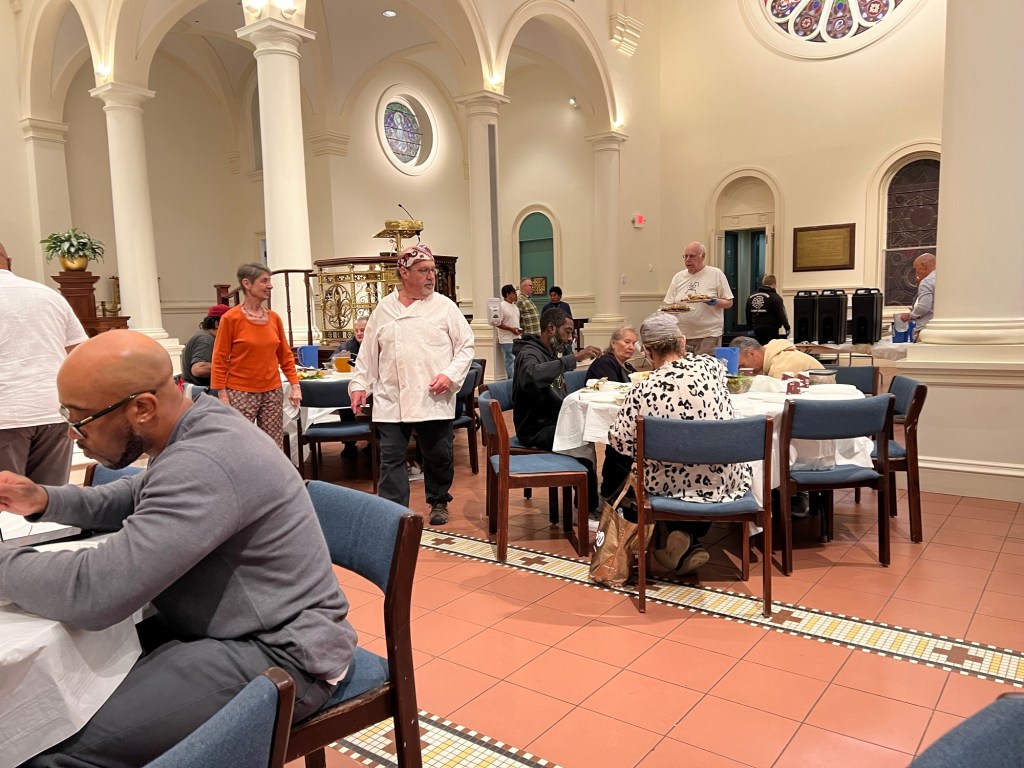
I was finally able to get back into the City for a short break the day after Thanksgiving. I had spent my day before at the Macy’s Thanksgiving Day Parade and instead of going to Christmas tree drop off with the Hasbrouck Heights Men’s Association (I decided to give it a rest after 25 years), I worked in Holy Apostles Soup Kitchen serving a post-Thanksgiving Dinner. Talk about busy! They kept me running all morning and afternoon.

Helping out at Holy Apostles Soup Kitchen

https://holyapostlesnyc.org/

Setting the table at Holy Apostles

People enjoying a holiday dinner with dignity

After lunch was over, I felt something nagging at me and instead of going home to rest, I decided it was time to finish walking the streets of Alphabet City. It was cooler than it was back in August, so it gave me a different perspective of the neighborhood with all the Community Gardens closed and the trees bare.

Holy Apostles treats people who are struggling with respect and I recognize that after over twenty years of volunteering there.

Plus I figured whatever it was that was trying to take a foothold in me would stop with lots of fresh air and exercise. It worked. After the walk, I not only felt better but was in a much better mood. A brisk walk on a sunny but cool day is the best thing in the world.

I started the walk on the corner of Avenue A and East 13th Street

Alphabet City is a neighborhood in transition. By Avenue A near the edges of the NYU campus, there is much gentrification going on where the bars and restaurants are getting more expensive to Avenue D where the projects are located and there is a massive renovation. I have never seen such changes.

Looking down East 13th Street in the late Fall

I had finished the borders and Avenues of the neighborhood in August before the Fall semester started and tried to finish the streets but this is a big neighborhood and there just was not the time. So I split my time on the neighborhood doing the top part just after Thanksgiving and the rest during a cold snap on Spring Break in mid March. The community gardens may have been dormant at the time but in March you could feel the coming of Spring.

It’s all about creativity and the unique street art

The memorial by artist

(I don’t know the artist)

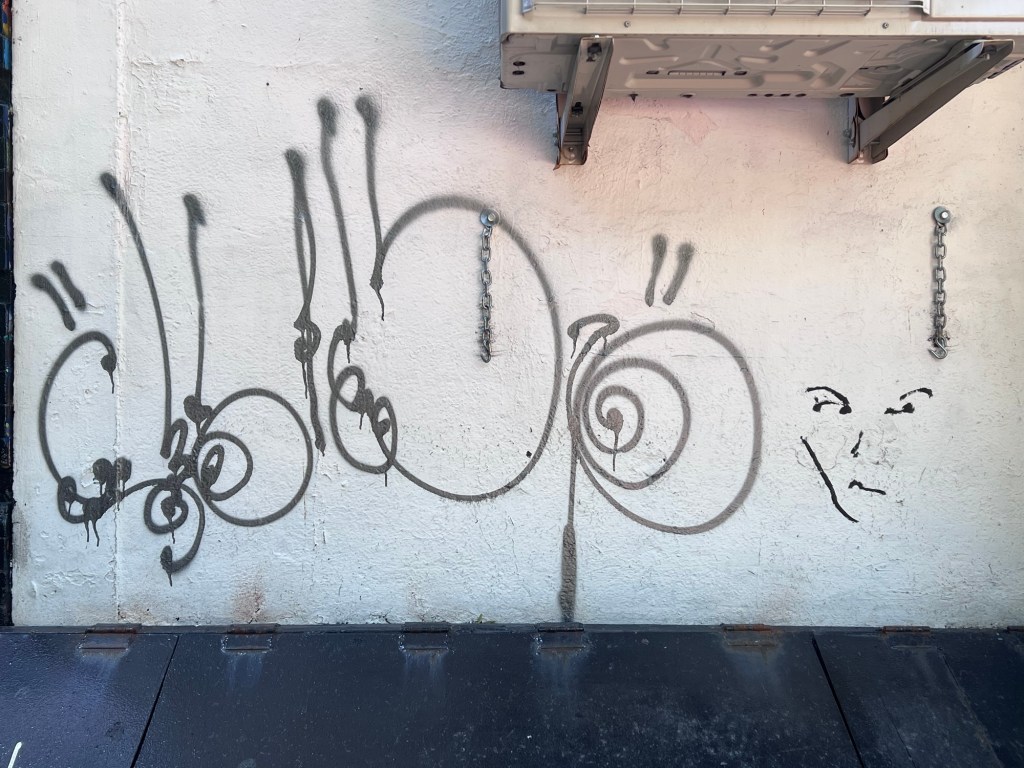
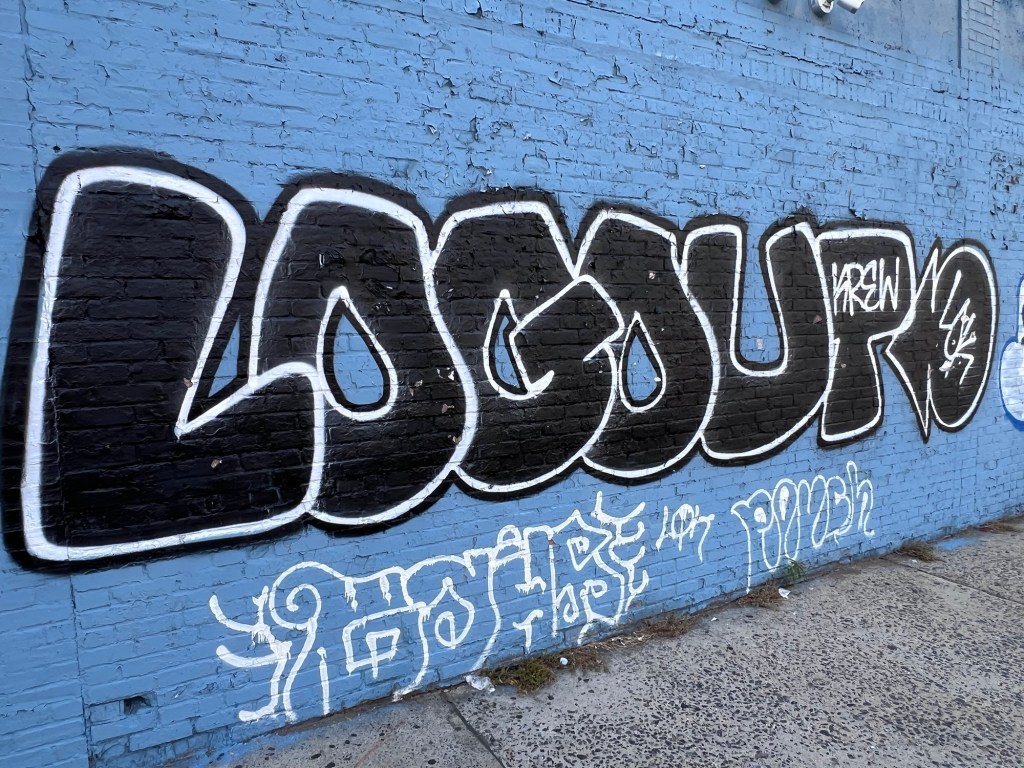
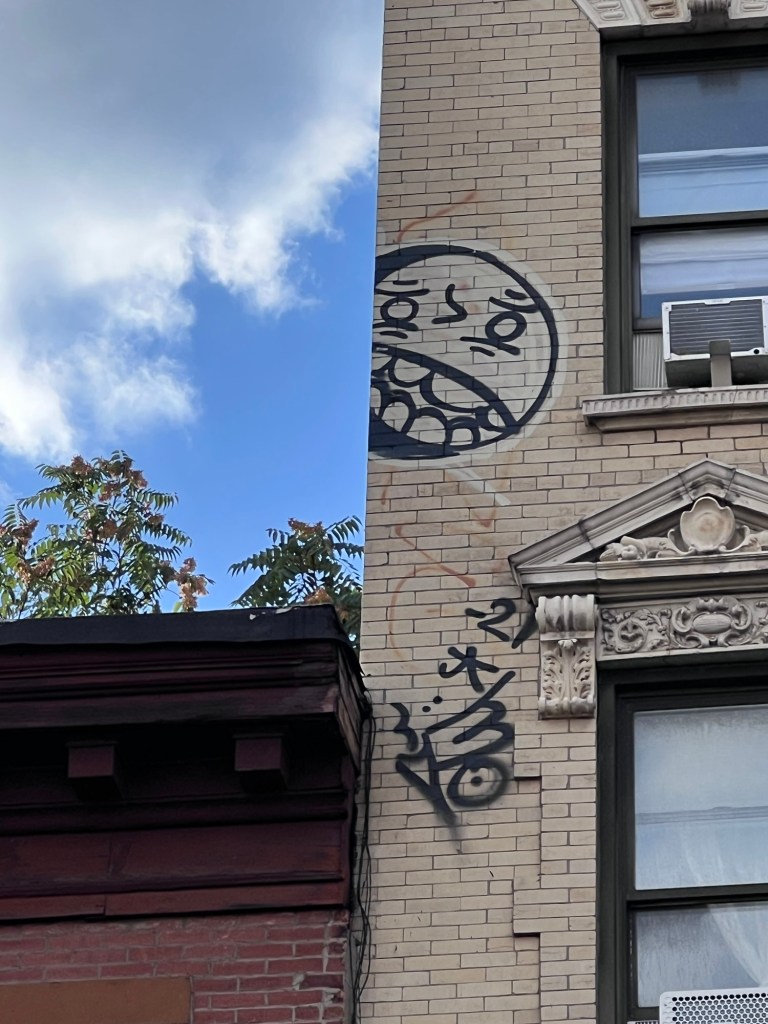
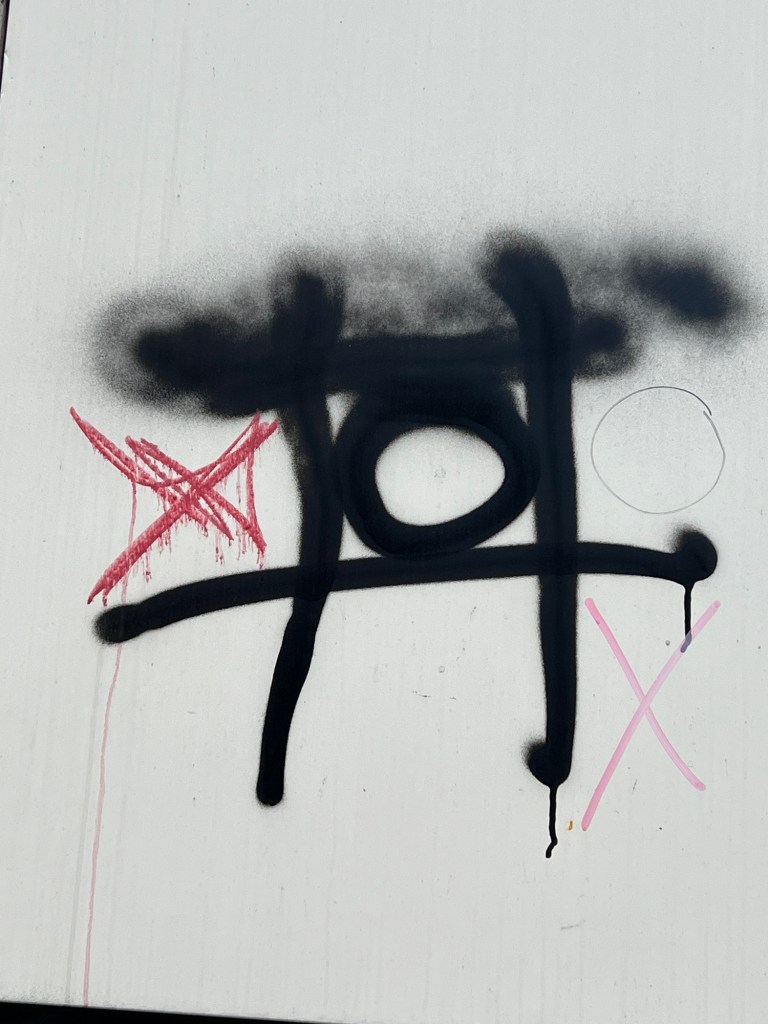
Sometimes it’s just what a tagger creates that’s unique and fun

What I love about Alphabet City is the combination of creative street art that dominates all the walls and buildings making the whole neighborhood an open air museum.

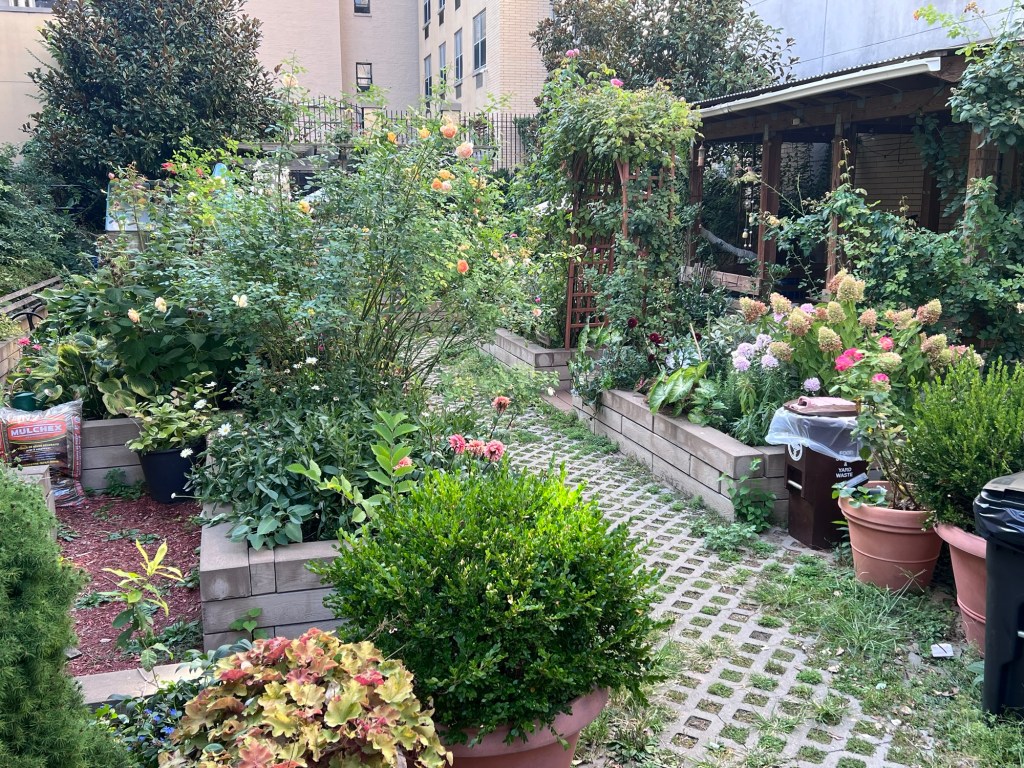
Another thing I noticed was the vast amount of community gardens that dominated every block. This was the biggest concentration of them I had seen so far in the City. Many gates were locked during the colder months but during my Spring Break with 70 degree weather, the gates flung open and volunteers were preparing beds and clearing the brambles of the previous Fall. Spring flowers were on their way.

The unique paintings on the Roberto Clemente Family Guidance Center at 540 East 13th Street

https://www.nychealthandhospitals.org/locations/nyc-health-hospitals-gotham-health-roberto-clemente-center/

The work was created by American Artist Leslie Heathcote

Artist Leslie Heathcote

https://www.lesleyheathcote.com/

Ms. Heathcote is an American born artist who graduated from the Rhode Island School of Design. Her love of nature and animals is the main theme of her work. She is now based in Vermont (Artist bio).

I have seen this artist’s work all over the City. This is closer to Avenue D right across from the Con Ed complex.

(not sure who the tagger artist is)

The Con Ed complex dominates the core of the Northern section of the neighborhood at the top of Avenue D and East 13th Street. Nothing glamorous about living next to a power plant yet across the street between East 14th and East 13th Streets luxury housing is being developed. Only in Manhattan!

https://www.coned.com/en

I then passed the Relaxation Garden at 208 Avenue B and East 13th Street. I never really understood this garden. While all the others in the neighborhood have beautiful plantings, artwork and flowers, this one still looks like a garbage strewn lot.

The Relaxation Garden at 209 Avenue B

The side of the garden snd the street art

This particular garden I could see needed a lot of work and I could see by many of the articles online that a lot was being done to clean it up again. The garden is one to look to in the future. Right now the garden is full of trash and there is not much to it.

The garbage strewn lot that needs a little TLC

All over the blocks I explored there was so much street art to admire that it was like an open air museum.

This was my favorite piece of art work from the side of the mural on the Roberto Clemente building

The work created by artist Chico Les

Artist Chico Les

https://en.wikipedia.org/wiki/Chico_(artist)

https://www.instagram.com/chicolesnyc/

“Chico” is the tag name for American/Puerto Rico born, New York City based artist Antonio “Chico” Garcia. “Chico” is known for his colorful murals and graffiti art, many of the works displayed on the Lower East Side (Wiki/Artist bio).

The Dias Y Flores Garden at 520 East 13th Street

https://www.nycgovparks.org/opportunities/volunteer/group/dias-y-flores

The name Dias y Flores (Days and Flowers) is taken from a hauntingly beautiful song about hope and growing bySilvio Rodriguez. ArtistBob Lasherhas created the bottle and brick pathway. On this site was once a fully occupied building; abandoned by its owners in the early 1970’s, it slowly fell prey to disrepair and drug trade. The City seized the building and cemented up the doors and windows before eventually tearing it down in 1976 and leaving a rubble-strewn lot–and an open invitation to garbage dumping of all kinds (Dias y Flores website).

In 1978, the13th Street Block Associationenvisioned in its place a community lot, with a garden and a playground, and began the labor-intensive work of clearing out the brick, rubble, and trash–from broken hypodermic needles to refrigerators and car parts–all by hand. Dias y Flores from its earliest days was graced with several experienced gardeners and horticulturalists as members. Along with the help ofGreenthumb, most of the trees and shrubs were planted by 1981. (Dias y Flores website).

The inside of Dias Y Flores Garden in the late Fall

Most of the Community Gardens are now closed for the season and won’t open up to the public again until April. In the summer when I was walking the borders and Avenues of the neighborhood, the gardens would open to the public on the weekends. I will have to wait a few months.

Rounding East 12th Street

Walking down East 12th Street was interesting in the contrasts to the different side of Alphabet City that you live on. Closer to Avenue A you are near the quickly gentrifying East Village with the NYU and Pratt students or closer to the river near the renovation of the housing projects and the park and its overhaul. It is going to be an interesting Great Saunter this year.

The artwork of artist Felix Morelo lines the walls of this restaurant

“The Kissing Spot”

“The Good Luck Spot”

The artist’s signature on the works

Artist Felix Morelo

https://www.felixmorelo.com/

https://www.instagram.com/morelofelix/

Artist Felix Morelo is American born artist now living in New York City. He has studied at the Parsons School of Design and Art Students League of New York City. He is known for his creative street art and his ‘chalk circles’ which promote dialogue (Artist website).

By March 2026, the artist painted over his work on the wall

All along East 12th Street, there are all sorts of creative street art in various forms. It seems that there are two things that dominate the neighborhood, street art and community gardens.

The memorial mural

I am not sure what happened to Nugget

(Could not find the artist on the work)

As I passed PS 34 School, I noticed the fascinating metal work of then building’s playground and had to stop and admire it. I was not sure if this was artwork or just design to protect the windows.

The ironwork art outside the playground of PS on East 12th Sttreet

I was not sure who created it but I thought it was interesting enough to stop and admire it . I thought the affect was interesting.

This is one of my favorite series of murals that I passed again when I was walking through the neighborhood. This sits on the side wall of PS 34 on East 12th Street.

The murals by Avenue C created by a series of artists from the Thrive Cooperative

The panel that lined the school created by artists from the Thrive Collective

https://www.thrivecollective.org

This little guy looked bright and happy underneath the entrance to the school

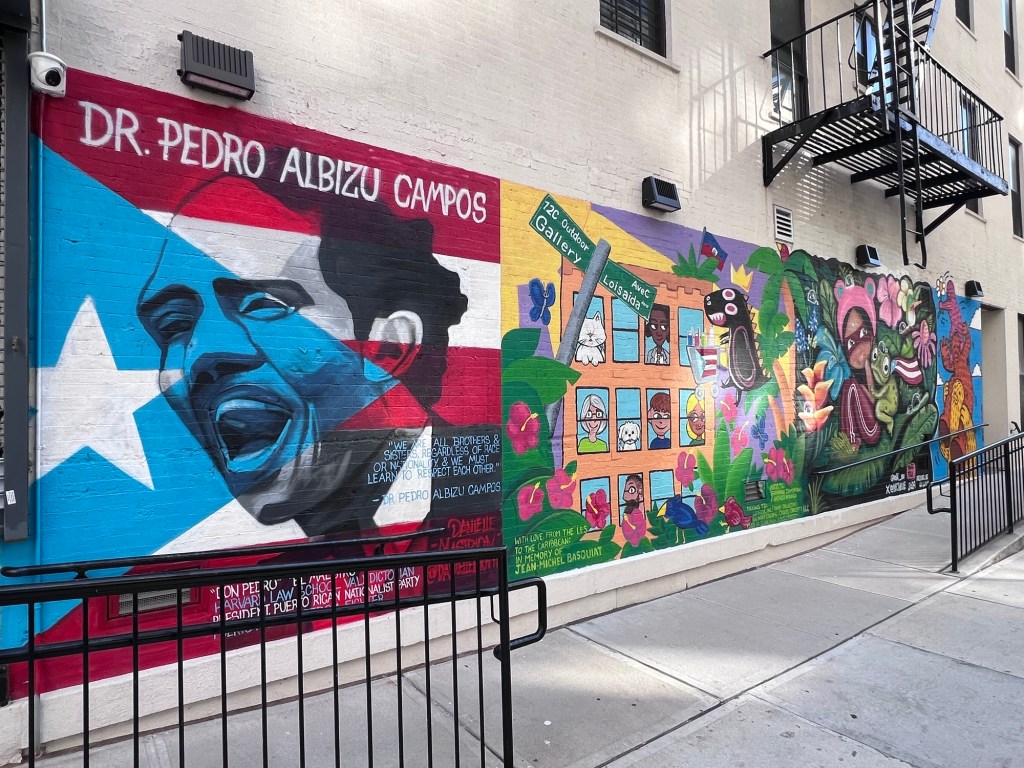
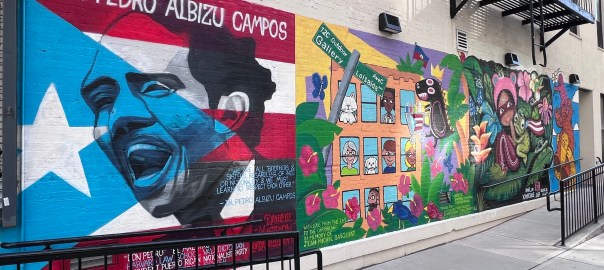
The mural Dr. Pedro Albizo Campos by artist Danielle Masirion

Artist Danielle Mastrion

http://www.daniellemastrion.com/

https://www.instagram.com/daniellebknyc/?hl=en

Danielle Mastrion is a Brooklyn-born, New York City based painter and muralist who specializes in large scale, brightly colored murals. She holds a BFA from Parsons School of Design (Artist website)

I loved this whimsical school painting by artists Savannah Zambrano and Andrea Amanda

https://www.savannahzambrano.com/

Artist Savannah Zambrano

https://www.facebook.com/unlazy.nenaluna/

Savannah Zambrano is a freelance sequential artist thathosts workshops and panels, does face painting and caricatures, and works with Traditional and Digital Media (Artist Bio website).

The artists sign with the Thrive Collective
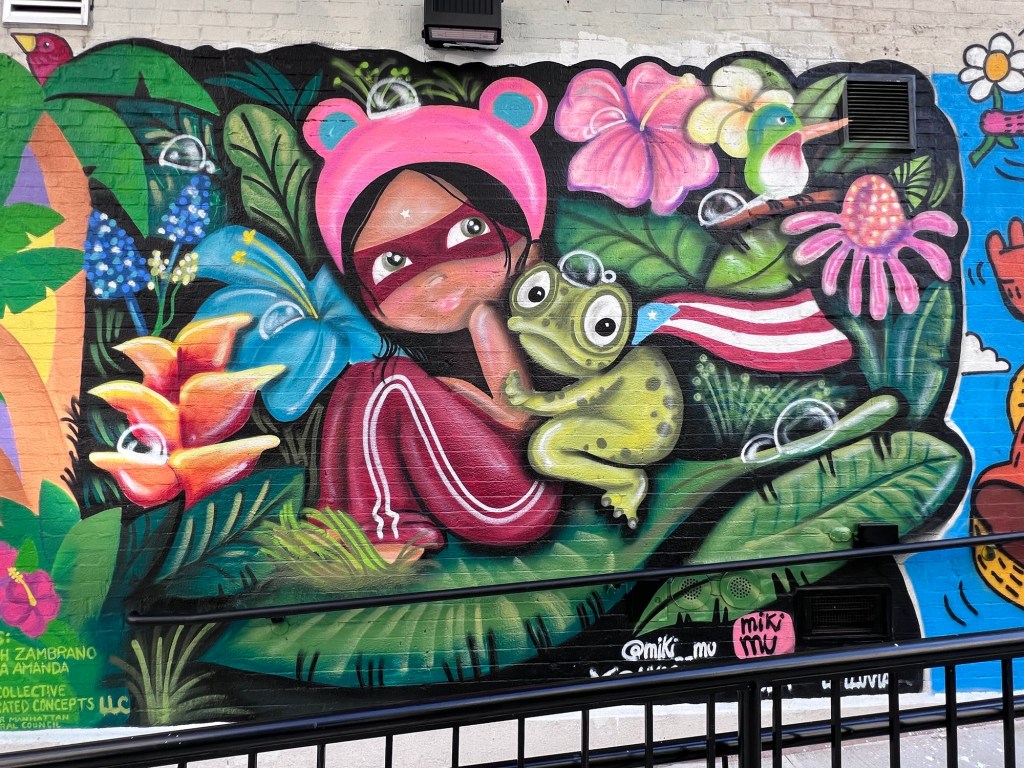
I loved this mural with the Puerto Rican flag by artist Miki Mu

The sign for the artist Miki Mu

Artist Michela Muserra

https://bookanartist.co/artist/artist-for-hire/2119

https://www.thrivecollective.org/miki-mu/

Michela Muserra is an international muralist and illustrator based in Brooklyn. A graduate ofAccademia di Bella Artiin her hometown of Foggia, Italy. The artist has worked as a teaching artist with Thrive Collective since January 2017 (Thrive Collective website).

I love this colorful display of positive behavior of Frank Ape by artist Brandon Sines
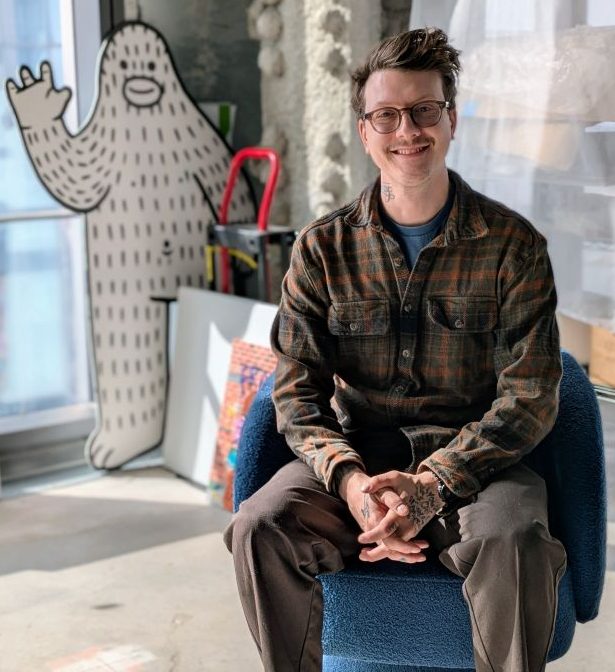
Artist Brandon Sines

https://www.stickerbombworld.com/blogs/news/in-conversation-brandon-sines-aka-frank-ape

https://artrunnermag.com/posts/brandon-sines/

Artist Brandon Sines was exposed to many cultures while growing up simultaneously in New York City, Toronto, and Los Angeles. He mixes Pop Art’s mass culture, Surrealism’s private associations, and inventive paint handling to create dreamlike environments. His mark making ranges from experimental techniques to illustrative precision. Parts of the paintings are crystal clear, and other parts reach abstraction.

I loved his video on how he creates his work!

I could not find the artist who created this piece

Some of the taggers really know how to decorate the corners of walls and doors

The Campos Community Garden at 640 East 12th Street

https://www.camposcommunitygarden.org/

https://www.facebook.com/camposcommunitygarden/

The Campos Community Garden was an empty lot until 1982 when the lot was cleared and the it was an active garden enjoyed by the community. When the main organizer moved away, it had fallen into neglect for years until it was revived in 2004 by a group of neighbors. A Children’s Garden was added in 2006 and was rebuilt after Hurricane Sandy. It is now a thriving garden enjoyed by the community and fruits and vegetables are raised to benefit everyone (The Campos Garden website).

The inside of the Campos Community Garden in the late Fall of 2025

The Down to Earth Garden is at 546 East 12th Street and was also closed for the season

https://downtoearthgarden.org/

https://www.nycgovparks.org/opportunities/volunteer/group/down-to-earth-garden

https://www.instagram.com/downtoearthgardennyc/

The Down to Earth Garden was established in 1993 when a building was knocked down, leaving an empty lot. It was originally called the Children’s garden but changed its name in 2020. It is now part of the GreenThumb program and is part of the NYC Parks Division (Down to Earth Garden website).

The next park was the Joseph C. Sauer Playground at

The sign for the Joseph C. Sauer playground at 532 East 12th Street

https://www.nycgovparks.org/parks/joseph-c-sauer-park

https://www.nycgovparks.org/parks/joseph-c-sauer-park/highlights

Review on TripAdvisor:

Joseph C. Sauer

https://www.honorstates.org/profiles/392479/

Joseph C. Sauer was born in Pittsburgh, Pennsylvania. His family moved to the Lower East Side of New York City when he was an infant. Sauer graduated from the Redemptorist Parochial School and excelled in athletics, especially track. He worked for the Western Electric Company, and following the death of his grandfather, Sauer and his mother took over the family’s basket manufacturing business. He worked there until he entered the United States Army on September 28, 1917 (NYCParks.org).

The history of the playground

The Sauer playground in the Fall of 2025

The last of the parks and gardens I either passed or explored on East 12th Street was the El Sol Brillante Garden. Though the gardens were closed for the season, you could see the extensive plantings through the beautifully wrought iron gates created by local artist Julie Dermansky.

The sign for the El Sol Brillante garden at 522 East 12th Street

The garden and the beautiful wrought iron gates

(From the El Sol Brillante website)

El Sol Brillante Community Garden rose from the ashes of a demolished lot of four burnt-out buildings in the Lower East Side of Manhattan in 1977. Residents organized to create a garden that would revitalize the neighborhood, unite local leadership, and improve the quality of their environment. The original group of forty, with the help of a resident architect, the Horticultural Society of New York (gardening advice), the Cornell Cooperative Extension Service (gardening advice), and the CETA Summer Youth Corps (labor and jobs for kids) designed plans and with very little money and a great deal of sweat equity, a garden was born. In 1978, with the assistance of the Trust for Public Land, a nonprofit land trust was created and the lot was acquired in 1980. A once rubble-filled lot became a thriving 1,000 square foot, 40-plot vegetable garden, a meeting place, and a preserved natural space for its members and their community.

The entrance to the El Sol Brillante Garden

https://www.nycgovparks.org/opportunities/volunteer/group/el-sol-brillante-jr

The signature of Artist Julie Demansky

Artist Julie Demansky

https://www.jsdart.com/index

https://www.nyc.gov/site/dclapercentforart/projects/projects-detail.page?recordID=81

https://www.instagram.com/juliedermansky/

Artist Julie Demansky is an American born artist. She graduated from Tulane Newcomb University with a concentration in ceramics and sculpture and was awarded the Watson Fellowship. She is known for her large scale metal work projects (NYC.gov).

A full view of those beautiful gates

As I walked down the street there were several small restaurants and gourmet shops that caught my attention. I did not have a chance to stop having eaten at another restaurant in the area for lunch. These will be for another visit.

The Pastry Box Bakery at East 12th Street

https://thepastrybox.co/

https://www.instagram.com/thepastryboxbakery/

Review on TripAdvisor:

I passed this cute little bakery that warrants a visit.

Turning on East 11th Street

When I turned onto East 11th Street, it was like an open air art museum with various tags and paintings that were both creative and colorful along the walls of the neighborhood.

East 11th Street in the Fall of 2025

I thought this bird piece by Grilla was pretty interesting on this window

Artist Grilla

(I could not find any information on this tagger/artist online)

I loved this tag. I thought it was pretty creative

On the side of this building on East 11th Street was another mural painted by artist Lesley Heathcote.

The mid nautical scene was created by Artist Lesley Heathcote

Artist Lesley Heathcote

https://www.lesleyheathcote.com/

(See Bio above)

Alphabet Scoop Ice Cream at 543 East 11th Street

https://www.alphabetscoopny.com/

My review on TripAdvisor:

The next Community Garden that I passed was the Toyota East Children’s Learning Garden at

The sign welcoming you to the Toyota East Children’s Garden at 603 East 11th Street

https://www.nyrp.org/en/gardens-and-parks/toyota-east-childrens-learning-garden/

https://www.nycgovparks.org/opportunities/volunteer/group/toyota-childrens-learning-garden-coradan-evaeden

The inside of the garden in the late Fall

The history of the Community Garden:

(From the garden website)

In 2007, Toyota provided funding to transform this site from a basic vegetable garden into an outdoor children’s learning experience, commissioning landscape architect Michael Van Valkenburgh for the design.

To prepare the garden for restoration, New York Restoration Project construction crews performed demolition and grading procedures on the site, cleared debris and garbage and installed various hardscape features. Over the course of six months, NYRP horticulture and design teams worked hand-in-hand with local residents and Van Valkenburgh to realize the community’s vision for this newly renovated gem, which includes four distinct habitat areas that NYRP and New York City educators can use to present environmental education programming to neighborhood youth.

Walking down East 11th Street on a crisp late Fall day

The weather got a little warmer in the afternoon and I was enjoying the weather. The leaves on the trees were changing as the weather got cooler and more brisk. The streets were quiet on this holiday week day.

The next park I passed was the Dry Dock Playground at Szold Place on 11th Street

The sign at the entrance of Dry Dock Playground on 11th Street

https://www.nycgovparks.org/parks/dry-dock-playground-and-pool

https://www.facebook.com/groups/TheLowerEastSide/posts/10162366061689719

The playground had been very active with basketball games, birthday parties and barbecues when I was exploring the neighborhood in the summer months. There was non stop activity until September but very silent in the colder Fall months. I did not see anyone there except when I returned in March during my Spring Break visit and it was in the 70’s. Kids were out playing basketball.

The murals behind the closed gates

(I could not get a close enough view to see who the artist was on this mural)

The park sitting quiet in the colder months but comes alive with all sorts of neighborhood activity in the summer

The last garden I passed on the block as I finished was the 11 BC Serenity Garden at 626 East 11th Street.

The 11 BC Serenity Garden at 626 East 11th Street

https://www.nycgovparks.org/opportunities/volunteer/group/11-bc-serenity-garden

https://www.facebook.com/groups/975674166305133/

The garden behind closed gates in the Fall of 2025

It was one of the few locked gardens on all three of my walks in the neighborhood. I could see the garden was going through the season change and would have to visit the garden again in the warmer months.

I got to East 10th Street by the late afternoon. I could see the changes of the late fall on the parks and gardens in the neighborhood.

Rounding East 10th Street near Tompkins Square Park for the last part of the walk that day

I walked through the empty Dry Dock Playground a couple more times as I rounded the neighborhood, through the quiet paths. The sounds of children and of adults barbecuing and birthday parties are the sounds I will hear in a few months when the warm weather comes.

The Dry Dock Playground by Avenue D in the quiet cooler months. It is a mob scene in the warmer months on the weekends.

The large ‘El Bohio Murals’ created by the Thrive Collective on the outside of the old public school

https://www.thrivecollective.org

The ‘Thrive Collective‘ sign on the mural

History of Thrive Collective:

(from the Thrive Collective website)

Thrive Collective creates hope and opportunity through arts, sports, and mentoring in and around public schools. Our core programs – Murals; RHYME (Rhymes Help Young Minds Excel); Media; Mentors; Festivals, and Sports – connect artists, youth workers, and volunteers with local schools as teaching artists, art directors, coaches, and mentors. Project based learning and accredited curriculum integrate life and art skills in four kinds of experiences: in-school electives, after school clubs, seasonal intensives, and weekend warriors.

My favorite section of the mural created by this talented group of artists

I came across this taggers art on one of the doorways

I came across this nature scene on the corner of East 11th Street

I thought this was really original and was beautifully designed and colored by the artist. It is also one of the few murals in the neighborhood that has not be covered over by other artists.

The work was created by Artist Joel Chico

Artist Joel Chico

https://www.instagram.com/joelchicoshow/

https://joelchico.com/about

Joel Chico is an Actor, Writer, Director from Toronto, Ontario, Canada. He is the creator of JMC Creative Endeavors, an artistic platform for his projects as a musician, poet, painter, photographer, and spiritual wisdom keeper. He is currently in the process of writing a poetry anthology, and his Cosmic Trilogy Feature screenplays (Artist bio).

I crossed Avenue D into the housing projects and came across the murals that were painted on the first floor of the housing complex. These colorful works were created by a series of artists working with Thrive Collective (see above) to decorate these rather plain walls in the housing complex.

The mural along the housing complex

The mural by Artist Miki Mu

Artist Miki Mu

Michela Muserra(known as “Miki Mu”) is an international muralist and illustrator based in Brooklyn. A graduate ofAccademia di Bella Artiin her hometown of Foggia, Italy, Michela launched Thrive Collective’s Private Murals Collection as an advanced apprenticeship for our most promising School Murals students and artists. Michela has worked as a teaching artist with Thrive Collective since January 2017 (From the artist website on Thrive Collective).

https://www.thrivecollective.org/miki-mu

The next side of the mural

The last part of the mural on the other side of the building

This was my favorite part of the mural

This was painted by artist bebebsmbu88

The project is inspired by a sacred ceremonial mask carved from a coconut shell in the island of Puerto Rico. It’s called “Vejigante,” and it’s an important and iconic character portrayed in the carnival celebrations in the island. The artwork pays tribute to the HipHop and Caribbean culture presenting the characters in a modern context. The Coconut Mask is a metaphor for our ancestral connection to nature and spirituality (From the artist’s website website).

Artist Bebe Bambu88 (real name Gabriel Rosario Mongil)

https://www.elbebebambu.com/

https://www.instagram.com/bebebambu88/

The artist is originally from Santurce, Puerto Rico. Artist Gabriel Rosario Mongil aka Bebe Bambu is a designer and recording artist. Originally known for his graffiti work and slam poetry, being the author of several murals in Puerto Rico and Monterrey, MX. He graduated from the University of Puerto Rico in Rio Piedras and received a scholarship to do his masters degree in graphic design and graduated from the University of Monterrey, MX in 2013/15. During this; he had his second solo exhibition, recorded his first solo album and started offering workshops for children in communities in need (From the artist’s website)

The Jacob Riis Housing Complex along Avenue D

https://en.wikipedia.org/wiki/Riis_Houses

I finally reached the end of East 11th Street in the projects. Years ago you would never dream of walking through Jacob Riis complex. Now it is the cut through to East River Park by the hipsters and college students who have moved into the area.

I then rounded the corner and I was on East 10th Street and found myself in front of Topkins Square Park to passed peak foliage. Both during the holiday weekend and on my Spring Break, the park was busy. The park has come a long way since the 1980’s when it was all drugs and homelessness. It is now the center of the community for skateboarders, dog walkers, seniors getting rest and new parents spending time with their kids.

The brownstones and tenements around Tompkins Square

The entrance to Tompkins Square Park

https://www.nycgovparks.org/parks/tompkins-square-park

https://en.wikipedia.org/wiki/Tompkins_Square_Park

My review on TripAdvisor:

https://www.tripadvisor.com/ShowUserReviews-g60763-d136290-r1027076388-Tompkins_Square_Park-New_York_City_New_York.html?m=19905

Tompkins Square Park was once one of the most notorious parks in New York City between the homeless and the drug dealing. Now it is mostly college students from the downtown schools and the neighborhood residents gentrifying the neighborhood. It was in the final stages of the fall foliage. This is where I would stop in November. It was a big neighborhood to walk.

Once the weather got colder and I got busier with the holidays so I had to put the walking in Alphabet City on hold for a few months. Who knew it was going to be one of the coldest winters in recent memory. I was not able to get back to walking the neighborhood until March of 2026 during my Spring Break from the college when the temperatures hit 75 degrees.

Between the cold weather and the recent snow storms with the foot of snow, who could or wanted to walk around New York City? Then Spring Break came at the college just as the Spring thaw started and the weather really warmed up. It seemed for two days the whole City, tired of the cold weather and snow, played hooky and were in Tompkins Square Park enjoying the weather.

From March 9th through the 10th in 2026, the weather warmed up into the mid 70’s and it gave me a chance to finish walking the neighborhood. The temperatures would go right back down to the 30’s and 40’s after that until mid-April. The warm weather gave me the opportunity during my Spring Break to finish walking the streets of the neighborhood.

I walked East 12th and 11th Streets again to get a feel for the neighborhood and see if anything changed. There was a lot I missed back in November as I had more time, with better sunlight and warm weather to take my time to explore the neighborhood.

I revisited some of the streets that I had walked over the Thanksgiving break and noted all the artwork and architecture that I missed on the first trip walking all the streets of the neighborhood.

I had not seen the mural of Run DMC on the wall of the apartment building on West 12th Street.

The 11 BC Serenity Garden at 626 East 11th Street

https://www.nycgovparks.org/opportunities/volunteer/group/11-bc-serenity-garden

https://www.facebook.com/groups/975674166305133

This meticulously designed garden features vibrant floral displays, tranquil pathways, and cozy seating areas, making it an ideal spot for relaxation and reflection. With its blend of nature and artful landscaping, 11 BC Garden invites everyone to enjoy a moment of peace amidst the city’s energy (From MapQuest.com)

The 11 BC Serenity Garden in the late winter months

The Gardens were just coming into bloom when I visited during my last visit. The temperatures were about 75 degrees at the time and things had just started to bloom.

I love the street art on the neighborhood walls. The heart cheered me up!

It is funny how just small painting could make you so happy. Paintings like this were located all over the neighborhood.

The Toyota East Children’s Learning Garden was one of the many gardens open during the warm spell

https://www.nyrp.org/en/gardens-and-parks/toyota-east-childrens-learning-garden

The Toyota East Children’s Learning Garden on a warm

Most of the gardens I visited, most were still coming into bloom. The Toyota East Children’s Garden was opened for about an hour when I visited. The park was quiet at the time while some volunteers were maintaining the gardens.

(History of the Garden from the New York Restoration Project)

In 2007, Toyota provided funding to transform this site from a basic vegetable garden into an outdoor children’s learning experience, commissioning landscape architect Michael Van Valkenburgh for the design.

To prepare the garden for restoration, New York Restoration Project construction crews performed demolition and grading procedures on the site, cleared debris and garbage and installed various hardscape features. Over the course of six months, NYRP horticulture and design teams worked hand-in-hand with local residents and Van Valkenburgh to realize the community’s vision for this newly renovated gem, which includes four distinct habitat areas that NYRP and New York City educators can use to present environmental education programming to neighborhood youth (NYRP).

While I was walking down East 11th Street, I noticed how much the neighborhood had changed over the years. The whole block was gentrified and looked really nice. What I was amazed by this was how expensive everything was in the neighborhood. As I was walking around the neighborhood, I noticed how expensive the bars and restaurants were around Tompkins Square Park. I thought they would be much cheaper in this part of the neighborhood.

Looking down 11th Street at Avenue A in the Winter. It was 76 degrees during the Spring thaw

After a long walk enjoying the sunshine while revisiting the last blocks I had visited before the holidays, I turned the corner on Avenue A and started to walk the remainder of the neighborhood.

While Alphabet City does not have the classic architecture or statuary of neighborhoods to the north, it’s streets are lined with creative and interesting street art and pocket neighborhood gardens showing the dedication of residents to better their community.

This is what gives the neighborhood its charm and why it has gotten more expensive to live here. I noticed in between all the former tenement buildings, there are plenty of luxury buildings that dot the neighborhood even at the borders of the once notorious Avenue D.

Turning the corner at Avenue A an East 10th Street

I rounded East 10th Street, I noticed this giant Buddha head outside someone’s home in their front garden. I thought this was quite unique.

Passing interesting art in people’s front gardens along East 10th Street

I walked through Tompkins Square Park several times watching the skateboarders performing their feats and college students sunning themselves. It seemed like the whole City had called out sick and just wanted to enjoy the weather in the park.

I walked past the rows of apartment buildings and small businesses and then walked around the park several times to see how people were Lo enjoying their afternoon. I then started my walk down East 9th Street past many more community gardens.

The Francisco ‘Pancho’ Ramos Community Garden at 703 East Ninth Street

https://www.nycgovparks.org/opportunities/volunteer/group/francisco-pancho-ramos-community-garden

The History of the Garden:

(from the Ramos Garden website)

The Lower East Side of the 1970s was a hard place with little green. Local residents noticed the abandoned, littered lot at the corner of Ninth Street and Avenue C and began to sow seeds and plants along the chain link and among the debris, and so the Ninth Street Community Garden & Park was founded in 1979. Today Pancho’s Garden hosts community events including music, art, and gardening workshops (Ramos Garden website).

The garden is half an acre of gorgeous flowerbeds, and vegetable gardens. Meandering pathways crisscross the park, follow them to the koi and turtle pond, fig arbor, or one of many quiet nooks that offer a cool quiet spot to read a book, have a chat with a friend, enjoy a cup of coffee, or just sit and enjoy a respite from The City (Ramos Garden website).

The Ramos Garden was open that afternoon to walk around as the gardeners were preparing the beds for the Spring. There was a lot going on around the small beds and gardens that lined the pathways. This garden stretched from East 10th to 9th Streets.

Walking along the pathways of the Ramos Community Garden on a sunny warm day

The artwork in the park

More of the interesting artwork in the garden

The Ramos Community Garden during the Spring Thaw was very active

While I continued my walk down the street, I saw how the neighborhood was reacting to the recent ICE raids going on not just in the City but all over the country. There were signs and graffiti all over Alphabet City and the border with the Lower East Side.

Artworks about ICE dotted the neighborhood

All over the place

As I walked down the street, I came across more street art dotting the walls of buildings around the neighborhood. This mural was with the theme of the Old West and Doc Holliday.

I thought this piece of street art with Doc Holiday and his crew was interesting

The work was created by Artist Joel Chico

Artist Joel Chico

https://www.instagram.com/joelchicoshow/

https://joelchico.com/about

Joel Chico is an Actor, Writer, Director from Toronto, Ontario, Canada. He is the creator of JMC Creative Endeavors, an artistic platform for his projects as a musician, poet, painter, photographer, and spiritual wisdom keeper. He is currently in the process of writing a poetry anthology, and his Cosmic Trilogy Feature screenplays (Artist bio).

I then rounded the corner and walked down East 9th Street as the weather got warmer. It got to 78 degrees by the mid-afternoon.

Walking down East 9th Street

Tompkins Square Park had gotten even busier in the late afternoon as dog walkers, skateboarders and seniors talking amongst themselves filled the park. It was funny how all the benches were filling up and it looked like everyone had called in sick at work. It was the first really warm day since the beginning of November of 2025 and everyone was enjoying this warm and sunny day.

Walking through Tompkins Square Park during the Spring Break

I stopped in the bathroom at the park, which is a good pit stop being one of the few places where there is a public bathrooms. While I was relaxing, I watched this singer in a Mondrian kimono perform David Bowen hits. I have to admit it was a bit strange but this is Alphabet City and the guy was very entertaining.

Singer from Pinc Louds

https://www.pinclouds.com

https://en.wikipedia.org/wiki/Pinc_Louds

(Pinc Louds biography from the band’s website)

Pinc Louds’ lead singer, Claudi (all pronouns accepted), moved from Puerto Rico to NYC in 2015 to fulfill their dream of playing in the subway. This immersion into the city’s underground, performing daily for a steady stream of New Yorkers, sculpted the sound and look of the project (Band website).

Through the “litteral” underground, Claudi met the musicians (keyboard/bassist Marc Mosteirin and drummer Matt Dallal) and other artists that would turn Pinc Louds into the full-blown spectacle they are today. Busking in the parks and tunnels opened many doors for the band, who quickly gained a cult following and by 2018 were selling out shows in such NYC venues as (le) Poisson Rouge, Market Hotel and Joe’s Pub, as well as tours throughout the US, Puerto Rico, Europe and Chile (Band website).

It was an interesting concert

The David Bowie song ‘I just Dancing’

I sat in the park listening to the concert for about a half hour and relaxed through a few songs. I swear, this guy held this concert for over an hour because everytime I walked back through the park, crisscrossing through the various streets, he was still there singing.

I walked back and forth down the various streets, ending at Avenue D and walking through various parts of the complex. Most of public housing was under renovation so I was trying to avoid any scaffolding.

The corner of Avenue D and East 9th Street. How things have changed from the 1970’s and 80’s. The housing projects were under scaffolding around the entire complex. There were changes throughout the Jacob Riis Complex.

https://en.wikipedia.org/wiki/Riis_Houses

I continued to walk down the street through the series of community gardens peeking through gates when I could.

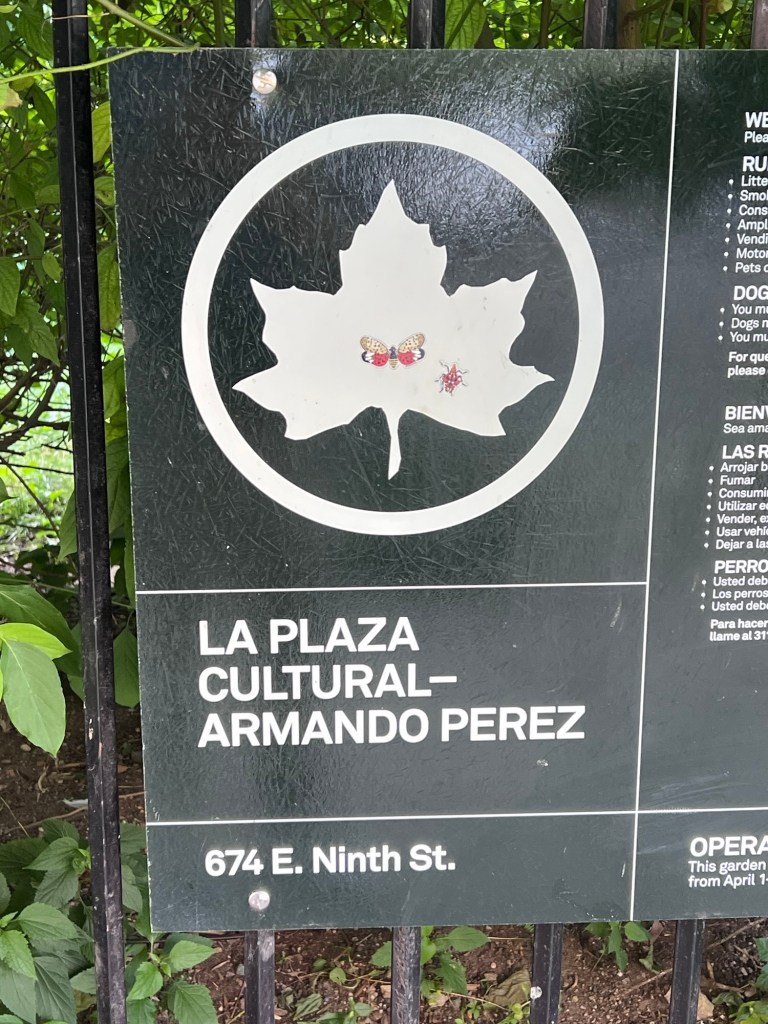
La Plaza Cultural Armando Perez Community Garden at 674 East 9th Street

https://www.laplazacultural.com

https://www.nycgovparks.org/opportunities/volunteer/group/la-plaza-cultural-armando-perez

The History of the Garden:

(From the Garden’s website)

La Plaza Cultural de Armando Perez Community Garden was founded in 1976 by local residents and greening activists who took over what was then a series of vacant city lots piled high with rubble and trash. In an effort to improve the neighborhood during a downward trend of arson, drugs, and abandonment common in that era, members of the Latino group CHARAS cleared out truckloads of refuse. Working with Buckminster Fuller, they built a geodesic dome in the open “plaza” and began staging cultural events. Green Guerillas pioneer Liz Christy seeded the turf with “seed bombs” and planted towering weeping willows and linden trees. Artist Gordon Matta-Clark helped construct La Plaza’s amphitheater using railroad ties and materials reclaimed from abandoned buildings (La Plaza website).

Later, block residents tilled the western portion of the space and planted vegetables, flowers, and fruit trees. During the 1980s, the garden came under attack by developers seeking to build on the space. After numerous court battles, La Plaza was finally preserved in 2002 as part of the terms of a legal settlement. In 2003, La Plaza was renamed in memory of Armando Perez, a CHARAS founder and former District Leader of the Lower East Side who was killed in 1999 (La Plaza website).

The Armando Perez Community Garden was one of the larger community gardens in the neighborhood

I walked all through the garden, watching the planting and seeding and cleanup going on. In the two days I visited the neighborhood, almost all the Community Gardens had opened their gates and volunteers could not wait to tackle the damage done by all the recent winter storms.

The inside of the gardens in the winter

Walking through the gardens in the winter

The view of the top of the garden in the winter time

The history and importance of these Community Gardens on these neighborhoods

As I left the Community garden, I walked past a series of interesting and creative pieces of street art along the walls and doors of the various buildings on the block.

A stand pipe with colorful works

I thought this was interesting

This stood out against the wall

I was not sure what this meant

In the late afternoon, I got to Avenue A and St. Mark’s Place (East 8th Street) and walked around the ‘Restaurant Row’ that was going strong between lunch and dinner. The bars were filled with college students from Pace and NYU enjoying the weather and all the outdoor cafes were set up. This was going strong from about 2:00pm until I left the neighborhood around 6:00pm.

Making the turn on St. Marks Street/East 8th Street

As I walked down Avenue A, I took a longer tour of Tompkins Square Park and saw the singer in the Mondrian kimono still singing. This guy put on an all day concert!

The concert was still going on over an hour later

It got even warmer that afternoon and someone said that it topped 75 degrees. I think more people played hooky that afternoon as the park was packed with students gossiping and dog owners watching their pooches play. The look of the park said ‘end of winter’ but the mood was ‘Yeah, Spring is finally here’. (It would go back down into the 30’s by the end of the week).

Tompkins Square Park in the afternoon

It was so nice to get the first glimpse of Spring before the temperatures would drop again at the end of the week.

People socializing in Tompkins Square Park

Whether it was listening to music, playing with their dogs or just reading a book or conversing with neighbors, people from the neighborhood were enjoying the snap of 70 degree weather as much as possible. They enjoyed being outside and wanted to enjoy it as much as possible.

Turning the corner of Avenue A and East 8th Street

The street art along East 9th Street is unique

The De Colores Community Yard & Cultural Center at 313 East 8th Street

https://www.nycgovparks.org/opportunities/volunteer/group/de-colores-community-yard-cultural-center

https://www.mapquest.com/us/new-york/de-colores-community-yard-cultural-center-431484984#google_vignette

History of the De Colores Community YardL

De Colores Community Yard & Cultural Center is a vibrant community space located in New York NY. It serves as a hub for cultural activities gardening and educational programs fostering a sense of community and inclusivity. Visitors can enjoy a variety of events workshops and green spaces designed to celebrate diversity and promote environmental awareness (MapQuest.com).

The inside of the Community Garden

The garden was going through a major clean up the day I was there and the volunteers were leaving for the afternoon.

The Earth People Community Garden at 333 East 8th Street

https://www.nycgovparks.org/opportunities/volunteer/group/earth-people

https://www.mapquest.com/us/new-york/earth-people-garden-781776646

History of the Garden:

(From Mapquest.com)

Earth People Garden is a serene urban oasis located in New York, NY, designed to celebrate nature and community. This park features lush greenery, vibrant flower beds, and tranquil pathways, making it an ideal spot for relaxation and reflection. Visitors can enjoy various activities, from gardening workshops to community events, all while embracing the harmony between people and the environment (Mapquest.com)

The inside of the Community Garden in the winter

The Earth People Garden like most of the gardens in the neighborhood was closing for the evening as the volunteers were giving the garden a cleaning from the Winter storms. The garden was just starting to come back into bloom.

The La Casita Garden at 339-41 8th Street

https://www.nyrp.org/en/gardens-and-parks/la-casita-community-garden

https://www.mapquest.com/us/new-york/la-casita-garden-424906705

History of the Garden:

(From the New York Restoration website)

LaCasitaCommunity Garden, established in 1990, is primarily used by the community as an event and gathering space. To that end, the garden’s renovation in September 2014 included the installation of a raised, round stage where performances can be held; a new grill and picnic tables for barbecuing; a shaded seating area; and two sheds for storage. The backdrop of the stage is a chalkboard that can be used by the local elementary school for an outdoor classroom or even as a movie projection screen (NY Restoration website).

Funded by generous support from The Geraldine Stutz Trust, the Trust aims to remember Geraldine Stutz’s significant contribution to the fashion industry, her love of theatre as well as her passion for gardening. A fashion retail groundbreaker, Stutz served 29 years as president of Henri Bendel, the upscale women’s store (NY Restoration website).

The inside of the Community Garden

I was able to walk around this garden but there was not much to see at this point. I am going to have to return to the neighborhood in two months when things start growing again.

Street art along East 9th Street

This little devil was in the detail of this work

I thought this was very clever as these small works of art are tucked here and there on walls and doors on buildings all over the block.

The Green Oasis Community/Gilbert’s Garden at 372 East 8th Street

https://www.greenoasisnyc.org

The gardens all over the neighborhood were open as everyone was enjoying the 75 degree weather and were working in these Community Gardens getting ready for the Spring. This garden was particular busy.

The signs were all out and people were enjoying the Spring weather

As the volunteers were cleaning the beds and trimming bushes and trees, I was able to walk around the gardens. They must be very impressive when they are in full bloom. This is one of the larger gardens in the neighborhood.

The History of the Garden:

(From the Green Oasis Community Garden website)

The New York City neighborhood known as the East Village experienced massive arson and destruction during the 1960s and 1970s. The area had been compared to Dresden, Germany after World War II. Rubble from bulldozed buildings lay in mounds, and garbage accumulated. Cars were abandoned. Rats were rampant. Drug use reached epidemic proportions. Drugs and crime made the neighborhood unsafe, but few areas were worse than the neighborhood east of Avenue B (Green Oasis Community Garden website).

The inside of the garden in the winter

Normand Valle moved to East Seventh Street between Avenues C and D. From his window, he looked down upon one of these blighted lots, and decided to do something about it. In 1981, Valle, an ex-Marine, and his life partner, Reinaldo Arana, began to undo the mess one brick and one piece of garbage at a time. At the same time, Gilbert Ingram (who lived nearby on 8th Street) had taken control of another piece of that same large lot, creating a sculpture garden where he carved found wood and stone and hosted friends and neighbors who dropped by for barbecues and sculpting lessons. Both gardens engaged neighborhood children to help with the clean-up and ultimate creation of a combined garden with communal and private vegetable plots; beehives; a grape arbor; a koi pond; dozens of now huge trees, flower beds of perennials and annuals and an iconic gazebo.Thus were Green Oasis and Gilbert’s Sculpture Gardens born (Green Oasis Community Garden website).

The signs outside the gates

From the beginning, the sister gardens’ mission has been to provide a safe, green haven for all people, but especially for the children who lived in that inhospitable environment. Mr. Arana was particularly interested in the theatre, so theatrical events abounded. Plays for children were written and performed. The first generation of Nuyorican poets read poetry; music was performed; the well-known Butterfly Release ceremony was held here during the all-garden pageant The Rites of Spring until its demise in 2006 (Green Oasis Community Garden website).

The beds in the gardens were being prepared for the season

The Fireman’s Garden at 380 East 8th Street

https://www.facebook.com/Firemensgarden

The garden pays homage to the memory of Martin R. Celic (1952-1977), a young member of Ladder Company 18 who lost his life fighting a fire in the tenement that once stood here.

The Community Garden in the Winter

The Firemen’s Memorial Garden was closed for the day but I was able to take a peak inside before it got dark. Another garden to revisit in the Spring.

I got a kick out of this written on the wall but was not sure of who it referred to

Turning the corner of East 7th Street and Avenue A

I arrived in the middle of the neighborhood by the early afternoon and continued walking past the statue of Samuel Cox, who was making his presence known for all the neighborhood to see. I just don’t think anyone knew how he was anymore but the pigeons.

The statue of Samuel S. Cox stands guard at the southwest entrance of Tompkins Square Park

https://www.nycgovparks.org/parks/tompkins-square-park/monuments/341

Samuel Sullivan Cox

https://en.wikipedia.org/wiki/Samuel_S._Cox

Samuel Sullivan “Sunset” Cox was born in Zanesville, Ohio, and served his home state as a Democratic Congressional representative from 1857 to 1865 before being unseated. After moving to New York in 1866, Cox served again in Congress for several terms from 1869 until 1889. Although Cox once publicly declared that his most satisfying contribution to public service was championing the Life Saving Service—founded in the 1840s to patrol the coasts and save imperiled boaters during bad weather, the group was absorbed into the Coast Guard in 1915—this statue is sponsored by U.S. Postal Service workers because of Cox’s support for their quality-of-life issues (NYCParks.org).

Artist Louise Lawson

https://en.wikipedia.org/wiki/Louise_Lawson

Artist Louise Lawson was an American born artist who studied at the Art Academy of Cincinnati and Cooper Union. She worked as an apprentice under several famous sculptures and was one of the first American female sculptures to have a professional career. She is known for her Neoclassical sculptures (Wiki).

Starting the walk down East 7th Street

I thought this was a beautiful detail on 193 East 7th Street

The Clyde Romero Memorial Garden at 213 East 7th Street

https://www.nycgovparks.org/opportunities/volunteer/group/clyde-romero-memorial-garden

https://evgrieve.com/2022/06/celebrating-life-of-longtime-community.html

https://www.lesecologycenter.org/about/history

History of the Garden:

(From the LES Ecology Center website)

When Christine Datz and Clyde Romero met in 1986, they shared a deep passion for the environment and improving their neighborhood. With a people-powered approach to sustainability they launched the Lower East Side Ecology Center in 1987. Six years before New York City implemented a citywide recycling program, the Ecology Center was already leading the way. We established a community drop-off site at the 6th Street and Avenue B Garden, where locals could recycle paper, metal, glass, and plastic (LES website).

By 1990, we leased four city-owned, rubble-filled lots on East 7th Street. These 15,000 square feet became home to one of the city’s first community composting programs. Neighbors dropped off fruit and vegetable scraps, while volunteers collected food waste from health food stores and restaurants (LES website).

Over time, we transformed the lots into an attractive garden, demonstrating how the composting of food waste can improve quality of life and ecology on a community level. Now known as the Clyde Romero Memorial Garden, it is a 6,000 square-foot protected community garden (LES website).

The inside of the gardens in the winter time

The garden like most of the ones I visited that day were still in the stages of late Winter, awaiting Spring to come soon. A lot of work was being done in here.

Admiring the street art that lined East 7th Street

I saw this beautiful butterfly on the side of a school I don’t know why but it really cheered me up.

The butterfly sculpture

Walking down East 7th Street near Avenue D. It tells you how the neighborhood has changed.

I noticed one thing about the neighborhood, as you got to the lower streets there was more newer luxury housing mixed in with the old brownstones and apartment buildings. The streets had that classic ‘New York’ look to them.

The Sam & Sadie Koenig Garden at 237 East 7th Street

https://www.nycgovparks.org/opportunities/volunteer/group/sam-sadie-koenig-garden

The Sam & Sadie Koenig Garden in the Winter

This small garden was one of the few that had been really maintained and looked like it had gotten its cleaning done already. The gates were locked in the early afternoon but you could still see through the gates.

As I was walking back to Avenue A, I passed a series of colorful and interesting street art, created by both commercial and street artists. This made the block look like an open air art gallery. There was lots of interesting street art to admire and try to interpret. There are some talented artists in the neighborhood.

The street art along East 7th Street

Then I returned to Avenue A and I saw this

‘Jazz on 7th Street’ mural

‘Jazz on 7th Street’ mural

‘Meko’ /TCK Crew Mural

https://michimeko.com

https://marianeibrahim.com/artists/111-michi-meko

Michi Meko is an American born artist whose work spans painting, sculpture, and installation, activating spray paint and found objects to create layered compositions. His gestures reflect an interplay between beauty and violence, rebellion and reflection, and past and future. Meko’s art interrogates themes of identity and resilience by offering an exploration of light, texture, and form (Mariane Ibrahim Gallery website).

https://www.brooklynstreetart.com/tag/tck-crew

The term TCK in the context of the Lower East Side most frequently refers to the TCK Crew, a prolific graffiti and street art collective. While the crew is widely known for their work in Berlin. The TCK Crew is primarily recognized for “non-stop train” graffiti and raw, urban style writing (Brooklyn Street Art website)

‘The Joe Strummer’ mural by artist Dr. Reul

(I could not find any information on the artist)

I finally reached East 6th Street by the late afternoon and it got hotter outside. It got to 75 degrees on the Monday of my Spring Break and I was tempted to wear shorts the next day. It was so weird in that it was 36 degrees the week before. This weather was a result of the annual Spring Thaw and God knows we needed it.

The corner of East 6th Street and Avenue A

As I rounded East 6th Street, I saw this beautiful mural on the side of a restaurant but I could not find any artist name on the painting. It is a nice painting and I thought it was a nice compliment to the building.

The street art the lined the side of a restaurant on the corner of Avenue A and East 6th Street

As I walked down East 6th Street, it was a whirlwind of street art and tagging. Some the most unique art filled the walls, doorways and stairs of many of the buildings, especially the store fronts that stood empty. The neighborhood is still going through that transition but you are reminded there is still a creative vibe here.

The interesting street graffiti on the doors of buildings

This was on a garbage can cover

This tagging was on one of the doors

This was along one of the walls

The I passed 630 East 6th Street which stood out among the small buildings in the area. This is the former Pencer House Building that was built in 1900. It is a now a rental building (Street Easy.com).

The building was originally one of the Children’s Aid Society’s schools, donated by Emily Sloane Vanderbilt, the granddaughter of the Commadore. the Society turned to the architectural firm of Vaux & Radford, which would eventually design 12 Children’s Aid Society projects.Calvert Vaux, best known for his work in designing Central Park, had partnered with George Kent Radford in 1872.The Sixth Street School building would follow the same lines as their other Children’s Aid Society buildings—a blend of Victorian Gothic and Flemish Revival styles (DaytonianinManhattan.com).

630 East 6th Street

https://www.apartments.com/pencer-house-new-york-ny/5bbr8mn

https://daytoninmanhattan.blogspot.com/2016/06/the-sixth-street-school-no-630-634-east.html#google_vignette

The beautiful architecture really stands out among the other buildings on the block. The building has now been fully renovated and the outside restored. As I walked further down the street, more community gardens were tucked here and there on the block.

6BC Botanical Garden at 624 East 7th Street

https://www.6bcgarden.org

https://www.facebook.com/6BCGarden

The History of the Garden:

(From the 6BC Botanical Garden website)

The 6BC Garden on East 6th Street between Avenues B and C more than lives up to the standards of its neighborhood. Founded in 1981, the garden began as a traditional organization – its members maintained their own plots while contributing to community spaces. A shift in leadership and the decision to incorporate, led to changes in 1995 (6BC Garden website).

6BC became an official botanical garden, the first and only one in Manhattan devoted to bio-diversity, horticultural education, neighborhood beautification, and community programming. 6BC was assigned to parks in 1999, a move that safeguards the land’s status as a green space while leaving administration, leadership and maintenance of the garden in the hands of its members (6BC Garden website).

The 6B Botanical Garden in the Winter

I was able to take a quick walk around the garden before the volunteers called it an afternoon. I really liked the paths of plants and artwork. Another place to visit in the Spring.

Walking down East 6th Street

I liked the classic look of East 6th Street. It is so classic ‘Old New York” with new stores and restaurants opening all over the place.

Creative Little Garden at 530 East 6th Street

https://www.creativelittlegarden.com

History of the Garden:

(From the Creative Little Garden website)

Our garden began as this tenement building at 530 East 6th St. It’s the building in this circa 1940 photo with the stairway and the truck parked in front. Through the 50’s and early 60’s several buildings on this block became abandoned. Some were renovated, some homesteaded and a few were totally demolished. The building that occupied our site burned in the early 70’s and was demolished soon thereafter. Immediately following, the land was marked for a community garden and in 1978 opened as the Creative Little Garden (Creative Little Garden website).

In the early 80’s Françoise Cachelin started the garden and under her leadership the lot was leased to the Parks Department and Greenthumb. She was an outspoken and staunch supporter of individual and community rights, and without her our garden would not be here today. Françoise passed away in 2003, but we continue to take inspiration from this former member of the French Resistance and spirited advocate for the rights of downtown residents (Creative Little Garden website).

The Creative Little Garden in the Winter

The garden’s gates were open but I didn’t see anyone. I ventured in to look around. I liked the organized beds and places to sit. This will be a fun place to visit when the weather gets warmer.

Walking through the Creative Little Garden in the Winter time

What I liked about this garden was the contemporary artwork that lined the walls. I thought this was really interesting.

Artwork in the Garden

I also liked the way it was landscaped. I liked the paths and rock gardens. The trees and bushes were awaiting the warmer weather to fully bloom.

The garden is so nicely designed and fun to walk through in the Winter

I rounded East 5th waiting to see what interesting things I would find on this block. It was early evening as the sun started to go down. Daylight Savings time had started and it was still light out around 7:00pm. I was also getting tired. I walked down the first two blocks before I called it quits. I passed a series of community gardens dotted the block.

The Sage Garden Community Garden at 281 East 4th Street

https://www.nycgovparks.org/opportunities/volunteer/group/sage-s-garden

https://www.facebook.com/SagesGardenLoisaida

History of the Garden:

(From Mapquest.com)

The Sage Community Garden is a vibrant green space nestled in New York, NY, offering a peaceful retreat amidst the bustling city. This community-driven garden is dedicated to fostering collaboration and sustainability, where local residents come together to cultivate various plants, flowers, and vegetables. With its colorful blooms and lush greenery, the garden provides a welcoming environment for relaxation, learning, and community gatherings (Mapquest.com).

The Sage Community Garden in the Winter

The Sage Garden was closed for the evening that I was there but I was able to peek through the fence and see what was going on.

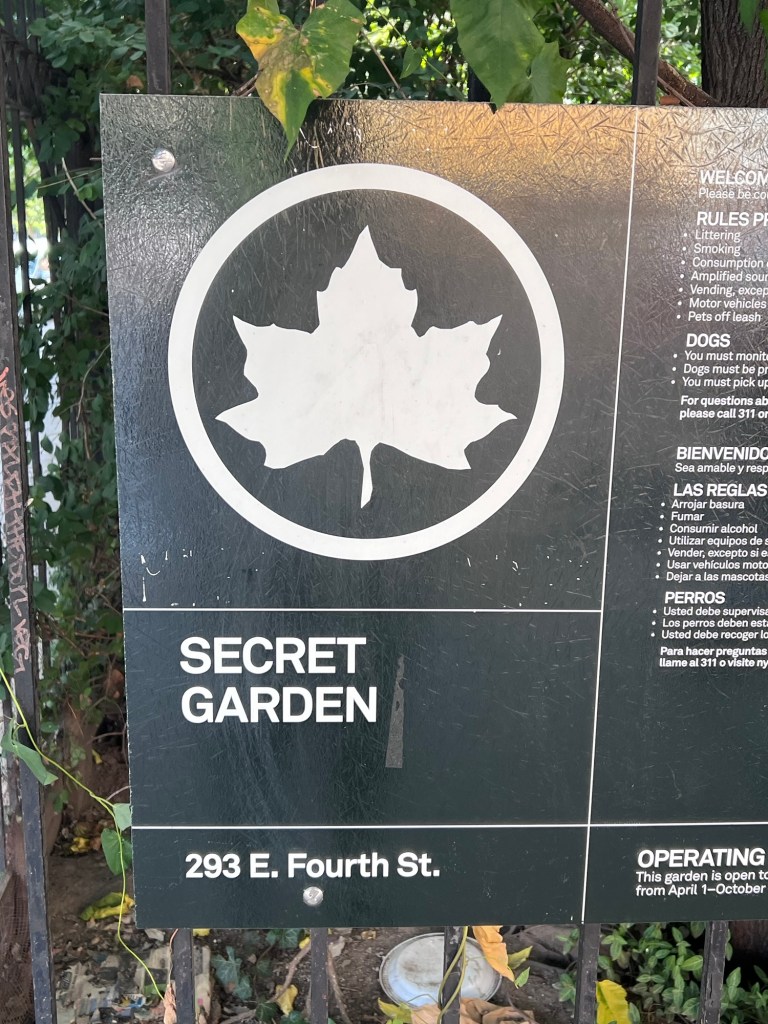
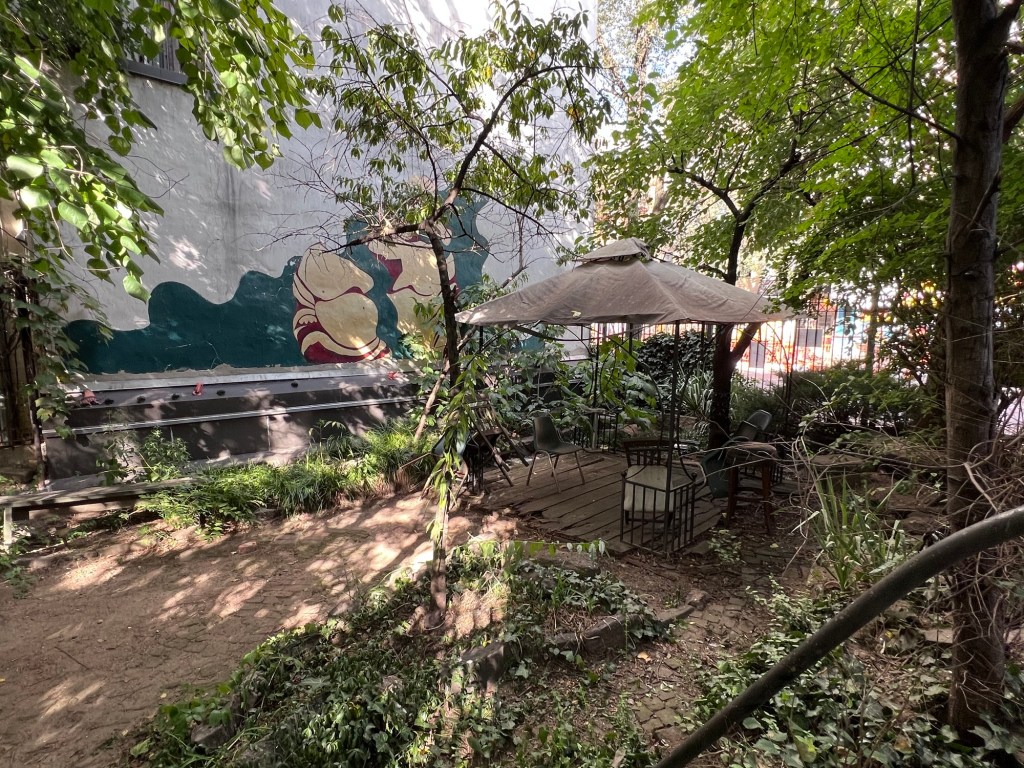
The Secret Garden at 293 East 4th Street

https://www.nycgovparks.org/opportunities/volunteer/group/secret-garden

https://www.facebook.com/groups/TheLowerEastSide/posts/10161103961094719

I quit around 6:30pm. I was exhausted and out of shape because of the Winter of not walking around. The last traces of snow were melting during the first real day of the thaw and I decided to head down to Chinatown for dinner and continue the next morning. It was going to be in the high 70’s and a perfect day for the walk. Chinatown was busy for a Monday as people had the same idea that I had about being outside. I knew where I was heading for lunch.

Mott Street in Chinatown in the early evening on a 70 degree evening

I decided to return to North Dumpling at 23 Division Street for an early evening snack. I ordered their delicious homemade Wonton Soup and an order of their Steamed Pork and Chive Dumplings. This has become my new ‘to go’ place. I love both the food and the prices.

Dinner that evening at North Dumpling at 23 Division Street

http://www.china-north-dumpling.com/

My review on TripAdvisor:

https://www.tripadvisor.com/ShowUserReviews-g60763-d33013722-r1052661645-North_Dumplings-New_York_City_New_York.html?m=19905

My review on DiningonaShoeStringinNYC@Wordpress.com:

My early dinner hit the spot as the soup really warmed me up and had a rich chicken taste. The homemade wontons were light as air.

The homemade Wonton Soup at North Dumpling

The Steamed Pork and Chive Dumplings are made right in front of you behind the front counter

After dinner, I stopped at a new bakery on Division Street that I had not noticed before on Division Street, Cardio Bakery at 51 Division Street. I just needed something sweet to complete the meal. I settled on a moist and chewy sugar doughnut. I loved the selection of baked goods here and plan on returning soon.

Cardio Bakery at 51 Division Street

https://www.ubereats.com/store/cardio-bakery/2HyRAyjuXBGEen_t9TAsxA?srsltid=AfmBOorRfDonU8pNRK3amNK9-MbrQ502OAGfXbe1-Sl6GiMo5vIICZOS

https://www.mapquest.com/us/new-york/cardio-bakery-791996917

My review on TripAdvisor:

https://www.tripadvisor.com/Profile/R4960NKjustinw/mediabatch/14212903?m=19905

My review on DiningonaShoeStringinNYC@Wordpress.com:

The selection at Cardio Bakery in the early evening

I needed something sweet after dinner and I didn’t want to walk to the other side of the neighborhood to some of my favorite bakeries. That is until I walked down the block from the restaurant and came across Cardio Bakery. It must have just opened because I had not noticed it before. There was so much to choose from but I was still stuffed from dinner so I settled on a sugar doughnut. It was an excellent choice.

My selection, a sugar doughnut

Yum!

After a whole afternoon of looking at street art all over Alphabet City, I walked around Chinatown and admired the street art in Chinatown. These are some of my favorite ones that I saw as I enjoyed my dessert. There are so many talented taggers in the neighborhood.

This was on one of the doors

I thought this was unique

I took the subway home that evening. I had not realized how out of shape I was after a winter of not walking around. I shoveled plenty of snow but not done much walking. The moment I sat down, I stiffened up and it was a long walk through the Port Authority.

I felt much better Tuesday morning and it really warmed up and the weather topped 78 degrees and sunny that day. I was off and running early to get back in the City and enjoy the sunshine while finishing walking the neighborhood. I started where I left off.

Finally making it to East 5th Street

I had walked all of East 5th Street the night before which is an unusual block because they built an elementary school at Avenue B that cuts one part of the neighborhood from the other. Then a series of low rise public housing was built that surrounds the back of the school. So you have to walk a combination of both East 5th and East 4th Streets.

Walking down East 5th Street on a sunny, warm morning

Passing the Secret Garden at 293 East 4th Street as I had to walk around East 4th Street to get to the extension of East 5th Street

https://www.nycgovparks.org/opportunities/volunteer/group/secret-garden

I start the second day of my walk back at the Secret Garden which was closed for the day but I could again peek through the fencing. Spring had not come to the garden but it will soon.

The Secret Garden in the Winter

You have to walk around the Lower East Side II complex to complete the neighborhood. This is built around M 364 The Earth School.

Walking around the Lower East Side II housing behind the M364 School

https://nycharealtalk.org/lots/5643

The Lower East Side Housing complex on East 5th Street

Some of the Disney themed street art along the walls of a local store beside the door

The work continued on the other side of the door

After I rounded the housing on East 5th Street, I continued down the street to Avenue D. There was even more murals and street art to see.

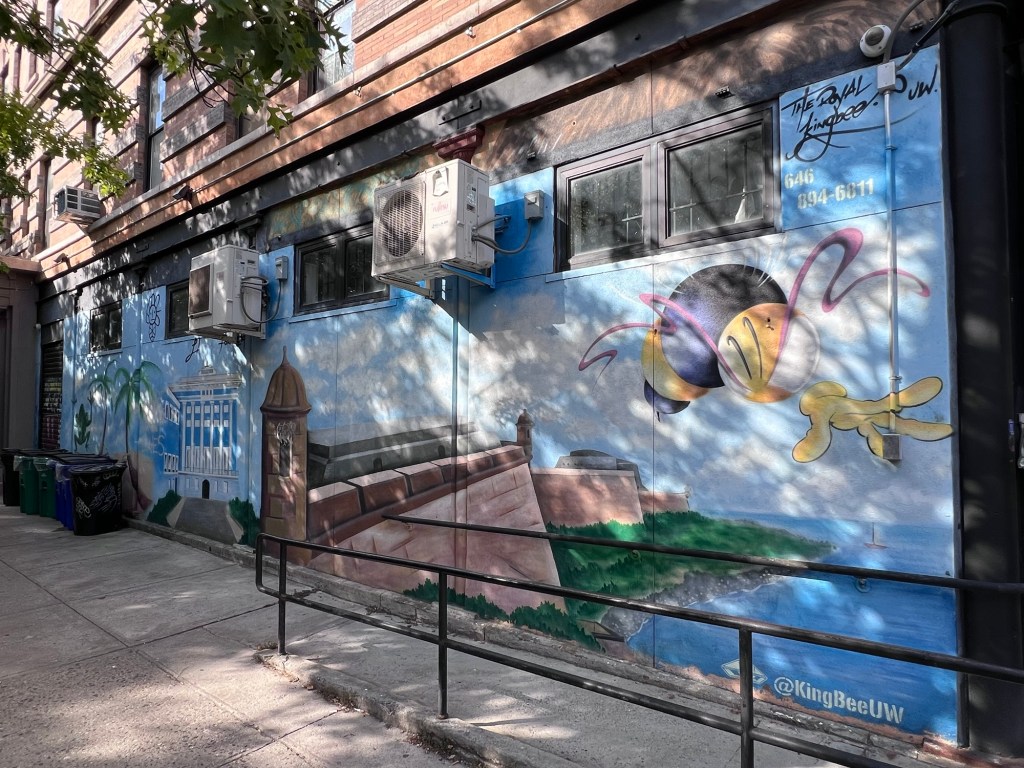
A mural on the corner of East 5th Street and Avenue C by artist King Bee UW

Artist King Bee UW

https://kingbeenyc.com/

https://www.facebook.com/kingbeeuw/

Alfredo Bennett, professionally known as The Royal “Kingbee” is a NYC artist. He was born in Harlem and raised in The Bronx in the early 70’s. He began his career painting graffiti on walls until gathering recognition and eventually being commissioned to perform his artistic abilities all throughout the city of New York. The artist went to JF Kennedy High School in the Bronx (BX 200 Artist.com).

The art was not just limited to the murals that looked more professionally done. The taggers showed their creativity on the closed gates of the businesses and the walls of the buildings around the Avenue.

The Garden of the Humanities at 270-272 East 4th Street

https://www.nycgovparks.org/opportunities/volunteer/group/garden-of-the-humanitarians

https://www.mapquest.com/us/new-york/generation-x-cultural-garden-369331978

The History of the Garden:

(From Mapquest.com)

The Generation X Cultural Garden, located in the Lower East Side of Manhattan, is a community garden that was founded in 1971. The garden features Geoblock paving for all-ability access, a masonry retaining wall for additional planting areas, and a mini urban orchard with nectarine, pear, peach, and apple trees. The garden also hosts cultural programming related to the Latino community and collaborates with Greenmarket farmers, Youth market displays, and TAiNO arts and crafts (Mapquest.com).

The garden in the winter time

The snow was still melting in the back of the garden as temperatures hit about 80 degrees that day.

The ‘Success’ mural in the schoolyard

I was not about to get close enough to see how the artist was on this interesting mural at the track at PS 15.

Admiring the street art on East 5th Street

It was a return and straight run down East 4th Street, having just covered most of it walking around the elementary school. The weather at this point had just hit 78 degrees, making it very pleasant to walk around without a jacket on. Mother Nature was tricking us with this early Spring weather during the Spring Thaw but with the number of people hanging out in Tompkins Square Park, it looked like most of the neighborhood was playing ‘hooky’ from work.

Turning the corner at East 4th Street

East 4th Street like most of the neighborhood was like an open air museum. There was a lot of interesting street art to see.

The interesting street art along the wall at East 4th Street

The Memorial Murals along East 4th Street

(I could not find the artist on this piece)

The Memorial Murals along East 4th Street

(I could not find the artist on this mural)

The back of the El Jardin Del Paraiso Community Garden at 710 East 5th Street

https://eljardindelparaiso.org

https://www.nycgovparks.org/opportunities/volunteer/group/el-jardin-del-paraiso

History of the Garden:

(From the El Jardin Del Paraiso Community Garden website)

The stage is set for the reemergence of community gardens during this time due to three factors: a large influx of immigrants, predominantly from agrarian cultures; the movement of many city-dwellers to the suburbs; and the deactivation of many fire houses due to dwindling city budgets. The result of the is a dramatic increase in burned-out vacant lots. These empty lots become the territory of drug dealers and the dumping grounds for rubble and toxic wastes and yet they bring a new openness to this area of Manhattan (El Jardin website).

Two movements worked to bring green spaces to the neighborhood of the Lower East Side: the homesteading and the gardening movements. Homesteaders work to rehabilitate buildings. Gardeners removed the rubble and turn the soil, reclaiming the vacant lots. El Jardín del Paraíso is founded by these two groups who were inspired by the idea that the space was large enough to be a park and a community garden.1973 — Liz Christy founds the Green Guerillas, a grass-roots organization dedicated to aiding neighborhoods and providing guidance and education in the of new community gardens. The organization recognizes the need for city involvement and lobbies for formal recognition. It is believed that Liz planted El Jardín del Paraíso’s existing two Weeping Willow trees (El Jardin website).

Walking along a very gentrified stretch of Alphabet City along East 4th Street

I came across the very colorful mural on the side of Public School 15 at 333 East 4th Street. I thought this was really interesting and I bet no one really notices it.

The mural in the front of Public School 15

https://www.ps15.org

https://www.schools.nyc.gov/schools/M015

This was all done in tiles and I thought this was very interesting. The only thing I could find out about it was it was created in the early 1980’s by some local artists.

Reaching the edge of the neighborhood at Avenue D. I could not believe how this neighborhood has changed in thirty years.

Walking down the street, I could not believe how many luxury condos have been built on the side streets of the neighborhood about a block from the housing projects. How things have changed in this neighborhood since the first time I walked in it in 1994. There have been so many improvements in the last twenty years.

The Orchard Alley Community Garden at 350 East 4th Street

https://www.nycgovparks.org/opportunities/volunteer/group/orchard-alley

https://www.facebook.com/orchardalleycommunitygarden

https://www.mapquest.com/us/new-york/orchard-alley-423971471

History of the Garden:

(From Mapquest.com)

Orchard Alley is a quaint establishment nestled in the heart of New York City, offering a unique blend of artisanal goods and services. With a focus on community engagement and sustainability, Orchard Alley provides a welcoming space for individuals to connect, create, and explore (Mapquest.com).

The inside of the garden in the winter

The Orchard Ally Community Garden was also closed that day but I could see it from the fence and see the work going on in the garden. The next garden I passed was the Parque de Tranquilidad Garden at 314-318 East 4th Street. It was also locked that afternoon but I could see the garden through the gates.

The Parque de Tranquilidad Community Garden at 314-318 East 4th Street

https://parquedetranquilidad.org/history

https://www.nycgovparks.org/opportunities/volunteer/group/parque-de-tranquilidad

History of the Garden:

(From the Parque de Tranquilidad Community Garden website)

The garden was started in 1979 when neighbors cleared out the lots and started the garden by planting vegetables and flowers. Parque de Tranqilidad was purchased together with other sixty three gardens city wide by the Trust for Public Land. In 2004 it became one of the fourteen gardens when The Manhattan Land Trust was founded. Garden Members take care of this little park all year long.

The inside of the garden

You could see the coming of Spring through the fencing.

I have seen this artist’s work all over the City

I saw this interesting mural along East 4th Street by Avenue A “Teach One Teach One”

I loved the details on the mural

Another look at the mural

I could not find the artist for this work but I thought it was one of the best murals that I had seen on my walk in Alphabet City. I loved the vibrance of the colors.

It looked a fairy peeking through of the woods

Rounding the East 3rd Street at the end of the day

Walking down East 3rd Street

East 3rd Street is the last full block of the neighborhood with just part of East 2nd Street extending into the neighborhood. The Los Amigos Community Garden at 221 East 3rd Street was also closed for the afternoon but I could see it through the fence.

The Los Amigos Community Garden at 221 East Third Street

https://www.mapquest.com/us/new-york/los-amigos-garden-371279969

https://www.nycgovparks.org/opportunities/volunteer/group/los-amigos

https://www.earthcelebrations.com/gardens/3bc_2.html

History of the Garden:

(From Mapquest.com)

The American Community Gardening Association (ACGA) is dedicated to the promotion and support of community gardening efforts across the United States. With a focus on networking, education, and resource sharing, the ACGA serves as a vital hub for community gardeners and leaders, fostering resilience and collaboration within urban ecosystems (Mapquest.com).

The Los Amigos inside

It looked like people had been working that afternoon. This was the same with the Brisas Del Caribe Community Garden at 237 East 3rd Street. It was locked in the later afternoon.

The Brisas Del Caribe Community Garden at 237 East 3rd Street

https://www.earthcelebrations.com/gardens/3bc_1.html

https://www.nycgovparks.org/opportunities/volunteer/group/brisas-del-caribe

https://www.mapquest.com/us/new-york/brisas-del-caribe-garden-449717716

History of the Garden:

(From the Earth Celebrations website)

The Brises del Caribe Garden is a 90 x 24 plot of land located at 237 East 3rd Street on Manhattan’s Lower East Side. In 1986 this land was an abandoned city owned lot inhabited by rats, drug addicts and dealers, and strewn with refuse and toxic wastes. The garden was born thanks to the efforts of Mary and Angel Aponte, a neighborhood couple, who cleared out the garbage and told the addicts to go elsewhere (Earth Celebrations website).

The community group Green Guerrillas gave a lot of assistance to the Apontes in the beginning. In addition, they received many letters and petitions of support from the community board, the Church and other local community groups. When Operation Green Thumb and the City saw what had been accomplished in the garden, they agreed to a year-to-year lease for the Apontes, claiming it could only be year-to-year because the City might decided to sell the land (Earth Celebrates website).

The gardens in the early Spring

The garden was closed for the day when I walked the neighborhood as was the All People’s Garden at 293 East 3rd Street. Most of these gardens would be open in late April and early May when things would be blooming again.

The All People’s Garden Community Garden at 293 East Third Street

https://www.nycgovparks.org/opportunities/volunteer/group/all-people-s-garden-inc

https://allpeoplesgarden.org

The gardens in the early Spring

The History of the Garden:

(From the All People’s Garden Inc. website)

All People’s Garden Inc. was created as a not for profit organization in 1978 by former VISTA volunteer Olean Cowart For a community organizer who work with the neighborhood community development organization known as Interfaith Adopt-A- Building, Inc. The garden was fashion out of a vacant site owned by the City of New York, and was strewn with discarded rubbish. With the help of the community and other volunteers, slowly remove the debris and create the beginning of a community garden space (All People’s Garden Inc. website).

In 1979 with the support of the Council on The Environment of the City of New York (now known as GROWNYC), a plan to open the garden for community use was also supported by the then Mayor Ed Koch and Ms. Liz Chrystie the pioneer for the first community garden on East Houston Street and the Bowery. All People’s Garden is the first Grow NYC’s PLANT-A-LOT garden in New York City. At the opening Mayor Ed Koch with Liz Chrystie plant a ceremonial Rose Bush. The ceremony was conducted to symbolize the working coordination of the City of New York in the beginning of the redevelopment of the Lower East side community open space and housing (All People’s Garden Inc. website).

Street art along East 3rd Street

I continued my walk down East 3rd Street admiring all the street art. There were so many interesting pieces to see all over the block. Just look at all the walls as you past the buildings.

Walking down East 3rd Street

Street Art along the walls

Street art along East 3rd Street

Street art on the street on East 3rd Street

The Kenkeleba House Garden at 212 East 3rd Street

https://www.kenkeleba.org

https://www.nycgovparks.org/opportunities/volunteer/group/kenkeleba-memory-garden

The History of the Kenkeleba House and Gardens:

(From the Kenkeleba House website)

Kenkeleba House was founded in 1974 by Joe Overstreet, Corrine Jennings and Samuel C. Floyd to support African American culture. Kenkeleba began its work on The Bowery near Delancey in New York City with experimental projects to assist African American, Caribbean,and African artists in developing and documenting their work. Early projects included exhibitions and experiments with poetry, music, visual arts, workshops in dance, theater, children’s programs and African markets. The name, Kenkeleba is derived from that of the Seh-Haw plant grown in West Africa, and known for its spiritual, nutritional and healing values (Kenkeleba House website).

The inside of the garden

The garden was also closed that afternoon but I could see the artwork in the garden.

When I stopped to get a Coke at a deli around the corner, I saw this mural of the Ramones that I thought was so cool. I know that they had played clubs around here so it was the perfect honor for the singing group now that most have them have passed away.

The Ramones painting on a side street

(I could not find the artist on this work)

https://en.wikipedia.org/wiki/Ramones

https://www.ramones.com

My favorite song of the Ramones “I wanna be Sedated”

I walked back down East 3rd Street looking at all the art along the walls.

This interesting painting on the wall on East 3rd Street by Artist Solus

https://www.solusstreetart.com

https://www.facebook.com/solusart

Ireland born artist Solus found creativity key to keep him inspired and on the right track. Embracing natural talent and keen eye using spray paint as his main medium, leaving his mark in Europe, America, and Asia on walls, canvas and sculpture. He has exhibited in various international solo shows in America, Canada, and Paris (Artist Bio).

The artist Solus

I passed even more community gardens along East 3rd Street, most of the closed during the day. Like of other gardens, some volunteers were cleaning out the gardens and preparing the beds for seeding.

The Miracle Garden at 194-196 3rd Street

The Miracle Garden at 194-196 3rd Street

https://www.nycgovparks.org/opportunities/volunteer/group/miracle-garden

https://www.mapquest.com/us/new-york/miracle-garden-365163901

History of the Garden:

(From Mapquest.com)

Miracle Garden is a unique establishment in New York, NY that offers a serene and enchanting environment for visitors to explore. With its diverse collection of flora and carefully curated landscapes, Miracle Garden provides a peaceful retreat for individuals seeking a moment of tranquility amidst the bustling city (Mapquest.com).

The inside of the garden in the early Spring

The Miracle Garden was being cleaned during my walk in the neighborhood.

Walking down East 3rd Street near Avenue A

Street art by Avenue A

(I could not find the artist to this work or it may be multiple artists)

Walking down East 2nd Street

I finally got down to the last street of the neighborhood, the extension of East 2nd Street. I was tired by the time I got to this last block.

Walking down East 2nd Street

Walking down my last block in Alphabet City, East 2nd Street. This block borders Little Italy, Chinatown, the Bowery and the Lower East Side once you cross Houston Street.

One of the street murals on East 2nd Street

The Kenkeleba House Garden at 212 East Third Street on the back side of the gardens

The garden facing East 2nd Street in the early Spring

I then passed the neighborhood firehouse and its memorial to my fellow Brothers who died on 9/11. This was very touching and still pretty raw to me.

Engine 26/Ladder 11 on East 11th Street

https://www.fdnytrucks.com/files/html/manhattan/e28.htm

https://www.mapquest.com/us/new-york/fdny-engine-28-ladder-11-448512367

The one thing I admired was the dedication to the brave members who lives were lost on that tragic day. I was not sure who the artist was on this work but I think it was firefighter Michael “Mikey” Borriello, who is also the resident artist at Engine 28, Ladder 11. He has created art all over the firehouse.

Their touching tribute to their fallen brothers on 9/11

https://evgrieve.com/2025/07/fdny-firefighter-brings-artistic-touch.html

This is a reminder to never forget that tragic day and the men and women who gave the ultimate sacrifice.

The Peach Tree Garden at 236 East Second Street

https://www.nycgovparks.org/opportunities/volunteer/group/peach-tree-garden

https://www.mapquest.com/us/new-york/peach-tree-garden-377299475

History of the Garden:

(From Mapquest.org)

Peach Tree Garden is a quaint and charming establishment nestled in the heart of New York City. Specializing in providing a serene and peaceful environment for guests to relax and unwind (Mapquest.com).

The garden in the early Spring

This was one of the few community gardens that looked like it was ready to start blooming.

Looking down Avenue D at East 2nd Street. How things have changed since the 1970’s and 80’s

I finally made it to the edge of Alphabet City. This is looking up Avenue D from East 2nd Street and the edge of East Houston Street.

Walking down the tiny section of East 2nd Street

The park lining East 2nd Street was still in Winter mood when I passed it in March. It was in full bloom when I was walking the Avenues back in August so it was nice to see the contrasts in the seasons.

262 East 2nd Street was one of the more distinct buildings in the neighborhood

https://www.zillow.com/b/262-e-2nd-st-new-york-ny-CkBGyR

One of the few buildings that stood out in the neighborhood among the low rise tenement buildings, brownstones and new luxury building was 262 East 2nd Street with its elegant embellishments and faces staring back at you. I had not seen this since I left the Flatiron District a year ago. You have to look up to see all the beautiful stonework. This unique looking building was built in 1920 and recently was converted to luxury condos (Streeteasy.com).

The detail work the windows all around the building

I wrapped up the visit to the neighborhood by walking the very edges of the area, seeing the locked gates of the community gardens and an abundance of street art.

Le Petit Versailles Garden at 247 East 2nd Street

https://www.alliedproductions.org/about-the-garden

https://www.nycgovparks.org/opportunities/volunteer/group/le-petit-versailles-garden

https://en.wikipedia.org/wiki/Le_Petit_Versailles

History of the Garden:

(From Wiki)

It was established in 1996 by artists Peter Cramer and Jack Waters, who wanted to create a queer public space in the city. Peter Cramer and Jack Waters had been artistic collaborators in New York since the 1980s. They became co-directors of ABC No Rio space after curating an art exhibition there together and both joined theVisual AIDScollective. The garden site on 2nd Street had been an auto chop shop before that was demolished. Cramer and Waters built the garden together, in 1996 (Wiki.org).

The inside of the garden

The garden was being prepared for the Spring and I was able to sneak a peek inside to see some of the artwork that was pretty interesting. It will be cool to see it when it is in full bloom and get to see some of the other art up close.

The artwork around the fencing

Walking down the block was lined with all sorts of metal works and murals heading back towards Avenue A and the heart of the East Village. Various artists works boldly displayed on the walls of businesses and buildings. Unique works that stood out.

The metal work on one the buildings

Artwork on the sidewalk

The mural on the corner of East 2nd Street and Avenue A

The artist Slim Storm

(I could not find any information on the artist)

The Heart of NYC

The artist Bio TATS Cru

Wilfredo “Bio” Feliciano is also a founding member of the world famous art collective known as Tats Cru “The Mural Kings” originally known as TAT Cru founded by Brim, Mack and Bio in the eighties.

Wilfredo “Bio” Feliciano’s work has been featured in many publications, movies, music videos and documentaries throughout his career. He has also painted in numerous countries over the past 30 years, invited by different organizations. Bio has collaborated with many of the top graffiti artists in the world from past to present day. He has also lectured at M.I.T. and various universities in the United States.

https://www.facebook.com/biotats

Bio

‘Nicer’

‘The Adventures of Johnny Pump’

The Bio TATS Cru works

I finally finished walking the entire Alphabet City neighborhood around 5:00pm. It had been a long but productive two days. I could not believe the number of community gardens in the neighborhood. I was lucky it had been warm out so I got to see many of them but will have to revisit when everything comes into bloom. Right now they still hold tight to the end of Winter but I have seen in the neighborhood in August when everything is green.

For dinner that evening, I went to Two Boots Pizzeria, where I had not eaten in a decade. I went there years ago with my best friend when the neighborhood was a bit more scratchy. This is a neighborhood institution and the pizza was still wonderful. (I just read though that the original location will be closing on May 26th, 2026 after an agreement on the rent with the landlord fell through and the owner will be moving to a new location soon).

Two Boots Pizzeria at 42 Avenue A. This is its original location of the current chain of pizzerias. (It will be closing on May 26th, 2026).

https://www.facebook.com/twobootspizza

My review on TripAdvisor:

https://www.tripadvisor.com/ShowUserReviews-g60763-d33231065-r1052618003-Two_Boots_East_Village-New_York_City_New_York.html?m=19905

The inside of Two Boots

I forgot how funky this place looked inside. One thing I remember was how good the pizza was and the selection of pizzas they had available that evening were rather interesting.

The pizza selection in the case

I looked through the case at the different toppings of pizza and I eyed the Cajun slice which was topped with gumbo ingredients items such as spicy sausage and shrimp. The pizza has a brown sauce instead of the traditional red tomato sauce. It was out of this world! I never had such a unique slice than this.

Finally able to sit down and relax

A slice of Cajun Pizza with a Coke

I chose a slice of Cajun pizza with sauteed shrimp and andouille sausage with Cajun seasonings. It had the most amazing flavor and one of the best slices of pizza I had had in a long time.

The Cajun Pizza was amazing and so full of flavor

Yum!

I had an interesting time in Alphabet City. It reminded me of how much the City has changed in thirty years. It never looked so good. Was that good for a neighborhood with such a storied past? It shows how the City just keeps changing.

While the neighborhood is much cleaned up since I remember it in the 1990’s, it still retains that funky independent vibe to it . Let’s see what happens in the future in an ever changing City as the tentacles of NYU keep stretching over this neighborhood. Will they adapt to it or will the neighborhood adapt to them? Just like every other neighborhood in Manhattan, I will just keep walking.

George’s Pizzeria 726 West 181st Street New York, NY 10033

George’s Pizzeria

726 West 181st Street

New York, NY 10033

(212) 568-6891

https://www.georgespizzaria.com/

Open: Sunday-Saturday 11:00am-9:30pm

My review on TripAdvisor:

https://www.tripadvisor.com/Restaurant_Review-g60763-d23900934-Reviews-George_s_Pizzaria_Inc-New_York_City_New_York.html?m=69573

The front of George’s Pizzeria at 726 West 181st Street

There are pizzerias all over Manhattan, some good and some bad and some indifferent. Some just stand out for the excellent food, service and price and George’s Pizzeria is one of them. I came across this wonderful little hole in the wall when I was walking the Washington Heights neighborhood for my blog, MywalkinManhattan.com. What stood out were the reasonable prices and the excellent food. The staff here also has a good repour with their customers and I think that is very important.

The inside of George’s Pizzeria

I just had a simple piece of Cheese pizza on my first two trips to George’s and the pizza is amazing. The sauce they use has so much flavor and I think this is the body of the pizza. The slice was perfectly cooked and even when it is warmed up, the pizza is consistently excellent.

George’s delicious Cheese Pizza

The Cheese Pizza here is excellent

When I came back another time during my Broadway walk, I tried the Cheese and Sausage Calzone and what a gooey delight. This overstuffed Calzone had three cheeses and lots of sliced sausage inside of it. It was served with a side of their homemade red sauce.

The Sausage and Cheese Calzone with an icy Coke

The Calzone was really nice sized and perfect for lunch

It was the perfect size for lunch and just right for the 13 mile walk down Broadway. It was a delicious meal.

Yum!

Centro Pizzeria & Restaurant 1469 Second Avenue New York, NY 10075

Centro Pizzeria & Restaurant

1469 Second Avenue

New York, NY 10075

(212) 988-4200/Fax: (212) 988-4222

https://www.centropizzeriarestaurantmenu.com/

Open: Sunday-Wednesday 10:00am-2:00am/Thursday 10:00am-3:00am/Friday-Saturday 10:00am-4:00am

*Free Delivery with a minimum order for delivery of $10.00.

My review on TripAdvisor:

https://www.tripadvisor.com/Restaurant_Review-g60763-d15164626-Reviews-Centro_Pizzeria_Restaurant-New_York_City_New_York.html?m=69573

The front of Centro Pizzeria & Restaurant at 1469 Second Avenue

The pizza selection

Sometimes you come across a restaurant that you must have walked by a million times but never stopped in, the was Centro Pizza. Until one night when I was starved and it was the only place open. I saw the selection of pizzas in the window and had to stop. I am glad I did. The food here is excellent and very reasonable.

The pizza selection

My dinner that evening, a large cheese and pepperoni pizza with the Coke.

My dinner my first evening at Centro Pizzeria

The pizza here is amazing. The sauce has so much flavor and they load the pepperoni on the slices. You got a real good mouthful on these oversized slices.

The Cheese pizza

The Pepperoni pizza is loaded with pepperoni

What a great dinner

The next time are here, I was in the mood for one of their rolls and ordered the Pepperoni Roll. These are also oversized and they pack the filling inside.

My dinner that night

I have to tell you that for $8.00, it was like a mini pizza. The Pepperoni Roll was loaded with spicy pepperoni and mozzarella and baked to perfection.

The Pepperoni Roll with their homemade red sauce

The red sauce they serve on the side is perfectly spiced and has a rich flavor.

The roll was loaded with thin slices of pepperoni

It was delicious and I enjoyed my late dinner

The inside of the restaurant with its nice selection of sodas and drinks

Day Three Hundred and Fifty-Eight Walking the Avenues of Alphabet City Avenues B & C August 31st, 2025

I could not believe how fast the Summer came and went. It was like a blink of the eye. I had covered a lot of ground over the last three months that included many neighborhoods in New York City, many Upstate New York and New Jersey towns plus updating older blogs that needed some work. They needed new pictures and updates in the businesses I had featured in the past. A lot has changed since COVID.

I started Alphabet City just before the Labor Day Weekend and a lot has changed here since the 1960’s and 70’s. The whole hippie movement is now over only to be replaced by the current hipster movement where men are wearing knit head coverings in almost 90 degree and still wearing ‘man buns’ that are ‘so 2010’. To each his own.

Looking down Avenue C on a sunny afternoon

I just ignored everyone and started my walk on the Avenue’s of the neighborhood. The neighborhood is broken up that the closer you are to public housing the less gentrified it was on the block. The border seemed to be around 10th Street. The lower the street, the nicer the bars and restaurants.

The one thing I did notice about the neighborhood was the amount of community gardens that popped up in corners all around the blocks. This was the result of the community efforts in the 1970’s and 80’s that saved the neighborhood and what has made the neighborhood as desirable as it is now. It seems you can’t stop gentrification. Even so, these hard working gardeners are setting the tone for the neighborhood.

The signs of the times on top of the old tenements on Avenue C

The other thing I noticed about Alphabet City are the tagging and outdoor murals that line all the blocks. The people who creat this street art are so clever and creative. They really have an eye on color and design.

Some of the art cleverly tucked along the walls and columns in the neighborhood

Some of the art close by

I liked this design

The first of the Community Gardens that J toured that afternoon (they all seemed to be open the Saturday that I visited) was the Francisco ‘Pancho’ Ramos Community Garden at 709 East 9th Street. The garden showed the creative spirit of the people who volunteered there.

The sign for the Francisco “Pancho” Ramos Community Garden at 703 East 9th Street

(The History of the Park from its website)

The Lower East Side of the 1970s was a hard place with little green. Local residents noticed the abandoned, littered lot at the corner of Ninth Street and Avenue C and began to sow seeds and plants along the chain link and among the debris, and so the Ninth Street Community Garden & Park was founded in 1979. Today Pancho’s Garden hosts community events including music, art, and gardening workshops.

https://panchosgarden.org/

https://www.nycgovparks.org/opportunities/volunteer/group/francisco-pancho-ramos-community-garden

The pathways were lined with flower beds and some with vegetable gardens with the latest crops coming in. Here and there were pieces of artwork such as sculptures and paintings.

Walking through the gardens at the end of the summer

Following the paths

Walking through the flowering arbors

Some of the creative artwork that lined the paths

The raised flower beds

Some of the creative touches of the gardens

The Vegetable Gardens in full growth

Even the shed and play areas were colorful

This is what the community spirit of hard work and dedication can create in a neighborhood

Another interesting mural that I came across on the walls of the buildings

Just a reminder that the Alphabet City name is not a negative one anymore

The Alphabet Wine Company at 100 Loisaida Avenue (Avenue C)

https://www.abcwinecompany.com/

Walking through Alphabet City today reminded me of years ago when I toured Bushwick in Brooklyn. The negative connotation of the name was now synonymous with ‘hipster’ cool. When I started to see signs like Alphabet Wine Company, you know times have changed for a neighborhood with not such a great past.

Passing the Lower East Side II still reminds you that public housing is a big part of this neighborhood

https://nycharealtalk.org/lots/5643/

The next set of street art I admired was 15C Cultural Center building at 68 Loisaida Avenue (Avenue C). The shop was closed that afternoon so I got to see all the interesting art work on the metal gates.

This was on one side of building of the 5C Cultural Center at 68 Avenue C and 5th Street

https://5cculturalcenter.nyc/

https://www.facebook.com/5CCafe/

My review on TripAdvisor:

https://www.tripadvisor.com/Restaurant_Review-g60763-d4245358-Reviews-5C_Cafe_Cultural_Center-New_York_City_New_York.html?m=69573

The other side of the Cultural center had just as interesting mural on it

The work was done by artist Danielle Mastrion

Artist Danielle Mastrion

http://www.daniellemastrion.com/

https://www.instagram.com/daniellebknyc/?hl=en

Danielle Mastrion is a Brooklyn-born, New York City based painter and muralist who specializes in large scale, brightly colored murals. She holds a BFA from Parsons School of Design (Artist website)

This mural was around the corner dedicated to Puerto Rico

The changes to Avenue C start around East 10th Street as you leave the area around the public housing and walk closer to the areas that cater to a younger NYU/Pace student population. When I visited the neighborhood originally walking the borders of the neighborhood and even this evening, the bars and restaurants exploded with students whose first weekend in New York City was filled with excitement.

They chatted on their cellphones and yelled to their friends and acted like a scene in early ‘Sex and the City’ episodes. I can always tell when an out of towner is trying too hard.

The rebuilt section of Avenue C

I walked through my next community garden, Gustavd Hartman Square. Some of these patches of green were really small and just required a peek inside.

The front of Gustavo Hartman Square

https://www.nycgovparks.org/parks/gustave-hartman-square

History of the Park:

This plot of land, located at Second Street and Avenue C, is named for Gustave Hartman, a municipal court judge and philanthropist who spent most of his life in this neighborhood. Gustave Hartman was born in Hungary and immigrated to the United States with his parents while still a young boy. He attended P.S. 22 on Sheriff Street (now Columbia Street), the College of the City of New York, and received his law degree from New York University in 1905.

(from NYCParks.org)

Lawyer Gustavo Hartman

https://en.wikipedia.org/wiki/Gustave_Hartman

This plot of land, located at Second Street and Avenue C, is named for Gustave Hartman, a municipal court judge and philanthropist who spent most of his life in this neighborhood.

The growth of the garden needed a little pruning

I then started my walk back up Avenue C from the border of East Houston Street, which itself on all sides of the street has been knocked down and rebuilt. I have never seen a street go from shabby to chic more in the last fifteen to twenty years. Here the upper parts of the old Chinatown and Little Italy and the Lower East Side have merged with the Village. The lines have been blurred.

The changes to Avenue C start in the lower part of the neighborhood

The next set of public housing is the Bracetti Plaza

https://en.wikipedia.org/wiki/Bracetti_Plaza

The next community garden I visited was the Secret Garden, a tiny park at 293 East Forth Street. Volunteers were hard at work weeding and planting while I walked around

The Howz Mural

The mural was by artist Dovestck Nez-Tri

Artist Charlie Doves

https://www.instagram.com/charliedovesnyc/?hl=en

https://findmasa.com/artist/charlie-doves

Charlie Doves is a graffiti and fine artist from New York City’s Lower East Side, known for his work inspired by graffiti’s Golden Age and Japanese art. A master of his craft, Doves has moved from street art to fine art, fusing different techniques and styles to create a timeless body of work (Arts AI).

The Secret Garden Community Garden at 293 East Fourth Street

https://away.mta.info/articles/community-garden-guide-nyc-east-village-alphabet-city-loisaida/

https://www.nycgovparks.org/greenthumb/community-gardens

The inside of the gardens

The gardens are very welcoming with places to sit and artwork to admire

My walk continued through the open air art museum that this part of Avenue C has become. This was the next mural I stopped to admire by King Bee.

The mural by King Bee

Artist King Bee UW

https://kingbeenyc.com/

https://www.facebook.com/kingbeeuw/

Alfredo Bennett, professionally known as The Royal “Kingbee” is a NYC artist. He was born in Harlem and raised in The Bronx in the early 70’s. He began his career painting graffiti on walls until gathering recognition and eventually being commissioned to perform his artistic abilities all throughout the city of New York. The artist went to JF Kennedy High School in the Bronx (BX 200 Artist.com).

The art was not just limited to the murals that looked more professionally done. The taggers showed their creativity on the closed gates of the businesses and the walls of the buildings around the Avenue.

Tagging art on Avenue C

Tagging art on Avenue C

The next community gardens I visited and one of the original is the Carmen Pabon Del Amanecer Jardin, dedicated to Carmen Pabon.

The sign for the Carmen Pabon Del Amanecer Jardin at

https://www.carmenpabongarden.org/

https://en.wikipedia.org/wiki/Carmen_Pab%C3%B3n_del_Amanecer_Jard%C3%ADn

https://www.nycgovparks.org/opportunities/volunteer/group/carmen-pabon-del-amanecer-jardin

History of the Park:

(from park website)

Carmen Pabón, ‘la madrina del Lower East Side,’ was a Puerto Rican community activist, gardener, poet and actress who founded a community garden as an urban sanctuary for children, local artists, Nuyorican poets and the elderly. Carmen helped thousands to create a better life for themselves and fed multitudes of Lower East Siders experiencing homelessness.

Activist Carmen Pabon

https://www.manhattanbp.nyc.gov/events/library-archives-lunch-hour-celebrating-carmen-pabon-la-madrina-de-loisaida/

The inside of this beautiful and lush Garden

While a lot of the neighborhood is low rise and tenement housing, I stopped to admire this unique brick building at 116 Avenue C, with its interesting faces on all levels staring back at you. It reminded me of the many buildings I had passed recently in Lower Chelsea.

116 Avenue C

https://www.apartments.com/116-avenue-c-new-york-ny-unit-1/fc0bvkv/

Each window had a demonist look in its eyes as you passed it. This building was built in 1900 (Streeteasy.com).

These menacing demons stare back at you from every window

I spent some more time cross crossing through more gardens admiring the work of dedicated gardens. The next I visited was the Flower Door Garden at 135 Avenue C.

The Flower Door Garden at 135 Avenue C

https://away.mta.info/articles/community-garden-guide-nyc-east-village-alphabet-city-loisaida/

The inside of the Flower Door Garden

I loved the detail work on the garden’s fence

These small parks were in full bloom and it was fun to walk around the small paths and enjoy the gardens on a summer afternoon.

The next garden I visited was the La Plaza Cultural-Armando Perez.

La Plaza Cultural-Armando Perez at 674 East Ninth Street

https://www.laplazacultural.com/

The History of the Garden:

(from the garden’s website)

La Plaza Cultural de Armando Perez Community Garden was founded in 1976 by local residents and greening activists who took over what was then a series of vacant city lots piled high with rubble and trash. In an effort to improve the neighborhood during a downward trend of arson, drugs, and abandonment common in that era, members of the Latino group CHARAS cleared out truckloads of refuse.

Working with Buckminster Fuller, they built a geodesic dome in the open “plaza” and began staging cultural events. Green Guerillas pioneer Liz Christy seeded the turf with “seed bombs” and planted towering weeping willows and linden trees. Artist Gordon Matta-Clark helped construct La Plaza’s amphitheater using railroad ties and materials reclaimed from abandoned buildings.

What I liked about this particular garden was all the interesting metal work along the fencing. It popped all around the fencing like you were living in ‘Whoville’.

One of the entrances of the gardens

Walking around the inside along the paths

The whimsical ironworks on the top of the fencing

As I made my way back up Avenue C, J came across a small museum that I had never heard of before, the Museum of Reclaimed Urban Space at 155 Loisaida Avenue (Avenue C).

The Museum of Reclaimed Urban Space at 155 Loisaida Avenue (Avenue C)

https://www.facebook.com/morusnyc/

https://morusnyc.org/

My review on TripAdvisor:

https://www.tripadvisor.com/ShowUserReviews-g60763-d4459121-r1027918582-Museum_of_Reclaimed_Urban_Space_MoRUS-New_York_City_New_York.html?m=19905

My review on VisitingaMuseum.com:

https://visitingamuseum.com/tag/museum-of-reclaimed-urbanspace/

The museum is a time capsule of information from the late 1960’s through the 70’s when the neighborhood had really hit rock bottom with the City’s almost bankruptcy. The neighborhood and its residents banded together to save the neighborhood and clean up all these empty lots of garbage and debris.

The entrance of the museum

The description of the museum’s purpose

The museum has pictures of the neighborhood at various stages of its development. There are the ups and downs of this section of the City and how its residents maintain it. The neighborhood has seen so much change and much of it due to the volunteers who keep improving it.

The inside of the museum

How the changes took place in Alphabet City

The masks and decorations that line the walls

The history of the neighborhood and its triumphs

After my trip through the museum, I continued the walk up Avenue C. Above 10th Street is was a little patchy but you can tell the neighborhood is getting better. I never felt unsafe walking around the ‘Alphabets’.

For the rest of my walk, I enjoyed the ‘open-air’ museum that the sides of the buildings offered me. There were many interesting murals to admire.

I think this one was in honor of the island of Puerto Rico by Artist Joel Chico

Artist Joel Chico

https://www.instagram.com/joelchicoshow/

https://joelchico.com/about

Joel Chico is an Actor, Writer, Director from Toronto, Ontario, Canada. He is the creator of JMC Creative Endeavors, an artistic platform for his projects as a musician, poet, painter, photographer, and spiritual wisdom keeper. He is currently in the process of writing a poetry anthology, and his Cosmic Trilogy Feature screenplays (Artist bio).

This looked like a ripped movie poster

The taggers art

I was not sure what this meant by artist Chico

https://en.wikipedia.org/wiki/Chico_(artist)

Artist Antonio ‘Chico’ Garcia

Artist Antonio “Chico” Garcia is a New York City based Graffiti artist. He is well known in the neighborhood and has been featured in several periodicals (Wiki).

I saw this on the side of a Chinese restaurant

Then when I got to the top East 14th Street and I came across this mural on the side of a school PS 34 on East 12th Street and I admired the different styles of art in each panel.

The panel that lined the school created by artists from the Thrive Collective

This little guy looked bright and happy underneath the entrance to the school

The mural Dr. Pedro Albizo Campos by artist Danielle Masirion

Artist Danielle Mastrion

http://www.daniellemastrion.com/

https://www.instagram.com/daniellebknyc/?hl=en

Danielle Mastrion is a Brooklyn-born, New York City based painter and muralist who specializes in large scale, brightly colored murals. She holds a BFA from Parsons School of Design (Artist website)

I loved this whimsical school painting by artists Savannah Zambrano and Andrea Amanda

https://www.savannahzambrano.com/

Artist Savannah Zambrano

https://www.facebook.com/unlazy.nenaluna/

Savannah Zambrano is a freelance sequential artist that hosts workshops and panels, does face painting and caricatures, and works with Traditional and Digital Media (Artist Bio website).

The artists sign with the Thrive Collective

I loved this mural with the Puerto Rican flag by artist Miki Mu

The sign for the artist Miki Mu

Artist Michela Muserra

https://bookanartist.co/artist/artist-for-hire/2119

https://www.thrivecollective.org/miki-mu/

Michela Muserra is an international muralist and illustrator based in Brooklyn. A graduate of Accademia di Bella Arti in her hometown of Foggia, Italy. The artist has worked as a teaching artist with Thrive Collective since January 2017 (Thrive Collective website).

I love this colorful display of positive behavior of Frank Ape by artist Brandon Sines

Artist Brandon Sines

https://www.stickerbombworld.com/blogs/news/in-conversation-brandon-sines-aka-frank-ape

https://artrunnermag.com/posts/brandon-sines/

Artist Brandon Sines was exposed to many cultures while growing up simultaneously in New York City, Toronto, and Los Angeles. He mixes Pop Art’s mass culture, Surrealism’s private associations, and inventive paint handling to create dreamlike environments. His mark making ranges from experimental techniques to illustrative precision. Parts of the paintings are crystal clear, and other parts reach abstraction.

This was another great mural on the school but I could not find the artist

The piece of art that I noticed was as I was walking down East 14th Street and I came across this taggers work. To me it looked like a surreal ghost.

The piece of street art was East 14th Street

I turned the corner to Avenue B and started my journey down the street. Being closer to the colleges and further from the projects and around Tompkins Square Park, the vibe is different on Avenue B. The restaurants are a bit more expensive and there are more bars.

Walking down Avenue B

Walking through the neighborhood that offers so much to a visitor

I saw this ‘Love’ mural on one of the businesses

On the corner of Avenue B and East 13th Street I saw all this great street art on top of murals

As I continued the walk through this part of the neighborhood, I came across another series of community gardens that dot the street.

The Relaxation Garden at 209 Avenue B

https://www.6bgarden.org/

The Relaxation Garden was the first of the gardens I passed and this really had nothing to it. It looked like a garden waiting for something to happen to it.

The inside of the Relaxation Garden needs some TLC

I stared up at one of the buildings on Avenue B and this face from above was staring back at me. I thought this was really interesting but do not want to know how this artist did this without falling off the roof.

I thought this face staring back was really cool but I do not want to know how the tagger did this.

While I was walking, I stopped at the various restaurants and bars to look at their menus. I have to admit, they are not cheap. For a neighborhood known for poverty in its pockets, the places are pricy.

Passing the outdoor cafes on Avenue B

I then passed one of the community centers in the neighborhood and came across this series of panels. These were very retro 1970’s.

Panel One ‘Resist’

Panel Two ‘People Power’

Panel Three ‘Educate’

I thought they were profound and reminded me of works from the 1970’s.

Avenue B like Avenue C has its share of landscapers and gardeners and you see this in the creativity of the small community gardens.

The first one I walked through and admired was in front of the Trinity Lower East Side Church at 602 East 9th Street on the corner of Avenue B.

The Trinity Church Lower East Side at 602 East 9th Street

https://trinitylowereastside.org/worship

https://www.facebook.com/TrinityLES/about/?_rdr

https://trinitylowereastside.org/

In 1839 German Saxon immigrants began to meet for worship in the home of a baker. By 1843 they were sufficiently strong to incorporate The Evangelical Lutheran Trinity Church of the Unaltered Augsburg Confession in the City of New York, since changed to Trinity Lower East Side Parish. In 1850, the congregation built a new church with four apartments below and a one-room school in the back.  The present church was designed by Robert Litchfield and built in 1993. Dedicated on July 9, 1996, the facility includes a 100-seat chapel, community center and parsonage (Trinity Church website).

The gardens in front of the old church were a bit over grown but very colorful.

The fenced in garden in full bloom at the height of the summer

The one thing I like about this garden is how tranquil it was that day. Services were over so the church was quiet. It is the perfect place to just sit and think and relax.

Avenue B lines the eastern side of Tompkins Square Park and the park was alive with joggers, musicians, dog walkers and groups of college students stretching across the lawns talking, reading and sunning themselves. This is a far cry from the homeless camps of the early 1980’s.

Tompkins Square Park was extremely busy that afternoon

It’s fun to just walk through the borders of the park and see the neighborhood just conversing with each other. Community is not dead in New York City. Someone had tagged over this mural but I still thought it was interesting. The colors really stood out in the mural,

This work is by artist BiancalovesNYC

The artist’s tag BiancadoesNYC

https://www.instagram.com/biancadoesnyc/?hl=en

Artist Bianca Romero

https://www.biancaromero.com/

Romero, is a Korean and Spanish, first-generation American artist, and muralist . She is a New York City based artist. Her art is a contemporary representation, inspired by her mixed cultural background and layered complexities of the human experience. Her work is inspired by human emotion, identity, women’s empowerment, and New York City (Artist bio from website),

YouTube video on Artist Bianca Romero

Some of the community gardens are more creative than others. The next one I visited was the East 6th Street and Avenue B Garden at 84 Avenue B

The East 6th Street and Avenue Garden at 84 Avenue B

https://www.6bgarden.org/about

https://www.facebook.com/6bgarden/

https://www.nycgovparks.org/greenthumb/45-years

All the community gardens seemed to be open the weekend of my walk so I got to see all the gardeners at work. People were digging, pruning and cutting shrubs and trees and cleaning the beds of weeds and then composting.

History of the Garden:

(from the garden website

Throughout 1983 and 1984, garden members surveyed the site, drew up the plans for its optimal use, built over 100 4’ x 8’ plots and a large communal plot (“the Circle”), laid pathways, prepared for the installation of a fence, and laid out ornamental borders. In April of 1984, Green Thumb issued a one-year lease. Garden members were busy planting ornamental shrubs and trees. The Garden received important early technical assistance from the Citizens’ Committee, Green Guerrillas and the Trust for Public Land .

The welcoming French at the entrance of the Sixth Street and Avenue B Gardens

This was one of the larger community gardens and it was fun to stroll down the paths of flowers and vegetables and watch everyone hard at work.

The inside of the entrance of the gardens

Walking along the paths

The Vegetable gardens

The gardens at the height of the summer

The pathways in the gardens

The sitting area in the middle of the garden

The Weed Library and composting area

The tree has been part of this garden for years

I loved the ironwork along the fencing of the garden as I walked up Avenue B

The neighborhood reaction to a empty storefront in a gentrifying neighborhood

Passing Tompkins Square Park again

https://www.nycgovparks.org/parks/tompkins-square-park

My review on TripAdvisor:

https://www.tripadvisor.com/Attraction_Review-g60763-d136290-Reviews-Tompkins_Square_Park-New_York_City_New_York.html

Walking back up Avenue B from Houston Street

The Down to Earth Garden at456 East 12th Street was the next community garden I visited. This small garden was overgrown with flowers and plants.

The Down to Earth Garden at 546 East 12th Street

https://downtoearthgarden.org/

https://www.instagram.com/downtoearthgardennyc/?hl=en

https://www.nycgovparks.org/greenthumb/community-gardens

History of the Garden:

(from the garden website)

The garden was established in 1993/1994 soon after a building there was demolished. The building’s address was 194 Ave B which is also the garden’s address, but the garden’s entrance is at 546 E 12th St (NYC Parks/GreenThumb will eventually replace the garden sign. Down to Earth Garden, which changed its name on July 1, 2020 from Children’s Garden, is a Green Thumb  community garden in the East Village/Lower East Side of Manhattan, NYC.

We’re a small community garden, 1261 sq ft, on 12th St, by Ave B, southwest corner. However, we have been very active in composting (in combination with El Sol Brillante’s composting activities) since the fall of 2009

The flowering beds of the garden

The side beds

The artwork against the building was covered with vines and new growth

There was one last garden I visited but is was closing for the evening and that was the Vamps A Sembrar at 198 Avenue B.

The Vamos A Sembrar Garden at 198 Avenue B

https://www.nycgovparks.org/opportunities/volunteer/group/vamos-a-sembrar

https://www.facebook.com/vamosasembrarcommunitygarden/about/?_rdr

The small Vegetable beds and visible art in the garden

The History of the garden:

(from the garden website)

The garden used to be two separate GreenThumb community gardens (Vamos A Sembrar and 200 Ave B Association Garden) until 2019, when they were combined as Vamos A Sembrar under the guidance of GreenThumb

This community garden had just closed for the afternoon so I could only see if from the fence. I could see the beds of vegetables growing. I really admired the artwork on the walls of the building. I will be returning on a future weekend to really explore all of these gardens, which I find are open on the weekends for the members and outside people.

I passed Pop’s Pizzeria at 223 Avenue B that I had eaten at when I walked the borders of the neighborhood. I had gotten at the restaurant late at night so I had not noticed the outside of the restaurant that evening.

Pop’s Pizza at 223 Avenue B

https://popspizza.avcopremier.com/glue/landing

My review on TripAdvisor:

https://www.tripadvisor.com/Profile/R4960NKjustinw/mediabatch/13801418?m=19905

When you look up above the restaurant, you see this Skelton painting smiling above the entrance.

The Skelton face that I did not see before when dining here on my last trip to the neighborhood

I finished for the evening around 5:00pm and went to get some dinner.

I checked Google and Avenue D Pizzeria which I had passed when walking down Avenue D was still open. So I walked down one of the side streets to give it a try.

Avenue D Pizzeria at 15 Avenue D

https://avenue-d-pizza.foodjoyy.com/#google_vignette

My review on TripAdvisor:

https://www.tripadvisor.com/ShowUserReviews-g60763-d25542399-r1027919157-Avenue_D_Pizza-New_York_City_New_York.html?m=19905

The pizza selection was really good that night and the slices were reasonable at $1.50 for a Cheese slice and $2.50 for a Sausage slice.

The pizza selection that night

The hot food selection is $10.00 for a plate

The pizzeria also has a selection of hot entrees and sides at a reasonable price as well. There is no place to sit down anywhere near the pizzeria so I went back to Tompkins Square Park to eat my dinner. I found an empty bench and ate by one of the gardens.

My dinner that night in the park

I have to say that I was really impressed by the pizza for having to walk for blocks to eat it. The sauce was spiced so nicely and they loaded the sausage on the other slice.

After dinner I walked through the park and watched the bars and restaurants come to life. Most get a younger crowd of college students but there are a lot of family restaurants as well. I was amazed at the amount of kids who were dining with their parents that evening.

Admiring street art on the border of Alphabet City (I could not find the artist)

Since it was such a great night that I decided to walk around both Little Italy and Chinatown since they both border Alphabet City.

Walking around Little Italy on a warm late summer night

Outside the Cannoli King dessert shop a guy was singing Sinatra songs. I stopped to listen and this guy was really good. Everyone in the crowd was filming him.

Singing outside the Cannoli King at 152 Mulberry Street

Review on TripAdvisor:

https://www.tripadvisor.com/Restaurant_Review-g60763-d527499-Reviews-Caffe_Palermo-New_York_City_New_York.html?m=69573

It was fun to stand there and just enjoy the concert. The singer was wonderful!

The singer was great

Afree the mini concert was over, I continued my walk down Mulberry Street into Chinatown. Once upon a time there were distinct boundaries of Chinatown and Little Italy but they have become very blurred over the last twenty five years with gentrification affecting both neighborhoods.

I walked down Mott Street to Catherine Street and stopped at my favorite bakery that I know is always open late, Great Taste Bakery at 35 Catherine Street. I love the reasonable pastries and buns here and it is one of the last of the Chinatown bakeries that is still open late. This is also one of the few neighborhood bakeries left in a very gentrifying Chinatown. I come here after meals or just having dumplings up the road and finish here for dessert.

I love their Pineapple cream buns with some lemon tea at Great Taste Bakery

https://www.instagram.com/explore/locations/402220001/great-taste-bakery-inc/

My review on TripAdvisor:

https://www.tripadvisor.com/Restaurant_Review-g60763-d26903712-Reviews-Great_Taste_Bakery-New_York_City_New_York.html?m=69573

My review on DiningonaShoeStringinNYC@Wordpress.com:

Since there was no place to sit down in here too I ate at one of the benches outside near the local park.

These buns are so good!

After all the walking that evening, you would figure I would be tired. There was something about the Lemon tea and the sweet bun that gave me a second wind and I walked from Chinatown to the Port Authority. It was such a beautiful warm night I figured ‘why not’? It was a beautiful walk up Broadway.

Admiring one of the old churches on lower Broadway on my long walk up Broadway to the Port Authority

Looking at Madison Square Park at night

It really ended up being a beautiful evening ing the City. For all its problems, the City really is magical at all times of the day. You just have to look at all the good things that people do that make this City better. Between the small mom and pop restaurants providing wonderful food to the community gardeners who make Alphabet City bloom, it really shows that New York City is bouncing back from COVID in its own way.

Day Three Hundred and Fifty-Seven Walking the Borders of Alphabet City from East 14th Street to East Houston Street from FDR Drive/Avenue D to Avenue A August 23rd, 2025

Finishing the Meatpacking District the other week and relaxing on the lounge chairs by the Hudson River while the sun was setting gave me one perspective on Manhattan. Walking on the other side of the island in Alphabet City gives you another. Talk about opposites.

My morning had consisted of laundry and yard work. I was trying to straighten the backyard up while doing the first load and cooking dinner. Then I had to come into the City and get a haircut at York Barber on Lexington Avenue. When all of this was accomplished I hopped the Q downtown and started the walk around 4:30pm.

My start point at the corner of West 14th Street and Avenue A

Written on the wall of a building on the corner of Avenue B and West 14th Street. At this point I don’t know who they are talking about because things are crazy all over

Reaching the end of West 14th Street and Avenue C at the Con Ed plant and the turn to West 13th Street to Avenue D

https://www.coned.com/en

FDR Drive is closed off in spots for construction

I walked through the Riis Houses courtyard to get to FDR Drive. The construction all over the highway area blocks all the entrances and exits coming and going from Avenue D

So I was only able to walk about two blocks before I had to double back and walk the rest of the border of the neighborhood down Avenue D.

The upper part of Avenue D facing the East River is the Jacob Riis Houses

https://en.wikipedia.org/wiki/Riis_Houses

The Riis Houses line the upper blocks

The Riis Houses like the Wald Houses on the southern side of the were under construction and renovation on all sides. Their green spaces were being updated which is sorely needed.

I could see the reason why when there is no grass to keep off of

I found my name reached in cement

For all the generic appearances on the buildings, there was a glimmer of hope and creativity with this beautiful mural painted on the side of the building.

The mural on the Riis Houses

‘Hope and Opportunity’ on the side of the building

The artists for this mural ‘Hope so Electrifying’ sponsored by the Riis Houses Tenants Association

There were several of these murals all around the neighborhood on the sides of the buildings. It added a little color to otherwise dim buildings.

Avenue D businesses on the other side of the street

I have noticed one thing about Avenue D from East 13th Street is that it is not as bad as everyone says. Most of the buildings on the block have been knocked down and rebuilt with new apartment buildings. Most of the old tenements that have been left have either been renovated or in the process of being renovated.

While not as ‘hipster’ as Avenues A or B which are closer to the NYU campus, I see a lot more students jogging down the street much to the looks of the people living in the housing complexes, as if they see where the future of the neighborhood is going.

Towards the southern end of Avenue D are the Lillian Wald Houses. It amazes me that the builders of these public housing units never had the fourth site to realize that they were giving the residences a million dollar view of the river. Back when these were built though, no one wanted to live near the river as badly as it was polluted back then.

The sign for the Lillian Wald Houses

https://en.wikipedia.org/wiki/Lillian_Wald_Houses

Again by the Wald Houses all the entrances to the river park have been blocked by construction. The signs have all said that the City is reconfiguring the green space around the houses.

The Wald Houses don’t look so bad during the day

I turned the corner at East Houston Street and Avenue D on the southern border of the neighborhood and walked towards the river to see if there was any access to Stuyvesant Cove. It had been open during the Great Saunter in May but seemed to be closed off in all sections this time around for renovations.

Taking a walk east down East Houston Street

The Lillian Wald Houses line the borders of East Houston Street, Avenue D and FDR Drive and the whole complex including walkways and green space are all under scaffolding. Here and there you can see the building and closer to PS 188 next door, I saw a series of more murals.

The murals on the Lillian Wald Houses from East Houston Street

The mural along the walls

I couldn’t get any closer to the mural to see who painted it without freaking the residents out. They all looked at me like I was ICE walking around the neighborhood. It was funny because the ever getting drunk college students on Avenue A just ignored me.

The one mural that really caught my eye was on the side wall of PS 188. It was really colorful and whimsical.

Part of the mural on the PS 188 wall

https://www.schools.nyc.gov/schools/M188

The rest of the mural

The artists on this mural

I turned the corner to walk up the part of FDR Drive that I could along the sides of the public housing. There are so many twists and turns to this route and it will be a while before you can walk this sidewalk. The residents here did their best to ignore me as well. It’s fun when they pretend not to see me.

The sidewalk along southern FDR Drive is blocked off at East 10th Street

I walked the overpass at East 5th Street to the John Lindsey East River Park, which closed again for renovations. It had been open in May but they closed off all but a small portion of the park and the running track. I still could see the magnificent views of the East River and the Brooklyn skyline.

Interesting street art on the barriers

Interesting street art on the barriers on FDR Drive

Crossing all the construction on FDR Drive

The view of the Wald Houses from the East 5th Street overpass

The John Lindsay East River Park side of FDR Drive with the running park

https://www.nycgovparks.org/parks/east-river-park

https://en.wikipedia.org/wiki/East_River_Park

My review on TripAdvisor:

https://www.tripadvisor.com/Attraction_Review-g60763-d5961005-Reviews-John_V_Lindsay_East_River_Park-New_York_City_New_York.html

The park is going through a major renovation and is now closed off on all sides. The running track, part of the picnic area and a small part of the river walkway are now open while the rest of the park is behind fencing.

Looking downtown towards the Manhattan Bridge

Looking uptown towards the East River and the Brooklyn skyline

A little street art tucked into the fencing in the park

The full view of the East River and what the park will look like when it is finished

The John Lindsey East River Park has been closed at various stages for renovation and to make it more environmentally friendly to protect the coastline. I have read though that many in the area say the improvements in the park have lead to the rapid gentrification of the area. Still I have seen the park when it was fully open and when it is finished it will be a fantastic park that everyone will enjoy.

After walking around this small portion of the park left open, I walked over the overpass back to East Houston Street and walked the southern most border of the neighborhood.

It still amazes me how many times I have walked this neighborhood and never really noticed what it was about. I justly passed it while I walked around. Now that I took the time to really study it, I was fascinated by what I had missed.

Walking down East Houston Street in the late afternoon

Tucked here and there were community gardens, tiny restaurants and loads of interesting street art. The artists and the taggers are really creative in this part of the City.

Le Petit Versailles Garden at 247 East second Street

https://www.alliedproductions.org/happening-at-lpv

https://en.wikipedia.org/wiki/Le_Petit_Versailles

https://www.nycgovparks.org/opportunities/volunteer/group/le-petit-versailles-garden

My review on TripAdvisor:

https://www.tripadvisor.com/Attraction_Review-g60763-d28180707-Reviews-Le_Petit_Versailles-New_York_City_New_York.html

The tiny garden that stood out was Le Petit Versailles Garden at 247 East Second Street that was closed both on the East Second and East Houston sides of the park. I was still able to sneak in on an open side door and admire all the interesting art.

The inside of the gardens in bloom

The sculpture work and landscaping

The Olmec looking statue at the entrance of the gardens

Inside the gardens were a series of sculptures that looked like something out of the ‘Wizard of Oz’. These unique pieces of are were hidden in the shadows but I hope to take a closer look when the gardens are open.

Sculpture number one

Sculpture number two

Sculpture number three

The back part of the garden in the midafternoon

A bit further down East Houston Street I noticed a G’s Cheesesteak shop at 6 Avenue B. I had their cheesesteaks in Downtown Point Pleasant Beach and can attest to their excellence.

The G’s Cheesesteaks at the corner of East Houston and Avenue B

https://www.gscheesesteaks.com/

My review on TripAdvisor:

It wasn’t the restaurant itself that grabbed my attention, it was the artwork painted on the side. Geometric and just wild the street art was just crazy.

I think that people added to the art since

The monster makes a statement

Geometric designs

I was not sure if Flore was the artist

I thought that this was clever

So was this

As I was down East Houston Street, a store window to a thrift shop caught my eye. While the store didn’t strike me as unique, the display in the window I thought was great. Someone used their creativity on this.

I thought this was surreal

Very clever from both views

I finally made it back to the southern part of Avenue A and talk about the extremes in the neighborhood.

Reaching Avenue A at twilight

While Avenue D is still gritty and a bit dangerous, Avenue A is like an extension of the NYU and Pace campuses. It was wall to wall bars and restaurants and outdoor cafes.

Walking up Avenue A in the late afternoon

The Best Housekeeping store at 17 Avenue A is an appliance store with the best murals on their roll down gates.

https://www.besthousekeeping.com/

https://www.facebook.com/besthousekeepingind/

On one side of the gate

On the other side of the gate

As I walked up Avenue A on this warm and clear Sunday night, I could not believe how packed all the restaurants and bars were and how young the crowds were dining. It looked to me that the colleges had just started the semester and everyone was letting loose a bit as classes started.

The tagging and street art dominated these blocks

I then passed 50 Avenue A with its interesting Monkey looking sculptures and its beautiful outdoor pictures.

50 Avenue A, the Hearth House a Condop

https://streeteasy.com/building/50-avenue-a-new_york

https://www.cityrealty.com/nyc/east-village/hearth-house-50-avenue-a/5909

Hearth House is a condop with a wonderful neighborhood vibe. One elevator, six stories…only a handful of units per floor. Most layouts offer two bedrooms. Top floor units have private roof terraces and some are duplexes (Streeteasy.com).

The Monkey (or Tiger motive on the building)

The wild painting outside this pet shop looks like a surreal ‘Magilla Gorilla’

It looks like the pet shop that was here has closed.

Walking up Avenue A at twilight

Interesting street art tucked on the sides of the building

St. Marks Place and Avenue A was closed off for about two blocks for outdoor dining

Much has been written about Tompkins Square Park over the years from a major drug den of the late 1960’s to the early 80’s, then a homeless camp, the Wigstock, the famous drag shows of the late 80’s to early 90’s to Mayor Giuliani closing the park down fencing it off and moving everyone out for a major renovation.

I had not stepped foot in this park since the fencing came down in the late 1990’s and I figured almost thirty years was enough time.

The corner of Avenue A and Tompkins Square Park at East 10th Street

https://www.nycgovparks.org/parks/tompkins-square-park

https://en.wikipedia.org/wiki/Tompkins_Square_Park

My review on TripAdvisor:

https://www.tripadvisor.com/Attraction_Review-g60763-d136290-Reviews-Tompkins_Square_Park-New_York_City_New_York.html

The park has definitely changed and for the better. Yes, it does need a good weeding but it attracts a very diverse crowd of people from young couples walking around after eating to the dog walking crowd to the college students lying on the grass talking to the homeless on the benches there is a little bit of everyone at this park.

Walking around the pathways of Tompkins Square Park

The park has been reseeded and landscaped and now like Washington Square Park another extension of a backyard to the NYU, CUNY and Pace students.

The park was in bloom in the late Summer

The statue of Samuel S. Cox stands guard at the southwest entrance of the park

https://www.nycgovparks.org/parks/tompkins-square-park/monuments/341

Samuel Sullivan Cox

https://en.wikipedia.org/wiki/Samuel_S._Cox

Samuel Sullivan “Sunset” Cox was born in Zanesville, Ohio, and served his home state as a Democratic Congressional representative from 1857 to 1865 before being unseated. After moving to New York in 1866, Cox served again in Congress for several terms from 1869 until 1889. Although Cox once publicly declared that his most satisfying contribution to public service was championing the Life Saving Service—founded in the 1840s to patrol the coasts and save imperiled boaters during bad weather, the group was absorbed into the Coast Guard in 1915—this statue is sponsored by U.S. Postal Service workers because of Cox’s support for their quality-of-life issues (NYCParks.org).

Artist Louise Lawson

https://en.wikipedia.org/wiki/Louise_Lawson

Artist Louise Lawson was an American born artist who studied at the Art Academy of Cincinnati and Cooper Union. She worked as an apprentice under several famous sculptures and was one of the first American female sculptures to have a professional career. She is known for her Neoclassical sculptures (Wiki).

As I walked up Avenue A, the whole street is like an open air museum of street art but commercial and by taggers. Many of the restaurants had them painted on their walls.

The interesting mural was tucked under a building that was under renovation

Viewer was the creator of this masterpiece

https://streetartcities.com/artists/vewer

I walked down Avenue A looking at menus at all the bars and restaurants , trying to figure out what restaurant to stop at for dinner that evening.

Looking up Avenue A

The mural along the wall of a local restaurant

Another interesting piece of art on the side of another restaurant building

This face stuck out from the side of the mural. I was not sure if it was added later or part of the original mural

This mural was on the side of a building between two businesses

The artist Pra ‘XIS’

This interesting mural was on the side of Two Boots pizza at 42 Avenue A with art by 23TatsCru

My review on TripAdvisor:

https://www.tripadvisor.in/Restaurant_Review-g60763-d33231065-Reviews-Two_Boots_East_Village-New_York_City_New_York.html?m=69573

The artists 23TatsCru:

https://www.tatscru.biz/

https://en.wikipedia.org/wiki/Tats_Cru

Artists 23TatsCru is a group of Bronx based graffiti artists turned professional muralist (Wiki).

I walked both sides of Avenue A to admire the artwork and peek at all the menus. By 6:00pm on a Saturday night, the place was filling up with college students and young couples who were visiting the bars and restaurants. On this perfect night, everyone wanted to eat outdoors.

Walking the other side of East 14th Street

I made my way back down East 14th Street in the early evening tour walk the other side of the blocks.

Walking down the other side of East 14th Street in the late afternoon

The street art on the side of a restaurant on East 14th Street

Artist Outtapocket.NYC:

https://outtapocket.nyc/

https://www.instagram.com/outtapocket.nyc/?hl=en

Passing the Pedro Albizu Campos Plaza at 643 East 13th Street, that was closed off for construction that was between two housing project buildings

https://www.facebook.com/camposplazanyc/

https://www.instagram.com/explore/locations/1090723251014616/pedro-albizu-campos-plaza/

Pedro Albizu Campos

https://en.wikipedia.org/wiki/Pedro_Albizu_Campos

Pedro Albizu Campos was a Puerto Rican born American lawyer and activist , who fought for our Country in WWI and was a member of the Puerto Rican Nationalist Party.

I saw this piece of art on the sidewalk on East 14th Street

On a plain tenement building, this beautiful carving stood out

The view of the Con Ed Complex at the corner of East 14th Street and Avenue C

This interesting tag was on East 13th Street

Taking another walk down Avenue D again

When I got back to walking the other side of Avenue D, some of the businesses started to close up for the evening including some of the street vendors who were selling food. Many people had been giving me strange looks before had disappeared.

Walking past the Jacob Riis Houses in the late afternoon. They looked much nicer from the other side of the street

Avenue D Pizza at 15 Avenue D

https://www.doordash.com/en/store/avenue-d-pizza-new-york-1305729/1863110/?srsltid=AfmBOopqKUkMr5GnSWSGZmWQ3G5a4dbKHYQqmrY78bG4O1-tMsMZJi1H

My review on TripAdvisor:

https://www.tripadvisor.com/Restaurant_Review-g60763-d25542399-Reviews-Avenue_D_Pizza-New_York_City_New_York.html?m=69573

I stopped in at Avenue D Pizza because I had noticed their reasonable prices before but they were closing up for the evening and most of the food had disappeared from the display cases. I figured for another time.

Looking down the other side of Avenue D and you realize how much these blocks have changed in the last twenty years

Walking back up Avenue A again as the bars really started to fill up

It started to get dark at 8:00pm when I finished rounding East 14th Street for the last time that evening.

There were many restaurants to choose from that evening so I searched my Mileage Plus Dining Club to see any recommendations. It suggested Pop’s Pizzeria at 223 Avenue B not far away.

The front of Pop’s Pizza at 223 Avenue B

https://www.instagram.com/popspizza.ny/?hl=en

My review on TripAdvisor:

What an excellent recommendation because the pizza is wonderful here. They have some unusual pizza topping combinations and it really worked.

The inside of Pop’s Pizza

The selection of pies to choose from

I decided on the classic Margarita and a piece of Pepperoni with Cherry Peppers that had a hot and tangy flavor when they topped it with a little honey. The pizza is excellent here and the service was so friendly. The guys working here made some excellent suggestions and I really enjoyed my dinner.

My dinner that evening

The Margarita slice with freshly grated cheese on top

The Pepperoni with fresh cheese and honey on top

I really enjoyed my meal that night

It was such a beautiful evening, I decided to walk back to the Port Authority. The weather was still warm but crisp that evening and it was nice that the cool weather had come back.

I walked up Third Avenue and then crossed over to Park Avenue where I had admired the views.

Walking up Park Avenue that evening

I figured I worked off my lunch and dinner and it had been an interesting walk considering the neighborhoods shady past as a drug den. It may still have its problems but thirty five years and a reinvented and gentrified City shows you how resilient Manhattan really is and how it just keeps changing for the better.

Places to Visit:

Tompkins Square Park

East 10th Street

New York, NY 10009

https://www.nycgovparks.org/parks/tompkins-square-park

https://en.wikipedia.org/wiki/Tompkins_Square_Park

Open: Sunday-Saturday 6:00am-12:00am

My review on TripAdvisor:

https://www.tripadvisor.com/Attraction_Review-g60763-d136290-Reviews-Tompkins_Square_Park-New_York_City_New_York.html

John Lindsay East River Park

FDR Drive

New York, NY 10009

https://www.nycgovparks.org/parks/east-river-park

https://en.wikipedia.org/wiki/East_River_Park

Open: Sunday-Saturday 6:00am-1:00pm

My review on TripAdvisor:

https://www.tripadvisor.com/Attraction_Review-g60763-d5961005-Reviews-John_V_Lindsay_East_River_Park-New_York_City_New_York.html

Places to Eat:

Pop’s Pizza

223 Avenue B

New York, NY 10009

(917) 439-6404

https://www.instagram.com/popspizza.ny/?hl=en

Open: Sunday-Thursday 11:00am-12:00am/Friday-Saturday 11:00am-3:00am

My review on TripAdvisor:

Day Three Hundred and Forty-One Walking the border of Lower Chelsea from West 23rd Street to West 14th Street from Sixth Avenue to Twelfth Avenue May 24th, 2025

After six months of classes and finishing Graduate school, I am finally back to walking the neighborhoods again. This time to finish Lower Chelsea, which has changed from a neighborhood of manufacturing and shipping to one of the now more exclusive neighborhoods in Manhattan. I started my walk at Sixth Avenue and West 23rd Street.

I found the City a little quieter than on other weekends but figured those who get out of New York City were probably at their weekend homes either at the shore or in the country.

The corner of Sixth Avenue and West 23rd Street

I started the walk where I left off last November walking the streets of the Lower Flatiron District on the corner of Sixth Avenue and West 23rd Street. This is the border of the Lower Flatiron District and Lower Chelsea. These neighborhoods overlap so much I am not sure where on neighborhood starts and the other stops.

Much of West 23rd Street over the last several years has been torn down and rebuilt with new apartment buildings or older more historical buildings have been renovated for the same purpose. The neighborhood has become that desirable especially with the creation of the High line Park. The first building that always stands out in the neighborhood is the Chelsea Hotel at 204 West 23rd Street.

The historic Chelsea Hotel at 204 West 23rd Street

The one building that always impresses me is the Chelsea Hotel. This former Residential hotel is now a combination of residential apartments and a traditional independent hotel.

The details of the Chelsea Hotel

https://hotelchelsea.com/

https://en.wikipedia.org/wiki/Hotel_Chelsea

Review on TripAdvisor:

https://www.tripadvisor.com/Hotel_Review-g60763-d23887495-Reviews-The_Hotel_Chelsea-New_York_City_New_York.html?m=19905

The Chelsea Hotel at 222 West 23rd Street was built between 1883 and 1885 and was designed by architect Philip Hubert from the firm of Hubert, Pirrson & Company. The hotel is designed in the Queen Anne Revival with a combination of American Gothic (Wiki).

The hotel had originally opened as a cooperative and a home to artists and members of the theater community, but the concept changed in 1905 when it reopened as a hotel. The hotel has gone through several management changes over the years. In early 2022, the Chelsea Hotel reopened again as a hotel when the interior renovations were finished.

The historic plaques at the hotel

The hotel has such a celebrated past with all the famous people who have stayed here. I think all the plaques on the front of the hotel don’t even touch the number of well known names who resided here.

The historic plaque

The historic plaque

The historic plaque

This is just a small portion of the famous people who have resided here.

The hotel went through a massive renovation recently and is now open as a regular hotel. Many older residents still live there but as their numbers dwindle that rest of the building will probably become a regular hotel.

At 244 West 23rd Street is a beautifully embellished building in brick and cream colors was built in 1900 by developer Isidor Hoffstadt. Decorations of garlands adorn the windows and top of the building and some of the upper floor windows are surrounded by archways. It now contains twelve lofts with multiple bedrooms (Daytonian in Manhattan).

244 West 23rd Street is amazingly detailed

The embellishments on the building

https://streeteasy.com/building/244-west-23-street-new_york

http://daytoninmanhattan.blogspot.com/2012/05/sports-film-history-and-modeled-clay.html

West 23rd Street by Eighth Avenue

While the core of West 23rd Street has changed with gleaming new buildings as residential and office space, as you get closer to Eighth Avenue the neighborhood has that classic ‘old New York’ look to it.

Walking down West 23rd Street near Eighth Avenue

I walked the length of West 23rd Street from Sixth Avenue, the border of the lower Flatiron District to Riverside Park. The weather just kept changing going from really sunny to cloudy and rainy the entire time I walked the neighborhood. One comment it was raining and the other it would be dazzling sunshine.

West 23rd Street by Tenth Avenue and the Hi Line Park

https://www.nycgovparks.org/parks/the-high-line

My review on TripAdvisor:

https://www.tripadvisor.com/Attraction_Review-g60763-d519474-Reviews-The_High_Line-New_York_City_New_York.html

At the end of West 23rd Street starts Chelsea Waterside Park and Hudson River Park, which lines the entire side of the Upper West Side. The gardens were at the height of their bloom and it was a beautiful display of flowers.

This was the legacy of the Bloomberg Administration’s ‘Million Tree’ initiative. Between these parks that lined the waterways and the High line Park, it just made the neighborhood more desirable.

https://en.wikipedia.org/wiki/Million_Tree_Initiative

https://en.wikipedia.org/wiki/Chelsea_Waterside_Park

My review on TripAdvisor:

https://www.tripadvisor.com/Attraction_Review-g60763-d17695733-Reviews-Chelsea_Waterside_Park-New_York_City_New_York.html

Chelsea Water Park on a sunny day

The beauty of the park in full bloom

Taking a moment to sit and enjoy the view

Funny how the weather went from sunny to rainy in ten minutes on Memorial Day weekend. By the time I walked to Hudson River Park, it got gloomy again. Still, it did not affect the beauty of the parks and helped water all the beautiful flowers blooming.

The flower beds were in full bloom

The park was in full bloom in the late Spring and was dazzling. Their Friends groups and gardeners are doing a wonderful job maintaining these flower beds.

Walking into Hudson River Park

https://parks.ny.gov/parks/hudsonriverpark/details.aspx

https://hudsonriverpark.org/

My review on TripAdvisor:

https://www.tripadvisor.com/Attraction_Review-g60763-d4545669-Reviews-Hudson_River_Park-New_York_City_New_York.html

Walking through the park as the clouds rolled in

The flower beds in full bloom

The park looked amazing

The true beauty of the gardens

Running for cover as the clouds rolled in

As I walked the piers, the clouds kept rolling in and out and it sprinkled off and on that afternoon.

Admiring the view as I was waiting for the clouds to clear

The skyline of Jersey City was gloomy and impressive at the same time

Then the clouds broke again and the sun came out. This would be the weather all day long. The clouds then the sun then the clouds then rain and then the sun. It made for an interesting walking day.

The sun finally came out on Pier 57

The view of the Hudson Yards was just spectacular when the clouds passed by

The path led from the Hudson River Park to Pier 57 and I took the pathway through the Pier and all the recreation buildings that now make up the complex. I had never seen it from the river side of the pier.

Pier 57 from the waterfront side of the complex with all the pleasure boats

Review on TripAdvisor:

https://www.tripadvisor.com/Attraction_Review-g60763-d24041415-Reviews-Pier_57-New_York_City_New_York.html

As I walked through the passageway, I learned the history of the pier and all the famous ships that had docked or left the pier. There was a display of pictures of famous arrivals and departures from the pier that I stopped to read about. It was a interesting look at the past of these piers,

The people at the dock were waiting for the Carpathian to arrive with the Titanic survivors in 1914.

The Carpathian arriving at New York harbor with the Titanic survivors.

The Lusitania leaving New York harbor for its final voyage. It would be torpedoed before it arrived in Europe.

The modern Chelsea Piers of today

Walking down Eleventh Avenue when the rain cleared

Along past the new construction along Eleventh Avenue

For all the building and changes this neighborhood has been through and so many luxury buildings replacing the docks of the past, there is still a little influence of the old neighborhood that still pops up from time to time. The graffiti art is still fantastic all over the City.

Some of the street art on the construction site on Eleventh Avenue

Some of the street art along the fence of the new construction

I followed Eleventh Avenue down the sidewalk to the Food Court at Pier 57. That was interesting with all the sounds and smells of different cuisines cooking.

The Food Court at Pier 57 should not be missed

The Food Court at Pier 57 really has some wonderful restaurants. There is an interesting mix of Spanish, Italian and Asian cuisines in the food court but it can be a bit pricey. The smells are amazing and you could almost taste the spices in the air. The couple of times I have been here the place is always busy.

The excitement of entering the Pier 57 Food Court

The floral decorations in the middle of the food court. I love the decorations here. They are really festive. The only bad part of the food court is the prices are really high so be prepared to spend money on lunch and dinner.

I left my tour of the food court as the clouds rolled in again and I arrived at Little Island Park, one of the newest and most innovative parks in New York City. The whole park is built on this innovative type of piling that come together to create this whimsical park. Something out of “Whoville”.

My trip to Little Island and the Chelsea Market with my NYU class:

At the very corner of the neighborhood was ‘Little Island Park’ at . This very unique structure has been captivating both New Yorker’s and tourists since it was built.

My review on TripAdvisor:

https://www.tripadvisor.com/Attraction_Review-g60763-d23418324-Reviews-Little_Island-New_York_City_New_York.html

The structure of Little Island

The great lawn on the off again on again

I then took the time to walk all over Little Island. I explored all the paths and stairs and explored all the beautiful gardens and terraces. What views! As the clouds passed by, we had moments of brilliant sunshine and at times it looked like it was going to down pour.

The gardens in full bloom on Little Island

The views from the very top of the terraces as the clouds finally cleared

Walking back down the stairs

The view from the pathway on the way down towards the exit

The view from the exit of Little Island as the clouds rolled by

The rest of the afternoon was on again off again clouds. I crossed over Eleventh Avenue to West 14th Street into the borders of Chelsea and the Meatpacking District (where at this point all the meatpacking companies are gone). In their place now are gleaming new apartment buildings that surround the High Line Park.

Eleventh Avenue at West 14th Street

I crossed the street to see 14th Street Park in full bloom. This park represents this new neighborhood with its gleaming towers and expensive stores. The lawn was perfectly manicured and the flowers were in full bloom. I did not even see any homeless people in the park. Just young couples walking their dogs.

The gardens in 14th Street Park as you cross onto West 14th Street from Eleventh Avenue

The gardens in full bloom at the park on West 14th street

Crossing onto West 14th Street by the Meatpacking District near 11th Avenue

I have been walking around this neighborhood since the 1980’s and talk about change. What used to be buildings that were geared to the docks and shipping, then became clubs in the 1980’s and early 90’s are now lofts and luxury stores. I have really seen this City change.

Walking down West 14th Street

Walking down West 14th Street near the Meatpacking District

Walking in Meatpacking District by Tenth Avenue

This border that Chelsea now shares with the Meatpacking District (which no longer has any more meatpackers) has become one of the trendiest and innovative neighborhoods in the City. Aldo judging by the prices at the restaurants and stores, one of the most expensive.

West 14th Street in the Meatpacking District

Walking down West 14th Street

As you walk further away from the parks along the river coastline and further down West 14th Street, more modern buildings pop up on both sides of the street. Still here and there, details of the old neighborhood still pop up such as at 200 West 14th Street, with its stoic faces and immense detail in the doorway.

The unique sculptures on outside of 200 West 14th Street

https://daytoninmanhattan.blogspot.com/2010/06/jeanne-darc-200-west-14th-street.html

https://www.villagepreservation.org/tag/200-west-14th-street/

The building was marketed with the sophisticated-sounding name “French Flats,” one of the very first of these was built by Jersey City businessman Henry Meinken at the corner of 14th Street and 7th Avenue.  Meinken called on James W. Cole to design his new building in 1888.  Cole was a favorite of the Astor family and he built several factory, warehouse and apartment buildings for them, several a few blocks west on 14th around Hudson and 9th Avenues (Daytonianinmanhattan.com).

It was completed in 1889 and given the cultured name “The Jeanne d’Arc.”   The five-story brick building with brownstone trim had commercial space on the street floor and 8 commodius apartments above — two apartments per floor.  To set the building apart from the baser tenements, Cole added an attractive pressed metal cornice and carved brownstone sills and lintels (Daytonianinmanhattan.com). 

The street art along West 14th Street was very interesting as well. I loved this version of lady liberty. This was painted outside of a pharmacy.

The street art outside the pharmacy by Artist Shira One

Artist Shiro One in front of her work

https://shiro1.com/

Shiro’s artwork is an exploration of classic New York urban history through the lens of an artist who reveres Hip Hop culture. Her artwork is a prime example of the fusion of Japanese aesthetics and old school New York graffiti art. In 2002, she moved to New York alone, and after living between Japan and New York, she obtained an US American artist visa in 2013, acquired an US artist green card in 2021, and is currently based in New York (Artist Shiro1 website).

Another great mural that sits on the side of a building on West 14th that stands out entitled “Mural on 14th Street, New York” by Brazilian artists brothers Gustavo and Otavio Pandolfo known as ‘Osgemeos’. This colorful and engaging piece of artwork towers over the street and shows an exaggerated image of everyday New Yorkers.

The mural makes quite a statement and is very creative.

The painting “Mural on 14th Street, New York” by artists Gustavo and Otavio Pandolfo was created in 2017.

Artists Gustavo and Otavio Pandolfo in front of their mural

https://www.lehmannmaupin.com/news/osgemeos2

https://www.lehmannmaupin.com/artists/osgemeos/biography

The word ‘Osgemeos’ is translated as “the twins” in Portuguese, is a collaborative art duo comprised of twin brothers Gustavo and Otavio Pandolfo. It was in the 1980’s with the invasion of hip-hop, and the explosion of Brazilian culture that the brothers began to use art as a way of sharing their dynamic and magical universe with the public. Combining traditional, folkloric, and contemporary elements of Brazilian culture with graffiti, hip-hop, music, dreams and international youth culture, the artists have created an expansive body of work that includes murals, paintings, sculpture, site-specific installations, and video (Lehmannmaupin.com website).

This is what I love about walking around Manhattan. You do not even have to step foot in a museum to enjoy great artworks that are tucked into corners of every neighborhood on walls, telephone poles, on the street and in courtyards. You just have to look for it.

As I walked further down West 14th Street, between all the new construction going on and the gleaming glass towers that seemed to be changing the face of the neighborhood a few buildings stood out for the beauty and details in their architecture.

The first one was the Church of Our Lady of Guadalupe at 229 West 14th Street. I was attracted the elegant look of the church.

Church of Our Lady of Guadalupe at 229 West 14th Street

https://guadalupestbernard.org/

The church opened in 1902 and was designed by architect Gustave E. Steinback in both the Baroque Revival and the Spanish Baroque style of architecture (Wiki).

The Church of Our Lady of Guadalupe was founded in 1902, and became the first parish in New York City to serve the swelling numbers of Hispanics.  During this time the Archdiocese was ill-staffed with priests who could not speak Spanish and those who were willing to reach out to the newcomers and learn their language and their ways were preoccupied with other important ministries. Our Lady of Guadalupe parish was established as a national parish, responsible for the spiritual care of all Hispanics of the city. (Church of Our Lady of Guadalupe website).

The details of the Church stood out for their beauty and elegance

Another standout building on the corner of West 14th Street and Seventh Avenue is 154 West 14th Street. Arranged in a tripartite base-shaft-capital composition with large window areas, this building is a striking and unusual example of a large loft building partly clad in terra cotta, on the three-story base, on the spandrels between the white-brick piers of the midsection, and on the upper portion. The building was designed by architect Herman Lee Meader and was built between 1912-1913 (The Historic District Council Website).

154 West 14th street

https://marketplace.vts.com/building/154-west-14th-street-new-york-ny

The details on the building are so unusual and you really have to look at the building close to appreciate its beauty.

Another building that stands out on West 14th Street is 144 West 14th Street which is part of the Pratt College today but has an interesting past. Pratt bought the building in 1999.

The beautifully detailed building at 144 14th Street

https://daytoninmanhattan.blogspot.com/2011/11/bicycle-academy-silversmiths-and.html

144 West 14th Street is a grandly-proportioned Renaissance Revival-style loft building. It is faced with limestone, tan brick and terra cotta and was designed by the prominent architects Brunner & Tryon in 1895-96. It is seven stories tall and has a street façade articulated through a series of monumental arches embellished with neo-classical ornament (Historic District Council website).

The detail work at 144 West 14th Street

Though the building reminded me of one of the department stores from the post Civil War period, the building was actually used for manufacturing, one the tenants of the building being Macy’s (DaytonianinNYC website).

Turning the corner onto to Sixth Avenue that Chelsea shares with the Lower Flatiron District, you enter what was once the next great shopping area of the late 1880’s to about 1920 when the “Ladies Shopping District’ moved from 14th Street after the Civil War to Sixth Avenue between West 20th Street to West 23rd Street to create “The Ladies Shopping Mile”.

It would then move to West 34th Street where Macy’s resides today and the ghosts of B. Altman, Stern’s, Orbach’s and Franklin Simon buildings still remain to the last holdout of Lord & Taylor on Fifth Avenue that closed a few years ago that used to line the blocks. Most of the older smaller buildings have been torn down and gleaming new towers are starting to line parts of West 14th Street between Eighth to Fifth Avenues and up along the Avenues.

West 14th Street by Sixth Avenue

Looking up Sixth Avenue and 19th Street, the eastern border of Chelsea

Walking up Sixth Avenue towards West 20th Street, most of the more elaborate buildings are closer to the edge of West 20th Street. Walking back up toward the heart of the former “Ladies Shopping Mile” along Sixth Avenue from West 18th Street to West 23rd Street, the lower part of Sixth Avenue is similar in look to West 14th Street. A mish-mosh architectural styles from years of knocking down the older buildings. Inside are a variety of fast food restaurants, coffee shops and small stores.

The first building left of the former shopping district is the former Pace Building at 610 Sixth Avenue.

610 Sixth Avenue-The former Price building

https://daytoninmanhattan.blogspot.com/2018/06/the-price-buildling-604-612-sixth-avenue.html

David Price opened his first women’s clothing store, D. Price & Co. around 1887.  The Price Building was built in 1910-1912 and designed by Buchman & Fox in the Beaux-Arts style (Wiki). The was the combination of the two stores, the one facing Sixth Avenue and the one facing 18th Street (DaytoninManhattan.com).

The embellishments of 610 Sixth Avenue designed by Buchman & Fox.

Next to the Price Building is what was one of the grandest of the department stores in New York City at 620 Sixth Avenue, Seigel Cooper

620 Sixth Avenue-The former Siegal Cooper Department Store

https://en.wikipedia.org/wiki/Siegel-Cooper_Company

https://daytoninmanhattan.blogspot.com/2010/08/big-store-1896-siegel-cooper-department.html#google_vignette

The original store design in the late 1800’s (New York Historical Society)

The Siegel-Cooper Department store was a Chicago based store that was founded in 1877 by Henry Siegel, Frank H. Cooper and Isaac Keim. They opened the New York City store in 1896 on the Ladies Mile Shopping District. The store was designed by the architectural firm of DeLemons & Cordes in the Beaux-Arts design. When it opened, it was the largest department store in the world until Macy’s opened in 1902 (Wiki).

The Siegal Cooper insignia on the building.

The window details

The details on the upper windows of the store.

Henry Siegel over-extended himself and sold the company in 1902 to an investor and the store declared bankruptcy in 1915 and closed in 1917. After the store closed, it was used as a military hospital and then as a warehouse. Today after years of being used as a warehouse, it now has several retailers located in the store space (Wiki).

Across the street from the Siegel-Cooper store is the old B. Altman & Company store before they moved to East 34th Street.

625 Fifth Avenue-The old B. Altman & Company Department Store.

https://en.wikipedia.org/wiki/B._Altman_and_Company

https://untappedcities.com/2021/10/20/lost-new-york-city-department-store-b-altman/

B. Altman & Company was founded in 1865 as a family store that eventually came under the control of Benjamin Altman. It moved from its Third Avenue and Tenth Street location to 621 Sixth Avenue in 1877. The store expanded four times in this location to cover what is now 625 Sixth Avenue. The store was designed in the Neo-Grec design and built in four stages. First by architects David and John Jardine for the original store in 1877 and then the extension in 1880. Then by architect William Hume in 1887 and then by architects Buchman & Fox in 1910. The store moved to the corner of Fifth Avenue and 34th Street in 1906 when the shopping district moved to 34th Street (Wiki).

The last old department store on the Ladies Mile Shopping District is at 641 Sixth Avenue on the corner of Sixth Avenue and West 20th Street.

641 Sixth Avenue-The old Simpson Crawford Department Store

https://daytoninmanhattan.blogspot.com/2011/12/exclusive-1902-simpson-crawford-dept.html#google_vignette

Simpson Crawford like many stores on Sixth Avenue had its humble beginnings on 19th Street. The store continued to grow and expand catering to the ‘carriage trade’ and selling the finest merchandise. After their new store was destroyed in a fire in 1880, they opened the store at 641 Sixth Avenue in 1899 which was designed by architectural firm William H. Hume & Son in the Beaux-Arts design (dayoninmanhattan.com).

The details of 641 Sixth Avenue.

This part of the Flatiron District feels so different from the northern part of the neighborhood. So much of it has disappeared over the years that the character has changed. It does not have the distinction of the blocks between 23rd and 20th streets. There are blocks of these types of buildings whereas the blocks of the old shopping districts of the early to late 1800’s from 14th to 18th Streets have slowly disappeared over time. Older buildings have since been replaced with modern office and apartment buildings. The buildings have even been refitted for apartments and for the growing college campuses in the area.

While there are many architectural gems in this neighborhood, it just goes to show the progression of Manhattan and how things have changed in the last 100 years. The City keeps marching on. Still this section of the Lower Flatiron District shows just how important this part of the old “Midtown Manhattan” was from the Civil War until WWI. Just look up and admire all the details on each building. There are a surprise and delight for the eyes.
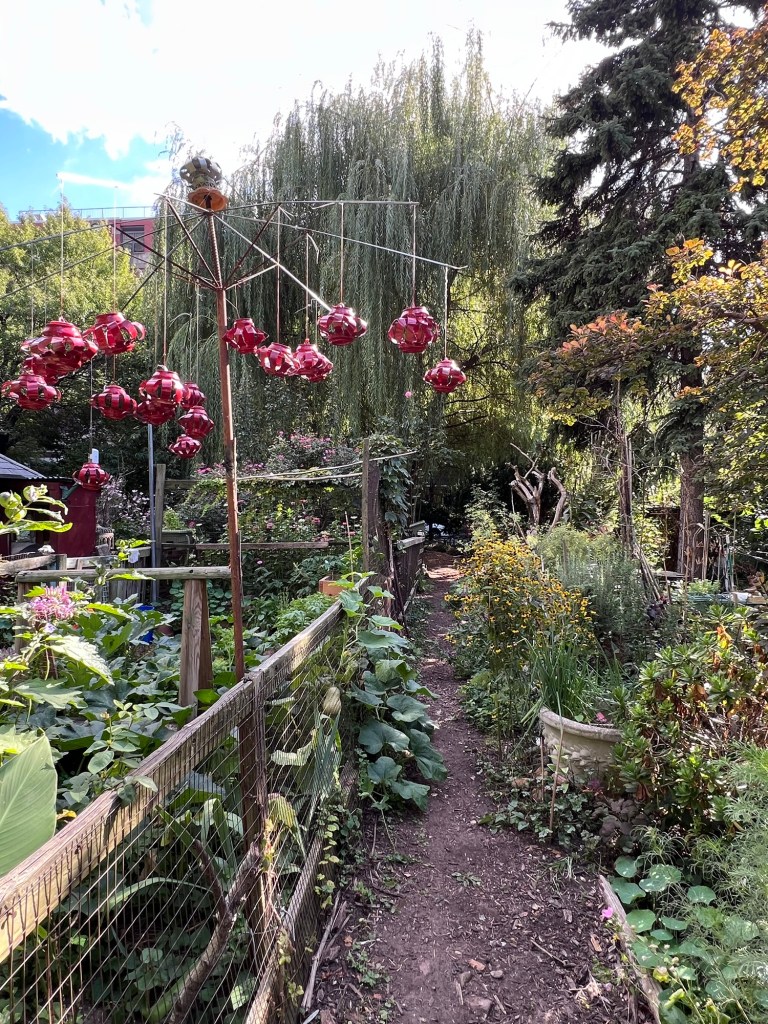
The Street art on West 15th Street off Sixth Avenue “I Love New York”

Read my blog on Walking the Streets of the Lower Flatiron District:

https://wordpress.com/post/mywalkinmanhattan.com/47757

While I was walking around Chelsea, I was trying to figure out where to go for dinner. A guy was sampling slices of pizza outside of a new branch of Pizza Studio on West 14th Street. It was delicious and I decided to eat there for dinner.

Pizza Studio at 364 West 14th Street

https://www.pizzastudio.com/

My review on TripAdvisor:

https://www.tripadvisor.ie/Restaurant_Review-g60763-d33221936-Reviews-Pizza_Studio_Chelsea-New_York_City_New_York.html?m=69573

The inside of Pizza Studio

The menu for the make on the spot pizzas

I thought that the prices were very fair and you got a delicious 12 inch pizza for $10.00 and a lemonade. The whole bill with an extra tip was around $12.50, which was reasonable for all the food. Plus the pizza was delicious.

The ingredients to choose from

The Sausage pizza I ordered that evening

The pizza was wonderful

The pizza served with the Blue Lemonade

What was really nice after the day walking around the neighborhood was the lemonade was so refreshing. You got a choice between Watermelon Lemonade and the Blue Lemonade above and you got free refills. Talk about quenching your thirst on a hot day. It was a great dinner.
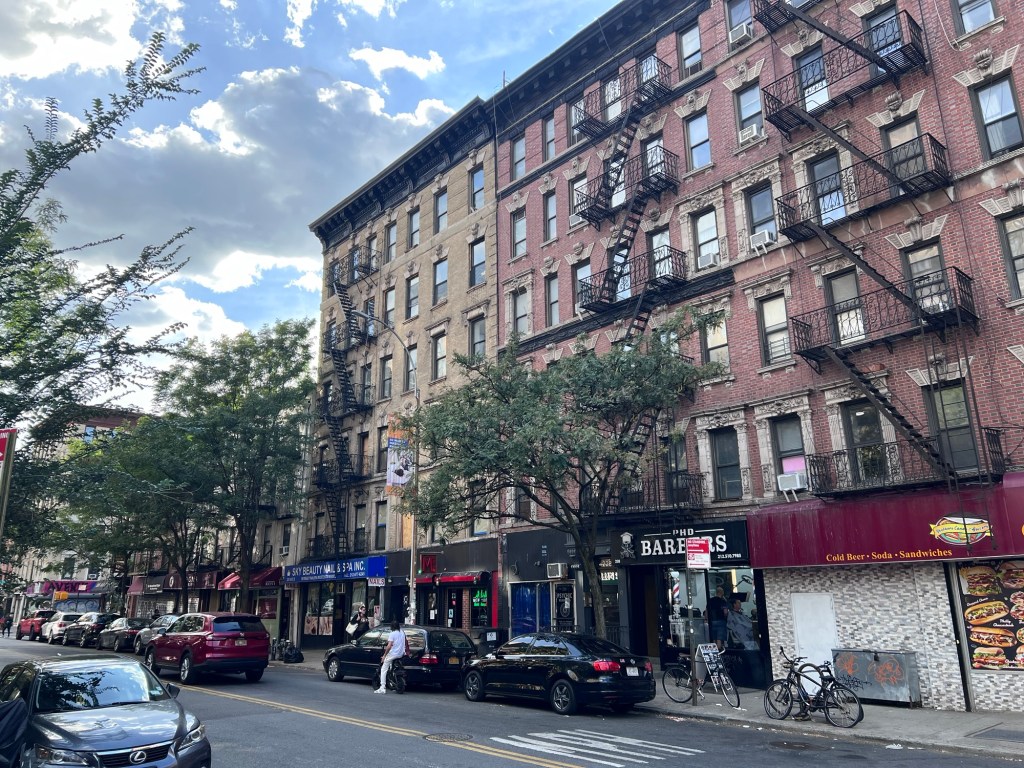
Walking past Holy Apostles Church at night

The Empire State Building lit for the holiday

A beautiful site of the Empire State Building

On each corner of the neighborhood, surprises and changes keep this neighborhood in a continuous flux. It just keeps reinventing itself.

Please read my other blogs of Lower Chelsea:

The Borders of Lower Chelsea:

The Avenues of Lower Chelsea:

The Streets of Lower Chelsea:

Day Three Hundred and Twenty-Four Exploring the Streets of Gramercy Park from East 22nd Street to East 15th Streets from Park Avenue South to First Avenue September 8th-October 11th, 2024

The school year has started and that means that classes at the college have resumed for the Fall semester and it back to work time. Coming into New York becomes less and less as I am starting to grade papers and put together lectures.

I was able to sneak in on Sunday, September 8th for the monthly Sunday Supper at Holy Apostles Church where I volunteer. I find the church service before the supper very inspiring and I enjoy listening to Reverend Ann as the talks are less preachy and more uplifting about the issues of life and what is going on in the world.

After the service is over, then it is time to set the tables and eat. It is always a nice meal and you have some interesting conversations while you are at the table. We always have a nice crowd of the people and it is perfect time for me to meet up with other volunteers that i have not seen in a while.

Everyone breaks bread with each other after the service

Sunday Supper at Holy Apostles Church

It was a nice dinner with Chicken Fried Steak with gravy, Baked Ziti, Mixed Salad, Broccoli and cauliflower and Fresh rolls. For dessert, there was Bread Pudding and assorted cookies for dessert. It was quite the feast. After lunch was over, it was time to walk around the streets of Gramercy Park.

I started my walk on the border of the neighborhood at Park Avenue South and East 22nd Street. Like most of the neighborhood, the most beautiful architecture was around Gramercy Park itself. The first building I passed was the Sage Building. I had not noticed the beauty of this building by just looking at the front of it.
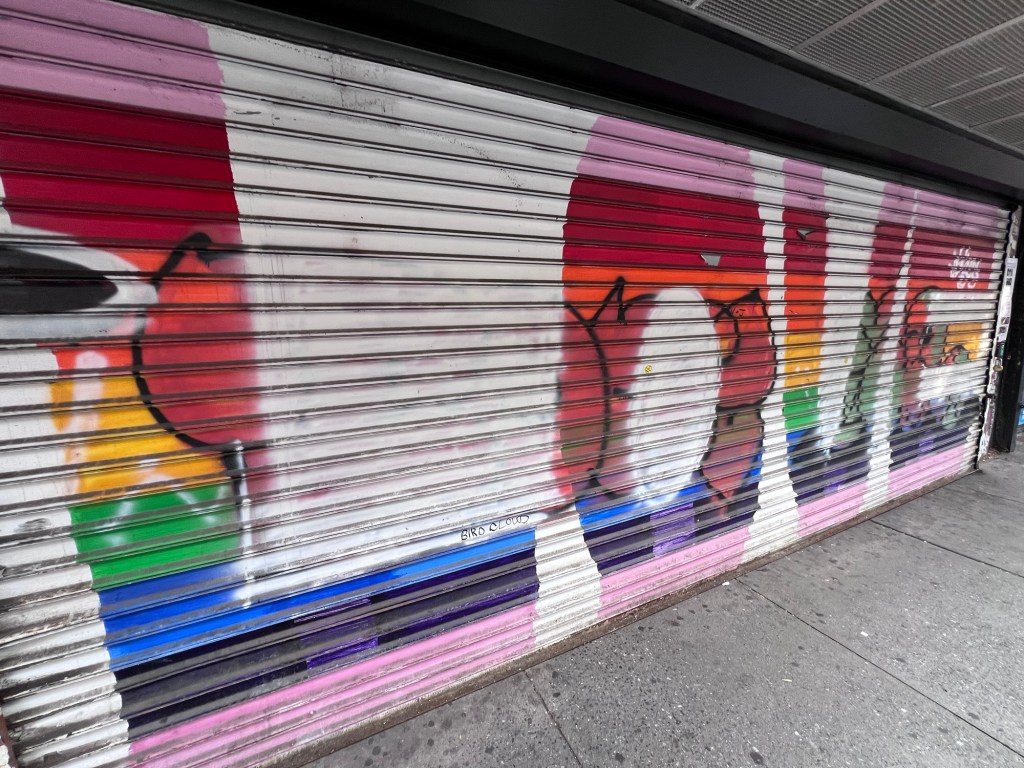
The side of the Sage Building

Across the street from CUNY campus, the Sage House at Four Lexington Avenue. Sage House was built in 1913 for the Russell Sage Foundation, a social welfare nonprofit that was an early advocate of social work and urban planning (Streeteasy.com).

The details of The Sage Building

The grill work on the building was so beautiful

The historic Sage House at Four Lexington Avenue

https://www.corcoran.com/building/gramercy-park/3917

https://streeteasy.com/building/the-sage-house

The building is a pre-war office building designed by Grosvenor Atterbury in the Italian Renaissance palazzo style. It has a rusticated red sandstone façade, vaulted ceilings, and carved decorative shields (Wiki). The building was converted to Coop apartments in 1986. The building next to it was the Hotel Gramercy Park which is currently closed and under renovation. Even though the hotel is closed, you can still peek through the scaffolding and see its elegance.

The core of Gramercy Park surrounds the park itself with most of its classic older buildings surrounding the park. Some of the streets were tree lined and looked like classic old New York.

The tree lined streets of Gramercy Park

The end of East 22nd Street is the Peter Cooper complex. Every thing is in bloom and the complex is so nicely landscaped.

Peter Cooper Village in the Summer of 2024

On the way back down East 22nd Street. I passed the Church of the Epiphany at 375 Second Avenue and passed an interesting sculpture dedicated to the victims of 9/11. If you do not walk on the side streets, you will miss this beautiful park with this interesting sculpture in the garden. It looks like a burst of sun.

The sculpture in the Peace Garden, ‘Light Overcomes Darkness’

The plaque for the sculpture ‘Light Overcomes Darkness’

The sculpture was designed by artist Witkor Szostalo

https://en.wikipedia.org/wiki/Wiktor_Szostalo

https://www.hillstream.com/artist/wiktor-szostalo

Artist Witkor Szostalo

Artist Witkor Szostalo is a Polish born artist who graduated with MFA from the Academy of Fine Arts in Cracow. He is known for his works in stainless steel, wood and bronze. Mr. Szostalo works in both Poland and St. Louis, MO (Artist Bio/Wiki).

The sculpture was part of the larger Peace Garden that landscaped this side of the church.

The Epiphany Peace Garden by the Church

The plaque for the church’s Peace Garden

I made my way back down through the neighborhood and never noticed the Gramercy House private gardens behind a fence. Some of the residents were outside enjoying the afternoon and having a nice conversation as I was snapping pictures of this private garden.

The private garden of the Gramercy House

This is what always amazes me about New York City is the tiny pockets of green that you come across when you walk the streets. It was so beautiful to look at that I envied the residents. It was such a fantastic sunny day.

I made the turn at Park Avenue South and made my way down East 21st Street and passed the Baruch College campus again, with its beautiful architecture and interesting artwork.

The beauty of the Admission Building of Baruch College

The building on the Baruch Campus that I admired was the was the Baruch College Administration Center whose entrance is at 135 East 22nd Street. I loved the Art Deco details on the building. These seemed to represent all aspects of business.
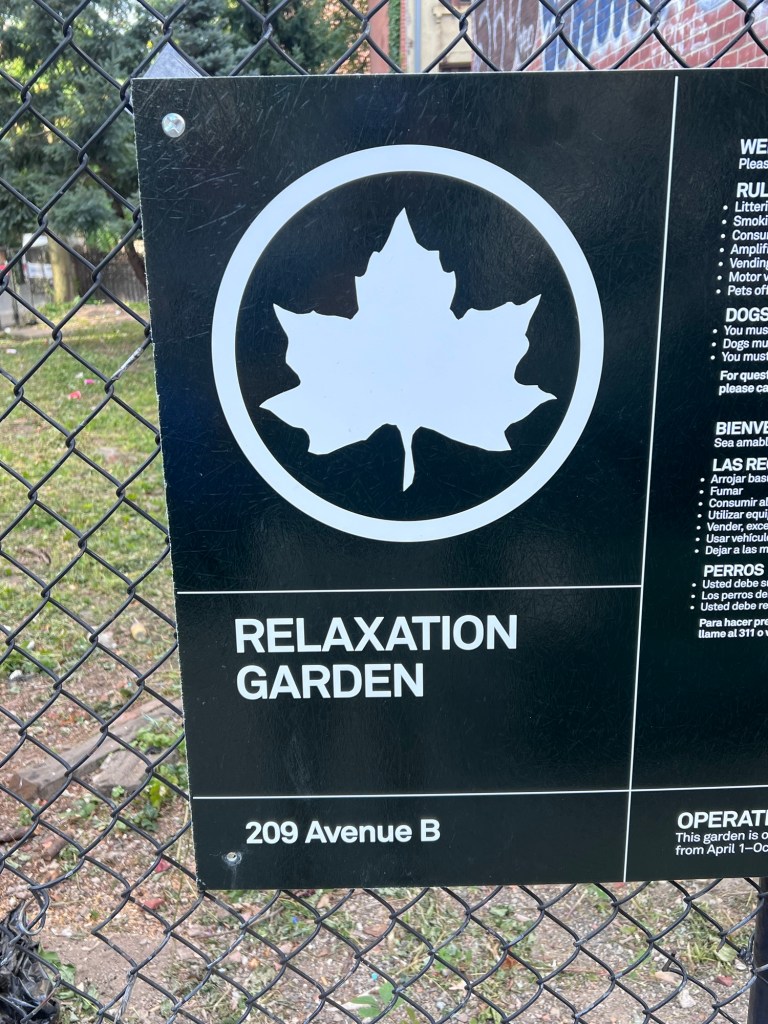
The beauty of the College seal

The front of the Baruch College Administration Center at 135 East 22nd Street

https://plexuss.com/u/cuny-bernard-m-baruch-college/history

The elaborate details on the building give it its Art Deco appearance. The Art Deco Administrative Center at 135 East 22nd Street was built in 1937–1939 as the Domestic Relations Court Building, and was connected to the Children’s Court next door (Baruch College Website).

The Art Deco side of the building

Each of the panels represents a part of the business world.

The Art Deco details of the building

The buildings on the Baruch Campus are interesting in their details. Some of the buildings were being renovated at the time I was exploring the neighborhood but has the scaffolding came down on later walks, you really could see the beauty of this Art Deco Buildings.

As I walked down East 21st Street, I came across The Parish of Calvary-St. Georges. The elegant Episcopalian church was founded in 1832 and moved to Gramercy Park in 1846.

The Parish of the Calvary of St. Georges at 61 Gramercy Park North

https://www.calvarystgeorges.org/

The church’s design was inspired by parishioner Leopold Eidlitz, who designed the plain interior and the original openwork spires of St. George’s Church. The congregation was so satisfied with the design that they rebuilt the church after a disastrous fire in 1865 following the same design, under Eidlitz’ supervision. By that time the design was also influenced by Dr. Stephen Tyng, a new pastor hired for what had become a changing urban congregation (Church website).

Just before I turned the corner onto East 21st Street, just above the restaurant, Nico, I admired the ceramic details of 102 East 22nd. There is a real beauty in the Art Deco details around the windows and doorways.

The beauty is in the details

A better view above the restaurant awning at the Gramercy Arms Building

https://www.cityrealty.com/nyc/gramercy-park/gramercy-arms-102-east-22nd-street/review/5974

Gramercy Arms is a handsome, 10-story Art Deco-style apartment building at 102 East 22nd Street that was designed by Sugarman & Burger and erected in 1928 (City Reality). You have to admire all the ceramic work all over the building and see a peek of the rooftop garden at the top of the building.

The Novita Restaurant at the base of 102 East 22nd Street whose reviews were mixed when I read them on TripAdvisor.

https://novitarestaurant.com/

Review on TripAdvisor:

https://www.tripadvisor.com/Restaurant_Review-g60763-d424105-Reviews-Novita-New_York_City_New_York.html?m=19905

The unique details of 121 East 21st Street

The ceramic and grill work is beautiful. When you pass this part of the neighborhood you enter the center of Gramercy Park and that is the park itself.

What I always love about Gramercy Park is the interesting combination of beautiful brownstones, elegant mansions and interesting apartment buildings that line all sides of the park. The old Gramercy Park Hotel is currently under renovation so there was not much to see under all the scaffolding.

The homes surrounding Gramercy Park have access to the park with a key

Gramercy Park in the summer of 2024 at Gramercy Park West and East 21st Street

https://en.wikipedia.org/wiki/Gramercy_Park

https://www.cityneighborhoods.nyc/gramercy

The park is amazing to walk by in any season by the end of the summer on a sunny day there was nothing like it. It almost shined against the sun.

The historic One Lexington Avenue at the corner of Lexington Avenue and Gramercy Park North

The historical apartment building had replaced the home of Cyrus West Field, who helped lay the first Transatlantic cable line across the Atlantic Ocean.

One Lexington Avenue facing Gramercy Park

https://streeteasy.com/building/1-lexington-avenue-new_york/9-d

https://www.corcoran.com/building/gramercy/3916

Built in 1910 by noted architect Herbert Lucas. This twelve-story intimate cooperative features extraordinary design details including a stately limestone and brick façade, timeless-elegant marble lobby and wood-paneled elevator still attended full-time by the elevator operator (Streeteasy.com).

The Cyrus West Field plaque on One Lexington Avenue where his home once stood

Cyrus West Field

https://en.wikipedia.org/wiki/Cyrus_W._Field

https://www.pbs.org/wgbh/americanexperience/features/cable-cyrus-field-1819-1892/

One Lexington Avenue was once the home of Cyrus West Field, who was considered the ‘Father of the American Cable” and helped lay the first trans Atlantic cable in 1858. When it broke, it was laid again in 1866 (American Experience).

The original house on the same corner in 1866 (NY Public Library)

Just across One Lexington Avenue was one of the best views facing the southern end of the neighborhood. The gardens just stood out this afternoon and with the clear sunny skies, it looked like a postcard.

Looking South from Gramercy Park down Irving Place

The park was at its peak of blooming and foliage in the beginning of September. I thought this was a beautiful shot of the true elegance of the park.

Looking at Gramercy Park East in the summer of 2024

The beauty of Gramercy Park is that all sides of the park are so pretty to look at. You can admire this park from all sides with the beautiful shrubby, flowers and the elegant architecture of homes and apartment buildings that surround the park.

As I continued to walk around East 21st Street, I passed the outdoor cafe of Grill 21 at 346 East 21st Street. I loved this picture painted outside the restaurant and the menu looked very interesting. I noted it to maybe try it later. The people who were eating outside that afternoon looked like they were enjoying their meal.

Walking past Grill 21 Restaurant at 346 East 21st Street

https://www.instagram.com/grill21_/

Review on TripAdvisor:

https://www.tripadvisor.com/Restaurant_Review-g60763-d844501-Reviews-Grill_21-New_York_City_New_York.html?m=19905

The seating area of Grill 21

As I passed the NYPD 13th Precinct, I passed this very touching memorial to those on 9/11. Being now twenty years ago, it still seems like yesterday for those of us who lived through it. It means something to us every September but it seems lost to a newer generation who were born after it.

The memorial to the officers that died in the attacks on 9/11 outside the 13th Precinct at 230 East 21st Street

https://www.nyc.gov/site/nypd/bureaus/patrol/precincts/13th-precinct.page

Walking around Gramercy Park West at East 22nd Street

After walking one side of Gramercy Park, I did a semi circle around park admiring the park from all angles. The park stretches from East 22nd to East 21st Streets and is the only private park left in New York City. The park is all that is left of the original Rose Hill Farm estate.

Gramercy Park North at East 22nd Street is all that is left of the corner of the Rose Hill Farm

Gramercy Park East

Gramercy Park East

Gramercy Park East

The plaque at 3 Gramercy Park East to former Mayor James Harper

Mayor James Harper

https://en.wikipedia.org/wiki/James_Harper_(publisher)

https://a860-collectionguides.nyc.gov/agents/people/42

Mayor James Harper served as Mayor of New York City for one term as a Republican from 1844-1845. Before that he established the publishing firm J & J Harper with his brother which eventually in time became Harper’s Brothers in 1825 (which became Harper & Row in 1962). He was only served as Mayor for one year (Wiki). He lived in Gramercy Park from 1847 to 1869 when he passed away (Wiki).

Walking around 4 Gramercy Park East

https://www.elliman.com/newyorkcity/buildings-communities/detail/527-c-725-41984/4-gramercy-park-west-gramercy-park-new-york-ny

The historic buildings of Gramercy Park West

https://www.cityrealty.com/nyc/market-insight/features/goldilocks-blocks/the-keys-gramercy-park-history-full-list-buildings-park-access/38081

The park side of Gramercy Park West

The former Stuyvesant-Fish Mansion at Gramercy Park South

https://en.wikipedia.org/wiki/19_Gramercy_Park_South

I love passing the old Stuyvesant Fish Mansion. I have always thought this was an apartment building but I just read that it is still a private home. This home was originally built in 1854 by William Samuel Johnson and it was expanded by architect Stamford White for the Fish family in 1887. When the family moved uptown to the more fashionable Fifth Avenue, the house was broken up into apartments. Many incarnations later it was sold as a private residence in the past few years (Wiki).

The beautiful brownstones and brick buildings at Gramercy Park South

This delightful little embellishment at East 20th Street

Street art on East 20th Street near Second Avenue

Street art on East 20th Street

Street art on East 20th Street-I thought this was so profound and so true!

Street art on East 20th Street

Just outside the edge of the neighborhood is the extension of East 20th Street is the border of Gramercy Park, Stuyvesant Town and Peter Cooper Village. The middle class enclave is beautifully landscaped and East 20th Street to the even nicer landscaped Stuyvesant Cove.

https://www.stuytown.com/

https://en.wikipedia.org/wiki/Stuyvesant_Town%E2%80%93Peter_Cooper_Village

The shade trees on East 20th Street

The street art at the entrance to Stuyvesant Cove

Stuyvesant Cove in the Summer of 2024

Stuyvesant Cove in the Summer of 2024

https://en.wikipedia.org/wiki/Stuyvesant_Cove_Park

https://www.nyc.gov/site/ddc/about/press-releases/2023/pr-053123-Stuyvesant-Cove-Park.page

The view of the East River from Stuyvesant Cove

https://www.instagram.com/explore/locations/3756/stuyvesant-cove-park/

It was a brilliant sunny afternoon in the late summer. The temperatures had reached in the mid 80’s and it was clear and slightly cloudy when I visited the park. Everything was in late bloom including the sunflowers which were brilliant. I could not believe what a spectacular day it was that afternoon. I just relaxed for a bit and enjoyed the beautiful views.

The beautiful sunflowers in the Stuyvesant Cove Gardens

The sign welcoming you to Stuyvesant Cove Park

Walking back down East 20th Street into Gramercy Park South

The beautiful gardens of East 19th Street

Easy 19th Street at the end of the summer of 2024

The side of the apartment building at Irving Place

The old Carriage Houses at West 19th Street

The beauty of urban gardens on East 19th Street

I thought this was just gorgeous on a sunny afternoon

The building itself at East 19th Street was rather plain but I thought the archway was beautiful

I loved the creative Halloween decorations at 318 East 19th street

The decorations at 318 East 19th Street

The decorations at 318 East 19th Street

Halloween seemed to come early to parts of the neighborhood.

As I walked along the blocks along East 19th Street, I came across interesting street art around the neighborhood. Here and there things popped up that I thought were interesting to see.

Street art along East 19th Street

Street art along East 19th Street. The was right near a restaurant at 358 East 19th Street

The historic home of George Bellows

The plants surrounding the front of the home at East 19th Street

The George Bellows House

Artist George Bellows

https://en.wikipedia.org/wiki/George_Bellows

https://www.metmuseum.org/exhibitions/listings/2012/bellows

Artist George Bellows was an American artist who was self taught and left college to move to New York to pursue the life of a painter. He works were well known in art circles for their social and political themes (Wiki).

I thought this series of brownstones were just classic New York

Walking down East 18th Street has its charming blocks of brownstones with gardens and potted plants

The charming urban gardens of Gramercy Park

The elegant Halloween decorations in the neighborhood

The Stuyvesant Houses on 18th Street

The Stuyvesant Houses on 18th Street

https://www.hmdb.org/m.asp?m=151071

What was interesting about passing the Stuyvesant Houses on East 18th Street is how old these homes are and that they are still part of the fabric of the neighborhood in the 21st Century. They were built by Cornelia Stuyvesant Ten Broeck in 1852 on land that was part of the original Stuyvesant Farm. This could be considered part of the development of ‘suburban housing’ in New York City. This was built beyond the core of Manhattan which was located below Wall Street (Historic Market of the New York Community Trust).

The sign for the designated historic part of the neighborhood

A smaller version of a Flatiron building at 141 East 17th Street

https://streeteasy.com/building/141-east-17-street-new_york

https://www.cushmanwakefield.com/en/united-states/properties/for-sale/apartment-buildings/ny/new-york/141-east-17th-street-new-york-new-york-10003/k26408k26408-s

This triplex apartment was originally designed and configured as a mid-century artist’s studio by New York architect Bernard Rothzeid, who was commissioned to modernize the space by the painter and print-maker Al Blaustein (Streeteasy.com). It looked like a smaller version of the Flatiron Building and stands out in a neighborhood of brownstones and apartment buildings.

I was impressed by this series of flower boxes along East 17th Street

Here and there along all the streets of this part of Gramercy Park were pocket gardens and decorations outside buildings all over the neighborhood.

327 East 17th Street is home to the Robert Mapplethorpe Treatment Center and the home of composer Antonin Dvorak on this site. This is the home of the Mapplethorpe Foundation.

https://www.mapplethorpe.org/

The home for the Mapplethorpe House

Artist Robert Mapplethorpe

https://www.mapplethorpe.org/

https://en.wikipedia.org/wiki/Robert_Mapplethorpe

Robert Mapplethorpe was an American Artist known for his black and white photography and his study of celebrity, gay life and self portraits. He had attended Pratt Institute in his early education. Before he died, he founded the Mapplethorpe Institute, which handled his estate to help promote his work and has been instrumental in raising millions of dollars for AIDS research (Wiki/Mapplethorpe Foundation website).

The historic sign for the once home of composer Antonin Dvorak

https://www.antonin-dvorak.cz/en/life/biography/

There was an interesting statue dedicated to the composer inside of Stuyvesant Park. All along East 17th Street I came across more interesting street art.

Street art along East 17th Street

Street art along East 17th Street

Stuyvesant Square at East 17th Street

https://www.nycgovparks.org/parks/stuyvesant-square

https://en.wikipedia.org/wiki/Stuyvesant_Square

My review on TripAdvisor:

https://www.tripadvisor.com/Attraction_Review-g60763-d218637-Reviews-Stuyvesant_Square-New_York_City_New_York.html

The beautiful flowers in Stuyvesant Square in the very late Summer of 2024

The brilliance of Stuyvesant Park in the late summer. The park was in full bloom with summer flowers showing off their beauty and colors. The park still could use some work on the beds and lawns though.

The famous statue of Composer Antonin Dvorak inside Stuyvesant Square at the corner of the park at East 17th Street

Composer Antonin Dvorak

https://en.wikipedia.org/wiki/Anton%C3%ADn_Dvo%C5%99%C3%A1k

https://www.antonin-dvorak.cz/en/life/biography/

Composer Antonin Dvorak was born just outside of Prague and came from a long line of business people who were innkeepers and butchers. His father recognized that when he was young the talent he had with music and encouraged this. While in Prague, he was sent off to a music school that started his career. The Institute for Church Music, as the school was officially known, was located in Konviktská street in the Old Town and provided instruction in organ playing, harmony and counterpoint. This was the beginning of his career (Dvorak website/Wiki).

The historic plaque in the park in Stuyvesant Square

https://www.nycgovparks.org/parks/stuyvesant-square/monuments/1784

Artist Ivan Mestrovic

https://en.wikipedia.org/wiki/Ivan_Me%C5%A1trovi%C4%87

https://www.ivanmestrovic.com/

Artist Ivan Mestrovic was a Croatian born American artist who was a known sculptor, writer and architect. He is a graduate of the Academy of Fine Arts in Vienna. He was known for his romantic and classical style sculptures (Wiki).

In 1963, this bronze portrait bust was given by the Czechoslovak National Council of America to the Philharmonic, but never put on public display. It is believed to be the last work of the noted sculptor Mestrovic, a student of Rodin and the first living artist to receive a one-person exhibition at the Metropolitan Museum of Art (NYCParks.org).

The beautiful brownstones along the northern part of Stuyvesant Square at East 17th Street

I rounded Stuyvesant Square on both sides, exploring all the historical buildings from all angles of the park. While I was in the park, I admired all the flowers in the gardens and the statuary.

I saw this sculpture by Lee Tal was also in the park

Artist Lee Tal

https://www.leetalart.com/

Artist Lee Tal is an Israeli born artist now based in New York City. He received a BA in History and an additional BA in Art and Photography from Open University in Tel Aviv. He received a B.F.A studies at the Royal College of Art, London, England. In his early works, Tal draws inspiration from everyday objects found in our daily lives, seeking to transcend their original purpose (Artist’s bio website). This interesting work was commissioned by the Stuyvesant Park.

The sculpture by Lee Tal ‘Blooming Reflections- Yellow Trout Lily’

I walked through the gardens from all sides and walked out to Rutherford Place and admired the old churches along the street. On the northern side of Rutherford Place was the historic St. George’s Church.

St. George’s Church at 209 East 16th Street

https://en.wikipedia.org/wiki/St.George%27s_Episcopal_Church(Manhattan)

https://www.calvarystgeorges.org/

St. George’s Church at 209 East 16th Street

St. George’s Church was founded in 1752 and the church moved around several times until 1846 when this new church was started and finished in 1854. The church was designed in the Romanesque Revival style by architects Charles Blesch and Leopold Eidlitz. Mr. Belsch designed the interior and was influenced by the Rundbigenstil, the round arch style. The church has been altered and rebuilt over the years after a devastating fire in 1865 (Wiki).

The historic plaque of the church

The church‘s official sign

Next to St. George’s Church is the Quaker Friends building that has been part of the neighborhood since the 1700’s. This historical building is part of a full complex of modern buildings that stretch down East 16th Street from the park.

The historical Friends Meeting House at 15 Rutherford Place

This building was built in the Restrained Greek Revival Design in 1861 and has been in use since that time for the annual meetings (New York Landmark Preservation).

The historic Friends Meeting House at 15 Rutherford Place

https://quaker.org/legacy/15stfriends/

https://www.americanlandmarks.org/post/friends-meeting-house

The front of the Friends Meeting House at 15 Rutherford Place

The Friends Meeting House at 15 Rutherford Place on the west side of Stuyvesant Square.

The views of Stuyvesant Square Park in the late Summer months

I walked around the park before exploring East 16th and 15th Streets and just like Gramercy Park there is a true beauty in the architecture that surrounds this green space.

The historic beauty of East 15th Street on the southern eastern side of the park.

Somehow this tree just stuck out at the entrance of 146 East 16th Street

Another view of this tiny garden in front of 146 East 16th Street

The historical buildings that are part of the church seminary along East 16th Street

This is classic Old New York with brownstones covered in ivy is part of the church’s housing

I cross-crossed so much through Stuyvesant Square that the homeless guys and the delivery drivers thought I was an undercover cop watching them.

The park is still so colorful in the late summer

The beautiful stained glass windows in from of the East 15th side of St. Mary’s Church at East 15th Street

St. John The Baptist Greek Orthodox Church at 143 East 17th Street

https://www.stjohn.ny.goarch.org/

https://www.facebook.com/StJohnBaptistNYC/

Built in 1885, designed by Schwartzmann & Buchman, with a baroque façade that was altered in 1957 by Kyriacos A. Kalfas (Wiki).

Finishing my walk along East 15th Street with the elegant townhouses that line the southern half of Stuyvesant Square

For dinner that evening, I had Chinese food at Mee’s Noodle House at First Avenue. I had eaten at their branch years ago at their uptown branch near Sutton Place and ordered the same meal as a comparison, the Seafood Steamed Dumplings and the Shrimp Lo Mein. It’s nice to know that nothing changes. The food was excellent.

The sign inside of Mee’s Noodle House at 922 Second Avenue

https://www.seamless.com/menu/the-original-mee-noodle-shop–grill-223-1st-ave-new-york/287771

My review on TripAdvisor:

https://www.tripadvisor.com/Restaurant_Review-g60763-d502666-Reviews-Mee_Noodle_Shop_Grill-New_York_City_New_York.html?m=19905

The Steamed Seafood Dumplings

These dumplings were as light as air and perfectly cooked. The dumplings were plump and filled with a mixture of Shrimp and other seasonings. They tasted perfect with just a touch of soy sauce.

The delicious Shrimp Lo Mein

The Shrimp Lo Mein was studded with lots of perfectly cooked shrimp, vegetables and freshly made noodles that are made inhouse. The only problem with the dish was the button mushrooms that I had to pick out. I do not know why they use these since they are not used in dishes in China. I discovered that the restaurant is quite the neighborhood hang out for people living at Stuyvesant Town and Peter Cooper Village. Everyone was talking neighborhood gossip.

The front of Tipsy Scoop Barlour at 217 East 26th Street

https://tipsyscoop.com/pages/manhattan-location?srsltid=AfmBOopr75Tvfffnfo_tWMcxMMpFSQGkQafCkqMpUkBe_sfH3nAmlhDV

My review on TripAdvisor:

https://www.tripadvisor.com/Restaurant_Review-g60763-d12194385-Reviews-Tipsy_Scoop-New_York_City_New_York.html?m=19905

On my way home, I stopped at Tipsy Scoop Ice Cream store for dessert. I wanted to have one of their infused ice cream sandwiches. So I ordered the Sprinkle Cookie Cake Batter Vodka Martini ice cream sandwiches. Talk about a dessert that takes the edge off after a long day.

The inside of Tipsy Scoop at night

The neon lights of this popular ice cream shop where all the ice cream is infused with liquor

The ice cream sandwiches here are fantastic. The alcohol in the ice cream is so subtle and sweet you don’t notice until you finish it. Then it hits you and relaxes you. This is the best dessert after a long day.

The Sprinkle Cookie Cake Batter Vodka Martini infused ice cream sandwich

The Sprinkle Cookie Cake Batter Vodka Martini infused ice cream sandwich

Yum!

I took the long walk through Madison Square park on the way back to the Port Authority at night. The pictures I get from that park are just breathtaking at night and I never get tired of the views.

The views of Manhattan at night are quite spectacular from Madison Square Park

I finished walking the streets of Gramercy Park in the early evening while watching the lights turn on in all the buildings surrounding the area. It is quite a site seeing all the homes lit while watching the office buildings all over the neighborhood work their magic. It is quite the place both day and night and in all seasons. Gramercy Park is a true Manhattan neighborhood.

I never tire of the views of Manhattan at night.

Please read my other blogs on Gramercy Park:

Day Three Hundred and Twenty Walking the Borders of Gramercy Park:

https://wordpress.com/post/mywalkinmanhattan.com/51647

Day Three Hundred and Twenty One Walking the Avenues of Gramercy Park:

https://wordpress.com/post/mywalkinmanhattan.com/53432

Day Three Hundred and Twenty Four Walking the Streets of Gramercy Park:

https://wordpress.com/post/mywalkinmanhattan.com/53788

Places to Visit:

Stuyvesant Square Park

9 Rutherford Place

New York, NY 10003

(212) 639-9675

https://www.nycgovparks.org/parks/stuyvesant-square

https://en.wikipedia.org/wiki/Stuyvesant_Square

Open: Sunday-Saturday 7:00am-11:00pm

My review on TripAdvisor:

https://www.tripadvisor.com/Attraction_Review-g60763-d218637-Reviews-Stuyvesant_Square-New_York_City_New_York.html

Gramercy Park

Private Park that you need a key to get into.

Stuyvesant Cove

24-20 FDR Drive

New York, NY 10010

(646) 576-5664

https://en.wikipedia.org/wiki/Stuyvesant_Cove_Park

https://www.nyc.gov/site/ddc/about/press-releases/2023/pr-053123-Stuyvesant-Cove-Park.page

Open: Sunday-Saturday 7:00am-10:00pm

My review on TripAdvisor:

Places to Eat:

Mee’s Noodle House

922 Second Avenue

New York, NY

(212) 888-0027

https://menupages.com/mee-noodle-shop/795-9th-ave-new-york

Open: Sunday-Saturday 11:00am-11:00pm

My review on TripAdvisor:

https://www.tripadvisor.com/Restaurant_Review-g60763-d502666-Reviews-Mee_Noodle_Shop_Grill-New_York_City_New_York.html?m=19905

Tipsy Scoop Ice Cream Shop

217 East 26th Street

New York, NY 10010

(917) 388-2862

https://tipsyscoop.com/pages/manhattan-location?srsltid=AfmBOoq3P7RwM_mpTYZSd-uFo5d0wnAO07zRpeBAgxD25EALYbmFi1kT

Open: Sunday 2:00pm-10:00pm/Monday 4:00pm-9:00pm/Tuesday 4:00pm-7:00pm/Wednesday-Thursday 4:00pm-9:00pm/Friday-Saturday 2:00pm-11:00pm

My review on TripAdvisor:

https://www.tripadvisor.com/Restaurant_Review-g60763-d12194385-Reviews-Tipsy_Scoop-New_York_City_New_York.html?m=19905

Day Three Hundred and Twenty-One Walking the Avenues of Gramercy Park Irving Place, Lexington, Third and Second Avenues August 27th, 2024

It has been one busy summer. In between walking the neighborhoods of Manhattan, I have been revisiting neighborhoods, attending events that I had in the past like the Coney Island Sand Castle Building contest and the Dutchess and Ulster County Fairs. I wanted to spend more time at them and I needed new pictures at all of these events (see my full blog, MywalkinManhattan.com for all these interesting blogs). That and I have been exploring the Jersey Shore towns like Point Pleasant and Seaside Park and Heights to really see what is beyond their Boardwalks. It has been a productive summer since graduation running back and forth between the Hudson River Valley and the Jersey Shore.

As I get ready for the school year to begin in a week and a half, I have more places to see and experience. Still in between all this I want to volunteer time at the Soup Kitchen and planning trips outside the City too experience more of New Jersey. Each day of the Month of August is like planning “D Day”.

Gramercy Park is such an interesting neighborhood. From the vibrant commercial areas to the historical parks, Gramercy Park has a lot of hidden treasures tucked here and there throughout the neighborhood. It seems though, along the neighborhoods Avenues, I would have been expected to see more classic architecture and beautiful stonework, I experienced experienced a more commercial environment with modern buildings. Still tucked here and there along the Avenues were many gems of the past and some beautiful little parks.

The Gramercy Park Historic District plaque

I started my walk along the Avenues of the neighborhood with a walk up the Irving Place Street and walked around the park to Lexington Avenue on the other side of the park. Irving Place and Lexington Avenue are separated by Gramercy Park’s north and South borders.

Gramercy Park in full bloom in the Summer of 2024

The section of the neighborhood is shared with the Union Square neighborhood as the lines are blurred from street to street between Gramercy Park, Union Square and the Flatiron District. This neighborhood has distinct architecture, beautiful parks including Gramercy Park, part of the old Rose Hill Farm estate and Stuyvesant Square, part of the former estate of Dutch Governor Peter Stuyvesant.

I started my walk on the southern part of Gramercy Park along the historical Irving Place with its historic homes and restaurants. I passed 4 Irving Place which the first couple of floors were under scaffolding. I admired the clocktower on the top of the building, the beautiful embellishments and just the elegance of the building. The building is home to Consolidated Edison (ConEd).

The was designed by architect Henry Janeway Hardenbergh and architectural firm of Warren and Wetmore in the Neo-Classical design. The first phase of the building was started in 1911 and both phases were finished by 1929. The original section of the building is in the picture with the wings of the building to both sides (Wiki).

I passed 4 Irving Place, the Con Ed Building, just as twilight hit the building and you could see the beauty in its shadows.

Its clock told the time of the early evening.

The next morning when I walked past it again, you could see the true beauty of its design.

I also noticed that the roof top held a more intricate design than I noticed the night before. Look up at its intricate details to admire its beauty. This is part of the originally designed building.

Once I turned onto Irving Place, the old core of its industrial past gave way to the bohemian village it would become and stay in the future. This was once ‘THE’ neighborhood to live in and has stayed that way since even through the rough times of Union Square.

The most impressive object you will see in the neighborhood is this bust of Washington Irving that sits outside the Washing Irving Campus on Irving Place.

https://en.wikipedia.org/wiki/Washington_Irving_Campus

This bust of Washington Irving was created by artist Friedrich Beer

Artist Friedrich Beer

https://en.wikipedia.org/wiki/Friedrich_Beer

https://www.artprice.com/artist/112959/friedrich-beer

Artist Friedrich Beer was a German born artist known for his works on busts of famous individuals.

The neighborhood goes from commercial to more residential as you get further up Irving Place and closer to Gramercy Park. The borders of Union Square overlap with Gramercy Park and the Flatiron District between East 18th and East 20th streets so I revisited buildings that J had seen before. If people went in a Time Machine to Manhattan from 100 years ago they would still see the same buildings but with totally different uses.

The Washington Irving house at 122 East 17th Street and Irving Place (Washington Irving never lived here)

https://www.atlasobscura.com/places/the-irving-house-new-york-new-york

The “Irving House” was built by Peter Voorhis between 1843 and 1844, along with the adjacent two houses at 45 and 47 Irving Place. The original tenants of 49 Irving Place (at that time referred to as 122 East 17th Street) were Charles Jackson Martin, an insurance executive, and his wife, who would reside there from 1844 until 1852. Henry and Ann E. Coggill would live in it in 1853, and in 1854 it would become the home of banker Thomas Phelps and his wife Elizabeth, who would remain until 1863 (Atlasobsucra.com).

The front of the house facing Irving Place

The first mention in print of Irving having lived in the house came in the Sunday Magazine Supplement of the New York Times on April 4, 1897. The article is a human interest story about Elsie de Wolfe and the means and methods she used to decorate “Irving’s house.” In 1905, de Wolfe would become known as the first professional interior decorator and it appears this article is an early attempt at publicity for her. As for the information about Irving, the article takes enormous liberties (actually, it flat-out makes things up), claiming that Irving had conceived of the house himself and was very particular about the architecture and design (Atlasobsucra.com).

The entrance to the house at 122 East 17th street

The plaque on the house dedicated to the writer created by artist Alexander Finta

In 1930, a restaurant called the Washington Irving Tea Room was operating in the basement of the building and in 1934 a plaque sculpted by Rodin-student Alexander Finta was put up on the north facade that would cement the story in the public consciousness. Today, the surrounding area remains covered in references to Irving, from the large art installations in the nearby W Hotel to the Headless Horseman pub on 15th Street(Atlasobsucra.com).

Artist Alexander Finta

https://en.wikipedia.org/wiki/Alexander_Finta

https://www.askart.com/artist/Alexander_Finta/108330/Alexander_Finta.aspx

Artist Alexander Finta was a Hungarian born artist who moved to the United States in 1923. He had studied mechanical engineering in his own country and had studied with Auguste Rodin. His is known for his elaborate busts. He spent the remainder of his career at 20th Century Fox Studios (Wiki)

All along the Irving Place corridor, the street is lined with interesting and historical buildings many of them turned into restaurants or inns. There are many historic plaques in this neighborhood and some creative architecture. The first building that caught my eye was 53 Irving Place, which is the home of Pierre Loti Wine Bar.

Review on TripAdvisor:

https://www.tripadvisor.com/Restaurant_Review-g60763-d2136974-Reviews-Pierre_Loti_Wine_Bar-New_York_City_New_York.html?m=19905

The home of Pierre Lotte Mediterranean Restaurant at 53-55 Irving Place was the home of O Henry

When I looked at the side of the building near the entrance, I was this historic plaque that said that this was the home of author William Sidney Porter (O. Henry). The author lived here from 1903-1907 and wrote the “Gift of the Magi” while living here and eating at Pete’s Tavern across the street (Wiki).

The historic plaque for author O Henry at 53-55 Irving Place

Author William Henry Porter

https://en.wikipedia.org/wiki/O._Henry

Down the road at is Pete’s Tavern, one of the most famous and the oldest literary restaurants in the City. The restaurant was founded in 1864 as the Portman Hotel and then in 1899 when changed to Healy’s Cafe when it was run by John and Tom Healy. Then in 1899, it was bought by Peter D’ Belles and renamed Pete’s Tavern. The restaurant was a ‘Speakeasy’ during prohibition and the dining rooms have not changed much over the last over hundred years (Pete’s Tavern website).

Pete’s Tavern was busy on the night of my first part of the walk.

Pete’s Tavern at 129 East 18th Street

https://en.wikipedia.org/wiki/Pete%27s_Tavern

My review on TripAdvisor:

https://www.tripadvisor.com/Restaurant_Review-g60763-d527869-Reviews-Pete_s_Tavern-New_York_City_New_York.html?m=19905

The entrance of Pete’s Tavern

The entrance to Pete’s Tavern on Irving Place

The painting outside of Pete’s Tavern of the Speakeasy years

Pete’s Tavern was busy both nights that I passed it. I had not eaten there in over a decade when I had a holiday dinner there with friends by I remember the food and service being excellent. The restaurant is really special during the Christmas holiday season from what I can remember.

My friends Barbara, Lillian and I after dinner at Pete’s Tavern in the early 2000’s

Another restaurant I went to before my friend, Barbara, moved to Florida was a Friend of the a Farmer at 77 Irving Place, a farm to table concept before it became very popular. I remember the food being wonderful but the place being a bit noisy. She lived on the fringe of Gramercy Park and had passed this restaurant many times and had wanted to try it that evening.

Another great restaurant is Friend of a Farmer at 77 Irving Place

https://www.friendofafarmer.com/

My review on TripAdvisor:

https://www.tripadvisor.com/Restaurant_Review-g60763-d496790-Reviews-Friend_of_a_Farmer-New_York_City_New_York.html?m=19905

Across the street, I passed this apartment building at 76 Irving Place. I loved the outside embellishments on the building and the friendly looks you get from the statuary. The building was built in 1897 by architect Lyndon P. Smith (Corcoran Group).

You have to look up to admire the details of 76 Irving Place

https://www.corcoran.com/listing/for-sale/76-irving-place-manhattan-ny-10003/23012133/regionId/1

https://streeteasy.com/building/76-irving-place-new_york

The entrance to 76 Irving Place with its tiny angels

This woman guards the front of Irving Place like guard

This woman greets you at 76 Irving Place

The classic architecture of the block especially as you get closer to Gramercy Park changes from smaller apartment buildings to brownstones lining the parks southern border. Gramercy Park offers some of the most interesting architecture. This ivy covered building that impressed me so much as the sun was going down is at 80 Irving Place.

This building at East 19th street and Irving Place is typical for the buildings that once lined this neighborhood

80 Irving Place is currently under renovation

https://daytoninmanhattan.blogspot.com/2014/04/the-1854-house-at-no-80-irving-place.html

https://www.trulia.com/home/80-irving-pl-new-york-ny-10003-31506439

The house was built as a single family mansion between 1853 and 1854 and had been the home of the prominent Wood family and then to actress Agnes Ethel Tracy. Since 1987, it has been a single family home again. What I thought was interesting was that the house was used in the movie “Working Girl” as Sigourney  Weavers character’s home (DaytoninManhattan.com).

Look up at the beautiful details of 81 Irving Place

81 Irving Place in all its glory

https://www.elliman.com/newyorkcity/buildings-communities/detail/527-c-725-2766/81-irving-pl-gramercy-park-new-york-ny

https://streeteasy.com/building/81-irving-place-new_york

https://www.apartments.com/81-irving-pl-new-york-ny-unit-8a/5q6z3mp/

81 Irving Place is one of the most beautiful apartment complexes in the city that I have come across. The embellishments along the building are some of most detailed and elegant I have seen. This prewar Co-Op was built in 1929.

The details along the windows

The embellishments of the building

The dragons and demons that adorn the windows

The embellishments of the building

The unusual creatures at the doorways

The embellishments of the building

The creatures guarding the windows

The embellishments of the building

The rooftop gardens are protected by these griffins

The building has a whimsical almost storybook imagine of creatures protecting their home.

Where I want my future home to be when I retire to the City and can afford it is 19 Gramercy Park South. I have always loved this building since I fell in love with the neighborhood over thirty years ago. I always wanted a home with a key to Gramercy Park. The building has that classic turn of the last century look about it and it has always been my dream to live here when I retire. I need to hurry and win the lottery.

My dream home would be at 19 Gramercy Park South with a key to the park

https://en.wikipedia.org/wiki/19_Gramercy_Park_South

I had thought this was a apartment building but it is actually a single family mansion with 37 rooms. It was built in 1845 and when the mansion was extended by Stamford White in 1887 was the home of socially prominent Stuyvesant-Fish family. It is currently back to being a single family mansion (Wiki).

I did the walk around the Park and continued along Lexington Avenue from East 20th to East 23rd Street. There is more magnificent architecture along the way. Small details that will surprise you and things that will stare you along the walk.

I walked along Lexington Avenue where the campus of Baruch College, which is part of the CUNY system, starts. One of its stand out buildings is The Lawrence and Eris Field Building, also known as the 23rd Street Building by the college. This building opened in 1929 and the ornamented Italian Renaissance revival style façade on 23rd Street  is constructed of limestone and brick and engraved with “The College of the City Of New York.” (CUNY Website)

17 Lexington Avenue-The Lawrence and Eris Field Building, also known as the 23rd Street Building on the Baruch College Campus.

https://17lexupdate.baruch.cuny.edu/history/

The beautiful details of the building

The Baruch College campus is located on the border of Gramercy Park and Kips Bay showcasing the unique architecture of the campus. Many of the buildings on this side of campus are going through a renovation so watch the scaffolding.

The coat of arms on the side of the building

The middle coat of arms on the side of the building

Coat of arms on the side of the building

The building on the Baruch Campus that I admired was the was the Baruch College Administration Center whose entrance is at 135 East 22nd Street. I loved the Art Deco details on the building. These seemed to represent all aspects of business.

The side of the Baruch College with its Art Deco details

Details on the CUNY building-The Baruch College Administration Center Building in its glory

The front of the Baruch College Administration Center at 135 East 22nd Street

https://plexuss.com/u/cuny-bernard-m-baruch-college/history

The elaborate details on the building give it its Art Deco appearance. The Art Deco Administrative Center at 135 East 22nd Street was built in 1937–1939 as the Domestic Relations Court Building, and was connected to the Children’s Court next door (Baruch College Website).

Across the street from CUNY campus, the Sage House at Four Lexington Avenue. Sage House was built in 1913 for the Russell Sage Foundation, a social welfare nonprofit that was an early advocate of social work and urban planning (Streeteasy.com).

The historic Sage House at Four Lexington Avenue

https://www.corcoran.com/building/gramercy-park/3917

https://streeteasy.com/building/the-sage-house

The building is a pre-war office building designed by Grosvenor Atterbury in the Italian Renaissance palazzo style. It has a rusticated red sandstone façade, vaulted ceilings, and carved decorative shields (Wiki). The building was converted to Coop apartments in 1986. The building next to it was the Hotel Gramercy Park which is currently closed and under renovation. Even though the hotel is closed, you can still peek through the scaffolding and see its elegance.

I myself have some wonderful memories of this hotel. I had stayed at the hotel back in 1993 while working at Macy’s Herald Square, when it was a European style old hotel with the large rooms with a view of the park. It had the most amazing bathtubs to sink into the night before I left to assist in the Macy’s Thanksgiving Day Parade. Years later, when Danny Meyers opened the Italian restaurant, Maialino, in the lobby in the early 2000’s, I remember taking my father there for Father’s Day and having the most delicious Roast Pork with potatoes that were cooked in the roast’s juices. It was a fantastic meal and the most perfect Father’s Day. Funny how I still remember that meal almost twenty years later.

The Hotel Gramercy Park at Two Lexington Avenue

The Hotel Gramercy Park was designed by architect Robert T. Lyons and was built by brothers Bing & Bing in 1924 and the hotel opened in 1925. The extension of the hotel along East 21st Street was designed by architects from Thompson & Churchill and built between 1929-1930. The hotel is designed in the Renaissance Revival style (Wiki). Across the street from the hotel is the historic One Lexington Avenue.

One Lexington Avenue facing Gramercy Park

https://streeteasy.com/building/1-lexington-avenue-new_york/9-d

https://www.corcoran.com/building/gramercy/3916

Built in 1910 by noted architect Herbert Lucas. This twelve-story intimate cooperative features extraordinary design details including a stately limestone and brick façade, timeless-elegant marble lobby and wood-paneled elevator still attended full-time by the elevator operator (Streeteasy.com).

The Cyrus West Field plaque on One Lexington Avenue where his home once stood

Cyrus West Field

https://en.wikipedia.org/wiki/Cyrus_W._Field

https://www.pbs.org/wgbh/americanexperience/features/cable-cyrus-field-1819-1892/

One Lexington Avenue was once the home of Cyrus West Field, who was considered the ‘Father of the American Cable” and helped lay the first trans Atlantic cable in 1858. When it broke, it was laid again in 1866 (American Experience).

The original house on the same corner in 1866 (NY Public Library)

Looking back up Lexington Avenue in the Summer of 2024, you can see how this neighborhood just keeps changing and still getting better. The old buildings are finding new uses and this part of the neighborhood is still very exclusive.

Looking up Lexington Avenue from Gramercy Park

The views uptown are so beautiful and will look even better when all the scaffolding comes down on all of these buildings. Still this part of the neighborhood is very impressive.

I walked down East 23rd Street to Third Avenue and it is not as impressive. This part of the neighborhood is more commercial the further you go from the park and most of the architecture here and on Second and First Avenue is mostly businesses housed in new buildings. Here and there though, tucked in the corners there is still a glimpse of the neighborhood’s past. You just have to look up to appreciate it.

Walking down Third Avenue from East 23rd Street

It may be all new construction but it is still impressive. Just a different feel and character. Third Avenue is more of a commercial district of larger stores and small restaurants.

Interesting street art on a Third Avenue mailbox. At least someone has some optimism

Tucked in between the modern architecture and some older brick buildings was this elaborate white building that stood out amongst its more plain neighbors and was one of the few older buildings left on Third Avenue.

The beauty of 190 Third Avenue known as Scheffel Hall

https://en.wikipedia.org/wiki/Scheffel_Hall

Scheffel Hall was designed by architects Henry Adams Weber and Hubert Drosser and was built between 1894 to 1895. This part of Gramercy Park was known as ‘Kleindeutschland’, ‘Little Germany”, when it had a large German immigrant population. The building served as a beer hall and restaurant at that time and was modeled after an early 17th Century building in Heidelberg Castle, the “Friedrichsbau” (Wiki). The building stands out for its beauty and elegant details that make this building special. There is nothing like it in the neighborhood and it a testament to its German past.

I finished my walk down Third Avenue and turned the corner at Second Avenue. As I walked down Second Avenue past Church of the Epiphany at 375 Second Avenue, I came across the historical plaque for the marker of the original “Rose Hill Farm” that was once part of this neighborhood and whose borders now make up the ‘Rose Hill’ neighborhood in Midtown Manhattan. All that remains of the farm today is the current Gramercy Park, which is a corner of the old farm.

The site of ‘Rose Hill Farm’, the home of General Horatio Gates and his second wife, Mary Valens

Rose Hill was originally a farm owned by James DeLancey and it was sold to Honorable John Watts, a member of the Colonial Assembly in 1747. The farm was 130 acres between East 30th to East 21st Street from what is now Irving Place to the East River. John Watts later married Ann DeLancey and they raised their family here. At the start of the Revolutionary War, as Loyalists they returned to England and left the estate to their son, John, who inherited it in 1789 (Wiki).

My blogs on Visiting the Rose Hill section of Manhattan:

Walking the Borders of Rose Hill:

https://wordpress.com/post/mywalkinmanhattan.com/16580

Walking the Streets and Avenues of Rose Hill:

https://wordpress.com/post/mywalkinmanhattan.com/16776

General Horatio Gates

https://en.wikipedia.org/wiki/Horatio_Gates

Revolutionary War General Horatio Gates and his second wife, Mary Valens, bought the farm in 1790 and built a new mansion on the corner of what is now Second and East 22nd Street. They lived here for the next twenty years with him a member of the assembly in 1800 and active in New York Society at that time. He died on the farm in 1806 and the estate was parceled out later on when the new grid pattern for Manhattan was created (Wiki/Horatio Gates website).

Rose Hill Farm

https://en.wikipedia.org/wiki/Rose_Hill,_Manhattan

The beautiful windows of the church of the Church of the Epiphany at 373 Second Avenue

https://epiphanychurch.nyc/

As I looked up from the plaque, I admired the front windows of the Church of the Epiphany at 373 Second Avenue and all the beautiful plantings in front of the church. The original church that had been built in 1870 burned down in 1963. The current church was designed by the architectural firm of Belfatto & Pavarini and was finished in 1967. The stained glass windows of the Madonna and Child were from the original church (Wiki/Church of the Epiphany website).

Walking down at East 23rd Street, it was a short walk down the Avenue where I passed 303 Second Avenue and the beautiful details of this famous piece of the neighborhood history. This is the one really standout building on the block with interesting embellishments all along the windows and doorways.

303 Second Avenue-The Rutherford Place Medical Building

https://streeteasy.com/building/rutherford-place/a

https://www.compass.com/building/the-rutherford-manhattan-ny/319539373204573973/

The Rutherford Medical Building was designed by architect Robert H. Richardson and was finished in 1902. This was a very active hospital delivering sixty percent of the infants in Manhattan at that time before a full part of the hospital. It was converted to luxury condos in recent years (Wiki/Streeteasy.com).

The historic plaques

The historic plaques

The elegant details of the The Rutherford Building

You have to look at the top of this building to really appreciate it

As you cross over from East 17th Street on both sides of Second Avenue, you are greeted by the greenery of Stuyvesant Square, what is left of the former estate of ‘Peg Leg’ Peter Stuyvesant, the Governor of the Dutch colony of New Amsterdam. The park was in full bloom and on a hot day, the shade trees are a pleasure to be under.

As I walked down Second Avenue, I passed the beauty of Stuyvesant Square Park

The sign welcoming sign to Stuyvesant Square Park

https://www.nycgovparks.org/parks/stuyvesant-square

https://en.wikipedia.org/wiki/Stuyvesant_Square

I walked through the park, admiring the paths of flowers and flowering trees. People were outside reading books and listening to the makeshift concert that a resident was putting on. There is a dirty little secret to Stuyvesant Square Park is on the edges of the park there is a lot of loitering by delivery guys and homeless in the corners of the park. The park could also use a little pruning and sprucing here and there.

Looking up Second Avenue from Stuyvesant Square

Stuyvesant Square in full bloom

The Stuyvesant family was the influence of this wonderful park. In 1836, Peter Gerard Stuyvesant, the great great grandson of Peter Stuyvesant and his wife, Helen Rutherfurd sold four acres of the original Stuyvesant Farm to the City for $5.00 as a public park under the stipulation that the City build a fence around it. It took an almost lawsuit from the city to finally build the fence in 1847, which is the fence that surrounds the park today (NYCParks.org).

The colorful flowers surrounding the fountains

In the middle of the park on the right side as you are walking down Second Avenue is the statue of Governor Peter Stuyvesant in all of his glory.

The statue of ‘Peg Leg’ Peter Stuyvesant, the Governor of the Dutch Colony

https://www.nycgovparks.org/parks/stuyvesant-square/monuments/1516

This famous public statue of Governor Peter Stuyvesant was designed by artist Gertrude Vanderbilt Whitney in

Artist Gertrude Vanderbilt Whitney

https://en.wikipedia.org/wiki/Gertrude_Vanderbilt_Whitney

Gertrude Vanderbilt Whitney was an American born New York artist who had studied at the Arts Student League of New York and apprenticed under several well known artists.

The Stuyvesant Square Park in the Summer of 2024

Around the corner from the park as I walked its perimeter was the beautiful testament to God in the form of St. John The Baptist Greek Orthodox Church at 143 East 17th Street

St. John The Baptist Greek Orthodox Church at 143 East 17th Street

https://www.stjohn.ny.goarch.org/

https://www.facebook.com/StJohnBaptistNYC/

Built in 1885, designed by Schwartzmann & Buchman, with a baroque facade that was altered in 1957 by Kyriacos A. Kalfas (Wiki).

The detailed windows of St. John’s Church at East 143 17th Street

As I reached East 14th Streets, I could see that the neighborhood along Second and Third Avenue did not have the same historic appearance as the side streets of the neighborhood. Here and there tucked in between modern buildings, there were a few gems,

This building was at 231 Second Avenue

https://streeteasy.com/building/231-2-avenue-new_york

https://www.elliman.com/newyorkcity/buildings-communities/detail/527-c-725-135503/231-second-ave-gramercy-park-new-york-ny

This prewar apartment building was built in 1910. You have to really look up to see the elegant details of the building and its decorative embellishments.

The beautiful entrance to the apartment building

The classic embellishments of the building

Walking through the other side of Stuyvesant Square I got better views of 303-305 Second Avenue

This city squirrel just ignored me as it chopped away at some nuts

The beauty of Stuyvesant Square in the Summer of 2024

The historic plaque at Stuyvesant Square

Lunch was a slice of Sicilian pizza at Lunetta Pizza at 245 Third Avenue. I had passed Lunetta Pizza many times while walking through the neighborhood and noticed that it was one of the few restaurants in the neighborhood that did not change their prices after COVID. They are still one of the most reasonable pizzerias in Manhattan (See my review on DiningonaShoeStringinNYC@Wordpress.com).

The slice was amazing. Their red sauce is spiced perfectly and that is what makes the structure of the pizza. The Sicilian pizza here is crisp and pillowy, the way it should be.

Lunetta Pizza at 245 Third Avenue

https://www.lunettapizzaandrestaurant.com/

My review on TripAdvisor:

https://www.tripadvisor.com/Restaurant_Review-g60763-d23657421-Reviews-Lunetta_Pizza_Restaurant-New_York_City_New_York.html?m=19905

My review on DiningonaShoeStringinNYC@Wordpress.com:

https://wordpress.com/post/diningonashoestringinnyc.wordpress.com/6060

The prices are extremely fair and are still pre-COVID. They do not rip you off.

The selection of pizzas is extensive

The Sicilian slices were pillowy and crisp with a deep, rich flavor because of their amazing red sauce.

I finished walking the Avenues of Gramercy Park with enough time to take the trip out to Brooklyn for the pre-West Indian Parade event at the Brooklyn Botanic Garden.

My blog on the special event at the Brooklyn Botanic Garden:

https://wordpress.com/post/mywalkinmanhattan.com/53496

The fountain in the Cherry Blossom Esplanade

The private members night

The Carnival like atmosphere right before the West Indian Parade

After the event was over, I headed back to Manhattan for dinner. I had been so impressed by Lunetta Pizza’s food the afternoon, that I bypassed my favorite restaurants in Brooklyn and went back to dinner there.

I had a very impressive Linguini with a Meat Sauce and I then made a better judgement call on the food and it is truly excellent. The meat sauce was so flavorful and the pasta perfectly cooked and a very generous portion size that it made the perfect dinner.

My dinner at Lunetta Pizza, the Linguini with Meat Sauce

Yum!

As I left the neighborhood that night I passed a plaque in the sidewalk from the Mayor Abe Beame Administration (now these were some bad years in the City) dedicating a tree for the beautification of the neighborhood. It just shows has the City just keeps morphing with the cycles the City goes through over the years. Manhattan just keeps changing.

The plaque from the neighborhood beatification program in the 1970’s. This plaque is near East 23rd and Third Avenue. It is also coming out of the ground.

Mayor Abe Beame

https://en.wikipedia.org/wiki/Abraham_Beame

As I passed Bryant Park that evening, twilight had come and the lights of the City were coming on. New York City may have its problems, but there still is a beauty to it.

Passing Bryant Park that evening

The next part of the walk will be visiting the Streets of Gramercy Park.

Places to Visit:

Stuyvesant Square Park

9 Rutherford Place

New York, NY 10003

(212) 639-9675

Open: Sunday-Saturday 7:00am-11:00pm

https://www.nycgovparks.org/parks/stuyvesant-square

https://en.wikipedia.org/wiki/Stuyvesant_Square

My TripAdvisor:

https://www.tripadvisor.com/Attraction_Review-g60763-d218637-Reviews-Stuyvesant_Square-New_York_City_New_York.html

Places to Eat:

Lunetta Pizzeria

245 Third Avenue

New York, NY 10010

(212) 432-5200

https://www.lunettapizzaandrestaurant.com/

Open: Sunday-Saturday 10:00am-4:00am

My review on TripAdvisor:

https://www.tripadvisor.com/Restaurant_Review-g60763-d23657421-Reviews-Lunetta_Pizza_Restaurant-New_York_City_New_York.html?m=19905

My review on DiningonaShoeStringinNYC@Wordpress.com:

https://wordpress.com/post/diningonashoestringinnyc.wordpress.com/6060

Please read my other blogs on Gramercy Park:

Day Three Hundred and Twenty Walking the Borders of Gramercy Park:

https://wordpress.com/post/mywalkinmanhattan.com/51647

Day Three Hundred and Twenty One Walking the Avenues of Gramercy Park:

https://wordpress.com/post/mywalkinmanhattan.com/53432

Day Three Hundred and Twenty Four Walking the Streets of Gramercy Park:

https://wordpress.com/post/mywalkinmanhattan.com/53788

Lunetta Pizza & Restaurant 245 Third Avenue New York, NY 10010

Lunetta Pizza & Restaurant at 245 Third Avenue in Gramercy Park

The delicious selection of pizzas at Lunetta

The wonderful Linguini with Meat Sauce that I had that evening for dinner

Zazzy’s Pizza 73 Greenwich Street New York, NY 10014 Closed this location August 2024)

The pizza at Zazzy’s is flavorful and delicious!

Zazzy’s Pizza is really popular with the NYU students.