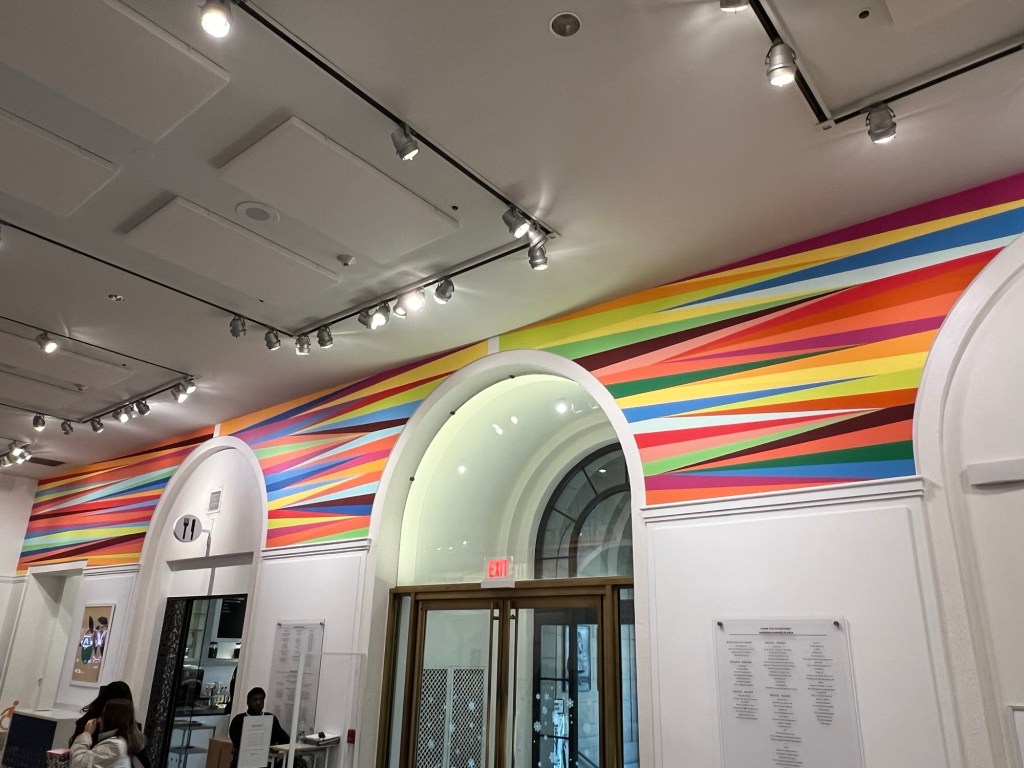
The Institute of Italian Culture has a small gallery in it that several times a year hosts small art gallery events that are open to the public. This one caught my eye when I saw the picture of Sophia Loren looking back at me when I passed.
I thought it might be interesting and I stopped to see “Italians: Italian Women who changed the World” by artist Salvatore Catalano. The gallery held about fourth pictures of Italian women from all over the world and of different time periods who influenced art, fashion, politics and business.
There were many names I recognized and a few who I did not know. The works were very interesting and engaging.
The sign that welcomes you to the gallery
The main gallery at the Instituto Italiano di Cultura for the “Italiana: Italian Women Who Changed the World” exhibition
The exhibition Italiana: “Italian Women Who Changed the World” by artist Salvatore Catalono highlights the many impressive achievements by Italian women over the course of the last few centuries, until today.
(From the museum website):
These formidable women all greatly impacted the world in one way or another, often also against the odds imposed by a “male-ruled” society. The selection of 22 portraits includes scientists, politicians, entrepreneurs, artists, humanitarians and writers. These women all accomplished incredible feats and have contributed to the world in ways that still continue to resonate nowadays.
The Institute of Italian Culture exhibition sign:
The show Italiana: Italian Women Who Changed the World”
These were my favorite sketches from the show and women I most admired in the show.
Miuccia Prada, of the Prada fashion empire
Catherine de Medici, who revolutionized French Culture
Sophia Loren, the famous Italian actress
Lidia Bastianich, the Chef and restauranteur
The sketching’s represented different eras.
(From the museum website)
They are not all household names, but they are all at the top of their professions and exemplify the spirit of Italy. Salvatore Catalano uses his art as a vehicle to transmit these stories and to highlight the lives of these incredible Italian women.
(from the Italian Cultural Institute of New York website)
Salvatore Catalano is an artist, illustrator, and educator. Catalano works in all forms of visual communication. His art has appeared on everything from postage stamps to billboards and his work is in many private and corporate collections. He is an educator at the college level, teaching in New York City and Florence, Italy.
Catalano has worked with The United Nations, U.S. Government, Department of The Interior, National Audubon Society, The New York Times, The New Yorker, ABC, CBS, NBC, American Museum of Natural History, Smithsonian Institution, N.Y. Zoological Society, Merck, Pfizer, Johnson & Johnson, Bayer, GlaxoSmithKline, Coca Cola, Pepsi Cola, Seagram’s, General Foods, Sony, Panasonic, Citibank, Scholastic, Harper-Collins, Bantam-Doubleday, Dell, MacMillan, DuPont, Exxon, State of New Jersey Children’s Television Workshop, McGraw-Hill, Ranger Rick, among others. He has also worked on more than thirty books for children.
The History of the Instituto Italiano di Cultura in New York City:
(from the Instituto Italiano di Cultura website)
The Italian Cultural Institute in New York was founded in 1961 by the Italian Government. Its mission is to promote Italian language and culture in the United States.
Under the guidance of its trustees at the Ministry of Foreign Affairs, its advisory board, and its staff, the Italian Cultural Institute in New York fosters cultural exchanges between Italy and the U.S. in a variety of areas, from the arts to the humanities, to science, and technology.
Central to the Italian Cultural Institute’s activity is its collaboration with the most prominent academic and cultural Institutions of the East Coast. The scientific exchanges, the organization of, and support to, visual arts exhibitions, the grants for translation and publication of Italian books, inspire and nourish the Institute’s initiatives.
In particular, we focus on the relationship between memory and innovation, and the multiplicity of identities in the Italian civilization. The Italian Cultural Institute in New York, therefore, provides an “open window” on main cultural and social aspects of past and current Italy.
The entrance to the Central Park Conservatory Garden in Winter 2023 (The Vanderbilt Gates)
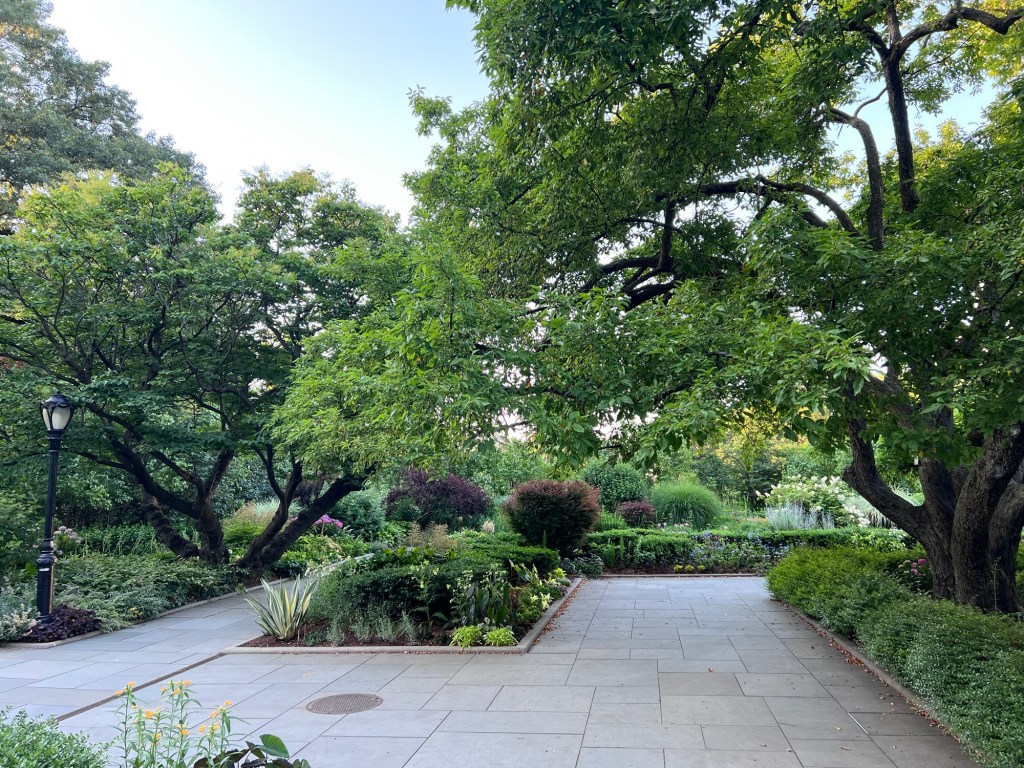
I love walking around the Central Park Conservatory at any time of the year especially in the early Spring when all the flowers are in bloom. It is a wonderful experience to go in the early morning when it is quiet and you have the park to yourself (which is very rare). The whole garden just went through a major restoration and it has really changed. The whole Conservatory is refreshed and in bloom. It is quite a site!
The sign at the entrance of the Gardens
The entrance to the gardens
This time of the year (Spring) the Central Park Conservatory is in full bloom and its magnificence is at its finest in the Spring and Summer months. In May, the tulips and daffodils are just finishing their flowering and the lilacs are just finishing their blooming and still fragrant the garden. The lawns are all a deep green and the dogwood trees are just starting to bloom around the rings of the gardens.
The newly renovated pathways
Don’t miss walking around the Gardens off to the side closest to the Harlem Meir as they are open through the renovation. You will see beds of flowers along the fountain’s edge and can admire all the sculpture. What is most impressive is that in-between the Gardens is a vast green lawn surrounded by trees. The lawn of the Conservatory is nice to just admire with the trees lining it on all sides.
Central Park Conservatory Garden Spring 2025
The best time to come to the Conservatory Gardens is in early to late Spring and the early Summer when everything is in full bloom. This is when Mother Nature shows us her great magic.
The beauty of the Central Park Conservatory is that it blooms all year around except the winter and even then, there is a quiet elegance to the garden.
The gardens in full bloom in Summer 2025
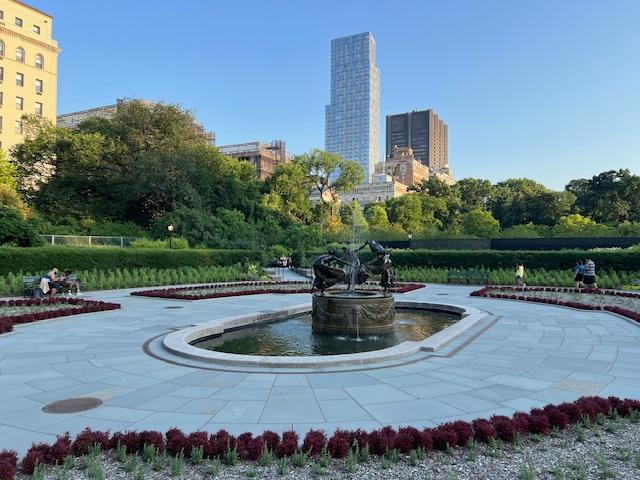
The restored fountain in all of its glory
History of The Central Park Conservatory:
(Information comes from a combination of NYC Parks.org and Wiki)
The Central Park Conservatory Garden is the only formal garden in Central Park, New York City and is located approximately between 104th and 106th Street on Fifth Avenue in NYC. The Garden consists of about six acres of formal landscaping of trees, shrubs and flowers. The formal garden is divided into three smaller gardens each with a distinct style: Italian, French and English. The Central Conservatory Garden is an officially designated Quiet Zone and offers a calm and colorful setting for a leisurely stroll and intimate wedding.
The Central Park Conservatory in the Spring 2025
It takes its name from a conservatory that stood on the site from 1898 to 1934. The park’s head gardener used the glasshouses to harden hardwood cuttings for the park’s plantings. After the conservatory was torn down, the garden was designed by Gilmore D. Clarke, landscape architect for Robert Moses, with planting plans by M. Betty Sprout and constructed and planted by WPA workers, it was opened to the public in 1937.
The Garden is composed of three distinct parts, skillfully restored since the 1980’s and is accessible through the Vanderbilt Gate at Fifth Avenue and 105th Street, a quarter south of the park’s northeast corner.
The Vanderbilt Gate at the Central Park Conservatory
The Vanderbilt Gate once gave access to the forecourt of Cornelius Vanderbilt II’s chateau designed by George Browne Post, the grandest of the Fifth Avenue mansions of the Gilded Age, at 58th Street and Fifth Avenue, sharing the Plaza with Plaza Hotel. The wrought iron gates with cast iron and repousse details, were designed by Post and executed in an iron foundry in Paris.
The fountain at the Central Park Conservatory
To the left of the south side is the garden of mixed herbaceous borders in wide concentric bands around The Secret Garden water lily pool, dedicated in 1936 to the memory of Frances Hodgson Burnett with sculpture by Bessie Potter Vonnoh.
The Fountain in the Spring of 2025
Some large shrubs, like tree lilac, magnolias, buddleias and Cornus alba ‘elegantissima’ provide vertical structure and offer light shade to offset the sunny locations, planted by Lynden Miller with a wide range of hardy perennials and decorative grasses, intermixed with annuals planted to seem naturalized. This garden has seasonal features to draw visitors from April through October.
To the right of the central formal plat is a garden also in concentric circles, round the Untermyer Fountain, which was donated by the family of Samuel Untermyer in 1947. The bronze figures, Three Dancing Maidens by Walter Schott (1861-1938) were executed in Germany about 1910 and formed a fountain at Utermyer’s estate “Greystone” in Yonkers, New York.
This section of the Conservatory Garden has two dramatic seasons of massed display of tulips in the spring and Korean chrysanthemums in the fall. Beds of satolina clipped in knotted designs with contrasting bronze-leaved bedding begonias surround the fountain and four rose arbor gates are planted with reblooming ‘Silver Moon’ and ‘Betty Prior’ roses.
The French Gardens at the Central Park Conservatory in Summer 2025
After the Second World War the garden had become neglected and by the 1970’s became a wasteland. It was restored and partially replanted under the direction of horticulturist and urban landscape designer Lyden Miller to reopen in June 1987. The overgrown, top-heavy crabapples were freed of water shoots and pruned up to a higher scaffold for better form. The high-style mixed planting was the first to bring estate garden style to urban parks, part of the general of Central Park under Elizabeth Barlow Rogers of the Central Park Conservancy.
The Conservatory in the early Spring of 2025
This is the fountain up close
The Central Park Conservatory Gardens in the Summer of 2026:
I revisited the Gardens again in the Summer of 2026 after a walking tour and Members Morning at the Museum of the City of New York. The Gardens were in full bloom and the care and dedication of caring for the Gardens really showed in the dazzling colors while walking amongst the beds.
The entrance of the Central Park Conservatory lawn and fountain
The fountain and the geometric garden
Central Park Conservatory gardens at the entrance
The entrance of the gardens from the Harlem Meer area
The entrance to the flower gardens from the Central Park Conservatory lawn
The Central Park Conservatory garden beds
The gardens in full bloom in the Summer of 2026
The flower beds in the central of the gardens
The Central Park Conservatory Fountain and Lotus pools
The Fountain statues
The flowers beds around the paths
The orange flowers that line the paths
The vibrant purple flowers
The gardens that line the paths
The beautiful flowers that line the paths
The flowers are lining the paths
The flowers lining the paths
The flowers were so vibrant in the Summer of 2026
The gardens were spectacular that afternoon and I took my time to walk all the beds and enjoy all the beautiful flowers.
(This information directly from Wikipedia and has many sources)
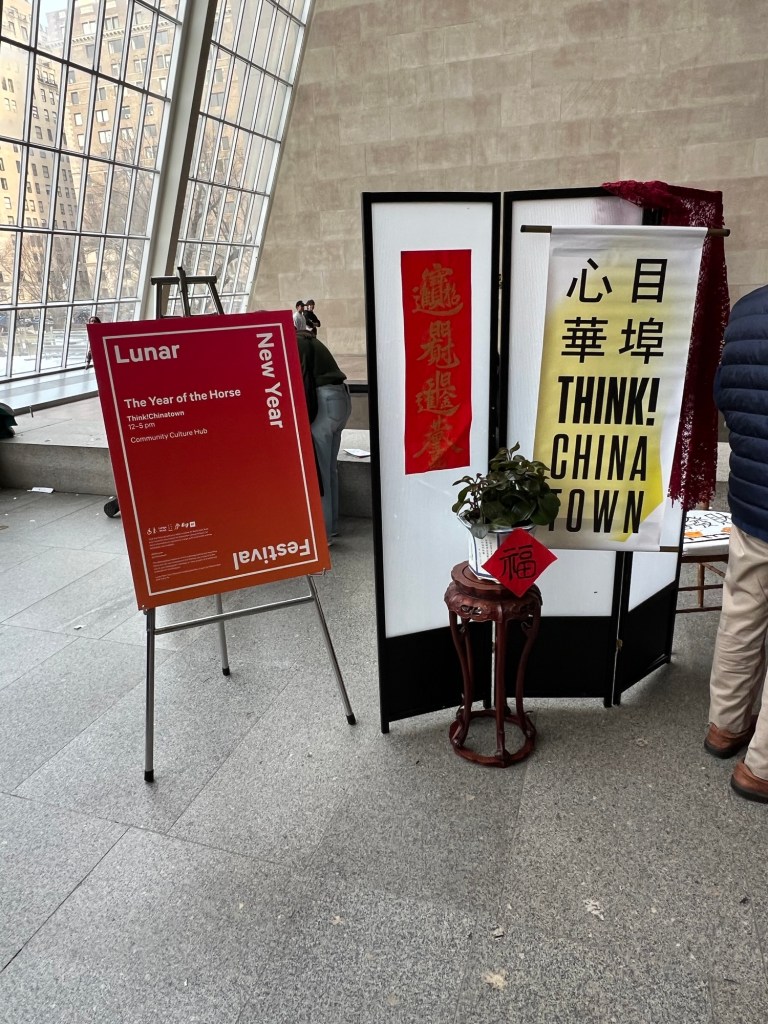
I love the Lunar New Year with all its pageantry, parades, fireworks and crackers and especially the food. I spend most of my time running around Chinatown in Manhattan before the holidays began, where most of the main celebrations take place but now travel to museums to enjoy the festivities they sponsor for the holidays.
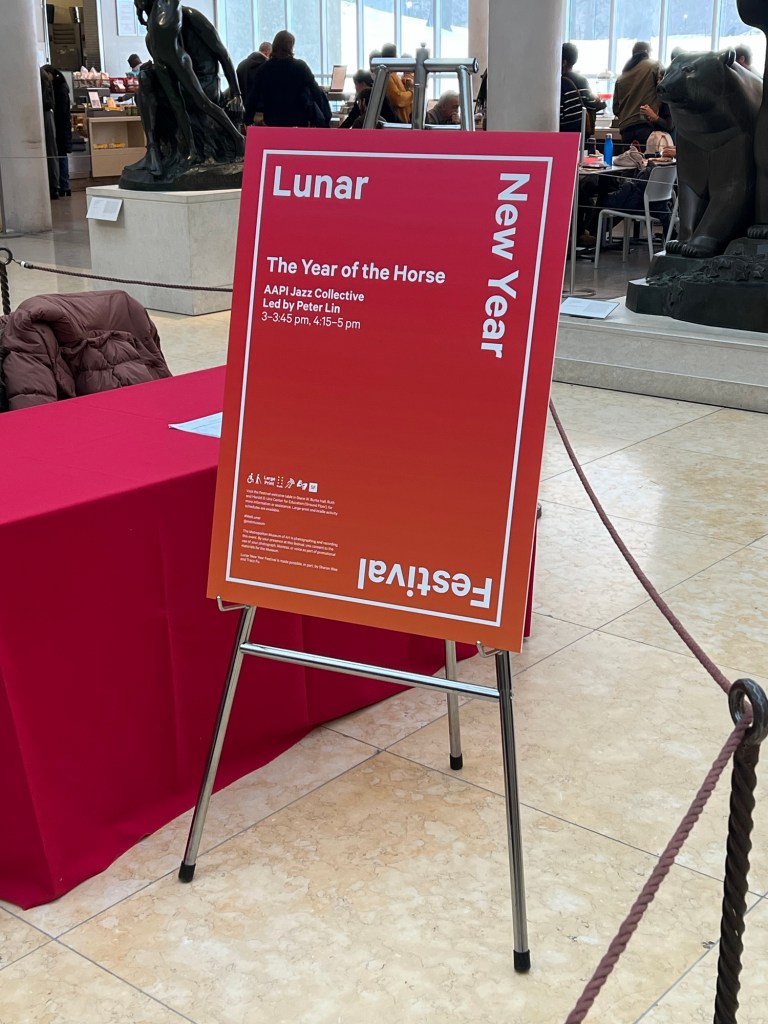
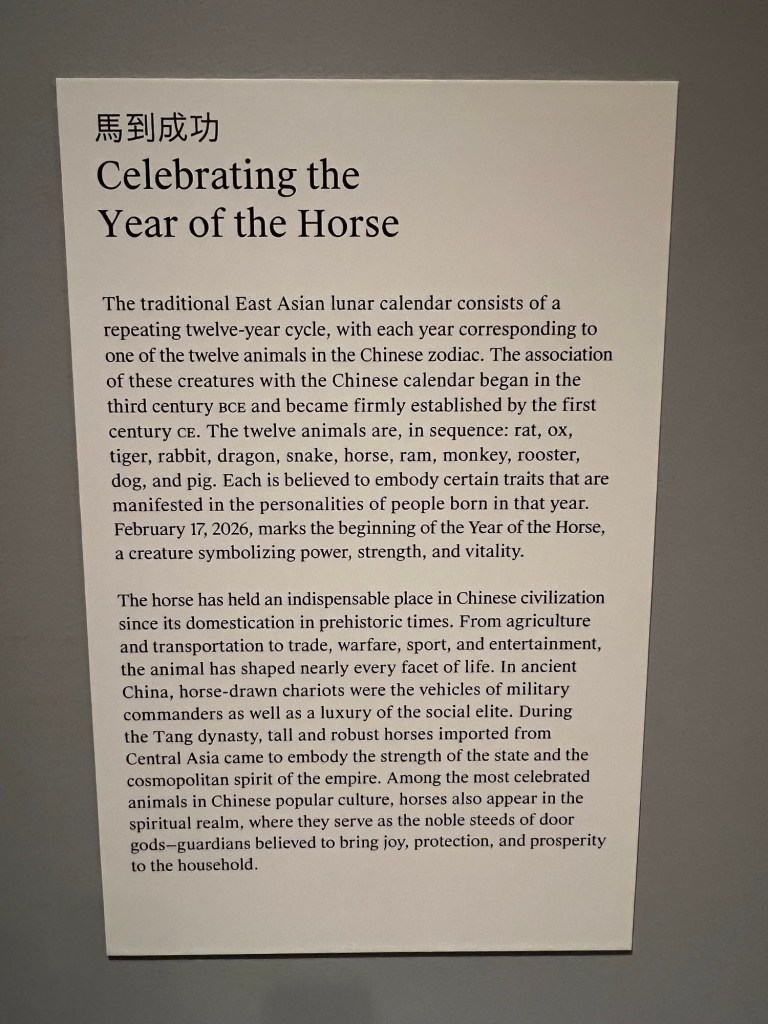
I start the holidays at the Metropolitan Museum of Art (or as I say my second home in New York City) for their celebration for the ‘Year of the Horse’
Touring the Asian Galleries on the second floor for the ‘Year of the Horse’ celebration
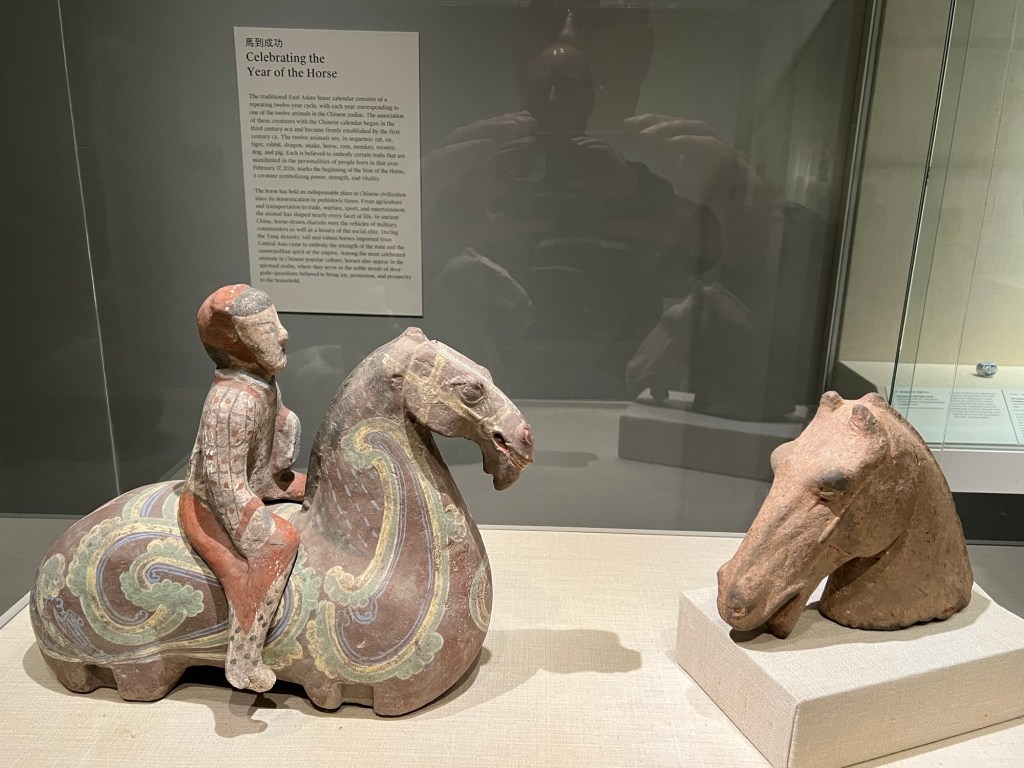
The Met had created a display of all sorts of objects in the Asian Wing of the museum for the holidays. So there many horse themed pieces on display in the cases includes a series of zodiac figurines.
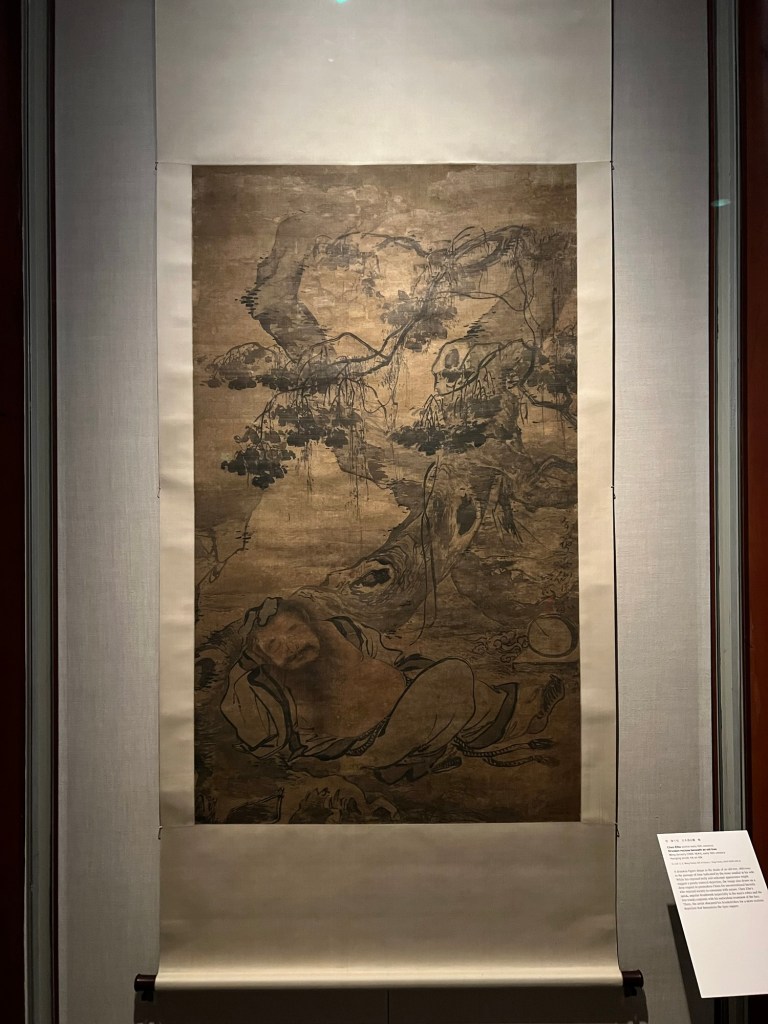
Some of the ancient horse artwork in the Asian Wing
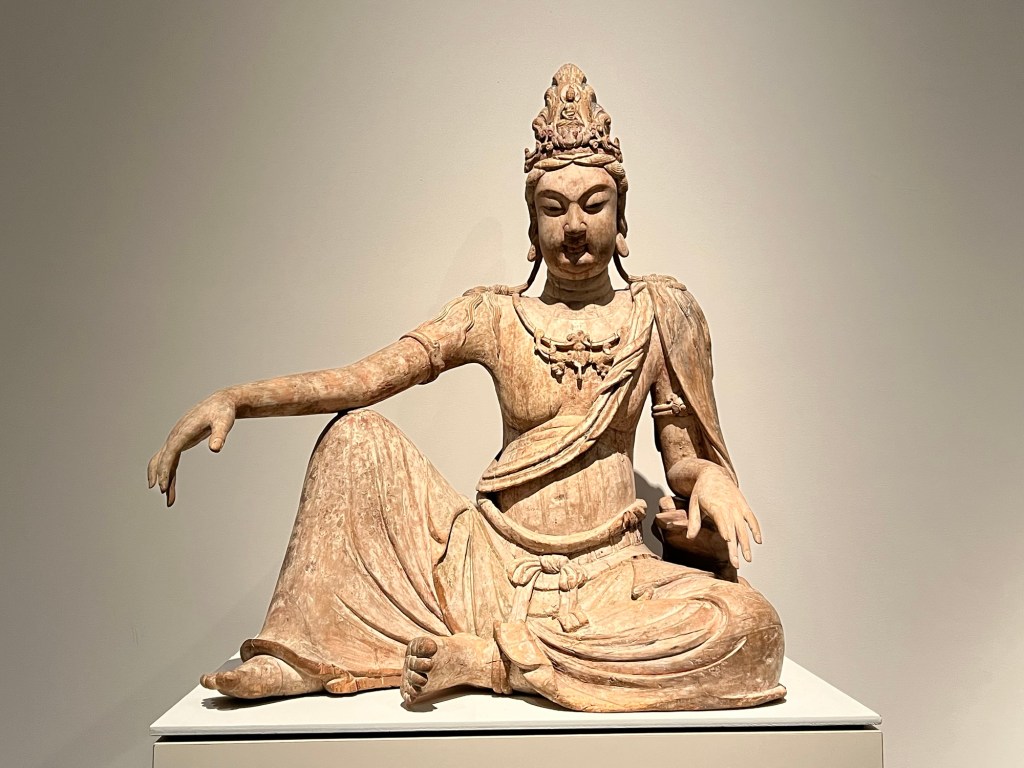
Some of the artwork is so beautiful
The Scroll Room with the paper artworks. The collection is very extensive
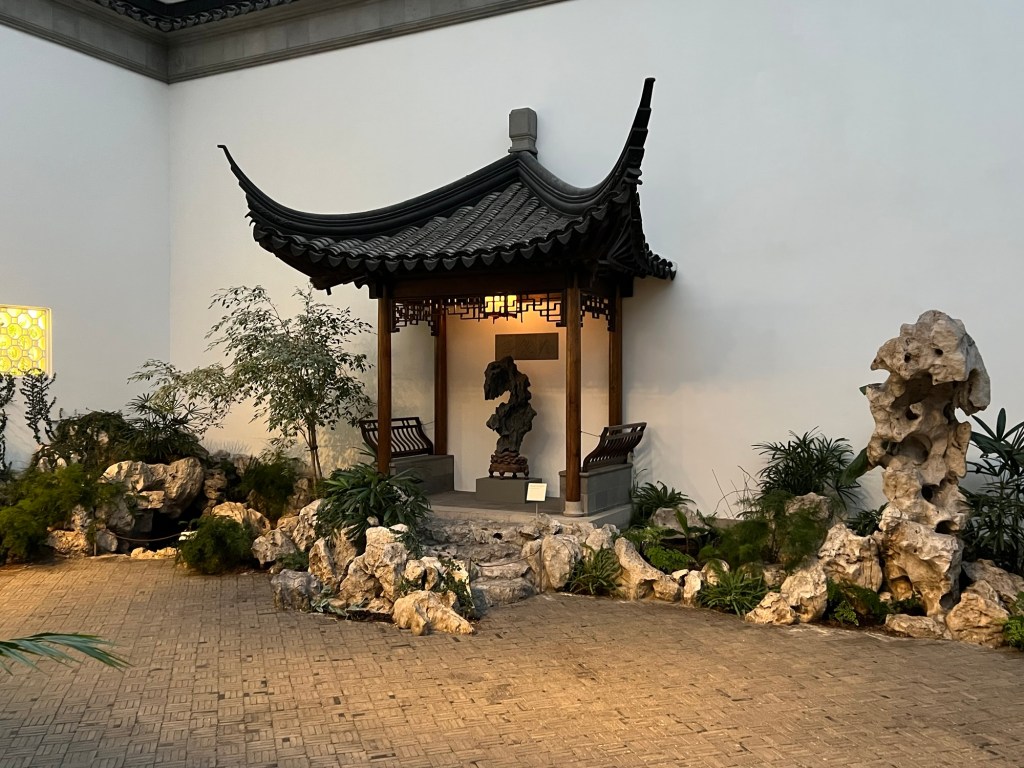
The Chinese Shine tucked back in one of the galleries with its unusual stonework
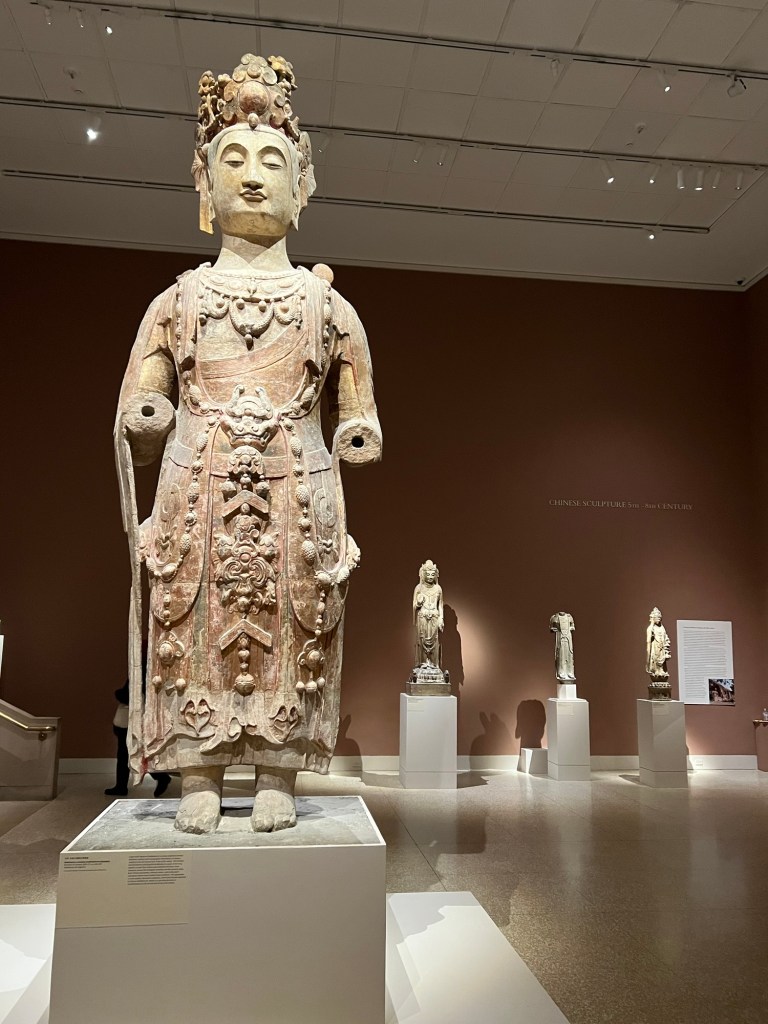
Some of the statuary and stoneworks in the entrance gallery of the Asian Wing
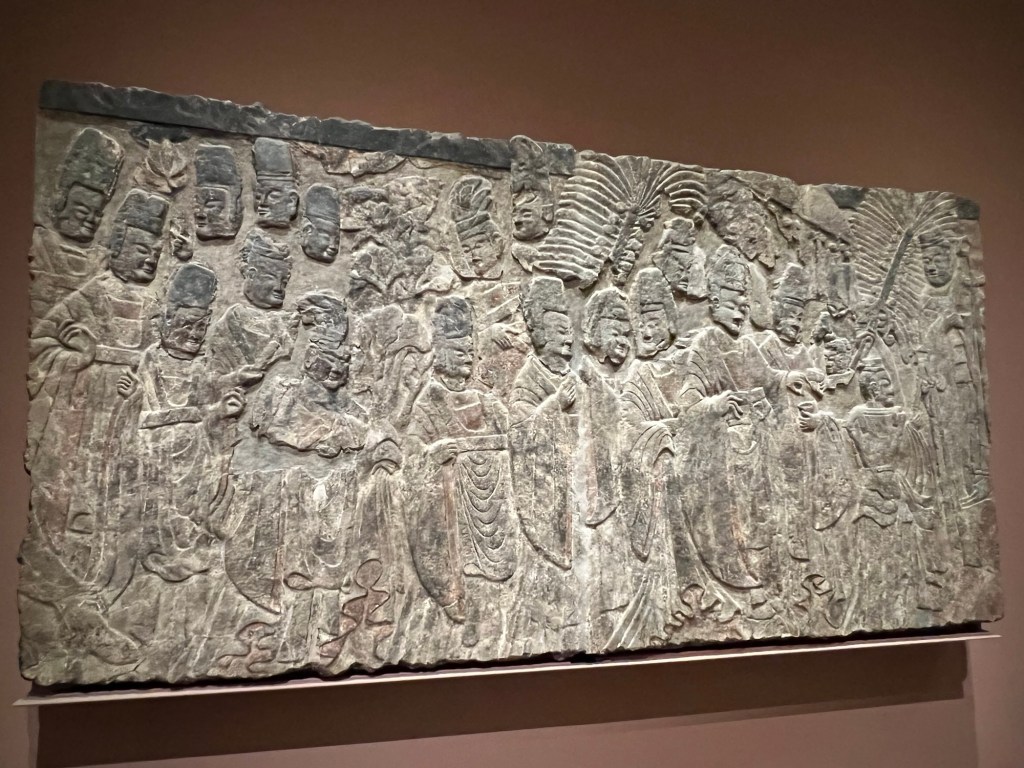
The ancient stonework in the main gallery
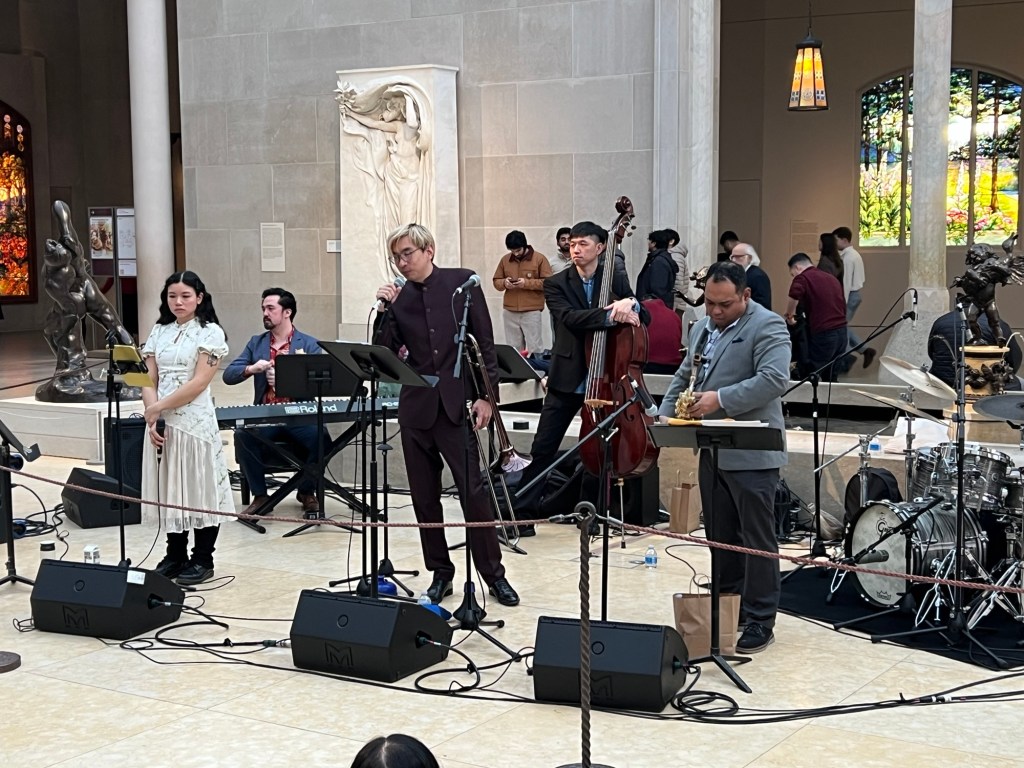
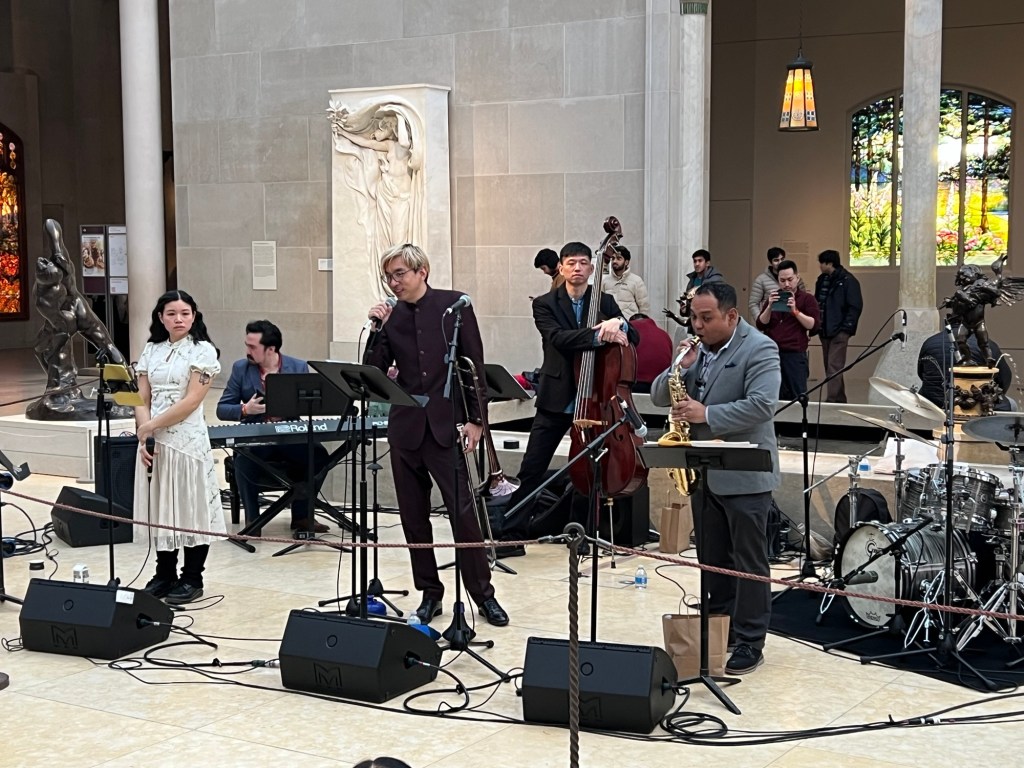
The last event of the day in the American Wing was the Peter Lin Ensemble, who had played at the museum last year. The band was wonderful and played all sorts of jazz hits from all over the world.
The Peter Lin Jazz Ensemble
Video of Jazz tunes:
Video of Jazz tunes:
Mr. Lin then talked about the history of his group and introduced them to the audience.
After the break, the group performed more songs
Video of popular Asian jazz tune:
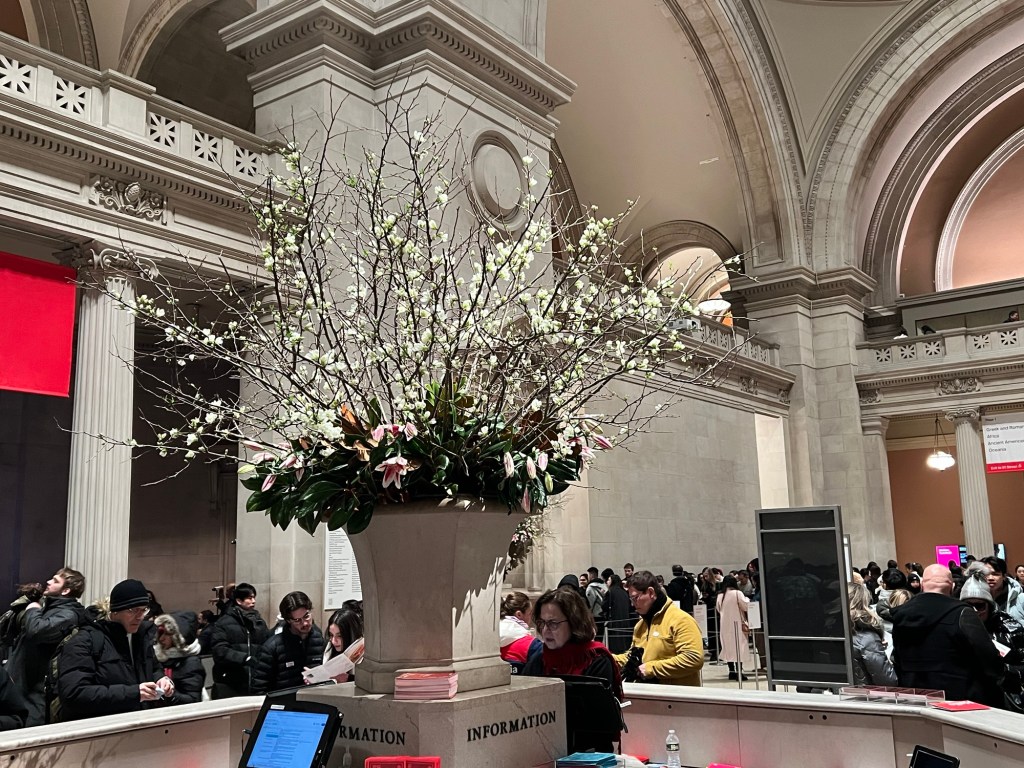
At the end of the afternoon, I stopped in the lobby at the gift shop. The Grand Hall was beautifully decorated with cherry blossoms.
The cherry blossoms in the Grand Hall on the first floor
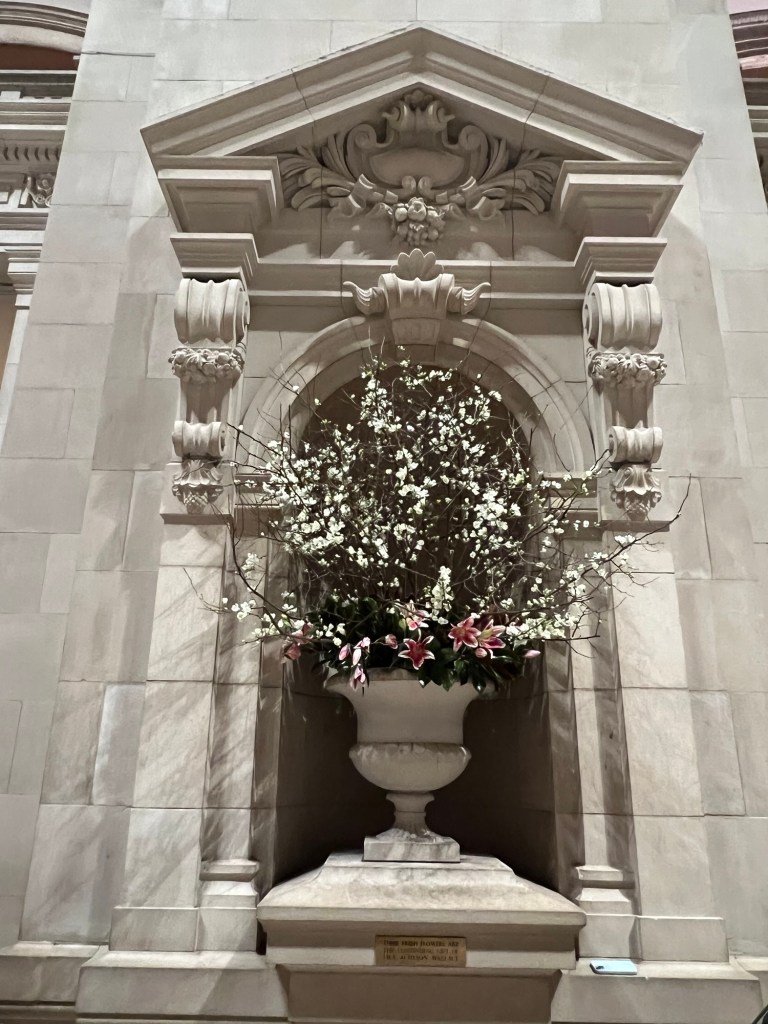
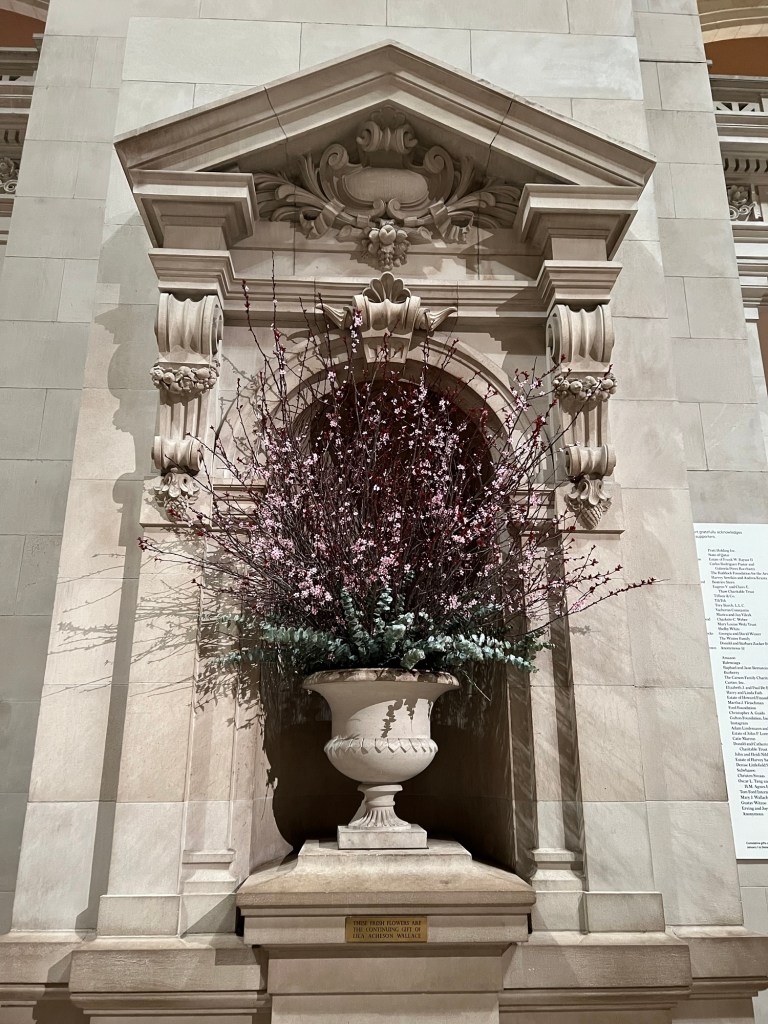
The cherry blossoms decorated the urns around the Grand Hall
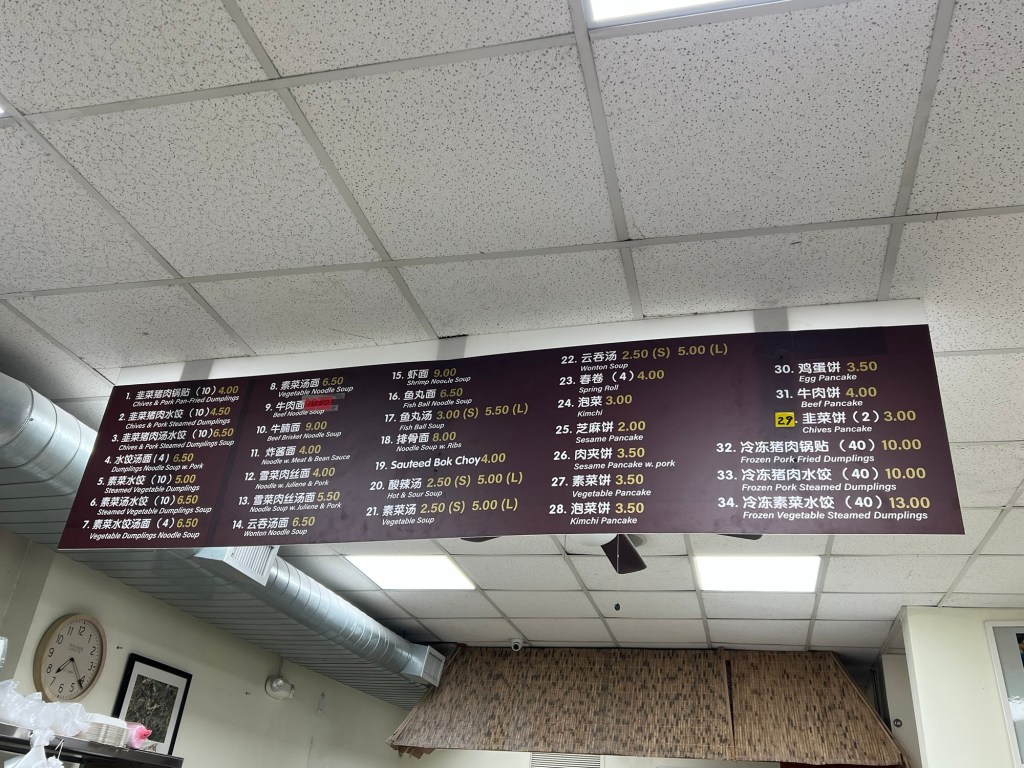
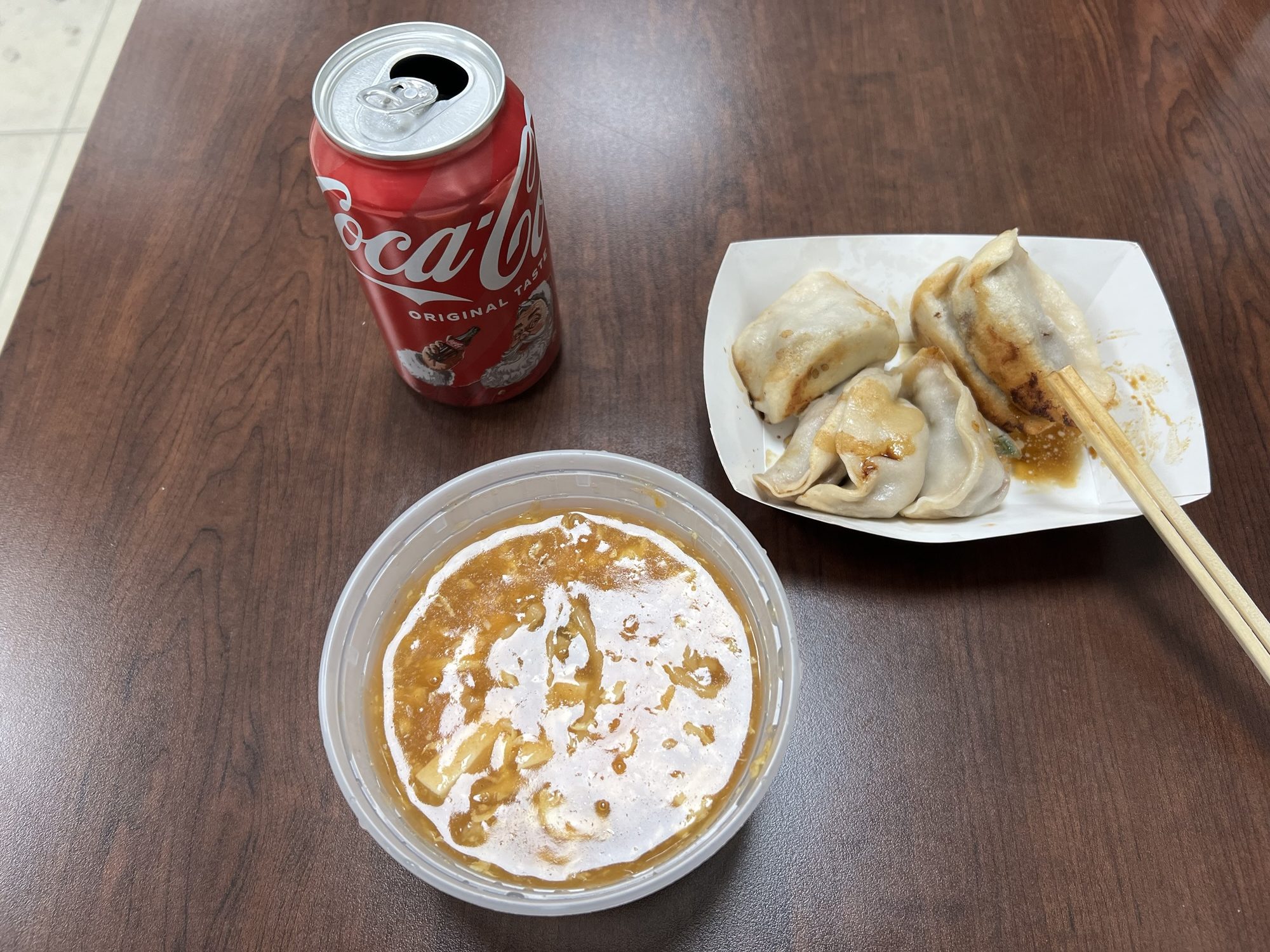
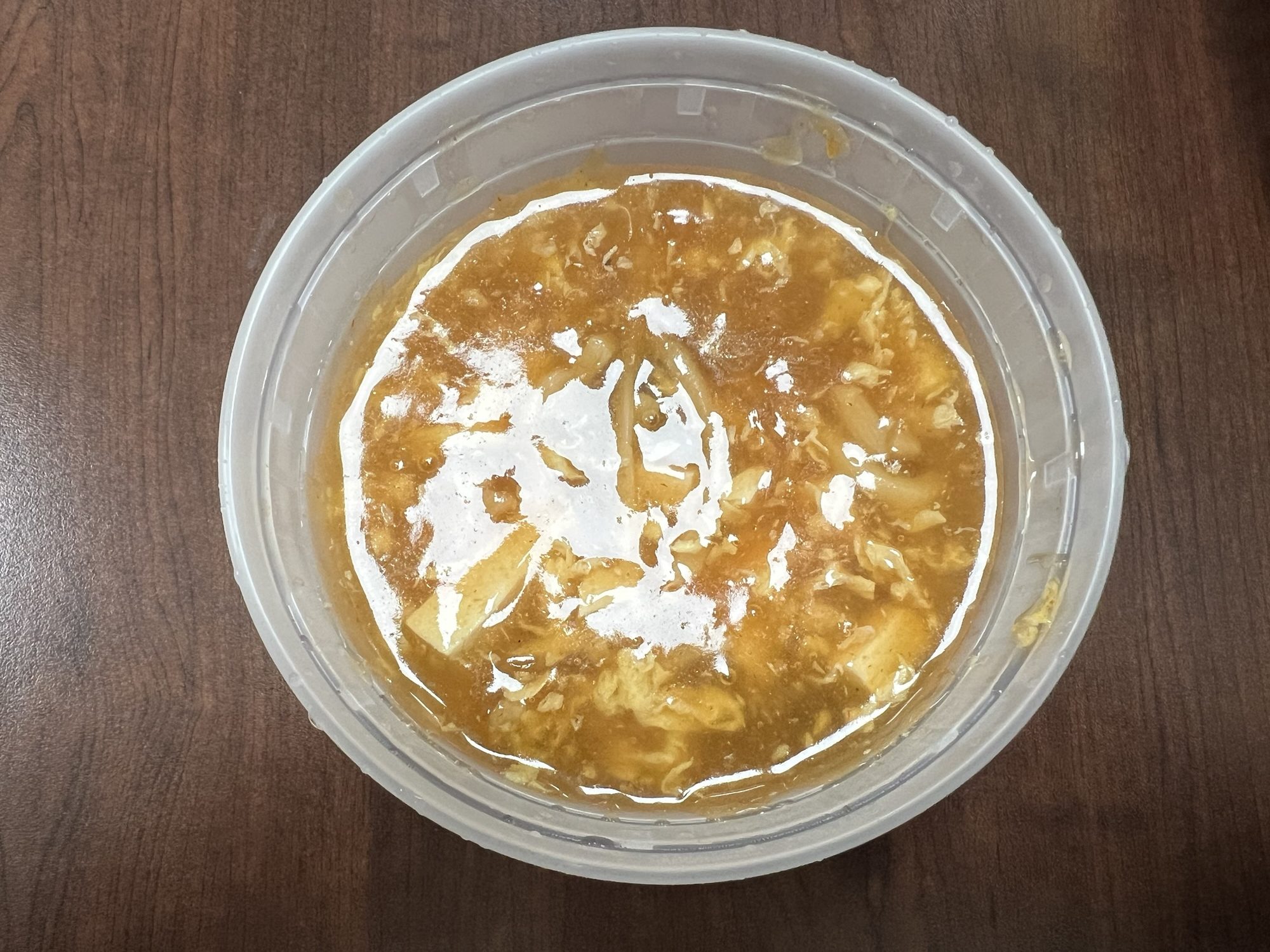
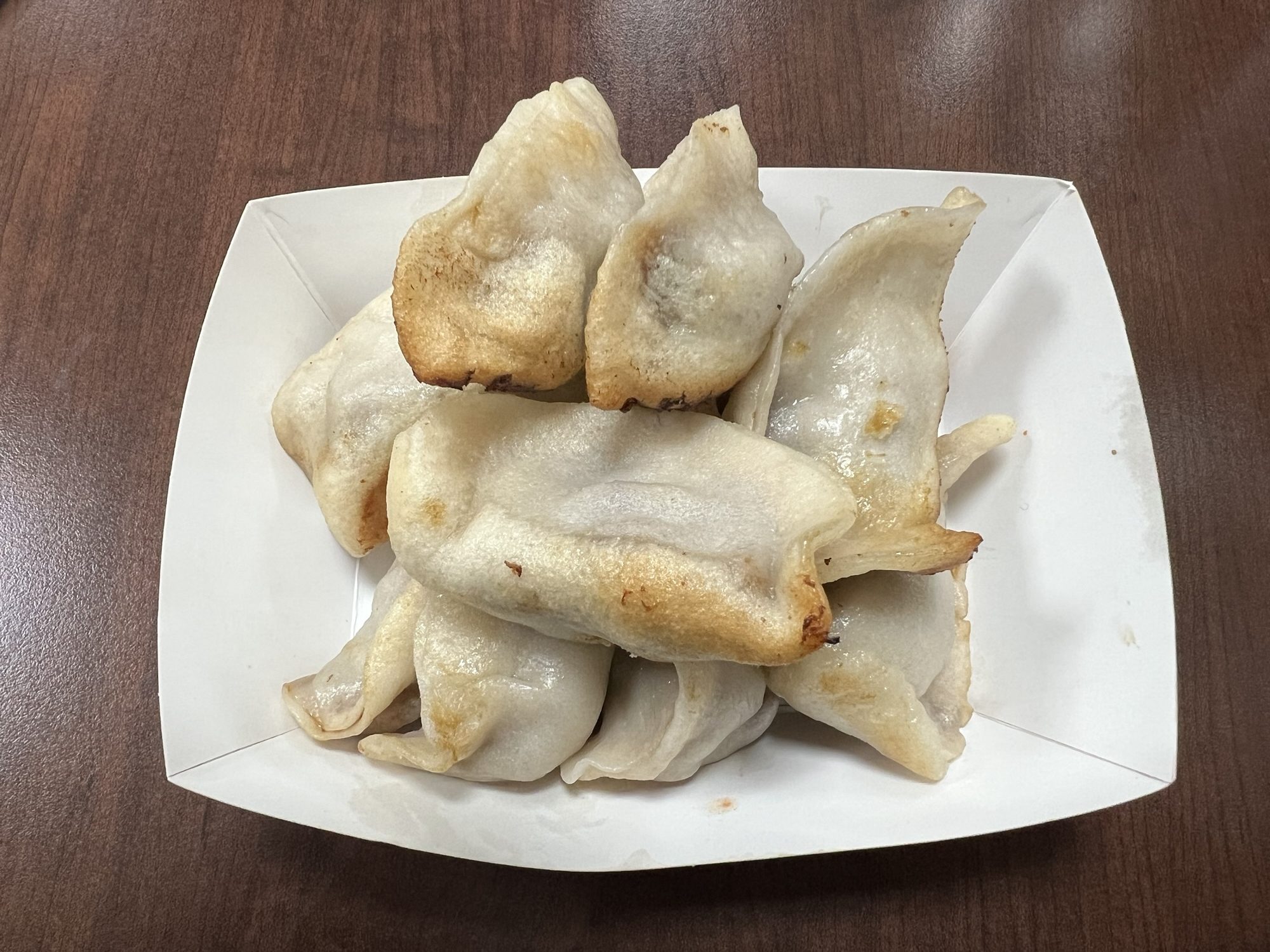
The weather that night was an unbearable 10 degrees and after all that touring in the Asian galleries, I needed some dumplings. So I took the Q subway and back downtown to North Dumpling at 21 Division Street in Chinatown.
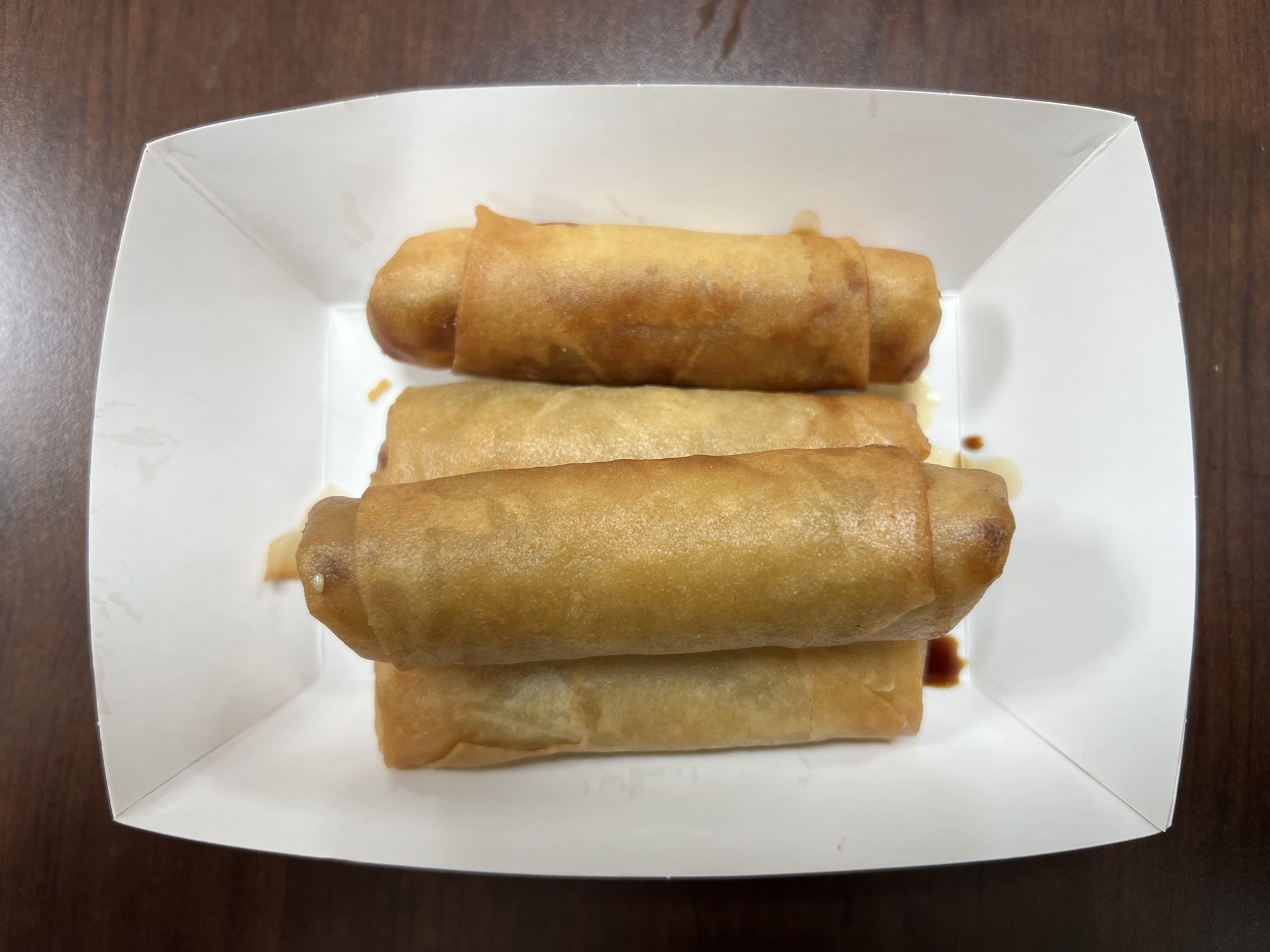
The food had been so good the week before, I had to go back and try the fried dumplings. Even in the cold, it was well worth the trip to Chinatown. The food here is delicious and so reasonable. I can see why it is winning instant popularity.
The Spring Rolls are the perfect way to end the meal
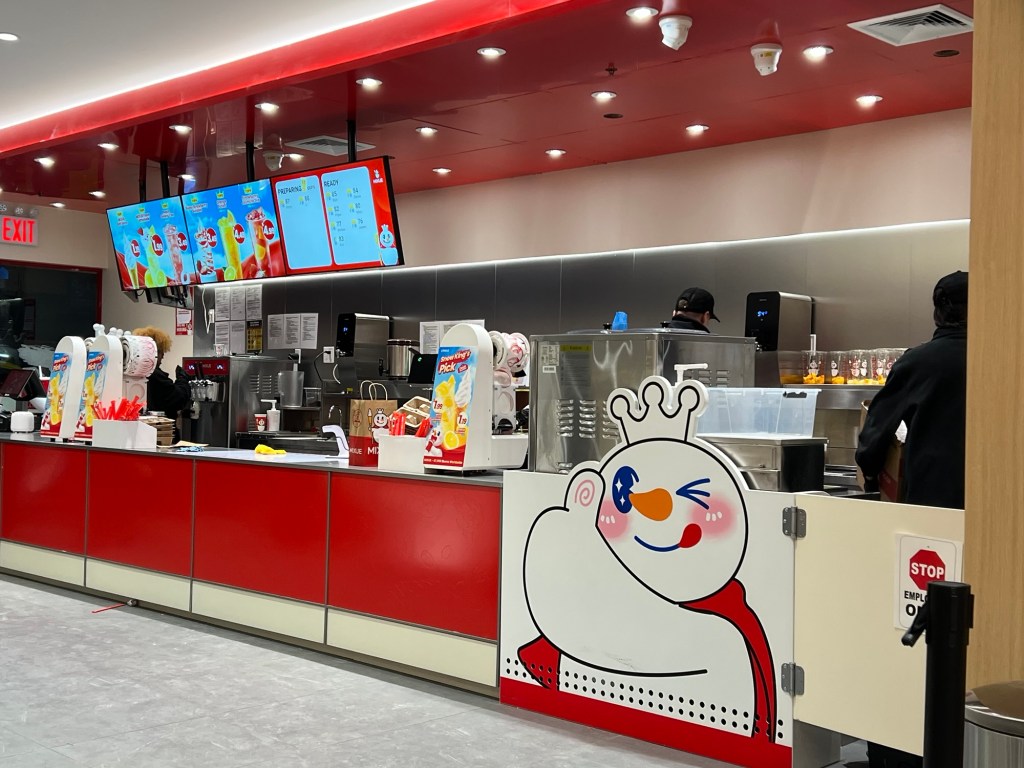
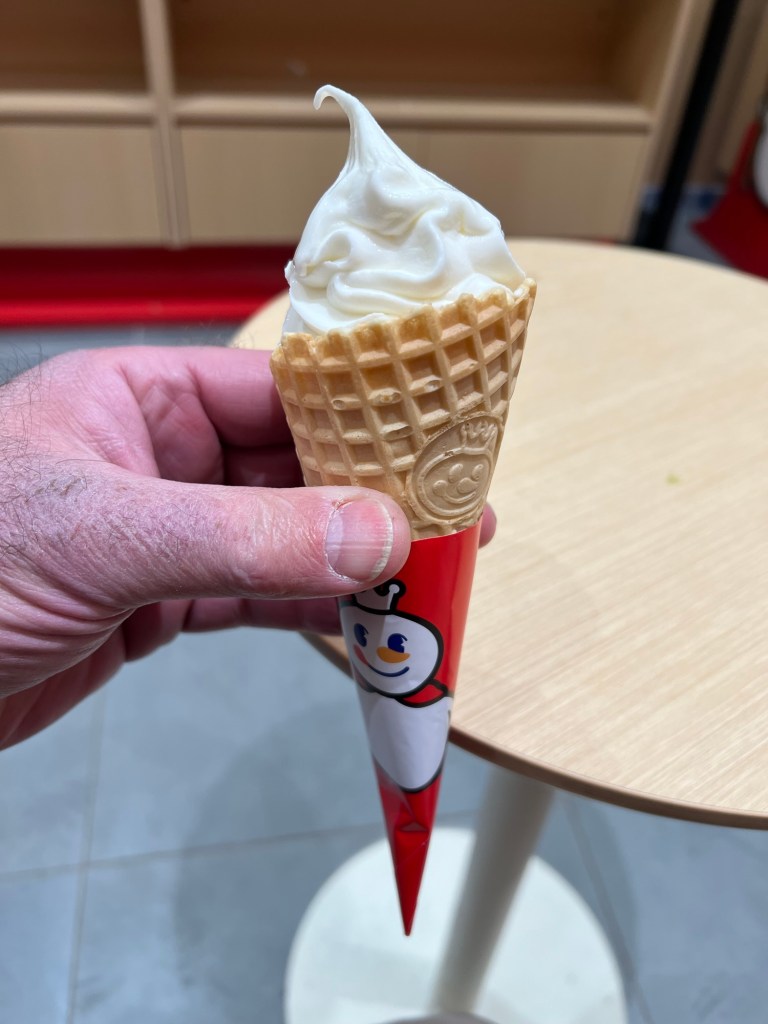
After dinner, even though it was freezing cold, I had to try a soft serve cone at Mixue, a Chinese dessert chain that just opened on Canal Street. At $1.99 for a cone you can’t get a better deal than that. The Vanilla ice cream is really good even on that freezing night.
I had to head home as the temperature dropped to 12 degrees. It had not been this cold in many years during the New Year celebrations.
The next day I visited the Newark Museum in Downtown Newark for the start of their activities with a performance of Korean dance. It was already over by the time I got there but they had a sampling of popular Korean foods and the door was excellent.
I went into the main hall as the entertainment was ending and everyone was taking pictures. I loved the outfits everyone was wearing.
The main hall of the museum just after the festivities
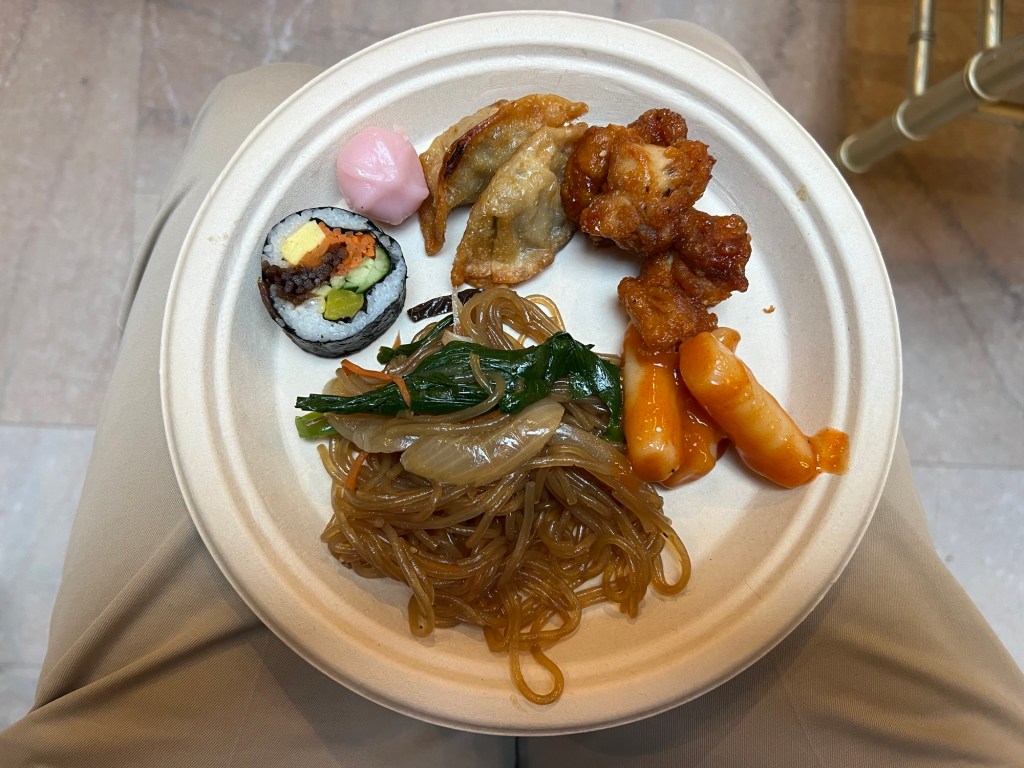
A sampling of Korean dishes including Korean Fried Chicken, Noodles, Dumplings and Shushi
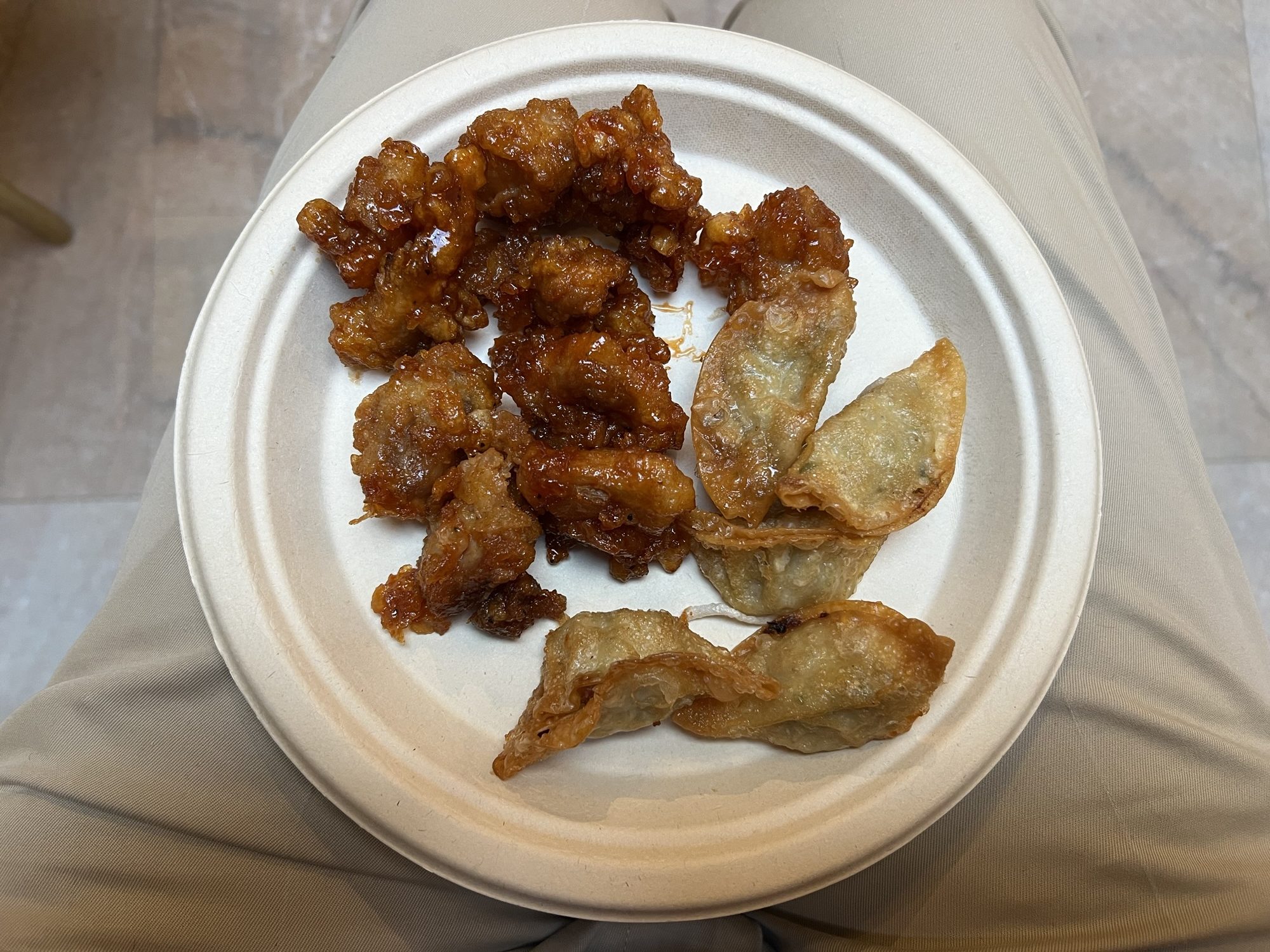
I had to go back for seconds the food was so good
I toured around the museum but most of the galleries closed early that afternoon. It was a nice afternoon of just walking around the open galleries on the first floor.
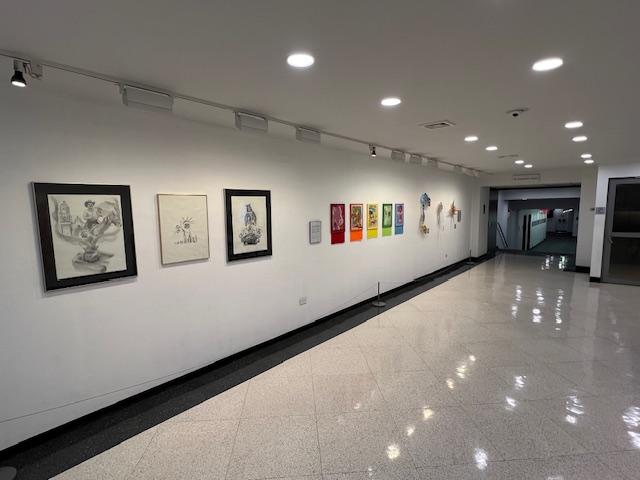
The exhibition of art by local Korean artists in the hallway off the museum’s main hall court
I unfortunately could not go in for the parade this year plus the weather was not the best to stand around and watch other parade goers freeze. The year before it down poured making two years of not the best conditions to attend the parade. On TV I did notice a nice sized crowd.
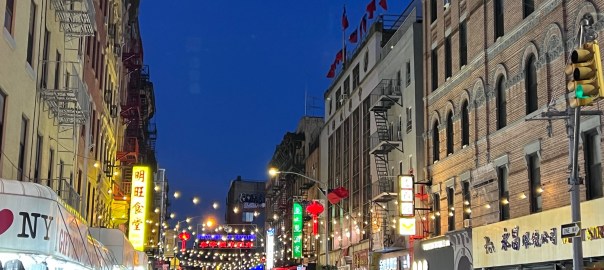
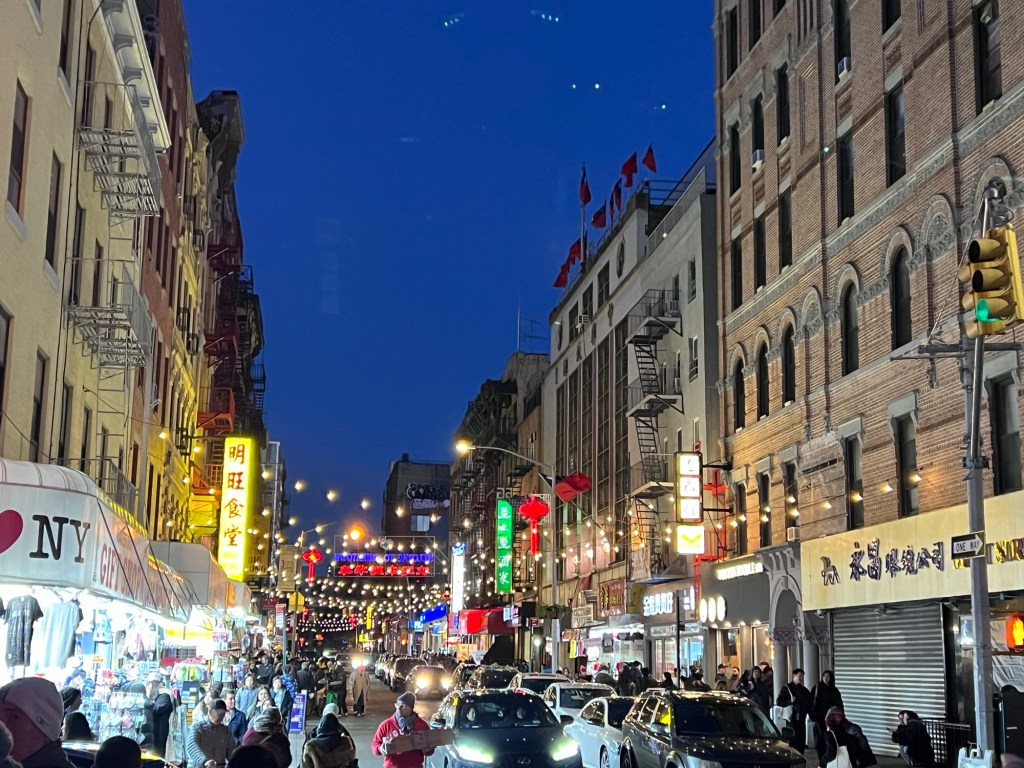
I managed to get to Chinatown after the parade and have dinner. Chinatown is becoming unrecognizable as many of the grocery stores and restaurants have closed to the change in rents and many of the old tenement buildings are being knocked down for luxury condos. I have never seen so many changes.
Chinatown in the afternoon
While Mott Street, like Mulberry Street, keeps up appearances for the tourists, the rest of the neighborhood is under gentrification. I have watched one business after another close including groceries and take out spots. I can see a lot of changes coming over the next five years.
As the snow storms peaked and did it snow this year with 18 inches coming after the holiday, the weather gave way to two 75 degree days during my Spring Break and hopefully warmer weather in the coming months. Spring is on its way.
One of the things I love about being a member the Metropolitan Museum of Art is the private Member’s Night ‘Met After Hours’ they hold about four times a year. The museum is open after the closing hours and it is a night of wondering the museum galleries, great music and entertainment and wonderful tours and talks in the galleries. You really experience the museum at its best and it does shine.
The lines move very quickly to get into the museum and with traffic getting into the City that night, I arrived about twenty minutes after opening and there were no crowds to face and I got right in. There’s always a sense of excitement on these nights.
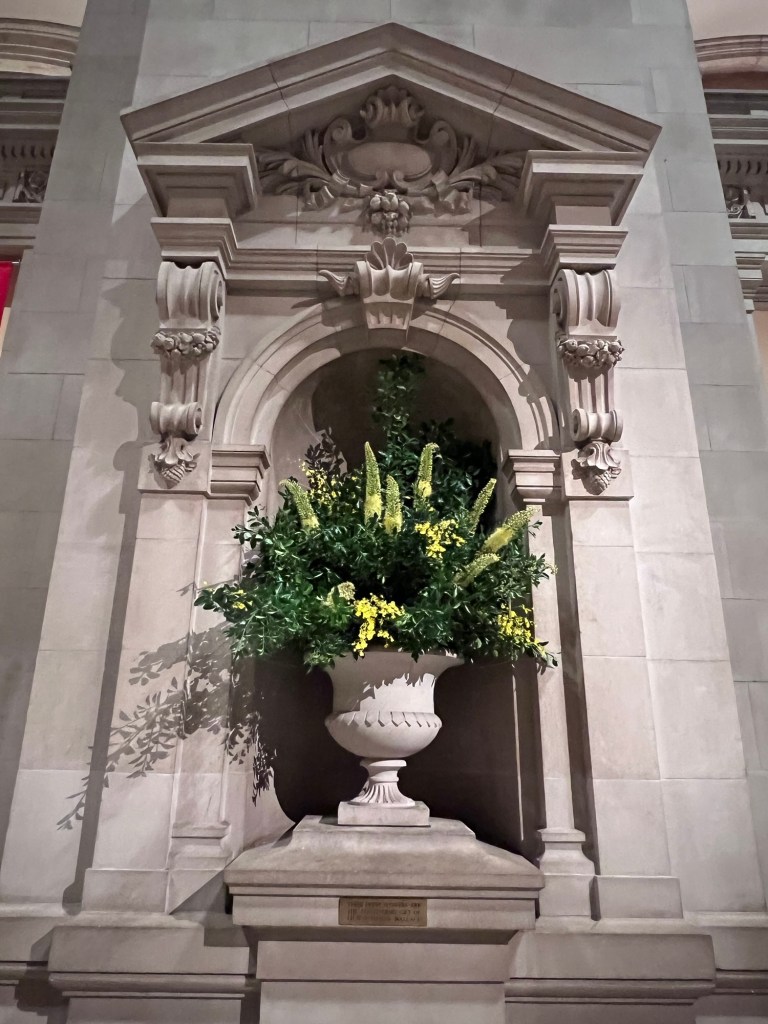
The Grand Hall in the front of the museum decorated with Spring flowers
The beautiful Spring flowers lined all the urns around the Great Hall
The museum welcoming all the members of the museum at ‘The Met After Hours’
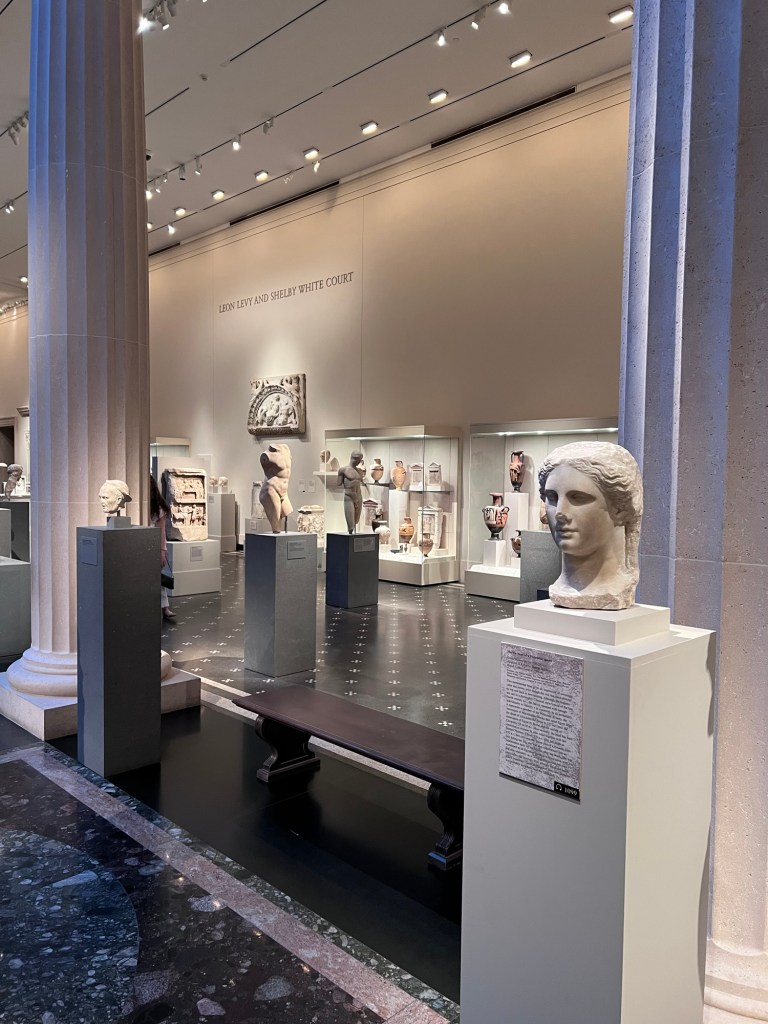
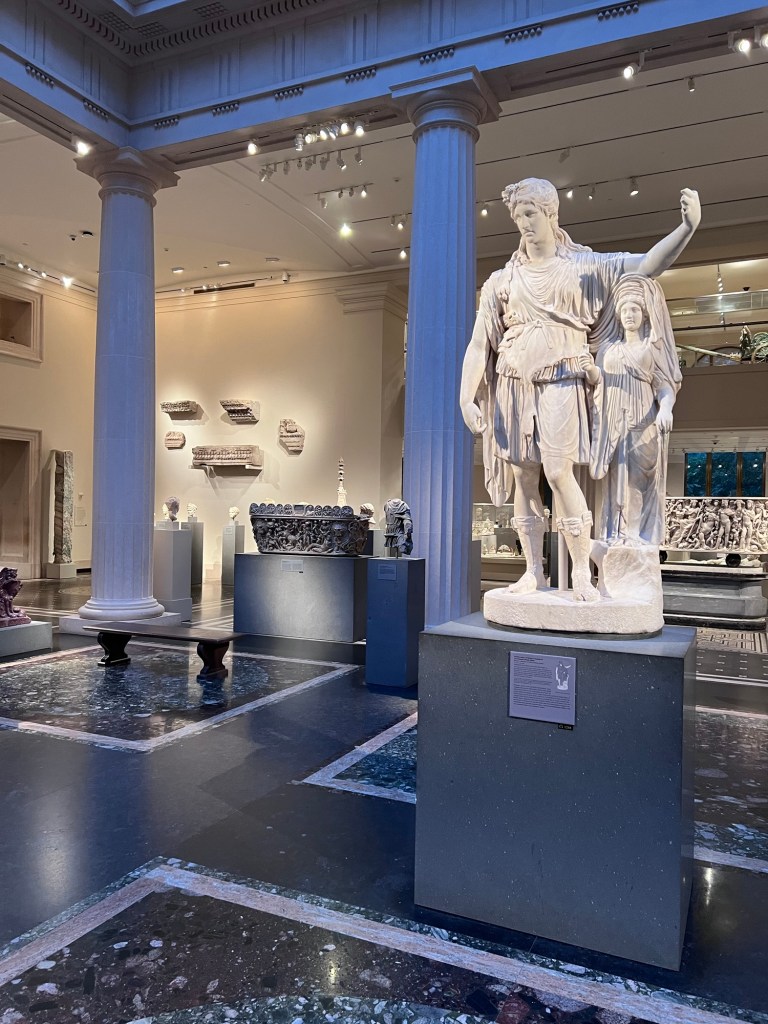
I started my walk around the galleries in the Greek Wing touring the main hallway. It still boggles my mind how old these statues are and I am looking at something almost two thousand years old.
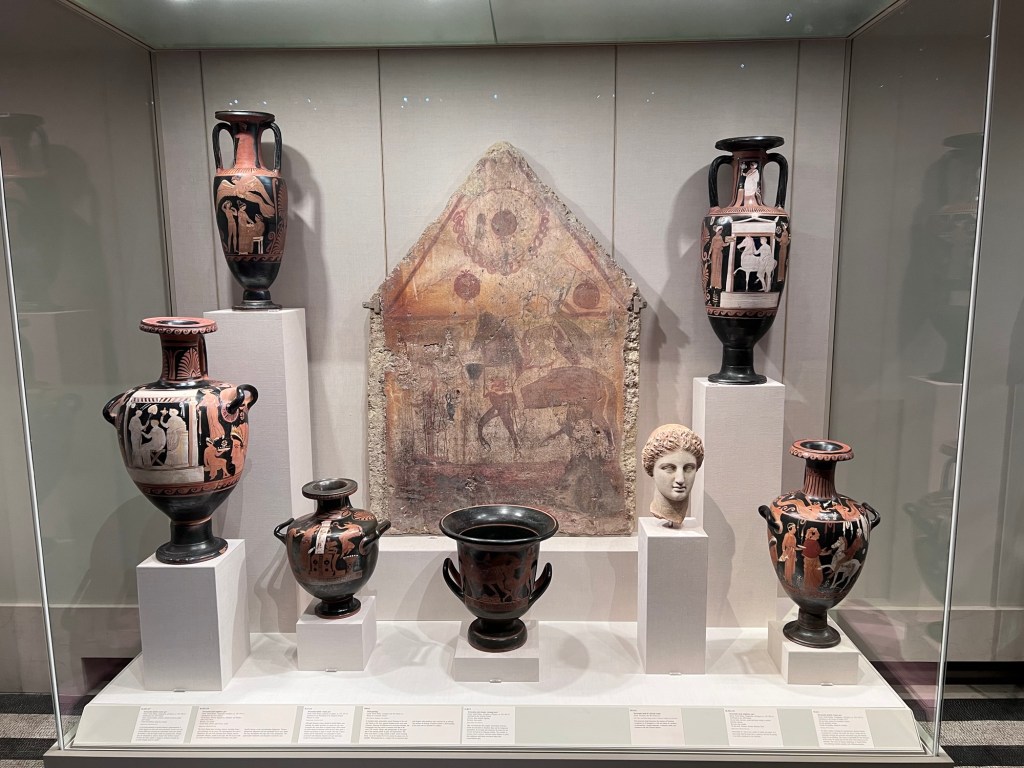
The Museum’s collection of Greek and Roman art comprises more than thirty thousand works ranging in date from the Neolithic period (ca. 4500 BCE) to the time of the Roman emperor Constantine’s conversion to Christianity in 312 CE. It includes the art of many cultures and is among the most comprehensive in North America. The geographic regions represented are Greece and Italy, but not as delimited by modern political frontiers: Greek colonies were established around the Mediterranean basin and on the shores of the Black Sea, and Cyprus became increasingly Hellenized. For Roman art, the geographical limits coincide with the expansion of the Roman Empire. The department also exhibits the art of prehistoric Greece (Helladic, Cycladic, and Minoan) and pre-Roman art of Italic peoples, notably the Etruscans (Metropolitan Museum of Art website).
One of the statues that stood out that evening
I spent some time admiring the statues and the craftsmanship of the works along the hallway. The only problem is that most of the Greek and Roman Galleries were closed for the evening so I headed off to the Renaissance Wing. I love the luxury objects in the collection of silver and gold and again their craftsmanship is still unrivaled today. To make these objects takes intensive work and talent.
The timepieces show how advanced science had become and the importance of it in not just measurements but in beauty.
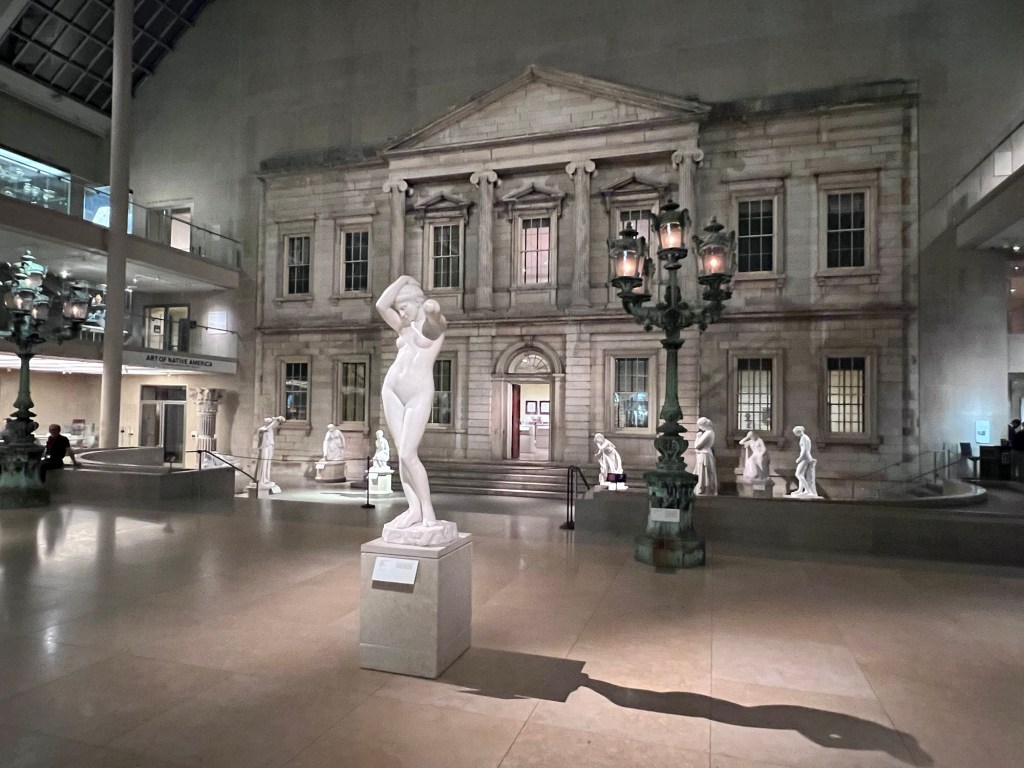
The lobby of the American Wing with the facade of what was a former bank and a Wall Street private mansion. I love the quiet elegance of this building and to think they moved it here piece by piece. The American Wing Cafe was open for the evening and the area was busy throughout the evening. It is nice to just sit and enjoy the views by the fountain. The artwork is beautiful.
Visitors to the American Wing will experience in more than 75 galleries on three floors varied art, design, and culture from the mid-seventeenth to the mid-twentieth century, with some contemporary expressions, by a diverse array of artists from across North America. Since our founding in 1924, this curatorial department has evolved its collecting to include some 20,000 artworks in many mediums by African American, Asian American, Euro-American, Latin American, and Native American makers, affirming ever more inclusive definitions of American art and identity. These dynamic holdings include painting, sculpture, drawing, furniture, textiles, regalia, ceramics, basketry, glass, silver, metalwork, jewelry, as well as historic interiors and architectural fragments, produced by highly trained and self-taught artists, both identified and unrecorded (Metropolitan Museum of Art website).
The evening then moved to the Egyptian Wing and the Temple of Dendur, where the entertainment and the cocktail bar was located.
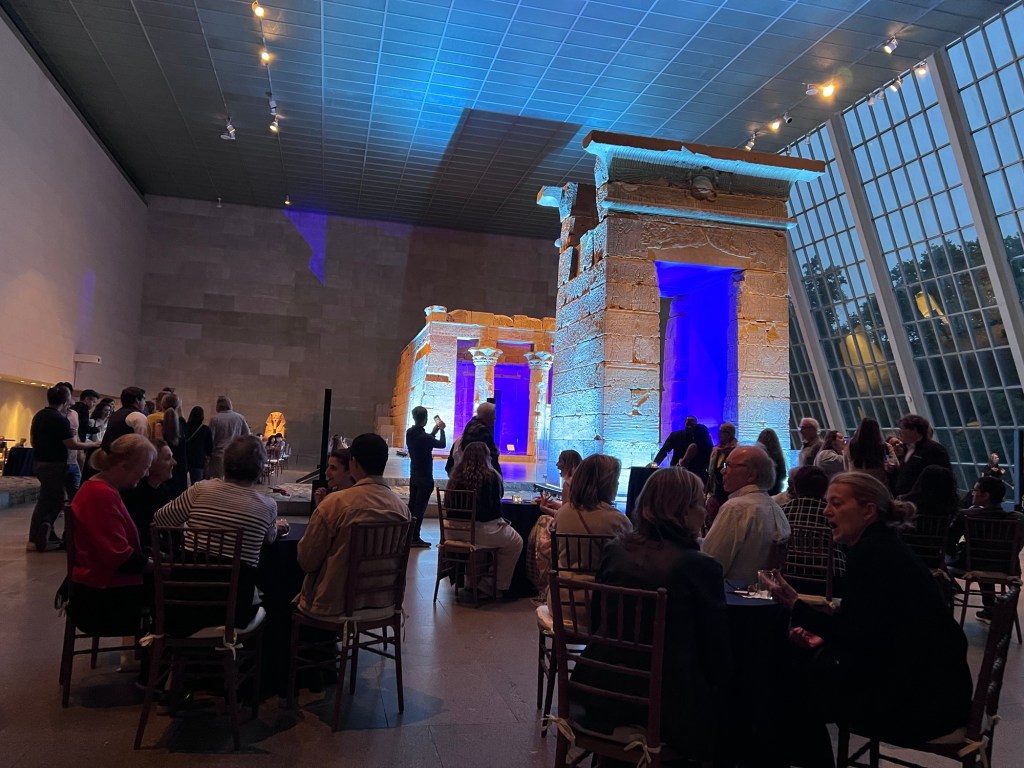
The Temple of Dendur is the hub of activity on Members Nights
This small temple, built about 15 B.C., honored the goddess Isis and, beside her, Pedesi and Pihor, deified sons of a local Nubian ruler. On the outer walls between earth and sky are carved scenes of the king making offerings to deities who hold scepters and the ankh, the symbol of life. The figures are carved in sunk relief. In the brilliant Egyptian sunlight, shadows cast along the figures’ edges would have emphasized their outlines. Isis, Osiris, their son Horus, and the other deities are identified by their crowns and the inscriptions beside their figures (Metropolitan Museum of Art).
These scenes are repeated in two horizontal registers. The king is identified by his regalia and by his names, which appear close to his head in elongated oval shapes called cartouches; many of the cartouches simply read “pharaoh.” This king was actually Caesar Augustus of Rome, who, as ruler of Egypt, had himself depicted in the traditional regalia of the pharaoh. Augustus had many temples erected in Egyptian style, honoring Egyptian deities (Metropolitan Museum of Art).
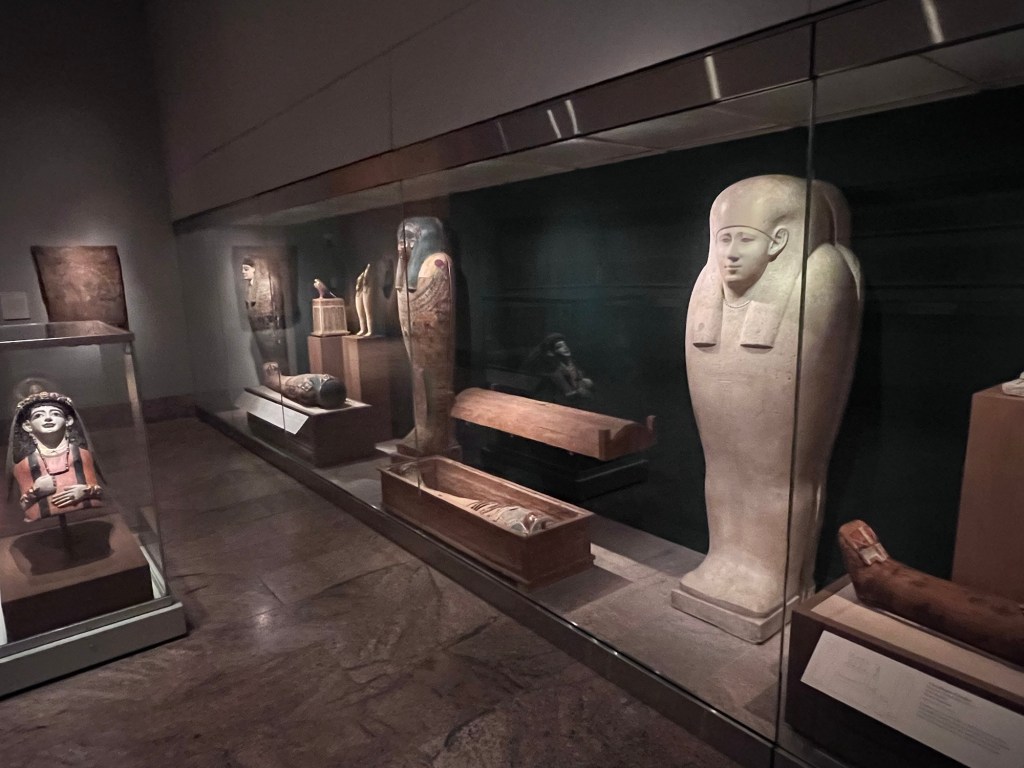
The area was packed with patrons enjoying music and talking by the bars. The crowds were so large at the beginning of the evening that I waited until after 9:00pm for the second performance of the group playing. So I headed into the section of the Egyptian Wing to look at the galleries that were open. I love walking around the Egyptian Wing of the Met. It is one of the most extensive collections outside of Egypt and the most fascinating Mummy exhibition.
Admiring one of the Mummy exhibits in the Egyptian Wing
The Department of Egyptian Art was established in 1906 to oversee the Museum’s already sizable collection of art from ancient Egypt. In the same year, the Museum’s Board of Trustees voted to establish an Egyptian Expedition to conduct archaeological excavations in Egypt. Between 1906 and 1935, The Met’s Egyptian Expedition worked at a number of important sites, including Lisht in the north and Thebes in the south, and the objects gifted to The Met by the Egyptian antiquities service form the core of our collection. Over the years, the Department of Egyptian Art has also been able to acquire, through purchase and bequest, several important private collections (Metropolitan Museum of Art website).
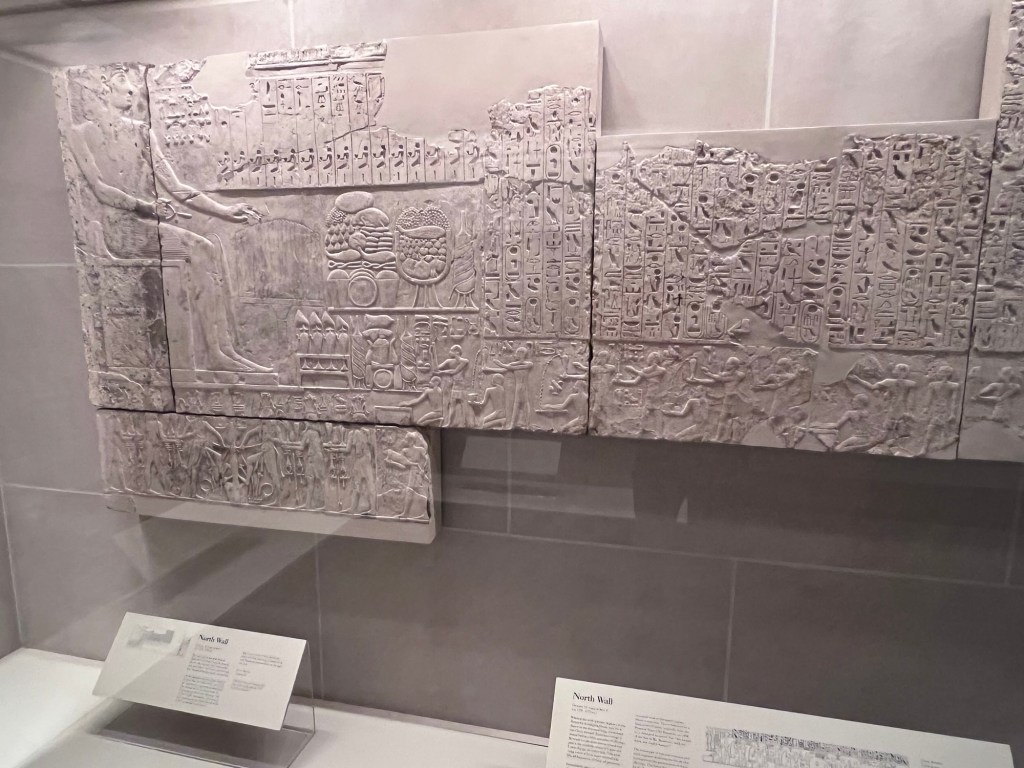
The ancient tablets outside of the Mummy Exhibition
The Egyptian artwork outside the Mummy Room
The tablets outside the Mummy Room
When the whole gallery is open, it is a treasure trove of objects and information from each Dynasty. I have been mind-boggled by these galleries since I first visited the museum in the third grade for a class field trip. I remember sketching artifacts for a class project and am still fascinated about how old some of these objects are and condition they are still in after thousands of years. It is my favorite part of the museum.
By 9:00pm, the entertainment was starting again, so I joined other members for a cocktail and enjoyed the music in the Temple of Dendur Gallery.
The Temple of Dendur fully lit for the evening before the start of the entertainment
The signature cocktail of the evening, the Starlight Spritz
Enjoying a Starlight Spritz while listening to the music
The bartenders can mix a drink
After a long week at work, it was nice to relax and enjoy the music. The music that night was performed by artist Jasim Perales and Friends, an Afro-Latin Jazz performance. The music was relaxing and soulful and the crowd had a wonderful time.
The start of the music again at 9:00pm
The trio performing
A clip from the entertainment that night
The Master of Ceremonies that night, Jasim Perales
All good things come to an end and it was time leave. The night was dark and the winter air was crisp creating the perfect Winter evening to set out into for the walk back to Port Authority. The Upper East is so beautiful at night.
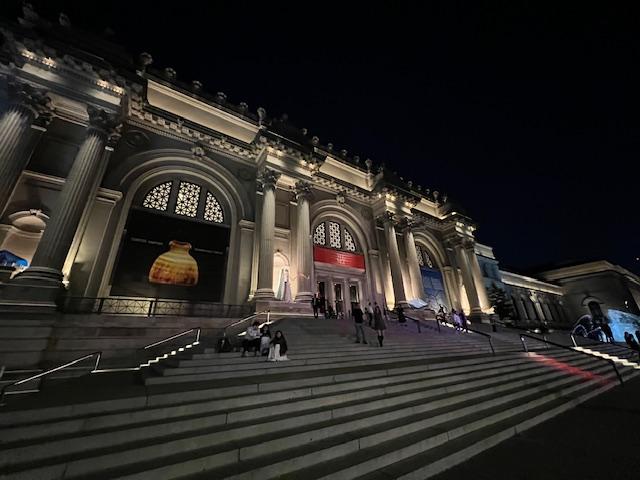
The front of the Met that night
The artwork is always so impressive outside the Met
It was in the low 40’s that evening and the perfect night for a walk around the Upper East Side and Midtown. It still surprises me after all these years of walking around Manhattan how beautiful the City really is at night.
It was another spectacular evening at the Metropolitan Museum of Art. Thank you to the Membership and Special Events Departments for hosting another wonderful evening.
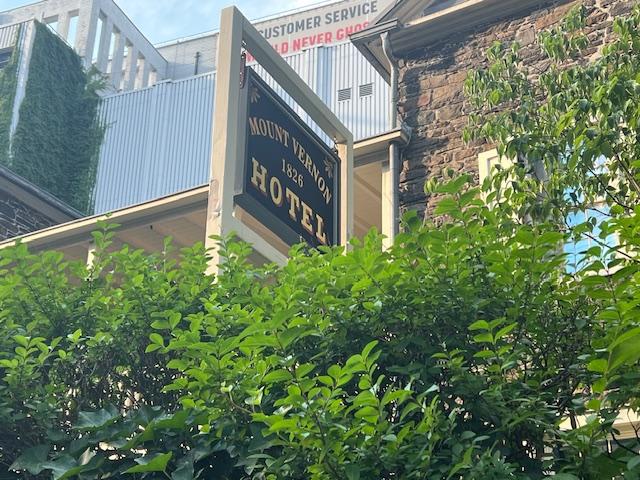
The Mount Vernon Hotel Museum at 421 East 61st Street
Mount Vernon historical sign during the summer months
The history of the building
The model of the building
I had come across the Mount Vernon Hotel Museum when I was walking on East 61st Street for my blog and went to take the tour of the building. It is a one hour (or more as I there for almost two hours but I was by myself) tour of both floors. You start with a film and a quick talk about the history of the building. The hotel building has had several owners and uses over its over hundred years.
I visited the museum during the holiday season in 2025 and I got to see all the decorations around the hotel. There was elegant decorations in most of the rooms and got to see how people ate during the holiday season as well as with visits guests would have indulged in when they came for the day.
Then you start the tour of the upper room where the ladies would gather and talk. This is where they might have tea, musical recitals and read and sew. They would gather with other women for conversation and debate.
The Upstairs foyer gallery
The foyer landing decorated for the holidays with the former traveler, James Taylor, who discussed in his memoir about visiting the hotel
The Ladies Parlor
The upstairs is where the sleeping rooms and the ladies parlors are located, where female guests would enjoy tea, games, music and reading. The main landing was for dancing and for gatherings.
The Ladies Palour with the Chinese writing desk and festive decorations.
The room set for tea with Englishware
The holiday set up afternoon service
The sleeping rooms were kept simple and functional
The Men’s game room
The main floor was the Men’s gaming rooms, where there is a bar and two rooms for male activities such as cards, gambling and reading. Here the men would discuss politics and business over a drink and games of chance.
The main games room
The main entrance was used as the dining room for dinner (our lunch), which was the biggest meal of the day served around 2:00pm.
The bar area where spirits are sold
The afternoon supper was part of the package and couples would join one another for a several course meal, which would serve as the main meal of the day.
Dinner time at the Mount Vernon Hotel Museum
The tour guide went over what would have been served, menu’s and meal times. Dinner would have been served at 2:00pm, tea time would have been around 4:00pm-6:00pm and Supper around 8:00pm.
The multi course meal for everyday on display
The meal would include popular dishes such as turkey and oysters and a specialty, Turtle soup. Fresh vegetables and fancy desserts would be part of the package.
The tour of the kitchen show preparation of foods, recipe books and all kitchen equipment including the stoves and baking materials.
The kitchen for both the hotel and house
The kitchen used to cook afternoon meals
The area used for baking and roasting
If you like the history of “Old New York” and like old homes, hotels and buildings, this is a very interesting tour that deals with the City’s growing middle-class and the new ‘leisure time’ that was coming with the changes in the work week. There are many pieces of period furniture all over the building that show the growth of affluence of the time.
The side board set with holiday desserts
The side board ladened with holiday treats
Don’t miss the formal walled in garden in the back. It is a place of relaxation from the rest of the city. There are stone walk ways and landscaped gardens as well as an herb garden. The building is owned and maintained by the Colonial Dames of America.
The walled gardens during the winter
The walled garden in the winter
I revisited the museum for the holidays and the hotel was decked out in garland and holy based on the decor traditional for the Revolutionary War era Christmas. The archways and tables were lined with greenery and the tables were loaded with oranges plunged with cloves to give the homes at that time a rich citrus smell.
The downstairs dining table was set for a Christmas meal of wild turkey, mock turtle soup, and apple and pumpkin pies. This would have been served in the afternoon as the main meal while it was still light out.
Holiday goodies at the Mount Vernon Hotel Museum getting ready for the holidays
There had been a light snow while we were touring the hotel so when we visited the gardens, it really did have that Christmas feel to it with that light snow all over the pine and the bushes.
How the neighborhood has changed
The old stable area
During the time of the Revolutionary War and afterwards, homes were not as elaborately decorated as they would have been during Victorian times after the Civil War. Homes were lined with greenery that would have given the home the fragrant smell of pine and strings of cranberries and popcorn would have been used to decorate mantles.
The hotel decorated for the holidays
The hotel was getting ready for one of its many special events during the holidays so there was a lot of commotion going on downstairs. It is a very festive looking place for the holidays so try to tour it when it is open in the month of December.
The museum in the 2025 holiday season
What is the Museum:
Constructed in 1799 as a carriage house and converted into a ‘day hotel’ in 1826, the Museum transports visitors back to Mount Vernon Hotel, a 19th Century country resort for New Yorkers escaping the crowded city below 14th Street.
The model of the original house layout
Recognizing the building as one of the few remaining 18th century sites and the only surviving day hotel in New York City Historic Landmark in 1967, added to the National Register of Historic Places in 1973 and accredited by the American Association of Museums in 1983.
History of the House:
The Mount Vernon Hotel Museum & Garden presents the period of the Mount Vernon Hotel which operated from 1826 until 1833.
Constructed in 1799 as a carriage house for a 23 acre estate and converted into the Mount Vernon in 1826, this stone building sits on land originally owned by Colonel William Stephens Smith and his wife, Abigail Adams Smith, the daughter of John Adams.
This fashionable country resort was popular among New Yorkers who wished to escape the hustle among the bustle of the city, which at that time extended only as far north 14th Street. The Hotel advertised “free from the noise and dust of the public roads and fitted up and intended for only the most gentle respectable” clientele. In those days, one could take the stagecoach or steamboat up to 61st Street spend the day at the hotel sipping lemonade in the ladies parlor or playing cards in the gentlemen’s.
In 1833, the house became the home for three generations of a New York City family. In 1905, as the area became more industrialized, the building was purchased by Standard Gas Light Company (today’s Con-Edison). The Colonial Dames of America, a woman’s patriotic society purchased the building in 1924 and did an extensive restoration to the structure, the Colonial Dames opened the site to the public in 1939. The building endures as a rare reminder of an important era in New York City’s history.
What the organization does:
*Welcome 5000 school children annually in grades-pre-K through high school for field trips.
*Summer History Weeks for children ages 6-12
*A Summer High School Internship for 15 students to support college readiness skills and career exploration.
*Two summer Hearst Fellowships for undergraduates or graduate students.
*40+public programs each year, including:
-monthly free Story time
-monthly Lunchtimes lectures
-holiday programs, garden concerts, hands on craft and cooking workshops.
*Temporary exhibitions on facets of life in early 19th century NYC, some promoting local contemporary artists.
*Special programs for individuals with Alzheimer’s and their caregivers.
*Outreach programs to schools, senior centers and homeless shelters.
*Themed group tours focused on 19th century food, decorative arts or literature.
*Three options for team building events.
*Two free admission days: Smithsonian Museum Day and Open House New York.
Programs are made possible in part by the support of the New York City Department of Cultural Affairs in partnership with the City Council and Council Member Ben Kallos, the New York State Council on the Arts with the support of Governor Andrew Cuomo and the New York State Legislature, the Manhattan Borough President Gale Brewer, the Institute of Museum and Library Services, the Rosenthal Foundation and the Michael Tuch Foundation.
(Mount Vernon Hotel Pamphlet)
The Colonial Dames of America:
With these words, spoken in April 1890, Maria Denning “May” Van Rensselaer imitated what was to become the oldest colonial lineage society for women in the United States. The Colonial Dames of America. Its mission is to preserve historic sites and objects, award scholarships, educate the public about American history, inspire patriotism and promote fellowship among its members.
One of the nicest things about being a member of museums in New York City is when they have the ‘Private Members Nights’, where the museums are open after hours for the membership only. The funny thing about these nights are that the museums seem busier on these nights than they would when the museums are open during the day to the general public.
What also is difficult is when two major museums have their Members Night on the same night. I had to do a lot of coordinating to go to both museums. What made it work is that both museums closed at different times with The Met closing at 10:00pm. I timed it perfectly.
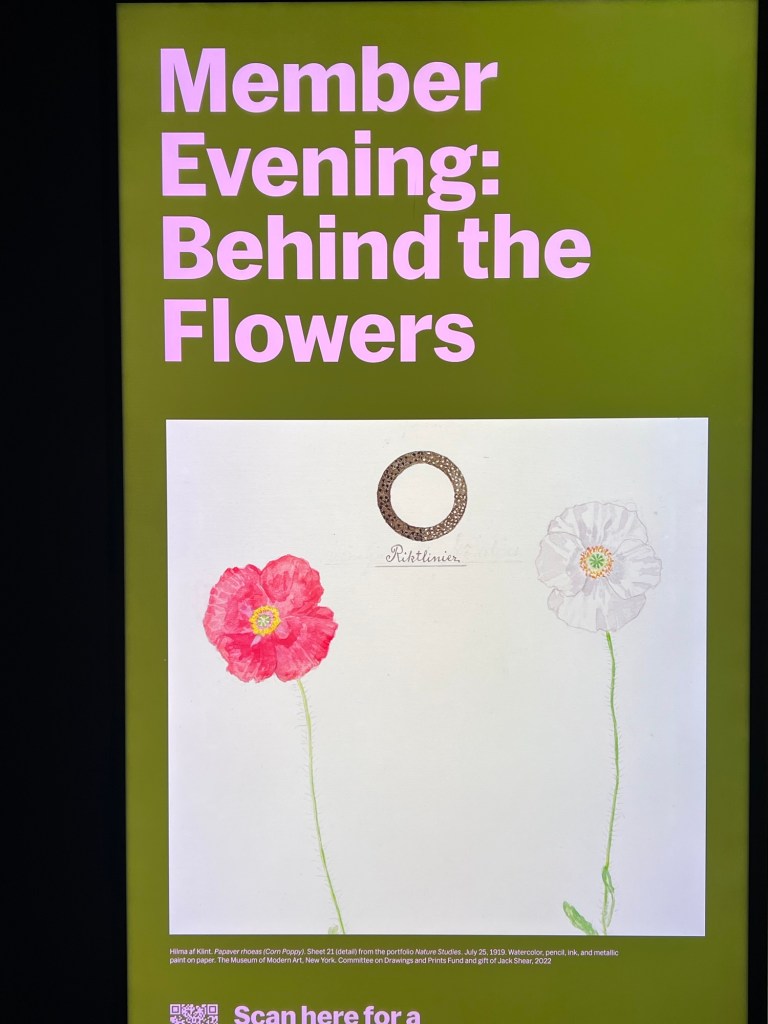
Members Night at the MoMA ‘Behind the Flowers’ for the Hilma af Klint exhibition
The theme that evening was based on the Hilma af Klint exhibition
Going this evening took a lot of planning as I had to teach in the morning and cut the lawn on the afternoon. I was already exhausted by the time I left for the City at 4:00pm. Even on this gloomy afternoon, the weather held and it was a nice evening.
The area around the museum was in full bloom that early evening
The event opened early at the MoMA with their event from 6:00pm-9:00pm and the Met went from 7:00pm-10:00pm so I was able to enjoy both with a lot of walking in between. It was worth it as I was able to see several exhibitions on my bucket list before they closed. With work and finals, it had been tough to visit both of them.
People were enjoying conversation and cocktails when I arrived at the MoMA that evening.
I decided to start my evening at the Sculpture Garden on the first floor. The weather was cloudy but still it was a warm evening. People were conversing near the fountains and listening to music. The lines for the cash bar never let up and they were about thirty deep the whole time.
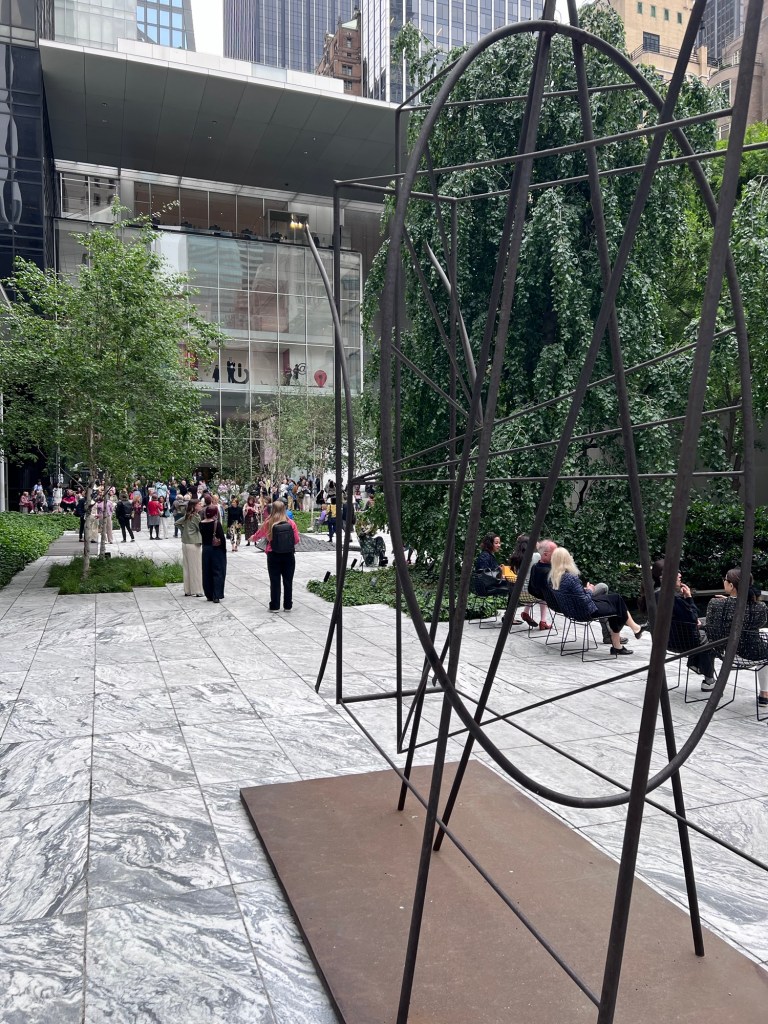
The Sculpture Garden at the MoMA
While I walked around the gardens and fountains I noticed a lot of the art that they were featuring was really unique, some of which I had not seen before.
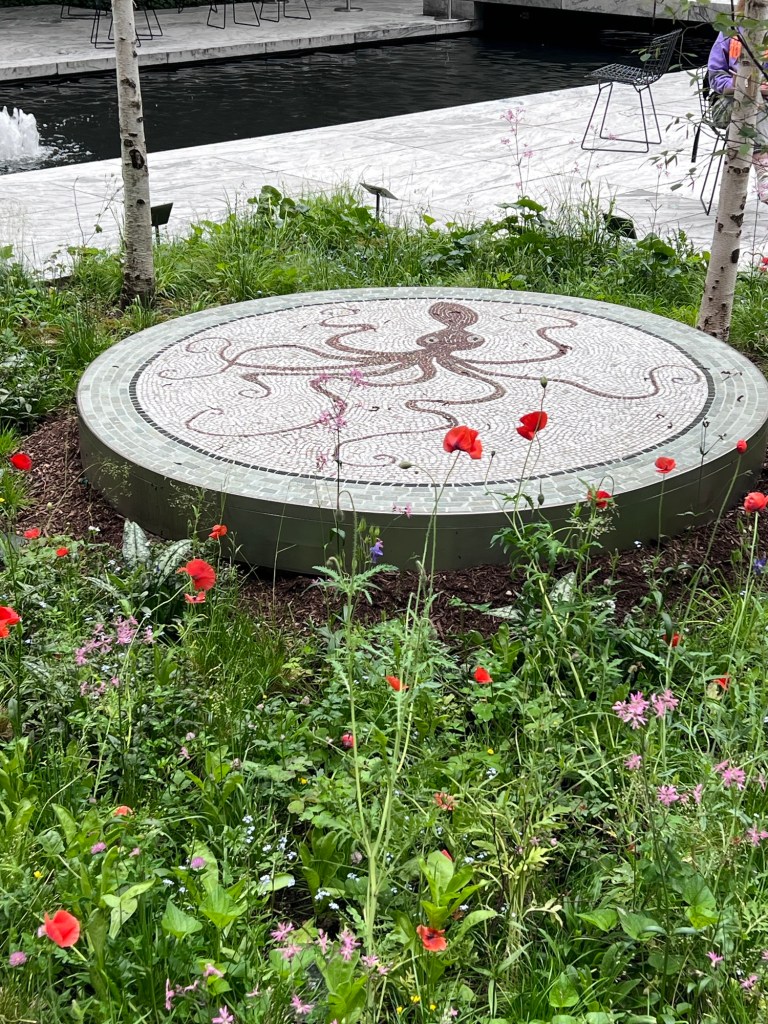
The gardens with the poppies in bloom
This beautiful mosaic of a octopus did not have a name
This metal artwork was towards the back of the sculpture garden
The artwork makes quite a statement in the sculpture garden
I watched this interactive art that I had seen at the last Members Night
I love this interactive art in this video
I love watching this video sculpture moving around. I had seen it on my last visit and thought it was very interesting. I then moved upstairs to see the Hilma af Klint exhibition that would be closing that weekend. The galleries were jammed with members who wanted to see the artist’s work. She had some interesting pieces that looked more like a naturalist works.
You could barely move in the galleries it was so crowded. I was not able to get as close to the works as I wanted but I wanted to share from the exhibition the pieces I liked most.
Flowers and an Apple
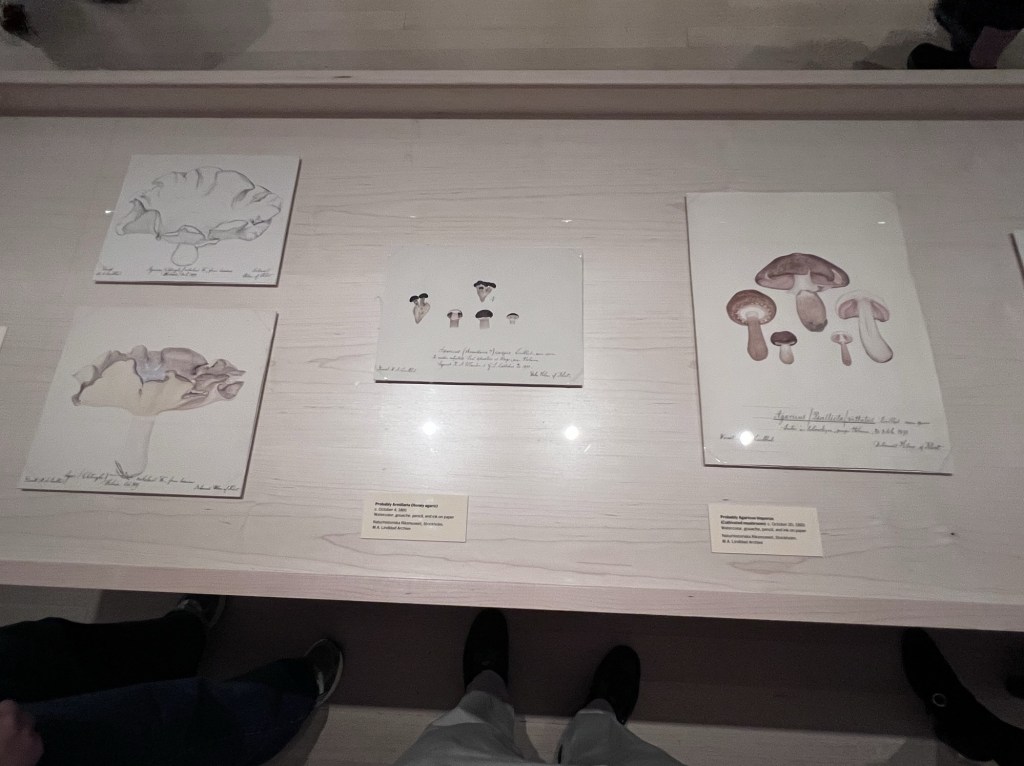
These interesting drawings on mushrooms
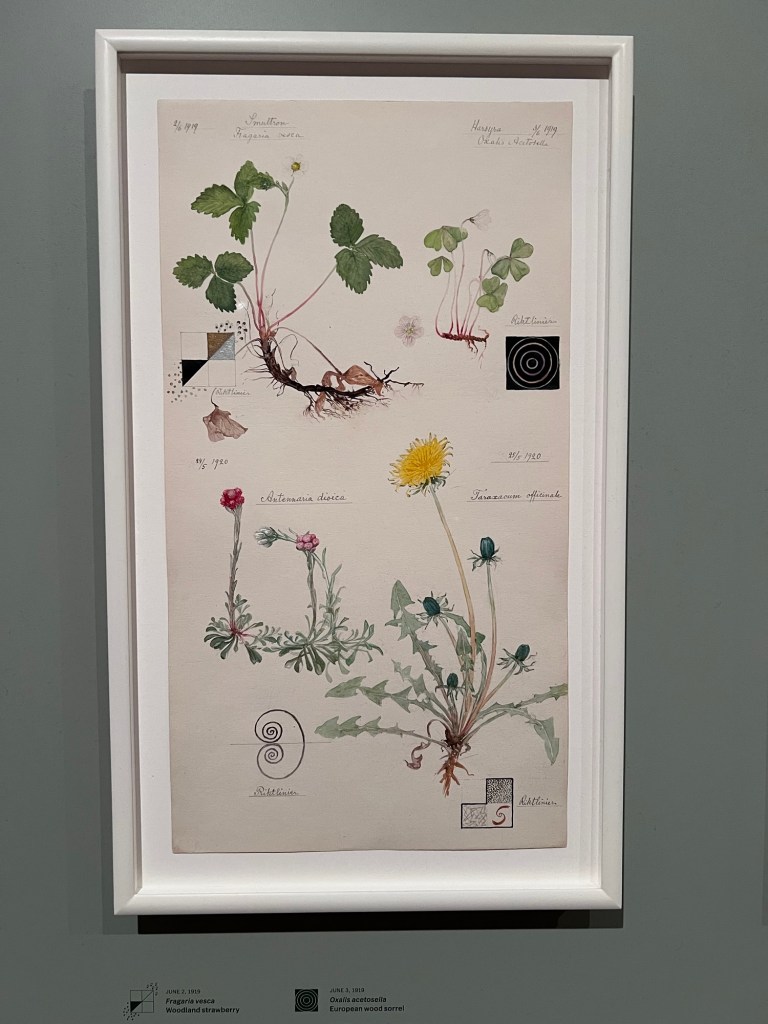
I thought this set of drawings on dandelion’s and strawberries was interesting
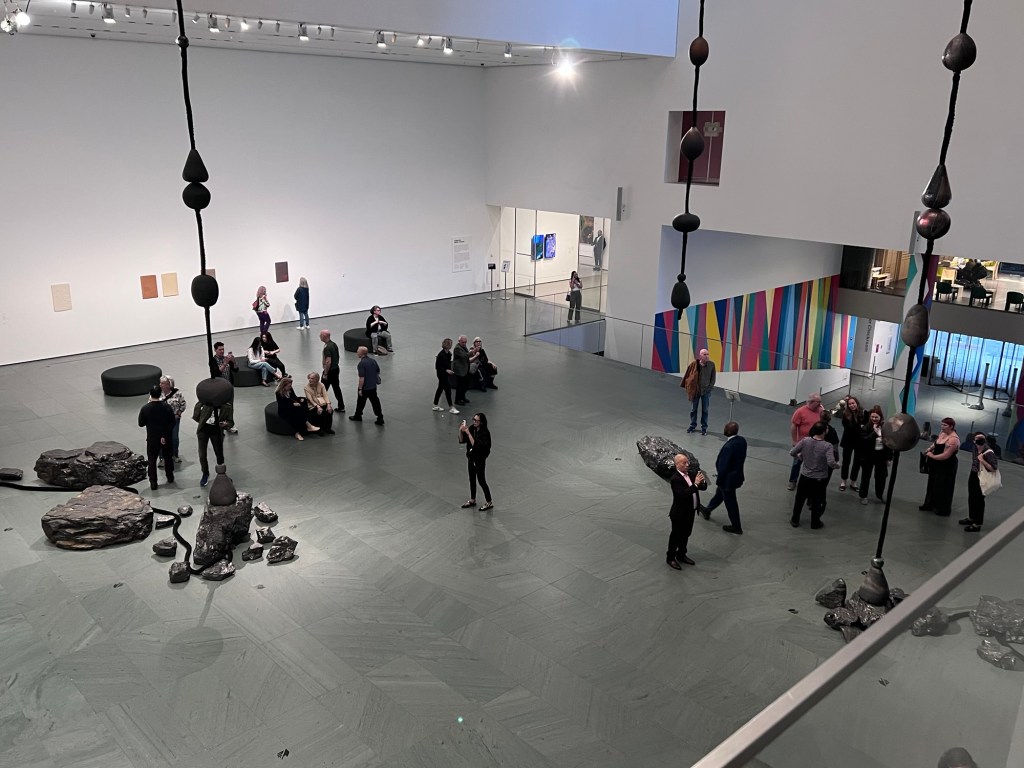
As I finished the exhibition, I watched from above other members milling around the second floor
I then moved to the next exhibition ‘Pirouette: Turning Points in Design’, the use of design and concept in everyday life. I thought this exhibition was interesting because it described how we look at functionality and the reasons why things are designed for a specific purpose and then can take on new meaning.
Of the many fascinating and famous items in the exhibition that I saw two well known works stood out to me. The first was the “I ❤️ New York” logo and its development in the 1970’s to be one of the most famous tourism campaigns in history
The Milton Glazer campaign for the “I ❤️ New York” campaign which saved New York tourism and is still used today. What was sad was the creator died during COVID in 2020.
The sign on the development of the design
The other stood out for its simplicity and fame was the development of M & M’s. This simple candy was a result of Forrest Mars seeing the rations of candy abroad of chocolate coated in a shell so it would not melt on the battlefield. With some experimentation, he created the modern M& M.
M & M display by Forrest Mars
I thought the whole museum would be open that night but it was just the two floors plus the gift shop and gardens. Since I saw everything at the MoMA already and it was around 7:45pm, off I ran out the back door to the Metropolitan Museum of Art Private Members Night.
Walking up Fifth Avenue at dusk
Walking up Fifth Avenue at dusk
The walk up Fifth Avenue to The Metropolitan Museum
The Met at night is quite dazzling
The entrance to The Met in the evening
Looking down Fifth Avenue at night
The entrance in the Rotunda was filled with fresh flowers and members chatting away. I even saw some of the members I had seen at the MoMA earlier.
The floral arrangements were spectacular
The beauty of the Rotunda in the evening
Maybe because these Members Nights were on a Tuesday evening, they both did not seem as crowded as they had been in the past. The museum was crowded but not as crowded as the past two Member’s Nights. I think that I arrived at 8:00pm most people were starting to leave. What was nice was that the MoMA night went until 9:00pm and The Met Night went until 10:00pm so it gave me the time to run through both museums.
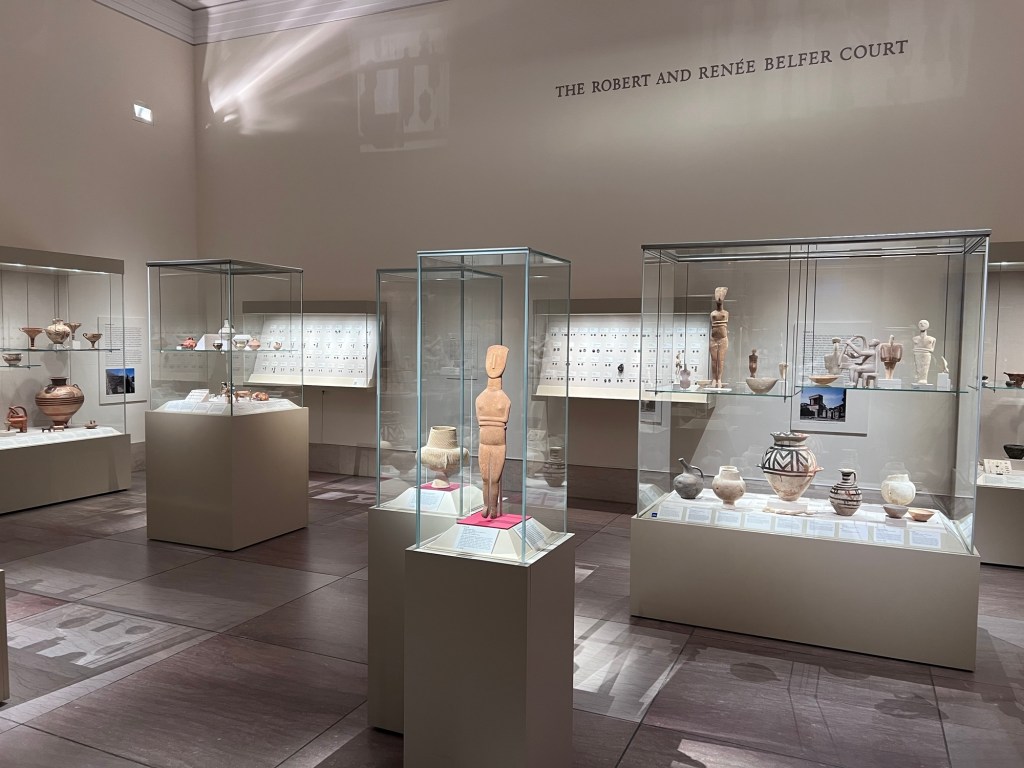
I started my tour of The Met in the Greek Galleries looking at the Cycladic Art. I always loved the looks of these works.
I love the Egyptian Galleries. I have been coming here since 1973 and have loved them ever since.
I love the ancient hieroglyphics
For the last two Members Nights, the Members Bar was in the Temple of Dendur. It is always so well lit and the music was wonderful. It is a nice way to end the evening.
The Temple of Dendur lit for the evening
The Temple of Dendur was the perfect place to relax and have a cocktail
The crowds were rather large at the bar that evening
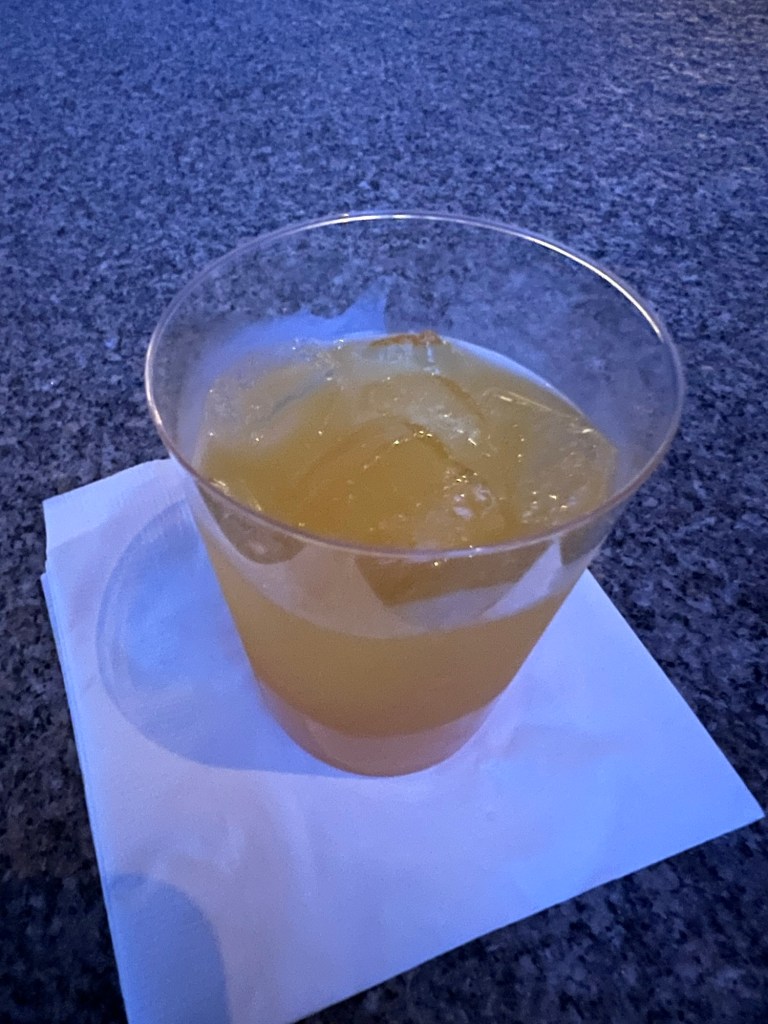
The Passion fruit cocktail was the specialty drink of the evening
The Passion fruit cocktail was well worth the money
It was nice to just sit back with the other members and relax and listen to the music. After a long week at work, the sounds of jazz with a nice drink and good conversation is a way to enjoy the evening.
I had a renewed energy after being in the Egyptian Galleries for an hour and I headed into the American Wing to tour some of the exhibits around the main court.
Only the outside of the American Wing was open
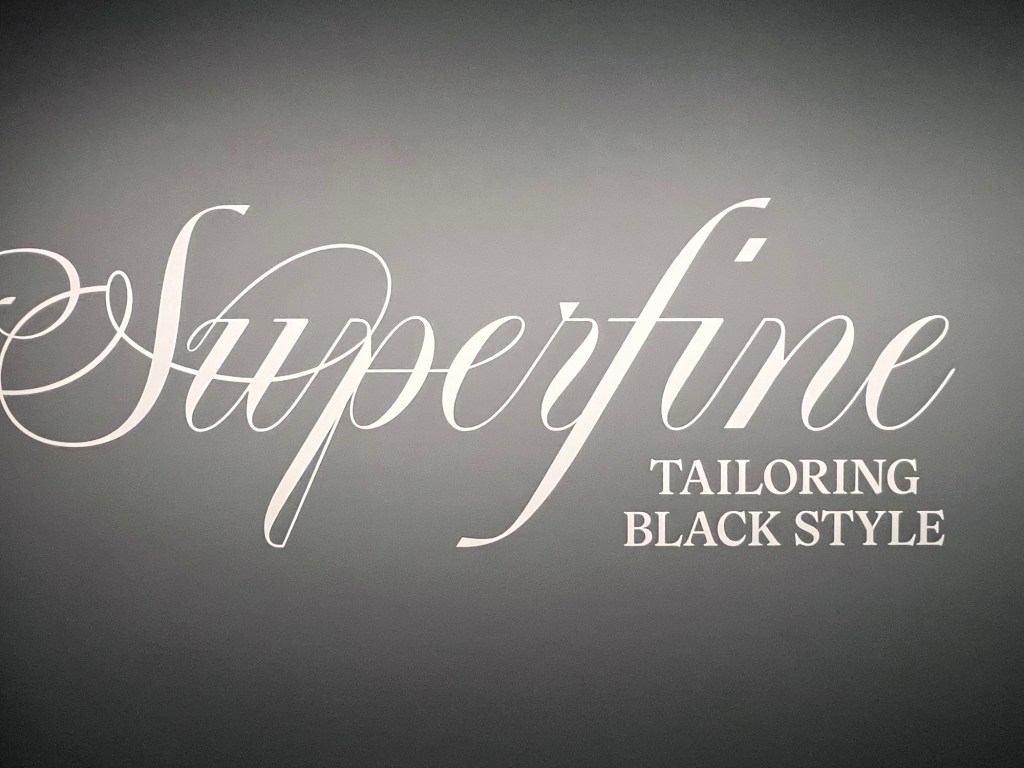
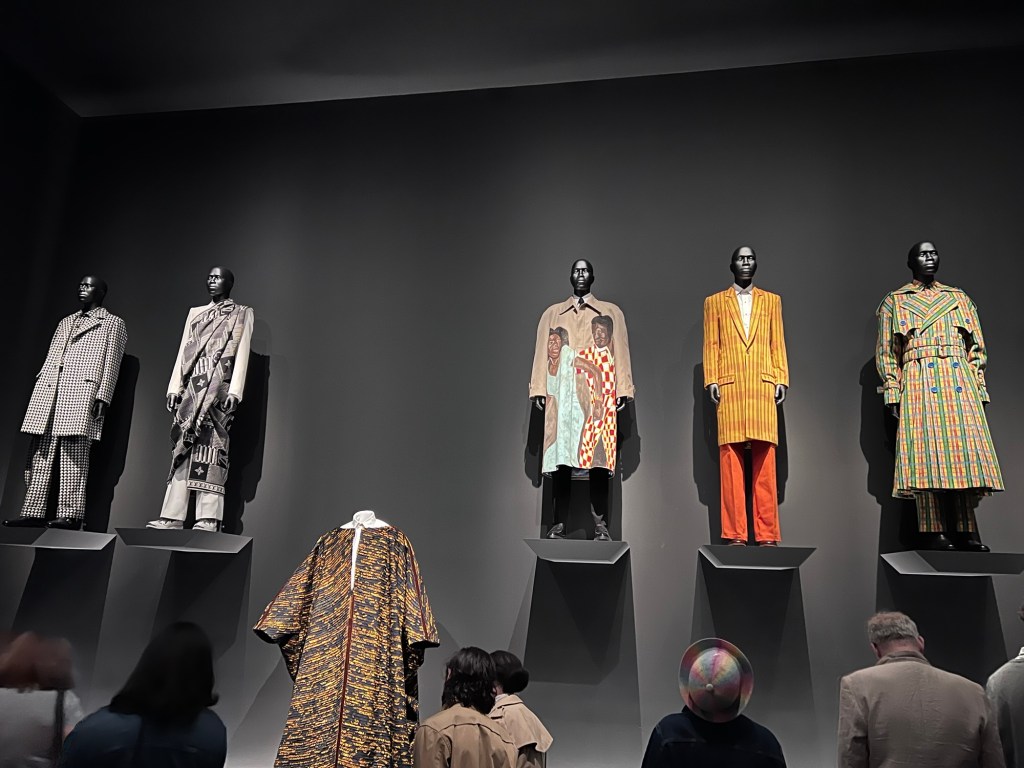
I decided to see the new Costume exhibition “Superfine”, an exhibition of Black Men’s clothing through the ages from pre-slavery to current times. The exhibition was a discussion on attitudes, tastes, tailoring and how the Black style influences fashion.
Clothing and accessories I admired in the exhibition
Clothing styles I thought were interesting in the exhibition
The evening drew to a close and I was exhausted running from work to come into the City to walk from one museum to another and then walk back to the bus station. Still I got to see a lot in both museums.
The Rotunda at the end of the evening
The fountain dancing as I left
It was such a beautiful that I decided to take the long walk back to Port Authority via Second Avenue. I wanted to see if my favorite Chinese restaurant was still open. I was getting hungry but at almost 10:00pm not much was open. The Chinese restaurant had just closed for the evening. Since COVID, the ‘City that never sleeps’ is going to bed early.
As I was walking down Second Avenue, I came across a very reasonable pizzeria named Centro Pizzeria & Restaurant at 1469 Second Avenue. All I had to do is look at the pizza cases and I could not decide on what I wanted to order.
Centro Pizzeria and Restaurant at 1469 Second Avenue
My review on Diningona ShoeStringinNYC@Wordpress.con:
The selection of pizzas in the pizza case
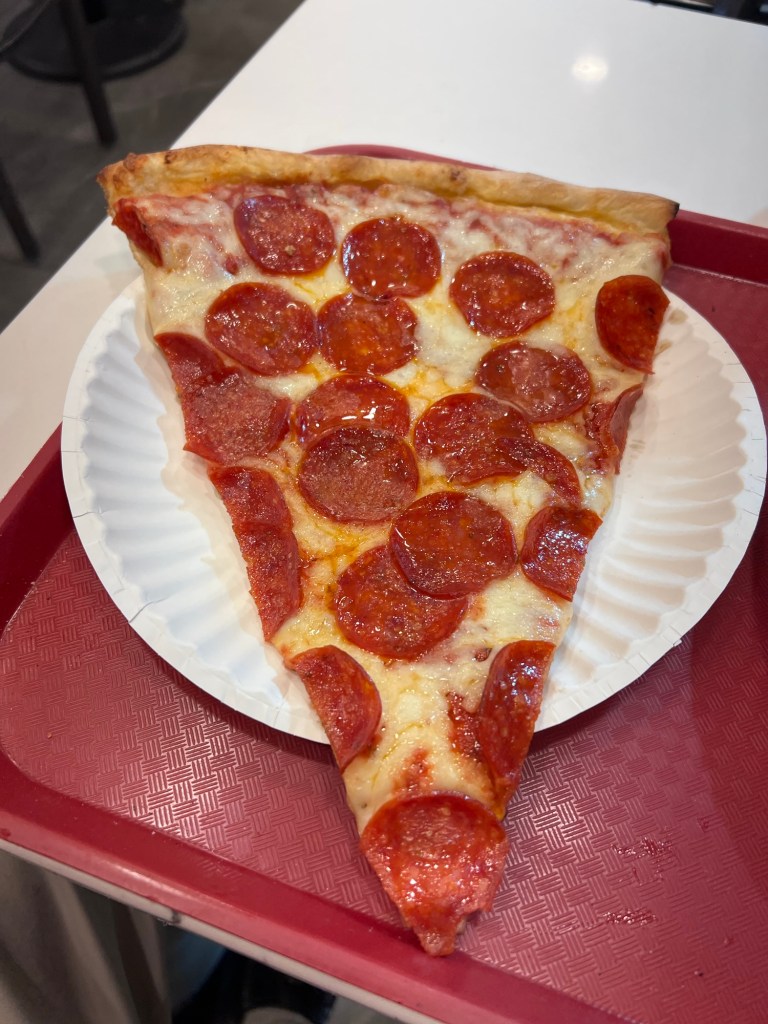
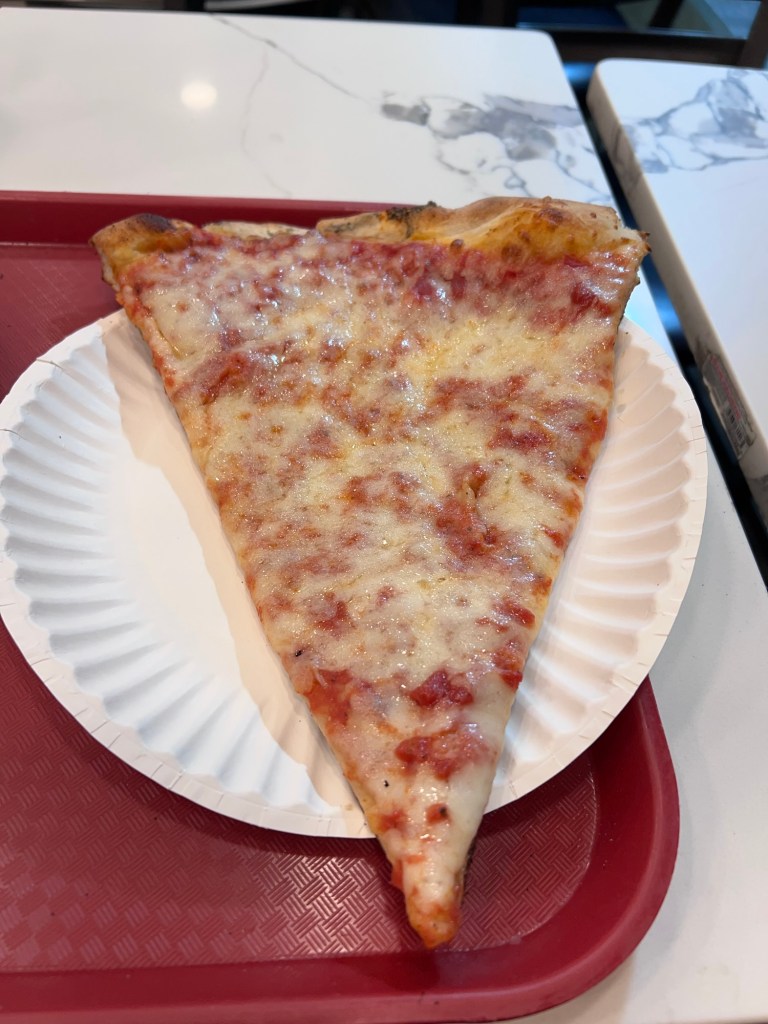
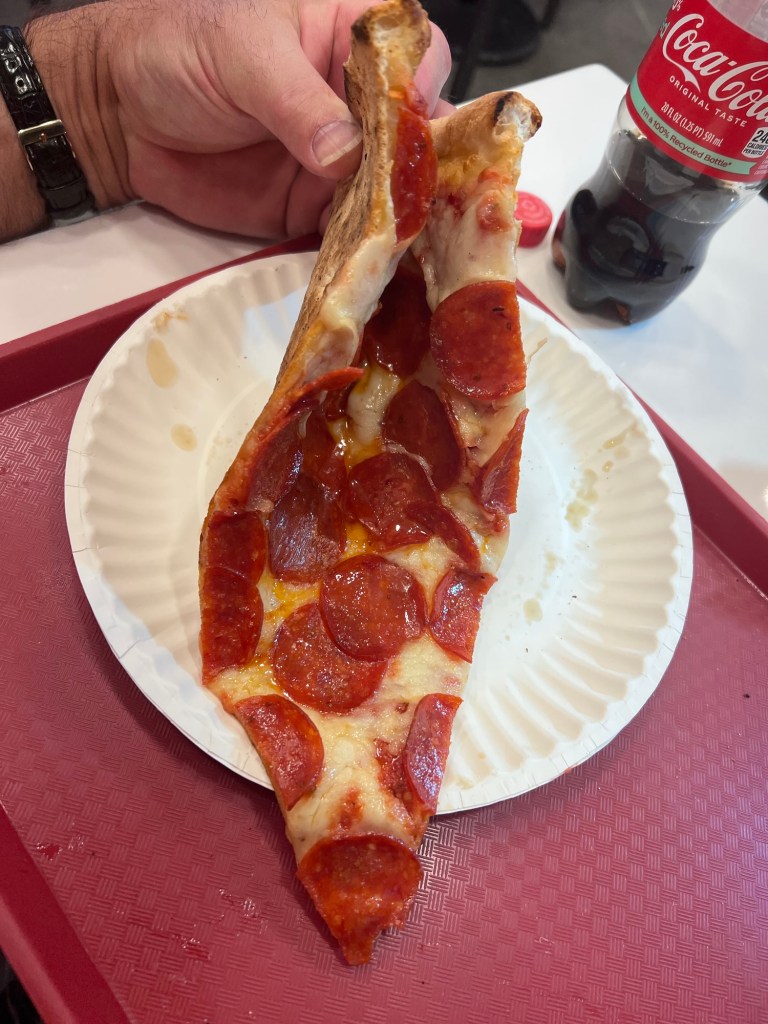
The Cheese and Pepperoni pizzas had just come out of the oven and were the freshest of the pies. I noticed the Pepperoni pizza was loaded with pepperoni and I decided I had to try it. The pizza here is excellent.
My dinner that night
The Pepperoni slice was loaded with slices of pepperoni and cheese
The red sauce which is the base of the pizza gave the Cheese slice lots of flavor
Yum!
It really was a nice walk through Midtown with all the lights on and a nice crowd of people walking their dogs in the various neighborhoods. Walking down the streets of the Upper East Side is really a nice walk and the classic New York experience. These Members Nights are a wonderful way to spend the evening.
Admission: Adults $30.00/Seniors & Disabled People $22.00/Students $17.00/Members and Caregivers with disabled person Free/NYC residents and NY, NJ and CT students: Pay as you Wish
Admission: Admission: Adults $30.00/Seniors & Disabled People $22.00/Students $17.00/Members and Caregivers with disabled person Free/Children Under 16 are free/Members Free/Guests of Members are $5.00.
It is especially nice when the museum is closed and you can visit the museum with all the other members in a private event just for us.
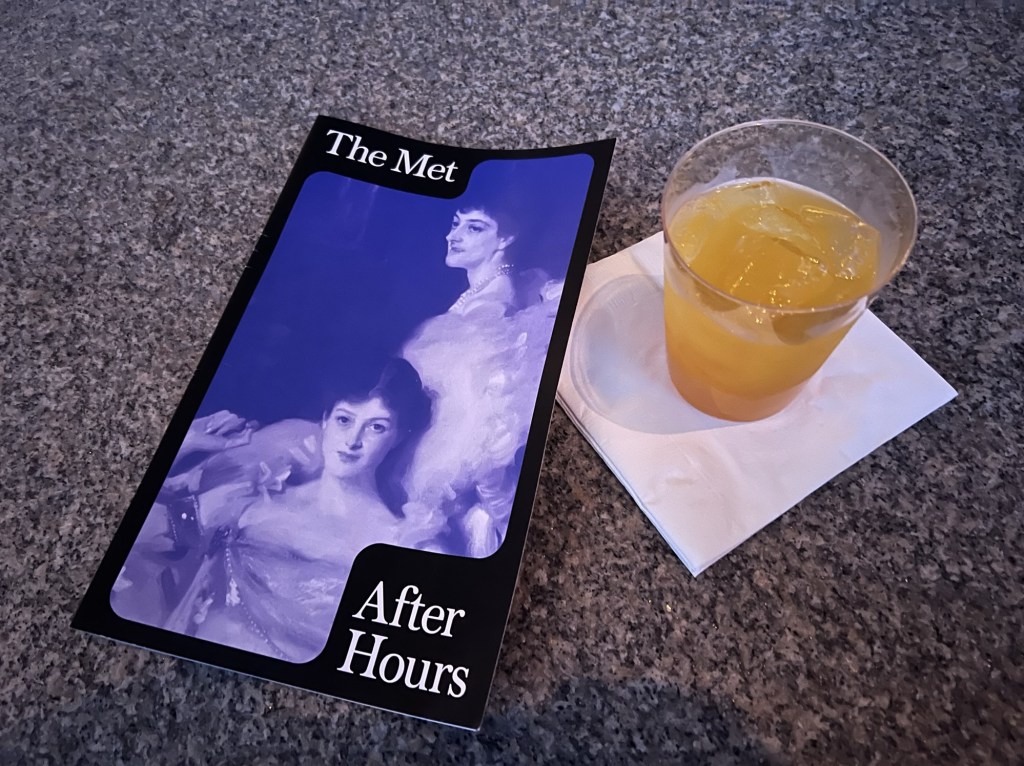
It was time for another ‘Met After Hours’ member event
I wait for these evenings as a member. It is so much fun to walk the halls of the Met after the museum closes and just relax, look at exhibitions that I might have missed on my last several trips to the museum, have a much needed cocktail (one specialty drink is more than enough) and enjoy listening to the speaker.
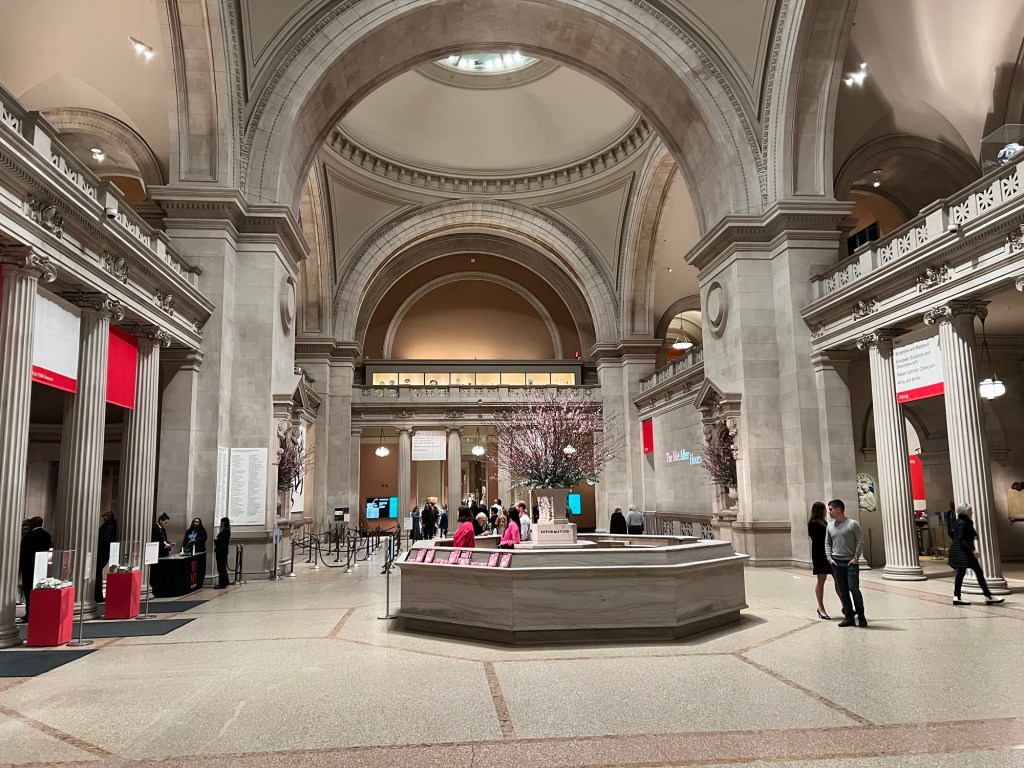
Entering the main hall of the museum
The beautiful Cherry Blossoms are in season in all the urns
Walking through the Greek Galleries on my way to the exhibitions that were open that evening
I decided to start on the second floor of the museum since most of the members seem to settle on the first floor. My first stop was the Jesse Krimes exhibition ’Corrections’.
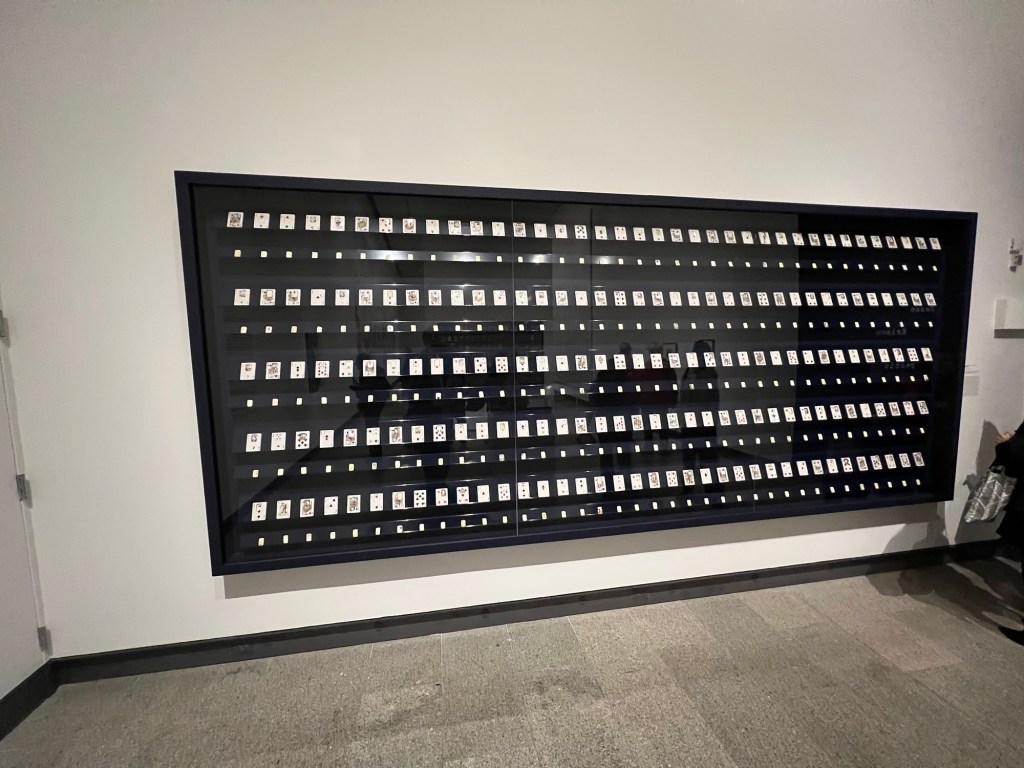
Krimes’s image-based installations, made over the course of his six-year incarceration, reflect the ingenuity of an artist working without access to traditional materials. Employing prison-issued soap, hair gel, playing cards, and newspaper he created works of art that seek to disrupt and recontextualize the circulation of photographs in the media (Met website).
Displayed at The Met in dialogue with Bertillon, whose pioneering method paired anthropomorphic measurements with photographs to produce the present-day mug shot, Krimes’s work raises questions about the perceived neutrality of our systems of identification and the hierarchies of social imbalance they create and reinscribe. An artist for whom collaboration and activism are vital, Krimes founded the Center for Art and Advocacy to highlight the talent and creative potential among individuals who have experienced incarceration and to support and improve outcomes for formerly incarcerated artists (Met website).
The description of the show ‘Jesse Krimes Corrections’
The art work ‘Purgatory’ where the artist put faces of the artist’s imagination while in solitary confinement.
The signage for the piece
The sculpture ‘Naxos’ with thousands of pebbles from prison yards
The signage for ‘Naxos’
I then toured through the Asian Galleries to see what exhibitions were open that evening. Some of the displays for Chinese New Year were still prominent in the galleries and I admired them in the cases.
This very evil looking statue just stares at you while you pass it
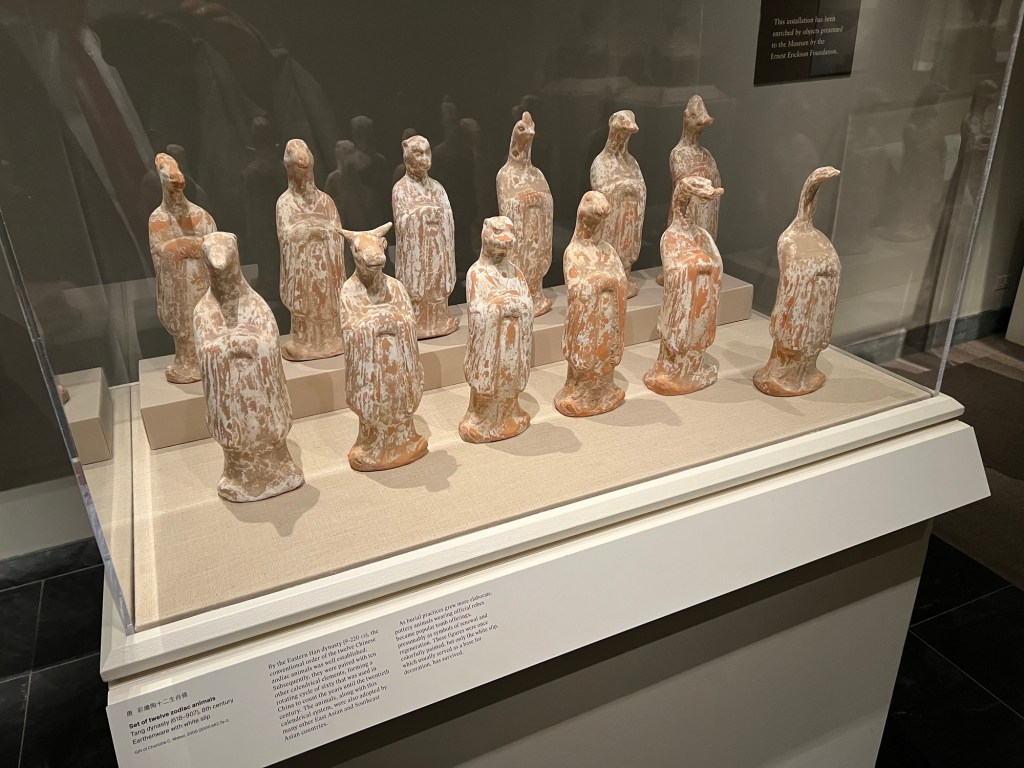
I admired the Chinese Zodiac sculptures in the Asian Wing and found my sculpture in the year of the Snake. Chinese New Year was over but the displays for the year of the Snake were still on display.
The sculptures of the Chinese Zodiac
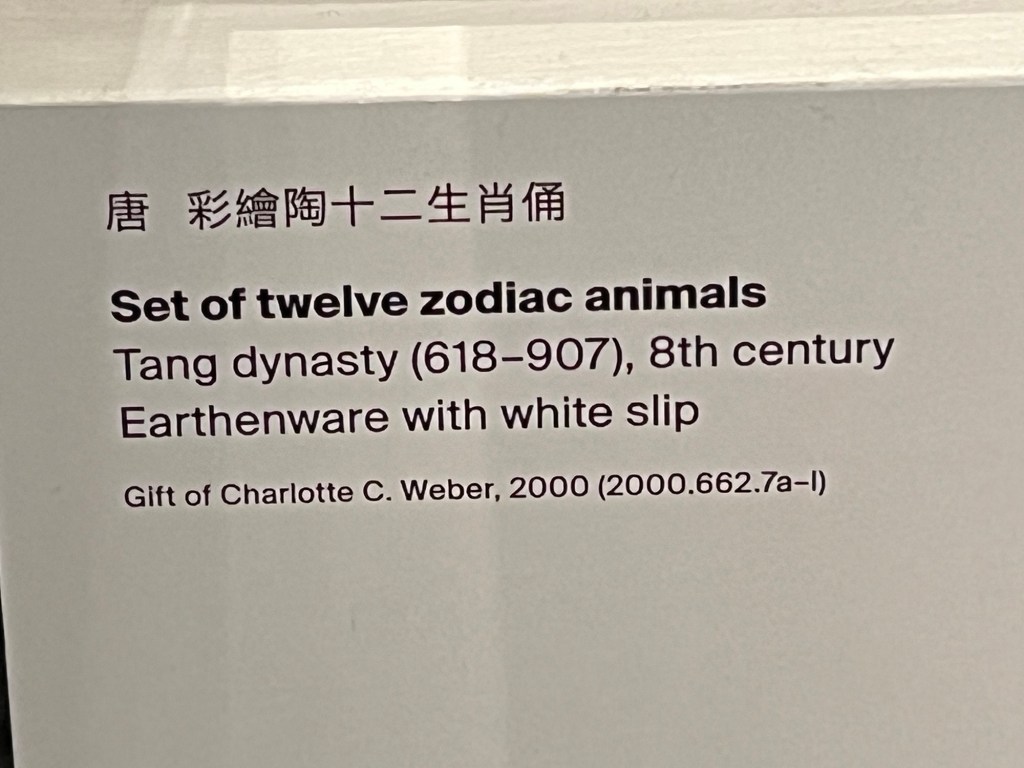
The sign for the Zodiac animals
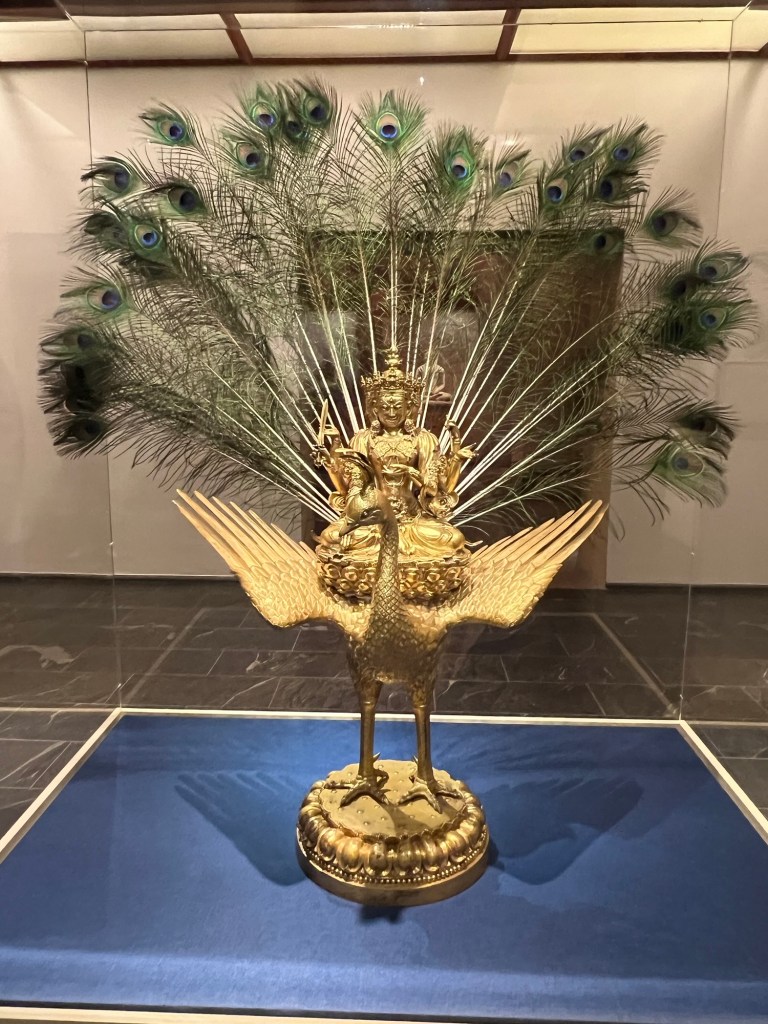
At the entrance to one of the galleries, one sculpture stood out to me that has been accented by peacock feathers.
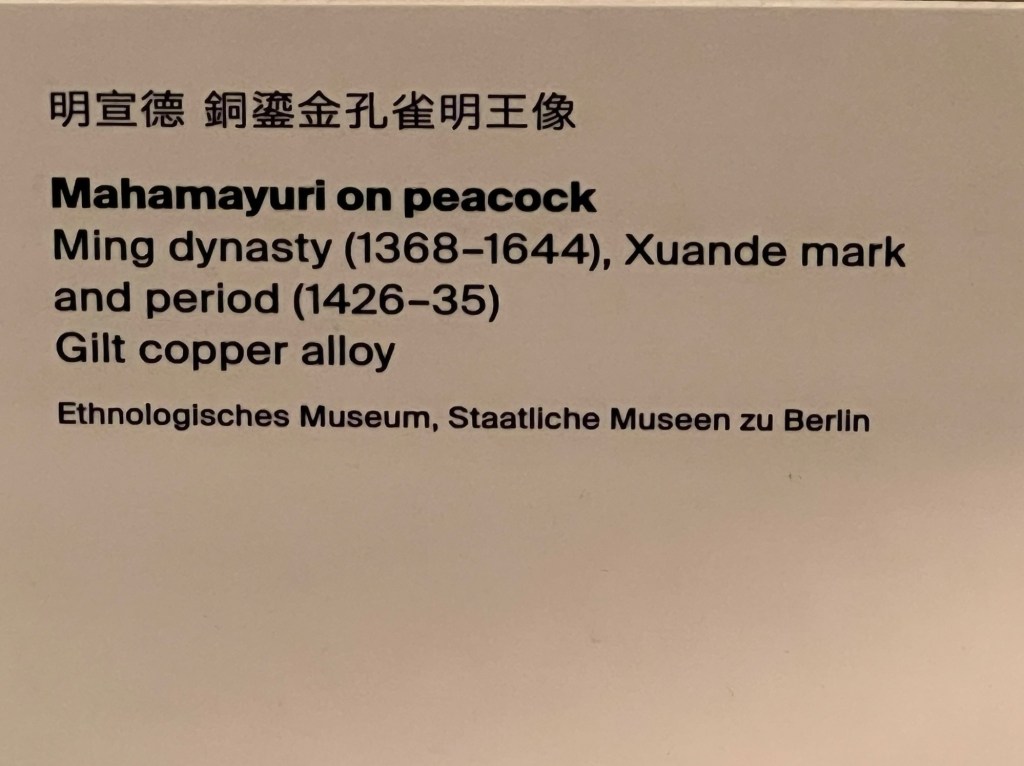
The peacock sculpture ‘Mahamayuri on Peacock’
The sign for the sculpture
The piece stood out for its grace and its beauty. There was something unique about it.
I then visited the other side of the floor that was open in the Arabic Wing. I had visited the gallery in length during one of the other member nights when they officially reopened. I love all the displays of rugs and decorative objects throughout the various rooms.
Walking through one of the rug gallery rooms
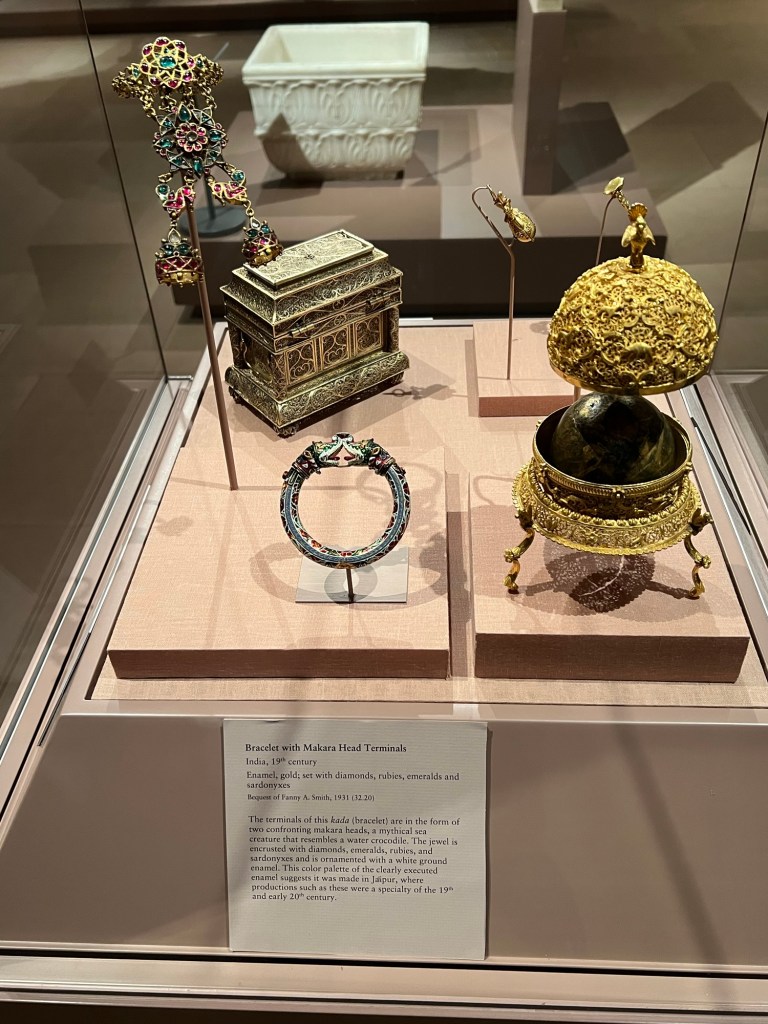
What I admire the most from some of these artisans is the approach to precious items like gold, silver and jewels in the works. You could really see the amazing detail to these works.
Several decorative items in the display case
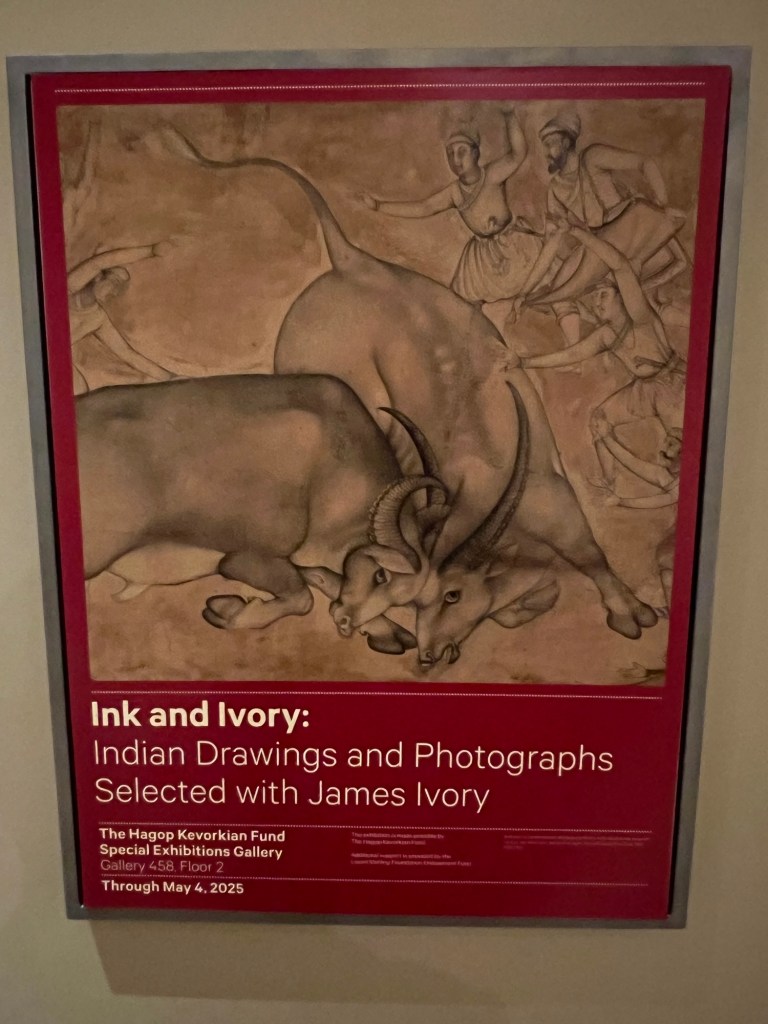
One of the special exhibitions in the Arabic Wing was the Merchant Ivory exhibition ‘Ink to Ivory’ from the Director’s private collection.
This focused exhibition presents a selection of superlative drawings from the courts and centers of India and Pakistan (with a few related Persian works) dating from the late sixteenth to the twentieth century. These works are mainly selected from The Met collection in partnership with film director James Ivory, whose recent gift to the Museum of nineteenth-century photograph albums will also be featured in the exhibition (Met website).
The drawings will include fresh and informal preparatory exercises for paintings as well as beautifully finished works in their own right. The photographs will present the subject matter and styles that came about in the contexts of royal patronage and ceremony; views of architecture, cities, landscapes, and people, among others. As an artist and filmmaker, James Ivory will help us appreciate this material through his unique gaze (Met website).
The description of the show at the Met
The exhibition was a selection of drawings and photos from the British possession of India. I could see from the pictures the Caste system that had been created. The drawings though were quite interesting and showed a different perspective of Indian life at that time. I liked the mix of royals both from England and India.
When I got to the first floor, I noticed the time as getting late in the evening. This special evening was ending at 9:00pm rather than the usual 10:00pm and after the last three weeks that I had with Midterms and papers to grade and leading a recent field trip with my students. I really needed to relax and have a drink.
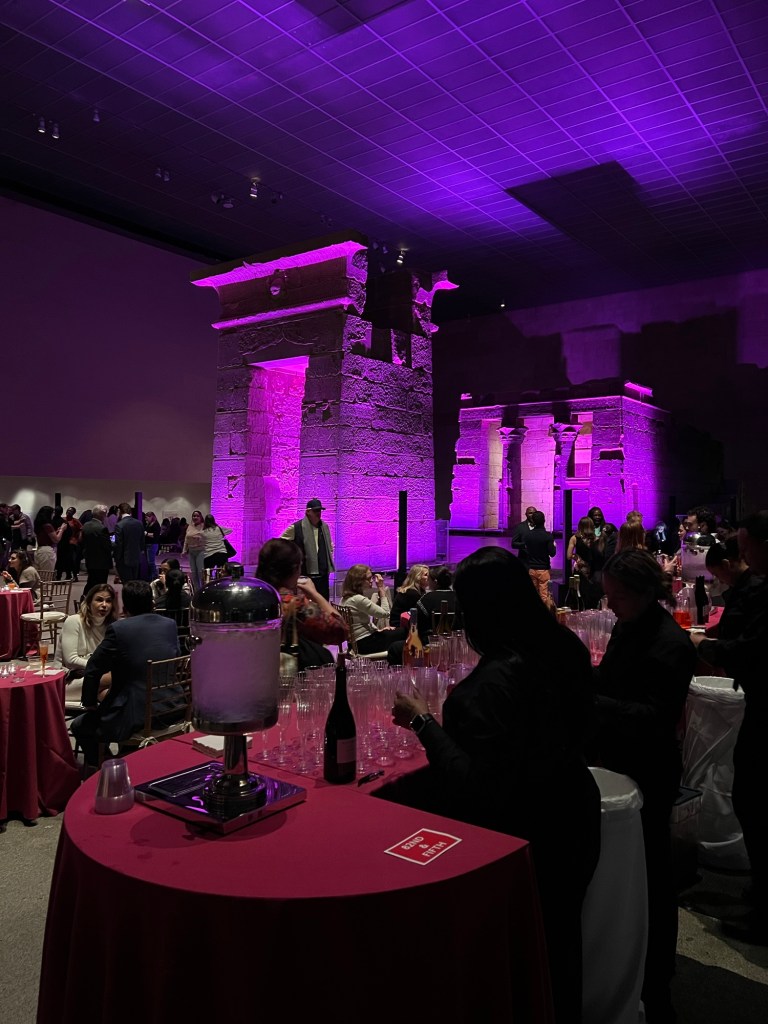
The Temple of Dendur gallery was lit for the evening and music was playing when I arrived. I guess all the other members felt the way I did as the place was packed. I was wondering why the halls were so quiet.
The Temple of Dendur Gallery was set up for the Members Bar
The lighting really accented the ancient temple
The crowds really packed the cocktail tables
Everyone had to get drink tickets to get a beverage and trust me this did not look like the soft drink crowd. They were featuring a ‘Berry Fizz’ as their signature drink that evening.
The signature drink ‘The Berry Fizz’
Relaxing at the end of the evening on the rim of the pool at the Temple of Dendur Gallery
Relaxing and talking to other members at the Temple of Dendur that evening
The bewitching hour of 9:00pm came and the bar area was still going strong but other parts of the museum began to clear out and close for the evening.
As we left, members of the staff handed out Chocolate Flowers that represented the Cherry Blossoms that were prominently featured all over that entrance and would be blooming all over the City in the next few weeks.
The Chocolate Flower we got when we left. I think this was a nice touch as was the pumpkin at the Halloween members night
All the Cherry Blossoms around the Great Hall entrance as I left
It was not a pleasant night as we left for the evening. It was pouring down rain and I could see this when I was in the Temple of Dendur Gallery.
I walked to East 72nd Street and had dinner at Shanghai Chinese Food at 1388 Second Avenue for dinner. This little hole in the wall restaurant has some of the best Chinese food in Manhattan.
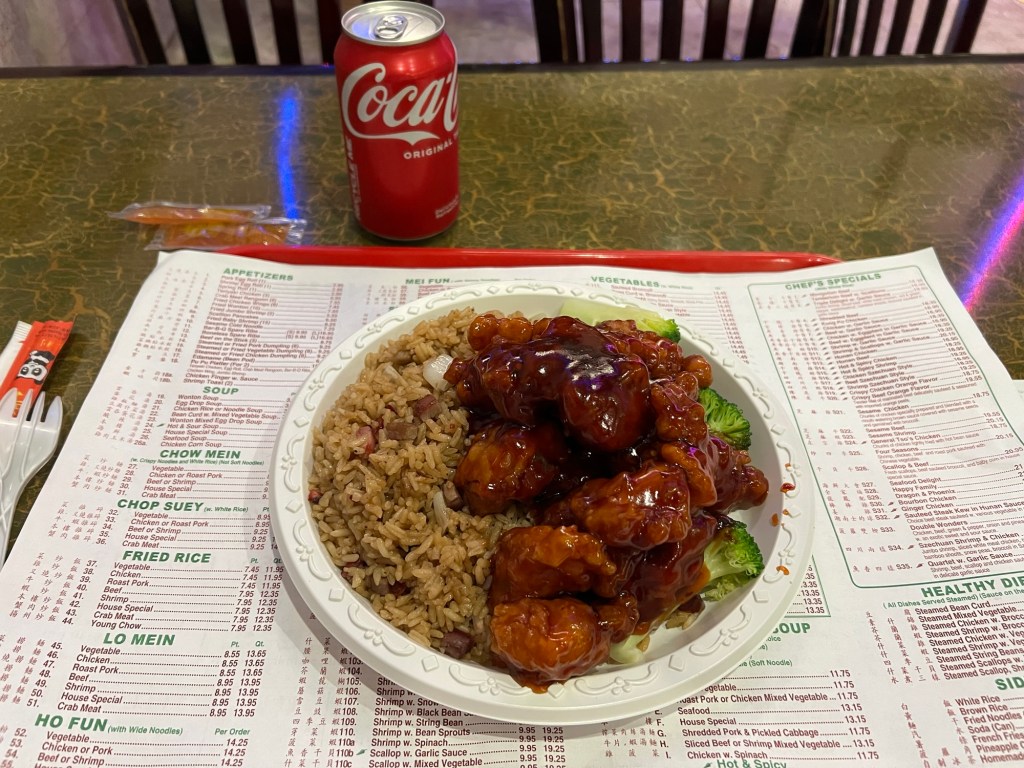
I needed the ultimate comfort food that night and ordered the General Tso’s Chicken with Pork Fried rice. That took the gloom off this rainy evening.
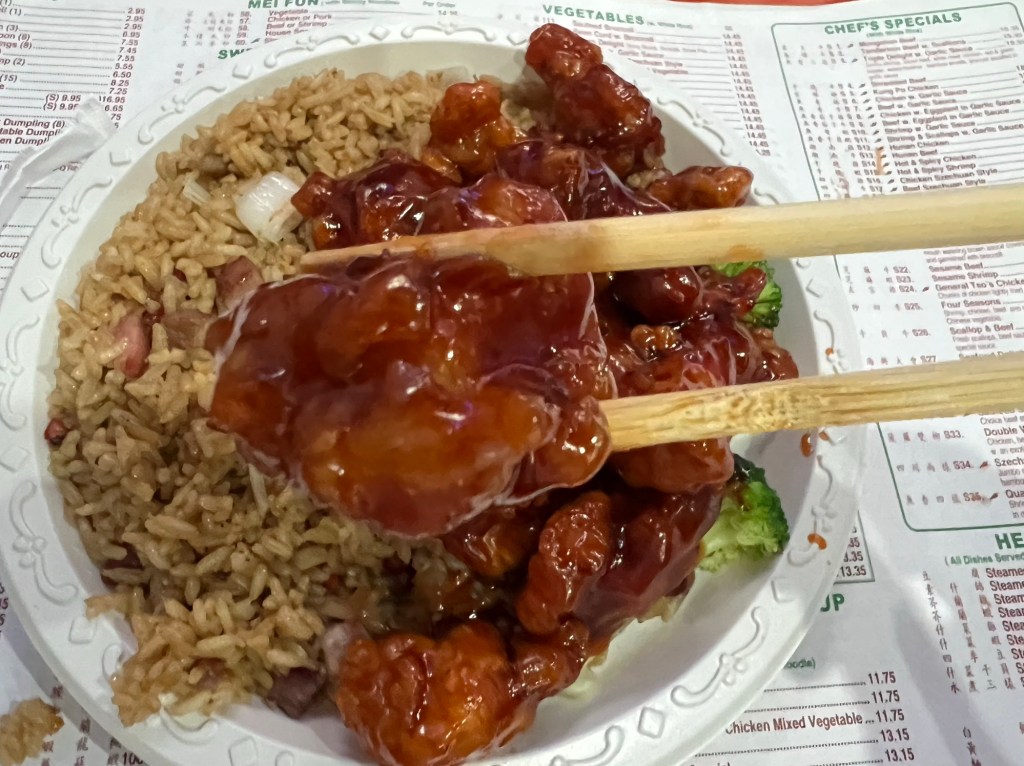
The crispy rich sweetness of the dish is so satisfying
I love this delicious dish
Each piece was a delight
The nice part was that the staff let me relax and finish my dinner. Since I was still dressed in a suit from classes earlier in the day I just assumed they thought I worked at the hospital nearby. It is always so funny to see peoples reactions to me being all dressed up.
It was a nice relaxing evening and a great way to end the day.