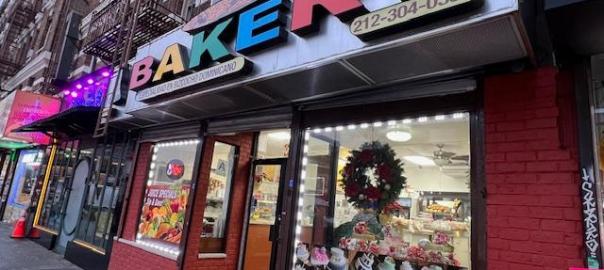
The front of the Little Apple Toy Shoppe at 2484 Broadway
When I was walking my Broadway Walk, which is the 13 mile walk down Broadway from 242nd Street to the Bowling Green, I took my time and walked through many stores I found interesting. Some had colorful displays and some just had playful merchandise in the windows. Then I passed The Apple Toy Store at 2484 Broadway and saw the cheerful sign at the door and had to walk in. What a delightful, whimsical store.
The sign that greets you on Broadway
The displays inside and out of the store really showcase the merchandise and the store has that colorful, playful appeal that attracts both children and adults.
The inside of the store with interesting costumes and wooden products
What I loved about the store was there was not a plastic toy in sight but more smaller vendor wooden toys, more toys that spark imagination and creative play. In some toy stores in the City, they are just stacked with the same toys that you see in other stores. Piles of Legos, Playmobile and construction toys that while popular and interesting and fun to play with don’t offer that unique shopping experience of seeing some of the smaller toy vendors that are not available in every toy store. This is what makes Little Apple Toy Shoppe stand out.
The unique display of costumes
The store also has an array of costumes just in time for the holidays. Halloween and Christmas are just around the corner and it will soon be dress up time. Everything is so nicely displayed and not crammed in to fit every piece in the store. There is a nice selection of sizes and varieties to both boys and girls of different ages.
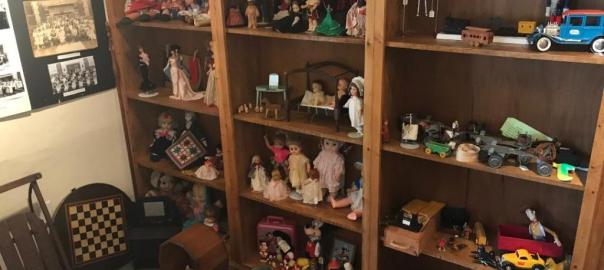
The dolls on display smile and wink at you almost asking you to take them home.
What was really nice was talking with the owner that afternoon as she just opened this shop. She had told me that West Side Kids, which was located on West 84th Street had closed their doors after Christmas of 2025 and there was no toy store in this part of the City. She wanted to fill that gap and create a store that would be part of the community. A place where families could gather and shop together. I think she is on the right path with the business with all the engaging toys and whimsical displays.
The selection of books, crafts, wooden toys and clothes
These are the type of toys I loved to receive when I was small. These are the type of playthings that enhance creativity and play and a child’s imagination.
The soft opening that day gave the owner a chance to meet people in the neighborhood and tell them about her business (she did not even have the sign over the door done yet. Just the sandwich board outside the front door). The store reminded me of the mythical store ‘Shop Around the Corner’ in the movie the movie, “You got Mail!”, creating an environment where families can meet and chat with both the owner and their neighbors.
I wish this establishment the best of luck because New York City needs more creative small businesses.
The scene in “Shop Around the Corner”
The spirit of small businesses all America and what happens when we don’t support them.
Over twenty years ago, I had joined the Hasbrouck Heights Fire Department in Hasbrouck Heights, NJ in June 2005. Some of the guys had started to tell me their stories about going to the piles one night as a Department while we on standby at the firehouse. I asked if anyone ever wrote an article on all this and they said no. I could not believe that no one bothered to tell their story so I got as many of the guys together that were there that day to talk about it for an article I wrote for both The Hasbrouck Heights Gazette and the Hasbrouck Heights Observer in 2006 for the Fifth Anniversary of the attacks. These are their stories:
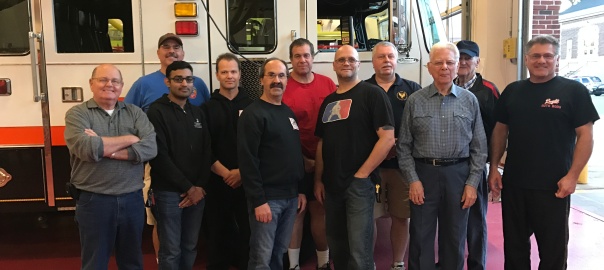
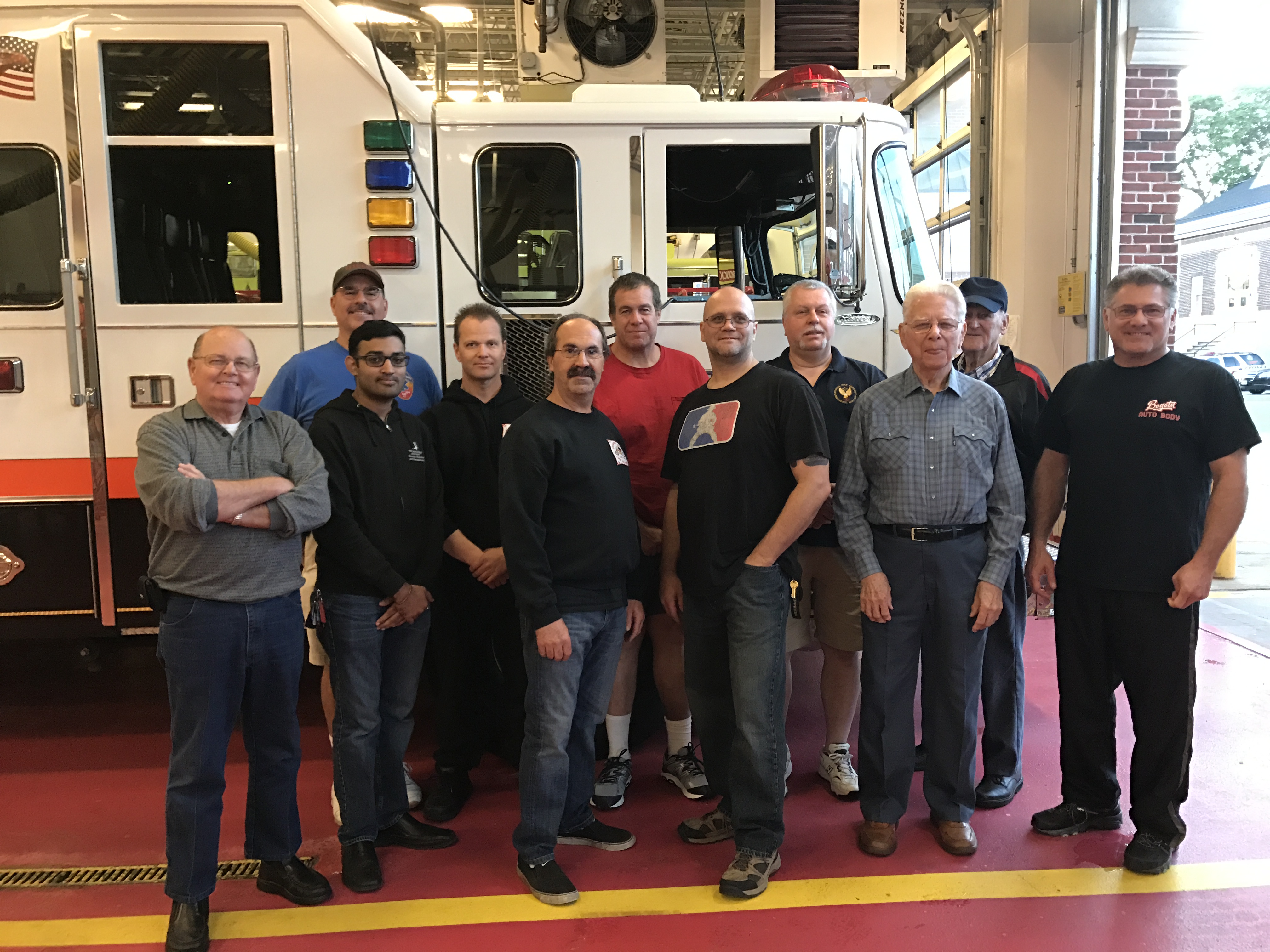
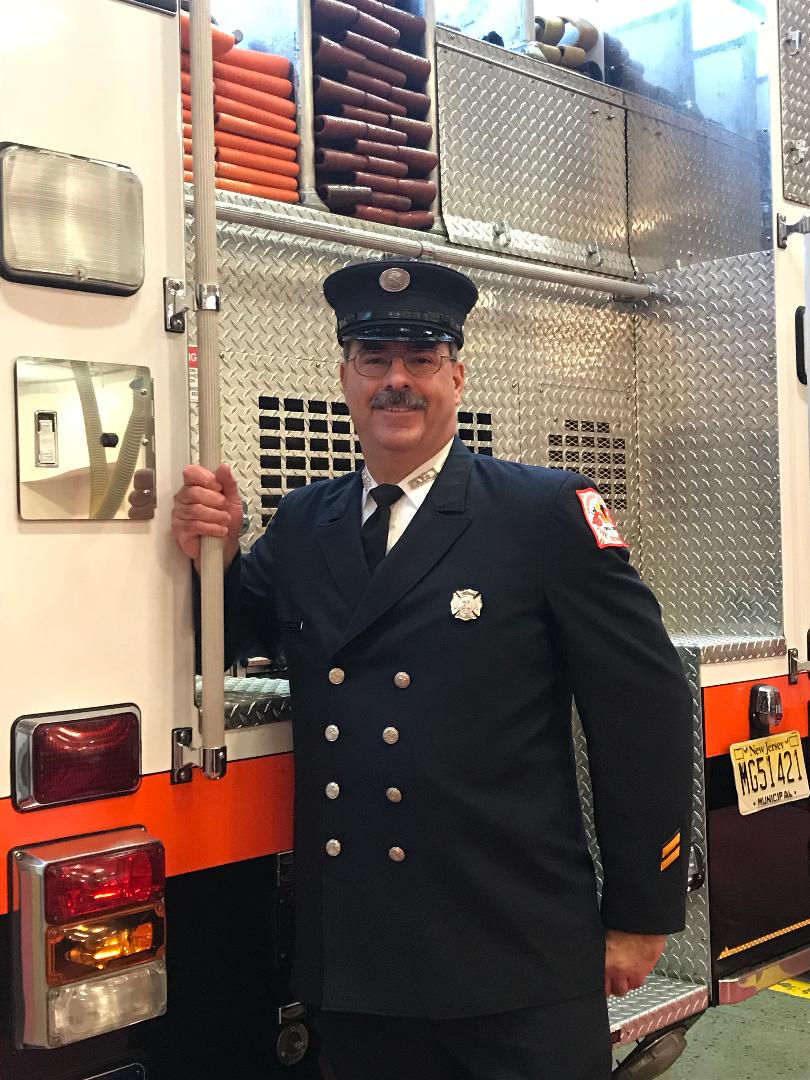
I do not have a picture of all the guys together as none could get together for a group picture back then. This is a picture of us at an Engine One barbecue at the firehouse Summer of 2017 of which many of the guys attended. Firefighter Ed Carter is forth to the left, Firefighter Bob Pietz is fifth to the right and Chief Tim Moots is is first on the right.
Several Hasbrouck Heights Firefighters Recall 9/11
By Justin Watrel
*I wrote and published this article in September 2006 for the Fifth Anniversary of the Attacks on the World Trade Center for both the Hasbrouck Heights Observer and the Hasbrouck Heights Gazette. Many of the firefighters in the article have since retired or moved on from the Department with Firefighter Greg Rubino being the only current firefighter active on the Department. This is their story from the day of Recovery.
I want to thank the following Hasbrouck Heights Firefighters for assisting in this very moving article: Retired Chief Joe Taylor and Retired Firefighter Tom and Current Firefighter Greg Rubino, Firefighter and former Lieutenant Bob Pietz, Firefighter and Retired Chief Tim Moots and Firefighter and Retired Captain Ed Carter III. Thank you all for your dedication to the Hasbrouck Heights Fire Department.
Author’s Note: I updated this slightly to reflect today but the conversations are verbative from the original article. To keep the flow of the article, I kept the firefighters’ positions in current form through most of the article.
It is hard to imagine that 25 years has passed since the tragic events of September 11, 2001. Since that time, the site has been cleaned up, new buildings have gone up and One World Trade Center (formerly the Freedom Tower) has been built with views overlooking the once devastated City, where all this once happened. The whole configuration of downtown has changed since that time from a business to residential neighborhood. The vibe of the City has changed since that time.
Behind the scenes though, there are the lingering memories of what happened that horrible day 25 years ago and how it touched us as a community. Even though we are only eleven miles from Midtown Manhattan, it seems like a world away.
What many people don’t know is the contribution Hasbrouck Heights made in the recovery process. Our schools and parishes raised money and lent support to many agencies in the City that needed help. In the fire service, several of our members took time out of their busy work schedules to help on the piles with the recovery and help search for victims.
Some of them will never forget what they saw in those days following the tragedy in New York City. The Hasbrouck Heights Fire Department, a volunteer department, sent the following members over to work the piles, former Chief of the Department Joe Taylor Jr., Firefighter Tom Rubino and his son and current member, Greg, retired Firefighter Edmund Carter III and former Firefighter Bob Pietz. Former Chief Tim Moots went over with the Teaneck Fire Department. Many of these brave men shared their experiences that they encountered the days that followed when they helped work the piles years ago.
Former Chief Joe Taylor had been a member of the Department for over twenty years and been a former EMT in Hackensack, NJ said, “I was home watching TV that morning when I turned on the set and saw the towers on fire. I immediately reported to the firehouse for further instructions.”
Retired Firefighter Tom Rubino, a nursing instructor at Bergen Community College, said back then, “We were in classes when the plane hit,” Tom said. “Classes just stopped and everyone was watching TV. There were questions about terrorists but no one was sure. Classes were later suspended because everyone wanted to go home.”
His son Greg, who was at work at Hackensack Hospital said, “From the hospital, we could see smoke coming from the first tower then saw the second plane hit the building. The hospital then went to Code Yellow and we were on standby.”
Retired Firefighter Tim Moots, then a member of the Teaneck Fire Department, was at his home in Fort Lee at the time, when his then wife called to tell him what had happened. “About an hour later, I was called to the Teaneck Firehouse. We were on standby near the George Washington Bridge until 4:00pm. We were then sent over to Hoboken to help with HAZMAT. We were part of the DECON Team hosing people off, who were still arriving from the City at 4:00am.”
Former Fire Fighter Bob Pietz said, “I was working at the hospital installing an air conditioner when the first plane hit. I ended up having to leave the job. When I got back to Heights, the ambulance was called into service and I was on standby with other members of the Fire Department. As a Task Force, we headed to the City but were rerouted by the George Washington Bridge and were released a couple of hours later.”
Retired Firefighter Edmund Carter III was home asleep after a long shift at work, when his then wife informed him that the first tower had been hit. “My initial reaction like everyone else’s was that it was a plane that lost its way, but she informed me that a second plane hit. I then got up, showered and reported to the firehouse, where a lot of members were awaiting further instructions.”
Heading to the Scene:
Everyone on the Department had different reasons for helping in the recovery. All of them wanted to make the best contribution they knew how. Retired Chief Taylor said, “There was a lot of concern from each firefighter for both the City’s citizens and their fellow Brothers in the FDNY. I put out the call and asked members to help.”
Ed Carter said, “I felt I had an obligation to do so. I was given a chance to help in the best way I knew how and was not going to give that opportunity up.” Retired Firefighter Tom Rubino added, “When the call comes out, you respond.”
What they saw at the site still haunts many of the members of the Department. “It was the worst thing I ever saw,” Firefighter Bob Pietz said. “I never saw the magnitude of the destruction.” Chief Taylor added, “I could not believe it. You just could not fathom the destruction.”
Firefighter Tom Rubino explained, “The boat trip over was eerie. The lights were on where the job was being done. The smells were unbearable from the rotting flesh and dust in the air.” It was complete chaos,” his son, Firefighter Greg Rubino added. “I had never seen anything like it. It was like the end of the world.”
“It was only a ten-minute ferry ride over but it felt like forever,” said Firefighter Bob Pietz. “So much smoke was coming from the site.”
When the firefighters reached the site, the initial reaction to the site and the enormity of the situation took hold. Firefighter Tom Rubino explained, “It was like a different world. My first reaction was misbelief and anger.” Firefighter Greg Rubino added, “The smell was unbearable and there was dust, smoke and twisted beams all over the place.”
“It was like a war scene,” said Chief Taylor. “You could not fathom what you were seeing. There in front of you were 110 stories of two towers that stood only a couple of days before.” “It didn’t seem real,” Chief Moots said. “Even when you walked around, it just didn’t sink in that fast. The whole scene was just so overwhelming.”
“You experienced what the media showed and it was worse than what was reported,” added Firefighter Ed Carter. “The smoke hung over everything. I felt anger that fellow firemen, police and citizens from around the area had been killed from the assault on the City.”
Chief Taylor added, “You could not believe what you were seeing. There were cement slabs and bent “I” beams all over the place twisted like pretzels. It was amazing to see police cars and fire trucks smashed, twisted and flattened to nothing. The dust coated everything and the smell of rotting flesh was in the air.”
Some of the men said that while they were arriving at the site, there were still boatloads of civilians leaving the City covered in dust. They would be headed over to the HAZMAT Center, where first responders like Chief Moots would be working with the Teaneck Fire Department. Chief Moots said, “At 10:00pm, it was tough to hose the survivors down, especially after what they had been through. Some were angry, some were hurt and some were still in shock. The comments were heard were, ‘Thank you for all of your help’ and ‘You are so brave for going over there.” “They couldn’t have been more respectful,” Chief Taylor added.
We had a job to do
Even with the enormity of the site, there was a job to do and the men pitched in to do their part. The mood of the work site stuck all of them.
“Everyone was very focused.” Firefighter Bob Pietz said. “Everyone was working as hard as they could and no one was fooling around. The frustration of not finding any survivors was on everyone’s mind.”
“It was very somber,” Chief Moots added. “People had a job to do and there was not much personal conversation. People worked as best they could for as long as they could.”
“People were working with their game faces on determined to do the best job they could,” Chief Taylor said.
“We walked through the site where part of the tower had bent and sagged as shown on TV and we walked past the jagged edge of the wall to reach the area we had to work,” said Firefighter Carter.
While on the site, all the men were given jobs to do, working along side the FDNY and members of other volunteer departments. Some worked on the bucket brigades, while others worked cutting “I” beams and helping move debris.
Firefighter Greg Rubino because of his size, was asked to search through small crevices and assist with searches under the rubble with specially trained dogs to find pocket where people might have been. “With the spotlights and the tower lights you saw everything. You had to be focused so that you were not hurt while helping out.”
“We passed bucket after bucket. Buckets were being passed as fast as we could move,” Chief Taylor described. “I found pencils in sharpeners and receipts from “Windows on the World”, while we were digging. There was a great deal of cooperation, for example: There was a two foot “I” beam that we needed to pass and we immediately got help to cut it.”
Firefighter Carter described, “We dug past part of the building and found a piece of the plane. We notified the people in charge and members of the FBI immediately removed it as evidence.”
Later that evening, an FDNY firefighter’s helmet was found and then his body. “When we came across the fireman’s helmet, everything stopped. The whistle was blown and everyone stopped working. There was silence as the body was wrapped in an American flag and carried out of the site while everyone stood at attention.” Firefighter Carter said.
“I could not believe it when we found the body of the firefighter,” Firefighter Pietz said. “There was silence, then everyone took their helmets off.”
Chief Taylor added that it was done with the utmost care. “People got a little emotional when they saw that. The body was carried out with respect and attention. Then the men went back to work.
Personal Experience
When the men described their overall experience, each one had a different story to tell. Chief Moots describes, “There was an outpouring of thanks. There were loads of supplies, water, tools and food for the people working on the piles. The support volunteers who helped with the supplies were extremely thankful. I will never forget that.”
“I did not want to go back,” Firefighter Carter said. “I was too angry to go back there again. The more I experienced, the more I would carry the scar of the incident.”
Firefighter Pietz added, “It was amazing how everyone came together to help with what was happening on the scene. It was a great feeling that people had for one another, It was the true meaning of brotherhood.”
Chief Moots said, “People can pull together when there is a catastrophe and the expression, ‘here today, gone tomorrow’ is very true. You can almost relate to the experiences that our parents went through during WWII.”
“My main priority was to be with my men,” Chief Taylor said. “I didn’t want anyone to get hurt. When they wanted Greg Rubino to go into certain voids, I had to disagree. I was there as a firefighter but still looked out for my guys. Everyone wanted to do as much as they could during those days.”
Firefighter Greg Rubino added, “You never thought it could happen here but it did. You see a picture of the skyline now that the towers are not there and you realize how different the world is today.” His father added, “I think I am more tolerate toward my fellow man. People have to learn to appreciate life because in a minute it can all change. You never know when it can be taken away.”
Firefighter Carter summed it up best when he said, “The encounter was different from the time we got there until the time we left. The people who risked their lives in the line of duty are truly what heroism is all about. If I could have rescued one life, I would have done it.”
Will it happen again?
When asked if we are prepared for a next time, most of the men felt the same way. Most felt we would never be prepared because you can’t prepare for everything.
Chief Taylor said, “Will it happen again? It is a probability. You never know what you are getting yourself into in these situations. The people that helped out that day will never forget. You have to be mentally prepared for what might happen. We have made strides but you can never be fully prepared.”
“There will be a lot of chaos if it happens again,” Tom Rubino added. “Have you ever sat down to plan an escape route? Do you know that Route 17 might be like if we had to escape this area? It would be like a parking lot. What preparation we do have now is good but not good enough. People are just not prepared.”
“It could be hard to stop a threat,” his son, Greg added. “You just can’t predict what can happen next. You have a strong feeling that something might happen, you have to prepare yourself for the future.”
“There have been many improvements since 9/11.” Chief Moots explained. “So much time and resources have been dedicated to better preparation but we have to prioritize.”
Chief Taylor concluded our interview with, “People tend to forget over time. You can’t prepare for everything. Things are tough when Homeland Security funding is being cut in this area of the country. The one thing I can say is that the City called our small town and asked us to help. We responded to the call and gave it our best.”
Author’s Note: As a nineteen-year veteran of the Hasbrouck Heights Fire Department, I wanted to thank my Brothers for sharing their story twenty years ago. Many have since retired from the department but their legacy lives on in the younger firefighters. I was very proud to tell these men’s story and we should appreciate how our town of Hasbrouck Heights responded that day when we were needed. Thank you!
Author and Retired Firefighter Justin Watrel (Author Justin Watral)
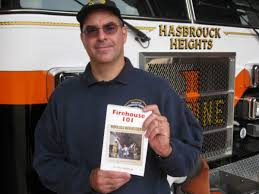
Author and Fire Fighter Justin Watrel with his novel, “Firehouse 101” on sale at IUniverse.com.
Exert from my Novel “Firehouse 101” Chapter “A Trip to the Firehouse”:
In 2005, just as I was interviewing to become a Hasbrouck Heights Fire fighter, I published my novel, the second in a New York City Trilogy (that I am still working on), titled “Firehouse 101”. I had been writing the book since January 2002, inspired by my best friend who had survived the Towers that tragic day.
This was the story of Alex Livingston, a Honolulu Hotel executive, who moves from Waikiki to Brooklyn, NY when the Marriott hotel he works at transfers him when business declined at his hotel in Hawaii a year after the attacks.
While living in Brooklyn, Alex befriends Ryan Callahan, a member of the FDNY and a third generation firefighter. Ryan’s survival the day of the attacks still haunt him over a year later and Alex sees a community still reeling from the attacks.
Firehouse 101: available for sale on the following platforms:
From the Chapter “Visiting the Firehouse” storyline:
In the novel, Alex goes to Firehouse 101 located just off Boerum Hill, Brooklyn to assist Ryan in cooking a monthly family breakfast that has occurred every month since the attacks to bring families together with the current firefighters families so they do not feel forgotten. This is when Alex, a Hotelier and Culinarian with the Marriott Metrotech, realizes that Ryan can’t cook.
I have posted darker excerpts of the book online but this is one of the funnier parts of my novel. To read the rest of the story to see what happens next, you can buy the book through IUniverse.com, my publisher, Amazon, Walmart, Barnes & Nobel or any other online book company. “Firehouse 101” is a print on demand book and an eBook.
“A Visit to the Firehouse”:
Saturday night Alex went to bed early. He could not believe he had to get up this early to cook with Ryan. Who even heard of a guy that couldn’t cook? An Italian guy at that? This was the twenty first century and people have progressed on. Leslie had told Alex that Ryan’s life was similar to a 50’s sitcom. Was that why Leslie and Ryan broke up? She did not see herself in the 50’s? Or was it the other way around and Ryan could not leave his secure world for the unknown? Some people have a tough time letting go of what they’ve lived their whole life.
After 9/11, the outside world had finally seen inside the fire fighters world. It had opened people’s eyes. They found it fascinating, like a new stage play. But as Leslie pointed out, fame is fleeting. It was Andy Warhol’s term “15 minutes of fame”. Leslie said the media makes something a hot topic and it stays that way until the next hot topic comes around. Alex turned and went to sleep. That night, he had that dream again about running down the stairs as fast as he could, this time hearing crashing noises above.
Alex got up at five the next morning and decided to get to the firehouse early. He was groggy, but knew that after working many a breakfast at both Marriott’s and Hiltons, it pays to be early and set up. It was still dark outside as Alex walked down the quiet streets of Boerum Hill. He relished the silence. Alex paused and looked at the tree lined side streets. It really was a beautiful neighborhood, full of character. It was a special neighborhood; he could see why the association worked so hard to protect it.
The door to the firehouse was open, Alex was glad as he wasn’t sure of how else to get in. One of the guys was downstairs manning the radio. Alex looked out of place with his chef’s whites and checked pants. When business got slow in Hawaii, just like in New York, Alex worked in the kitchen, honing the skills that he had learned at UNLV. The Marriott gave him the uniform to keep just in case.
“Hi,” Alex said softly to the guy at the radio. “I’m a friend (was he?) of Ryan’s. I’m helping him out this morning with breakfast. Where can I find him?” “Yous helping Ryan?” the guy yawned. He had the thickest Brooklyn accent Alex had ever heard. “He’s upstairs in the kitchen, top of the stairs and turn left,” he said and went back to work. Another firefighter walked down the stairs as Alex went up. He stared at Alex and said, “Are yous catering or somethin’?” “I’m here to help Ryan out with breakfast,” Alex said. “Thank God, his food tastes like shit,” the guy grumbled as he passed Alex. I love the way New Yorkers phrase things. There is no holding back, Alex said to himself as he finally found the kitchen.
It was not very impressive. The equipment seemed old but functional. There were two ovens, a stove, and a griddle with enough room to work with on the side. It wasn’t a huge kitchen but it would do. Alex wondered if it fit all the guys in the house at one time. The building was old. Alex wondered if these walls could talk what would they say? About losses and triumphs of the past? Tales of fires big and small and stories of probies (probationary officers) past? There was a lot of history here. Alex pondered the past. He was so deep in thought that he didn’t see Ryan enter.
“What? Are you okay?” Ryan asked. “Sorry, I was thinking of something. So what are we doing this morning? What did you want to make?” Alex asked, rubbing his hands together. Ryan told him that there would be more people than expected. “How many?” Alex asked, “Fourteen, fifteen?” “Are you kidding me? Try twenty six!” Ryan said. Alex looked surprised and said, “Twenty six? Jesus Christ, we have to get to work,” Alex said collecting himself. He would kill Ryan later. “Okay, what do we have to do first?” Alex looked at the clock, it was now six. How was he going to pull this off?
With so many people, everything was going to be served buffet style. Thank God, Alex thought, for the old buffet line. “So what are we making?” Alex asked. “Bacon, eggs, toast, potatoes, French Toast, sausage, muffins, and we have some melons,” Ryan replied. “Okay, so what has been done?” Alex asked. “Nothing,” Ryan said innocently, pointing to several bags of groceries. Alex looked incredulously at the bags and yelled, “Nothing?! I can’t believe it, when does all this have to be done by?” “Between seven thirty and eight,” Ryan replied. “If I weren’t in a rush, I’d kill you now. Let’s get to work,” Alex said, emptying the bags as fast as he could. Alex suggested Ryan peel the potatoes and put them in water so they didn’t brown. He would get the muffins started. Alex asked where the muffin pans were and Ryan pointed to the bags again. Ryan was surprised as he heard Alex mutter a few swear words in Italian that he had picked up from his grandfather. So that’s when the Italian shows, Ryan said to himself.
As they unloaded the bags, Alex looked Ryan square in the eye and said, “I’ll get you for this.” Ryan peeled the potatoes and put them in the water, while Alex preheated the oven and read the directions on the muffin package. These were easy, two eggs and water and mix. The muffins would only take twenty five minutes. Alex cut the four loaves of bread for the French toast and asked, “Why are there four full loaves with so much other food?” “You’ve never been in a firehouse for breakfast before have you?” Ryan asked, taking his time to peel the potatoes. He was not doing that great a job.
Alex finished slicing the bread and put it aside. He cracked several eggs in a bowl and mixed it with milk and vanilla. “Ryan, I’ve told you about my pancake breakfasts with my mother’s cousin up in Greenwich. Now where is the cinnamon and nutmeg?” Ryan pointed at a spice rack and said, “Alex, serving people at a pancake breakfast and cooking for a group of fire fighters are two different things.” “Ryan, please,” Alex said stirring the cinnamon mixture with sugar and putting it into the refrigerator to cool and said, “How much can people possibly eat?” “Just wait,” Ryan said with a smile. Alex started to get the bacon ready on sheet pans to put under the broiler, and then realized that the muffins weren’t done yet. He looked at the time, shit it was getting late.
“Ryan, can you speed it up a bit with those potatoes, it’s getting late.” Alex dropped a pound of butter in a pot for clarified butter for the potatoes and the buzzer finally went off for the muffins. Damn these things come out perfect Alex said to himself. Why do people even bother making them from scratch? Alex threw the bacon in the broiler and set the griddle for the sausage and French toast. He looked at Ryan, who was still peeling potatoes and said to himself, he’s worthless in here. Alex was ready to kick him out of the kitchen.
Didn’t this guy know the meaning of the words “Mise en place”? (Everything in its place). Alex cut the sausage into patties and put them on the griddle. On the other side of the griddle, he started the French toast. Ryan finally finished peeling the potatoes. “The best thing to do now is cut them in sixths and we’ll make them with the onions you have over there. Then crack the eggs, we can scramble them last,” Alex said as he turned the bacon over, flipped all the sausage and finished the first batch of French toast. Alex stopped for a second and wondered who was in charge here? How come Ryan wasn’t moving faster?
Ryan finished cracking the eggs and scrambled them with milk as Alex got the bacon out of the oven and drained it in batches. There was some commotion in the other room as the men started to get up. All of sudden a little boy burst into the kitchen and caught Alex off guard. He almost dropped hot bacon on the kid.
“Uncle Ryan,” the child yelled as he grabbed Ryan’s leg and hugged him. “Alex, this is Patrick Jr.,” Ryan said with a big smile as he reached down and hugged the child. Alex looked at the time and panicked. Crunch time. “Hi Kiddo,” is all Alex could mutter. The sausages were being drained, the bacon was now done and the next batch of French toast was on the griddle. “Patrick is my friend Patrick’s son. He’s four years old,” Ryan explained. Alex stopped in his tracks. This was Patrick’s son!? Patrick had children? Alex looked at the little boy; it was so sad that he left such a charming son behind.
“Where are you’re sisters?” Ryan asked. Sisters? “They’re outside with everyone else, come with me,” Patrick Jr. said. “Do you mind?” Ryan said and he followed Patrick Jr. out the door, leaving Alex alone in the kitchen. He was lucky that no one went into the kitchen. He grabbed the four platters and ran through each dish one by one.
He lined the platters with paper for the bacon and the sausage and put them in the warmer, finished the French toast and put the platter in the warmer. He placed the muffins on a platter off to the side. He then took two sheet pans and started the toast. He thought about what Roger had said. Was Ryan using survivor guilt on him?
Two more children burst into the kitchen and yelled, “We’re hungry! Who are you?” as they gave Alex a strange look. Alex looked back, not knowing how to explain it to two little kids and said, “I’m a cook.” They looked at one another, as if Alex was a Martian. They asked together, “Can we have something to eat?” “No. You’ll ruin your breakfast,” Alex tried to say. “Whahhhhh, we’re hungry!” they screamed. “Okay, okay,” Alex said giving them some muffins and quickly turned over the toast. “Here you go, now make like bananas and split,” Alex said shooing them out of the kitchen. “He’s just like my mom,” one kid said to the other. “Yeah, bossy!” the other said as they ran out the door with their muffins. All Alex could think was that these kids had inherited their parents’ way of speaking. It was funny to hear these accents on seven year olds.
Ryan came back into the kitchen as Alex turned over the toast one more time in the broiler. “Where have you been? It’s like the attack of the little kids in here,” Alex said pulling the toast out. “I forgot to tell you the wives bring their kids,” Ryan said. “So I found out. I had to bribe two little kids to get them out of the kitchen. They told me that I acted like their mother,” Alex said out of breath.
“They’re typical kids,” Ryan said. Alex heard a lot of talking in the dining area. “Are the guys up?” Alex asked throwing the potatoes on the grill with some chopped onions and butter. “Yeah, some of the guys are greeting their wives that showed up for breakfast,” Ryan said as he started to cut up the five melons. Alex flipped the potatoes. “Do you have a brush?” Alex asked. “For what?” Ryan wanted to know. “The toast! Honestly Ryan, I don’t get you. You plan all this out and you act like you don’t know what to do. How did you ever do this in the past? Magic?” Alex said flustered. Ryan looked down at the floor and said, “I always had Patrick with me and he knew what to do.” Alex immediately went quiet.
He looked at Ryan for a second like he was ready to cry. “I’m sorry. I just want this to come out right,” Alex said. Ryan controlled himself and said, “I’m sorry for leaving you in the kitchen.” He saw the brush they used to make barbecued chicken and handed it to Alex, who at this point was suffering from a massive guilt complex.
“Thanks,” Alex said taking the melted butter and brushing it on the toast, cutting it and putting it on another platter. Ryan finished cutting all the melon cut and put it on another platter. “Oh, I forgot to make the cawfee,” Ryan said to Alex who then burst out laughing. “What’s so funny?” Ryan asked. “The way you said it “Cawfee”, I want some cawfee and cake, like a true New YAWKA,” Alex said shaking his head (no matter how Alex tried, he just liked to make fun of Ryan). Ryan was fed up with Alex’s criticism of the way he talked and walked up to him and said in a serious tone, “Alex, I would cut the crap with this accent stuff. All the guys in the house talk like this. This is Brooklyn. No one speaks your perfect lockjaw ‘Connecticut English’. Did you know you sound funny to us?” “Hey, you want me to leave?” Alex said, “I don’t seriously need this crap on my day off.” Alex was exhausted and still had a batch of potatoes and the eggs to finish and Ryan was no help with any of it!
“I’m sorry, but watch it,” Ryan said, “some of the guys won’t appreciate it.” Alex put this into perspective. The idea of twenty guys with easy access to fire axes shut him up. “I’ll keep quiet,” Alex said turning the last batch of potatoes as Ryan arranged the melon on the platter. They were in the home stretch when two guys in jeans and ‘Firehouse 101” tee shirts walked into the kitchen. “Ryan, when the hell are we going to eat? We’re starved!” they yelled. They stopped in their tracks and looked at Alex.
They looked at Ryan and said, “Who the hell is this? You had to hire a cook to help you?” Alex held back from cracking up again and just smiled. “This is Alex; he works over at the Marriott…”Ryan started to say. “How did he get here?” one of the guys said. “We live in the same building and Ryan asked me for help,” Alex said, “we’ll have everything out in five minutes. I promise,” Alex said professionally. “Okay, but this better be good,” the other guy said. As they headed through the doors, they yelled in the room, “Hey everyone, Ryan’s got a chef in here!” Alex looked at Ryan and said, “I hate you”.
The only thing left were the scrambled eggs. Alex said, “I’ll finish the eggs. Why don’t you get all the rest of the stuff out so it does not get cold and those kids don’t come back in here,” Alex said as Casey and two new probies came into the kitchen. “Who’s the cook?” a probie said as he saw Alex putting the rest of the rest of the potatoes on the platter. “What’s he doing back here?” Casey asked pointing his finger at Alex, “don’t you have a home to go to?” He and the guys laughed. Alex had enough and said, “Look why don’t you shut up and be helpful. These platters aren’t going to walk out on their own, so get them out.” He had put up enough with this shit. “Fine, you don’t have to yell at us,” one of the probies said. Alex handed each of them a towel and a platter and said that the platters were hot. They let the room grumbling. “Ryan, could you take the French Toast out. I don’t want to over cook it,” he said as he powered sugared it, “it’s too bad we have no orchids. They look great on platters.” “Huh?” Ryan questioned.
“In Hawaii, we put orchids on out platters,” Alex said, “it makes a nice effect on the presentation.” “You are truly weird,” Ryan said as he took the French toast and bacon out. Alex cleaned the griddle and started the eggs. Thank God they are quick. Alex looked at the time. It was 8:10 am. They were just a little behind schedule. Alex put the eggs on the platter, picked up the platter of potatoes and walked out the door. He was not expecting a crowd watching him.
Alex walked into the dining area. There were about thirty people sitting around laughing. They took one look at him and everyone went silent. Alex stood there with the platters in hand when one of the little kids said, “That’s the guy who gave us the muffin. See, he does exist, Mommy!” Alex said “Hi, here are the eggs, Ryan. I’ll have the toast out in a minute,” and darted back into the kitchen. God, that was embarrassing. They looked at him like he was from Mars.
As he finished the last platter, Ryan came back into the kitchen. “You made a splash,” Ryan said. “Shut up and take this platter out,” Alex said tired. “Are you coming in to eat?” Ryan asked. “I’m fine. I had a piece of French toast. I can’t eat this much this early in the morning. You go with your guests and the rest of the guys and I’ll clean up,” Alex said. “You sure?” Ryan asked. “I’m fine, unless we need more food,” Alex kidded. “We’ll be okay for right now. I’ll keep you posted,” Ryan said as he went back into the dining area. ‘I’ll keep you posted?’ Alex thought to himself as he started to clean up.
As Ryan exited, Captain Giovanni entered the kitchen. Alex looked up and thought to himself, ‘oh this just keeps getting better’. “Hi Carmen,” Alex said innocently as he was wiping the table down. “Alex, what are you doing here? Can’t get enough of the firehouse? I told you, you can get sucked in,” Carmen kidded. “Carmen, Ryan asked me to help him with the breakfast,” Alex started to explain, “I hope I’m not crossing any boundaries.” Alex was still afraid he was trespassing. “Don’t worry about it, Alex. It’s just funny to see you in our kitchen,” Carmen said looking over the mess that Alex was cleaning up. “You are staying to clean up, right?” Carmen asked. “Will all be done soon,” Alex said getting back to work.
As Alex washed the sheet pans, dried the utensils and neatly stacked everything, he couldn’t believe the looks he got from the people outside. Alex felt like he was in a fishbowl. In Greenwich, those visits were like visiting someone’s house. He never felt this uncomfortable at those pancake breakfasts but then he was a little kid whom the guys would throw over his shoulder. As he thought harder, he always wondered why Alex Senior had not done the same. Other guys talked about playing horsy and the piggy-back rides their dads gave them as kids. At his house, it was golf, swimming and tennis lessons at the club. The world changes as you get older and the things that you did as a child differ from those as an adult. Alex cleaned up the rest of the kitchen and put everything away.
Alex tied up the garbage and as he finished mopping the floor, Ryan walked in. “Thanks for leaving me here to clean up,” Alex said. “You said to go outside and join the guests,” Ryan said defending himself. “I’m sorry, I’m tired. Where does the trash go?” Alex asked. Ryan grabbed the trash and dropped it out the window. He looked out the window to see two garbage cans with the tops off. The garbage bag went directly in. That’s convenient Alex thought to himself.
Alex asked if they had enough food. Ryan laughed and told him they just made it. The last muffin had been grabbed as he walked into the kitchen. “You’re kidding me, right?” Alex said almost shocked, “Ryan that was three pounds of bacon, three pounds of sausage, ten pounds of potatoes, two loaves of bread and that was just for the toast, not to mention the French Toast, muffins and three dozen eggs.” “You forgot the melon,” Ryan smiled. “Who the hell can eat all that food so early in the morning?” Alex questioned. “Look outside the kitchen,” said Ryan. It was too much for him to eat so early. He preferred brunch where you could eat later. Having those waffles the other day with Leslie was even a stretch for him.
“Alex, these are fire fighters and their families. Trust me, these guys can eat. You need the strength for the job,” Ryan said. “To do what, lift an elephant?” Alex said. Although Ryan and a few of the other guys were in good shape, most of the guys looked like Casey, slightly over-weight with a small gut hanging over their pants. I guess they just work it off Alex thought and shrugged it off.
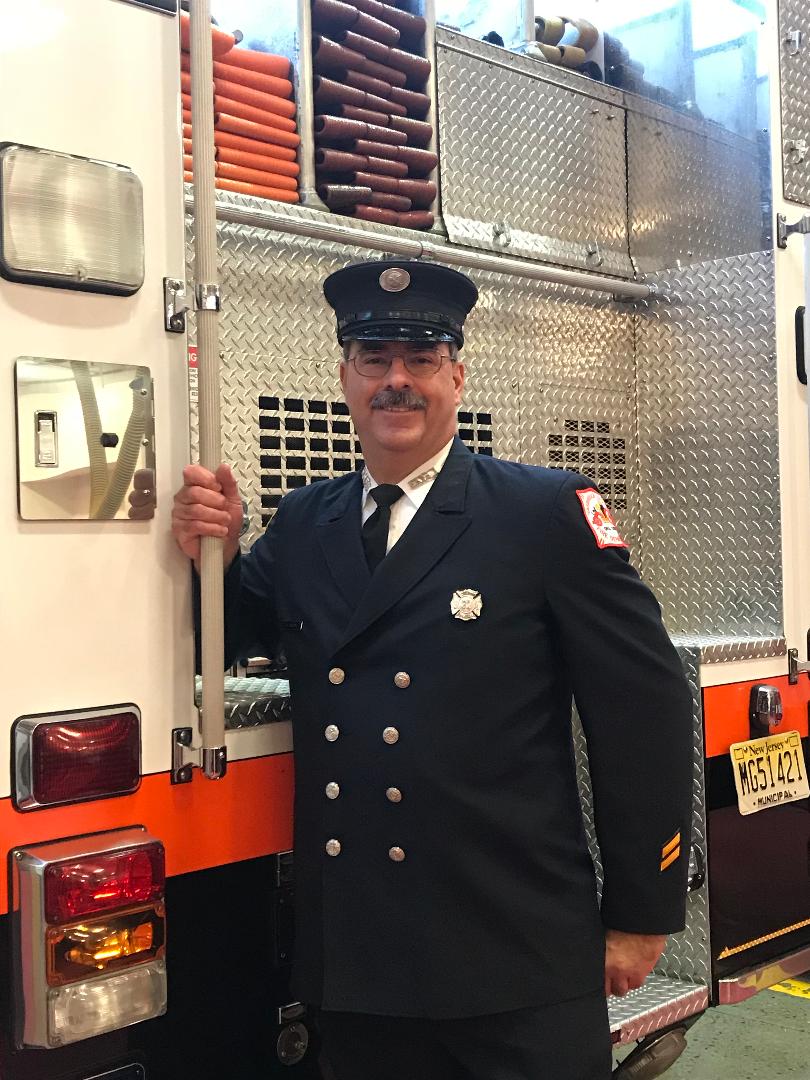
Hasbrouck Heights firehouse chef:
Art imitates life. Me cooking the last Engine One barbecue before I left for Grad School. Me setting up the buffet for dinner June 2022.
Author and Bloggers Note:
You can see what happens next by reading the novel “Firehouse 101”.
Retired Fire Fighter Justin Watrel, 19 year veteran of the Hasbrouck Heights Fire Department in Hasbrouck Heights, NJ.
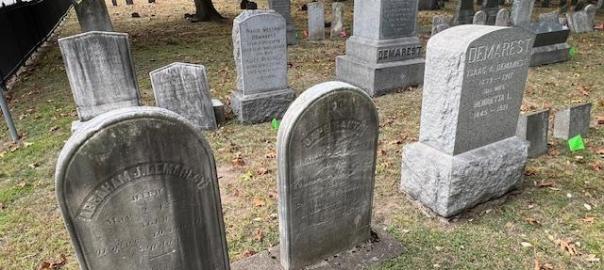
The historic Woodside Cemetery in Dumont, NJ. It is the home of many ‘founding families’ of Bergen County, NJ., such as the Demarest’s, Hopper’s, Van Buskirk’s, Haring’s (Hering’s), Van Saun’s, DeBaun’s, Westervelt’s and Zabriskie’s. These are the families that dominated the farming industry in Bergen County before and after the Revolutionary War. It is one of the many historical cemeteries and graveyards in Bergen County, NJ.
My mapping of historical cemeteries and graveyards in Bergen County, NJ:
The inside of the cemetery in the historical section of the cemetery
The historical Woodside cemetery is the resting place of many of the founding families of Bergen County and the surrounding communities of New York State.
Lining the historical Main Street of Downtown Dumont, the older part of the cemetery holds the family plots of some of the original settlers who shaped this country from its beginning.
The Voorhis family plot
The Zabriskie family plot
The Brinkerhoff family plot
The Waite Van Bushkirk family plot
The Van Bushkirk family family plot
The large Demarest family plot
The Hasbrouck family plot (The Family who Hasbrouck Heights is named after)
The Blauvelt family plot
The DeBaum-Westervelt family plot
The Van Saun-Demarest family plot
The Demarest-Haring-Van Vliet-Vorhees family plot
The Demarest-Van Bushkirk family plot
The Brinkerhoff-Doremus-Demarest family plot
The Van Bushkirk-Hopper family plot
The grave of James Blauvelt DeMott
The cemetery is the resting place of many War of 1812, Civil War, the World Wars, Korean and Vietnam and the modern wars.
The cemetery is a place of respect and quiet contemplation. To see the contributions of these members of the community is to reflect on the history of Bergen County. These families and many people buried here have helped shape Bergen County and the State of New Jersey to what it is today.
(*Blogger wants to note that the prices have gone up over the years.)
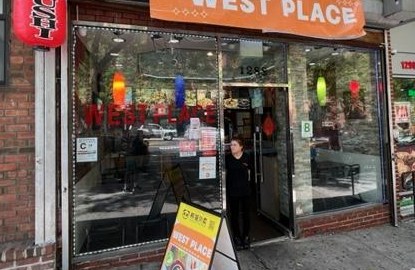
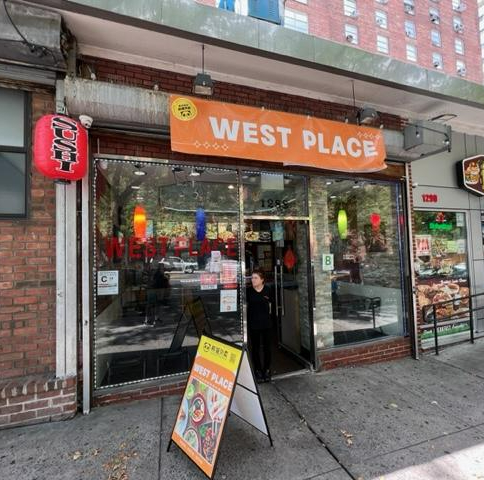
West Place Chinese Restaurant at 1288 Amsterdam Avenue
I came across West Place Chinese Restaurant when I was walking the neighborhood in Morningside Heights (MywalkinManhattan: Day Sixty-Nine Visiting SoHA, Morningside Heights last March). It was packed with Columbia students during the lunch hour and when I returned, people from the housing the complexes that surround it replaced them.
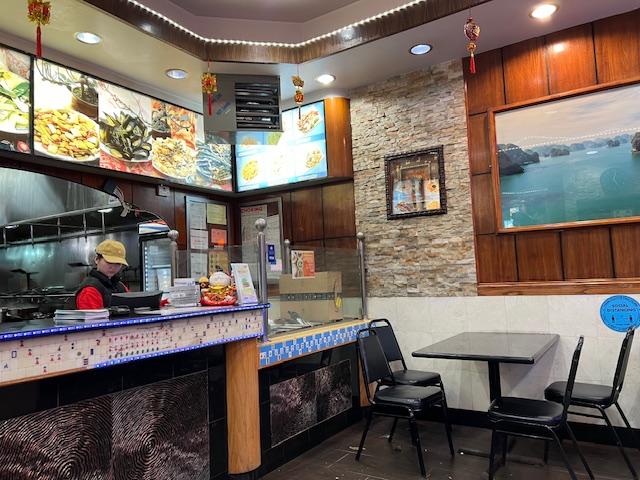
The inside of West Place Chinese Restaurant.
One afternoon towards my walk of the neighborhood, I went in for lunch and they have the nicest selection of lunch specials that are each priced at $10.00 (prices have changed over the years). This runs from 11:00am-3:00pm and the entree is served with Pork Fried Rice and a choice of either Wonton, Egg Drop, Chicken Noodle or Rice Soups. There is a dish from all over their menu and the few times I have eaten there, they have been excellent (see reviews on TripAdvisor).
The Wonton Soup is excellent
On the first trip there, I tried the General Tso’s Chicken, a combination of fried chicken pieces served in a tangy sweet/sour sauce served with a large portion of fried rice. The serving size was large enough for two people to easily share. The sauce coated a sizable portion of chicken that was perfectly cut and fried. There is a lot of flavor to their sauce and has a nice tartness to it. The fried rice is pretty standard but still tastes good. Not much as way of ingredients except bean sprouts.
The General Tso’s Chicken with Fried Rice is excellent
It was on this trip I noticed that at lunch they also have a small lunch buffet that is priced at $6.95. That is a combination of popular dishes and rice and noodle dishes as well. It seems to very popular with the locals and students alike. You might want to call the restaurant to ask what the hours of this buffet and if it is offered on the weekends.
The Roast Pork Lo Mein here is excellent!
The second time I ate here, I came for dinner on a rather cold night and the meal warmed me right up. At night, the restaurant offers a Special Combination Platter, a choice of sixteen popular dishes served with Pork Fried Rice or White Rice with an egg roll.
I tried the Chicken with String Beans with fried rice and an egg roll. The portion size of chicken with string beans was very large and even myself who has a large appetite could just about finish it. The string beans were fresh with a crisp snap and cooked perfectly with just the right amount of chicken where one did not dominate the other. It was served in a spicy garlic sauce that mixed well with the rice.
The Chicken and String Beans is really good
Their egg rolls are filled with roast pork and vegetables and were perfectly fried out. With a little sweet sauce, made a nice accompaniment to the dish.
The service here is very friendly and helpful and they get the food out quickly.
On a recent trip uptown, I stopped in for dinner and this time I tried the Boneless Spareribs with Fried Rice and an Egg Roll combination platter and the meal was excellent as usual. I had not eaten here in months and the food is consistently excellent. The portion size was larger than I remember from the last time. They really piled the food into the container.
The Boneless Spareribs with Fried Rice and an Egg Roll.
The Boneless Ribs were overflowing on the platter.
These sweet and juicy bites are full of flavor and piled into this small dish. There was enough food for two people.
The Egg Rolls are amazing.
When I revisited Harlem again to explore changes in the neighborhood, I stopped in for a late night dinner and had the Beef and Broccoli with Pork Fried Rice and an Egg Roll.
The Beef and Broccoli Combination meal
I had forgotten how good the food was here. The meal was excellent. The beef was so tender and the brown sauce had such a rich flavor to it. The Pork Fried Rice has lots of ingredients including nice sized pieces of roast pork.
The Beef and Broccoli was delicious
Their egg rolls are some of the best in the City with slices of cabbage and roast pork and fried to perfection.
The egg rolls were cooked to perfection
The dinner was delicious and hit the spot. If you are on the Columbia campus and have a yearning for good Chinese-American cooking, this is the perfect place for you.
Please call the above number for delivery. It is free in the area with the minimum of $8.00.
I recently visited the American Folk Art Museum in New York City for the “Made in New York City” exhibition and it is a very interesting and engaging museum. The artwork for the museum was a combination of painting, sculpture, pottery and metal work created at different periods of the City’s history. It really showed the extent of manufacturing in New York City and the craftsmanship that was once here.
The entrance to the museum
I recently visited the American Folk Art Museum in New York City for the “Nation”exhibition and it is a very interesting and engaging museum.
The main gallery of the museum with early American art
The main gallery with one of the revolving shows
The artwork for the museum was a combination of painting, sculpture, pottery and metal work created at different periods of the City’s and the Country’s history.
Some of the permanent works were made in the Tri-state area. It really showed the extent of manufacturing in New York City and the craftsmanship that was once here.
The ‘Folk Nation’: Crafting Patriotism in the United States’ exhibition
Patriotism in the United States draws from the American Folk Art Museum’s rich collections to explore links between vernacular art and the construction of an American sense of self. Introducing visitors to the concept of “folk” as a category developed in conjunction with the art and antiques markets, this exhibition positions works as multilayered in their meanings, imbued with cultural significance by not only their creators, but also their collectors and subsequent owners. Americans have long preserved objects as a way of telling stories about themselves. Beginning after the Revolutionary War and gathering momentum in the late nineteenth and early twentieth centuries, people turned to early American things to construct a national history and sense of collective identity—an impulse often driven by lingering insecurity about the young nation’s perceived cultural provinciality compared to Europe (Folk Art Museum.com).
One of the painting’s that stood out to me was more contemporary approach to the Statue of Liberty, entitled ‘Miss Liberty reaches out to the persecuted’. A different approach to folk art.
The painting ‘Miss Liberty reaches out to the persecuted’ by Reverend Benjamin Franklin Perkins
The description of the painting
Some of the interesting things you will see are the paintings by artists in both Colonial New York and from the Hudson River School of prominent New Yorkers through its first 200 years of history. You will see how the styles of art have changed over the years.
Also there is a lot of metal work in the ways of signs and rods for the front of doors and for the roofs. The woodwork carvings that once graced the front doors of merchants all over the City is now a lost art. Here you could see the works of German and Russian carvers and the craftsmanship that was put into every piece. It was interesting too to see the racial themes and stereotypes that were used in the art.
Several revolving shows were being featured on a recent trip to the museum such as ‘Nation’ and ‘Self Made’, themed shows for the 250th Anniversary of the Country.
The show ‘Self Made’ A century of inventing artists’
Self-Made: A Century of Inventing Artists takes a critical look at the historical definition of the “self-taught artist” in the United States from the early twentieth century to today. The exhibition examines how artists without academic training have depicted, conceptualized, and identified themselves on their own terms. In doing so, it aims at challenging reductive, long-standing narratives that have cast these artmakers as amateurs or isolated geniuses working out of time, without lineage, influence, or artistic networks (Folk Art Museum.com).
The sixty artists featured here largely worked outside conventional art-school, gallery, museum, and peer-exchange systems. Their practices are rooted in diverse sites of learning, from professional expertise to community-based traditions. Drawn primarily from the American Folk Art Museum’s collection, this selection of artworks brings together outstanding examples of paintings, sculptures, photographs, videos, and artists’ notebooks by key national and international figures—many of them recent or rarely seen acquisitions (Folk Art Museum.com).
The exhibition is organized around three methods of artistic “self-making” and self-fashioning: self-portraits, alter egos, and autobiographies. Each gallery unfolds chronologically, providing grounding for the artists’ intentions. The works function as primary documents: firsthand accounts of the self, authored by the self. Akin to diaries or other personal statements, they call for close attention, asking viewers to “look at me, in this way, that I have chosen.” By centering the makers’ perspectives and aesthetic choices, Self-Made shifts the focus away from the viewer’s role in completing the creative act and places it squarely on the artist’s agency (Folk Art Museum.com).
Some of the paintings that stood out seemed to be self-portraits.
The painting ‘Untitled’
The painting ‘Untitled’
The museum takes different approaches to the way art is portrayed.
Another program that the museum does well is they have afternoon Jazz Wednesdays and Free Concerts on Friday nights.
There are family programs, walking tours, curator talks and lectures as part of the museum programming so there is something for everyone.
The American Folk Art Mission:
(From the Museum website)
Since 1961, the American Folk Art Museum has been shaping the understanding of art by the self-taught through its exhibitions, publications and educational programs. As a center of scholarship and by showcasing the creativity of individuals whose singular talents have been refined through experience rather than formal artistic training, the museum considers the historical, social and artistic context of American culture. Its collection includes more than seven thousand artworks dating from the eighteenth century to the present, from compelling portraits and dazzling quilts to powerful works by living self-taught artists in a variety of mediums (Museum bio).
Self-Taught art, past and present, tells empowering stories of everyday life. The field of American folk art was first defined at the turn of the twentieth century by collectors, professional artists, critics, dealers and curators whose search for an authentic American Art seemed to be finally answered in works that presented a nuanced of national identity, faith, progress, ingenuity, community and individuality. Under the umbrella of “folk art” expanded to also include artists working in the present. For the last twenty years, the term self-taught has more regularly come to address these artists, whose inspiration emerges from unsuspected paths and unconventional places, giving voice to individuals who may be situated outside the social mainstream. Those individuals have been active participants in the shaping of American visual culture, influencing generations of artists and establishing lively artistic traditions (Museum History).
American Folk Art Museum History:
(From the Museum website)
The museum of Early American Folk Arts as it was known initially held its first exhibition in a rented space on 49 West 53rd Street in 1961. The museum’s collection was launched in 1962 with the gift of a gate in the form of an American flag, celebrating the nation’s centennial. The gift reflected the museum’s early focus on eighteenth and nineteenth century vernacular arts from the northeast America.
In 1966, after receiving a permanent charter, the museum expanded its name and mission. As the Museum of American Folk Arts, it looked beyond the traditional definitions of American folk art. Its exhibitions and collection began to reflect “every aspect of the folk arts in America-north, south, east and west.” Founding curator Herbert W. Hemphill Jr. “expanded the notion of folk art beyond traditional, utilitarian and communal expressions.” Under his direction, the museum began to champion idiosyncratic and individualistic artwork from the fields of traditional and contemporary folk art. In doing so, the museum ushered in a new era in the field of twentieth-century folk art (Museum History).
The 1990’s brought new focus to the diversity and multiculturalism of American Folk Art. Offering a more inclusive vision. the museum began to present African American and Latino artworks in their exhibitions and permanent collections. Director Gerard C. Wertikin announced American folk art’s common heritage as “promoting an appreciation of diversity in a way that does not foster ethnic chauvinism or racial division.” (Museum History).
The museum further established its broadened outlook with the 1998 formation of the Contemporary Center, a division of the museum devoted to the work of 20th and 21st century self-taught artists as well as non-American artworks in the tradition of European art brut. In 2001, the museum opened the Henry Darger Center to house 24 self-taught artist’s works as well as a collection of his books, tracings, drawing and source materials (Museum History).
The gift shop
In 2001, the museum chose its current name, American Folk Art Museum. Recognizing that American Fold Art could be fully understood in an international context, the word American functions as an indication of the museum’s location, emphasis and principal patronage rather than as a limitation on the kind of art it collects, interprets or presents. The museum’s current programming reflects this shift in focus. Past exhibits have included folk arts of Latin America, England, Norway, among other countries and continents (Museum history).
Don’t miss this amazing little museum on the Upper West Side of Manhattan.
I had a five week break from the college when my first Summer class was cancelled. So I concentrated on traveling through New Jersey and New York, both the City and Upstate for my blog. I wanted to revisit many historical sites that I had seen during the holiday season (was Christmas six months ago?) or in the past. There were places like Central Park, where I had not seen certain sections in the Spring. This lead to me being part of many walking tours of gardens during the month of June.
With all the wet weather we had in the Spring, the gardens in June were lush with flowers and flowering trees and plants. Pathways lined with color and walled gardens beautifully laid out. It was interesting to see how these were planted, designed and maintained.
The entrance to the Brooklyn Botanic Garden in June 2026
All the rain we had in April and May and the warm days of early June had awakened the Cherry Blossoms and I visited as many locations to see them in full bloom.
Please read my blog on visiting the Cherry Blossoms:
Once they were finished, gardens came to life all over the tri-state area and many historical homes and parks came to life in a sea of color and smells that showed the power of Mother Nature to make things beautiful. I was impressed with the work of many volunteer staffs and their dedication in taking care of these sites for all of us to enjoy.
Visiting to Amour-Steiner House for the Spring Garden Tour:
The Amour-Steiner House the day of the Garden Tour
The beds were in full bloom when we toured the gardens
The colors of the flowers were patriotic red, white and blue
In between the hedges, there was elegant statuary and potted urns with colorful flowers blooming with bright hues.
The urns were filled with bright colors of the season
Statuary representing the arts and music lined the hedges
The flowers were so brilliant that afternoon
I enjoyed looking at the statuary
The gardens were so beautiful with the house in the background
As we left the gardens, I admired the ornate Fox and the Glove gate on the way out
We then crossed the lawn to tour the greenhouse, where many of the flowers were and still are grown for decorating the house both inside and out.
The landscaping has a romantic spin on it as the property was planted to accent not just the property but the house as well giving it a natural but balanced look to it.
Touring the formal greenhouse
Even the working greenhouse had a romanticized look about it that reflected the house
The inside of the greenhouse. Each side of the counters seasonal flowers are grown for the property. This greenhouse is used all year long supplying the house with a steady stream of flowers.
In the middle of the greenhouse was a beautiful Victorian aquarium that was lined with more flowers. There were no fish at this time.
I loved the beautiful flowers that lined the counters
The Spring colors were breathtaking
We then started the tour of the house starting with the outside veranda that held more urns and planters of fresh flowers
The beautiful veranda lines the entire house
The beautiful colors from the potted and hanging plants
The veranda decorated for the upcoming ‘250th Anniversary of the United States
The hanging plants
The potted plants
We even admired the birdhouse that matched the house
We then went inside to tour the house. It would be interesting to see the house without all the Christmas decorations that I saw the last time I toured the house.
The triangle room off the foyer once used as the Receiving Room
The beautiful foyer to the second floor
The main Parlor/Living Room used for entertaining
The formal Dining Room
The decorative sideboard
The other decorative sideboard
The Dining Room table set for a Spring dinner
We then started the tour of the second floor which started in the game room at the top of there landing. I remember the big Christmas tree being here when the house was decorated for the holidays.
I liked the room was the way it is here
Then we toured the bedrooms which were not that elaborate but functional and comfortable as they are today.
One of several bedrooms on the second floor
The bathroom which is considered normal today was ahead of its time with flushing toilets and hot and cold running water
The office off the side in one of the Octagon corners
The Egyptian Room was the height of fashion with travel and new discovers in Egypt at the time.
The ceiling and decorations of Egyptian Room
The decor of the Egypt
The beautiful porcelain in the room
Then we toured the Curio Room. I thought the room was a lot of fun with small objects that people would have collected from their journeys at that time.
The shelves, counters and walls were filled with all sorts of interesting objects
Many types of object’s
The Victorian Terrarium that was becoming fashionable at the time
The fold out desk with small objects in each slot
A Victrola and Terrarium
The last part of the tour was of the newly renovated kitchen. The shelves were lined with a collection of shiny pots and pans.
The ‘modern’ Victorian kitchen
When the tour was over, I visited the gift shop and looked over the kitchen once more. It is interesting to see how ‘modern’ back then is ‘contemporary’ today. Victorians set the tone for the modern American home of today and the expectations of the American dream.
Before I left the grounds, I visited the gardens once more. It was such perfect weather to walk around and I enjoyed the beauty of these gardens. Mother Nature creates this all this.
Walking around the grounds of the home
I enjoyed walking around the gardens that day
I found this tour one of the most relaxing I have taken in a long time. The beauty of both the house and the gardens was wonderful. Just sitting on the veranda and looking over the grounds was the perfect way to spend the afternoon.
Taking the Clermont Garden Walking Tour 2026:
I returned in the Spring of 2026 for the an updated walking tour of the gardens “Gardens and Grounds: Evolving Landscaping of Clermont”, where the State of New York horticulturalist who had just been hired to maintain the gardens, explained to us the developments and goals that the State wanted for the direction of the landscaping on the property. They wanted it brought back to the 1930’s blueprint of what Alice Livingston had originally envisioned for the estate when she returned from Europe.
Arriving to the Clermont estate at 1 Clermont Avenue in Germantown, NY
We started the tour with a history of the house and Alice Livingston’s return from Europe to create her famous gardens
The front of the mansion in the Spring of 2026
We started the tour at the Walled Garden which was just finished being restored. The back wall had just been finished and the site’s main horticulturalist explained that she was working with a group of volunteers to maintain the gardens.
The Walled Garden designed by Alice Livingston
The Walled Garden in the Spring of 2026
The inside to the entrance of the Walled Garden
The back part of the Walled Garden
The next garden we toured was the Wilderness Garden which included wildflowers and a fish pond
The Wilderness Garden sign
The back part of the Walled Garden leads to the Wilderness Garden
The entrance to the Wilderness Gardens
The lecture on the design and plantings of the Wilderness Garden
The colorful wildflowers that line the grass paths
The fish pond in the Wilderness Garden
We then followed the path and walked up and toured the Cutting and Children’s Garden. These colorful gardens once supplied the house with an assortment of fresh flowers. It also taught the Livingston girls the attributes of gardening.
The Cutting Garden and Greenhouse sign
The main Cutting Garden
The Cutting garden
The Cutting Garden in the late Spring
The in season flowers in the Cutting Garden
The Children’s Playhouse and Garden is next to the Cutting Garden
The Children’s Garden in the Spring
Touring past the old Greenhouses
Part of the former greenhouse
The tour through the grounds with my group
The pathway back to Clermont
Touring along the river
The former roadway between the house and the river
The South Spring Garden
Our last garden toured was the one closest to the house and that was the South Spring Garden of which Alice could see from her window. When the porch was removed from the home and Alice developed plans for other gardens, this garden went ‘native’.
The South Garden
The South Garden in bloom
The views from the South Garden
The flower planters near the South Garden
The planters filled with Spring geraniums
Walking back after the tour was over and looking at the beautiful grounds
Ending the tour that day with a walk along the river
It was a beautiful day to walk the gardens and the perfect way to spend the afternoon. Each time I take a tour of the gardens, I am amazed how different they seem. I love the different times of the year and how it changes these gardens.
I returned to Manhattan the next week and as I was working in Inwood and Washington Heights neighborhoods, I took a tour of Isham Park with the Bruce Reynolds Gardens and Fort Tyron Park with the Heather Gardens, when they were in full bloom. It was breathtaking with the back drop of the Hudson River on a sunny afternoon.
In Isham Park, I toured the Bruce Reynolds Gardens, which is in the center of the park. They were in full bloom when I walked around the gardens and relaxed under the shade trees.
The new Bonnefont Restaurant is open for lunch and brunch
The restaurant was closed that afternoon but I was able to look at the menu online and it is an interesting menu. The cuisine is a mixture of French and Contemporary cooking.
Walking back through the gardens to the Fort Tryon location
Walking to the Fort Tryon site
The Fort Tryon site
Visiting the Brooklyn Botanic Garden before Rose Night in 2026:
I got an email from the Brooklyn Botanic Garden saying that the Cranford Rose Garden was at its peak of blooming and that I should see it while it was at its prime. I was busy at work and was able to travel down to down to the gardens a few days later. Talk about perfect timing as the petals just started to fall.
The Cranford Rose Garden at peak is one of the most beautiful sites. The colors and the fragrances are just amazing. I could not attend “Rose Night” in 2026 because of a prior commitment plus it would be a gloomy night with the threat of rain. So I went the Friday afternoon before the event, which would be held the next Wednesday. By that point, the flowers would be out of peak.
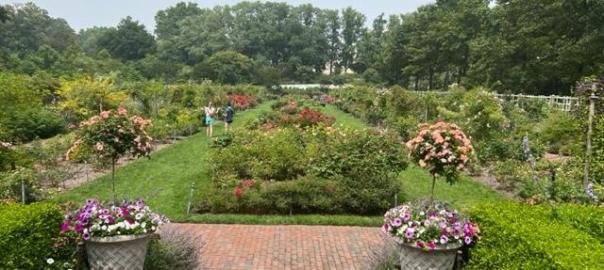
The Cranford Rose Garden in bloom at the Brooklyn Botanic Garden
The Cranford Rose Garden is amazing from every angle and the views from the top of the hill overlooking the garden shows the extensive amounts of roses planted and the array of colors.
The beds of roses of all colors and species
The entrance to the Cranford Rose Garden is full of an array of different types of colorful flowers
The beautiful and diverse flowers in the Cranford Rose Garden
The beauty of flowers up close
All sorts of roses line the trellis borders of the Rose Garden
What I love about walking around is that you can see the diversity of the roses. The garden is planted with different species so they bloom at different times giving the beds an array of colors at different times. Along the beds and trellis everything bloomed so vibrantly.
The beautiful orange roses that lined the trellis
The colorful trellis pathways
The reds and pinks in full bloom
Roses lining the lamppost
Admiring the beds of roses at the Cranford Rose Garden
Purple reins supreme
Walking through the trellis pathways of red
The beauty of the trellis
The back part of the garden
The back terrace of the Cranford Rose Garden
The elegant statuary of the rose garden and the sun dial
The back Terrace area
The back of the Cranford Rose Garden is lined with all sorts of flowering plants having a rainbow of colors.
Walking through the terrace gardens
The beautiful roses in the back of the garden
The roses in the back of the Cranford Gardens
Walking out the back of the gardens
The back path of the Cranford Rose Garden
The fountain in the back of the Cranford Garden
Visiting the Cranford Rose Garden when it flowering is one of the most interesting collection of colors and scents. This is why I try to time my visits around the blooming of the flowers.
The Tour of the Gardens at The Cloisters in the Spring 2026:
One of my favorite places with in the Metropolitan Museum of Art to visit is The Cloisters in any season. One of my favorite places when it is decorated for the Christmas holiday season, the Spring and Summer offer such beautiful displays of historical plants that try to match the theme of each Cloister and its historical background.
The docent led a very large group of us through each Cloister and told us of the way the curators plant the gardens to represent what may have been planted during the Medieval era for medical and nutritional functions of those peoples lives.
(From the Museum website)
The gardens of the Middle Ages included both real and ideal gardens. Poets and artists delighted in the depiction of fantasy gardens like the Garden of Love or of Paradise, but no real garden of the time remains to us. Historical records are rare and incomplete; the ninth-century plan for the monastery of St. Gall, with its carefully drawn and labeled garden beds, is unique. Archaeological excavations are yielding valuable new evidence, but we still know more about infirmary gardens of medicinal plants and aristocratic pleasure gardens than we do about humble kitchen plots of potherbs and vegetables (Met.org).
The gardens of the Museum, planted in reconstructed Romanesque and Gothic cloisters, evoke those that provided sustenance and spiritual refreshment within the medieval monastery. Designed as an integral feature of the Museum, the gardens have been a major attraction of The Cloisters since its opening in 1938, enhancing both the setting in which the Museum’s collection of medieval art is displayed and the visitor’s understanding of medieval life. The gardens are designed and maintained by a horticultural staff actively engaged in researching and developing the living collection (Met.org).
The Cloisters at 99 Margaret Corbin Drive in Fort Tryon blooming in the late Spring
We walked through the Cloister discussing how plantings were determined by medical and religious purposes
The flower beds in the Cloister
The view of the Hudson River was amazing
The flowers in bloom
Flowers in bloom
Flowers in bloom
Flowers in bloom
We moved the next Cloister looking over the medical plants and flowers
The Cloister in bloom
Walking around the Cloister
The plants around the sills of the Cloisters
Touring the Cloisters and admiring the flowers
Everything in bloom
We toured the last Cloister while the tour guide explained the plantings
The last Cloister we toured
The garden in full bloom
The growth of the hops growing on a trellis
The hops planting up close
The flowers in bloom in the Cloister
Video on “Art and Gardens at the Met”
We ended the tour admiring the art in the Tapestry Room and having a discussion about the use of plants and flowers in Medieval art.
‘The Hunt of the Unicorn’ tapestry discussion
I then visited the ‘Creatures of Myth and Imagination-European and the Americas’ exhibition.
This exhibition was an interesting look at mythical beasts of the era of great exploration from European to the Americas. It reminded me of the book “In Search of Ancient Astronauts” with many golden creatures that look like they are visitors from another planet, Ancient Gods to worship and one civilization’s outlook on the unknown. The artwork was a cross between mysticism and respect.
The exhibition sign for “Creatures of Myth and Imagination: Europe and the Americas”
Set in the evocative atmosphere of The Met Cloisters, Creatures of Myth and Imagination: Europe and the Americas sheds light on a selection of works created on either side of the Atlantic Ocean between 500 and 1500 CE. The exhibition’s exploration of hybrid creatures deepens our understanding of their apparent necessity among diverse peoples. In the Americas, a complex gold pendant by a Tairona artist of northern Colombia, depicting a confrontational figure with hands on hips, a crocodile-like head, and an enormous headdress, would have reflected and expressed the wearer’s status and power. In Europe, ferocious dragons such as the one depicted on a monumental fresco from the monastery of San Pedro de Arlanza, Spain, took center stage to convey a multiplicity of meanings both sacred and profane (Met.org).
The exhibition gallery
Unusual mythical creature
(From the museum website)
For as long as humans have told stories, we’ve imagined creatures that transcend the natural world. Fantastical beings combining the features of animals, humans, and even plants appear across cultures, emerging in the most ancient myths and enduring in contemporary epics. The widespread presence of these supernatural beings, possessing the power to transform and be transformed, reflects a global impulse to make sense of both known and unknown worlds. Visual artists have given form to these imaginary creatures, resulting in some of the most fearsome, beloved, and extraordinary works of art ever made (Met.org).
Small gold ancient Gods
Ritual Knives
Double pendants
Earth Deity
I took one last tour of the museum gardens before I left for the afternoon. On the balcony overlooking the Hudson River offered beautiful views and beautiful potted plants.
Walking out of the back Cloister
The back Cloister
The beautiful white flowers
The balcony overlooking the Hudson River
The potted plants by the doorway
The view of the Hudson River
Looking north up the Hudson River
The tour of the Gardens was amazing and the exhibition on the Pre-Columbian art interesting. It was a wonderful tour of the Cloisters.
I had a private function at the Museum of the City of New York across the street from the Central Park Conservatory Gardens. When the event was over, I took a walk around the gardens when they were in full bloom.
The gardens just went through a major renovation and each of the paths had rows of colorful flowers that were beautifully taken care of and designed to bloom at different stages of the growing season so there was always color in the gardens. The effect was amazing.
The entrance of the Central Park Conservatory lawn and fountain
The fountain and the geometric garden
Central Park Conservatory gardens at the entrance
The entrance of the gardens from the Harlem Meer area
The entrance to the flower gardens from the Central Park Conservatory lawn
The Central Park Conservatory garden beds
The gardens in full bloom in the Summer of 2026
The flower beds in the central of the gardens
The Central Park Conservatory Fountain and Lotus pools
I walked behind Hippo Park in Central Park one afternoon to discover a beautiful floral garden that was the 91st Street Garden that I had missed on previous walks in the park. The Garden did not look like this in the Fall.
The 91st Street Garden in the Summer of 2026
Then I remembered the scene in “You Got Mail” and remembered that this was the garden where they met. I always thought it was closer to Riverside Drive than it was here in the park.
The sign for the garden
As I passed the garden, I remember this was the garden in the last scene of the movie, “You Got Mail” when Meg Ryan realizes that her secret email pal is Tom Hanks. It was such a great scene and the perfect end to a great Rom-Com.
The end of the movie “You Got Mail” with Meg Ryan and Tom Hanks
The Gardens from the front
The flowers in full bloom
The flowers in full bloom in July 2026
All I could think about was this scene as I walked around the garden. The funny part is this was the first time I had ever visited this garden as I did not know where it was located. I knew it was on 91st Street but could never figure out where. You have to walk on the path behind the Hippo Playground and follow it to the other path.
The gardens from the front
Walking back up through Riverside park from the Hippo Playground
Walking in Riverside Park in the 90’s
You have to find your way through Riverside Park to find the garden but in the Spring and Summer it is worth the walk up and down the hill.
These are just some of the places that I am still visiting as the Summer season begins and there are more historical sites to see and more smaller gardens to visit. Let’s see what the rains produce in the coming months.
Places to Visit:
*Bloggers Note: the prices of these sites vary from season to season and can change from year to year. This is the same with the hours depending on what season you visit.
Fee: Adults $30.00/Seniors $17.00/Children $12.00/Members & Patrons and Children under 12 are free (prices do fluctuate). NY, NJ and CT students and NY residents Pay as you wish.
Museum Hours:
Hours: Open 7 days a week
March-October 10:00am-5:15pm
November-February 10:00am- 4:45pm
Closed Thanksgiving Day, December 25th and January 1st.
*Some galleries may be closed for construction or maintenance.
Fee: Adults $30.00/Seniors/Students $17.00/Children $12.00/Members & Patrons and Children under 12 are free (prices do fluctuate). NY, NJ and CT students and NY residents Pay as you wish.
Museum Hours:
Hours: Open 7 days a week
March-October 10:00am-5:15pm
November-February 10:00am- 4:45pm
Closed Thanksgiving Day, December 25th and January 1st.
*Some galleries may be closed for construction or maintenance.
I went on the Spring Garden tour at the Cloisters Museum with a discussion on Spring plantings and the use of those plants during Medieval times. The museum studied what plants were used for religious and medical practices.
We started the discussion of the plantings out in the first Cloister by the Hudson River
The Tour of the Gardens at The Cloisters in the Spring 2026:
(From the Museum website)
The gardens of the Middle Ages included both real and ideal gardens. Poets and artists delighted in the depiction of fantasy gardens like the Garden of Love or of Paradise, but no real garden of the time remains to us. Historical records are rare and incomplete; the ninth-century plan for the monastery of St. Gall, with its carefully drawn and labeled garden beds, is unique. Archaeological excavations are yielding valuable new evidence, but we still know more about infirmary gardens of medicinal plants and aristocratic pleasure gardens than we do about humble kitchen plots of potherbs and vegetables (Met.org).
The gardens of the Museum, planted in reconstructed Romanesque and Gothic cloisters, evoke those that provided sustenance and spiritual refreshment within the medieval monastery. Designed as an integral feature of the Museum, the gardens have been a major attraction of The Cloisters since its opening in 1938, enhancing both the setting in which the Museum’s collection of medieval art is displayed and the visitor’s understanding of medieval life. The gardens are designed and maintained by a horticultural staff actively engaged in researching and developing the living collection (Met.org).
The plantings of the first Cloister we visited
We walked through the Cloister discussing how plantings were determined by medical and religious purposes
The flower beds in the Cloister
The view of the Hudson River was amazing
The flowers in bloom
Flowers in bloom
Flowers in bloom
Flowers in bloom
We moved the next Cloister looking over the medical plants and flowers
The Cloister in bloom
Walking around the Cloister
The plants around the sills of the Cloisters
Touring the Cloisters and admiring the flowers
Everything in bloom
We toured the last Cloister while the tour guide explained the plantings
The last Cloister we toured
The garden in full bloom
The growth of the hops growing on a trellis
The hops planting up close
The flowers in bloom in the Cloister
We ended the tour admiring the art in the Tapestry Room and having a discussion about the use of plants and flowers in Medieval art. The artists at that time thought of the natural world with awe and respect. They admired the beauty of the natural world where in some points was still feared,
‘The Hunt of the Unicorn’ tapestry discussion
I then visited the ‘Creatures of Myth and Imagination-European and the Americas’ exhibition.
This exhibition was an interesting look at mythical beasts of the era of great exploration from European to the Americas. It reminded me of the book “In Search of Ancient Astronauts” with many golden creatures that look like they are visitors from another planet, Ancient Gods to worship and one civilization’s outlook on the unknown. The artwork was a cross between mysticism and respect.
The exhibition sign for “Creatures of Myth and Imagination: Europe and the Americas”
Set in the evocative atmosphere of The Met Cloisters, Creatures of Myth and Imagination: Europe and the Americas sheds light on a selection of works created on either side of the Atlantic Ocean between 500 and 1500 CE. The exhibition’s exploration of hybrid creatures deepens our understanding of their apparent necessity among diverse peoples. In the Americas, a complex gold pendant by a Tairona artist of northern Colombia, depicting a confrontational figure with hands on hips, a crocodile-like head, and an enormous headdress, would have reflected and expressed the wearer’s status and power. In Europe, ferocious dragons such as the one depicted on a monumental fresco from the monastery of San Pedro de Arlanza, Spain, took center stage to convey a multiplicity of meanings both sacred and profane (Met.org).
The exhibition gallery
Unusual mythical creature
(From the museum website)
For as long as humans have told stories, we’ve imagined creatures that transcend the natural world. Fantastical beings combining the features of animals, humans, and even plants appear across cultures, emerging in the most ancient myths and enduring in contemporary epics. The widespread presence of these supernatural beings, possessing the power to transform and be transformed, reflects a global impulse to make sense of both known and unknown worlds. Visual artists have given form to these imaginary creatures, resulting in some of the most fearsome, beloved, and extraordinary works of art ever made (Met.org).
Small gold ancient Gods
Ritual Knives
Double pendants
Earth Deity
I took one last tour of the museum gardens before I left for the afternoon. On the balcony overlooking the Hudson River offered beautiful views and beautiful potted plants.
Walking out of the back Cloister
The back Cloister
The beautiful white flowers
The balcony overlooking the Hudson River
The potted plants by the doorway
The view of the Hudson River
Looking north up the Hudson River
The tour of the Gardens was amazing and the exhibition on the Pre-Columbian art interesting. It was a wonderful tour of the Cloisters.
Interesting video on YouTube on “Gardens and Art at the Met”
D’Lili Bakery is a small neighborhood bakery that stands out because of the quality, selection, service and prices. The bakery is extremely reasonable, the portion sizes are enough for a meal and the ladies that work there are very nice but you had better know some Spanish.
Their Beef and Chicken Pastilitos are delicious
You can buy a complete meal here and not go over budget. The pastilitos, which are the Dominican version of the empanada, are generously filled with either cheese or meat and make the perfect meal on the run. I love their Chicken and Beef Pastilitos and two of those are more than enough for a quick lunch.
The Beef Pastilitos
Both the Chicken and the Beef are very well spiced and I enjoy eating these on my walks around the neighborhood.
The Chicken pastilitos
Where D’ Lili Bakery really shines is there baked items. Everything I have tried there was wonderful. From their fruit filled pastries to their donuts, everything I have bought there has been fresh and delicious.
The Sugar doughnuts
The sugar doughnuts here are fried and loaded with sugar. They are soft and chewy.
These are pillowy and chewy
What I really love is their fruit filled pastries. Their Guava pastry comes in both fruit filled and fruit cheese filled and they give you a generous slice. The fruit filling has a tangy taste and makes the perfect end to the meal.
The flaky Guava pastries
D’Lili Bakery is one of those neighborhood bakeries that every block should have around. The food is very reasonable, the service is very nice and the prices in this economy are very fair.
New York City is loaded with bodegas and delis sometimes a couple on each block. Brooklyn has many of them and when I walk through neighborhoods here, I try to eat locally and support small businesses. I came across 840 United Deli when I was visiting the Brooklyn Botanic Garden and wanted a sandwich instead of pizza.
The menu at 840 United Deli
The place was busy in the late morning with people ordering breakfast sandwiches. The guy next to me was raving about a Bacon, Egg and Cheese hero that the breakfast cook made for him.
The ingredients to make those great sandwiches and wraps
The selection of sodas and snacks
I wanted lunch and was in the mood for something that would get me through the afternoon and I went for a Cheeseburger Deluxe. Great Choice!
The Cheeseburger Deluxe
The cheeseburger was perfectly cooked and caramelized. The burger was oversized and was more than enough for lunch.
The Cheeseburger
The French Fries
They gave me more than French Fries on the side. This could have fed two people comfortably.
What a great dinner before the show
On another trip to Brooklyn for an exhibit at the Brooklyn Museum, I stopped in for a sandwich and ate on the steps of the Brooklyn Museum again. It is the perfect place to people watch. This time I ordered a Cheesesteak. You have to be pretty clear with these guys on ordering a Philly Cheesesteak. While it is delicious, the guy asked me if I wanted lettuce and tomato on it with mayo. That would make anyone from Philly either pissed or cry.
The Philly Cheesesteak
The hero was loaded with meat and cheese
I felt like I was back in Philly
When I was visiting the Brooklyn Botanic Garden for “Members Movie Night”, I stopped in for another hero sandwich. I ordered the “All American Hero” with Hot Pastrami, Turkey and Swiss Cheese heated on the grill and then tucked into a chewy bun. It was really good on a cool night.
This made the perfect dinner on the cool evening in the Brooklyn Botanic Garden
The sandwich was loaded with meats and cheeses
Yum!
Don’t miss the friendly bodega cat as he travels around the store keeping watch
You know the food will be safe
480 United Deli is one of those bodega/deli’s that every neighborhood should have on its block.