Category Archives: Exploring Cold Spring, NY

Day Three Hundred and Eighty-Eight Exploring formal and informal Gardens in New York City and the Hudson River Valley. June 1st-30th, 2026

I had a five week break from the college when my first Summer class was cancelled. So I concentrated on traveling through New Jersey and New York, both the City and Upstate for my blog. I wanted to revisit many historical sites that I had seen during the holiday season (was Christmas six months ago?) or in the past. There were places like Central Park, where I had not seen certain sections in the Spring. This lead to me being part of many walking tours of gardens during the month of June.

With all the wet weather we had in the Spring, the gardens in June were lush with flowers and flowering trees and plants. Pathways lined with color and walled gardens beautifully laid out. It was interesting to see how these were planted, designed and maintained.

The entrance to the Brooklyn Botanic Garden in June 2026

All the rain we had in April and May and the warm days of early June had awakened the Cherry Blossoms and I visited as many locations to see them in full bloom.

Please read my blog on visiting the Cherry Blossoms:

Again in the Spring of 2026:

https://mywalkinmanhattan.com/category/exploring-newark-nj

Once they were finished, gardens came to life all over the tri-state area and many historical homes and parks came to life in a sea of color and smells that showed the power of Mother Nature to make things beautiful. I was impressed with the work of many volunteer staffs and their dedication in taking care of these sites for all of us to enjoy.

Visiting to Amour-Steiner House for the Spring Garden Tour:

The Amour-Steiner House the day of the Garden Tour

https://en.wikipedia.org/wiki/Armour%E2%80%93Stiner_House

My review on TripAdvisor:

https://www.tripadvisor.com/ShowUserReviews-g47953-d15523741-r1063540902-The_Armour_stiner_Octagon_House-Irvington_New_York.html?m=19905

My review on VisitingaMuseum.com:

https://visitingamuseum.com/tag/armour-stiner-octagon-house

Walking in front of the formal gardens

The formal gardens on the Spring of 2026

The fountain in the center of the gardens

The beds were in full bloom when we toured the gardens

The colors of the flowers were patriotic red, white and blue

In between the hedges, there was elegant statuary and potted urns with colorful flowers blooming with bright hues.

The urns were filled with bright colors of the season

Statuary representing the arts and music lined the hedges

The flowers were so brilliant that afternoon

I enjoyed looking at the statuary

The gardens were so beautiful with the house in the background

As we left the gardens, I admired the ornate Fox and the Glove gate on the way out

We then crossed the lawn to tour the greenhouse, where many of the flowers were and still are grown for decorating the house both inside and out.

The landscaping has a romantic spin on it as the property was planted to accent not just the property but the house as well giving it a natural but balanced look to it.

Touring the formal greenhouse

Even the working greenhouse had a romanticized look about it that reflected the house

The inside of the greenhouse. Each side of the counters seasonal flowers are grown for the property. This greenhouse is used all year long supplying the house with a steady stream of flowers.

In the middle of the greenhouse was a beautiful Victorian aquarium that was lined with more flowers. There were no fish at this time.

I loved the beautiful flowers that lined the counters

The Spring colors were breathtaking

We then started the tour of the house starting with the outside veranda that held more urns and planters of fresh flowers

The beautiful veranda lines the entire house

The beautiful colors from the potted and hanging plants

The veranda decorated for the upcoming ‘250th Anniversary of the United States

The hanging plants

The potted plants

We even admired the birdhouse that matched the house

We then went inside to tour the house. It would be interesting to see the house without all the Christmas decorations that I saw the last time I toured the house.

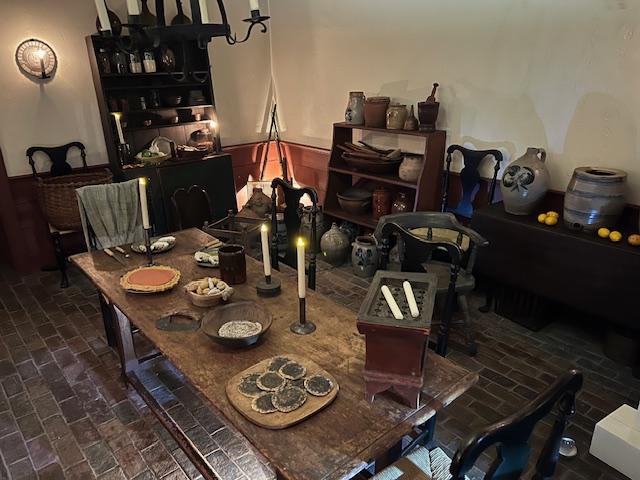
The triangle room off the foyer once used as the Receiving Room

The beautiful foyer to the second floor

The main Parlor/Living Room used for entertaining

The formal Dining Room

The decorative sideboard

The other decorative sideboard

The Dining Room table set for a Spring dinner

We then started the tour of the second floor which started in the game room at the top of there landing. I remember the big Christmas tree being here when the house was decorated for the holidays.

I liked the room was the way it is here

Then we toured the bedrooms which were not that elaborate but functional and comfortable as they are today.

One of several bedrooms on the second floor

The bathroom which is considered normal today was ahead of its time with flushing toilets and hot and cold running water

The office off the side in one of the Octagon corners

The Egyptian Room was the height of fashion with travel and new discovers in Egypt at the time.

The ceiling and decorations of Egyptian Room

The decor of the Egypt

The beautiful porcelain in the room

Then we toured the Curio Room. I thought the room was a lot of fun with small objects that people would have collected from their journeys at that time.

The shelves, counters and walls were filled with all sorts of interesting objects

Many types of object’s

The Victorian Terrarium that was becoming fashionable at the time

The fold out desk with small objects in each slot

A Victrola and Terrarium

The last part of the tour was of the newly renovated kitchen. The shelves were lined with a collection of shiny pots and pans.

The ‘modern’ Victorian kitchen

When the tour was over, I visited the gift shop and looked over the kitchen once more. It is interesting to see how ‘modern’ back then is ‘contemporary’ today. Victorians set the tone for the modern American home of today and the expectations of the American dream.

Before I left the grounds, I visited the gardens once more. It was such perfect weather to walk around and I enjoyed the beauty of these gardens. Mother Nature creates this all this.

Walking around the grounds of the home

I enjoyed walking around the gardens that day

I found this tour one of the most relaxing I have taken in a long time. The beauty of both the house and the gardens was wonderful. Just sitting on the veranda and looking over the grounds was the perfect way to spend the afternoon.

Taking the Clermont Garden Walking Tour 2026:

I returned in the Spring of 2026 for the an updated walking tour of the gardens “Gardens and Grounds: Evolving Landscaping of Clermont”, where the State of New York horticulturalist who had just been hired to maintain the gardens, explained to us the developments and goals that the State wanted for the direction of the landscaping on the property. They wanted it brought back to the 1930’s blueprint of what Alice Livingston had originally envisioned for the estate when she returned from Europe.

Arriving to the Clermont estate at 1 Clermont Avenue in Germantown, NY

https://www.friendsofclermont.org

https://parks.ny.gov/visit/historic-sites/clermont-state-historic-site

https://en.wikipedia.org/wiki/Clermont_State_Historic_Site

My review on TripAdvisor:

https://www.tripadvisor.com/ShowUserReviews-g47780-d263704-r1063291932-The_Clermont_Mansion-Germantown_New_York.html?m=19905

My review on VisitingaMuseum.com:

We started the tour with a history of the house and Alice Livingston’s return from Europe to create her famous gardens

The front of the mansion in the Spring of 2026

We started the tour at the Walled Garden which was just finished being restored. The back wall had just been finished and the site’s main horticulturalist explained that she was working with a group of volunteers to maintain the gardens.

The Walled Garden designed by Alice Livingston

The Walled Garden in the Spring of 2026

The inside to the entrance of the Walled Garden

The back part of the Walled Garden

The next garden we toured was the Wilderness Garden which included wildflowers and a fish pond

The Wilderness Garden sign

The back part of the Walled Garden leads to the Wilderness Garden

The entrance to the Wilderness Gardens

The lecture on the design and plantings of the Wilderness Garden

The colorful wildflowers that line the grass paths

The fish pond in the Wilderness Garden

We then followed the path and walked up and toured the Cutting and Children’s Garden. These colorful gardens once supplied the house with an assortment of fresh flowers. It also taught the Livingston girls the attributes of gardening.

The Cutting Garden and Greenhouse sign

The main Cutting Garden

The Cutting garden

The Cutting Garden in the late Spring

The in season flowers in the Cutting Garden

The Children’s Playhouse and Garden is next to the Cutting Garden

The Children’s Garden in the Spring

Touring past the old Greenhouses

Part of the former greenhouse

The tour through the grounds with my group

The pathway back to Clermont

Touring along the river

The former roadway between the house and the river

The South Spring Garden

Our last garden toured was the one closest to the house and that was the South Spring Garden of which Alice could see from her window. When the porch was removed from the home and Alice developed plans for other gardens, this garden went ‘native’.

The South Garden

The South Garden in bloom

The views from the South Garden

The flower planters near the South Garden

The planters filled with Spring geraniums

Walking back after the tour was over and looking at the beautiful grounds

Ending the tour that day with a walk along the river

It was a beautiful day to walk the gardens and the perfect way to spend the afternoon. Each time I take a tour of the gardens, I am amazed how different they seem. I love the different times of the year and how it changes these gardens.

I returned to Manhattan the next week and as I was working in Inwood and Washington Heights neighborhoods, I took a tour of Isham Park with the Bruce Reynolds Gardens and Fort Tyron Park with the Heather Gardens, when they were in full bloom. It was breathtaking with the back drop of the Hudson River on a sunny afternoon.

Isham Park at Isham Street

https://www.nycgovparks.org/parks/isham-park

https://en.wikipedia.org/wiki/Isham_Park

My TripAdvisor:

https://www.tripadvisor.com/ShowUserReviews-g60763-d2691498-r1062936414-Isham_Park-New_York_City_New_York.html?m=19905

Isham Park in the Spring of 2026

The Isham Park oval in the Spring

The oval during the Spring

The oval with the roses in bloom

The roses in bloom

Isham Park in the Spring

In Isham Park, I toured the Bruce Reynolds Gardens, which is in the center of the park. They were in full bloom when I walked around the gardens and relaxed under the shade trees.

The Bruce Reynolds Garden

https://www.nycgovparks.org/parks/isham-park/highlights/14066

My review on TripAdvisor:

https://www.tripadvisor.com/ShowUserReviews-g60763-d6963839-r1062935703-Bruce_Reynold_s_Garden-New_York_City_New_York.html?m=19905

The Garden in the Spring

The gardens in bloom

The gardens in the Spring

The roses were in full bloom

The gardens were in full bloom

Fort Tryon Park:

https://www.nycgovparks.org/parks/fort-tryon-park

My review on TripAdvisor:

https://www.tripadvisor.com/ShowUserReviews-g60763-d2305249-r1064544653-Fort_Tryon_Park-New_York_City_New_York.html?m=19905

Fort Tryon Park

Fort Tryon Park

The entrance to Fort Tryon Park

Fort Tryon Park

Entrance to the park

The pathways through the Heather Gardens

Walking through the Heather Garden

Inside the park a new restaurant has replaced the former New Leaf Cafe, Le Bonnefont, a Modern French restaurant.

The Bonnefont Restaurant replaced the New Leaf Cafe

https://thebonnefont.com

https://www.facebook.com/groups/432657521042383/posts/1318136805827779

My review on TripAdvisor:

The new Bonnefont Restaurant is open for lunch and brunch

The restaurant was closed that afternoon but I was able to look at the menu online and it is an interesting menu. The cuisine is a mixture of French and Contemporary cooking.

The Heather Gardens

Walking through The Heather Garden

https://www.nycgovparks.org/parks/fort-tryon-park/highlights/12337

My review on TripAdvisor:

https://www.tripadvisor.com/ShowUserReviews-g60763-d284007-r1064545854-Heather_Garden-New_York_City_New_York.html?m=19905

Walking through the Heather Garden

The other side to Heather Park

Walking through the Gardens

Walking through the pathways of the gardens

Walking around the gardens

Walking back through the gardens to the Fort Tryon location

Walking to the Fort Tryon site

The Fort Tryon site

Visiting the Brooklyn Botanic Garden before Rose Night in 2026:

I got an email from the Brooklyn Botanic Garden saying that the Cranford Rose Garden was at its peak of blooming and that I should see it while it was at its prime. I was busy at work and was able to travel down to down to the gardens a few days later. Talk about perfect timing as the petals just started to fall.

The Cranford Rose Garden at peak is one of the most beautiful sites. The colors and the fragrances are just amazing. I could not attend “Rose Night” in 2026 because of a prior commitment plus it would be a gloomy night with the threat of rain. So I went the Friday afternoon before the event, which would be held the next Wednesday. By that point, the flowers would be out of peak.

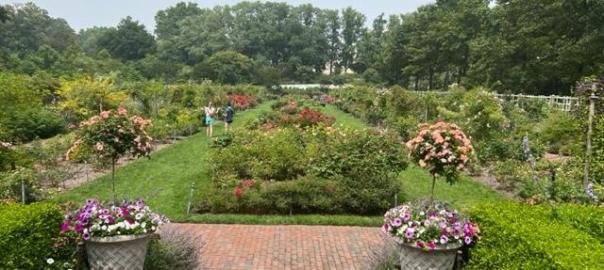
The Cranford Rose Garden in bloom at the Brooklyn Botanic Garden

https://www.bbg.org

My review on TripAdvisor:

https://www.tripadvisor.com/ShowUserReviews-g60827-d10676473-r1062937821-Brooklyn_Botanic_Garden-Brooklyn_New_York.html?m=19905

My review on VisitingaMuseum.com:

The Cranford Rose Garden is amazing from every angle and the views from the top of the hill overlooking the garden shows the extensive amounts of roses planted and the array of colors.

The beds of roses of all colors and species

The entrance to the Cranford Rose Garden is full of an array of different types of colorful flowers

The beautiful and diverse flowers in the Cranford Rose Garden

The beauty of flowers up close

All sorts of roses line the trellis borders of the Rose Garden

What I love about walking around is that you can see the diversity of the roses. The garden is planted with different species so they bloom at different times giving the beds an array of colors at different times. Along the beds and trellis everything bloomed so vibrantly.

The beautiful orange roses that lined the trellis

The colorful trellis pathways

The reds and pinks in full bloom

Roses lining the lamppost

Admiring the beds of roses at the Cranford Rose Garden

Purple reins supreme

Walking through the trellis pathways of red

The beauty of the trellis

The back part of the garden

The back terrace of the Cranford Rose Garden

The elegant statuary of the rose garden and the sun dial

The back Terrace area

The back of the Cranford Rose Garden is lined with all sorts of flowering plants having a rainbow of colors.

Walking through the terrace gardens

The beautiful roses in the back of the garden

The roses in the back of the Cranford Gardens

Walking out the back of the gardens

The back path of the Cranford Rose Garden

The fountain in the back of the Cranford Garden

Visiting the Cranford Rose Garden when it flowering is one of the most interesting collection of colors and scents. This is why I try to time my visits around the blooming of the flowers.

The Tour of the Gardens at The Cloisters in the Spring 2026:

One of my favorite places with in the Metropolitan Museum of Art to visit is The Cloisters in any season. One of my favorite places when it is decorated for the Christmas holiday season, the Spring and Summer offer such beautiful displays of historical plants that try to match the theme of each Cloister and its historical background.

The docent led a very large group of us through each Cloister and told us of the way the curators plant the gardens to represent what may have been planted during the Medieval era for medical and nutritional functions of those peoples lives.

(From the Museum website)

The gardens of the Middle Ages included both real and ideal gardens. Poets and artists delighted in the depiction of fantasy gardens like the Garden of Love or of Paradise, but no real garden of the time remains to us. Historical records are rare and incomplete; the ninth-century plan for the monastery of St. Gall, with its carefully drawn and labeled garden beds, is unique. Archaeological excavations are yielding valuable new evidence, but we still know more about infirmary gardens of medicinal plants and aristocratic pleasure gardens than we do about humble kitchen plots of potherbs and vegetables (Met.org).

The gardens of the Museum, planted in reconstructed Romanesque and Gothic cloisters, evoke those that provided sustenance and spiritual refreshment within the medieval monastery. Designed as an integral feature of the Museum, the gardens have been a major attraction of The Cloisters since its opening in 1938, enhancing both the setting in which the Museum’s collection of medieval art is displayed and the visitor’s understanding of medieval life. The gardens are designed and maintained by a horticultural staff actively engaged in researching and developing the living collection (Met.org).

The Cloisters at 99 Margaret Corbin Drive in Fort Tryon blooming in the late Spring

https://www.metmuseum.org/plan-your-visit/met-cloisters

https://en.wikipedia.org/wiki/The_Cloisters

My review on TripAdvisor:

https://www.tripadvisor.com/ShowUserReviews-g60763-d106609-r1045332155-The_Cloisters-New_York_City_New_York.html?m=19905

My review on VisitingaMuseum.com:

https://visitingamuseum.com/tag/the-cloisters-museum

We walked through the Cloister discussing how plantings were determined by medical and religious purposes

The flower beds in the Cloister

The view of the Hudson River was amazing

The flowers in bloom

Flowers in bloom

Flowers in bloom

Flowers in bloom

We moved the next Cloister looking over the medical plants and flowers

The Cloister in bloom

Walking around the Cloister

The plants around the sills of the Cloisters

Touring the Cloisters and admiring the flowers

Everything in bloom

We toured the last Cloister while the tour guide explained the plantings

The last Cloister we toured

The garden in full bloom

The growth of the hops growing on a trellis

The hops planting up close

The flowers in bloom in the Cloister

We ended the tour admiring the art in the Tapestry Room and having a discussion about the use of plants and flowers in Medieval art.

‘The Hunt of the Unicorn’ tapestry discussion

I then visited the ‘Creatures of Myth and Imagination-European and the Americas’ exhibition.

This exhibition was an interesting look at mythical beasts of the era of great exploration from European to the Americas. It reminded me of the book “In Search of Ancient Astronauts” with many golden creatures that look like they are visitors from another planet, Ancient Gods to worship and one civilization’s outlook on the unknown. The artwork was a cross between mysticism and respect.

The exhibition sign for “Creatures of Myth and Imagination: Europe and the Americas”

https://www.metmuseum.org/exhibitions/creatures-of-myth-and-imagination-europe-and-the-americas

(From the museum’s website)

Set in the evocative atmosphere of The Met Cloisters, Creatures of Myth and Imagination: Europe and the Americas sheds light on a selection of works created on either side of the Atlantic Ocean between 500 and 1500 CE. The exhibition’s exploration of hybrid creatures deepens our understanding of their apparent necessity among diverse peoples. In the Americas, a complex gold pendant by a Tairona artist of northern Colombia, depicting a confrontational figure with hands on hips, a crocodile-like head, and an enormous headdress, would have reflected and expressed the wearer’s status and power. In Europe, ferocious dragons such as the one depicted on a monumental fresco from the monastery of San Pedro de Arlanza, Spain, took center stage to convey a multiplicity of meanings both sacred and profane (Met.org).

The exhibition gallery

Unusual mythical creature

(From the museum website)

For as long as humans have told stories, we’ve imagined creatures that transcend the natural world. Fantastical beings combining the features of animals, humans, and even plants appear across cultures, emerging in the most ancient myths and enduring in contemporary epics. The widespread presence of these supernatural beings, possessing the power to transform and be transformed, reflects a global impulse to make sense of both known and unknown worlds. Visual artists have given form to these imaginary creatures, resulting in some of the most fearsome, beloved, and extraordinary works of art ever made (Met.org).

Small gold ancient Gods

Ritual Knives

Double pendants

Earth Deity

I took one last tour of the museum gardens before I left for the afternoon. On the balcony overlooking the Hudson River offered beautiful views and beautiful potted plants.

Walking out of the back Cloister

The back Cloister

The beautiful white flowers

The balcony overlooking the Hudson River

The potted plants by the doorway

The view of the Hudson River

Looking north up the Hudson River

The tour of the Gardens was amazing and the exhibition on the Pre-Columbian art interesting. It was a wonderful tour of the Cloisters.

The Central Park Conservatory Gardens:

https://www.centralparknyc.org/locations/conservatory-garden

My review on TripAdvisor:

https://www.tripadvisor.com/ShowUserReviews-g60763-d27072178-r1068853770-Central_Park_Conservancy-New_York_City_New_York.html?m=19905

My review on VisitingaMuseum.com:

I had a private function at the Museum of the City of New York across the street from the Central Park Conservatory Gardens. When the event was over, I took a walk around the gardens when they were in full bloom.

The gardens just went through a major renovation and each of the paths had rows of colorful flowers that were beautifully taken care of and designed to bloom at different stages of the growing season so there was always color in the gardens. The effect was amazing.

The entrance of the Central Park Conservatory lawn and fountain

The fountain and the geometric garden

Central Park Conservatory gardens at the entrance

The entrance of the gardens from the Harlem Meer area

The entrance to the flower gardens from the Central Park Conservatory lawn

The Central Park Conservatory garden beds

The gardens in full bloom in the Summer of 2026

The flower beds in the central of the gardens

The Central Park Conservatory Fountain and Lotus pools

The Fountain statues

The flowers beds around the paths

The orange flowers that line the paths

The vibrant purple flowers

The gardens that line the paths

The beautiful flowers that line the paths

The flowers are lining the paths

The flowers lining the paths

The flowers were so vibrant in the Summer of 2026

The 91st Street Garden in Central Park:

https://www.thegardenpeople.org

https://www.nycgovparks.org/park-features/riverside-park/virtual-tour/91-garden

My review on TripAdvisor:

I walked behind Hippo Park in Central Park one afternoon to discover a beautiful floral garden that was the 91st Street Garden that I had missed on previous walks in the park. The Garden did not look like this in the Fall.

The 91st Street Garden in the Summer of 2026

Then I remembered the scene in “You Got Mail” and remembered that this was the garden where they met. I always thought it was closer to Riverside Drive than it was here in the park.

The sign for the garden

As I passed the garden, I remember this was the garden in the last scene of the movie, “You Got Mail” when Meg Ryan realizes that her secret email pal is Tom Hanks. It was such a great scene and the perfect end to a great Rom-Com.

The end of the movie “You Got Mail” with Meg Ryan and Tom Hanks

The Gardens from the front

The flowers in full bloom

The flowers in full bloom in July 2026

All I could think about was this scene as I walked around the garden. The funny part is this was the first time I had ever visited this garden as I did not know where it was located. I knew it was on 91st Street but could never figure out where. You have to walk on the path behind the Hippo Playground and follow it to the other path.

The gardens from the front

Walking back up through Riverside park from the Hippo Playground

Walking in Riverside Park in the 90’s

You have to find your way through Riverside Park to find the garden but in the Spring and Summer it is worth the walk up and down the hill.

These are just some of the places that I am still visiting as the Summer season begins and there are more historical sites to see and more smaller gardens to visit. Let’s see what the rains produce in the coming months.

Places to Visit:

*Bloggers Note: the prices of these sites vary from season to season and can change from year to year. This is the same with the hours depending on what season you visit.

The Armour-Stiner Octagon House

45 West Clinton Avenue

Irvington, NY 10533

(914) 817-5763

https://en.wikipedia.org/wiki/Armour%E2%80%93Stiner_House

Hours: Sunday-Saturday Seasonal please check their website

Admission: Depends on the Tour/Times of the year-Please check the website

My review on TripAdvisor:

https://www.tripadvisor.com/Attraction_Review-g47953-d15523741-Reviews-The_Armour_stiner_Octagon_House-Irvington_New_York.html

My review on VisitingaMuseum.com:

Clermont State Historic Site-New York Parks & Recreation

Route 6 (Off Route 9G)

Germantown, NY  12526

(518) 537-6622

https://parks.ny.gov/historic-sites/16/details.aspxhttp:/clermontstatehistoricsite.blogspot.comwww.friendsofclermont.org

https://www.friendsofclermont.org/

Open: April 11-October 31 Wednesday-Sunday 10:30am-4:00pm/November 1-

December 22/Saturday & Sunday 10:30am-3:00pm

Please call in advance due to seasons and weather conditions

Fee: Adults $7.00/Seniors and Adults $6.00/Children Under 12 and Members Free

My review on TripAdvisor:

https://www.tripadvisor.com/Attraction_Review-g47780-d263704-Reviews-The_Clermont_Mansion-Germantown_New_York.html?m=19905

My review on VisitingaMuseum.com:

Brooklyn Botanic Garden

990 Washington Avenue

Brooklyn, NY  11225

(718) 623-7210

http://www.bbg.org

Open:  Sunday and Saturday 10:00am-6:00pm/Monday Closed/Tuesday-Friday 8:00am-6:00pm

Admission: Depending on the time of year/please check the website

My review on TripAdvisor:

https://www.tripadvisor.com/Attraction_Review-g60827-d103900-Reviews-Brooklyn_Botanic_Garden-Brooklyn_New_York.html?m=19905

My review on VisitingaMuseum.com:

https://visitingamuseum.com/tag/brooklyn-botanic-garden

Fort Tyron Park

Riverside Drive to Broadway

New York, NY  10040

https://www.nycgovparks.org/parks/fort-tryon-park

https://www.nycgovparks.org/parks/fort-tryon-park/history

Open: Sunday-Saturday 6:00am-1:00am

My review on TripAdvisor:

https://www.tripadvisor.com/Attraction_Review-g60763-d2305249-Reviews-Fort_Tryon_Park-New_York_City_New_York.html?m=19905

My review on TripAdvisor:

Heather Garden

Center Path-Fort Tryon Park

New York, NY 10040

(212) 795-1388

https://www.nycgovparks.org/parks/fort-tryon-park/highlights/12337

Open: Dawn to Dusk

Admission: No Fee

My review on TripAdvisor:

https://www.tripadvisor.com/ShowUserReviews-g60763-d284007-r1064545854-Heather_Garden-New_York_City_New_York.html?m=19905

The Cloisters Museum & Gardens: A Branch of The Metropolitan Museum of Art

99 Margaret Corbin Drive/Fort Tryon Park

New York, NY  10040

(212) 923-3700

Open: March-October 10:00am-5:15pm/November-February-10:00am-4:45pm

http://www.metmuseum.org

https://www.metmuseum.org/visit/plan-your-visit/met-cloisters

Fee: Adults $30.00/Seniors $17.00/Children $12.00/Members & Patrons and Children under 12 are free (prices do fluctuate). NY, NJ and CT students and NY residents Pay as you wish.

Museum Hours:

Hours: Open 7 days a week

March-October 10:00am-5:15pm

November-February 10:00am- 4:45pm

Closed Thanksgiving Day, December 25th and January 1st.

*Some galleries may be closed for construction or maintenance.

My review on TripAdvisor:

https://www.tripadvisor.com/Attraction_Review-g60763-d106609-Reviews-The_Met_Cloisters-New_York_City_New_York.html?m=19905

My review on VisitingaMuseum.com:

https://visitingamuseum.com/tag/the-cloisters-museum

Isham Park

11 Park Terrace East

New York, NY 10034

(212) 639-9675

https://www.nycgovparks.org/parks/isham-park

https://en.wikipedia.org/wiki/Isham_Park

Open: Seasonal

My review on TripAdvisor:

https://www.tripadvisor.com/ShowUserReviews-g60763-d2691498-r1062936414-Isham_Park-New_York_City_New_York.html?m=19905

Bruce Reynolds Garden

11 Park Terrace East

New York, NY 10034

https://www.nycgovparks.org/parks/isham-park/highlights/14066

Open: Seasonal

My review on TripAdvisor:

https://www.tripadvisor.com/ShowUserReviews-g60763-d6963839-r1062935703-Bruce_Reynold_s_Garden-New_York_City_New_York.html?m=19905

The Central Park Conservatory Garden

Located between 104th and 106th Streets off Fifth Avenue

New York, NY 10029

https://www.centralparknyc.org/

https://www.centralpark.com/visitor-info/central-park-conservancy/

Hours: Depends on the season and the Dawn to Dusk rule

Hours of Operation:

November-February (8:00am-5:00pm)

March (8:00am-6:00pm)

April (8:00am-7:00pm)

May (August 14th 8:00am-8:00pm)

August 15-31 (8:00am-7:30pm)

September (8:00am-7:30pm)

http://www.centralparknyc.org/things-to-see-and-do/#what_lawns-and-landscapes

Fee: Free

TripAdvisor Review:

https://www.tripadvisor.com/Attraction_Review-g60763-d272517-Reviews-Conservatory_Garden-New_York_City_New_York.html?m=19905

My review on VisitingaMuseum.com:

The 91st Street Garden-Central Park

Riverside Drive

New York, NY 10025

https://www.thegardenpeople.org

https://www.nycgovparks.org/park-features/riverside-park/virtual-tour/91-garden

Open: 24 Hours

My review on TripAdvisor:

Putnam History Museum 63 Chestnut Street Cold Springs, NY 10516

The “Indigenous Peoples” exhibition at the museum.

Mount Gulian Historic Site 145 Sterling Street Beacon, NY 12508

Mount Gulian Historic Site

145 Sterling Street

Beacon, NY  12508

(845) 831-8172

http://www.mountgulian.org/

Open: May 5th-October 27th Tours are every hour 1:00pm-5:00pm on Sundays, Wednesdays, Thursdays and Fridays. Special Wedding tours are by appointment.

Fee: Adults $8.00/Seniors $6.00/Children (6-18) $4.00/Members are free

My review on TripAdvisor:
https://www.tripadvisor.com/Attraction_Review-g47291-d10701912-Reviews-Mount_Gulian_Society-Beacon_New_York.html?m=19905

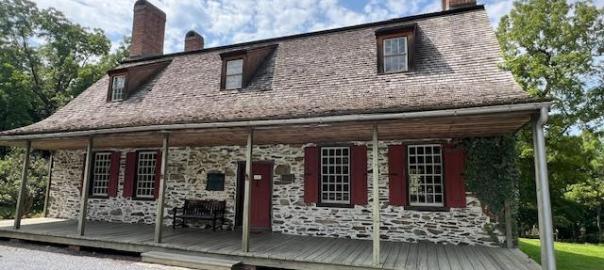
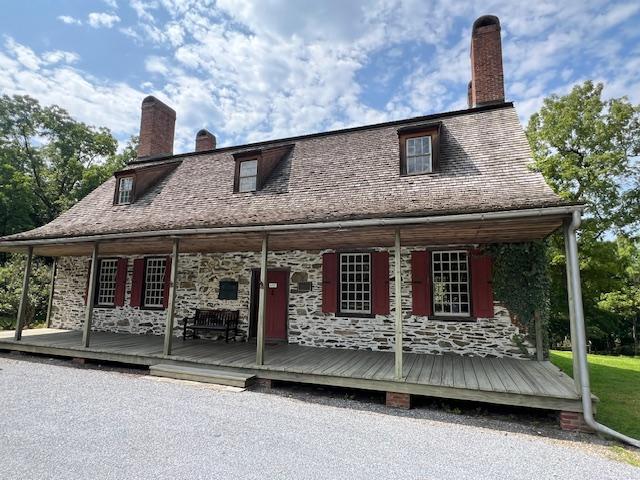
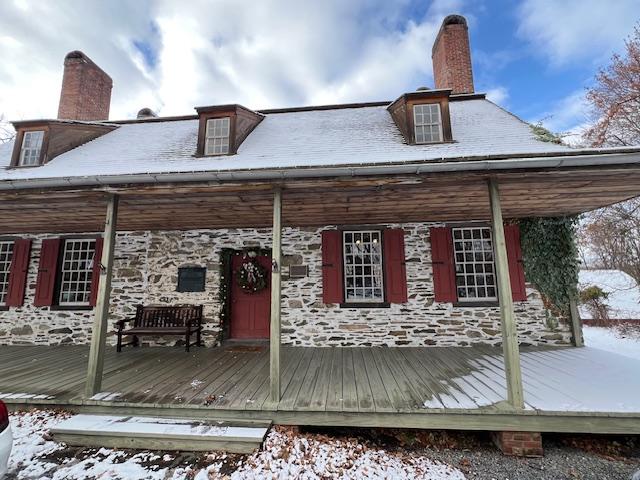
The outside of the Mount Gulian Homestead at 145 Sterling Street in the Summer of 2024

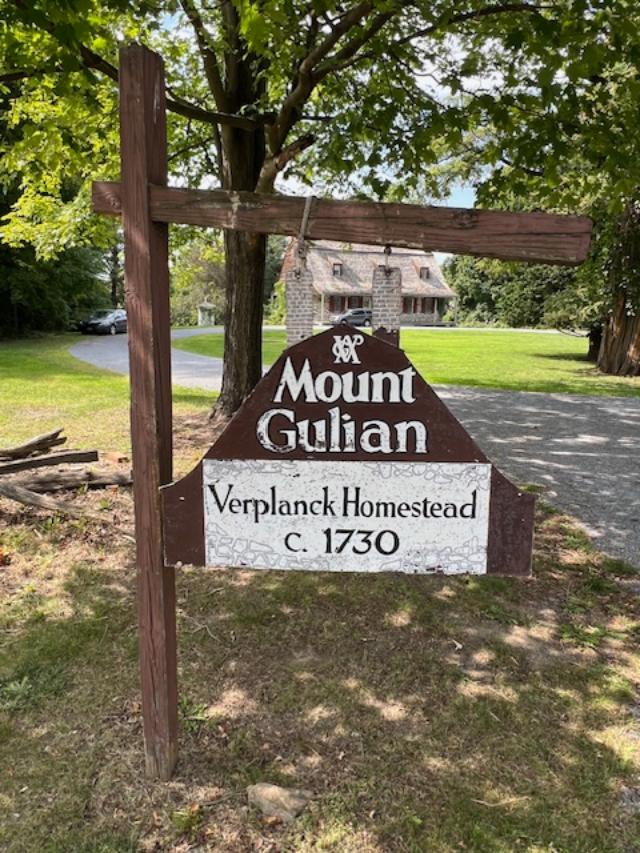
The sign that welcomes you

On my last trip to the Hudson River Valley to visit the great houses of the Hudson, I came across Mount Gulian, a Dutch manor that I never heard of in all my visits. This smaller Dutch manor house is actually a reconstruction of an 18th century home that burned to the ground by arson in 1931. The original house had been built between 1730 and 1740 and added onto over the next two centuries.

Christmas Time at Mount Gulian in the three weekends in December:

Mount Guilian 2021 V

Mount Gulian at Christmas in December of 2021

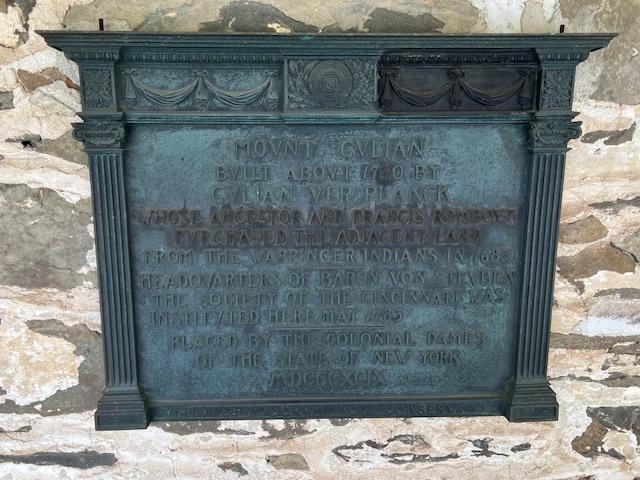
The historic plaque in front of the house

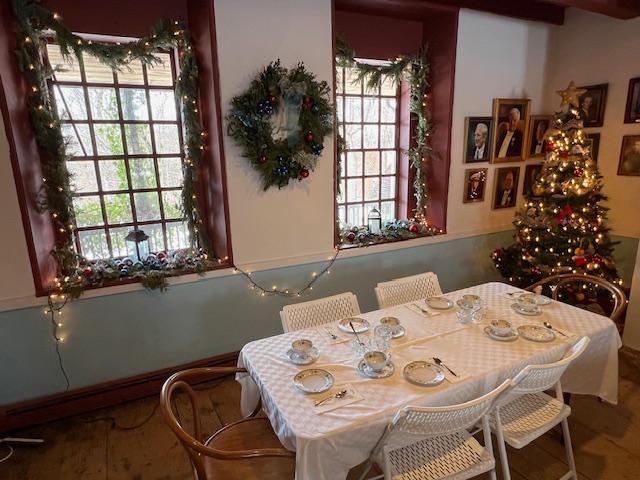
The house officially had closed for the season at the end of October and was decorated for the holidays for the weekend between December 14-16th to represent the Dutch celebrations. There had been a Children’s tea the Monday before the New Year, so the house was closing down for the season. As the ladies that worked there were taking down the garlands, mistletoe and trees, the curator Amy, let me wonder the rooms as long as I did not get in their way.

The beautiful garland and lights adorn the house at Christmas time

The front door is very welcoming for the holidays

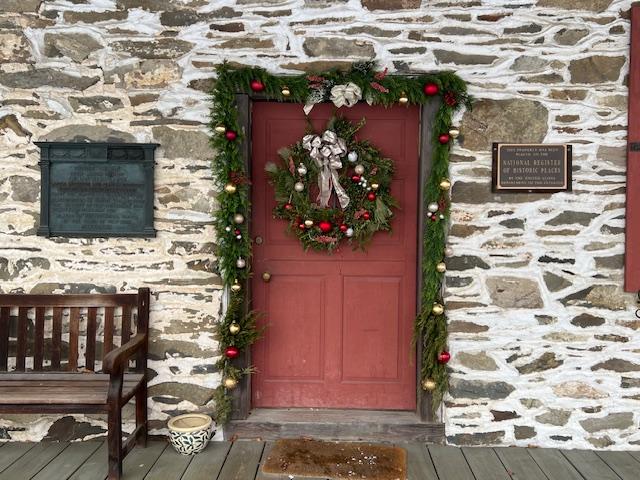
The front door was beautifully decorated for the Christmas season

The house as you enter through the front door

The house is very unique. You would have never known it was a reconstruction. The house really looked its age. The funny part of the house is that is at the very back of an old estate that had been developed with townhouses from the main road to almost the border of the house’s property, so it was strange to drive through to find the house. Once in the semicircular driveway, you plunge back into time.

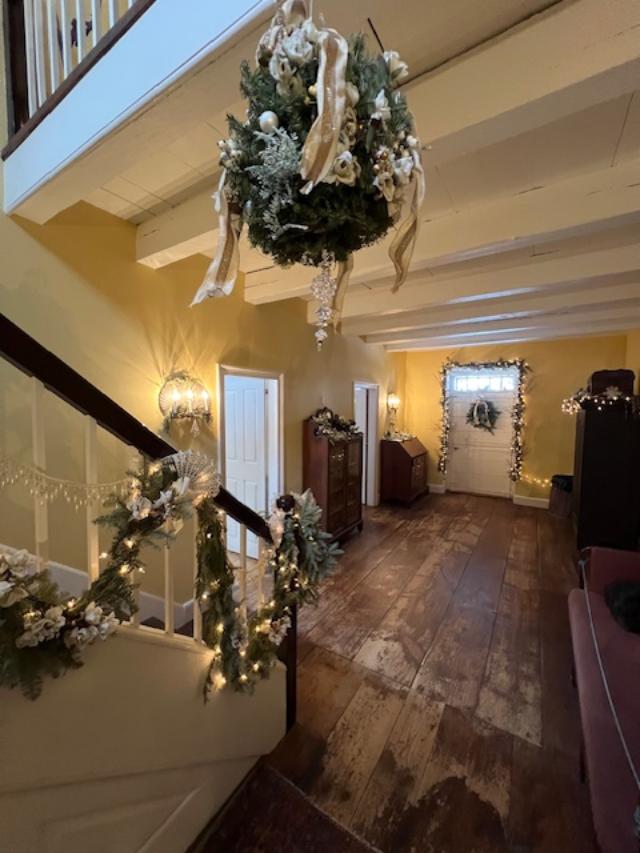
The Hallway decorated for Christmas

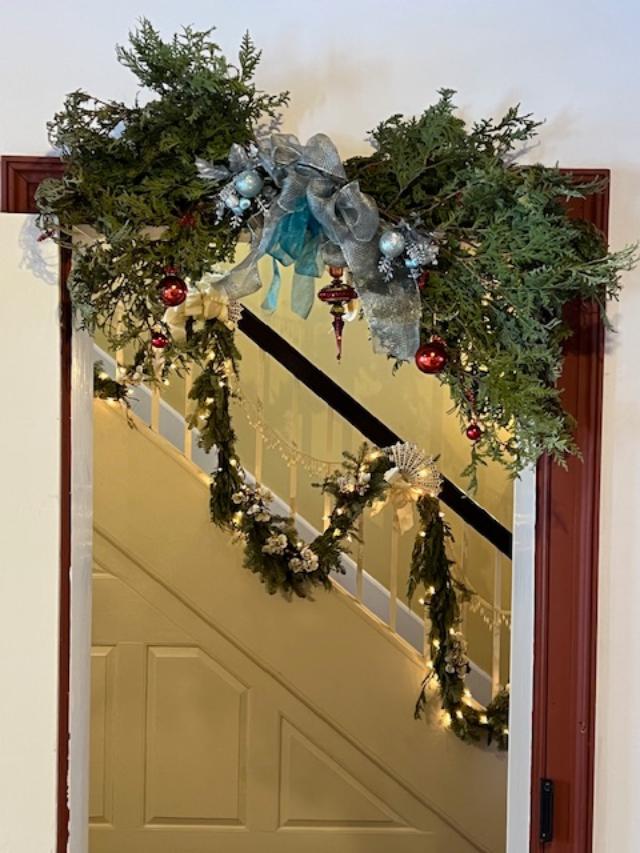
The Hallway decorations in more detail

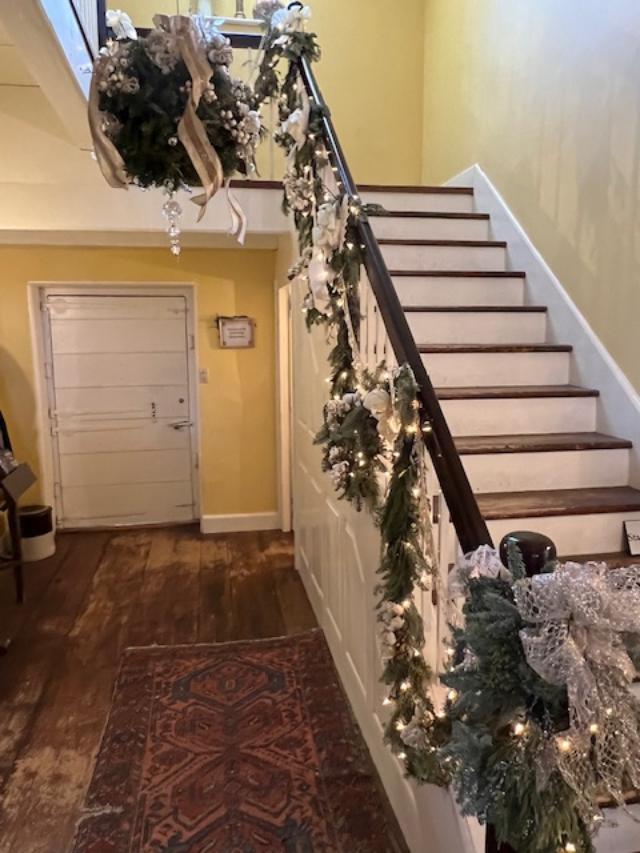
The Staircase to the Second Floor (Closed) was beautifully decorated for the holidays

The large porch in the front of the house looks over what’s left of the lawn and the housing developments. Once inside you enter the foyer and long hallway with rooms on each side. Each room was or had been decorated for the holidays with garland, mistletoe, fruits and a Christmas tree in one room, a kind of mixture of old Dutch meets Victorian Christmas. Still the effects were nice and it was very festive.

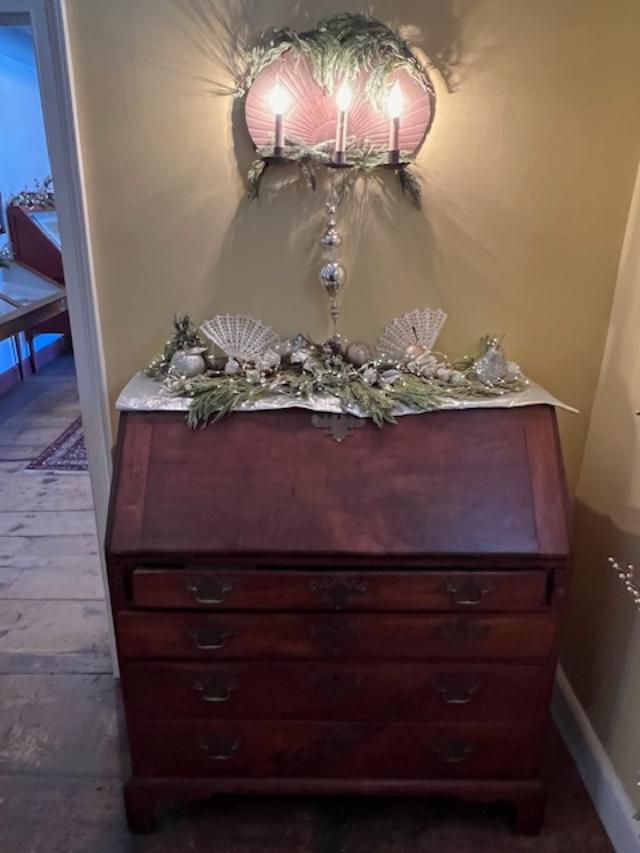
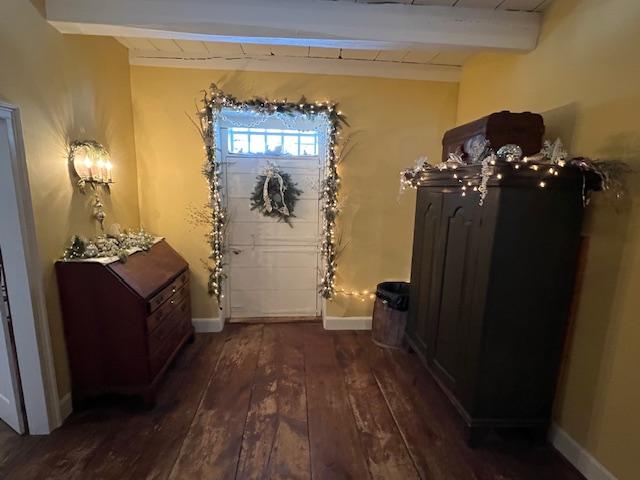
The furniture in the hallway decorated for Christmas in 2024

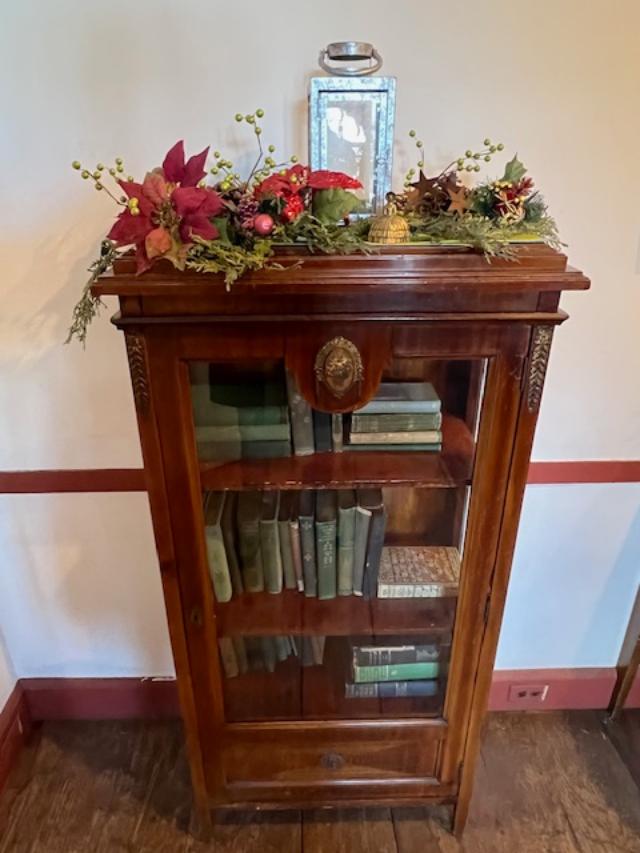
The furniture in the Hallway was nicely decorated for the holidays

What I enjoyed is that in each room, there were stories of the Verplanck family and the role that they played in the formation of the community and in the nation as well. In real life though, this much decorating would not have been done. This is a more elaborate look on how the Victorians would have decorated the house. The Dining Room would have been one of the most elaborate for entertaining during the holiday season for dining and entertaining.

Until the Victorian Age, things had been kept very simple. You would have decorated the house before Christmas Eve and then on Christmas Day, there would have been an afternoon church service and a nice lunch. Gift giving did not come into play until after the Civil War.

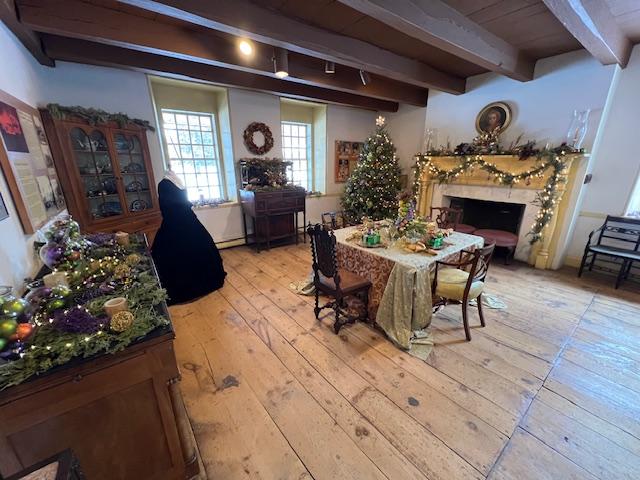
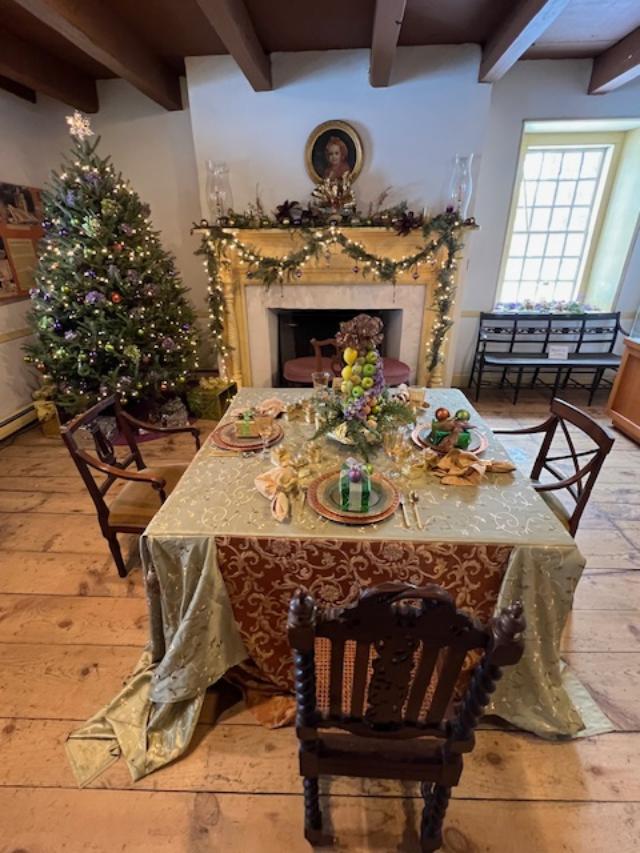
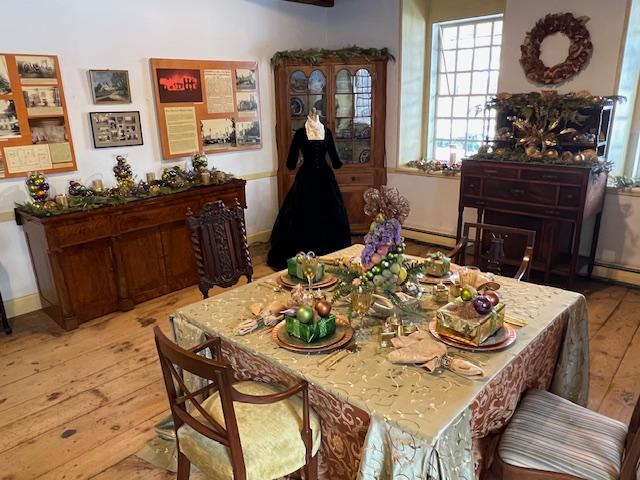
The Dining Room set for Christmas dinner in 2024

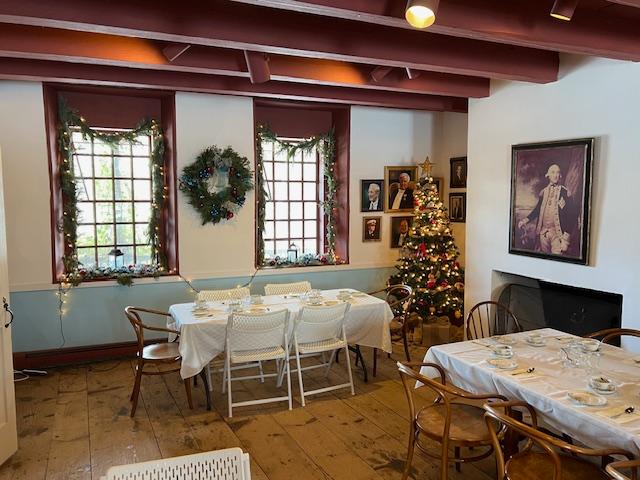
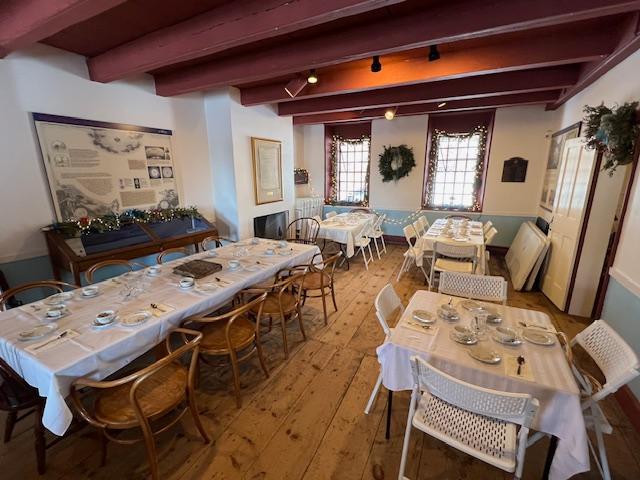
The full view of the Dining Room

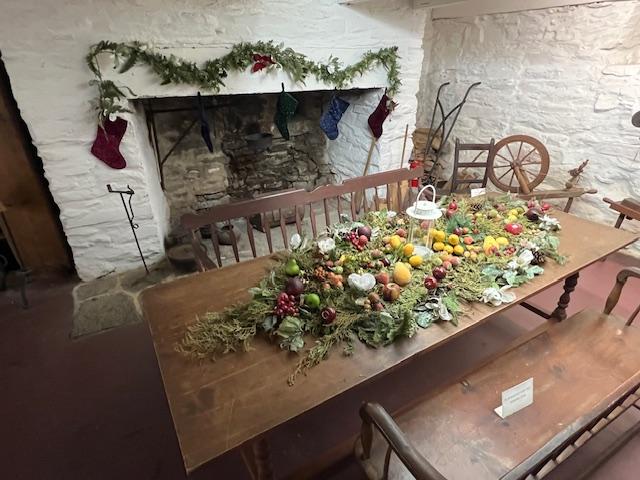
The Dining Room Table and the fireplace mantle

The back part of the Dining Room

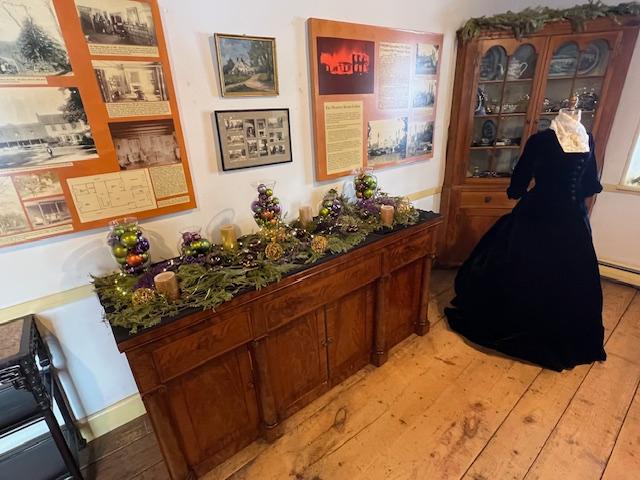
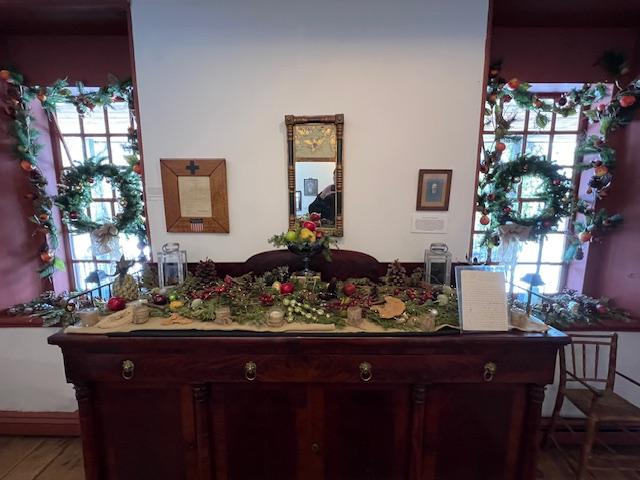
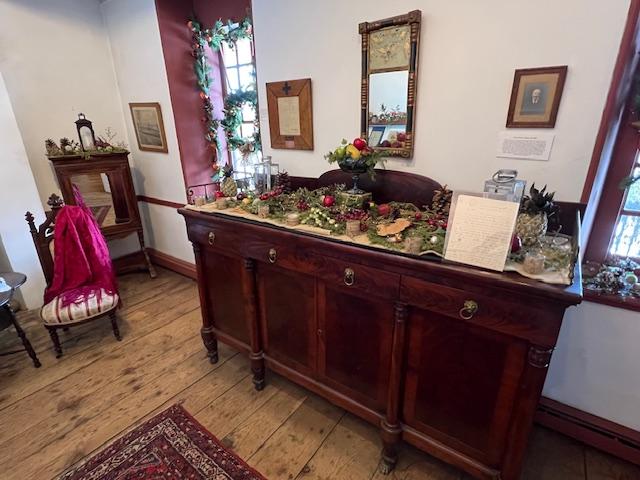
The Dining Room sideboard decorated for the holidays

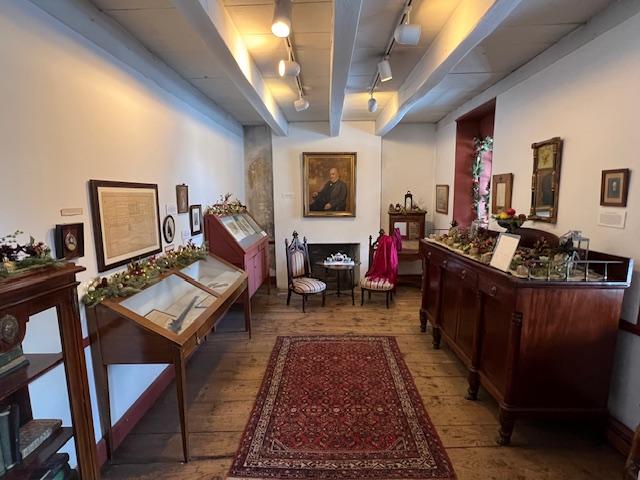
The Historic Documents in the Dining Room with a funeral dress (why this was here I was not too sure)

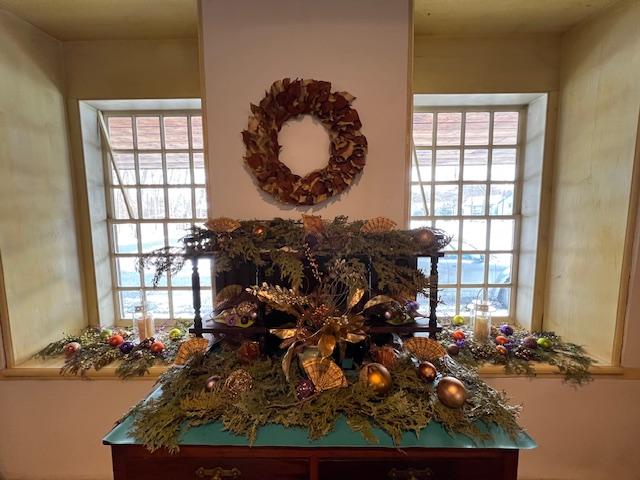
The elaborate decorations between the windows in the Dining Room

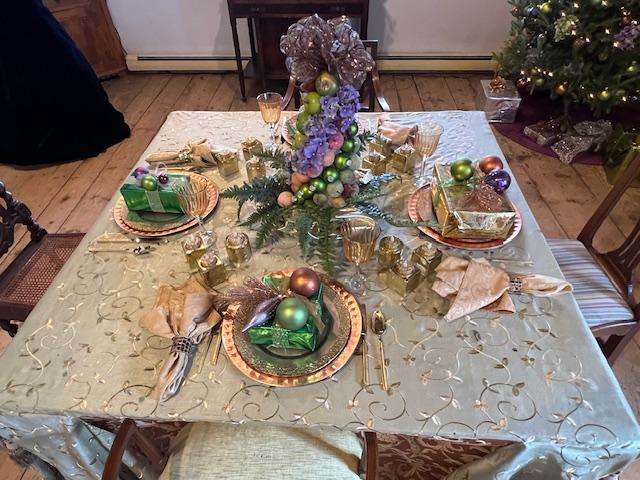
The detailed decorations on the Dining Room table ready for a wonderful Christmas dinner

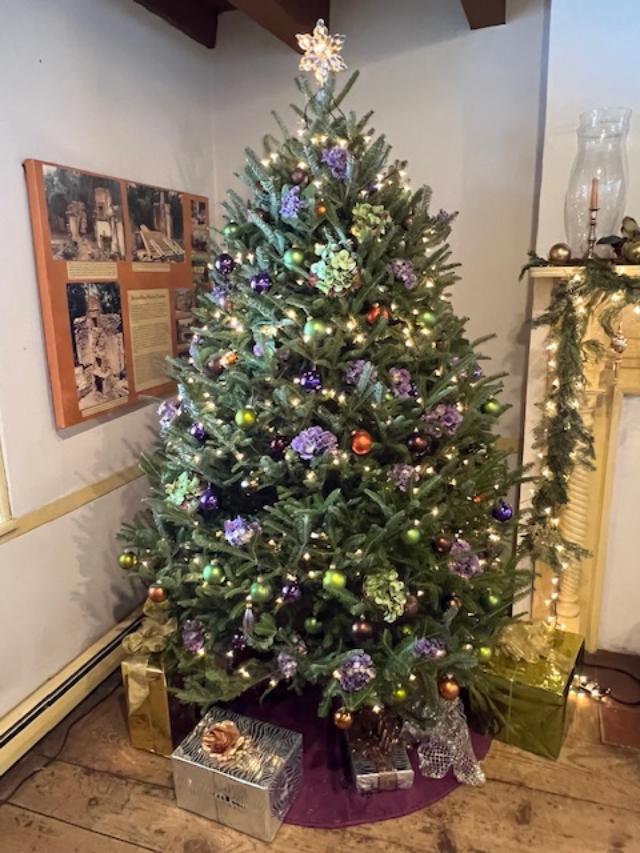
The beautiful fresh Christmas tree in the corner of the Dining Room in 2024

All of the rooms had artifacts that the family keeps donating the house as most of the original furnishings were destroyed in the 1931 fire. Still the furnishings are vintage to the time period. Here and there are stories of the house, the people that lived here and about the family in their daily lives. There were also stories of the Revolutionary War and its headquarters of Major General Friedrich Wilhelm von Steuben. There was also a display on the founding of the Society of the Cincinnati, a Veterans group.

Mount Guilian 2021 XVII

The Order of Cincinnati at Mount Gulian

Mount Guilian 2021 XI

The history of Mount Gulian and the surrounding area

Mount Guilian 2021 VIIII

The history of Mount Gulian and the surrounding area

The main room decorated for the Children’s Tea in the room of the Order of Cincinatti information

The Main Room set up for the tea

The back part of the room with its elaborate details

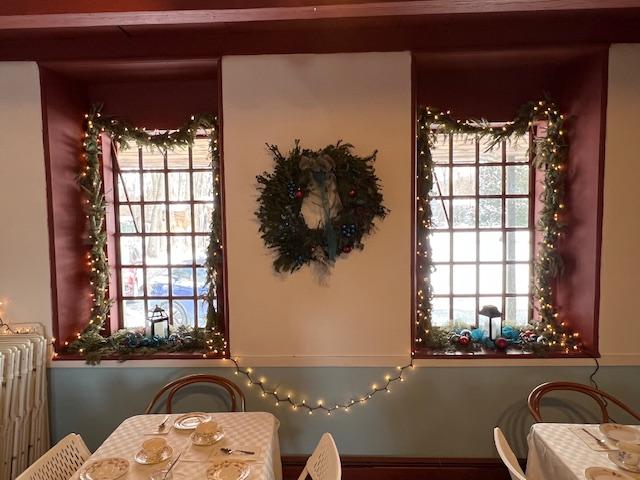
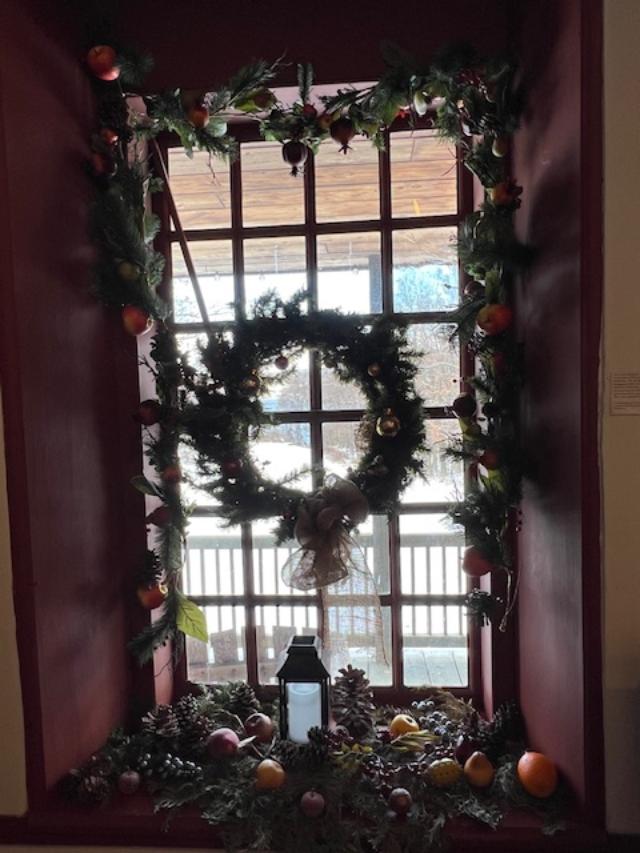
The beautiful window decorations in the main room

The Children’s Christmas Tea menu at Mount Gulian for the late December event

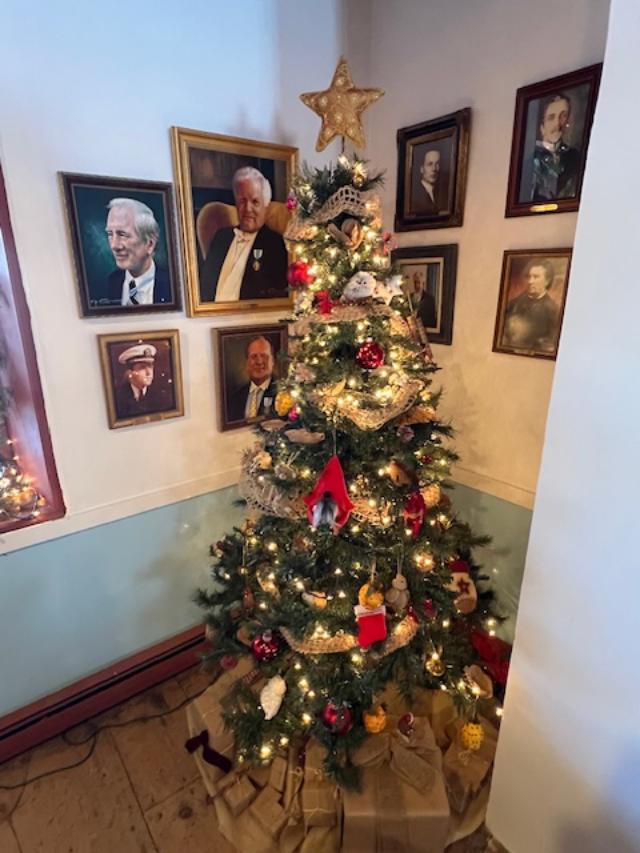
The Christmas tree in the corner of the room by all the portraits and photos of the members

The Kitchen in the basement area is one of the areas of the home that survived the 1932 fire when the house burnt to the ground. It would not have been used in modern times as a more modern kitchen was built in the newer area of the house. Still, this was decorated for the holidays to show the bounty of the Fall harvest and the items that would have been served for the Christmas holidays.

The kitchen decorated for Christmas in 2024

More detail on the Kitchen decorations

The Kitchen cabinets decorated for the holidays

The decorations on the Kitchen table in the basement area

The windows in the basement were decorated as well in the Gift Shop

The Gift Shop in the Basement area just off the Kitchen area

When I went back upstairs, we toured the Library and the Sitting Room just off the hallway and the Dining Room.

The Library decorated for the holidays

The Library decorations

The beautiful details of the window decorations

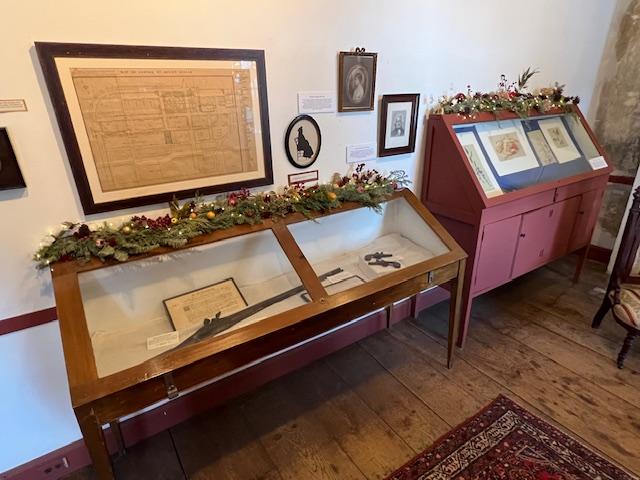
The cases of artifacts with the Christmas garlands decorating the top of the furniture

The other side of the Library cases and displays

According to family records, Christmas was a big holiday in the house with many members of the Ver Planck family enjoying the holidays together. The Drawing Room (where the Tea was taking place) was ‘decorated with pine over the doors and windows with wreaths of laurel and the berries of the bittersweet in various places and the room was aglow with a bright wood fire and candlelight and it was all adorned for Christmas. When the Drawing Room door was opened Christmas morning, the Christmas tree burst on our sight. It was lighted with little wax candles as the modern trees were but there were none of the stereotyped ornaments of tinsel and glitter. There were Lady Apples on the tree and oranges, cornucopias and toys and the sugar plums. The tree was always of laurel, reaching nearly to the ceiling and yet it looked small in that great room’ (William Samuel ‘Ver Planck Family History’). The current curators have done a nice job keeping this tradition alive in the decorations.

When I left the house, I visited the grounds over-looking the Hudson River. On the property behind the house was a ‘A frame’ Dutch barn. The barn was closed for the season but fit very well into the landscape of the estate. The view of the Hudson River was beautiful.

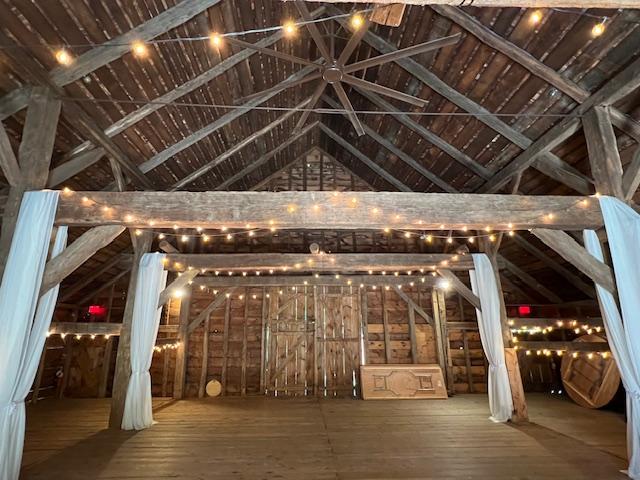
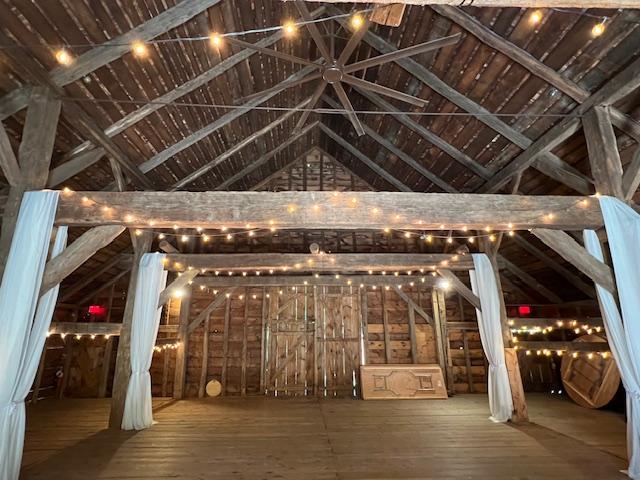
The Dutch Barn at Mount Gulian set up for a party

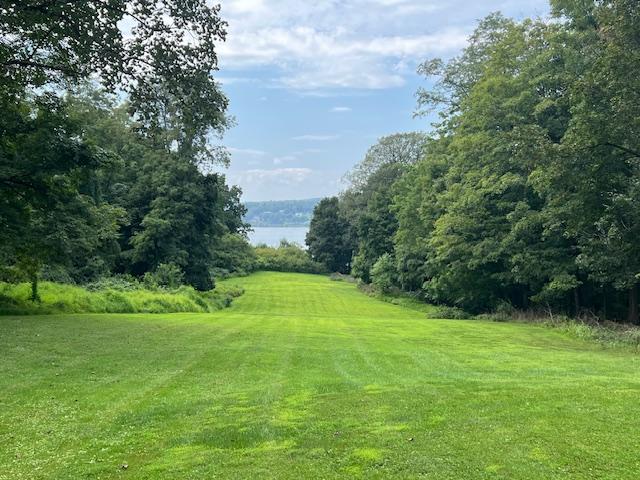
The view to the Hudson River from the house in the Summer

Don’t miss visiting the downtowns of Beacon and Wappinger Falls while visiting the area. Taking Route 9D is an interesting and scenic way to tour the area.

Downtown Beacon, NY at Christmas in 2021

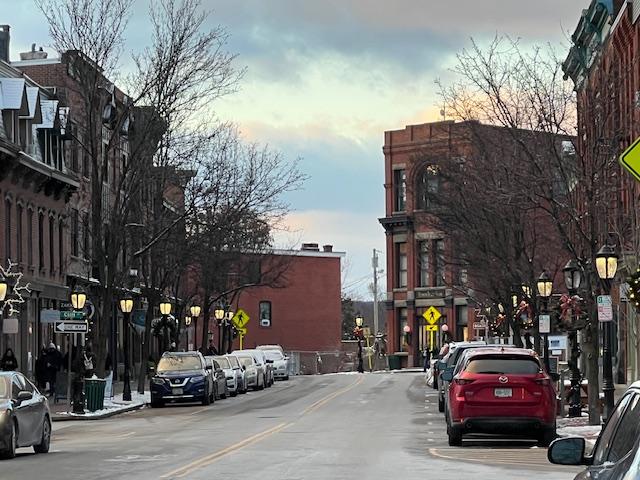
Downtown Beacon, NY at Christmas time

Downtown Beacon at Christmas time

Mount Gulian in the Summer:

In the Summer of 2024, I returned to Mount Gulian to take a full tour of the estate in the summer when everything was in bloom. The same house but a different feeling than the Christmas holiday season. On the Summer tour, you are able to walk the gardens, the barn and the grounds around the house. Plus the gardens were in bloom so it was a more complete tour.

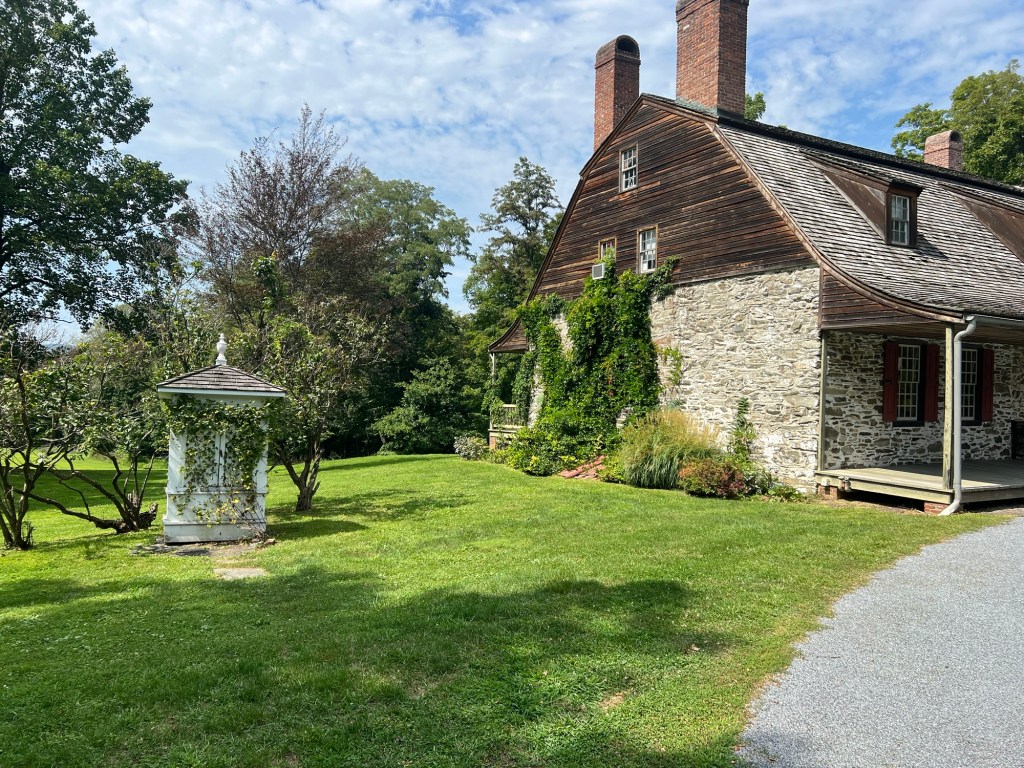
The back of Mount Gulian in the Summer of 2024

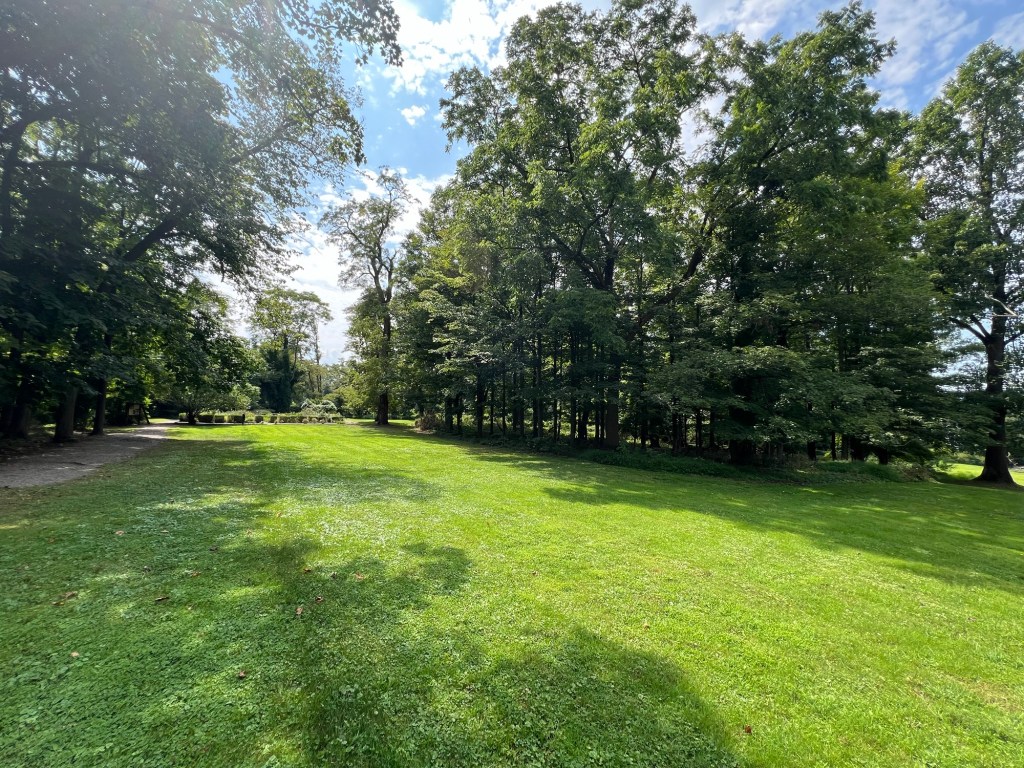
The back lawn on the Mount Gulian Homestead estate

The lawn to the gardens from the house

I started the tour of the property while I waited for my tour at 2:00pm. I walked the lawns and walked around the gardens. The property looked so much nicer than in the winter months. You can see the vibrance of the gardens and the beauty of the lawn and woods against the house. The gardens were well maintained and the flowers were still in bloom in the late summer months.

The gardens with the house in the distance

When I started the tour of the house in the Summer of 2024, it was similar to the December tour in the description of the house but the tour guide discussed the house from the perspective of the family living here full time when they moved from their New York City home to the Hudson River Valley permanently.

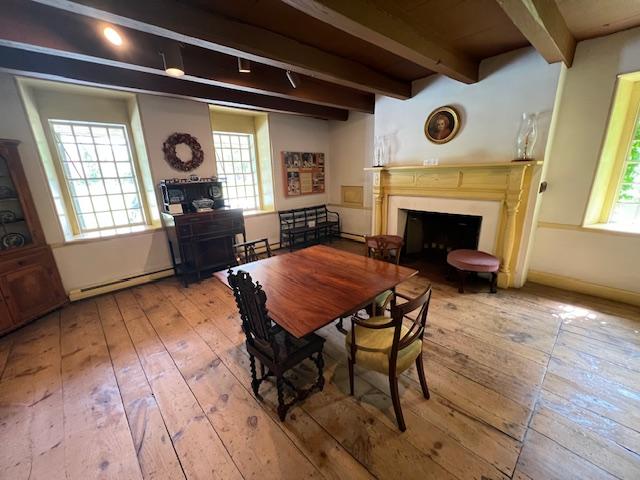
The Living Room with original furniture from the Verplanck family

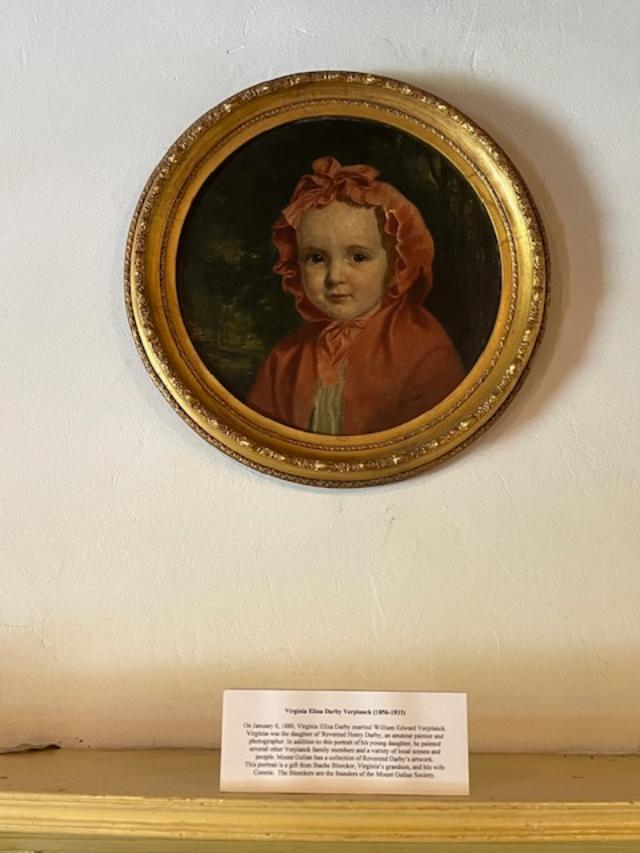
Our first stop was in the Living Room where original family furnishings decorate the room. The family would gather in this room for specials occasions and holidays. The tour guide explained that the room contained some items that used to be in the original house including the portrait of the last resident of the house, Virginia Verplanck before the house burned down in the 1930’s.

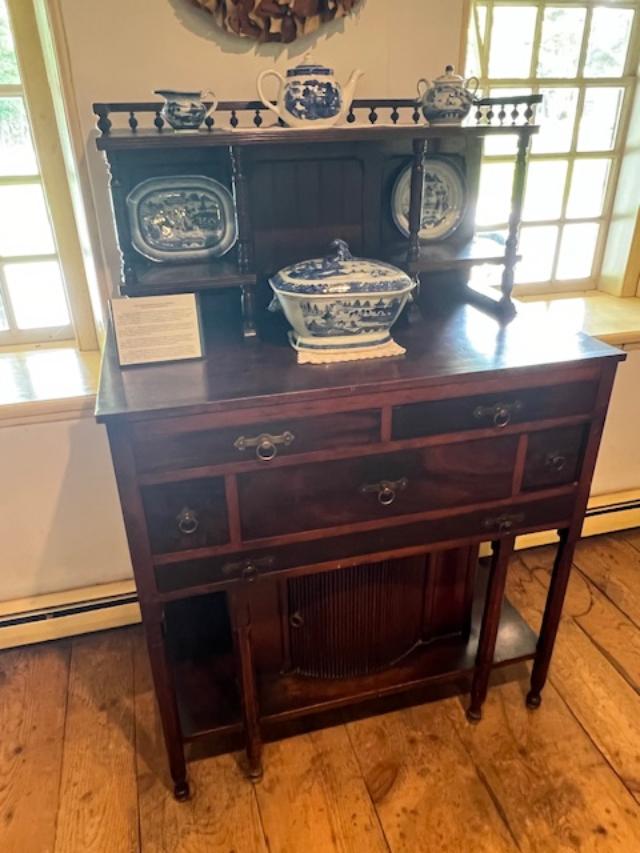
The Verplanck Family china

Portrait of Virginia Verplanck as a child. She was the last Verplanck to live in the house

The Library

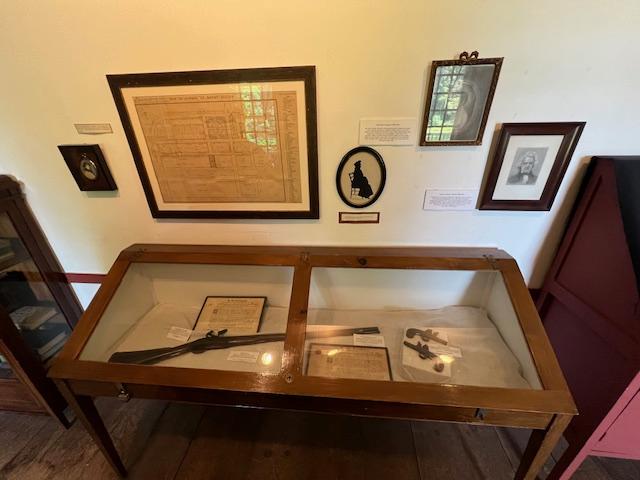
Revolutionary War artifacts in the house

The house was used by General Washington and his troops during the Revolutionary War and Baron von Steuben used the house during the war as well. The proximity both Washington’s Headquarters and the City made it an ideal location.

The portrait of the Baron Van Steuben

We next toured the kitchen, which had been decorated for a Dutch Christmas the last time I had visited. The hearth was from the original house and you could see how things were cooked in the open fire and then in the beehive oven where breads and cakes were cooked.

The kitchen in the basement

The cooking hearth and heat of the house

Cooking and Kitchen equipment

The items a cook would need to prepare meals in a Dutch kitchen.

The Grounds part of the tour:

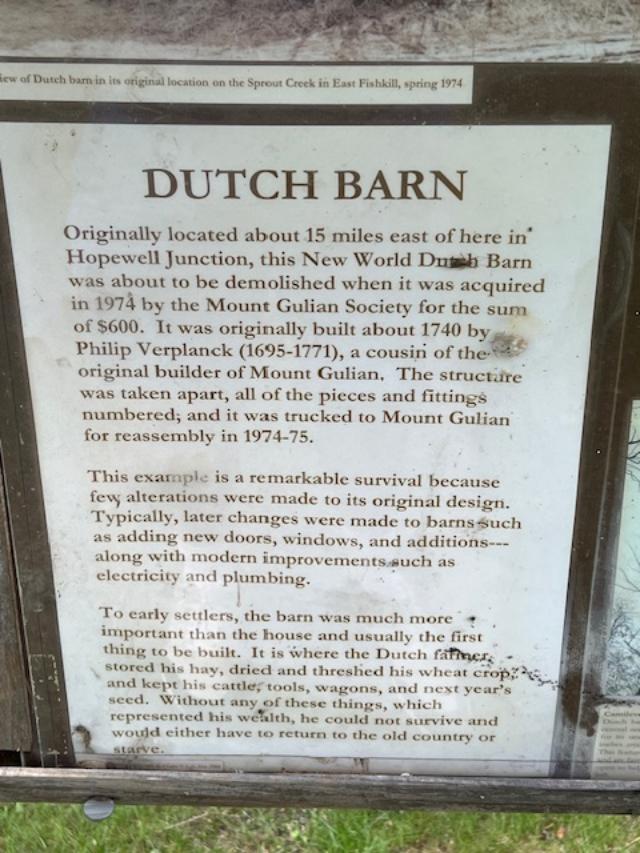
After the full house tour, we went out to the grounds to see the barn and the gardens. The barn was the American Dutch style barn which was specific to this area. It was large and airy, enough to hold the crops and the animals in case of bad weather.

The Dutch Barn sign

The outside of the Dutch Barn

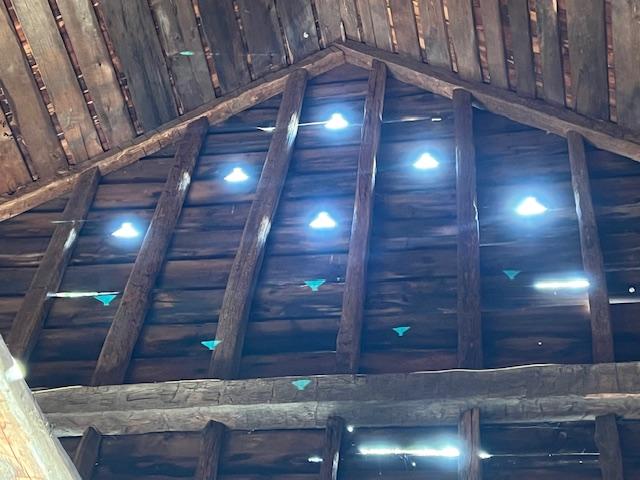
The Maitland bird holes in the barn to eat bugs on the hay and vegetables

My tour guide told me the unusual holes were that of the Maitland bird the could enter the barn to eat the bugs and insects on the crops and hay.

The inside of the barn set up for a future wedding

We next toured the gardens, which have been partly restored to their original design. They were in bloom with late summer flowers and decorative bushes and the layout was taken from early designs from the house.

The formal Gardens and Lawns tour:

The side of the house leading to the gardens

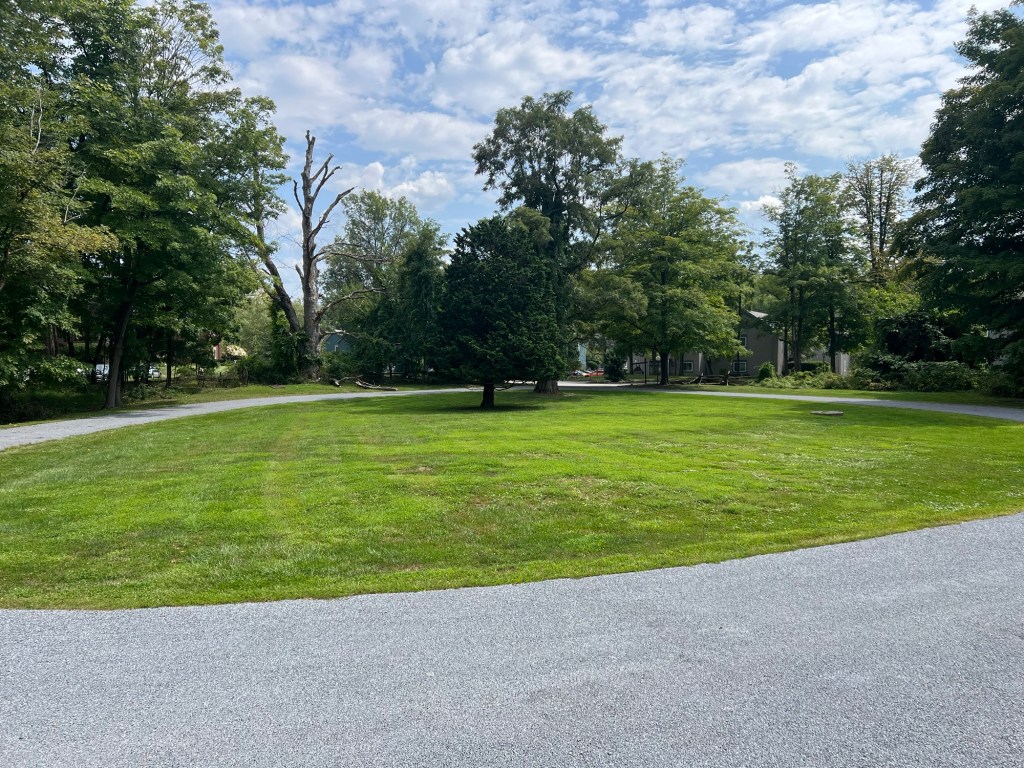
The semi circle in front of the house

The lawn between the house and the formal gardens used to be vegetable and fruit garden

The sign for the formal gardens

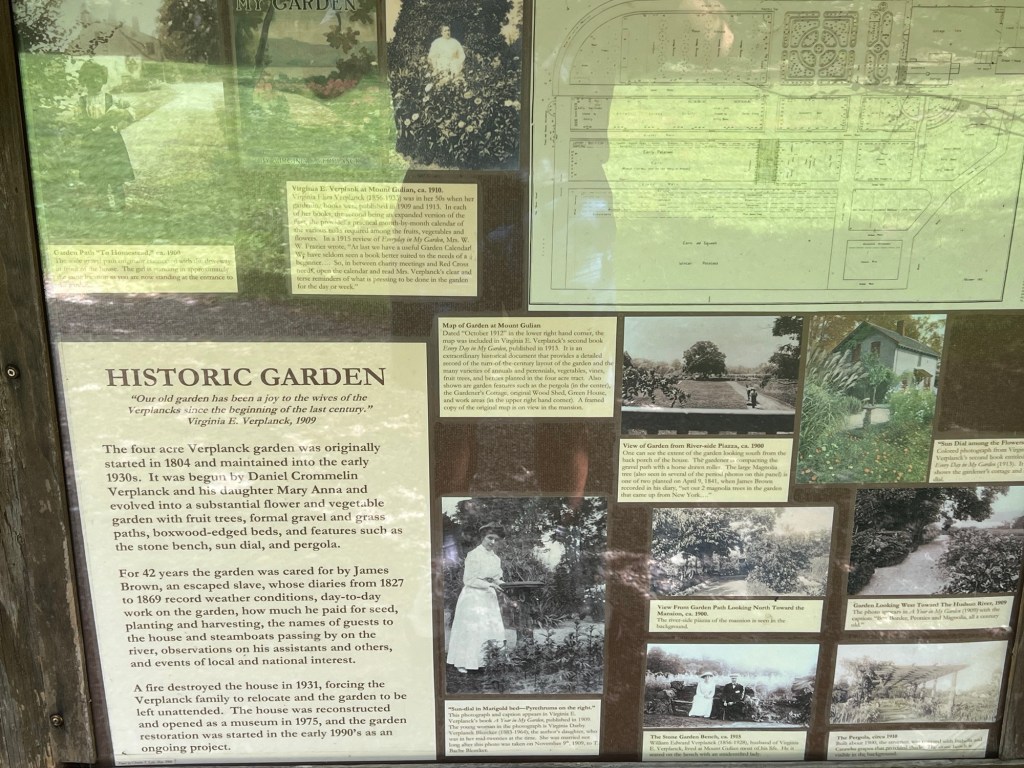
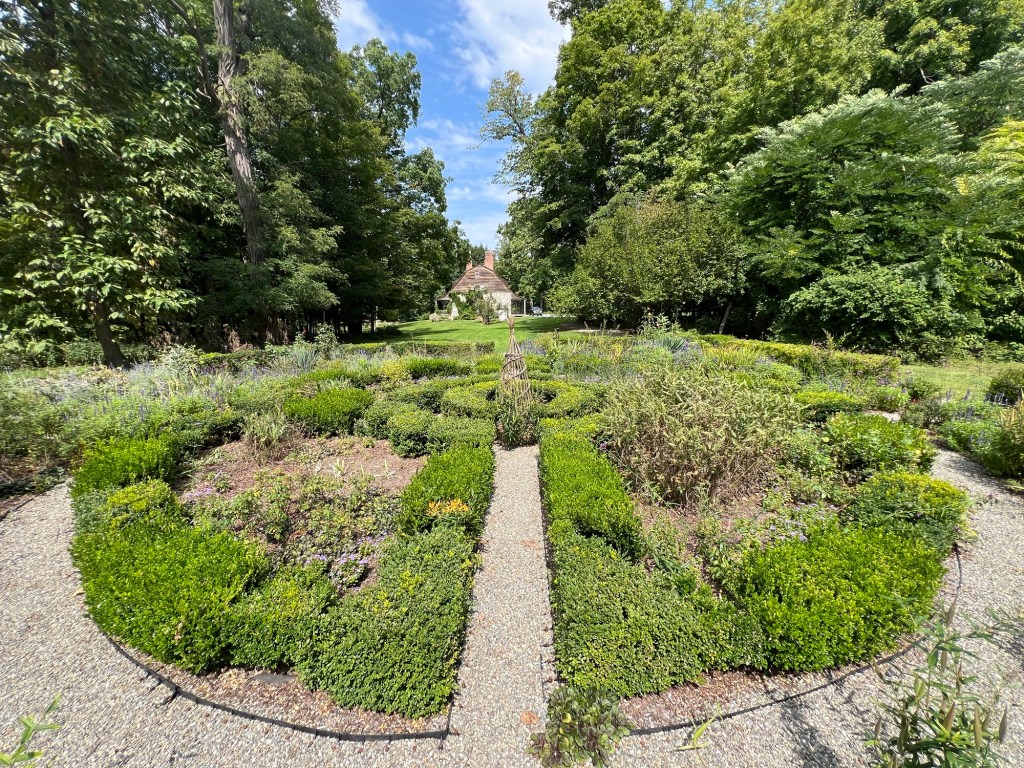
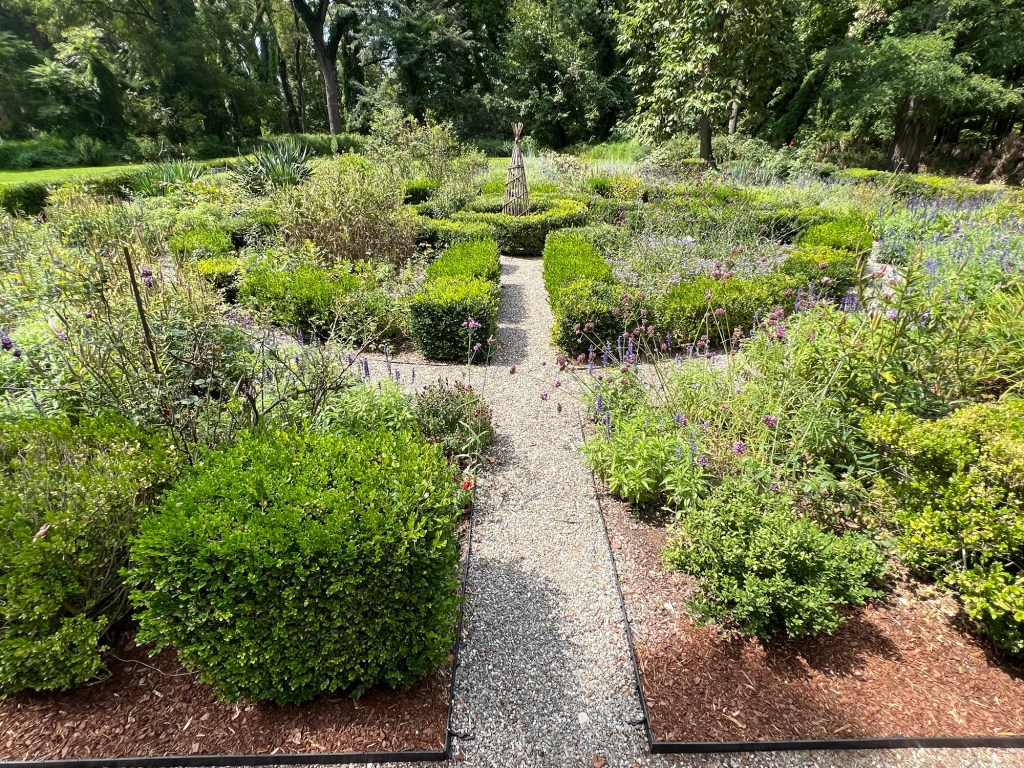
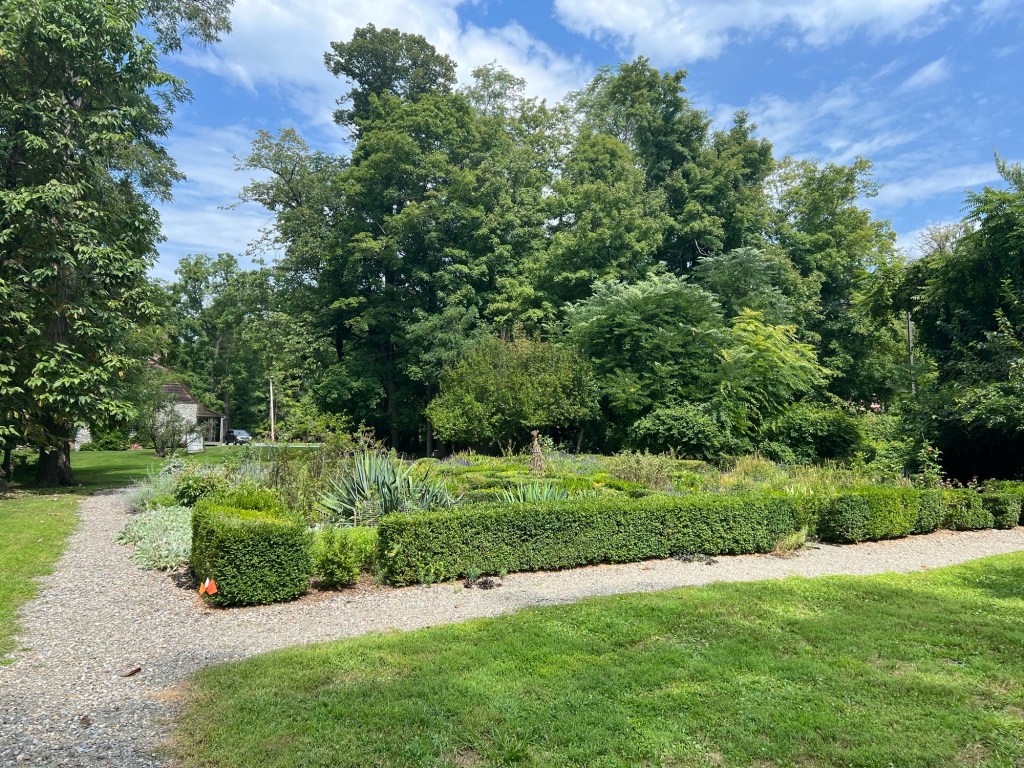
The formal flower gardens followed the original design the Virginia Venplanck had when she lived here

The beautiful gardens had been over grown in the years since the house burned down so volunteers and landscape architects had to cut down the woods and flow pictures and diagrams of the gardens to recreate them.

Entering the formal gardens

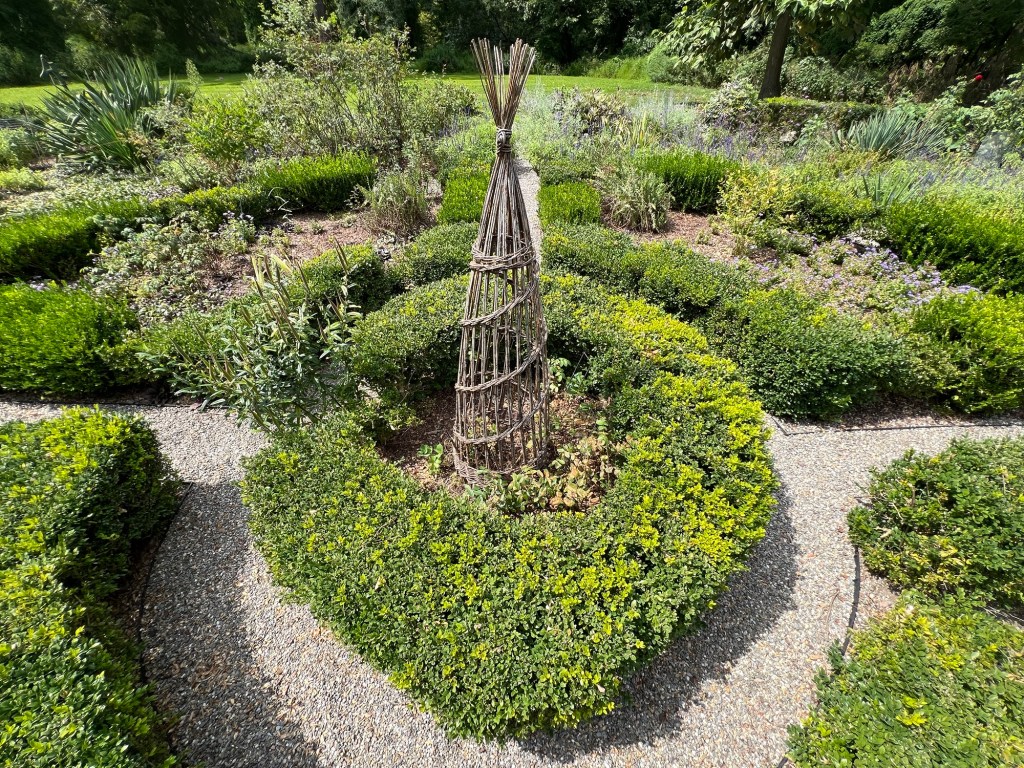
The middle of the gardens

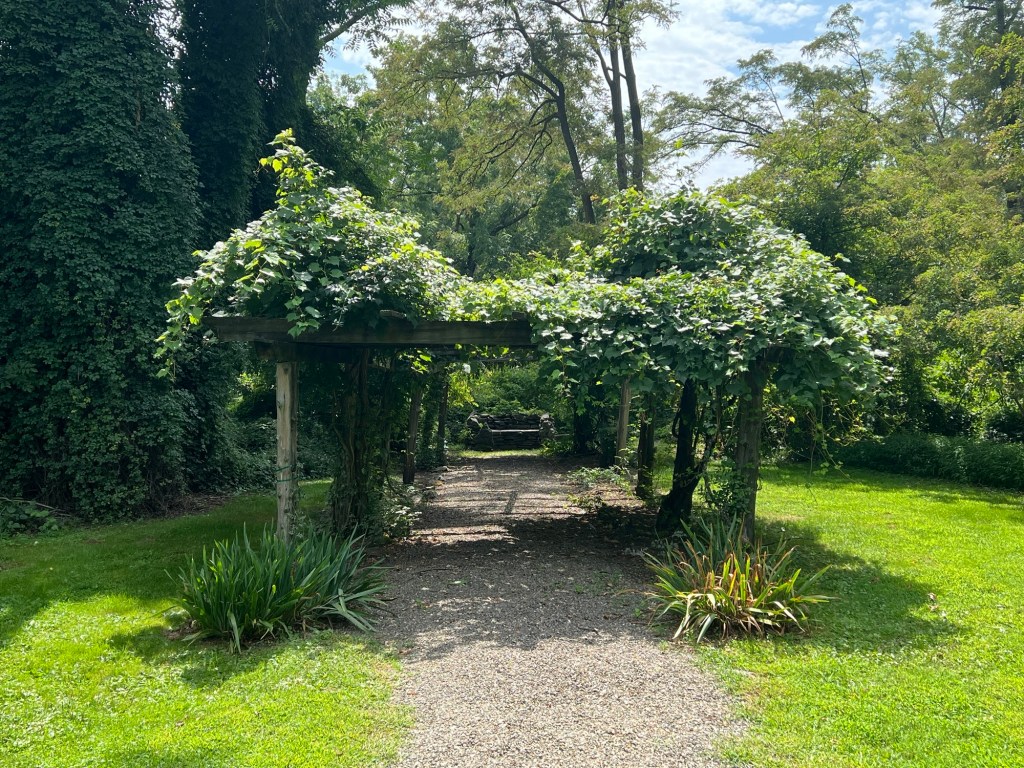
The original trellis was still standing in the woods and it was rebuilt on its original spot

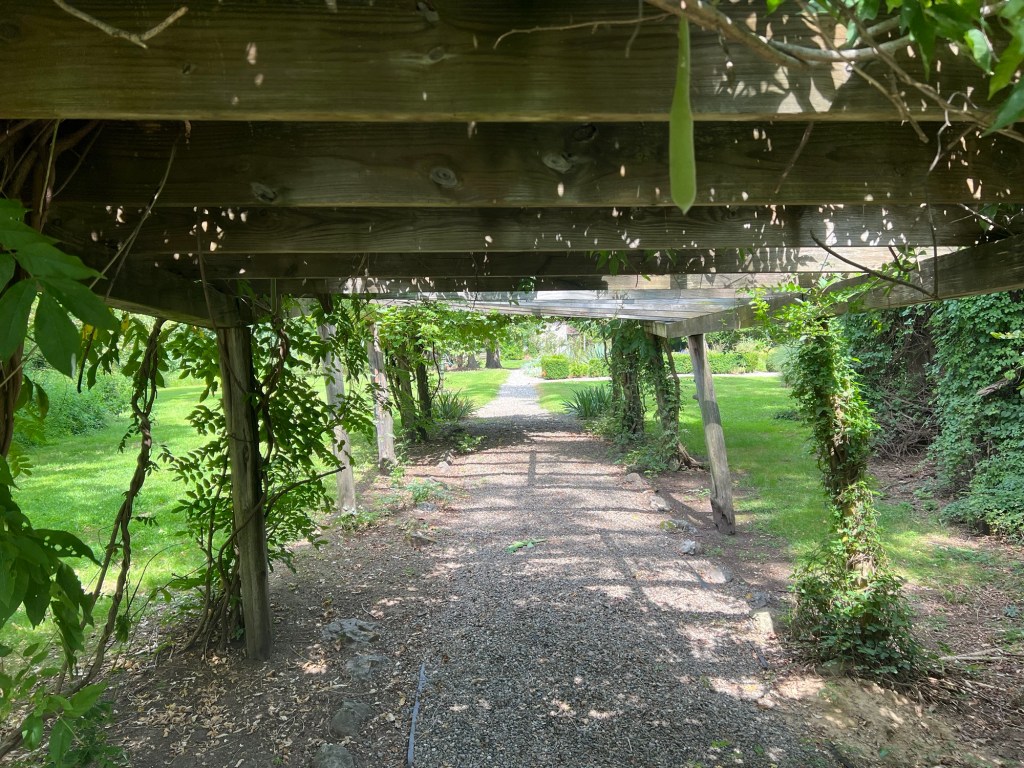
Walking through the trellis

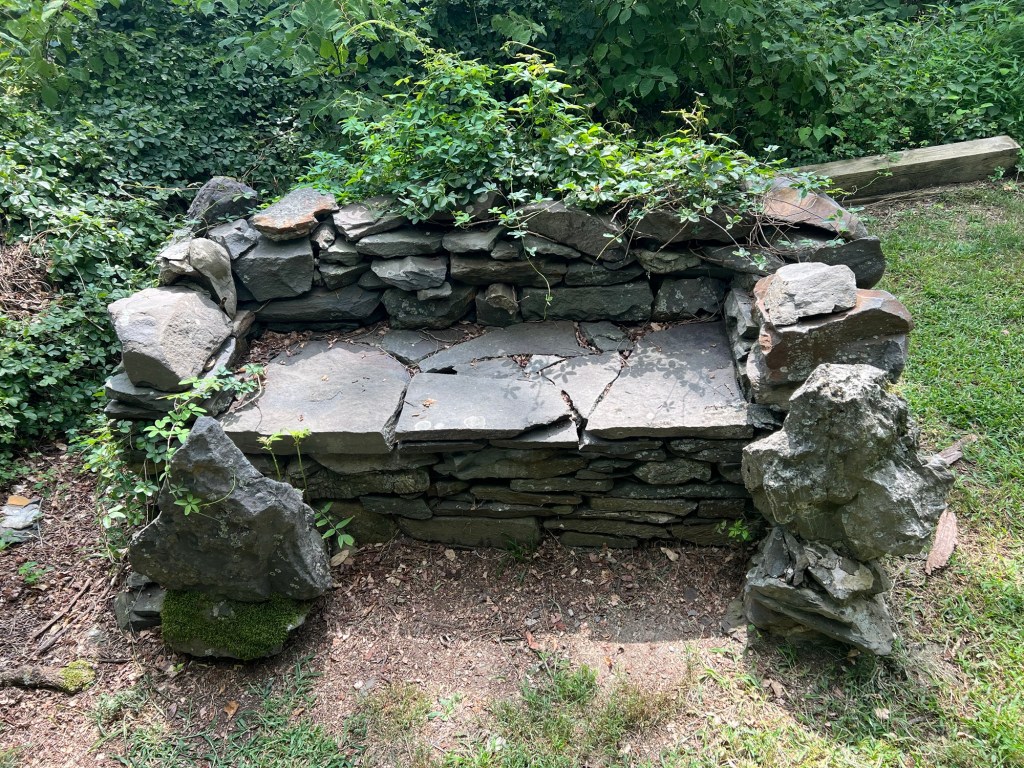
The stone bench at the edge of the gardens

The back of the formal gardens

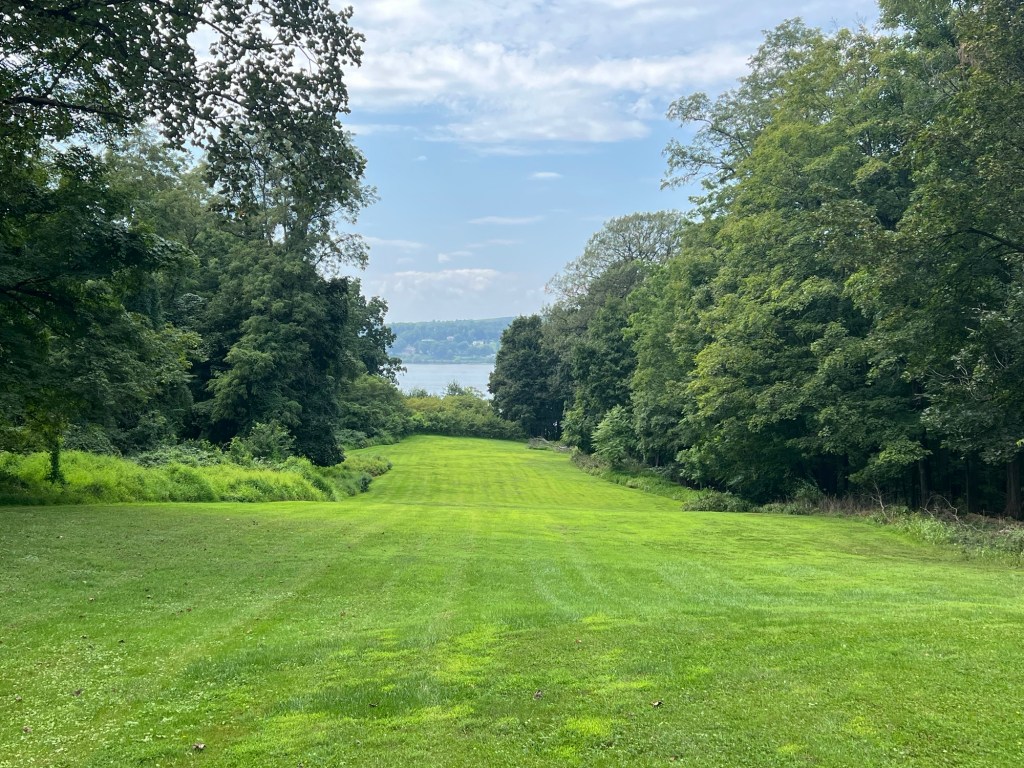
We ended the tour on the back lawn facing the Hudson River. The tour guide explained that the are thinking of trimming back the the woods near the river to better open up the view. This was probably true of the time of the house to pick up boats when moving around the river.

The views are spectacular now

The tour of the house and garden gives it a different perspective than at the holidays. It shows a working farm and an estate of a very prominent Hudson River family.

History of Mount Gulian:

The land where the house stands was purchased by two fur traders Francis Rombout and Gulian Verplanck on August 8, 1683. In exchange for 85,000 acres of land, they paid about $1,250 in goods. The Rombout Patent which formally granted the land to Francis Rombout and Gulian Verplanck was issued by King James II of England on October 17, 1685. After Gulian Verplanck’s death, his estate was eventually divided among divided among his heirs. Julian Verplanck II, a merchant from New York City, received 2880 acres, 400 of which were on a slope overlooking the Hudson River.

He named his estate Mount Gulian, in honor of his grandfather and had the first house on the site built between 1730 and 1740. The building was a small structure with an a-roof. Archaeological evidence suggests it was probably enlarged around 1767 and the characteristic gambrel roof as well as two porches were added between this year and the American Revolutionary War.

Mount Gulian III.jpg

Mount Gulian in an early picture

The Revolutionary War years:

During the war, Gulian Verplanck’s son Samuel stayed at the house, while his wife, Judith Commerlin remained at the family mansion at 3 Wall Street in Manhattan. In early 1783, Major General Friedrich Wilhelm von Steuben made Mount Gulian his headquarters. At the same time, George Washington had his headquarters in Hasbrouck House, Newburgh on the opposite side of the Hudson River.

On the morning of May 13, 1783, a group of officers of the Continental Army met at Mount Gulian to found the Society of the Cincinnati. Mount Gulian is headquarters of the Society’s New York State branch. The building was extended by in 1804 by Daniel Crommelin Verplanck, the grandson of Gulian Verplanck II, who also laid out the garden. When Marquis de Lafayette visited the house on his return to America in 1824, he stayed in the new addition.

Mount Guilian 2021

The Gardens of Mount Gulian at Christmas in 2021

In 1803, upon the death of Judith Commerlin Verplanck, the family mansion at 3 Wall Street was closed and much of its furnishings moved to Mount Gulian. In 1849, construction of the Hudson River Railroad cut off access to the Verplanck boat and bathhouse at the end of the property at the shoreline.

Mount Guilian 2021 VI

The view to Hudson River from Mount Gulian

The Restoration of the House:

The original mansion was destroyed in a fire laid by an arsonist in 1931. After this, the house laid in ruin and was left unattended until 1966, when Bache Bleecker, a descendant of the Verplanck family and his wife, Connie, founded the Mount Gulian Society, as a nonprofit private organization. The goal reconstructed the house to the state it was when it served as von Steuben’s headquarters. The interior contains artifacts related to the Verplanck family. The 18 century Dutch barn was moved here as well.

(This information came from Wiki and I give them full credit for the information)

History of the Verplanck Family:

Mount Gulian is the Hudson Valley colonial homestead of the Verplanck family. Between 1633 and 1638, a Dutch entrepreneur named Abraham Isaac Verplanck arrived in New Netherlands Colony (now New York and New Jersey) from Holland. He originally came to purchase land for a farming settlement and trading post.

The trading post would enable him to trade Dutch goods with the local Native Americans in exchange for beaver and other furs, Indian tobacco and trade goods that were rare in Europe. New Amsterdam was a thriving port and frontier town, filled with Dutch settlers, Indians and traders from all over Europe, Africans, both freemen and slaves, as well as French Huguenots seeking to escape from religious persecution in Europe and Jews fleeing the Inquisition in South American came to a relatively tolerant and busy New Amsterdam.

Abraham Issac Verplanck settled in the growing city and became a prosperous businessman. he married Maria Vigne Roos by 1635, they had Abigail and Gulian (Gulyn is Old Dutch for William), Catalyna, Isaak, Sussanna, Jacomyntje, Ariaentje, Hillegond and Isaak II moved to Albany and established the Verplanck line in that city, which exists today.

In 1664, an English nave appeared off the coast of New Amsterdam and demanded the city’s surrender. The Dutch surrendered their colony, swore loyalty to the British Crown and saw the city renamed New York. The Verplanck’s spoke Dutch but were now English citizens. By the 1680’s, Gulian Verplanck was sailing up the Hudson River looking for land to increase his wealth.

In 1683, with partners Francis Rombout and Stephanus Van Cortlandt, Gulian Verplanck bought 85,000 acres of land from the local Wappinger Indians for approximately $1200 worth of goods. About 75 miles north of Manhattan, overlooking the Hudson River for miles and going inland into rich meadows and forests, encompassing nearly one-seventh of modern Dutchess County, NY in today’s Fishkill-Beacon area, the purchase was quite a bargain. In 1685, the Deed of Sale was approved by King James II of England and is known as the Rombout Patent.

For the next forty-five years, Verplanck, Rombout and various partners and heirs sub-divided, sold off and rented portions of this huge tract of land, while logging, hunting and planting crops on the land.

During the English colonial period, the Verplanck’s became quite prosperous and built a fine home on Wall Street in Manhattan. The Verplanck’s were civic minded and participated in the development of the business and banking industry in New York City and were among the Trustees of Kings College, now known as Columbia University. Around 1730, a colonial-style fieldstone house was built in Fishkill Landing on the Rombout Patent land.

This rough frontier home was gradually surrounded by a working plantation, a dock on the Hudson that facilitated the New York-Kingston-Albany trade and many service buildings for servants and crop production. This homestead was called “Mount Gulian”, and it was used as a summer retreat for the family and a working plantation, but it is not believed that any family member lived at the site year-round until the early 1800’s. Other Verplancks at this time lived in Albany and Verplanck Point in Westchester County, NY.

The Verplancks were prominent citizens in colonial New York while maintaining correspondence with their Dutch relatives in Holland. Young Samuel Verplanck was fortunate enough to take “the grande tour” of Europe in 1761. As businessmen of that era, it must be noted that the Verplancks of Manhattan and Mount Gulian owned slaves during the mid-1700’s and into the early 1800’s, most likely house servants and skilled laborers.

Before the Revolutionary War, Samuel Verplanck became involved with anti-British groups and joined “the Committee of Safety of One -Hundred” in Manhattan. This patriot group was poised to take over the city in the event of rebellion, which occurred on April 19, 1775 at Lexington & Concord.

Later during the War for Independence, Verplanck turned over Mount Gulian to the Continental Army because of its strategic location on the Hudson near the Fishkill Barracks and across from Washington’s Headquarters at Newburgh. In late 1782, through the summer of 1783, Mount Gulian was the Continental Army headquarters of patriot General Fredrich Von Steuben. After the American victory at Yorktown, upon learning of the Treaty of Paris, General Von Steuben and other Chief American officers created at Mount Gulian on May 13, 1783, the Society of the Cincinnati, America’s first veterans’ fraternal organization.

In 1804, Daniel Crommelin Verplanck, a member of Congress moved from Manhattan to permanently occupy the home at Mount Gulian, which underwent extensive expansion with the addition of a large frame house attached to the original homestead. An ornamental “English Garden”, all the rage in Europe at the time, was laid out by him and his daughter, Mary Anna to supplement the 6 acres “kitchen garden” and the fields filled with salable crops. More permanent structures were built on the property, still thousands of acres, including barns, smokehouses, storage buildings and structures to facilitate brick making from clay taken from the Hudson.

The Verplanck family grew and eventually married into many prominent families in New York such as the Schuyler’s, the Johnsons, the Delancey’s and the Bleecker’s. Daniel’s son, Gulian C. Verplanck, also a member of Congress, ran for Mayor of New York in 1834, losing what many believe was a fixed election. Other Verplancks were judges, businessmen and wealthy farmers.

With slavery abolished in New York in 1827, the conservative Verplancks, along with many upper-class Northerners, gradually sided with the abolitionists, even hiring and assisting James Brown, an escaped slave who worked for the family for forty years. Brown’s diaries, written at Mount Gulian, provide a detailed record of daily life there.

During the Civil War, Robert Newlin Verplanck volunteered in the Union Army’s United States Colored Troops, training and fighting alongside black troops until the victory at Appomattox. His battlefield letters to his mother and sister have been preserved by Mount Gulian.

The Victorian era at Mount Gulian was a grand time, as the family associated with the local Livingstons, Roosevelts and Vanderbilts. Many Verplancks achieved fame in the professions, in arts and letters and as sportsmen. Verplanck Colvin was a topographical engineer who extensively surveyed the Adirondacks. Virginia E. Verplanck was a celebrated gardener and hostess. John Bayard Verplanck was an early seaplane flyer, racing World War I era veteran and banker.

Mount Guilian 2021 XVIII

The history of the area around Mount Gulian

Mount Gulian was occupied by the Verplancks until 1931, when the house was destroyed by fire. Many of the furnishings and valuable were saved by family members, neighbors and firemen who cleared the house before it was fully engulfed.

Prior to the American Bicentennial of 1976, Mount Gulian was beautifully restored with the assistance of Verplanck descendants, local history lovers and members of the Society of the Cincinnati. In 1998, Mount Gulian sponsored a well-attended family reunion, which included an updated version of the family genealogy book originally from 1892. Today Ms. Charlotte Verplanck Willman is one of the Mount Gulian Historic Site’s Board of Trustees.

Mount Guilian 2021 XVII

The Order of Cincinnati

(This information was taken from the Mount Gulian Society website and I give them full credit for the information.)

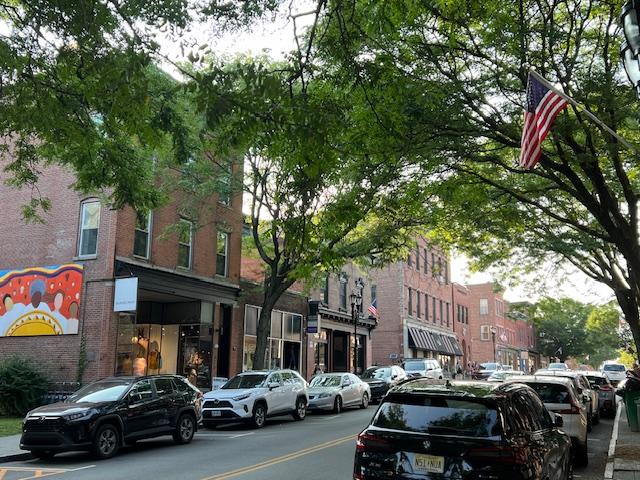
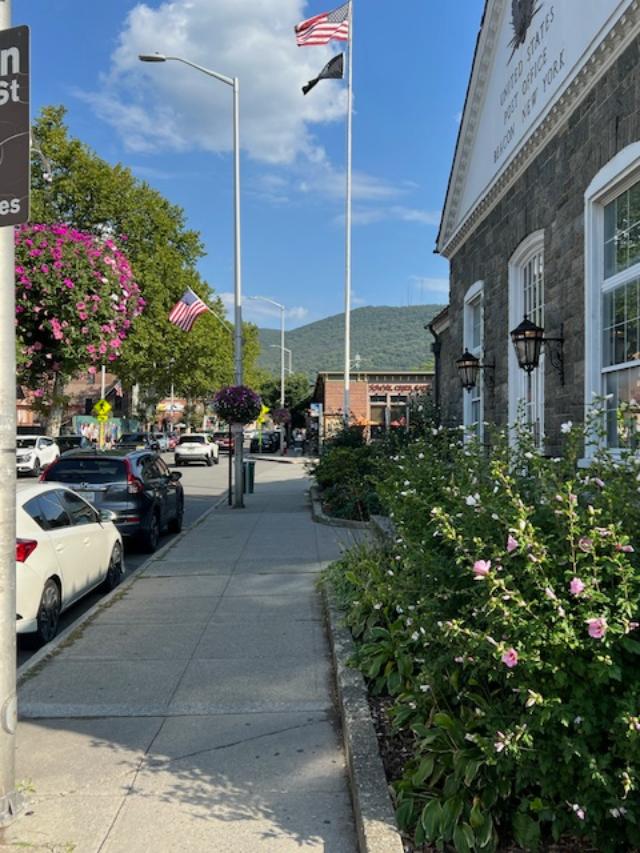
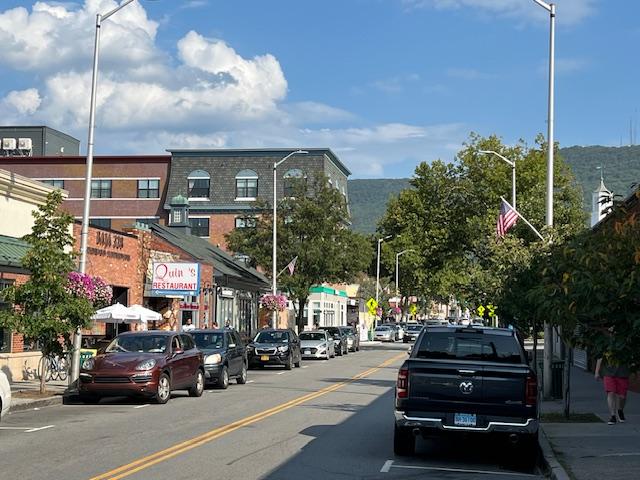
After the tour, it was a long walk in Downtown Beacon, NY to picture taking and window shopping.

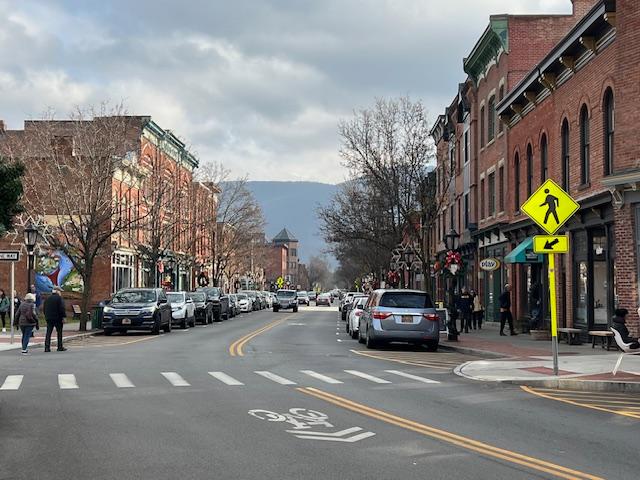
Downtown Beacon, NY in the summer of 2024

Downtown Beacon, NY in the summer of 2024

Downtown Beacon, NY in the summer of 2024

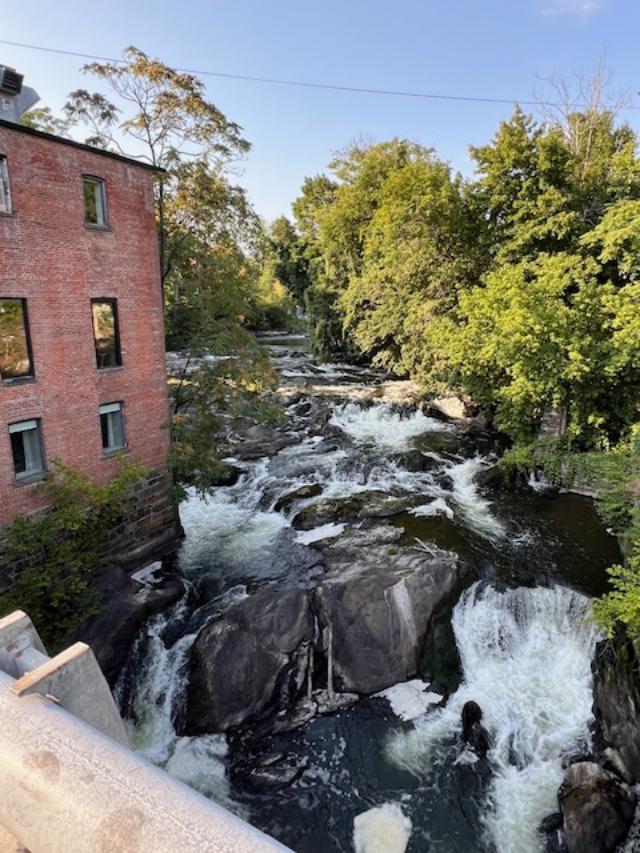
Downtown Beacon, NY falls in the summer of 2024

I also visited Downtown Beacon in December of 2024 for the pre-Christmas holiday season and the whole downtown was decked out for the holidays.

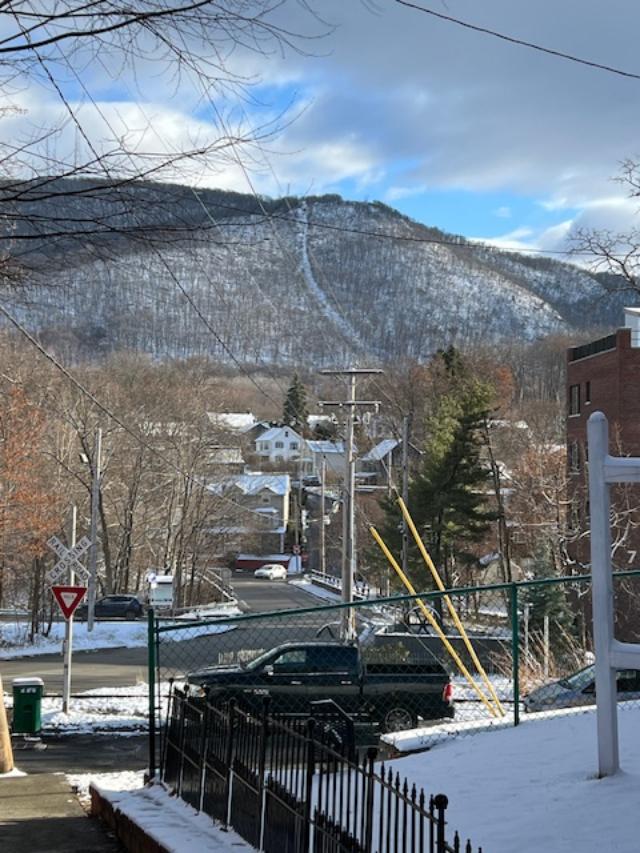
The Mountains behind the downtown glitter with the recent snowfall

The edge of Downtown where the church is located

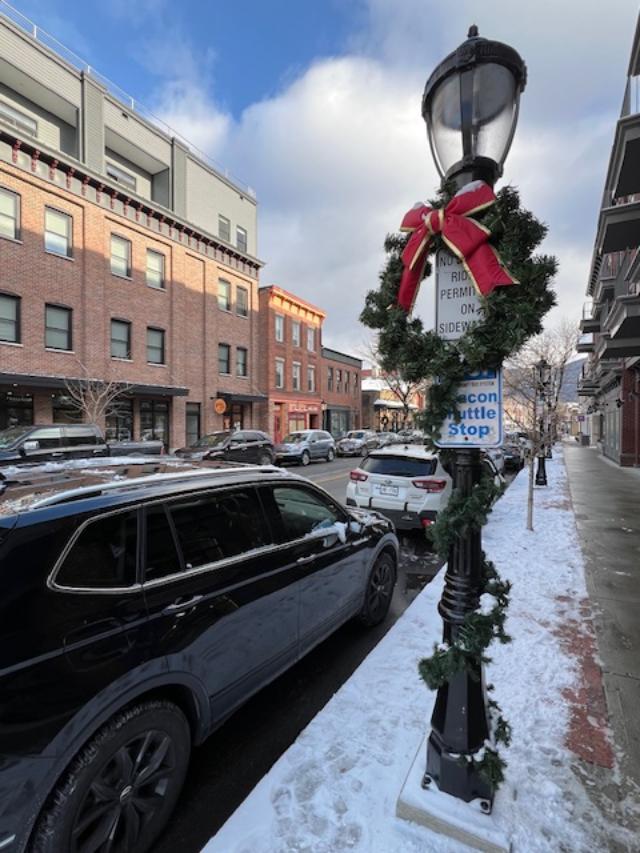
The downtown was decorated with wreaths and garland topped with fresh snow

The store fronts during Christmas time in Downtown Beacon, NY

The Falls at Christmas time

The Downtown Beacon decorations for the holidays

The festive and very creative signs of the merchants in the downtown area

Downtown Beacon decorated for the holidays at dusk as the lights came on

More merchant signs downtown

Each lamppost was festive and nicely decorated for the holidays

jwatrel's avatarVisiting a Museum: The Unique, Unusual, Obscure and Historical

Mount Gulian Historic Site

145 Sterling Street

Beacon, NY  12508

(845) 831-8172

Home

Open: May 5th-October 27th Tours are every hour 1:00pm-5:00pm on Sundays, Wednesdays, Thursdays and Fridays. Special Wedding tours are by appointment.

Fee: Adults $8.00/Seniors $6.00/Children (6-18) $4.00/Members are free

My review on TripAdvisor:

https://www.tripadvisor.com/Attraction_Review-g47291-d10701912-Reviews-Mount_Gulian_Society-Beacon_New_York.html?m=19905

On my last trip to the Hudson River Valley to visit the great houses of the Hudson, I came across Mount Gulian, a Dutch manor that I never heard of in all my visits. This smaller Dutch manor house is actually a reconstruction of an 18th century home that burned to the ground by arson in 1931. The original house had been built between 1730 and 1740 and added onto over the next two centuries.

The house officially had closed for the season at the end of October and was decorated for the holidays for the weekend between December 14-16th to represent the…

View original post 2,161 more words

Boscobel House & Gardens 1601 Route 9D Garrison, NY 10524

Don’t miss the decorated mansions of the Hudson River Valley at the holidays!

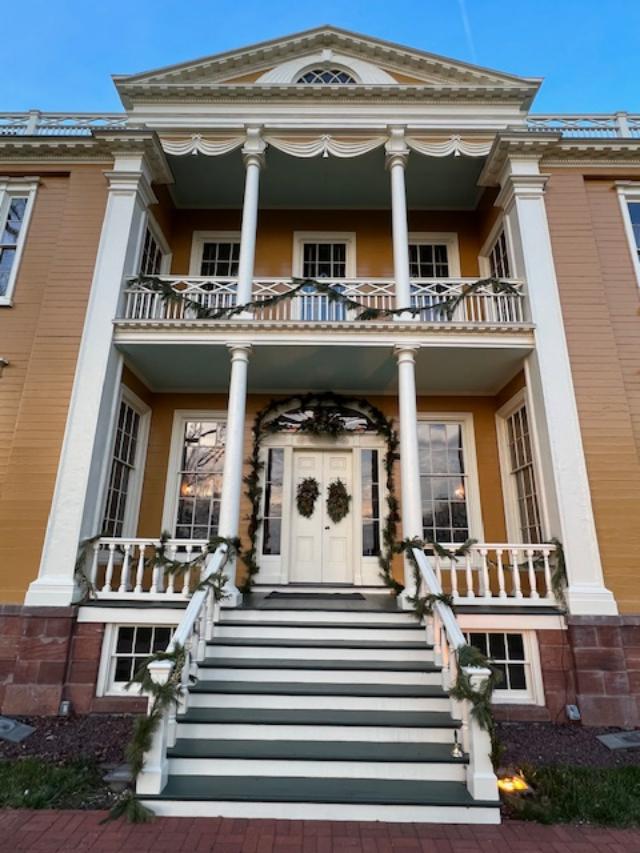
The main hall at Boscobel House

The bedrooms at Boscobel

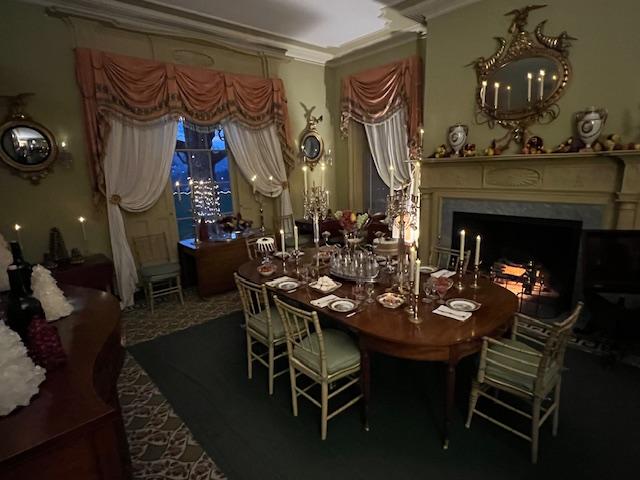
The Dining Room at Christmastime

The kitchen set up for Christmas

jwatrel's avatarVisiting a Museum: The Unique, Unusual, Obscure and Historical

Boscobel House & Gardens

1601 Route 9D

Garrison, NY  10524

(845) 265-3638

http://www.boscobel.org

Homepage

Open: Sunday-Monday 9:30am-5:00pm (closes 4:00pm between November and January 5th) The house is only open between April and the beginning of January.

Fee:  Adults $18.00/Seniors $15.00/Children (5-18) $9.00/Children (under 5 years old) Free (This is for house and Garden/Garden tours are different and depend on the season. Please check the website)

My review on TripAdvisor:
I recently visited the Boscobel House and Garden for their Christmas decorations and for a tour of the house at the holidays. Like most houses of its time period (the house was built in 1806), it was Post-Revolutionary War and the decorations would not have been that lavish as in the Victorian times.

boscobel-iii-1.jpg

The Grand Foyer at Boscobel

The house was tastefully decorated with garlands and mistletoe along the archways inside the foyer and with holly and mistletoe inside the house…

View original post 1,242 more words