The Sturr Family Cemetery sits on a bend of the driveway of the Chabad Jewish Center of Northwest Bergen County and is a small cemetery that once sat on the edge of the J.H, Sturr farm.
The Sturr Family Cemetery
The farmhouse of the Sturr Family sits on the lot across the street from the cemetery property. This is located on a small buff on what was the edge of the farm.
The Sturr Family cemetery tombstones
The tombstones of the Courter and Carlouch family members
The grave of William Courter
The only visible tombstones that are left in the cemetery are an Ackerman family member, Anny Ackerman and members of the Courter and the Carlouch family’s (who must have married into the family).
The Ackerman family tombstones (the one to the right was unreadable)
The other tombstones are broken and no one is sure who is buried where in the cemetery.
The History of the Cemetery:
(From Find a Grave website)
The cemetery is located in Franklin Township, Bergen County, New Jersey, on what was once the family farm of J.H. Sturr. As of October 1991 only 6 markers were still remaining.
The Sturr Family Cemetery in full view
History of the House:
(From the Franklin Lakes Municipal Website)
H. Sturr House or Blue Meadow Farm Built 1860 378 Pulis Avenue, Block 1510, Lot 8 Franklin Lakes, New Jersey 07417
The Sturr House – also known as Blue Meadow Farm -is a handsome and little altered example of mid 19th century vernacular architecture which incorporates several stylistic elements such as gable returns and frieze area of the early 19th century Greek Revival style. The Borough of Franklin Lakes lists the erection year of the house as 1860.
The façade of this 2 ½ story house consists of clapboard. The front porch has five bays with square posts and a rectangular entrance door with rectangular sidelights. Two tall 1st story windows are on one side of the porch. A single hitching post with iron rings sits in front of the porch stairs. The building has a frieze area with linear design. Semi-circular headed louvered vents are in all gable ends. The rear of the house has a one story wing. There is a detached garage to the west side of the house as well as a round frame well. Further west of the house is a stable which has been extensively remodeled and converted into a residence in recent times. The house combined with associated structures is a significant remnant of the large farmsteads which ones dotted the Borough’s landscape prior to the recent suburban housing boom.
History of the Family:
(From the Franklin Lakes Municipal website)
This Sturr house and the nearby more altered house at 402 Pulis Avenue were duplicate structures and were probably built around the same time by members of the Sturr family. The 19th century Sturr family was descended from Conraedt Sturr who purchased 190 acres of land in this area with John Coeter from Robert Livingston in 1793.
The non-extant homestead and mill was located at present-day 930 Old Mill Road. It is known that Henry Sturr, the son of Conraedt, had a fanning mill at this location in 1850. In a will dated 1852 he bequeathed his property and mill to his grandsons John, Henry, and Daniel (Maria Braun – 1976 page 26 & 27).
The property along Pulis Avenue upon which these houses are situated was probably included in this will since the homes were built around the mid-19th century. Future deed research is recommended to identify the original builder and the construction date of the house (1861: H. Sturr, 1876 Estate of H.M. Sturr). Presently the house is privately owned and occupied.
The membership arrived at the NJ State Firemen’s Home to find the home decorated for the upcoming Halloween and Thanksgiving holidays. It seemed like yesterday we were up here for the Summer Barbecues.
The outside grounds of the NJ State Firemen’s Home
We had a lot to talk about at our October meeting with the Annual Convention behind us. There had been discussions on the Home and its expansion, renovations going on and the upcoming holiday season. I thought it was one of the best meetings we had in a long time.
The outside of the home decorated for the upcoming holiday season
Our fundraising has been coming along really well and we have exceeded our drive from last year. I think the word getting out about what we do and the Social media has been a huge help. We not only want to show our fellow fire companies where their money is being spent but how it is being spent.
We discussed also our upcoming reorganization breakfast at the Wyckoff Fire Department in November and the Annual Christmas party in December. Our Secretary, Tom Simpson discussed the gift this year and a planned lunch for both the staff and the membership. Everything is underway and planned for a great holiday season.
After the meeting was over, we joined the residents in the main meeting room where refreshments were being served and the entertainment had started.
Gigi entertained the residents on a stage decorated for the upcoming Halloween season
Gigi performed a series of Classic rock and Country music
Gigi performing the Patsy Kline hit “Crazy for you”
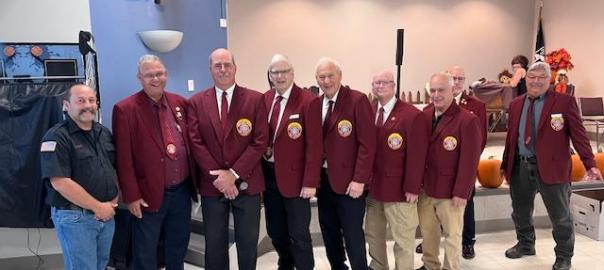
After ending her performance with ‘God Bless America’, we got up and introduced ourselves to the residents. We let everyone know about our upcoming Christmas party, which is always a huge hit with the residents and staff alike. We also we wished them well and for their years of service to the fire service, which they seemed touched by. Then we took our group picture.
The members of the Bergen County Firemen’s Home Association
We ended the program with one of the employees of the home, Eleanor, singing with Gigi a heartfelt song., “I Believe”.
What I thought was interesting was one of the guys told me she had once been a backup singer to Michael Jackson. I thought that was really gift that this woman shared her voice and love for these guys.
It really was a wonderful afternoon and I want to thank everyone who made it possible. This is our gift to our fellow firefighters.
The Doo Wop Preservation League Museum at 4500 Ocean Avenue.
I visited the Doo Wop Preservation League Museum when I was visiting Wildwood, NJ for the Firemen’s Convention. They were sponsoring the DJ on the stage behind the museum. It was easy to miss the museum with all the fire equipment around it and hundreds of firemen milling around.
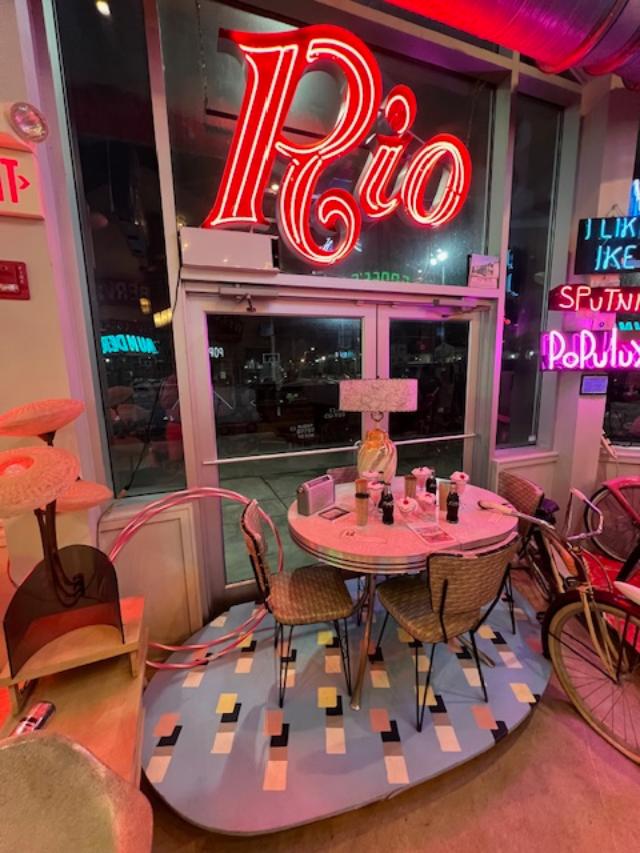
The neon signs in front of the Doo Wop Museum.
The old neon hotel signs outside the museum
Once inside, this small museum is a treasure trove of history of the resort motels that once lined the beaches of Wildwood, Wildwood Crest and North Wildwood. As time rolls on, many of these old motels, hotels and restaurants are giving way to condos, newer homes and new chain hotels changing the landscape of Wildwood. It is bringing it into modern times with newer looks.
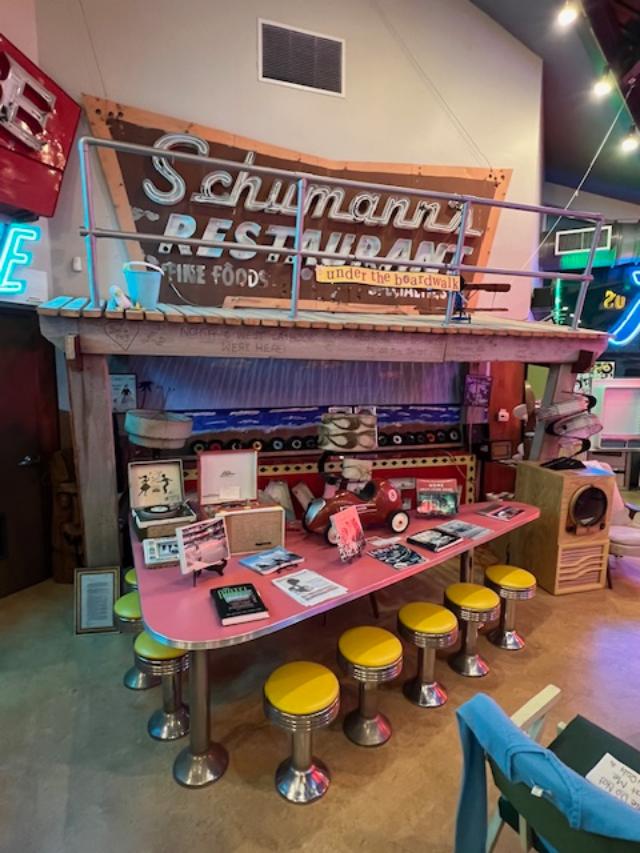
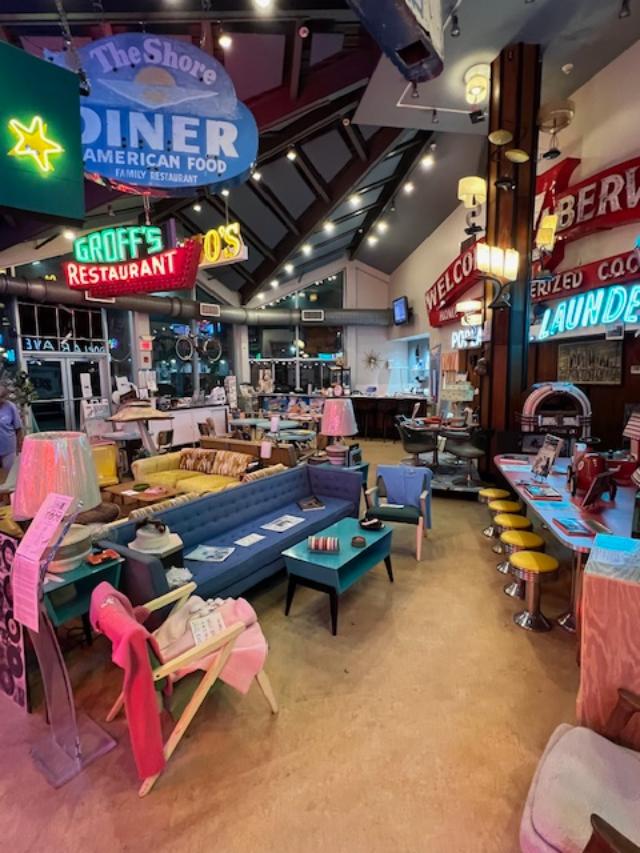
The restaurant section of the Doo Wop Museum
When many of these motels are torn down, the establishments donate old furnishes, decorative objects and signs from the outside to the museum. The outside of the museum is decorated with signs of businesses that are now closed, there neon lights still shining but for a different purpose. These somewhat gaudy and over-grandised signs and looks were of a time of great optimism and travel. Since the middle and working class families did not have the money to travel to these exotic places, something similar was created for them in the Wildwoods bringing that look to the Jersey shore.
The restaurant section of the Doo Wop Museum
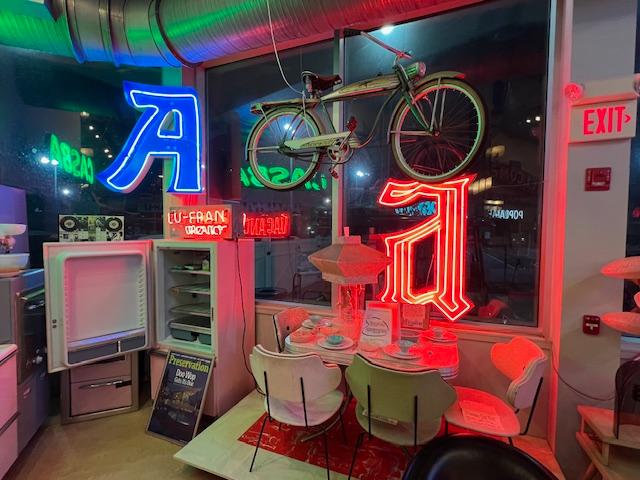
The neon room of the 1950’s
When talking to the curators , a couple that ran the museum said that the museum represents the change in décor used after WWII when they used the neon lights and steel from the war into the signs and lighting of the new resorts. It was a unique style of the late 1950’s and 60’s, when these materials were plentiful and motel owners were getting creative to bring in the rising middle class tourists that could not afford the trips to Hawaii and Miami Beach. These owners brought these themes to Wildwood with a creative twist. Check out the signing and furniture that lines the walls and dining set ups of the museum.
The old neon signs of the hotels in Wildwood, NJ.
The museum is small and takes only about an hour to walk through. Each of the vignettes are designed as its own room with furnishings from old hotels and motels like tables, chairs, lamps and ashtrays in one corner, in another are stools, a jukebox and menus from a 50’s or 60’s style restaurant or items used at the time like bicycles or scooters.
The interesting preservation by the museum shows all over
The History of the Doo Wop Museum:
The Doo Wop Preservation League was founded in 1997 as a 501C3 to preserve the 1950’s and 60’s architectural styles of the Wildwood’s. Doo Wop style is a combination of Space Age dreams of the late 60’s and the exotic seaside tropics of recently opened South Seas Islands like Hawaii which became out 50th State in 1959. The Polynesian look was very ‘in’ at this time as most people could not afford to go but wanted to replicated for them.
The signs of the museum beacon visitors.
The museum is housed in the 1960’s ‘Space Age’ restaurant “The Surfside” that was saved from the wrecking ball and moved to this spot right across the Convention Center and the Boardwalk. On Tuesdays and Thursdays when in season (i.e. Warmer Months), there are bus tours offered by the museum. The museum’s goal is catalogue the remaining businesses in town that still keep their look of the era (Museum website and The Wildwooder Newspaper).
Don’t miss the museum tours:
The best part is that the museum is free (donation suggested) and you can take your time for a self-guided tour of the museum.
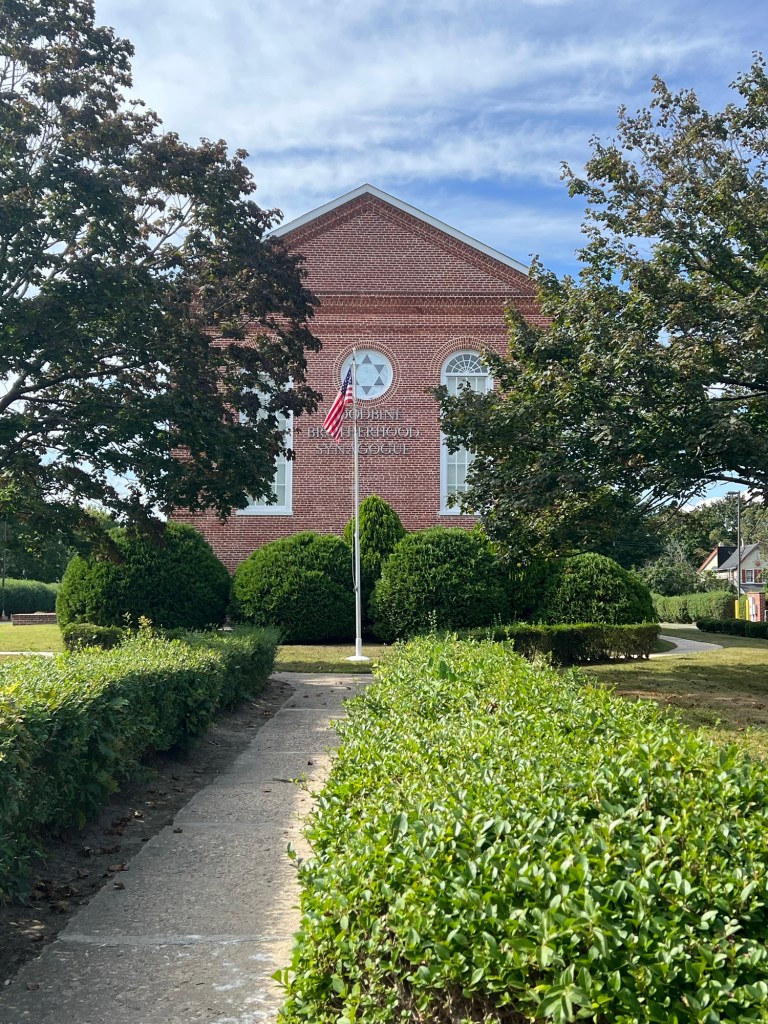
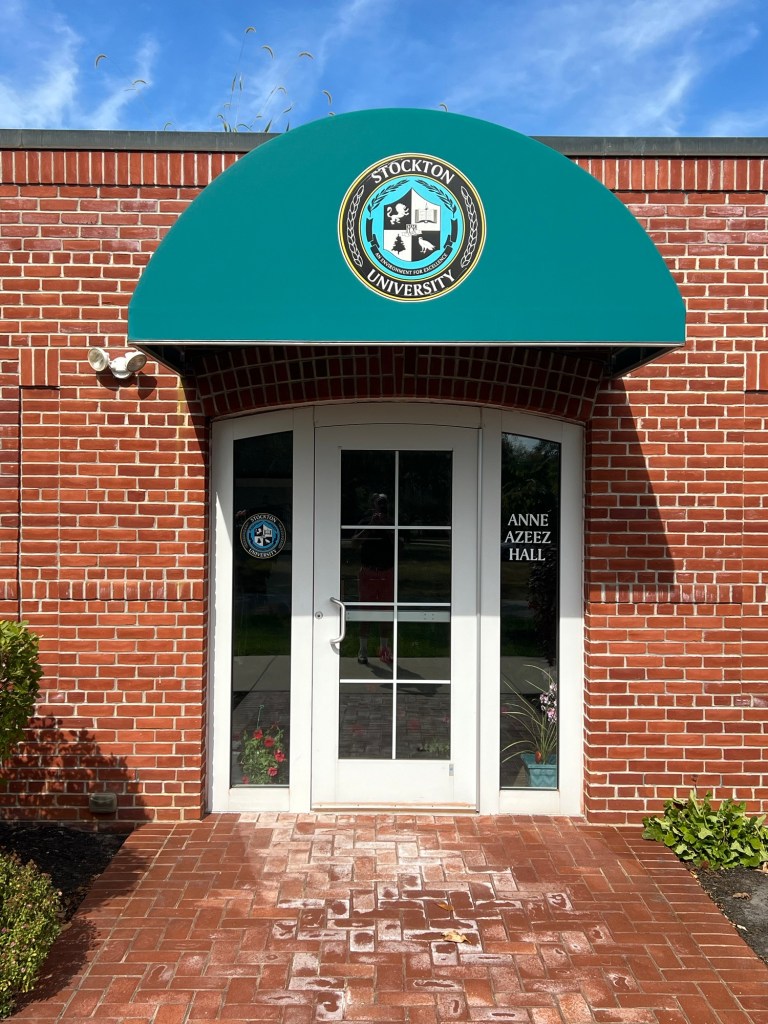
The front of the Sam Azeez Museum of Woodbine Heritage
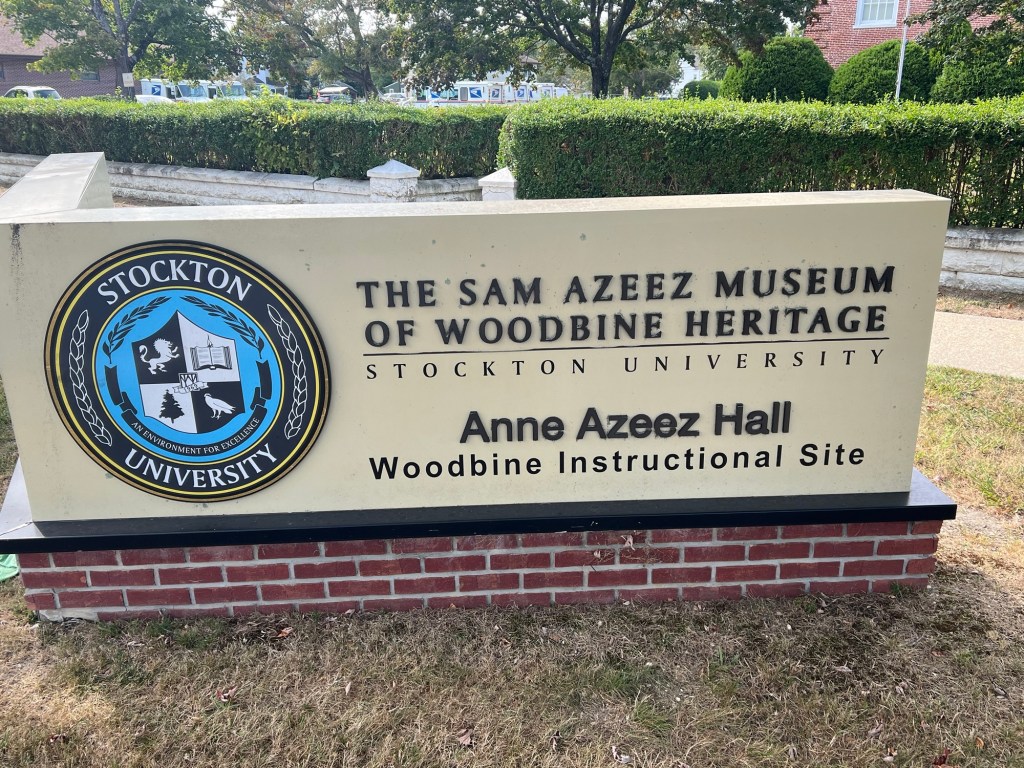
The entrance sign that welcomes you
The History of the Sam Azzez Woodbine Museum:
(from the museum’s website):
The Sam Azeez Museum of Woodbine Heritage is an independent non-profit charitable organization preserving the unique history of Woodbine, NJ.
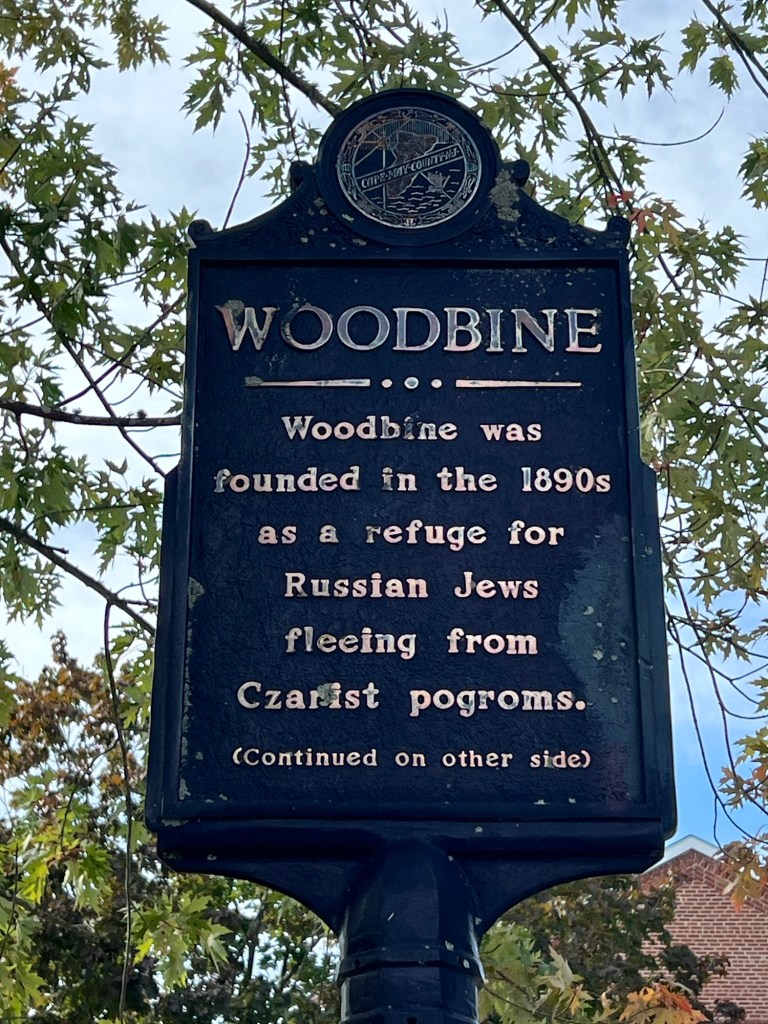
Established in the 1890’s through Baron de Hirsch’s philanthropy, Woodbine began as an agricultural colony for Russian Jewish immigrants seeking freedom denied in their homeland. As poor soil conditions limited farming, Woodbine evolved into Cape May County’s manufacturing center while maintaining founding values of education, religion and inclusion.
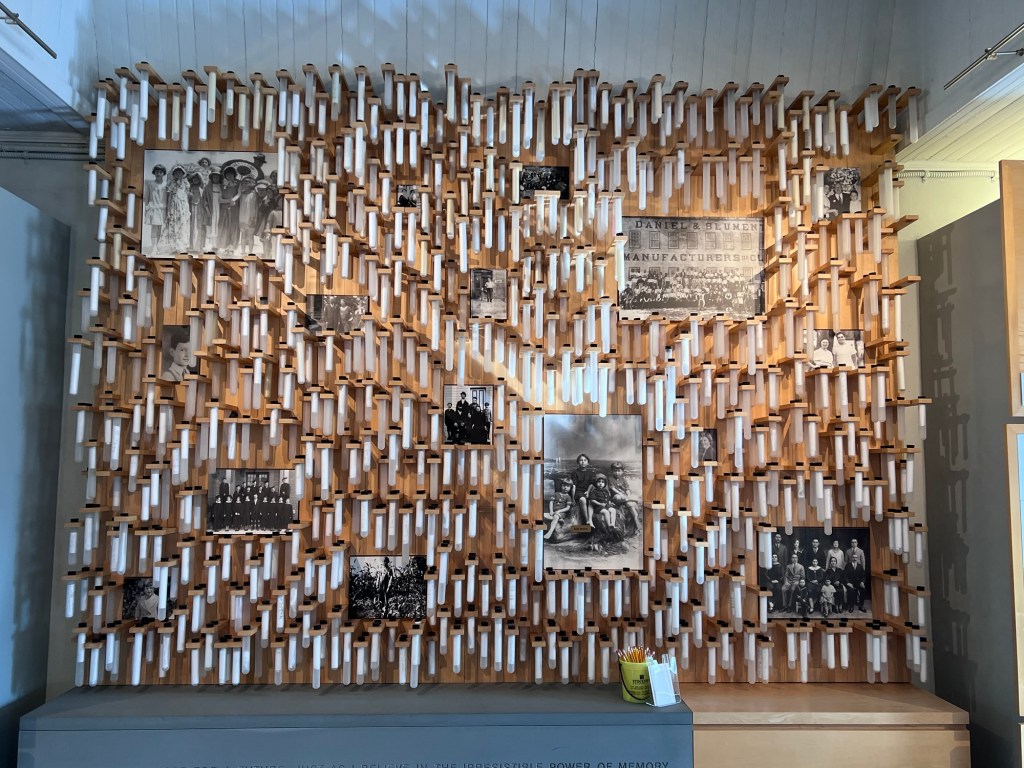
The museum occupies the historic Woodbine Brotherhood Synagogue, listed on the Natural Register of Historic Places. The restored sanctuary hosts special services, while the Brotherhood Hall houses exhibitions including the community-contributed Collective Memory Wall.
The historical significance of of the Town of Woodbine
The entrance to the museum
The museum is another interesting look at New Jersey history and the development of the immigrant story of assimilation into American society.
I was given a personal tour by the Assistant Curator and she explained the resettlement of Russian Jewish immigrants by a wealthy patron into this South Jersey community.
The main gallery of the museum
The panels tell the story of how these community came into being and how these people built a community through agricultural and eventually manufacturing and small businesses that supported the community around it. It established a town that was self sustaining and grew to the community center.
The panels show the growth of Woodbine as a community
The residents established their own sports teams, community organizations and civic groups like the councils and fire and police departments.
The records of the many town organizations of Woodbine
Display of one of the first families to settle in Woodbine
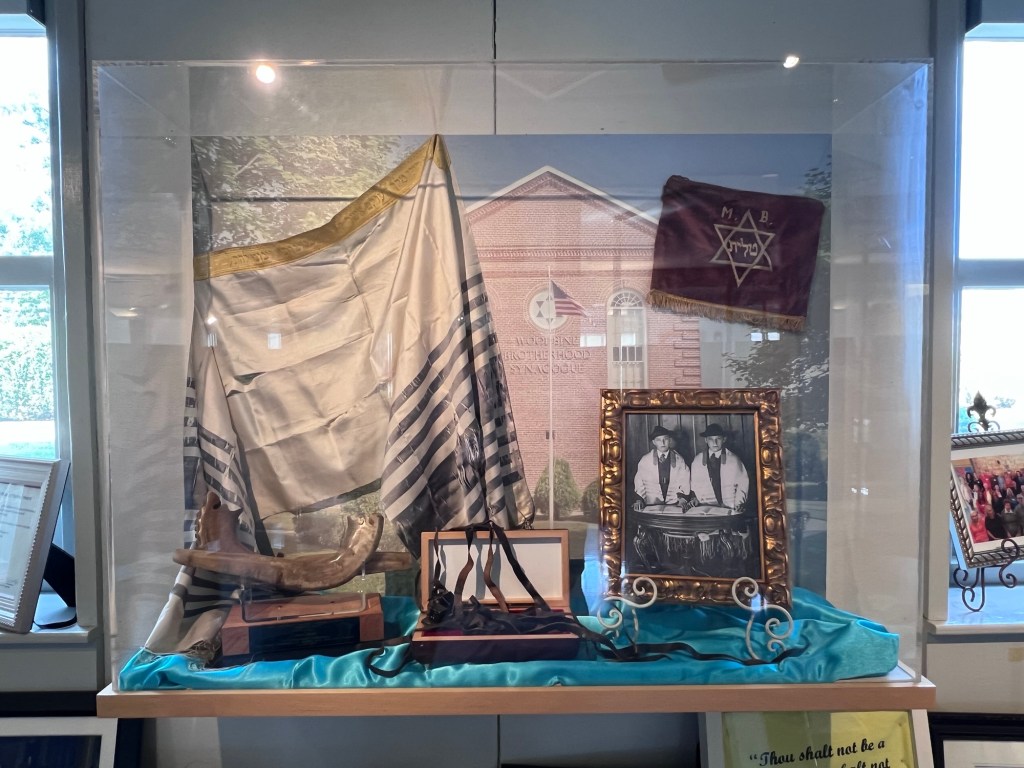
Display of the religious faith of the community
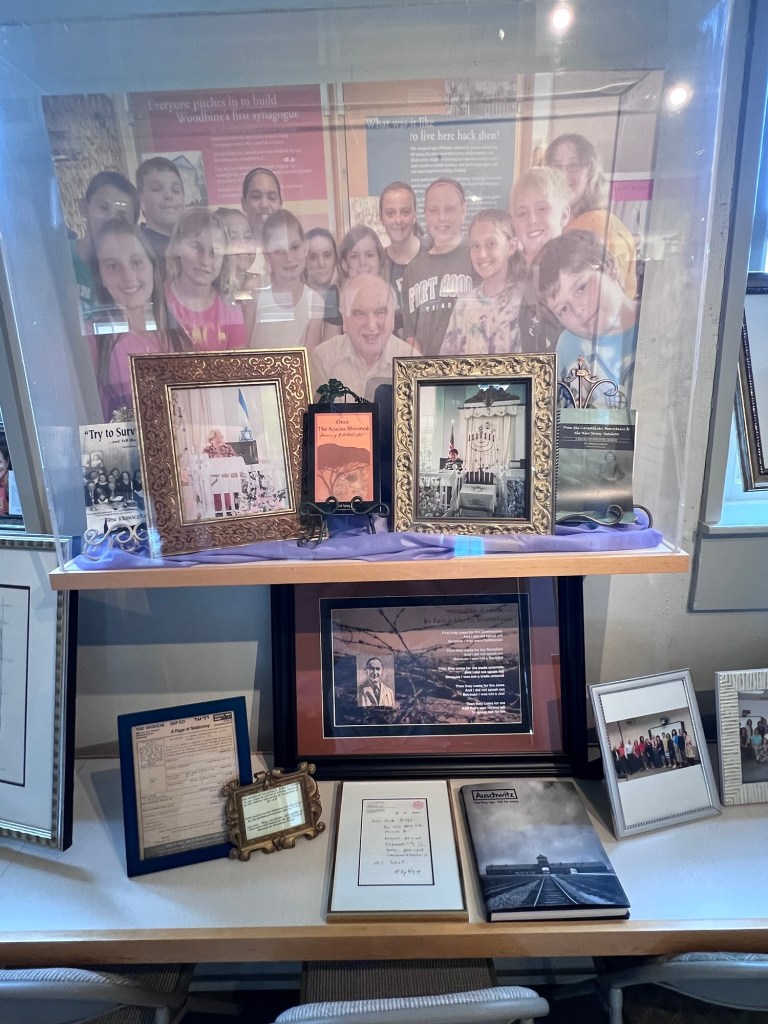
One of the most touching displays is of survivors of the concentration camps during the holocaust. These pictures represent these women as children and them today.
The display of the women who survived the camps
The history of the community and the growth of diverse businesses in Woodbine
Creating and building the Synagogue in the community
On the second floor of the building is the old synagogue of the community which is only used during the high holidays. This is used by descendants of the community and family members of theirs.
The inside of the synagogue on the second floor of the building
The front of the temple
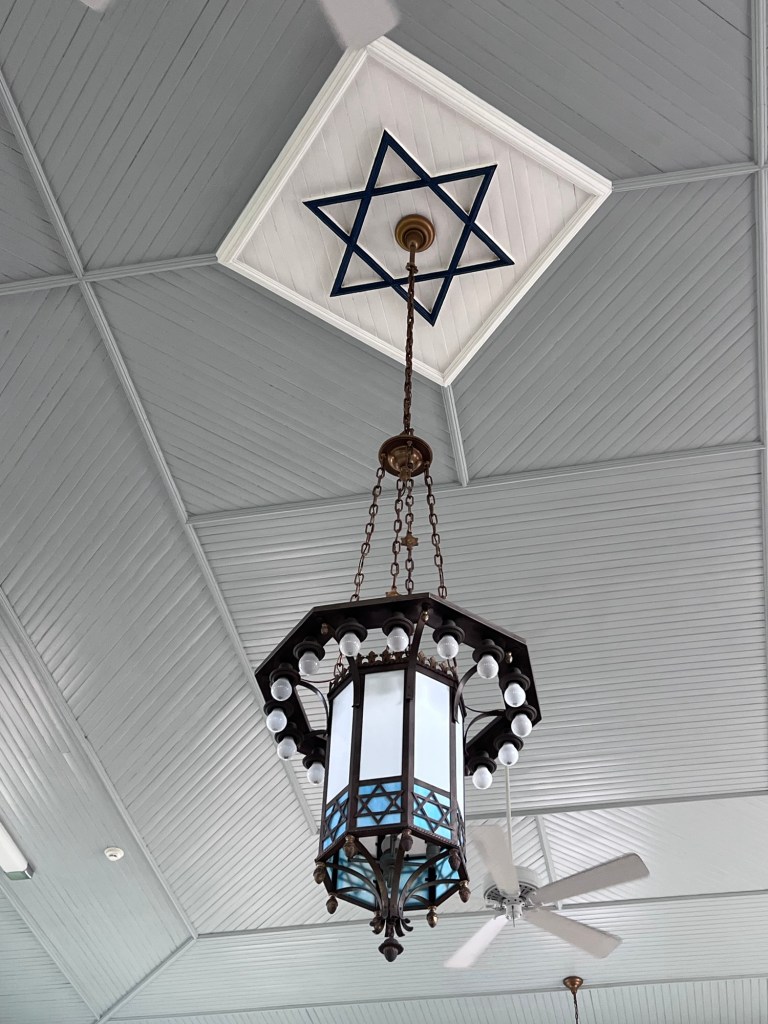
The chandelier is original to the temple
The space was being prepared for the Jewish New Year and the crowd of people who would be attending.
The Memorial Wall
The traditions of the religion being practiced in the community
The self-government of the community
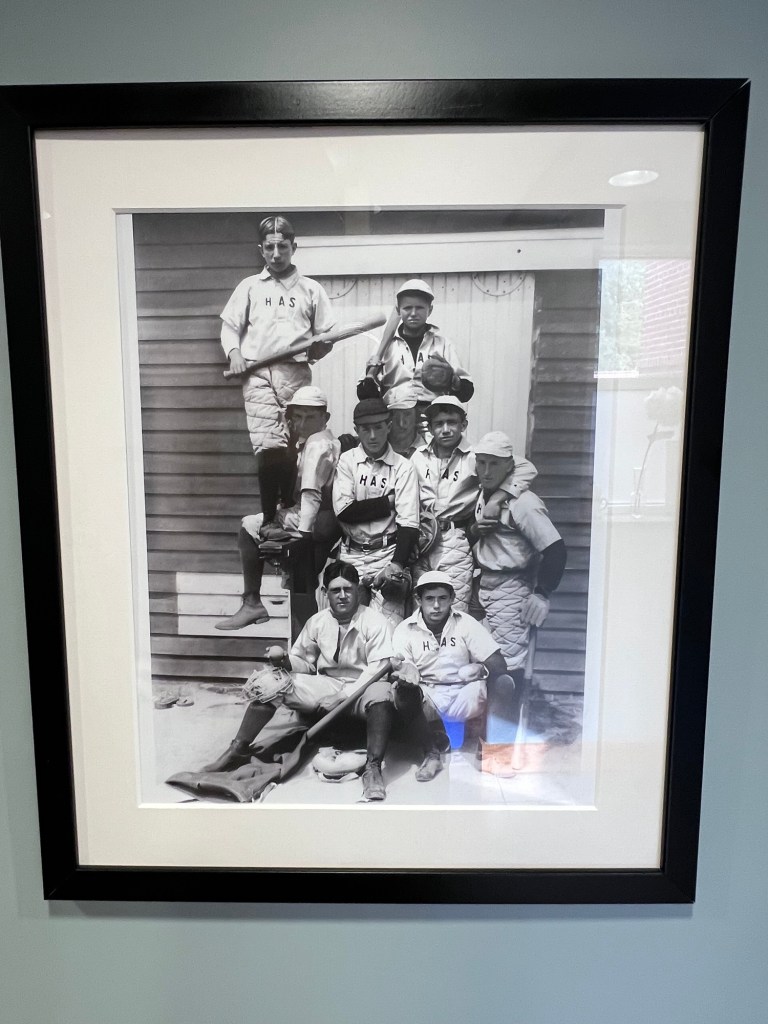
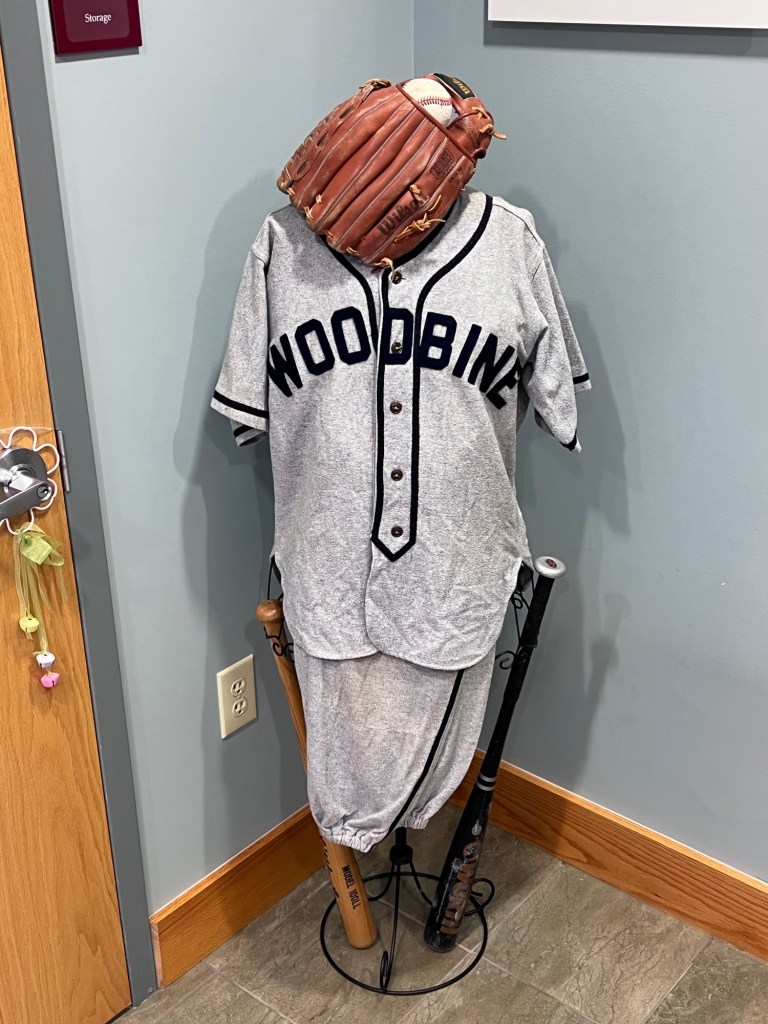
Still the younger generation was all American and wanted to assimilate into society with an all American past time of things like baseball.
The Woodbine youth baseball team
The uniform of the old baseball team for youths in the town
The last display is of the famous alumni who once lived in the community. These are the men and women who once lived here and went on after all odds to do great things and make our country better.
The Hall of Fame
The museum I thought had a bit of an identity crisis as I really did not know what the museum was about.
I was pleasantly surprised to find an interesting part of New Jersey history I had never known. It just goes to show you how a museum can educate you with just one visit. The Assistant curator said there will be more to come in the future.
Open: Please check the website for the times they are open.
Admission: Free but donations accepted
My review on TripAdvisor:
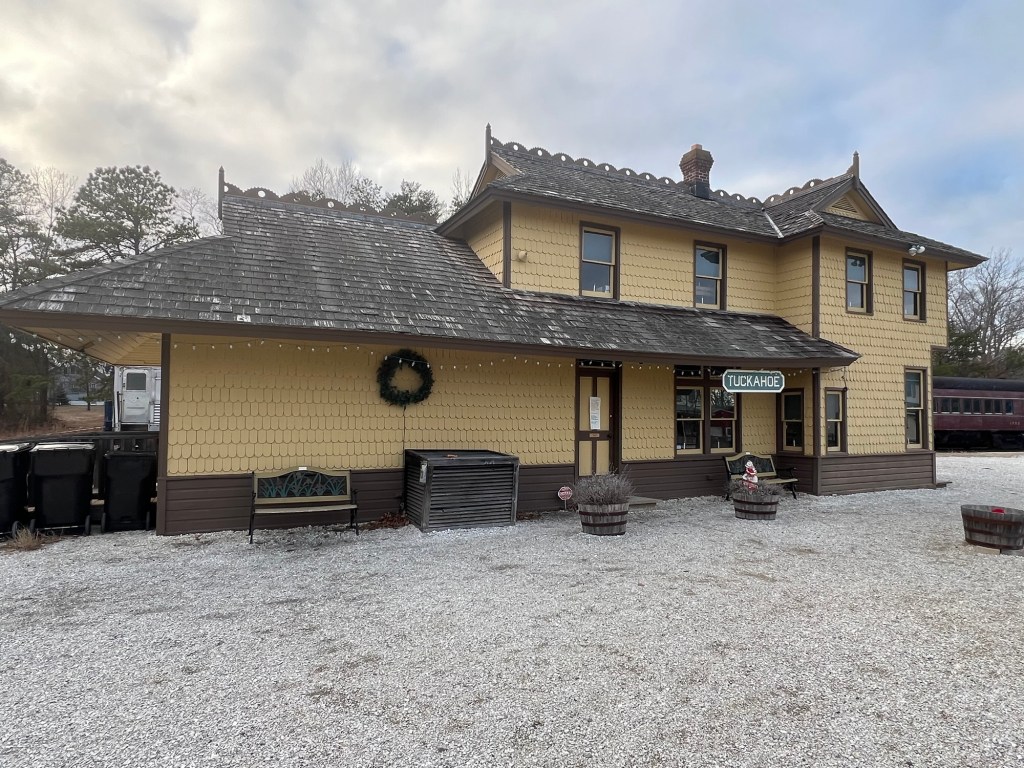
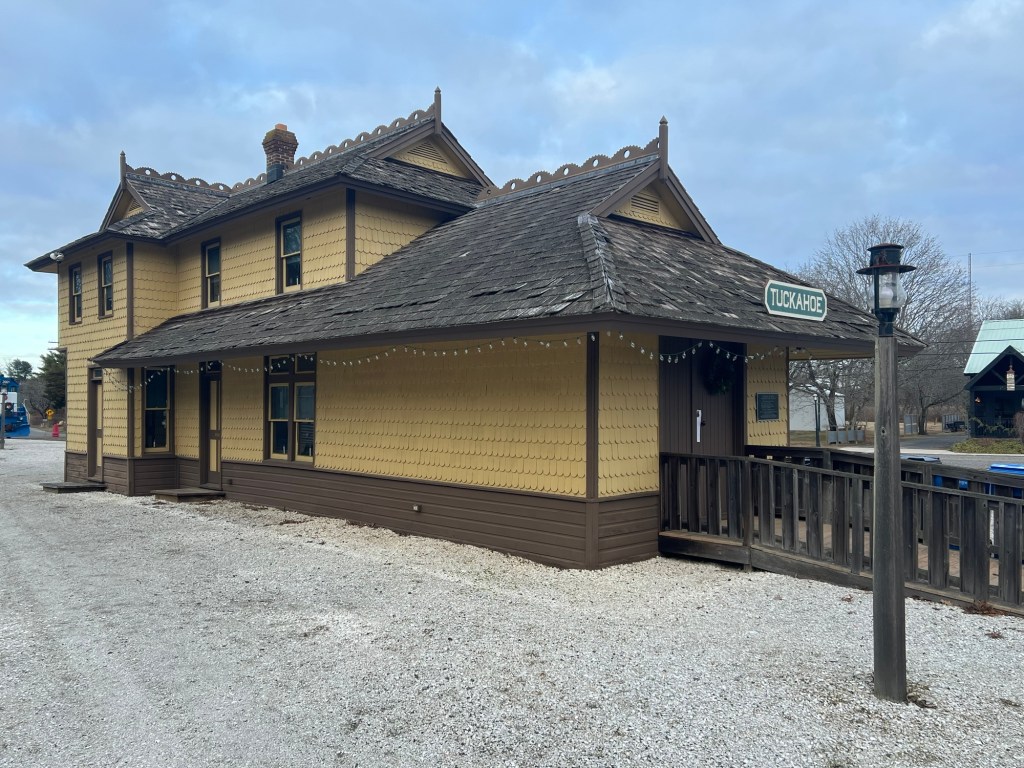
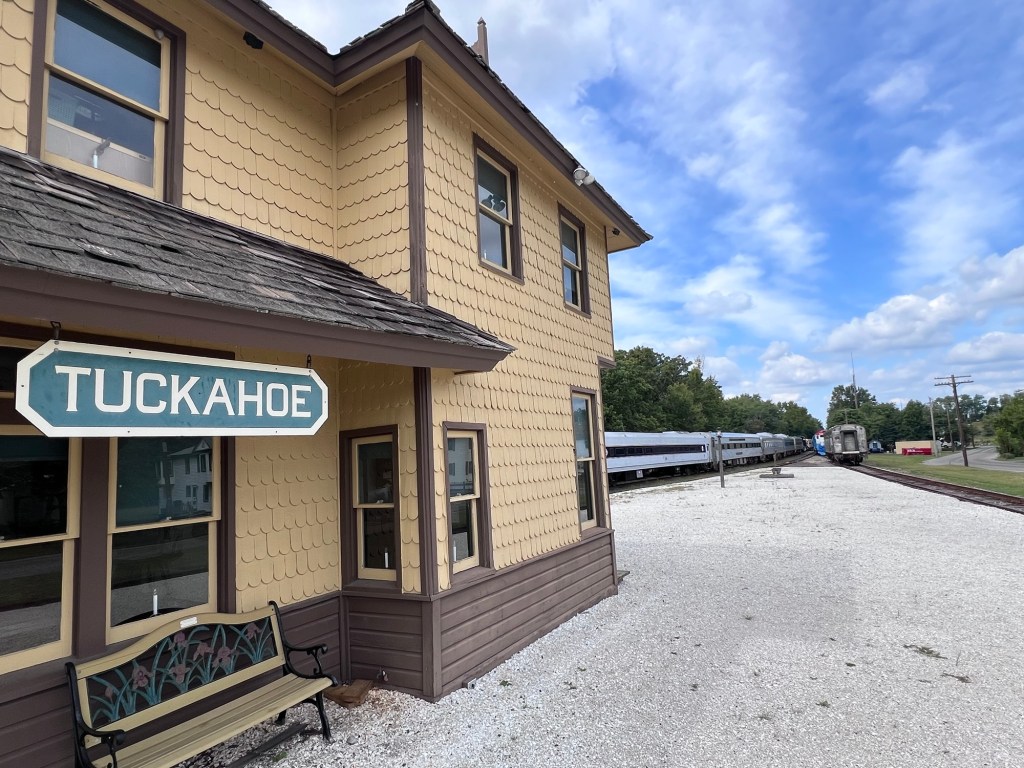
The Tuckahoe Train Station at Mill Street and Railroad Avenue
I visited the Tuckahoe Train Station during Christmas of 2024. The holiday events were long over but the station was still decorated for the holidays. In the Summer of 2025, I arranged a full tour of the station museum and the rail yard.
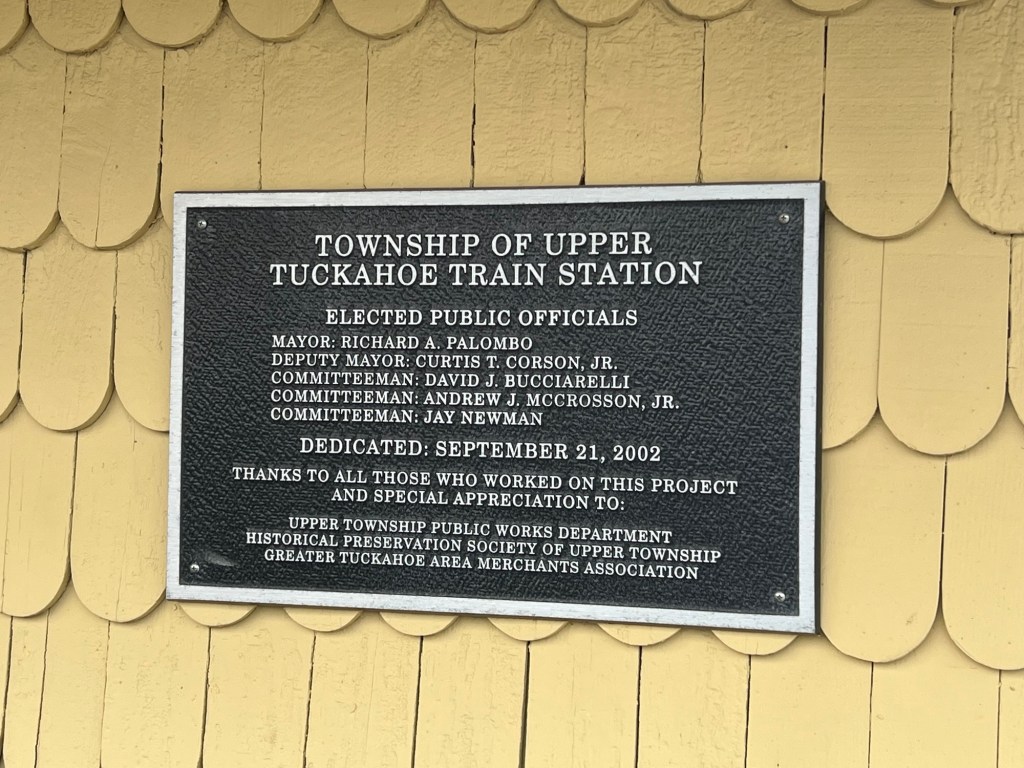
The station’s historic sign
The station’s historic sign
The station was once the hub of the area and visitors would depart from cities like New York and Philadelphia. The trains stopped running to this area in 1981.
The train station from the front of the building in the winter of 2024
I came back in 2025 for a full tour of the train station and the grounds. The Board members of the Upper Cape May County Historical Society had arranged this enjoyable tour of all the rooms.
The station again in 2025
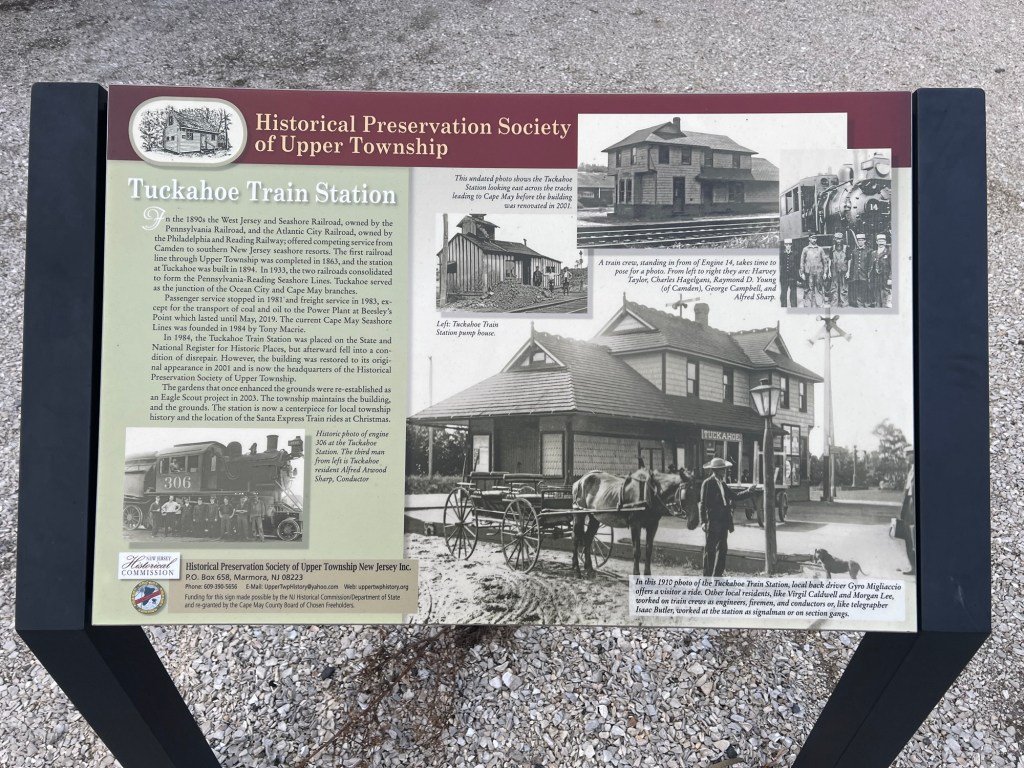
The train station history
The Summer of 2025:
My tour of the train station started with the history of the station and the development of the train station and transportation to the area. The coming of the railroad meant the development of the area as a resort town bringing hundreds of visitors each summer.
The tour started at the inside of the station and took me through the first and second floors of he old station house.
The first floor of the Tuckahoe Train Station
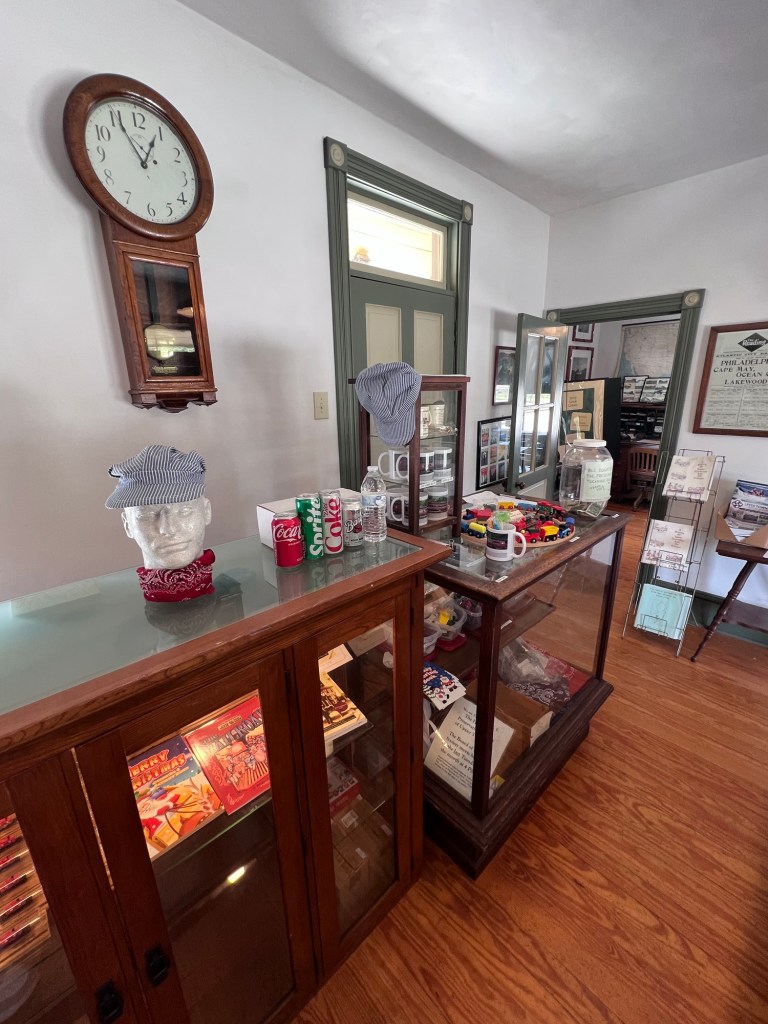
The Ticket a room is now the gift shop
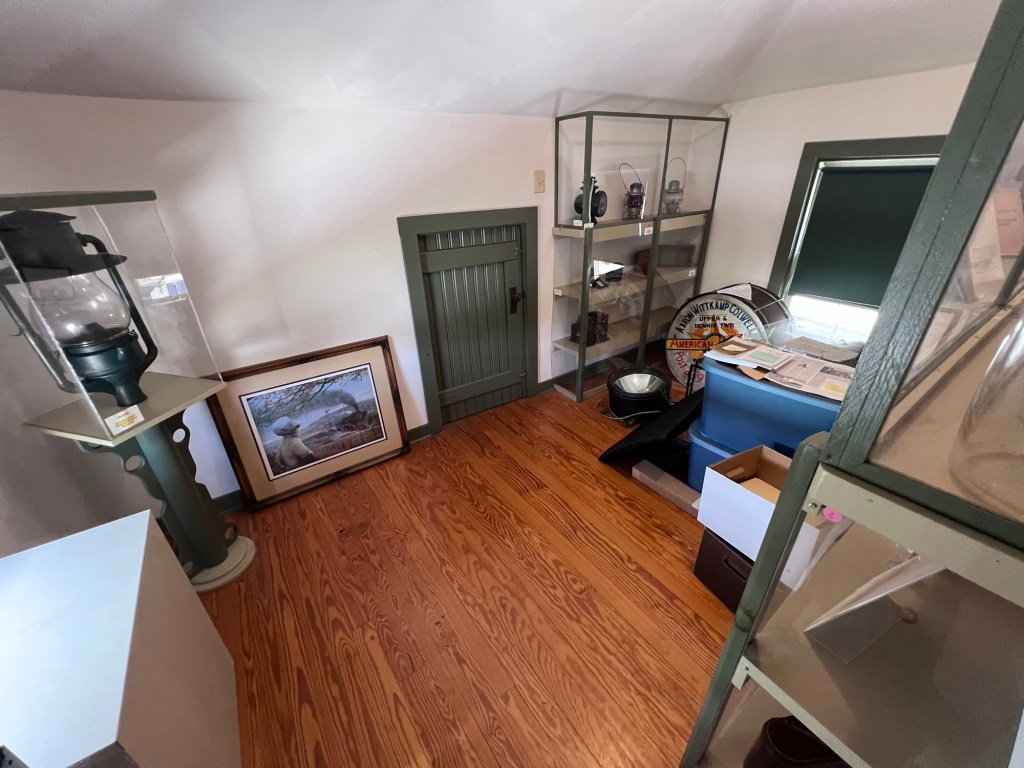
The display cases of memorabilia from the station days
The classic train sets
Ticketing and travel materials
The entrance to the baggage Room
The Baggage Room
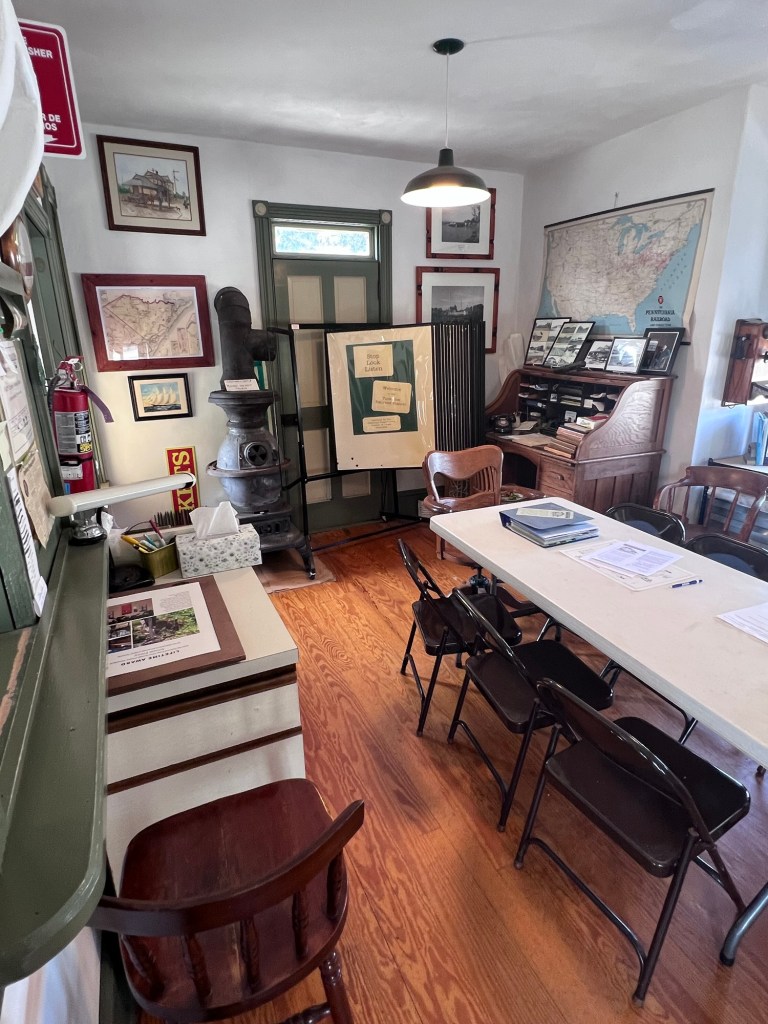
The old Ticketing Room
The Ticketing window
The old seating area in the Ticket Room. The tour guide told me that unions version of the benches was built brand new to match the antique one. I could not tell the difference.
The pot belly stove that kept everyone warm in the winter months
The next room over was the Waiting Room where there were more artifacts to see.
The Waiting Room
The seating in the Waiting Room
Then we toured the upstairs where the Conductor’s office and bedroom were located.
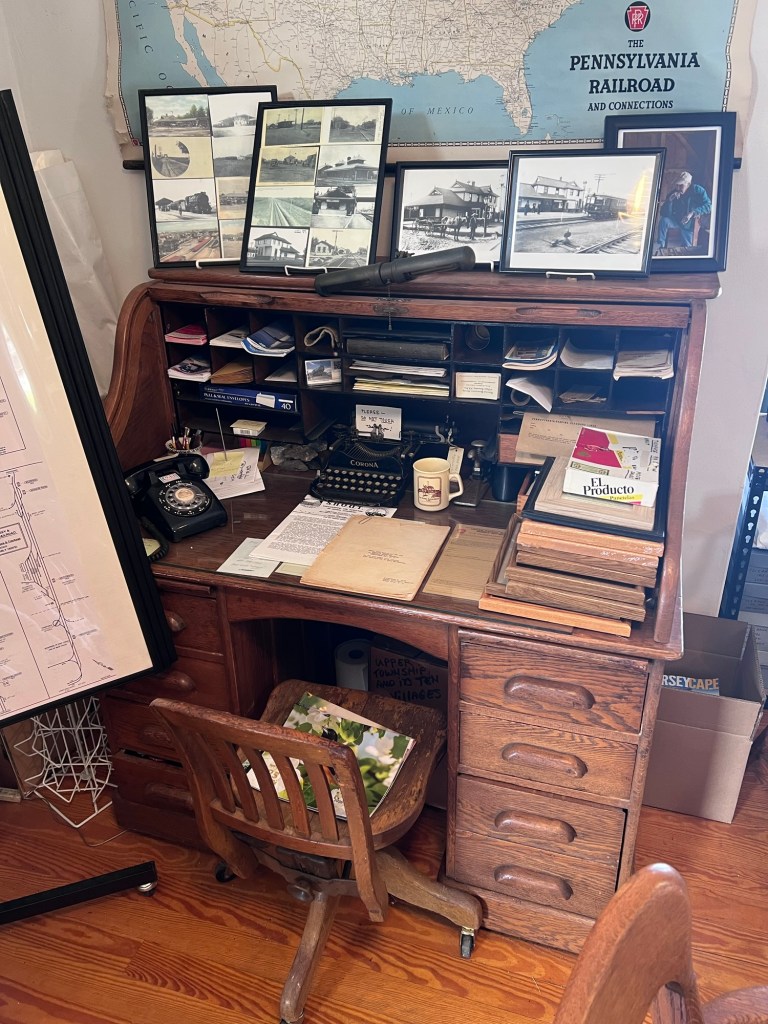
The Conductors office on the second floor
The conductor’s uniform
The we moved on to the Conductor’s living quarters when at the station working. This type of work had so much more to it in the days when rail travel was the way to go.
The Rail Conductor’s bedroom
The simple bedroom was enough so the conductor could get some rest
The artifacts from the turn of the last century
After we toured the entire building with the docent really giving me the thorough tour and history on the station and its artifacts, we went outside to discuss the trains.
We headed outside to tour the individual trains and their history. This once major shore hub has quieted down with the reduction in rail transportation due to cars.
The outside of the train station and its collection of train cars.
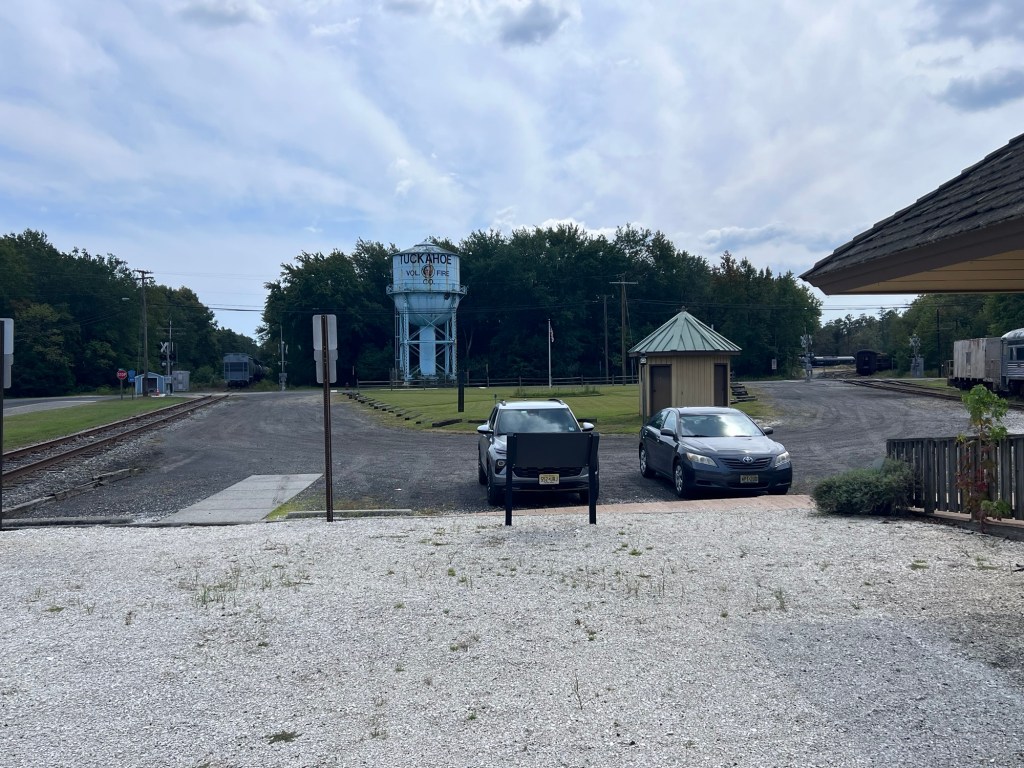
The train station outside where the cars are located
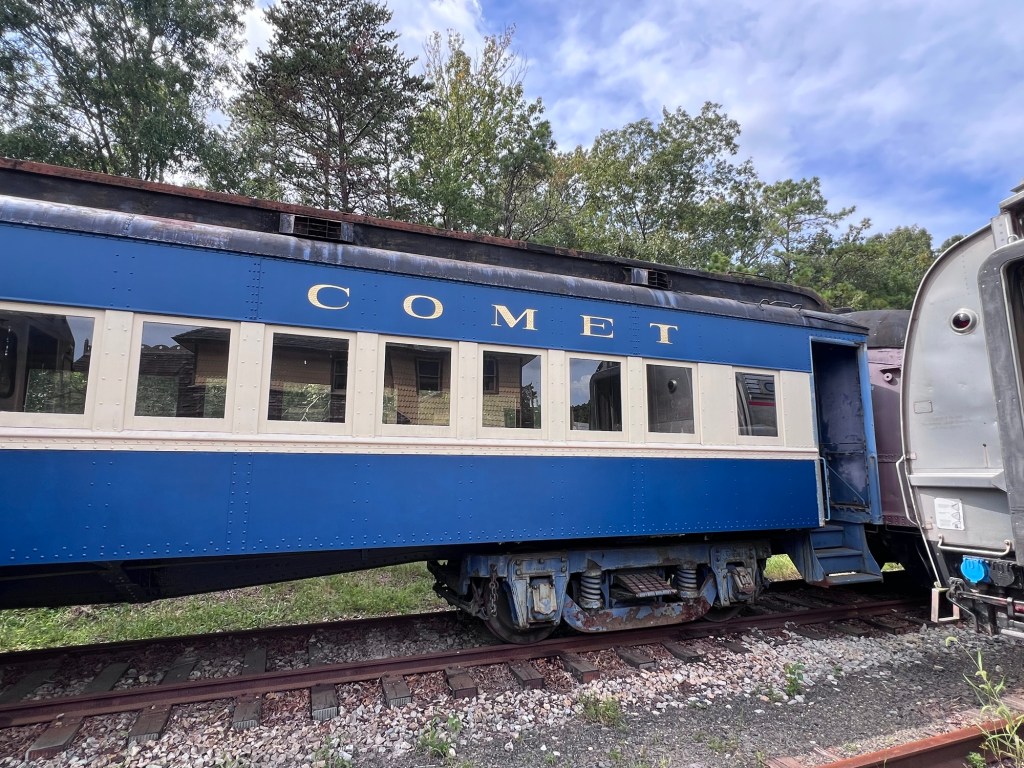
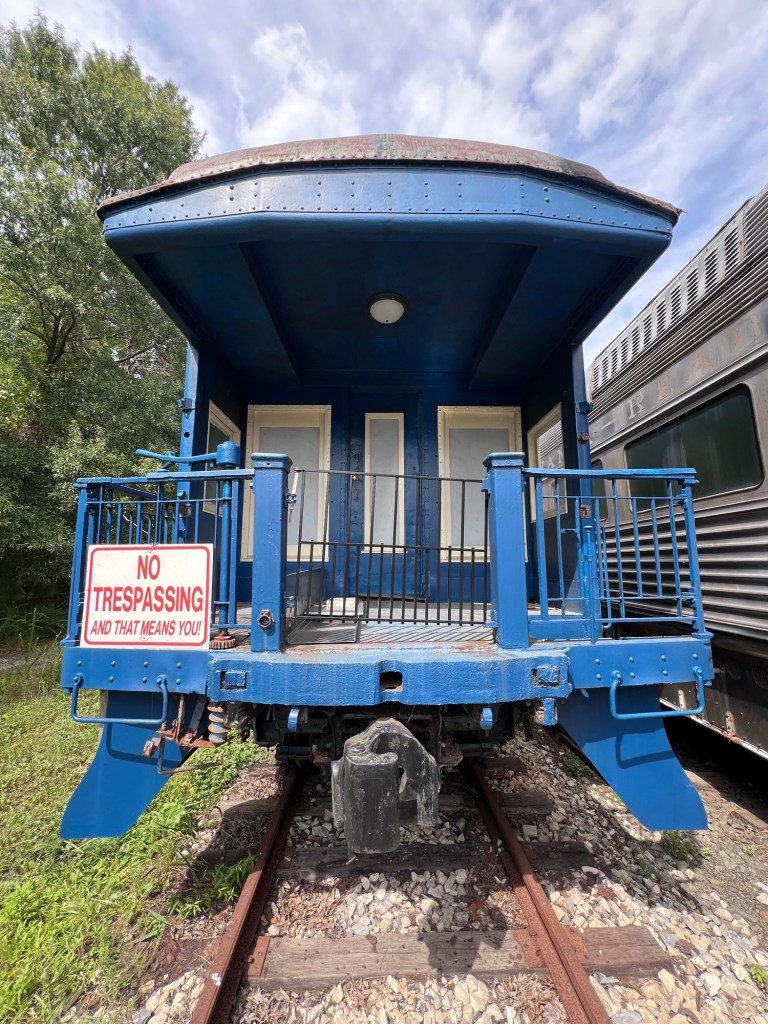
The Blue Comet Beach Train
The Blue Comet was once the ultimate in luxury travel when you came to the shore. This once ‘grand dame’ of travel is being renovated by the museum.
The Showman’s Car
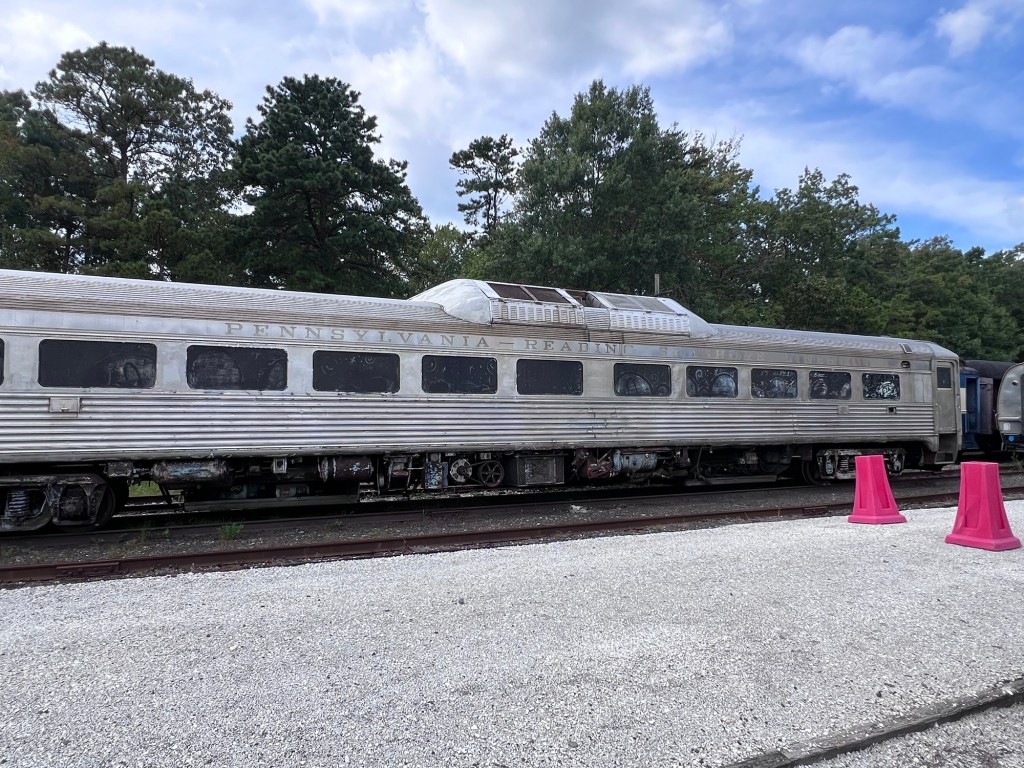
The Pennsylvania Starline
The long line of train cars
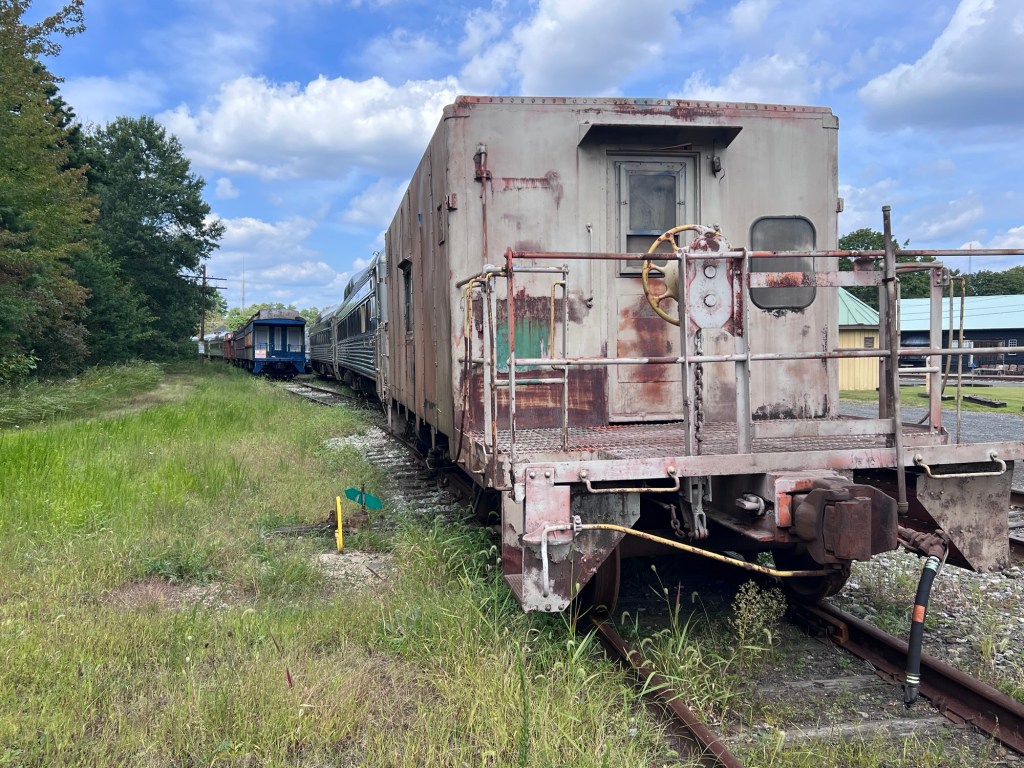
The train cars being renovated
The Beach trains
The last part of these interesting and engaging tour was a tour of the Signal and Control Building, where all communications for the railway took place.
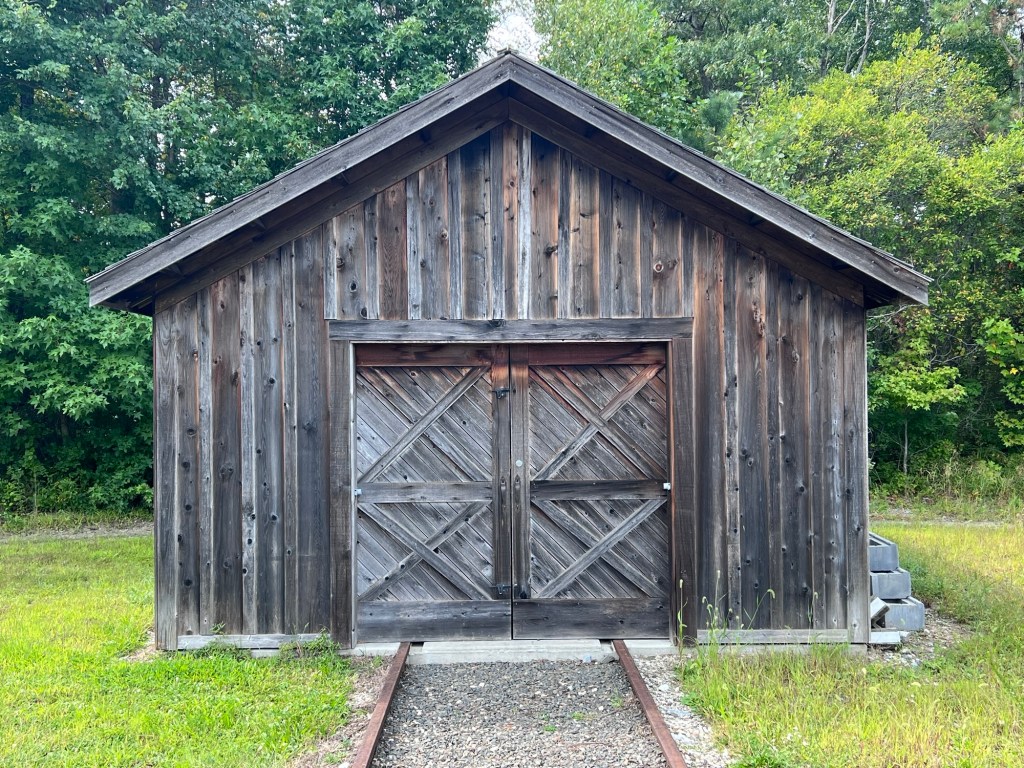
The Control and Signal Building
The inside where controls and repairs take place
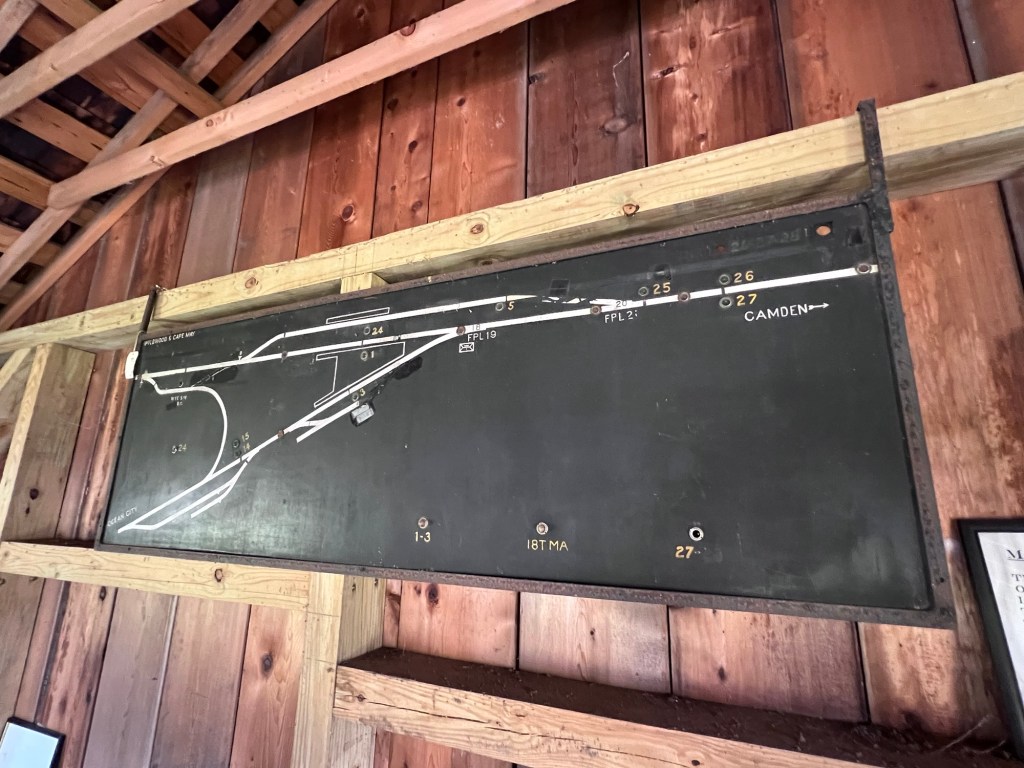
The signal board to the train turnaround at the Y
The full tour of the Tuckahoe Train Station Museum will give you a glimpse of a once vibrant rail head and the life of visitors down the shore. The inner workings of a train station at that time are on full display here.
The History of the Tuckahoe Train Station Museum:
(from the museum website)
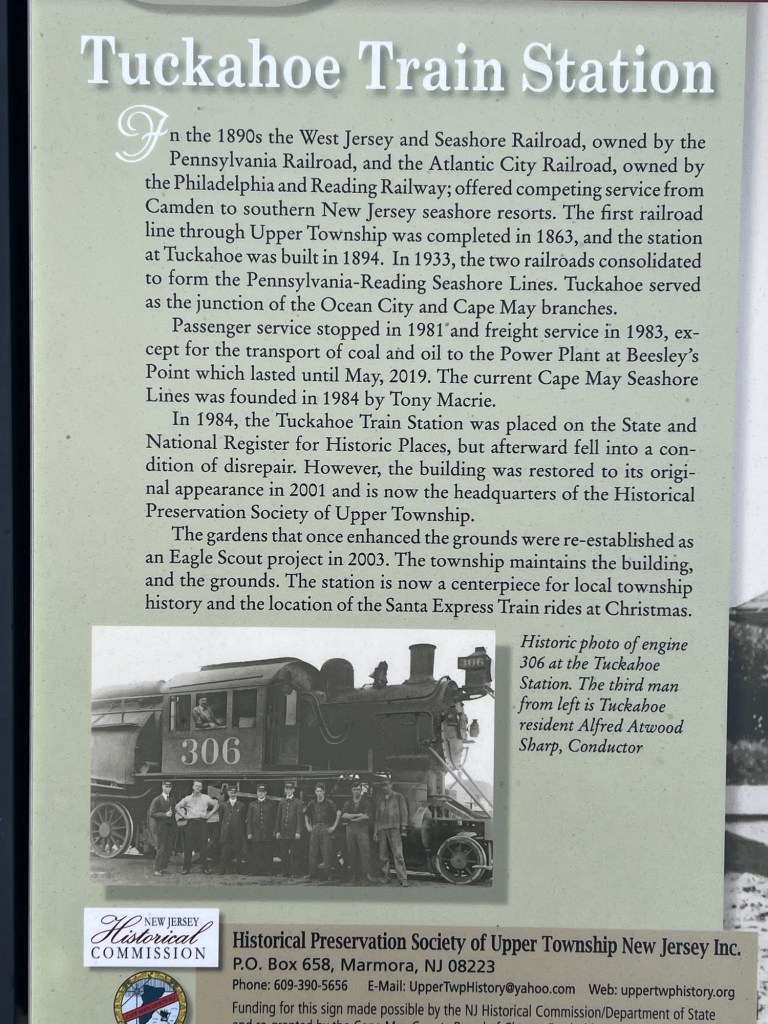
n the 1890’s the West Jersey and Seashore railroad, opened by the Pennsylvania Railroad, and the Atlantic City Railroad, owned by the Philadelphia and reading railway, offered competing service from, Camden to southern New Jersey seashore resorts. The first railroad line through Upper Township was completed in 1863, and the station at Tuckahoe was built over 30 years later in 1894. In 1933 the two railroads consolidated to form the Pennsylvania-Reading Seashore Lines. Tuckahoe served as the junction of the Ocean City and Cape May branches.
Passenger Service stopped in 1981 and soon after, freight service halted in 1983 except for the transport of coal and then oil to the power plant at Beesley’s Point. which lasted until May, 2019. The current Cape May Seashore Lines was founded in 1984 by Tony Macri.
In 1984, the Tuckahoe Train station was placed on the State and National Register for Historic Places, but afterward fell into a condition of disrepair. However, the building was restored to its original appearance in 2001 and is now the headquarters of the Historical Preservation Society of Upper Township.
‘The gardens that once enhanced the grounds were established as an Eagle Scout Project in 2003. Today, the township maintains the building and the grounds. The station is now a centerpiece for local township history and the location of the Santa Express Train rides at Christmas.
I found the tour fascinating of how this museum was once the hub of transportation for this section of the Jersey Shore.
The historic grounds of the property in the winter
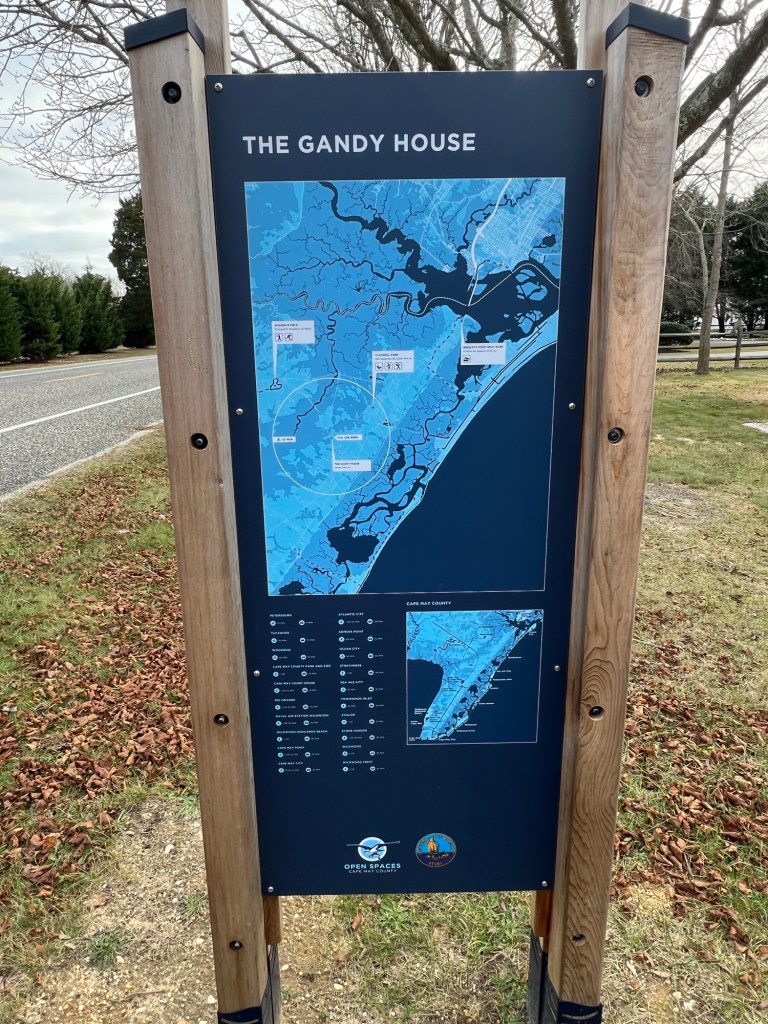
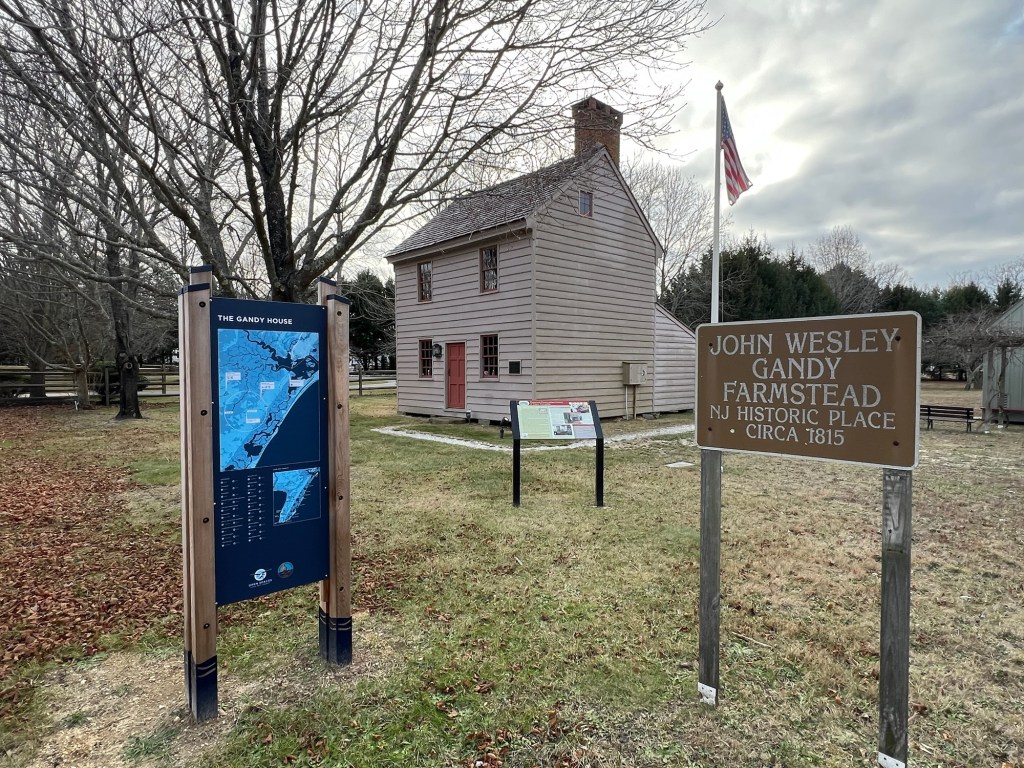
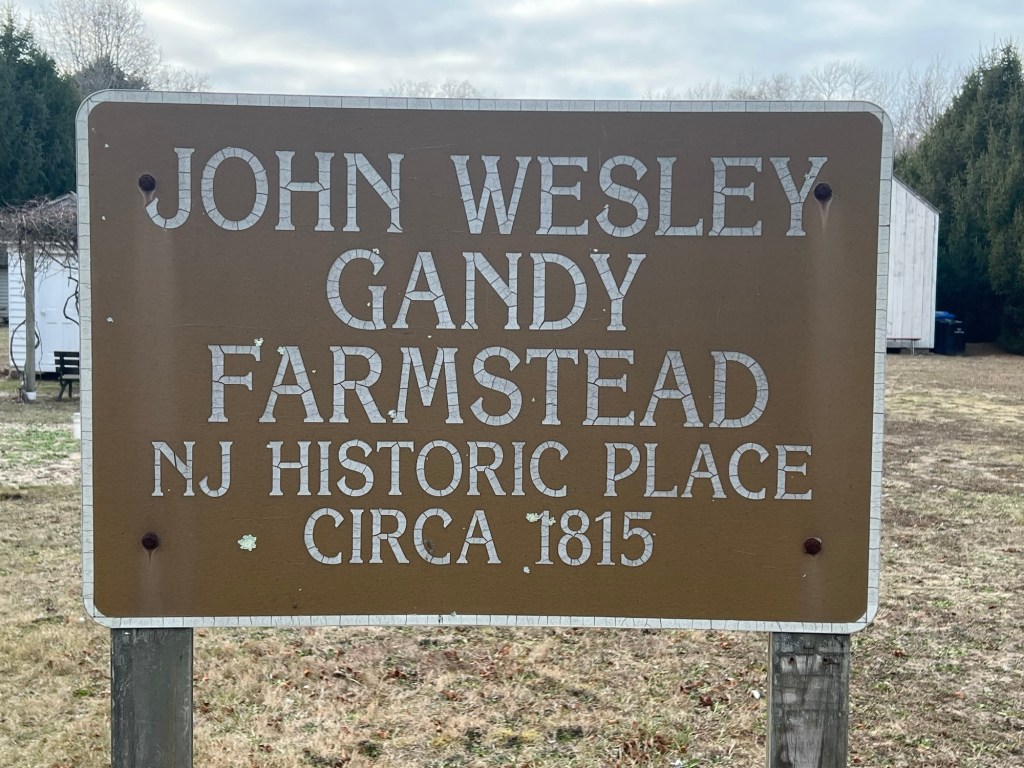
I visited the John Westley Gandy Farmstead on private walking tours both in the Winter of 2024 and the Summer of 2025 and got a glimpse of farm life in early rural Southern New Jersey. Away from the markets of New York City, I got to see how tenant farming and life was for early farmers after the Revolutionary War.
The house is decorated with artifacts from the early 1800’s to the turn of the Twentieth century and how they affected the lives of early inhabitants of the house. There is antique furniture, home made quilts and a fully stocked kitchen with a wood burning fireplace to cook meals from scratch (which was not a trend in those days, that is how they lived).
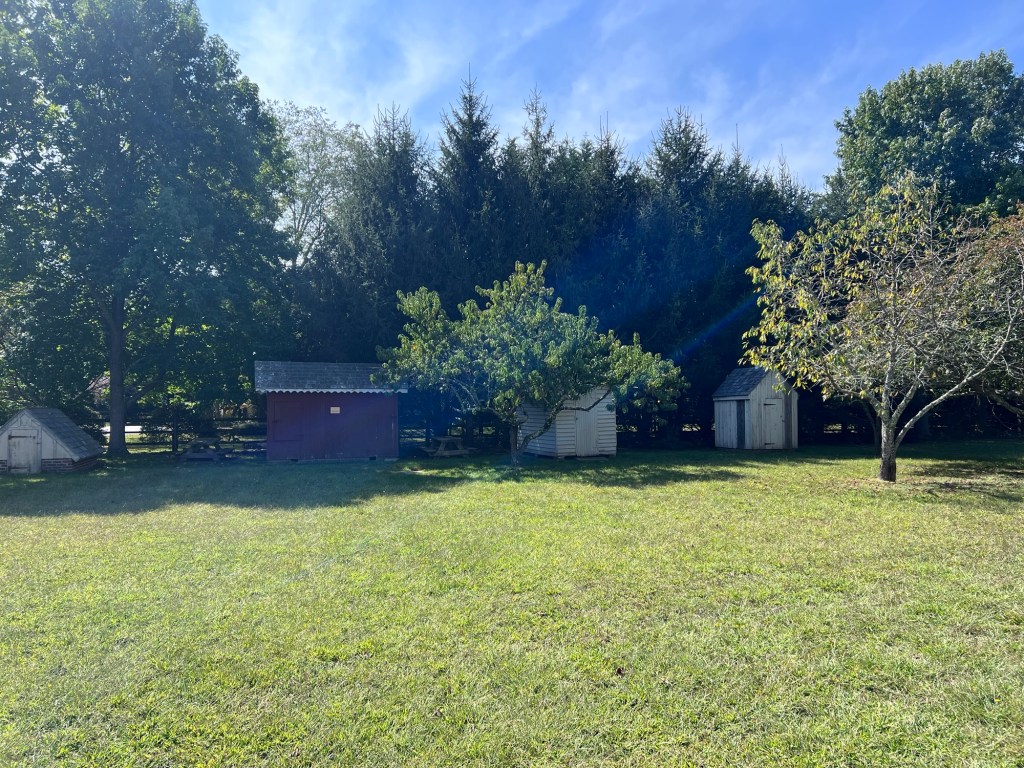
The grounds when I visited in the summer months
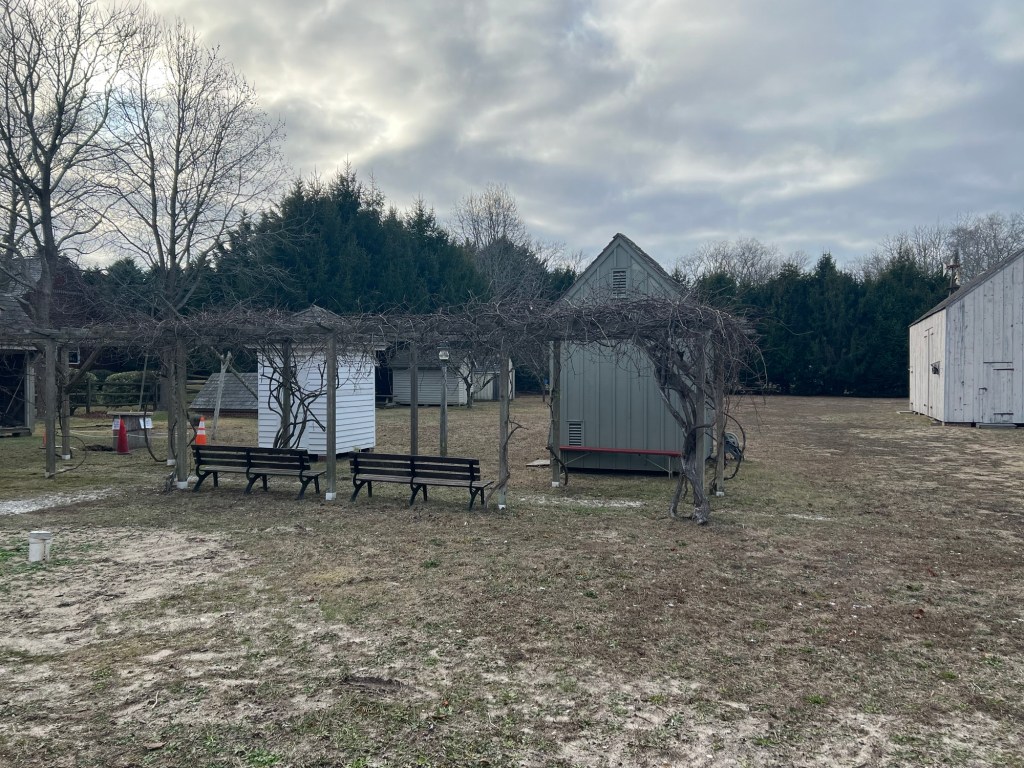
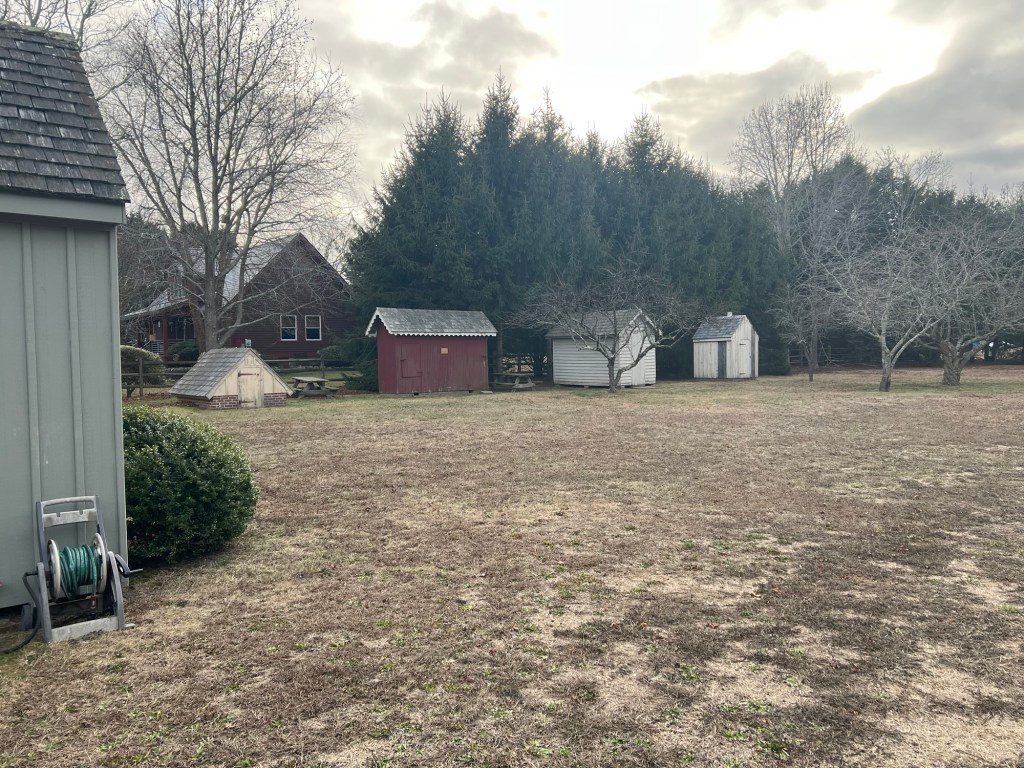
The grounds of the farm in the winter
The grounds of this historic homestead in the winter
When a returned for the private tour in the summer, it was a different story. The grounds were lush and in full bloom. It was really interesting to see how the farmstead was in the different seasons.
The same grounds in the summer
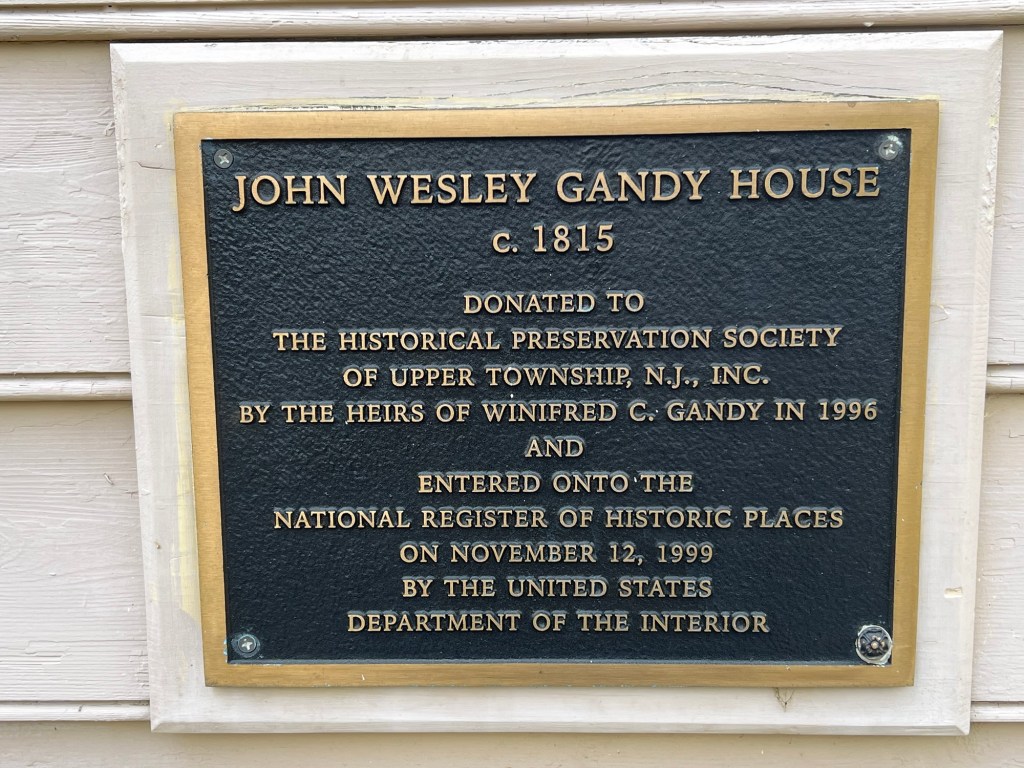
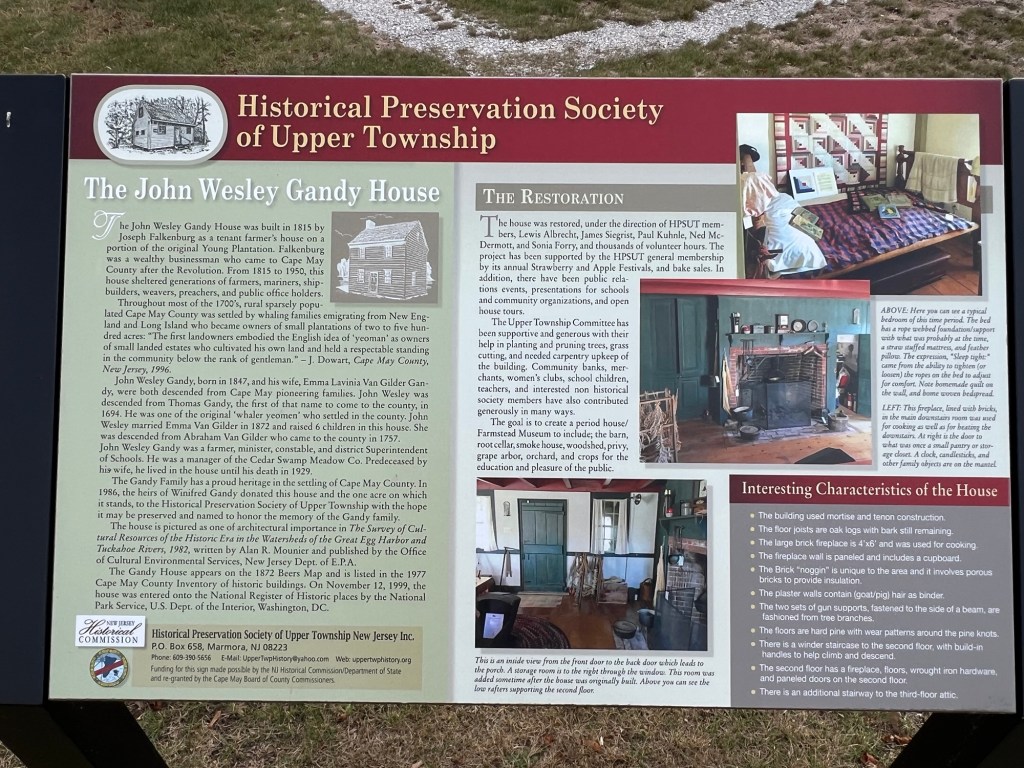
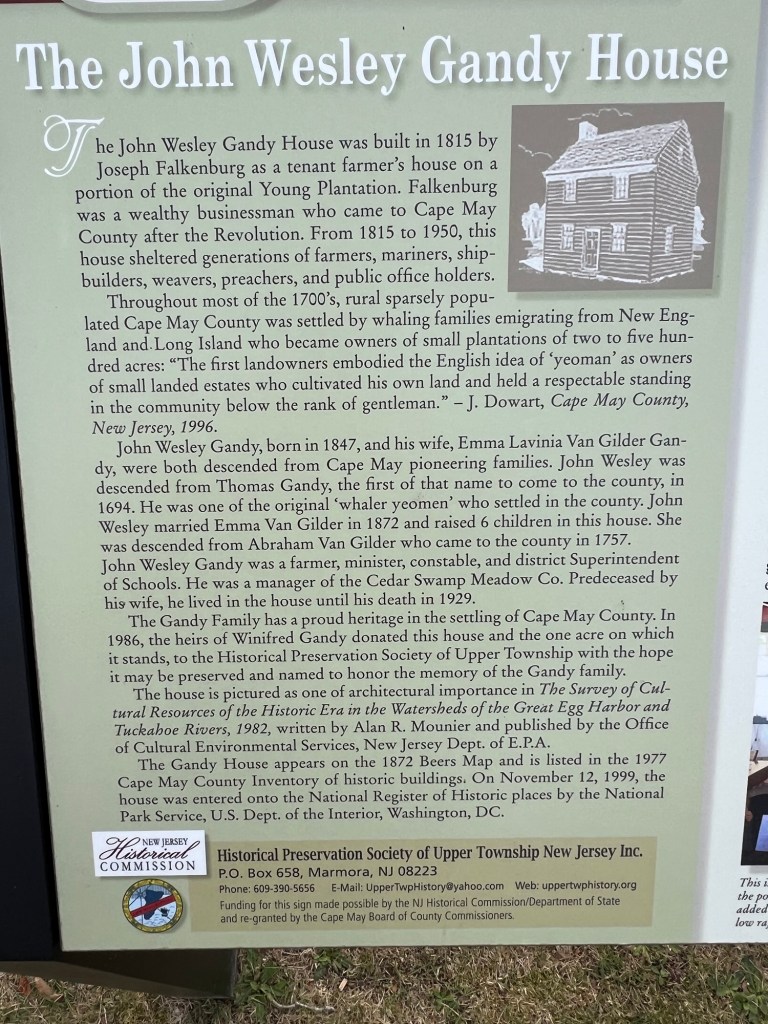
The history of the house
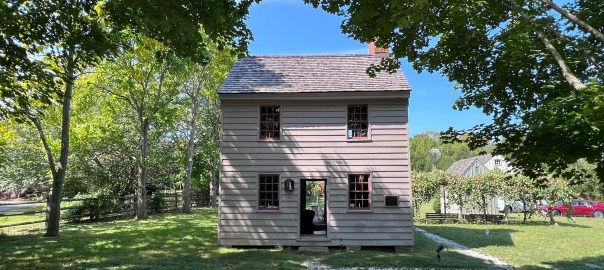
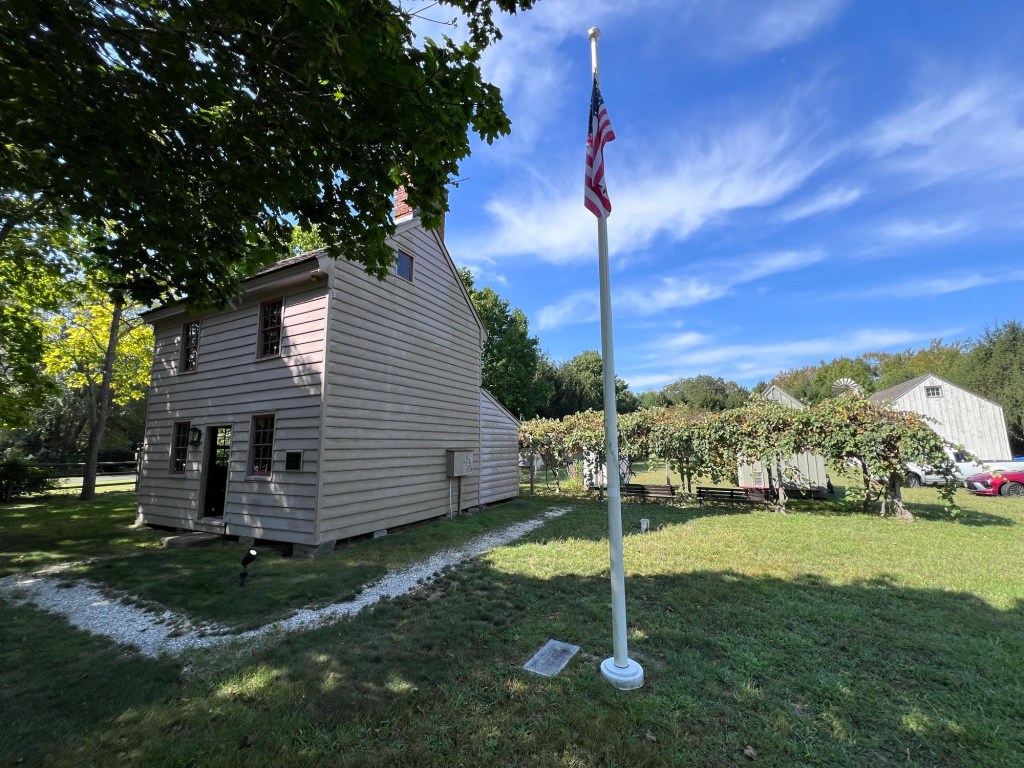
The front of the house during the summer
When you walk inside the Gandy Housr on the first floor, you are welcomed into the kitchen and pantry area plus some of public areas of the house. Here meals were prepared and guests were greeted.
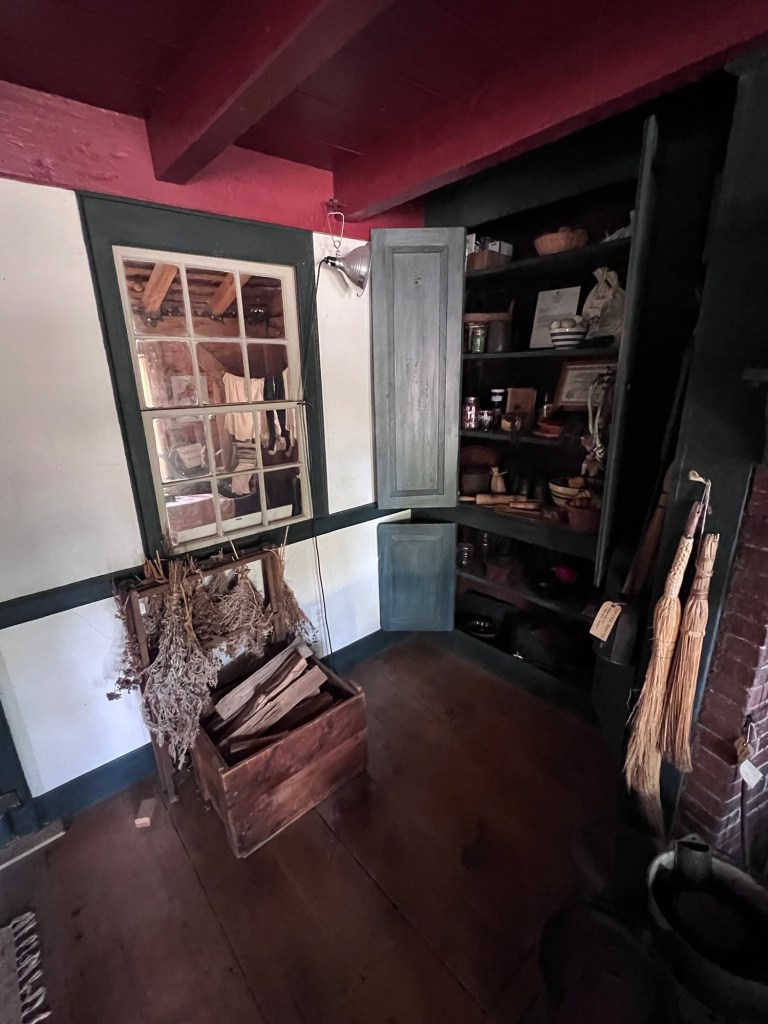
The pantry area of the kitchen
Wood was stored for heat and cooking and herbs were drying for the winter months for cooking and daily use.
The fire wood and herb s drying
The pantry and larders for daily cooking and baking for the daily meals. All meals were cooked from scratch and large breakfasts and lunches were part of farm life. All meals were cooked in the open hearth so meals had to be properly timed and cooking and baking had to be coordinated for the family meals.
The larders were filled with the items that were in season
Cooking over a wood burning fire was part of everyday meals in the farm kitchen. Various pots and pans were in use to cook the family meals.
The inside of the kitchen area that heated the main room
Meals were coordinated for the day with cereals and soups cooking first, baked items going into the oven when it was warm enough followed by roasts and stews.
The days cooking over a hot stove
There were early morning breakfasts on the farm and then a late lunch/ early supper when the afternoon work was done.
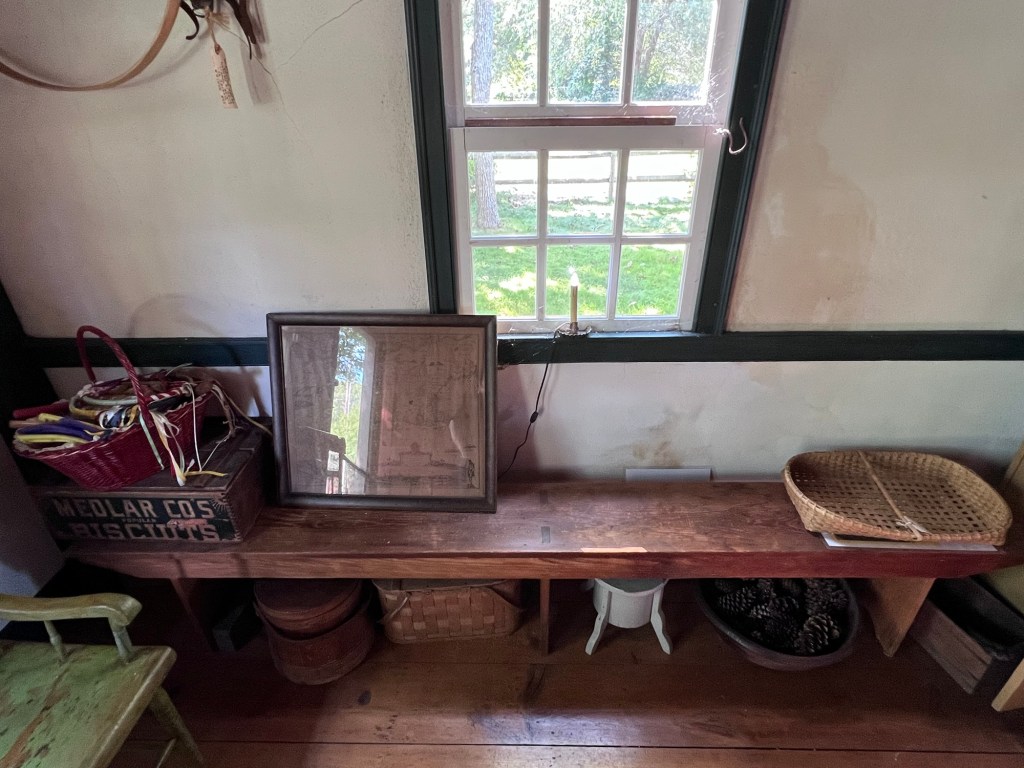
The other half of the main room was used for dining and the families social space. Here meals were served and the family relaxed.
Everyday family objects of the household
The front part of the room faced the road and the comings and goings of the surrounding community.
The side bench and family objects
The most interesting part of the tour of the first floor is the view of the construction of the home. Behind the glass frame showed how the home was built and of what.
The construction of the home behind the glass frame
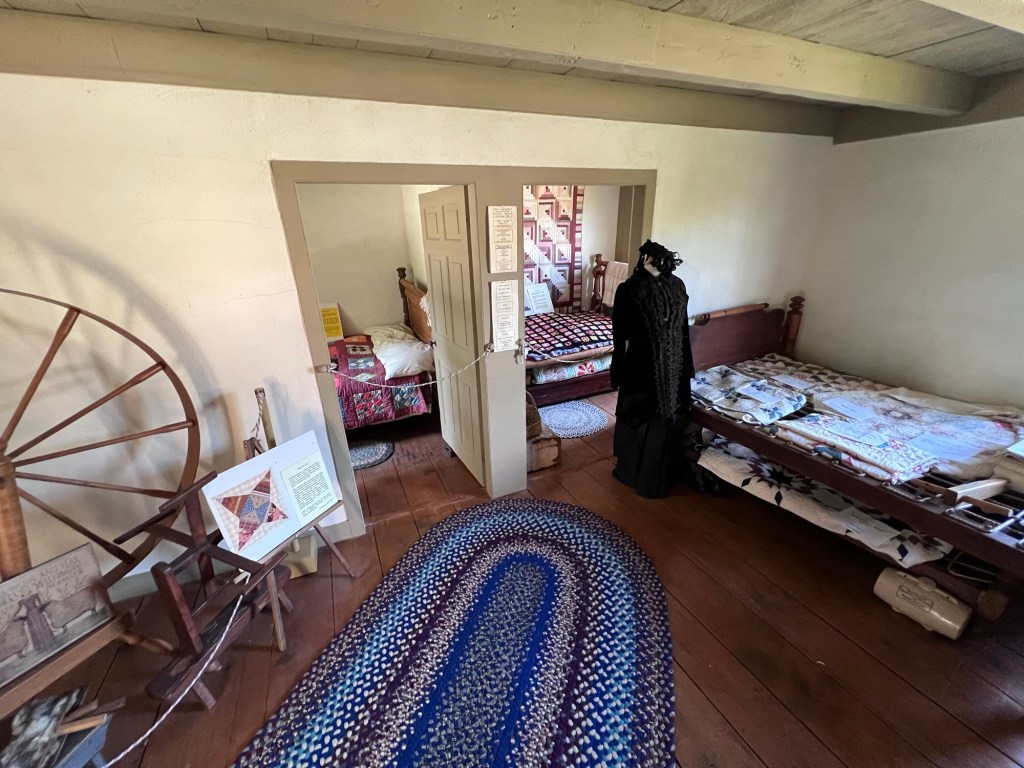
The family quarters on the second floor show the chores that followed during the day with spinning yarn, making and mending clothes and dying fabrics.
The spinning wheels and the making of quilts
The landing and the first floor rooms
The spinning wheels and patterns
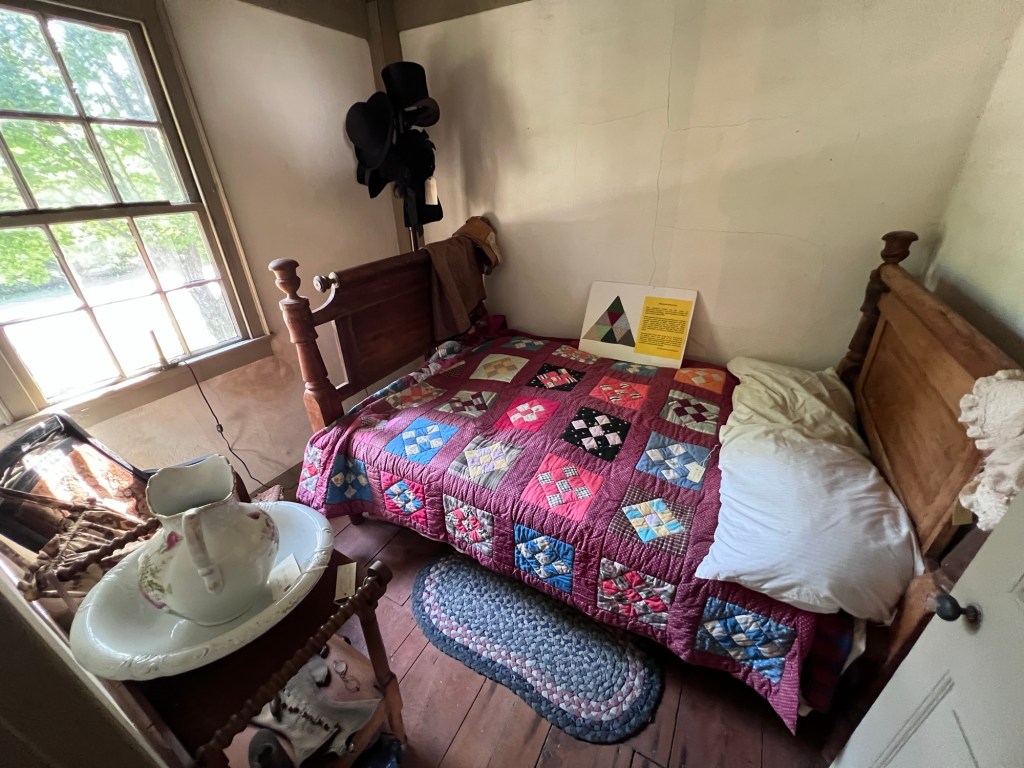
The first bedroom was furnished with handmade quilts and sown linens. The wash basins were used before indoor plumbing.
The first bedroom upstairs
The wash basin and grooming products
Going out for a formal evening
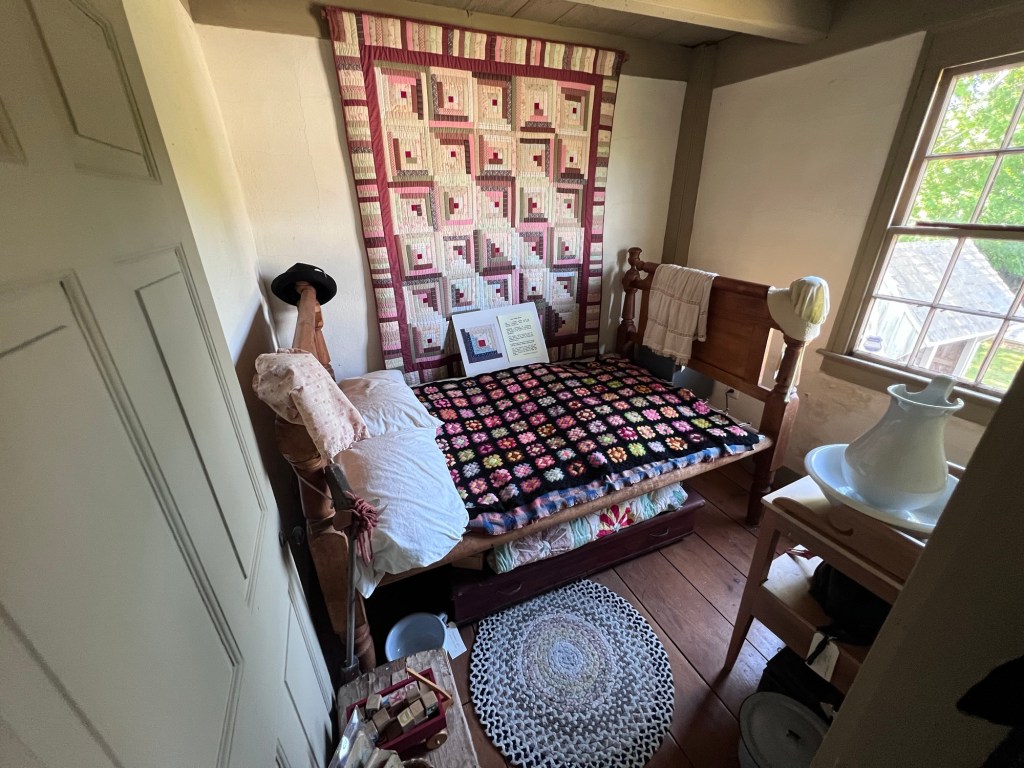
The second bedroom on the second floor has is collection of quilts
The hand made quilts in the second bedroom
The children’s toys
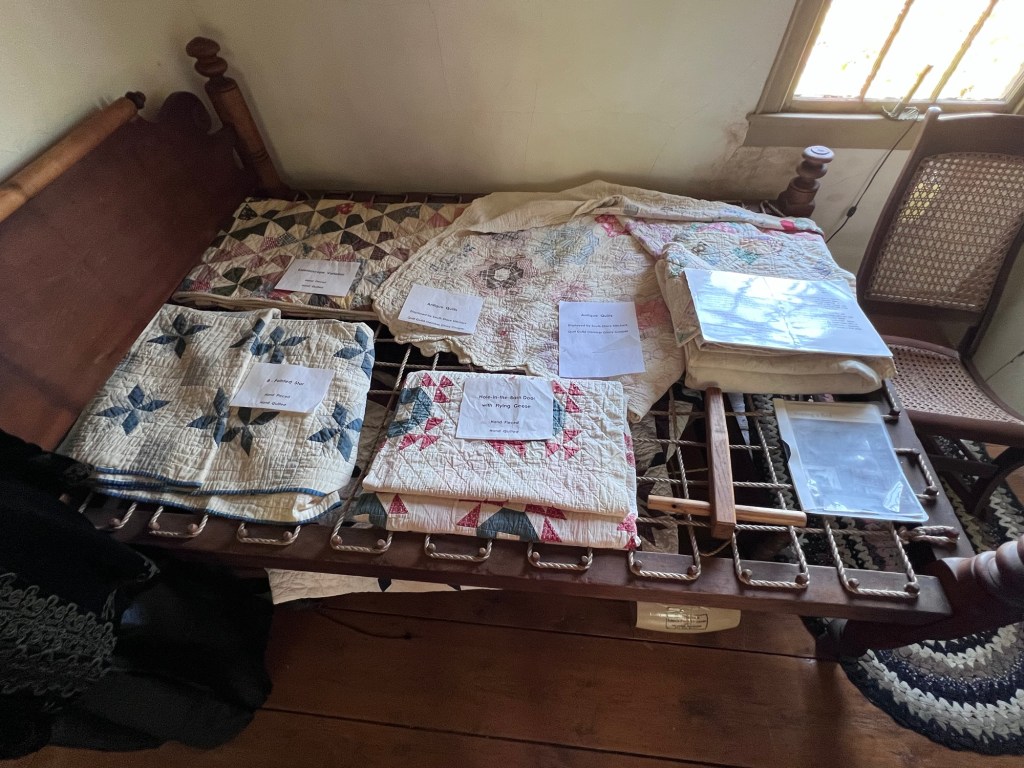
The handmade quilt collection in the one bedroom
Handmade linens were part of the fabric of rural life as women were trained to sew and quilt their clothes and bed linens. Store bought linens were a rarity at this time and the quality of a woman’s homemaking skills defined her household. The handwork on these quilts were amazing.
The upstairs fireplace to keep the rooms warm
The upstairs alcove where the fireplace is located
The Morning clothing in the alcove
We then headed up the stairs to see the attic which were hard to walk up they were such small stairs.
The narrow stair’s to the attic
I got to see the attic area which visitors normally don’s see. This is where the boys of the family would sleep in the summarrr
The attic loft area
We finished the house tour back in the kitchen-living room
The full kitchen and living room room
The laundry area just off the main room
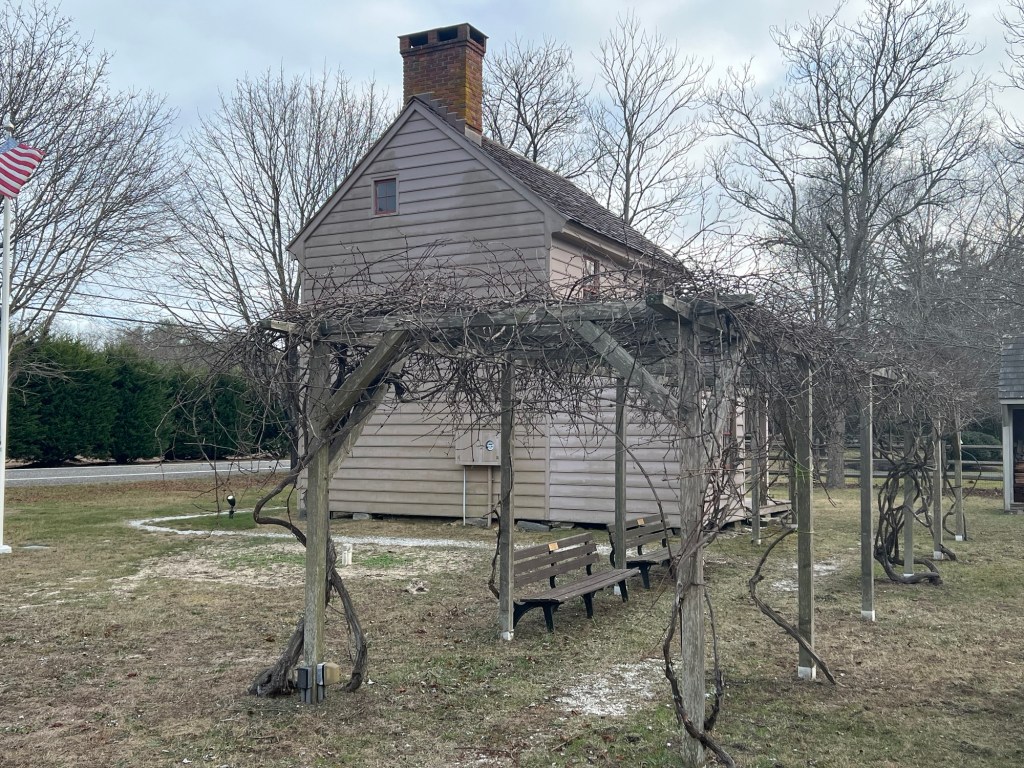
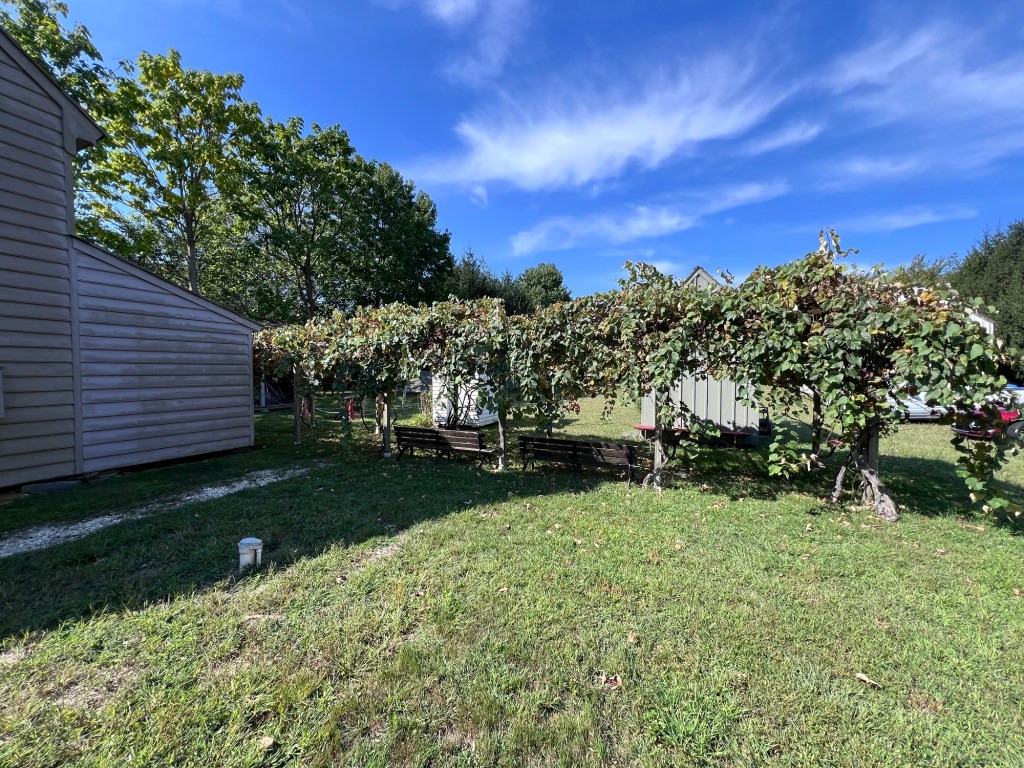
The we then toured the grounds of the estate walking through the grounds and exploring all the buildings on the property, some original to the estate and some brought here from other properties that awaited the wrecking ball. The grounds included the family well, barn, outhouse, root cellar, wood shed and a grape arbor.
The area right behind the main
The estate well which was going to be replaced
Fresh well water is still a part of the communities in Southern New Jersey. These farmsteads were pretty much self-sufficient and people grew what they needed and could barter for the rest or bring it to market.
The woodshed on the estate
The estate on a sunny day
The root cellar
The Root Cellar was used to keep Summer foods and preserves cool throughout the season. People tried to eat seasonally as much as possible and store for the Winter months.
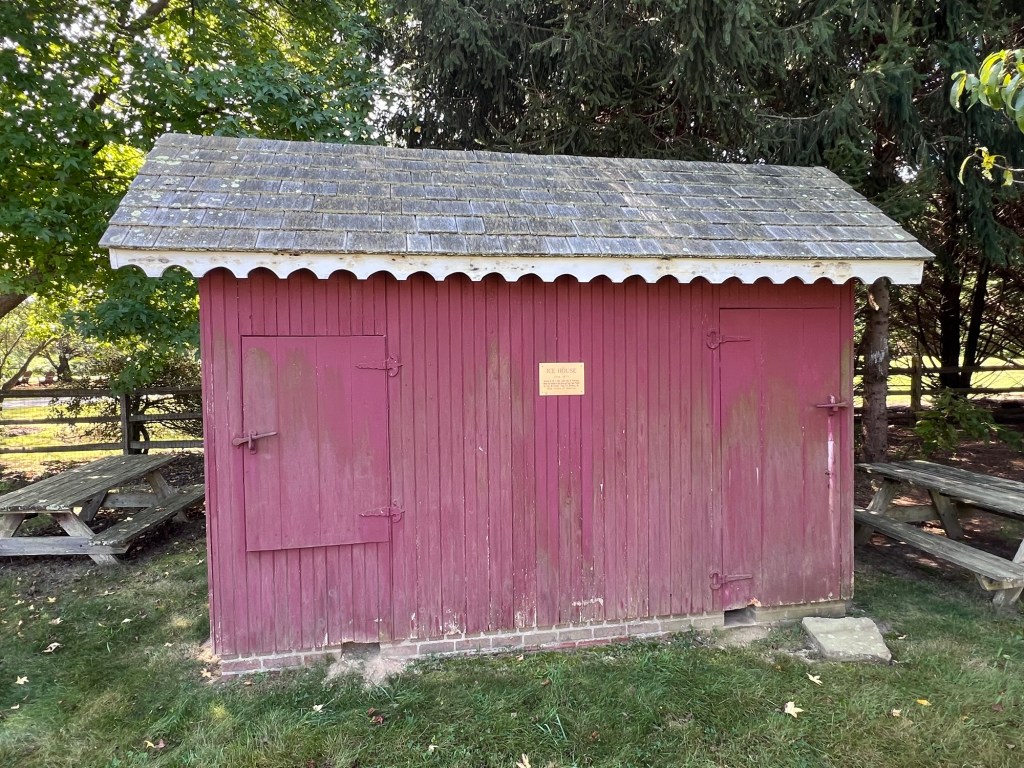
The Ice House
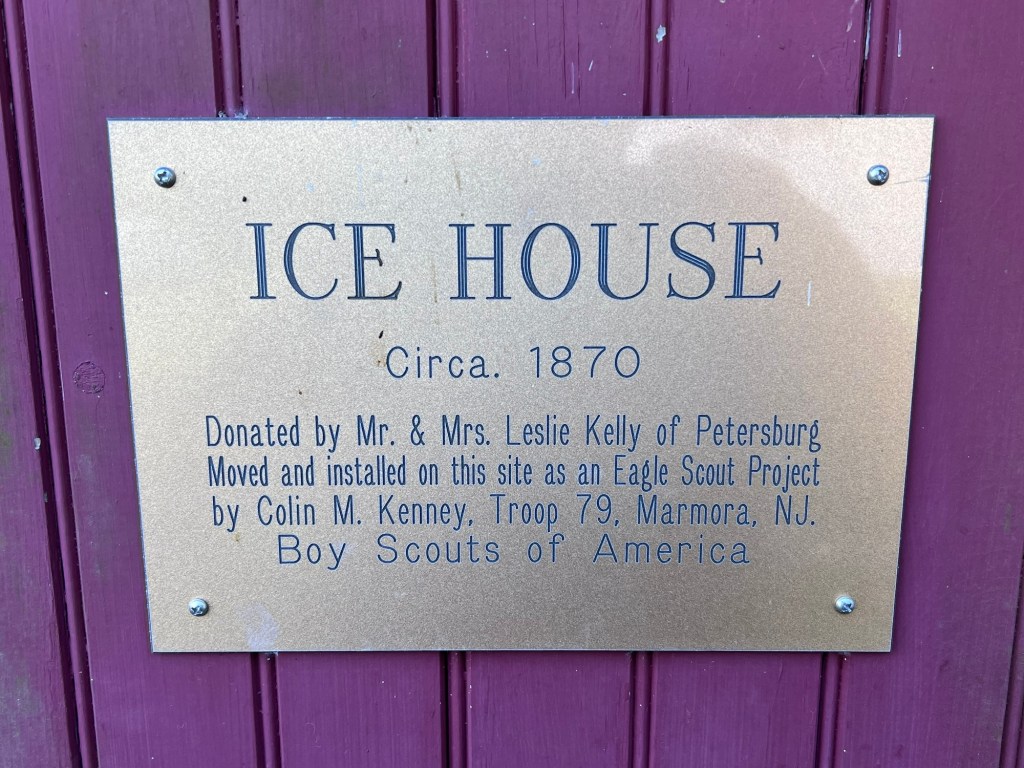
The historic sign for the Ice House
The inside of the ice house and the hooks to hold meats
Ice was brought in from local lakes and ponds to keep foods well preserved during the warmer months of the Spring and Summer.
The barn that was moved here
The inside of the barn with all sorts of historic farm. These are pieces of equipment that were used over the last 100 years.
The farm equipment
The equipment that runs a farm
The storage area of the farm
The storage bins
The Outhouse
There was no indoor plumbing in those days and the use of the outhouse was placed far from the main house.
The grounds of the farm
The back of the farm
The front of the homestead in the summer of 2025
The house was warm and contained by fireplaces in the Winter months and open and airy in the Summer months with a flow of air through the open windows. The Upper Cape May Township Historical Society is open also for special events like their Strawberry and Apple festivals plus private tours.
The Gandy Farmstead Annual Apple Festival
Two weeks after my initial visit to the Gandy House during the Firemen’s Convention, I returned for the Historical Society’s Annual Apple Festival. The event reminded me of the Brinckerhoff House Strawberry Festival, a very nice family and community event that attracted everyone.
Since there were a lot of shore towns I wanted to revisit while the weather was nice, I arranged to stay at an Airbnb in Ocean City so I had plenty of time to do what I needed to do and relax afterwards.
I could not believe how crowded the roads were as so many places were having either Fall festivals or October Fest. Route 9 was like a parking lot near Smithville, NJ.
I got to the Apple Festival around noon and the parking lot was packed with people. One of the members said later that afternoon that he could not believe the consistent crowds as it was still busy at 2:15pm (the festival was over by 3:00pm). The crowds were filled with several generations of family members who I am sure were traveling from one event to another on this spectacular sunny morning.
The sign welcoming you to the event
When I arrived at the festival, the parking lot was still filling up so I had to park way in the back so I could get in and out easily. They had plenty of parking on the farm across the street.
On the Gandy family property on the other side of the home, they had an antique car show, a mini train ride around the tracks of this part of the property and a Caboose train car that you could explore.
The train tracks around the farm property
The train set up and tracks to tour around the farm
The train rides were really popular with both the small and ‘big’ kids
This small train trip had a nice sized line to it as families were really enjoying themselves
I then toured the Caboose which was set up for service and a day in the life of a conductor. Some of the volunteers were even dressed as conductors leading tour and talking to families.
The caboose on the farm property
The inside of the caboose
Getting ready for the holidays
Life of a train conductor shown in the caboose
After the tour of the car show and watching the families have fun on the trains, I headed across the street to the Gandy House for the tours and activities.
The back of the Gandy Farmstead with crafts and entertainment
Entering the Apple Festival with a Farmers Market and Apple sale
The Farmers Market of locally grown produce
They had a wonderful duo interesting the crowds that afternoon
There were all sorts of crafts stands around where the entertainment was performing
The local crafts people were really talented and included crocheted, painters, floral arrangers and jewelry markers.
One woman sold flowers from her gardens and arranged bouquets
This woman painted her own crafts and did beautiful work for both Halloween and Christmas
Here beautiful holiday crafts
I loved this Santa tree and was going to get it for my mom
This woman had the most beautiful handmade doll clothing and knit items for the holidays
What is an Apple Festival without food? I went to the concession stand for lunch and ordered a hot dog with a glass of locally made Apple cider and had an homemade Apple Shortcake, which I found out later the members had made the night before.
The concession stand where all the food was made
Enjoying my lunch. Both the hotdogs and apple cider were locally made. That’s why it tasted so good!
Hot dogs taste so good off the grill!
The delicious homemade Apple Shortcake with homemade apple topping were made by the members
I also stopped off at the apple stand where cases of apples were being sold. It looked like many people were going to make pies and sauce with these and the stand looked like they were selling out.
I managed to buy one of the Mango sweet apples they were selling individually
The apples were so hard, fresh and sweet that it made the perfect addition to dessert.
The Mango Sweet apples
Talk about delicious
After lunch I ran into the Board members who had helped me with the tour two weeks early and I took a quick tour of the first floor of the home. The laundry room was not open the day of my private tour.
Touring the outside grape arbor
The grape arbor on an early Fall day
Touring the first floor laundry room
An early washing machine
How to do laundry at the turn of the last century
After having lunch, touring the house and visiting all the vendors I relaxed for the rest of the afternoon and listened to the entertainment perform. They did a combination of 70’s hit songs, country music and some James Taylor.
The duo performing
The first part of the song “Brandy (You’re a Fine Girl)” from the 1970’s before people walked in the way
The rest of the song performed. They did an excellent job with it
Before I left just after 2:00pm, I stayed to see who won the Apple pie contest. There were only three contributors but I wanted to get a slice before I left. They did not slice them up. Bummer!
The winners of the Apple pie contest
The Apple Festival sponsored by the Upper Township Historical Society happens every October. It is a wonderful family event and fundraiser for the Historical Society. I know I had a lot of fun and it reminded me of the events that I went to as a kid in the 1970’s.
It was funny that the only person who had a cell phone glued to his hand was me. It was just like the 1970’s all over again with families enjoying each other’s company. Try to visit in the future.
Open: Please call for a appointment and special tour
My review on TripAdvisor:
a
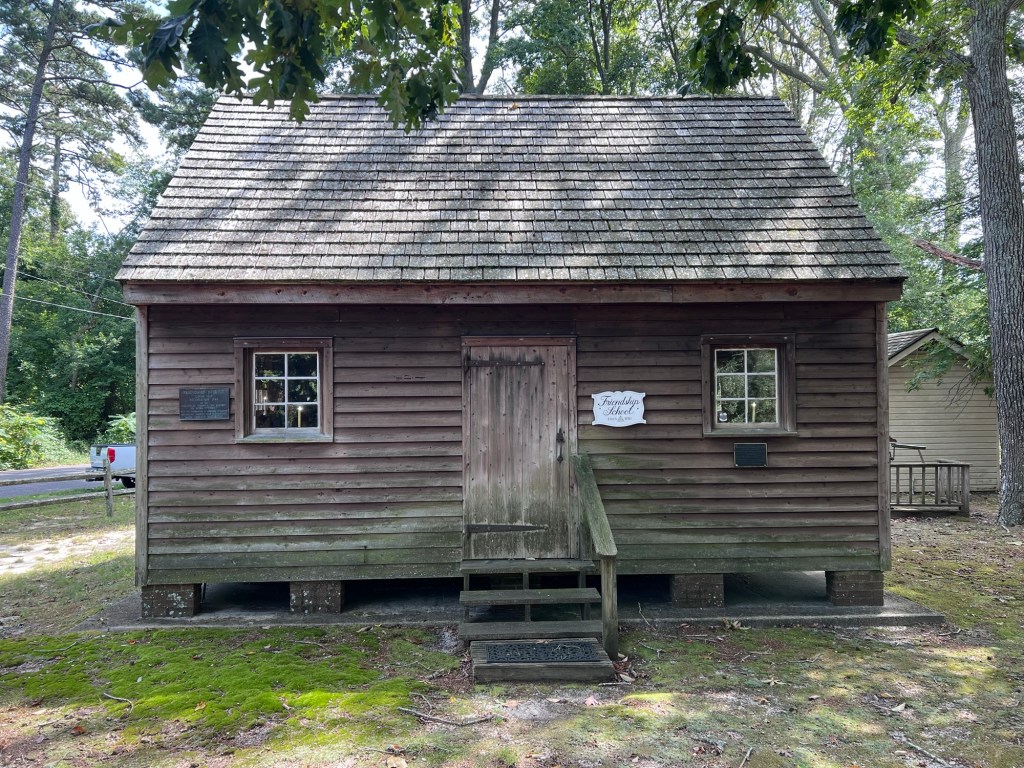
The front of the schoolhouse
The entrance to the property
The historic marker
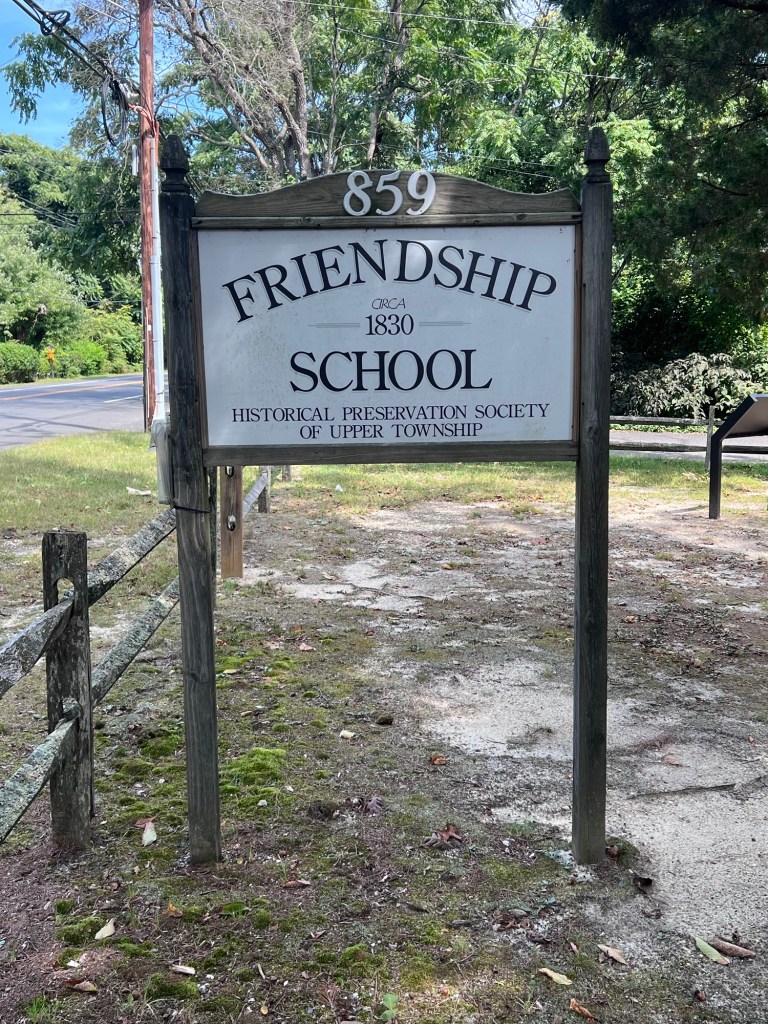
The outside sign
The Friendship School was an interesting look at early rural education where students of various ages would be educated together.
The hours would vary with the growing seasons and students would be educated in the basics to educate them to the next level.
During the school day, children would have various chores to do such as gather wood, collect water, mind the fire and watch the day’s lunch. It would be a full day for both the teacher and the students.
My tour guide confirmed that nothing was easy during the school day and children had a lot of responsibility for what went on in their lives.
The tour was an interesting look at the lives of children of that period of time and the education they received.
The history of the Friendship School:
(from the Museum’s website)
This historic property contains the circa 1930 Friendship School, a circa 1900 privy, and a circa 1917 coal storage shed. The Friendship School was originally donated in 1976 by William Wells, grandson of Enoch Clouting to the Upper Township Bicentennial Committee during a time when Upper Township was particularly interested in its earliest buildings.
The historic plaques
The school’s hand pump
The committee, headed by the late Curtis T. Cordon, evolved to become the nucleus of the Historical Preservation Society of Upper Township (HPSUT) in 1977. Virginia M. Wilson was its’ first President.
The history of the Friendship School begins when it was incorporated in May of 1831 with Jonathon Corson, Lewis Corson, and Seth Young as trustees. The students’ tuition was paid for by parents in 1830, but by 1869, public funding for schools was established. In the 1862-63 school year, 52 students crowded into this 15’x 20’ structure, and of those students in the teacher’s roll book, 24 were Corsons!
The grounds of the school grounds
The school itself is standing on its fourth known location! It was originally located 6 houses southeast of its present location. It was used for classes until it was replaced with a larger building in the 1860’s.
The abandoned school house later owned by resident, Lot Corson, became known as “Lot’s Temple” because church services were held there. Then, it was moved to Enoch Clouting’s farm where a corn crib was placed on one side. It is Enoch’s grandson who kindly donated the school.
The barn on the grounds
The school building was in extreme disrepair when it was moved from the Clouting property to the corner of Ocean Ave. and Shore Road. According to an undated news article, “mere fragments of the (original) building remained” although “some of the heavier corner posts were salvaged.”
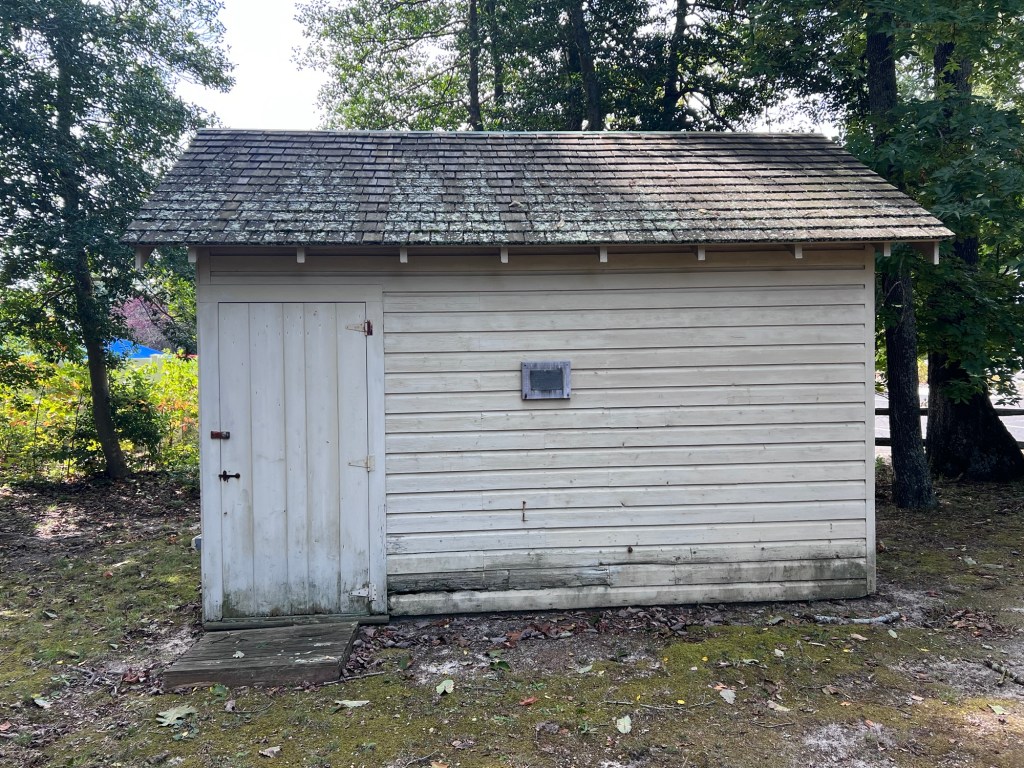
The school’s outhouse (pricey)
The historic sign
Nevertheless, restoration of this Friendship School was researched and planned by Kyle Fleetwood of Tuckahoe and James Wilson of Marmora; with assistance from Matt Unsworth, Robert Entirkin, Curtis Corson III, Somers Corson, Marshall “Ted” Behr, Guy Himmelberger, Harry “Hap” Folger and other members of the Bicentennial Committee. It was completed in 1980.
All replacement wood matched the original in size and material and great care was taken to restore it to its original appearance. Locally sourced materials for the restoration/reconstruction came from the Van Vorst sawmill in Petersburg, the Hess sawmill in South Seaville and the Brewer sawmill in Dennisville. Benches donated by Myra Clouting Biggs, were reproduced by Matt Unsworth.
The inside of the school house
The teacher’s desk is a reproduction also made by Matt Unsworth. Hardware for the building was hand-wrought by Robert Entrikin of Petersburg. Although it does not qualify for the State and National Registers listing because it retains little original historic building fabric, the building is important to the historical time line of Upper Township.
The schoolbooks and school equipment
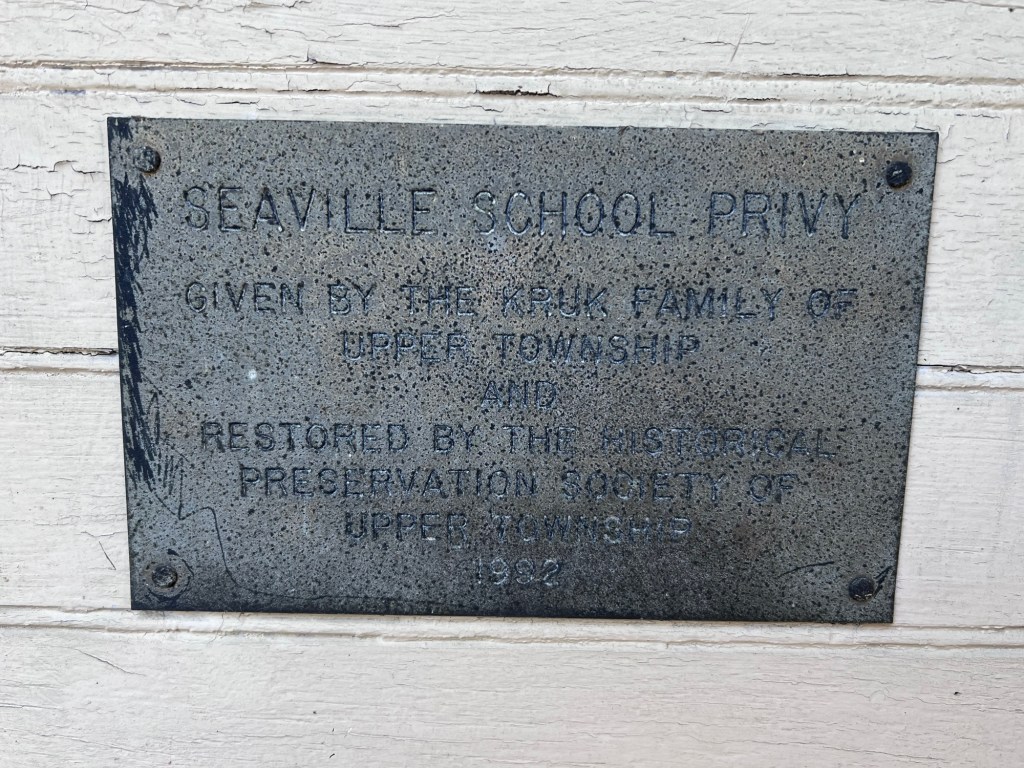
Also on this site are two old frame buildings: a circa 1900 privy donated from the property of the Seaville School on Kruk Drive and a circa 1917 coal/storage shed donated from the Palermo School on Route 9. The coal storage shed, was donated by Wes and Doris Nickerson with Jim and Nancy Siegrist helping with its restoration. It was added to the property in 1993. Three three-seat privy (outhouse) from the old unused Seaville School was donated by Sharon Kruk in honor of her father, and was restored by Lewis Albrecht and Jim Siegrist. It is a work of art (with a French style roof), but is non-functional.
The school room reproduction
A special item, the cedar flag pole, from which flew a U.S. flag that flew above the capitol in Washington, DC, was donated by former Deauville Inn owners, Walter and Gloria Carpenter in December of 1983. (Since replaced)
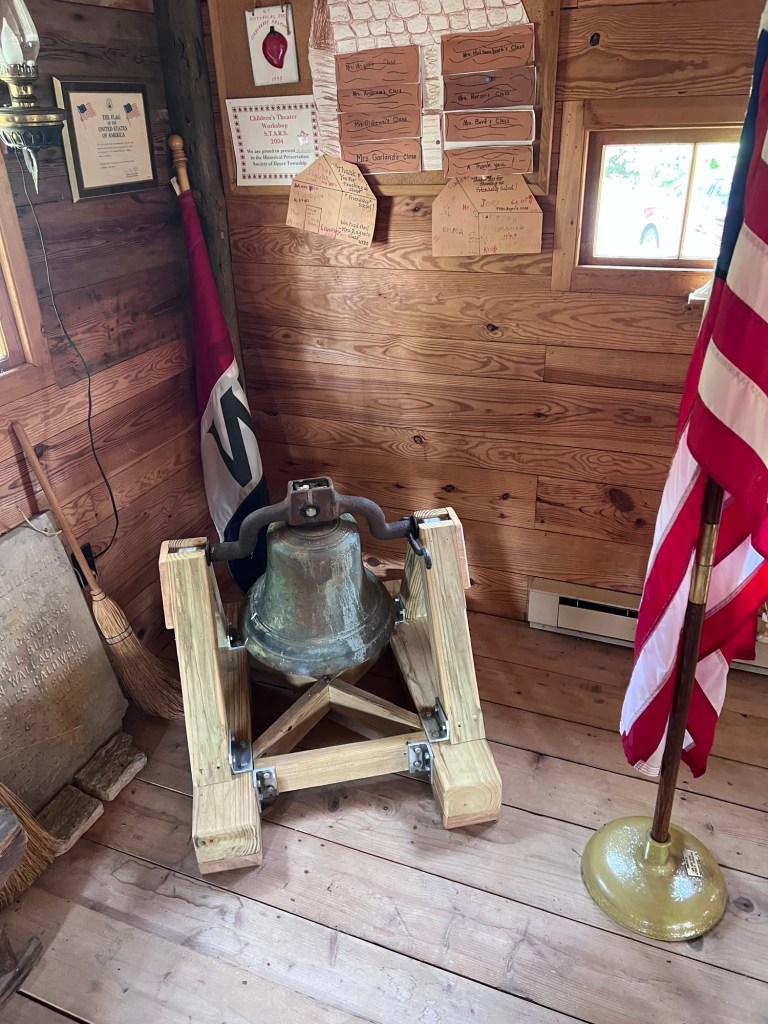
The school bell and flag
The Friendship School was dedicated on September 10, 1983 by Virginia M. Wilson, President of the Historical Preservation Society of Upper Township, Upper Township Mayor Leonard Migliaccio, HPSUT members: Ebbie Unsworth and her son, Matt Unsworth, and guest speaker, New Jersey State Senator, James R. Hurley.
The children would collect water and fire wood for the class room during the school day
The reproduction of the school
Upper Township continues to own and manage the property and the school, while HPSUT members manage the inside and its activities. Each Upper Township Kindergarten class is invited to the annual Kindergarten Day to learn what a student classroom life is like in a one room school house in the early
Open: The hours for the structure change throughout the year, so please check the website for time availability of the park and structure.
Admission: $8.00 Adults/$4.00 Children/Children under 2 free
Group Tours & Information:
Lucy is available year round for groups of 10 or more by appointment. For special holiday hours and weather closings, please call or check our website.
How to get to Lucy:
It is best to check the website for your location to the structure. For detailed instructions, please visit http://www.lucythe elephant.org.
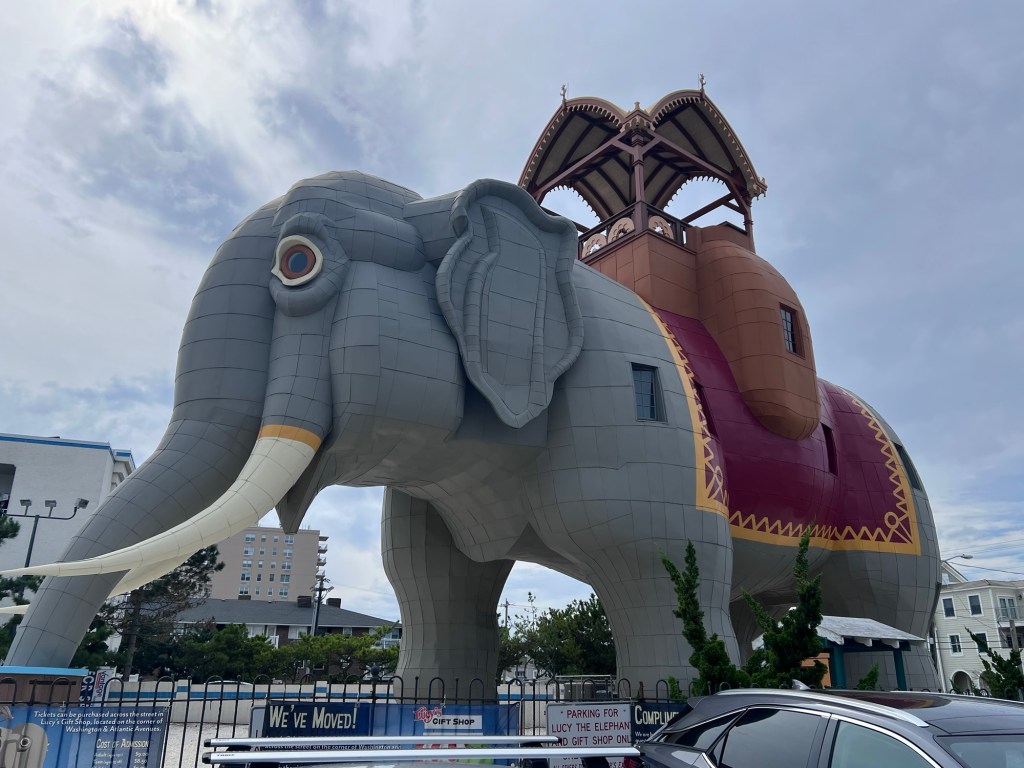
I visited Lucy the Elephant in the fall of 2015 right before Christmas on a tour I was taking of Southern New Jersey and the shoreline. This unique structure was built to attract people to the shore to buy land and for development.
The view from the parking lot
There were two other ‘Lucy’s’ built one of them being the former ‘Elephant Hotel’ in Coney Island that burned down in the last century.
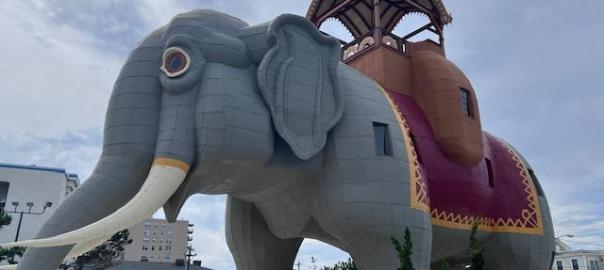
The front view of the elephant
This well preserved building has been renovated and part of the Jersey shore lore. It is well worth the visit in the off season on a nice day. I unfortunately visited on a rainy day in 2015 and was not able to go to the top and still have a free pass to go whenever I want to visit again.
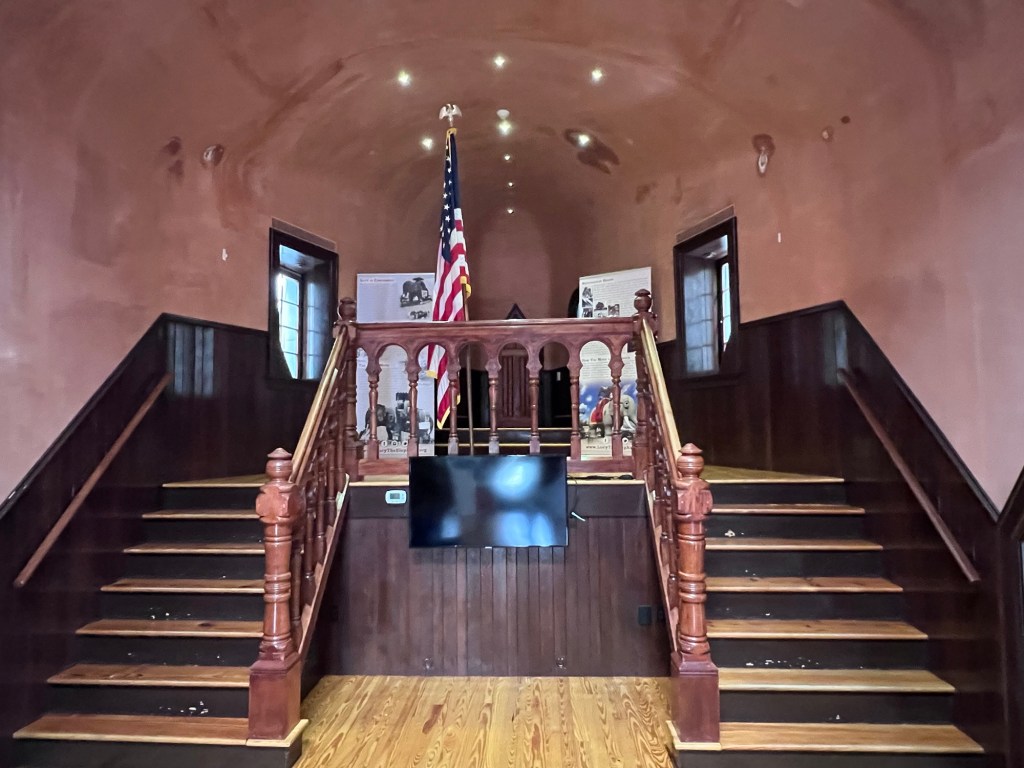
Entering the elephant through the winding stairs
Still I was able to take the spiral staircase to her belly to learn the history of the structure and that is very interesting.
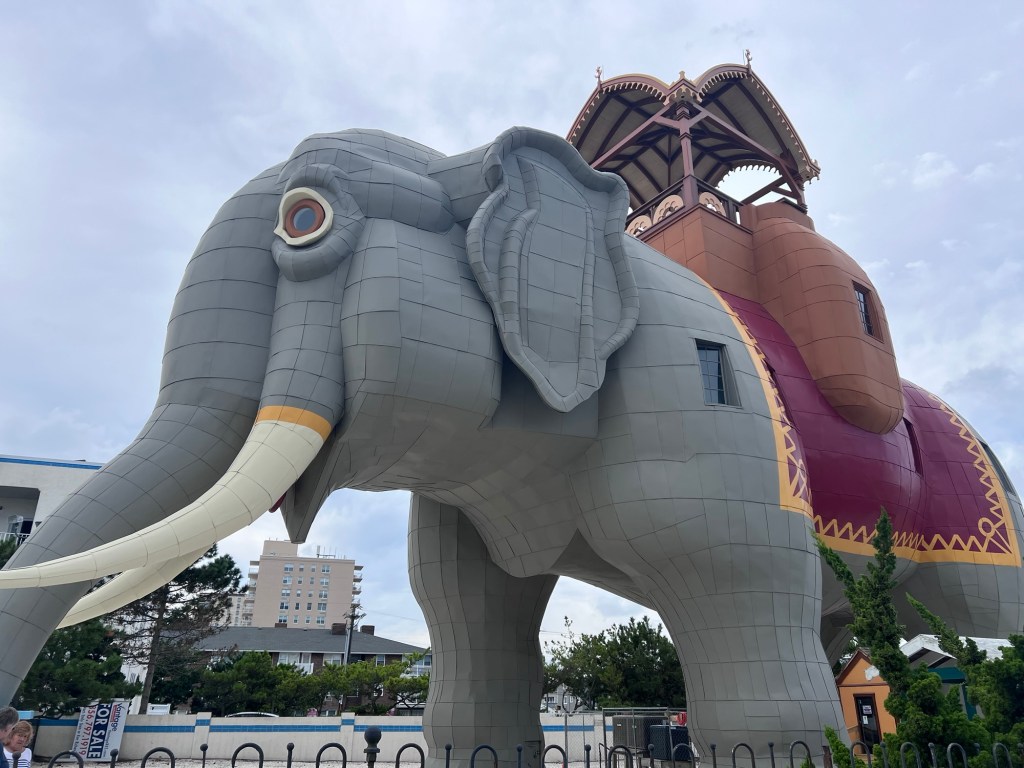
Lucy the Elephant in its full glory
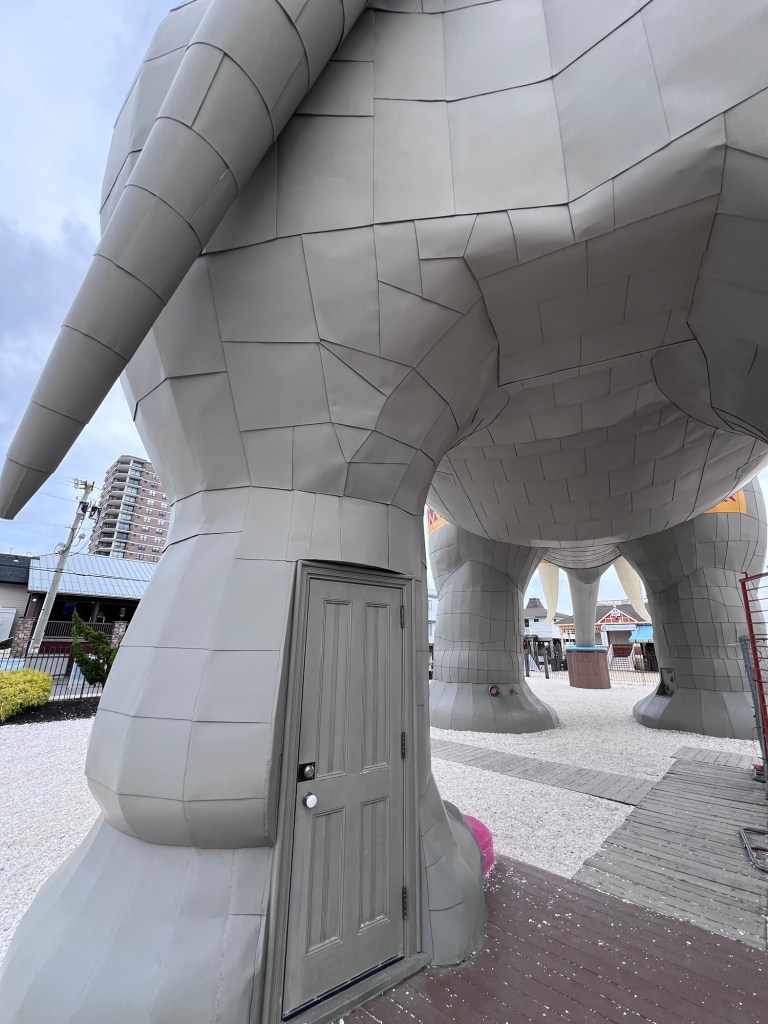
I started my tour in 2025 at the door of her base
I visited Lucy again in 2025 and was finally able to visit the top of the statue, the howdah, and able to take in the view of the ocean and the surrounding area. Try to visit “Lucy” when it is a sunny day out. You will be able to take in the spectacular view of the ocean.
The tour starts in her inside, looking over the displays and where the bar was located where the owner would ply investors with liquor to have them invest in beach real estate.
Inside of Lucy the Elephant: the history and displays
The inside of Lucy on a recent tour
Touring the inside of Lucy
I was able to take my time because I visited in the off season on a nice day and since J was the only one on the tour, I got to take my time and talk with the tour guide.
I got to look through Lucy’s eyes and see the views of the ocean and of the surrounding areas was interesting.
Lucy’s eyes and truck
Lucy’s left eye
Lucy’s right eye
The former bathroom inside of Lucy
The inside displays of Lucy
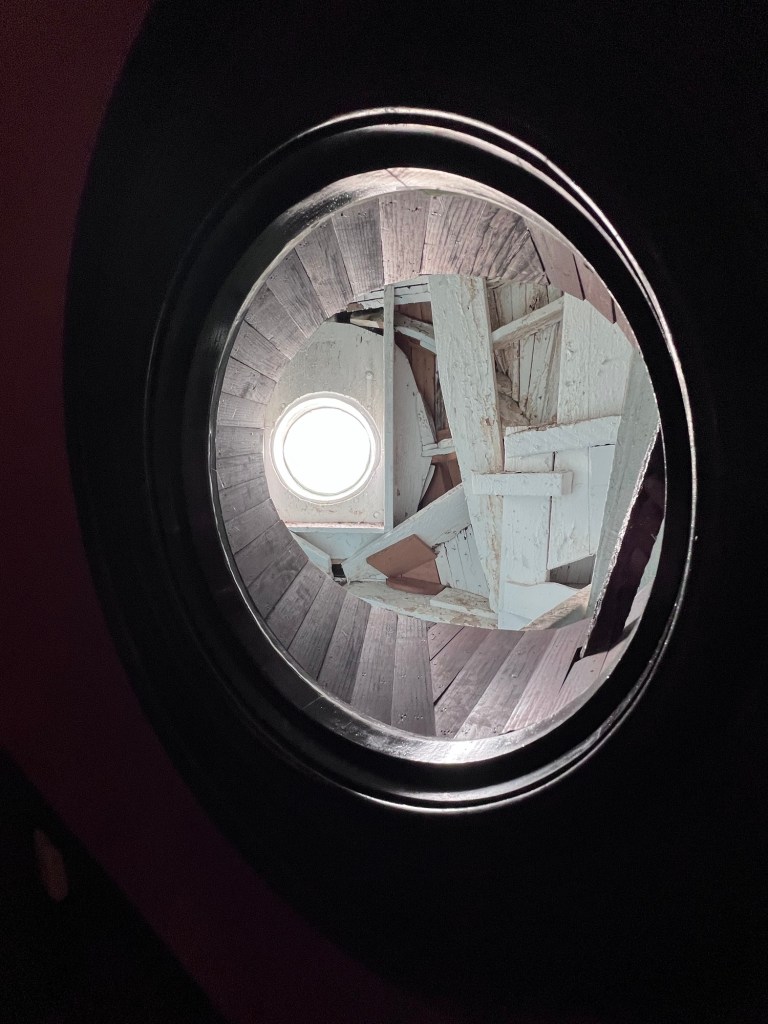
The skylight that illuminates the inside
Then it was time to walk up to the howdah and enjoy the view. It was a somewhat over cast day but you could still enjoy the view.
The view from the howdah on the top of the elephant
The roof of the howdah
The view of the beach from the howdah
The view of Margate from the howdah
The view from the howdah showcases the view of both the beach and the City of Margate. You can see from mikes around and on a hot day, the breezes are amazing.
The restored wood work
The video of the views
The tour of Lucy is about an hour but the history of this shore landmark and its influence in shore real estate and the development of these towns is so interesting.
Leaving the elephant we could see her behind
The History of Lucy the Elephant:
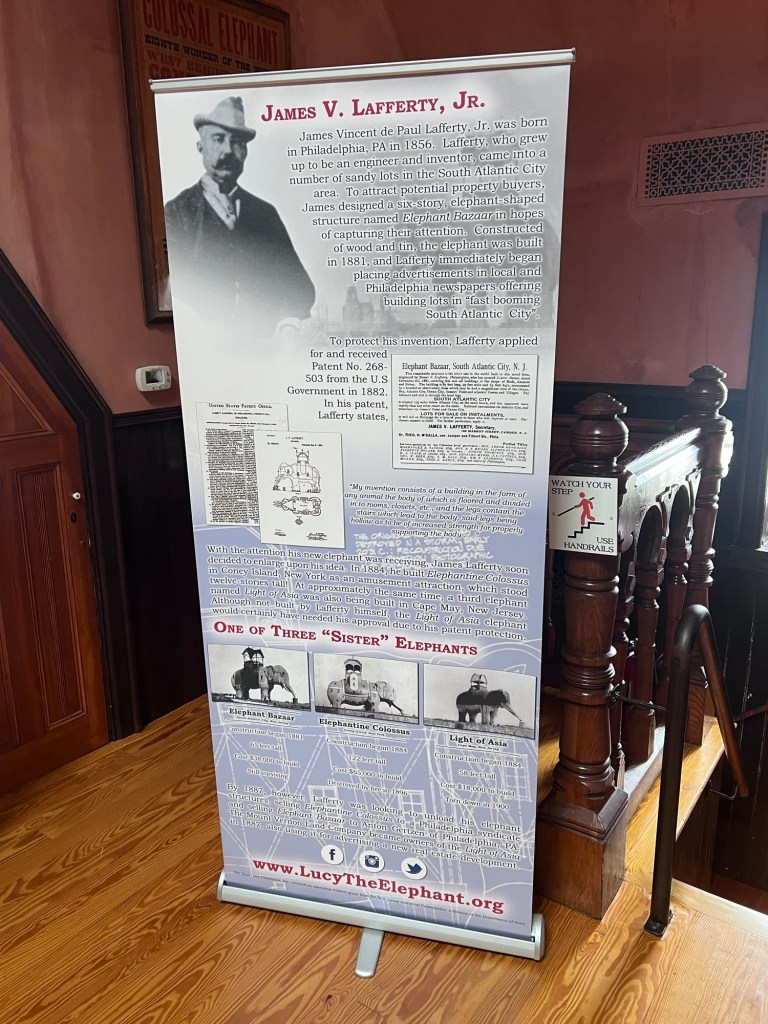
Lucy was built by a real estate speculator who owned a great many parcels of open land at the Jersey shore. In order to attract visitors and potential buyer, he built Lucy as a novelty amusement. He patented his idea, ensuring that Lucy would remain a unique piece of architecture.
Eventually, a popular hotel business was built around Lucy. Presidents and royalty came from around the world to stay at the neighboring Elephant Hotel and climb the stairs to Lucy’s howdah.
Lucy facing the ocean
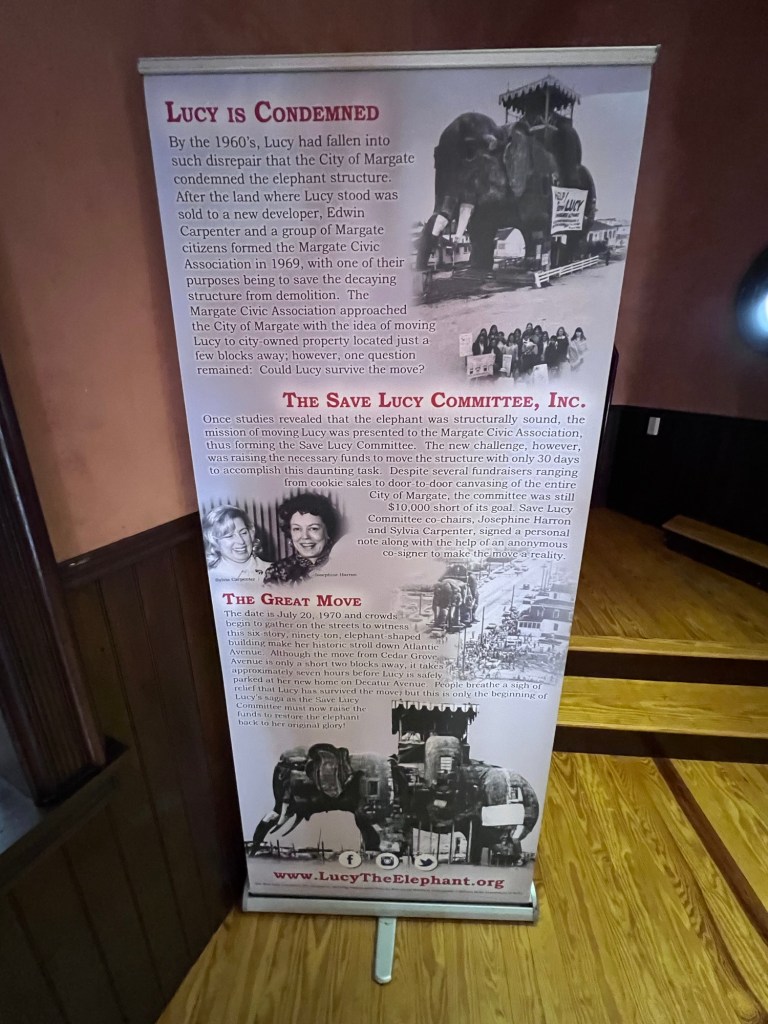
During her history, Lucy has survived hurricanes, ocean floods and even a fire accidentally stated by some inebriated party-goers when she served as tavern. However, by the 1960’s, it became apparent there was one disaster Lucy could not overcome-neglect. By that time, the once proud jewel of the South Jersey Isles had become an almost hopeless, condemned structure.
Eventually a developer purchased Lucy’s lot and intended to build a new condominium building on the site. The beach and the ocean could stay-but the elephant had to go!
Lucy the Elephant near the wrecking ball
To the rescue came the Save Lucy Committee. Within weeks, this small, concerned group of ordinary citizens had raised enough money to move the entire decaying structure two blocks away to a new site owned by the city. Thirty years and over one million dollars later, Lucy has been completely restored to her original splendor, inside and out.
In 1976, Lucy was designated a National Historic Landmark by the United States Government as the oldest surviving example of a unique form of “zoomorphic” architecture. Today, she is every bit as popular and beloved as she ever was.
The history of the elephant
The history of the park
The history of Lucy
The history of the park and who saved it
About the Park:
Lucy the Elephant is located along the beach in Josephine Harron Park (named for our co-founder) in Margate, NJ. Lucy is six stories high and is listed on the National Park Registry of Historical Landmarks. Our park is fenced and contained, making child supervision easy. Picnic tables are on site for eating outdoors. We also have friendly, trained volunteers and staff to assist you during your visit. On the tour, you will learn about Lucy’s unique architecture and her colorful history.
Lucy facing the sea
You will get to climb a spiral staircase through her insides and all the way up to the howdah on her back, providing a spectacular 360 degrees view of the surrounding shore area. Kids and adults alike are sure to enjoy visiting the only elephant in the world “you can walk through and come out alive”.
Lucy is also available by appointment for schools, groups and special events such as weddings or birthday parties. There are guided tours, a gift shop, free parking and all major credit cards are accepted.
Lucy the Elephant symbol of the town
Lucy from the front of the parking lot
Lucy from the ticket booth across the street
This information was taken from the pamphlet from The Save Lucy Committee. For more information, visit the online website at http://www.LucyTheElephant.org
*Disclaimer from author: All this information is located both on the pamphlet and on the website. Visiting Lucy is a treat and should be visited by all residents of New Jersey.
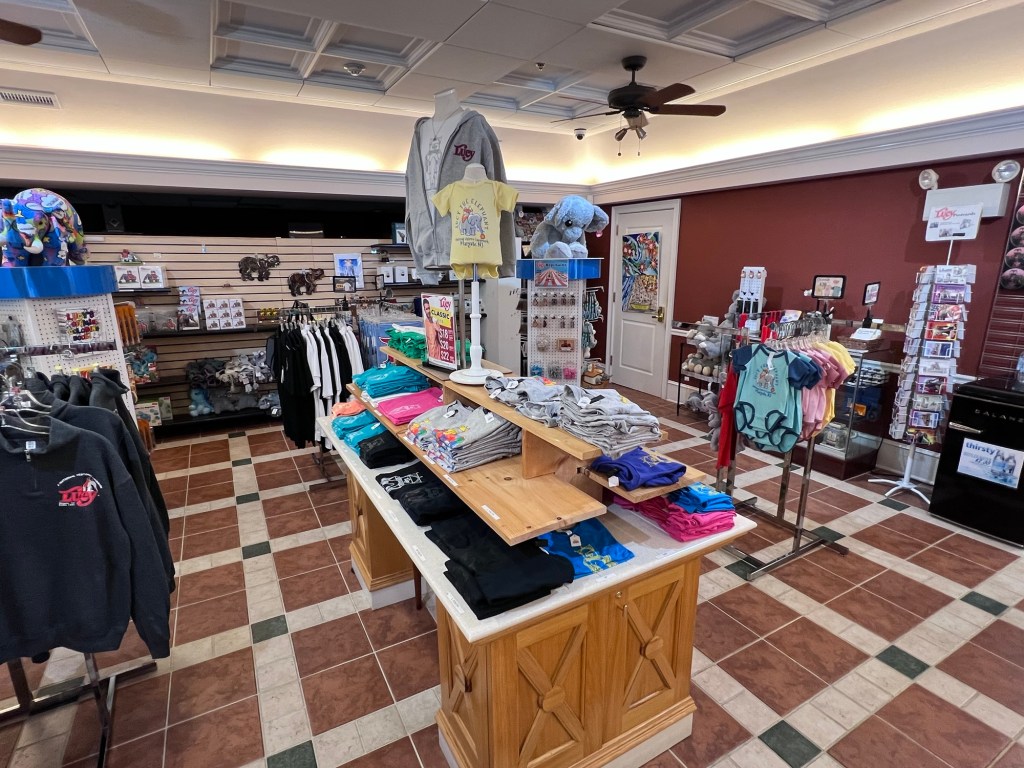
The gift shop the supports raising much needed funds for restoration.
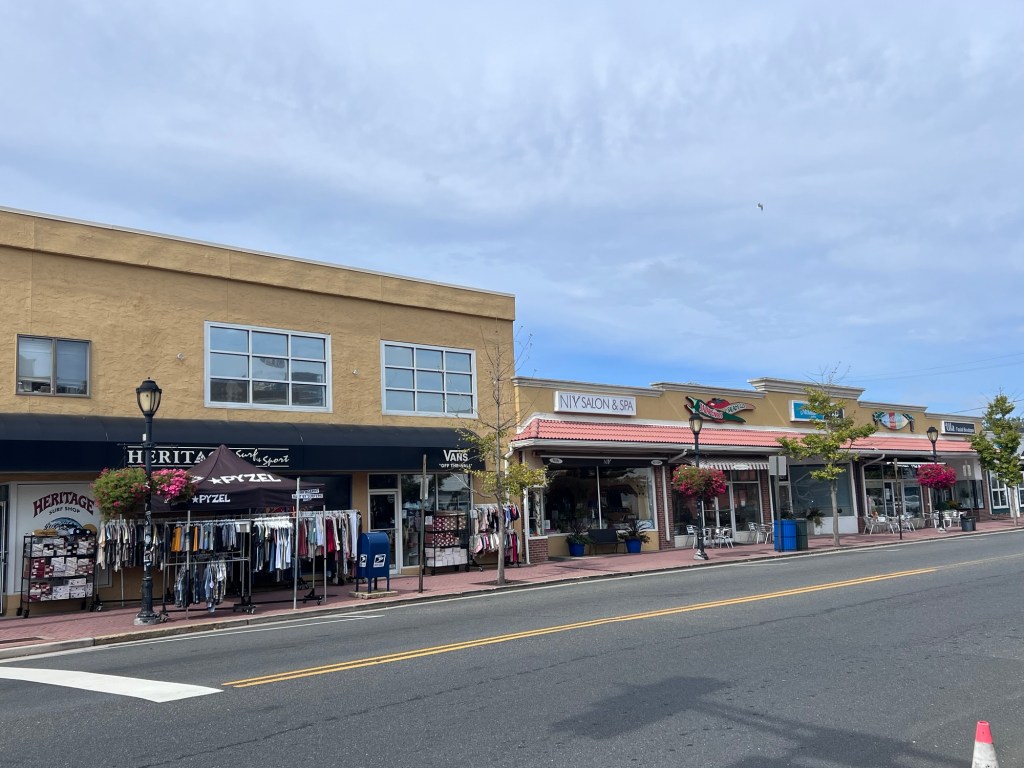
Visit downtown Margate for lunch after your visit
Downtown Margate after my tour
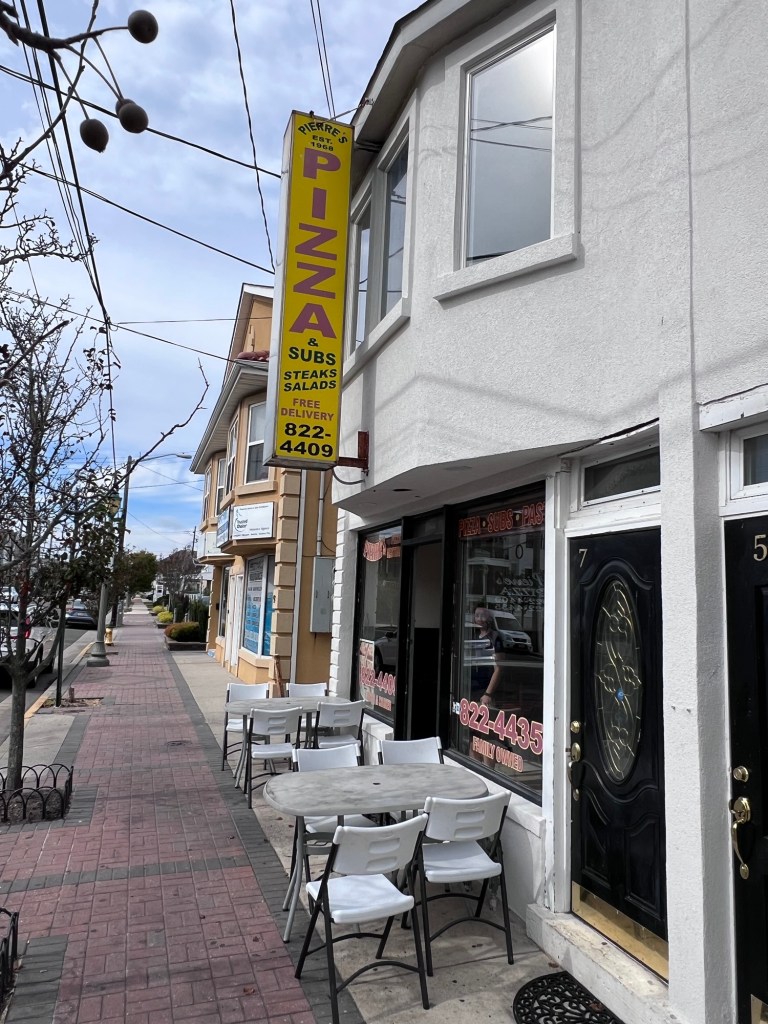
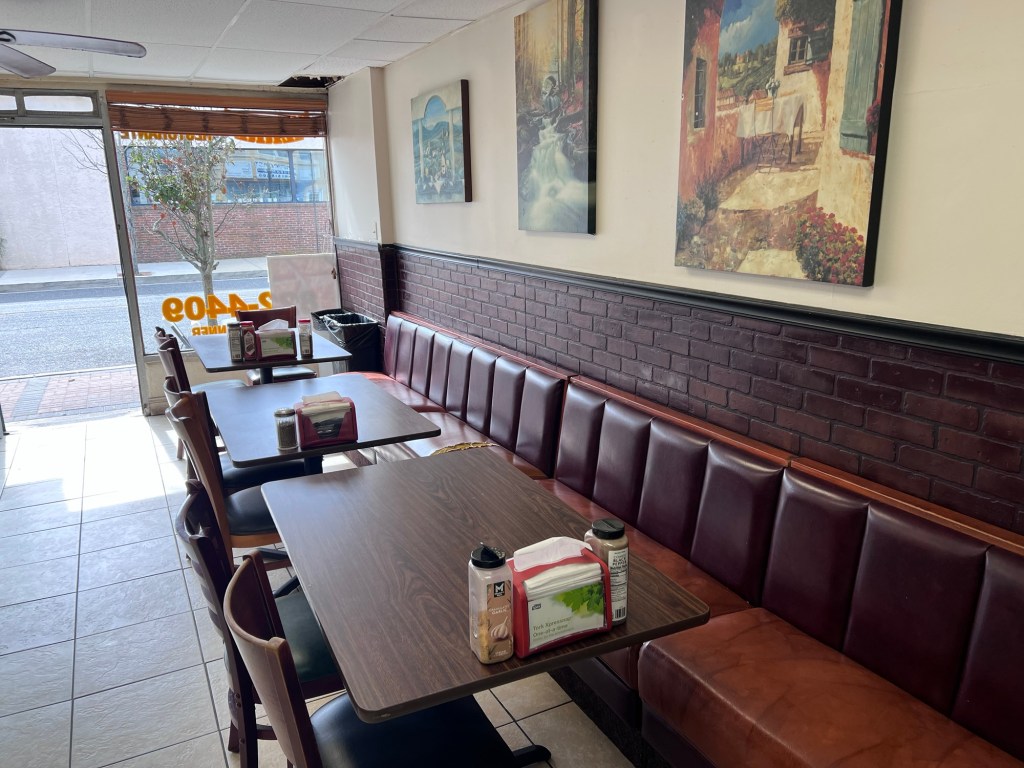
I went to Pierre’s Pizza at 7 North Washington Avenue for lunch. Their cheese pizza is wonderful. The restaurant is two blocks from Lucy.
Pierre’s Pizza at 7 North Washington Street in Margate, NJ
The front of the Denville Museum at Diamond Spring Road
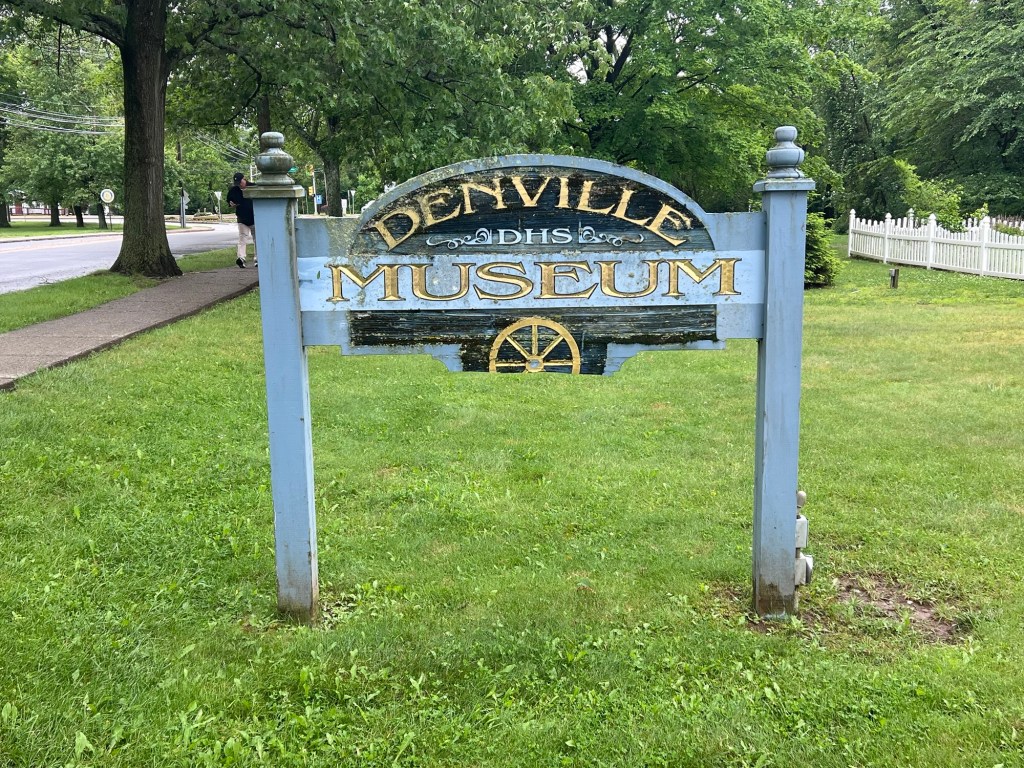
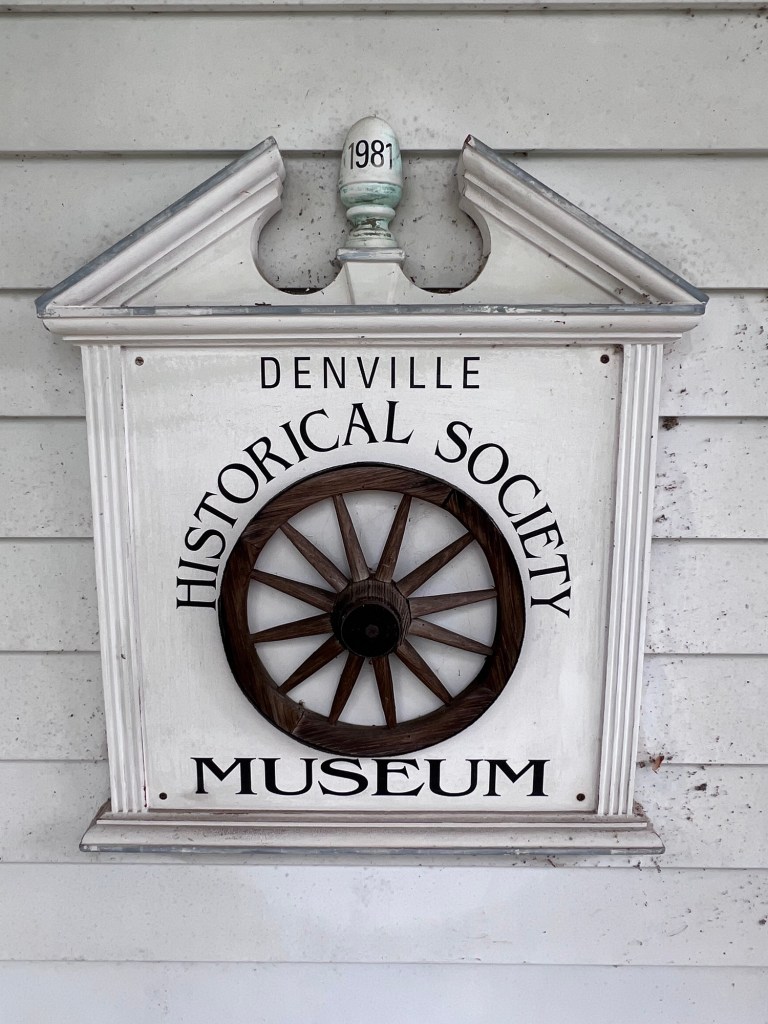
The front sign for the Denville Museum
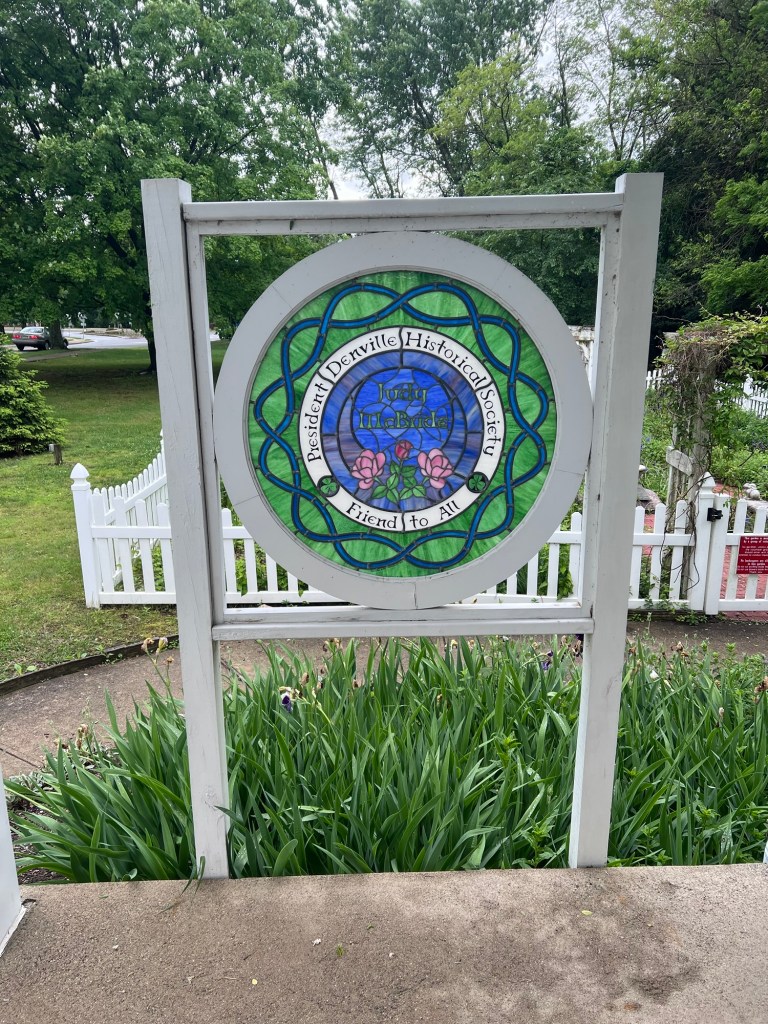
The beautiful stained glass sign outside
The front sign of the museum
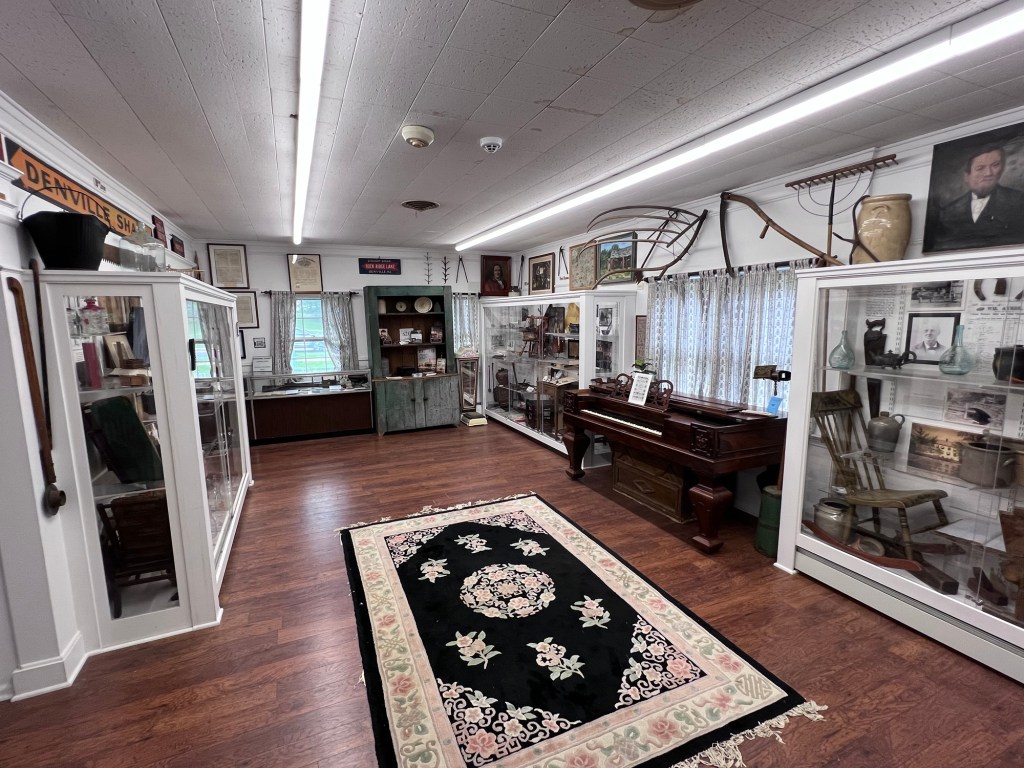
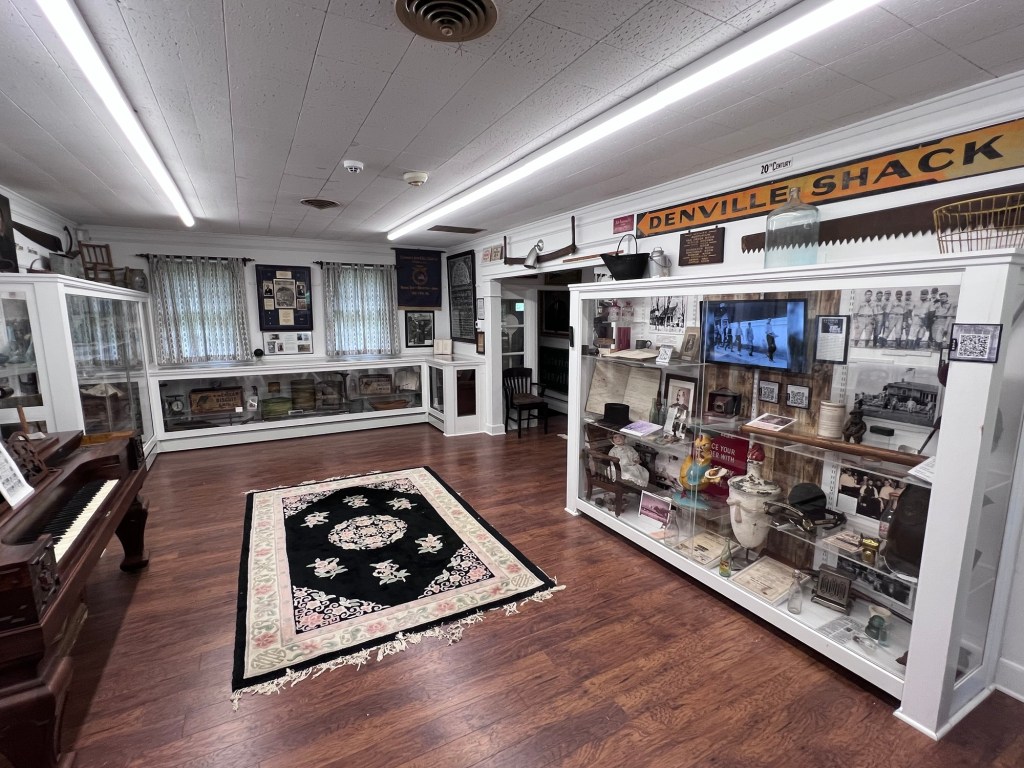
The front gallery of the museum
The back part of the front gallery of the museum
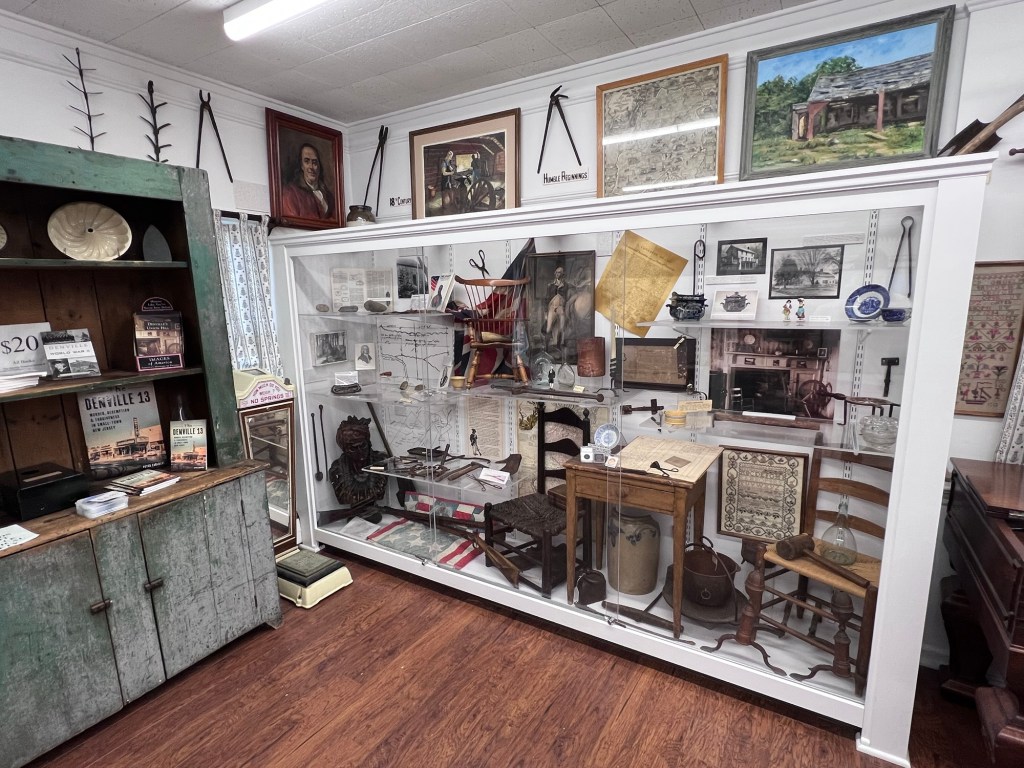
The Denville Museum is an interesting and beautifully organized museum in Downtown Denville, NJ that tells the history of Denville and the surrounding communities. The collection starts with a collection of Native American artifacts and Revolutionary era household objects.
The early foundation of the Denville community is displayed in the front case
The front of the Miller-Kingsland Homestead during the Pathways tour
I went to visit the Miller-Kingsland Homestead, which is part of the Boonton Historical Society, during the Morris County’s Pathway’s tour and discovered a beautiful little historical home situated on picturesque piece of property. I saw by the signs that the grounds were maintained by the local Garden Club, who did a wonderful job landscaping the grounds.
The Living Room in the extension on the house
The portraits of Mr. & Mrs. Kingsland
The Dining Room in the old section of the home
The historic home is filled with period furnishings and decorations, none it seems local to the home. Still you can see how the home has changed over the years with additions and renovations. The older part of the home is now part of the Dining Room.
The Pewter ware collection on the Dining Room table
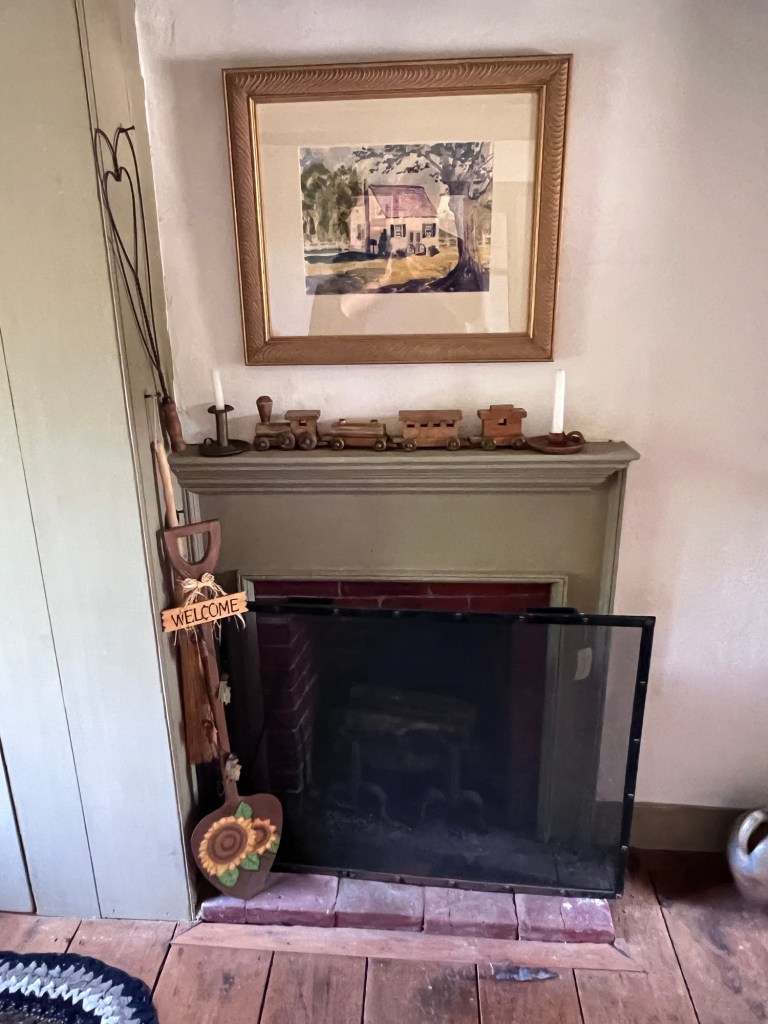
The fireplace in the original house kitchen now in







































































 mywalkinmanhattan