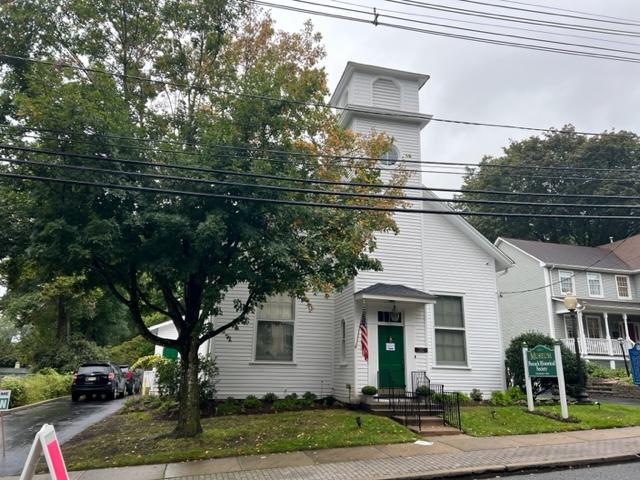
The Clayton Historical Museum is the perfect example of a community recording and preserving its past and showing the direction of its future through historical timeline of this town. From its place in glass manufacturing the the cheer of its high school, the museum displays the community pride of Clayton, NJ.
It shows how small towns all over New Jersey can preserve their past while still being part of the community at large. Each of the rooms in the museum displays a part of the community and its progression through time.
The first small gallery is dedicated to the uniformed forces that help protect this small community, the majority of the second gallery is dedicated to the glassworks business that once dominated the area and the back gallery displays its community with schools, the business district and the continuation of the glassworks.
The docents and volunteers give you the freedom to walk around but time is limited because the museum is only open for two hours a month plus special events happening in the town.
The History of the Museum:
(From the Museum website)
Clayton Historic Preservation collects personal papers, local business and organization records, photographs, early maps, genealogies, church histories, family Bibles, historic books, newspapers, artifacts and so much more.
The Veteran’s Exhibition in the middle of the museum
Our museum’s archives showcases the heritage and culture of Clayton, allowing visitors to explore and appreciate the town’s fascinating journey. Clayton Historic Museum is a guardian of the borough’s rich heritage, offering visitors a journey through its exhibits and displays (Clayton Historical Society pamphlet).
The entrance hall to the museum
The church artifacts in the first entrance gallery
The Clayton Historic Museum fosters a sense of pride and appreciation for Clayton’s past by preserving artifacts, documenting stories and engaging the community. CHP invites residents and visitors to explore, learn and connect with the borough’s history.
As a testament to the borough’s commitment to preserving its unique identity, CHP is creating an enduring legacy for future generations(Clayton Historical Society pamphlet).
The front gallery dedicated to the town’s First Responders:
The front gallery of Clayton Fire and EMS displays
The Clayton Police and Fire Department displays
The Clayton Police display
The middle gallery is dedicated to the glassworks businesses:
The middle gallery
The glass making industry was a majority of the work force at the turn of the last century and shows New Jersey’s craftsmanship over the years.
The glass milk bottles showing the areas both dairy and glass bottle industries of the past
The back gallery contained a lot of Clayton’s manufacturing and retail history
The glassworks history in the community run deep
The Clayton Glass Works factory at the turn of the last century
Decorative glass was one of its specialties
Creative glass works are part of the extensive collection at the museum
The everyday decorative items were made right here in New Jersey
The main part of the gallery discusses and displays how important the glass industry was to the community and the creativity of the artisans.
The display of the glass blowers chair and the time and effort once part of this craft
The glass blowers chair on display
The museum’s exhibits offer an overview of Clayton’s history, covering various aspects such as industry, agriculture, transportation and daily life.
Collections from The local Clayton High School
The Clayton, NJ local business district businesses
Through an assortment of photgraphs and documents, visitors can explore the Borough’s development.
The beautiful decorative glass on display
The Clayton High School display showing small town pride
The progression of the telephone
The antique Victrola got its start in the Edison labs here in New Jersey
The exhibits provide a deeper understanding of Clayton’s past, fostering an appreciation for the borough’s heritage.
A clipping from the Salem Oak in Salem, NJ is in the yard behind the museum
The Mission Statement of the Museum:
(From the Museum website)
• Acquire and preserve documents, records and relics of the Borough of Clayton, Gloucester County and the State of New Jersey
• Encourage the protection and preservation of the historical landmarks and points of interest
Furnish historical information and documentation to the Borough
• Partner with Clayton Special Events and neighboring Preservation Associations to exchange and display historical related information, documents and artifacts
The middle gallery of the museum’s extensive glassworks collection
Remember that the museum is only open from 11:00am-1:00pm the third Saturday of the month so plan your trip to museum accordingly.
During the Annual Sussex County Heritage Weekend, one of the first stops I made was to the Franklin Heritage Museum in Downtown Franklin, NJ. The museum was the house in one of the offices of the mining company. The museum was a glimpse into community’s mining past and how it shaped this area of the State of New Jersey.
The museum sign out front
The museum building was the old New Jersey Zinc Company ‘Time Office’. This meant that the miners had to punch into their shift at the mine through this building. The old turnstile is to the right of the building.
History of the Franklin Historical Society:
(From the museum pamphlet)
The Franklin Historical Society was organized and incorporated in September 1996 as a non-profit all volunteer education association. It was founded to preserve the heritage of the Franklin Borough to create awareness of both the County and Borough of Franklin and its rich history of culture and ethnic heritage.
The Historical Society’s Museum is located at 95 Main Street in the historic Franklin Mill complex of the former New Jersey Zinc Company.
The Heritage Museum was opened to the public in April 1997 and its displays include:
Iron and Zinc Mining
Railroads
Franklin’s Churches and Schools
Franklin’s Local History
The sign for the old New Jersey Zinc Company ‘Time Office’ historical sign
The history of the Franklin Mine and its place in New Jersey history
The smaller gallery off to the side of the building concentrates on the history of the NJ Mining industry and the many mining areas in Sussex County.
The room contains all sorts of artifacts related to the industry including both pictures and everyday equipment.
The pictures of all the miners at the company
The Mining Gallery
The Mining Gallery with equipment and artifacts for a day of working in the mines
Artifacts from home and work
This gallery was in transition with the volunteers working on the displays. This side of the museum with be on the local NJ Zinc Mine Company and its history.
The main gallery in the old Main Office space
The main gallery of the museum has a mixture of more mining artifacts and town objects that cover the history of the town.
The ‘250th Anniversary exhibition of the town and its mining past
For the ‘250th Celebration’ of our country, the museum created an interesting display of the formation of the community around the mining industry to its growth today.
The Mining and Equipment display
Community artifacts
Pictures of the police and fire department’s in this small mining community
The museum’s main emphasis is on the development of the mining industry both its early development up until when the mines closed in the 1980’s. The display above is on the early mining tools used by the workers.
The Mineral display
What I found interesting was all the minerals that are on display and the glow in the dark components that make these rocks special. When the lights go out, the true magic begins.
The old turnstile to enter the mining compound before the start of the shift
The back of the museum behind the fencing and the weeds, is the entrance to the old mines. Both the entrance building and entrance to the mine has been closed off for years but you can still see behind the fencing. This is the old turnstile off to the side of the building where the miners entered the complex.
Across the street from the museum is the old Hungarian Reformed Church, which is planned to be renovated.
The sign for the church
The old Hungarian church
Down the road from the downtown area where the museum is located is the Franklin Furnace Park, which is a beautiful picturesque park situated around a lake.
All along the highway facing the park and in the park itself was the most beautiful and colorful foliage. Plan to visit the park after the museum for a colorful and relaxing break.
The foliage around the park in early October
The lake view of the park from the highway
The views from every angle of the park are breathtaking.
The view from inside the park and the footbridge to the island
The view of the park from south of the park
A view of the islands in the park
A view of the islands and the foliage
The islands and the foliage in the beginning part of October
The small center pine island
Traveling back down the road back to Route 23 South to continue my tour of museums
The view of the islands to the north in the lake
The view of the lakes from the south
The view of the foliage from the south
For a small town, Franklin offered such an interesting look at this part of New Jersey’s mining past and its transition from a mining industry to tourism based around the mines. The series of museums and cultural sites offers so much for visitors to see and experience.
A start at the Franklin Heritage Museum offers a glimpse into that past and as the museum keeps developing their exhibits will tell that story to visitors.
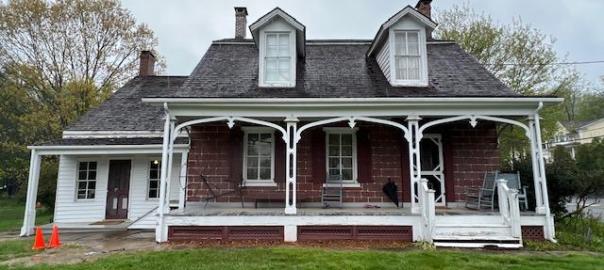
The Morgan Farmhouse at the Morgan Farm Museum, the headquarters of the Cedar Grove Historical Society
The museum sign just off Route 23 South
The farm property the day of the Fall Pumpkin & Apple sale and Open House
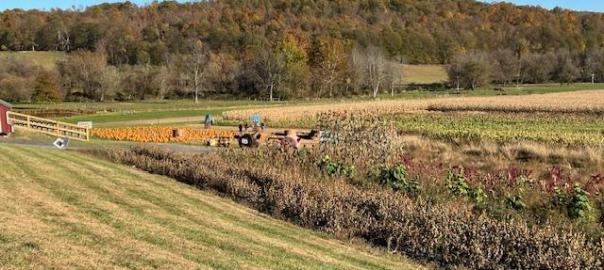
I recently visited the Morgan Farm and Museum one Saturday afternoon in the Fall and was surprised to find that they were hosting their Annual Pumpkin & Apple Sale, which has been a tradition on the property since the last owners of the farm, the Morgan family did this every Fall.
It was a lot of fun. The Society members were selling pumpkins and apples, baked goods like Cider doughnuts and cookies (completely sold out by the time I got there), Apple Cider and clothing products. On the farm land there was a petting zoo, picture taking by the Pumpkin Patch and tours of the house. The tour of the house was very interesting in that their docents to assist you on each floor to explain the family dynamic. It was a wonderful afternoon and a enjoyable family event.
The sign of Route 23 South for the Pumpkin & Apple Sale
The History of the Pumpkin and Apple Sale at the Morgan Farm Museum:
(from the museum pamphlet)
Each year the Cedar Grove Historical Society holds a Pumpkin and Apple Sale in honor of Edith Morgan and her son Courtenay Morgan. In the Fall of each year, the Morgan’s sold pumpkins and apples in the front of the Morgan farmhouse. The pumpkins were grown on the farm but the apples came from northern New Jersey. Mrs. Morgan passed away in 1961 but Courtenay, the last farmer in Cedar Grove, continued the tradition until his death in 1985 at the age of 86. The Historical Society continues that tradition each October.
Courtenay left his property to the Township of Cedar Grove with the stipulations that the Township create a park for passive recreation and that the Historical Society create a museum to preserve the history of Cedar Grove. Our pumpkins and apples are from the Chester area. Today the Historical Society’s home is the Morgan Museum located in the Morgan farmhouse. The Township created the J. Courtenay Morgan Park on the property.
The farm’s old barn now used as a meeting place and gift shop
History of the Morgan’s Farm and Museum:
(from the Museum pamphlet)
The Cedar Grove Historical Society welcomes you to Morgan’s Farm & Museum and the Canfield-Morgan House. The guide explains why Morgan’s Farm is unique and leads you to points of interest that you may want to explore.
The Morgan’s Farm is a fourteen acre site that was farmed continuously from the mid-1800’s until 1985. In 1985, Courtenay Morgan donated the farm to the Township of Cedar Grove. This portion of the farm is a park managed by the Township while the farmhouse and other buildings are operated as a museum and education center by the Cedar Grove Historical Society.
The Cedar Grove Historical Society maintains a wonderful collection of agricultural tools and equipment that reflect farming methods over a period of one hundred years. Items on display in the Canfield-Morgan House includes letters, photographs, clothing, furniture and other objects that show us how people lived during the early 1900’s.
The Family History:
(from the Museum pamphlet)
Benjamin Canfield built the farmhouse sometime around 1845 for his family. The Canfields were typical, hardworking farmers who were respected for the quality of their produce. They grew corn, apples, melons and other crops which they sold in the Newark and Paterson markets. The Canfield family farmed the land until 1910 when James and Edith Morgan bought the property James Morgan was an advertising executive who commuted by rail to New York City.
Mr. Morgan was passionate about farming and he worked hard to learn the latest farming methods. he experimented with the different types of crops until tuberculosis took his life in 1920. After Mr. Morgan died, Edith and her son, Courtenay struggled to keep the farm operating. They were well known locally for the vegetable and fruit stand they operated off the front porch.
Long before the Canfield and Morgan families lived here, the Lenape Indians used the site as temporary camp. Courtenay Morgan found many Native American tools as he plowed the fields. These artifacts are now preserved by the Cedar Grove Historical Society. A portion of the Lenape Trail passes through Morgan’s Farm.
The front parking lot of the farm property and the Pumpkin Patch
The inside Barn gift shop was selling apples, pumpkins, gourds, apple cider and doughnuts. By the time I got there, there was not much left. The Society even sells their own honey.
The barn from across the gardens near the farmhouse
The History of the Barn:
(from the Museum pamphlet)
The barns that you see behind the Canfield-Morgan House today were reconstructed by the Cedar Grove Historical Society in 1994 because they were had badly deteriorated. While the center of the barn is not as high as it once was, it has its original foundation and looks much like it did in 1910. This barn was probably used to house livestock at one time. On the west side of the main barn is a structure that once was a carriage house with a small apartment on the second floor for hired help. At some point, possibly in 1911, the second floor was removed. The shed on the east side was used to shelter livestock and later to store farm machinery.
There was all sorts of fun activities for families and especially the kids with a Pumpkin Patch, games and a Petting Zoo plus tours of the house.
The entrance to the Pumpkin Patch offered kids a chance to take pictures and pick the perfect pumpkin to make a Jack O Lantern
The Pumpkin Patch was perfect for picture taking
The pumpkin decorations in the Pumpkin Patch
The were plenty of places where the kids could take pictures with all sorts of characters of ghosts and ghouls and things that go bump in the night
Halloween is on its way
I loved the small Petting Zoo that they had set up. There was a baby cow, a baby pig, ducks and chickens.
The Petting Zoo
The baby cow was really friendly
The ducks were walking around their pen
The baby pig ran around his pen as well
The highlight of the afternoon was touring the old Morgan Farmhouse, which was furnished with family antiques and heirlooms, plus artifacts from the community of Cedar Grove, NJ.
The back of the house facing the barn
The History of the House and Barn:
The Canfield-Morgan House looks much like it did after Benjamin Canfield finished building it in the mid-1800’s. The modern kitchen and the accessible porch and bathroom are the most visible changes. The size and character of the house are typical of a traditional farmhouse. The features of the French windows in the front parlor and a wide entrance hall suggest that the Canfield’s were interested in current fashion and design of homes. A cistern under the kitchen floor stored water that was collected in gutters and piped into the cistern.
The gardens have many flowers such as daylilies, akebia, peonies, roses and quince that were planted by Edith Morgan and continued to bloom in the garden. The Morgan family added pergolas to the garden in 1911 and grew honeysuckle to cover them.
The fields of the farm is a variety of crops were planted in fields east of the park and south of the farmhouse. Crops included everything from tomatoes to pumpkins and apples. The Canfield family grew corn on what is now the front lawn. While these crops are no longer grown on Morgan’s Farm, the fields remain open space.
The Cedar Grove Historical Society sign on entering the house
The entrance to the house through the main hallway. The original part of the house was built in the 1700’s with an addition which added these rooms in the mid 1800’s. This is the newer side of the house.
The tour of the house was on my own but there were plenty of docents from the Society to explain each room. There were all sorts family furnishings and heirlooms of the Morgan family that were donated when this became a museum. The Society keeps the home in immaculate shape and its looks like the family still lives here and off for the day, letting us see a glimpse into their home.
The Living Room/Music Room
The corner of the Living Room and Music Room
Mr. Morgan’s desk in the home
The antique musical instruments in the collection
The Cedar Grove Music Association in 1900
The Morgan family photos from the family’s private collection, now part of the museum
The Morgan family portrait
Gail Morgan Chandler as a young girl
The Reception and Recreation Room next to the Living Room
Some of the family decorative pieces on display
Across the hall from the Living Room is the Dining Room that displays the home’s baking and serving pieces and some of the family China.
The Dining Room of the farmhouse
You can also see how the fireplace served as not just conversation but as the heat source as being part of the original section of the home.
The Morgan Dining Room
The formally set Dining Room table
The fireplace was the source of heat on the original 1700’s section of the home
Family baking and cooking equipment on display in the Dining Room
Family China and serving pieces on display in the Dining Room
Along the stairs on the way to the seconds floor is lined with all sorts of family and community artifacts.
The stairs to the second floor
The library in the house and a display of hats at the staircase landing
The second floor contained these rooms bedrooms and the museum offices , which were located in the old bedroom loft of the original 1700’s house.
Mr. and Mrs. Morgan’s bedroom at the end of the hall
Mrs. Morgan’s bedroom vanity with some personal items from the Morgan family
Mrs. Morgan’s desk
A small doll by the bed
Mr. James W. Morgan
Mrs. Edith Louise Potter-Morgan
The Morgan children when they were young
The second bedroom was being used as a gallery for local artifacts either found or donated from Cedar Grove. This included old pictures of buildings and homes in the community, Native American artifacts, clothing and uniforms and everyday items.
The second floor Artifact Gallery
The display of local artifacts
The Native American display
Display of local artifacts
Artwork by local artists
The pictures of local hospitals and medical centers
The pictures of local historical houses
When I was through touring the house, I went back outside to join the rest of the visitors, who were picking out pumpkins on the lawn.
The back part of the estate
What I like about the Morgan Farm Museum is that it is not just about walking around an old house, it is about experiencing someone’s life story.
I also got to see how the community of Cedar Grove grew from the farming community it once was to the bedroom community of New York City it is today.
The Morgan family dealt with quite a blow with the death of Mr. Morgan but is son took control and built the farm up to what the museum it is today. A living breathing example of turn of the last century ingenuity and determination and created a successful business that we can all share in today.
Ringwood Manor in Ringwood Park at Christmas time:
I have visited the Ringwood Manor during the Christmas holidays over the last four years and it keeps getting better. Each room in the house is tastefully decorated for the holidays. The West Milford Garden Club does an excellent job decorating every year and in the post-COVID environment, it is nice to see such a beautiful and well thought out display for Christmas.
The outside of the house was decorated with garland and ribbons and welcomed visitors with Christmas cheer.
The entrance of Ringwood Manor.
The entrance to the estate.
The patio of Ringwood Manor.
The outside of the house was tastefully decorated in garland and bows.
The decorated front door on the Ryerson side of Ringwood Manor.
History of Ringwood, NJ:
Colonial Ringwood:
Long before the Forges & Manor of Ringwood existed this property was occupied by the Native American people. Prehistoric artifacts found on the grounds confirm their inhabitants back to the Archaic and Woodlands periods. Living in a hunting and farming paradise, these Munsee-speaking Lenape peoples dwelled at the head of the Topompock or Ringwood River Valley. This paradise attracted colonial prospectors, who by 1740, came for the iron ore found in the ground. Recognizing the rich magnetite ores, Cornelius Board settled here in 1739 and first utilized the property for iron mining. He was followed shortly thereafter by the Ogden family who established the Ringwood Company and built the first blast furnace here in 1742.
After twenty years of production, a German promoter, Peter Hasenclever, organized the American Iron Company to exploit the resources in colonial North America, purchasing the Ringwood area in 1764. He would also develop forges at Long Pond and Charlotteburg but made Ringwood the center of his iron empire. Hasenclever established iron plantations and developed the production of flax and timber across 50,00 acres of land stretching through New Jersey and New York, from present day Butler to New Foundland and Nova Scotia. The iron was said to have been “the best iron in the American colonies.” Robert Erskine, the last ironmaster of the American Iron Company, was sent from England in 1771 and would manage the company during the Revolutionary War.
(History of Ringwood, NJ)
The decorated carriage house.
When you walk into the home, the first rooms is decorated tastefully around a collection of antique guns and hunting equipment. The Great Hall was decorated with garland and ornaments with a large tree in the corner.
The Great Hall of the Ringwood Manor when you enter for Christmas.
The Great Hall upon entering.
The Chamber Gun display.
The Chamber Gun display in the Great Hall of Ringwood Manor.
The Great Hall fireplace decorated for the holidays.
The formal dining room was set for Christmas dinner for the family after church. The elegant china was set on the table with poppers and small Christmas gifts for the guests. The side boards were set with the dinner entrees and sides for the family meal. There was a little discussion of how the Hewitt family would entertain during the holidays and in 2019 and in 2023, they opened up the kitchen and Butler’s pantry for touring.
The Hallway leading to the formal Dining Room.
The decorated staircase in the Great Hall
The Great Hall hallway
The Dining Room sign
The Dining Room at the Ringwood Manor.
The Dining Room set for Christmas dinner.
Dining Room set for Christmas dinner beautifully.
The details of the Dining Room
The Dining Room paintings and details.
Preparing for the holidays in the Dining Room
The statuary of the Dining Room
The lighting fixtures of the Dining Room.
Each room was set for the holidays with garlands, trees and decorations. As it was explained to me on another house tour during the holidays, the Victorians would normally only decorate one or two rooms for the holidays and not the whole house. The whole house might be decorated based on the wealth of the family and the amount of servants to take care of the home. Needles would have to cleaned up and the trees would have to be attended to on a daily basis.
the Butler’s Pantry just off the Dining Room
The Butler’s Pantry in preparation for Christmas dinner
The Christmas treats in the Butler’s Pantry.
I then walked back through the house and passed by the Office on my way to the social rooms of the first floor. The office is where business was taken care by Mr. Hewitt when he was in residence.
Mr. Hewitt’s Office decorated for Christmas
Mr. Hewitt’s office at Christmas time.
The Christmas tree in Mr. Hewitt’s office.
Before I left this part of the house, I passed the Breakfast Room which is just off the Dining Room. It had beautifully decorated for a Christmas breakfast.
The Breakfast Room sign
The Breakfast Room was decorated with desserts and sweets for the Christmas holidays.
The Breakfast Room beautifully decorated for the holidays.
The Breakfast Room for a Christmas feast.
The Christmas tree in the Breakfast Room.
Before entering the Great Hall, I visited the Receiving Room, where guests waited until dinner was served.
The Waiting Room
The Waiting Room was for guests to relax and wait for Mr. & Mrs. Hewitt.
The Waiting Room fireplace is nicely decorated.
The ‘Birdcage’ in the Waiting Room
Passing through the Great Hall again, I entered what had once been the original Ryerson House built in the early 1800’s. The first room on the tour of this side of the house was the French Drawing Room decked out for the holidays. This room was used by the ladies after dinner was over to converse and get away from their husbands, who would have still been in the dining room.
French Drawing Room, the “Withdrawing” room.
The French Drawing Room
The French Drawing Room in all its Christmas glory.
The Christmas tree in the French Drawing Room
The fireplace in the French Drawing Room.
On the other side of the house is the original Ryerson mansion that was added on by the Hewitt’s when they bought the house. The older house had the original moldings and windows from the early 1800’s and that side of the house had a different feel to it starting with the original entrance and staircase.
The Ryerson Staircase and foyer sign
The Ryerson Staircase and foyer
The decorated Ryerson staircase.
One of the nicest rooms that was decorated was the screened in porch. Here there was a tree set with presents, hot house flowers and garland lining the room. The sunlight shined throughout the room and the decorations sparkled.
The South Ryerson Parlor
The South Ryerson South Parlor
The fireplace in the South Parlor.
The latest addition to the house was the screened in porch, The Glass Piazza, of the house which was used in the summer months for rest and relaxation. The screen in porch was beautifully decorated for the holidays with all sorts of Christmas trees and decorations.
The Glass Piazza, the screened in porch of the main house.
The Glass Piazza decked out at Christmas time.
The doll mini tea service in the Glass Piazza.
The Glass Piazza set for tea at the holidays.
The Glass Piazza at Christmas time.
The beautiful Christmas tree in the Glass Piazza in 2023.
When you leave the Glass Piazza, you enter the original part of the house again with the North Ryerson Parlor. This room was used by the family for less formal affairs but it was still decked out of the holidays.
The North Ryerson Parlor
The Ryerson North Parlor decorated for tea.
The Ryerson North Parlor fireplace decorated for Christmas time.
The last room I visited on the tour was the Music Room in the original Ryerson House. The room was used by both the Ryerson’s and the Hewitt’s for social occasions and the Hewitt’s were all musically inclined.
The Music Room at the Ringwood Manor
The Music Room at the Ringwood Manor.
The Music Room at the Ringwood Manor.
The fireplace in the Music Room decked out for the holidays.
The Music Room during Christmas time.
Each room had a docent to explain the decor or what the room’s use had been in the family’s time. A visitor can roam the house at their leisure and see the rooms as many times as they want. There is also a gift shop in a room off the formal dining room that contains some beautiful Christmas crafts for sale by the Women’s Club of New Milford. Some of these women are very creative and sell the most amazing Christmas ornaments made of glitter, wood, branches, walnuts and moss.
The decor of the home changes over time and there are different things to see every year. The barn also on the property as you drive in has more artwork and crafts. In the Gardener’s Shed next to the house, the Society has a small cafe with sandwiches, desserts and coffee/tea/hot chocolate.
The Carriage House was used as a gift shop and a place to get something to eat.
The tour of Ringwood Manor is wonderful during the holiday season and the rest of the house opens up during the warmer months of the year.
History of the House:
This 582 acre historic site is open to the public year round. The historic house museum, Ringwood Manor is open Wednesday to Sundays year round.
History of 19th Century Manor House and Landscape:
The present manor house was begun by Martin J. Ryerson in 1807. He and his sons controlled not only the iron mines and forges on the property but also operated productions at four other locations in the area. The Ryerson family resided in their 10 room Federal style home for almost 50 years.
The entrance to the historical home.
In 1853, the Ryerson’s house and property were purchased by business partners Peter Cooper and his son in law Abram S. Hewitt. The 22,000 acre ironworks and the Ryerson’s home were purchased for a sum of $100,000. Their company, Cooper-Hewitt & Company, grew to be the fifth largest corporation in the United States. The Hewitt’s, one of the most influential and wealthiest families of the 19th century, fell in love with the Ringwood estate.
The expanded Ringwood Manor estate in the winter months.
Ringwood manor at the holidays.
They decided to make this site of their summer home, naming it The Forges and Manor of Ringwood. They enlarged the home of the Ryerson’s, constructing major additions or renovations in 1864, 1875, 1900 and 1910. The completed 51 room house is 226.5 feet long and features 28 bedrooms, 24 fireplaces and 13 bathrooms and more than 250 windows. The house was built in an eclectic style, typical of the Victorian period. In 1875, the Manor House was an excellent example of the Gothic Revival style of architecture. By 1900, the Hewitt’s changed the exterior facade to its present appearance, adding the neo-classical portico and columns of the front porch and affixing white stucco to the exterior walls. The furnishings of the house reflect the varying tastes and styles of the family and time period.
Ringwood Manor during the holidays.
(From the Ringwood Manor website)
The formal gardens surrounding the Manor House were developed by Mrs. Hewitt and her daughter, Eleanor around 1900. Their design was influenced by the Hewitt’s many trips overseas. The gardens possess a mysterious old world charm that captivates visitors as they enjoy the serenity of reflecting pools and the progression of blooms from early spring to late fall. Placed throughout the garden are French and Italian statuary and garden ornaments as well many interesting architectural items from New York City acquired while Abram Hewitt served as Mayor and Congressman. Examples of these features include columns from the old New York Life building, gates from the Astor family’s home and gate posts from Columbia College. Relics from the iron company that are found on the grounds include a trip hammer and anvil, cog wheel and a Dictator-class mortar the base of which was created by the Hewitt’s company and used at the Battle of Vicksburg in Mississippi during the Civil War.
The Ringwood Manor in the Fall of 2026:
I visited the park again in October of 2026 after taking a tour of the NJ Botanical Gardens down the road at the Skylands Manor. The grounds were just changing colors during all the cool weather we were having and the grounds could not have been more picturesque.
The lawn of the estate in the early Fall in 2026
Walking through the walkways and driveway of the estate
Walking up to the Manor House at Ringwood Park
The pond by the house overlooking the barns
The marble walkway up to the house
The Manor House in the Fall of 2026
The estate lawn from the house
The gardens and landscaped gardens on the estate
In the barn which is used as a Art Gallery, hosts a Jazz Concert on some weekends during the Fall. We had a nice time listening the music.
The Jazz Concert in the afternoon
The Jazz Concert at the barn
The grounds are so beautiful at any time of the year.
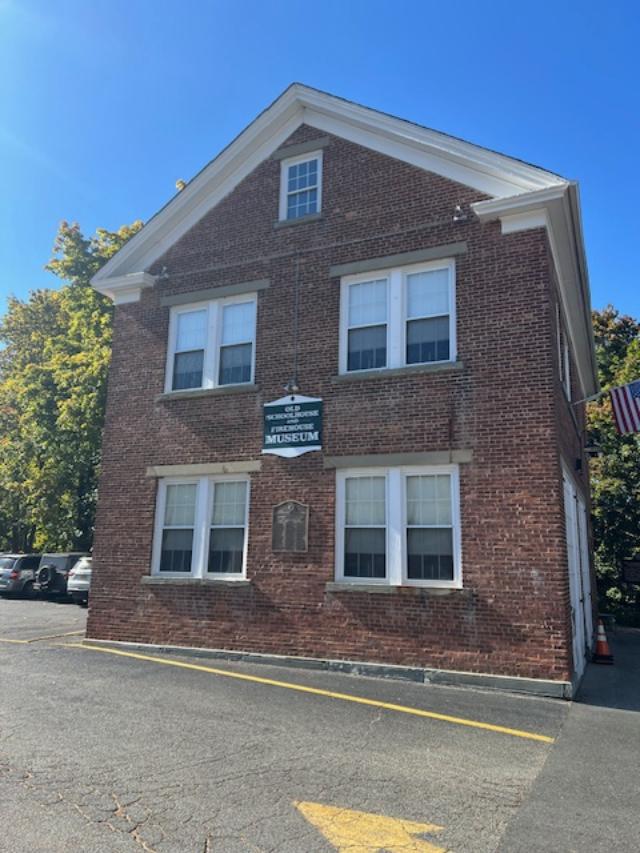
I recently visited the Ogdensburg Old Schoolhouse and Firehouse Museum at 6 Passaic Avenue in Downtown Ogdensburg and discovered the community’s rich history of farming and mining in its past and its current destination as a weekend vacation spot and a up and coming bedroom community of New York City.
The County still has some farming and agriculture going on as the County continues to be built up with expats from the City, and Bergen and Morris Counties. The first floor is dedicated to the history of the Ogdensburg Fire Department with an old Engine and Ladders trucks, artifacts from the Sterling Mine just up the road and township property such as an old voting booth. You can read about the history of the Ogdensburg family as you head to the outside gallery.
The second floor has displays of various town departments including the Rescue, the Police Department and Fire Department. There are various displays of the town’s school system and various clubs in town. There are displays on the town’s mining and agricultural past with items such as farm advertising and mining equipment and minerals. Each display plays a role in the development of the community and how it progressed from farming to mining to manufacturing to the bedroom community it is today.
History of the Building:
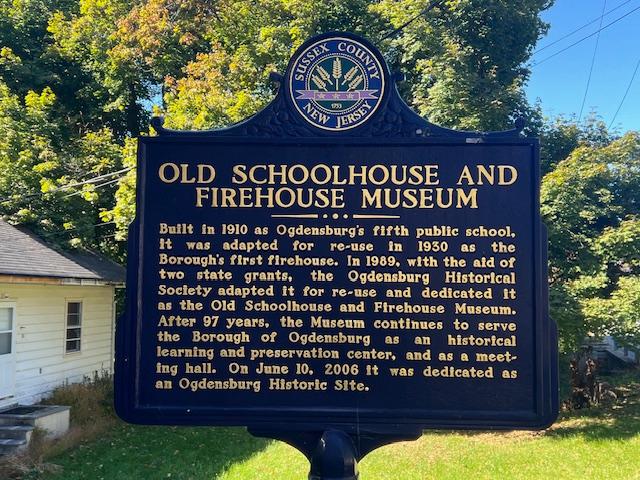
“Built in 1910 as Ogdensburg’s fifth public school, it was adapted for re-use in 1930 as the Borough’s first firehouse replacing the one built in 1872. In 1984, with the aid of two state grants, the Ogdensburg Historical Society adapted it for re-use and dedicated it as the Old Schoolhouse and Firehouse Museum in 1987.
After 97 years, the Museum continues to serve the Borough of Ogdensburg as an historical learning and preservation center, and as a meeting hall. On June 10, 2006 it was dedicated as an Ogdensburg Historic Site.”
The historic sign of the museum
The Borough of Ogdensburg is the host of this marker commemorating the rich history provided by this building. This building has been maintained with much thought and care and remains as a museum and meeting place for the residents of the town. The marker is located in front of the building on Passaic Avenue just off Main Street by the Ogdensburg Elementary School. This marker was part of the 2008 placement (Museum website).
The outside of the museum which served as a school and a firehouse
The first floor of the building has the fire trucks, the history of the fire department and Ogdensburg’s 250th Anniversary of the United States on display.
The museum artifacts from the 250th celebration of the Country
The museum is on the heart of mining country of Sussex County, NJ and the museum has an interesting mineral collection along with their collection of mining artifacts.
The Mineral and Mining Collection
The museum being home to the Ogdensburg Fire Department contains the history of the local fire department along with vehicles and artifacts from the department.
One of the early pull hose beds pulled by men and then by horses
The first floor also contains the history of the Ogden family in the region.
The history of the Ogden family in the community
The town voting booth and a turn of the last century phone
The second floor gallery used to serve as offices and living space of the fire department.
The main gallery on the second floor
The gallery case lines are filled with memorabilia from different aspects of the community telling the story of the growth of the community that included Mining and Farming. It explains the growth into the modern suburbs of today.
The main gallery on the second floor of the museum
The main gallery on the second floor
The display case of Ogdensburg departments including school, fire and police departments
Blanket with historical sites and artifacts of the town of Ogdensburg, NJ
The businesses including schools and the domestic and farming industries
Each of the display cases represented different aspects of the town and has a variety of pictures and memorabilia from a variety of eras. The case lines show how the community changed over time from a mining community to the changes of a bedroom community of Newark and New York City.
The Entertainment display of recorders, phonographs, radios and early record players
The influence that Thomas Edison had on the community with new technology. Several pieces of Thomas A. Edison memorabilia are on exhibit to honor the ten years Edison spent mining iron ore at the old Edison Ore Milling Company on Sparta Mountain. Several of his phonographic inventions were created here (Ogdensburg Historical Society website).
Close up view of record players and Victrola’s
The School system display
The Ogdensburg Presbyterian Church display of artifacts from inside the church
The Sterling Mine display with minerals and equipment
The NJ Zinc Mine and Mineral display is a small s as molding of the museum down the street and the importance of the mining industry at the turn of the last century.
A closer look at the minerals display
A replica of a working mine operation. The machine shows how workers descending and brought up rock from the mines.
The Dedication to Mr. Waco Hadowantez, the town historian
The last display as you leave the museum is dedicated to the man who founded the historical society, Waco Hadowantez.
The museum tells an interesting story of the history of Ogdensburg and the surrounding area. It shows the importance of the Mining Community at the turn of the last century and how the community is pivoting towards tourism to tell its story.
Please contact the museum directly for seasonal hours and tours.
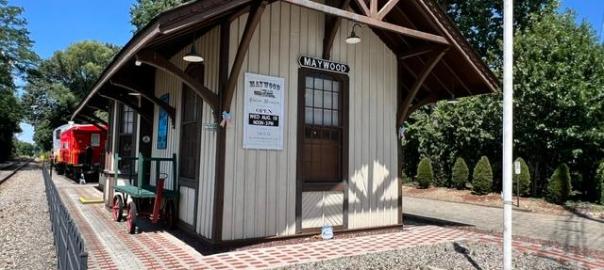
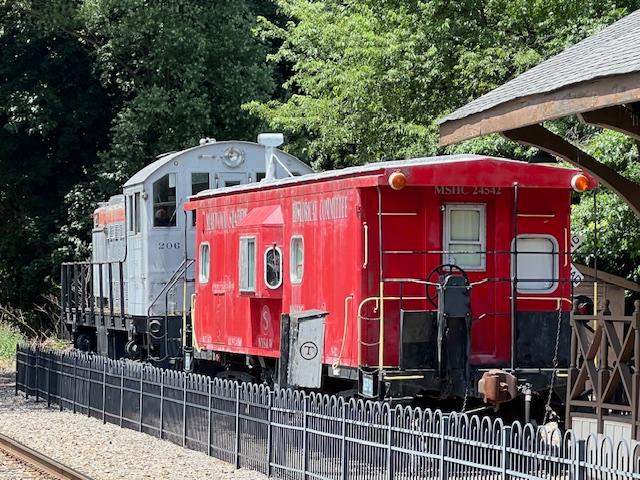
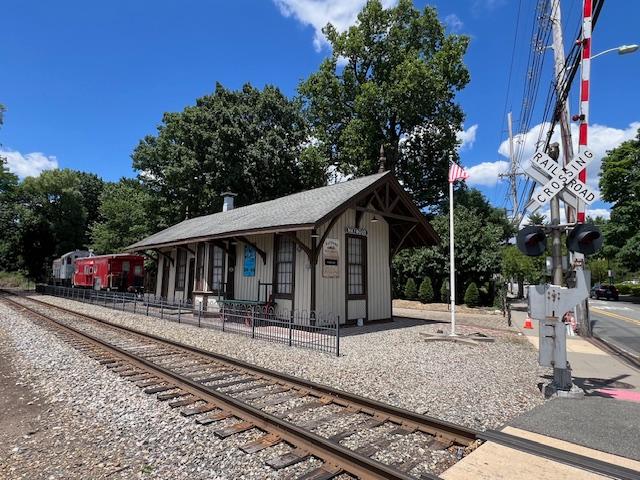
This National Registered restored 1872 New York, Susquehanna & Western railroad station, one of oldest in New Jersey, is located in the heart of Maywood, NJ. Restored by the Maywood Station Historical Committee and opened in September 25, 2004, it contains an extensive railroad museum and collection. The site also contains a restored caboose and engine.
The museum sign welcomes you
The side of the museum where materials are dropped off
I visited the Maywood Station Museum when it was open recently and found a fascinating collection of railroad memorabilia, Maywood fire department history and early maps of the town of Maywood. It is a treasure trove of articles for people who like to study railroad history especially its growth in small towns, early stages of industry in the town and in New Jersey.
The inside of the station museum
There is a lot of items that show the history of rail service not just on the train but in the station as well. There are antique desks, phones, ticket takers, mailboxes, benches and pictures all from the turn of the last two centuries.
The train ticket collection
The Maywood Station Historical Committee (MSHC) division of New York, Susquehanna & Western Technical & Historical Society operates the Maywood Station Museum and is chartered as a tax-exempt, 501(c)3 non-profit, educational and historical organization with a mission to preserve our railroad and cultural heritage through restoration and preservation, historical awareness, archiving and interpretation, museum open houses, meetings and special events (Maywood Station Museum Committee).
The train artifacts
The History of the Museum:
(From the Museum website)
The museum is operated and staffed by the volunteer membership of the Maywood Station Historical Committee. The main focus of the museum is concentrated on the history of Maywood Station and the New York, Susquehanna & Western Railroad and the roles they played in the development of the Borough of Maywood and the surrounding area. The museum collection contains hundreds of photographs, displays, documents, maps and artifacts covering the histories of Maywood Station, the NYS&W and local railroads, the Borough of Maywood and the local region, which are changed periodically and designed to entertain and educate visitors of all ages as well as offer a virtual timeline to these subjects.
The Museum and Railroad Car
Maywood Station Museum is also the official site of the New York, Susquehanna & Western Technical & Historical Society’s (www.nyswths.org) archive, which contains thousands of drawings, maps, track diagrams, photos, timetables, documents and records covering the history of the New York, Susquehanna & Western Railroad (Wiki).
Train documents and other artifacts
For those interested in historical buildings, meticulous care has been taken by the Maywood Station Historical Committee to show the museum in a historical context. The museum features the original woodwork painted and stained in the original colors and original Maywood Station furnishings have been restored and displayed such as the potbelly stove, station agent’s desk, chairs, telegraph keys and freight scale. Victorian-period original light fixtures and sconces adorn the ceilings and walls. Additional items have been painstakingly reproduced to the exact original specifications of over one hundred years ago including the station benches and bay window area (Wiki).
The Station Master’s desk
The Maywood Station Museum collection includes a former Penn Central/Conrail N-12 class caboose, which was restored by Maywood Station Historical Committee members. Visitors to the Maywood Station Museum are invited to come aboard Caboose 24542 and view additional displays and an operating model train layout. The Maywood Station Museum collection also includes original New York, Susquehanna & Western Railroad ALCO Type-S-2 Locomotive #206, which has also been restored by Maywood Station Historical Committee members (Wiki).
On September, 10, 2009, NYS&W S-2 #206 was placed on the State of New Jersey Register of Historical Places. The locomotive was placed onto the National Register of Historical Places on March 19, 2010 (Wiki).
The History of Maywood Station:
The Museum Logo
In 1871, the New Jersey Midland Railway, predecessor of today’s New York, Susquehanna & Western (NYS&W), began constructing a rail line between Newfoundland, NJ and Hackensack, NJ. The line was part of a plan to connect with the New York & Oswego Midland (later New York, Ontario & Western) in Middletown, NY and provide rail service from the Great Lakes to New York Harbor. The residents of what would later become Maywood, which at the time was part of an area called Midland Township, saw the advantages of the new railroad and requested a stop be made.
At the time, approximately 13 homes with nearly 90 residents were in the boundaries of today’s Maywood. Soon afterward, construction of Maywood Station began. On March 11, 1872, the New Jersey Midland commenced operating trains on the new line and Maywood Station formally opened in the same paint colors you see it restored to today. Six passenger trains a day in each direction initially stopped at Maywood. It should be noted that for a brief period after that station opened, the station sign said “West Hackensack” but this removed due to the requests of local residents who wanted the station named “Maywood”, as the immediate area surrounding the station had then become known (Maywood Station Museum).
A station agent was employed and it is believed that the first agent was name George Sipley. The station agent handled passenger baggage, freight shipments to and from the station, passenger ticketing and general functions in addition to performing the job of postmaster. In the 1872 to 1910 period, Maywood Station served as Maywood’s post office at various times when it wasn’t housed in a local merchant’s store. Another station agent/postmaster was Charles M. Berdan, who held this position in the late 1890’s into the early 1900’s. Mr. Berdan’s home was located directly across Maywood Avenue from the station and exists today. Maywood Station was also equipped with a telegraph so that the railroad could communicate between their stations and local residents could send messages around the world. The station also offered Wells Fargo and later, Railway Express Agency delivery services. These services lasted into the 1960’s (Maywood Station Museum).
The Railroad buckles
When Maywood Station was built, it originally located on the south side of the current tracks. In 1893, the station was moved to its present location on the north side of the tracks due to the addition of a second set of tracks being constructed and a purchase of additional land by the railroad. At the time, several additional NYS&W stations along the line were similarly moved for the same reason. When the station was moved, it was jacked up onto the rails, the rails greased, spun around and slide approximately 30 feet closer to Maywood Avenue, then jacked up again and moved to its present location. A new foundation was also added. It is interesting made at this time including the addition of a freight platform at the “new” rear of the station.
The Maywood, NJ Railroad Museum
The spot where Maywood Station was moved to originally included a passing siding where steam locomotives were stationed to be added, when necessary to help heavy freight trains on the several grades encountered heading west on the line. When the station was moved, the passing siding was cut back and one of the two switches was removed. The remaining trackage was then used to store freight cars, which were unloaded at the station. The siding started to the west of the station and ran 440 feet to near the rear freight platform of the station. The siding was last used in the early 1970’s and remnants of it can be seen today (Museum Station Museum).
The train sections on displays in the back of the museum
In 1894, the approximate 1.1. square mile area that included Maywood Station, formerly part of Midland Township was incorporated as the Borough of Maywood. Also that year, the NYS&W expanded into western New Jersey and through its Wilkes-Barre & Eastern Railroad subsidiary, into the coal fields in the Pocono region of northeastern Pennsylvania. The rail line could now take a passenger from a ferry at New York City to a connection at Jersey City, NJ to almost Scranton, PA on its own rails. The added ease of transportation began to attract manufacturing to Maywood as well as a demand for new homes. In 1894, the total residents living in Maywood numbered approximately 300 but this was about to change (Maywood Station Museum).
The rails next to the museum
New manufacturing and homes sprang up in the area surrounding the station and included such industry as Schaefer Alkaloids Company, Maywood Chemical Company and Maywood Art Tile Company. As these companies expanded so did Maywood’s population and by 1920 it numbered nearly 3000 (today Maywood has approximately 9,500 residents). The 1920’s also marked the height of passenger service provided by the NYS&W at Maywood Station. Thirteen passenger trains in each direction stopped at Maywood Station on a daily basis. Freight shipments continued to be delivered to the station and most of the local industry had their own rail sidings serving their plants. The NYS&W was enjoying a period of posterity and in 1920, a freight house addition was added to rear of Maywood Station and the exterior walls received a stucco finish over the existing boards and battens.
Station equipment
Stucco was in-vogue in the 1920’s and the NYS&W applied this material to several other stations on their line as well. In 1926, another round of various improvements were made at Maywood Station including the addition of interior men’s and women’s bathrooms, an 8-inch concrete floor installed to replace the wooden floor planking plus electrical and heating improvements. Unfortunately the Great Depression stuck in October 1929 and lasted well into the late 1930’s and the growth slowed dramatically. In 1937, the NYS&W declared bankruptcy and shortly thereafter was spun off from its parent, the Erie Railroad, which had controlled it since 1898. Around the same time, Maywood Station’s bay window was removed due its deteriorating condition (Maywood Station Museum).
The newly independence NYS&W fought hard to survive and cut back certain services but at the same time tried innovative concepts like streamlined, self-propelled, rail passenger cars as a way of cutting costs while boosting efficiency. The railroad also quickly retired its steam locomotives and replaced them with more efficient diesel locomotives stating in 1941 and completed the program in 1947. During World War II, the fortunes of the NYS&W did improve with the wartime demands placed on America’s railroads. As in World War I, many of Maywood’s servicemen departed through Maywood Station, some never to return. By 1953, the NYS&W was solvent once again but only for a few more years. Faced with mounting losses from the passenger services it offered and America’s love affair with the automobile and a new interstate highway system, the railroad once again embarked on a period of reducing their passenger train schedules.
The Station Master Desk
Losses continued and on June 30, 1966, the last passenger train called on Maywood Station as well as on the entire NYS&W, however the railroad continued to utilize the tracks at Maywood Station for their freight operations, which continues to prosper to this day. Shortly after the end of passenger service, the station was closed and was used by the NYS&W as maintenance base and for storage. Bill Spence served as Maywood Station’s last station agent. In the late 1970’s. Maywood’s Veterans of Foreign Wars (VFW) leased the station from the NYS&W to be used as a meeting hall. The VFW made a number of improvements including repainting the station, repairing cracked stucco, repairing the roof and maintaining the grounds. In the early 1990’s, the VFW moved out of the station and it remained unoccupied until June 2002, even thought the NYS&W attempted to lease it to another tenant during this period.
Faced with a pending order of demolition by the Borough of Maywood in early 2002 due to the deteriorating conditions of the station, a volunteer, 501C3 non-profit group named the Maywood Station Historical Committee Division of the New York, Susquehanna & Western Technical & Historical Society Inc. was formed on May 29, 2002 with a plan to restore the station and turn it into their museum.
The back of the museum
After several years of volunteer work to restore the station and create a museum, the group has successfully achieved their objectives and more, including placement of the station on both the National Register and State of New Jersey Register of Historic Places. The station now enjoys the notoriety as being one of the most impressive restoration projects and museum efforts to date in the State of New Jersey’s historical community (Maywood Station Museum).
Train lanterns
I want to the thank the Maywood Station Museum for this interesting information and please check out their website at http://www.maywoodstation.com.
The Margate Historical Society at 1 South Washington Avenue
The Margate Historical Society is a small history museum that tells the story of Margate, NJ and nearby Atlantic City, NJ. The two towns are intertwined by history and business. This small museum is run by the Margate Library, part of the town’s municipal system.
The museum sign when open
The entrance to the museum
The inside of the museum and their fire and rescue displays
This interesting museum covers the history of the Fire, Rescue and Police Departments with lots of artifacts from all three departments including pictures and equipment.
The rescue and life guard display
The display explains both the lifeguard stations and members and the rescue units run by both this department and the fire department.
The museum has a lot of interesting artifacts from the Margate Fire Department that covers both the working and social aspects of the department. Many cover the last 100 years of the department.
Margate Fire Company #1 Banner
The history of the Margate Fire Department
The Margate Police Department also had an interesting display of artifacts including a jail cell. The department also donated uniforms and items to arrest people.
The museum features the history of the town from community events and organizations to artifacts on buildings and businesses.
Transit display
The history of the community of Margate, NJ
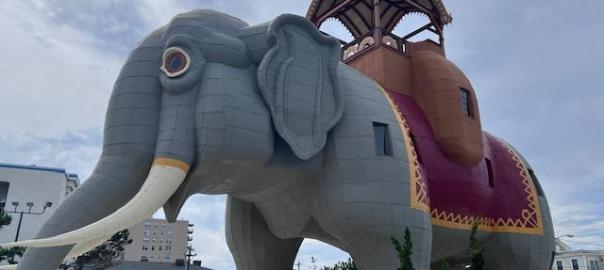
The town has many historical sites especially the “Lucy the Elephant” building down the road from the museum, which is one of the most well known structures at the Jersey shore.
The history of the Margate trolley system that used to exist on the shore line
Artifacts from the old trolleys
The history of the early community
Artifacts from residents of the town that continue to be collected by the museum
Artifacts from the community
The corner stones from the local schools
The museum has an interesting display of the 1964 Democratic Convention that was held in a fading Atlantic City. One of the biggest complaints was that the hotels were past their prime. This was before gambling would be introduced five year later.
The Democratic Convention in Atlantic City that was held in 1964
The museum touches on all parts of the Town of Margate,NJ and its role in the formation of beach communities along the Jersey shore. The museum shows the spirit of this New Jersey community.
The inside of the museum and the extensive displays of this small but interesting local museum.
The museum takes about an hour to visit and is packed with interesting information. The museum has very limited hours but you can work with the library in the off times to arrange a private tour.
Northwest Bergen History Coalition History Day/Summer Open House 2026:
I visited the Hopper-Goetschius House Museum during the 8th Annual Northwest Bergen History Coalition History Day. I had never been here before and it is a real treat. There are many buildings on the property to visit on top of the house and the fact that this was someone’s house into the 1980’s is pretty interesting.
The historic marker in front of the house
The Hopper property in July 2026 for the Weekend Open House
The Gris Mill wheel
The historical tree stump
The historical plaque
The property in the Summer of 2026
Christmas Open House December 2019:
The house still holds many secrets. The best part of the tour of the house is the secret stairs in the kitchen that lead to the old second floor. This can only accessed behind a panel that leads to a narrow set of steps. You can see it from the new second floor from the top floor.
I attended Holiday Celebration on December 8th, 2019 and it was a beautiful sunny day for an outside event. It was a really nice afternoon. They had a visit with Santa at the Dutch barn which was decorated with trees surrounding him and presents and a decorated Dutch sleigh. In the schoolhouse, there were all sorts of games and talks to enjoy.
Santa in the Dutch Barn at the Hopper museum
In the outside kitchen, there were chestnuts and fresh popcorn being made that you could munch on while walking around enjoying the festivities and the smells of the cooking food were mouthwatering. The gentleman doing the cooking was doing a demonstration on how the food was cooked and the amount of time it took to make things.
The outside buildings still had a bit of snow left
The inside of the house was decorated for the Victorian holidays with a nicely decorated tree in the Living Room and garland all over the place. There was a Victorian music box playing songs and a reading of “The Night Before Christmas” being read on the hour.
In the kitchen of the oldest part of the house, they served hot cider and homemade Christmas cookies of all kinds. They were also selling fresh homemade jam that one of the members made. The kitchen was decorated for the holidays as well. There was an open tour of the house and it was fun to see the upstairs decorated with all sorts of Victorian toys and dolls. The fee was a $5.00 donation and it happens every first week of December at the site.
The Hopper House kitchen
The house is a treasure trove of period furniture and family items and on the property there is a schoolhouse, a barn, a blacksmith shop and an outhouse. During the Summer months, the house is open for special tours on the weekends and in the Fall, they have a Harvest Festival and Christmas holiday events. The house is run and operated by the Upper Saddle River Historical Society.
The antique toys in the upstairs bedroom
In April of 2023, I returned to the Hopper-Goetschius House for the Northwest Bergen History Coalition Day for the event. It was a gloomy day with mist and rain but that did not put a damper on the event. There were lots of activities going on in each of the buildings.
My first stop was at the barn where the ladies were doing a demonstration on spinning thread and we had a conversation of where the expression “Pop goes the weasel” came from (from the spun threat reaching its max and then the machine made a ‘pop’ sound). The ladies were demonstrating the way women spun yarn and made clothes and the work that it entailed.
The yarn spinning demonstration at the Hopper Barn
The ladies explaining how the spinning works
‘Pop goes the weasel’, the weasel at the Van Riper-Tice Barn
When I left the barn, I went over to the school house building to see what was going on. A very bored volunteer took up all my time and would not leave me alone. She had to read from a script and take me all over the house. I just wanted to get out of there. Thank God another person walked in so that I could escape and see the rest of the property.
The Ramsey House was moved to the property to save it from destruction and the society has done a good job transform it to a turn of the century classroom. This is a surprising display in many historical societies as I am sure that people have donated so much of their childhood mementos.
The Ramsey House schoolroom
The schoolroom
The teacher’s seat at the school room. Nothing has really changed.
The farm artifacts at the Ramsey House schoolhouse
After the tour of the Ramsey House, I took the tour of the main house again and its secrets. The Hopper House is a very interesting home as the owner did not want plumbing in the house. Up until 1963, she still used the well. She was forced by her nephew to get a modern bathroom. I thought this was strange that the woman did not want a bathroom. She still used the outhouse into the 1960’s.
The Hopper House kitchen
The home is decorated with all sorts of beautiful antique furnishes and decorations. The house is so well organized and the volunteers do such a nice job telling its story especially at the holidays. I visited all the rooms where the volunteers explained its purpose.
The bedroom upstairs
Bedroom Two
Bedroom Three in the upstairs loft of the house
My last part of the tour was visiting the Smokehouse right behind the house.
The Smokehouse during the Summer Open House
Inside the kitchen during the Open Kitchen
The inside of the Smokehouse
The volunteers were cooking corn bread, homemade potato soup and biscuits in the fireplace. It was interesting to see how food was cooked on the farm in the days before modern kitchens.
The two volunteers working there were so happy to see someone. They told me that no one wanted any soup. On a cold rainy and misty day, I was taking them up on it and it was really good! Talk about warming you up.
The Smoke House on the Hopper estate was cooking away that afternoon
The volunteers were making breads, biscuits and soup that afternoon that warmed me up
The delicious Potato Kale Soup warmed me up on this rainy day
The delicious Corn Bread was cooked with bacon fat and tasted so good! I munched on most of this.
I finished eating and talking with the volunteers about all cooking they were doing. They told me that they were following the recipes that were from the late 1700’s that would have been cooked at the farmhouse at that time. It was a really interesting conversation we had on cooking. It was nice to eat something as well. I was starved at this point.
After the meal, I left to go to the next site. I felt for these volunteers. The Hopper House is off the beaten tract and they must have not gotten the visitors that the other homes had seen. Still it was a wonderful visit with members who care so much about the house and its grounds.
The Hopper estate with the barn, school house and ice house in the distance during the Northwest Bergen Historical Coalition Day
The Hopper House entrance hall
The Hopper-Goetschius house on the corner of Lake Street and East Saddle River Road dates back to 1739. Built by the Hopper family, it is the oldest remaining house in Upper Saddle River. We know it existed in 1739 because it was recorded in surveyor Charles Clinton’s journal and possible it is older.
The picture of Steven Goetschius and his wife,
The other family pictures on the table in the parlor
Rosalie Fellows Bailey in her book on pre-Revolutionary Dutch houses, says it was marked as the home of Gerrit Hoppa on a rough sheepskin map made about 1713.
The Goetschius family, the second owners of the house
The house underwent several changes in the mid 1800’s. The large central chimney with back to back fireplaces was removed. Probably, with more modern forms of heating available such as wood stoves, the fireplace seemed a bit old-fashioned and the owners took it out. Besides, they wanted to use the entrance hall as a room, so the stairway along the east wall was removed and a central staircase added where the fireplaces had once been. The dormers were added in the Victorian era.
The Hopper house in 2023
The Hoppers farmed the land and had a lot of it by today’s standards. The property extended from the Saddle River (Lion’s Park) up the hill almost to Montvale and up the East Road to where Creative Gardens was located.
The antique dolls at the Hopper House bedrooms
(From the Society website)
In 1814, the house became the home of the Reverend Stephen Goetschius of the Old Stone Church. It remained in the Goetschius family for a century and a half, always a place of central importance in town as Stephen Goetschius, the great-great grandson of the Reverend Stephen, served as the borough clerk for over 40 years and conducted his town business from the east room of the house (SRHS.com).
The Hopper House Living Room
The house was without running water until Stephen’s death in 1962. Until improvements were made at that time, Steve’s wife, Lizzie, as those before her, carried water from the well for washing, cooking and shoveled coal for heat (SRHS.com).
The Hopper House Kitchen
The kitchen in the new section of the house
In 1985, the Hopper-Goetschius house was presented to the Borough of Upper Saddle River by Clinton and Grace Carlough. Lizzie Goetschius, the last resident of the house was Clint Carlough’s aunt. The house today serves as a museum, run by the Upper Saddle River Historical Society and offers the public historically related events throughout the year (SRHS.com).
The Hopper House Living Room
The back bedroom Dutch wardrobe
The Patriotic Display for the ‘Bergen 250’
(Upper Saddle River Historical Society)
The Hopper House property also contains:
*The Privy or Outhouse that was in use at the Hopper-Goetschius House until 1962 when plumbing was installed in the house.
The Outhouse
Hopper House estate with all the important buildings in the Summer of 2026
*The Ramsey Sayer House was moved to the grounds in 1999 to become part of the museum complex. This is the oldest existing from house in Upper Saddle River, a good example of a tenant house common on farms in this area. The Ramsey Sayer house belonged to William Ramsey, the grandfather of Kate Fisher Goetschius, mother of Steve Goetschius, who lived in the Hopper Goetschius house for many years.
The Ramsey-Sayre House now serves as the makeshift schoolhouse
The schoolhouse at the turn of the last century
The Native American artifact collection at the Schoolhouse
*The Van Riper-Tice Barn was erected about 1800 by the Van Riper Family on their farm on West Saddle River Road (near the Cultural Center). It was later owned for many years by Harmon Tice.
The Dutch American barn in the Summer of 2026
Sleighs and buggies and outdoor equipment
In 1989, it was scheduled to be demolished to make way for a development, the Historical Society dismantled it, moved it to the Museum ground and had it restored and rebuilt on its present location.
The inside of the Van Riper-Tice Barn at the Hopper House estate
Winter transportation at the barn
Transportation and farming equipment
The farming equipment display
More farming equipment
The displays of wool at the Van Riper-Tice Barn
The display of waffle irons
The Apple Cider Press that the Tice and Van Ripper families were so well known for making especially at Thanksgiving
*Snake Fence: a zig-zag fence of split rails once common in this area was added in the property north of the Van Riper Tice barn. The project was completed in 2001 with the help of Will Mazzuto and the vision of John Kroner and Joanne Lombardo.
The Hopper House estate
The Blacksmith Shop
The blacksmith doing a demonstration
The Upper Saddle River Historical Society:
The Upper Saddle River Historical Society was organized in 1977 to collect, preserve and distribute the history of the Upper Saddle River area. The Society is also responsible for the management and restoration of the Hopper-Goetschius House Museum located at 245 Lake Street, Upper Saddle River, NJ.
The Historical Society has over 500 members and is host to nearly 2000 museum visitors each year. The Society holds program meetings throughout the year along with special events such as a Spring Concert, a wonderful Harvest Fair in the fall and an Old Time Holiday Open House in December, featuring mulled cider with chestnuts roasting on an open fire.
The Museum is open for tours every Sunday during July & August from 2:00pm-4:00pm or by appointment. For group or individual tours contact: Althea Gardner @ (201) 327-7807 or Kay Yeoman @(201) 327-2236.
Hopper-Goetschius House Museum Restoration Fund Drive
Disclaimer: This information was taken directly from the Upper Saddle River Historical Society website. Please check the site for the hours and days it is open.
I recently attended the Annual ‘Pathways Tour’ in Morris County, NJ to visit some of the historical sites. It was a very interesting visit to some of these sites that were over 250 years old. With the anniversary of our country coming up in two months, I can see that these sites will be getting more attention.
Having toured most of the sites in Morris County, which has a treasure trove of historical homes, parks and museums, I concentrated on the sites that are rarely open, like the Doremus House and the Florham Park Schoolhouse for my blog, VisitingaMuseum.com.
Readers reach out to me asking about these sites but no one seems to man them outside the Pathways tours. So you have to race to see them then. These small historical sites offer a glimpse into New Jersey’s rural past and the history of how our state developed.
The Henry Doremus House during the Pathway’s tour
I visited the Henry Doremus House first during the Morris County Pathways Tour in May of 2026 and it is good look at the early farming communities of New Jersey under the Dutch and then the English. The house was used by General George Washington while he was passing through this section of New Jersey during the Revolutionary War.
The sign for the Henry Doremus House
The historic sign for the house
Montville Township Historical Society:
(from the Museum website)
Established in 1963, the Montville Township Historical Society is dedicated to the preservation and promotion of the cultural heritage of Montville Township. Our unwavering commitment to meticulous archival work, interactive educational programs, and community outreach initiatives is aimed safeguarding the rich history of our town. Our ultimate objective is to ensure that the stories and traditions of Montville Township are cherished and celebrated for years to come.
The farm and harvest equipment
General Washington’s payment to the Doremus family for use of their home during the Revolutionary War. I thought this was really cool.
The farming equipment
The farm and household equipment room
The farm equipment from the time of the Revolutionary War
Henry Doremus House History:
(from the Museum’s website)
The Henry Doremus House is a Dutch American stone farmhouse that has been remarkably preserved since the time the first portion was built, circa 1760. The house has never been modernized with heating, plumbing, electricity, or wiring, and is one of only seven left in New Jersey without modern electricity. What is now Route 202 was one of the main military routes during the Revolutionary War through Montville and Towaco, (then part of Pequannock Township). The Henry Doremus house was located in a small community often referred to as Doremus Town.
The main room of the original house during the tour
The kitchen and cooking equipment by the open hearth fireplace
The open hearth fireplace for cooking and heat for the home
Cooking items
I visited Diane’s Dairy at 446 Main Road Suite 8 after my tour of the Henry Doremus House, a local ice cream store just around the corner from the historic home. What started as a place to turn around my car, I had to stop on this historical looking strip mall. When I saw the words ‘homemade ice cream’ I of course had to stop. Ice cream is one of my weaknesses.
Diane’s Dairy at 446 Main Road Suite 8
The menu of the selection of flavors
What was nice was I got to meet Diane herself that morning and she explained to me that they create and make over 92 flavors inside the store. I could tell by the quality and taste of the ice cream that a lot of care was taken in the making of her ice creams.
The section of ice cream
Diane has created many unique flavors so it was hard for me to choose but I wanted to try something different and settled on Bubble Gum flavored ice cream. It was delicious.
The Bubble Gum ice cream
The ice cream was rich and dense and had such an intense flavor of cream and cherry flavored gum. What I also liked was her prices were very fair and the portion size for a small ice cream is the size of most mediums sizes at the commercial ice cream stores. Plus I like to support local businesses. Diane has created a wonderful product and could not have been nicer.
The ice cream is do good
This ice cream was the best. Funny enough though I was her first review on TripAdvisor. I would have thought more people would have been singing her praises. After my snack, it was off to the second site on my list, the Florham Park Little Red Schoolhouse.
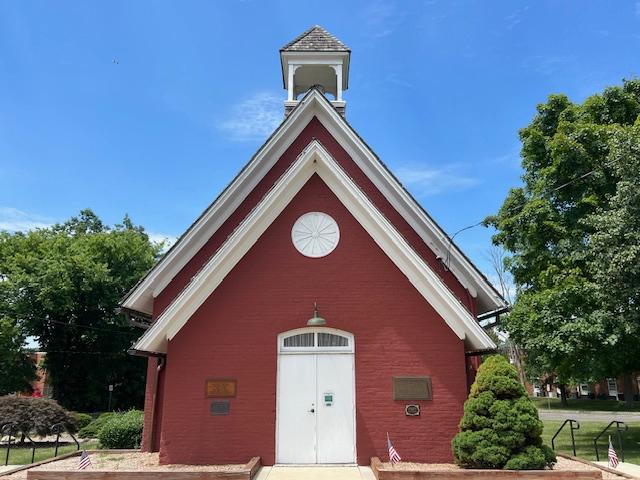
I visited the “Little Red Schoolhouse” Museum at 203 Ridgedale Avenue in Florham Park, which is also rarely opened. This interesting little museum showcases the town’s historical collection of items from the 1800’s and 1900’s dealing with all aspects of town life.
Schooling at the “little red frame building” prospered and so by the 1850’s, the building was “in condition of dilapidation rendering it unfit to be occupied” due to overcrowding.
The schoolhouse from the front
The inside of the museum schoolhouse display
The inside of the old classroom
The schoolhouse setting
In the back there is a small classroom set up keeping with the theme of the building. This lets students, who are visiting the building of their counterpart’s early education with desks, ink wells and chalk boards that have not changed that much over the years.
Not much has changed in the modern classroom over the years
The old schoolhouse desks
There is early century clothing, farming equipment from the town’s farming past and even Native American objects found in the town and in private collections.
The town artifacts and school items
The hitching post
Other items included decorative items from the home including dishware, home products and furnishings.
Each section of the museum is divided up by lifestyle.
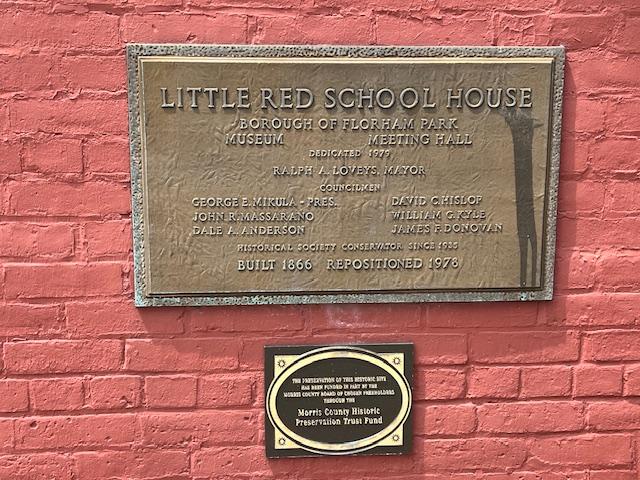
The museum’s historic plaque
The docents that day explained that the items were reflect the town’s past and some came from families that have been in town for years. The museum reflects the community spirit of town’s past. It explains that times have progressed but not changed too much over the years.
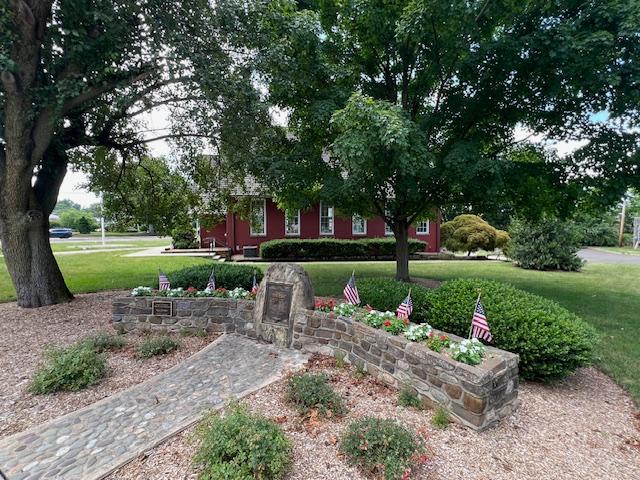
The Veteran’s Monument outside the museum
History of the Little Red Schoolhouse Museum:
(From the Museum Website)
By Kat Kurylko, Research Assistant
In 1830, the residents of Columbia, now Florham Park, sought to improve their thriving farming and broom-making community by establishing a public school for the local children. Therefore, a small schoolhouse, Columbia School #5, was built on the corner of Columbia Turnpike and Ridgedale Avenue and dedicated it on February 17th, 1831.
The schoolroom display
Schooling at the “little red frame building” prospered and so by the 1850’s, the building was “in condition of dilapidation rendering it unfit to be occupied” due to overcrowding. It just showed me one thing as an educator, that the concept of modern education has not changed that much in 150 years.
I next visited the Tunis-Ellicks House 16 Village Road in New Vernon and enjoyed the self-guided tour of this well maintained and displayed home. Unlike many sites I have visited over the years where things are left out and jumbled on tables, the Tunis-Ellicks House offers a look at small family farms from before the Civil War. The displays depict and discuss the life of a farming family in Central New Jersey.
The Tunis-Ellicks House in New Vernon, NJ
The house sign
The house is located in the New Vernon Historic District
The house was located in one of the oldest sections of the community, facing other structures in the historical district of New Vernon, NJ.
The house and front garden from the road
The vegetable garden in the front of house
In front of the house was a large vegetable and fruit garden with a grape arbor for spirits on the side of the house. These items would be jarred and pickled for the winter months or sold at market.
I liked the way the volunteers maintained the gardens with fruits and vegetables that would have been used in Colonial times mixed in with a modern twist.
Mission Statement:
(From the Museum website)
The Harding Township Historical Society is a private, not-for-profit corporation founded in 1977 to stimulate interest in the history of Harding Township. The Society shall support, assist in and seek to achieve the preservation of documents, buildings and sites related to Harding Township. It shall also collect, preserve, maintain and interpret original cultural material, which illuminates this history. In addition, The Society is responsible for preserving and maintaining the Tunis-Ellicks House and environs. Through use of its historic site, collections and programs, the society endeavors to document and illustrate the history of Harding Township for present and future generations (Tunis-Ellicks website).
You enter the museum from the back of the house. In the backyard of the home, there were all sorts of activities going on while you could start a self-guided tour of the house.
The back of the Tunis-Ellick’s House
The beautiful view from the back door of the home
The inside of the main part of the museum
The main part of the museum was the newer extension of the home where the living room and dining rooms were located. There were displays on the walls discussing farm life in New Jersey during the late 1700’s and early 1800’s.
The Dining Room section of the house
The workings of the Dining Room
The story of ‘Country Life’ and the gentleman farmer
Pieces of the decor on display
The kitchen area of the older part of the home offers a homey fireplace for cooking and summer storage for jarred and pickled food stuffs for the winter.
The kitchen and storage areas of the home
Pottery collection in the museum
The pottery collection
The kitchen dining and cooking area of the home
The fireplace for cooking, roasting and stewing of foods
The oven for baking breads, cookies and pies and the baking equipment
The Summer storage area for canned and jarred provisions for the winter months and for cooking.
History of the Harding Township Historical Society:
(From the Museum website)
The Harding Township Historical Society was formed in 1977 to save the circa 1795 Tunis-Ellicks House and restore it as it appeared in the early 19th century. The society discovered an original 18th century hearth and Federal-style mantel and a water-fed cooling room besides the well. Areas of the house were left exposed to showcase the post-and-beam construction. A permanent exhibit on 19th century farming was created as well as space for temporary exhibits.
The Society saved a circa 1870 Tramp House from destruction when the Great Swamp National Wildlife Refuge was created by having the building moved the Tunis-Ellicks House property. The Harding Township Historical Society maintains an extensive archive containing records, maps, and objects since the colonial era pertaining to the town. The archive is open to researchers, genealogists and the public. Each year we provide an award to a student at the Harding Township School that excels in the subject of history. The Society produces exhibits, lectures, tours, and interactive events to bring history to the public.
When I drove to the Tunis-Ellicks House, I was really hungry and it was lunch time. I had passed the Green Village Deli at 536 Green Village Road and I read the reviews online while in their parking lot and they were excellent so I decided to give it a try. The food and the service were excellent.
The Green Village Deli at 536 Green Village Road
The sign that welcomes you to this local breakfast and lunch establishment
The Village Green Deli is a popular local sandwich shop, where the staff seems to know all the customers by name (with the exception of me) and is located in this small downtown area facing the Village Green.
I really liked the vibe of this small town deli where the owners knew everyone by name and I felt like an interloper at a private party.
The inside of the Village Green Deli
The deli has that small town feel to it, with local art and sports paraphernalia in the walls. The woman who worked the register was greeting everyone by name and the guys that worked the grill seemed happy to see me.
Looking at the menu at the grill
I looked at the extensive lunch menu of popular sandwiches and some wonderful combos. You could even still get breakfast as I saw some of the guys at the counter devouring as I decided on what I wanted to order.
The deli has a wonderful selection of sandwiches, hero’s and other delicious sounding items.
There were so many things I wanted to try that day that it was hard to choose. Was it a breakfast sandwich with local sausage? The Thanksgiving ‘Gobbler’ sandwich with turkey, stuffing and cranberry relish, that sounded so good? I decided on an Italian hero sandwich with a selection of deli meats with fresh lettuce, tomato and onion. The hero was excellent!
The Italian hero with a pickle
The sandwiches here are huge! One half of a sandwich a normal person could eat for lunch and save the rest for another meal. The sandwich was loaded with salami, bologna, ham, Swiss Cheese and fresh veggies. I could barely fit it in my mouth.
The sandwich was excellent
The food was excellent. The bread was so fresh and the cooks did not skimp on one ingredient. The vegetables were so fresh and crispy and I loved the combination of flavors of the cold cuts. I really enjoyed my lunch and would like to make a special trip back just to try more of their sandwiches. I was very happy with my lunch.
One of the last places I visited was the Historical Society of Boonton Township, which is located in the former Oscar Kincaid Farm Homestead 591 Powerville Road. The house and what was left of the acreage of the farm was part of the current museum. The museum was an example of early New Jersey farming that dated from the 1800’s to the Twenty-First century.
There was not much in the way of period furniture or farm equipment (items of the home were sold off since Mr. Kincaid’s passing), but the new historical society is buying artifacts and bringing them back to the farm. This includes one of Mr. Kincaid’s tractors. His roll up desk is also still in the display room which was once the Living Room of the home.
The Kincaid Homestead at 591 Powerville Road
History of Oscar Kincaid and Homestead:
(From the Morris County Historical Society website)
Originally a part of the extensive tract belonging to William Penn, the earliest portion of the home was constructed in 1785 by Adam Miller and Anna DeMouth Miller. Just over a decade later, they sold the property to Adam’s cousin, Sarah Miller Parlimen (of the Miller/Dixon homestead) and her husband, John, who built a sawmill there. After a brief ownership by William Scott of Powerville, a Miller relative, the land was sold to John Decker in 1828. An industrious man, Decker operated both a farm and successful forge, shipping his goods to New York via the Morris Canal. By 1837, he expanded the home, adding a distinctive folk-art painting of a face and unique plasterwork that can still be seen today (MCHS website).
The homestead passed through generations of Decker’s family, ultimately being inherited by Oscar Kincaid Sr. in the early 20th century. Kincaid ran a popular ice cream stand and dairy business throughout the 1920s and 30s. Following World War II, the family opened Valley Farm on the site, which continued until the death of Oscar Kincaid Jr. in 2000. Added to the National Register of Historic Places in 2005, the Decker-Kincaid Homestead today operates as a museum and headquarters of the Historical Society of Boonton Township (MCHS website).
The Kincaid House
The historical marker for the house
The front yard
The entrance to the house
The main foyer of the house
The house is a small farmhouse built in two sections. The original part of the house dates back to the late 1700’s and the newer part in the early 1800’s. The once furnished rooms now hold displays of Morris County and the farming industry of the time plus community artifacts.
The former Living Room
Oscar Kincaid’s desk
There were not much left in the way of family furnishings and heirlooms but this desk was Oscar Kinkaid’s.
The back bedroom
The Flag display for the ‘250th Anniversary’
Story of Oscar Kincaid’s life: Oscar Kincaid was a farmer/businessman, a politician and a conservationist.
After the short tour around the house, I walked around the farm grounds. The house was set on a beautiful piece of land that sloped down to the old farmstand. There was also a swimming pond which was once part of the farm which is now private property.
The farm property from the side with the barn
The barn across the street
The property was about ten acres at the time of his death and parts have been developed. It still has some of the most wonderful views of the area.
The view of the old farm from the front porch
The farm land stretches over different sections of the road and the property is very picturesque. It is a very beautiful homestead.
The view of the farm from the lawn
The swimming pond on the edge of the property
The old farm stand that had been used for eighty years
Every semester for my Business Marketing, Management and Communications classes, I create one big Team assignment for my students. In a Commuter College, it is a lot tougher for students to get to know one another between their studies and their jobs, so I create these projects to foster learning, creativity and especially Teamwork.
This semester I taught two sections of Business 101-Introduction to Business, which is the entry level course to the Business/Hotel Management School. This is a tough course to teach as you always have students of various age groups and various levels of industry experience.
The Spring semester was no different. This makes the class more interesting yet more challenging to teach. I still challenge them and test them to see what type of future executives they will become.
I also taught Principles of Management, which came with its own set of challenges. It was the amount of people in the class and what projects would they be working on.
In the past, I have created these Team projects under the Bergecco-Parc Consulting Inc. banner, the main consulting company, the Orion Malls banner, a Mall design company and the Buscomonzefi.com banner, my Tech Division. All of these business concepts are simulated.
Each business does its best to be creative, forward thinking and have a thought producing presentations. I also challenge the students to top on another in their presentations and build on what they have seen others do in the past.
The Bergecco-Parc Consulting Inc. concept is an acronym for Bergen Community College Paramus campus where I work.
Professor Justin Watrel, CEO Bergecco-Parc Consulting Inc.
Our Corporate site (created my one of my former President’s:
While my morning Business 101 classes worked on their ‘Breakfast at Primo Pizza’ project and my International Marketing students worked on their “The Historic Revolutionary War Graveyards and Cemeteries of Bergen County” projects, I had my Principle of Management students create a game plan to market the Pascack Historical Society Museum in Park Ridge, NJ to a younger, more modern audience.
When choosing a project for this class, I had had two other ideas that fell through, then I had remembered working with the Pascack Historical Society Museum the prior year for my “Bergen 250” Team Project. We had proposed a Farm to Table Dinner at the Wortendyke Barn down the road with the dinner starting with a Cocktail Party here with a tour of the museum. I asked the museum again to partner with me on this project.
The Video Presentation of the “Bergen 250”in 2024:
The museum had created a wonderful exhibition for the “Bergen 250” but when I went to visit it, no one was at the museum but myself. When I asked the volunteers that day how many people had visited the museum, they told me I was the first one. That got me thinking why people were not visiting this wonderful museum with its interesting artifacts and intriguing displays.
The outside of the Pascack Historical Society Museum at 19 Ridge Avenue in Park Ridge, NJ
Then I looked at their website and their displays. I realized that the museum was not adapting to the cellphone age. There were no QR codes at any of the displays, not enough pictures of the display on their website and their scavenger hunt bingo game needed an update to engage a younger crowd.
That’s when I came up with a Marketing plan for the museum and proposed it to their Executive Board. We worked together to come up with new ways to promote the museum and its collection. This was our combined idea and we looked at how to bring more traffic to the museum.
The Proposal for “Bergen 250: Touring the Pascack Historical Society Museum”:
I presented the project to my students after the Spring Break and then the next week took my students on a mandatory field trip to the Pascack Historical Society Museum in early April. The Board members of the Museum led us on a tour of all the exhibitions, then discussed their plans for the “Bergen 250” and then discussed some of the challenges that the museum faced with attendance.
Touring the museum
The students on their part took pictures and notes about the museum and their displays. Many would make various trips back to the museum to crest the QR codes for the displays and map the museum’s backyard for the Farm to Table fundraiser and a proposed afternoon tea.
Touring the museum
Touring the museum
Touring the museum with the Board of the museum
The museum’s Board members could not have been nicer and more helpful to the students and myself. We got a lot of insights on what direction the Board wanted to go.
Our Team picture at the museum
The tour of the museum took about an hour. We then had a Division Team Dinner at Pompilio’s Pizzeria in Downtown Westwood, NJ:
I find that these Team dinners and lunches are very helpful in getting the students together to get to know each other and we share a nice meal as a Team should. We asked the Board to join us so we could continue the conversation.
Dinner with both the Board and my Team
For the next five weeks the three Teams broken into Marketing, Historical and Foodservice created their ideas and game-plans to help the museum increase traffic by trying to bring a younger and tech savvy visitor into the space.
The Pascack Historical Society YouTube Presentation:
The video of our Presentation to the Board of the Pascack Historical Society Museum on the evening of April 29th, 2026
On the evening of April 29th, the Board members of the museum joined us for the Presentation of ideas the students came up with including setting new QR codes for all the displays, a revamped Marketing plan to showcase the museum, a new historical walking tour, one aimed at adults and one to children and the ideas for the fundraising dinner, a children’s birthday party concept and a Afternoon Tea fundraiser.
After the Presentation, we had a Q & A on the ideas and after the Presentation was over, we had a reception for our guests and for the student consultants. Then we took our Corporate Team picture.
My Divisional Team the night of the Presentation
Our reception after the Presentation
It was another successful project accomplished and it looked like the Board went home with new ideas and the students learned a few things about themselves. I could not have been more proud of the students.