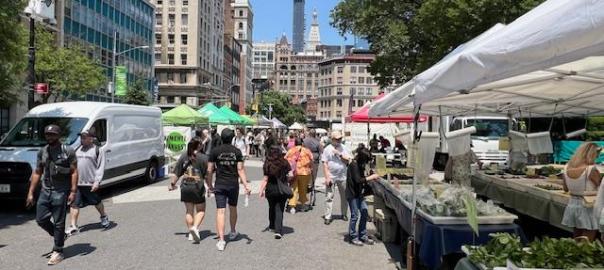
We had another long day at Holy Apostles Soup Kitchen. Since the holiday weekend, the Soup Kitchen does not close on the holiday, but we do on the weekend, so we had long lines on this Monday morning and afternoon. We spent our whole morning packing up bags of snacks and wipes for the meals that will be served tomorrow. We finished by 10:30am (talk about teamwork) and I was able to walk around Union Square Park and both Broadway and Park Avenue South and still make it back for lunch at 12:30pm. It was a long morning and afternoon.
The Farmer’s Market was in full swing again and the place was mobbed. Many people must have taken this week off as well because the City seemed so quiet today as well. It has been quiet since July 1st and will stay that way for another week. People were out in force walking through the market with their dogs, talking with their friends and sitting in the grass at the parking reading and relaxing.
I looked over all the statuary in the park and I found I had missed quite a few things that I had not seen because either they had been covered up with the Farmer’s Market going on or tables of things people were selling in the park. There were all sorts of medallions on the history of the park and the neighborhood and there was a statue of a mother and her child that formed the old water fountain of the park. In the corner of the park near 14th Street, there is a statue of Mohandas Karamchand Gandhi. I had never noticed it before because all the landscaping and flowers had surrounded it.
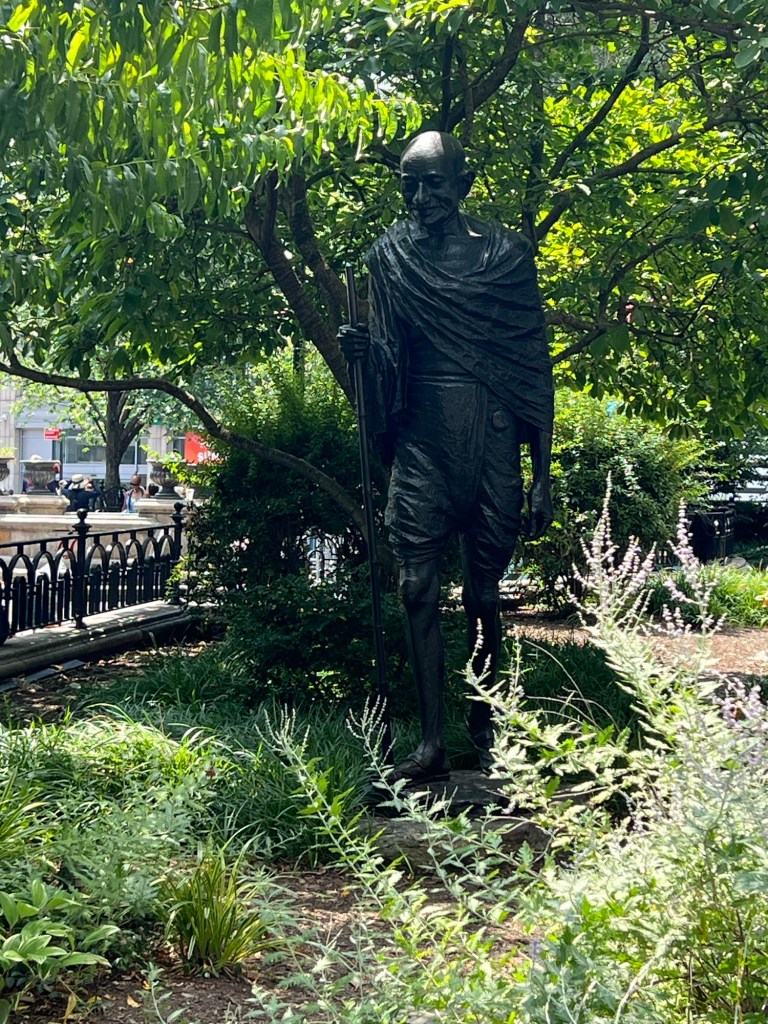
The statue of Gandhi is hiding in the bushes on the southern corner of the park
Statue of Mohandas Karamchand Gandhi

https://en.wikipedia.org/wiki/Mahatma_Gandhi
https://www.gandi.net/en-US/about-us
Artist Kantilal B. Patel
https://www.nycgovparks.org/parks/union-square-park/highlights/12380
As I walked around the Farmers Market, looking over the very over-priced fruits, vegetables and bakery products, J noticed more of the medallions that line the border of Union Square Park. The first one I admired without the sunlight distracting me was the medallion of the layout of the park from the 1800’s.
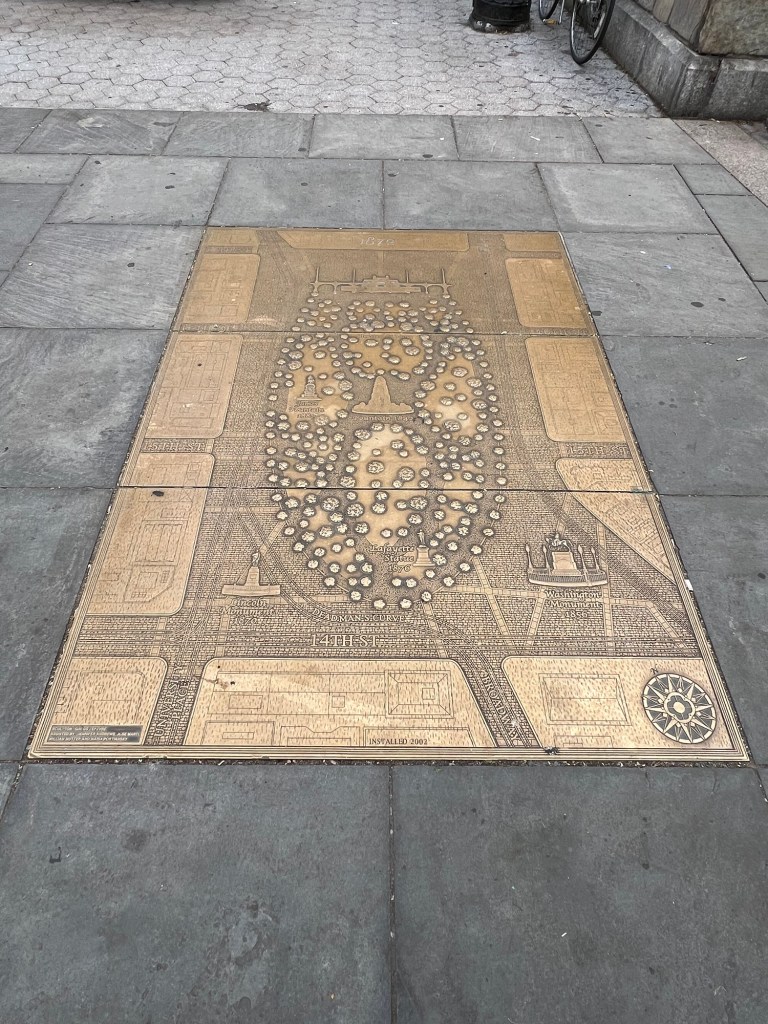
This is the original layout of the park in 1876 plaque
I walked around the park and marveled at it on a very hot afternoon. Like most parks in former edgy neighborhoods, it fascinates me how a bunch of twenty year old’s and families sun themselves and socialize where thirty years earlier you would be harassed by homeless, drug dealers and methadone addicts. You still might see them on the fringes of the part but not like in the early 1980’s.
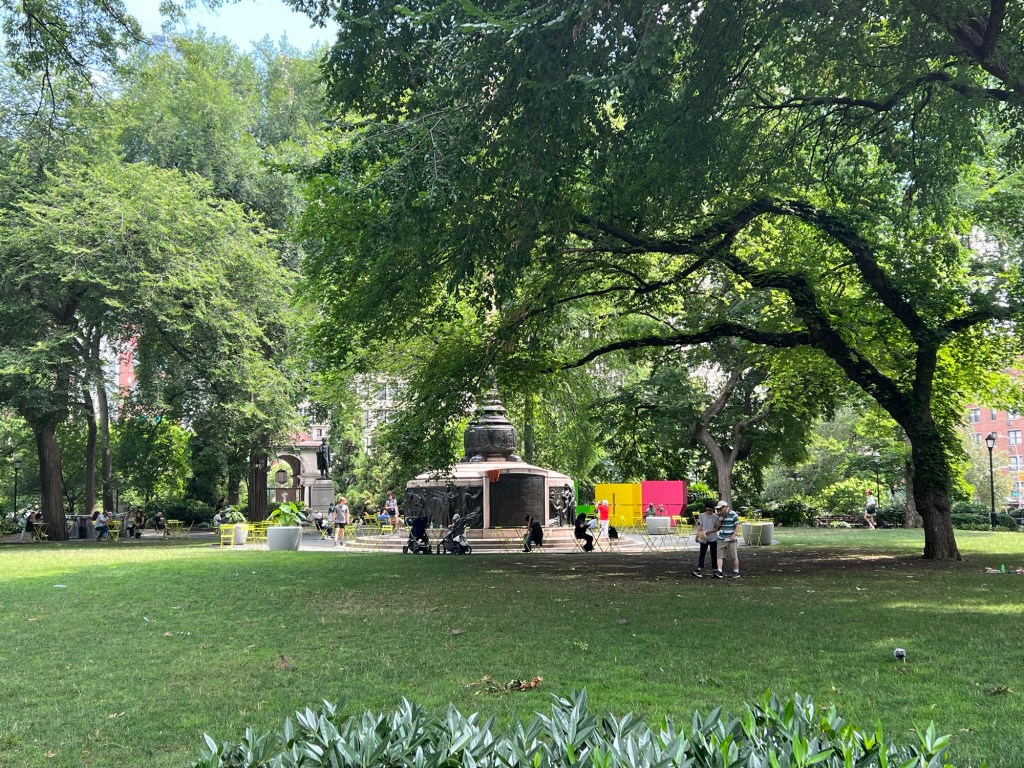
The expansive lawn of Union Square Park
https://www.nycgovparks.org/parks/union-square-park
https://en.wikipedia.org/wiki/Union_Square,_Manhattan
The park now has a business partnership and I believe a Friends group as well. There are so many activities going on in the park, that I am sure people don’t notice all the chess hustlers and counterculture types on the 14th Street perimeter.

Looking at the southern part of the park facing 14th Street and the southern entrance to Broadway
I started my walk up Park Avenue South which is actually the western border of Gramercy Park. I have always been impressed by the W Hotel on the corner of 16th Street and Park Avenue South at 201 Park Avenue South.
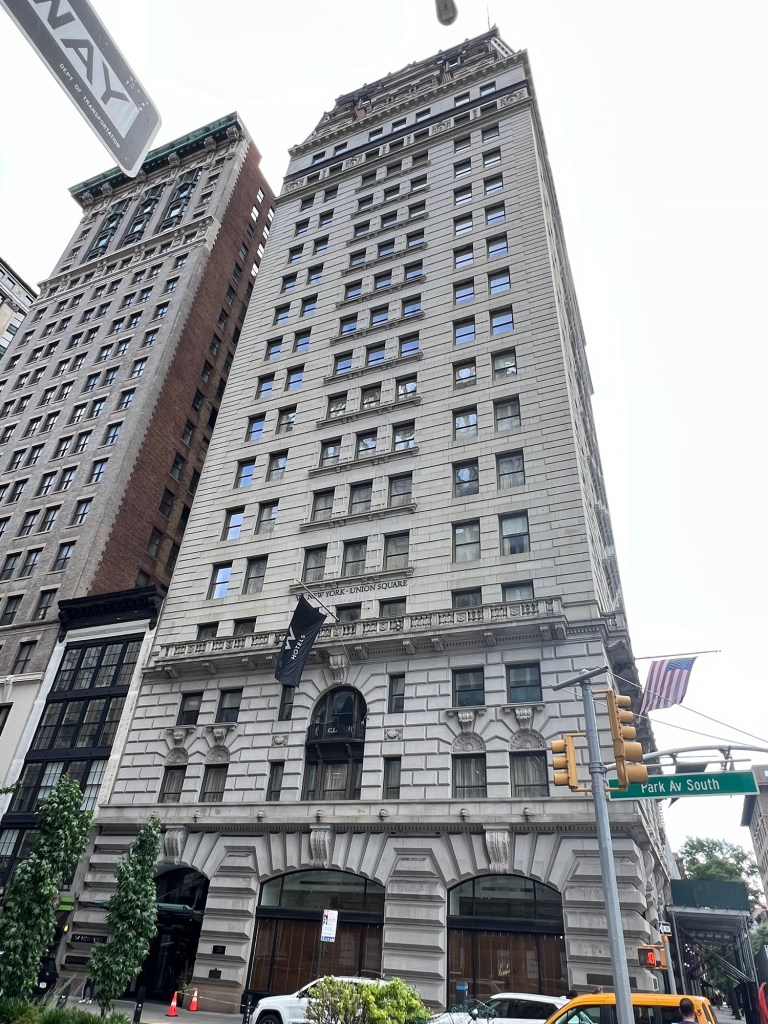
The W Hotel at 201 Park Avenue South
https://en.wikipedia.org/wiki/W_New_York_Union_Square
https://www.marriott.com/en-us/hotels/nycnu-w-new-york-union-square/overview/
Review on TripAdvisor:
This luxury hotel has an impressive history of being one of the innovators of luxury in the Marriott chain. The W Hotel concept was known for its edginess in design and the creativity in its restaurants. Things must be progressing as their customer gets older because their General Manager spoke to our Leadership class before I graduated from NYU and said they are softening the music (finally!) and changing the designs in the rooms. Maybe there will finally be a place to put your clothes.

The historic plaque on the building
This historic building was designed by the architects D’oench & Yost in the Modern French mode and built in 1911. Like most historic office buildings below 23rd Street, the are being refitted as hotels and condos as the desire for high ceilings and soaring lobbies have become desirable. This building had been designed for the Germanic Life Insurance Company Wiki).
I continued up Park Avenue South to East 20th Street to see another familiar building on the border of the neighborhood, 250 Park Avenue South. This building seems to be on the border of many Manhattan neighborhoods.
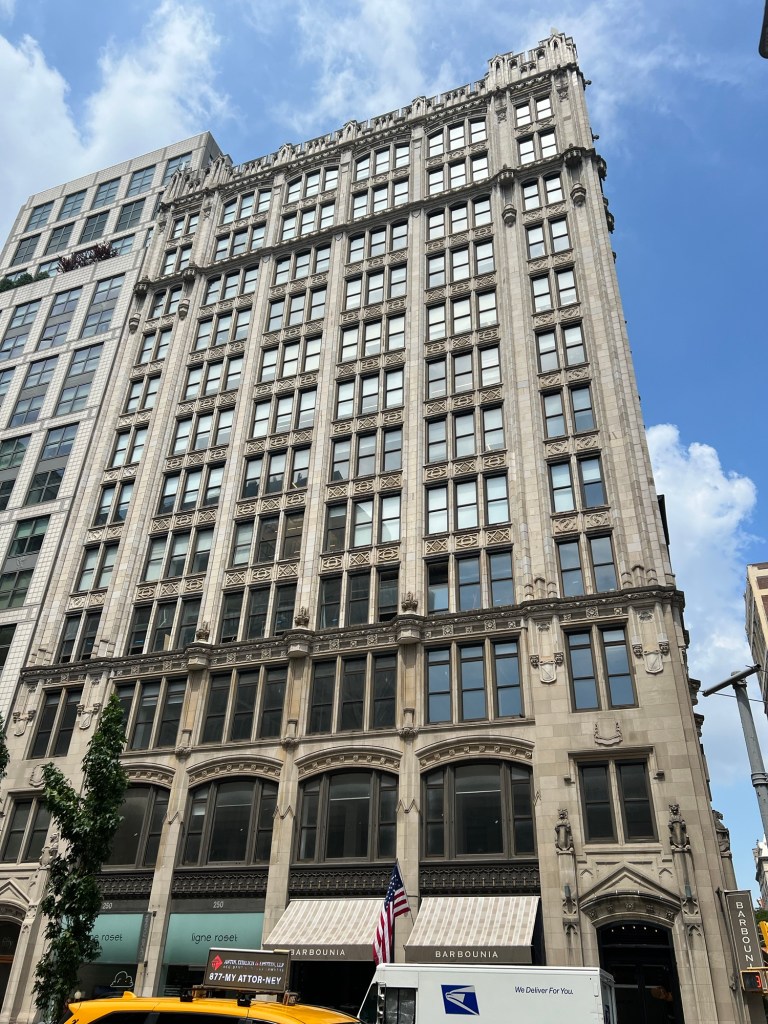
250 Park Avenue South

The embellishments on 250 Park Avenue South

The embellishments on 250 Park Avenue South on both sides of the building

Barbounia 250 Park Avenue
Review on TripAdvisor:
250 Park Avenue South was designed by architects Rouse & Goldstone in 1911 in the Neo-Classical design. You have to look at the building from a distance to appreciate all the interesting embellishments on the sides and top of the building.

The building 16 East 17th Street was plain but I thought these lions the adorned the build were pretty cool.
https://www.corcoran.com/building/flatiron/303
The building was designed by William Dilthey and built in 1898. The building’s style, scale and materials contribute to the special architectural and historic characteristics of the Ladies Mile District (Corcoran Group).
On the way back to Union Square Park, I passed the Tammany Hall building at 100 East 17th Street that I never noticed before because it was always under scaffolding being renovated. Now you could admire it the way the architects wanted you to originally.
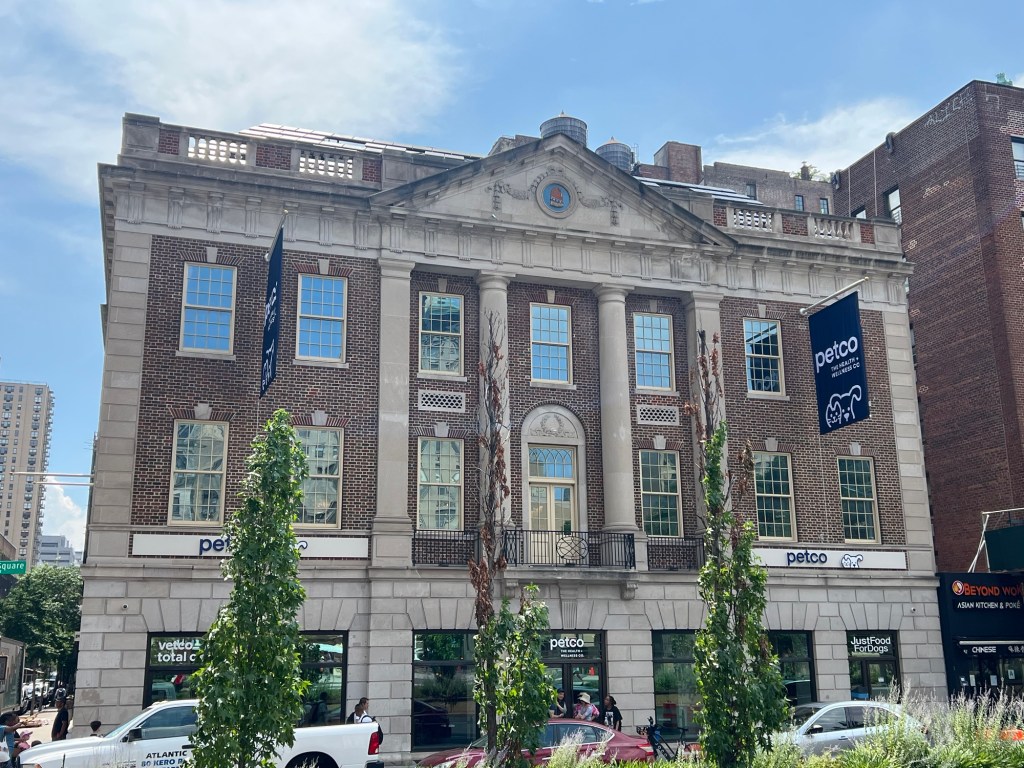
The Tammany Hall building 100 East 17th Street is now a Petco
https://en.wikipedia.org/wiki/44_Union_Square
The building was designed by the architectural firm of Thompson, Holmes & Converse and Charles B. Meyers for the Tammany Society political organization, known as Tammany Hall. It was designed in the neo-Georgian style and built in 1929. It was the organization oldest surviving headquarters building. After the loss of the organization’s political power in the early 1930’s, it was sold to the International Ladies Garment Workers Union and in present times has been used as a theater and performance space. It is now occupied by Petco (Wiki).
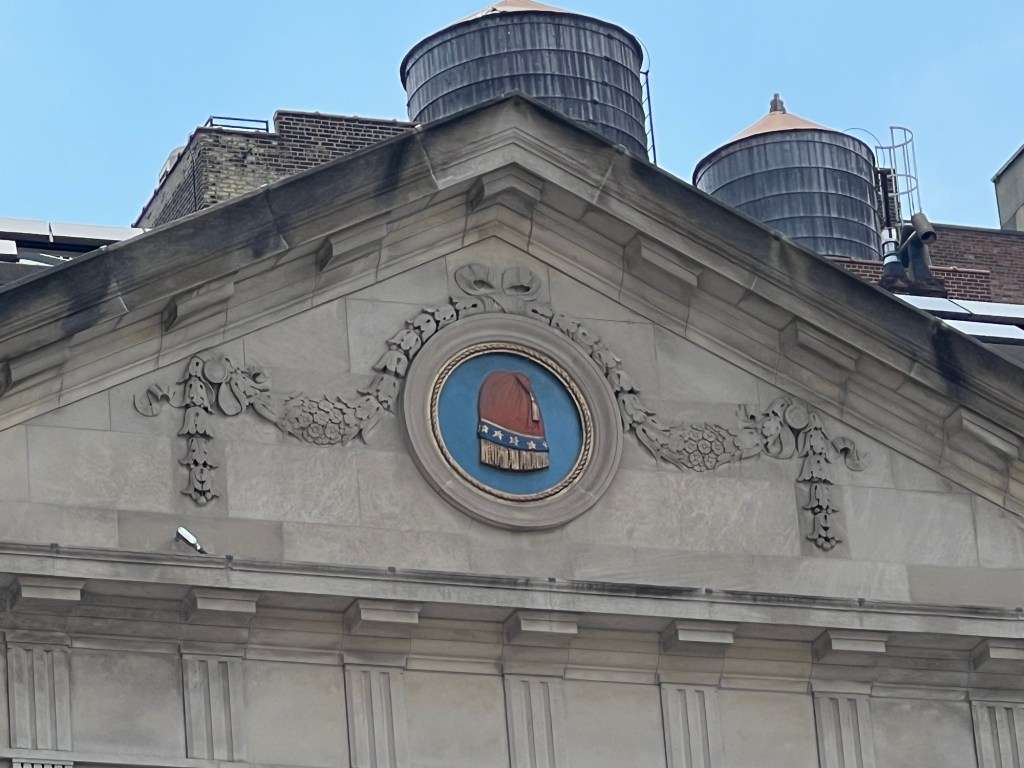
The design on the top of the building is the logo for Tammany Hall

The Society of Tammany or Columbia Order sign above the entrance on East 17th Street
https://www.britannica.com/topic/Tammany-Hall
From Park Avenue South Union Square East is the extension of the street that lines the eastern end of the park. At the corner of East 15th Street and Union Square East is 101 East 15th Street the old Union Square Savings Bank building.
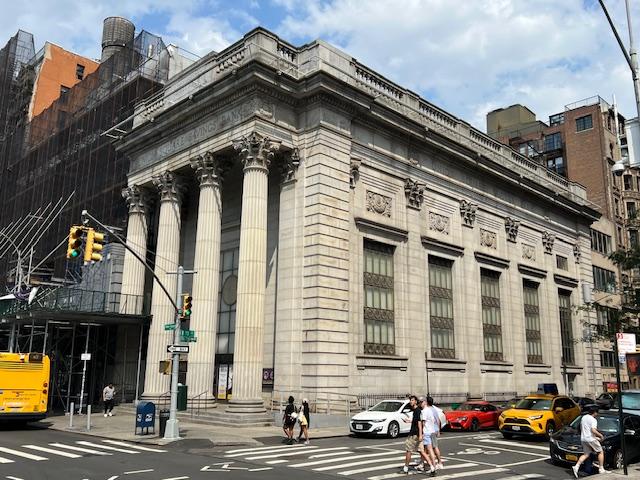
101 East 15th Street-The Union Square Savings Bank Building/Daryl Roth Theater
https://en.wikipedia.org/wiki/Daryl_Roth_Theatre

The side of the Union Square Savings Bank building
The bank itself was founded in 1848 and moved to this location in 1895. This building was designed by architect Henry Bacon in the neo classical design in 1905 and the building was finished in 1906. The bank closed in 1992 (Wiki).
I walked to the small triangle of Union Square Park that sits between East 15th and 14th Streets and came across a sculpture that I had never seen before on all my walks back from NYU. Maybe I just missed it when it was dark out. It was a depiction of an urban legend of the NYC sewers.

The alligator sculpture ‘N.Y.C. Legend’
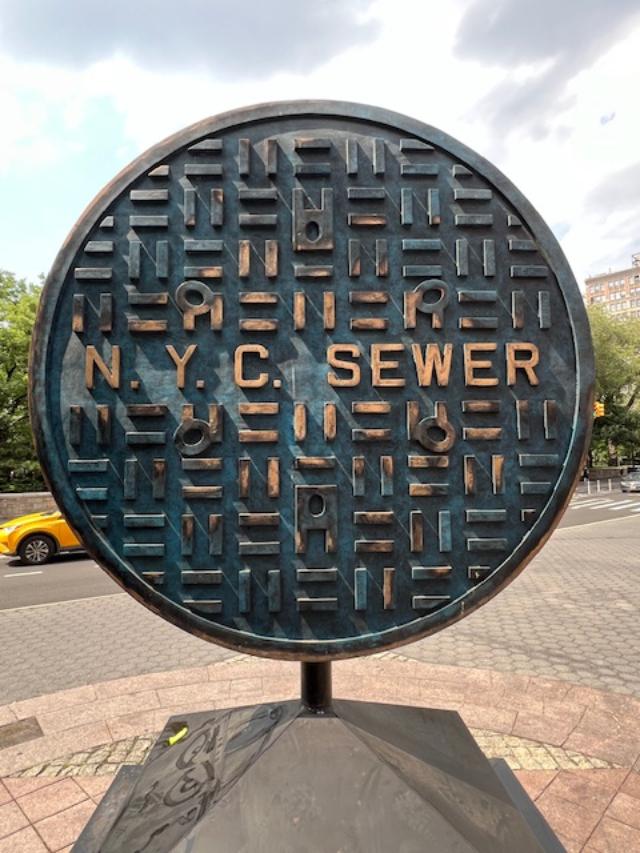
The sewer cover top of the sculpture

The sign for artist Alexander Klingspor
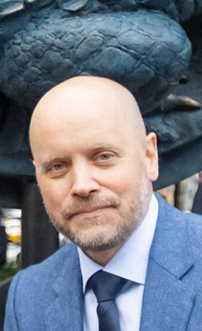
Artist Alexander Klingspor
Artist Alexander Klingspor is Swedish born artist who works both in the United States and Sweden. He apprenticed under American artist Mark English. He is known for his paintings and sculptures (Wiki).
Across the street from the park on the way up Union Square East is tucked off in the corner of the park is the statue of General Lafayette. Why this important figure of the Revolutionary War is hidden is unfortunate.
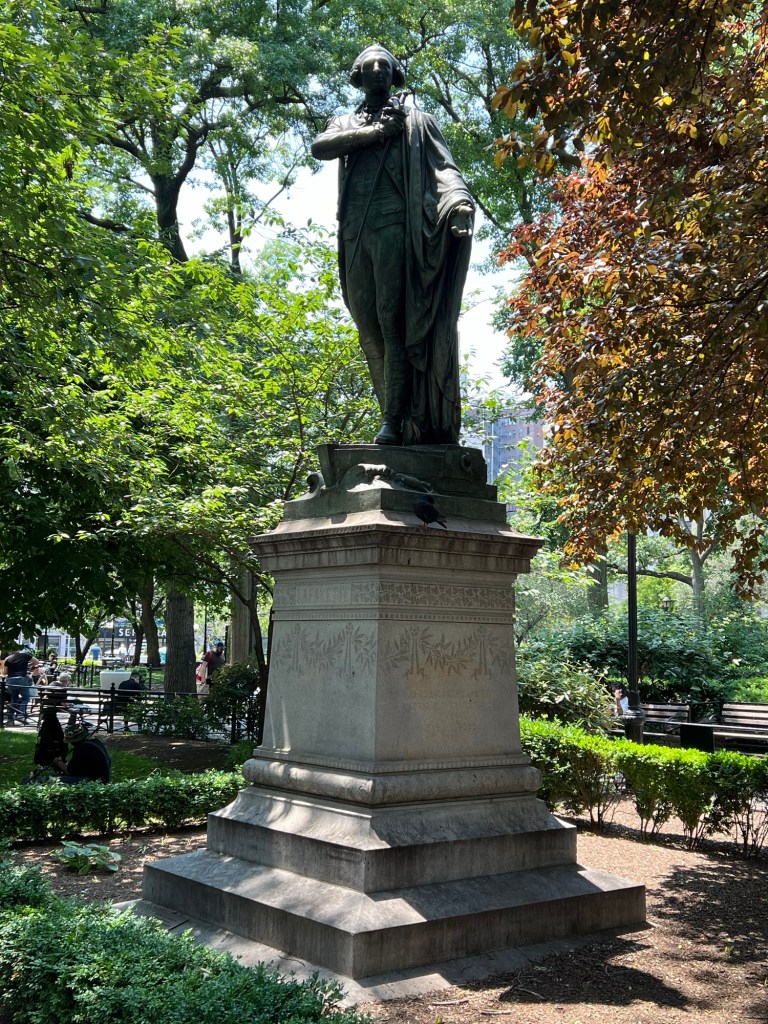
The statue of General Marie-Joseph Paul Yves Roch Gilbert du Motier de La Fayette, Marquis de La Fayette
https://www.nycgovparks.org/parks/union-square-park/monuments/884

General Marie-Joseph Paul Yves Roch Gilbert du Motier de La Fayette, Marquis de La Fayette
https://en.wikipedia.org/wiki/Gilbert_du_Motier,_Marquis_de_Lafayette
The larger-than-life-sized figure was sculpted by Frédéric-Auguste Bartholdi, who also designed the Statue of Liberty (1886), another gift from the French government that figures prominently in New York Harbor. The granite pedestal designed by H.W. DeStuckle was donated by French citizens living in New York. (NYCParks.org).

Artist Frédéric-Auguste Bartholdi
https://en.wikipedia.org/wiki/Fr%C3%A9d%C3%A9ric_Auguste_Bartholdi
Frederic Auguste Bartholdi was a French born artist best known for designing the Statue of Liberty. Bartholdi attended the Lycée Louis-le-Grand in Paris where he graduated in 1852. He then went on to study architecture at the Ecole nationale superieure des Beaux-Arts (Wiki).
I walked through the northern half of the park through the now busy Farmers Market again to get to Broadway. While I walked through the crowds all I kept saying to myself is ‘doesn’t anyone work anymore?’ I could not understand the large crowds on a early Friday afternoon.
When I walk through the parks in the City, all I see is twenty and early thirty year old’s sunning themselves, talking on their cell phones or chatting with friends. In 1990, I was behind a desk at Macy ‘s busy as hell all day when I was all of their ages. Things have changed in thirty years.

The Union Square Market on a busy Friday afternoon
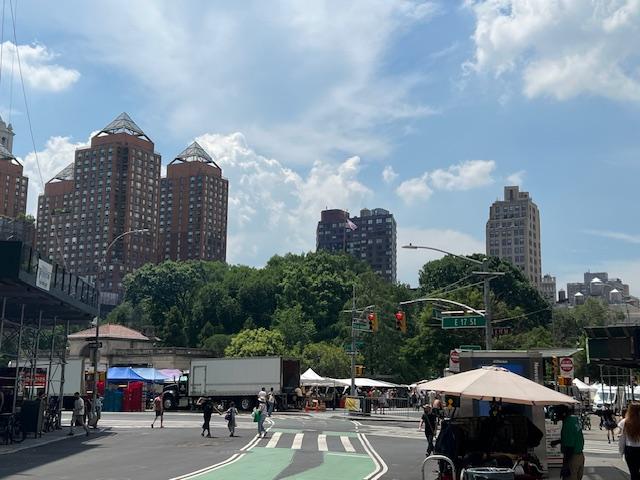
The northern end of the park from Broadway the day of the Union Square Farmers Green Market
https://www.grownyc.org/greenmarket/manhattan-union-square-m
I began the walk up Union Square West to Broadway. The stretch from Union Square Park from East 14th Street to East 20th Street was once a major shopping district right before the Civil War and is lined with the buildings of former department and specialty stores with their cast iron fronts and detailed embellishments. In some buildings you can still see the carvings of the old companies in the design of the front of the building.
These buildings are the ghosts of Sloan’s, Lord & Taylor, Arnold Constable, McCreery’s, FAO Schwarz, and other specialty stores whose names have either disappeared or who long moved uptown closer to Fifth Avenue. The irony of gentrification and time and the location of these beautiful buildings is that they are now filling up with new upscale independent and chain merchants filling in where past merchants have left. Old New York becomes new New York again.
The first building I noticed as I walked up Union Square West was under scaffolding. The Lincoln Building I could not see from the street or the view from the park but was able to read their historical plaque at street level. The building was designed by the architectural firm of R.H. Robertson with a combination of steel and masonry construction in the Romanesque Revival design. The building opened in 1890 (NY Landmarks Commission).
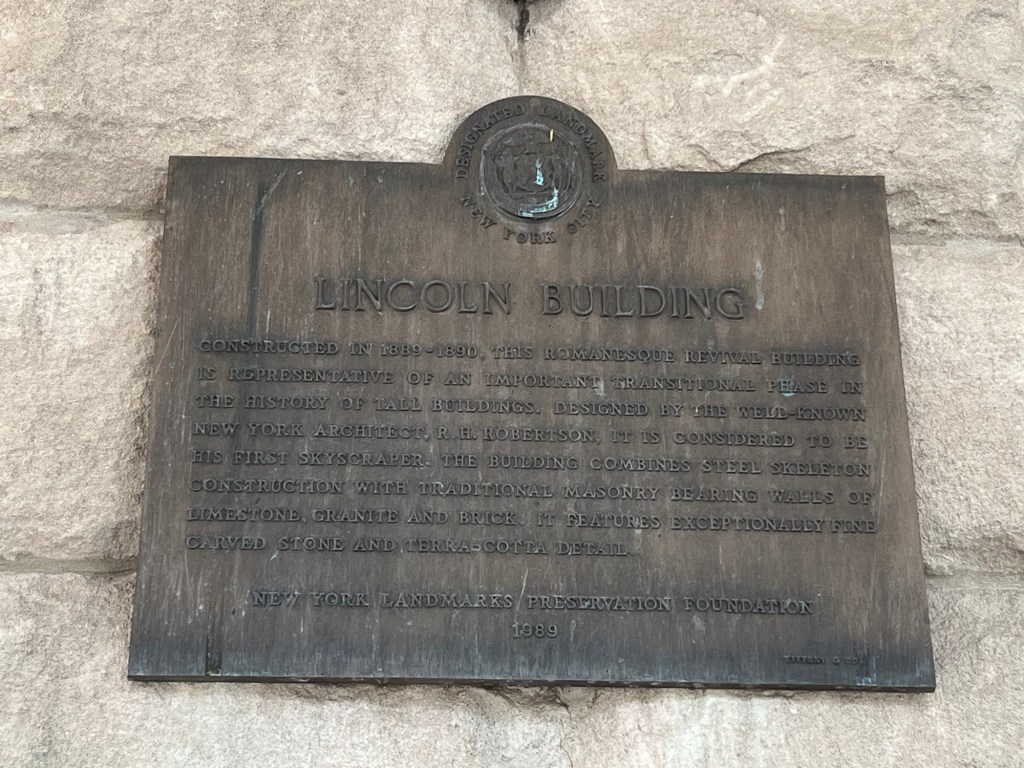
The historic plaque of the Lincoln Building which is under renovation with scaffolding in front of it. It will be interesting to see what emerges.
There were many buildings that faced Union Square Park that gives it a historical feel. The elegant look of the buildings with their neo-Classical and Beaux Arts designs gave the park the feel of the Victorian era of business. The first was 25 East 15th Street with its interesting details.
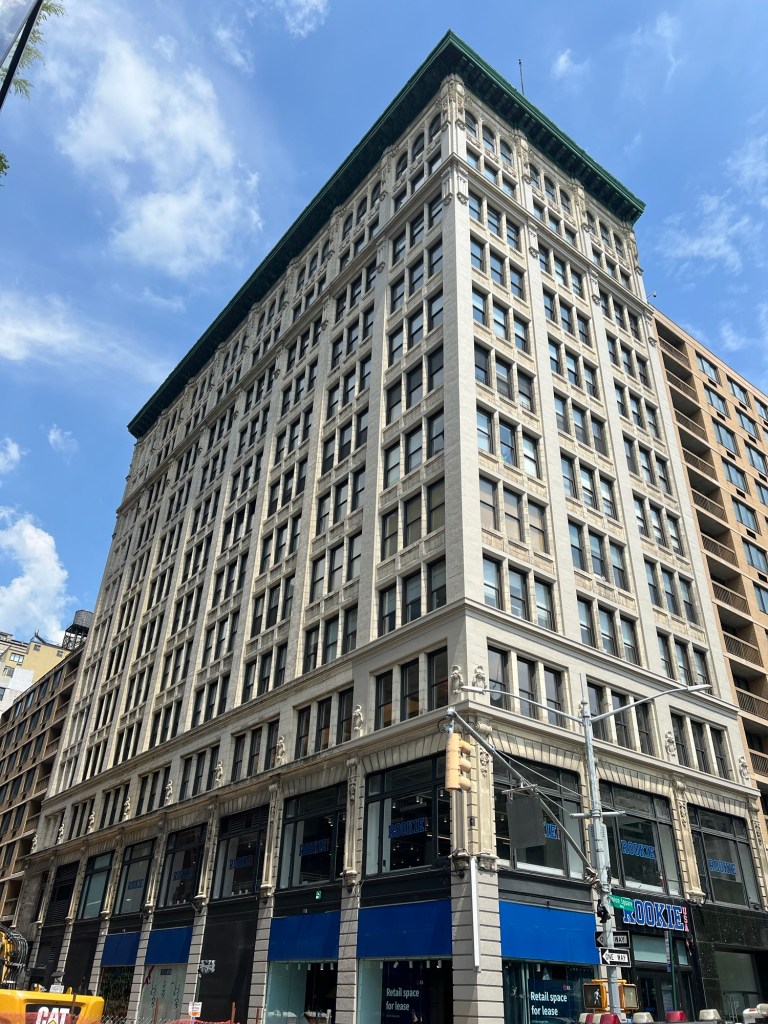
25 East 15th Street was built at the turn of the last century and it now fully renovated.

The beautiful details at the top of the building at 25 East 15th Street
The next building I admired was right across the street from the park as well at 31 Union Square West

31 Union Square West
https://www.triumphproperty.com/Home/About
https://streeteasy.com/building/bank-of-the-metropolis
31 Union Square West built in 1902-03 as the Bank of the Metropolis was designed by architect Bruce Price and designated a landmark in 1988. This early skyscraper shows the influence of the American Renaissance sensibility celebrated at the Chicago World’s Fair of 1893 (Streeteasy.com).
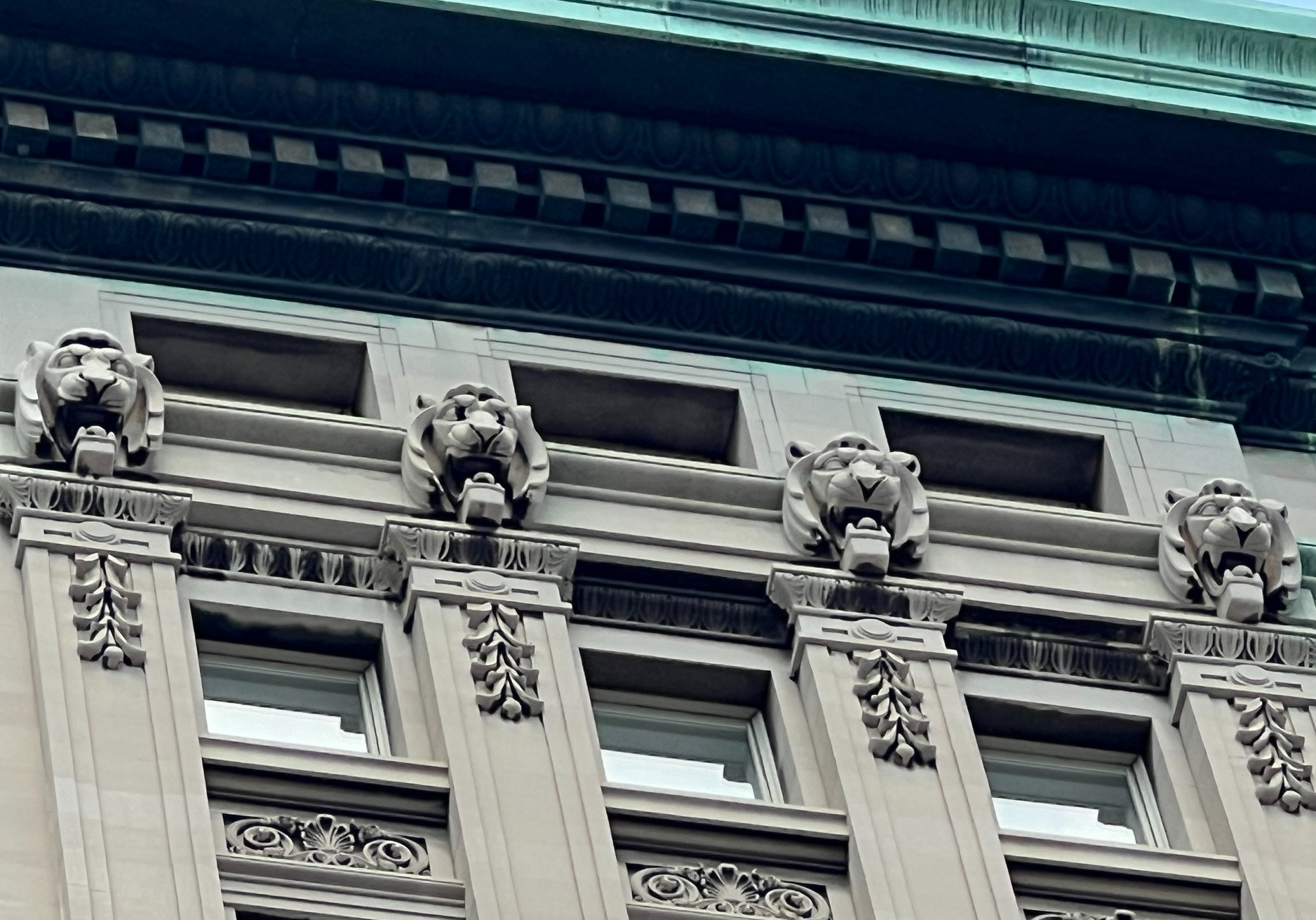
The lions roar at the top of 31 Union Square East give the top of the building a unique style
Right next door to the old Bank of the Metropolis building is 33 Union Square East which I thought looked like a Moorish castle. This building has an illustrious past.

33 Union Square East-The Decker Building
The building was built for the Decker Brothers Piano Company and was designed by architect John H. Edelmann. It was completed in 1892 and has influence of Venetian and Islamic styles in the details of the building. From 1968 to 1973, loft space in the building was used by artist Andy Warhol for his studio, ‘The Factory’. This is where Valerie Solaris shot the artist in 1968 (Wiki).
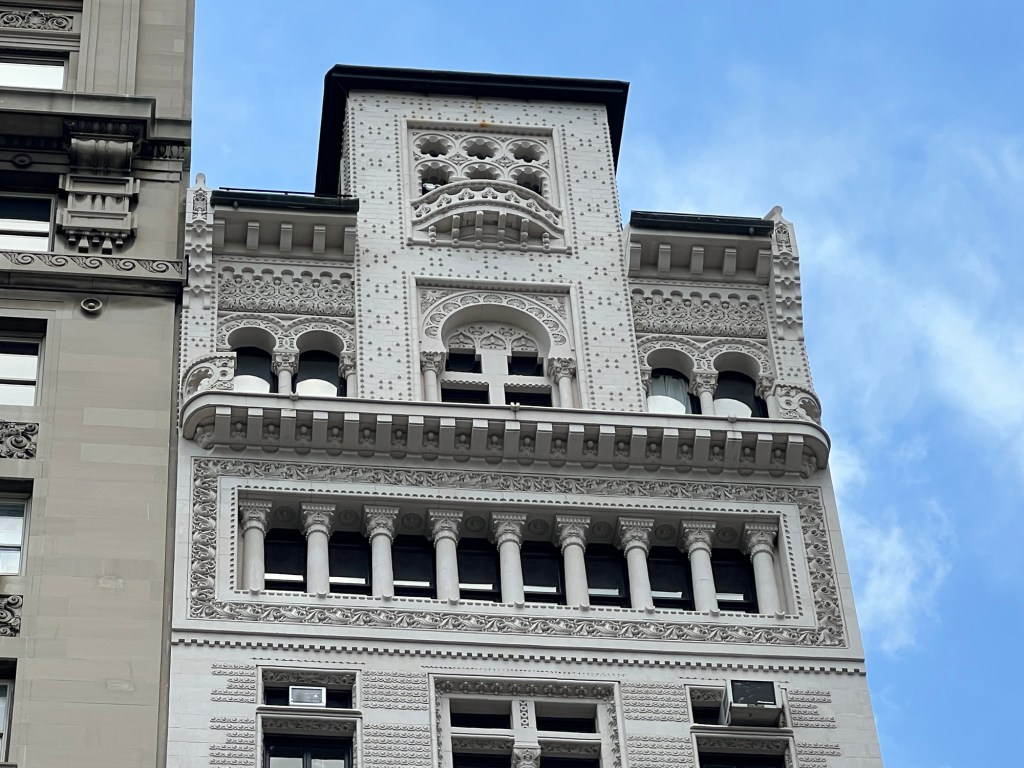
The Islamic influences of the building can be seen in its details at the top of the structure

Artist Andy Warhol
https://en.wikipedia.org/wiki/Andy_Warhol
I passed the park and the Farmers Market and took the walk up Broadway which I have made many times on my full walk of Broadway blog. This part of the neighborhood was once the main shopping district just before and after the Civil War and many of these buildings still stand in all their beauty. Unless you are a architectural major, many people don’t appreciate the elegance of this part of Broadway and its steep history in New York City business and trade.
Day One Hundred and Thirty-Nine: Exploring Broadway blog:
https://wordpress.com/post/mywalkinmanhattan.com/9069
The first building I admired but I have to admit never really noticed is 867 Broadway. This is a building steeped in retail history as the home of Ditson & Company, retailers selling musical instruments and books (Daytonian in Manhattan.com).
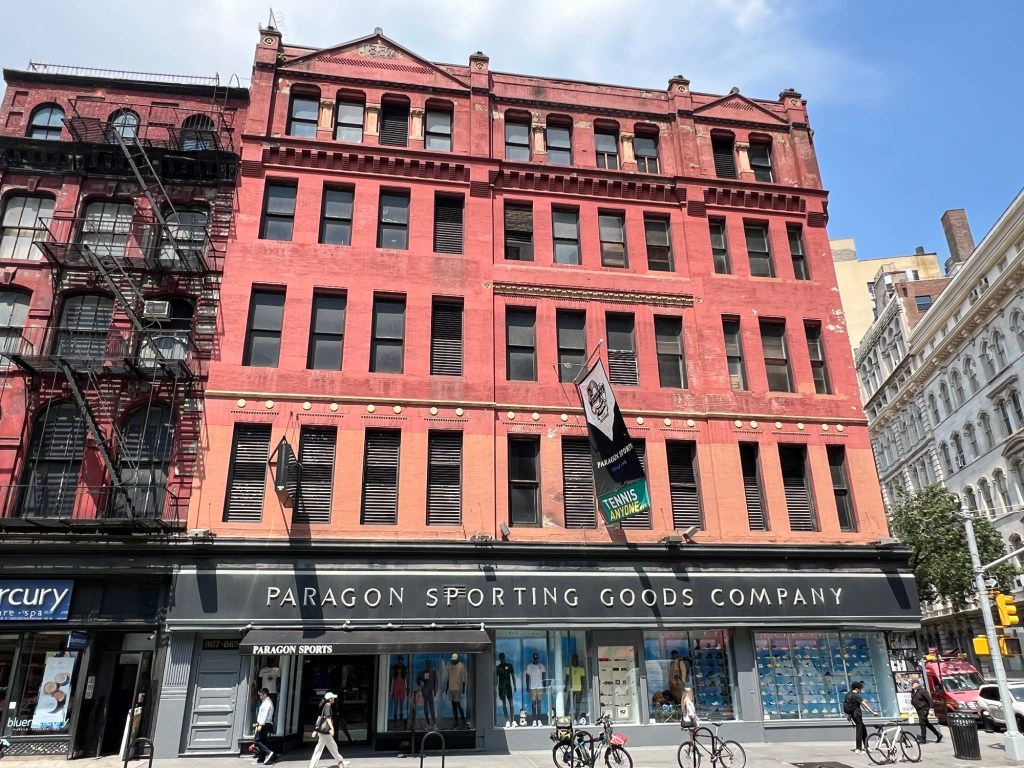
867 Broadway is a brick building
https://daytoninmanhattan.blogspot.com/2015/11/the-ditson-co-bldg-no-827-broadway.html
https://www.propertyshark.com/mason/Property/13001/867-871-Broadway-New-York-NY-10003/
The building was designed by architect George Washington Pope and was designed in the Romanesque Revival style. The building was completed in 1882 as the top marker is carved at the top of the building. They conducted business on the ground floor of the building until 1906 when they moved to a new headquarters on East 34th Street (DaytonianinManhattan.com).

I can’t believe this building is from 1882
The next series of buildings have the Cast Iron design that was becoming fashionable after the Civil War at 873 and 881 Broadway. These show the change of direction of American businesses at that time there was a permanence to their business and these buildings were meant to last.

873 Broadway-The former Hoyt, Spragues & Company Department store
https://daytoninmanhattan.blogspot.com/2012/10/the-1868-hoyt-building-nos-873-879.html
https://marketplace.vts.com/building/873-broadway-new-york-ny
https://streeteasy.com/building/873-broadway-new_york
As Union Square gave way from being a residential district to a commercial district after the Civil War, the old homes were torn down and were being replaced by a modern shopping district. The retailer Hoyt, Spragues & Company hired architect Griffith Thomas to design this store as the new headquarters of the company on the southern corner of 18th Street and Broadway. The other half of the block was the new Arnold Constable & Company store at 881 Broadway that stretched from Fifth Avenue to Broadway. The architect designed this store as well (Wiki/DaytonianinManhattan.com).
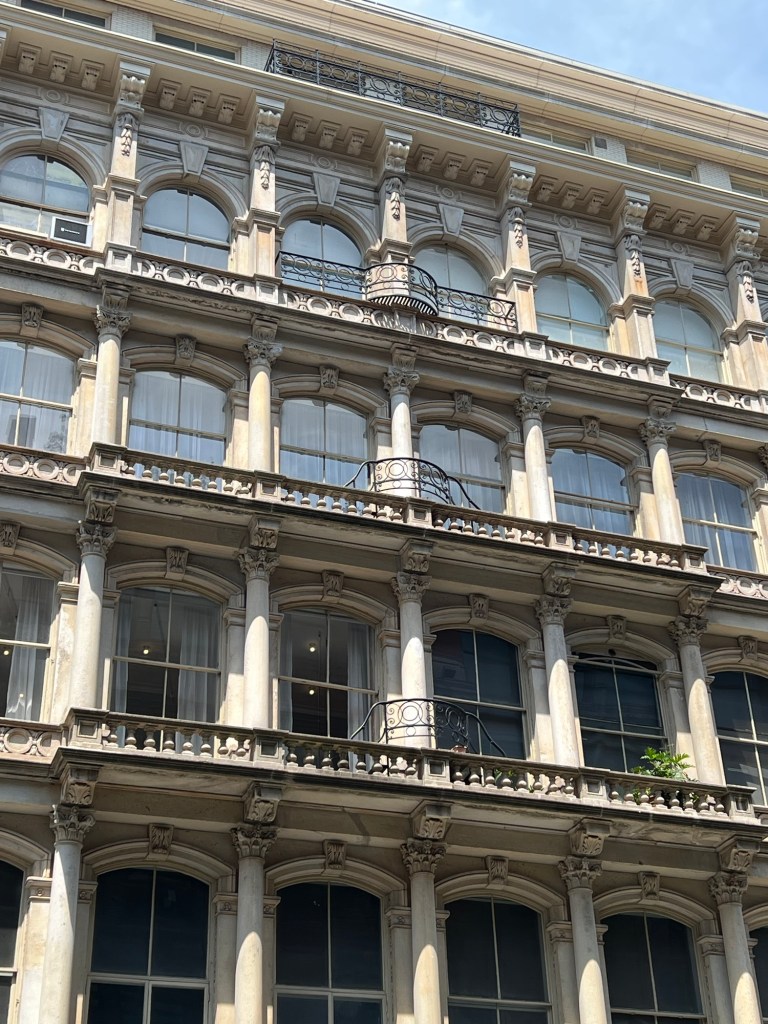
The cast iron front of 873 Broadway and its elaborate details
Next to 873 Broadway is the Fifth Avenue extension of the Arnold Constable & Company building. The company owned this entire side of the block and was an extremely large department store for its time.

873 Broadway-The Arnold Constable Building
https://en.wikipedia.org/wiki/Arnold_Constable_%26_Company
https://www.propertyshark.com/mason/Property/13019/881-887-Broadway-New-York-NY-10003/
Arnold Constable & Company had outgrown its Canal Street headquarters (which still exists at 309-311 Canal Street) and moved to this new location in 1869. The store had two more expansions to Fifth Avenue in 1872 and 1876 to Fifth Avenue for both retail and wholesale businesses. The facade on Broadway was designed by architect Griffin Thomas who had designed the the Hoyt, Spragues & Company building to give a continuous flow to the block. Arnold Constable added the Mansard Room as the building was designed in the Second Empire Commercial style. The store moved to Fifth Avenue in 1914 right across from the NY Public Library (which is now the annex across the street) (Wiki).

The Mansard Roof of the old Arnold Constable building designed in the Second Empire Commercial style
One of the buildings on Broadway that I have always admired for its details and embellishments is 889 Broadway. You really have to walk around this building to appreciate its details and the beautiful carvings and faces that stare back at you.
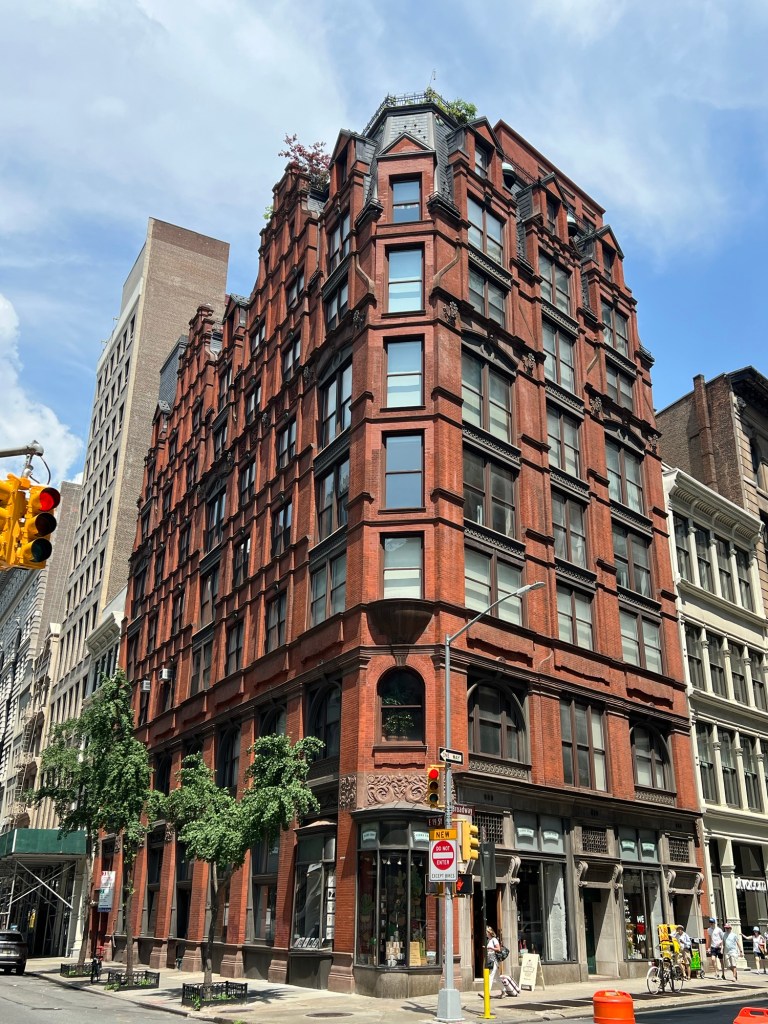
889 Broadway-The former Gorham Manufacturing Company Building
https://en.wikipedia.org/wiki/889_Broadway
The beauty of 889 Broadway can be seen on all sides but you have to look at every angle of the building to appreciate it. There is all sorts of masonry and iron work around the building that gives it unique look. The building was designed by architect Edward Hale Kendall in the Queen Ann style and finished in 1884. The company moved uptown in 1905 when the retail district started to move further north (Wiki).

The cast iron and carved details of 889 Broadway
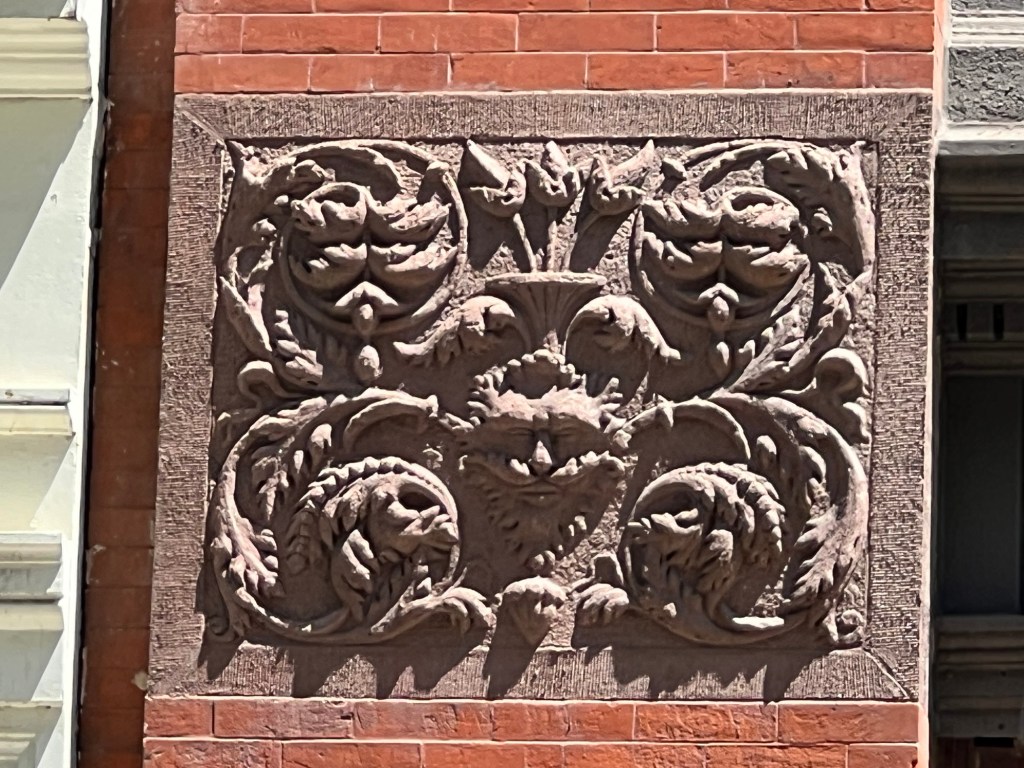
The carved faces of the embellishment of 889 Broadway
The last building in this former shopping district is the old Lord & Taylor building at 901 Broadway. This is one of the most elegant and most underrated building in the neighborhood. The problem with the building was the renovation of the Broadway side of the building throws off the rest of the design. The company used to use this building in its old Christmas window designs in their former Fifth Avenue store.
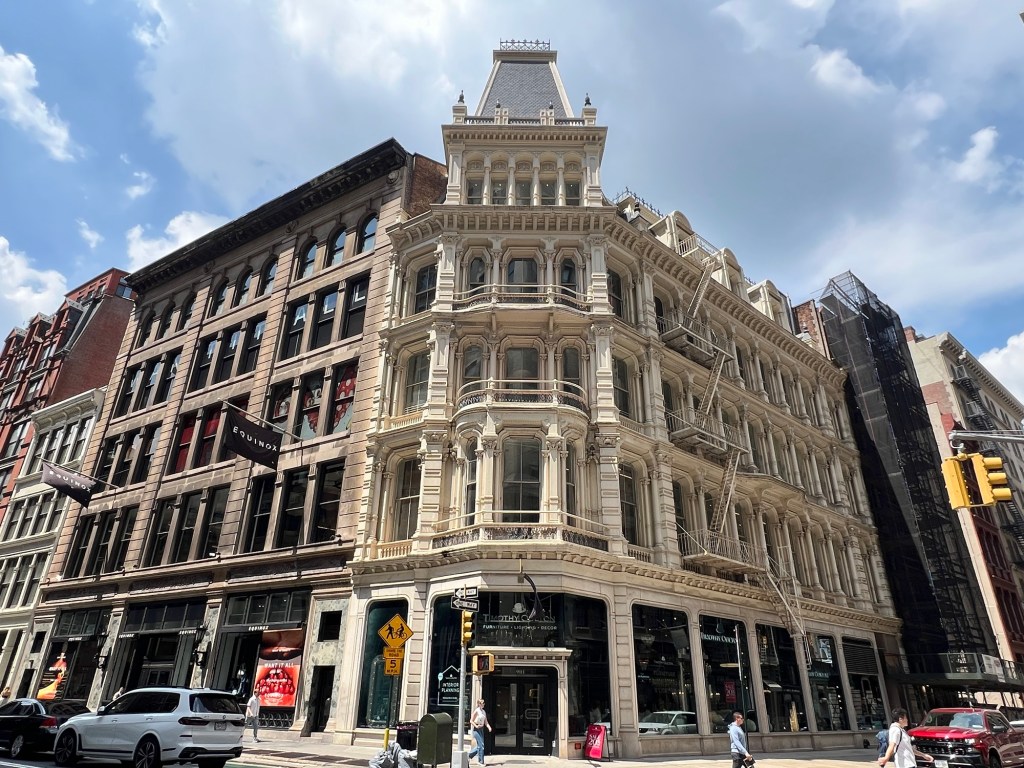
901 Broadway-The former Lord & Taylor building
https://en.wikipedia.org/wiki/Lord_%26_Taylor
https://architizer.com/projects/901-broadway/
https://streeteasy.com/building/former-lord-taylor-building/4
The former Lord & Taylor building is the border of the neighborhood and was the northern tip of the shopping district that expanded along 23rd Street from Broadway to Sixth Avenue. The store was designed in a Cast Iron design by architect James H. Giles. The store has one of the first steam-powered elevators in the City when it opened. This was all part of the Ladies Shopping Mile from just before the Civil War to the Gilded Age before it moved to 34th Street around 1905 (Wiki/Lord & Taylor history blog).
I made my way back down Broadway to admire the other side of the avenue and its historical set of buildings. The first was 888 Broadway, the home of ABC Carpet and the former home of W. & J. Sloan.

888 Broadway-The old W. & J. Sloan’s now ABC Carpeting
https://daytoninmanhattan.blogspot.com/2011/12/w-j-sloane-buildling-880-888-broadway.html
The building that now houses ABC Carpeting was once the headquarters of W. & J. Sloan. The building was designed by architect William Wheeler Smith and was completed in 1882. The store that once held floor after floor of high end rugs, furniture and decorative products for the home moved uptown in 1912 (DaytonianinManhattan.com).
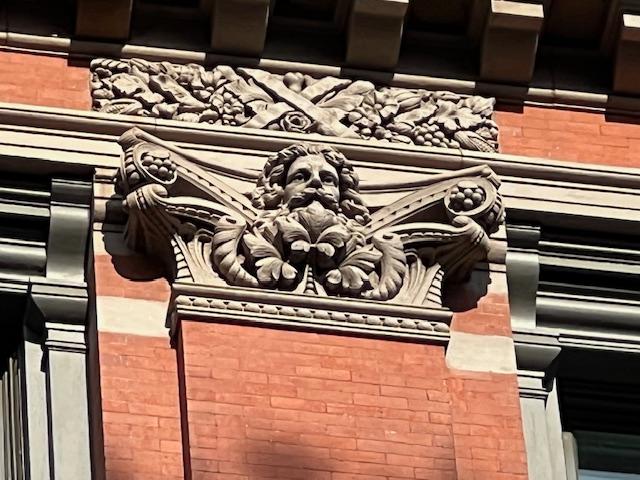
The details of 888 Broadway
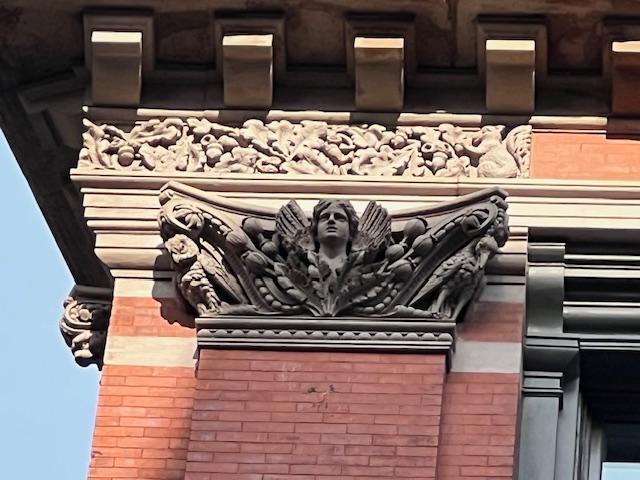
The details of 888 Broadway
Next to ABC Carpet is 876 Broadway, the former D.S. Hess Building. This impressive brick building was built for David S. Hess, a decorator and furniture dealer.
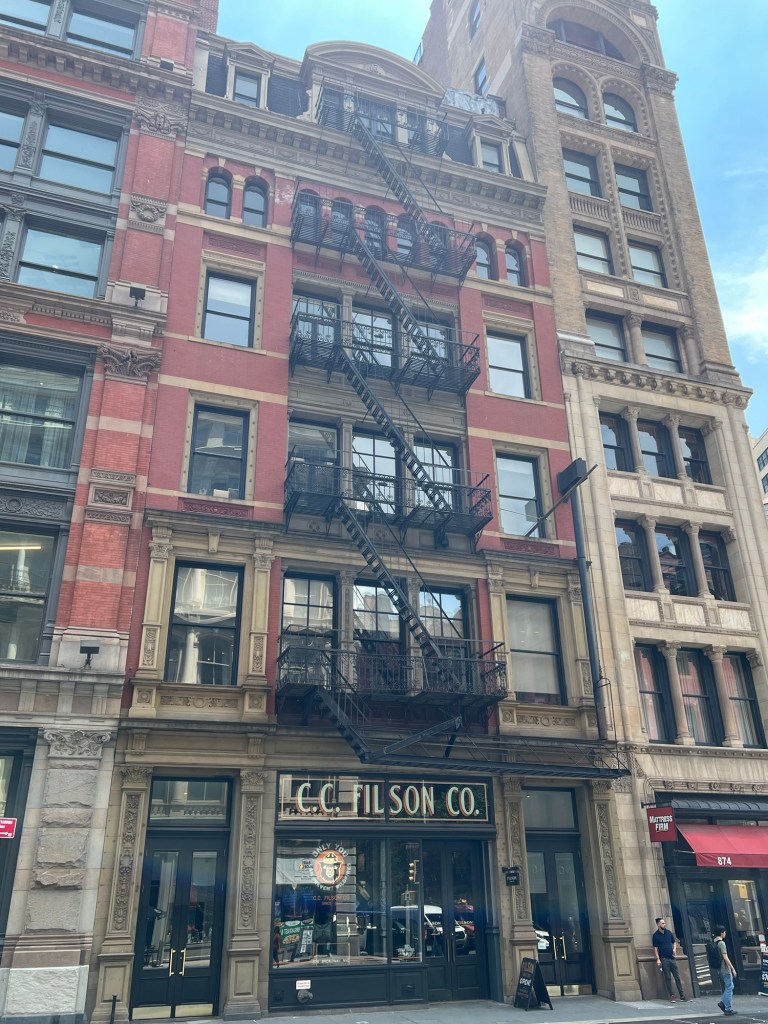
876 Broadway-the former D.S. Hess Building
https://daytoninmanhattan.blogspot.com/2012/07/the-1884-d-s-hess-building-nos-876-878.html
https://streeteasy.com/building/876-broadway-new_york/3rd-floor
https://www.realtor.com/realestateandhomes-detail/876-Broadway-Fl-4_New-York_NY_10003_M32603-94846
The brick building was designed by architect Henry Fernbech in the Renaissance style and was completed in 1884. The details are in the panels by the doors and display window. D.S. Hess moved out of the building in 1984 to a new location on Fifth Avenue and a series of retailers have rented the space since (DaytoninManhattan.com).
a

874 Broadway-The former McIntyre Building
https://daytoninmanhattan.blogspot.com/2010/07/1892-mcintyre-building-finials-snakes.html
https://www.cityrealty.com/nyc/flatiron-union-square/the-macintyre-874-broadway/6892
https://streeteasy.com/building/874-broadway-new_york
The McIntyre Building was the work of Ewen McIntrye, a pharmacist whose building had grown and had made him wealthy. He demolished the store he had on this spot and built this office building. The structure was designed by architect Robert Henry Robertson in a mixture of designs of the time. You can see Gothic Revival and Renaissance Revival and Victorian Eclectic in the design especially at the top of the building (DaytoninManhattan.com).

874 Broadway from the front angles showing the commercial section of the building on East 17th Street

The elegant roof and details of 874 Broadway
I finished walking the neighborhood in just three hours and was able to enjoy walking around Union Square Park and just relaxing with some cold water on one of the benches. This is when I really discovered all the statuary and attributes to the park that I missed all these years. I had always been so busy passing by the park on my way to something that I never really noticed it before.
The Farmers Market was in full swing in northern section of Union Square Park when I returned and as I walked through the northern end of Union Square Park, I passed the Abraham Lincoln statue. It still surprises me that all these presidential statues survived the riots in 2020. Unlike other cities, New Yorkers did not knock down their statues.

The statue of Abraham Lincoln in Union Square Park
https://www.nycgovparks.org/parks/union-square-park/monuments/913
Located at the northern end of the Union Square is the prominent statue of President Lincoln. This statue stands and overlooks the lawn of the park.

Abraham Lincoln
https://www.whitehouse.gov/about-the-white-house/presidents/abraham-lincoln/
This impressive statue of Abraham Lincoln was designed by sculptor Henry Kirke Brown and was dedicated in 1870. In his statue of Lincoln, cast in 1868, and dedicated September 16, 1870, he combines a classically styled pose with a perceptive naturalism, uniting realistic detail with an idealistic stance (NYCParks.org).
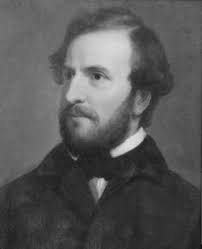
Artist Henry Kirke Brown
https://en.wikipedia.org/wiki/Henry_Kirke_Brown
Artist Henry Kirke Brown was an American born artist who had studied with artists in Italy for his training. He is best known for his figurative historical statues. He also designed the statue of George Washington in Union Square.
From there I strolled to the edges of the park admiring the landscaping and the work that the Union Square Partnership along with volunteers do to keep the park looking pristine. Like Bryant Park on West 42nd Street, these parks had a dark past made lighter by modern times and a new found enjoyment found in New York City parks.

I then just relaxed and admired the beauty of Union Square Park. I got to watch the sunbathers and dog walkers in the park.

Union Square Park in the late afternoon
As I explored the borders of the park, I came across a statue of a mother and child. I never noticed that this was an old water fountain for the park. It is always blocked off by vendors during either the Farmers or Arts Markets. With nothing in front of it, I could finally see it in its full form.
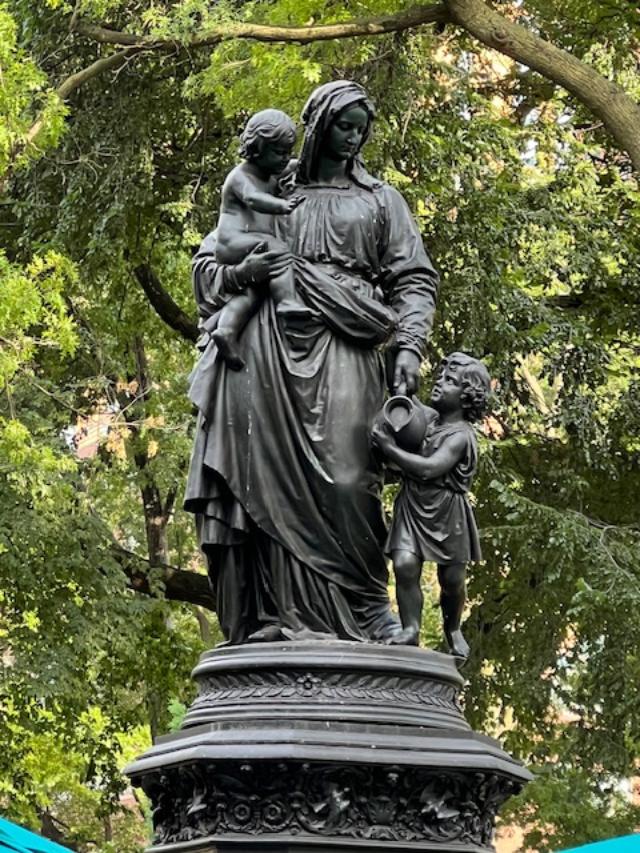
The Union Square Drinking Fountain
https://www.nycgovparks.org/parks/union-square-park/monuments/797
Consisting of a bronze statuary group atop a granite stepped pedestal, it was crafted by German sculptor Karl Adolph Donndorf and donated by philanthropist Daniel Willis James to promote public health as well as the virtue of charity (NYCParks.org).

Artist Karl Adolph Donndorf
https://en.wikipedia.org/wiki/Adolf_von_Donndorf
Artist Karl Adolph Donndorf was a German born artist know for his large realistic sculptures. He had served as an artist apprentice to further his education on sculpture (Wiki).
I look at where Union Square started then progressed to and then what it turned into in the late 1960’s, 70’s and 80’s and what it is today coming back to where it was before and it gives me faith in how a City keeps morphing. It has its ups and downs over time but then keeps progressing. It improves and neighborhoods find new purpose.
How I have seen this neighborhood change from the 1980’s to today is a gap as large as the Atlantic Ocean. The twenty year old’s today can not imagine what I saw in this park when I was twenty. It is night and day. This shows the resilience of Manhattan and of New York City and how with each year it reinvents itself. I can only imagine the neighborhood in 2030 and what we will see then.
It will be fun to find out.
The other blogs on the Union Square neighborhood:
Day Three Hundred and Thirteen: Walking the Borders of Union Square:
https://wordpress.com/post/mywalkinmanhattan.com/48888
Day Three Hundred and Seventeen: Walking the Avenues of Union Square:
https://wordpress.com/post/mywalkinmanhattan.com/50233
Day Three Hundred and Eighteen: Walking the Streets of Union Square:
 mywalkinmanhattan
It was another wonderful walk around Union Square Park on a sunny afternoon.
LikeLiked by 1 person