I recently attended the Annual ‘Pathways Tour’ in Morris County, NJ to visit some of the historical sites. It was a very interesting visit to some of these sites that were over 250 years old. With the anniversary of our country coming up in two months, I can see that these sites will be getting more attention.
Having toured most of the sites in Morris County, which has a treasure trove of historical homes, parks and museums, I concentrated on the sites that are rarely open, like the Doremus House and the Florham Park Schoolhouse for my blog, VisitingaMuseum.com.
Readers reach out to me asking about these sites but no one seems to man them outside the Pathways tours. So you have to race to see them then. These small historical sites offer a glimpse into New Jersey’s rural past and the history of how our state developed.
The Henry Doremus House during the Pathway’s tour
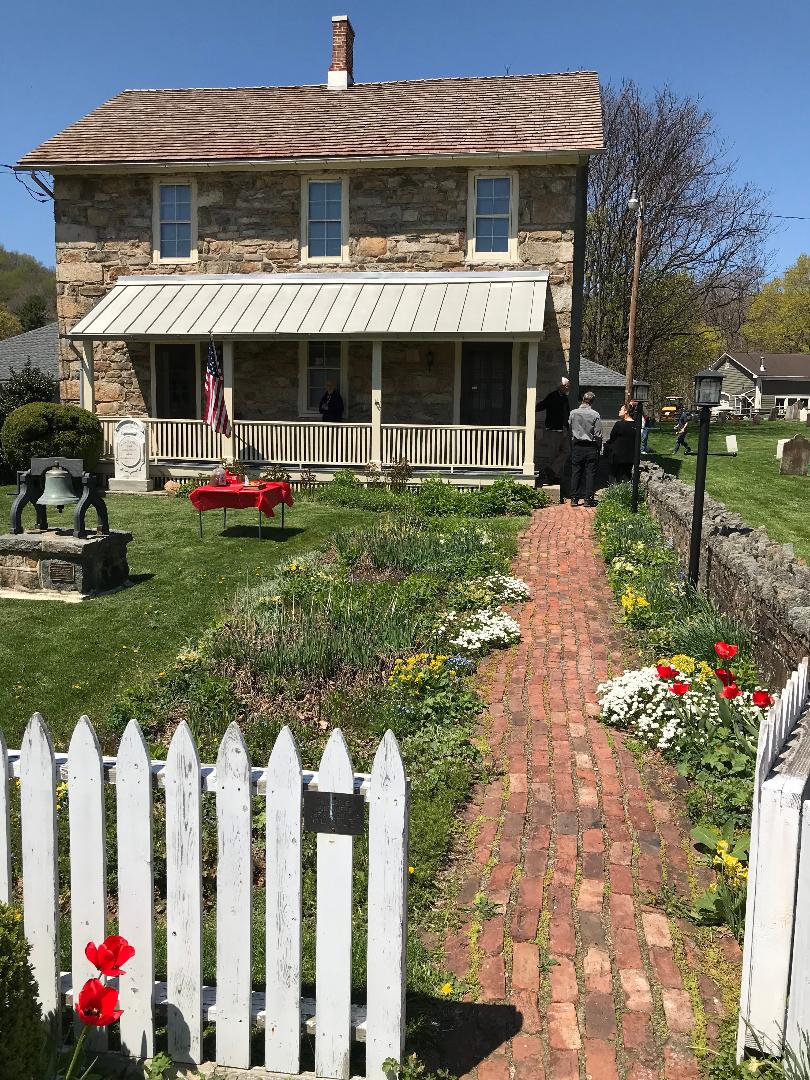
I visited the Henry Doremus House first during the Morris County Pathways Tour in May of 2026 and it is good look at the early farming communities of New Jersey under the Dutch and then the English. The house was used by General George Washington while he was passing through this section of New Jersey during the Revolutionary War.
The sign for the Henry Doremus House
The historic sign for the house
Montville Township Historical Society:
(from the Museum website)
Established in 1963, the Montville Township Historical Society is dedicated to the preservation and promotion of the cultural heritage of Montville Township. Our unwavering commitment to meticulous archival work, interactive educational programs, and community outreach initiatives is aimed safeguarding the rich history of our town. Our ultimate objective is to ensure that the stories and traditions of Montville Township are cherished and celebrated for years to come.
The farm and harvest equipment
General Washington’s payment to the Doremus family for use of their home during the Revolutionary War. I thought this was really cool.
The farming equipment
The farm and household equipment room
The farm equipment from the time of the Revolutionary War
Henry Doremus House History:
(from the Museum’s website)
The Henry Doremus House is a Dutch American stone farmhouse that has been remarkably preserved since the time the first portion was built, circa 1760. The house has never been modernized with heating, plumbing, electricity, or wiring, and is one of only seven left in New Jersey without modern electricity. What is now Route 202 was one of the main military routes during the Revolutionary War through Montville and Towaco, (then part of Pequannock Township). The Henry Doremus house was located in a small community often referred to as Doremus Town.
The main room of the original house during the tour
The kitchen and cooking equipment by the open hearth fireplace
The open hearth fireplace for cooking and heat for the home
Cooking items
I visited Diane’s Dairy at 446 Main Road Suite 8 after my tour of the Henry Doremus House, a local ice cream store just around the corner from the historic home. What started as a place to turn around my car, I had to stop on this historical looking strip mall. When I saw the words ‘homemade ice cream’ I of course had to stop. Ice cream is one of my weaknesses.
Diane’s Dairy at 446 Main Road Suite 8
The menu of the selection of flavors
What was nice was I got to meet Diane herself that morning and she explained to me that they create and make over 92 flavors inside the store. I could tell by the quality and taste of the ice cream that a lot of care was taken in the making of her ice creams.
The section of ice cream
Diane has created many unique flavors so it was hard for me to choose but I wanted to try something different and settled on Bubble Gum flavored ice cream. It was delicious.
The Bubble Gum ice cream
The ice cream was rich and dense and had such an intense flavor of cream and cherry flavored gum. What I also liked was her prices were very fair and the portion size for a small ice cream is the size of most mediums sizes at the commercial ice cream stores. Plus I like to support local businesses. Diane has created a wonderful product and could not have been nicer.
The ice cream is do good
This ice cream was the best. Funny enough though I was her first review on TripAdvisor. I would have thought more people would have been singing her praises. After my snack, it was off to the second site on my list, the Florham Park Little Red Schoolhouse.
I visited the “Little Red Schoolhouse” Museum at 203 Ridgedale Avenue in Florham Park, which is also rarely opened. This interesting little museum showcases the town’s historical collection of items from the 1800’s and 1900’s dealing with all aspects of town life.
Schooling at the “little red frame building” prospered and so by the 1850’s, the building was “in condition of dilapidation rendering it unfit to be occupied” due to overcrowding.
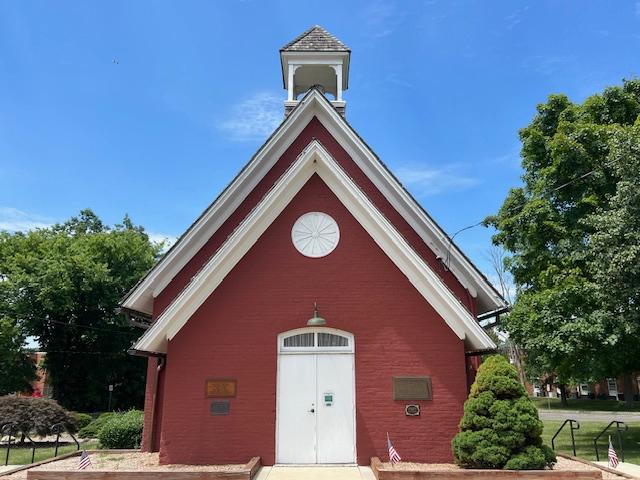
The schoolhouse from the front
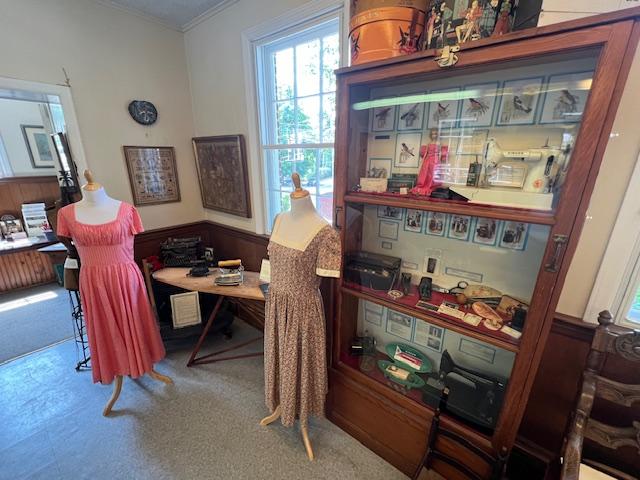
The inside of the museum schoolhouse display
The inside of the old classroom
The schoolhouse setting
In the back there is a small classroom set up keeping with the theme of the building. This lets students, who are visiting the building of their counterpart’s early education with desks, ink wells and chalk boards that have not changed that much over the years.
Not much has changed in the modern classroom over the years
The old schoolhouse desks
There is early century clothing, farming equipment from the town’s farming past and even Native American objects found in the town and in private collections.
The town artifacts and school items
The hitching post
Other items included decorative items from the home including dishware, home products and furnishings.
Each section of the museum is divided up by lifestyle.
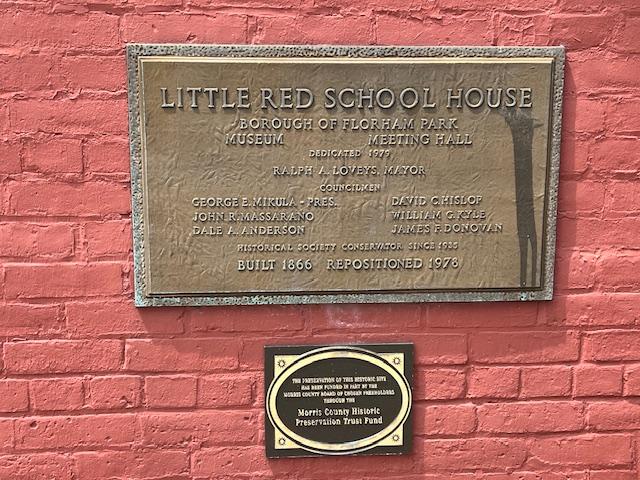
The museum’s historic plaque
The docents that day explained that the items were reflect the town’s past and some came from families that have been in town for years. The museum reflects the community spirit of town’s past. It explains that times have progressed but not changed too much over the years.
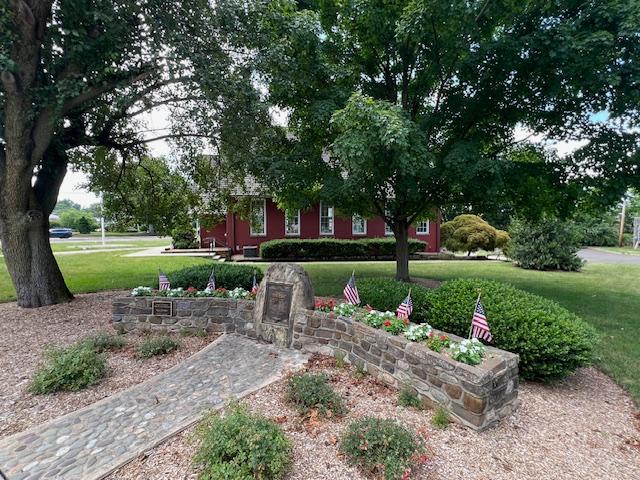
The Veteran’s Monument outside the museum
History of the Little Red Schoolhouse Museum:
(From the Museum Website)
By Kat Kurylko, Research Assistant
In 1830, the residents of Columbia, now Florham Park, sought to improve their thriving farming and broom-making community by establishing a public school for the local children. Therefore, a small schoolhouse, Columbia School #5, was built on the corner of Columbia Turnpike and Ridgedale Avenue and dedicated it on February 17th, 1831.
The schoolroom display
Schooling at the “little red frame building” prospered and so by the 1850’s, the building was “in condition of dilapidation rendering it unfit to be occupied” due to overcrowding. It just showed me one thing as an educator, that the concept of modern education has not changed that much in 150 years.
I next visited the Tunis-Ellicks House 16 Village Road in New Vernon and enjoyed the self-guided tour of this well maintained and displayed home. Unlike many sites I have visited over the years where things are left out and jumbled on tables, the Tunis-Ellicks House offers a look at small family farms from before the Civil War. The displays depict and discuss the life of a farming family in Central New Jersey.
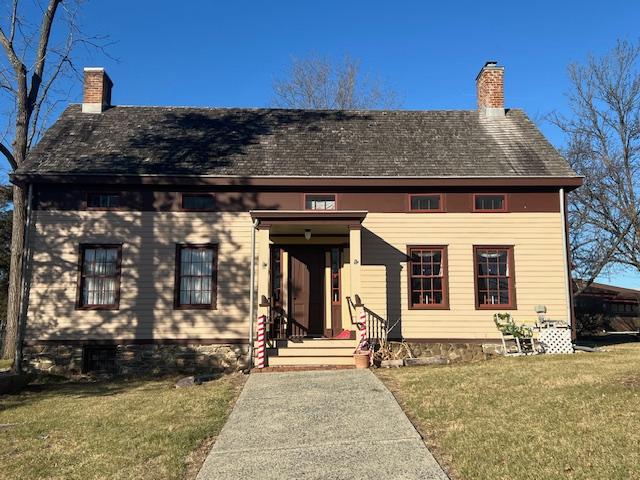
The Tunis-Ellicks House in New Vernon, NJ
The house sign
The house is located in the New Vernon Historic District
The house was located in one of the oldest sections of the community, facing other structures in the historical district of New Vernon, NJ.
The house and front garden from the road
The vegetable garden in the front of house
In front of the house was a large vegetable and fruit garden with a grape arbor for spirits on the side of the house. These items would be jarred and pickled for the winter months or sold at market.
I liked the way the volunteers maintained the gardens with fruits and vegetables that would have been used in Colonial times mixed in with a modern twist.
Mission Statement:
(From the Museum website)
The Harding Township Historical Society is a private, not-for-profit corporation founded in 1977 to stimulate interest in the history of Harding Township. The Society shall support, assist in and seek to achieve the preservation of documents, buildings and sites related to Harding Township. It shall also collect, preserve, maintain and interpret original cultural material, which illuminates this history. In addition, The Society is responsible for preserving and maintaining the Tunis-Ellicks House and environs. Through use of its historic site, collections and programs, the society endeavors to document and illustrate the history of Harding Township for present and future generations (Tunis-Ellicks website).
You enter the museum from the back of the house. In the backyard of the home, there were all sorts of activities going on while you could start a self-guided tour of the house.
The back of the Tunis-Ellick’s House
The beautiful view from the back door of the home
The inside of the main part of the museum
The main part of the museum was the newer extension of the home where the living room and dining rooms were located. There were displays on the walls discussing farm life in New Jersey during the late 1700’s and early 1800’s.
The Dining Room section of the house
The workings of the Dining Room
The story of ‘Country Life’ and the gentleman farmer
Pieces of the decor on display
The kitchen area of the older part of the home offers a homey fireplace for cooking and summer storage for jarred and pickled food stuffs for the winter.
The kitchen and storage areas of the home
Pottery collection in the museum
The pottery collection
The kitchen dining and cooking area of the home
The fireplace for cooking, roasting and stewing of foods
The oven for baking breads, cookies and pies and the baking equipment
The Summer storage area for canned and jarred provisions for the winter months and for cooking.
History of the Harding Township Historical Society:
(From the Museum website)
The Harding Township Historical Society was formed in 1977 to save the circa 1795 Tunis-Ellicks House and restore it as it appeared in the early 19th century. The society discovered an original 18th century hearth and Federal-style mantel and a water-fed cooling room besides the well. Areas of the house were left exposed to showcase the post-and-beam construction. A permanent exhibit on 19th century farming was created as well as space for temporary exhibits.
The Society saved a circa 1870 Tramp House from destruction when the Great Swamp National Wildlife Refuge was created by having the building moved the Tunis-Ellicks House property. The Harding Township Historical Society maintains an extensive archive containing records, maps, and objects since the colonial era pertaining to the town. The archive is open to researchers, genealogists and the public. Each year we provide an award to a student at the Harding Township School that excels in the subject of history. The Society produces exhibits, lectures, tours, and interactive events to bring history to the public.
When I drove to the Tunis-Ellicks House, I was really hungry and it was lunch time. I had passed the Green Village Deli at 536 Green Village Road and I read the reviews online while in their parking lot and they were excellent so I decided to give it a try. The food and the service were excellent.
The Green Village Deli at 536 Green Village Road
The sign that welcomes you to this local breakfast and lunch establishment
The Village Green Deli is a popular local sandwich shop, where the staff seems to know all the customers by name (with the exception of me) and is located in this small downtown area facing the Village Green.
I really liked the vibe of this small town deli where the owners knew everyone by name and I felt like an interloper at a private party.
The inside of the Village Green Deli
The deli has that small town feel to it, with local art and sports paraphernalia in the walls. The woman who worked the register was greeting everyone by name and the guys that worked the grill seemed happy to see me.
Looking at the menu at the grill
I looked at the extensive lunch menu of popular sandwiches and some wonderful combos. You could even still get breakfast as I saw some of the guys at the counter devouring as I decided on what I wanted to order.
The deli has a wonderful selection of sandwiches, hero’s and other delicious sounding items.
There were so many things I wanted to try that day that it was hard to choose. Was it a breakfast sandwich with local sausage? The Thanksgiving ‘Gobbler’ sandwich with turkey, stuffing and cranberry relish, that sounded so good? I decided on an Italian hero sandwich with a selection of deli meats with fresh lettuce, tomato and onion. The hero was excellent!
The Italian hero with a pickle
The sandwiches here are huge! One half of a sandwich a normal person could eat for lunch and save the rest for another meal. The sandwich was loaded with salami, bologna, ham, Swiss Cheese and fresh veggies. I could barely fit it in my mouth.
The sandwich was excellent
The food was excellent. The bread was so fresh and the cooks did not skimp on one ingredient. The vegetables were so fresh and crispy and I loved the combination of flavors of the cold cuts. I really enjoyed my lunch and would like to make a special trip back just to try more of their sandwiches. I was very happy with my lunch.
One of the last places I visited was the Historical Society of Boonton Township, which is located in the former Oscar Kincaid Farm Homestead 591 Powerville Road. The house and what was left of the acreage of the farm was part of the current museum. The museum was an example of early New Jersey farming that dated from the 1800’s to the Twenty-First century.
There was not much in the way of period furniture or farm equipment (items of the home were sold off since Mr. Kincaid’s passing), but the new historical society is buying artifacts and bringing them back to the farm. This includes one of Mr. Kincaid’s tractors. His roll up desk is also still in the display room which was once the Living Room of the home.
The Kincaid Homestead at 591 Powerville Road
History of Oscar Kincaid and Homestead:
(From the Morris County Historical Society website)
Originally a part of the extensive tract belonging to William Penn, the earliest portion of the home was constructed in 1785 by Adam Miller and Anna DeMouth Miller. Just over a decade later, they sold the property to Adam’s cousin, Sarah Miller Parlimen (of the Miller/Dixon homestead) and her husband, John, who built a sawmill there. After a brief ownership by William Scott of Powerville, a Miller relative, the land was sold to John Decker in 1828. An industrious man, Decker operated both a farm and successful forge, shipping his goods to New York via the Morris Canal. By 1837, he expanded the home, adding a distinctive folk-art painting of a face and unique plasterwork that can still be seen today (MCHS website).
The homestead passed through generations of Decker’s family, ultimately being inherited by Oscar Kincaid Sr. in the early 20th century. Kincaid ran a popular ice cream stand and dairy business throughout the 1920s and 30s. Following World War II, the family opened Valley Farm on the site, which continued until the death of Oscar Kincaid Jr. in 2000. Added to the National Register of Historic Places in 2005, the Decker-Kincaid Homestead today operates as a museum and headquarters of the Historical Society of Boonton Township (MCHS website).
The Kincaid House
The historical marker for the house
The front yard
The entrance to the house
The main foyer of the house
The house is a small farmhouse built in two sections. The original part of the house dates back to the late 1700’s and the newer part in the early 1800’s. The once furnished rooms now hold displays of Morris County and the farming industry of the time plus community artifacts.
The former Living Room
Oscar Kincaid’s desk
There were not much left in the way of family furnishings and heirlooms but this desk was Oscar Kinkaid’s.
The back bedroom
The Flag display for the ‘250th Anniversary’
Story of Oscar Kincaid’s life: Oscar Kincaid was a farmer/businessman, a politician and a conservationist.
After the short tour around the house, I walked around the farm grounds. The house was set on a beautiful piece of land that sloped down to the old farmstand. There was also a swimming pond which was once part of the farm which is now private property.
The farm property from the side with the barn
The barn across the street
The property was about ten acres at the time of his death and parts have been developed. It still has some of the most wonderful views of the area.
The view of the old farm from the front porch
The farm land stretches over different sections of the road and the property is very picturesque. It is a very beautiful homestead.
The view of the farm from the lawn
The swimming pond on the edge of the property
The old farm stand that had been used for eighty years
One of the last places I visited in the 2026 Pathways tour of Morris County was the Historical Society of Boonton Township which is located in the former Oscar Kincaid Farm Homestead. The house and what was left of the acreage of the farm was part of the current museum. The museum was an example of early New Jersey farming that dated from the 1800’s to the Twenty-First century. There was not much in the way of period furniture or farm equipment (items of the home were sold off since Mr. Kincaid’s passing), but the new historical society is buying artifacts and bringing them back to the farm. This includes one of Mr. Kincaid’s tractors. His roll up desk is also still in the display room which was once the Living Room of the home.
The Kincaid Homestead
History of Oscar Kincaid and Homestead:
(From the Morris County Historical Society website)
Originally a part of the extensive tract belonging to William Penn, the earliest portion of the home was constructed in 1785 by Adam Miller and Anna DeMouth Miller. Just over a decade later, they sold the property to Adam’s cousin, Sarah Miller Parlimen (of the Miller/Dixon homestead) and her husband, John, who built a sawmill there. After a brief ownership by William Scott of Powerville, a Miller relative, the land was sold to John Decker in 1828. An industrious man, Decker operated both a farm and successful forge, shipping his goods to New York via the Morris Canal. By 1837, he expanded the home, adding a distinctive folk-art painting of a face and unique plasterwork that can still be seen today (MCHS website).
The homestead passed through generations of Decker’s family, ultimately being inherited by Oscar Kincaid Sr. in the early 20th century. Kincaid ran a popular ice cream stand and dairy business throughout the 1920s and 30s. Following World War II, the family opened Valley Farm on the site, which continued until the death of Oscar Kincaid Jr. in 2000. Added to the National Register of Historic Places in 2005, the Decker-Kincaid Homestead today operates as a museum and headquarters of the Historical Society of Boonton Township (MCHS website).
The Kincaid House
The historical marker for the house
The front yard
The entrance to the house
The main foyer of the house
The house is a small farmhouse built in two sections. The original part of the house dates back to the late 1700’s and the newer part in the early 1800’s. The once furnished rooms now hold displays of Morris County and the farming industry of the time plus community artifacts.
The former Living Room
Oscar Kincaid’s desk
There were not much left in the way of family furnishings and heirlooms but this desk was Oscar Kinkaid’s.
The back bedroom
The Flag display for the ‘250th Anniversary’
Story of Oscar Kincaid’s life: Oscar Kincaid was a farmer/businessman, a politician and a conservationist.
On Community:
(From the museum website)
Oscar’s commitment to his community transcended farming. He served as a member of the Boonton Township Committee for 30 years and was mayor for two terms. He was also a founding member of the Morris County Agricultural Development Board, on which he served for 17 years, six as board chairman. Oscar led the charge for farmland preservation in Morris County. His efforts resulted in the preservation of 41 farms covering 3,100 acres spanning several municipalities throughout the county. As one person put it: “Oscar had more impact on preserving the character of Boonton than any single individual.”
But to Oscar: “Farming and being active in local politics was simply a way of life.” Oscar passed away November 11, 2000
The contractor’s face on the wall
The face came about when Oscar Kincaid did not want to pay a contractor for his work. He created this face so that he would have to live with it for the rest of his life. It can not be planted over.
The ‘Mr. Face’ in Weird NJ
On Farming:
(From the Museum website)
Oscar Kincaid, Jr., was born into farm life. It was 1824 when the Kincaid family purchased 30 acres in Boonton Township, Morris County and began farming. More than a century later, a young Oscar took over the operation, working alongside his father as they raised dairy cows, grew vegetables and developed a poultry business. For years, they delivered eggs to retail establishments and sold vegetables from their roadside stand. Over time, Oscar moved away from the dairy and poultry business and focused his efforts on vegetable and hay production.
The Kincaid house from the side
After the short tour around the house, I walked around the farm grounds. The house was set on a beautiful piece of land that sloped down to the old farmstand. There was also a swimming pond which was once part of the farm which is now private property.
The farm property from the side with the barn
The barn across the street
The property was about ten acres at the time of his death and parts have been developed. It still has some of the most wonderful views of the area.
The view of the old farm from the front porch
The farm land stretches over different sections of the road and the property is very picturesque. It is a very beautiful homestead.
The view of the farm from the lawn
The swimming pond on the edge of the property
The old farm stand that had been used for eighty years
The old Farm stand was used into the mid 2000’s
The full view of the farm
Since the house was just recently bought, there is still some design and artifacts that need to be collected to complete the look of a Jersey farm.
The Historical Society of Boonton Township is still expanding the collection of farm equipment for property and finding furniture for the home. The property is a beautiful and picturesque and shows how the traditional farm has adapted to modern times. Mr. Kincaid only passed a few years ago but kept the farm traditional and that worked for him. He left a legacy for us to appreciate the independent Jersey farmer.
I visited the Henry Doremus House during the Morris County Pathways Tour in May of 2026 and it is good look at the early farming communities of New Jersey under the Dutch and then the English. The house was used by General George Washington while he was passing through this section of New Jersey during the Revolutionary War.
The sign for the Henry Doremus House
The historic sign for the house
Montville Township Historical Society:
(from the Museum website)
Established in 1963, the Montville Township Historical Society is dedicated to the preservation and promotion of the cultural heritage of Montville Township. Our unwavering commitment to meticulous archival work, interactive educational programs, and community outreach initiatives is aimed safeguarding the rich history of our town. Our ultimate objective is to ensure that the stories and traditions of Montville Township are cherished and celebrated for years to come.
The farm and harvest equipment
General Washington’s payment to the Doremus family for use of their home during the Revolutionary War
The farming equipment
The farm and household equipment room
The farm equipment from the time of the Revolutionary War
Henry Doremus House History:
(from the Museum’s website)
The Henry Doremus House is a Dutch American stone farmhouse that has been remarkably preserved since the time the first portion was built, circa 1760. The house has never been modernized with heating, plumbing, electricity, or wiring, and is one of only seven left in New Jersey without modern electricity. What is now Route 202 was one of the main military routes during the Revolutionary War through Montville and Towaco, (then part of Pequannock Township). The Henry Doremus house was located in a small community often referred to as Doremus Town.
The main room of the original house during the tour
The kitchen and cooking equipment by the open hearth fireplace
The open hearth fireplace for cooking and heat for the home
Cooking items
(from the Henry Doremus website)
General George Washington and his troops often traveled this route between Morristown and West Point. In June of 1780, Washington’s troops (2000 soldiers and 40 aides) were in Whippany and traveled to Doremus Town after the retreat of the Battle of Springfield. General Washington and his aides (which General George Washington at age 45 about the time he stayed at the Henry Doremus House (Mount Vernon) included Alexander Hamilton) stayed two and a half days in the Doremus House as General Andre Rochambeau (NIAHD Journals) documented by Washington’s expense account and letters. A payment of $40 was made to Mrs. Doremus at Pequannock on June 25th, to house General George Washington and his soldiers after the Battle of Springfield. French General Rochambeau stayed in the orchards around the house with over 5000 of his men, women, and camp followers on his way to the Battle of Yorktown in 1781.
The items for processing wool and flack for clothing
A closer look at the equipment
Household equipment
The house addition towards the back had a spinning wheel and demonstration on how to make cloth.
The Henry Doremus House was placed, in 1972, on both the National Register of Historic Places and the New Jersey Register of Historic Places. It was also listed on the Montville Township Local Register in 1987, as well as the Crossroads of American Revolution Greenway. In addition, the preservation and protection of the Henry Doremus House won the New Jersey Historic House Preservation Award in 2009.
The demonstrations on spinning yarn and making clothing in the back of the house
When I toured the house, the docents described how the household functioned and how the farm worked during the season. Men and women had different roles to make the household function. There was not much buying things for the house so clothes were made, foods were preserved and pickled for the Winter and then meals had to be prepared while the men worked out in the field. Men had to grow, tend to and then pick all the fruits and vegetables. Then there was tending to the animals, sheering animals and just working on tending the farm with repairs and working through the seasons. It was a lot of physical work through all the seasons.
Household equipment and furnishings plus another open hearth for heating the house
The front of the house facing the street with twin Dutch doors and entrance to the root cellar
The Doremus House is open mostly during the Pathways tour in May and October. The Montville Historical Society also runs the Montville Historical Society Schoolhouse Museum in Montville.
I visited the Tunis-Ellicks House on the Morris County ‘Pathways’ tour of historical sites throughout the County and enjoyed the self-guided tour of this well maintained and displayed home. Unlike many sites I have visited over the years where things are left out and jumbled on tables, the Tunis-Ellicks House offers a look at small family farms from before the Civil War. The displays depict and discuss the life of a farming family in Central New Jersey.
The Tunis-Ellicks House in New Vernon, NJ
The house sign
The house is located in the New Vernon Historic District
The house was located in one of the oldest sections of the community, facing other structures in the historical district of New Vernon, NJ.
The house and front garden from the road
The vegetable garden in the front of house
In front of the house was a large vegetable and fruit garden with a grape arbor for spirits on the side of the house. These items would be jarred and pickled for the winter months or sold at market.
Mission Statement:
(From the Museum website)
The Harding Township Historical Society is a private, not-for-profit corporation founded in 1977 to stimulate interest in the history of Harding Township. The Society shall support, assist in and seek to achieve the preservation of documents, buildings and sites related to Harding Township. It shall also collect, preserve, maintain and interpret original cultural material, which illuminates this history. In addition, The Society is responsible for preserving and maintaining the Tunis-Ellicks House and environs. Through use of its historic site, collections and programs, the society endeavors to document and illustrate the history of Harding Township for present and future generations (Tunis-Ellicks website).
You enter the museum from the back of the house. In the backyard of the home, there were all sorts of activities going on while you could start a self-guided tour of the house.
The back of the Tunis-Ellick’s House
The beautiful view from the back door of the home
The inside of the main part of the museum
The main part of the museum was the newer extension of the home where the living room and dining rooms were located. There were displays on the walls discussing farm life in New Jersey during the late 1700’s and early 1800’s.
The Dining Room section of the house
The workings of the Dining Room
The story of ‘Country Life’ and the gentleman farmer
Pieces of the decor on display
The kitchen area of the older part of the home offers a homey fireplace for cooking and summer storage for jarred and pickled food stuffs for the winter.
The kitchen and storage areas of the home
Pottery collection in the museum
The pottery collection
The kitchen dining and cooking area of the home
The fireplace for cooking, roasting and stewing of foods
The oven for baking breads, cookies and pies and the baking equipment
The Summer storage area for canned and jarred provisions for the winter months and for cooking.
The bathrooms were on the second floor of the home/museum and I got a quick tour of the upstairs bedrooms.
Bedroom One
Bedroom Two
These were not part of the self-guided tour but I was able to see them and how they were decorated.
History of the Harding Township Historical Society:
(From the Museum website)
The Harding Township Historical Society was formed in 1977 to save the circa 1795 Tunis-Ellicks House and restore it as it appeared in the early 19th century. The society discovered an original 18th century hearth and Federal-style mantel and a water-fed cooling room besides the well. Areas of the house were left exposed to showcase the post-and-beam construction. A permanent exhibit on 19th century farming was created as well as space for temporary exhibits.
The Society saved a circa 1870 Tramp House from destruction when the Great Swamp National Wildlife Refuge was created by having the building moved the Tunis-Ellicks House property. The Harding Township Historical Society maintains an extensive archive containing records, maps, and objects since the colonial era pertaining to the town. The archive is open to researchers, genealogists and the public. Each year we provide an award to a student at the Harding Township School that excels in the subject of history. The Society produces exhibits, lectures, tours, and interactive events to bring history to the public.
I then joined many of the other visitors to hear an historical reading on the patio of the home from a descendant of a Colonial family. He was discussing life in Colonial New Jersey.
The Colonial talks
They also had a table set up for arts and crafts. The volunteers were making corn husk dolls with some of the visitors.
They also had corn husk doll making as an activity
Then I was able to tour the grounds and visit the ‘Tramp House’ that was used for workers of these farms. This had been moved from the ‘Great Swamp’ to this location. It showed the living conditions of workers on the farm.
Walking on the grounds of the farm
The Wine Arbor on the side of the house
History of the Tunis-Ellicks House:
(From the Museum website)
The Tunis-Ellicks House was built in 1795 when George Mitchell bought it from Michael Pearce, a Minuteman in the Revolutionary War. The deed for 7 acres of land is dated April 22, 1795. Interestingly, the ledgers of Daniel Tunis, who lived down Millbrook Rd and had a store, show that, beginning May 9, 1795, Mitchell bought items consistent with building a house: a load of timber and half a bushel of hair (used for plaster).
In 1838, a local farmer named Silas Tunis bought the farm and his descendants owned the house until 1923. Eva and Lee Ellicks sold the house to the township in 1968. In 1977, the Harding Township Historical Society began to restore the home as it would have appeared in the early 19th century. The house is a post-and-beam East Jersey cottage complete with a cooling room fed by the well outside. The museum features a permanent exhibit entitled A Country Life about the workings of 18th-century farms.
The ‘Tramp House’ for farm workers
The historic sign
The inside of the small living quarters
The farm equipment used in processing crops
History of the Tramp House:
(from the Museum website)
The Tramp House is a simple stone building built about 1870 by the Morris Overseer of the Poor as a place to stay for wandering Civil War veterans searching the countryside for work. By providing a place to stay, farmers protected their barns from accidental fires by the men trying to cook or keep warm. The men would work on the farms in exchange for a safe and warm place to sleep
The house was located in one of the oldest sections of the community, facing other structures in the historical district.
The house and front garden from the road
I really enjoyed visiting the site and got a good view how life on a New Jersey farm was before the Civil War. The museum was very nicely organized and the displays were engaging. The volunteers and docents could not have been nicer and it was a fun afternoon.
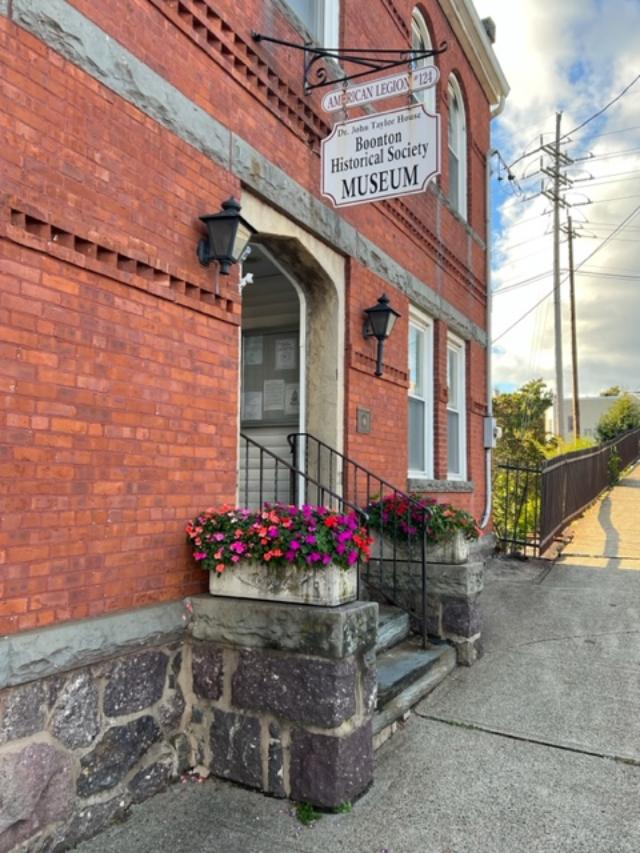
The front of the Montville Township Museum at 6 Taylortown Road
The front sign
I stopped at the Morris Township Museum on a busy Sunday afternoon. The museum, housed in a building that once served the community as a school, post office and a government center.
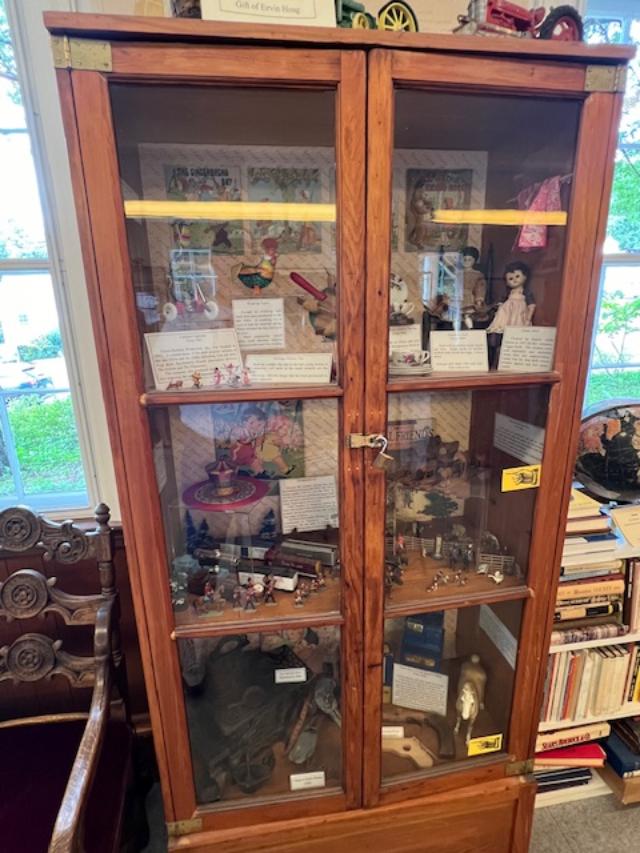
Each of the cases holds all sorts of artifacts that reflects the towns developments and growth. The first case line is filled with fossils found in the area and small artifacts from the Lenape Indians.
The next case was filled with accessories from Victorian objects from jewelry to household items. Lining the walls are objects from the high school, personal family records for people to search on their loved one’s genealogy. The docents are hand from the Historical Society to answer any questions about the museum.
The History of the Building:
(from the museum website)
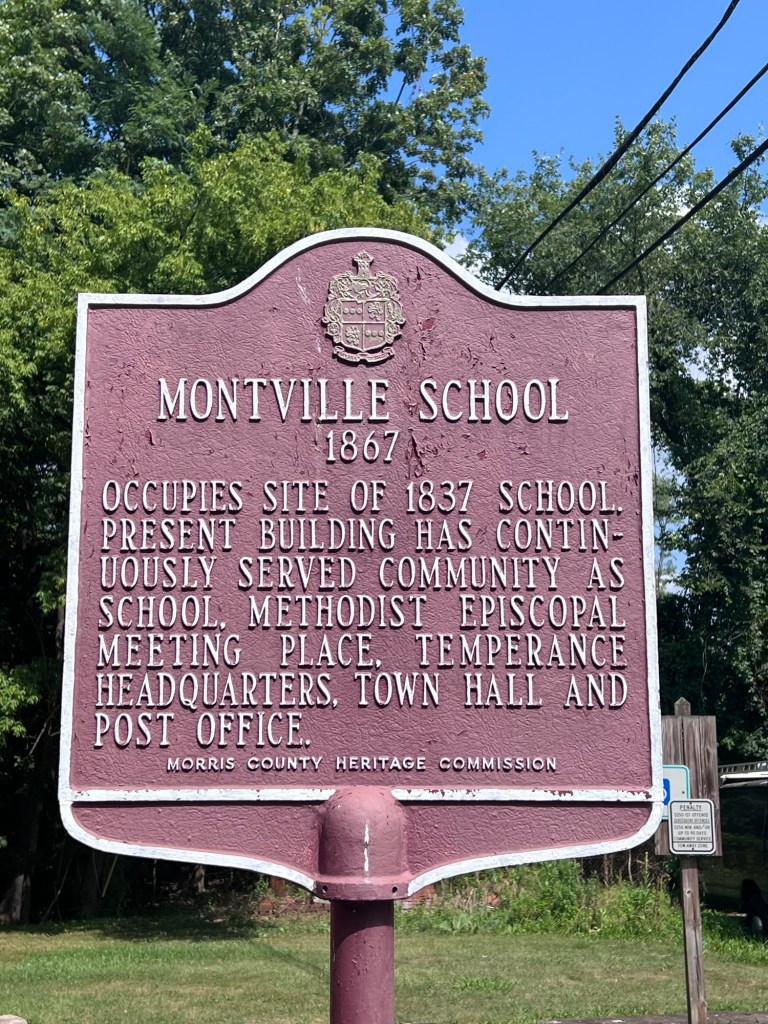
The building was originally “Old Schoolhouse #10”. It was built in 1867 and occupies the site of a former 1837 school. One of the early superintendents of Morris Canal, Mr. William Hickson , was its builder.
Located at 6 Taylortown Road just down the street from Route 202 is a red brick building with a sign out front proclaiming it the “Montville Township Historical Museum”. Within its walls are articles, pictures, tapes, and memories that will carry you back through the years to times long past.
The front of the museum
About the Building: The building was constructed following the Civil War, in the year 1867. It was one of the first one-room schools in the area. The land was donated by the eastern district superintendent of the then-thriving Morris Canal, one of the many waterways then in existence to help promote trade and travel in America. William Hixson gave the land to the town for public purposes, with the stipulation that it could be reclaimed if used for a purpose with which his family disagreed.
The historic sign of the school
Reconstruction: The building began serving Montville as a one-room school heated by a potbellied stove. It also served as an auxiliary to the local Methodist Church. It became the gathering place for the local temperance league in the 1890s, and was the scene of many temperance meetings in the town.
The gardens of the front the museum
The historical collection of the museum
The history of the property:
(from the Museum website)
Entrance: Today, as you enter the museum, you walk into an entrance foyer. Probably once used to hold the boots and coats of school children, it is now an entrance hallway. The door to the main room is straight ahead, and upon entering, you step into history.
Building Uses: Forty-four years after being erected, it changed from a school to the center of political activities as the town hall. It was the town hall until 1939, when it became the town’s post office. It served as such until 1961, when a post office was constructed close by (Taylortown Road and Route 202).
Making it a Museum: After the postmen moved out of the building, the township considered selling the property to a business concern but the original Hixson agreement was recalled, and the building remained unused – until the celebration of New Jersey’s 300th Anniversary.
At that time, a Tercentenary committee was founded in the Township to help celebrate the anniversary and the Committee decided to make the establishment of a museum its main project. Armed with donations from local residents, committee members renovated the building and reopened it in 1963 as a museum.
The inside of the museum
The part of the canal that exists around the museum
Around the corner from the museum is the corner from where the Morris Canal lock was located which was on display at the museum.$
The area around where the Morris Canal was located
I traveled further down the road to see what is left as the canal that has since grown over. Before railroads and cars, the canal system is where goods and services from the interior of the state to the cities such as New York City and Newark.
The sign marking the site of the canal and the lock system
The lock location
The grown over canal system
It is an interesting museum whose artifacts represent the three communities in Montville township.
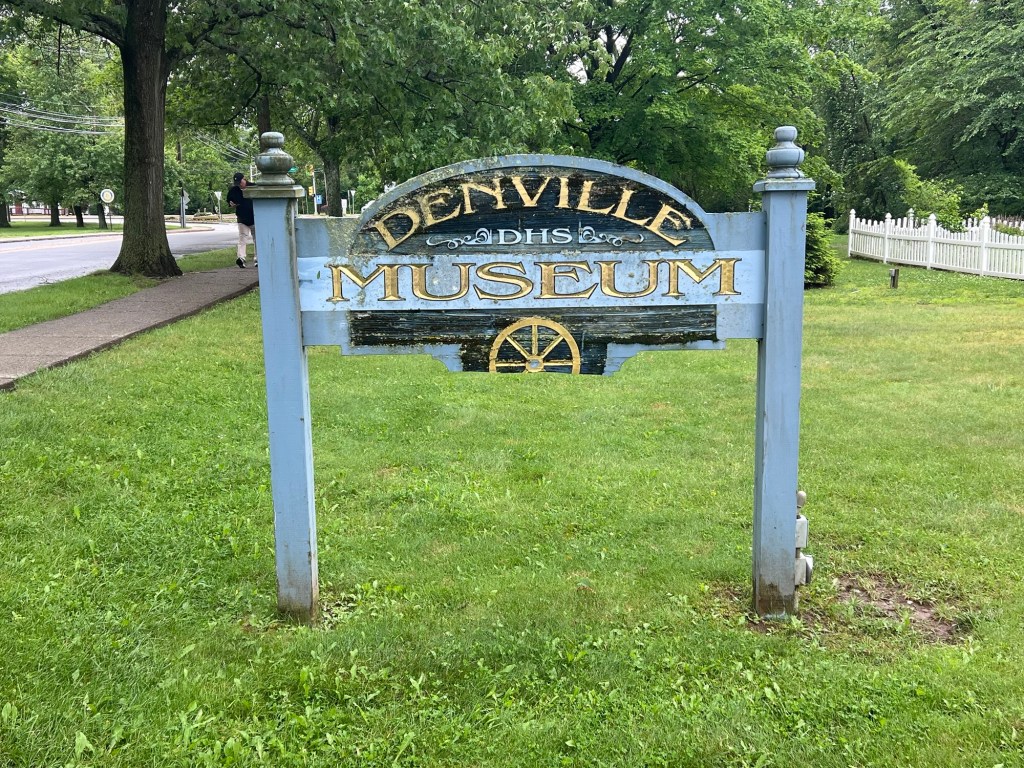
The front of the Denville Museum at Diamond Spring Road
The front sign for the Denville Museum
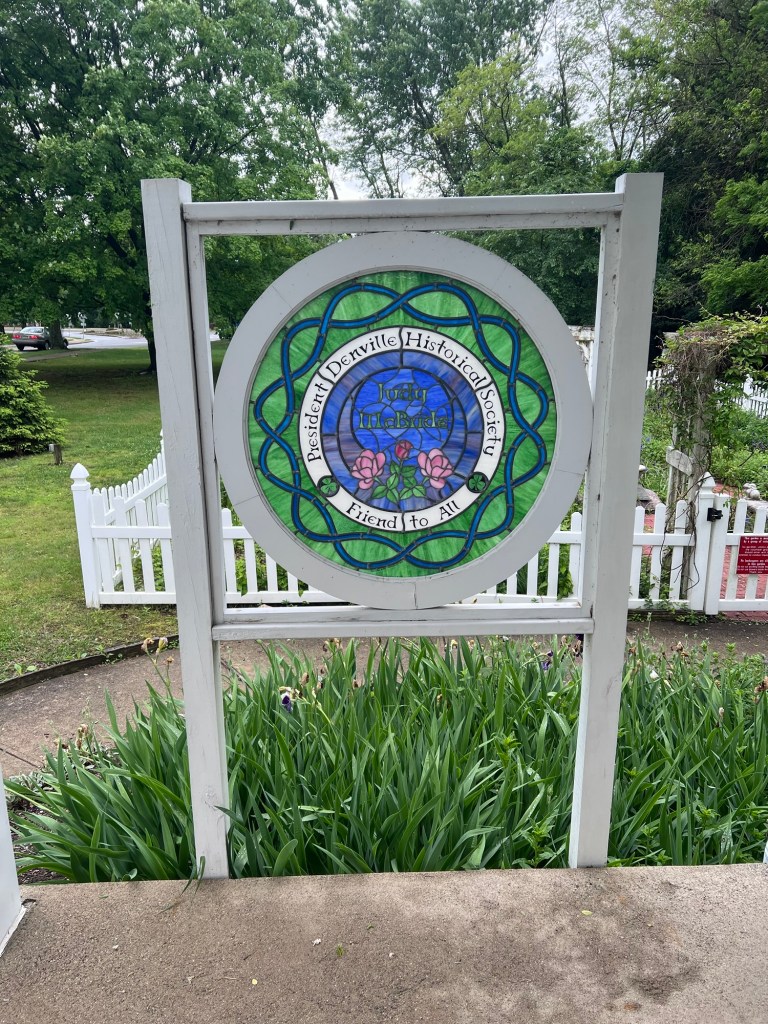
The beautiful stained glass sign outside
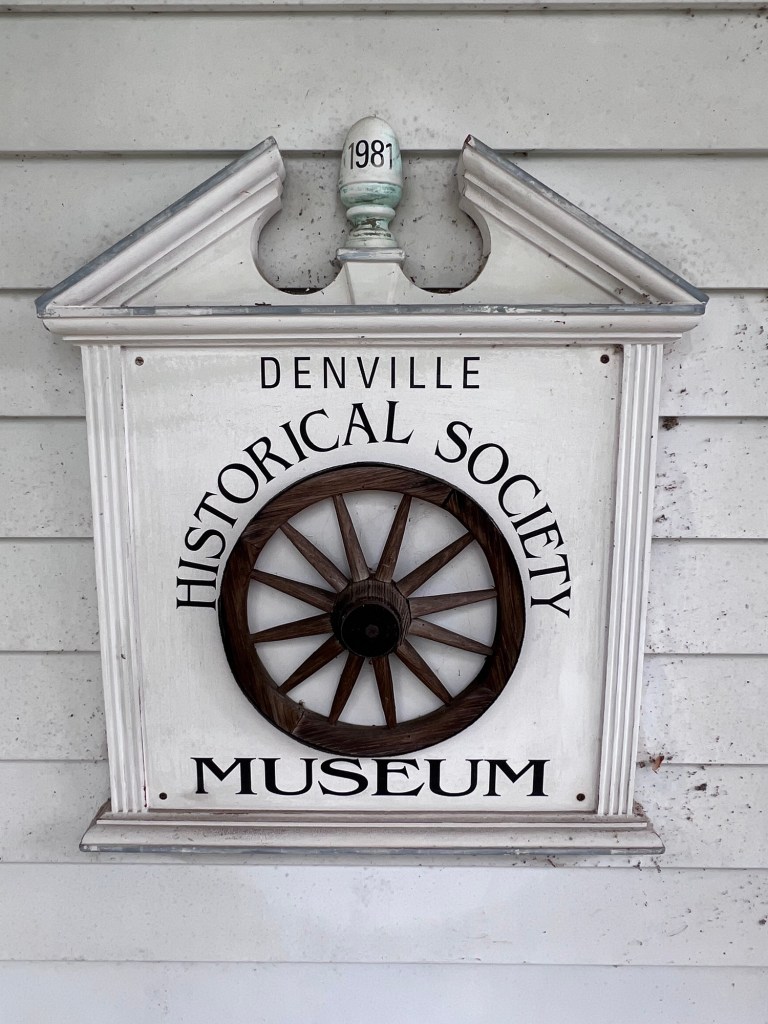
The front sign of the museum
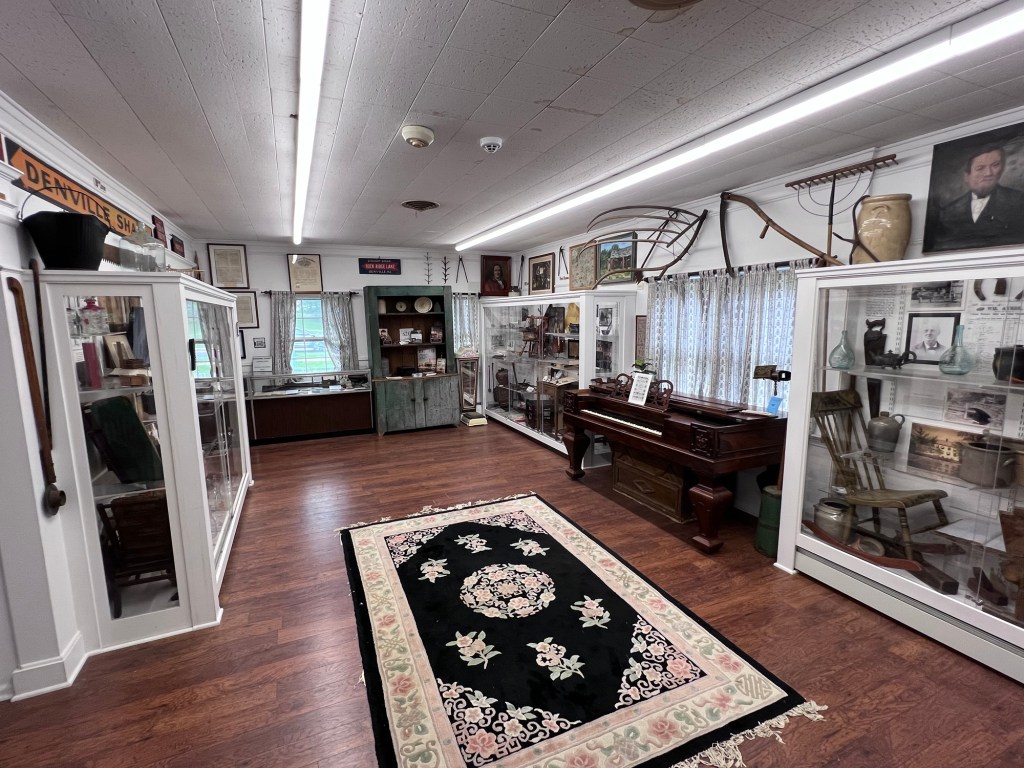
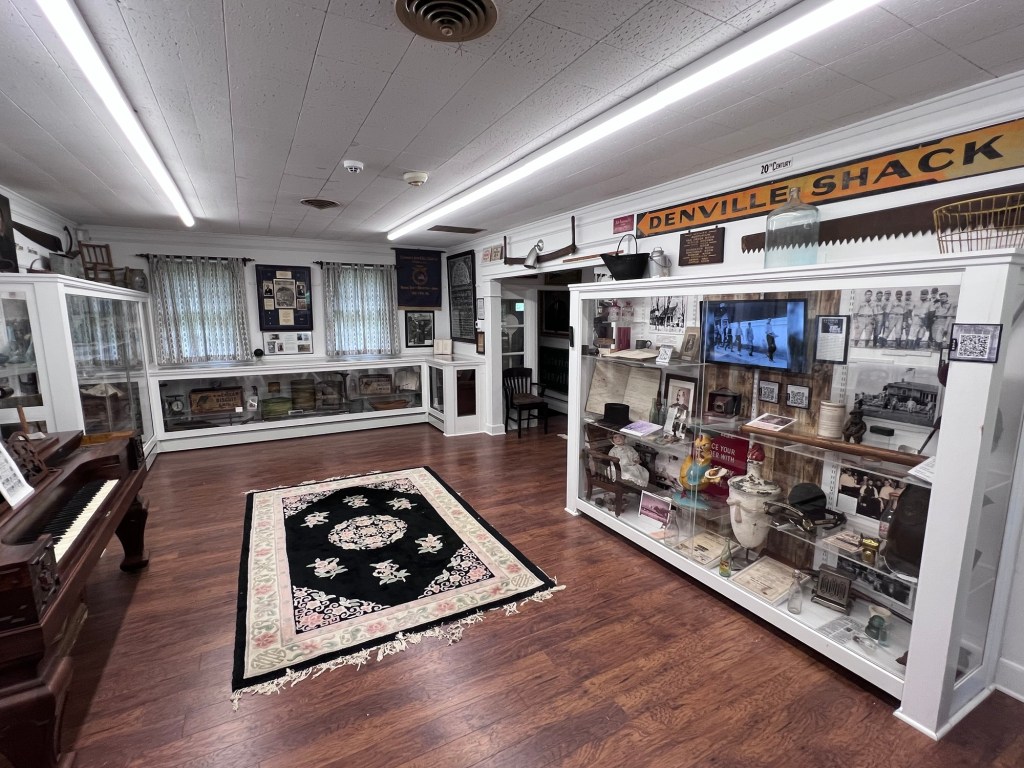
The front gallery of the museum
The back part of the front gallery of the museum
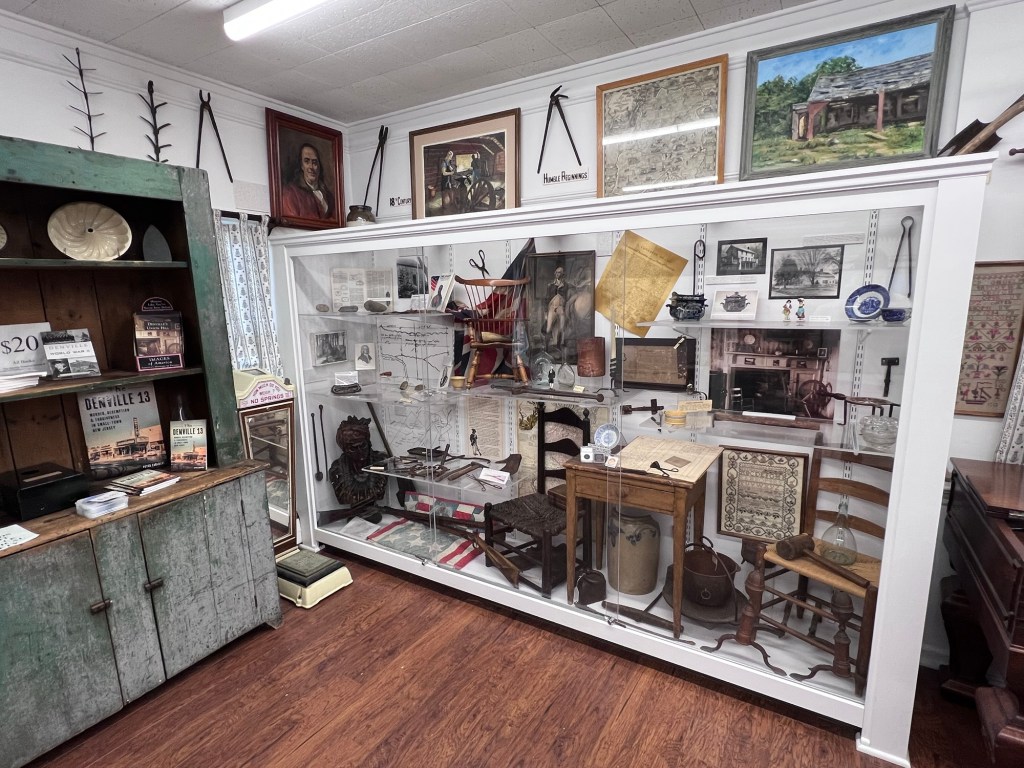
The Denville Museum is an interesting and beautifully organized museum in Downtown Denville, NJ that tells the history of Denville and the surrounding communities. The collection starts with a collection of Native American artifacts and Revolutionary era household objects.
The early foundation of the Denville community is displayed in the front case
In the Spring of 2022, I had been sent the notice that the County of Morris, New Jersey was having a two-day Open House of many of their historical sites for touring and for special events for a program entitled “The Pathways of History: Museum and Site Tours of Morris County, NJ”.
The “Pathways to History” event takes place every May
The weekend event spread to small museums, historical homes and cemeteries all over the County with walking tours and lectures at various sites. Having never been or even heard of many of these sites, I was interested in visiting as many as I could for my blog, “VisitingaMuseum.com” which is here on WordPress.com as well.
I plotted my two days of the event and tried to organize the trip so that we could see as many sites as we could. The event asked the sites to open one of the two days as most of these sites are small and have a tough time getting volunteers. So, I tried to coordinate the sites I had wanted to visit with visiting other places along the way such as farm stands I wanted to visit and restaurants I wanted to try.
The map of historical sites that I wanted to visit
I recruited my aunt to help me take pictures of the sites and travel with me to get her opinions on each of the sites. She also wanted to get out of the house and travel with me so off we went. We started the day with a good breakfast at the Blue Cafe at 273 Valley Boulevard in Wood Ridge, NJ (See my reviews on TripAdvisor and DiningonaSheStringinNYC@Wordpress.com). I like the hometown atmosphere and service of the restaurant.
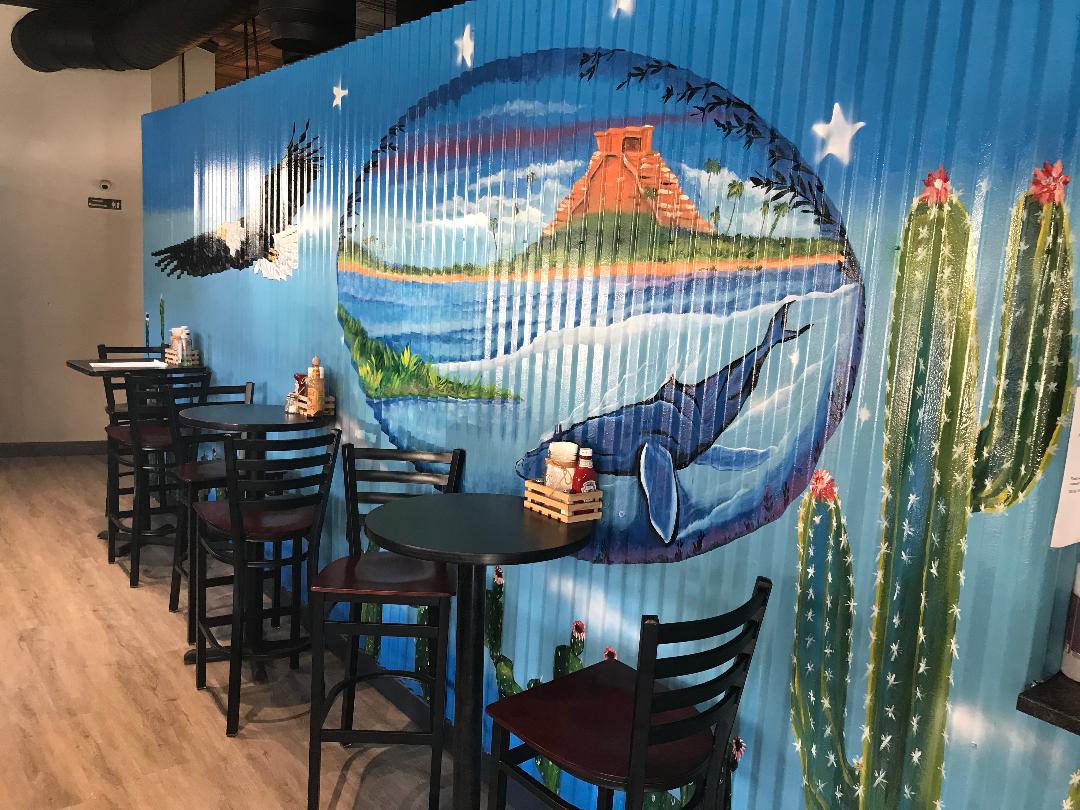
The Blue Cafe at 273 Valley Boulevard in Wood Ridge, NJ
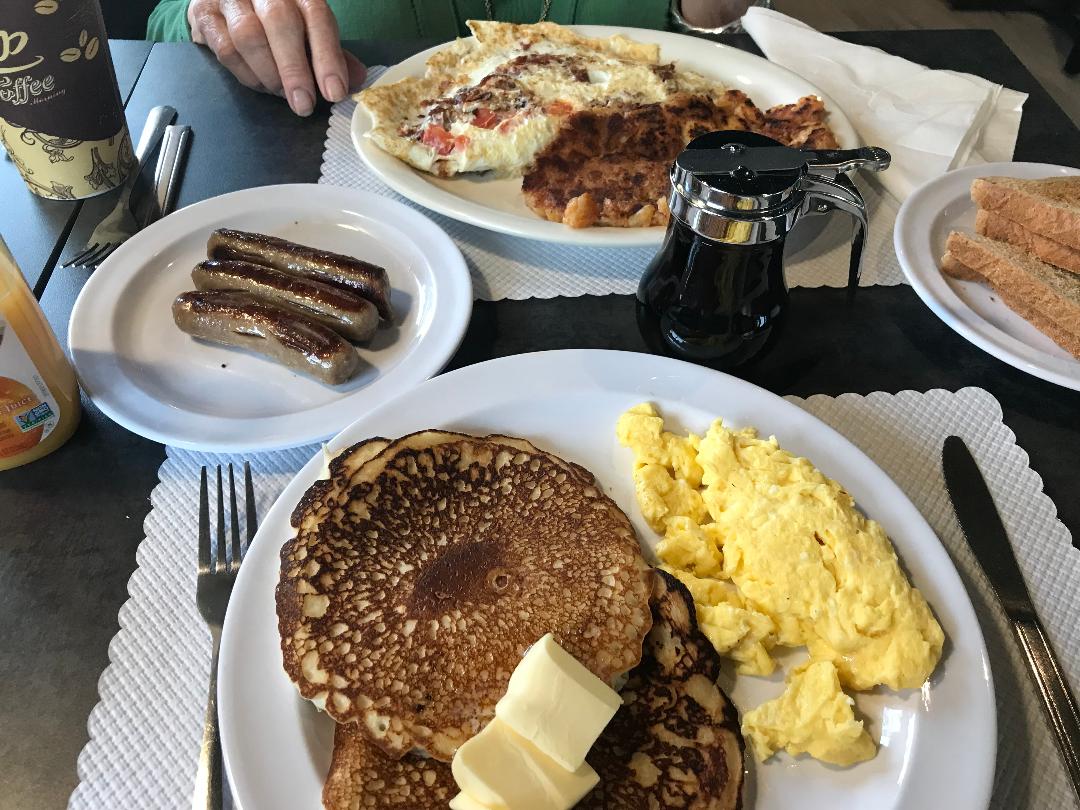
Not wanting to snack along the way, both my aunt and I had a large breakfast. She had an Egg White Omelet with bacon and tomatoes with a side of hashbrowns and toast ($8.95). I had the Pancake Platter which came with two pancakes and two scrambled eggs with a side of link sausage ($8.95). I have to say that everything came to the table promptly and was delicious. The portion sizes were very fair, and the service could not have been nicer.
We needed a good breakfast at Blue Cafe for the long journey
My pancakes were perfectly cooked and had that nice, malted taste and the scrambled eggs had a nice taste of clarified butter. The sausage had a nice spicy sage taste to it. My aunt could not finish her eggs and asked me to take some. They were delicious as well. The flavors of the bacon and the tomatoes had a nice complexity to them and the hashbrowns were well seasoned and crisp.
My pancakes and eggs that morning was delicious
With a nice breakfast behind us and a warm sunny day, we both looked forward to visiting the sites without stopping much. We travelled down Route 80 and then down Route 206, which once upon a time was one of the only highways to travel through the State of New Jersey. It took us down to Route 24 through the rolling hills of Chester, NJ and to our first stop, the Obadiah La Tourette Grist & Mill at 12 East Mill Road in Long Valley, NJ.
East Mill Road lead into a quaint little town that looked like something out of the early 1800’s with older clapboard homes and historic churches with old cemeteries surround them in a highly wooded spot. It reminded me of my trips through the Hudson River Valley.
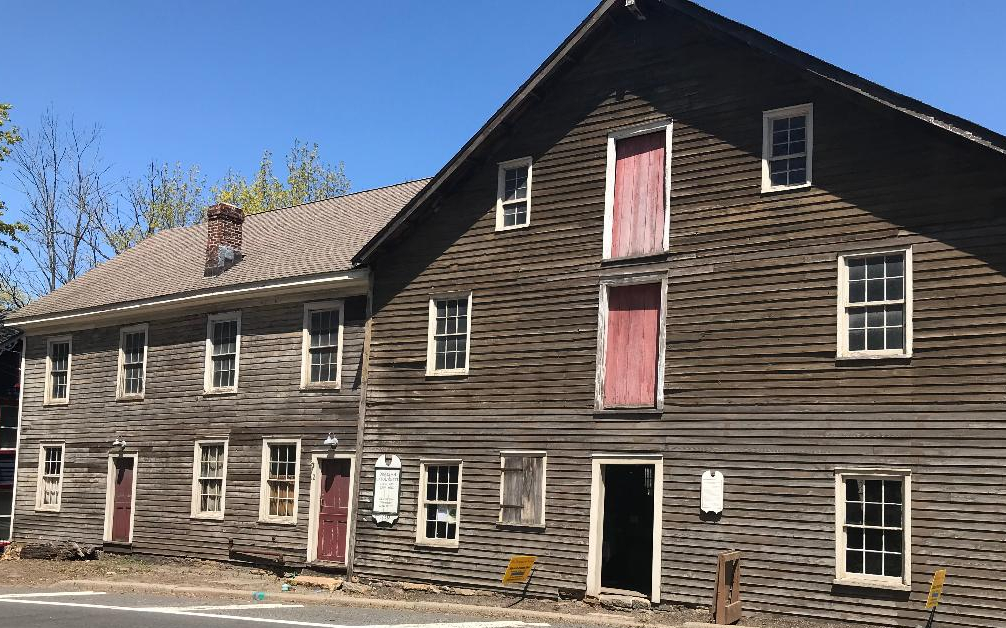
The Obadiah La Tourette Grist & Mill at 12 East Mill Road
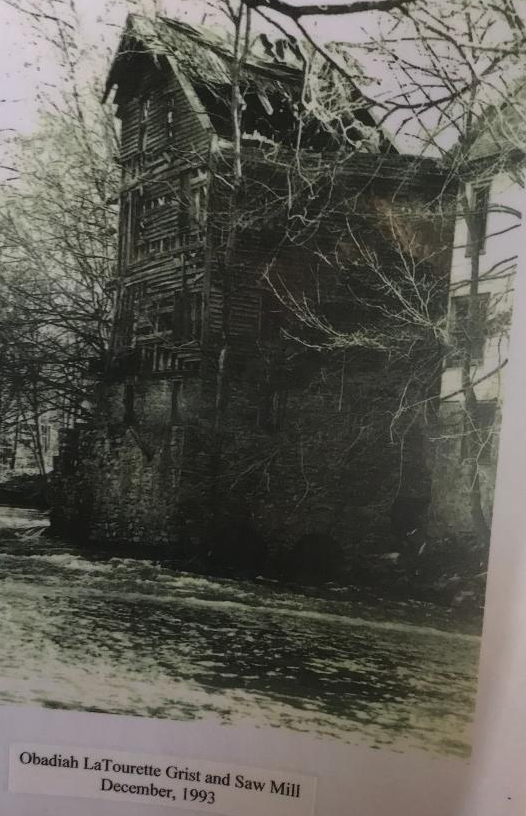
The Grist Mill was fascinating. The mill has been a working mill from the early 1800’s until about the late 1930’s, during the Depression when they needed to expand operations. The place had pretty much been abandoned until the 1980’s when it had been falling apart by the side of the road and concerned citizens got together to save it. It is now going through a renovation.
What the mill looked like in 1993
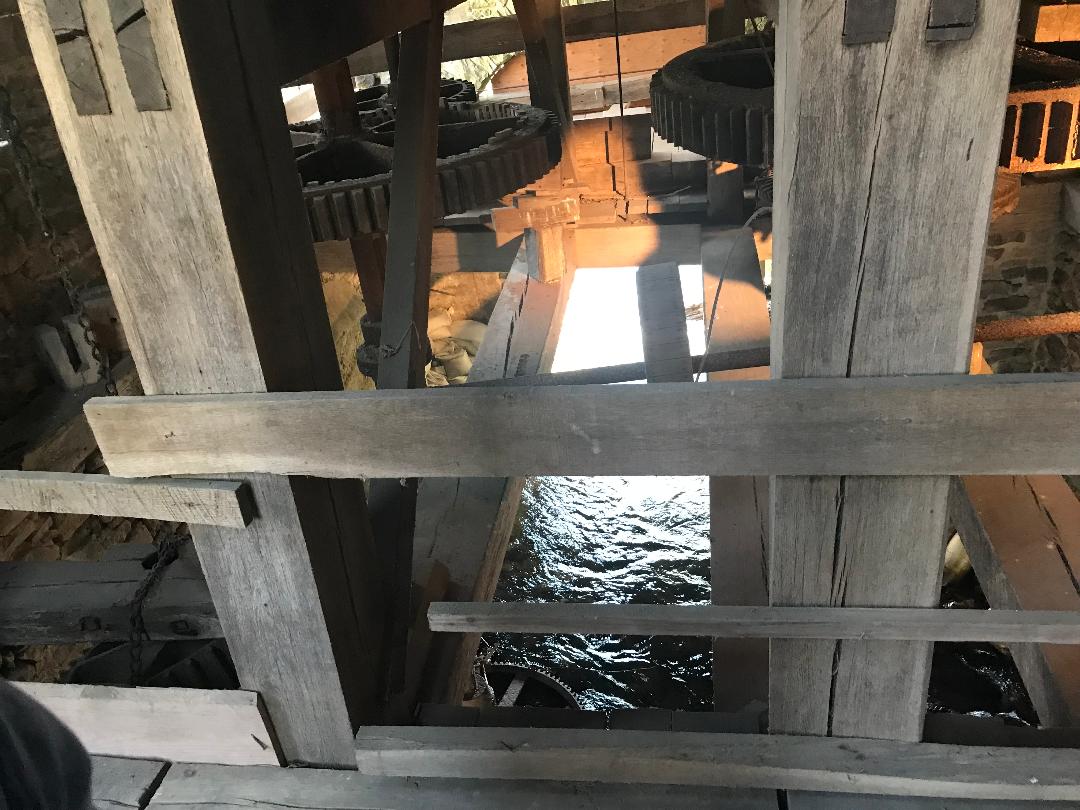
When I toured both the upstairs and the downstairs, upstairs was all the equipment to move the wheat and bundle it for processing and for milling. I even saw amongst the equipment the old portion size bagging attachment where the final packaging took place.
On the lower level of the mill, you could see the stream under the building and the turbine wheels of the old mill still placed in the stream and along the side of the mill. You could view from the deck the workings of the equipment and how the stream powered the mill itself. You could also see the flow of the stream and how it is now affecting the structure of the building.
It is amazing how we survived with just Mother Nature at one time
The staff takes immense pride in the building structure and how the renovation is coming along as well as its unique history. The tour guides could not have been more enthusiastic about explaining to myself, my aunt and the other visitors about the history of the mill, the way they milled the flour and the ongoing structure improvements. It was also so picturesque with the small flowing stream and woods that surrounded it.
We walked along the property back to the car and please to all readers, watch yourself on the road because for some reason everyone was speeding that morning and there is no sidewalk. Remember to walk to the back of the buildings to view the stream, the woods and all the historical homes in this little hamlet.
Our next stop was on the other side of the stream and around the corner from the mill. We visited the Union Schoolhouse & Union Church and Burial Ground at 6 Fairview Avenue in Long Valley, NJ. The Union Schoolhouse has been converted into Washington Township Historical Society building housing its collection. The Union Church burned down years earlier and was left is a stone structure that you can view inside and out. The church is surrounded by the old cemetery where prominent members of the community are buried.
The Washington Township Historical Society at 6 Fairview Avenue
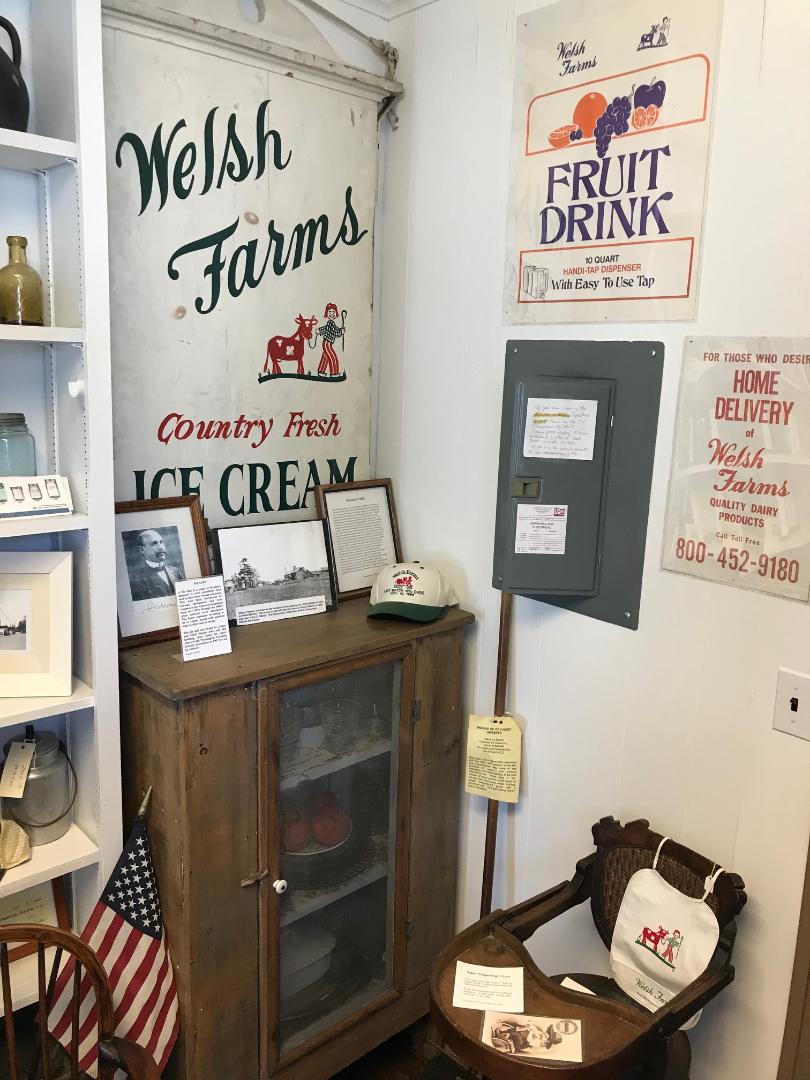
The Union Schoolhouse/Washington Township Historical Society is a well-organized two-story building, that houses a collection of antique objects from the community. There was a set up a school room, selection of quilts, old dishware, antique furniture and on the first floor a complete display of the Welsh Farms Ice Cream Company and Dairy.
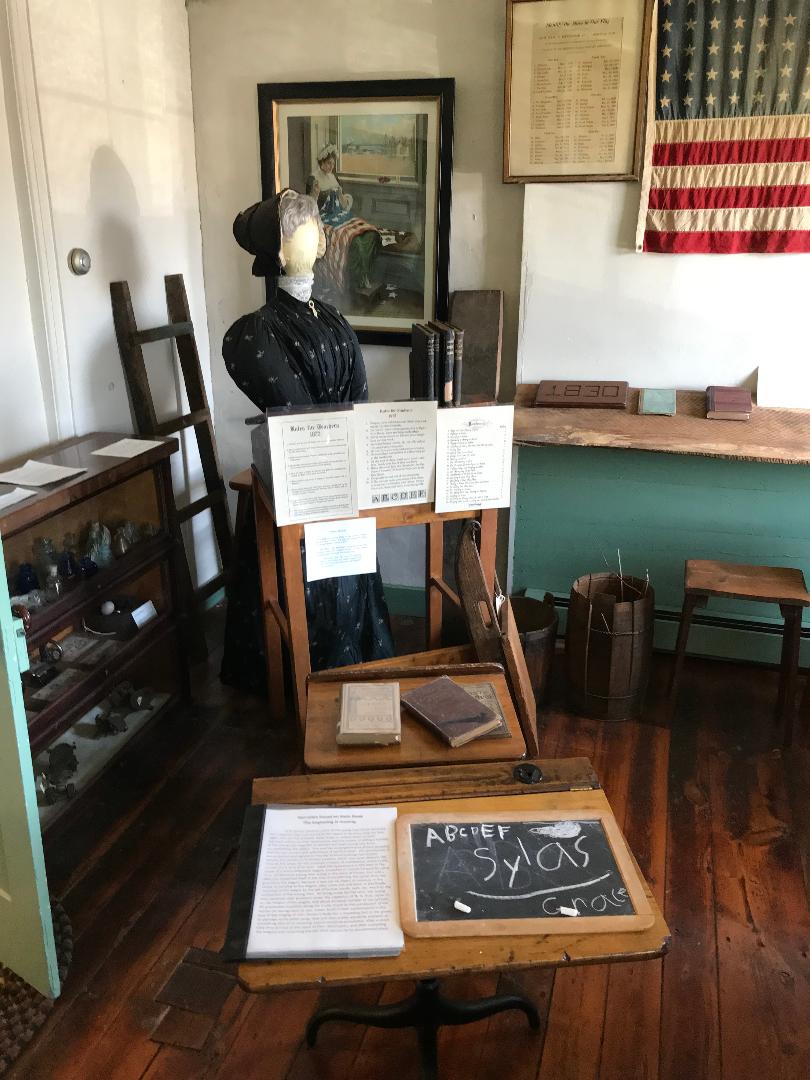
The second-floor school room reflects the buildings past as a schoolhouse
The original ice cream factory (no longer exists) used to be right down the road from the old schoolhouse and members of the Welsh family are buried in the cemetery. I thought that was fascinating as I never knew it had been started here.
The local Welsh family started the Welsh Farm Dairy and Ice Cream factory down the road
The Welsh Family cemetery plot
I toured through the old church with another patron and the tour guide while my aunt, who did not want to walk on the uneven ground of the cemetery got her own verbal tour with one of the members of the historical society. We got to walk through the cemetery and see the graves of the prominent families that were once members of the church. We also got to see how the staff used tombstone cleaner to make the tombstones brighter.
The Union Church and Cemetery
What was also impressive about the building was the beautiful flower garden that lined the stone wall between the schoolhouse and the cemetery. One of the local Garden Clubs must have planted and taken care of the gardens because they were so well pruned and planted. It was so colorful with an array of flowers line with blooming tulips along the path.
The old Washington Township Schoolhouse is now the museum
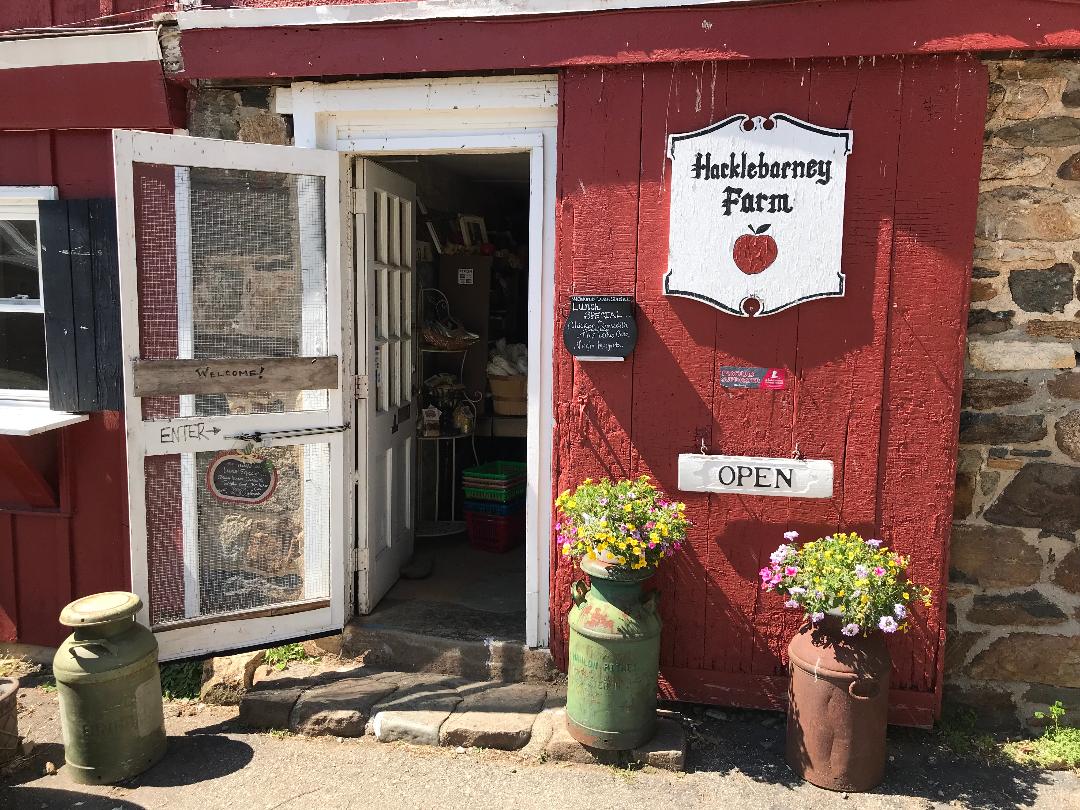
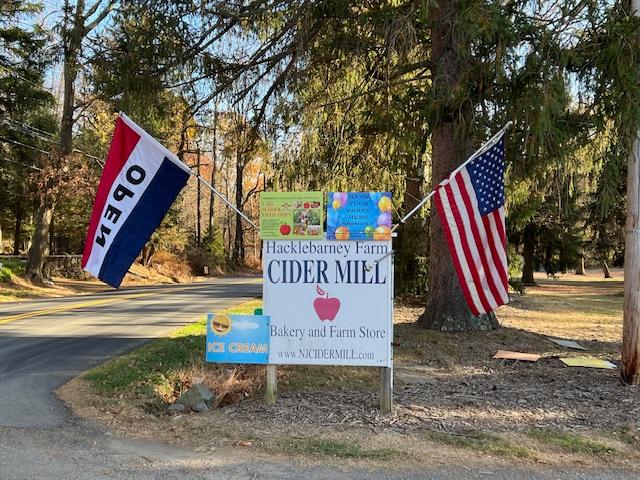
On the way back down Route 24, my aunt and I decided to stop for a snack. We stopped at an old favorite mine that I have been visiting since the early 1970’s, the Hacklebarney Farm Cider Mill at 104 State Park Road which is right outside Hacklebarney State Park, which I had also visited many times as a child for walks and barbecues.
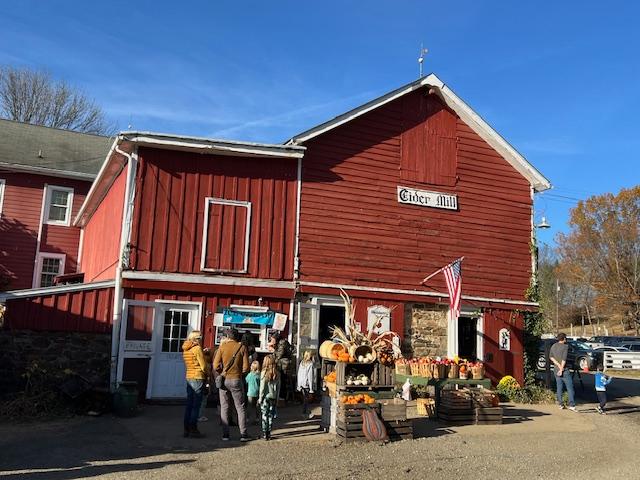
Hacklebarney Farm is always busy especially on the weekends
The Hacklebarney Cider Mill Farm at 104 State Park Road
I love coming to Hacklebarney Farm Cider Mill at all times of the year. It is especially best in the late Spring and in the Fall months when the leaves are changing, and all the Halloween events are happening. The farm had opened their hot dog stand early on customer demand the owner explained to us as well as made sure the bakery was well-stocked for visitors on the tours.
The hot dog stand and the work buildings remind you that this is a working farm and not a tourist trap
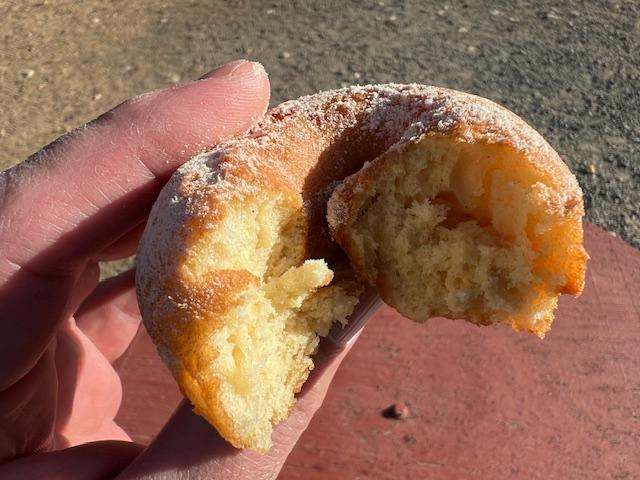
The Apple Cider Doughnuts are delicious here
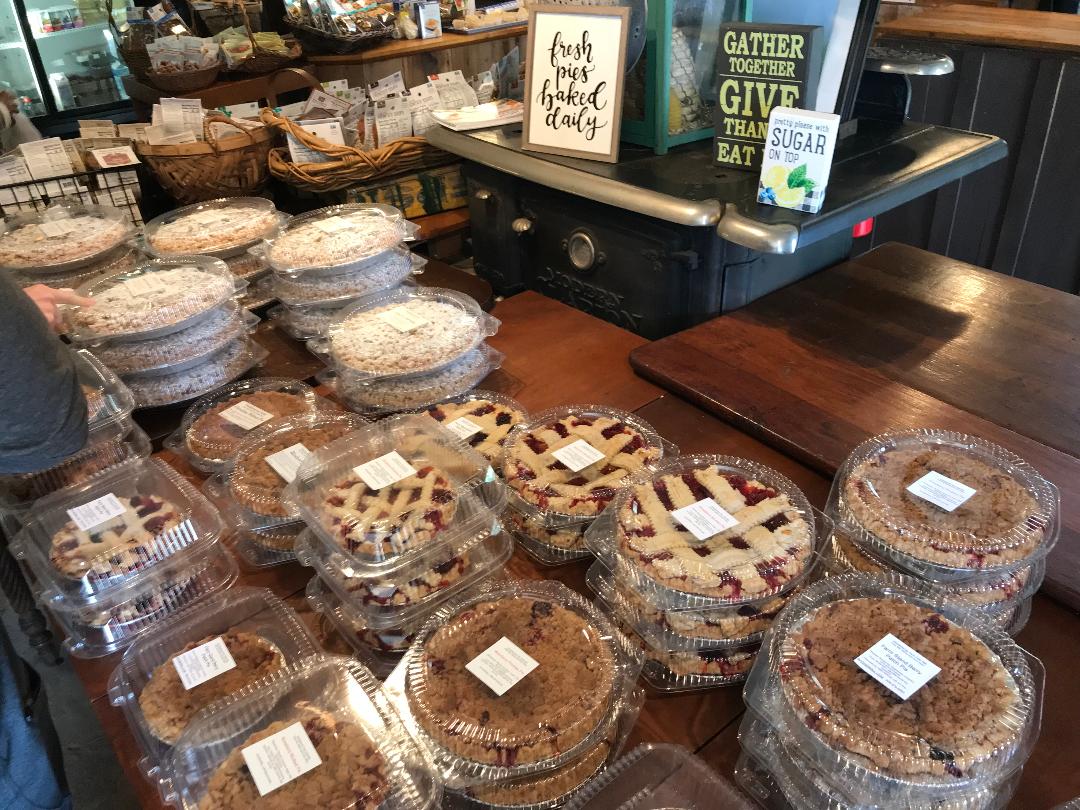
We toured through the bakery, and I ordered a Cider doughnut and a Fruit Dumpling for dessert, and we shared a Chicken and Cheese Quesadilla and two Cokes for our lunch (See my reviews on TripAdvisor and DiningonaShoeStringinNYC@Wordpress.com). It was so nice to just sit and relax and enjoy the weather.
The wonderful baked goods at the Hacklebarney Farm bakery
The Quesadilla was well made and stuffed with lots of chicken and cheese and the salsa had a nice spicy flavor to it. I love the crispiness of their Cider doughnuts with lots of cinnamon sugar on top of them. The Fruit Dumpling was filled with fresh blueberries and strawberries and had nice buttery sweetness to it. We devoured everything in record time, and I could not believe how hungry we both were that afternoon. Maybe it was all the driving or maybe it was just looking over all the rolling hills and the soft breezes from the field.
Enjoying the farm on a warm day
We got a chance to talk to the owner again when she came over with an old picture of the farmhouse that her great-grandparents had built and the pride that they took in all their baked goods. She told us that everything is made from scratch in their kitchen and all the fruits are hand peeled for their desserts. In the Fall, I have watched them make their apple cider on property and you can watch the steps to make the cider you will buy inside (when it is in season, make the trip out here for it. It is well worth the trip).
The Hacklebarney Farm family farmhouse
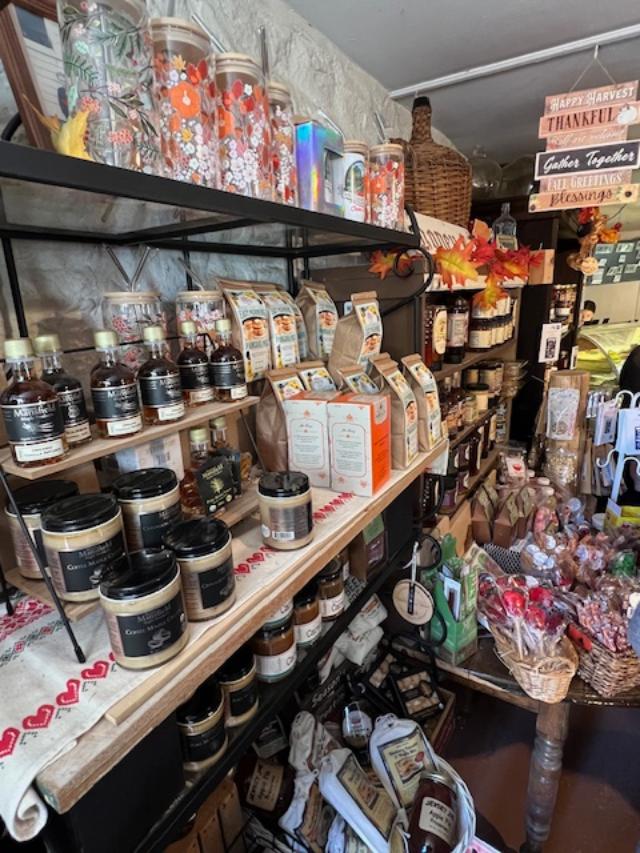
The gourmet items in the farm shop are always a treat
After a relaxing afternoon of relaxing, playing with their dogs and walking around the farm, we left for Downtown Chester, which is located right down Route 24 and on the other side of Route 206. We passed the old shell of a building that was once Larison’s Turkey Farm Inn which closed in 2009.
The old Larison’s Turkey Farm building is a reminder of changing times
Closed for 15 years the buildings are beginning to rot and fall down
I had eaten here a few times with my family over the years and you used to be able to get a full turkey dinner for a reasonable price. Forget trying to visit the place at Thanksgiving. The place is now falling apart, and I read online that they want to knock down this historic landmark for a strip mall. It would not be a bad thing as the building looks like it is going to fall down on its own. Notice the roof is rotting.
Our next site on the listing was the Chester Historical Society or otherwise known as the Chester’s Rockefeller Center at 137 Main Street. Main Street Chester was a madhouse on Saturday as there was a food truck festival going on in the park downtown and traffic was all over the place. We must have circled the downtown three times looking for the Historical Society.
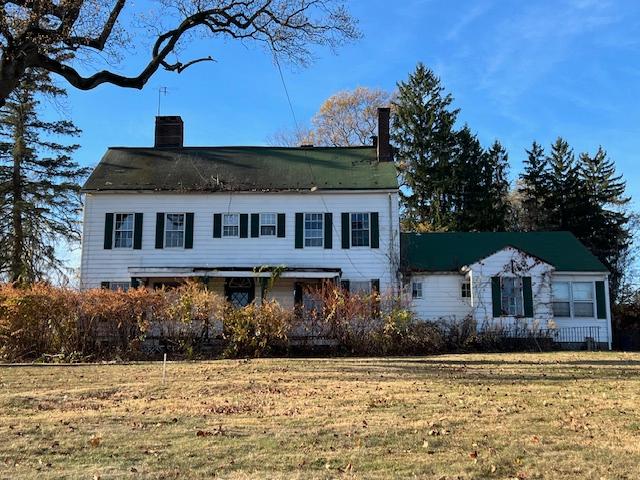
The soon to be Chester Historical Society at 137 Main Street
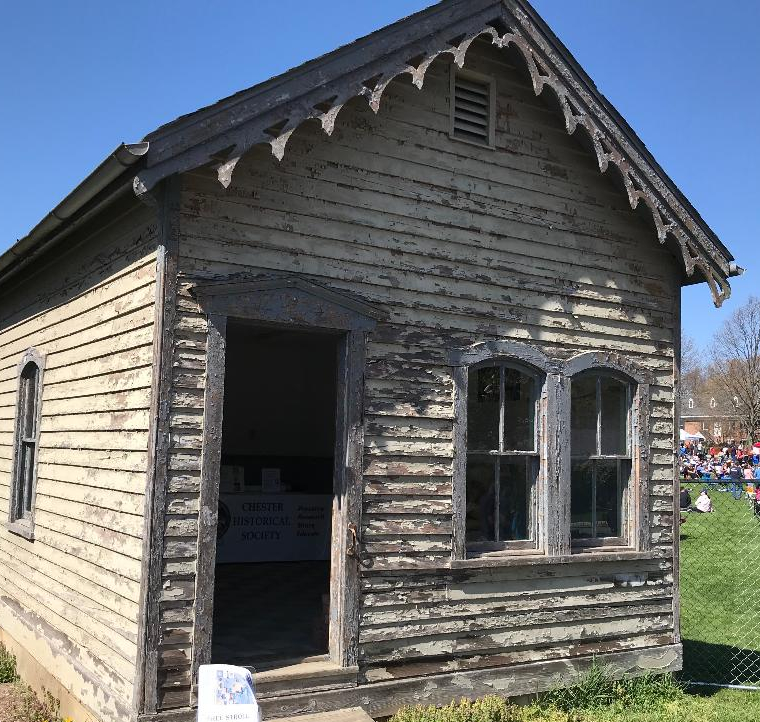
We finally found the empty building that was falling apart right next to the park. All that the historical society was an empty building that had been moved to the park and a kiosk that was closed off by the food truck festival. When we were able to stop and talk to the members who were there, they were closing up shop for the afternoon.
They said they were showing the plans for the renovation of the building and how they wanted to store the collection. That is what amounted to their current historical society. It was a work in progress. The little building was built in 1897 and was ordered from the Sears & Roebuck Company.
The Chester Historical Society is just beginning to be established
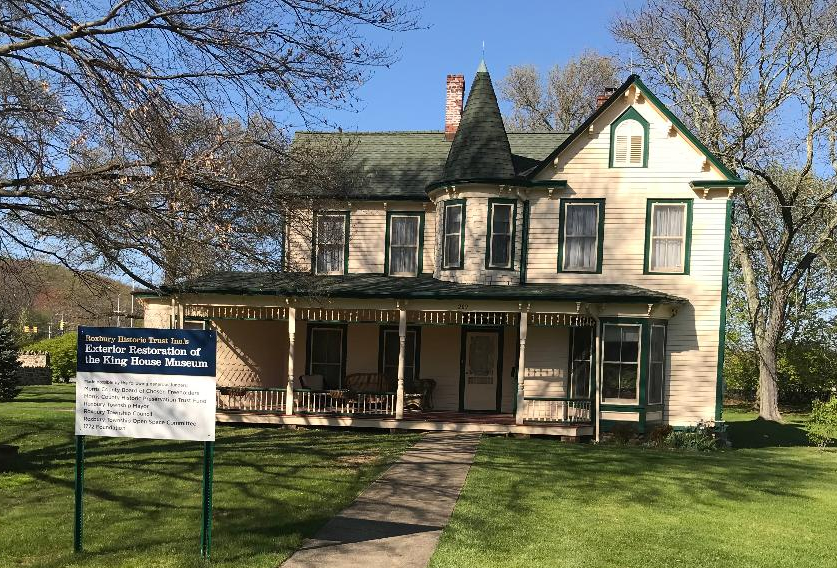
We quickly got out of downtown Chester and headed back up Route 206 North and took some back roads to our final destination that afternoon, the Silas Riggs Saltbox House/The Roxbury Township Historical Society at 213 Main Street in Ledgewood, NJ and the King Canal Store and the King Victorian Home at 209 and 211 Main Street right next store to the house. The sites were closing up shop for the afternoon, but they were nice enough to stay open so that we could have a long visit.
I am so happy that we could visit the sites as the people running them were so interesting and they took such good care of the sites. A few of the volunteers said that this always happens that someone comes late, and they were hoping to close on time, but they take such pride in all these sites that they did not mind staying for us.
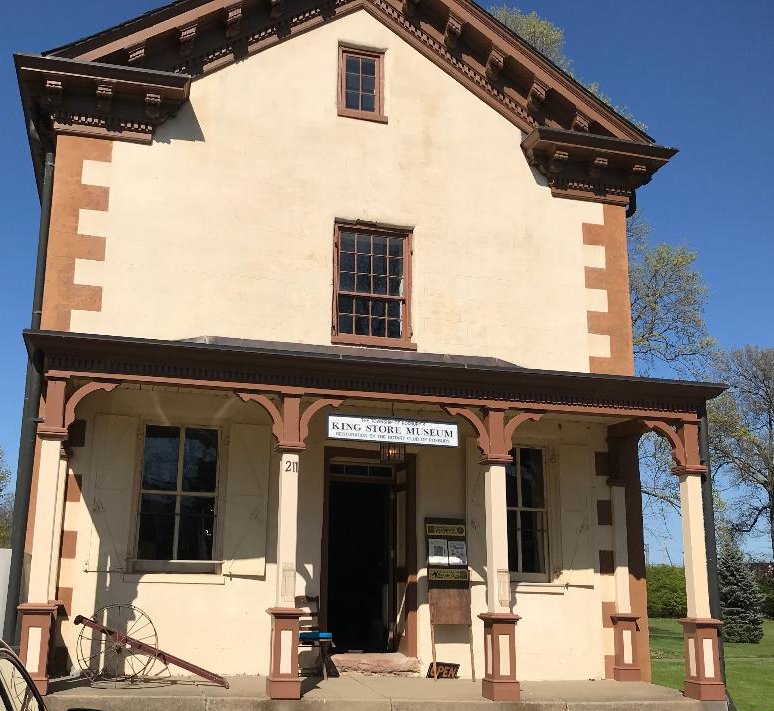
Our first stop was the King Canal Store. The store had been sealed off after the death of Albert King by his wife, Emma. After his passing, she followed his wishes and closed the store down only opening it during the Great Depression when locals needed supplies.
After Mrs. King’s death in 1975, the store and her home, the King Homestead were bought by the Rotary Club of Roxbury, NJ and they set out to renovate and restore the site. The King Canal Store was left untouched and is a step back in time when the Morris Canal was a major form of transportation in the state. The store had been open since the Civil War and closed on the eve of the Great Depression even though the family had been seeing declining sales since the closing of the canal to traffic.
The King Canal Store is a step back in time when this was the neighborhood gathering place
Next to the King Canal Store at 211 Main Street is the King Homestead built in the Queen Ann style by Albert King for his family. The house was closed by that point, but I was able to walk the grounds and on the porch. It is a spectacular home.
The last place on the tour before we ended the first day of touring sites was the Silas Riggs Saltbox House at 213 Main Street. The home had been Emma Riggs King’s parents and it had been moved to this site when it was threatened with demolition. The home is a perfect example of the “Saltbox” architectural style.
The Silas Riggs Saltbox House/The Roxbury Historical Society at 213 Main Street
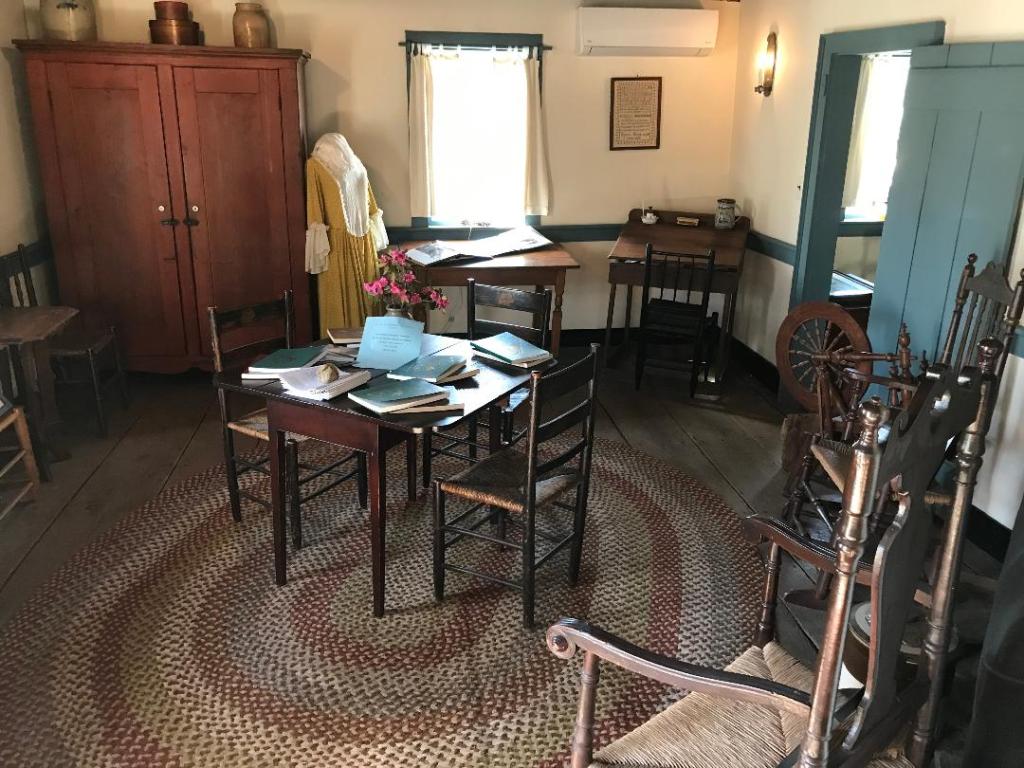
I loved touring this smart little house. Talk about well taken care of and well appointed. The home is well decorated with vintage antiques and artifacts and when you walk in the door you have this welcoming feeling. The house is so warm and cosey that volunteers have commented that people feel that they could move in here.
The front room of the Silas Riggs Saltbox House
What I enjoyed about the Silas Riggs Saltbox house is that the home was decorated in period furnishings that all worked to welcome you into the home. It was almost like the people who lived there just left for the afternoon.
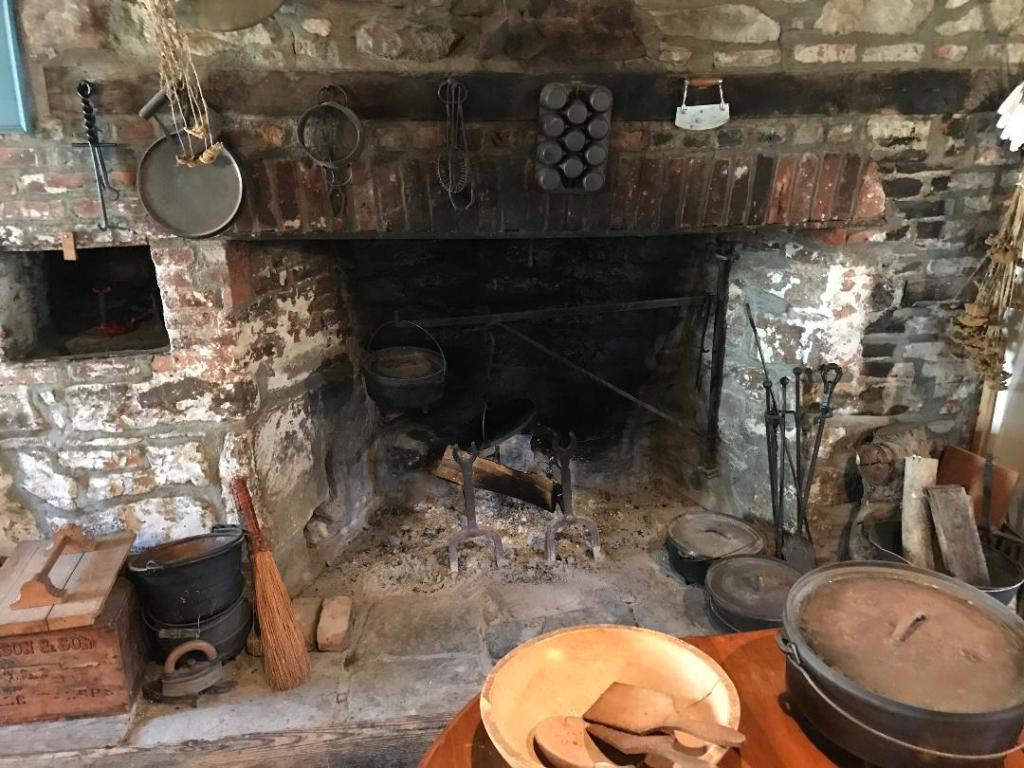
What I really liked about the house was the back-room kitchen with the open hearth. Not only was it a perfect place to cook but it must have been the gathering place for the family and also heated the house. One of the volunteers told me that they had a successful “Soup Dinner” fundraiser during the holidays where they made homemade soup from scratch and homemade cornbread as well. It must be nice to eat a hearty meal in this period home during Christmas as the family once did.
The rustic kitchen at the Silas Riggs Saltbox House
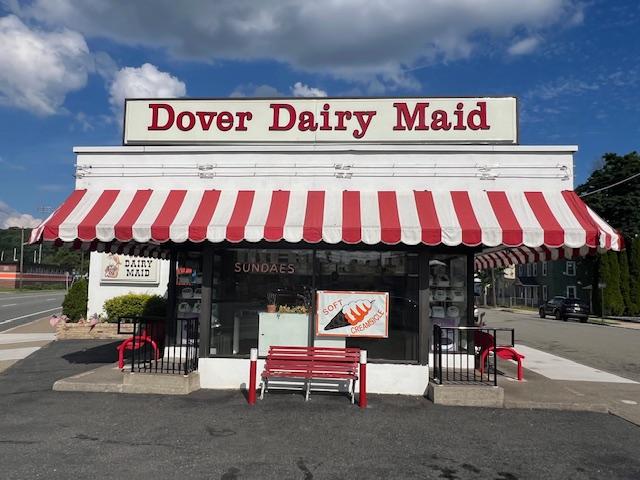
After the house closed for the after, all the other sites had closed at 4:00pm as well and we made our way down Route 10 just off the old main street and then back on to Route 46 East to head home. It had been getting warmer all day and we both needed a snack before dinner. It was by coincidence that we just happened to pass the Dover Dairy Maid Ice Cream store at 240 East Route 46 and stopped for a cone.
Never having travelled down this part of Route 46 East before, I had never seen this popular place for ice cream and all of a sudden, I turned the car and needed some ice cream. There are times in life that you take a different bend in the road, and this was one of the more popular ones. Their homemade ice cream was amazing.
The Dover Dairy Maid at 240 East Route 46 is the best
While my aunt tried the Mint Chocolate ice cream, I had a yearning for something more fun and I got a bowl of Cotton Candy ice cream and at $5.45 for two large scoops, it was a reasonable trip. It is nice that a business not only does not gouge a customer but offers that personal service was reflective of when I was a kid in the 1970’s when this business opened. I felt like it was a step back in time when things were simpler. We even at our ice cream out on the benches in the back of the store. Talk about 70’s! Between here and Hacklebarney Farm I felt like a kid again.
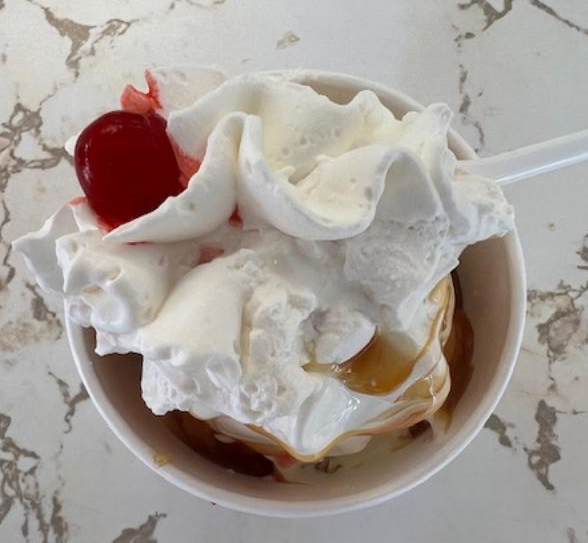
In 2024, I indulged in a Butterscotch Sundae at Dover Dairy Maid
There was no traffic on Route 46 East that evening and got home in record time. My aunt and I needed some recovery time, so I dropped her off and met her for dinner later that evening. We finished off the evening at Napoli Pizzeria at 25 Washington Street #2 in Lodi, NJ for dinner. Napoli’s food is consistently excellent, and I love their pizza. The best part is that the parking is always plentiful and never have to travel far to go.
Napoli Pizzeria at 25 Washington Street #2 is wonderful for lunch and dinner (Closed December 2025)
It was a nice evening chatting over a cheese pizza ($10.95) and a glass of wine. We talked about all the sites we had visited and the ones that we could not and made plans to revisit some of the sites in the future. There was a lot more to see and do in Morris County. It was a nice way to end the first day of touring and it had been such a perfect sunny day that it was a pleasure to stop and really enjoy each site.
The historical marker at the Ayres-Knuth Farm at 25 Cooper Street
On the second day of the “Pathways’ tour, my aunt was busy, so I started early with a quick breakfast at home and was on my way back to Morris County for a second day of adventure. My first stop on the tour was the Ayres/Knuth Farm (The Ayres/Knuth Farm Foundation Inc.), a former working farm just off Route 10.
The main farmhouse on the Ayres/Knuth Farm
Not only was the site open for touring but they also had a mini car show with antique cars and fire trucks owned by some of the members. Seeing some of these Model T Ford’s and Steam Engine Fire Trucks in perfect condition shows American quality motorship at its finest.
What interested me about the farm is that it had been a working farm up until the last fifty years and showed the progression that the farm took in its almost 100 years in the county. The farm itself dates back to pre-Revolutionary War days with the farm being purchase in either 1735 or maybe 1759 by Obadiah Lum. The property itself was settled and developed by Daniel Ayres, who was born in New Jersey in 1778 (The Ayres/Knuth Farm Foundation).
The Ayres-Knuth Farm and the outer buildings
105 acres of land was given to him by his father-in-law, David Garrigus upon the marriage of his daughter, Hanna in 1803. His son, William took over the farm in 1856 upon the death of his father in 1856, changing the farm to add husbandry and fruit cultivation. When William retired in 1896, none of his children wanted the farm and it was sold. Changing hands many times, it was bought by Martin and Anna Knuth in 1906. The farm was taken over by two of their children and it remained in the family until the 1990’s upon both of their passings. In 1996, the Township of Denville purchased 52 acres of the original farm and it is now managed by the Ayres/Knuth Foundation Inc. (The Ayres/Knuth Farm Foundation).
On this clear and sunny Sunday morning, it was fun to walk around the former working farm to see how it developed. Both families learned to modernize and add to the operation. I was able to tour the smaller tenet farmhouse (built in 1895), the barn (built in 1895 (and the various outer buildings like the chicken coops (built in 1895), outhouse (built in 1930) and the Smokehouse (built in 1825). The small well was built in 1797 and was the oldest structure left on the property.
What got my attention is that there still are tenant farmers on another tract on the property still working the land and the property is protected by grants from Morris County. So, it still is technically a working farm. A lot of care was taken to preserve the farm as is and the volunteers told me that there were plans to fix up the other buildings. The Tenant House needed a lot of work and was run down but the main Farmhouse had been renovated and was closed that day.
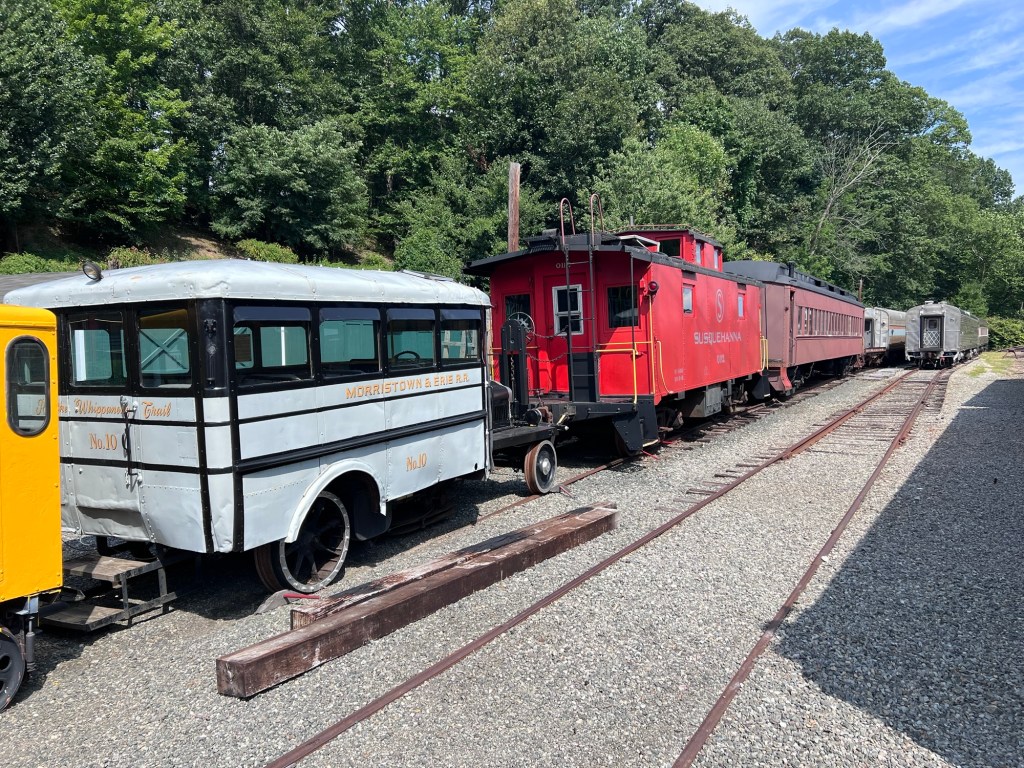
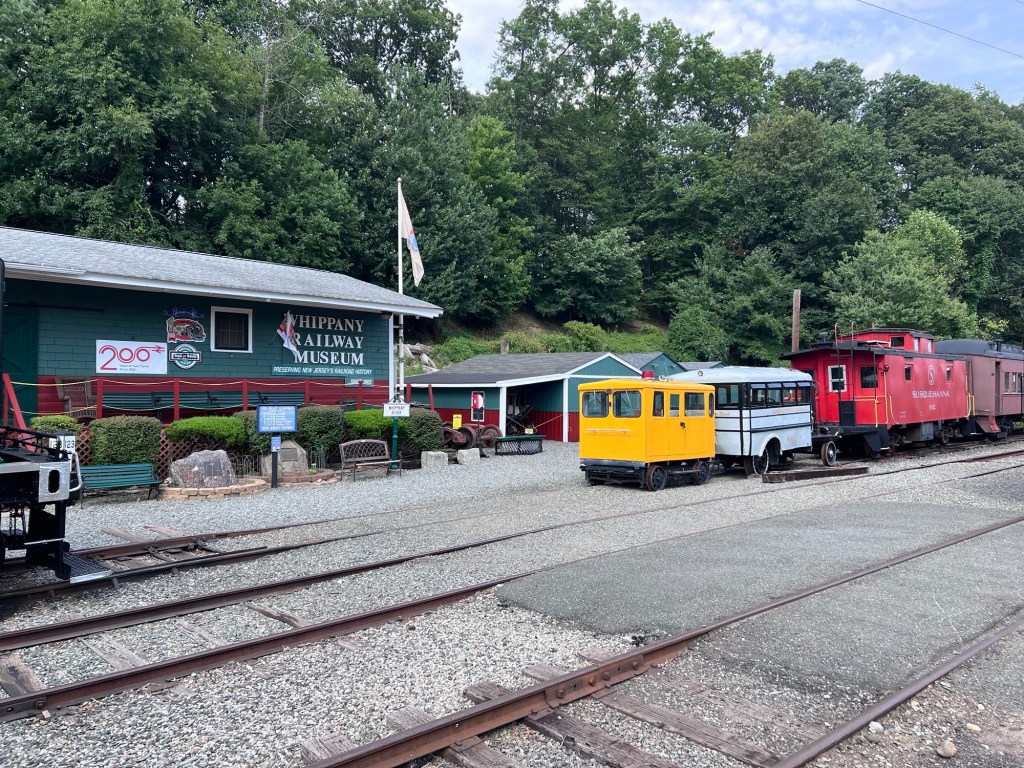
After having a nice conversation with many of the volunteers about the development on the farm, I was off to the next site, The Whippany Railway Museum at 1 Railroad Plaza in Whippany, NJ. I usually don’t get excited by railway museums one looking like another but the care and dedication of the volunteers of this museum is just mesmerizing. They really care about the detail and condition of every railcar and artifact that comes into possession of this museum, and it shows by the way its displayed.
The Museum was so well organized and told the story of the rail systems not just in New Jersey but their development all over the country.
The inside of the museum
Unlike some rail museums that I have been to where they put dishes, lanterns and tickets all the same shelves, the Whippany Railway Museum took a lot of pride in setting up their displays more as a progression to how the railways evolved over time starting with coal, then to steam and then electric.
The Whippany Railway Museum
Not only that it was the way people traveled and how dining and then First Class tried to rival the growing Jet Age travel to keep customers. Each case line told a story. The cases show a progression in communication, ticketing, uniform, dining and equipment used on the trains. Take time to look over the information supplied in the cases as well. They also have a nice gift shop inside the museum.
The history of the Pullman Car
It was the hour-long walking tour that really blew me away. This volunteer named Mike walked around the museum asking people if they would like to take a tour at noon and then for the next hour and a half, we toured all the train cars.
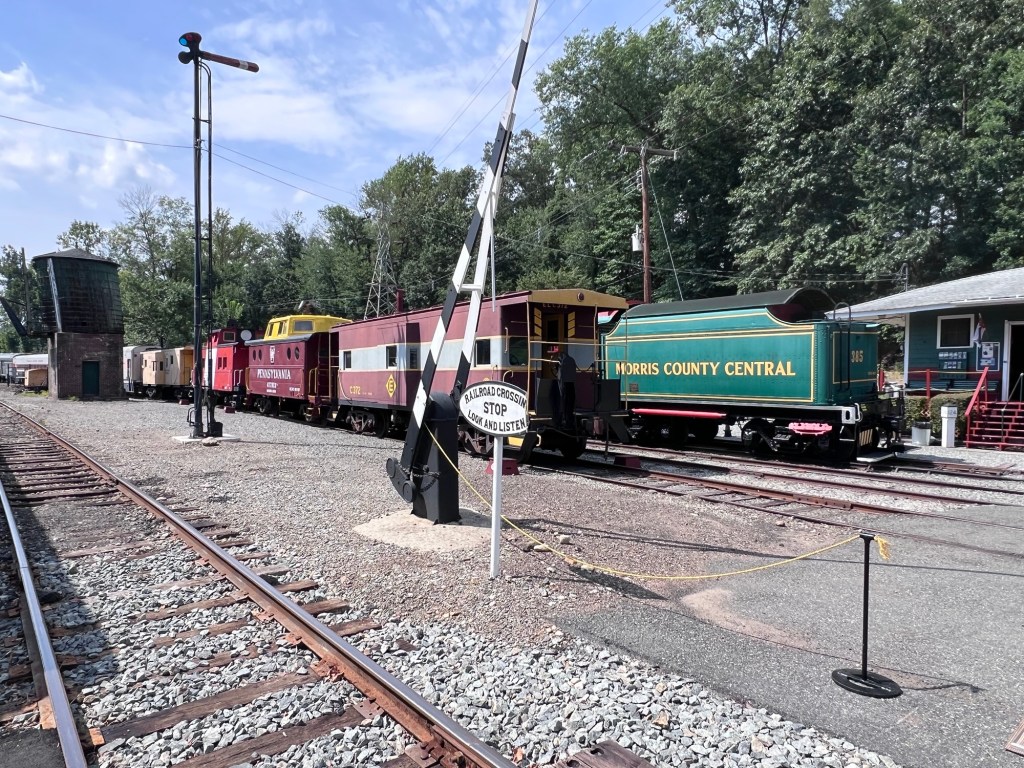
The Whippany Railway Museum grounds
Each of the train cars were at different stages of renovation and some were fully restored. Mike explained to our small tour group that different members of the museum had special skills, and everyone had a hand in restoring the cars. The volunteers all dressed like period conductors and would be stationed at each car to describe the railcar to us.
The Whippany Railway Museum grounds
Where the museum really shines and where I saw the most pride is in the rail cars that have come to the yard over the years and have been carefully restored. The Southern Railway No. 385 built in 1907 for faster freight service, the Texaco Fireless Cooker No. 7240 built in 1937 for industrial switching duty and one of the newest steam locomotives still surviving, the U.S. Army No. 4039 built in 1942 for WWII service are just some of the cars on display (Whippany Railway Museum pamphlet).
The inside of the luxury car
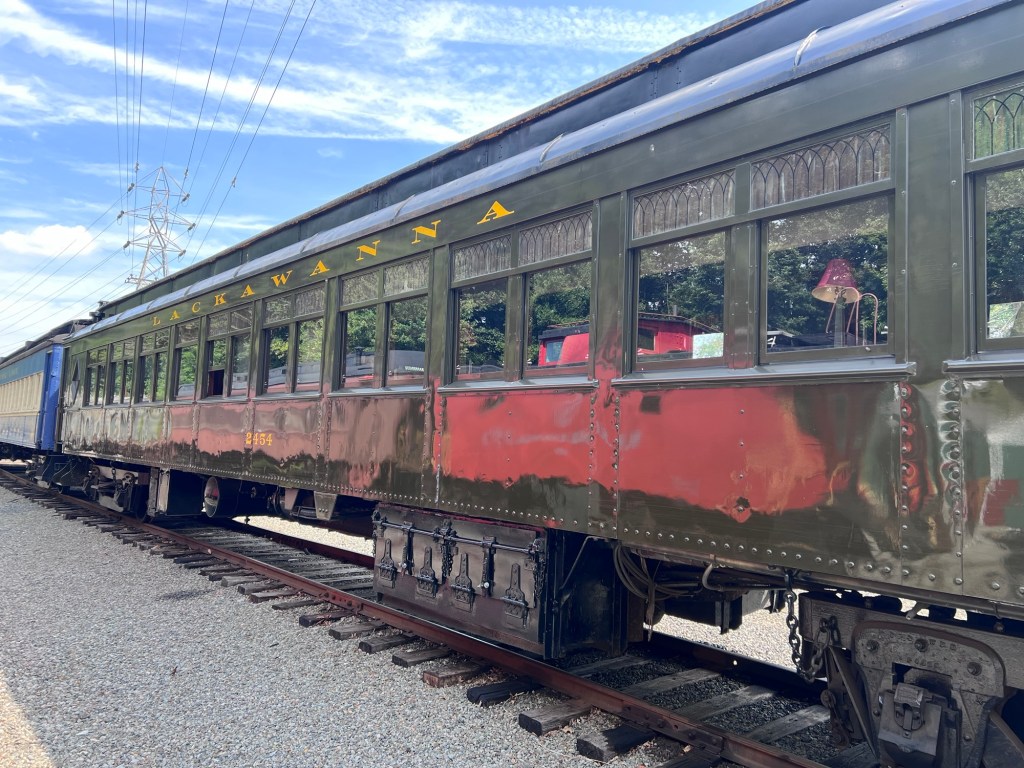
The railcar that most impressed me was the Lackawanna Railroad Subscription Club Car No. 2454 that was once known as the “Millionaires Express” (Whippany Railway Museum). The mahogany paneled car carried businessmen from New York City through towns in the middle of New Jersey.
The inside of the car
What I thought was interesting was the people who rode it (Christie Todd Whitman’s father was a member) and the fact that you had to ‘buy’ the seat, which meant that no one could ever sit in ‘your chair’ if you were not there. This car ran for 72 years finally retiring out in 1984 (probably due to the recession and changing times).
The outside of the Lackawanna luxury car
After the extensive tour was over, I visited the model trains that were riding around the outside of the rail cars and talking with other volunteers on what the future plans of a new railcar that just arrived. I also walked up to their snack shop that is at entrance of the museum site and was bummed when they did not have any of the large pretzels in stock.
The snack shop at the museum
The woman said that they are their most popular item and had not arrived for the tour day. I then moved on to my third site, The Whippany Burying Yard at 325 Route 10 East.
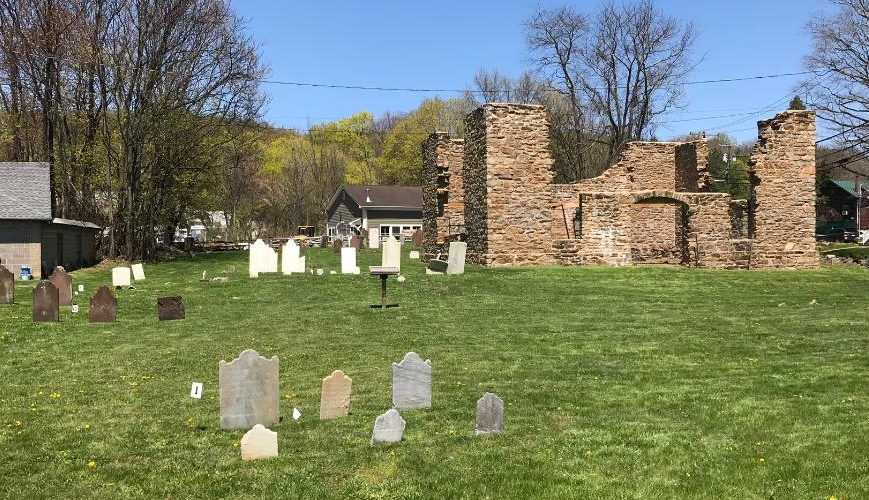
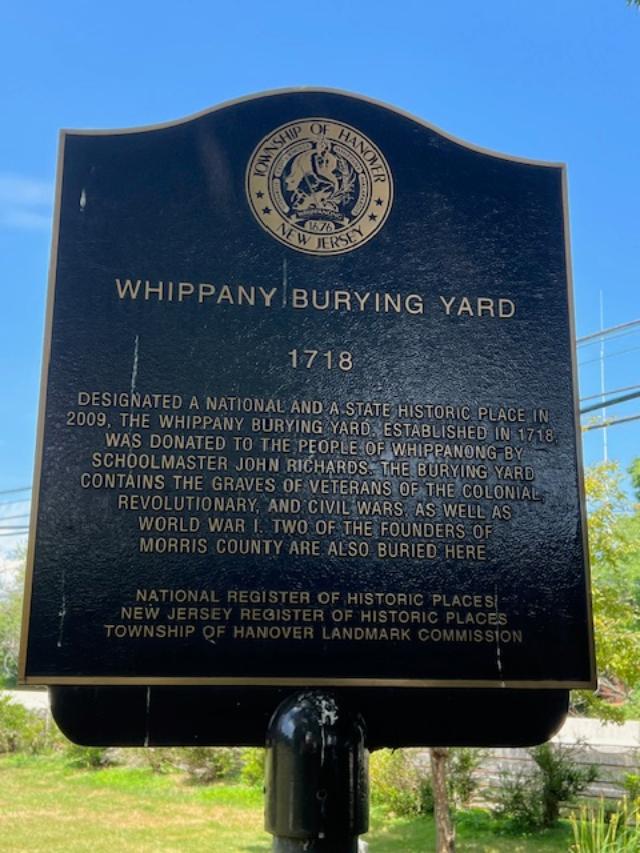
The Whippany Burying Yard historic marker
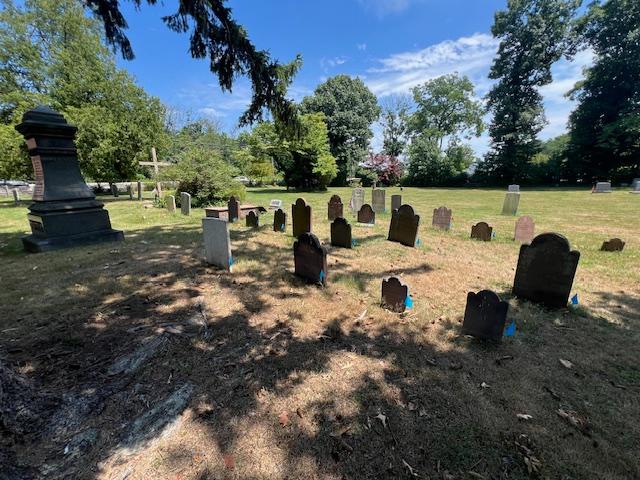
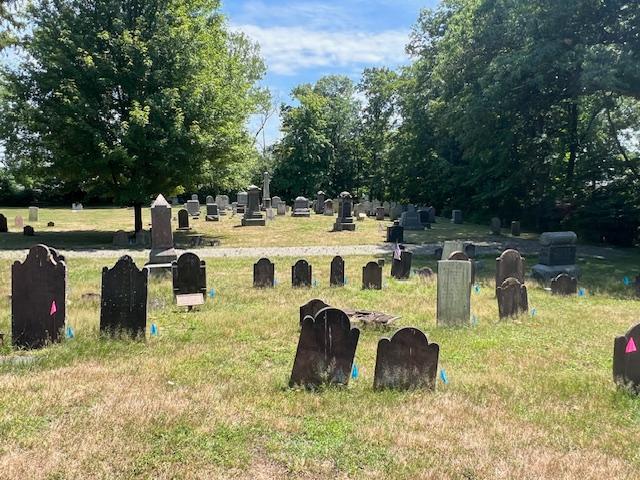
The Whippany Burying Yard was also having a tour that I just made when I arrived. It was given by a retired college professor who had lived in town all of his life and knew the history of the cemetery quite well. The old cemetery is steeped in history as one of the oldest cemeteries in New Jersey and home to many Revolutionary and Civil War veterans. As we learned on the tour later on, the only people that can be buried there now are former Mayors of the Town of Whippany who have died.
The entrance to the cemetery
Two of the founding families of the town have many family members buried here, the Tuttle’s who still have relatives living in the area and the Kitchel’s. The guide for the afternoon took us on an hour tour of the cemetery, pointing out prominent members of the war years including Timothy Tuttle (died 1754), a founding judge of Morris County, Keturah Tuttle Platt (died 1850), who was a Charter member of the First Presbyterian Church, Captain Timothy Tuttle (II of III-died in 1816), who was a member of George Washington’s First Regiment in the Continental Army, Samuel Tuttle (died in 1762) and Colonel Joseph Tuttle, a blacksmith and Deacon at the Presbyterian Church who served in the French & Indian War.
The entrance to the Whippany Burial Yard
The Kitchel family was prominently represented as well with Abraham Kitchel (died in 1741), who was one of the six original judges of Morris County and his wife Sarah, whose family was claimed to date back to Charlemagne, Emperor of France, Abigal Kitchel (died in 1768), Uzal Kitchel (died in 1813), a Militiaman in the American Revolution and his wife, Anna (died in 1815). Many of these people as well as their ancestors made major contributions to the growth of the surrounding community.
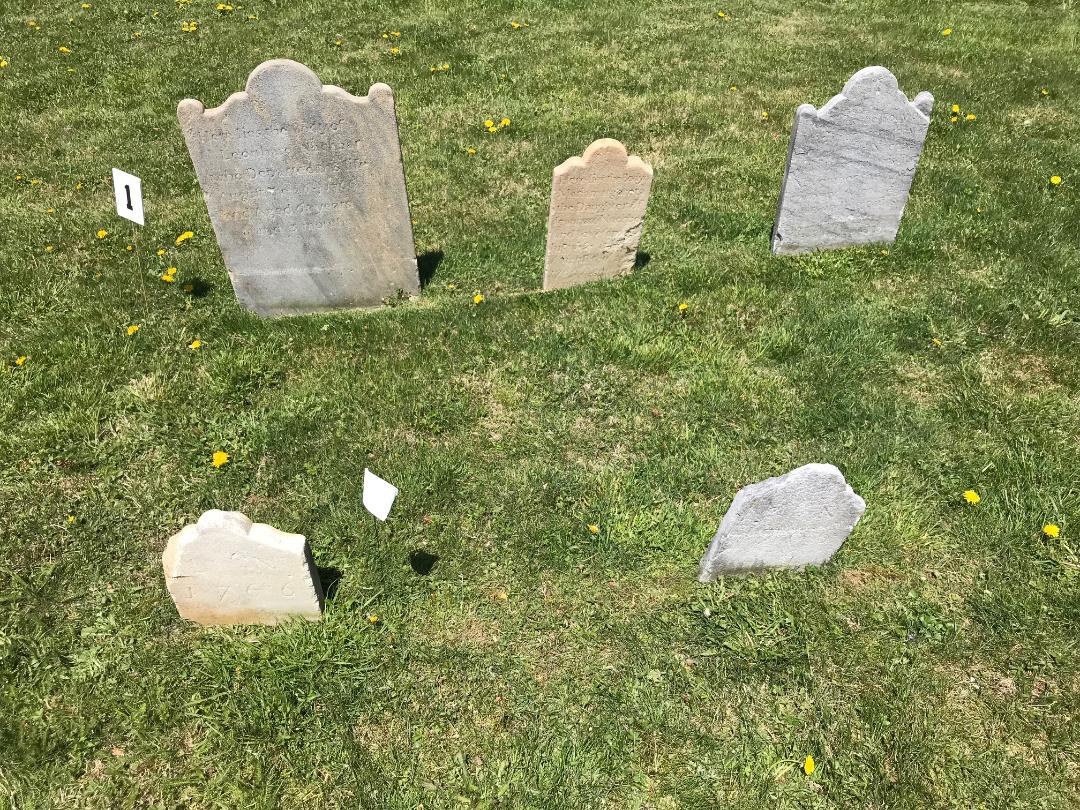
The Tuttle Family burial plot
We were also given a lesson in the construction and care of the old tombstones, some of which were beyond repair. Some of the original grave sites were made from sandstone, marble and granite with granite becoming the popular choice later on. Here and there some of the tombstones were decorated with winged skulls or cherubs. These show morality images of the dead (Whippany Burial Yard pamphlet).
The Post Family cemetery plot
We were also walking by the river that the graveyard sits on and were told that current erosion is affecting some of the grave sites. These might have to be moved in the future and the tour guide was not sure if any have been lost over the years. The old Presbyterian Church that sat on the site (built in 1718 and removed in 1755) has since disappeared and there is no trace of it now.
The Whippany Burial Yard has many different types of tombstones
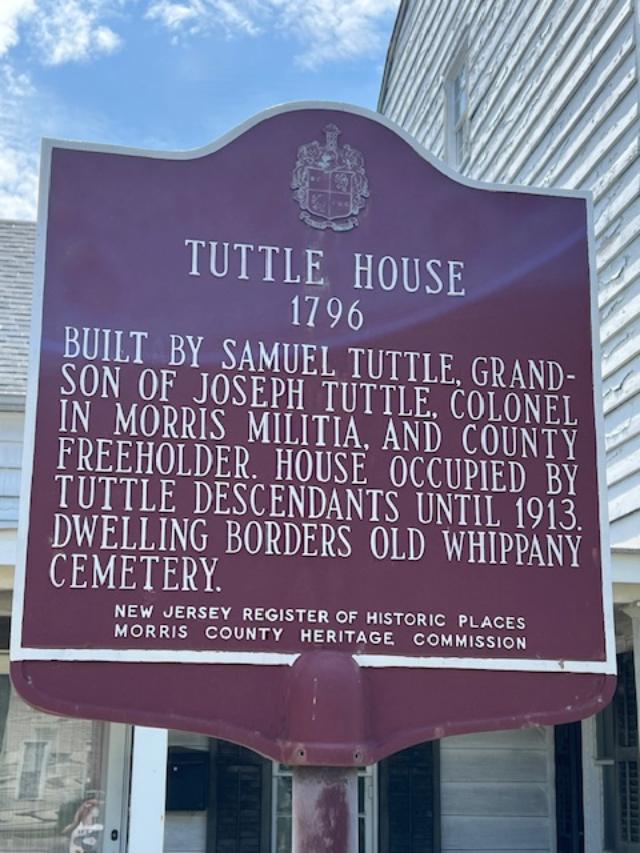
At the end of the tour, the guide explained to us that the old Tuttle House, dating back from the late 18th Century was just left to the town by its last owner to be preserved as a museum for the community. The Tuttle house will need a lot of work in the future.
The Tuttle House at 341 Route 10 will be a future museum for the Historical Society
It was getting late in the day after my last tour, and I figured I had time to see one more site before the day was over. I wished they did not end the day so early at 4:00pm. It does not give people much time to visit all these sites in one day, but the museum tour guides made them so interesting that you did not want to leave so quick.
One last look at the historic cemetery with the Tuttle House in the background
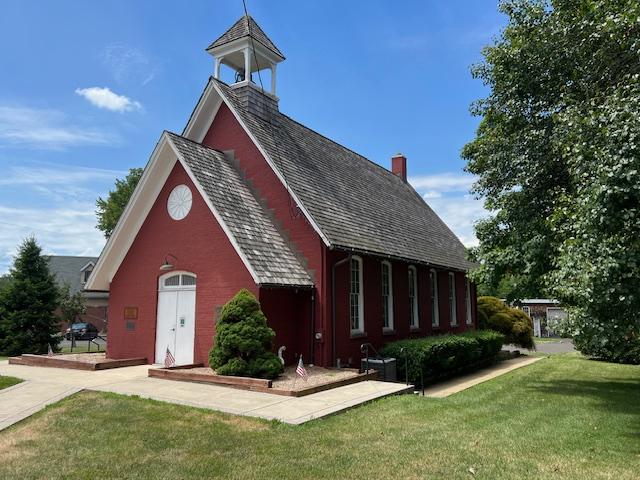
My last stop on the tour day was the Florham Park’ Historic Preservation Commission’s Little Red Schoolhouse and Hancock Cemetery at 203 Ridgedale Avenue. On the map it looked so far away but it was only ten minutes down the road from the cemetery and I got there in plenty of time to spend the last half hour of the day at the museum.
The Little Red Schoolhouse Museum at 203 Ridgedale Avenue
I was the only one there with two members who said that they were surprised on how busy the day was for them. They told me that almost every person who visited said the same things: either they passed the place a million times and never knew it was a museum or they lived here for about twenty years and never knew the town had a museum. I said I was from another area of the state, and this was my first time as well. The little museum is nicely set up.
The inside of the classroom portion of the museum
In the back there is a small classroom set up keeping with the theme of the building. This lets students who are visiting the building of their counterpart’s early education with desks, ink wells and chalk boards that have not changed that much over the years. There are old desks and chalkboards and items that date either from the late 1880’s to about the 1930’s.
Not much has changed in the modern classroom over the years
There is early century clothing, farming equipment from the town’s farming past and event Native American objects found in the town and in private collections. Other items included decorative items from the home including dishware, home products and furnishings. Each section of the museum is divided up by lifestyle.
Artifacts from the community of Florham Park, NJ
The docents that day explained that the items were reflect the town’s past and some came from families that have been in town for years. The museum reflects the community spirit of town’s past. It explains that times have progressed but not changed too much over the years. They also told me how hard they work to promote the museum.
The historic organ
I asked where the Hancock Cemetery was, and they told me down the road from the museum, so I left after about a half hour to let them close and looked for the cemetery. I never found it “down the road” so I was not too sure what direction they were talking about. By the time I got back to the museum, it was shut, and all the cars were gone. It was now 4:30pm. I decided to head off to dinner.
I got lost trying to take the back roads from Route 10 to Route 46 (later on when I got home, I found I was in the right direction but did not know it). I passed the Parsippany Historical Museum at the Bowlsby-DeGelleke House at 320 Baldwin Avenue on the way but at 5:00pm I could see one of the costumed docents was desperately trying to close up for the day, so I did not stop.
I finally made it to Downtown Boonton, NJ for dinner. The town was really quiet on an early Sunday evening. I passed the Boonton Historical Society and Museum at 210 Main Street that was closed for the evening. They had a full day of activities that day and must have closed early.
Boonton Historical Society and Museum at 210 Main Street
Inside the Boonton Historical Society in the main gallery
Ever since I got involved in the Bergen County Firemen’s Home Association, I have been visiting this interesting little museum. They have the most intriguing walking tours on the history of the town’s development and on the ruins of the local iron works. They also have nice inhouse tours of the museum and very inviting Holiday Open House (pre-COVID).
Dinner that evening was a restaurant I had wanted to try several times but it either was not open or did not look open because there was no one in it. I2I at 408 Main Street just up the hill from the museum.
I had been looking forward to eating here for some time and even though the food and the service were quite good, the owner did something that really irked me, and I will not be returning anytime soon. (Please read my TripAdvisor review above for details on my experience) (The restaurant closed in May 2024 and is being renovated).
After dinner, I walked around Downtown Boonton for a bit, looking over stores that had opened since the pandemic. The downtown is getting more and more hipster businesses and you can tell that an ‘artsy’ crowd is starting to move into the area. All the neighborhoods around the downtown are having a lot of home improvements from new paint jobs and windows to new landscaping meaning the artists from the City are starting to move in.
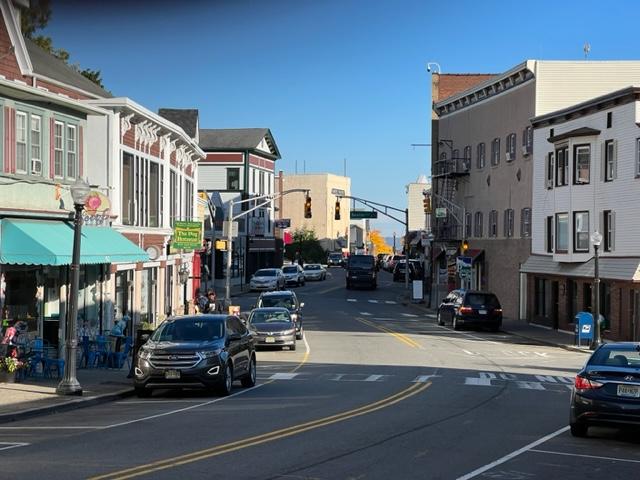
Downtown Boonton, NJ
Please read my blog on Exploring Downtown Boonton, NJ-Day Two Hundred and Two:
Downtown Boonton, NJ has a lot of interesting stores and restaurants
I drove home later that evening. It had been an interesting two-day exploration to Morris County, NJ and I did not realize the rich history that it had. There are many more places that will be visiting in the future on their list as they open up for the summer months.
In 2024, I was able to visit other sites on the Pathways listing. The original sites I had visited were on the first day of touring so I was able to visit a whole other roster of sites in Morris County on a gloomy rainy afternoon. Since I had a late start and the weather was rainy and gloomy, I only got to visit five sites but there were different from the previous year’s visit. I also visited some museums at other times as well since they are only open at certain times of the month.
I got so lost getting to the Butler Museum that it took over twenty minutes to find. It was different from the Google Maps that I followed. I finally reached the museum which was located on the other side of the Butler downtown in the old town train station.
The Butler Museum 221 Main Street
The Butler Museum is housed in the former New York Susquehanna and Western Railroad station. Constructed in 1888, it was remodeled in the 1890’s and in 1907, when a freight room was added to the northwestern end of the building. A major restoration took place from 2011 to 2015. Purchased by the Borough of Butler for a museum just in time for the Bicentennial Celebration in 1976, the museum houses a large collection of artifacts of local and regional significance.
The Butler Fire and Police Department artifacts.
Exhibits highlight the social, educational, fraternal, political, and business life of the community. Unique to the Butler Museum are artifacts pertaining to the Statue of Liberty, statue designer Frederic Bartholdi, and his friend Richard Butler, for whom the town is named. Mr. Butler was an important member of the committee that raised the funds to construct the statue’s pedestal (Pathways to History of Morris County website).
The Statue of Liberty exhibition.
Displays also include products manufactured by the American Hard Rubber Company, the area’s largest employer from the 1880’s to the late 1950’s. Development of items such as Ace Bowling Balls and Ace Combs can be traced from blueprints and salesman samples to the finished products.
The Ace Company exhibit
The resource center presents the opportunity to view past copies of local newspapers, almost a century of Butler High School yearbooks, and a pictorial history of Main Street, Butler.
The Butler Museum main gallery with the Ace Rubber exhibition as well as the Butler Fire and Police departments. The displays represent years of tradition in the town. The displays contain many of the items from former businesses of the town.
The next two historical sites I visited were the Pompton Plains Railroad Station and the Martin Barry House which were located down the road from each other. The Pompton Plains Railroad Station Museum was just off the downtown and is a small compact museum on the history of the rail system in this part of the county.
The Pompton Plains Railroad Station Museum at 33 Evans Place.
I was visiting Morris County for the “Pathways to History” tour, I visited the Pompton Lakes Railroad Museum. This tiny museum served once as the depot for the local railroad but now houses its history. Piled all over the building is the history of the rail service in this area. Small displays are located all around a pot belly stove that serves as the center point of the museum. The memorabilia includes a series of pictures, maps and schedules.
(From the Pathways to History tour pamphlet 2024):
Pompton Plains Station, home to the Pequannock Township Museum, was erected in 1877 by the Montclair and Greenwood Lake Railway as a replacement for an earlier structure built when passenger service began in 1872. After closing in 1966, the station remained in private hands until 2006 when it was purchased by Pequannock Township with Morris County and Township Open Space funds, as well as, funds from the Morris County Historic Preservation Trust. It was listed on the NJ and National Registers of Historic Places in 2008 and was restored to its “Turn of the 20th Century” appearance in 2010 (PPHS website).
The Historic Marker at the station.
The building’s simple wood construction is characterized by its late 19th Century American “Stick style” architecture, with its notable exterior embellishments being the distinctive “Dutch cap” trim over each window and door and its decoratively patterned slate roof. The museum supports an extensive collection of photographs and artifacts illustrating the Township’s 300 years of recorded history. Featured is a collection of over two dozen models of historic buildings, as well as, exhibits about Civil War veteran, Medal of Honor recipient, station agent and prior owner of the nearby Martin Berry House, James R. Evans (PPHS website).
The Pompton Plains Railroad Station Museum gallery.
Other exhibits cover the history of the station, and the pioneering 1940’s rocket engine factory Reaction Motors. Plans for 2023 construction, which will include restoration of the decorative 19th century slate roof and chimney, will be on display.
The Conductor’s Office is part of the display at the museum.
The next site I visited was the Martin Barry House, which is located just behind the strip mall on the highway. You need to make the right once you get off the highway on the street behind the mall and make a sharp right at the top of the street to find the house.
The Martin Berry House from the top of the hill at 581 Route 23 South. It is on a road hidden from the highway.
When I went to visit the Martin Berry House for the “Pathways to History” tour, I found it impossible to find. The Google Map has it in the middle of a parking lot in front of the strip mall along the highway and there is no pathway to the home from the parking lot. What you have to do is go the street behind the mall, head up the hill and make a right down a gravel road and there is the house at the end of the street.
There is not much parking here but with an isolated home like this, the Historical Society needs to put some things in place before they start having events here. The Society had bought the house not too long ago and there is still some renovation work that is being done, so the Society is in its first stages of opening the house to the public. It has some nice revolving displays and an interesting Colonial kitchen. The gardens are also beautiful when in bloom. Visiting the house in the future will offer many surprises.
(From the website of the Martin Berry House and the Pequannock Township Historical Society):
The Martin Berry House, or MBH, was built on this spot in about 1720. The original house was smaller than what you see here. This is the the result of the second major enlargement or renovation of the original construction as well as later renovations and remodeling.
The Martin Berry House from the gardens.
The MBH is owned by the Township of Pequannock and operated in partnership with the Pequannock Township Historical Society (PTHS). PTHS was formed in 2015 out of a movement that was original called the Friends of the Martin Berry House that had itself been initiated in 2014 to support the Township in its efforts to acquire the MBH.
The Martin Berry House Furniture display in May 2024.
Since a lot of these sites are far from each other I could only visit four this time. Since the Glenburn Estate was closed that day (with no notice), the last place I visited was the Lincoln Park History Museum at 141 Main Street.
Lincoln Park History Museum at 141 Main Street
The entrance of the Museum off the Main Street.
This colorful and well lit little museum is packed with information on the development of the town. The transformation took place with the form of transportation that changed the area starting with the Morris Canal running through then the railroad system and then the advent of the automobile. This area is still quite sleepy even though its located just an hour outside of New York City.
Lincoln Park History Museum, located at the original 1922 Library building. Lincoln Park, or as once known, Beavertown, is small in geographic nature but has a rich and diverse history. The museum’s goal is to rediscover the town’s past and celebrate / preserve the history, which sadly, at times, is lost and forgotten.
The history of the town’s police and fire departments
Join us and discover our past which includes: dinosaurs, native American artifacts, revolutionary roads /houses, civil war hometown hero, part of the Morris Canal path, part of the Boonton Line Railroad branch, airport, major flood events, some Hollywood film locations and of course our townsfolks who sacrificed in war, volunteers (fire department, police, first aid, pal, scouting etc.), all who made Lincoln Park a wonderful town to grow up in and formed pride and sense of community (Pathways Tour website).
The history of the Morris Canal that ran through the town before the railroads.
The Morris Canal was an important part of the town’s development.
Learn how the town transformed from a small crossroad in the American revolution to a canal stopping point with incline plane, lock and hotel. Learn how it progressed from farming to resort area to commuting town and transform to what it is today. The town keeps growing.
The day the Railroad came to town and it changed everything! On December 14, 1870 the first passenger train stopped at Beavertown. School was closed that day so the students could witness this momentous occasion. The following year Beavertown’s name was changed to Lincoln Park. This event, started a large and long transformation of the town. Prior to this, the town was all farmland and the few businesses in town centered on support of the Morris Canal. Once the railroad came, the transformation started (Pathways Tour website).
On a different day, I came back to Morris County and visited the Chatham Township Historical Society/Red Brick Schoolhouse Museum at 24 Southern Boulevard in Chatham, NJ. I had not been able to get there on the last trip and it is only open one Sunday a month and by appointment only. So I drove out to see it. What a delightful little museum.
The front of the Red Brick Schoolhouse Museum/Chatham Township Historical Society at 24 Southern Boulevard
The historical sign of the Mount Vernon School
The museum sign that welcomes you to the museum
The Mission Statement of the Museum:
(from the museum website)
The Historical Society of the Township of Chatham was established to increase the knowledge, awareness and preservation of the Township of Chatham history.
I visiting the Red Schoolhouse Museum on the first Sunday of the month and found a delightful little museum filled with artifacts that represent life in Chatham during various times in the town’s history. The museum has two floors with displays telling the history of the Township of Chatham from the beginnings with the Lenape Tribe living in the area to modern times.
The Museum gallery
On the first floor there is the special exhibitions that rotate in the museum. Some of the themes of the exhibitions were Children’s Toys and Playthings through the ages, Wedding gowns and formal wear and Revolutionary War items. The museum also has an interesting exhibition on the Lenape Indians who lived in this region before the Dutch arrived.
Wedding Gowns and Formal Wear exhibition on the first floor
Dressmaking and Sewing in the home and in business
Children’s Toys and Playthings through the ages
Children’s dolls and stuffed animals
The Train display of electric antique items
Revolutionary War and Trade items on the top shelf and historical cameras
The second floor has displays that tell different stories. The display cases have Native American artifacts, farming equipment, household items, pictures of the town at different stages of development, the community changes from a farming to business with the advent of the railroad. Here you see the changes in household items as time goes on.
The Lenape Display
Native American stone objects
The Arrowhead collection
Each display tells an interesting story of the Township of Chatham. Looking over how the towns in the area developed I didn’t even know there was a Village of Chatham and a Township of Chatham. I was also impressed with their toy collection which should be a conversation piece to any group of elementary school students. I think this would be interesting to seniors as well on times have changed since they were children. The museum really has something for everyone. All different stories are being told at this museum and the collection continues to grow when residents pasts become part of the museum’s future.
The display on resident Reverend Samuel Tuttle
The Statement of Purpose:
(from the museum website)
The Historical Society of the Township of Chatham, a volunteer, not-for-profit organization founded in 1975, is dedicated to increasing knowledge, awareness and preservation of our town’s unique historical heritage. We maintain the Red Brick Schoolhouse Museum where we coordinate our educational programs, research, and preservation advocacy as well as manage the discovery, collection, and conservation of materials that illustrate the history of the area prior to and after European settlement.
Artifacts from one of the museum’s historic digs
The audience served by the Society’s programs includes members of the Society, residents, students and visitors to the community, scholars, the public in general as well as businesses and governmental agencies in the area.
The display of the history of the Red Brick Schoolhouse
It was a lot of running around on a gloomy rainy day but it was a perfect time to visit all these sites and maybe revisit when they are reopen again. For now, there is more of Morris County that I want to explore when these small sites are open again.
Please look at their link for more details and happy exploring!