Category Archives: Exploring Historic Sussex County NJ

Day Three Hundred and Ninety-Three Visiting Museums for the Sussex County, NJ Heritage Weekend October 10th & 11th, 2026

The Sussex County Heritage Weekend

https://www.scahc.org/heritageweekend

https://scahc.org/event-6291386

I started the first part of my birthday weekend visiting cultural sites in Sussex County, NJ for the 16th Annual Sussex County Heritage Weekend which was two days of exploring small museums, historical societies and homes all over Sussex County, NJ. The County, like many in New Jersey, is large and spread out so visiting many of these sites takes time just with driving around to all of them. Unfortunately a Nor’easter came through on late Saturday night and made touring on Sunday impossible. So many of these small sites are on off beat roads and back highways and I did not want to risk driving around on Sunday in the bad weather with these places not even opening up for the day.

The trip visiting cultural sites in Sussex County began over the summer when I visited the Old Schoolhouse and Fire Museum in Ogdensburg, NJ. This was a museum that had been on my bucket list to visit for several years but it was never open. The museum got a new Director whom I reached out to when the new website went up. This small museum was on the way to the very popular Sterling Mine Museum up the road. What I liked about the museum was the diversity of the communities history tied into the history of the mining industry and community in the area.

While I was there, I came across the pamphlet for the Sussex County Heritage Weekend and all the amazing historical sites to visit in the County of Sussex, NJ. What made it nice and somewhat of an adventure was not I had never really explored Sussex County this way. I had traveled up Route 23 North on my way to Narrowsburg, NY and stopped along the way and that was about it. I marked my calendar and planned my trip for several months from now. These are the wonderful cultural sites I visited for this blog over the next several months.
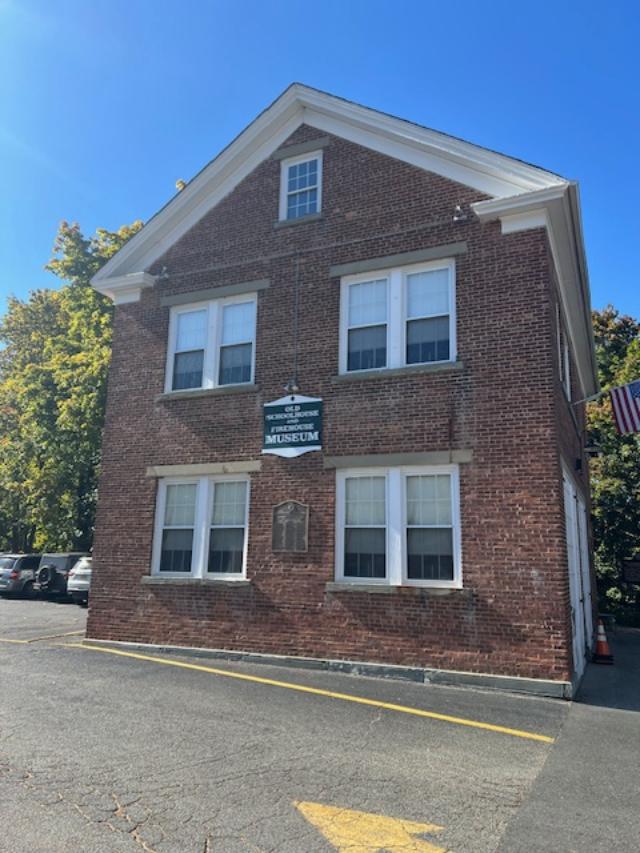
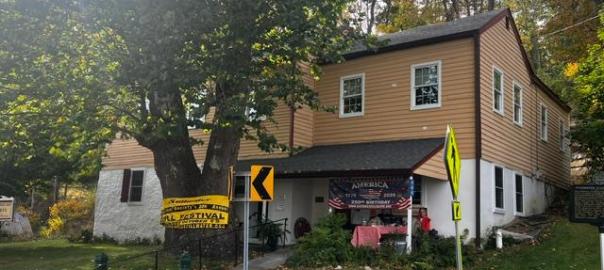
The front of the museum

I visited the Ogdensburg Old Schoolhouse and Firehouse Museum at 6 Passaic Avenue in Downtown Ogdensburg and discovered the community’s rich history of farming and mining in its past and its current destination as a weekend vacation spot and a up and coming bedroom community of New York City.

The County still has some farming and agriculture going on as the County continues to be built up with expats from the City, and Bergen and Morris Counties. The first floor is dedicated to the history of the Ogdensburg Fire Department with an old Engine and Ladders trucks, artifacts from the Sterling Mine just up the road and township property such as an old voting booth. You can read about the history of the Ogdensburg family as you head to the outside gallery.

The second floor has displays of various town departments including the Rescue, the Police Department and Fire Department. There are various displays of the town’s school system and various clubs in town. There are displays on the town’s mining and agricultural past with items such as farm advertising and mining equipment and minerals. Each display plays a role in the development of the community and how it progressed from farming to mining to manufacturing to the bedroom community it is today.

History of the Building:

“Built in 1910 as Ogdensburg’s fifth public school, it was adapted for re-use in 1930 as the Borough’s first firehouse replacing the one built in 1872. In 1984, with the aid of two state grants, the Ogdensburg Historical Society adapted it for re-use and dedicated it as the Old Schoolhouse and Firehouse Museum in 1987.

After 97 years, the Museum continues to serve the Borough of Ogdensburg as an historical learning and preservation center, and as a meeting hall.  On June 10, 2006 it was dedicated as an Ogdensburg Historic Site.”
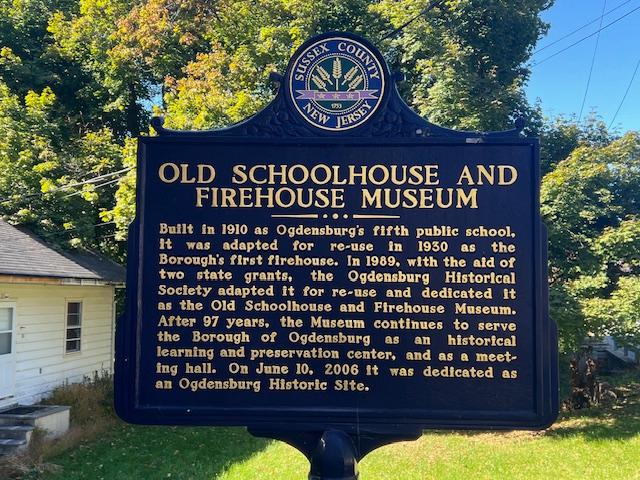
The historic sign of the museum

The Borough of Ogdensburg is the host of this marker commemorating the rich history provided by this building.  This building has been maintained with much thought and care and remains as a museum and meeting place for the residents of the town. The marker is located in front of the building on Passaic Avenue just off Main Street by the Ogdensburg Elementary School.  This marker was part of the 2008 placement (Museum website).

The museum at 6 Passaic Avenue once served as a school and a firehouse

https://www.sussex.nj.us/561/Old-Schoolhouse-Fire-Museum

https://www.facebook.com/oburghistoricalsocietypage

Open: Sunday 1:00pm-4:00pm (Only on the forth Sunday of the Month) Monday-Saturday Closed-Check the website for seasonality.

Admission: Free but a donation is appreciated

My review on TripAdvisor:

https://www.tripadvisor.com/Profile/R4960NKjustinw/mediabatch/14495681?m=19905

The first floor of the building has the fire trucks, the history of the fire department and Ogdensburg’s 250th Anniversary of the United States on display.

The museum artifacts from the 250th celebration of the Country

The museum is on the heart of mining country of Sussex County, NJ and the museum has an interesting mineral collection along with their collection of mining artifacts.

The Mineral and Mining Collection

The museum being home to the Ogdensburg Fire Department contains the history of the local fire department along with vehicles and artifacts from the department.

https://www.facebook.com/oburgfd

The history of the Ogdensburg Fire Department

One of the early Ladder Trucks

The history of the department

One of the early Engine Trucks

The history of the department

One of the early pull hose beds pulled by men and then by horses

The first floor also contains the history of the Ogden family in the region.

The history of the Ogden family in the community

The town voting booth and a turn of the last century phone

The second floor gallery used to serve as offices and living space of the fire department.

The main gallery on the second floor

The gallery case lines are filled with memorabilia from different aspects of the community telling the story of the growth of the community that included Mining and Farming. It explains the growth into the modern suburbs of today. This includes the Fire and Police and Rescue Departments, the School System and cultural events in the community.

The main gallery on the second floor of the museum

The main gallery on the second floor

The display case of Ogdensburg departments including school, fire and police departments

The display of the Ogdensburg Police Department

https://www.facebook.com/people/Ogdensburg-NJ-Police-Department/61590226020577

The display of the Ogdensburg First Aid Squad

Blanket with historical sites and artifacts of the town of Ogdensburg, NJ

The businesses including schools and the domestic and farming industries

Each of the display cases represented different aspects of the town and has a variety of pictures and memorabilia from a variety of eras. The case lines show how the community changed over time from a mining community to the changes of a bedroom community of Newark and New York City.

The school system with classes and sports teams

https://www.obboe.org/apps/events

Household, town and business artifacts

After the tour was over, my host said that I should visit the Sparta Historical Society at the Van Kirk House down the street that was open that day for tours and for an outside concert. So I rode down the road to the former Van Kirk Farm and grounds at local elementary school.

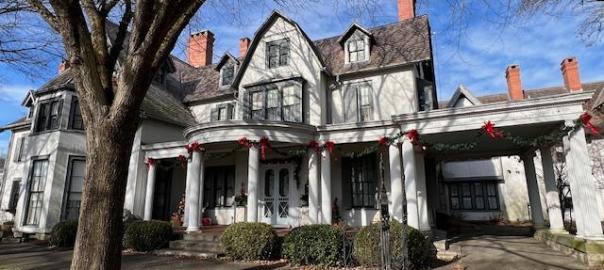
The front of the Van Kirk family home at 336 Main Street in Sparta, NJ, which serves as the headquarters of the Sparta Historical Society

https://www.vankirkmuseum.org/gardens.htm

https://www.sussexskylands.com/listing/sparta-historical-society-van-kirk-homestead-museum/90

Admission: The admission is free except when there is a special event and price is determined by the event

Open: Sunday 1:00pm-4:00pm (Second & Forth of each month)/Monday-Saturday Closed

The Museum is open from April-December. Please check website for seasonality.

My review on TripAdvisor:

https://www.tripadvisor.com/ShowUserReviews-g46839-d10259673-r1074643204-Sparta_Historical_Society-Sparta_New_Jersey.html?m=19905

The History of the Site:

(from the museum website)

The Van Kirk Homestead, as it stands today, is 3.5 acres. There is one outbuilding both dating from 1930s – the red carriage barn.  A detached garage, dating from the 1970s, is across from the carriage barn. The original log cabin is gone but its site is known (Sparta Historical Society website).

The house that exists today is from 1780s but because it was lived in by generational Van Kirks’ it has had a few expansions. It is this house which has been revamped into a museum.  The original part of the house has a stone basement that was opened in 2019 as two exhibit galleries.   The first floor has two original fireplaces comprised of four exhibit galleries.  The second floor has the original wide plank floors and has another three exhibit galleries (Sparta Historical Society website).

The sign in the Main Street

The historical description of the house

The main part of the house was closed due to a renovation and the members were going to be opening a new exhibition upstairs. So I toured the lower level kitchen area.

The lower level of the house which was used for the kitchen and storage areas

The history of the kitchen at the Van Kirk House:

(from the museum website)

A two-year major restoration of century comparison period kitchens with the addition of several new gifts and collection purchases.  This exhibit shows the original fireplace colonial kitchen, reopened after 100 years, and the numerous transitions experienced by American families during the Industrial Revolution and its effect on kitchen appliances (Sparta Historical Society website).

The kitchen and dining area with family China and cookware in the background

The prep area, washing equipment and summer storage area

The baking and prep area

The wash equipment and ice box and tongs in the back

The Mining Exhibition just off the kitchen:

(from the museum website)

Opened in October 2019, this permanent exhibit features original Edison artifacts, a scale model of Lime Crest Quarry, and a large fluorescent mineral display. Through these and other rare artifacts, the exhibit explores the town’s mines and the people who worked at them. Housed in the 1780 section of the Van Kirk Homestead Museum, expect insights into, and understanding of, the past which supplements our understanding of our once primary iron and lime industry in Sparta and elsewhere in Sussex County. It also provides a glimpse into the time-consuming, labor-intensive methods used in the 18th, 19th, and early 20th centuries to prepare, and ship minerals (Sparta Historical Society website).

The other side of the kitchen has an exhibition on the Mining Industry which is a big fabric of the community. The exhibition included a model of the Lime Crest Quarry and the Sterling Quarry.

The sign for the Lime Crest Quarry Model

The Mining exhibition-the Lime Crest Quarry model

The Men, Mines and Minerals exhibition with the lights off

The minerals and the clock from the mines

The Mineral exhibition with the lights off

The iron ore and the magnet exhibition

After touring the inside exhibition, I then explored the grounds which are still being used for gardens and vegetable beds for the society.

The back of the house grounds. They were setting up for an afternoon concert

The grounds of the house and the garage in the background

Afterwards, I stayed for a bit and watch the concert planning to come back later in the Fall to the tours of all the sites. On October 10, 2026 on a beautiful sunny morning and afternoon, I had put my game plan together of sites that I wanted to see. Even there were many sites on my new bucket list but I concentrated around the Sparta area and then down by Newton, the County seat of Sussex County. There were some museums that are literally never open and I wanted to be sure to visit while the weather was still nice.

I started the tour at the Old Monroe Schoolhouse which was still locked up. I found later on from the director the schoolhouse museum there was a power issue at the site so it was would not be open for the weekend. I was bummed but the drive up with all the gorgeous foliage made the trip well worth it. Just walking around the schoolhouse I got to see all the beautiful colors of the trees.

The foliage along the highway leading to the Old Monroe Schoolhouse

The land near the museum on a beautiful Fall day

The entrance to the museum property

The sign that welcomes you

History of the Old Monroe Schoolhouse:

One of the premier historical locations in Hardyston Township, that still exists, is the Monroe One Room Schoolhouse. This quaint stone structure is located on the southwest corner of the Township along today’s Route 94. Back in the day, Hardyston Township was much larger and the area had a number of small schools in each of the hamlets. Monroe was one such area, as was nearby North Church school.

The Old Monroe Schoolhouse Museum at 3134 NJ 94 on a Fall day

https://www.facebook.com/pages/Old-Monroe-School-House/133026696732235

My review on TripAdvisor:

https://www.tripadvisor.com/Attraction_Review-g46449-d34737445-Reviews-Old_Monroe_Schoolhouse_Hardyston_Historical_Inc-Franklin_New_Jersey.html

The Monroe School was located a few hundred yards from the border of Sparta Township. Today it is very near the road of Route 94, in a way indicating how things have changed from yesteryear’s slow procession of the infrequent horse and buggy or milk wagon from, say, 150 years ago.

The museum on the bend of the road

The building has stone walls and a wooden roof. It was in operation as a school as far back as the year 1820. There were many teachers who provided the education of youth, mixed together in one room, who aged from a young 5 to those in their later teens.

The front of the schoolhouse

One teacher was Kate Coyle who lived on a farm nearby and for whom the park next to the school was named. Here’s s a poem by the last teacher at the school, Ms. Mary A. Van Camp, before education of the youth was moved to a larger and more modern consolidated school:

Let us take up our spindles today
And unwind the years that have gone
For much can be learned from the past.

The school entrance

The schoolhouse is on the National Register. For many years Georgeanna Lewis was the teacher on weekends. Now it is open once or twice a year for tours, flag raising, and with local docents and old desks with ink wells and black boards and, if you are bad—a dunce cap and stool in the corner!

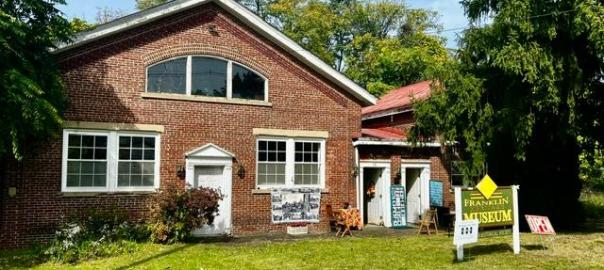
I double back to downtown Franklin, NJ and visited the Franklin Heritage Museum run by the Franklin Historical Society at 95 Main Street. The museum is housed in the old Zinc Company Office building. Behind the museum, is the old mine entrance.

The Franklin Heritage Museum at 95 Main Street

During the Annual Sussex County Heritage Weekend, one of the first stops I made was to the Franklin Heritage Museum in Downtown Franklin, NJ. The museum was the house in one of the offices of the mining company. The museum was a glimpse into community’s mining past and how it shaped this area of the State of New Jersey.

The museum sign out front

The museum building was the old New Jersey Zinc Company ‘Time Office’. This meant that the miners had to punch into their shift at the mine through this building. The old turnstile is to the right of the building.

History of the Franklin Historical Society:

(From the museum pamphlet)

The Franklin Historical Society was organized and incorporated in September 1996 as a non-profit all volunteer education association. It was founded to preserve the heritage of the Franklin Borough to create awareness of both the County and Borough of Franklin and its rich history of culture and ethnic heritage.

The Historical Society’s Museum is located at 95 Main Street in the historic Franklin Mill complex of the former New Jersey Zinc Company.

The Heritage Museum was opened to the public in April 1997 and its displays include:

Iron and Zinc Mining

Railroads

Franklin’s Churches and Schools

Franklin’s Local History

The sign for the old New Jersey Zinc Company ‘Time Office’ historical sign

https://en.wikipedia.org/wiki/Horsehead_Corporation

https://digital.sciencehistory.org/works/joj5gje

The history of the Franklin Mine and its place in New Jersey history

The smaller gallery off to the side of the building concentrates on the history of the NJ Mining industry and the many mining areas in Sussex County.

The room contains all sorts of artifacts related to the industry including both pictures and everyday equipment.

The pictures of all the miners at the company

The Mining Gallery

The Mining Gallery with equipment and artifacts for a day of working in the mines

Artifacts from home and work

This gallery was in transition with the volunteers working on the displays. This side of the museum with be on the local NJ Zinc Mine Company and its history.

The main gallery in the old Main Office space

The main gallery of the museum has a mixture of more mining artifacts and town objects that cover the history of the town.

The ‘250th Anniversary exhibition of the town and its mining past

For the ‘250th Celebration’ of our country, the museum created an interesting display of the formation of the community around the mining industry to its growth today.

The Mining and Equipment display

Community artifacts

Pictures of the police and fire department’s in this small mining community

https://www.franklintwpnj.org/departments/police-department

https://www.facebook.com/FranklinBoroughPolice

https://www.franklinfd.org

https://www.franklinborough.org/index.php/public-safety/fire-department

The main gallery display

My next stop was the Sparta Train Station Museum housed in the old town stop. The museum looked like it had gone through a complete renovation from top to bottom. I have to admit that it was tough to find with all the twists and turns down the road and they did not mark it with a sign at the bottom of the road.

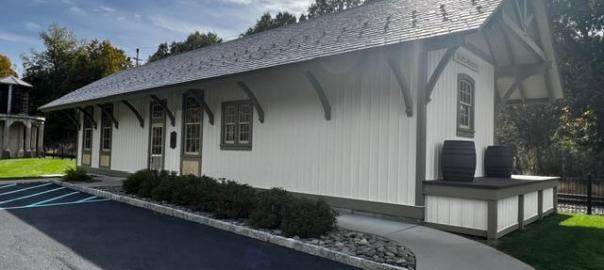
When I visited the Old Sparta Train Station Museum as part of the Sussex Heritage Weekend, it was a fascinating trip back in time to when these rural communities started getting connected to the cities after the Civil War.

The old Sparta Train Station

https://www.facebook.com/SpartaTrainStation

Open: The museum is seasonable and open for special events. Please check out their website for more information. Open for the Sussex County Heritage weekend event.

Admission: Free

My review on TripAdvisor:

https://www.tripadvisor.com/ShowUserReviews-g46839-d34737451-r1081601474-Sparta_Train_Station_Museum-Sparta_New_Jersey.html

The museum was at the beginning stages of development with displays being created in the rail system in Sussex County and train artifacts that were mounted on display. There was a model train set chugging along a train route.

The side view of the station

The plaque dedicated to the train station

The water tower outside the train station on the station’s grounds

The grounds where the station and the water tower are located are still an active train line.

The inside gallery at the Sparta Train Station Museum

The back part of the station’s gallery

Old travel equipment used on the train rails

Though the collection is small for now, the docents explained they will continue to add more to the collection. They were also a wonder book of knowledge on the history of this area of New Jersey.

The history of the museum

The building and the museum have had quite the history. This includes the fire and the rebuilding.

The train displays

The train display

The engine display

The museum on my bucket list and I managed to visit was the Hill Memorial Museum at 82 Main Street in Downtown Newton, NJ, the County seat of Sussex County, NJ. The museum is rarely ever open and because it is run solely by volunteers it is open from just from 9:00am-1:00pm on Fridays. This is too bad since this is such a fascinating museum with interesting displays. One of the displays I was most interested in was their dinosaur exhibition.

The front of the Hill Memorial Museum at 82 Main Street

https://www.facebook.com/SussexCountyHistoricalSocietyNj

Open: Sunday-Thursday Closed/Friday 9:00am-1:00pm/Saturday Closed

Admission: Free but donations are accepted

My review on TripAdvisor:

https://www.tripadvisor.com/Attraction_Review-g46674-d27060080-Reviews-Sussex_County_Historical_Society-Newton_New_Jersey.html

The front sign to the museum

The History of the Hill Memorial Museum:

(from the museum website)

The Hill Memorial was constructed in 1916 by Newton contractor Thomas Farrel in renaissance revival style according to the design of Henry T. Stephens, a Paterson architect. It was built for the society’s use by donations from Joshua Hill, a native of Sussex County and was dedicated on Founder’s Day, June 8, 1917. The building was named in memory of Joshua’s parents, Luther and Abigail (Dildine) Hill, and his uncle, Joseph Price Hill. The building is faced with two shades of tapestry brick furnished by the N.H. Sloan kilns of Pennsylvania. The main entrance is ornamented with a portico and door casings manufactured by the Brick Terra Cotta & Tile Company of Corning, New York. The main architectural feature of the entry hall is the grand staircase of quartered oak.

The Hill Memorial Museum Mission Statement:

(from the museum website)

The purpose of the SCHS is to promote public knowledge and interest in the history of Sussex County, New Jersey, and surrounding areas by:

  • Compiling, publishing and disseminating information;
  • Collecting, preserving and studying historical, genealogical and archaeological records, documents, papers and artifacts;
  • Maintaining a public museum;
  • Promoting the preservation and protection of buildings, cemeteries and other sites of historic interest and co-operating with other organizations of similar interest.

During the Sussex Heritage Weekend, one of the museums on my bucket list was the Hill Memorial Museum, the home of the Sussex County Historical Society. The museum has very limited hours and I have been wanting to visit since last summer. The museum is worth the wait. What an interesting museum filled with fascinating artifacts found from all corners of Sussex County, NJ. The collections fills two floors that also include a historical room and a research library.

The entrance foyer to the museum is quite grand

The museum home to an extensive collection of artifacts and does an interesting job of displaying these objects case by case. Each case holds a story of businesses, the participation of the community in wars, parks and schools and daily life over the last hundred years. The museum is a treasure trove of information on not just the County but the State of New Jersey as well.

Historic musical instruments on display along the stairs

The Second Floor Galleries of the Hill Memorial Museum:

(from the museum website)

The Victorian display in the upstairs gallery were custom made for jeweler H.D. Couse, and donated by his successor, John Coats Sr., when Coats Jewelry Store moved from the Cochran House to 103 Spring Street in 1950. Here are displayed some of the Society’s collections including the partial skeleton of a Mastodon discovered in 1962 during the dredging of a bog at Camp Auxilium in Hampton Township.  New exhibits include “The History of” Farming, Railroads, and Creameries “of Sussex County”. The Civil War display now includes information about 22 Soldiers who rest across the street in the Old Newton Burial Ground.

The second floor is where the larger part of the gallery and displays are located. Each case-line has a different category of artifacts depending on the theme. The main room is used as a meeting space for organization meetings and lectures for the community. The room is surrounding on all sides by cases filled with different objects depending on the subject matter.

The main gallery and meeting room on the second floor

The back of the main gallery behind the meeting space is lined with glass and wood case lines of artifacts from the County of Sussex, NJ

Each case line has a different set of displays:

The first display case was lined with dinosaur bones locally found and the Woolly Mammoth skull and bones found in the County is the highlight of the collection

The Native American and Lenape display of domestic and agriculture artifacts

The 250th Anniversary display

The Sussex County farming and agriculture display

The Sussex County Railroad display

The Dairy industry case

The World War I display and veterans memorabilia

The rail system in Sussex County

The vintage Toy display

It was interesting to look at the vintage toy collection as you wonder today if children in the twenty-first century still have the same imagination as the children in the 19th century. I think creativity comes from within.

The vintage doll

The vintage rocking horse

The World War II display

After the tour of the museum was over, I toured the historic Green in the middle of the downtown. Downtown Newton as the County Seat of Sussex County is coming into its own as the City gentrifies bringing in new restaurants and shops. The Green was in bloom with Fall colors. Lots of restaurants are in the process of opening and their are lots of coffee shops as well.

Downtown Newton in the Fall of 2026

https://www.newtontownhall.com/346/Explore-Newtons-Vibrant-Dining-Scene-for

https://www.newtontownhall.com/181/Maps-of-Newton

The historic Newton Green

The historic marker of the Green

The colorful gardens and the historic County Courthouse in the distance

The history of the Green

http://www.newtonnj.net/

https://en.wikipedia.org/wiki/Newton,_New_Jersey

I really learned a lot about the City of Newton both inside the museum and outside. This is a community that is still writing its own history.

As the afternoon wore to an end, my last stop of the afternoon was the Stillwater Historical Museum in Newton, NJ. The museum was located in the most historical and quaint town that looked like a town plopped from Vermont instead in a town located about an hour outside Manhattan.

The front of the Stillwater Historical Society at 900 Main Street in Newton, NJ

https://www.facebook.com/groups/HistoricStillwater

https://www.historicstillwater.org

Admission: Free but donations are appreciated

Open: check the website for hours/Seasonal

My review on TripAdvisor:

https://www.tripadvisor.com/ShowUserReviews-g46674-d34737428-r1081596401-Stillwater_Historical_Museum-Newton_New_Jersey.html

The Historical Society is set up like a General store on the first floor with displays with merchandise of the past and household items. They have recreated the recreation of the past with a modern twist. How did a small town buy and sell a hundred years ago? How did they socialize when this was the place of communication?

The sign for the museum

The Historical Society of Stillwater Township:

(from the museum pamphlet)

Since its organization in 1977, the mission of the Society has been to foster and promote an interest in Stillwater area history by maintaining a museum and reference library of historic artifacts and genealogical records of area families and support preservation efforts of historic structures sites and events.

Through the generous foresight and planning of Mr. Amos F. Dixon and his wife, Mrs. Mary W. Dixon, the museum associated with the Historical Society of Stillwater Township has been located within the Neighborhood House on Main Street in Stillwater since 1954. Originally a one room schoolhouse from 1842 to 1909 and the home of Mary W. Dixon Library, within the building are interpretive displays of a restored schoolroom and a general store with a post office. A collection of artifacts depicting the early life of the village and surrounding area is on display as well as a costume collection, mineral collection, Native American artifacts and military items dating back to the Revolutionary War. Genealogical records, photographs and newspaper clippings of historic significance to the area and its families are part of the Reference Library.

The first floor gallery of the Stillwater Historical Society is set up like a general store.

The first floor gallery

The History of the Museum:

(from the museum pamphlet)

The museum’s collection has grown and flourished throughout the years thanks to generous donations from the Stillwater community. The Society is always seeking locally-relevant physical artifacts and genealogical information. Dedicated members are working to preserve the artifacts and we are currently computerizing our collections to make the information.

The Preservation of the Museum:

(from the museum pamphlet)

Along with the continued preservation of the Museum and its artifacts, the society has supported the concept of an historic district in Stillwater and recently assisted in the historic registry designation of the Shafer Grist Mill in Stillwater village. The Society & the Casper Shafer residence on Main Street previously assisted with the preservation of Keen’s Mill in the Swartswood Lake area.

The Van Horn family burial plot is also preserved and maintained by the Society. The Society supports all efforts to preserve these and other important historic structures and to make them available for public enjoyment and educational purposes.

To support Stillwater’s community life, the Society hosts educational programs and fund-raising events throughout the year. Past topics have included the evolution of grist mills, herbal remedies used during the 18th Century, Revolutionary War weaponry, the Tocks Island Project and historic cemeteries. Fundraising events range from festivals featuring music, food and games to seasonal bus tours.

The General Store display

The General Store display

The old pot belly stove the center of the General store

The stove of the old General Store

The pot belly stove

Kitchen artifacts

Local artifacts from the Stillwater community

The second floor galleries were broken up into two different sections, Native American and early settler artifacts plus part of the building was once a schoolhouse so the museum also set up a schoolhouse display.

The Lenape Native American display

Native American artifacts

Native American artifacts

This was the old stage of the elementary school now being used to house the Children’s display.

The Children’s Schoolhouse display on the old second floor stage

The other side of the second floor galleries houses clothes, accessories and household goods. The clothing was beautifully displayed.

The second part of the second floor galleries

The back part of the second galleries

It really was an interesting little museum with wonderful artifacts nicely displayed throughout the museum. The museum did a nice job with this.

The Morning clothing display

Day and Evening dresses

Hats and gloves and other accessories

Military outfits and some formal clothing

Farming equipment

Farming equipment

As the museum started to close down after a long afternoon of activities, I toured the surrounding community of Stillwater, NJ. It was a small farming community with the beautiful character to it from the farms with the Fall crops being harvested to the historical homes centered by an historical church that now served as a cultural center.

The Town of Stillwater, NJ:

(from the museum pamphlet)

https://www.historicstillwater.org/township-overview

https://en.wikipedia.org/wiki/Stillwater_Township,_New_Jersey

Stillwater Township is located in Sussex County, eights miles west of Newton. Its encompasses an area of 28 square miles. Three small villages: Stillwater, Middleville and Swartswood, together with residents now residing in what was only a few years ago a farming community, compete its population of approximately 4,500.

After my tour of the Stillwater Historical Society Museum, I took a walk in the rural downtown of Stillwater, NJ. I felt like I was in a quaint New England village and not twenty miles from Manhattan.

The beautiful Victorian homes

The town was decorated for upcoming Halloween

The General Store restaurant downtown

The farm view from the downtown

The historic sign for the old Casper Shafer farm

https://en.wikipedia.org/wiki/Casper_Shafer

https://www.sussex.nj.us/585/Casper-Shafer

https://www.facebook.com/groups/HistoricStillwater/permalink/10159716198614329

The original farmhouse decorated for the Halloween holidays

The ghost on their porch

The picturesque farmland

The farm stand in front of the house (on the honor system)

The plant and pumpkin stand on the farm (also on the honor system)

The also had a arranged flower stand with colorful Fall flowers

The back of the old Shafer farm in the Fall

The town was so beautiful and picturesque and it was so much fun just walking around looking at the foliage. It was also a nice way to end my tour on the Sussex County Heritage Tour for the afternoon. I could not believe I was still in New Jersey. After the tour was over, it was time for a late lunch. I doubled back down Route 94 to a pizzeria I had passed earlier.

For dinner that evening before I went home was at Luigi’s Pizzeria at 397 State Highway 94 in Newton, NJ. The pizzeria looked like it had just opened and it was one of the only restaurants that I had passed along the highway since I had left Downtown Newton.

https://luigispizzeriaofnewton.com

My review on TripAdvisor:

https://www.tripadvisor.com/Restaurant_Review-g46674-d34737206-Reviews-Luigi_s_Pizzeria-Newton_New_Jersey.html

I had a very nice lunch. I kept it simple and had a slice of Cheese pizza for my late lunch. The service was very nice and I enjoyed just sitting and relaxing after a long day of driving.

The selection of pizzas in the case to choose from

It was nice to just sit and relax over lunch of a slice of Cheese Pizza and a cold Mountain Dew

It had been a really nice day of touring and I got to see communities that I had never been to before and I have lived in New Jersey my whole life. It was interesting to view the history of these communities and see how important the mining industry was once to this area of our state. It never ceases to amaze me how much I do not know about the State of New Jersey. It was a fun day on a sunny Fall day just to get in the car and just drive around the County of Sussex. It was unfortunate that it poured like crazy the next day so I only got the one day. There is always next year.

The Sussex County Heritage Weekend is every October.

Places to Visit:

Old Schoolhouse and Firehouse Museum

6 Passaic Avenue

Ogdensburg, NJ 07439

https://www.sussex.nj.us/561/Old-Schoolhouse-Fire-Museum

https://www.facebook.com/oburghistoricalsocietypage

Open: Sunday 1:00pm-4:00pm (Only on the forth Sunday of the Month) Monday-Saturday Closed-Check the website for seasonality.

Admission: Free but a donation is appreciated

My review on TripAdvisor:

https://www.tripadvisor.com/Profile/R4960NKjustinw/mediabatch/14495681?m=19905

My review on VisitingaMuseum.com:

Sparta Historical Society/Van Kirk Homestead

336 Main Street

Sparta, NJ 07871

(973) 726-0883

https://www.vankirkmuseum.org/gardens.htm

https://www.sussexskylands.com/listing/sparta-historical-society-van-kirk-homestead-museum/90

Admission: The admission is free except when there is a special event and price is determined by the event

Open: Sunday 1:00pm-4:00pm (Second & Forth of each month)/Monday-Saturday Closed

The Museum is open from April-December. Please check website for seasonality.

My review on TripAdvisor:

https://www.tripadvisor.com/ShowUserReviews-g46839-d10259673-r1074643204-Sparta_Historical_Society-Sparta_New_Jersey.html?m=19905

My review on VisitingaMuseum.com:

Old Monroe Schoolhouse/Hardyston Historical Inc.

3134 NJ 94

Franklin, NJ 07416

https://www.facebook.com/pages/Old-Monroe-School-House/133026696732235

My review on TripAdvisor:

https://www.tripadvisor.com/Attraction_Review-g46449-d34737445-Reviews-Old_Monroe_Schoolhouse_Hardyston_Historical_Inc-Franklin_New_Jersey.html

My review on VisitingaMuseum.com:

Franklin Heritage Museum

95 Main Street

Franklin, NJ 07416

(973) 827-3481

https://www.westmilfordmessenger.com/entertainment/new-exhibits-on-display-at-franklin-heritage-museum-YTWM20060518305189997

Open: Seasonal please check the website

Admission: Free but donations are appreciated

My review on TripAdvisor:

https://www.tripadvisor.com/ShowUserReviews-g46449-d34737427-r1081595818-Franklin_Heritage_Museum_Franklin_Historical_Society-Franklin_New_Jersey.html?m=19905

My review on VisitingaMuseum.com:

Sparta Train Station

30 Station Road

Sparta, NJ 07871

https://www.facebook.com/SpartaTrainStation

Open: The museum is seasonable and open for special events. Please check out their website for more information. Open for the Sussex County Heritage weekend event.

Admission: Free

My review on TripAdvisor:

https://www.tripadvisor.com/ShowUserReviews-g46839-d34737451-r1081601474-Sparta_Train_Station_Museum-Sparta_New_Jersey.html

My review on VisitingaMuseum.com:

The Hill Memorial Museum/Sussex County Historical Society

82 Main Street

Newton, NJ 07860

(973) 383-6010

https://www.facebook.com/SussexCountyHistoricalSocietyNj

Open: Sunday-Thursday Closed/Friday 9:00am-1:00pm/Saturday Closed

Admission: Free but donations are accepted

My review on TripAdvisor:

https://www.tripadvisor.com/Attraction_Review-g46674-d27060080-Reviews-Sussex_County_Historical_Society-Newton_New_Jersey.html

My review on VisitingaMuseum.com:

Stillwater Historical Museum/Historical Society of Stillwater

900 Main Street

Newton, NJ 07860

https://www.facebook.com/groups/HistoricStillwater

https://www.historicstillwater.org

Admission: Free but donations are appreciated

Open: check the website for hours/Seasonal

My review on TripAdvisor:

https://www.tripadvisor.com/ShowUserReviews-g46674-d34737428-r1081596401-Stillwater_Historical_Museum-Newton_New_Jersey.html

My review on VisitingaMuseum.com:

Places to Eat:

Luigi’s Pizzeria

397 State Highway 94

Newton, NJ 07840

(862) 389-4119

https://luigispizzeriaofnewton.com

Open: Sunday-Saturday 10:30am-9:30pm

My review on TripAdvisor:
https://www.tripadvisor.com/Restaurant_Review-g46674-d34737206-Reviews-Luigi_s_Pizzeria-Newton_New_Jersey.html

Sparta Train Station 30 Station Road Sparta, NJ 07871

Sparta Train Station

30 Station Road

Sparta, NJ 07871

https://www.facebook.com/SpartaTrainStation

Open: The museum is seasonable and open for special events. Please check out their website for more information. Open for the Sussex County Heritage weekend event.

Admission: Free

My review on TripAdvisor:

https://www.tripadvisor.com/ShowUserReviews-g46839-d34737451-r1081601474-Sparta_Train_Station_Museum-Sparta_New_Jersey.html

The old Sparta Train Station

I visited the Old Sparta Train Station Museum as part of the Sussex Heritage Weekend and it was a fascinating trip back in time to when these rural communities started getting connected to the cities after the Civil War.

The museum was at the beginning stages of development with displays being created in the rail system in Sussex County and train artifacts that were mounted on display. There was a model train set chugging along a train route.

The side view of the station

The plaque dedicated to the train station

The water tower outside the train station on the station’s grounds

The grounds where the station and the water tower are located are still an active train line.

The inside gallery at the Sparta Train Station Museum

The back part of the station’s gallery

Old travel equipment used on the train rails

Though the collection is small for now, the docents explained they will continue to add more to the collection. They were also a wonder book of knowledge on the history of this area of New Jersey.

The history of the museum

The building and the museum have had quite the history. This includes the fire and the rebuilding.

The train displays

The train display

The engine display

The docents were a wonder book of information on the history of the rail system and of the station building itself. The museum is just starting to develop so for now it is quick visit through the museum when it is open and visits back to see how it grows it collections. For now, it was a very interesting visit.

The Hill Memorial Museum/Sussex County Historical Society 82 Main Street Newton, NJ 07860

The Hill Memorial Museum/Sussex County Historical Society

82 Main Street

Newton, NJ 07860

(973) 383-6010

https://www.facebook.com/SussexCountyHistoricalSocietyNj

Open: Sunday-Thursday Closed/Friday 9:00am-1:00pm/Saturday Closed

Admission: Free but donations are accepted

My review on TripAdvisor:
https://www.tripadvisor.com/Attraction_Review-g46674-d27060080-Reviews-Sussex_County_Historical_Society-Newton_New_Jersey.html

The front of the Hill Memorial Museum

The front sign to the museum

The History of the Hill Memorial Museum:

(from the museum website)

The Hill Memorial was constructed in 1916 by Newton contractor Thomas Farrel in renaissance revival style according to the design of Henry T. Stephens, a Paterson architect. It was built for the society’s use by donations from Joshua Hill, a native of Sussex County and was dedicated on Founder’s Day, June 8, 1917. The building was named in memory of Joshua’s parents, Luther and Abigail (Dildine) Hill, and his uncle, Joseph Price Hill. The building is faced with two shades of tapestry brick furnished by the N.H. Sloan kilns of Pennsylvania. The main entrance is ornamented with a portico and door casings manufactured by the Brick Terra Cotta & Tile Company of Corning, New York. The main architectural feature of the entry hall is the grand staircase of quartered oak.

The Hill Memorial Museum Mission Statement:

(from the museum website)

The purpose of the SCHS is to promote public knowledge and interest in the history of Sussex County, New Jersey, and surrounding areas by:

  • Compiling, publishing and disseminating information;
  • Collecting, preserving and studying historical, genealogical and archaeological records, documents, papers and artifacts;
  • Maintaining a public museum;
  • Promoting the preservation and protection of buildings, cemeteries and other sites of historic interest and co-operating with other organizations of similar interest.

During the Sussex Heritage Weekend, one of the museums on my bucket list was the Hill Memorial Museum, the home of the Sussex County Historical Society. The museum has very limited hours and I have been wanting to visit since last summer. The museum is worth the wait. What an interesting museum filled with fascinating artifacts found from all corners of Sussex County, NJ. The collections fills two floors that also include a historical room and a research library.

The entrance foyer to the museum is quite grand

The museum home to an extensive collection of artifacts and does an interesting job of displaying these objects case by case. Each case holds a story of businesses, the participation of the community in wars, parks and schools and daily life over the last hundred years. The museum is a treasure trove of information on not just the County but the State of New Jersey as well.

Historic musical instruments on display along the stairs

The Second Floor Galleries of the Hill Memorial Museum:

(from the museum website)

The Victorian display in the upstairs gallery were custom made for jeweler H.D. Couse, and donated by his successor, John Coats Sr., when Coats Jewelry Store moved from the Cochran House to 103 Spring Street in 1950. Here are displayed some of the Society’s collections including the partial skeleton of a Mastodon discovered in 1962 during the dredging of a bog at Camp Auxilium in Hampton Township.  New exhibits include “The History of” Farming, Railroads, and Creameries “of Sussex County”. The Civil War display now includes information about 22 Soldiers who rest across the street in the Old Newton Burial Ground.

The second floor is where the larger part of the gallery and displays are located. Each case-line has a different category of artifacts depending on the theme. The main room is used as a meeting space for organization meetings and lectures for the community. The room is surrounding on all sides by cases filled with different objects depending on the subject matter.

The main gallery and meeting room on the second floor

The back of the main gallery behind the meeting space is lined with glass and wood case lines of artifacts from the County of Sussex, NJ

Each case line has a different set of displays:

The first display case was lined with dinosaur bones locally found and the Woolly Mammoth skull and bones found in the County is the highlight of the collection

The Native American and Lenape display of domestic and agriculture artifacts

The 250th Anniversary display

The Sussex County farming and agriculture display

The Sussex County Railroad display

The Dairy industry case

The World War I display and veterans memorabilia

The rail system in Sussex County

The vintage Toy display

It was interesting to look at the vintage toy collection as you wonder today if children in the twenty-first century still have the same imagination as the children in the 19th century. I think creativity comes from within.

The vintage doll

The vintage rocking horse

The World War II display

The history of Photography in Sussex County

Various household and everyday items from elaborate clothes and accessories to household products

The elaborate outfits of the day

The household goods that made the home run

The museum had an elaborate and detailed display of the old Chatterbox Restaurant, that was once a staple in the Newton area that has since been replaced by a Wawa.

The Chatterbox Restaurant display

https://www.facebook.com/groups/125409904217878/posts/27792041107128052

https://nj1015.com/another-memorable-nj-restaurant-torn-down

Video on the demolition

The accessories of the Proper Victorian Lady at the turn of the last century

The history of Mining in Sussex County

The Mining industry of Sussex County

The Colligate display from Newton High School

https://www.newtonnj.org/o/nhs

https://en.wikipedia.org/wiki/Newton_High_School_(New_Jersey)

The office at the turn of the last century

The Sussex Room of the Hill Memorial Museum:

(from the museum website)

As the name indicates, this room on the lower floor focuses on local history. The main feature is a large stone fireplace built by George Sharp in 1921, incorporating stones from Sussex County that are of geological and historical significance. A framed copy of G.M. Hopkins Jr.’s 1860’s map of Sussex County hangs near the oak roll-top desk of Judge Henry T. Kays. Portraits of Luther and Abigail (Dildine) Hill are on display. Other interesting pieces include a safe from the first bank in Newton – The Sussex Bank, founded in 1818; a Wheeler and Wilson sewing machine – once used to sew clothing for Civil War soldiers; and an original wrestling robe from Newton High School during the time of “Henry Boresch –father of NJ Wrestling”. In the center of the room is a display featuring the Cochran House, once located on Spring Street, it was the center of local social, business, and political activities.

The museum really covers the history of Sussex County in detail with wonderful and interesting displays and lots of historical artifacts. It will take you more than one afternoon of visiting the museum to see the whole collection.

Tour of the Museum on video

After the tour of the museum was over, I toured the historic Green in the middle of the downtown. Downtown Newton as the County Seat of Sussex County is coming into its own as the City gentrifies bringing in new restaurants and shops. The Green was in bloom with Fall colors. Lots of restaurants are in the process of opening and their are lots of coffee shops as well.

Downtown Newton in the Fall of 2026

https://www.newtontownhall.com/346/Explore-Newtons-Vibrant-Dining-Scene-for

https://www.newtontownhall.com/181/Maps-of-Newton

The historic Newton Green

The historic marker of the Green

The colorful gardens and the historic County Courthouse in the distance

The history of the Green

http://www.newtonnj.net/

https://en.wikipedia.org/wiki/Newton,_New_Jersey

I really learned a lot about the City of Newton both inside the museum and outside. This is a community that is still writing its own history.

It was not just an interesting museum visit but it was nice to walk the downtown and see how this small city was changing rapidly as new people were moving in and changing the demographics. Newton, NJ is a town in transition.

Stillwater Historical Museum/Historical Society of Stillwater 900 Main Street Newton, NJ 07860

Stillwater Historical Museum/Historical Society of Stillwater

900 Main Street

Newton, NJ 07860

https://www.facebook.com/groups/HistoricStillwater

https://www.historicstillwater.org

Admission: Free but donations are appreciated

Open: check the website for hours/Seasonal

My review on TripAdvisor:

https://www.tripadvisor.com/ShowUserReviews-g46674-d34737428-r1081596401-Stillwater_Historical_Museum-Newton_New_Jersey.html

The front of the Stillwater Historical Society

The last museum on my tour during the Sussex County Heritage Weekend was the Stillwater Historical Society Museum in Stillwater, NJ, a small town just west of Newton, NJ, the County Seat of Sussex NJ.

The Historical Society is set up like a General store on the first floor with displays with merchandise of the past and household items. They have recreated the recreation of the past with a modern twist. How did a small town buy and sell a hundred years ago? How did they socialize when this was the place of communication?

The sign for the museum

The Historical Society of Stillwater Township:

(from the museum pamphlet)

Since its organization in 1977, the mission of the Society has been to foster and promote an interest in Stillwater area history by maintaining a museum and reference library of historic artifacts and genealogical records of area families and support preservation efforts of historic structures sites and events.

Through the generous foresight and planning of Mr. Amos F. Dixon and his wife, Mrs. Mary W. Dixon, the museum associated with the Historical Society of Stillwater Township has been located within the Neighborhood House on Main Street in Stillwater since 1954. Originally a one room schoolhouse from 1842 to 1909 and the home of Mary W. Dixon Library, within the building are interpretive displays of a restored schoolroom and a general store with a post office. A collection of artifacts depicting the early life of the village and surrounding area is on display as well as a costume collection, mineral collection, Native American artifacts and military items dating back to the Revolutionary War. Genealogical records, photographs and newspaper clippings of historic significance to the area and its families are part of the Reference Library.

The first floor gallery of the Stillwater Historical Society is set up like a general store.

The first floor gallery

The History of the Museum:

(from the museum pamphlet)

The museum’s collection has grown and flourished throughout the years thanks to generous donations from the Stillwater community. The Society is always seeking locally-relevant physical artifacts and genealogical information. Dedicated members are working to preserve the artifacts and we are currently computerizing our collections to make the information.

The Preservation of the Museum:

(from the museum pamphlet)

Along with the continued preservation of the Museum and its artifacts, the society has supported the concept of an historic district in Stillwater and recently assisted in the historic registry designation of the Shafer Grist Mill in Stillwater village. The Society & the Casper Shafer residence on Main Street previously assisted with the preservation of Keen’s Mill in the Swartswood Lake area.

The Van Horn family burial plot is also preserved and maintained by the Society. The Society supports all efforts to preserve these and other important historic structures and to make them available for public enjoyment and educational purposes.

To support Stillwater’s community life, the Society hosts educational programs and fund-raising events throughout the year. Past topics have included the evolution of grist mills, herbal remedies used during the 18th Century, Revolutionary War weaponry, the Tocks Island Project and historic cemeteries. Fundraising events range from festivals featuring music, food and games to seasonal bus tours.

The General Store display

The General Store display

The old pot belly stove the center of the General store

The stove of the old General Store

The pot belly stove

Kitchen artifacts

Local artifacts from the Stillwater community

The second floor galleries were broken up into two different sections, Native American and early settler artifacts plus part of the building was once a schoolhouse so the museum also set up a schoolhouse display.

The Lenape Native American display

Native American artifacts

Native American artifacts

This was the old stage of the elementary school now being used to house the Children’s display.

The Children’s Schoolhouse display on the old second floor stage

The other side of the second floor galleries houses clothes, accessories and household goods. The clothing was beautifully displayed.

The second part of the second floor galleries

The back part of the second galleries

It really was an interesting little museum with wonderful artifacts nicely displayed throughout the museum. The museum did a nice job with this.

The Morning clothing display

Day and Evening dresses

Hats and gloves and other accessories

Military outfits and some formal clothing

Farming equipment

Farming equipment

Shoes and sewing items from the turn of the last century

Household items for the turn of the century home

The Town of Stillwater, NJ:

(from the museum pamphlet)

https://www.historicstillwater.org/township-overview

https://en.wikipedia.org/wiki/Stillwater_Township,_New_Jersey

Stillwater Township is located in Sussex County, eights miles west of Newton. Its encompasses an area of 28 square miles. Three small villages: Stillwater, Middleville and Swartswood, together with residents now residing in what was only a few years ago a farming community, compete its population of approximately 4,500.

After my tour of the Stillwater Historical Society Museum, I took a walk in the rural downtown of Stillwater, NJ. I felt like I was in a quaint New England village and not twenty miles from Manhattan.

The beautiful Victorian homes

The town was decorated for upcoming Halloween

The General Store restaurant downtown

The farm view from the downtown

The historic sign for the old Casper Shafer farm

https://en.wikipedia.org/wiki/Casper_Shafer

https://www.sussex.nj.us/585/Casper-Shafer

https://www.facebook.com/groups/HistoricStillwater/permalink/10159716198614329

The original farmhouse decorated for the Halloween holidays

The ghost on their porch

The picturesque farmland

The farm stand in front of the house (on the honor system)

The plant and pumpkin stand on the farm (also on the honor system)

The also had a arranged flower stand with colorful Fall flowers

The back of the old Shafer farm in the Fall

The town was so beautiful and picturesque and it was so much fun just walking around looking at the foliage. It was also a nice way to end my tour on the Sussex County Heritage Tour for the afternoon. I could not believe I was still in New Jersey.

Franklin Heritage Museum 95 Main Street Franklin, NJ 07416

Franklin Heritage Museum

95 Main Street

Franklin, NJ 07416

(973) 827-3481

https://www.westmilfordmessenger.com/entertainment/new-exhibits-on-display-at-franklin-heritage-museum-YTWM20060518305189997

Open: Seasonal please check the website

Admission: Free but donations are appreciated

My review on TripAdvisor:

https://www.tripadvisor.com/ShowUserReviews-g46449-d34737427-r1081595818-Franklin_Heritage_Museum_Franklin_Historical_Society-Franklin_New_Jersey.html?m=19905

The Franklin Heritage Museum at 95 Main Street

During the Annual Sussex County Heritage Weekend, one of the first stops I made was to the Franklin Heritage Museum in Downtown Franklin, NJ. The museum was the house in one of the offices of the mining company. The museum was a glimpse into community’s mining past and how it shaped this area of the State of New Jersey.

The museum sign out front

The museum building was the old New Jersey Zinc Company ‘Time Office’. This meant that the miners had to punch into their shift at the mine through this building. The old turnstile is to the right of the building.

History of the Franklin Historical Society:

(From the museum pamphlet)

The Franklin Historical Society was organized and incorporated in September 1996 as a non-profit all volunteer education association. It was founded to preserve the heritage of the Franklin Borough to create awareness of both the County and Borough of Franklin and its rich history of culture and ethnic heritage.

The Historical Society’s Museum is located at 95 Main Street in the historic Franklin Mill complex of the former New Jersey Zinc Company.

The Heritage Museum was opened to the public in April 1997 and its displays include:

Iron and Zinc Mining

Railroads

Franklin’s Churches and Schools

Franklin’s Local History

The sign for the old New Jersey Zinc Company ‘Time Office’ historical sign

https://en.wikipedia.org/wiki/Horsehead_Corporation

https://digital.sciencehistory.org/works/joj5gje

The history of the Franklin Mine and its place in New Jersey history

The smaller gallery off to the side of the building concentrates on the history of the NJ Mining industry and the many mining areas in Sussex County.

The room contains all sorts of artifacts related to the industry including both pictures and everyday equipment.

The pictures of all the miners at the company

The Mining Gallery

The Mining Gallery with equipment and artifacts for a day of working in the mines

Artifacts from home and work

This gallery was in transition with the volunteers working on the displays. This side of the museum with be on the local NJ Zinc Mine Company and its history.

The main gallery in the old Main Office space

The main gallery of the museum has a mixture of more mining artifacts and town objects that cover the history of the town.

The ‘250th Anniversary exhibition of the town and its mining past

For the ‘250th Celebration’ of our country, the museum created an interesting display of the formation of the community around the mining industry to its growth today.

The Mining and Equipment display

Community artifacts

Pictures of the police and fire department’s in this small mining community

https://www.franklintwpnj.org/departments/police-department

https://www.facebook.com/FranklinBoroughPolice

https://www.franklinfd.org

https://www.franklinborough.org/index.php/public-safety/fire-department

The main gallery display

Mining equipment in the display

The museum’s main emphasis is on the development of the mining industry both its early development up until when the mines closed in the 1980’s. The display above is on the early mining tools used by the workers.

The Mineral display

What I found interesting was all the minerals that are on display and the glow in the dark components that make these rocks special. When the lights go out, the true magic begins.

The old turnstile to enter the mining compound before the start of the shift

The back of the museum behind the fencing and the weeds, is the entrance to the old mines. Both the entrance building and entrance to the mine has been closed off for years but you can still see behind the fencing. This is the old turnstile off to the side of the building where the miners entered the complex.

Across the street from the museum is the old Hungarian Reformed Church, which is planned to be renovated.

The sign for the church

The old Hungarian church

Down the road from the downtown area where the museum is located is the Franklin Furnace Park, which is a beautiful picturesque park situated around a lake.

The historic sign for the Franklin Furnace Park

https://www.franklintwpnj.org/Home/Components/FacilityDirectory/FacilityDirectory/60/2554

All along the highway facing the park and in the park itself was the most beautiful and colorful foliage. Plan to visit the park after the museum for a colorful and relaxing break.

The foliage around the park in early October

The lake view of the park from the highway

The views from every angle of the park are breathtaking.

The view from inside the park and the footbridge to the island

The view of the park from south of the park

A view of the islands in the park

A view of the islands and the foliage

The islands and the foliage in the beginning part of October

The small center pine island

Traveling back down the road back to Route 23 South to continue my tour of museums

The view of the islands to the north in the lake

The view of the lakes from the south

The view of the foliage from the south

For a small town, Franklin offered such an interesting look at this part of New Jersey’s mining past and its transition from a mining industry to tourism based around the mines. The series of museums and cultural sites offers so much for visitors to see and experience.

A start at the Franklin Heritage Museum offers a glimpse into that past and as the museum keeps developing their exhibits will tell that story to visitors.

Ringwood Manor-A New Jersey State Park 1304 Sloatsburg Road Ringwood, NJ 07456

Ringwood Manor-A New Jersey State Park

1304 Sloatsburg Road

Ringwood, NJ  07456

Phone: (973) 962-7031/Fax: (973) 962-2247

http://www.ringwoodmanor.org

http://www.ringwoodmanor.org/

http://www.ringwoodmanor.org/tours.html

Fee: Adults $3.00/Children 6-12 $1.00/Children 5 and under Free

Donation for the holidays: $10.00

Open: Please see website for details during the seasons.

Review on TripAdvisor:

https://www.tripadvisor.com/Attraction_Review-g46774-d9564482-Reviews-Ringwood_Manor-Ringwood_New_Jersey.html?m=19905

Ringwood Manor in Ringwood Park at Christmas time:

I have visited the Ringwood Manor during the Christmas holidays over the last four years and it keeps getting better. Each room in the house is tastefully decorated for the holidays. The West Milford Garden Club does an excellent job decorating every year and in the post-COVID environment, it is nice to see such a beautiful and well thought out display for Christmas.

The outside of the house was decorated with garland and ribbons and welcomed visitors with Christmas cheer.

The entrance of Ringwood Manor.

The entrance to the estate.

The patio of Ringwood Manor.

The outside of the house was tastefully decorated in garland and bows.

The decorated front door on the Ryerson side of Ringwood Manor.

History of Ringwood, NJ:

Colonial Ringwood:

Long before the Forges & Manor of Ringwood existed this property was occupied by the Native American people. Prehistoric artifacts found on the grounds confirm their inhabitants back to the Archaic and Woodlands periods. Living in a hunting and farming paradise, these Munsee-speaking Lenape peoples dwelled at the head of the Topompock or Ringwood River Valley. This paradise attracted colonial prospectors, who by 1740, came for the iron ore found in the ground. Recognizing the rich magnetite ores, Cornelius Board settled here in 1739 and first utilized the property for iron mining. He was followed shortly thereafter by the Ogden family who established the Ringwood Company and built the first blast furnace here in 1742.

After twenty years of production, a German promoter, Peter Hasenclever, organized the American Iron Company to exploit the resources in colonial North America, purchasing the Ringwood area in 1764. He would also develop forges at Long Pond and Charlotteburg but made Ringwood the center of his iron empire. Hasenclever established iron plantations and developed the production of flax and timber across 50,00 acres of land stretching through New Jersey and New York, from present day Butler to New Foundland and Nova Scotia. The iron was said to have been “the best iron in the American colonies.” Robert Erskine, the last ironmaster of the American Iron Company, was sent from England in 1771 and would manage the company during the Revolutionary War.

(History of Ringwood, NJ)

The decorated carriage house.

When you walk into the home, the first rooms is decorated tastefully around a collection of antique guns and hunting equipment. The Great Hall was decorated with garland and ornaments with a large tree in the corner.

The Great Hall of the Ringwood Manor when you enter for Christmas.

The Great Hall upon entering.

The Chamber Gun display.

The Chamber Gun display in the Great Hall of Ringwood Manor.

The Great Hall fireplace decorated for the holidays.

The formal dining room was set for Christmas dinner for the family after church. The elegant china was set on the table with poppers and small Christmas gifts for the guests. The side boards were set with the dinner entrees and sides for the family meal. There was a little discussion of how the Hewitt family would entertain during the holidays and in 2019 and in 2023, they opened up the kitchen and Butler’s pantry for touring.

The Hallway leading to the formal Dining Room.

The decorated staircase in the Great Hall

The Great Hall hallway

The Dining Room sign

The Dining Room at the Ringwood Manor.

The Dining Room set for Christmas dinner.

Dining Room set for Christmas dinner beautifully.

The details of the Dining Room

The Dining Room paintings and details.

Preparing for the holidays in the Dining Room

The statuary of the Dining Room

The lighting fixtures of the Dining Room.

Each room was set for the holidays with garlands, trees and decorations. As it was explained to me on another house tour during the holidays, the Victorians would normally only decorate one or two rooms for the holidays and not the whole house. The whole house might be decorated based on the wealth of the family and the amount of servants to take care of the home. Needles would have to cleaned up and the trees would have to be attended to on a daily basis.

the Butler’s Pantry just off the Dining Room

The Butler’s Pantry in preparation for Christmas dinner

The Christmas treats in the Butler’s Pantry.

I then walked back through the house and passed by the Office on my way to the social rooms of the first floor. The office is where business was taken care by Mr. Hewitt when he was in residence.

Mr. Hewitt’s Office decorated for Christmas

Mr. Hewitt’s office at Christmas time.

The Christmas tree in Mr. Hewitt’s office.

Before I left this part of the house, I passed the Breakfast Room which is just off the Dining Room. It had beautifully decorated for a Christmas breakfast.

The Breakfast Room sign

The Breakfast Room was decorated with desserts and sweets for the Christmas holidays.

The Breakfast Room beautifully decorated for the holidays.

The Breakfast Room for a Christmas feast.

The Christmas tree in the Breakfast Room.

Before entering the Great Hall, I visited the Receiving Room, where guests waited until dinner was served.

The Waiting Room

The Waiting Room was for guests to relax and wait for Mr. & Mrs. Hewitt.

The Waiting Room fireplace is nicely decorated.

The ‘Birdcage’ in the Waiting Room

Passing through the Great Hall again, I entered what had once been the original Ryerson House built in the early 1800’s. The first room on the tour of this side of the house was the French Drawing Room decked out for the holidays. This room was used by the ladies after dinner was over to converse and get away from their husbands, who would have still been in the dining room.

French Drawing Room, the “Withdrawing” room.

The French Drawing Room

The French Drawing Room in all its Christmas glory.

The Christmas tree in the French Drawing Room

The fireplace in the French Drawing Room.

On the other side of the house is the original Ryerson mansion that was added on by the Hewitt’s when they bought the house. The older house had the original moldings and windows from the early 1800’s and that side of the house had a different feel to it starting with the original entrance and staircase.

The Ryerson Staircase and foyer sign

The Ryerson Staircase and foyer

The decorated Ryerson staircase.

One of the nicest rooms that was decorated was the screened in porch. Here there was a tree set with presents, hot house flowers and garland lining the room. The sunlight shined throughout the room and the decorations sparkled.

The South Ryerson Parlor

The South Ryerson South Parlor

The fireplace in the South Parlor.

The latest addition to the house was the screened in porch, The Glass Piazza, of the house which was used in the summer months for rest and relaxation. The screen in porch was beautifully decorated for the holidays with all sorts of Christmas trees and decorations.

The Glass Piazza, the screened in porch of the main house.

The Glass Piazza decked out at Christmas time.

The doll mini tea service in the Glass Piazza.

The Glass Piazza set for tea at the holidays.

The Glass Piazza at Christmas time.

The beautiful Christmas tree in the Glass Piazza in 2023.

When you leave the Glass Piazza, you enter the original part of the house again with the North Ryerson Parlor. This room was used by the family for less formal affairs but it was still decked out of the holidays.

The North Ryerson Parlor

The Ryerson North Parlor decorated for tea.

The Ryerson North Parlor fireplace decorated for Christmas time.

The last room I visited on the tour was the Music Room in the original Ryerson House. The room was used by both the Ryerson’s and the Hewitt’s for social occasions and the Hewitt’s were all musically inclined.

The Music Room at the Ringwood Manor

The Music Room at the Ringwood Manor.

The Music Room at the Ringwood Manor.

The fireplace in the Music Room decked out for the holidays.

The Music Room during Christmas time.

Each room had a docent to explain the decor or what the room’s use had been in the family’s time. A visitor can roam the house at their leisure and see the rooms as many times as they want. There is also a gift shop in a room off the formal dining room that contains some beautiful Christmas crafts for sale by the Women’s Club of New Milford. Some of these women are very creative and sell the most amazing Christmas ornaments made of glitter, wood, branches, walnuts and moss.

The decor of the home changes over time and there are different things to see every year. The barn also on the property as you drive in has more artwork and crafts. In the Gardener’s Shed next to the house, the Society has a small cafe with sandwiches, desserts and coffee/tea/hot chocolate.

The Carriage House was used as a gift shop and a place to get something to eat.

The tour of Ringwood Manor is wonderful during the holiday season and the rest of the house opens up during the warmer months of the year.

History of the House:

This 582 acre historic site is open to the public year round. The historic house museum, Ringwood Manor is open Wednesday to Sundays year round.

History of 19th Century Manor House and Landscape:

The present manor house was begun by Martin J. Ryerson in 1807. He and his sons controlled not only the iron mines and forges on the property but also operated productions at four other locations in the area. The Ryerson family resided in their 10 room Federal style home for almost 50 years.

The entrance to the historical home.

In 1853, the Ryerson’s house and property were purchased by business partners Peter Cooper and his son in law Abram S. Hewitt. The 22,000 acre ironworks and the Ryerson’s home were purchased for a sum of $100,000. Their company, Cooper-Hewitt & Company, grew to be the fifth largest corporation in the United States. The Hewitt’s, one of the most influential and wealthiest families of the 19th century, fell in love with the Ringwood estate.

The expanded Ringwood Manor estate in the winter months.

Ringwood manor at the holidays.

They decided to make this site of their summer home, naming it The Forges and Manor of Ringwood. They enlarged the home of the Ryerson’s, constructing major additions or renovations in 1864, 1875, 1900 and 1910. The completed 51 room house is 226.5 feet long and features 28 bedrooms, 24 fireplaces and 13 bathrooms and more than 250 windows. The house was built in an eclectic style, typical of the Victorian period. In 1875, the Manor House was an excellent example of the Gothic Revival style of architecture. By 1900, the Hewitt’s changed the exterior facade to its present appearance, adding the neo-classical portico and columns of the front porch and affixing white stucco to the exterior walls. The furnishings of the house reflect the varying tastes and styles of the family and time period.

Ringwood Manor during the holidays.

(From the Ringwood Manor website)

The formal gardens surrounding the Manor House were developed by Mrs. Hewitt and her daughter, Eleanor around 1900. Their design was influenced by the Hewitt’s many trips overseas. The gardens possess a mysterious old world charm that captivates visitors as they enjoy the serenity of reflecting pools and the progression of blooms from early spring to late fall. Placed throughout the garden are French and Italian statuary and garden ornaments as well many interesting architectural items from New York City acquired while Abram Hewitt served as Mayor and Congressman. Examples of these features include columns from the old New York Life building, gates from the Astor family’s home and gate posts from Columbia College. Relics from the iron company that are found on the grounds include a trip hammer and anvil, cog wheel and a Dictator-class mortar the base of which was created by the Hewitt’s company and used at the Battle of Vicksburg in Mississippi during the Civil War.

The Ringwood Manor in the Fall of 2026:

I visited the park again in October of 2026 after taking a tour of the NJ Botanical Gardens down the road at the Skylands Manor. The grounds were just changing colors during all the cool weather we were having and the grounds could not have been more picturesque.

The lawn of the estate in the early Fall in 2026

Walking through the walkways and driveway of the estate

Walking up to the Manor House at Ringwood Park

The pond by the house overlooking the barns

The marble walkway up to the house

The Manor House in the Fall of 2026

The estate lawn from the house

The gardens and landscaped gardens on the estate

In the barn which is used as a Art Gallery, hosts a Jazz Concert on some weekends during the Fall. We had a nice time listening the music.

The Jazz Concert in the afternoon

The Jazz Concert at the barn

The grounds are so beautiful at any time of the year.

Sparta Historical Society/Van Kirk Homestead 336 Main Street Sparta, NJ 07871

Sparta Historical Society/Van Kirk Homestead

336 Main Street

Sparta, NJ 07871

(973) 726-0883

https://www.vankirkmuseum.org/gardens.htm

https://www.sussexskylands.com/listing/sparta-historical-society-van-kirk-homestead-museum/90

Admission: The admission is free except when there is a special event and price is determined by the event

Open: Sunday 1:00pm-4:00pm (Second & Forth of each month)/Monday-Saturday Closed

The Museum is open from April-December. Please check website for seasonality.

My review on TripAdvisor:

https://www.tripadvisor.com/ShowUserReviews-g46839-d10259673-r1074643204-Sparta_Historical_Society-Sparta_New_Jersey.html?m=19905

The front of the Van Kirk family home which serves as the headquarters of the Sparta Historical Society

The History of the Site:

(from the museum website)

The Van Kirk Homestead, as it stands today, is 3.5 acres. There is one outbuilding both dating from 1930s – the red carriage barn.  A detached garage, dating from the 1970s, is across from the carriage barn. The original log cabin is gone but its site is known (Sparta Historical Society website).

The house that exists today is from 1780s but because it was lived in by generational Van Kirks’ it has had a few expansions. It is this house which has been revamped into a museum.  The original part of the house has a stone basement that was opened in 2019 as two exhibit galleries.   The first floor has two original fireplaces comprised of four exhibit galleries.  The second floor has the original wide plank floors and has another three exhibit galleries (Sparta Historical Society website).

The sign in the Main Street

The historical description of the house

The main part of the house was closed due to a renovation and the members were going to be opening a new exhibition upstairs. So I toured the lower level kitchen area.

The lower level of the house which was used for the kitchen and storage areas

The history of the kitchen at the Van Kirk House:

(from the museum website)

A two-year major restoration of century comparison period kitchens with the addition of several new gifts and collection purchases.  This exhibit shows the original fireplace colonial kitchen, reopened after 100 years, and the numerous transitions experienced by American families during the Industrial Revolution and its effect on kitchen appliances (Sparta Historical Society website).

The kitchen and dining area with family China and cookware in the background

The prep area, washing equipment and summer storage area

The baking and prep area

The wash equipment and ice box and tongs in the back

The Mining Exhibition just off the kitchen:

(from the museum website)

Opened in October 2019, this permanent exhibit features original Edison artifacts, a scale model of Lime Crest Quarry, and a large fluorescent mineral display. Through these and other rare artifacts, the exhibit explores the town’s mines and the people who worked at them. Housed in the 1780 section of the Van Kirk Homestead Museum, expect insights into, and understanding of, the past which supplements our understanding of our once primary iron and lime industry in Sparta and elsewhere in Sussex County. It also provides a glimpse into the time-consuming, labor-intensive methods used in the 18th, 19th, and early 20th centuries to prepare, and ship minerals (Sparta Historical Society website).

The other side of the kitchen has an exhibition on the Mining Industry which is a big fabric of the community. The exhibition included a model of the Lime Crest Quarry and the Sterling Quarry.

The sign for the Lime Crest Quarry Model

The Mining exhibition-the Lime Crest Quarry model

The Men, Mines and Minerals exhibition with the lights off

The minerals and the clock from the mines

The Mineral exhibition with the lights off

The iron ore and the magnet exhibition

After touring the inside exhibition, I then explored the grounds which are still being used for gardens and vegetable beds for the society.

The back of the house grounds. They were setting up for an afternoon concert

The grounds of the house and the garage in the background

The family garage on the property exhibition:

(from the museum website)

Opened in August 2019, this permanent old fashioned transportation exhibit is located in the multi-year restoration project of the Nicholson Family Wagon House. On display at the Historic Transportation exhibit, you will discover a horse drawn carriage wagon, an old horse drawn sleigh, an old antique car Model T Ford and transportation artifacts. Learn how horse buggies, vintage carriages and old antique cars set the path for historic transportation to the present (Sparta Historical Society website).

The inside of the garage had a Model T car in perfect shape, a buggy and a sleigh.

The inside of the garage

The Model T car

The buggy and the sleigh in the back of the garage

The Studebaker Doctor’s buggy sign

The buggy

The Sturtevant-Larabee Sleigh sign

The sleigh

Also in the garage is various pieces of equipment and even an old gas pump

The sign for the Gilbert and Baker Self-Measuring Gas Pump

The old fashioned gas pump in the garage

Along all the walls were old pictures of the farm when it was still active and under family control

The gardens an grounds in the distance

One of the old sheds was converted into a school house and the room was set up as an old fashioned on room school house. Here kids of various ages were taught the fundamentals of Math, English and History.

The One Room Schoolhouse

The history of the Schoolhouse from the early 1900’s:

(from the museum website)

Step back in time to when classes consisted of all ages together!  Welcome to our One Room Schoolhouse exhibit which opened in 2023.  Sparta had four one room schoolhouses.   The first school was built at the Presbyterian Church in 1812 and was replaced in 1860 after a fire destroyed it. The one-room schoolhouses were established in New Jersey when a 1819 bill funded public education, and they remained active through the 1930’s, when regional schools were established. Students from grades one to eight attended these schools. Four of the structures that housed the one-room schoolhouse remain (Sparta Historical Society website).

Our schoolhouse replicates schools that were generally equipped with a teacher’s desk, student desks, a flag, a globe or map, books, a slate board, and a clock. Our schoolhouse has an 1860 map of Sussex County.  At the back of the room is an old stove similar to those used to heat the room (Sparta Historical Society website).

The inside of the One Room Schoolhouse

The Teacher’s desk

The Grounds and Gardens of the Museum:

(from the museum website)

Besides the two fenced Sparta Community Gardens, the homestead grounds have a fir pine grove, a New Jersey Champion Big Tree, a herb garden, and a continual seasonal flowering landscape (Sparta Historical Society website).

The last thing I toured at the museum was the open vegetable gardens which looked like they were getting ready to harvest.

The vegetable gardens in the back of the schoolhouse

The inside of one of the flower and vegetable gardens

The entire museum complex of the Van Kirk House, grounds with the sheds and garage and gardens on both sides.. The grounds are beautifully maintained.

Video on the site from the Sparta Historical Society:

The tour of the house:

Tour of the house and the grounds:

Historical Tour of Sparta, NJ:

The museum has interesting exhibitions and an array of special events through December 13th when the museum closes for the season. It reopens again in April with the warmer weather.

Take time to stroll the grounds and take a look at all the exhibits. It is an interesting look into New Jersey’s past.

Old Schoolhouse and Firehouse Museum 6 Passaic Avenue Ogdensburg, NJ 07439

Old Schoolhouse and Firehouse Museum

6 Passaic Avenue

Ogdensburg, NJ 07439

https://www.sussex.nj.us/561/Old-Schoolhouse-Fire-Museum

https://www.facebook.com/oburghistoricalsocietypage

Open: Sunday 1:00pm-4:00pm (Only on the forth Sunday of the Month) Monday-Saturday Closed-Check the website for seasonality.

Admission: Free but a donation is appreciated

My review on TripAdvisor:

https://www.tripadvisor.com/Profile/R4960NKjustinw/mediabatch/14495681?m=19905

The front of the museum

I recently visited the Ogdensburg Old Schoolhouse and Firehouse Museum at 6 Passaic Avenue in Downtown Ogdensburg and discovered the community’s rich history of farming and mining in its past and its current destination as a weekend vacation spot and a up and coming bedroom community of New York City.

The County still has some farming and agriculture going on as the County continues to be built up with expats from the City, and Bergen and Morris Counties. The first floor is dedicated to the history of the Ogdensburg Fire Department with an old Engine and Ladders trucks, artifacts from the Sterling Mine just up the road and township property such as an old voting booth. You can read about the history of the Ogdensburg family as you head to the outside gallery.

The second floor has displays of various town departments including the Rescue, the Police Department and Fire Department. There are various displays of the town’s school system and various clubs in town. There are displays on the town’s mining and agricultural past with items such as farm advertising and mining equipment and minerals. Each display plays a role in the development of the community and how it progressed from farming to mining to manufacturing to the bedroom community it is today.

History of the Building:

“Built in 1910 as Ogdensburg’s fifth public school, it was adapted for re-use in 1930 as the Borough’s first firehouse replacing the one built in 1872. In 1984, with the aid of two state grants, the Ogdensburg Historical Society adapted it for re-use and dedicated it as the Old Schoolhouse and Firehouse Museum in 1987.

After 97 years, the Museum continues to serve the Borough of Ogdensburg as an historical learning and preservation center, and as a meeting hall.  On June 10, 2006 it was dedicated as an Ogdensburg Historic Site.”

The historic sign of the museum

The Borough of Ogdensburg is the host of this marker commemorating the rich history provided by this building.  This building has been maintained with much thought and care and remains as a museum and meeting place for the residents of the town. The marker is located in front of the building on Passaic Avenue just off Main Street by the Ogdensburg Elementary School.  This marker was part of the 2008 placement (Museum website).

The outside of the museum which served as a school and a firehouse

The first floor of the building has the fire trucks, the history of the fire department and Ogdensburg’s 250th Anniversary of the United States on display.

The museum artifacts from the 250th celebration of the Country

The museum is on the heart of mining country of Sussex County, NJ and the museum has an interesting mineral collection along with their collection of mining artifacts.

The Mineral and Mining Collection

The museum being home to the Ogdensburg Fire Department contains the history of the local fire department along with vehicles and artifacts from the department.

The history of the Ogdensburg Fire Department

https://www.facebook.com/oburgfd

One of the early Ladder Trucks

The history of the department

One of the early Engine Trucks

The history of the department

One of the early pull hose beds pulled by men and then by horses

The first floor also contains the history of the Ogden family in the region.

The history of the Ogden family in the community

The town voting booth and a turn of the last century phone

The second floor gallery used to serve as offices and living space of the fire department.

The main gallery on the second floor

The gallery case lines are filled with memorabilia from different aspects of the community telling the story of the growth of the community that included Mining and Farming. It explains the growth into the modern suburbs of today.

The main gallery on the second floor of the museum

The main gallery on the second floor

The display case of Ogdensburg departments including school, fire and police departments

The display of the Ogdensburg Police Department

https://www.facebook.com/people/Ogdensburg-NJ-Police-Department/61590226020577

The display of the Ogdensburg First Aid Squad

Blanket with historical sites and artifacts of the town of Ogdensburg, NJ

The businesses including schools and the domestic and farming industries

Each of the display cases represented different aspects of the town and has a variety of pictures and memorabilia from a variety of eras. The case lines show how the community changed over time from a mining community to the changes of a bedroom community of Newark and New York City.

The school system with classes and sports teams

https://www.obboe.org/apps/events

Household, town and business artifacts

Military and early Native American artifacts

The Glenbrook Farm Milk Bucket

The Domestic home display

The Entertainment display of recorders, phonographs, radios and early record players

The influence that Thomas Edison had on the community with new technology. Several pieces of Thomas A. Edison memorabilia are on exhibit to honor the ten years Edison spent mining iron ore at the old Edison Ore Milling Company on Sparta Mountain. Several of his phonographic inventions were created here (Ogdensburg Historical Society website).

Close up view of record players and Victrola’s

The School system display

The Ogdensburg Presbyterian Church display of artifacts from inside the church

The Sterling Mine display with minerals and equipment

The NJ Zinc Mine and Mineral display is a small s as molding of the museum down the street and the importance of the mining industry at the turn of the last century.

A closer look at the minerals display

A replica of a working mine operation. The machine shows how workers descending and brought up rock from the mines.

The Dedication to Mr. Waco Hadowantez, the town historian

The last display as you leave the museum is dedicated to the man who founded the historical society, Waco Hadowantez.

The museum tells an interesting story of the history of Ogdensburg and the surrounding area. It shows the importance of the Mining Community at the turn of the last century and how the community is pivoting towards tourism to tell its story.

Please contact the museum directly for seasonal hours and tours.

Day Three Hundred and Seventy-Three My new tourism project “Smile! You’re Visiting New Jersey” January 1st, 2026

My new logo for this blog project:

My logo for “Smile! You’re Visiting New Jersey!” created my very creative nephew, Artist Kyle McFarlane

I have found that the way we market the State of New Jersey boring. Most of the tourism books created by the state tourism board and the local county tourism boards just don’t capture all the wonderful things to do and see in the State of New Jersey. From our quirky beach communities to our unique small downtown based towns, each section of the state is so different.

When most tourists think of New Jersey, they think of the opening scene of “The Soprano’s”, with the glimpses of Newark Bay and the skyline of lower Manhattan or the more urban sections of the state that have their share of problems. What we miss about our great state is that every part of the state has so much to offer. We even run into the paradox of North and South Jersey, where part of our state roots for New York teams and the other for Philadelphia teams and never the two should meet (except over the summer when I was in Cape May when Philly played the Mets to a very mixed crowd of fans).

We range from big cities, university towns and commuter townships to historical small towns and Revolutionary War era villages that rival anything in Vermont or New Hampshire with their town squares and “Greens” to the 18th century architecture with signs that read “Washington Slept here”. Don’t write off communities such as Newark or Paterson, which have a host of great things to do and experience. We have so much to offer.

So from this point, I have created this site to mirror the work I am doing on blog “MywalkinManhattan.com, which is walking every inch of the Island of Manhattan and surrounding parts of New York City, to creating this site to do the same with every corner of the State of New Jersey.

I have recategorized all my New Jersey based blogs from museums and cultural sites to festivals and special events that I have experienced and walking tours that I have enjoyed that I want to share with readers. This also includes great restaurants, delis and bakeries that dot our great state. If you have not been to New Jersey then you are missing a lot.

So join me as we explore the great State of New Jersey and say “Smile! You’re Visiting New Jersey!”

I thought this was an interesting video to describe the state. I hope you enjoy it.

Skylands Manor-New Jersey Botanical Garden 5 Morris Road Ringwood, NJ 07456

Skylands Manor-New Jersey Botanical Garden

5 Morris Road

Ringwood, NJ  07456

(973) 962-9370

http://www.ringwoodmanor.org/Victorian-Christmas.html

Open: Check website for details

Fee: Check the website for details

https://visitingamuseum.files.wordpress.com/2019/01/skyland-manor-entrance.jpg?w=640

The Skylands Manor at Christmas time.

Note: The Skylands Manor is decorated for the holidays during the first week of December and only for one weekend as it used for a banquet facility the rest of the time and as a hotel. The first weekend of December is when local Gardening groups are assigned one room to decorate and they have one week to put it together, display their ideas and explain how they did it to the public.

https://visitingamuseum.files.wordpress.com/2019/01/skyland-manor-entrance-i.jpg?w=640

The front of the Skylands Manor during Christmas time.

The best day to go is the Thursday afternoon opening as it is the quietest day of the four day event with Saturday being the busiest. The best time on Thursday to come is in the morning.

https://visitingamuseum.files.wordpress.com/2019/01/skyland-manor-front-ii.jpg?w=640

The side entrance to the Skylands Manor.

My review on TripAdvisor:

https://www.tripadvisor.com/Hotel_Review-g46774-d1140628-Reviews-The_Castle_at_Skylands_Manor-Ringwood_New_Jersey.html?m=19905

Skylands Manor during Christmas Time:

https://visitingamuseum.files.wordpress.com/2019/01/skyland-manor-front.jpg?w=640

The Manor home decorated for Christmas.

Visiting the Skylands Manor in 2019:

In 2019, the decorations were not as elaborate as the previous two years. The snow storm before the event may have put a damper on a few of the groups decorating. Still the best day to visit the manor is Thursday afternoon as it is the quietest time and you can take the best pictures.

The two best rooms in the manor in 2019 were the Entrance Hall and Grand Staircase decorated by the Magnificent Seven, a group of volunteers whose theme was ‘The Secret Life of Gnomes’ and the trees and staircases were studded with gnomes, large and small, on the trees and wreathes surrounding the stairs.

The other room that was very impressive was the Center Hall whose theme was the “Enchanted Forest, full of little fairies and painted rocks and jeweled winged ornaments. When you looked at the detail work of the trees and table displays you could see the work that went into the decor. Each little fairy on the stands and trees had immense detail and took a lot of time. This display was done by the Friends of Laurelwood Arboretum in Wayne, NJ.

The rest of the rooms in the manor were really pared down from 2018 and did not have the same elaborate details to them. The Library and Study did not have half of the display items that they did in the past.

https://visitingamuseum.files.wordpress.com/2019/01/skyland-manor-carriage-house-front.jpg?w=640

The Carriage House on the estate.

https://visitingamuseum.files.wordpress.com/2019/01/skyland-manor-carriage-house.jpg?w=640

The Carriage House was used as a restaurant and a gift shop during the event.

The fee to enter the home is still $10.00. The carriage house is being used for a cafe with Chicken Salad sandwiches and hot dogs with toppings. There are all sorts of crafts for sale.

https://visitingamuseum.files.wordpress.com/2019/01/skyland-manor-carriage-house-restaurant.jpg?w=640

The Carriage House for Lunch.

https://visitingamuseum.files.wordpress.com/2019/01/skyland-manor-menu.jpg?w=640

The menu at the pop-up restaurant at the Skylands Manor.

Watch the calendar for 2024 in early December for the next display.

The Display in 2023:

It was just breathtaking!

This was the first time I had visited the mansion and I was able to visit on Thursday morning and the crowds were very small. This is the best time to come to the Skylands Manor.

https://visitingamuseum.files.wordpress.com/2019/01/skyland-manor-front-i.jpg?w=640

The front door leading inside of the house.

The house looked amazing as usual and because I came the first day in the morning, it was the perfect time to visit the manor while the crowds were away.

https://visitingamuseum.files.wordpress.com/2019/01/skyland-manor-entrance-i.jpg?w=640

The entrance to the self-guided walking tour of Skylands Manor.

The tour was really spectacular in 2023. The whole house was decorated so beautifully.

https://visitingamuseum.files.wordpress.com/2019/01/skyland-manor-entrance-ii.jpg?w=640

The entrance to the house was decorated by the Passaic County Parks and Recreation. This display was based on the magic of the Scottish Highlands.

After passing through the entrance of the house, it was off to the Ladies Parlor of the home and the decorations of the Garden Club of Teaneck. Then off to the Dining Room that was decorated by the Master Gardeners of Bergen County.

https://visitingamuseum.files.wordpress.com/2019/01/skyland-manor-dining-room-i.jpg?w=640

The Dining Room was just breathtaking.

https://visitingamuseum.files.wordpress.com/2019/01/skyland-manor-dining-room.jpg?w=640

The Dining Room was festive with lots of lit Christmas trees.

https://visitingamuseum.files.wordpress.com/2019/01/skyland-manor-dining-room-iii.jpg?w=640

The Dining Room was quite elaborate.

https://visitingamuseum.files.wordpress.com/2019/01/skyland-manor-dining-room-ii.jpg?w=640

The Master Gardeners of Bergen County were very detail orientated with their display spreading the Christmas cheer as you entered the house. The next room was the Breakfast Room with beautiful sunlight coming into the room and views of the gardens that are dormant at this time.

The theme of the Breakfast Room was that of enchanted forests with sacred fairy springs and moss covered meadows. The Breakfast Room was decorated also by the Master Gardeners of Bergen County.

https://visitingamuseum.files.wordpress.com/2019/01/skyland-manor-breakfast-room.jpg?w=640

A beautiful view of the Breakfast Room done by the Master Gardeners of Bergen County.

https://visitingamuseum.files.wordpress.com/2019/01/skyland-manor-breakfast-room-ii.jpg?w=640

The decorations of the Breakfast Room were quite elaborate.

https://visitingamuseum.files.wordpress.com/2019/01/skyland-manor-breakfast-room-i.jpg?w=640

The side of the Breakfast Room.

As I left the Breakfast Room, I entered The Center Hall where the many faucets of Robert Burns, the Scottish author of “My Heart is in the Highlands” themed room was decorated by the Ringwood Garden Club.

https://visitingamuseum.files.wordpress.com/2019/01/skyland-manor-center-hall.jpg?w=640

The Center Hall of the manor house.

https://visitingamuseum.files.wordpress.com/2019/01/skyland-manor-back-porch-i.jpg?w=640

The Center Hall led to the back porch that was decorated by the Demarest Garden Club.

https://visitingamuseum.files.wordpress.com/2019/01/skyland-manor-back-porch.jpg?w=640

The Back Porch of the house just off the Center Hall.

The room was done with the theme “We wish you Blythe Yule as you enter a pastoral view of Holidays in the Highlands”.

The next room I visited the was The Great Hall, which is a Jacobean style interior designed to impress with its arched beams, paneled walls and spectacular stained glass windows (Skylands pamphlet).

https://visitingamuseum.files.wordpress.com/2019/01/skyland-manor-great-hall.jpg?w=640

The Great Hall Christmas tree

https://visitingamuseum.files.wordpress.com/2019/01/skyland-manor-great-hall-i.jpg?w=640

The Great Hall by the stained glass window.

https://visitingamuseum.files.wordpress.com/2019/01/skyland-manor-great-hall-ii.jpg?w=640

The Great Hall decorations by the fireplace off to the side.

I next walked through The Octagonal Hall, that is the transition room between The Great Hall and The Withdrawing Room/Living Room. This was transformed into a boutique lounge with custom made furniture and decor. Festive pops of pattern and color create a merry, modern vibe (Skylands pamphlet). The Octagonal Hall was designed by Stephanie Graham and Diane Simon.

https://visitingamuseum.files.wordpress.com/2019/01/skyland-manor-octagon-room.jpg?w=640

The entrance to the Octagonal Hall

https://visitingamuseum.files.wordpress.com/2019/01/skyland-manor-octagon-room-ii.jpg?w=640

The decorations of The Octagonal Hall

https://visitingamuseum.files.wordpress.com/2019/01/skyland-manor-octagon-room-i.jpg?w=640

The statuary in the room beautifully embellished.

The Living Room was decorated to celebrate a Hip Highland Holiday and transformed into a boutique lounge with custom made furniture and decor. The Living Room/Withdrawing Room was designed by local artists Nicole Cohen (Teaneck), Brenda Gallagher (Upper Saddle River) and Lisa Williamson (Ridgewood).

https://visitingamuseum.files.wordpress.com/2019/01/skyland-manor-living-room-i.jpg?w=640

The Living Room in full view.

https://visitingamuseum.files.wordpress.com/2019/01/skyland-manor-winter-queen.jpg?w=640

We were joined by the Winter Queen in the Living Room who was roaming around the manor home engaging with all the guests who attended that morning.

https://visitingamuseum.files.wordpress.com/2019/01/skyland-manor-living-room-ii.jpg?w=640

A modern twist to the Christmas tree in the Living Room.

https://visitingamuseum.files.wordpress.com/2019/01/skyland-manor-living-room-iii.jpg?w=640

The display by the stained glass windows.

https://visitingamuseum.files.wordpress.com/2019/01/skyland-manor-living-room.jpg?w=640

The festive trees of the Living Room

Transitioning out of the Living Room into the The Study, this room with its window seat is the perfect place to curl up with a good book or share stories of Christmas on a snowy afternoon. The study was designed by artist Linda Karen.

https://visitingamuseum.files.wordpress.com/2019/01/skyland-manor-study.jpg?w=640

The window seat in The Study.

https://visitingamuseum.files.wordpress.com/2019/01/skyland-manor-study-i.jpg?w=640

The dark wood paneling of The Study.

The last room on the tour was The Library that is resplendent with the holiday tree decorated with hundreds of lights and a myriad of ornaments representing the Scottish heritage of its owners (Skylands pamphlet). This room was designed by the Master Gardeners of Passaic County.

https://visitingamuseum.files.wordpress.com/2019/01/skyland-manor-library-iii.jpg?w=640

The Library at the Skylands Manor decked out for the holidays.

https://visitingamuseum.files.wordpress.com/2019/01/skyland-manor-library-ii.jpg?w=640

The Library in full view.

https://visitingamuseum.files.wordpress.com/2019/01/skyland-manor-library.jpg?w=640

The fireplace in The Library is beautifully decorated for the holidays.

https://visitingamuseum.files.wordpress.com/2019/01/skyland-manor-library-iv.jpg?w=640

The Library in all its Christmas glory.

The Living Room was the last decorated room in the manor home for the holidays. I exited by the back door and then explored the grounds and the dormant gardens and look out areas of the estate that must look quite spectacular in the Spring and Summer months. I headed back to the Carriage House to look at the menu and explore the gift shop. This display is only open the first weekend of December and then for the rest of the year, the manor house is used for banquets and meetings and as a B & B. Until next year.

https://visitingamuseum.files.wordpress.com/2019/01/skyland-manor-carriage-house-front-1.jpg?w=640

The front of the Carriage House where the restaurant and gift shop were located during the event.

History of the Skylands Manor & People:

https://visitingamuseum.files.wordpress.com/2019/01/skyland-manor-entrance-i-1.jpg?w=640

The entrance to the manor that morning.

Clarence McKenzie Lewis bought Skylands in 1922 from the estate of Francis Lynde Stetson, who founded Skylands in 1891. Mr. Lewis was educated in England and Germany. While he was there, his widowed mother, Helen Forbes Lewis married William Salomon, founder of the New York banking house. Upon his return, Lewis attended Columbia University, where he received a Civil Engineering degree in 1898. In 1908, he married and bought a country place in Mahwah; it was there that Lewis became interested in horticulture.

https://visitingamuseum.files.wordpress.com/2019/01/skyland-manor-front-1.jpg?w=640

The front of the manor home.

Helen Lewis Salomon, the mother of Clarence Lewis, was widowed in 1919. Not only thereafter, she and her bereaved son agreed to a joint project; she wanted a Tudor-style showplace; he wanted plants and gardens. Mrs. Salomon worked closely with the architect on Skylands Manor but she died in 1927 before its completion.

https://visitingamuseum.files.wordpress.com/2019/01/skyland-manor-estate-ii.jpg?w=640

The entrance to the Walled Gardens.

John Russell Pope (1874-1937) “an architect born to work, in the grand style” was educated at City College, Columbia University, the American Academy in Rome and the Ecole des Beaux Arts in Paris. He trained under Bruce Price, the master builder of Tuxedo Park. Pope designed many outstanding public buildings, such as the Jefferson Memorial and the National Gallery of Art.

https://visitingamuseum.files.wordpress.com/2019/01/skyland-manor-estate.jpg?w=640

The estate gardens overlooking the mountains and the valley below.

Tutor Architecture originated in England in the late Gothic period and continued to be popular into the Renaissance. It features half-timbering on the exterior, crenelated walls, large groups of rectangular windows, oriel or bay windows and intricate chimney complexes The interiors usually had large central halls, wood paneling, molded plaster ceilings and elaborately carved staircases. Tudor Revival became a popular style for the elegant country houses of wealthy Americans.

https://visitingamuseum.files.wordpress.com/2019/01/skyland-manor-estate-i.jpg?w=640

The estate grounds.

The builder of Skylands was the Elliot C. Brown Co., of New York City, which also built the country homes of Franklin Delano Roosevelt at Hyde Park and E. Roland Harriman (Arden House).

https://visitingamuseum.files.wordpress.com/2019/01/skyland-manor-entrance-1.jpg?w=640

The house as you enter the drive.

Samuel Yellin (1885-1940) decorative metal designer and craftsman, who performed to call himself “the blacksmith”, fashioned the lanterns. electrical fixtures, lamps, gate, and spiral staircase rail for Skylands Manor.

https://visitingamuseum.files.wordpress.com/2019/01/skyland-manor-side.jpg?w=640

The side of the estate that afternoon in the late fall.

Native Granite for the exterior walls of Skylands was quarried at Pierson Ridge above Emerald Pond in the eastern part of the property in Bergen County.

Mrs. Salomon purchased a collection of antique Stained Glass Medallions from an English collector. The 16th century German, Bavarian and Swiss panes were set in leaded windows by Heinegke & Smith of New York City.

https://visitingamuseum.files.wordpress.com/2019/01/skyland-manor-botanical-garden.jpg?w=640

The entrance to the Botanical Garden.

Disclaimer: This information on the details of the history of Skylands Manor was taken directly from their pamphlet and I give them full credit for it. Please call the manor for times that it is open as it is used a banquet/catering facility and a B & B.

The NJ Botanical Gardens just off the Manor House Fall 2026:

I visited the NJ Botanical Gardens in the Fall of 2026 just as all the Fall flowers were in bloom. With the foliage in the background mountains, it gave the whole garden colorful effect on the late afternoon. I will have to remind myself to visit the gardens again in the Spring and early Summer next year. There is a real complexity to these gardens during each season. I will have to visit again in the Spring and early Summer of 2027.

Skylands Manor Gardens:

https://wwwbergencountycaregiver.wordpress.com/wp-content/uploads/2026/10/img_1912.jpg?w=1024

The Pump House at the start of the Gardens

https://wwwbergencountycaregiver.wordpress.com/wp-content/uploads/2026/10/img_1911.jpg?w=1024

The Pump House used to irrigate the estate

https://wwwbergencountycaregiver.wordpress.com/wp-content/uploads/2026/10/img_1913.jpg?w=1024

The Orchard on the lawn of the edge of the estate

https://wwwbergencountycaregiver.wordpress.com/wp-content/uploads/2026/10/img_1914.jpg?w=1024

The Butterfly Garden sign

https://wwwbergencountycaregiver.wordpress.com/wp-content/uploads/2026/10/img_1915.jpg?w=577

Even though Fall began the early Fall flowers were still in bloom

https://wwwbergencountycaregiver.wordpress.com/wp-content/uploads/2026/10/img_1916.jpg?w=1024

The main part of the Gardens

https://wwwbergencountycaregiver.wordpress.com/wp-content/uploads/2026/10/img_1920.jpg?w=1024

The Gardens with the Fall foliage in the way

https://wwwbergencountycaregiver.wordpress.com/wp-content/uploads/2026/10/img_1918.jpg?w=1024

The foliage was just beginning in the Gardens

https://wwwbergencountycaregiver.wordpress.com/wp-content/uploads/2026/10/img_1919.jpg?w=1024

I noticed this beautiful seating area in the corner of the Gardens

https://wwwbergencountycaregiver.wordpress.com/wp-content/uploads/2026/10/img_1921.jpg?w=577

Looking at the length of the gardens from the center point stonework

https://wwwbergencountycaregiver.wordpress.com/wp-content/uploads/2026/10/img_1917.jpg?w=1024

The center point stone vase

https://wwwbergencountycaregiver.wordpress.com/wp-content/uploads/2026/10/img_1923.jpg?w=1024

The Rose Garden in the second set of Gardens was still in bloom

https://wwwbergencountycaregiver.wordpress.com/wp-content/uploads/2026/10/img_1924.jpg?w=768

The Gardens were filled with statuary. Mostly little angels and fairies

https://wwwbergencountycaregiver.wordpress.com/wp-content/uploads/2026/10/img_1925.jpg?w=768

The Fall flowers were in full bloom

https://wwwbergencountycaregiver.wordpress.com/wp-content/uploads/2026/10/img_1926.jpg?w=768

The second set of Gardens were lined with small bushes and more colorful flowers

https://wwwbergencountycaregiver.wordpress.com/wp-content/uploads/2026/10/img_1922.jpg?w=1024

The beautiful flowers of the Fall

https://wwwbergencountycaregiver.wordpress.com/wp-content/uploads/2026/10/img_1927.jpg?w=768

The Perennial Garden was still in bloom at the time of my visit

https://wwwbergencountycaregiver.wordpress.com/wp-content/uploads/2026/10/img_1929.jpg?w=768

The Fall foliage served as a backdrop for the Gardens

https://wwwbergencountycaregiver.wordpress.com/wp-content/uploads/2026/10/img_1933.jpg?w=768

The Gardens were so beautifully maintained

https://wwwbergencountycaregiver.wordpress.com/wp-content/uploads/2026/10/img_1931.jpg?w=768

The archway into the Gardens from the main house

https://wwwbergencountycaregiver.wordpress.com/wp-content/uploads/2026/10/img_1930.jpg?w=768

The beautiful flowers lining the edges of the Gardens

https://wwwbergencountycaregiver.wordpress.com/wp-content/uploads/2026/10/img_1932.jpg?w=1024

The Rock Garden

https://wwwbergencountycaregiver.wordpress.com/wp-content/uploads/2026/10/img_1928.jpg?w=768

I thought this was so beautiful

https://wwwbergencountycaregiver.wordpress.com/wp-content/uploads/2026/10/img_1934.jpg?w=1024

I thought this garden was so pretty in the third set of Gardens

https://wwwbergencountycaregiver.wordpress.com/wp-content/uploads/2026/10/img_1935.jpg?w=1024

I though of the angels as a good sign

https://wwwbergencountycaregiver.wordpress.com/wp-content/uploads/2026/10/img_1944.jpg?w=768

The flowers were so colorful by the archway

https://wwwbergencountycaregiver.wordpress.com/wp-content/uploads/2026/10/img_1937.jpg?w=1024

The full view of the Gardens from the lawn and orchard

https://wwwbergencountycaregiver.wordpress.com/wp-content/uploads/2026/10/img_1936.jpg?w=1024

The view of the mountains in the distance

https://wwwbergencountycaregiver.wordpress.com/wp-content/uploads/2026/10/img_1940.jpg?w=1024

The Rose Garden on the edge of the lawn

https://wwwbergencountycaregiver.wordpress.com/wp-content/uploads/2026/10/img_1939.jpg?w=1024

The variety of flowers on the Gardens

https://wwwbergencountycaregiver.wordpress.com/wp-content/uploads/2026/10/img_1941.jpg?w=1024

The view of the lawn and mountains on the background

https://wwwbergencountycaregiver.wordpress.com/wp-content/uploads/2026/10/img_1942.jpg?w=1024

The lawn looking north

https://wwwbergencountycaregiver.wordpress.com/wp-content/uploads/2026/10/img_1943.jpg?w=1024

Leaving the Gardens to head back to the parking lot

https://wwwbergencountycaregiver.wordpress.com/wp-content/uploads/2026/10/img_1945.jpg?w=768

The view from the parking lot

jwatrel's avatarVisiting a Museum: The Unique, Unusual, Obscure and Historical

Skylands Manor-New Jersey Botanical Garden

5 Morris Road

Ringwood, NJ  07456

(973) 962-9370

http://www.ringwoodmanor.org/Victorian-Christmas.html

The Skylands Manor is decorated for the holidays during the first week of December and only for one weekend as it used for a banquet facility the rest of the time and as a hotel. The first weekend of December is when local Gardening groups are assigned one room to decorate and they have one week to put it together, display their ideas and explain how they did it to the public. The best day to go is the Thursday afternoon opening as it is the quietest day of the four day event with Saturday being the busiest.

In 2018:

skylands manor ii

Each of the eleven rooms that were decorated for the event were amazing each with their own decor, docents and gardeners and theme to the room. The Entrance Hall was elegant with its garland and potted…

View original post 790 more words