

The beauty of Gramercy Park in the Summer of 2024
I started my exploration of Gramercy Park having walked many of its borders in other walks. It seems that the borders between the Flatiron District, Union Square, Rose Hill and NoMAD have become blurred. All these beautiful buildings with their protective lions, mythical creatures and mysterious faces watching and protecting them have a home on all of them.
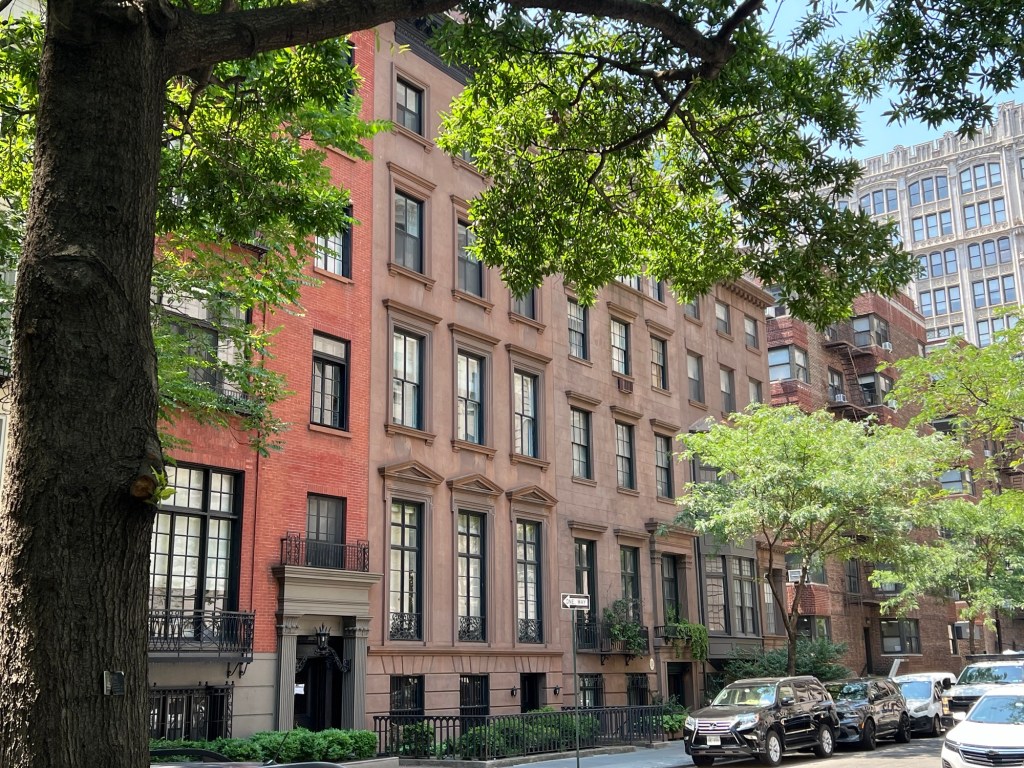
The elegant brownstones that line the park
Gramercy Park is probably one of the nicest neighborhoods in Manhattan with its historic brownstones, beautiful park and excellent restaurants and shops. The neighborhood is steeped in history and it had been enjoyable to walk around the buildings and read their history.

The Union Square Market is always packed
https://www.grownyc.org/greenmarket/manhattan-union-square-m
As I walked around the Farmers Market, looking over the very over-priced fruits, vegetables and bakery products, I noticed more of the medallions that line the border of Union Square Park. The first one I admired without the sunlight distracting me was the medallion of the layout of the park from the 1800’s.
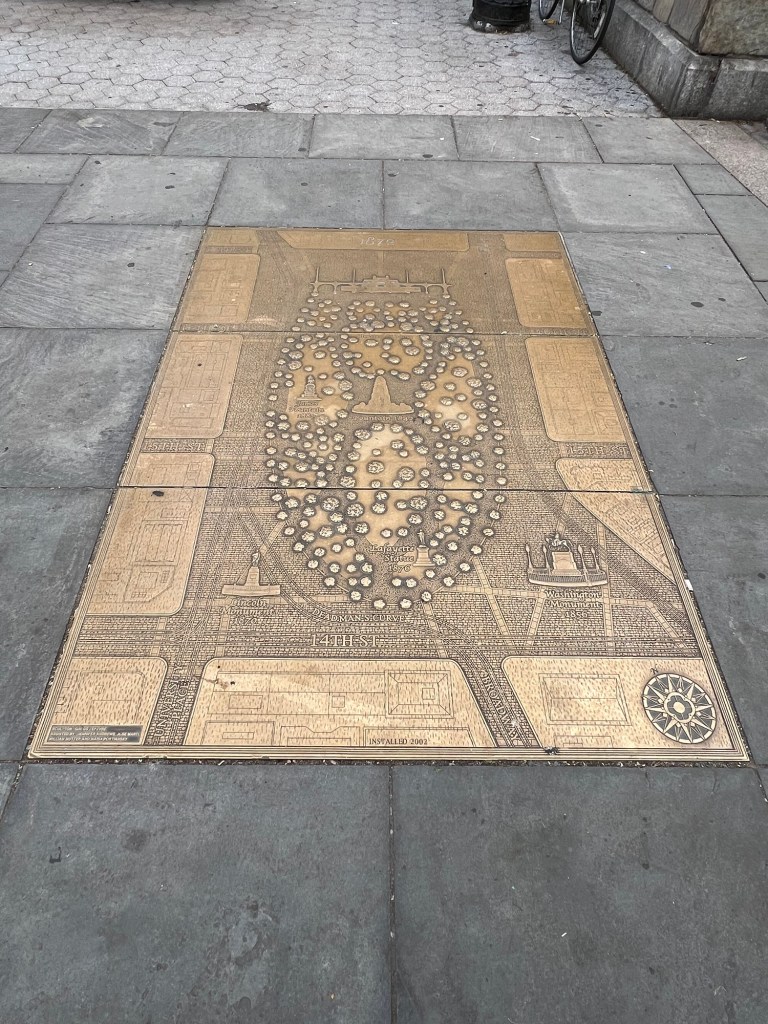
This is the original layout of the park in 1876 plaque

The collection of medallions around the park’s fringes

The Union Square collection of plaques

The collection of plaques in Union Square Park
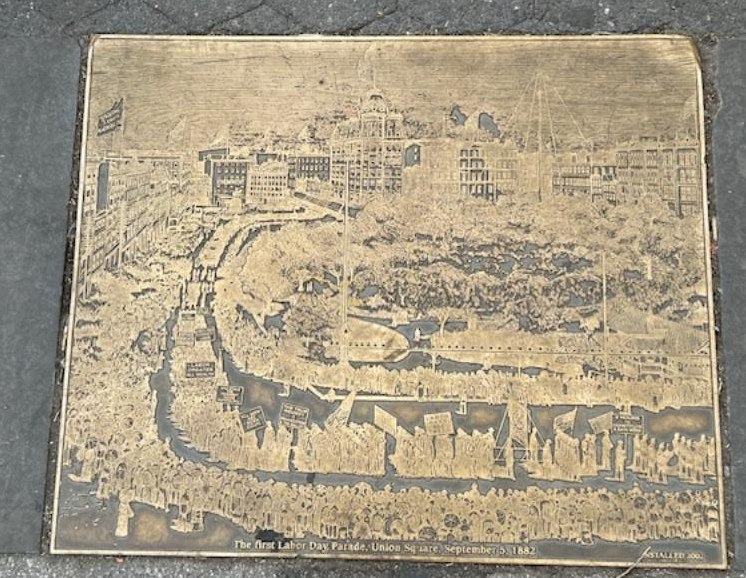
The plaques around Union Square Park
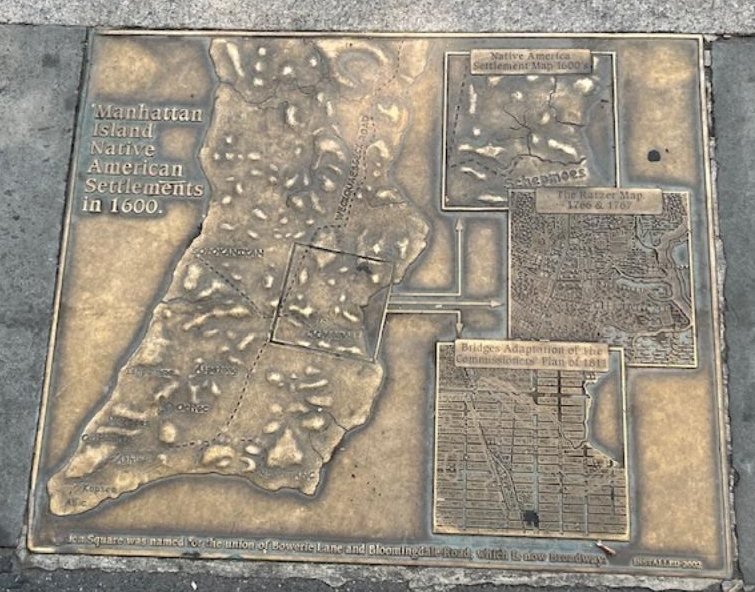
The plaques around Union Square Park
I walked around the park and marveled at it on a very hot afternoon. Like most parks in former edgy neighborhoods, it fascinates me how a bunch of twenty year old’s and families sun themselves and socialize where thirty years earlier you would be harassed by homeless, drug dealers and methadone addicts. You still might see them on the fringes of the park but not like in the early 1980’s.
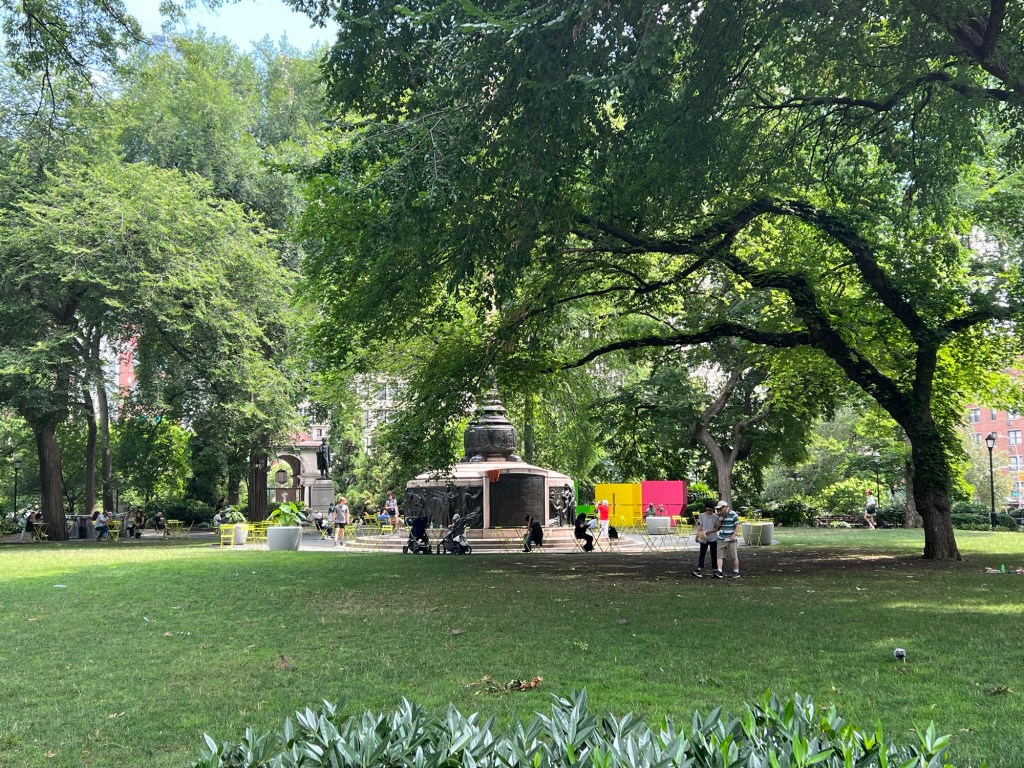
The expansive lawn of Union Square Park
https://www.nycgovparks.org/parks/union-square-park
https://en.wikipedia.org/wiki/Union_Square,_Manhattan
The park now has a business partnership and I believe a Friends group as well. There are so many activities going on in the park, that I am sure people don’t notice all the chess hustlers and counterculture types on the 14th Street perimeter.

Looking at the southern part of the park facing 14th Street and the southern entrance to Broadway
From Park Avenue South/Union Square East is the extension of the street that lines the eastern end of the park. At the corner of East 15th Street and Union Square East is 101 East 15th Street the old Union Square Savings Bank building.
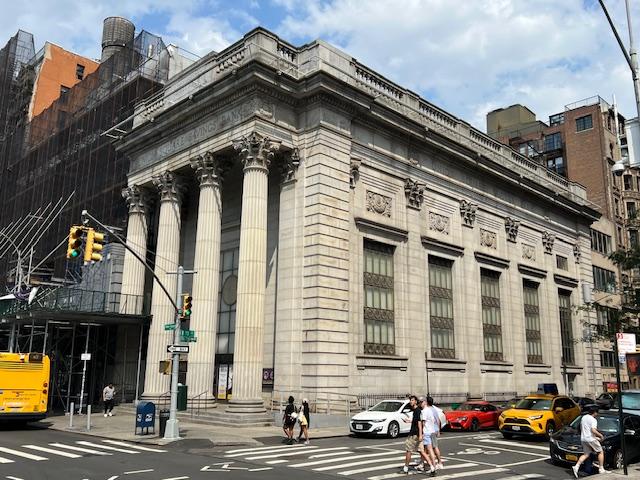
101 East 15th Street-The Union Square Savings Bank Building/Daryl Roth Theater
https://en.wikipedia.org/wiki/Daryl_Roth_Theatre

The side of the Union Square Savings Bank building
The bank itself was founded in 1848 and moved to this location in 1895. This building was designed by architect Henry Bacon in the neo classical design in 1905 and the building was finished in 1906. The bank closed in 1992 (Wiki).
I walked to the small triangle of Union Square Park that sits between East 15th and 14th Streets and came across a sculpture that I had never seen before on all my walks back from NYU. Maybe I just missed it when it was dark out. It was a depiction of an urban legend of the NYC sewers.

The alligator sculpture ‘N.Y.C. Legend’
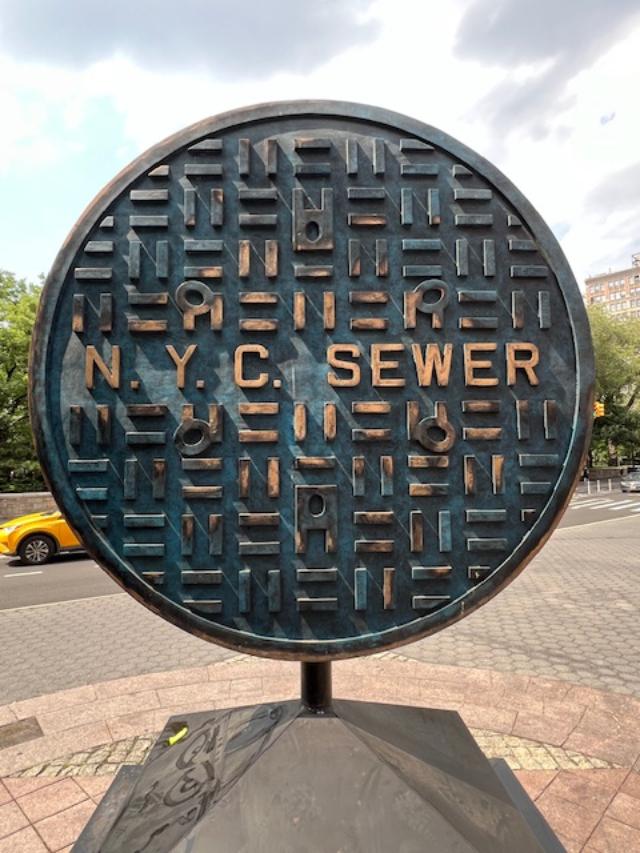
The sewer cover top of the sculpture

The sign for artist Alexander Klingspor
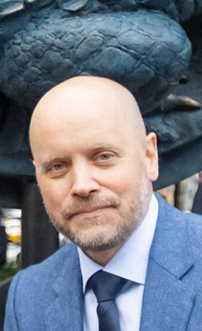
Artist Alexander Klingspor
Artist Alexander Klingspor is Swedish born artist who works both in the United States and Sweden. He apprenticed under American artist Mark English. He is known for his paintings and sculptures (Wiki).
I then started my walk up Park Avenue South which is actually the western border of Gramercy Park. I have always been impressed by the W Hotel on the corner of 16th Street and Park Avenue South at 201 Park Avenue South.
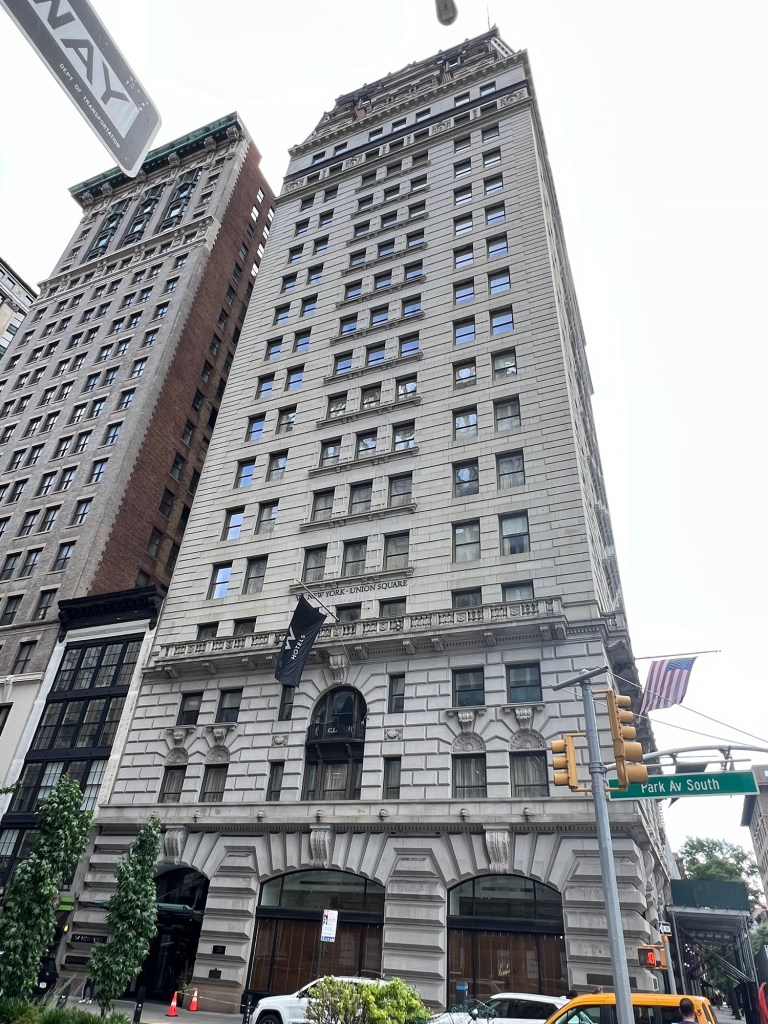
The W Hotel at 201 Park Avenue South
https://en.wikipedia.org/wiki/W_New_York_Union_Square
https://www.marriott.com/en-us/hotels/nycnu-w-new-york-union-square/overview/
Review on TripAdvisor:
This luxury hotel has an impressive history of being one of the innovators of luxury in the Marriott chain. The W Hotel concept was known for its edginess in design and the creativity in its restaurants. Things must be progressing as their customer gets older because their General Manager spoke to our Leadership class before I graduated from NYU and said they are softening the music (finally!) and changing the designs in the rooms. Maybe there will finally be a place to put your clothes.

The historic plaque on the building
This historic building was designed by the architects D’oench & Yost in the Modern French mode and built in 1911. Like most historic office buildings below 23rd Street, the are being refitted as hotels and condos as the desire for high ceilings and soaring lobbies have become desirable. This building had been designed for the Germanic Life Insurance Company Wiki).
I continued up Park Avenue South to East 20th Street to see another familiar building on the border of the neighborhood, 250 Park Avenue South. This building seems to be on the border of many Manhattan neighborhoods.
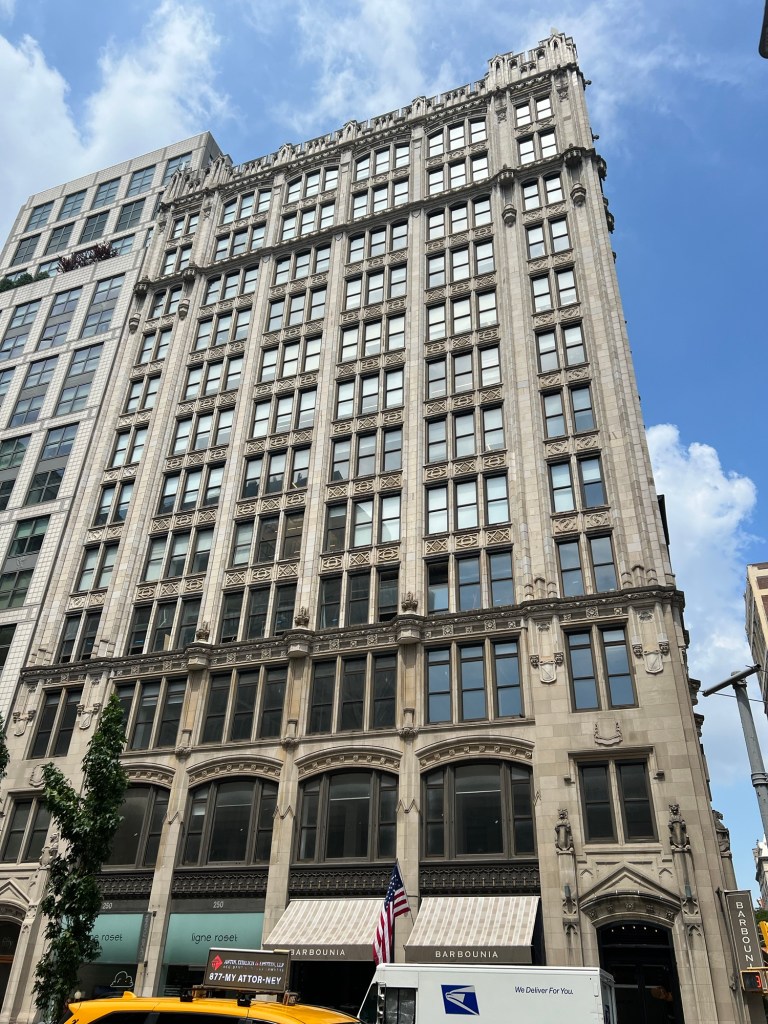
250 Park Avenue South

The embellishments on 250 Park Avenue South

The embellishments on 250 Park Avenue South on both sides of the building

Barbounia 250 Park Avenue
Review on TripAdvisor:
250 Park Avenue South was designed by architects Rouse & Goldstone in 1911 in the Neo-Classical design. You have to look at the building from a distance to appreciate all the interesting embellishments on the sides and top of the building.

237 Park Avenue with it’s lion guardians
https://www.apartments.com/237-park-ave-new-york-ny/kcb010c/

The building 237 Park Avenue was plain but I thought these lions the adorned the build were pretty cool.
https://www.corcoran.com/building/flatiron/303
The building was designed by William Dilthey and built in 1898. The building’s style, scale and materials contribute to the special architectural and historic characteristics of the Ladies Mile District (Corcoran Group).
As you walk up Park Avenue South, the first building that makes an impression is 251 Park Avenue South. This elegant office building with its large display windows and clean lines shows of the store inside. The office building was built in 1910 and has large windows both on the ground level and towards the top of building.
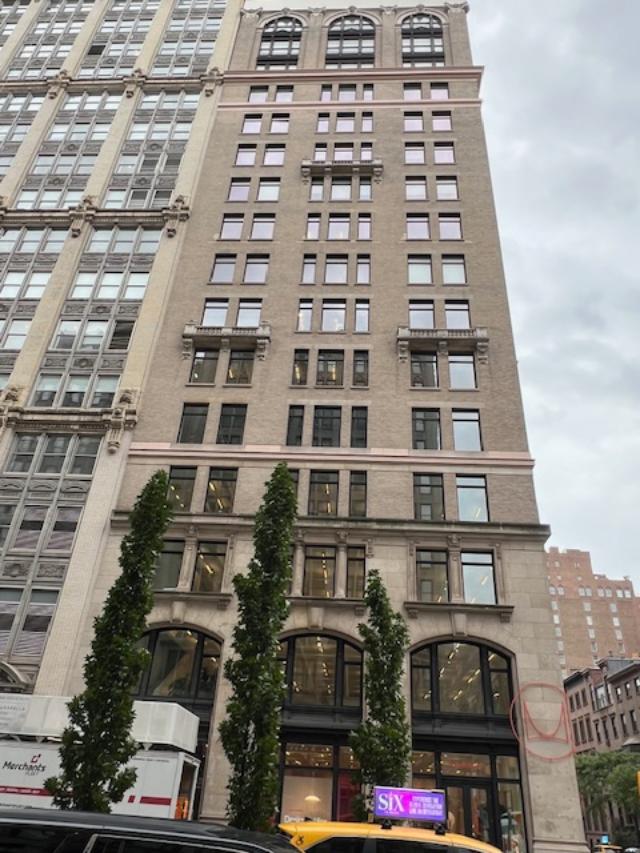
251 Park Avenue South
https://moovitapp.com/index/en/public_transit-251_Park_Avenue_South-NYCNJ-site_22867315-121
One building that does standout from the others on Park Avenue South is the Calvery Church at 277 Park Avenue. The church was established in 1832 and moved to its current location in 1842. The current church was designed in the Gothic Revival style by James Renwick Jr., who designed St. Patrick’s Cathedral.
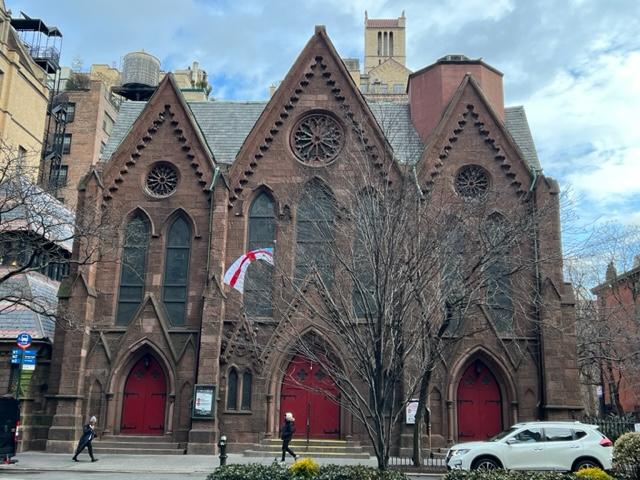
277 Park Avenue South-Church of the Calvery
https://www.calvarystgeorges.org/
https://en.wikipedia.org/wiki/Calvary-St._George%27s_Parish
Another interesting building, I looked up and admired while walking up Park Avenue South was 281 Park Avenue South, the former Church Mission House. The building was designed by architects Robert W. Gibson and Edward J. Neville in the Medieval style and was built between 1892 and 1894. It was built for the Episcopal Church’s Domestic and Foreign Missionary Society (Wiki). It now houses the photography museum The Fotografista Museum.
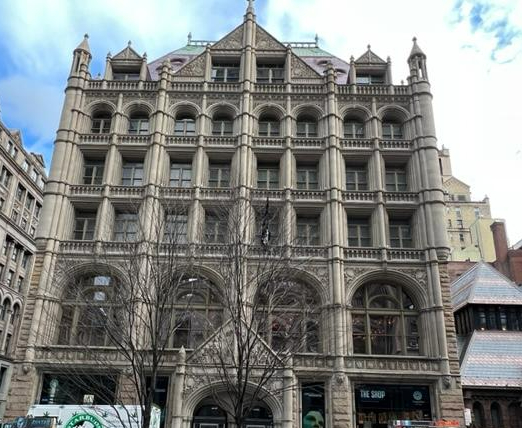
281 Park Avenue South-The Fotografiska Museum (The Church Mission House)
https://en.wikipedia.org/wiki/Church_Missions_House
https://www.fotografiska.com/nyc/
Another impressive building, I passed before East 23rd Street is 105 East 22nd Street the former United Charities Building. This is the final building in what was once known as “Charity Row” (Wiki). The building was designed by architect R. H. Robertson and the firm of Rowe & Baker. It was built by John Stewart Kennedy in 1893 for the ‘Charity Organization Society’ (Wiki).
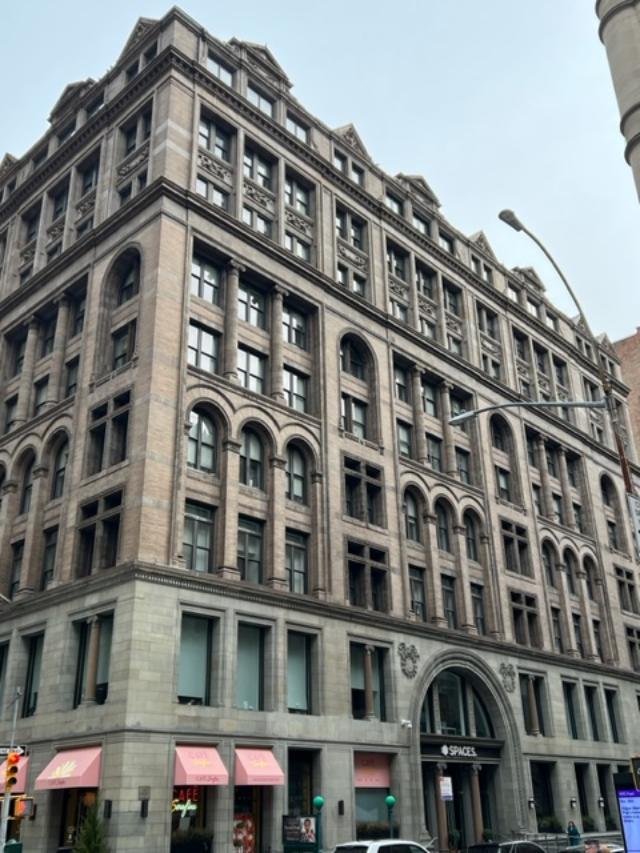
105 East 22nd Street-United Charities Building
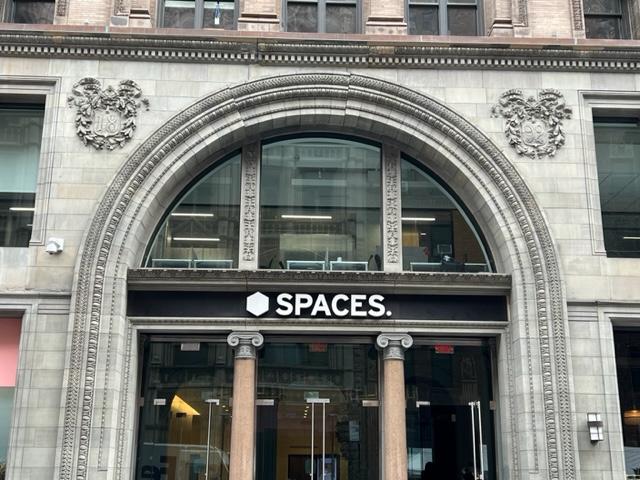
The details of 105 East 22nd Street
https://en.wikipedia.org/wiki/United_Charities_Building
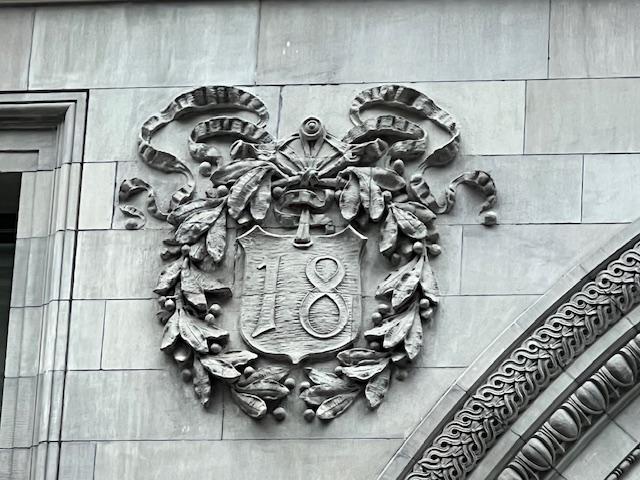
The embellishments on the building

The embellishments on the building
I started walking down East 20th Street from Lexington Avenue. I crossed East 23rd Street which is the edge of the neighborhood shared with Gramercy Park, Rose Hill and Peter Cooper Village further down the block. This busy thoroughfare is lined with a lot stores, restaurants and many interesting buildings that leads to the East River.
I stopped for lunch at a Dim Sum restaurant named Awe Sum Dim Sum at 160 East 23rd Street and it was just excellent. I took my friend, Maricel, here for lunch when it first opened and we ate through most of the menu (see my reviews on TripAdvisor and DiningonaShoeStringinNYC@Wordpress.com).
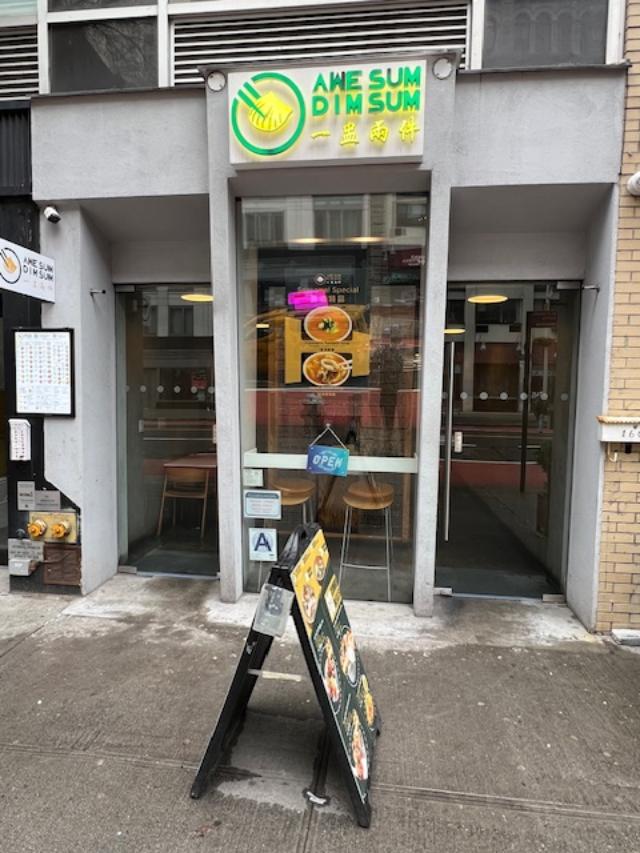
The Awe Sum Dim Sum at 160 East 23rd Street
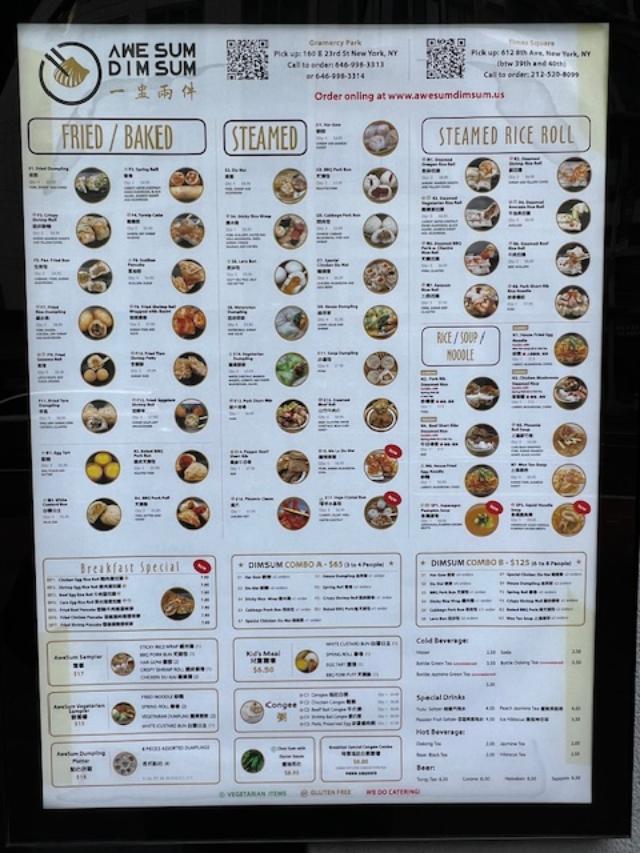
The menu items that the restaurant carries.
The restaurant has the most amazing appetizers to choose from that are all made in house and served fresh to you either at your table inside or one of the many tables outside (while the weather holds out). On my trip with Maricel, we ate our way through the Fried Dumplings, the Chicken Siu Mai, the Spring Rolls, the Baked BBQ Pork Buns, the Scallion Pancakes and the Soup Dumplings. On my trip today, I ordered the Soup Dumplings, Crispy Shrimp Rolls and the Siu Mai with pork and shrimp.
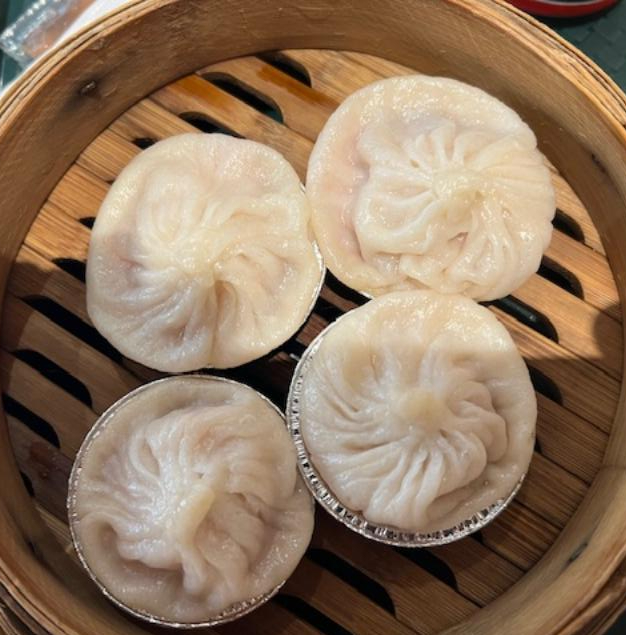
The Soup Dumplings here are the best
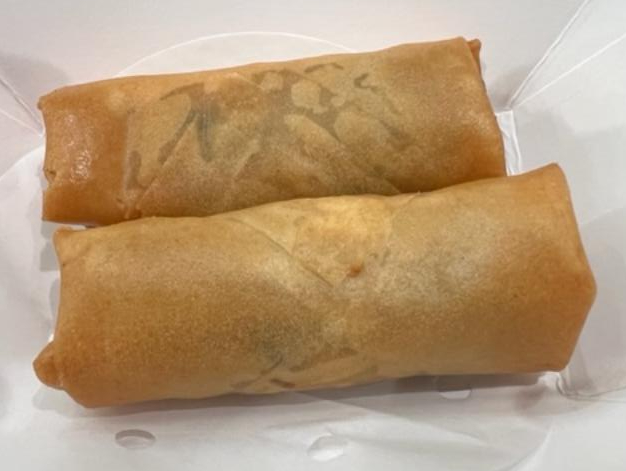
So are the Spring Rolls when they are fresh out of the fryer

On one of the trips I had the Pan Fried Pork Buns, Spring Rolls and Roast Pork Buns.
With the cost for each running between $4.00-$6.00, I could eat my way through the menu. The nice part is what a nice contemporary designed restaurant the place is to dine in. Everyone is kept ‘socially distanced’ so it is a nice place to eat.

The inside of Awe Sum Dim Sum
After a nice relaxing lunch, I was ready to continue down East 23rd Street. Criss crossing the street again, I noticed the beauty of 219-223 East 23rd Street. The building has all sorts of griffins and faces glaring out. When you stand across the street, you can admire the beauty of all the carvings on the building along the archways above and the faces staring at you from the tops of windows.

219-223 East 23rd Street

The window details of 221 East 23rd Street
https://www.cityrealty.com/nyc/gramercy-park/219-east-23rd-street/7437
Another building that stands out is 304-310 East 23rd Street. This former factory building was built in 1900 and now is the “The Foundry”, a converted condo complex. The amazing detail on the building stands out and you have to admire the stonework and details in the carvings along the building.

304-310 East 23rd Street is a former factory
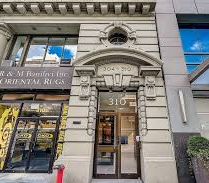
https://www.cityrealty.com/nyc/gramercy-park/the-foundry-310-east-23rd-street/3880
The stone work is a standout on this building
Reaching the end of East 23rd Street, you will see the planned middle class complex of Peter Cooper Village, which has gone market rate and is now getting very upscale and seems to have a younger resident walking around then the usual middle aged residents who used to be on the list to get one of these very desirable apartments.

The entrance to Peter Cooper Village at First Avenue
https://www.petercoopervillage.com/
Across from Peter Cooper Village is the Asser Avery Recreational Center and Playground 392 Asser Avery Place with the famous baths and pools that have been part of the neighborhood for generations.

The Asser Levy Recreation Center and Park at 392 Asser Levy Place
When the baths opened in 1908, the facility was called the East 23rd Street Bathhouse. It was by architects Arnold W. Brunner and William Martin Aiken. Based on the ancient Roman Baths, the architecture was inspired by the “City Beautiful” movement, a turn of the century effort to create civic architecture in the United States that would rival the monuments of the great European capitals (NYCParks.org). The playground next to it opened in 1993.

The architecture by Arnold Brunner and William Martin Aiken resembled a Roman Bath
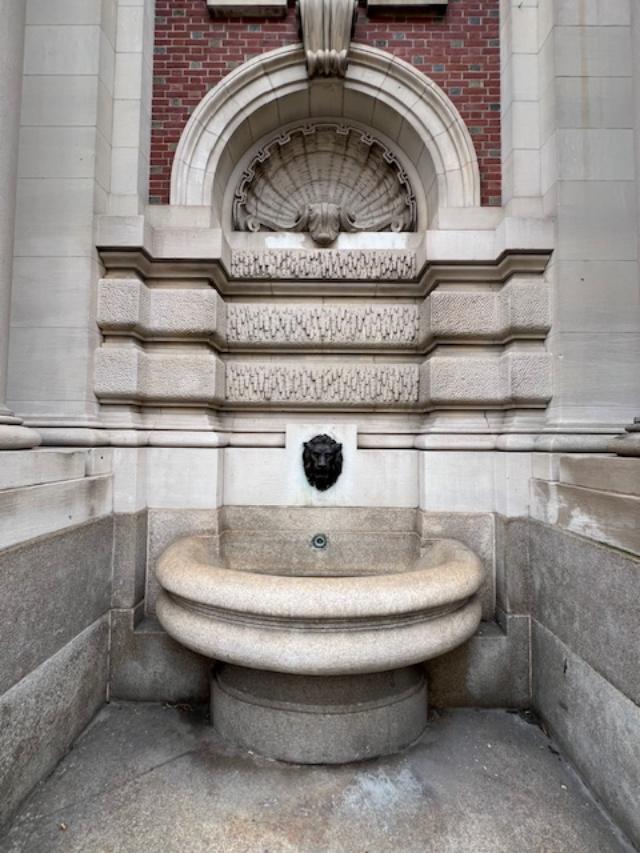
The fountain at the bathhouses.

The historic plaque.
The Baths and Park was named for Asser Levy, a Jewish trailblazer in colonial times when Mr. Levy and 23 Jews fled from Brazil in 1654 to seek refuge in New Amsterdam. He challenged Governor Peter Stuyvesant when he tried to evict the Jews from the colony. He was the first Jew to serve in the militia and own property in the colony (NYCParks.org).

Asser Levy
http://www.jewishencyclopedia.com/articles/9876-levy-asser-asser-levy-van-swellem
The border to the east of the neighborhood is combination of the East River Esplanade, FDR Drive and First Avenue. Since First Avenue and FDR Drive are surrounded by a combination of college campus and hospital space, it makes walking around the neighborhood tricky.
When you walk across East 23rd Street to FDR Drive, you have to cross over FDR Drive at East 25th Street behind the VA New York Harbor Healthcare System Hospital complex and the CUNY/Hunter College campus and then cross over the bridge to the Waterside Plaza complex.

The Waterside Plaza complex and the Greenway walkway
https://streeteasy.com/building/waterside-plaza
This series of apartment buildings faces the East River and FDR Drive that leads to the East River Greenway walkway and the Waterside Plaza walkway both surround the complex. The views are breathtaking on a sunny afternoon of the East River and Long Island City.

The East River Greenway and the view of Long Island City.

East River Greenway looking at East 23rd Street
I turned around from the river (which is technically not part of the neighborhood) and walked down First Avenue. First Avenue is an unusual border for the neighborhood in that on one side is the gated communities of Peter Cooper Village from East 23rd to East 20th Streets and Stuyvesant Town which is from East 20th to East 14th Streets and on the border of Avenue C at the very eastern border. These once middle-income housing that once catered to teachers, fire fighters and police have gone market rate in the last twenty years, and you can see the changes in the chain businesses that now line their side of First Avenue.

Peter Cooper Village lining East 23rd Street
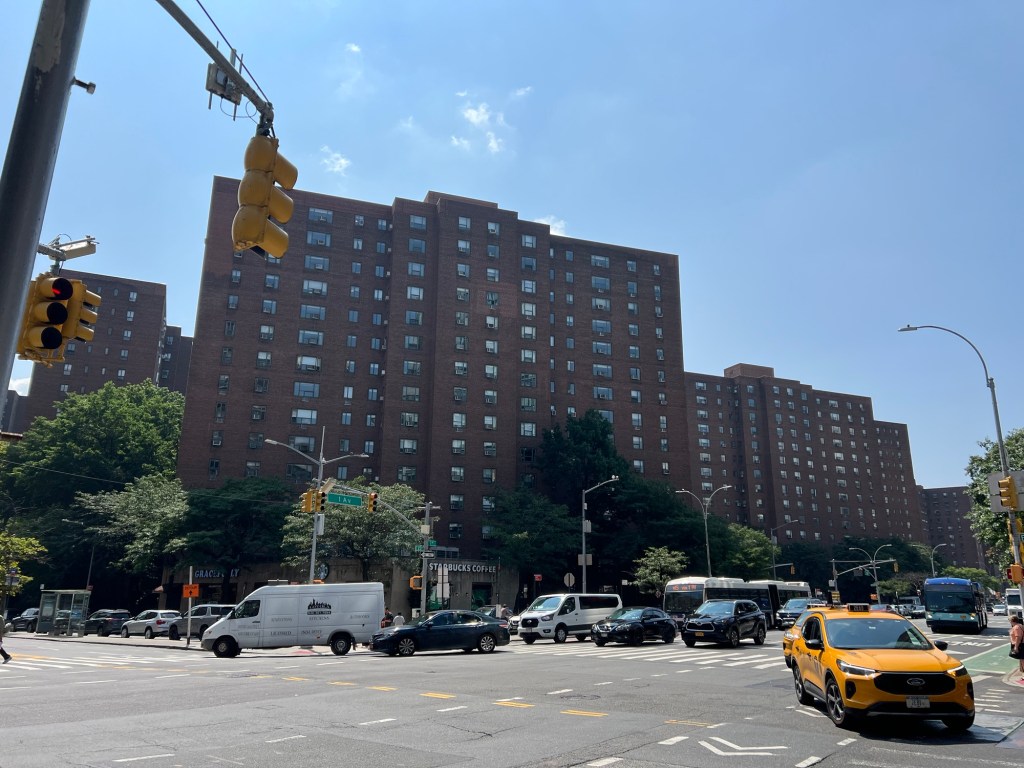
Peter Cooper Village on the corner of East 14th Street and First Avenue
Stuyvesant Town-Peter Cooper Village was one of the biggest post WWII private developments created in Manhattan. It consists of 110 red brick buildings that spreads over 80 acres of land below East 23rd Street. The complex was developed by Metropolitan Life Insurance Company based on the earlier success of the Parkchester complex in the Bronx. The first buildings opened in 1947. The complex used to be catering to middle class/middle income rent controlled apartments but since 2006 has gone more market rate (Wiki).
I found that you are not allowed to walk around the complex without permission so I just walked around the borders of the complex that had open roads. Please just don’t ‘walk around the complex’ without permission or know someone in the complex. Still I was able to walk through some of the well landscaped corners of the complex. They do a nice job maintaining the complexes.

On the other side of First Avenue just below East 20th Street starts Stuyvesant Town
https://en.wikipedia.org/wiki/Stuyvesant_Town%E2%80%93Peter_Cooper_Village

The gardens in between the buildings in Stuyvesant Town in the Summer of 2024
On the other side of the street, there are small brick and brownstone buildings housing businesses that cater to the complex with a combination of chain and independent stores. I thought the whole Avenue could use a bit of a makeover. So much of the neighborhood was under scaffolding. Walking down First Avenue I noticed a lot of newer businesses on the complexes side of the street with more upscale restaurants and bars. Now that this is market rate housing and there have been renovations in the complex, a wealthier clientele has moved into the two complexes.
On the business side of First Avenue, it’s a combination of small restaurants such as pizzerias, delis and bodegas and services catering to the residents in both complexes. Here and there are some very reasonable places to eat. From 23rd Street to about 16th Street are businesses that cater not just to the housing complexes across the street but to the office buildings around the corner at East 14th Street.

The independent businesses lining First Avenue and East 21st Street
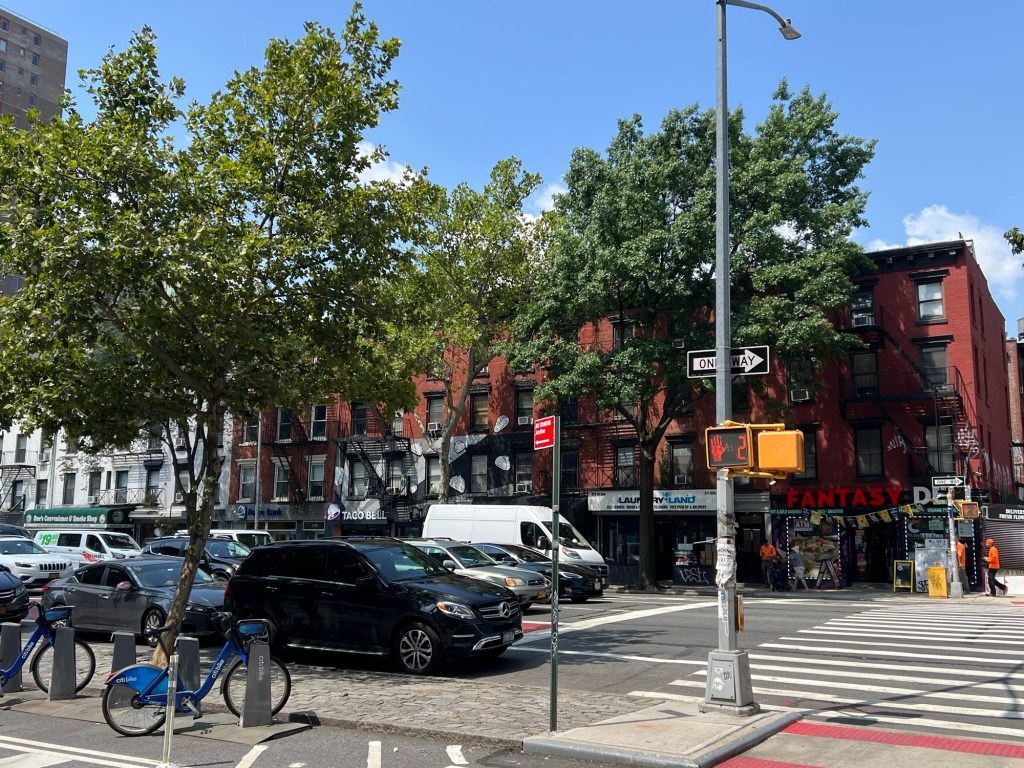
The independent businesses along First Avenue and 19th Street
Turning onto this part of 14th Street just above Alphabet City, I found I was far away from the old Ladies Shopping District and the beautiful architecture that once housed those stores. That is closer to Fifth Avenue and Broadway. On one side of East 14th Street are new buildings catering to office workers. The northern side of East 14th Street is a series of old brick and brownstone buildings that house small restaurants and bars.

The East 14th Street shopping district is made up of small businesses

Looking up Second Avenue at East 14th Street
As you enter the heart of East 14th Street as I rounded the corner, I saw a tiny fire fighter outside Engine 5 at 340 East 14th Street.
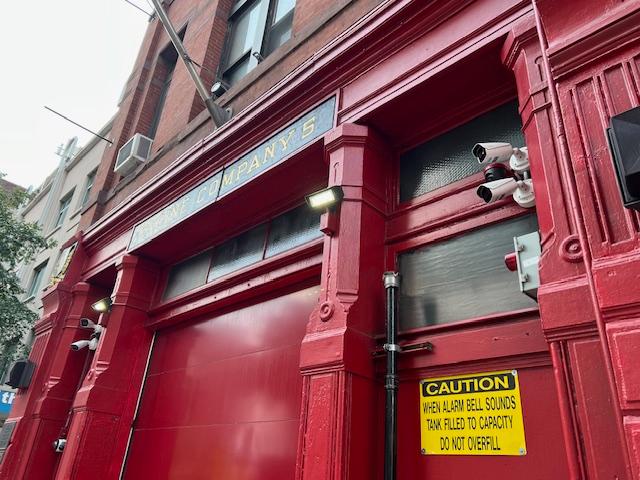
Engine 5 at 340 East 14th Street
https://www.instagram.com/explore/locations/32846714/fdny-engine-5-14-st-express/
https://daytoninmanhattan.blogspot.com/2022/07/the-1881-engine-company-5-340-east-14th.html
Engine 5 was founded as a Volunteer Fire Company in 1865. This firehouse was designed by Napoleon LeBrun & Son in 1881 and is still used today (DaytonianinManhattan.com).

Little Fire Fighter at Engine 5

Looking down East 14th Street shopping and dining district
There is a real diversity of businesses down this stretch of East 14th Street from First to Third Avenues.

Coyote Ugly Bar, famous of the film, at 233 East 14th Street
https://www.facebook.com/CoyoteUglySaloonNYC/
Review on TripAdvisor:
The bar was made famous by the movie of the same name back in 2000.
The trailer for the movie “Coyote Ugly”
Here I noticed a lot of newer buildings that have changed the dynamic of the neighborhood housing small businesses, city agencies and some of the buildings that have become part of the NYU campus. 14th Street is now a hodge lodge of different businesses such as restaurants and stores and a lot of fast-food places catering to the college students and the office workers.
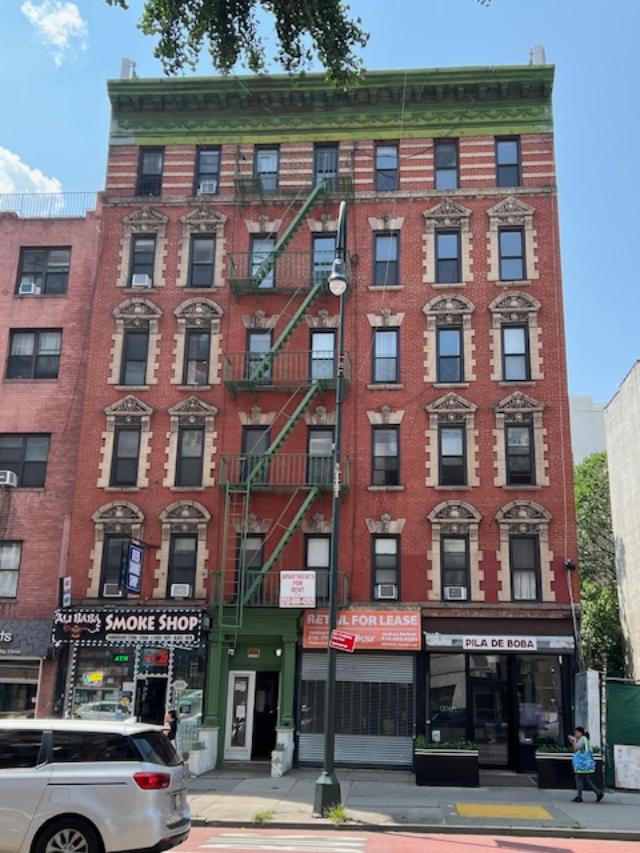
328-330 East 14th Street
https://streeteasy.com/building/328-east-14-street-new_york
https://www.apartments.com/328-e-14th-st-new-york-ny/svj96n5/
This six story walk up apartment building was built in 1900 and is one of the last holdovers in this neighborhood. You have to look up at all the faces staring at you to appreciate it (Streeteasy.com).

The entrance to 328 East 14th Street
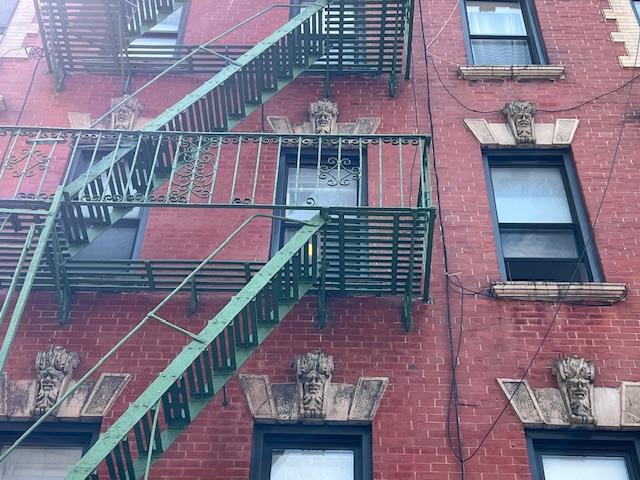
The faces staring at you from the entrance of 328 East 14th Street
As you get closer to Union Square Park, you see more of the classic architecture and upscale housing. In an ever-changing Manhattan, this area like every other section of island is being knocked down and rebuilt. The closer to the parks you get, the more upscale things get.
At 124 East 14th at the base the NYU campus at part Palladium Hall is Urbanspace Union Square. There is a selection of upscale restaurants catering not just to NYU students but to the business community as well. This just opened in August 2024 so I had not noticed it when I was recently attending NYU.
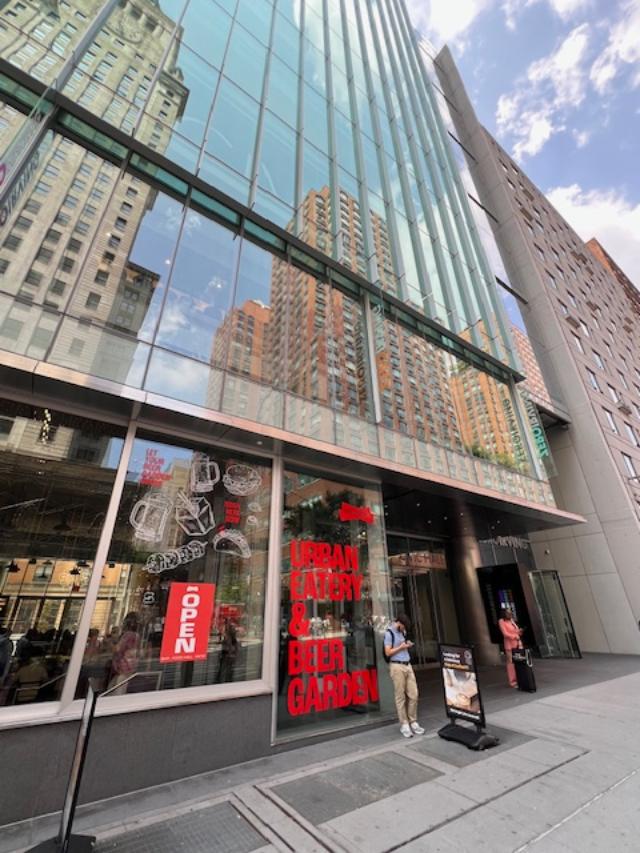
Urbanspace Union Square at 124 East 14th Street
https://www.urbanspacenyc.com/union-square
https://www.facebook.com/urbanspace/
I took a quick walk through the food court and looked over the over-priced menus of the restaurants. I could not believe the prices of these places and how it catered to college students but the place was packed. I also saw two young plain clothed policemen looking over the food court and that was a little unnerving but a sign of the times.
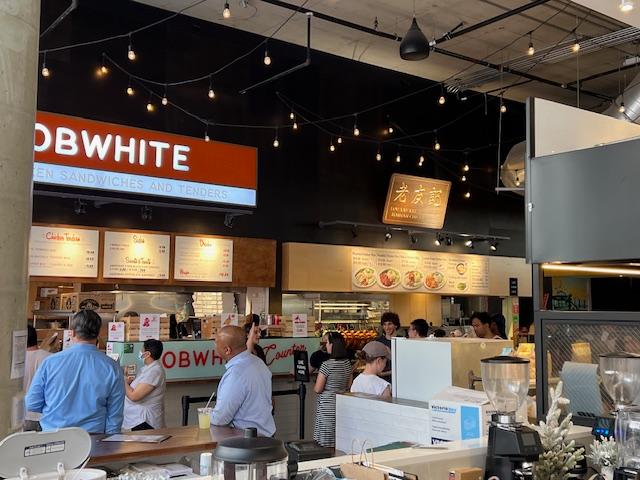
The food court in the afternoon

Some of the upscale restaurants at the Urbanspace Food Court
When I arrived back at my starting point in Union Square Park, it was nice to sit on the benches and listen to the street performers practicing their music. The park has been such a relief from the heat and a place to cool down is probably the reason why the wealthy called this home before the Civil War. There is a lot of calm in the park in this very busy crossroads to uptown.

Looking down East 14th Street from Irving Place
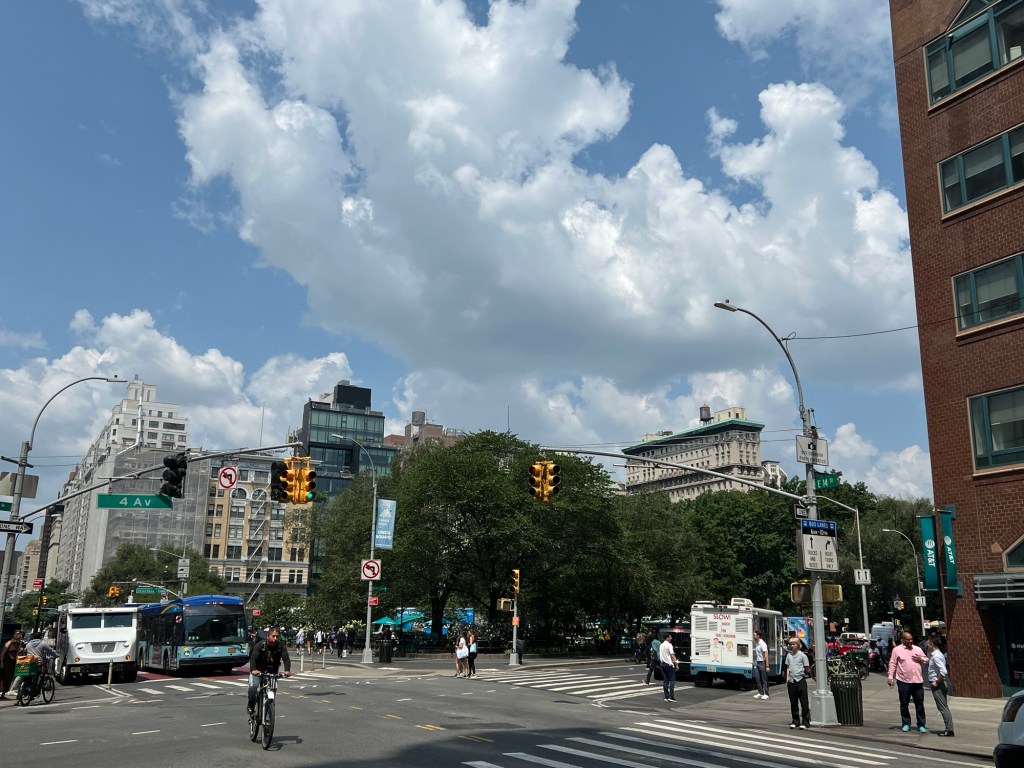
Arriving back at Union Square Park in the Summer 2024

Union Square Park in the late summer is quite spectacular
Union Square Park is just spectacular during the Summer and it is nice to just relax on the lawn or sit on the benches and read a book. It is nice to just calm down and relax and enjoy the day. The Gramercy Park area is unique in architecture, parks, restaurants and shops and there will be more to explore in the future.
Please read my other blogs on Gramercy Park:
Day Three Hundred and Twenty Walking the Borders of Gramercy Park:
https://wordpress.com/post/mywalkinmanhattan.com/51647
Day Three Hundred and Twenty One Walking the Avenues of Gramercy Park:
https://wordpress.com/post/mywalkinmanhattan.com/53432
Day Three Hundred and Twenty Four Walking the Streets of Gramercy Park:
 mywalkinmanhattan