
It was another hot day in Manhattan. I worked a double shift at the Soup Kitchen so I was there until 3:00pm. The weather was a lot cooler since the rain showers but still hot. It was a lot better to walk around though.
I started my walk on Fifth Avenue and East 19th Street across from the old Arnold Constable Department store building. In comparison to the newer store across from the New York Public Library on Fifth and East 42nd Street, this store was four times the size. I had read online that not only was it the main store at the time but the warehouse, wholesale location and where some of the manufacturing took place. This building that stretches from Fifth Avenue to Broadway and was built in three stages over the late 1800’s.
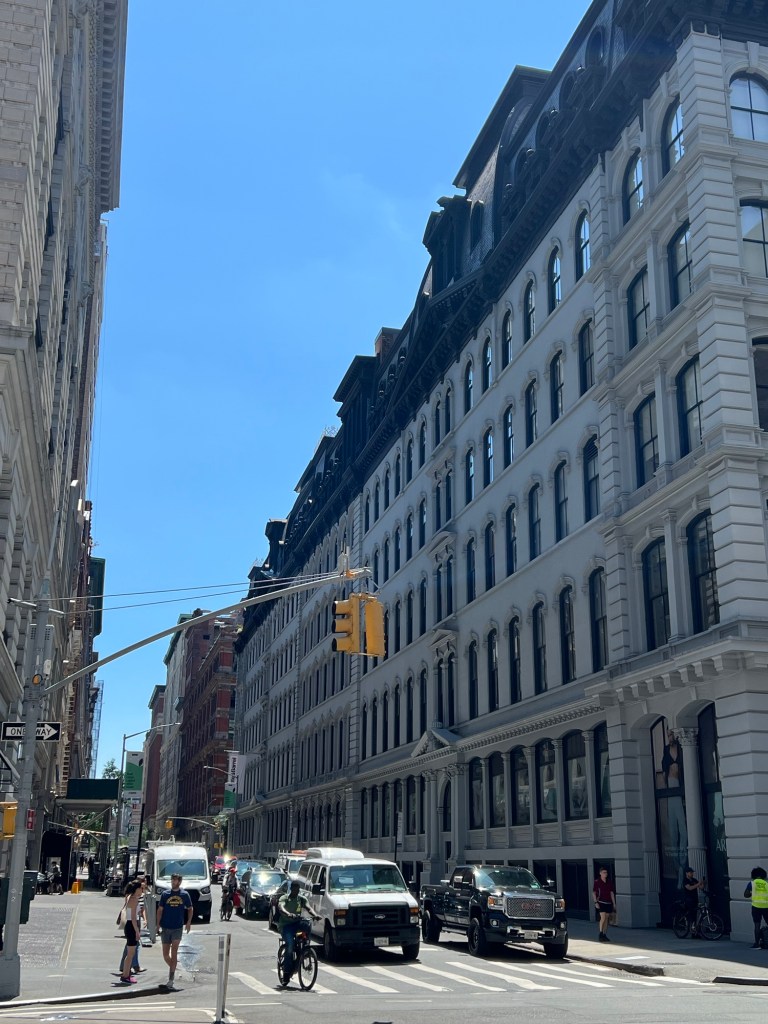
The former Arnold Constable building at Fifth Avenue and East 19th Street
When I crossed Broadway, it was the ABC store, the former store that dominates between Broadway and 19th Street, the old main shopping district from the pre-Civil War era. After the Civil War, it would move to 23rd Street. This was the former W. & J. Sloane’s Furniture store.
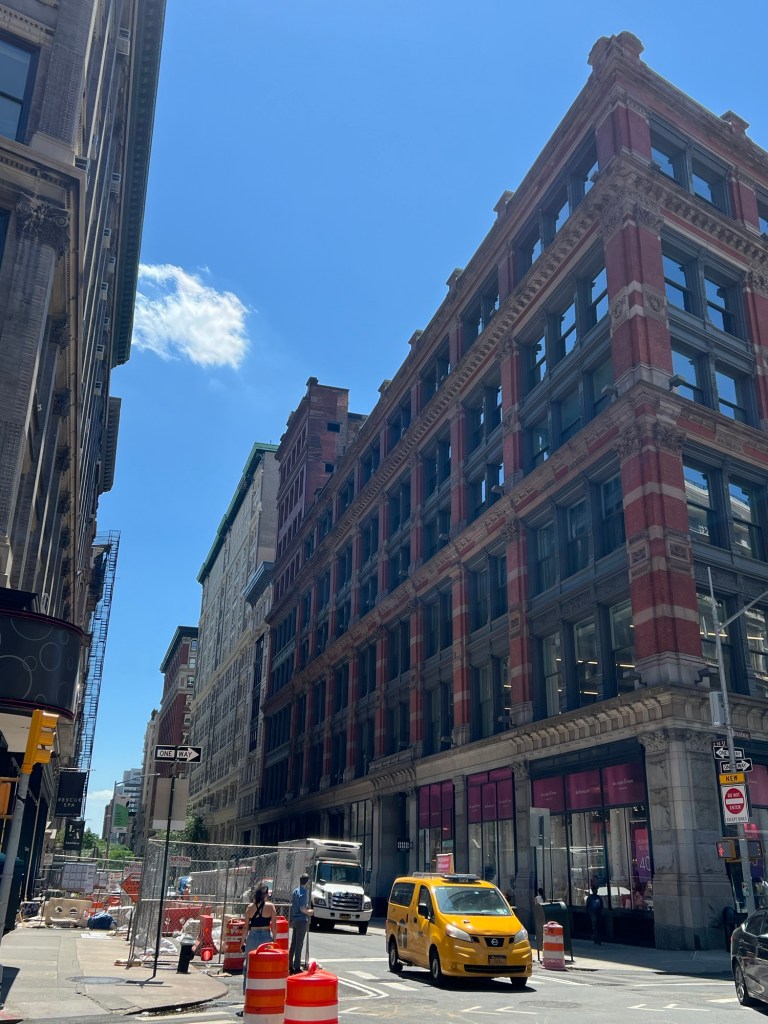
The ABC Store, the former at Broadway and East 19th Street
https://abchome.com/?srsltid=AfmBOoqf4tgHjk9A7XL6PkjC2EezcOdKtzgtokdHaDH4uRbv-5pFkEJq
When I walked further down East 19th Street to Park Avenue South, I came across the new location for the Union Square Cafe at 101 East 19th Street a restaurant I had eaten at many times in the old location since the 1990’s.
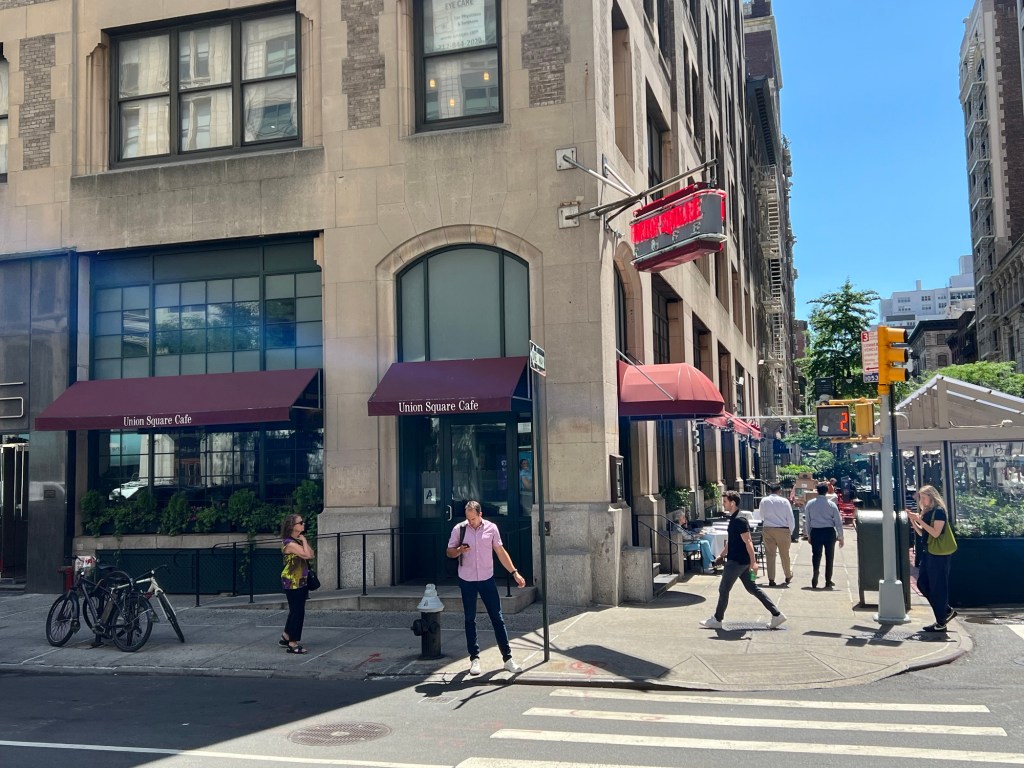
The new Union Square Cafe at 101 East 19th Street
https://www.unionsquarecafe.com/
My review on TripAdvisor:
I stopped and took a look at the menu. It wasn’t the innovative menu that I remember from past trips to the old restaurant. They had the standard dishes that I had seen before. It looked like they were keeping it safe in post-COVID but I did note that the restaurant has gotten very expensive.
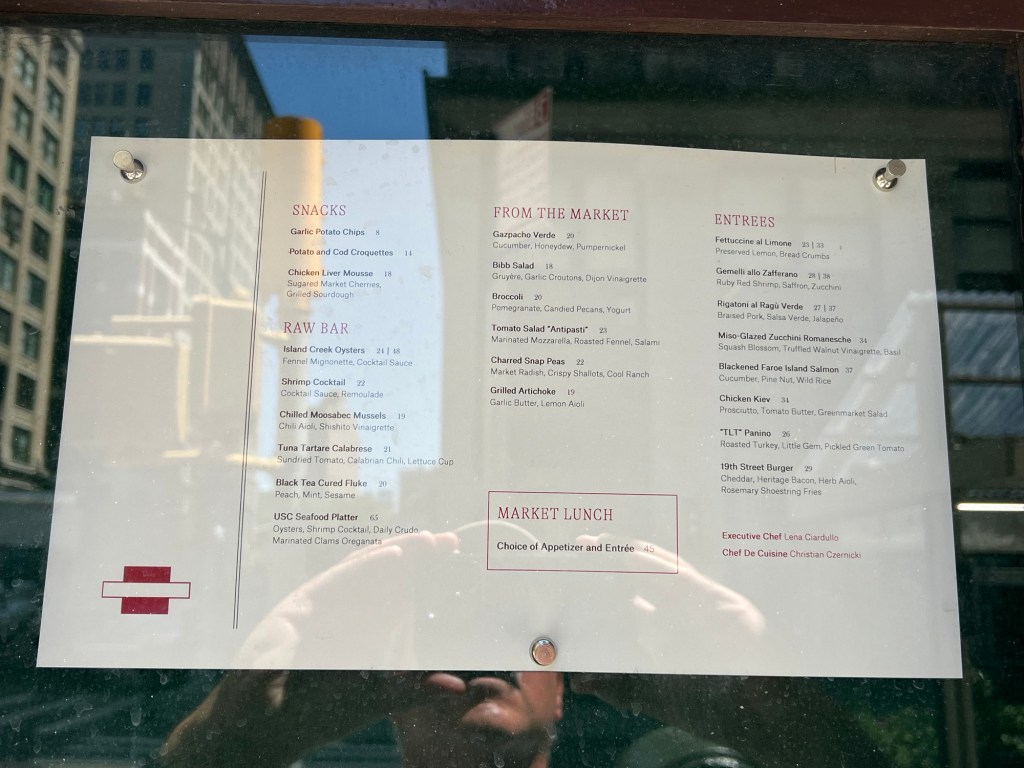
The new menu is expensive
https://www.unionsquarecafe.com/menu/dinner-menu/
The one thing I did like about the restaurant is that it had the most amazing outdoor seating. On a nice day this is the perfect restaurant to eat outside. The view of the quiet street and the historical buildings is a nice backdrop to the restaurant.
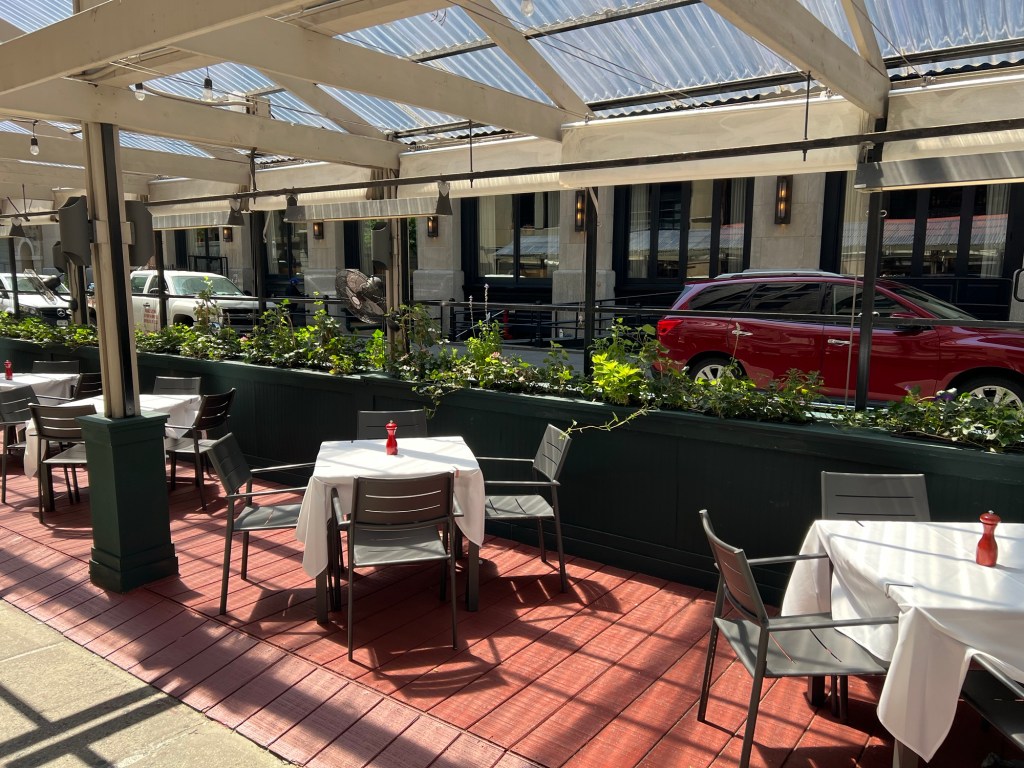
The outdoor cafe on this bright, sunny day
I had remembered the Union Square Cafe in the old location and the vibe was not the same here. It was like they wanted to cater to a hipper younger crowd instead of the older traditional crowd that they had before as customers. I continued walking down the street.
As you get closer to Irving Place, it starts to get more residential. Some of the homes are really beautiful. The residents have really done a nice job with their flower boxes and outdoor gardens in the neighborhood.
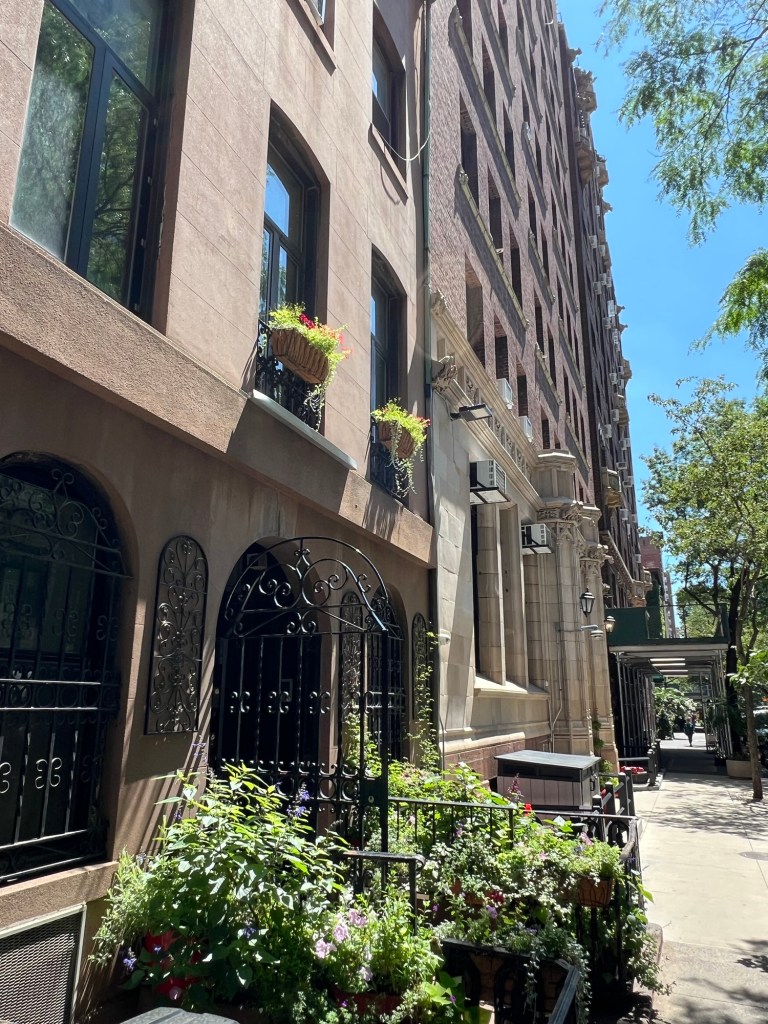
The homes closer to Irving Place on East 19th Street
I reached Irving Place and was confronted with the embellishments I had admired at 81 Irving Place. They were just so unusual and ghoulish. I think this is one of the more unique buildings in the neighborhood.
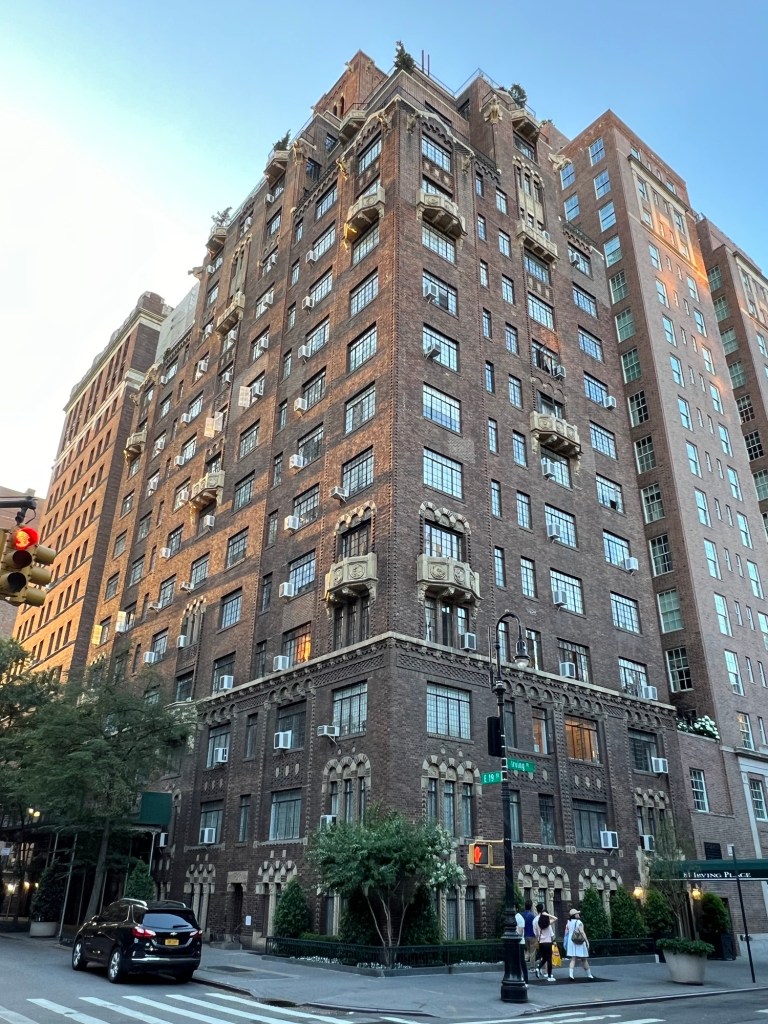
81 Irving Place in all its glory
https://streeteasy.com/building/81-irving-place-new_york
https://www.apartments.com/81-irving-pl-new-york-ny-unit-8a/5q6z3mp/
81 Irving Place is one of the most beautiful apartment complexes in the city that I have come across. The embellishments along the building are some of most detailed and elegant I have seen. This prewar Co-Op was built in 1929. You have to walk around the building to appreciate it and from the street level you can see all these wonderful details.

The strange creatures
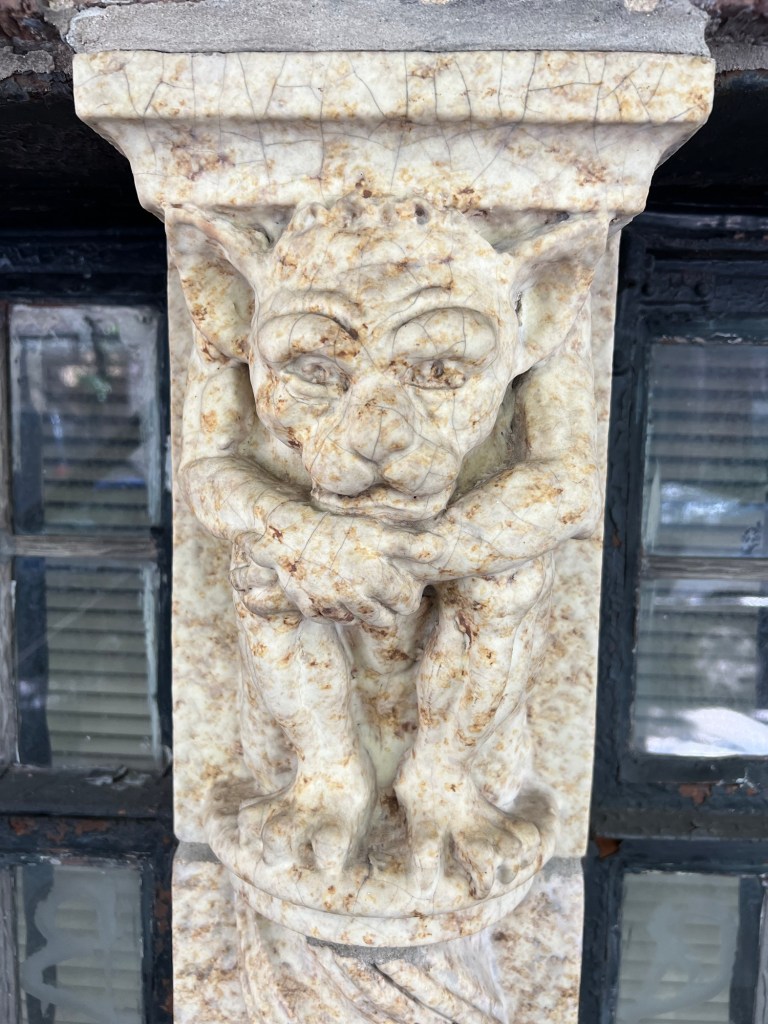
Surround this building

On all sides of it
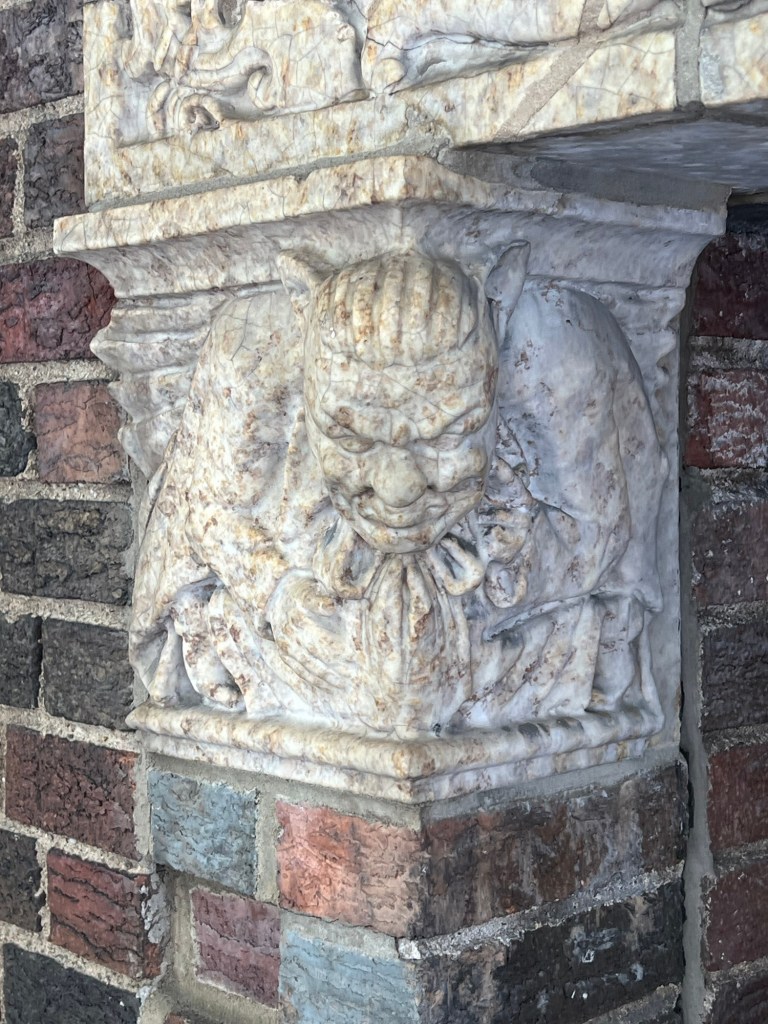
They stare at you

Welcoming you to the building
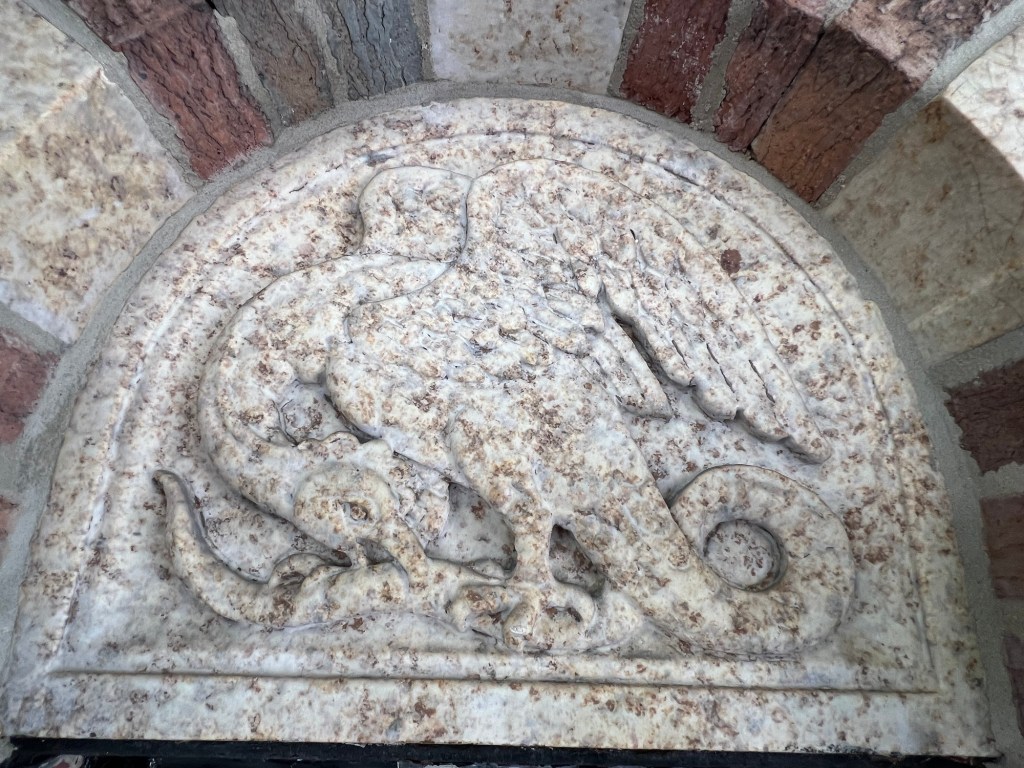
Protecting you
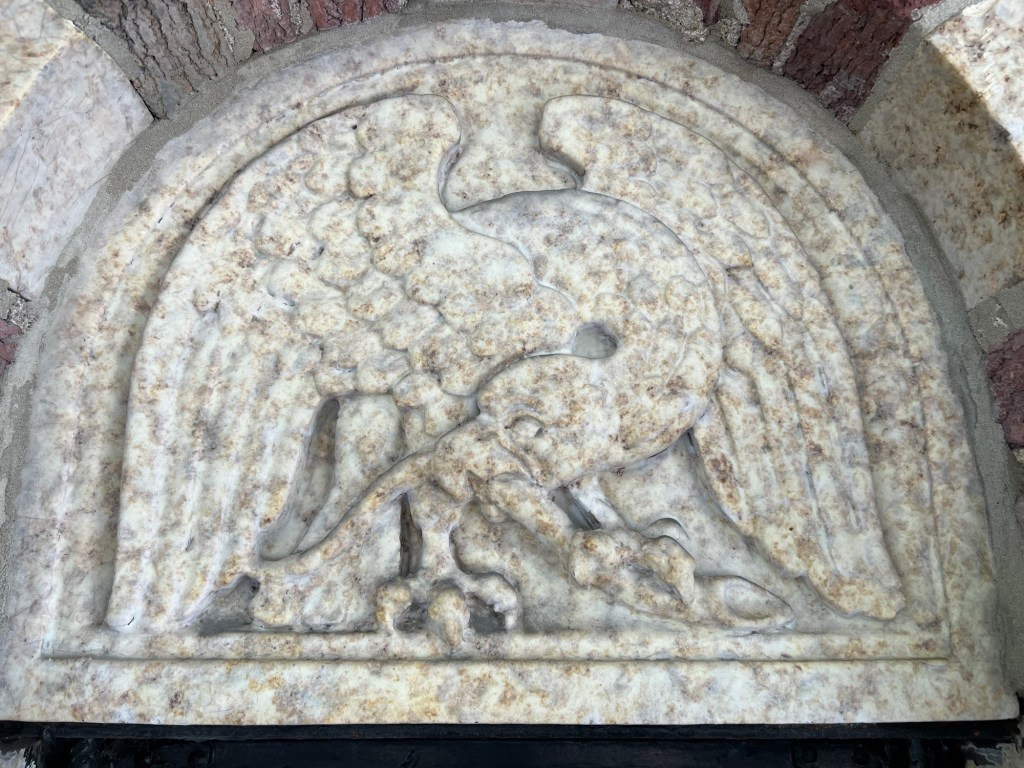
Staring at you
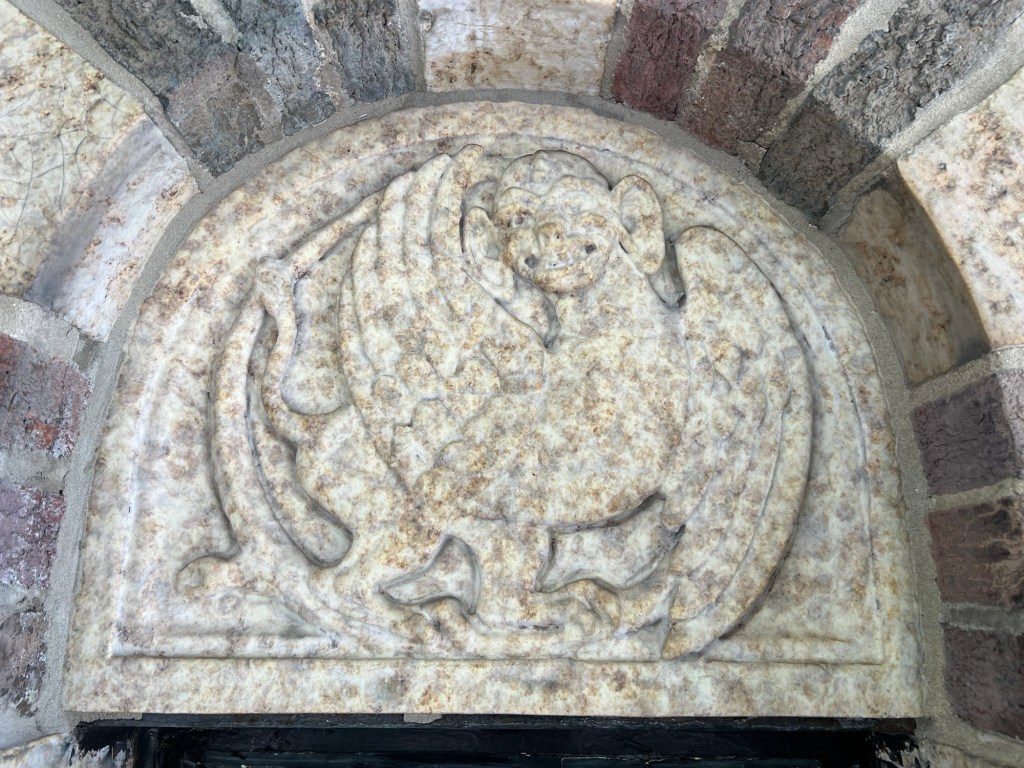
Welcoming you home

Happy to see you

The faces great you with strange looks
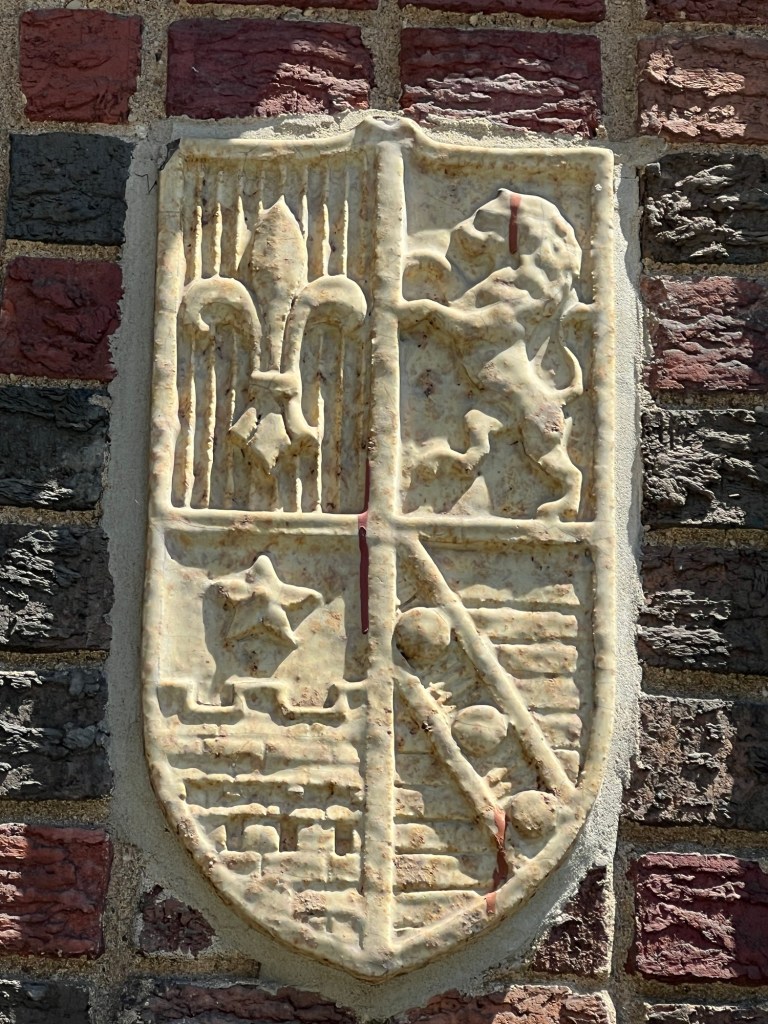
Coat of Arms

Coat of Arms

Coat of Arms
I had not noticed all of this when I had walked the borders of the neighborhood. I just saw all these detail from a distance. When you walk along East 19th Street, you see all designs in one long shot. I thought whoever created this building had a sense of humor. When I turned around on this corner, you really can enjoy the beauty of the building.
Another building where I had not noticed the elegance before was 33 East 19th Street. You really have to stare up to see the details of the faces and animals.

33 East 19th Street
https://www.loopnet.com/Listing/33-W-19th-St-New-York-NY/4429643/
This former office building was built in 1920 and have been converted to loft apartments.
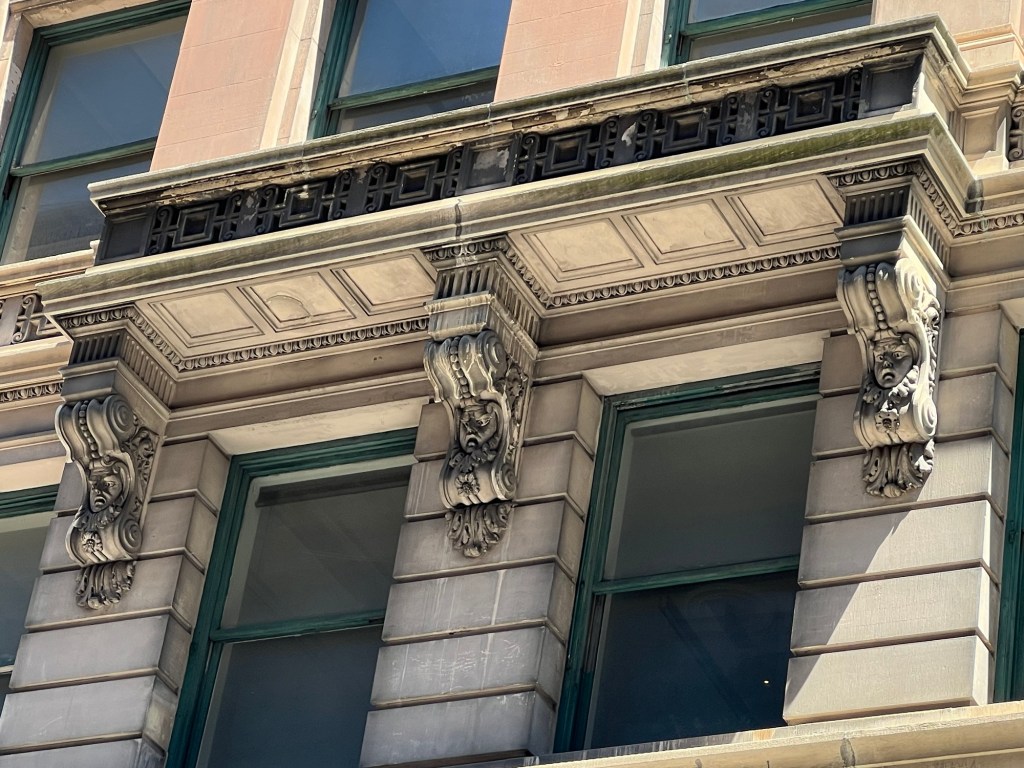
The faces greeting from the top of the building so you have to look up to look back

The strange stares you get from the building are almost a judgement call
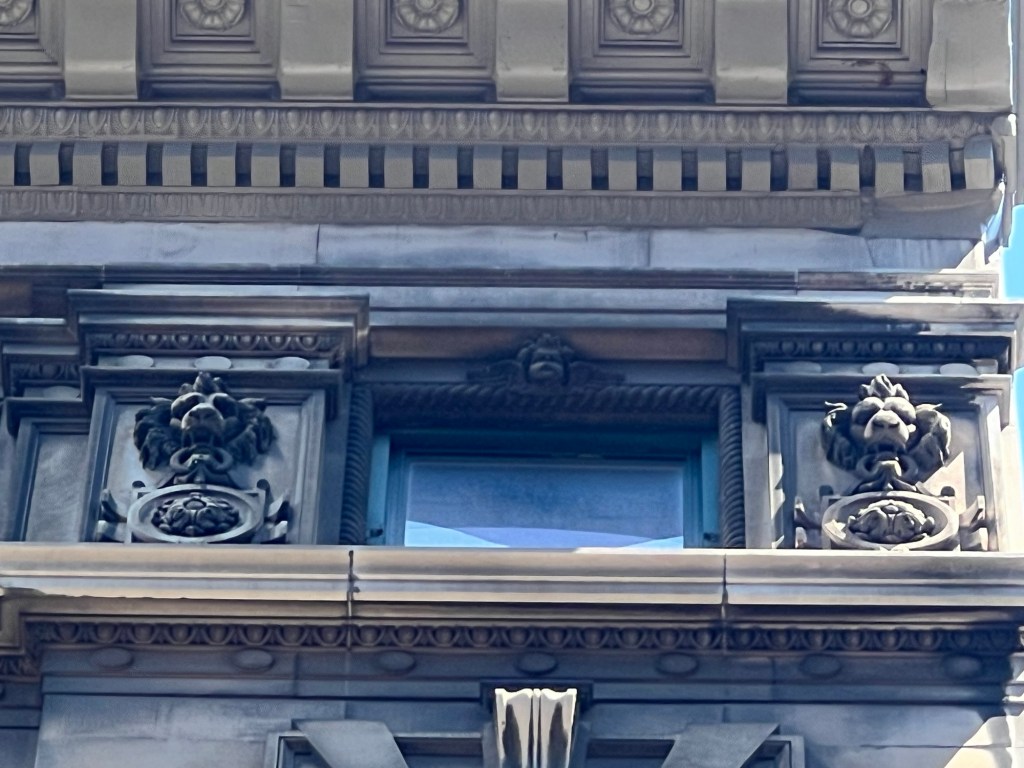
The lions protecting the building from the top
As I walked past Broadway, I passed 889 Broadway, which I had passed many times before. Just like other buildings on this street, there are more details on the street level rather than on the main avenues.
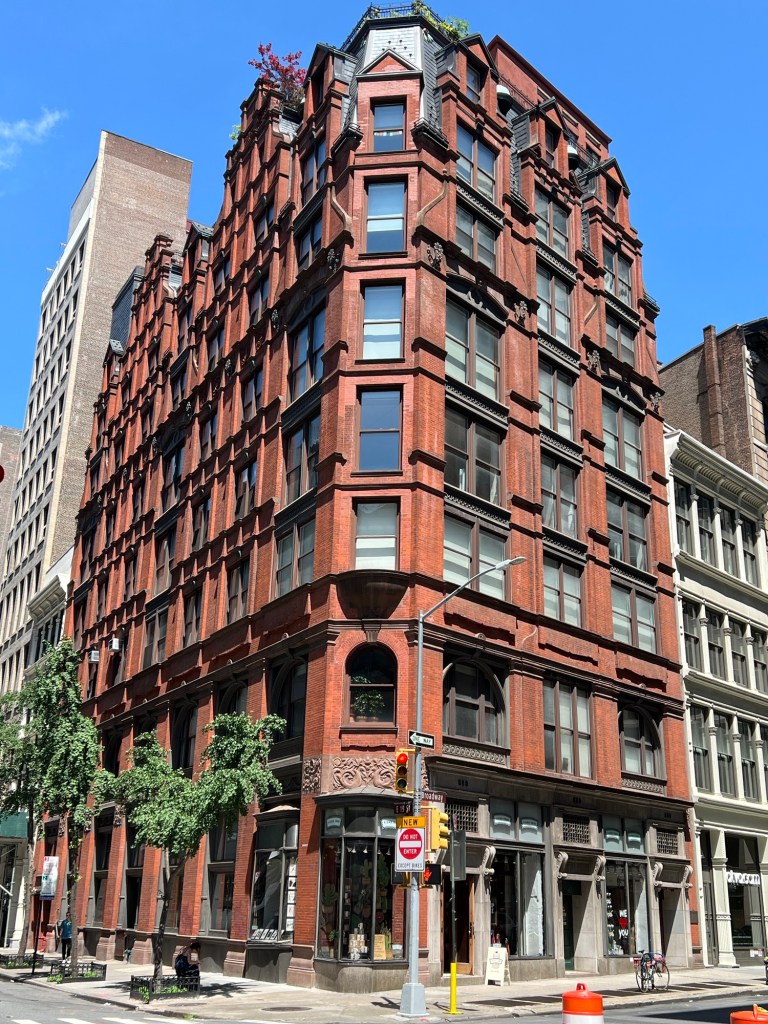
889 Broadway-The former Gorham Manufacturing Company Building
https://en.wikipedia.org/wiki/889_Broadway
The beauty of 889 Broadway can be seen on all sides but you have to look at every angle of the building to appreciate it. There is all sorts of masonry and iron work around the building that gives it unique look. The building was designed by architect Edward Hale Kendall in the Queen Ann style and finished in 1884. The company moved uptown in 1905 when the retail district started to move further north (Wiki).
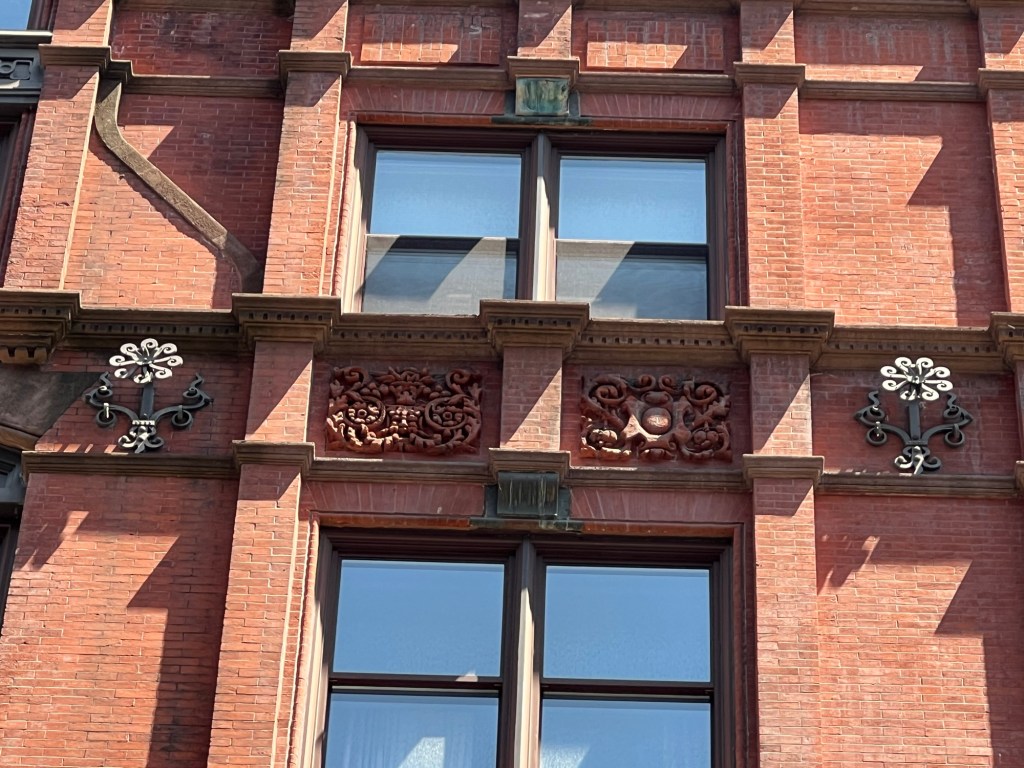
The unique carvings and metal work on the building

More faces watching you on the street making judgement calls

119 Fifth Avenue
https://www.propertyshark.com/mason/Property/13021/119-5-Ave-New-York-NY-10003/
https://streeteasy.com/building/119-5th-avenue-new_york
119 Fifth Avenue at the corner of East 19th Street in the Flatiron District neighborhood of Manhattan, New York City was built in 1905-06 and was designed by John H. Duncan in the neo-Renaissance style. It was built to be an annex to the Lord & Taylor department store buildings which took up most of the square block between Broadway and Fifth Avenue and East 19th and 20th Streets, being connected by bridge to two of them. After Lord & Taylor moved uptown in 1914, the building had multiple uses (Wiki).
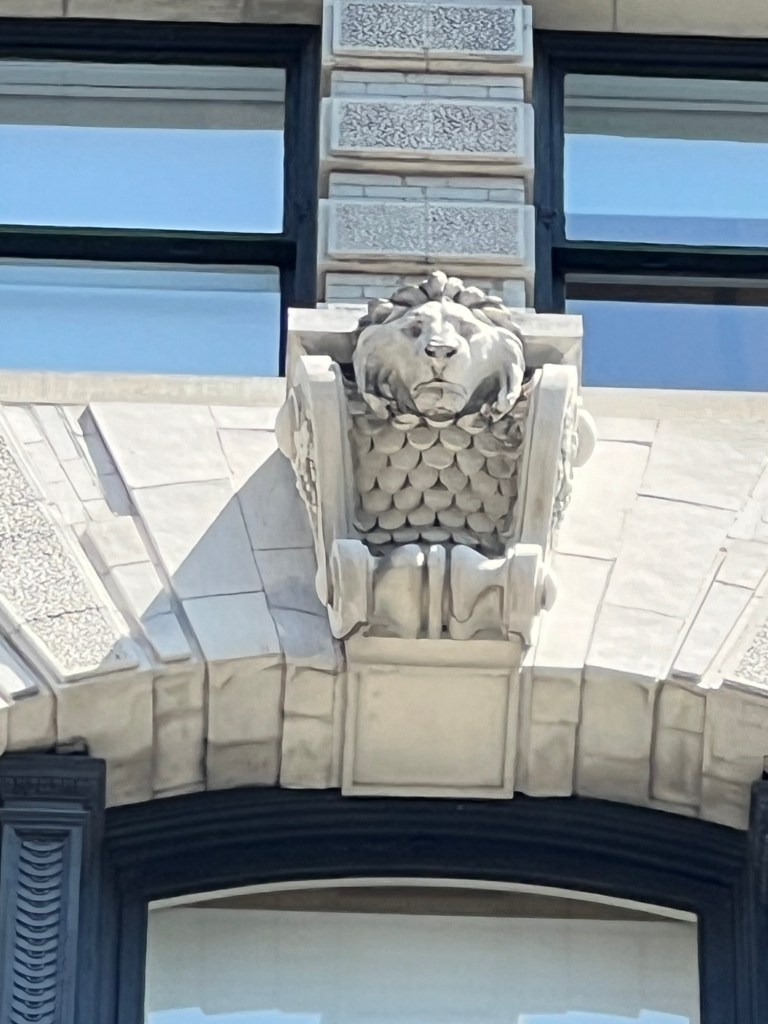
The lion watching over you

The stonework at the top of building
This section of Fifth Avenue was meant to impress when this was the financial and retail center of Manhattan. The buildings were designed in the Neo-Classical and Beaux Arts style sowing the importance of the companies who created them, who are that point long gone. This area had been the center of business before and after the Civil War.
I then rounded the Fifth Avenue business core and walked down East 18th Street and came across one of the most beautifully designed firehouses I have ever seen in the City, Engine 14. In all my times walking around Manhattan, I don’t think I have ever walked down this street before because I never noticed this.

Engine 14 at East 18th Street was under renovation but it’s 1894 facade peeked out
https://nyfd.com/manhattan_engines/engine_14.html
https://sideways.nyc/discover/4QoKRmk3SMVH6oAvWq68ef/engine-co-14
The building is currently under renovation. Engine Co. 14 was erected in 1895 by architect Napoleon LeBrun, who designed this in the Beaux Arts design. This style is typical of the earliest New York City firehouses (Manhattan Sideways).
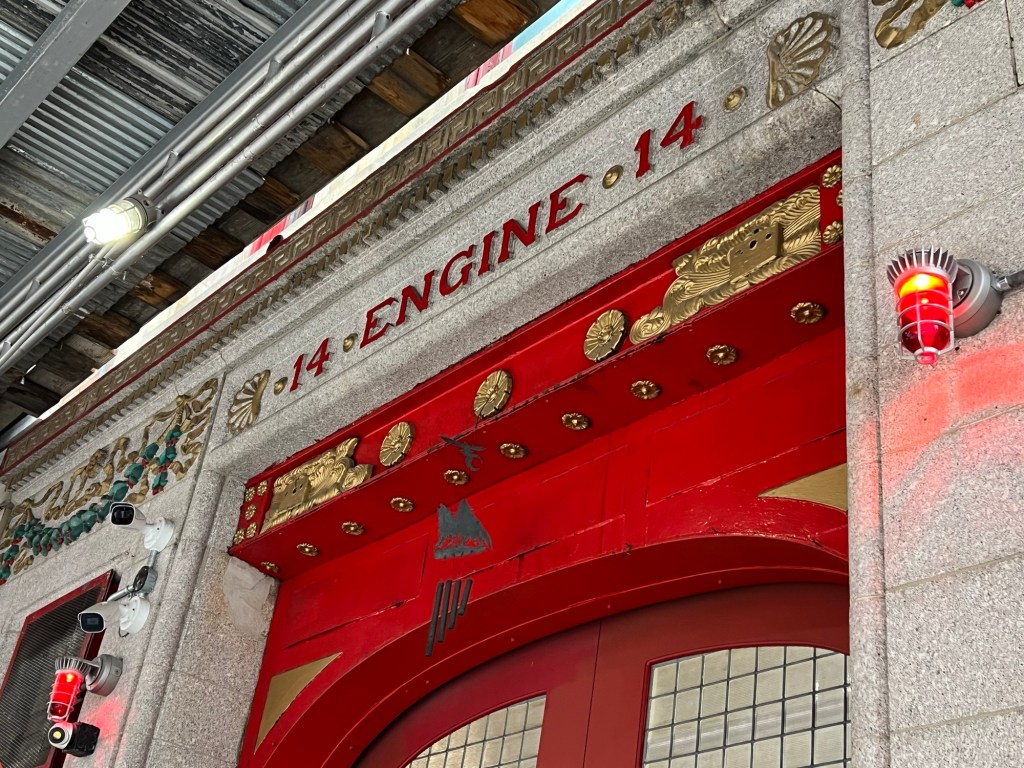
This was under the scaffolding
I turned the corner at East 17th Street and most of these buildings have a historic value to them and I was surprised by the collection of retailers on this block. I thought it would be a bit more upscale. I looked up at 16 East 17th Street and thought I heard the roar of a lion.

16 East 17th Street
https://www.corcoran.com/building/flatiron/303
https://www.bondnewyork.com/union-square/coop/16-east-17th-street-8-floor/1498324
The former office building was designed by William Dilthey and built in 1898. It had originally had been a button factory. It was converted to a Coop in 1979 (Corcoran.com/Bondnewyork.com).
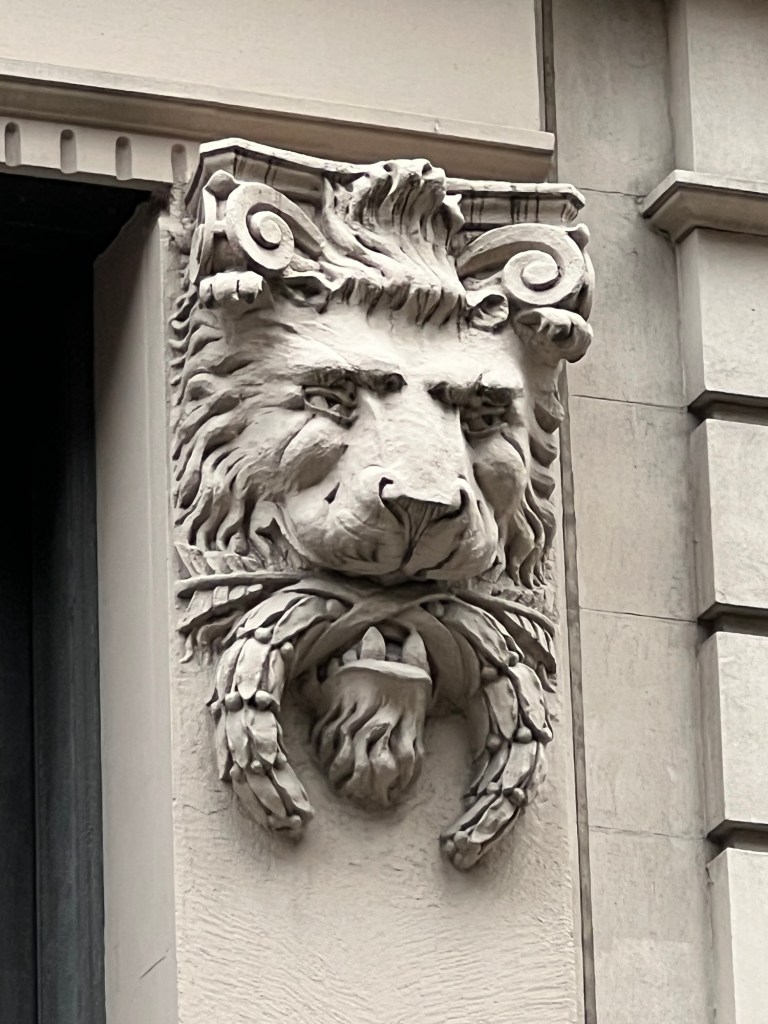
The lions protect you as you enter the building.
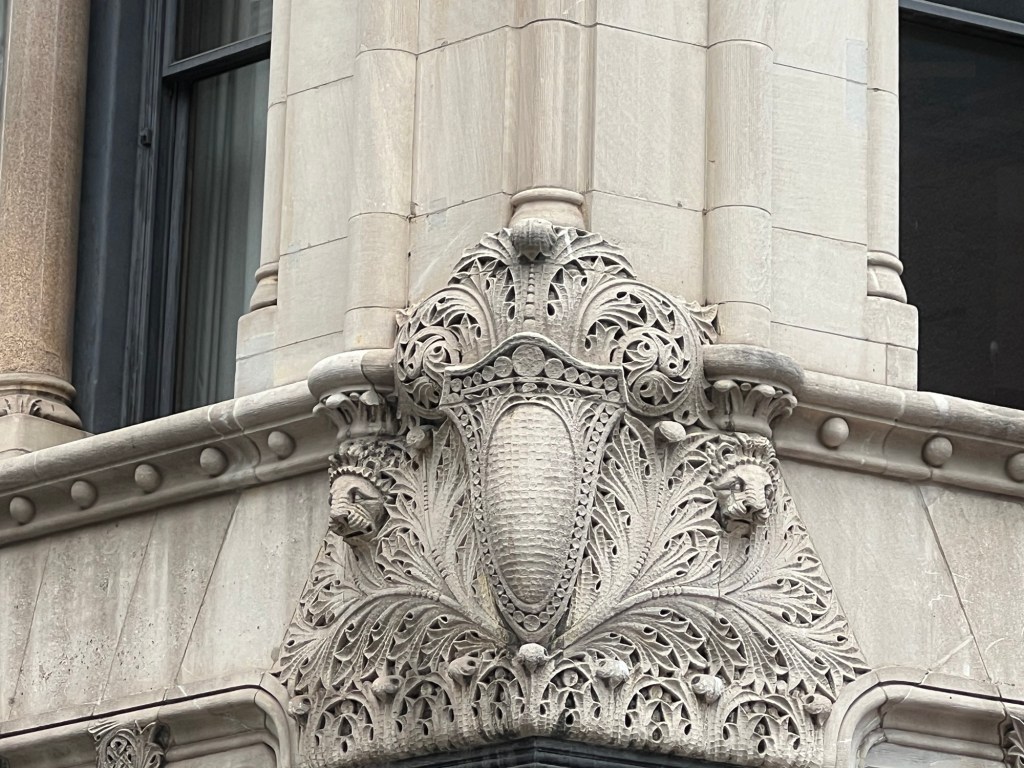
When I was walking back down East 17th Street I had not noticed this beautiful carving on 874 Broadway. This is on the corner of the McIntrye Building.

874 Broadway-The former McIntyre Building
https://daytoninmanhattan.blogspot.com/2010/07/1892-mcintyre-building-finials-snakes.html
https://www.cityrealty.com/nyc/flatiron-union-square/the-macintyre-874-broadway/6892
https://streeteasy.com/building/874-broadway-new_york
The McIntyre Building was the work of Ewen McIntrye, a pharmacist whose building had grown and had made him wealthy. He demolished the store he had on this spot and built this office building. The structure was designed by architect Robert Henry Robertson in a mixture of designs of the time. You can see Gothic Revival and Renaissance Revival and Victorian Eclectic in the design especially at the top of the building (DaytoninManhattan.com).
When I got to East 17th Street, I really got an excellent view of the northern part of Union Square Park. This is where you can see the real changes of the park. It is so lively and residents and business people use it as a place to unwind and relax.
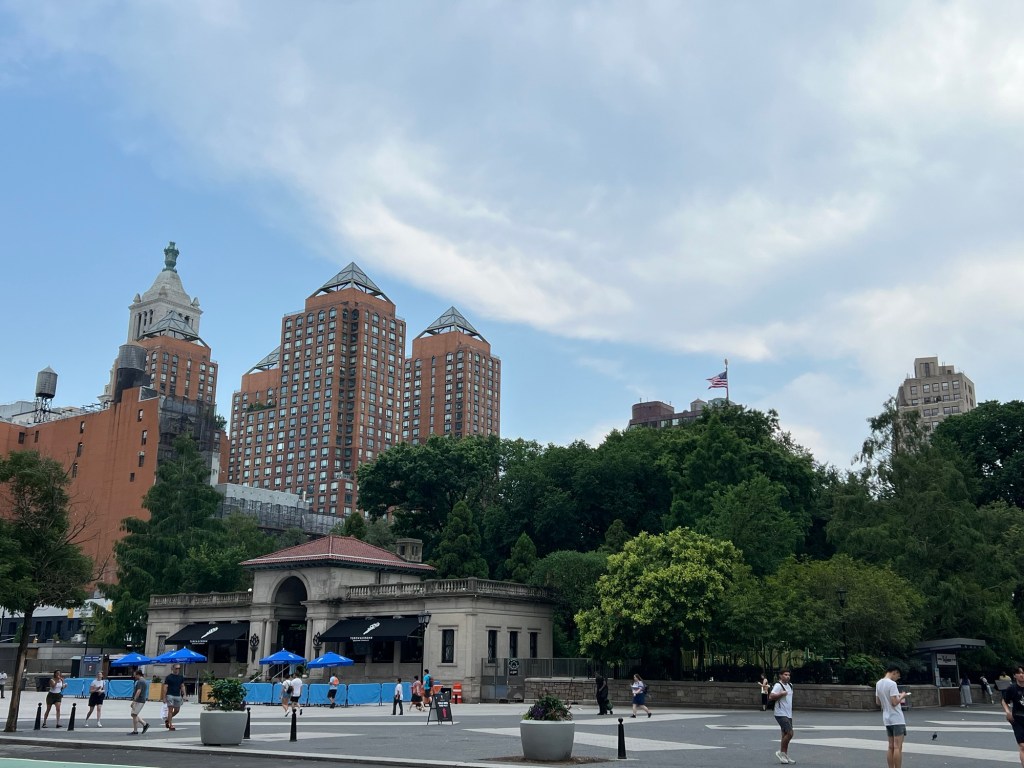
The northern section of Union Square Park
Facing the northern section Union Square Park is 33 East 17th Street. I have always admired this building for its embellishments and the elegance of the design.

33 East 17th Street-The Century Building
https://en.wikipedia.org/wiki/Century_Building_(Union_Square,_Manhattan)
https://www.facebook.com/BNUnionSqNYC/
The now Barnes and Nobel Publishing was once known as the Century Building, due to Century Publishing Company making this their headquarters from 1881 to 1915. It is also known as the Drapery Building. The building was designed by architect William Schickel and was completed in 1881 as a real estate project by the department store company Arnold Constable & Company. Left empty through the 1970’s, it was renovated by Barnes and Nobel as their headquarters in 1995 (Wiki).

The doorway entrance to the store at 33 East 17th Street

This fascinating face is on the left side of the entrance to 33 East 17th Street
The look from this face shows the determination of a serious book buyer
As I passed Union Square Park, I passed the old Tammany Hall Building at 100 East 17th Street. The balance of power in New York City has changed since and it now the home of Petco Pet Products.
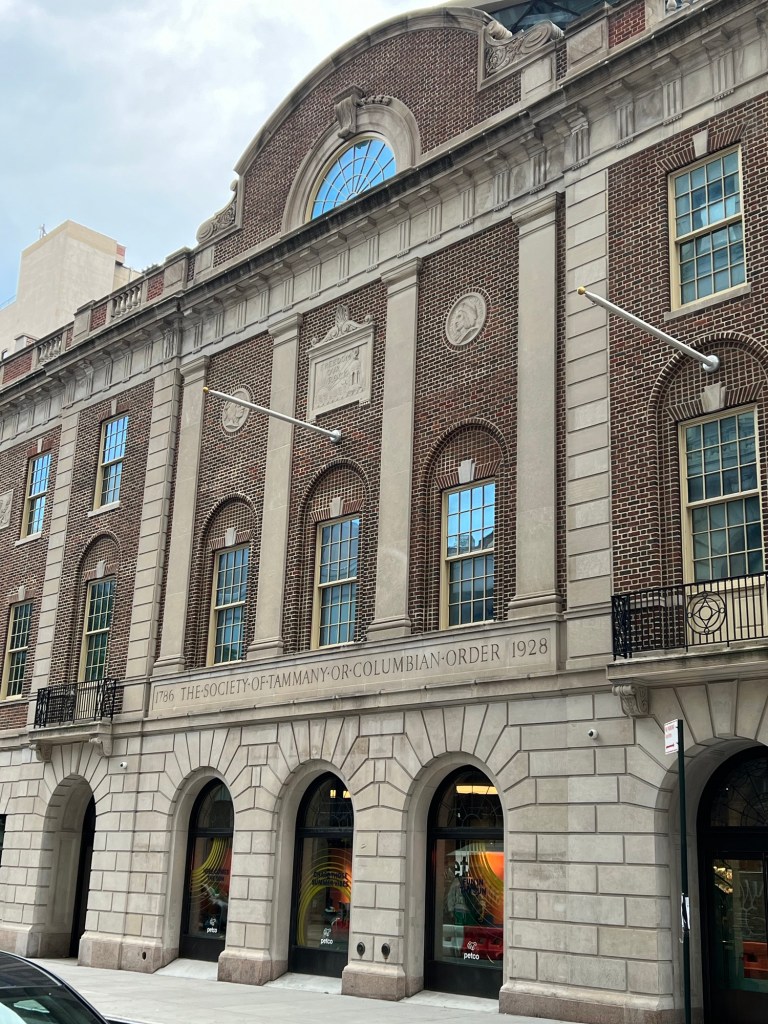
The Tammany Hall building 100 East 17th Street is now a Petco
https://en.wikipedia.org/wiki/44_Union_Square
The building was designed by the architectural firm of Thompson, Holmes & Converse and Charles B. Meyers for the Tammany Society political organization, known as Tammany Hall. It was designed in the neo-Georgian style and built in 1929. It was the organization oldest surviving headquarters building. After the loss of the organization’s political power in the early 1930’s, it was sold to the International Ladies Garment Workers Union and in present times has been used as a theater and performance space. It is now occupied by Petco (Wiki).

The symbols of Tammany Hall at the East 17th Street entrance
As I passed the commercial buildings of the neighborhood to the more residential buildings of Irving Place and passed the former carriage house at 121 East 17th Street.

The old carriage house at 121 East 17th Street-Martinys
https://daytoninmanhattan.blogspot.com/2015/10/no-121-east-17th-street.html
https://ny.eater.com/2022/4/19/23031877/martinys-japanese-cocktail-bar-opening-nyc-gramercy
Review on TripAdvisor:
This carriage house is a holdover from when Union Square was a fashionable neighborhood before the Civil War. After the war was over, the commercial neighborhood of Manhattan moved from Canal Street to between 14th to 23rd Street. This small carriage house survived all the decades of change to the neighborhood (DaytoninManhattan.com). I thought this a gracious building that added to the historical and Old New York look of the Gramercy Park neighborhood.
At the very edge of the neighborhood in Irving Place is the Washington Irving House that wasn’t his house.

The Washington Irving House that Washington Irving never lived in at 122 East 17th Street on the corner of East 17th Street and Irving Place
https://www.atlasobscura.com/places/the-irving-house-new-york-new-york
The “Irving House” was built by Peter Voorhis between 1843 and 1844, along with the adjacent two houses at 45 and 47 Irving Place. The original tenants of 49 Irving Place (at that time referred to as 122 East 17th Street) were Charles Jackson Martin, an insurance executive, and his wife, who would reside there from 1844 until 1852. Henry and Ann E. Coggill would live in it in 1853, and in 1854 it would become the home of banker Thomas Phelps and his wife Elizabeth, who would remain until 1863 (Atlasobsucra.com).
The first mention in print of Irving having lived in the house came in the Sunday Magazine Supplement of the New York Times on April 4, 1897. The article is a human interest story about Elsie de Wolfe and the means and methods she used to decorate “Irving’s house.” In 1905, de Wolfe would become known as the first professional interior decorator and it appears this article is an early attempt at publicity for her. As for the information about Irving, the article takes enormous liberties (actually, it flat-out makes things up), claiming that Irving had conceived of the house himself and was very particular about the architecture and design (Atlasobsucra.com).

Looking up Broadway to the old shopping district from East 17th Street
When I reached the border of the neighborhood at Irving Place, you could see the tradition of the old commercial and residential districts of the neighborhood. These have become blurred over time as restaurants, bars and boutiques have moved into former residential buildings.
On the way back to Union Square Park, I walked through the parks to admire all the flowers and gardens that were in full bloom and stopped to sit on a bench in the shade.
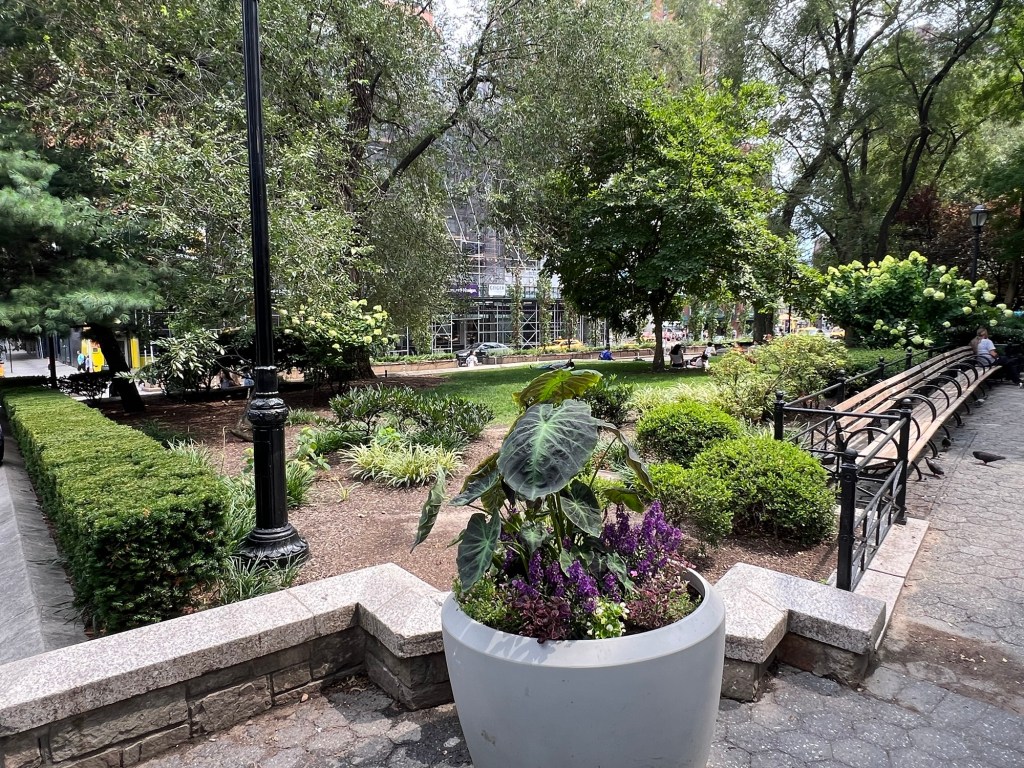
The view of Union Square Park at East 17th Street on the walk back to Fifth Avenue
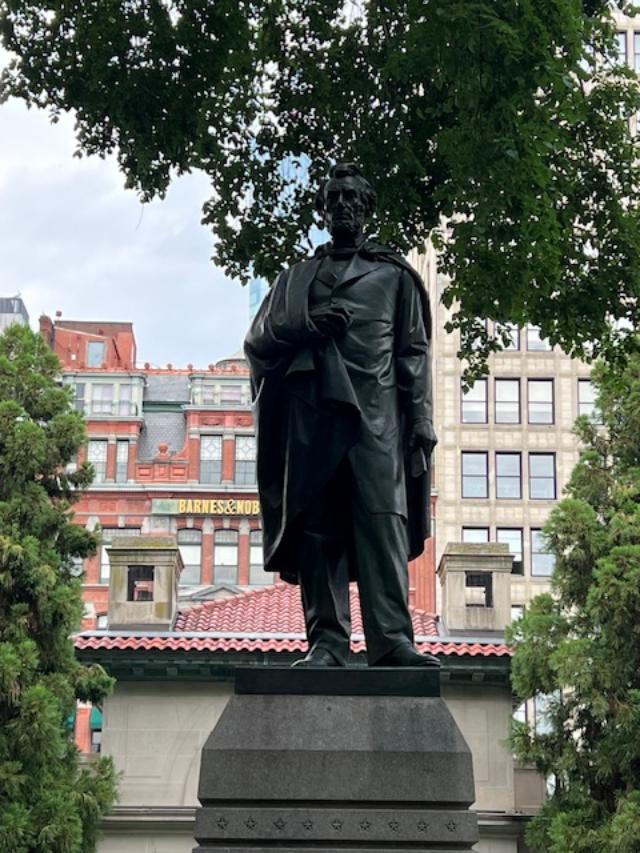
In the northern part of the park is the impressive statue of Abraham Lincoln. The one thing that I like about New Yorkers as opposed to other cities is that they look at statuary as a debate but not so quick to knock it down like in other cities. Either that or no one really noticed it at the time of the riots. These valuable art works are meant to be debated and discussed not torn down or hidden because someone does not agree with them.
Located at the northern end of the Union Square is the prominent statue of President Lincoln. This statue stands and overlooks the lawn of the park.

Abraham Lincoln
https://www.whitehouse.gov/about-the-white-house/presidents/abraham-lincoln/
https://www.nycgovparks.org/parks/union-square-park/monuments/913
This impressive statue of Abraham Lincoln was designed by sculptor Henry Kirke Brown and was dedicated in 1870. In his statue of Lincoln, cast in 1868, and dedicated September 16, 1870, he combines a classically styled pose with a perceptive naturalism, uniting realistic detail with an idealistic stance (NYCParks.org).
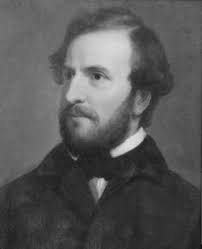
Artist Henry Kirke Brown
https://en.wikipedia.org/wiki/Henry_Kirke_Brown
Artist Henry Kirke Brown was an American born artist who had studied with artists in Italy for his training. He is best known for his figurative historical statues. He also designed the statue of George Washington in Union Square.
I started my walk down East 16th Street at the Levi Parsons Morton plaque at the corner of Fifth Avenue and East 16th Street.
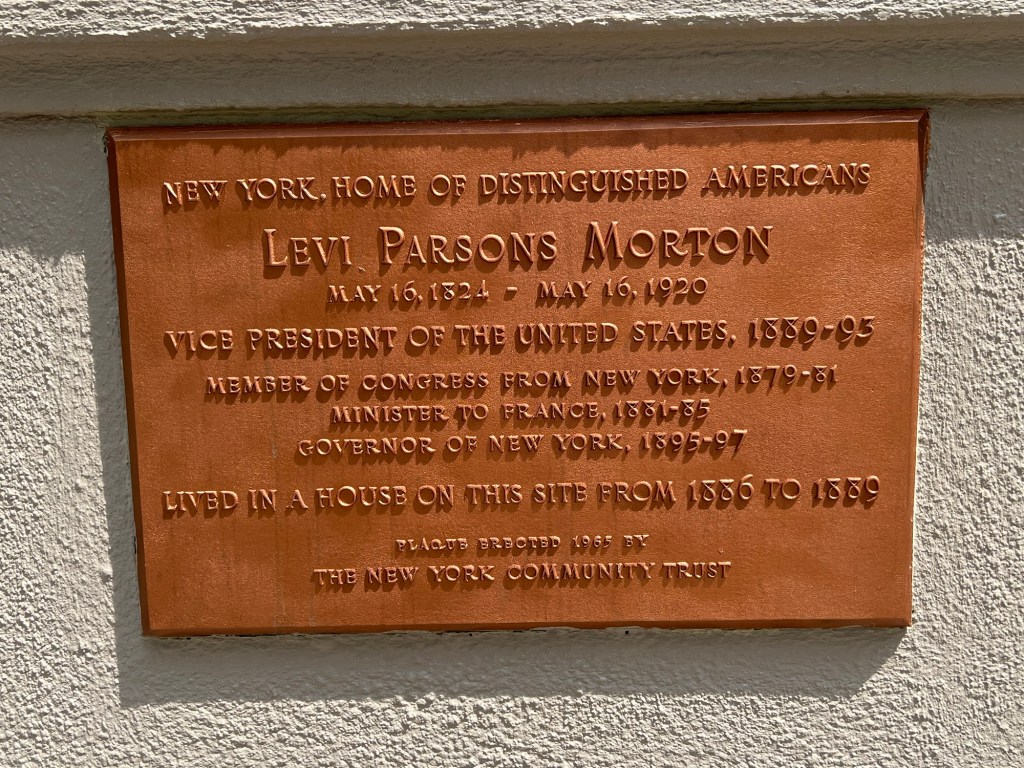
The Levi Parsons Morton historic plaque
The plaque of the former Vice-President’s home on Fifth Avenue.
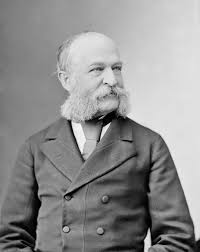
Vice-President and former New York Governor Levi Parsons Morton
https://en.wikipedia.org/wiki/Levi_P._Morton
On the building is also the B. Shackman & Company sign for a now long gone Fifth Avenue toy business.

The B. Shackman & Company sign
https://ephemeralnewyork.wordpress.com/tag/b-shackman-co/
The B. Shackman & Company sign was for the former B. Shackman & Company novelty and toy store that was located here until the 1970’s. The store once sold all sorts of novelties and gifts (Ephemeral New York.com/Consumer Grouch).
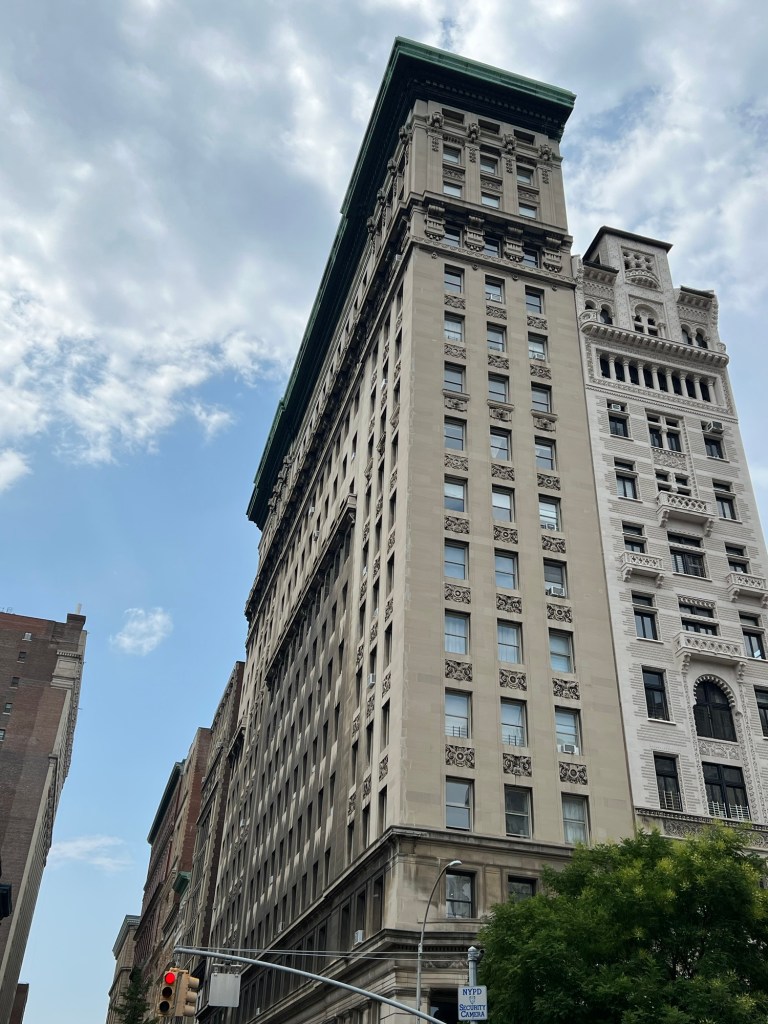
31 Union Square West
https://www.triumphproperty.com/Home/About
https://streeteasy.com/building/bank-of-the-metropolis
31 Union Square West built in 1902-03 as the Bank of the Metropolis was designed by architect Bruce Price and designated a landmark in 1988. This early skyscraper shows the influence of the American Renaissance sensibility celebrated at the Chicago World’s Fair of 1893 (Streeteasy.com).

You have to look at the very corners of the top of this building to appreciate the roar of these lions
Just like East 17th Street, East 16th Street is filled with more interesting historical buildings.

9 East 16th Street
https://streeteasy.com/building/9-east-16-street-new_york
https://www.compass.com/building/9-11-east-16th-manhattan-ny/281895198718436197/
https://en.wikipedia.org/wiki/9%E2%80%9311_East_16th_Street
The building was designed by architect Louis Korn for Martin Johnson and built between 1895 and 1896 (Wiki).
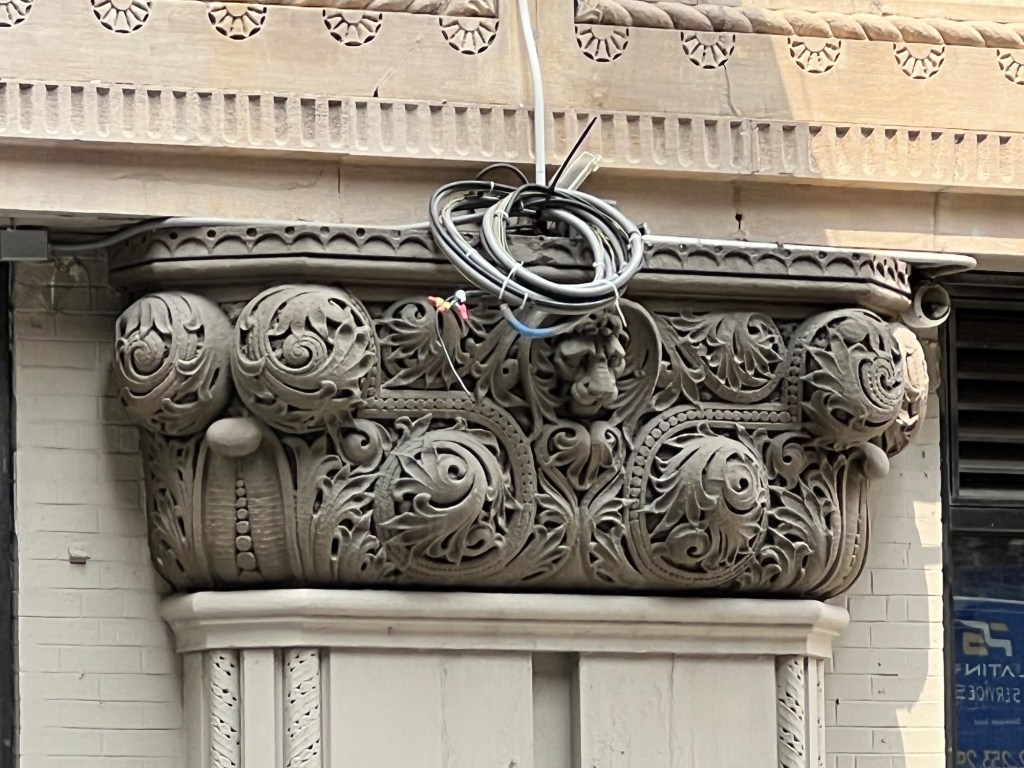
The corniches have such a fanciful design to them
As I walked down the street I noticed not just architecturally beautiful buildings but some very talented street artists left their mark in the neighborhood. Being so close to the Museum of Sex, I thought some were quite unique.

A fried egg
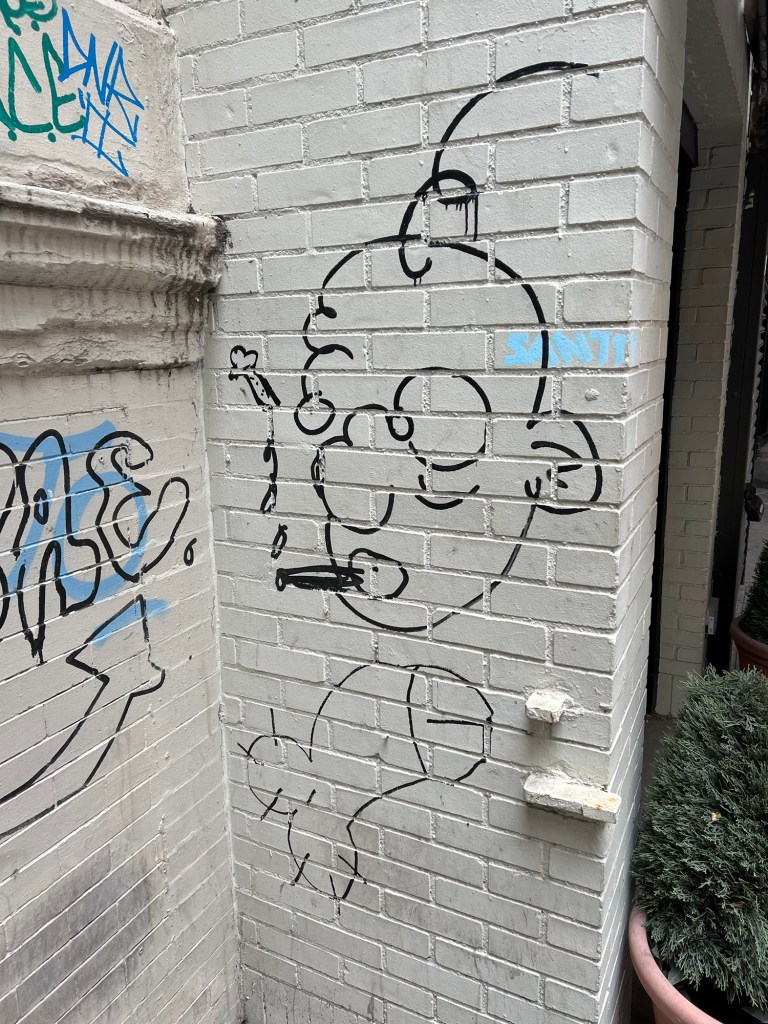
I won’t ask!
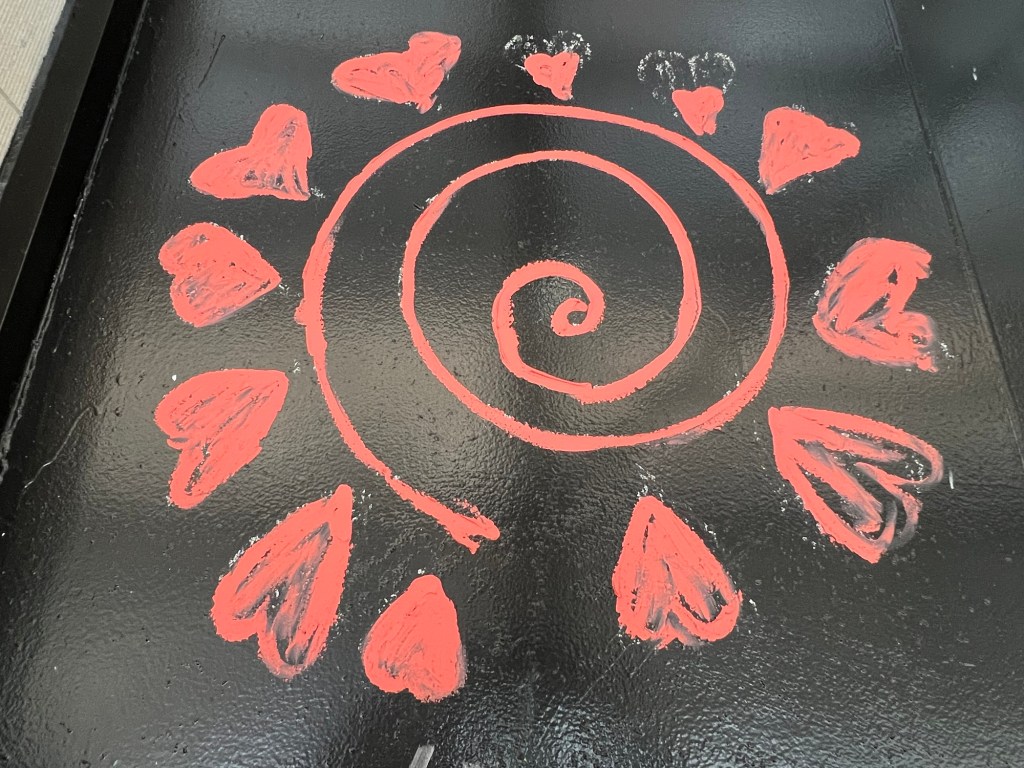
Love symbols
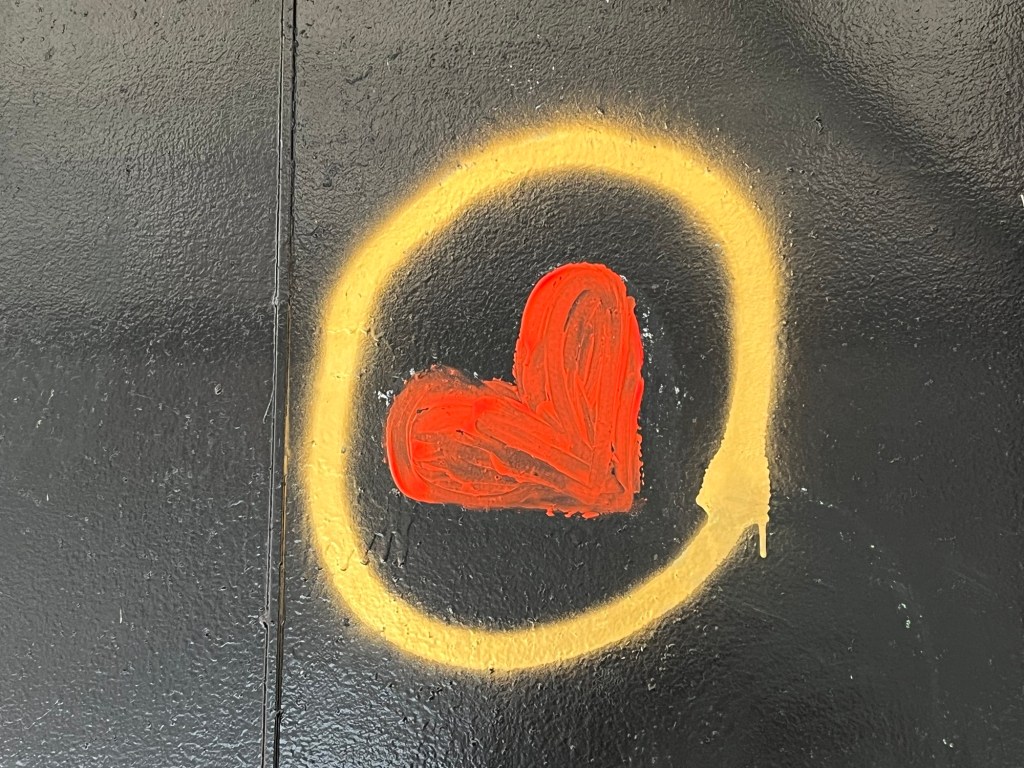
More love symbols
I love looking down the street with its small individually owned shops and restaurants give me faith that New York City is coming back strong after COVID. It is nice to see the City so alive.

This block leads into the heart of Union Square Park and to where the Farmers Market was going strong.
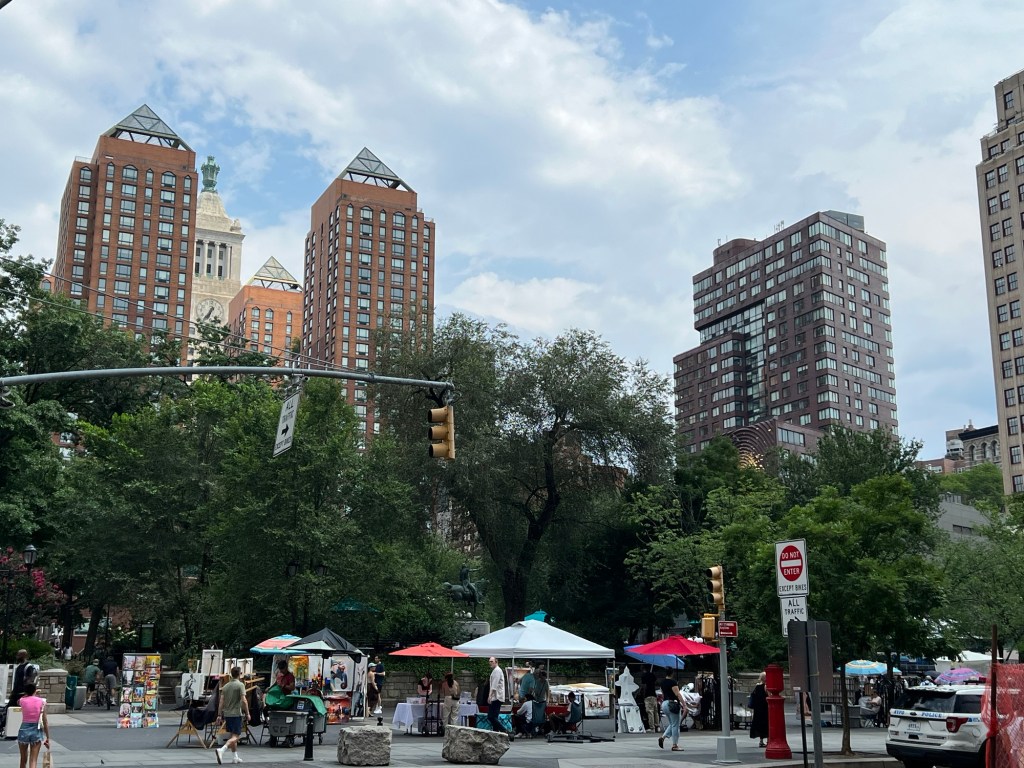
The beauty of the park by East 16th Street in the middle of the afternoon
I walked down East 15th Street and relaxed in the park for a while as it got hotter out. I walked along the flower beds and paths and admired the hard work it takes to maintain this park.

How colorful the park is at East 15th Street
I walked down East 15th Street and admired one the old bank buildings that was going through a renovation.
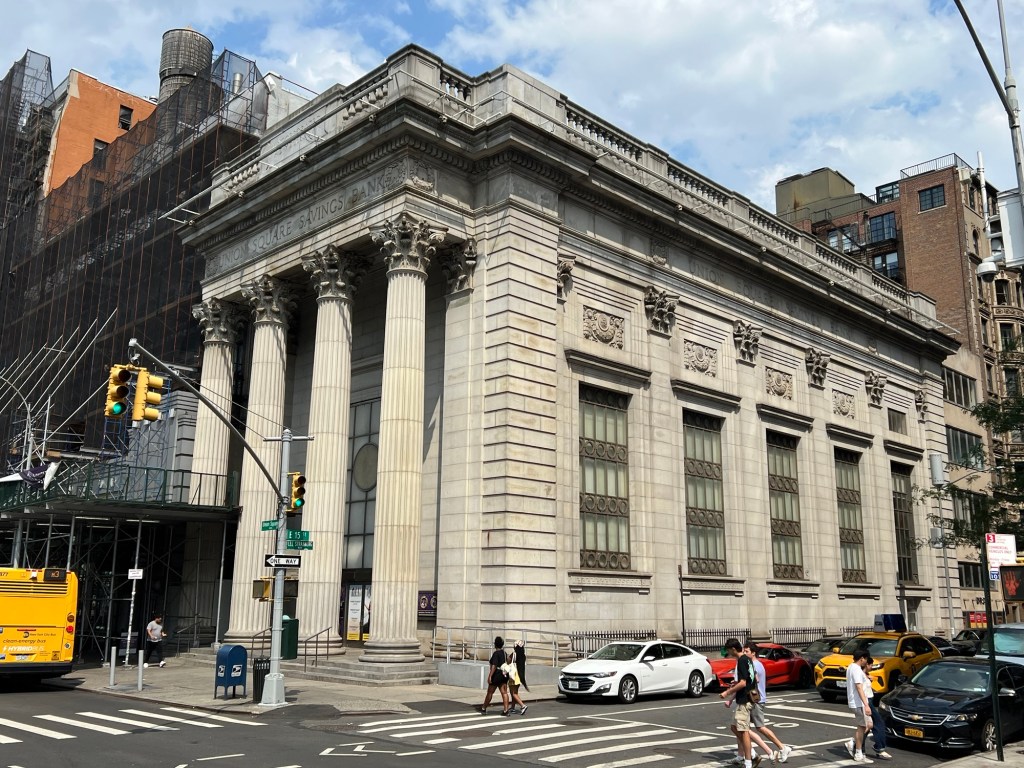
101 East 15th Street-The Union Square Savings Bank Building/Daryl Roth Theater
https://en.wikipedia.org/wiki/Daryl_Roth_Theatre
The bank itself was founded in 1848 and moved to this location in 1895. This building was designed by architect Henry Bacon in the neo classical design in 1905 and the building was finished in 1906. The bank closed in 1992 (Wiki).

The beauty in the side of the building facing East 15th Street
I find it interesting to look at these old buildings with names of companies long gone and ask myself, ‘What happened to them?’ and ‘What happened to them?’ These buildings were designed and built for companies that were once at the pinnacle of their success. Now they are being used for hotels and retail stores proving New York’s resilience to change and to time.
The last building that impressed me the most in the neighborhood was the apartment building at 105 East 15th Street with its garish details and graceful windows.

105 East 15th street-The Swannanoa
https://streeteasy.com/building/105-east-15-street-new_york
https://www.cityrealty.com/nyc/gramercy-park/the-swannanoa-105-east-15th-street/737
The Swannanoa is a 10-story Neo-Renaissance apartment building designed by architect Gilbert Schellinger, who was a renowned and prolific designer of residential buildings back in the late 1800’s and 1900’s. Constructed in 1898, this building is easily recognized by its bay windowed facade, elegant marble lobby and hallways, which have all been beautifully restored (Streeteasy.com).
In all the walks of this neighborhood that I have made walking back from NYU in the evening from class and I walked around and through Union Square Park and I had not noticed the sculpture on the edge of the park.
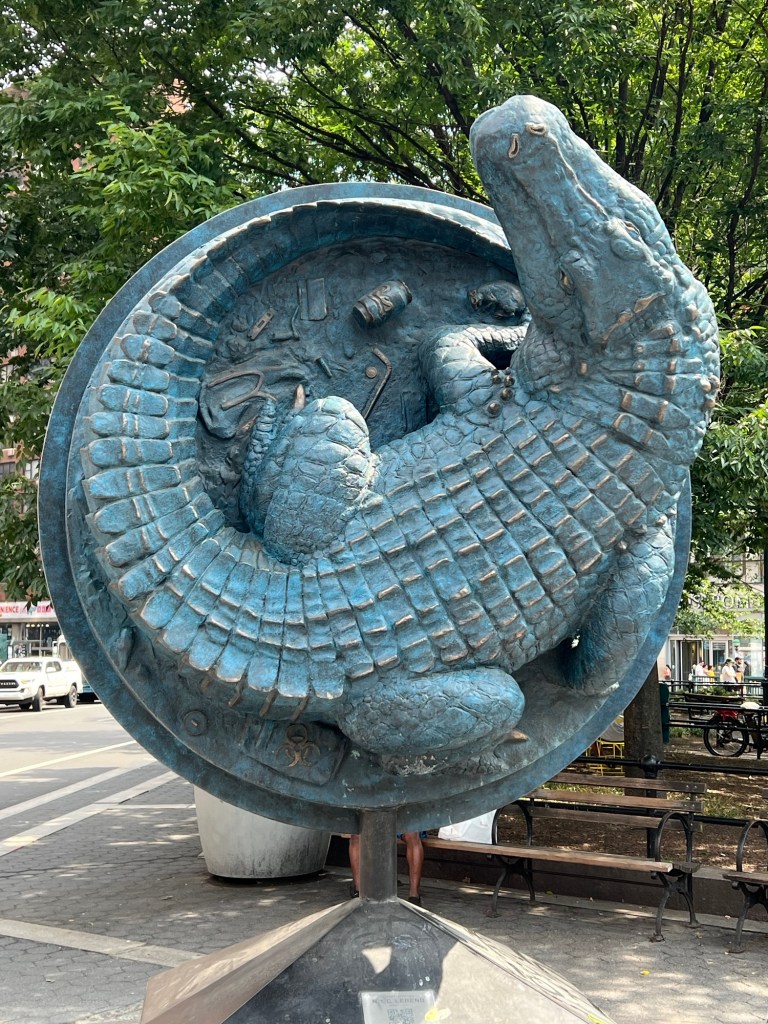
New York Legend-the front of the sculpture
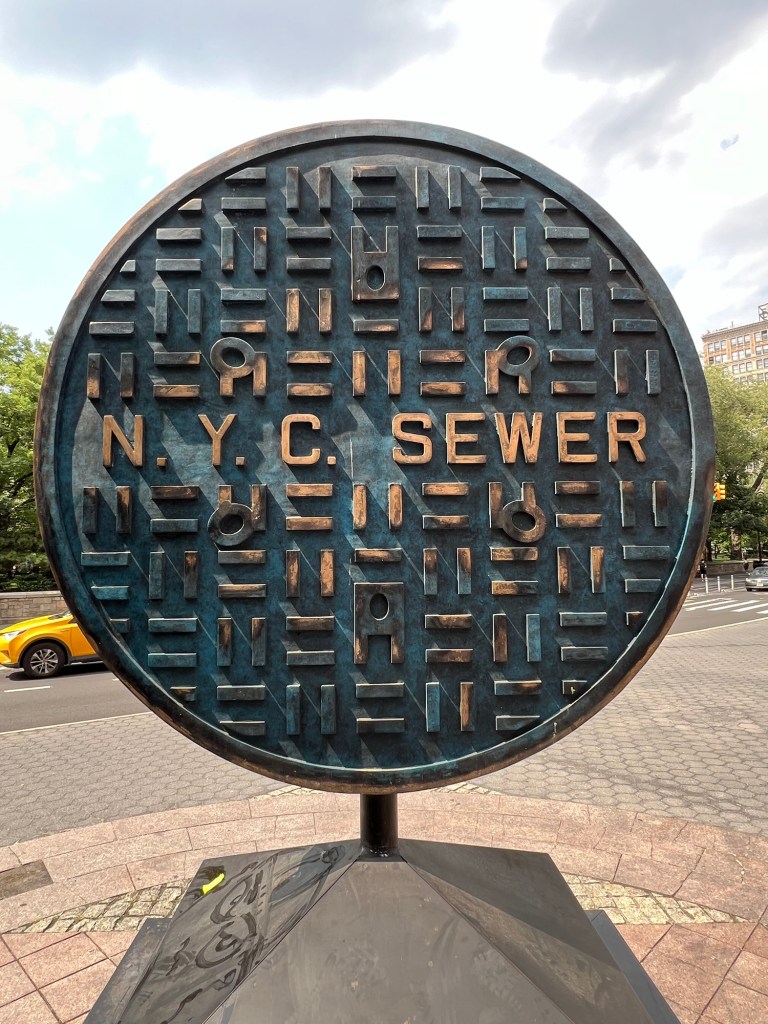
New York Legend-the back of the sculpture
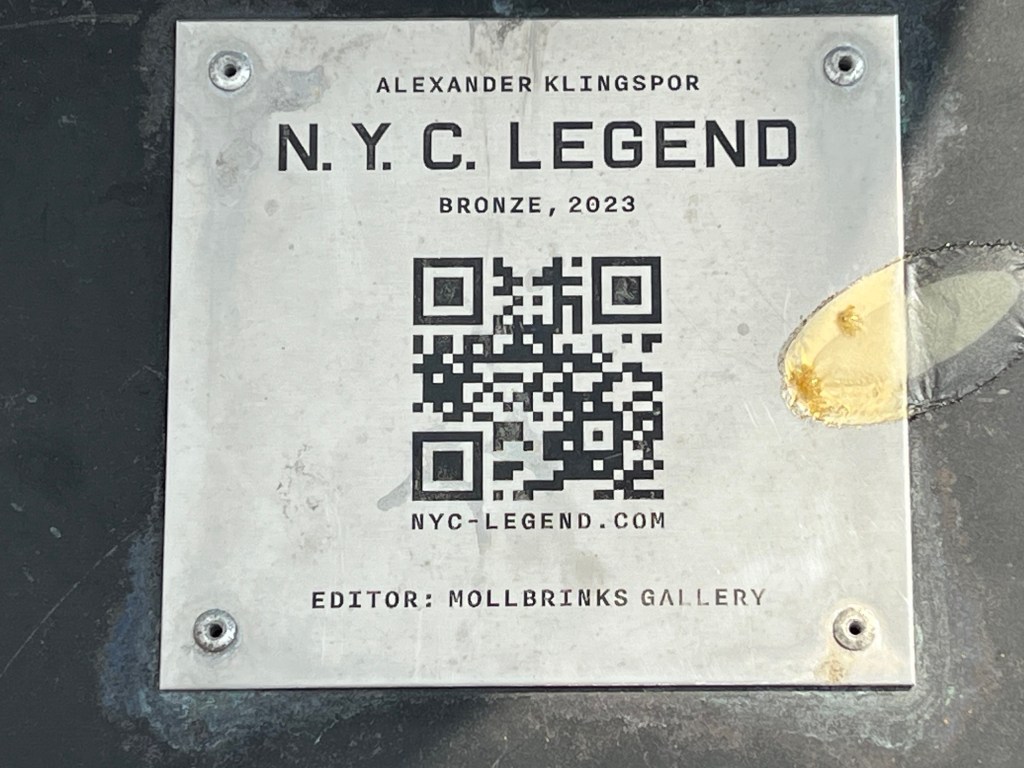
This unique and very creative sculpture was designed by artist Alexander Klingspor
This fascinating sculpture shows the urban legend of alligators lining in New York City sewers. With all the pollution in the water around Manhattan and the rest of the City, there is No Way this would happen. I’m surprised they can still live in Florida.
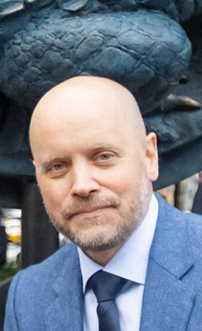
Artist Alexander Klingspor
Artist Alexander Klingspor is Swedish born artist who works both in the United States and Sweden. He apprenticed under American artist Mark English. He is known for his paintings and sculptures (Wiki).
I then walked through the park for the last time that afternoon as it really started to get hot and watched the people sunning themselves, reading books or just conversing. Again it shows what time and a little effort being made can change things in Manhattan. I think the artists that dominated this area when it was going downhill would be shocked if they got out of a time machine to see how the area has changed.
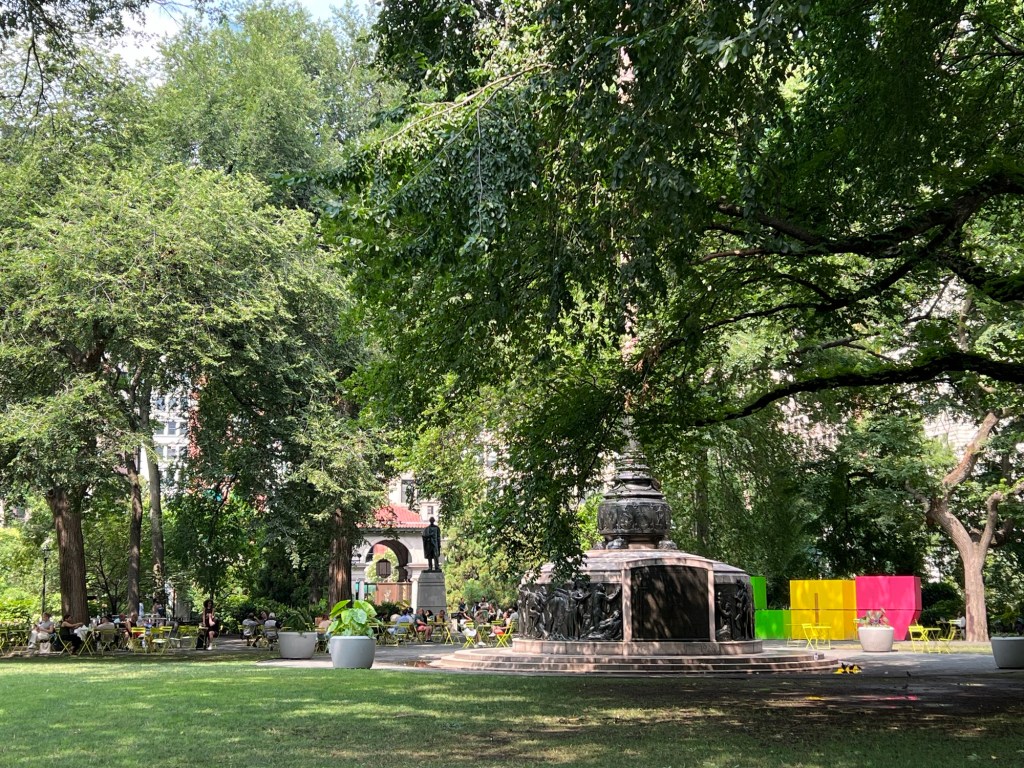
Union Square Park in the late afternoon.

The Union Square Art and Farmers Market
Just remembering coming here for a hot dog with my father in 1982 and eating next to a transvestite I realized how times have changed. I think about all this when I am looking at young couples strolling around the Farmers Market with expensive baby carriages, looking at $5.00 for one cookie and $15.00 for a Cinnamon Banana Bread. I think it is no longer 1982 but 2024 post COVID and how far we have come. Union Square Park just shows how Manhattan just reinventing itself and changes with the time.
That’s New York City!
The other blogs on the Union Square neighborhood:
Day Three Hundred and Thirteen: Walking the Borders of Union Square:
https://wordpress.com/post/mywalkinmanhattan.com/48888
Day Three Hundred and Seventeen: Walking the Avenues of Union Square:
https://wordpress.com/post/mywalkinmanhattan.com/50233
Day Three Hundred and Eighteen: Walking the Streets of Union Square:
 mywalkinmanhattan
I finished my walk of Union Square and have never seen a neighborhood more transformed than this. It is not 1982 anymore!
LikeLiked by 1 person