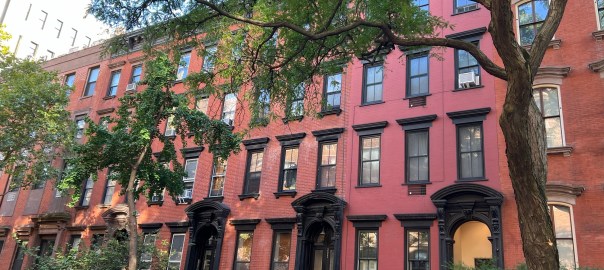
The school year has started and that means that classes at the college have resumed for the Fall semester and it back to work time. Coming into New York becomes less and less as I am starting to grade papers and put together lectures.
I was able to sneak in on Sunday, September 8th for the monthly Sunday Supper at Holy Apostles Church where I volunteer. I find the church service before the supper very inspiring and I enjoy listening to Reverend Ann as the talks are less preachy and more uplifting about the issues of life and what is going on in the world.
After the service is over, then it is time to set the tables and eat. It is always a nice meal and you have some interesting conversations while you are at the table. We always have a nice crowd of the people and it is perfect time for me to meet up with other volunteers that i have not seen in a while.
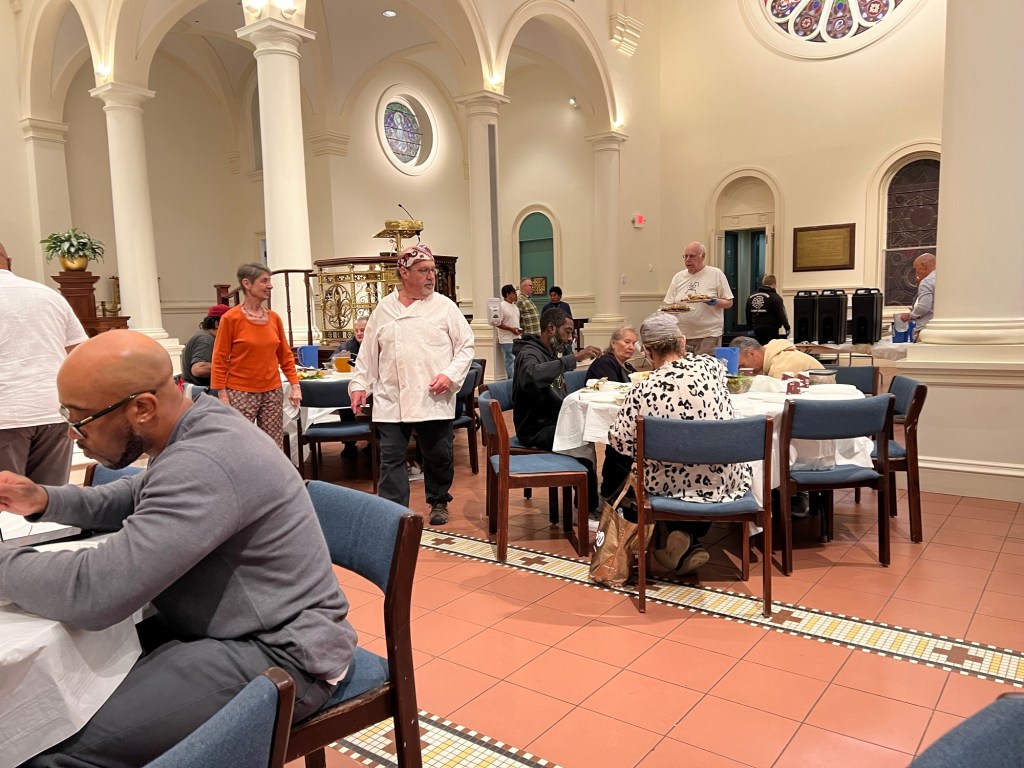
Everyone breaks bread with each other after the service

Sunday Supper at Holy Apostles Church
It was a nice dinner with Chicken Fried Steak with gravy, Baked Ziti, Mixed Salad, Broccoli and cauliflower and Fresh rolls. For dessert, there was Bread Pudding and assorted cookies for dessert. It was quite the feast. After lunch was over, it was time to walk around the streets of Gramercy Park.
I started my walk on the border of the neighborhood at Park Avenue South and East 22nd Street. Like most of the neighborhood, the most beautiful architecture was around Gramercy Park itself. The first building I passed was the Sage Building. I had not noticed the beauty of this building by just looking at the front of it.

The side of the Sage Building
Across the street from CUNY campus, the Sage House at Four Lexington Avenue. Sage House was built in 1913 for the Russell Sage Foundation, a social welfare nonprofit that was an early advocate of social work and urban planning (Streeteasy.com).
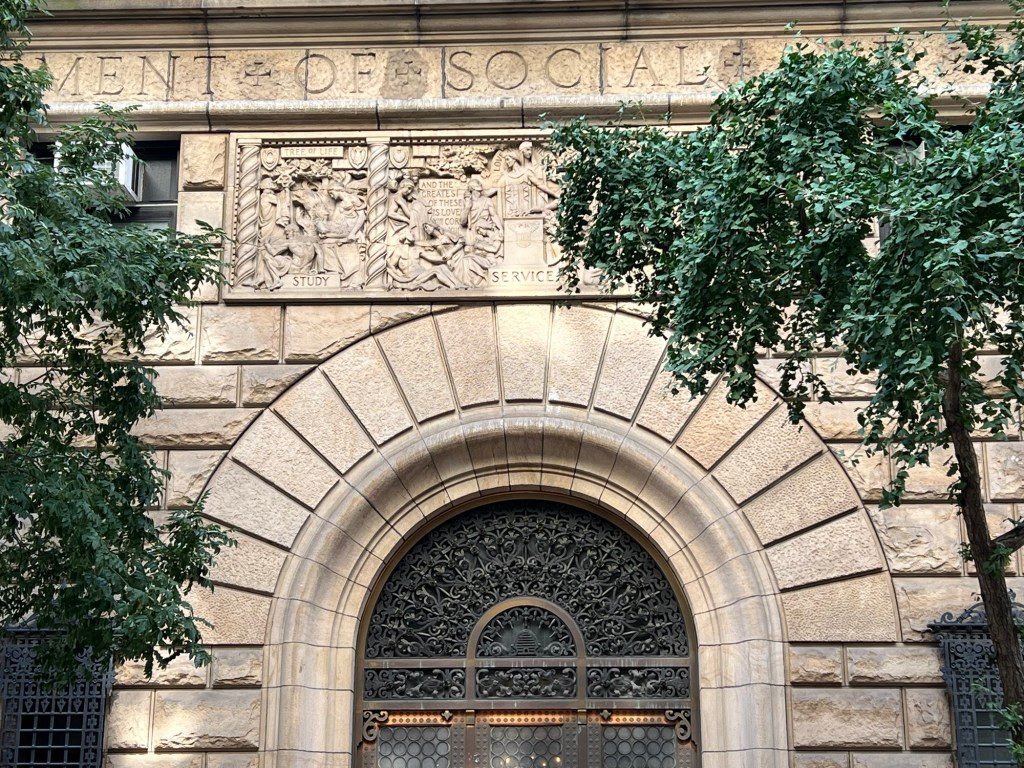
The details of The Sage Building
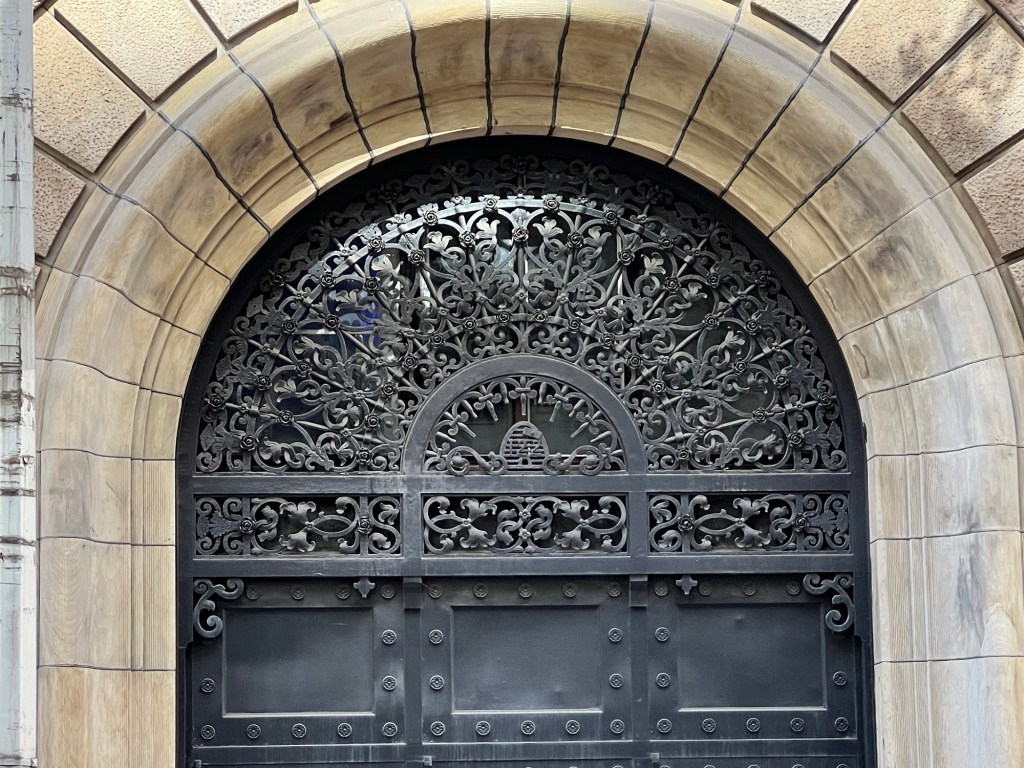
The grill work on the building was so beautiful
The historic Sage House at Four Lexington Avenue
https://www.corcoran.com/building/gramercy-park/3917
https://streeteasy.com/building/the-sage-house
The building is a pre-war office building designed by Grosvenor Atterbury in the Italian Renaissance palazzo style. It has a rusticated red sandstone façade, vaulted ceilings, and carved decorative shields (Wiki). The building was converted to Coop apartments in 1986. The building next to it was the Hotel Gramercy Park which is currently closed and under renovation. Even though the hotel is closed, you can still peek through the scaffolding and see its elegance.
The core of Gramercy Park surrounds the park itself with most of its classic older buildings surrounding the park. Some of the streets were tree lined and looked like classic old New York.

The tree lined streets of Gramercy Park
The end of East 22nd Street is the Peter Cooper complex. Every thing is in bloom and the complex is so nicely landscaped.

Peter Cooper Village in the Summer of 2024
On the way back down East 22nd Street. I passed the Church of the Epiphany at 375 Second Avenue and passed an interesting sculpture dedicated to the victims of 9/11. If you do not walk on the side streets, you will miss this beautiful park with this interesting sculpture in the garden. It looks like a burst of sun.

The sculpture in the Peace Garden, ‘Light Overcomes Darkness’

The plaque for the sculpture ‘Light Overcomes Darkness’
The sculpture was designed by artist Witkor Szostalo
https://en.wikipedia.org/wiki/Wiktor_Szostalo
https://www.hillstream.com/artist/wiktor-szostalo
Artist Witkor Szostalo
Artist Witkor Szostalo is a Polish born artist who graduated with MFA from the Academy of Fine Arts in Cracow. He is known for his works in stainless steel, wood and bronze. Mr. Szostalo works in both Poland and St. Louis, MO (Artist Bio/Wiki).
The sculpture was part of the larger Peace Garden that landscaped this side of the church.

The Epiphany Peace Garden by the Church

The plaque for the church’s Peace Garden
I made my way back down through the neighborhood and never noticed the Gramercy House private gardens behind a fence. Some of the residents were outside enjoying the afternoon and having a nice conversation as I was snapping pictures of this private garden.

The private garden of the Gramercy House
This is what always amazes me about New York City is the tiny pockets of green that you come across when you walk the streets. It was so beautiful to look at that I envied the residents. It was such a fantastic sunny day.
I made the turn at Park Avenue South and made my way down East 21st Street and passed the Baruch College campus again, with its beautiful architecture and interesting artwork.
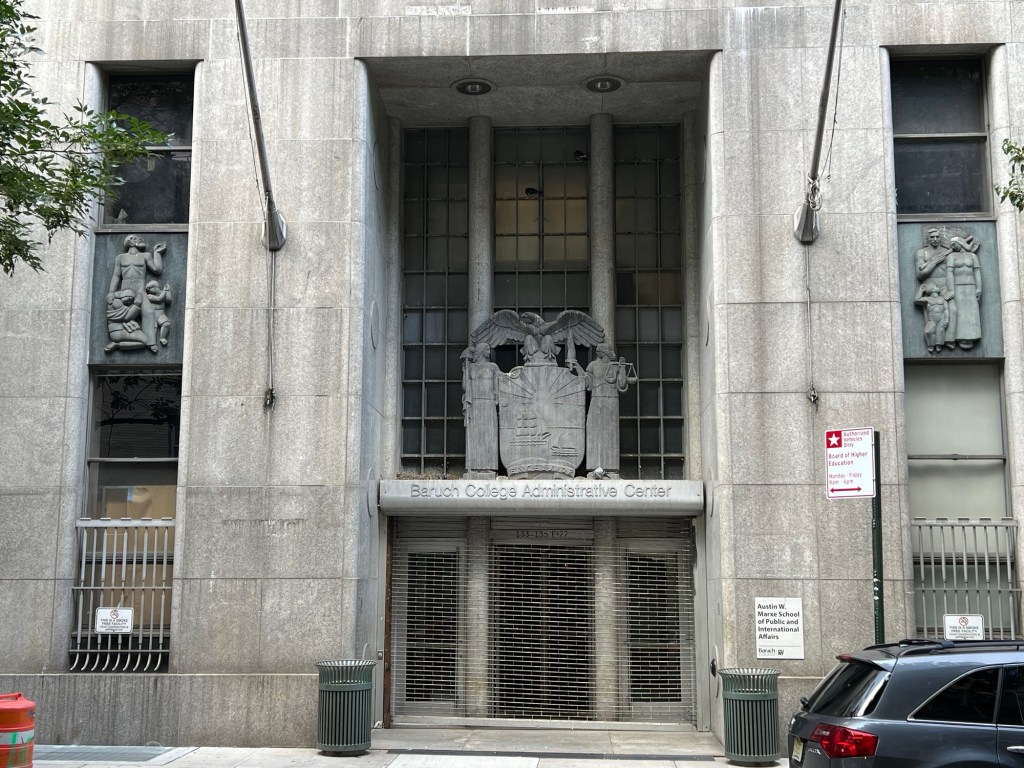
The beauty of the Admission Building of Baruch College
The building on the Baruch Campus that I admired was the was the Baruch College Administration Center whose entrance is at 135 East 22nd Street. I loved the Art Deco details on the building. These seemed to represent all aspects of business.
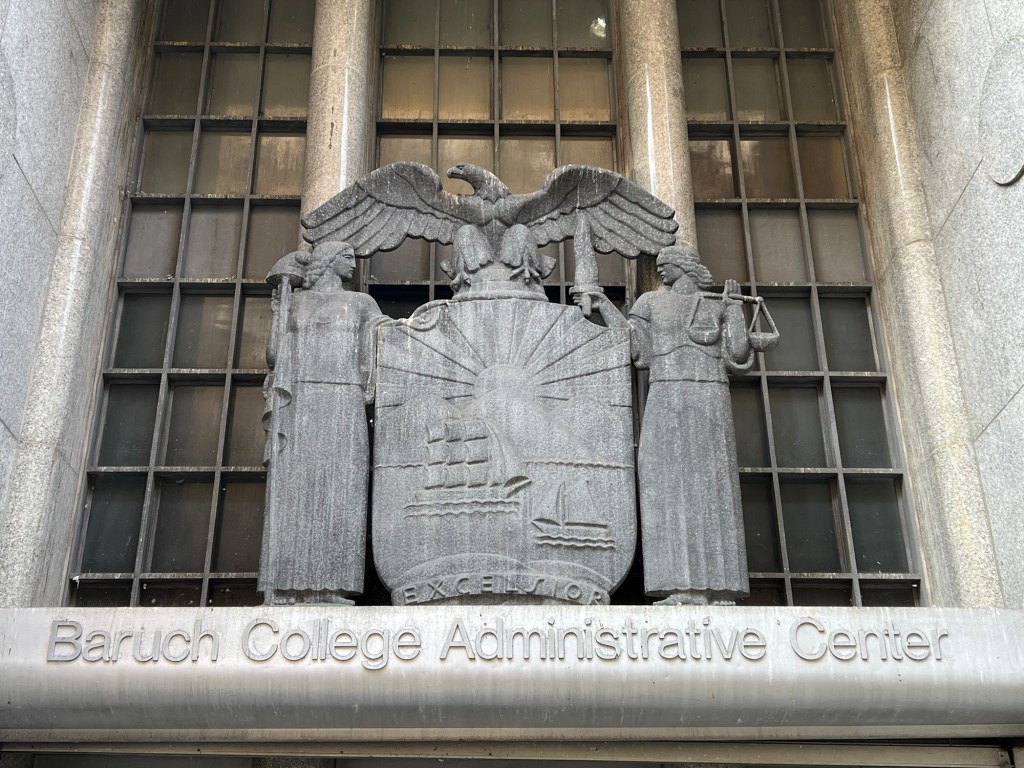
The beauty of the College seal
The front of the Baruch College Administration Center at 135 East 22nd Street
https://plexuss.com/u/cuny-bernard-m-baruch-college/history
The elaborate details on the building give it its Art Deco appearance. The Art Deco Administrative Center at 135 East 22nd Street was built in 1937–1939 as the Domestic Relations Court Building, and was connected to the Children’s Court next door (Baruch College Website).
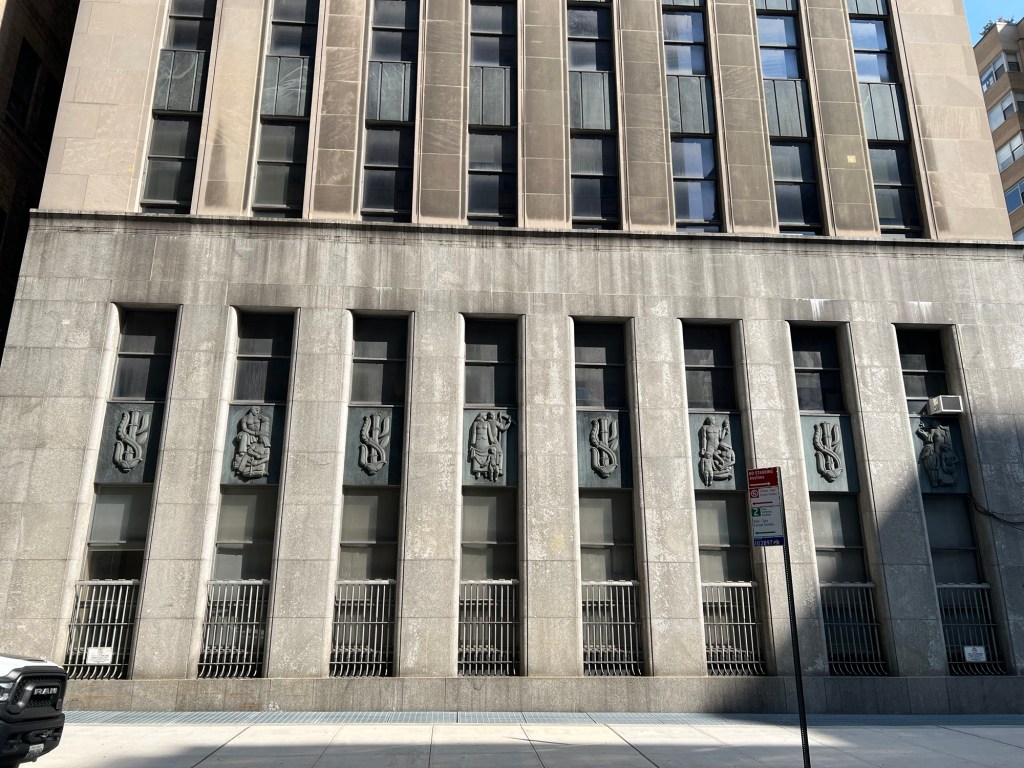
The Art Deco side of the building
Each of the panels represents a part of the business world.
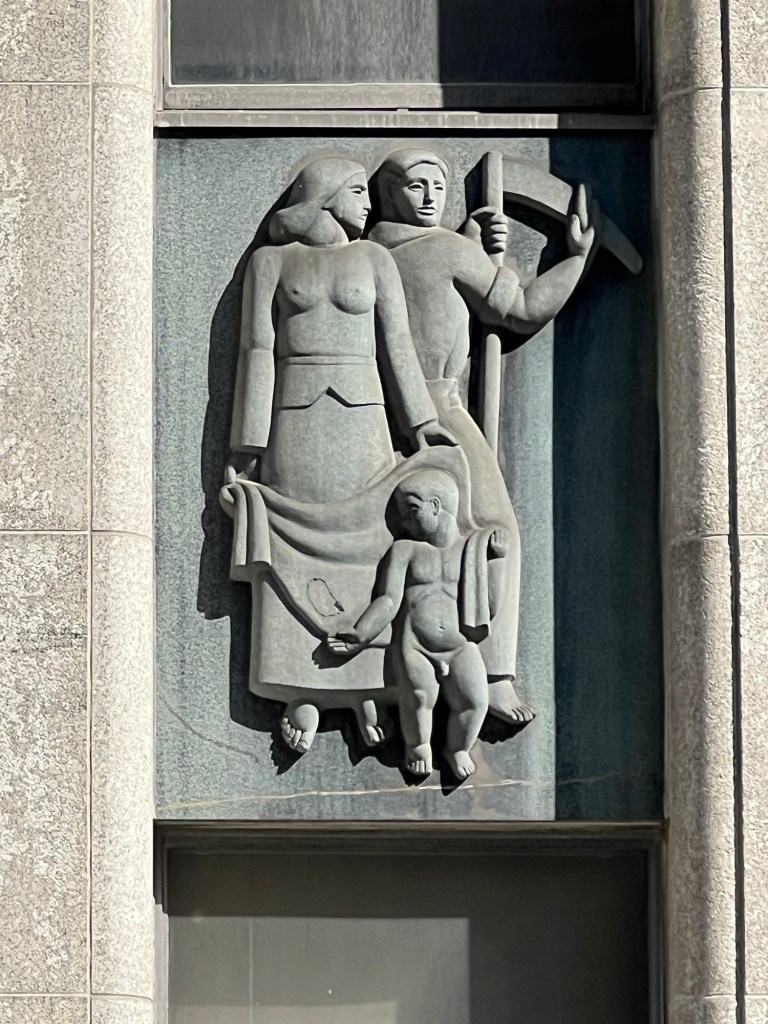
The Art Deco details of the building
The buildings on the Baruch Campus are interesting in their details. Some of the buildings were being renovated at the time I was exploring the neighborhood but has the scaffolding came down on later walks, you really could see the beauty of this Art Deco Buildings.
As I walked down East 21st Street, I came across The Parish of Calvary-St. Georges. The elegant Episcopalian church was founded in 1832 and moved to Gramercy Park in 1846.

The Parish of the Calvary of St. Georges at 61 Gramercy Park North
https://www.calvarystgeorges.org/
The church’s design was inspired by parishioner Leopold Eidlitz, who designed the plain interior and the original openwork spires of St. George’s Church. The congregation was so satisfied with the design that they rebuilt the church after a disastrous fire in 1865 following the same design, under Eidlitz’ supervision. By that time the design was also influenced by Dr. Stephen Tyng, a new pastor hired for what had become a changing urban congregation (Church website).
Just before I turned the corner onto East 21st Street, just above the restaurant, Nico, I admired the ceramic details of 102 East 22nd. There is a real beauty in the Art Deco details around the windows and doorways.

The beauty is in the details

A better view above the restaurant awning at the Gramercy Arms Building
https://www.cityrealty.com/nyc/gramercy-park/gramercy-arms-102-east-22nd-street/review/5974
Gramercy Arms is a handsome, 10-story Art Deco-style apartment building at 102 East 22nd Street that was designed by Sugarman & Burger and erected in 1928 (City Reality). You have to admire all the ceramic work all over the building and see a peek of the rooftop garden at the top of the building.
The Novita Restaurant at the base of 102 East 22nd Street whose reviews were mixed when I read them on TripAdvisor.
Review on TripAdvisor:

The unique details of 121 East 21st Street
The ceramic and grill work is beautiful. When you pass this part of the neighborhood you enter the center of Gramercy Park and that is the park itself.
What I always love about Gramercy Park is the interesting combination of beautiful brownstones, elegant mansions and interesting apartment buildings that line all sides of the park. The old Gramercy Park Hotel is currently under renovation so there was not much to see under all the scaffolding.

The homes surrounding Gramercy Park have access to the park with a key
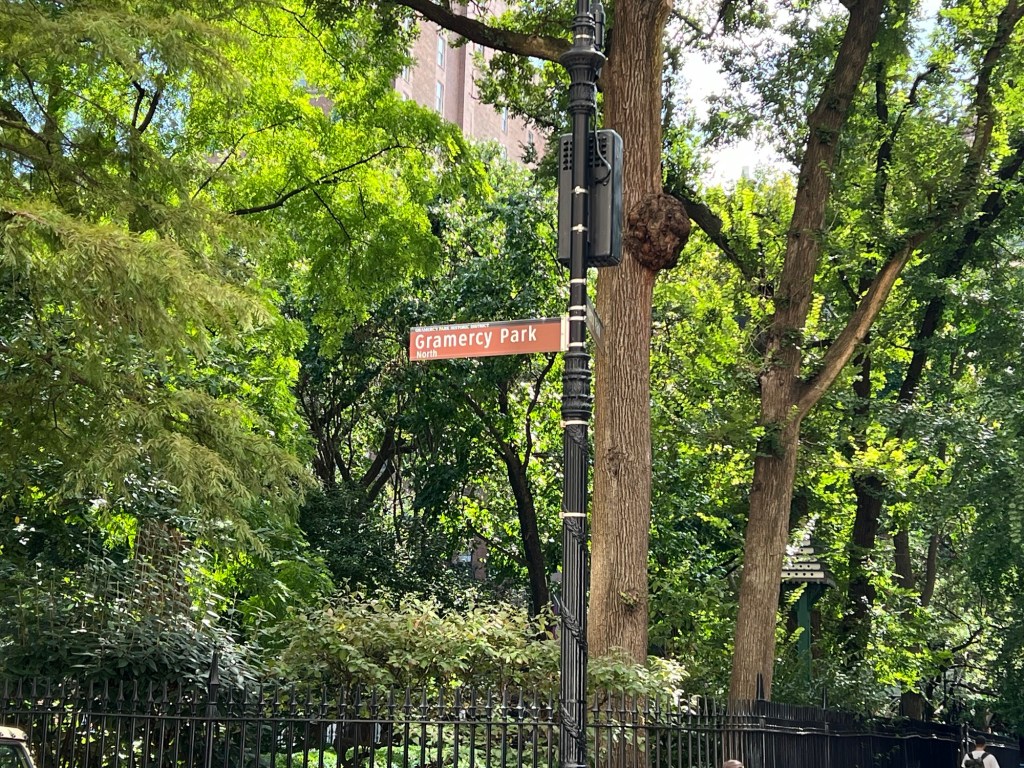
Gramercy Park in the summer of 2024 at Gramercy Park West and East 21st Street
https://en.wikipedia.org/wiki/Gramercy_Park
https://www.cityneighborhoods.nyc/gramercy
The park is amazing to walk by in any season by the end of the summer on a sunny day there was nothing like it. It almost shined against the sun.
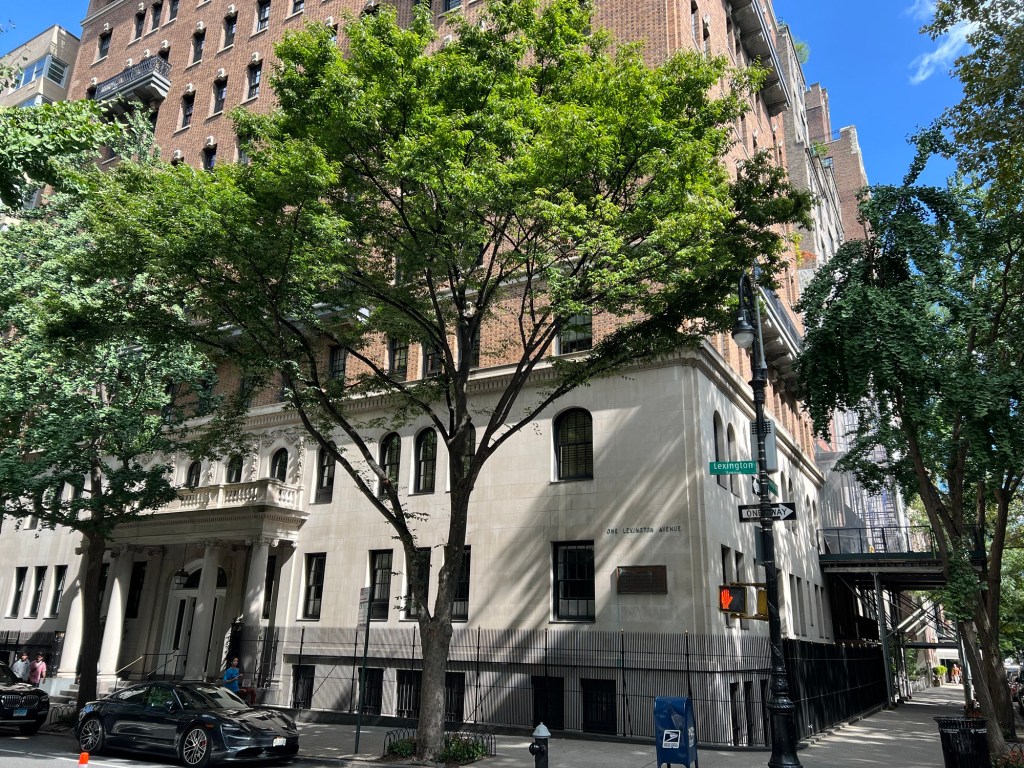
The historic One Lexington Avenue at the corner of Lexington Avenue and Gramercy Park North
The historical apartment building had replaced the home of Cyrus West Field, who helped lay the first Transatlantic cable line across the Atlantic Ocean.
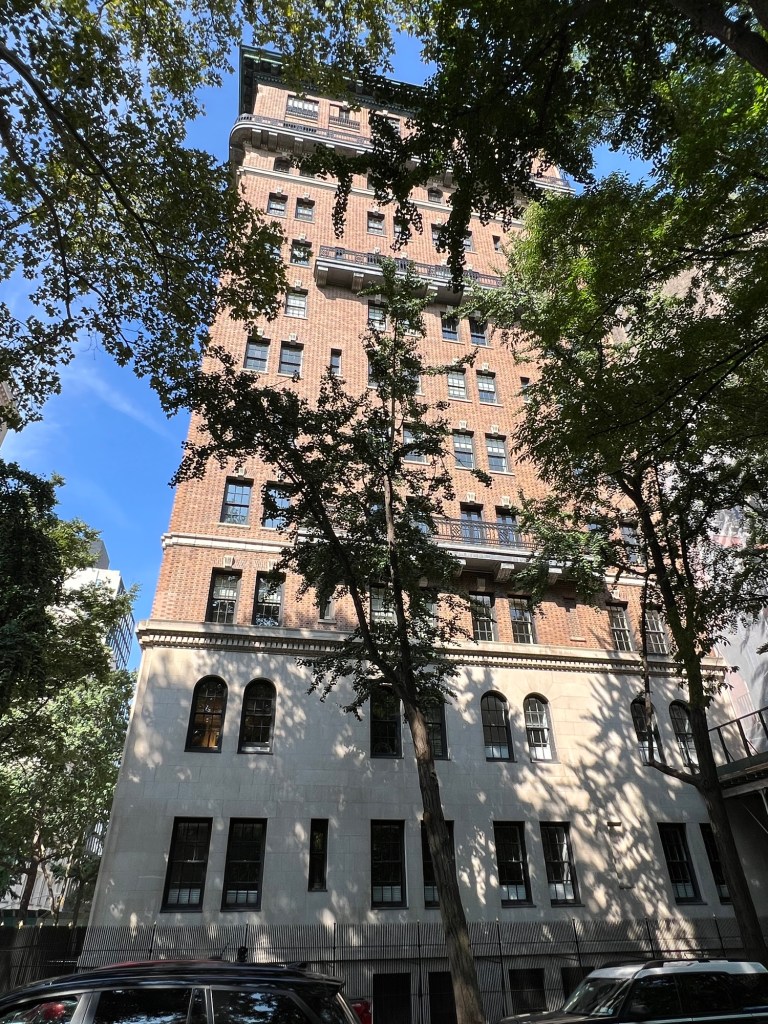
One Lexington Avenue facing Gramercy Park
https://streeteasy.com/building/1-lexington-avenue-new_york/9-d
https://www.corcoran.com/building/gramercy/3916
Built in 1910 by noted architect Herbert Lucas. This twelve-story intimate cooperative features extraordinary design details including a stately limestone and brick façade, timeless-elegant marble lobby and wood-paneled elevator still attended full-time by the elevator operator (Streeteasy.com).
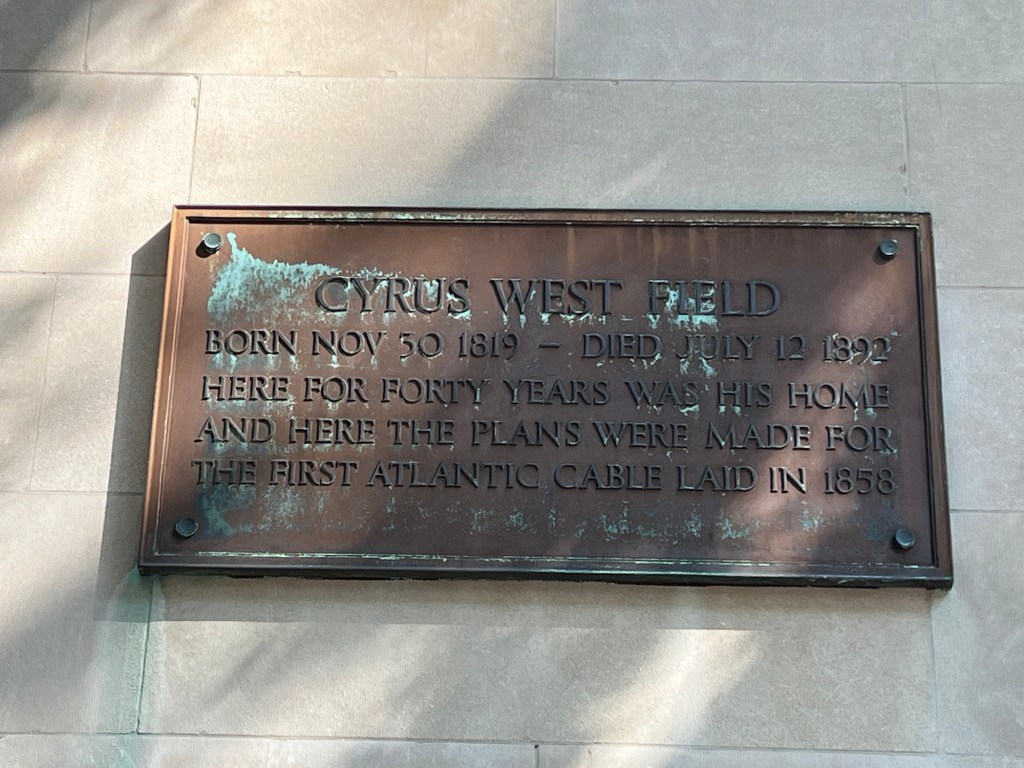
The Cyrus West Field plaque on One Lexington Avenue where his home once stood

Cyrus West Field
https://en.wikipedia.org/wiki/Cyrus_W._Field
https://www.pbs.org/wgbh/americanexperience/features/cable-cyrus-field-1819-1892/
One Lexington Avenue was once the home of Cyrus West Field, who was considered the ‘Father of the American Cable” and helped lay the first trans Atlantic cable in 1858. When it broke, it was laid again in 1866 (American Experience).
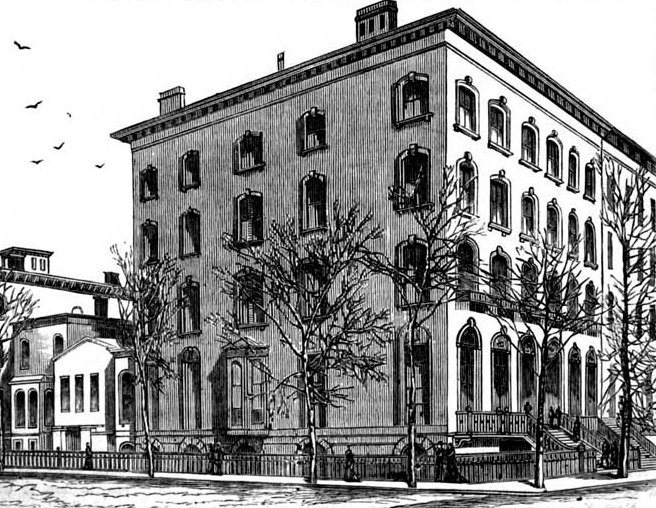
The original house on the same corner in 1866 (NY Public Library)
Just across One Lexington Avenue was one of the best views facing the southern end of the neighborhood. The gardens just stood out this afternoon and with the clear sunny skies, it looked like a postcard.
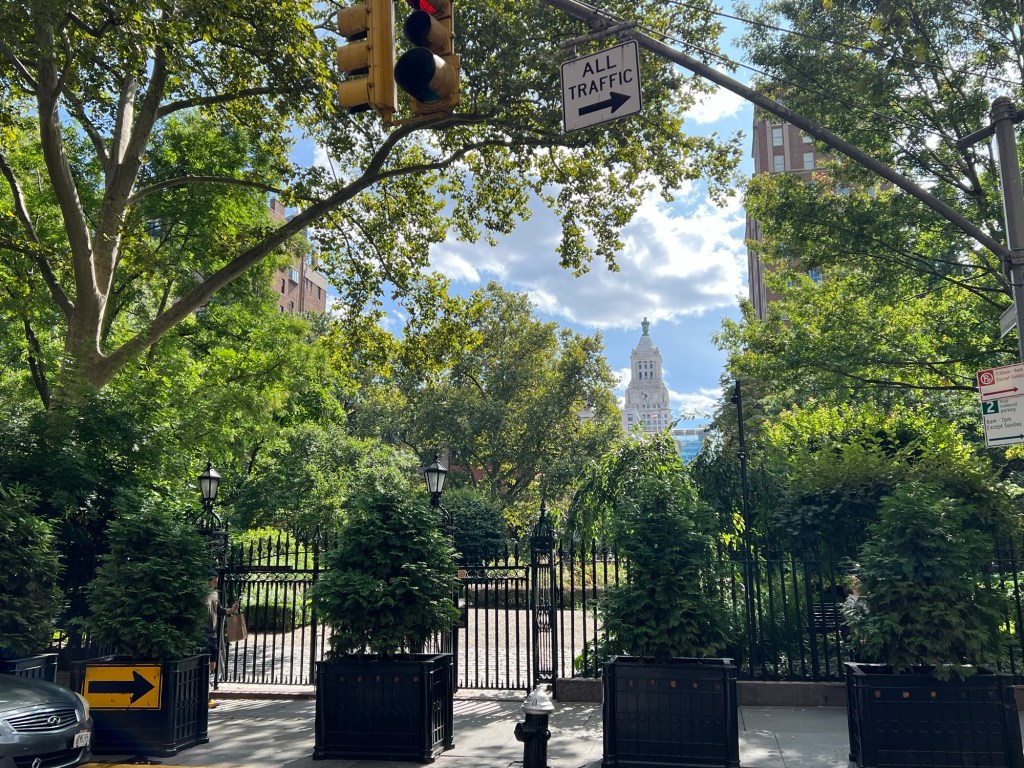
Looking South from Gramercy Park down Irving Place
The park was at its peak of blooming and foliage in the beginning of September. I thought this was a beautiful shot of the true elegance of the park.
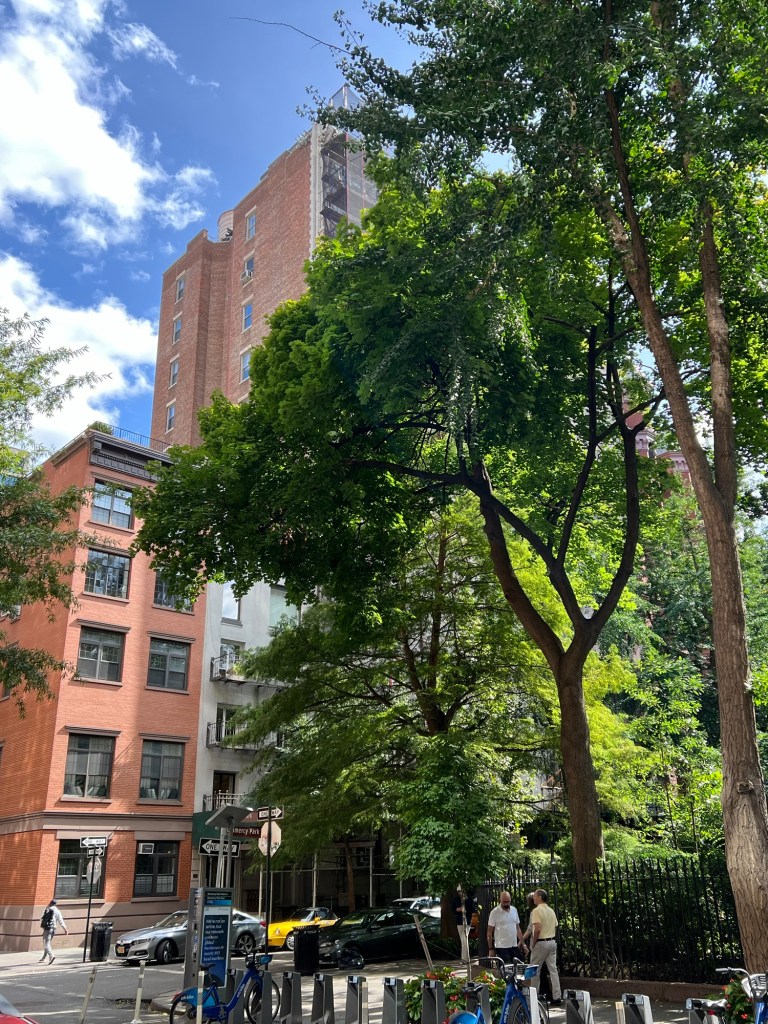
Looking at Gramercy Park East in the summer of 2024
The beauty of Gramercy Park is that all sides of the park are so pretty to look at. You can admire this park from all sides with the beautiful shrubby, flowers and the elegant architecture of homes and apartment buildings that surround the park.
As I continued to walk around East 21st Street, I passed the outdoor cafe of Grill 21 at 346 East 21st Street. I loved this picture painted outside the restaurant and the menu looked very interesting. I noted it to maybe try it later. The people who were eating outside that afternoon looked like they were enjoying their meal.

Walking past Grill 21 Restaurant at 346 East 21st Street
https://www.instagram.com/grill21_/
Review on TripAdvisor:
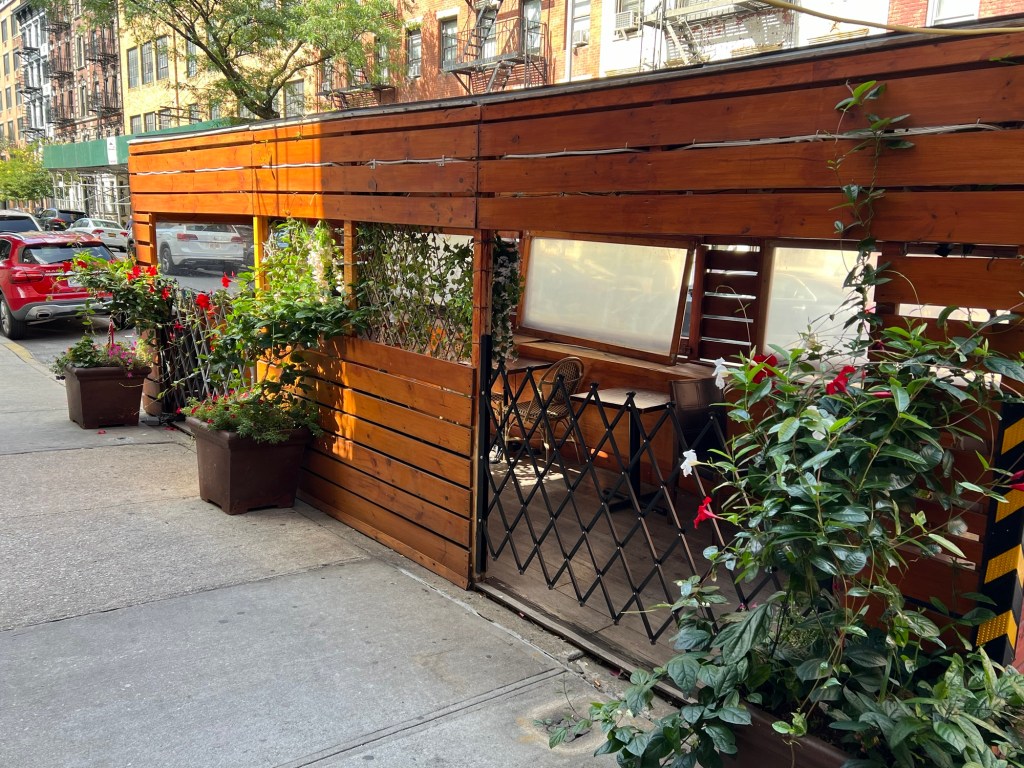
The seating area of Grill 21
As I passed the NYPD 13th Precinct, I passed this very touching memorial to those on 9/11. Being now twenty years ago, it still seems like yesterday for those of us who lived through it. It means something to us every September but it seems lost to a newer generation who were born after it.
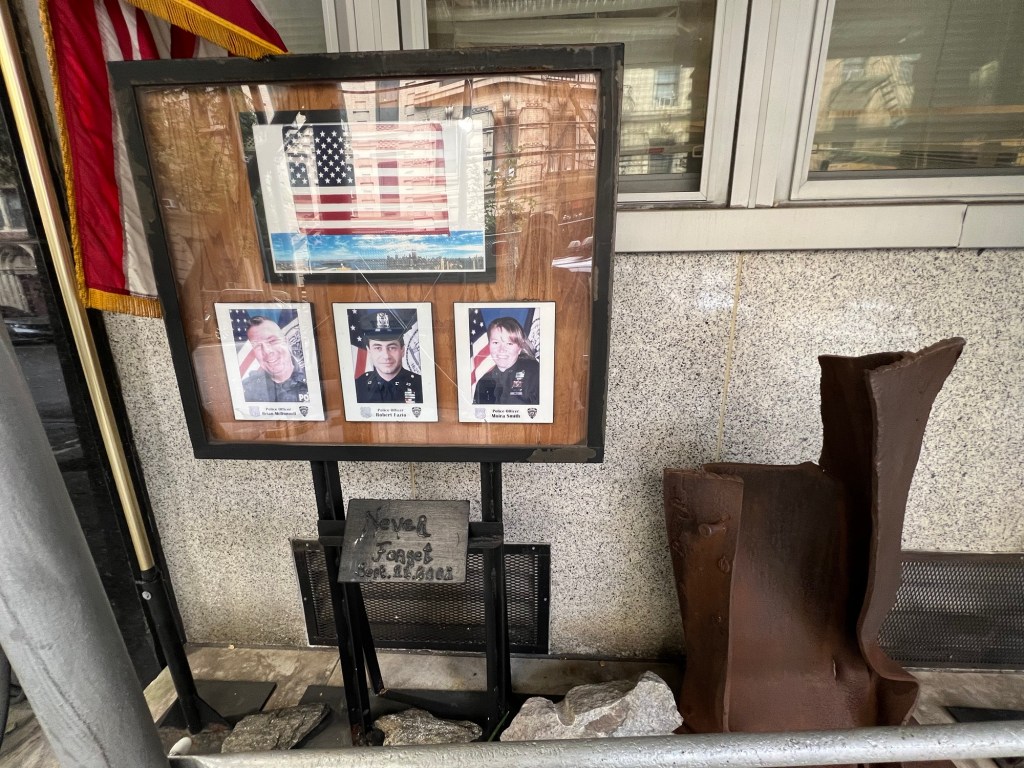
The memorial to the officers that died in the attacks on 9/11 outside the 13th Precinct at 230 East 21st Street
https://www.nyc.gov/site/nypd/bureaus/patrol/precincts/13th-precinct.page
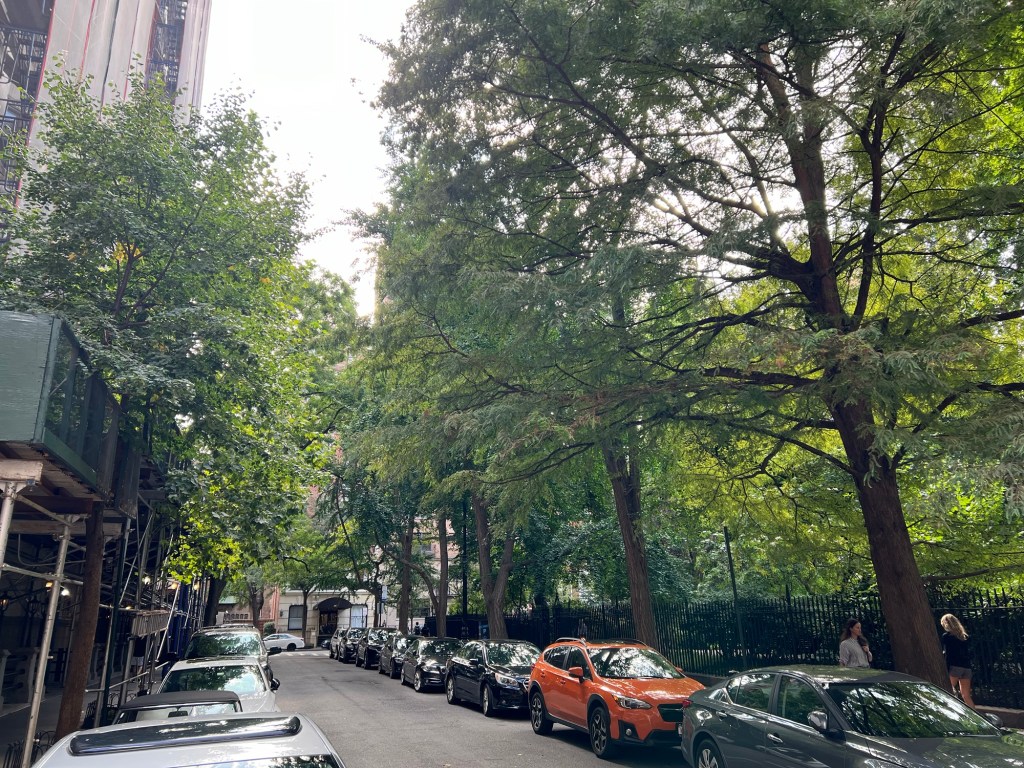
After walking one side of Gramercy Park, I did a semi circle around park admiring the park from all angles. The park stretches from East 22nd to East 21st Streets and is the only private park left in New York City. The park is all that is left of the original Rose Hill Farm estate.

Gramercy Park North at East 22nd Street is all that is left of the corner of the Rose Hill Farm

Gramercy Park East
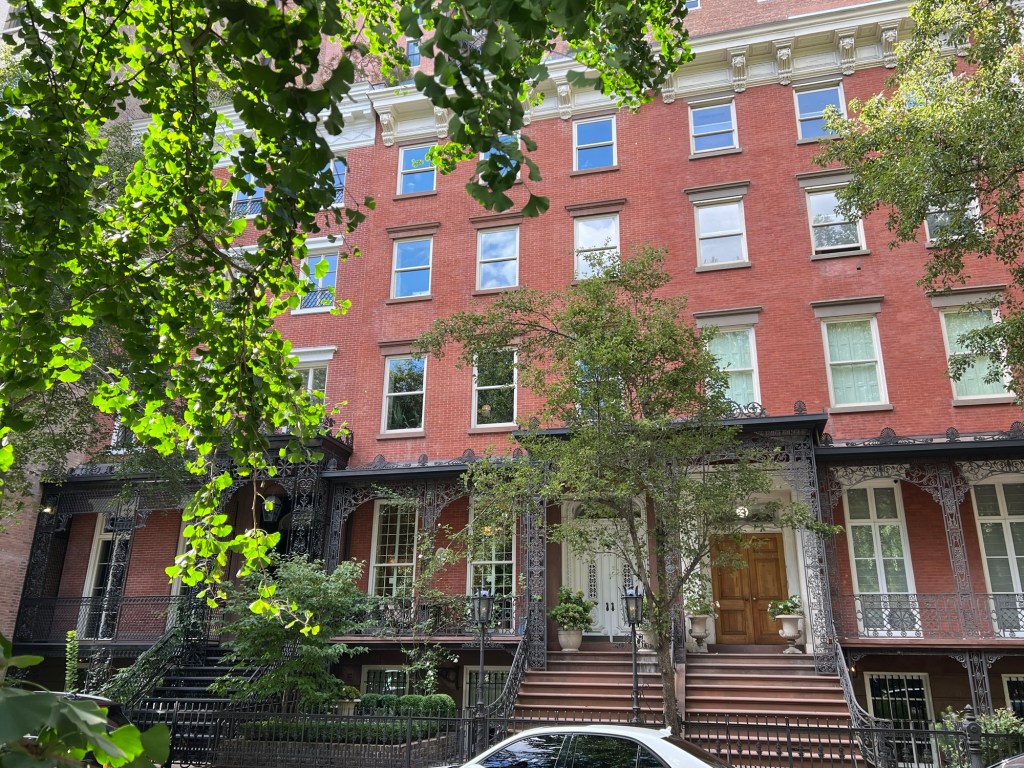
Gramercy Park East
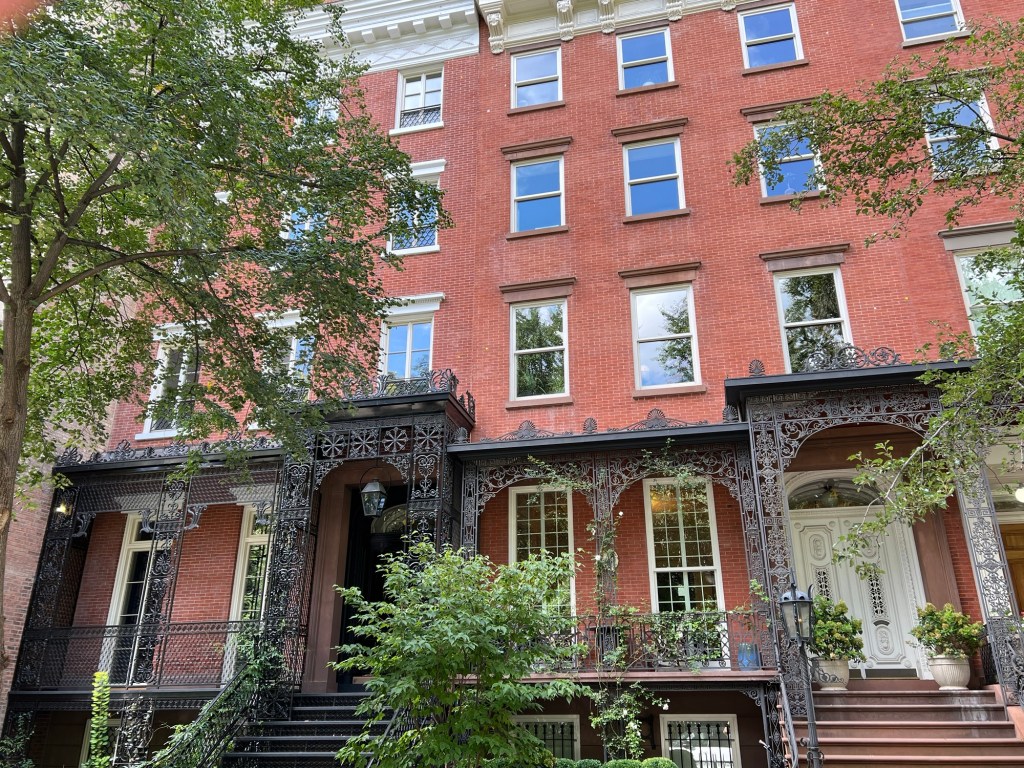
Gramercy Park East

The plaque at 3 Gramercy Park East to former Mayor James Harper
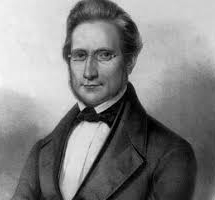
Mayor James Harper
https://en.wikipedia.org/wiki/James_Harper_(publisher)
https://a860-collectionguides.nyc.gov/agents/people/42
Mayor James Harper served as Mayor of New York City for one term as a Republican from 1844-1845. Before that he established the publishing firm J & J Harper with his brother which eventually in time became Harper’s Brothers in 1825 (which became Harper & Row in 1962). He was only served as Mayor for one year (Wiki). He lived in Gramercy Park from 1847 to 1869 when he passed away (Wiki).

Walking around 4 Gramercy Park East

The historic buildings of Gramercy Park West
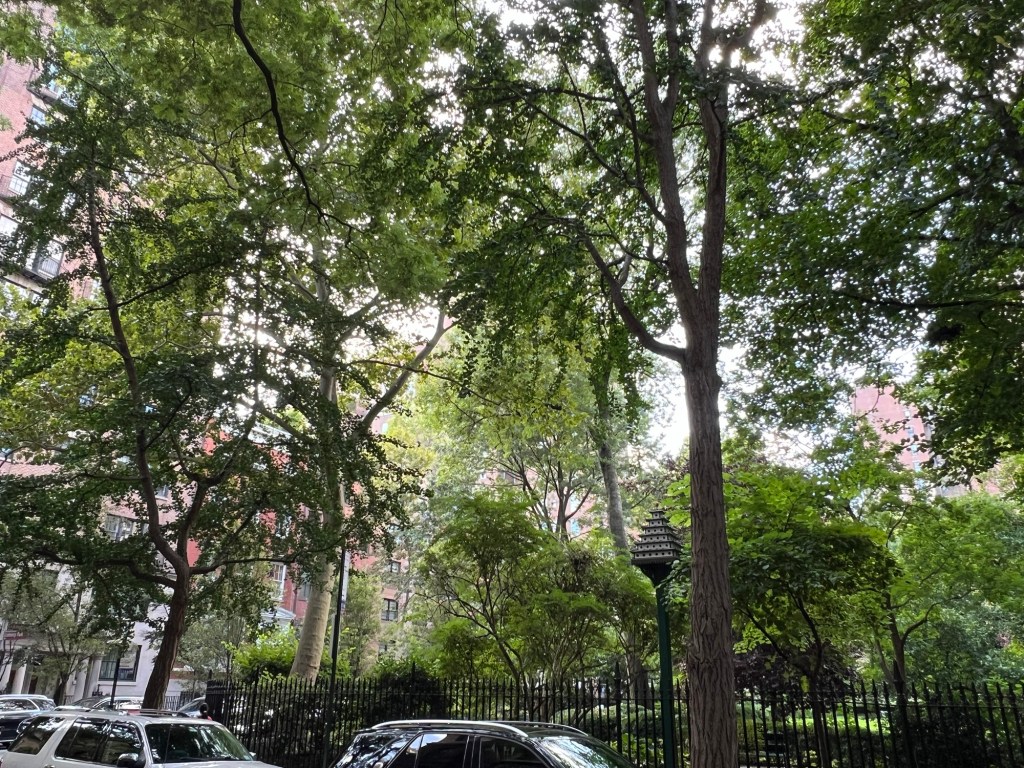
The park side of Gramercy Park West
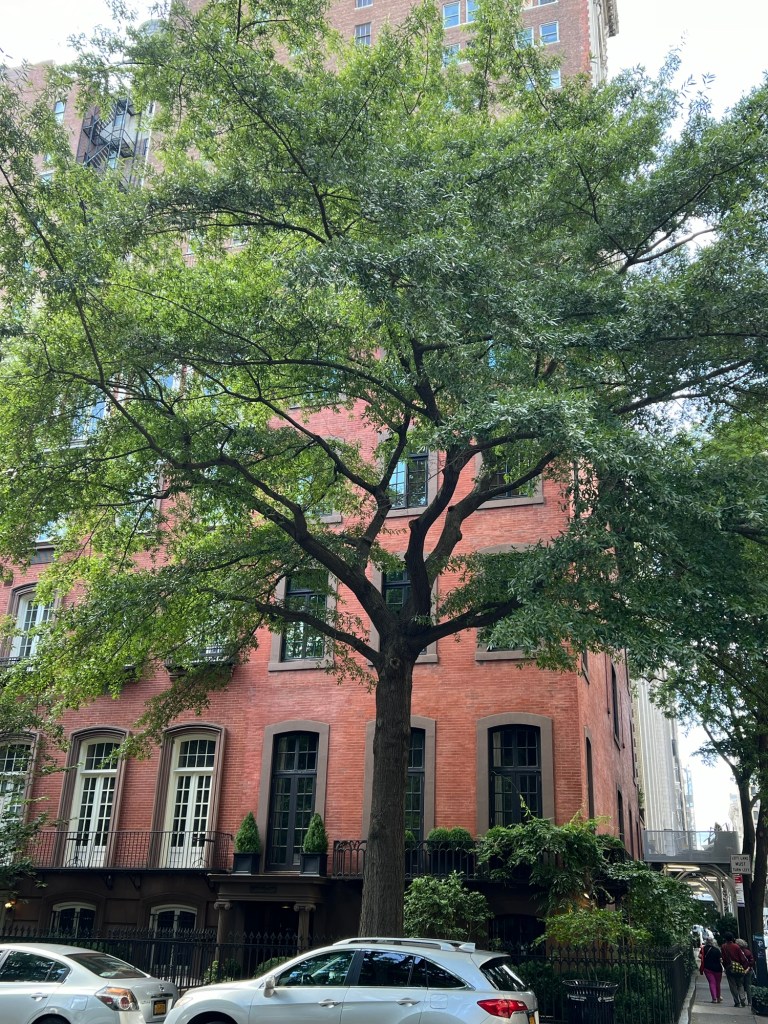
The former Stuyvesant-Fish Mansion at Gramercy Park South
https://en.wikipedia.org/wiki/19_Gramercy_Park_South
I love passing the old Stuyvesant Fish Mansion. I have always thought this was an apartment building but I just read that it is still a private home. This home was originally built in 1854 by William Samuel Johnson and it was expanded by architect Stamford White for the Fish family in 1887. When the family moved uptown to the more fashionable Fifth Avenue, the house was broken up into apartments. Many incarnations later it was sold as a private residence in the past few years (Wiki).

The beautiful brownstones and brick buildings at Gramercy Park South
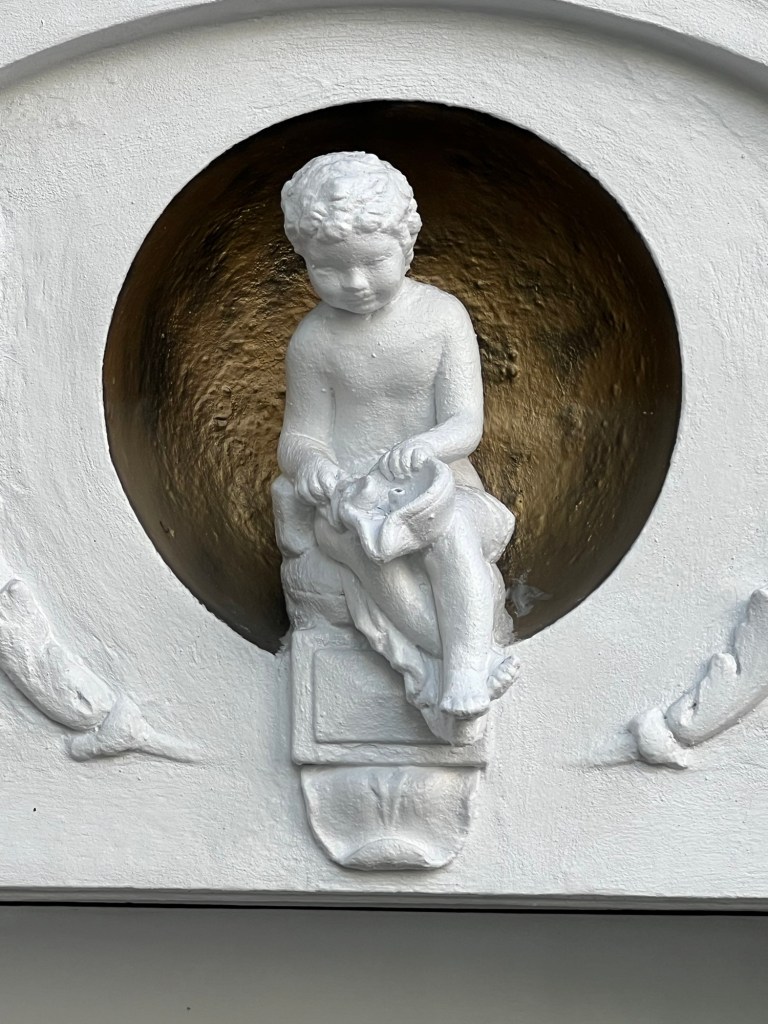
This delightful little embellishment at East 20th Street

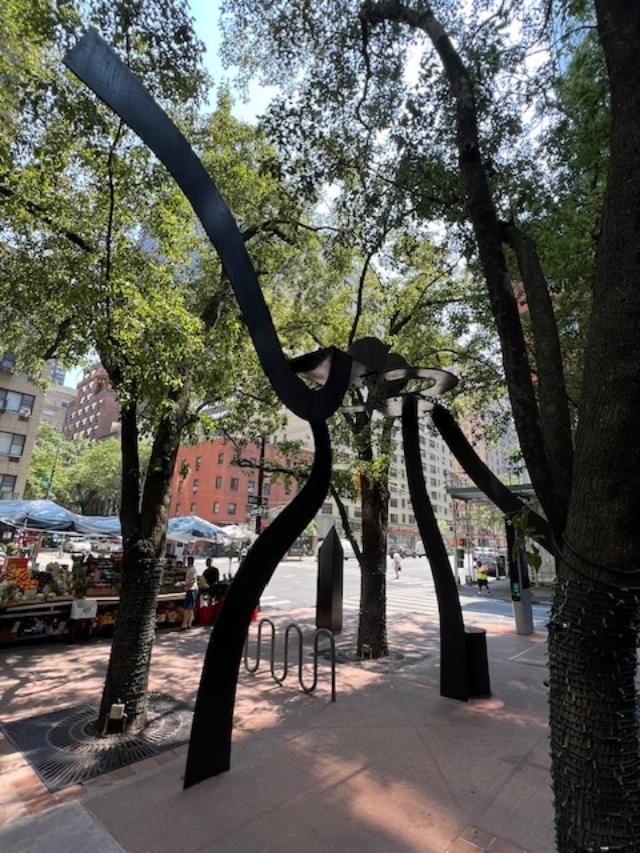
Street art on East 20th Street near Second Avenue
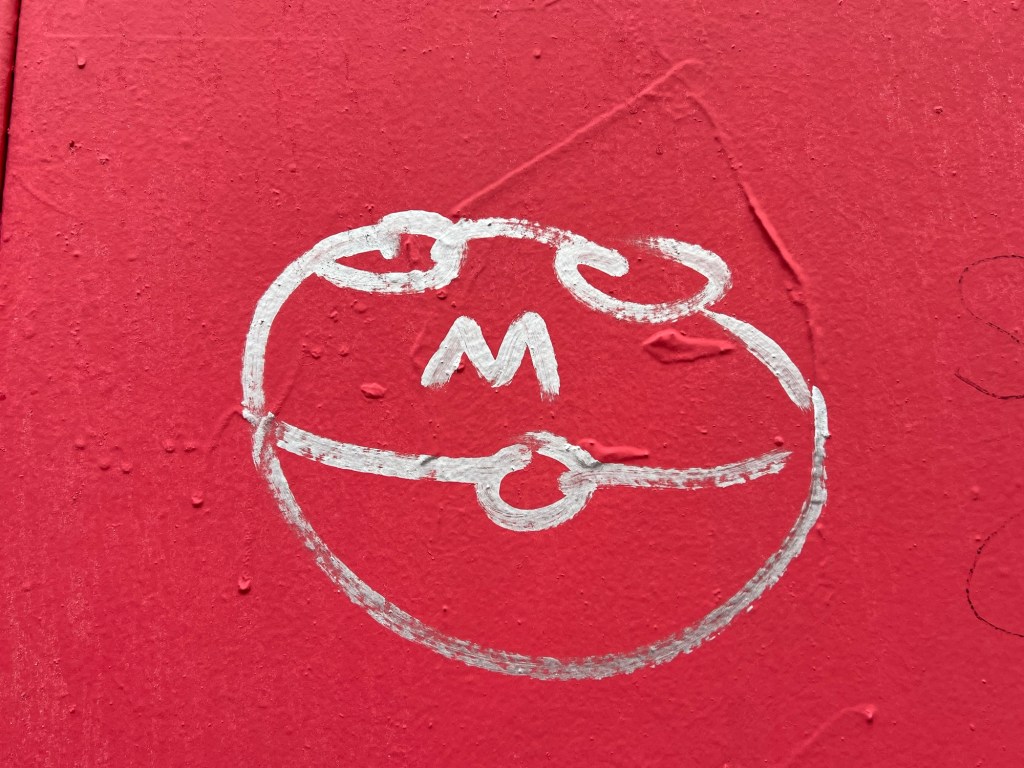
Street art on East 20th Street

Street art on East 20th Street-I thought this was so profound and so true!
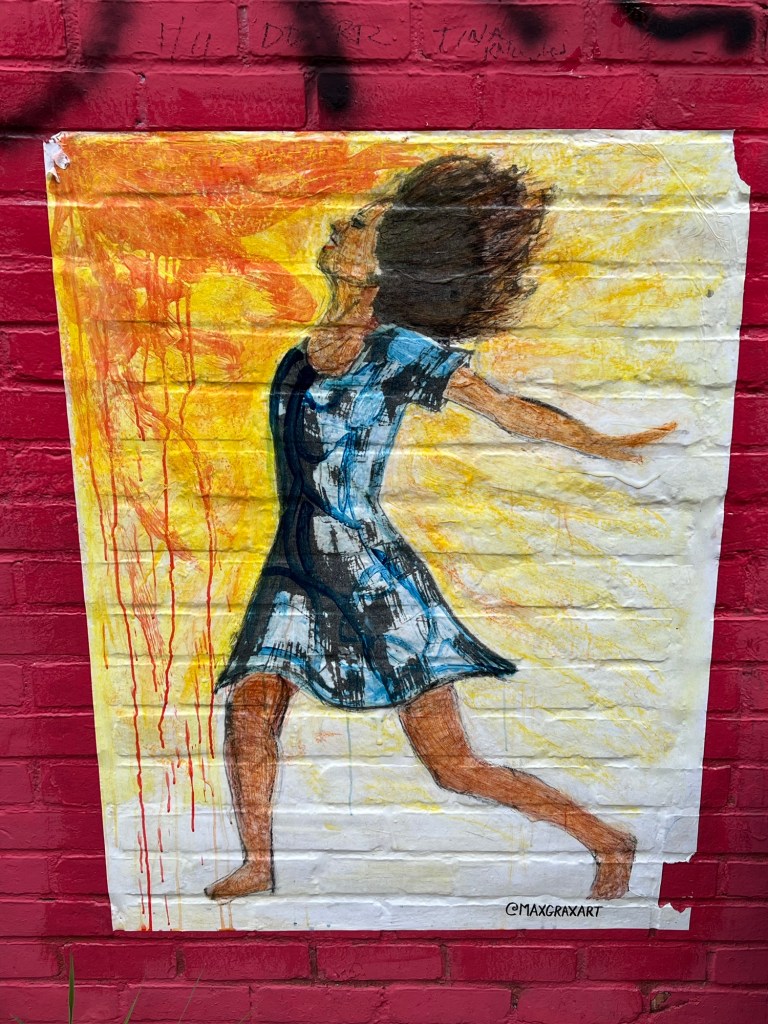
Street art on East 20th Street

Just outside the edge of the neighborhood is the extension of East 20th Street is the border of Gramercy Park, Stuyvesant Town and Peter Cooper Village. The middle class enclave is beautifully landscaped and East 20th Street to the even nicer landscaped Stuyvesant Cove.
https://en.wikipedia.org/wiki/Stuyvesant_Town%E2%80%93Peter_Cooper_Village

The shade trees on East 20th Street
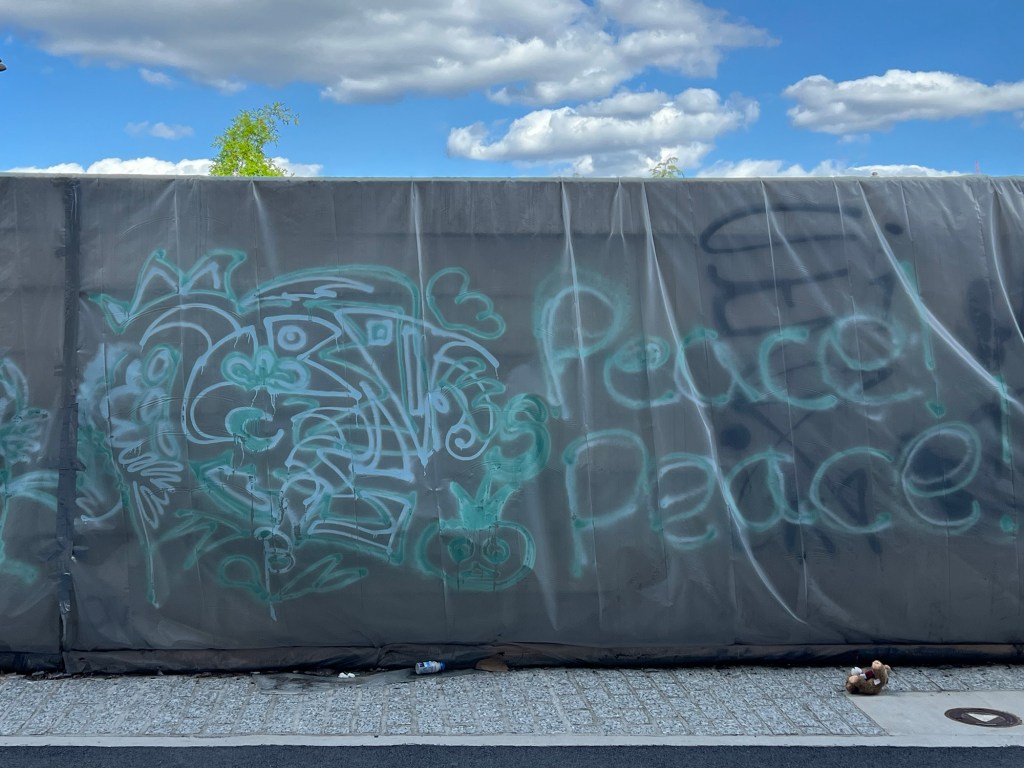
The street art at the entrance to Stuyvesant Cove

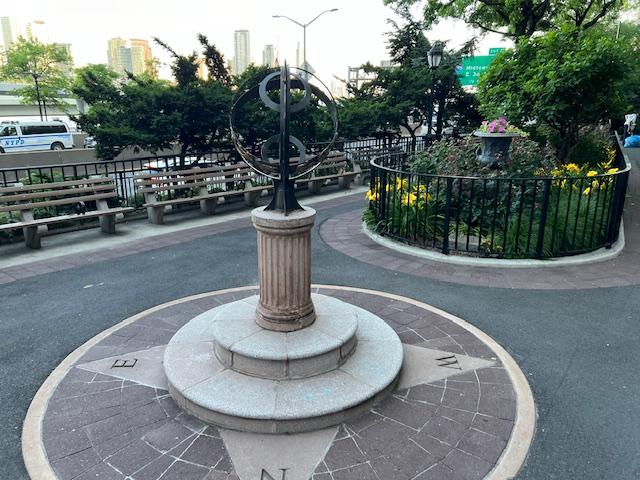
Stuyvesant Cove in the Summer of 2024

Stuyvesant Cove in the Summer of 2024
https://en.wikipedia.org/wiki/Stuyvesant_Cove_Park
https://www.nyc.gov/site/ddc/about/press-releases/2023/pr-053123-Stuyvesant-Cove-Park.page

The view of the East River from Stuyvesant Cove
https://www.instagram.com/explore/locations/3756/stuyvesant-cove-park/
It was a brilliant sunny afternoon in the late summer. The temperatures had reached in the mid 80’s and it was clear and slightly cloudy when I visited the park. Everything was in late bloom including the sunflowers which were brilliant. I could not believe what a spectacular day it was that afternoon. I just relaxed for a bit and enjoyed the beautiful views.
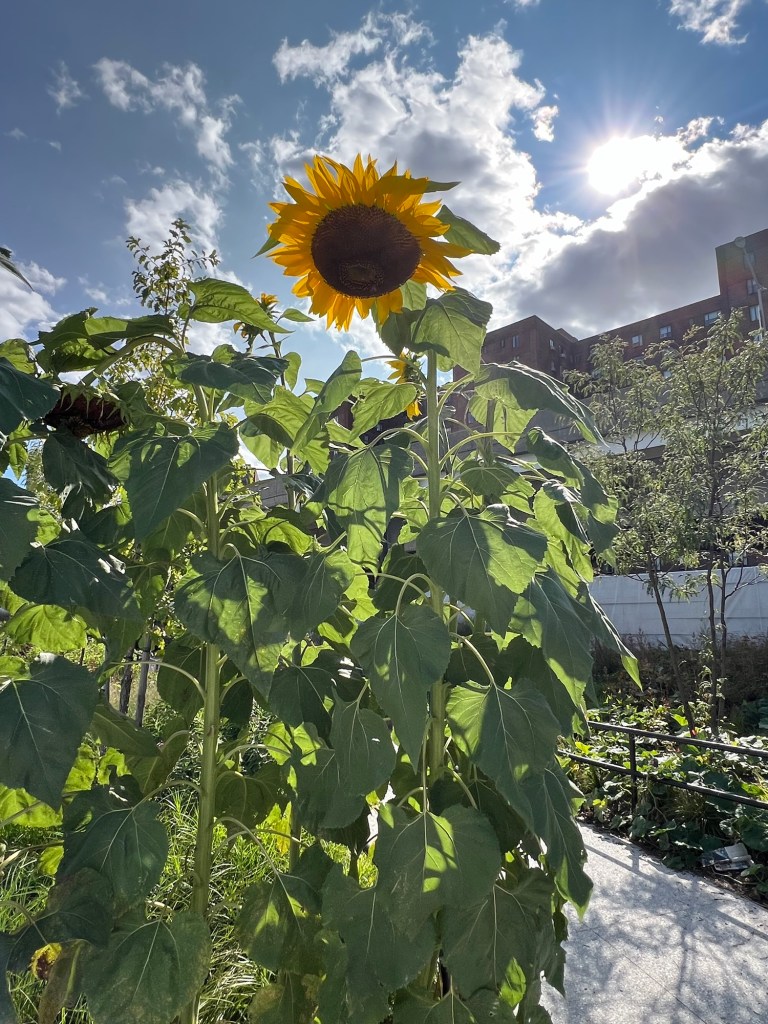
The beautiful sunflowers in the Stuyvesant Cove Gardens
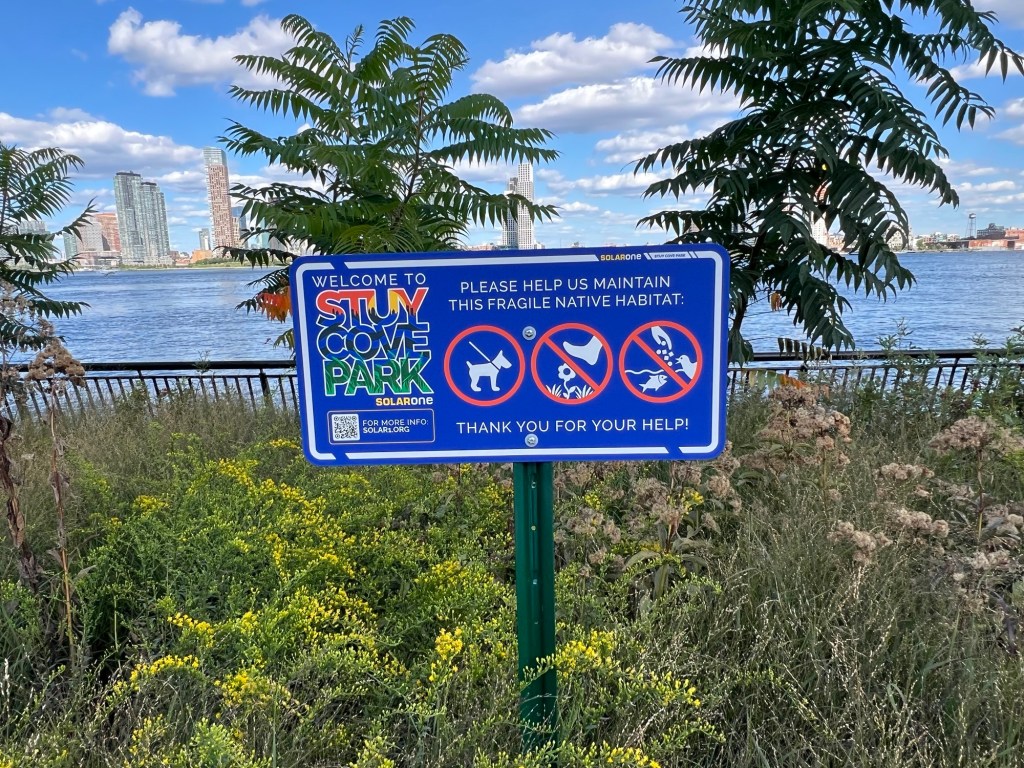
The sign welcoming you to Stuyvesant Cove Park

Walking back down East 20th Street into Gramercy Park South
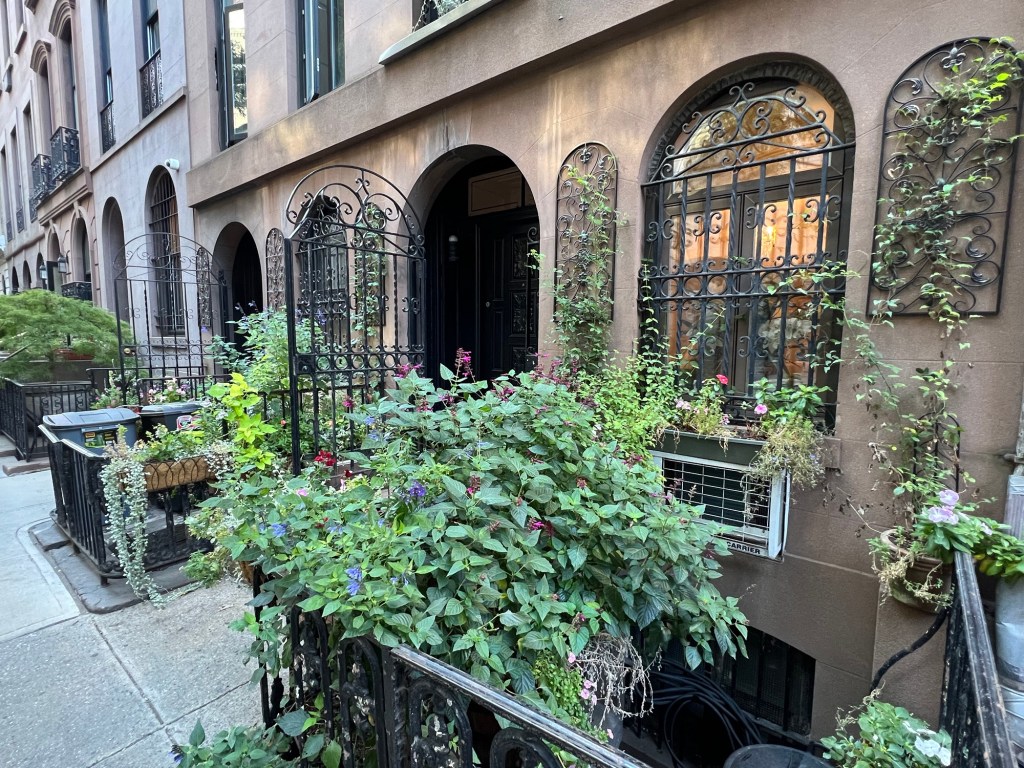
The beautiful gardens of East 19th Street

Easy 19th Street at the end of the summer of 2024

The side of the apartment building at Irving Place

The old Carriage Houses at West 19th Street
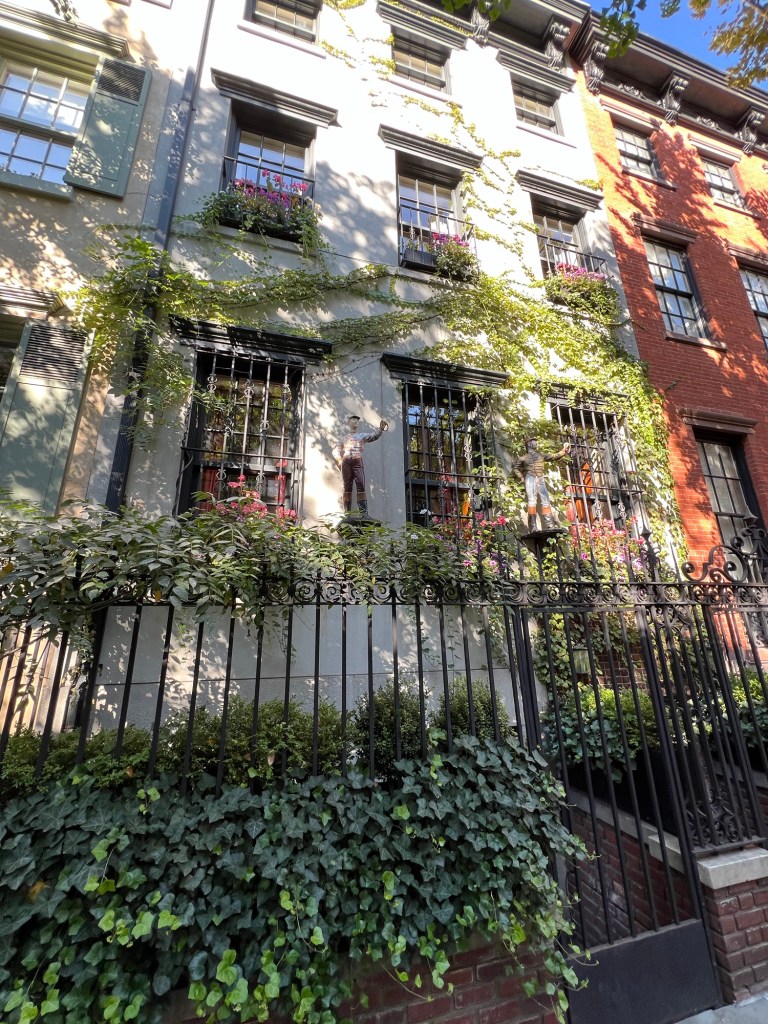
The beauty of urban gardens on East 19th Street

I thought this was just gorgeous on a sunny afternoon

The building itself at East 19th Street was rather plain but I thought the archway was beautiful

I loved the creative Halloween decorations at 318 East 19th street

The decorations at 318 East 19th Street

The decorations at 318 East 19th Street
Halloween seemed to come early to parts of the neighborhood.
As I walked along the blocks along East 19th Street, I came across interesting street art around the neighborhood. Here and there things popped up that I thought were interesting to see.
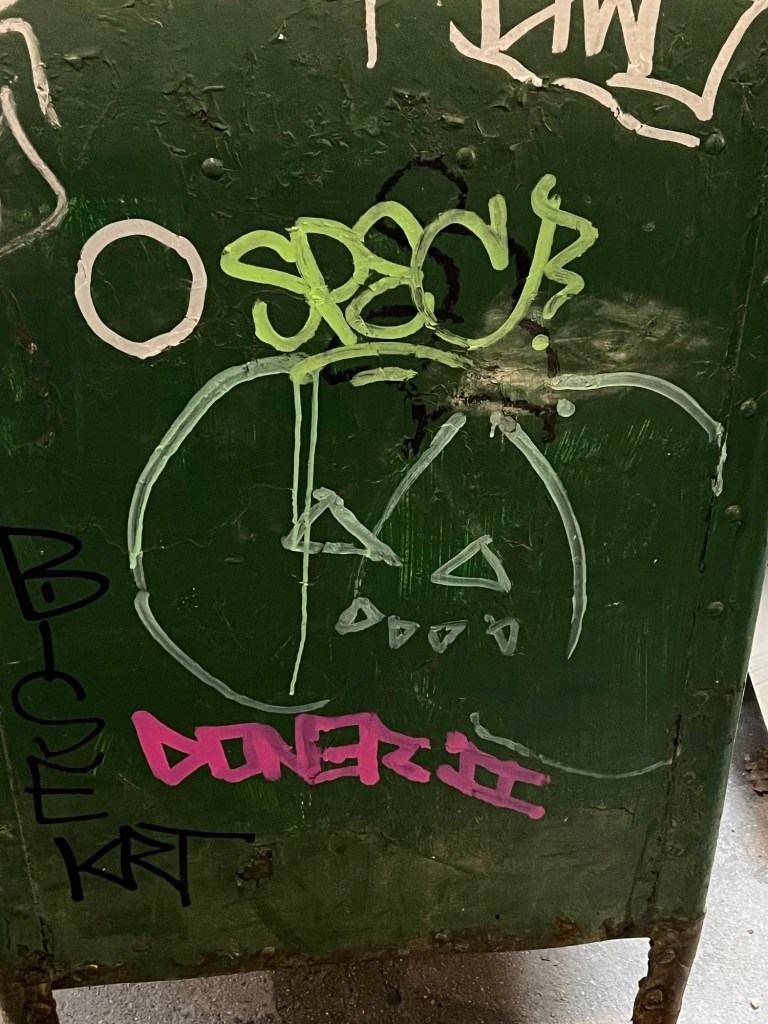
Street art along East 19th Street
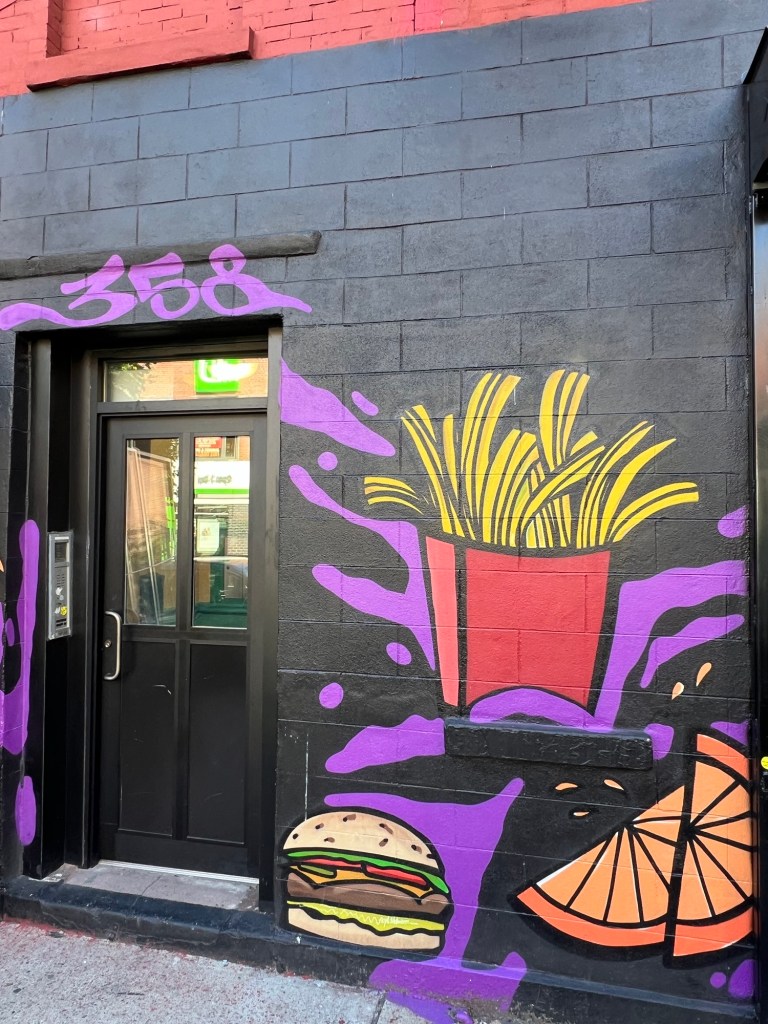
Street art along East 19th Street. The was right near a restaurant at 358 East 19th Street

The historic home of George Bellows
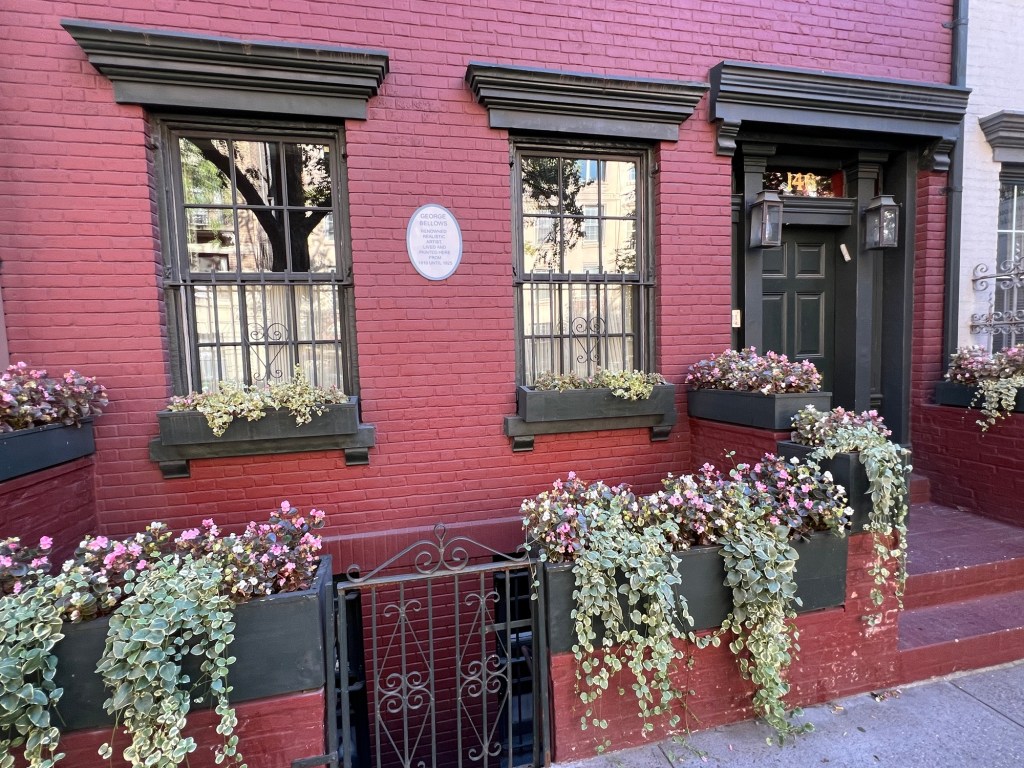
The plants surrounding the front of the home at East 19th Street

The George Bellows House
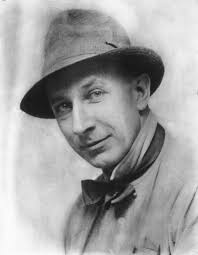
Artist George Bellows
https://en.wikipedia.org/wiki/George_Bellows
https://www.metmuseum.org/exhibitions/listings/2012/bellows
Artist George Bellows was an American artist who was self taught and left college to move to New York to pursue the life of a painter. He works were well known in art circles for their social and political themes (Wiki).

I thought this series of brownstones were just classic New York

Walking down East 18th Street has its charming blocks of brownstones with gardens and potted plants

The charming urban gardens of Gramercy Park

The elegant Halloween decorations in the neighborhood

The Stuyvesant Houses on 18th Street

The Stuyvesant Houses on 18th Street
https://www.hmdb.org/m.asp?m=151071
What was interesting about passing the Stuyvesant Houses on East 18th Street is how old these homes are and that they are still part of the fabric of the neighborhood in the 21st Century. They were built by Cornelia Stuyvesant Ten Broeck in 1852 on land that was part of the original Stuyvesant Farm. This could be considered part of the development of ‘suburban housing’ in New York City. This was built beyond the core of Manhattan which was located below Wall Street (Historic Market of the New York Community Trust).
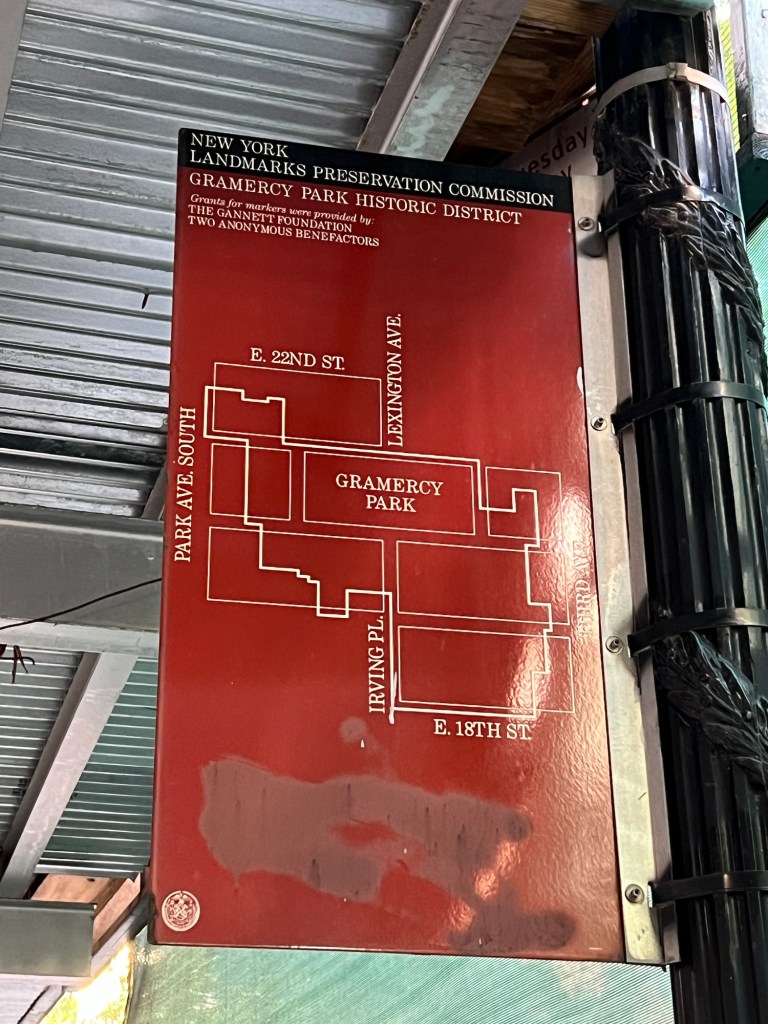
The sign for the designated historic part of the neighborhood
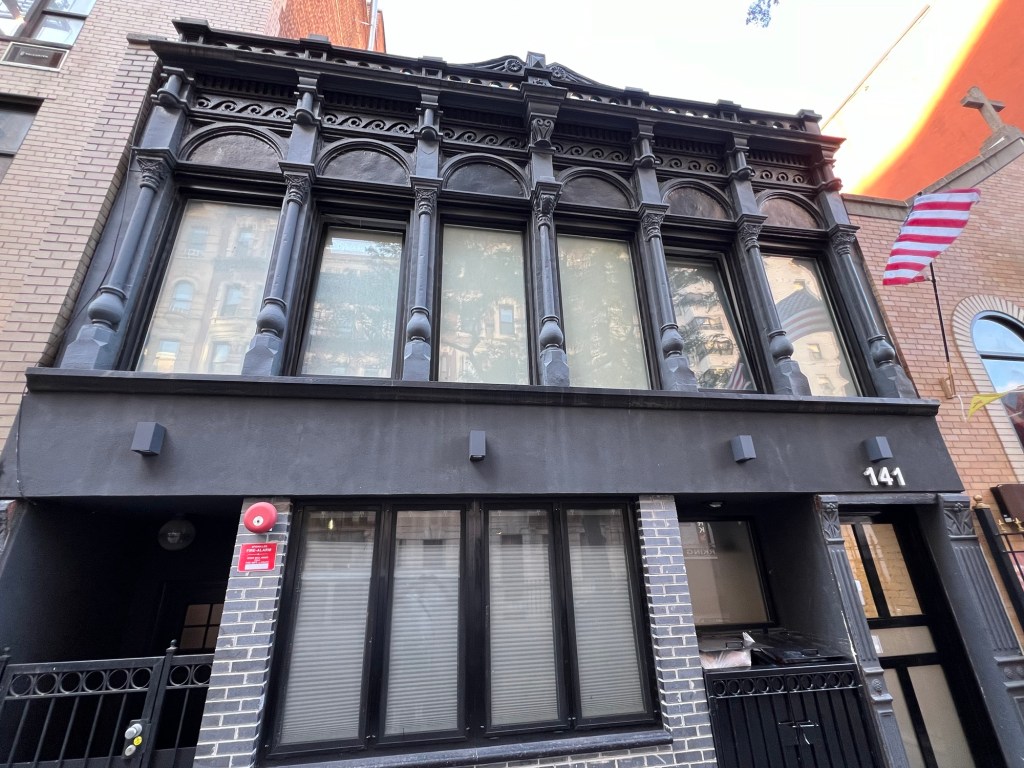
A smaller version of a Flatiron building at 141 East 17th Street
https://streeteasy.com/building/141-east-17-street-new_york
This triplex apartment was originally designed and configured as a mid-century artist’s studio by New York architect Bernard Rothzeid, who was commissioned to modernize the space by the painter and print-maker Al Blaustein (Streeteasy.com). It looked like a smaller version of the Flatiron Building and stands out in a neighborhood of brownstones and apartment buildings.

I was impressed by this series of flower boxes along East 17th Street
Here and there along all the streets of this part of Gramercy Park were pocket gardens and decorations outside buildings all over the neighborhood.
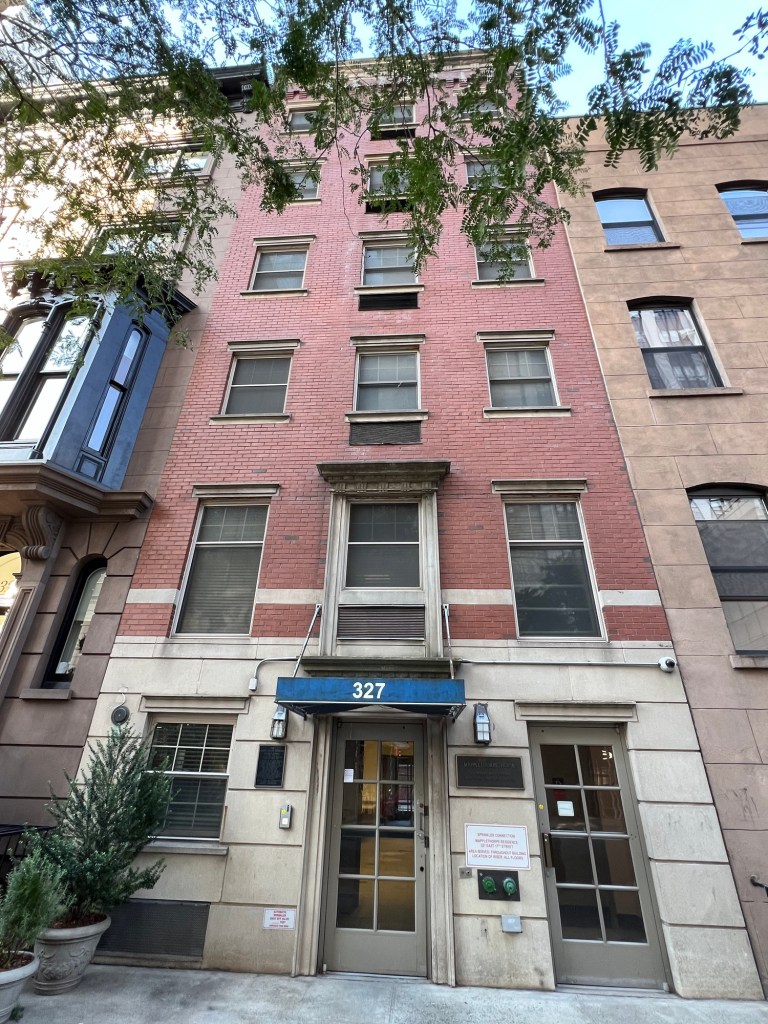
327 East 17th Street is home to the Robert Mapplethorpe Treatment Center and the home of composer Antonin Dvorak on this site. This is the home of the Mapplethorpe Foundation.
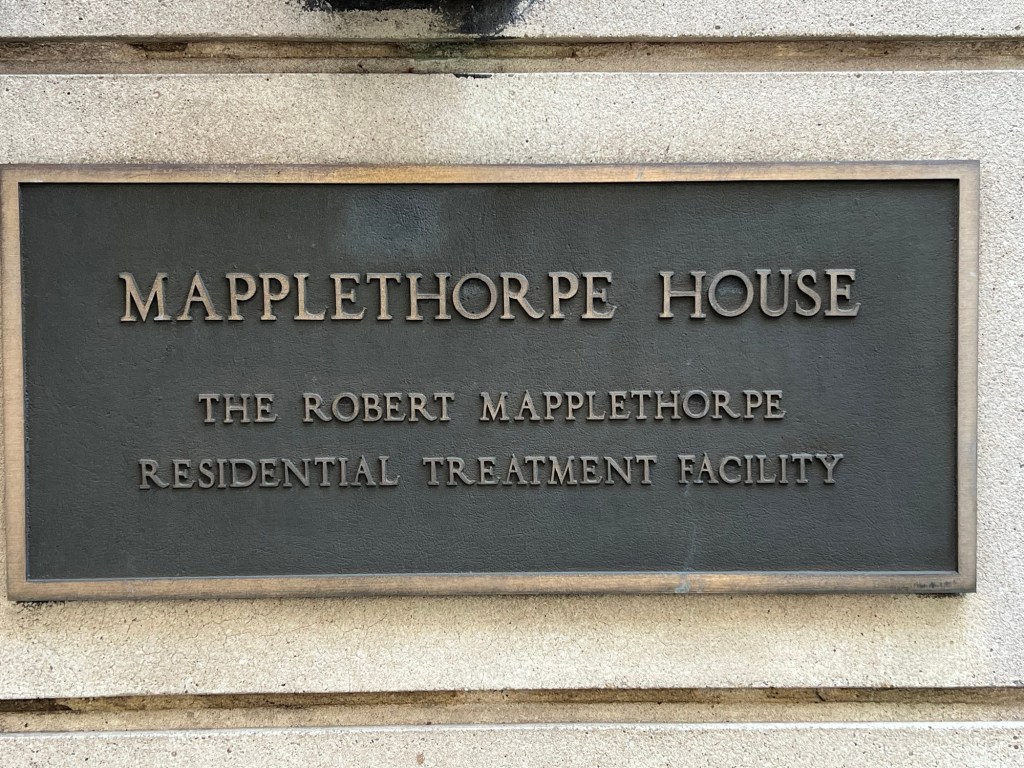
The home for the Mapplethorpe House
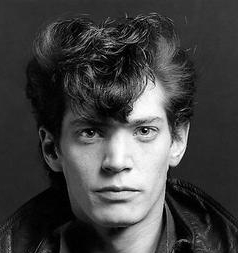
Artist Robert Mapplethorpe
https://en.wikipedia.org/wiki/Robert_Mapplethorpe
Robert Mapplethorpe was an American Artist known for his black and white photography and his study of celebrity, gay life and self portraits. He had attended Pratt Institute in his early education. Before he died, he founded the Mapplethorpe Institute, which handled his estate to help promote his work and has been instrumental in raising millions of dollars for AIDS research (Wiki/Mapplethorpe Foundation website).

The historic sign for the once home of composer Antonin Dvorak
https://www.antonin-dvorak.cz/en/life/biography/
There was an interesting statue dedicated to the composer inside of Stuyvesant Park. All along East 17th Street I came across more interesting street art.
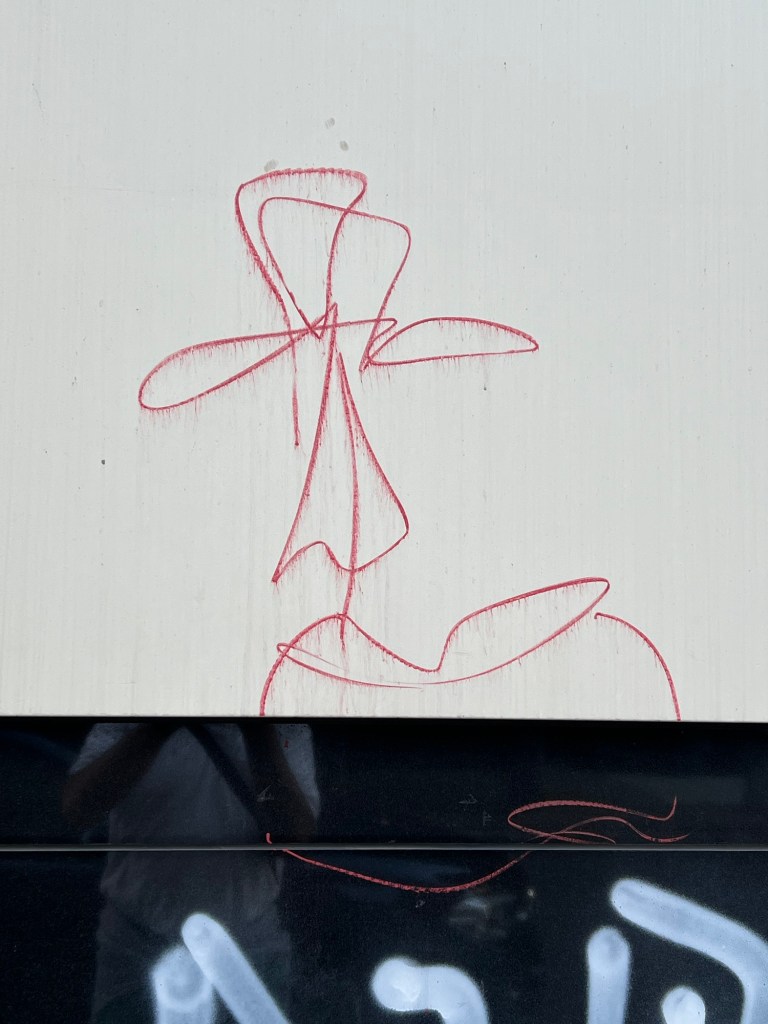
Street art along East 17th Street
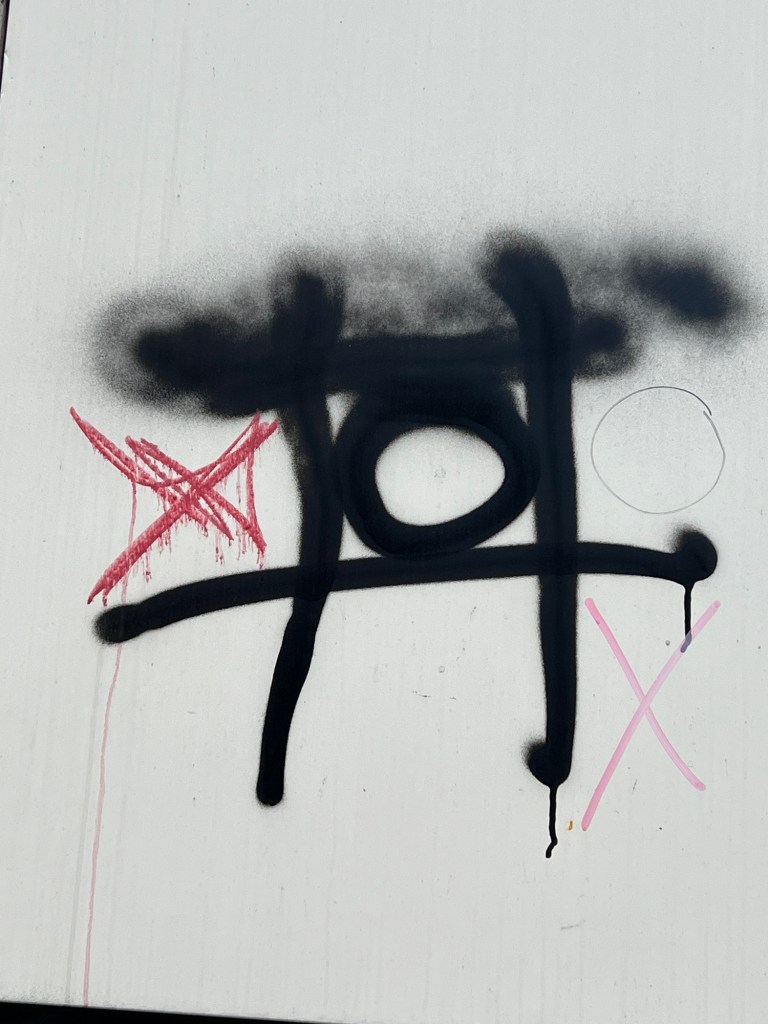
Street art along East 17th Street
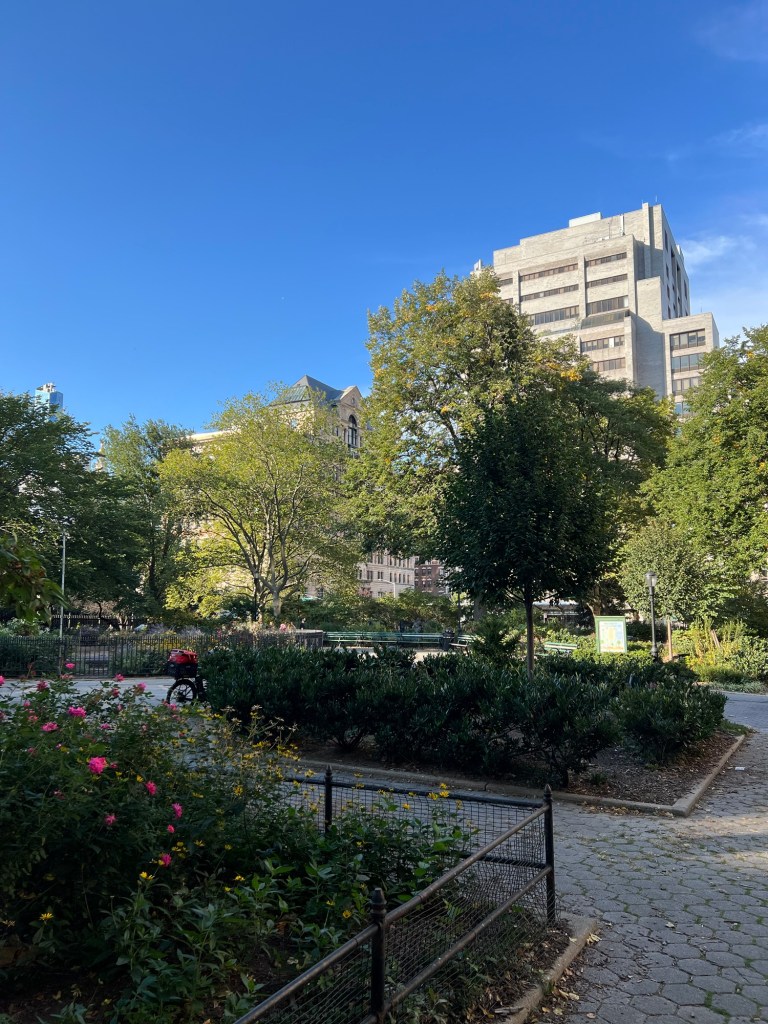
Stuyvesant Square at East 17th Street
https://www.nycgovparks.org/parks/stuyvesant-square
https://en.wikipedia.org/wiki/Stuyvesant_Square
My review on TripAdvisor:

The beautiful flowers in Stuyvesant Square in the very late Summer of 2024
The brilliance of Stuyvesant Park in the late summer. The park was in full bloom with summer flowers showing off their beauty and colors. The park still could use some work on the beds and lawns though.
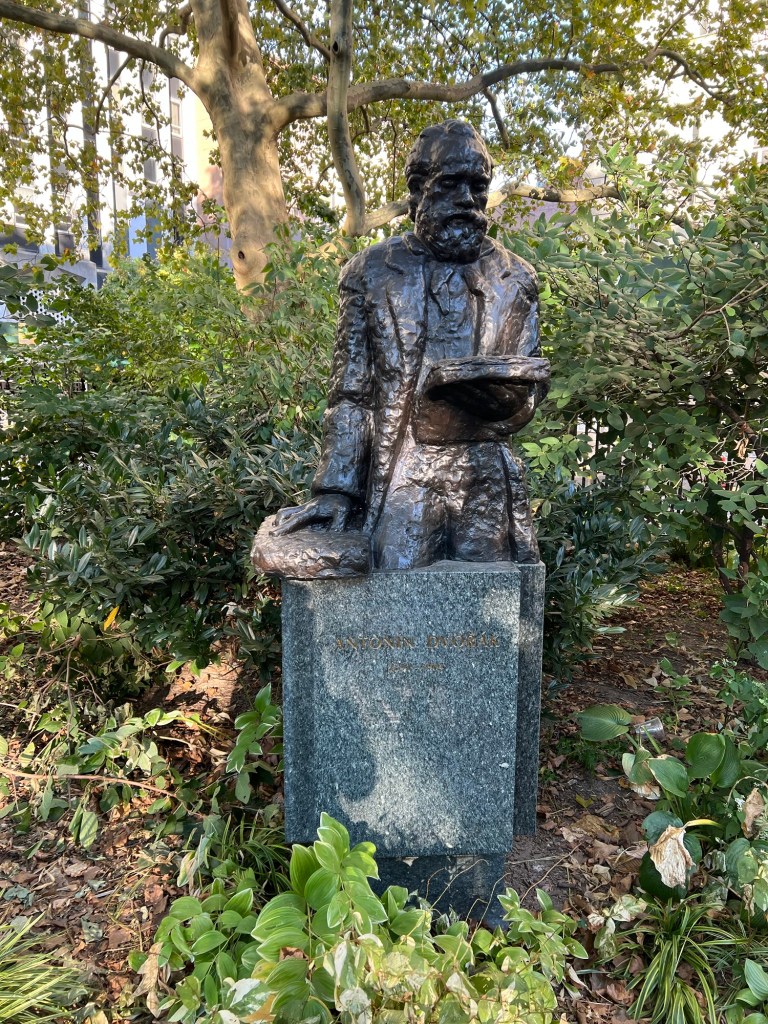
The famous statue of Composer Antonin Dvorak inside Stuyvesant Square at the corner of the park at East 17th Street
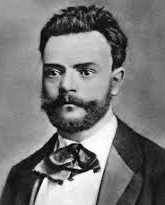
Composer Antonin Dvorak
https://en.wikipedia.org/wiki/Anton%C3%ADn_Dvo%C5%99%C3%A1k
https://www.antonin-dvorak.cz/en/life/biography/
Composer Antonin Dvorak was born just outside of Prague and came from a long line of business people who were innkeepers and butchers. His father recognized that when he was young the talent he had with music and encouraged this. While in Prague, he was sent off to a music school that started his career. The Institute for Church Music, as the school was officially known, was located in Konviktská street in the Old Town and provided instruction in organ playing, harmony and counterpoint. This was the beginning of his career (Dvorak website/Wiki).

The historic plaque in the park in Stuyvesant Square
https://www.nycgovparks.org/parks/stuyvesant-square/monuments/1784

Artist Ivan Mestrovic
https://en.wikipedia.org/wiki/Ivan_Me%C5%A1trovi%C4%87
https://www.ivanmestrovic.com/
Artist Ivan Mestrovic was a Croatian born American artist who was a known sculptor, writer and architect. He is a graduate of the Academy of Fine Arts in Vienna. He was known for his romantic and classical style sculptures (Wiki).
In 1963, this bronze portrait bust was given by the Czechoslovak National Council of America to the Philharmonic, but never put on public display. It is believed to be the last work of the noted sculptor Mestrovic, a student of Rodin and the first living artist to receive a one-person exhibition at the Metropolitan Museum of Art (NYCParks.org).

The beautiful brownstones along the northern part of Stuyvesant Square at East 17th Street
I rounded Stuyvesant Square on both sides, exploring all the historical buildings from all angles of the park. While I was in the park, I admired all the flowers in the gardens and the statuary.
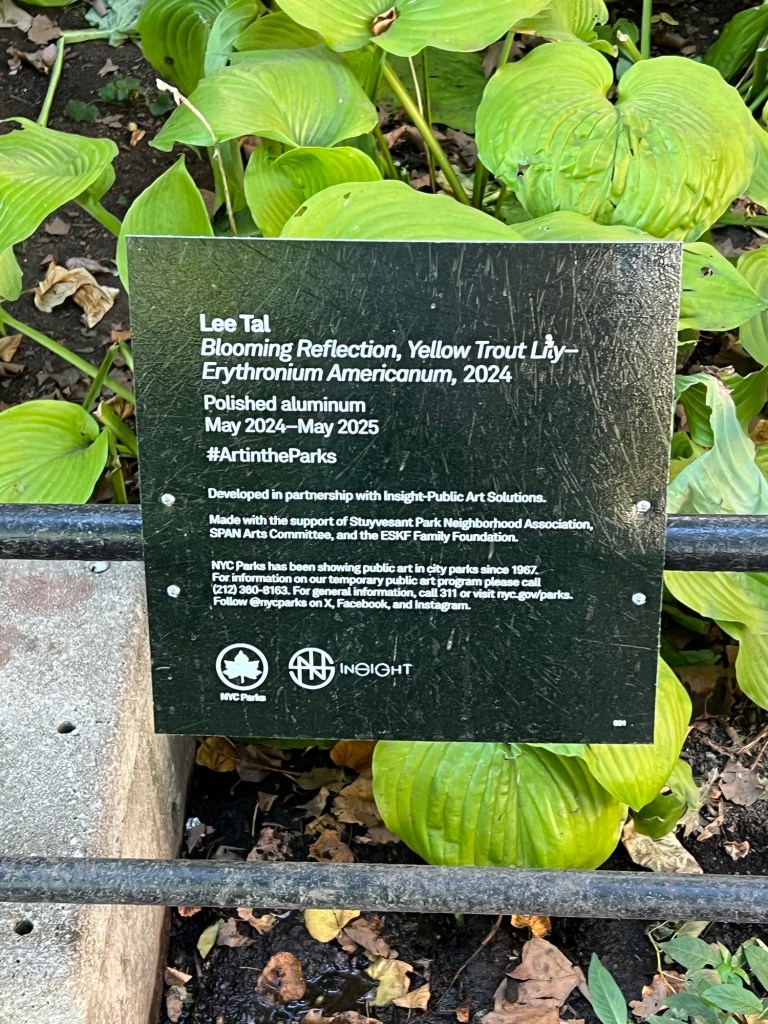
I saw this sculpture by Lee Tal was also in the park

Artist Lee Tal
Artist Lee Tal is an Israeli born artist now based in New York City. He received a BA in History and an additional BA in Art and Photography from Open University in Tel Aviv. He received a B.F.A studies at the Royal College of Art, London, England. In his early works, Tal draws inspiration from everyday objects found in our daily lives, seeking to transcend their original purpose (Artist’s bio website). This interesting work was commissioned by the Stuyvesant Park.
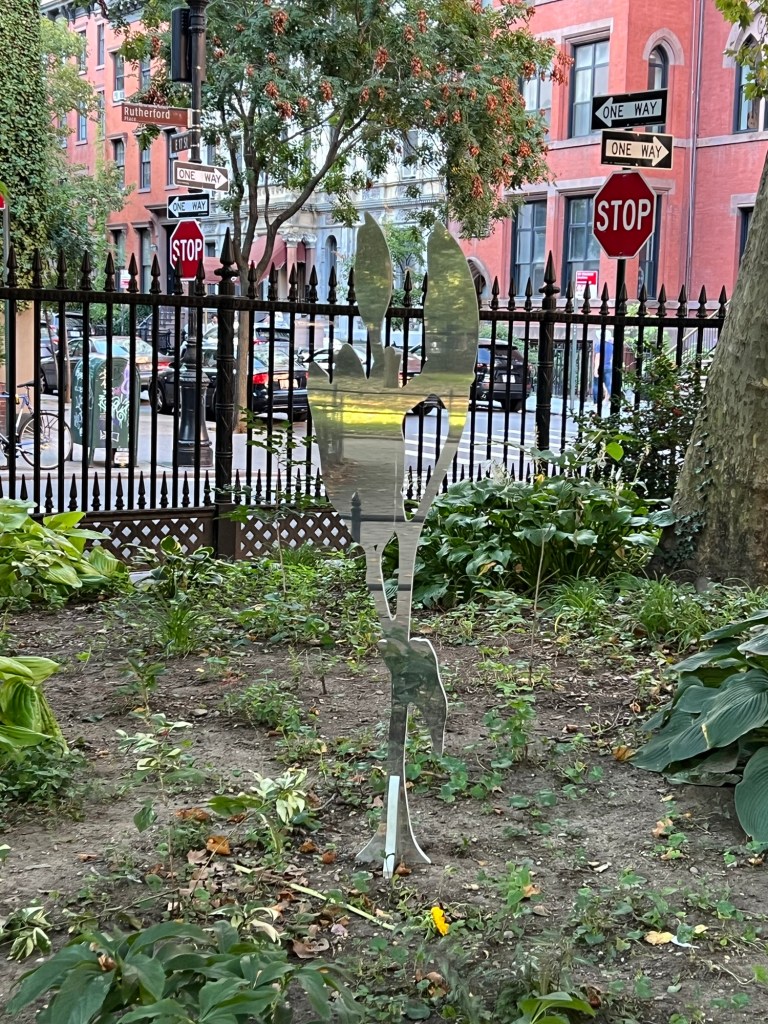
The sculpture by Lee Tal ‘Blooming Reflections- Yellow Trout Lily’
I walked through the gardens from all sides and walked out to Rutherford Place and admired the old churches along the street. On the northern side of Rutherford Place was the historic St. George’s Church.
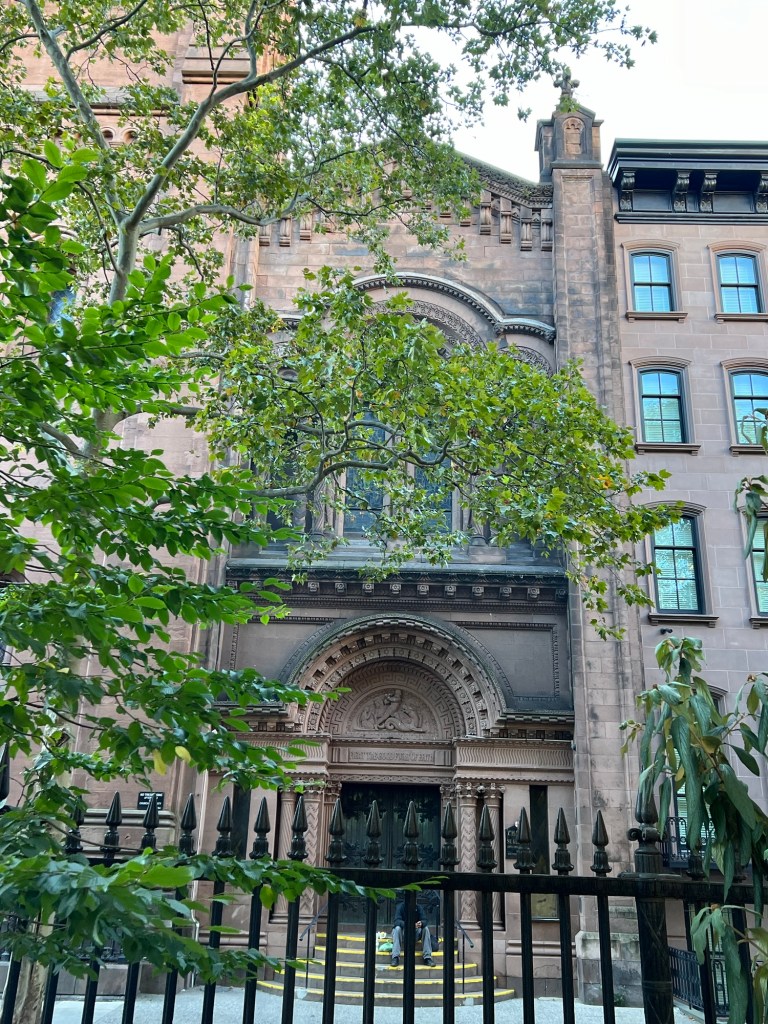
St. George’s Church at 209 East 16th Street
https://en.wikipedia.org/wiki/St.George%27s_Episcopal_Church(Manhattan)
https://www.calvarystgeorges.org/
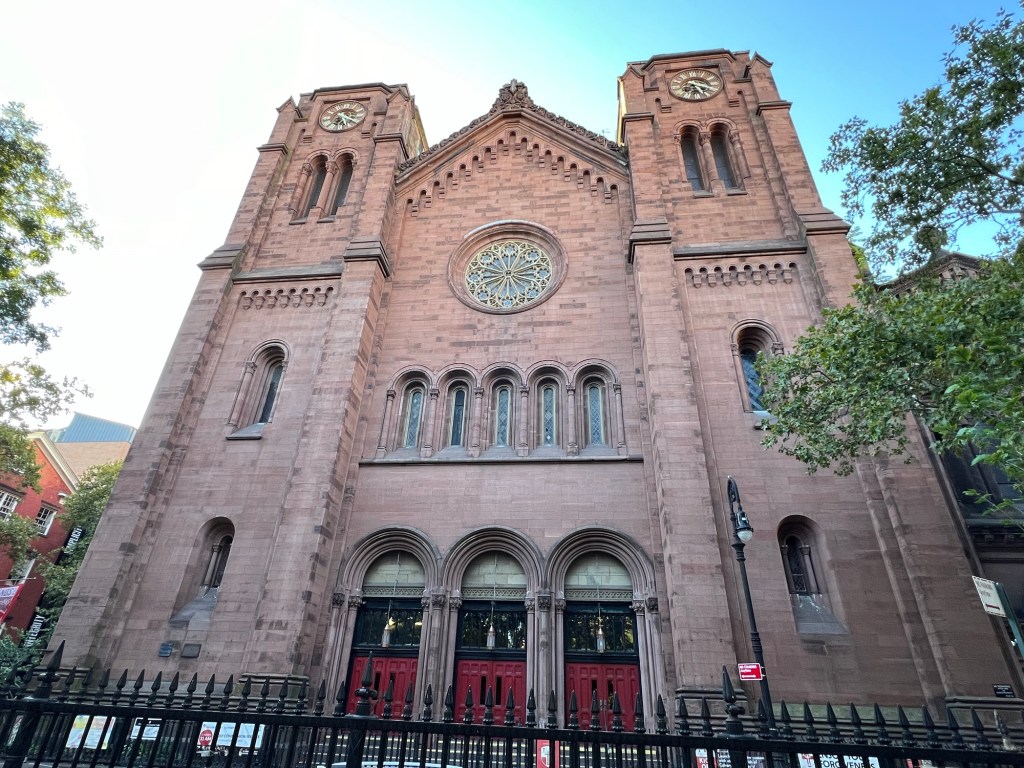
St. George’s Church at 209 East 16th Street
St. George’s Church was founded in 1752 and the church moved around several times until 1846 when this new church was started and finished in 1854. The church was designed in the Romanesque Revival style by architects Charles Blesch and Leopold Eidlitz. Mr. Belsch designed the interior and was influenced by the Rundbigenstil, the round arch style. The church has been altered and rebuilt over the years after a devastating fire in 1865 (Wiki).

The historic plaque of the church

The church‘s official sign
Next to St. George’s Church is the Quaker Friends building that has been part of the neighborhood since the 1700’s. This historical building is part of a full complex of modern buildings that stretch down East 16th Street from the park.
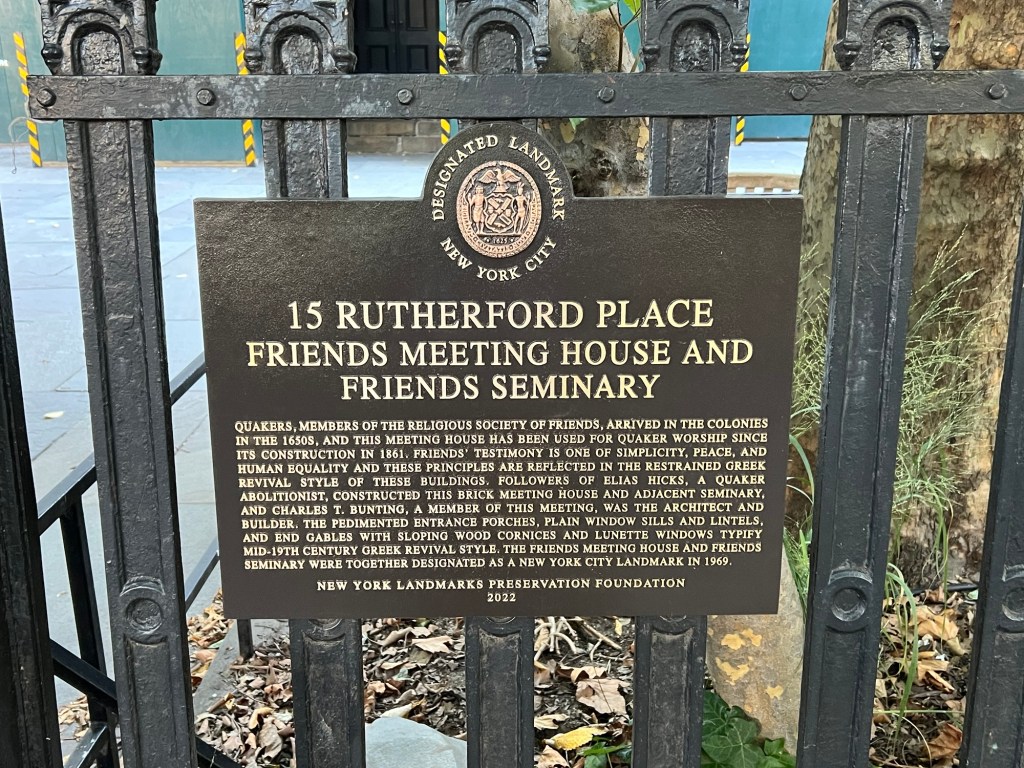
The historical Friends Meeting House at 15 Rutherford Place
This building was built in the Restrained Greek Revival Design in 1861 and has been in use since that time for the annual meetings (New York Landmark Preservation).
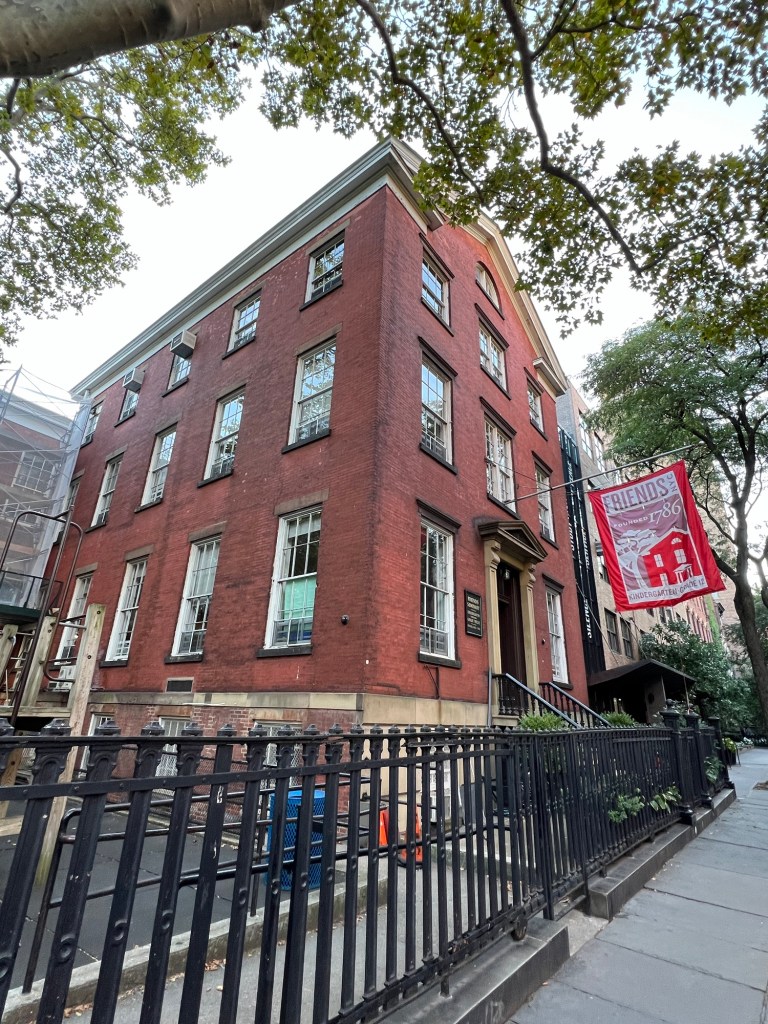
The historic Friends Meeting House at 15 Rutherford Place
https://quaker.org/legacy/15stfriends/
https://www.americanlandmarks.org/post/friends-meeting-house

The Friends Meeting House at 15 Rutherford Place on the west side of Stuyvesant Square.

The views of Stuyvesant Square Park in the late Summer months
I walked around the park before exploring East 16th and 15th Streets and just like Gramercy Park there is a true beauty in the architecture that surrounds this green space.
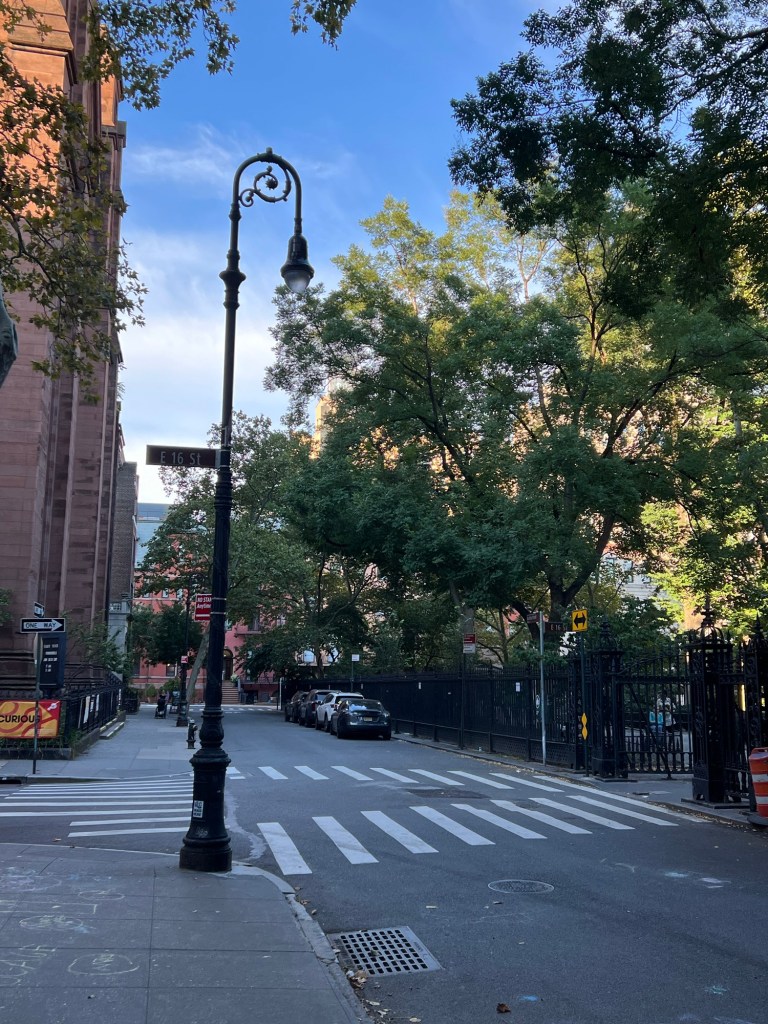
The historic beauty of East 15th Street on the southern eastern side of the park.
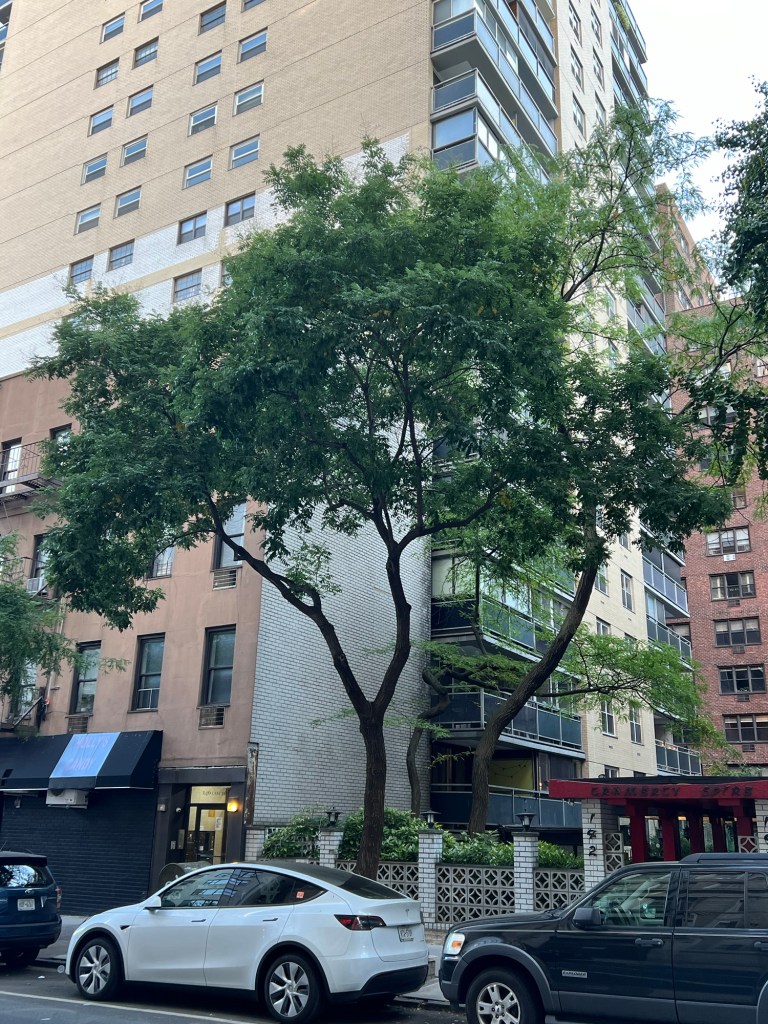
Somehow this tree just stuck out at the entrance of 146 East 16th Street

Another view of this tiny garden in front of 146 East 16th Street
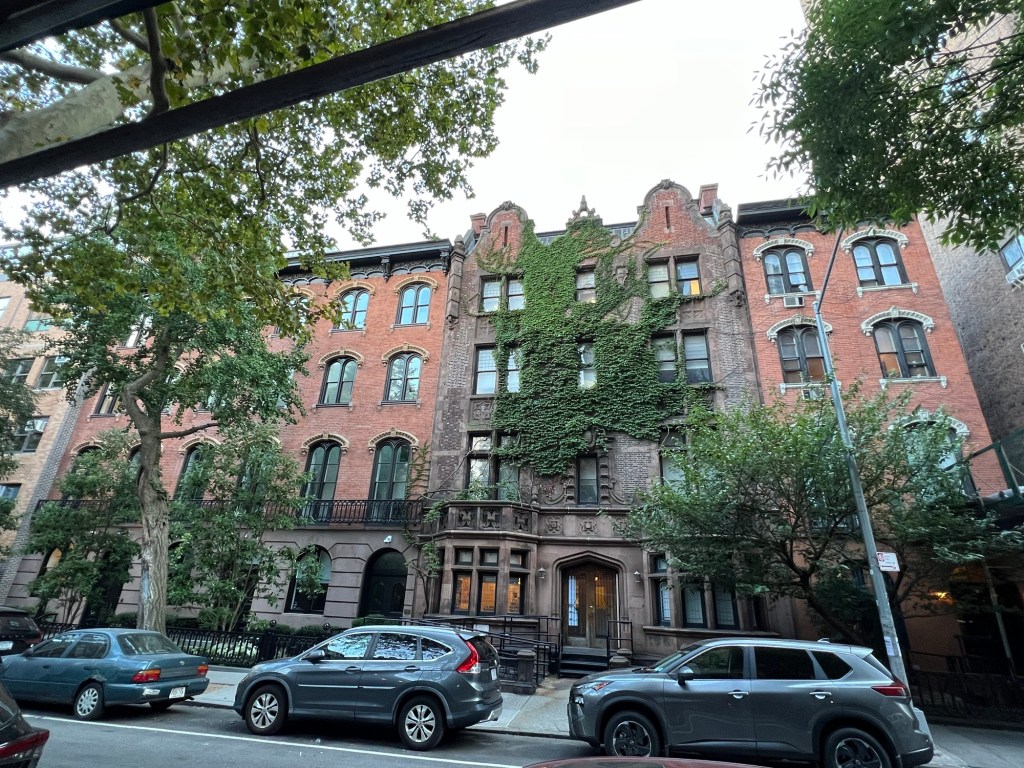
The historical buildings that are part of the church seminary along East 16th Street

This is classic Old New York with brownstones covered in ivy is part of the church’s housing

I cross-crossed so much through Stuyvesant Square that the homeless guys and the delivery drivers thought I was an undercover cop watching them.

The park is still so colorful in the late summer
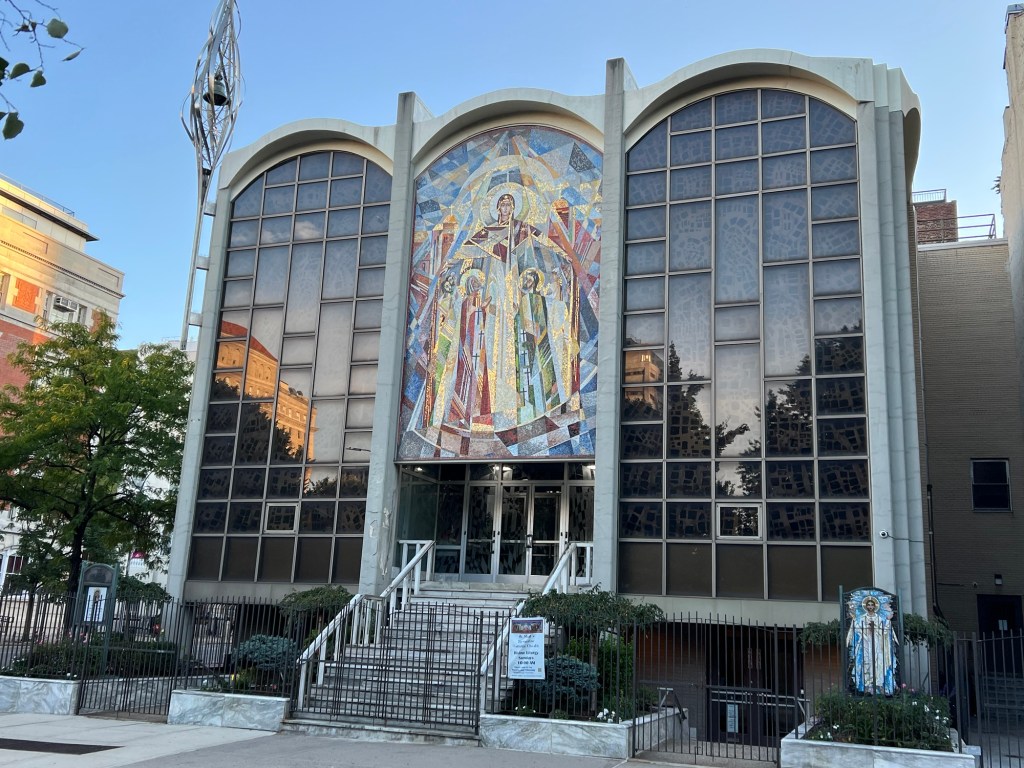
The beautiful stained glass windows in from of the East 15th side of St. Mary’s Church at East 15th Street
St. John The Baptist Greek Orthodox Church at 143 East 17th Street
https://www.stjohn.ny.goarch.org/
https://www.facebook.com/StJohnBaptistNYC/
Built in 1885, designed by Schwartzmann & Buchman, with a baroque façade that was altered in 1957 by Kyriacos A. Kalfas (Wiki).
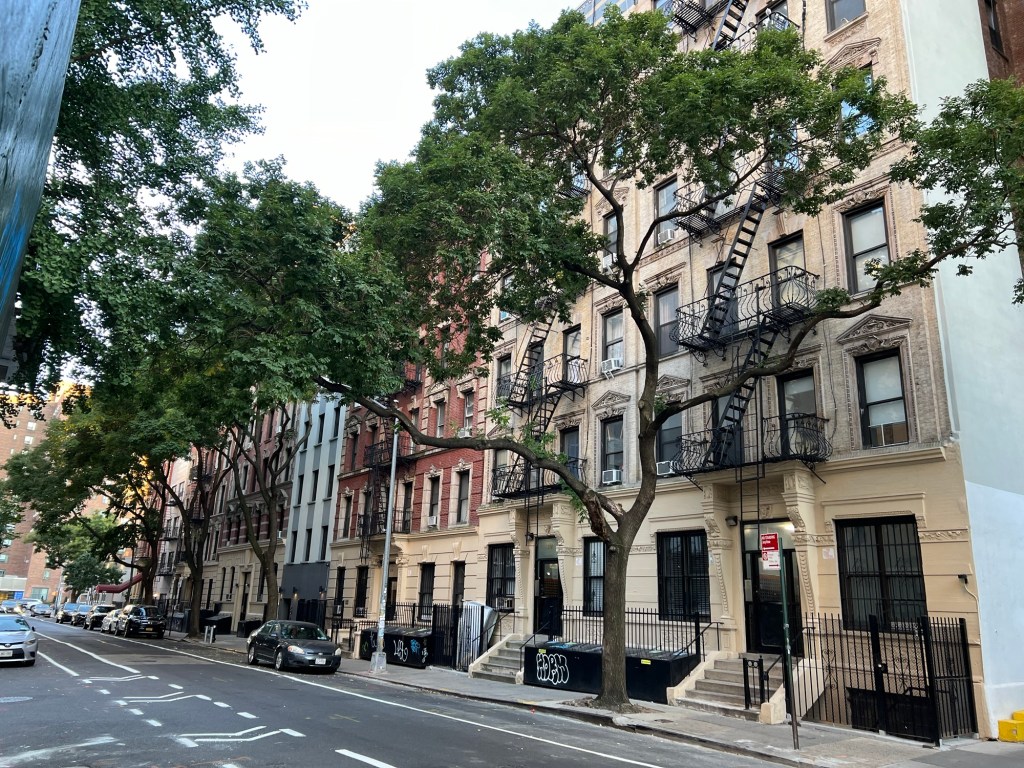
Finishing my walk along East 15th Street with the elegant townhouses that line the southern half of Stuyvesant Square
For dinner that evening, I had Chinese food at Mee’s Noodle House at First Avenue. I had eaten at their branch years ago at their uptown branch near Sutton Place and ordered the same meal as a comparison, the Seafood Steamed Dumplings and the Shrimp Lo Mein. It’s nice to know that nothing changes. The food was excellent.
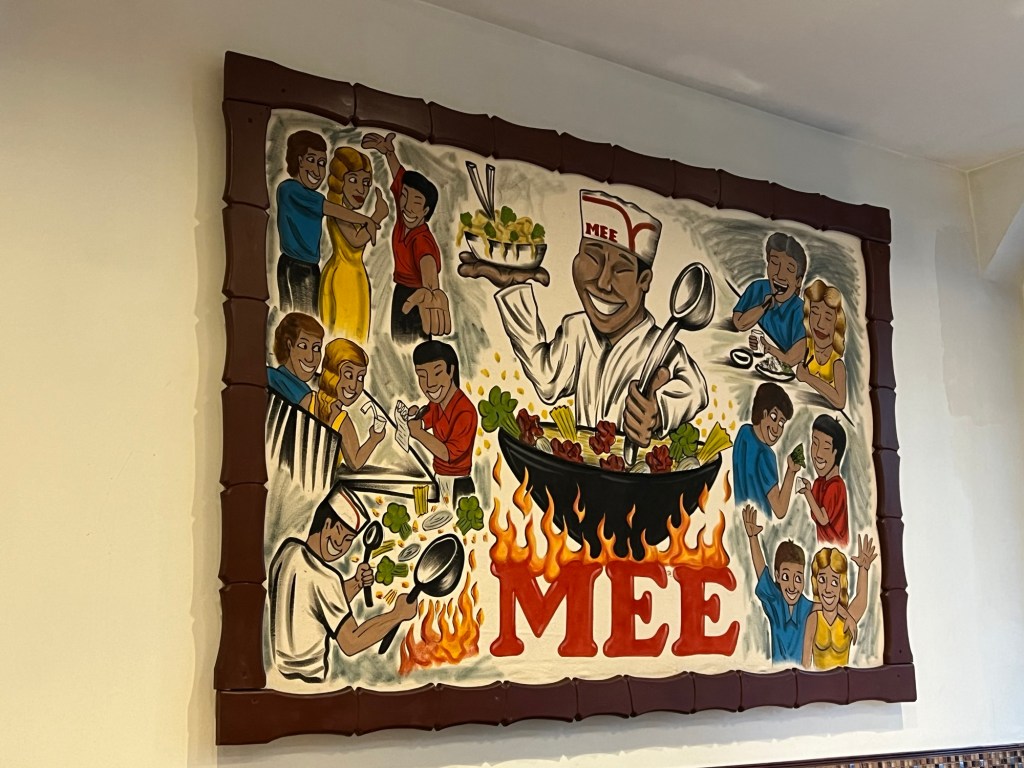
The sign inside of Mee’s Noodle House at 922 Second Avenue
https://www.seamless.com/menu/the-original-mee-noodle-shop–grill-223-1st-ave-new-york/287771
My review on TripAdvisor:
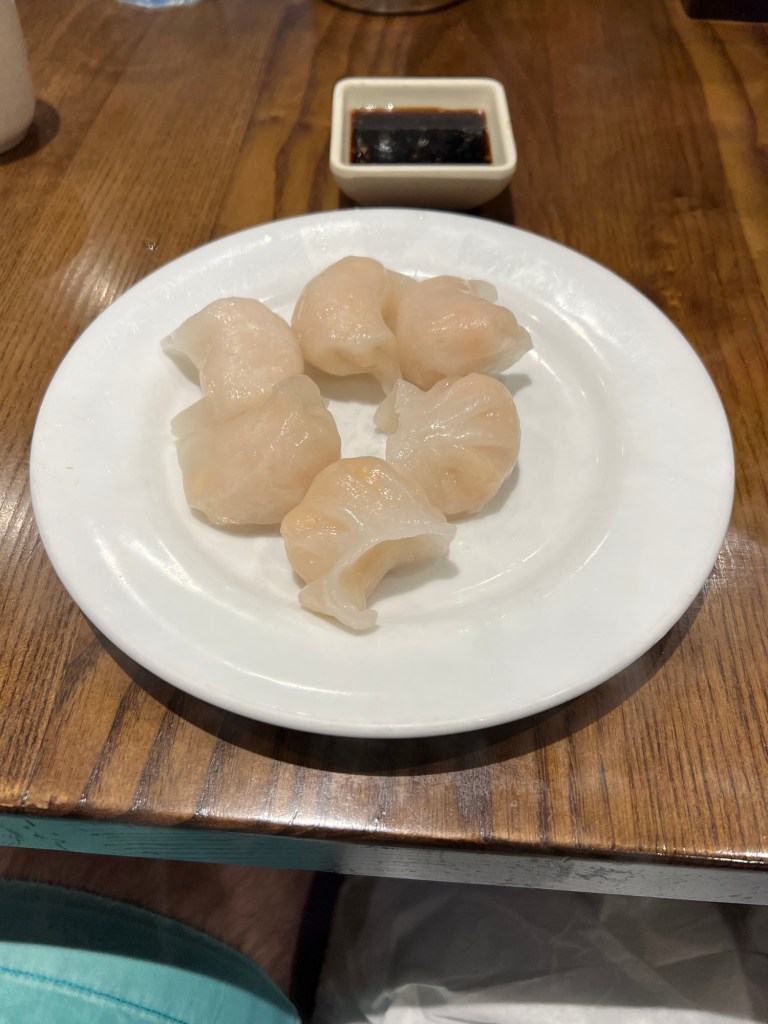
The Steamed Seafood Dumplings
These dumplings were as light as air and perfectly cooked. The dumplings were plump and filled with a mixture of Shrimp and other seasonings. They tasted perfect with just a touch of soy sauce.

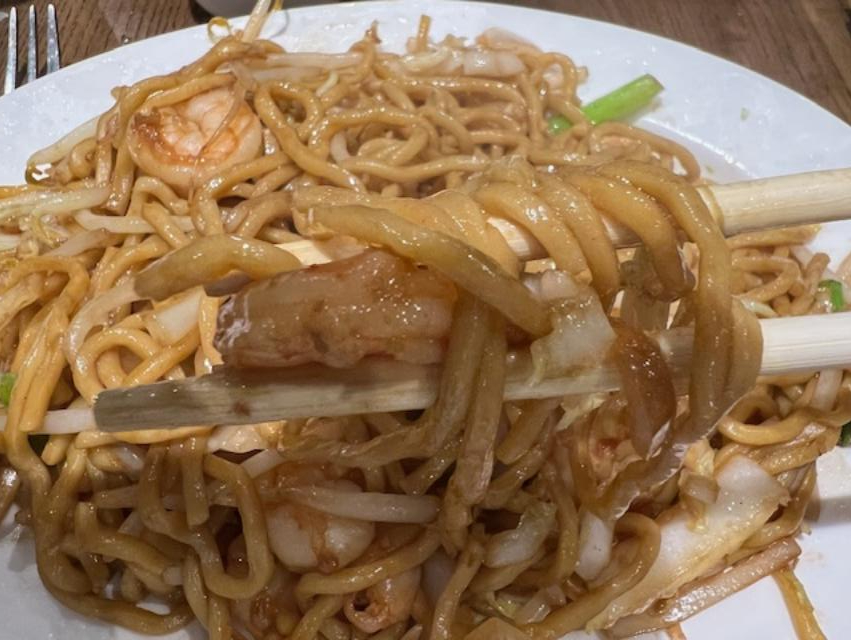
The delicious Shrimp Lo Mein
The Shrimp Lo Mein was studded with lots of perfectly cooked shrimp, vegetables and freshly made noodles that are made inhouse. The only problem with the dish was the button mushrooms that I had to pick out. I do not know why they use these since they are not used in dishes in China. I discovered that the restaurant is quite the neighborhood hang out for people living at Stuyvesant Town and Peter Cooper Village. Everyone was talking neighborhood gossip.
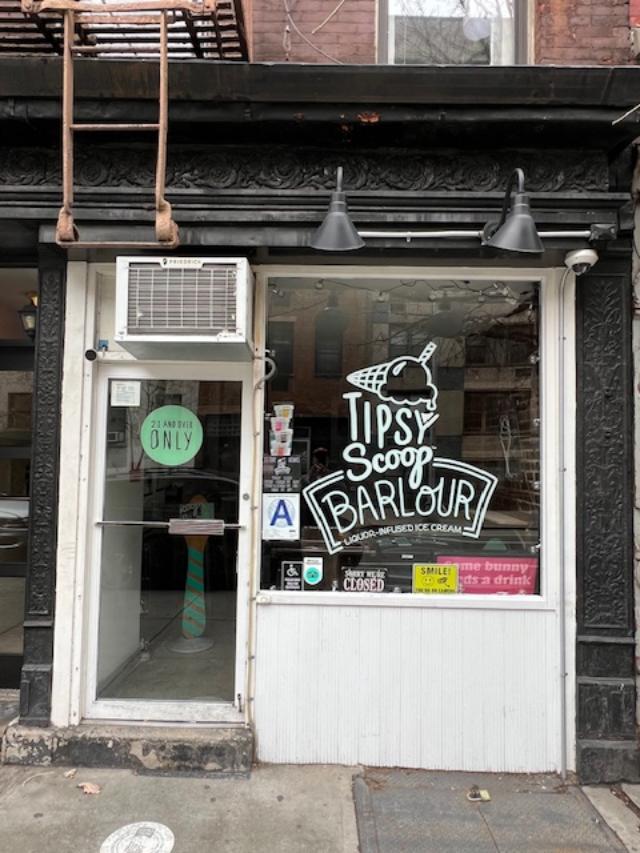
The front of Tipsy Scoop Barlour at 217 East 26th Street
My review on TripAdvisor:
On my way home, I stopped at Tipsy Scoop Ice Cream store for dessert. I wanted to have one of their infused ice cream sandwiches. So I ordered the Sprinkle Cookie Cake Batter Vodka Martini ice cream sandwiches. Talk about a dessert that takes the edge off after a long day.

The inside of Tipsy Scoop at night
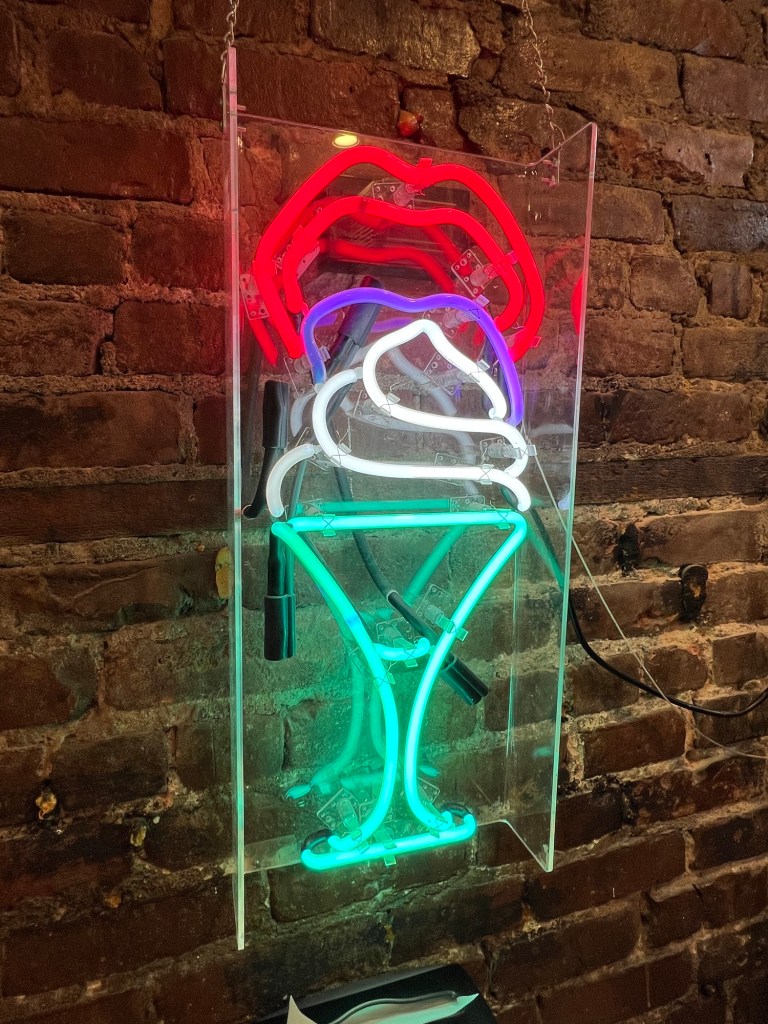
The neon lights of this popular ice cream shop where all the ice cream is infused with liquor
The ice cream sandwiches here are fantastic. The alcohol in the ice cream is so subtle and sweet you don’t notice until you finish it. Then it hits you and relaxes you. This is the best dessert after a long day.

The Sprinkle Cookie Cake Batter Vodka Martini infused ice cream sandwich

The Sprinkle Cookie Cake Batter Vodka Martini infused ice cream sandwich
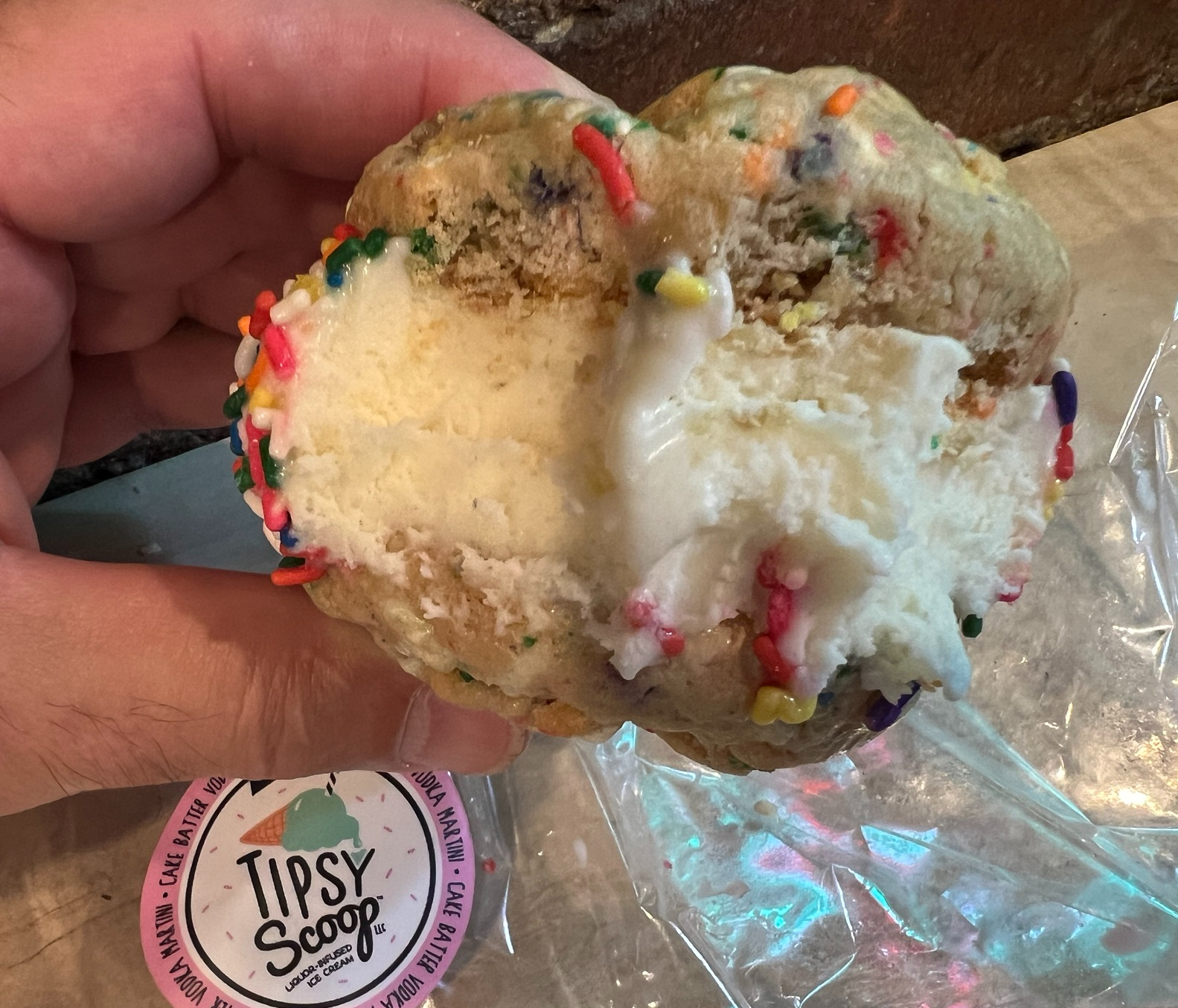
Yum!
I took the long walk through Madison Square park on the way back to the Port Authority at night. The pictures I get from that park are just breathtaking at night and I never get tired of the views.

The views of Manhattan at night are quite spectacular from Madison Square Park
I finished walking the streets of Gramercy Park in the early evening while watching the lights turn on in all the buildings surrounding the area. It is quite a site seeing all the homes lit while watching the office buildings all over the neighborhood work their magic. It is quite the place both day and night and in all seasons. Gramercy Park is a true Manhattan neighborhood.
I never tire of the views of Manhattan at night.
Please read my other blogs on Gramercy Park:
Day Three Hundred and Twenty Walking the Borders of Gramercy Park:
https://wordpress.com/post/mywalkinmanhattan.com/51647
Day Three Hundred and Twenty One Walking the Avenues of Gramercy Park:
https://wordpress.com/post/mywalkinmanhattan.com/53432
Day Three Hundred and Twenty Four Walking the Streets of Gramercy Park:
https://wordpress.com/post/mywalkinmanhattan.com/53788
Places to Visit:
Stuyvesant Square Park
9 Rutherford Place
New York, NY 10003
(212) 639-9675
https://www.nycgovparks.org/parks/stuyvesant-square
https://en.wikipedia.org/wiki/Stuyvesant_Square
Open: Sunday-Saturday 7:00am-11:00pm
My review on TripAdvisor:
Gramercy Park
Private Park that you need a key to get into.
Stuyvesant Cove
24-20 FDR Drive
New York, NY 10010
(646) 576-5664
https://en.wikipedia.org/wiki/Stuyvesant_Cove_Park
https://www.nyc.gov/site/ddc/about/press-releases/2023/pr-053123-Stuyvesant-Cove-Park.page
Open: Sunday-Saturday 7:00am-10:00pm
My review on TripAdvisor:
Places to Eat:
Mee’s Noodle House
922 Second Avenue
New York, NY
(212) 888-0027
https://menupages.com/mee-noodle-shop/795-9th-ave-new-york
Open: Sunday-Saturday 11:00am-11:00pm
My review on TripAdvisor:
Tipsy Scoop Ice Cream Shop
217 East 26th Street
New York, NY 10010
(917) 388-2862
Open: Sunday 2:00pm-10:00pm/Monday 4:00pm-9:00pm/Tuesday 4:00pm-7:00pm/Wednesday-Thursday 4:00pm-9:00pm/Friday-Saturday 2:00pm-11:00pm
My review on TripAdvisor:









 mywalkinmanhattan