I started my exploration of Gramercy Park having walked many of its borders in other walks. It seems that the borders between the Flatiron District, Union Square, Rose Hill and NoMAD have become blurred. All these beautiful buildings with their protective lions, mythical creatures and mysterious faces watching and protecting them have a home on all of them.
The elegant brownstones that line the park
Gramercy Park is probably one of the nicest neighborhoods in Manhattan with its historic brownstones, beautiful park and excellent restaurants and shops. The neighborhood is steeped in history and it had been enjoyable to walk around the buildings and read their history.
As I walked around the Farmers Market, looking over the very over-priced fruits, vegetables and bakery products, I noticed more of the medallions that line the border of Union Square Park. The first one I admired without the sunlight distracting me was the medallion of the layout of the park from the 1800’s.
This is the original layout of the park in 1876 plaque
The collection of medallions around the park’s fringes
The Union Square collection of plaques
The collection of plaques in Union Square Park
The plaques around Union Square Park
The plaques around Union Square Park
I walked around the park and marveled at it on a very hot afternoon. Like most parks in former edgy neighborhoods, it fascinates me how a bunch of twenty year old’s and families sun themselves and socialize where thirty years earlier you would be harassed by homeless, drug dealers and methadone addicts. You still might see them on the fringes of the park but not like in the early 1980’s.
The park now has a business partnership and I believe a Friends group as well. There are so many activities going on in the park, that I am sure people don’t notice all the chess hustlers and counterculture types on the 14th Street perimeter.
Looking at the southern part of the park facing 14th Street and the southern entrance to Broadway
From Park Avenue South/Union Square East is the extension of the street that lines the eastern end of the park. At the corner of East 15th Street and Union Square East is 101 East 15th Street the old Union Square Savings Bank building.
101 East 15th Street-The Union Square Savings Bank Building/Daryl Roth Theater
The side of the Union Square Savings Bank building
The bank itself was founded in 1848 and moved to this location in 1895. This building was designed by architect Henry Bacon in the neo classical design in 1905 and the building was finished in 1906. The bank closed in 1992 (Wiki).
I walked to the small triangle of Union Square Park that sits between East 15th and 14th Streets and came across a sculpture that I had never seen before on all my walks back from NYU. Maybe I just missed it when it was dark out. It was a depiction of an urban legend of the NYC sewers.
Artist Alexander Klingspor is Swedish born artist who works both in the United States and Sweden. He apprenticed under American artist Mark English. He is known for his paintings and sculptures (Wiki).
I then started my walk up Park Avenue South which is actually the western border of Gramercy Park. I have always been impressed by the W Hotel on the corner of 16th Street and Park Avenue South at 201 Park Avenue South.
This luxury hotel has an impressive history of being one of the innovators of luxury in the Marriott chain. The W Hotel concept was known for its edginess in design and the creativity in its restaurants. Things must be progressing as their customer gets older because their General Manager spoke to our Leadership class before I graduated from NYU and said they are softening the music (finally!) and changing the designs in the rooms. Maybe there will finally be a place to put your clothes.
The historic plaque on the building
This historic building was designed by the architects D’oench & Yost in the Modern French mode and built in 1911. Like most historic office buildings below 23rd Street, the are being refitted as hotels and condos as the desire for high ceilings and soaring lobbies have become desirable. This building had been designed for the Germanic Life Insurance Company Wiki).
I continued up Park Avenue South to East 20th Street to see another familiar building on the border of the neighborhood, 250 Park Avenue South. This building seems to be on the border of many Manhattan neighborhoods.
250 Park Avenue South was designed by architects Rouse & Goldstone in 1911 in the Neo-Classical design. You have to look at the building from a distance to appreciate all the interesting embellishments on the sides and top of the building.
The building was designed by William Dilthey and built in 1898. The building’s style, scale and materials contribute to the special architectural and historic characteristics of the Ladies Mile District (Corcoran Group).
As you walk up Park Avenue South, the first building that makes an impression is 251 Park Avenue South. This elegant office building with its large display windows and clean lines shows of the store inside. The office building was built in 1910 and has large windows both on the ground level and towards the top of building.
One building that does standout from the others on Park Avenue South is the Calvery Church at 277 Park Avenue. The church was established in 1832 and moved to its current location in 1842. The current church was designed in the Gothic Revival style by James Renwick Jr., who designed St. Patrick’s Cathedral.
Another interesting building, I looked up and admired while walking up Park Avenue South was 281 Park Avenue South, the former Church Mission House. The building was designed by architects Robert W. Gibson and Edward J. Neville in the Medieval style and was built between 1892 and 1894. It was built for the Episcopal Church’s Domestic and Foreign Missionary Society (Wiki). It now houses the photography museum The Fotografista Museum.
281 Park Avenue South-The Fotografiska Museum (The Church Mission House)
Another impressive building, I passed before East 23rd Street is 105 East 22nd Street the former United Charities Building. This is the final building in what was once known as “Charity Row” (Wiki). The building was designed by architect R. H. Robertson and the firm of Rowe & Baker. It was built by John Stewart Kennedy in 1893 for the ‘Charity Organization Society’ (Wiki).
I started walking down East 20th Street from Lexington Avenue. I crossed East 23rd Street which is the edge of the neighborhood shared with Gramercy Park, Rose Hill and Peter Cooper Village further down the block. This busy thoroughfare is lined with a lot stores, restaurants and many interesting buildings that leads to the East River.
I stopped for lunch at a Dim Sum restaurant named Awe Sum Dim Sum at 160 East 23rd Street and it was just excellent. I took my friend, Maricel, here for lunch when it first opened and we ate through most of the menu (see my reviews on TripAdvisor and DiningonaShoeStringinNYC@Wordpress.com).
The restaurant has the most amazing appetizers to choose from that are all made in house and served fresh to you either at your table inside or one of the many tables outside (while the weather holds out). On my trip with Maricel, we ate our way through the Fried Dumplings, the Chicken Siu Mai, the Spring Rolls, the Baked BBQ Pork Buns, the Scallion Pancakes and the Soup Dumplings. On my trip today, I ordered the Soup Dumplings, Crispy Shrimp Rolls and the Siu Mai with pork and shrimp.
The Soup Dumplings here are the best
So are the Spring Rolls when they are fresh out of the fryer
On one of the trips I had the Pan Fried Pork Buns, Spring Rolls and Roast Pork Buns.
With the cost for each running between $4.00-$6.00, I could eat my way through the menu. The nice part is what a nice contemporary designed restaurant the place is to dine in. Everyone is kept ‘socially distanced’ so it is a nice place to eat.
The inside of Awe Sum Dim Sum
After a nice relaxing lunch, I was ready to continue down East 23rd Street. Criss crossing the street again, I noticed the beauty of 219-223 East 23rd Street. The building has all sorts of griffins and faces glaring out. When you stand across the street, you can admire the beauty of all the carvings on the building along the archways above and the faces staring at you from the tops of windows.
Another building that stands out is 304-310 East 23rd Street. This former factory building was built in 1900 and now is the “The Foundry”, a converted condo complex. The amazing detail on the building stands out and you have to admire the stonework and details in the carvings along the building.
Reaching the end of East 23rd Street, you will see the planned middle class complex of Peter Cooper Village, which has gone market rate and is now getting very upscale and seems to have a younger resident walking around then the usual middle aged residents who used to be on the list to get one of these very desirable apartments.
The entrance to Peter Cooper Village at First Avenue
Across from Peter Cooper Village is the Asser Avery Recreational Center and Playground 392 Asser Avery Place with the famous baths and pools that have been part of the neighborhood for generations.
The Asser Levy Recreation Center and Park at 392 Asser Levy Place
When the baths opened in 1908, the facility was called the East 23rd Street Bathhouse. It was by architects Arnold W. Brunner and William Martin Aiken. Based on the ancient Roman Baths, the architecture was inspired by the “City Beautiful” movement, a turn of the century effort to create civic architecture in the United States that would rival the monuments of the great European capitals (NYCParks.org). The playground next to it opened in 1993.
The architecture by Arnold Brunner and William Martin Aiken resembled a Roman Bath
The fountain at the bathhouses.
The historic plaque.
The Baths and Park was named for Asser Levy, a Jewish trailblazer in colonial times when Mr. Levy and 23 Jews fled from Brazil in 1654 to seek refuge in New Amsterdam. He challenged Governor Peter Stuyvesant when he tried to evict the Jews from the colony. He was the first Jew to serve in the militia and own property in the colony (NYCParks.org).
The border to the east of the neighborhood is combination of the East River Esplanade, FDR Drive and First Avenue. Since First Avenue and FDR Drive are surrounded by a combination of college campus and hospital space, it makes walking around the neighborhood tricky.
When you walk across East 23rd Street to FDR Drive, you have to cross over FDR Drive at East 25th Street behind the VA New York Harbor Healthcare System Hospital complex and the CUNY/Hunter College campus and then cross over the bridge to the Waterside Plaza complex.
The Waterside Plaza complex and the Greenway walkway
This series of apartment buildings faces the East River and FDR Drive that leads to the East River Greenway walkway and the Waterside Plaza walkway both surround the complex. The views are breathtaking on a sunny afternoon of the East River and Long Island City.
The East River Greenway and the view of Long Island City.
East River Greenway looking at East 23rd Street
I turned around from the river (which is technically not part of the neighborhood) and walked down First Avenue. First Avenue is an unusual border for the neighborhood in that on one side is the gated communities of Peter Cooper Village from East 23rd to East 20th Streets and Stuyvesant Town which is from East 20th to East 14th Streets and on the border of Avenue C at the very eastern border. These once middle-income housing that once catered to teachers, fire fighters and police have gone market rate in the last twenty years, and you can see the changes in the chain businesses that now line their side of First Avenue.
Peter Cooper Village on the corner of East 14th Street and First Avenue
Stuyvesant Town-Peter Cooper Village was one of the biggest post WWII private developments created in Manhattan. It consists of 110 red brick buildings that spreads over 80 acres of land below East 23rd Street. The complex was developed by Metropolitan Life Insurance Company based on the earlier success of the Parkchester complex in the Bronx. The first buildings opened in 1947. The complex used to be catering to middle class/middle income rent controlled apartments but since 2006 has gone more market rate (Wiki).
I found that you are not allowed to walk around the complex without permission so I just walked around the borders of the complex that had open roads. Please just don’t ‘walk around the complex’ without permission or know someone in the complex. Still I was able to walk through some of the well landscaped corners of the complex. They do a nice job maintaining the complexes.
On the other side of First Avenue just below East 20th Street starts Stuyvesant Town
The gardens in between the buildings in Stuyvesant Town in the Summer of 2024
On the other side of the street, there are small brick and brownstone buildings housing businesses that cater to the complex with a combination of chain and independent stores. I thought the whole Avenue could use a bit of a makeover. So much of the neighborhood was under scaffolding. Walking down First Avenue I noticed a lot of newer businesses on the complexes side of the street with more upscale restaurants and bars. Now that this is market rate housing and there have been renovations in the complex, a wealthier clientele has moved into the two complexes.
On the business side of First Avenue, it’s a combination of small restaurants such as pizzerias, delis and bodegas and services catering to the residents in both complexes. Here and there are some very reasonable places to eat. From 23rd Street to about 16th Street are businesses that cater not just to the housing complexes across the street but to the office buildings around the corner at East 14th Street.
The independent businesses lining First Avenue and East 21st Street
The independent businesses along First Avenue and 19th Street
Turning onto this part of 14th Street just above Alphabet City, I found I was far away from the old Ladies Shopping District and the beautiful architecture that once housed those stores. That is closer to Fifth Avenue and Broadway. On one side of East 14th Street are new buildings catering to office workers. The northern side of East 14th Street is a series of old brick and brownstone buildings that house small restaurants and bars.
The East 14th Street shopping district is made up of small businesses
Looking up Second Avenue at East 14th Street
As you enter the heart of East 14th Street as I rounded the corner, I saw a tiny fire fighter outside Engine 5 at 340 East 14th Street.
Engine 5 was founded as a Volunteer Fire Company in 1865. This firehouse was designed by Napoleon LeBrun & Son in 1881 and is still used today (DaytonianinManhattan.com).
Little Fire Fighter at Engine 5
Looking down East 14th Street shopping and dining district
There is a real diversity of businesses down this stretch of East 14th Street from First to Third Avenues.
Coyote Ugly Bar, famous of the film, at 233 East 14th Street
The bar was made famous by the movie of the same name back in 2000.
The trailer for the movie “Coyote Ugly”
Here I noticed a lot of newer buildings that have changed the dynamic of the neighborhood housing small businesses, city agencies and some of the buildings that have become part of the NYU campus. 14th Street is now a hodge lodge of different businesses such as restaurants and stores and a lot of fast-food places catering to the college students and the office workers.
This six story walk up apartment building was built in 1900 and is one of the last holdovers in this neighborhood. You have to look up at all the faces staring at you to appreciate it (Streeteasy.com).
The entrance to 328 East 14th Street
The faces staring at you from the entrance of 328 East 14th Street
As you get closer to Union Square Park, you see more of the classic architecture and upscale housing. In an ever-changing Manhattan, this area like every other section of island is being knocked down and rebuilt. The closer to the parks you get, the more upscale things get.
At 124 East 14th at the base the NYU campus at part Palladium Hall is Urbanspace Union Square. There is a selection of upscale restaurants catering not just to NYU students but to the business community as well. This just opened in August 2024 so I had not noticed it when I was recently attending NYU.
I took a quick walk through the food court and looked over the over-priced menus of the restaurants. I could not believe the prices of these places and how it catered to college students but the place was packed. I also saw two young plain clothed policemen looking over the food court and that was a little unnerving but a sign of the times.
The food court in the afternoon
Some of the upscale restaurants at the Urbanspace Food Court
When I arrived back at my starting point in Union Square Park, it was nice to sit on the benches and listen to the street performers practicing their music. The park has been such a relief from the heat and a place to cool down is probably the reason why the wealthy called this home before the Civil War. There is a lot of calm in the park in this very busy crossroads to uptown.
Looking down East 14th Street from Irving Place
Arriving back at Union Square Park in the Summer 2024
Union Square Park in the late summer is quite spectacular
Union Square Park is just spectacular during the Summer and it is nice to just relax on the lawn or sit on the benches and read a book. It is nice to just calm down and relax and enjoy the day. The Gramercy Park area is unique in architecture, parks, restaurants and shops and there will be more to explore in the future.
Please read my other blogs on Gramercy Park:
Day Three Hundred and Twenty Walking the Borders of Gramercy Park:
It was another hot day in Manhattan. I worked a double shift at the Soup Kitchen so I was there until 3:00pm. The weather was a lot cooler since the rain showers but still hot. It was a lot better to walk around though.
I started my walk on Fifth Avenue and East 19th Street across from the old Arnold Constable Department store building. In comparison to the newer store across from the New York Public Library on Fifth and East 42nd Street, this store was four times the size. I had read online that not only was it the main store at the time but the warehouse, wholesale location and where some of the manufacturing took place. This building that stretches from Fifth Avenue to Broadway and was built in three stages over the late 1800’s.
The former Arnold Constable building at Fifth Avenue and East 19th Street
When I crossed Broadway, it was the ABC store, the former store that dominates between Broadway and 19th Street, the old main shopping district from the pre-Civil War era. After the Civil War, it would move to 23rd Street. This was the former W. & J. Sloane’s Furniture store.
The ABC Store, the former at Broadway and East 19th Street
When I walked further down East 19th Street to Park Avenue South, I came across the new location for the Union Square Cafe at 101 East 19th Street a restaurant I had eaten at many times in the old location since the 1990’s.
I stopped and took a look at the menu. It wasn’t the innovative menu that I remember from past trips to the old restaurant. They had the standard dishes that I had seen before. It looked like they were keeping it safe in post-COVID but I did note that the restaurant has gotten very expensive.
The one thing I did like about the restaurant is that it had the most amazing outdoor seating. On a nice day this is the perfect restaurant to eat outside. The view of the quiet street and the historical buildings is a nice backdrop to the restaurant.
The outdoor cafe on this bright, sunny day
I had remembered the Union Square Cafe in the old location and the vibe was not the same here. It was like they wanted to cater to a hipper younger crowd instead of the older traditional crowd that they had before as customers. I continued walking down the street.
As you get closer to Irving Place, it starts to get more residential. Some of the homes are really beautiful. The residents have really done a nice job with their flower boxes and outdoor gardens in the neighborhood.
The homes closer to Irving Place on East 19th Street
I reached Irving Place and was confronted with the embellishments I had admired at 81 Irving Place. They were just so unusual and ghoulish. I think this is one of the more unique buildings in the neighborhood.
81 Irving Place is one of the most beautiful apartment complexes in the city that I have come across. The embellishments along the building are some of most detailed and elegant I have seen. This prewar Co-Op was built in 1929. You have to walk around the building to appreciate it and from the street level you can see all these wonderful details.
The strange creatures
Surround this building
On all sides of it
They stare at you
Welcoming you to the building
Protecting you
Staring at you
Welcoming you home
Happy to see you
Sad to see you
The faces great you with strange looks
Coat of Arms
Coat of Arms
Coat of Arms
I had not noticed all of this when I had walked the borders of the neighborhood. I just saw all these detail from a distance. When you walk along East 19th Street, you see all designs in one long shot. I thought whoever created this building had a sense of humor. When I turned around on this corner, you really can enjoy the beauty of the building.
Another building where I had not noticed the elegance before was 33 East 19th Street. You really have to stare up to see the details of the faces and animals.
This former office building was built in 1920 and have been converted to loft apartments.
The faces greeting from the top of the building so you have to look up to look back
The strange stares you get from the building are almost a judgement call
The lions protecting the building from the top
As I walked past Broadway, I passed 889 Broadway, which I had passed many times before. Just like other buildings on this street, there are more details on the street level rather than on the main avenues.
889 Broadway-The former Gorham Manufacturing Company Building
The beauty of 889 Broadway can be seen on all sides but you have to look at every angle of the building to appreciate it. There is all sorts of masonry and iron work around the building that gives it unique look. The building was designed by architect Edward Hale Kendall in the Queen Ann style and finished in 1884. The company moved uptown in 1905 when the retail district started to move further north (Wiki).
The unique carvings and metal work on the building
More faces watching you on the street making judgement calls
119 Fifth Avenue at the corner of East 19th Street in the Flatiron District neighborhood of Manhattan, New York City was built in 1905-06 and was designed by John H. Duncan in the neo-Renaissance style. It was built to be an annex to the Lord & Taylor department store buildings which took up most of the square block between Broadway and Fifth Avenue and East 19th and 20th Streets, being connected by bridge to two of them. After Lord & Taylor moved uptown in 1914, the building had multiple uses (Wiki).
The lion watching over you
The stonework at the top of building
This section of Fifth Avenue was meant to impress when this was the financial and retail center of Manhattan. The buildings were designed in the Neo-Classical and Beaux Arts style sowing the importance of the companies who created them, who are that point long gone. This area had been the center of business before and after the Civil War.
I then rounded the Fifth Avenue business core and walked down East 18th Street and came across one of the most beautifully designed firehouses I have ever seen in the City, Engine 14. In all my times walking around Manhattan, I don’t think I have ever walked down this street before because I never noticed this.
Engine 14 at East 18th Street was under renovation but it’s 1894 facade peeked out
The building is currently under renovation. Engine Co. 14 was erected in 1895 by architect Napoleon LeBrun, who designed this in the Beaux Arts design. This style is typical of the earliest New York City firehouses (Manhattan Sideways).
This was under the scaffolding
I turned the corner at East 17th Street and most of these buildings have a historic value to them and I was surprised by the collection of retailers on this block. I thought it would be a bit more upscale. I looked up at 16 East 17th Street and thought I heard the roar of a lion.
The former office building was designed by William Dilthey and built in 1898. It had originally had been a button factory. It was converted to a Coop in 1979 (Corcoran.com/Bondnewyork.com).
The lion sculpture on East 18th Street
The lions protect you as you enter the building.
When I was walking back down East 17th Street I had not noticed this beautiful carving on 874 Broadway. This is on the corner of the McIntrye Building.
The McIntyre Building was the work of Ewen McIntrye, a pharmacist whose building had grown and had made him wealthy. He demolished the store he had on this spot and built this office building. The structure was designed by architect Robert Henry Robertson in a mixture of designs of the time. You can see Gothic Revival and Renaissance Revival and Victorian Eclectic in the design especially at the top of the building (DaytoninManhattan.com).
When I got to East 17th Street, I really got an excellent view of the northern part of Union Square Park. This is where you can see the real changes of the park. It is so lively and residents and business people use it as a place to unwind and relax.
The northern section of Union Square Park
Facing the northern section Union Square Park is 33 East 17th Street. I have always admired this building for its embellishments and the elegance of the design.
The now Barnes and Nobel Publishing was once known as the Century Building, due to Century Publishing Company making this their headquarters from 1881 to 1915. It is also known as the Drapery Building. The building was designed by architect William Schickel and was completed in 1881 as a real estate project by the department store company Arnold Constable & Company. Left empty through the 1970’s, it was renovated by Barnes and Nobel as their headquarters in 1995 (Wiki).
The details on the doorway of 33 East 17th Street
The doorway entrance to the store at 33 East 17th Street
This fascinating face is on the left side of the entrance to 33 East 17th Street
The look from this face shows the determination of a serious book buyer
As I passed Union Square Park, I passed the old Tammany Hall Building at 100 East 17th Street. The balance of power in New York City has changed since and it now the home of Petco Pet Products.
The side of the old Tammany Hall at 122 East 17th Street
The Tammany Hall building 100 East 17th Street is now a Petco
The building was designed by the architectural firm of Thompson, Holmes & Converse and Charles B. Meyers for the Tammany Society political organization, known as Tammany Hall. It was designed in the neo-Georgian style and built in 1929. It was the organization oldest surviving headquarters building. After the loss of the organization’s political power in the early 1930’s, it was sold to the International Ladies Garment Workers Union and in present times has been used as a theater and performance space. It is now occupied by Petco (Wiki).
The symbols of Tammany Hall at the East 17th Street entrance
As I passed the commercial buildings of the neighborhood to the more residential buildings of Irving Place and passed the former carriage house at 121 East 17th Street.
The old carriage house at 121 East 17th Street-Martinys
This carriage house is a holdover from when Union Square was a fashionable neighborhood before the Civil War. After the war was over, the commercial neighborhood of Manhattan moved from Canal Street to between 14th to 23rd Street. This small carriage house survived all the decades of change to the neighborhood (DaytoninManhattan.com). I thought this a gracious building that added to the historical and Old New York look of the Gramercy Park neighborhood.
At the very edge of the neighborhood in Irving Place is the Washington Irving House that wasn’t his house.
The Washington Irving House that Washington Irving never lived in at 122 East 17th Street on the corner of East 17th Street and Irving Place
The “Irving House” was built by Peter Voorhis between 1843 and 1844, along with the adjacent two houses at 45 and 47 Irving Place. The original tenants of 49 Irving Place (at that time referred to as 122 East 17th Street) were Charles Jackson Martin, an insurance executive, and his wife, who would reside there from 1844 until 1852. Henry and Ann E. Coggill would live in it in 1853, and in 1854 it would become the home of banker Thomas Phelps and his wife Elizabeth, who would remain until 1863 (Atlasobsucra.com).
The first mention in print of Irving having lived in the house came in the Sunday Magazine Supplement of the New York Times on April 4, 1897. The article is a human interest story about Elsie de Wolfe and the means and methods she used to decorate “Irving’s house.” In 1905, de Wolfe would become known as the first professional interior decorator and it appears this article is an early attempt at publicity for her. As for the information about Irving, the article takes enormous liberties (actually, it flat-out makes things up), claiming that Irving had conceived of the house himself and was very particular about the architecture and design (Atlasobsucra.com).
Looking up Broadway to the old shopping district from East 17th Street
When I reached the border of the neighborhood at Irving Place, you could see the tradition of the old commercial and residential districts of the neighborhood. These have become blurred over time as restaurants, bars and boutiques have moved into former residential buildings.
On the way back to Union Square Park, I walked through the parks to admire all the flowers and gardens that were in full bloom and stopped to sit on a bench in the shade.
The view of Union Square Park at East 17th Street on the walk back to Fifth Avenue
In the northern part of the park is the impressive statue of Abraham Lincoln. The one thing that I like about New Yorkers as opposed to other cities is that they look at statuary as a debate but not so quick to knock it down like in other cities. Either that or no one really noticed it at the time of the riots. These valuable art works are meant to be debated and discussed not torn down or hidden because someone does not agree with them.
Located at the northern end of the Union Square is the prominent statue of President Lincoln. This statue stands and overlooks the lawn of the park.
This impressive statue of Abraham Lincoln was designed by sculptor Henry Kirke Brown and was dedicated in 1870. In his statue of Lincoln, cast in 1868, and dedicated September 16, 1870, he combines a classically styled pose with a perceptive naturalism, uniting realistic detail with an idealistic stance (NYCParks.org).
Artist Henry Kirke Brown was an American born artist who had studied with artists in Italy for his training. He is best known for his figurative historical statues. He also designed the statue of George Washington in Union Square.
I started my walk down East 16th Street at the Levi Parsons Morton plaque at the corner of Fifth Avenue and East 16th Street.
The Levi Parsons Morton historic plaque
The plaque of the former Vice-President’s home on Fifth Avenue.
Vice-President and former New York Governor Levi Parsons Morton
The B. Shackman & Company sign was for the former B. Shackman & Company novelty and toy store that was located here until the 1970’s. The store once sold all sorts of novelties and gifts (Ephemeral New York.com/Consumer Grouch).
31 Union Square West built in 1902-03 as the Bank of the Metropolis was designed by architect Bruce Price and designated a landmark in 1988. This early skyscraper shows the influence of the American Renaissance sensibility celebrated at the Chicago World’s Fair of 1893 (Streeteasy.com).
You have to look at the very corners of the top of this building to appreciate the roar of these lions
Just like East 17th Street, East 16th Street is filled with more interesting historical buildings.
The building was designed by architect Louis Korn for Martin Johnson and built between 1895 and 1896 (Wiki).
The corniches have such a fanciful design to them
As I walked down the street I noticed not just architecturally beautiful buildings but some very talented street artists left their mark in the neighborhood. Being so close to the Museum of Sex, I thought some were quite unique.
A fried egg
I won’t ask!
Love symbols
More love symbols
I love looking down the street with its small individually owned shops and restaurants give me faith that New York City is coming back strong after COVID. It is nice to see the City so alive.
This block leads into the heart of Union Square Park and to where the Farmers Market was going strong.
The beauty of the park by East 16th Street in the middle of the afternoon
I walked down East 15th Street and relaxed in the park for a while as it got hotter out. I walked along the flower beds and paths and admired the hard work it takes to maintain this park.
How colorful the park is at East 15th Street
I walked down East 15th Street and admired one the old bank buildings that was going through a renovation.
101 East 15th Street-The Union Square Savings Bank Building/Daryl Roth Theater
The bank itself was founded in 1848 and moved to this location in 1895. This building was designed by architect Henry Bacon in the neo classical design in 1905 and the building was finished in 1906. The bank closed in 1992 (Wiki).
The beauty in the side of the building facing East 15th Street
I find it interesting to look at these old buildings with names of companies long gone and ask myself, ‘What happened to them?’ and ‘What happened to them?’ These buildings were designed and built for companies that were once at the pinnacle of their success. Now they are being used for hotels and retail stores proving New York’s resilience to change and to time.
The last building that impressed me the most in the neighborhood was the apartment building at 105 East 15th Street with its garish details and graceful windows.
The Swannanoa is a 10-story Neo-Renaissance apartment building designed by architect Gilbert Schellinger, who was a renowned and prolific designer of residential buildings back in the late 1800’s and 1900’s. Constructed in 1898, this building is easily recognized by its bay windowed facade, elegant marble lobby and hallways, which have all been beautifully restored (Streeteasy.com).
In all the walks of this neighborhood that I have made walking back from NYU in the evening from class and I walked around and through Union Square Park and I had not noticed the sculpture on the edge of the park.
New York Legend-the front of the sculpture
New York Legend-the back of the sculpture
This unique and very creative sculpture was designed by artist Alexander Klingspor
This fascinating sculpture shows the urban legend of alligators lining in New York City sewers. With all the pollution in the water around Manhattan and the rest of the City, there is No Way this would happen. I’m surprised they can still live in Florida.
Artist Alexander Klingspor is Swedish born artist who works both in the United States and Sweden. He apprenticed under American artist Mark English. He is known for his paintings and sculptures (Wiki).
I then walked through the park for the last time that afternoon as it really started to get hot and watched the people sunning themselves, reading books or just conversing. Again it shows what time and a little effort being made can change things in Manhattan. I think the artists that dominated this area when it was going downhill would be shocked if they got out of a time machine to see how the area has changed.
Union Square Park in the late afternoon.
The Union Square Art and Farmers Market
Just remembering coming here for a hot dog with my father in 1982 and eating next to a transvestite I realized how times have changed. I think about all this when I am looking at young couples strolling around the Farmers Market with expensive baby carriages, looking at $5.00 for one cookie and $15.00 for a Cinnamon Banana Bread. I think it is no longer 1982 but 2024 post COVID and how far we have come. Union Square Park just shows how Manhattan just reinventing itself and changes with the time.
That’s New York City!
The other blogs on the Union Square neighborhood:
Day Three Hundred and Thirteen: Walking the Borders of Union Square:
I started my walk on the streets of the Lower Flatiron District in between my volunteer time at Holy Apostles Soup Kitchen. I had been working in the pantry for both the morning and afternoon shifts and we finished the morning shift an hour early. I decided to walk down to the neighborhood on break and then walk as many blocks as I could that afternoon. I was able to walk from West 19th to West 17th and then walk back to Holy Apostles in time for lunch and then the next shift.
Each block offered its own surprises. A lot of new restaurants have opened in the area, and I have to say the prices were quite high on most of them. I am sure that the rents are getting higher in this very trendy area. There has also been a transition from commercial to residential in these gorgeous Beaux-Arts and Geo-Classical buildings.
These were buildings that were built to last as the headquarters for businesses that have long since passed. Even some before the Great Depression. Their legacy remains as you admire the details and embellishments of the buildings that line the streets here. Urban Renewal in the 1960’s was the fate of this neighborhood that has thankfully been rediscovered by a population that finally realizes that they ‘don’t build them like this anymore.’
Walking down West 19th Street, like most of the neighborhood was a mixture of architectural types with marble features and embellishments. The Siegel-Cooper Department store dominated most of the block from West 19th to West 18th and the beautiful details on the building were most impressive on the sides of the building as is the front of the building on Sixth Avenue.
The Seigel-Cooper Department store facing Sixth Avenue.
The details of the building were just as impressive when you turned the corner on the next two blocks and were able to admire the rest of the building. This can be seen on both sides of the store on West 19th and West 18th Streets.
The old Siegel-Cooper Department store while walking down West 19th Street.
The Siegel-Cooper Department store was a Chicago based store that was founded in 1877 by Henry Siegel, Frank H. Cooper and Isaac Keim. They opened the New York City store in 1896 on the Ladies Mile Shopping District. The store was designed by the architectural firm of DeLemons & Cordes in the Beaux-Arts design. When it opened, it was the largest department store in the world until Macy’s opened in 1902 (Wiki).
The Siegal Cooper insignia on the top and sides of the building.
The window details in the front of the store.
The windows on the front and sides of the buildings are so elegant.
Henry Siegel over-extended himself and sold the company in 1902 to an investor and the store declared bankruptcy in 1915 and closed in 1917. After the store closed, it was used as a military hospital and then as a warehouse. Today after years of being used as a warehouse, it now has several retailers located in the store space (Wiki).
Another building that stood out on West 19th Street was 11 West 19th Street. It was built in 1904 as an office building in the Beaux Arts design. It has since been converted to apartments.
D. Price and Company was once a fancy women’s store at the turn of the last century which ceased business in the 1920’s upon Mr. Price’s death and the store moved out as the shopping district changed by the 1930’s (DaytonianinManhattan.com).
The lion design was very prominent on many of these buildings.
The signage was very prominent on the buildings and I even saw where McCrorey’s had their business.
McCrorey’s was a discount store that had leased part of the Price Building to gain entry to the neighborhood. It closed in the early 1930’s as the neighborhood changed (Wiki).
The I passed 3 West 18th Street which was another charming building.
3 West 18th Street was built as a commercial building back in 1900 and is still in use for that purpose. The outside of the building has a Neo-Classical look about it.
The details of 3 West 18th Street
When I was walking down West 17th Street to Fifth Avenue, I looked up and saw a series of what I thought was dogs staring down on me from above and I saw the characters from 26 West 17th Street. This is the one building on the block that really stood out.
This interesting building was built in 1907 and is still being used for commercial purposes. When you look closer they were not dogs but lions staring back at you.
The details on the outside of 26 West 17th Street
The intricate detail work of the embellishments of 26 West 17th Street. The lions have a very inquisitive look about them.
I then passed the exquisitely designed 33-35 West 17th Street. This office building was constructed in 1907 and is still being used for commercial use today.
I had to race back to the Soup Kitchen for my second shift in the Pantry so I had to wait until two days later when I was in the City to visit the MoMA for an exhibition to finish the neighborhood. Before I headed down to the Flatiron district, I revisited the Upper West Side and covered neighborhoods that I had not been to in four years. Many buildings had been under scaffolding and others I had just missed when walking through the first time.
Then it was back down to West 16th Street and was floored by the detailed by the campus of The Church of Francis Xavier at 36 West 16th Street. The Church is one of the most beautiful I have seen in the City.
The Church of Francis Xavier at 36 West 16th Street
The church was designed by architect Patrick Charles Keely in the Roman Basilica style and the exterior of the church designed in the Neo-baroque style. The church has been in continual use since 1882 and was dedicated by the Archbishop Michael Corrigan that December (Wiki). The high school complex is attached and just down the road from the original church.
The Church of Frances Xavier High School at 30 West 16th Street
The history of the high school dates back to the early 1800’s. What was to become Fordham University opened in 1841 and was placed under the direction of the Jesuits in 1846. It was a member of that community, Fr. John Larkin, S.J., who in 1847 traveled to Lower Manhattan to found Xavier. The Regents of the University of the State of New York chartered Xavier in 1861 Francis Xavier HS website).
In 1886, the military department was established under the direction of the National Guard, beginning a lasting military heritage that continues to thrive today. 1897 saw the class systems reorganized to complete the break between college and high school departments. In 1912, the college was closed, and full emphasis was placed on secondary education. The enrollment was 338 at that time. With the National Defense Act of 1916, the Congress of the United States created a Reserve Officer’s Training Corps (ROTC) program and authorized the establishment of Junior ROTC units at secondary schools that would offer a course of military training for a minimum of three academic years. In 1935 Xavier’s military program became a JROTC unit (Francis Xavier HS website).
In 1968, Xavier was raised to the status of a military institute, offering four years of military science and training. Graduates were then eligible for two years credit towards Senior ROTC advancement and one honor cadet could be nominated for each of the major service academies. The JROTC program became optional for students in 1971 (Francis Xavier HS website).
When I was walking on the other side of the street from the high school, I noticed this unique urban garden that this homeowner created and I was struck about the choice of plants and the colors and the vibrance of the plantings. It really pepped up the block.
The urban garden in front of 33 West 16th Street was unique and colorful.
When I walked down West 15th Street, it was later in the afternoon and I could see shadows forming in the corners of the buildings. The back of the Francis Xavier Church and School was the Xavier Mission, which was busy with people lining up to receive food packages. The blocks below West 17th Street until you get to West 14th Street are more residential. The church complex pretty much takes up most of the blocks along West 15th and 16th Streets.
The back part of the school and church complex and the residential area of West 15th Street
Weird street art along West 15th Street
I was not sure whether this street artist was commenting on greed, making fun of those who have money or mocking the wealthy but I thought this was interesting.
There was one standout along West 15th and it was the toy store, Kidding Around, which has been a neighborhood staple since 1993. The store was founded in 1989 on Bleeker Street and has been part of the neighborhood for over thirty years. The store’s philosophy has been “We are a local family-owned toy store founded on the idea that good toys inspire creativity and educate while encouraging family interaction and fun!” (Kidding Around website).
This interesting little toy store is stocked from floor to ceiling with interactive and educational toys in a whimsical environment. The displays and the signage just add to the fun. Both kids and adults alike when I was walking around were having a good time.
The Dolls and Board Games section of the store.
The Science and Book section of the store.
I finished my walk of the Lower Flatiron District just as it was getting dark. The sun was still peeking out but the early evening was upon me. This is a neighborhood in transition with a lot of renovation and building going on and there will be more changes in the future as these projects finish. It may not be the ‘fashionable’ shopping district of the early 1800’s but it is holding its own.
These beautiful old buildings are finding life again as condos and apartments bringing a new energy to a neighborhood that is growing to be a ‘university’ community with the New School, NYU and CUNY moving into the area. There is a certain vibe and energy happening here.
Read my blog on Walking the Borders and Avenues of the Lower Flatiron District:
With Graduation behind me and in between Summer classes, I am finally exploring the streets below 23rd Street. I never thought I would get here. It had been two long semesters and the Christmas from hell. I don’t think my feet ever hit the floor. I just kept going.
I finally got back to the Flatiron District. This is where the lines get a blurry with the neighborhoods. The Flatiron District overlaps with Union Square which overlaps with Gramercy Park. NoMAD mixes with the Flatiron District and Rose Hill and then Kips Bay and Gramercy Park again. It gets very confusing so I just repeat the roads in other neighborhoods. Since the official southern border of the Flatiron District is West 20th Street, I looked to the neighborhood to walk.
The Lower Flatiron District by McCreery’s Department store on 15th Street.
I decided to defy what the relators say and I cut the neighborhoods by Avenues. I decided that Lower Flatiron District would be from West 20th to West 14th Streets between Sixth and Fifth Avenues. Union Square would be from West 20th to West 14th Streets between Fifth and Irving Place. From there I would finish Gramercy Park past Irving Place and then Lower Chelsea from West 23rd to West 14th Street from Sixth Avenue to Twelve Avenue. Have I confused you yet? It is for me and I am not sure if the residents of these communities know what neighborhood association to join.
I started my walk along the northern section of the neighborhood which I had walked before the semester had started at NYU. I started on West 20th Street and it was like visiting an old friend. It was then I realized that I had not walked this neighborhood in two years and that a lot had changed in that time. I had finished walking it in 2022 before Grad school had even started.
Walking through Chelsea to West 20th Street. I love how the purple in this restaurant stands out every summer. I walked through the outside seating to Shukette, a restaurant at 230 Ninth Avenue.
At the corner of Sixth Avenue and West 20th Street, another building got my attention at 650 Sixth Avenue. This impressive building, which is known as the Cammeyer and is located at 650 Avenue of the Americas on the southeast corner at 20th Street, was converted to a residential condominium in 2007 (Carter Horsley. CityRealty.com).
650 Sixth Avenue at the corner of Sixth Avenue and West 20th Street-Now the Cammeyer
The building was designed by Hubert, Piersson & Hoddick in 1892 for the estate of William C. Rhinelander. The red-brick, Neo-Renaissance-style building has white stone and terra cotta trim, a large copper cornice and a handsome band course beneath its top floor. It was the home of the Cammeyer Shoe Store, the one of the largest shoe stores in country (Daytonian).
The conversion was designed by Perkins Eastman for by Penterium, the residential development arm of Korean firm Kumang Housing Corp (Carter Horsley. CityRealty.com).
I was admiring 27 West 20th Street on my walk down West 20th Street to Park Avenue South. This detailed twelve story office building was built in 1908 and now offers loft style offices. the details of the building include elaborate stonework both around the doorways and lower windows and the top floors.
What I liked about the side streets as well as the avenues as I walked the neighborhood was that it kept its character and that these buildings had not been knocked down for the modern skyscraper. They were finding new use like the buildings in Midtown South and in NoMAD and become very desirable.
There was true beauty in the details of 20 West 20th Street that was built in 1906. The Beaux Art style details around the windows and doors accent the elegant building.
This is also the details you see in the office building of 10 West 20th Street built in 1903 with Beaux Art style details along the lower windows and doors and the upper floors of the building.
I passed 156 Fifth Avenue as I crossed the border from west to east in this part of the neighborhood and admired it for its detailed stonework carving and unusual styled roof. The Presbyterian Building was built in 1893 and was designed by architect James B. Baker and was designed in the French Gothic style. It was to be used by the Presbyterian Church as their base for domestic and foreign missions and used as office space. The Panic of 1893 changed that, and they had to lease the space out (Daytonian in Manhattan).
I then took the long walk down Fifth Avenue and all the architectural treasures it contains. This was once the core of the old ‘Midtown Manhattan’ after the Civil War and the City started its march uptown.
119 Fifth Avenue at the corner of East 19th Street in the Flatiron District neighborhood of Manhattan, New York City was built in 1905-06 and was designed by John H. Duncan in the neo-Renaissance style. It was built to be an annex to the Lord & Taylor department store buildings which took up most of the square block between Broadway and Fifth Avenue and East 19th and 20th Streets, being connected by bridge to two of them. After Lord & Taylor moved uptown in 1914, the building had multiple uses (Wiki).
The details of 119 Fifth Avenue
The details of 119 Fifth Avenue
One of the most impressive buildings in the neighborhood is the old Arnold Constable Store building that stretches from its Broadway entrance down the entire block on 18th Street to its Fifth Avenue entrance.
115 Fifth Avenue-Arnold Constable Department Store
This seven-story department store building was designed by architect Griffith Thomas in 1868 for the prominent dry-goods company of Arnold Constable & Company. ‘The Palace of Trade’ as it became known as, is located stretches between Broadway and Fifth Avenue. The stunning Second Empire building is faced in marble, brick, and cast-iron, features stacked arch orders and a prominent, two-story, pavilioned mansard roof. Arnold Constable & Co. was founded by Aaron Arnold, who opened a small dry goods store in the city in 1825 (Buildings of New England).
As the business prospered he moved into larger quarters numerous times. In 1842, James Constable, an employee, married Arnold’s daughter Henrietta and was subsequently made a partner. From this, the company was renamed Arnold Constable & Co. In its heyday, Arnold Constable & Co. was the largest dealer to the elite in New York City, supplying the latest fashions to a clientele that included the leading families in the city (Buildings of New England).
interesting history. The building was designed by architect Louis Korn and was designed in the Beaux-Arts design. It was completed in 1896 and it was named after Edwards Pierrepont, whose mansion had stood on the site before the construction of the building. When it opened the building was popular small publishing and mercantile companies (Dayonianinmanhattan.com).
The 103 Fifth Avenue details
103 Fifth Avenue embellishments
In between the buildings there was plaque to Levi Parsons Morton, the former Governor of New York State and the Vice-President of the United States under President Benjamin Harrison. This is where his home was located.
The plaque of the former Vice-President’s home on Fifth Avenue.
Vice-President and former New York Governor Levi Parsons Morton
The B. Shackman & Company sign was for the former B. Shackman & Company novelty and toy store that was located here until the 1970’s. The store once sold all sorts of novelties and gifts (Ephemeral New York.com/Consumer Grouch).
This beautiful office building was designed by architect Louis Korn for businessmen Henry and Samuel Korn in 1896. The office building currently houses small companies (Wiki).
The details of women looking down at us on the street at 91 Fifth Avenue
The lion details on 91 Fifth Avenue.
The last building on this part of Fifth Avenue was under an extensive renovation and I was not able to get the pictures that I wanted but still you could see the details in the building around the renovations.
Looking up Fifth Avenue from 16th Street
The Kensington Building was designed by architect Samuel Sass in the Beaux-Arts design and completed in 1906. Some of the first tenants of the building was the Milton Bradley company. The building was converted into a residential building in 1996 and were designed by architect Joseph Pell Lombardi (Landmark Branding LLC).
This part of Fifth Avenue has kept its character all these years and now that these buildings are back in vogue because of their history and design detail, they are being refitted for modern times. These were once the headquarters of companies that are now long gone but are housing the new future companies leading us into the 21st Century.
Looking up Fifth Avenue from 15th Street and the core of the Lower Flatiron District.
West 14th Street is a Hodge podge of building types and in various conditions. COVID really hit 14th Street businesses hard and between the pandemic, urban renewal of the neighborhood and changing tastes of building types, there is only a few buildings left from the era when this was a major shopping street at the turn of the last century. This was before everything moved up to the 23rd Street and Sixth Avenue area.
Much of the block between Fifth and Sixth Avenue is in the process of being knocked down, renovated or both. Still there are some architectural gems still left on the street.
On the corner of Fifth Avenue and West 14th Street is 80 Fifth Avenue.
80 Fifth Avenue is an elaborately-detailed Renaissance Revival style office building that was constructed by the architecture firm of Buchman and Fox. This building was constructed in 1908 to be used as manufacturing and office space (Kates, Ariel. Off the Grid).
Seeing better detail work on the building from the West 14th Street view.
This beautiful building’s lower and upper levels feature decorative floral and geometric ornamentation, elaborate cornices, and angled bay windows on the third floor. Ornamented pilasters are found at either side of these windows, with slightly more austere middle floors and in its arched windows and elaborate ornamentation at the top story (Kates, Ariel. Off the Grid).
The beautiful detail work on 80 Fifth Avenue.
The building’s history has a long past of companies that have worked in these offices but the most prominent had been the creation of the gay organization, The National Gay Task Force. Among the Task Force’s accomplishments during the time it was located at 80 Fifth Avenue included getting the American Psychiatric Association to end its classification of homosexuality as a mental illness; getting the federal government to end its ban on employing gay or lesbian people in any federal agencies (Kates, Ariel. Off the Grid).
Walking past buildings that are being renovating or built much of what must have been there from the turn of the last century had been torn down and that beauty in the buildings that must have been the ‘Ladies Shopping District’ in the early 1900’s. The only other building on West 14th Street that had the same characteristics and beauty is 56 West 14th Street by the corner of West 14th and Sixth Avenue.
This Neo-Classically designed building was the annex to the original Macy’s store that stood at the corner of Sixth Avenue and West 14th Street. R.H. Macy Dry Goods originally opened in a small building (since demolished) on this corner in 1858, and as its success grew it expanded into a number of neighboring buildings. No. 56 was built in 1898 by then-owners Isador & Nathan Straus. It was designed by architects William Schickel and Isaac E. Ditmars (Moskowitz, Sam Off the Grid).
The elaborate embellishments of 56 West 14th Street
The interesting details of the building.
Four years later, in 1902, the department store moved uptown to it’s present location on Herald Square, which is the current headquarters of the store.
Walking up Sixth Avenue towards West 20th Street, there is again the same issue. Most of the more elaborate buildings are closer to the edge of West 20th Street. Walking back up toward the heart of the former “Ladies Garment Mile” along Sixth Avenue from West 18th Street to West 23rd Street, the lower part of Sixth Avenue is similar in look to West 14th Street. A mish-mosh architectural styles from years of knocking down the older buildings. Inside are a variety of fast food restaurants, coffee shops and small stores.
The first building left of the former shopping district is the former Pace Building at 610 Sixth Avenue.
David Price opened his first women’s clothing store, D. Price & Co. around 1887. The Price Building was built in 1910-1912 and designed by Buchman & Fox in the Beaux-Arts style (Wiki). The was the combination of the two stores, the one facing Sixth Avenue and the one facing 18th Street (DaytoninManhattan.com).
The embellishments of 610 Sixth Avenue designed by Buchman & Fox.
Next to the Price Building is what was one of the grandest of the department stores in New York City at 620 Sixth Avenue, Seigel Cooper
620 Sixth Avenue-The former Siegal Cooper Department Store
The original store design in the late 1800’s (New York Historical Society)
The Siegel-Cooper Department store was a Chicago based store that was founded in 1877 by Henry Siegel, Frank H. Cooper and Isaac Keim. They opened the New York City store in 1896 on the Ladies Mile Shopping District. The store was designed by the architectural firm of DeLemons & Cordes in the Beaux-Arts design. When it opened, it was the largest department store in the world until Macy’s opened in 1902 (Wiki).
The Siegal Cooper insignia on the building.
The window details
The details on the upper windows of the store.
Henry Siegel over-extended himself and sold the company in 1902 to an investor and the store declared bankruptcy in 1915 and closed in 1917. After the store closed, it was used as a military hospital and then as a warehouse. Today after years of being used as a warehouse, it now has several retailers located in the store space (Wiki).
Across the street from the Siegel-Cooper store is the old B. Altman & Company store before they moved to East 34th Street.
625 Fifth Avenue-The old B. Altman & Company Department Store.
B. Altman & Company was founded in 1865 as a family store that eventually came under the control of Benjamin Altman. It moved from its Third Avenue and Tenth Street location to 621 Sixth Avenue in 1877. The store expanded four times in this location to cover what is now 625 Sixth Avenue. The store was designed in the Neo-Grec design and built in four stages. First by architects David and John Jardine for the original store in 1877 and then the extension in 1880. Then by architect William Hume in 1887 and then by architects Buchman & Fox in 1910. The store moved to the corner of Fifth Avenue and 34th Street in 1906 when the shopping district moved to 34th Street (Wiki).
The last old department store on the Ladies Mile Shopping District is at 641 Sixth Avenue on the corner of Sixth Avenue and West 20th Street.
641 Sixth Avenue-The old Simpson Crawford Department Store
Simpson Crawford like many stores on Sixth Avenue had its humble beginnings on 19th Street. The store continued to grow and expand catering to the ‘carriage trade’ and selling the finest merchandise. After their new store was destroyed in a fire in 1880, they opened the store at 641 Sixth Avenue in 1899 which was designed by architectural firm William H. Hume & Son in the Beaux-Arts design (dayoninmanhattan.com).
The details of 641 Sixth Avenue.
This part of the Flatiron District feels so different from the northern part of the neighborhood. So much of it has disappeared over the years that the character has changed. It does not have the distinction of the blocks between 23rd and 20th streets. There are blocks of these types of buildings whereas the blocks of the old shopping districts of the early to late 1800’s from 14th to 18th Streets have slowly disappeared over time. Older buildings have since been replaced with modern office and apartment buildings. The buildings have even been refitted for apartments and for the growing college campuses in the area.
While there are many architectural gems in this neighborhood, it just goes to show the progression of Manhattan and how things have changed in the last 100 years. The City keeps marching on. Still this section of the Lower Flatiron District shows just how important this part of the old “Midtown Manhattan” was from the Civil War until WWI. Just look up and admire all the details on each building. There are a surprise and delight for the eyes.
The Street art on West 15th Street off Sixth Avenue “I Love New York”
Read my blog on Walking the Streets of the Lower Flatiron District:
The Theodore Roosevelt Birthplace National Historic Site at 28 East 20th Street
History of the Theodore Roosevelt Birthplace National Historic Site:
From Wiki/National Park Service Pamphlet):
The house is a replica of the birthplace and childhood home of the 26th President of the United States. The house originally stood on the site was built in 1848 and was bought by the Roosevelts in 1854. Theodore Roosevelt was born there on October 27th, 1858 and lived in the house with his family until 1872, when the neighborhood began to become more commercial, and the family moved uptown to 57th Street.
The Flatiron District has to be one of the most interesting and beautiful architectural neighborhoods in New York City. Serving as the old “Midtown” from the end of the Civil War until WWI and the move uptown, this area was once the shopping, entertainment and commerce area of Manhattan.
When all the department stores and businesses moved uptown first to 34th Street and then eventually to their current locations on upper Fifth and Madison Avenues as the City core changed, the businesses left a treasure trove of exquisitely designed former office buildings and department stores that are being refitted for new businesses that are moving into this area.
The core of the Flatiron District on FIfth Avenue below 23rd Street
What was old has become new again as the desire for these well-built and designed buildings has become a paramount to new tech and marketing businesses. The buildings may have the appearance of the turn of the last century but there are being remodeled inside with the latest Internet technology and premium office space.
I started my walk down Sixth Avenue again on West 24th Street admiring the old department store buildings of the “Ladies Shopping Mile” with their Beaux Art style architecture and curvature symbols with the initials of companies that no longer exist. Just look up at the lions’ heads and pillars that dominate this architecture, and it shows this type of embellishment was used to draw customers in and showcase their elegant wares. These are now the home of discount retailers and small business offices.
On the side streets of this district, you see how companies used to impress the outside world with their elegant buildings as a ‘calling card’ of who they were as a company. Tucked between more modern buildings, there are some true architectural gems all over the neighborhood. You really have to stop and admire the detail work of these buildings.
As I rounded the corner down West 24th Street, slightly hidden by scaffolding but still seeing its beauty was 46 West 24th Street, the Masonic Lodge.
46 West 24th Street-The Masonic Lodge (Streeteasy.com)
The Masonic Lodge’s elegant structure was designed by architect Henry Percy Knowles in the Beaux Arts style and was completed in 1910. It was built for the offices of the Masonic Lodge on West 23rd Street and its embellishments were made of stone and brick work (Daytonian in Manhattan). It’s currently going through a renovation but you can see all its beautiful decorations on the side and top of the building.
Making my way down West 24th Street, you come to the center of the neighborhood, Madison Square Park, which the Flatiron District shares with Rose Hill, NoMAD and Kips Bay to the east and Gramercy Park to the south. These neighborhoods overlap between Fifth and Lexington Avenue and Park Avenue South, so take time to read my blogs below on those neighborhoods as well to share in all the wonderful things you will see in this section of the Manhattan.
Madison Square Park has become like a second home to me since walking this set of neighborhoods. It is a nice place to relax under shade trees in the hot weather and have snacks and eat your lunch while spending time people watching. It is also the home of many statutes of fascinating people and getting to know their history as well.
Madison Square Park is an interesting little oasis from all the traffic and office space. It has an interesting history since it was designated a public space in 1686 by British Royal Governor Thomas Dongan. It has served as a potter’s field, an arsenal and a home for delinquents. In 1847, the space was leveled, landscaped and enclosed as a park. It became part of the New York Park system in 1870. There are many historical figures featured in the park (NYCParks.org).
The park today is a major meeting spot for residents and tourists alike with a dog track and the original Shake Shack restaurant.
Madison Square Park in the Spring when I was walking the length of Broadway
An interesting sculpture that that welcomes you into Madison Square Park is the statue of William Henry Seward, the former Governor of New York State, US Senator and Secretary of State during the Civil War. He also negotiated the Alaskan Purchase in 1867.
Governor William Henry Steward statue in Madison Square Park
Governor William Henry Seward, who negotiated the Alaskan Purchase “Seward’s Folly”
The statue was designed by artist Randolph Rogers an American born sculptor who studied in Italy. He was a Neoclassical artist known for his famous historical commissions.
When I walked into the park to take a break, it must have been the busiest section of the neighborhood between the playground and the original Shake Shack that were serving food to a crowd clung to their cellphones.
I stopped to look at the statue of our 21st President Chester A. Arthur, who had taken oath just two blocks away in his New York townhouse where the Kalustyan’s Specialty Foods is located at 123 Lexington Avenue (See My Walk in Kips Bay below). I thought about what was going on in our government today and what they must have gone through with this transition.
The Statue of Chester A. Arthur in Madison Square Park
George Edwin Bissell was an American born artist from Connecticut whose father was a quarryman and marble carver. He studied sculpture abroad in Paris in the late 1870’s and was known for his historical sculptures of important figures of the time (Wiki).
The Admiral David Farragut statue in Madison Square Park by artist Augustus St. Gaudens
Another interesting statue that stands out in Madison Square Park is the of Civil War Navy hero, Admiral David Farragut. Admiral Farragut commanded the Union Blockade of Southern cities and helped capture New Orleans. The statute was designed by sculptor Augustus St. Gaudens. This was the artist’s first major commission when it was dedicated in 1881 (NYCParks.org).
Augustus St. Gaudens was an Irish born American artist whose specialty during the Beaux-Arts era was monuments to Civil War heroes. He had created the statue the William Tecumseh Sherman in the Central Park Mall on Fifth Avenue along with this statue of Admiral Farragut. He had studied at the National Academy of Design, apprenticed in Paris and then studied at the Ecole des Beaux Arts (Wiki).
The Roscoe Conkling statue on the south side of the park
Roscoe Conkling was an American lawyer and Republican politician who represented New York in the United States House of Representatives and the United States Senate (Wiki).
He trained for seven years (1849 to 1856) under the well-established sculptor, Henry Kirk Brown and then Ward went to Washington in 1857, where he made a name for himself with portrait busts of men in public life (Wiki).
The statue was created by sculptor John Quincy Adams Ward in 1893. Referred to as “the Dean of American Sculptors,” Ward contributed nine sculptures to the parks of New York, among them Horace Greeley (1890) now in City Hall Park, Alexander Holley (1888) in Washington Square Park, William Earl Dodge (1885), now in Bryant Park. Ward’s depiction of Conkling is a sensitive and vigorous portrait of him posed (NYCParks.com).
I love walking around the park in the summer, when you can admire the flowers and green lawns and relax under the shade of tree on one of the benches. When I walking through the park after classes during Christmas, the park was like a ‘Winter Wonderland’ with white lights lining the park, the Christmas tree in the corner of the park and Shake Shack decorated for Christmas.
Even during the day Christmas is in full swing in Madison Square Park
I crossed the park and entered the other side of the park that the Flatiron neighborhood shares with NoMAD and Rose Hill neighborhoods. This section of the neighborhood is still home to many headquarters of companies and the architecture displays the company’s influence in their industries.
The building was designed by architect William C. Frohne in the Beaux Arts style and was completed in 1911. The building was known as the Remington Rand Building being the headquarters of the Remington Rand Company who used to manufacture typewriters and electric shavers (Metro Manhattan.com). Look up at the exquisite detail work of the doors, windows and roof with interesting design.
Another building that stood out as I walked down the street was 125 East 24th Street, the St. Francis of the Friends of the Poor.
125 East 24th Street-St. Francis Friends of the Poor Building
The structure was built in the late 1880’s as the home of William Frances Oakley. When he passed aways in 1888, it became the Beechwood Hotel, a residential hotel for the carriage trade. In the 1937, it became a writing school and by the early 1950’s it was turned in SRO. In 1979, the Friars of St. Francis of Assisi bought the building as housing for the homeless with psychiatric issues. It is now home to the St. Francis Friends of the Poor, where it is a community for people who need assistance with their issues and helps them live a better and more productive life (Wiki/St. Francis Friends of the Poor.com).
The street art on the wall of the building is interesting and faces Lexington Avenue. One the corner of East 24th Street & Lexington Avenue is the Friends House New York, a housing unit. Painted on the wall is a very unique painting by Italian street artist, Jacopo Ceccarelli.
Painting by artist Jacopo Ceccarelli
The mural is on the corner of East 24th & Lexington Avenue-The St. Francis Residence Building
The Milan born street artist, who goes by the name “Never 2501” hones his skills after moving to San Paolo, painting murals with an edge that got global recognition. He uses geometric forms in his work with circles and lines creating the abstract (Do Art Foundation).
As I walked Lexington Avenue, it was like visiting an old friend. I had not walked around Kips Bay, which shares the border with the Flatiron District in a long time. The Baruch College promenade had finally been finished and students in their summer classes were hanging out there.
Restaurants that had shuttered when I was walking around the neighborhood had finally reopened and catering to the students and hotel guests in the area. I still did not see a lot of office workers, but the tourists have definitely come back to Manhattan. I have heard many languages on the streets.
As I walked back down East 24th Street, I noticed buildings that I had seen on walks in the neighborhood come back to life. It was nice to see people walking around the neighborhood again. As I crossed Park Avenue South, I saw the buildings that share the neighborhood with the NoMAD/Rose Hill neighborhood, and it looked like people were coming and going that afternoon.
As I walked closer to Madison Square Park, I noticed the large vault entrances to 11 Madison Avenue, the old Metropolitan Life North Building that had just been renovated. There was also the beauty of 5 Madison Avenue that now serves as the New Edition Hotel.
It was designed by architects Napoleon LeBrun & Sons inspired by St. Marks Campanile in Venice. From 1909 to 1913 this was the Metropolitan Life Insurance Company Tower building. It was once the tallest building in the world until 1913 when the Woolworth Building was finished (Curbed.com/Wiki).
I remembered these impressive buildings facing Madison Square Park on my last visit to the neighborhood as they share the same borders with NoMAD (North of Madison Square Park) and Rose Hill Farm neighborhood.
Owned by the Sapir Corporation now, the building was built in 1929 at the start of the Great Depression and was designed by architects Harvey Wiley Corbett and D. Everett Waid. It was built in the Art Deco style with clean lines and interesting embellishments on the interior of the building (Wiki). It is now home to many well-known companies (Wiki/Sapir Corporation).
The details in the entrance of 11 Madison Avenue
I crossed the park again and made my way back down West 24th Street. I rounded the corner on West 23rd Street to see many striking gems along this street as well. On the corner of Sixth Avenue and West 23rd Street is 701 Sixth Avenue, the old Ehrich Brothers Department Store. The building was constructed in 1889 by architect William Schickel & Company with additions by Buchman & Deisler and Buchman & Fox in 1889 (Wiki).
Ehrich Brothers Department Store building at 701 Sixth Avenue (Wiki)
Another addition was added by Taylor & Levi in 1911 when the store was leased to J.L. Kesner. They added the terra cotta “K”s that can still be seen from the top of the storefront. The store folded in 1913 and then was used for manufacturing and offices as the shopping district moved to 34th Street and the Fifth Avenue area (Wiki).
At the corner of the neighborhood on Sixth Avenue and West 23rd Street at 100 West 23rd Street is the second Macy’s Department Store building. This was on the very edge of the Ladies Shopping Mile that once stretched along Sixth Avenue.
The building was built in 1871 and you can see all the elaborate embellishments on it with interesting stone carvings and elegant window design and some wrought iron details on different parts of the building. It was the last location of the store before it moved to its current location at 151 West 34th Street.
100 West 23rd Street (Renthop.com) is an old Macy’s
Across the street on the other corner is The Caroline building at 60 West 23rd Street. This inventive new building showcases the future of the neighborhood and was once home to the former McCreery’s Department Store.
The stretch of West 23rd Street from Sixth to Fifth Avenues was once lined with elegant department stores and specialty stores extending this ‘Shopping Mile’ to the retail palaces of Broadway above Union Square.
The plaque outside the Carolina Building
The “William Shakespeare” that once stood at the Booth Theater from the 1800’s
One of my favorite buildings that stands out and was the filming spot for ‘McMillian Toys’ in the movie “Big” is the former Sterns Brothers building at 36 West 23rd Street. You have to look on the opposite side of the street to appreciate the beauty of the building.
The beautiful detail work above the entrance of the former Stern’s Brothers Department store
The stonework is amazing
The Stern’s Brothers Department store was built in five stage over a period of forty years. The original store which is the core of the building was built in 1878, where this magnificent entrance is located and the two wings of the building were built with the success of the store. The original store was designed by German architect Henry Fernbach in the Renaissance Revival style (Daytonian).
The store was added to two more times with the final addition coming in 1892 with an extension by architect William Schickel. When the migration of department stores moved to the new shopping district on 34th Street, Stern’s moved with it. The store today is Home Depot.
On the corner of Fifth Avenue and 23rd Street is 186 Fifth Avenue, which was built for the Western Union Telegraph Company in 1883.
The Western Union Building on the corner of West 23rd Street and Fifth Avenue is 186 Fifth Avenue
The building was designed by architect Henry J. Hardenberger in the Queen Anne style with its details being in brick and terra cotta (Daytonian in Manhattan). The building just finished a restoration, and you can see the details by the windows and dormers.
The Flatiron Building at 175 Fifth Avenue over the summer in all its glory
As you look down further on the square, you will see the Flatiron Building one of the most famous and most photographed buildings in New York City. The building was designed by Daniel Burnham as a Renaissance Palazzo with Beaux-Arts style. The original name for the building was the “Fuller Building” for the Company. The name “Flatiron” comes from a cast iron clothes iron from the turn of the last century. (Wiki)
During the summer, street art created by both local and international artists are a big part of the decor on Broadway. This interesting work “Dancer” was by artist Tomokazu Matsumaya and was on display in the plaza next to the Flatiron Building.
The interesting artwork “Dancer” by artist Tomokazu Matsuyama in the 23rd Street Plaza next to the Flatiron Building during the summer months
The work by artist Tomokazu Matsuyama (gone by December 2022)
Artist Tomokazu Matsuyama is a Japanese Contemporary Visual artist from Japan who now lives in Brooklyn. He graduated from Sophia University in Tokyo and then attended Pratt Institute where he got his MFA in Communications Design. His influences are in global arts and is known for his sculptures (Wiki/Bio).
East 23rd Street that faces Bryant Park is a very commercial district with many interesting restaurant concepts from chain restaurants to independents that want to become chains. During the summer as it ended before school started, around the holidays I was able to eat in most of them. These places cater to the businesses that surround Madison Square Park and the families that come into the park to walk their dogs and use the playgrounds and dog parks.
The 23rd Street “Restaurant Row” south of Madison Square Park
The McDonald’s at 26 East 23rd Street is always popular and is open late nights. The food and the service is really good here.
Next to McDonald’s at 28 East 23rd Street is Dim Sum Sam, a dim sum restaurant that now has four locations in New York City. The only problem with this restaurant is that the further they move uptown from Chinatown, the higher the prices go for Dim Sum. A Roast Pork bun, although really good, is getting to be almost $3.00 instead of the $1.50-$2.00 it is in Chinatown. I know rents are more up here but there is only so much people will pay for this. Still the food is really good and when I can’t make the trip to Chinatown, this is my go to place.
Another local chain with several restaurants in New York City is Little Italy Pizza at 34 East 23rd Street. Their pizza, calzones and rolls are the best in all of their locations. They are also very reasonable for all their meals in all of their locations.
Next to Little Italy Pizza is another chain store delight, Krispy Kreme Doughnuts, whose fried and iced doughnuts are the best. I was munching on a Lemon filled and Chocolate iced while I was walking around.
Further down the block is the new IHOP concept Flip’d by IHOP at 110 East 23rd Street. It carries items such as burgers, breakfast bowls and of course, pancakes. The day I was there one of the workers daughter was doing her homework while talking to her mother who was cooking the pancakes. It was a cute exchange between mother and daughter.
The Hamburger and French Fries at Flip’d are really good and I enjoyed my meal on my last trip there
The afternoon that I was there in the summer, Madison Square Park was really busy with people sunning themselves and walking their dogs. The afternoon lunch crowd was sharing the benches with nannies and moms and a few homeless people edging their way onto the benches. In the Fall, it was people eating lunch and walking their dogs. By Christmas, with the mild weather, people were still walking their dogs, admiring the lights and tourists coming back to the City were filling the tables of the decorated Shake Shack.
When I went to visit the Christmas tree again during the day in December, I came across this interesting sculpture to add to what is already in the park.
The statue ‘Havah…to breathe, air, life ” in Madison Square Park
Artist Shahzia Sikander is a Pakistani-American visual artist. She specializes in drawing, painting, printmaking and animation. She is a graduate of the National College of Arts Lahore in Pakistan and a graduate of Rhode Island School of Design in a MFA in Painting and Printmaking.
This fascinating sculpture will be in Madison Square Park for a limited amount of time. The storyboard above has a description of the statue. This adds a whole new dimension to the sculptures that line the park.
As you round the block again down East 23rd to West 23rd (with Fifth Avenue always being the dividing line) and you will see on the right is the beauty of 29 West 23rd Street. This turn of the last century building is now renovated and the home of Iron23, an event space.
This elegant entertaining space can now be used for parties and events with long halls and high ceilings showing off it elegant features. A few doors down is another interesting building with the most unique and interesting details to the ornamentation of the building at 39 West 23rd Street.
39 West 23rd Street
The detail work of 39 West 23rd Street towards the far right of the building
It is attached to the two buildings to the left and please check out the attached website to see the interiors. They have really created something special inside these buildings. It is a creative use of old and new in the same building as it is now an elegant condo complex.
When you turn the corner again on Sixth Avenue, you are again faced with the lining of old department store buildings on both sides of the street and the elegant facade of the Ehrich Brothers Department Store to the the right that stretches from West 23rd to West 22nd Streets as you start the walk down West 22nd Street back to Park Avenue South.
Among the architectural gems of West 22nd Street is 7 West 22nd Street, The Spinning Wheel building. This elegant building was built in 19010-story Neoclassical/Renaissance-revival office building completed in 1901. Designed by architect James Barnes Baker as a store-and-loft building, it is three bays wide, with a 2-story rusticated limestone base, a 7-story arcaded midsection, and a 1-story attic. Over the entrances in the building’s end bays, “Spinning Wheel Building” is written in the cast-iron entablature. A limestone cornice with egg-and-dart molding caps the 2nd floor (Wiki).
Walking closer to the edge of Fifth Avenue is the detailed 4 West 22nd Street. This beautiful commercial building was built in 1904. Serving as an office building in the beginning, it is now a apartment rental with interesting floor plans to choose from.
At the edge of the neighborhood’s border with Gramercy Park is the unique 278 Park Avenue South. Which once served as a bank is now a gourmet grocery store for residents on the Flatiron /Gramercy Park neighborhood.
Known today as Gramercy Place, the property at 278 Park Avenue South was once the location of the New York Bank for Savings. The original bank building was completed in 1894 and though it was subsequently knocked down, the 1986-built Gramercy Place still showcases elements of the original building, including the marble and teak lobby (Propertyshark.com). It is now home to the Morton Williams Supermarket.
Across Park Avenue South from the former bank is 281 Park Avenue-The Fotograski Museum New York and the former Church Mission House. It was designed by architects Robert W. Gibson and Edward J. Neville and was finished in 1894. It was home to the Episcopal Church’s Domestic and Foreign Missionary Society. It was inspired with a Medieval style design (Wiki).
281 Park Avenue-The Fotograski Museum on the edge of Park Avenue South and East 22nd Street
Fotografiska New York is the NYC location of the renowned Stockholm-based destination for the world’s best photography. Founded in 2010, Fotografiska was built on the foundation of photography as a haven for inclusivity and free expression.
The Fotografiska Museum in Manhattan
Our goal is to inspire a more conscious world through the art of photography. We showcase the greatest photographers, whether they’re emerging artists or already established internationally.
The building is a registered landmark built in 1894 and originally named “The Church Mission House”. We’ve renovated this iconic jewel to be a new experience of world-class art, cultural events, retail, and epicurean dining, in an awe-inspiring space.
The Dining area of the Fotografiska Museum
The Fotografiska Museum is the latest museum to enter the very crowded collection of museums in Manhattan. The beauty of this museum is that artist has a say of how the show is mounted which gives an interesting perspective to viewing shows here.
My “Trends in Tourism” class at NYU when we visited the museum in October 2022.
I headed back down East 22st Street, I passed all this interesting architecture and thought back to the architects who designed it, the period it was created and how it was being refigured into modern times for new businesses and living spaces.
As I crossed Sixth Avenue again to East 21st from East 22nd, I admired the old department store buildings again and stopped in front of the old Adams Dry Goods building at 675 Sixth Avenue and looked up at all the beautiful embellishments.
Samuel Adams, a merchant who had been selling upscale clothing and furnishing to customers in the area decided to open a store on Sixth Avenue. He used the architectural firm of DeLemos & Cordes, who had designed the Seigel-Cooper Department Store and the six-story building opened in 1902. The store was the first in New York City to use the new Pneumatic tubes to transport money and messages throughout the store (Wiki).
The problem with the store was its location. He built the store at the very edge of the neighborhood as the business changed. As the shopping area started to decline in the early 1900’s, Adams sold the store to Hugh O’Neill Dry Goods Store and they merged the two companies together, converting three floors of the Adams Dry Goods store to furniture. This concept was not popular as well and the businesses failed, and the store closed in 1913 (Wiki & the tour guide).
Adams Dry Goods Store today at Sixth Avenue between West 21st and 22nd Streets
The store has gone through a manufacturing stage and in the 80’s became part of the change to large box retailing. The building now houses eBay and several stores including Trader Joe’s and Michael’s. As we could see on the tour, the old department stores are finding new life in retailing.
The detail work of the old Adams Dry Goods Store at 675 Sixth Avenue
675 Sixth Avenue-The Adams Dry Goods Store
The store that sits to the right is the former Adams Dry Goods Store at 675 Sixth Avenue between West 21st and 22nd Street.
When I crossed Sixth Avenue again, as I was walking down West 21st Street and faced the beauty of the former Hugh O’Neil Department Store between West 21st and 20th Streets.
Our next stop was in front of Hugh O’Neill’s Dry Goods Store at 655 Sixth Avenue between West 20th and 21st Streets. It was built by the firm of Mortimer C. Merritt in the neo-Greco style who built the four stages of the building between 1887-1890 (Wiki & the tour guide).
Hugh O’Neill had started a small dry goods business right after the Civil War in 1865 with a small store around Union Square. In 1870, he decided to build a trade on the middle market customer and offered discounts on goods. The four floors of merchandise contained laces, ribbons, clocks and on the upper floors women’s and children’s clothing (Wiki).
When O’Neill died in 1902, the shopping area had just begun its decline and in 1906 it merged with Adams Dry Goods up the block. A year later they both went out of business as the area gave way to manufacturing. The building today has been converted into condos.
The Hugh O’Neill store today
As I walked down West 21st Street, I was greeted by 30 West 21st Street. Like most of the buildings in the district, it has almost a confection look to it. It is amazing how the renovations of these buildings over the last three years have brought back their original beauty. Built in 1907, this confection has been renovated to office space in recent years.
This beautiful turn of the last century building was once Danceteria, a trendy after hours club from 1980 to 1986. It had been one of the popular after hours clubs in Manhattan and the Hamptons. In 2008, the building was sold for renovation for office space and condos (Wiki).
This famous scene of “Desperately Seeking Susan” was shot at 30 West 21st Street
Down the street as you are approaching Fifth Avenue, I passed the costume company Abracadabra at 19 West 21st Street. When I entered the store around Halloween, the store was extremely busy with customers walking around choosing costumes and the staff restocking the store and helping people with their selections. While I was admiring the displays, one of the staff members said he would turn them on so that I could see how they behave. I felt like I had just entered a torture chamber in a haunted house.
Abracadabra front display. This man really looks like he is getting electrocuted
Abracadabra has a wonderful selection of costumes, props and decorations
Abracadabra is one of those stores that just stands out when you walk in. Every day is Halloween when you walk in the door and everything is there to shock and amaze you. It is a interesting blend of theater, imagination and creativity that makes the store come to life. Even the staff walk around in masks and costumes showing off the merchandise. Many I am sure are actors and artists using their own sense of style to show the costumes off.
There is no lack of interesting costumes to try on or accessories to match them. When you enter the store you are overwhelmed by the selection of items to choose from. Each section of the store dedicated to a certain type of costume. When you head downstairs, you so a lot of the makeup and masks that use to finish a outfit. You will walk around the store with a sense of wonder of walking into a funhouse. The store is an experience.
The core of the Flatiron District really is Fifth Avenue with all its elegant and detailed buildings. As you cross Fifth Avenue to East 21st Street the beauty of 160 and 141 Fifth Avenue really standout.
160 Fifth Avenue was designed by architect R.H. Robertson in 1891 and was previously home to the offices of McKim, Mead and White architectural firm. Throughout the 1920’s, the building served as headquarters for E.H. Van Ingen & Company, a large importer of woolen goods. It is now as modern office space with a rooftop garden (Medas.com).
Walking past Fifth Avenue is 141 Fifth Avenue another confection of architecture. This gorgeous building was built in 1897 by architect Robert Maynicke, who had also designed Sohmer Piano Building at 170 Fifth Avenue, in the Beaux Arts style for the Merchant Bank of New York (Flatironnomade.nyc/fsiarchitecture.com).
141 Fifth Avenue
141 Fifth Avenue-The Merchants Bank of New York Building
This impressive bank has recently been converted to luxury apartments with a current one sold at over three million dollars.
The detail work of 141 Fifth Avenue
When I passed 21 East 21st Street, I admired the elegance of this building that looked like an old mansion. It was built in 1900 as an apartment building and is now high end condos. The beauty of the details and the red color makes the building really stand out amongst the others on the block.
Just a few steps down the block is 24 East 21st Street with a smiling face guarding the door. This former commercial building was built in 1930 and has been converted into apartments called Infinity Flats. You have to look at the detail work around corniche area of the roof and around the entrance. The building is detailed and elegant.
Further down East 21st Street I walked past the detailed confection of 32 East 21st Street. The beauty of this confection is the carved stone detail work around the lower windows and doorways. The building was restored and renovated and is now the home for Harding’s, a local upscale restaurant. The building was originally a printing press office.
32 East 21st Street
32 East 21st Street
The entrance to 32 East 21st Street now the home of Harding’s Restaurant
At the end of the block that borders the Flatiron District and Gramercy Park is a the historic The Parish of the Cavalry of St. George at 61 Gramercy Park North. The church stands guard between the old and new buildings of the neighborhood and sets the tone of many of the older buildings on the block that once housed religious centers.
Parish of the Cavalry of St. George at 61 Gramercy Park North
The parish was founded in 1749 and the church moved to this spot in 1846. It was said that Edith Wharton used this church as the inspiration for the church in “The Age of Innocence”. It was designed by architect James Renwick Jr. in the Gothic Revival style.
This particular walk took so much time to write because I had just finished my walk about a week before graduate school started at NYU. I got so caught up in the first weeks of classes that I had to put everything aside and concentrate on school. This actually gave me more time to explore the neighborhood and see all the details in the buildings. I really discovered the beauty of the Flatiron district.
The Flatiron District at night walking through after classes
After my many walks through the streets of the Flatiron District and visiting Madison Square Park during the last several months, I decided to take the subway back to Chinatown again to try some restaurants that I wanted to add to my blogs.
I returned to some of the places I had tried in past weeks. I visited multiple times because I just wanted to try more items on the menu. The dumplings and baked goods that I had tried were wonderful and I wanted to try more items on the menu to make a comparison. Now that I had my new IPhone, I wanted to take more pictures and update blogs for readers.
I have been building up my blog, DiningonaShoeStringinNYC@Wordpress.com and wanted to see how many of them had stayed open post pandemic. Many of these little ‘hole in the wall’ restaurants are going strong as Chinatown is continuing to come back to life.
I started my walk in Chinatown at China North Dumpling at 27A Essex Street across from Seward Park for some fried dumplings. For ten large boiled dumplings that were really juicy and well cooked, four spring rolls and a Coke it was $7.00. Everything was so well made, and you can watch from the counter the ladies making the fresh dumplings right in front of you. The place is real bare bones, but the food and the service are amazing. Try to eat at the counter and watch everything get prepared.
China North Dumpling at 27A Essex Street located in the Lower East Side
In needed something sweet after all the fried foods so I headed back to Yue Lai Bakery at 137 East Broadway to look for a baked pork bun. They had none left at that time of the day, but they were having a special on their baked goods three for $2.00 and I picked out a Coconut Bun, a Cream filled Bun and a Plain Bun.
They bagged it all up for me and I walked over to Sewart Park across the street and sat on the benches and ate them one by one. The Cream and Plain buns were really good and very sweet, and everything was so soft and well baked. I ended up sharing the Coconut Bun with the little birds in the park who surrounded me looking for a handout.
After a nice rest in the park and enjoying the sunshine and watching families play with their kids, I found myself still hungry. So, I walked down Hester Street from the park and made my way to King Dumpling this time for some steamed Pork and Chive Dumplings. For ten dumplings and a Coke it was only $5.00. The Steamed Pork & Chive Dumplings were excellent and again were freshly made right in front of us. They are large and well-cooked and burst with juiciness when you bite into them.
King Dumpling at 74 Hester Street
The Fried Dumplings here are excellent and made in front of you
The place was packed with customers and people getting takeout. It is amazing to me how many people write about both King Dumpling and China North Dumpling and I had never really noticed them before. I saw them on a Fung Brothers “Cheap Chinatown Eats” video and then wanted to try them.
My last stop on the eating tour because even after twenty dumplings, four spring rolls, three pastries and three Cokes, I was still hungry and needed that baked pork bun. I found it at Happy Star Bakery at 160 East Broadway and it was just $1.75. Not the $3.50 in Midtown as I recently found at Dim Sum Sam in the Theater District. It was soft and chewy and filled with the most amazing, chopped pork and baked into a sweet dough. I barely made it out the door and I was finished with it.
Dinner that night was at ENoodle at 5 Catherine Street. I am not sure where I got my appetite from that evening but I managed to eat an entree of Roast Pork on top of rice and an order of Spring Rolls. Everything was delicious. You really have to search for this place as it is behind all this scaffolding. Again I had been watching Fung Brothers videos and they have mentioned this restaurant. It is worth the trip. The service is nice and the food reasonable and excellent.
E Noodle House at 5 Catherine Street (now closed in January 2024)
All that running around really made me hungry over the last few months. When you are walking around the Flatiron District, my best advice is to look up and really look at the details of the buildings in this neighborhood. They really are special. You will not see buildings built like this again.
Passing Madison Square Park at night is quite a site!
Abracadabra right before Halloween is an experience into itself
Ghosts and Ghouls greet you when you enter the store
Abracadabra is one of those stores that just stands out when you walk in. Every day is Halloween when you walk in the door and everything is there to shock and amaze you. It is a interesting blend of theater, imagination and creativity that makes the store come to life. Even the staff walk around in masks and costumes showing off the merchandise. Many I am sure are actors and artists using their own sense of style to show the costumes off.
Abracadabra is no ordinary store
There is no lack of interesting costumes to try on or accessories to match them…
I am taking a class in Trends in Tourism for my graduation program in Global Hospitality Management and this included a recent trip to the Fotografiska Museum at 281 Park Avenue South. We had a meeting with a member of the Marketing Team at the museum and he explained how the museum functioned and the direction that they want to go to promote the museum.
After the talk, we were able to tour the museum. The exhibition that we saw as a class at NYU for my graduate program was the David LaChapelle exhibition. This was a unique blend of art with works in many different forms and ideas. The artist was…
It has been a while since I was able to get back into the City to continue my walk around Manhattan. Between work, trips up to the Hudson River Valley and Upstate New York for Fall events and then the Halloween holidays, it has been a busy time and a real balancing act.
I started the walk around Kips Bay, a small Manhattan neighborhood that borders Murray Hill from the North, Peter Cooper Village and Gramercy Park to the South and the Flatiron and Midtown districts to the West. The neighborhood runs from East 34th to East 23rd Streets from Lexington Avenue to the West and FDR Drive and the East River to the East.
Kips Bay has a very interesting history. Kips Bay was once an inlet of the East River running from what is now East 37th to East 32nd Streets and the bay extended into Manhattan Island to just west of what is now First Avenue and had two streams that ran from it. The bay was named after New Netherland Dutch settler, Jacobus Hendrickson Kip, the son of Hendrick Hendrickson Kip, whose farm ran north of present-day East 30th Street along the East River. The bay became reclaimed land, but the name “Kips Bay” still remains in the area (Wiki).
An early British map of Manhattan showing “Kepps Bay”
The Kip family built a large brick and stone house near the modern intersection of Second Avenue and East 35th Street. The house stood from 1655 to 1851 and when it was demolished was the last farmhouse from New Amsterdam remaining in Manhattan. Iron figures fixed into the gable end brickwork commemorated the first year of its construction. Its orchard was famous and when first President George Washington was presented with a sip of Rosa gallica during his first administration when New York City was serving as the first National Capital (Wiki).
Kips Bay was the site of the Landing at Kip’s Bay, an episode of the American Revolutionary War (1175-1783) and part of the New York and New Jersey campaign. About 4000 British Army troops under General William Howe landed in Kips Bay on September 15, 1776 near what is now the foot of East 33rd Street off the East River. This was from a Royal Fleet which first landed earlier at Staten Island then Long Island for the pivotal Battle of Brooklyn (also known as the Battle of Long Island).
The previous month General Howe’s troops defeated about 500 American militiamen stationed at Kips Bay but General Washington and commanded by Colonel William Douglas. The American forces immediately retreated and the British occupied New York Town at the south point of the island soon afterward forcing General Washington to retreat northward to the Harlem River (Wiki).
The British Landing at Kips Bay in 1776
The neighborhood now sits just below Murray Hill East 42nd to East 34th Streets) to the north and just south above Peter Cooper Village (East 23rd to East 20th Street). Kips Bay like the rest of this section of the Eastern side of Manhattan is going through a makeover. The small apartment buildings are slowly coming down almost creating a patchwork in the neighborhood between the high rises and office buildings above East 30th Street and the low rises that still dot parts of Lexington, Third and Second Avenues. Little by little everything is giving way as Midtown creeps into these neighborhoods.
Still Kips Bay has loads of charm, a slew of interesting restaurants, beautiful buildings and nice little parks to relax in and a breathtaking view of the East River and Long Island City. There is a online discussion about the eastern border of the neighborhood, Third to Lexington Avenues, which some consider part of the “Rose Hill” neighborhood, which itself labels itself “NoMAD” today (North of Madison Park). Even within the neighborhood there are subsections including “Curry Hill” or “Little India” along Lexington Avenue from East 29th to East 26th Streets which is lined with Southeast Asian provision and retail stores and great Asian restaurants where the scents of curry and cumin are in the air.
This is why I love walking in Manhattan is how you can go from one world to another in just a block. It shows the cultural richness and the diversity that makes Manhattan so complex and interesting. There is always something new to experience from block to block.
I started my walk in my usual headquarters for this part of Manhattan in Bryant Park. The Christmas Village and Skating Rink have been set up way in advance of the holidays and people were out skating, masks and all, and having a wonderful time on the first sunny day in a long time. The village stores are about a third of the amount from previous years but still stocked and ready to go. I think the City in the era of COVID “needs a little Christmas now”.
The Christmas Village got an early start Bryant Park this year
This is something I noticed when I walked down East 42nd Street towards Madison and Park Avenues when I passed office buildings. Christmas Trees and wreaths decorated lobbies all over the avenues much earlier than I have ever seen. Usually, the Christmas decorations don’t come out until after Thanksgiving, but the holidays are getting more rushed this year. Still even in the 60-degree days in November it really does cheer you up.
Park Avenue Office Building Christmas decorations
Arriving at East 34th Street and FDR Drive, I reached the border of Murray Hill and Kips Bay in the mid afternoon and it felt so familiar to me after so many afternoons exploring Murray Hill just that the weather had gotten cooler. There just seemed to be more people out as the City is getting back to normal after a trying summer.
When you do arrive here you are greeted by a playful piece of art just outside NYU Langone Children’s Hospital. “Spot” is a dalmatian balancing a taxi on his nose is located just outside the Children’s Hospital’s doors. “I wanted to make something so astounding to distract to even those arriving with the most serious procedures” (Artist Bio) the artist was quoted as saying when the piece was unveiled. It sits four stories in front of the hospital. It is a very playful piece of art that stopped me in my tracks.
“Spot” by artist Donald Lipski
Artist Donald Lipski is an American born artist who is a graduate of the University of Wisconsin-Madison and Cranbrook Academy of Art. He is best known for his large scale works in public places (Artist’s Bio).
It was nice to see most of the restaurants in the area had finally opened up and with the warm weather still holding its grip, there was a lot of outdoor dining to choose from. Even before the pandemic, some parts of the neighborhood were being knocked down for new construction and work continued as I visited taking down many of the smaller buildings that used to house small restaurants. Still there are some great independent restaurants in the area that needed support.
I had lunch at Pizza & Pita at 344 East 34th Street right across the street from the small park that faces the hospital. I just wanted a slice of pizza and when I walked in a fresh pie had just come out. The pizza looked as good as it tasted.
Pizza & Pita at 344 East 34th Street (Renovated and renamed Previti Pizza in 2022)
The sauce has an amazing rich flavor and the loaded with cheese for a gooey consistency. It was so good that I stopped back later for a quick snack of their garlic knots. These pillowy delights came with a side of their delicious marinara sauce that was a pleasure to dunk them into and enjoy each bit.
The pizza here is great!
I just relaxed and ate my lunch in the small public plaza across the street from the hospital and watched as the hospital staff came out from their frustrating days and ate their lunches beside me. It seemed to do them well. The plaza has gotten busier since the late summer and it is nice to see people coming back to work and bring some life to the area.
Even the IPizza mural is around the corner from this spot garnering competition on the corner of First Avenue and East 34th Street
While at lunch I admired another interesting art piece entitled “Stemmer” by New York City born American artist David Fried.
“Stemmer” at the plaza at East 34th Street and First Avenue
The artist grew up in New York City and attended the School of Art & Music and was accepted into the Arts Students League of New York. The “Stemmers” sculptures is one of his trademark pieces.
After lunch, I continued my walk down East 34th Street to the border of Kips Bay at Lexington Avenue. The neighborhood is very ‘old New York’ especially between First and Lexington Avenues with the small buildings and high rises from the 1960’s and 70’s. The area is currently going through a makeover with new buildings, but it still has that “Woody Allen” feel of New York. Everything is not gleaming and new.
Tucked here and there by buildings and courtyards on East 34th Street is a bevy of interesting street art. The block is almost an ‘open air museum’ of creativity. The statue “Thinking Big” which was formally in Central Park South on Sixth Avenue last year has found a home in front of 222 East 34th Street.
Jim Rennert is an American born artist known for his large bronze sculptures depicting the everyday man. Mostly self-taught, his works are seen all over the country and really do make a statement.
Walking further down East 34th Street just outside a little courtyard of one of the apartment buildings is artist John Sewart Johnson’s II sculpture “The Right Light”, a bronze sculpture of an artist and his easel. The sculpture is located just outside a building between Third and Lexington Avenues at 150 East 34th Street.
‘The Right Light’ by artist John Sewart Johnson II
Artist John Seward Johnson II was an American artist who attended the University of Maine, and he is known for his ‘familiar man’ sculptures and icons paintings.
Located on the wall near this art piece is an interesting painting on the wall outside another apartment building by artist Colette Miller from her “Global Wings Project” which she created in 2012. She paints these ‘to remind humanity that we are the angels of this earth’. With this graceful painting of giant ‘wings’, the artist hopes that there is a symbol of peace (Colette Miller’s Bio).
Artist Colette Millers “Global Angel Wings Project” 2020 (No longer there in 2024)
Ms. Miller is a American born artist from Richmond, VA. She is graduate of the Art School at Virginia Commonwealth University and Film Studies at UCLA. As well as an artist, she is a film maker and musician. Her work has been exhibited all over the world.
Turning the corner onto the bustling Lexington Avenue, you see that the border of the neighborhood is a bustling commercial district with a combination of office buildings and apartments and as you cross East 30th Street a restaurant district with an international flair to it. The avenue is also lined with interesting architecture where many buildings stand out.
While walking down East 34th Street was seeing the unique sculptures of artist Linus Coraggio. These interesting sculptures were on the outside of 154 East 34th Street.
154 East 34th Street sculpture
The sculptures by artist Linus Coraggio are at 154 East 34th Street.
Artist Linus Coraggio is an American artist who is a native to New York City. He has a BFA from SUNY Purchase and his known for his unique abstract and figurative sculptures (Artist bio website).
The historic district of Kips Bay near Lexington Avenue.
The urban gardens on West 26th Street.
The New York Design Center Building at 200 Lexington Avenue stands out for its detailed beauty and its embellishments that accent the outside of the building. It was built in 1926 and designed by architect Ely Jacques Khan as the New York Furniture Exchange. The building was to cater to furniture and department store buyers. It now caters to the full interior design experience with furniture, lighting and textiles.
200 Lexington Avenue-The New York Design Center and the beautiful detail work.
Tucked to the residential side of the avenue is 170 Lexington Avenue an Italianate brownstone building that stands out for it yellow exterior. The brownstone was part of three building complex built in the early 1850’s. The house was owned by George and Elizabeth Youle, a wealthy couple with two married daughters. The address was originally 158 Lexington Avenue and then changed to 170 Lexington Avenue in 1866. Sometime in the 1940’s the yellow clapboard veneer was added in a renovation of the building (Daytonian 2020).
170 Lexington Avenue was built in the early 1850’s
Another building that had beautiful detail work carved into it is 160-164 Lexington Avenue, The Dove Street Marketplace, which offers floor after floor of high-end goods.
The detail work is amazing on 160-164 Lexington Avenue-The Dove Street Market
The building has the most beautiful detail work on all sides. It was built in 1909 as the New York School for Applied Design for Women. It was designed by one of the school’s instructors, architect Wiley Corbett, to resemble a Greek Temple (Forgotten New York).
Across the street from the Dover Street Market at 154 Lexington Avenue is the First Moravian Church. The building was started in 1849 and finished in 1852 at the Rose Hill Baptist Church designed in the Lombardian Romanesque style. In 1869, the church was sold to the First Moravian Church which had been located at Sixth Avenue and 34th Street (Daytonian in Manhattan).
The First Moravian Church at 154 Lexington Avenue was built in 1854
As I crossed over East 29th Street, I was greeted by the sights and smells of curry and cumin in restaurants as I entered “Little India” or “Curry Hill” as some locals call it, a stretch of restaurants and stores that cater to the Southeast Asian population as well as locals and tourists alike.
The “Curry Hill” section of Kips Bay
This stretch of businesses extends from East 29th to about East 26th Streets created by the catalyst for the street, Kalustyan’s at 123 Lexington Avenue, a specialty food market specializing in Indian and Middle-Eastern spices and food items.
Kalustyan’s Specialty Market at 123 Lexington Avenue
Kalustyan’s has an interesting history. The market was started in 1944 by Kerope Kalustyan, an Armenian immigrant from Turkey, when his steel importing business failed. He turned to foods and spices that catered to the large Armenian population who lived in the neighborhood in the 1920’s. By the 1960’s and 70’s, are large Indian and Southeastern Asian population started to move to the City and Kalustyan’s was the meeting spot as they started to carry Indian spices as well. “Little India/Curry Hill” grew up around the store as immigrants opened their own businesses around the store (Wiki). Now Kalustyan’s carries foods and spices from all over the world (Kalustyan).
Kalustyan’s has shelves of spices, mixes and sauces.
Looking down “Curry Hill” section of Kips Bay on Lexington Avenue
It is really an experience to walk around all the shelves and shelves of spices and see what is available. Then to turn the corner and see all the fresh and frozen foods from all over the world. it can be overwhelming.
Kalustyan’s is located in the historic Chester A. Arthur home
What is interesting about the store is that is was once the home of President Chester A. Arthur, who took office as 21st President of the United States after President James Garfield was shot in 1881. He was sworn in as president here in September 1881. President Arthur moved to New York City in 1848 and lived here for most of his adult life and continued living here after his Presidency. He died in the house in 1886 (Wiki).
President Chester A. Arthur taking oath in his home in 1881
The house is a five-story masonry designed in the Romanesque Revival styling and has gone through many renovations over the years. The neighborhood went from a fashionable district to the home of one of the largest Armenian populations in the United States then to a Southeast Asian neighborhood to another gentrifying area of Manhattan.
The Chester A. Arthur house when he lived in it
After a quick tour around Kalustyan’s admiring all the spices and looking over their frozen food department with all its pastry and meat dishes, I was in the mood from some Indian food. I stopped at the corner at Curry in a Hurry at 119 Lexington Avenue. I needed a quick snack to keep me going so I ordered a chicken samosa ($2.45) and it was so good I went back for a beef samosa that had just gotten out of the oven. Both were extremely well spiced and full of flavor. I could taste the hot pepper and cumin for the rest for the afternoon (see my review on TripAdvisor).
Refreshed from a quick snack, I continued exploring Lexington Avenue peeking at all the menus of the restaurants as I walked down the road. The aroma from the kitchens reached the sidewalks and I had to make an mental note of the place I wanted to try in the future.
By East 26th Street, I passed “Little India” and was in front of the 69th Regiment Building at 68th Lexington Avenue. This beautiful building is the home to the New York Army National Guard’s 69th Infantry Regiment, known as the “Fighting Irish” since the Civil War (Wiki).
The building was designed by architects Hunt & Hunt in the Beaux Arts style and was completed in 1906. It has been home to many events and show including the controversial 1913 Armory Show of contemporary art (Wiki). You really have to walk around the building to admire its beauty and history.
The Armory Plaque
Just across the street is another beautiful building covered with snakes, skulls and dragons carved along the side of it at 130 East 25th Street.
Someone had a warped sense of humor
The former B. W. Mayer Building which now houses the Friends House in Rosehall was built in 1916 by architect Herman Lee Meader (Wiki). You really have to walk around the building to see all the unusual carvings that line the building.
130 East 25th Street, the former B. W. Mayer Building
The street art is also interesting on this part of Lexington Avenue. One the corner of East 24th Street & Lexington Avenue is the Friends House New York, a housing unit. Painted on the wall is a very unique painting by Italian street artist, Jacopo Ceccarelli.
Painting by artist Jacopo Ceccarelli
The mural is on the corner of East 24th & Lexington Avenue-The St. Francis Residence Building
The Milan born street artist, who goes by the name “Never 2501” hones his skills after moving to San Paolo, painting murals with an edge that got global recognition. He uses geometric forms in his work with circles and lines creating the abstract (Do Art Foundation).
I was getting hungry again with all this criss crossing across Lexington Avenue and I had two choices for a snack, DiDi Dumpling at 38 Lexington Avenue or Pick & Pay Pizza at 30 Lexington Avenue both having reasonable snacks. Since I would be stopping for Dim Sum later that afternoon, I chose the pizza. For a $1.25 a slice, the pizza was not bad in this tiny little hole in the wall that also served Indian food as well. The sauce had a lot of flavors and that is what makes the pizza.
Pick & Pay Pizza at 30 Lexington Avenue (Closed 2024)
I noticed on the wall right near the doorway near the Starbucks was another wall mural “Urban Ocean” by artist Yuki Abe that is off to the side of the building on the corner of Lexington & 25th, Look at the interesting color and design of the work.
“Urban Ocean” by Artist Yuki Abe
Surrounding this area of Lexington & 25th Street starts the campus of Baruch College which is part of the SUNY system, and I could see students who were taking live classes walking around enjoying the day. I am sure it is much different when classes were in full swing, and the students were hanging around the restaurants and coffee shops in the area.
The now finished Baruch College courtyard on campus
Another building that stands out in its beauty and design is on the corner of the neighborhood on Lexington Avenue between 24th and 23rd Streets, the Freehand Hotel at 23 Lexington Avenue. The hotel was originally built as the Hotel George Washington in 1928 and designed by architect Frank Mills Andrews in the French Renaissance style.
The Freehand Hotel (the former George Washington Hotel) at 23 Lexington Avenue
While still a apartment building and a dorm in the 1990’s, several famous New Yorkers lived at the hotel including artist Keith Haring and musician Dee Dee Ramone. Playwright Jeffery Stanley also lived at the hotel for a period of time.
The entrance to the Freehand Hotel is very elegant but still remains closed
I crossed East 23rd Street which is the edge of the neighborhood shared with Gramercy Park, Rose Hill and Peter Cooper Village further down the block. This busy thoroughfare is lined with a lot stores, restaurants and many interesting buildings that leads to the East River.
I stopped for lunch at a new Dim Sum restaurant name Awe Sum Dim Sum that had just opened on at 160 East 23rd Street and it was just excellent. I took my friend, Maricel, here for lunch after my birthday for lunch and we ate through most of the menu (see my reviews on TripAdvisor and DiningonaShoeStringinNYC@Wordpress.com).
The restaurant has the most amazing appetizers to choose from that are all made in house and served fresh to you either at your table inside or one of the many tables outside (while the weather holds out). On my trip with Maricel, we ate our way through the Fried Dumplings, the Chicken Siu Mai, the Spring Rolls, the Baked BBQ Pork Buns, the Scallion Pancakes and the Soup Dumplings. On my trip today, I ordered the Soup Dumplings, Crispy Shrimp Rolls and the Siu Mai with pork and shrimp.
The Soup Dumplings here are the best
So are the Spring Rolls when they are fresh out of the fryer
On one of the trips I had the Pan Fried Pork Buns, Spring Rolls and Roast Pork Buns.
With the cost for each running between $4.00-$6.00, I could eat my way through the menu. The nice part is what a nice contemporary designed restaurant the place is to dine in. Everyone is kept ‘socially distanced’ so it is a nice place to eat.
The inside of Awe Sum Dim Sum
After a nice relaxing lunch, I was ready to continue down East 23rd Street. Criss crossing the street again, I noticed the beauty of 219-223 East 23rd Street. The building has all sorts of griffins and faces glaring out. When you stand across the street, you can admire the beauty of all the carvings on the building along the archways above and the faces staring at you from the tops of windows.
Another building that stands out is 304-310 East 23rd Street. This former factory building was built in 1900 and now is the “The Foundry”, a converted condo complex. The amazing detail on the building stands out and you have to admire the stonework and details in the carvings along the building.
Reaching the end of East 23rd Street, you will see the planned middle-class complex of Peter Cooper Village, which has gone market rate and is now getting very upscale and seems to have a younger resident walking around then the usual middle-aged residents who used to be on the list to get one of these very desirable apartments.
The entrance to Peter Cooper Village at First Avenue
Across from Peter Cooper Village is the Asser Avery Recreational Center and Playground 392 Asser Avery Place with the famous baths and pools that have been part of the neighborhood for generations.
The Asser Levy Recreation Center and Park at 392 Asser Levy Place
When the baths opened in 1908, the facility was called the East 23rd Street Bathhouse. It was by architects Arnold W. Brunner and William Martin Aiken. Based on the ancient Roman Baths, the architecture was inspired by the “City Beautiful” movement, a turn of the century effort to create civic architecture in the United States that would rival the monuments of the great European capitals (NYCParks.org). The playground next to it opened in 1993.
The architecture by Arnold Brunner and William Martin Aiken resembled a Roman Bath
The fountain at the bathhouses.
The historic plaque.
The Baths and Park was named for Asser Levy, a Jewish trailblazer in colonial times when Mr. Levy and 23 Jews fled from Brazil in 1654 to seek refuge in New Amsterdam. He challenged Governor Peter Stuyvesant when he tried to evict the Jews from the colony. He was the first Jew to serve in the militia and own property in the colony (NYCParks.org).
The border to the east of the neighborhood is combination of the East River Esplanade, FDR Drive and First Avenue. Since First Avenue and FDR Drive are surrounded by a combination of college campus and hospital space, it makes walking around the neighborhood tricky.
When you walk across East 23rd Street to FDR Drive, you have to cross over FDR Drive at East 25th Street behind the VA New York Harbor Healthcare System Hospital complex and the CUNY/Hunter College campus and then cross over the bridge to the Waterside Plaza complex.
The Waterside Plaza complex and the Greenway walkway
This series of apartment buildings faces the East River and FDR Drive that leads to the East River Greenway walkway and the Waterside Plaza walkway both surround the complex. The views are breathtaking on a sunny afternoon of the East River and Long Island City.
The East River Greenway and the view of Long Island City.
East River Greenway from West 34th Street.
On the way up the Waterside Plaza walkway, I passed the famous Water Cafe at 500 East 30th Street that is currently closed because of COVID. This famous restaurant has been around since the 1980’s and offers some of the most spectacular views. It was one of the best known restaurants at the time when “Restaurant Madness” hit the City in the mid-1980’s as the City went through its first wave of gentrification under the Koch Administration.
The Water Club at 500 East 30th Street is currently closed
I walked all around the Waterside Plaza complex and saw where all the joggers and walkers can exercise all around the complex. The walkways both lead back
to East 34th Street and the beginning of the walkway and where Kips Bay once was located. I walked around the NYU Langone Hospital when I crossed East 34th Street and walked down the FDR Drive extension around the hospital until I reached East 26th Street and crossed to First Avenue.
This part of FDR Drive passes behind the Langone complex and the Bellevue Complex and be careful as there are security guards all over the place. They totally avoided me because with the tinted glasses I think they thought I was there to check them out. The side streets of East 30th to East 28th Streets are closed off to the public and you can’t walk down them without security looking you over. There is not much to see here but a parking lot and the back of the hospital complex.
I walked back down East 26th to East 25th Street and crossed back over to where the bridge was located and walked back around the Asser Levy Park and walked through the park. The three times I was in the park no one was there and the park seemed a little depressed with the homeless camping out.
The City Opera Thrift Shop at 222 East 23rd Street (Closed February 2023)
I made my way back down East 23rd Street and stopped in the City Opera Thrift Shop at 222 East 23rd Street. They have the most interesting artwork and books, couture clothing for women and children and some decorative items on the second floor that have been donated to the store to help support the charity. Don’t miss shifting through the store and all the racks to find that perfect outfit.
Walking around the first floor of the City Opera Thrift Shop is an adventure (Closed February 2023).
As I walked back up East 23rd Street passing the historic buildings and restaurants I walked through the Baruch College complex to see that campus was being renovated and was really quiet. It is spooky to walk through a college campus and see no one. It was one of the cooler days when I visited the neighborhood, and no one was around.
Before I finished my walk of the border of neighborhood, I stopped back in “Little India” and had dinner at Anjappar, a South Indian restaurant at 116 Lexington Avenue at 28th Street. I had not had Indian food for a long time and thought it would be a nice way to end the evening.
I was the only person eating in the restaurant that evening so all the attention went to me. The waiter gave me her great recommendations and we were able to talk about the best dishes to try. Since all NYC restaurants are only at 25% capacity, not too many people can eat there anyway. It was a quiet night with just a few to go orders while I was there.
The food and the service were excellent. With the recommendations for the waiter, I ordered the Anjappar Chicken Marsala, which was in a spicy chili and curry sauce served with a side of white rice and a side of Parotta bread, which is a buttery spiral bread that is a specialty of the region.
The Anjappar Chicken Marsala
The Parotta bread is perfect to sop up the sauces
The Mango Lasse cuts the heat of the food
The entree was so spicy that it cleaned my sinuses out and added a little spring to my step. For dessert, I order a house specialty, the Pineapple Ravakesari, which was fresh crushed pineapple in a polenta type of grain with a sugary top. It was served warm and was the perfect combination of sweet and tart.
It was the perfect dessert to end the meal and cap off the afternoon of adventure (see my review on TripAdvisor). They did not have it the second time I ate there and I ordered the Gulobjamun, a type of sweet donut.
The wonderful curries and Parotta bread of that dinner
Dinner was really good that night
The dessert Gulobjamun, sweet rice dough with a simple syrup was the perfect way to end the meal
When I reached the point of the beginning at Lexington Avenue and East 34th Street, I thought back to the wonderful sites and views from the island that Kips Bay offers . From the interesting open air art museum to the views along the river to the historic buildings and sites and smells of “Little India/Curry Hill”, there is so much to see and do in the neighborhood it even took me several trips to see just the border of the Kips Bay.
What would the British think today if they landed here? It would be more than Mrs. Murray’s punch and cake to keep them distracted.
Mrs. Murray entertaining the British in here home when they landed in Kips Bay.


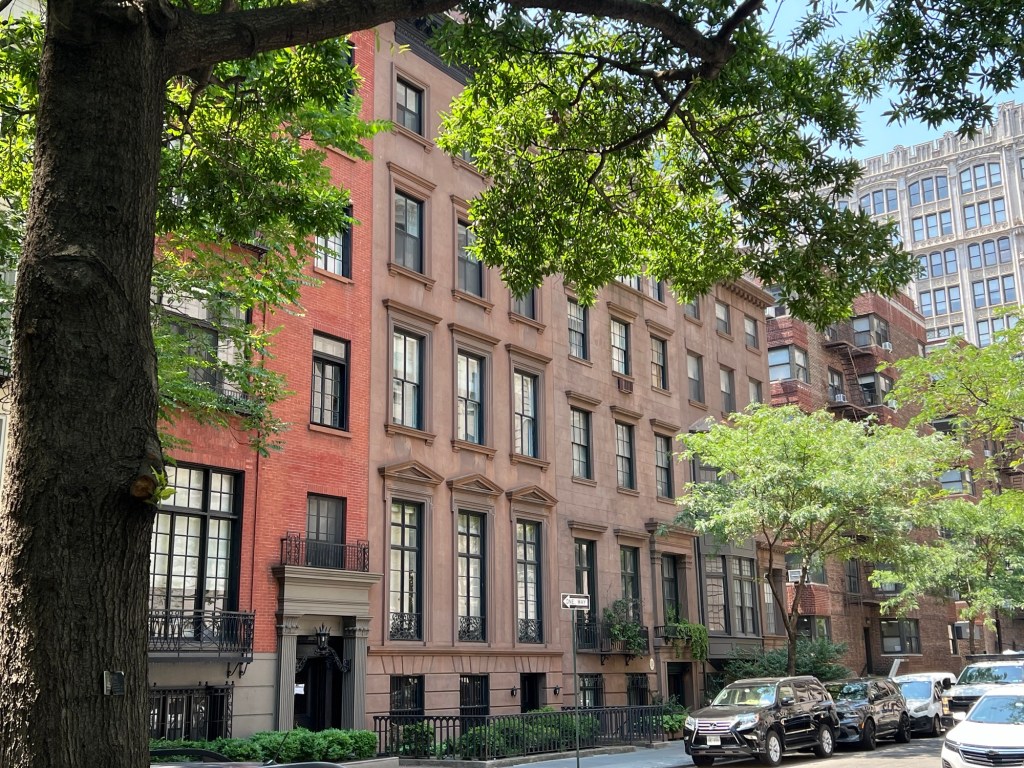

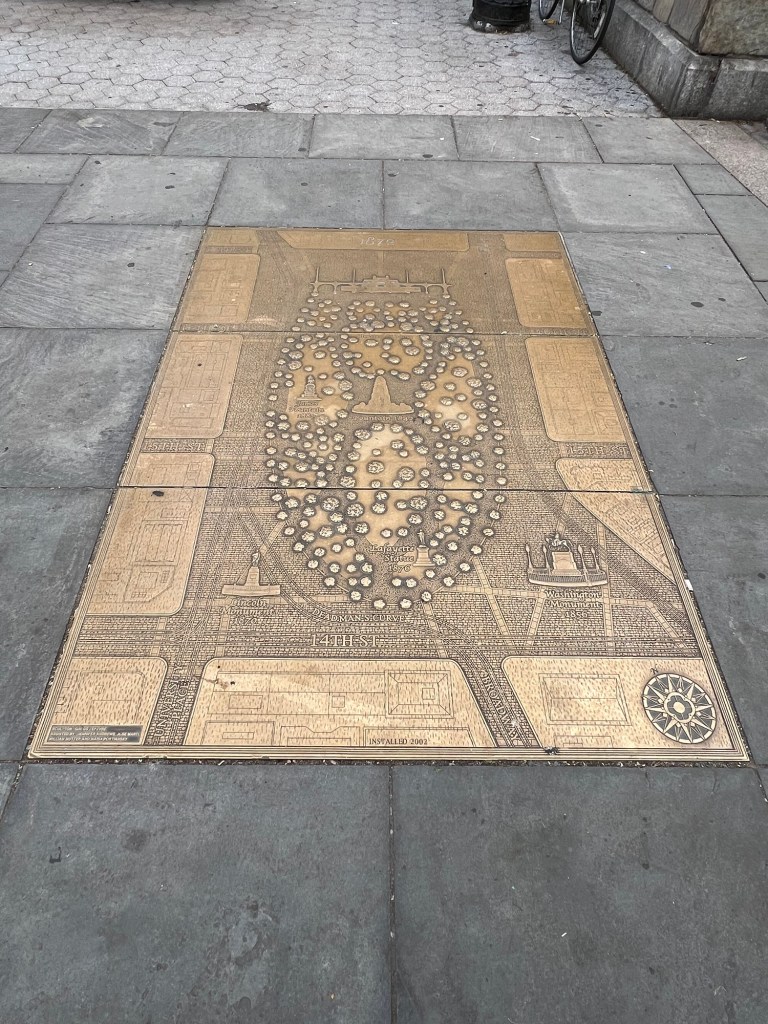


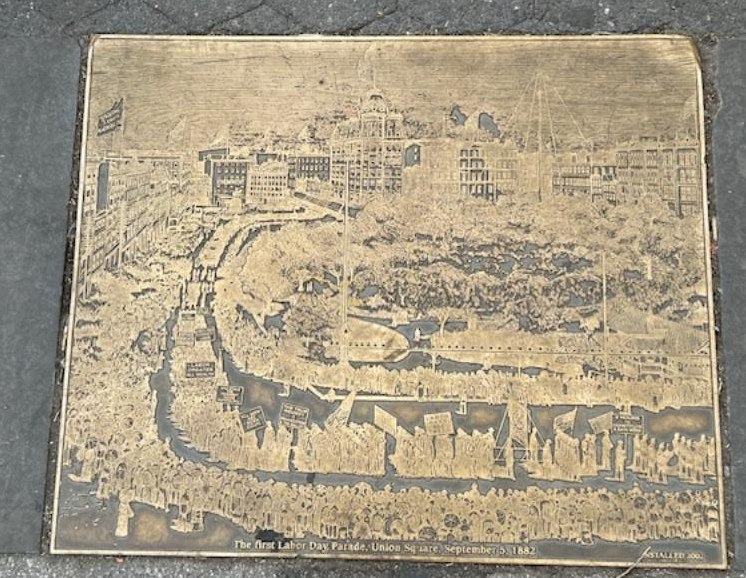
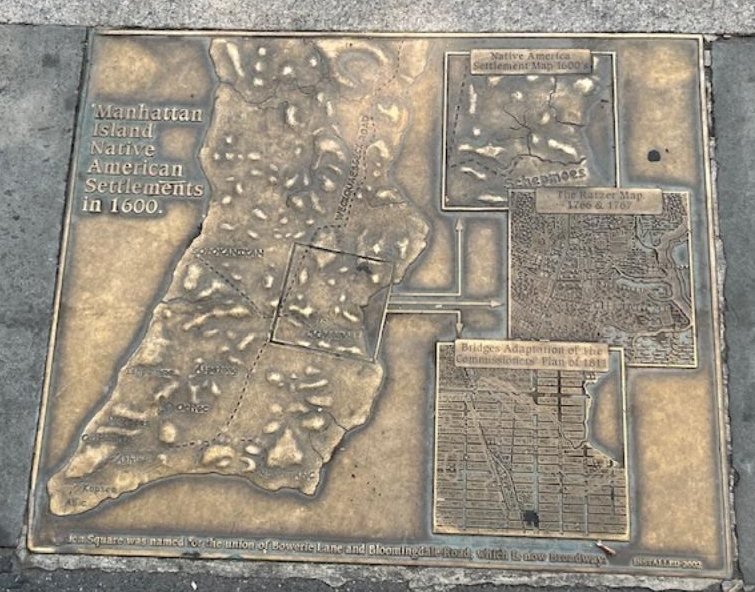
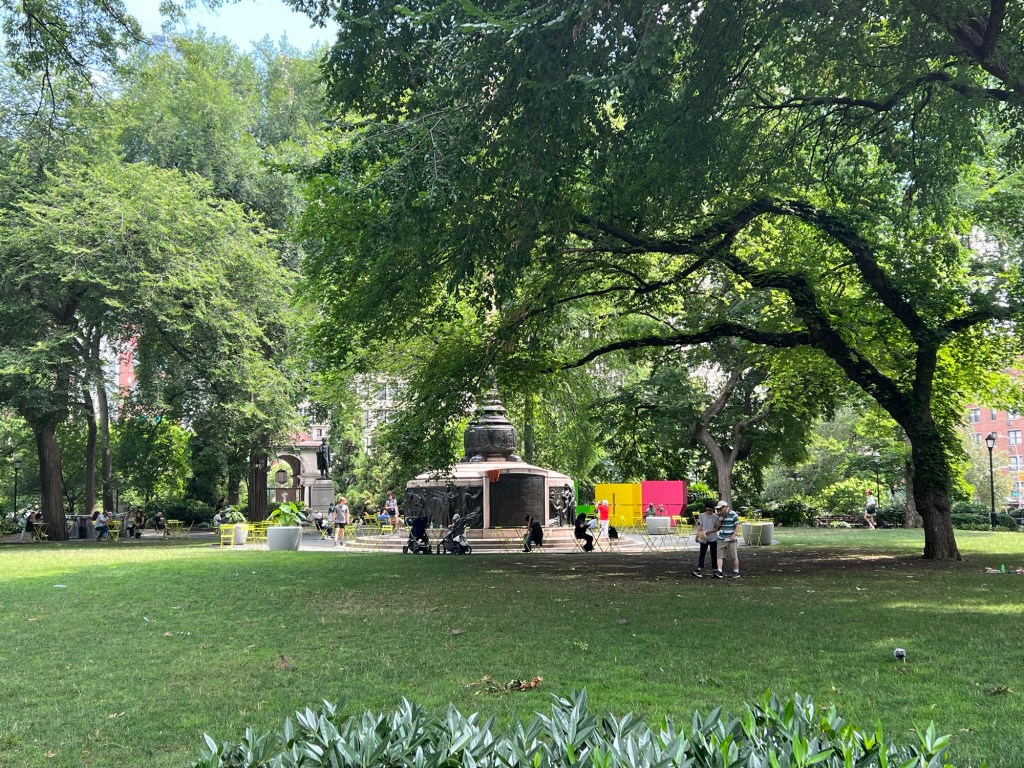

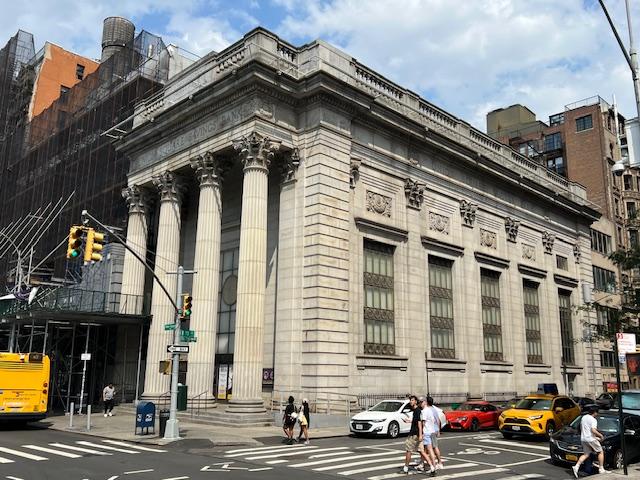


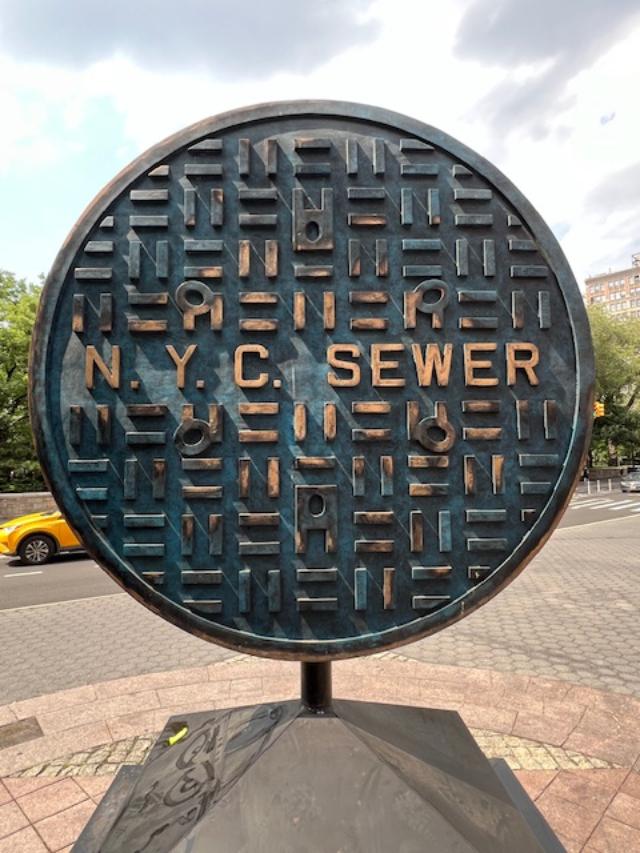

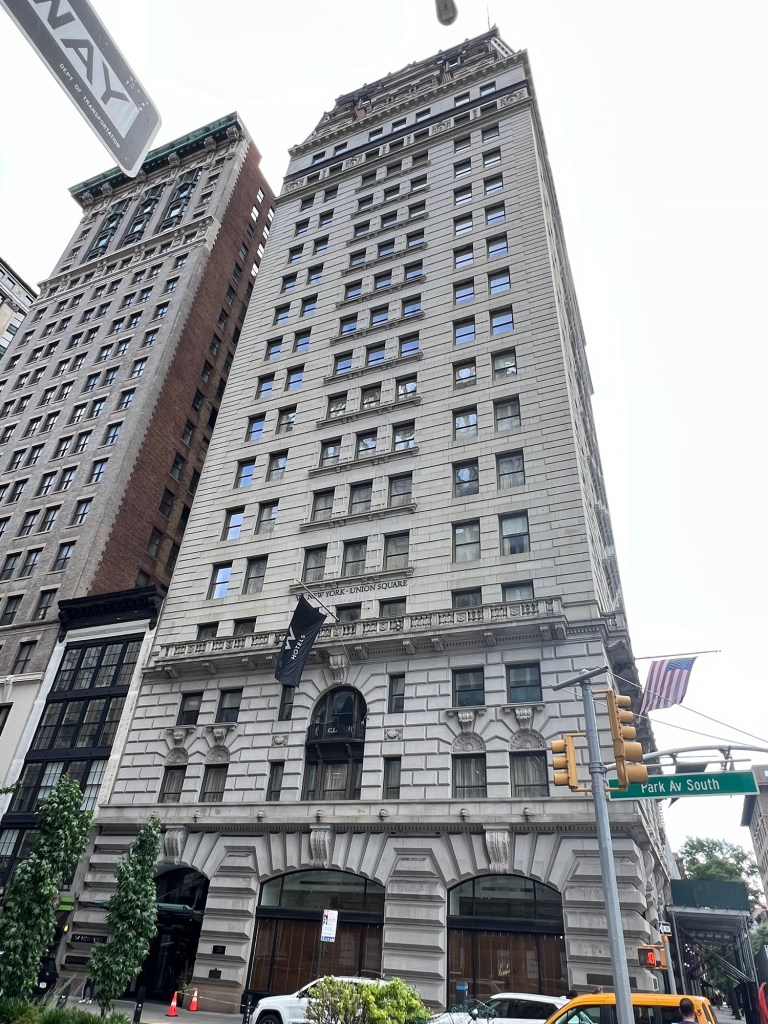

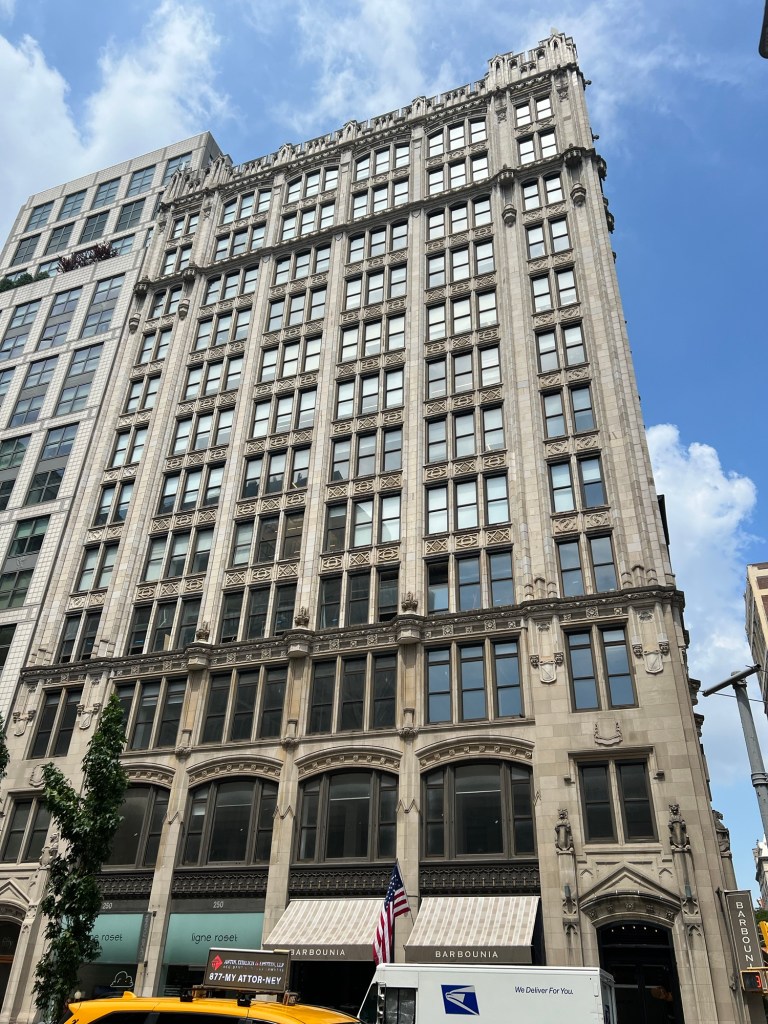


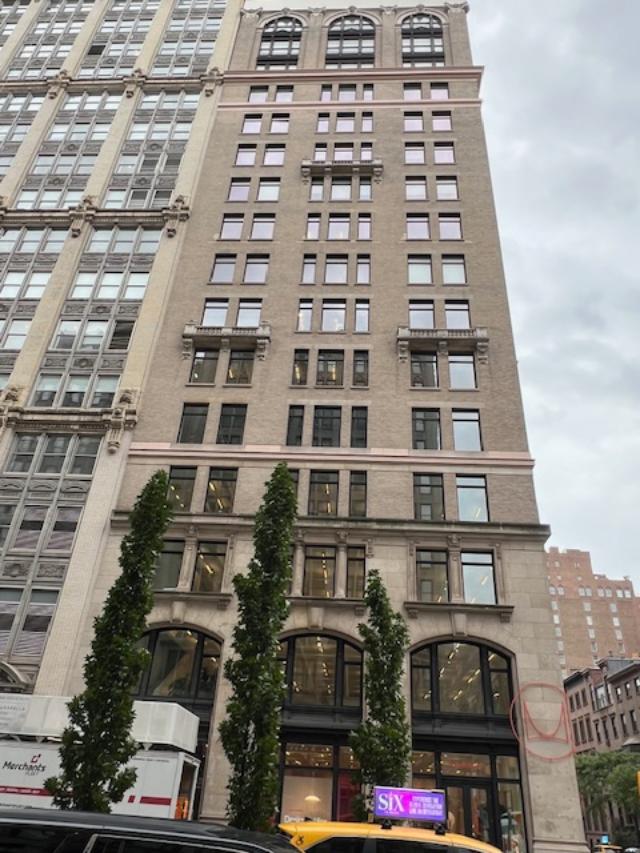
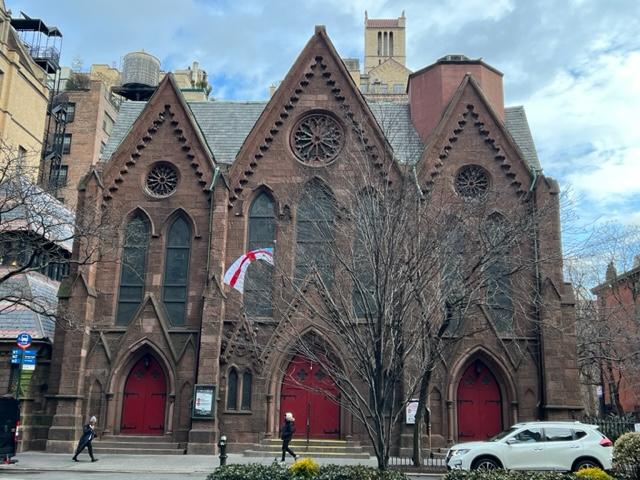
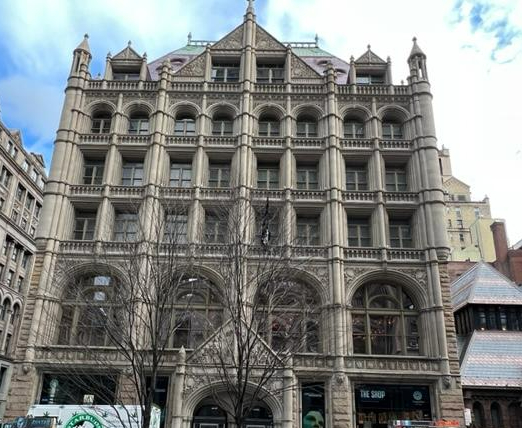
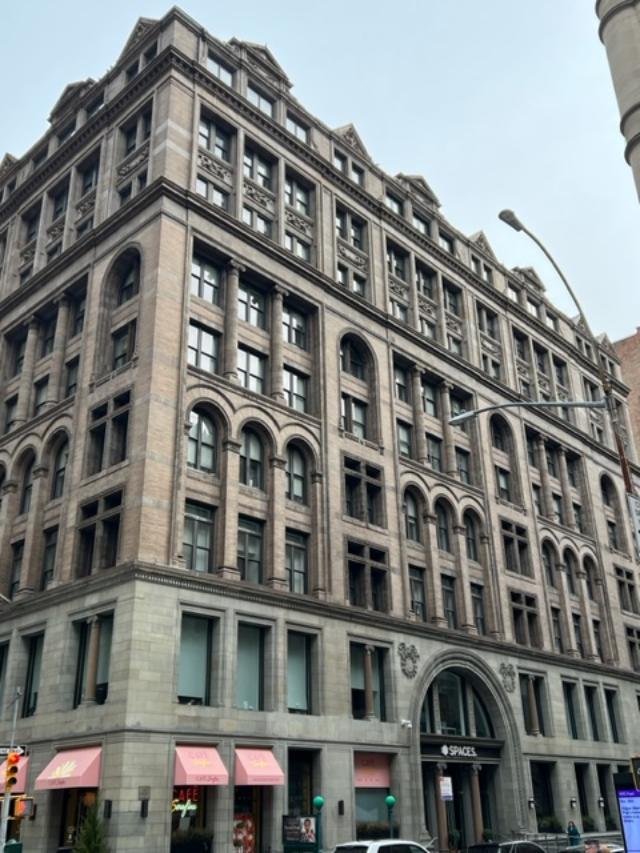
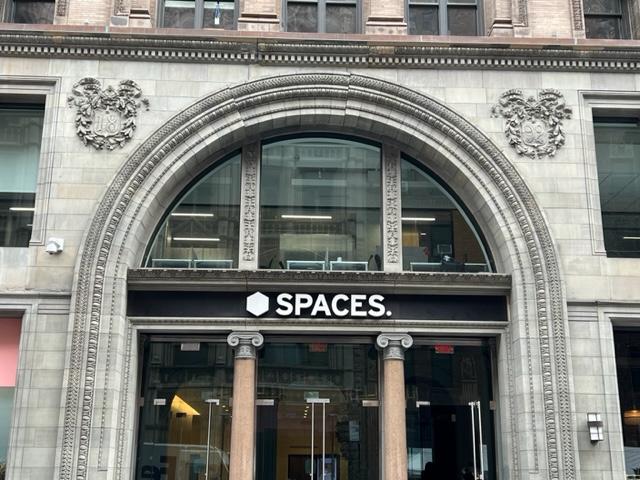
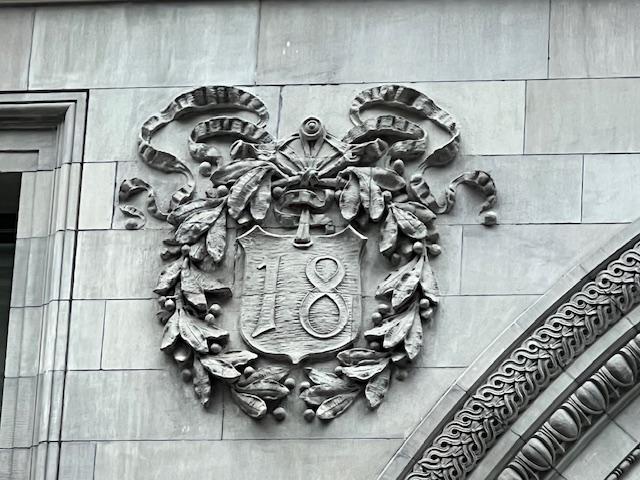

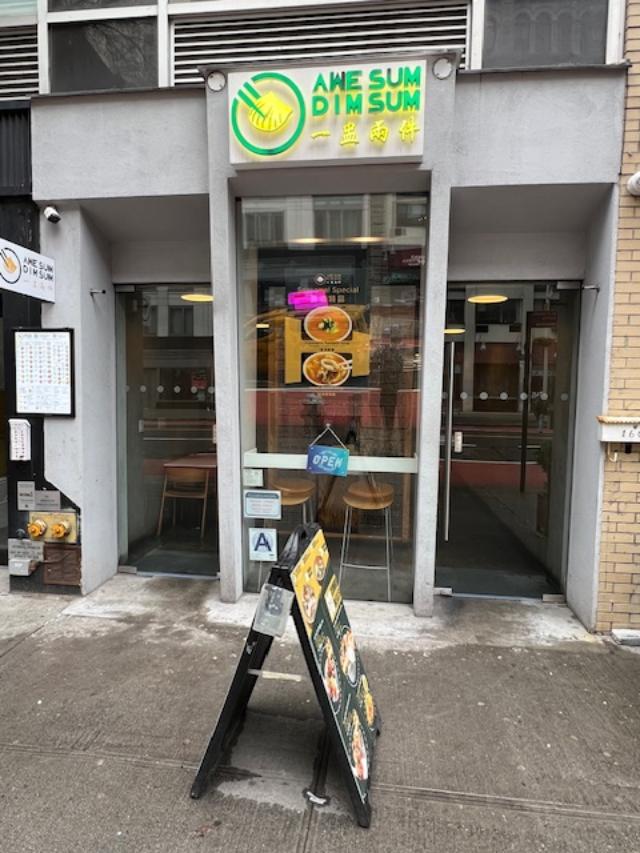
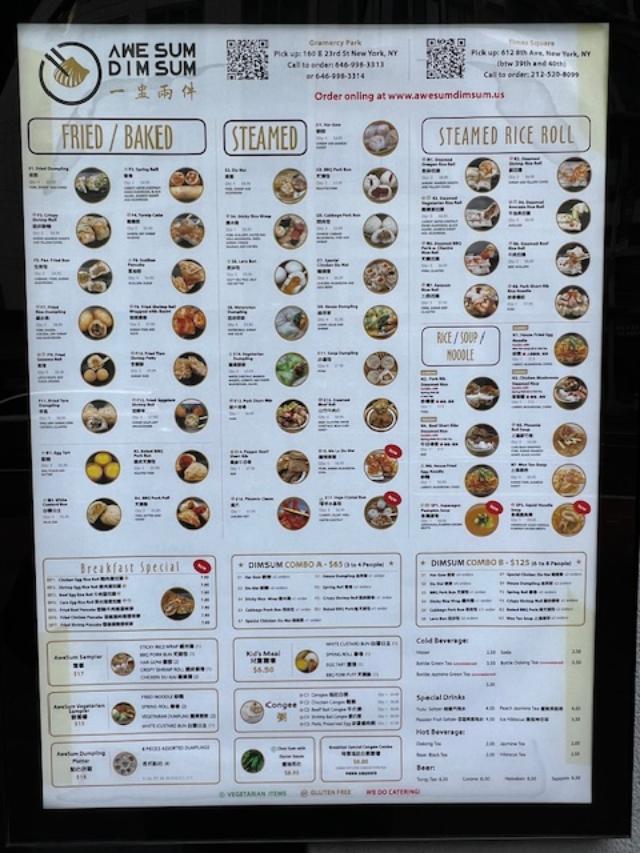
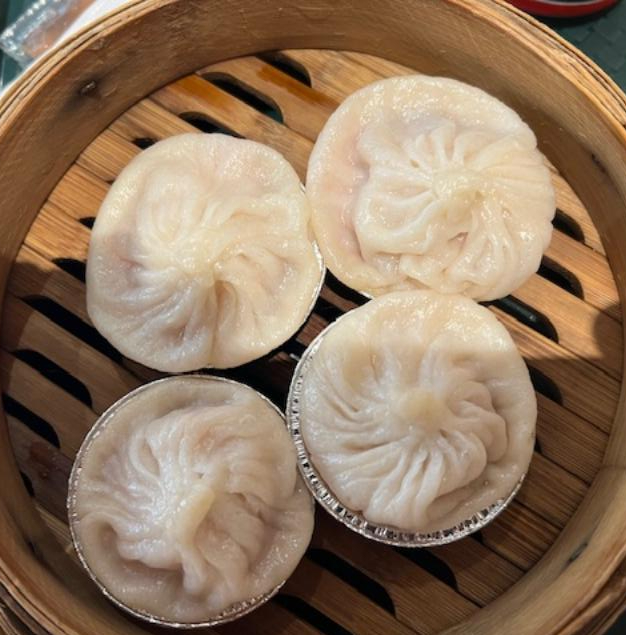
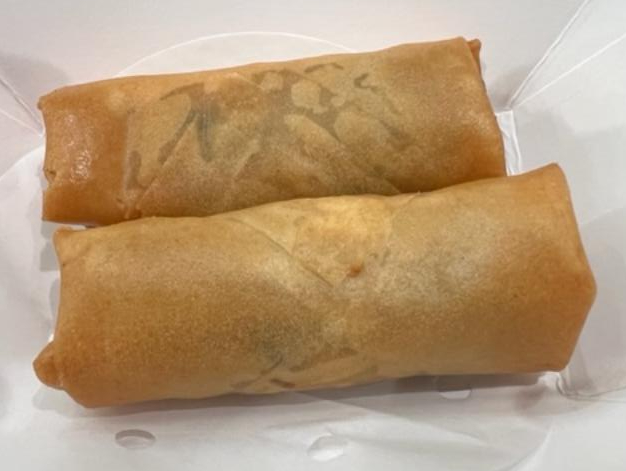


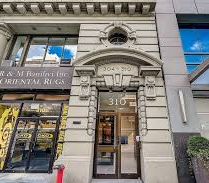


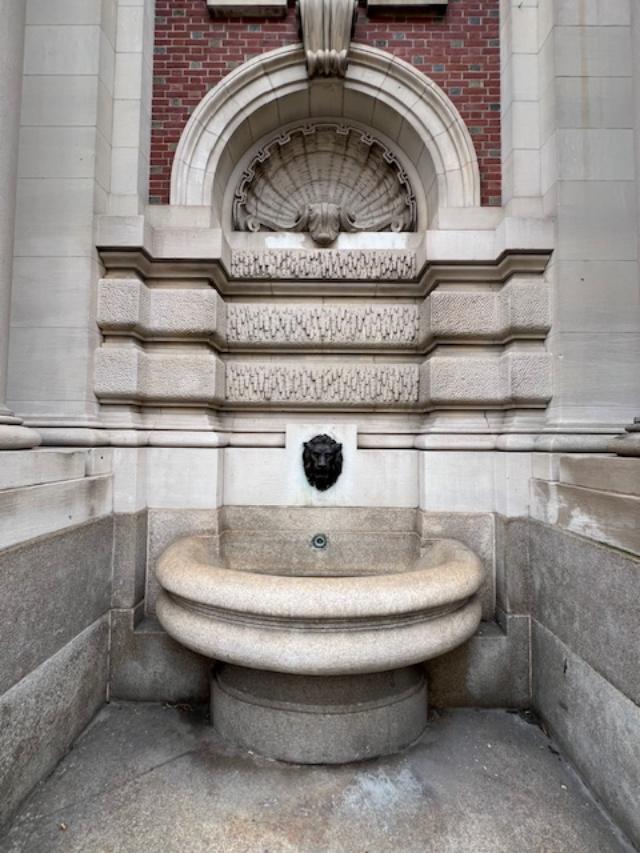


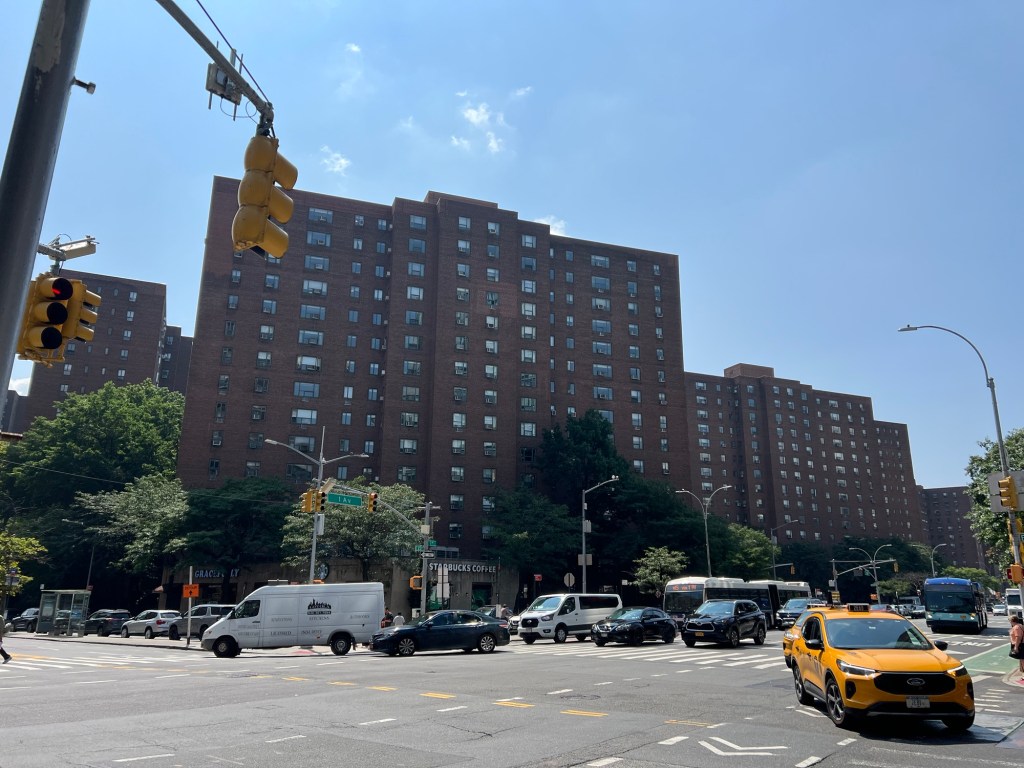


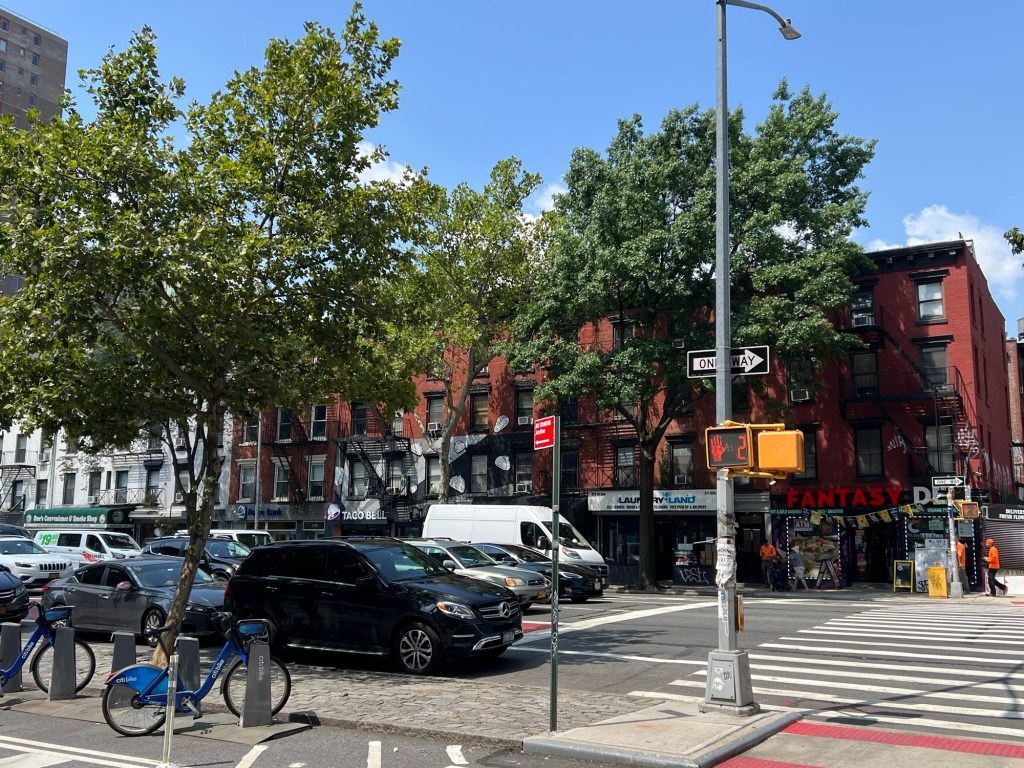


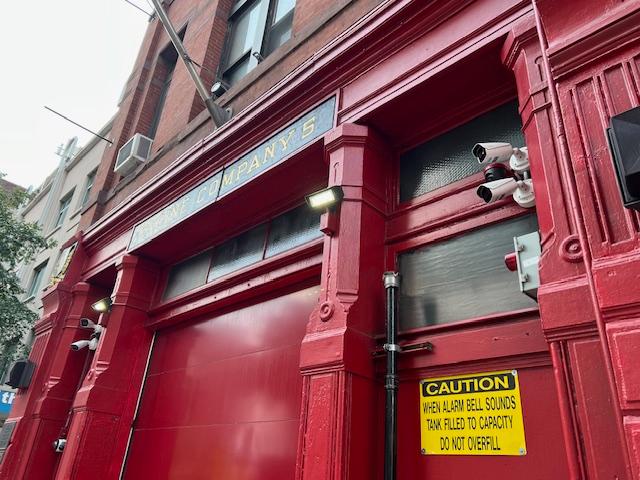


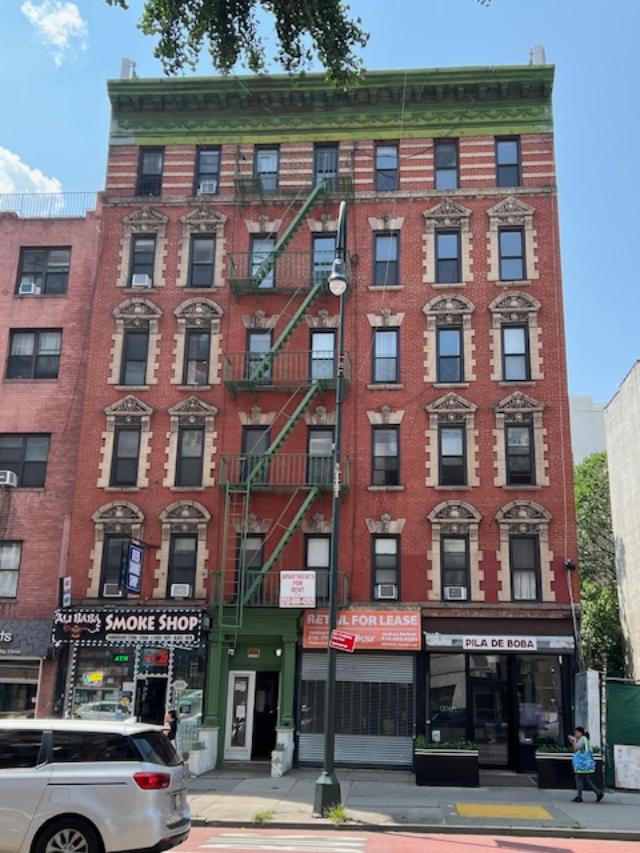

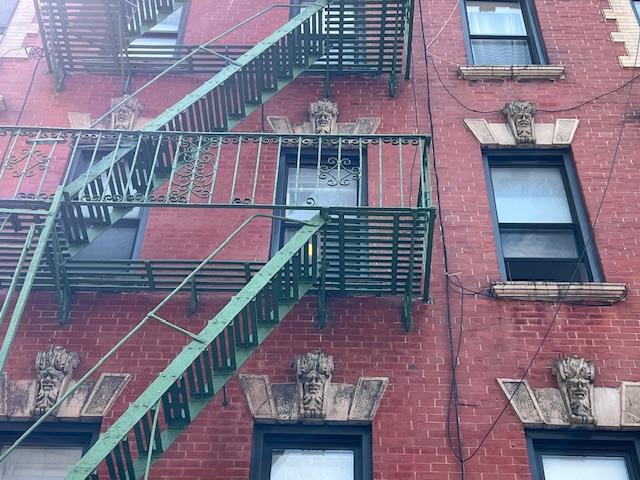
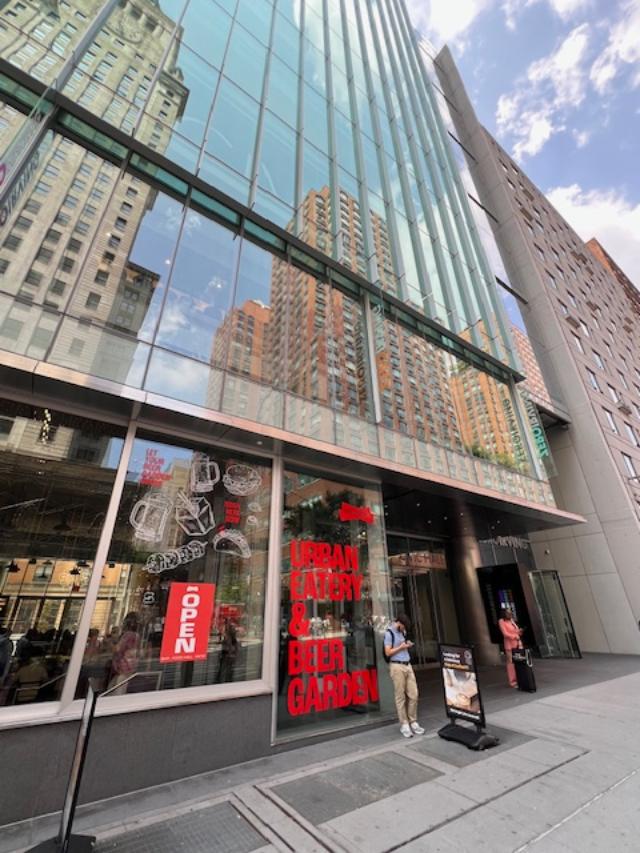


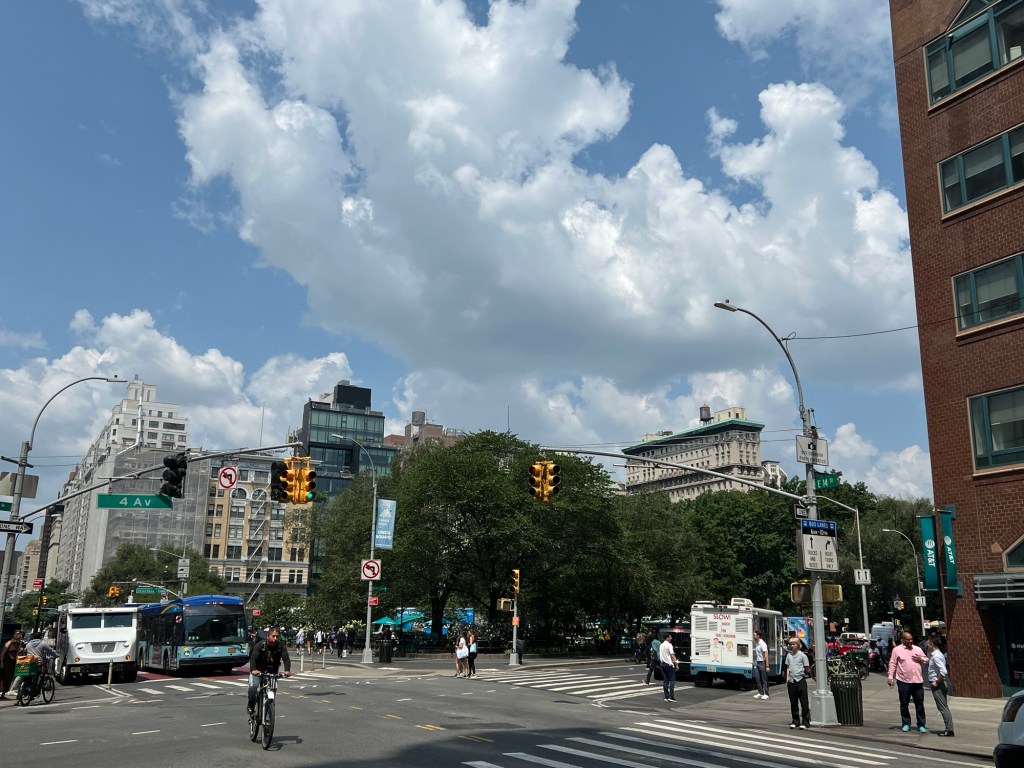


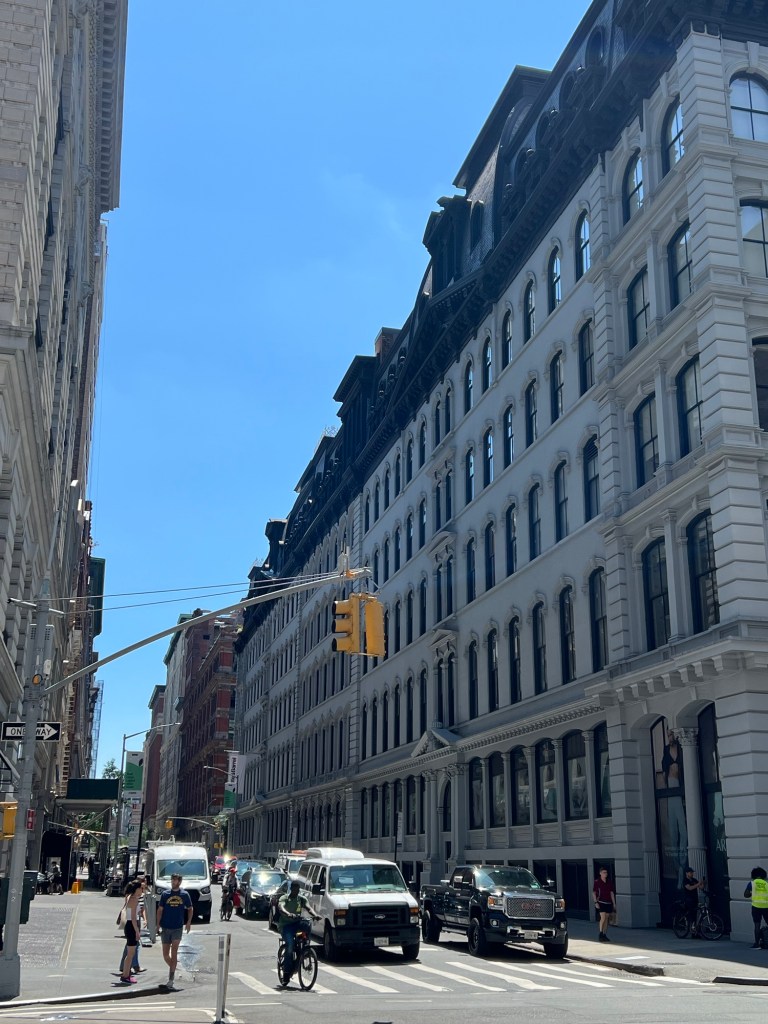
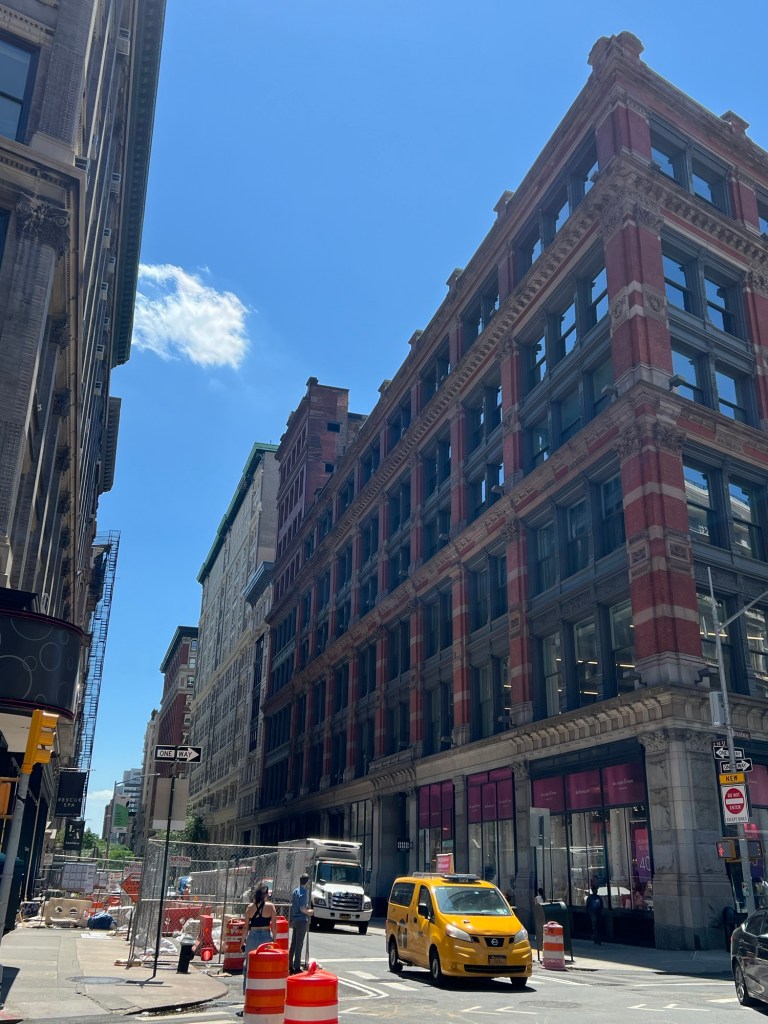
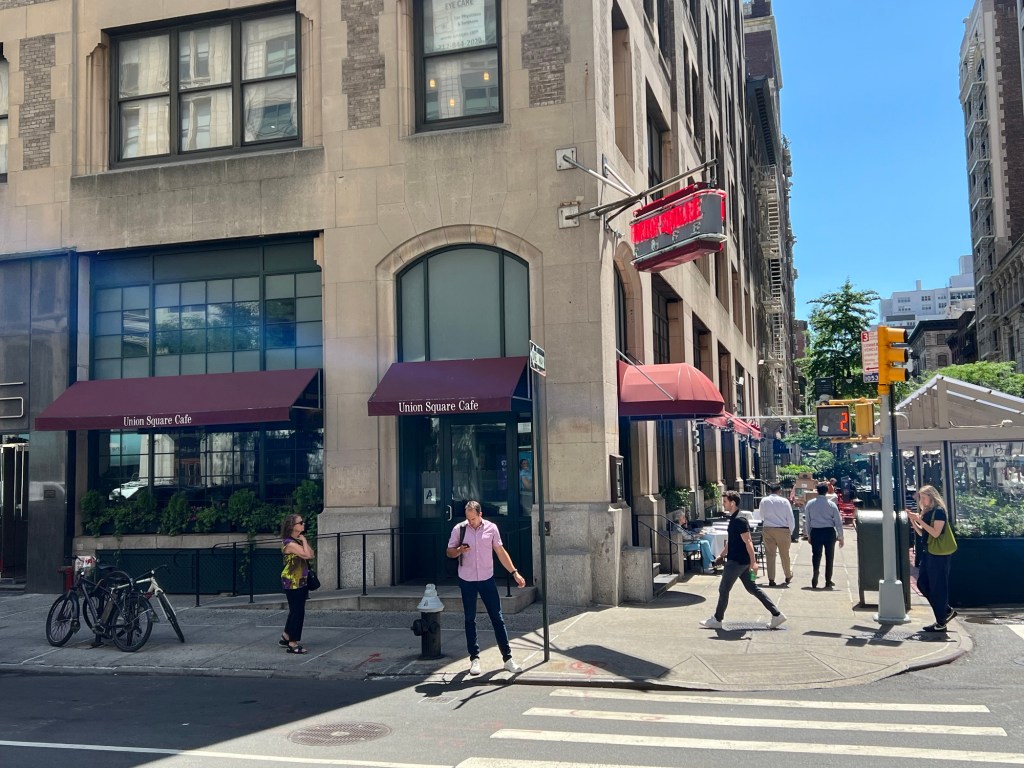
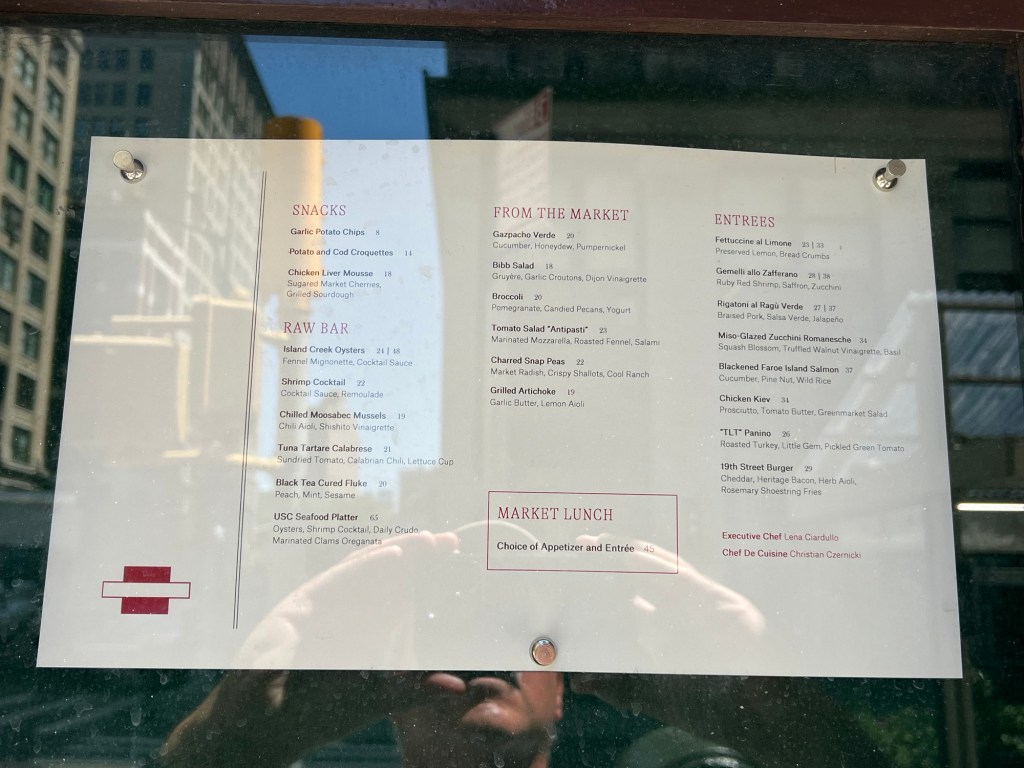
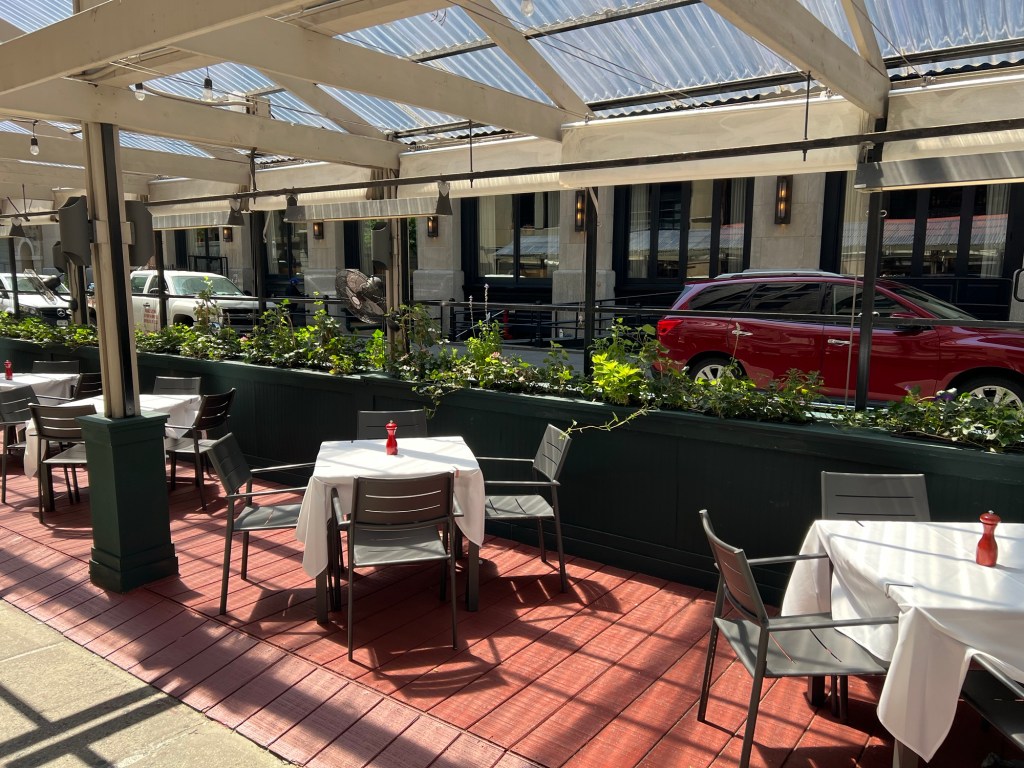
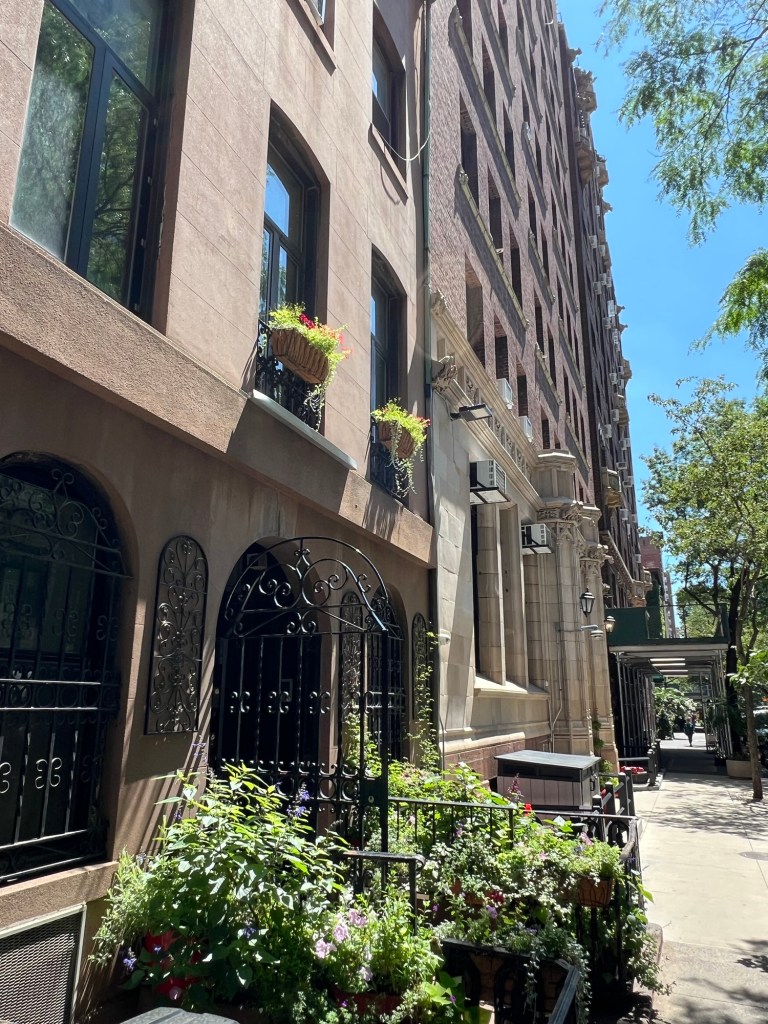
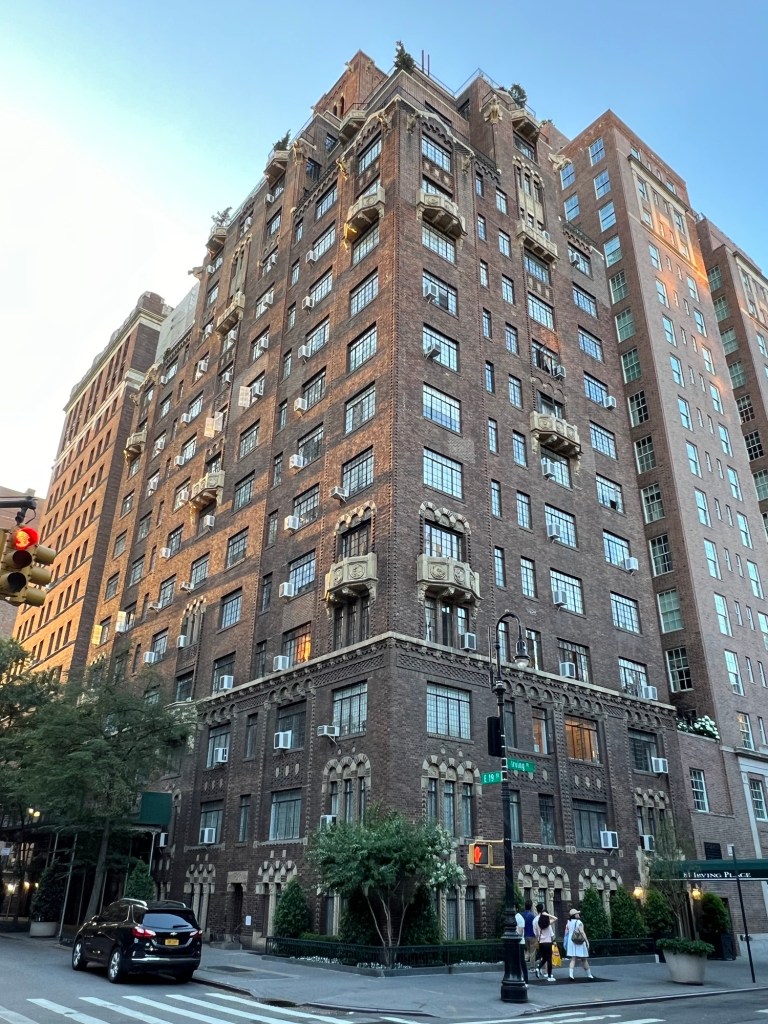

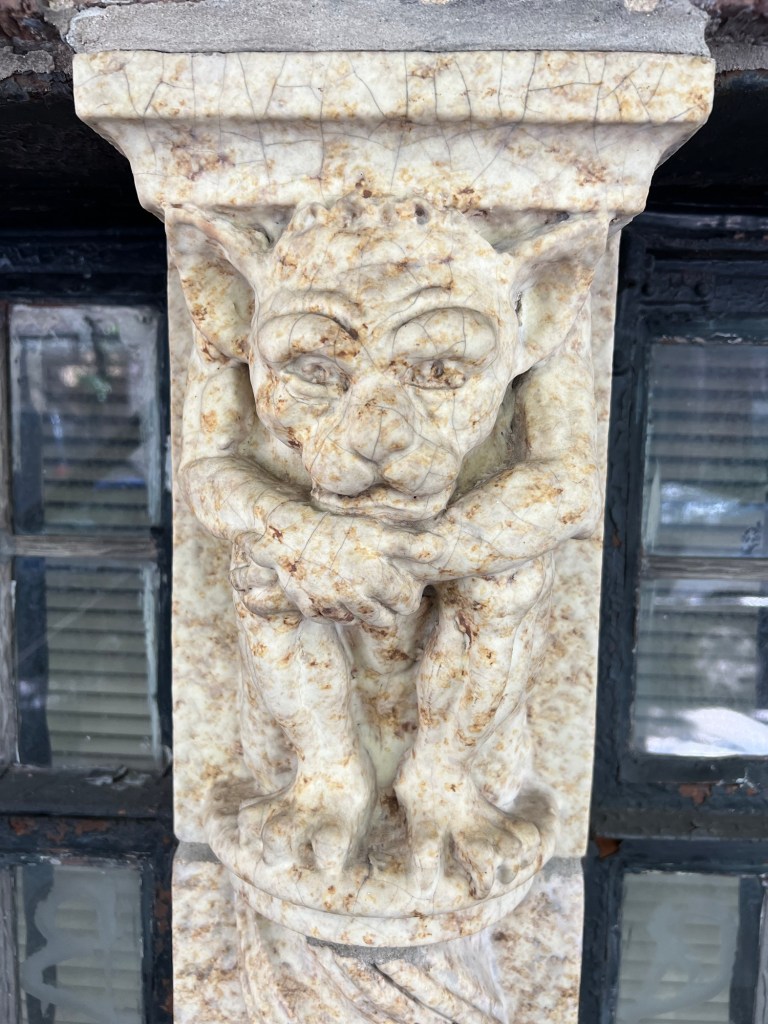

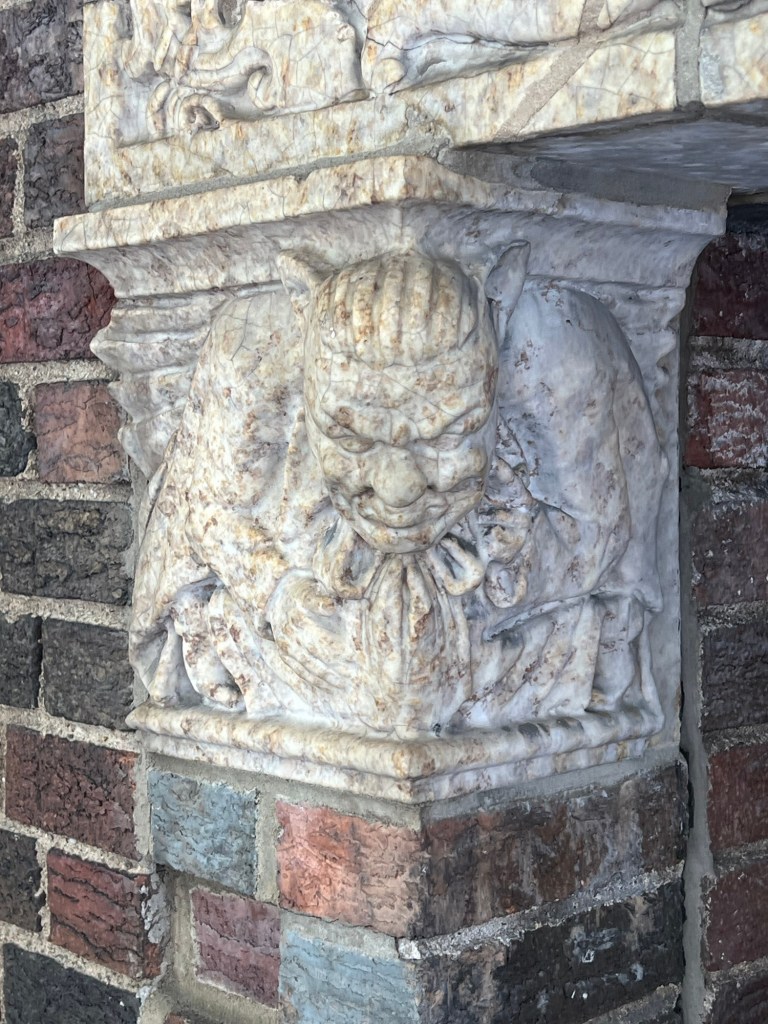

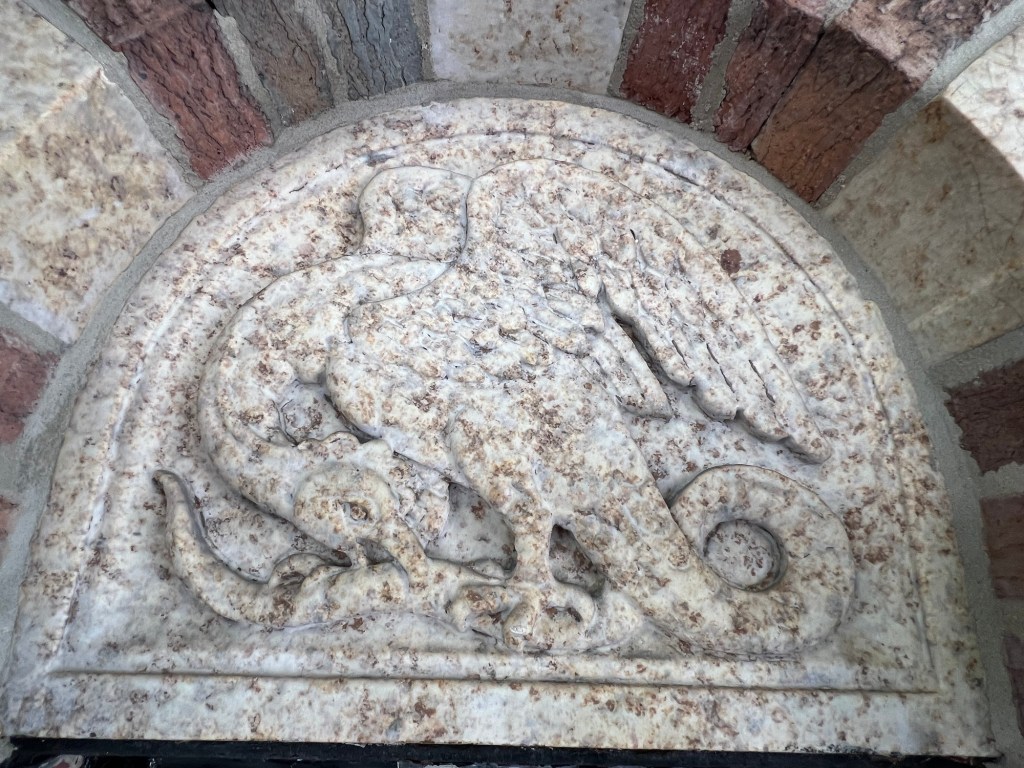
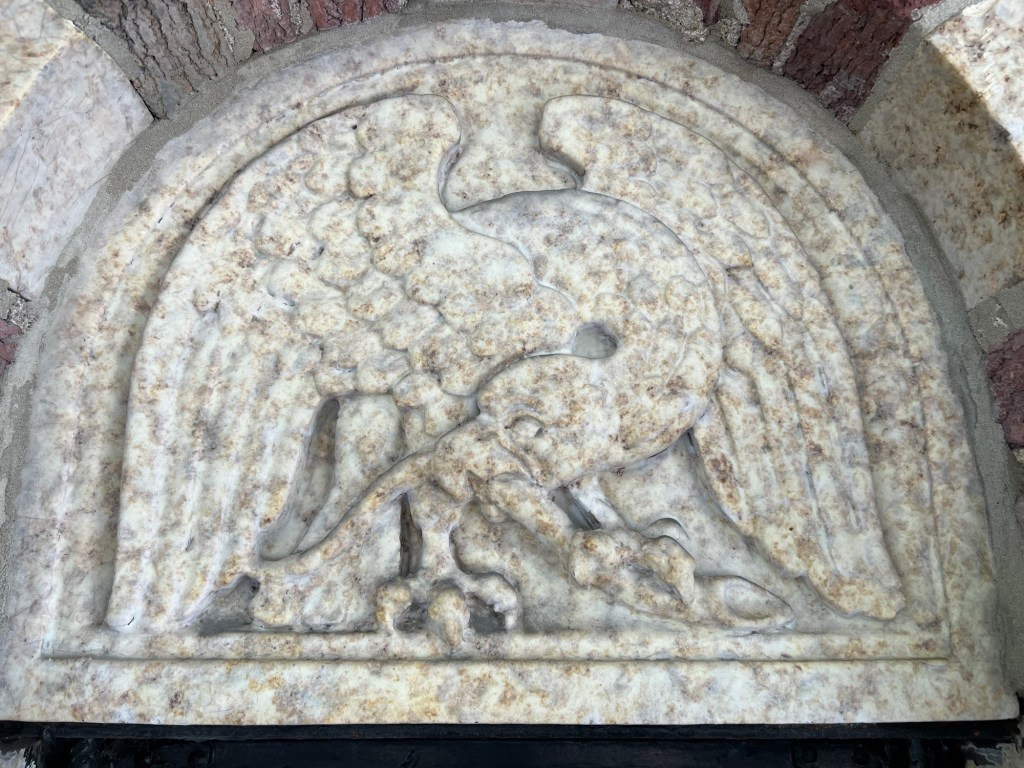
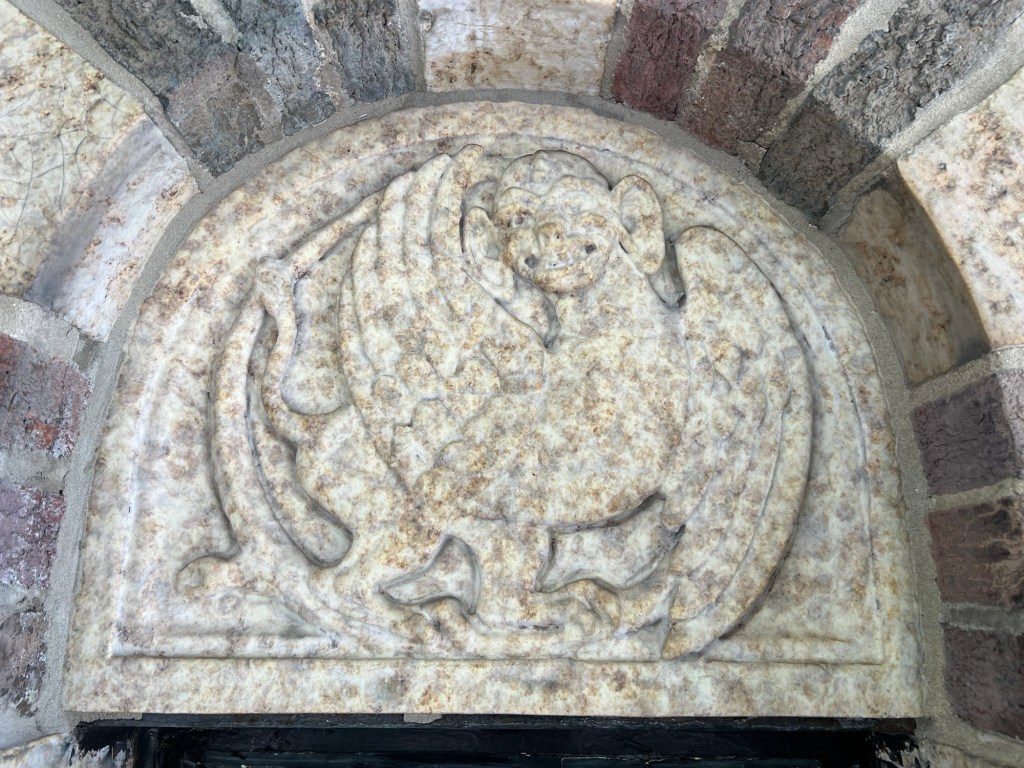


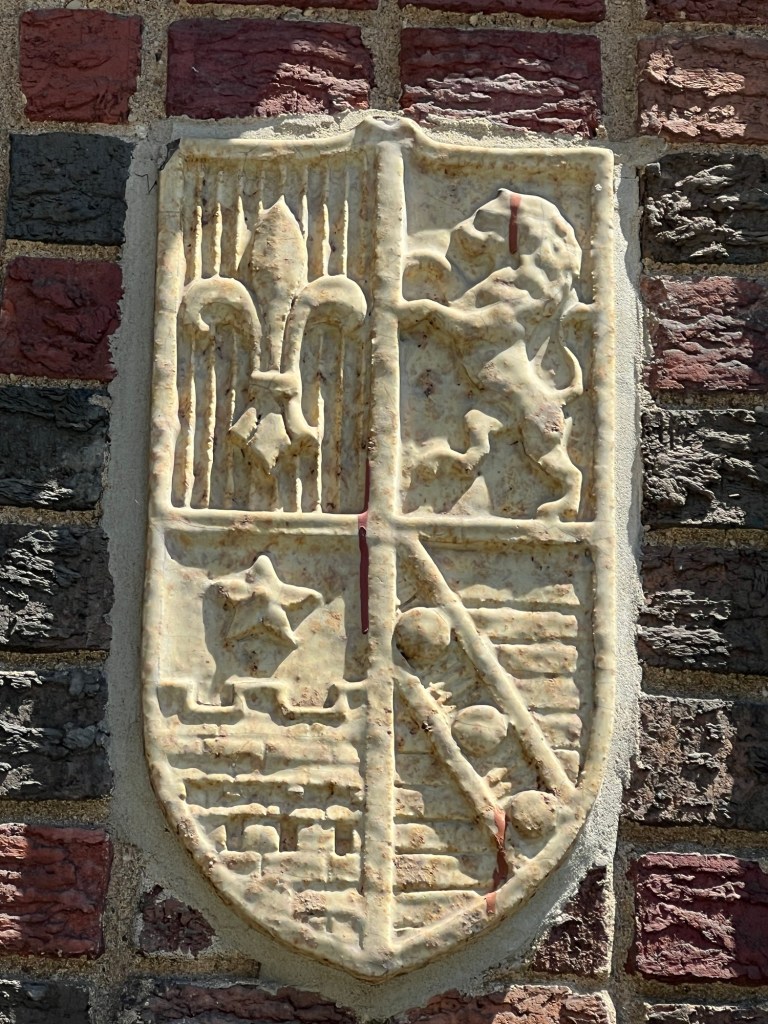


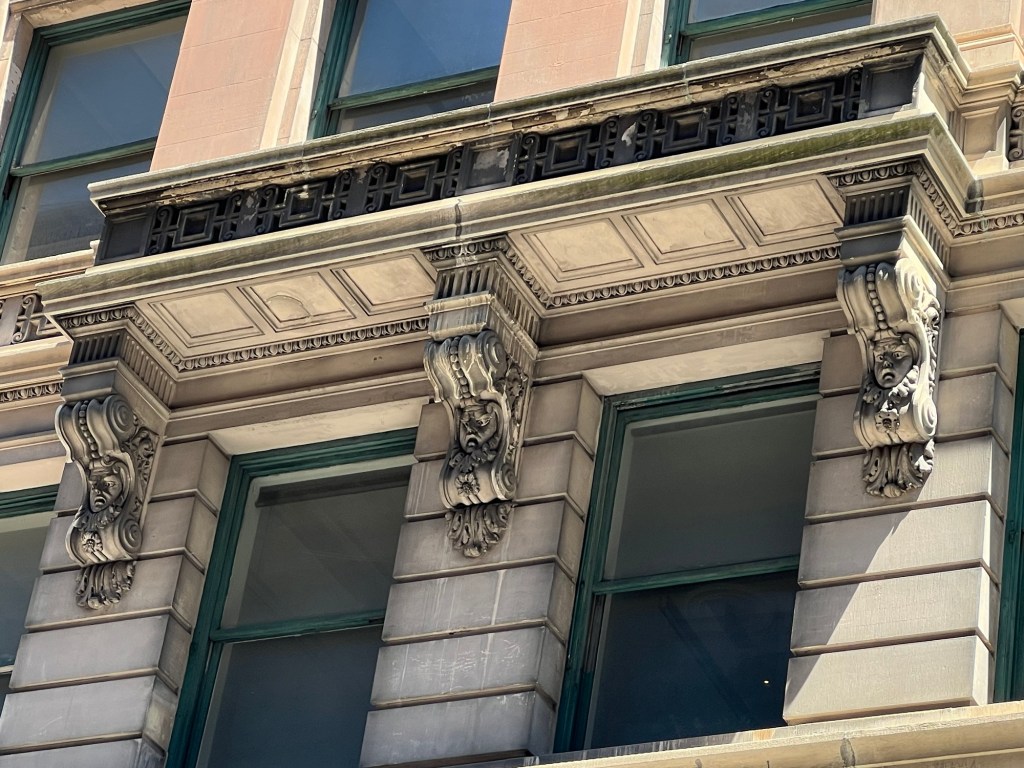

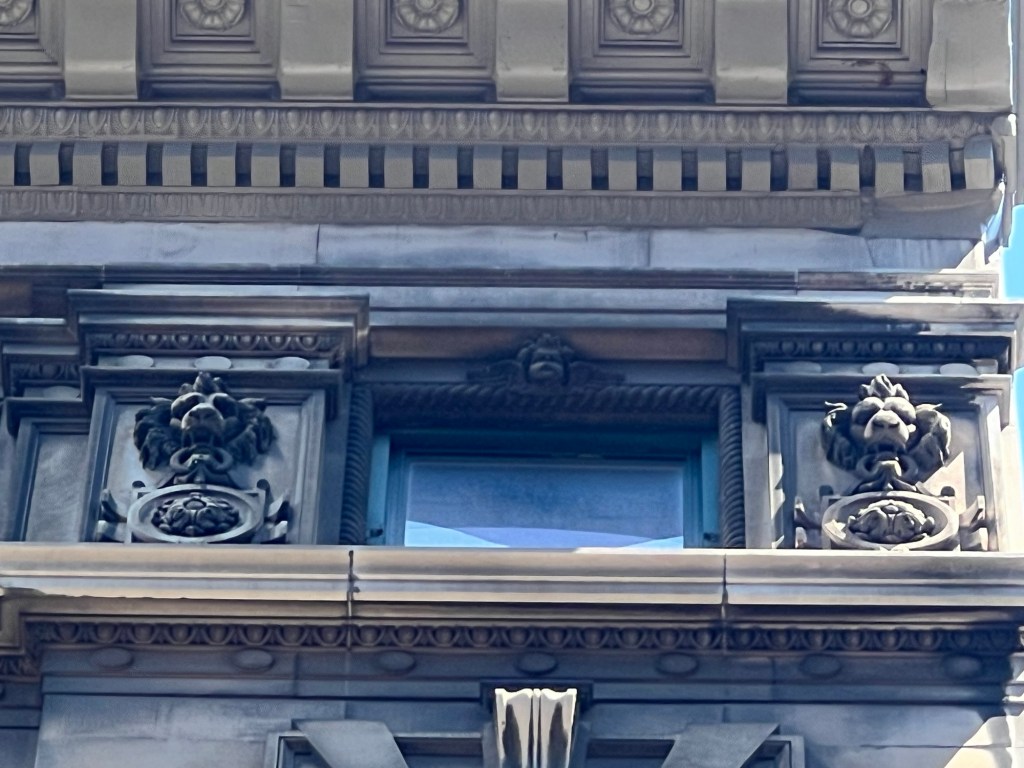
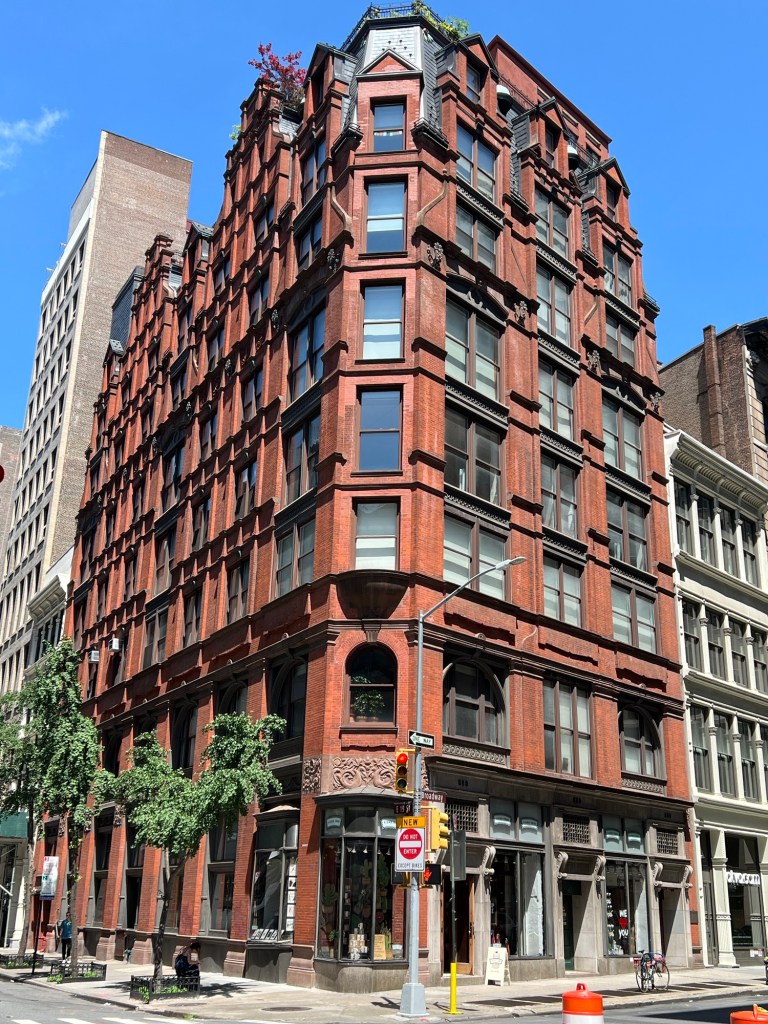
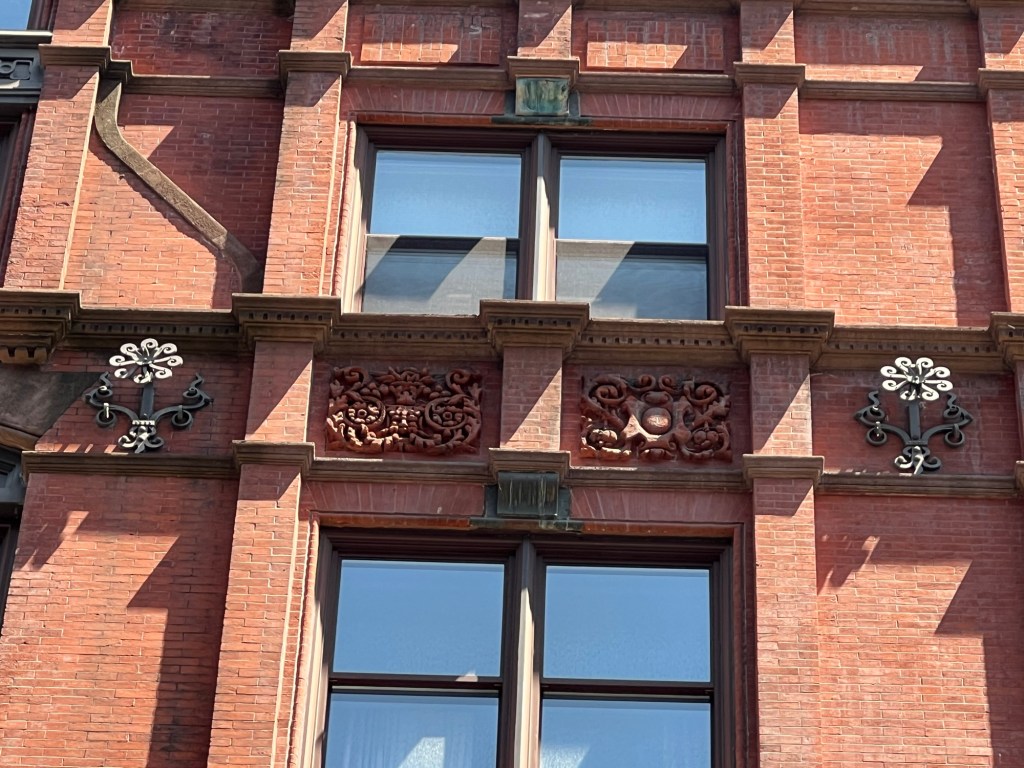


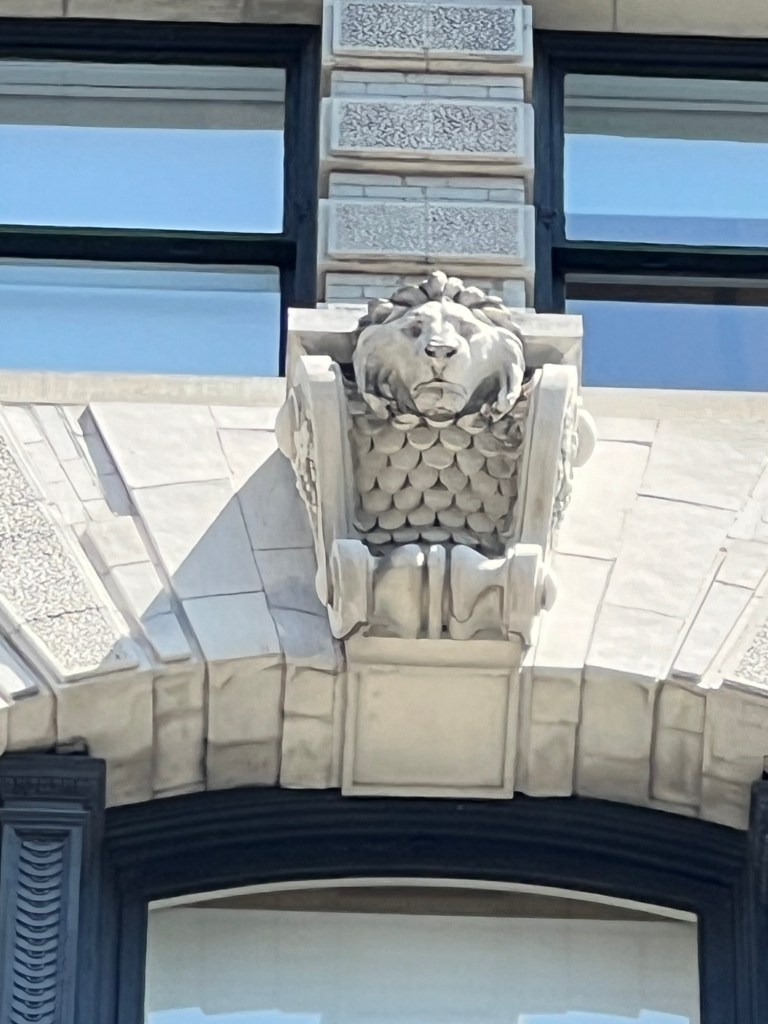


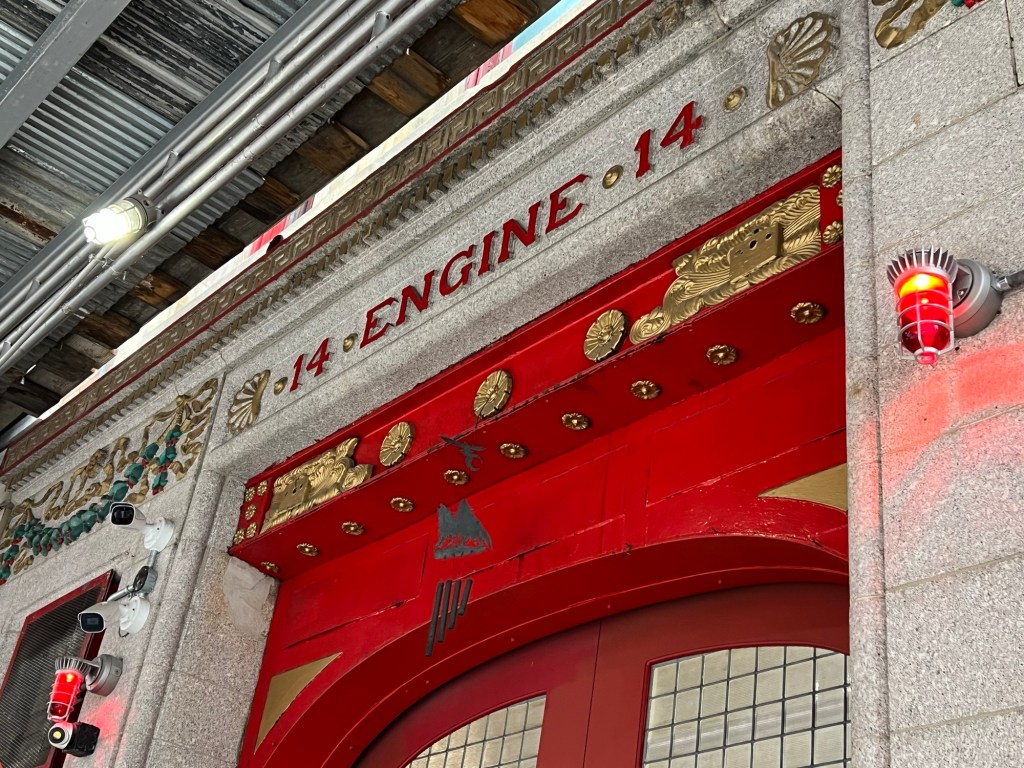

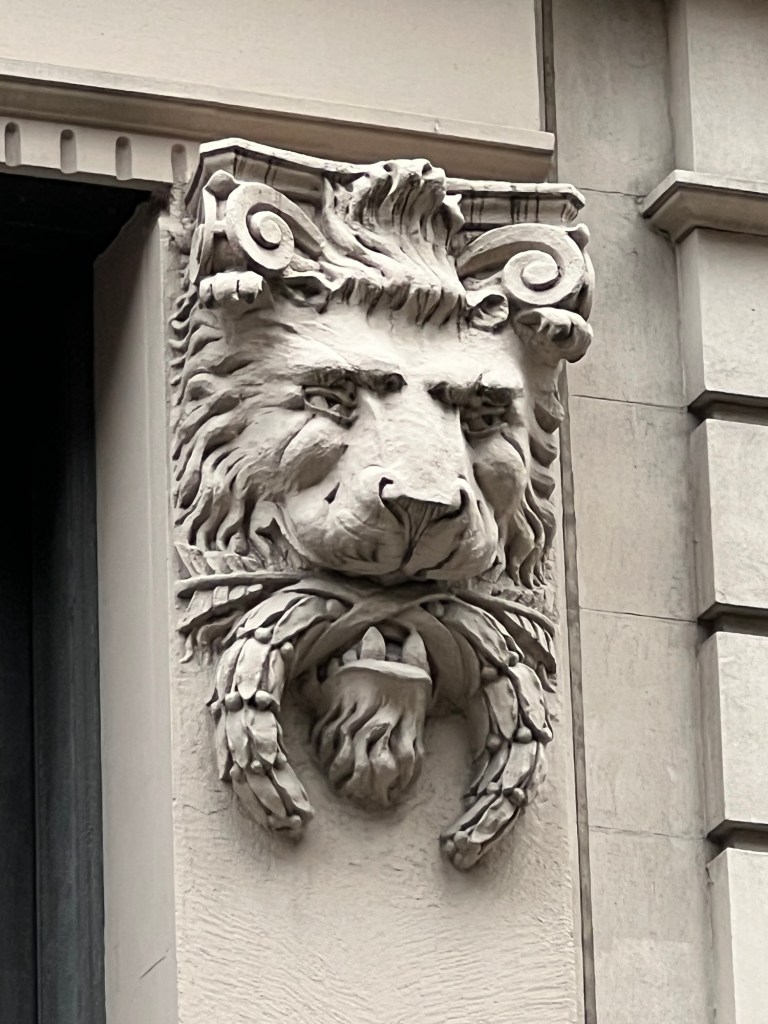
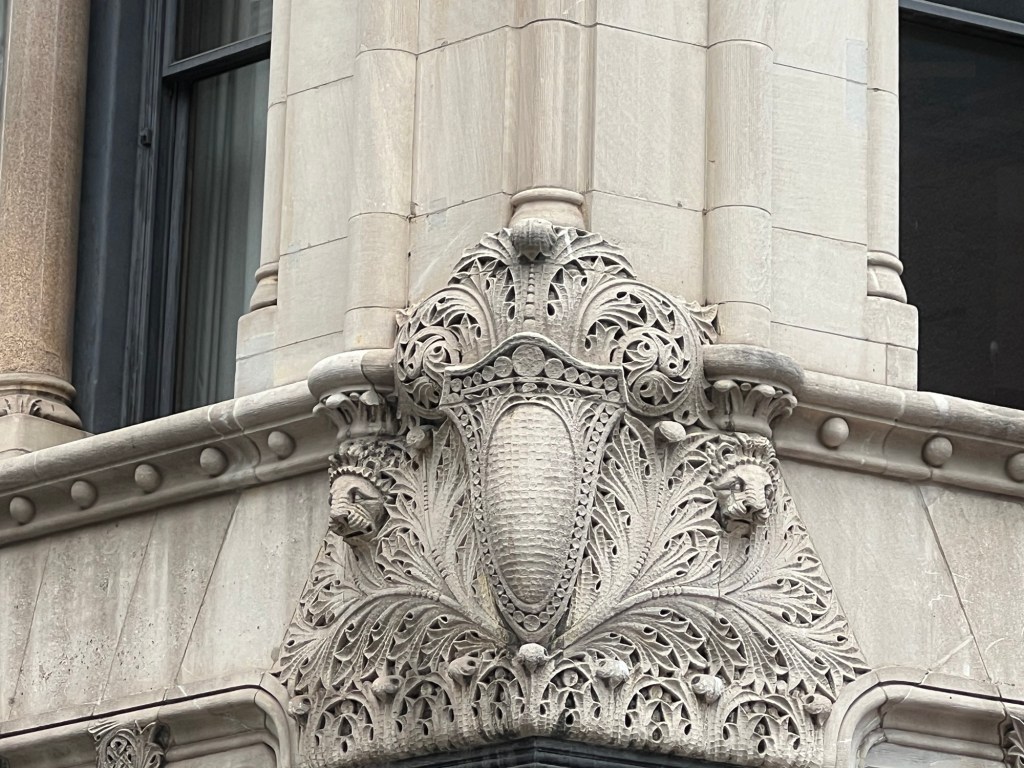

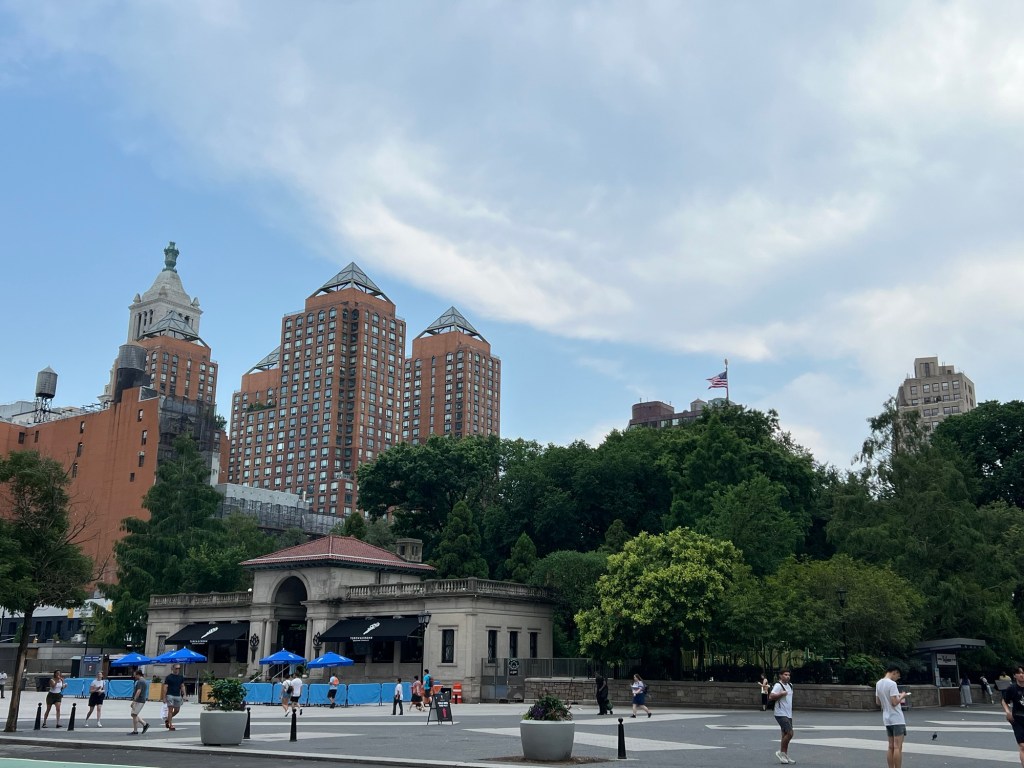


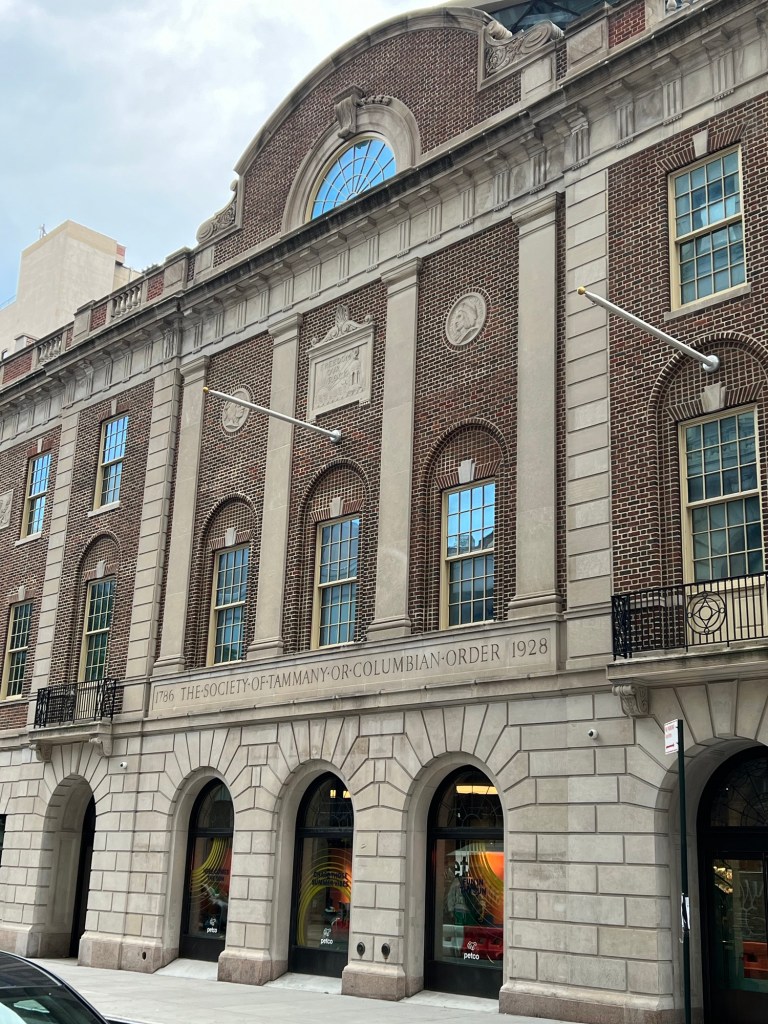


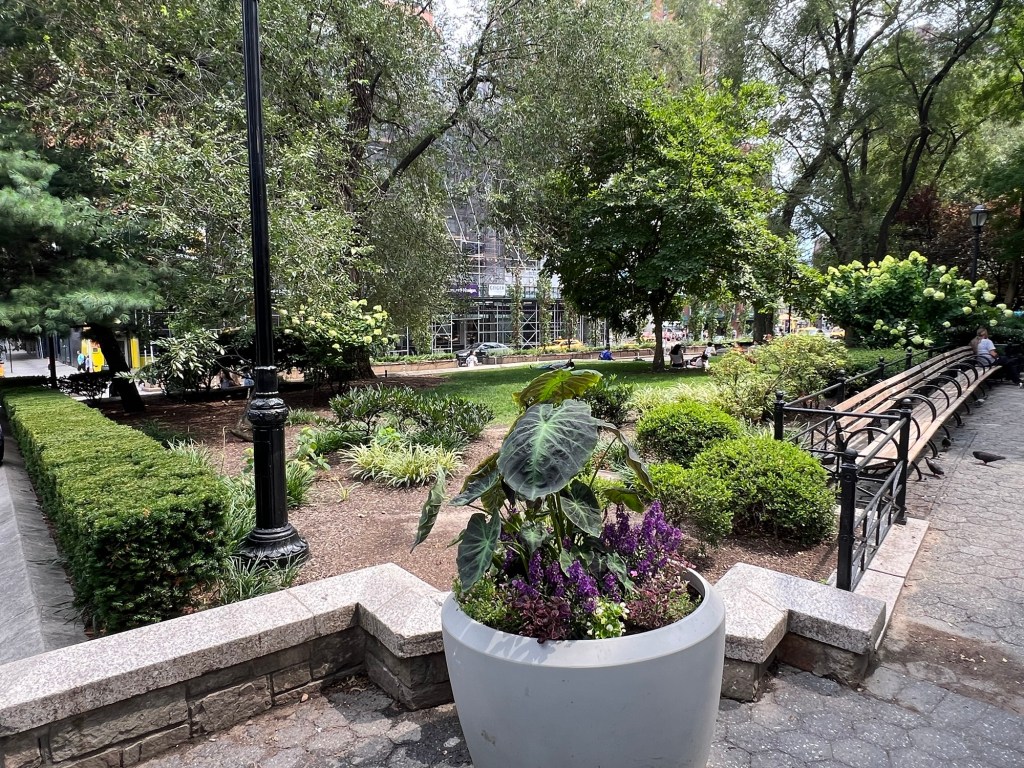

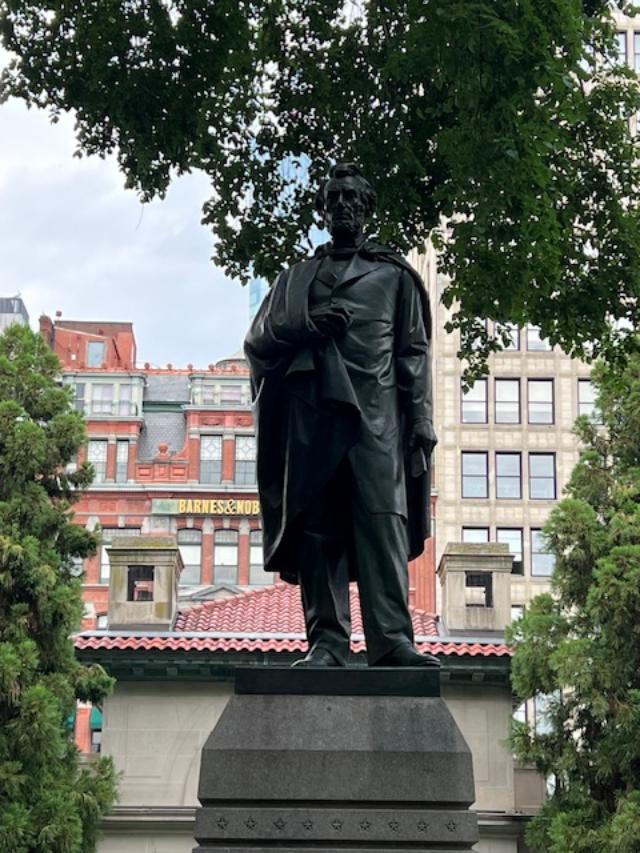
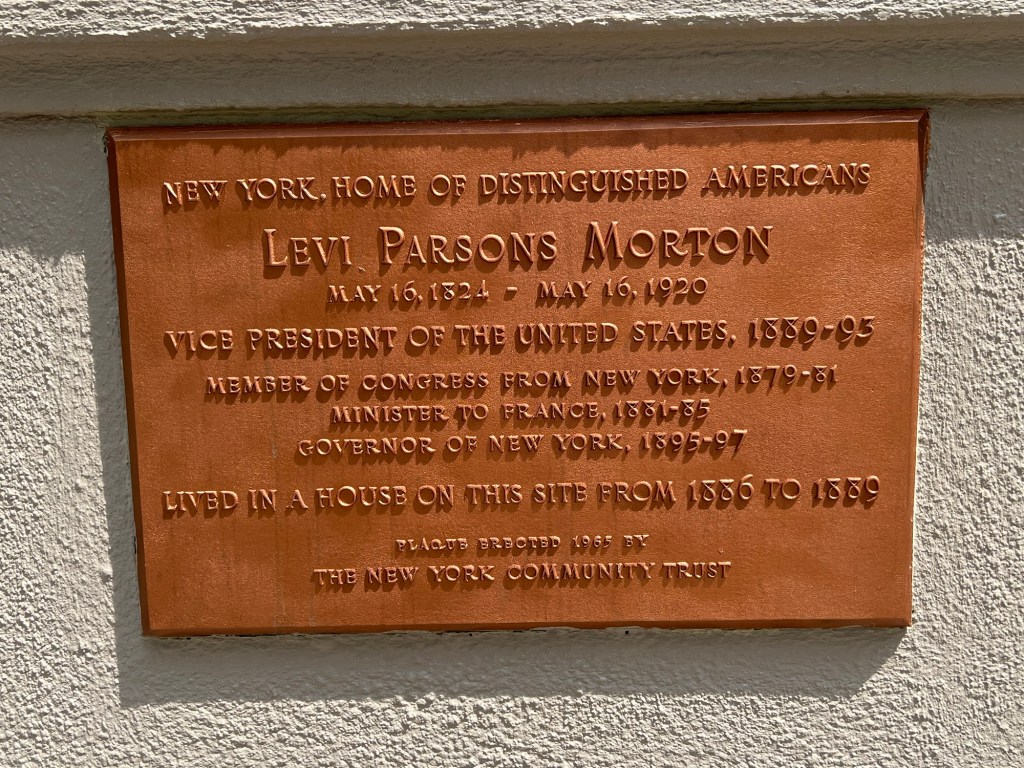
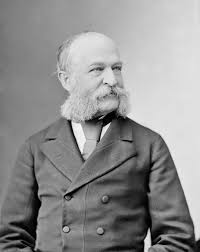

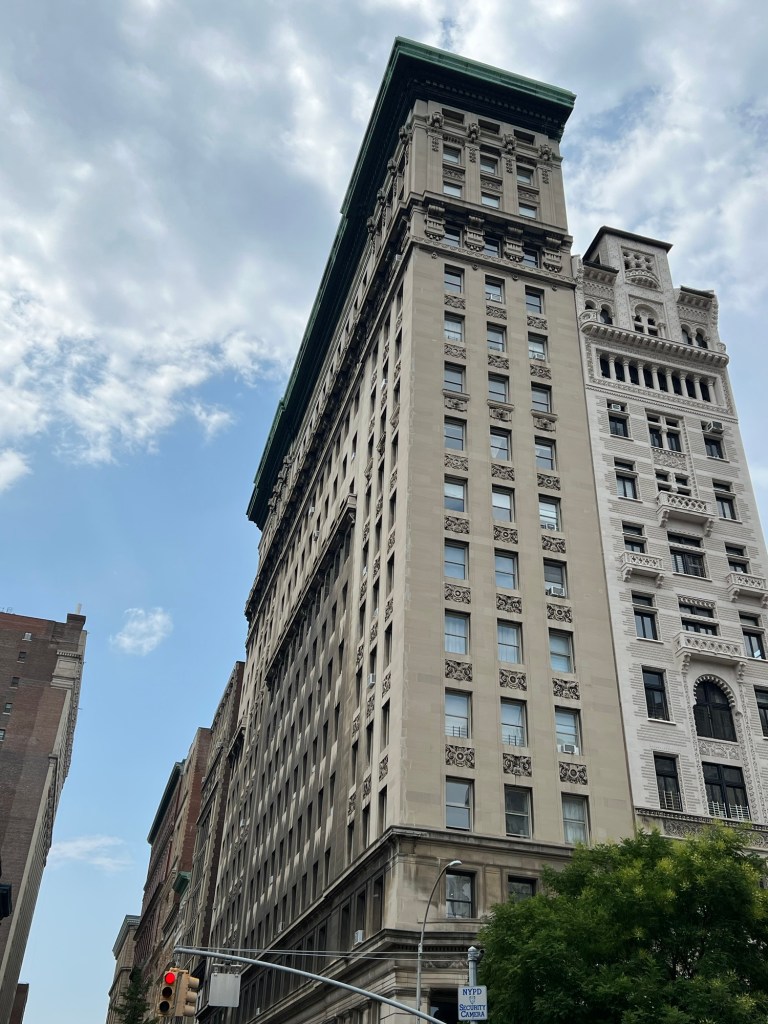


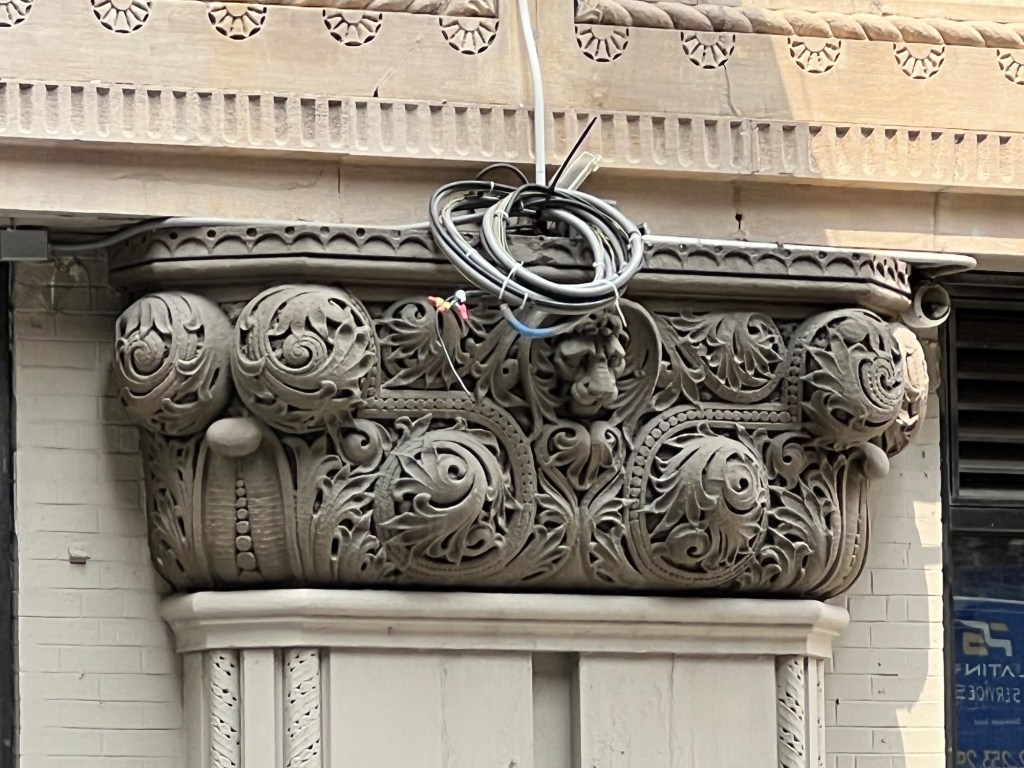

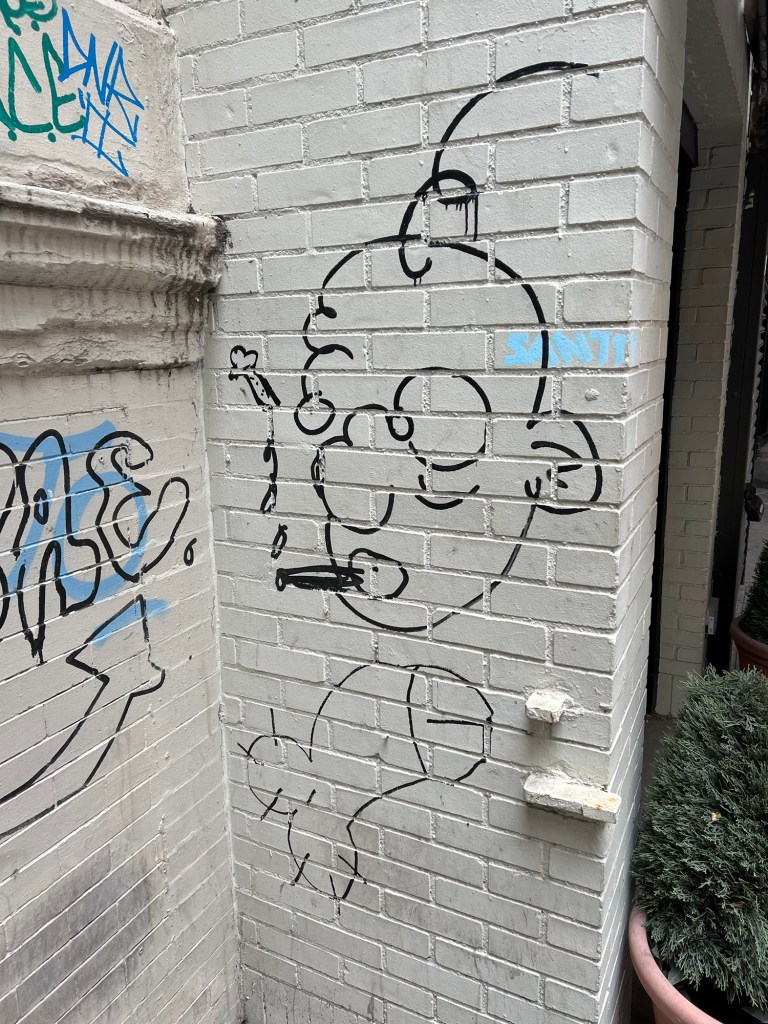
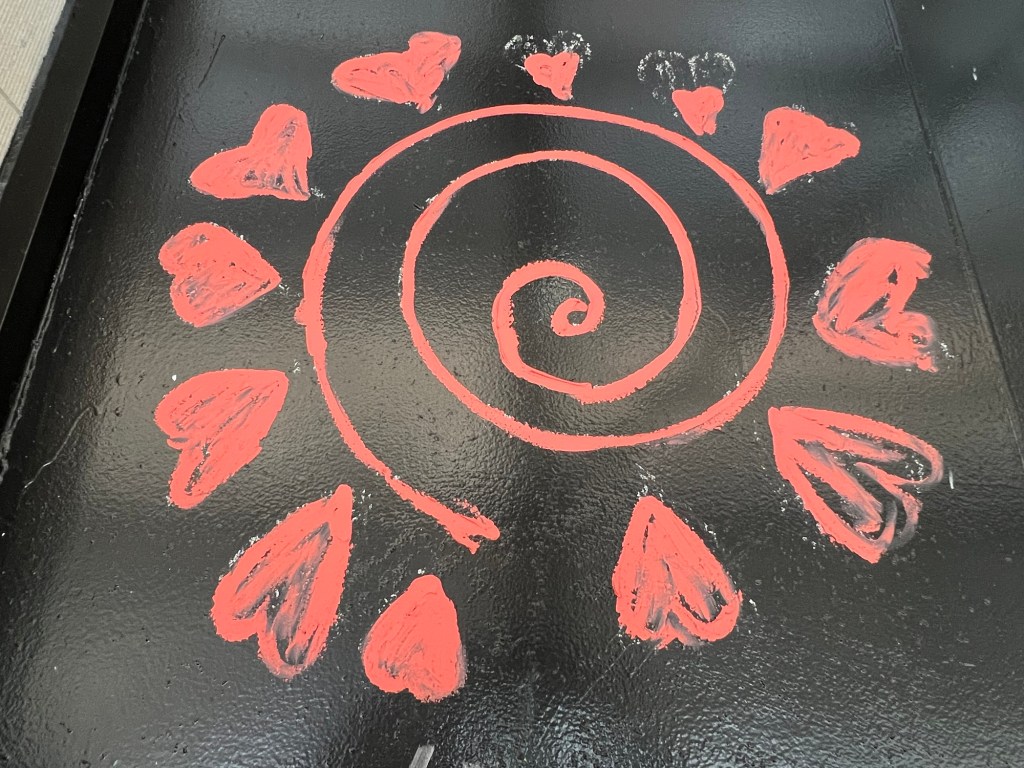
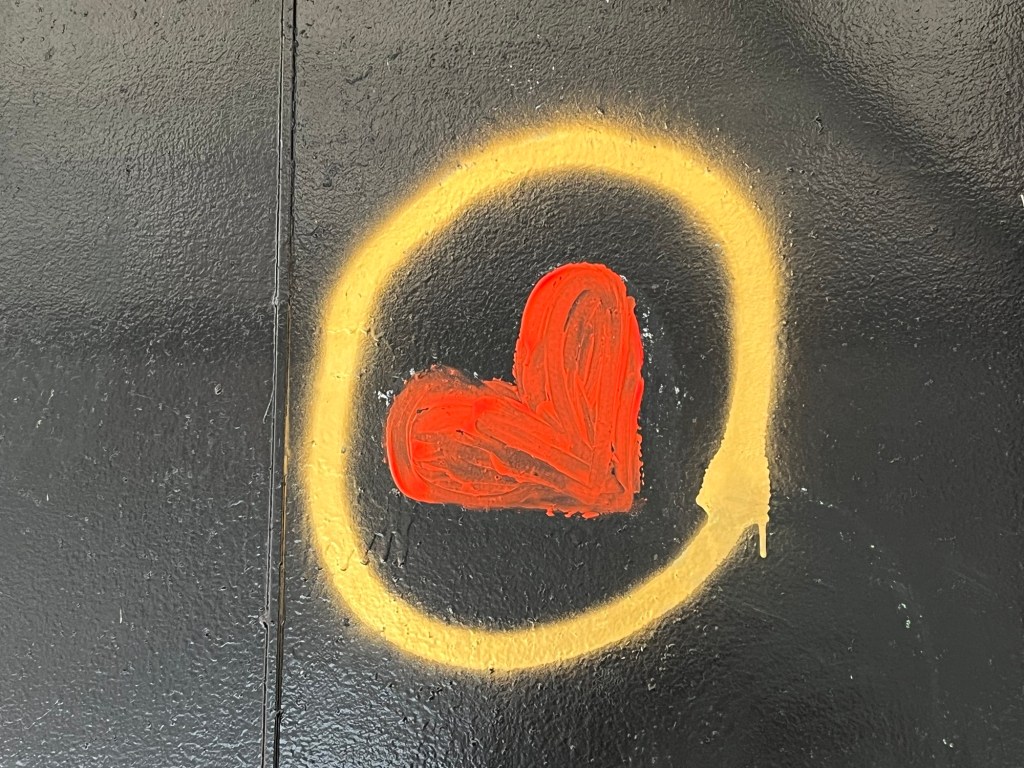

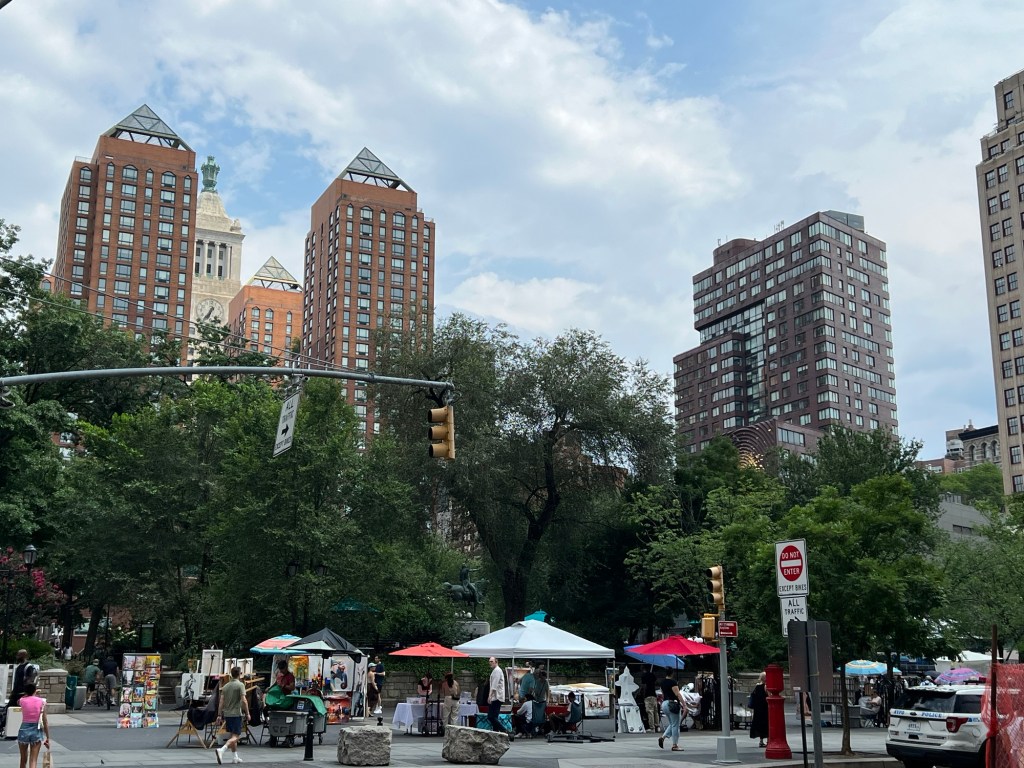

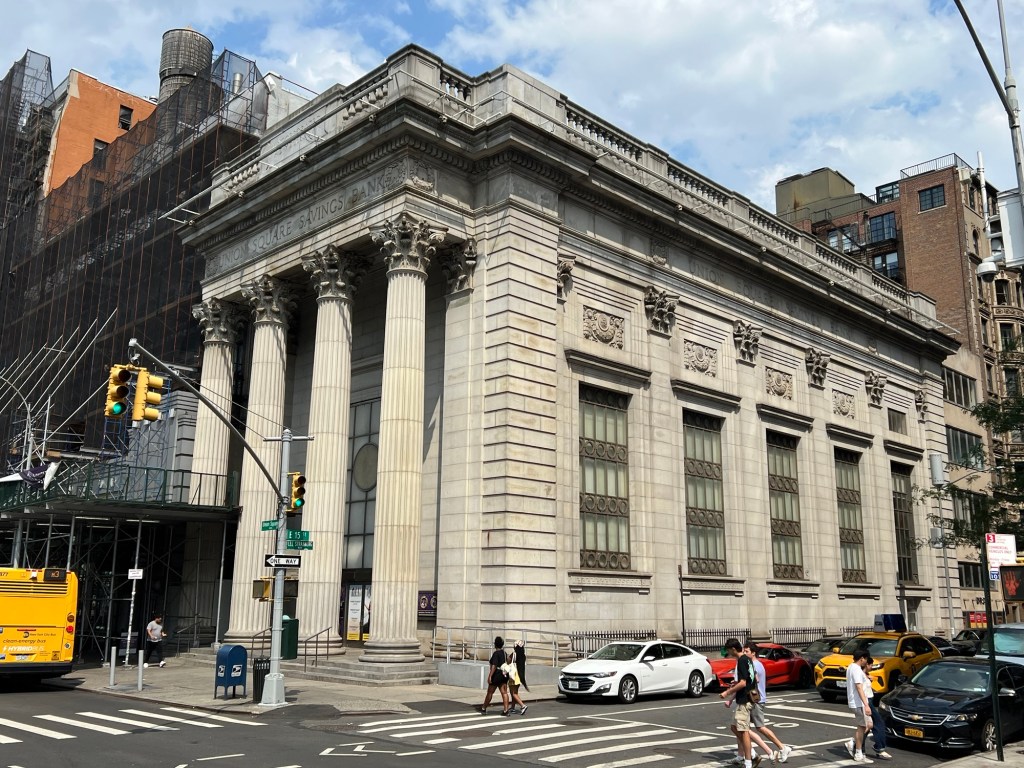


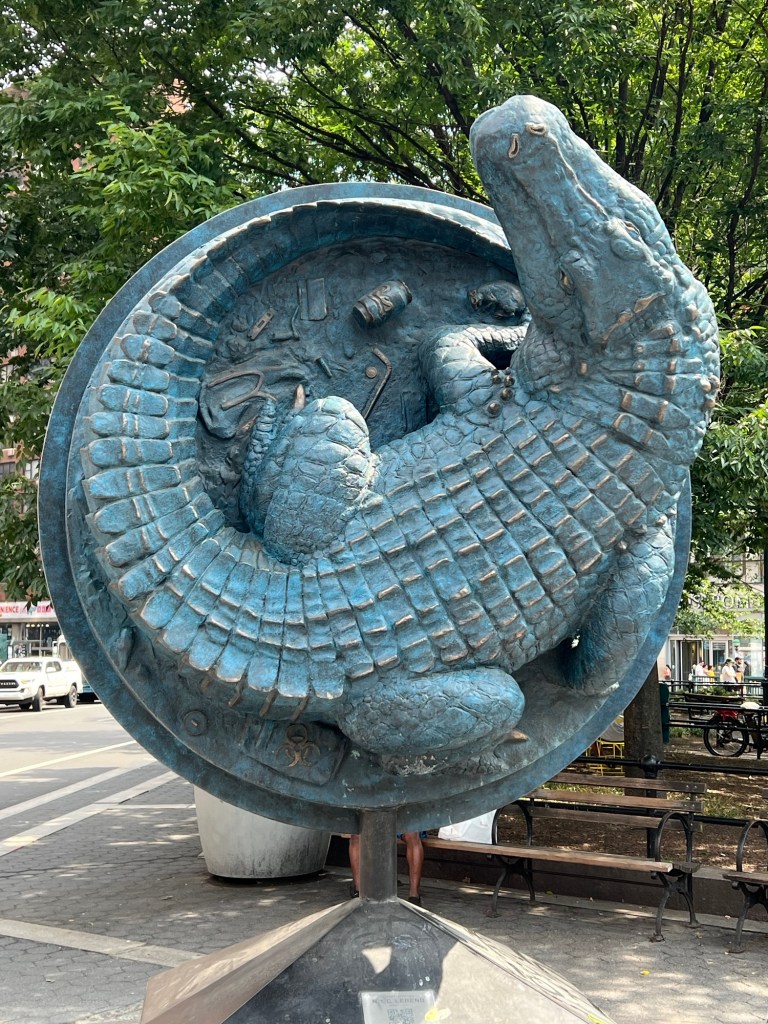
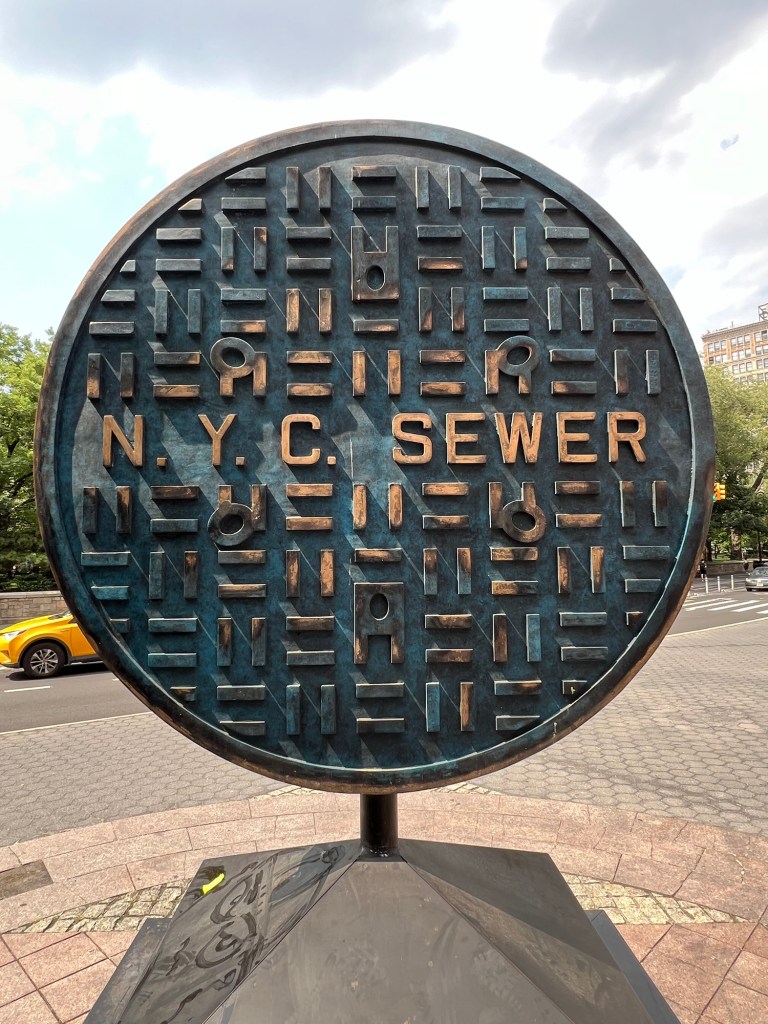
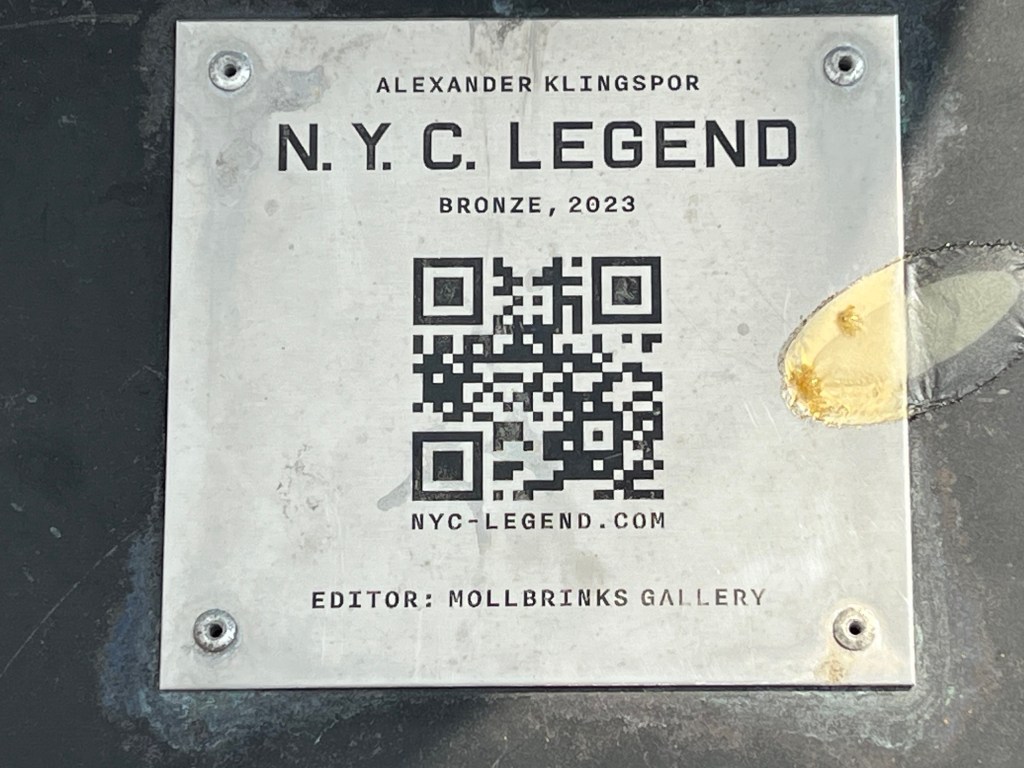
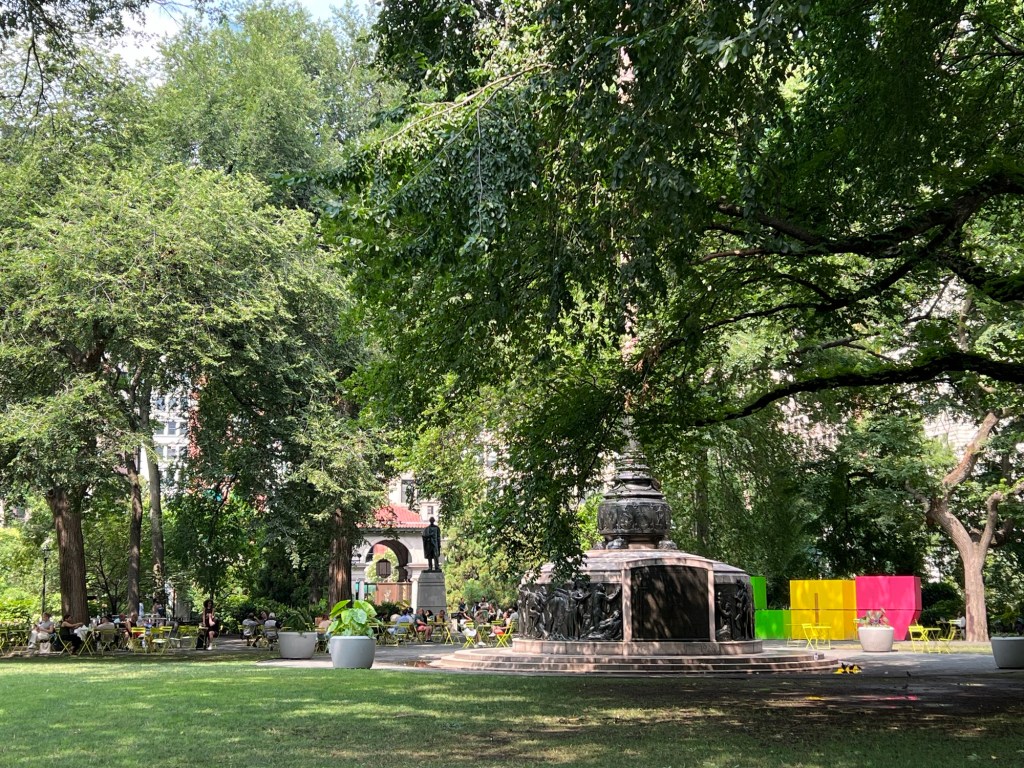

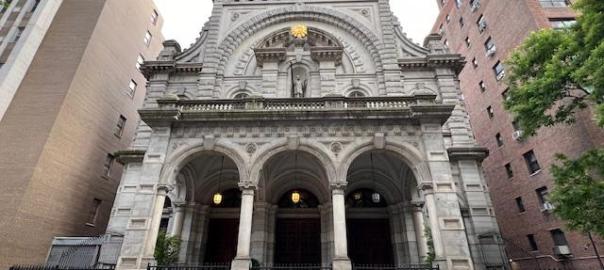
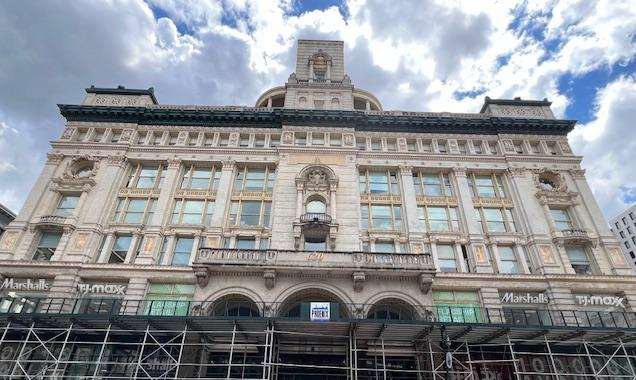
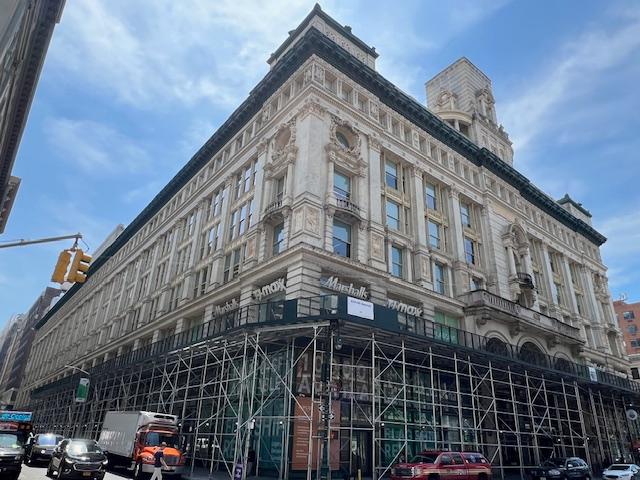
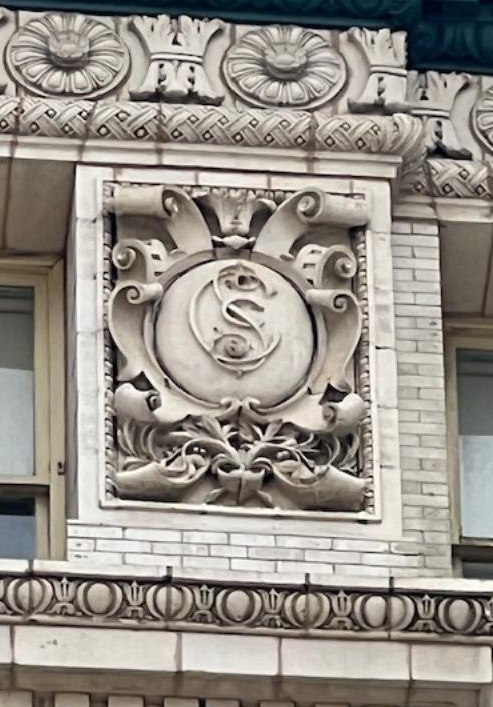
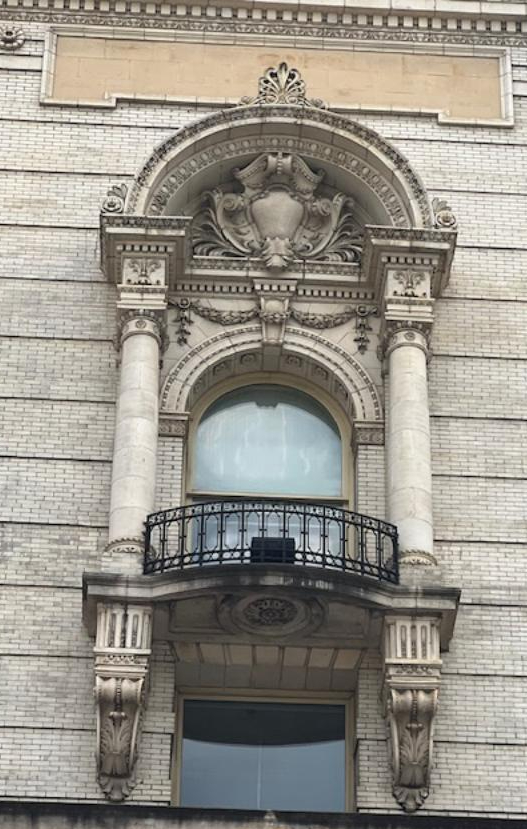


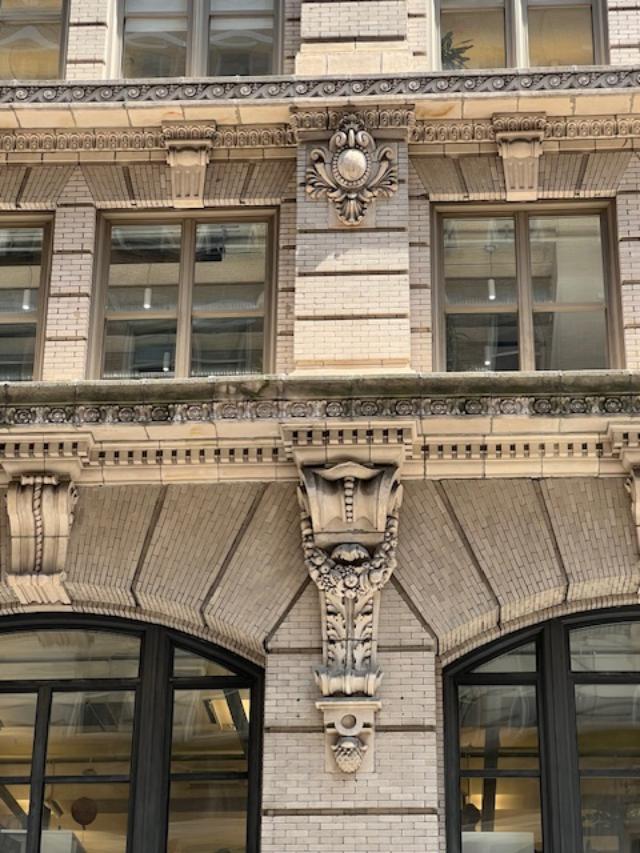
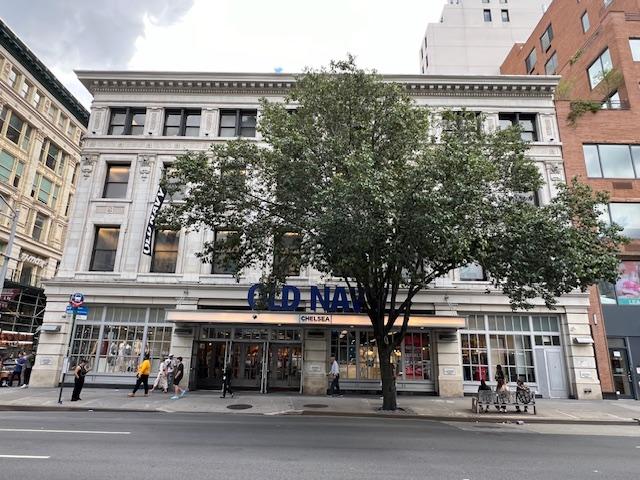
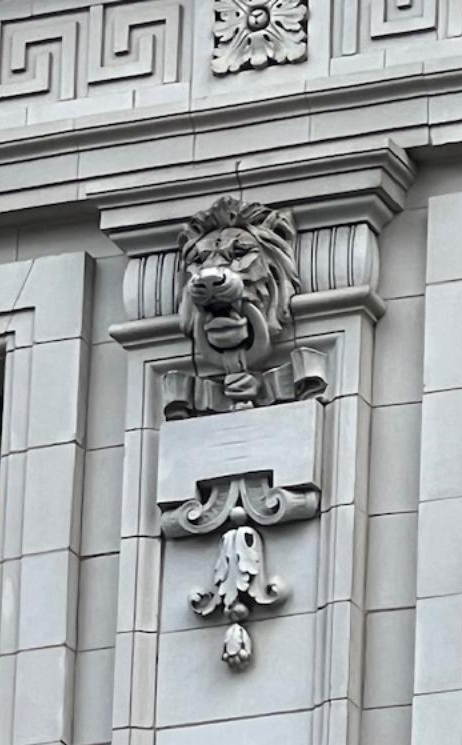

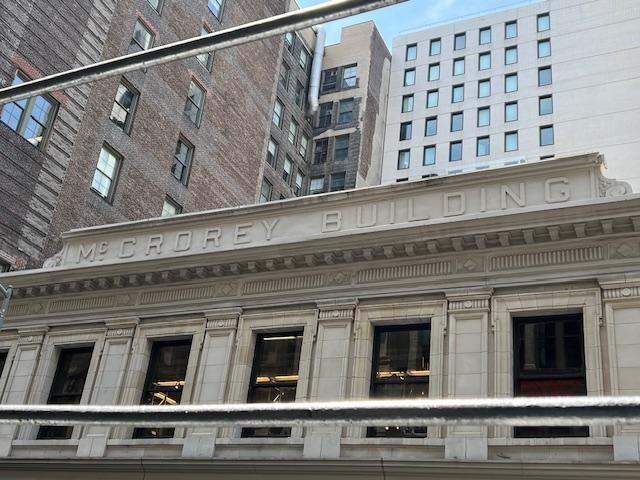
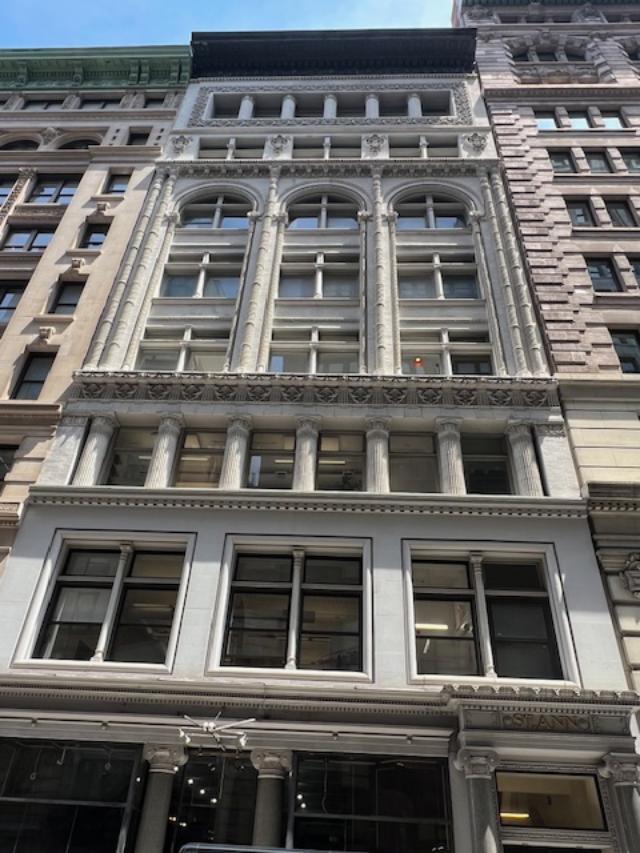
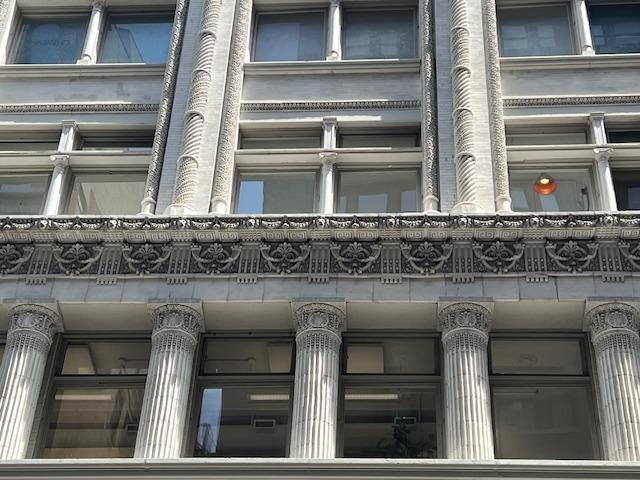
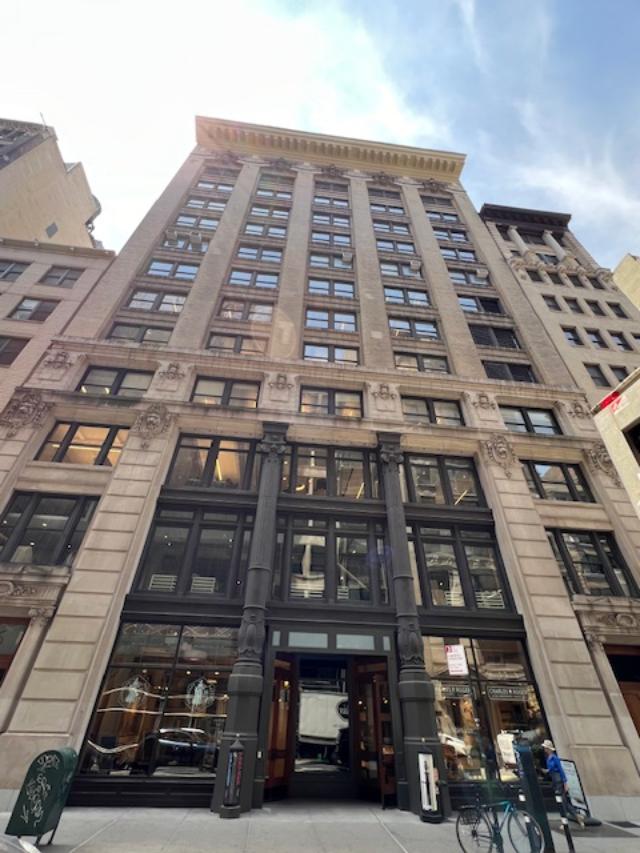


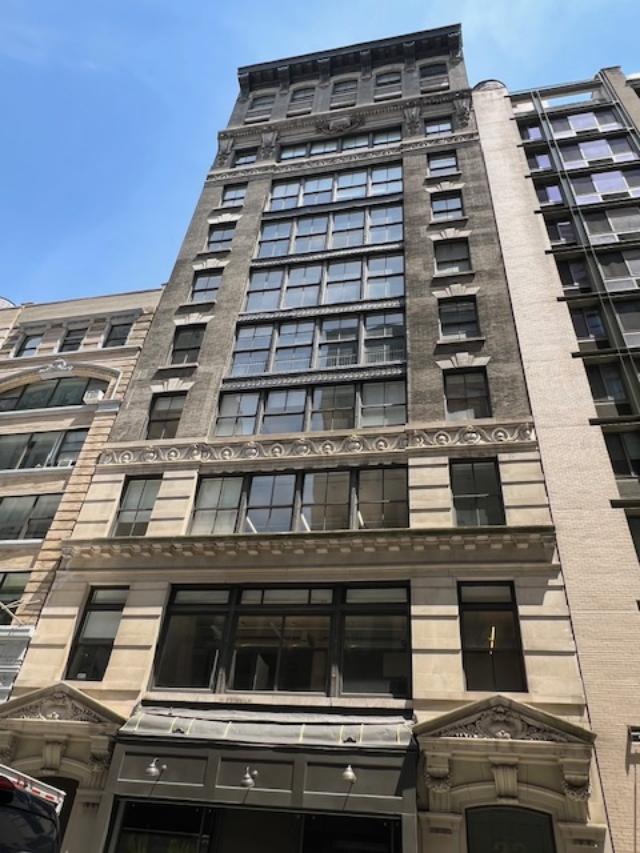

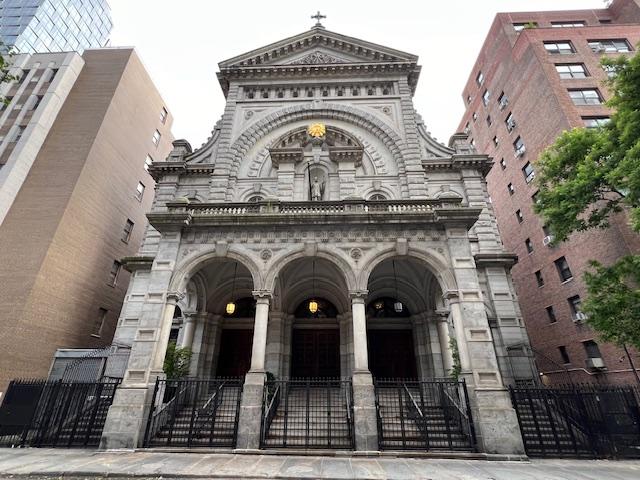
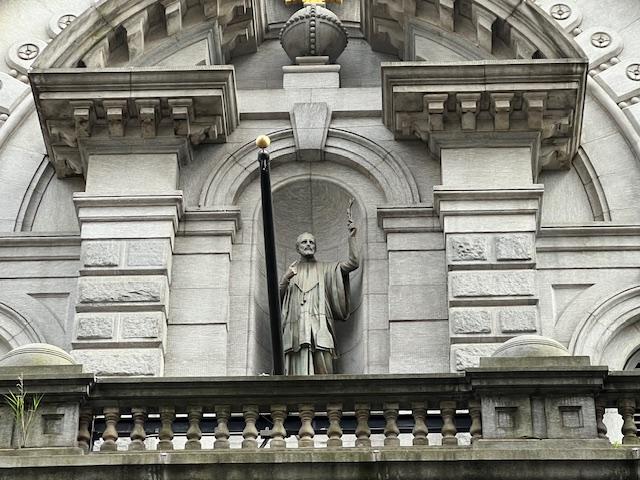

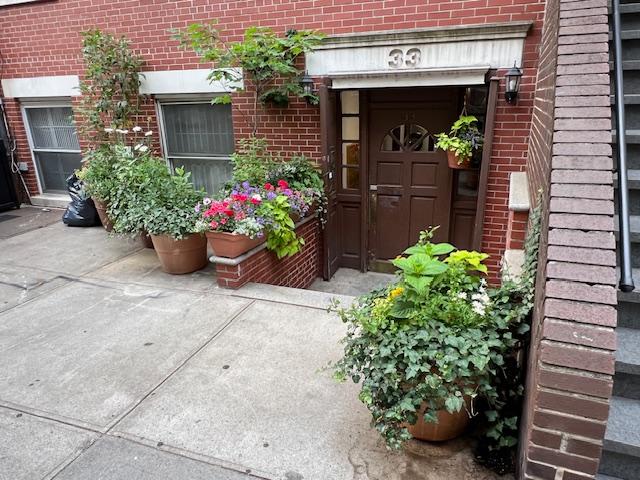
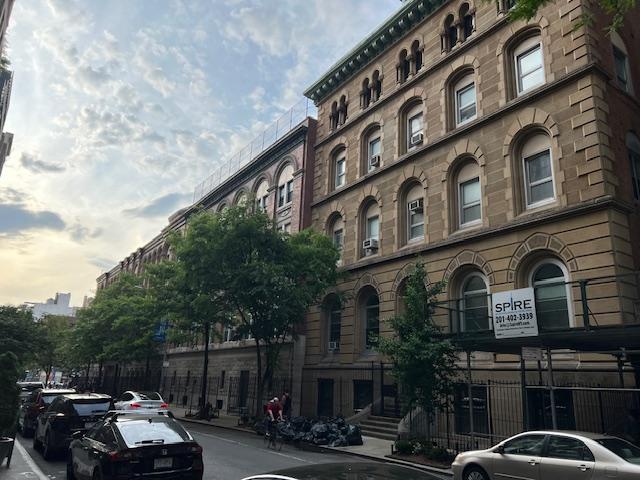

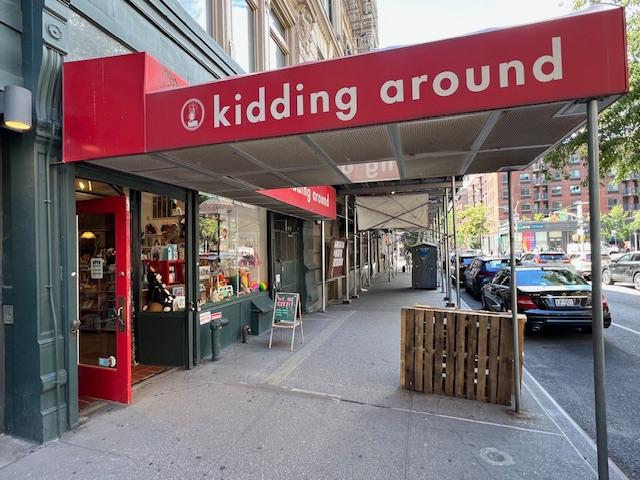
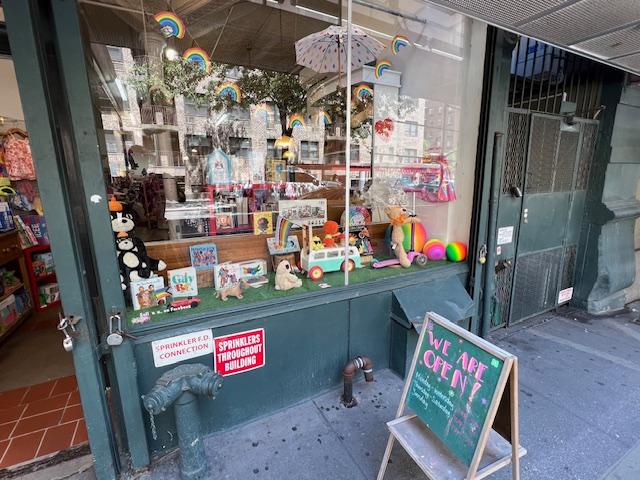
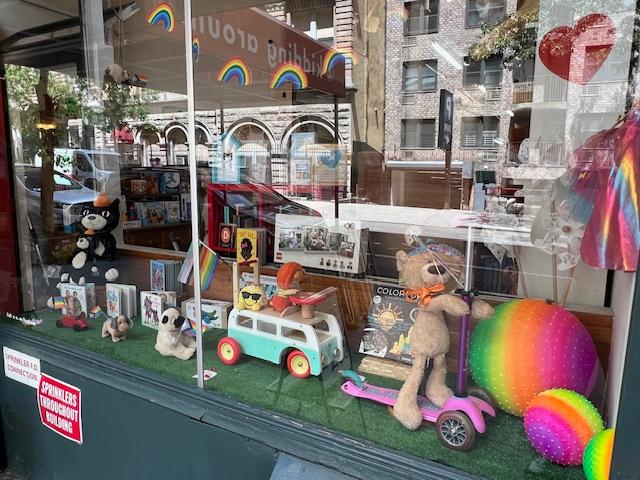
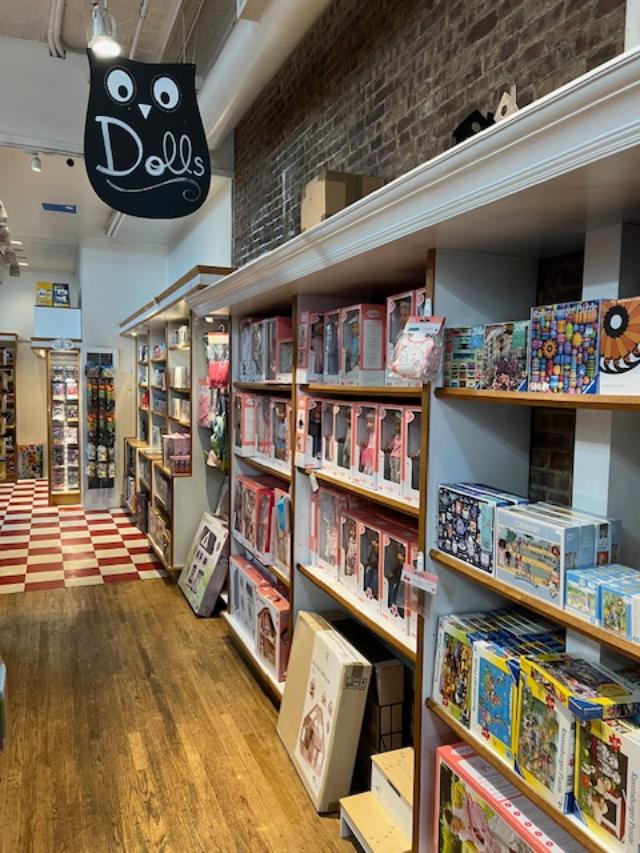
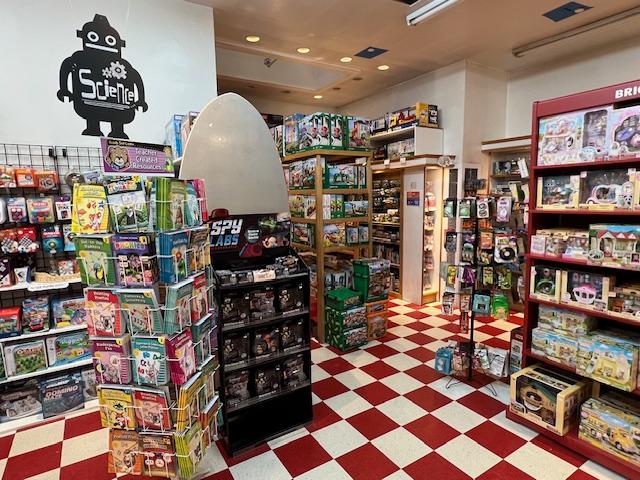

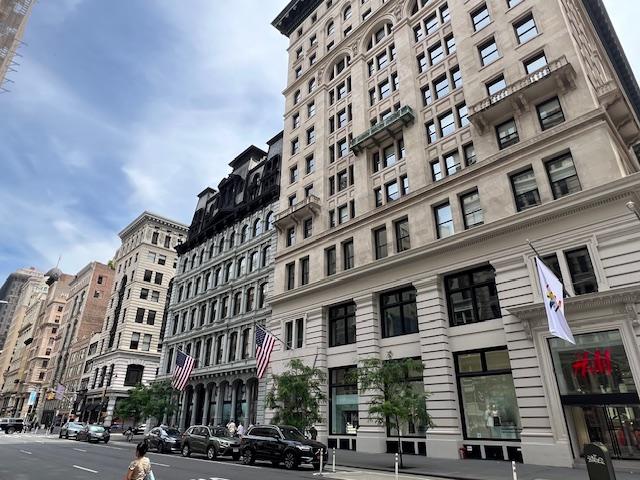
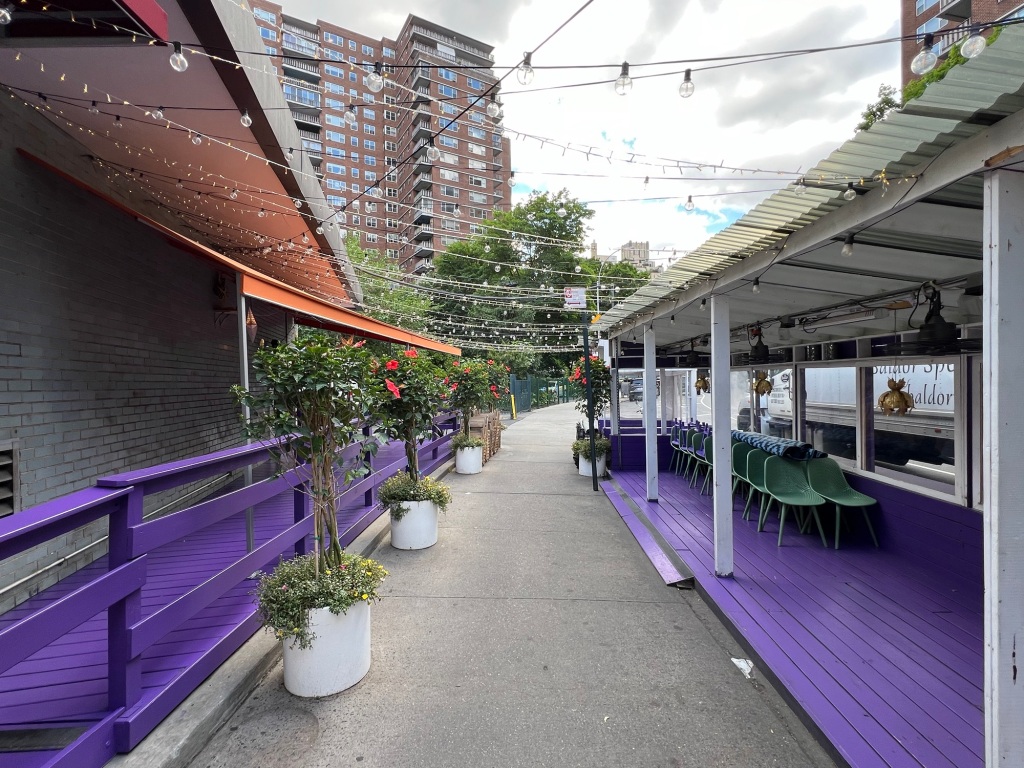
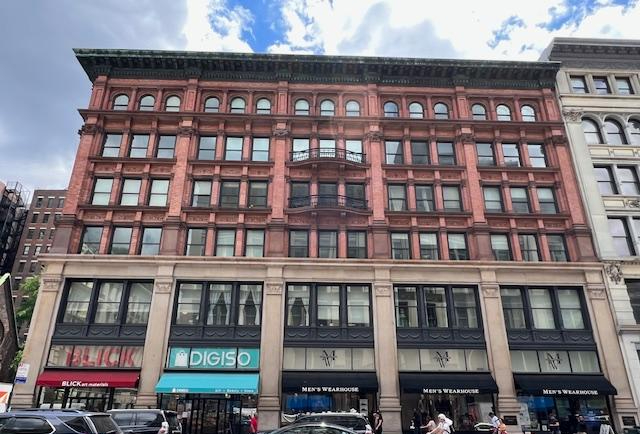
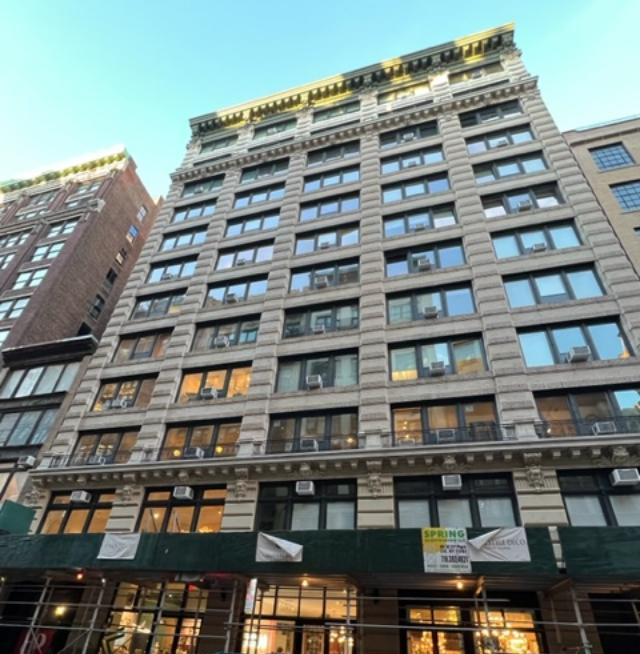


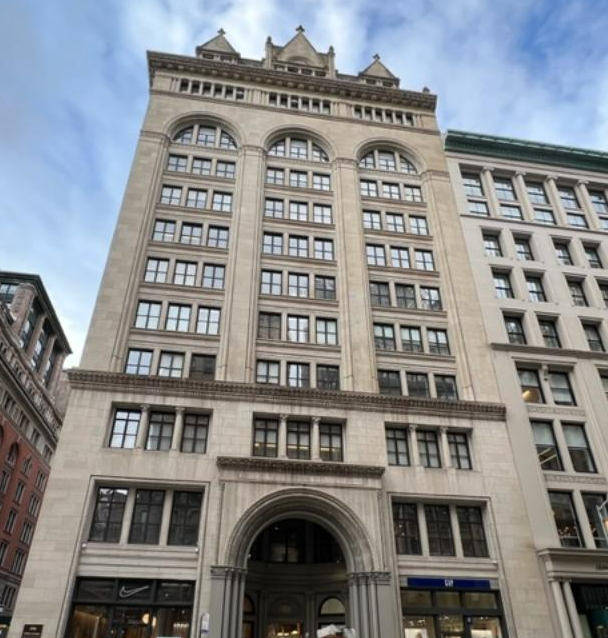


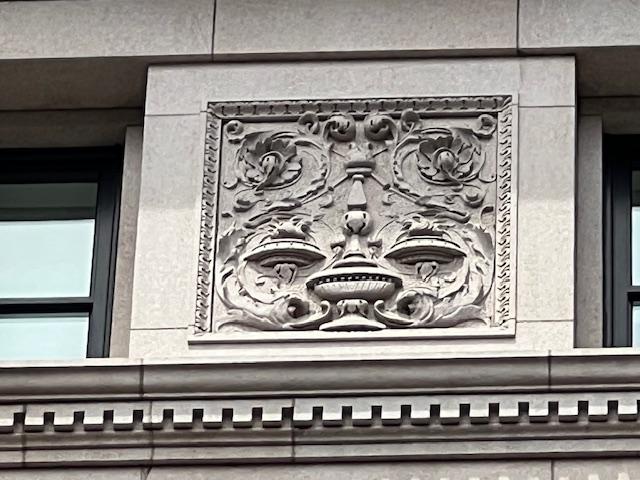


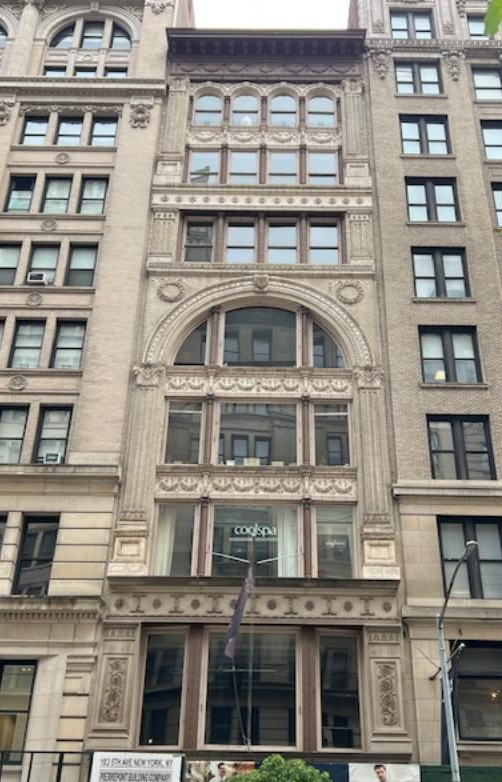
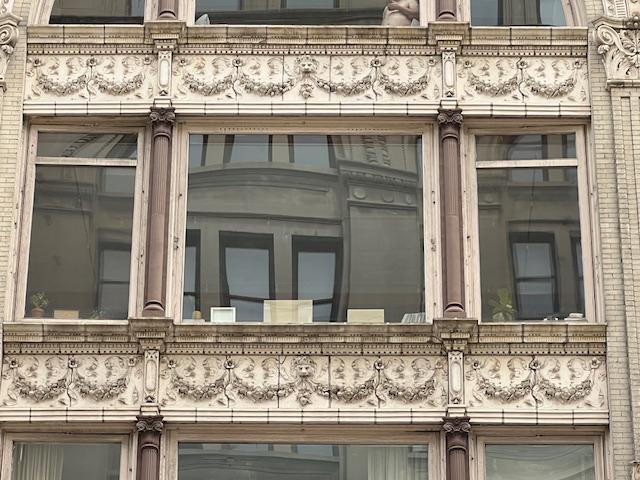

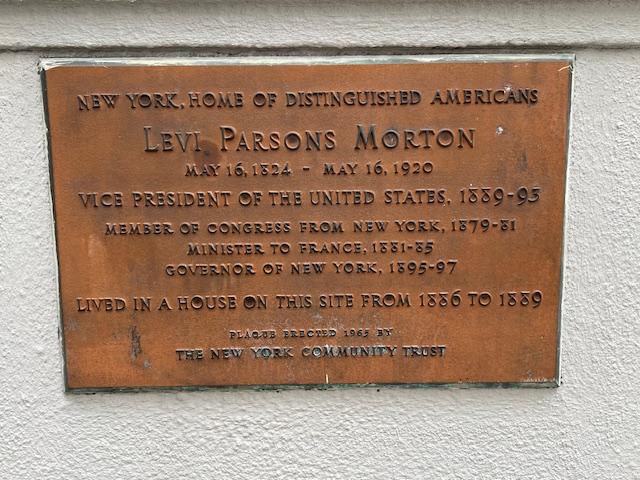
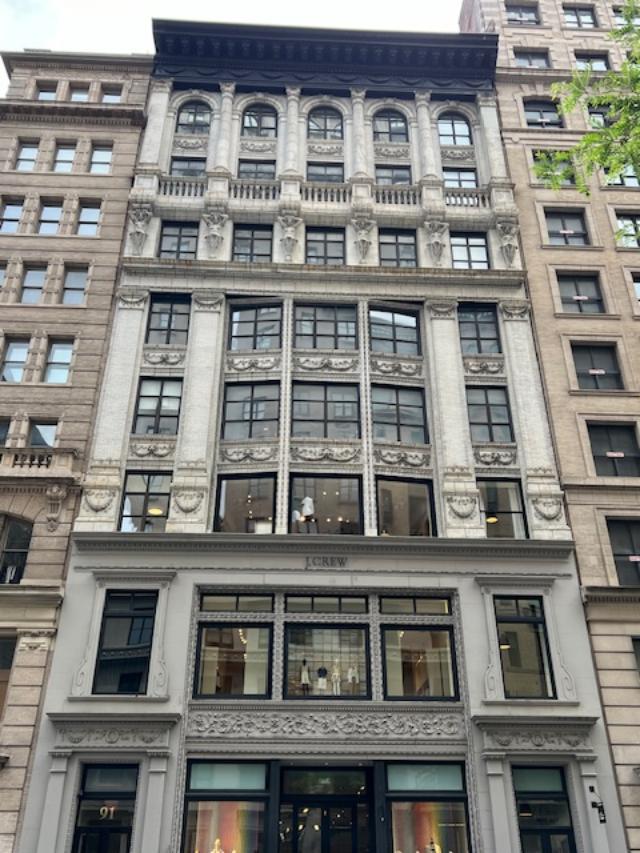
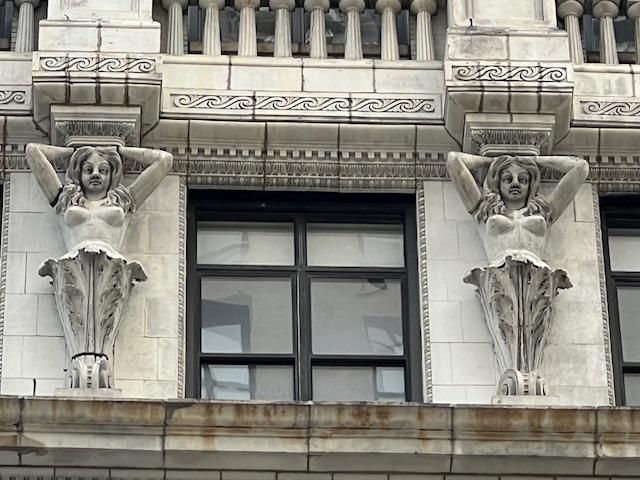
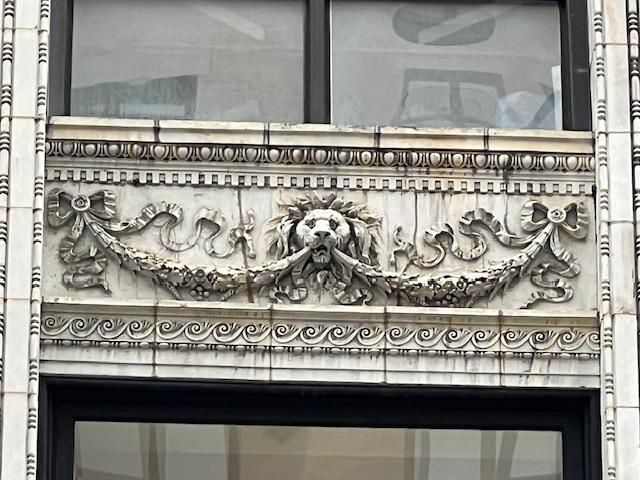


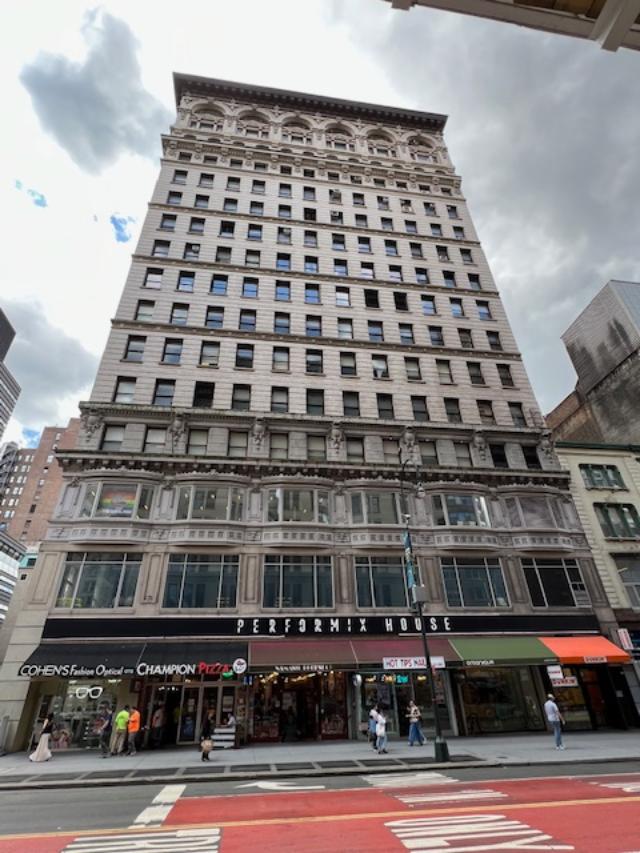


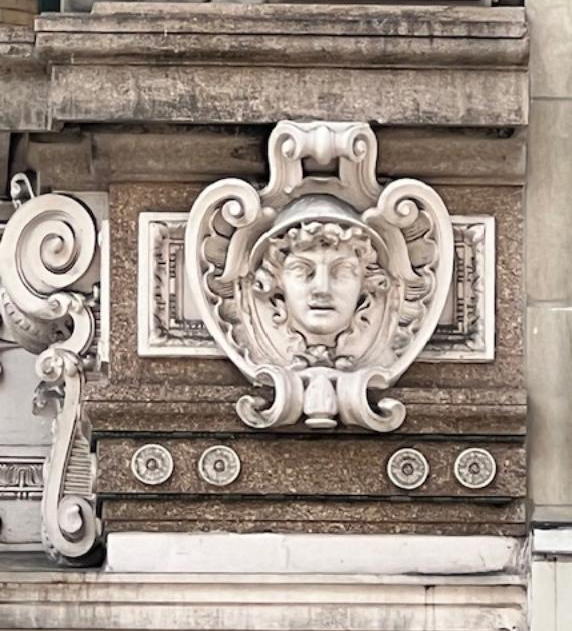


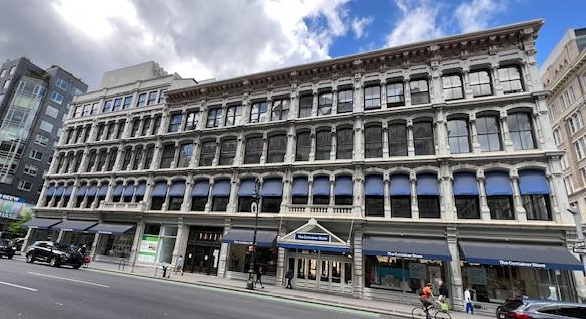
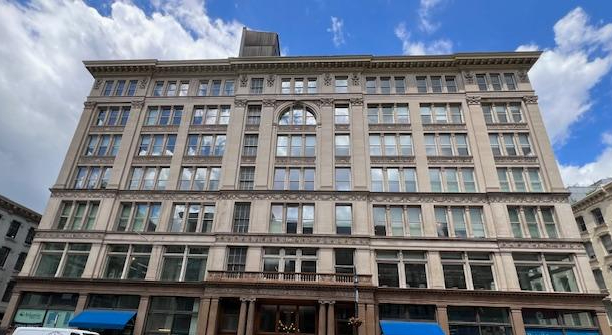

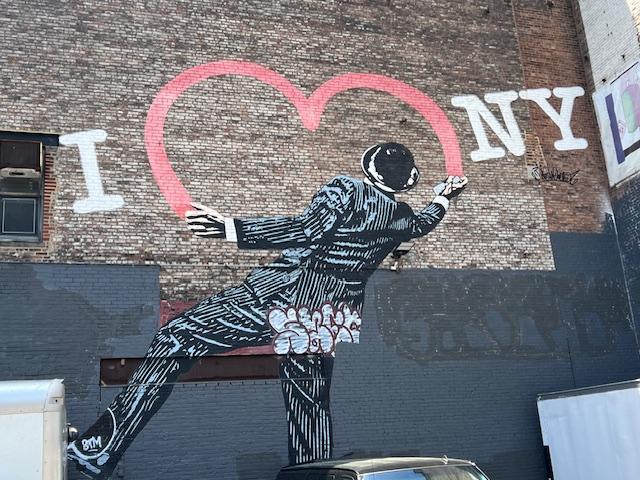


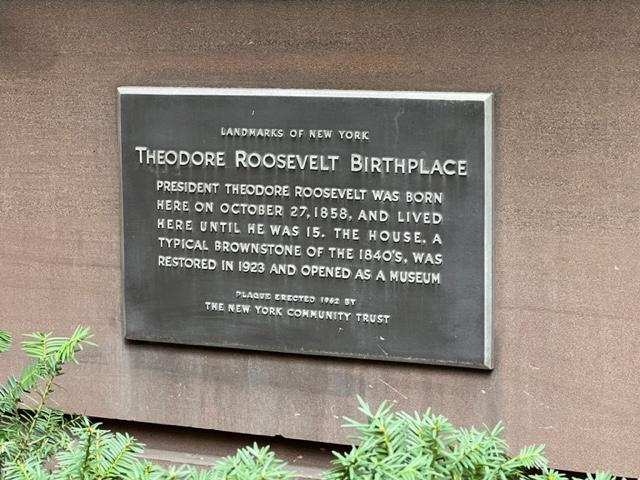

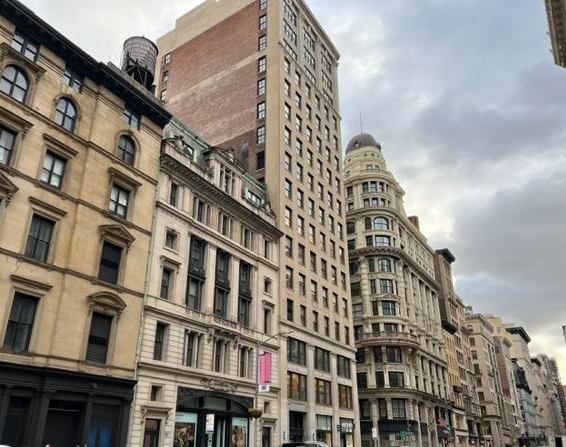
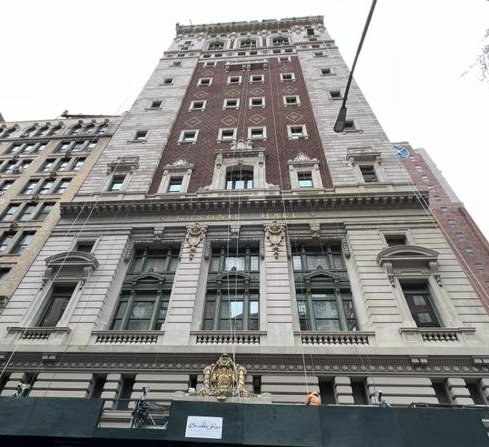


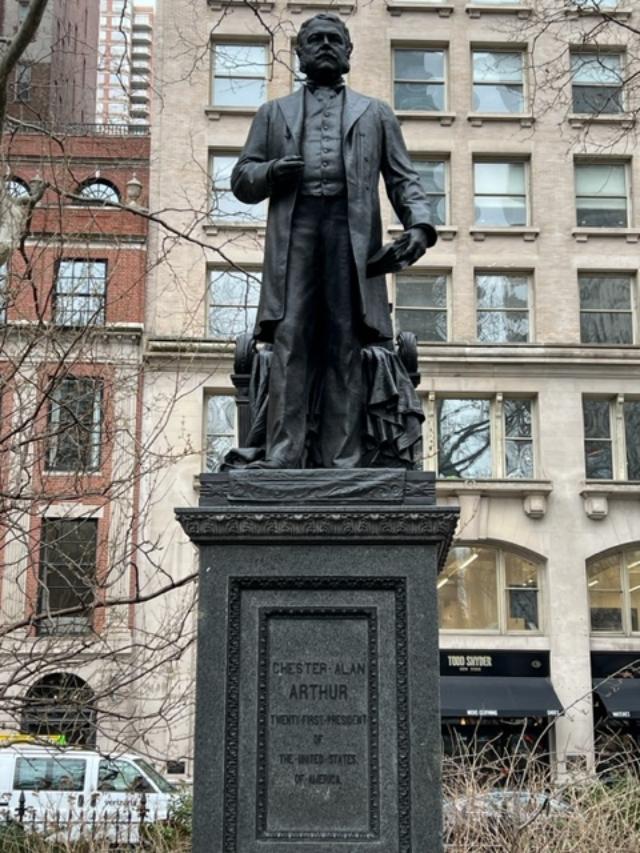

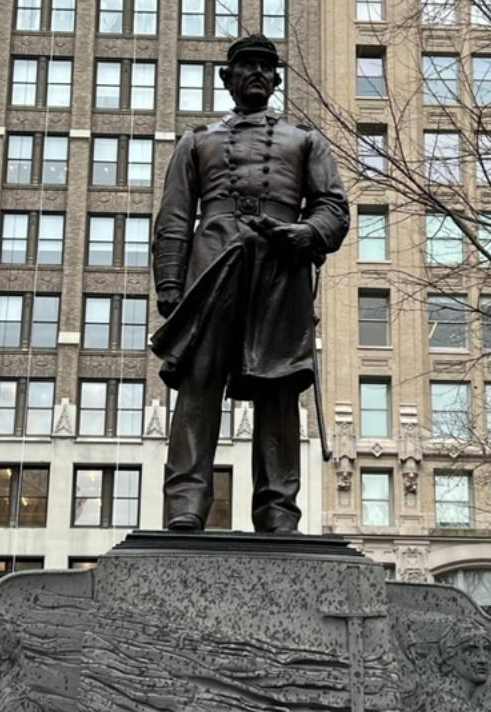

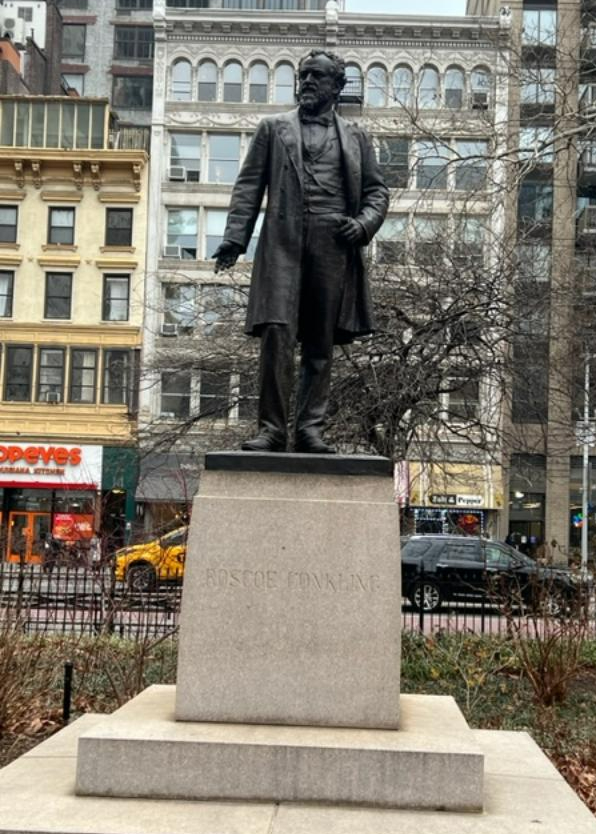


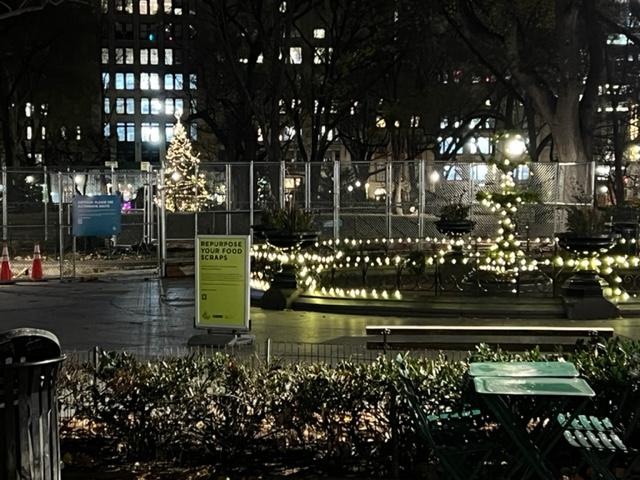
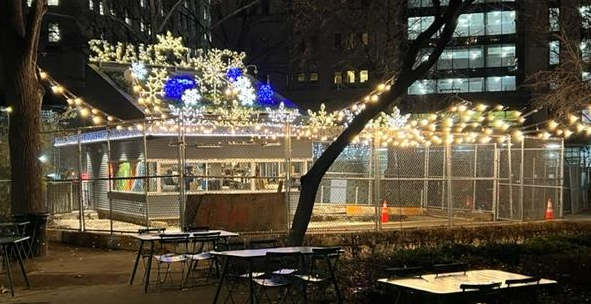
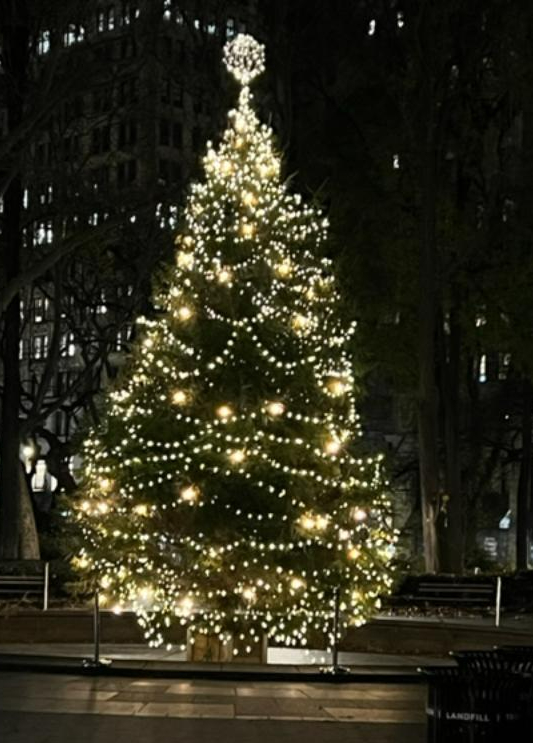
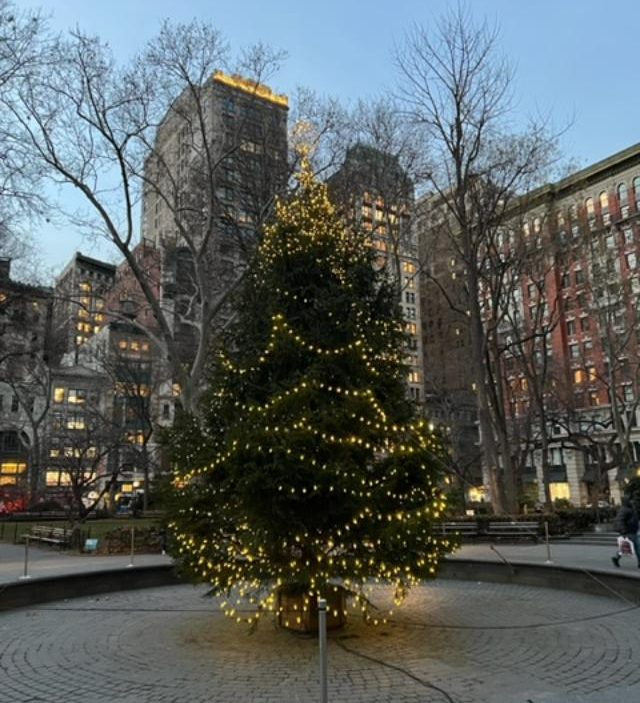
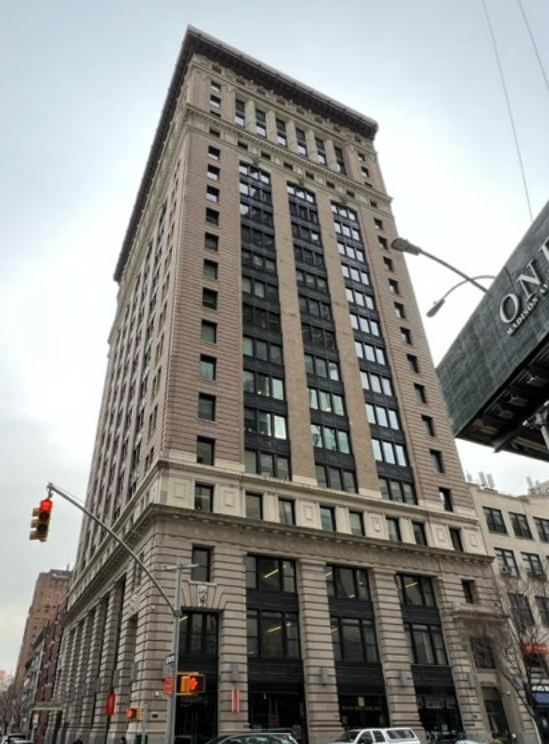
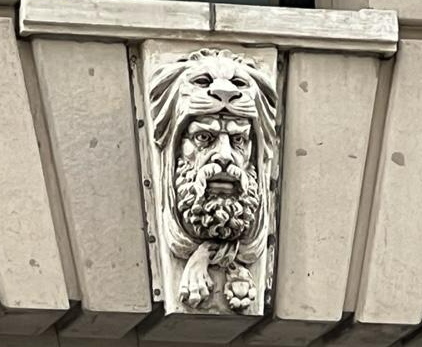


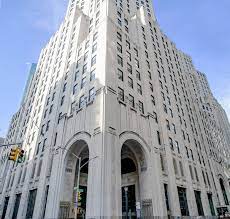
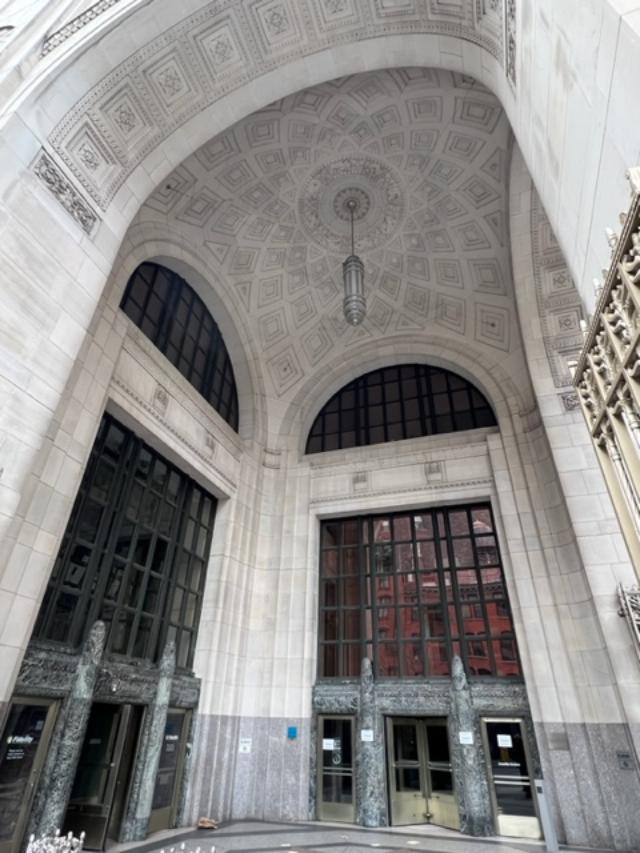
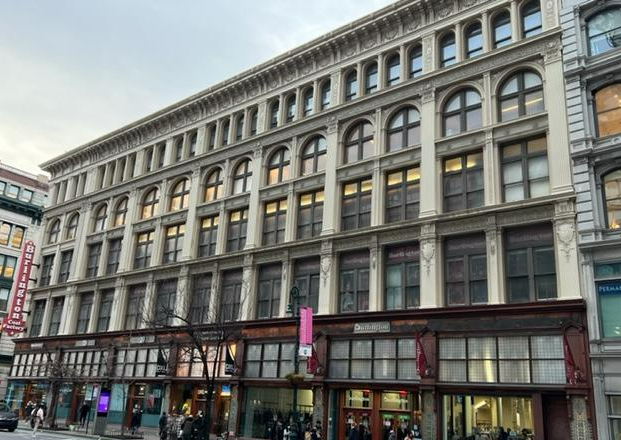
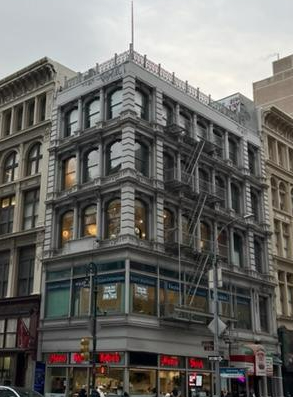
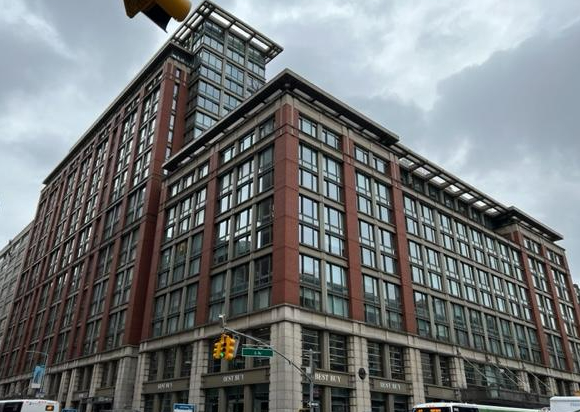
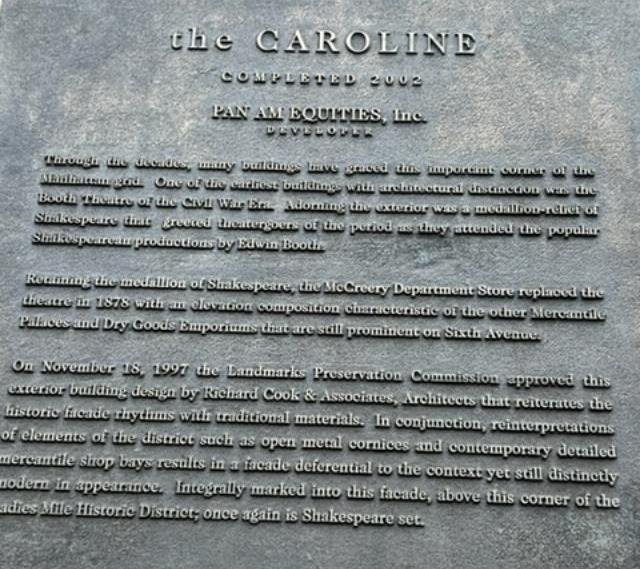


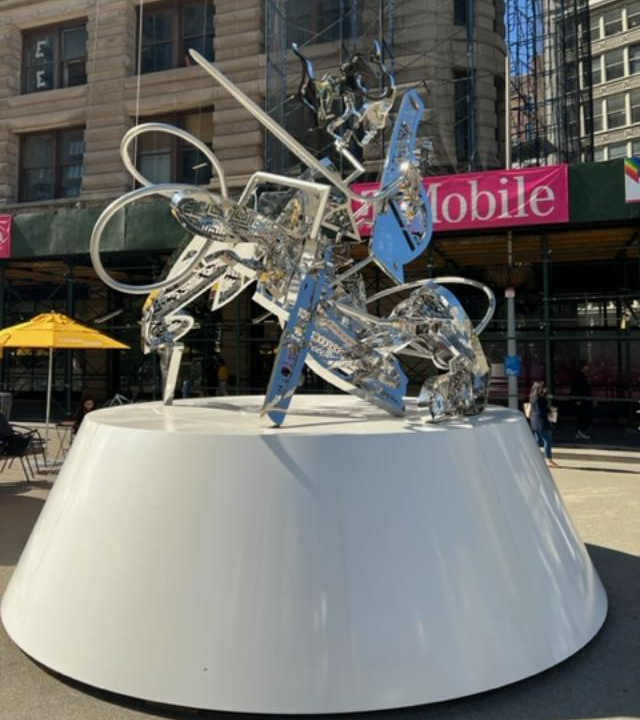
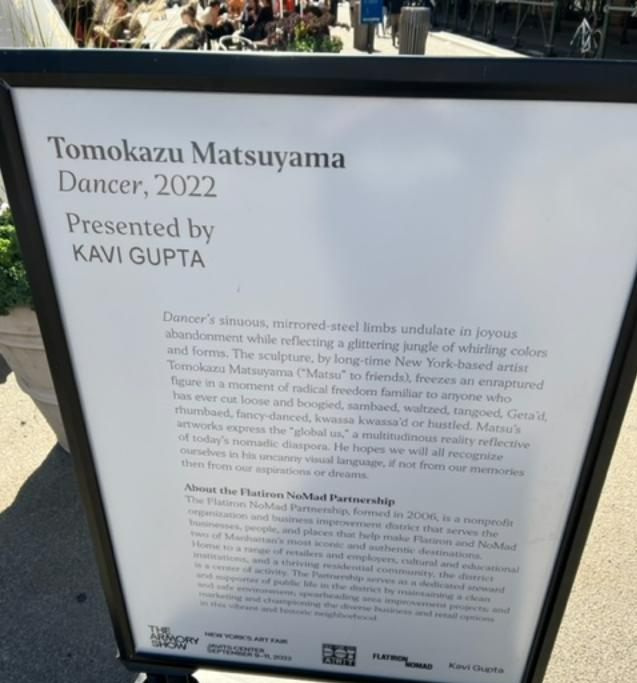
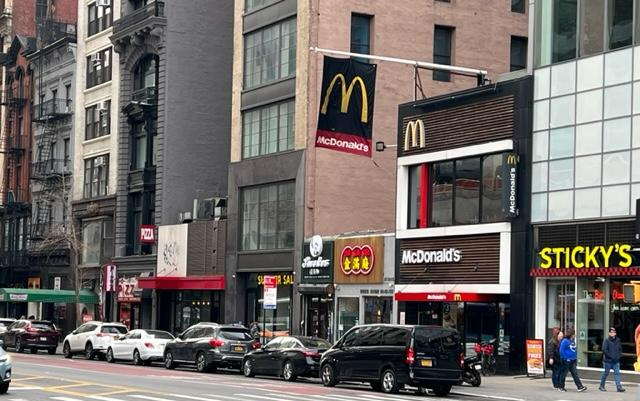
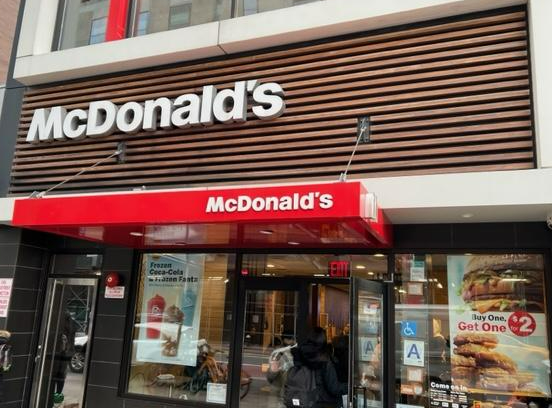

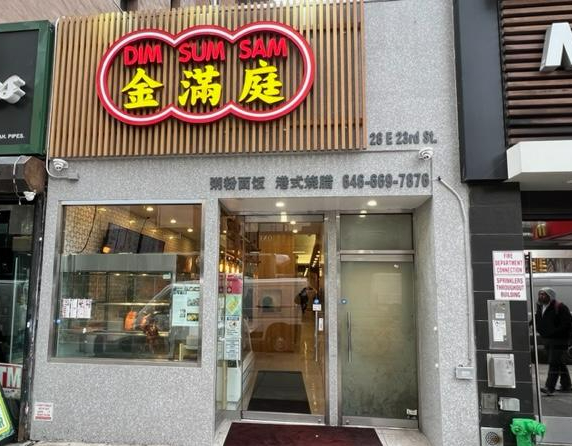
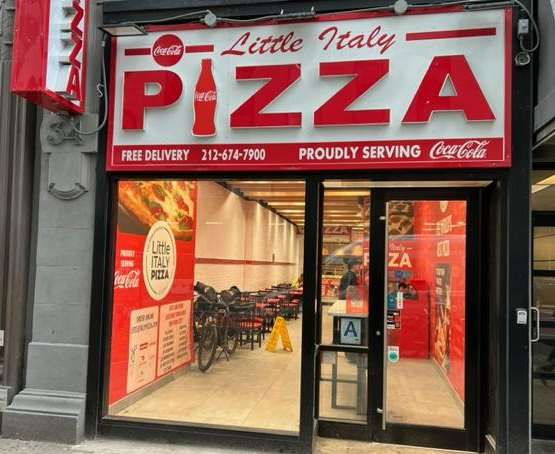
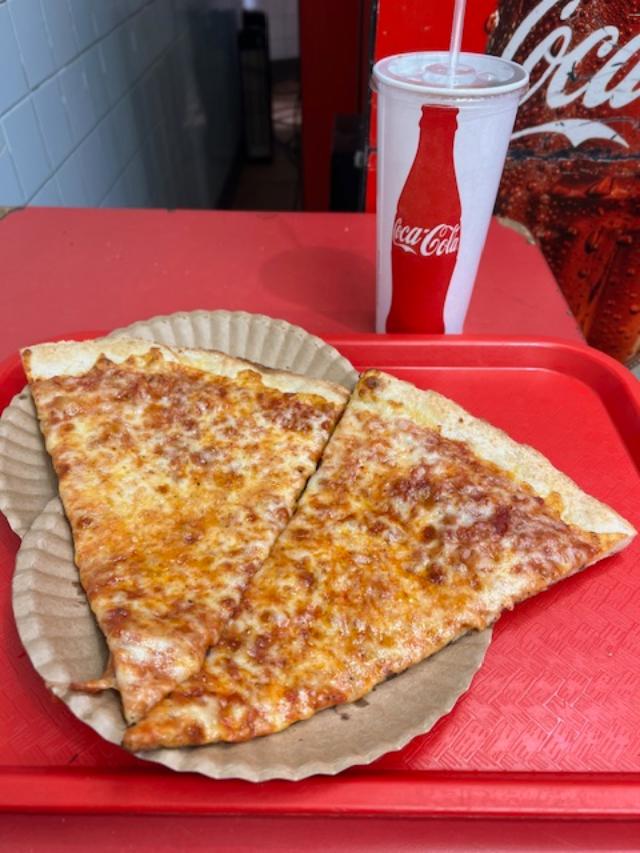

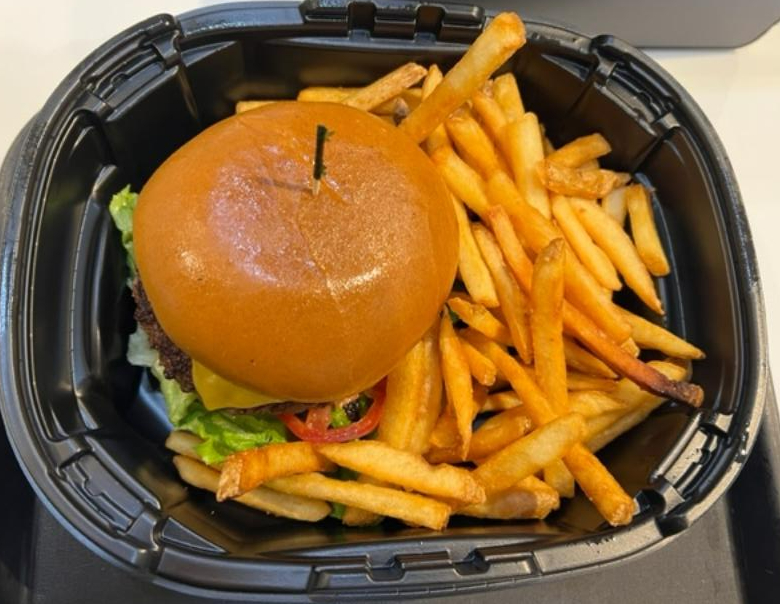
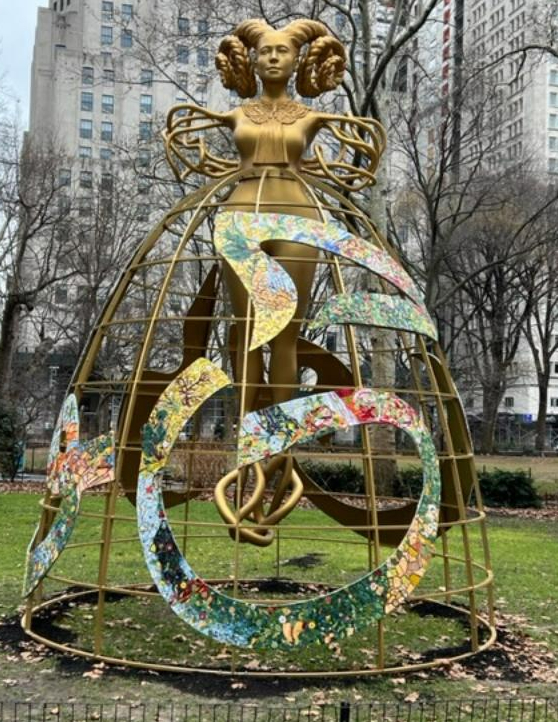


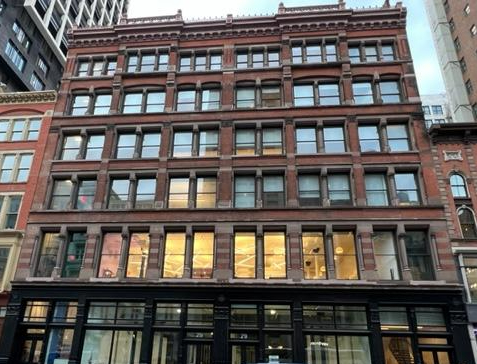

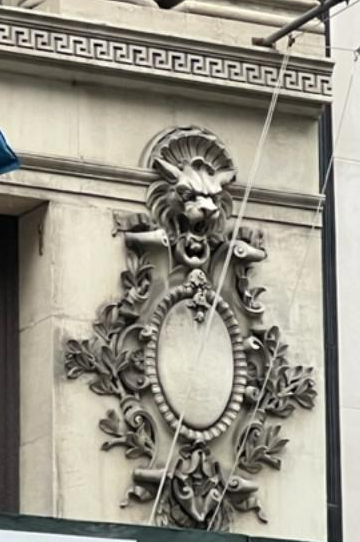

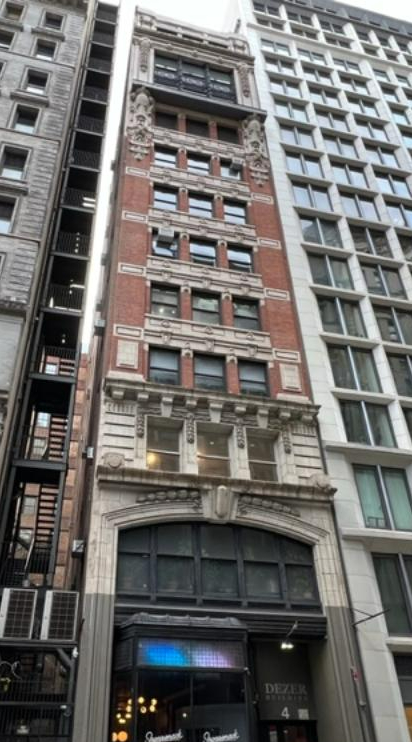

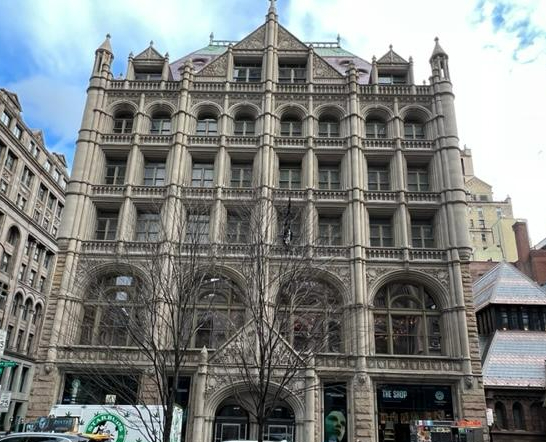




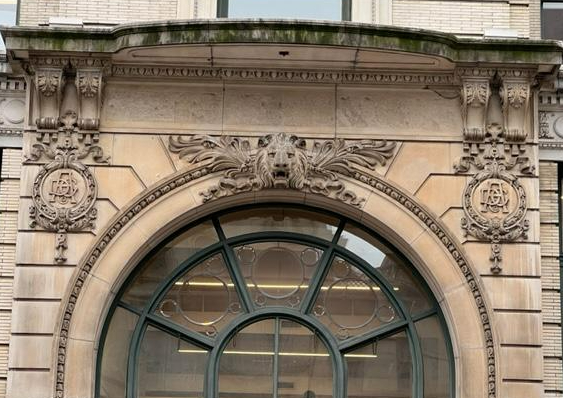
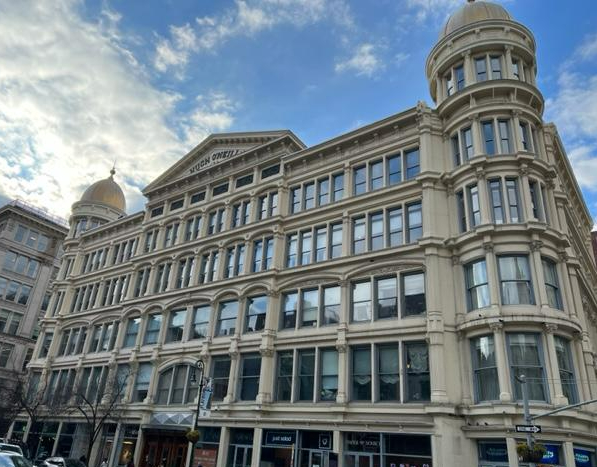
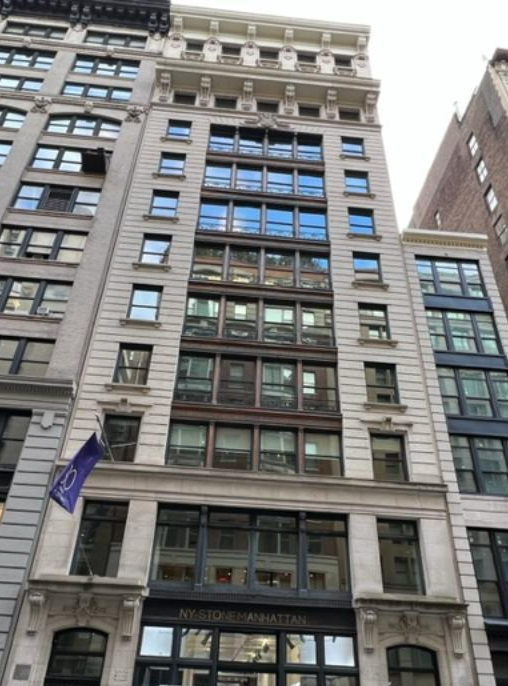

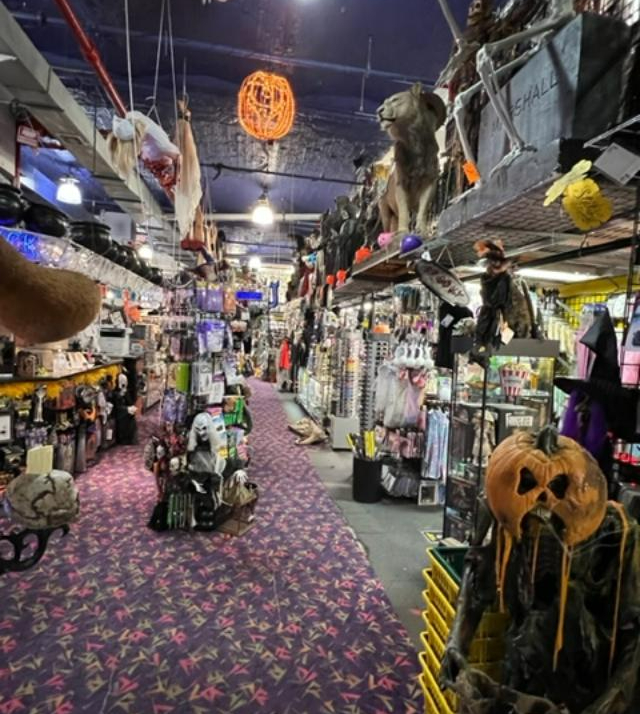


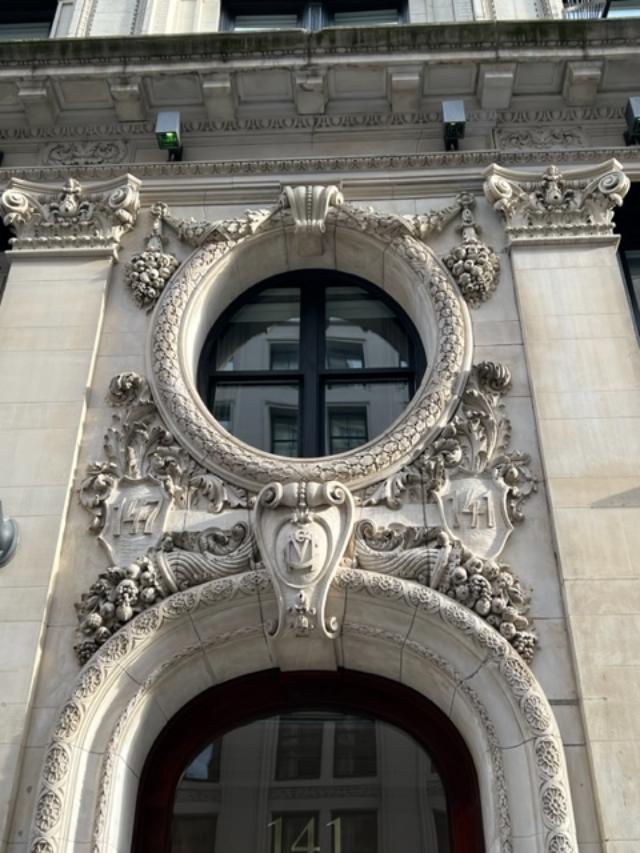
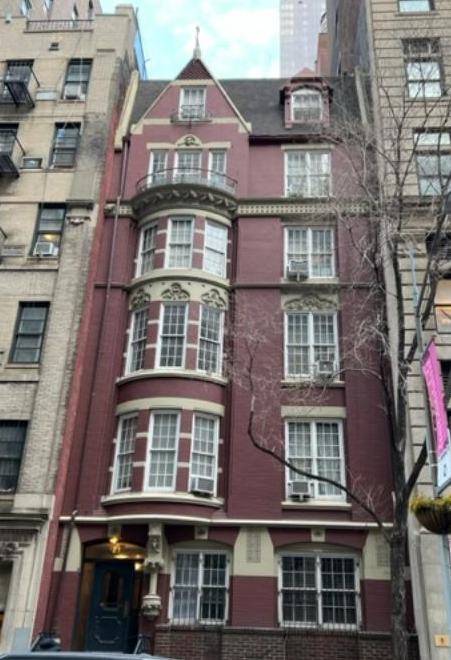
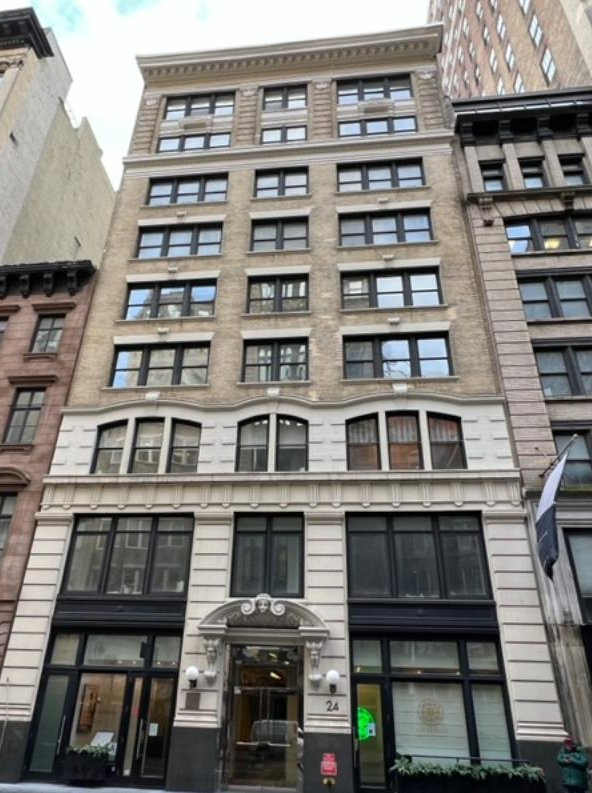

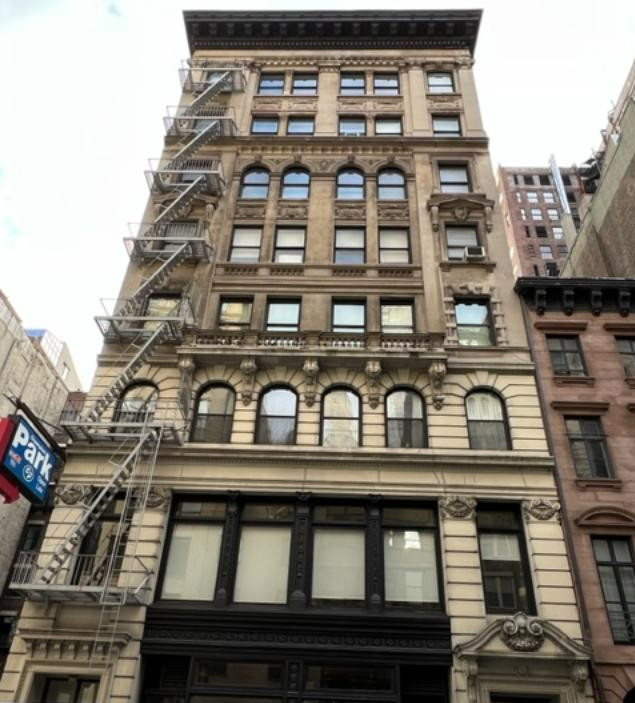
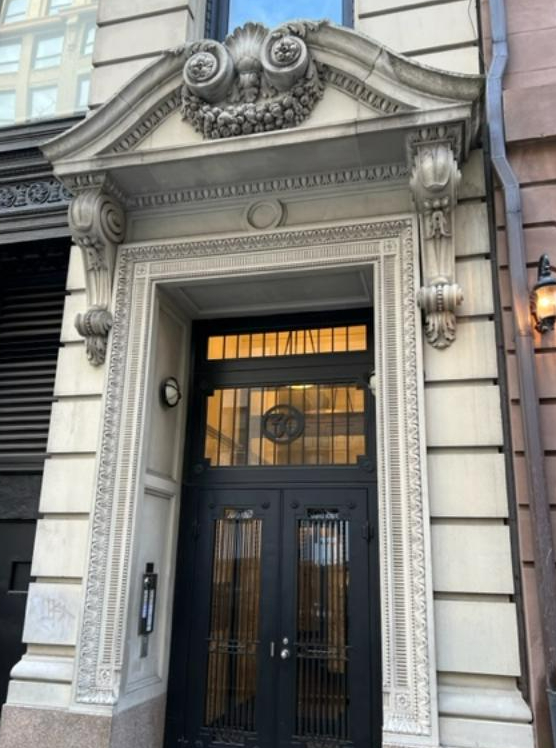
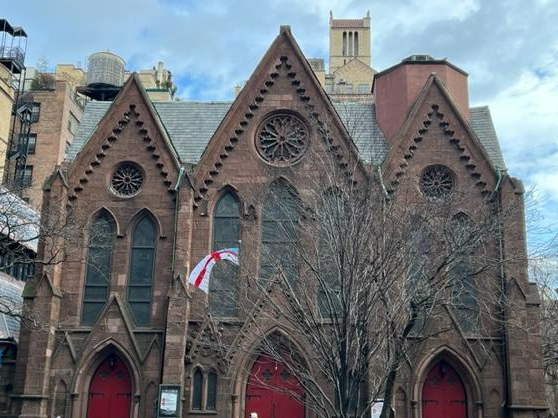

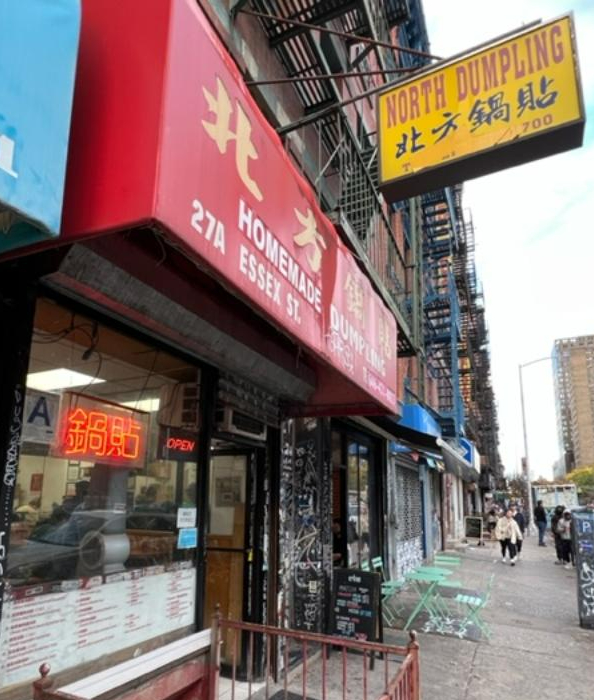


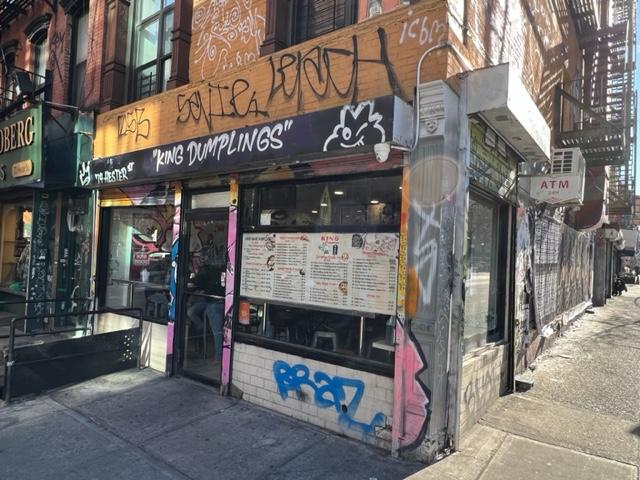
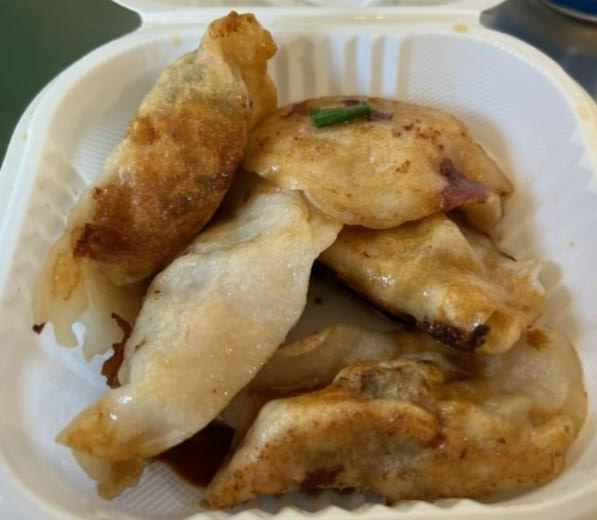


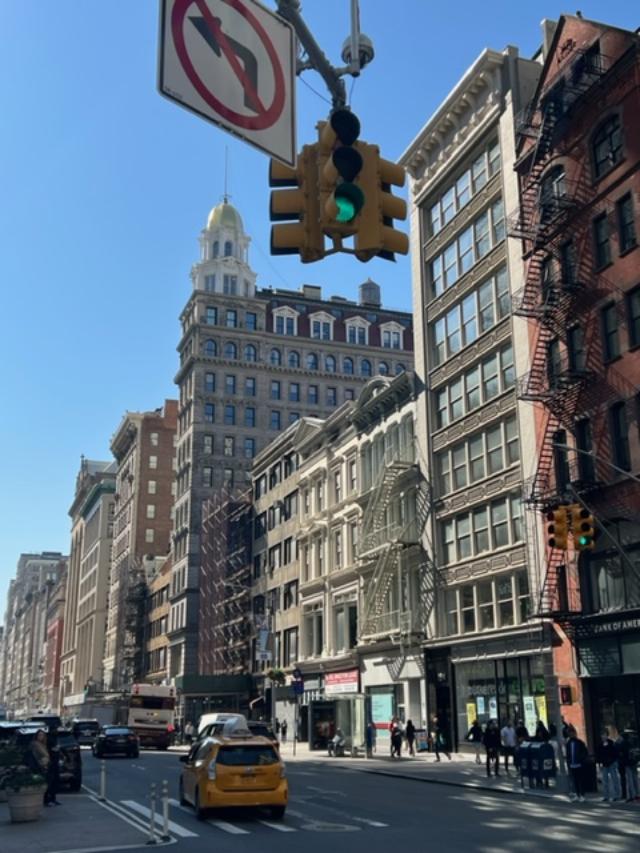








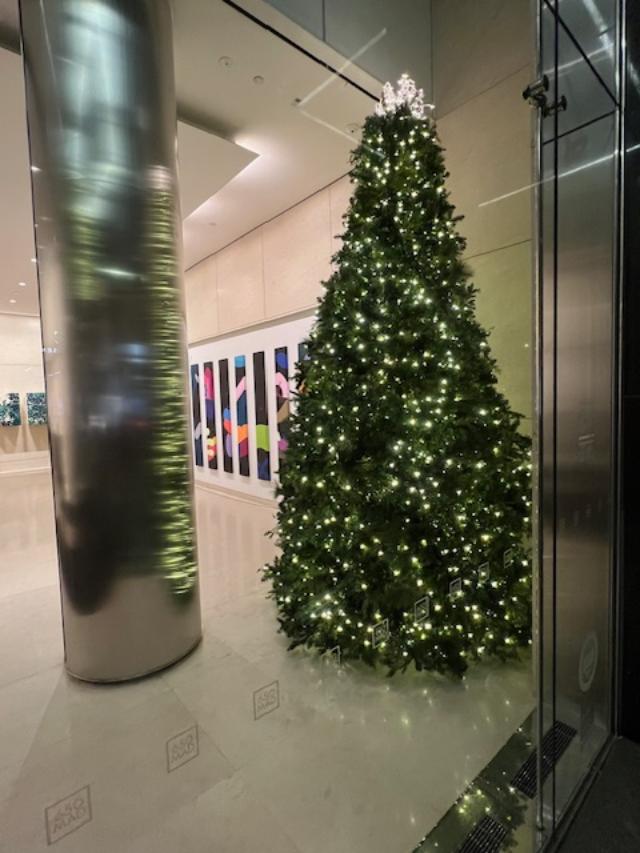

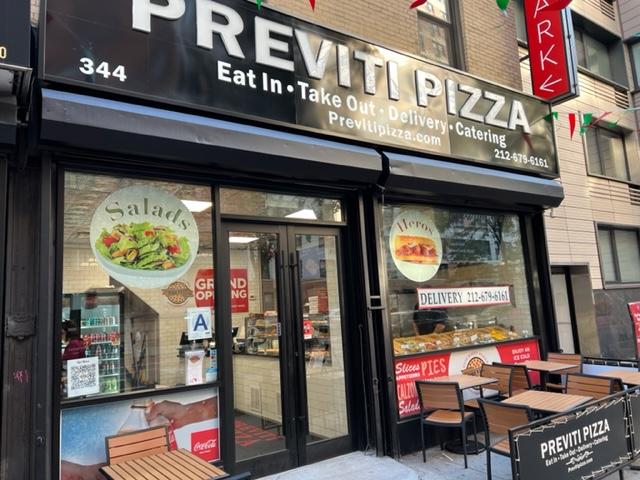





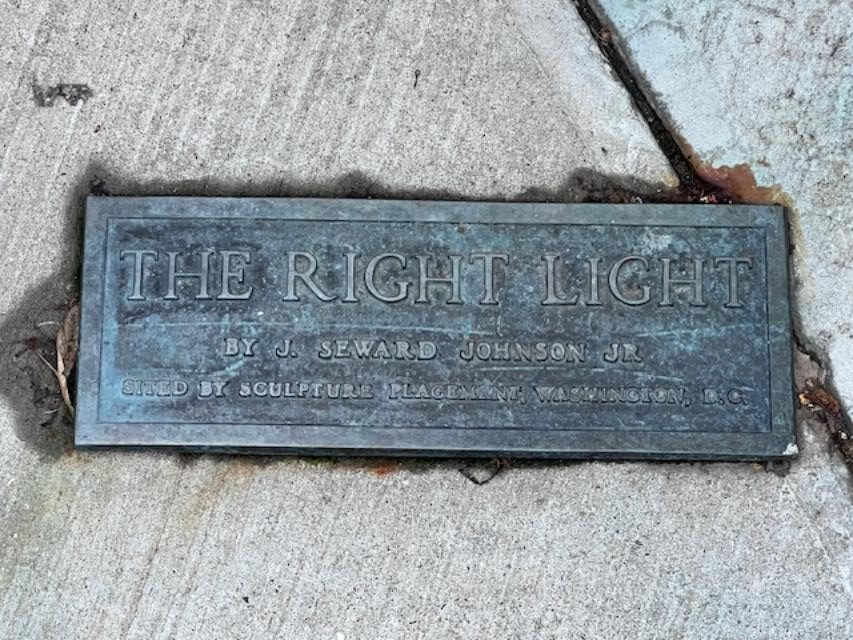

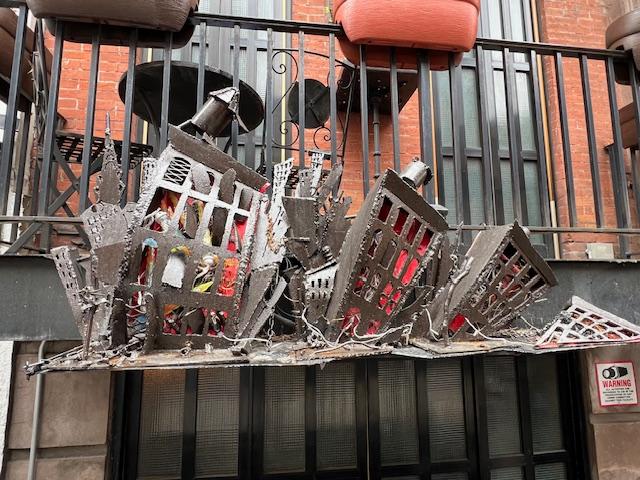
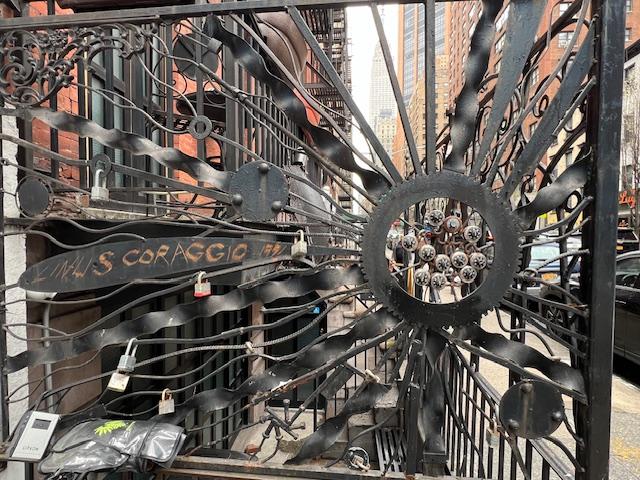
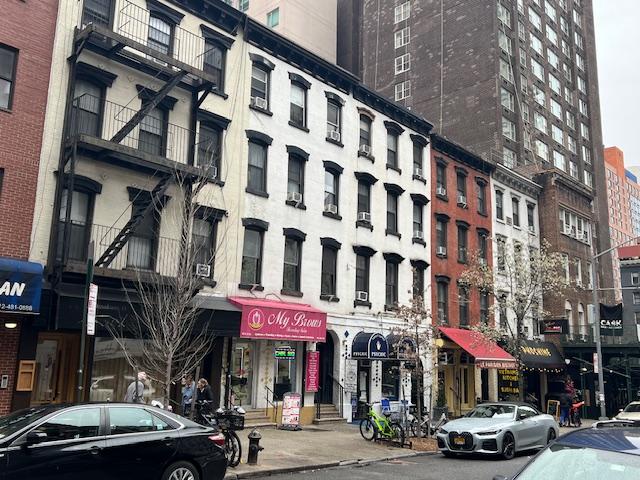

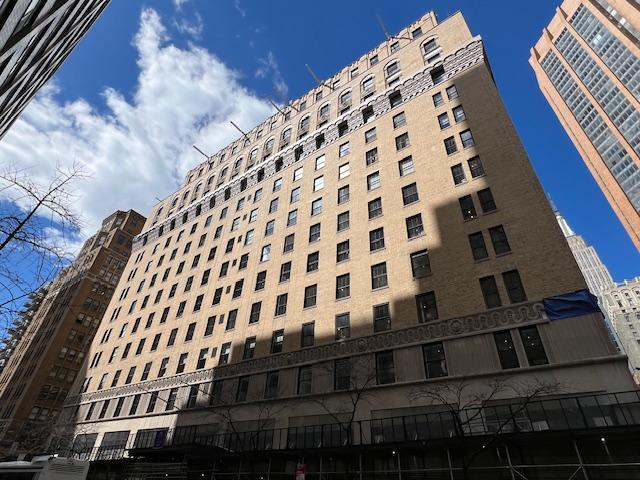
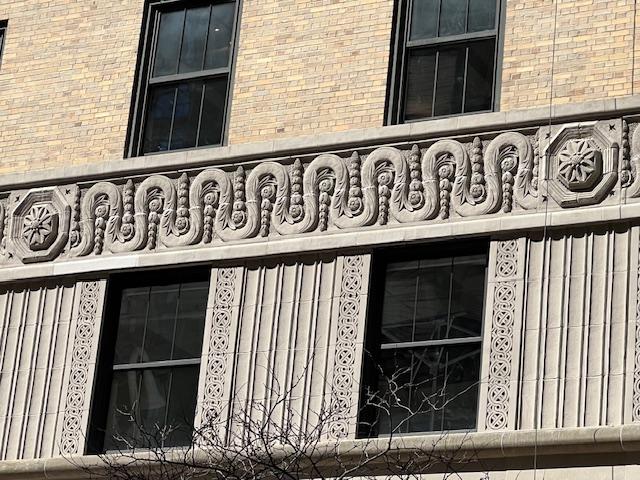


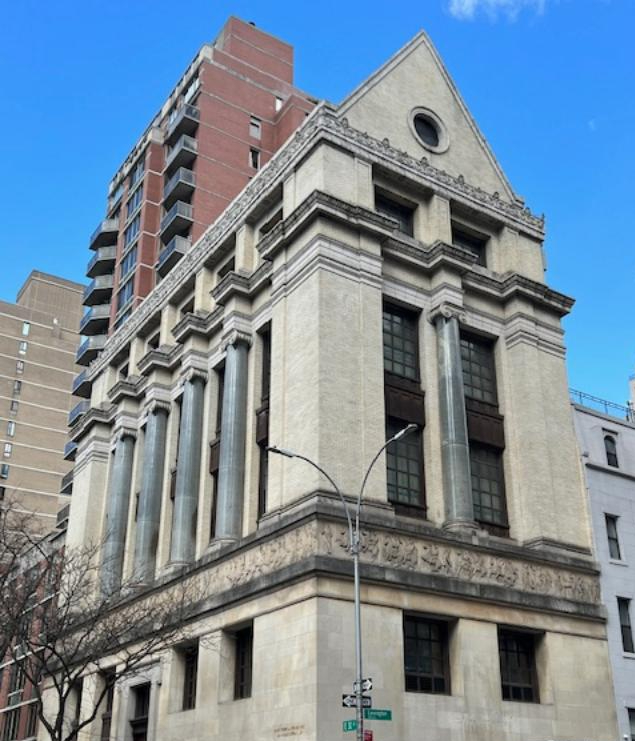
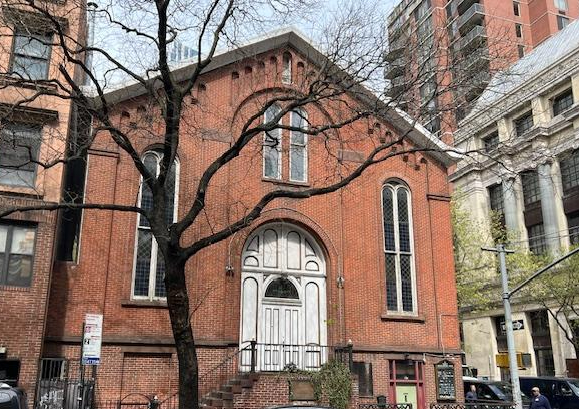


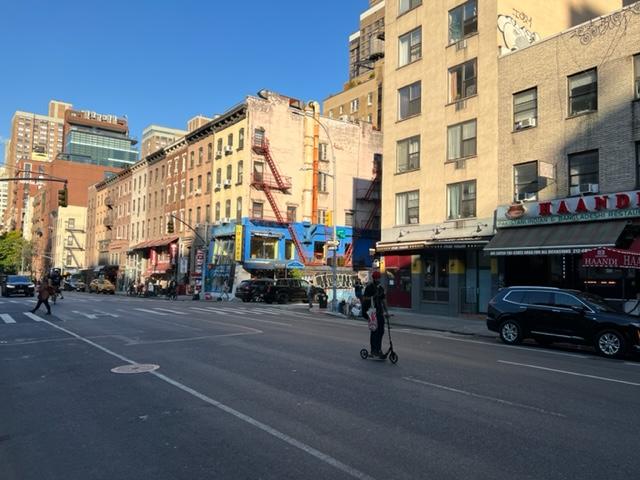


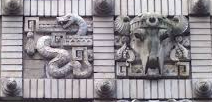
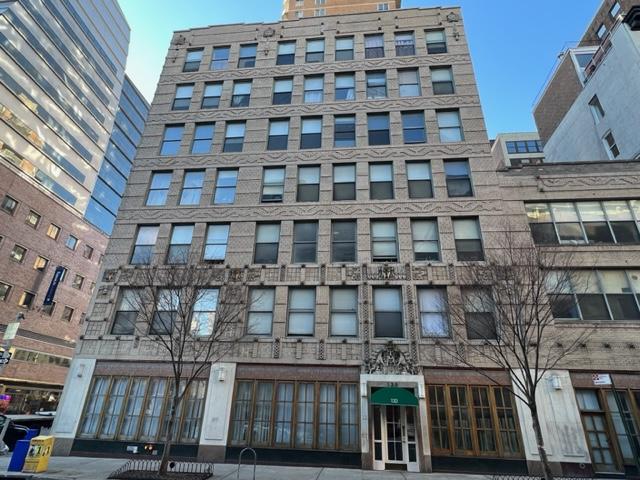
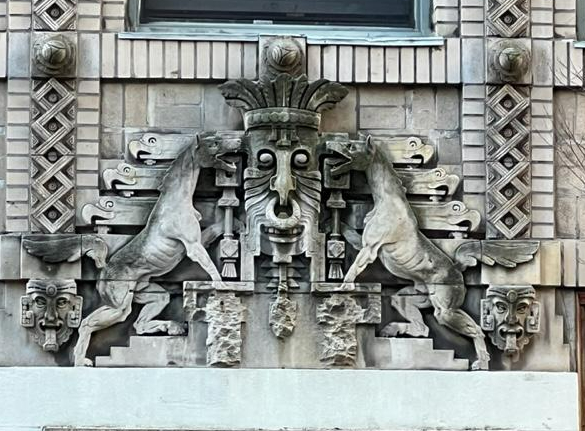
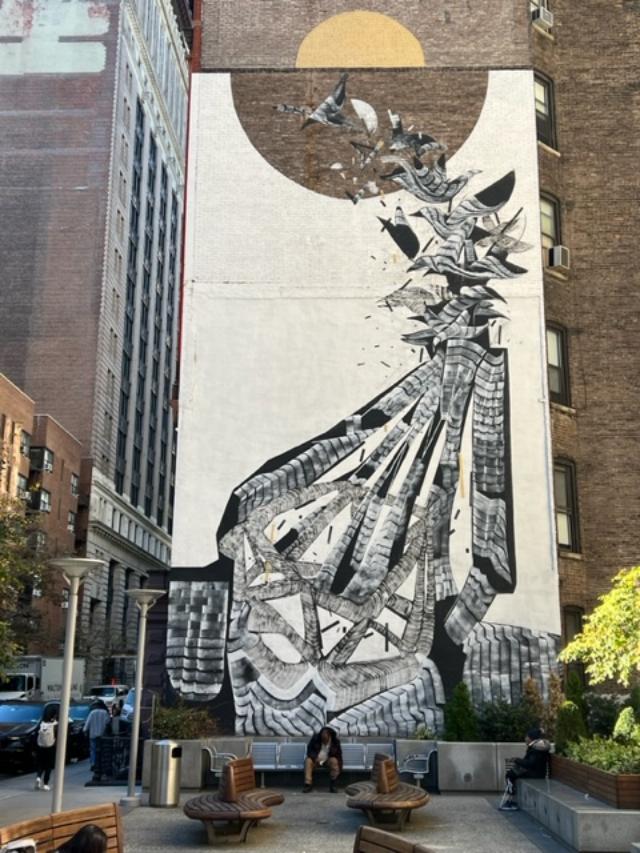

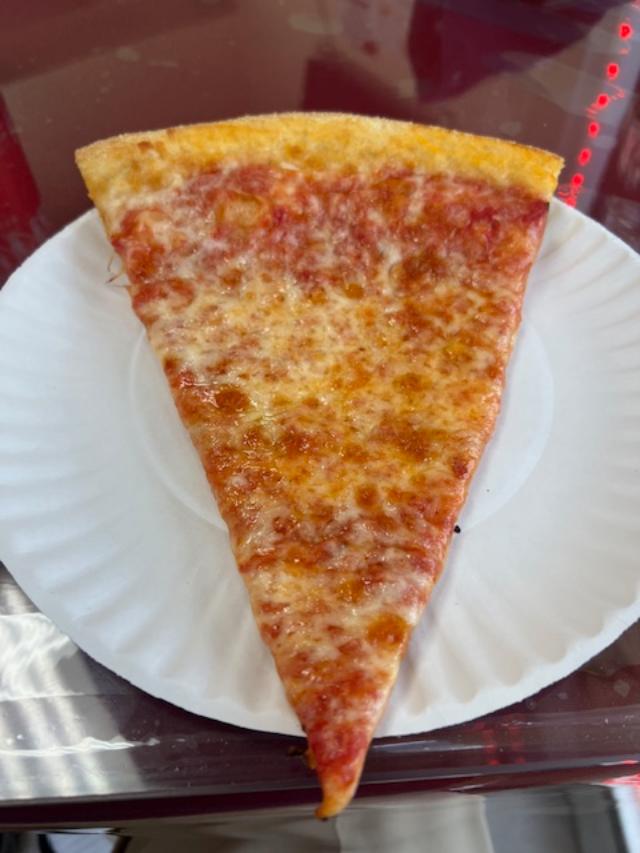

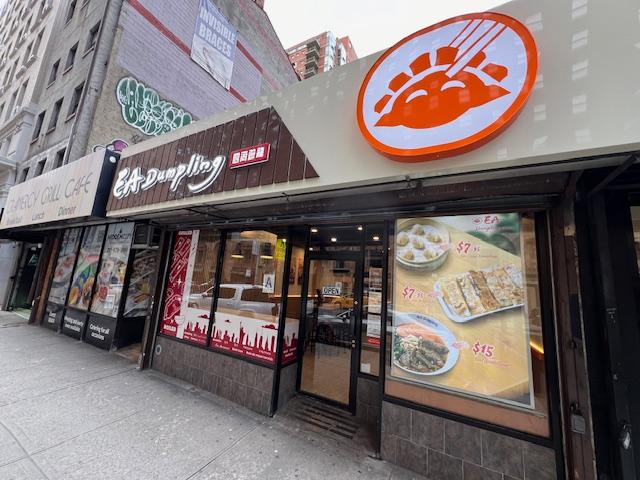
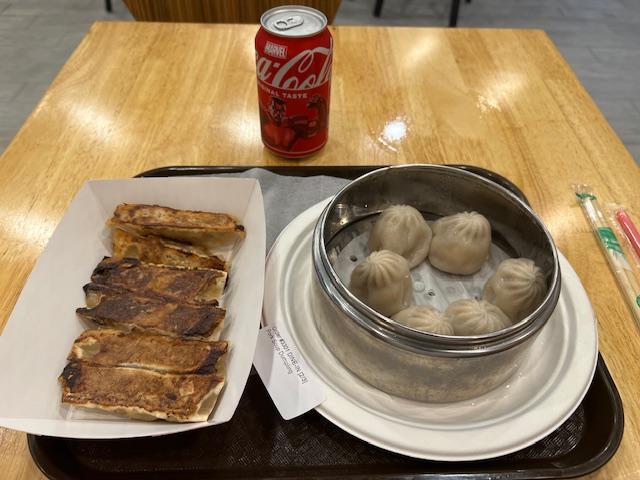

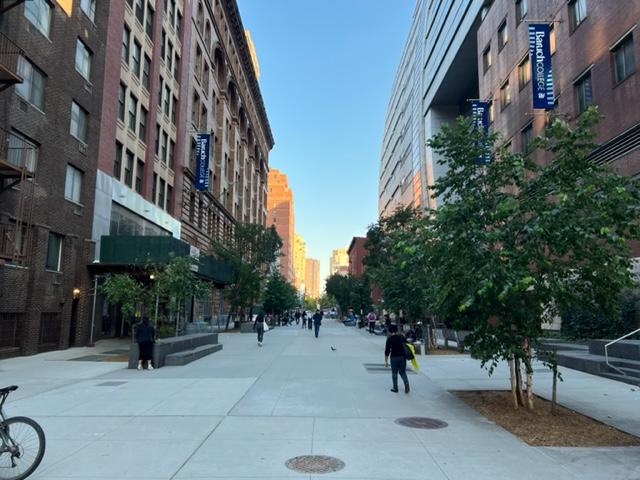







 mywalkinmanhattan