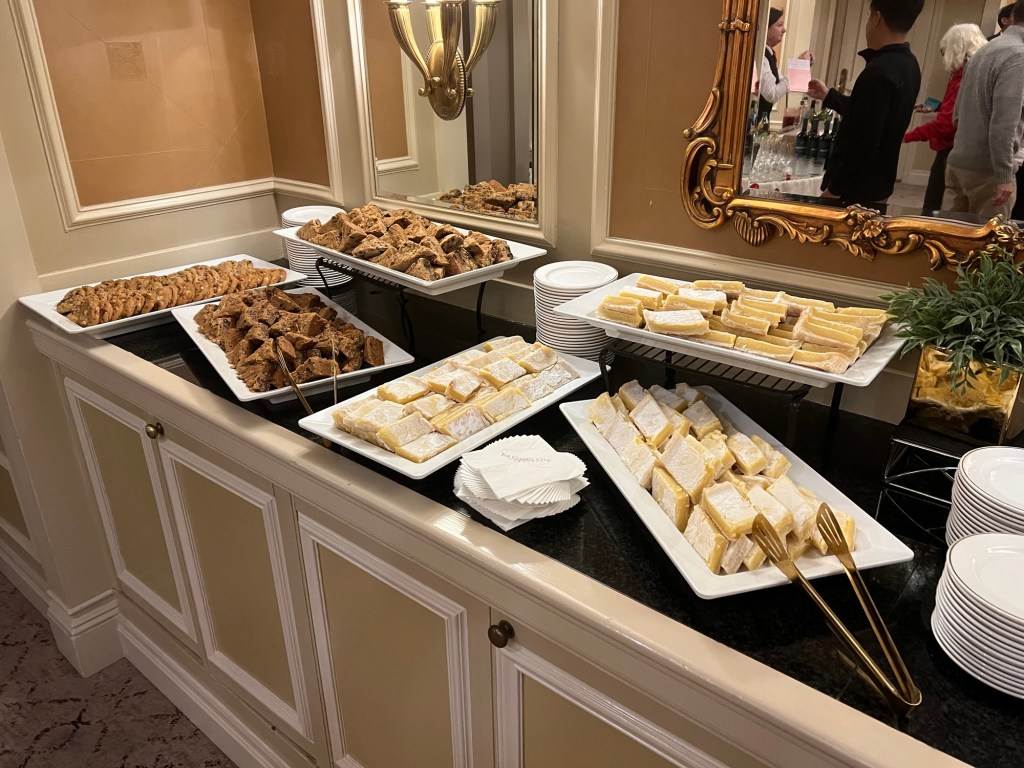
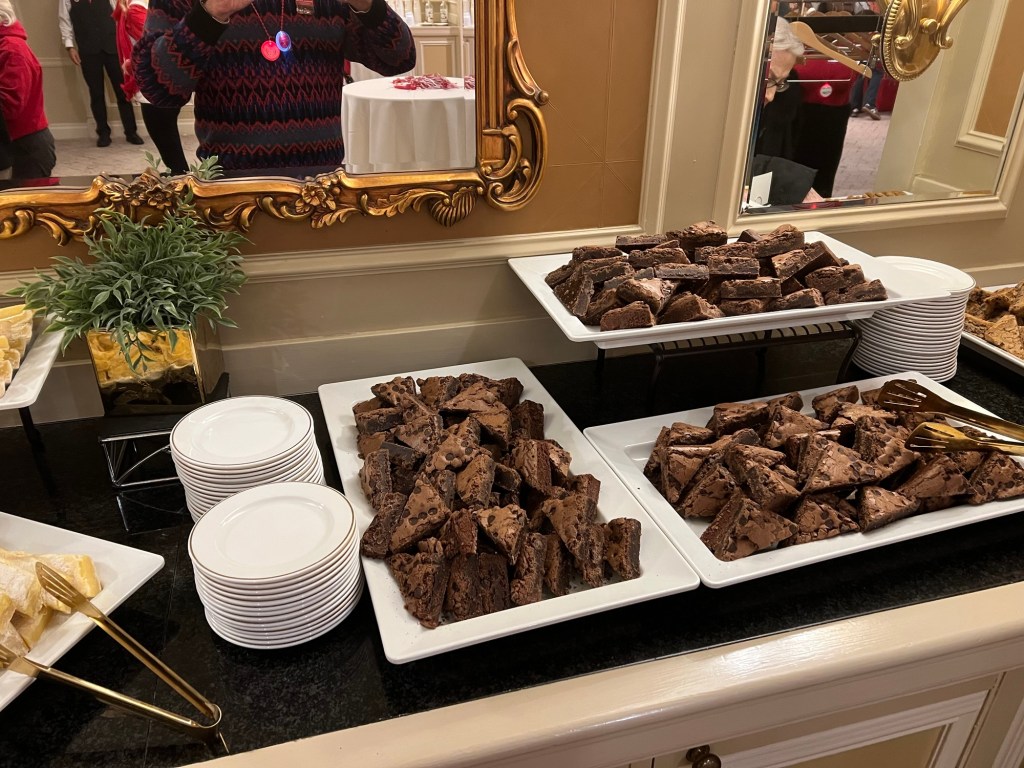
I found this wonderful combination bakery and gourmet shop when walking home from school one afternoon and exploring Greenwich Village. All the delicious pizzas and pastries in the window lured me in.
I had just eaten my lunch, so I was not that hungry and just wanted a snack. I saw the small doughnuts in the windows called Bombolones, which are yeast doughnuts filled with chocolate or vanilla cream fillings and then rolled in granulated sugar. The small one is $2.15 and the large one was $5.00. Don’t let the price deter you as it is a sweet and filling little dessert. The fresh vanilla cream played beautifully off the sweet dough and sugary topping. Each bite was wonderful, and it was…
Lucky Wang at 82 Seventh Avenue (Lucky Wang website)
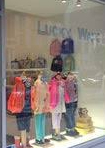
I saw this unusual, patterned dress in the window of Lucky Wang, a delightful children’s store in Greenwich Village and I had to stop in and see it up close. This little dress is just one of the many beautiful and unique pieces of clothing that the store carries. Many of the clothing items have such vibrant colors and patterns.
I love walking around the store and wishing I was still a kid getting to pick out my own clothes for school. This is such a special little shop that dresses children so beautifully and prepares them for their first day at school or for a special holiday. There are so many interesting items to choose from the various tables and shelves.
The colorful and mouthwatering selection of donuts is what lured me into this popular and very special dessert shop in Greenwich Village. Just one look in the window wanted to make me walk inside.
The unique logo
Walking into The Donut Pub is like walking into the donut version of “Willy Wonka’s”. There are just so many choices and all those delicious donuts scream “Buy me”! I have only been in The Donut Pub a few times, but I am hooked already. Just looking in the window makes me hungry.
The first time I passed the shop I was just taking a look at what was on display to see what they carried and this delicious and mouthwatering large…
I love visiting the Hudson River Valley so any event or tour that I can go on is an excuse to come up here. I had visited all the sites that I wanted to see on a trip two weeks earlier but wanted to see them in more detail plus I wanted to take some pictures. The weather finally broke, and it was a much more pleasant 83 degrees as opposed to the 96 degrees the trip before. That makes the trip much nicer.
I asked my aunt along so that we could share in the experience, and I could use her phone to take pictures of the all the sites. It is a much nicer trip when you have someone along who enjoys these things. The one nice thing about traveling to the Fishkill, New York area is that it is only an hour away and a straight run up the New York Thruway to Route 84 and then to Route 9. Just a couple of quick back streets and you will be there.
On my first trip up, I got there so early that no one was at the first site, The Brinckerhoff Homestead Historical site, the home of the East Fishkill Historical Society at 68 North Kensington Drive in Hopewell Junction, NY. I double back and stopped for a quick snack at G & R Deli Cafe, a small deli at 2003 Route 52 in a strip mall near the old IBM campus. I needed a snack. This was my go to place both in the summer and when I came back for Christmas. The owners are really nice and the food is excellent.
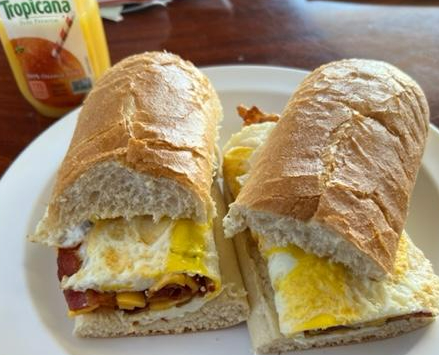
Since I already had dinner plans, I ordered a Sausage, Egg and Cheese on a roll ($5.95) which was a bit more expensive than in the City but it was delicious. The sausage had a nice taste of sage and gave it a lot of flavor. I just relaxed outside in the parking lot and ate breakfast. Another time that I visited, I had the same version with bacon and both times the sandwiches were excellent.
The breakfast sandwiches at G & R Deli are excellent
After my snack, I got back to the Brinckerhoff Homestead at 12:00pm when it was supposed to open but around 12:30pm there was still no one there and I kept knocking on the door. That’s when one of the county members let me know that they did not open until 1:00pm. Since I had a list of places to visit that day and the time had been posted all over the internet, I asked if we could please start early. He agreed and I got a personal tour of the house. When I came back two weeks later, I better timed it for the 1:00pm opening to take pictures.
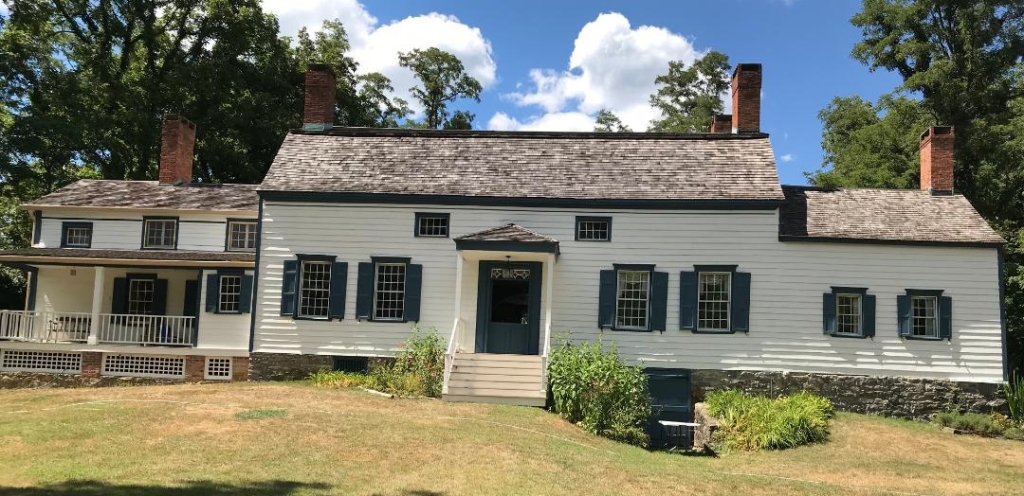
The Brinckerhoff family is prominent in the Fishkill area and family members still visit the homestead so the house’s history is ongoing. The house is broken down into three sections as you can see by the picture. The original part of the home was built by John G. Brinckerhoff in 1755 and it consisted of the “Everything Room” on the lower floor with the hearth for cooking, a beehive oven and the large room upstairs for family living.
As John Brinckerhoff’s family grew, they moved out of the house and his brother, George G. Brinckerhoff moved into the home with his family. After the Revolutionary War was over and George G.’s assignment was over in the army, he returned to the house and in 1785 added the middle main addition of the house with four additional rooms. The larger rooms and high ceilings showed the family affluence in that they could heat the home.
When George died in 1812, his brother John and his family moved back into the house. In 1814, the family sold the house to the Purdy family. They lived in the house for the next 60 years and added the final addition onto the house to the left with a summer kitchen and an outdoor oven. It remained in the family until 1875 when it was sold to the Palen family who used it again as a farm. It was then again sold to the Moore family in 1926 and lastly sold to East Fishkill Historical Society in 1974 by developer Gustav Fink who was a developer in the area (East Fishkill Historical Society).
The rooms are decorated in period furnishings and when we started the tour, you begin in the oldest section of the home with the original kitchen area.
The “Everything Room” in the Brinckerhoff Homestead
This is where the family would cook, eat, do their work on farm affairs and socialize. There was also a small general store on the property as well. The upstairs was closed to the public.
You next moved into the main rooms of the 1785 addition which brought it the into then modern era with high ceilings and larger rooms so that the family had more living space and could entertain.
The Main Dining Room of the home which was set for Hot Chocolate service which again showed the family’s affluence as chocolate was very expensive then
We also toured the Living Room which was set for socializing and work women did for the home with needlepoint, weaving, and clothes making. There was still room for people to gather and entertain.
The Living Room of the 1785 addition to the home
Along the main corridor of the home in the addition was all sorts of artifacts from the Revolutionary War period and items from the time.
Our last part of the tour was the latest addition by the Purdy family when we toured the ‘Summer Kitchen”, which showed how the home had progressed over the years. Little by little each family brought it into the next ‘modern era’.
Both times I got to tour the grounds and the beautiful gardens that the volunteers maintained. Rock gardens and flower beds line the three acres of land around the house. Along with the flower beds, several historical buildings have been moved to the property including the one room schoolhouse from District 9 in East Fishkill that was built in 1826, the 1870 Icehouse which once supplied another home with its ice for the home to keep food fresh before the advent of refrigeration.
The Schoolhouse and the Icehouse and gardens
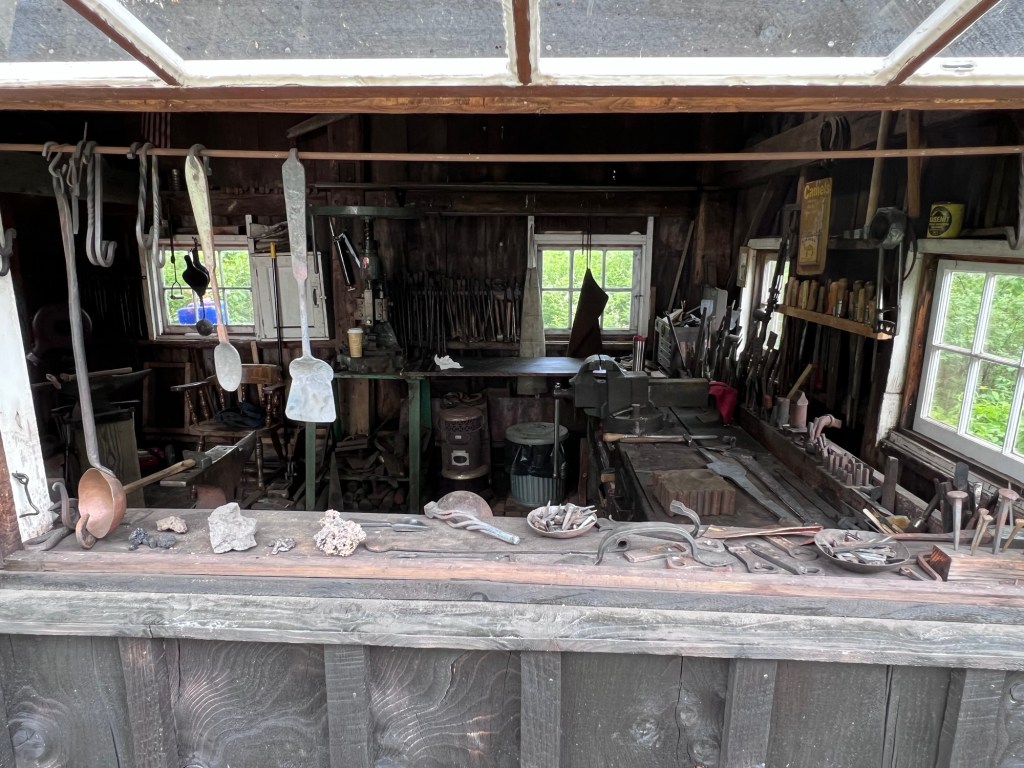
Another building that is still in use and is open when the house is open for touring is the John Hyatt Blacksmith shop from 1880. It still has some of the original tools and the blacksmith on duty still works the fire and performs tasks in the building.
The last building on the property is the Van Wyck Carriage Barn from 1845. It had been built by Judge Theodorus Van Wyck for his home that was built in East Fishkill that was torn down by the development of the IBM Campus in 1984. IBM paid to have the carriage house dismantled and moved to this property.
The East Fishkill Historical Society with the Brinckerhoff home in the center, the schoolhouse to the right and the blacksmith shop and the carriage house to the left
We took our time to tour the house and the grounds and on my initial visit I got to tour the schoolhouse, the ice house and the blacksmith shop to see the inner workings of these buildings and how they operated.
The docents had told me that they had recently held a ‘Strawberry Festival’ recently promoting the local fruit crops and serving complimentary strawberry shortcake that everyone enjoyed and was gone quickly.
I took what they said to heart and had planned to go to the Strawberry Festival the next year. Who knew it would be another three years before I attended the event (other things happened along the way like travel and Grad school), but in June 2025 I finally was able to attend the event. What a nice time.
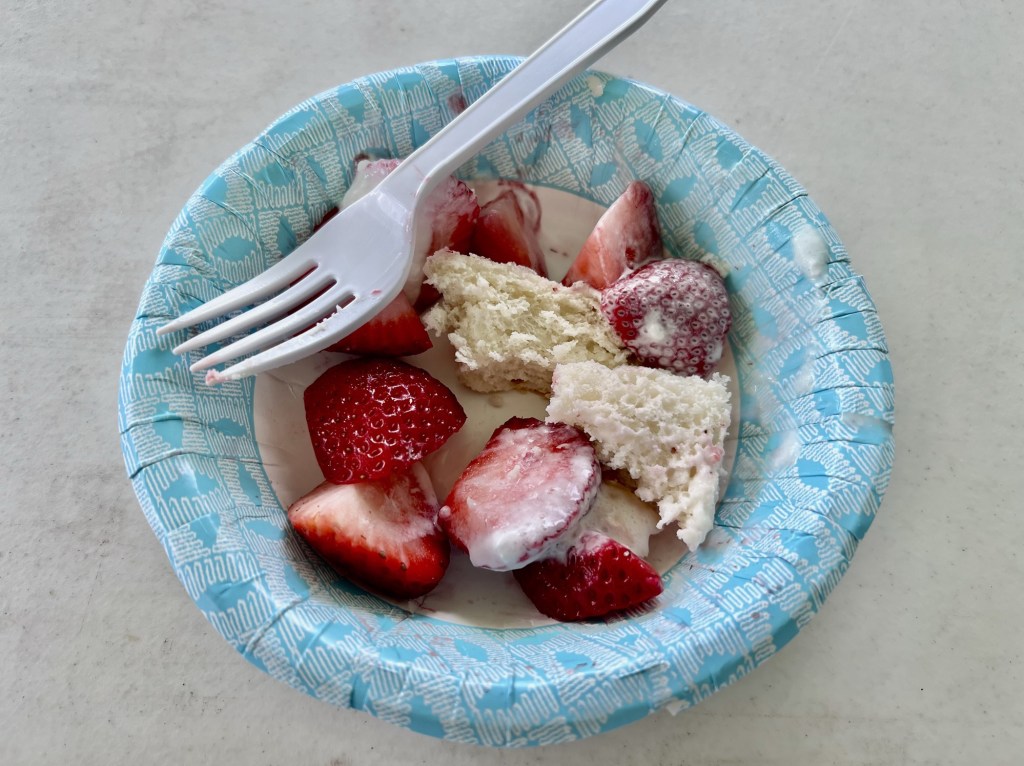
The Strawberry Shortcake at the Strawberry Festival in the Fall of 2025
The grounds set up for the Strawberry Festival
The weather was a bit gloomy and cool for June but it ended up being a really nice day. They had all sorts of activities for visitors to watch and participate in. There were demonstrations in the Blacksmith Building and in the barn.
The demonstration in the Blacksmith shop
The Blacksmith during the demonstration
The wood and saw demonstration in the barn
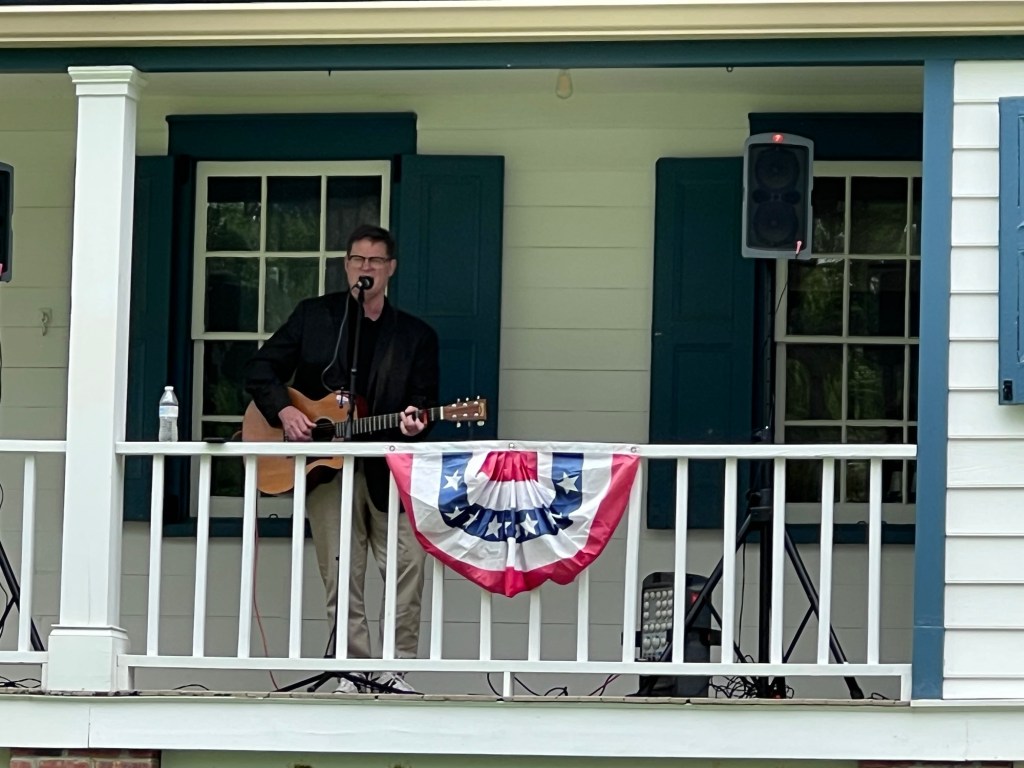
There was wonderful entertainment on the patio of the house as a guitarist entertained the ever growing crowds that attended the event.
The guitarist on the deck playing music from the 1960’s and 70’s
A clip of the entertainment
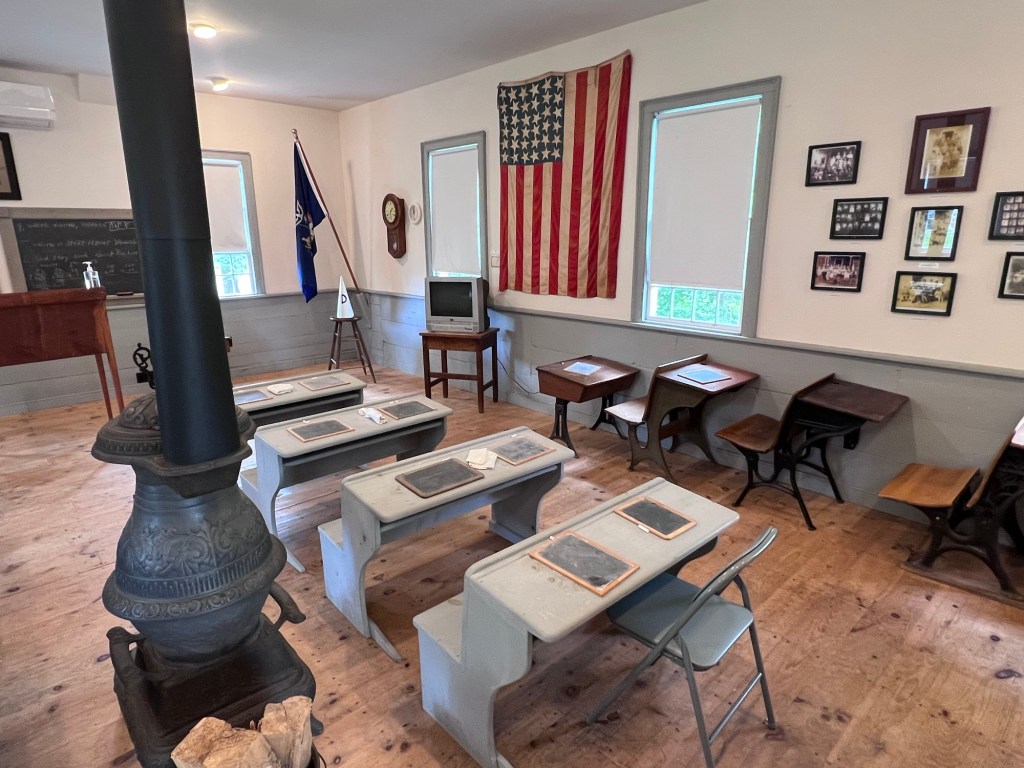
I took a tour of the house and the schoolhouse as well. I never realized that things have not changed over the last two hundred years.
The old schoolhouse on the property
The inside of the school
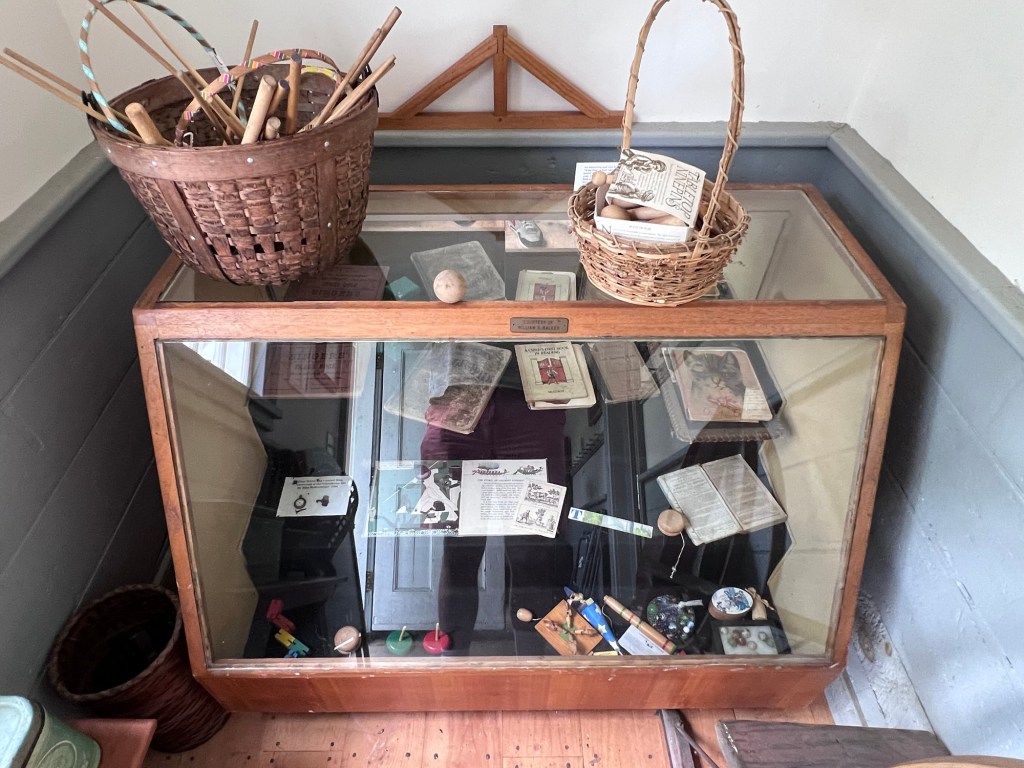
Books and games
Maybe the current education system would benefit from this
Walking around the grounds that afternoon
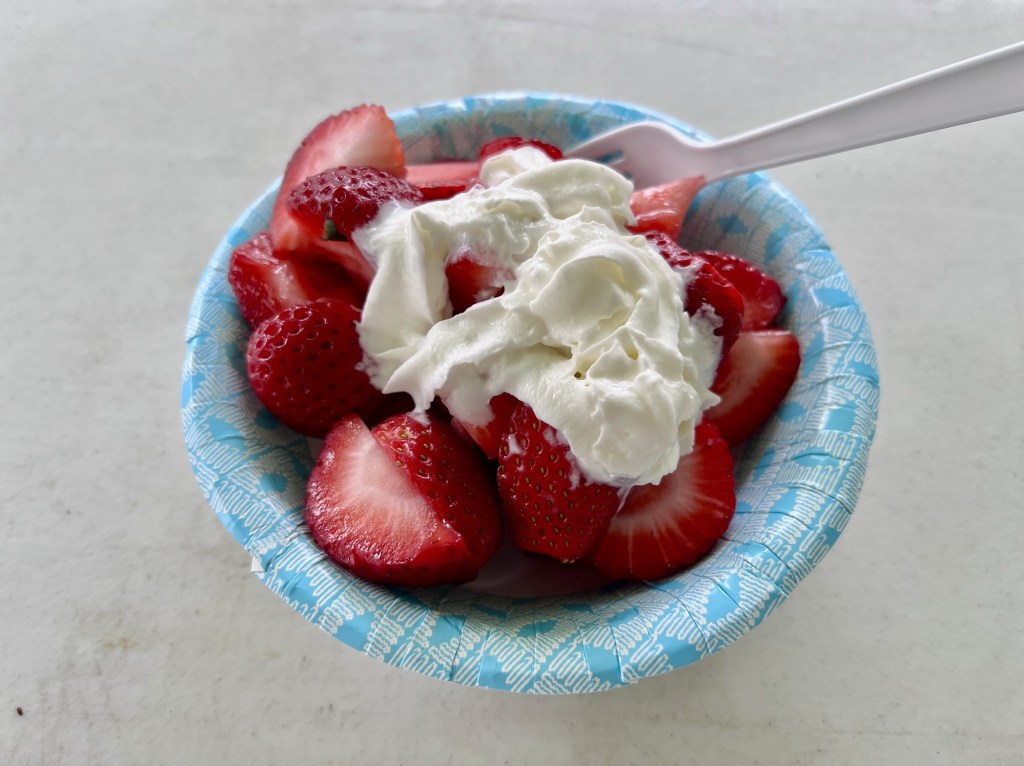
The Strawberry Shortcakes were the star that afternoon and I had to say that the strawberries they used were so juicy. I had to practically elbow my way into getting one but it was well worth it.
The homemade biscuit and the sweet juicy strawberries
They really put a lot of strawberries in the bowl
Yum!
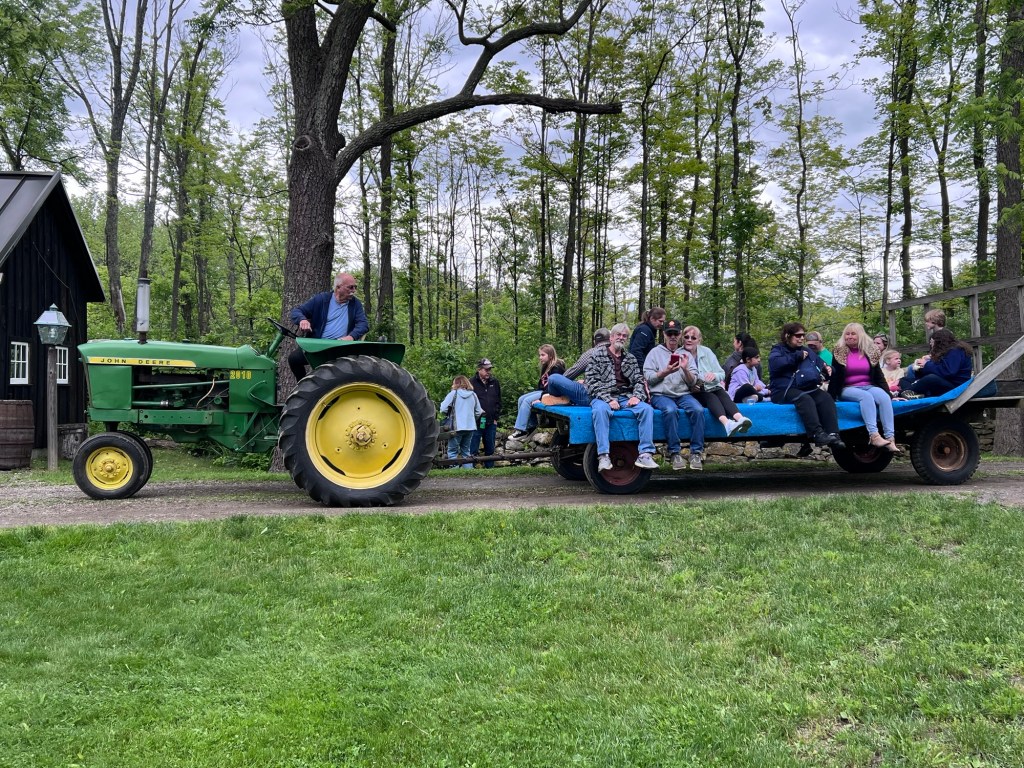
Before I left that afternoon, the Historical Society had a hayride around the property. I had not been on one in years, so I waited for the second trip. It was crowded on every trip it took and I forgot how much fun these were in the past.
The hayride around the neighborhood
Us on our turn on the hayride
The video of the start of the hayride
The video of the conclusion and everyone having a good time
I really enjoyed attending the Strawberry Festival and highly recommend if you can attend it in the future. It was an event I would have enjoyed as a kid and I did not see too many cellphones in site.
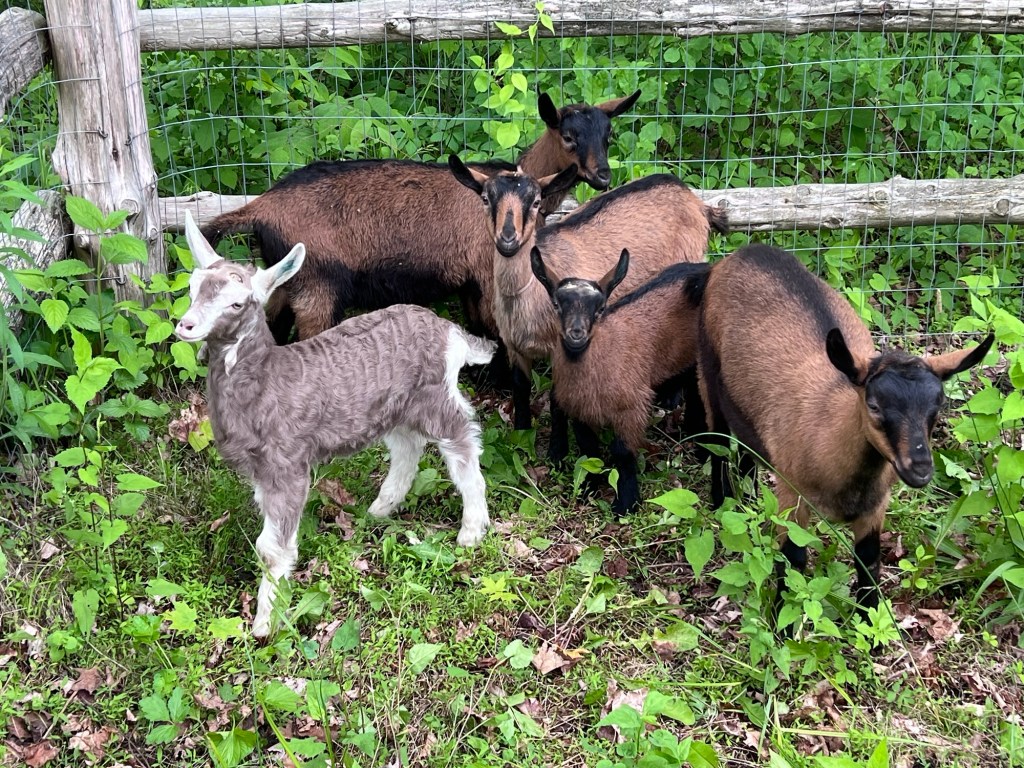
The Petting Zoo that afternoon
There are also Revolutionary War reenactments done on the property and for the holiday season the home will be decorated for the period Christmas holidays with an open house, so there will be things to do and see in the future.
When I returned in December of 2022, the curator invited me back to see the house decorated for Christmas. So while I was up seeing the decorated mansions of the Hudson River Valley the first, second and third weekends of December (read my blog on visiting the Hudson River Valley-Day Two Hundred and Fifty-Five-Christmas Again?):
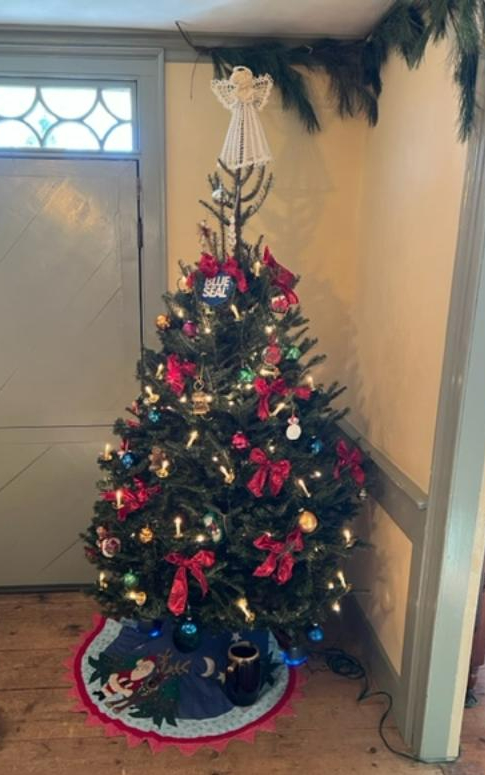
The whole Brinkerhoff Homestead site was decorated for a Revolutionary era Christmas and the tables were set for an Afternoon Tea Fundraiser. The displays showed both a Revolutionary War and Victorian theme. With the fire places blazing, it made the whole house smell of oak and pine.
The Brinckerhoff Homestead decorated for Christmas
The Brinckerhoff Homestead Christmas tree
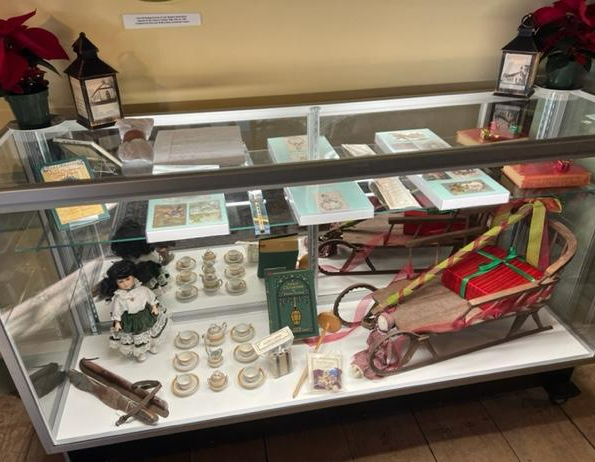
The Christmas display case at the Brinckerhoff House of Victorian toys
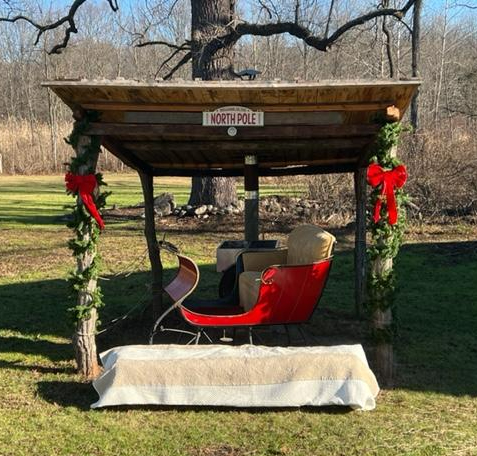
Santa does visit the first weekend of December
Our next stop on the tour of homes was the Van Wyck Homestead Museum at 504 Route 9, the old Albany Post Road. The house had stood on the main transportation line during the Revolutionary War period and it had served as General George Washington’s northern supply depot during the war because of this location.
Van Wyck Homestead Museum at 504 Route 9 (the Old Albany Post Road)
In 1732, Cornelius Van Wyck bought 959 acres of land from the original Rombout Patent and built the smaller section of the home to the right in 1732. As the family gained affluence in farming and trade, the larger section of the home to the left was built in 1757 with larger rooms and higher ceilings again to show a family’s wealth.
Because of the location of the house in Fishkill on the main road of transportation and the strategic location near the mountains to the south, General George Washington requisitioned the home as the northern supply depot for the Continental Army in October of 1776. Here supplies were run through, army regiments passed and people were buried who died during the war. The house was also used as the headquarters and court marshals and punishments took place on the property (Van Wyck Homestead Museum pamphlet). After the war was over, the house and farm was returned to the family.
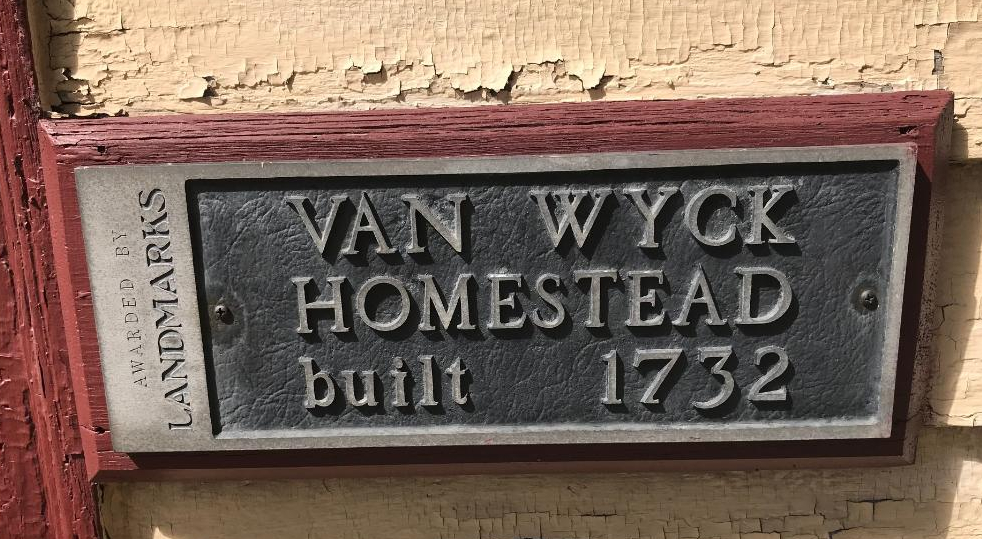
The historical marker of the original home
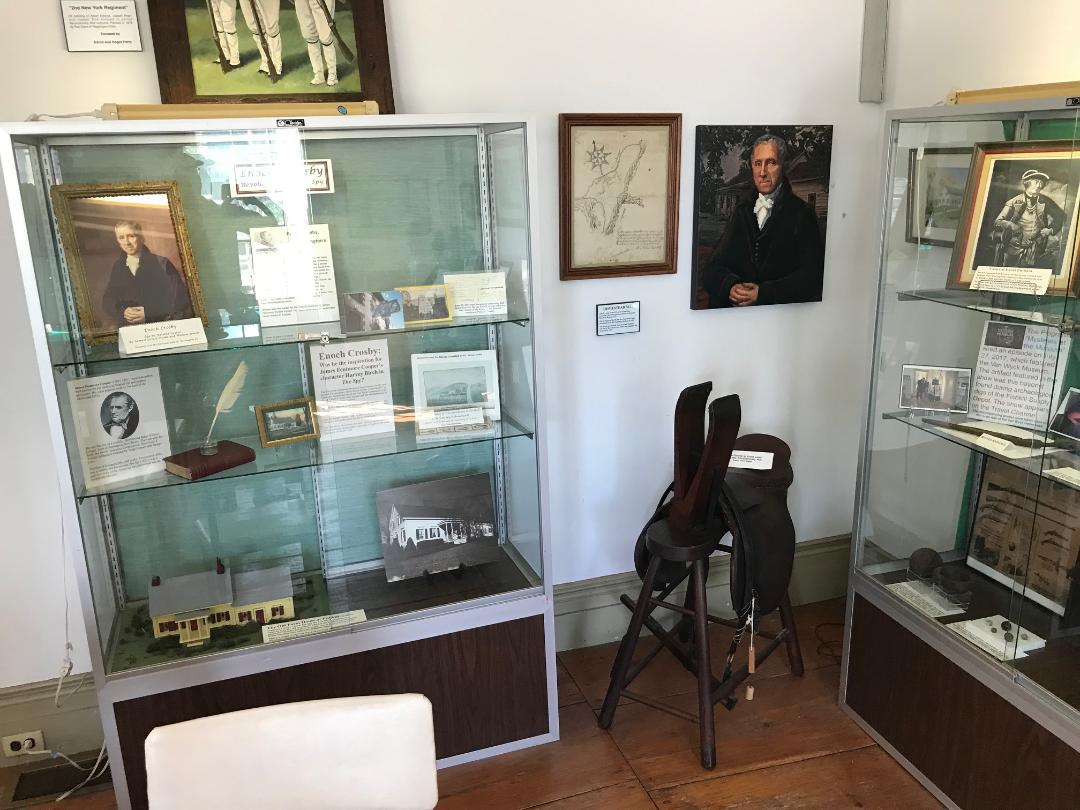
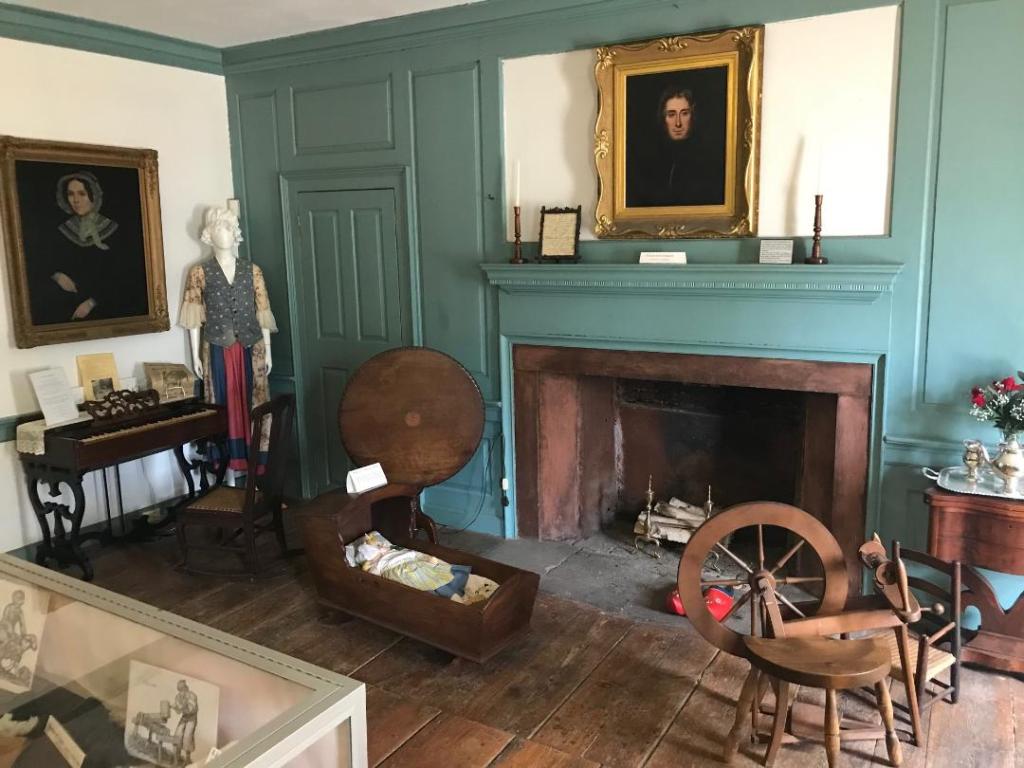
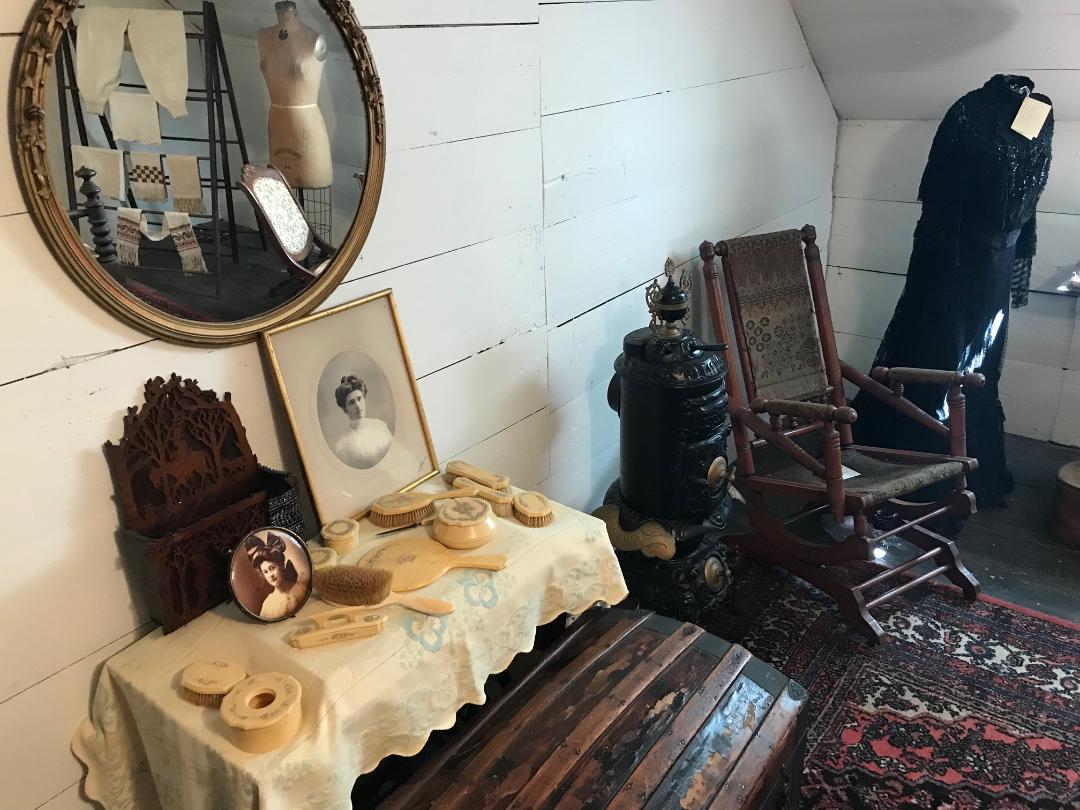
The way the house was furnished was slightly different from the Brinckerhoff Homestead that looked more like you were walking into someone’s actual home. The old Living Room of the Van Wyck Homestead is being used as a meeting room and a place to display items from the Revolutionary War.
The Living Room and Meeting Room at the Van Wyck Homestead
The Revolutionary War Collection at the Van Wyck Homestead
Towards the back of the home is a Library/Research area and we were able to see all the old books and records that are part of the home’s collection. This is where most people do their genealogy work and family research.
The Research Library at the Van Wyck Homestead
What both my aunt and I thought was interesting was when we entered the older part of the house and the old Dining Room area. Many of the artifacts were old Van Wyck family heirlooms that had been donated over the years.
The Dining Room of the Van Wyck Homestead
Some of the recent additions were the crib which had been in the family for five generations and had just been donated to the home as well as the painting over the fireplace had just been collected by the home. Like the Brinckerhoff Homestead, there are many members of the Van Wyck family who come back to visit and still live in the area.
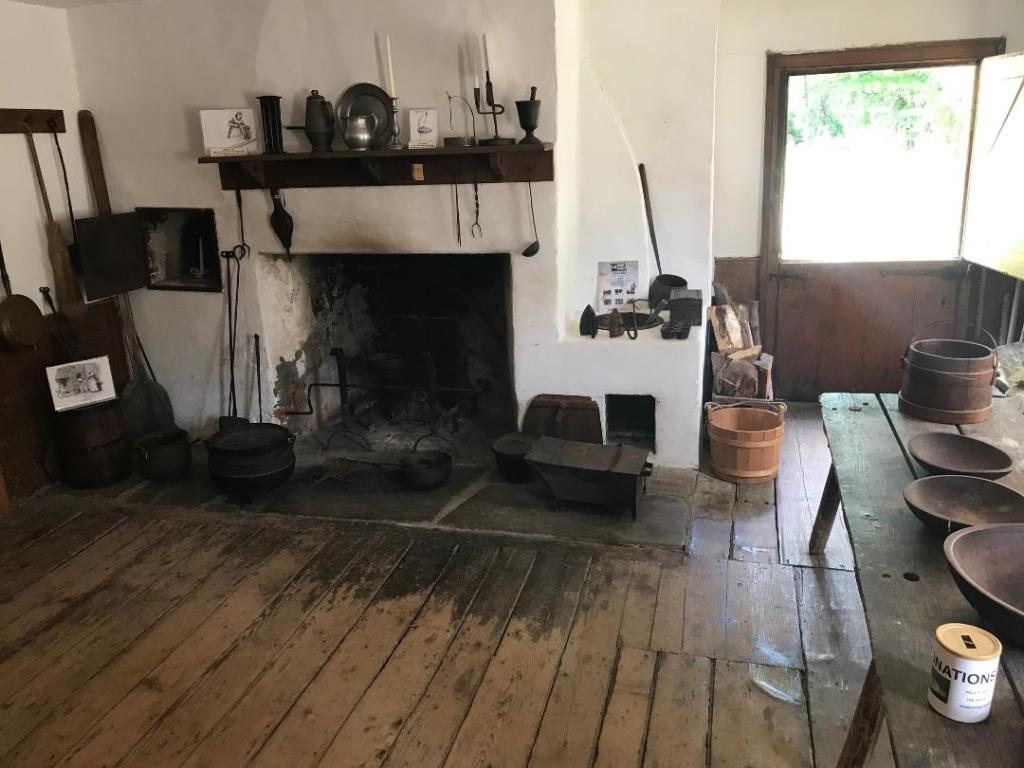
The Colonial kitchen and hearth are in the oldest section of the home from 1732. This is where the “Everything Room” was located. Back when this was the only section of the home, this is where all the cooking, dining, family business and social activities were located. All sorts of kitchen equipment lined the walls and shelves to show life in colonial times. It was funny that much of it has not changed over the years, just modernized.
The original family kitchen in the 1732 section of the Van Wyck Homestead
Outside the home, the organization planted the outside gardens and there is a recreation of the old beehive oven aside the home. It gave you a glimpse of how food came about for these large families before supermarkets.
The Van Wyck Gardens showed how the house was self-sufficient at one time
After touring the grounds, we walked back to see the displays one more time. On my initial trip, the tour guide let me see the upstairs rooms. In the newer part of the home, they had been turned into storage and offices for the docents. In the older part of the home, the old loft area was used for storage, and it was pretty dusty. The house was closed for Christmas but will reopen in the Spring.
After touring these two homes, we were off to Wappinger’s Falls further up Route 9 to visit the Mesier Homestead in Mesier Park just off the beginning of Downtown Wappinger’s Falls. There was a concert going on in the park and my aunt said she needed a break from visiting these old homes. Too many arrowheads and Revolutionary War furniture so she stayed and listened to the concert while I toured the home.
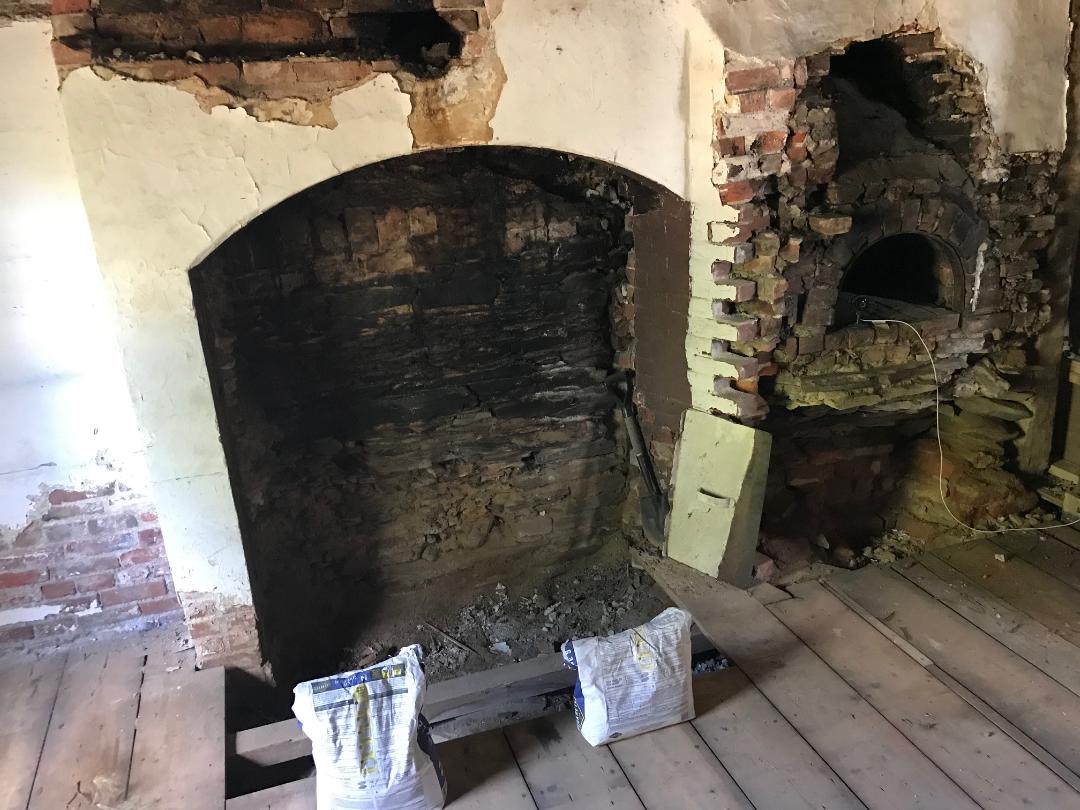
The Mesier Homestead is the home of the Wappinger Falls Historical Society, who maintains the home. The Mesier home is much like the other homes in that it had been added onto as the family grew and became more affluent. The original part of the home is currently going through a renovation and the President of the Wappinger Falls Historical Society explained that they just discovered the old hearth and oven and are currently restoring the historic windows.
The original part of the home is currently under renovation
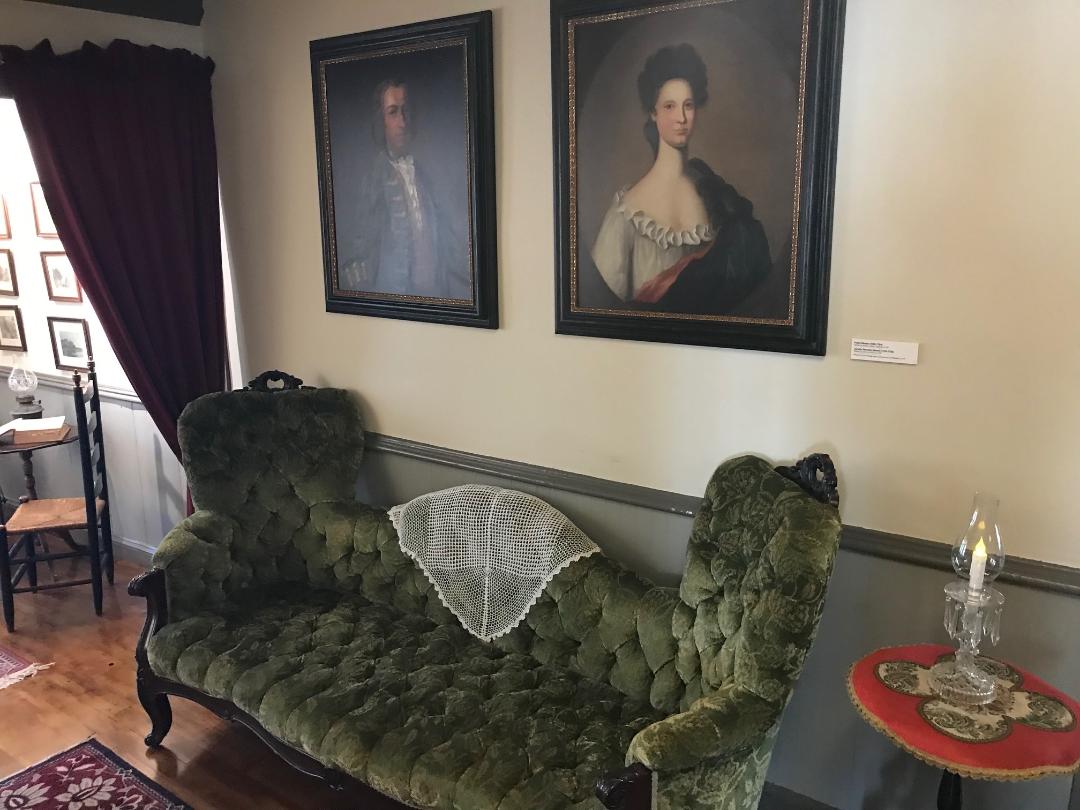
Starting the tour at the front entrance of the home that leads to the formal Living Room that is decorated with Victorian decor. Again the large rooms and high ceilings showed the family affluence by showing how they could afford to heat their home.
The Living Room at the Mesier Homestead
The copies of the Mesier family portraits in the Mesier Living Room
The Living Room leads to the back Library where many additions of older books are held and where visitors can do research on their family history in the Wappinger Falls. Many are trying to trace their family’s history.
The Mesier Homestead Library and Research Room
The back area of the house is closed for renovations, but you can climb the stairs to the old bedrooms on the second floor. Here is where both the family and the family slaves then servants lived on the same floor.
The Adult’s Bedroom set during Victorian times
A woman’s boudoir during Victorian times
The rooms also showed a child’s place in the family where during Victorian times were treated like ‘little adults’ being trained for their future lives. Toys not just sparked the imagination but also prepared children for domestic life
Children’s playthings during Victorian times spurred imagination
On top of the recreations of the family life in both Colonial and Victorian times that the family lived through, there was an extensive collection of Native American items showing the original settlers of the region when the Lenape Indians lived, fished and hunted in this area before the arrival of the Dutch in the late 1600’s.
The Native American collection on the second floor of the Mesier Homestead
The last part of the tour ended in the formal Dining Room where the entertainment was done and the family took their meals. When I asked why these homes seemed so much smaller than homes like the Vanderbilts and Mills families, it was explained that these families were older, more established and did not have to show off their wealth. Since these were God fearing individuals, it was not acceptable to be ‘showy’. People knew they were affluent so they could show off but not flaunt it.
The formal Dining Room at the Mesier Homestead set for dinner
During the Christmas holiday season, the house is beautifully decorated for a Victorian Christmas with garlands and bows and period decorations. Most of these old homes are elegantly decorated as the families once had done during the holidays.
The Living Room at the Mesier Homestead at Christmas
During Colonial times, Christmas meant church services in the morning or afternoon and then a formal dinner in the afternoon. You might have pine, garland and berries decorate the house whereas during Victorian times, it was a much more elaborate affair. There would be a Christmas tree, garland and pine all over the home and gift giving. Christmas cards would have also decorated the home as well.
The Mesier Homestead foyer decked at Christmas time
The Dining Room table was decorated for Christmas lunch
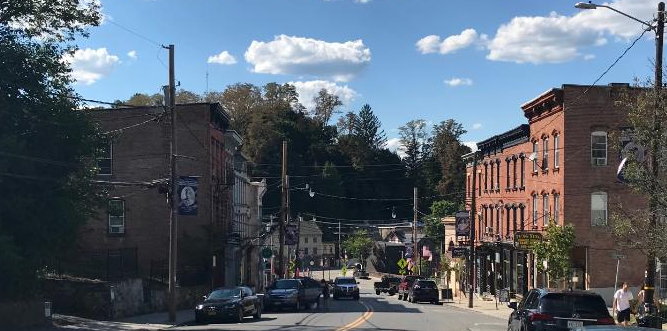
After the tour, I took a quick walk into downtown Wappinger Falls which has a great downtown with terrific restaurants and a great view of the river and falls.
Downtown Wappinger Falls has such a unique look to it.
During Christmas time, the downtown had a quaint look to it with garland and wreaths decorating people’s homes.
Downtown Wappingers Falls during Christmas
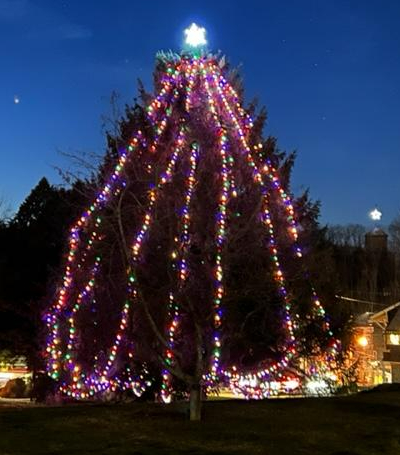
The Christmas tree in the Wappingers Falls square downtown
The Bandstand decorated at night
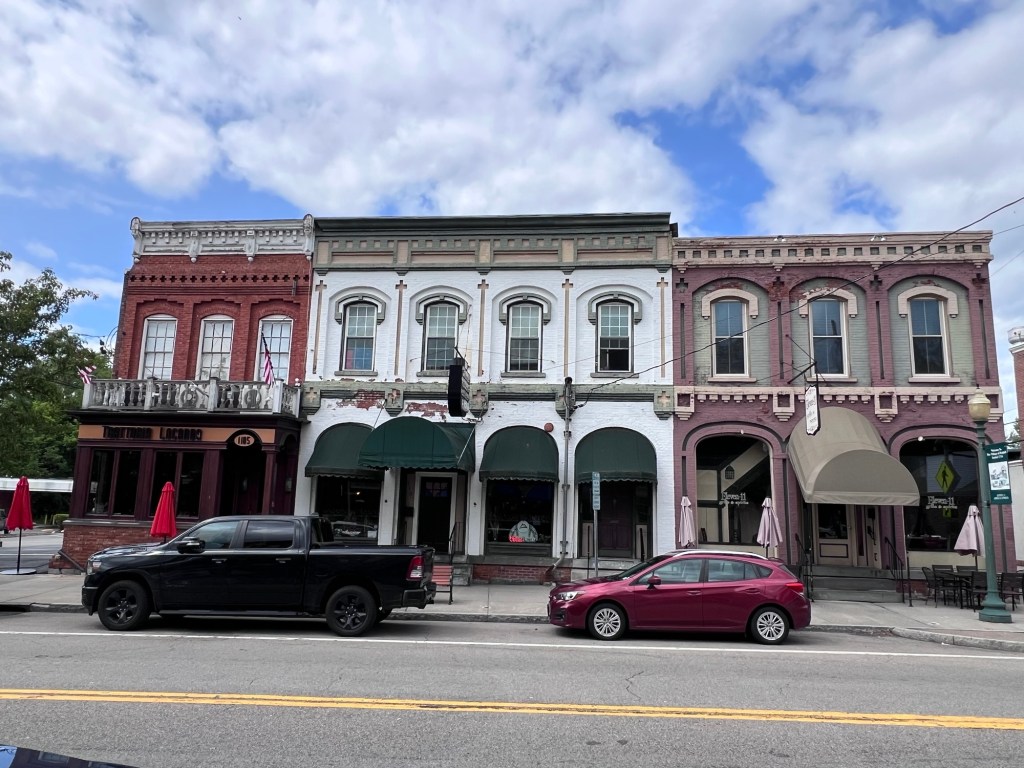
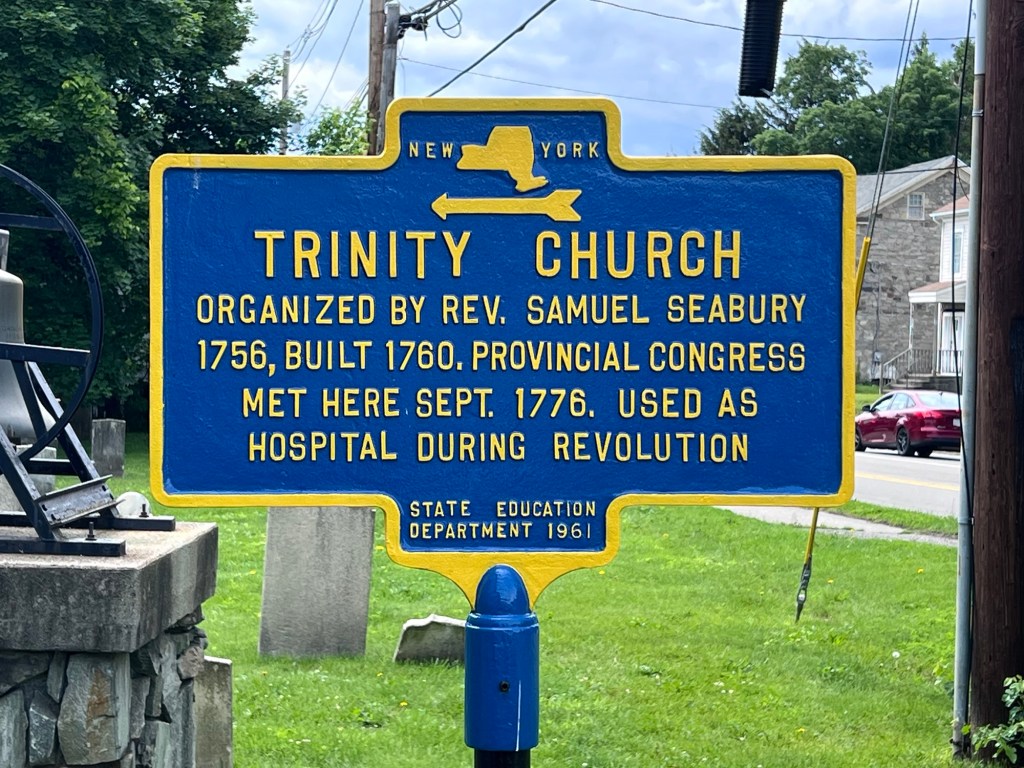
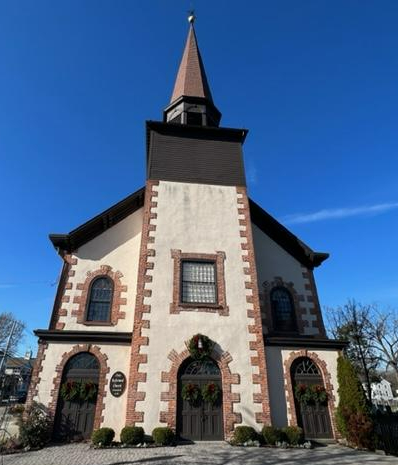
Our last part of the tour was visiting the First Reformed Church of Fishkill at 717 Route 9 at the beginning of Downtown Fishkill, NY. This elegant old church with its historic cemetery was built in 1732 on land that had been set aside for the church.
The Fishkill First Reformed Dutch Church at 717 Route 9 with the DuBois House next door
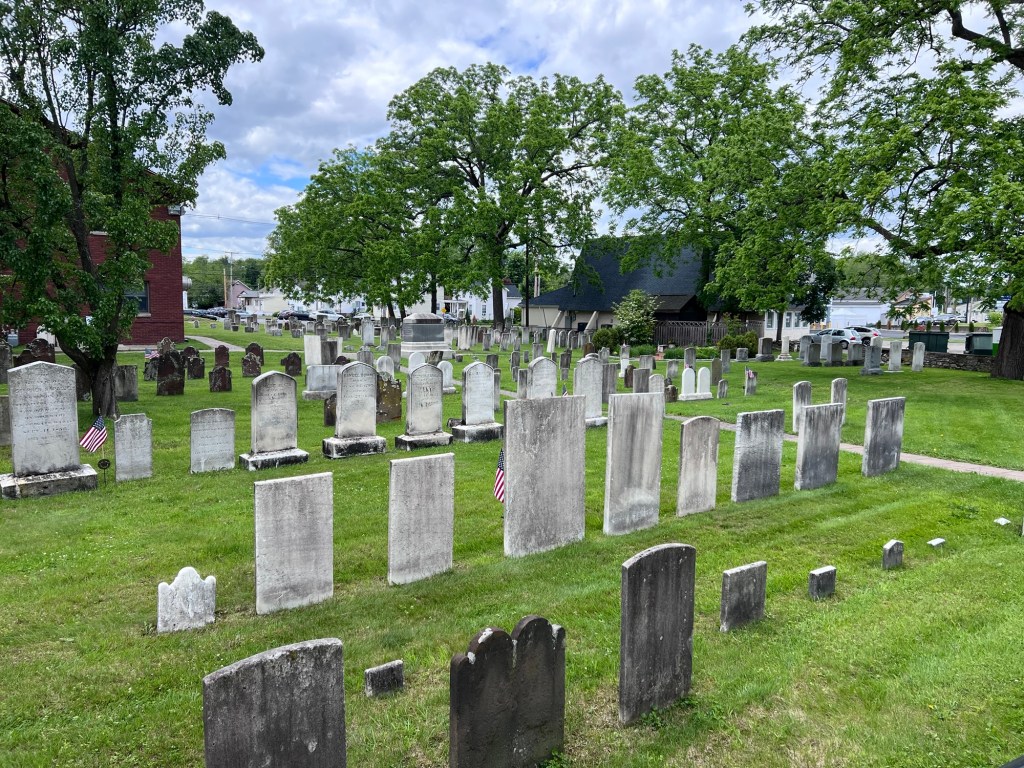
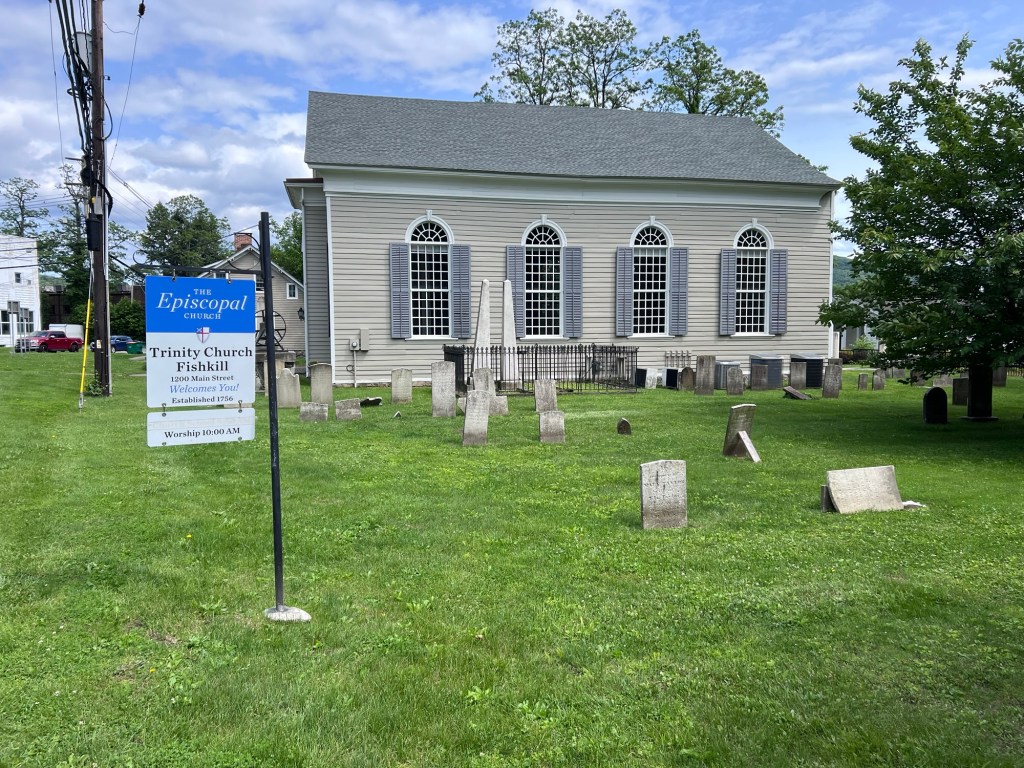
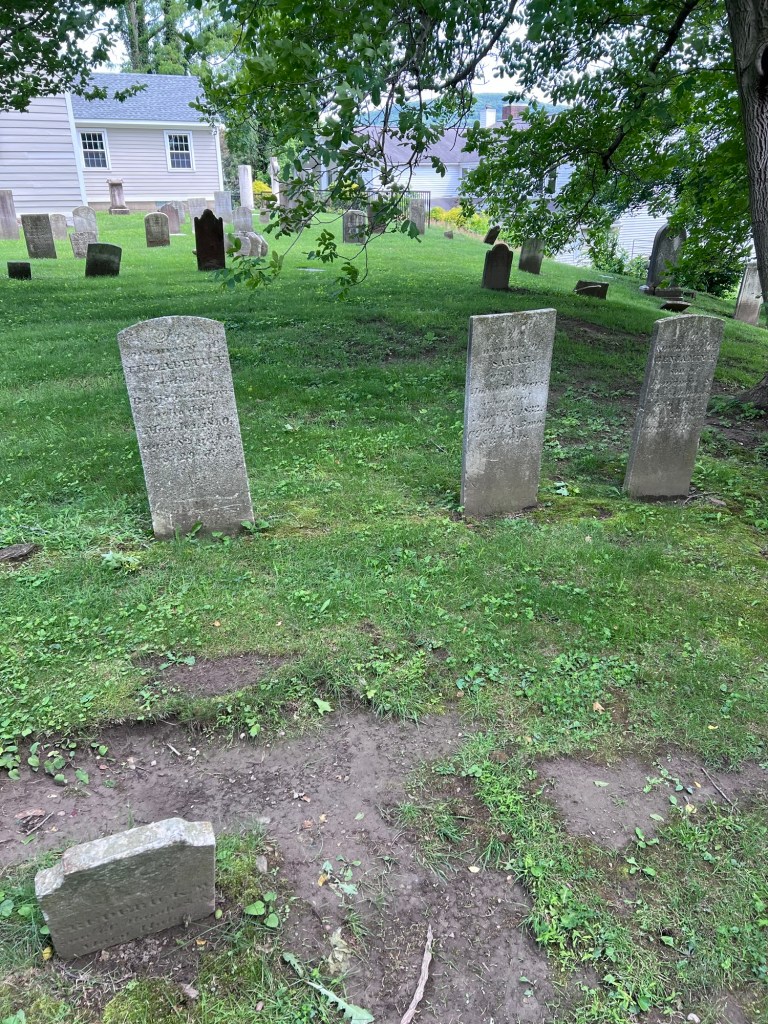
The church was closed for the afternoon as services are at 10:00am on Sundays so I toured around the church and the cemetery. What was interesting about the cemetery is all the family plots and who was intermarried into whose families.
The cemetery behind the church is full of family plots including the Brinckerhoff and Van Wyck families
The cemetery in the Spring of 2025
Walking through this quiet but I intriguing cemetery
After touring the church and the cemetery grounds, I took my time and walked Downtown Fishkill which is lined with small but interesting restaurants and stores. The street had been lively the two times that I visited with people enjoying the outdoor dining and the perfect 80-degree weather.
The church was closed at that time as services had been at 10:00am but I did take the time to walk around its historic cemetery.
The Terboss family plot in the historic cemetery
The historic cemetery with familiar family names
The church just proved to me how time passes by and how some of these places are forgotten. The cemetery slopes down to the woods and highway.
The role these churches once played in the community as not just a place of worship but as a meeting and gathering place for friends and neighbors has changed over the last hundred years.
During Christmas time, I revisited the First Reformed Church of Fishkill and it was tastefully decorated for Christmas and for holiday services.
The church was decked with wreaths and garland
The church doorway looked like something out of a Christmas Card
Downtown Fishkill, NY decorated for Christmas
CIty Hall decorated for Christmas
I searched that entire downtown from one end to another and I could not find the Fishkill Town Christmas tree.
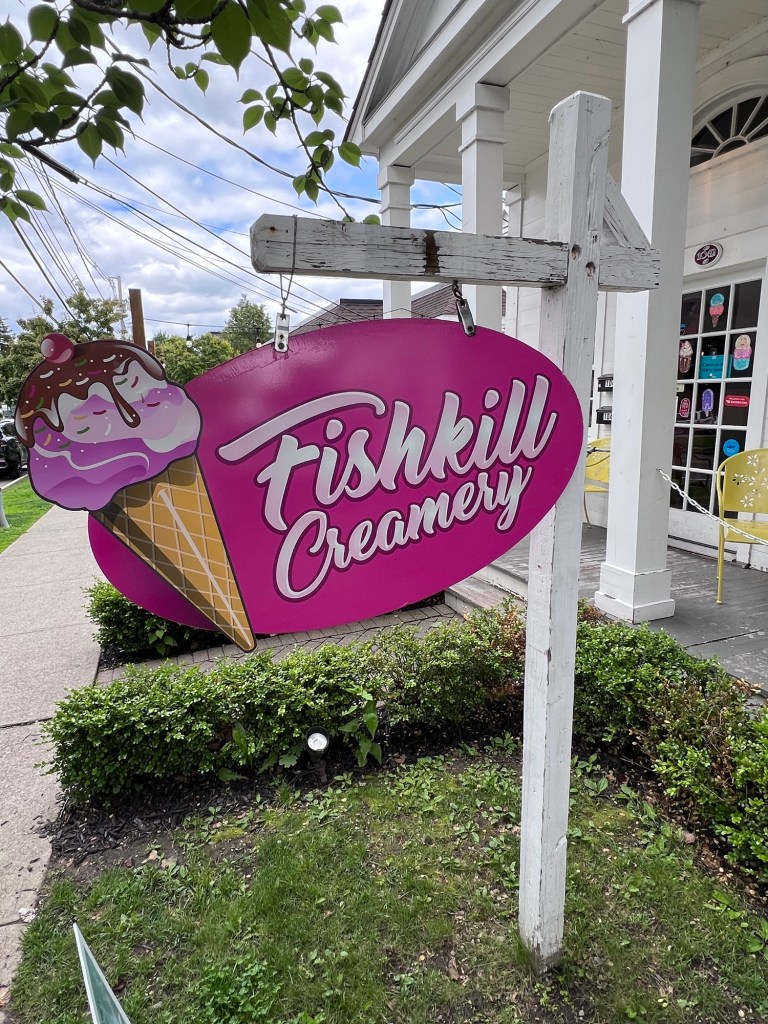
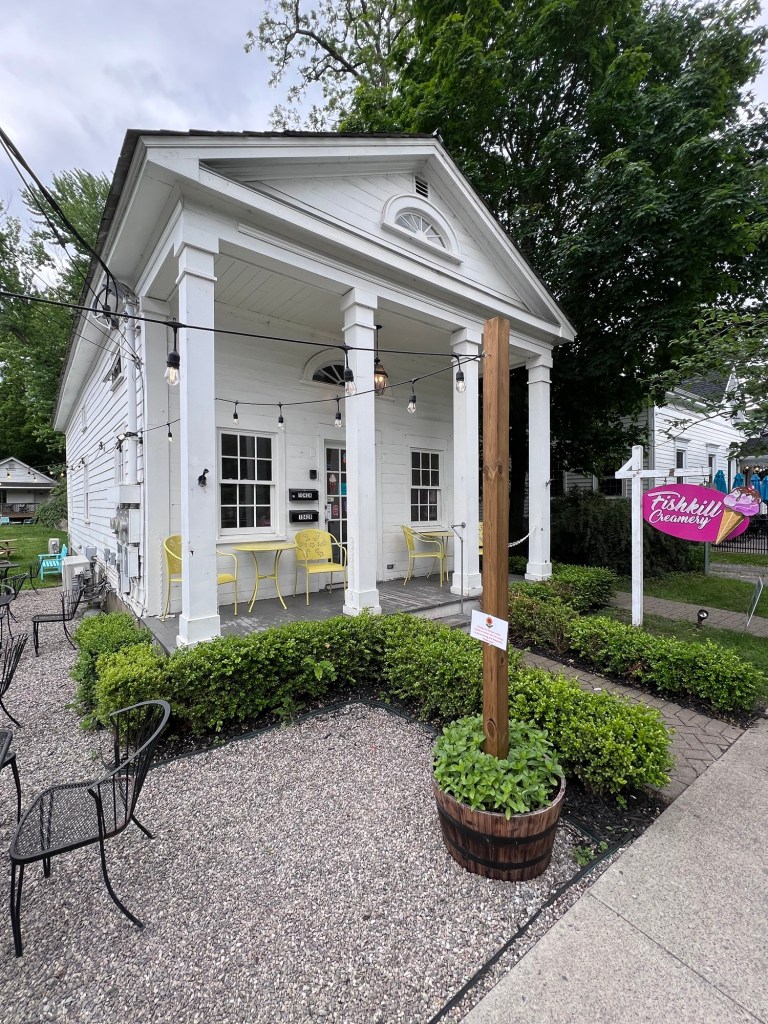
While walking around Downtown Fishkill, I came across the Fishkill Creamery at 1042 Main Street and needed a quick snack on a hot afternoon. The store was really busy with people eating outside on the benches and tables. I stopped in and had a scoop of Strawberry Cheesecake and a scoop of Birthday Cake ice cream. Did it hit the spot! The Strawberry Cheesecake was especially good with chunks of fresh strawberries in it.
The Fishkill Creamery at 1042 Main Street in Downtown Fishkill
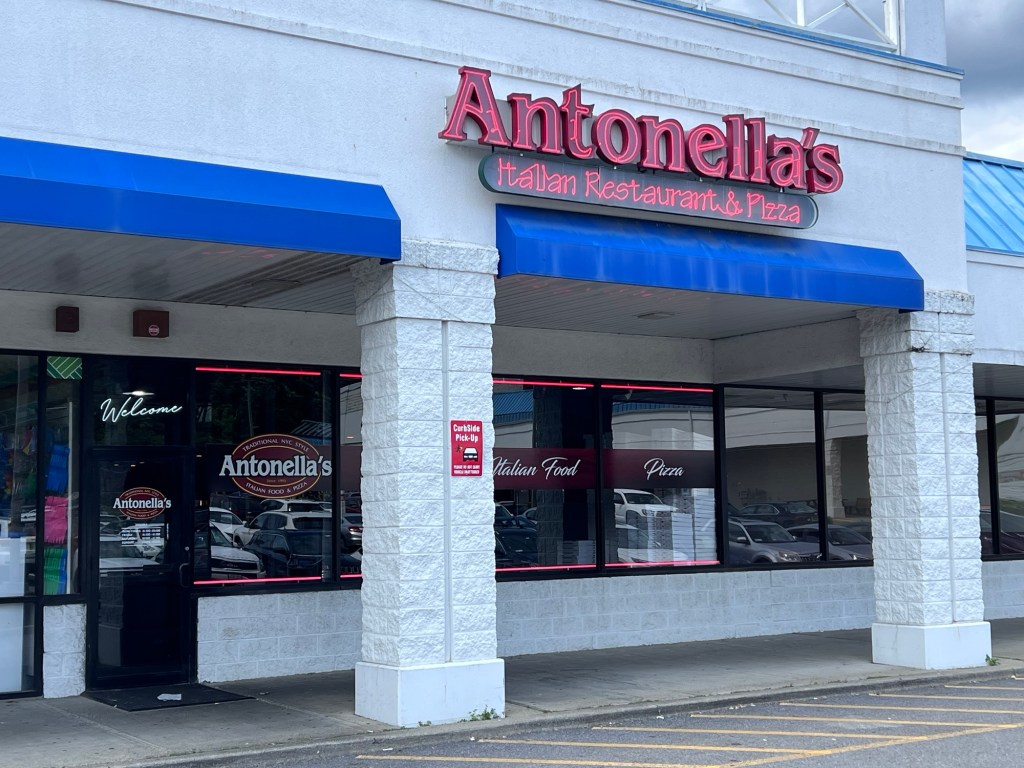
After the ice cream, it was time for dinner (I always believe in saving room for dessert). Both times I tried Antonella’s Pizzeria & Restaurant at 738 Route 9 in Fishkill. You really have to search for the restaurant as it is located in the strip mall in the Shoprite Mall.
The food here is really good. When I came up on my own, I just wanted something small, and I ordered the Cheese Calzone ($8.95). The thing was huge! The Calzone was so large that it could have fed two people easily. It was loaded with Ricotta, Mozzarella and Parmesan cheeses and they make a terrific marinara sauce that accompanied it. By the time I finished devouring the thing, I was stuffed. This after all that ice cream.
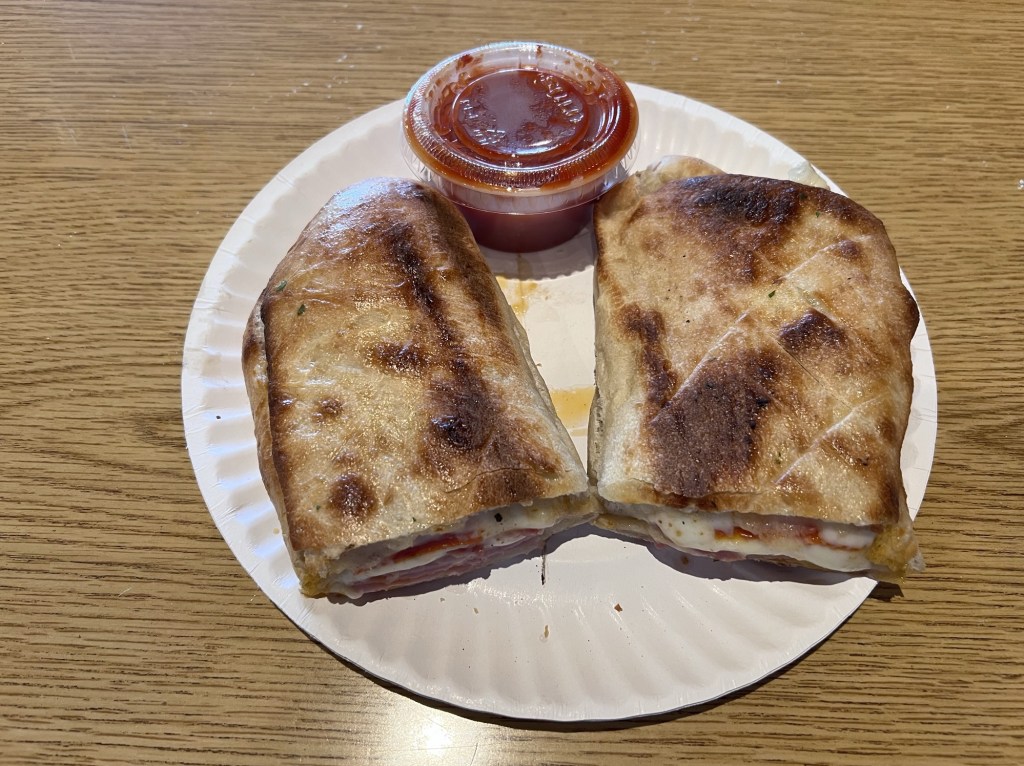
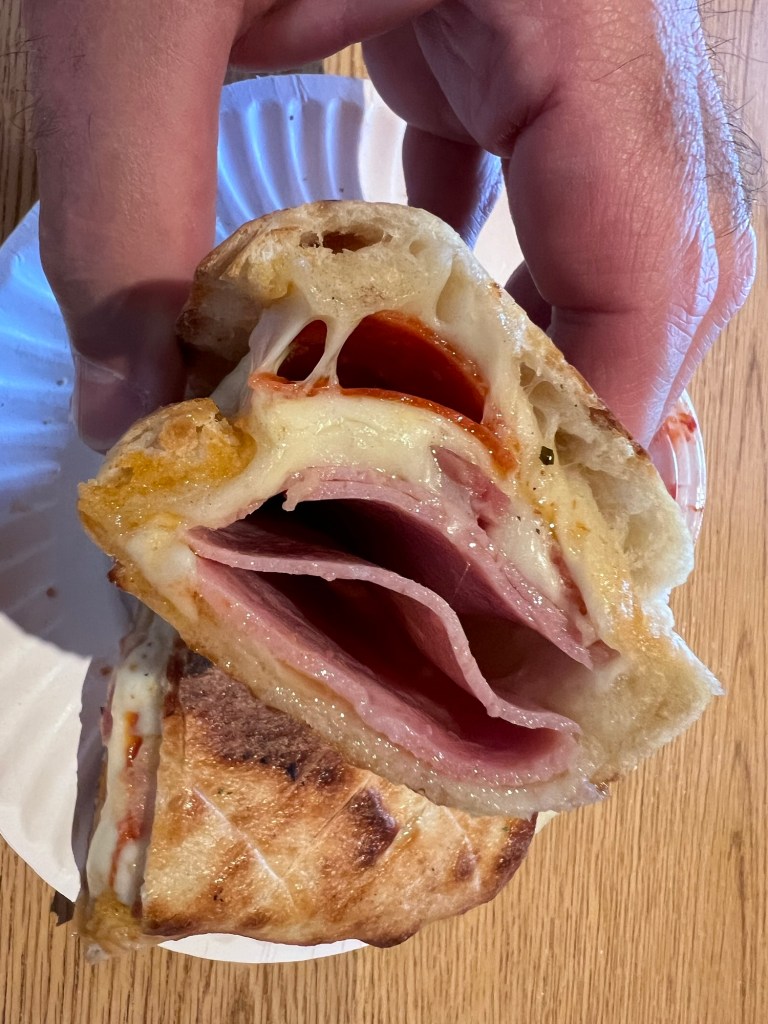
We returned to Antonella’s when my aunt and I returned to Fishkill for the touring since I was so impressed with the food and service. My aunt had the Sausage, Pepper & Onion Roll ($8.50) and I had the Stromboli Roll ($8.50) which had ham, salami, pepperoni, Ricotta and Mozzarella cheeses wrapped in a perfectly baked pizza dough.
The Stromboli at Antonella’s
Both were served with their flavorful marinara sauce. After a long day of touring, it was just what we needed. We also took plenty of time to relax and digest on this trip.
The Italian Meat Stromboli at Antonella’s are excellent for lunch and dinner
Yum!
It was really a nice day and there is so much to see and do in this part of the Hudson River Valley. I had not really explored Fishkill, NY so it was fascinating to see all these old homes and historic sites and know their place in history. Take the time to tour these homes and hear the family stories.
Remember to head back during the Christmas holiday season and explore these homes and the downtowns when they are decorated for the season. There is a special magic in the Hudson River Valley during the holiday season. Check their websites for more activities during the year.
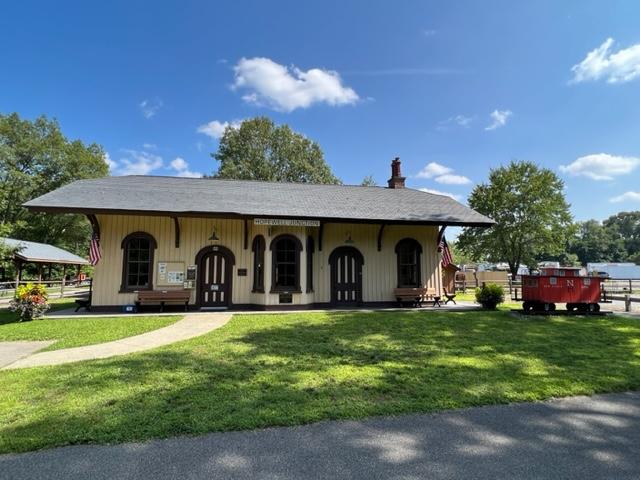
When I returned in the summer of 2023, I was finally able to visit the Hopewell Junction Depot Museum at 36 Railroad Avenue in Hopewell Junction, NY. This tiny museum tells the story of the growth of the local railroads and their impact not just on the local community but the country as well as farm produce and dairy products were able to be shipped all over the country.
The Hopewell Junction Depot Museum at 36 Railroad Avenue
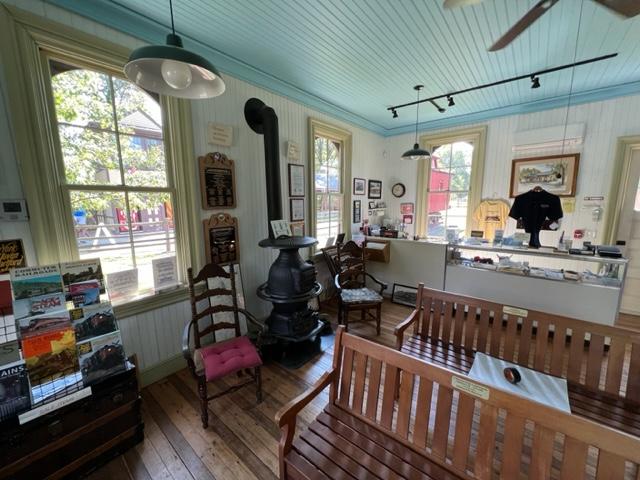
The entrance of the museum and the old Waiting Room
The museum is broken down into three sections: the Old Waiting Room area with the working potbelly stove and gift shop, the Train Station Manager’s Office and the Western Union communications office and the back gallery where the old Ticket Booth was located. This is filled with all sorts of railroad memorabilia from old railroad lamps to a display from the Borden Dairy Company whose plant used to be located across the street.
The back gallery of the museum
The Borden Dairy display
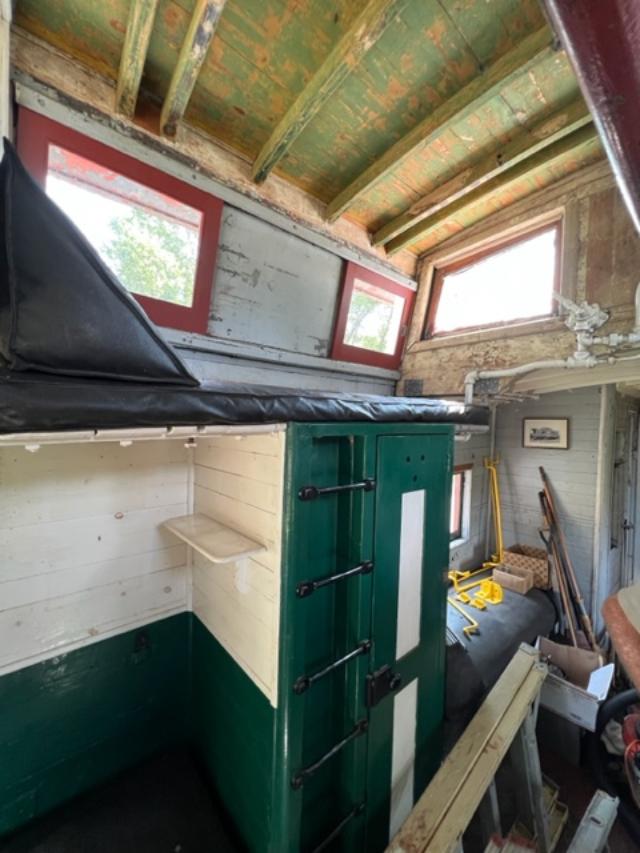
In the back of the museum, there is an old caboose that the volunteers are working on restoring. It is not finished as of this writing but they let me take a peek inside to see how the work progress is coming along.
The old caboose that is being restored on the grounds of the museum.
The old sleeping area of the caboose
The museum has lots of local and county information on the growth of these lines and their effects on the New York State economy. The museum has a lot to do and see.
(Please read the accompanying reviews on VisitingaMuseum.com to see a full description on these homes).
Places to Visit:
Brinckerhoff House Historic Site/East Fishkill Historical Society
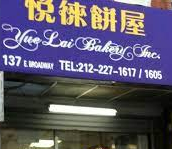
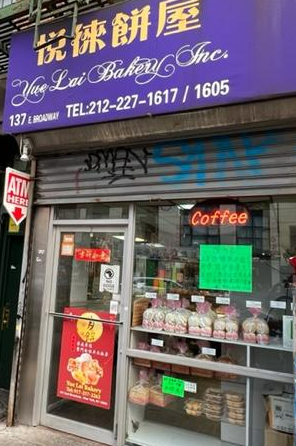
I have been visiting Yue Lai Bakery for many years but recently I have been exploring the outskirts of Chinatown for my blog, ‘MywalkinManhattan.com’ and started to revisit it again. I know that Chinatown is loaded with little bakeries all over the place, but Yue Lai Bakery really stands out for selection, quality and display of their products. Their pastries are always so nicely displayed.
The pork buns are wonderful
What I enjoy is the quality and the selection of their baked goods. There are always a lot of interesting buns and twists to order here. I used to come in for their Baked Pork Buns ($1.50) but the last three times I was in they were sold out. So, I ordered…
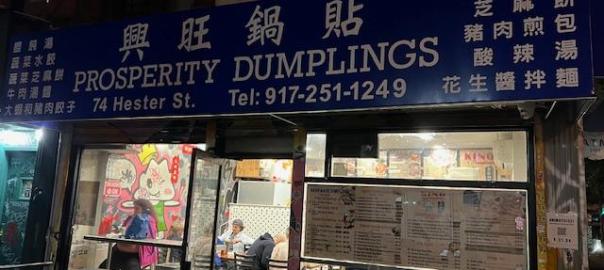
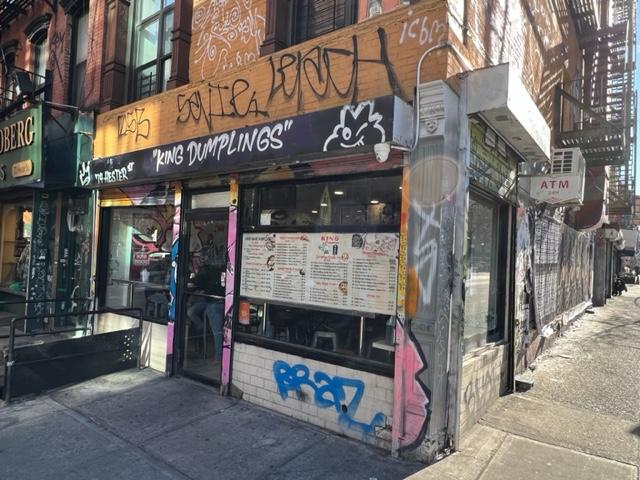
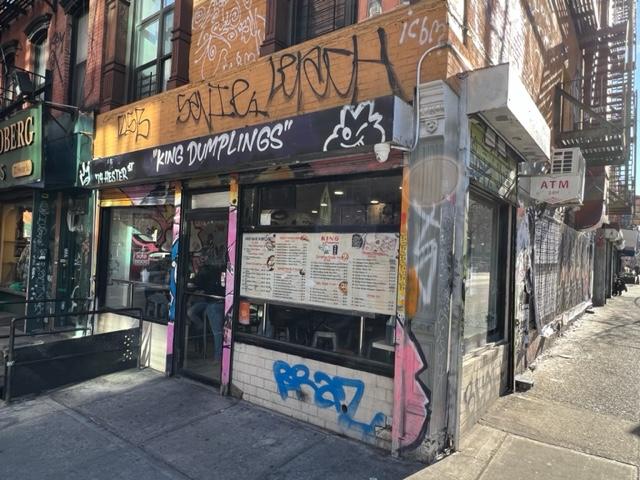
There are times you find those little ‘hole in the wall’ restaurants that just standout because of the quality of their food and their prices that make them affordable to everyone. King Dumpling at 74 Hester Street is one of them. Everything that I have tried there has been excellent and the portion sizes are very fair.
I had watched one of the “Cheap Chinatown Eats” videos from the Fung Brothers and they had mentioned the restaurant as a great place to get dumplings (one of my favorite things) and that they were only $3.00 for ten. I had to try it and have to say that it lives up to its reputation.
China North Dumpling was another great spot that I have been wanting to try for a long time and finally got over to this part of the neighborhood to sample their dumplings.
I have to admit that the place is tiny and I mean small. This is more of a take out place even though it has a counter and two tables to eat at there are boxes all over the place and there is not much room to walk around. I have managed on my trips here to eat my lunch at the counter without anyone bumping into me.
The dumplings here are fresh and are literally made right in front of you. The ladies are rolling fresh dough and filling…
The weather finally broke, and it has cooled down to a pleasant 87 degrees. Thank God because it was a nice day in the City walk around and visit the Flatiron District without sweating like crazy. The last few walks I have done in the neighborhood have been in the mid 90’s and that got to be too much.
I had spent the morning working in Social Services at the Soup Kitchen, helping people with things like getting clothes, writing out haircut vouchers and getting them toiletries. It is a lot of running around but the best part was that I really felt that I was helping people in need. The weather cooperated, and it was so nice to be outside enjoying the sunshine. It was a productive afternoon.
After I finished lunch, I was off to walk the Avenues of the Flatiron District. I have to admit that this has been one of the harder neighborhoods to research because there are so many amazing buildings to view, and the architecture is so detailed that it takes time to look up at all the ornamentation on the buildings. As I said in my previous blog on the borders of the neighborhood, these companies built these buildings to impress and last forever.
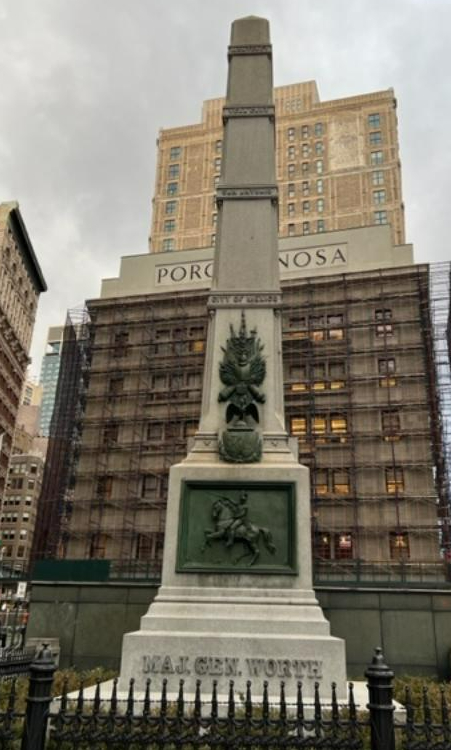
I started the walk at the intersection of Broadway, Fifth Avenue and West 25th Street at the General Worth Memorial, a distinct triangle park right across the street from Madison Square Park. This is the Memorial to and burial site of General William Jenkins Worth.
William Jenkins Worth was a native New Yorker (Hudson, NY) and decorated Army officer who had served our country in the Battles of 1812, The Second Seminole War and the Mexican American War. His series of campaigns shaped this Country to where it is today. He died working for the Department of Texas in 1849 (Wiki).
The General’s remains are buried under the monument at Worth Square at the corner of Fifth Avenue, Broadway and East 24th and 25th Street. General Worth was interned here in November of 1857 on the anniversary of the British leaving the colonies (NYCParks.org).
The Worth Monument between East 24th and East 25th Street at Broadway and Fifth Avenue
The Worth Monument was designed by artist James Goodwin Batterson, whose main profession was one of the founders of the Travelers Insurance Company in Hartford, CT and helped design the Library of Congress Building in Washington DC. He had immersed himself in his father’s quarrying and stone importing business early in his career and traveled extensively to Europe and Egypt for the job. He designed this monument in 1857 (Wiki).
Turning the corner at East 25th Street and Madison Avenue is Madison Square Park, named after our fourth President of the United States, James Madison. This well landscaped park is the gathering place of the residents of NoMAD and has a wonderful playground that has been busy the whole time I have spent in the neighborhood.
Madison Square Park is an interesting little oasis from all the traffic and office space. It has an interesting history since it was designated a public space in 1686 by British Royal Governor Thomas Dongan. It has served as a potter’s field, an arsenal and a home for delinquents. In 1847, the space was leveled, landscaped and enclosed as a park. It became part of the New York Park system in 1870. There are many historical figures featured in the park (NYCParks.org). The park today is a major meeting spot for residents and tourists alike with a dog track and the original Shake Shack restaurant.
Madison Square Park in the Spring when I was walking the length of Broadway
When I walked into the park to take a break, it must have been the busiest section of the neighborhood between the playground and the original Shake Shack that were serving food to a crowd clung to their cellphones.
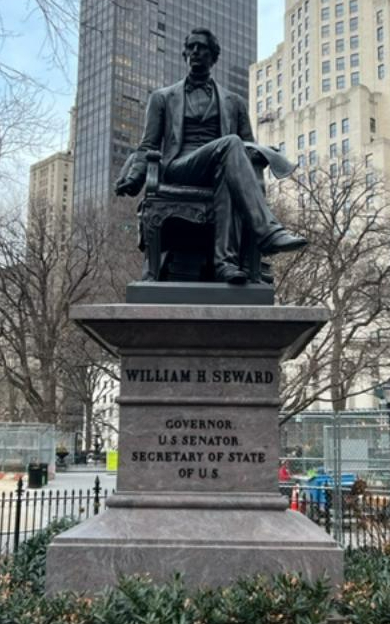
Another sculpture that is in Madison Square Park is the statue of William Henry Stewart, the former Governor of New York State, US Senator and Secretary of State during the Civil War. He also negotiated the Alaskan Purchase in 1867.
Governor William Henry Stewart statue in Madison Square Park
Governor William Henry Sewart, who negotiated the Alaskan Purchase “Sewart’s Folly”
The statue was designed by artist Randolph Rogers an American born sculptor who studied in Italy. He was a Neoclassical artist known for his famous historical commissions.
Madison Square Park is noted for its beautiful plantings, shaded paths and for being home to the first Shake Shack, a Danny Meyers restaurant and popular upscale fast-food restaurant.
The very first Shake Shack is in Madison Square Park
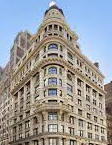
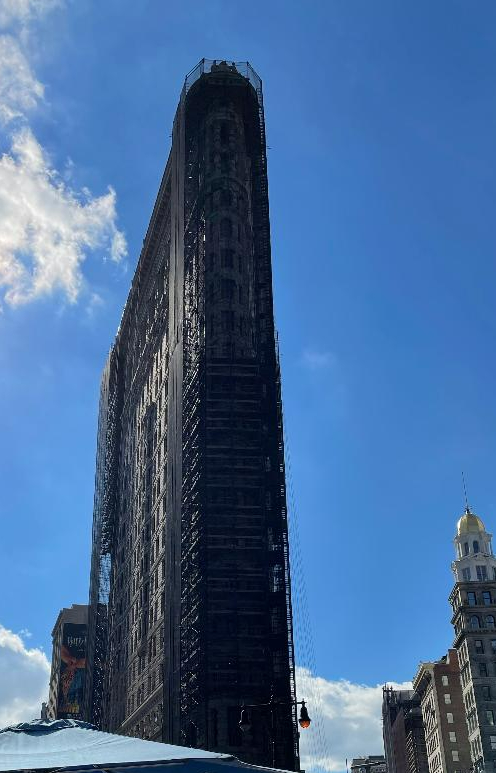
As you look down further on the square, you will see the Flatiron Building one of the most famous and most photographed buildings in New York City. The building was designed by Daniel Burnham as a Renaissance Palazzo with Beaux-Arts style. The original name for the building was the “Fuller Building” for the Company. The name “Flatiron” comes from a cast iron clothes iron from the turn of the last century. (Wiki)
The ‘Flatiron’ Building at 175 Fifth Avenue at 23rd Street
As you pass the Flatiron Building and continue the walk south between 23rd and 14th Streets, take a look up to admire the buildings that once help make up the “Ladies Shopping Mile”, once the most fashionable neighborhood after the Civil War for shopping, hotels and entertainment (See my blog in MywalkinManhattan.com “Walking the Ladies Shopping Mile”).
My Christmas Blog on “Victorian Christmas in New York City”: Day One Hundred and Twenty-Eight:
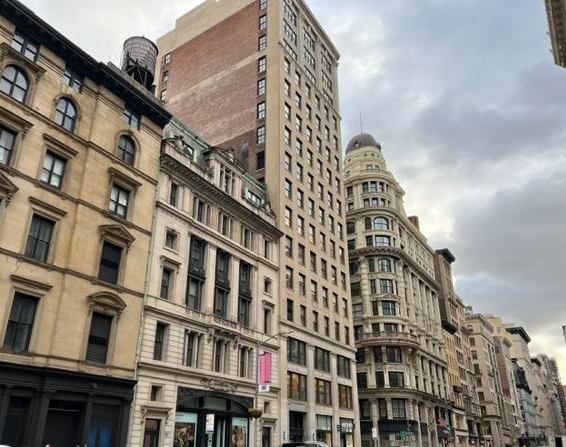
The buildings that line Broadway from the Flatiron Building until you get to Bowling Green Park at the tip of Manhattan are some of the most beautiful and detailed examples of Victorian architecture and were built between 1870 to about 1915. You really need to put the cellphone down and look up when walking south on both sides or you might miss the details of these buildings.
The Warren Building is another example of turn on the last century elegance. Designed by Stanford White of McKim, Mead & White in 1896, the building was designed in the Neo-Renaissance style (Daytonian).
One of the most elegant buildings on this part of Broadway is the former “Lord & Taylor” building at 901 Broadway. The building was constructed for the department store in 1870 and was the main store until 1914. Really take time to look at the detail work of the store and step inside. The Mansard Roof is an amazing touch. In 2022, it is now a restaurant on the lower level.
901 Broadway “Lord & Taylor” building from 1870-1914
I walked back through Madison Square Park after my walk down Broadway and there were two small jazz concerts that were going on at opposite side of the park. Two three person combos were entertaining people by the fountain and near Shake Shack and on a sunny after there was a pretty big crowd enjoying the park and listening to the music.
Walking down Fifth Avenue was interesting on both sides as you will notice how ornate the buildings are as you travel from West 25th to West 20th Street leading me to believe how important of a shopping and business district this once must have been. Here and there from the Flatiron Building you can see all the elegant and ornate buildings that line the Avenue.
I started my walk south down Fifth Avenue and here and there you need to look up and admire the details of the buildings. On the corner of Fifth Avenue and 23rd Street is 186 Fifth Avenue, which was built for the Western Union Telegraph Company in 1883.
186 Fifth Avenue-The Western Union Telegraph Company Building
The building was designed by architect Henry J. Hardenberger in the Queen Anne style with its details being in brick and terra cotta (Daytonian in Manhattan). The building just finished a restoration, and you can see the details by the windows and dormers.
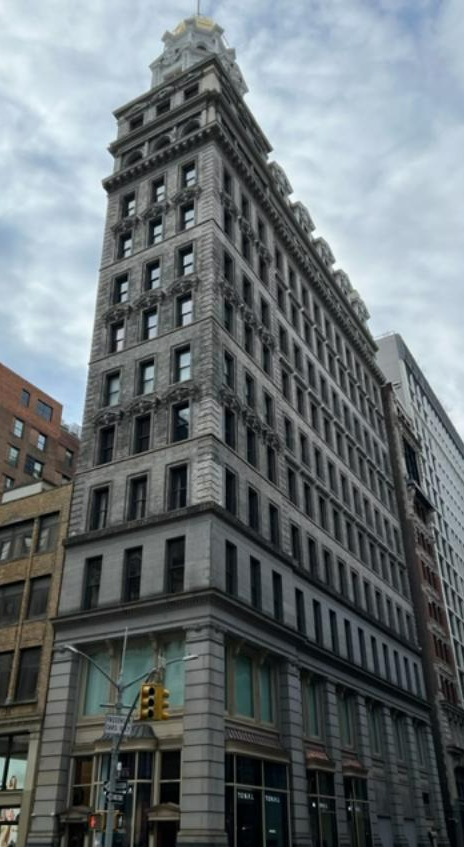
At 170 Fifth Avenue and West 22nd Street, you can see the beauty and elegance of the Beaux Art details of the former Sohmer Piano building. The building was built between 1897-88 and designed by architect Robert Maynicke for the owners of the Sohmer Piano Company for their showrooms and offices. The company was known for its introduction of the baby grand piano (Wiki/Daytonian in Manhattan).
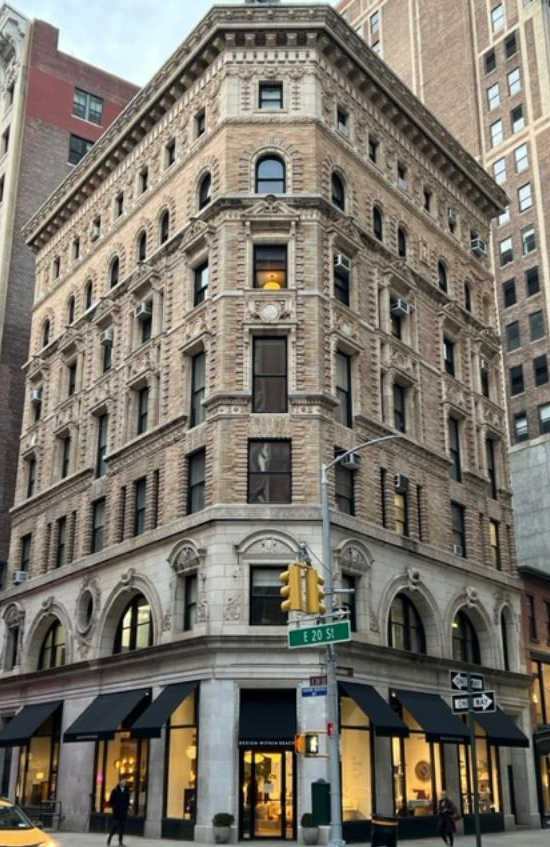
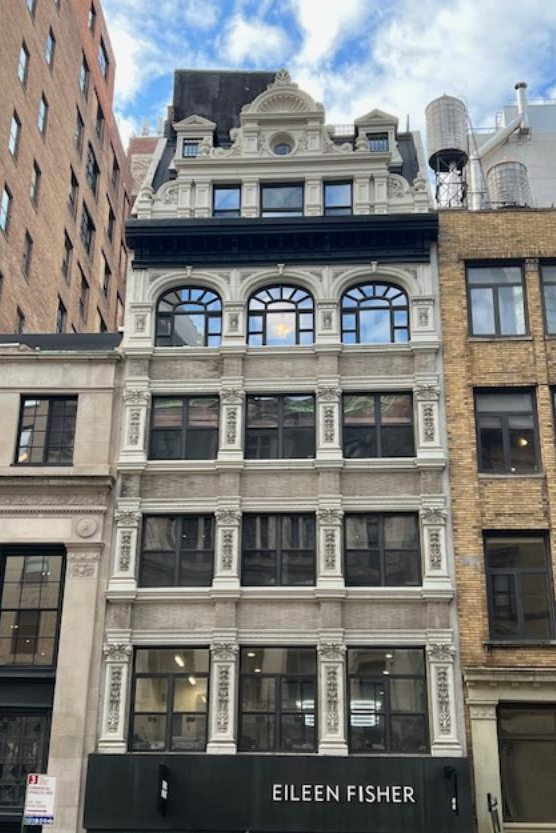
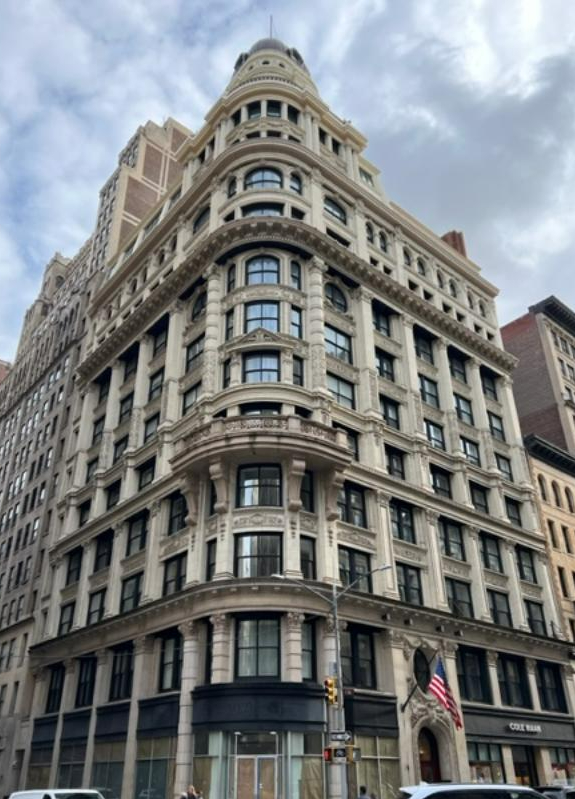
At 166 Fifth Avenue, the building has almost a confectionary look of a wedding cake. This commercial building was constructed in 1900 by the architectural firm of the Parfitt Brothers in the Northern Renaissance Revival style with all sorts of embellishments around the windows and doors with an elaborate roof design. In the beginning it housed art galleries and upscale retailers until the area became manufacturing at the turn of the last century. It has made a full swing again as a luxury retailer building on street level (Daytonian in Manhattan/Streeteasy/LoopNet.com).
On the corner of West 21st Street and Fifth Avenue is 162 Fifth Avenue, another impressive building with interesting details. This office building was built in 1930 and is still used for commercial purposes.
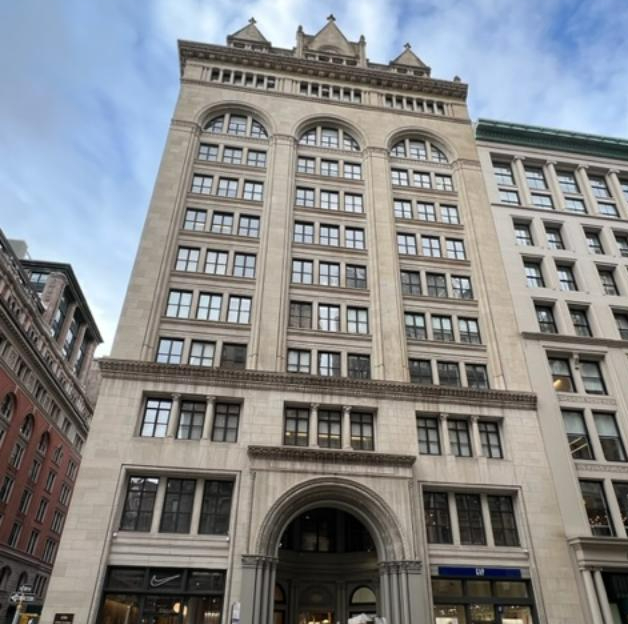
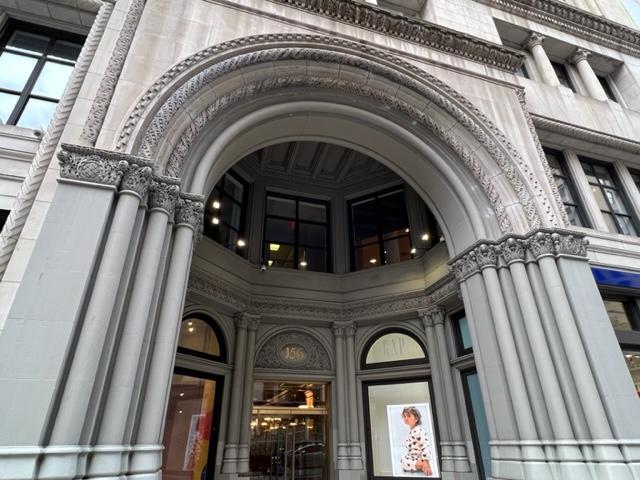
At the edge of the neighborhood standing guard in the Flatiron District is 156 Fifth Avenue, the Presbyterian Building. This building has an interesting past being built for the Presbyterian Church for offices for missionary work when the neighborhood housed many religious institutions (Daytonian in Manhattan/LoopNet.com).
It was designed by architect James B. Baker in the French Gothic style, and you have to admire the roof for its unique details.
The detail in the entrance of the building
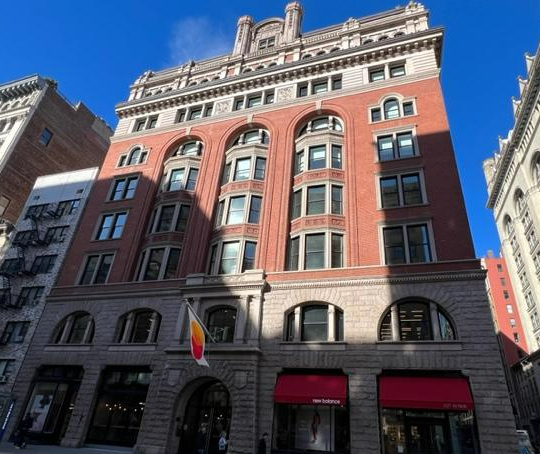
As I rounded the corner of the neighborhood at West 20th Street another building caught my eye at 150 Fifth Avenue, the former Methodist Book Concern. The building was built between 1888-90 and designed by architect Edward Hale Kendall in the Romanesque Revival style. It had originally held the offices, printing and a chapel for the church. This was the section of Fifth Avenue that housed many religious offices and headquarters (Wiki).
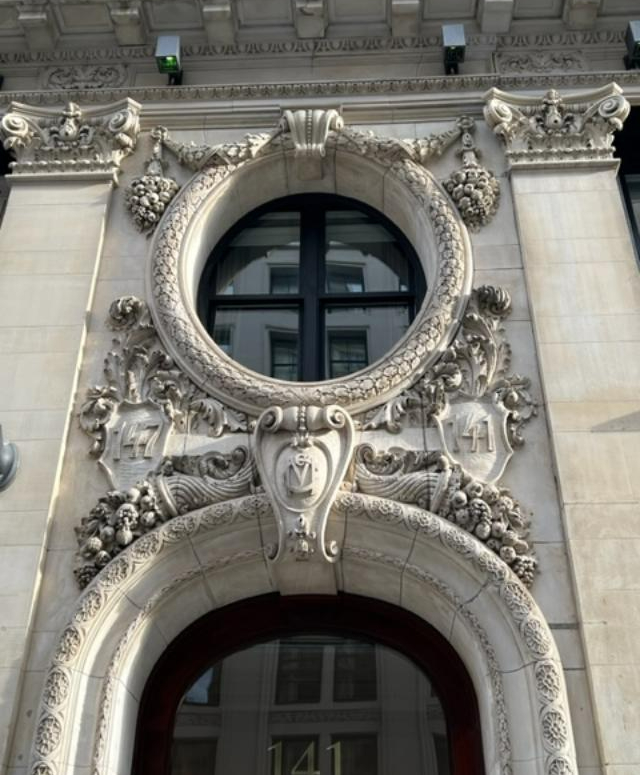
Walking north back up Fifth Avenue is 141 Fifth Avenue another confection of architecture. This gorgeous building was built in 1897 by architect Robert Maynicke, who had also designed Sohmer Piano Building at 170 Fifth Avenue, in the Beaux Arts style for the Merchant Bank of New York (Flatironnomade.nyc/fsiarchitecture.com).
141 Fifth Avenue-The Merchants Bank of New York Building
This impressive bank has recently been converted to luxury apartments with a current one sold at over three million dollars.
The entrance to 141 Fifth Avenue
I made my way back up Fifth Avenue and admired all these buildings once again. Each has their own style and design and since the time of their construction continue to live on in different forms for various companies. Since many were built at the turn of the last century it also proved to me how well constructed and designed these buildings are and how desirable they are in the marketplace as you will not see this construction again. These were made to last and give this section of Manhattan its unique appearance and its own sense of character.
The Flatiron District from Fifth Avenue and East 23rd Street
The beauty of the Flatiron District at night
I found myself hungry again and took the subway back down to Chinatown to visit many of the takeout places and bakeries that were on my list to visit. I have been building up my blog, DiningonaShoeStringinNYC@Wordpress.com and wanted to see how many of them had stayed open post pandemic. Many of these little ‘hole in the wall’ restaurants are going strong as Chinatown is continuing to come back to life.
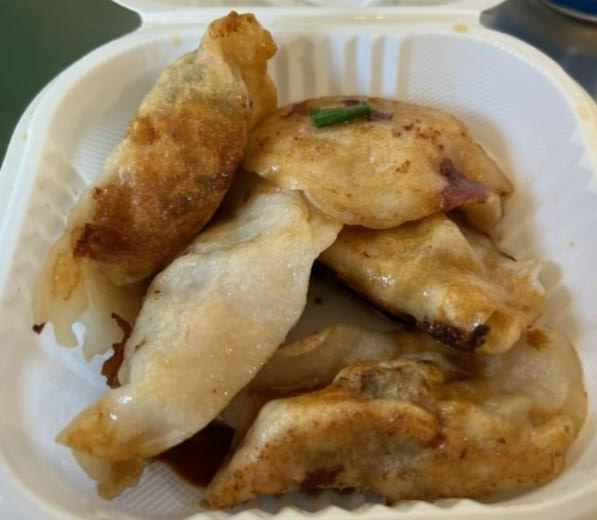
I started my walk in Chinatown at China North Dumpling at 27A Essex Street across from Seward Park for some fried dumplings and spring rolls. For ten large fried dumplings that were really juicy and well cooked, four spring rolls and a Coke it was $7.00. Everything was so well made, and you can watch from the counter the ladies making the fresh dumplings right in front of you. The place is real bare bones, but the food and the service are amazing. Try to eat at the counter and watch everything get prepared.
China North Dumpling at 27A Essex Street located in the Lower East Side
The Dumplings at China North Dumpling are made right in front of you
In needed something sweet after all the fried foods so I headed back to Yue Lai Bakery at 137 East Broadway to look for a baked pork bun. They had none left at that time of the day, but they were having a special on their baked goods three for $2.00 and I picked out a Coconut Bun, a Cream filled Bun and a Plain Bun.
They bagged it all up for me and I walked over to Sewart Park across the street and sat on the benches and ate them one by one. The Cream and Plain buns were really good and very sweet, and everything was so soft and well baked. I ended up sharing the Coconut Bun with the little birds in the park who surrounded me looking for a handout.
After a nice rest in the park and enjoying the sunshine and watching families play with their kids, I found myself still hungry. So, I walked down Hester Street from the park and made my way to King Dumpling this time for some steamed Pork and Chive Dumplings. For ten dumplings and a Coke it was only $5.00. The Steamed Pork & Chive Dumplings were excellent and again were freshly made right in front of us. They are large and well-cooked and burst with juiciness when you bite into them.
Steamed Dumplings at King Dumplings are also made right in front of you
The place was packed with customers and people getting takeout. It is amazing to me how many people write about both King Dumpling and China North Dumpling and I had never really noticed them before. I saw them on a Fung Brothers “Cheap Chinatown Eats” video and then wanted to try them.
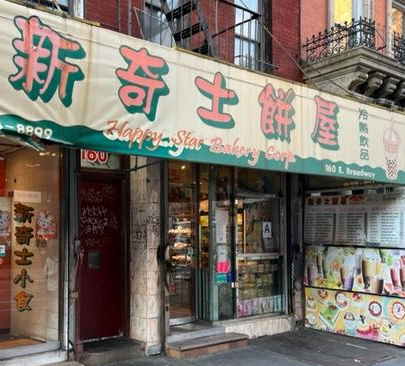
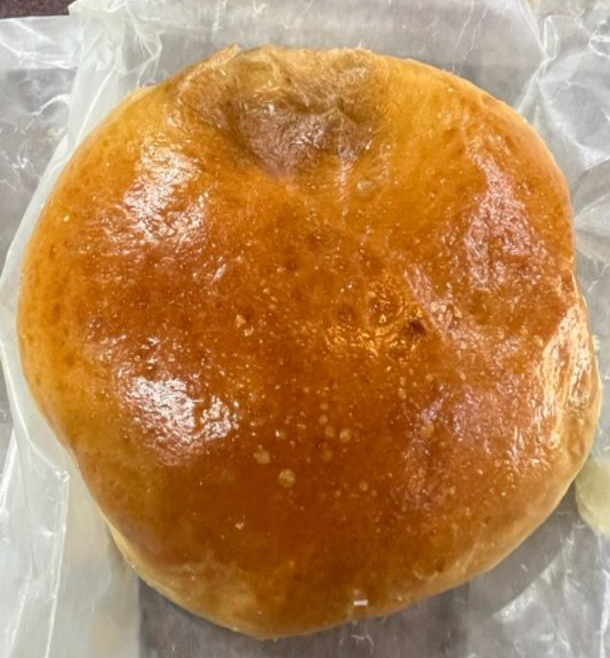
My last stop on the eating tour because even after twenty dumplings, four spring rolls, three pastries and three Cokes, I was still hungry and needed that baked pork bun. I found it at Happy Star Bakery at 160 East Broadway and it was just $1.75. Not the $3.50 in Midtown as I recently found at Dim Sum Sam in the Theater District. It was soft and chewy and filled with the most amazing, chopped pork and baked into a sweet dough. I barely made it out the door and I was finished with it.
After all the munching on snacks throughout the afternoon, I needed a good walk so I double backed and walked around the Twin Bridges section of the neighborhood walking down Henry, Madison, Rutgers and Clinton Streets around the public housing projects looking at all the small businesses that still catered to the people in the projects.
It is really a funny section of the City in that in-between the cut rate stores, and discount pizzerias are tiny gourmet restaurants, coffee bars and art galleries. It is really a case of extremes all over this section of the neighborhood and shows that both Twin Bridges and Chinatown south are going through a change in both residents and the businesses that cater to them.
With Little Italy slowly fading away (down to just four blocks now from forty at the turn of the last century), I can see the same changes happening in Chinatown as well. It is just another sign of Manhattan going through a metamorphosis.
It will be interesting to see what I will find when I reach this section of Manhattan in the near future.
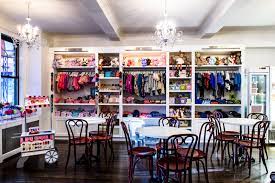
A la Mode Shoppe is the type of ice cream/candy shop that every neighborhood should have in it. It is a colorful spot with unusual, homemade ice cream flavors, and a nice selection of gourmet sodas, candies and gifts. The store is decorated with bright colors, comfortable chairs and a festive inviting environment. They even have a small party room off to the side of store with seating for small children.
The inside of A la Mode Shoppe (A la Mode Facebook)
What I come for is the ice cream. There are two flavors that I come for when I visit the store, Pink Sprinkles, which is Strawberry ice cream with loads of colorful sprinkles layered…
After a few weeks of touring around New Jersey for a historical weekend, traveling to see my mother for Mother’s Day and running in and out of the City with me finally returning to Soup Kitchen and posting my grades on my class’s successful group project on “Rocking it in Rutherford”, I was finally able to get in Manhattan and continue my walk around the island. I finally was able to get into the main part of the Chelsea neighborhood.
After a long morning in the Soup Kitchen, I planned the entire day out. We were really busy that day as we have increased the productivity by a hundred bags to give away with the food distributed to the homeless. I was told that the need is getting bigger, and we had to increase the numbers. It is a sad state of this economy right now. These lines are just getting longer. This is the one thing I like about volunteering here is that you are part of a solution rather complaining about the problem.
After I was finished for the day and a little snack to tide me over, I started my walk around the border of the northern part of the Chelsea neighborhood. What was nice was it was right out the door of the church, and I started the walk down West 28th Street which it shares with the border of Hudson Yards/West Chelsea. I got to revisit this part of the neighborhood again.
What I did learn from walking the neighborhood was more about the history of The Church of the Holy Apostles. The Church of the Holy Apostles was built between 1845 to 1848 and was designed by architect Minard Lafever with the stained-glass windows designed by William Jay Bolton (Wiki).
The church in the summer of 2025
The church has always been progressive, and it was rumored to be part of the Underground Railroad during the Civil War. The church had been an extension of the Trinity Church downtown for the working-class people in the area. Now it also runs the second largest Soup Kitchen in the United States. The biggest is in San Franciso (Wiki).
The Church of the Holy Apostles at 296 Ninth Avenue feels like a second home to me
It was also convenient in that it was where I needed to start my walk on the edge of West 28th Street where the church is located right across from Chelsea Park south of the northern section of Hudson Yards and right across from the Lower Garment District (please read my blogs on walking these parts of Manhattan as well).
What I never noticed in the almost 17 years that I have been volunteering at the Soup Kitchen was that it was a park. Chelsea Park is located across the street at the corner of Ninth Avenue and between West 28th and 27th Streets. I had always thought this was part of P.S. 33, the elementary school next door complex. There is a whole separate park behind that corner.
Chelsea Park extends all the way to Tenth Avenue with soccer and basketball courts and places for people to not just run but relax under the blanket of trees in the summer. Facing Ninth Avenue in a small courtyard is the statue of the ‘Chelsea Doughboy’.
The statute was designed to honor the war veterans of WWI. The term “Doughboy” no one is too sure where it originated. Some think from the fried dough dumplings that the soldiers eat or maybe from the way their uniforms looked which were a little baggy or from the dough clay that they used to clean their uniforms (NYCParks.org).
Artist Philip Martiny was a French born American artist who settled in New York when he immigrated here in 1878. He was a contemporary of artist August Saint-Gaudens and known for his decorative styles in the Beaux-Arts fashion. He created many sculptures for buildings in New York City and Washington DC (Wiki).
I walked past Chelsea Park on the way to Tenth Avenue and walked all along the borders of the park. The park is becoming a homeless encampment. I have not seen anything like this since Mayor Guiliani closed Thompkins Square Park in the East Village and then fenced it off to the homeless and renovated it. There were people sleeping all over the place even by the small playground that the kids were playing in. It really is beginning to show the state of the City now. The bathrooms were even locked to the patrons.
The track area was pretty much empty and what was really a shocker is how the neighborhood again changes at the Tenth Avenue border. This part of the neighborhood has gotten extremely expensive that was documented in the documentary “Class Divide” on the changes of the neighborhood due to the Highline.
“Class Divide” by HBO. The sound is muted but you can see it with subtitles
On the other side of Chelsea Park is some of the newest and most expensive real estate in Manhattan, a lot due to the Highline. The Highline is an elevated walkway that starts on West 30th Street and extends to West 19th Street and has in recent years set the tone for this part of the neighborhood.
The Highline Park was created from a remnant of the former New York Central railroad spur that was elevated above the roads below. In 2006, there was a neighborhood effort to save it and create an urban park. Now the 1.45-mile park supplies an elevated greenery above the neighborhood which has created expensive real estate on all sides of the park (Wiki).
The Highline Park was designed by James Corner Field Operations, Piet Oudolf and Diller, Scofidio and Renfro.
As I passed the Highline Park, I passed the most unusually designed building at 520 West 28th Street. The building is a residential complex known as the Zaha Hadid Building after the architect who designed it Zaha Hadid. It was one of her only residential complexes that she designed and one of the last buildings she created before her death. The building is designed with curvilinear geometric motifs (Wiki).
520 West 28th Street-The Zaha Hadid Building (Streeteasy.com)
You will be passing a lot of construction going on by the time you get to Twelve Avenue. Buildings are being renovated and rebuilt and all new buildings are popping up on the edge of this now very trendy neighborhood. What was once dock yards and parking lots is becoming high end office buildings for “Silicon Alley” as the Tech industry is called in New York City.
At the end of the block is Hudson River Park, a strip of green park created on this side of Manhattan under the Bloomberg Administration (God are we now missing those years!). This little strip of park at the end of West 28th Street has some interesting views of Edgewater, NJ. The afternoon I visited the park, there were a few joggers and dog walkers making their way through the park. The strip gets smaller along Twelve Avenue until you walk to about West 42nd Street by the Circle Line boat ride.
As you enter the park, there is a very unusual set of sculptures entitled ‘Two Too Large Tables’ by artists Allan and Ellen Wexler. Two Too Large Tables consists of two elements. Each is constructed of brushed stainless steel and Ipe wood.
One piece has thirteen chairs extended up to become columns that raise sixteen square feet plane seven feet off the ground. In the second piece, the same chairs act as supporters to lift a sixteen square feet plane 30 inches off the ground. The first functions as a shade pavilion, the second as a community table. As people sit, they become part of the sculpture. People sitting together, forming unusual pairings because of the chair groupings (Artist bio).
Two Too Large Tables in Hudson River Park (Artist bio)
Artist Allen Wexler is an American born artist from Connecticut and studied at Rhode Island School of Design where he received his BFA and BS in Architecture. He studied and earned his MS in Architecture from the Pratt Institute. He is known for his multiple disciplines in art (Wiki).
The trip up Twelve Avenue is less than exciting. There is a tiny strip of park along the river that is mostly behind fencing. On the other side of the street is construction holes and fences from all the planned buildings that will start raising along the avenue.
The one place where there was some action was BLADE Operations at the Hudson River Park where helicopters were flying in. It reminded me of the opening scene of the Peter Bogdanovich film “They All Laughed” that I had just seen at the retrospect of the director’s work at the MoMA.
“They All Laughed” trailer by Peter Bogdanovich is a true Manhattan film
I made the turn down Twelve Avenue and here you have to watch because of the all the construction going on. There is so much building going on along the avenue just watch out for scaffolding and unpassable sidewalks along the Hudson River waterfront.
You will pass some very impressive buildings that are part of New York’s “Silicon Valley” including the well-known Starrett-Lehigh Building that has changed the complexity of the businesses in this neighborhood.
The Starrett-Lehigh Building at 601 West 26th Street
The building was built and finished in 1931 for the Starrett Corporation and the Leigh Valley Railroad as a freight terminal. The building was designed by the architectural firm of Cory & Cory and in 1998 went through a renovation as a office building. It is currently going through another renovation that will be completed in 2023 (Wiki/Starrett-Leigh website).
As I crossed the street from Hudson River Park, I passed the renovations of Chelsea Waterside Park. This is the park where last year I started “The Great Saunter Walk” last year on the Summer Solstice. The park had a ‘Butterfly Garden’ that people were working the morning that I started the walk. The park is going through a full make over and the plans for it look amazing.
Chelsea Waterside Park at 557 West 23rd Street (Hudson River Park Archives)
When you walk through Hudson River Park, it is the nicest place to take a rest and sit under a tree to cool off. The park has the most amazing breezes and views of the river and neighboring New Jersey.
As I was walking around one of the wooded piers admiring the view, I came a across a grouping of stones that looked unusual with the way that they were set. The grouping was a sculpture garden by artist Meg Webster entitled “Stonefield”.
“Stonefield” by artist Meg Webster
This landscape sculpture consists of large stones chosen from quarries in New York State and the northeast corner of Pennsylvania. They were selected for their special shapes and unusual sculptural qualities. Some are colorful, some are concave, some craggy, one is very tall. The artist views each stone as special and arranged each to showcase its unique characteristics and individual “being-ness” (Hudson River Park.com).
Ms. Webster is an American born artist who has a BA from Old Dominion University and MFA from Yale University. She works with natural materials such as salt, sand and earth known for her Post-Minimalism and the Land Art Movement. She is known for her sculpture and installation work (Wiki).
Artist Meg Webster talks about her artwork
As you pass the fencing of the renovations, watch out for the traffic with its lots of busses, cars and bicyclists. It is almost as if no one sees traffic lights or pedestrians. Look both ways when you cross from the park to West 23rd Street.
West 23rd Street is a combination of new construction and historic buildings showing how the neighborhood is transitioning but with a historic element. Not only a residential but interesting commercial strip with engaging shops and very reasonable restaurants and take-out places. It is a real New York neighborhood.
Between Twelve and Eleventh Avenues, you are seeing the development around the High Line Park. All the new modern structures are being built around the pathway park which is influencing this part of the neighborhood.
When you reach between Tenth and Ninth Avenues, you arrive at the brownstones of the Chelsea Historic District, which was once part of the Captain Thomas Clarke estate that was separated into townhouse lots that have been changed and altered since the original parcels were created in 1835. His descendant, Clement Clarke Moore, created the neighborhood plots for the townhouses.
The creation of the neighborhood of “Chelsea” from the Captain Thomas Clarke Estate
This block of the neighborhood is a combination of interesting stone townhouses on one side of West 23rd Street and the other side of the street is turn of the last century apartment buildings. When you are walking west towards the Hudson River, take the time to admire these last 19th Century buildings. The official historic district does start one block below on West 22nd Street.
Part of the Chelsea Historic District at West 24th Street
When I crossed over Ninth Avenue as I passed SVA Theatre at 333 West 23rd Street and the small park next to the theater. When I looked inside the park, I saw an interesting looking piece of artwork and wondered who created it. It is the theater logo.
The SVA Theatre logo I thought was a piece of artwork
Once you cross over Eighth Avenue, the rest of the street is a combination of commercial businesses with a mixture of residential either on top or to the side of these establishments. What I love about Chelsea is that it is a treasure trove of reasonable restaurants that dot the street all the way to Sixth Avenue.
Just off the corner of Eighth Avenue is Lions & Tigers & Squares at 268 West 23rd Street, which has the best Detroit style pizza that I have tasted in New York City. The sauce and cheese are baked into the sides of their pizza, and they really load down on the toppings.
Lions & Tigers & Squares at 268 West 23rd Street (Closed May 2025)
Don’t miss their sausage or pepperoni pizza which has a heavy covering of spicy sliced pepperoni and the sweet sausage that is topped with maple syrup. Their pizza has a crisp outside and a pillowy inside.
The Sausage and Pepperoni Pizza here is just excellent
Just next to Lions & Tigers & Squares is Lucky’s Famous Burgers at 264 West 23rd Street. This amazing little restaurant serves the best burgers and chicken fingers. Their French Fries come in a little sack that can serve two people.
Lucky’s Famous Burgers at 264 West 23rd Street (Closed June 2023)
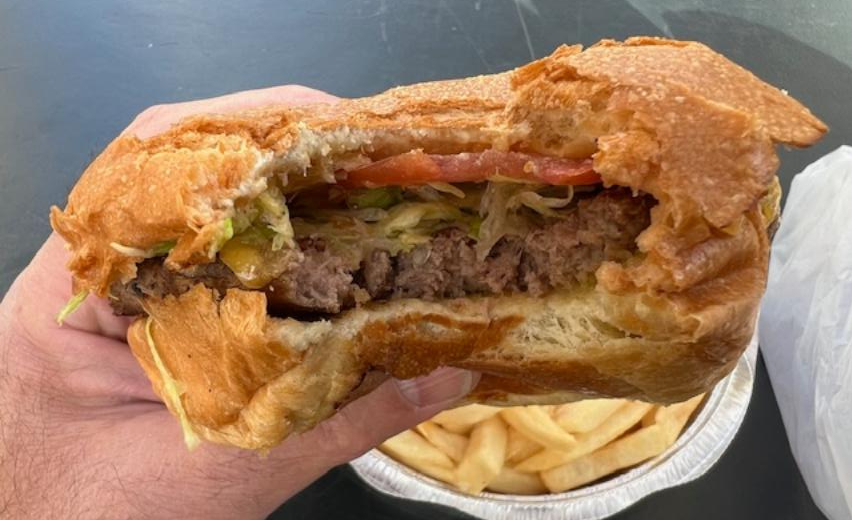
When I had lunch there recently when I was finishing my walk around West Chelsea/Hudson Yards, I had the juiciest twin Cheeseburgers and a bag of fries. Their burgers are so fresh and well-cooked and topped with lots of fresh vegetables. They are so well caramelized on the outside that the burgers have such a good flavor when combined with the toppings.
The Mini Cheeseburgers with fries are excellent at Lucky’s Famous Burgers
In between the blocks there was some unique buildings that stood out amongst the more modern apartment and post WWII buildings. Tucked in here and there are traces of the Victorian past of the neighborhood.
film-history-and-modeled-clay.html
At 244 West 23rd Street is a beautifully embellished building in brick and cream colors was built in 1900 by developer Isidor Hoffstadt. Decorations of garlands adorn the windows and top of the building and some of the upper floor windows are surrounded by archways. It now contains twelve lofts with multiple bedrooms (Daytonian in Manhattan).
A few doors down are one of the most famous hotels still under scaffolding after a few years of renovations. The Chelsea Hotel at 222 West 23rd Street was built between 1883 and 1885 and was designed by architect Philip Hubert from the firm of Hubert, Pirrson & Company. The hotel is designed in the Queen Anne Revival with a combination of American Gothic (Wiki).
The hotel had originally opened as a cooperative and a home to artists and members of the theater community, but the concept changed in 1905 when it reopened as a hotel. The hotel has gone through several management changes over the years. In early 2022, the Chelsea Hotel reopened again as a hotel when the interior renovations were finished.
What has made the Hotel Chelsea so famous over the years are the artists and theater people who have lived at the hotel over the years and have used the hotel for their own creativity. Music, books, movies and story lines have been written here over the years by some of the most creative minds in history.
The historic plaque of the hotel
The hotel was a catalyst for the creative set. Notable famous residents included Mark Twain, Dylan Thomas, Allen Ginsberg, and Joseph O’ Neil, who when living here with his family was influenced by the hotel when he wrote ‘Neverland’. Film stars including Dennis Hopper, Elliot Gould and Warhol star Edie Sedwick had stayed at the hotel at various times. Musicians and singers Madonna and Janis Joplin both resided in the hotel and Sid Vicious’s girlfriend, Nancy Spungen was found stabbed (Wiki).
The history of the hotel
On the corner of Eighth Avenue are three restaurants I have noted many times in this blog for either their creative cooking or their cheap eats. These are real neighborhood restaurants.
The first one being Chelsea Papaya at 171 West 23rd Street, which was the starting point when I had breakfast last summer when I started “The Great Saunter” walk on Father’s Day. The breakfasts here are just amazing.
The pancakes here are delicious
The breakfasts are wonderful here
The pancake platter was out of this world and their breakfast sandwich Bacon Egg and Cheese was delicious.
Chelsea Papaya at 171 West 23rd Street is great for all meals
Next door to it is Pizza Gaga at 171 West 23rd Street for $1.50 slices and $1.00 cans of soda. This is my ‘go-to’ place when I need a quick snack and then need to dash on the subway to go somewhere else.
The cheese pizza at Pizza Gaga at 171 West 23rd Street is really good
A few doors down is Excellent Dumpling House at 165 West 23rd Street. I have only eaten there once but the food was pretty good that evening, but it still warrants a second trip because the raving that it got online did not live up to the hype of the food. The Soup Dumplings I had that night were large but did not have that much flavor.
At the corner of the neighborhood on Sixth Avenue and West 23rd Street at 100 West 23rd Street is the second Macy’s Department Store building. This was on the very edge of the Ladies Shopping Mile that once stretched along Sixth Avenue.
The building was built in 1871 and you can see all the elaborate embellishments on it with interesting stone carvings and elegant window design and some wrought iron details on different parts of the building. It was the last location of the store before it moved to its current location at 151 West 34th Street.
100 West 23rd Street (Renthop.com) is an old Macy’s
At almost the very corner of the block and hidden behind some scaffolding at 119 West 23rd Street is the Poster House Museum. This interesting museum I had never noticed before on my many trips walking down West 23rd Street.
The Poster House is a small museum dedicated to the impact, culture and design of the poster (Museum website) and the first museum in the United States that focuses on posters. I recently attended three exhibitions at the museum including “The Utopian Avante-Guard: Soviet Film Posters of the 1920’s” that included many Silent Film posters.
The “Utopian Avante-Guard: Soviet Film Posters of the 1920’s” exhibition
When you walk up Sixth Avenue, which Chelsea shares with the border of NoMAD (North of Madison Sqaure Park) was once the Flower District. This part of Manhattan used to be lined with whole vendors up and down the Avenue. When I was working at Macy’s in the early 1990’s, most of this neighborhood was rezoned for residential. Practically every block from West 35th to West 23rd Street was knocked down and rebuilt with new apartment buildings. So, the character of the neighborhood changes until you walk the side streets.
The edges of Chelsea share the border of what’s left of the Flower District, NoMad and Koreatown so when you turn the corner of Sixth Avenue to walk down West 28th Street, you walk right into what is left of the old Flower District. I walked from one side of West 28th to the other and made it back to Holy Apostles to go to the bathroom and then headed back down West 28th Street to sees sites and stores that I had visited when walking the neighborhood when exploring NoMad.
Behind the church is the housing that formally union housing for the International Ladies Garment Union housing, now known as “Penn South”, that was created in the 1950’s for housing for union workers. Contruction started in 1960 and these ten building still house some of the elderly members of the union. In the courtyard of building Seven is dedicated to Bayard Rustin, a civil rights and union member who lived there. There is a memorial plaque to him in the courtyard Wiki).
The plaque dedicated to the activities is outside Building Seven between Eighth and Seventh Avenues
As I traveled the border of the neighborhood on West 28th Street from Ninth to Sixth Avenues, I have never seen so much transition on a street. On one side of the street is the back part of my Alma Mater ‘The Fashion Institute of Technology’. It seems that the college is taking the back loading dock area and building an addition to the college.
On the other side of the street between Eighth and Seventh, the entire street has either been knocked down and rebuilt or older buildings renovated but the entire block between the two avenues is brand new. Since my initial trip almost two years ago, the entire block between Eighth and Seventh Avenue has been rebuilt with new buildings and the few remaining older buildings have been renovated for business offices.
As you cross Seventh Avenue at West 28th Street are the last remnants of the former “Flower District” which dominated these blocks here and along Sixth Avenue until the area was rezoned in the 1990’s. Now Sixth Avenue in this area is now apartment buildings and hotels. Still there are many commercial flower shops here and some amazing floral businesses along this block.
Mahir Floral & Event Designs at 156 West 28th Street is one of the nicest flower shops in the district (See my review on LittleShoponMainStreet@Wordpress.com). The store is so beautifully designed to showcase not only the flowers but the decorative items that they sell along with the plants and flowers.
Mahir Floral & Event Designs at 156 West 28th Street
There are all sorts of interesting design pieces that not only make the perfect gift but also to create the perfect event.
The store is so beautifully designed to showcase their items
Another wonderful store is Foliage Paradise at 113-115 West 28th Street. What I love about the store is the way it is designed when you walk through it. It is like walking through an enchanted tropical garden with paths down exotic trees and flowers on all sides. They have a big commercial and retail business according to the salesperson I talked to that day.
In the front of the store when the weather is warm, it is lined with the most seasonal flowers and plants. When you walk through the store, it is like walking through an Amazon jungle in a warm climate at any month of the year. Just touring this store is fun.
Walking through Foliage Paradise is an experience
What brought back a lot of good memories when I walked down West 28th Street was walking past the Moxy Hotel at 105 West 28th Street. This was my starting point of my morning of walking “The Great Saunter Walk”, the 32-mile excursion around the Island of Manhattan over the summer of 2021 (before I pulled my back out).
The Moxy Hotel at 105 West 28th Street has the most amazing views
I had the most interesting room on the 10th floor with the most breathtaking view of Midtown Manhattan. I would just sit on the bed looking at the views before going to sleep. You have never seen a site than Midtown all lit up at night.
The Lower Garment District shares the border with the NoMAD and Koreatown neighborhoods and even over the last few months I have noticed some significant changes in the blocks that I had explored for the blog. Many buildings had been finished that were under construction or were in the process of being renovated. They still looked empty but there were better days ahead when they will be filled with the latest tech and advertising companies. Sixth Avenue is becoming a big commercial and residential neighborhood.
The Flower District in Manhattan is slowly shrinking
When I finished the walking the borders of the neighborhood, I doubled back to outside the Fashion Institute of Technology and took the subway to the Brooklyn Botanical Garden to see the Crawford Rose Garden which was in full bloom. All the flowers have been blooming two weeks in advance and with a series of rainstorms on the way I wanted to see the roses before the knocked all the petals off like it did with the Cherry Blossoms.
I took the 45-minute trip to the Gardens and walked around the rose garden, admiring the flowers colors and smells. The Cranford Rose Garden is one of the oldest sections of the Gardens and when they are in full bloom, they are just amazing to look at and wonder around. This is why you have to see them before the rains come. Roses have about a two-week blooming cycle.
The Cranford Rose Garden at the Brooklyn Botanic Gardens
After walking all over the rose garden, I explored the rest of gardens, admiring the Children’s Garden with all its plantings and the beauty of the Japanese Gardens even after the Cherry Blossoms were gone. You never tire of these gardens.
The Cranford Rose Garden in bloom
The heat had been getting to me all day and it was 93 degrees when I got to the gardens. When I reached the Cherry Blossom Tree lawn, I just stopped and laid down on the grass and just relaxed. I ended up falling asleep under one of the trees and just relaxed for an hour. I was exhausted from a long week.
The roses in full bloom
After I left the gardens for the afternoon, I headed to Chinatown for a quick dinner. I have been watching all thirteen episodes of the Fung Brothers “Cheap Chinatown Eats” videos and I remembered this restaurant their friend mentioned on Catherine Street on the outskirts of Chinatown, more in the Three Bridges neighborhood, Shun Wei at 45 Catherine Street. So, I decided to go there.
Cheap Chinatown Eats Part 9 that mentions Shun Wei
By the time I got to Chinatown from Brooklyn, it was rather late in the day, so I ordered my meal and ate it in the park across the street. Sounds innocent enough but I could see the underlining stares that I got from the restaurant owners, patrons and patrons in the park.
I went to Shun Wei which had been mentioned in the “Chinatown Cheap Eats” video and I thought why not give it a try? I had passed the place many times when I was eating at Catherine Deli right next door (See review on TripAdvisor and DiningonaShoeStringinNYC@Wordpress.com), so I gave it a try.
I did not want to order Chicken Wings but when I walked in there was a picture in the front window of a Boneless Roast Pork with Roast Pork Fried Rice and an Egg Roll for $9.95 and it looked really good. I also ordered a side of Fried Dumplings. So, I ordered that and waited for my order. The one thing about the restaurant is that it is located across the street from the Alfred E. Smith Houses and the Hamilton-Madison Houses and caters to the people who live there.
The Roast Pork with Pork Fried Rice was delicious
As I waited for my order to come out, I could see slight stares from the cooks making my food and from the other customers who walked in to get their orders. I guess people had not seen a 6:3 guy before. I just ignored it all and went to Alfred E Smith Park across the street from the restaurant to eat my meal. I figured with all the families in the playground and people sitting on the benches, there would not be any problems.
The business district around Alfred Smith Houses at dusk. This is where Catherine Deli & Bagels and New Shun Wei are located
I noticed the same thing again. It was like I could see out of the corner of my eye people were doing their best in the park not to look at me, but I could see the subtle stares. I just enjoyed my dinner and watched it get darker in the park. I have to tell you that I really enjoyed the food, and they gave you plenty of it. I was stuffed when I was finished and even had to bring the egg roll home with me.
After dinner, I left the park and toured around Chinatown and its fringes. It is really getting scary that even before I went to Shun Wei most of the restaurants were half full or the ones on the fringes were almost empty on a Tuesday night. As I passed through East Broadway, Henry Street, Division Street and then walked up Eldridge Street and then crossed onto Canal Street and walked back into Chinatown. At 9:00pm, everything was shutting down for the evening. I can see what the pandemic has done to this neighborhood.
Chinatown at night
Some of these restaurants used to closed at 11:00pm and some to even 2:00am to cater to the restaurant workers getting off. With more restaurants closing and “For Rent” signs in the windows, I can see the trickle-down effect of all of this. That and all the galleries moving into former restaurant and market spots, I have a feeling it will be in the near future we will be calling this “NoLoChi”, No Longer Chinatown.
As I said before, Manhattan just keeps morphing.
See my other blogs on Walking North Chelsea/Flower District:
Day Two Hundred and Thirty Seven: Walking the Borders of North Chelsea/Flower District: