Hours: There are free house tours at 10:30am, 12:00pm and 1:30pm on Mondays only. Check their website for availability. This is one of the few rare treats of New York if you can snare one of the tours of Gracie Mansion. It is a really interesting tour of the first floor rooms and entrance to the gardens of this historic home and the Mayor of New York City’s residence.
This was really a wonderful tour of the mansion given by a woman who has been a docent for twenty years and has seen the changes of the administrations. We went room by room and discussed how the Gracie’s then the Wheaton’s and the other families who lived here use the house until Robert Moses, the great City Planner, decided this should become the Mayor’s residence.
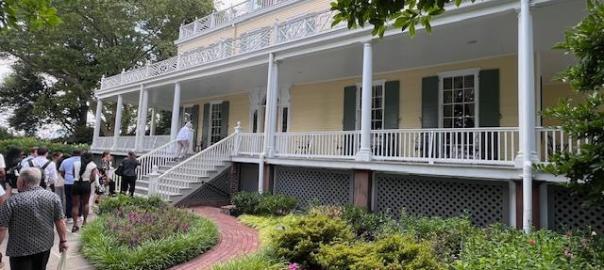
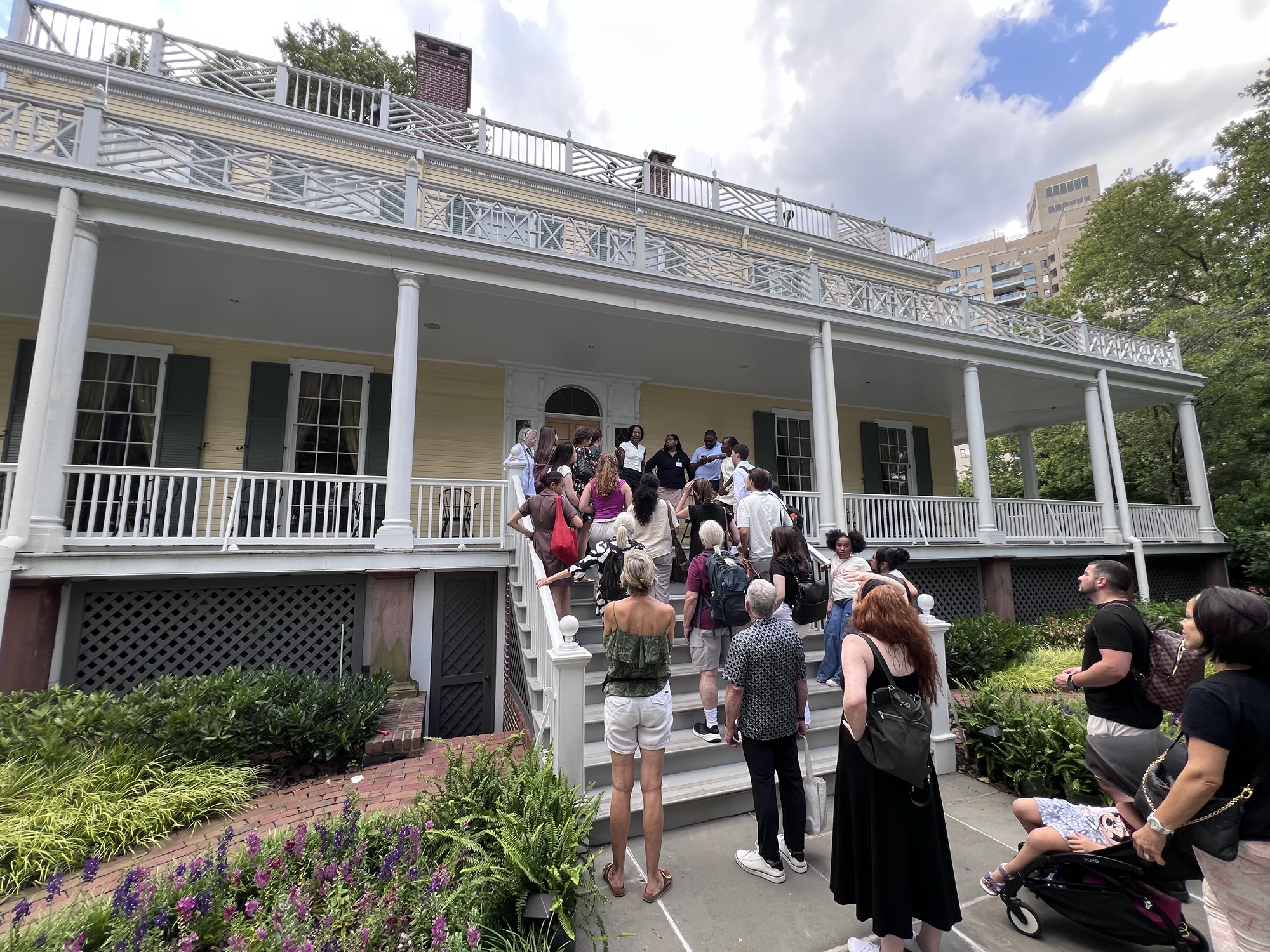
The front of the mansion at the start of the tour in the Summer of 2025
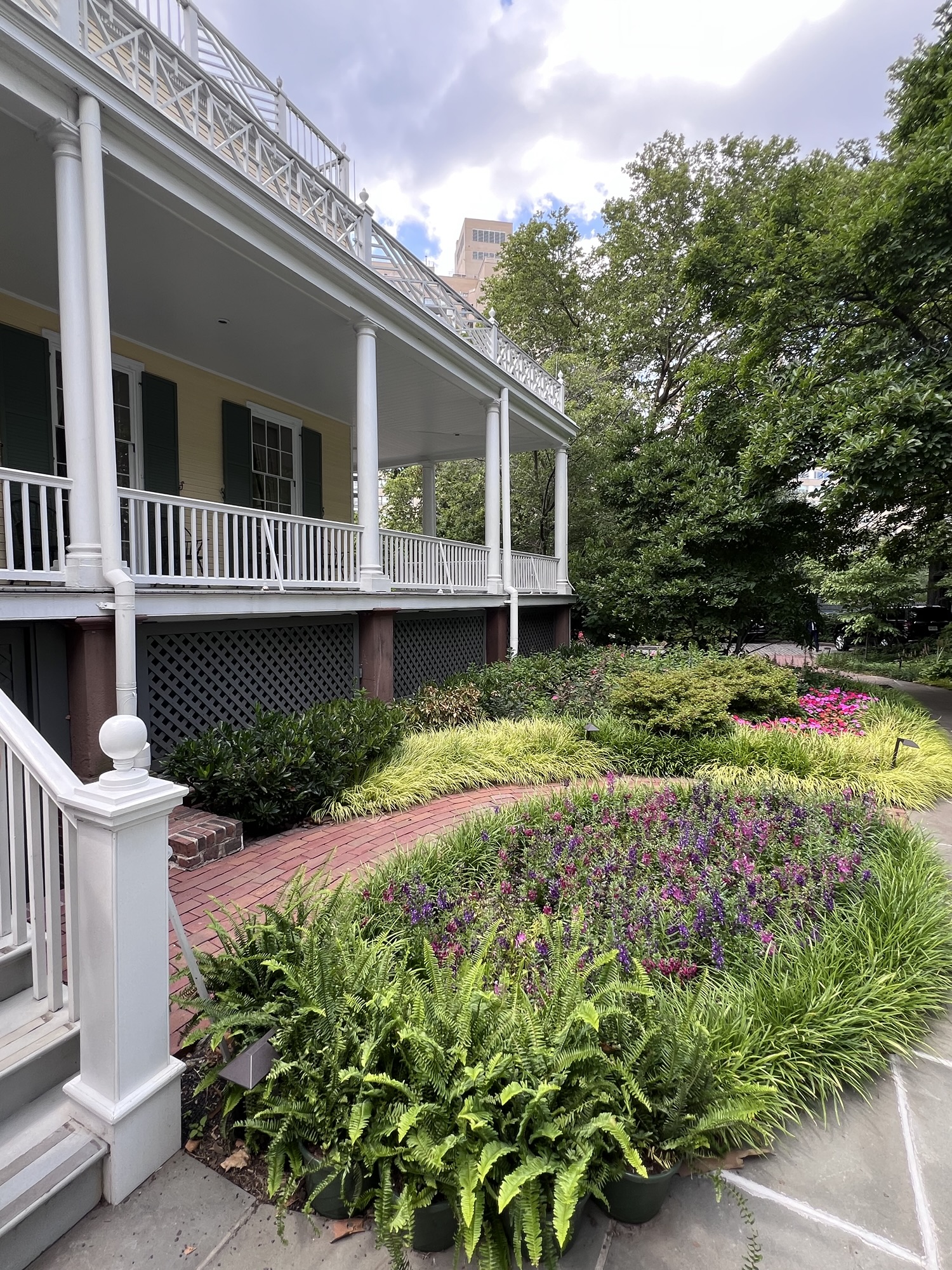
The formal gardens in front of the house in full bloom
The formal gardens to the side of the house near the parking lot
We started the tour on the front porch of the old Gracie Mansion
The tour consists of the first floor only and you can not take pictures inside with the exception of the Wagner Ballroom. We saw the formal entrance, the Living Room, Library, Dining Room and then the hallway leading to the front of the house to the Susan Wagner Ballroom, the newest extension of the house (the front section is the original section of the home built during the Gracie period).
The front rooms you are not allowed to take pictures so as you tour the Living Room, the Dining Room and Parlor rooms, you can not take pictures. When we left the older section of the home and entered the hallway to the Susan Wagner Ballroom added in the Wagner Administration, then you could take pictures in this room only (outside the gardens).
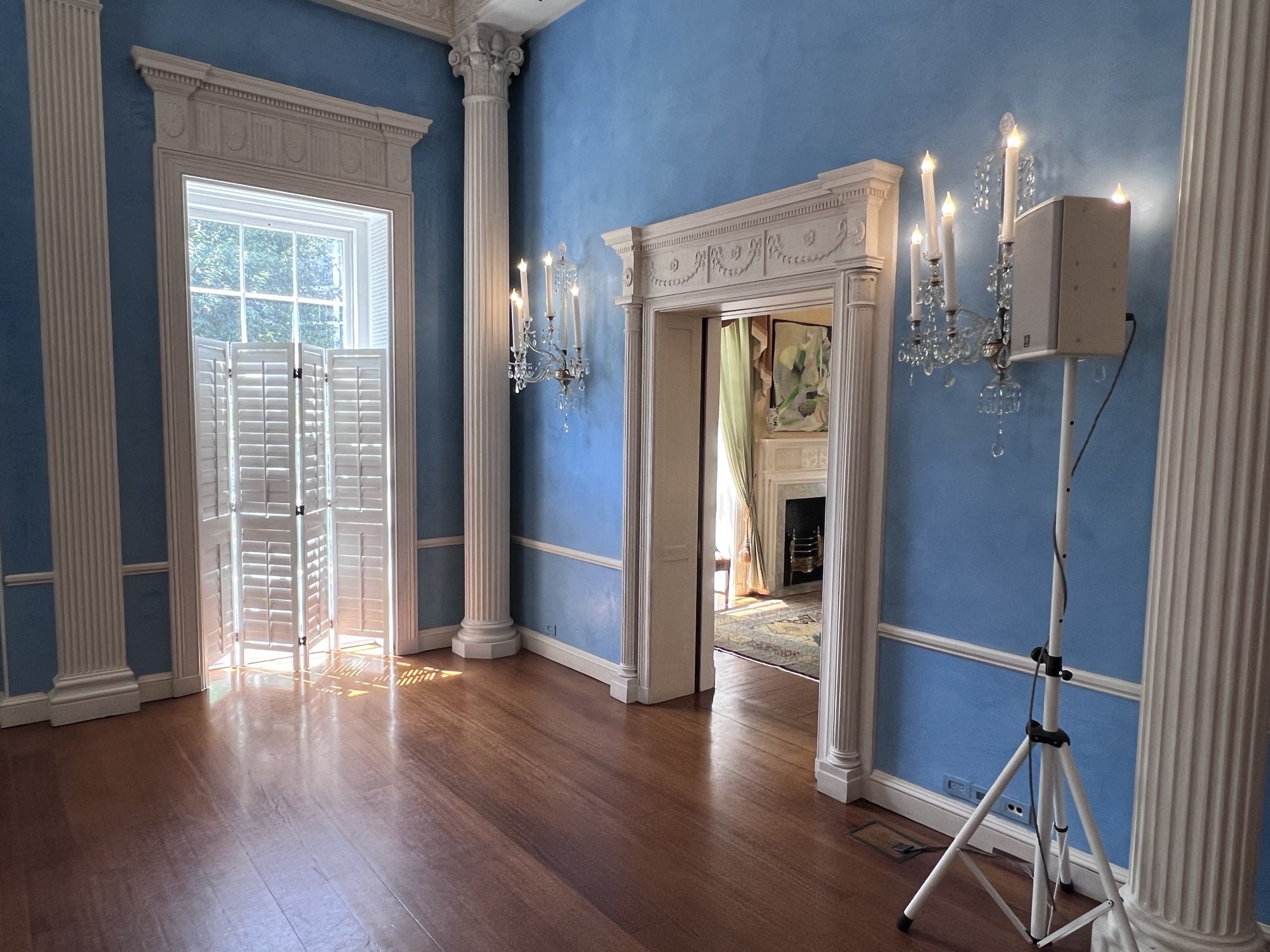
The inside of the Susan Wagner Ballroom
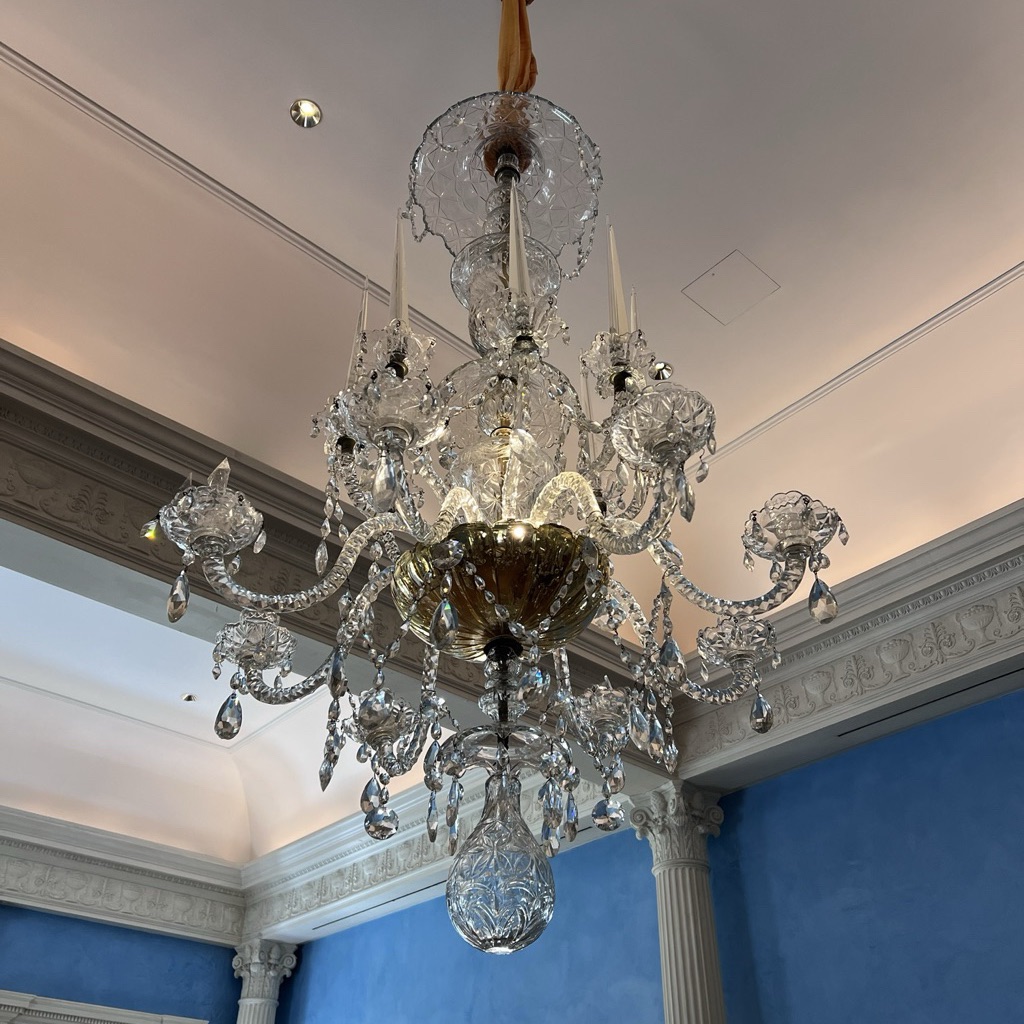
The Chandelier in the ballroom was from an old mansion downtown
The Bayard Fireplace from the Bayard Mansion once located in lower Manhattan
The Wagner Ballroom details
The corniches in the ballroom
History of the Mansion and Gracie Family:
Gracie Mansion, built in 1799 by shipping merchant Archibald Gracie, is the last of the elegant county estates that once lined Manhattan’s East River shore. Gracie hosted elegant dinner parties at his country estate for visitors including Alexander Hamilton, Rufus King, Joseph Bonaparte and Washington Irving.
Major losses during the years after the War of 1812 forced Gracie to sell his estate in 1823 to Joseph Foulke. In 1857, the Mansion was bought by Noah Wheaton. After Wheaton’s death in 1896, the City of New York appropriated the estate, incorporating ts 11 acres of grounds into the surrounding park that was renamed Carl Schurz Park in 1910.
After years as a comfort station and ice cream stand, Gracie Mansion became the first home of the Museum of the City of New York. When the museum moved to a larger building, Parks Commissioner Robert Moses convinced City Authorities to designate the Mansion as the official residence of the Mayor. In 1942, Fiorello H. La Guardia moved into Gracie Mansion.
In 1966, the Mansion was enlarged with the construction of the Susan E. Wagner Wing, which includes a ballroom and two additional rooms. Under the guidance of the Gracie Mansion Conservatory, major restorations to the Mansion were undertaken between 1981 and 1984 and in 2002.
The 2002 restoration transformed Gracie Mansion into the “People’s House” and increased accessibility to the public and City agencies. First Lady Rosalyn Carter and South African President Nelson Mandela are among the many notable visitors.
Gracie Mansion at the turn of the last century
Gracie Mansion is owned by the New York City Department of Parks & Recreation, operated by the Gracie Mansion Conservatory and is a member of the Historic House Trust.
(Gracie Mansion Pamphlet)
Gracie Mansion Conservatory:
After years of neglect and continual erosion of any trace of history, Mayor Edward I. Koch and founding Chair Joan K. Davison, established the Gracie Mansion Conservatory in 1981. as a public./private partnership.. Under its guidance, the first major restoration of the house was undertaken between 1981 and 1984. Besides creating a connection between the original house and the Wagner Wing, this effort included the display of art, furniture and decorative objects either purchased or more often, lent by the City’s many cultural institutions. The Charter mandate of the Conservatory was not to seal the residence in the past (especially as there is no record of how it originally appeared inside) but to protect its history while accommodating change and progress by successive generations of New Yorkers.
The Gracie Mansion Conservatory continues to operate as a charitable organization dedicated to enhancing and enlivening its namesake. Its mission is to preserve and honor Gracie Mansion’s Federal Period origins while also making sure it remains as forward-looking and welcoming as the city it serves. An increasing share of this work focuses on exploring the many different people and cultures whose contributions to Gracie Mansion and the New York at large gone unrecognized for far too long. The Conservatory also works to improve the surrounding landscape and gardens and provide public programming and educational services, including publications and tours for local school students, especially those studying in New York State’s 7th grade social studies curriculum.
(Gracie Mansion Conservatory pamphlet)
Disclaimer: This information was taken from the Gracie Mansion Conservatory pamphlet press kit given on my tour and I give the Conservatory full credit for it. Please check the website for tour information or call them to find out about group tours.
Hours: There are free house tours at 10:00am, 11:00am and 5:00pm on Mondays only. Check their website for availability. This is one of the few rare treats of New York if you can snare one of the tours of Gracie Mansion. It is a really interesting tour of the first floor rooms and entrance to the gardens of this historic home and the Mayor of New York City’s residence.
This was really a wonderful tour of the mansion given by one of the interns who worked for the Mayor. We started the tour in the extension Wagner Wing addition that was added in the 1960’s by the Wagner Administration. We saw the formal ballroom, library…
I took some time out after Soup Kitchen to get some exercise and start my walk of the Avenues of the Upper East Side. I spent the whole morning making lasagnas for lunch the next day and I was tired as it was that afternoon. I ended up walking from 9th Avenue and 28th Street to Fifth Avenue and 52nd Street to pick up movie tickets at the MoMA for that afternoon and then walked to Fifth Avenue and East 72nd Street and walked down to East 72nd Street to re-walk York Avenue from East 72nd Street to East 84th Street and then walk the remaining Avenues. It was turning to twilight when I last walked it and I wanted to see it again. The neighborhood like the rest of Manhattan is changing.
You really are seeing an area in its own transition especially along the Avenues. The side streets have kept their character to a certain point but on the Avenues the old brick buildings and brownstones are giving way to large apartment buildings like its neighbor to the north in the Yorkville, Carnegie Hill and even East Harlem. More and more of the main thoroughfares are becoming large residential buildings.
I started the day first having lunch a small pizzeria called La Crosta Restaurant and Gourmet Pizzeria at 436 East 72nd Street (See review on TripAdvisor-Closed January 2022) for a slice of pizza ($4.00). I needed my carbs for the walk ahead of me. This small pizzeria has a really nice menu with very fair prices. The pizza is really good and they have a good sauce on the pizza which really makes the pie.
La Crosta Restaurant and Gourmet Pizza at 436 East 72nd Street (Closed in January 2022)-Now York Pizza
I would revisit the restaurant again later the next week to try their meatball sub with mozzarella ($7.95) to see if it would make the cut for my blog, DiningonaShoeStringinNYC@Wordpress.com (which it has see the review on the site) and was impressed by the sandwich. They loaded the sandwich with homemade meatballs and then loaded with shredded with cheese and finished off in the oven. It was some sandwich.
The lunch specials at La Crosta Pizza are excellent
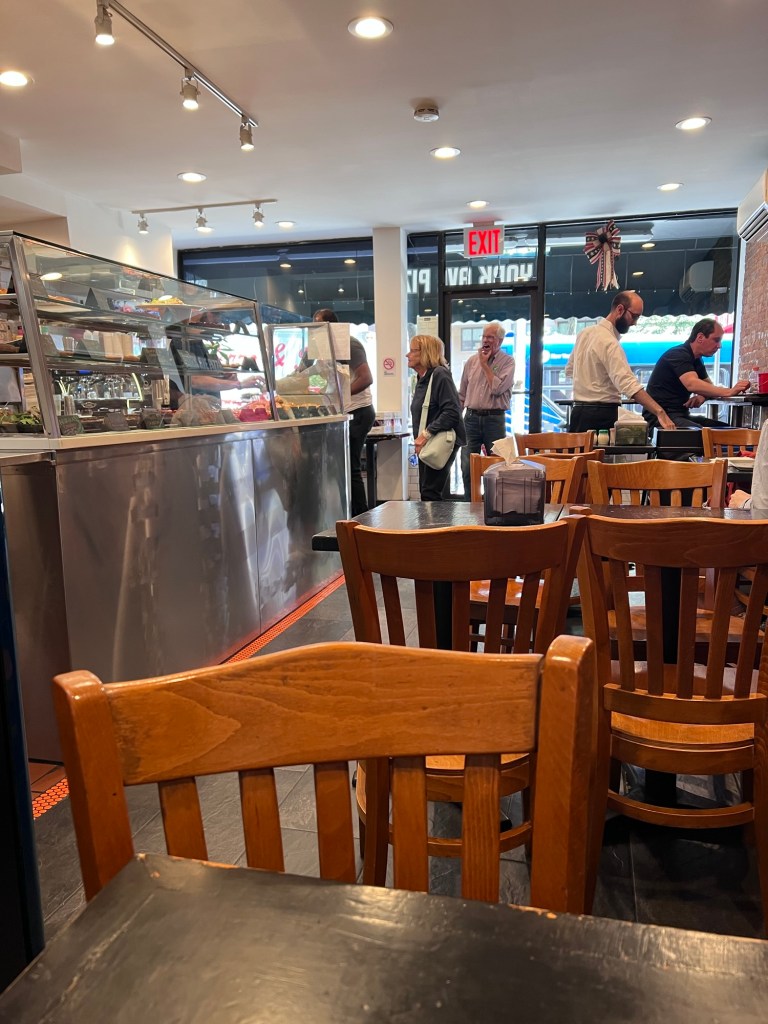
The inside of the pizzeria
The Cheese Pizza is amazing still here
After lunch, I walked the length of York Avenue. I had really misjudged this part of the neighborhood when really looking at it. When walking York Avenue, I started to notice a difference in the architecture once you hit about East 80th Street. The lower part of the avenue is being knocked down and rebuilt while up in the 80’s, you still have a fair number of small buildings and businesses.
When I crossed over to John Jay Park again for a bathroom break (note this bathroom when walking around the neighborhood. They keep it really clean). I wanted to take another look at the Douglas Abdell statues in the park. They are off to the side of the park in the pathway leading to East 75th Street from Cherokee Place.
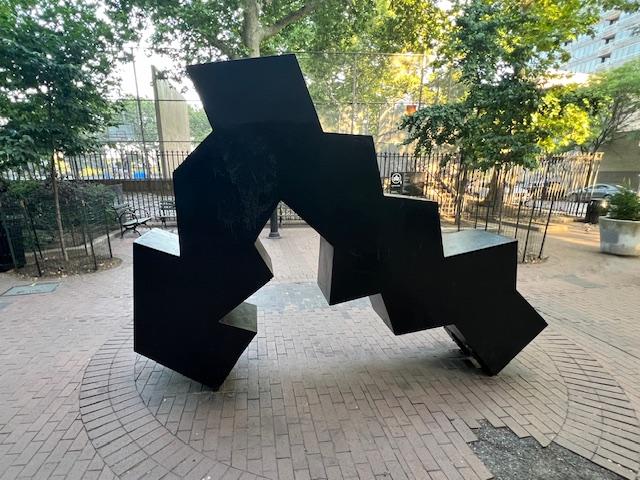
Eaphae-Aekyard #2 by artist Douglas Abdell
Really take time to look at the two sculptures. There is a uniqueness to them. It like the way the artist twisted the work to get the geometric forms that he did giving it a juxtaposed pattern.
Kreyeti-Ackyard #2 by artist Douglas Abdell
Douglas Abdell is an American Artist whose work has been seen all over the world. The two statues, Eaphae-Aekyard #2 and Kreyeti-Ackyard #2 use the artists sense of vertical, diagonal and horizontal patterns to create the works (NY Parks System). You really have to take time when in the park to take a look at these two statues and judge for yourself.
First Avenue has a bevy of interesting local restaurants and stores that are concentrated up in the 80’s and while walking up to the upper 80’s, I had to stop by my standby place, Glaser’s Bake Shop at 1670 First Avenue for dessert. You can’t walk around the Upper East Side without coming to Glaser’s (now closed). I love this place!
The now closed Glaser’s Bake Shop at 1670 First Avenue (Closed in 2019)
I got one of their freshly baked chocolate chip cookie sandwiches, which was filled with a mocha cream ($3.50) that was out of this world! I think I have been concentrating on this part of town just so that I can visit here. Everything always looks so good.
It was so sad when they closed
Second Avenue is very similar in feel to First Avenue. In the 70’s, there is a lot of change in the businesses to more commercial establishments with the 80’s still being dominated by more local restaurants and shops. The buildings above East 80th Street are still the smaller brick and brownstone buildings holding the local businesses. All throughout the Avenue there are pockets of local stores and restaurants.
Park Avenue between East 72nd and 84th Streets still is an Avenue of quiet elegance with beautiful older apartment buildings and co-ops that line the beautifully decorated gardens that line the median and the fronts of several buildings. There is very little commercial businesses on the street less a flower shop here and a dry cleaner there It is a block after block of pre-war buildings that have not changed much except for sandblasting clean the exterior of the outside. In the Spring, Summer and the holiday season, the median is nicely landscaped and decorated.
Upper Park Avenue in the East 80’s
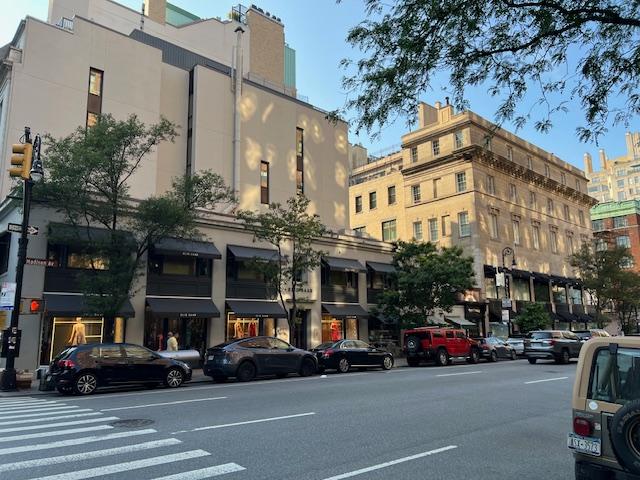
Madison Avenue is mainly an upscale shopping district that is getting too expensive for its own good. In the lower 70’s, I saw a lot of empty spaces cramped in between the over-priced clothing and jewelry stores. I think the rents are pushing out the first wave of shops that moved here after Fifth Avenue got too expensive. Even the rents here are getting to be too much.
I am beginning to see these upscale shops moving to Lexington and even Third Avenues in the 70’s. This is pushing out the mom & pop places that dominate those Avenues. It still is one of the premier shopping districts in Upper Manhattan where many European merchants open.
The stores that are located on the Avenue you still have to be buzzed into and is lined with expensive clothing, jewelry, art and decorative stores with a few boutique hotels and restaurants. In the past few months that I have been walking the neighborhood, I have seen some of them move off and to other locations in the surrounding streets. As the twenty-year rents are up, many of the traditional businesses from the 1970’s, 80’s and even the 90’s are giving way to chains or just empty store fronts.
Madison Avenue Shopping District
The stores of upper Madison Avenue
Fifth Avenue is always a treat. Most of the buildings in the area have not changed and stayed mostly residential. It is lined with elegant marble apartment buildings and some modern-day structures. The park is still quiet with the last days of winter slowly becoming behind us. Still on a semi-warm day, there are still kids playing in the playgrounds. I swear, nothing stops these kids. It still is part of the “Museum Mile” and there are smaller gallery spaces and museums.
Metropolitan Museum of Art on the Museum Mile
The front of the Metropolitan Museum of Art
On my second day walking the Avenues, I doubled back to FDR Drive to walk along the riverfront. This is a juxtaposed position. There is no one clear walking path on FDR Drive. The cross over pedestrian bridge is at East 78th Street by John Jay Park and you can cross over to walk along the East River. It was 72 degrees the second day on the walk and it just gorgeous outside. Everyone had the same idea that I had and I saw many people walking their dogs or jogging along the water. The walkway is currently being renovated so it stops around 71st Street.
I doubled back to John Jay Park and walked the remainder of FDR Drive by sidewalk around East 79th Street, with many cars driving by at full speed. The sidewalk ends at 72nd Street at the Con Ed building and I don’t suggest walking any further. There is a slim strip of edge of sidewalk and unless you want to be hit by a car, walk back down East 72nd Street. It is full of guys coming and going for work, so it is very busy on this street during the day.
I went back to East 78th Street and went back on the bridge and proceeded to walk up the walkway to East 84th Street to Carl Schurz Park. School had let out by this point and both this park and John Jay Park were loaded with kids for the rest of the afternoon. All of them obviously enjoying the surprisingly warm weather. When walking across East 84th Street, the southern part of the park, I came across a plaque dedicated to Archibald Gracie, whose estate used to be located here and whose family Gracie Mansion is named after (the mayor’s residence).
Gracie Mansion, the home of the Mayor of New York City
Gracie, who was a merchant and shipbuilder and good friend of John Jay and Alexander Hamilton, had bought the land around what was called “Horn’s Hook” in 1798 and built the wooden home as a county estate.
The formal gardens of the house
The house had been headquarters for many prominent residents of the city as Gracie’s position changed to include insurance and banking. He had to sell the house in 1823 to pay off debts and it was acquired by the city in 1891. After different uses, it was renovated and now serves as the residence of NYC Mayor and his family.
I walked down East End Avenue and walked all the side streets between East 84th to East 79th Streets where East End Avenue ends. Most the streets have a dead end with a beautiful view of the river the most scenic at East 72nd Street, where you can sit on the benches and just watch the river. Here starts the Weill-Cornell Medical Center so you will be sharing space with many of the hospital workers out on a break. It also offers views of Roosevelt Island (see Day Ninety-Five “Walking Roosevelt Island”) especially Lighthouse Park.
Roosevelt Island is wonderful to explore on a warm sunny day
As you walk past buildings along the river, you will see the old sign for the “East Side House Settlement” at East 76th Street, which used to be the home for the establishment which is one of the oldest non-profit social service organizations in New York City. It was founded here in 1891 and moved to the South Bronx in 1962. The building still stands now part of the Town School, but the sign still stands as a testament to where it was founded. You can see the sign carved in the stone from the FDR Walkway.
Walking York Avenue, you will pass the same type of construction along the Avenue as the smaller brownstone buildings give way to the larger apartment complexes. There is a little gem off York Avenue at 502 East 74th Street. This small carriage house seems out of place in the neighborhood but has been around since the Civil War. It had been converted to manufacturing in 1892 and most of its existence had been a place of manufacturing. It now has been restored and is now a private residence.
Another building that is interesting is at 450 East 78th Street, a small wooden structure that houses an antique and a blinds store’s that was built in 1910. This small building is relic of a time when this area must have been filled with homes like this. Martine’s Antiques located in one of the stores is a treasure trove of small items and is worth the trip inside. It really stands alone in a neighborhood in constant change.
I followed York Avenue up to 84th Street and crossed down to Third Avenue. Third and Lexington Avenues are very similar in look and in businesses. Third Avenue and Lexington Avenue in the 70’s are really going through a transition as rents are forcing older businesses out. That classic 90’s look of the Avenues is giving way to either empty store fronts or upscale restaurants and shops that should be on Madison Avenue.
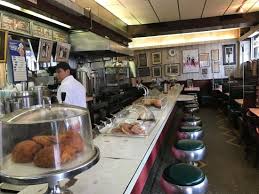
Still there are a lot of those businesses hanging that still give it the neighborhood feel and that is more in the low 80’s. One of those businesses is the Lexington Candy Shop at 1226 Lexington Avenue, where I had lunch (See review on TripAdvisor). Founded in 1925, it is a reminder when these types of stores used to dominate New York City until the arrival of McDonald’s in the 1970’s. Even the automates gave way by the early 80’s.
I had eaten here several times before and I wanted to know if it was still as good as it once was then. Trust me it is still great and it is a real New York experience to sit at the counter. I ordered a regular burger and a strawberry milkshake, both of which were excellent.
The inside of the Lexington Candy Shop is very unique and old fashioned
The burger was perfectly cooked with fresh lettuce and tomato on the side and the milkshake was made with Basset’s of Philadelphia ice cream, which I have mentioned in my blogs to Philly and is one of the best ice creams on the market. Both the food and service make Lexington Candy Shop a ‘must see’ for out of towners.
Third Avenue especially in the low 80’s still holds onto it classic New York look but I am afraid not for long. It looks like the whole Avenue is giving way to larger apartment complexes and office buildings. Even the traditional shopping district on 86th Street is giving way to all new buildings. Once the home of Gimbel’s Uptown, the neighborhood is slowly going upscale with a new Shake Shack and Brooks Brothers.
Still there are many unique stores in the area. Flying Tiger Copenhagen recently opened at 1286 Third Avenue, which has great novelty items for kids and seasonable gift items. The sad part is that everything seems to be made in China, not Copenhagen. If you like unusual novelty items, this is the place.
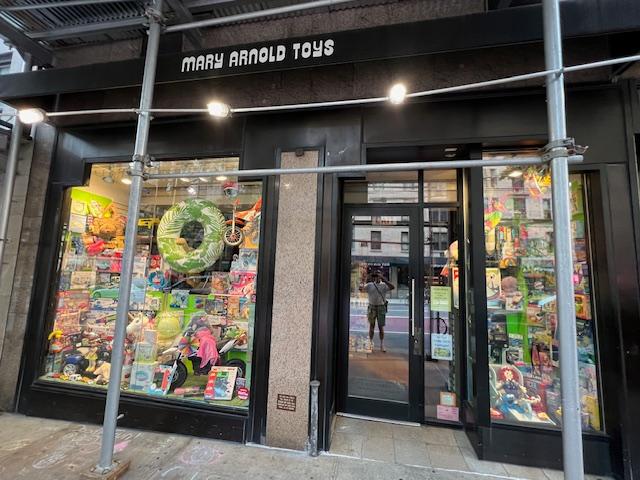
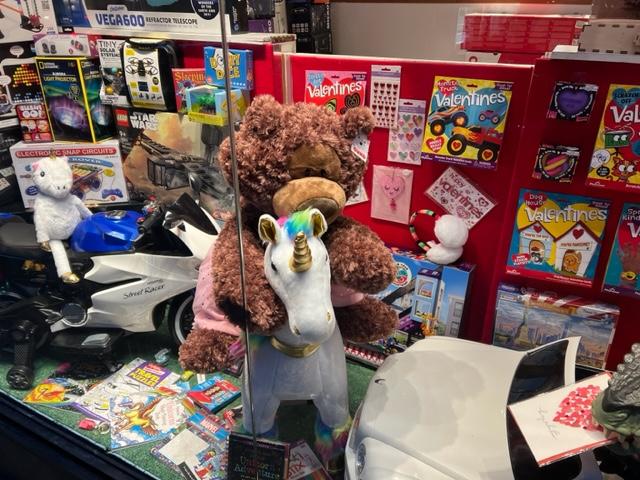
Another great store for kids and one of the oldest toy stores in the city is Mary Arnold Toys at 1178 Lexington Avenue. They have a nice selection of commercial toys and novelties. Most of the items you can find cheaper in other stores though but still it is a great store to look around.
For many, the Upper East Side still has the feel that it has always had since the 1960’s and admittingly not much has changed in some parts of the neighborhood particularly around the side streets but massive changes on the Avenues are happening as rows of brownstones and small buildings give way to large apartment and building complexes and along the East River, there is a lot of construction along FDR Drive. Pretty soon that will all be luxury buildings as well.
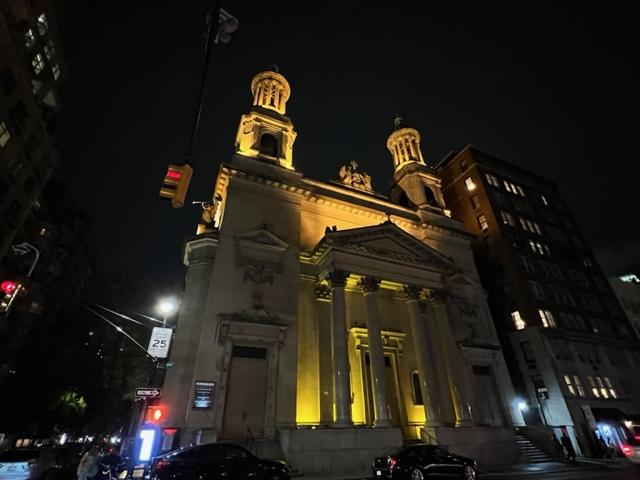
St. Jean Baptise Church at the corner of West 76th and Lexington Avenue shined brightly that night.












 mywalkinmanhattan