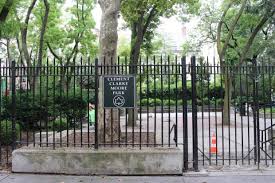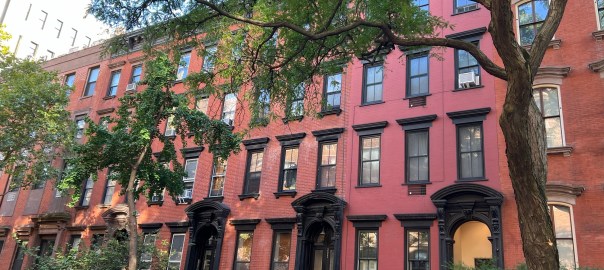
Tag Archives: Exploring Gramercy Park

Day Three Hundred and Twenty-Four Exploring the Streets of Gramercy Park from East 22nd Street to East 15th Streets from Park Avenue South to First Avenue September 8th-October 11th, 2024

The school year has started and that means that classes at the college have resumed for the Fall semester and it back to work time. Coming into New York becomes less and less as I am starting to grade papers and put together lectures.

I was able to sneak in on Sunday, September 8th for the monthly Sunday Supper at Holy Apostles Church where I volunteer. I find the church service before the supper very inspiring and I enjoy listening to Reverend Ann as the talks are less preachy and more uplifting about the issues of life and what is going on in the world.

After the service is over, then it is time to set the tables and eat. It is always a nice meal and you have some interesting conversations while you are at the table. We always have a nice crowd of the people and it is perfect time for me to meet up with other volunteers that i have not seen in a while.
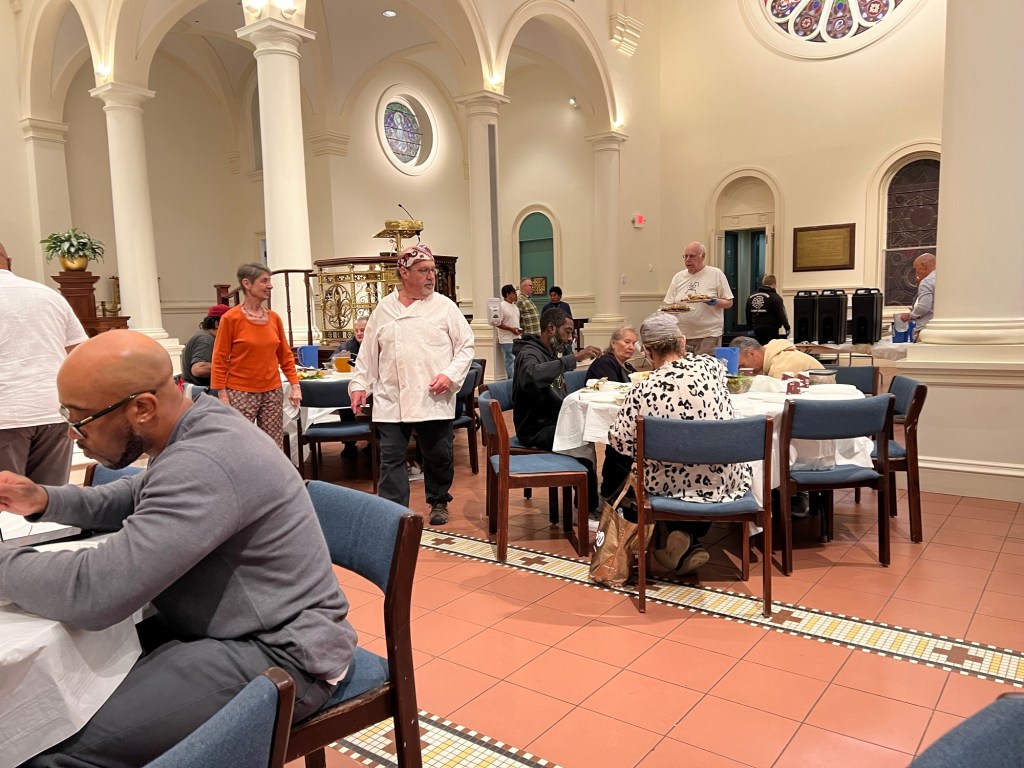
Everyone breaks bread with each other after the service

Sunday Supper at Holy Apostles Church

It was a nice dinner with Chicken Fried Steak with gravy, Baked Ziti, Mixed Salad, Broccoli and cauliflower and Fresh rolls. For dessert, there was Bread Pudding and assorted cookies for dessert. It was quite the feast. After lunch was over, it was time to walk around the streets of Gramercy Park.

I started my walk on the border of the neighborhood at Park Avenue South and East 22nd Street. Like most of the neighborhood, the most beautiful architecture was around Gramercy Park itself. The first building I passed was the Sage Building. I had not noticed the beauty of this building by just looking at the front of it.

The side of the Sage Building

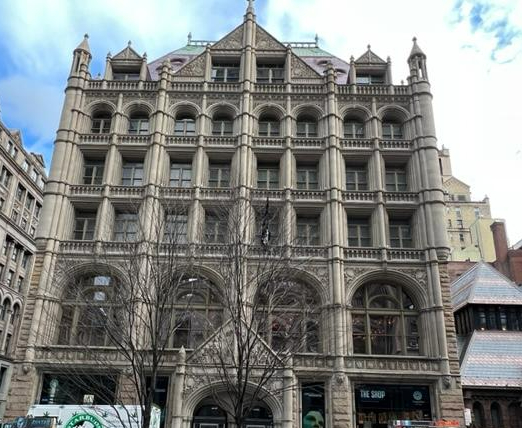
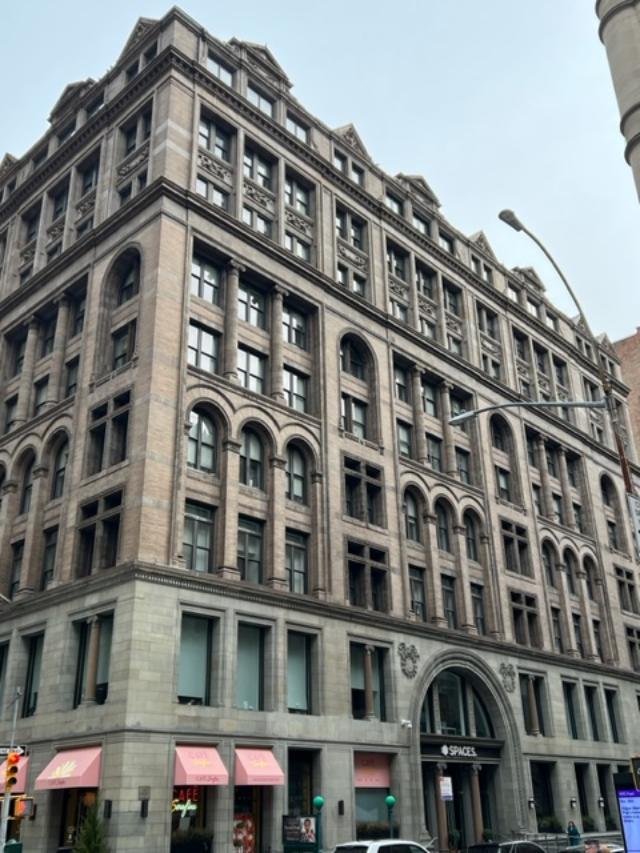
Across the street from CUNY campus, the Sage House at Four Lexington Avenue. Sage House was built in 1913 for the Russell Sage Foundation, a social welfare nonprofit that was an early advocate of social work and urban planning (Streeteasy.com).
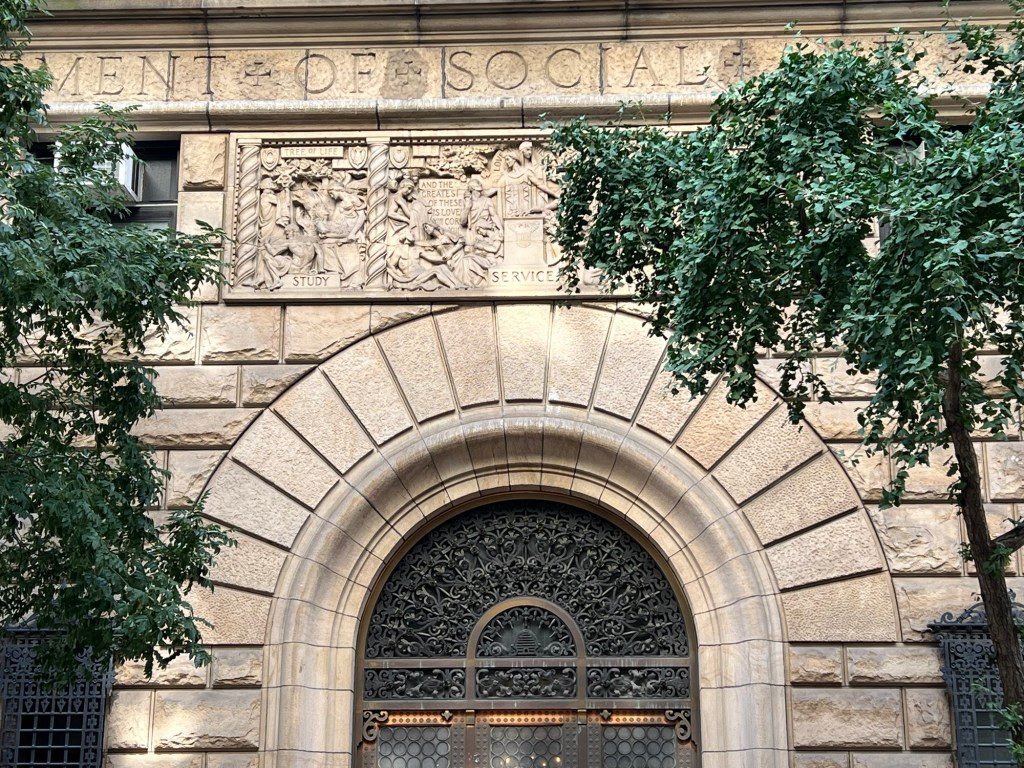
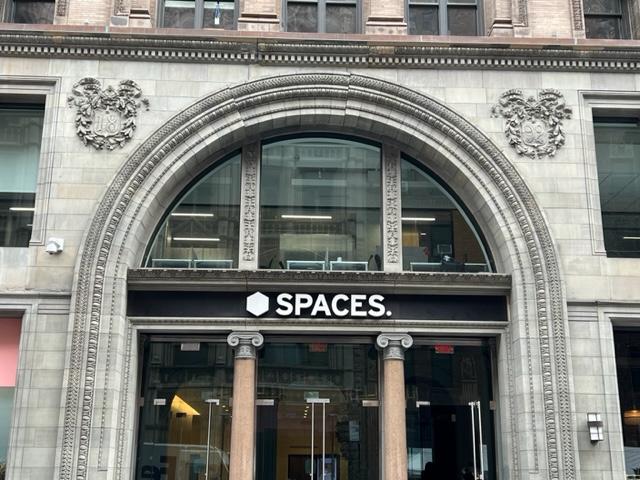
The details of The Sage Building
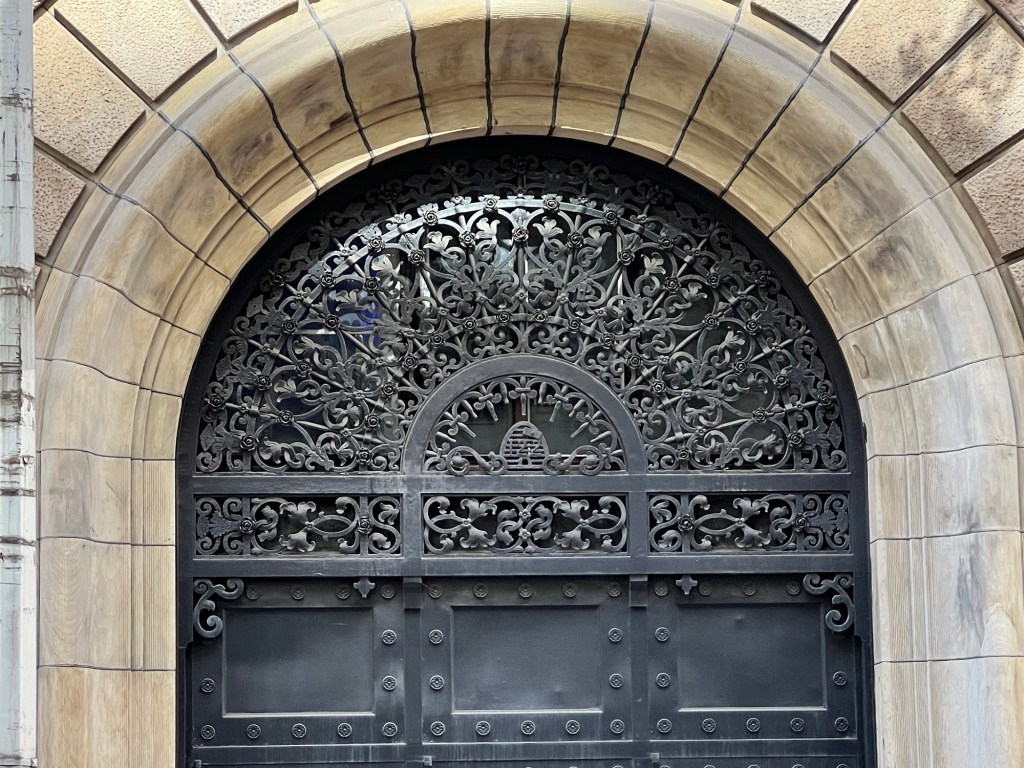
The grill work on the building was so beautiful

The historic Sage House at Four Lexington Avenue

https://www.corcoran.com/building/gramercy-park/3917

https://streeteasy.com/building/the-sage-house

The building is a pre-war office building designed by Grosvenor Atterbury in the Italian Renaissance palazzo style. It has a rusticated red sandstone façade, vaulted ceilings, and carved decorative shields (Wiki). The building was converted to Coop apartments in 1986. The building next to it was the Hotel Gramercy Park which is currently closed and under renovation. Even though the hotel is closed, you can still peek through the scaffolding and see its elegance.

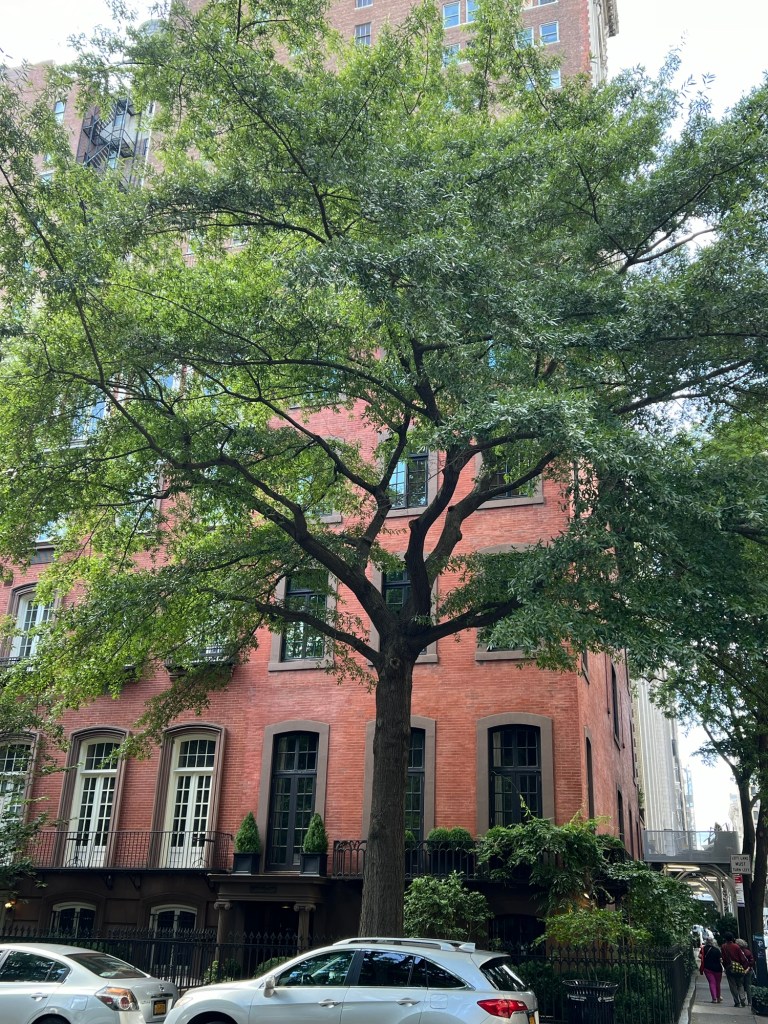
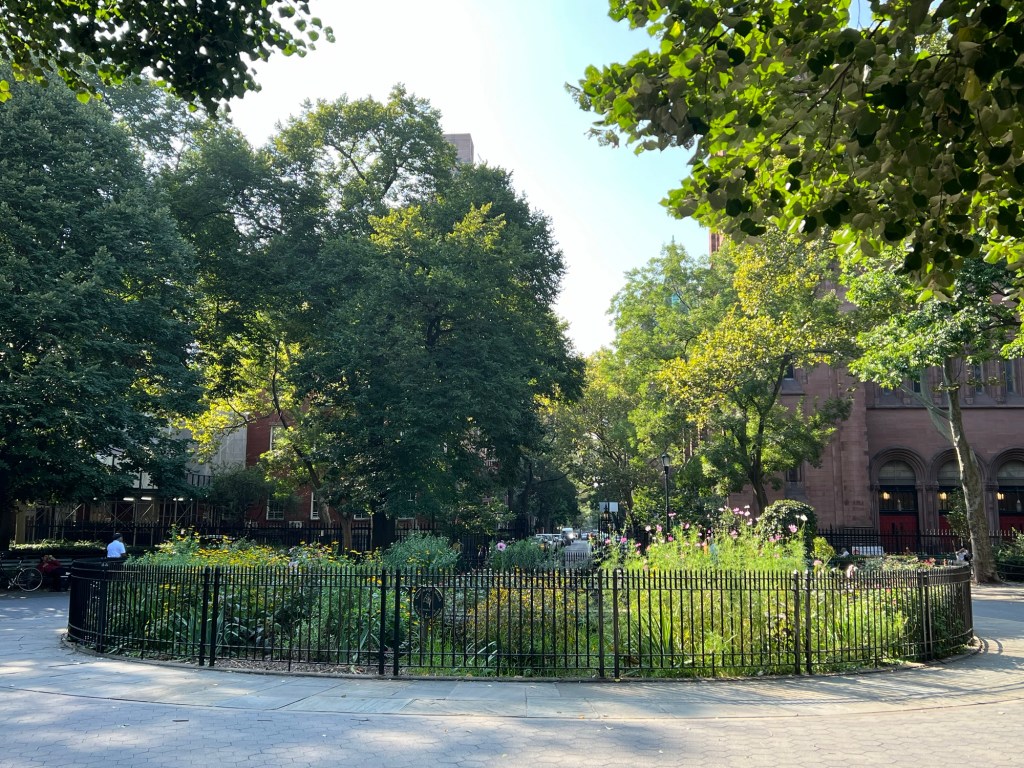
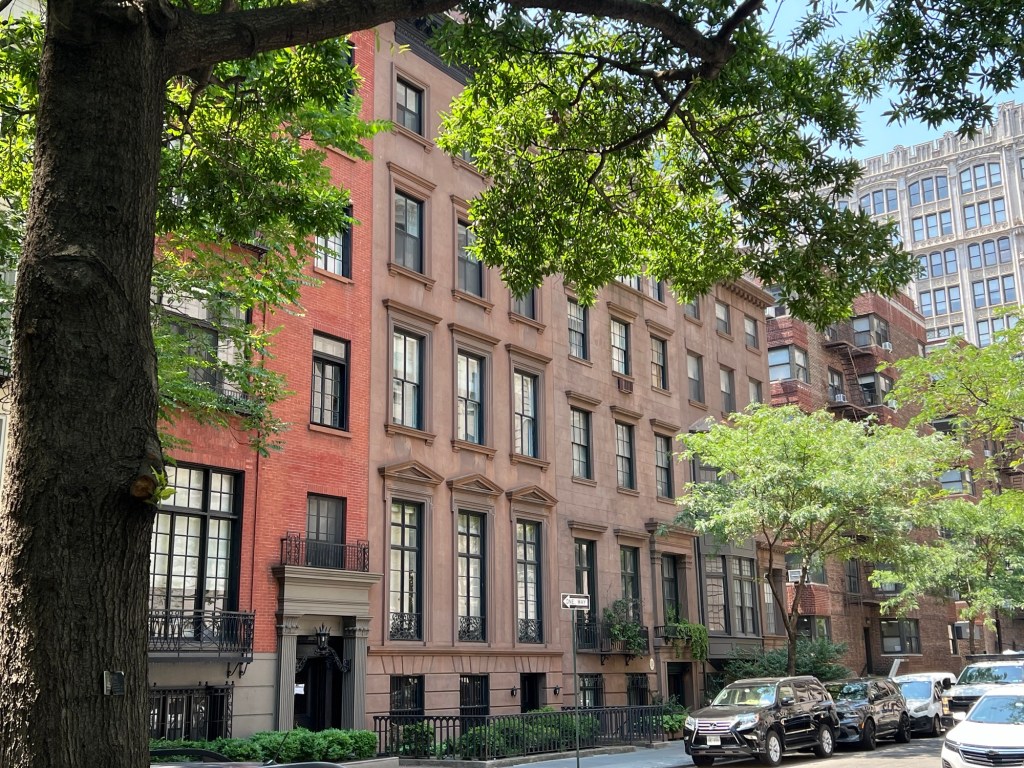
The core of Gramercy Park surrounds the park itself with most of its classic older buildings surrounding the park. Some of the streets were tree lined and looked like classic old New York.

The tree lined streets of Gramercy Park

The end of East 22nd Street is the Peter Cooper complex. Every thing is in bloom and the complex is so nicely landscaped.

Peter Cooper Village in the Summer of 2024

On the way back down East 22nd Street. I passed the Church of the Epiphany at 375 Second Avenue and passed an interesting sculpture dedicated to the victims of 9/11. If you do not walk on the side streets, you will miss this beautiful park with this interesting sculpture in the garden. It looks like a burst of sun.

The sculpture in the Peace Garden, ‘Light Overcomes Darkness’

The plaque for the sculpture ‘Light Overcomes Darkness’

The sculpture was designed by artist Witkor Szostalo

https://en.wikipedia.org/wiki/Wiktor_Szostalo

https://www.hillstream.com/artist/wiktor-szostalo

Artist Witkor Szostalo

Artist Witkor Szostalo is a Polish born artist who graduated with MFA from the Academy of Fine Arts in Cracow. He is known for his works in stainless steel, wood and bronze. Mr. Szostalo works in both Poland and St. Louis, MO (Artist Bio/Wiki).

The sculpture was part of the larger Peace Garden that landscaped this side of the church.

The Epiphany Peace Garden by the Church

The plaque for the church’s Peace Garden

I made my way back down through the neighborhood and never noticed the Gramercy House private gardens behind a fence. Some of the residents were outside enjoying the afternoon and having a nice conversation as I was snapping pictures of this private garden.

The private garden of the Gramercy House

This is what always amazes me about New York City is the tiny pockets of green that you come across when you walk the streets. It was so beautiful to look at that I envied the residents. It was such a fantastic sunny day.

I made the turn at Park Avenue South and made my way down East 21st Street and passed the Baruch College campus again, with its beautiful architecture and interesting artwork.
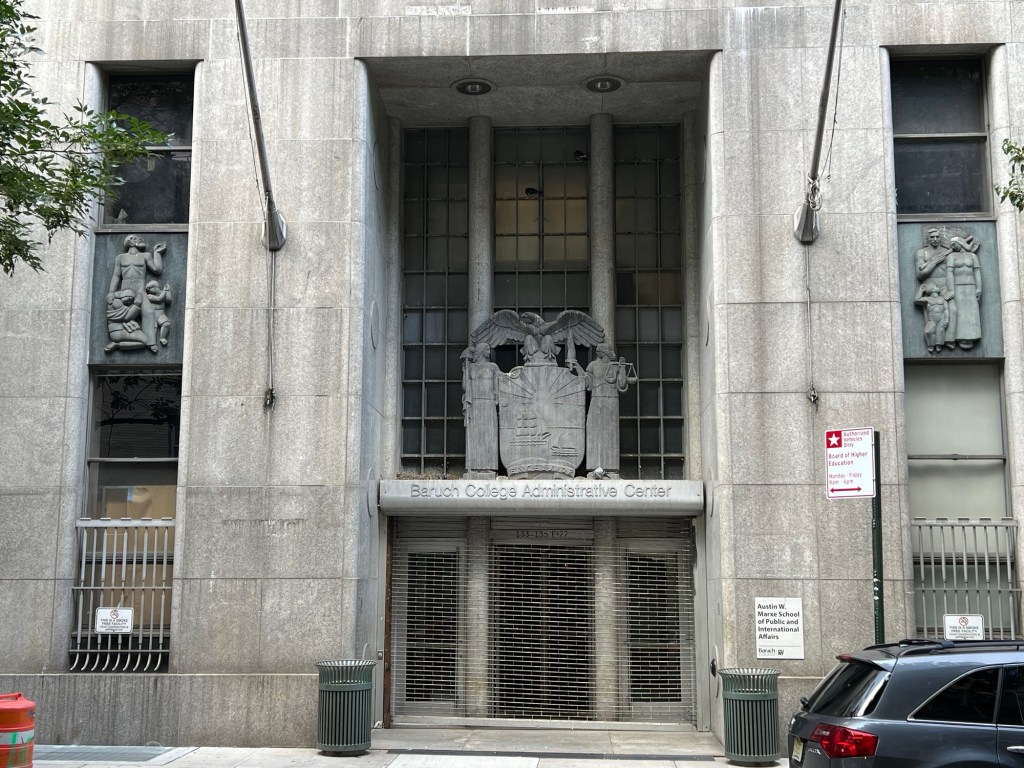
The beauty of the Admission Building of Baruch College

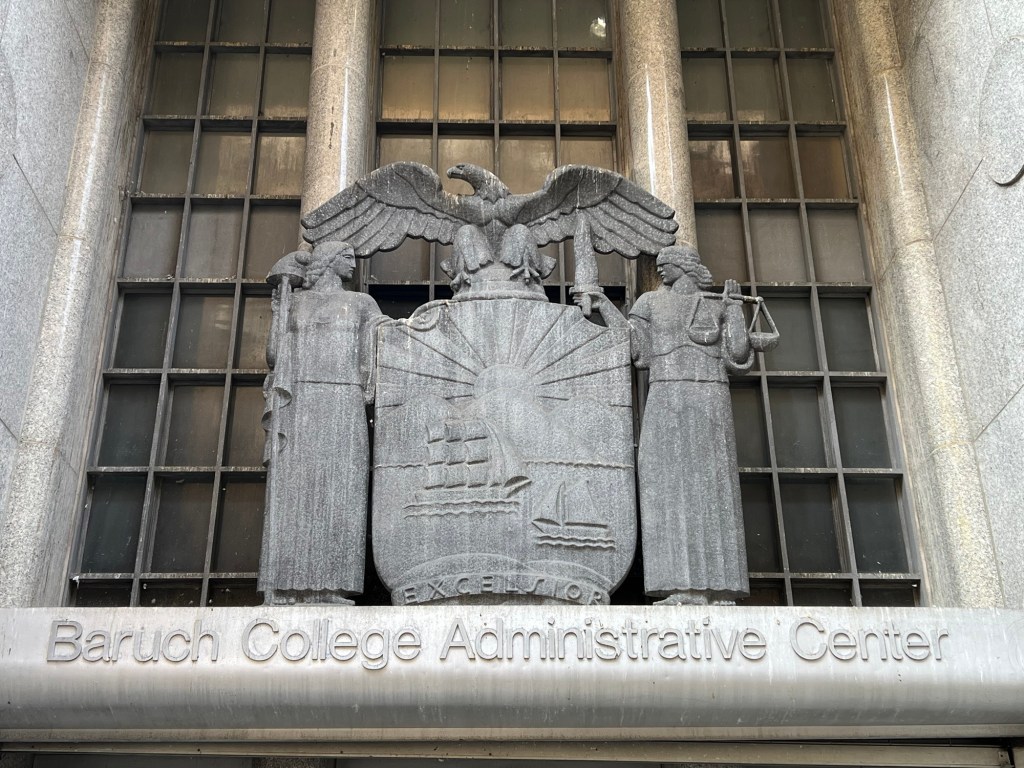
The building on the Baruch Campus that I admired was the was the Baruch College Administration Center whose entrance is at 135 East 22nd Street. I loved the Art Deco details on the building. These seemed to represent all aspects of business.
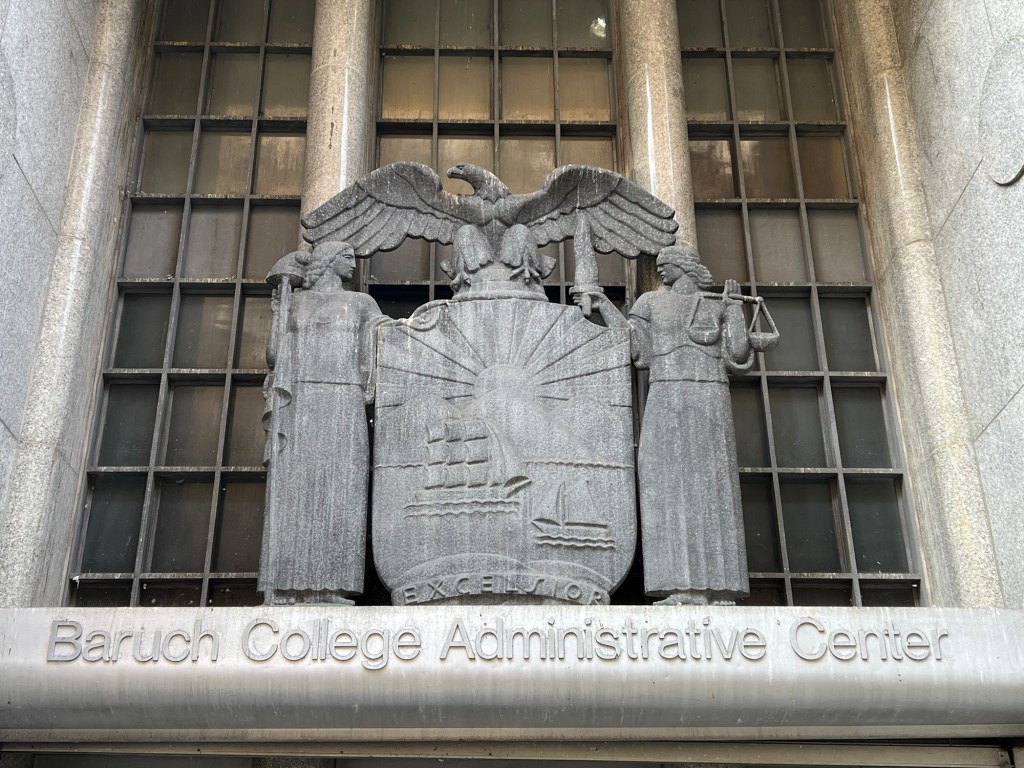
The beauty of the College seal

The front of the Baruch College Administration Center at 135 East 22nd Street

https://plexuss.com/u/cuny-bernard-m-baruch-college/history

The elaborate details on the building give it its Art Deco appearance. The Art Deco Administrative Center at 135 East 22nd Street was built in 1937–1939 as the Domestic Relations Court Building, and was connected to the Children’s Court next door (Baruch College Website).
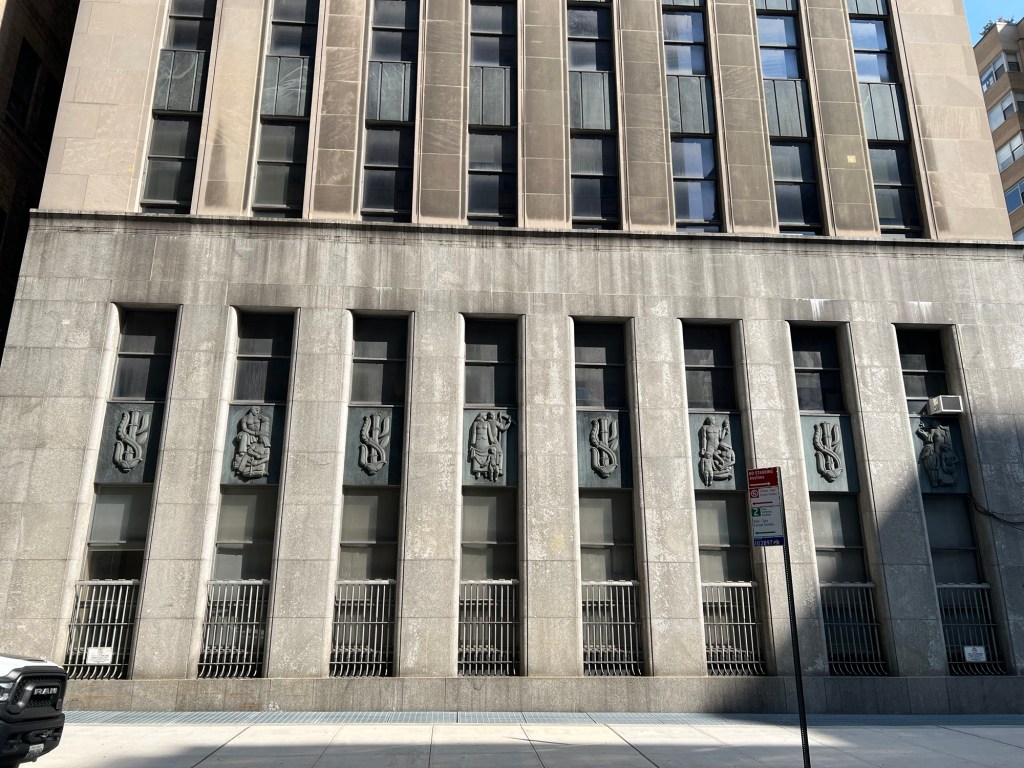
The Art Deco side of the building

Each of the panels represents a part of the business world.
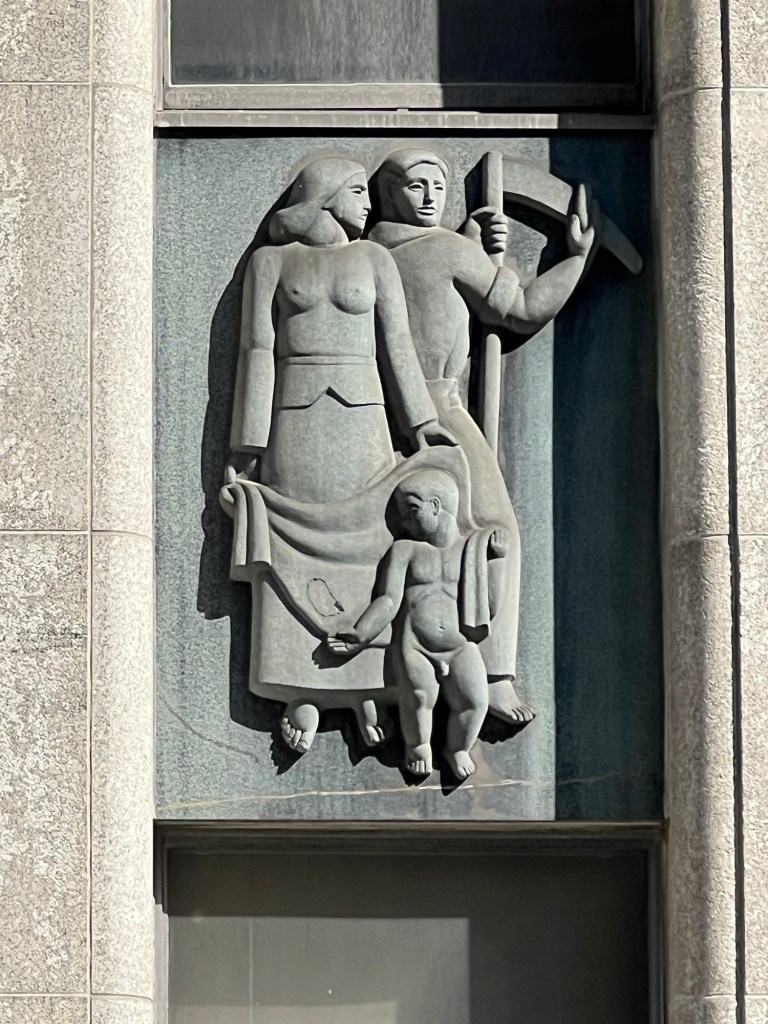
The Art Deco details of the building

The buildings on the Baruch Campus are interesting in their details. Some of the buildings were being renovated at the time I was exploring the neighborhood but has the scaffolding came down on later walks, you really could see the beauty of this Art Deco Buildings.

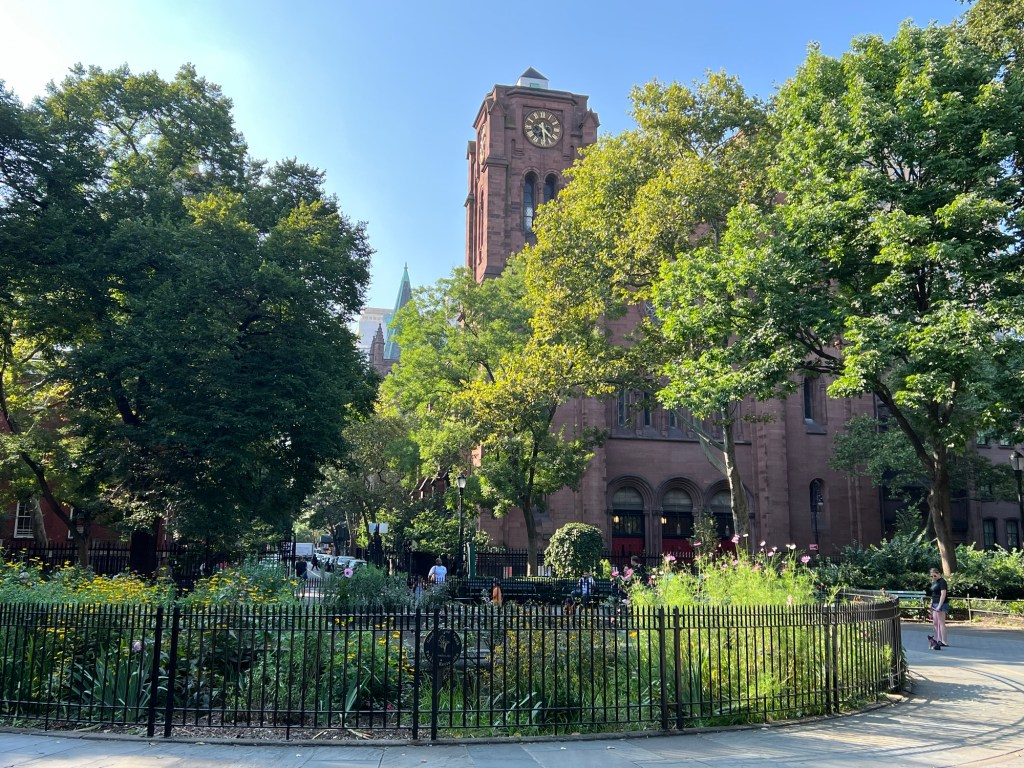
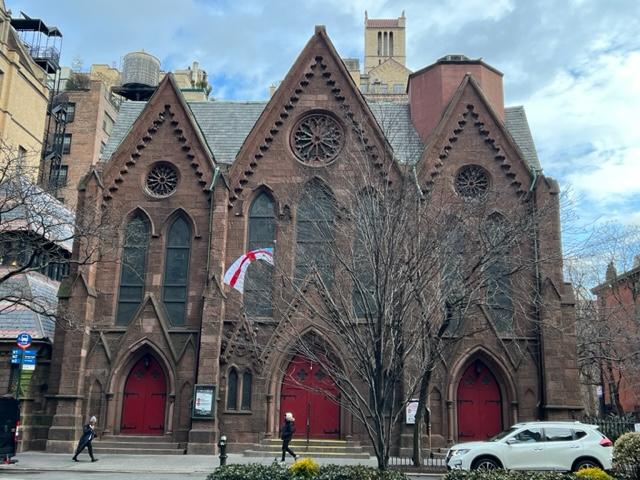
As I walked down East 21st Street, I came across The Parish of Calvary-St. Georges. The elegant Episcopalian church was founded in 1832 and moved to Gramercy Park in 1846.

The Parish of the Calvary of St. Georges at 61 Gramercy Park North

https://www.calvarystgeorges.org/

The church’s design was inspired by parishioner Leopold Eidlitz, who designed the plain interior and the original openwork spires of St. George’s Church. The congregation was so satisfied with the design that they rebuilt the church after a disastrous fire in 1865 following the same design, under Eidlitz’ supervision. By that time the design was also influenced by Dr. Stephen Tyng, a new pastor hired for what had become a changing urban congregation (Church website).

Just before I turned the corner onto East 21st Street, just above the restaurant, Nico, I admired the ceramic details of 102 East 22nd. There is a real beauty in the Art Deco details around the windows and doorways.

The beauty is in the details

A better view above the restaurant awning at the Gramercy Arms Building

https://www.cityrealty.com/nyc/gramercy-park/gramercy-arms-102-east-22nd-street/review/5974

Gramercy Arms is a handsome, 10-story Art Deco-style apartment building at 102 East 22nd Street that was designed by Sugarman & Burger and erected in 1928 (City Reality). You have to admire all the ceramic work all over the building and see a peek of the rooftop garden at the top of the building.

The Novita Restaurant at the base of 102 East 22nd Street whose reviews were mixed when I read them on TripAdvisor.

https://novitarestaurant.com/

Review on TripAdvisor:

https://www.tripadvisor.com/Restaurant_Review-g60763-d424105-Reviews-Novita-New_York_City_New_York.html?m=19905

The unique details of 121 East 21st Street

The ceramic and grill work is beautiful. When you pass this part of the neighborhood you enter the center of Gramercy Park and that is the park itself.

What I always love about Gramercy Park is the interesting combination of beautiful brownstones, elegant mansions and interesting apartment buildings that line all sides of the park. The old Gramercy Park Hotel is currently under renovation so there was not much to see under all the scaffolding.

The homes surrounding Gramercy Park have access to the park with a key
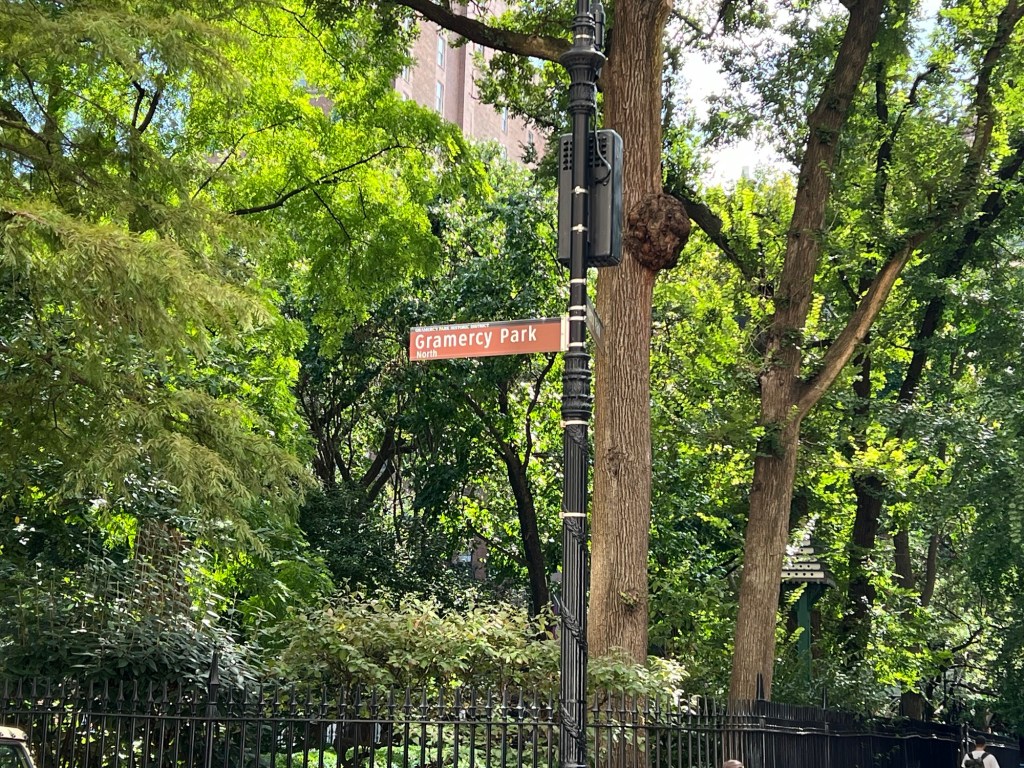
Gramercy Park in the summer of 2024 at Gramercy Park West and East 21st Street

https://en.wikipedia.org/wiki/Gramercy_Park

https://www.cityneighborhoods.nyc/gramercy

The park is amazing to walk by in any season by the end of the summer on a sunny day there was nothing like it. It almost shined against the sun.
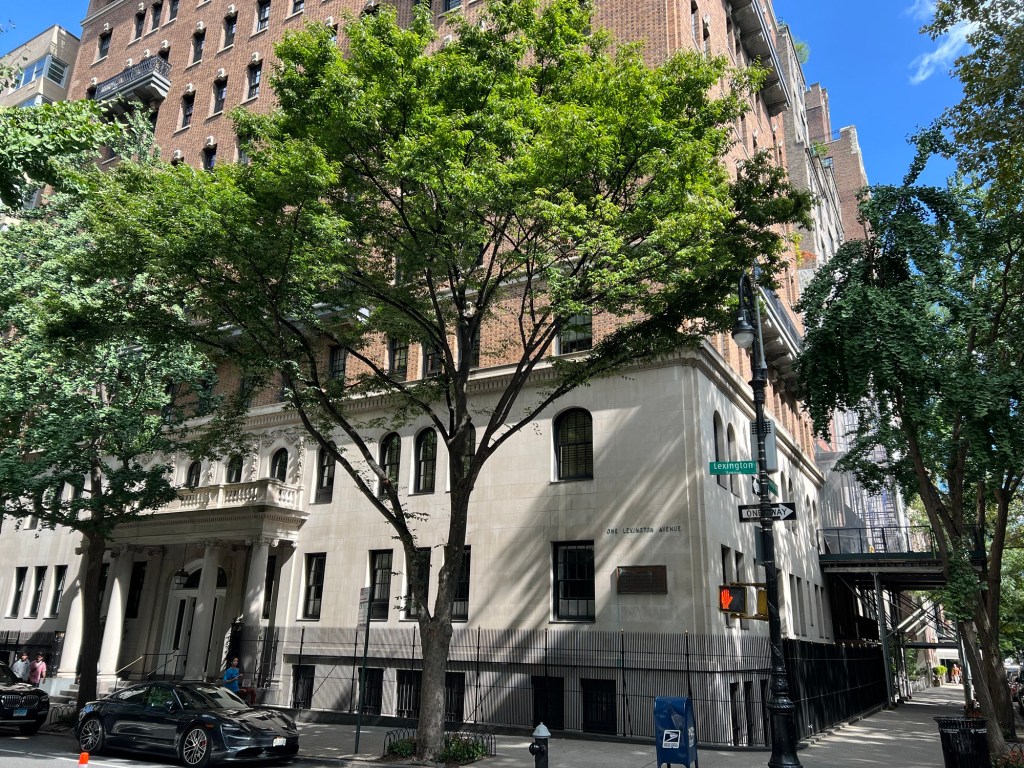
The historic One Lexington Avenue at the corner of Lexington Avenue and Gramercy Park North

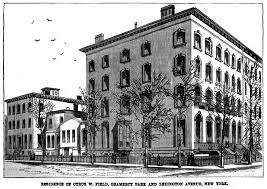
The historical apartment building had replaced the home of Cyrus West Field, who helped lay the first Transatlantic cable line across the Atlantic Ocean.
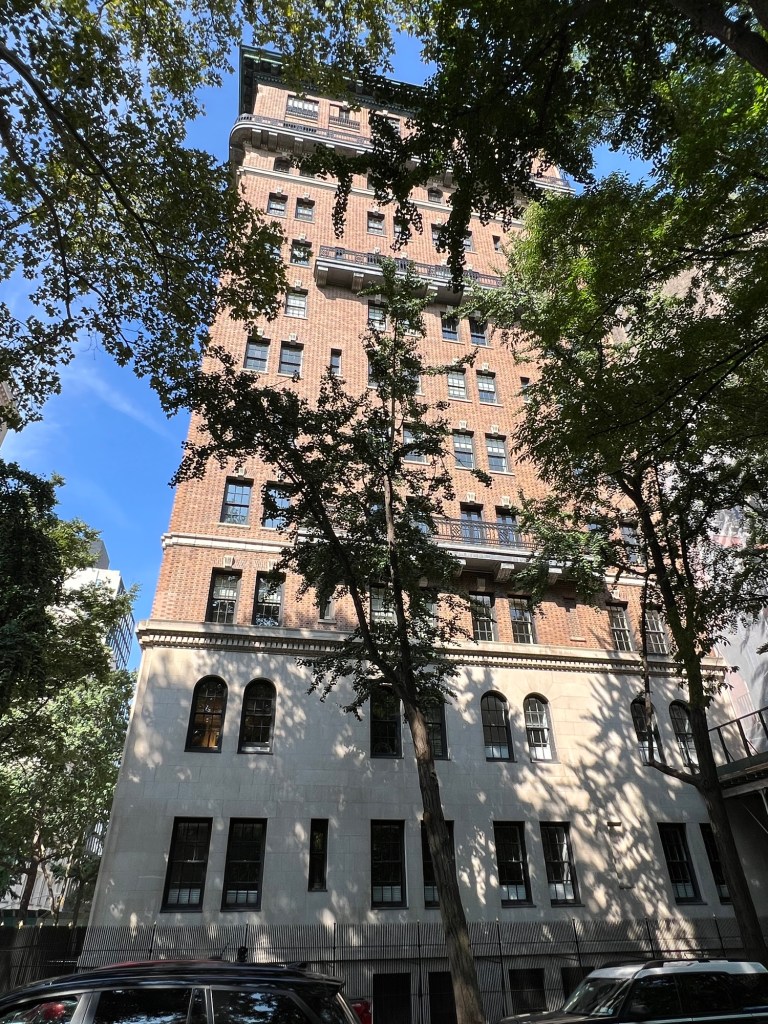
One Lexington Avenue facing Gramercy Park

https://streeteasy.com/building/1-lexington-avenue-new_york/9-d

https://www.corcoran.com/building/gramercy/3916

Built in 1910 by noted architect Herbert Lucas. This twelve-story intimate cooperative features extraordinary design details including a stately limestone and brick façade, timeless-elegant marble lobby and wood-paneled elevator still attended full-time by the elevator operator (Streeteasy.com).
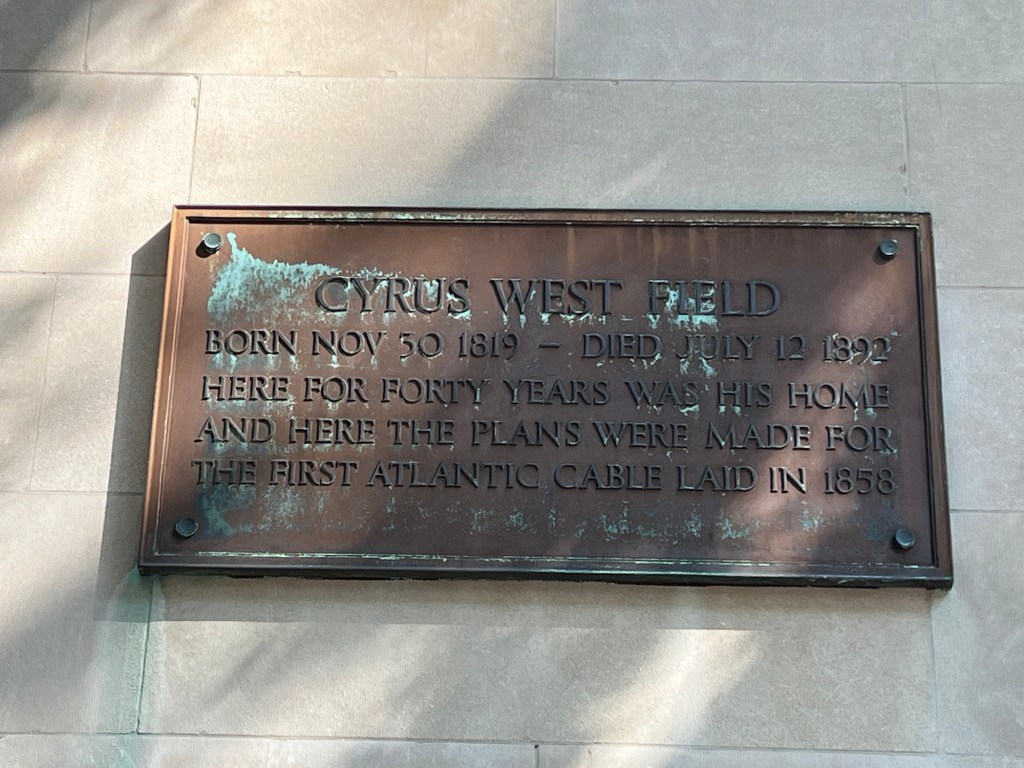
The Cyrus West Field plaque on One Lexington Avenue where his home once stood

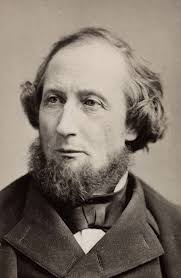
Cyrus West Field

https://en.wikipedia.org/wiki/Cyrus_W._Field

https://www.pbs.org/wgbh/americanexperience/features/cable-cyrus-field-1819-1892/

One Lexington Avenue was once the home of Cyrus West Field, who was considered the ‘Father of the American Cable” and helped lay the first trans Atlantic cable in 1858. When it broke, it was laid again in 1866 (American Experience).
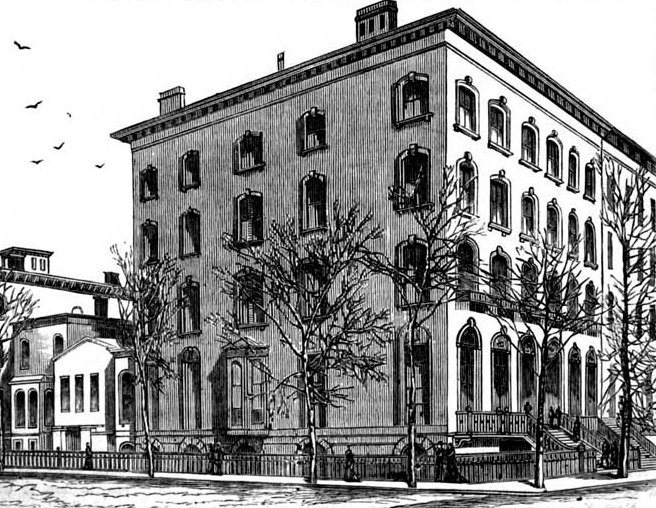
The original house on the same corner in 1866 (NY Public Library)

Just across One Lexington Avenue was one of the best views facing the southern end of the neighborhood. The gardens just stood out this afternoon and with the clear sunny skies, it looked like a postcard.
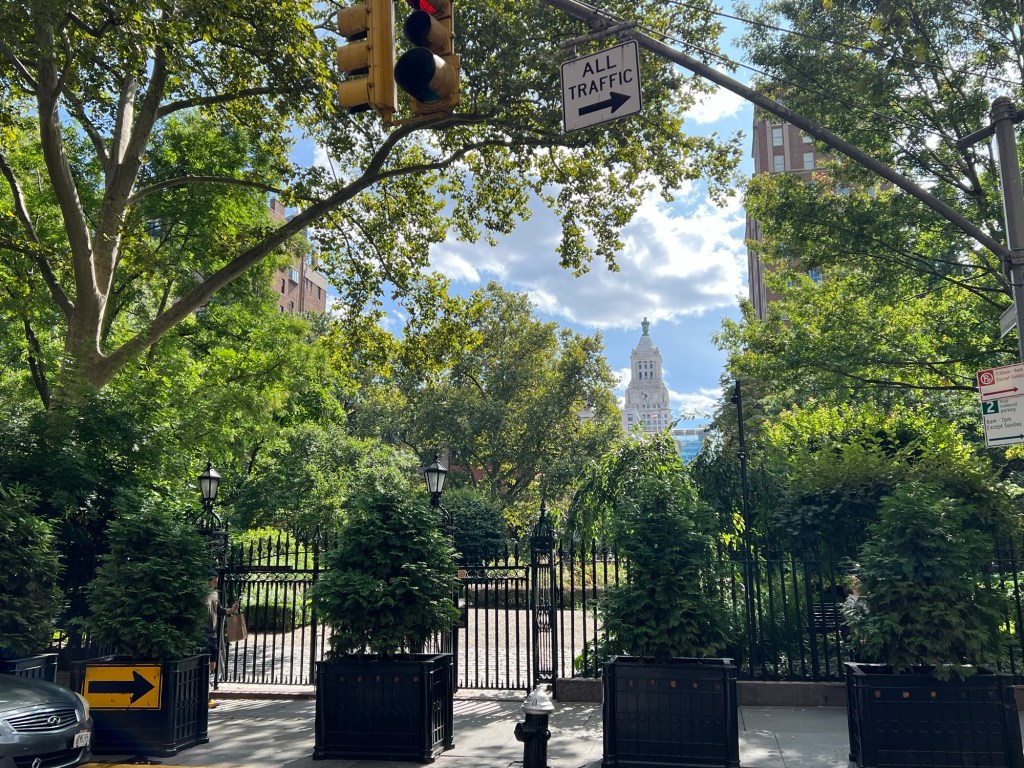
Looking South from Gramercy Park down Irving Place

The park was at its peak of blooming and foliage in the beginning of September. I thought this was a beautiful shot of the true elegance of the park.
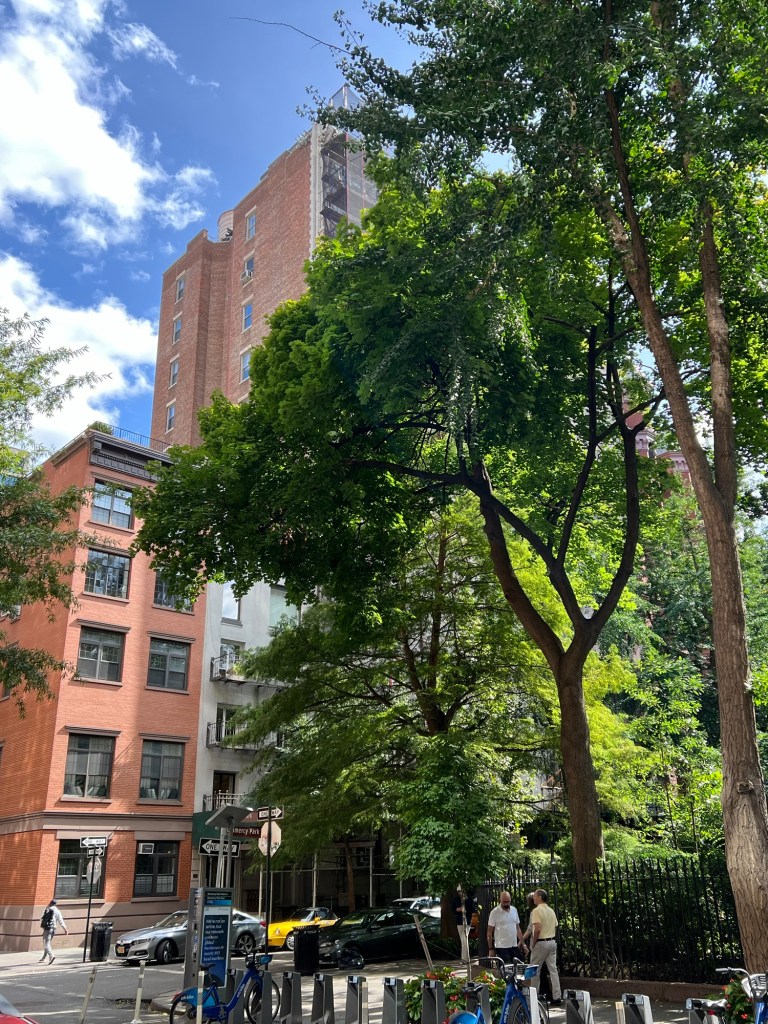
Looking at Gramercy Park East in the summer of 2024

The beauty of Gramercy Park is that all sides of the park are so pretty to look at. You can admire this park from all sides with the beautiful shrubby, flowers and the elegant architecture of homes and apartment buildings that surround the park.

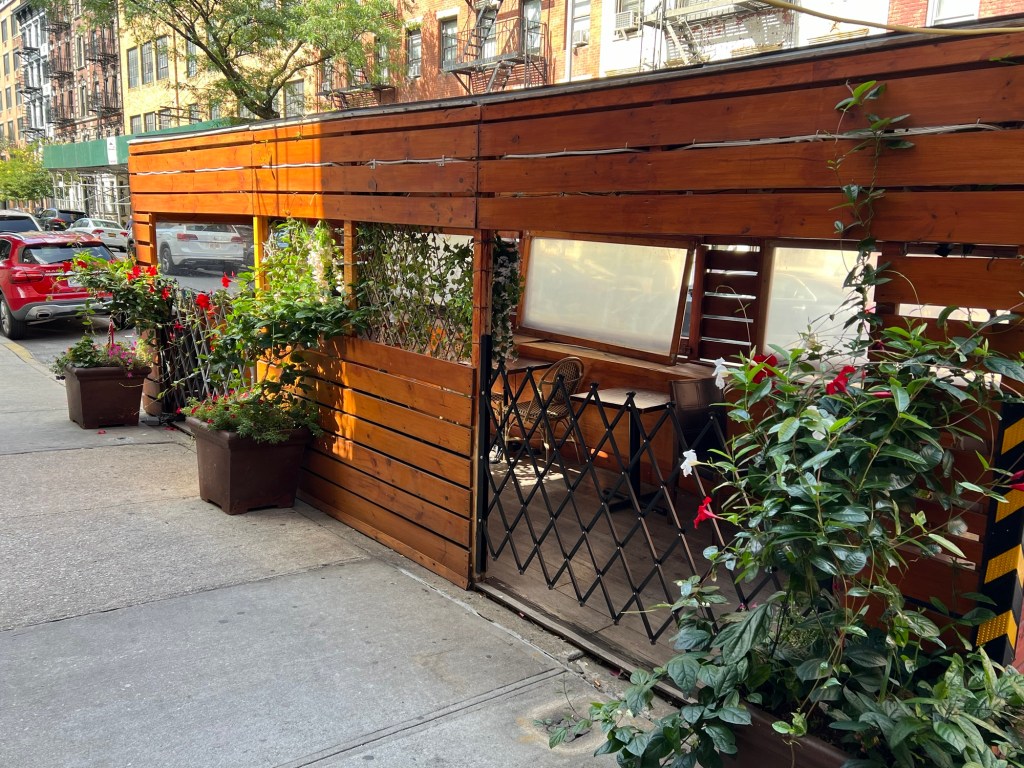
As I continued to walk around East 21st Street, I passed the outdoor cafe of Grill 21 at 346 East 21st Street. I loved this picture painted outside the restaurant and the menu looked very interesting. I noted it to maybe try it later. The people who were eating outside that afternoon looked like they were enjoying their meal.

Walking past Grill 21 Restaurant at 346 East 21st Street

https://www.instagram.com/grill21_/

Review on TripAdvisor:
https://www.tripadvisor.com/Restaurant_Review-g60763-d844501-Reviews-Grill_21-New_York_City_New_York.html?m=19905

The seating area of Grill 21

As I passed the NYPD 13th Precinct, I passed this very touching memorial to those on 9/11. Being now twenty years ago, it still seems like yesterday for those of us who lived through it. It means something to us every September but it seems lost to a newer generation who were born after it.
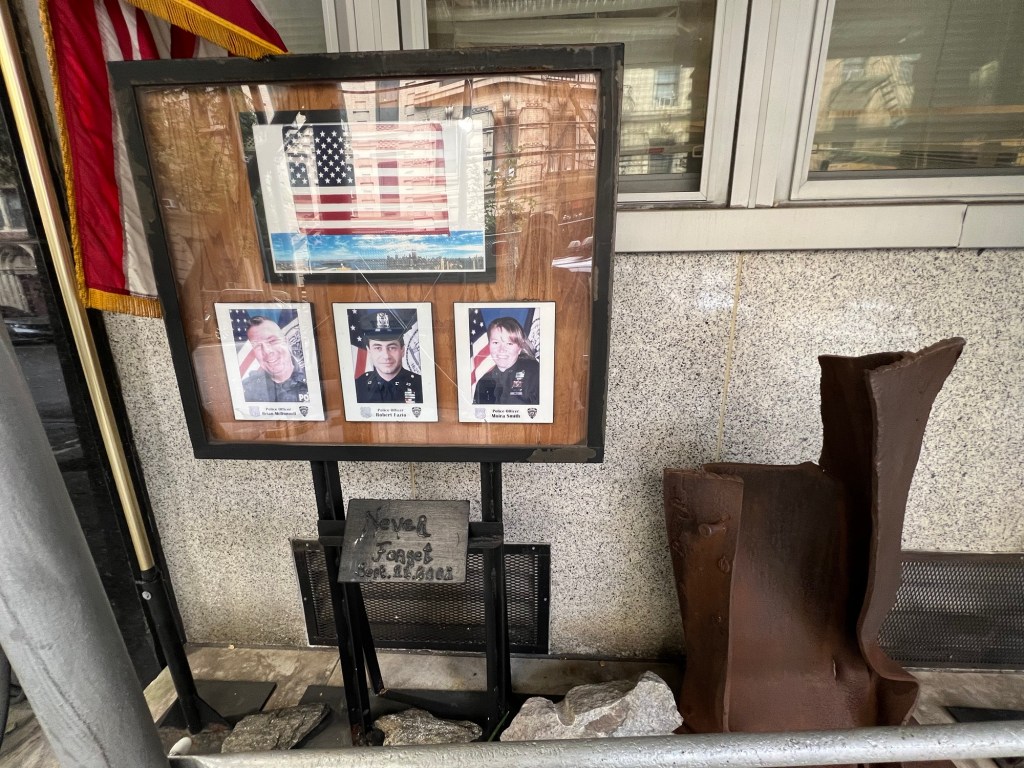
The memorial to the officers that died in the attacks on 9/11 outside the 13th Precinct at 230 East 21st Street

https://www.nyc.gov/site/nypd/bureaus/patrol/precincts/13th-precinct.page
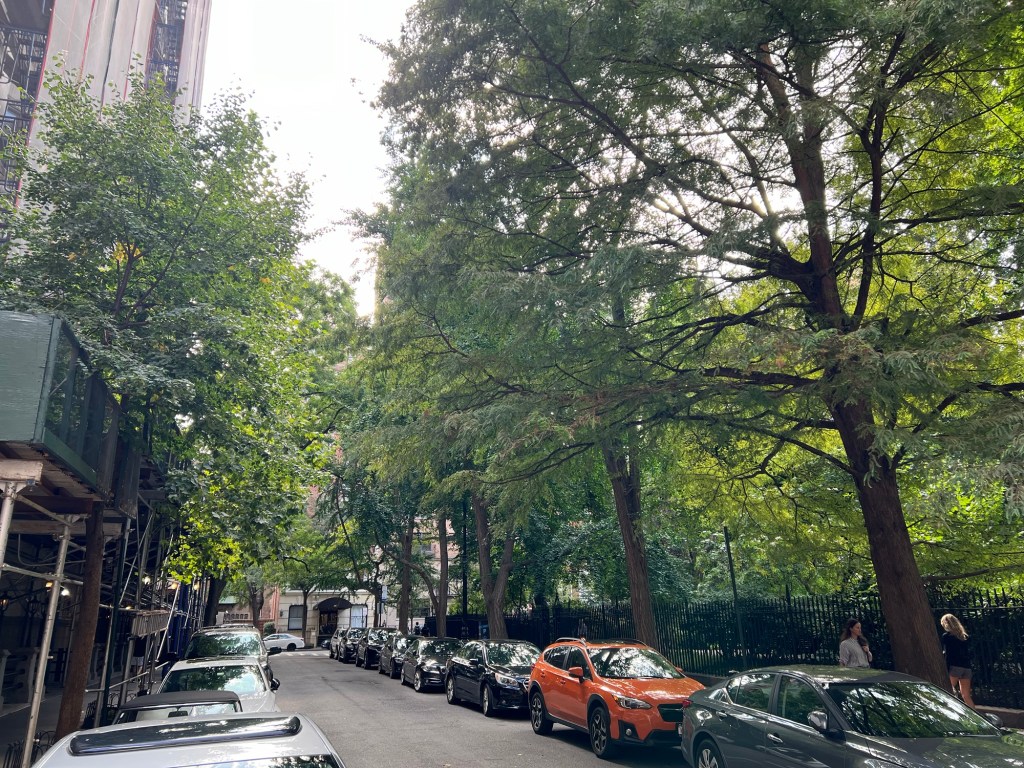
Walking around Gramercy Park West at East 22nd Street

After walking one side of Gramercy Park, I did a semi circle around park admiring the park from all angles. The park stretches from East 22nd to East 21st Streets and is the only private park left in New York City. The park is all that is left of the original Rose Hill Farm estate.

Gramercy Park North at East 22nd Street is all that is left of the corner of the Rose Hill Farm

Gramercy Park East
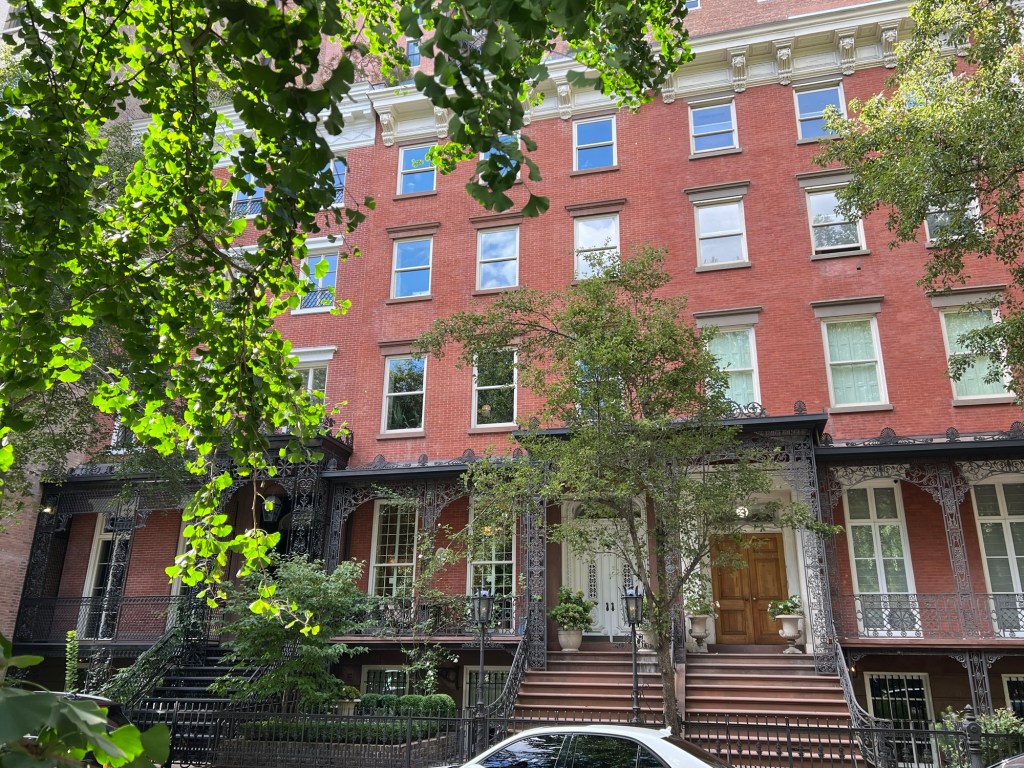
Gramercy Park East
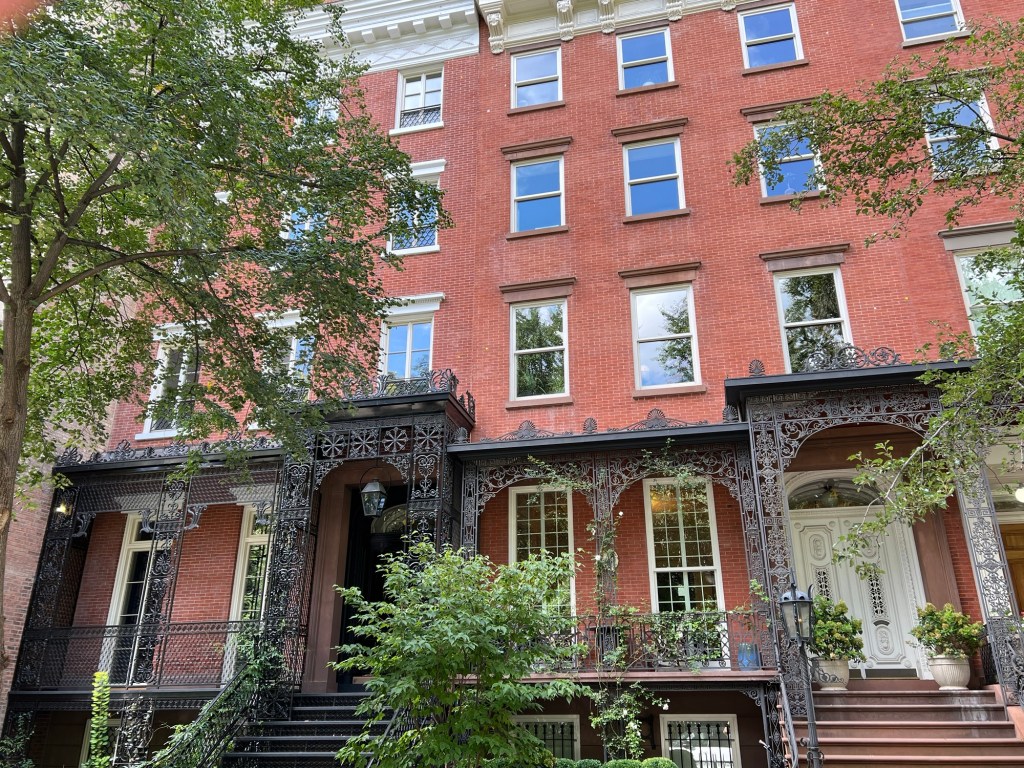
Gramercy Park East

The plaque at 3 Gramercy Park East to former Mayor James Harper
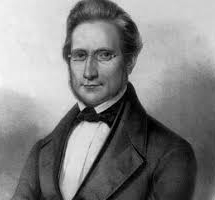
Mayor James Harper

https://en.wikipedia.org/wiki/James_Harper_(publisher)

https://a860-collectionguides.nyc.gov/agents/people/42

Mayor James Harper served as Mayor of New York City for one term as a Republican from 1844-1845. Before that he established the publishing firm J & J Harper with his brother which eventually in time became Harper’s Brothers in 1825 (which became Harper & Row in 1962). He was only served as Mayor for one year (Wiki). He lived in Gramercy Park from 1847 to 1869 when he passed away (Wiki).

Walking around 4 Gramercy Park East

https://www.elliman.com/newyorkcity/buildings-communities/detail/527-c-725-41984/4-gramercy-park-west-gramercy-park-new-york-ny

The historic buildings of Gramercy Park West
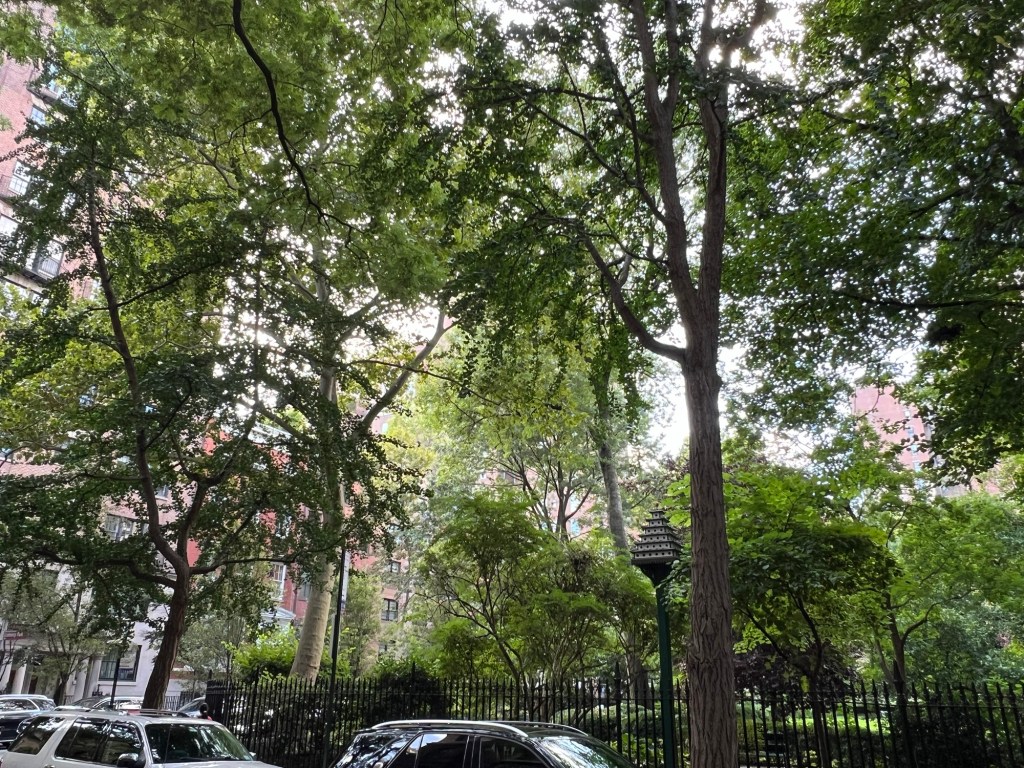
https://www.cityrealty.com/nyc/market-insight/features/goldilocks-blocks/the-keys-gramercy-park-history-full-list-buildings-park-access/38081

The park side of Gramercy Park West

The former Stuyvesant-Fish Mansion at Gramercy Park South

https://en.wikipedia.org/wiki/19_Gramercy_Park_South

I love passing the old Stuyvesant Fish Mansion. I have always thought this was an apartment building but I just read that it is still a private home. This home was originally built in 1854 by William Samuel Johnson and it was expanded by architect Stamford White for the Fish family in 1887. When the family moved uptown to the more fashionable Fifth Avenue, the house was broken up into apartments. Many incarnations later it was sold as a private residence in the past few years (Wiki).

The beautiful brownstones and brick buildings at Gramercy Park South
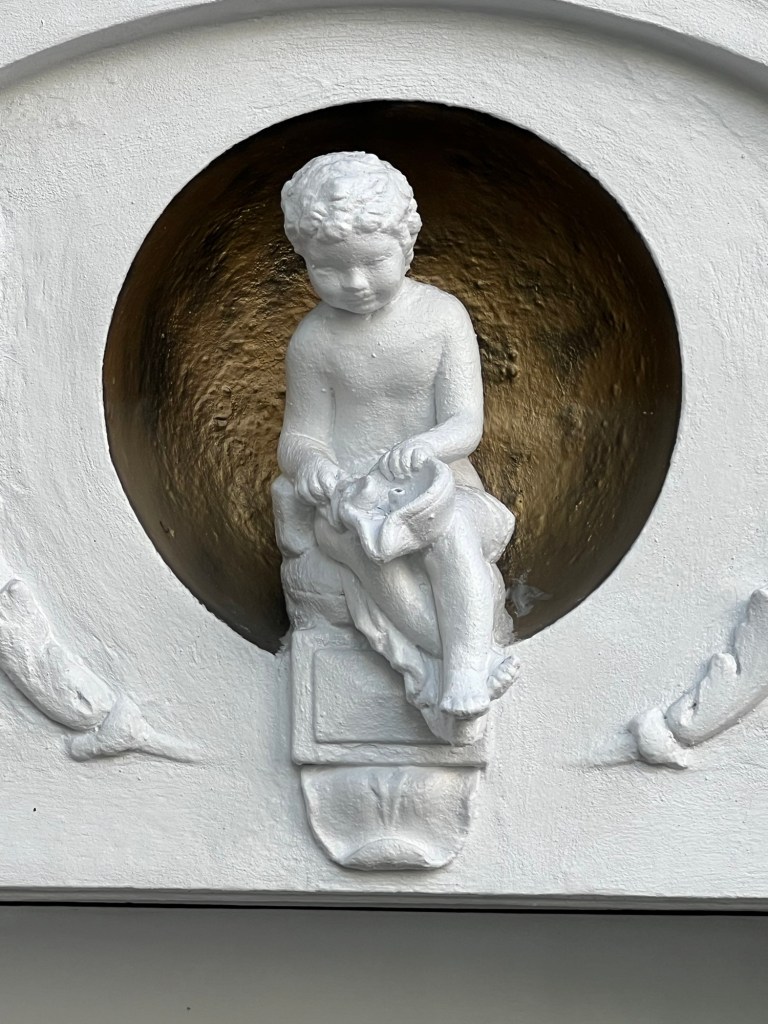
This delightful little embellishment at East 20th Street

Street art on East 20th Street near Second Avenue
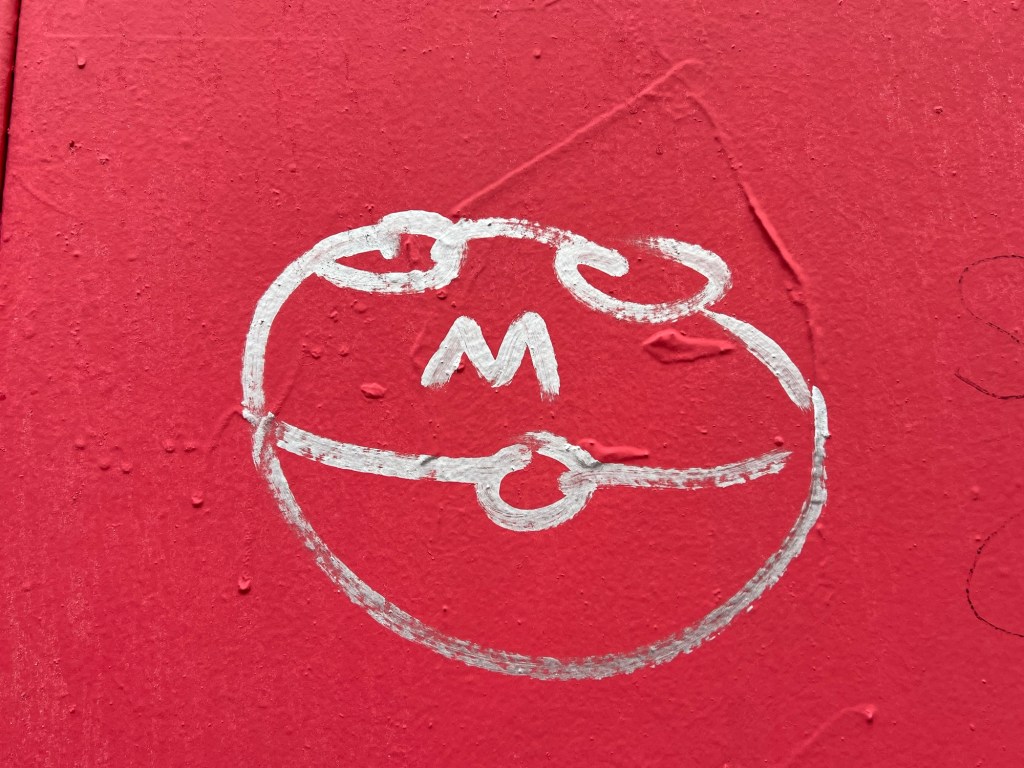
Street art on East 20th Street

Street art on East 20th Street-I thought this was so profound and so true!
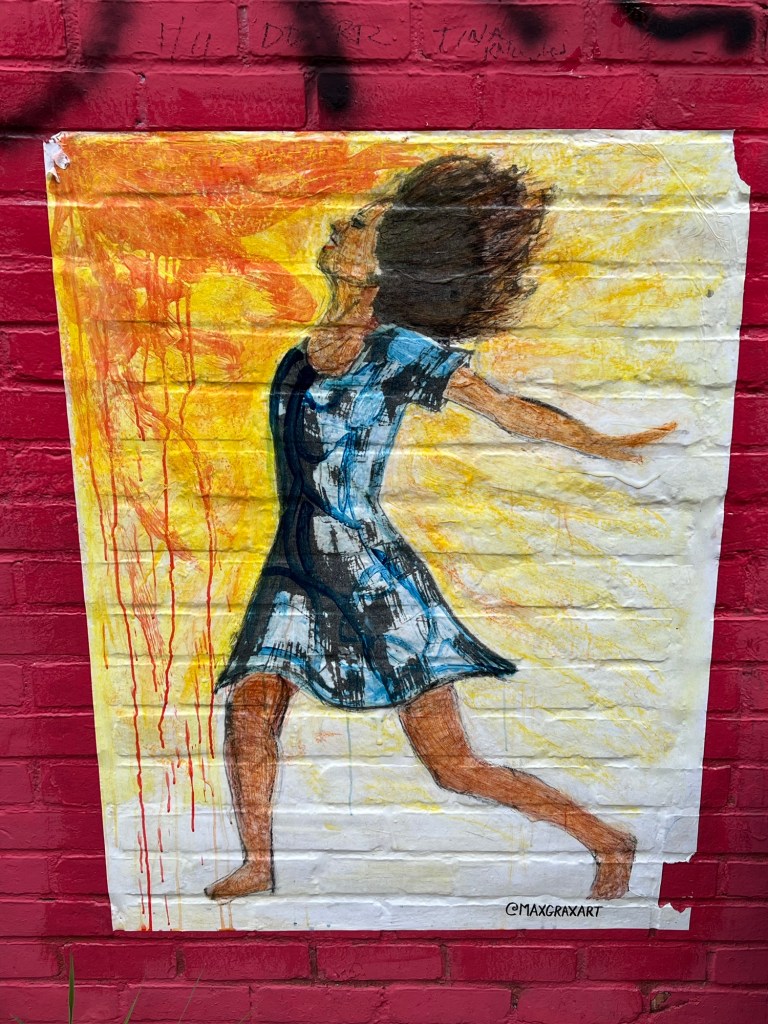
Street art on East 20th Street

Just outside the edge of the neighborhood is the extension of East 20th Street is the border of Gramercy Park, Stuyvesant Town and Peter Cooper Village. The middle class enclave is beautifully landscaped and East 20th Street to the even nicer landscaped Stuyvesant Cove.

https://www.stuytown.com/

https://en.wikipedia.org/wiki/Stuyvesant_Town%E2%80%93Peter_Cooper_Village

The shade trees on East 20th Street
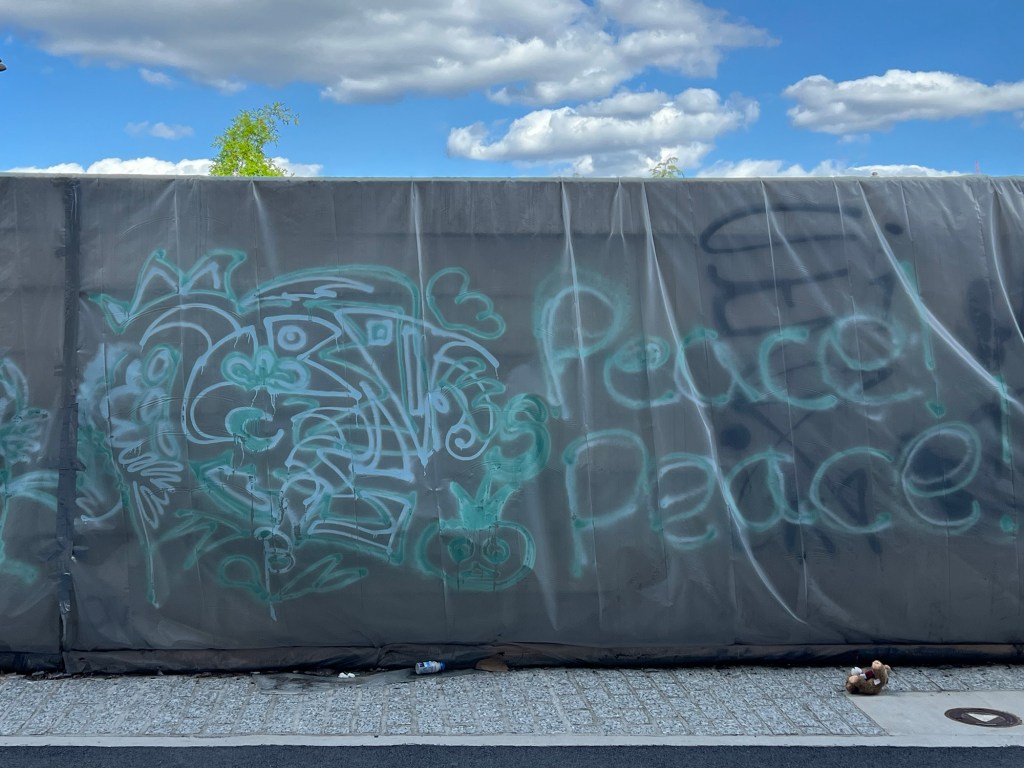
The street art at the entrance to Stuyvesant Cove

Stuyvesant Cove in the Summer of 2024

Stuyvesant Cove in the Summer of 2024

https://en.wikipedia.org/wiki/Stuyvesant_Cove_Park

https://www.nyc.gov/site/ddc/about/press-releases/2023/pr-053123-Stuyvesant-Cove-Park.page

The view of the East River from Stuyvesant Cove

https://www.instagram.com/explore/locations/3756/stuyvesant-cove-park/

It was a brilliant sunny afternoon in the late summer. The temperatures had reached in the mid 80’s and it was clear and slightly cloudy when I visited the park. Everything was in late bloom including the sunflowers which were brilliant. I could not believe what a spectacular day it was that afternoon. I just relaxed for a bit and enjoyed the beautiful views.
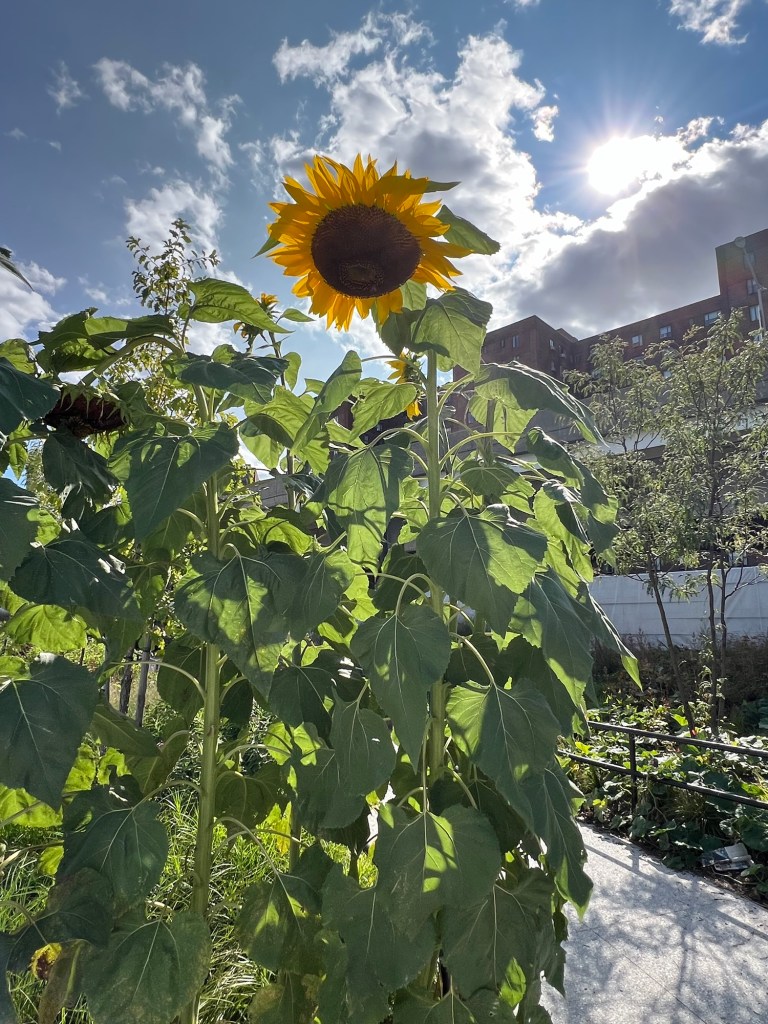
The beautiful sunflowers in the Stuyvesant Cove Gardens
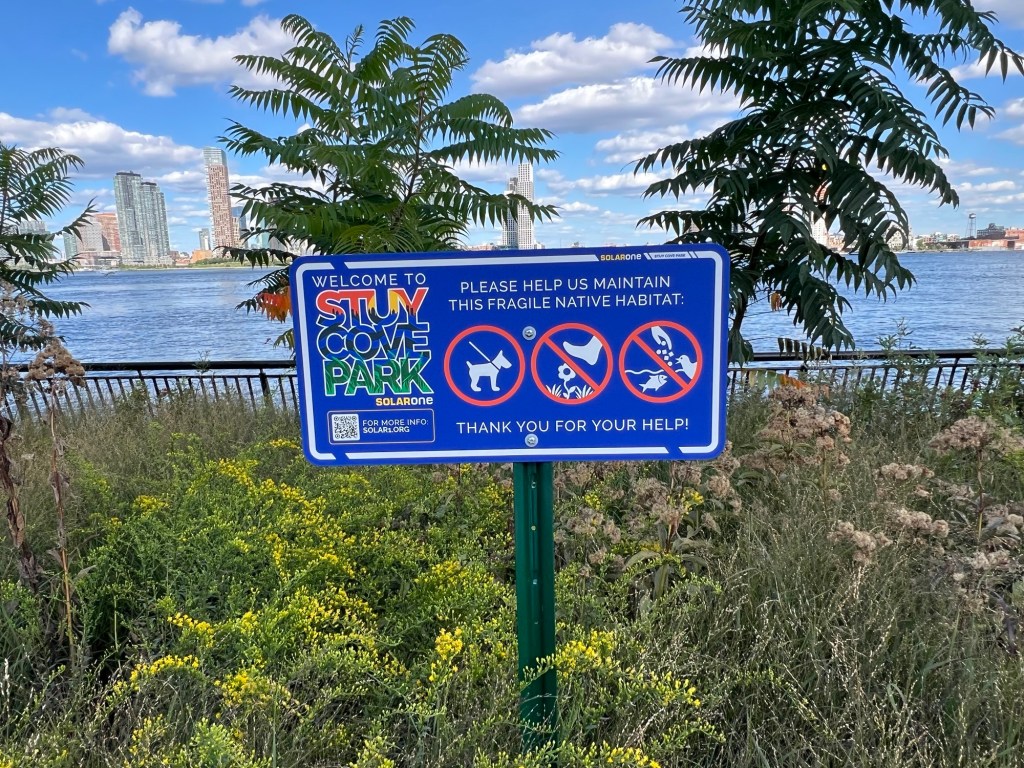
The sign welcoming you to Stuyvesant Cove Park

Walking back down East 20th Street into Gramercy Park South
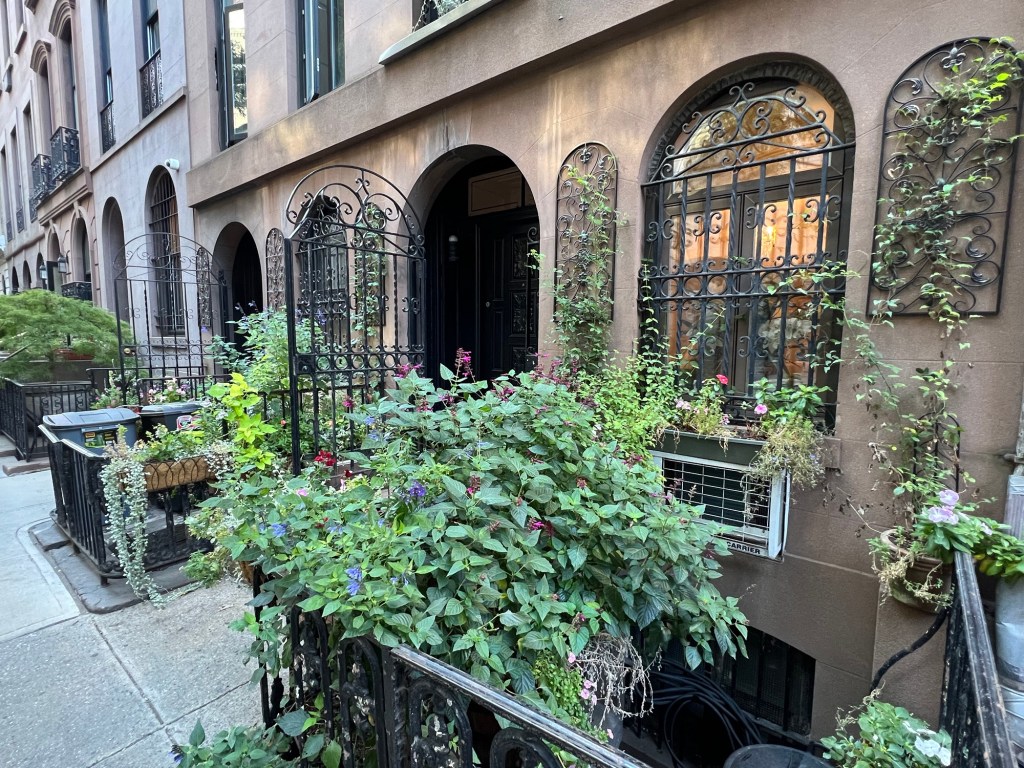
The beautiful gardens of East 19th Street

Easy 19th Street at the end of the summer of 2024

The side of the apartment building at Irving Place

The old Carriage Houses at West 19th Street
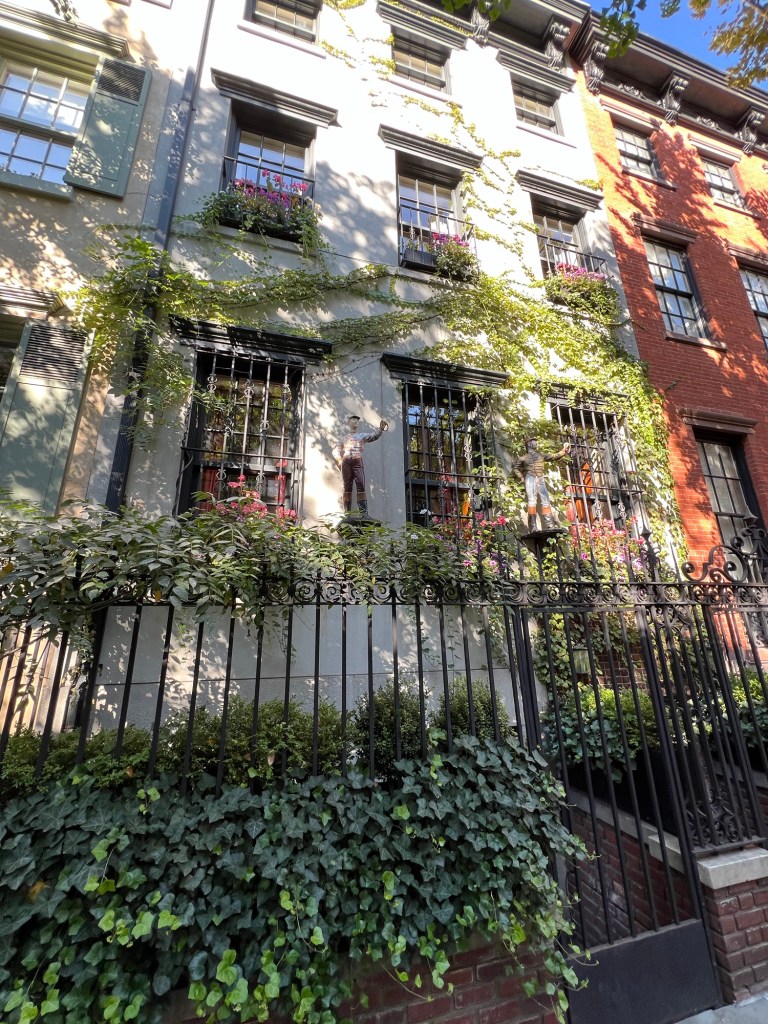
The beauty of urban gardens on East 19th Street

I thought this was just gorgeous on a sunny afternoon

The building itself at East 19th Street was rather plain but I thought the archway was beautiful

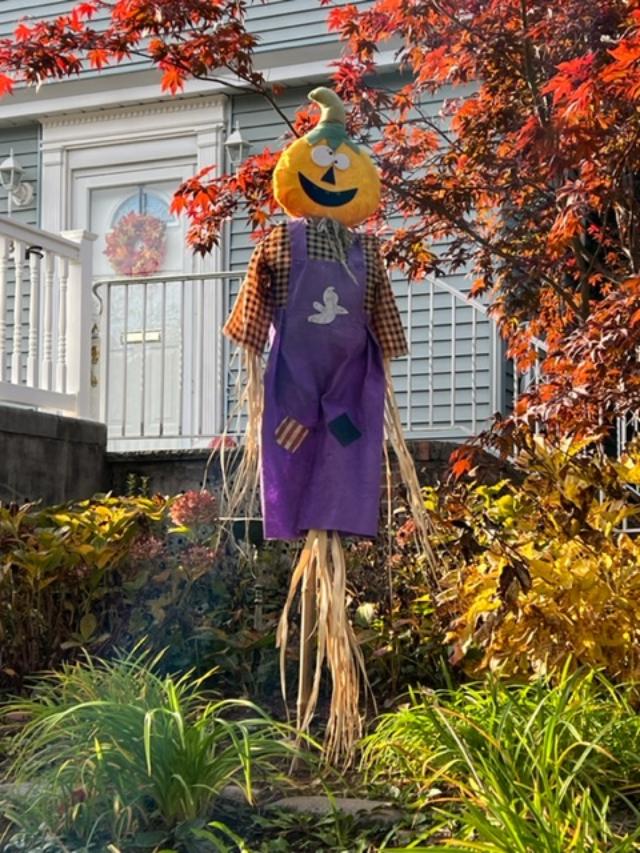
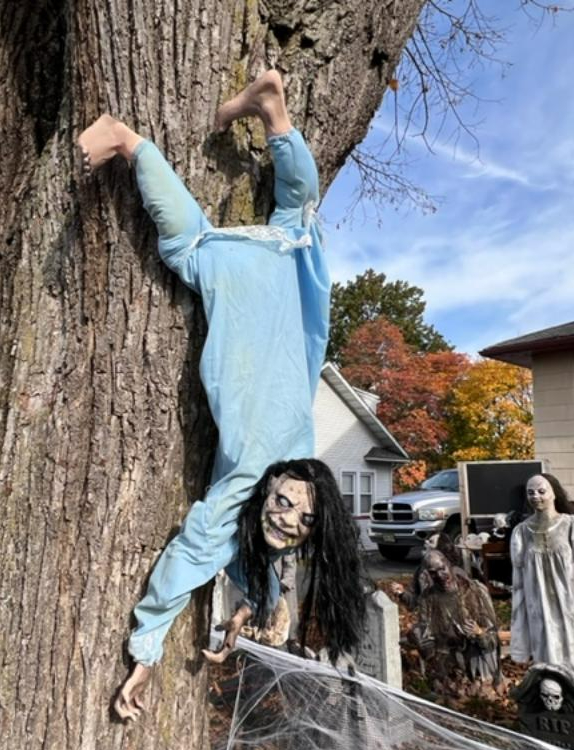
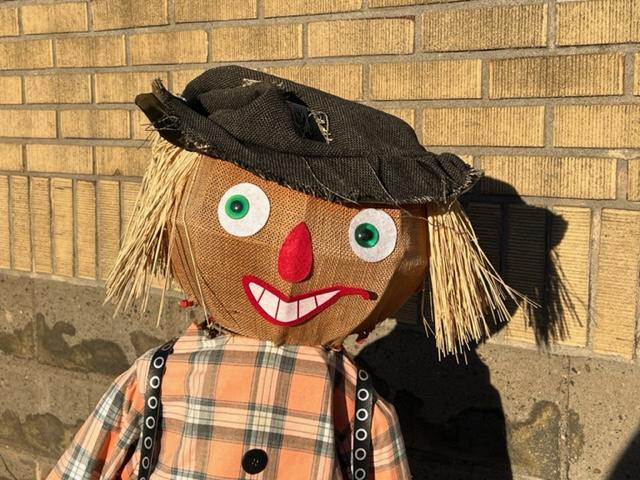
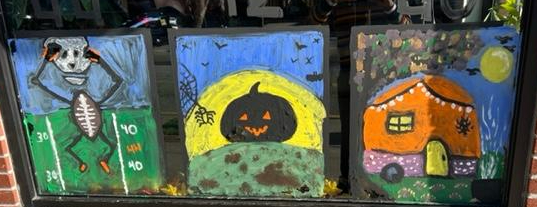
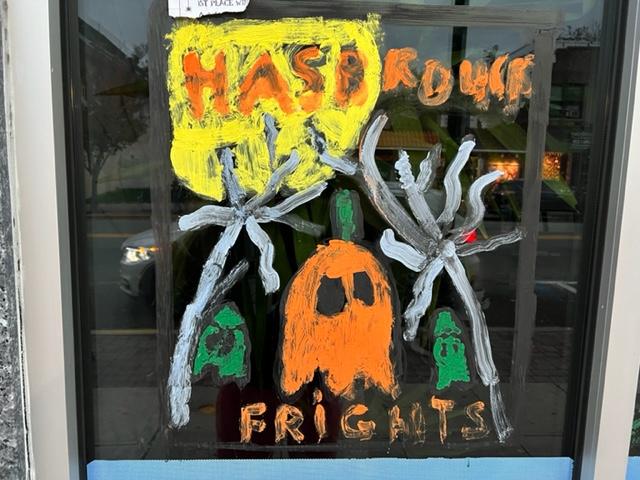
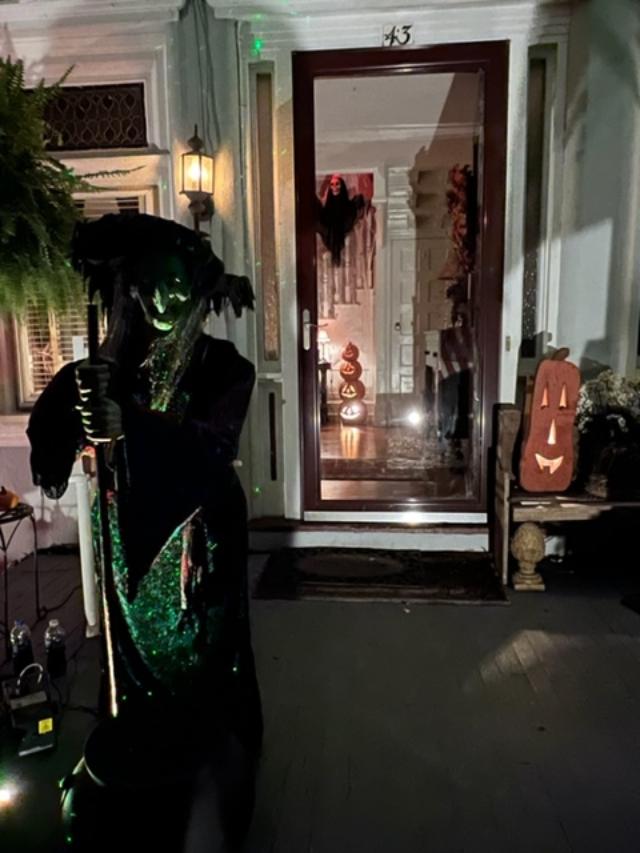
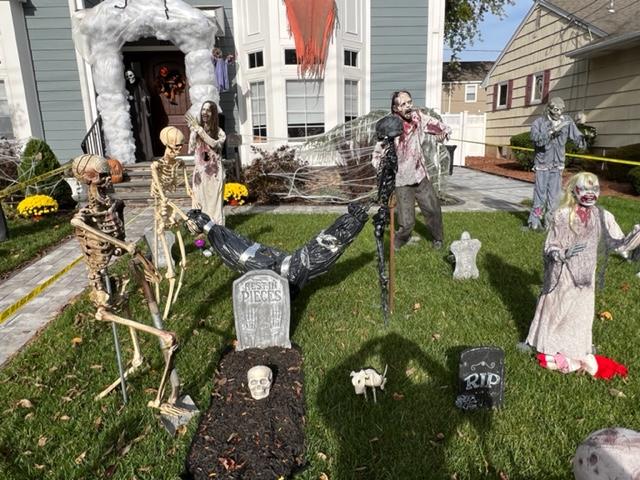
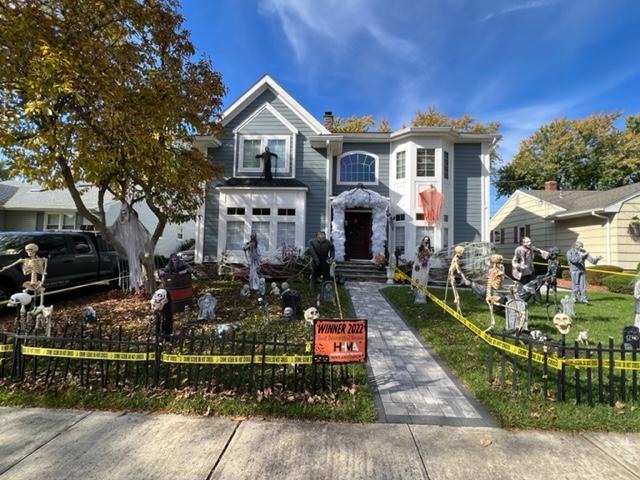
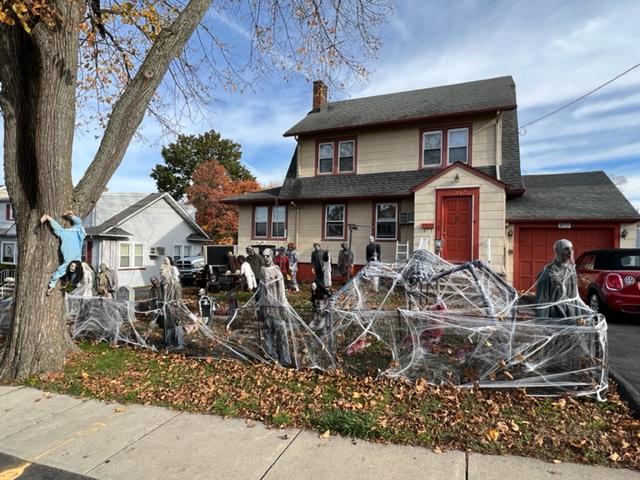
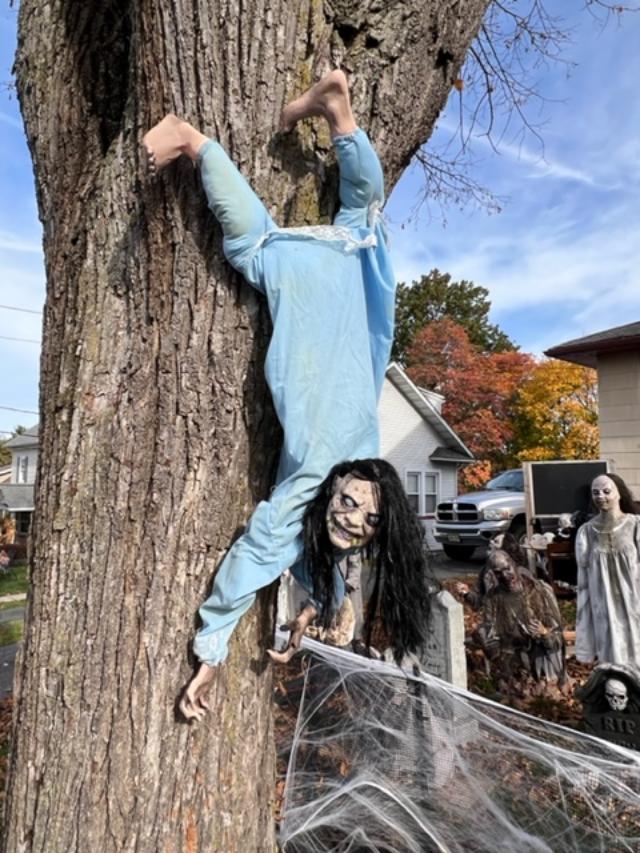
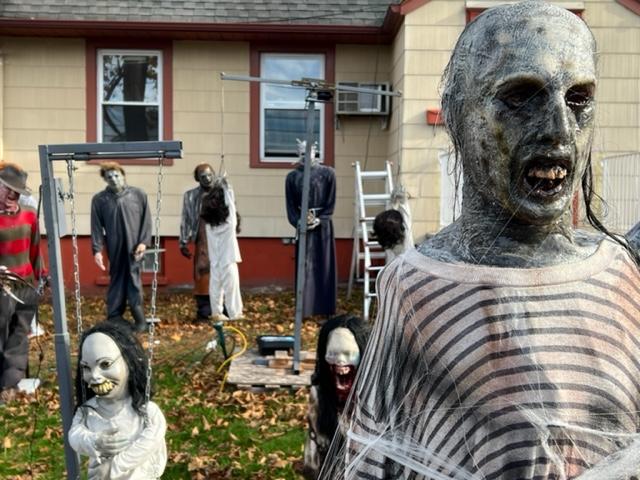
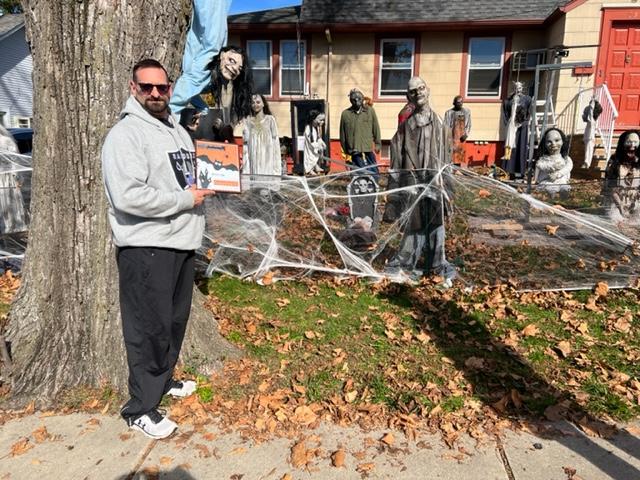
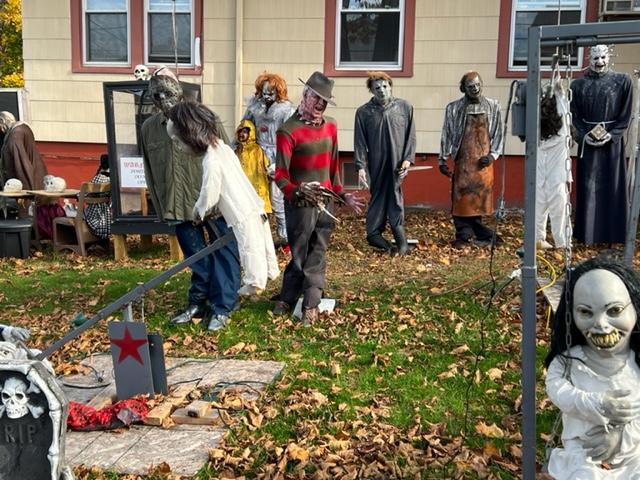
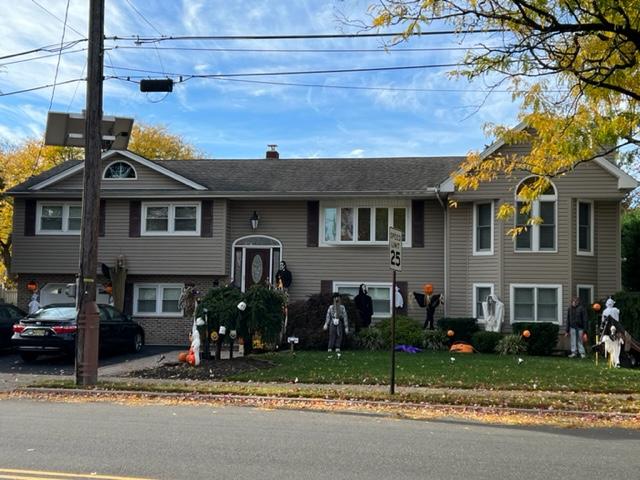
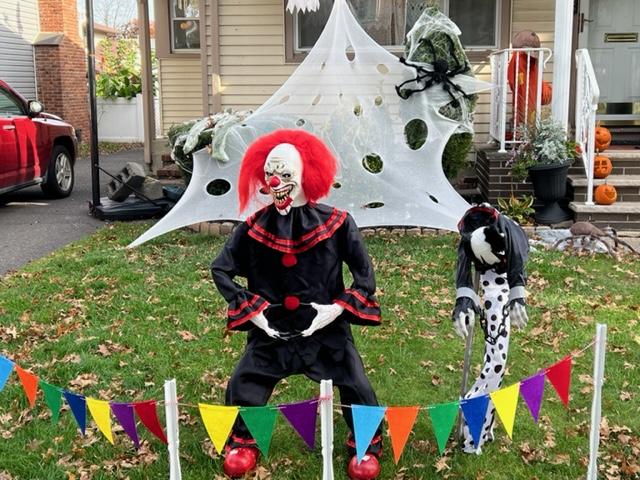
I loved the creative Halloween decorations at 318 East 19th street

The decorations at 318 East 19th Street

The decorations at 318 East 19th Street

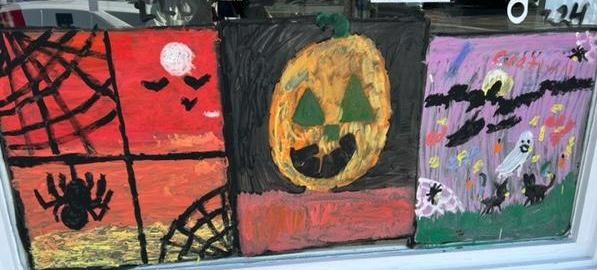
Halloween seemed to come early to parts of the neighborhood.

As I walked along the blocks along East 19th Street, I came across interesting street art around the neighborhood. Here and there things popped up that I thought were interesting to see.
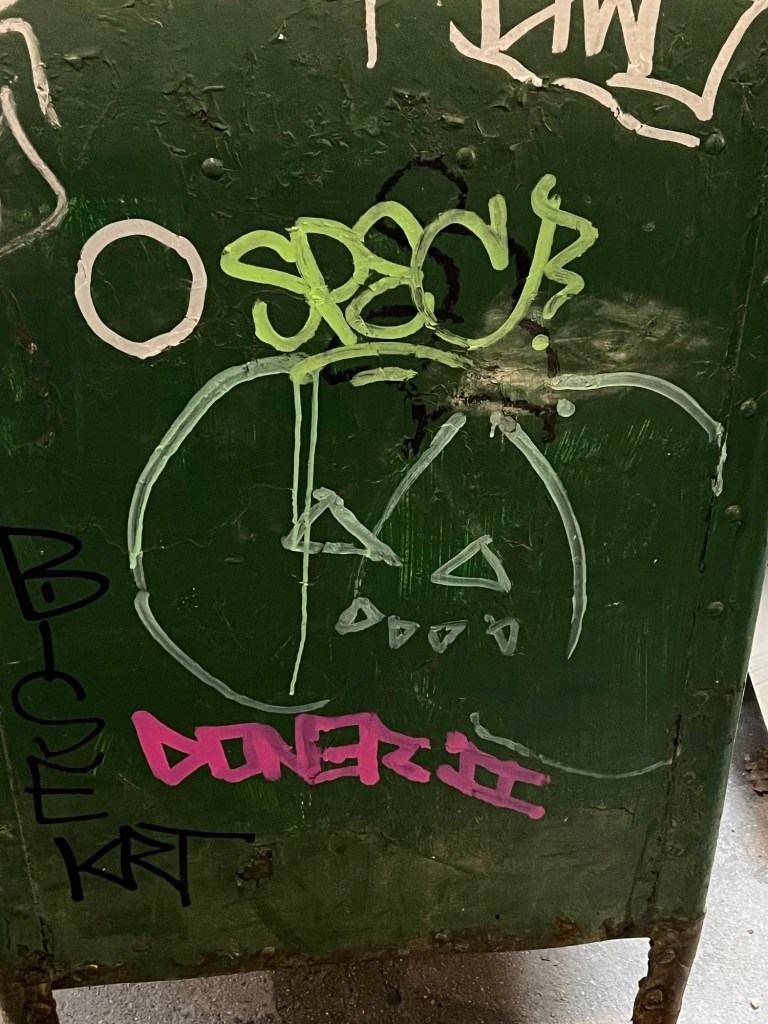
Street art along East 19th Street
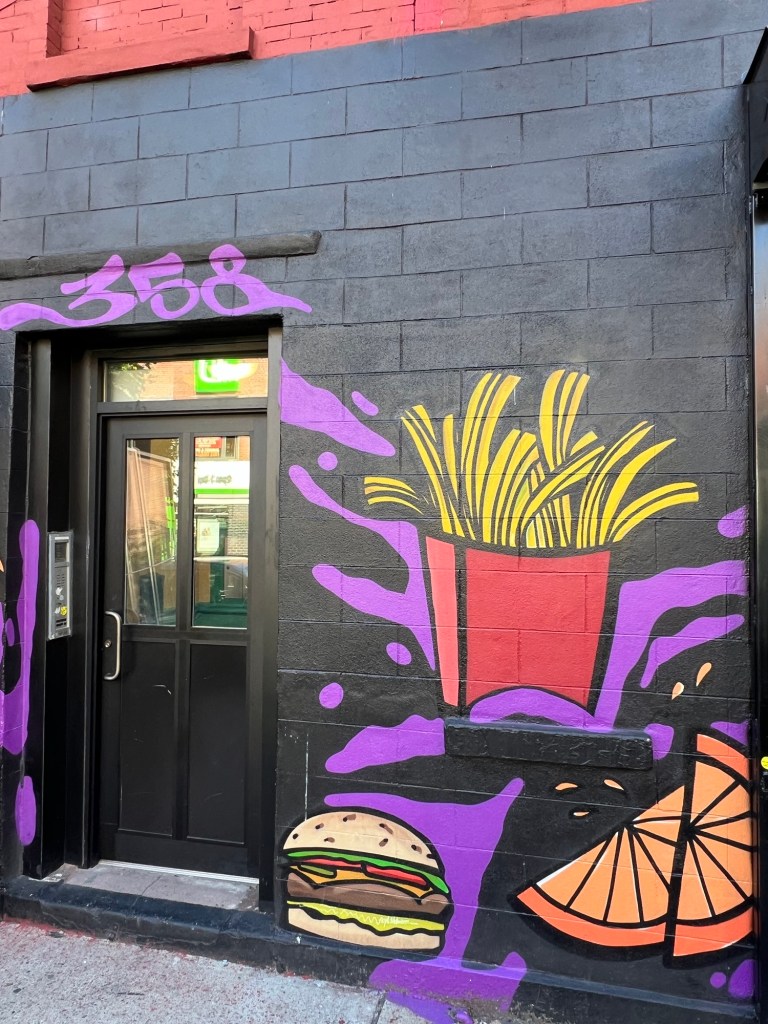
Street art along East 19th Street. The was right near a restaurant at 358 East 19th Street

The historic home of George Bellows
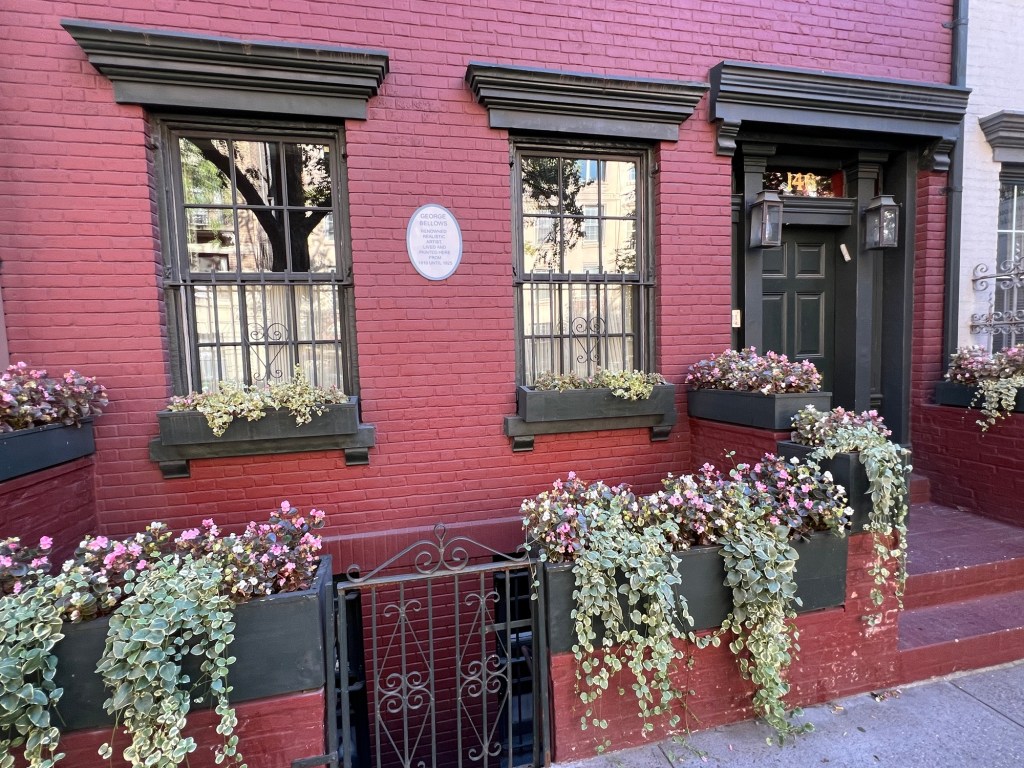
The plants surrounding the front of the home at East 19th Street

The George Bellows House
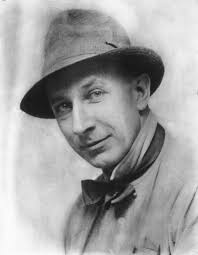
Artist George Bellows

https://en.wikipedia.org/wiki/George_Bellows

https://www.metmuseum.org/exhibitions/listings/2012/bellows

Artist George Bellows was an American artist who was self taught and left college to move to New York to pursue the life of a painter. He works were well known in art circles for their social and political themes (Wiki).

I thought this series of brownstones were just classic New York

Walking down East 18th Street has its charming blocks of brownstones with gardens and potted plants

The charming urban gardens of Gramercy Park

The elegant Halloween decorations in the neighborhood

The Stuyvesant Houses on 18th Street

The Stuyvesant Houses on 18th Street

https://www.hmdb.org/m.asp?m=151071

What was interesting about passing the Stuyvesant Houses on East 18th Street is how old these homes are and that they are still part of the fabric of the neighborhood in the 21st Century. They were built by Cornelia Stuyvesant Ten Broeck in 1852 on land that was part of the original Stuyvesant Farm. This could be considered part of the development of ‘suburban housing’ in New York City. This was built beyond the core of Manhattan which was located below Wall Street (Historic Market of the New York Community Trust).
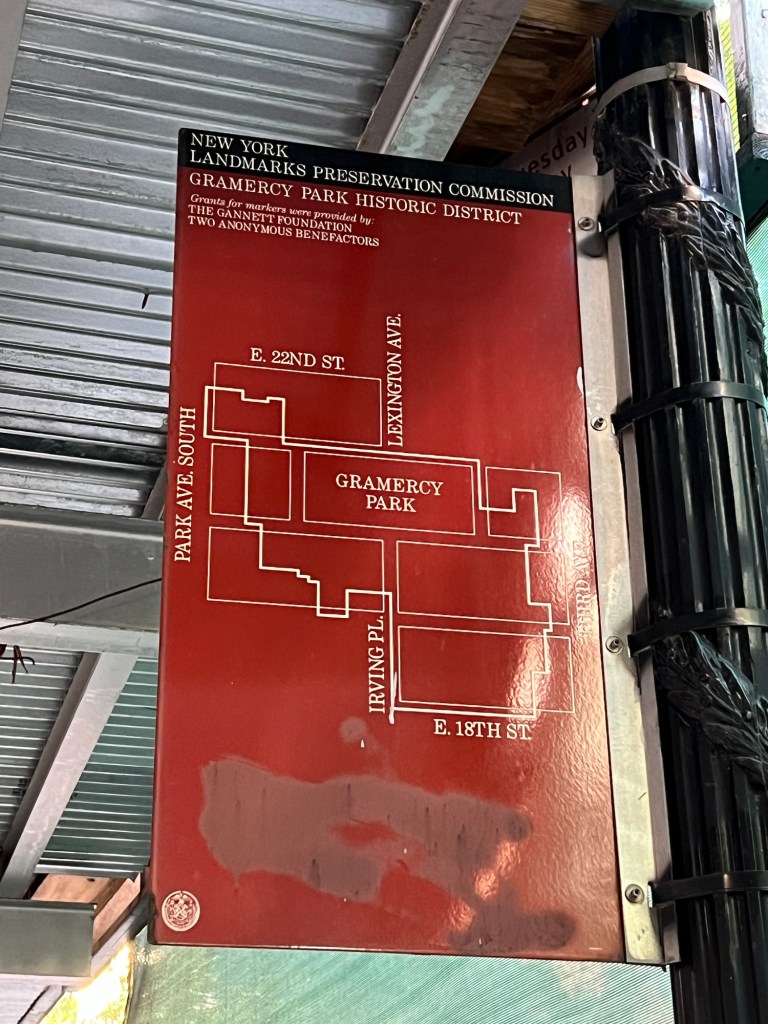
The sign for the designated historic part of the neighborhood
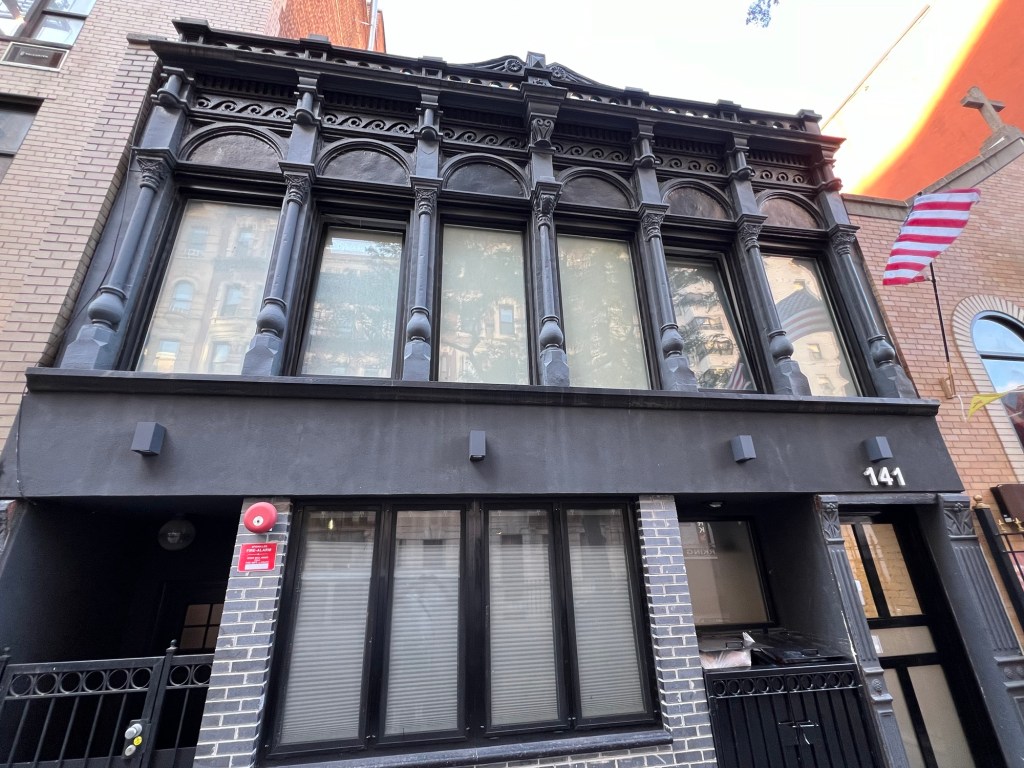
A smaller version of a Flatiron building at 141 East 17th Street

https://streeteasy.com/building/141-east-17-street-new_york

https://www.cushmanwakefield.com/en/united-states/properties/for-sale/apartment-buildings/ny/new-york/141-east-17th-street-new-york-new-york-10003/k26408k26408-s

This triplex apartment was originally designed and configured as a mid-century artist’s studio by New York architect Bernard Rothzeid, who was commissioned to modernize the space by the painter and print-maker Al Blaustein (Streeteasy.com). It looked like a smaller version of the Flatiron Building and stands out in a neighborhood of brownstones and apartment buildings.

I was impressed by this series of flower boxes along East 17th Street

Here and there along all the streets of this part of Gramercy Park were pocket gardens and decorations outside buildings all over the neighborhood.
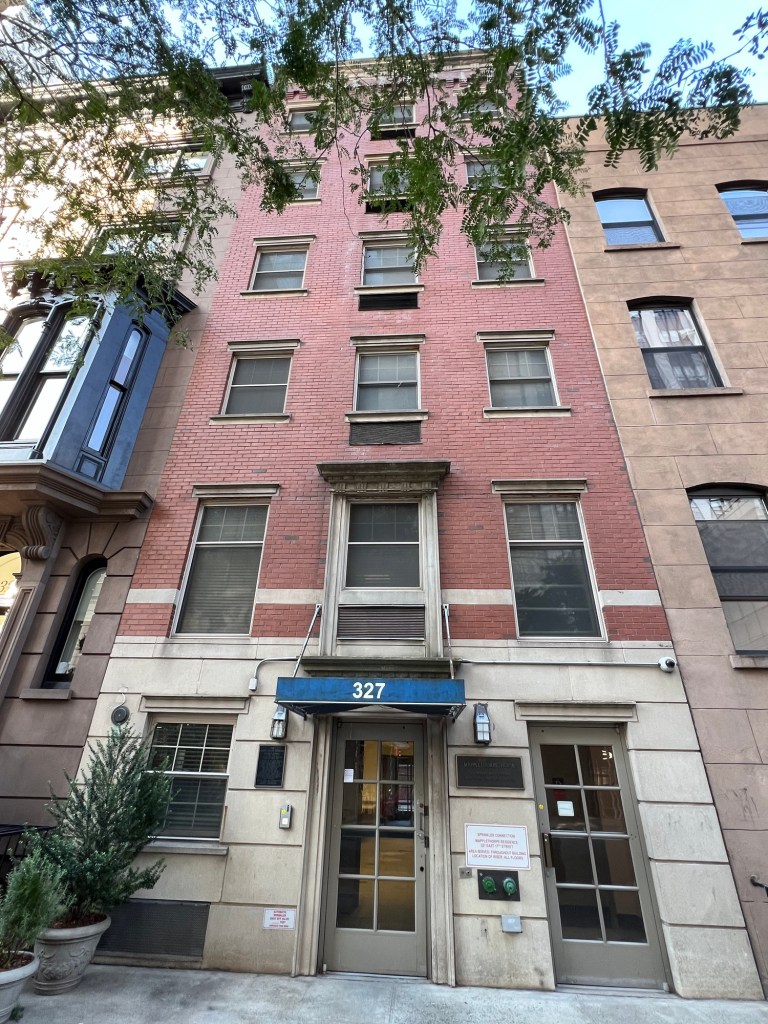
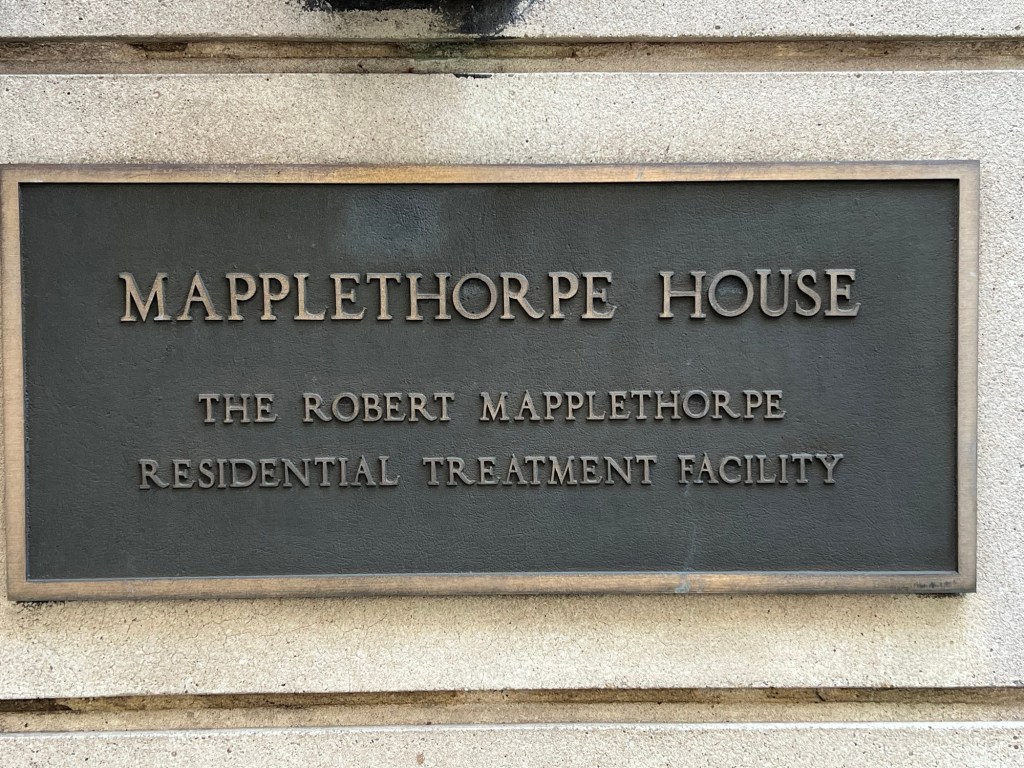
327 East 17th Street is home to the Robert Mapplethorpe Treatment Center and the home of composer Antonin Dvorak on this site. This is the home of the Mapplethorpe Foundation.
https://www.mapplethorpe.org/

The home for the Mapplethorpe House

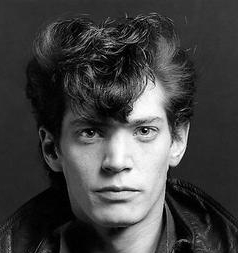
Artist Robert Mapplethorpe

https://www.mapplethorpe.org/

https://en.wikipedia.org/wiki/Robert_Mapplethorpe

Robert Mapplethorpe was an American Artist known for his black and white photography and his study of celebrity, gay life and self portraits. He had attended Pratt Institute in his early education. Before he died, he founded the Mapplethorpe Institute, which handled his estate to help promote his work and has been instrumental in raising millions of dollars for AIDS research (Wiki/Mapplethorpe Foundation website).

The historic sign for the once home of composer Antonin Dvorak

https://www.antonin-dvorak.cz/en/life/biography/

There was an interesting statue dedicated to the composer inside of Stuyvesant Park. All along East 17th Street I came across more interesting street art.
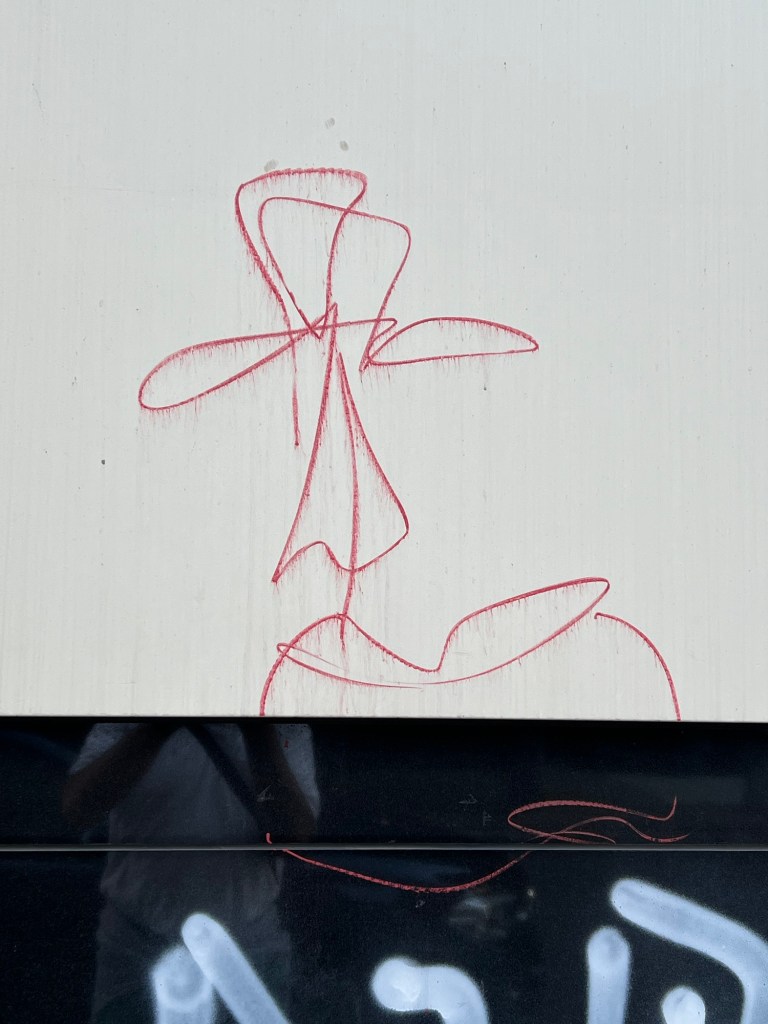
Street art along East 17th Street
Street art along East 17th Street
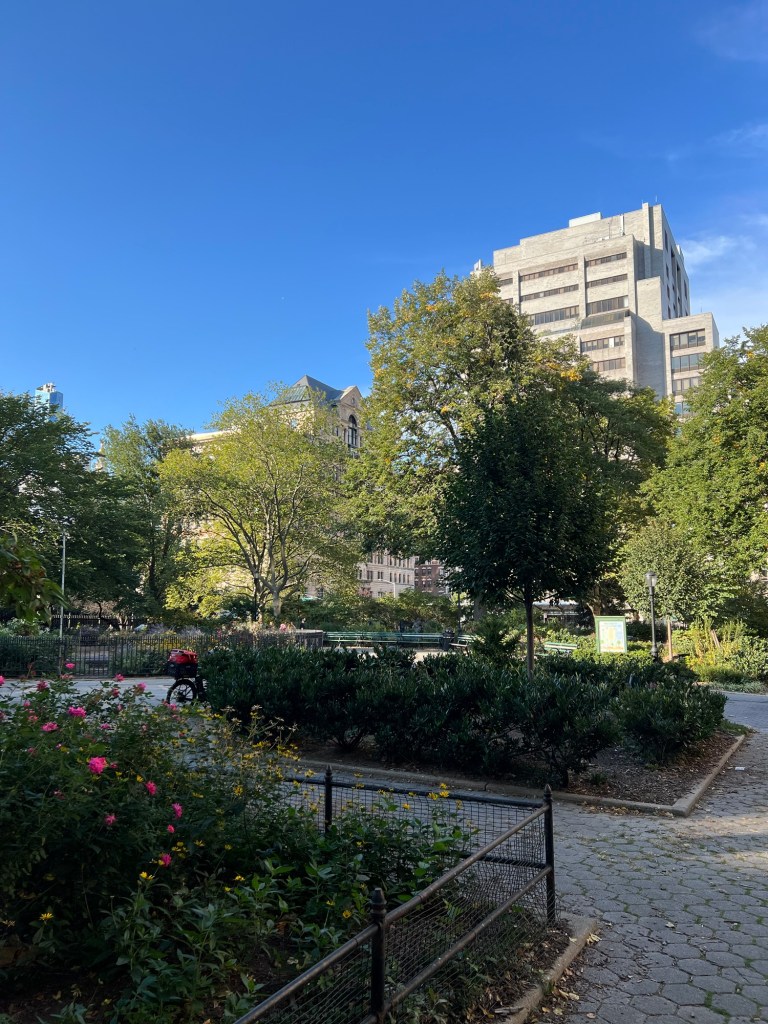
Stuyvesant Square at East 17th Street

https://www.nycgovparks.org/parks/stuyvesant-square

https://en.wikipedia.org/wiki/Stuyvesant_Square

My review on TripAdvisor:

https://www.tripadvisor.com/Attraction_Review-g60763-d218637-Reviews-Stuyvesant_Square-New_York_City_New_York.html

The beautiful flowers in Stuyvesant Square in the very late Summer of 2024

The brilliance of Stuyvesant Park in the late summer. The park was in full bloom with summer flowers showing off their beauty and colors. The park still could use some work on the beds and lawns though.
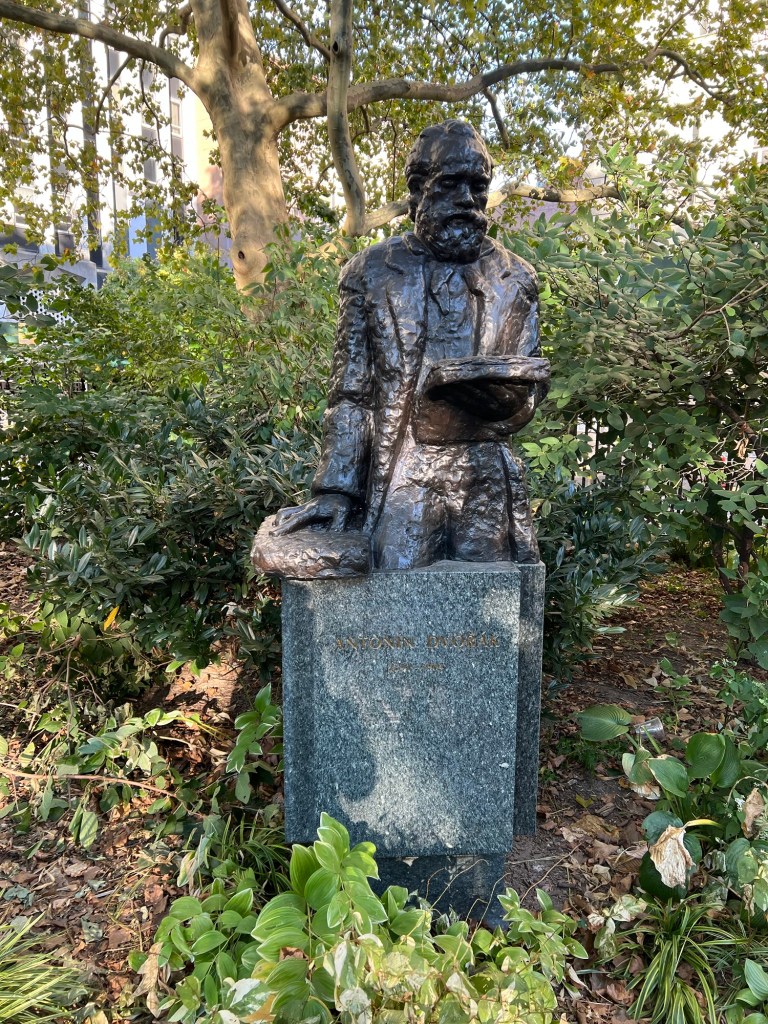
The famous statue of Composer Antonin Dvorak inside Stuyvesant Square at the corner of the park at East 17th Street
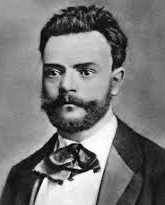
Composer Antonin Dvorak

https://en.wikipedia.org/wiki/Anton%C3%ADn_Dvo%C5%99%C3%A1k

https://www.antonin-dvorak.cz/en/life/biography/

Composer Antonin Dvorak was born just outside of Prague and came from a long line of business people who were innkeepers and butchers. His father recognized that when he was young the talent he had with music and encouraged this. While in Prague, he was sent off to a music school that started his career. The Institute for Church Music, as the school was officially known, was located in Konviktská street in the Old Town and provided instruction in organ playing, harmony and counterpoint. This was the beginning of his career (Dvorak website/Wiki).

The historic plaque in the park in Stuyvesant Square

https://www.nycgovparks.org/parks/stuyvesant-square/monuments/1784

Artist Ivan Mestrovic

https://en.wikipedia.org/wiki/Ivan_Me%C5%A1trovi%C4%87

https://www.ivanmestrovic.com/

Artist Ivan Mestrovic was a Croatian born American artist who was a known sculptor, writer and architect. He is a graduate of the Academy of Fine Arts in Vienna. He was known for his romantic and classical style sculptures (Wiki).

In 1963, this bronze portrait bust was given by the Czechoslovak National Council of America to the Philharmonic, but never put on public display. It is believed to be the last work of the noted sculptor Mestrovic, a student of Rodin and the first living artist to receive a one-person exhibition at the Metropolitan Museum of Art (NYCParks.org).

The beautiful brownstones along the northern part of Stuyvesant Square at East 17th Street

I rounded Stuyvesant Square on both sides, exploring all the historical buildings from all angles of the park. While I was in the park, I admired all the flowers in the gardens and the statuary.
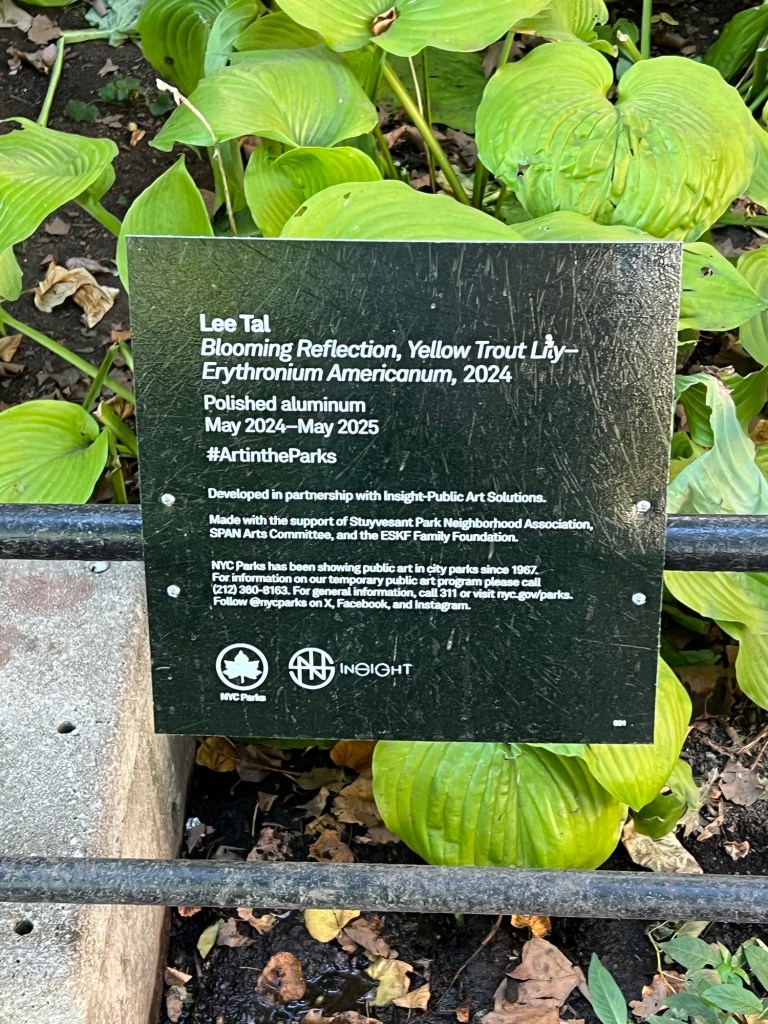
I saw this sculpture by Lee Tal was also in the park

Artist Lee Tal

https://www.leetalart.com/

Artist Lee Tal is an Israeli born artist now based in New York City. He received a BA in History and an additional BA in Art and Photography from Open University in Tel Aviv. He received a B.F.A studies at the Royal College of Art, London, England. In his early works, Tal draws inspiration from everyday objects found in our daily lives, seeking to transcend their original purpose (Artist’s bio website). This interesting work was commissioned by the Stuyvesant Park.
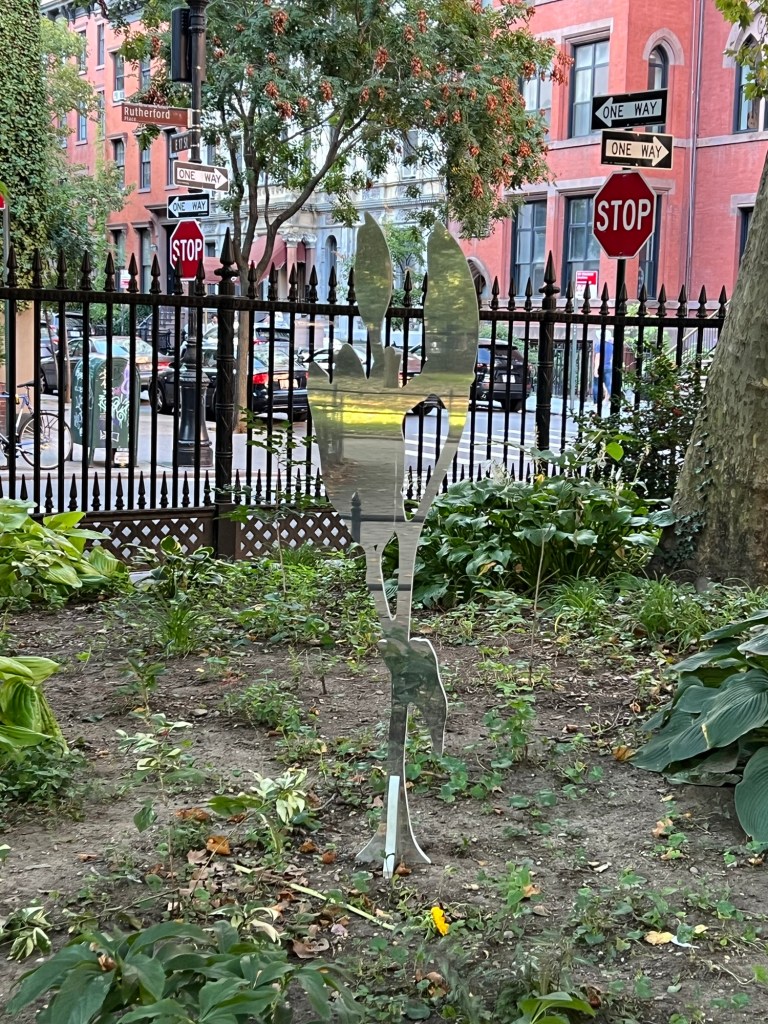
The sculpture by Lee Tal ‘Blooming Reflections- Yellow Trout Lily’

I walked through the gardens from all sides and walked out to Rutherford Place and admired the old churches along the street. On the northern side of Rutherford Place was the historic St. George’s Church.
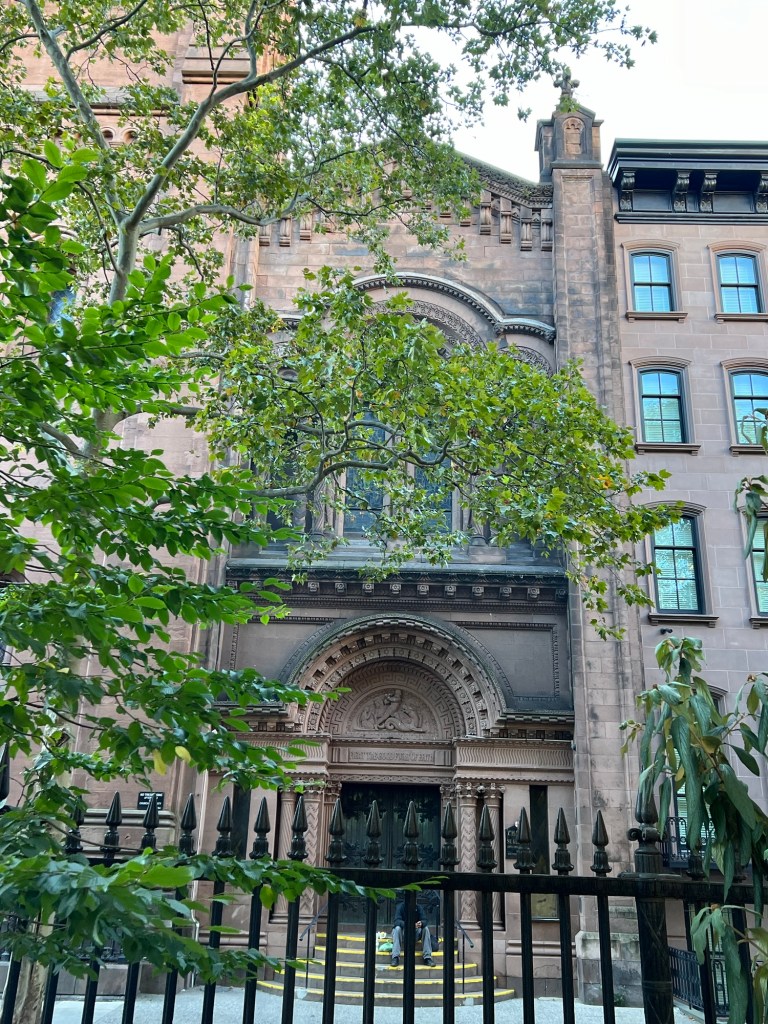
St. George’s Church at 209 East 16th Street

https://en.wikipedia.org/wiki/St.George%27s_Episcopal_Church(Manhattan)

https://www.calvarystgeorges.org/
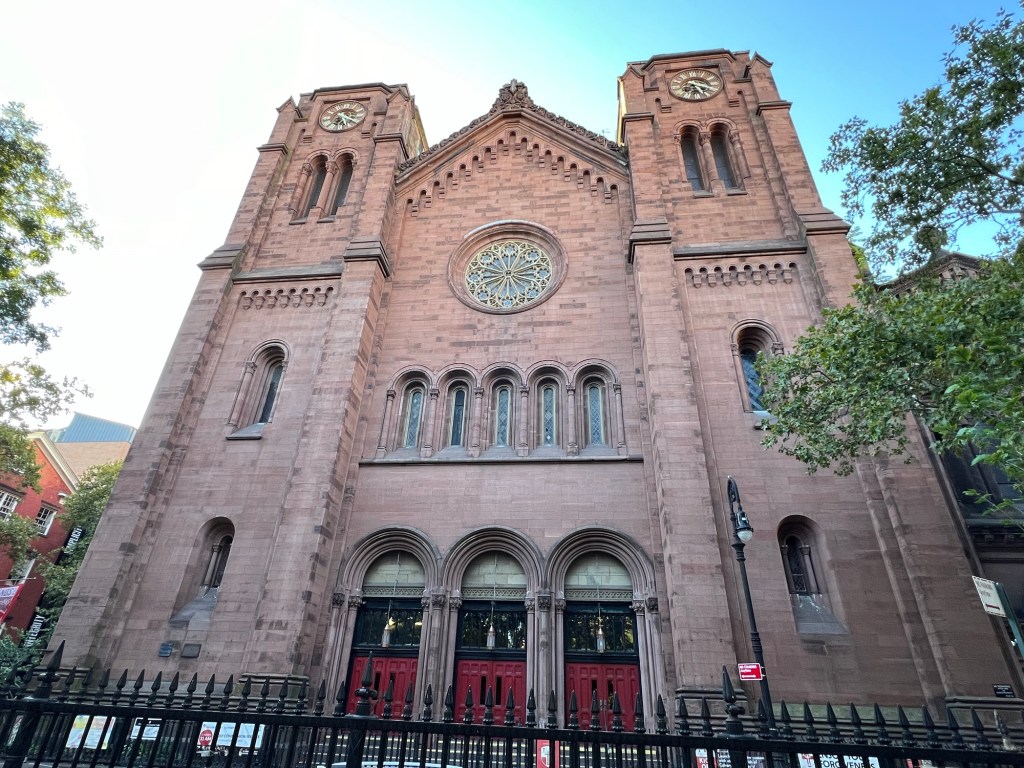
St. George’s Church at 209 East 16th Street

St. George’s Church was founded in 1752 and the church moved around several times until 1846 when this new church was started and finished in 1854. The church was designed in the Romanesque Revival style by architects Charles Blesch and Leopold Eidlitz. Mr. Belsch designed the interior and was influenced by the Rundbigenstil, the round arch style. The church has been altered and rebuilt over the years after a devastating fire in 1865 (Wiki).

The historic plaque of the church

The church‘s official sign

Next to St. George’s Church is the Quaker Friends building that has been part of the neighborhood since the 1700’s. This historical building is part of a full complex of modern buildings that stretch down East 16th Street from the park.
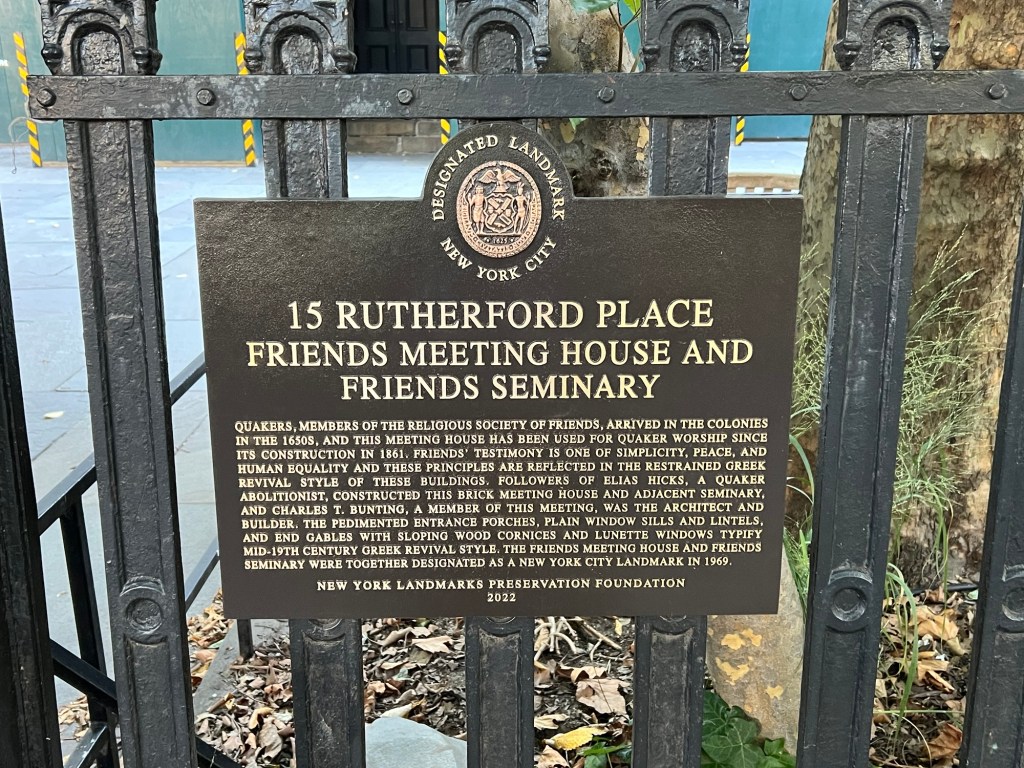
The historical Friends Meeting House at 15 Rutherford Place

This building was built in the Restrained Greek Revival Design in 1861 and has been in use since that time for the annual meetings (New York Landmark Preservation).
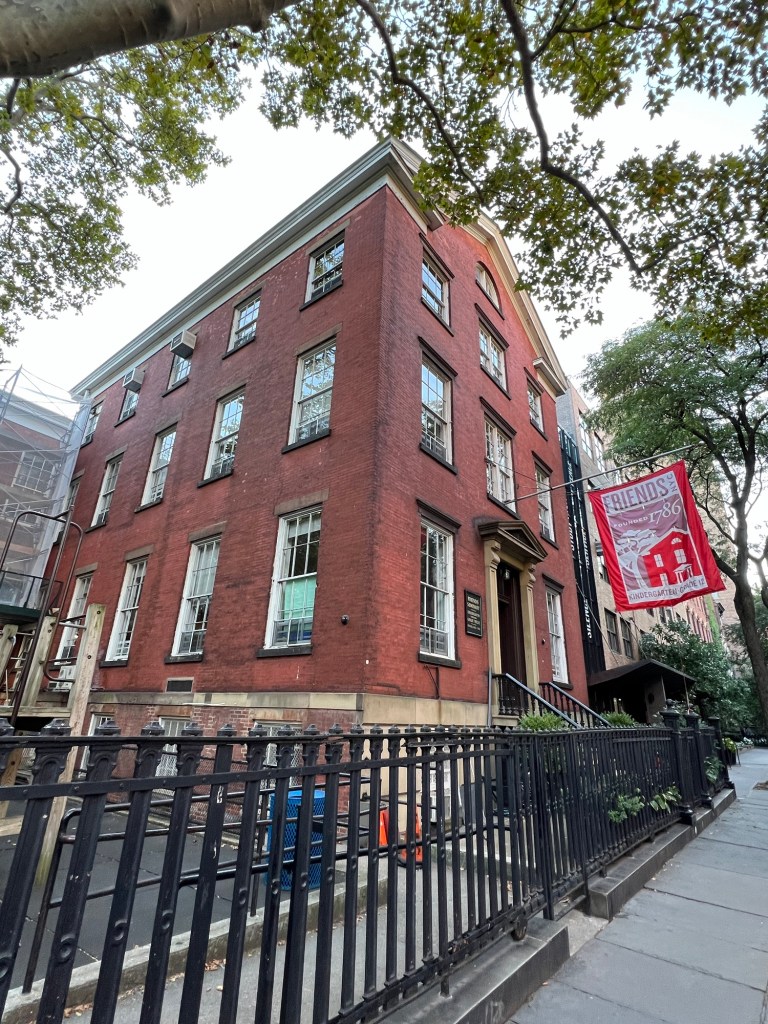
The historic Friends Meeting House at 15 Rutherford Place

https://quaker.org/legacy/15stfriends/

https://www.americanlandmarks.org/post/friends-meeting-house

The front of the Friends Meeting House at 15 Rutherford Place

The Friends Meeting House at 15 Rutherford Place on the west side of Stuyvesant Square.

The views of Stuyvesant Square Park in the late Summer months

I walked around the park before exploring East 16th and 15th Streets and just like Gramercy Park there is a true beauty in the architecture that surrounds this green space.
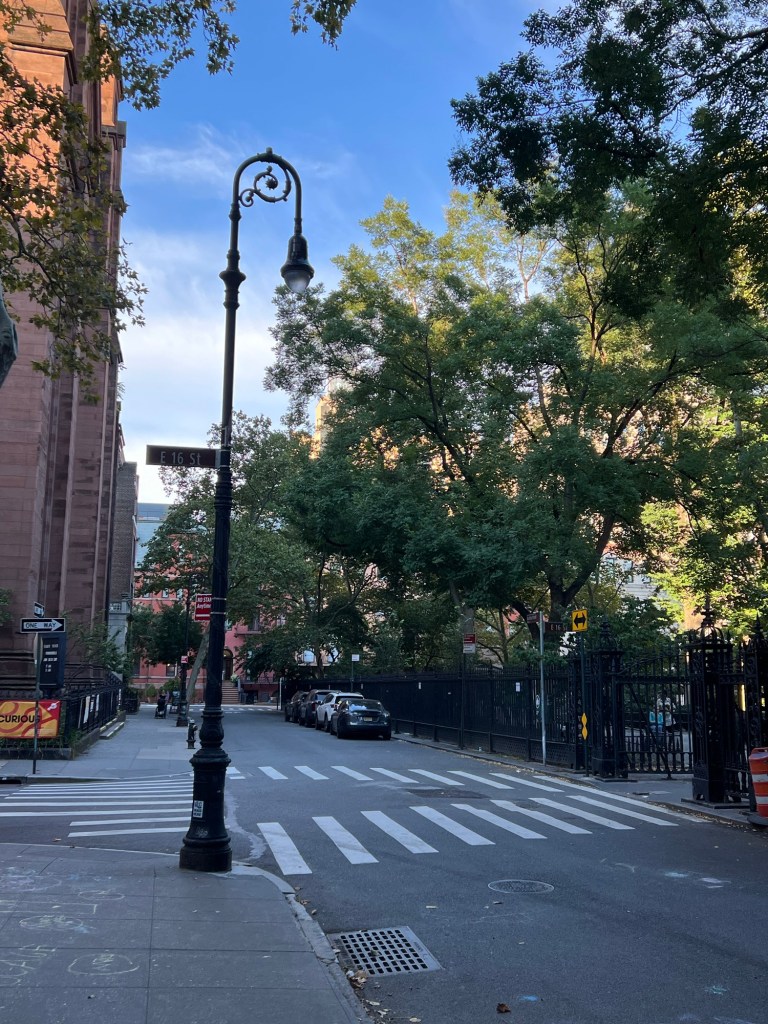
The historic beauty of East 15th Street on the southern eastern side of the park.
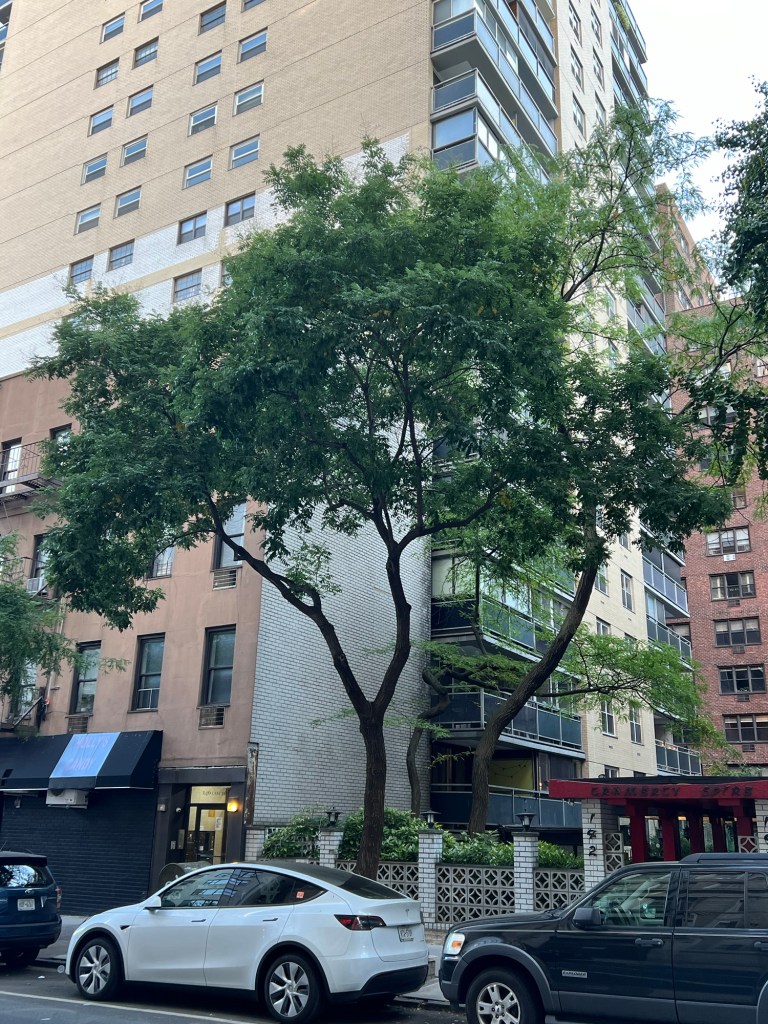
Somehow this tree just stuck out at the entrance of 146 East 16th Street

Another view of this tiny garden in front of 146 East 16th Street
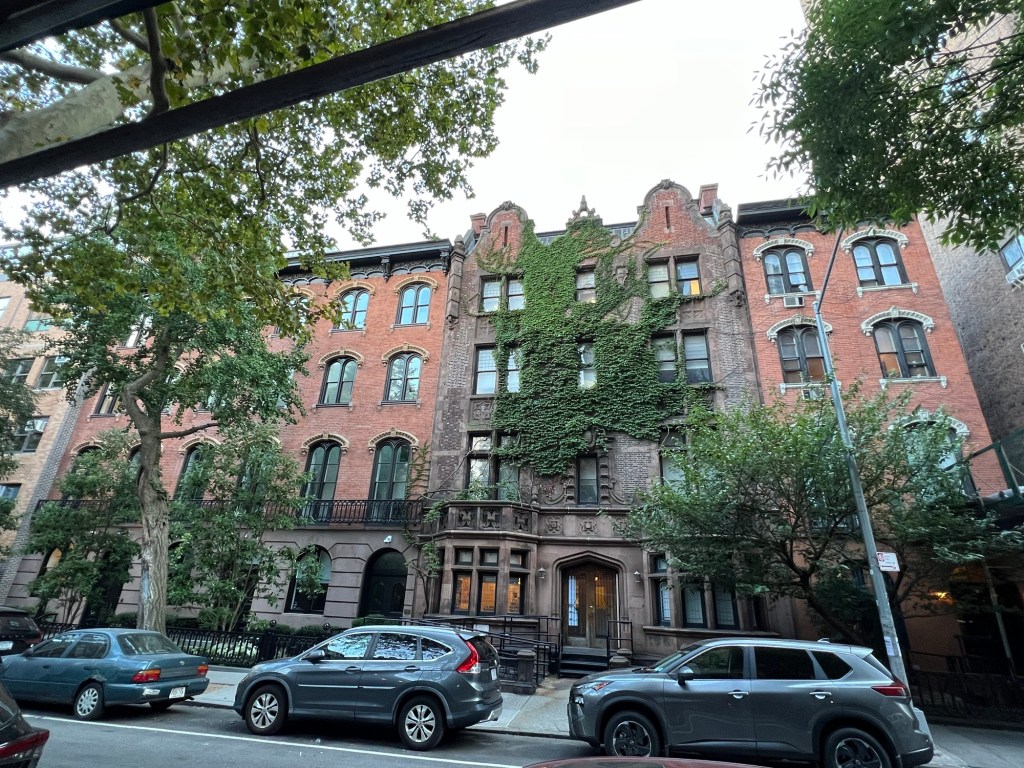
The historical buildings that are part of the church seminary along East 16th Street

This is classic Old New York with brownstones covered in ivy is part of the church’s housing

I cross-crossed so much through Stuyvesant Square that the homeless guys and the delivery drivers thought I was an undercover cop watching them.

The park is still so colorful in the late summer
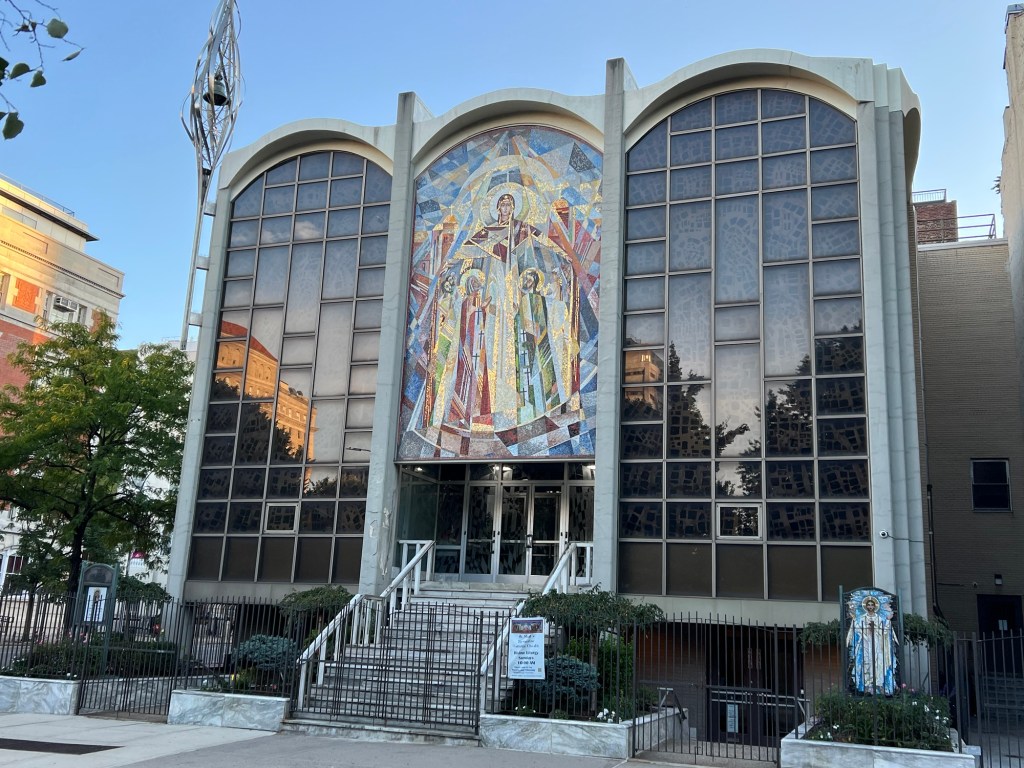
The beautiful stained glass windows in from of the East 15th side of St. Mary’s Church at East 15th Street

St. John The Baptist Greek Orthodox Church at 143 East 17th Street

https://www.stjohn.ny.goarch.org/

https://www.facebook.com/StJohnBaptistNYC/

Built in 1885, designed by Schwartzmann & Buchman, with a baroque façade that was altered in 1957 by Kyriacos A. Kalfas (Wiki).
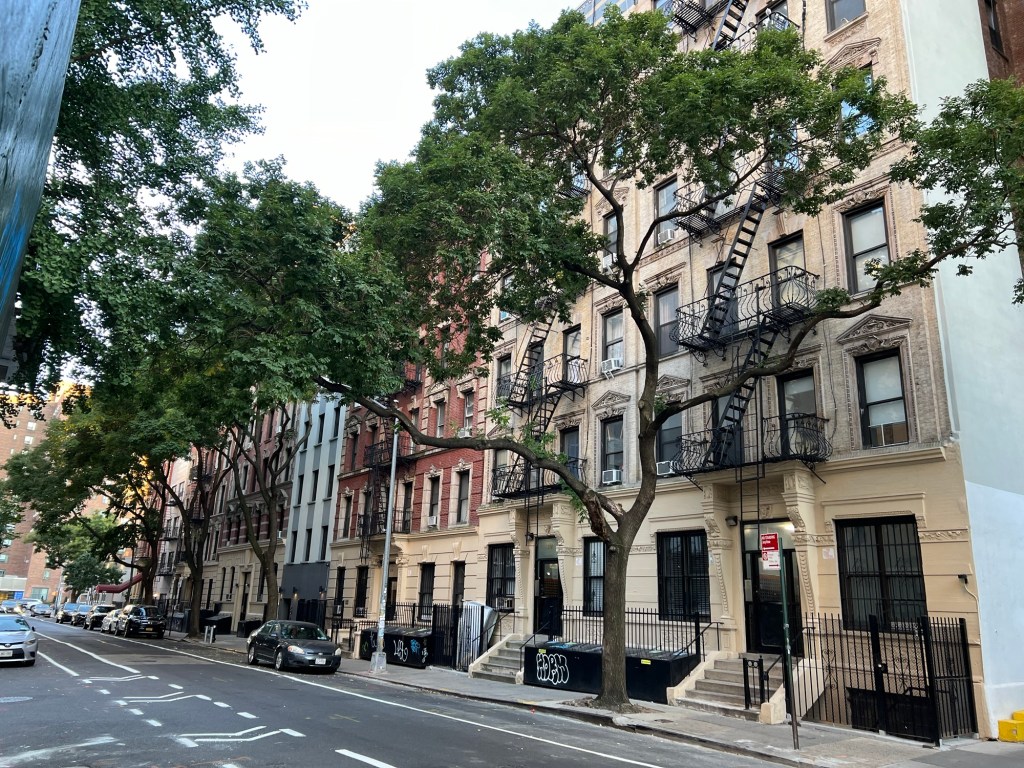
Finishing my walk along East 15th Street with the elegant townhouses that line the southern half of Stuyvesant Square

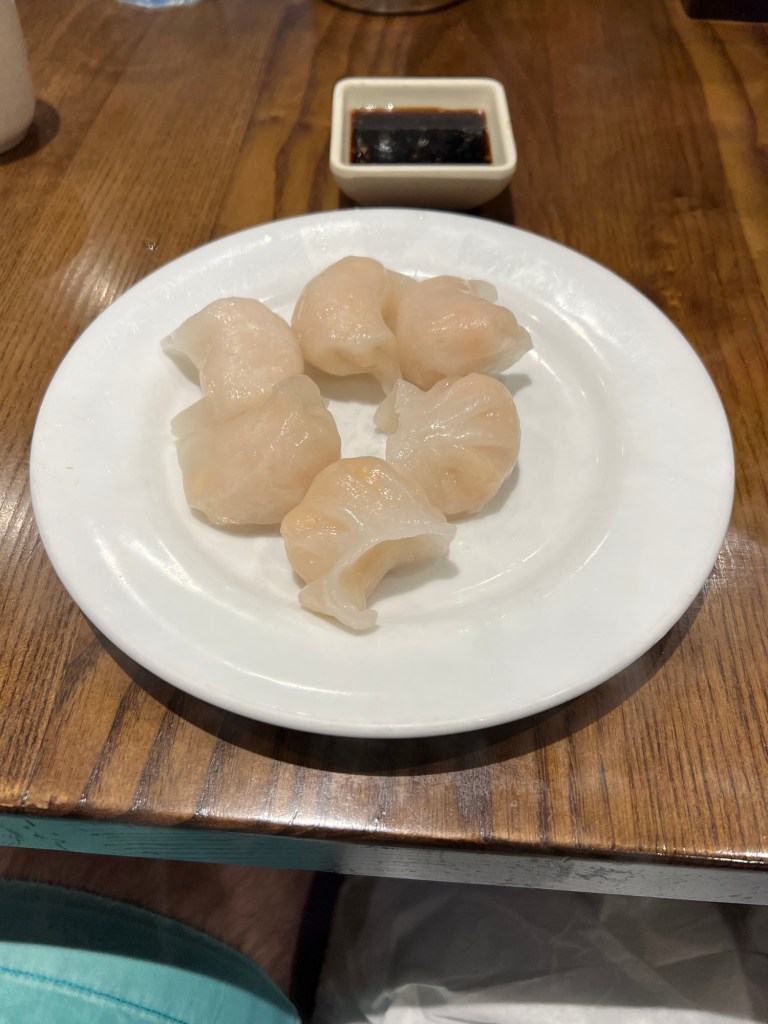
For dinner that evening, I had Chinese food at Mee’s Noodle House at First Avenue. I had eaten at their branch years ago at their uptown branch near Sutton Place and ordered the same meal as a comparison, the Seafood Steamed Dumplings and the Shrimp Lo Mein. It’s nice to know that nothing changes. The food was excellent.
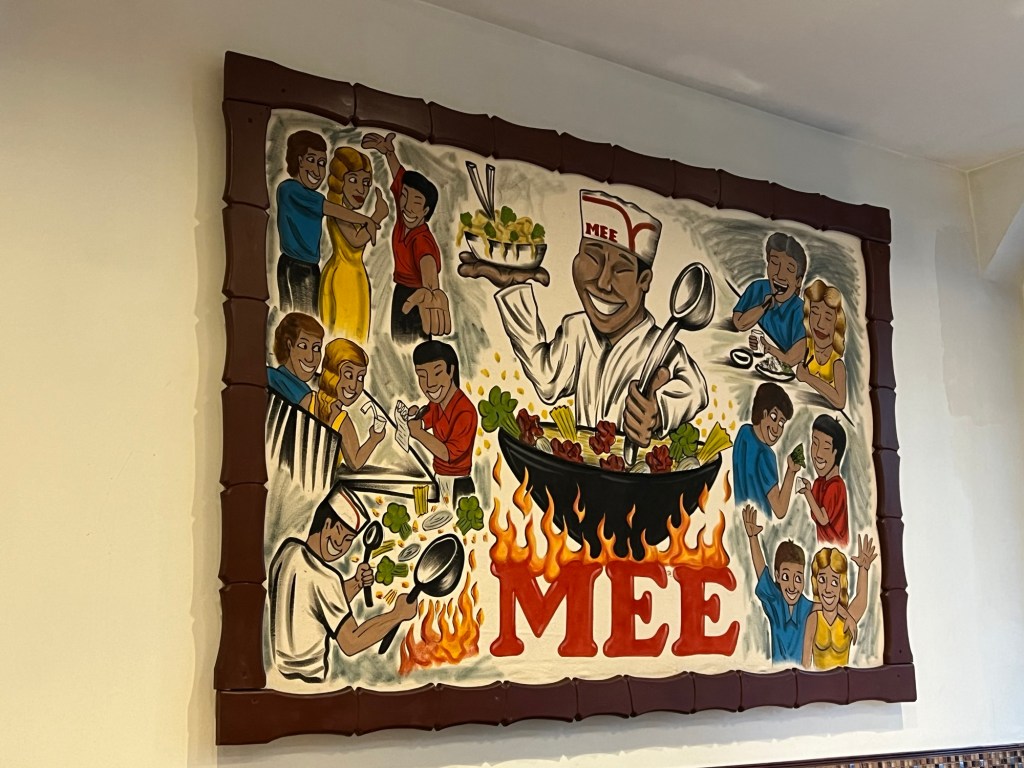
The sign inside of Mee’s Noodle House at 922 Second Avenue

https://www.seamless.com/menu/the-original-mee-noodle-shop–grill-223-1st-ave-new-york/287771

My review on TripAdvisor:
https://www.tripadvisor.com/Restaurant_Review-g60763-d502666-Reviews-Mee_Noodle_Shop_Grill-New_York_City_New_York.html?m=19905

The Steamed Seafood Dumplings

These dumplings were as light as air and perfectly cooked. The dumplings were plump and filled with a mixture of Shrimp and other seasonings. They tasted perfect with just a touch of soy sauce.

The delicious Shrimp Lo Mein

The Shrimp Lo Mein was studded with lots of perfectly cooked shrimp, vegetables and freshly made noodles that are made inhouse. The only problem with the dish was the button mushrooms that I had to pick out. I do not know why they use these since they are not used in dishes in China. I discovered that the restaurant is quite the neighborhood hang out for people living at Stuyvesant Town and Peter Cooper Village. Everyone was talking neighborhood gossip.
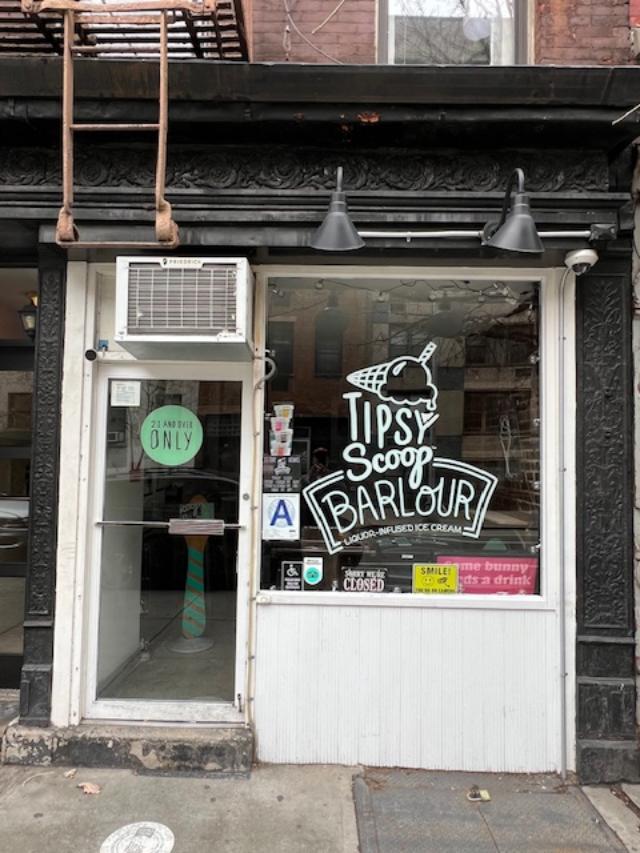
The front of Tipsy Scoop Barlour at 217 East 26th Street

https://tipsyscoop.com/pages/manhattan-location?srsltid=AfmBOopr75Tvfffnfo_tWMcxMMpFSQGkQafCkqMpUkBe_sfH3nAmlhDV

My review on TripAdvisor:

https://www.tripadvisor.com/Restaurant_Review-g60763-d12194385-Reviews-Tipsy_Scoop-New_York_City_New_York.html?m=19905

On my way home, I stopped at Tipsy Scoop Ice Cream store for dessert. I wanted to have one of their infused ice cream sandwiches. So I ordered the Sprinkle Cookie Cake Batter Vodka Martini ice cream sandwiches. Talk about a dessert that takes the edge off after a long day.

The inside of Tipsy Scoop at night
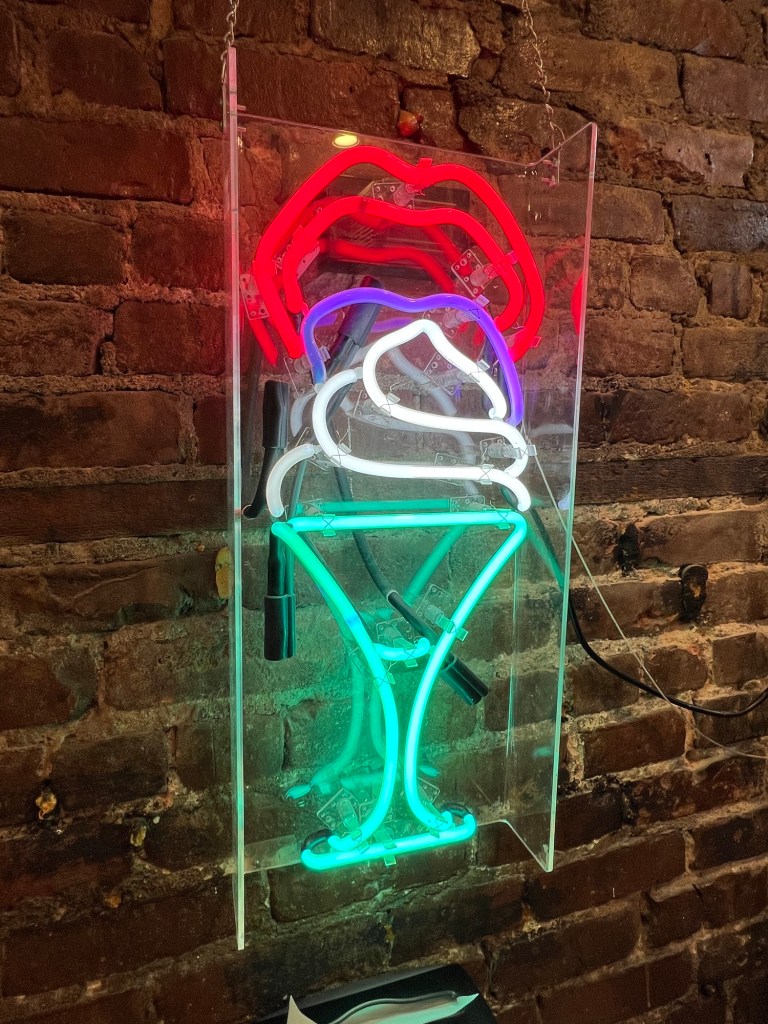
The neon lights of this popular ice cream shop where all the ice cream is infused with liquor

The ice cream sandwiches here are fantastic. The alcohol in the ice cream is so subtle and sweet you don’t notice until you finish it. Then it hits you and relaxes you. This is the best dessert after a long day.
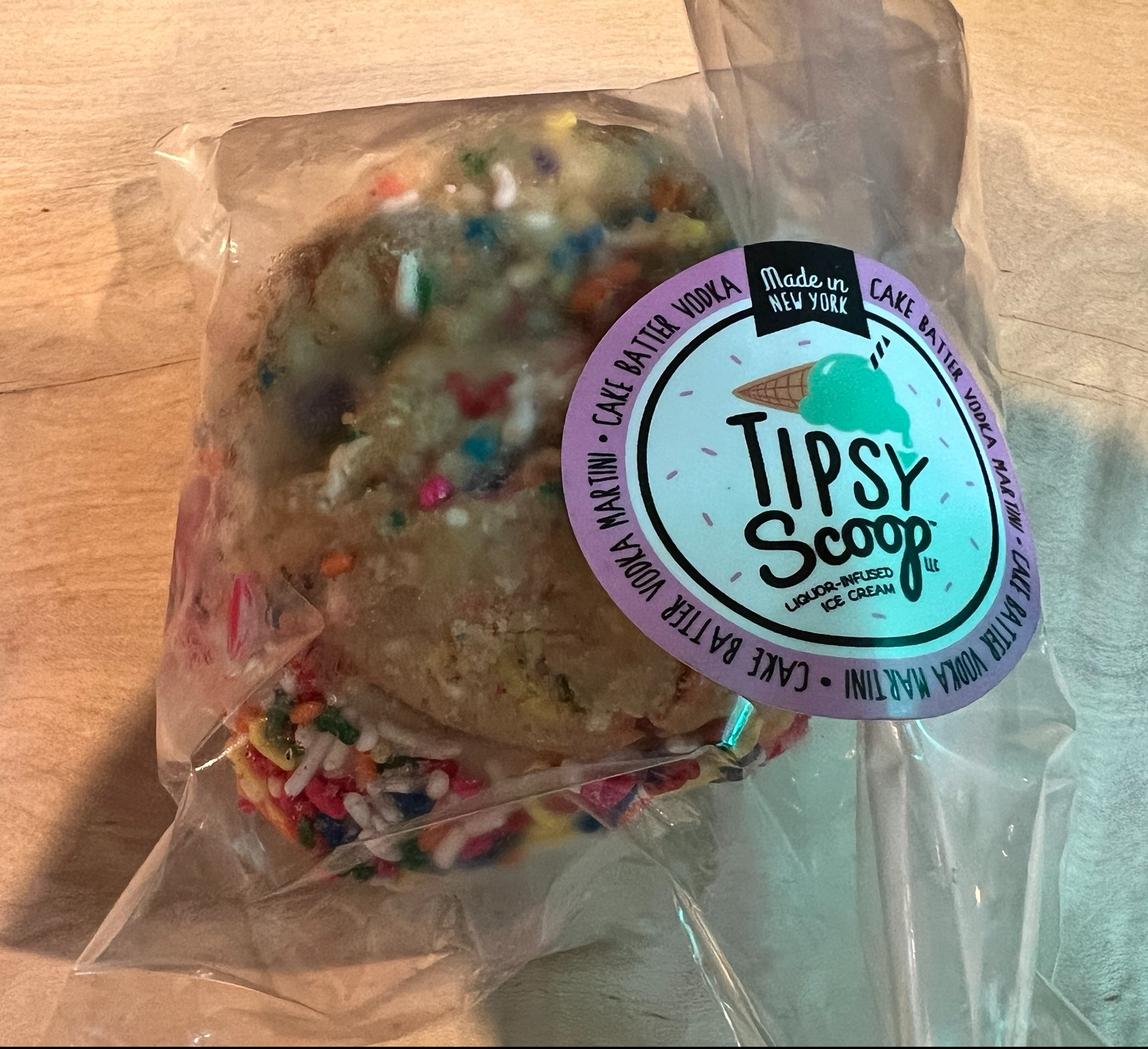
The Sprinkle Cookie Cake Batter Vodka Martini infused ice cream sandwich

The Sprinkle Cookie Cake Batter Vodka Martini infused ice cream sandwich
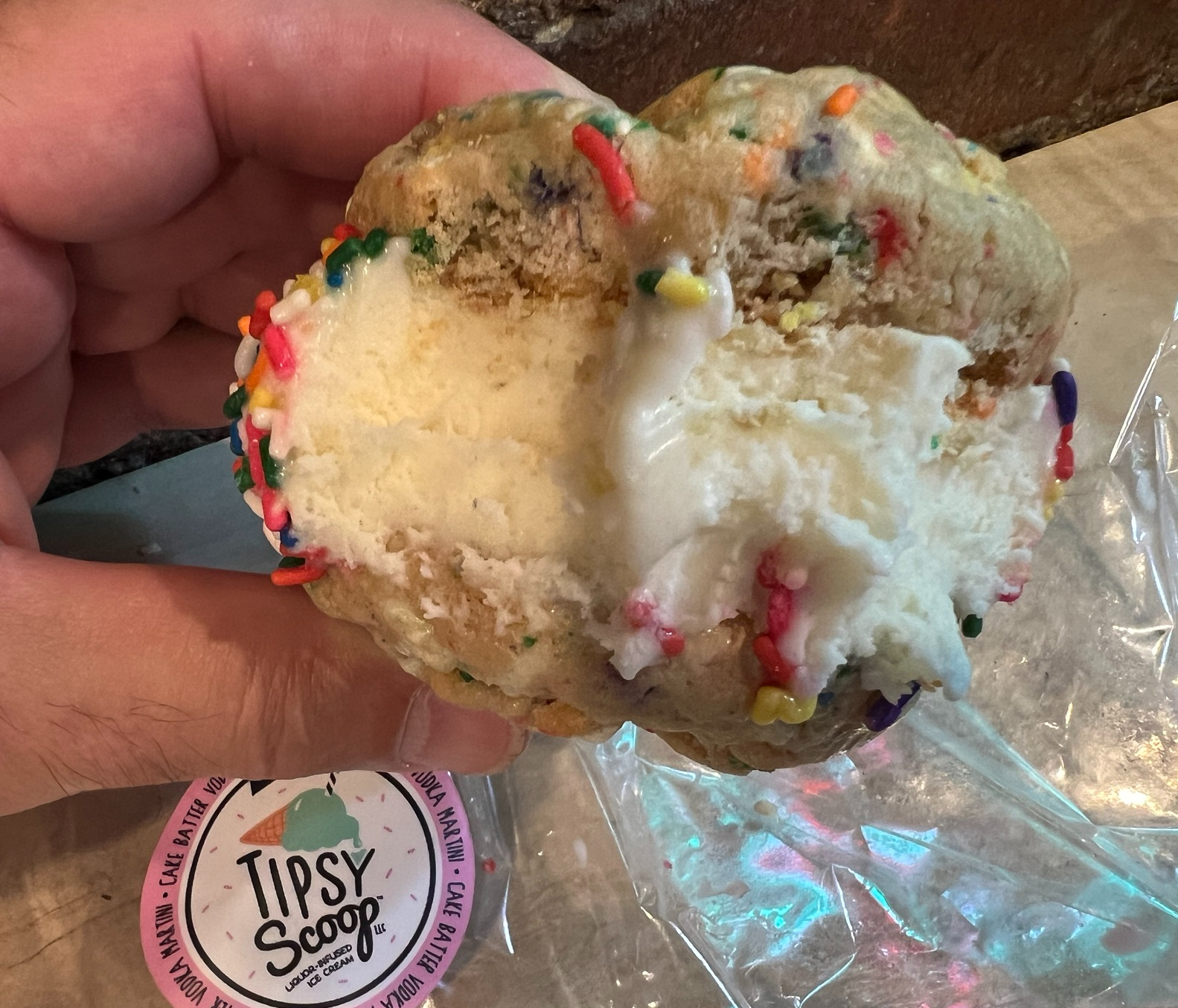
Yum!

I took the long walk through Madison Square park on the way back to the Port Authority at night. The pictures I get from that park are just breathtaking at night and I never get tired of the views.

The views of Manhattan at night are quite spectacular from Madison Square Park

I finished walking the streets of Gramercy Park in the early evening while watching the lights turn on in all the buildings surrounding the area. It is quite a site seeing all the homes lit while watching the office buildings all over the neighborhood work their magic. It is quite the place both day and night and in all seasons. Gramercy Park is a true Manhattan neighborhood.

I never tire of the views of Manhattan at night.

Please read my other blogs on Gramercy Park:

Day Three Hundred and Twenty Walking the Borders of Gramercy Park:

https://wordpress.com/post/mywalkinmanhattan.com/51647

Day Three Hundred and Twenty One Walking the Avenues of Gramercy Park:

https://wordpress.com/post/mywalkinmanhattan.com/53432

Day Three Hundred and Twenty Four Walking the Streets of Gramercy Park:

https://wordpress.com/post/mywalkinmanhattan.com/53788

Places to Visit:

Stuyvesant Square Park

9 Rutherford Place

New York, NY 10003

(212) 639-9675

https://www.nycgovparks.org/parks/stuyvesant-square

https://en.wikipedia.org/wiki/Stuyvesant_Square

Open: Sunday-Saturday 7:00am-11:00pm

My review on TripAdvisor:

https://www.tripadvisor.com/Attraction_Review-g60763-d218637-Reviews-Stuyvesant_Square-New_York_City_New_York.html

Gramercy Park

Private Park that you need a key to get into.

Stuyvesant Cove

24-20 FDR Drive

New York, NY 10010

(646) 576-5664

https://en.wikipedia.org/wiki/Stuyvesant_Cove_Park

https://www.nyc.gov/site/ddc/about/press-releases/2023/pr-053123-Stuyvesant-Cove-Park.page

Open: Sunday-Saturday 7:00am-10:00pm

My review on TripAdvisor:

Places to Eat:

Mee’s Noodle House

922 Second Avenue

New York, NY

(212) 888-0027

https://menupages.com/mee-noodle-shop/795-9th-ave-new-york

Open: Sunday-Saturday 11:00am-11:00pm

My review on TripAdvisor:

https://www.tripadvisor.com/Restaurant_Review-g60763-d502666-Reviews-Mee_Noodle_Shop_Grill-New_York_City_New_York.html?m=19905

Tipsy Scoop Ice Cream Shop

217 East 26th Street

New York, NY 10010

(917) 388-2862

https://tipsyscoop.com/pages/manhattan-location?srsltid=AfmBOoq3P7RwM_mpTYZSd-uFo5d0wnAO07zRpeBAgxD25EALYbmFi1kT

Open: Sunday 2:00pm-10:00pm/Monday 4:00pm-9:00pm/Tuesday 4:00pm-7:00pm/Wednesday-Thursday 4:00pm-9:00pm/Friday-Saturday 2:00pm-11:00pm

My review on TripAdvisor:

https://www.tripadvisor.com/Restaurant_Review-g60763-d12194385-Reviews-Tipsy_Scoop-New_York_City_New_York.html?m=19905

Day Three Hundred and Twenty-One Walking the Avenues of Gramercy Park Irving Place, Lexington, Third and Second Avenues August 27th, 2024

It has been one busy summer. In between walking the neighborhoods of Manhattan, I have been revisiting neighborhoods, attending events that I had in the past like the Coney Island Sand Castle Building contest and the Dutchess and Ulster County Fairs. I wanted to spend more time at them and I needed new pictures at all of these events (see my full blog, MywalkinManhattan.com for all these interesting blogs). That and I have been exploring the Jersey Shore towns like Point Pleasant and Seaside Park and Heights to really see what is beyond their Boardwalks. It has been a productive summer since graduation running back and forth between the Hudson River Valley and the Jersey Shore.

As I get ready for the school year to begin in a week and a half, I have more places to see and experience. Still in between all this I want to volunteer time at the Soup Kitchen and planning trips outside the City too experience more of New Jersey. Each day of the Month of August is like planning “D Day”.

Gramercy Park is such an interesting neighborhood. From the vibrant commercial areas to the historical parks, Gramercy Park has a lot of hidden treasures tucked here and there throughout the neighborhood. It seems though, along the neighborhoods Avenues, I would have been expected to see more classic architecture and beautiful stonework, I experienced experienced a more commercial environment with modern buildings. Still tucked here and there along the Avenues were many gems of the past and some beautiful little parks.

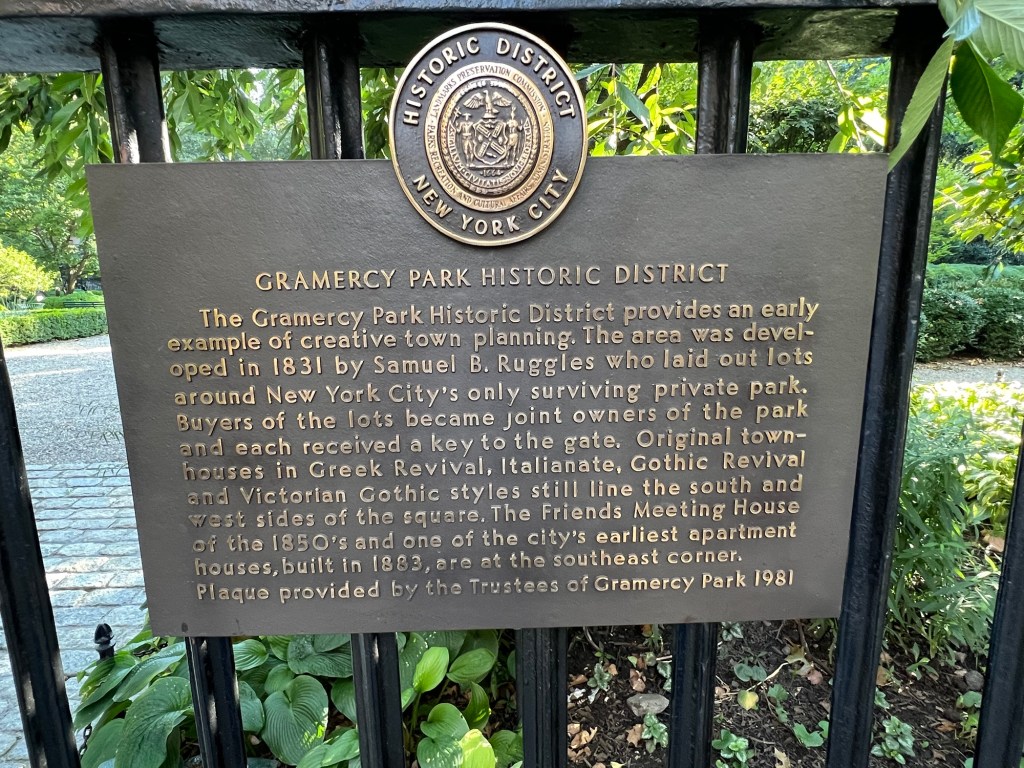
The Gramercy Park Historic District plaque

I started my walk along the Avenues of the neighborhood with a walk up the Irving Place Street and walked around the park to Lexington Avenue on the other side of the park. Irving Place and Lexington Avenue are separated by Gramercy Park’s north and South borders.

Gramercy Park in full bloom in the Summer of 2024

The section of the neighborhood is shared with the Union Square neighborhood as the lines are blurred from street to street between Gramercy Park, Union Square and the Flatiron District. This neighborhood has distinct architecture, beautiful parks including Gramercy Park, part of the old Rose Hill Farm estate and Stuyvesant Square, part of the former estate of Dutch Governor Peter Stuyvesant.

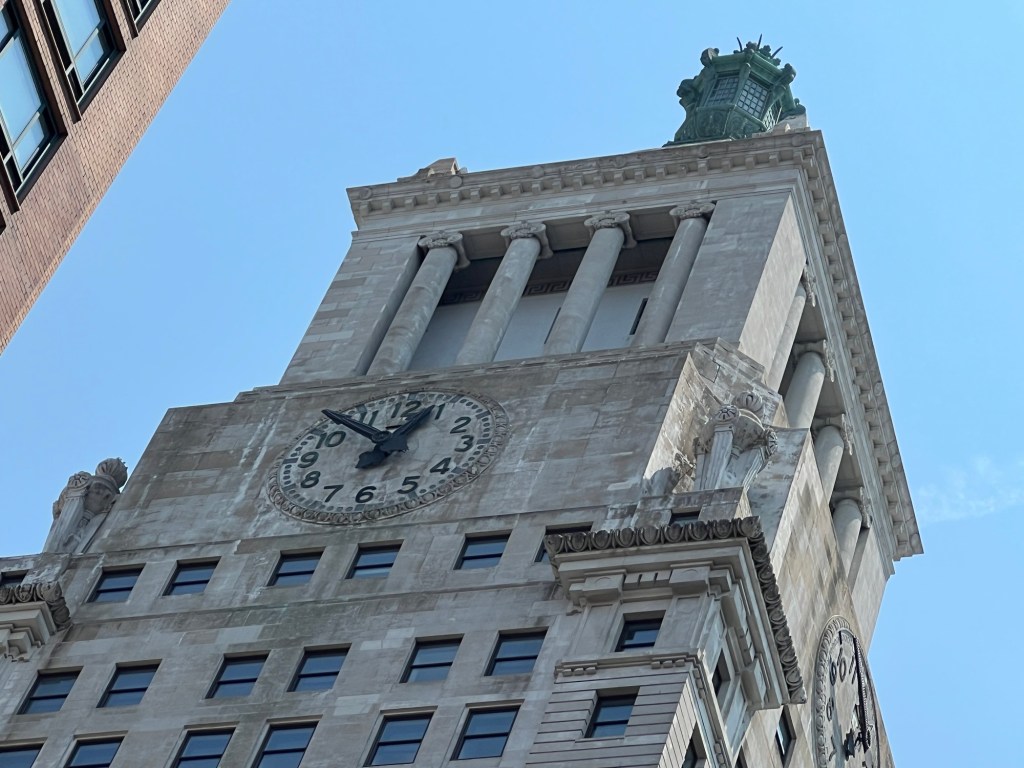
I started my walk on the southern part of Gramercy Park along the historical Irving Place with its historic homes and restaurants. I passed 4 Irving Place which the first couple of floors were under scaffolding. I admired the clocktower on the top of the building, the beautiful embellishments and just the elegance of the building. The building is home to Consolidated Edison (ConEd).

The was designed by architect Henry Janeway Hardenbergh and architectural firm of Warren and Wetmore in the Neo-Classical design. The first phase of the building was started in 1911 and both phases were finished by 1929. The original section of the building is in the picture with the wings of the building to both sides (Wiki).

I passed 4 Irving Place, the Con Ed Building, just as twilight hit the building and you could see the beauty in its shadows.

Its clock told the time of the early evening.

The next morning when I walked past it again, you could see the true beauty of its design.

I also noticed that the roof top held a more intricate design than I noticed the night before. Look up at its intricate details to admire its beauty. This is part of the originally designed building.

Once I turned onto Irving Place, the old core of its industrial past gave way to the bohemian village it would become and stay in the future. This was once ‘THE’ neighborhood to live in and has stayed that way since even through the rough times of Union Square.

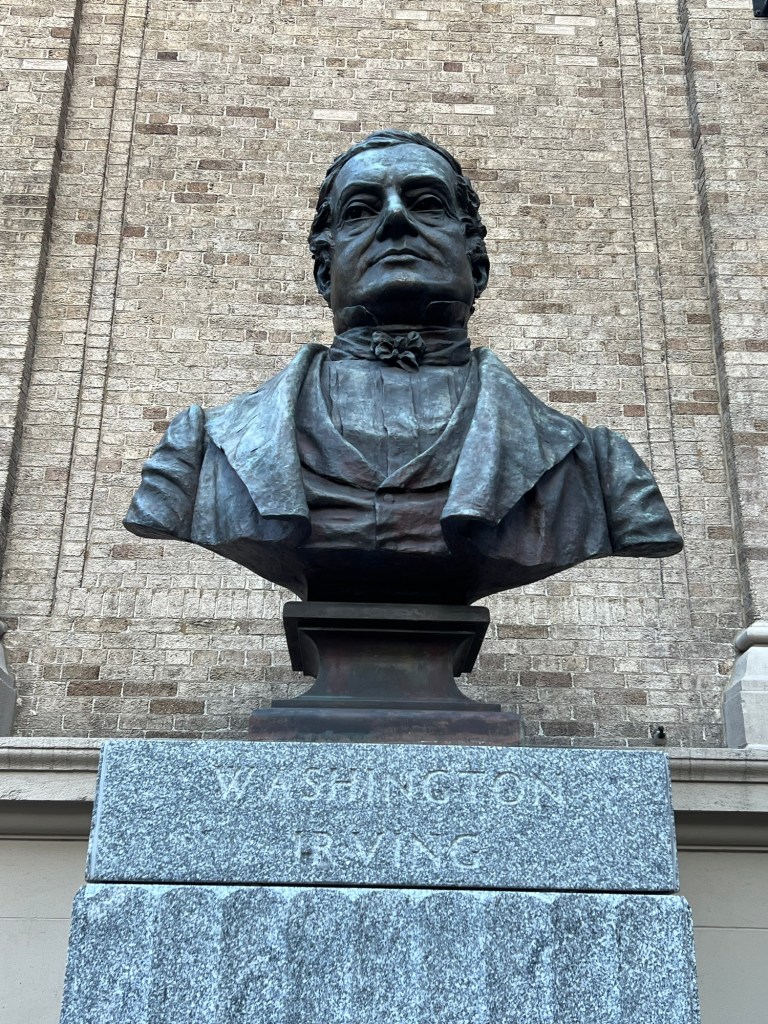
The most impressive object you will see in the neighborhood is this bust of Washington Irving that sits outside the Washing Irving Campus on Irving Place.

https://en.wikipedia.org/wiki/Washington_Irving_Campus

This bust of Washington Irving was created by artist Friedrich Beer

Artist Friedrich Beer

https://en.wikipedia.org/wiki/Friedrich_Beer

https://www.artprice.com/artist/112959/friedrich-beer

Artist Friedrich Beer was a German born artist known for his works on busts of famous individuals.

The neighborhood goes from commercial to more residential as you get further up Irving Place and closer to Gramercy Park. The borders of Union Square overlap with Gramercy Park and the Flatiron District between East 18th and East 20th streets so I revisited buildings that J had seen before. If people went in a Time Machine to Manhattan from 100 years ago they would still see the same buildings but with totally different uses.

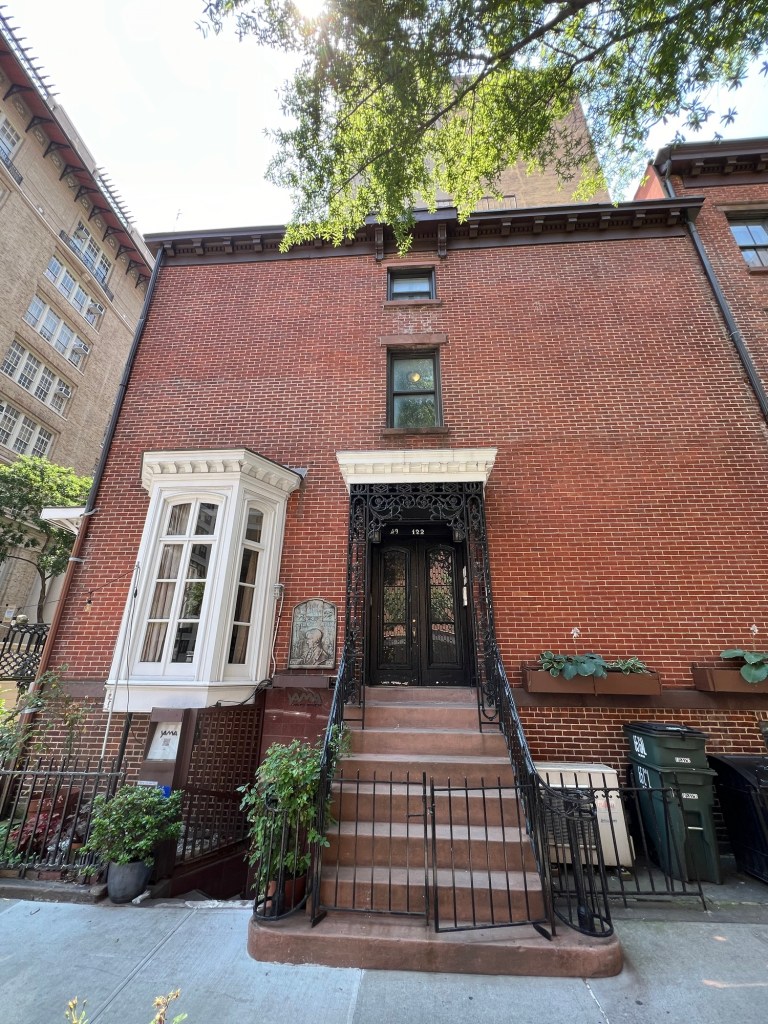
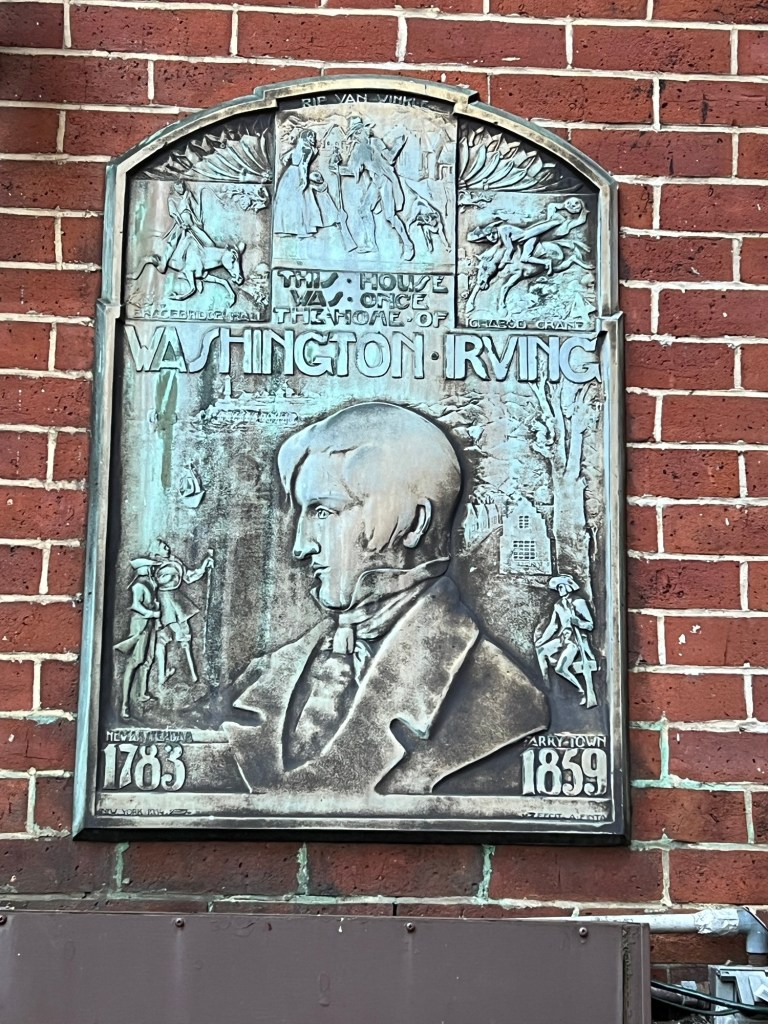
The Washington Irving house at 122 East 17th Street and Irving Place (Washington Irving never lived here)

https://www.atlasobscura.com/places/the-irving-house-new-york-new-york

The “Irving House” was built by Peter Voorhis between 1843 and 1844, along with the adjacent two houses at 45 and 47 Irving Place. The original tenants of 49 Irving Place (at that time referred to as 122 East 17th Street) were Charles Jackson Martin, an insurance executive, and his wife, who would reside there from 1844 until 1852. Henry and Ann E. Coggill would live in it in 1853, and in 1854 it would become the home of banker Thomas Phelps and his wife Elizabeth, who would remain until 1863 (Atlasobsucra.com).

The front of the house facing Irving Place

The first mention in print of Irving having lived in the house came in the Sunday Magazine Supplement of the New York Times on April 4, 1897. The article is a human interest story about Elsie de Wolfe and the means and methods she used to decorate “Irving’s house.” In 1905, de Wolfe would become known as the first professional interior decorator and it appears this article is an early attempt at publicity for her. As for the information about Irving, the article takes enormous liberties (actually, it flat-out makes things up), claiming that Irving had conceived of the house himself and was very particular about the architecture and design (Atlasobsucra.com).

The entrance to the house at 122 East 17th street

The plaque on the house dedicated to the writer created by artist Alexander Finta

In 1930, a restaurant called the Washington Irving Tea Room was operating in the basement of the building and in 1934 a plaque sculpted by Rodin-student Alexander Finta was put up on the north facade that would cement the story in the public consciousness. Today, the surrounding area remains covered in references to Irving, from the large art installations in the nearby W Hotel to the Headless Horseman pub on 15th Street(Atlasobsucra.com).

Artist Alexander Finta

https://en.wikipedia.org/wiki/Alexander_Finta

https://www.askart.com/artist/Alexander_Finta/108330/Alexander_Finta.aspx

Artist Alexander Finta was a Hungarian born artist who moved to the United States in 1923. He had studied mechanical engineering in his own country and had studied with Auguste Rodin. His is known for his elaborate busts. He spent the remainder of his career at 20th Century Fox Studios (Wiki)

All along the Irving Place corridor, the street is lined with interesting and historical buildings many of them turned into restaurants or inns. There are many historic plaques in this neighborhood and some creative architecture. The first building that caught my eye was 53 Irving Place, which is the home of Pierre Loti Wine Bar.

Review on TripAdvisor:

https://www.tripadvisor.com/Restaurant_Review-g60763-d2136974-Reviews-Pierre_Loti_Wine_Bar-New_York_City_New_York.html?m=19905

The home of Pierre Lotte Mediterranean Restaurant at 53-55 Irving Place was the home of O Henry

When I looked at the side of the building near the entrance, I was this historic plaque that said that this was the home of author William Sidney Porter (O. Henry). The author lived here from 1903-1907 and wrote the “Gift of the Magi” while living here and eating at Pete’s Tavern across the street (Wiki).

The historic plaque for author O Henry at 53-55 Irving Place

Author William Henry Porter

https://en.wikipedia.org/wiki/O._Henry

Down the road at is Pete’s Tavern, one of the most famous and the oldest literary restaurants in the City. The restaurant was founded in 1864 as the Portman Hotel and then in 1899 when changed to Healy’s Cafe when it was run by John and Tom Healy. Then in 1899, it was bought by Peter D’ Belles and renamed Pete’s Tavern. The restaurant was a ‘Speakeasy’ during prohibition and the dining rooms have not changed much over the last over hundred years (Pete’s Tavern website).

Pete’s Tavern was busy on the night of my first part of the walk.

Pete’s Tavern at 129 East 18th Street

https://en.wikipedia.org/wiki/Pete%27s_Tavern

My review on TripAdvisor:

https://www.tripadvisor.com/Restaurant_Review-g60763-d527869-Reviews-Pete_s_Tavern-New_York_City_New_York.html?m=19905

The entrance of Pete’s Tavern

The entrance to Pete’s Tavern on Irving Place

The painting outside of Pete’s Tavern of the Speakeasy years

Pete’s Tavern was busy both nights that I passed it. I had not eaten there in over a decade when I had a holiday dinner there with friends by I remember the food and service being excellent. The restaurant is really special during the Christmas holiday season from what I can remember.

My friends Barbara, Lillian and I after dinner at Pete’s Tavern in the early 2000’s

Another restaurant I went to before my friend, Barbara, moved to Florida was a Friend of the a Farmer at 77 Irving Place, a farm to table concept before it became very popular. I remember the food being wonderful but the place being a bit noisy. She lived on the fringe of Gramercy Park and had passed this restaurant many times and had wanted to try it that evening.

Another great restaurant is Friend of a Farmer at 77 Irving Place

https://www.friendofafarmer.com/

My review on TripAdvisor:

https://www.tripadvisor.com/Restaurant_Review-g60763-d496790-Reviews-Friend_of_a_Farmer-New_York_City_New_York.html?m=19905

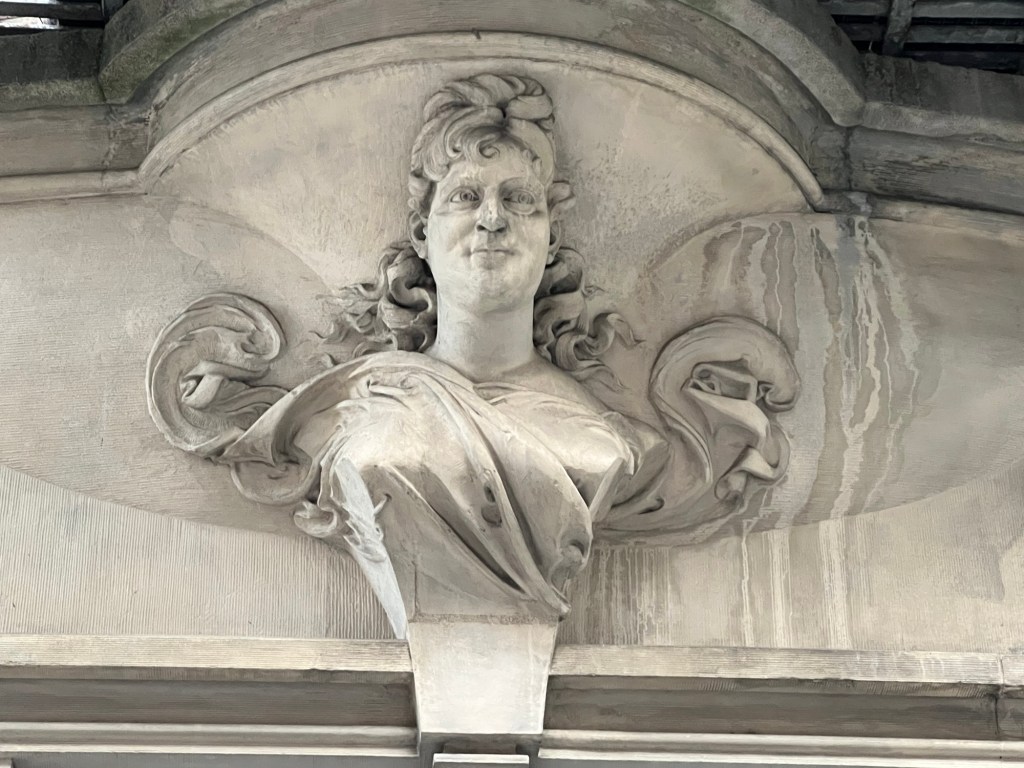
Across the street, I passed this apartment building at 76 Irving Place. I loved the outside embellishments on the building and the friendly looks you get from the statuary. The building was built in 1897 by architect Lyndon P. Smith (Corcoran Group).

You have to look up to admire the details of 76 Irving Place

https://www.corcoran.com/listing/for-sale/76-irving-place-manhattan-ny-10003/23012133/regionId/1

https://streeteasy.com/building/76-irving-place-new_york

The entrance to 76 Irving Place with its tiny angels

This woman guards the front of Irving Place like guard

This woman greets you at 76 Irving Place

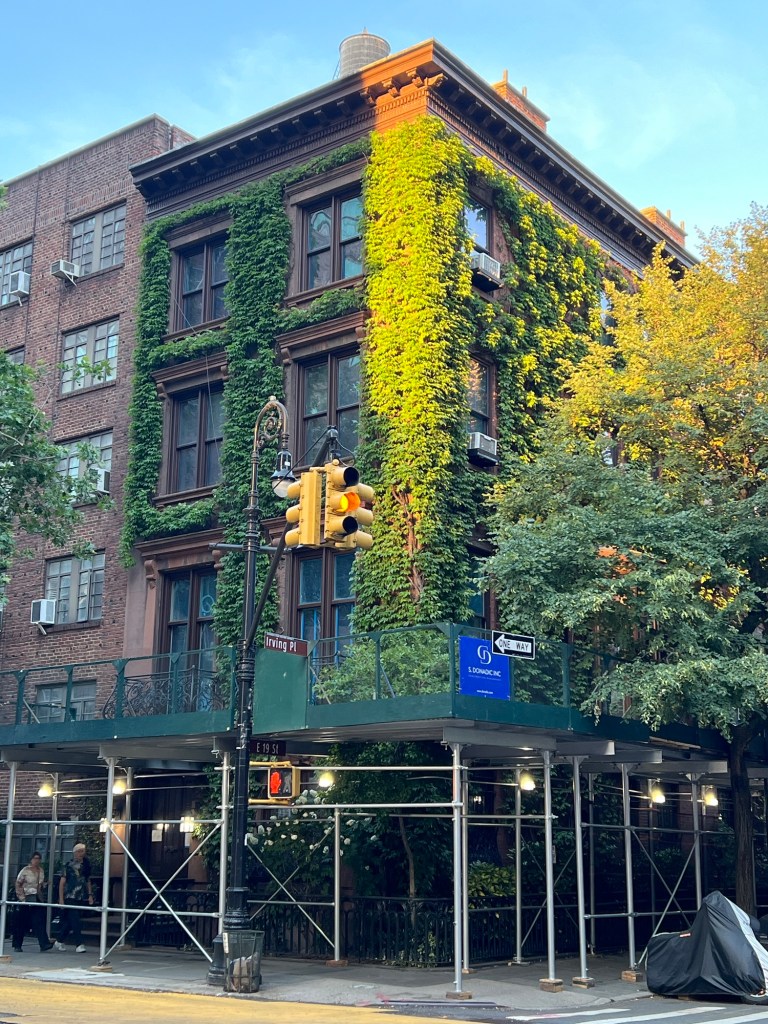
The classic architecture of the block especially as you get closer to Gramercy Park changes from smaller apartment buildings to brownstones lining the parks southern border. Gramercy Park offers some of the most interesting architecture. This ivy covered building that impressed me so much as the sun was going down is at 80 Irving Place.

This building at East 19th street and Irving Place is typical for the buildings that once lined this neighborhood

80 Irving Place is currently under renovation

https://daytoninmanhattan.blogspot.com/2014/04/the-1854-house-at-no-80-irving-place.html

https://www.trulia.com/home/80-irving-pl-new-york-ny-10003-31506439

The house was built as a single family mansion between 1853 and 1854 and had been the home of the prominent Wood family and then to actress Agnes Ethel Tracy. Since 1987, it has been a single family home again. What I thought was interesting was that the house was used in the movie “Working Girl” as Sigourney  Weavers character’s home (DaytoninManhattan.com).

Look up at the beautiful details of 81 Irving Place

81 Irving Place in all its glory

https://www.elliman.com/newyorkcity/buildings-communities/detail/527-c-725-2766/81-irving-pl-gramercy-park-new-york-ny

https://streeteasy.com/building/81-irving-place-new_york

https://www.apartments.com/81-irving-pl-new-york-ny-unit-8a/5q6z3mp/

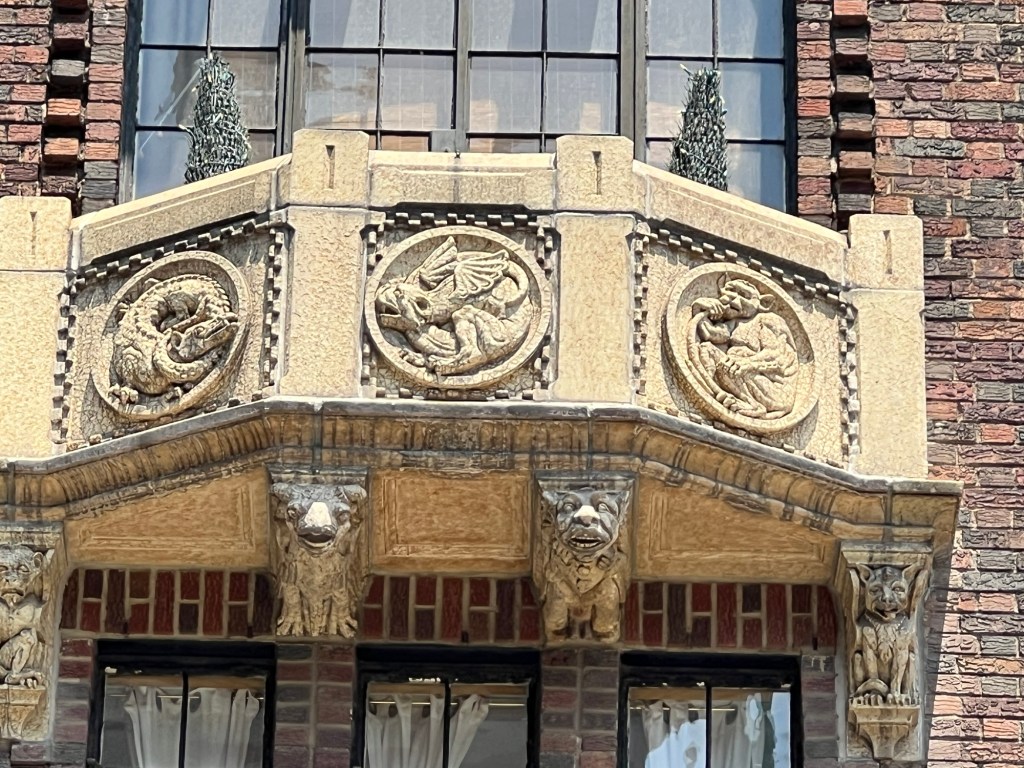
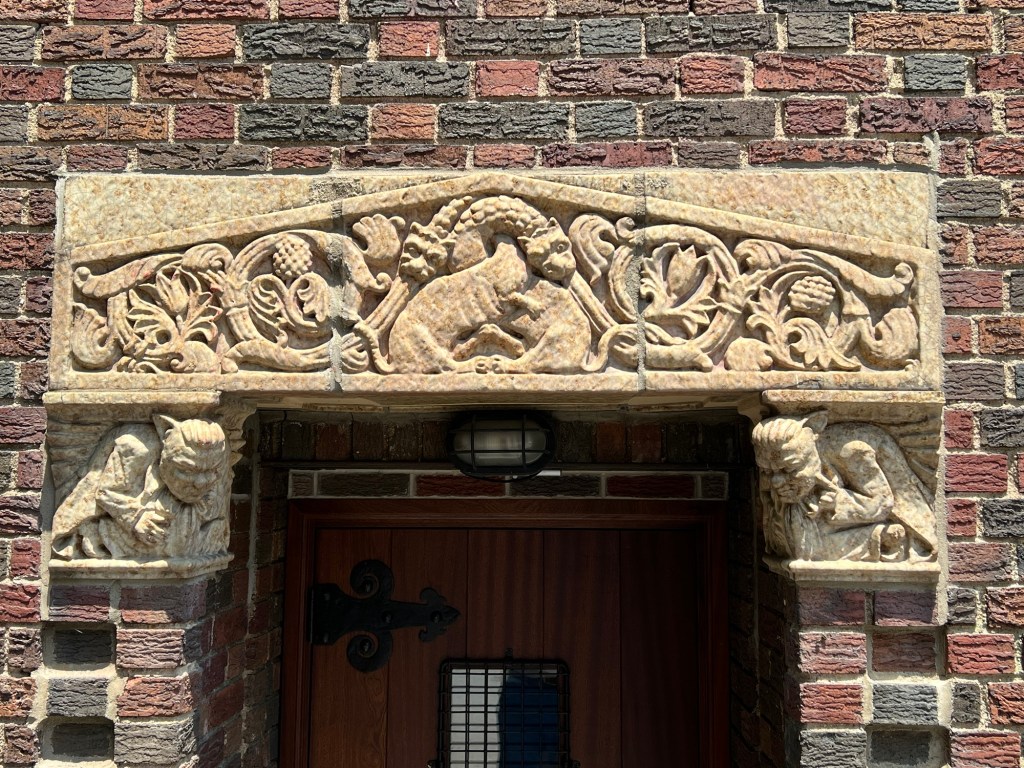
81 Irving Place is one of the most beautiful apartment complexes in the city that I have come across. The embellishments along the building are some of most detailed and elegant I have seen. This prewar Co-Op was built in 1929.

The details along the windows

The embellishments of the building

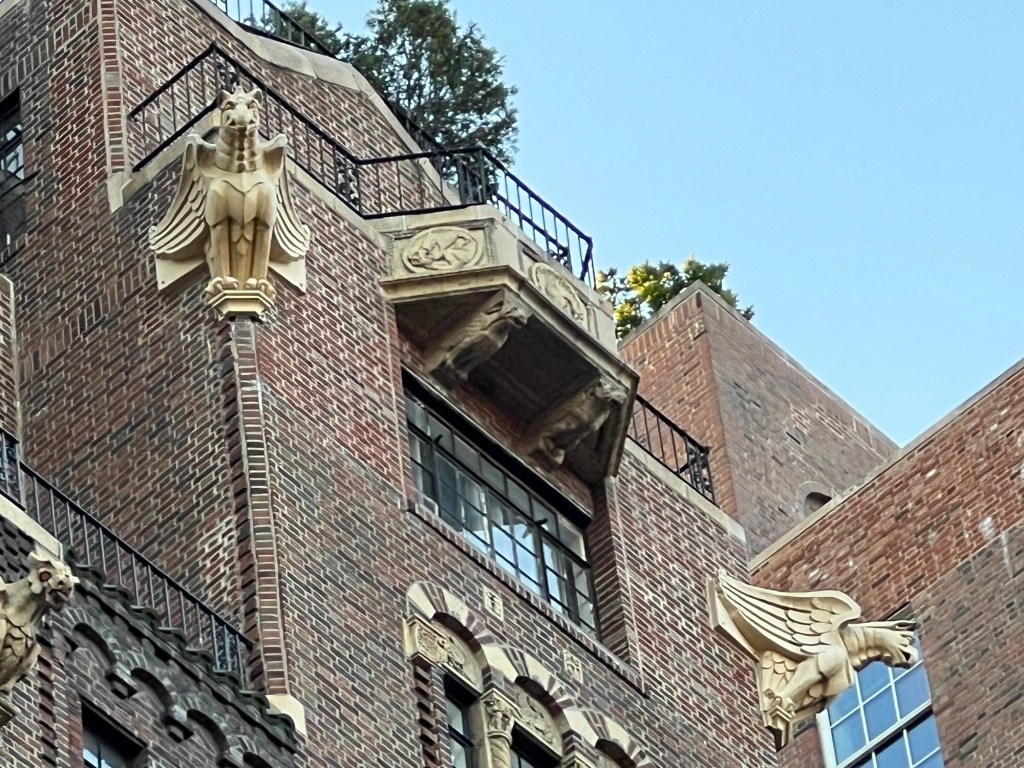
The dragons and demons that adorn the windows

The embellishments of the building

The unusual creatures at the doorways

The embellishments of the building

The creatures guarding the windows

The embellishments of the building

The rooftop gardens are protected by these griffins

The building has a whimsical almost storybook imagine of creatures protecting their home.

Where I want my future home to be when I retire to the City and can afford it is 19 Gramercy Park South. I have always loved this building since I fell in love with the neighborhood over thirty years ago. I always wanted a home with a key to Gramercy Park. The building has that classic turn of the last century look about it and it has always been my dream to live here when I retire. I need to hurry and win the lottery.

My dream home would be at 19 Gramercy Park South with a key to the park

https://en.wikipedia.org/wiki/19_Gramercy_Park_South

I had thought this was a apartment building but it is actually a single family mansion with 37 rooms. It was built in 1845 and when the mansion was extended by Stamford White in 1887 was the home of socially prominent Stuyvesant-Fish family. It is currently back to being a single family mansion (Wiki).

I did the walk around the Park and continued along Lexington Avenue from East 20th to East 23rd Street. There is more magnificent architecture along the way. Small details that will surprise you and things that will stare you along the walk.

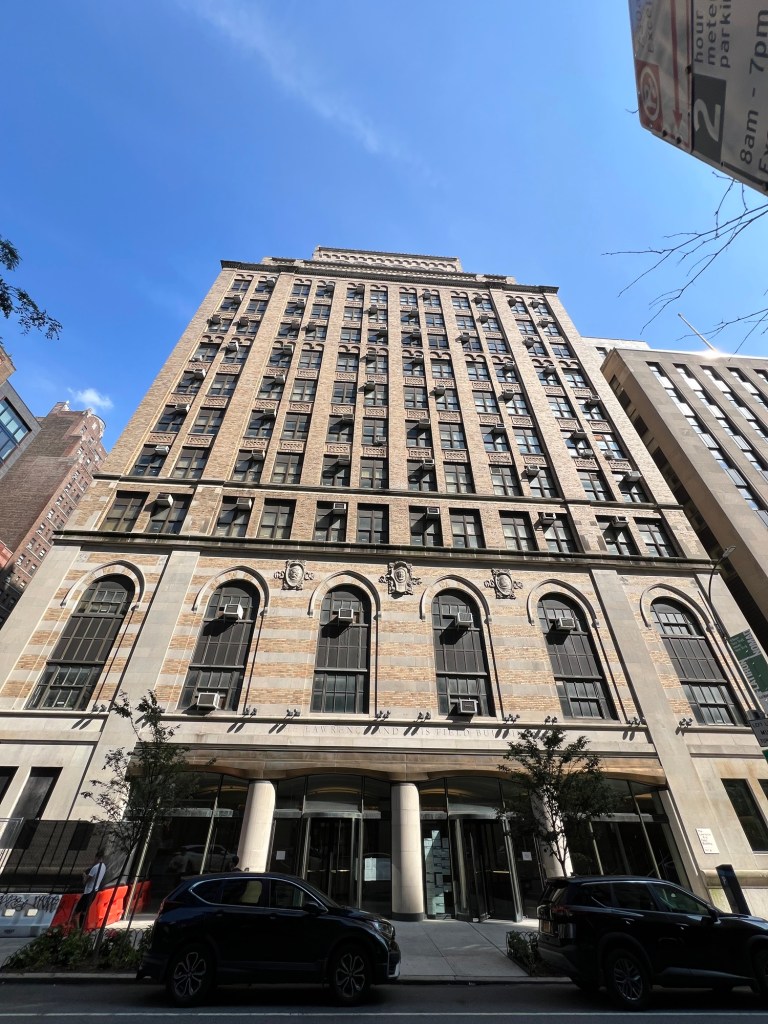
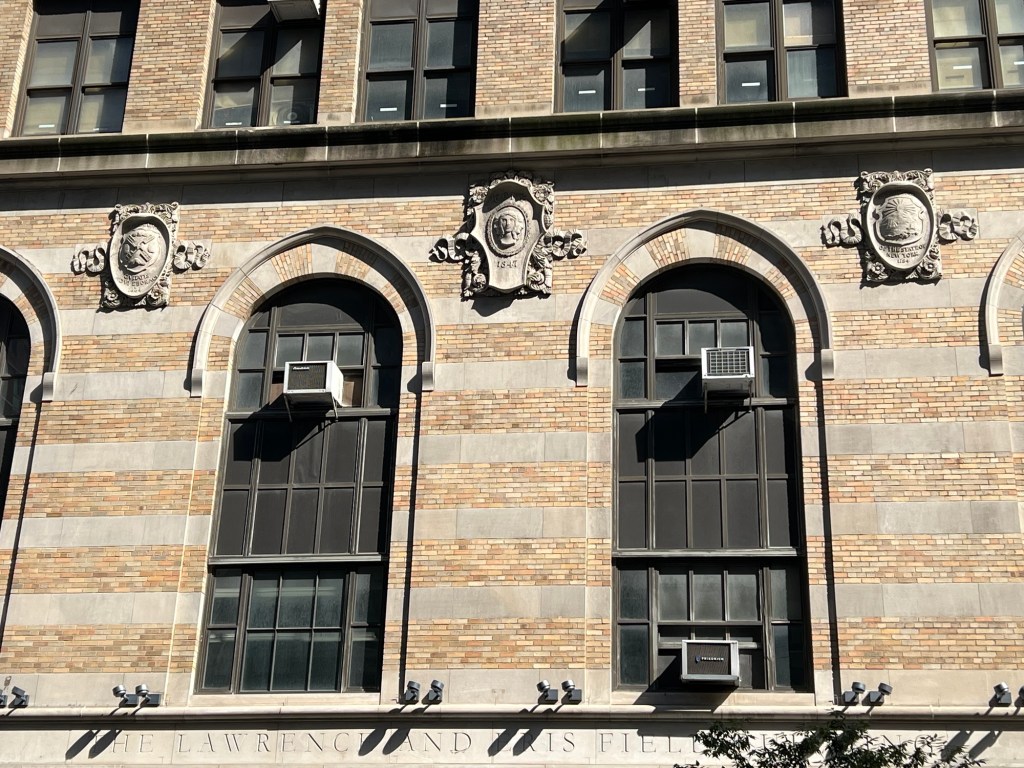
I walked along Lexington Avenue where the campus of Baruch College, which is part of the CUNY system, starts. One of its stand out buildings is The Lawrence and Eris Field Building, also known as the 23rd Street Building by the college. This building opened in 1929 and the ornamented Italian Renaissance revival style façade on 23rd Street  is constructed of limestone and brick and engraved with “The College of the City Of New York.” (CUNY Website)

17 Lexington Avenue-The Lawrence and Eris Field Building, also known as the 23rd Street Building on the Baruch College Campus.

https://17lexupdate.baruch.cuny.edu/history/

The beautiful details of the building

The Baruch College campus is located on the border of Gramercy Park and Kips Bay showcasing the unique architecture of the campus. Many of the buildings on this side of campus are going through a renovation so watch the scaffolding.

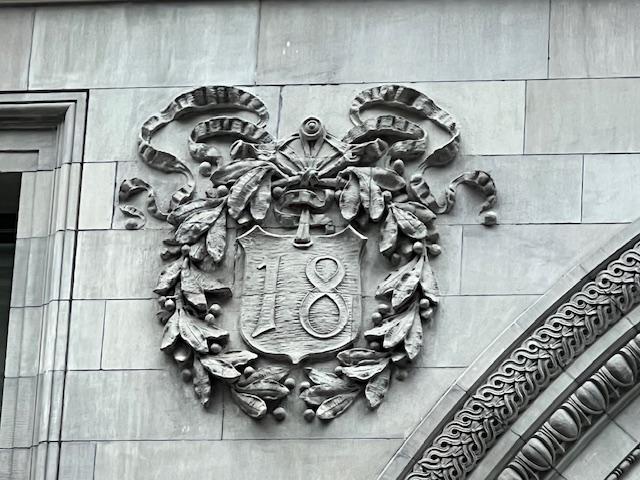
The coat of arms on the side of the building

The middle coat of arms on the side of the building

Coat of arms on the side of the building

The building on the Baruch Campus that I admired was the was the Baruch College Administration Center whose entrance is at 135 East 22nd Street. I loved the Art Deco details on the building. These seemed to represent all aspects of business.

The side of the Baruch College with its Art Deco details

Details on the CUNY building-The Baruch College Administration Center Building in its glory

The front of the Baruch College Administration Center at 135 East 22nd Street

https://plexuss.com/u/cuny-bernard-m-baruch-college/history

The elaborate details on the building give it its Art Deco appearance. The Art Deco Administrative Center at 135 East 22nd Street was built in 1937–1939 as the Domestic Relations Court Building, and was connected to the Children’s Court next door (Baruch College Website).

Across the street from CUNY campus, the Sage House at Four Lexington Avenue. Sage House was built in 1913 for the Russell Sage Foundation, a social welfare nonprofit that was an early advocate of social work and urban planning (Streeteasy.com).

The historic Sage House at Four Lexington Avenue

https://www.corcoran.com/building/gramercy-park/3917

https://streeteasy.com/building/the-sage-house

The building is a pre-war office building designed by Grosvenor Atterbury in the Italian Renaissance palazzo style. It has a rusticated red sandstone façade, vaulted ceilings, and carved decorative shields (Wiki). The building was converted to Coop apartments in 1986. The building next to it was the Hotel Gramercy Park which is currently closed and under renovation. Even though the hotel is closed, you can still peek through the scaffolding and see its elegance.

I myself have some wonderful memories of this hotel. I had stayed at the hotel back in 1993 while working at Macy’s Herald Square, when it was a European style old hotel with the large rooms with a view of the park. It had the most amazing bathtubs to sink into the night before I left to assist in the Macy’s Thanksgiving Day Parade. Years later, when Danny Meyers opened the Italian restaurant, Maialino, in the lobby in the early 2000’s, I remember taking my father there for Father’s Day and having the most delicious Roast Pork with potatoes that were cooked in the roast’s juices. It was a fantastic meal and the most perfect Father’s Day. Funny how I still remember that meal almost twenty years later.

The Hotel Gramercy Park at Two Lexington Avenue

The Hotel Gramercy Park was designed by architect Robert T. Lyons and was built by brothers Bing & Bing in 1924 and the hotel opened in 1925. The extension of the hotel along East 21st Street was designed by architects from Thompson & Churchill and built between 1929-1930. The hotel is designed in the Renaissance Revival style (Wiki). Across the street from the hotel is the historic One Lexington Avenue.

One Lexington Avenue facing Gramercy Park

https://streeteasy.com/building/1-lexington-avenue-new_york/9-d

https://www.corcoran.com/building/gramercy/3916

Built in 1910 by noted architect Herbert Lucas. This twelve-story intimate cooperative features extraordinary design details including a stately limestone and brick façade, timeless-elegant marble lobby and wood-paneled elevator still attended full-time by the elevator operator (Streeteasy.com).

The Cyrus West Field plaque on One Lexington Avenue where his home once stood

Cyrus West Field

https://en.wikipedia.org/wiki/Cyrus_W._Field

https://www.pbs.org/wgbh/americanexperience/features/cable-cyrus-field-1819-1892/

One Lexington Avenue was once the home of Cyrus West Field, who was considered the ‘Father of the American Cable” and helped lay the first trans Atlantic cable in 1858. When it broke, it was laid again in 1866 (American Experience).

The original house on the same corner in 1866 (NY Public Library)

Looking back up Lexington Avenue in the Summer of 2024, you can see how this neighborhood just keeps changing and still getting better. The old buildings are finding new uses and this part of the neighborhood is still very exclusive.

Looking up Lexington Avenue from Gramercy Park

The views uptown are so beautiful and will look even better when all the scaffolding comes down on all of these buildings. Still this part of the neighborhood is very impressive.

I walked down East 23rd Street to Third Avenue and it is not as impressive. This part of the neighborhood is more commercial the further you go from the park and most of the architecture here and on Second and First Avenue is mostly businesses housed in new buildings. Here and there though, tucked in the corners there is still a glimpse of the neighborhood’s past. You just have to look up to appreciate it.

Walking down Third Avenue from East 23rd Street

It may be all new construction but it is still impressive. Just a different feel and character. Third Avenue is more of a commercial district of larger stores and small restaurants.

Interesting street art on a Third Avenue mailbox. At least someone has some optimism

Tucked in between the modern architecture and some older brick buildings was this elaborate white building that stood out amongst its more plain neighbors and was one of the few older buildings left on Third Avenue.

The beauty of 190 Third Avenue known as Scheffel Hall

https://en.wikipedia.org/wiki/Scheffel_Hall

Scheffel Hall was designed by architects Henry Adams Weber and Hubert Drosser and was built between 1894 to 1895. This part of Gramercy Park was known as ‘Kleindeutschland’, ‘Little Germany”, when it had a large German immigrant population. The building served as a beer hall and restaurant at that time and was modeled after an early 17th Century building in Heidelberg Castle, the “Friedrichsbau” (Wiki). The building stands out for its beauty and elegant details that make this building special. There is nothing like it in the neighborhood and it a testament to its German past.

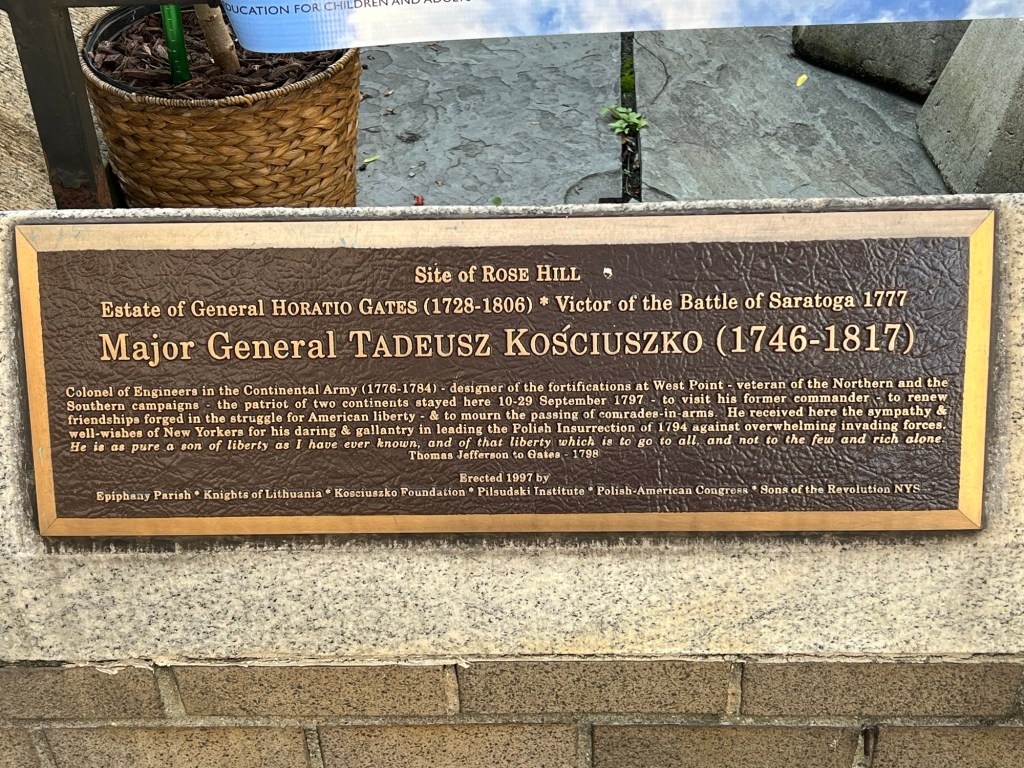
I finished my walk down Third Avenue and turned the corner at Second Avenue. As I walked down Second Avenue past Church of the Epiphany at 375 Second Avenue, I came across the historical plaque for the marker of the original “Rose Hill Farm” that was once part of this neighborhood and whose borders now make up the ‘Rose Hill’ neighborhood in Midtown Manhattan. All that remains of the farm today is the current Gramercy Park, which is a corner of the old farm.

The site of ‘Rose Hill Farm’, the home of General Horatio Gates and his second wife, Mary Valens

Rose Hill was originally a farm owned by James DeLancey and it was sold to Honorable John Watts, a member of the Colonial Assembly in 1747. The farm was 130 acres between East 30th to East 21st Street from what is now Irving Place to the East River. John Watts later married Ann DeLancey and they raised their family here. At the start of the Revolutionary War, as Loyalists they returned to England and left the estate to their son, John, who inherited it in 1789 (Wiki).

My blogs on Visiting the Rose Hill section of Manhattan:

Walking the Borders of Rose Hill:

https://wordpress.com/post/mywalkinmanhattan.com/16580

Walking the Streets and Avenues of Rose Hill:

https://wordpress.com/post/mywalkinmanhattan.com/16776

General Horatio Gates

https://en.wikipedia.org/wiki/Horatio_Gates

Revolutionary War General Horatio Gates and his second wife, Mary Valens, bought the farm in 1790 and built a new mansion on the corner of what is now Second and East 22nd Street. They lived here for the next twenty years with him a member of the assembly in 1800 and active in New York Society at that time. He died on the farm in 1806 and the estate was parceled out later on when the new grid pattern for Manhattan was created (Wiki/Horatio Gates website).

Rose Hill Farm

https://en.wikipedia.org/wiki/Rose_Hill,_Manhattan

The beautiful windows of the church of the Church of the Epiphany at 373 Second Avenue

https://epiphanychurch.nyc/

As I looked up from the plaque, I admired the front windows of the Church of the Epiphany at 373 Second Avenue and all the beautiful plantings in front of the church. The original church that had been built in 1870 burned down in 1963. The current church was designed by the architectural firm of Belfatto & Pavarini and was finished in 1967. The stained glass windows of the Madonna and Child were from the original church (Wiki/Church of the Epiphany website).

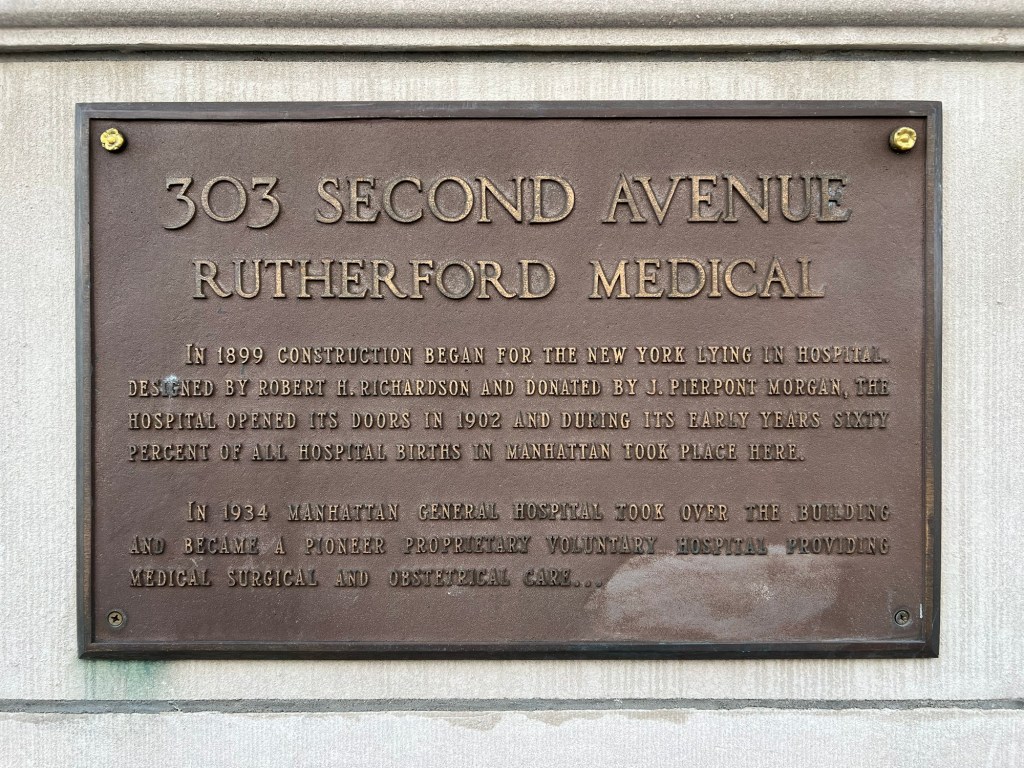
Walking down at East 23rd Street, it was a short walk down the Avenue where I passed 303 Second Avenue and the beautiful details of this famous piece of the neighborhood history. This is the one really standout building on the block with interesting embellishments all along the windows and doorways.

303 Second Avenue-The Rutherford Place Medical Building

https://streeteasy.com/building/rutherford-place/a

https://www.compass.com/building/the-rutherford-manhattan-ny/319539373204573973/

The Rutherford Medical Building was designed by architect Robert H. Richardson and was finished in 1902. This was a very active hospital delivering sixty percent of the infants in Manhattan at that time before a full part of the hospital. It was converted to luxury condos in recent years (Wiki/Streeteasy.com).

The historic plaques

The historic plaques

The elegant details of the The Rutherford Building

You have to look at the top of this building to really appreciate it

As you cross over from East 17th Street on both sides of Second Avenue, you are greeted by the greenery of Stuyvesant Square, what is left of the former estate of ‘Peg Leg’ Peter Stuyvesant, the Governor of the Dutch colony of New Amsterdam. The park was in full bloom and on a hot day, the shade trees are a pleasure to be under.

As I walked down Second Avenue, I passed the beauty of Stuyvesant Square Park

The sign welcoming sign to Stuyvesant Square Park

https://www.nycgovparks.org/parks/stuyvesant-square

https://en.wikipedia.org/wiki/Stuyvesant_Square

I walked through the park, admiring the paths of flowers and flowering trees. People were outside reading books and listening to the makeshift concert that a resident was putting on. There is a dirty little secret to Stuyvesant Square Park is on the edges of the park there is a lot of loitering by delivery guys and homeless in the corners of the park. The park could also use a little pruning and sprucing here and there.

Looking up Second Avenue from Stuyvesant Square

Stuyvesant Square in full bloom

The Stuyvesant family was the influence of this wonderful park. In 1836, Peter Gerard Stuyvesant, the great great grandson of Peter Stuyvesant and his wife, Helen Rutherfurd sold four acres of the original Stuyvesant Farm to the City for $5.00 as a public park under the stipulation that the City build a fence around it. It took an almost lawsuit from the city to finally build the fence in 1847, which is the fence that surrounds the park today (NYCParks.org).

The colorful flowers surrounding the fountains

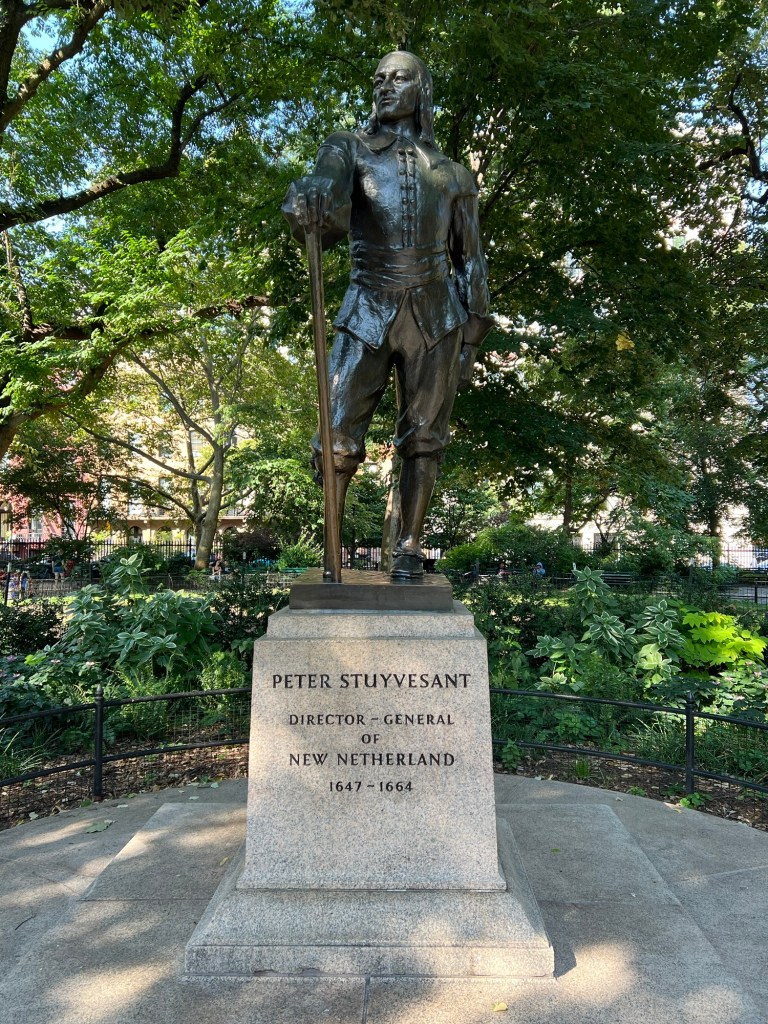
In the middle of the park on the right side as you are walking down Second Avenue is the statue of Governor Peter Stuyvesant in all of his glory.

The statue of ‘Peg Leg’ Peter Stuyvesant, the Governor of the Dutch Colony

https://www.nycgovparks.org/parks/stuyvesant-square/monuments/1516

This famous public statue of Governor Peter Stuyvesant was designed by artist Gertrude Vanderbilt Whitney in

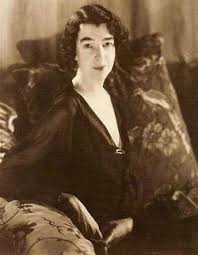
Artist Gertrude Vanderbilt Whitney

https://en.wikipedia.org/wiki/Gertrude_Vanderbilt_Whitney

Gertrude Vanderbilt Whitney was an American born New York artist who had studied at the Arts Student League of New York and apprenticed under several well known artists.

The Stuyvesant Square Park in the Summer of 2024

Around the corner from the park as I walked its perimeter was the beautiful testament to God in the form of St. John The Baptist Greek Orthodox Church at 143 East 17th Street

St. John The Baptist Greek Orthodox Church at 143 East 17th Street

https://www.stjohn.ny.goarch.org/

https://www.facebook.com/StJohnBaptistNYC/

Built in 1885, designed by Schwartzmann & Buchman, with a baroque facade that was altered in 1957 by Kyriacos A. Kalfas (Wiki).

The detailed windows of St. John’s Church at East 143 17th Street

As I reached East 14th Streets, I could see that the neighborhood along Second and Third Avenue did not have the same historic appearance as the side streets of the neighborhood. Here and there tucked in between modern buildings, there were a few gems,

This building was at 231 Second Avenue

https://streeteasy.com/building/231-2-avenue-new_york

https://www.elliman.com/newyorkcity/buildings-communities/detail/527-c-725-135503/231-second-ave-gramercy-park-new-york-ny

This prewar apartment building was built in 1910. You have to really look up to see the elegant details of the building and its decorative embellishments.

The beautiful entrance to the apartment building

The classic embellishments of the building

Walking through the other side of Stuyvesant Square I got better views of 303-305 Second Avenue

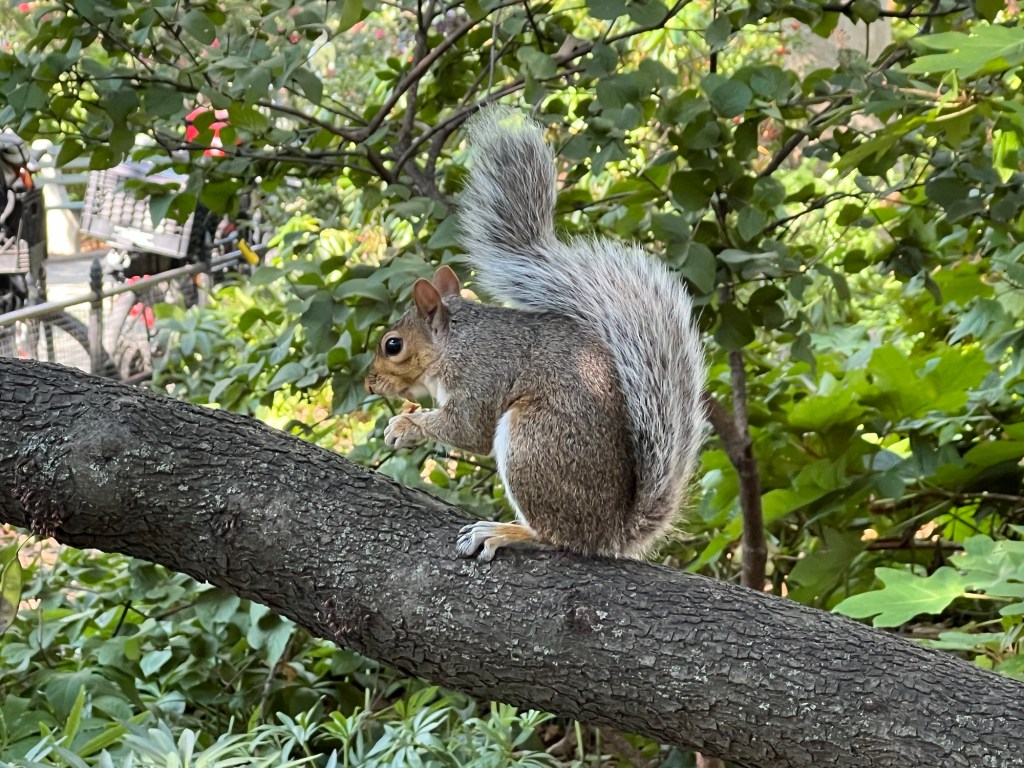
This city squirrel just ignored me as it chopped away at some nuts

The beauty of Stuyvesant Square in the Summer of 2024

The historic plaque at Stuyvesant Square

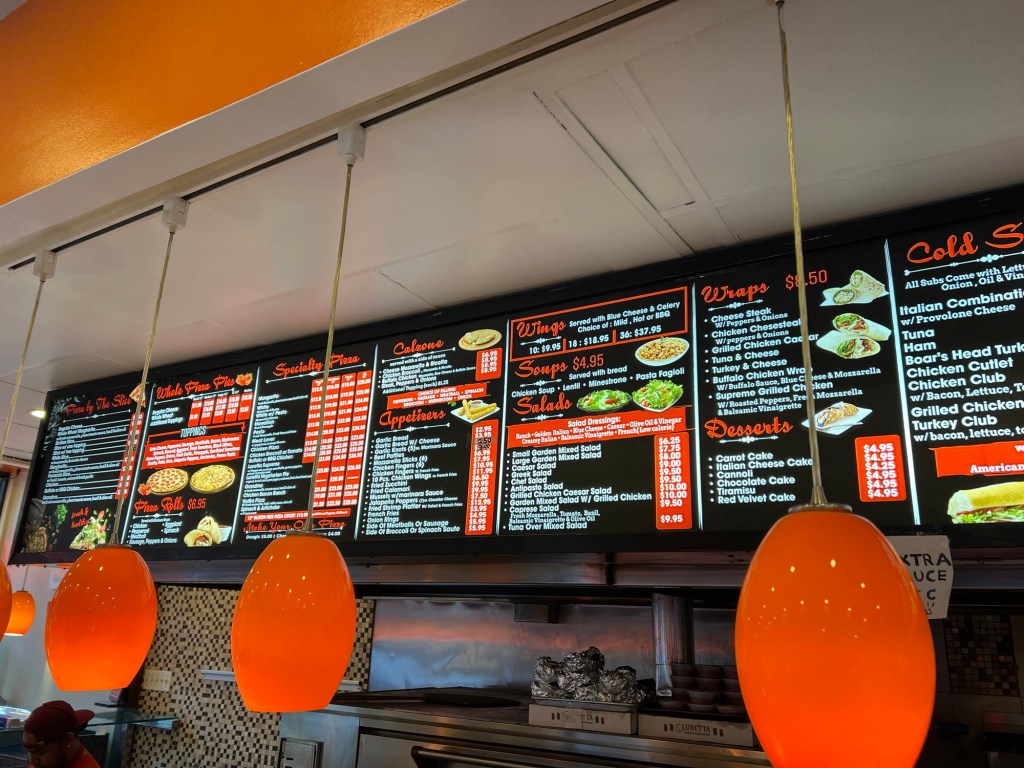
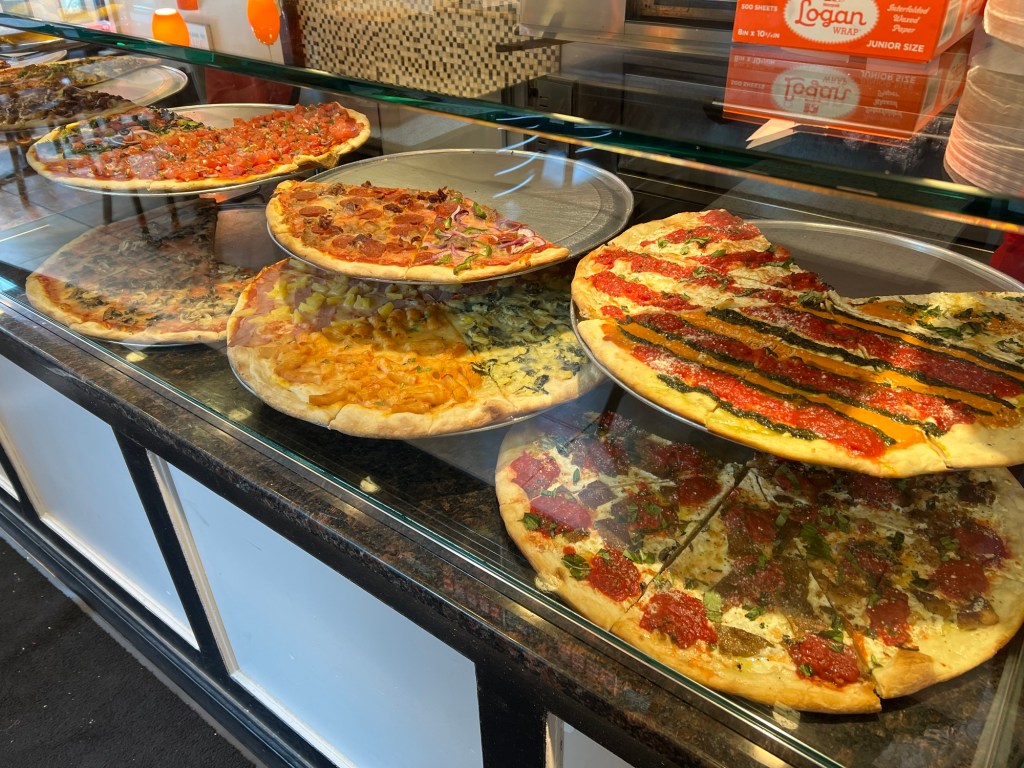
Lunch was a slice of Sicilian pizza at Lunetta Pizza at 245 Third Avenue. I had passed Lunetta Pizza many times while walking through the neighborhood and noticed that it was one of the few restaurants in the neighborhood that did not change their prices after COVID. They are still one of the most reasonable pizzerias in Manhattan (See my review on DiningonaShoeStringinNYC@Wordpress.com).

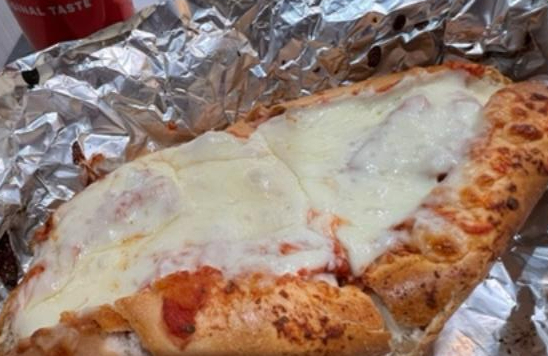
The slice was amazing. Their red sauce is spiced perfectly and that is what makes the structure of the pizza. The Sicilian pizza here is crisp and pillowy, the way it should be.

Lunetta Pizza at 245 Third Avenue

https://www.lunettapizzaandrestaurant.com/

My review on TripAdvisor:

https://www.tripadvisor.com/Restaurant_Review-g60763-d23657421-Reviews-Lunetta_Pizza_Restaurant-New_York_City_New_York.html?m=19905

My review on DiningonaShoeStringinNYC@Wordpress.com:

https://wordpress.com/post/diningonashoestringinnyc.wordpress.com/6060

The prices are extremely fair and are still pre-COVID. They do not rip you off.

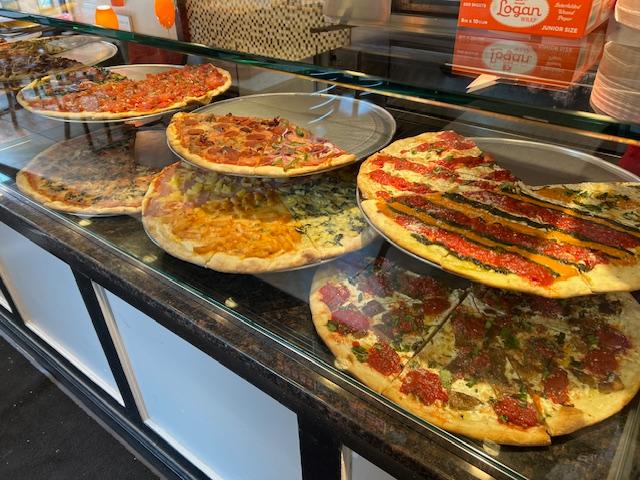
The selection of pizzas is extensive

The Sicilian slices were pillowy and crisp with a deep, rich flavor because of their amazing red sauce.

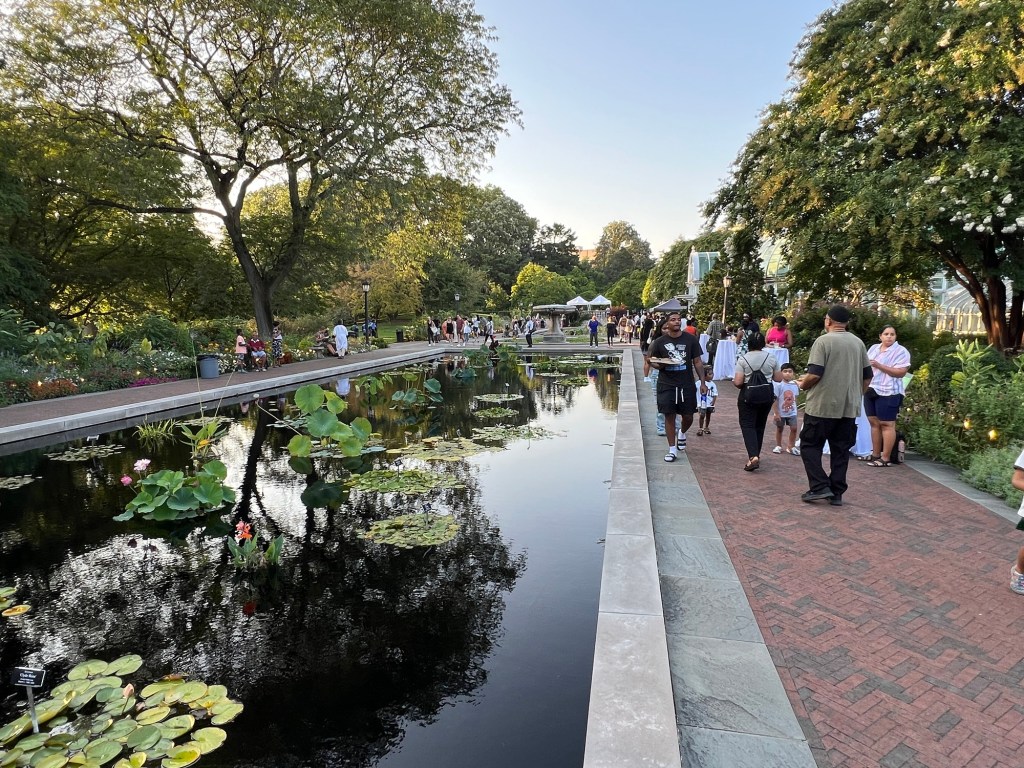
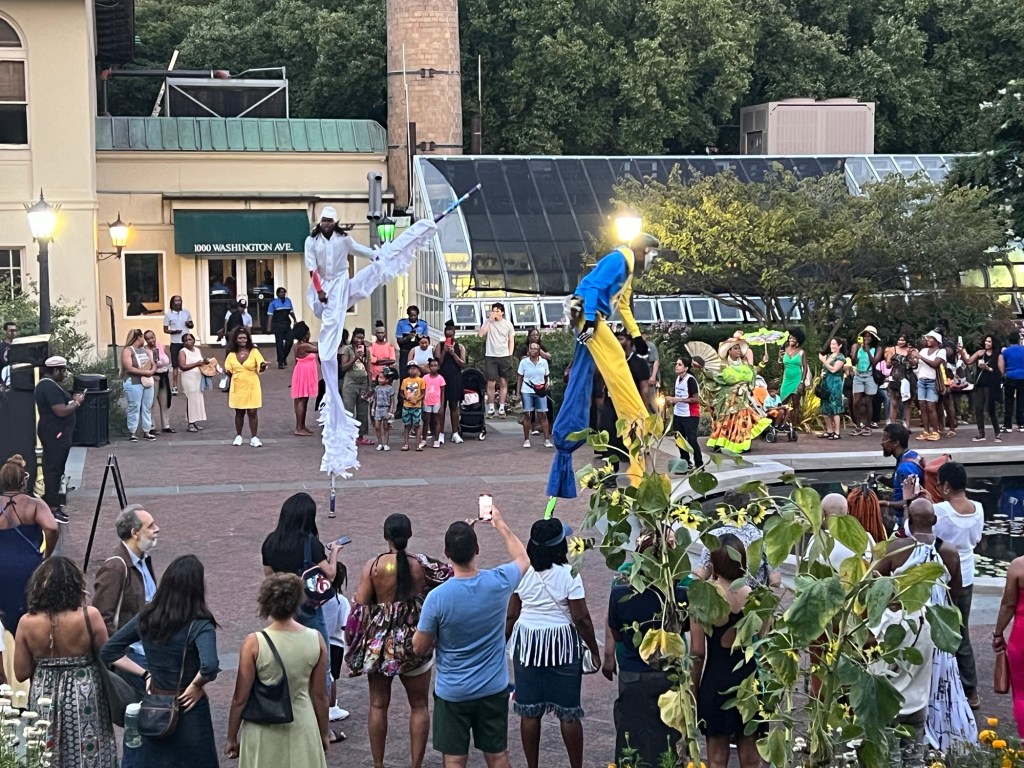
I finished walking the Avenues of Gramercy Park with enough time to take the trip out to Brooklyn for the pre-West Indian Parade event at the Brooklyn Botanic Garden.

My blog on the special event at the Brooklyn Botanic Garden:

https://wordpress.com/post/mywalkinmanhattan.com/53496

The fountain in the Cherry Blossom Esplanade

The private members night

The Carnival like atmosphere right before the West Indian Parade

After the event was over, I headed back to Manhattan for dinner. I had been so impressed by Lunetta Pizza’s food the afternoon, that I bypassed my favorite restaurants in Brooklyn and went back to dinner there.

I had a very impressive Linguini with a Meat Sauce and I then made a better judgement call on the food and it is truly excellent. The meat sauce was so flavorful and the pasta perfectly cooked and a very generous portion size that it made the perfect dinner.

My dinner at Lunetta Pizza, the Linguini with Meat Sauce

Yum!

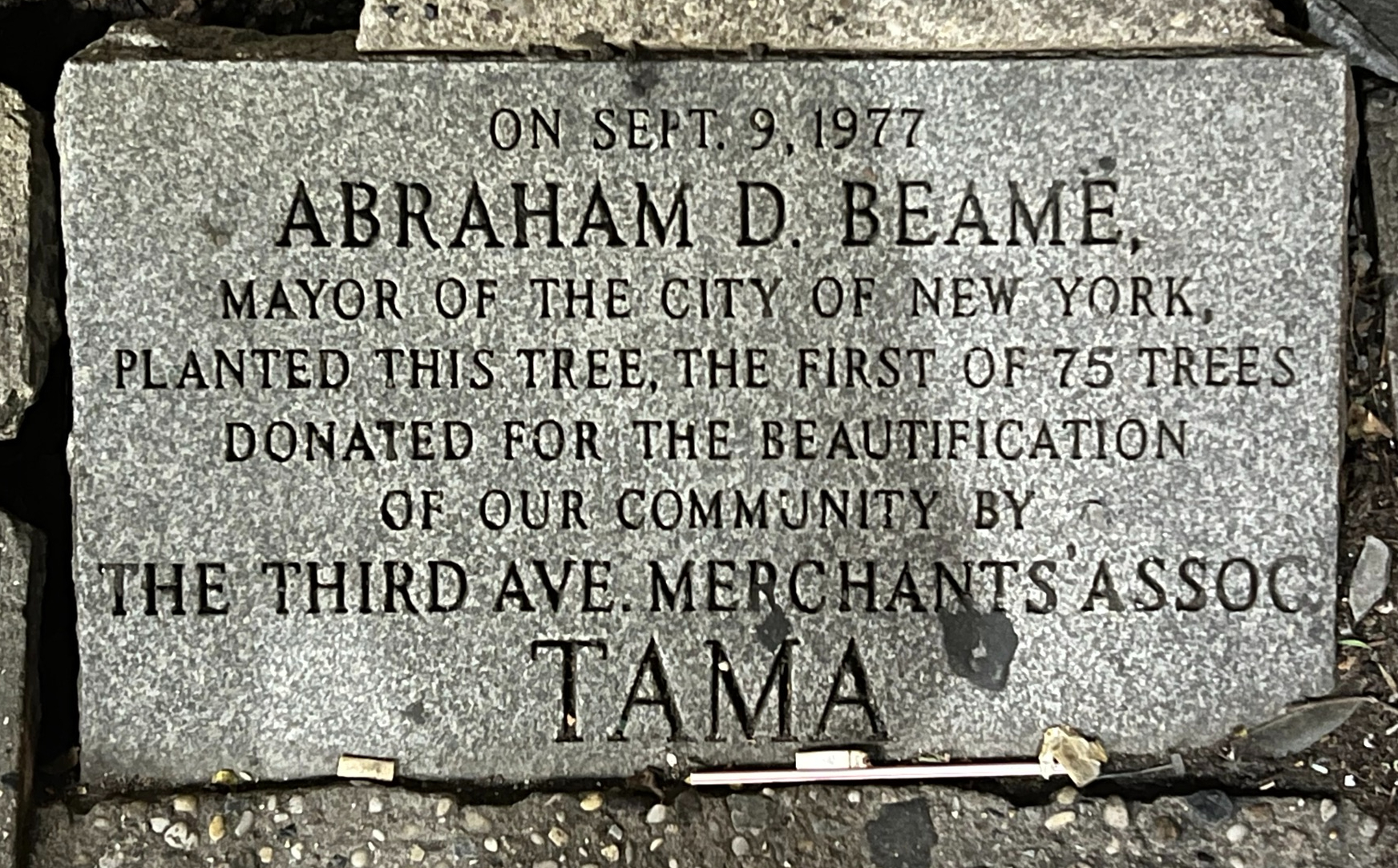
As I left the neighborhood that night I passed a plaque in the sidewalk from the Mayor Abe Beame Administration (now these were some bad years in the City) dedicating a tree for the beautification of the neighborhood. It just shows has the City just keeps morphing with the cycles the City goes through over the years. Manhattan just keeps changing.

The plaque from the neighborhood beatification program in the 1970’s. This plaque is near East 23rd and Third Avenue. It is also coming out of the ground.

Mayor Abe Beame

https://en.wikipedia.org/wiki/Abraham_Beame

As I passed Bryant Park that evening, twilight had come and the lights of the City were coming on. New York City may have its problems, but there still is a beauty to it.

Passing Bryant Park that evening

The next part of the walk will be visiting the Streets of Gramercy Park.

Places to Visit:

Stuyvesant Square Park

9 Rutherford Place

New York, NY 10003

(212) 639-9675

Open: Sunday-Saturday 7:00am-11:00pm

https://www.nycgovparks.org/parks/stuyvesant-square

https://en.wikipedia.org/wiki/Stuyvesant_Square

My TripAdvisor:

https://www.tripadvisor.com/Attraction_Review-g60763-d218637-Reviews-Stuyvesant_Square-New_York_City_New_York.html

Places to Eat:

Lunetta Pizzeria

245 Third Avenue

New York, NY 10010

(212) 432-5200

https://www.lunettapizzaandrestaurant.com/

Open: Sunday-Saturday 10:00am-4:00am

My review on TripAdvisor:
https://www.tripadvisor.com/Restaurant_Review-g60763-d23657421-Reviews-Lunetta_Pizza_Restaurant-New_York_City_New_York.html?m=19905

My review on DiningonaShoeStringinNYC@Wordpress.com:

https://wordpress.com/post/diningonashoestringinnyc.wordpress.com/6060

Please read my other blogs on Gramercy Park:

Day Three Hundred and Twenty Walking the Borders of Gramercy Park:

https://wordpress.com/post/mywalkinmanhattan.com/51647

Day Three Hundred and Twenty One Walking the Avenues of Gramercy Park:

https://wordpress.com/post/mywalkinmanhattan.com/53432

Day Three Hundred and Twenty Four Walking the Streets of Gramercy Park:

https://wordpress.com/post/mywalkinmanhattan.com/53788

Lunetta Pizza & Restaurant 245 Third Avenue New York, NY 10010

Lunetta Pizza & Restaurant at 245 Third Avenue in Gramercy Park

The delicious selection of pizzas at Lunetta

The wonderful Linguini with Meat Sauce that I had that evening for dinner

Day Three Hundred and Twenty Exploring the Borders of Gramercy Park from Park Avenue South to First Avenue to East 23rd to 14th Streets August 2024

The beauty of Gramercy Park in the Summer of 2024

I started my exploration of Gramercy Park having walked many of its borders in other walks. It seems that the borders between the Flatiron District, Union Square, Rose Hill and NoMAD have become blurred. All these beautiful buildings with their protective lions, mythical creatures and mysterious faces watching and protecting them have a home on all of them.

The elegant brownstones that line the park

Gramercy Park is probably one of the nicest neighborhoods in Manhattan with its historic brownstones, beautiful park and excellent restaurants and shops. The neighborhood is steeped in history and it had been enjoyable to walk around the buildings and read their history.

The Union Square Market is always packed

https://www.grownyc.org/greenmarket/manhattan-union-square-m

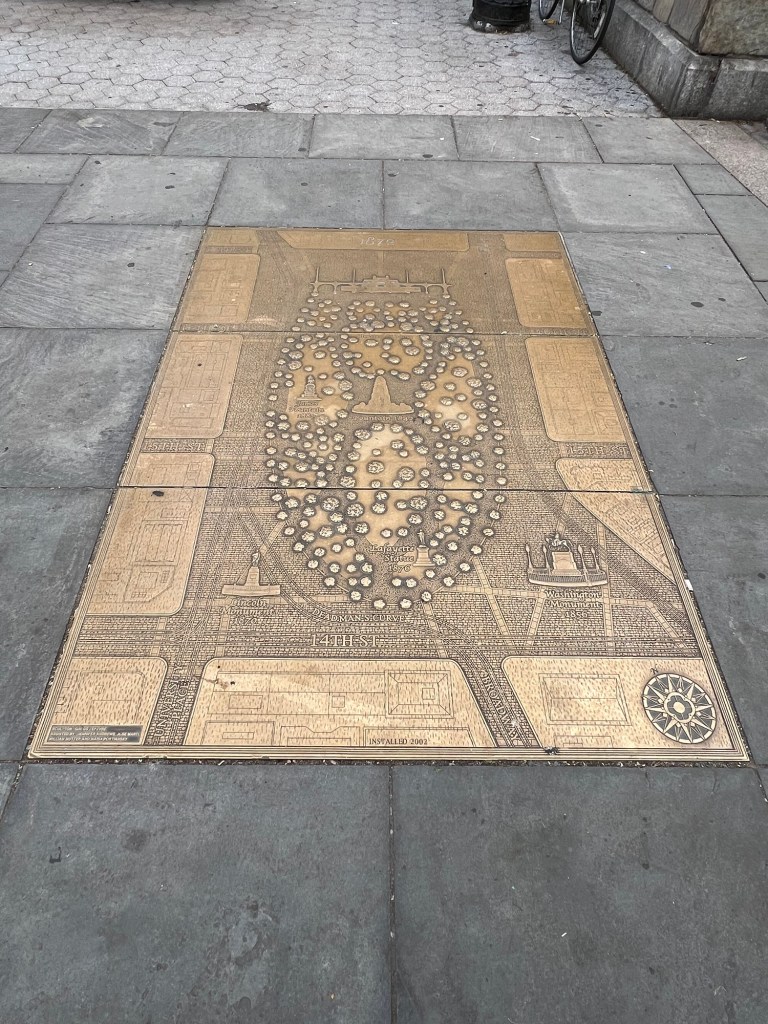
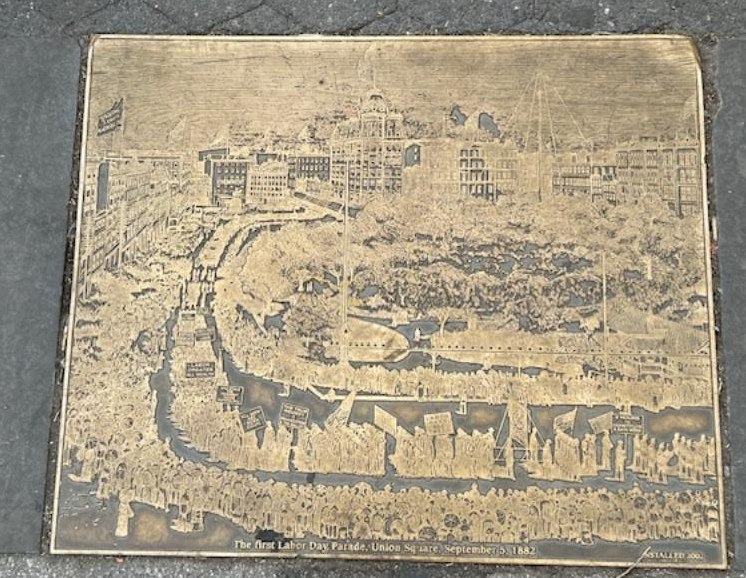
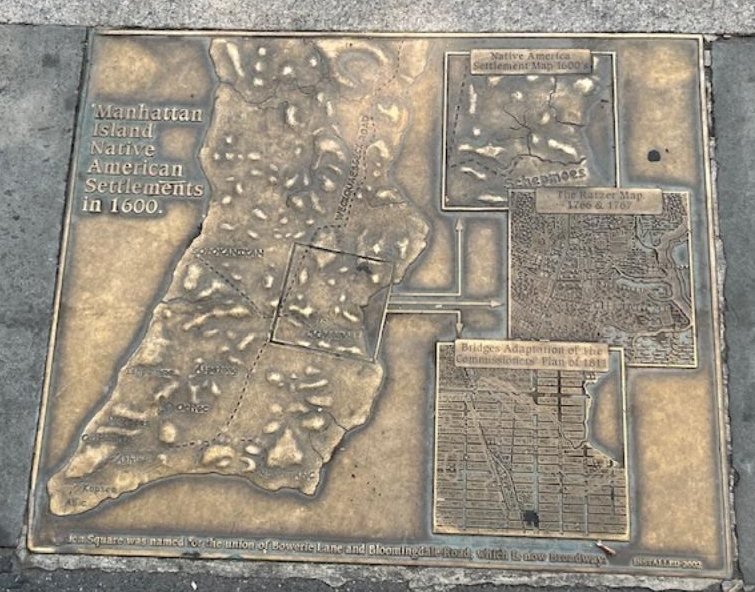
As I walked around the Farmers Market, looking over the very over-priced fruits, vegetables and bakery products, I noticed more of the medallions that line the border of Union Square Park. The first one I admired without the sunlight distracting me was the medallion of the layout of the park from the 1800’s.

This is the original layout of the park in 1876 plaque

The collection of medallions around the park’s fringes

The Union Square collection of plaques

The collection of plaques in Union Square Park

The plaques around Union Square Park

The plaques around Union Square Park

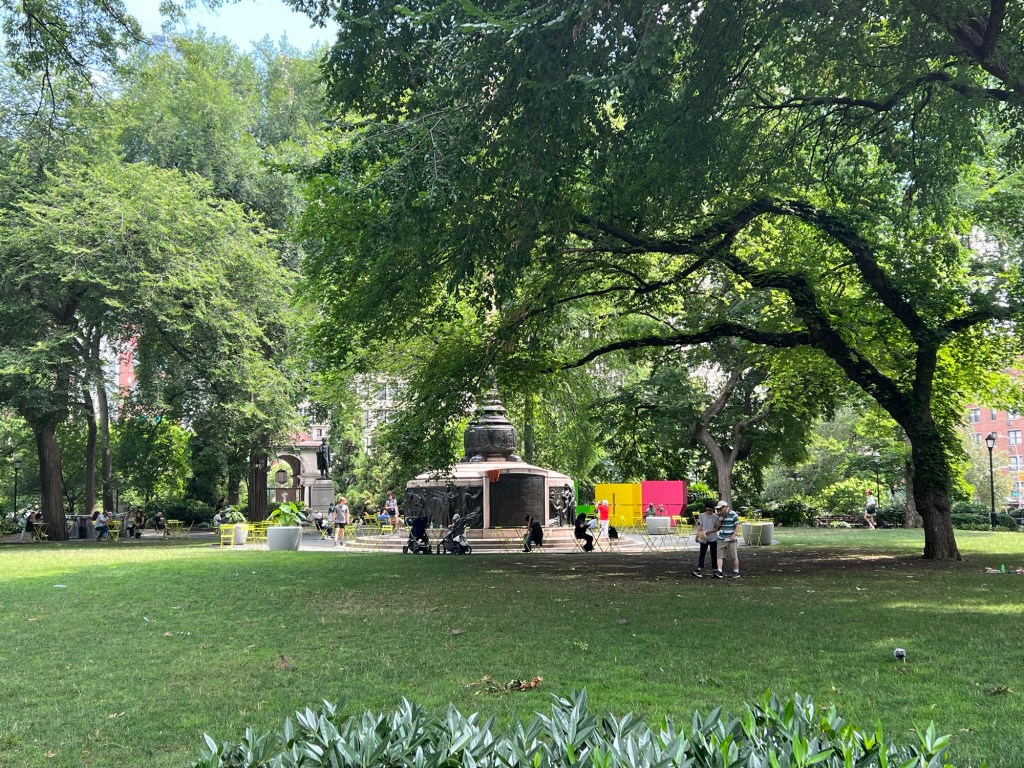
I walked around the park and marveled at it on a very hot afternoon. Like most parks in former edgy neighborhoods, it fascinates me how a bunch of twenty year old’s and families sun themselves and socialize where thirty years earlier you would be harassed by homeless, drug dealers and methadone addicts. You still might see them on the fringes of the park but not like in the early 1980’s.

The expansive lawn of Union Square Park

https://www.nycgovparks.org/parks/union-square-park

https://en.wikipedia.org/wiki/Union_Square,_Manhattan

The park now has a business partnership and I believe a Friends group as well. There are so many activities going on in the park, that I am sure people don’t notice all the chess hustlers and counterculture types on the 14th Street perimeter.

Looking at the southern part of the park facing 14th Street and the southern entrance to Broadway

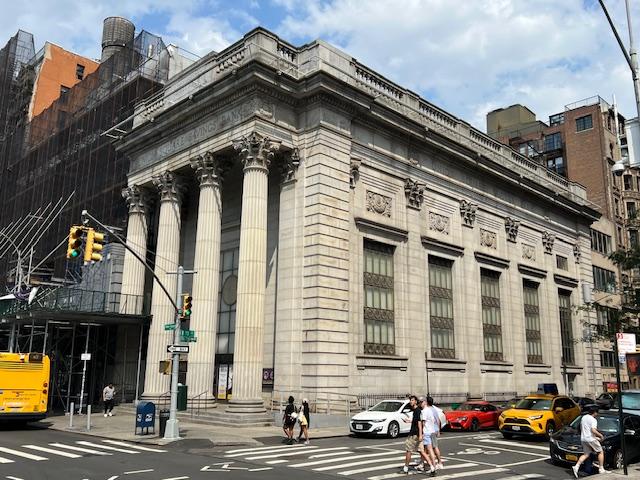
From Park Avenue South/Union Square East is the extension of the street that lines the eastern end of the park. At the corner of East 15th Street and Union Square East is 101 East 15th Street the old Union Square Savings Bank building.

101 East 15th Street-The Union Square Savings Bank Building/Daryl Roth Theater

https://en.wikipedia.org/wiki/Daryl_Roth_Theatre

The side of the Union Square Savings Bank building

The bank itself was founded in 1848 and moved to this location in 1895. This building was designed by architect Henry Bacon in the neo classical design in 1905 and the building was finished in 1906. The bank closed in 1992 (Wiki).

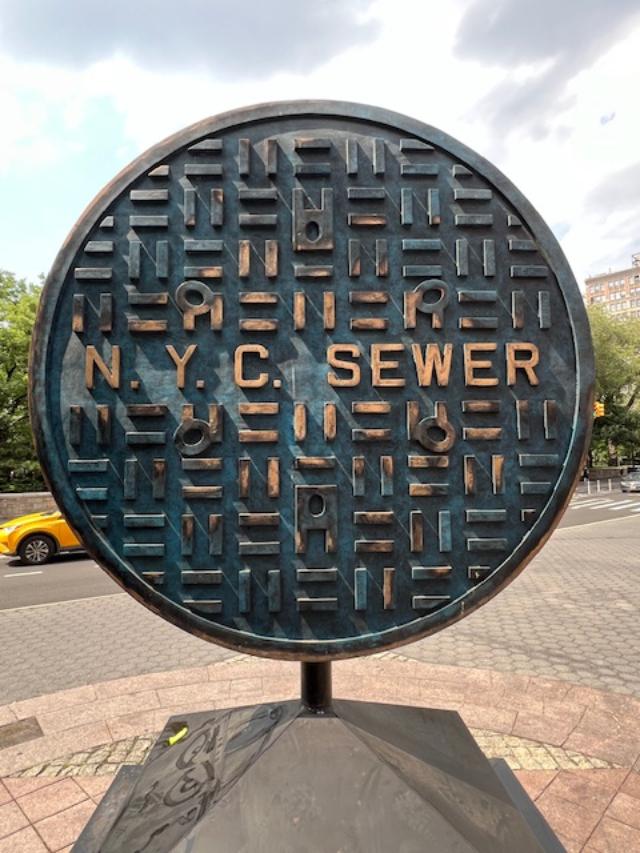
I walked to the small triangle of Union Square Park that sits between East 15th and 14th Streets and came across a sculpture that I had never seen before on all my walks back from NYU. Maybe I just missed it when it was dark out. It was a depiction of an urban legend of the NYC sewers.

The alligator sculpture ‘N.Y.C. Legend’

The sewer cover top of the sculpture

The sign for artist Alexander Klingspor

Artist Alexander Klingspor

Artist Alexander Klingspor is Swedish born artist who works both in the United States and Sweden. He apprenticed under American artist Mark English. He is known for his paintings and sculptures (Wiki).

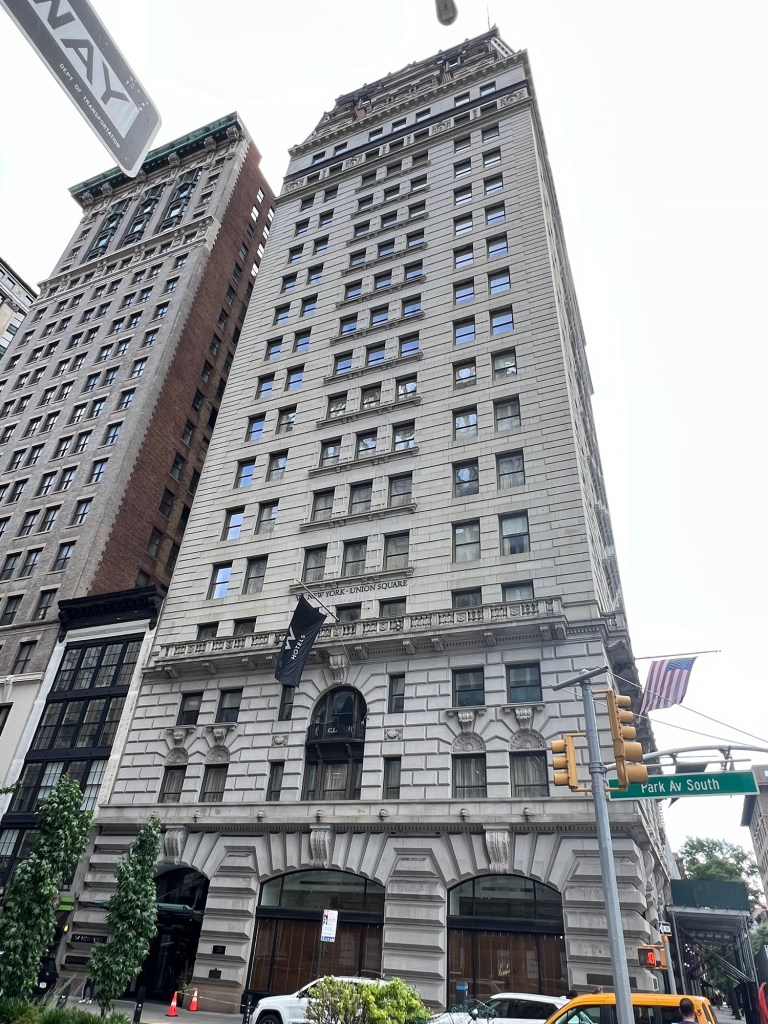
I then started my walk up Park Avenue South which is actually the western border of Gramercy Park. I have always been impressed by the W Hotel on the corner of 16th Street and Park Avenue South at 201 Park Avenue South.

The W Hotel at 201 Park Avenue South

https://en.wikipedia.org/wiki/W_New_York_Union_Square

https://www.marriott.com/en-us/hotels/nycnu-w-new-york-union-square/overview/

Review on TripAdvisor:

https://www.tripadvisor.com/Hotel_Review-g60763-d220243-Reviews-W_New_York_Union_Square-New_York_City_New_York.html?m=19905

This luxury hotel has an impressive history of being one of the innovators of luxury in the Marriott chain. The W Hotel concept was known for its edginess in design and the creativity in its restaurants. Things must be progressing as their customer gets older because their General Manager spoke to our Leadership class before I graduated from NYU and said they are softening the music (finally!) and changing the designs in the rooms. Maybe there will finally be a place to put your clothes.

The historic plaque on the building

This historic building was designed by the architects D’oench & Yost in the Modern French mode and built in 1911. Like most historic office buildings below 23rd Street, the are being refitted as hotels and condos as the desire for high ceilings and soaring lobbies have become desirable. This building had been designed for the Germanic Life Insurance Company Wiki).

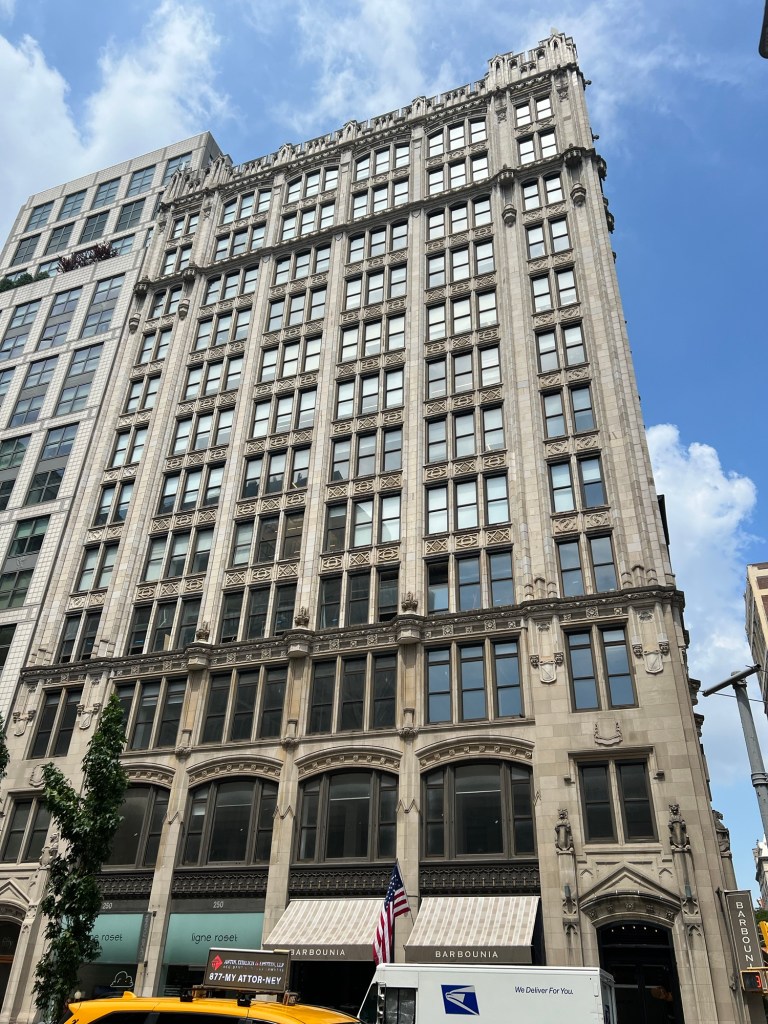
I continued up Park Avenue South to East 20th Street to see another familiar building on the border of the neighborhood, 250 Park Avenue South. This building seems to be on the border of many Manhattan neighborhoods.

250 Park Avenue South

https://250parkave.com/

The embellishments on 250 Park Avenue South

The embellishments on 250 Park Avenue South on both sides of the building

On the street level of the building is the restaurant Barbounia

Barbounia 250 Park Avenue

https://barbounia.com/

Review on TripAdvisor:

https://www.tripadvisor.com/Restaurant_Review-g60763-d611431-Reviews-Barbounia-New_York_City_New_York.html?m=19905

250 Park Avenue South was designed by architects Rouse & Goldstone in 1911 in the Neo-Classical design. You have to look at the building from a distance to appreciate all the interesting embellishments on the sides and top of the building.

237 Park Avenue with it’s lion guardians

https://www.apartments.com/237-park-ave-new-york-ny/kcb010c/

The building 237 Park Avenue was plain but I thought these lions the adorned the build were pretty cool.

https://www.corcoran.com/building/flatiron/303

The building was designed by William Dilthey and built in 1898. The building’s style, scale and materials contribute to the special architectural and historic characteristics of the Ladies Mile District (Corcoran Group).

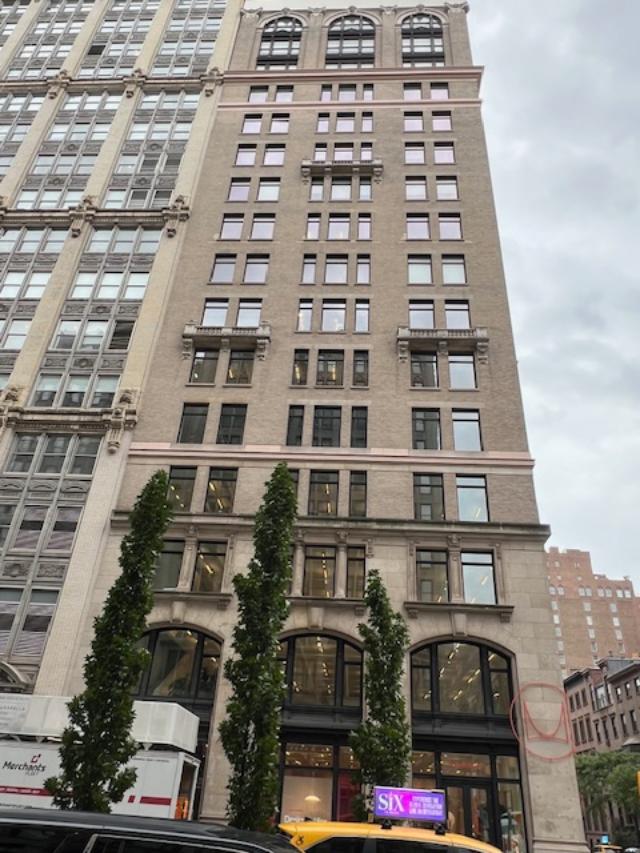
As you walk up Park Avenue South, the first building that makes an impression is 251 Park Avenue South. This elegant office building with its large display windows and clean lines shows of the store inside. The office building was built in 1910 and has large windows both on the ground level and towards the top of building.

251 Park Avenue South

https://moovitapp.com/index/en/public_transit-251_Park_Avenue_South-NYCNJ-site_22867315-121

One building that does standout from the others on Park Avenue South is the Calvery Church at 277 Park Avenue. The church was established in 1832 and moved to its current location in 1842. The current church was designed in the Gothic Revival style by James Renwick Jr., who designed St. Patrick’s Cathedral.

277 Park Avenue South-Church of the Calvery

https://www.calvarystgeorges.org/

https://en.wikipedia.org/wiki/Calvary-St._George%27s_Parish

Another interesting building, I looked up and admired while walking up Park Avenue South was 281 Park Avenue South, the former Church Mission House. The building was designed by architects Robert W. Gibson and Edward J. Neville in the Medieval style and was built between 1892 and 1894. It was built for the Episcopal Church’s Domestic and Foreign Missionary Society (Wiki). It now houses the photography museum The Fotografista Museum.

281 Park Avenue South-The Fotografiska Museum (The Church Mission House)

https://en.wikipedia.org/wiki/Church_Missions_House

https://www.fotografiska.com/nyc/

Another impressive building, I passed before East 23rd Street is 105 East 22nd Street the former United Charities Building. This is the final building in what was once known as “Charity Row” (Wiki). The building was designed by architect R. H. Robertson and the firm of Rowe & Baker. It was built by John Stewart Kennedy in 1893 for the ‘Charity Organization Society’ (Wiki).

105 East 22nd Street-United Charities Building

The details of 105 East 22nd Street

https://en.wikipedia.org/wiki/United_Charities_Building

The embellishments on the building

The embellishments on the building

I started walking down East 20th Street from Lexington Avenue. I crossed East 23rd Street which is the edge of the neighborhood shared with Gramercy Park, Rose Hill and Peter Cooper Village further down the block. This busy thoroughfare is lined with a lot stores, restaurants and many interesting buildings that leads to the East River.

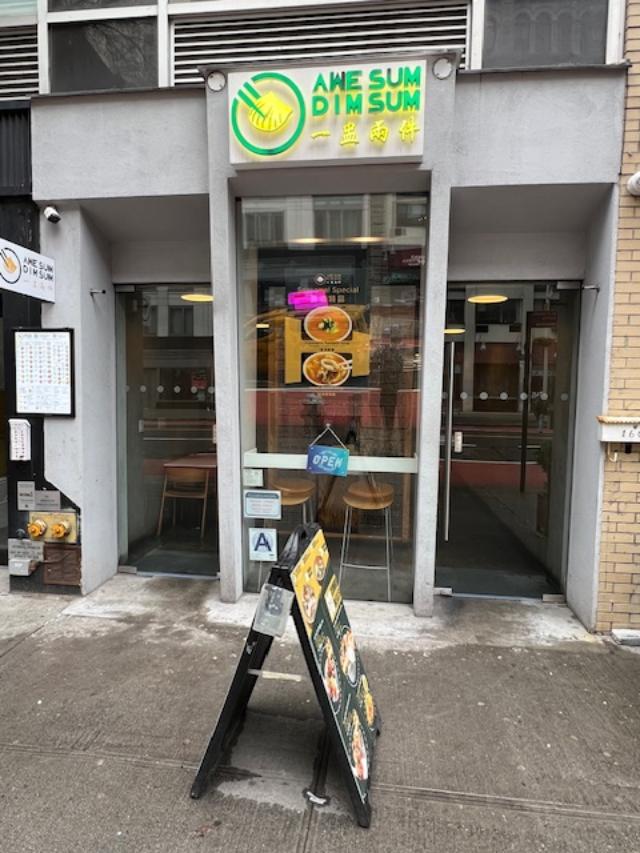
I stopped for lunch at a Dim Sum restaurant named Awe Sum Dim Sum at 160 East 23rd Street and it was just excellent. I took my friend, Maricel, here for lunch when it first opened and we ate through most of the menu (see my reviews on TripAdvisor and DiningonaShoeStringinNYC@Wordpress.com).

The Awe Sum Dim Sum at 160 East 23rd Street

https://awesumdimsum.us/

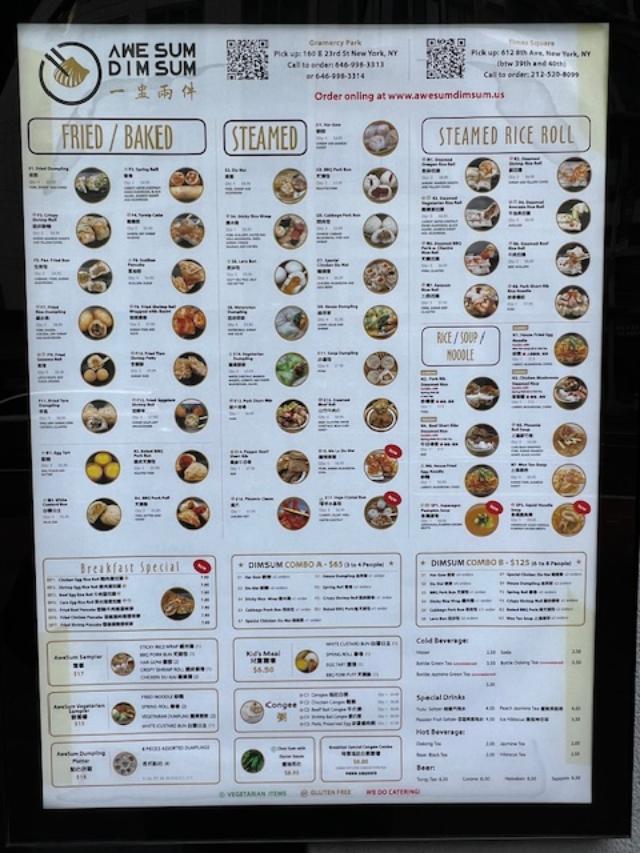
The menu items that the restaurant carries.

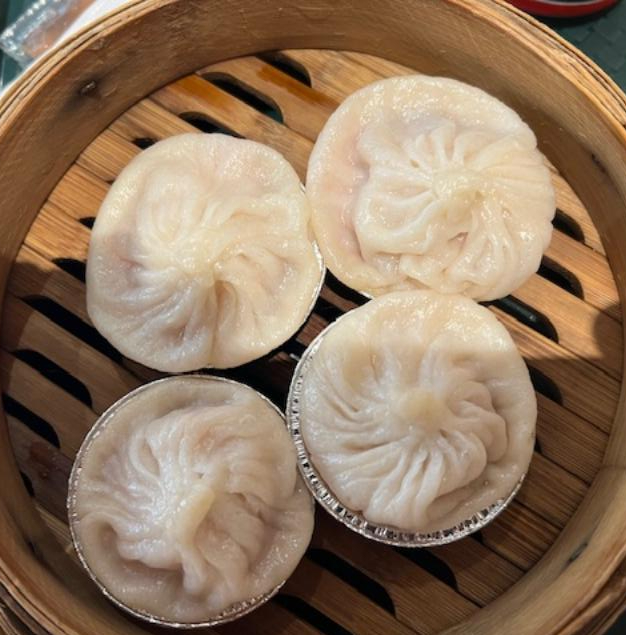
The restaurant has the most amazing appetizers to choose from that are all made in house and served fresh to you either at your table inside or one of the many tables outside (while the weather holds out). On my trip with Maricel, we ate our way through the Fried Dumplings, the Chicken Siu Mai, the Spring Rolls, the Baked BBQ Pork Buns, the Scallion Pancakes and the Soup Dumplings. On my trip today, I ordered the Soup Dumplings, Crispy Shrimp Rolls and the Siu Mai with pork and shrimp.

The Soup Dumplings here are the best

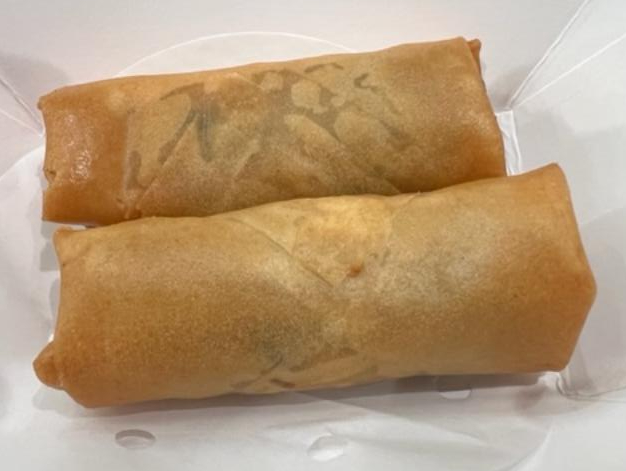
So are the Spring Rolls when they are fresh out of the fryer

On one of the trips I had the Pan Fried Pork Buns, Spring Rolls and Roast Pork Buns.

With the cost for each running between $4.00-$6.00, I could eat my way through the menu. The nice part is what a nice contemporary designed restaurant the place is to dine in. Everyone is kept ‘socially distanced’ so it is a nice place to eat.

The inside of Awe Sum Dim Sum

After a nice relaxing lunch, I was ready to continue down East 23rd Street. Criss crossing the street again, I noticed the beauty of 219-223 East 23rd Street. The building has all sorts of griffins and faces glaring out. When you stand across the street, you can admire the beauty of all the carvings on the building along the archways above and the faces staring at you from the tops of windows.

219-223 East 23rd Street

The window details of 221 East 23rd Street

https://www.cityrealty.com/nyc/gramercy-park/219-east-23rd-street/7437

Another building that stands out is 304-310 East 23rd Street. This former factory building was built in 1900 and now is the “The Foundry”, a converted condo complex. The amazing detail on the building stands out and you have to admire the stonework and details in the carvings along the building.

304-310 East 23rd Street is a former factory

https://www.cityrealty.com/nyc/gramercy-park/the-foundry-310-east-23rd-street/3880

The stone work is a standout on this building

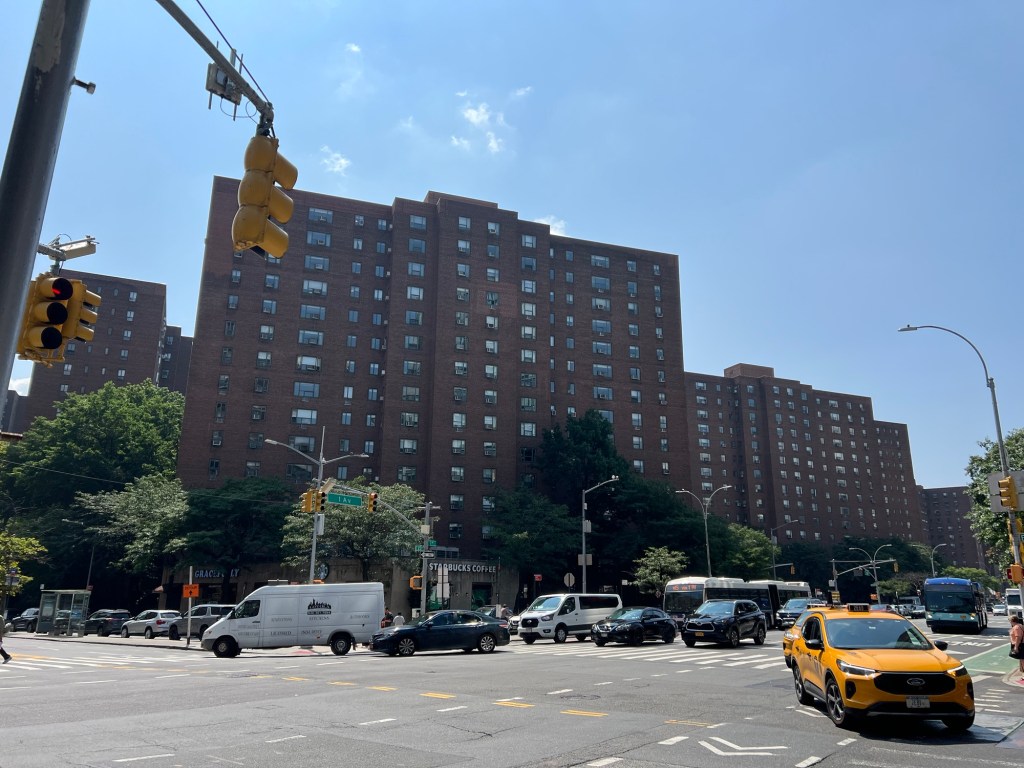
Reaching the end of East 23rd Street, you will see the planned middle class complex of Peter Cooper Village, which has gone market rate and is now getting very upscale and seems to have a younger resident walking around then the usual middle aged residents who used to be on the list to get one of these very desirable apartments.

The entrance to Peter Cooper Village at First Avenue

https://www.petercoopervillage.com/

Across from Peter Cooper Village is the Asser Avery Recreational Center and Playground 392 Asser Avery Place with the famous baths and pools that have been part of the neighborhood for generations.

The Asser Levy Recreation Center and Park at 392 Asser Levy Place

When the baths opened in 1908, the facility was called the East 23rd Street Bathhouse. It was by architects Arnold W. Brunner and William Martin Aiken. Based on the ancient Roman Baths, the architecture was inspired by the “City Beautiful” movement, a turn of the century effort to create civic architecture in the United States that would rival the monuments of the great European capitals (NYCParks.org). The playground next to it opened in 1993.

The architecture by Arnold Brunner and William Martin Aiken resembled a Roman Bath

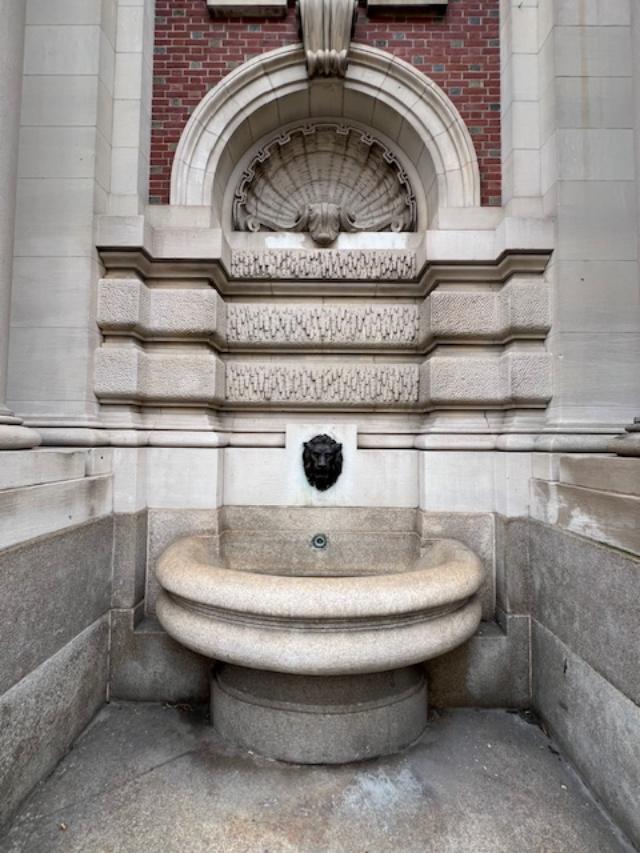
The fountain at the bathhouses.

The historic plaque.

The Baths and Park was named for Asser Levy, a Jewish trailblazer in colonial times when Mr. Levy and 23 Jews fled from Brazil in 1654 to seek refuge in New Amsterdam. He challenged Governor Peter Stuyvesant when he tried to evict the Jews from the colony. He was the first Jew to serve in the militia and own property in the colony (NYCParks.org).

Asser Levy

http://www.jewishencyclopedia.com/articles/9876-levy-asser-asser-levy-van-swellem

The border to the east of the neighborhood is combination of the East River Esplanade, FDR Drive and First Avenue. Since First Avenue and FDR Drive are surrounded by a combination of college campus and hospital space, it makes walking around the neighborhood tricky.

When you walk across East 23rd Street to FDR Drive, you have to cross over FDR Drive at East 25th Street behind the VA New York Harbor Healthcare System Hospital complex and the CUNY/Hunter College campus and then cross over the bridge to the Waterside Plaza complex.

The Waterside Plaza complex and the Greenway walkway

https://streeteasy.com/building/waterside-plaza

This series of apartment buildings faces the East River and FDR Drive that leads to the East River Greenway walkway and the Waterside Plaza walkway both surround the complex. The views are breathtaking on a sunny afternoon of the East River and Long Island City.

The East River Greenway and the view of Long Island City.

East River Greenway looking at East 23rd Street

I turned around from the river (which is technically not part of the neighborhood) and walked down First Avenue. First Avenue is an unusual border for the neighborhood in that on one side is the gated communities of Peter Cooper Village from East 23rd to East 20th Streets and Stuyvesant Town which is from East 20th to East 14th Streets and on the border of Avenue C at the very eastern border. These once middle-income housing that once catered to teachers, fire fighters and police have gone market rate in the last twenty years, and you can see the changes in the chain businesses that now line their side of First Avenue.

Peter Cooper Village lining East 23rd Street

https://www.apartments.com/townhomes/stuyvesant-town-peter-cooper-village-new-york-ny/?bb=21mx4myuvHnj_9a

Peter Cooper Village on the corner of East 14th Street and First Avenue

Stuyvesant Town-Peter Cooper Village was one of the biggest post WWII private developments created in Manhattan. It consists of 110 red brick buildings that spreads over 80 acres of land below East 23rd Street. The complex was developed by Metropolitan Life Insurance Company based on the earlier success of the Parkchester complex in the Bronx. The first buildings opened in 1947. The complex used to be catering to middle class/middle income rent controlled apartments but since 2006 has gone more market rate (Wiki).

I found that you are not allowed to walk around the complex without permission so I just walked around the borders of the complex that had open roads. Please just don’t ‘walk around the complex’ without permission or know someone in the complex. Still I was able to walk through some of the well landscaped corners of the complex. They do a nice job maintaining the complexes.

On the other side of First Avenue just below East 20th Street starts Stuyvesant Town

https://en.wikipedia.org/wiki/Stuyvesant_Town%E2%80%93Peter_Cooper_Village

The gardens in between the buildings in Stuyvesant Town in the Summer of 2024

On the other side of the street, there are small brick and brownstone buildings housing businesses that cater to the complex with a combination of chain and independent stores. I thought the whole Avenue could use a bit of a makeover. So much of the neighborhood was under scaffolding. Walking down First Avenue I noticed a lot of newer businesses on the complexes side of the street with more upscale restaurants and bars. Now that this is market rate housing and there have been renovations in the complex, a wealthier clientele has moved into the two complexes.

On the business side of First Avenue, it’s a combination of small restaurants such as pizzerias, delis and bodegas and services catering to the residents in both complexes. Here and there are some very reasonable places to eat. From 23rd Street to about 16th Street are businesses that cater not just to the housing complexes across the street but to the office buildings around the corner at East 14th Street.

The independent businesses lining First Avenue and East 21st Street

The independent businesses along First Avenue and 19th Street

Turning onto this part of 14th Street just above Alphabet City, I found I was far away from the old Ladies Shopping District and the beautiful architecture that once housed those stores. That is closer to Fifth Avenue and Broadway. On one side of East 14th Street are new buildings catering to office workers. The northern side of East 14th Street is a series of old brick and brownstone buildings that house small restaurants and bars.

The East 14th Street shopping district is made up of small businesses

Looking up Second Avenue at East 14th Street

As you enter the heart of East 14th Street as I rounded the corner, I saw a tiny fire fighter outside Engine 5 at 340 East 14th Street.

Engine 5 at 340 East 14th Street

https://www.instagram.com/explore/locations/32846714/fdny-engine-5-14-st-express/

https://daytoninmanhattan.blogspot.com/2022/07/the-1881-engine-company-5-340-east-14th.html

Engine 5 was founded as a Volunteer Fire Company in 1865. This firehouse was designed by Napoleon LeBrun & Son in 1881 and is still used today (DaytonianinManhattan.com).

Little Fire Fighter at Engine 5

Looking down East 14th Street shopping and dining district

There is a real diversity of businesses down this stretch of East 14th Street from First to Third Avenues.

Coyote Ugly Bar, famous of the film, at 233 East 14th Street

https://www.facebook.com/CoyoteUglySaloonNYC/

Review on TripAdvisor:

https://www.tripadvisor.com/Attraction_Review-g60763-d259689-Reviews-Coyote_Ugly-New_York_City_New_York.html

The bar was made famous by the movie of the same name back in 2000.

The trailer for the movie “Coyote Ugly”

Here I noticed a lot of newer buildings that have changed the dynamic of the neighborhood housing small businesses, city agencies and some of the buildings that have become part of the NYU campus. 14th Street is now a hodge lodge of different businesses such as restaurants and stores and a lot of fast-food places catering to the college students and the office workers.

328-330 East 14th Street

https://streeteasy.com/building/328-east-14-street-new_york

https://www.apartments.com/328-e-14th-st-new-york-ny/svj96n5/

This six story walk up apartment building was built in 1900 and is one of the last holdovers in this neighborhood. You have to look up at all the faces staring at you to appreciate it (Streeteasy.com).

The entrance to 328 East 14th Street

The faces staring at you from the entrance of 328 East 14th Street

As you get closer to Union Square Park, you see more of the classic architecture and upscale housing. In an ever-changing Manhattan, this area like every other section of island is being knocked down and rebuilt. The closer to the parks you get, the more upscale things get.

At 124 East 14th at the base the NYU campus at part Palladium Hall is Urbanspace Union Square. There is a selection of upscale restaurants catering not just to NYU students but to the business community as well. This just opened in August 2024 so I had not noticed it when I was recently attending NYU.

Urbanspace Union Square at 124 East 14th Street

https://www.urbanspacenyc.com/union-square

https://www.facebook.com/urbanspace/

I took a quick walk through the food court and looked over the over-priced menus of the restaurants. I could not believe the prices of these places and how it catered to college students but the place was packed. I also saw two young plain clothed policemen looking over the food court and that was a little unnerving but a sign of the times.

The food court in the afternoon

Some of the upscale restaurants at the Urbanspace Food Court

When I arrived back at my starting point in Union Square Park, it was nice to sit on the benches and listen to the street performers practicing their music. The park has been such a relief from the heat and a place to cool down is probably the reason why the wealthy called this home before the Civil War. There is a lot of calm in the park in this very busy crossroads to uptown.

Looking down East 14th Street from Irving Place

Arriving back at Union Square Park in the Summer 2024

Union Square Park in the late summer is quite spectacular

Union Square Park is just spectacular during the Summer and it is nice to just relax on the lawn or sit on the benches and read a book. It is nice to just calm down and relax and enjoy the day. The Gramercy Park area is unique in architecture, parks, restaurants and shops and there will be more to explore in the future.

Please read my other blogs on Gramercy Park:

Day Three Hundred and Twenty Walking the Borders of Gramercy Park:

https://wordpress.com/post/mywalkinmanhattan.com/51647

Day Three Hundred and Twenty One Walking the Avenues of Gramercy Park:

https://wordpress.com/post/mywalkinmanhattan.com/53432

Day Three Hundred and Twenty Four Walking the Streets of Gramercy Park:

https://wordpress.com/post/mywalkinmanhattan.com/53788

Day Two Hundred and Fifty-One: Halloween in Hasbrouck Heights, Salem, NJ and the Hudson River Valley October 1-31st, 2022

I do not think my feet touched the ground the entire month of October. Halloween night was spent in classes doing presentations and starting a new class on the Metaverse at NYU. It was not too awful as it rained during the parade for about an hour and was not the usual clear sunny (and usually warm) day that it had been in the past. Even though my partner at the parade, Mark Schuyler, said it was fun, the rain would be a bit of a deterrent.

The Village Merchant windows

The end of September lead to the crazy days of October as I settled into my classes at NYU and continued to get more assignments than I could keep up with. Between the three classes that I was taking at NYU and the three classes at Bergen Community College that I was teaching, my hands were so full that I never stopped running around. Everyone just kept adding more and more and I just had to keep up.

The Village Merchant windows at Halloween

The weather was surprising warm through early November this year which made the walk from Port Authority to campus a real pleasure. This is how I knew that Halloween was on its way. Here and there amongst the great little stores in the neighborhood, the window displays were full of pumpkins, witches, ghosts and ghouls and things that go bump in the night.

The Salvation Army windows around the corner from NYU

Many of the merchants in the neighborhood really decorated their windows and it made it fun to exploring the side streets.

The Theater around the corner from NYU

As I walked through Washington Square Park, I thought back to the Haunted New York Ghost Tour that I took with the Cornell Club the year before and passed some of the sites in the neighborhood that we visited on the tour especially the “Hanging Tree” at the edge of the park.

The “Hanging Tree” in Washington Square Park where they used to hang prisoners until Society moved to the neighborhood and asked them to stop.

I passed through Gramercy Park to see what was going on in the park and people really decorated around the neighborhood.

Gramercy Park home decorated for Halloween

Gramercy Park at Halloween is unique

The Haunted Gotham Ghost Tour of 2021:

https://wordpress.com/post/mywalkinmanhattan.com/19628

I also remembered that Washington Square Park was a giant cemetery with a park on top of it. I am not too sure if people in the neighborhood or my fellow NYU classmates know all of this. Every once in a while when they have to fix the pipes near the edge of the park, they hit the tombs where bodies now rest. It is kind of eerie to know that people are buried under where people now play music, dance and protest. Just hope we don’t wake them up (Hee Hee).

Downtown Hasbrouck Heights decorated for Halloween in 2022

In early October, people really get into Halloween in a major way in Hasbrouck Heights and I start noticing that people are decorating their houses more for the holiday. By the end of the month, the Men’s Association starts to run around town judging houses for our annual contest. Some people started decorating early.

The beginnings of Halloween in Hasbrouck Heights, NJ

The beginnings of Fall in Hasbrouck Heights, NJ

Looks like the competition will be fierce this year

My neighbors even put their evil scarecrow “Giggles” outside to scare the passersby on Route 46 East. I swear this thing has a mind of its own.

“Giggles the Scarecrow” at Route 46 East in Hasbrouck Heights, NJ

The story of “Giggles the Scarecrow” on MywalkinManhattan.com Day One Hundred and Eighty-One:

https://wordpress.com/post/mywalkinmanhattan.com/15868

As the temperature stayed warm and the trees stayed green, I could see the windows in Downtown Hasbrouck Heights start to change as the Annual Halloween Children’s Painting Contest for the elementary schools began. This goes on for about a week and sometimes the paintings stay up until Christmas time as people don’t realize that they are still on the windows. Some of these kids are really creative and do a nice job.

The Hasbrouck Heights Halloween WIndow Painting Contest

The merchants in our downtown like in the Village start to get creative with the window displays and this is why on the Hasbrouck Heights Men’s Association we added a Merchant winner this year to our Halloween House Decorating Contest. So many of the merchants do such a terrific job of getting into the spirit of the holiday. Halloween is a big business now.

Heights Flower Shoppe was our winner this year and this picture does not give the display justice

Spindler’s Bake Shop decorated inside and out to be the Runner Up

Residents of Hasbrouck Heights for Halloween last year went all out decorating their houses for the holidays. This year it seemed a bit more subdued as the economy, the elections and just the general environment seemed a bit testy, people held back a bit but some residents went all out and by the end of the month we started the Second Annual Hasbrouck Heights Men’s Association House Decorating Contest with a new Merchant Category. Halloween then really kicked off.

I knew that Halloween was coming when I saw the kids on the Boulevard painting away at the Merchants windows in Downtown Hasbrouck Heights the first week of October. The funny part is that I sometimes see these paintings through Christmas.

The kids do such a great job though and they are so creative. Here is a sampling up and down the Boulevard that I saw when I was judging businesses for Halloween. This is just a sampling of some of the paintings that the children of Hasbrouck Heights in 2022:

Ist Place

Some of the paintings on the Boulevard with the winner

Paintings on the Boulevard

Paintings on the Boulevard

Paintings on the Boulevard

Paintings on the Boulevard

Paintings on the Boulevard

Paintings on the Boulevard

Paintings on the Boulevard

Paintings on the Boulevard

The contest is really popular every year and there are winners at every level

With classes in full swing and projects that I had to work on it made it tough to have free time to visit a lot of places that I had done in the past, so I concentrated on new experiences and trying to revisit the places I had when I had a free moment. It took a lot of planning, but I was able to get to upstate New York and down to Southern New Jersey again. In simple terms, between classes and work, I never stopped running around for the entire month of October. I did a lot of driving this month.

First I had to spend my birthday in class making a major presentation in my ‘Business Models’ class and my ‘Travel Trends’ class. That was nerve wracking enough but I got an “A” on both so I was really happy. I did the project on Wheelchair tourism in NYC and the challenges that a person could face when visiting Manhattan in a wheelchair.

The in the evening, I was in my Business Models class explaining the use of the “Garbage Box”, a mythical product that I created to contain all the street garbage from leaking on the sidewalk and making the sidewalk a bit more attractive by packaging the garbage. That earned me another “A”.

The “Garbage Box” prototype that when after class I really used it and packed garbage inside and left it at the curb. See how much nicer the garbage looks now?

Between those two classes and work on my two classes getting papers graded and getting quizzes done, I was burnt out. When I got home from my Thursday night class in Lyndhurst, I went to Heights Bar & Grill in Hasbrouck Heights for a drink and a snack. Happy Birthday finally to me!

My birthday dinner (two weeks late) at Heights Bar & Grill. The Cosmos and Pizza were amazing

My TripAdvisor Review on Heights Bar & Grill:

https://www.tripadvisor.com/Restaurant_Review-g46497-d4734828-Reviews-The_Heights_Bar_and_Grill-Hasbrouck_Heights_New_Jersey.html?m=19905

When I finally got those projects over and done with for school, I went Upstate to the Hudson River Valley for the Sheep & Wool Festival at the Dutchess County Fairgrounds on October 16th to enjoy the unseasonably warm weather and to walk around the fairgrounds.

I don’t think the festival anticipated that many people that day

It ended up being almost 75 degrees that day but felt warmer. The fairgrounds were packed the entire afternoon. Not quite during the Dutchess County Fair but the food vendors were out in full force and that made me happy. There were not as many as during the fair and that led to a lot of long lines. This is the reason why I decided to walk around for a bit.

The large crowds at the food concessions at the Sheep & Wool Festival

Please enjoy my blog on the visiting the Sheep & Wool Festival Day One Hundred & Forty Nine:

https://wordpress.com/post/mywalkinmanhattan.com/10723

I made my way to the animal pens and the Arts & Crafts sellers. You could see that everyone was getting ready for the Christmas holiday season. There were all sorts of items for stocking stuffers and people had all sorts of beautiful handcrafted ornaments and Santas. I love visiting my favorite woodcarving artists where I get my mother’s Santas every year.

Because of the warm weather, I don’t think the festival figured on the number of people

The guys were all there and all three of them showed me what they had to offer this Christmas. Since I never carry cash around (a mugger would hate me) and they never take credit cards, its makes it easy to make a selection. I have to buy the cheapest most creative one each year.

The wood carvers are so talented. I buy my Santas from these three men every year

I could not decide so I told the guys I would do what I usually did, see what was left over when I got back and make a decision then. I think they get a kick out of that philosophy of mine. I walked around the rest of the building to see what was there but I have a tough time spending $10.00 on a bar of soap or $20.00 on a bottle of honey. I do have limits on what I will spend money on.

The crowds on a warm October afternoon at the Sheep & Wool Festival

I walked around the rest of the buildings looking at the arts & crafts, a lot of yarn and crocheted articles at the booths and the homemade food stuffs. There was a lot to choose from. As I left the buildings with all the homemade articles, I passed displays for Halloween and could not even think about Christmas at this point (it’s always there at Halloween anyway) and remembered which holiday was coming up.

I loved this ‘Disco’ Ghost display in the main buildings

When I got to the animal pens that are usually filled with animals at the top of the hill were filled with more vendors. There were all different types of things to buy from ceramics to homemade flowers to honey and other wonderful gourmet foods to handmade cosmetic products. There really was something for everyone here.

I saw one of my favorite Children’s Arts & Crafts artist’s at the fair, Susannah White and I see her work every year. She creates the most wonderful dolls, fairy houses and masks. Everything is done by hand and her prices are very fair for the craftsmanship and attention to detail that each piece has to it.

I love the creativity and attention to detail this merchant has in her work

Artist Susannah White of Carapace Farm Pupperty

https://www.etsy.com/shop/carapacefarmpuppetry

https://www.facebook.com/susannah.white.12/

These are some of her finger puppets and masks that she create for ‘children’ but I see plenty of adults buying them too. I have to think about getting one of these in the future. They are ‘art’.

Another one of my favorite ‘children’s artists’ was there also displaying her puppets and sculpture as well. Artist Bonnie Hall creates these fantastic 3-D beasts of the imagination. They are so unusual and cute.

Bonny’s Beasts at the Sheep & Wool Festival

https://www.bonnysbeasts.com/

I walked the rest of the booths but nothing stood out as these few did. I always look forward to seeing these vendors and what they have come up with in terms of new merchandise.

I then visited the animal pens and made it in time to see the sheep being sheared and groomed. There are some people from the City that looked amused by all of this with a look in their eyes like, “it’s this quaint” when the very clothes they are wearing were created with a process that begins like this.

Some of the groomers explained how they do this and the process behind the step by step process it takes to shear an animal. Also, the difference in the wool from one part of the body to another and the difference in feel of it. I as a retailer thought this was fascinating. It is almost the same as when you skin an animal for its pelt. What is the difference between long hair fur and short hair fur.

The sheep looked they did not mind all the attention either making it a show of itself. They were probably used to all the attention at these shows after all these years.

I loved walking along the pens and looking at all the sheep and lambs staring back at me as well. I think they are amused by all of this as much as we are. These animals must be so used to human contact that they are jaded by it. Still it makes for an interesting interaction.

Ruppert’s stall at the fair

http://www.ruppertscorriedales.com/index.html

I walked around the fairgrounds to the rest of the pens and there was a combination of sheep and lambs. There were displays of the animals and the groomers were showing everyone how to care for them.

After I toured all the pens and barns with arts and crafts, I toured the small museums on the fairgrounds. I toured the Century Museum Village, which is a permanent museum on the property which shows life in rural New York State between 1880-1930. There was also the Schoolhouse Museum and Train Station Museum right up the hill from it. These give a look into Dutchess Counties past and compares how much has changed to today.

The Century Museum Village on the Dutchess County Fairgrounds

The inside of the museum and the counties rural past

My review on VisitingaMuseum.com on the Century Museum Village:

https://wordpress.com/post/visitingamuseum.com/9609

By the end of the afternoon, the lines had gone down for food but not by much. I still had to wait in line at Janek’s for a Cheeseburger for a half hour. The lines only went down about an hour before the Sheep & Wool Festival closed for the day.

Janek’s makes the BEST burgers ever!

My favorite lunch at the fair is Janek’s ‘Piggyback Burger’, which is a freshly made burger topped with Cheddar Cheese, pulled pork, cured ham and topped with barbecue sauce and homemade pickles. Biting into it is like biting into a piece of heaven. The burger does not need any salt or pepper and make sure to get it with the side of their homemade pierogis with sour cream. I only eat this twice a year, once at the Dutchess County Fair and once at the Sheep & Wool Festival and I am satisfied for the rest of the year.

“The Piggyback Burger” with the side of homemade pierogis

As I relaxed and enjoyed my lunch, I could see that the sun was starting to move around, and the day was starting to get darker out. I had not realized that I spent the entire day at the fair. Time really went by fast especially as I had never seen crowds like this at the fair before. Having such warm weather made a big difference in the crowds. I think the food vendors will rethink this last year since there were a lot less then for the Dutchess County Fair.

As I left the fair that afternoon, I passed the St. James Episcopal Church in Hyde Park who were holding the Historic Graveyard Tours that evening. I did not have a reservation but stopped in to see if I could tour the graveyard that evening. I had planned on coming up the next week but since I was here, I figured why not try now (Thank God I did because it rained the next weekend). I stopped at the church first in the afternoon just in case I could not make the tour. No one was around but I took a quick tour of the cemetery before I left for the Sheep & Wool Festival.

The sign outside the church

The St. James Episcopal Church of Hyde Park at 4526 Albany Post Road

https://dioceseny.org/venue/st-james-church-hyde-park-2/

I walked down the path marked for that evening’s Cemetery Walk and got to see the graves and crypts before it got dark. In the start of the fall, the cemetery was very picturesque on a sunny afternoon. There was almost an elegance to the cemetery with its detailed tombstones and colorful foliage. It looked like a quiet and elegant resting place for these residents of Hyde Park. There are a lot of famous names buried here.

St. James Church before you enter the cemetery

The start of the Cemetery Walk during the day

Walking through the cemetery during the day is interesting

A walk through the cemetery at St. James

Following the path of the Cemetery Walk during the day

The Livingston Mausoleum at the St. James Cemetery

Sara Delano Roosevelt (the President’s Mother) gravesite at St. James Cemetery

Walking through the tombstones at St. James along the Cemetery Walk path

The graves at the St. James Cemetery

It is an interesting tour. Before I got to the fair, I had stopped by the church to talk to someone about the tour, but no one was around so I just walked the path on my own and took pictures during the day so it least if I could not go on the tour, I had seen the cemetery. It was really interesting. The tour guide took us on a lantern tour on a marked path of the 200-year-old graveyard and we got to meet characters who were buried there portrayed by local actors (who I never know how they do it. They have to sit in a dark cemetery until the next tour comes through).

inside the St. James Episcopal Church before the Cemetery Walk

We met in the church first and did a quick orientation on what to expect and then the tour guide took us on the tour. It was very interesting, and the actors did a good job with each character. We met the following characters:

Captain Isaac Russell, a Revolutionary War Soldier who fought in the Battle of Bunker Hill and was present at the surrender of General Burgoyne on October 17th, 1777.

Anna Roosevelt Halstead, the daughter of Franklin and Eleanor Roosevelt. She had served in President Kennedy’s Citizens Advisory Council on the Status of Women, and she also served as the Vice-Chairman of the President’s Commission for the Observance of Human Rights.

Susan Cowman Carter, an early St. James Choir Director and organist.

Christopher Hughes III, a 19th century Hyde Park farmer

Adelaide Roddy, a pioneering early 20th century female Theologian who died on her honeymoon of spinal meningitis.

Arthur (Rube) DeGroff, Hyde Park’s very own Professional Baseball Player who had played with the St. Louis Cardinals in 1905. He played one game in 1906 and then was sent back to the minors.

The tour was very interesting, and each actor did a good job telling their story. The tour guide was right though, you had to stay on the path, or you would trip over a tombstone (as I almost did). I have to say one thing in that I was glad there were so many people on the tour and that the next tour after ours was full as well. Once you passed the lit areas, this cemetery was really gloomy and dark. Even the church looked a little creepy from a distance. Maybe that was the effect that they were going for on the tour. After the tour was over, I headed home.

School got even busier, so I had to pace myself with the activities and I managed to finish all my homework as well as get the students quizzes graded and the papers finished before I left for South Jersey the next weekend. The weather was going to be nice, and I decided to head back down to Salem, NJ again to finish touring some of the historical sites for my blogs and to go on the Salem Haunted Tour of the Downtown business district.

The Salem NJ Walking Ghost Tour in 2023

Before the walking tour there would be a concert “Tunes from the Crypt” at St. John’s Episcopal Church with musician Erik Meyer.

I had seen this tour advertised for many years, but it was tough to go on it from such a distance away. Since the weekend would be open, I hopped in the car on a Friday night and made another reservation at the Inn at Salem Country Club for the night. I was glad that Yvonne, the owner had the room open.

I got down early enough on Friday afternoon to take pictures at the Salem Oak Cemetery, the Salem Historical Society and at various points of interest in Salem’s Historical Downtown.

The historic Salem Oak Cemetery where many of the founders of Salem are buried and was home to the oldest Oak Tree in the State until it fell in 2019.

The Salem Oak Cemetery on VisitingaMuseum.com:

https://wordpress.com/post/visitingamuseum.com/7707

The Salem Historical Society is always interesting to visit

The Salem Historical Society in VisitingaMuseum.com:

https://wordpress.com/post/visitingamuseum.com/1742

The Salem Fire Museum is never open (except at Christmas time)

The Salem Fire Museum on VisitingaMuseum.com:

Downtown Salem has the most beautiful and historical residential district

I snapped pictures all the over the downtown area and managed to get all the pictures that I missed over the summer when I came down to do my blog on the Historic sites of Southern New Jersey (see blog below):

My blog on the Historical Sites of Southern New Jersey: Day Two Hundred and Forty:

https://wordpress.com/post/mywalkinmanhattan.com/24348

Before I took the tour and after I settled into the hotel, I had a quick dinner at Bravo Pizza at 179 West Broadway in Downtown Salem.

The inside of the dining room of Bravo Pizza

I must have been attracting attention with all my picture taking in Downtown Salem. Since Salem is not the safest town, some gangbanger looking guys came in while I was eating my meatball hero to check me out. I just stared back, and they disappeared out the back door. I swear everyone thinks I am a Fed.

Bravo Pizza & Pasta at 179 West Broadway is really good and the prices are fair

https://www.bravospizzasalem.com/

My review on TripAdvisor:
https://www.tripadvisor.com/Restaurant_Review-g46799-d4514081-Reviews-Bravo_Pizza_and_Pasta-Salem_New_Jersey.html?m=19905

The meatball subs are really good here

I was able to get settled into the Inn before the tour and took a lot of pictures of the church’s cemetery before the Haunted Walk and then got to the church in time for the organist started a special Halloween concert. This was taking place before the walking tour. The weather surprisingly cooperated, and it was a warm October weekend.

The Inn at Salem Country Club at 91 Country Club Road (Now called the Salem River Inn)

https://salemriverinn.com/

My review on TripAdvisor:

https://www.tripadvisor.com/Hotel_Review-g46799-d12378333-Reviews-Salem_River_Inn-Salem_New_Jersey.html?m=19905

Once I had eaten and was settled in, it was time to visit the downtown before the concert. Halloween weekend in recent years has gotten much warmer. The night of the concert and the walking tour was not different. It must have been in the mid 60’s the night of the tour.

I was one of the first ones at St. John’s Episcopal Church that evening so I got a prime parking spot right in front of the church and since there were no signs that I could not park there, it was nice that I did not have to move far.

St. John’s Episcopal

http://www.stjohnssalemnj.org/

https://www.facebook.com/StJohnsSalemNJ/

The historic marker of the St. John’s Church

The inside of the church was beautiful with all the historic stained glass windows and wooden pews. I was walking around admiring the church before the concert. What I love about these hundred year old churches is that they have a classic look to them. There is such a history to them. I admired the stained glass windows which were beautiful.

The inside of St. John’s Church

The stained glass windows at the church

The stained glass windows at the church

The church was very impressive. Most of these were Tiffany windows

Still these churches are so old that they have an intriguing look to them with an air of mystery. The interiors look like they belong in a independent horror film.

Even the church had a mysterious look to it at night

Musician Erik Meyer performed a series of classical horror film melodies on the church organ. What I thought was funny was the priest for St. John’s Church did the introduction and made a comment to a packed church full of people of all ages in the pews this was the most amount of people he had seen in the church in a long time.

Musician Erik Meyer dressed as Count Dracula next to the organ

After the concert was over, I talked with Erik Meyer about the irony of performing Halloween music in a church. He said many churches while their thoughts on Halloween are mixed have embraced this type of fundraiser to bring people back to the churches and raise money for them at the same time. He also told me that he had been performing these concerts at churches all over the state for the same reason. They have become very popular.

Royal Port Antiques at 13 Market Street was our starting and stopping point for the tour

https://www.facebook.com/royalportantiques/

After the concert was over, the whole group of us at the church headed over to the antique store where we would be starting the Haunted Historical Walking Tour of Downtown Salem. The tour took us from the store to the Salem Historical Society and back. I guess the rest of the Downtown at night was not the safest (I experienced that).

The start of the Ghost Tour

I have to admit the Historic Market Street neighborhood while very pretty and elegant with all the Federalist homes during the day is very pretty, at night it does look pretty spooky.

Downtown Salem Market Street Historic District at night

People did decorate in Downtown Salem, NJ

This townhouse really got into the spirit of Halloween

More detail on the house

Our first stop on the tour was visiting a small Dutch house that was a recreation of old homes that used to be part of the community. The home had been rebuilt in honor of visiting dignitaries visiting from Europe. The house was now a popular tourist site. While we were inside we got to peek inside and see the furnishings and a live fire in the fireplace.

The small Dutch House on the walking tour

I went back the next day and it did not seem that creepy

A Salem resident shares a ghostly tale of his home since moving here

Creepy tales at the Salem Historical Society courtyard

The Society courtyard is less creepy and very beautiful during the day with the fall foliage

Tales at the St. John’s cemetery

The St. John’s Cemetery is a very interesting place to visit during the day. The foliage in Salem, NJ was at its peak right before Halloween and the end of the October and I got to tour the graves of the people that the narrator was talking about during the day. It was an interesting story of how this resident treated his first wife in death and treatment of the second wife when she died. People are still people.

The entrance to St. John’s Cemetery

During the day, walking around this historic cemetery is very interesting. Many of the founding members of the Salem community are buried here and you can find the family cemetery plots among the paths. I would take the time to visit and walk around this interesting piece of the past.

The the tale of the Second wife that you see above during the day. The husband and second wife are in the elevated crypts and the first wife has a slab on top of here. As the narrator said this is what he thought of her in the end.

Colonial Robert Johnson and his second wife, Julia in the elevated crypts

The St. John’s Cemetery during the day

The St. John’s Cemetery

The St. John’s Cemetery family plots

The famous people buried in the cemetery-The Sinnickson Family plot-One of the founding families of Salem, NJ

After we left the church, we joined this friendly witch who told us the story about a spirit that haunts houses. To confuse them, you have to leave a bowl of rice at the doorway so that you confuse the spirit as it tries to count the grains of rice and then gets frustrated and leaves. I had never heard this story before but I did get a small bag of rice as a gift that I keep in my travel bag now.

Tales of spirits and the use of rice to keep them away

A Ghoul with a New York accent tells the tales

We ended the tour at the Salem Creek with tales of ghostly fisherman but you could not see anything at night so I took this the next morning. I almost tripped on the hill leaving this little park.

After the tour was over, we went back to the antique store to have hot cider and homemade cookies. I thought this was a very nice touch to a wonderful evening. There were a few more tours going on after I was finished so I got to walk around the antique store and then around the downtown and look at all the buildings at night. On a warm October evening, I found this tour to not just be relaxing but fascinating as well to learn the history of the town. When I got back to the Inn, I slept so soundly that night.

When I woke up on Saturday morning, it was a beautiful sunny day, and I watched the phases of the sun come up over the field from my bedroom window. I swear the location of this Inn is amazing and has the most spectacular views.

The Inn at Salem Country Club sunrise:

Sunrise from my room

Sunrise from my room

Sunrise from my room

Sunrise from my room

Sunrise from my room

The sunrise from my room in its final phase and it was an amazing warm day.

What I like about the Inn at Salem Country Club is its location on Delaware Bay. In the warmer months, people use the beaches outside the Inn for swimming and recreation. Its location on the Delaware Bay is pretty spectacular and I never really noticed when I visited in the summer. I was so busy running around Southern New Jersey and I had gotten there late and left early the last time. On this trip, I had more time in the morning to walk around the grounds before I went to visit the remaining museums on my list (most of them were closed anyway as they were only open on certain weekends).

The grounds of the Salem Country Club Inn in late October

The grounds of the Inn were very beautiful on this warm Saturday morning in late October. The leaves were still changing colors and the weather was warm. I had my breakfast on the enclosed terrace (it was too cool to eat outside in the morning) and just watched the boats and birds pass by. It was such a wonderful morning to just relax and watch time go by.

The beach at the Inn at Salem Country Club

The lawn of the Inn of Salem Country Club

The beach at the Inn at Salem Country Club

After a relaxing night’s sleep, Yvonne ordered breakfast for me again from the Salem Diamond Diner just past the downtown. Over French Toast and sausage and fresh fruit, I watch the beauty of the Delaware Bay from the open room on the first floor. It was too cool to eat on the deck but another five degrees and I would have been out there. The views are just amazing when it is sunny.

My reviews of breakfast sent to me at the Inn from the Diamond Grill in Salem:

https://www.tripadvisor.com/Restaurant_Review-g46799-d24137933-Reviews-Diamond_Grill-Salem_New_Jersey.html?m=19905

The rest of the day after I checked out I spent revisiting or trying to visit historical sites that I have missed on my Father’s Day weekend trip here. Most were so small that they were not even on the listing that I had from the summer. Almost all of them were either closed for the season at that point or would be open sometime in November and I was not racing down to South Jersey for a two hour visit to a historical site. This just makes another trip to the area justified in the Spring.

I had already visited the Salem Historical Society, the Salem Oak Cemetery and tried to visit the Salem Fire Museum so I ventured back to some of the places I seen over the summer. I also wanted to visit some of the smaller Historical societies I had a list of from the last trip. Most of them were closed for the season.

Some of the places that I visited were:

The Hancock House at 3 Front Street in Hancock’s Bridge:

My review on TripAdvisor:
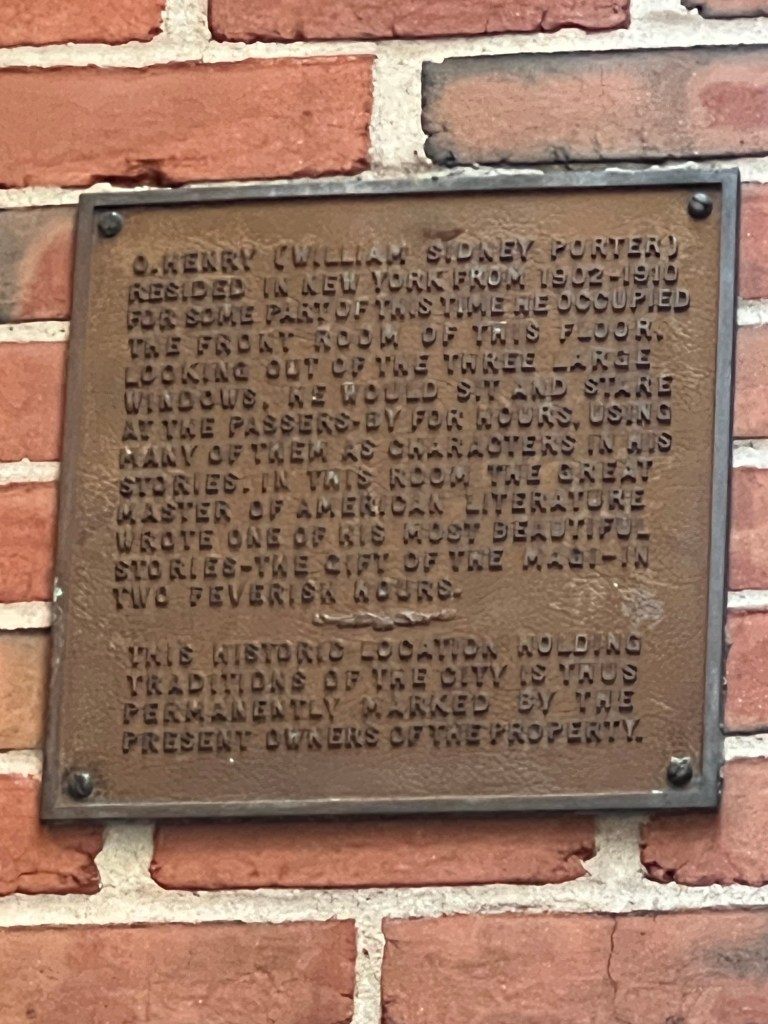
https://www.tripadvisor.com/Attraction_Review-g46491-d14113448-Reviews-Hancock_House-Hancocks_Bridge_New_Jersey.html

My review on VisitingaMuseum.com:

https://wordpress.com/post/visitingamuseum.com/7658

The Quinton’s Bridge at Alloway Creek at Route 49:

My review on TripAdvisor:
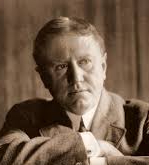
https://www.tripadvisor.com/Attraction_Review-g46799-d24137890-Reviews-Quinton_s_Bridge_At_Alloways_Creek-Salem_New_Jersey.html

My review on VisitingaMuseum.com:

https://wordpress.com/post/visitingamuseum.com/7716

The ones that were closed were:

The Lower Alloways Creek Historical Society at 735 Smick Road:

My review on TripAdvisor:
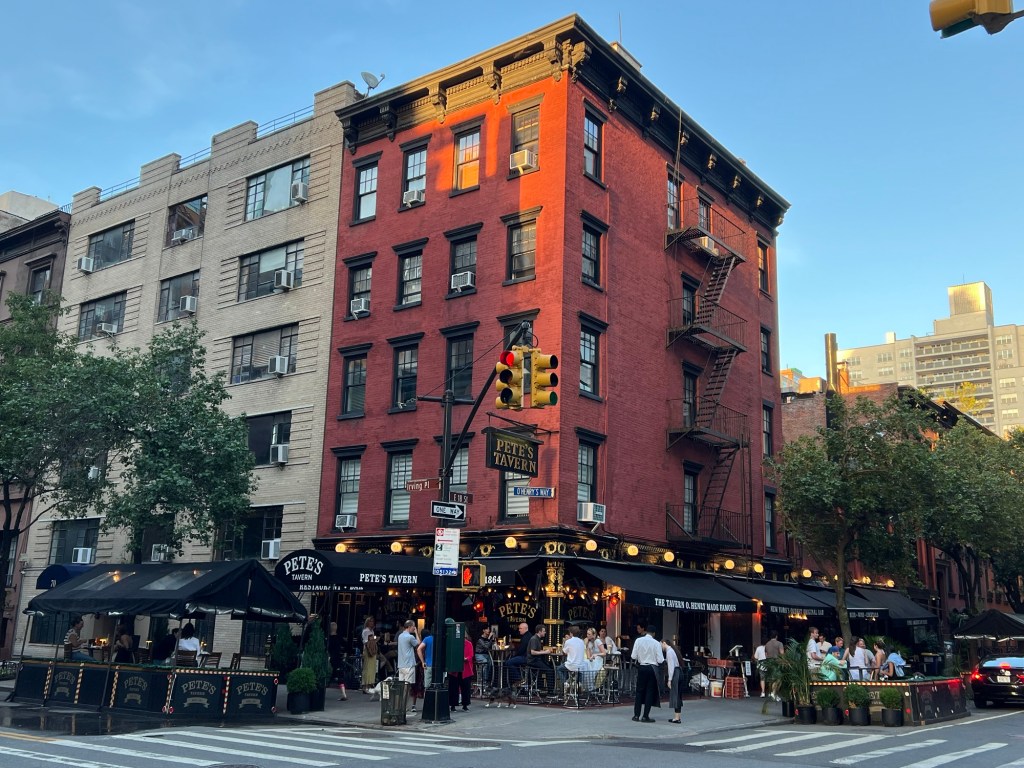
https://www.tripadvisor.com/ShowUserReviews-g46491-d26670383-r917436037-Lower_Alloways_Creek_Historical_Museum-Hancocks_Bridge_New_Jersey.html?m=19905

My review on VisitingaMuseum.com:

https://wordpress.com/post/visitingamuseum.com/8882

The Alloway Township History Museum at 49 Greenwich Street:

My review on TripAdvisor:

https://www.tripadvisor.com/Attraction_Review-g29741-d32722951-Reviews-Alloway_Township_History_Museum-Alloway_New_Jersey.html

My review on VisitingaMuseum:

https://wordpress.com/post/visitingamuseum.com/8873

I had to cross the county after visiting a these obscure sites to get to the Church Landing Farm at Pennsville Historical Society at 86 Church Landing Road. Thank God it was still open at 3:00pm. It was a real treat:

My review on TripAdvisor:

https://www.tripadvisor.com/Attraction_Review-g46726-d24140695-Reviews-Church_Landing_Farmhouse-Pennsville_New_Jersey.html

My review on VisitingaMuseum.com:

https://wordpress.com/post/visitingamuseum.com/7734

I was able to tour the Hancock House again while they were having a little Halloween festival and take pictures of the house. I also got to tour the Church Landing Farmhouse and visit all the little out buildings with all the displays. It was fun to finally see with more time to spend. Though it was just an overnight trip, I felt like I was gone for a week. I was so refreshed from the trip. It was time to go home and get some work done.

The Halloween Festival at the Hancock House on Halloween weekend

The days before Halloween, we were in the final judging of the Hasbrouck Heights Men’s Association Halloween House Decorating Contest so when I got home from Salem, NJ, I had to present the awards to the winners and their families. Later the next week, I presented the awards to the merchants in town who were not opened on Sunday. It was a long but very productive morning and afternoon as the winners and runners-up were thrilled by their awards.

My blog on the Hasbrouck Heights Men’s Association Halloween House Decorating Contest Day Two Hundred and Fifty on MywalkinManhattan.com:

https://wordpress.com/post/mywalkinmanhattan.com/26589

It was a series of long drives around town, late nights looking at spooky lights, figures of fright and things that go bump in the night but the members of the Hasbrouck Heights Men’s Association Halloween Decorating Contest made a decision who had the best decorated house and downtown business in Hasbrouck Heights.

Decorations at 85 Woodside Avenue

Like last year the decision was tough but we chose 85 Woodside Avenue, the home of Matt and Lisa Fiduccia, last year’s runners up. The house was decorated to the hilt with ghosts, ghouls and figures that frightened the passersby. “We learned more from last year,” Matt Fiduccia said when they found out they won this year’s contest. “We added more to it.”

85 Woodside Avenue in Hasbrouck Heights Halloween 2022-Winner

The zombies and ghouls of 85 Woodside Avenue

The committee liked the theme of the property, the organization of the props and decorations of the doorway and the lighting of the house the night before Halloween which really showcased their creativity. The family was really excited about winning this year and the whole Fiduccia family joined Chairman Justin Watrel and Hasbrouck Heights Men’s Association President Steve Palladino for the presentation of the plaque and official sign from the organization declaring them winner. It was an award well deserved.

Chairman Justin Watrel with the Fiduccia family at 85 Woodside Avenue

Winners Matt and Lisa Fiduccia with their children and the official sign from the Hasbrouck Heights Men’s Association

It was a tough decision to make this year as last year’s winner, Scott Vicario and runners up last year Frank and Mary Rose Blunda also created wonderful displays that would dazzle and delight trick or treaters the next night for Halloween.

253 Henry Street-The Runner-up this year

This is the second year Scott Vicario created a moving cemetery and ghoul fest all over his front lawn starting with a possessed woman climbing a tree outside the property and a variety of ghouls and zombies climbing popping and walking around the yard. “I keep finding new things to add to the display,” Scott told the committee when he was presented his award. “I look for professionally made displays.” Mr. Vicario who lives at 253 Henry Street said he “has more planned for next year” to win the award back.

Last year’s winner, Scott Vicario, was runner up this year

Some of the decorations were truly frightening

Ghosts and ghouls at 253 Henry Street

Scott Varicario in front of 253 Henry Street

253 Henry Street was full of zombies and ghosts

The other runners up last year, Frank and Mary Rose Blunda, keep creating frightening but friendly displays that dazzle their Halloween visitors. Trick or Treaters keep coming back for the displays of vampires and pumpkin headed beasts.

510 Henry Street

“We really love Halloween and we do this for the kids,” Frank Blunda said. “The families get such a kick out of visiting our house every year.” The Blunda’s love that families take a special trip to see their home.

The Ghosts, Ghouls and Pumpkin Heads of 510 Henry Street

Mary Rose and Frank Blunda of 510 Henry Street were runners-up again this year

Chairman Justin Watrel with Mary Rose and Frank Blunda at 510 Henry Street

The House Decorating Committee added a Merchant Division this year and we were dazzled by Heights Flower Shoppe, who always displays their holiday merchandise so nicely. Ray Vorisek, the owner of Heights Flower Shoppe was very thankful to the committee for the award. “We always like decorating the store to the hilt for the holidays.

Heights Flower Shoppe at 209 Boulevard in Hasbrouck Heights, NJ

People come from all over to visit us.” Both inside and outside, the store was full of all sorts of merchandise to decorate the house and for creative Halloween parties. Ghosts and witches flowed all over the store.

The decorations of the windows at Heights Flower Shoppe

https://www.heightsflowershoppe.com/

My review on TripAdvisor:
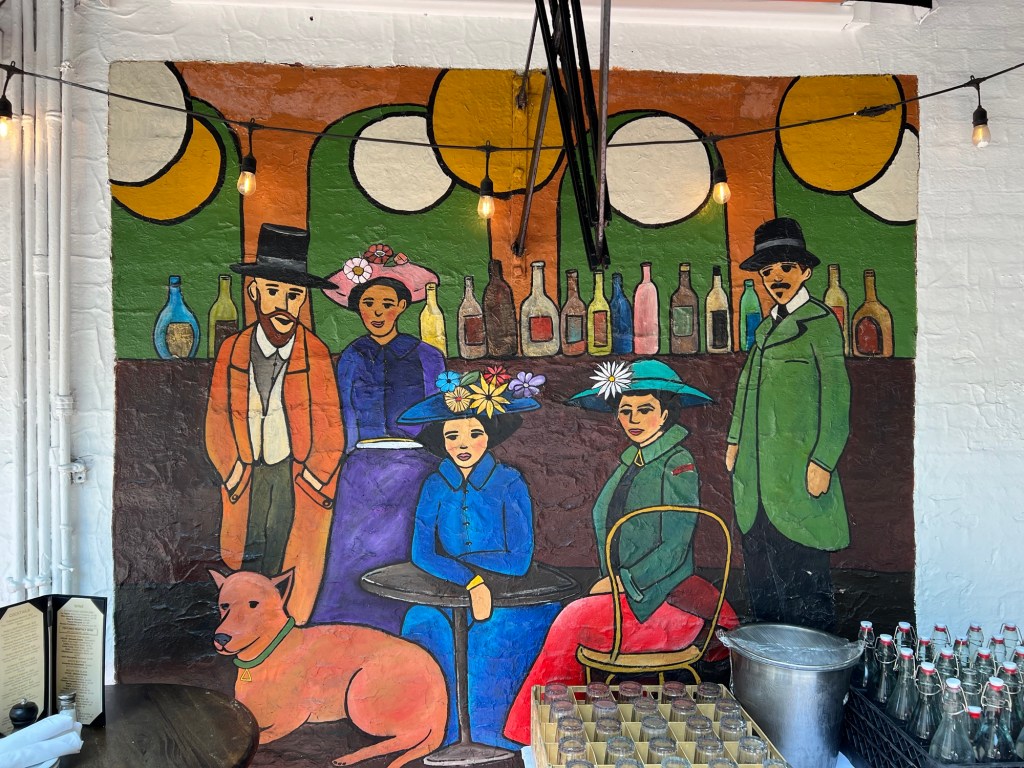
My review on LittleShoponMainStreet@Wordpress.com:

https://wordpress.com/post/littleshoponmainstreet.wordpress.com/130

With winner and owner, Ray Virosek

Chairman Justin Watrel with owner Ray Viroske outside the store with the official Hasbrouck Heights Men’s Association sign

The Runner-up was Spindler’s Bakery, owned by Bob and Ginny Spindler, whose family business has been in Hasbrouck Heights for over fifty years.

Spindler’s Bake Shop at 247 Boulevard was this year’s runner up

https://spindlersbuttercookies-com.3dcartstores.com/

My review on TripAdvisor:

https://www.tripadvisor.com/Restaurant_Review-g46497-d12898321-Reviews-Spindler_s_Bake_Shop-Hasbrouck_Heights_New_Jersey.html?m=19905

My review on LittleShoponMainStreet@Wordpress.com:

https://wordpress.com/post/littleshoponmainstreet.wordpress.com/1190

“We have a creative team that works together here,” Mrs. Spindler said as she accepted her framed award. “It is a team effort that got the store ready for the holiday.” Spindler’s Bakery not only decorated the windows with pumpkins and bears ready for Trick or Treating but the store had all sorts of delicious looking decorated pastries and cookies, perfect for any Halloween Party.

The inside of Spindler’s Bake Shop with decorations and Halloween treats

Chairman Justin Watrel with runner-up winner, Ginny Spindler and her co-worker

We also wanted to mention the Honorary mentions, whose decorated home made the first and second round cut of the contest and we wish you luck next year. These are 110 Central Avenue, 458 Jefferson Avenue, 415 Madison Avenue, 115 Ottawa Avenue and 310 Bell Avenue. Good luck and have a wonderful and safe holiday season from the Hasbrouck Heights Men’s Association.

Honorary Mention on Ottawa Avenue

Another Honorary Mention on Ottawa Avenue

Halloween Night was a bust for me. I had to start my first night of my Tourism Innovation Class, which concentrated on the Metaverse that evening and for the first time in six years I did not work on the Halloween Parade. It was a real bummer and I know Mark was really disappointed that I could not make it that evening. It rained during part of the parade so that at least made me feel a bit better.

When I left class that evening, it was also about 9:30pm and since we were meeting in the Uptown campus on West 42nd Street, I did not notice any part of the parade except for a few people heading back to New Jersey through the Port Authority. It was a cold and rather gloomy night because of the quick shower we had earlier. Not much of a holiday but at least I was able to celebrate in different ways in different parts of the month.

‘Aristocrats’ Justin Watrel (Beekman family) and Marc Schuyler (Schuyler family) at the Halloween Parade gate 2019.

Before Halloween was over I managed to sneak up to Croton on the Hudson to the Van Cortlandt Manor to see the Annual “Pumpkin Blaze” (see the blog attached):

Visiting the Pumpkin Blaze Day Two Hundred and Six:

https://wordpress.com/post/mywalkinmanhattan.com/19970

The weather was really mild that night and I got tickets for the 8:00pm walk. Being later in the season, it was not as busy as it would be before Halloween. Still I could walk the show at my own pace and enjoy the displays. If you have never been there, I highly suggest it.

The entrance to the “Pumpkin Blaze”

The displays keep changing every year and it is fun to see all the new creative ideas that they come up with for the evening. It was the perfect way to finish the Halloween festivities. Now here comes Christmas!

The Headless Horseman riding through

The pumpkins with their evil stare!

Happy Halloween!

Boo!

The Ladies Shopping Mile

Day One Hundred and Twenty-Eight-The Victorian Christmas Walking Tour of the Ladies Shopping Mile with the Cornell Club December 15th, 2018

On Saturday, December 15th, I met with other members of the Cornell Club to travel back to the Victorian Era and learn about the traditions of the Christmas past. We explored the Gramercy Park, Union Square and lower Sixth Avenue sections of the City to visit where a New York Victorian Christmas would be celebrated and honored.

We would be walking the old “Ladies Shopping Mile” that had been built up right after the Civil War when the disposable income  for Middle and Upper Middle-Class residents had increased after the Civil War and people wanted to spend their money at the newly built department stores, shops and restaurants.  The Industrial Revolution was in full swing and shopping had changed with the development of the department store.

The tour took us past brownstones, parks, restaurants and old department stores that line the streets of Manhattan between East and West 21st Street to 23rd Street and along that stretch of Sixth Avenue which is lined with the old buildings that once housed some of New York City’s great department stores.

The tour started on a sunny morning in Gramercy Park just off East 21st Street right near the Gramercy Park Hotel at the Cyrus Field House at One Lexington Avenue. The plaque was laid on the side of the old home dedicated to the man who laid out the first Atlantic cable in 1858.  Cyrus West Field was a self-made man who founded his own business and retired at 33 with a fortune of $250,000 (about 6 million today).

Cyrus West Field

Cyrus West Field

https://www.britannica.com/biography/Cyrus-W-Field

He and his brother, David, an attorney had built twin mansions side by side facing Gramercy Park which was then being developed into a private park for the neighborhood in 1844 by Samuel Ruggles.

Samuel Ruggles

Samuel Ruggles, the creator of Gramercy Park

https://en.wikipedia.org/wiki/Samuel_B._Ruggles

Cyrus West Field along with Fredrick Newton Gisborne, a Canadian inventor and electrician had laid out the first undersea cables. Partnering up, they laid the first successful cable line to Europe in 1866 after two other failed tries. Even with his successes, when his wife, Mary died in 1891 and his son’s banking business failed and his partner’s daughter in law was his sister, Grace who took ill and died later that year. Cyrus Field was vacationing in his summer home when he died as well (Wiki & the tour guide).

Field Mansion

The Field Mansion before it was torn down

http://daytoninmanhattan.blogspot.com/2013/11/the-lost-cyrus-w-field-mansion-gramercy.html

https://en.wikipedia.org/wiki/Cyrus_West_Field

Both his and his brother’s house were purchased by another banker who renovated them into one mansion. His business would later fail and he also was forced into bankruptcy. The houses were part of an ever-changing New York neighborhood and were demolished and replaced by the Italian Renaissance apartment building that sits there today with the plaque neatly presented on the side of the building. A very interesting place for a colorful family history.

After we left the site of the Field Mansion, we toured the sides of Gramercy Park, which was created in 1844 by Samuel Ruggles, who developed the area as an exclusive enclave. The 22-acre site was once a swamp and the farm of James Duane, the son of the Mayor of New York and a direct descendant of Peter Stuyvesant, called ‘Gramercy Farm’.  The park was enclosed by a fence in 1833 and the parcels surrounding it were developed in 1840. The park’s landscaping was done by James Virtue and the park was surrounded by 39 lots whose owners had access to the private park. Today only those people residing in the 39 lots surrounding the park can have a key to it and help in the maintenance of the park (Wiki).

As we passed the park which looked a little sparse due to the time of the year with the exception of the pines and the Christmas Tree in the center of the park. Still, you can see the elegance of the park and the constant upkeep of the landscaping. Behind the locked doors, it is almost a secret garden almost waiting to be discovered. Even today, you still need that key to open the door to the park and you have to live in the area to get in.

Christmas in Gramercy Park

Christmas Tree in Gramercy Park today

https://en.wikipedia.org/wiki/Gramercy_Park

While we were at the park, the tour guide gave us a little history of a Victorian Christmas and the rules and etiquette of the holidays under the rule of Queen Victoria and her marriage to Prince Albert who was from Germany.

When the marriage took place, Prince Albert had brought many of his traditions with him and introduced the Pagan tradition of bringing evergreen trees into the house. Since it was the only tree that was green during the long winter months, the Pagans brought it into the warmth as a sign of life. It was later decorated with sweets and small gifts then got more elaborate with candles and ornaments. Ornaments started to appear in 1853.

The idea of the Christmas card came in 1843 when Henry Cole created the first card with a simple message. By the 1880’s, the Victorians were sending out the cards in great numbers due to the advancement of the postal services, many of them handmade by the children of the house. Decorating the house got more and more elaborate. What had started with a simple tree and garland to decorate the doors and windows became more detailed with decorations.

Gift giving was once relegated to New Year’s Day but as Christmas became the more predominate holiday, gifts were given either Christmas Eve or Christmas Day. Initial gifts were things like small handmade trinkets and sweets and then moved to store bought gifts from the developing department stores that could be placed under the tree.

The Christmas Dinner had its roots in Medieval times but became more elaborate after the Civil War. During the Revolutionary War, Christmas Day meal was a family affair after church services but by the 1880’s as the Industrial Revolution started to change the way we lived, it became the feast we celebrate today.

Roasted meats like goose and duck were some of the things served but later turkey became a favorite for dinner. It became predominate on a middle-class family table because the average turkey could feed a family nicely for dinner. Even Christmas crackers, which were invented by Thomas Smith in 1848 on an idea he saw in Paris on the way bon-bons were wrapped. He perfected them to ‘pop’ when they opened and were then filled with candies and small toys. This became part of the place setting.

Since the holiday was now being based around the family, things like parlor games and Christmas carols became family favorites.  Carols had started during Medieval times and had been brought back by the Victorians. The family was the center of the holiday, and a family was only restricted by their budget.

There were also strict rules on visits during the preparation for the holiday. Our guide pointed out that when you visited a home leading up to the holidays, etiquette stated you stayed for about ten minutes and you only partook in the food that was laid out, such as a plate of Christmas cookies and you did not linger. The host had lots to do to prepare for the holiday and she did not want you stay and take up her time.

As we rounded the corner and the tour guide discussed the attributes of the park, he also talked about the history of the architecture that surrounds it. Many structures have a long and very interesting history.

James Harper House

4 Gramercy Park West

https://streeteasy.com/building/4-gramercy-park-new_york/1

At 4 Gramercy Park West is the James Harper House, which almost resembles something you would see in New Orleans with its decorative iron work and graceful porches. The homes were built in 1846 for the James Harper, the Mayor of New York and one of the founders of Harper-Collins Publishing. The house was a Greek Revival design with an iron lace terrace with a mirror image of the home next to it with the exception of the lamps outside the house.

James Harper

James Harper, Mayor and Publisher

https://en.wikipedia.org/wiki/James_Harper_(publisher)

History has said that the lanterns in front of the home are a throwback to the Dutch era when lantern bearers accustomed to escort the Burgomaster home with the proper dignity from the city tavern or another place of entertainment. The Dutch custom of placing special lamps at the mayor’s door was an aid to finding his house at night but by Harper’s Day, it was just ceremonial. The customer ended with the establishment of Gracie Mansion as the Mayor’s residence (Ephemeral New York).

James Harper House II

3 & 4 Gramercy Park

http://daytoninmanhattan.blogspot.com/2013/12/nos-3-and-4-gramercy-park-west.html

https://streeteasy.com/building/4-gramercy-park-manhattan/1

Harper died in 1869 and the house stayed in the family until 1923. It was known also for being the rumored home townhouse for the book “Stuart Little” and again achieved fame for being on the cover of Bob Dylan’s 1965 album cover for ‘Highway 61 Revisited’ (Ephemeral New York & the tour guide).

From the Harper House, we visited the Samuel Tildon House at 15& 16 Gramercy Park South around the corner from the Harper House.  This historic townhouse was built in 1845 and the home of former New York Governor Samuel J. Tilden who was a fierce opponent of the Tweed Ring and the losing Presidential candidate in the 1876 election. He lived in the house until his death in 1886 (Wiki & tour guide).

The Tilden House today is a private club

Samuel Tilden House

The Samuel Tilden House

Samuel Tilden

Samuel Tilden Politician

https://www.britannica.com/biography/Samuel-J-Tilden

The house was combined and redesigned by Calvert Vaux with the row house next door to make the building it is today. The brownstone was considered the height of Victorian Gothic in residential architecture with Italian Renaissance style elements. Since 1906, it now serves at the National Arts Club (Wiki & tour guide).

Samuel Tilden House II

National Arts Club at 15 Gramercy Park South

https://www.nationalartsclub.org/

The home at 16 Gramercy Park South, now the home of the Players Club has an interesting past as well. The home was bought by Edwin Booth, one of the great Shakespearean actors of the 19th Century and one of the founders of The Players Club. He was the brother of John Wilkes Booth, the assassin of Abraham Lincoln. He turned over the deed to the house in 1888 to the club (Wiki & tour guide).

The Players Club.jpg

The Players Club which was owned by Edwin Booth

https://theplayersnyc.org/

From the square of scandals and shame we moved to look inside the park where a statue of Edwin Booth stands. It was an interesting twist of events that he landed in New York City. The whole area was designated as the Gramercy Park Historical District in 1966 (Wiki & the tour guide).

Our next place to visit was the famous Pete’s Tavern at Irving Place at 129 East 18th Street. This famous bar/restaurant has been around since 1864 and has been a major watering hall for the neighborhood.  The building was originally known as the Portman Hotel and was built in 1829. It was known as a ‘grocery & grog” store and may have been serving alcohol since 1852 (Wiki).

Pete's Tavern

Pete’s Tavern is now an Italian restaurant

Welcome to Pete’s Tavern….the Tavern O. Henry made famous!

The writer O. Henry lived down the block at 55 Irving Place from 1903 to 1907 when the place was called Healy’s after Tom and John Healy, who bought the restaurant in 1899. The famous writer included the name of the bar in a short story entitled “The Lost Blend” under the name “Kenealy’s”. It has been rumored that he wrote the well-known story “The Gift of the Magi” in the second booth from the front but it cannot be proved (Wiki & the tour guide).

Washington Irving House III

The Irving House

Around the corner from Pete’s Tavern is 11 Commerce Street, the Irving House, the former home of Washington Irving’s sister. The Federalist style home was built in 1826 and was rumored to be where he wrote part of the book “The Legend of Sleepy Hollow”. No one was too sure where Washington Irving Jr. came from because Washington Irving did not have any children.

Washington Irving House.jpg

The Irving House at 11 Commerce Street

https://www.atlasobscura.com/places/the-irving-house-new-york-new-york

Washington Irving

Washington Irving Author

https://www.britannica.com/biography/Washington-Irving

We left the Gramercy Park District which is slowly changing on the fringes of the Historic District from residential to modern hotels and apartments refigured into the older buildings of the neighborhood to the very modern and updated and hip Union Square Park.

Union Square Park was once the cross-roads from the old commercial part of Manhattan to the residential part of the island. When Manhattan was surveyed by John Randel for the Commissioner’ Plan of 1811 to create the grid of the island, Broadway angled away from the Bowery that would have been awkward to build on and it was decided to create a square at the union of the two streets. Samuel Ruggles, who had created Gramercy Park renamed the are ‘Union Square’ from its former name, ‘Union Place’. It was Ruggles who developed the area with streets and plantings at the park (Wiki & the tour guide).

At first the area was a fashionable residential area surrounded by brownstones and mansions but after the Civil War, the area gave way to a commercial shopping district that included Tiffany & Company and FAO Schwarz Toy Store. The area is now home to many upscale merchants and restaurants once again. It also has one of the biggest Farmer’s Markets in the City.

Union Square.jpg

Union Square today facing the once fashionable shopping district

https://www.unionsquarenyc.org/

From Union Square, our group walked to Sixth Avenue down West 17th Street to the start of the Ladies Mile Historic Shopping District. Today the area is still going through changes from discount superstores to advertising and communications companies but between the Civil War and World War I, the district was home to some of the most famous department and specialty stores of the time, places of worship and performance venues like the Academy of Music and Steinway Hall (Wiki & the tour guide). It is here where Victorian Christmas roots began.

We started the tour on West 17th Street and walked our way up Sixth Avenue while admiring the old department store buildings. One point that the tour guide wanted us to all note was the big windows on the second and sometimes third floor of the buildings. This was done when the old ‘Sixth Avenue El’ subway line used to travel down the avenue before the war so that people could see the clothes and fashions from the elevated subway cars. We walked up Sixth Avenue, and we noted all the stores we passed and a little on the history of each store.

The old B. Altman & Company building located at 625 Sixth Avenue between West 18th and 19th Streets was once a luxury department store that catered to the strictly ‘carriage trade’ clientele of the time. It had been founded in 1865 by the Altman family on the lower East Side and progressed uptown to this location in 1877. It was originally designed by David and John Jardine, a New York architectural firm.

The store had been known for couture merchandise and fine furniture. As the clientele changed and moved uptown after World War I, the company moved the new store to Fifth Avenue and East 34th Street in 1906. The company went bankrupt in 1990 (Wiki, History of Department Stores & the tour guide).

B. Altman & Company store at 625 Sixth Avenue & West 18th Street

https://en.wikipedia.org/wiki/B._Altman_and_Company

Our next stop was at the old Siegel-Cooper Company Department store at 620 Sixth Avenue at 18th Street. The company was founded in 1887 by Henry Siegel, Frank Cooper and Isaac Keim in Chicago and opened their store on State Street.

Their second store opened in New York City in 1896 at 620 Sixth Avenue between West 18th and West 19th Streets. The store used innovative steel-framing, the first department store in New York to use this construction, to create the world’s largest store at the time (to be surpassed by Macy’s Herald Square). The offered a wide variety of dry-goods and shops including a art gallery, conservatory selling plants, a photo studio and a 350-seat restaurant. The store was designed by the firm of DeLemos & Cordes in the Beaux-Arts style (Wiki & the tour guide).

The Siegel-Cooper Company store at 620 Sixth Avenue

http://wikimapia.org/16891212/Simpson-Crawford-Simpson-Building

http://daytoninmanhattan.blogspot.com/2010/08/big-store-1896-siegel-cooper-department.html

The main floor featured a copy of David Chester French’s statue, The Republic inside a marble enclosed fountain on the first floor which the phase “Meet me at the Fountain” became the store slogan (Wiki & the tour guide).

Siegel-Cooper Department Store.jpg

The fountain that was at Siegel-Cooper

Yet by 1902, Henry Siegel sold the store, and the company went bankrupt in 1915 and the store closed in 1917 and became a military hospital during World War I. Today the store is home to Marshall’s and TJ Maxx. Its ornate outside is really hidden now.

We next moved on to the Simpson-Crawford Department Store at 641 Sixth Avenue between West 19th and 20th Streets, which once catered to the wealthy elite of Manhattan and beyond. The store was established in 1878 by Richard Meares and William Crawford as Richard Meares & Company. Meares left the firm a year later and William Crawford then partnered with Thomas and James Simpson to create Simpson, Crawford and Simpson. When Thomas Simpson died in 1885, the store became known as Simpson-Crawford (Daytonian in Manhattan).

Simpson-Crawford Store today at Sixth Avenue between West 19th and 20th Streets

http://wikimapia.org/16891212/Simpson-Crawford-Simpson-Building

When James Simpson died in 1894, William Crawford became the sole owner and in 1899 with the rise of the great stores on Sixth Avenue, Crawford designed a new store of marble designed by William H. Hume & Son. The exterior of the store shined with polished marble and granite (Daytonian in Manhattan & the tour guide).

The store had many innovations at the time. It had the first escalator in the city, the first display windows with mannequins and large display windows that had to be created for the store. The store was stocked with the finest imported clothes, furs and laces and on the top floor was a restaurant that catered to 1200 guests (Daytonian in Manhattan & the tour guide).

Before the store opened, William Crawford retired and sold the store to Henry Siegel across the street who kept the tradition of the store going. When Siegel-Cooper Company collapsed in 1914, Simpson-Crawford was kept closed for three weeks and then reopened. Both stores closed one year later, and the store was converted to mail order warehouse. Today it holds various stores (Daytonian in Manhattan).

Our next stop was in front of Hugh O’Neill’s Dry Goods Store at 655 Sixth Avenue between West 20th and 21st Streets. It was built by the firm of Mortimer C. Merritt in the neo-Greco style who built the four stages of the building between 1887-1890 (Wiki & the tour guide).

Hugh O'Neill II.jpg

The Hugh O’Neill Store when it opened in 1890

https://en.wikipedia.org/wiki/O%27Neill_Building

Hugh O’Neill had started a small dry goods business right after the Civil War in 1865 with a small store around Union Square. In 1870, he decided to build a trade on the middle market customer and offered discounts on goods. The four floors of merchandise contained laces, ribbons, clocks and on the upper floors women’s and children’s clothing (Wiki).

When O’Neill died in 1902, the shopping area had just begun its decline and in 1906 it merged with Adams Dry Goods up the block.  A year later they both went out of business as the area gave way to manufacturing. The building today has been converted into condos.

The Hugh O’Neill store today

Our last store that we looked at and discussed was the former Adams Dry Goods Store at 675 Sixth Avenue between West 21st and 22nd Street.

Samuel Adams, a merchant who had been selling upscale clothing and furnishing to customers in the area decided to open a store on Sixth Avenue. He used the architectural firm of DeLemos & Cordes, who had designed the Seigel-Cooper Department Store and the six-story building opened in 1902. The store was the first in New York City to use the new Pneumatic tubes to transport money and messages throughout the store (Wiki).

Adams Dry Goods Store II.jpg

Adam’s Dry Goods Store when it opened in 1902

http://daytoninmanhattan.blogspot.com/2010/10/1900-adams-co-building-675-sixth-avenue.html

http://wikimapia.org/16882716/Adams-Dry-Goods-Store-Building

The problem with the store was its location. He built the store at the very edge of the neighborhood as the business changed. As the shopping area started to decline in the early 1900’s, Adams sold the store to Hugh O’Neill Dry Goods Store and they merged the two companies together, converting three floors of the Adams Dry Goods store to furniture. This concept was not popular as well and the businesses failed, and the store closed in 1913 (Wiki & the tour guide).

Adams Dry Goods Store today at Sixth Avenue between West 21st and 22nd Streets

The beautiful details of Adams Dry Goods can still be seen

The store has gone through a manufacturing stage and in the 80’s became part of the change to large box retailing. The building now houses eBay and several stores including Trader Joe’s and Michael’s. As we could see on the tour, the old department stores are finding new life in retailing.

Between West 22nd and West 23rd Streets located between the old Adams Dry Goods and next to the former Macy’s store was Ehrich Brothers Department Store at 701 Broadway. The building was constructed in 1889 by architect William Schickel & Company with additions by Buchman & Deisler and Buchman & Fox in 1889 (Wiki).

Ehrich Brothers Department Store building at 701 Sixth Avenue (Wiki)

The terra cotta ‘K’ of the J. L. Kesner Department store still on the building

Another addition was added by Taylor & Levi in 1911 when the store was leased to J.L. Kesner. They added the terra cotta “K”s that can still be seen from the top of the storefront. The store folded in 1913 and then was used for manufacturing and offices as the shopping district moved to 34th Street and the Fifth Avenue area (Wiki).

The last part of our tour discussed one of the most famous Christmas poems, “A Visit from St. Nicolas” or known as “Twas the Night Before Christmas”, which was one of the first mentioning’s of Santa Claus in a modern form, written in 1822 and published in 1823 anonymously. Some saw the poem as a social satire on the ‘Victorianization’ of Christmas (Wiki & the tour guide). Our tour guide said you really have to read into the poem to see what it is really saying about the times that it was written in. He noted really read the line “Had just settled our brains for a long winter’s nap” as the stress of the holidays and child rearing was even back then.

Twas the night before christmas.jpg

“A visit from St. Nicholas”

https://poets.org/poem/visit-st-nicholas

It was in 1837 that poet Clement Clark Moore claimed to be the author. Even today there is a controversy of who really wrote the poem, Clement Clark Moore or Major Henry James Livingston Jr. This discussion is still being debated today (Wiki).

Clement Clarke Moore.jpg

Clement Clarke Moore poet

https://www.poetryfoundation.org/poets/clement-clarke-moore

https://www.poetryfoundation.org/poems/43171/a-visit-from-st-nicholas

Henry Livingston Jr.

Henry James Livingston Jr. Writer

https://www.poetryfoundation.org/poets/henry-livingston

How the poem mixed well into the tour is that Clement Moore’s family owned an estate here on the area on West 23rd Street between Hudson River and Eighth Avenue from West 24th Street to West 19th Street. His home was at 348 West 23rd Street. He developed the area after donating a large portion of the estate to his church and created a residential neighborhood that still stands today.

Clement Moore Estate.jpg

The Clement Clarke Moore estate when he sold it into real estate parcels

https://thegreatestgrid.mcny.org/greatest-grid/selling-lots/87

http://daytoninmanhattan.blogspot.com/2017/12/the-lost-clement-c-moore-chelsea-house.html

I walked the entire neighborhood after we said our goodbyes on Ninth Avenue by the subway and discovered an ever-gentrifying neighborhood of brownstones and small mansions. The one home that stood out amongst the brownstones was the James Wells Mansion at 400-412 West 27th Street.

James Wells Mansion III

The James Wells Mansion in Chelsea one of the most beautiful homes on the block

https://www.hmdb.org/m.asp?m=127242

http://daytoninmanhattan.blogspot.com/2011/11/james-wells-house-at-no-162-9th-avenue.html

James N. Wells was a real estate broker and built the house in 1835 when Clement Clarke Moore developed this part of his estate. He built the grand house for his family. Sometime in 1866 after the Civil War, the house was renovated, and a mansard roof was added to the house. It must have not stayed in the family too long after this as it was turned into a home for the aged in 1867 (Wiki). Today it has been restored by its owners to its grand glory.

The last part of the tour I visited the only spot that still carries the name of the family to know that the estate was located here, and it was the Clement Moore Park at West 23rd to 22nd Streets on Tenth Avenue. The park was initiated by the West 400 Block Association to turn a neglected lot into a park and in 1965 it was opened to the public. When I visited the park that afternoon and others to complete the walk of the neighborhood, the park was closed for renovations.

Clement Moore Park.jpg

Clement Moore Park before the renovation

https://www.nycgovparks.org/parks/clement-clarke-moore-park

This is where I ended the tour that day. I walked this part of West 23rd Street from Sixth Avenue to Tenth Avenue on my own to see the development of the estate and how the gentrification of Chelsea was progressing. Let me put it this way, the Clement Clarke Moore brownstone was on the market in 2016 for 8.7 million dollars. I wonder how he would feel about that today.

Check out my Christmas blogs this year (2018) and my busy holiday season that stretched from the Hudson River Valley in New York State to Rehoboth Beach, Delaware. I swear my feet never touched the ground the whole holiday season.

Merry Christmas and a Happy New Year everyone!

I want to add these two new Christmas songs by the late jazz artist Al Jarreau and current up and coming artist Lindsey Webster for you all to enjoy. They got me through my Christmas Holiday season:

Christmas Morning by Al Jarreau:

It’s Gonna Snow on Christmas by Lindsey Webster:
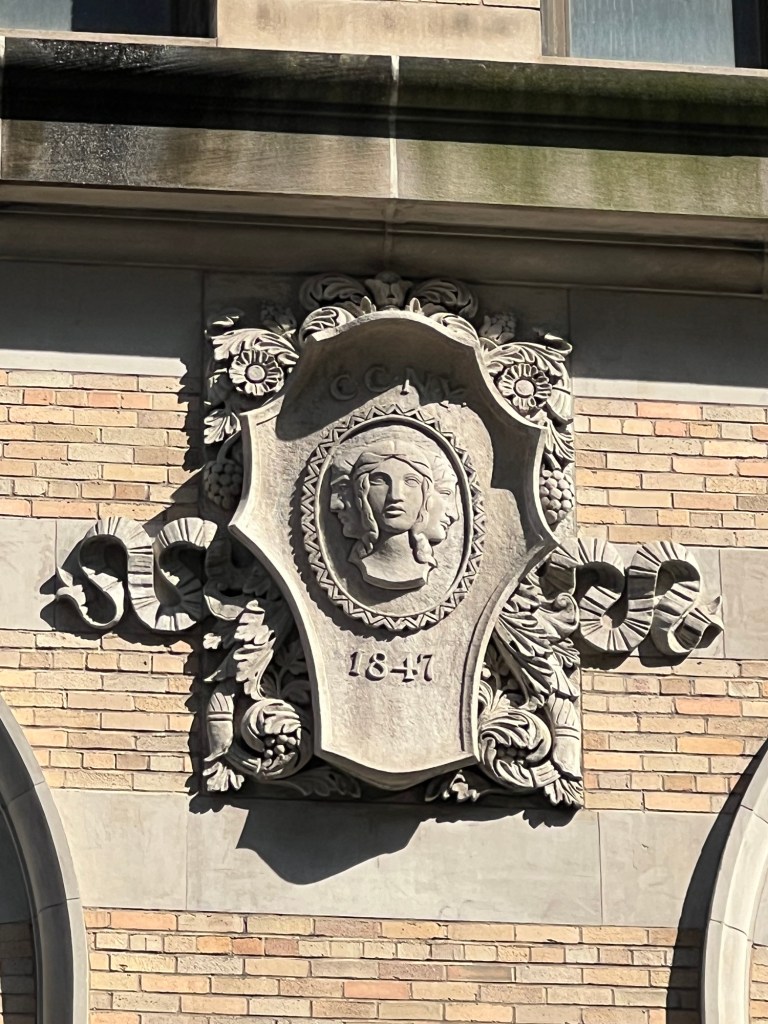
Rather than display each property we visited, I attached the link for further reading.

Again everyone has a very Merry Christmas and a Happy New Year!