I finally reached another milestone in my education and in my life. I graduated with honors from New York University with a 3.813 GPA. Quite an accomplishment from someone who last graduated from Cornell University back in 2010. I was a lot of hard work and one big balancing act of time but I walked across the stage of Radio City Music Hall with the energy and enthusiasm of any undergraduate.
You can read my blog on “Grad Alley” a few days before the Graduation Ceremony:
I came a long way from the first meeting I had at the college back in October of 2019. I had visited Georgetown University the summer before and realized that it was not for me. When I got the email from New York University in the Summer of 2019 I thought, let me check this out. It is closer to home and I would be going to school in Manhattan and Greenwich Village to boot. It turned out to be one of the best decisions I ever made.
Before the Graduation Ceremony began.
The graduates settling in for the start of Graduation.
As a returning college student (I am not going to lie, this is my fifth time to college and this is the fifth college I have graduated from), I was a little intimidated by my classmates at first. I did not know what a Google Doc or a Google Slide was the first day of class. I did not even bring my computer into the class the first (I knew better from that day on) and was still using my 3G flip phone (which got a lot of chuckles from my classmates). I also was older than everyone by over twenty years but with that comes years of work experience, travel and knowledge of the ever changing Hospitality industry that keeps evolving and will continue to in the future.
Justin before the start of the ceremony.
I got up to speed really quick with a new iPhone 13 Pro (whose picture and video taking ability has transformed this blog) and a new HP computer and watched many Google YouTube videos to keep me up to speed. By the end of the first semester, I was an old pro at all of these functions and for the first time in my life got straight “A”s in my classes. It was a long time in coming that I had to prove this to myself. And at New York University no doubt (NYU).
The theater filling up with students and parents.
It had been a long journey over the last year and a half. Running in and out of New York City for classes in between my job at Bergen Community College. Countless late nights writing papers, researching subject matter and trips to libraries on both campuses to finish projects. This on top of working on Executive Boards for the Fire Department and Men’s Association in town, volunteer work that I do and squeezing in blogging on seven sites. There were times I almost had to pull an ‘all nighter’.
The stage before we started the graduation.
The video of the organist before the ceremony started:
What I found over that year and a half was a whole new way of looking at the Hospitality industry. I had never really thought about Sustainable tourism, Dark tourism, LGBTQ tourism and Diversity in tourism. I had never categorized it in the sense it was different things to different people. My professors had their way of teaching it and I had my own and going forward I used both when creating projects and my own expectations from my students. They gave me a different perspective of looking at the way a place could market itself and I took it one step further and asked of my students how can small towns and musty historical sites be made unique and interesting by marketing them in a different way. Break the mold of what they were doing and present it in a format that they might not have thought of in that light.
The NYU Bagpipers opening the ceremony.
Video of the Bagpipers entering Radio City Music Hall:
What really opened my eyes were the three GFI (Global Field Intensification) courses that I was able to experience. On my first meeting with my faculty advisor, he told me that he was planning a trip to Prague for a week and then insisted that I must come on it. He kept going and going until I finally said “yes”. I knew nothing about Prague or really where it was located. I kept thinking it was in Russia. Two Professors decided to do back to back GFI’s, the first one going to Paris and the second to Prague. Since my brother was getting married in Sicily, it gave me an excuse to go on both. It opened my eyes to a different world that changed me.
Our Dean welcoming the graduates and their parents and guests.
Paris is a more amazing city than I could have imagined. As intense and cultural as New York City but in a totally different way. The countless independent shops, restaurants, cafes and flea markets opened my eyes to a city not overrun by chain stores and each neighborhood had its own cultural identity. Every day it was a new adventure or trying new restaurants or experiencing new foods served in a way that I had not seen in the States. Since it was a Culinary Tourism class, I had to lead a tour of gourmet shops, bakeries, chocolate and candy shops and the gourmet department of a department store. I had never been to Paris before, knew nothing about the city and had not spoken the language since the 1980’s (I had three years of high school French). Somehow I charmed enough shop owners with my broken French to welcome my class in to try their products. It was a huge success (Google “Exploring Paris Block by Block”) for the details on the trip.
The ceremony was about two hours and most of that was calling names of graduates.
Then off to Prague for another wonderful experience exploring the history, food and culturally delights in the city. We visited all the touristy spots you would normally see on the tour but our tour guide, Jana, really had us exploring the city from a different perspective from someone who lived in all these areas. Everyday we experienced something new and in the time that I got to explore the city on my own, I walked the entire city as I would in Manhattan and got to pass all the local shops and restaurants and experience things as a local would living in Prague.
Then it was off to Abu Dhabi and Dubai during their Winter tourism season and that was a true eye opener. It was like going home as I discovered my Arabic roots (though they are about 400 years old and through my mother’s Sicilian heritage). All the men looked like me and that made me feel more at home. Though we had a pretty tight schedule again seeing all the sites that are popular with tourists, I had to stay an extra day because of the flights and got to explore Abu Dhabi on my own.
When the ceremony was over we were all applauded.
Me crossing the stage to finally graduate from Graduate School:
I walked the entire part of my neighborhood around the hotel and discovered the more localized view of the city through the eyes of the Omens, Saudis, Indians and other ethnic groups that made up the majority of the population that make this city run. I walked through their neighborhoods and visited their shops, restaurants, bakeries and stores and saw the city through their eyes. This was the city that I wanted to experience. That and a flat tire coming back from Al Ain left us eating at a local ‘hole in the wall’ restaurant where the site for thirty American students shocked the restaurant owner who could not believe that he had a full restaurant on a quiet Tuesday night. These were the experiences that I got in classes at NYU.
My blogs on “Exploring Abu Dhabi and Dubai Block by Block”:
As we all prepared for the excitement of graduating, I thought back to my first day of class and arriving on the NYU campus right before Labor Day weekend and having no clue what to expect. I have a clearer idea now how the world ticks and how much I had been exposed to in such a short period of time. My Professor who had taken us to Paris was now leading a class over the summer to Barcelona and I really wanted to stay to experience that as well.
The end of the ceremony at 6:00pm.
When all of the students and parents took their seats, the ceremony started on time at 4:00pm. We were greeted by the Radio City Music Hall organ player who made his appearance and then disappeared behind a wall. Then came the NYU Bagpipers who opened the ceremony for us. This was followed by a speech by our Assistant Provost and then by our Dean of our College for the School of Professional Studies.
In the hallway of Radio City Music Hall after graduation.
Then we had to endure the one thing I hate, the student speech. I have sat through countless junior high, high school and now five colleges of students saying things like “life long friendships” and “what we learned from the past will carry us into the future” and ” the people who influence us”. I have heard this same speech over and over again that I could have memorized it and bet on what she was going to talk about. I bet by the time the ceremony was over, everyone was going to part ways and many of my classmates would be traveling back to the countries they originally came from and run their tourism boards. I did not know too many of my classmates who were going to stay in New York City.
Me after graduation was over and Radio City orchestra seating had emptied out.
Then we walked on stage row by row and they called our names over the loud speaker so that family and friends could see us walk on stage. I was so thrilled to hear my name and that a got a nice applause. I was not sure that anyone noticed me as I crossed the stage. This made me feel like a million dollars. I could not believe that I had graduated from such an exclusive college like NYU and with honors. That was quite the achievement for me.
Maricel and I in Radio City Music Hall before the usher kicked us out.
As the rows and rows of classmates made their way to the stage and walked on and off, I looked behind me to see people leaving the theater before the ceremony was over. I thought it was wrong for people to not wait until all the graduates to finish but I will be honest. The second the last classmate crossed the stage, the music started, the confetti and streamers came down and then they wanted us out of there. There was a show that night and they needed to clean up. I wasn’t even out of the orchestra seating before the usher was asking us to leave so they could clean up.
One last shot when the usher turned her back for a second.
Me talking to my friend, Reema, after the ceremony.
We were able to snap some pictures before we left when the usher’s back was turned and then we had to leave. They closed the doors behind us and then the ushers kept everyone off the stairs and everyone had to leave the hallway so there was quite the crowd just outside the door. I bet the show in the evening went off without a hitch.
The end of the ceremony.
While we were outside, Maricel and I took lots of pictures around Radio City Music Hall and then finally had to go across the street because the crowds outside got to be too big as more people had to leave the entrance to the theater and make their way out to the street. It was packed with graduates and their families either taking pictures or trying to cross the street. There was grid lock for about a half hour.
Leaving Radio City Music Hall after graduation.
Outside Radio City Music Hall.
All the graduates and their family and friends had taken over Sixth Avenue and we were all over the place taking pictures. Funny enough with all the time I had been spending in the Times Square/Theater District for my blog on the Streets of Times Square, I got to know all the buildings quite well and we made our way over to 1251 Sixth Avenue to take pictures before heading back over to the hotel.
Me in front of 1251 Sixth Avenue. No one paying that much attention to us. We decided to have some fun with it.
Me as the worldly graduate.
Having some fun by the fountain.
Having some fun at graduation.
Maricel wanted to take more pictures so we went to Times Square with the other tourists but we took one more picture in front of Radio City Music Hall before we left.
My best friend, Maricel and I outside Radio City Music Hall after graduation.
We went to the TKT Booth Stairs where everyone in Times Square was hanging out and complete strangers were wishing me congratulations and well wishing me in my future. That felt really good and I appreciated it.
Me having some fun in Times Square and the ladies below were cheering me on and wishing me well in my graduation from college.
After all the picture taking (trust me there are dozens more shots of me all over Times Square), we headed back to the Marriott Marquis. I had made plans so that we would be having dinner at the Broadway Lounge, their signature restaurant, for graduation night. The views and the food are always amazing. This is where Maricel and I eat when each of us has a very special occasion in our lives.
What a wonderful dinner. The food and the views at the restaurant are just spectacular and the service is always very nice. We had to practically barge our way to a window table when the host gave our first table away. I had to calm a manager down when we took the second table. I had to explain that it was my graduation dinner and my friend wanted to be sure I had a window table. After that, he was fine with it.
While we were ordering we were taking pictures of the restaurant and then each other. Now that graduation was behind me, we could have a little fun and be silly. It was such a great meal.
Me photographing MaricelMaricel photographing me.
Then we had dinner. The Broadway Lounge on the Eighth floor of the Marriott Marquis has always been a favorite place of mine to go for dinner for a special occasion. The views are amazing and the food wonderful.
The view from the Broadway Lounge window.
We had the most amazing Graduation meal once we were seated. We started with their fiery Chicken Tenders which was a pretty generous portion for an appetizer. These lightly breaded chicken breast tenders were rolled in a hot pepper and spicy sauce and served with creamy Italian dressing.
Ryan’s Spicy Chicken: The fiery Chicken Tender with a ranch sauce
I was in the mood for a burger and Marriott does such a nice job with these. Both the regular burger and the Smashburger are excellent, and I decided on the Smashburger while Maricel had the short ribs and mashed potatoes.
The Short Ribs and Mashed Potatoes
The Broadway Smash Hit burger with French Fries
For dessert we shared the ultimate dessert treat, the Strawberry Tower, which is layers of pound cake, fresh strawberries and vanilla ice cream and strawberry sauce topped with fresh whipped cream, cheesecake bites, wafer cookies and a giant lollypop which tasted like bubblegum. With a $32.00, it was a little pricy but since it was my graduation night it was the perfect way to end the meal and it was delicious.
The Marquis Strawberry Tower at the Broadway Lounge for my Graduation dessert.
Me getting a photo op with that delicious dessert.
When I got back to the room was the ultimate surprise for me. Maricel decorated the room for my graduation. I was shocked and touched that she got this done in between the time we had arrived to check in and the time I left to get to Radio City for the 3:00pm check in for graduation. I was so touched. No one had done something like this to me before.
Maricel surprised me by decorating the room for my graduation.
The room at the hotel decorated for my graduation.
Me on my graduation night at the hotel in the room decorated for me by my best friend.
Earlier this year I had watched Cliff Richards duetting with a ghostly Olivia Newton-John after her passing for a Christmas video singing “Suddenly” from the movie Xanadu. In part of the video, I watched Olivia Newton-John wheel a cake out for his 75th birthday and totally surprising him in an earlier video. I said to myself “that is something only a real true friend does” and wished someone would do that for me in my lifetime. Maricel did this that night. When a real friend knows what you are going through and has the opportunity to react, it makes all the difference in the world to someone. Tonight, it was me!
With the beautiful views from the room of Times Square and having the ultimate view of where the ball drops directly in front of us, I could not have asked for a more perfect graduation night. I had had different experiences on the nights of my high school, Michigan State University and Culinary Institute of America graduations but this is the one I will always remember. When a friend shows you the ‘top of the world’, you could not ask for more.
The view of Times Square from our room and the famous ‘ball’.
The view of the ‘ball’ from Times Square.
The view of the room at night.
The view of Times Square from our room where the ball drops.
The next morning the Breakfast buffet was absolutely the best way to end the evening. The food was excellent and the selection was wonderful. We were able to eat Club M, the private members room that was nice. It was the perfect breakfast.
The amazing breakfast buffet the next morning.
The amazing breakfast the next morning.
The breakfast buffet was very extensive.
It was an amazing graduation and now on to new experiences to see and new ideas to embark on. It has been quite the journey.
Justin Watrel, Graduate Class of 2024 School of Professional Studies New York University with Honors.
What a true friend does:
Cliff Richards and the late Olivia Newton-John “Suddenly”.
Watch as she rolls out the 75th birthday cake for him for his ’75th Year Concert’. A real friend can only pull this off!
I finally got back in Manhattan to do my walk of the City and finish the Theater District after almost four years. Wow! Between school, work and especially COVID and the closing of the City and of the theaters until late 2021, this area of Manhattan had been a dead zone for everything. The theaters were all closed due to COVID, the restaurants were closed because the theaters were all closed and there was no business. The hotels were almost all closed on loop and the office buildings had no workers coming in because of ‘stay at home’ rules’ at that time.
This entire district was filled with three different type of people: The NYPD protecting the area, the few residents that lived in the upper part of the neighborhood and on the borders with Hell’s Kitchen to the west and especially the homeless, that camped out everywhere and graffiti that took over the buildings. It looked like the mid-1970’s had returned to Manhattan. Thank God that is now in the past and everything has opened back up again.
Broadway and West 53rd Street at night in 2024. Life has returned.
I had to avoid this area when the City reopened in June of 2020 because it was basically cordoned off by the police and since there was nothing open at the time, I could not give it a fair analysis. So I moved onto Murray Hill, Kips Bay, Chelsea, the Garment District, Hells Kitchen, NoMAD and Rose Hill just south and west of this neighborhood. I had just finished the Flatiron District before I would attempt this again. Trust me when I say that the Theater District/Times Square area is always in a state of transition.
They are literally always knocking it down and rebuilding it. What had been falling apart in the 1970’s and early 1980’s was now the glittering part of Manhattan. Still edgy at its core but much nicer than it had once been.
The Theater District at Seventh Avenue and West 53rd Street at night in 2024.
Even though the weather was cold, it was nice to finally walk around the City again. Since school had started at both colleges right after Labor Day, the semester had been a rough one. It still produced straight ‘A’s’ and three enormously successful projects, I wanted to get back to exploring Manhattan again. Walking the streets of the theater district opened my eyes to the changes this neighborhood had and was still going through.
I started the walk on a cold gloomy day in Mid-February and the streets were really empty. It was still getting dark early so time was of the essence every day of the walk. I had to revisit West 53rd Street to West 50th Street twice because the pictures never came out the way I wanted them to.
Hello Deli on West 53rd Street was my stopping point for dinner.
Hello Deli at 215 West 53rd Street was featured on ‘The David Letterman Show’ for years.
Every part of the Theater district is marked with either scaffolding or a hole where a new building is going up. There is such a hodge-podge of architecture in this section of the City. Historic buildings are hugged up against modern structures and small tenement buildings are right next to large modern hotels. Here and there you have to look but there is a real character to the Theater District.
I started my tour with something to eat. I stopped at Hello Deli at 215 West 53rd Street for an early dinner. I had not realized that this was the deli that David Letterman had made famous when he was on the Late Show. I looked at the reviews online and remembered the owner from so many years ago. The food is really good and very reasonable for Midtown (see my review on TripAdvisor).
I decided on a breakfast sandwich (they serve breakfast all day) called “The Doughy”, which was two scrambled eggs with bacon and American Cheese topped with a freshly fried hash brown on a toasted roll. On a cool late winter afternoon it hit the spot.
“The Doughy” at Hello Deli
“The Doughy” is wonderful.
The inside of Hello Deli.
The selection at Hello Deli is extensive with sandwiches, snacks and drinks.
The nice part about Hello Deli is that there are tables outside when the weather is warm or you can just eat inside and people watch all the passersby in Times Square. It is always busy in this neighborhood.
I continued down West 53rd Street, passing the juxtapose of buildings on either side of the street. The first thing I started to notice was all the street art along the Avenues. Corporate America loves to decorate the streets. All over the neighborhood are statues, murals, artwork and embellishments on the buildings that you really have to take notice of when walking in the Theater district. The only reason you should have your cellphone out is to take pictures of all these wonderful things to see. Also spend a lot of time looking up at all the buildings from around the turn of the last century that now dot the neighborhood. You could miss a lot.
Jim Rennert’s ‘WTF’ is on the corner of West 53rd and Broadway.
The ‘WTF’ plaque
The plaque for one of my many sculptures that Jim Rennert has in the neighborhood.
Jim Rennert is an American born artist known for his large bronze sculptures depicting the everyday man. Mostly self-taught, his works are seen all over the country and really do make a statement.
In between Sixth and Seventh Avenues is a small street called ‘6 1/2 Avenue” that runs through the corridors of several buildings creating an urban walk between all the new construction that had been created between all the buildings. This is now used for cafes, lighting displays, small restaurants seating areas and for art displays.
This is the outdoor seating area for La Grande Boucherie restaurant at 145 West 53rd Street
The reviews for this restaurant are amazing but so are the prices. A thirty dollar hamburger and fourteen dollars for soup? Not on my short list for right now but the food looks spectacular. I have to stick with the local restaurants for now. Right across from the restaurant as you continue down 6 1/2 Avenue, this wonderful light display illuminates the pathway while walking down.
I ended this part of the walk on Fifth Avenue, the border between the Theater District/Times Square and Manhattan East, which is part of Midtown. This classic area of Manhattan is filled with classic historic buildings, modern architecture and sleek new construction. The Theater District is becoming an extension of this area as the Hudson Yards is slowly becoming part of Midtown. The midsection of Manhattan is quickly changing even before the pandemic.
St. Thomas Church on the corner of Fifth Avenue and West 53rd Street
St. Thomas Church Fifth Avenue at 1 West 53rd Street
I reached the corner of West 53rd and Fifth Avenue to the beauty of St. Thomas Church.
St. Thomas Church was designed by the distinguished architectural firm of Cram, Goodhue and Ferguson and completed in 1913, Saint Thomas Church is built in the French High Gothic style, with stone ornamentation of the later Flamboyant period in the windows, small arches of the triforium, and stonework surrounding the statuary in the reredos. The flat wall behind the altar is characteristic of English cathedrals, and the magnificent reredos, one of the largest in the world, is strongly suggestive of the single, massive windows that terminate the naves of many English churches designed in the Perpendicular style (St. Thomas Church Website).
I stopped on the corner of West 53rd Street and Sixth Avenue for late lunch at Halal Guys Cart. This is where the empire started. There are now franchise stores of Halal Guys at started in 2015 all from this little cart right across the street from the MoMA. I have been coming here for over twenty years and the food has always been excellent.
The Halal Guys cart under the scaffolding on West 52nd Street and Sixth Avenue
As you can see, I love the food here. It is my ‘go-to’ place on a cool night for a hot meal. This is more my price point with this project, plus I like to eat in the small plaza across from the MoMA when the weather is nice. I love the Combo sandwich (Gyro and Chicken with vegetables) and this is my staple except when I am really hungry and go for the Mixed Platter. This is the original cart that started the whole chain and it still is popular with tourists and business people alike.
The menu at Halal Guys Cart is really popular with everyone and the lines can get long at lunch time and early dinner. The Mixed Sandwich is the best!
The Mixed Combo sandwich with Gyro and Chicken lunch (Yum)
Across the street from the Halal Guys at the corner of Sixth Avenue and West 52nd Street is a very unusual blue stature that caught my attention. This is one of the corporate art works at that line Sixth Avenue and makes quite the statement. Sixth Avenue from West 59th to West 42nd Street around Bryant Park has become quite the ‘Open Air’ art museum. You just have to look around for the works tucked here and there by the buildings and in their lobbies. There is a lot to see. This piece is called “Jean Marc” and was created by artist Xavier Veilham.
Jean Marc statue at the corner of Sixth Avenue and West 53rd Street
Sign for artist Xavier Veilhan
Artist Xavier Veilhan was born in France and was educated at the Ecole nationale superieure des arts in Paris and at the Institut des hautes etudes en arts plastiques. He works in photography, sculpture, film, painting and installation art.
I crossed the street and walked in the other direction past the very busy Museum of Modern Art and noted that I had not visited the museum in a while. There were some exhibitions that I wanted to see before they closed. I would visit the museum many times during my tour of the Theater/Times Square district.
The ‘Venus de Milo’ statue on Sixth Avenue and 53rd Street.
The Christmas decoration lights were still up on the Venus de Milo statues on the corner of Sixth Avenue and West 53rd Street. The singe Venus de Milo statues in the fountain and the double on the corner of West 52nd Street were designed by American artist Jim Dine.
Jim Dine is a contemporary American visual artist who graduated from Ohio University with a BFA. These are three of Jim Dine’s sculptures collectively entitled “Looking Toward The Avenue” installed in 1989 in the small plaza on the east side of Sixth Avenue at west 53rd and 54th Streets in Manhattan. The verdigris bronze statues emerge from a water pool. These sculptures are based on Venus de Milo, a masterpiece from the 2nd century BC (Big Apple Secrets).
Further down on the corner of West 53rd Street and Broadway is the shining red symbol of “Hope”. Now this could mean hopefuls on Broadway making their duet, hopefuls coming to the City for the first time to follow their dreams or maybe to a City that has had many ups and downs that it needs this message. It stands like a beacon at the heart of the Theater District.
The Hope sculpture
The ‘Hope’ sculpture on the corner of Broadway and West 53rd Street.
The “Hope” sculpture was placed here in 2014 on ‘International Hope Day’ which also happened to be the artist’s 86th birthday, Robert Indiana. He created the sculpture in 2008 and offers encouragement in the future.
Robert Indiana is an American born artist who studied at the Art Institute of Chicago, the Skowhegan School of Sculpture and Painting in Maine, and the Edinburgh College of Art in Scotland. He was known for his large pop art sculptures.
The dominant theater is Ed Sullivan Theater where the Late Show with Stephen Colbert is filmed. The neighborhood around it and its businesses were made famous by David Letterman, the former host.
It was getting dark and gloomy when I started walking West 52nd Street. It got colder and darker and the pictures I was taking didn’t come out the way I wanted so I stopped for the evening. I planned the next day earlier on a sunny day.
Looking down Sixth Avenue from West 52nd Street to see the corporate core of the neighborhood.
I decided to walk the neighborhood again starting first with West 53rd Street and a trip to inside of the Museum of Modern of Art. I had not been the museum in months and wanted to see some of the exhibitions from the holidays before they closed. The morning was a bit gloomy and I figured that walking around the museum would be a good idea until it cleared up and got warmer. The museum was filled with people who had the same idea.
The museum was really busy that morning with many tourists milling around the museum and visitors visiting a lot of these exhibitions that were about to close. I had wanted to see the new Picasso exhibit so I headed upstairs and walked around the exhibition.
Picasso in Fontainebleau was about to close.
The “Picasso at Fontainebleau” exhibition before it closed for good.
The highlight of my tour that afternoon was the ‘Picasso in Fontainebleau’ exhibition and the works from that period. I had seen many of these paintings before in retrospect’s of the artist’s work many times at this and many other museums, but I never tire of them. My favorites from the exhibit were the ‘Three Musician’s’ paintings which are great to see side by side.
After I left the MoMA, I rewalked all of West 53rd street and really noticed the beauty of the alley 6 1/2 Avenue when it runs between the office buildings between West 53rd and West 52nd Streets. This is the best place to eat lunch and people watch when you are in the neighborhood.
The sculpture with no name across from the MoMA.
The view of the skyline from the courtyard.
The view from the courtyard across from the MoMA during the day.
On a nice day, it is a great place to read a book or write just watch where the pigeons park themselves in the trees. I have gotten hit in the past. Same when sitting down, you have to look for a clean spot before you eat lunch.
The New York Sheraton
The Sheraton New York Times Square at 811 Seventh Avenue.
Passing the Sheraton New York again, I thought all the times I visited my best friend there. The hotel still had some of their holiday decorations in the front of the hotel. I continued the walk down West 52nd Street. This hotel was once the ‘bright star’ of the ITT hotel empire.
This classic hotel was built in 1962 as the Lowes Americana Hotel and was designed by architect Morris Lapidus. When the hotel opened up, it was the world’s tallest hotel and is still considered one of the 100 tallest hotels in the world. The hotel had been built to host convention business which it is still known for and its unique design was created due to zoning regulations along Seventh Avenue that created its unique look. The hotel was sold to Sheraton (which is now part of Marriott) in 1979 (Wiki).
Before I passed the historic Neil Simon Theater while walking down West 52nd Street when I admired piece of artwork above the door at 245 West 52nd Street with all the characters of the theater. I thought it was pretty unique. This was located on top of the doorway of the August Wilson Theater.
The artwork above the doorway to the side of the building at 245 West 52nd Street.
The doorway to the August Wilson Theater at night is just as interesting.
Next to the August Wilson Theater is the Neil Simon Theater which was still having their performance the day I passed it. After the evening performances around 10:00pm, this area is jammed with people waiting for the stars of the show to come out and sign autographs.
The Neil Simon Theater at 250 West 52nd Street near Broadway.
The Neil Simon Theater was designed by architect Herbert J. Knapp and opened in 1927 as the Alvin Theater (the acronym for the owners Alex A. Aarons and Vinton Freedley). It was renamed the Neil Simon Theater after the famous playwright in 1983. The theater has an exterior of brick and terra cotta which is a New York landmark and the interior was designed in the Adam style after William Adam, a Scottish architect who created the neoclassical design (Wiki). The theater has been host to many famous shows and sits in the heart of the Theater District.
Passing the Sheraton New York Times Square again, I never realized how big this hotel was and how it dominated Seventh Avenue. It takes almost half of the city block between Seventh and Sixth Avenue.
Passing the New York Sheraton from Seventh Avenue and West 52nd Street.
Passing the Sheraton Hotel from the other direction shows how much real estate it takes up on Seventh Avenue. I passed the second set up twin Venus De Milo’s by artist Jim Dine on the West 52nd Street side of the building.
The Venus de Milo statues at West 52nd and Sixth Avenue.
The statues of the Venus de Milo at West 52nd Street were still decorated for the holidays but were not as beautiful as when the Christmas holiday season was in full form along Sixth Avenue. These interesting statues grace the outside of 1301 Sixth Avenue.
The statues at Christmas time in front of 1301 Sixth Avenue. Sixth Avenue is pretty spectacular at the holidays and should not be missed when touring around the City at Christmas time.
As I walked down West 52nd Street, I passed the Paley Museum which I had been a member of for years in the early 2000’s before YouTube became a place to watch old shows and commercials. Their video library was the only place to find them until everything started showing up on YouTube and made the library obsolete and one of the reasons why I was a member. That and it was a good place to escape the troubles of post 9/11 New York City. The museum still has a lot of programs going on during the week.
The Paley Museum started as the Museum of Broadcasting & Radio in 1975 with a donation from William Paley, the head of CBS. The museum was designed by renowned architect Philip Morris and has a classic appearance. The museum mission is to preserve television, radio and movie history and works are collected and shown in the various screening rooms in the museum. There is all sorts of educational programming and celebrity visits during the year. The museum was renamed The Paley Center for Media in 2007 now known as the Paley Museum (Wiki).
The Paley Museum
The Paley Museum (Center for Media) at 25 West 52nd Street
The former ‘21 Club’ is right next door to the museum. The “21 Club” was once one of the classic New York City restaurants with a long history and roots in Prohibition. The club opened in its current spot in 1930 with roots dating back to 1922. It was one of the most famous ‘speakeasies’ of Prohibition with elaborate secret passages and doors to hide the liqueur. The restaurant closed in March 2020 after 90 years of operation due to the pandemic and has not reopened. There is still uncertainty in the restaurants future (Wiki).
The 21 Club closed during the pandemic when they could not pivot to delivery or pick up and they never reopened the restaurant. It has now been sitting dormant for four years. It is surprising considering its history and location.
I had spent a Father’s Day there probably back in 2008 or 2009 with my dad. We got all dressed up and went to lunch here and then went to see a show. I still remember the wonderful soft shell crabs I ate that afternoon. I also remember the Men’s Room Attendant asking me if I was black (I had a really deep tan at the time). He was insistent that I was not White and that I must have a black parent. That always stuck with me.
As I made my way around Fifth Avenue and back down the other side of West 52nd Street, I passed the American Girl Doll store at 75 Rockefeller Plaza Floor One. I thought it was a free standing store. It was much easier to maneuver around this store than their old one which was on Fifth Avenue before 2008 meltdown. I think the rents on Fifth Avenue were getting to be too much for them.
The American Girl Store at 32 West 52nd Street took over the old School of Visual Arts building and stretches into it home at 75 Rockefeller Plaza on West 51st Street.
The inside of the American Girl Doll store on West 52nd Street. It is like a doll museum.
The American Girl Doll Cafe and Specialty doll area
The American Girl Doll store had a really nice selection of dolls and accessories and had a lot more space to walk around than the previous store on Fifth Avenue. These ‘lifestyle dolls’ have their own story and their own collections kept in their own in house boutiques. That’s what makes these dolls so special. That and their realistic take on playthings. In the late afternoon during the week though there was more staff there than there were customers.
The Cartier Store on the corner of Fifth Avenue and West 52nd Street.
As I rounded Fifth Avenue, I saw the beauty of the Cartier store, which is a former ‘Gilded Age’ mansion at the corner of 653 Fifth Avenue. The store was once home to Morton Freeman Plant, the son of railroad tycoon Henry B. Plant. The home was designed by architect Robert W. Gibson in 1905 in the ‘Neo-Renaissance style’. Mr. Plant felt later that the area was getting too ‘commercial’ and moved further uptown and Cartier bought the building in 1917 (Wiki).
On the way back down West 52nd Street, I passed by 6 1/2 Avenue and saw the interesting and very unique statue of a ballerina balancing on top of an elephant by artist Barry Flanagan.
Artist Barry Flanagan was an Irish-Welsh artist who studied at the Birmingham College of Arts & Crafts and St. Martin’s School of Art. He is best known for his larger sculptures of hares and other animals. These sculptures on West 51st and 50th Streets are prime examples of his works (Wiki).
Walking further down the street. I walked into Urban Space, one of the many food courts catering to the office worker and tourist crowds that visit Times Square. What I like about these food courts is that they house many branches of independent upscale restaurants from New York City and the surrounding areas that cater to a customer who enjoys innovative and sustainable dining.
The entrance to UrbanSpace at at 152 West 52nd Street
The wonderful assortment of restaurants to choose from in the food court.
I continued walking down West 52nd Street, ducking through here and there. what I really liked was the views of Midtown from both Broadway and Sixth Avenue. This is what everyone imagines when they think of New York City.
Broadway looking down from West 52nd Street.
My walk that afternoon continued down West 51st Street. I passed 6 1/2 Street again to see another Barry Flanagan statue, the ‘Hare on the Bell’ on the other side of the walkway. That was an interesting piece hidden under scaffolding. I really had to walk around it to admire how whimsical it was. I have to say that the artist has a sense of humor.
The ‘Hare on top of the Bell’ by artist Barry Flanagan at 6 1/2 Avenue.
The statue’s plaque beside the statue.
When I reached Sixth Avenue and West 51st Street, I entered the beginning of the Rockefeller Center complex with its beautiful Art Deco architecture and interesting details on the buildings plus a post-Christmas Skating Rink.
Radio City Music Hall
Radio City Music Hall along Sixth Avenue
The Rockefeller Center complex contains 19 commercial buildings covering 22 acres of Midtown Manhattan. The 14 original buildings were commissioned by the Rockefeller family that span the area between Fifth and Sixth Avenue that contain such famous landmarks as the Skating Rink, Radio City Music Hall and 30 Rock, the home of NBC. The artwork that adorns the buildings and plazas were designed by multiple artists (Wiki).
I have toured this complex so many times and never noticed all the beautiful carvings and artwork. This is what you can discover when you look up and take the time to admire these beautiful buildings.
The artwork all over Rockefeller Center is unique. This work is called “The Cornucopia of Plenty” by artist Lee Lawrie with colorist Leon V. Solon (Rockefeller Center website)
This polychrome-painted stone carving depicts a messenger soaring from the clouds, emptying an overflowing horn onto the earth. Lee Lawrie wrote that it symbolizes “the plentitude that would result from well-organized international trade”, a theme compatible to the activities of the building. The figure’s downward angle, her flowing golden hair and the dramatic spilling of contents from her cornucopia all skillfully convey a feeling of motion and energy (Rockefeller Center website).
The detailed stonework in Rockefeller Center
The outside of 640 Fifth Avenue
The Toots Shor Restaurant plaque
The Toots Shor’s Restaurant plaque at 51 West 51st Street
This plaque was tucked into construction work and could easily be missed of this once famous celebrity hangout that closed in 1971.
The details of Rockefeller are wonderful. The buildings in the complex have a creative whim to them. You really have to stop and look at the details of each of the buildings to see their true beauty. This building was designed by architect Raymond Hood and completed in 1935. The detailed artwork of Attilio Piccirilli sits above the entrance (Wiki/Rockefeller website).
The food court the Urban Hawker at 135 West 50th Street
The whole food court is filled with restaurants from all over Asia. So you can Thai Pad Thai or Singaporean Chicken Rice and a lot more to choose from. The selection of different foods was fantastic and offered a great selection. The food court has a great selections of foods and delights available in each stall and then you can take your meal to one of the many seating areas in the facility and relax and enjoy your meal.
The beauty of the embellishments of Rockefeller Center
The beauty of the complex offers so many gorgeous embellishments on the buildings.
These ornate metal-and-enamel plaques – each measuring an impressive 18 feet in diameter – were created in 1932 by the American mosaicist and painter Hildreth Meiere in collaboration with the master metal worker Oscar B. Bach. It was a felicitous pairing of artistic talents. Meiere, one the few women of the time working in the field of architectural decoration, was at the high point of her career. Bach, the redoubtable technician, was one of the few people able to realize her elaborate – even audacious – designs. Interestingly enough, Meiere’s medallions, which celebrate Dance, Drama and Song, were among the first artistic works completed for the center and they have served as enduring emblems of Radio City Music Hall (Tatti Art Conservation website).
Artist Hildreth Meiere is an American born artist from New York City. She studied at such prestigious schools as the Art Students League of New York and the San Francisco Art Institute. She was known as a muralist with a specialty in Art Deco designs (Wiki)
The detail on the Observation Deck entrance.
Rockefeller Center’s entrance to the Observation Deck at 50 West 50th Street adorned with the carving “Radio” by artist Leo Friedlander.
A native New Yorker, Leo Friedlander studied at the Ecole des Beaux-Arts in Brussels and Paris and was awarded the Prix de Rome in 1913. Radio is a companion piece to his Television, both themed after NBC, the building’s main tenant. The larger figure represents transmission, who sends the song of the figures on the east (broadcasting) to those on the west (acoustics). Mother Earth and her child represent the audience receiving the sounds of the radio. Size, mass, texture and repetition all work together here to lend strength to the architecture and interest to the carvings (Rockefeller Center History website).
Rockefeller Center at Twilight
Walking down West 50th Street toward the Rockefeller Center ice skating rink at twilight. Rockefeller Center is brilliant in the early evening when the lights come on and the music is playing.
Across from the skating rink and at the entrance of the building is the artwork “The Story of Mankind” by artists Lee Lawrie and Leon V. Solon. This beautiful art display towers over the entrance to the building.
The story of mankind
“The Story of Mankind”
The story of Mankind
The Story of Mankind is a massive carved limestone screen divided into fifteen small rectangular spaces that Lawrie termed “hieroglyphs”. It was created to symbolize the purpose of the International Building and to chronicle mankind’s progress, starting with the bottom center’s four figures depicting the races of mankind. The sailing ship image above them symbolizes international trade, while other symbols include a Norman tower as pre-industry, a lion as kingdoms of the world, and Mercury as worldwide communication. The clock and rays at the very top represent earth (Rockefeller Center History website)
When I got to the Skating Rink across the street, there was a large crowd and a lot of activity on the ice as the music was playing and everyone was having a good time. With all the white lights on the trees surrounding the rink and the music I would have sworn it was still Christmas.
The artwork on the building
The detail work on the building on Rockefeller Center “The Immigrant” by artist Giacomo Manzu.
‘The Immigrant’ is the companion work to the large panel titled Italia, this bas-relief is a poignant work depicting a weary barefoot mother and her naked child, the fundamental nature of poverty. She represents the Italian woman who, after the war and the loss of so many Italian men and homes, left Italy to seek new beginnings in America. Manzu is quoted as saying, “It is the immigrant’s search for two principal things—drinking and eating.” Here he captures universal human despair combined with a modicum of hope.
On this part of the building, I noticed the three golden lions that were above the doorway. I found out that these were the “Arms of England” artists Lee Lawrie with colorist Leon V. Solon. “Three gilded passant-gardant lions (passant means walking; gardant means looking out of the shield) reinforce the presence of the building’s primary tenant, the British monarchy. Lions were first used to decorate the shield of Richard I, who became King of England at age thirty-two and ruled from 1189 – 1199 (Rockefeller Center Art Website).
The skating rink was lit during twilight and this is when the magic begins in Rockefeller Center.
The Skating rink
It still looked like Christmas time at Rockefeller Center with the white lights on the trees, the skaters bundled up and the festive music playing on the load speaker.
The skaters were having such a good time.
The Skating Rink was really active that evening with skaters having a nice time.
Video of Skating in Rockefeller Center during the post holiday season with great music!:
The statue at Rockefeller Center makes quite the statement.
The statue of “Prometheus” at the head of the skating rink.
Of all the beautiful artwork that line the walls and courtyards of the complex, two stand out. Prometheus is a beautiful statue that stands proud above the ice-skating rink. This beautiful cast iron, gilded sculpture was made in 1934 by artist Paul Manship. The work is of the Greek legend of Titan Prometheus who brought fire to mankind by stealing it from the Chariot of the Sun (Wiki).
Mr. Manship was a well-known American artist who noted for his specialized work in mythological pieces in the classic style. He was educated at the St. Paul School of Art and at the Pennsylvania Academy of Fine Arts.
The other standout statue is of the God Atlas that guards the courtyard of the International Buildings. The sculpture was created by artist Lee Lawrie with the help of Rene Paul Chambellan. The statue was created in the Art Deco style to match with the architecture of the Center and depicts Atlas carrying the celestial vault on his shoulders.
Atlas at Rockefeller Center
Mr. Lawrie was known as a architectural sculptor whose work is integrated into the building design. His work in the Art Deco design fit perfectly into the new building. Mr. Lawrie was a graduate of the School of Fine Arts at Yale.
The impressive entrance to the main building right in front of the ice skating rink.
The entrance to Rockefeller Center in its glory..
The entrance to Rockefeller Center with the symbol of “Wisdom” at its entrance.
An Art Deco icon, ‘Wisdom’ famously looms over the entrance to the main building of Rockefeller Center and can be seen from Fifth Avenue. Created by Lee Lawrie, one of America’s foremost architectural sculptors, it is an impressive and imposing focal point. Wisdom is considered the creative power of the universe, and the figure’s commanding slant, intimidating expression and biblical quote help convey his strength, impact and control over man. It is flanked by two other important works by Lawrie: Sound and Light (Rockefeller Center History website).
As part of the shopping complex is the new flagship store of FAO Schwarz. It is not the store in the movie ‘Big’. The store went through bankruptcy a decade ago and an investment group bought the name and reopened the store in this location. The store still has a lot of its upscale and exclusivity in merchandise but is half the size of the previous store in the old General Motors Building up the road.
The entrance to the new FAO Schwarz at 30 Rockefeller Plaza.
FAO Schwarz Fifth Avenue is one of the most iconic toy stores in the world. Founded in 1862 in Baltimore and moved to New York City in 1870, Frederick August Otto Schwarz opened his ‘toy bazaar’ in lower Manhattan. The Schwarz family owned and operated it for years featuring some of the most unique and special toys from all over the world. The store moved several times from Union Square to 23rd Street then to its iconic home at 745 Fifth Avenue (now Bergdorf-Goodman’s Men’s Store) and then to its famous home at 767 Fifth Avenue, which was made famous by the movie “Big” with Tom Hanks dancing on the famous piano.
The store has had many owners and moved from its iconic location to 30 Rockefeller Center. The store still its wonderful private label plush with “Patrick the Pup” plush and it’s great candy store, FAO Schweetz (where I was once the manager). The store is now opened by a private investment firm and still carries wonderful private label goods.
My old department FAO Schweez.
The candy department ‘FAO Schweetz’ located on the second floor.
The copy of the famous piano from the “Piano” scene from the movie big is located on the second floor and still attracts tourists from all over the world.
The famous ‘Piano’ at FAO Schwarz.
The piano from the movie ‘Big’ is located on the second floor of the store. There were two original pianos from the film, one was in the director of the film’s home and another had been sold off years ago. People have to remember that the movie “Big” was released in 1988 and shot over 25 years ago. The store in the movie was closed years ago.
The scene from “Big” with the piano.
The ‘Patrick the Pups’ a signature stuffed animal at FAO Schwarz.
The stuffed animal department is still amazing at the store as you enter and exit the front door. The store even on a quiet night is a tight squeeze and I would not want to be in the store on a busy holiday weekend. These “Patrick and Petunia Pups” are still a big seller and one of the softest stuffed animals you will find around. I love stopping at the store for old times sake even though this is not the store I worked at years ago. When I walked outside, Rockefeller Center was just being lit up at twilight.
Nightfall at Rockefeller Center
It became twilight at Rockefeller Center as I exited the store by the skating rink. All the lights came on around 6:00pm and it is just spectacular to walk around the Theater District at this time of night. Everyone is getting ready to go to the theater, the restaurants are packed and people are just getting out of work. The City comes alive in the evening when it just starts to get dark. There was a show that evening at Radio City Music Hall so people were starting to line up and wait.
The front of the office building at at night.
In the evenings, 1251 Sixth Avenue performs its magic of lights in their fountains facing Sixth Avenue
Walking past Broadway at 51st Street is a fantasy of lights. This is when Manhattan becomes quite brilliant and shows its personality. When I walk around the Theater District I think ‘this is what people think when they hear the words ‘New York’.
Sixth Avenue at night.
Sixth Avenue near Radio City Music Hall at night.
Fifth Avenue by Saks Fifth Avenue.
Fifth Avenue by Rockefeller Center in front of Saks Fifth Avenue.
Bryant Park at night
Bryant Park during the end of the winter months before the leaves get on the trees.
I finished up for the evening walking around Bryant Park. The park is still busy even in the cooler months with the skating rink still in use and the restaurant vendors and bar still in operation after the holidays. The plaza below sits between West 42nd and West 41st just behind the buildings on Sixth Avenues and has the most amazing statuary. It also has great food trucks in the warmer months and it is nice to eat here. This is the park just before it closes for the evening.
The plaza between Sixth and Seventh Avenues at West 42nd Street.
The edge of the Theater District/Times square along West 42nd Street and Fifth and Sixth Avenues.
Walking around the New York Public Library
The New York Public Library at Fifth Avenue between West 41st and West 42nd Street.
As I was finishing this part of the Theater District that evening, the City really came to life with this beautiful light show. This picture was taken when I passed the New York Public Library after it closed for the evening. All the statuary and windows are lit for the evening.
Fifth Avenue at darkness.
The view from the other side of the library at Fifth Avenue and West 41st Street is spectacular.
The light show at 6:00pm.
The views around the edge of the Theater District into the Broadway area are amazing.
When people complain about Manhattan, I just see the dazzling lights and remember how many people wish they were standing where I am standing. From where I was standing I felt like I was in the center of the world.
I returned the next day to continue my walk around the Theater District. For some reason the day before all the roads were blocked off and there were police all over the place. Maybe a VIP had come into the area but you could not walk around without garnering some attention so when I returned a few days later that was no longer the case.
I started the walk on the end part of West 51st Street and revisited some of the sites I had seen before.
I passed this unusual fountain and statues.
It is strange that I never noticed this fountain and statues of a dog and rabbit before that sits behind 1221 Sixth Avenue between West 49th and West 48th Streets.
This was a unique set of statues
Paparazzi Dogman and Paparazzi Rabbitgirl by artists Gillie and Marc.
Thanks toThe Avenue of the Americas Association we just installed the seven-foot tall Paparazzi Dogmanand Paparazzi Rabbitgirl in Sixth Avenue opposite the Rockefeller Center in New York to promote diversity, love and acceptance and they’ve been a hit! The exciting, unprecedented installation is being hosted as part of the Association’s “Love the Avenue” campaign at lovetheavenue.com, which has demonstrated the enhancement of Sixth Avenue and Midtown over the past several years (Artist’s bio).
The Paparazzi Dogman and the Paparazzi Rabbitman statues by artists Gillie and Marc.
British and Australian artists, Gillie and Marc have been called “the most successful and prolific creators of public art in New York’s History” by the New York Times. Creating some of the world’s most innovative public sculptures, Gillie and Marc are redefining what public art should be, spreading messages of love, equality, and conservation around the world. Their highly coveted sculptures and paintings can be seen in art galleries and public sites in over 250 cities (Artists bio).
The walk through fountain was quite unique
The fountain and plaza sits between West 49th and West 48th Streets behind 1251 Sixth Avenue. When you walk through the hole in the wall, you can see the water coming at you from the top and sides.
It was a beautiful day for a walk along Seventh Avenue in the Theater District. Even in the middle of a sunny day the lights add a sense of excitement to the area.
St. Malachy Roman Catholic Church, the Actor’s Church at 249 West 49th Street.
St. Malachy Roman Catholic Church, known as the Actor’s Church, was designed by architects John Hubert McGuire, Thomas J. Duff and Robert J. Reilly in the Gothic Revival design. The building was completed in 1920. Due to its proximity to the Theater District as it moved uptown in the 1920’s and 30’s, many actors, dancers and musicians started worship here (Wiki/St. Malachy website).
Lilly’s Restaurant in the Theater District.
Walking down West 49th Street, I was stopped by this statue of a woman outside a well known restaurant in the heart of the Theater District, ‘Lilly’s Victorian Establishment at 249 West 49th Street in the Theater District. It was the statue of Lilly Langtry that caught my attention. That and the interesting window display.
The statue of “Lilly Langtry” sits outside of Lillie’s Victorian Establishment.
Lillie Langtry was a highly successful British actress, a renowned beauty, and socialite of the late 19th century. She was notorious for her long list of prominent suitors, which included the future King of England, Edward VII. She was born on the Isle of Jersey, which lies off the southern coast of England, and was later known as the “Jersey Lillie” (Restaurant Bio).
Passing the restaurant and the statue of the famous actress, I found myself back at Rockefeller Center admiring more art along the walls of the buildings.
Embellishment on Rockefeller Center
Walking back through Rockefeller Center I saw the carving “The Joy of Life” by artist Attilio Piccirilli.
John D. Rockefeller, the developer of the Center, was a reserved man who advocated temperance, yet this carving portrays the “joy” of life as wine. The main character is Bacchus, the Roman god of wine and revelry, who taught mankind the cultivation of the grape and then winemaking. He is depicted lolling on the ground in the center of the scene, surrounded by a group, and appears narcissistic. Lighthearted and decorative, the colors are as important as the carving, with the gray figures set against a brilliant blue sky (Rockefeller Center History website).
The Longacre Theater on 48th street.
The Historic Longacre Theater is located at 220 West 48th Street.
The beautiful detail work on the Longacre Theater.
The theater was designed by architect Henry B. Herts, one of four currently operating Shubert playhouses that he designed. It boasts a French Neo-classical-style exterior and a Beaux Arts-style interior, but lacks some of the individuality and flair which characterized Herts’ other designs (Longacre website).
The Longacre, named for Longacre Square (now Times Square), was built by producer/manager H.H. Frazee (also known as the owner of the Boston Red Sox who sold Babe Ruth to the Yankees). After Frazee fell into financial difficulties, the theatre changed hands many times before being sold to Astor Theatre Incorporated, a Shubert subsidiary, in 1919 (Longacre website).
On the corner of West 49th and Broadway is the flagship Krispy Kreme Doughnuts, which makes wanting to go on a diet impossible. When you walk into this store, you are faced by the conveyor belt with doughnuts being dipped into the oil, shaken out and then having a thick layer of glaze on top of them.
The Krispy Kreme store is extremely popular in Times Square.
The Krispy Kreme store at 1601 Broadway and West 48th Street.
Just watching how the doughnuts get made will make your mouth water.
Just touring the store will make you hungry. The doughnuts are fried and glazed right in front of you and trust me, with all the tourists coming into this store, the doughnuts are never stale. A fresh Krispy Kreme doughnut is the best.
The final delicious product
The doughnut cases are filled with delicious treats. The amount of doughnuts sold when I was there was tremendous. The selection of these doughnuts is extensive including a very expensive “Big Apple” doughnut that comes in its own box. Clever idea for all the tourists.
Broadway from West 48th Street
The views while walking around Broadway in the West 40’s in the middle of this neighborhood is spectacular. This is where the City ‘never sleeps’.
Wu Liang Ye Chinese Cuisine at 36 West 48th Street across from Rockefeller Center
Wu Liang Wu on West 49th Street is a very underrated restaurants in the neighborhood. It is one of the older and well known Chinese restaurants in the Theater and Business district. I had not eaten there in years but I remember the food being very good. Recently though the restaurant’s entrance is always behind scaffolding.
Another big theme store in Times Square is the M & M store at 1600 Broadway is another store that attracts lots of tourists and locals alike. I never really got some of these Times Square stores as they were not authentic New York City and were just another place for tourists to hang out and get a tee shirt but the kids just love the store.
The theme stores in Times Square like the M & M store, Kristie Kreme and the Hershey store is a strong attraction to families from out of town. Even though they can be touristy at times, they are still fun and the strong attraction of maybe getting an M & M sample is highly appealing to me. I loved all the characters all over the store and the displays are very over the top. You can even personalize your own color of M & M’s. It is fun to wonder around the store when it not thronged with people.
The inside of the M & M store on Broadway.
The inside of the M & M store on Broadway.
Down the street from the M & M store is the Hershey store displaying racks and racks of delicious Hershey products. This part of Broadway can get you fat if you let it. What I liked about the Hershey store but could not indulge in it this trip was the Shake bar they have at the back of the store. The selection of milk shakes they had on the menu looked really good and in the front of the store is a candy bar where the staff was creating homemade treats.
The Inside of the Hershey store is like walking through Mr. Wonka’s factory. There is something for everyone on the shelves and walls of this store. There are all sorts of candies that Hershey manufactures including the “World’s Largest Candy bar”. You can have everything chocolate from a think Hershey’s milkshake to make your own smores to creating a giant Reese’s Peanut Butter Cup. Your mouth will water like the other theme food stores in the area.
The world of Hershey
The inside of the Hershey store
The selection of chocolates and candies at the store is extensive and expensive. You can find these things cheaper in the suburbs. What I liked about the store is ‘Make your Own Peanut Butter Cup” candy bar. Watching them be made is mouthwatering but over-whelming. Too much candy for me.
What looked really good was the Milkshake bar, with all the thick milkshakes in chocolate and vanilla leaving the store or consumed while people were walking around. Again for another trip but I made note of them for the future. Every once in a while, I think it is important to indulge in these items.
The World’s largest Hershey Bar almost tempted me.
When I rounded the corner from West 49th Street to West 48th Street, I came across the Engine 23/Battalion 9 firehouse. This firehouse got hit hard during 9/11 and I remember all the flowers outside the firehouse when I returned home from Guam in October 2001. This memorial is just outside the firehouse as a reminder of the ultimate sacrifice these men made that day.
The Engine 23 Memorial
The Engine 23 Memorial with plaque
9/11 plaque for the Brothers of Battalion 9 and Engine Company 33
The Memorial to 9/11.
The pride of Midtown is Battalion 9, Engine 54 and Ladder 4. This house got hit heavily on 9/11 and this memorial was dedicated to them. The firemen here are very engaging with tourist and when not on a run, they are out talking to tourists and visitors to the area and take pictures with them. Just don’t distract them when they have to go on a call.
FDNY Engine 54/Ladder 4/Battalion 9 lost every firefighter they sent to the World Trade Center on September 11.
This beautiful Beaux Arts designed building was built in 1906 as an office building and houses many businesses in the Diamond Exchange section of Midtown. You have to ignore the signs at the bottom of the building and look up at the elegant details around the windows and roof. It is one of the few Beaux Arts buildings left in the Theater District.
Further down the road there is more public art by artist Jim Rennert. On top of WTF, the artist has three more statues in the area that will be on display through 2024, two of which are on the plaza between West 48th and West 47th Street. This one on West 47th Street is entitled “Timing”.
‘Timing’ is a representation of a person looking anxiously at their watch, relates to the various aspects of business life and the daily struggle between yourself and others. From being at the right place at the right time to having the right opportunity, the importance of timing is essential (Gothamtogo website).
Just down the block is the interesting and very beautiful Samuel Friedman Theater. Both times I passed by it was loaded with people coming in and going out. You really can’t appreciate the theater’s design from the front but when you cross the street and look over, you can see all the interesting embellishments and details around the top of the building.
The Samuel J. Friedman Theatre, originally the Biltmore Theatre, was designed by architect Herbert J. Krapp in the Neo-Renaissance style of design and was constructed in 1925 for the Chanin brothers. Since 2008, the theater has been named for Samuel J. Friedman (1912–1974), a press agent.
The detail work on the Samuel Friedman Theater.
You have to look up to see the detail work on this theater. I love the elaborate designs of the building.
Samuel J. Friedman historical plaque outside the theater.
Another beautiful theater that you have to cross the street to see all the detailed decorations at the top of the building is the Richard Rogers Theater. The theater was built in 1925 and is one of the largest theaters in the district. It was designed by architect Herbert J. Knapp in the Neo-Renaissance style with white brick and terracotta. The theater was constructed for Irwin Chanin, a architect himself who then leased it to the Shubert organization (Wiki).
The Richard Rogers Theater.
The Richard Rogers Theater at 226 West 46th Street.
The magnificent embellishments of the Roger’s Theater. You really have to look up at the details of the theater to appreciate it.
The Lunt-Fontanne Theater at 220 West 46th Street has the same beauty. The last performances of “Sweeney Todd” were being performed when I walked through the district (it closed May 5th) and the signs were all over the theater.
The Lunt-Fontanne Theater opened in 1910 and was designed by the architectural firm of Carrere and Hastings, who had designed the New York Public Library on top of other prominent buildings in Manhattan in the Beaux-Arts style design. This facade is the only surviving facade of the theater and it was once the carriage entrance. It was named for the theatrical couple Alfred Lunt and Lynn Fontanne (Wiki).
The Lunt-Fontanne Theater with all its detailed embellishments.
Details on the Lunt-Fontanne Theater
Details on the Lunt-Fontanne Theater’s carriage entrance on West 46th Street
As you reach the heart of Times Square at the crossroads of Broadway and Seventh Avenue you will see the impressive statue of George M. Cohen, the song and dance man. It is amazing how many people have forgotten who is and the contributions to the theater he brought with him. The statue is an just an after thought to most tourists snapping pictures in the neighborhood.
The George M. Cohan statue in Times Square
The George M. Cohan statue stands proud in Times Square.
The statue in Times Square of the composer was designed by artist Georg John Lober and was dedicated in 1959 in Father Duffy Square. Artist Georg John Lober was an American sculptor who studied at the Beaux-Arts Institute of Design and the National Academy of Design and was part of the New York Municipal Arts Commission from 1943-1960.
The Marriot Marquis Hotel is considered by many in the real estate market the cornerstone of the Times Square rejuvenation of the area back in the 1980’s. The hotel was designed by John C. Portman, who was known for designing open air design and soaring lobbies known as the “Brutalist” design.
This unique office building in the middle of the Theater District and home to the Havana Central Restaurant on the bottom of the building was built in 1928 and has unique designs and carving along the floor sills and windows.
The details of the building.
Of the most elegant and detailed churches in the Theater District is the Free Church of Saint Mary the Virgin at 145 West 46th Street.
The Church
The front of the Free Church of Saint Mary’s the Virgin at 145 West 46th Street
The beautiful details of the Virgin Mary carved in the doorway
The church’s embellishments show such gracefulness. This statue of the Virgin Mary stands prominently at the entrance of the church.
The church was built in 1894 by architectural firm Napoleon LeBrun & Sons with Pierre LeBrun as the lead designer in the building. The church was built in the French Gothic design and has the most elegant statuary. The building has a unique refinement to it with its dedication to the Virgin Mary and many of the sculptural decorations J. Massey Rhind (Wiki).
The former School of Performing Arts
The former School of Performing Arts at 120 West 46th Street.
This very unusual building was built in 1894 by architect C.B.J. Snyder in the Romanesque Revival design, the superintendent of School Buildings for the New York City Board of Education and was used for the School of Performing Arts from 1948-1984 (NYC Landmark Preservation website).
The plaque for the School of Performing Arts
The school’s historical plaque out side the building.
Crossing the street is where you see the true beauty of this building.
The details on the building are interesting.
Down the street on the other side of the courtyard is the other statue by artist Jim Rennert, “Inner Dialogue”.
The other statue by Jim Rennet
The Jim Rennet’s other work “Inner Dialogue” is on West 46th Street.
‘Inner Dialogue’ is the small figure that stands in the palm of the hand of a larger life-size figure is metaphorically speaking to their own conscience, showcasing the familiar feeling of having a conversation with that small voice within (Gothamtogo website)
Right down street is 33 West 46th Street, one of the most unusual office buildings in the neighborhood. You really have to look up and admire the details of the building as they have a dark almost sinister look of demons and devils. It is a building that looks like it has a dark past.
You have to look up to appreciate the beauty of 33 West 46th Street. The details around the building are very morbid. The building was built in 1915 and has always served as an office building. The building was designed by architect Lorenz Weiher and the building was designed in the Neo-Gothic design (DaytoninManhattan.com).
The detail work of the building has a dark feel to it
The building 33 West 46th Street looks like it has a dark past.
More details of the building.
In the heart of the Theater District is the Booth Theater, which is always busy on show nights. I think a lot of people waiting in line miss all the beautiful and unusual details of the building when they are seeing a show. You have to walk around the building to admire all the details.
The Booth was designed by Henry Herts to be one of a pair of playhouses: the Booth and the Shubert Theatres abut each other along Shubert Alley in one seamless unit. Styled with “restrained classicism,” the Booth is the smaller, less extravagant of the two houses. The sgraffito that adorns the exterior of both theaters is the last known surviving example in New York of this once popular decorating technique. Lee Shubert built the Booth Theatre in partnership with the producer Winthrop Ames. Named for the actor Edwin Booth (1833-1893), brother to the infamous John Wilkes Booth, the venue was actually the second New York theatre to bear this name (Booth Theater/Shubert Organization website).
The beautiful inlaid details of the Booth Theater.
The ghosts of the theater stare out at you when you look up at the details of the theater.
As I exited past all the theaters, I again was greeted by the soaring Marriott Marquis Hotel again and thought about how it set the tone for the neighborhood that just keeps changing.
Passing the Marriott Marquis in its glory.
The Marriott Marquis in its glory.
Down the road from Times Square is the new Museum of Broadway that is very impressive. I passed this over dramatized window that greets visitors as they walk inside.
I had visited the Museum of Broadway a few months earlier when spending the night in the City with a friend. The museum is everything Broadway bound with all sorts of costumes, props and playbills from shows over the last hundred years with special displays from some of the most popular shows on Broadway. There is sound tracks to hear and displays to admire and if you love the theater, this museum you should make a special trip to when in Manhattan.
The entrance to the Museum of Broadway at 145 West 45th Street
The front of the Museum of Broadway
I visited the newly opened Museum of Broadway recently and what a nice surprise the museum is with a great depth in the collection. There was the history of the theater in New York City and how it progressed from small theaters downtown to the theater’s progression uptown to it home now in the core of Times Square.
The Make-Up Room on the way up the stairs.
The Call Board display.
The museum is very interesting in that when you enter the back of the museum you feel that you are going backstage at a theater and preparing for a show. You head up the stairs past make up rooms, wardrobe rooms and the star’s rooms. The you head out the door like you are going out on stage. You feel that rush of the stage. From the entrance to the exit, you will experience some of the most popular shows on Broadway and hum those tunes.
Then I passed the plaza between Sixth and Fifth Avenues and stopped in the plaza for a rest. On one side of the plaza was an unusual piece of art by artist Tony Smith and on the other was the 9/11 Memorial to the victims of March McLennan who died in the North Tower where the company had floors 93 through 100 when the first plane hit. This Memorial was dedicated to them.
The Marsh McLennan Memorial to employees who died in the 9/11 tragedy is located in the plaza behind 1166 Sixth Avenue.
The 9/11 Memorial to Marsh McLellan
9/11 Memorial to the employees who died in the World Trade Center is in the plaza behind 1166 Sixth Avenue outside the headquarters of the company. This is dedicated to the 358 employees who lost their lives on September 11th, 2001.
After admiring all the sculpture and statuary in the plaza, look across the street at 56 West 48th Street and the details along the windows and sills. You might find several faces staring back at you. This former office building was built in 1920 and is now luxury rental apartments.
The beauty of the details of the building that look back at you.
Inside the plaza between the buildings on one side was the 9/11 Memorial to the employees of Marsh McLennan, whose headquarters were in this building and whose employees died on 9/11 on the top floor of the World Trade Center that day. On the other side of the plaza is this interesting metal sculpture by artist Tony Smith entitled “Throwback”.
The sculpture “Throwback” by artist Tony Smith
The sculpture sits on the opposite end of the plaza from the 9/11 sculpture of the Marsh McCellan Company.
Artist Tony Smith is an American born artist whose background was in architecture. He had studied at Georgetown University but got his influence in art from the Arts Student League of New York. He started creating these large pieces of sculpture in the early 1960’s and was known for these large metal works (Wiki/Artist bio).
Down the block I saw another face staring back at me at 40 West 45th Street above the entrance of the Club Quarters Hotel.
The beauty of 40 West 45th Street
The beauty of 40 West 45th Street-The Club Quarters Hotel
The Club Quarters Hotel is the former Webster Hotel that was built in 1902. It was designed by the architectural firm of Tracy and Swartwout and was designed in the Classical Revival style.
The detail work above the archway.
The beautiful carvings of of the archway of 40 West 45th Street.
As I crossed over Broadway, I looked up at the statuary of the I. Miller building. Funny how in all the years I had traveled down this street I never noticed the statues that lined the building. All along the West 45th Street side of the building are the statues of famous female entertainers of the 1920’s and 30’s.
The building is located at the corner of Broadway and West 46th Street and was designed by architect Louis H. Friedland with the sculptures designed by Alexander Stirling Calder. The building was built for the I. Miller Shoe Store since 1926 and continued on as a shoe store until the 1970’s.
The I. Miller Shoe Building
The I. Miller Shoe Building at 1552 Broadway and West 45th Street.
The I. Miller Shoe building at West has some elegant carvings of actors of the stage, screen and opera on the sides of the building. It is unfortunate that the front of the Broadway side of the building is covered with a sign but the beauty of these carvings can be seen from the West 45th Street northern side of the road.
At 119 West 45th Street is the Merrion Row Hotel and Public House, a luxury hotel. Our Beaux-Arts building, built in 1920, was one of Times Square’s first hotels. Frequented for decades by local actors and artists, as well as families in search of a truly New York experience, it has been reborn. A deep nod to the building’s rich history, Merrion Row remains a paragon of contemporary luxury (Merrion Row Hotel and Public House website).
The Hotel St. James from the movie “Big”
The Hotel St. James at 109 West 45th Street had a moment of glory in the movie “Big”.
As I walked down West 45th Street toward Sixth Avenue I passed the Hotel St. James. This was not such a nice hotel in the 1980’s and had been featured in the opening scenes in the movie “Big”. Today it is a much different hotel. The hotel was constructed in 1901 and has gone through many transformations until the new owners renovated the hotel and brought it back to its former glory.
This is a funny scene also in the movie “Big” that takes place in the hotel.
From the movie “Big”
As I walked down the street, I passed most of the theaters on this part of the block and there are some of the oldest, most beautiful theaters in the district. How much this area has changed since the 1970’s and 80’s. I remember how run down the area had gotten and how these theaters looked like they were falling apart. Now most of these theaters have had renovations and facelifts and this has brought them back to their former glory. This group of theaters is lead by the Lyceum Theater at 149 West 45th Street.
The beauty of the Lyceum Theater at 149 West 45th Street
The Lyceum Theater is one of the oldest surviving theaters in the Broadway area. It opened its doors in 1903 and was designed by the architectural firm of Herts & Tallant in the Beaux-Arts style. It was built for impresario Daniel Frohman (Wiki)
I love the deep embellishment of the faces staring down on you and all the curved carvings all around the pillars and windows. It is one of the most beautiful theaters in the Theater District.
The detail work of the Lyceum Theater
The true beauty of the theater is when you look up and admire this beautiful building.
The heart of the Theater district walking down West 45th Street before the evening shows open. This area has become very active with all the immigrants and asylum seekers staying the at the old Milford Plaza hotel down the road. There are people milling around this area at all hours of the day and night on top of people going to the theater.
The Imperial was opened in 1923 and was designed by Herbert Krapp in his trademark Adam-style. The recessed ceiling and ornamental panels that grace the walls are elaborately decorated with a number of motifs, including florals and geometrics. The rectangular auditorium is wider than it is deep, which allows most audience members to feel close to the stage and performers (Shubert website).
The St. James Theater is probably one of the most famous and most photographed theaters in the Theater District. It opened in 1927 as the Erlanger Theater as it was built for producer Abraham L. Erlanger. The theater was designed by the architectural firm of Warren and Wetmore and was designed in the Neo-Georgian style. You have to walk around the building to see the details in the design (Wiki/Shubert Theater website).
West 44th Street in the heart of Shubert Alley.
Shubert Alley in the middle of the afternoon before the opening of all the shows in the area.
Broadway from West 44th Street
I turned the corner to West 44th Street and admired the views from the street. The views from West 44th Street are what most people think New York City is when visiting. This really captures the heart and soul of the district. With the amount of well-known and popular restaurants, stores and theaters, this really is the hub the entire neighborhood. As you get closer to Fifth Avenue between Sixth and Fifth Avenues, are some of the oldest hotels in the district as well as many private clubs and Alumni clubs for the Ivy League schools including Harvard and Penn.
Virgil’s BBQ is one of the best places for barbecue in NYC
Virgil’s BBQ is amazing. While I was doing the walk of the neighborhood.
While I was taking my walk around the Theater District, I had suggested to my best friend that we should celebrate her birthday with lunch at Virgil’s BBQ. We have both spent many birthdays and celebrations here and the food and the service are always excellent. My favorite dish here is the Pulled Pork sandwich with Cole slaw and fresh pickles (avoid the Potato Salad. It was pretty standard). I love the sweet and smokey flavor of the meat and it is melt in your mouth good on the soft bun.
The pulled pork sandwich
The Pulled Pork sandwich and Barbecue Ribs some of the most delicious items on the menu.
She ordered the Barbecued Smoked Ribs along with a side order of Chicken wings and Mac & Cheese. We devoured everything and then ordered the Banana Pudding for the dessert. It was the nice way to spend the afternoon after a long day of walking in the neighborhood. The one thing I have to say about Virgil’s is that they don’t skip on portion sizes and the prices are extremely fair. The service is really friendly and very quick if you have a show to catch.
Virgil’s BBQ has been open since 1995 and has been catering to barbecue lovers since that time. The food is excellent.
I continued my walk down West 44th Street after lunch to work off all that food. Otherwise I would have gotten very sleepy. West 44th between Fifth and Sixth Avenue is where all the Ivy League college clubs are located along with several historical hotels. The Harvard, Penn, Princeton and League clubs are all located along this strip along with the New York Yacht Club. A very Preppy neighborhood.
The Chawal Hotel was developed in two phases first as the headquarters for the Lambs, a theatrical social club. The original wing of the hotel at 128-130 West 44th Street was designed by Stanford White of McKim, Mead & What between 1904 and 1905 in the Federal and Neo-Georgian design. Then the annex to the hotel as 132 West 44th Street was designed in 1915 by architect George Freeman (Wiki).
The Chawal Hotel Historic plaque.
The other historic hotel on this block is the AKA Hotel at 123 West 44th Street. This hotel also has an interesting history
The AKA Hotel was designed by architect George Keister and was built 1893 in the German Renaissance style. The hotel was originally built as an apartment hotel but has been receiving guests for over a hundred years. It opened as the Hotel Langwell and has also been the Hotel 1-2-3. It was the former Hotel Gerard (Wiki).
Crossing Broadway and walking along the street from Sixth to Fifth Avenue is lined with some of the most exclusive clubs, hotels and restaurants in the City. This is where many of the private clubs like the Harvard Club, Penn Club, the New York Yacht Club and a few older, well-known hotels are located. Its a collection of some of the oldest and most interesting architecture in Midtown Manhattan.
The first of these building is the famous Algonquin Hotel, the home of Dorothy Parkers famous “Round Table”.
The Algonquin Hotel is one of the oldest running hotels in New York City opening its doors to guests since 1902. The hotel was designed by architect Goldwin Starrett for the Puritan Realty Company. The hotel is a combination of Renaissance Revival style in the brick facade and Beaux-Arts in its terracotta details. Because of its proximity to Broadway, the hotel has always attracted a theater and literary crowd (Wiki).
The last time I had been at the hotel myself was about fifteen years ago when a friend was staying there and we had dessert in the hotel restaurant. I thought the food and service were both very good.
The Algonquin Hotel historic plaque.
The historic marker of the hotel.
The hotel has a very historic past of its ‘literary luminaries”.
The other hotel on the block that has its own historic past is The Iroquois Hotel at 49 West 44th Street.
The Iroquois Hotel was built in 1899 by designer and architect Harry Mulliken, The Iroquois has been a luxurious hospitality fixture on Midtown Manhattan’s 44th Street since 1902. Once the residence of prominent actors, celebrities, and artists, including James Dean, Leecy Woods, and The Clash (who wrote “Rock The Casbah” while staying at The Iroquois), our hotel continues its legacy of sophistication and timeless elegance in New York City to this day (Iroquois Hotel website).
The Harvard Club
The Harvard Club, one of the many Ivy League University clubs in Midtown Manhattan is located at 35 West 44th Street.
The Harvard Club was conceived in 1890 by a large group of Harvard alumni. Charles F. McKim (Harvard Class of 1867), of the renowned architectural firm, McKim, Mead & White, was chosen to design “Harvard House.” The club has been added onto over the years and most recently has added an outdoor addition.
The Harvard historic marker
The next club over is the New York Yacht Club at 37 West 44th Street. The New York Yacht Club Building, a six-storied Beaux-Arts landmark with a nautical-themed limestone facade, at 37 West 44th Street. Opened in 1901, the clubhouse was designed by Warren and Wetmore. The centerpiece of the clubhouse is the “Model Room”, which contains a notable collection of full and half hull models including a scale model history of all New York Yacht Club America’s Cup challenges (Wiki).
The Penn Club had been established in 1886 and had several locations over the years. The Yale Club had owned this building until 1915 and then moved out when they built a newer club near Grand Central Station. The Penn Club bought this building in 1989 and established the headquarters for the Penn Club here. This Beaux-Arts designed building was designed by the architectural firm of Tracy & Swartwout (Wiki).
The Penn Club historic plaque
The Penn Club historic plaque.
The last club to dominate this block with its impressive historical architecture is The General Society of Mechanics and Tradesman Club at 20 West 44th Street. This club was founded in 1785 and the aims of the General Society were to provide cultural, educational and social services to families of skilled craftsmen. The club was designed by the architectural firm of Lamb and Rich for the Berkeley School for Boys and acquired by the club in 1899. The expansion was designed by Ralph S. Townsend and blends monumental Beaux Arts classicism with Renaissance elements (Wiki).
The General Society of Mechanics and Tradesman Club 20 West 44th Street.
The General Society of Society of Mechanics and Tradesman of the City of New York building.
The historical plaque for The General Society of Mechanics & Tradesmen Club
Once you cross Broadway, you enter the core of the Theater District and Times Square and all the well-known restaurants that are located here. Ollie’s Chinese Restaurant which used to be next to Carmine’s for years is now on Eighth Avenue (and not as good as it used to be) and a couple more closed during COVID but the standbys of Virgil’s, Carmine’s and Sardi’s are still open to crowds of tourists. Each caters to a different type of guest but most offer good food but high prices because of their location.
Carmines Italian Restaurant at 200 West 44th Street
Carmine’s Italian Restaurant is a real experience as a place to dine in the Theater District. You have better go in with a group because the portion sizes are very large. I have been here with my brother where the two of us came in starved and we ate a platter of Caesar Salad, a platter of Rigatoni with Meat Sauce and then for dessert a plate of Cannoli’s between the two of us. The waiter could not believe we ate all that ourselves. The last time I had eaten there with my dad back in 2000, we had a platter of Mixed Green Salad and a platter of Chicken Francais and I remember the food being wonderful and the service very engaging. It is a pre-theater treat for a group.
Sardi’s Restaurant and Grill is one of the most famous restaurants left in the Theater District and probably one of the most overrated as well. The TripAdvisor and Yelp reviews are mixed on the food and service. It is a restaurant that continues on with a reputation in the past. Still the place is always busy.
Sardi’s historic markers outside the restaurant.
The only time I have eaten here was for my birthday back in 2006 and I had mixed reviews about it myself. I was ignored for most of the evening by the waitstaff who could not figure out who had my table. I had to wave someone down after a half hour of being ignored. Then the service was uneven. I can remember trying the Caesar Salad and the Cannelloni Au Gratin because they were the items on the menu that were so traditional to the restaurant.
I just remember the salad being a salad and the Cannelloni tasting like something that had been frozen and reheated for dinner. Like a Stouffers meal that you take out of the microwave. I can’t even remember the dessert I had. It was so long ago that that I didn’t write a TripAdvisor review about it. There are other great restaurants like Virgil’s to go to in the area or for traditional food, go to Carmine’s. At least the portion sizes are large.
The plaque on West 44th Street
Shubert Alley on West 44th Street is the heart of the Theater District. This plaque sits on the side of the one of the buildings in West 44th Street.
China River is one of favorite Chinese Restaurants uptown.
I have eaten at China River several times and have always enjoyed the food. Their Dim Sum selection is really good and their dishes are delicious. I have been here and ordered meals and just light snacks of Dim Sum. Their Pan-Fried Dumplings and Spring Rolls are especially delicious and their Wonton Soup is perfect on a cold night. Their Pan-fried Pork Buns are really good as well. It is always a treat to eat there.
When you turn onto West 43rd Street from Eighth Avenue, you can still see some signs of the old Times Square in the backs of many buildings.
Looking down the heart of West 44th Street in Theater District
The heart of the Theater District has changed over the years and just keeps changing. Once you pass the Westin Hotel at the corner of West 43rd Street and Eighth Avenue, you will experience the back of many buildings from West 42nd and West 43rd Street for most of the block until about Sixth Avenue. It is a lot of loading docks and backs of shipping areas. Still it has that classic Times Square feel about it.
As you round West 43rd Street, you are greeted by the New York Westin Hotel.
The Westin Hotel Times Square when it was built was one of the most innovative buildings in New York City and the cornerstone along with the renovation of the New Amsterdam Theater of the renovation of Times Square in the late 1980’s and early 1990’s. This transformed a section of the City still overcoming the financial crisis.
The Westin was in 2002 the first “great hotel” which opened in Manhattan since 1993 and the first project that crystallized Architectural firm, based in Miami in the city of New York. The hotel construction in the downtown commercial area of Times Square, was supervised by the founders of Architecture, the Peruvian Bernardo Fort-Brescia and his wife Laurinda Spear American teachers in the School of Urban Design at Harvard (Wikiteria).
Across the street from the hotel is the historic Times Square Building
The Times Square building at 229 West 43rd Street is the former headquarters of The New York Times newspaper. It was the paper’s place of business from 1913 to 2007. The original building was designed by architect Mortimer J. Fox of the firm of Buchman & Fox with the additions in the 1920’s by Ludlow & Peabody and in the 1930’s by architect Albert Kahn. The building has several different design styles as French Gothic, French Renaissance and Italian Renaissance (Wiki).
The Times Square Building plaque-The Home of the New York Times until 2007.
As you walk further down the block, it starts the heart of the old Theater district.
The Stephen Sondheim Theater was the old Henry Miller Theater
The Henry Miller Theater is now known as the Stephen Sondheim Theater.
The original theater was built in 1918 by Henry Miller, an actor and producer. The theater today is a modern theater opened in 2009 as part of the Bank of America complex. All that remains of the old theater is facade. The original 950-seat theater was designed in the neoclassical style by Harry Creighton Ingalls of Ingalls & Hoffman, in conjunction with Paul R. Allen. Its facade is protected as a city landmark. The facade is made of red brick and marble. In 2010, it was renamed for playwright and composer Stephen Sondheim. (Wiki).
The Henry Miller Theater historical plaque
The historical sign just outside the theater. The outside of the theater is still undergoing a renovation.
The John Golden plaque to John Golden who organized Bread Basket drive for the Actor’s Fund of American on West 44th Street.
John Golden was a songwriter and lyricist who produced plays, movies and eventually opened his own theater. His contributions to both Broadway and Hollywood were numerous (Wiki).
Walking down West 43rd Street, you can see the embellishments on the buildings of what was once the edge of the old Midtown Manhattan. Tucked here and there all over the neighborhood there are buildings that stand out. When I passed 25 West 43rd Street the first time, CUNY Professors were striking and I could not get a good look at it. I was too busy supporting their effort. The second time I passed the building, I really looked at the beauty of the details and you have to look up to appreciate it.
The beauty of 25 West 43rd Street
The beautiful architecture of 25 West 43rd Street.
I couldn’t find much history on the building except for the fact is was built in the late 1920’s and it has always been an office building. It has some beautiful details to the architecture and take time to admire its stonework (and support their Professors).
Then I walked a few doors down and there was the firehouse that housed Engine 65, “The Pride of Midtown”. Engine 65’s quarters were designed by Francis l.V. Hoppin and Terence A. Koen and built by E. D. Colony and Son. It was started on July 12, 1897 and cost $23,449.00 to build. The front of the building is Indiana limestone and buff brick with terra cotta trimmings. The first floor and sidewalk vault is composed of steel I beams and brick arches with the apparatus flooring of cork brick. All ceilings are of stamped steel. The second and third floors and roof have wooden beams with flooring of wood and walls of brick (NYFD History.com).
The historic Engine Company 65 was the inspiration for my novel “Firehouse 101”.
Engine 65 holds a special meaning to me as a trip inside back in March 2002 inspired my novel, “Firehouse 101”, the story of hotelier Alex Livingston, who returns to New York City a year and a half after the 9/11 attacks and befriends a FDNY fire fighter who survived the attacks.
On that afternoon when visiting Midtown, my best friend who had worked in the Towers and survived the attacks by being at a doctor’s appointment in Midtown at the time, had had lunch with me in a Times Square restaurant. We had been walking past the firehouse when the door was open to see a 9/11 display while the guys were out on a run. I could see the look on her face as she looked at the memorial for the men who had been lost that day and she started to tear up. As the guys were returning from their run and the door was about to close, we quickly walked out of the firehouse with one of the guys saying from behind that we did not have to leave.
As the door slammed shut, we walked down the road to Fifth Avenue and she turned to me and said, “These guys don’t really understand what they did that day. They saved us.” That inspired me to write the novel. It was dedicated to all those people affected by 9/11 who could never really share their feelings and to those displaced New Yorkers not living in the City (like myself living in California at the time) who were affected and did not know how to react.
The historic plaque for Engine 65 and the dedicated service to Midtown.
One little hole in the wall restaurant that I must have passed many times but never noticed was City Cafe at 35 West 43rd Street right next to the firehouse. I stopped in one day and the place was so packed during lunch hour that I could not find a seat so I had to leave.
This restaurant may appear small but they have ample seating and a very extensive menu. When you get there at the height of the lunch rush, the pizzas are really fresh looking and they have a nice selection. Their lunch specials and sandwich selection are also quite large.
The City Cafe has reasonable meals and a nice selection.
The City Cafe is one of the very few reasonable restaurants left in the district. This is the one place in this part of Midtown where you will see educators, business people, truck and taxi drivers and construction workers all dining together at the communal tables in the back of the restaurant. It is a real cross section of the population at lunch time and makes for interesting conversations that you overhear.
Down the block at 7 West 43rd Street is one of the most beautiful buildings on the block that is always being blocked by scaffolding. It is the Century Club Association. Its funny though of all the clubs in the area I never see anyone going in or out of it.
The Century Association Club at 7 West 43rd Street.
The Century Association was formed in 1847 at a meeting of the Sketch Club, a group of artists and writers, and took its name from the number of men who were invited to join it. Like many youths, the Century made its home in a variety of odd places around the city until it finally settled down, on January 10, 1891, in its present Renaissance-style building, designed by the firm of McKim, Mead & White (all three architects were members). Despite some recent renovations and additions, the building and its contents to all appearances have changed relatively little since 1891; much of the present furniture was originally bought for the building, some of it designed specifically for the building by the architectural firm (Century Club website).
The entrance to the back part of NYU midtown.
The front of 20 West 43rd Street and the back of 11 West 42nd Street with its interesting carvings.
The symbols of the months are carved in the archway of the doorway of 20 West 43rd Street. The building known as the ‘Salmon Tower Building’ is a 31-story skyscraper located at 11 West 42nd Street and 20 West 43rd Street. It was designed by Albert J. Wilcox and finished in 1928. Ti has seen many famous tenants its many years but now the home of NYU Midtown.
Walking down the street, I passed the famous Royalton Hotel which is one of the many boutique hotels that have developed in this area over the years. The owners either took over old hotels that had fallen on bad times in the 1970’s and early 80’s or took old buildings in the area and converted their use. The Royalton Hotel had once been owned by the former operators of Studio 54.
The Royalton Hotel
The Royalton Hotel at 44 West 44th Street stretches from West 44th to West 43rd Street. This is the entrance at West 43rd Street.
The Royalton Hotel has an interesting history as well. The hotel, opened in 1898, was designed by architecture firm Rossiter & Wright and developed by civil engineer Edward G. Bailey. The 13-story building is made of brick, stone, terracotta, and iron. The hotel’s lobby, which connects 43rd and 44th Streets, contains a bar and restaurant. The upper stories originally featured 90 apartments, but these were replaced with 205 guestrooms when Philippe Starck and Gruzen Samton Steinglass Architects converted the Royalton to a boutique hotel in the 1980s (Wiki/Hotel website).
I finished on Broadway.
It took about a week to walk all the streets of the Theater/Times Square district, about a dozen revisits and having to go multiple sites to find all the research on the buildings, statuary and restaurants but there is so much to see and do in this ever changing district.
The area at night
On my last night of the walk at the end of the month, my best friend, Maricel and I stayed at the Renaissance Inn New York Manhattan/Central Park at 1717 Broadway for the evening. She gave me the smaller room with the most amazing room on the 64th floor. I was dazzled with the view both when I arrived during the day and at night. This is they way people should live everyday and is what tourists think when they hear the words “New York”.
The Residence Inn New York Manhattan/Central Park at 1717 Broadway
Normally when I stay at a hotel, I do not staying this high up (too many bad memories as a child watching the movie “The Towering Inferno”) but when Maricel showed me the view from the room, all I wanted to do is sink in the bed and relax. This is exactly what I did when she left. I had rewalked the last three blocks for a second time so that I did not miss anything. West 44th and West 43rd Streets had so much history to them I had to take special notes.
When she left to go to her room, I stared out the window of the room and could not believe the view. This view was two whole walls of the room and had million dollar views of Midtown.
The view of Uptown
The view from the room during the day.
The view at night of the view looking downtown.
The sunrise the next morning.
I can’t tell you how well I slept that night. Not only was the hotel very quiet but the bed was so comfortable that I was asleep for eight hours. The room was so amazing I did not want to leave it. Between the views and the comfortable bed it was one of the best night’s sleep in a long time.
I met Maricel for breakfast in the morning and that matched the experience of room. The breakfast was an extensive buffet with an assortment of breakfast items.
The Breakfast Buffet Room on the forth floor of the hotel.
The Buffet
The Buffet line
The breakfast was excellent and the food was so fresh.
It was an excellent overnight stay and not only did I have a wonderful night’s sleep but a wonderful breakfast. We had a nice talk over breakfast and I described my walk in the neighborhood. The hotel was in the center of the neighborhood I was exploring and I was able to resume my walking tour of the area once I checked out.
I checked my luggage and continued the walk around the Theater District. I finished my walk later that evening and ended the walk at the end of West 43rd Street. It is a large neighborhood with lots of interesting architecture, beautiful art installations and excellent restaurants both inexpensive and some more luxurious. You can get any type of cuisine here.
At the end of the night, the views at night were quite spectacular.
West 43rd Street and Sixth Avenue at the end of the walk. Late nights is when the beauty of Manhattan shines.
The Theater District/Times Square area has so much to see and do.
Places to Eat (the places in this blog I have personally eaten at):
The City has been coming back to life in the last year and a half. With the exception of some empty storefronts (not as bad as a few months ago), the Theater District has come back to life. Broadway shows are filling up again and restaurants in the area on a Wednesday afternoon and Thursday through Saturday night are busy. It is nice to see life being brought back to this once desolate area of Manhattan. It is hard to believe that this area was written off as ‘dead’ two years ago. Rightfully so with almost all theaters dark, restaurants closed, everything boarded up and a large homeless population moving in.
My other walks in the Theater District:
Walking the Borders of the Theater District/Times Square: Day Two Hundred and Sixty:
Now the crowds are back especially on the weekends and the sidewalks are spilling over with people as the shows let out on Wednesday afternoons and the weekends. I have noticed that during the week the office crowds still have not returned to pre-pandemic levels and that has hurt the area shops and restaurants especially the ones just off the Theater District on Eighth, Ninth and Tenth Avenues. It will be awhile until we see these weekday crowds return.
I always start my tours in Bryant Park just off West 42nd Street
I returned to Central Park South, Midtown East and Hell’s Kitchen to see how they have bounced back since the City reopened two years ago. They are busy but there is a slightly different vibe in the area. Since the local hotels are housing recent immigrants to the City and the City homeless, there has been a different crowd walking the streets during the day. As tourism picks up, I am not too sure how long a lot of these Midtown hotels will be able to keep doing this.
I started my walk on Thursday morning wanting to know how the business crowd was doing. The core of the neighborhood keeps changing in that during the pandemic construction continued in this area and much of the older buildings in the district have been knocked down and glittering towers are replacing them. Along the side streets you can still see the remnants of the old neighborhood but little by little they are being replaced.
The Theater District is one of those landmarked neighborhoods where the theaters play catalyst to all the restaurants and shops around them. On the fringes of the neighborhood, on all sides, from Eighth Avenue to Fifth Avenue are being knocked down and replaced. I have never seen so much building going on. There are even some old stand out buildings that will eventually come down to make way for newer things.
The core of the neighborhood is Times Square which stretches from West 42nd Street to about West 46th Street along Broadway and Seventh Avenues. When people think of New York City especially Manhattan, this is what they think New York is all about. It is one of the busiest areas of Manhattan and the most crowded. When you walk in this area it is wall to wall people. The area has now been turned into a pedestrian plaza and it makes it easier to maneuver around the streets and avenues.
I had to cover Sixth and Seventh Avenues and Broadway from West 42nd to West 54th Street (sharing the border with Central Park South at West 54th Street) and I have found this one of the most active neighborhoods that I have walked in a long time. It is funny because I had to bypass this area when I resumed my walk in June 2020 because everything was shut down. The only people in this district were the police, who were guarding everything and the homeless.
This area of the city was barren. Everything from the theaters to the hotels to the restaurants, anything having anything to do with Broadway was shut tight and boarded up. It was really creepy. No one walked in this area. It was so empty of people if I had started the walk here the police would have really looked at me. Plus, I could not give a fair analysis of the area because everything was closed.
I started the walk at the border of Bryant Park, which was packed with people eating their lunches, reading, playing on the lawn or just relaxing under the trees. I swear this park has changed and keeps changing. It is always so busy and the one thing I have to say is the partnership that runs the park keeps everything in good shape and runs the public bathrooms beautifully. I wish all bathrooms in the public parks ran like this and were that well maintained.
Bryant Park in the summer months
Sixth Avenue, also called “the Avenues of the Americas (No one calls it that from New York City) is a very corporate environment lined with glass box towers, some have been here since the 1960’s and is an open-air museum of corporate art that lines the outside of these buildings. It is also home to Radio City Music Hall and can get very busy on show nights and during the Christmas holidays.
The corner of the neighborhood starts with the Bank of America building that stands guard at Sixth Avenue and West 42nd Street. It is a beautiful building day or night but especially at night when the skyline is lit.
The Bank of America building on West 42nd Street
Bryant Park and the Bank of America Building at night
The Bank of America building replaced what was left of a very shady corner of the old Times Square and was the last part of the reconstruction of Times Square. It is now complete from Bryant Park to the Port Authority and it looks so much nicer. The area around Bryant Park has changed over the last twenty years for the better. Things were a bit more vibrant before 2020 but the outdoor movies and activities have returned to the park along with all the Christmas activities making the vibrant park it was pre-Pandemic.
Even though many of the buildings along the Sixth Avenue corridor lack personality, save Radio City Music Hall which is part of the Rockefeller Complex, the outdoor corporate art is very interesting and original. Most of the buildings on this part of Sixth Avenue have that sleek glass box corporate look to them.
The ‘Corporate Canyon’ of Sixth Avenue at West 44th Street
The one building that does stand out in the neighborhood is Radio City Music Hall.
Radio City Music Hall was completed in 1932 as part of the larger development of Rockefeller Center. It was designed by architect Edward Durell Stone and interior designer Donald Deskey in the Art Deco style, with Samuel Lionel Rothafel, or “Roxy,” a leading expert on movie palaces, as a primary advisor.2 The public areas of the music hall feature murals, sculpture, and other work by prominent artists of the time (NY Preservation Archive Project).
Radio City Music Hall later that evening
These interiors are considered some of the most impressive in the history of modern theater design, with no equal in America in terms of scale or variety of architectural, artistic, and decorative elements. As one of the principal achievements of the Art Deco style and as one of the finest theater designs in the country, the interior of Radio City Music Hall is of unique importance to the history of American architecture (NY Preservation Archive Project).
The Hall opened on December 27, 1932, with a lavish variety show and continued to feature films and stage productions until 1979. At this point plans were made to convert the theater into office space, but a combination of preservation and commercial interests resulted in the protection of Radio City Music Hall and in 1980, after a renovation, it reopened to the public (NY Preservation Archive Project).
Radio City Music Hall exterior
Rockettes Sculpture
The Christmas Spectacular for the 75th Anniversary of the Music Hall featuring the Rockettes
I stopped on the corner of West 52nd Street and Sixth Avenue for lunch at Halal Guys Cart. This is where the empire started. There are now franchise stores of Halal Guys at started in 2015 all from this little cart right across the street from the MoMA. I have been coming here for over twenty years and the food has always been excellent.
The Halal Guys cart under the scaffolding on West 52nd Street and Sixth Avenue
As you can see, I love the food here. It is my ‘go-to’ place on a cool night for a hot meal.
The menu at Halal Guys Cart
The Mixed Combo sandwich with Gyro and Chicken lunch (Yum)
Across the street from the Halal Guys at the corner of Sixth Avenue and West 52nd Street is a very unusual blue stature that caught my attention. This is one of the corporate art works at that line Sixth Avenue and makes quite the statement. This piece is called “Jean Marc” and was created by artist Xavier Veilham.
Jean Marc statue at the corner of Sixth Avenue and West 52nd Street
Sign for artist Xavier Veilhan
Artist Xavier Veilhan was born in France and was educated at the Ecole nationale superieure des arts in Paris and at the Institut des hautes etudes en arts plastiques. He works in photography, sculpture, film, painting and installation art.
On the corner of 65 West 54th Street and Sixth Avenue is the famous Warwick Hotel (which just reopened after Covid months ago). The hotel is one of the oldest in New York City and one of hte many older hotels that dot this neighborhood.
The 36 story hotel was built by William Randolph Hearst in 1926 with the help of architect Emery Roth with the firm of George B. Post & Sons. The outside of the hotel is done with brick, granite and limestone giving it it’s unusual color scheme. Take time to look at the hotel’s detail work and old world charm in the lobby (Wiki).
Across from that is the most unusual sculpture of Seed 54 that is always hid behind a food cart.
Seed 54 by artist Haresh Lalvani
Seed 54 sign of artist Haresh Lalvani
On the corner is the an unusual sculpture that I first noticed when walking past a hot dog vendor on the corner of Sixth Avenue and West 54th Street in front of 1330 Sixth Avenue building. This strange looking piece of artwork resembles an open air egg is by artist Haresh Lalvani. This unusual sculpture can be interpreted many different ways. The only problem is that the hot dog vendor on the corner distracts from even looking at it and I have passed it without even noticing it over the times I have been in the neighborhood.
Mr. Lalvani is a professional artist and Professor at Pratt Institute in Brooklyn. His emphasis in the work is his study of morphology into nature and its affects on art. ‘Seed54′ is part of his HyperSurface’ series. Mr. Lalvani is a graduate of the Pratt Institute of Architecture (Pratt Institute).
Artist Haresh Lalvani in front of one of his “HyperSurface” works
Across the street in front of a rather non-descript building is this silver mesh globe in the heart of their courtyard.
The globe at 1345 Sixth Avenue
The globe sculpture hidden in the courtyard of 1345 Sixth Avenue is an interesting piece of art and unfortunately in all the trips to the neighborhood, I have not been able to find out who the artist is on this impressive work.
On the edge of the neighborhood between the Theater District and Central Park West is the famous New York Hilton.
The New York Hilton Hotel at 1335 Sixth Avenue at West 54th Street
The New York Hilton Hotel is one of the Tallest hotels in the world and the largest hotel in New York City. The hotel was developed by architect William B. Tabler, who built it in sections. The hotel opened to much acclaim in 1963 (Wiki).
The “Hope” sculpture sits on the corner of West 53th and Sixth Avenue
The “Hope” sculpture was placed here in 2014 on ‘International Hope Day’ which also happened to be the artist’s 86th birthday, Robert Indiana. He created the sculpture in 2008 and offers encouragement in the future.
Robert Indiana is an American born artist who studied at the Art Institute of Chicago, the Skowhegan School of Sculpture and Painting in Maine, and the Edinburgh College of Art in Scotland. He was known for his large pop art sculptures.
Heading down Sixth Avenue in front of 1301 Sixth Avenue are two large sculptures of the Venus de Milo in shallow pools in front of the building that make quite the statement. These were created in 1990 by American artist Jim Dine. The statues stand out and make quite the statement.
The Venus de Milo statues at 1301 Sixth Avenue and West 53rd Street
Jim Dine is a contemporary American visual artist who graduated from Ohio University with a BFA. These are three of Jim Dine’s sculptures collectively entitled “Looking Toward The Avenue” installed in 1989 in the small plaza on the east side of Sixth Avenue at west 53rd and 54th Streets in Manhattan. The verdigris bronze statues emerge from a water pool. These sculptures are based on Venus de Milo, a masterpiece from the 2nd century BC (Big Apple Secrets).
The details on the Radio City Music Hall building
Rockefeller Center Building details
Across the street from the Rockefeller Center complex was this unusual apple sculpture that just appeared one day. I though this would make an excellent addition to the artworks that line the avenue but it will only be here for a short period of time.
La Gran Manzana “The Big Apple” is a great project created in homage to the city by international artist Enrique Cabrera in collaboration whit Mitsui Fudosan America Inc., one of the most important real estate developers in the country and the major in Japan one of the core companies Mitsui Group (Artsty.com).
Red Apple Sculpture “La Gran Manzana” by artist Enrique Cabrera
Artist Enrique Cabrera is a Mexican born artist who specializes in sculpture, photography, music and is an art restorer. The work La Gran Manzana is a temporary work through 2023 (Wiki).
Further down Sixth Avenue in front of 1211 Sixth Avenue was another contemporary sculpture that I must have passed several dozen time and never noticed. This sculpture “Annular Eclipse” was created by artist George Rickey.
1211 Sixth Avenue-The sculpture “Annular Eclipse, Sixteen Feet Variation I
Artist George Rickey is an American born artist who graduated with a degree in History from Balliol College at the University Oxford. His love of drawing had him continue his studies at various colleges in Paris. With his love of engineering and mechanics and metal work he started to create his kinetic sculptures (Wiki).
As you walk around Sixth Avenue, take time to admire the views of the buildings and the corporate setting. This is what people from outside the City think all of Manhattan is like. This is what you see in the movies when you think about Midtown Manhattan.
Sixth Avenue at West 47th Street
I revisited Sixth Avenue again in early December before I went to the Amy Grant concert at Carnegie Hall and it had been fully decorated for the Christmas holidays. If you want to see ‘Corporate Christmas’ at its best, it is Sixth Avenue in Manhattan. They may be the same decorations every year but it is so impressive.
Radio City Music Hall at Christmas 2023
Sixth Avenue and West 50th Street
The UBS Building at Christmas time on Sixth Avenue.
1345 Sixth Avenue in all its Christmas glory
1345 Sixth Avenue at Christmas time.
The decorations by 1531 Sixth Avenue surrounding the statues of Venus.
The decorations by 1531 Sixth Avenue.
The New York Hilton had this interesting cab display.
The Christmas ornaments at 1251 Sixth Avenue.
The Christmas display at 1221 Sixth Avenue in all its glory.
It is so amazing at the holidays
The Christmas tree display outside of 1211 Sixth Avenue was so colorful that night.
I even had time to sneak over to Rockefeller Center to see ‘The Tree” and watch the skaters before I ate dinner before the show. I never get tired of going to Rockefeller Center at Christmas and I always know the best times to go where there is smaller crowd.
The Christmas tree at Rockefeller Center is so iconic at the holidays. There is nothing like it anywhere.
Skaters at Rockefeller Center that night.
The Christmas tree is the highlight of this neighborhood during the holidays.
Bryant Park Christmas tree and the Village that surrounds it.
The skaters at Bryant Park at Christmas time.
The skating rink at Bryant Park.
The beauty of Bryant Park at night during Christmas.
Bryant Park at Christmas time is so spectacular. The Chrysler Building is aglow in the background.
The core of the neighborhood like the rest of New York City is very special at the holidays and you need to make a special trip just to go see the decorations here at Christmas.
I got back to Bryant Park in the afternoon and there was a concert going on in the park that was attracting the tourists. I think they were too busy taking pictures and filming the concert to ever really enjoy it.
Getting back to Bryant Park at Sixth Avenue and West 42nd Street
Walking up Broadway from West 42nd Street is what the world thinks New York is all about (not just the City but the entire State of New York). The streets within Times Square are closed off now and it is a pedestrian plaza until West 47th Street and filled with the most unusual characters. People are always hustling here so you have to watch yourself. I am so used to all this.
You have people in costumes trying to take pictures with you dressed as Minnie Mouse and Superhero’s. Run in the other direction if you see them as they will insist on money if you take a picture with them. It can be annoying but still a walk through these two blocks is a real experience. You will see rappers performing, dancers bopping around and actors trying to peddle Broadway shows and Comedy Clubs all over the area. It is really crowded in the summer months and walk fast to get past everyone. Watch your wallets and purses.
Broadway and West 44th Street-Times Square
Walking up Broadway between West 45th and West 46th Street one of the most impressive buildings you will see and one of the key buildings in the gentrification of Times Square if the Marriott Marquis, The Portman Hotel at 1535 Broadway. This impressive hotel was very innovative when it opened in the 1980’s with it’s central elevator and roof top bar. It has some of the most impressive views and its Eighth floor bars have the best views of the Times Square. I stayed here once with a friend of mine on my birthday and the rooms with a view are amazing.
The one thing that is important to know is that the bathrooms at the Marriott Marquis at 1535 Broadway are free and it is a good pit stop before heading further downtown. They are located on the Eighth floor and are clean and very nice. They also have some good restaurants in the hotel like the Broadway Bar (See review on TripAdvisor) to eat at but wait until you head further downtown (I did not visit the bathrooms on the 2020 walk so I am not sure if they are open now).
The hotel was designed by architect John C. Portman and was built originally as a Westin Hotel. The hotel was originally conceived and designed in the 1970’s but the financial crisis of the 1970’s put a stop to it. It was finished in 1985. It is still considered a very innovative design (Wiki).
During the Christmas holiday season, my brother and sister-in-law took me here for dinner after a long day of touring in the City. We ate at the signature Broadway Lounge on the Eight Floor with the most spectacular views of Times Square and I highly recommend eating here when you are in New York City. The food and the service are excellent.
The view from our seats by the windows.
Inside the bar that night for dinner. The place was really busy with post Christmas visitors.
The amazing three cheese Grilled Cheese with fries that I had for dinner.
I also recently got to try the Roast Turkey sandwich
The sandwich was excellent
The delicious and colorful Vanilla Cake for dessert.
Even during the COVID-19 pandemic, Times Square was still pretty busy with out of towners and mostly locals and businesspeople as the City has opened back up again. Costume characters were fighting for customers all over the square and even the “Naked Cowboy” a staple in Times Square was out again. He was still there singing and dancing in 2022.
While in Times Square there are a few more sculptures that I missed on previous walks. The statue of Father Duffy sits erect on “Duffy Square” the northernmost part of the Times Square triangle. This is dedicated to “Father Francis P. Duffy”, a Canadian American priest in the New York Archdiocese and on the faculty of the St. Joseph’s Seminary. He gained fame in World War I as an army chaplain and was noted for his bravery and leadership during the war with the 69th New York.
The Father Duffy Statue in Times Square’s “Father Duffy Square”
The statue was created by artist Charles Keck and was dedicated in 1937. Charles Keck is an American artist who studied at the National Academy of Design and the Art Students League of New York.
Another statue that most people miss is the statue of composer, actor, and theater performer George M. Cohan, one of our great American artists. The artist wrote some of the most famous songs of that era including “Over There”, You’re a Grand Old Flag” and “Give my regards to Broadway”.
The George M. Cohan statue in Times Square
The statue in Times Square of the composer was designed by artist Georg John Lober and was dedicated in 1959 in Father Duffy Square. Artist Georg John Lober was an American sculptor who studied at the Beaux-Arts Institute of Design and the National Academy of Design and was part of the New York Municipal Arts Commission from 1943-1960.
I will be really honest in that the only one who seems to notice these statues are myself and the pigeons. Everyone else in Times Square are too distracted with taking pictures and listening to music to notice them. Still they stand proudly in the heart of Times Square.
As I headed up Broadway, I had to stop in the new Krispie Kreme flagship store at 1601 Broadway. The sites and smells of the fresh doughnuts are amazing. You walk in to the store and get to see the doughnuts being made and then iced and filled. Then you get to buy them and taste them. It always has lines that wrap around especially at lunch time.
The Krispie Kreme Doughnut Flagship store at 1601 Broadway
Inside of Krispie Kreme flagship store making the fresh doughnuts. You get tempted with all the icing being doused on the doughnuts.
The freshly made doughnuts at Krispy Kreme are for sale and are delicious.
On the corner of Broadway and West 49th street is The Harrison Restaurant, once home to the ‘Java Shop’ restaurant where I worked for a little under a year. It is funny to look at this corner and still remember working here and all the things that I learned about the restaurant business. That is ancient history in a career that has taken many twists and turns in the last twenty years but I still do have some good memories of this spot.
The Harrison Brasserie at 1605 Broadway is the location of the old “Java Shop” where I worked from 1999 to early 2000
One building that needs to be noted on the way down to Times Square is the Brill Building at 1619 Broadway. Built in 1931 by builder Abraham E. Lefcourt the building was originally known as the Alan E. Lefcourt Building and got its current name from a haberdasher store front in the building. The building was known to play a major role in the music industry housing music studios and music company offices. Performers such as Carole King and Burt Bacharach had their offices here (Wiki).
The Brille Building at 1619 Broadway has a musical past
Details on the Brille Building are really unique.
Further up the road was another building dedicated to music and entertainment, the Ed Sullivan Theater where the “Tonight Show” is filmed.
The Ed Sullivan Theater is located at 1697-1699 Broadway between West 53rd and West 54th, in Manhattan, New York. The theater is a 13-story brick building that was designed by architect Herbert Krapp and built by Arthur Hammerstein. Arthur Hammerstein named the theater in honor of his father, Oscar Hammerstein I. Hammerstein’s Theater opened its doors on November 30, 1927 with a three-hour musical play called “The Golden Dawn.” (EdSullivan.com).
In 1931, Arthur Hammerstein, who was facing financial troubles, lost ownership of the building. Over the next five years the theater underwent numerous name changes until in 1935, when CBS secured a long-term contract on the building and began using the theater for radio broadcasts. In 1950, with the growing popularity of a new medium, CBS converted the theater into a television studio named CBS-TV Studio 50 (EdSullivan.com).
Ed Sullivan, who had been hosting his variety show “Toast of the Town” out of CBS’s Maxine Elliott Theater, moved into Studio 50 in 1953. The studio went on to become the home of The Ed Sullivan Show for the rest of the variety show’s 23-year run. On December 10, 1967, to mark The Ed Sullivan Show’s 20th year, the studio was named The Ed Sullivan Theater in honor of the great host. Like its namesake, The Ed Sullivan Theater has withstood the test of time and to this day remains the studio’s name (EdSullivan.com).
As I rounded Broadway back to Times Square, I quickly turned around in the crowds and headed up Seventh Avenue which followed the same path as Broadway and passed the busy Hard Rock Café, which was the old Paramount Theater at one time.
The old Paramount Theater is now the Hard Rock Cafe
The Paramount Theatre and adjoining Paramount Building on Times Square were conceived by Adolph Zukor, President of Famous Players-Lasky Corporation, to be a fitting flagship theatre and home of his company, the Publix Theatres Corporation. Located on the site of the old Putnam and Westover Court buildings, the Paramount Building was on the west side of Broadway from 43rd and 44th Streets, behind which was the Paramount Theatre (NYC-Ago).
Designed by the Chicago firm of Rapp & Rapp, the Paramount Building was twenty-nine stories tall and had eight setbacks to comply with zoning regulations. Surmounting its pyramidal top were a large clock and stylized globe that were illuminated at night. The time was indicated with flashes by white lights on the hour and red lights on the quarter hours (NYC-Ago).
The M & M store at 1600 Broadway but it stretches to Seventh Avenue
Positioned in the heart of Broadway, M&M’S Times Square is officially the hottest performance in town! Nothing brings more flavor to Manhattan than our two-story color wall packed with THOUSANDS of your favorite Milk, Peanut and Specialty M&M’S Candies. Melting inside? Our interactive InnerM analyzer will prove that you’re not the only one feeling the excitement (M & M.com).
In 2012, M&M’S New York launched the personalized printer, which will allow guests to create customized M&M’S right in the store. Store visitors can select from a variety of images, as well as create customized messages that will be printed on M&M’S candies in about two minutes. Guests can choose from 15 different colors and one mix blend, as well as select two images and create two customized messages to feature on their personalized M&M’S blend (M & M.com).
Seventh Avenue at West 52nd Street
My best friend works at the New York Sheraton Hotel at 811 Seventh Avenue and the hotel had been serving as a place where all the emergency workers doctors and nurses during the COVID crisis assisting people in the city at that time. It seems like a million years ago.
The famous New York Sheraton at 811 Seventh Avenue is where the chain started.
The hotel was design by architect Morris Lapidus who designed the hotel for the Tisch family and the Lowes Corporation. The hotel opened in 1962 at the Americana of New York. The hotel was sold to Sheraton in 1979 and was fully run Sheraton by 1990. In 2013, the hotel changed its name to the present one of the Sheraton New York Times Square Hotel (Wiki).
On the corner of West 53rd Street and Seventh Avenue is this very unusual sculpture by artist Jim Rennert “WTF” that gives a perfect example of what happens to people who are not used to the Manhattan grind. I thought it was pretty clever. His sculptures dot Manhattan with conversation over the common man.
Jim Rennet statue “WTF” outside the Shake Shack at West 53rd and Broadway
Jim Rennert is an American born artist known for his large bronze sculptures depicting the everyday man. Mostly self-taught, his works are seen all over the country and really do make a statement.
Seventh Avenue at 43rd Street
I finished the walk of the Avenue of the Theater District at Seventh Avenue and West 42nd Street and looked back to see this view at Seventh Avenue around West 43rd Street. The sites and sounds and the excitement of Times Square and of the Theater District is what makes Manhattan Manhattan. This is what the City is all about.
Bryant Park in the Winter of 2023. Who says Times Square is boring?
I took a different direction from my walk having finished the Flatiron District (finally!). I had just started Graduate School as I was finishing the Flatiron District and had not completed the blog when classes started. Who knew it was going to be that crazy of a semester. I had not worked that hard since Wines & Menus when I was at the Culinary Institute of America.
I bypassed the whole Theater District after the COVID vaccine mandate was lifted in June of 2020 because between the riots that took place after the George Floyd incident and all the theaters being closed because of COVID (they would not open again until 2021) I skipped this section of the Manhattan. I went to Murray Hill and worked my way down to 23rd Street. The whole Theater District was loaded with police anyway guarding the theaters and the areas in between. There was literally no one walking around this neighborhood and I would have stood out. The theaters and restaurants were boarded up and homeless all over the place.
So I’m back and it makes it really easy since I just get right out of Port Authority and here I am. The Theater District has changed tremendously in the last thirty years and has gotten much better. All of 42nd Street and its seediness has pretty much gone away (but the element still lingers) and some of the most innovative new buildings have replaced all that. It made for an interesting walk before I had to meet my friend, Maricel, for her delayed birthday dinner at Virgil’s, a barbecue restaurant on West 44th Street.
Leaving the subway at 42nd Street the walls are filled with partying patrons
More partying patrons in the 42nd Street subway station before you get into the Theater/Times Square district
So I started on the corner of Eighth Avenue and West 42nd Street and made my way up Eighth Avenue to the northern border of the Theater District at West 54th Street. Talk about a combination of architectural structures and designs.
One of the most interesting buildings in the Times Square area is the Westin New York at Times Square at 270 West 43rd Street which stretches from West 42nd to West 43rd along Eighth Avenue. This hotel is considered one of the most innovative designed buildings in New York City when it was built.
Westin New York at Times Square at 270 West 43rd Street
The hotel was so innovative at the time when it was built and was considered a key in the redevelopment of the West 42nd Street district. The hotel was commissioned by the architectural firm of Arquitectonica to design the building. The 863 room hotel is actually two towers merged together with a ten story midsection for retail and hotel suites. The large scale abstract design has the look of a multi-dimensional gigantic origami (Arquitectonica website). The building was designed by HKS architects and was finished in 2002.
Further up Eight Avenue is the well-known Row NYC Hotel at 700 Eighth Avenue. This hotel opened in 1928 as the Hotel Lincoln and was the largest hotel in Manhattan when it opened with 1331 rooms. In 1957, the hotel was sold and remodeled and open again as The Hotel Manhattan. It was closed in the 1960’s as the rest of the area declined. It reopened again as the Milford Plaza Hotel in 1978 and was a big theater going hotel. In 2013, the hotel was sold once again and went through another renovation and opened as the currently Row NYC Hotel (Wiki).
As I made my way up Eighth Avenue that borders the Theater District, I passed the now reopened Smith’s Bar, which has been a fixture in Times Square for over sixty years opening in 1954. The bar had been sold to new owners in 2009 and then closed in 2014 to reopen a year later.
This bar has seen Times Square go through a major transition over the years and was once located in one of the worst areas during the 1990’s. It has since reopened and has been very popular going into “March Madness” with college basketball in full swing.
Located between 728 and 732 Eighth Avenue are three hold out businesses to a major construction project. It still houses Daniela at 728 Eighth Avenue, an Italian restaurant, a gift shop at 730 Eighth Avenue and Playwright Celtic Pub at 732 Eighth Avenue. Frankly I think all three businesses time is coming as the land is getting too valuable in the Times Square area. Every building around these has been torn down for a new building.
Further up the avenue on the corner of Eighth Avenue and West 46th Street is the West 46th Street SRO. This interesting building that I thought was an elegant Victorian is actually a combination of three former tenement buildings and two residences to make one building. Architects Oaklander, Coogan & Vitto PC created this interesting building with an additional shared floor topped with a mansard roof and tower. It used to house many trendy restaurants and bars but since the pandemic has been empty. By 2023 though, it is starting to fill up again (OCV Architects PC).
I reached West 48th Street and I passed Engine 54/Ladder 4/Battalion 9, which I used to pass all the time when I worked down the road at the Java Shop on the corner of Broadway and West 46th Street at 782 Eighth Avenue. These companies were hit hard a year after I left my job on 9/11 when the Brothers of this house lost 15 members that day, their entire shift. The memorial they have to their members is really touching and the guys that work there always seem so friendly to all the tourists that pass by.
Engine 54/Ladder 4/Battalion 9 at 782 Eighth Avenue
Pay respects to the Engine 54/Ladder 4 9/11 Memorial on the front of the building
The Memorials
Engine 54 Plaques and Awards including 9/11
The plaque at the firehouse
There are two wonderful Chinese restaurants that I like to visit when I am in the neighborhood. One is Chef Pho & Peking Roast Duck at 858 Eighth Avenue, which has wonderful lunch specials until 4:00pm. The restaurant has some of the best egg rolls that I have tasted in a long time. I made special stops here for lunch when walking the area.
Peking Roast Duck Restaurant at 858 Eighth Avenue (Closed 2020)
The other is Real Kung Fu Little Steamed Buns at 811 Eighth Avenue which is known for their Pork & Crab and Pork Soup Dumplings. I love their fried dumplings, Scallion pancakes with sliced beef, the pan-fried Duck Buns and the Shanghai pan-fried pork buns. Everything on the menu here is excellent and you can eat your way through the menu of delicious Dim Sum.
Real Kung Fu Little Steamed Buns at 811 Eighth Avenue
When I turned the corner at West 54th Street, it was like visiting an old friend. Although I walk down this street all the time on the way to the MoMA (The Museum of Modern Art), in the past I never really paid attention to the buildings in the area or the architecture. When I walked down the street I saw the beauty in a lot of the townhouses that lined West 54th Street toward Fifth Avenue.
As I walked the border of the neighborhood on West 54th Street from Eighth Avenue, you can see the traces of Old Residential New York side by side with the new office towers, hotels and the extension of the Museum of Modern Art on the corner of West 54th and Fifth Avenue.
At the very edge of the neighborhood is 254 West 54th Street now the home of a theater but in the late 70’s was home to the famous ‘Studio 54’ nightclub and epicenter of the Disco era. There has never been a club before and after that can compare to it.
The club was opened in 1977 by club owners Steve Rubell and Ian Schlager who had once opened clubs out on Long Island and to much fanfare and the party did not end until the club was raided for tax evasion and closed February of 1980. The party was over! The club continued to open over the years but the original magic was gone as the Disco era faded away in the early 80’s.
254 West 54th Street The famous former “Studio 54”
The history of the Rise and Fall of Studio 54
Seed54 Sculpture at the corner of Sixth Avenue and West 54th Street
On the corner is the an unusual sculpture that I first noticed when walking past a hot dog vendor on the corner of Sixth Avenue and West 54th Street in front of 1330 Sixth Avenue building. This strange looking piece of artwork resembles an open air egg is by artist Haresh Lalvani. This unusual sculpture can be interpreted many different ways. The only problem is that the hot dog vendor on the corner distracts from even looking at it and I have passed it without even noticing it over the times I have been in the neighborhood.
Seed54 Sculpture at the corner of Sixth Avenue and West 54th Street
Artist Haresh Lalvani in front of one of his “HyperSurface” works
Mr. Lalvani is a professional artist and Professor at Pratt Institute in Brooklyn. His emphasis in the work is his study of morphology into nature and its effects on art. ‘Seed54′ is part of his HyperSurface’ series. Mr. Lalvani is a graduate of the Pratt Institute of Architecture (Pratt Institute).
Artist Haresh Lalvani in front of one of his “HyperSurface” works
The first building that popped out to me was The Albemarle at 205 West 54th Street. This 12 story Beaux-Arts building was built in 1903 and was once known as the Hotel Harding and then the Alba. Actress Mae West once living in the building. The hotel at one time was home to the notorious “Club Intime” run by Texas Guinan. This was a well-known Speakeasy during Prohibition (City Realty).
Take time to look at the detailed stone work and carvings along the building. It really stands out amongst its more modern neighbors.
In front of 1345 Sixth Avenue is a large silver globe that has always fascinated me on the walks down West 54th Street. There is no name of the artist and nothing on the planters or doorway of the building.
The silver globe in front of 1345 Sixth Avenue on the corner of West 54th Street
At 162 West 54th Street, another beautiful building stands out with faces staring and smiling at you. This recently renovated building has now been turned into luxury condos and has been sandblasted back to its original beauty for a building that was built in 1911.
Walking further down the street, you will realize that this part of the neighborhood is home to many of the most famous ‘old line’ hotels in Manhattan. At 65 West 54th Street is the luxury Warwick Hotel.
The 36 story hotel was built by William Randolph Hearst in 1926 with the help of architect Emery Roth with the firm of George B. Post & Sons. The outside of the hotel is done with brick, granite and limestone giving it it’s unusual color scheme. Take time to look at the hotel’s detail work and old world charm in the lobby (Wiki).
The Warwick Hotel at 65 West 54th Street
The detail work around the windows of the Warwick Hotel
As you continue to walk the border of West 54th Street closer to Fifth Avenue, you will see the back of the Museum of Modern Art which just reopened after its renovation and expansion. On the northern side of West 54th Street is a series of historical mansions each with its distinctive look.
The first home that really stood out was 35 West 54th Street. The brownstone was built right after the Civil War and was part of a series of identical brownstones built on the block. When the brownstone was bought by owner, Dr. Allan Thomas, in the late 1890’s, he stripped the front of the brownstone and gave it its current Beaux Arts facade to match architecture being built along Fifth Avenue.
The house was then bought by Walter Tower Rosen, whose bought the house in 1916 and it stayed in the family until 1968. It is currently private apartments (Daytonian in NY).
Another mansion that stands out along West 54th Street is the William Murray House at 13-15 West 54th Street. These twin mansions were built for Larchmont businessman William Murray by architect Henry Janeway Hardenbergh in the ‘Renaissance style’. This section of fashionable mansions is what is left of the Gilded Age residences in the neighborhood.
The James Gordon House at 9-11 West 54th Street really stands out. James J. Gordon was the owner of the Erie Railroad and two insurance companies and was a cousin of JPMorgan, the banker. The house was designed by McKim, Mead & White in the Colonial American style. Mr. Gordon’s family had come to the United States in the 17th century and was from an old line Connecticut family. Look at the classic look of the mansion and its elegant stone and grill work. The house is now on the market for 65 million dollars (Curbed New York).
The last home in this series of brownstones is 7 West 54th Street which was built by banker Philip Lehman in 1900. The brownstone was designed in the Beaux Arts style and after his death in 1947, his son, Robert, moved in and used the home for his art collection. He used the house until he died in 1969. It is now being used as offices (Wiki).
As you turn the corner to Fifth Avenue, you start to experience the old wealth of Manhattan with the University Club to your right and St. Thomas Church to the left when you enter Fifth Avenue at West 54th Street. This area also contains luxury department stores and shops, famous hotels and the Upper Crust churches that dot Fifth Avenue. The Theater District shares the borders with Midtown East, the Upper East Side, Hell’s Kitchen and the Garment District so there is a lot of overlapping with the neighborhoods.
The next block up is a combination of unique buildings back-to-back with the University Club of New York (Princeton) and the Peninsula Hotel. These buildings are so beautiful in their place on Fifth Avenue.
The University Club of New York is a private social club and is just as elegant inside as it is outside. The building was designed by the firm of McKim, Mead & White in 1899 and was designed in the Mediterranean Revival Italian Renaissance palazzo style.
The University Club on the corner of West 54th Street and Fifth Avenue
The University Club of New York at 1 West 54th Street
When reaching the corner of East 53rd Street another historic church, Saint Thomas Church Fifth Avenue stands guard. Though the church has been part of Manhattan since 1823, the current church was built here by 1914 and consecrated in 1916 as an Episcopal parish (Wiki).
The church was designed by architects Ralph Adams Cram and Bertram Grosvenor Goodhue of the firm Cram, Goodhue & Ferguson with added sculpture by Lee Lawrie. The building is designed in the French High Gothic style and has magnificent deals (Wiki). Even if you are not Episcopalian, going to services at the church is a nice experience. The services are always very relaxed and the Saint Thomas Choir of Men and Boys is excellent. The music and songs are wonderful to hear and the concerts in the afternoon and weekends are a treat.
On the corner of Fifth Avenue and 52nd Street sits a true jewel box in the Cartier store at 653 Fifth Avenue. The store was once home to Morton Freeman Plant, the son of railroad tycoon Henry B. Plant. The home was designed by architect Robert W. Gibson in 1905 in the ‘Neo-Renaissance style’. Mr. Plant felt later that the area was getting too ‘commercial’ and moved further uptown and Cartier bought the building in 1917 (Wiki).
Cartier finished a renovation on the store in 2016 to bring back the true beauty and elegance of the store and of the building. Don’t miss the opportunity to walk around inside and see the refined displays of merchandise.
The Cartier store after the renovation
Next to the Cartier store at 647 Fifth Avenue is the next Versace store which is housed in the left side of the Vanderbilt ‘ marble twin mansions. The Vanderbilt family had bought the land and built twin buildings on the site at 647-645 Fifth Avenue. Designed by architects Hunt & Hunt in 1902, the homes were first leased out as homes until about 1915 when businesses and trade came to the area.
647 Fifth Avenue in 1902
After passing out the Vanderbilt family in 1922, the building went through many incarnations and 645 Fifth Avenue was torn down for the Best & Company Department store in 1945 only to be torn down again in 1970 for the Olympic Tower (which still stands in the spot). The building was renovated in 1995 by Versace as their Fifth Avenue store and spent six million dollars to create the store that greets customers today.
The true catalyst and center of the luxury shopping district though is St. Patrick’s Cathedral which sits gracefully at the corner of Fifth Avenue between 51st and 50th Streets. The Diocese of New York was created in 1808 and the land for the Cathedral was bought in 1810. The Cathedral was to replace the one in lower Manhattan.
This current Cathedral was designed by architect James Resnick Jr. in the Gothic Revival style. Construction was started in 1850 and was halted because of the Civil War and continued in 1865. The Cathedral was completed in 1878 and dedicated in 1879. The Cathedral was renovated in 2013 and this shows its brilliance (Wiki).
During the holiday season the Cathedral is beautifully decorated and the music can be heard all over Fifth Avenue.
Next door to St. Patrick’s Cathedral is Saks Fifth Avenue’s headquarters. The business was founded by Andrew Saks in 1876 and was incorporated in 1902. After Mr. Saks died in 1912, the business was merged with Gimbels’ Brothers Department Store as Horace Saks was a cousin of Bernard Gimbel. In 1924, they opened the new store at 611 Fifth Avenue and changed the name of the store to Saks Fifth Avenue (The old store had been on 34th Street previously and called Saks 34th). The building was designed by architects Starrett & Van Vliet and designed in a ‘genteel, Anglophile classicized design’. (Wiki).
The store has recently gone through a major multi-million dollar renovation and is worth the time to look around the new first floor. The new cosmetic department is on the lower level along with jewelry so it is a different shopping experience. In its place, the handbag department has moved to the first floor.
Once you get to West 49th Street things start to change when you enter Rockefeller Center which is across the street from Saks Fifth Avenue. The Rockefeller Center complex covers 22 acres with 19 buildings including Radio City Music Hall and the famous ice skating rink that is holiday tradition once the famous tree is lite. The complex stretches from East 48th to East 51st Street from Fifth to Sixth Avenues. Rockefeller Center was built in two sections, the original 16 building of the complex and then the second section west of Sixth Avenue (Wiki).
Rockefeller Center at 45 Rockefeller Plaza at night facing Fifth Avenue
The land under Rockefeller Center was owned by Columbia University (which was later sold) and the building of the complex started at the beginning of the Great Depression. Construction started in 1931 with the first section opening in 1933 and the remainder of the complex opening in 1939 (Wiki).
The original section of the complex was built in the ‘Art Deco style’ and the extension on Sixth Avenue was built in the ‘International style’. Three separate firms were hired to design the complex with the principal architects being Raymond Hood of Hood, Godley and Fouilhoux who was a student in the Art Deco style, Harvey Wiley Corbett and Wallace Harrison of Corbett, Harrison & McMurray and to lay the floor plans for the project L. Andrew Reinhard and Henry Hofmeister of Reinhard & Hofmeister. They were working under the Associated architects so that no one person could take the credit for the project (Wiki). Two of the original tenants including Radio Corporation of America (RCA) and National Broadcasting Company (NBC) which still exist.
The original section of Rockefeller Center
Radio City Music Hall, known for the elaborate shows and the Rockettes, was finished in 1932 and the ice-skating rink was finished in 1933 and the first Christmas tree was erected by the workers who were doing all the building.
The first tree in Rockefeller Center in 1933 with the constructions workers who erected it.
The rest of the complex went up over the next five years with extensions and renovations being done over the next fifty years. Many famous companies made Rockefeller Center their headquarters or moved their offices to the complex over the years. Still most tourists find their way to the restaurants and the famous rink at the holidays.
Rockefeller Center and the famous tree at Christmas 2022
Of all the beautiful artwork that line the walls and courtyards of the complex, two stand out. Prometheus is a beautiful statue that stands proud above the ice-skating rink. This beautiful cast iron, gilded sculpture was made in 1934 by artist Paul Manship. The work is of the Greek legend of Titan Prometheus who brought fire to mankind by stealing it from the Chariot of the Sun (Wiki).
Mr. Manship was a well-known American artist who noted for his specialized work in mythological pieces in the classic style. He was educated at the St. Paul School of Art and at the Pennsylvania Academy of Fine Arts.
The other standout statue is of the God Atlas that guards the courtyard of the International Buildings. The sculpture was created by artist Lee Lawrie with the help of Rene Paul Chambellan. The statue was created in the Art Deco style to match with the architecture of the Center and depicts Atlas carrying the celestial vault on his shoulders.
Atlas at Rockefeller Center
Mr. Lawrie was known as a architectural sculptor whose work is integrated into the building design. His work in the Art Deco design fit perfectly into the new building. Mr. Lawrie was a graduate of the School of Fine Arts at Yale.
Touring around Rockefeller Center can take a full afternoon itself especially at the holidays but in the summer months with the outdoor cafe open on the skating rink it is much more open.
Framing the view of Prometheus from the Channel Gardens are Youth and Maiden, which were originally commissioned as companion figures for Rockefeller Center’s famous fire god, one male and one female, to represent humankind.
Artist Paul Manship’s ‘Maiden’
Artist Paul Manship’s ‘Youth”
Originally placed on either side of the gilded Prometheus, each figure extends one hand to receive the gift of fire. The dramatic architecture surrounding Rockefeller Center’s Channel Gardens frames a major exhibition of sculpture by American artist Paul Howard Manship (Public Art Fund 1999).
Also visit the underground walkways of shops and restaurants and visit the new FAO Schwarz that opened in the center. In the winter months, it is fun to watch the skaters on the iconic ice rink. I then headed back down Fifth Avenue again to walk through Bryant Park.
Another former business that was well known on Fifth Avenue for years was located at 597 Fifth Avenue was Charles Scribner Sons Building. It originally housed the Charles Scribner Book Store replacing the old store on lower Fifth Avenue. The building at 597 Fifth Avenue was designed by architect Ernest Flagg in the Beaux Arts style between 1912-13 (Wiki).
The bookstore moved out in 1980 and the company became part of Barnes & Noble Bookstores and the building has been sold since. It now houses a Lululemon Athletica store but you can still see the Scribner’s name on the outside of the building and the Landmarked bookshelves inside the store.
The Charles Scribner Sons Building at 597 Fifth Avenue
The rest of Fifth Avenue is newer office buildings with retail space on the bottom levels some filled and some empty. When I was growing up, this part of Fifth Avenue was filled with high end stores. Today it is a combination of chain stores found in the suburbs or are just sitting empty, a trend found all over this part of Midtown East.
At 551 Fifth Avenue another interesting building, The Fred French Building really stands out. The building was created by architects H. Douglas Ives and Sloan & Robertson in 1927 in the ‘Art Deco Style’. Really look at the detail work all the up the building which was done in an ‘Eastern Design’ style with winged animals, griffins and golden beehives made to symbolize according to the architect ‘commerce and character and activities’ of the French companies. The outside material used on the building is faience, a glazed ceramic ware (Wiki).
The detail work on the top of the Fred French Building
From 43rd Street, I walked back up Fifth Avenue to the other side of the street and the buildings on this side of the street contains its share of architectural gems. The glass box building at 510 Fifth Avenue has always stood out to me. It was built in 1954 for the Manufacturers Trust Company. It was designed by architect Charles Evans Hughes III and Gordon Bunshaft of Skidmore, Evans & Merrill in the International style and recently has won awards for its extensive renovation. It had been used as a branch of Chase Bank until 2000 and now is used for retail stores (Wiki).
The lower part of this side of Fifth Avenue is going through a transition as a lot of buildings exteriors are either being renovated or the building itself is being knocked down and a new one is rising. Many of the buildings here are quite new or just don’t stand out.
I reached Bryant Park by the afternoon and it was just beautiful that afternoon. The park has gotten more crowded with each month that the City has opened. The tables and chairs are pretty much back to normal since the years of COVID have passed into memory (it is still with us) and people are back to socializing again. It has become one of the nicest parks in New York in comparison to what it was in the late 1980’s. It also has the nicest and cleanest public bathrooms in Manhattan so it is worth the wait in line.
Bryant Park was busy that day
Bryant Park just before the ice skating rink was taken down
Years ago when I worked in Manhattan in the early 90’s, Bryant Park was only used for drug dealing and criminal activity and was best avoided. What twenty years and a major renovation can do to a park. Today you can walk along the flowering paths and think you are in Paris. In the past there have been concerts and movies in the park but because of COVID-19, you can just sit in the park on a chair or bench and enjoy the sunshine and admire the flowers.
Just walking along the paths of Bryant Park in the Spring and Summer months can make you forget your troubles
I continued my walk of the Garment District passing the New York Public Library admiring the stone carvings and statuary that is part of the entrance of the famous library. The library had just had a recent refreshing and looked magnificent with the fountains flowing and patrons filling the tables outside the building.
The New York Public Library guards the borders of Murray Hill from Fifth Avenue in the Spring
This famous iconic building was designed by the firm of Carrere and Hastings in the Beaux-Arts style and opened its doors May 23, 1911. The founding for this important library came from patronage of the wealth members of society who believed in the value education and opened it to the people.
The famous lion statues that grace the entrance of the library were designed by American sculptor Edward Clark Potter and they were carved by the Piccirilli Brothers, American stone carvers whose business was based in the Bronx.
The NY Public Library Lions are iconic
Edward Clark Potter is an American born artist who studied at the School of the Museum of Fine Arts in Boston and at the Academie Julian in Paris where he studied ‘animalier’, animal sculpture.
The Piccirilli Brothers were a family of stone carvers and artists in their own right who were from Massa, Italy and owned a business in the Bronx. There were responsible for many famous statues all over the City including the Maine Memorial in Columbus Circle and the Firemen’s Memorial in Riverside Park.
Artist Attilio Piccirillo , one of the most famous from the family
Another feature of the famous building and I had never noticed before was the elegant fountains that flank the entrance to the library. I did not realize that these fountains had just been restored in 2015 after thirty years of not functioning. They were restored with a grant from the Robert W. Wilson Charitable Trust (NYPL Site).
The fountain “Beauty”
The fountain “Truth”
These beautiful fountains were designed by artist Frederick MacMonnies, an American born artist who studied at the Ecole des Beaux Arts in Paris.
I relaxed under the trees and took a break from the walking. It is a funny thing that I have noticed at the park and it seems like no one is ever working. Everyone is either eating or talking. It has been so different since COVID started. You never see dressed business people in the park taking a break. It looks more like it is full of tourists visiting.
Enjoy the opening scene of “Ghostbusters” from 1984 shot at the NY Public Library:
Enjoy this scene from “Ghostbusters” from 1984 shot at the NY Public Library
The opening of the film “Ghostbusters” was shot inside the New York Public Library
Still when the park is in full bloom there is nothing like it. It is surrounded by classic architecture and beautiful buildings. They even were bringing back the “Bryant Park Film Festival” by the end of the summer. One Monday night I took a break from walking and watched the film “Moonstruck” which I had seen outside once at the Brooklyn Botanical Garden. Even though I had seen it hundreds of times since it came out I never tire of watching the film.
There have been many changes around Bryant Park in the last twenty years. Most of the older buildings of Times Square have been long knocked down and the area rebuilt which needed it. Now the impressive Bank of America building at 1111 Sixth Avenue (or also known as One Bryant Park) graces the corner of West 42nd Street and Sixth Avenue (trust me, no one in New York City calls Sixth Avenue “The Avenue of the Americas”).
This innovative building was designed by architect Rick Cook from the firm of Cookfox Adamson Associates. The building was designed with a clear ‘Curtain wall’ and several diagonal planes for wind resistance. The building was also awarded a LEED (Leadership in Energy and Environmental Design) for sustainable ‘green’ architecture (Wiki/Durst website).
The further you walk down West 42nd Street, the more you see how the block has changed in the last thirty years. All the older theaters and office buildings were knocked down and cleared out back in the 1980’s when Times Square went through urban renewal. The more historical theaters and old hotels have since been refitted and renovated.
Across the street in Three Bryant Park’s plaza is an interesting statue entitled “The Guardians: Hero” by artist Antonio Pio Saracino. This unique sculpture in made in layers and created from marble set in precision stone. The statue is done in repeated planes of marble . The sculpture is a modern representation on Michelangelo’s “David” Stoneworld/APS Designs).
Artist Antonio Pio Saracino is an Italian born artist currently working in New York City. He is a graduate of Sapienza University of Rome and works as an architect and designer. He has had shows all over the world (Wiki).
At the corner of West 42nd Street and Broadway is the Knickerbocker Hotel at 6 Times Square. This hotel has had many incarnations over the years including an apartment house. As the neighborhood has improved, the historical buildings in the area have been renovated back to their former selves.
The Knickerbocker Hotel was built by John Jacob Astor IV and it opened in 1906. The hotel was designed by the firm of Marvin & Davis in the Beaux-Arts style. The outside of the hotel was built in red brick with terracotta details. The hotel was fully renovated in 2015 (Wiki).
One building that stands tall in Times Square is One Times Square known as 1475 Broadway. Once the home headquarters for the New York Times was opened in 1904. The building was designed by architect Cyrus L.W. Eidlitz. The original façade was of stone and terra cotta but this has been mostly stripped and is now home for mostly advertising. The ball still drops from the top of the building every New Year (Wiki).
One Times Square before the scaffolding went up
One Times Square with the lit ball for the New Year
What is left of the old ’42nd Street’ Theater District has been renovated and refitted of its historic theaters. The rest of the block was knocked down and new office buildings were built starting in the late 1980’s and throughout the 1990’s. This is still a major gateway to the City especially from the Lincoln Tunnel and the Port Authority (NYCEDC/42nd Street Redevelopment Project).
The original 42nd Street Redevelopment project (NYCEDC)
In the early 1980’s to the early 90’s until Mayor Rudy Giuliani took office, this area was being touted for redevelopment. It had started before the 1987 Stock Market Crash and then stalled for almost eight years. In the early 1990’s, the whole block between Seventh and Eighth Avenues along West 42nd Street were torn down, the theaters started to get renovated and new office buildings were built. If someone left New York City in 1990 and came back today, they would not recognize the neighborhood to the changes made.
Some of the changes has been the renovation and restoration of three beautiful theaters, the New Victory Theater at 209 West 42nd Street, the New Amsterdam Theater at 214 West 42nd Street and the former Empire Theater now the AMC Empire Theater at 234 West 42nd Street. Each of these architectural wonders used to be major theater houses before they became porn theaters and are now back to their original glory.
The New Victory Theater was one of the first theaters to reopen under the new plan.
The New Victory Theater was built by Oscar Hammerstein I in 1900 and was designed by architect Albert Westover. It opened as the Theatre Republic in 1900 and showed live stage shows. It did not become a movie theater until 1942 and by 1972 it became a porn theater. it resumed legitimate theater by the 1990’s when it was refurbished in 1995 and was the first theaters renovated in the 42nd Development plan (Wiki).
The New Amsterdam Theater is one of the oldest theaters in the area having been built between 1903 and 1904. The theater was built by Klaw and Erlanger for live theater and was designed by architects Herts & Tallant with a Beaux Arts exterior design and an Art Deco interior. The embellishments and details on the outside are quite elaborate (Wiki).
The theater was home to the Ziegfeld Follies from from 1913 to 1927 and hosted the elaborate shows of their day. It then was converted to a movie theater in 1937 until 1983 when it was leased to the Walt Disney company and renovated between 1995 and 1997. It is now operated by Disney Theatrical Productions for their live shows (Wiki/Walt Disney Company).
The former Empire Theater now the AMC Empire 25 was built in 1912 for producer Al H. Woods and was designed by architect Thomas W. Lamb in the Beaux Arts style. The theater was for live stage performances until 1943 when it was converted into a movie palace. It closed for good in the 1980’s as the area declined (Cinema Treasurers).
In 1998, the theater was moved from its location at 236 West 42nd Street and moved down the street to its present location at 234 West 42nd Street. The exterior was largely kept intact and the present theater interior was built inside of it enhancing the beauty of the present building (Cinema Treasurers/Wiki).
These theaters showed the testament of time and this type of architecture now is appreciated and being refitted to modern uses like the buildings I had seen in NoMAD (North of Madison Square Park) and in the Flatiron District.
A lot of the businesses on West 42nd Street heading back to the Port Authority have started opening up again. Sidewalk cafes were out with the warmer weather and customers were milling around. I saw this happening on my walks into the Hell’s Kitchen/Clinton section just north of the border of the Garment District.
The Port Authority at the edge of the Theater District is always busy.
After I reached the Port Authority, I double backed to West 44th Street to join Maricel for lunch at Virgil’s Barbecue. The restaurant was really crowded as “March Madness” had started and college basketball was in full swing. We had a group of Howard Alumni sitting behind us and by the end of lunch they looked heart broken as their team fell behind. There were plenty of other Alumni from other schools in the restaurant watching the games on the many TVs that lined the bar area of the restaurant.
We had not been to Virgil’s since before COVID hit. We used to come here quite often so it was nice to back. Lunch was wonderful. I had a much-needed Pulled Pork Sandwich with a bowl of homemade chicken soup. Maricel could not finish her Mac & Cheese, so she gave me the rest. It was a wonderful afternoon of food and great conversation. She actually asked how my walk in Manhattan was going. I reminded her that she was supposed to be doing this project with me originally. She laughed at that one. After lunch it was perfect after a long walk around the neighborhood.
The Pulled Pork Sandwich at Virgil’s with Mac & Cheese and a biscuit
It was a nice afternoon to walk around and to spend the rest of the afternoon with a good friend over wonderful food made it even better.
It is nice to see the Theater District come to life again after a long COVID slumber. It is going to interesting to see how the area develops now that all the theaters are open, and the tourists are coming back. Talk about a drastic change in just two years!


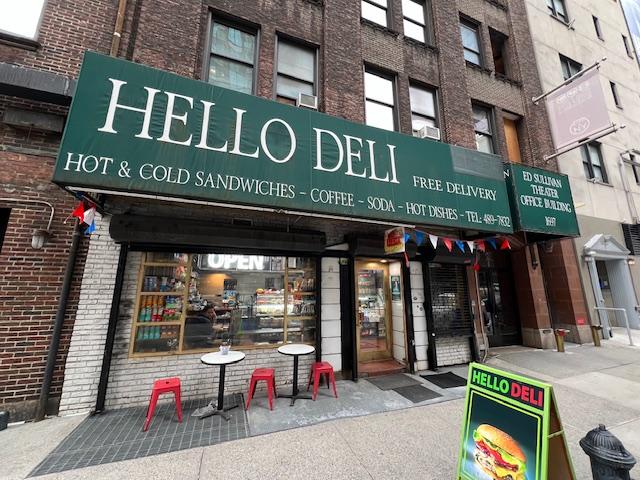

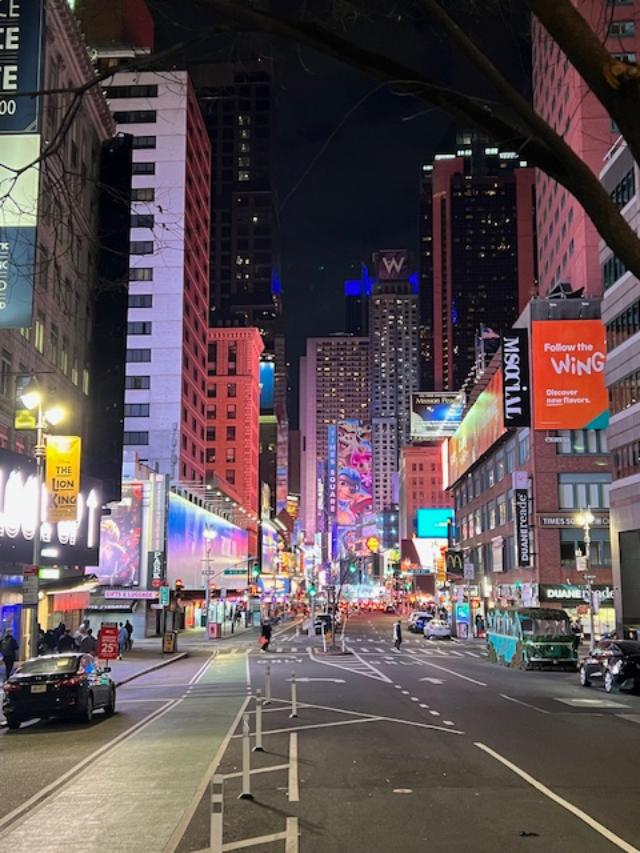


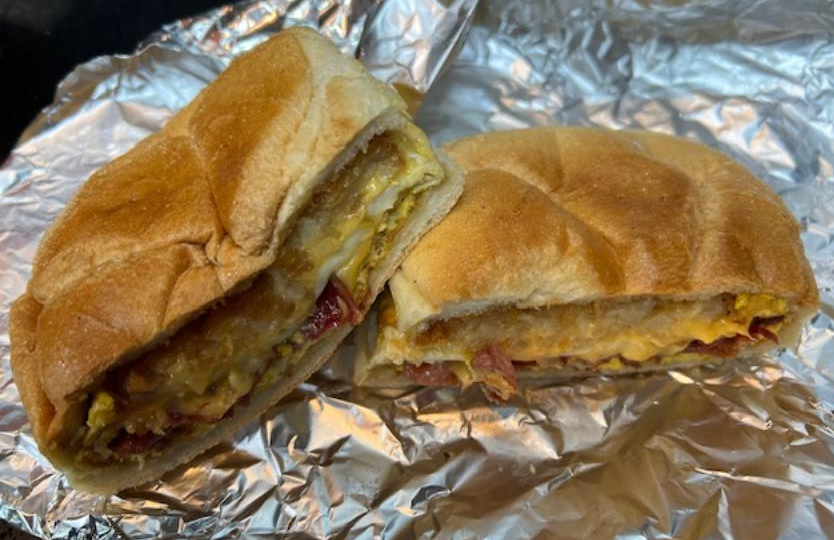
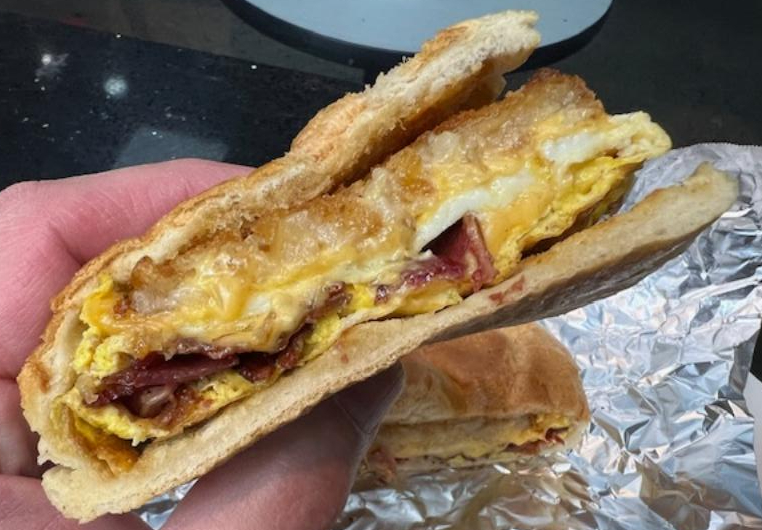
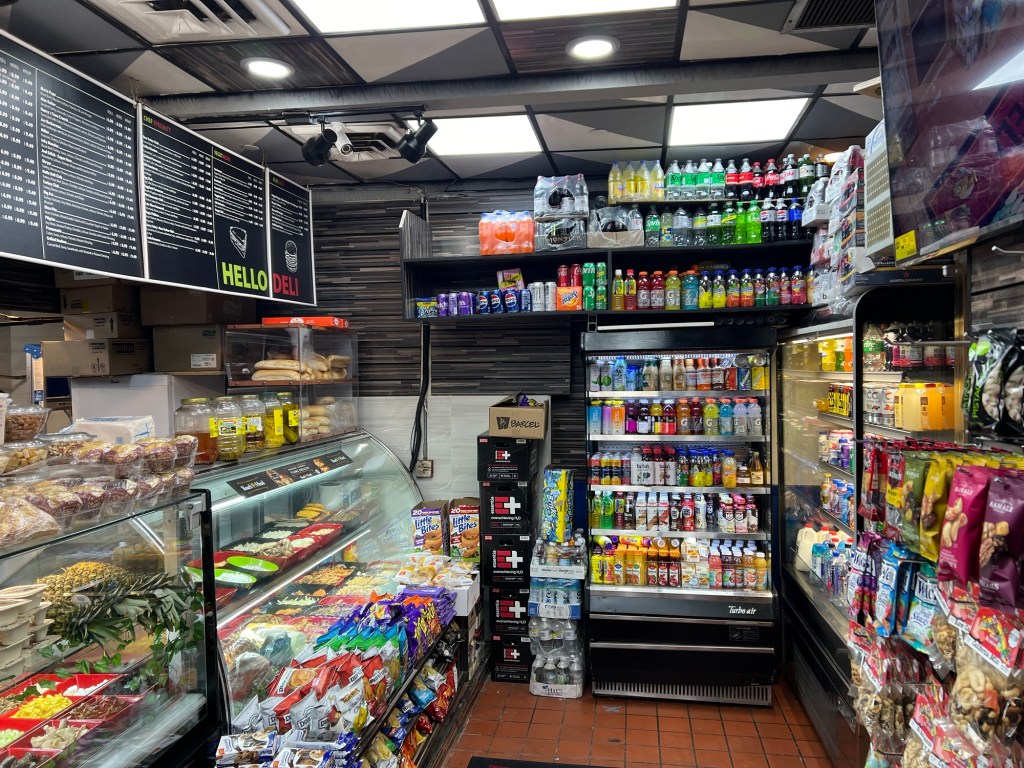


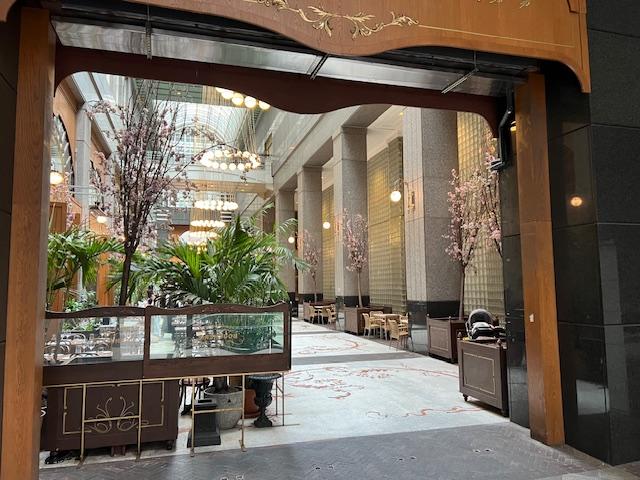


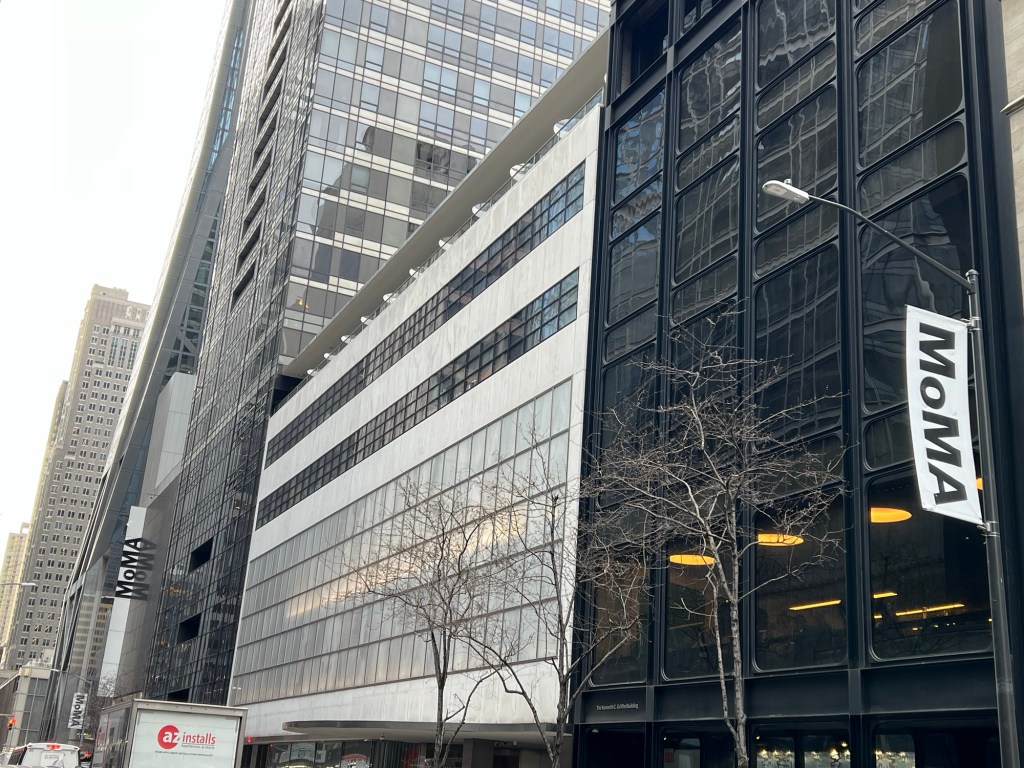
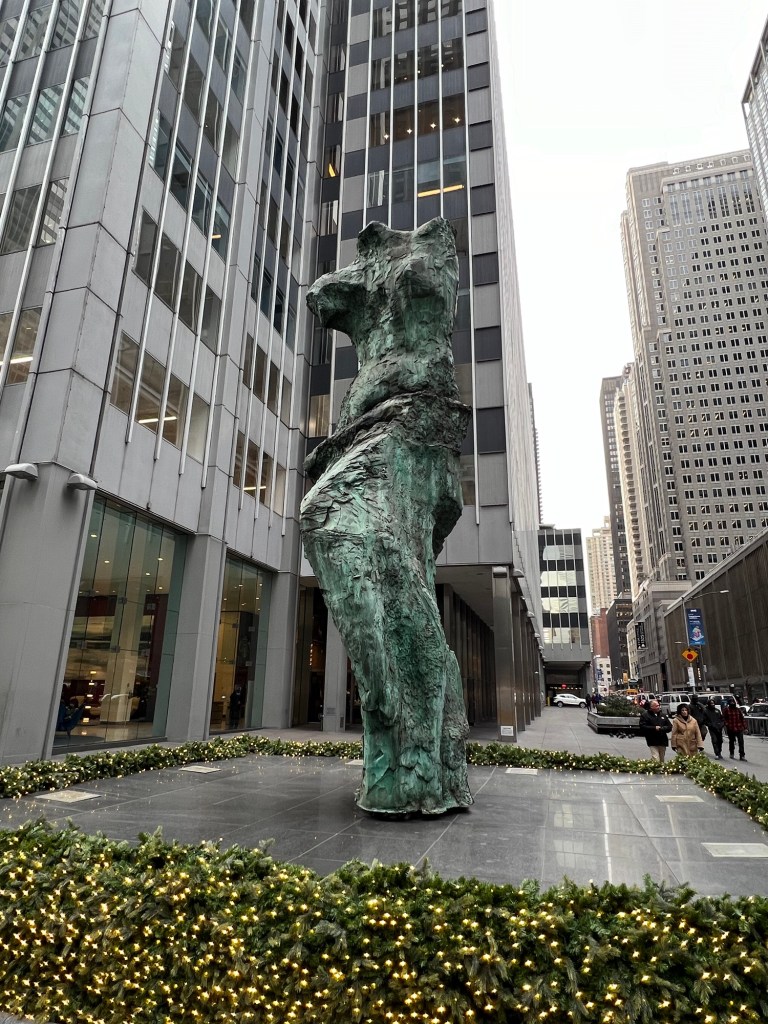


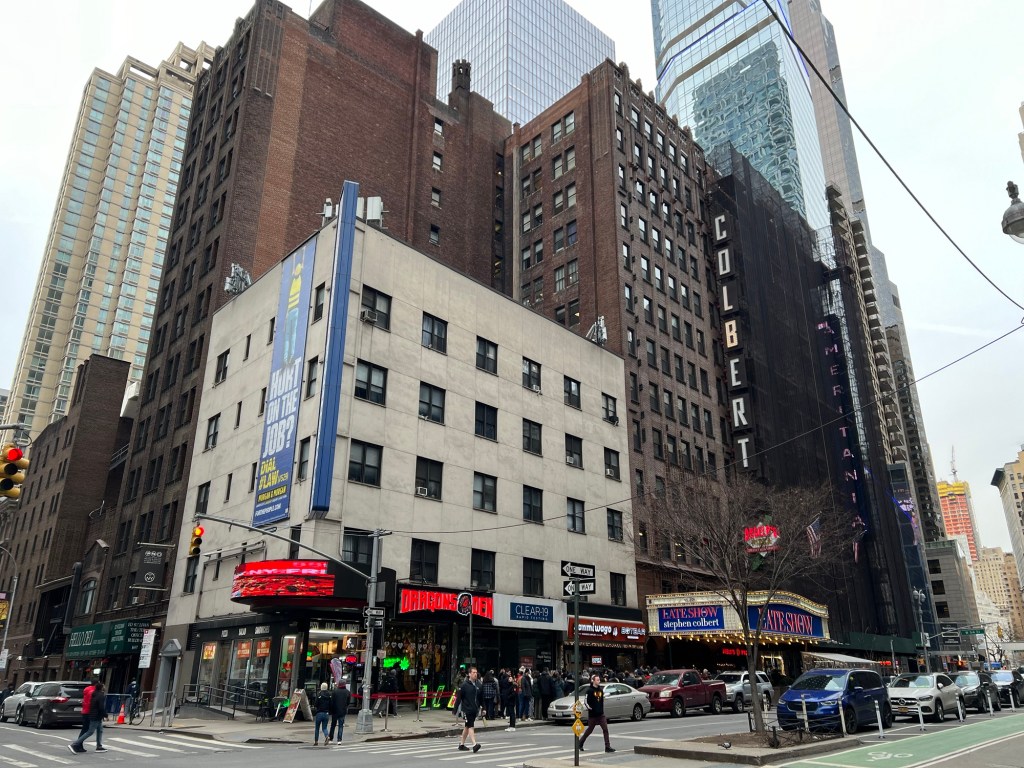

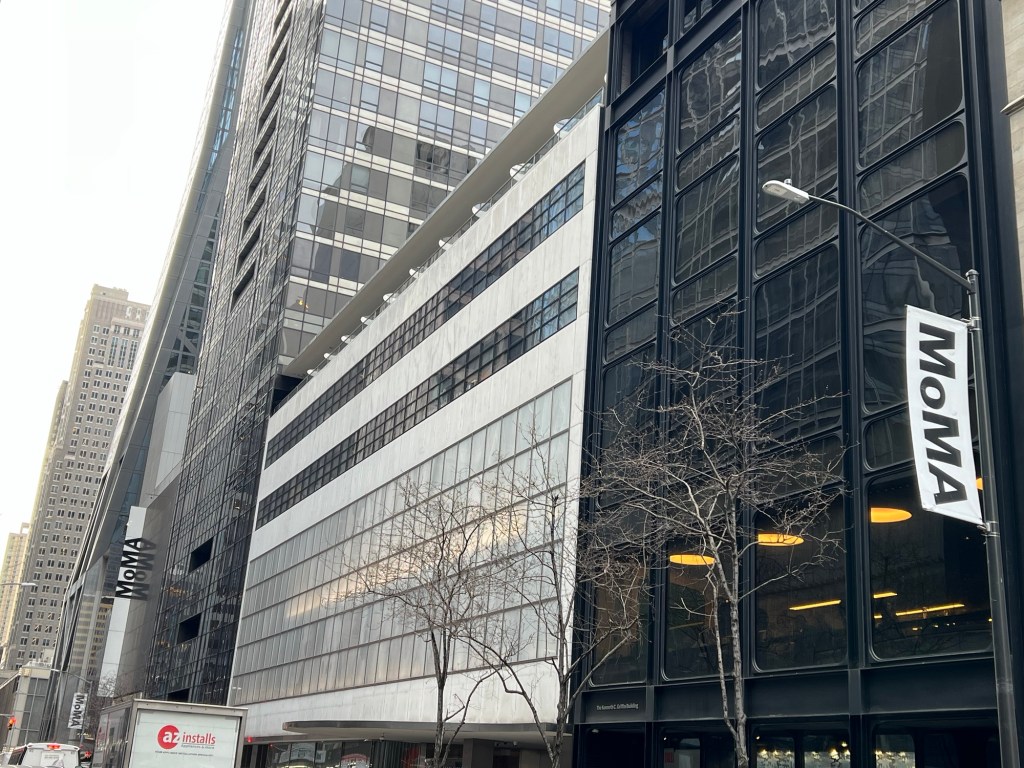


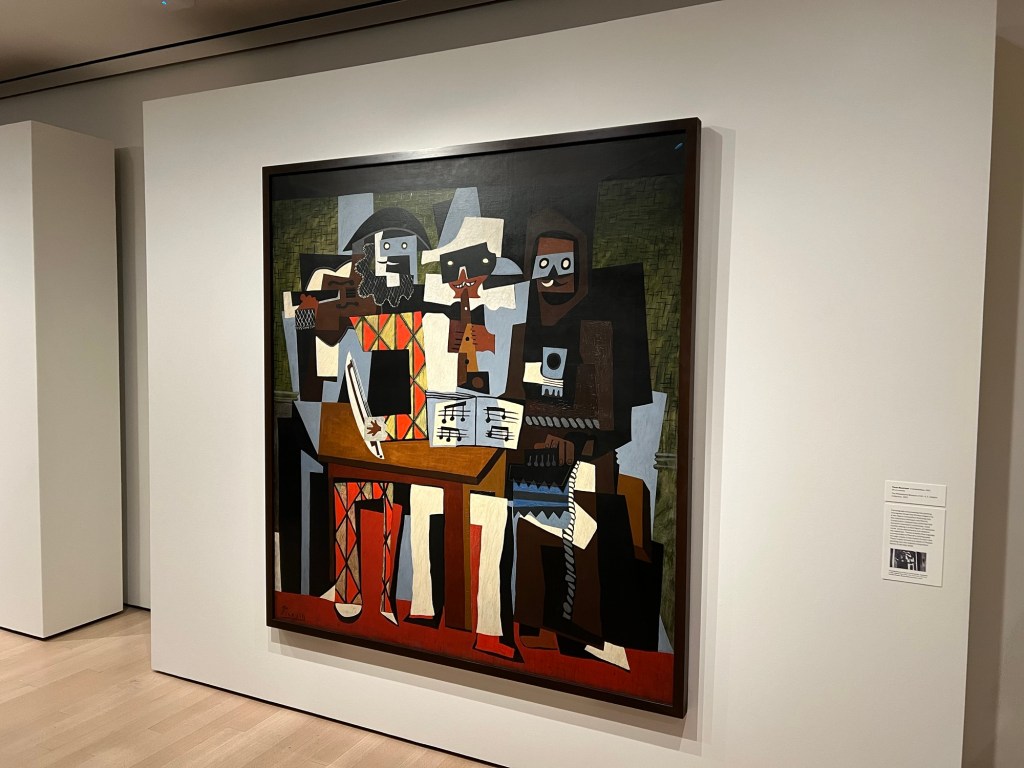


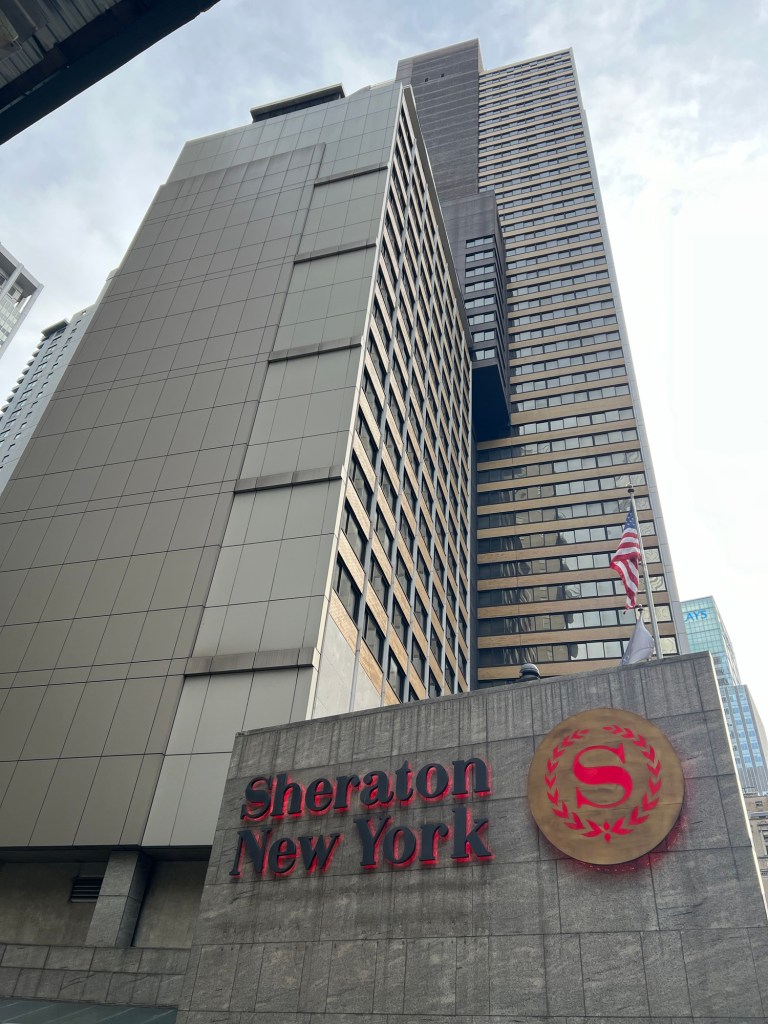
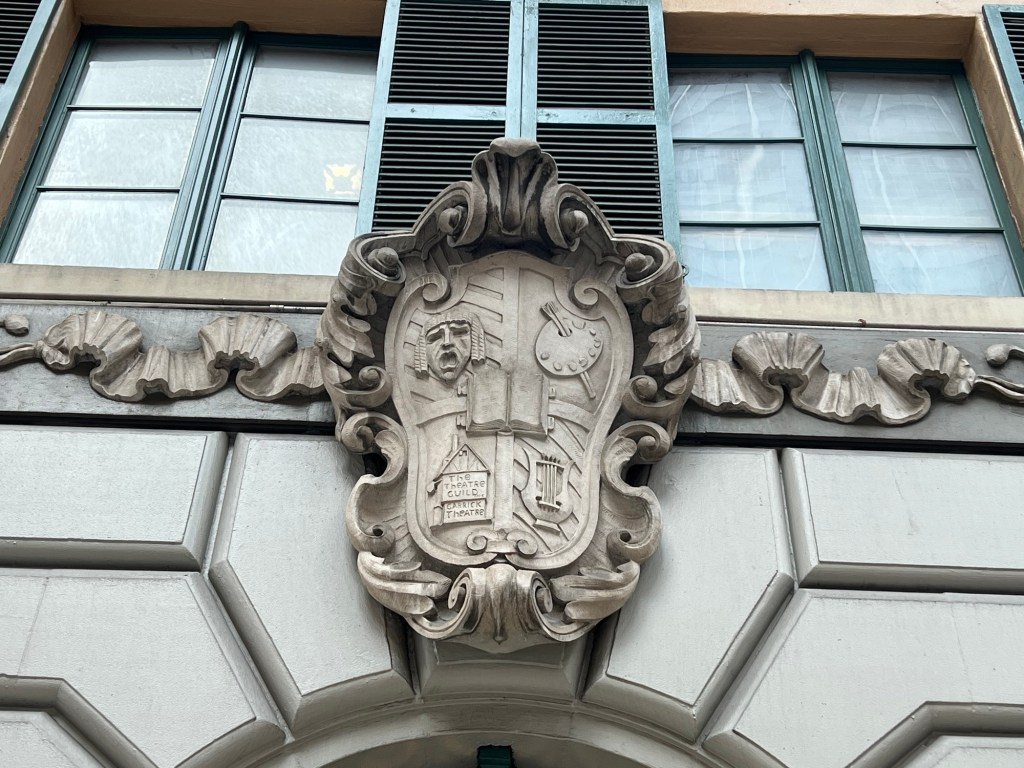


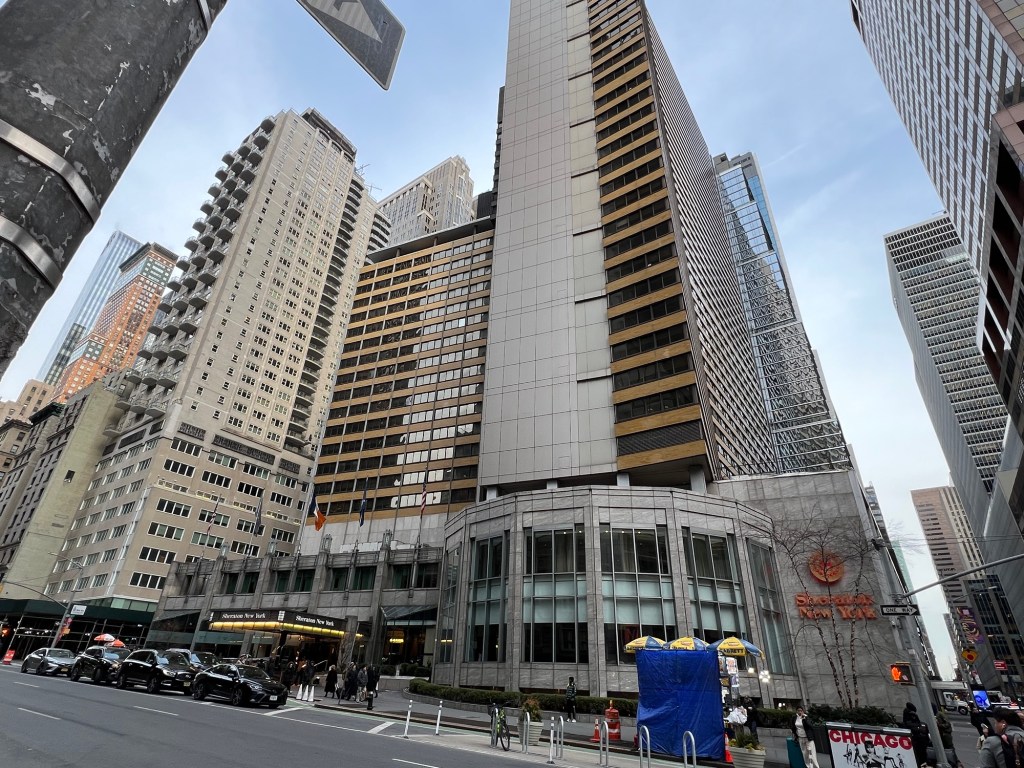


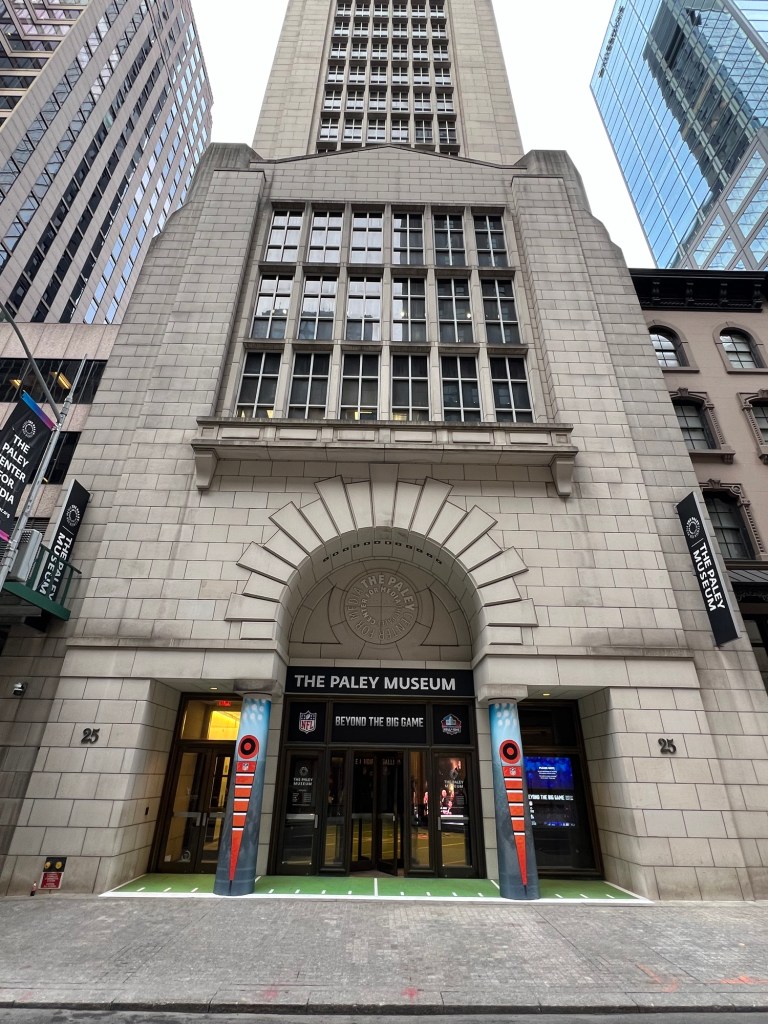
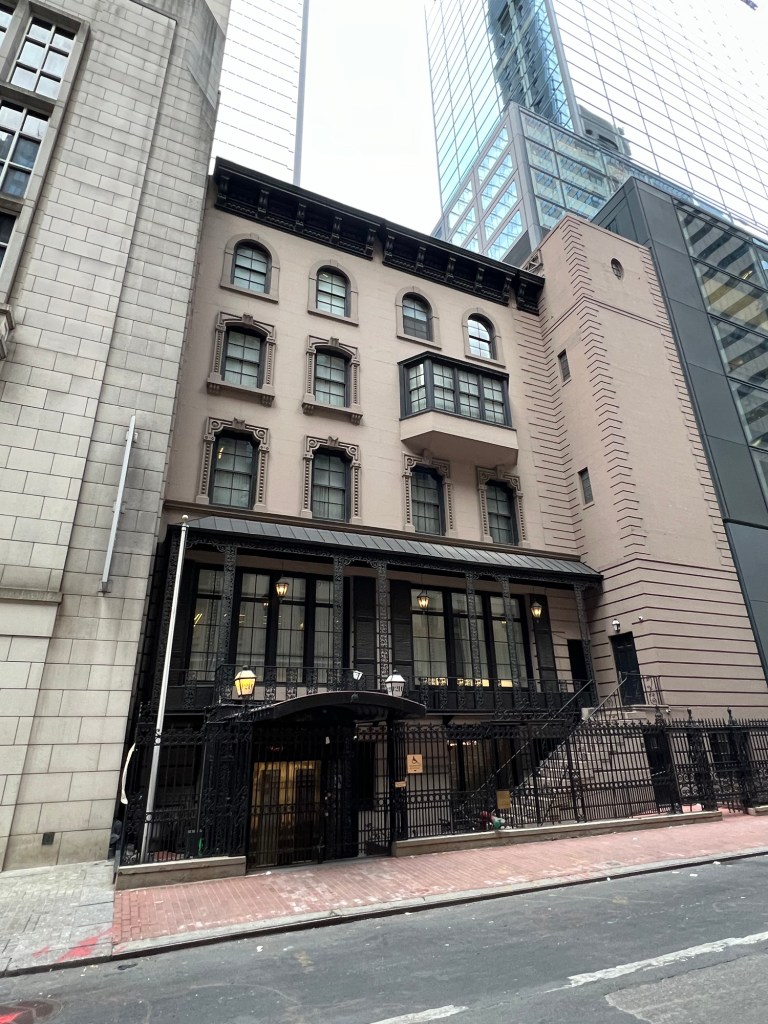

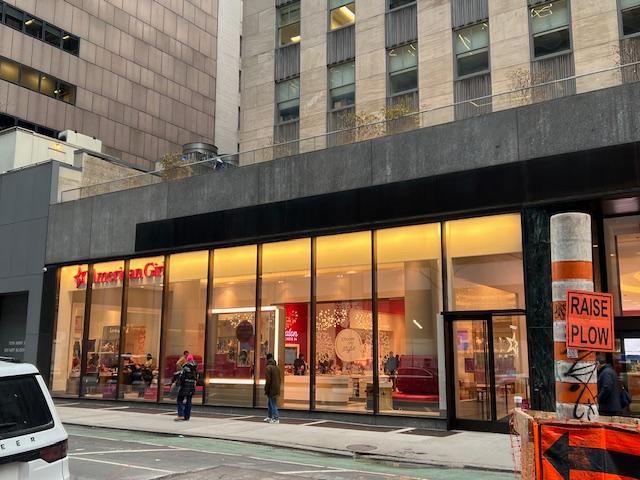


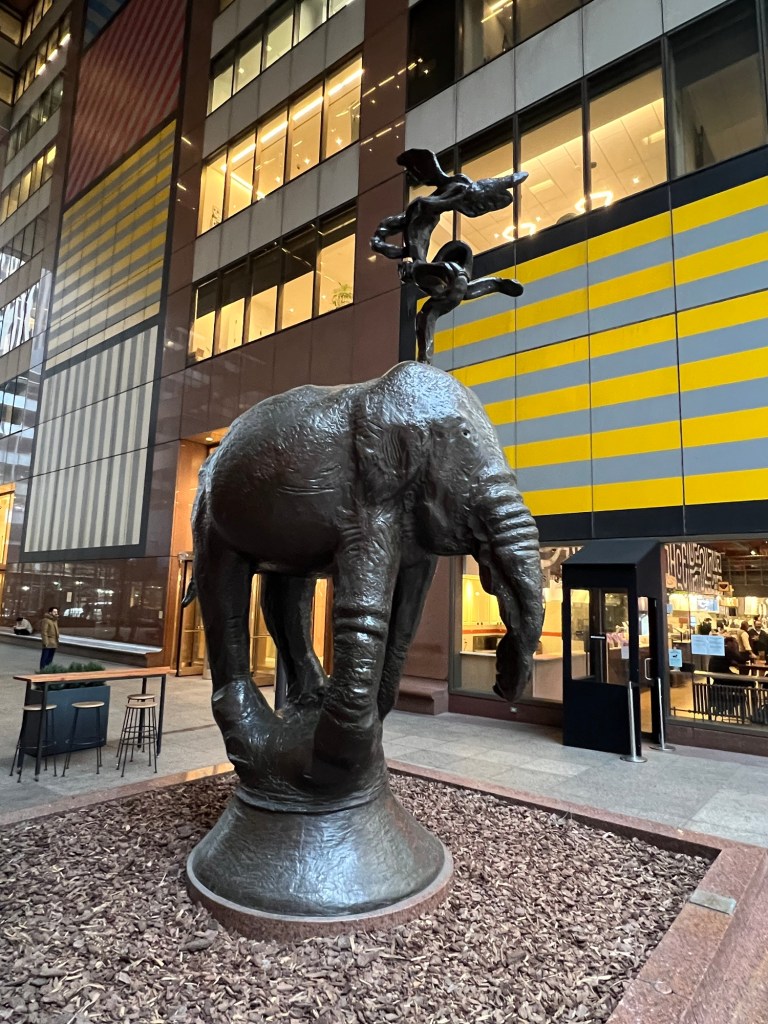
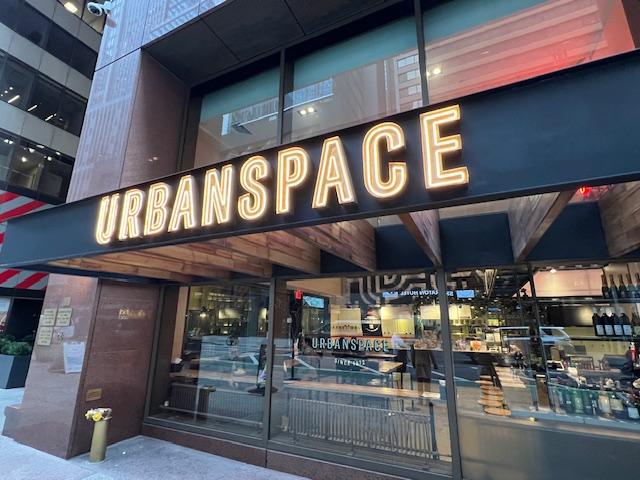
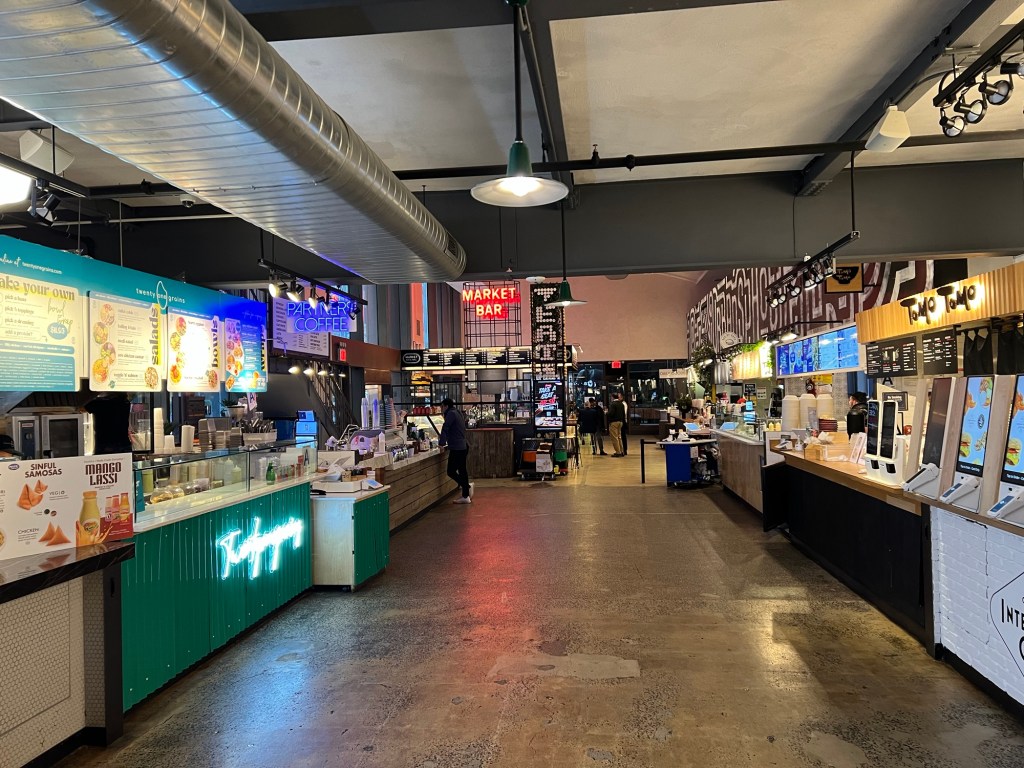
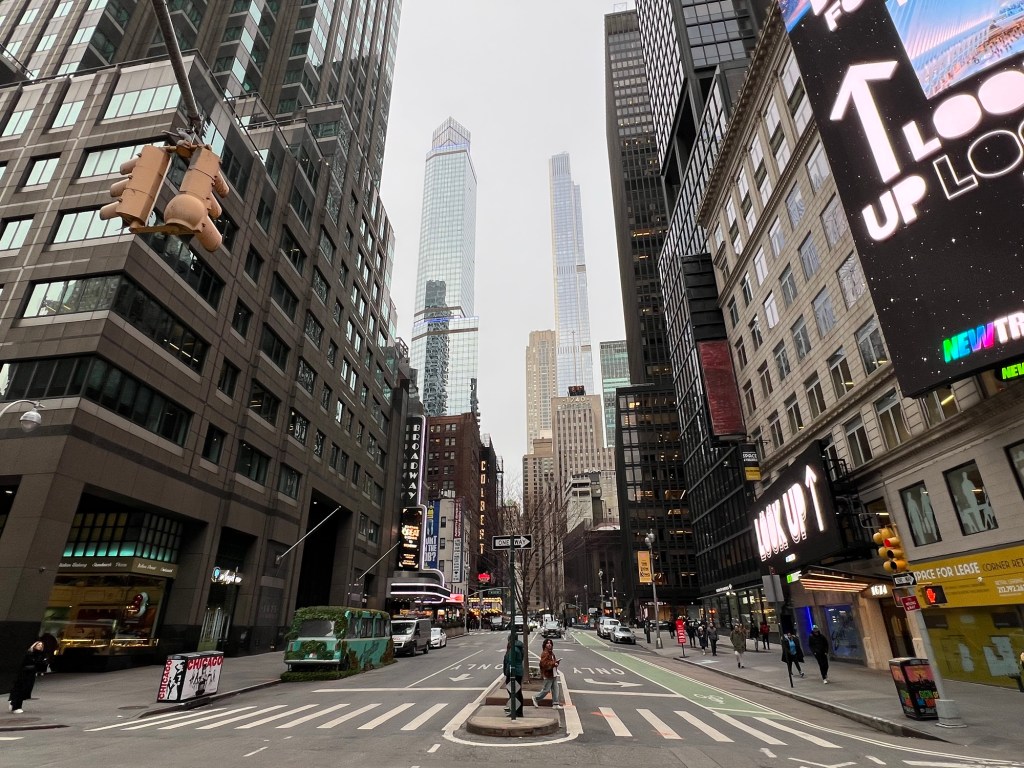
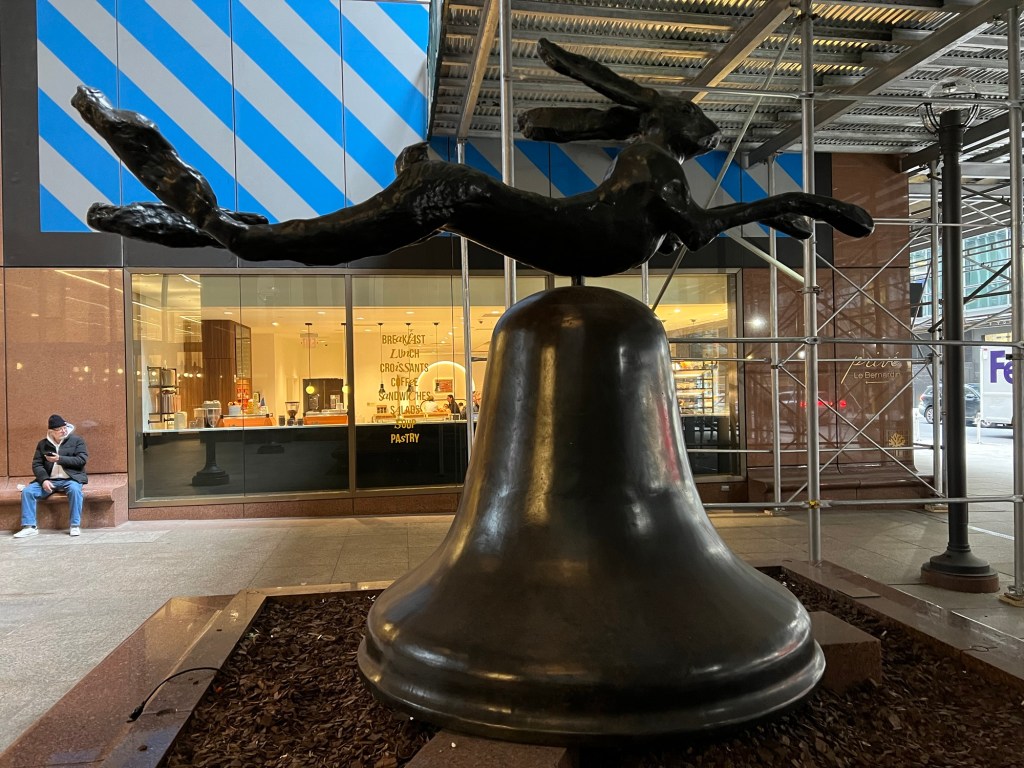


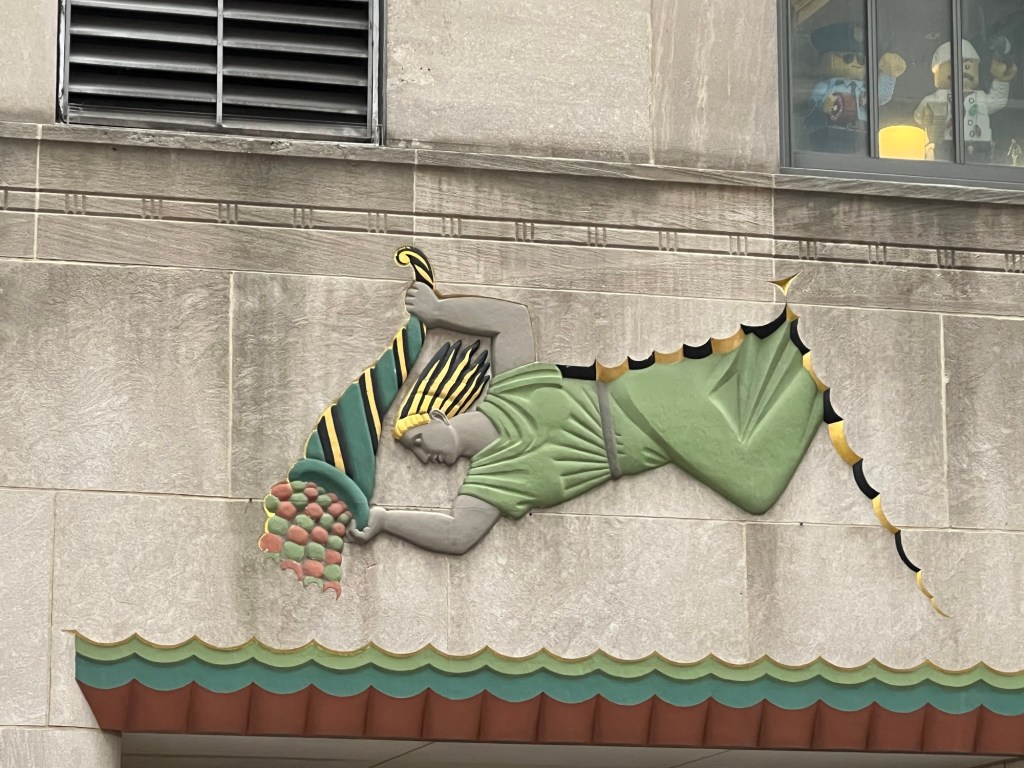
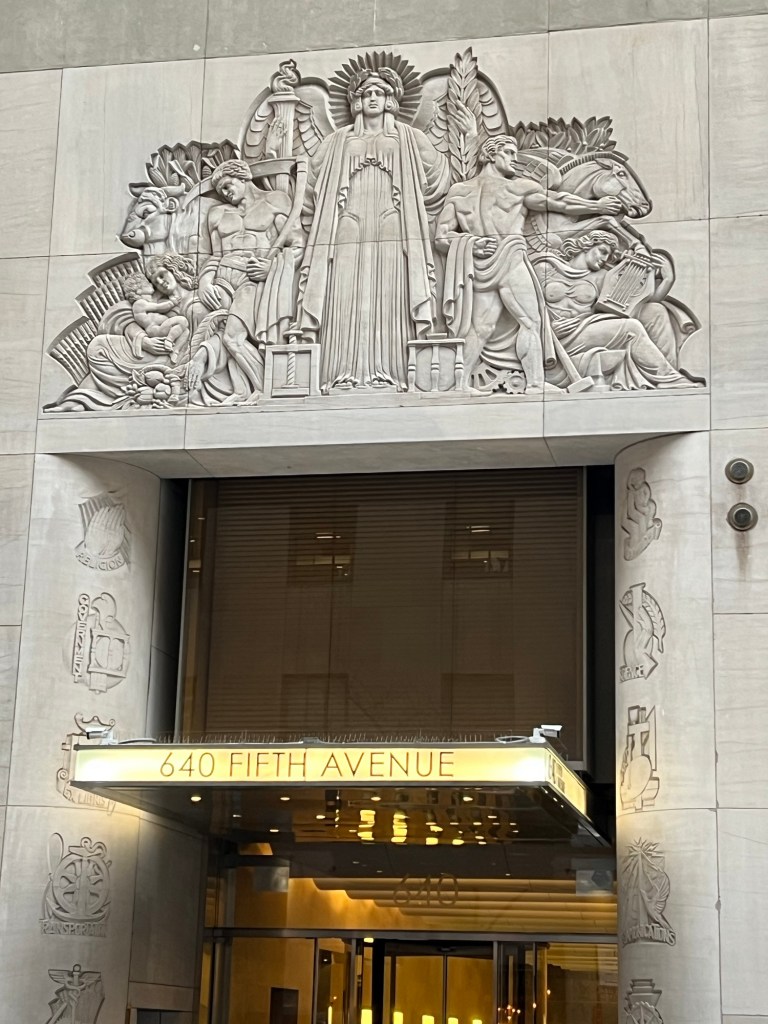


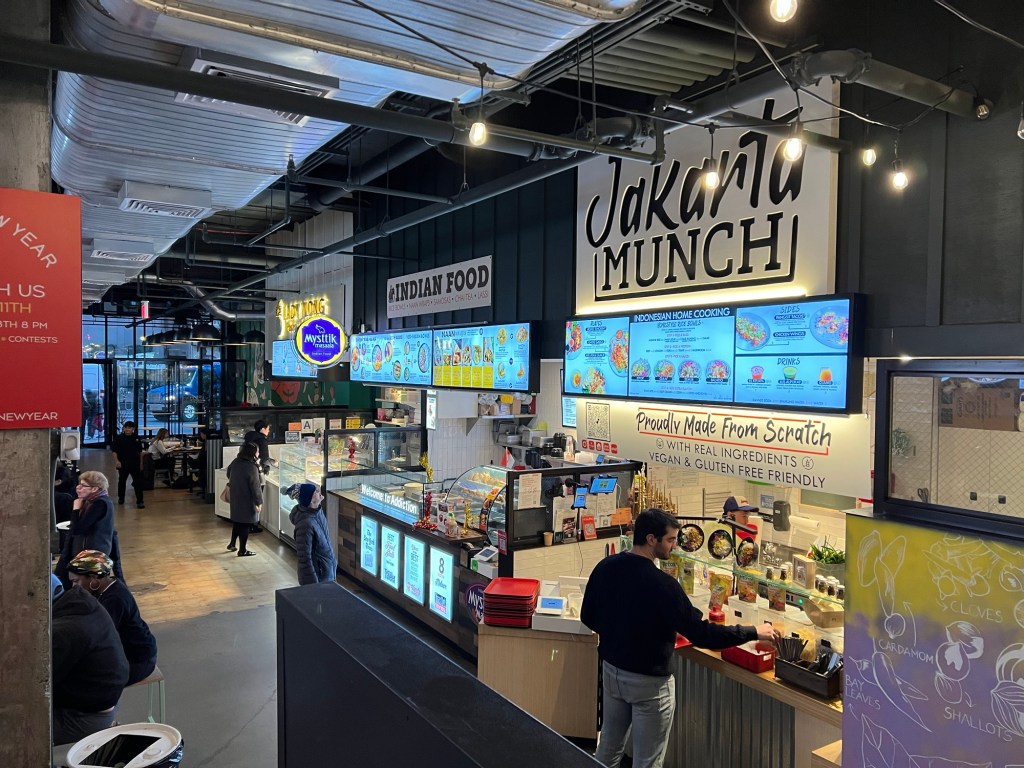
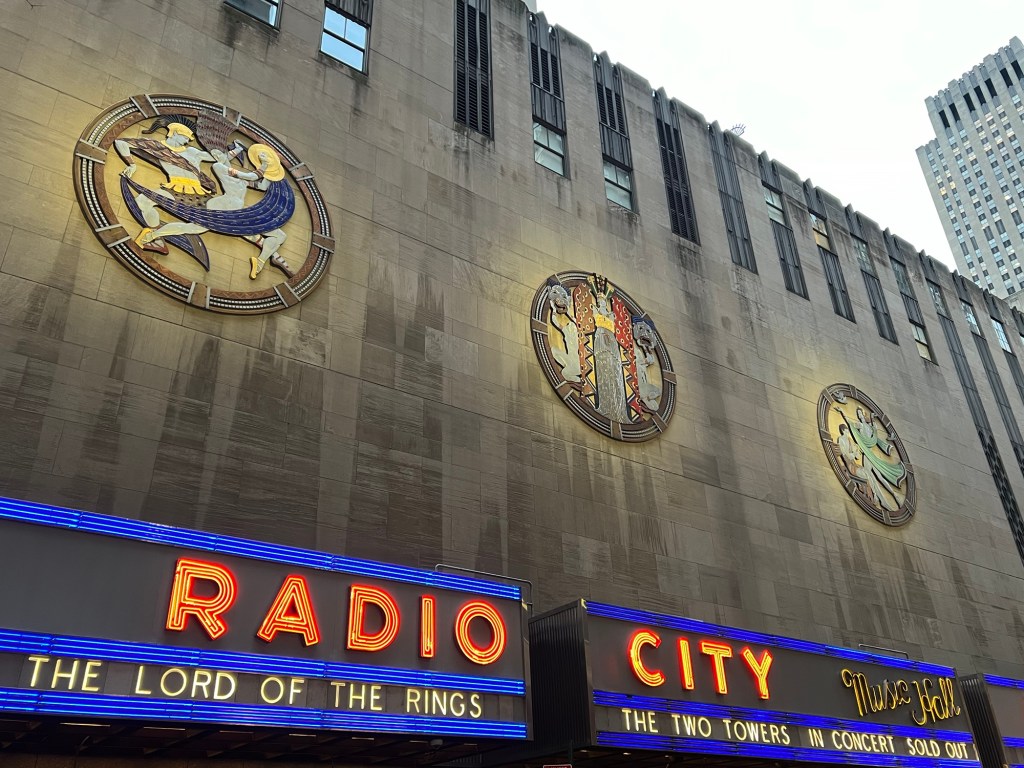

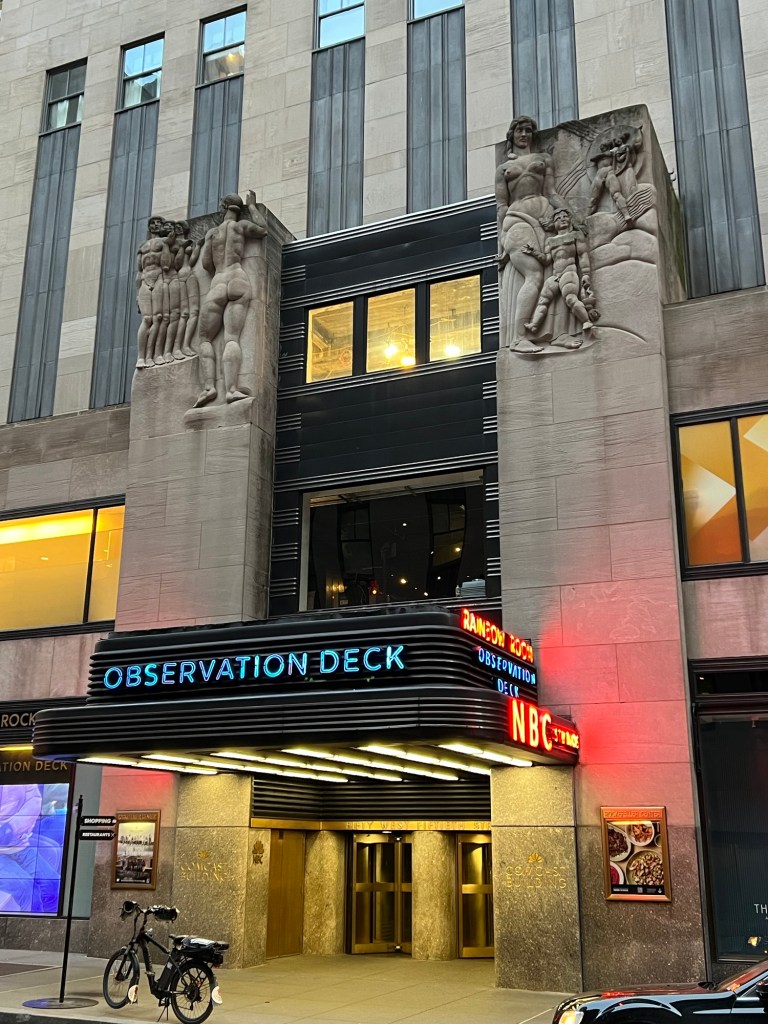
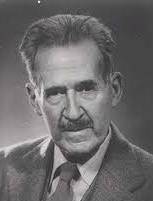


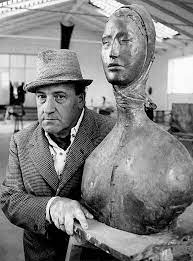
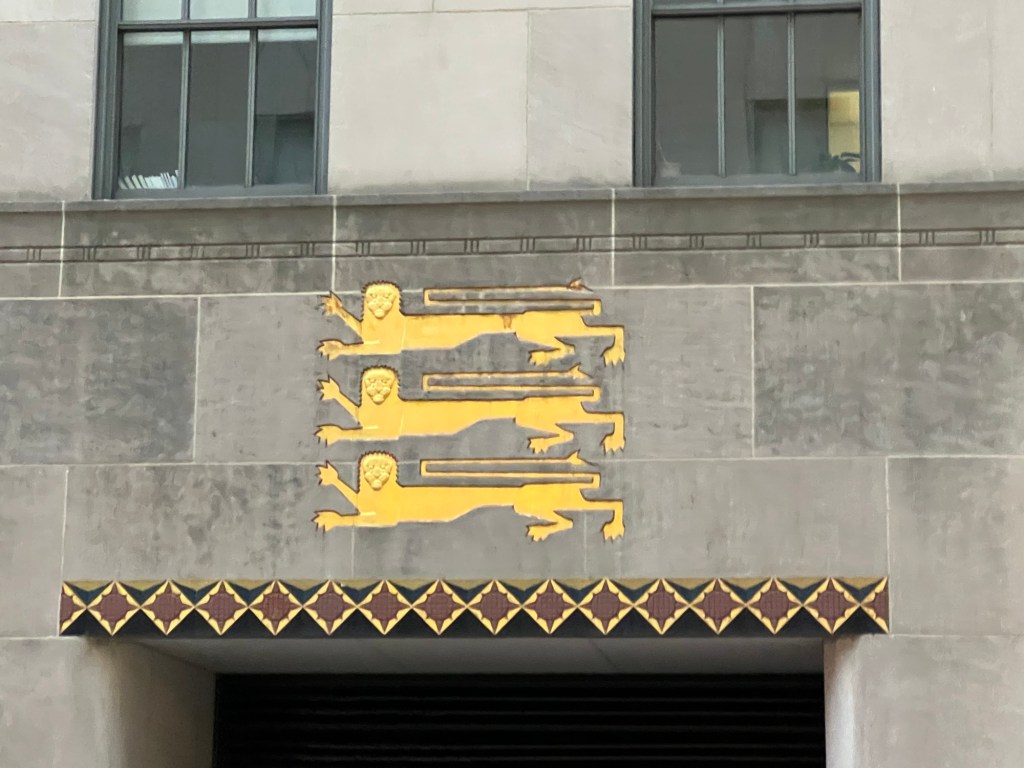
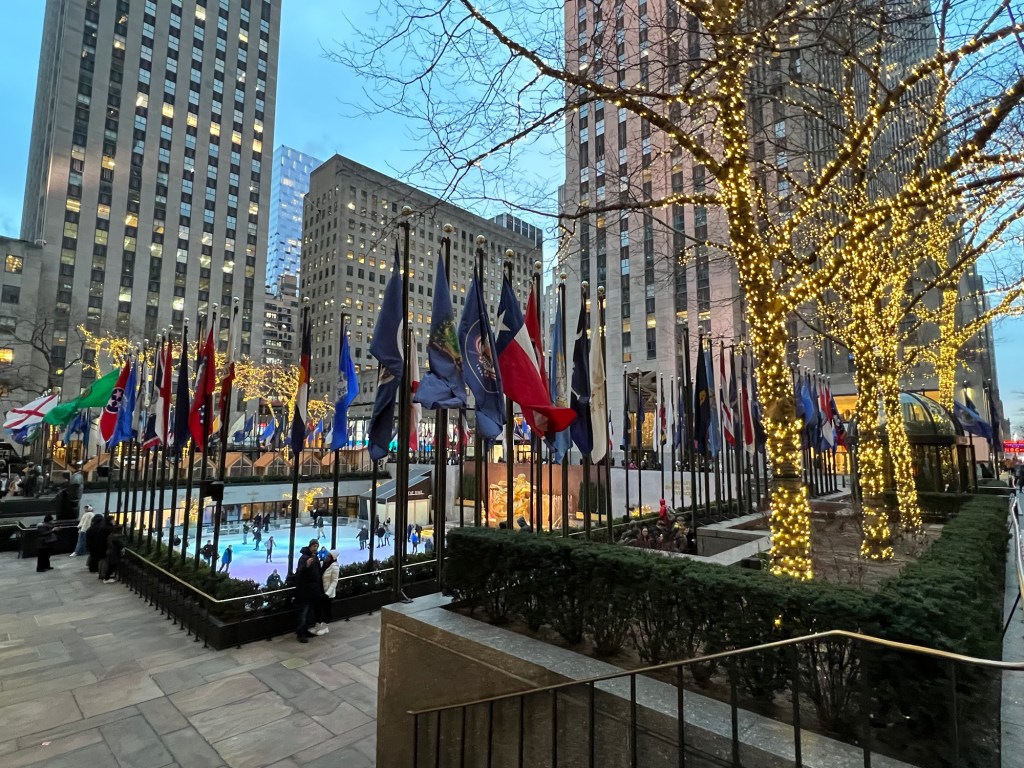

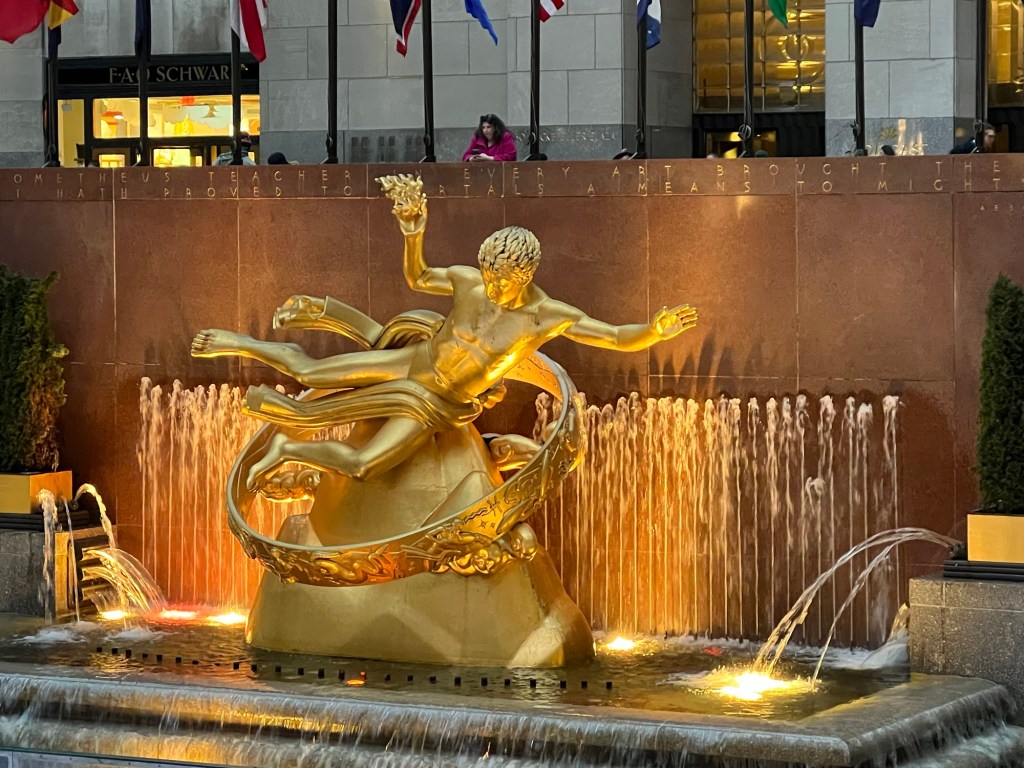


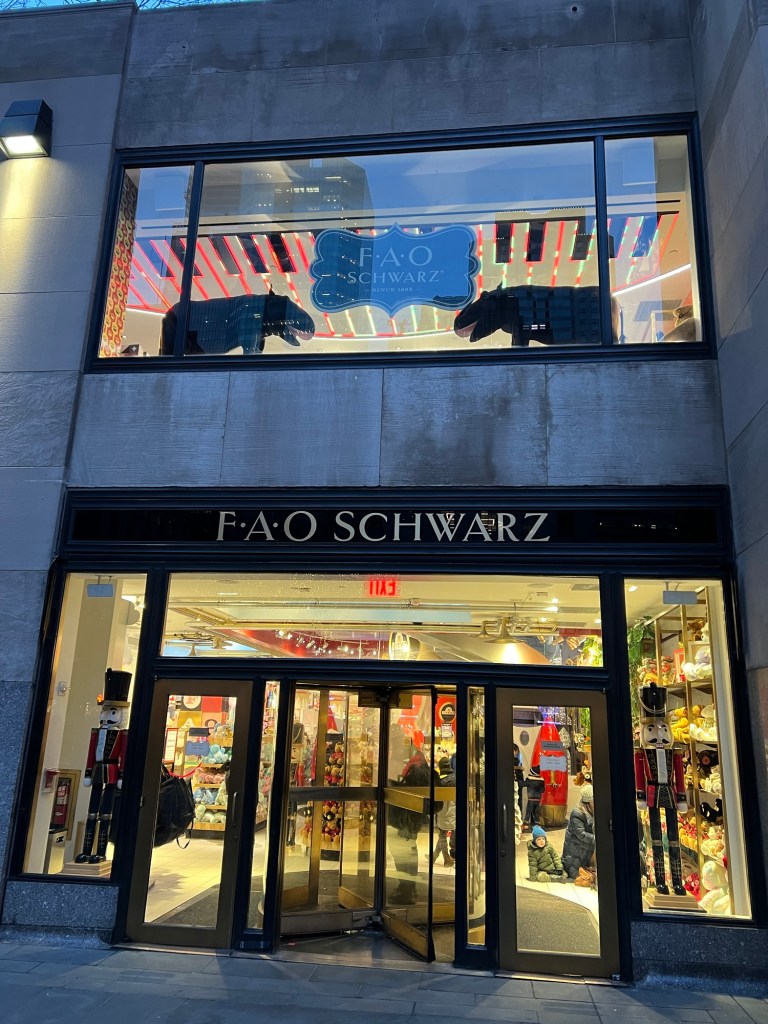

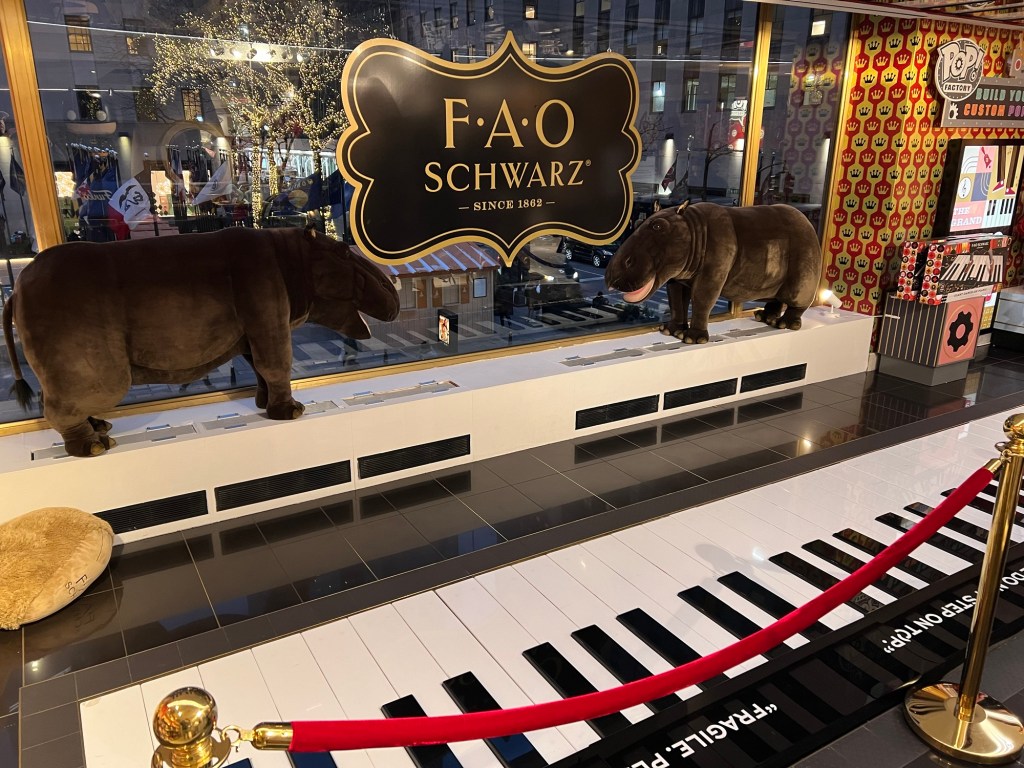

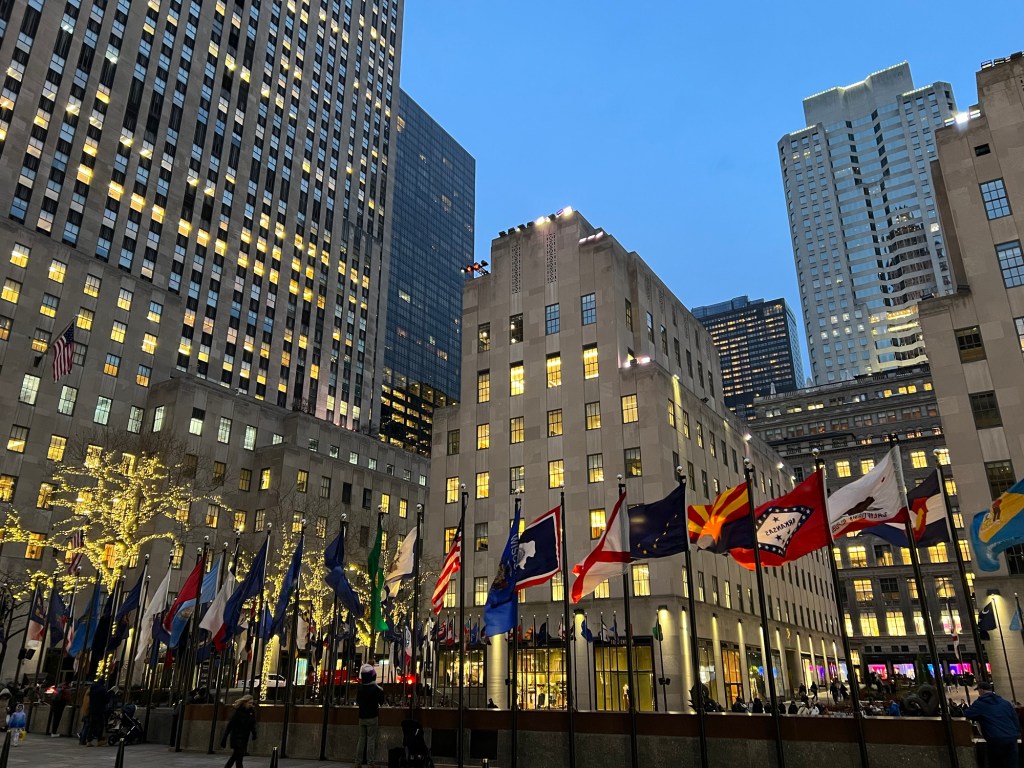
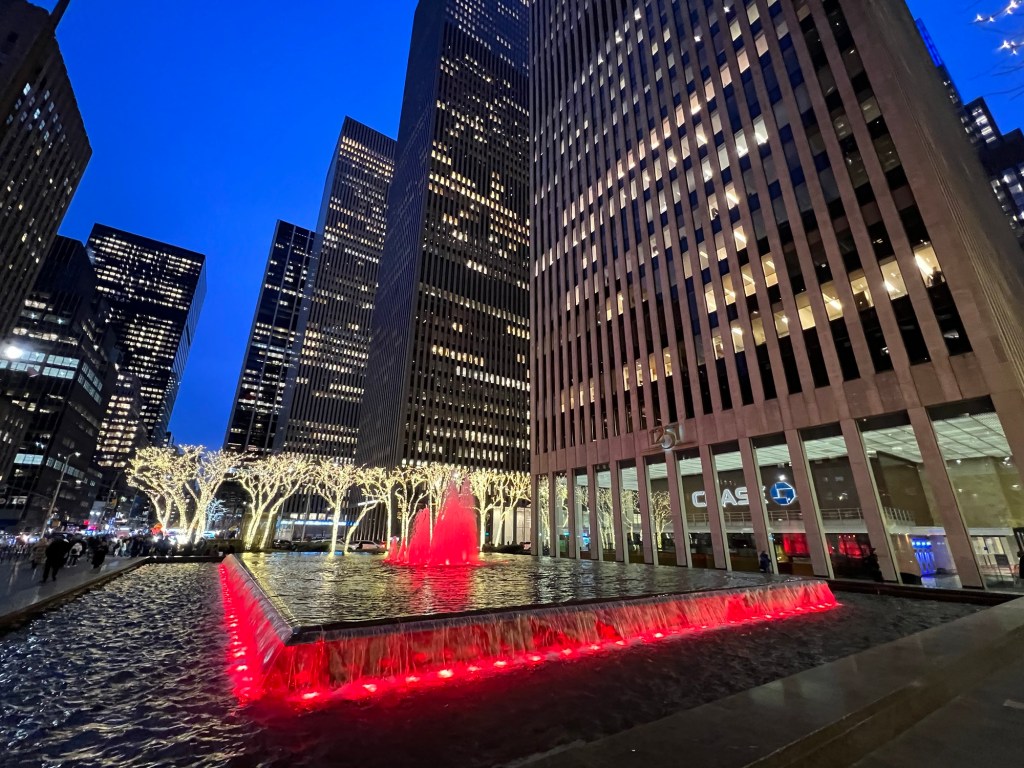


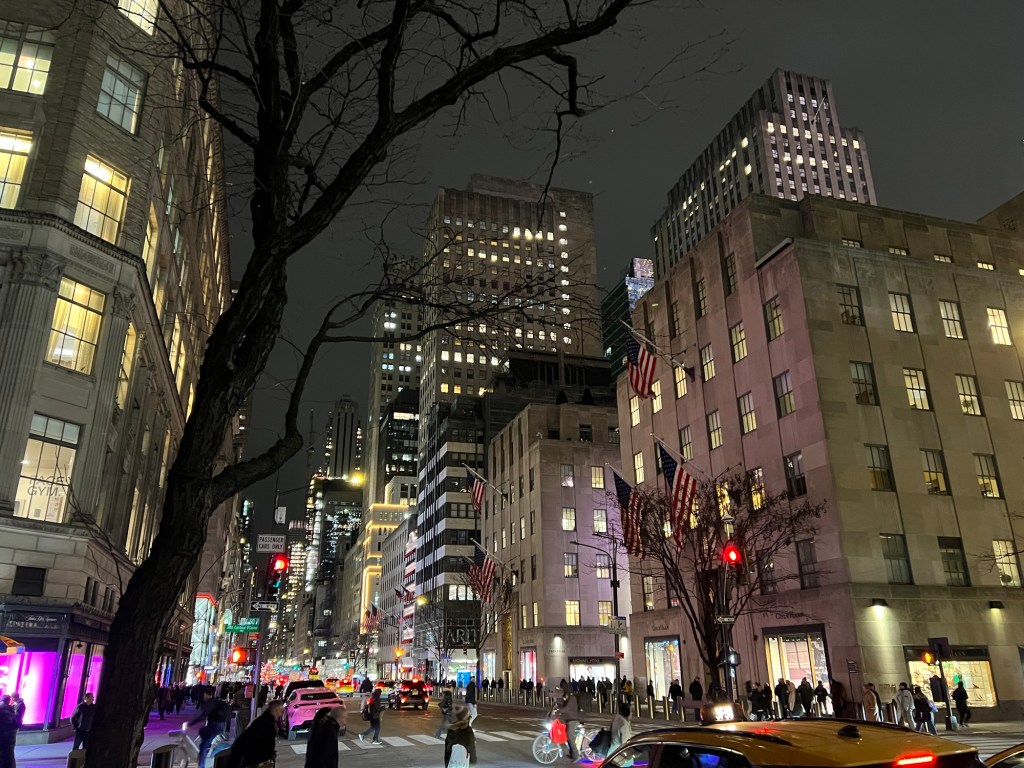
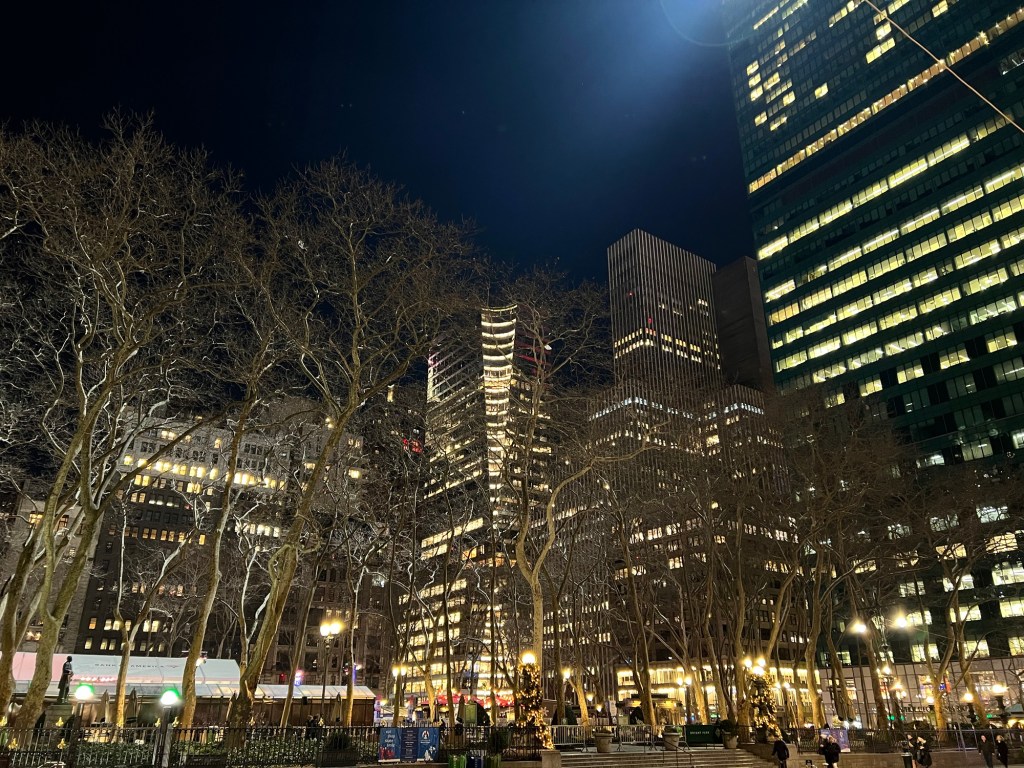


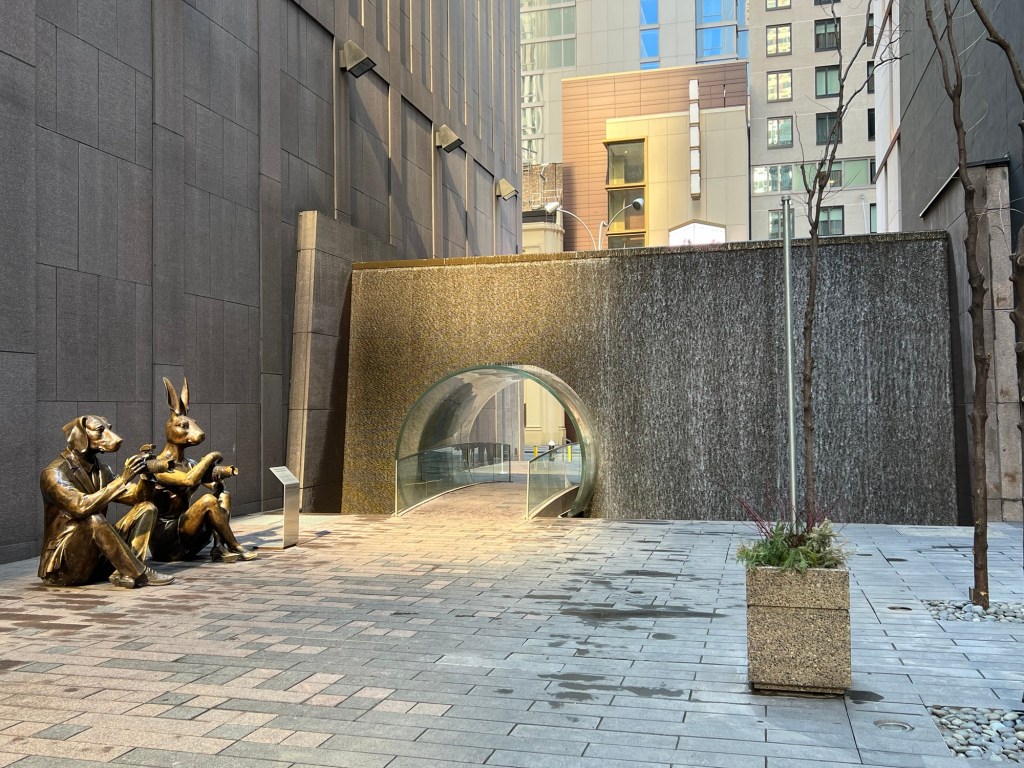
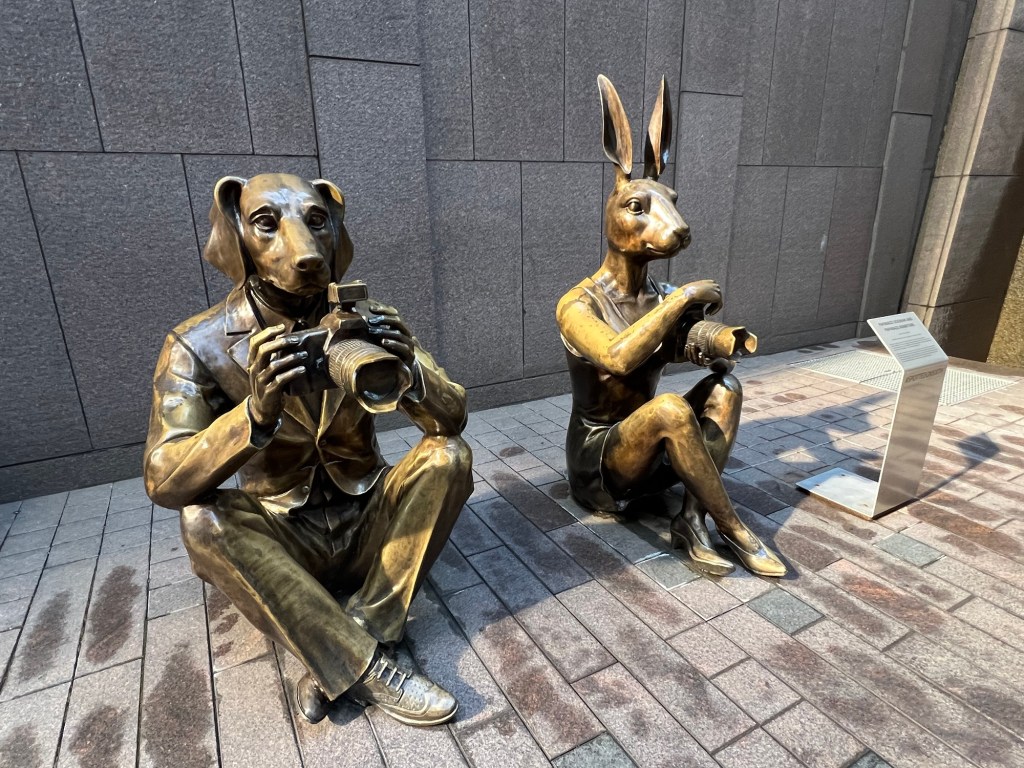


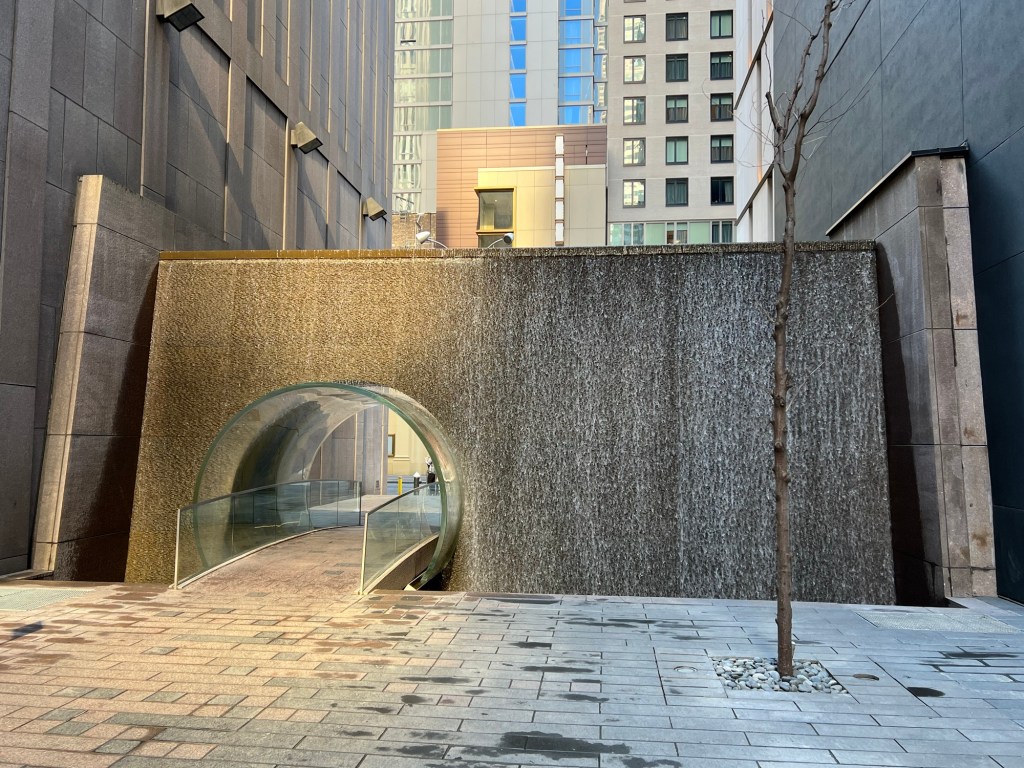
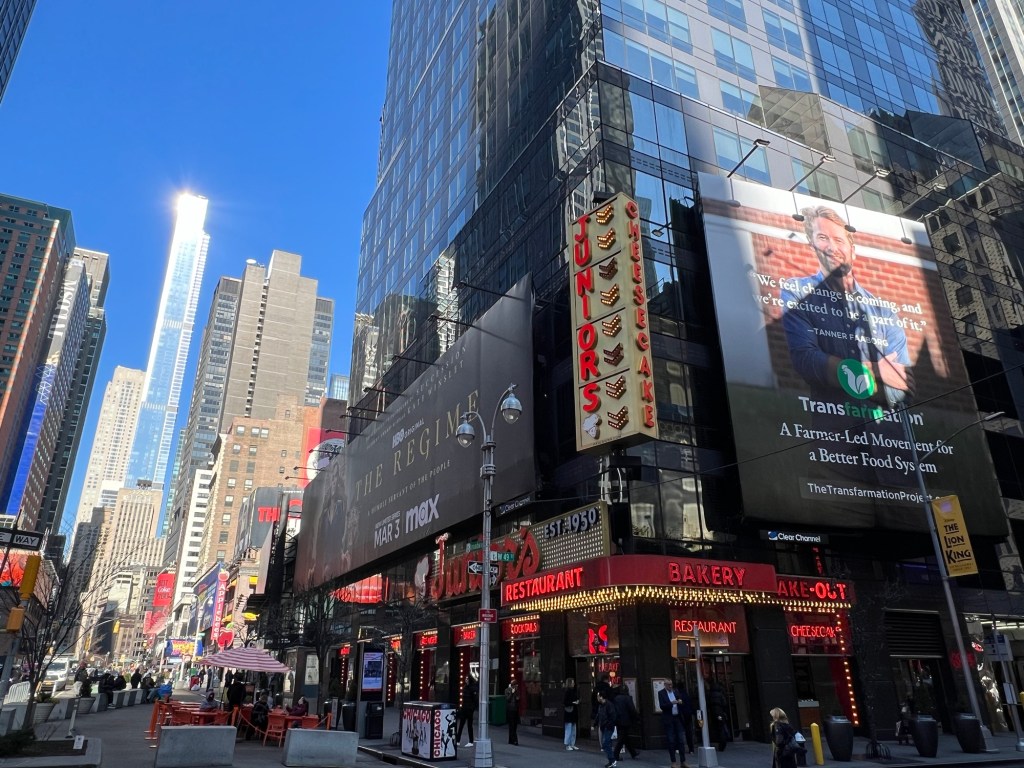
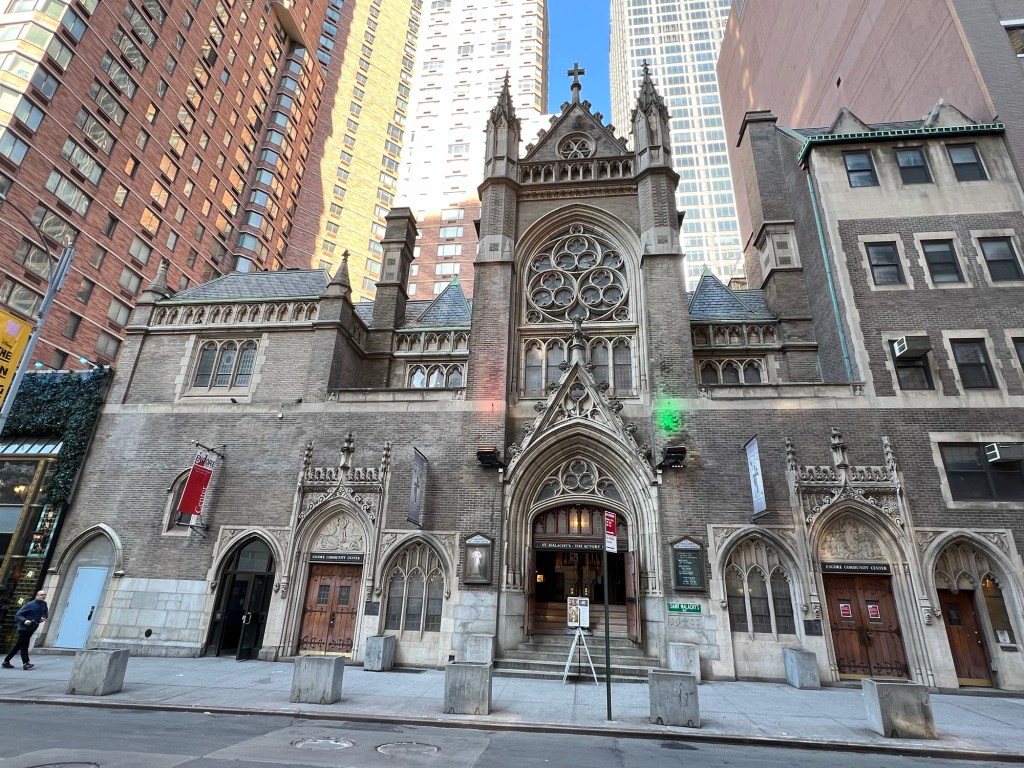
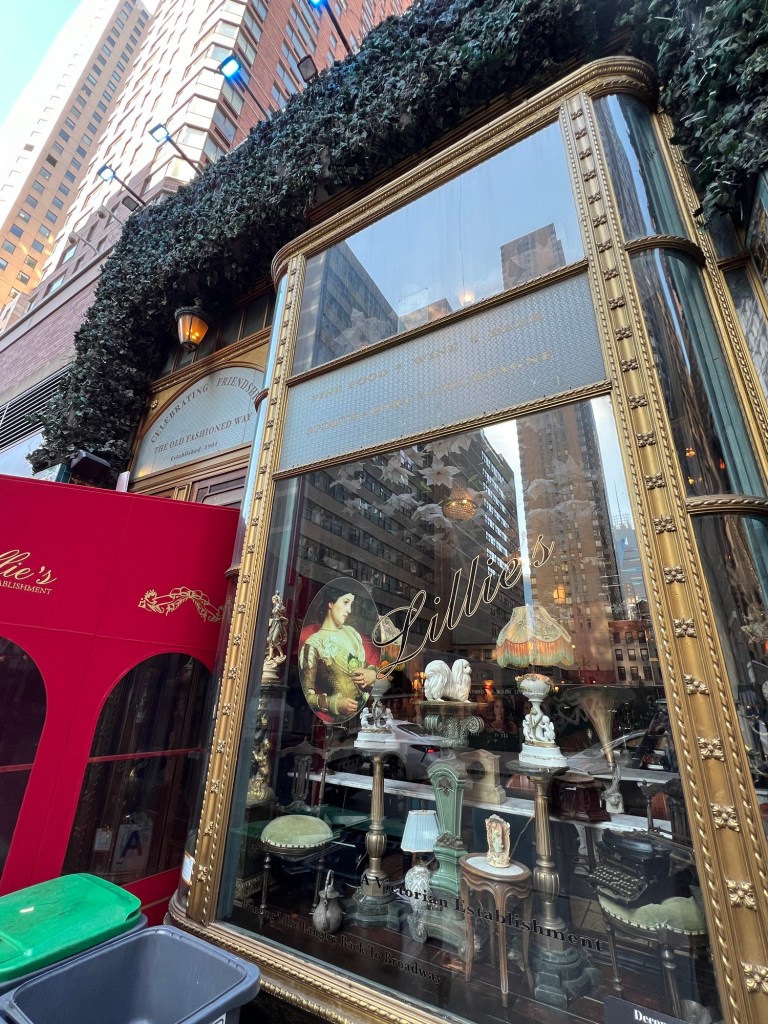
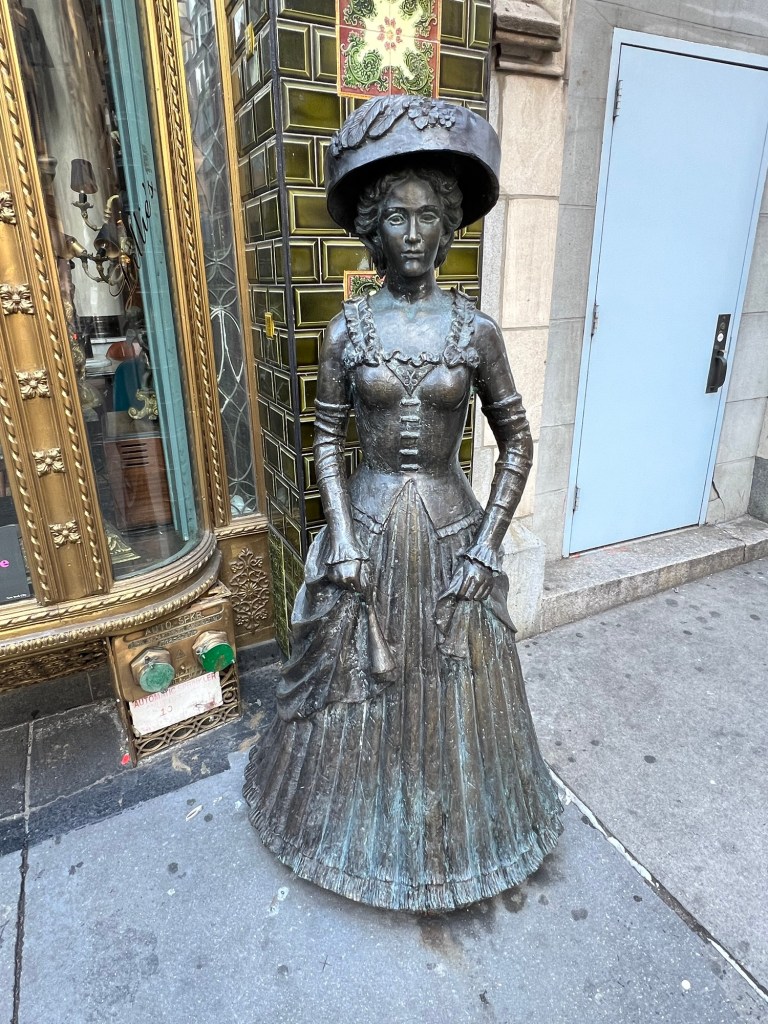

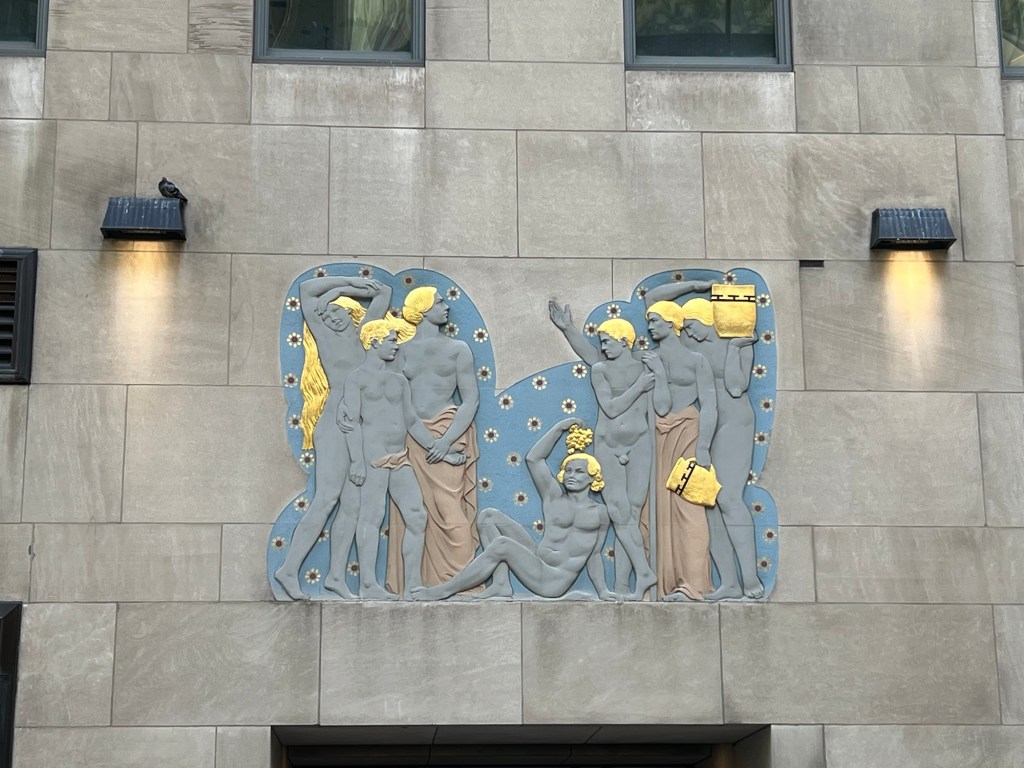
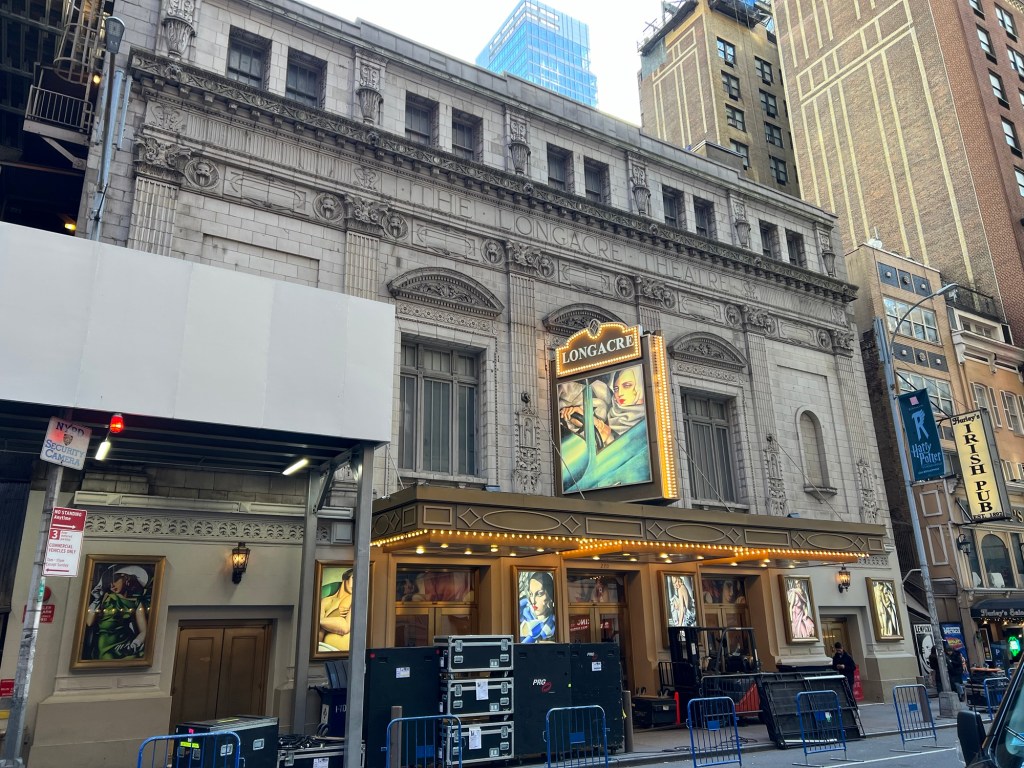


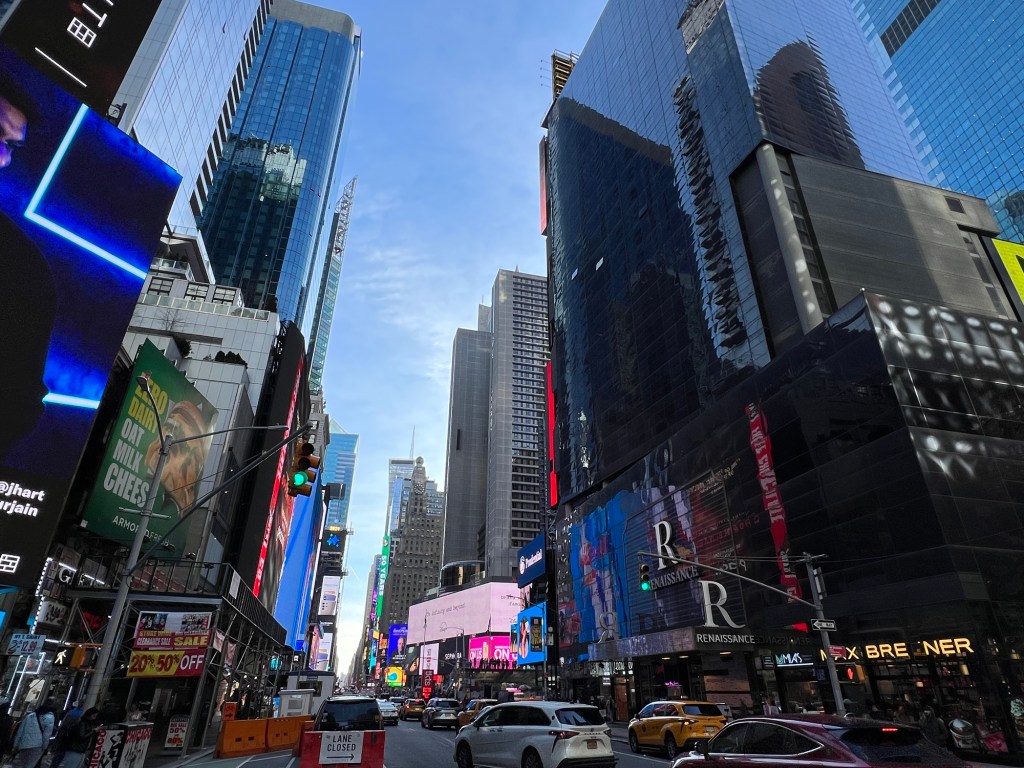


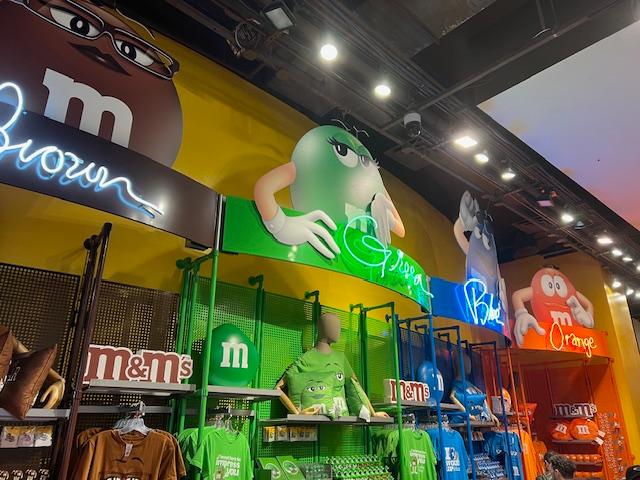
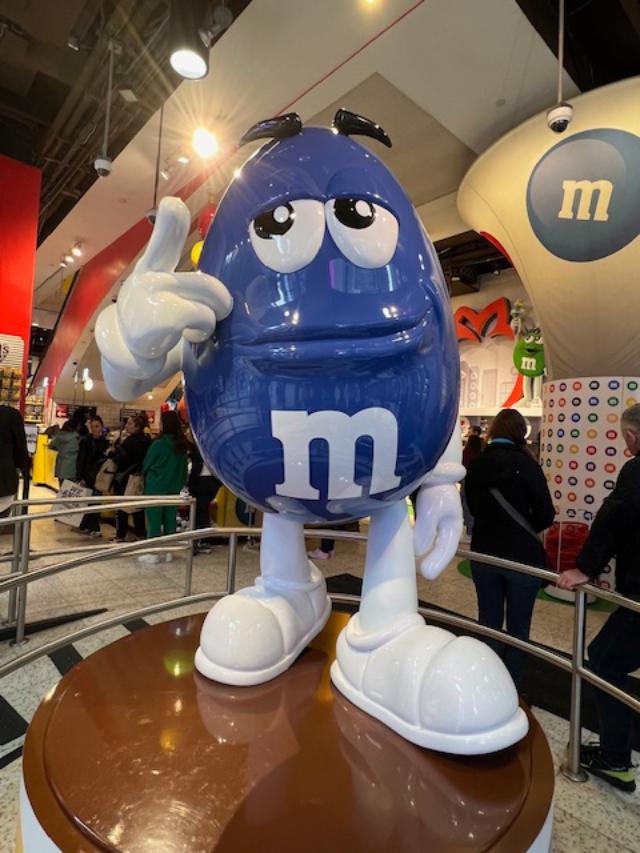
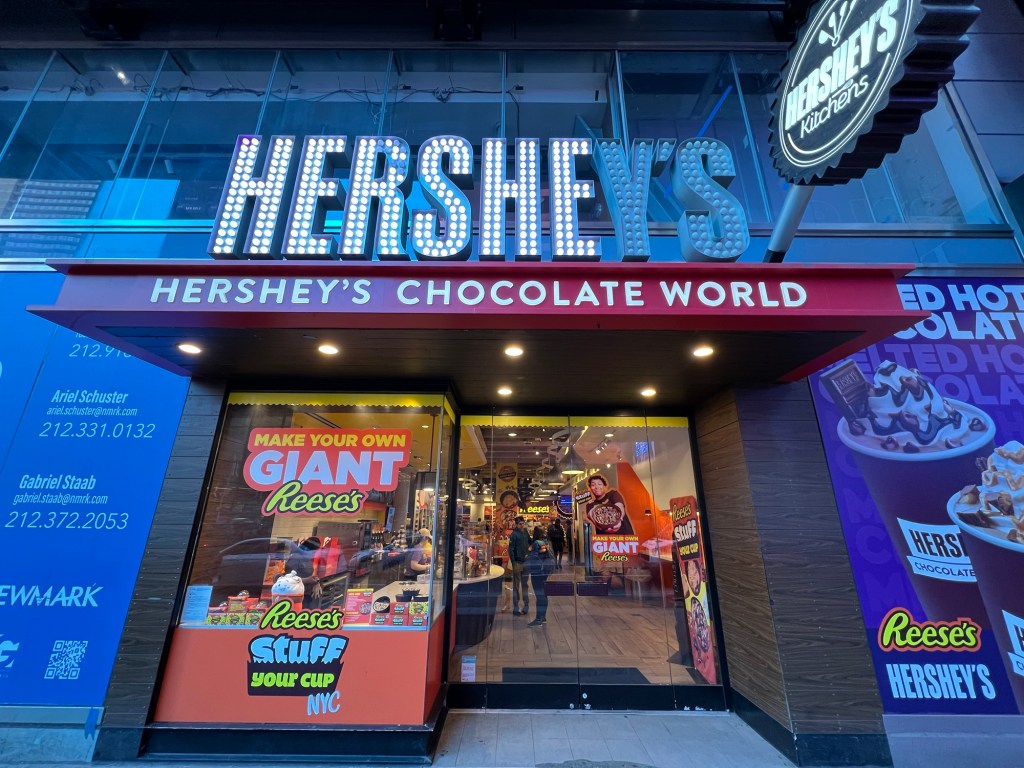
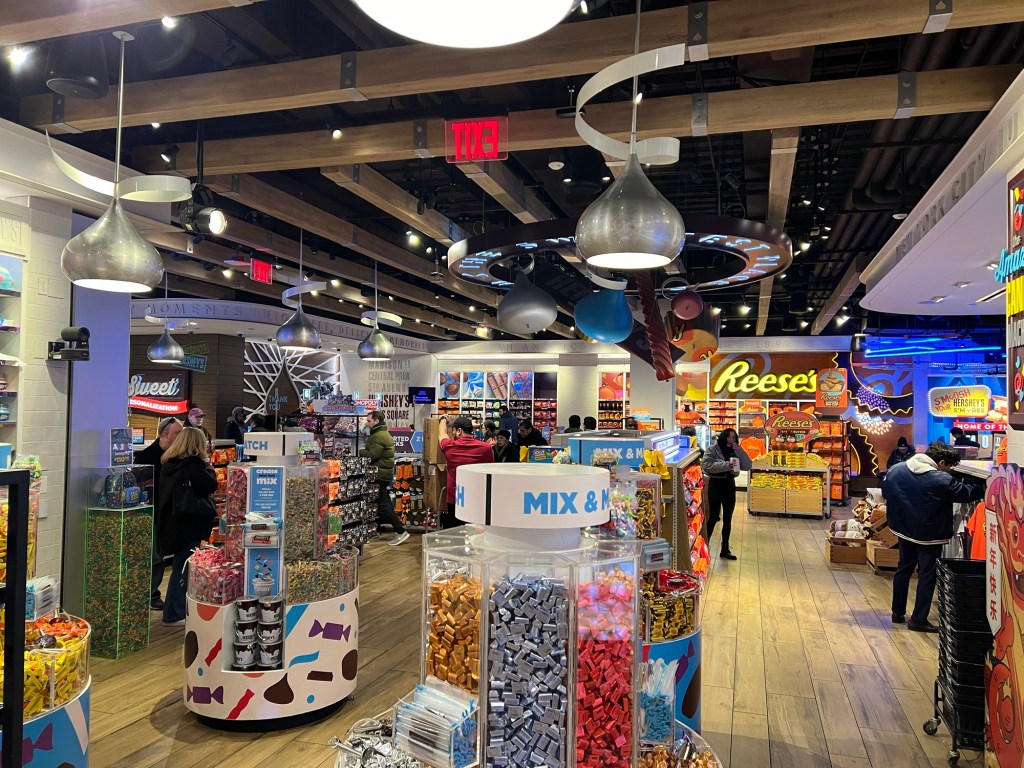


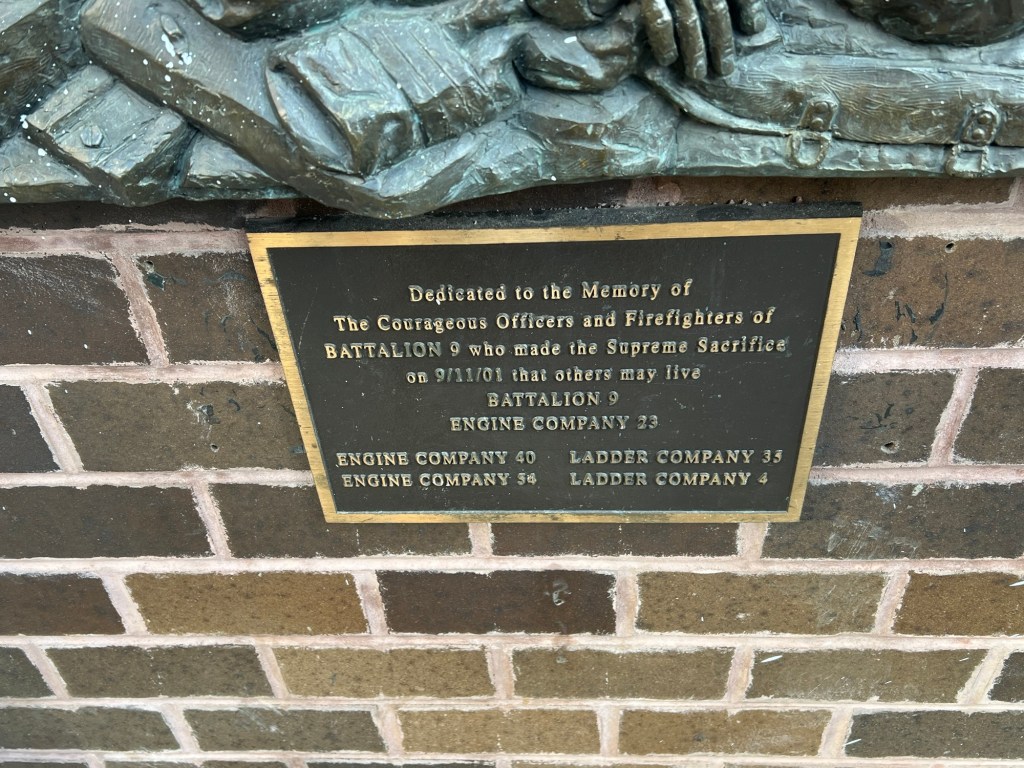


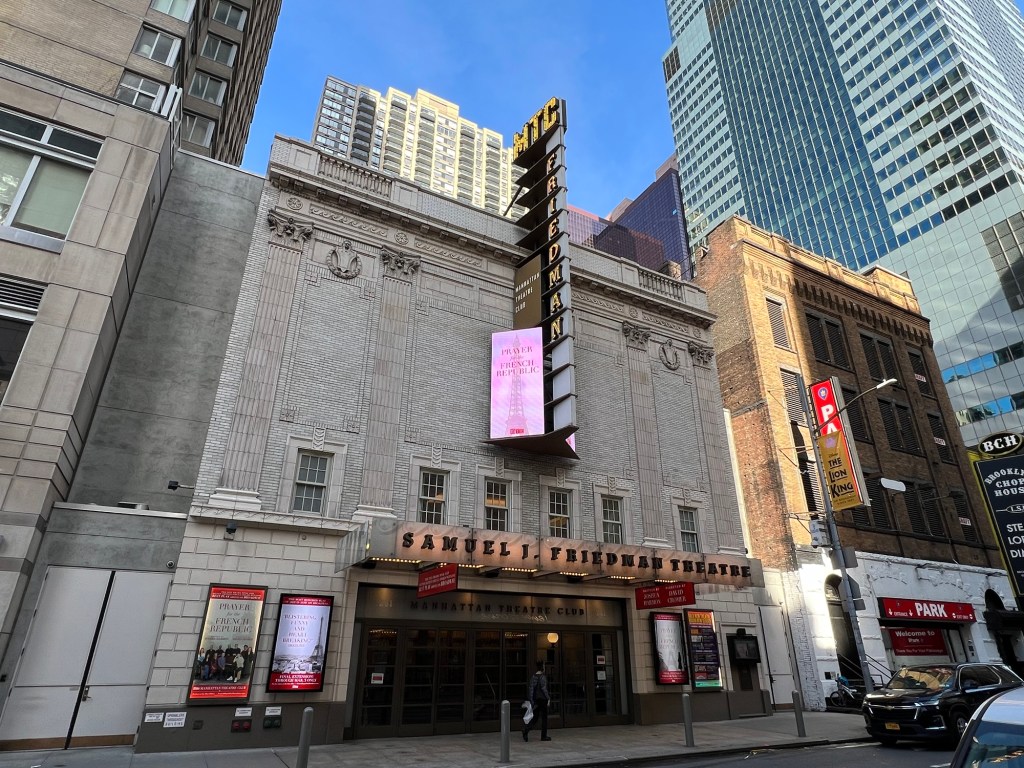
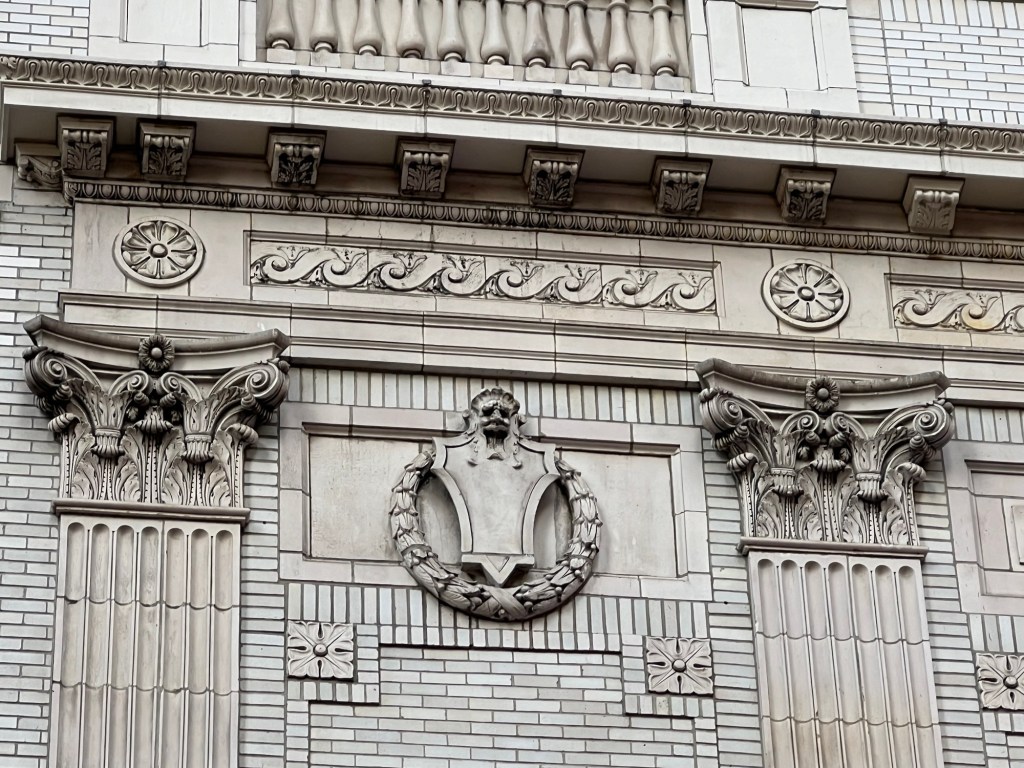

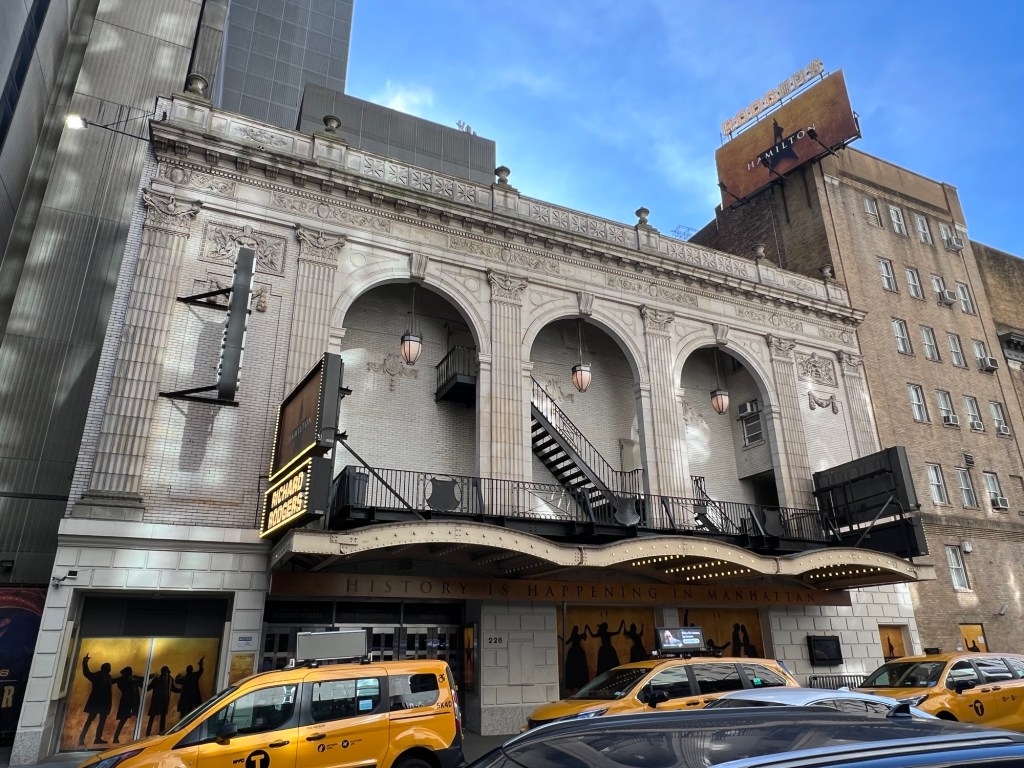

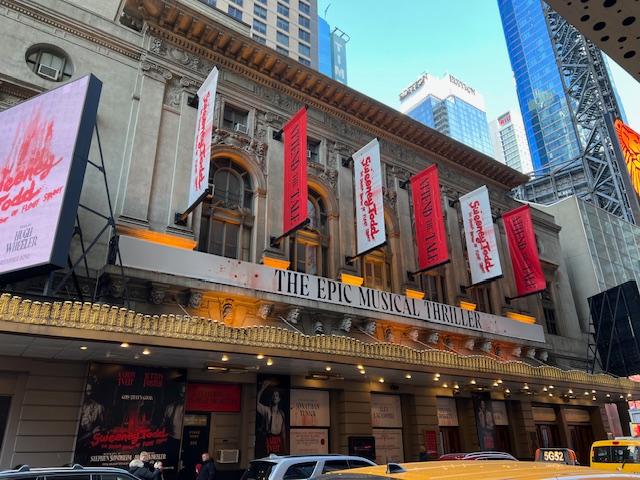


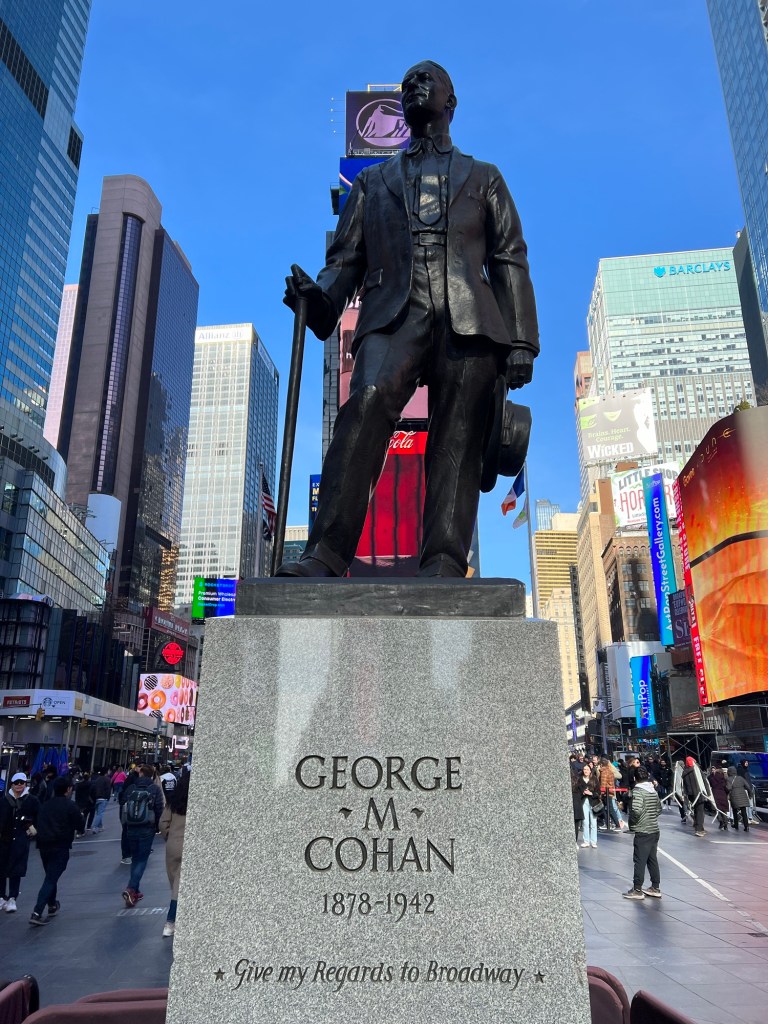

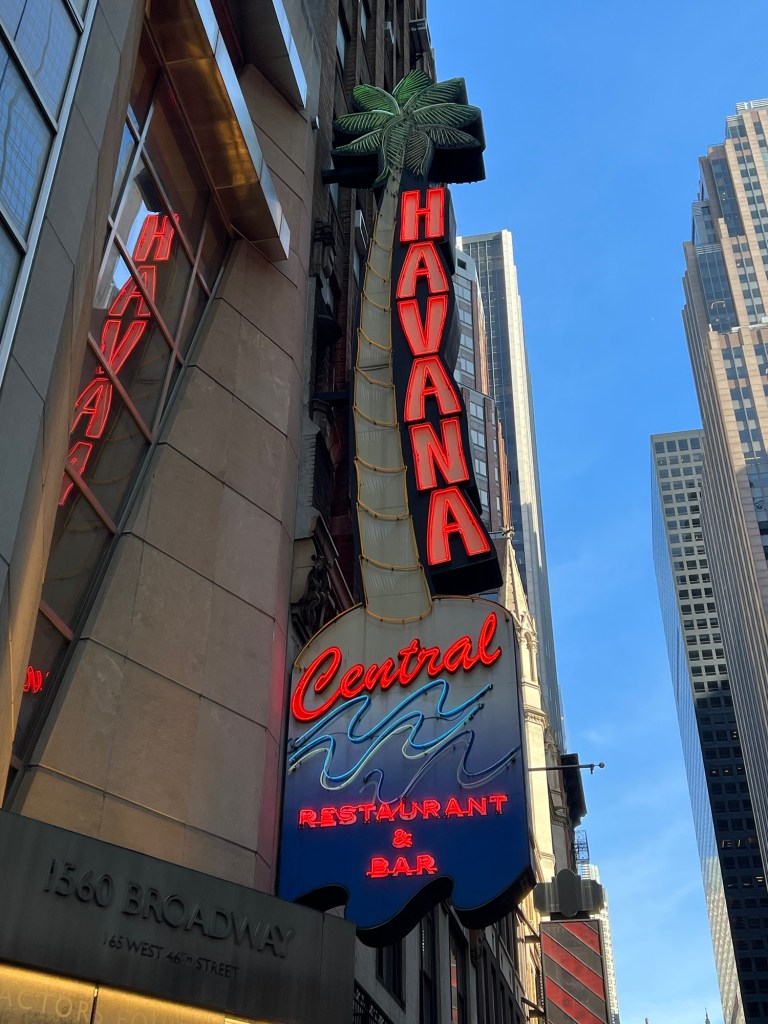


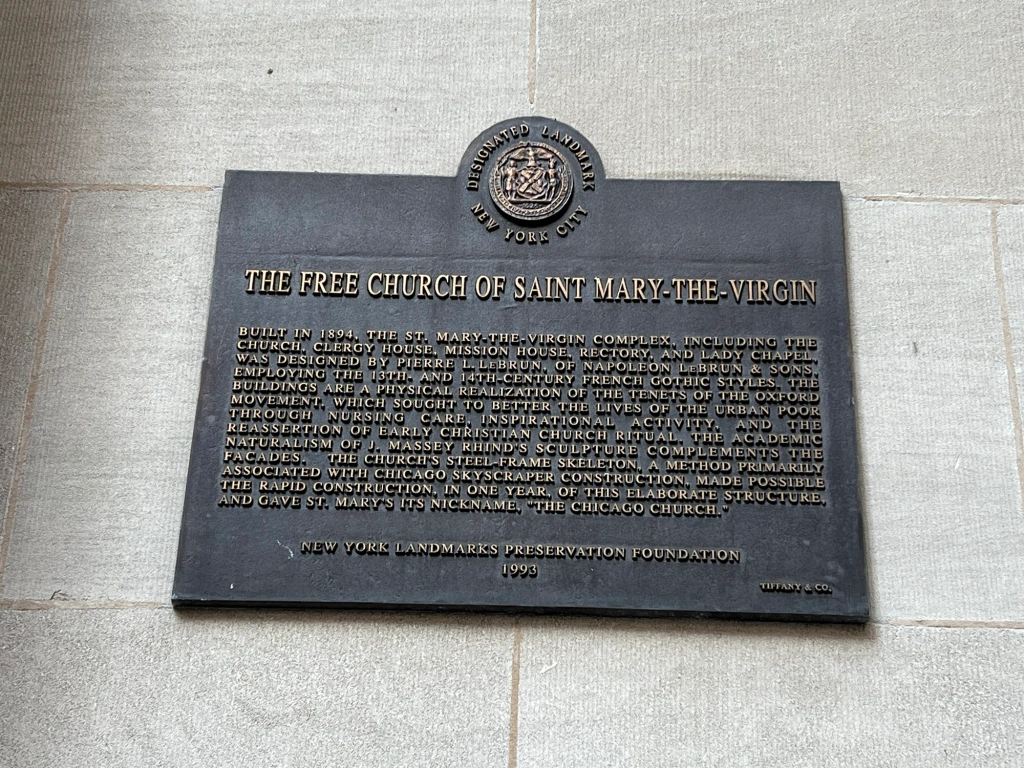

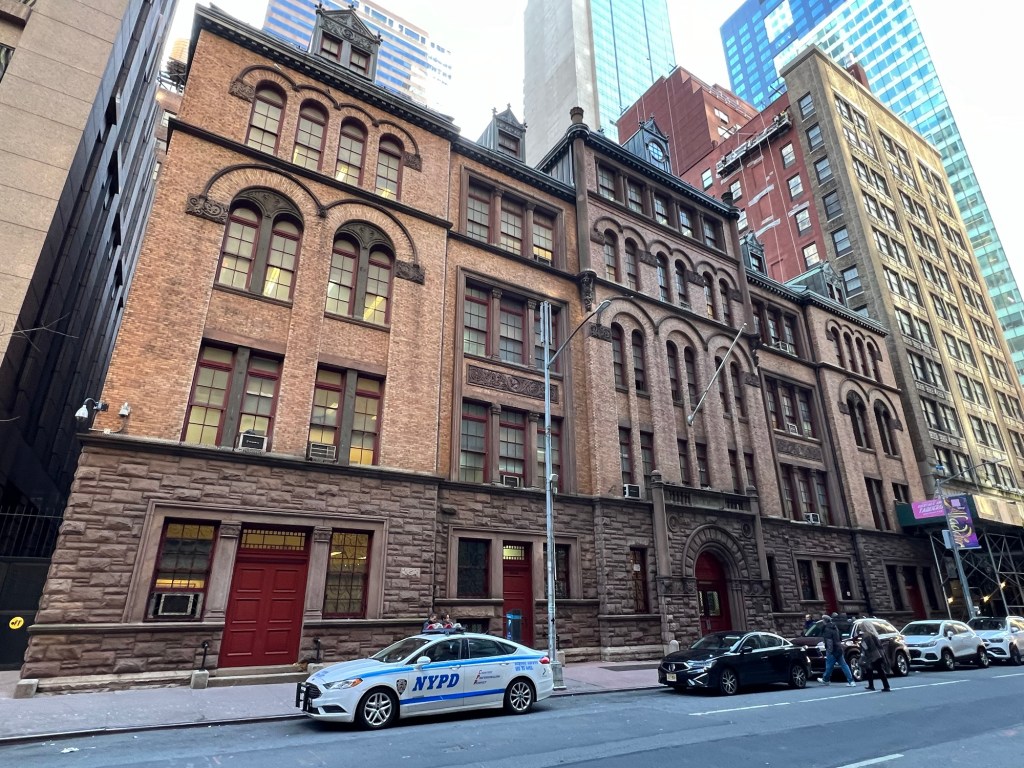
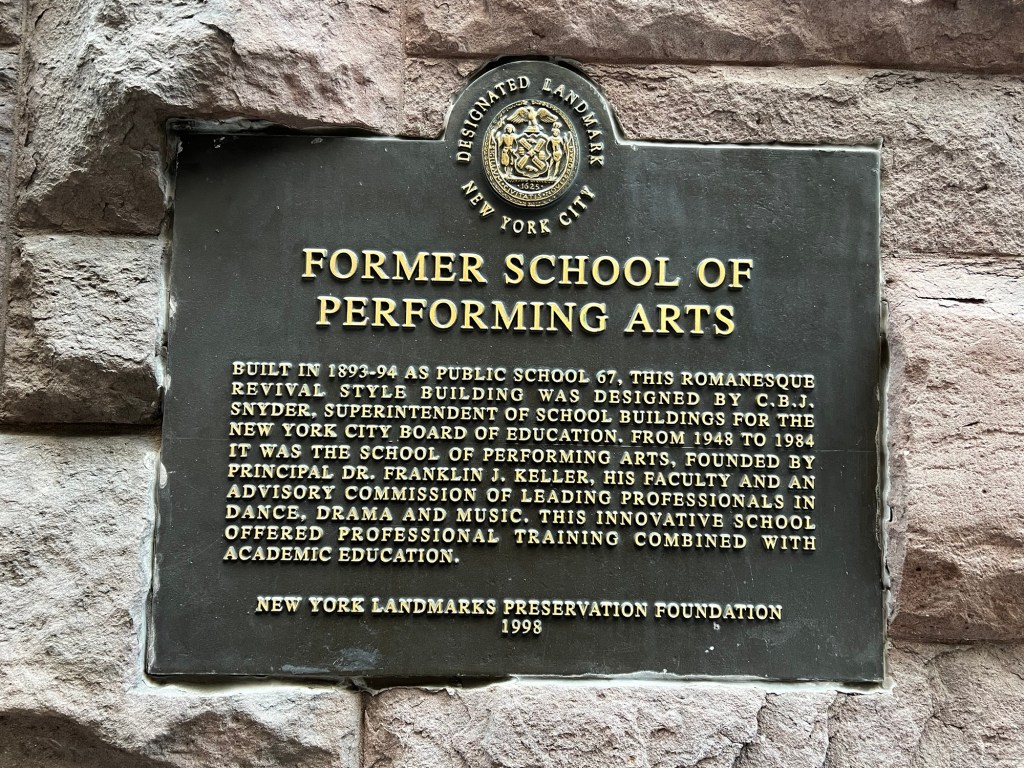


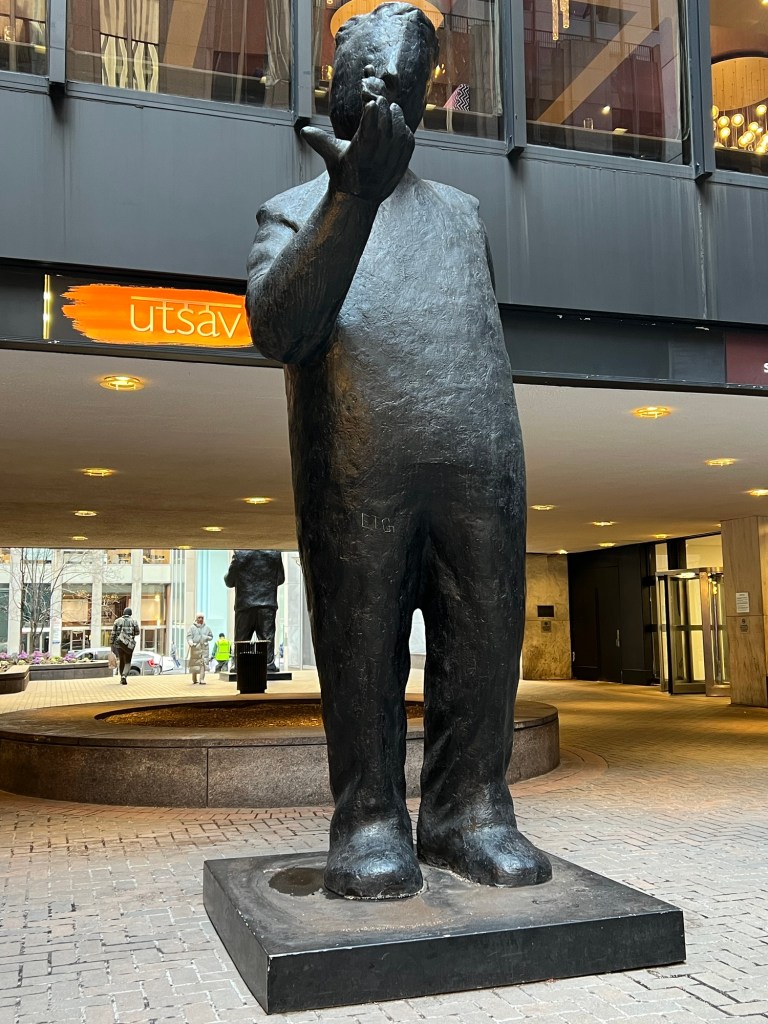
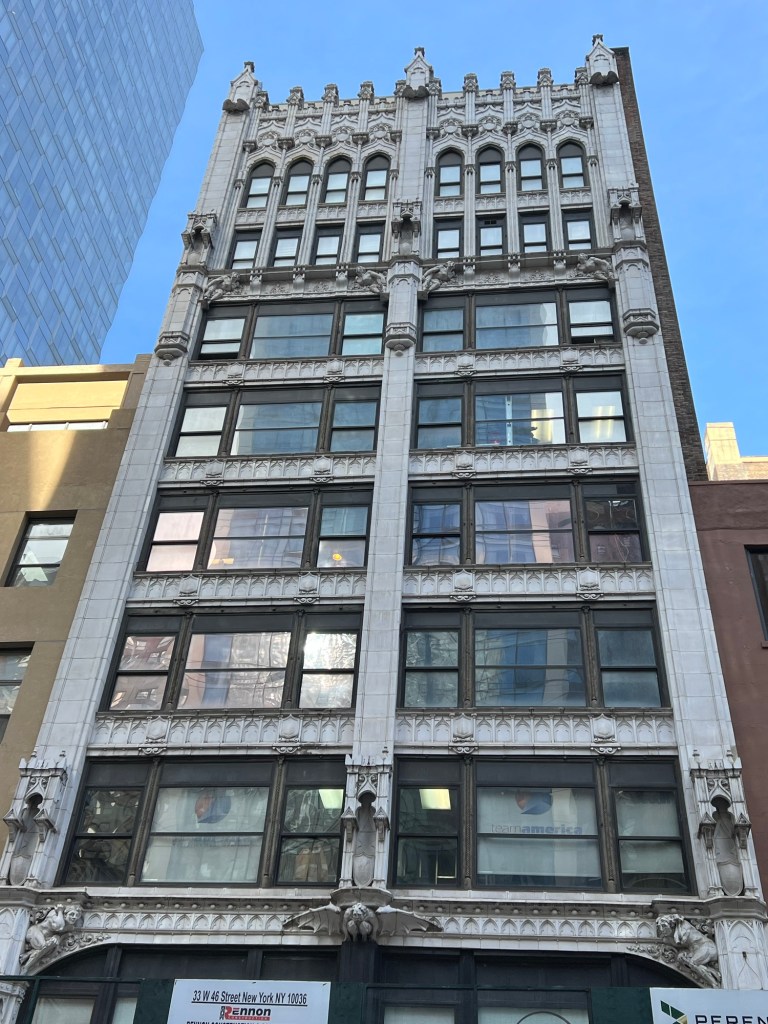


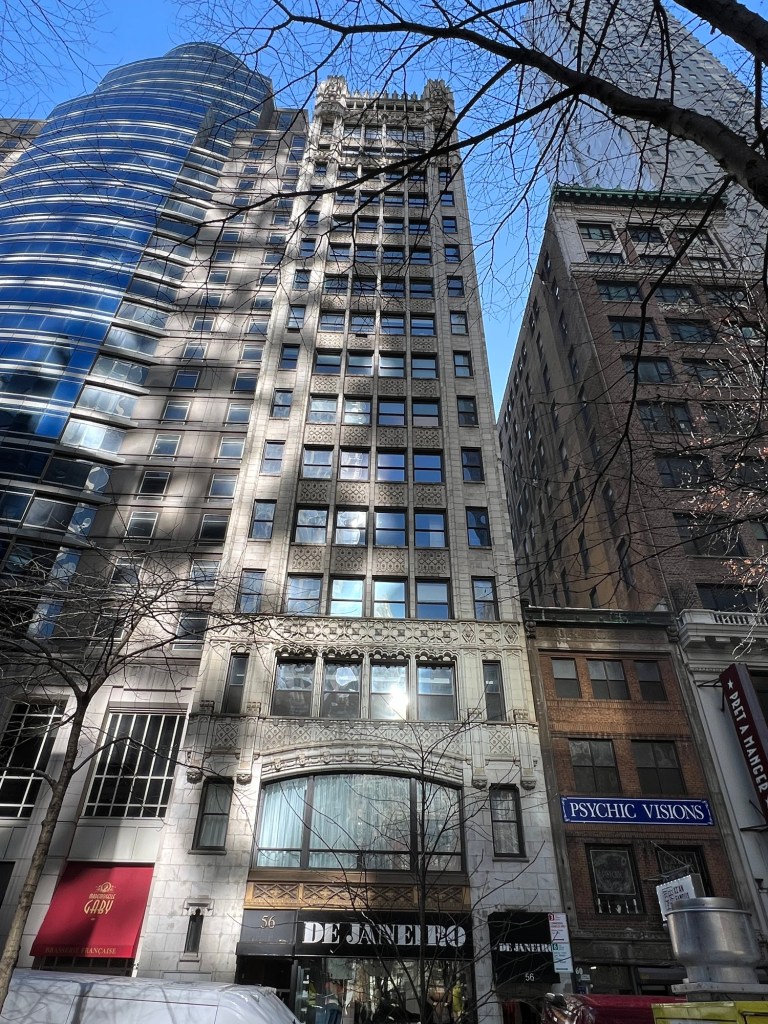

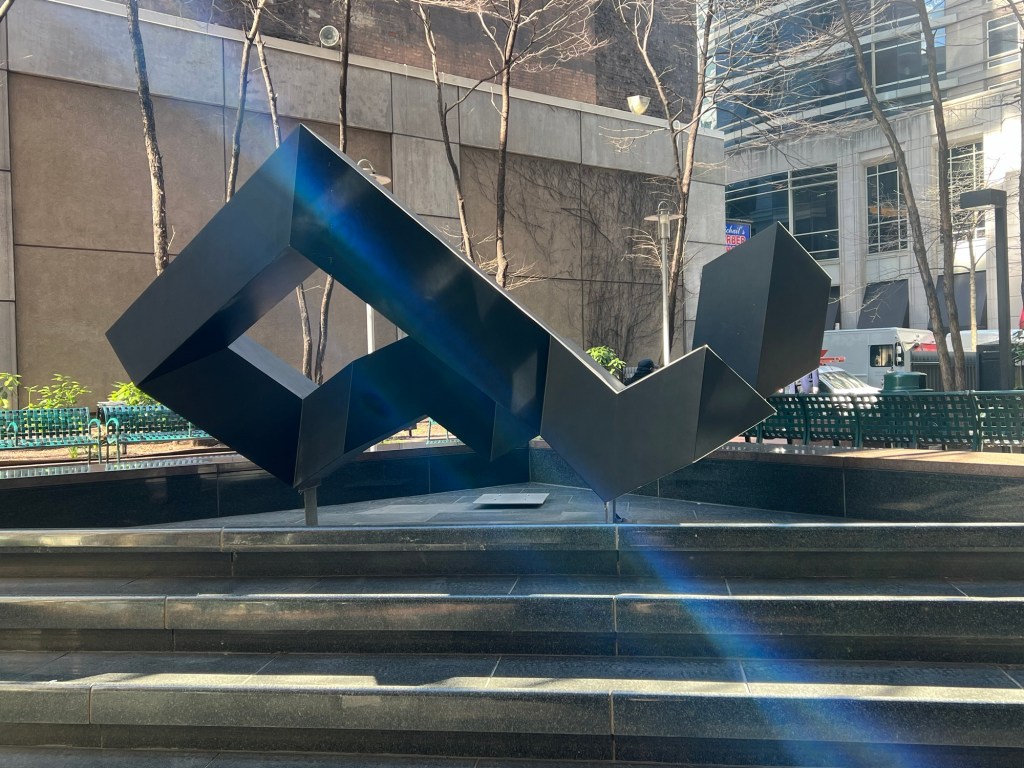


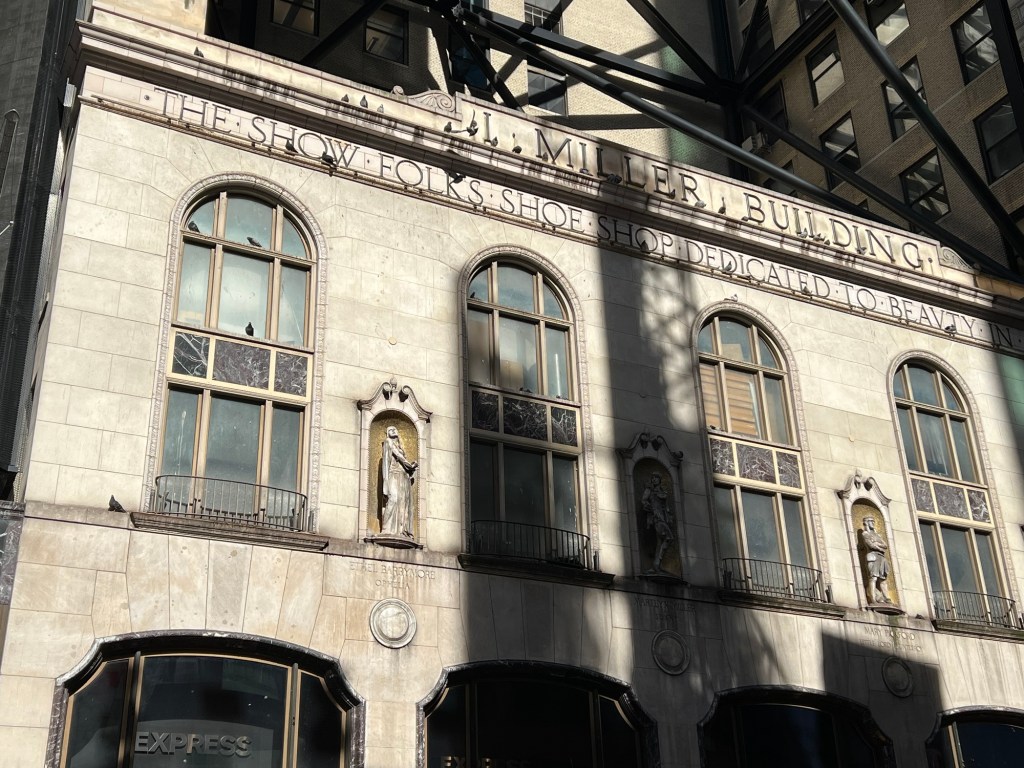


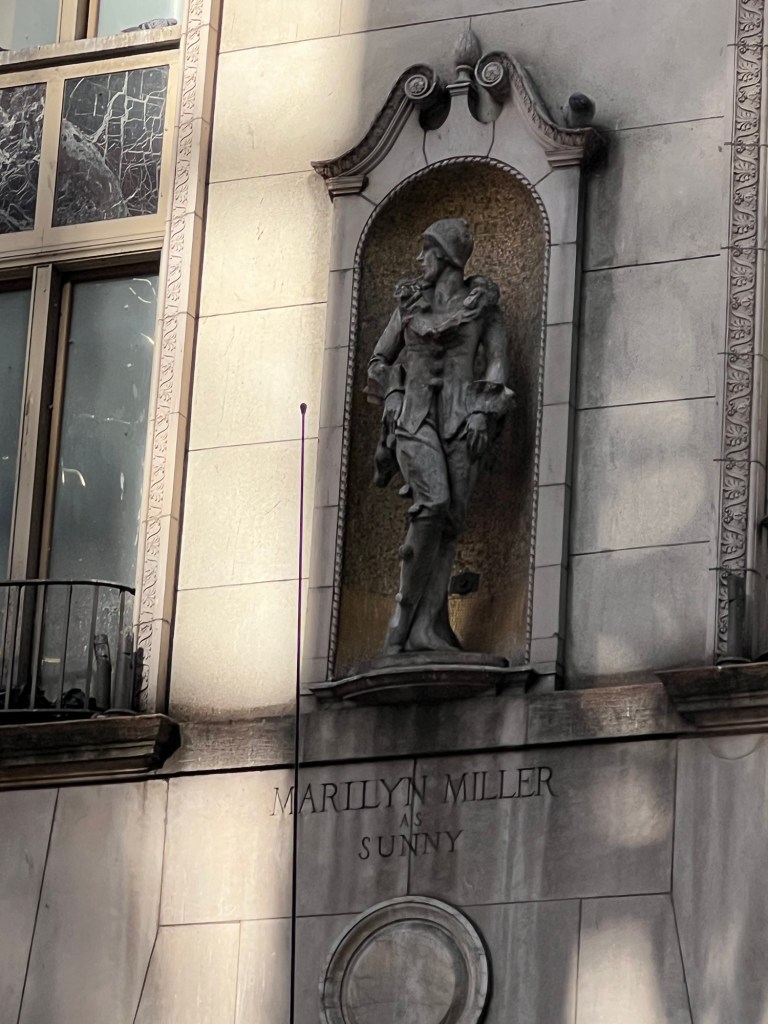


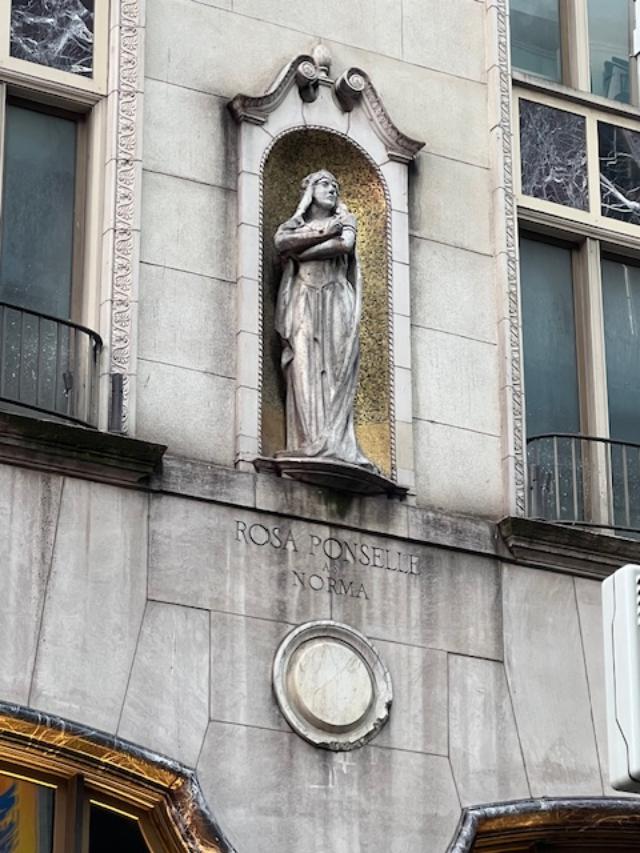


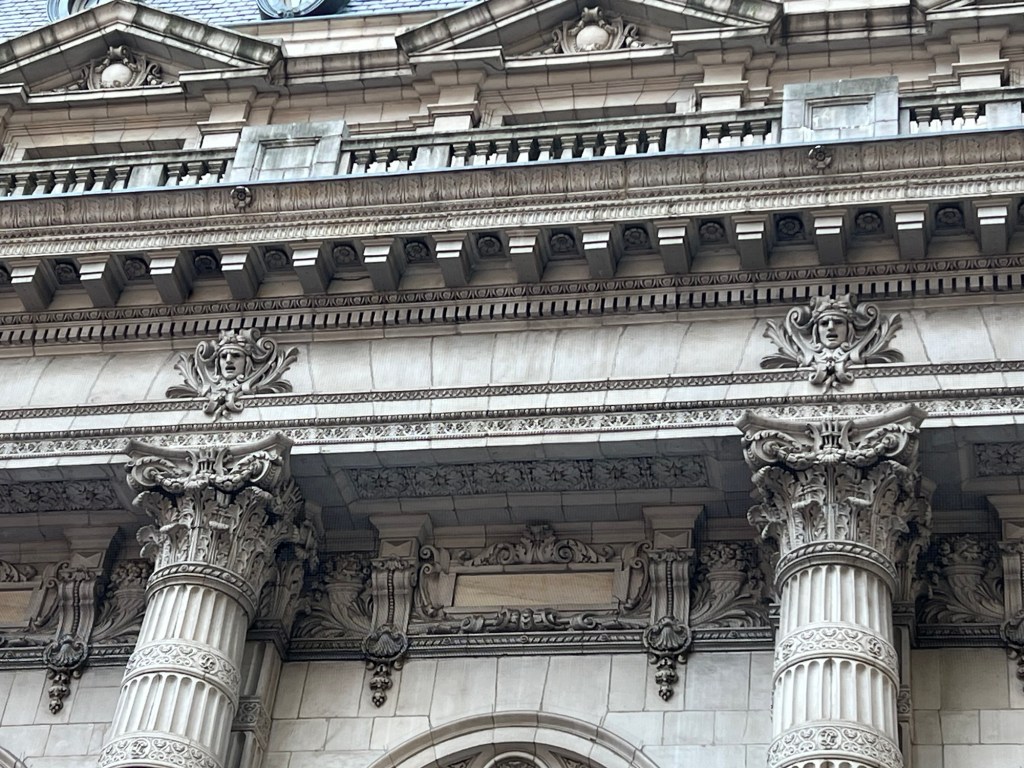
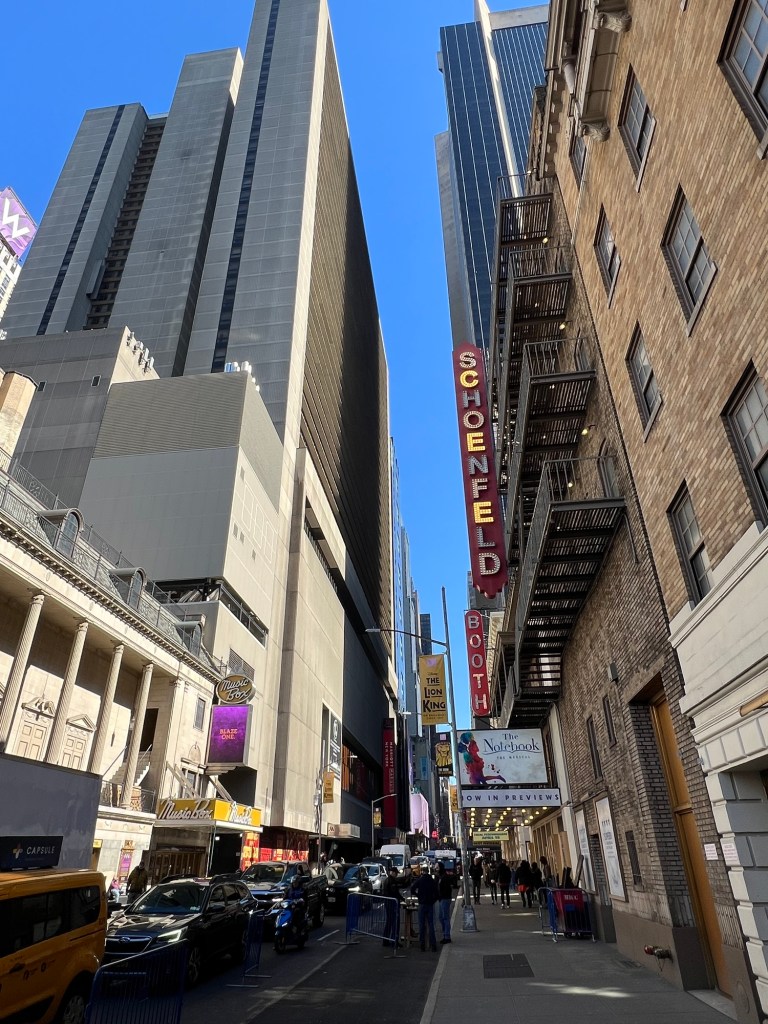
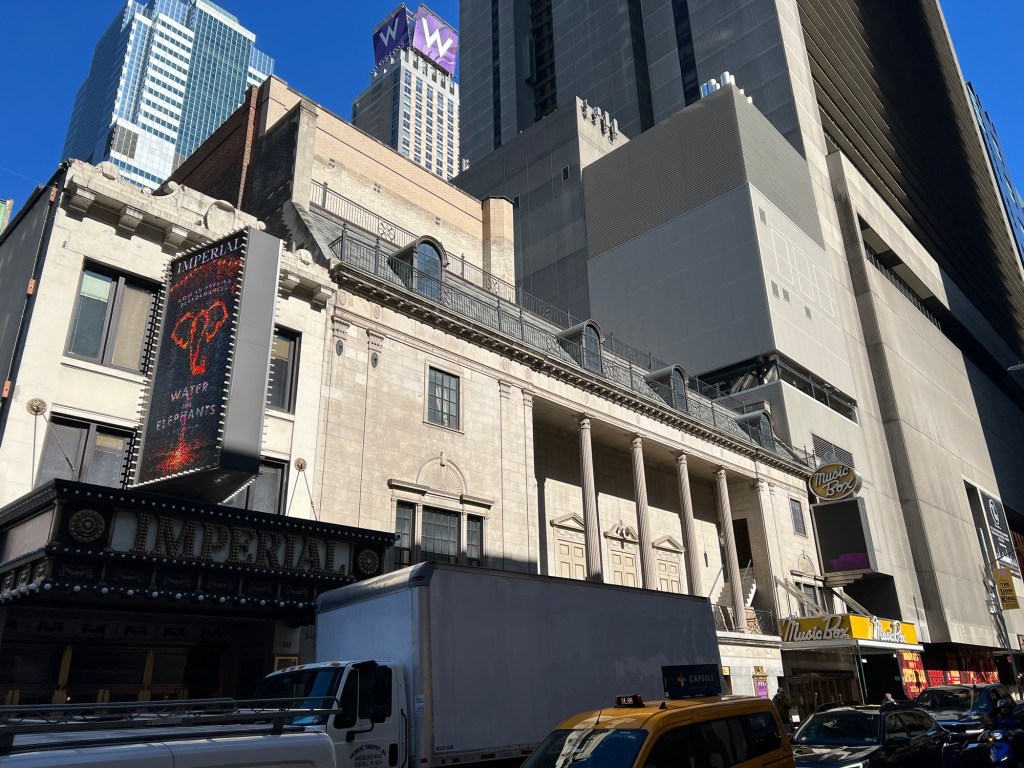
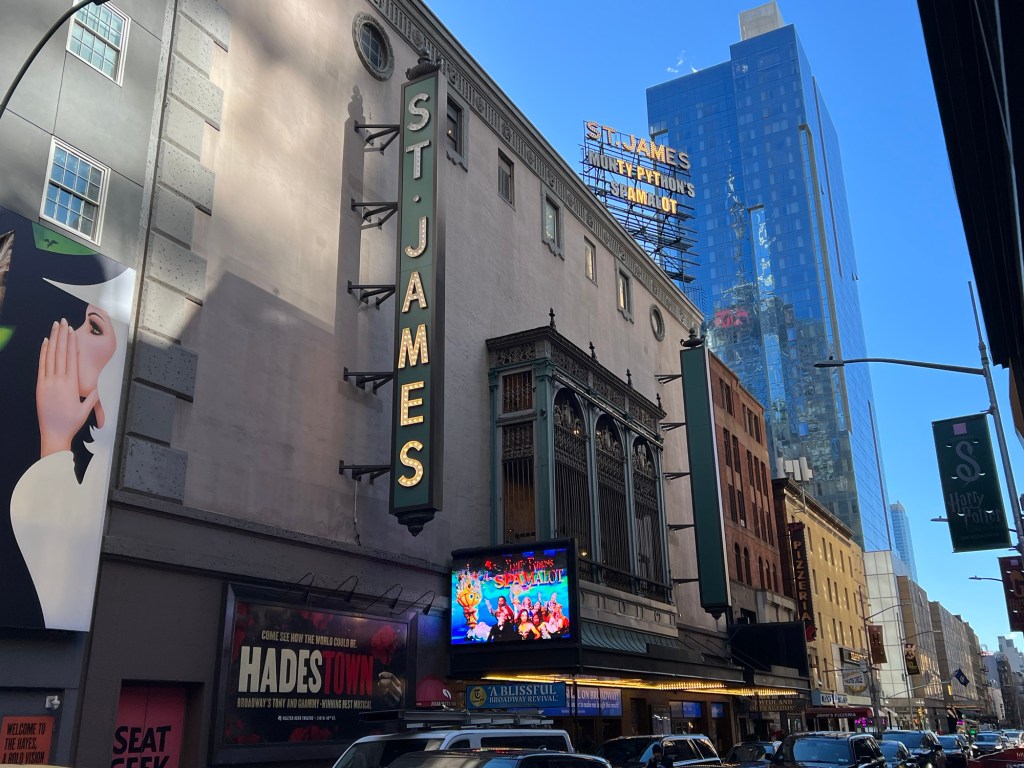
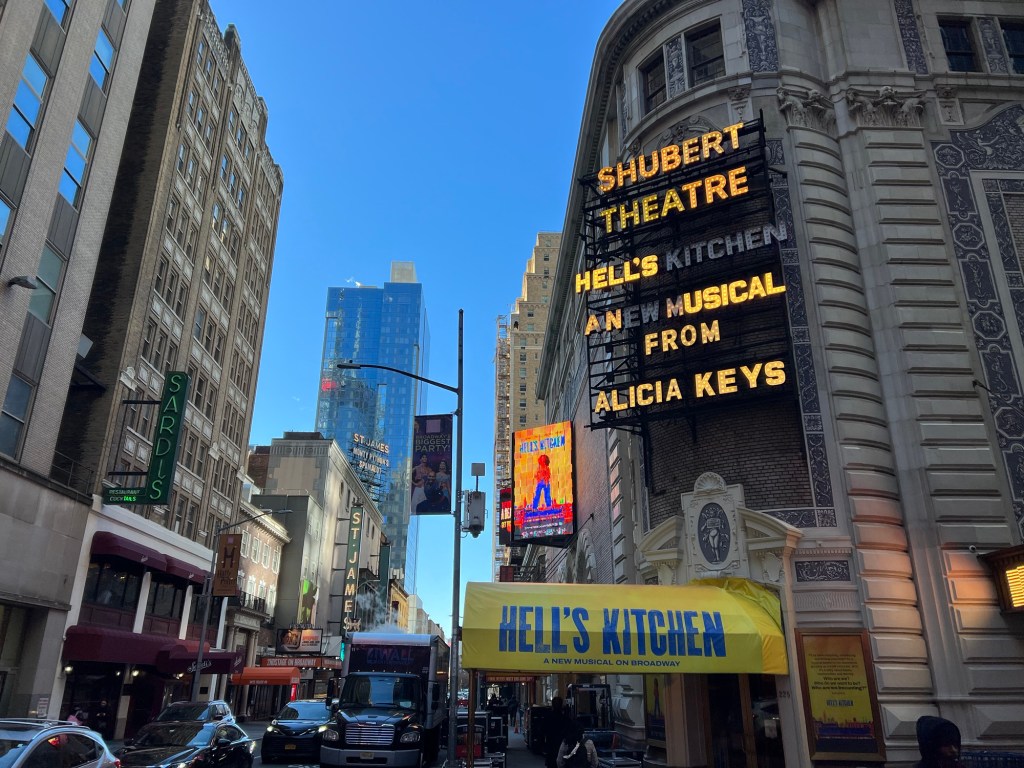
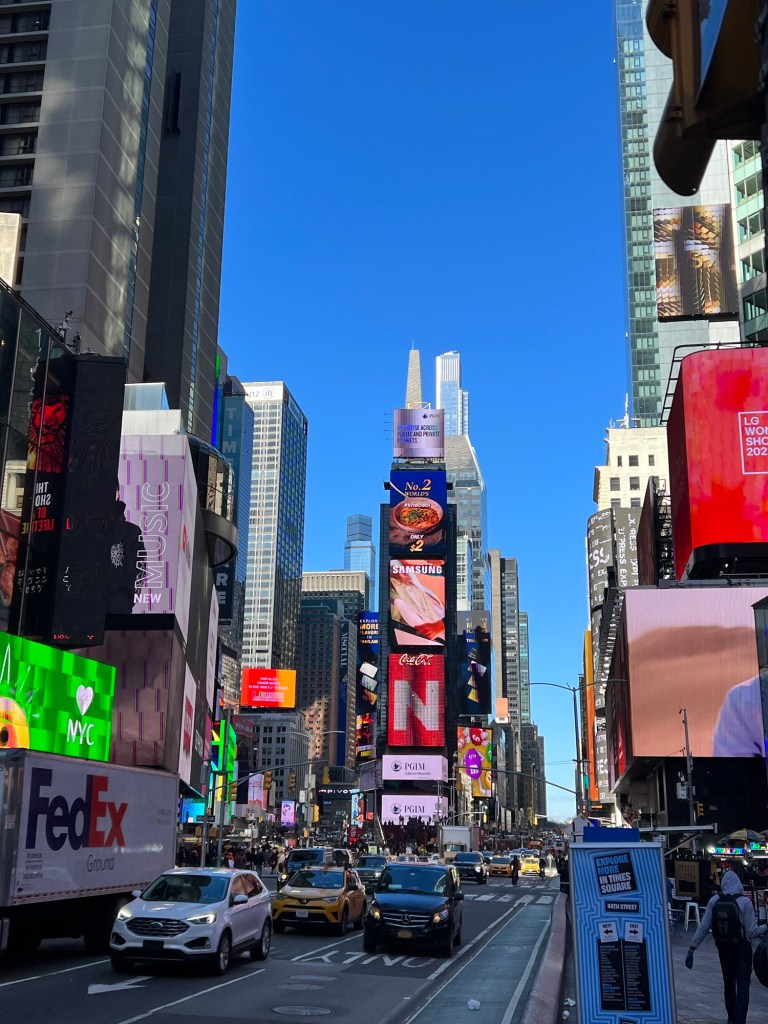

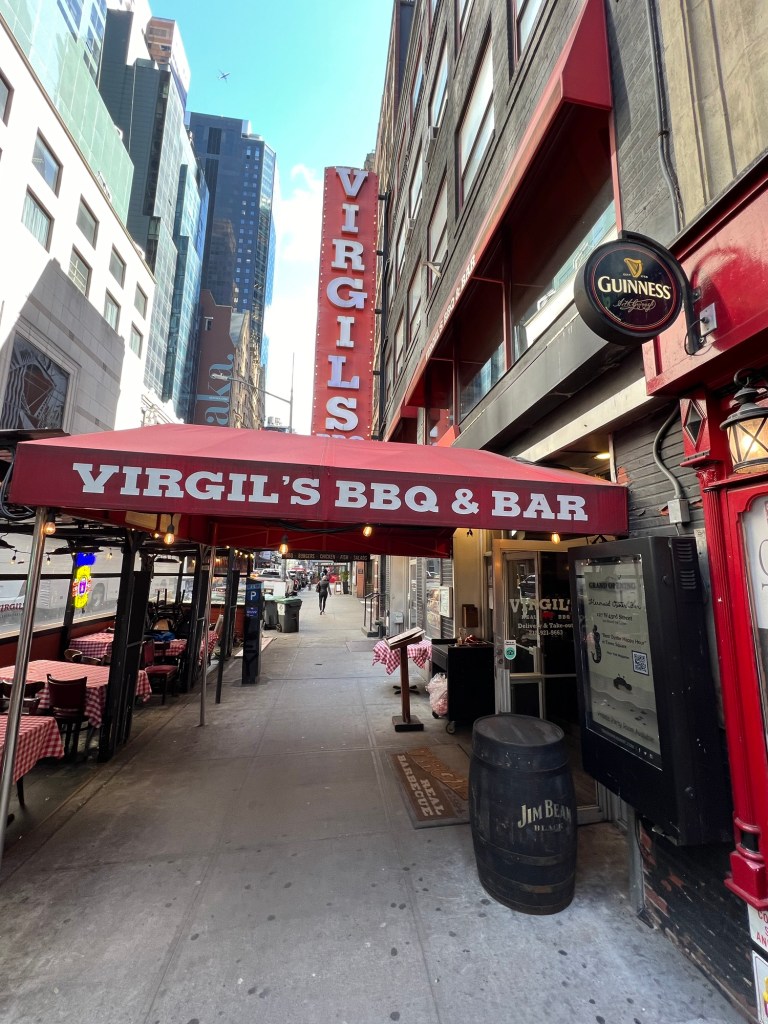


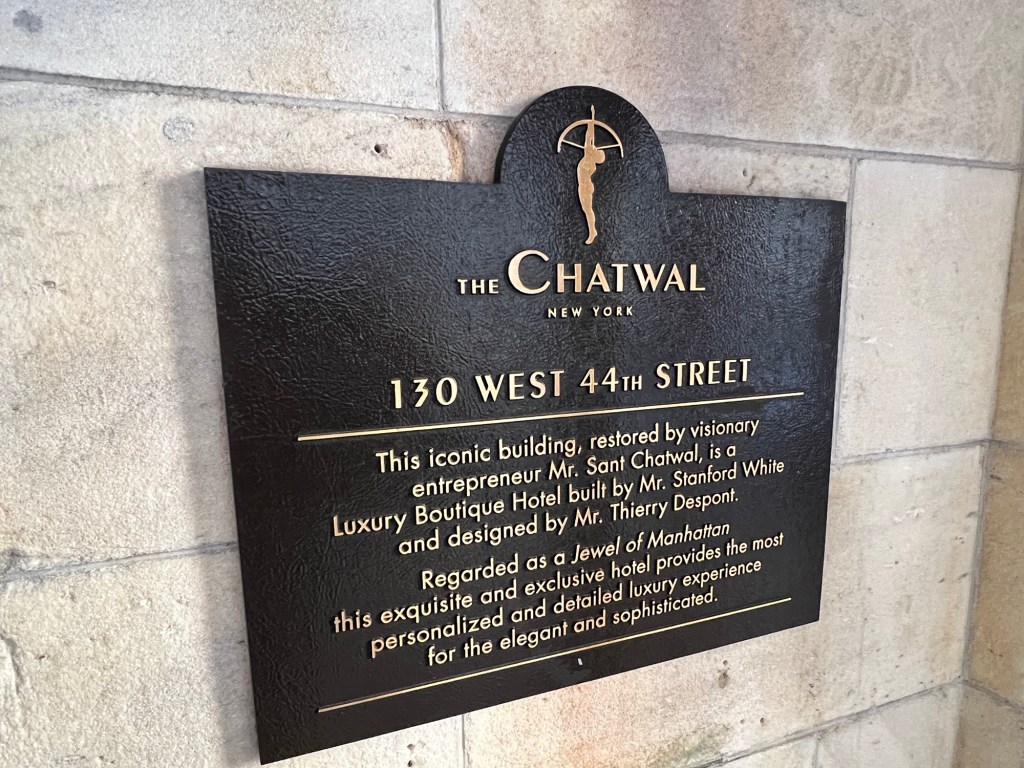

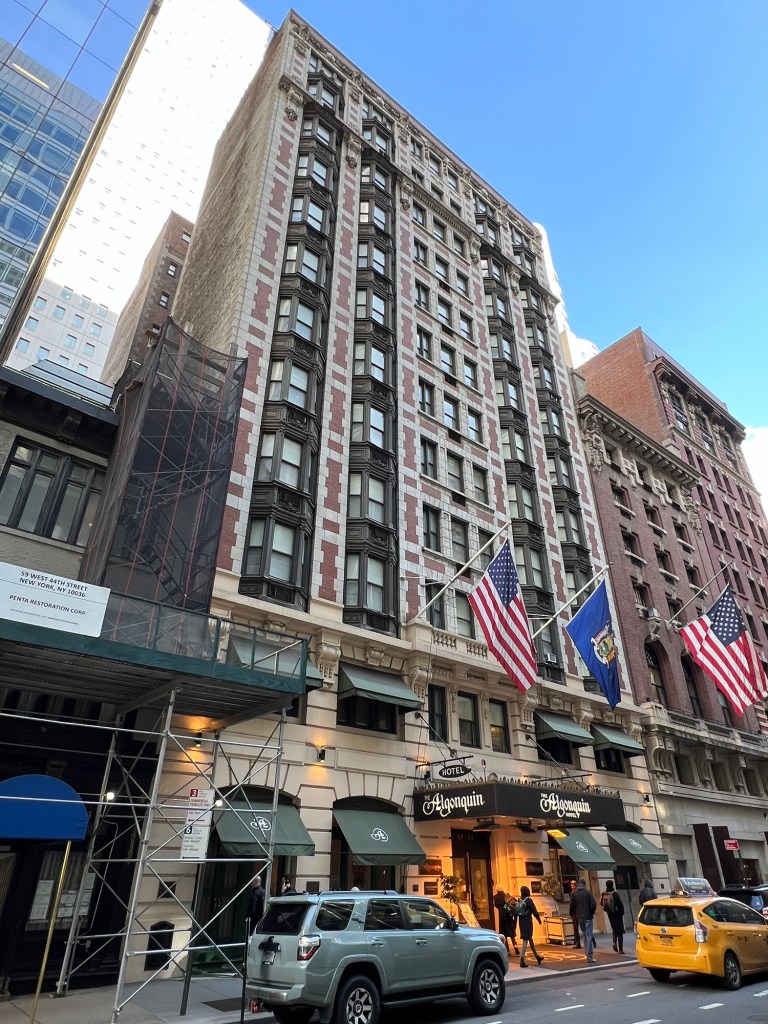
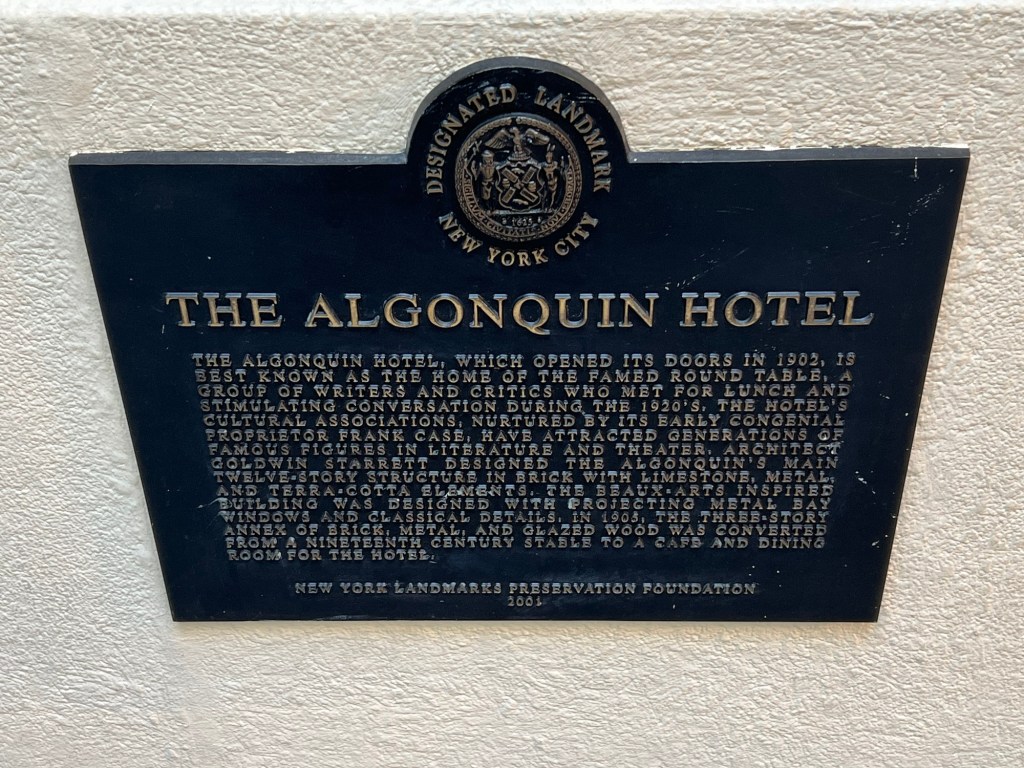


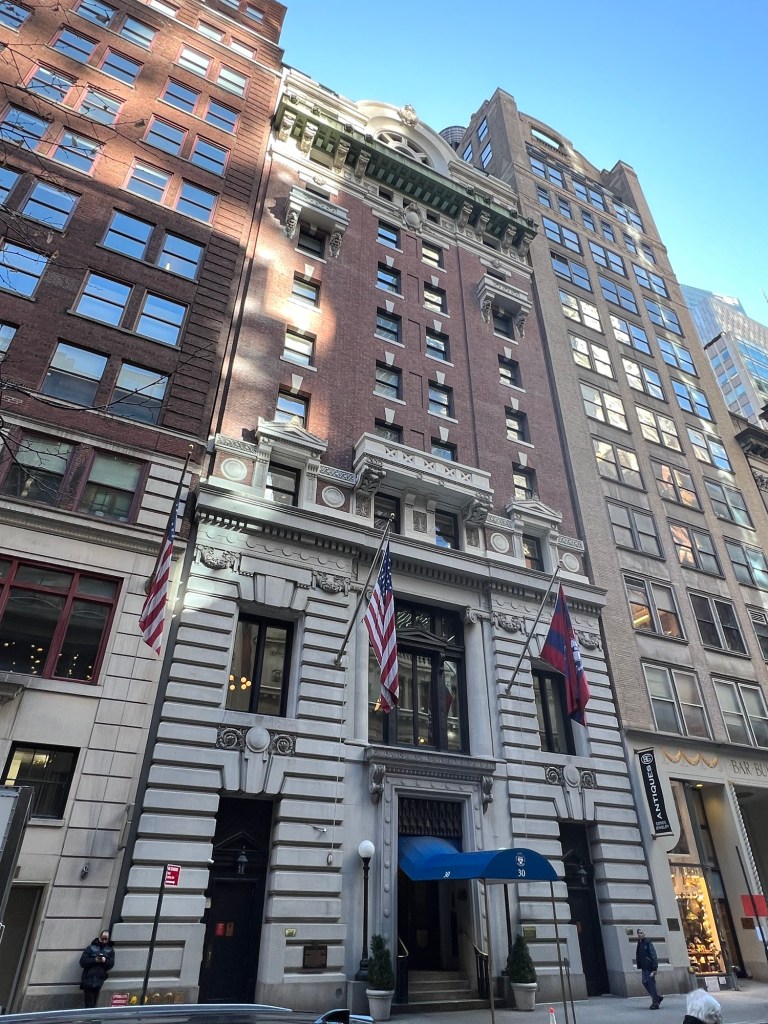
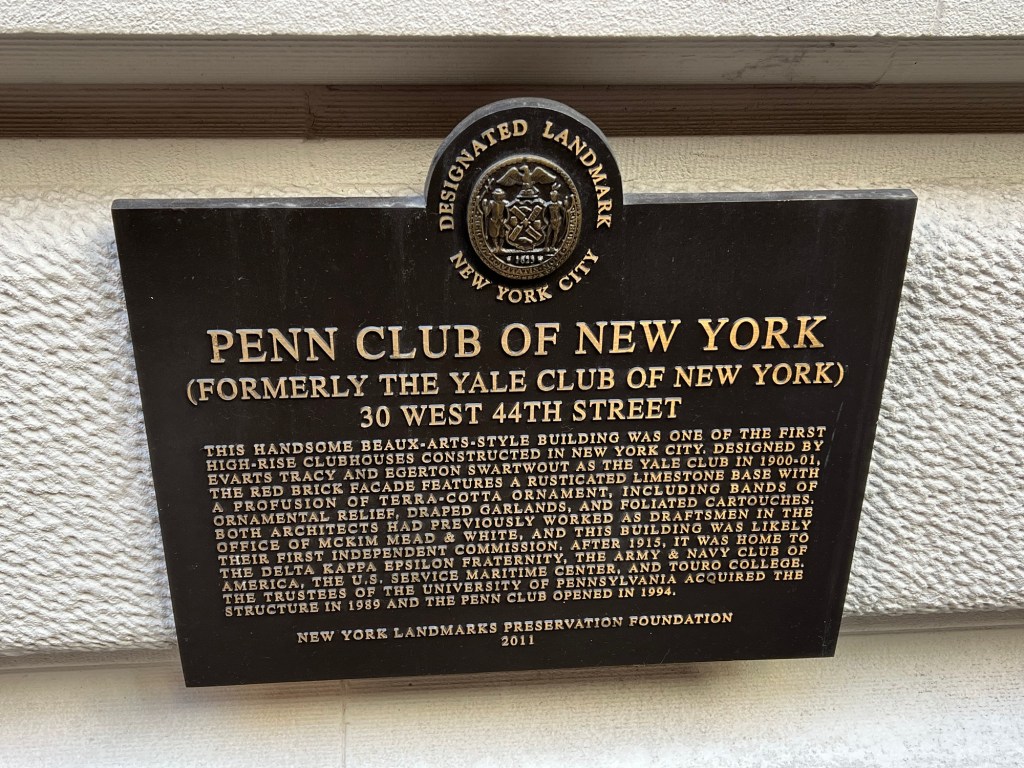
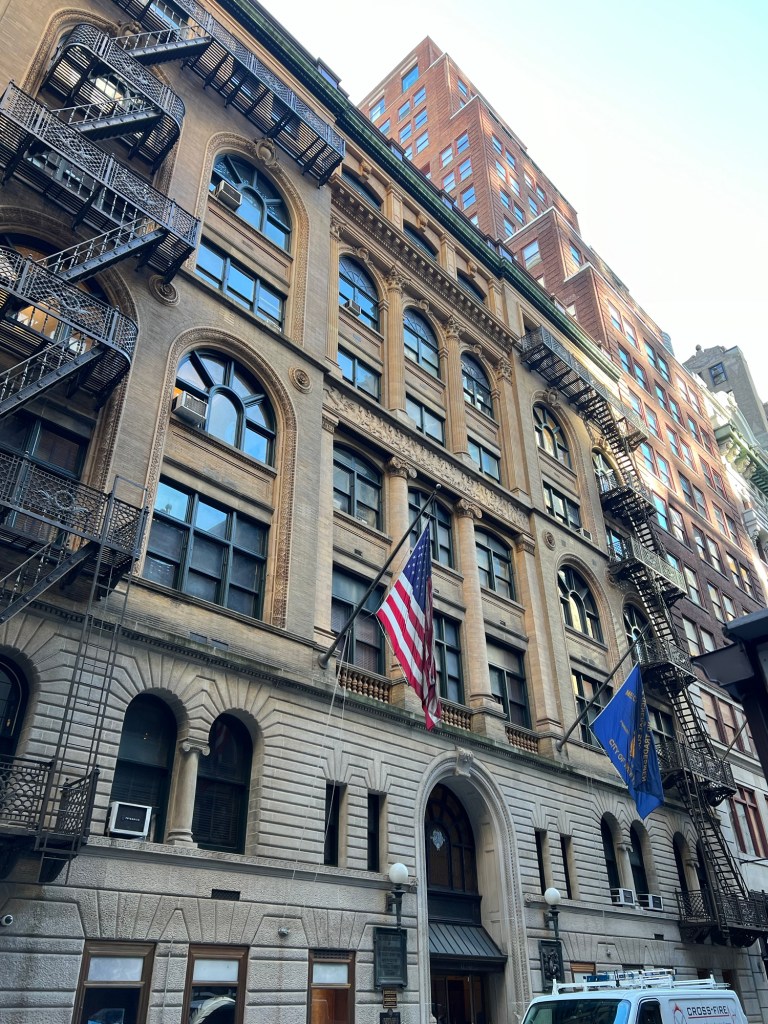
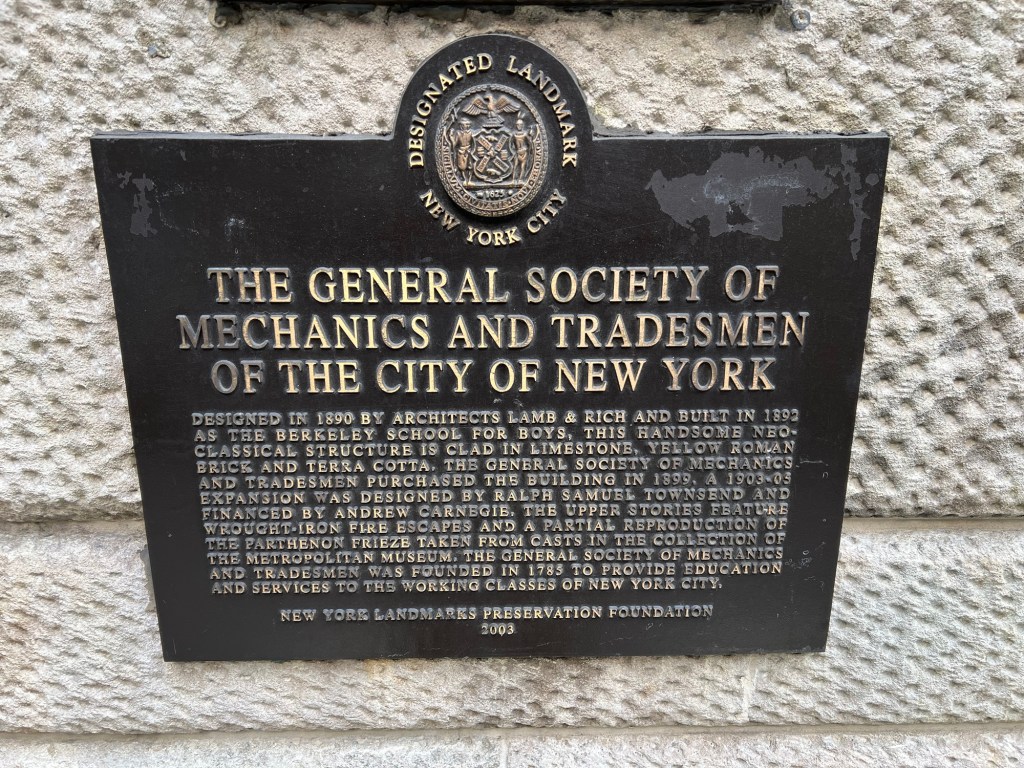


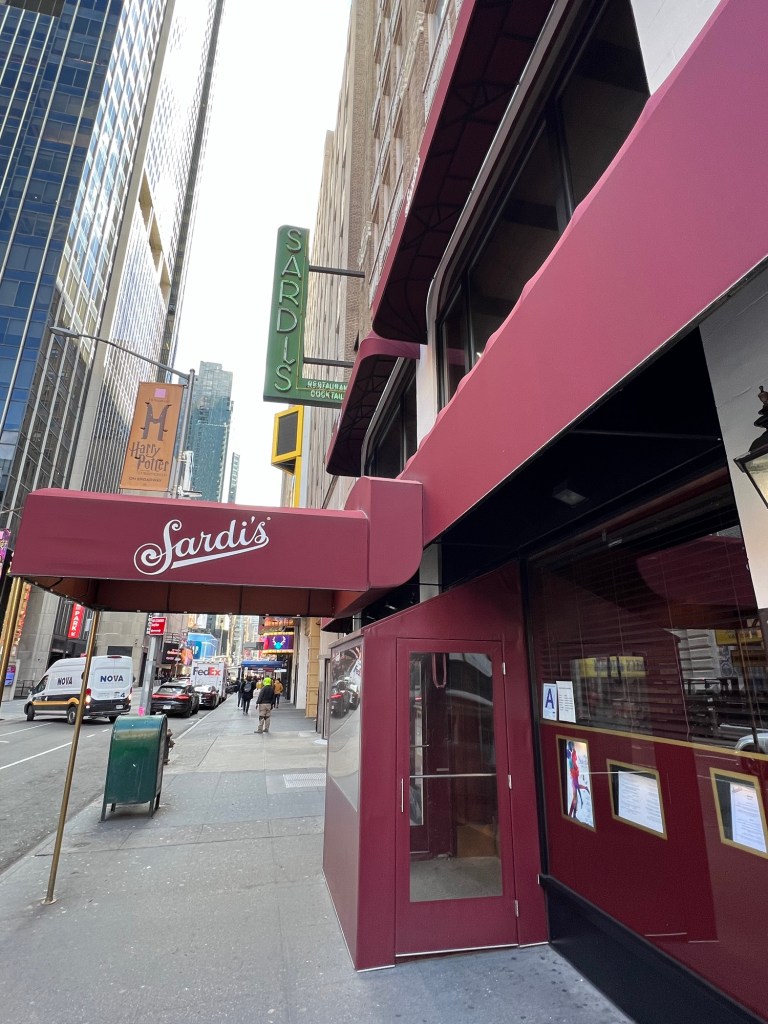

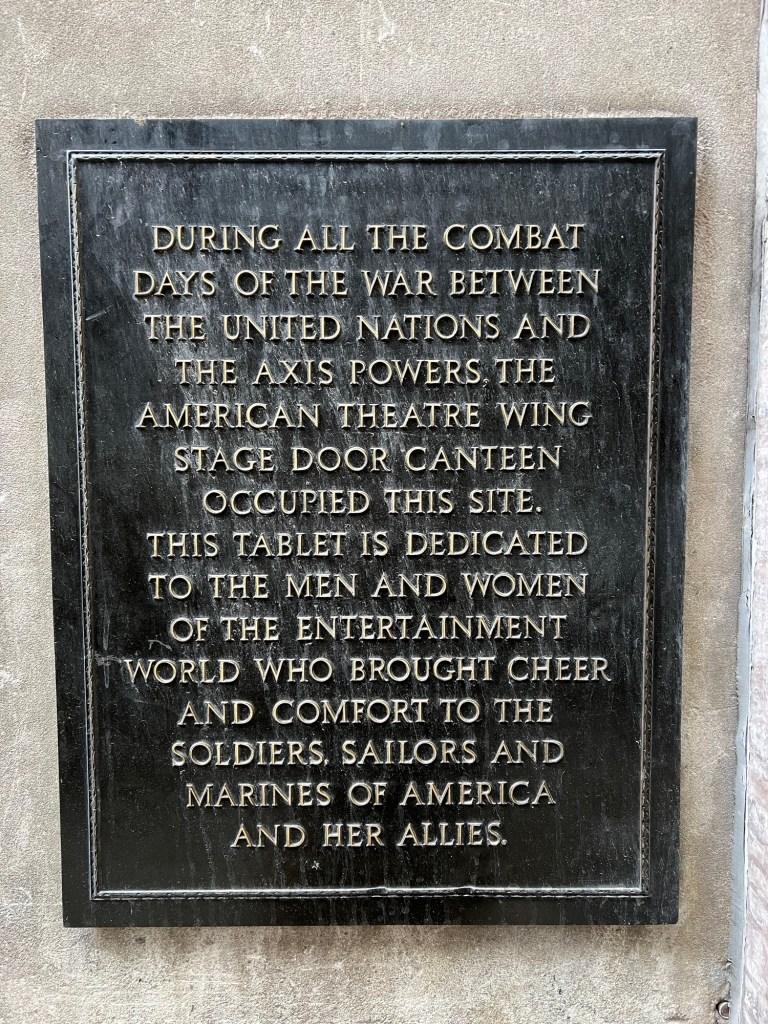


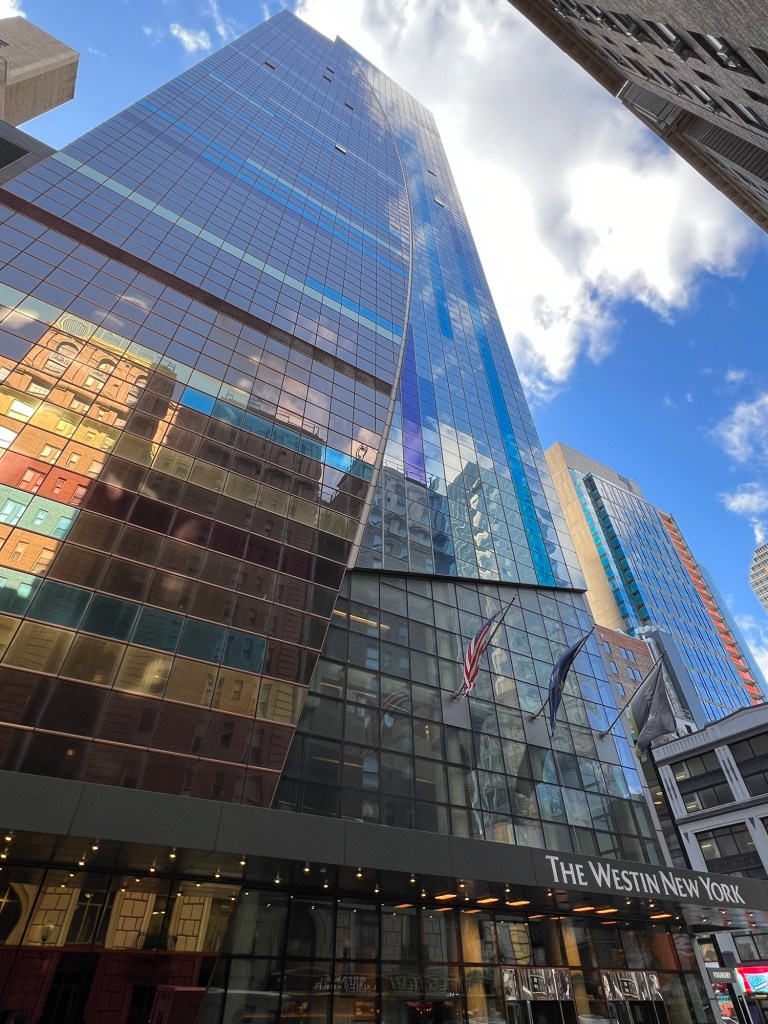

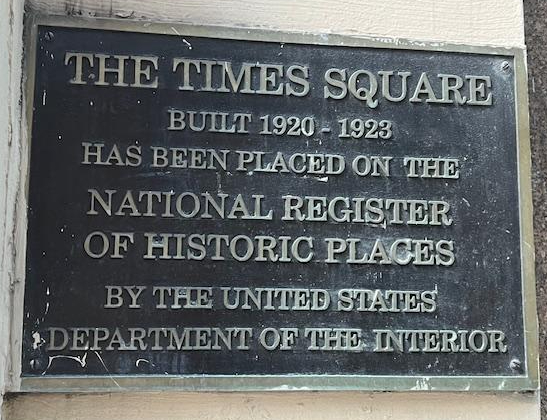

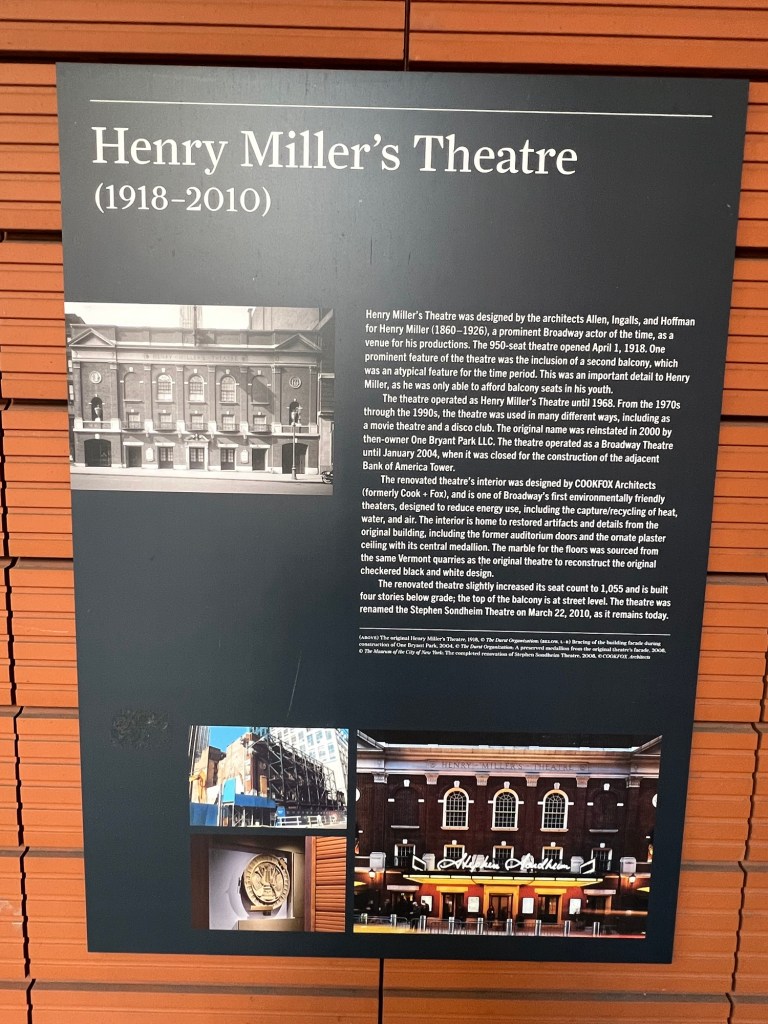
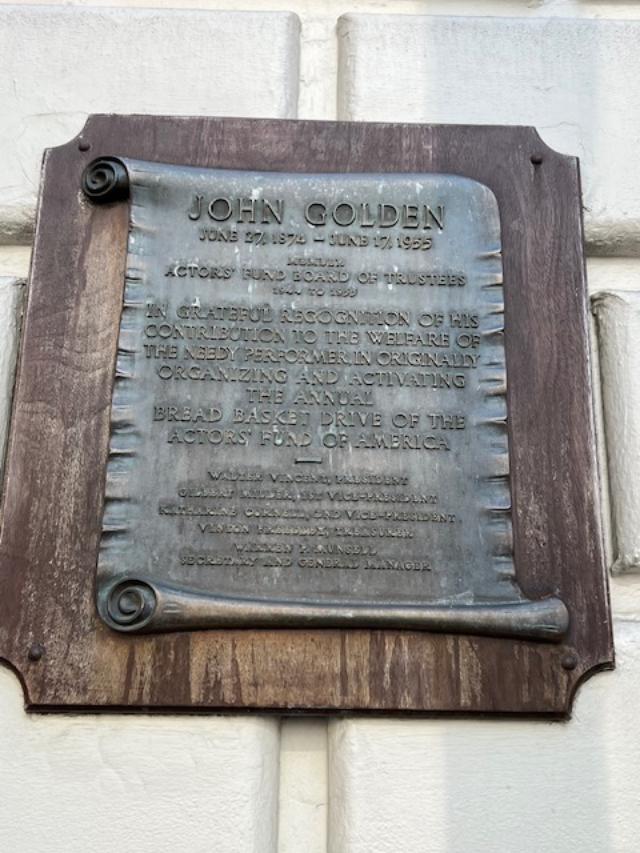

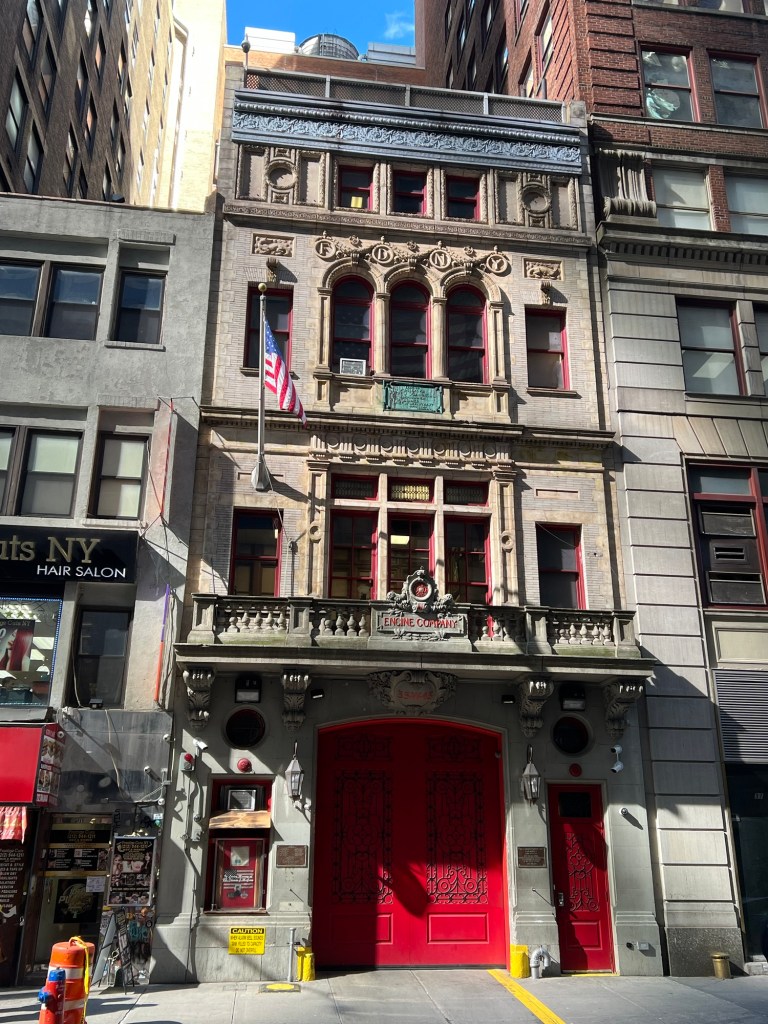
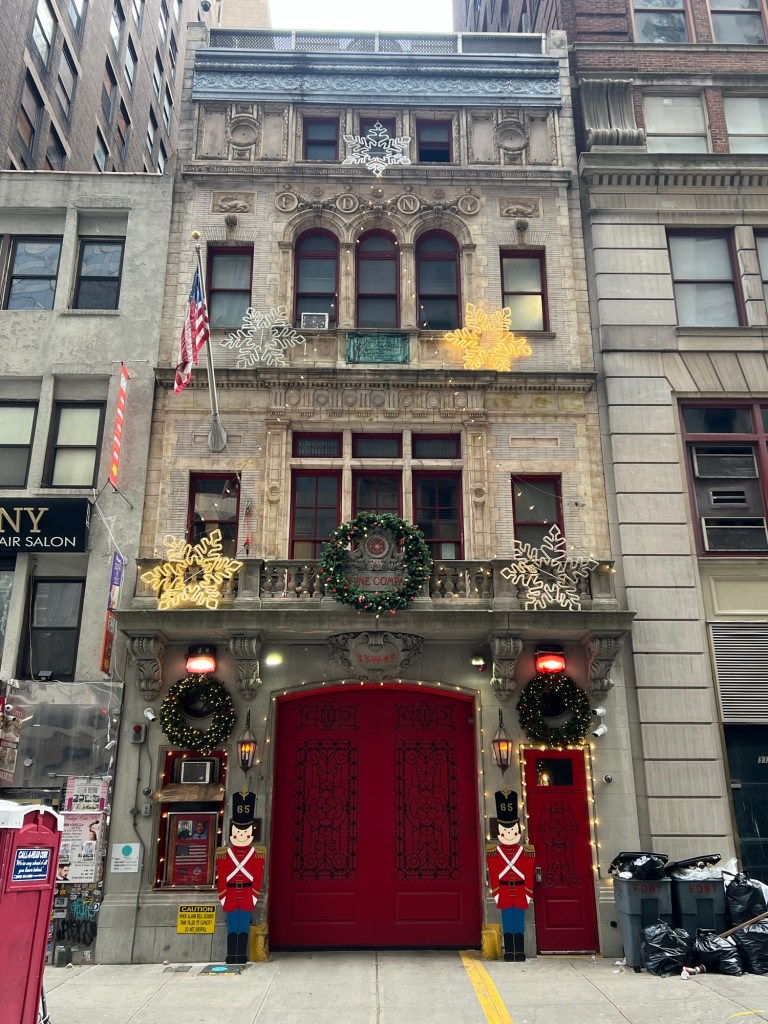

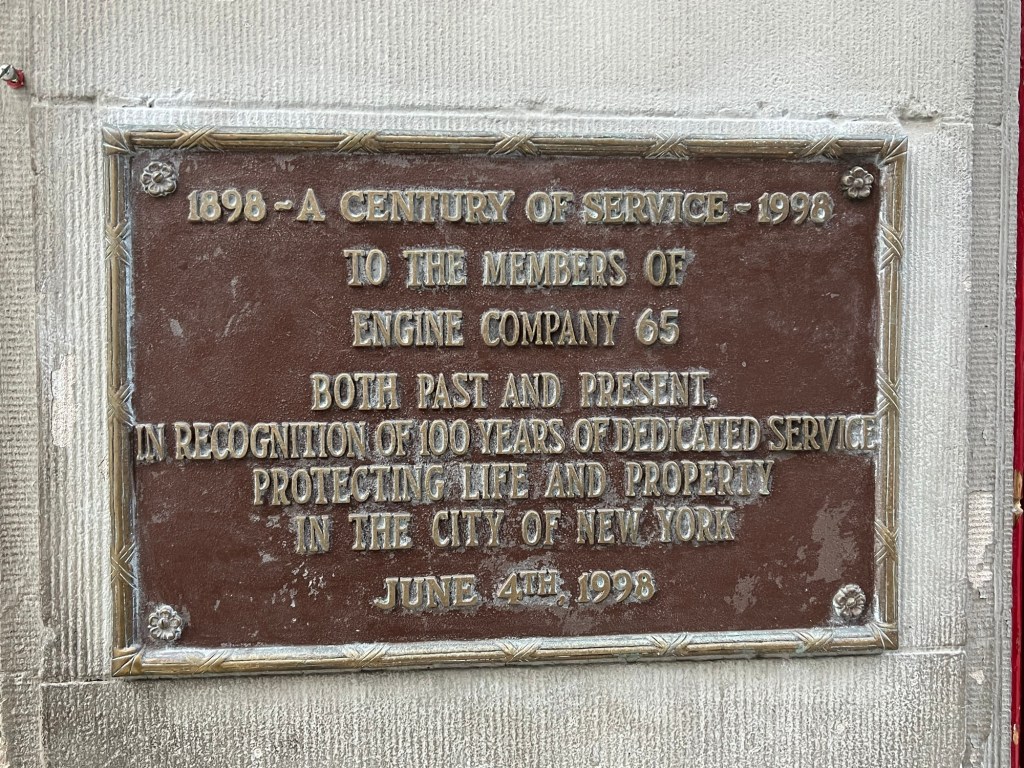


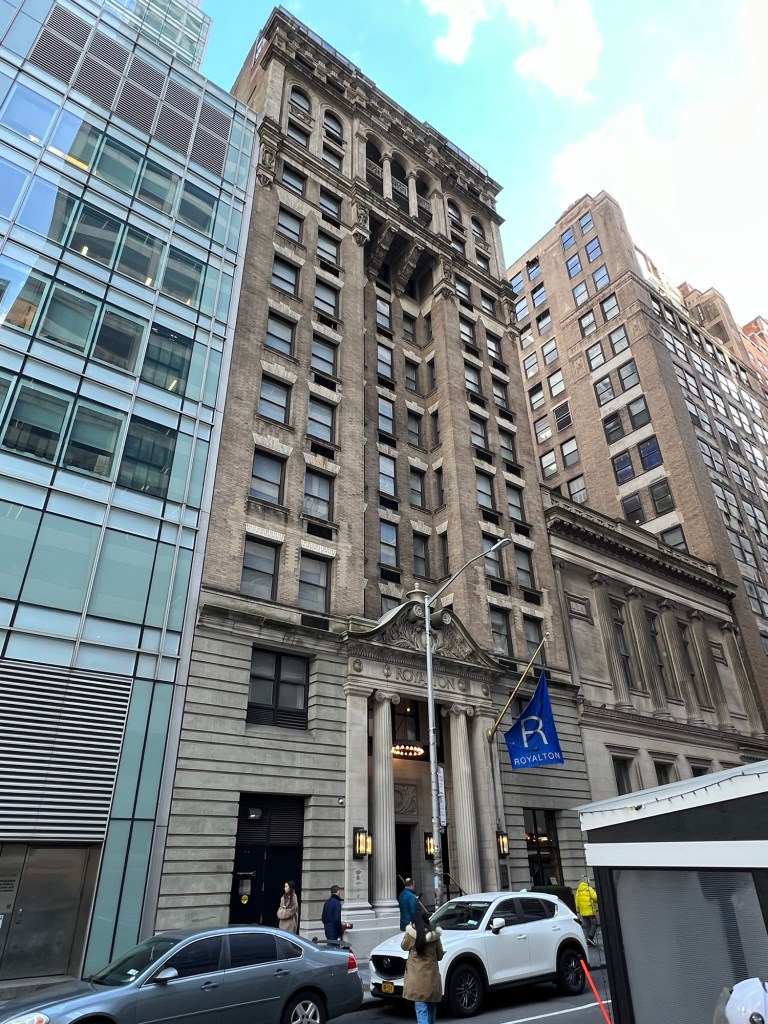

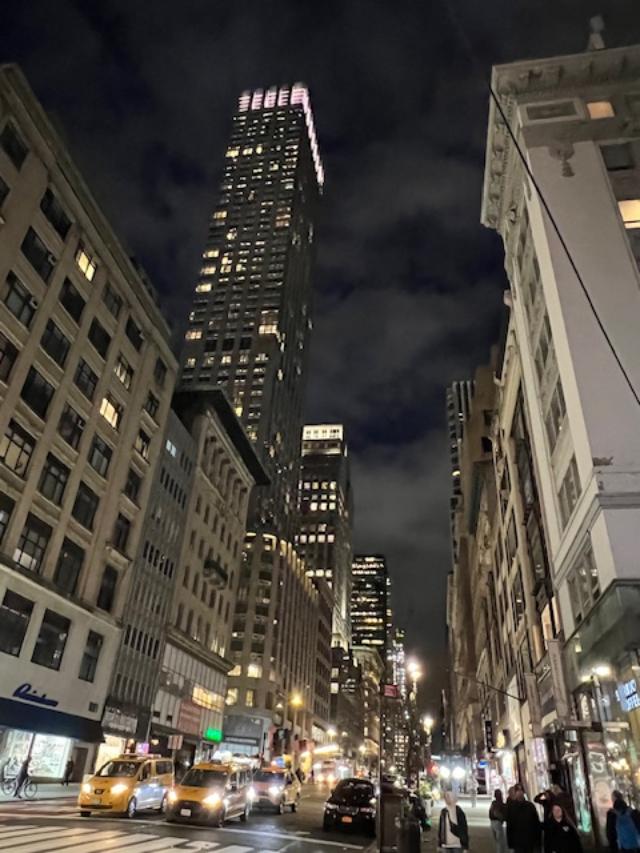
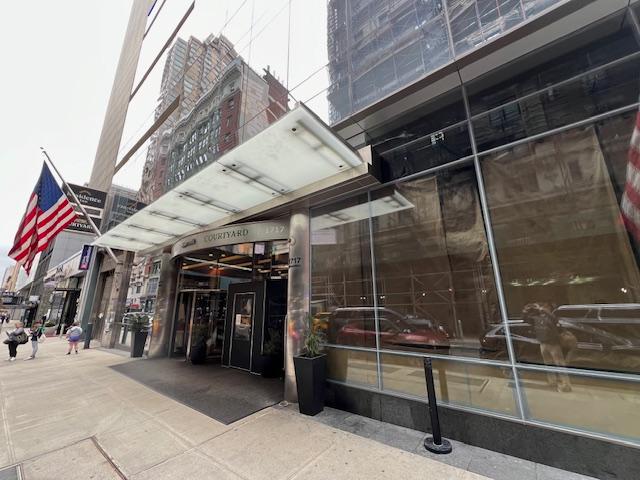
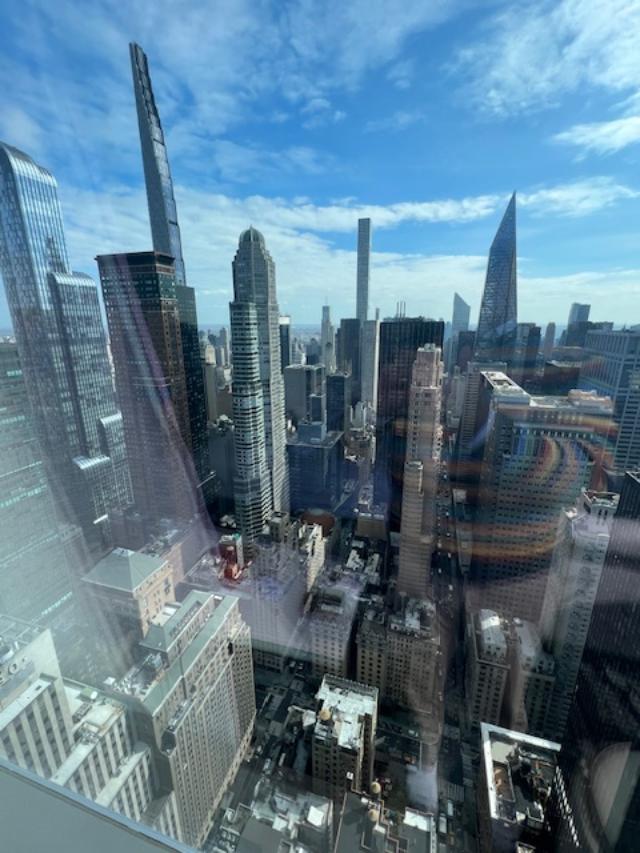


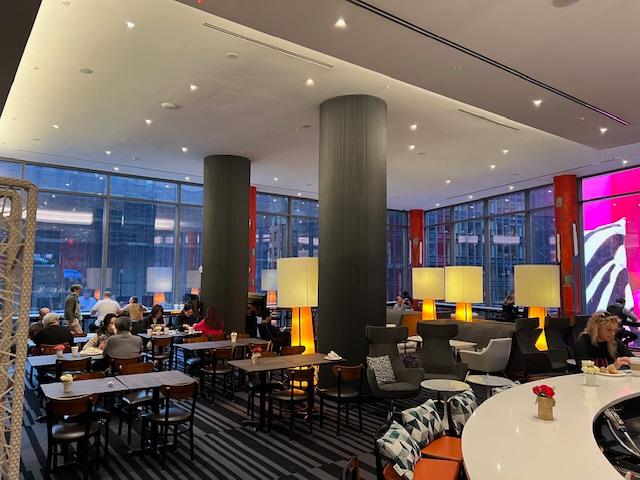


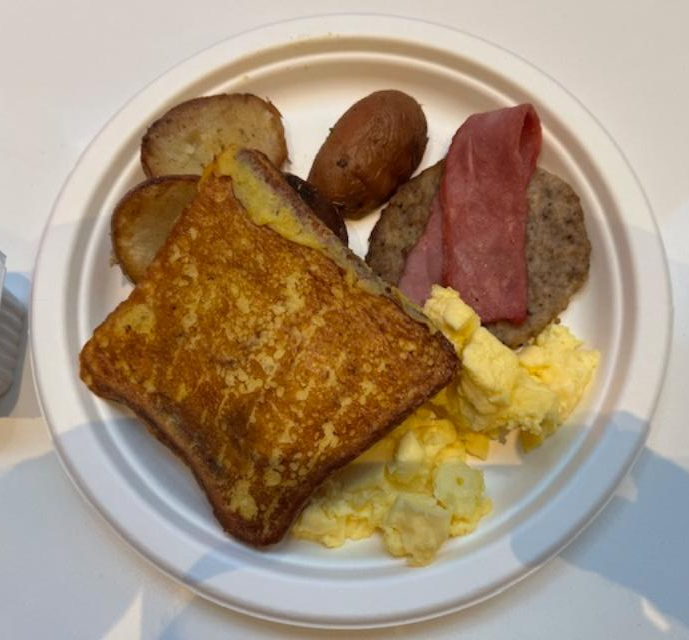
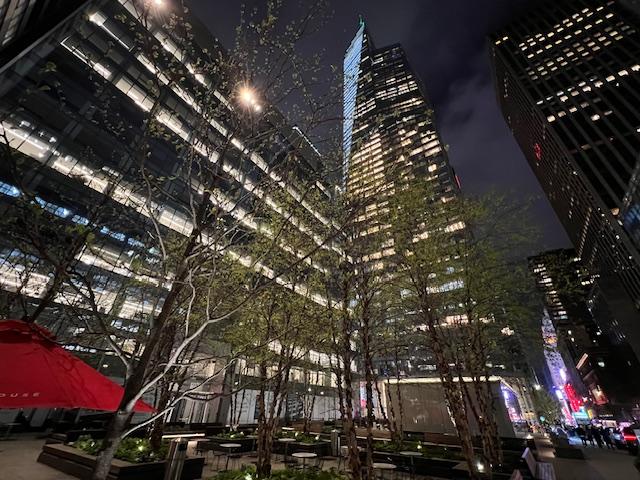

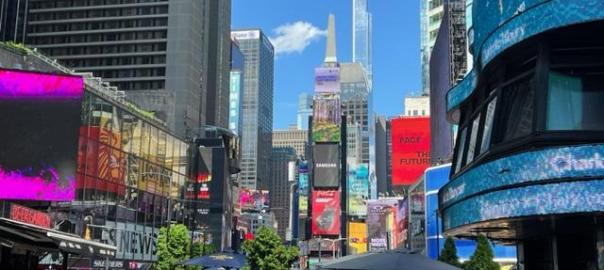


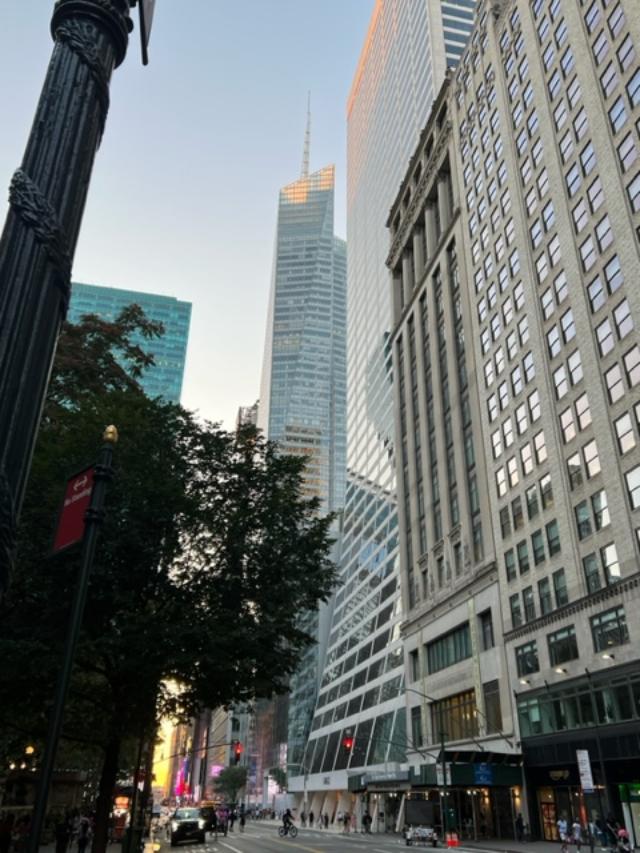
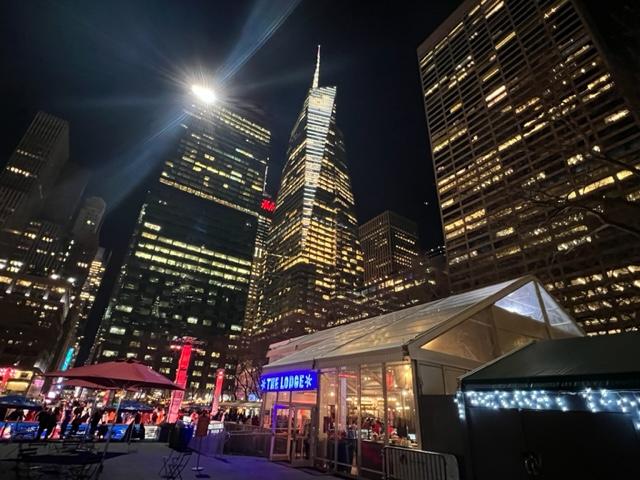

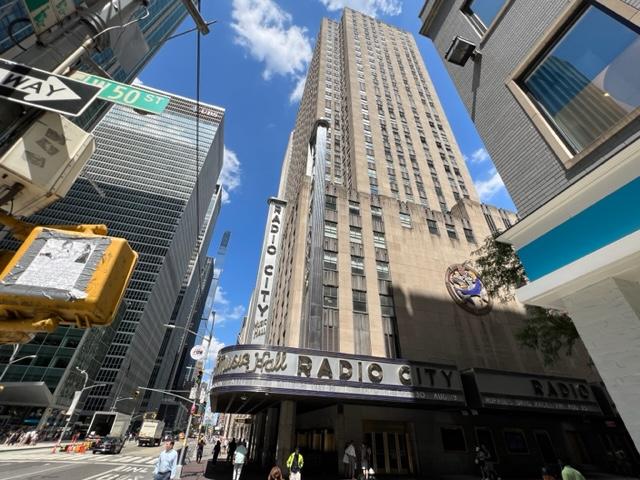
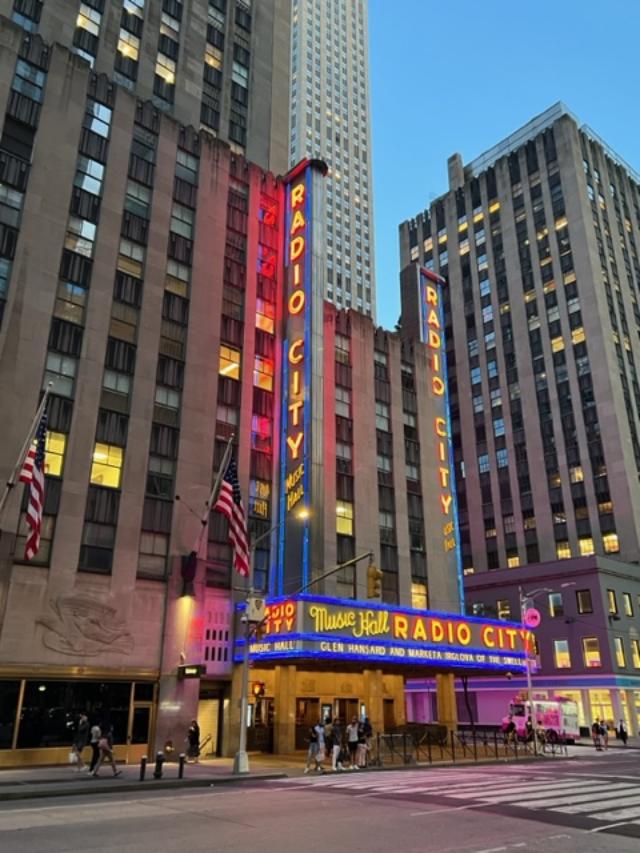
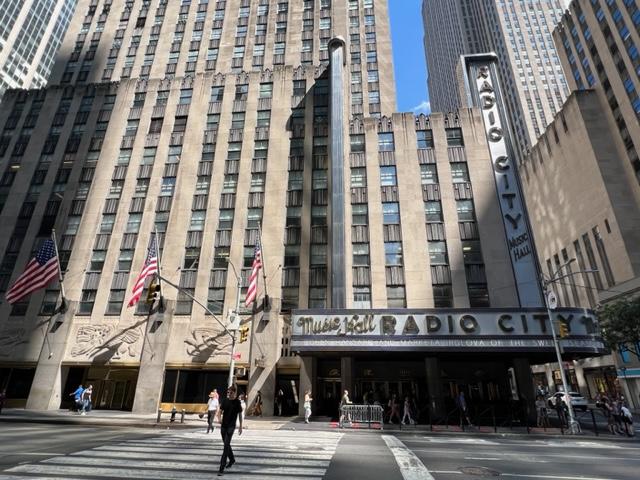


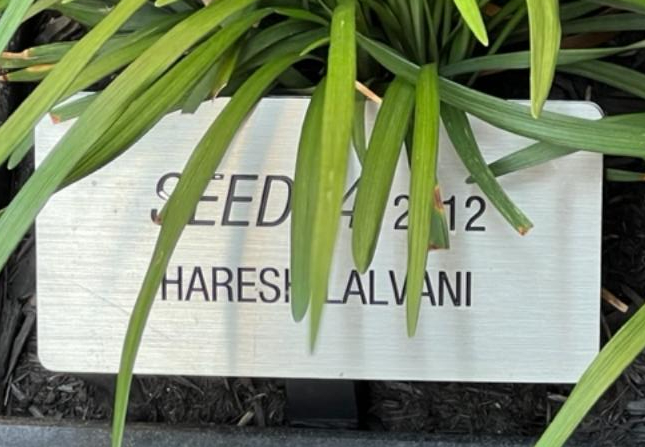


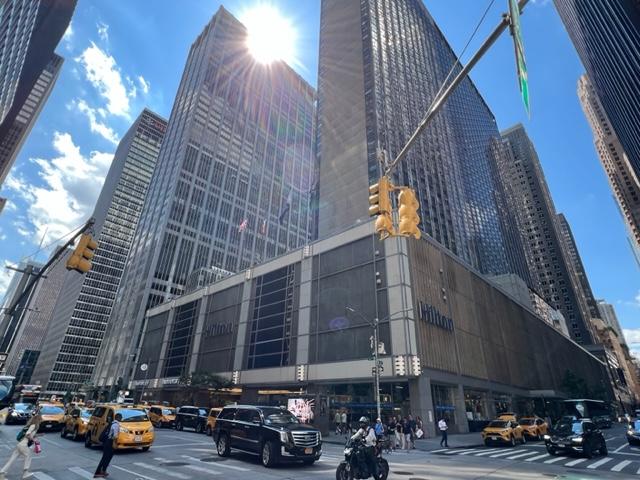

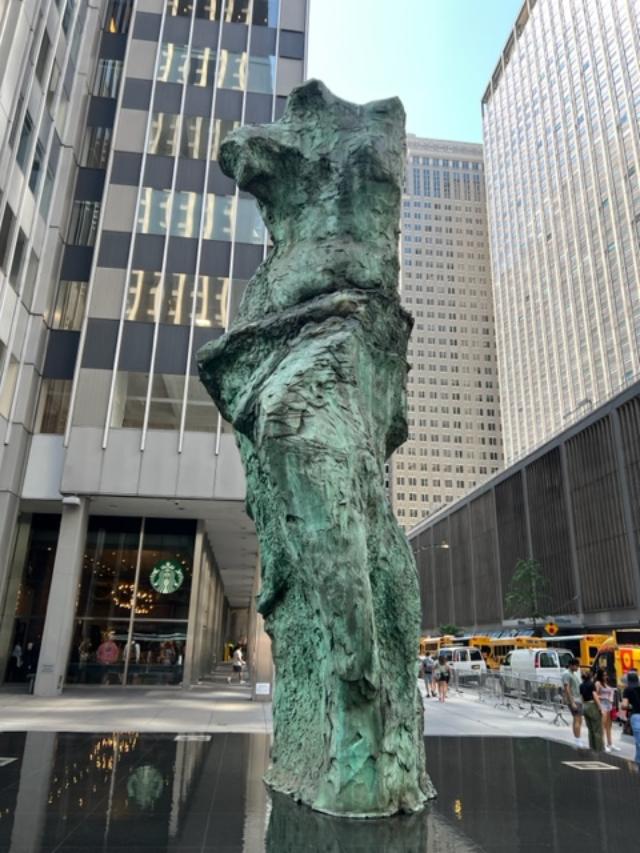

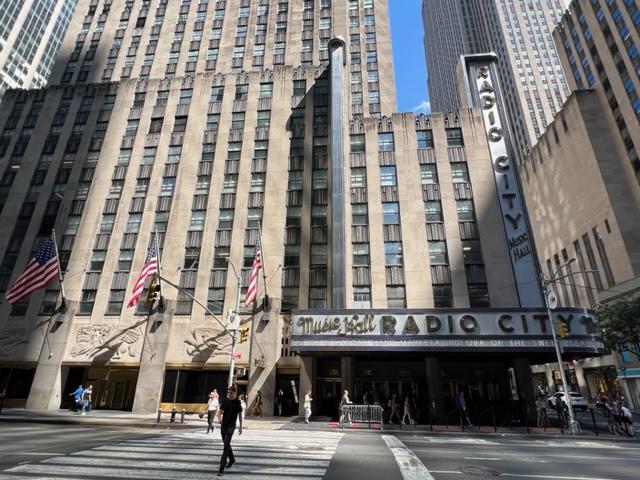

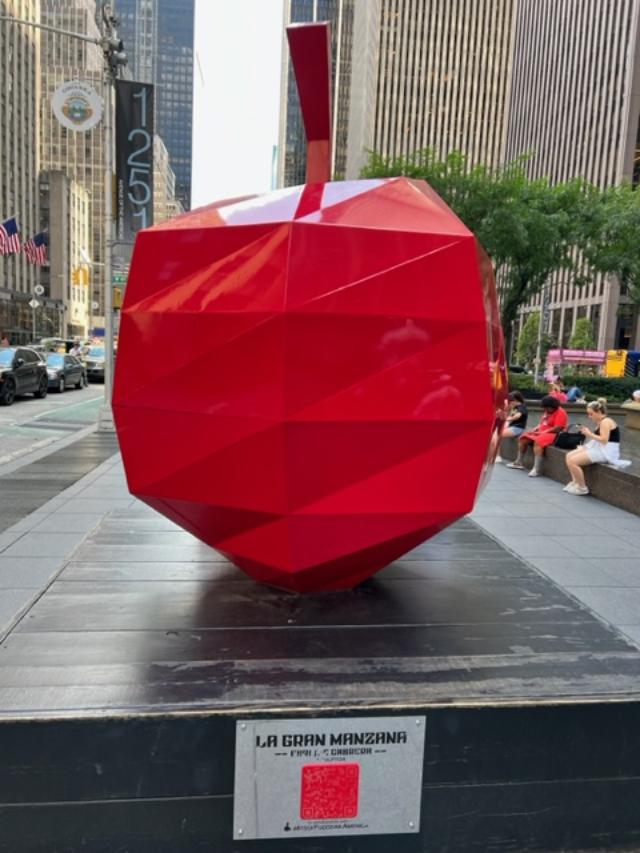
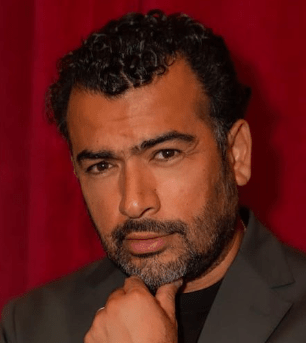


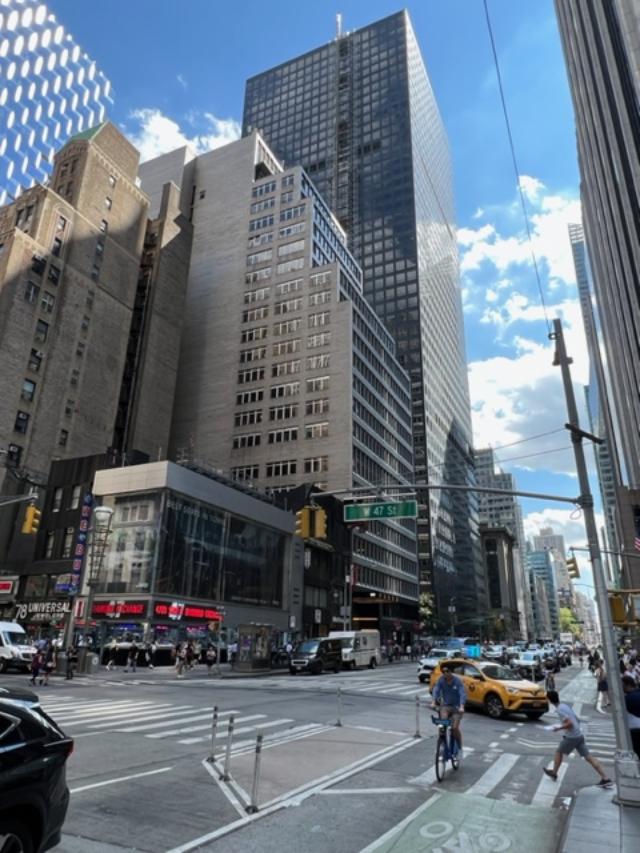
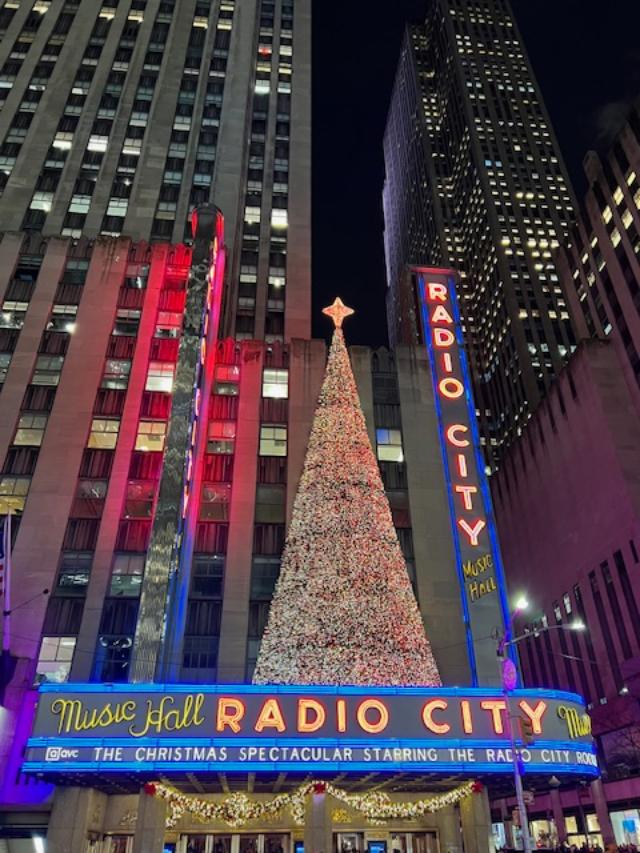
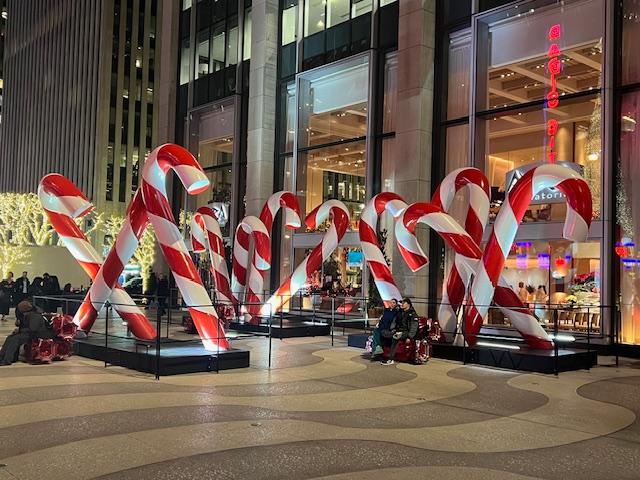
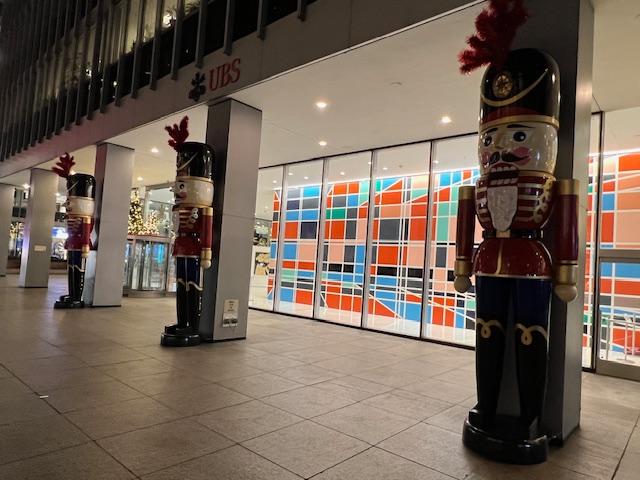
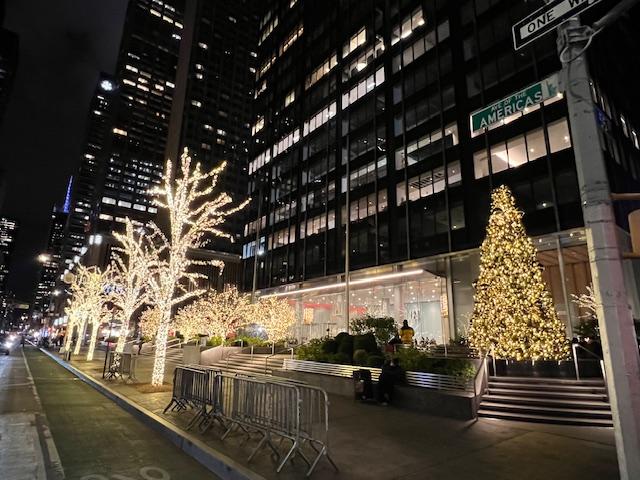

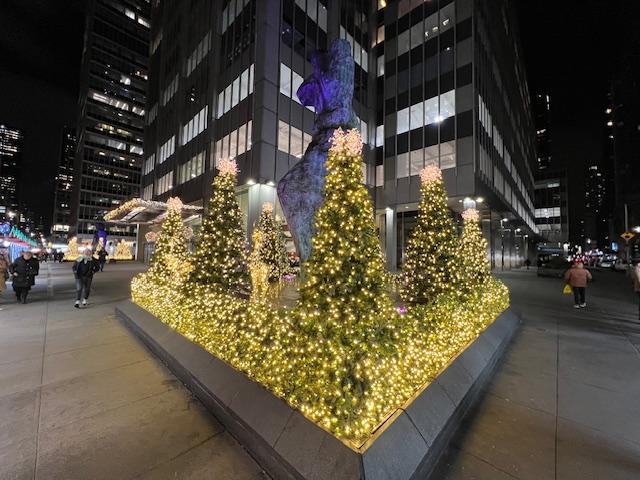


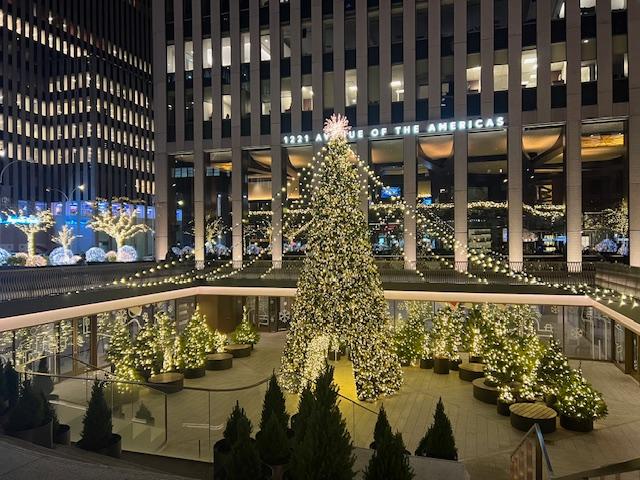
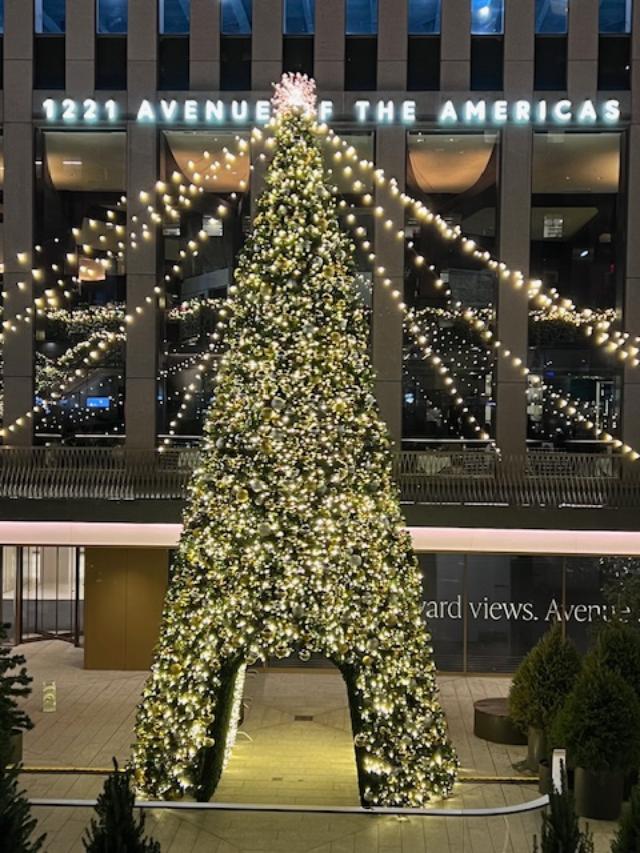


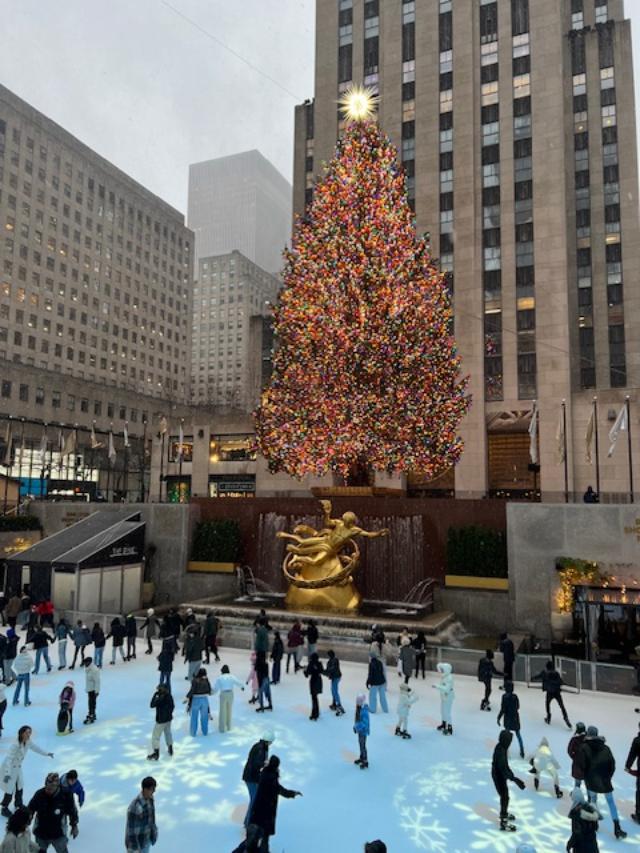

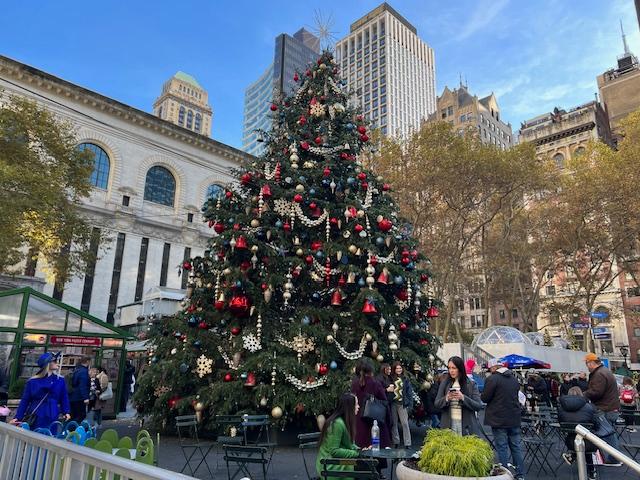

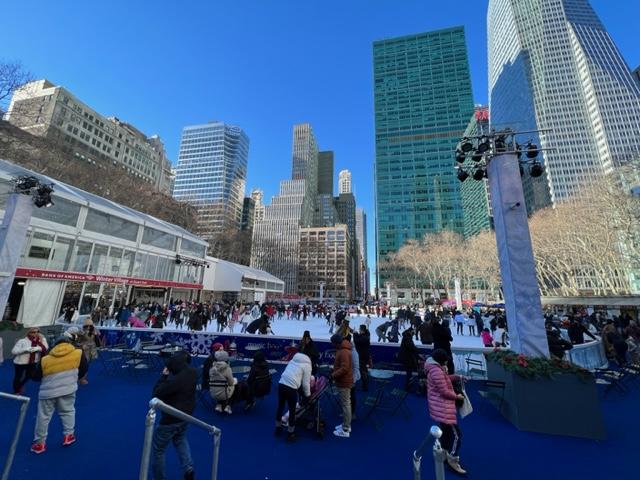
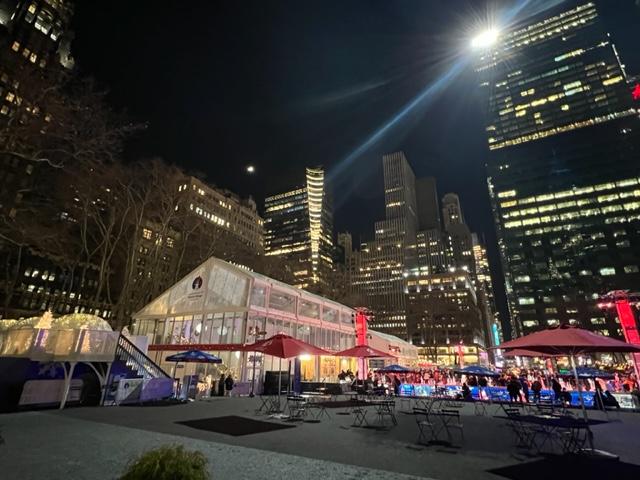


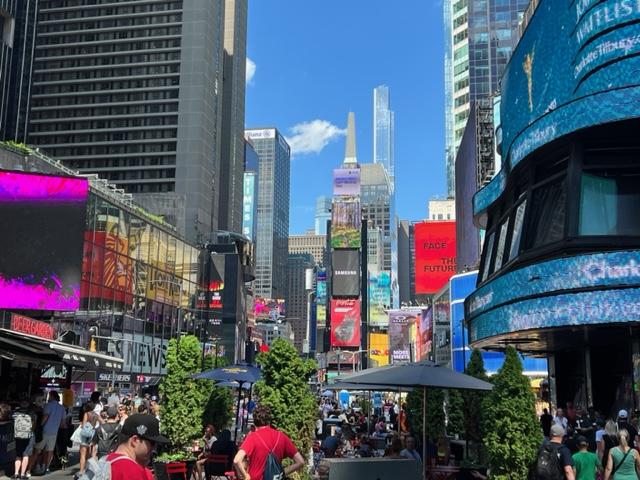

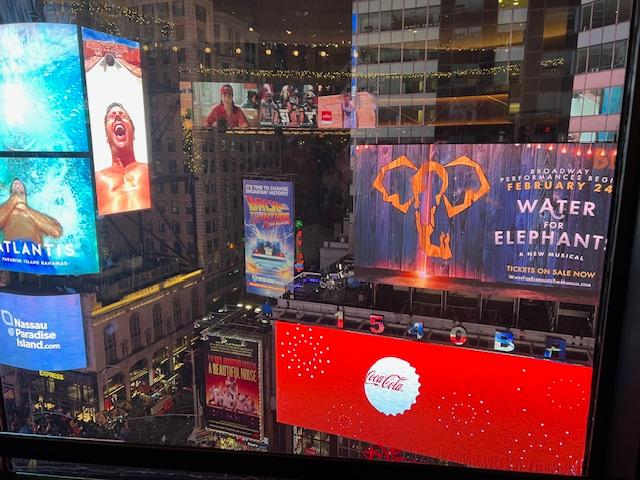

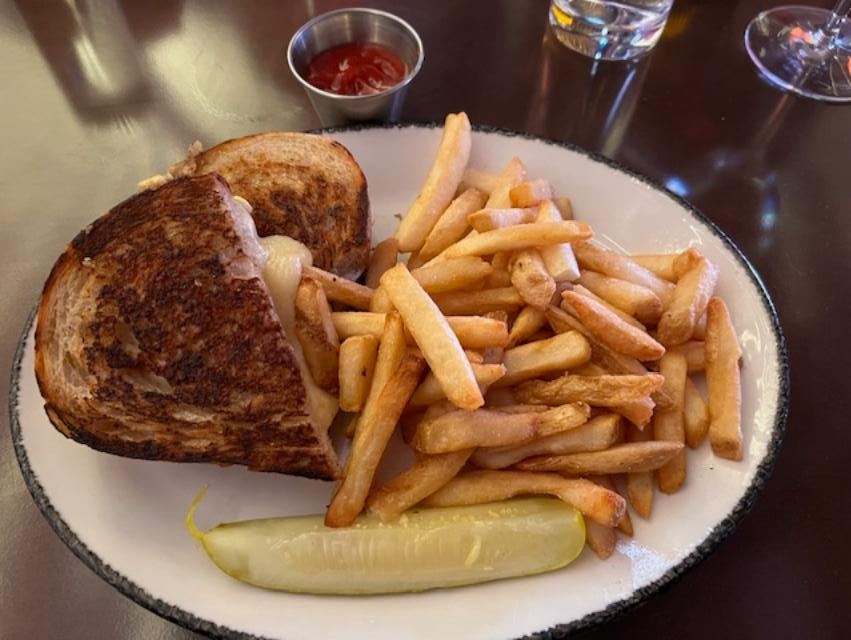

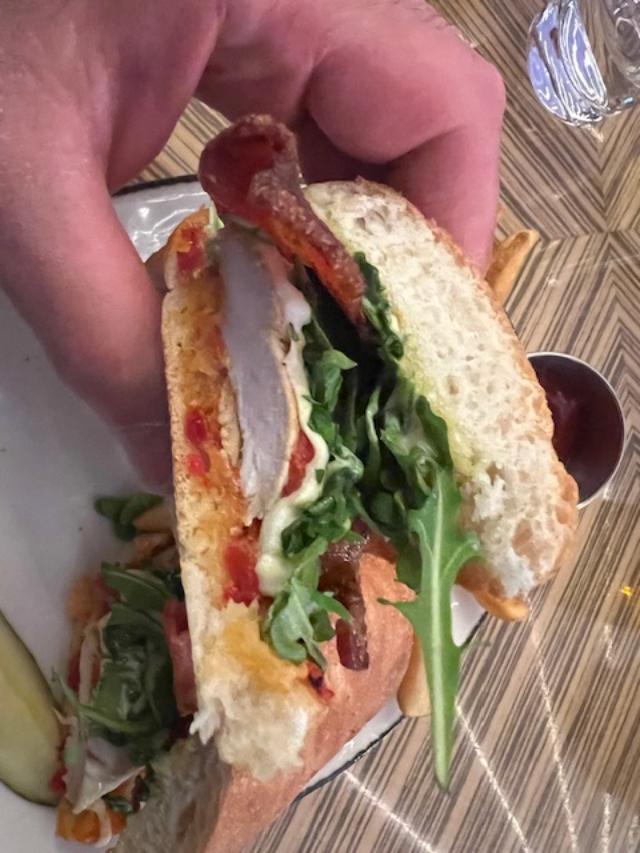
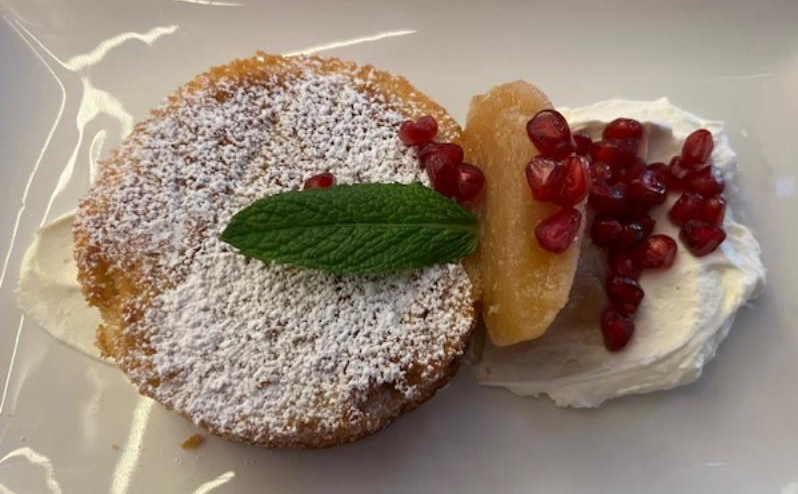
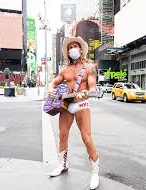


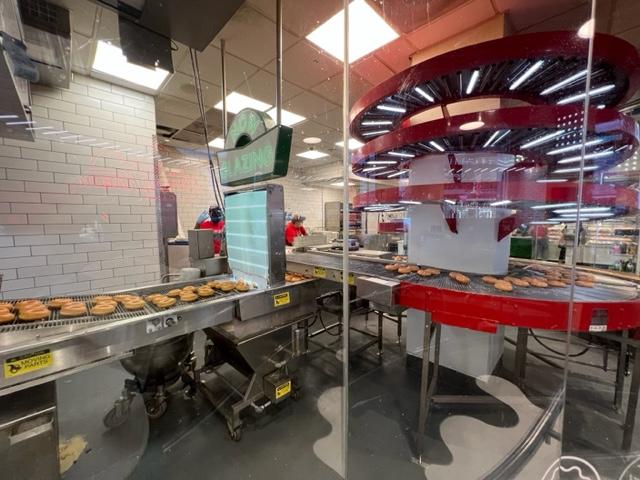
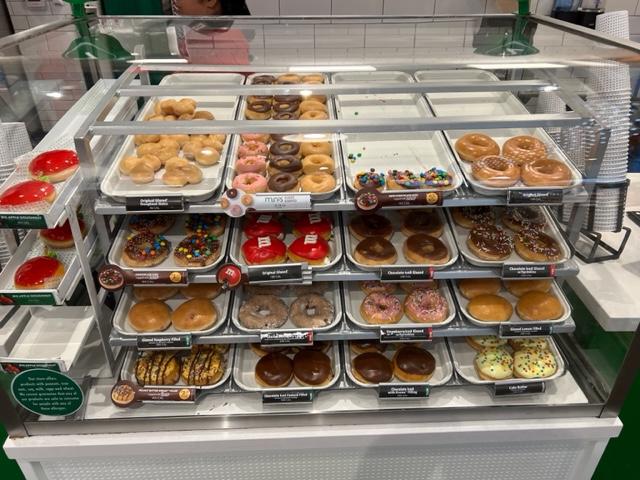
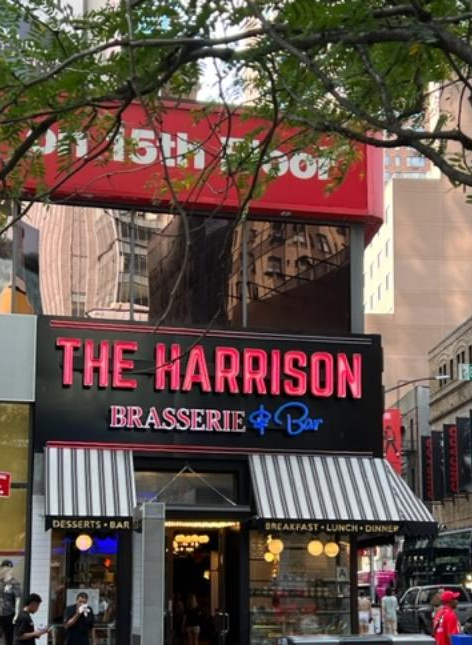
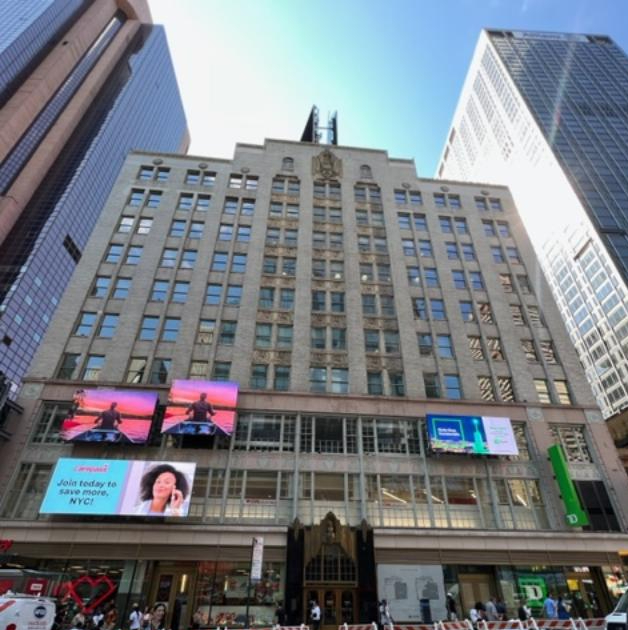


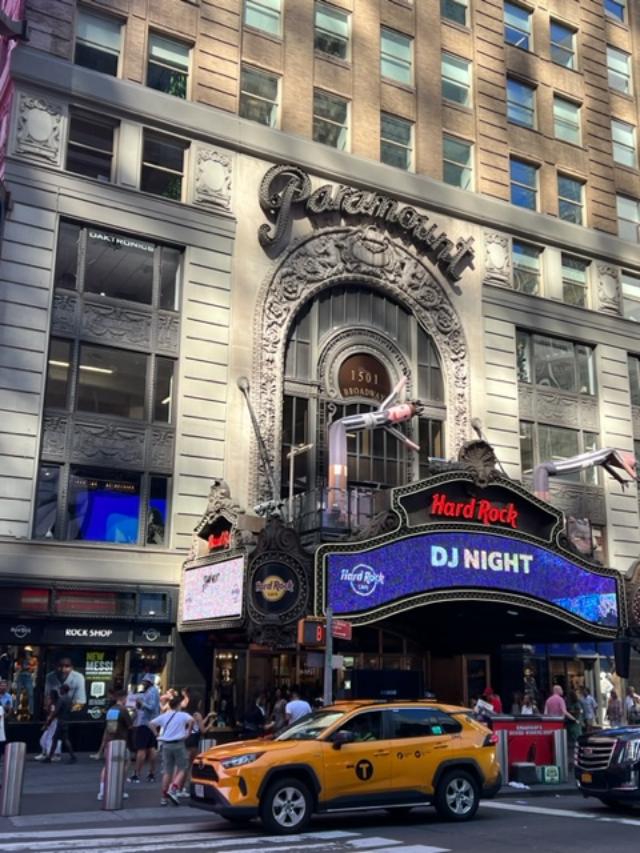

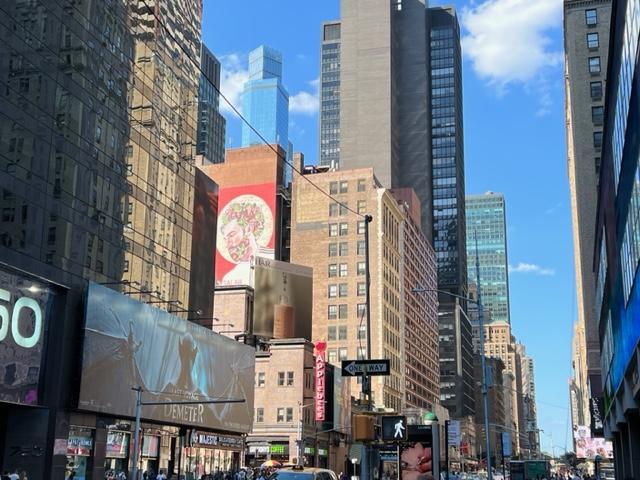
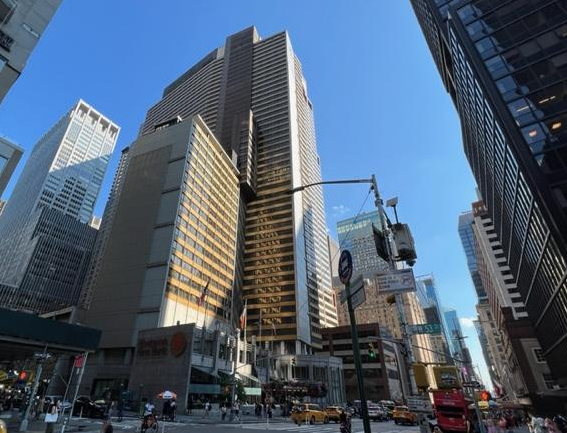


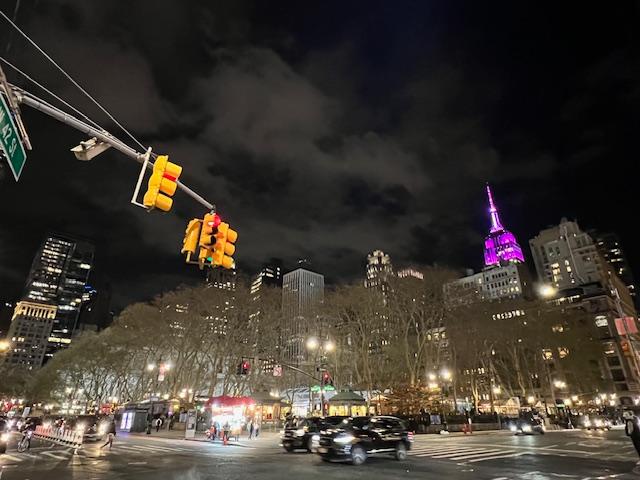


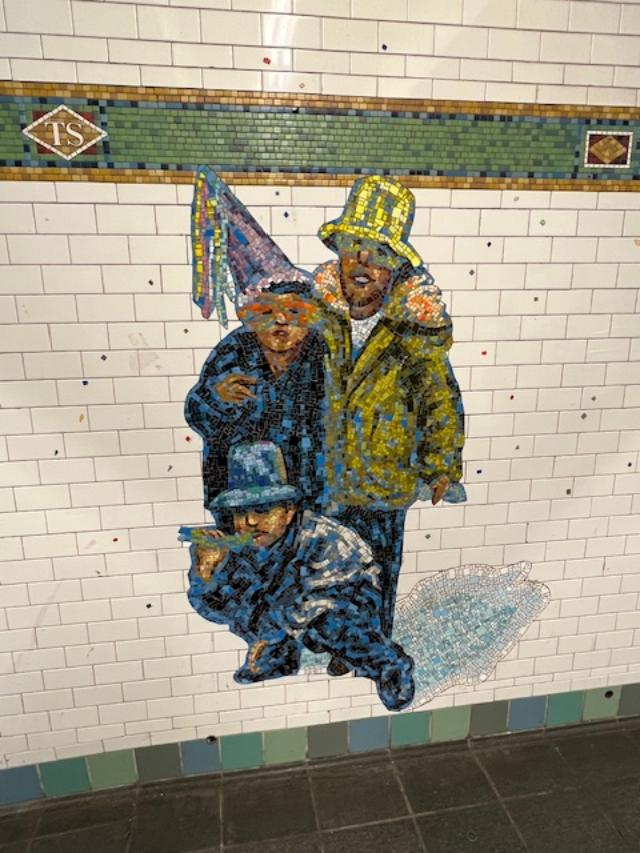
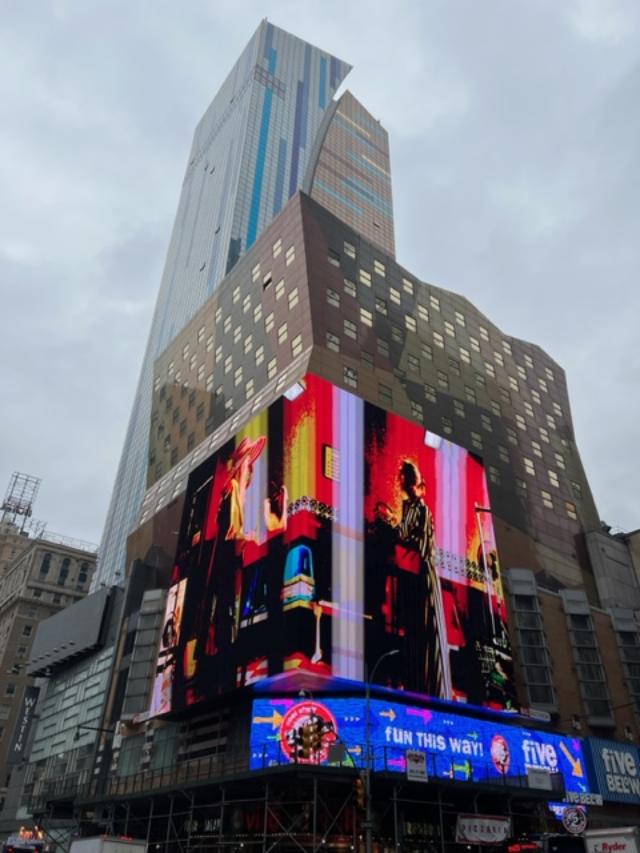
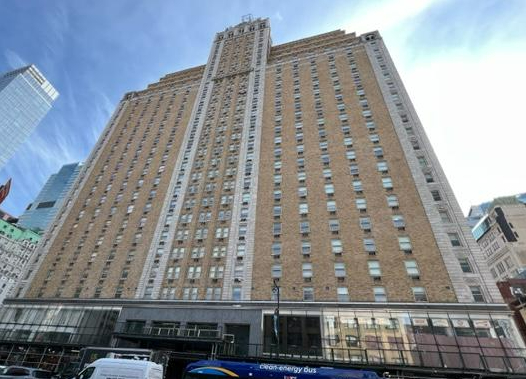
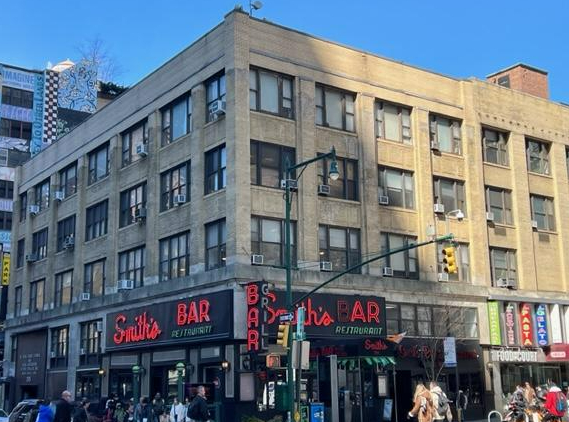


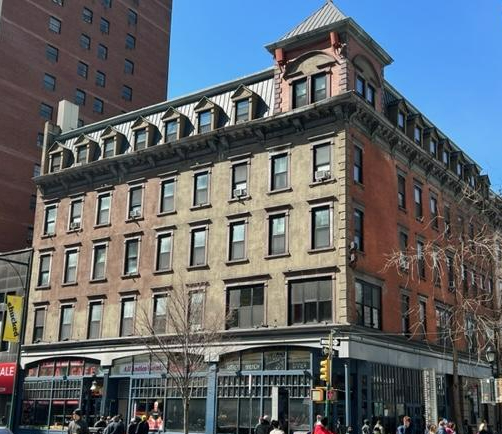
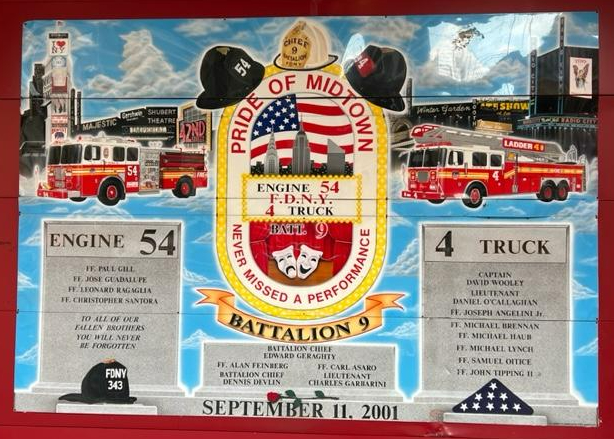
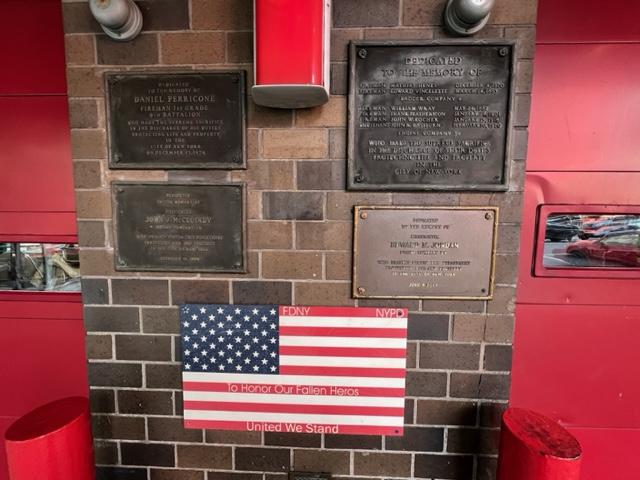
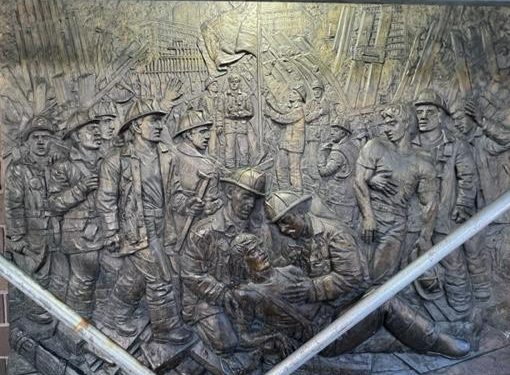

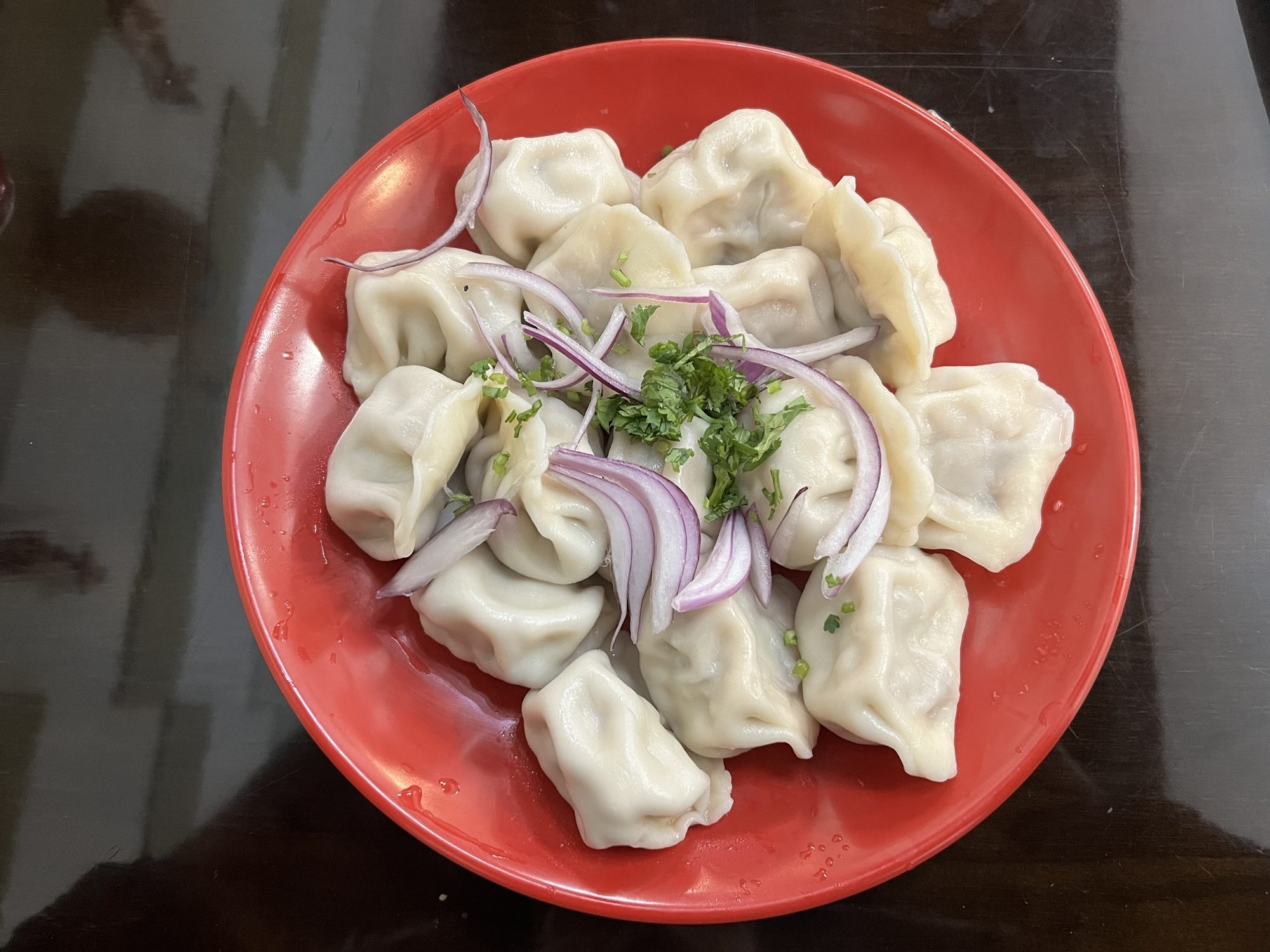


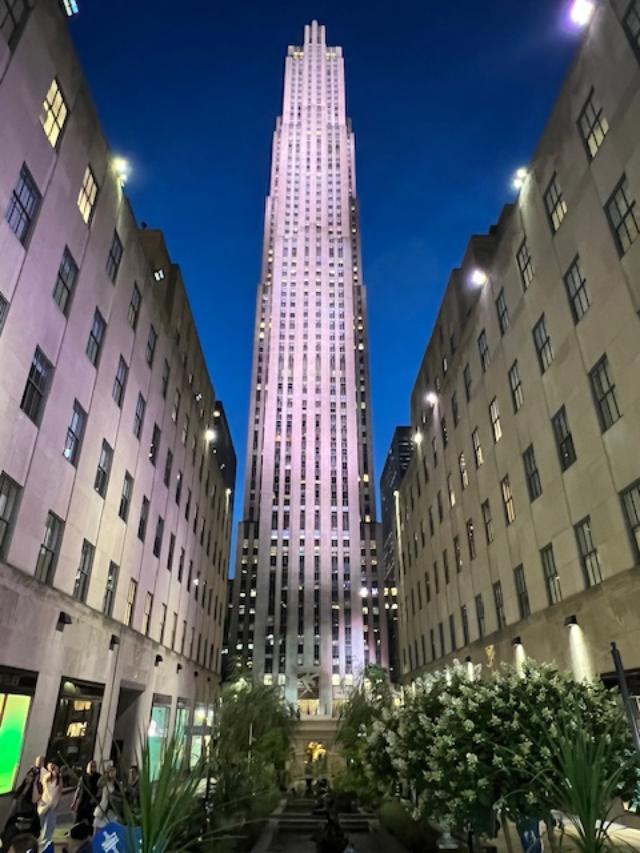


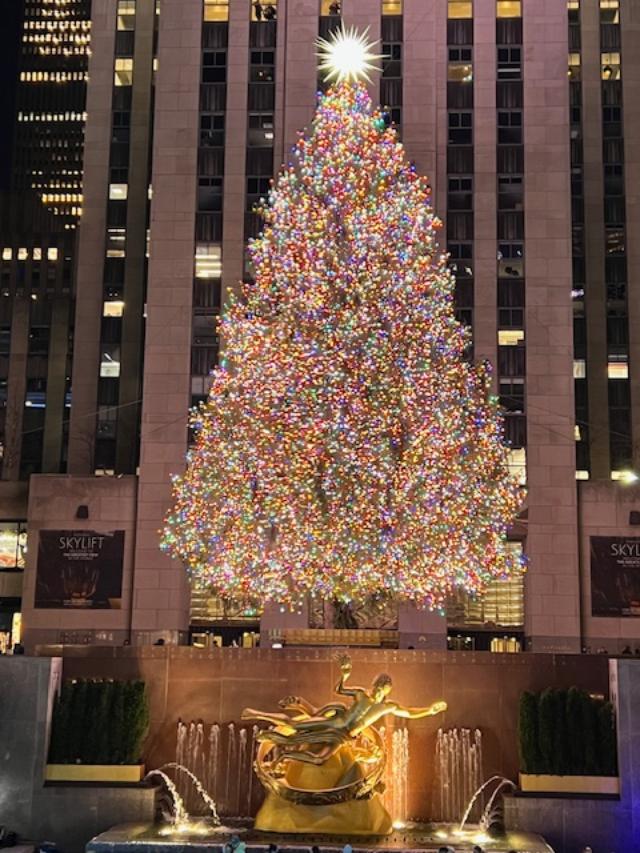


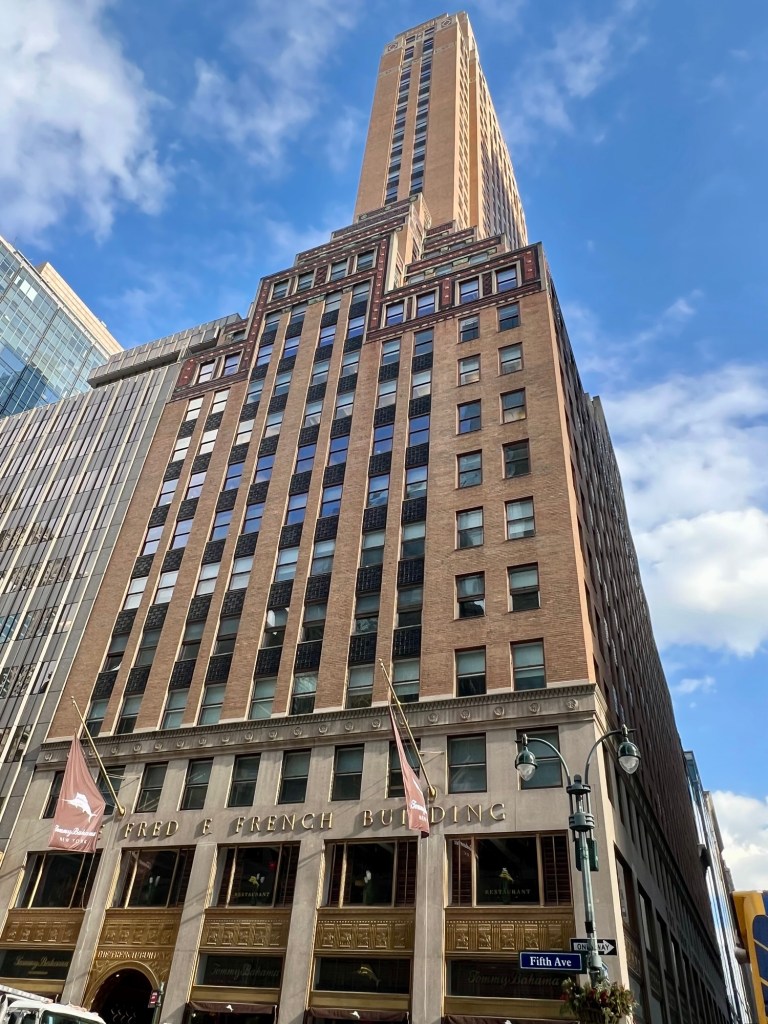
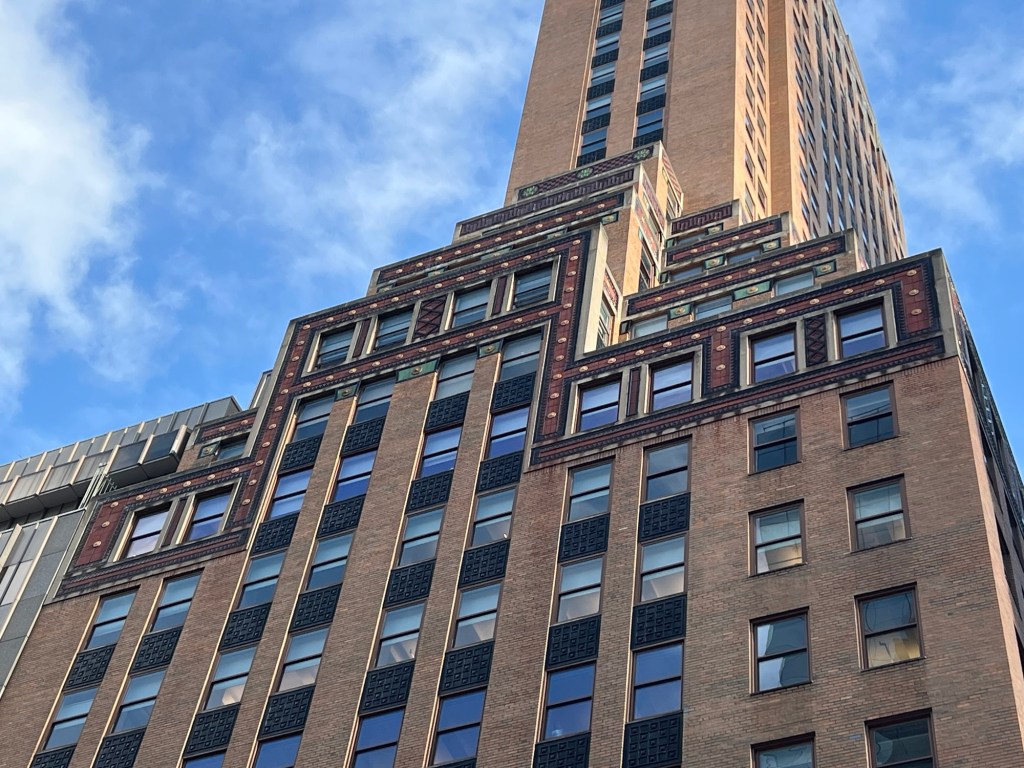


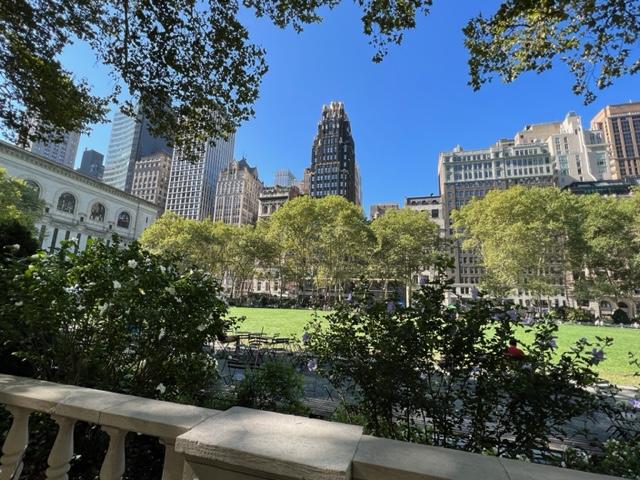
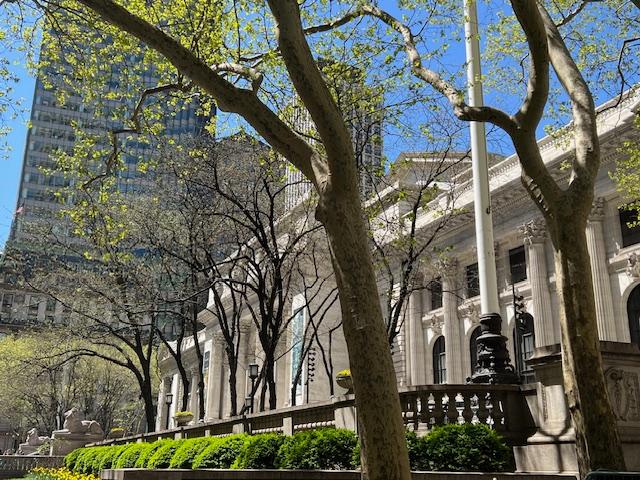


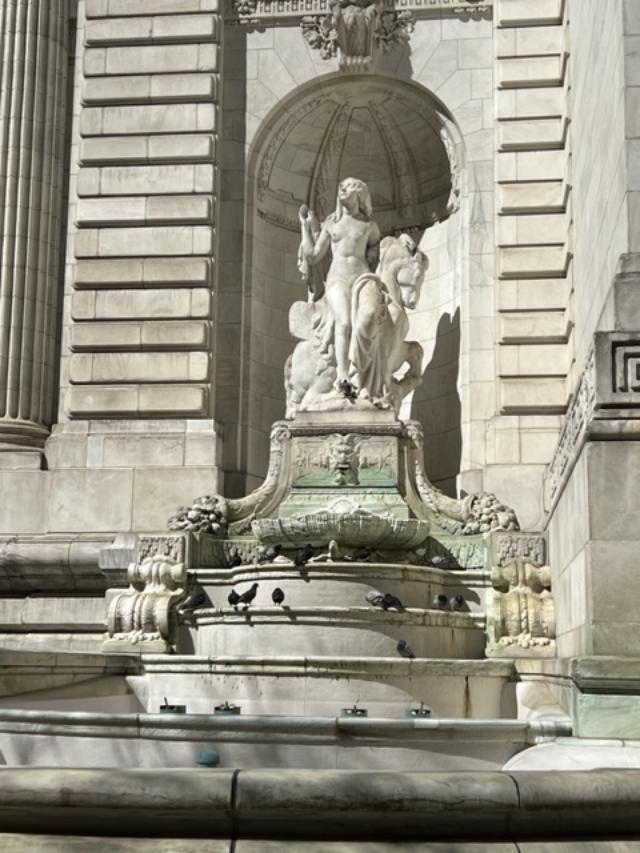


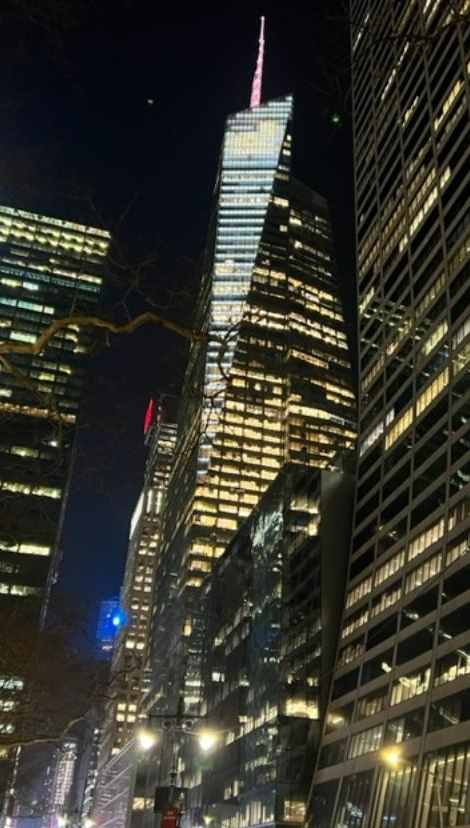


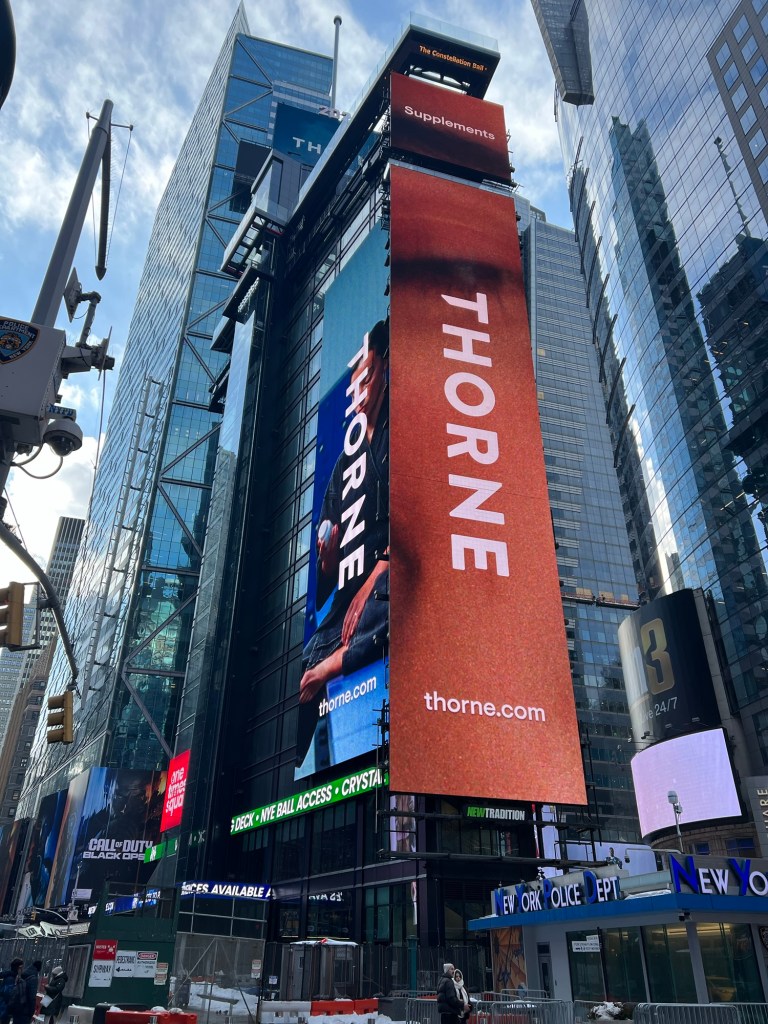
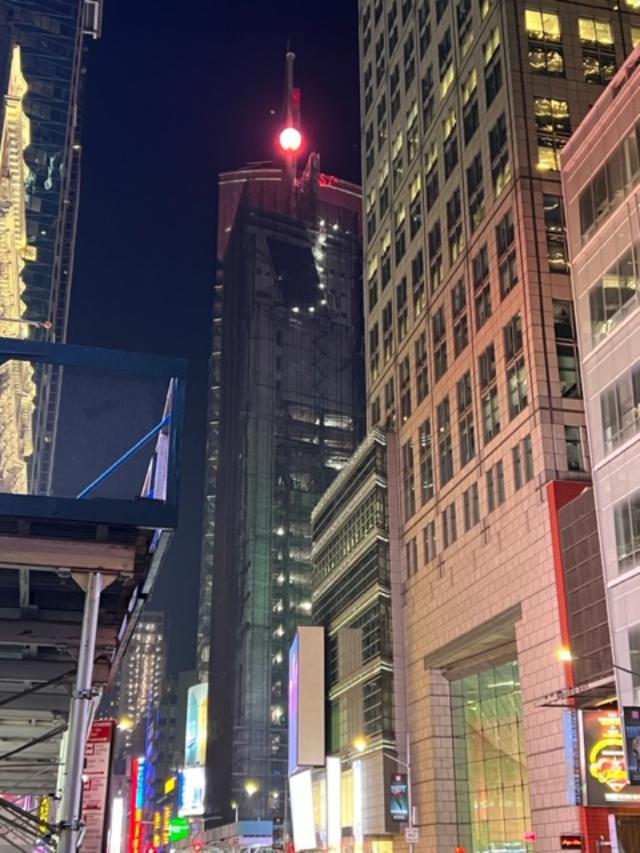
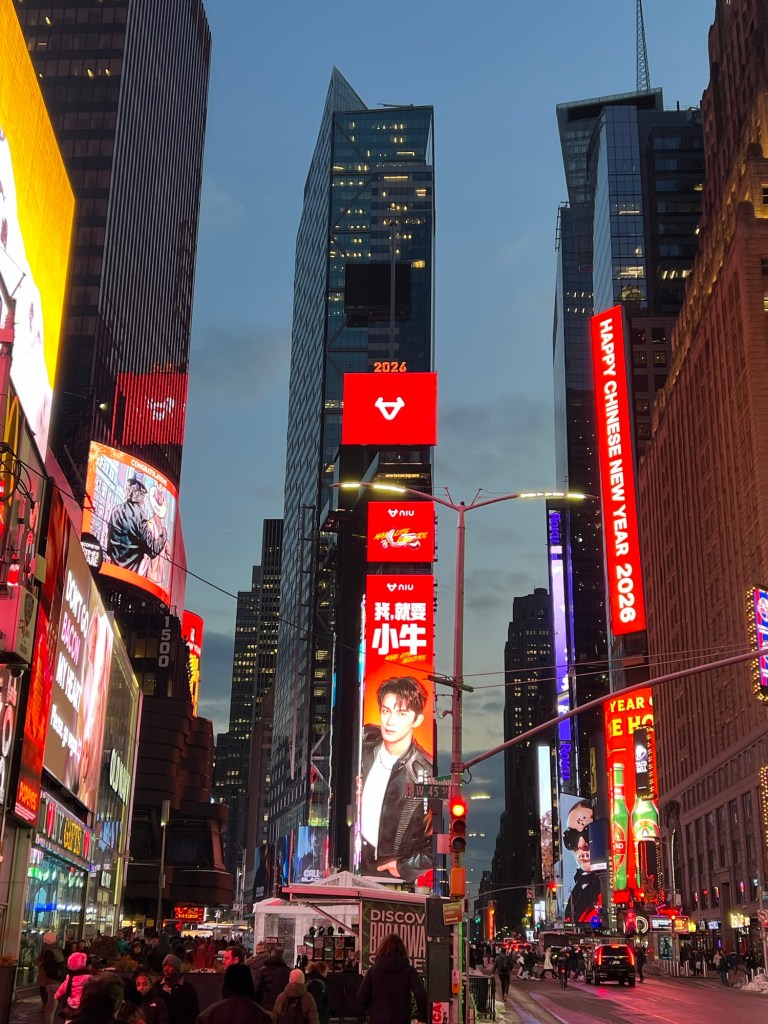


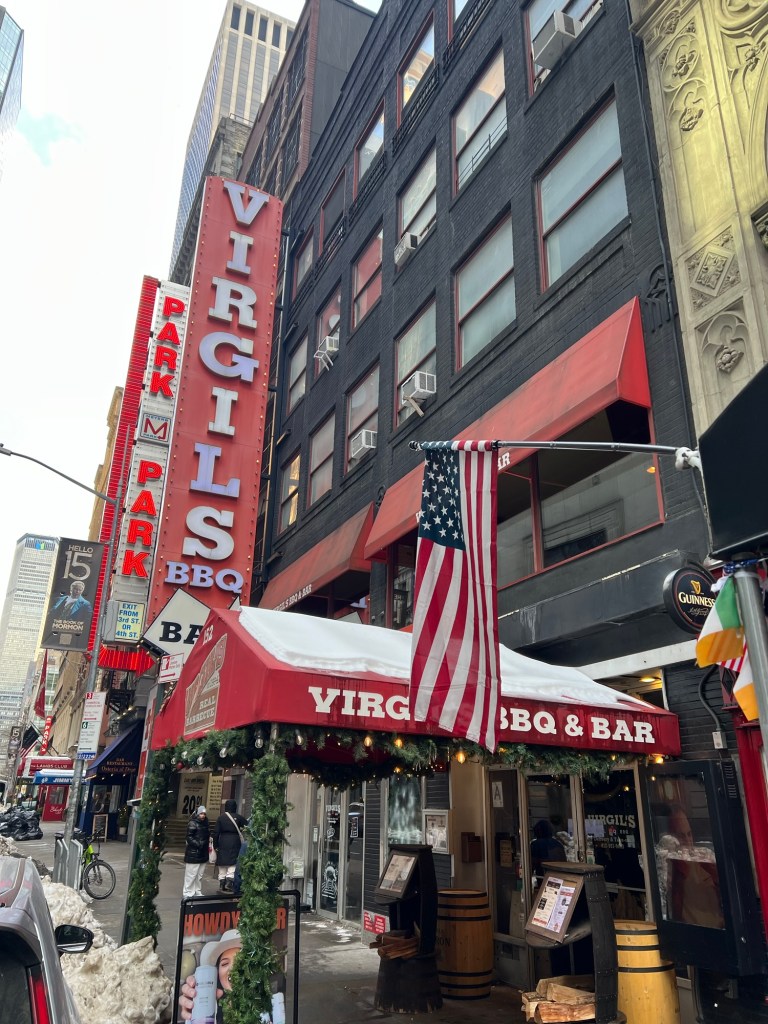
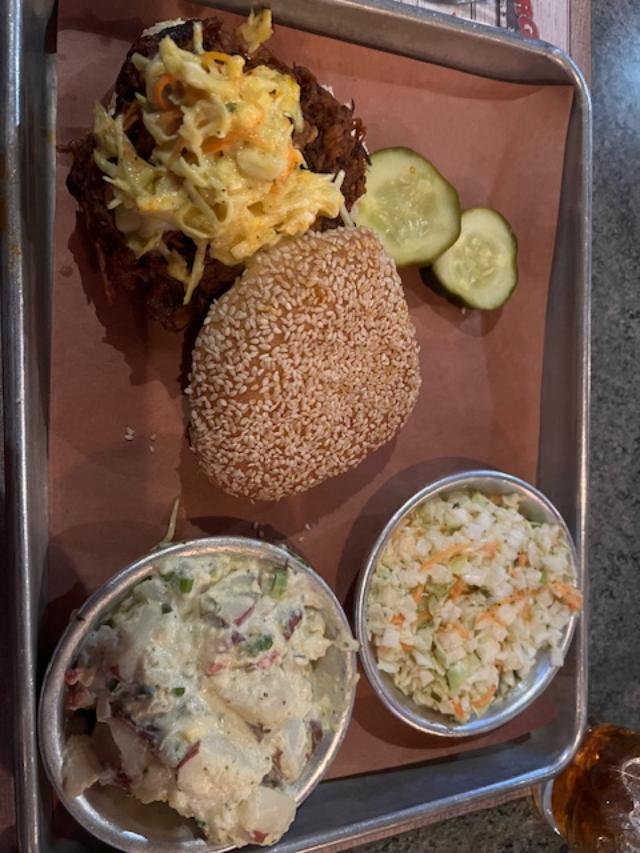
 mywalkinmanhattan