
The Hungarian Pastry Shop at 1030 Amsterdam Avenue in Morningside Heights.

The pastry case is filled with the most amazing baked goods.

The Hungarian Pastry Shop at 1030 Amsterdam Avenue in Morningside Heights.
The pastry case is filled with the most amazing baked goods.
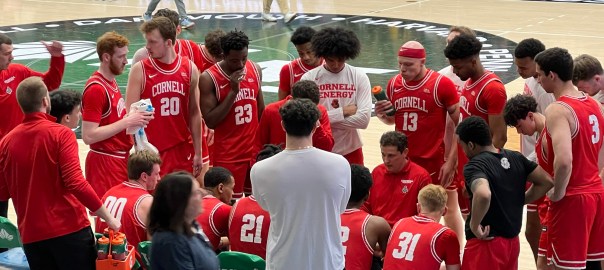
I got an email during Spring Break that Cornell Basketball was going to be playing Yale for the Ivy League Championships. We had an Alumni get together at the Lion Head Tavern at 995 Amsterdam Avenue before the game and we would be heading up for the game. You know that nothing works out the way you think it will.
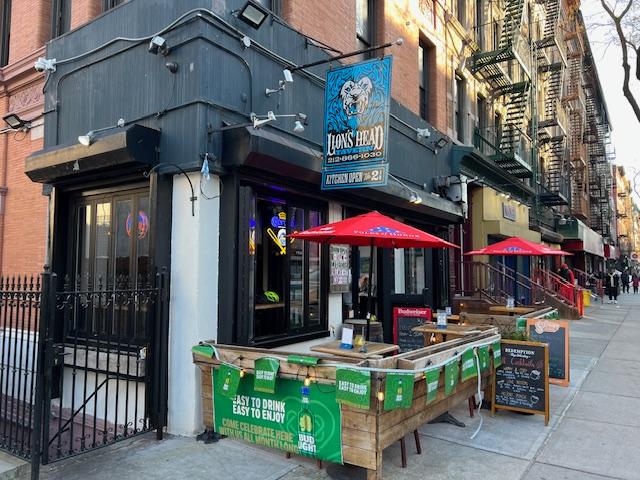
Lion’s Head Tavern at 995 Amsterdam Avenue
Review on TripAdvisor:
By the time I got to the Alumni get together at the Lion Head Tavern which is several blocks from the gym it was almost over. It had been a long morning for me and try getting a bus to cooperate getting into Manhattan on a Saturday and then catching the subway uptown was interesting. I have to say that the tiny bar was PACKED with Alumni and current students having a good time before the game. The whole place both inside and outside the bar was spilling with Red and White. Everyone really thought we would win the Ivy League Championship. I thought so too with the current record we had for the season.
When I got inside, all that was left was a salad that had seen better days and there was no dressing to it and some portobella mushroom burgers (Yuck!). I did not want to eat any mushy mushrooms. By that point at 1:30pm, everyone was heading up to the Levien Gymnasium where the game was taking place and I was starved, so I walked to Koronet Pizza on Broadway to have one their giant slices. I forgot how giant the slices are there.
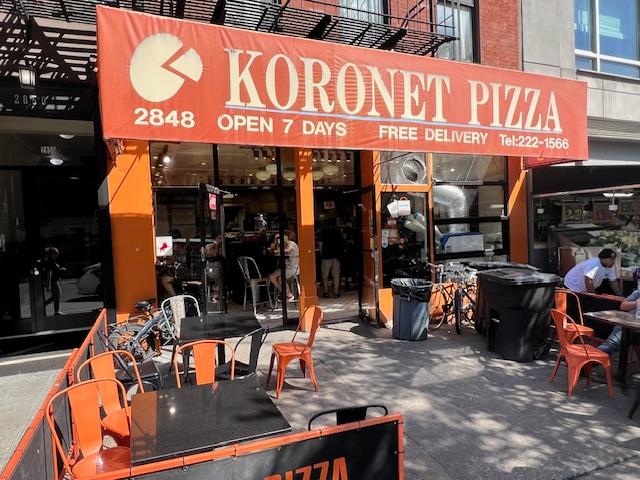
Koronet Pizza at 2848 Broadway
https://www.koronetpizzany.com
My review on TripAdvisor:
My review on DiningonaShoeStringinNYC@Wordpress.com:
I forgot how good the pizza was and how big these slices actually are. The cheese slice if cut into half could easily serve two hungry people. I downed the slice with a Coke before the game and it filled me up for the rest of the afternoon. It was so beautiful outside that the doors and windows were all open and the place was spilling with Cornell, Columbia and Princeton Alumni (Princeton had just lost to Brown in the Semi-Finals and they were all bummed).

The pizza slice is huge and takes up two plates.
After this large lunch, I walked up to the gym to get tickets. At first they were trying to sell me the seatback tickets for $60.00 but I could not afford that nor did I want to pay that for a Ivy League game. Since I was traveling alone, I did get a ticket in the bleachers for $30.00 which I still thought was too high but I came all the way to see the game so I paid for my ticket and then had to run around the perimeter of the gym to get to my seats. The commentators were blocking the easy route to the bleachers.
The place was mostly a sea of red and white with the Yale Alumni tucked into two sets of the gym. Our band and cheerleaders were on top of the bleachers yelling and screaming. At that point were behind by ten points when I arrived in the first half of the game.
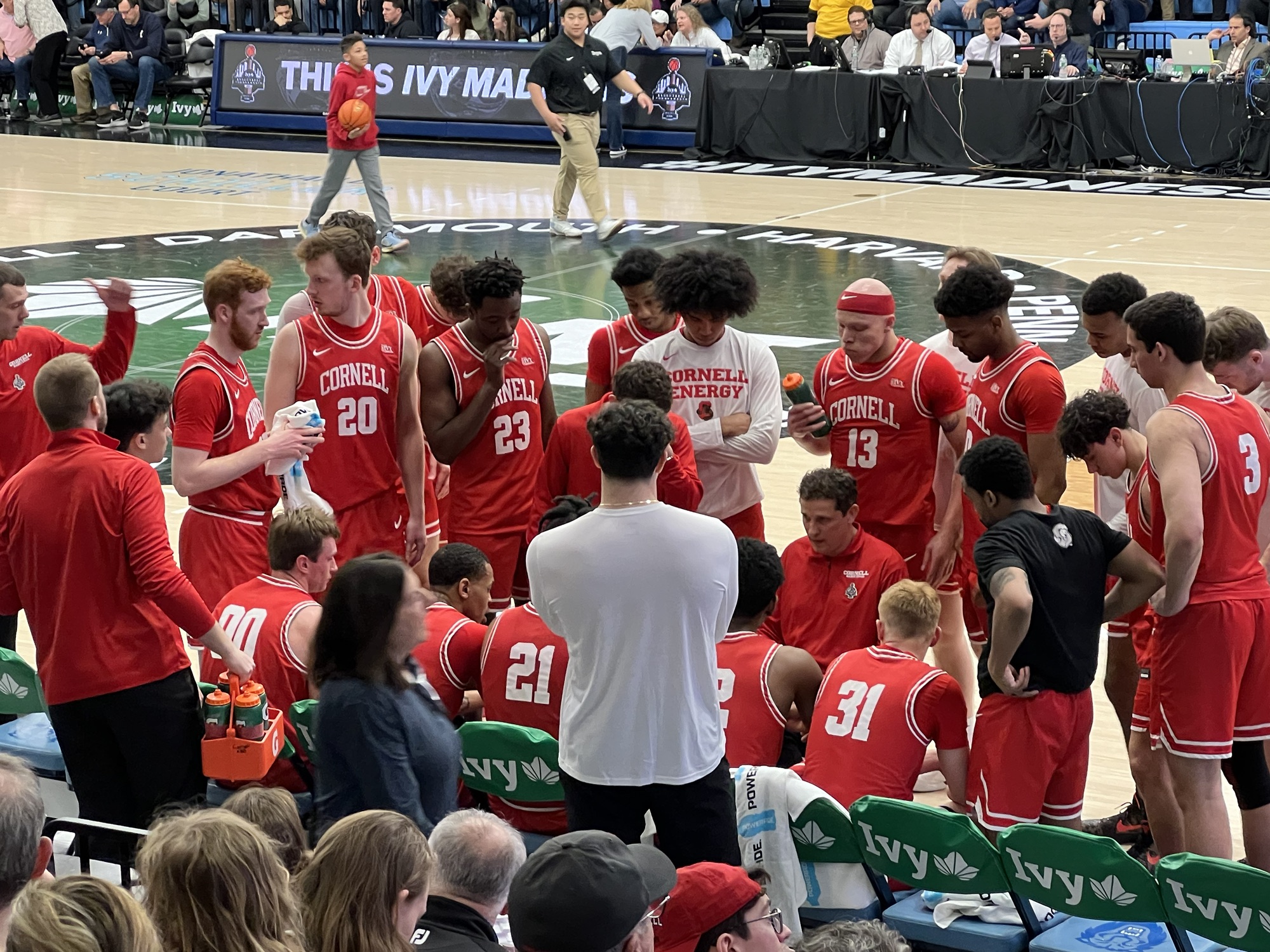
The Cornell Team in the huddle during the first half of the beginning of the game.

The start of the game when I got there.
The first half was not so great. We had lots of mistakes. We kept up with Yale, a team that we had beaten the last time and lost by two points the time before. I have to say that our side of the court was rather loud. I have found at Ivy League games no matter football or basketball, Cornell Alumni and students are far more the dominate members of the stands even at away games. I have been to Penn, Columbia and Yale games were we take up all the seats and do most of the cheering.
It was not much of a game for either side in the first half as we left at half time 37-25 with Yale ahead by twelve. I knew a score like this you could catch up in the second half as I have seen Michigan State (my undergraduate Alma Mater), come back from games with higher deficits. The problem with Cornell is that we kept missing all our shots and Yale kept making the three pointers. That was the difference in the game.
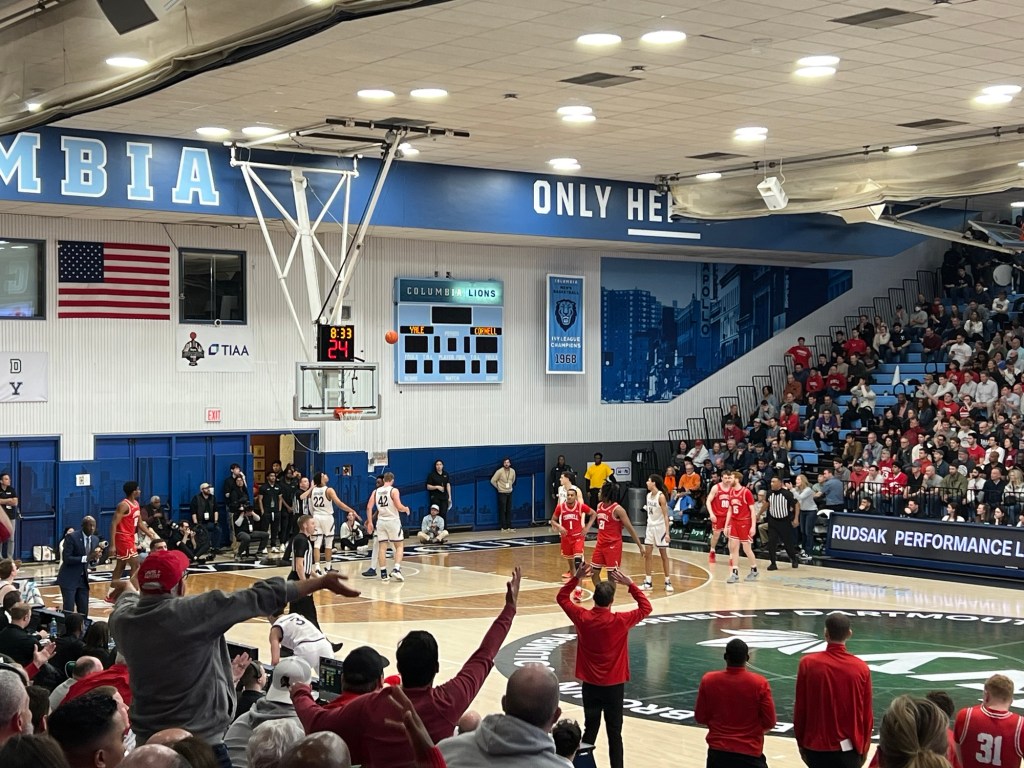
The second half was a bit better in the beginning. We started to catch up from the blood bath of the first half. We started to chip away at their lead. During the break, our cheerleaders came out and got the crowd going along with the band.
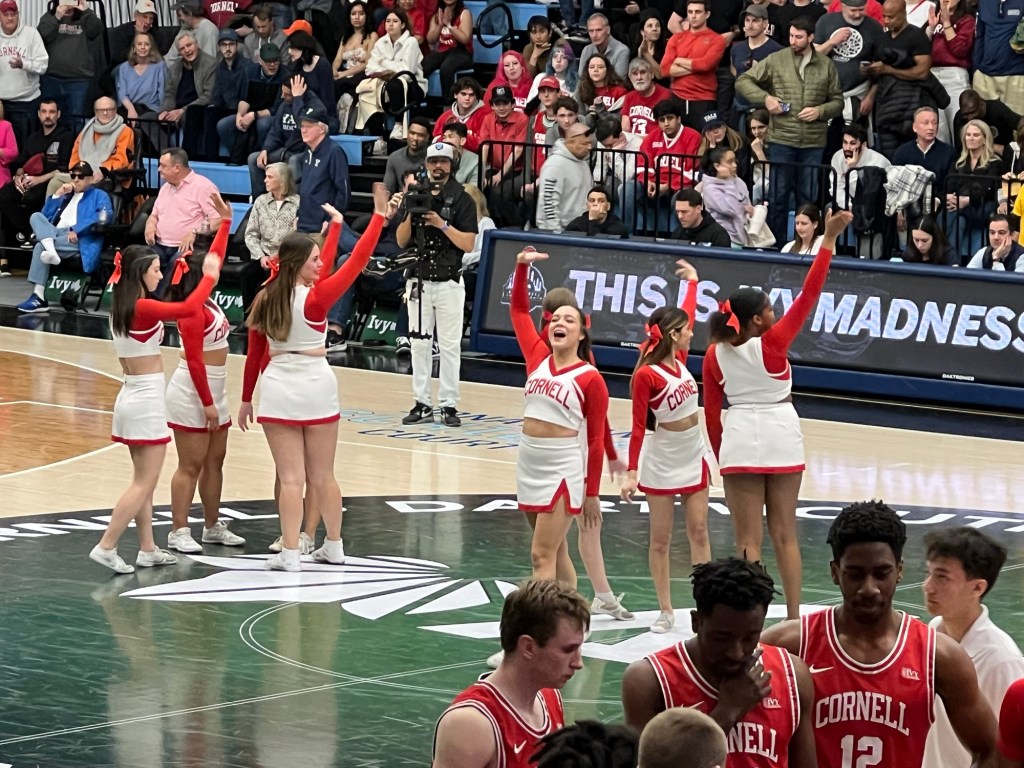
The Cornell Cheerleaders leading the way to a hopeful comeback and victory in the second half of the game.
We starting catching up in the second half and came out fighting. We were able to get the score within seven points with three and a half minutes left to the game. The crowds were exploding on the Cornell side and Yale got very quiet for about a minute and a half. It looked like the game was going to turn around.

You got to keep fighting!
We moved within seven points of the lead but we could not sustain the game. We kept missing the three point shots and easy layouts.

The teams battling it out but we could not put the game away.

In the end we chipped away to nine points but we could not come back from the deficient. We ended up losing by twelve points 69-57.
I like all the other Alumni was bummed at the loss. Several I heard went back to the Tavern as the Columbia versus Princeton Girls Basketball Teams started their game. I decided to walk around the neighborhood as I had not been up here in several years to walk around. I had not released I had written my blogs here in 2017.
I needed something sweet and remembered the bakery on Amsterdam Avenue that had been there for years that everyone kept raving about, Hungarian Pastry Shop. I stopped for some dessert. I had read and seen so many videos on the shop I wanted to try it. The lines were long all day and I had to get into the line for a half hour before I could get in.

The Hungarian Pastry Shop at 1030 Amsterdam Avenue
https://www.facebook.com/hungarianpastryshopnyc
My review on TripAdvisor:
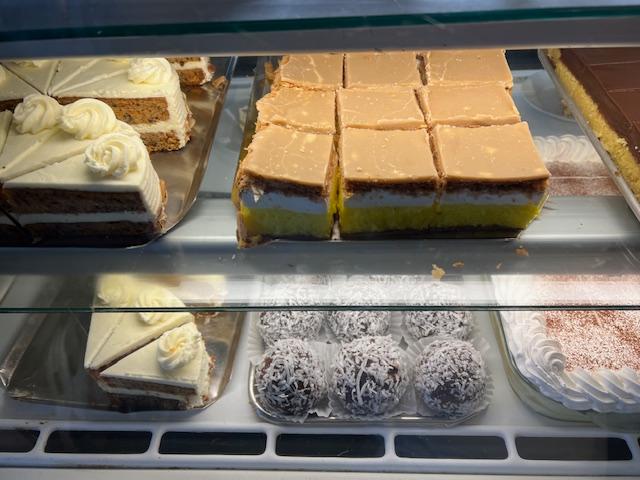
The pastry cases.

I tried their version of the Napoleon, which was layers of Vanilla Cream, whipped cream and a caramel topping between the flaky layers and a Apple Strudel, that was loaded with fresh apples and cinnamon. I took the desserts across the street to the park and I have to tell you that they were terrific.

The pastries are amazing!
I ate them at the park across the street and just relaxed and watch the world go by. I admired the statuary in the park which I had seen when I visited the park years ago on my walk through here.
Down the long paths of plantings and around the bends of the property, I sat by the interesting statue at the center of the park. The breathtaking statue is called the “Peace Fountain”, created in 1985 which shows a unusual look at the battle between good and evil by artist Greg Wyatt, who was an artist in residence at the church.

Artist Greg Wyatt
https://gregwyattsculpture.com
Mr. Wyatt has graduated from Columbia College with BA in Art History and studied at National Academy of Design. He bases his work on the philosophy of the “spiritual realism’ merging realistic images and abstract forms of space, form and energy (Wiki).

The ‘Peace Fountain’ by artist Greg Wyatt

The sign from the sculpture.
I decided rather than head off to a museum downtown, I would update my blogs in this part of the City and walk around Morningside Heights, Bloomingdale and parts of the Upper West Side. It was a nice afternoon and it was a chance to catch up and see what was going on in the neighborhoods and what had changed. I have to say that the SoHA section of Harlem (from 125th to 110th from Morningside Park to Fifth Avenue) has really changed and gentrified even more than I remembered. This was the same with the Bloomingdale section of the Upper West Side (from 110th to 94th Streets from Riverside Park to Central Park).
My blog on Morningside Park Day Sixty-Nine:
https://wordpress.com/post/mywalkinmanhattan.com/3909
My blog on SoHA Day Sixty-Eight:
https://wordpress.com/post/mywalkinmanhattan.com/3900
My blog on Bloomingdale Day Eighty-One:
https://wordpress.com/post/mywalkinmanhattan.com/5822
I walked all around Morningside Park amazingly enough not looking as dangerous as everyone said it was now. There were plenty of people walking their dogs, conversing in the park and playing basketball. The flowers were just starting to bloom and the park by the pond looked really pretty.
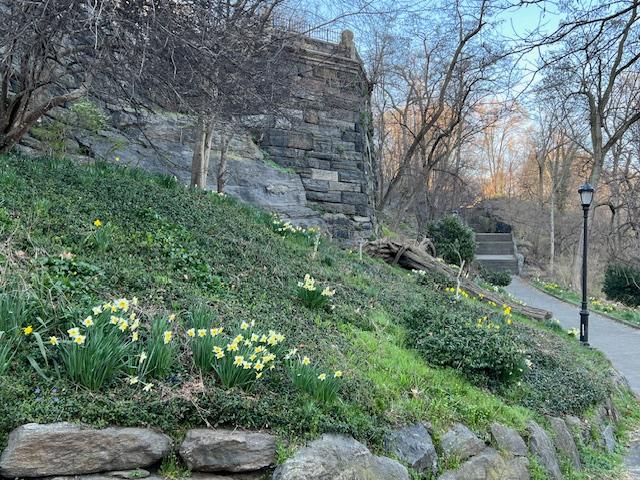
Morningside Park in bloom

The pond area of Morningside Park

The pond with Columbia University in the background.
I walked all around the streets and avenues looking at old restaurants that had closed or moved, businesses that changed hands and how much the neighborhoods have changed in seven years.
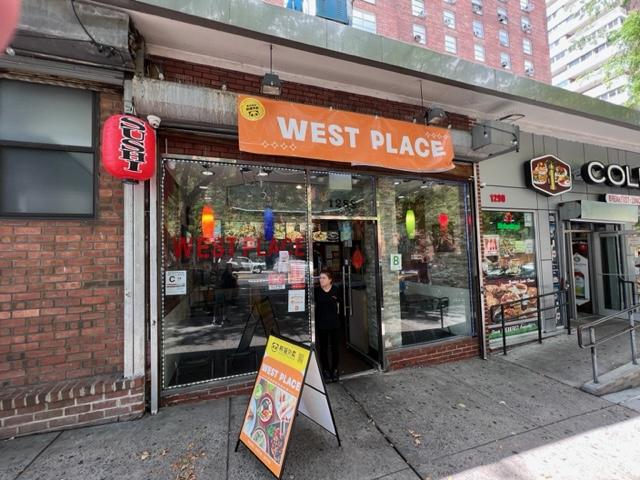
West Place Chinese Restaurant at 1288 Amsterdam Avenue
https://www.seamless.com/menu/west-place-express-inc-1288-amsterdam-ave-new-york/4672840
My review on TripAdvisor:
My review on DiningonaShoeStringinNYC@Wordpress.com:
Not wanting to head home without eating dinner, I went to West Place Chinese Restaurant at 1288 Amsterdam Avenue for dinner and this time I tried the Boneless Spareribs with Fried Rice and an Egg Roll combination platter and the meal was excellent as usual. I had not eaten here in months and the food is consistently excellent. The portion size was larger than I remember from the last time. They really piled the food into the container.

The Boneless Spareribs with Fried Rice and an Egg Roll.

The Boneless Ribs were overflowing on the platter.
These sweet and juicy bites are full of flavor and piled into this small dish. There was enough food for two people.

The Egg Rolls are amazing.
By this time it was getting dark and I wanted to head home. I took the subway at 125th Street, got the joy of watching some kid jump the turn style and then headed up to take the subway back downtown.
It may not have been a good game but it gave me a chance to revisit several neighborhoods, update blogs, eat some terrific food and enjoy a day supporting Cornell University on what should have been our championship year (Yale eventually won the Ivy League Championship by one point over Brown and will go off to the NCAA Championship).
Still it was a nice day out. Go Big Red!
Places to Eat:
Lion’s Head Tavern
995 Amsterdam Avenue
New York, NY
Open: Sunday 11:00am-2:00am/Monday 12:00pm-2:00am/Tuesday-Friday 12:00pm-3:00am/Saturday 11:00am-4:00am
Review on TripAdvisor:
Koronet Pizza
2848 Broadway
New York, NY 10025
Phone: (212) 222-1566
Fax: (212) 212-0664
https://www.koronetpizzany.com/
Open: Sunday-Saturday-10:30am-11:15pm
My review on TripAdvisor:
My review on DiningonaShoeStringinNYC@Wordpress.com:
https://wordpress.com/post/diningonashoestringinnyc.wordpress.com/273
Hungarian Pastry Shop
1030 Amsterdam Avenue
New York, NY 10025
https://www.facebook.com/hungarianpastryshopnyc
Open: Sunday 8:30am-8:30pm/Monday-Friday 7:30am-8:30pm/Saturday 8:30am-8:30pm
My review on TripAdvisor:
My review on LittleShoponMainStreet@Wordpress.com:
West Place Chinese Restaurant
1288 Amsterdam Avenue
New York, NY 10027
http://www.west-place-indy.com/
Telephone: (212) 932-9390 and 9376
Open: Sunday-Saturday 11:00am-11:00pm
My review on TripAdvisor:
My review on DiningonaShoeStringinNYC@Wordpress.com:
https://wordpress.com/post/diningonashoestringinnyc.wordpress.com/591
Places to Visit:
Morningside Park
Morningside Drive
(212) 639-9675
Open: Sunday-Saturday 6:00am-1:00am
My review on TripAdvisor:
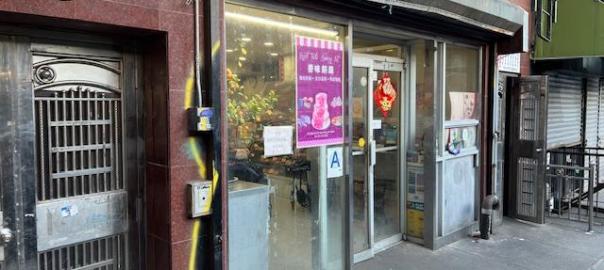
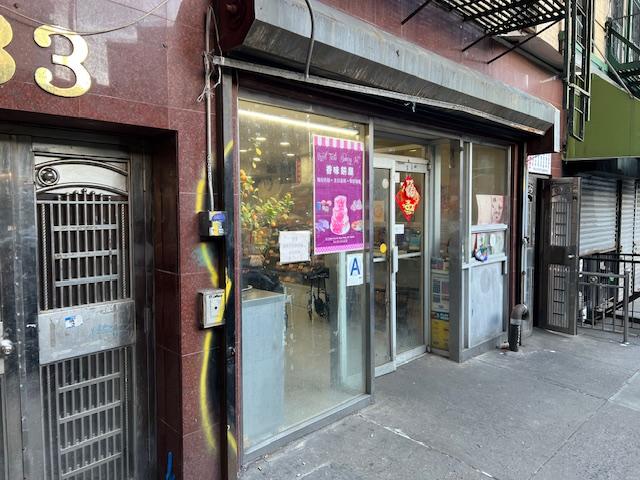
Great Taste Bakery at 35 Catherine Street in Chinatown Manhattan.

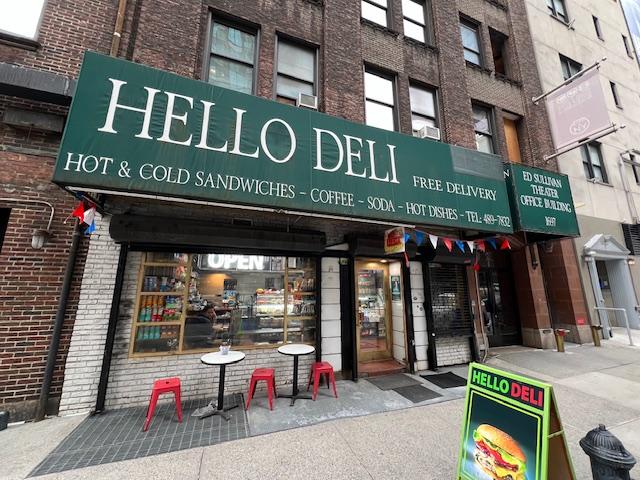
215 West 53rd Street in Midtown Manhattan’s Theater District.
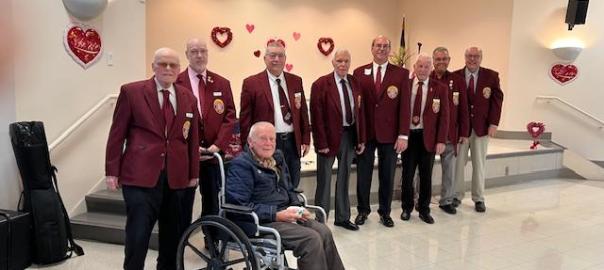
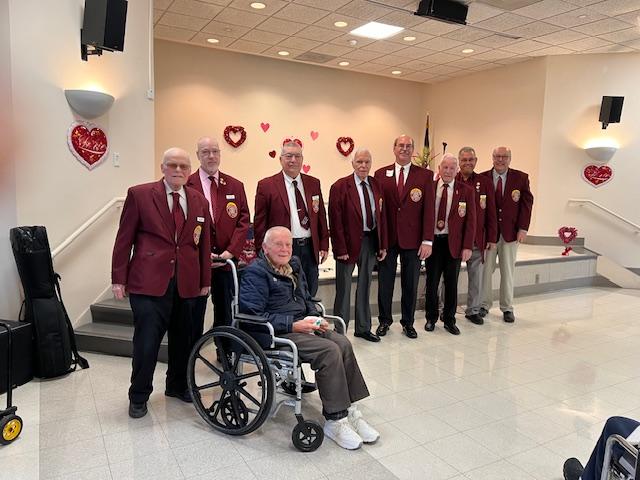
The Members of the Bergen County Firemen’s Home Association at the February meeting 2024.

Please check out all my blogs on our trip to Abu Dhabi and Dubai on Exploring Abu Dhabi Block by block:
https://mywalkinmanhattan.com/category/exploring-abu-dhabi-block-by-block
Everyday became an adventure when we visited more of Abu Dhabi.
After a quick breakfast in the morning ( I am sure everyone was tired of me talking about the amazing buffet at the Marriott Courtyard but it is that good!), we were off on our next day of touring around the City which started with a visit to the Abu Dhabi Tourism Office. I have to say that it was not the same as the visit to the Dubai Tourism Office.

Our class at NYU taking notes on the PowerPoint presentation at the Abu Dhabi Tourism Office for our final projects that were done at the end of the class.
They gave us a through look at the city and the recent developments made to attract more tourists from North America. Some of the issues with this is that in the US, we already miles of beaches on three coasts and access to the Caribbean Islands and the South Pacific, which are all much closer to us. This on top of the fact that we have hundreds of malls in this country and we pretty much invented in the modern indoor mall starting with Paramus Park in Paramus, NJ in 1978.
I thought where the Tourism Office should concentrate on is the wonderful palaces, the trip to the Oasis and developing the Convention Business, which I think would bring more people to the region who might stay on for Business/Vacation type of trip. You have to give people a reason to come here and it can’t all be the beach and shopping malls. We in the US can do all of that at home. I do not need to travel ten hours to do any of that. Plus with the amount of immigration in the New York area, I can find Arabic food from Lebanon, Syria, Saudia and Egypt in Paterson, NJ, (ten minutes from my home), whose Arabic population has doubled.

Our NYU group picture at the Abu Dhabi Tourism Office that morning.
When people travel somewhere, especially at these distances, they want to see something that they can’t see or experience at home. It is nice to have McDonald’s, a mall and a beach if you need a piece of home nearby and that option is nice but as a rule that is usually at the end of a trip when you are tired of touring around (I found this out after five weeks in China and needed something from home). When I was here, I wanted to experience something different (yes, you can ride a camel in the United States).

The Visitors Center in Masdar City.
https://www.mycitycentremasdar.com
My review on TripAdvisor:
After our trip to the Tourism Office, we traveled to Masdar City, a planned futuristic community that was being developed. That was an interesting concept in modern living.

The City of Masdar layout of city blocks.
The whole place was sustainable and built with every modern feature. Unfortunately like all places like this in the US, I can see it turning into public housing one day if not carefully planned correctly. Just read Jane Jacobs “The Death and Life of American Cities” and you will know these places never work in the end. Neighborhoods need to develop at their own pace with the people that live there and it is the people themselves who make up a neighborhood.

Walking through the maze of the complex.
Masdar City is a groundbreaking urban community and a world class business free zone and technology hub with innovation in our DNA. Driven by the UAE’s commitment to sustainability. Masdar City is driving global solutions to climate change and helping create cities of the future (Masdarcity.ae).

The Masdar City layout in the Visitors Center.

Us touring through the wind towers.
The city set up was pretty amazing. We walked through the city through the mazes of buildings and offices to see how the whole complex was set up. We drove in a driverless car around the complex which I thought was interesting. I hope this does become the wave of the future because I hate driving.
I broke away from the group while they were choosing restaurants and was able to explore the complex a bit. They even had their version of Central Park towards the back of the complex.

Central Park in the back of Masdar City.
I was searching around the complex for a place for lunch and there were some places in the complex that were quite interesting but some were closed and some had a lunch menu I was not in the mood for a afternoon meal. Nimesh and I headed back to the Thai restaurant that my classmates were all eating at that afternoon, Simple Thai. All I have to say is that this place was Simply Delicious! The food is excellent!

Simply Thai at Masdar City
https://www.facebook.com/p/Simply-Thai-UAE-100090015915148/
My review on TripAdvisor:
This is one of the best restaurants that we ate at in Abu Dhabi. The food is more than excellent. It was superb in everyway from taste, presentation and in price. This type of quality in the US would have been double the price and I thought everything about the restaurant was very reasonable in price with excellent service.

Nimesh and my lunch was a selection of items off the appetizer menu.
I was still stuffed from the hotel breakfast buffet so I just ordered two appetizers, the Shrimp Patties and the Thai Spring Rolls. Both in plate presentation and in taste this was some of the best Thai food I have ever eaten.

The Thai Spring Rolls.

The Shrimp Patties were crisp and sweet.
After an amazing lunch, we headed to the Abu Dhabi branch of the Louvre Museum which was impressive. We had a wonderful private highlights tour of the artwork and of the museum.

The entrance of the Louvre Abu Dhabi.
The Louvre Abu Dhabi is an impressive piece of architecture. When you walk inside, you can see the metal work in the walls and ceilings with a lattice appearance. I had never seen such an creative looking building where the building is as important as the art. The museum is impressive and in awe when you walk inside of it.

The ceiling in the entrance to the Louvre Abu Dhabi.
My review on TripAdvisor:
The product of architect Jean Nouvel’s unique vision, Louvre Abu Dhabi was constructed as the heart of a new urban quarter for the United Arab Emirates’ capital city. A symphony in concrete, water and the subtle play of reflected light, its design was inspired by the region’s rich architectural traditions and the museum’s unique location at the point where the Arabian sky meets the sands of Saadiyat Island and the waters of the Arabian Gulf (Museum website).
Some of my favorite pieces from the collection:
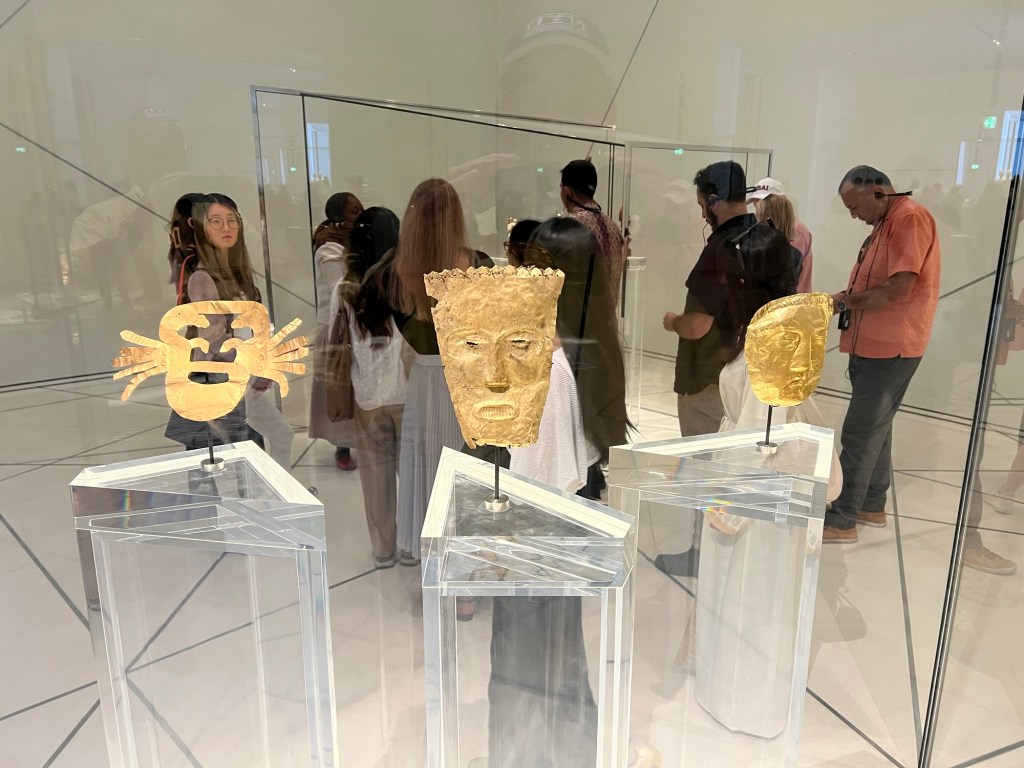
The golden masks
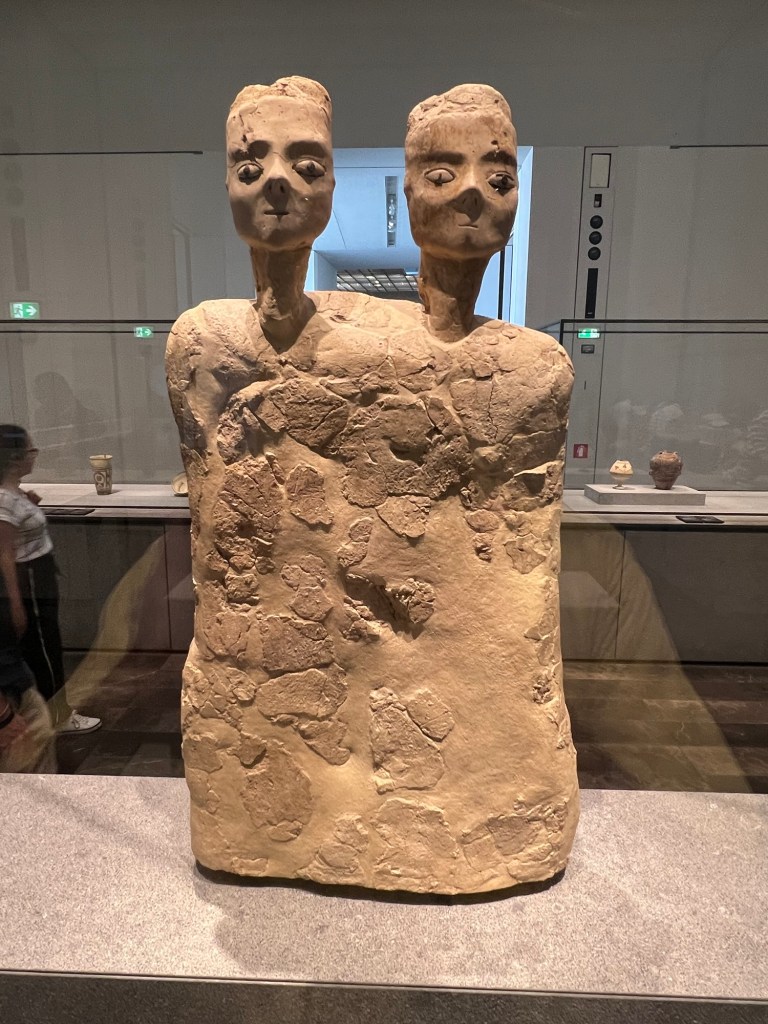
The Twins
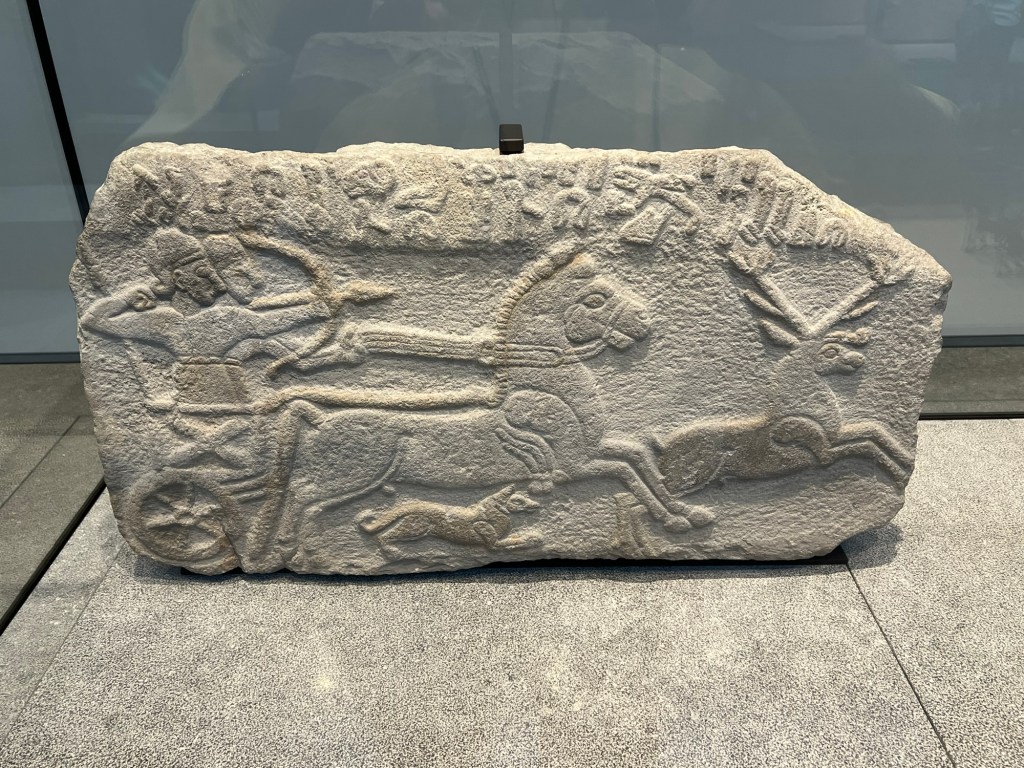
Middle Eastern Ancient Art

The Winged Sphinx
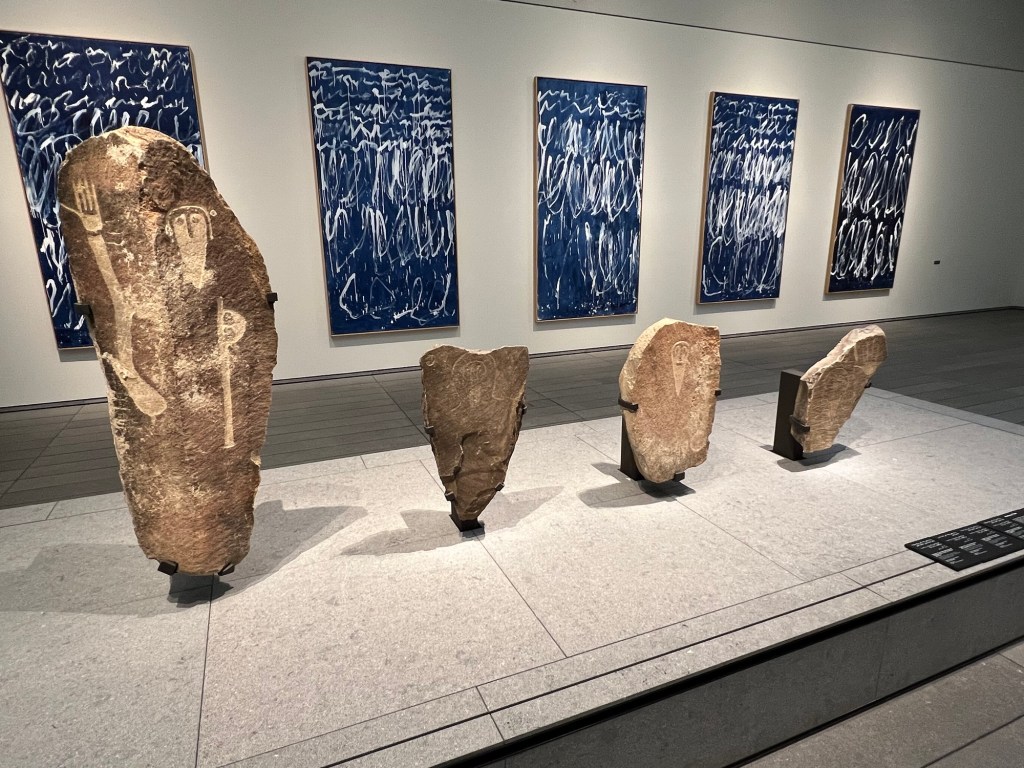
Some of my favorite pieces of early art
Now considered as one of the modern urban wonders of the world, Louvre Abu Dhabi is not only the Arab world’s first universal museum but a powerful symbol of the United Arab Emirates’ ambition and achievement. Inspired by the cupola, a distinctive feature in Arabic architecture, Nouvel’s dome is a complex, geometric structure of 7,850 stars. These stars are repeated at various sizes and angles in eight different layers (Museum website).
I was dazzled by the museum and all its treasures. What I thought this museum could be is the display for all the treasures locked in storage and finally bringing them to light in revolving shows. This would really highlight the extensive collections of art the museum owns.
When the tour was over, we had some time to walk around the museum on our own and it really was unique set up as a building. It had beautiful views of the water and the architecture was amazing. It made me late for the bus.

Traveling through Downtown Abu Dhabi with the buildings glistening in the sunlight.
Our next stop on the visit was Abrahamic House, a place of Moslem, Catholic and Jewish worship and faith. Since commercial photography is not allowed, I can not use my personal pictures on this blog but I attached the link to it:
https://www.abrahamicfamilyhouse.ae/visitor-guidelines
The Mission and Vision of the site:
Our vision is for people to come together in peace, diverse in our faiths, yet common in our humanity. Our mission is to bridge our common humanity through the exchange of knowledge, dialogue, and the practice of faith. Our values are peaceful coexistence, inclusivity, and the centrality of human fraternity. They embody the multiculturalism and diversity of the UAE, where communities from more than 200 nationalities live together peacefully (Abrahamic House website).
At the heart of the Abrahamic Family House are a Mosque, a Church and a Synagogue, each established to welcome Muslim, Christian and Jewish communities to practice their individual faiths. The three houses of worship are designed of equal stature, size and materiality to eliminate any sense of hierarchy. The three structures border an elevated landscaped garden that becomes a shared space for gathering and connection. The Mosque is oriented towards Mecca, the Church towards the East and the Synagogue towards Jerusalem (Abrahamic House website).
The site was very touching to me. I thought this was a wonderful way of understanding each other’s religions and faith. Since all three religions are interconnected through the belief in God, it showed me that the country was trying to bridge this belief that they are so different when they aren’t. They are just different ways to celebrate God. It was a very enlightening tour of the facility.
After we left the Abrahamic House, we got a chance to go back the hotel and relax before dinner. This would be the last time all of us would be together before we went our separate ways. Some of my classmates would be leaving right after dinner for the airport, some would be leaving the next morning for either home or to another country they would be visiting.
I was staying another night because I could not get a flight out and in the end that was a God send. I needed a day to myself away from all this togetherness. I really wanted to visit the city of Abu Dhabi on my own and really see it from the ground up.
Our Farwell Dinner was held at Bu Tafish Restaurant in a really nice section of the city by the water. The restaurant was in a beautiful complex of apartments, parks and hotels. The restaurant had beautiful views and wonderful food.

The complex where Bu Tafish Restaurant was located was very upscale and elegant.
https://www.facebook.com/butafish
My review on TripAdvisor:

The menu and history of Bu Tafish Restaurant.

The Crab & Seafood Soup to start the meal.

I had the grilled meat entree over the fish one. It was excellent but a HUGE portion of food. I think I was the only one who finished my meal. Barely! I could not believe the American sized portion for dinner. It was sad that most of the food on the table was wasted. Still the food was excellent.

Our final group picture of the trip to Abu Dhabi and Dubai at Bu Tafish Restaurant. It was an evening of good food, a lot of laughter and stories and a wonderful Professor who ran a great trip. Thank you Dr. K!
We really had wonderful time at dinner. It was nice to talk about the class and about all the places that we visited over the last five days. I could not believe that amount of sites that we visited and places we went. The desert tour the day before had really wiped us all out the day before so everyone was tired from that.
There were a lot of laughs and good conversation over dinner and then it was time to go. Heading back to bus meant none of us were going to see each other again until classes started. In my case, not until March when I finished my last class before graduation.
I had been a great class. God, it went by quick!
Places to Eat:
Simply Thai Masdar City
MBZUAI 1A Podium Level Unit G10
Masdar City – Abu Dhabi – United Arab Emirates
971 55 352 6188
https://www.facebook.com/p/Simply-Thai-UAE-100090015915148
My review on TripAdvisor:
Bu Tafish Seafood Restaurant
Al Quffal St – Al Bateen
Abu Dhabi – United Arab Emirates
971 2 666-6108
https://www.facebook.com/butafish
Open: Sunday-Saturday 10:00am-1:00am
My review on TripAdvisor:
Places to Visit:
Abrahamic Family House
Jacques Chirac St – Al Saadiyat Island – Cultural District
– Abu Dhabi – United Arab Emirates
https://www.abrahamicfamilyhouse.ae
971 2 627 5900
Open: Sunday-Saturday 10:00am-5:00pm
My review on TripAdvisor:
Masdar City
Masdar City Hall
Abu Dhabi United Arab Emirates
My review on TripAdvisor:
There was a lot to explore in this part of Pennsylvania after Groundhog’s Day was over.
I had gone out to Punxsutawney, PA for the Groundhog’s Day celebrations on February 2nd and because of time and travel ended up spending three nights in the area. Once at the Community Center in Punxsutawney the night before Groundhog’s Day (highly recommended to save money as you will never be in your hotel room), I settled in for the night. It costs $10.00 to spend the night and you get to see the last showing of the movie “Groundhog’s Day” for free while eating fresh popcorn.
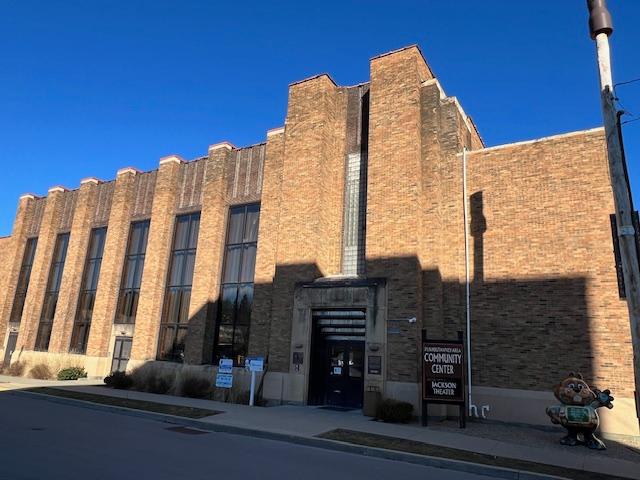
The Community Center in Punxsutawney, PA is the best place to spend the night before Groundhog’s Day.
https://www.facebook.com/p/Punxsutawney-Community-Center-100064684327267
The second night I spent in Indiana, PA just south of Punxsutawney because everything was sold out between Route 80 and Punxsutawney and they wanted a two night minimum with the few hotels and B & B’s selling around $400.00 a night. Just twelve miles down Route 119 and the hotels were practically empty in Indiana and I paid $85.00 at the Quality Inn. A much better deal and you get to explore the small town of Indiana, a college town and the County seat with its vibrant downtown of restaurants and stores and three interesting little museums.
My last night was just outside Mahanoy City, PA where I would be attending church services at our family church for the first time in fifty years and paying respect to my great-grandparents and my godparents who are buried in the cemetery on the hill. I had not done that in eight years as well. Trust me when I say there is not many places to stay in the three mining towns that surround the main mine company, Blaschak Anthracite and the open mine you can see in the middle of these three towns. It was an interesting look into my family’s past in the mining industry.
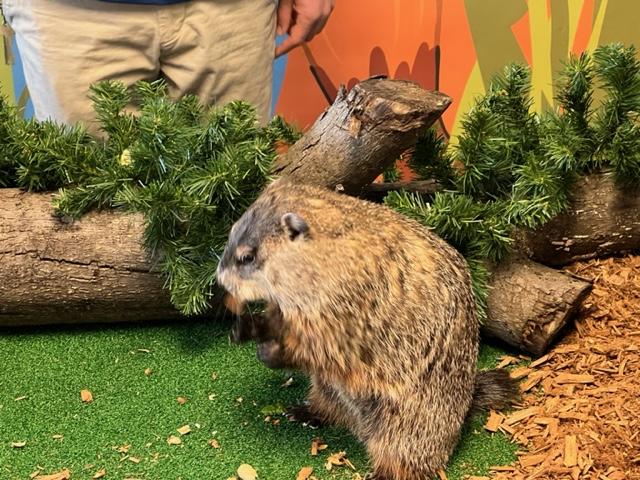
It is always fun seeing the Groundhog (this is Edwina of Essex at the Turtle Back Zoo).
The day after Groundhog’s Day, I decided to explore the area around Punxsutawney knowing that I had the full day to get to Mahanoy City, which was only two and a half hours away. I had spent Groundhog’s Day night in Indiana, PA and wanted to explore it a bit more. Once the Groundhog’s Day celebrations are over, there were food trucks and demonstrations in the Green but after an hour of this and a second visit to the Punxsutawney Historical & Genealogical Museum for a second time, there was not much else to see in Punxsutawney so I headed for Indiana to check in early at my hotel and visit the Jimmy Stewart Museum in Indiana, PA. That was an interesting experience as I did not know much about his past or his military service and that of his family.
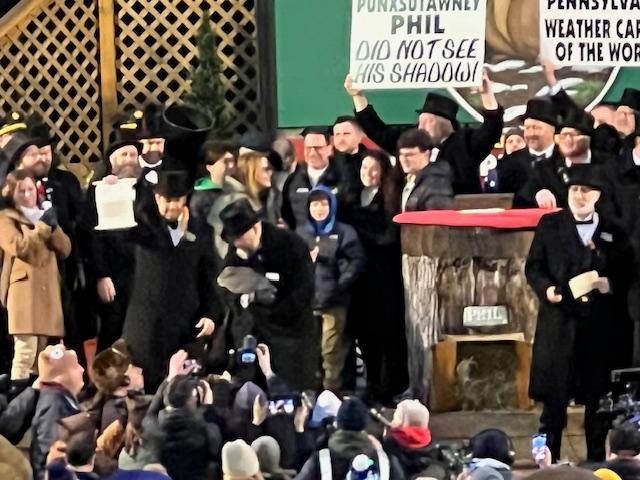
Punxsutawney Phil seeing his shadow in 2024.
My Groundhog’s Day blog in Punxsutawney, PA in 2016 and 2024:
https://mywalkinmanhattan.com/category/exploring-punxsutawney-pa
(this also gives you my visits to see Staten Island Chuck and Edwina of Essex in New York City and New Jersey respectively and all the museums and cultural sites that surround them).
I was spending the night at the Quality Inn in Indiana, PA and knew nothing about the town when I booked the trip. All I know is that the hotel room was reasonable and it was away from the crowds of Punxsutawney. Indiana is a much different town. Its downtown is vibrant and lively with all sorts of shops and restaurants.

The Quality Inn Indiana, PA at 1545 Wayne Avenue.
https://www.qualityinnindianapa.com
https://www.choicehotels.com/pennsylvania/indiana/quality-inn-hotels/pa622
My review on TripAdvisor:
It is a college town, home to the University of Indiana, PA and the County seat of Indiana County. It is also home to actor Jimmy Stewart and his namesake museum is right downtown. For a small community, it has wonderful restaurants and three small museums to visit. Just watch the parking downtown. I got a ticket because I thought the parking was free like it is in New Jersey on a Saturday. I had to mail in a $12.00 ticket when the meter ran out.
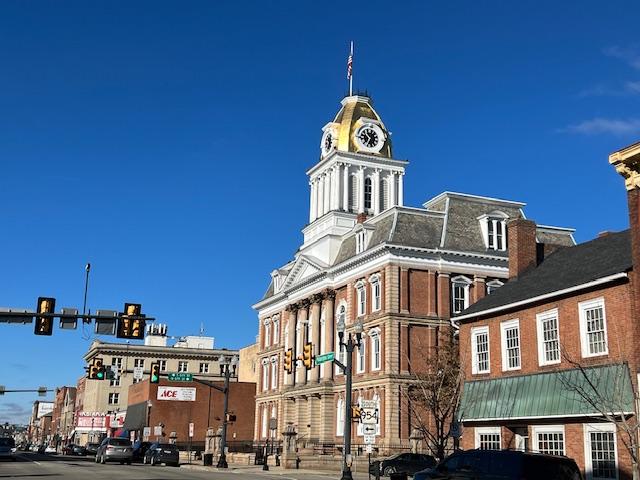
Downtown Indiana, PA shopping district.
https://www.visitindianacountypa.org/member-categories/shopping
Before I checked into the Quality Inn, I checked out the Jimmy Stewart Museum at 835 Philadelphia Street, which is the main street of Indiana. It is part of the library complex and is an interesting museum on the actor’s life in town and in Hollywood. In this tiny space was the story of the actor’s life and the contributions both he and his family made to the community.
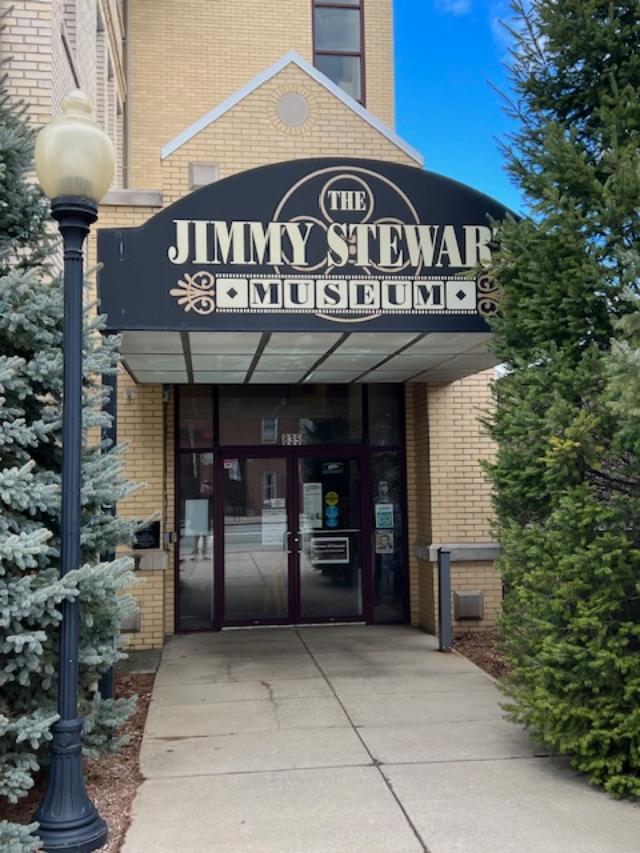
The Jimmy Stewart Museum at 835 Philadelphia Street
My review on TripAdvisor:
My review on VisitingaMuseum.com:
https://wordpress.com/post/visitingamuseum.com/17615
The museum covers his life growing up
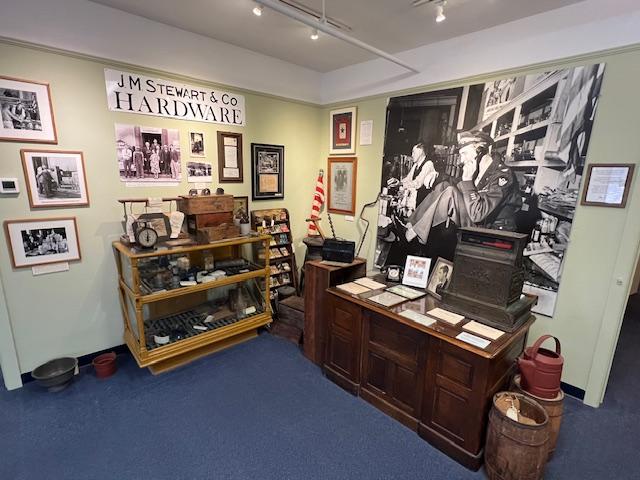
The family business Jimmy Stewart grew up in.

The Awards Room with his Oscar.
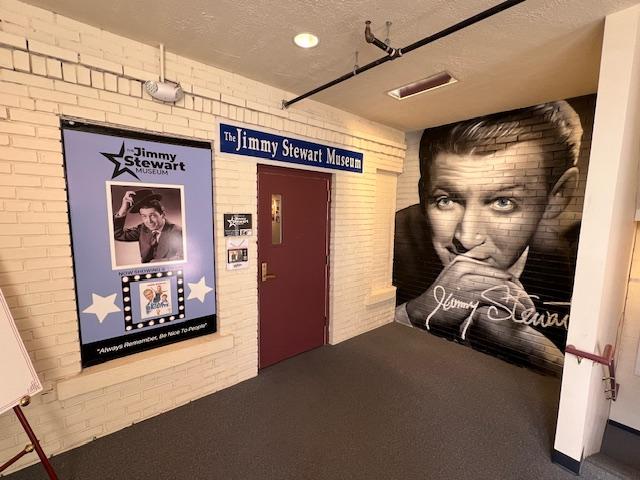
The world of Jimmy Stewart.
After the museum, I walked around the downtown to explore all the stores and restaurants and enjoyed looking at all the historical buildings in the downtown.

Historic Downtown Indiana, PA.

Just off the downtown with the historical homes and churches near the Historical Society.
I got back to the Quality Inn Hotel just south of the downtown and went back to relax for the rest of the evening. I slept really well considering that I had not gotten much sleep the night before. After a good breakfast, it was off to visit the Indiana Historical & Genealogical Society. That was an interesting little museum.

The entrance to the Historical and Genealogical of Indiana County at 621 Wayne Avenue.
My review on TripAdvisor:
My review on VisitingaMuseum.com:
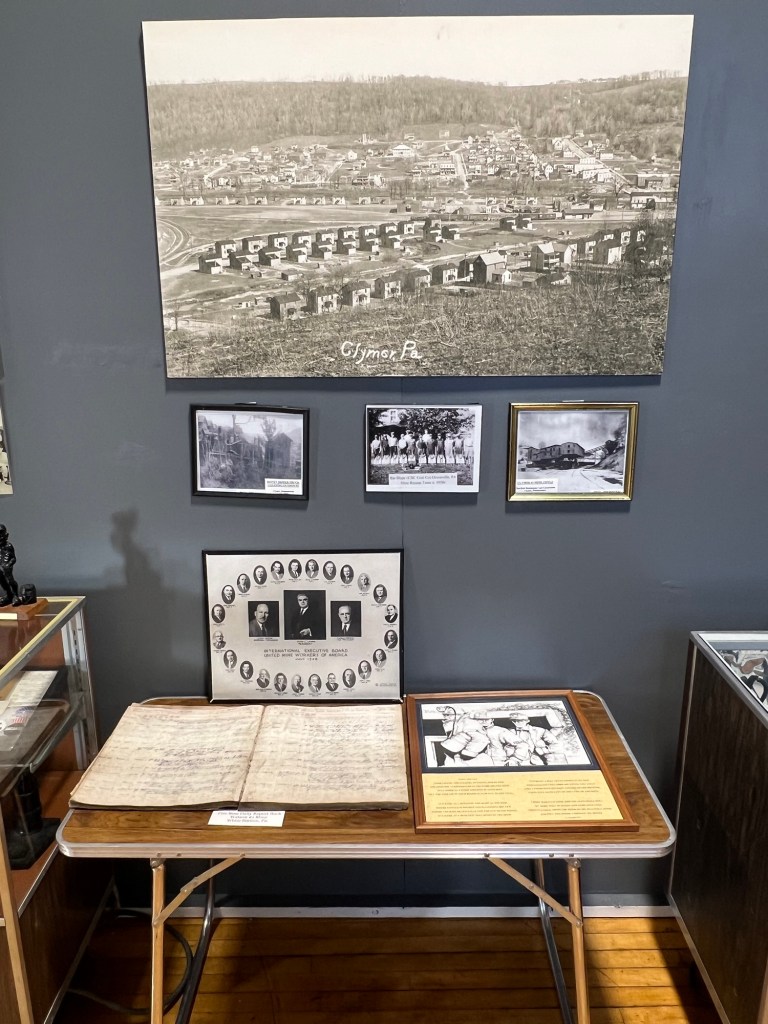
The Indiana Historical & Genealogical Society was a small but interesting museum that told the story of the town from the time of the Native Americans to the era of the mining companies dominating industry to modern day life.
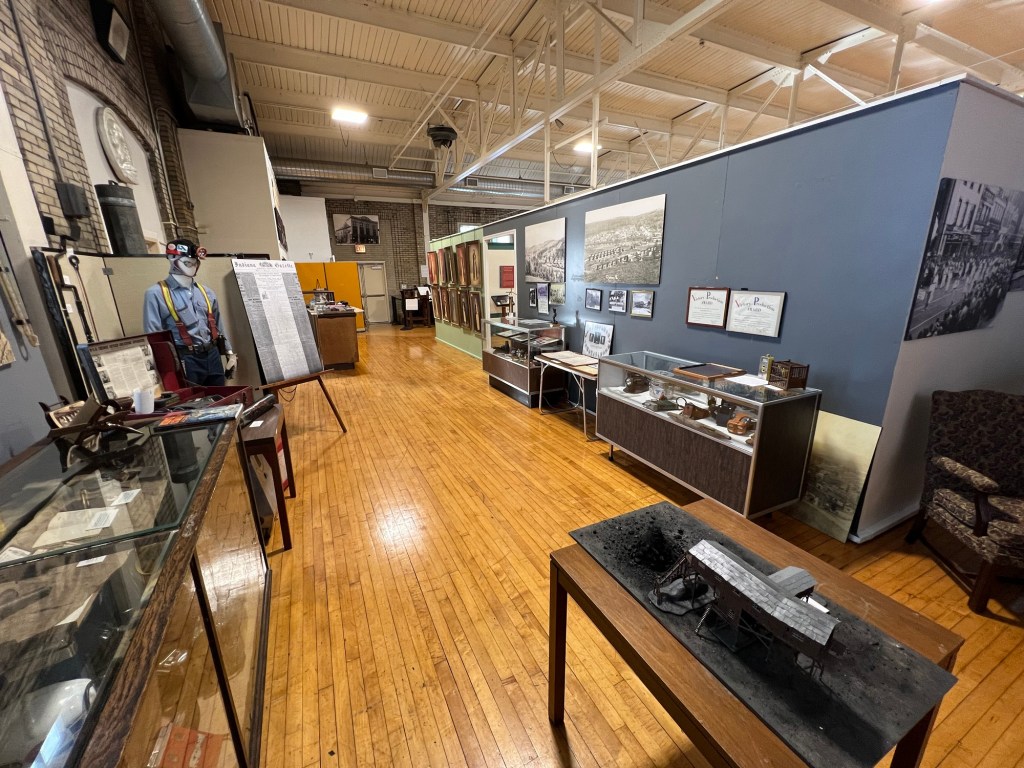
The galleries flowed though the history of the town from its successes of the coal mining companies and conditions and strikes that came with it to its modern day era as a college town.
The second-floor Military exhibition covered from the area’s participation in the Revolutionary War through WWII. The area’s population saw more than their fair share of action during the wars.
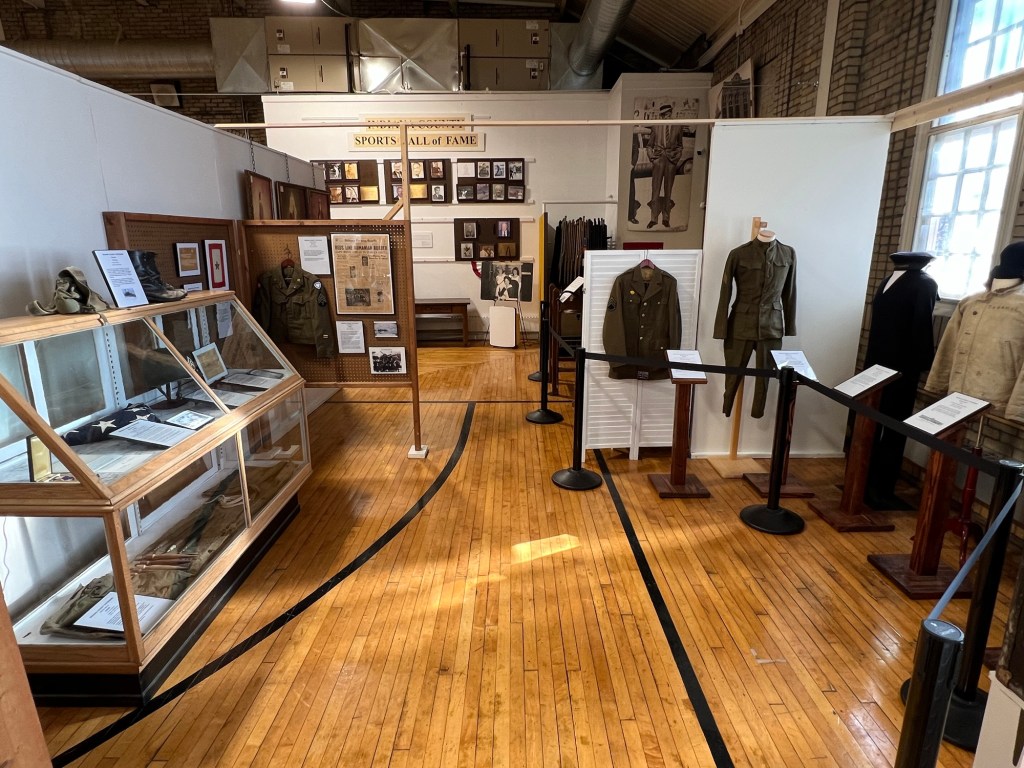
After I toured the museum, I walked outside and toured around the grounds and looked over the Crawford House which is a Victorian home that is part of the Society. This is only open for special tours and during the holidays.

I toured the downtown quick enough to realize that I had gotten a ticket when I left my car in a downtown parking spot too long. So much for free parking on the weekends. Be very careful when parking in Downtown Indiana. There are no signs posted about parking hours especially if you are from out of town.
I left Indiana and made my way back to Punxsutawney for one last tour of the town. Things had calmed down a lot since the previous day but still the Green was busy with food trucks, outdoor vendors and bands. There was still a sizable crowd in town.

I revisited the Punxsutawney Historical & Genealogical Society, touring the Bennis House, the other historic home that was part of the museum. It gave me a chance to really tour the house and admire the displays. Both houses display such interesting artifacts on the local history.

The Punxsutawney Historical & Genealogy Society at 400-401 West Mahoning Street
My review on TripAdvisor:
https://www.tripadvisor.com/Profile/R4960NKjustinw/mediabatch/12467166?m=19905
My review on VisitingaMuseum.com:
The Bennis House is filled with historical furnishings, artwork and had an interest dollhouse display that expanded through many rooms.
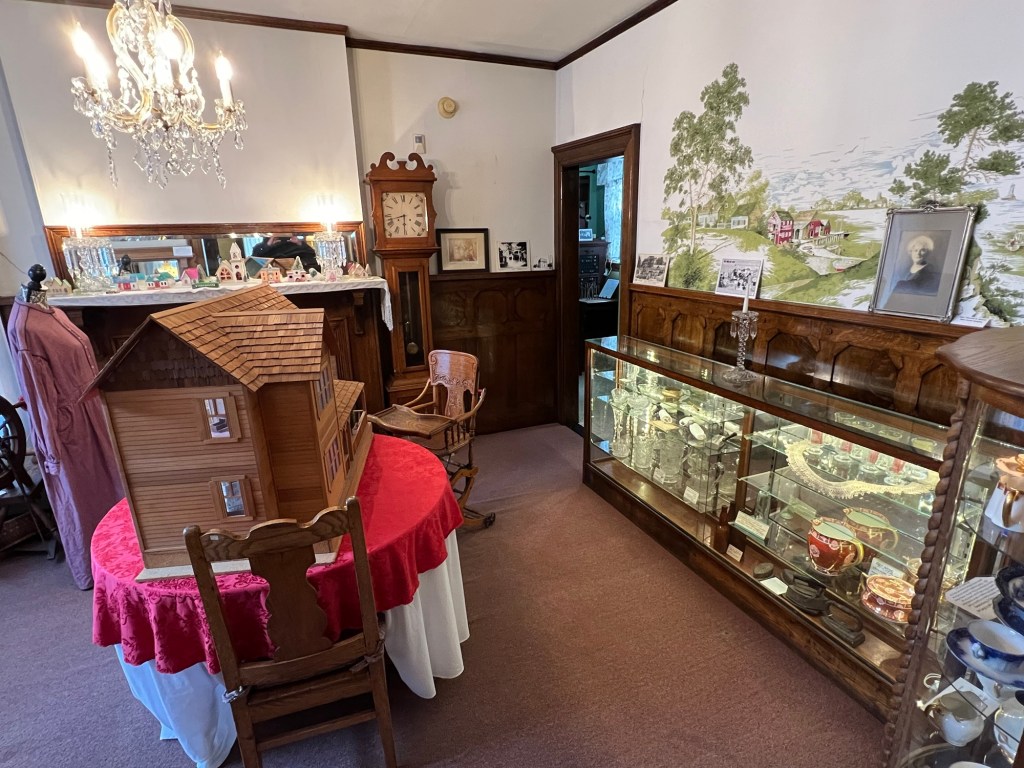
The museum takes you on a journey through the excesses of the Victorian Age in the town with its growth from coal mining through the generations of the Bennis family who lived here until the 1980’s.
The Lattimer Mansion across the street most of the Society’s collection of local, Native American and Groundhog’s Day memorabilia. Some of this is on the Groundhog’s Club and the other display cases is on the movie (which was not shot here). It is an interesting little museum.
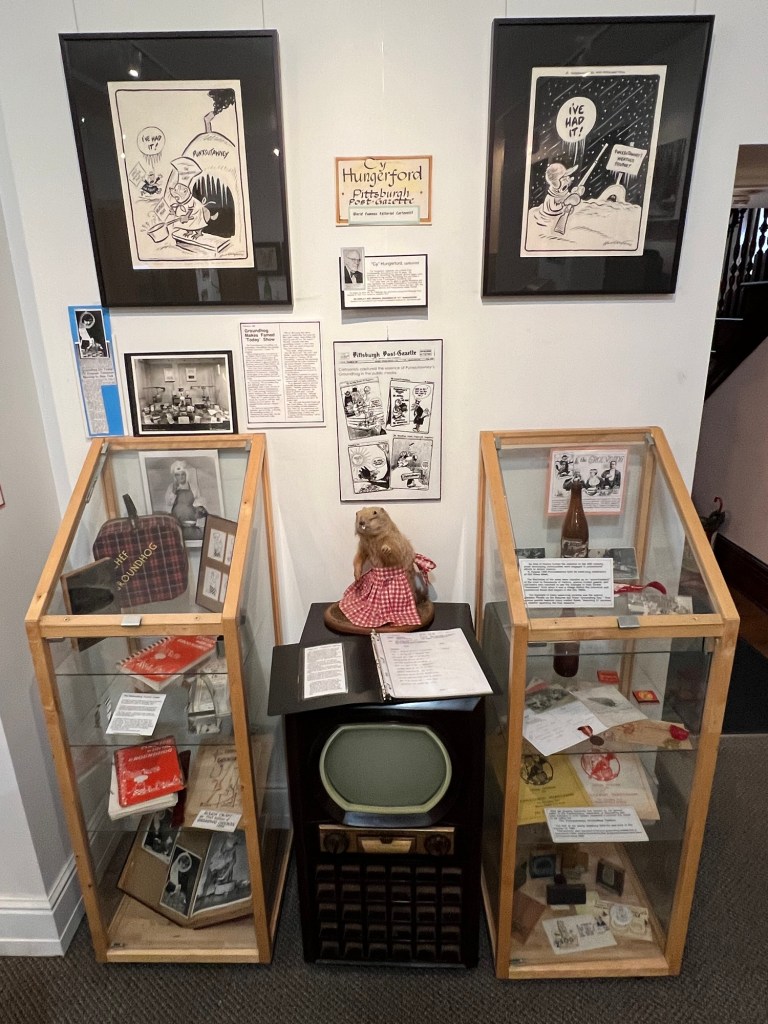
The museum is very unrated in that there are so many interesting displays shown throughout each building and so much local history on how important this area once was for industry and travel and not just for the groundhog’s Day celebration.
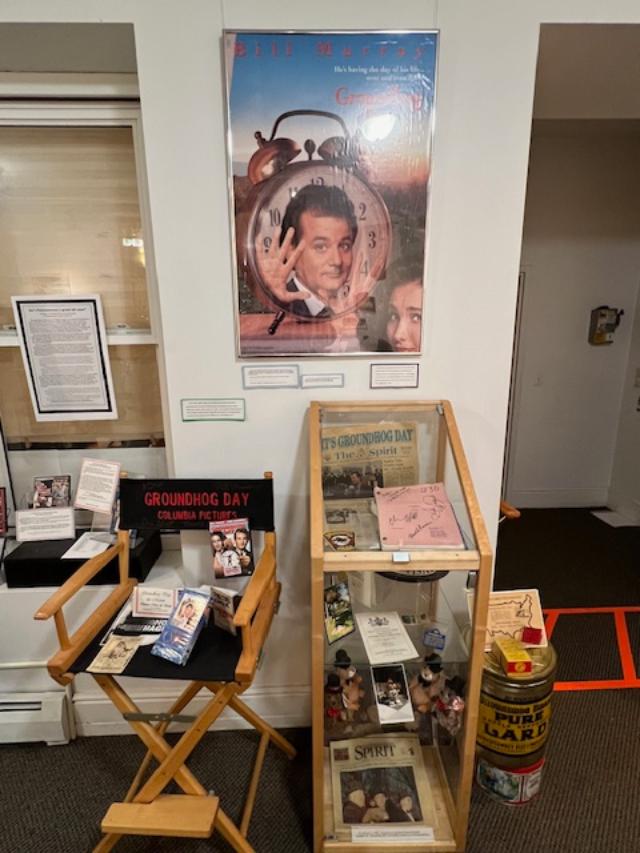
The display from the movie “Groundhogs Day” with Bill Murray.
After another quick tour of downtown, I stopped for lunch at Punky’s Pizza for lunch. I could not leave town again without having one of their fantastic calzones. That alone is worth the trip.
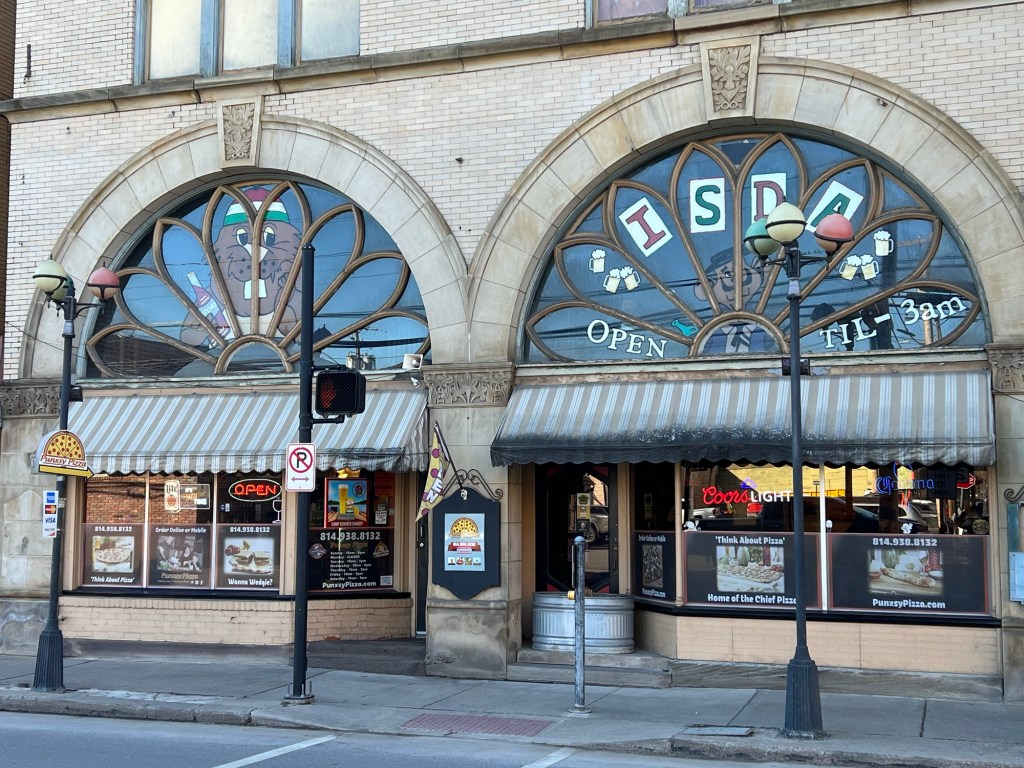
Punxsy Pizza at 115 North Findley Street
My review on TripAdvisor:
This amazing little pizzeria is in one of the nicest historical buildings in Punxsutawney and was extremely busy during the Groundhog festivities. The couple of times I have eaten here the food was excellent and the family who run the pizzeria are super nice.

The entrance to Punxsy Pizza
Knowing that I had an almost three hour journey in front of me I needed a good lunch and their calzones more than met that.

God, I love coming here when I am in town and I swear the night before Groundhog’s Day and on Groundhogs Day you will wait in line to get in here.
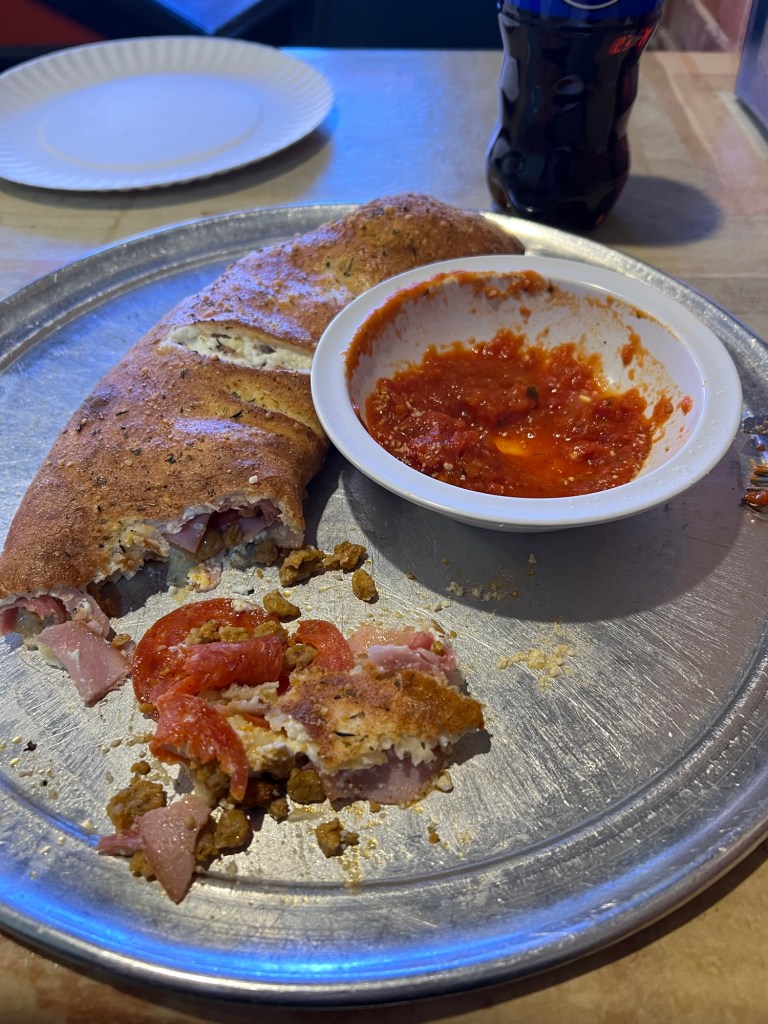
After my tour of the Green again and lunch, I took a quick stop at the Community Center to see about ten minutes of the last showing of the film “Groundhog’s Day”, it was off to Mahanoy City for the next day’s tour and church services.
When I left Punxsutawney, I took the longer way through the Amish farms and the back roads passing through small farming towns. The Amish have really turned some these small communities around.
As they have moved in and taken over some of dying communities, they have made the farms vibrant again and these tiny towns with their historic churches and cemeteries and tiny downtowns are seeing new life. The homes are all being renovated and rebuilt and new businesses are sprouting up catering to the new residents.
It was interesting to see the young families in horse drawn carts driving through the roads and leaving the farms on business and to church continue their traditions in communities that were left for dead since the 1970’s. You see this transformation in each of the small towns that I passed. It will be interesting to see what this area looks like in the Spring and early Summer when everything starts growing again.
I finally reached Route 80 again, that never ending highway back to the eastern part of Pennsylvania. I got to my hotel in the early evening with the trip taking longer than I thought. It was dark by the time I got to the Comfort Inn.

The Comfort Inn in Frackville/Barnesville, PA at 1252 Morea Road.
https://www.choicehotels.com/pennsylvania/barnesville/comfort-inn-hotels/pa675
My review on TripAdvisor:
This hotel may be ten years old but I swear I thought it was brand new. They take such good care of it and it is such a welcoming place. The rooms were bigger than I thought and even had small kitchens and sitting areas for business. This made this convenient to get work done. They just need more outlets and better Wi-Fi. I slept like a log that evening and did not want to get up for church services. I had not slept that well in a long time. The beds were so comfortable you will want to stay in bed all day.
After I dressed for church that morning, I went down for breakfast. Hotels are having this annoying habit since COVID of closing breakfast at 9:00am and that means having to wake up earlier than you want. The breakfasts at the Comfort Inn were well worth it.
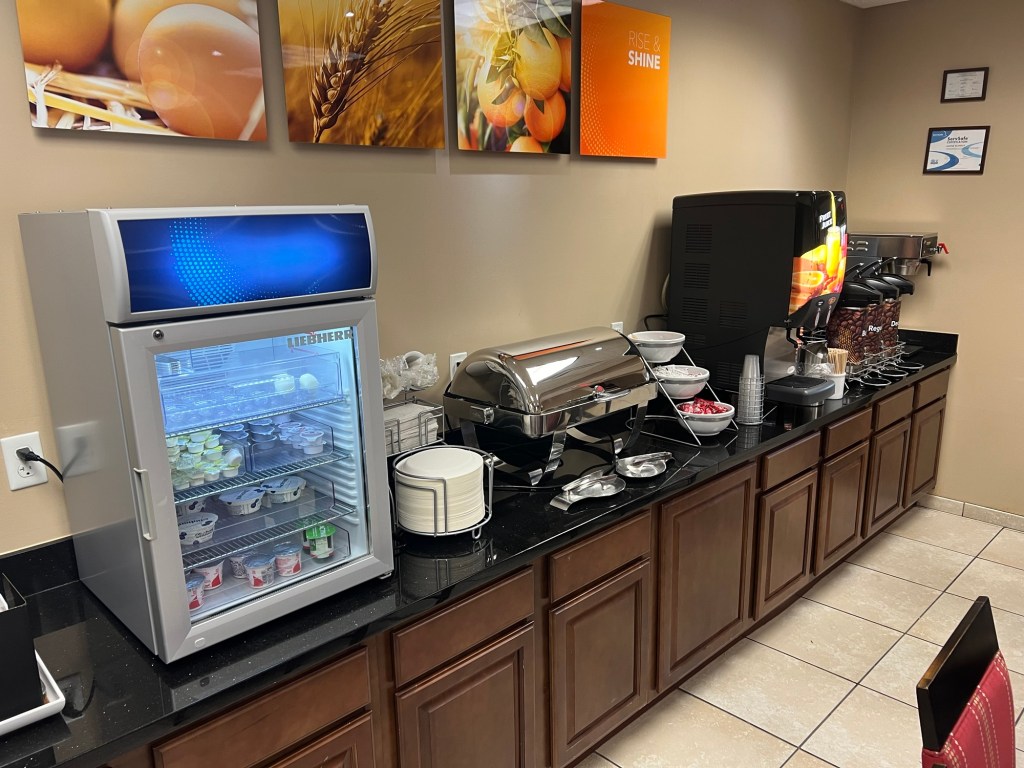
After a long travel the night before and not being hungry when I arrived at the hotel, I was starved the next morning.
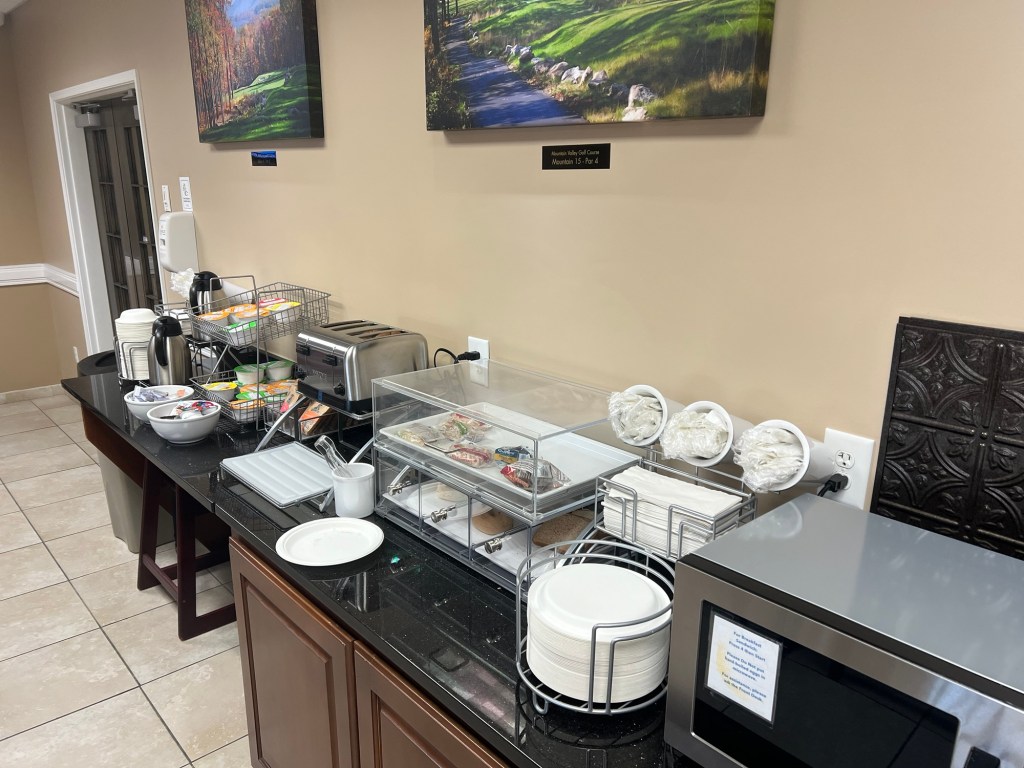
I dived right in knowing that after church services I would be on my way traveling through the three towns before my trip home. I love breakfast!

I think I had three breakfasts that morning.
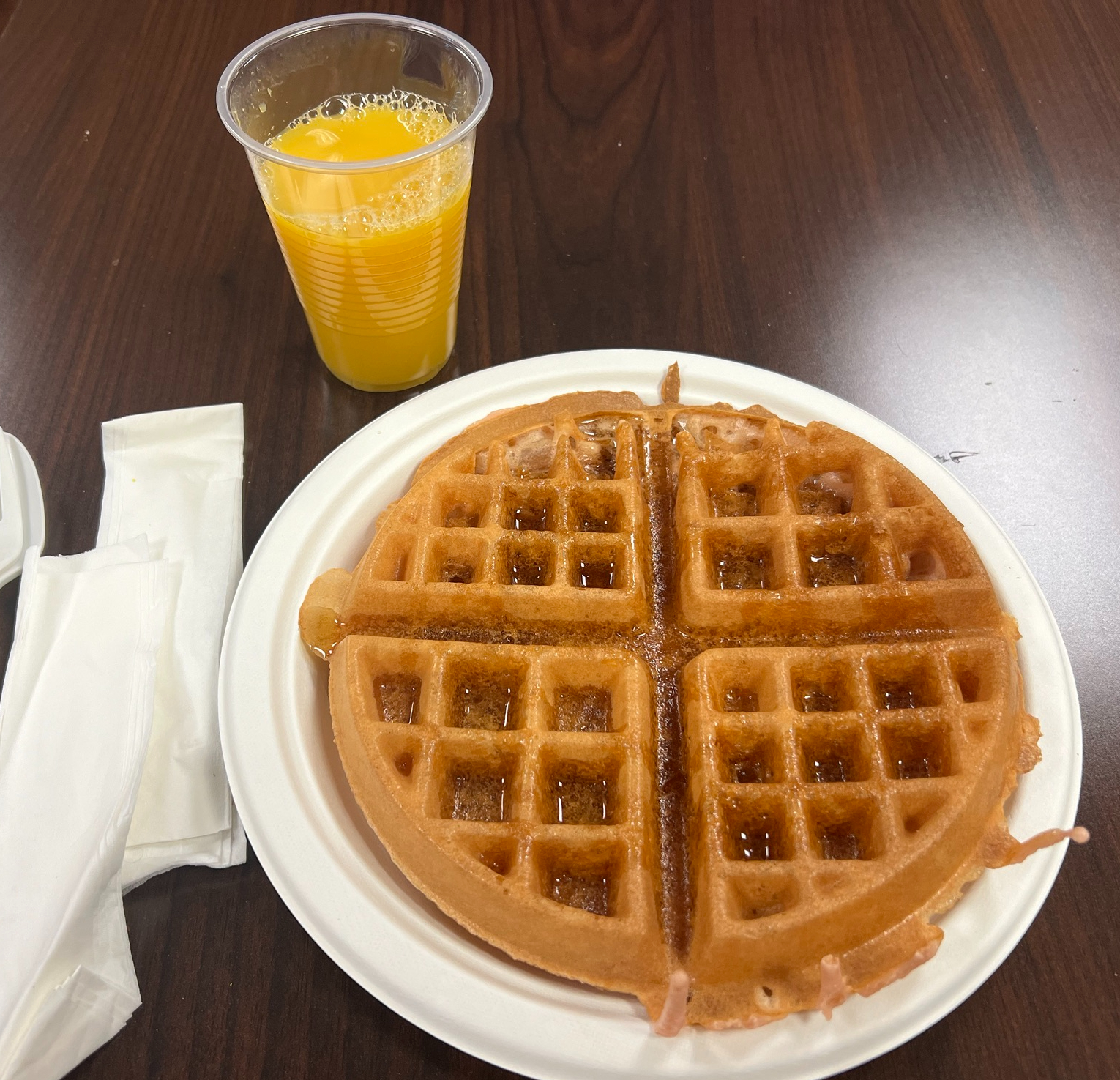
After hitting the buffet about four times ( the other guests seemed perplexed at this guy in a suit going back to the buffet so many times), it was off to Sunday services at St. Mary’s Byzantine Church.
This is our family church on my mother’s side of the family and I had not been here since Easter services fifty years ago. We had visited our great aunt and her family at Easter and had come to services here that day. Even in such a depressed town, it is one of the most beautiful churches I had seen.

St. Mary’s Byzantine Church in Mahanoy City, PA.
https://m.facebook.com/profile.php?id=116392985048797
I swear that I had to park a block away and I had seen better condition housing in Paterson, NJ and that is saying a lot. People here have no respect for their homes and treat them horribly (that is the kind word I use when blogging).
The inside of the church is a contrast of worlds as it is a beautiful place of refuge from the outside community. I had never seen such elegant and detailed artwork with paintings, statuary and iron work. This was a church built to make a statement.
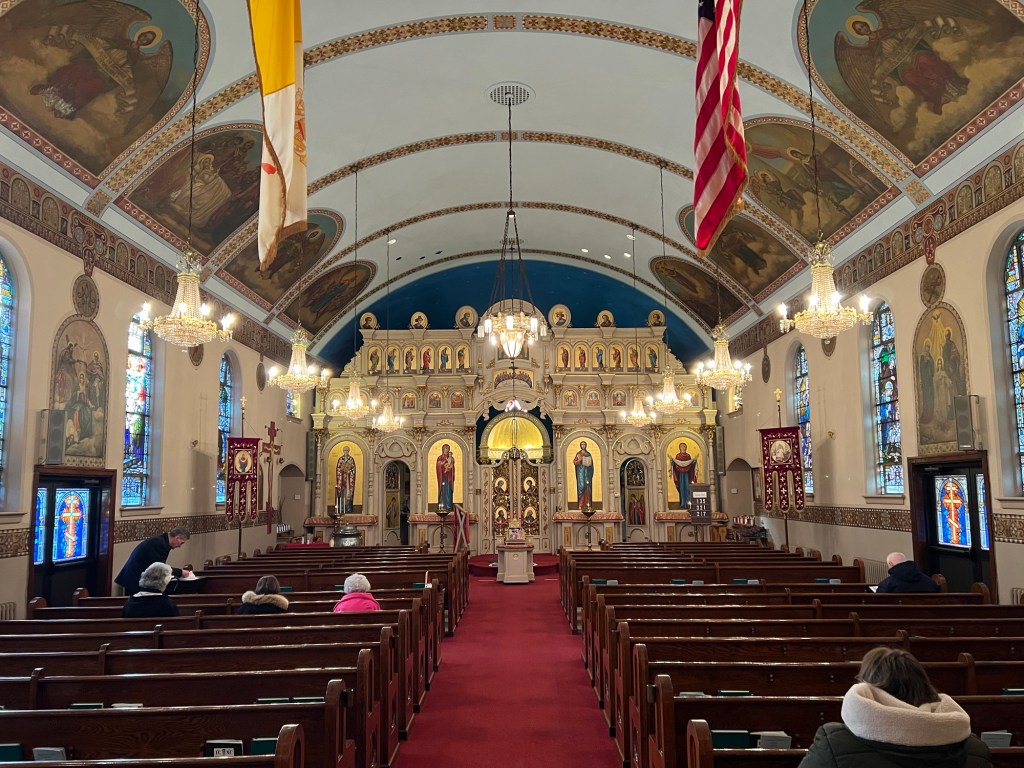
The front of St. Mary’s Byzantine Church before service started.
I had time before services started and was just stunned not only at the beauty of the inside of the church but on the vibrancy of the artwork and the colorful, elaboration on the way it celebrates God. This church was built with a very different mindset than some of the Catholic Churches I have been to over the years.

The stained glass windows were artwork on to themselves and the banners were so vibrant.

The banners were interesting to look at up closely.
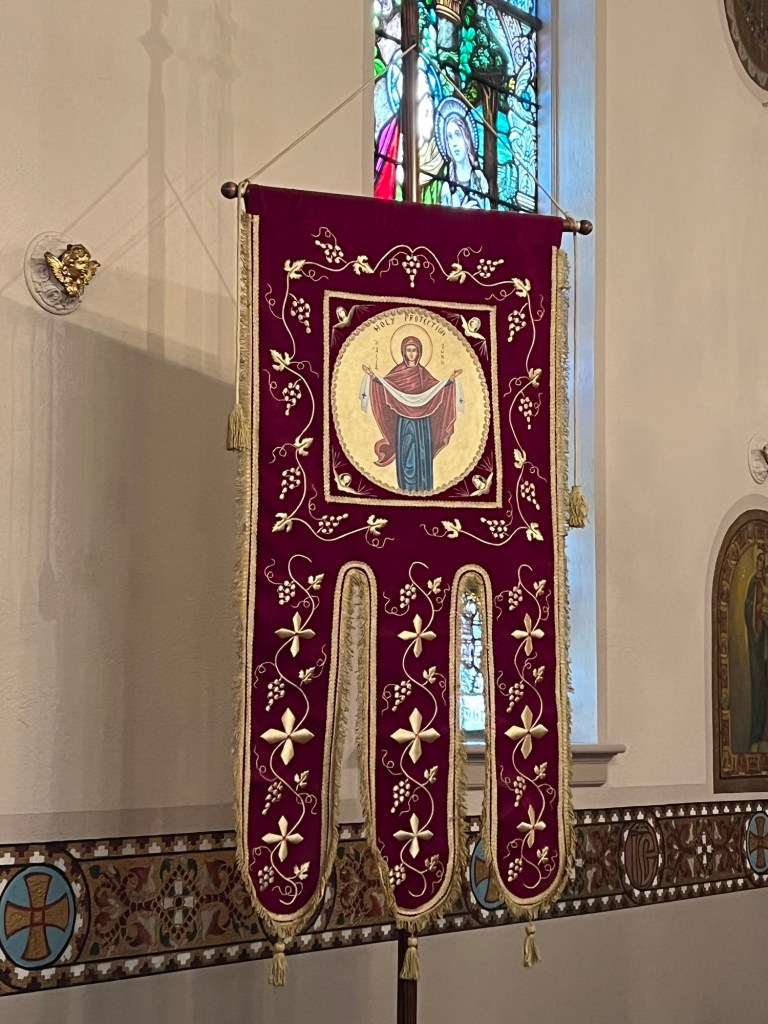
The banners that line the front of the church.
When I walked around the church admiring the artwork, I caught the attention of many of the regular parishioners who were probably not used to seeing such over dressed person in a suit and tie at church. After services were over, more than one person walked up to me to ask who I was.
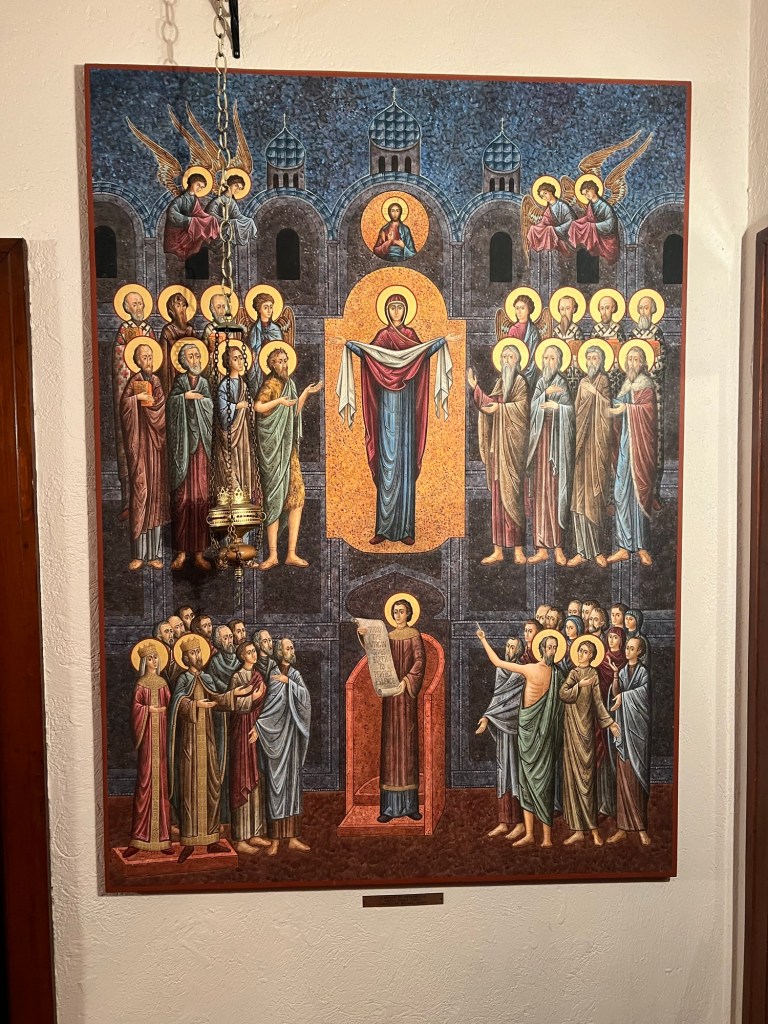
The artwork along the walls and ceiling were gorgeous.
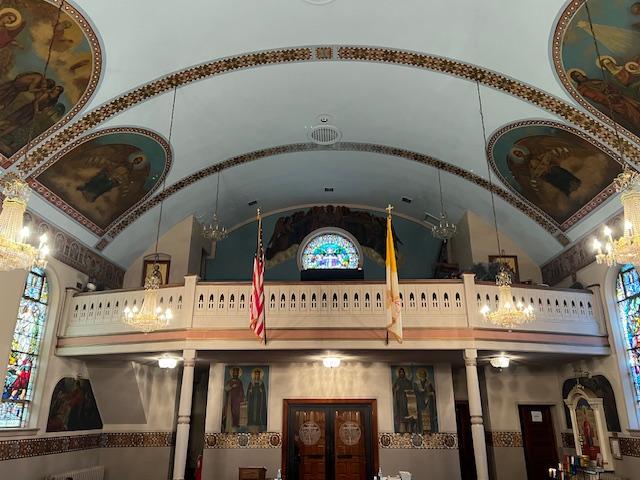
The back of the church.
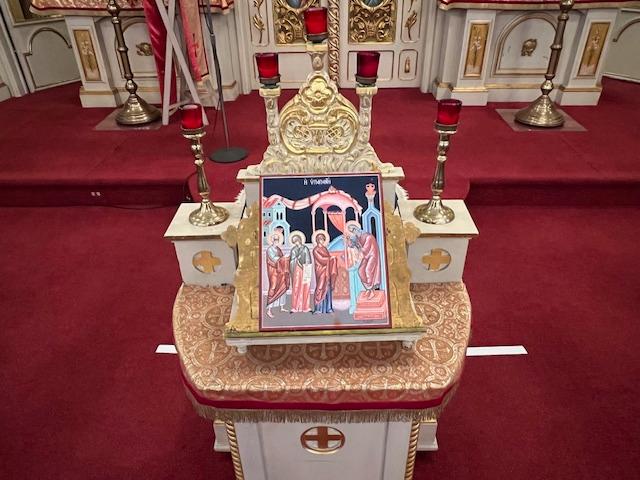
Walking up to the altar after services were over.
Catholic services are very different from the Byzantine Catholics from the Roman Catholics. The lecture is continuous without stopping for anything. The priest talks and talks and then you sing, cross yourself and then talk again. It is not like being in a Roman Catholic church where it is stand up, sit down and then stand up again and keep repeating that all through the service. It was a lot of chanting and almost singing your way through the service. I was not used to a hour long service that was continuous. It was a different way of looking at the same service. Very different from the Reformed service I sat through for the Epiphany.
The Sunday Pentecost Services 2020.
After the services were over, I had a chance to talk to Reverend Carroll and the other parishioners, who were dying to know who I was and what I was doing here. It was like new blood had arrived. It was a very interesting morning service.
After the services were over, I ran back to the hotel to change and then I started my tour of the three towns that surrounded the mine. This would be an interesting experience in life in a mining community and discovering my roots in this part of Pennsylvania. Even though my family is from Hazelton, it is still a similar experience.
My first stop was up the road past Mahanoy City to Cemetery Hill where all the church’s graveyards were located overlooking the valley. I had thought this was an odd place for a set of cemeteries but things must have been different in town when they were created and maybe they wanted them out of sight. Frankly, the dead have the best views of the area.
I went to pay my respects to my Great-Grandparents. my Godparents and my second cousin and great uncle who were all buried in the family plot on the hill. It was very touching and humbling to visit my family here. I was always told that they know you visit and you know when they are there. I got got a good feeling to let my family know that they are not forgotten. I feel the same way on Christmas Eve when I visit the cemeteries by my home.

The St. Mary’s Byzantine Cemetery up on the hill overlooking the valley.
This is only the second time I have been here. The first time that I came here, I was just passing through in 2016 and the priest took me up to the cemetery. It was a cold, very gloomy and misty afternoon. With all the mist, it looked like something out of a horror film. This time around the visit was a bright sunny afternoon and could admire the views from the hill. You could see the working mine in the background from the hill.
After my visit to my family, I made my way back to downtown Mahanoy City to walk around and see what the town was all about. Talk about depressed. It was sad to see so many of the houses here were falling apart as well as most of the businesses are closed. I counted two pizzerias (that both had horrible TripAdvisor reviews), a Chinese restaurant and two bars that you had to be buzzed into. Most of the businesses on the Main Street were closed or boarded up. The tiny Historical Society was shut tight on a weekend and on a late Sunday afternoon there was not much open.

Downtown Mahanoy City on a Sunday afternoon.
Here and there were some bright spots. A few of the businesses including the florist from the last trip here were still open. There was an open park near the high school and when you drove up Cemetery Road towards the back of the city up on the hill, there were two blocks of homes where the houses were in pristine shape like its own little enclave. That’s why I think St. Mary’s Church was such a treasure. Such beauty in the middle of all of this.
I did come across this interesting monument on dedicated to the “Molly Maguire’s”, a militant group of miners who protested the mine owners.
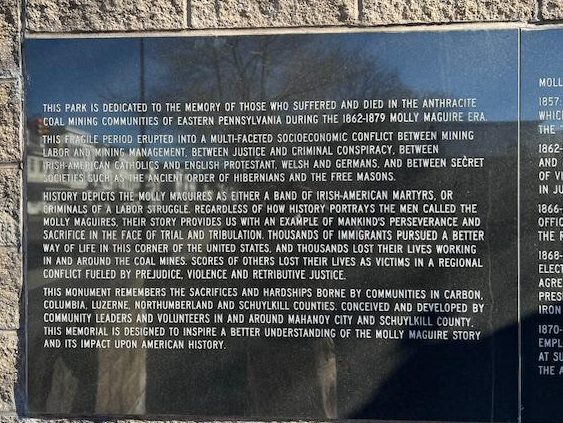
The plaque dedicated to the men who faced such hardship “The Molly Maguires”
https://en.wikipedia.org/wiki/Molly_Maguires
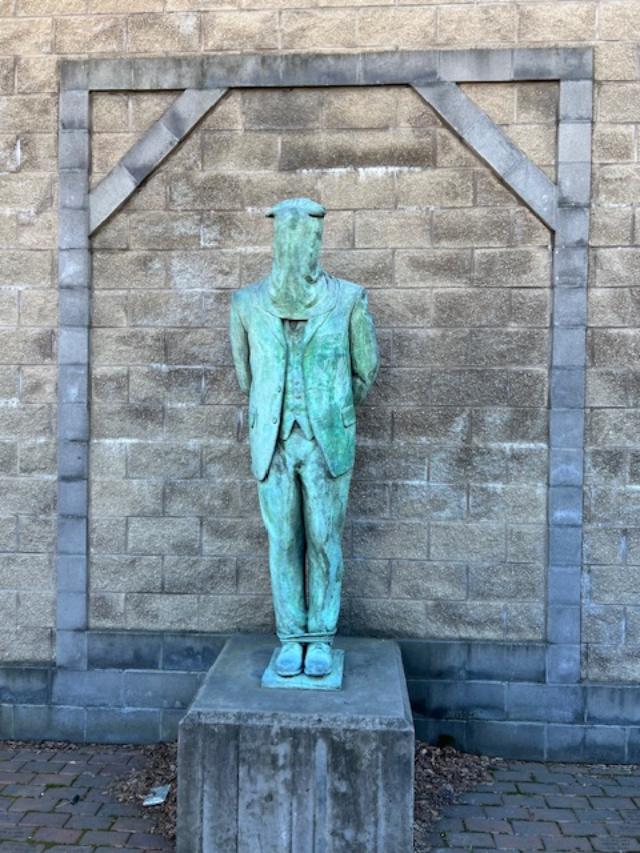
The statue in the display of intolerance of the “Molly Maguires”.
Near the sculpture was also home to the B & B I had planned to stay out but was closed for renovations and for the season, the Kaier Mansion B & B.

The Kaier Mansion was once home to a Brewery millionaire. Now it just sits in the middle of the downtown. It is funny how the beautiful sits among the business district. Maybe for a future stay. This is at 729 West Centre Street in Downtown Mahanoy City, PA.
The Review on TripAdvisor:
After my walk around the downtown area and getting some strange looks from the few residents that I saw and who all managed to say hello to me, I left to explore the next town that surrounded the mine, Shenandoah.
Driving through Shenandoah was a bit better than Mahanoy City. The lower part of the downtown was a bit more vibrant than Mahanoy City and there were more businesses that were open (but not on this Sunday). There was a small section down by their Historical Society where I could see a block of buildings that had been renovated and there were a few restoration businesses and some ‘hipster’ businesses across the street. It looked a group of artists had moved in and were trying to do something so there was some hope here.
One of the highlights of Downtown Shenandoah was the Pennsylvania Anthracite Miners Memorial on the northern section of the main street in a small park that was not well maintained. This beautiful memorial to the memory of the miners who sacrificed their lives for the mines were honored here. The memorial was life size and just amazing in its details.

The Anthracite Miner’s Memorial in Shenandoah, PA.
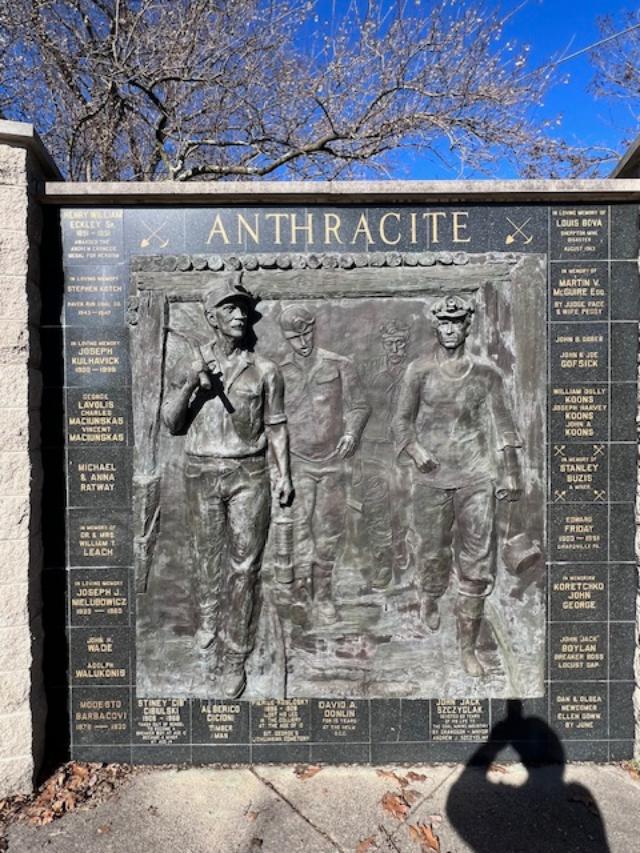
The Anthracite Miner’s Memorial dedicated to the miners who dedicated their lives to the field.
https://www.zenosfrudakis.com/anthracite-miners-memorial
My review on TripAdvisor:
My review on VisitingaMuseum.com:
As I exited out of Shenandoah down Route 924, I passed the area where they were strip mining and wondered what that was really doing to the environment and to the current roster of miners who were still working in the mines. Blaschak Anthracite is still mining this area and you can see the open mines from the highway. This is the company these towns were created for. It made me wonder what these three towns must have been like when it was still a vibrant industry and all the other manufacturing had not left the area.
The last town that I traveled through on the way back to Route 81 and then home was Frackville, another small mining town that again had more life in it than Mahanoy City but not by much. The core of the town was falling apart like the other two towns. There again was more small businesses trying to keep it together but it was not until you got closer to the highway exit that there was some vibrance to the town. It just seemed that the closer you got the main roads, the more people could hop on and then off.
One of the institutions that I do remember outside the church from my childhood is the Famous Dutch Kitchen at the Route 61 exit by Route 81 in Frackville. I remember coming here with my parents back in the 1970’s when we visited my great aunt and her family. I still order the same thing when I come here, the Turkey Croquettes with Mashed Potatoes and their vegetable, usually corn but I had canned string beans that did not measure up.
To start my traditional lunch in Frackville, I waited to have lunch here. I still tasted those croquettes from eight years earlier in 2016 when visiting the Groundhog and had waited for them again. They never miss. This restaurant has good old-fashioned Pennsylvania Dutch cooking which I love.

The Dutch Kitchen Restaurant at 433 South Leigh Avenue in Frackville just off Route 61 and 81.
https://www.facebook.com/p/The-Dutch-Kitchen-100050922140635
My review on TripAdvisor:
I always have to start with the homemade Pierogi with a side of sour cream. These are a real treat when they are cooked in butter and a little onion. They are so light and delicious. With a couple dabs of the sour cream makes them even better.
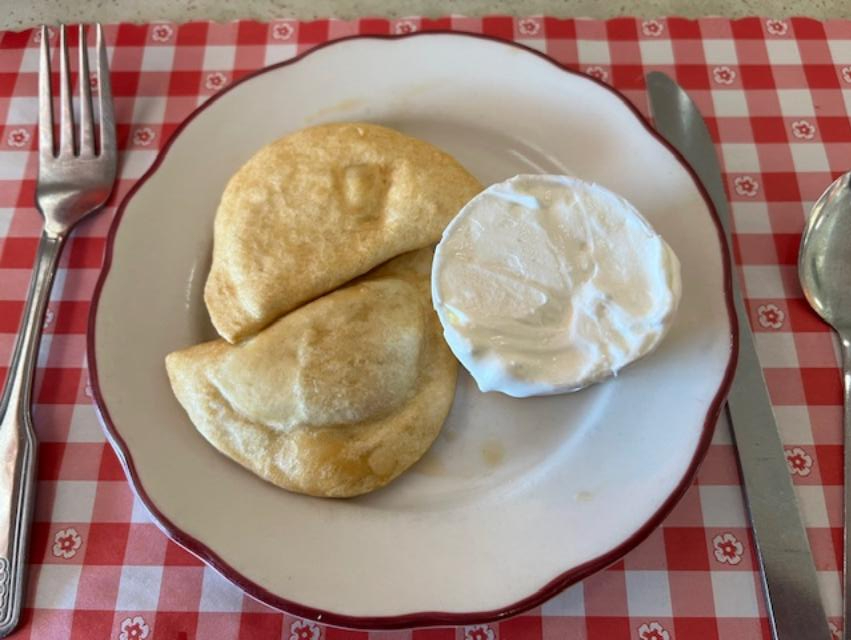
The potato pierogi with sour cream on the side
For my main part of the meal, I ordered the Turkey Croquettes with mashed potatoes which was the first thing I ordered here when I was a kid. They still taste the same with the wonderful turkey gravy on the top of both them and the mashed potatoes. The green beans were straight out of can and I should have never ordered them. I thought they would be fresh.

The Turkey Croquettes with Mashed Potatoes and turkey gravy with a side of string beans.
This is the best late lunch on a cool afternoon. I was thinking about these since I left Punxsutawney. There are just some places that stick with you over the years and the Turkey Croquettes at the Dutch Kitchen is one of those things. They are that good!
For dessert, I bypass all the Apple and Cherry pies and the cakes for the Shoo Fly Pie, which they make homemade here. It is so good with the savory taste of the molasses and the buttery crust is the perfect combination to satisfy any sweet tooth.

The Shoo Fly Pie at Dutch Kitchen is so good!
The one thing I really love about this place is the prices are so reasonable. They do not gouge people like restaurants by me. The whole bill with the tip was less then $15.00. I actually gave the waitress a bigger tip because I felt she earned it she was so attentive.
It was the perfect way to end my adventure through coal country. It to me is a step back into time to a part of my life that I am revisiting from a Easter vacation long ago. It is nice that some things don’t change.
While time has done a number on these three towns, here and there are special gems in each of them. The places look like they are falling apart but it is the resilience of the people who live there and the small business owners who are keeping the spirit alive. You just have to see the special things that are tucked here and there.
I will keep coming back to return to my roots and discover more about this area of Pennsylvania.
Groundhog’s Day in 2024:
My review on Exploring Punxsutawney, PA for Groundhog’s Day:
https://mywalkinmanhattan.com/category/exploring-punxsutawney-pa
Revisiting the three towns for Easter 2025:
Something drew me back to the area for Easter the next year. Maybe I did not get to see enough of the area in one day and wanting to revisit sites that were closed. Another was of an Easter memory from fifty years ago when my family joined my Great Aunt at the family church, St. Mary’s Byzantine, for Easter services when we were children. I still remember that night service as a little kid and just wanted to see it again.
I had always planned on going back but it was tough to travel with family commitments and other plans that came up. I finally had an open holiday and then put together a game plan and the got going. Another thing that I missed out on was visiting the small museums in the area that always seemed closed the last two times I visited. I was able to get in touch with one Board member of a small museum in Mahanoy City and he got in touch with the other places that I wanted to visit so I had appointments the first two days.
Then there were Easter church services at St. Mary’s Byzantine Church. When the Reverend for the church called me back on services, he informed me of both the Saturday night Mass, which is the one I was taken to fifty five years ago and the Sunday Mass, so they were also part of the plan.
I got off early that Good Friday afternoon, having to be in Mahanoy City by 1:00pm for my first tour and as I toured down Route 80, the warm weather was finally hitting us and all the buds were bursting on the trees and flowers as I drove through the Delaware Water Gap.
Traffic was not that bad on Good Friday and I made it to Mahanoy City by noon and headed to the cemetery to pay my Easter respects to my Great-Grandparents, and my Aunts, Uncles and Cousin who were buried in the family plot up on the hill over looking the town of Mahanoy City, PA.
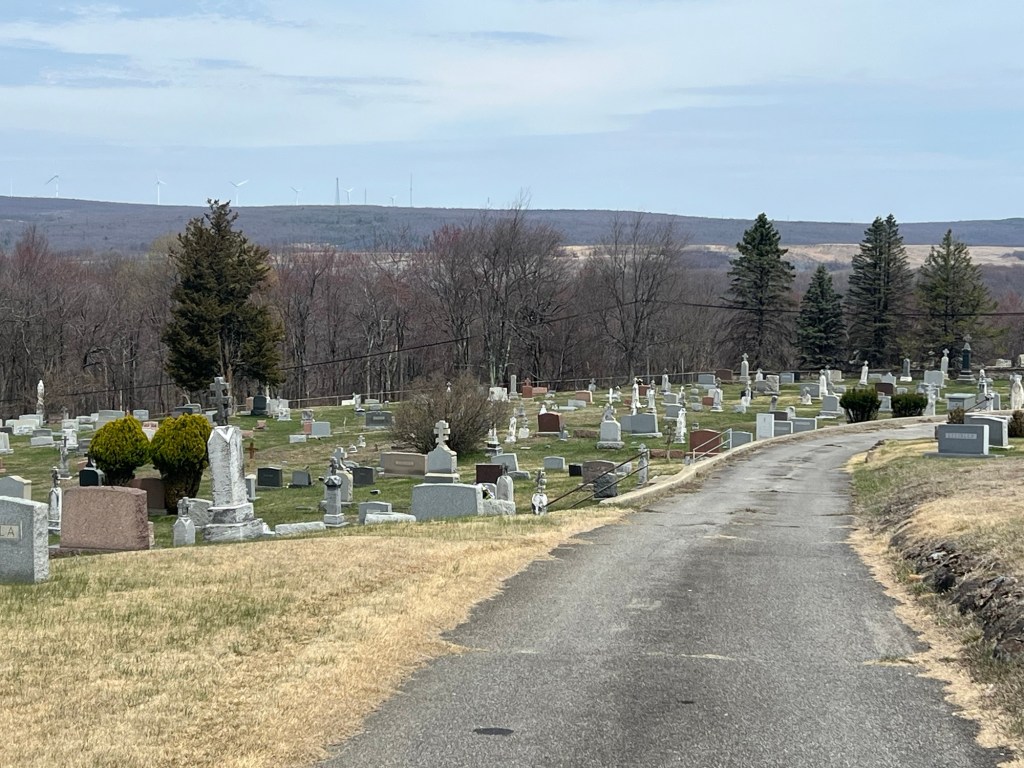
The peacefulness of the cemetery during the day when it was sunny and nice. You can see the mines from this part of the hill.

Paying my respects to my family
It is a very humbling experience when you face family members whom you have never met or were once part of your life over thirty years ago. Still you should let your family members know that you still care.

Seeing the past and the present at the cemetery on Good Friday. It’s funny to see where my roots lie
After I paid my respects, I checked into my hotel where I would be staying for the weekend. I highly recommend the Comfort Inn Barnesville at 1252 Morea Road in Barnesville, PA. It is one of the few places to stay in the area.

The Comfort Inn Barnesville PA at 1252 Morea Road
https://www.choicehotels.com/pennsylvania/barnesville/comfort-inn-hotels/pa675
My review on TripAdvisor:
I lucked out and got a terrific room on the first floor and rested for a bit. The rooms may be reserved but the beds at Comfort Inns you will sleep so soundly in. I had the best night’s sleep for the next two days.

Don’t underestimate the rooms at the Comfort Inn. It was a wonderful stay!
After a good rest and unpacking, I met my tour guide for the afternoon. Paul, who was one of the Board members of the museum met me in Downtown Mahanoy City. What is sad about Mahanoy City is how depressed the town is and the sheer potential the town has as an incubator for cottage industry.
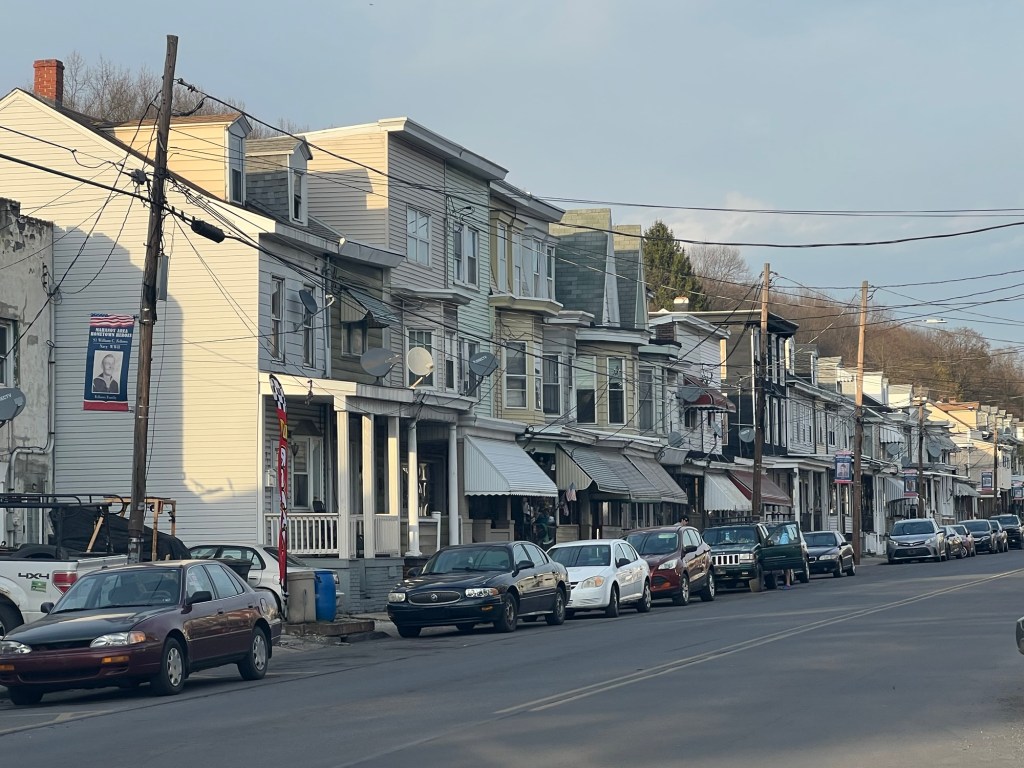
Downtown Mahanoy City could be more with some splashes of paint and better signage
Paul and I met and said our hellos and then drove to Downtown Shenandoah, PA for our tour of the Greater Shenandoah historical Society Museum at 201 South Main Street.

The Greater Shenandoah Area Historical Society Museum at 201 South Main Street
https://www.facebook.com/shenandoahhistory/
My review on TripAdvisor:
My review on VisitingaMuseum.com:
I have to say that was extremely impressed with all the cultural sites that I visited over the weekend. These communities are hiding these ‘little gems” when they don’t use social media or a modern website. Still the couple that run this museum do a wonderful job and could not have been more welcoming to me.
We were at the museum for about an hour with the curator and wife as they walked me through all the exhibitions of this interesting museum.
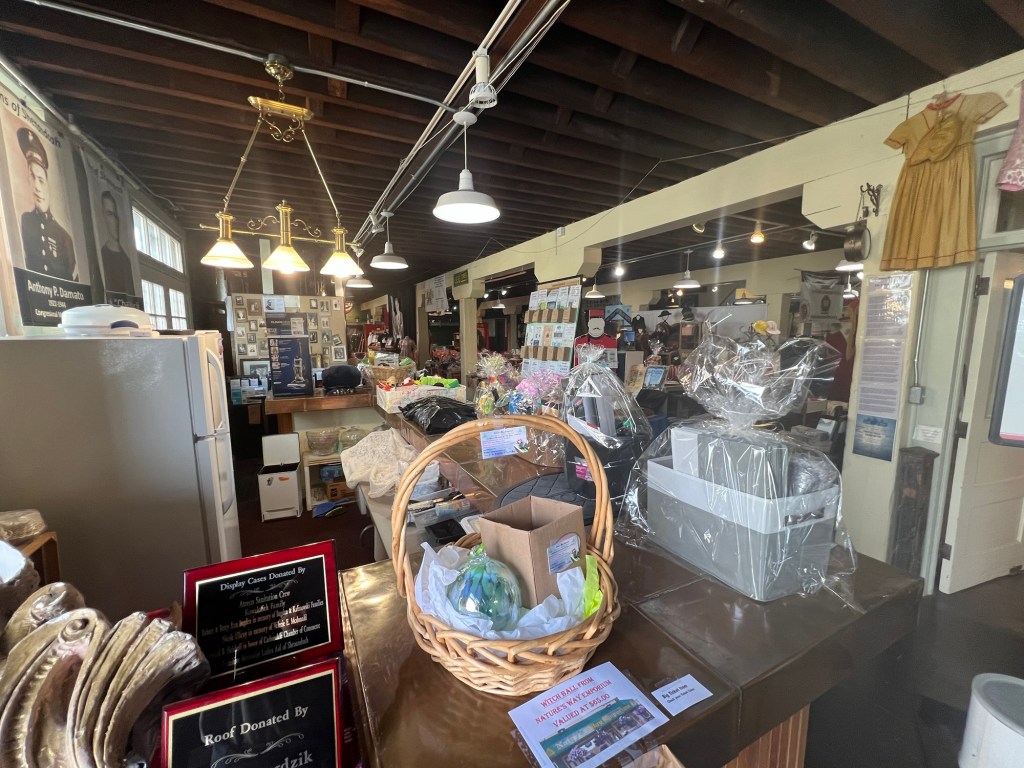
The main front gallery
Each of vignettes had a different theme from old businesses of the community to the impact of Mining on the community to the booms and busts of the economy and to daily living in the community of Shenandoah, PA.
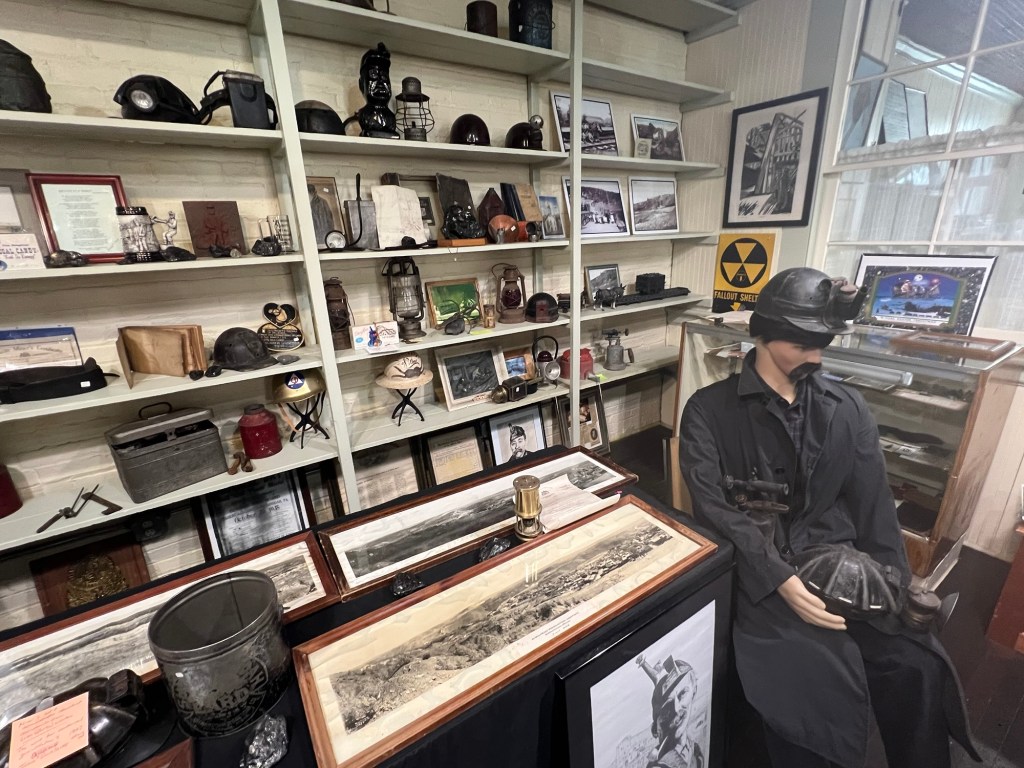
The Mining exhibition
Mining was the source of the economy and when the mines were at their peak of production so was the community which once boasted over 20 jewelry stores and clothing stores catering to the various incomes of the workers.

The Religious/Church Room
Religion was a big factor of the community and the Religious Room of the museum has one of the most impressive and extensive collections of items at a time when religion and worship was separated by ethnic group by country of origin and type of religion practiced. When all these churches started to close and consolidate with intermarriages and modern times, the museum was able to collect all their objects.

Life in a Mining home
Life in a Mining town was not easy especially to a Mining housewife, who had to do a lot with little. Even for every rung on the ladder, the life of a homemaker and wife was a lot of work and the display shows times of limited water in households, the start of electricity in the homes and modern conveniences after the war years.
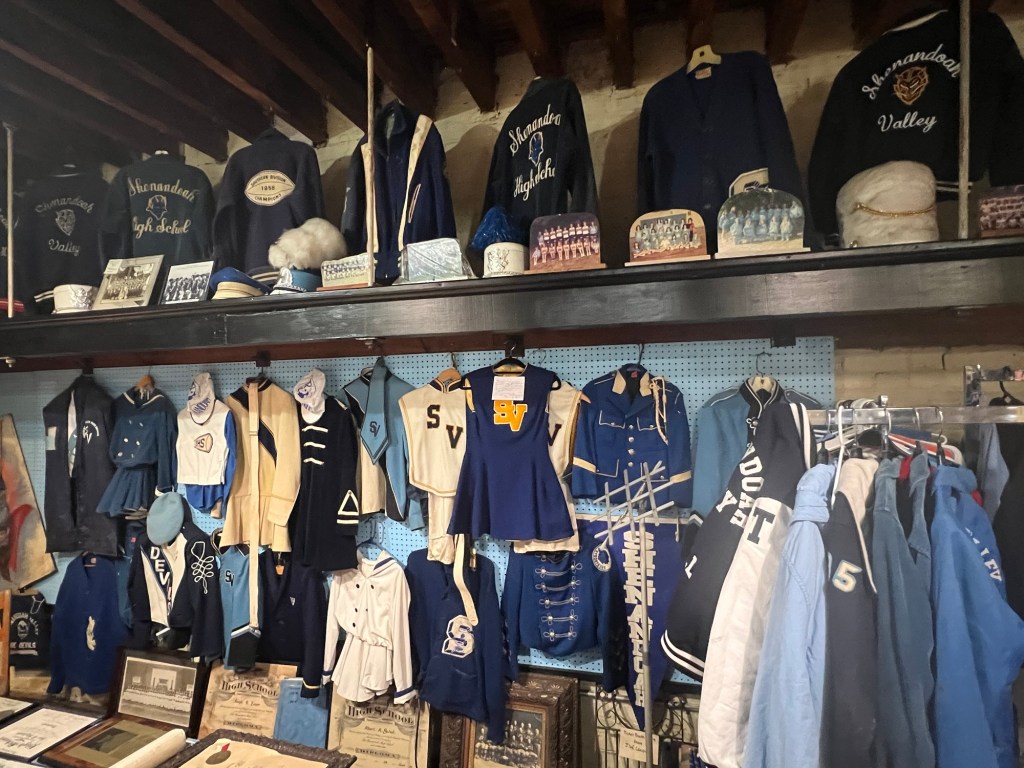
The Shenandoah High School memorabilia
The Shenandoah High School had a very prominent place in the local community and there has been pride in the education of this small town.

The formalities of daily life of the middle class
The museum really does a nice job showing the booms and busts of a one industry town and each exhibit has great detail to explain its story (please see my blog ‘VisitingaMuseum.com) for information on this museum.
After the tour was over, the couple explained some of the new businesses coming to the town and optimism in a town that is seeing a slow rebirth. I could see that with the renovation of buildings surrounding the museum.
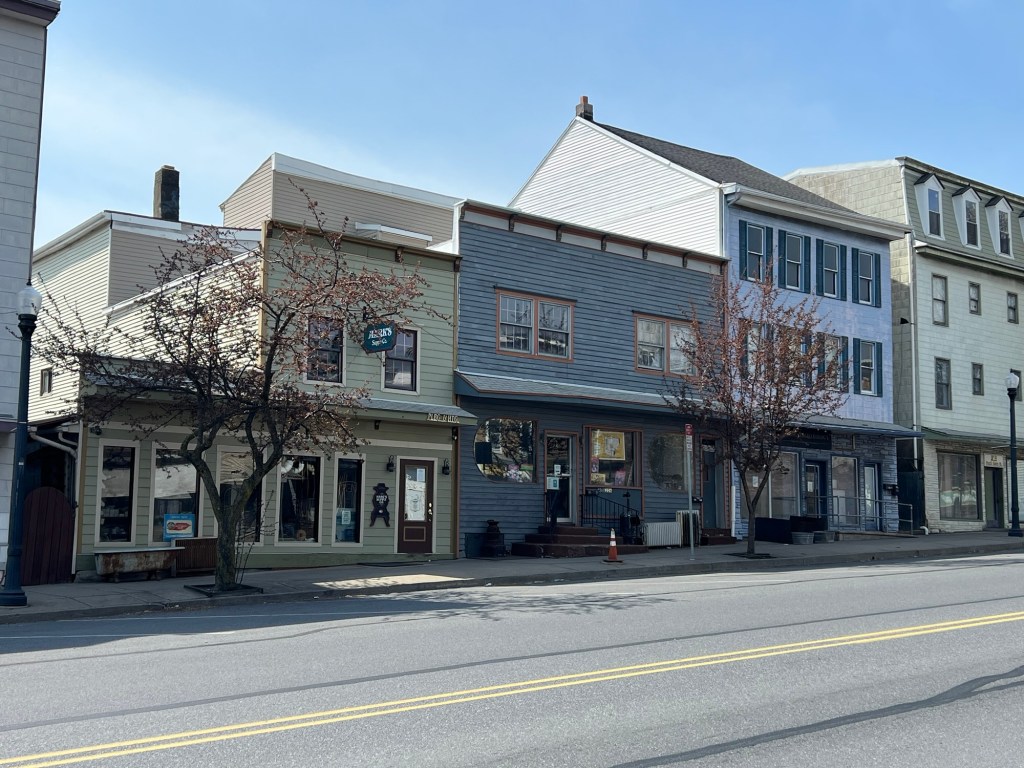
The gentrifying part of downtown
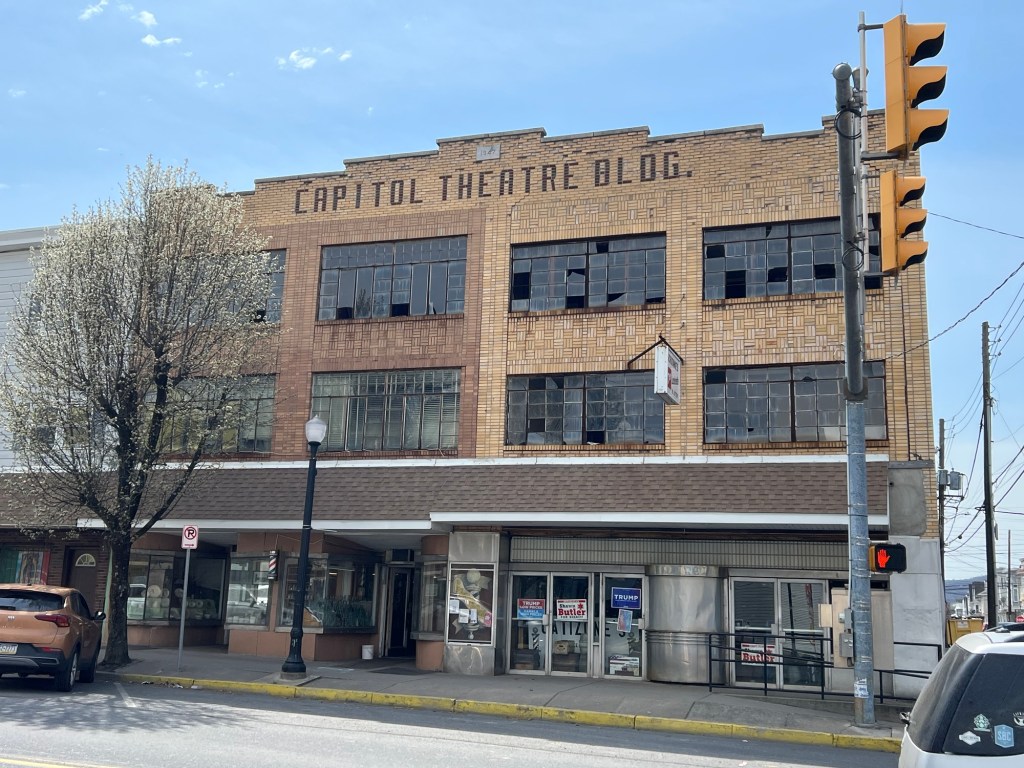
The possibilities of the old downtown are right there
After the tour and before we headed back to Mahanoy City, I took Paul to lunch as a thank you for arranging everything for me. He suggested Francesca’s Ristorante & Pizzeria at 10 North Main Street. The food was excellent.
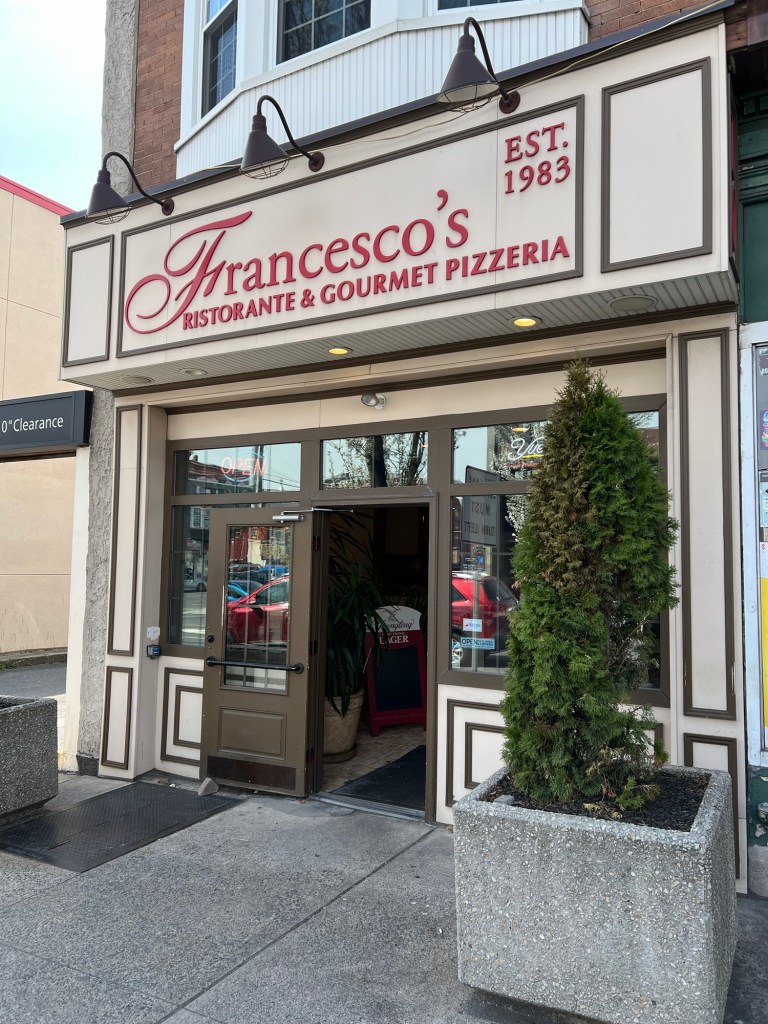
Francesco’s Ristorante & Pizzeria at 10 North Main Street
My review on TripAdvisor:
The pizza here is excellent. We both had Cheese slices and shared an order of Fried Pierogi. Talk about a nice relaxing meal. Their red sauce is the best and really was well spiced.

Lunch that afternoon

The Cheese pizza is excellent and full of flavor

The Fried Pierogi were from Mrs. T’s down the road
Over lunch, Paul was explaining the challenges that these towns were facing with the economy. I could see that with a dwindling mine presence and low level warehouse jobs popping up. The towns also had a possibility of small cottage industries opening and arts communities blossoming but you had to make a commitment to all these. I think he saw this as well.
After lunch, we headed back and then we toured the Mahanoy Area Historical Society Museum at 1 West Centre Street #5. I discovered what a beautifully organized and well designed little museum they created in honoring Mahanoy City’s past.

The Mahanoy Area Historical Society Museum at 1 West Centre Street
https://www.mahanoyhistory.org/
My review on TripAdvisor:
https://www.tripadvisor.com/Profile/R4960NKjustinw/mediabatch/13476787?m=19905
My review on VisitingaMuseum.com:

The inside of the museum dedicated to the Mining industry
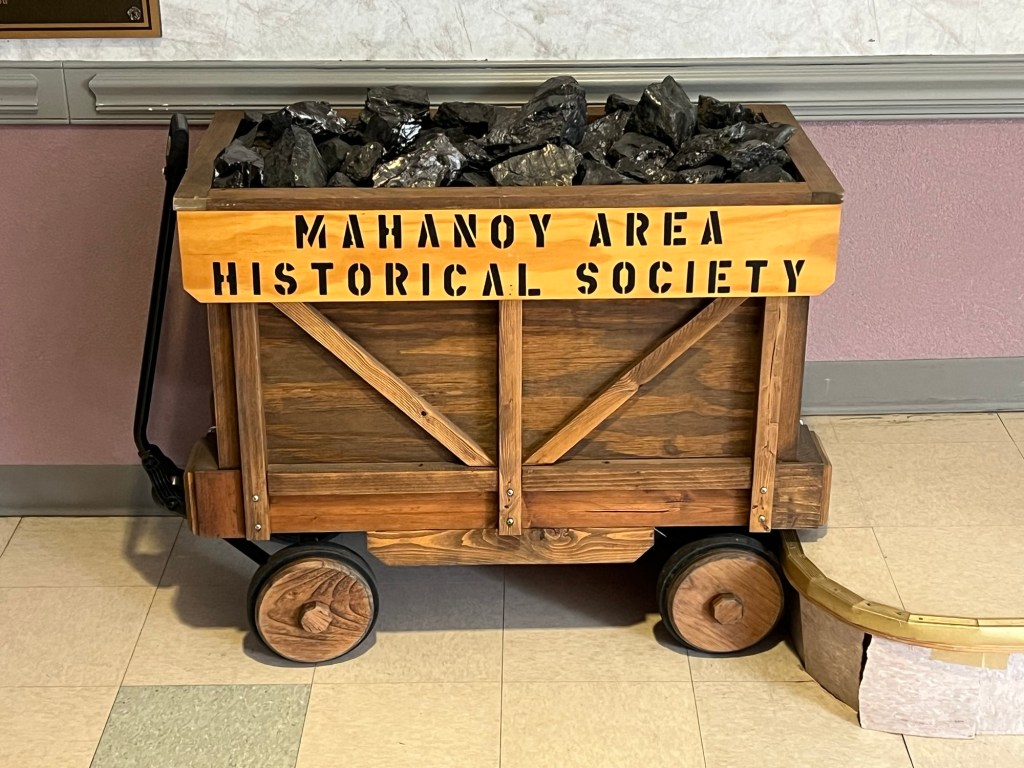
The Mining industry was the driving force of this town

A large portion of the collection on the school system
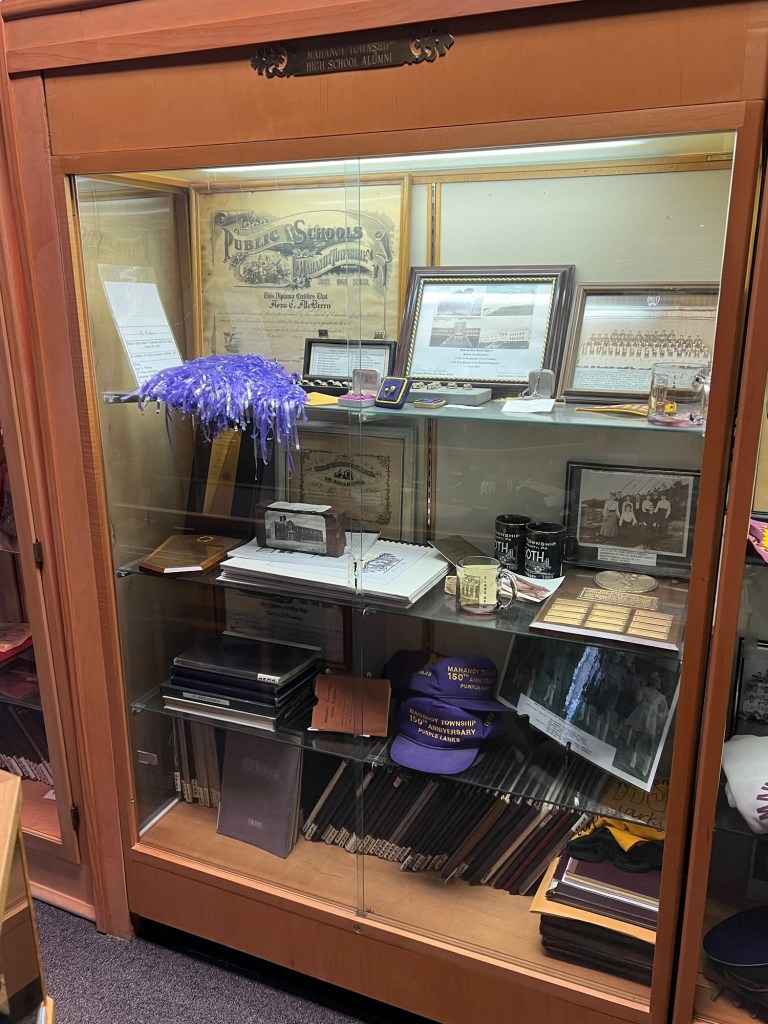
The collection of memorabilia from the Mahanoy City schools was extensive and interesting
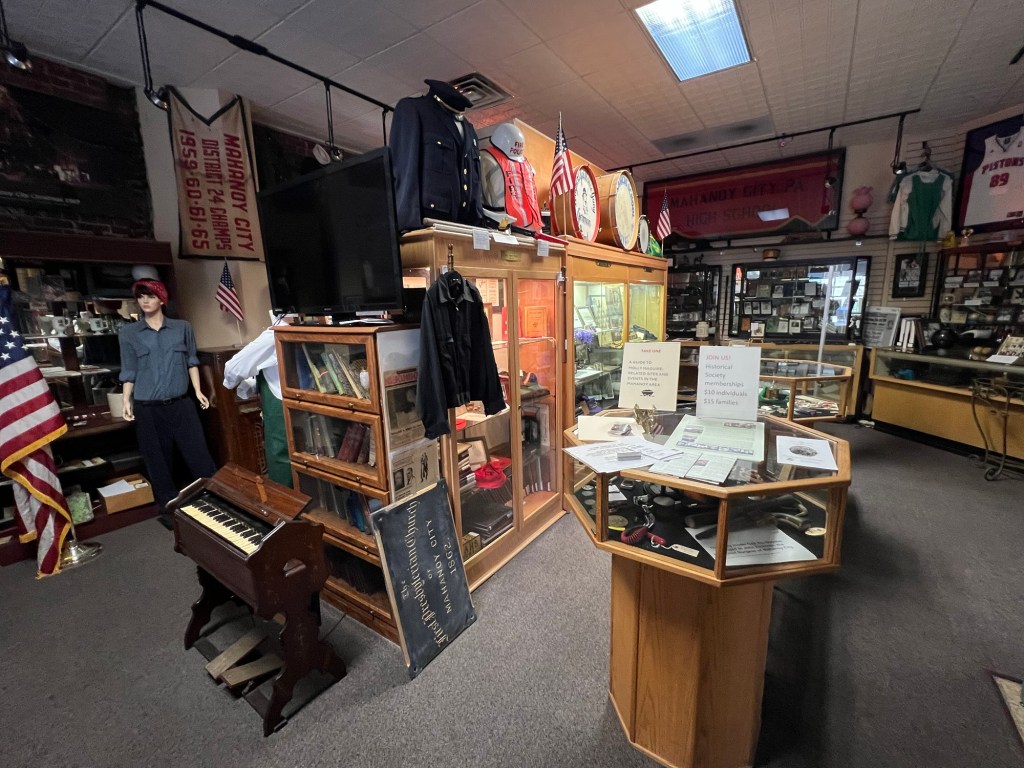
The main gallery
The museum does a nice job telling the story of Mahanoy City and the various aspects of the community. While not as big as the museum in Shenandoah, this museum has its own stories to tell and shows the progression of the town to hopefully the next chapter in its development.
After we left the museum that afternoon and planned to meet again the next afternoon, I decided to walk around town and take pictures. Just like Shenandoah, as an outsider, I can see a lot of potential in these towns. Not just for business but in tourism as well. I really think the mines themselves should offer tours to show how the modern mining industry operates.
I then toured around the town, taking pictures of exterior businesses that did not have pictures on TripAdvisor and some of the historical sites hidden in the town. The first one was the Silliman Mansion, once home to a prominent family who owned many businesses in town, now part of the water company.
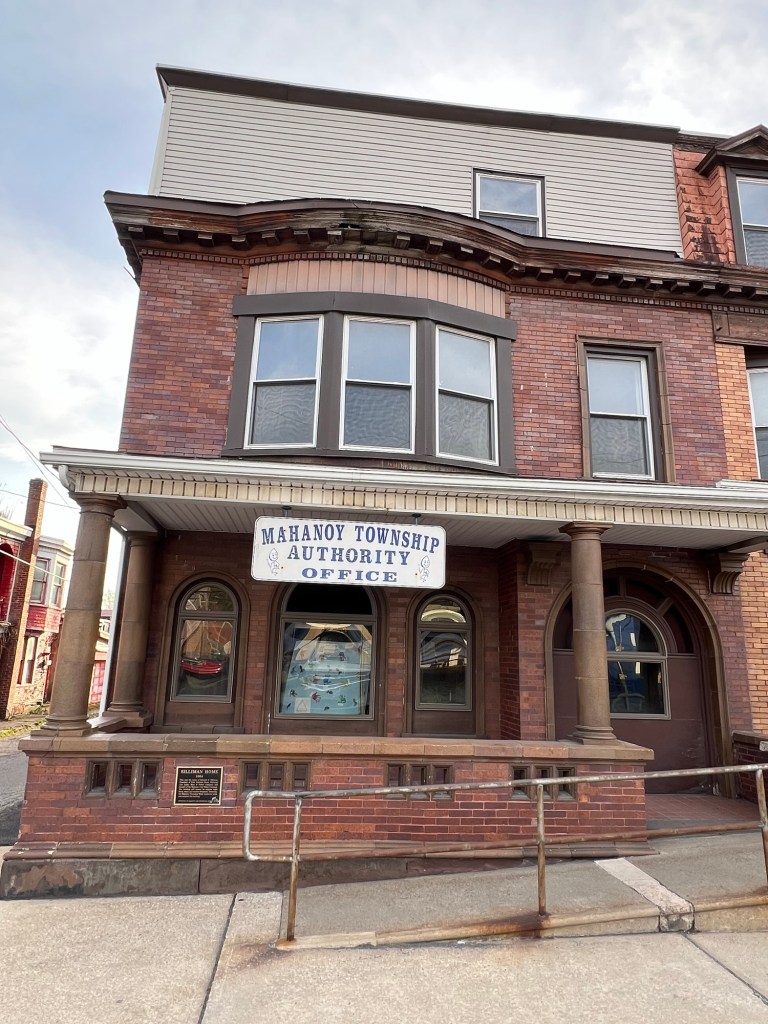
The former Silliman Mansion is now offices at 46 North Main Street
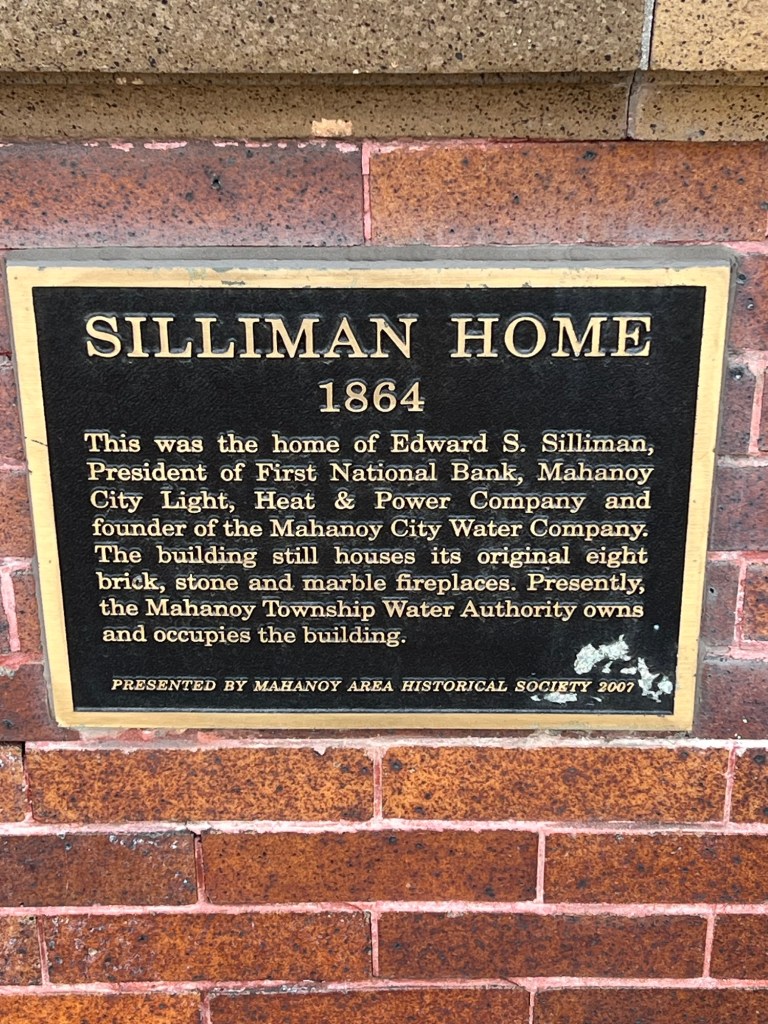
The historic plaque on the building

The details of the outside of the old mansion
Then I walked all over the town, looking at the homes and businesses many of which could use better signage and a splash of paint.
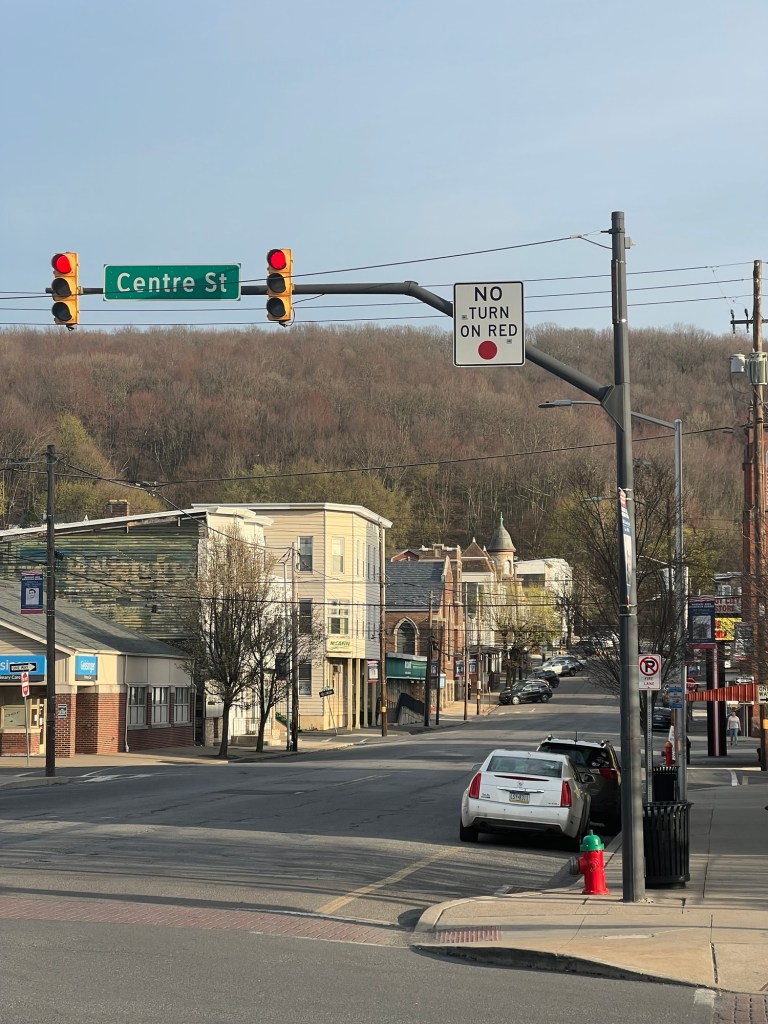
Looking down Main Street during the afternoon
I then walked down Centre street to look at the former Kaier family mansion, the home of the brewery family who company site I had just visited where there was nothing left. The house is now a bed and breakfast.
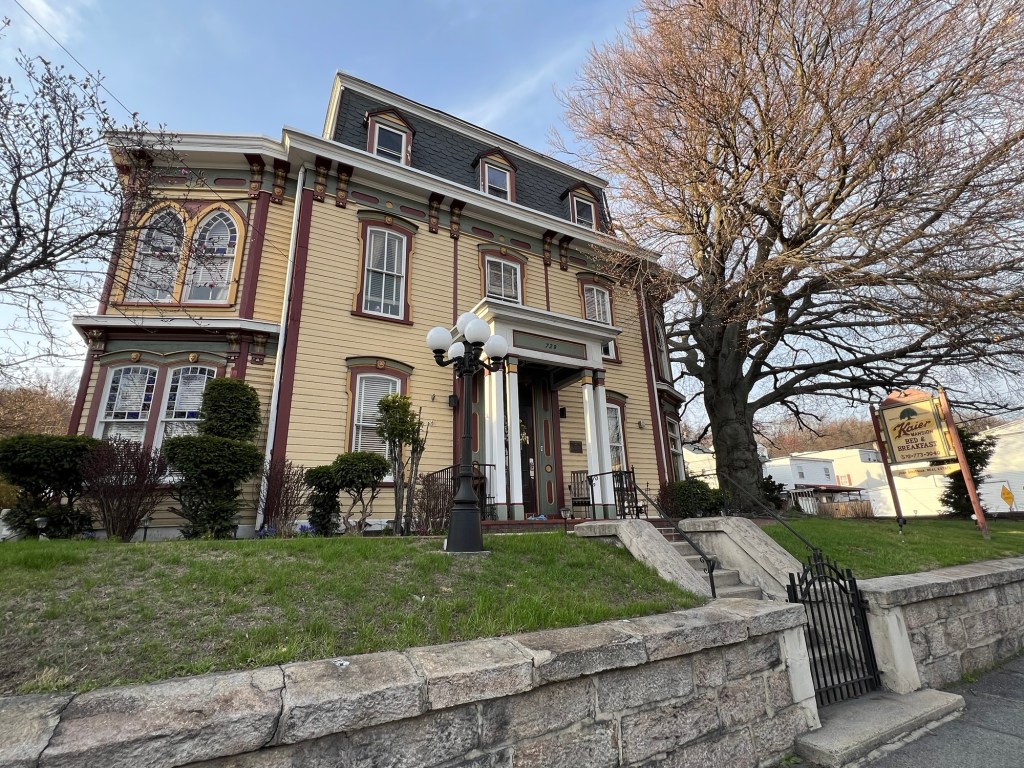
The former Kaier mansion at 729 East Centre Street
https://www.mahanoyhistory.org/kaier.html
Review on TripAdvisor:
The home was built for the Kaier brewery family. I wondered why they would build a home in the downtown center and after the tour of the town it became clear. Proximity of walking to the brewery and to make a statement to the town of ‘here we are’.

The Kaier Mansion plaque
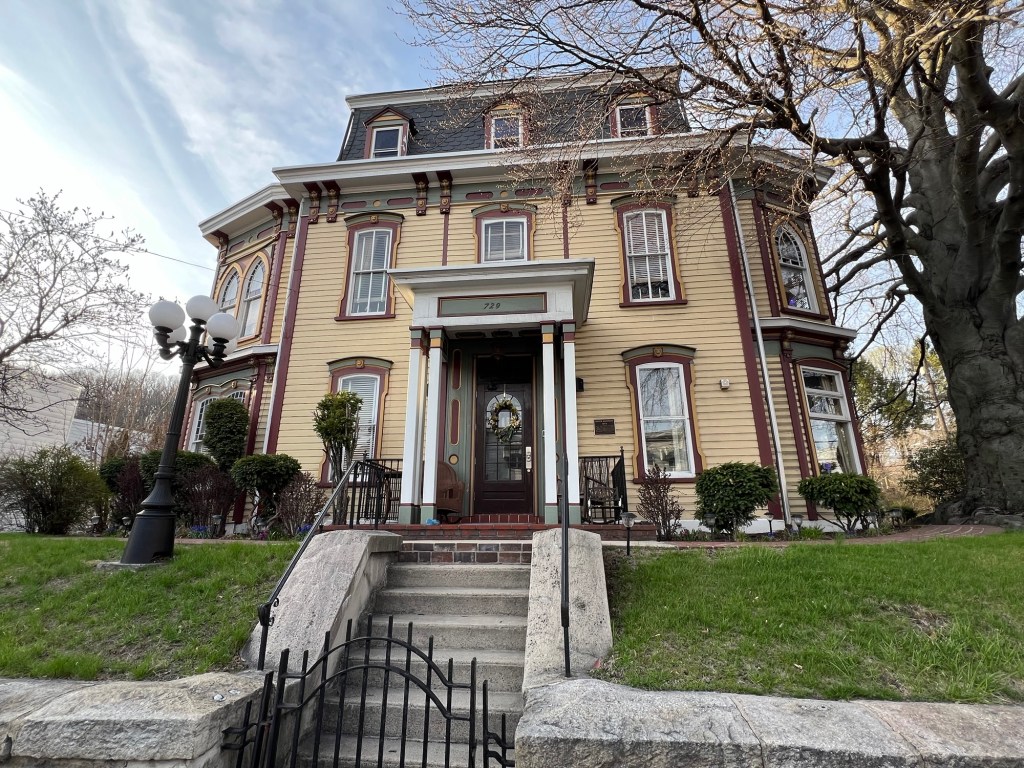
The front of the mansion in the early Spring
I then walked down Centre Street which is the main avenue of town to the Molly Maguires Park. This is a monument to the Irish miners who fought against the oppression of the mining bosses and dangerous conditions of the mines. The park sends a bold statement of who these men were and their story.

The Molly Maguire Park on West Centre Street
https://www.hmdb.org/m.asp?m=236538
https://mahanoyhistory.org/mollymaguires.html
My review on TripAdvisor:
https://www.tripadvisor.com/Profile/R4960NKjustinw/mediabatch/13493199?m=19905
My review on VisitingaMuseum.com:
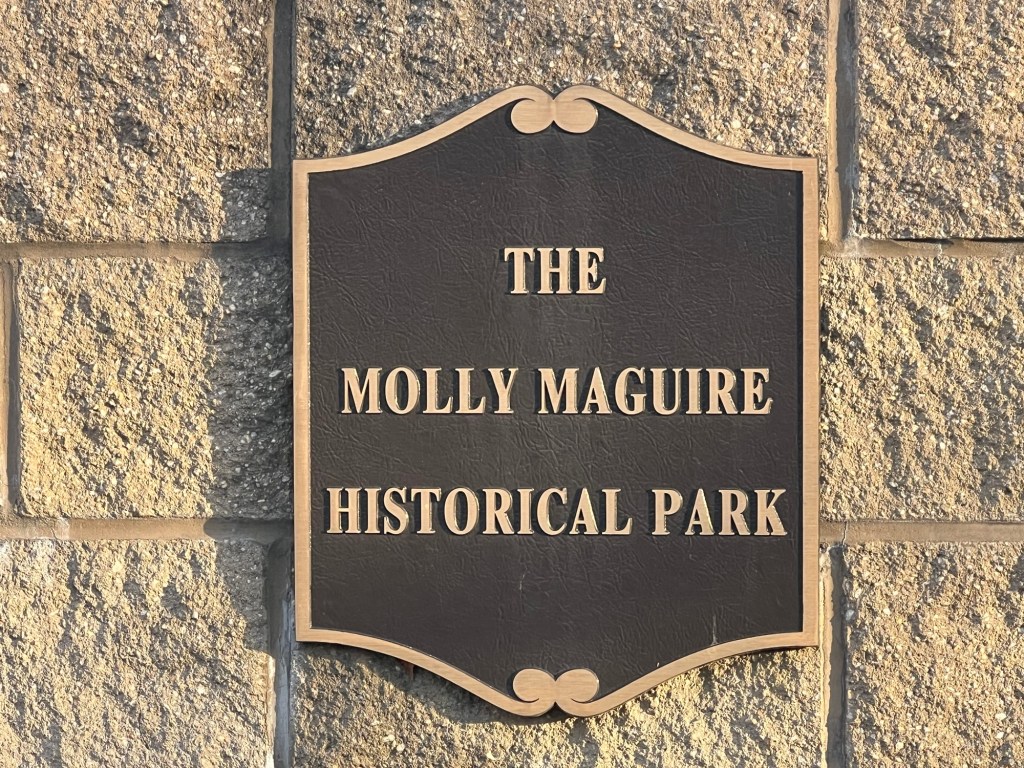
The historic plaque in the front of the park
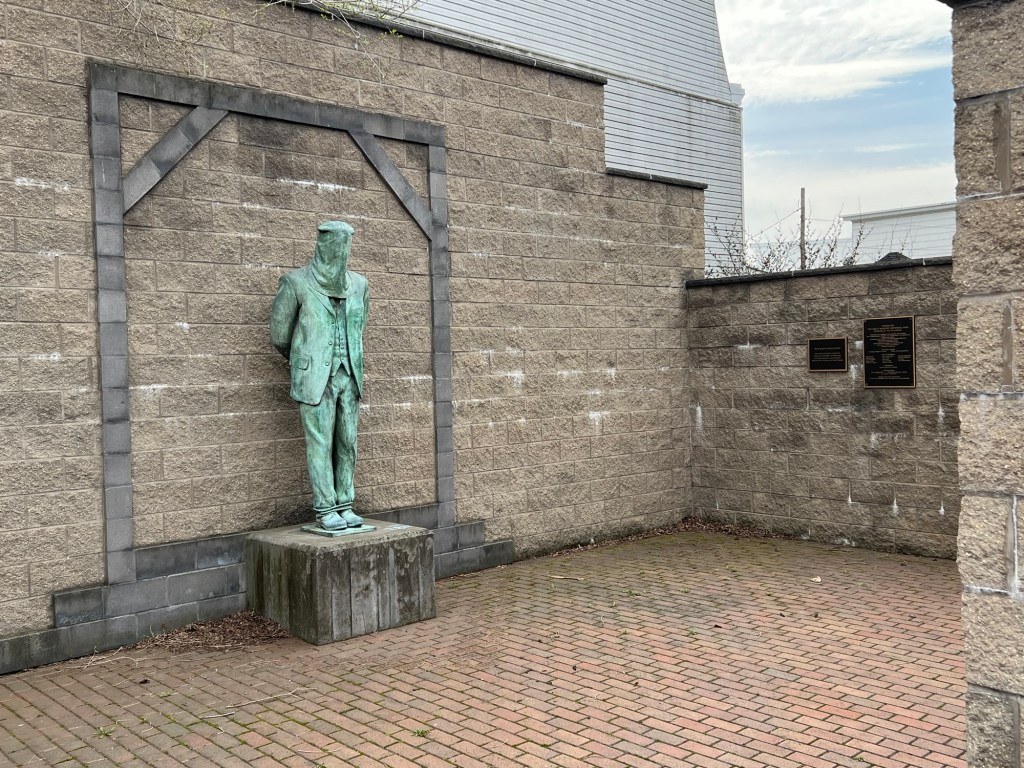
The inside of the park
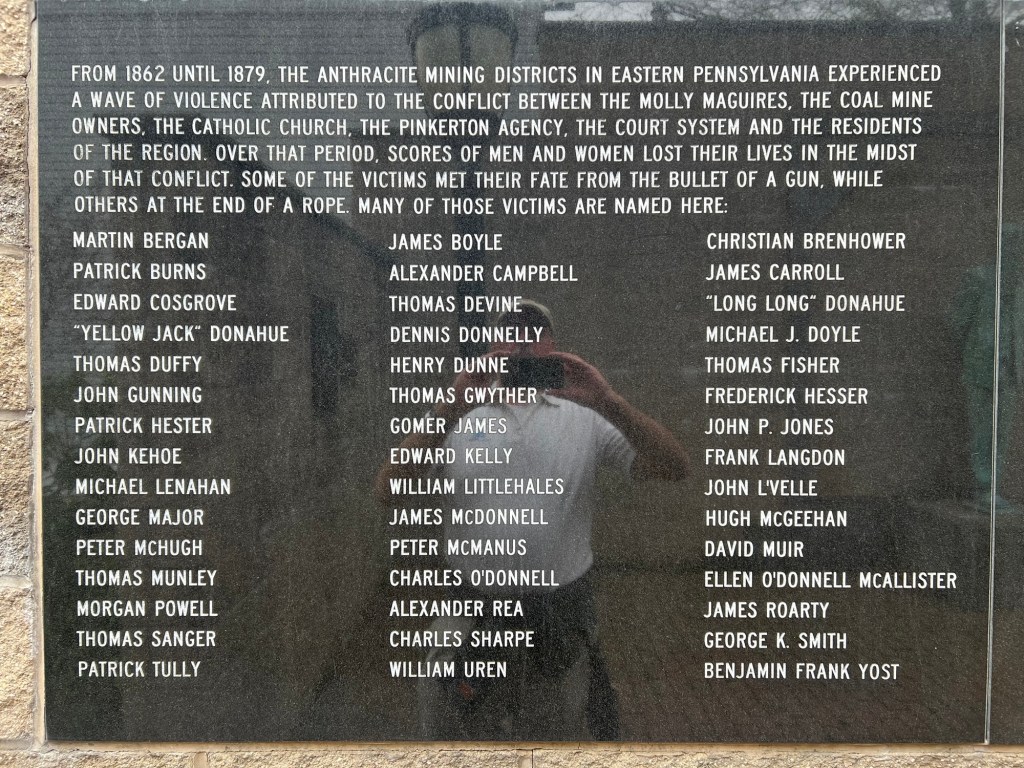
The names of the miners who met their deaths
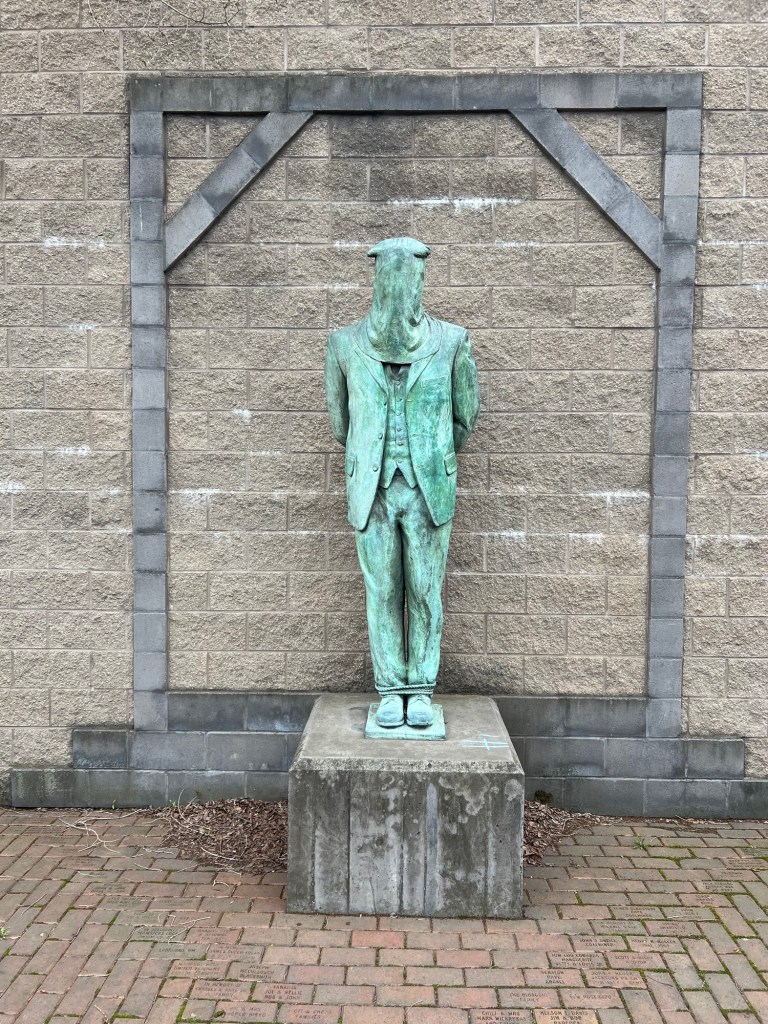
The statue of the fate of said miners
After my tour of the town on my own, I went back to the hotel to relax and ended up falling asleep. It had been a long day of running around and I read for a bit and went to bed.
I have to credit Comfort Inn on one of the best night’s sleep in a long time. I slept so soundly that I barely wanted to get up. Also the hotel has a very nice complimentary breakfast buffet with waffles, sausage and eggs. Not fancy but a good way to start the day.

The breakfast buffet

The waffle bar in the morning
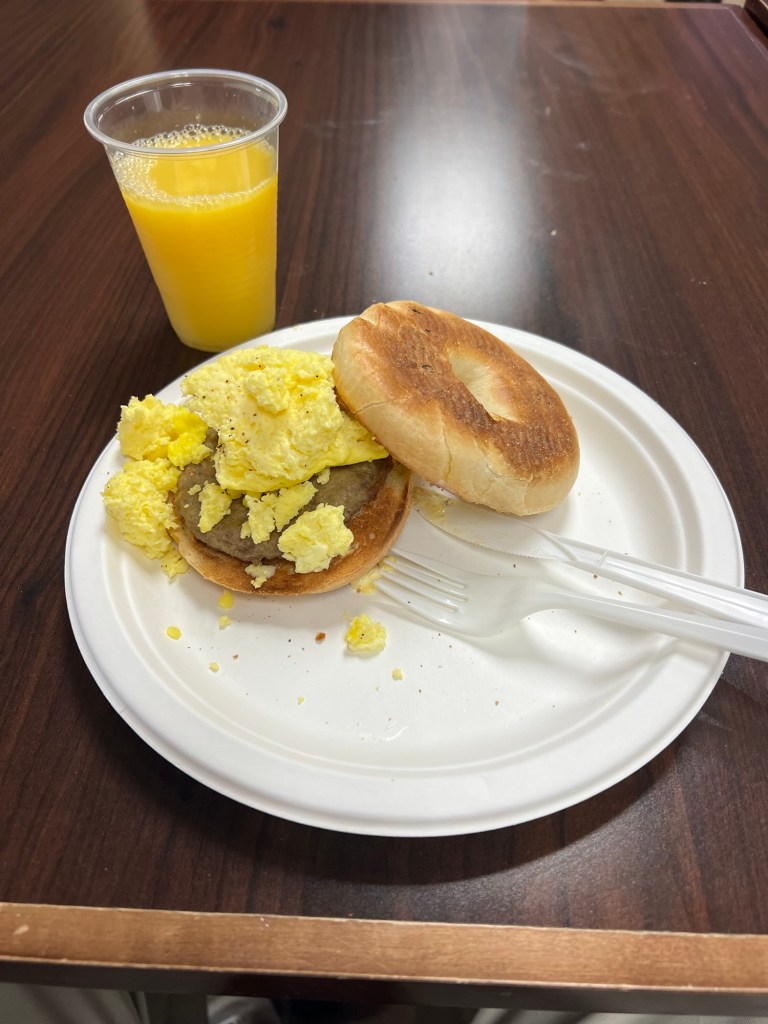
Creating a Sausage and Egg bagel sandwich. I love breakfast!
Paul and I met the next day for a morning tour of the Smith Mansion, a beautiful home on the edge of town and the home of the Smith family.

The Smith Mansion Museum at 101 South Main Street
https://www.mahanoyhistory.org/mahanoy-1973.html
My review on TripAdvisor:
https://www.tripadvisor.com/Profile/R4960NKjustinw/photo/800217654?m=19905
My review on VisitingaMuseum.com:
The mansion is not a museum per se in the traditional sense. It is someone’s personal home that I was given permission to tour and this is through appointment only. The tour of the home is well worth it. The owner has put such wonderful care in maintaining this large home even going as far as buying the Smith descendants coach, oil portraits and family photos so they are preserved in the house.

The owners greeted us on the front porch and then we entered the home. They had been moving the gating around and that’s when J realized that this was a private home.
The owner and his partner explained that they bought the house from the family descendants. What I thought was interesting is that they also bought the couch and family photos and portraits. I guess all the family heirlooms meant nothing to them. Still they looked so nice staying in the home.
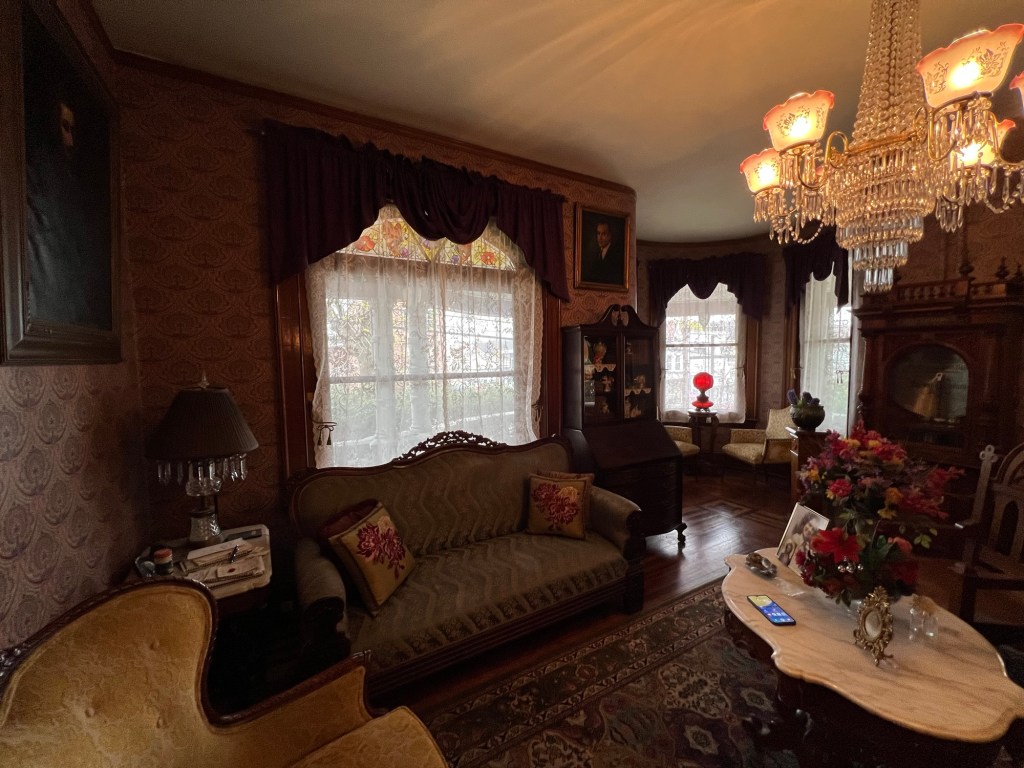
The family couch and portraits still remain in the house as they should had.

The beautiful Living Room and Dining room

The detailed Dining Room

The Smith Family in 1890

The Arboretum on the Third floor in the Tower Room

The Library on the second floor

The Music Box in the Library
The video of the Music Box playing
After we toured all three floors, we finished the tour in their Rock Garden in the back of the house. The flowers were just starting to bloom.

The Walled Rock Garden in the back of the house

The face staring at me in the wall
This is where we ended the tour. The owners explained that there is. Lot of upkeep to the home which I agree. Anytime you buy a home like this be prepared to work.
After the house tour, Paul took me on a tour of the area, taking me through parks, small lake communities and around the Mining factory, explaining to me how the community functions. It was an interesting tour and I told him they should do this for a special event at his museum.
We said our goodbyes and then I left for some lunch. Since some of the restaurants were not open yet and I was tired of eating pizza, I went to New Hunan House in Downtown Mahanoy City. The place so cheery from the outside I figured a new family must have opened it. It did not look this nice when I had passed through in the previous February.

The Super Hunan House at 224 East Centre Street
https://menuweb.menu/restaurants/mahanoy-city/hunan-house-8#google_vignette
My review on TripAdvisor:
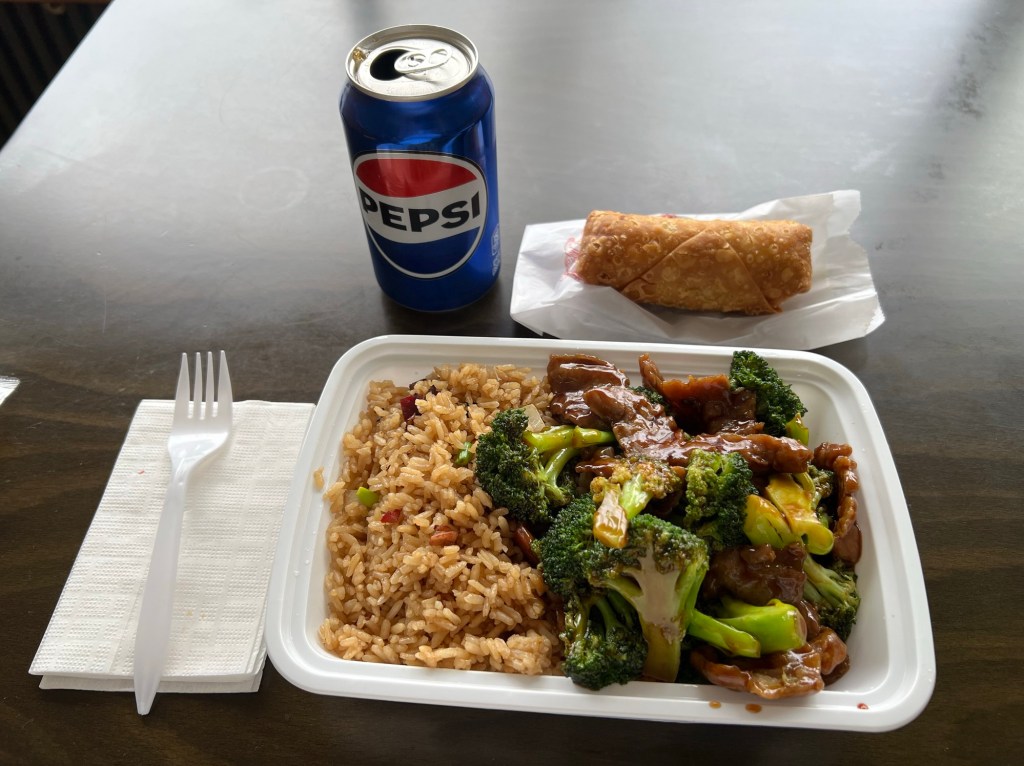
I really enjoyed the Beef and Broccoli
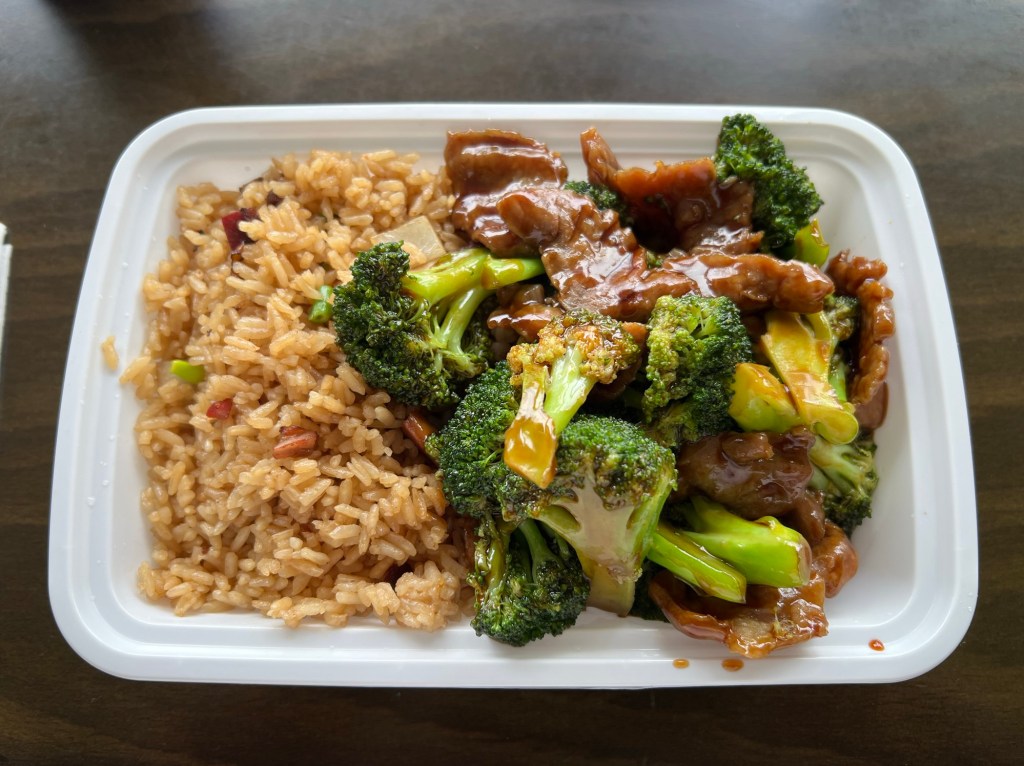
I highly recommend it
After lunch, I decided to explore the three towns that surrounded the mine. The first thing I did was walk around Mahanoy City and walked around the downtown and some of the side streets. The town is very worn. You could see as employment at the mine declined so did the towns around it. I could see this with all the pictures and displays at the museums. These were once vibrant communities with strong retail bases.

Downtown Mahanoy City on a quiet afternoon
After I worked off lunch, I drove over to Shenandoah and walked their downtown again. The museum was closed and it did not seem that a lot of stores were open either on the Saturday before Easter.
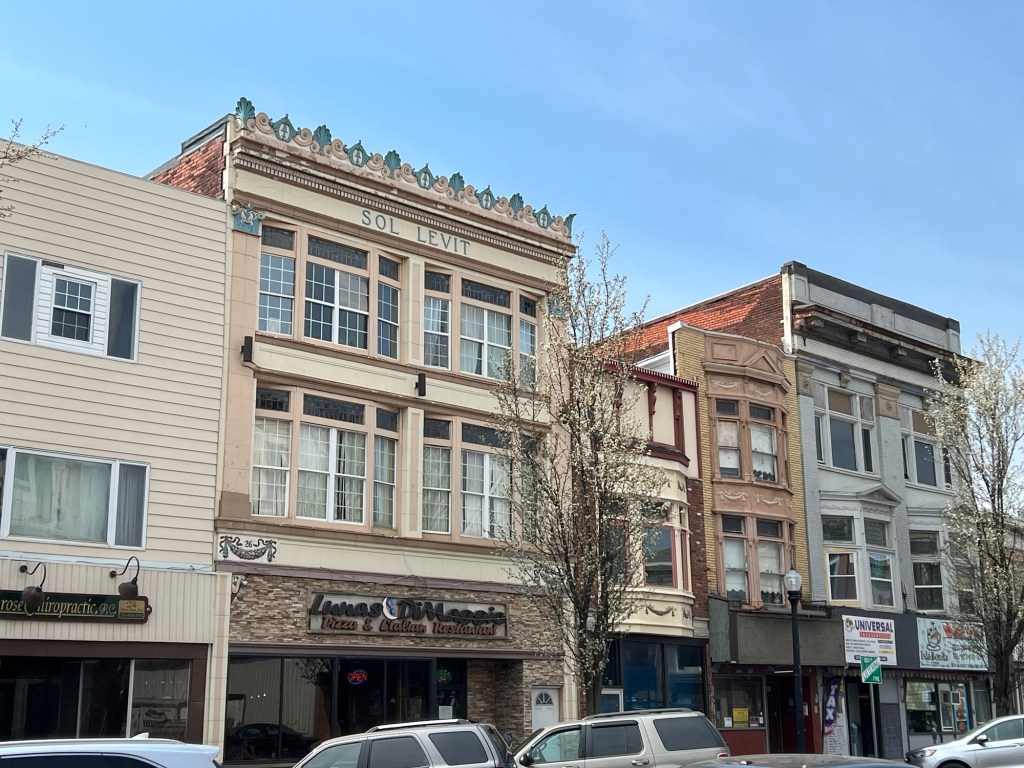
There is a lot of potential in Downtown Shenandoah. You can see this in the architecture.
I visited the Miner’s Memorial again which sits at the top of the downtown. This beautiful memorial I have visited on my trips to Shenandoah and is a testament to its mining past.

The sad part of this small park is its condition. It always has so much garbage and needs a good sweeping.
https://coalpail.com/coal-forum/viewtopic.php?t=3048
My review on TripAdvisor:
My review on VisitingaMuseum.com:

The details of monument
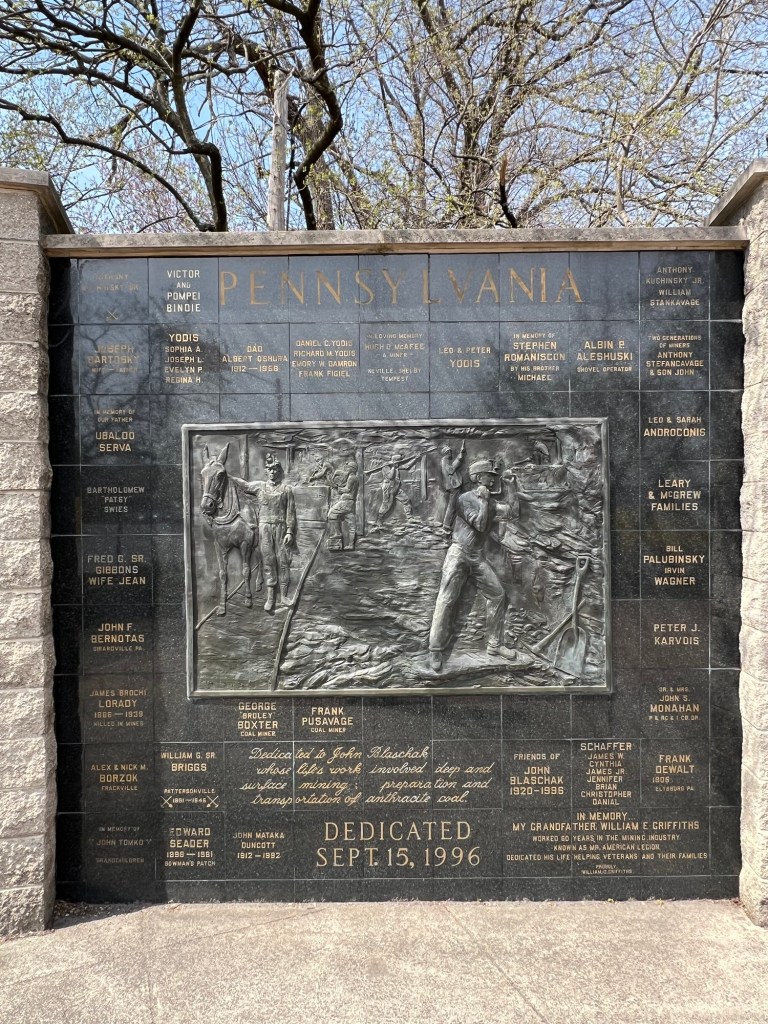
Panel one
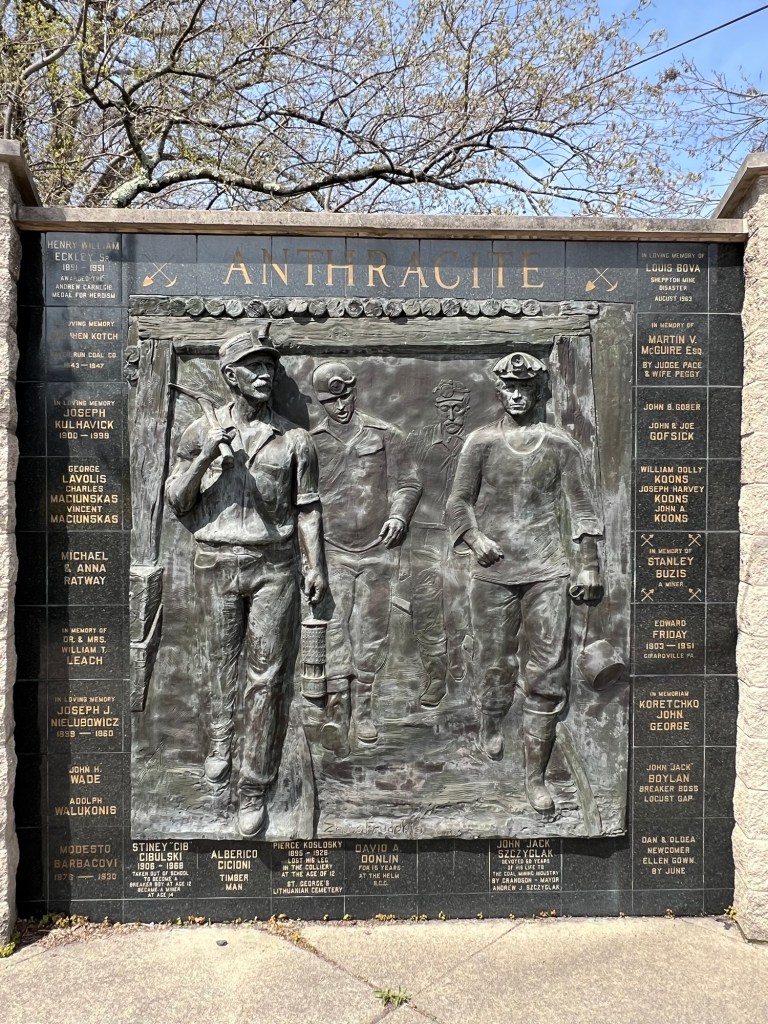
Panel Two

Panel three
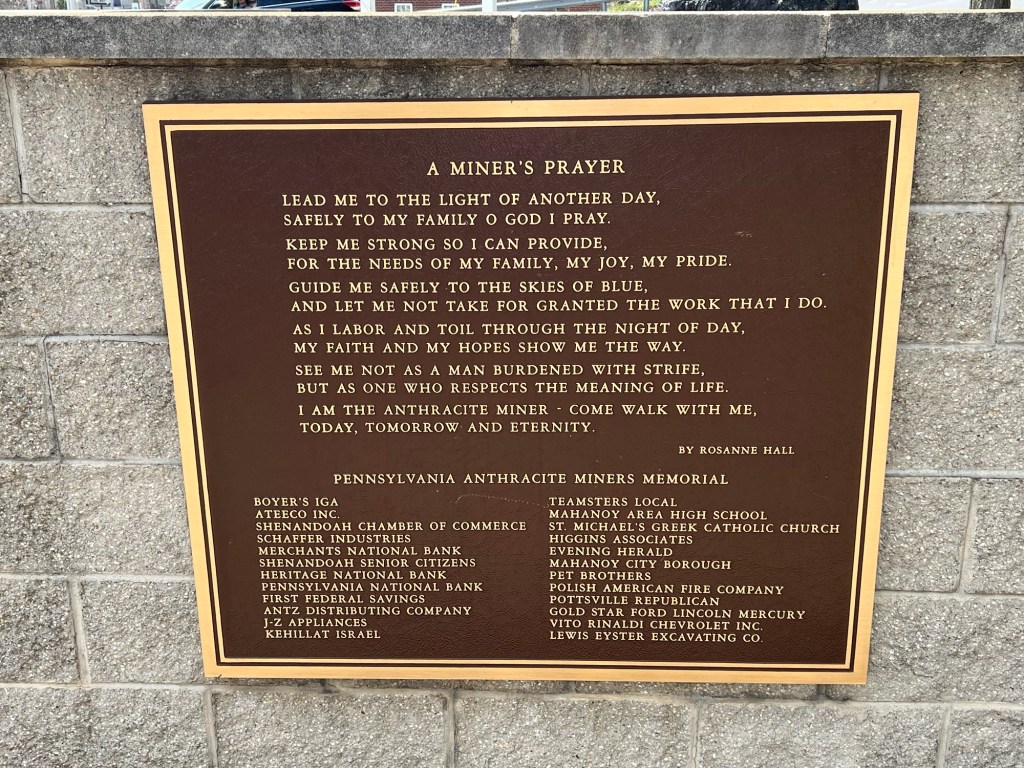
The Miner’s Prayer
I find this monument very touching and think about how my family though a hundred years ago was once part of this tradition.
After walking all of Shenandoah’s downtown and some of the side streets, I drove to Frackville to see their downtown. It was just as depressed as the other two towns but like Mahanoy City and Shenandoah, you will see those hidden gems, the clever pieces of art snd and a few wonderful restaurants.

Downtown Frackville on the Saturday before Easter it was so quiet.

While walking around I came across Frontier Woman and Child which was once a sculpture in front of local restaurant
https://www.roadsideamerica.com/story/14541#google_vignette
My review on TripAdvisor:
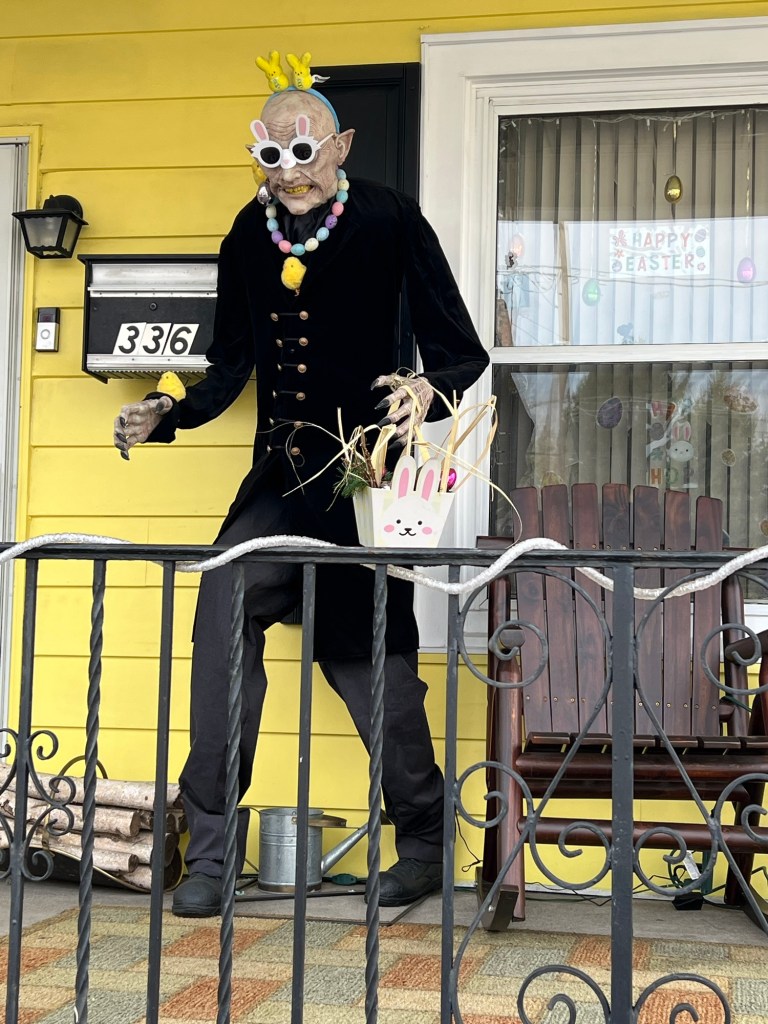
I also came across this sculpture for Easter in front of someone’s home
Walking the downtown area in Frackville is really a combination of small businesses mixed in with housing. There was not much to see and because of Easter the next day, most everything was closed in town. Even Dutch Kitchen, which I had looked forward to eating at on Easter, was going to be closed and closed early on Saturday night.
I got back to the room around five and relaxed until 7:30pm and arrived for the evening Easter church service at St. Mary’s Byzantine Church at 621 West Mahanoy Street. The church was busier than the two times I had been there in the past and most people were dressed up.

St. Mary’s Byzantine Church at 621 West Mahanoy Street
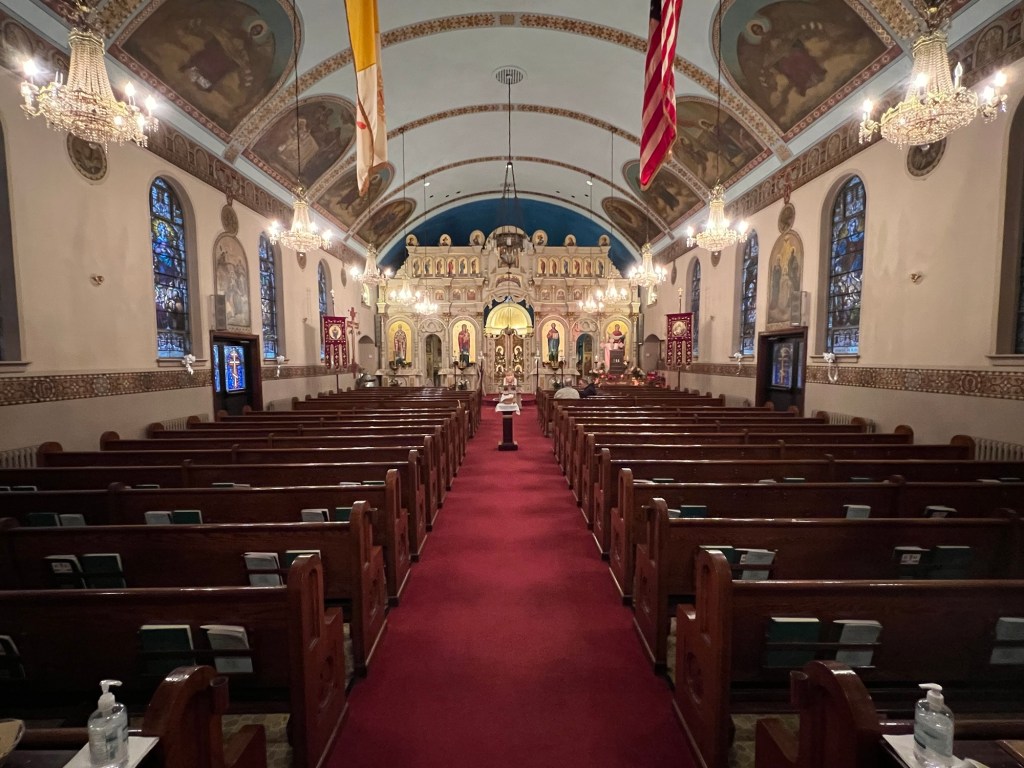
The inside of the church on Holy Saturday for mass

The Alter at the church decorated for Easter

The beauty of the Alter

The doors lead to where the scriptures and readings are done during the ceremony

The Alter was decorated for Easter
The service was really nice and the church was so beautifully decorated with flowers for the Easter services. I did not realize that the formal services were on the Saturday night before Easter. This was the service I went to with my mother and Great Aunt fifty-five years ago.
It was an hour and a half service of singing and chanting in both English and Slavic, which I was not used to as it differed so much from the Roman Catholic services.
It is such a beautiful church too with all the stained glass, beautiful Alters and even the doors were really elaborate. It was going back in a Time Machine to 1975. After the service was over, I went with the other parishioners to the meeting room next to the church for the ‘Blessing of the Baskets’, where the priest blesses the food for the Easter dinner.

The blessings of the baskets

The blessing of the baskets
After the blessing, I went back to the hotel and went to bed. I was going to be back for the Sunday services as well for Easter Day.
After an excellent night’s sleep and a good breakfast I arrived at the church for Easter Day Mass which was similar but shorter than the formal mass the night before.
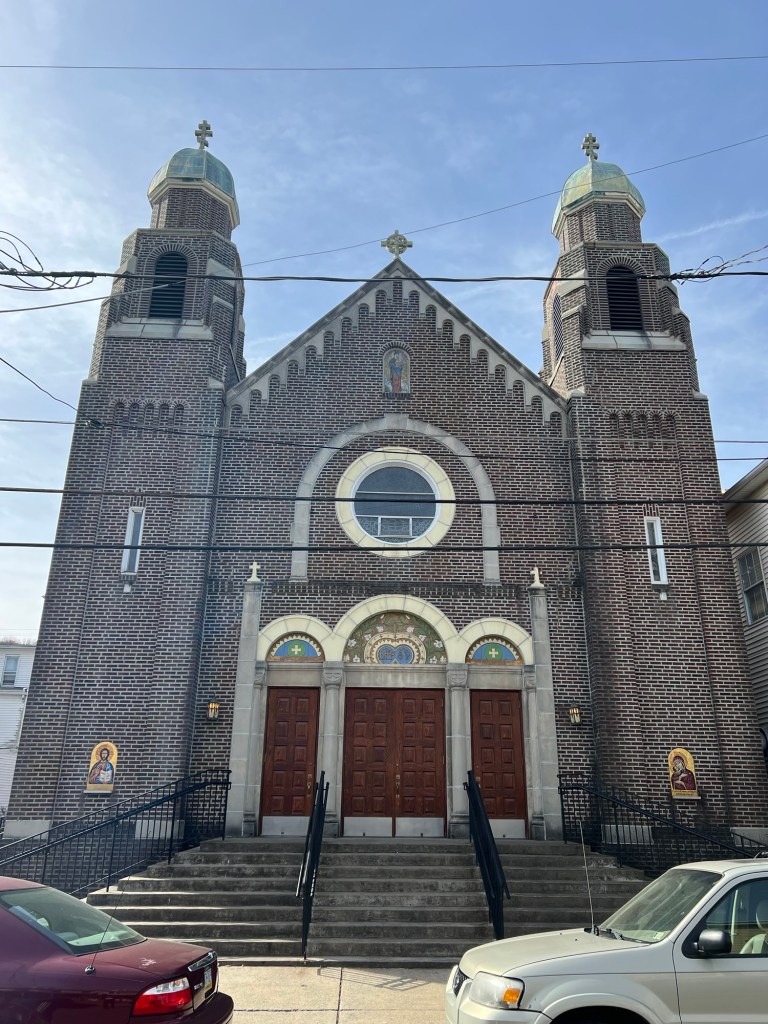
Arriving Easter morning at St. Mary’s Byzantine Church at 621 West Mahanoy Street
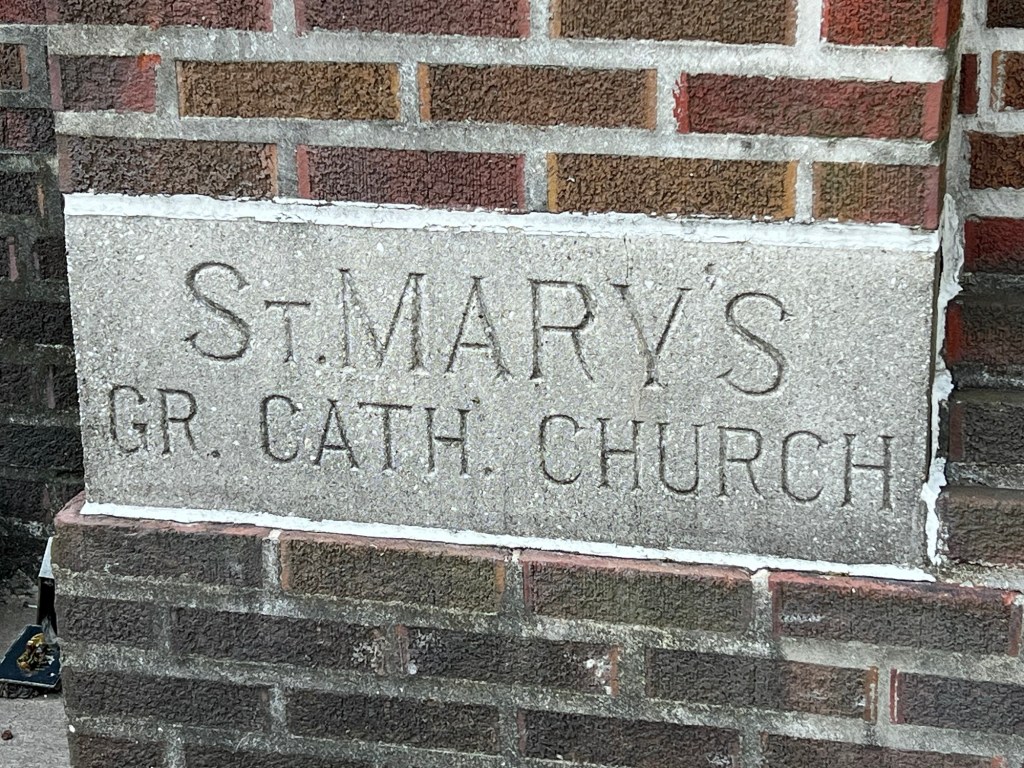
The front of the church
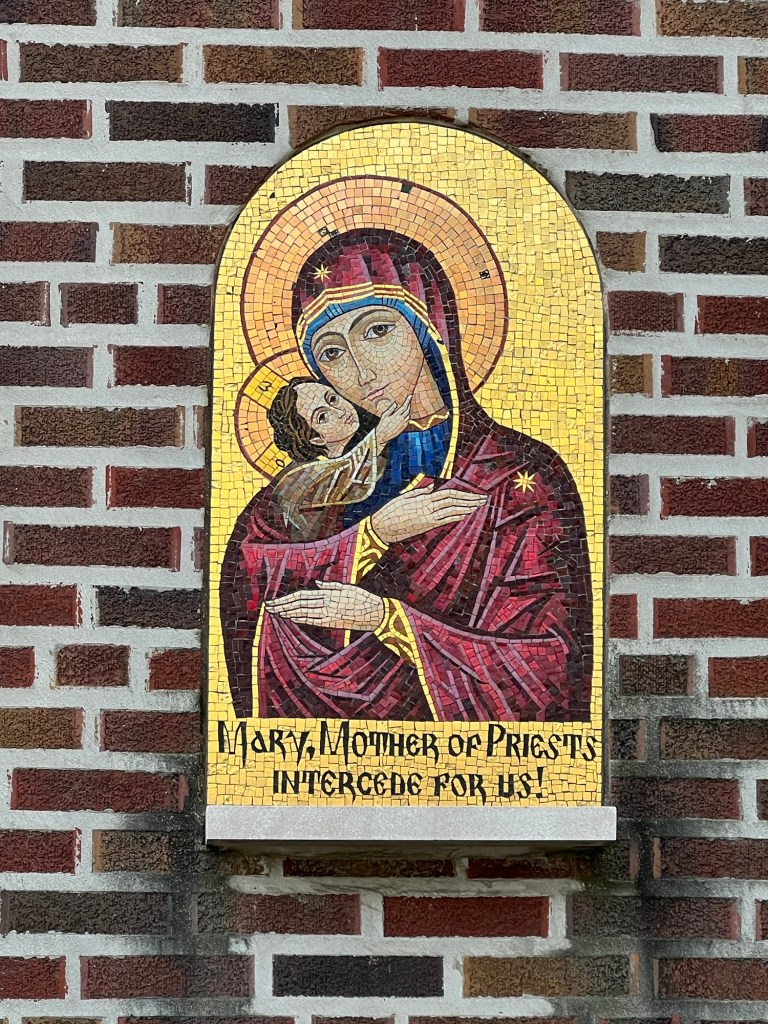
The front of the church with the picture of St. Mary

The inside of the church
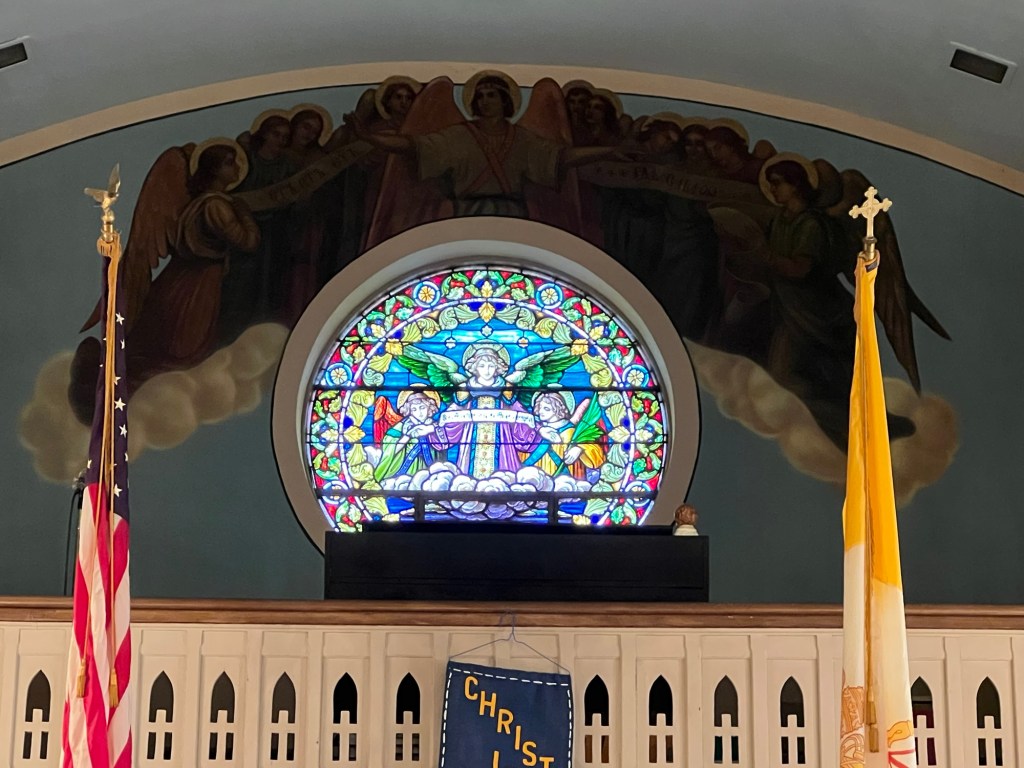
The stained glass window in the front of the church

The cross by the Alter

The stained glass and paintings over the door way

The stained glass and paintings over the other doorway

The banner by the front of the church
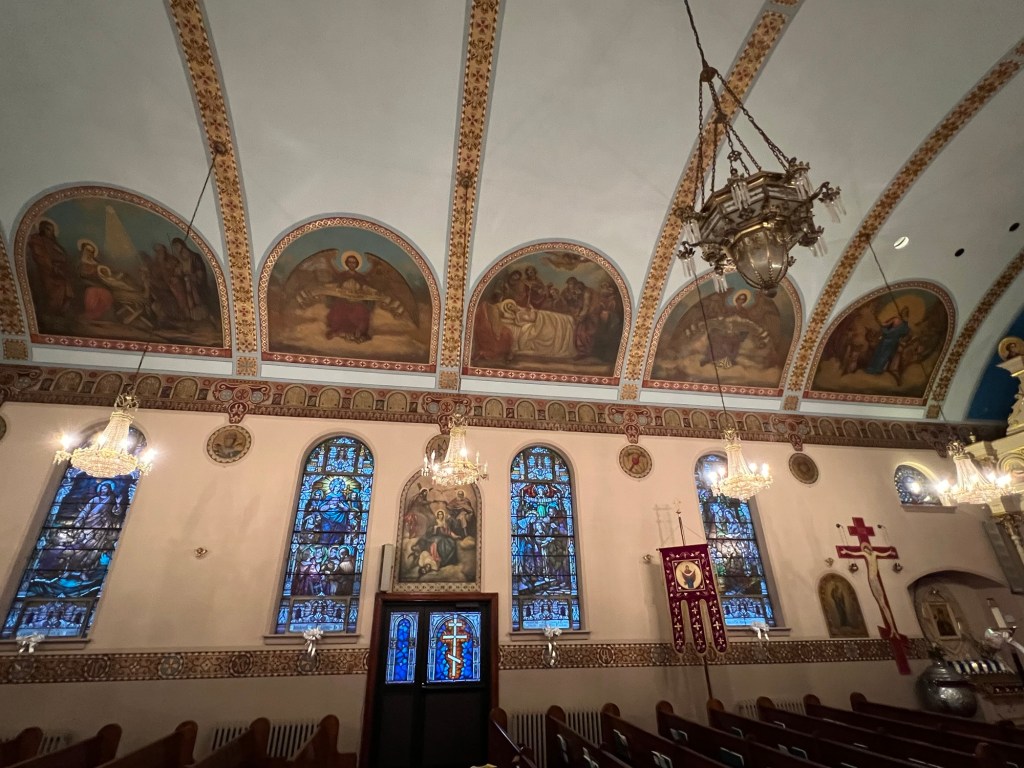
The beautiful insides of the church at Easter

The elegant details of the church
It was a nice service and I am glad that I was able to come to both masses. It was a nice way to spend Easter. After services were over, I said my goodbyes to Reverend Carroll and headed back to the hotel, changed and checked out.
The service has not been posted yet but this one is similar to the one I experienced
Since I had some time on my hands, I decided to take a drive around the area. Most places were closed for Easter, so I traveled to the town of Tamaqua, PA just south of Mahanoy City and just walked around the downtown. The owners of the Smith Mansion said that this was the up and coming arts town, so I walked all over the downtown.

The sign welcoming you to Tamaqua, PA
It’s a nice historic looking downtown but nothing out of the ordinary. It has some beautiful buildings and a nice looking theater of the arts.

The river running through the downtown

The historic downtown

The historic firehouse downtown

The Tamaqua Arts Theater, the catalyst of the Arts district at 125 Pine Street in Downtown Tamaqua, PA
https://www.facebook.com/TamaquaArts/?locale=kk_KZ
Review on TripAdvisor:

The front of the theater was really beautiful

The other side of the Main Street of Downtown Tamaqua, PA
https://www.tamaquaborough.com/index.php?id=6
Literally nothing was open and like myself, the last of the people were arriving home from church and there were very few people walking around. So I headed home taking the back roads and the local highway through MacAdoo and Hazelton, where my family was from. They were just as quiet.
I got back to New Jersey in record time and was back to the Delaware Water Gap in less than an hour.I was getting hungry at this point and took a detour down the Route 46 East Highway to see if any of my favorite spots might be open for Easter.
Humpty Jrs. Was closed but Hot Dog Johanny’s in Buttzville, NJ was open and packed with cars. I made the stop and had my Easter dinner there.

Hot Dog Johanny’s at 333 US 46 in Belvidere, NJ
https://hotdogjohnny.com/store/
My review on TripAdvisor
I love their hot dogs and fries and another part of my childhood memories having come here in the early 1970’s. I must have had the same idea as everyone else because the crowds kept coming while was eating.

My Easter lunch, a deep fried Hot Dog and French Fries and an icy Birch Beer
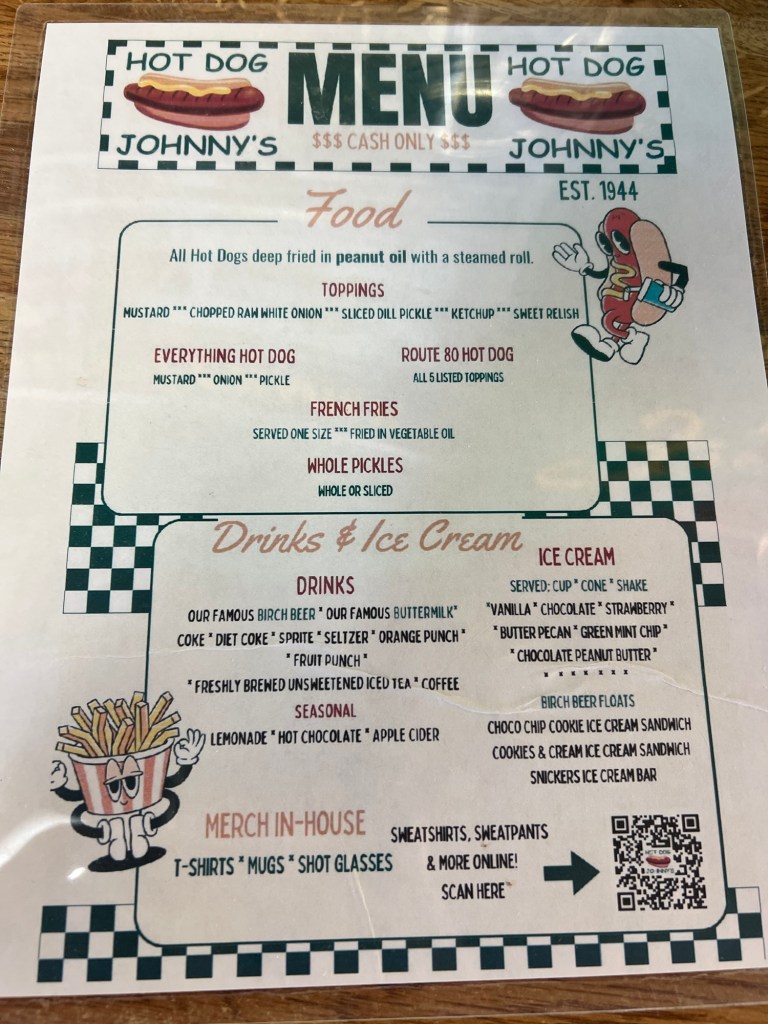
I swear the menu had not changed in fifty years

The hot dogs here are amazing
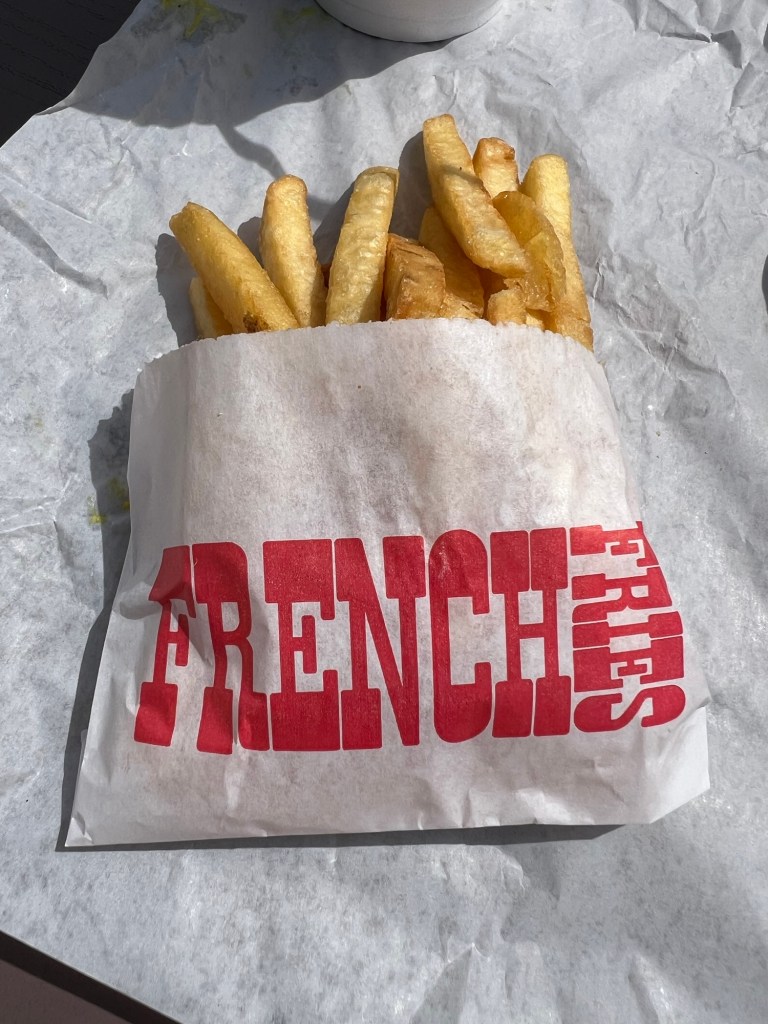
So are the fries
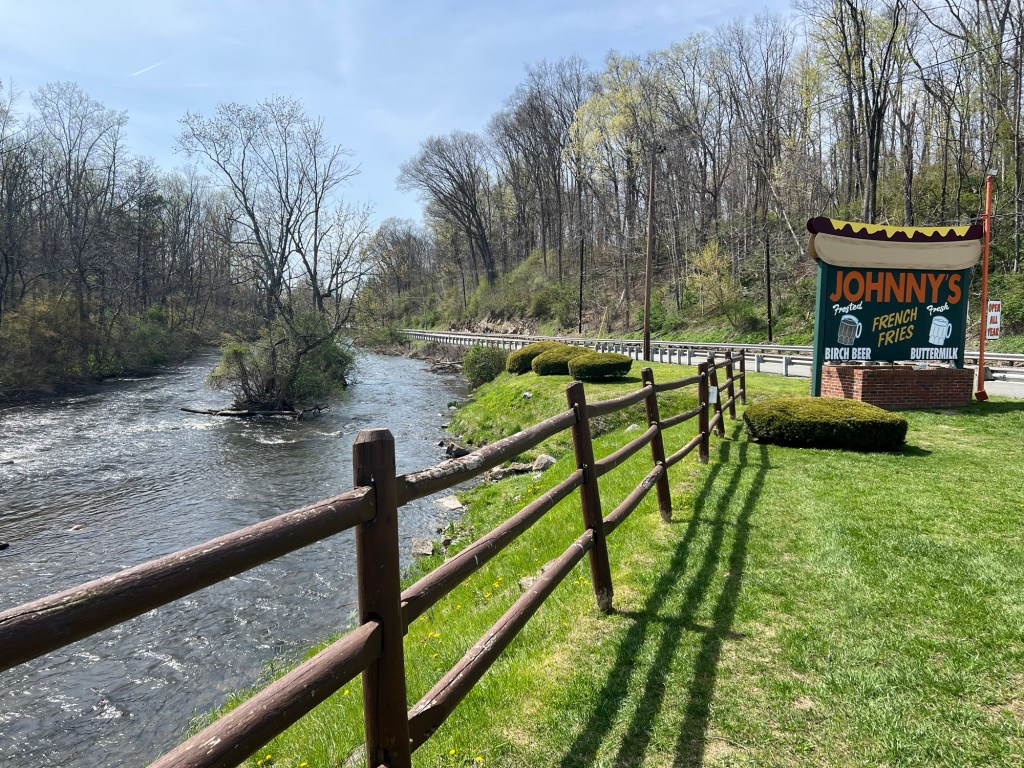
The views by the river are spectacular

The views up stream as well
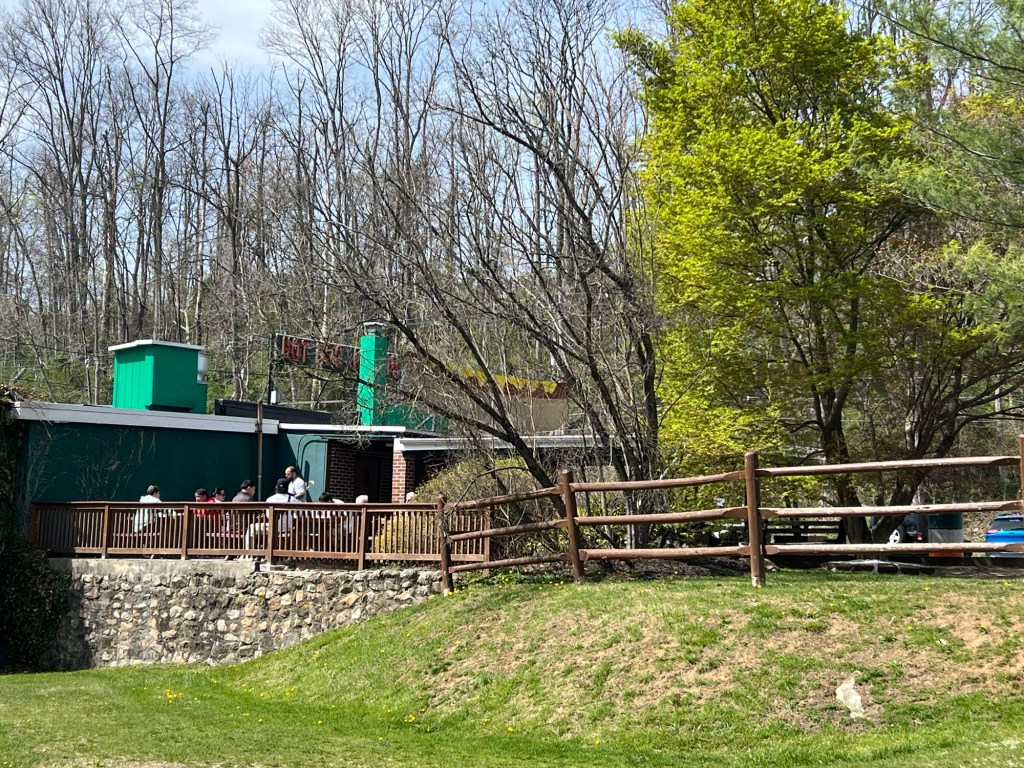
There is nothing like sitting outside on a warm sunny day with a hot dog. This was the best Easter dinner. Just relaxing and delicious. After I finished my meal, I walked the grounds on this early Spring and admired the river and all the buds bursting. It really was a beautiful day.
I continued up Route 46, passing all the places I had visited before. Even Hackettstown was quiet with only a few restaurants open. I needed something sweet to complete my meal and remembered that Dover Dairy Maid was up Route 46. I took a chance and they were open too and crowded.

The Dover Dairy Maid at 240 Route 46
https://www.doverdairymaid.com/index.html
My review on TripAdvisor:
My review on DiningonaShoeStringinNYC@Wordpress.com:
I love the homemade ice cream here and their fresh whipped cream. I got a medium Sundae and since they give you a choice of flavors, I tried the Birthday Cake, the Cotton Candy and Chocolate Chip Cookie Dough(all of which I highly recommend. I just sat around the picnic tables and ate watching families come and go. I guess everyone was like myself, just enjoying a nice afternoon of out.

The ice cream here is amazing

Yum!
After I was done, I headed home. It had been a productive and relaxing weekend and the change of of pace was really nice.
Happy Easter everyone!
Places to Stay:
The Punxsutawney Community Center
209 N Jefferson Street
Punxsutawney, PA 15767
(814) 938-1008
https://www.facebook.com/p/Punxsutawney-Community-Center-100064684327267/
The night before Groundhogs Day: $10.00 to stay the night donation includes 11:00pm showing of the movie “Groundhogs Day”.
The Quality Inn in Indiana, PA
1545 Wayne Avenue
Indiana, PA 15701
(724) 349-9620
https://www.qualityinnindianapa.com
https://www.choicehotels.com/pennsylvania/indiana/quality-inn-hotels/pa622
My review on TripAdvisor:
The Comfort Inn
1252 Morea Road
Barnesville, PA 18214
(570) 773-5252
https://www.choicehotels.com/pennsylvania/barnesville/comfort-inn-hotels/pa675
My review on TripAdvisor:
Places to Visit:
The Historical & Genealogical Society of Indiana County
621 Wayne Avenue
Indiana, PA 15701
(724) 463-9600
Open: Sunday-Monday Closed/Tuesday-Friday 9:00am-4:00pm/Saturday 10:00am-3:00pm
Admission: Free but accepts donations.
My review on TripAdvisor:
My review on VisitingaMuseum.com:
https://wordpress.com/post/visitingamuseum.com/17640
Pennsylvania Anthracite Miners Memorial
Girard Park, at Washington & Main Streets Shenandoah, PA
570-622-7700
https://schuylkill.org/business/pennsylvania-anthracite-miners-memorial
https://www.hmdb.org/m.asp?m=86761
Open: 24 Hours in the park
Admission: Free
My review on TripAdvisor:
My review on VisitingaMuseum.com:
https://wordpress.com/post/visitingamuseum.com/17649
The Jimmy Stewart Museum
835 Philadelphia Street
Indiana, PA 15701
(724) 349-6112
Open: Sunday 12:00pm-4:00pm/Monday-Saturday 10:00am-4:00pm
Admission: Adults $12.00/Seniors $11.00/Children 7-17 $9.00/Children Under 7 and members Free
My review on TripAdvisor:
My review on VisitingaMuseum.com:
https://wordpress.com/post/visitingamuseum.com/17615
Punxsutawney Historical Society & Genealogical Society
401 West Mahoning Street
Punxsutawney, PA 15767
(814) 938-2555
https://www.facebook.com/Punxsyhistory
Open: Sunday-Wednesday Closed/Thursday-Saturday 1:00pm-4:00pm
My review on TripAdvisor:
https://www.tripadvisor.com/Profile/R4960NKjustinw/mediabatch/12467166?m=19905
My review on VisitingaMuseum.com:
https://wordpress.com/post/visitingamuseum.com/17613
Gobbler’s Knob and Trail
1548 Woodland Avenue Ext.
Punxsutawney, PA 15767
https://www.facebook.com/weathercapital
https://www.groundhog.org/getting-here-and-around
Open: Sunday 10:00am-4:00pm/Monday-Tuesday Closed/Wednesday-Saturday 10:00am-4:00pm (Visitors Center) Site open: Dawn to Dusk.
Admission: Free
My review on TripAdvisor:
My review on VisitingaMuseum.com:
https://wordpress.com/post/visitingamuseum.com/17605
St. Mary’s Byzantine Church
621 West Mahanoy Street
Mahanoy City, PA.
(570) 773-2631
Open: Check the hours on the website.
https://m.facebook.com/profile.php?id=116392985048797
Molly Maguires Monument
West Centre Street
Mahanoy City, PA 17948
Open: 24 hours
https://www.atlasobscura.com/places/molly-mcguire-memorial-mahanoy-city
Mahanoy Area Historical Society
1West Center Street#5
Mahanoy City, PA 17948
(570) 773-1295
https://www.mahanoyhistory.org/
https://www.facebook.com/p/Mahanoy-Area-Historical-Society-100063570881125/
Open: Sunday-Wednesday Closed/Thursday-Friday 12:00pm-3:00pm/Saturday Closed
Admission: Free but donations are accepted
My review on TripAdvisor:
https://www.tripadvisor.com/Profile/R4960NKjustinw/mediabatch/13476787?m=19905
My review on VisitingaMuseum.com:
Greater Shenandoah Area Historical Society Museum
201 South Main Street
Shenandoah, PA 17976
(570) 985-3337
https://www.facebook.com/shenandoahhistory/
https://www.schuylkill.org/listing/greater-shenandoah-area-historical-society/114/
Open: Sunday
Admission: Free but donations are accepted
My review on TripAdvisor:
https://www.tripadvisor.com/Profile/R4960NKjustinw/mediabatch/13476665?m=19905
My review on VisitingaMuseum.com:
Smith Mansion Historical Museum
101 South Main Street
Mahanoy City, PA 17948
(570) 773-1034
https://www.facebook.com/groups/2203971582/posts/10160483727871583
https://www.mahanoyhistory.org/mahanoy-1973.html
Open: Appointment only by owner
Admission: Small Donation for restoration of the house
My review on TripAdvisor:
Places to Eat:
Punxsy Pizza
Punxsy Pizza
115 North Findley Street
Punxsutawney, PA 15676
(814) 938-8132
Open: Sunday 11:00am-10:00pm/Monday-Thursday 10:00am-10:00pm/Friday-Saturday 10:00am-11:00pm
My review on TripAdvisor:
The Dutch Kitchen Restaurant
433 South Leigh Avenue in Frackville just off Route 61 and 81.
Frackville, PA
(570) 874-3265
Open: Sunday-Saturday 7:00am-8:00pm
https://www.facebook.com/p/The-Dutch-Kitchen-100050922140635
My review on TripAdvisor:
Dover Dairy Maid
240 Route 46 East
Dover, NJ 07801
https://www.doverdairymaid.com/index.html
Open: Sunday-Saturday 11:00am-10:00pm (Seasonal)
My review on TripAdvisor:
My review on DiningonaShoeString@Wordpress.com:
Hot Dog Johnny’s
333 Route 46 West
Belvidere, NJ 07823
(908) 453-2882
Open: Sunday-Saturday 9:00am-10:00pm
https://hotdogjohnny.com/store/
My review on TripAdvisor:
My review on DiningonaShoeStringinNYC@wWordpress.com:
Hunan House
224 East Centre Street
Mahanoy City, PA 17948
(570) 773-3033
https://menuweb.menu/restaurants/mahanoy-city/hunan-house-8
Open: Sunday 11:00am-9:00pm/Monday Closed/Tuesday-Saturday 11:00am-9:00pm
My review on TripAdvisor:
Francesco’s Ristorante & Gourmet Pizzeria
10 North Main Street
Shenandoah, PA 17976
(570) 462-3451
Open: Sunday-Monday Closed/Tuesday-Saturday 11:00am-9:00pm
My review on TripAdvisor:

Our second day in Abu Dhabi was just as productive as the first. Fresh from another great breakfast, we had to get ready to visit the Great Mosque, our first stop on the tour.

Our mornings at the Marriott Courtyard World Trade at the Bistro started us out each day. It was a great place to discuss the previous day’s activities and the places we would visit that day.

The proper breakfast starts the long day of touring.
Everyone was looking forward to the visit to the Grand Mosque that morning. The ladies were comparing notes to prepare for the morning. We had to follow all cultural protocols when visiting the Sheikh Zayed Grand Mosque, so men had to be dressed up in conservative clothing and I wore proper slacks and a long-sleeved button down.
It was hard to go out in that hot sun with no head gear. We were lucky that we went early in the morning when it first opened for touring, and we did not have to wait long. It was very impressive.

The entrance to the Sheikh Zayed Grand Mosque. This is when you show your respects to another religion.
My review on TripAdvisor:

The entrance to the Sheikh Zayad Grand Mosque.

The Courtyard at the Sheikh Zayad Grand Mosque.
The mosque was so beautiful with every detail attended to as you walked around the building. The lighting fixtures, the details in the pillars and the chandeliers were just so elegant and impressive. There was no expense spared in the detail work of this building and the sheer respect of the religion and the way it was depicted. Even I was ready to covert.

I was in awe of the religion and the power of the symbolism that this building has on the people that visit it. It is like the great cathedrals of Europe that I visited. A new history was being written here.

The hallways were mesmerizing.

The rooms were so beautifully decorated.

Even the chandeliers were sparkling and dazzled in the light.

Every room and hallway built on the other and gave me such respect for the architecture of the building. This was a mosque that was meant to show the great respect for Islam.

Every room the details were so fantastic.

I have to say that I was blown away by the great detail and care that was put into this building, and it was one of the highlights of the trip. What was also nice was that we were the first ones on the tour in the morning, so we got to see it without all the crowds, so we never felt rushed.

Even when exiting the mosque, from inside to outside the whole complex was impressive.

We were all so impressed by the Sheikh Zayad Grand Mosque, and it is something that everyone should experience when they are visiting Abu Dhabi.

Our NYU Group shot at the Sheikh Zayad Grand Mosque.

Talk about a dazzling city.

After our tour of the mosque, off we went to the city of Al Ain to visit the Al Jahili Fort.

The Al Jahili Fort at Mohammed Bin Khalifa Al Nahyan St – Al Jahili – Abu Dhabi
https://visitabudhabi.ae/en/what-to-see/iconic-landmarks/al-jahili-fort
My review on TripAdvisor:
The Al Jahili Fort is in the lush garden city of Al Ain, which is part of the focal point of philosophy and the cultural heritage of Abu Dhabi. It was built in the 1890’s by Sheikh Zayed bin Khalifa Al Nahyan (known as Zayed the First) as the home of the ruling Al Nahyan family (Tour guide).

The sign describing the fort.

The interior of the courtyard of the fort.

The interior of the fort.

The fort was built of sun-dried mud brick and restoration work has been done on the fort in 1985, 2007 and 2008 (tour guide).

The fort has received the prestigious Terra Award for Internal Design and Layout in 2016.

It was an amazing tour through the fort and what was nice is that we got here so early that we had the site to ourselves and got to see it at our own pace.
After the fort visit, it was off to lunch at the Ayla Bawadi Hotel’s Sedra Bawadi Restaurant. The had the most wonderful lunch buffet with authentic Arabic and Indian dishes. The selection was extensive and there was a vast variety of salads, soups, entrees and desserts.
Sedra Bawadi Restaurant in the Ayla Bawadi Hotel in Abu Dhabi:
https://www.aylahotels.com/ayla-bawadi-hotel/dining.html
My review on TripAdvisor:

The selection of entrees.

The fresh fruits made a perfect start to the meal and for dessert.

There was so much to choose from the dessert station.

I had my favorites on the line and the Vegetable Samosas were delicious. I went up more than once with these.

I was attracted to the sweet dessert which I found addictive. One of my classmates said they were of Southern Indian origin. I loved these colorful sweet treats and was in a sugar high for the rest of the afternoon.
My lunch at the restaurant:

My starter was the rich Cream of Broccoli soup with fresh croutons.

I took a little taste of everything on the menu and went back again and again.

I loved the desserts. The perfect combination of sweets and savories.

I was so impressed by the food and service at Sedra Bawadi Restaurant. The staff did not know what to make of us but I could tell they loved the tip. We left a combination of AED and American dollars and not knowing what to leave we all left something so there was this giant stack of bills I gave to our waitress for the staff to share. This is when I see people love Americans. Did she have a smile on her face when we left!
After the wonderful lunch, it was off to the Camel Souk market to see where people traded and bought camels of all ages. I could tell the staff there had not been exposed to many Americans before and looked at us the way we looked at the camels with curiosity. I found out later on they never see that tourists at the market though the TripAdvisor reviews tell a different story.

The Camel Market in Abu Dhabi
https://visitabudhabi.ae/en/what-to-see/historical-and-cultural-attractions/al-ain-camel-market
My review on TripAdvisor:
The camel market was one of the most authentic experiences we had on the trip with meeting local citizens. I never really knew what all the stares were about until later, but they were amused by us being so thrilled to see the camels. The camels just ignored us.

I loved the looks they gave us.

The camel market was such an interesting experience in that you would never see something like this in the States. We were talking about this for the rest of the week. The market was hardly touristy.
Next we were off to the oasis and another palace. We stopped at the Al Ain Oasis to visit the inside of the grove of palm trees and the city that has been built around it. It is interesting how the city has developed around it over the years.

We arrived at the gate of the Al Ain Oasis Gate and were the only ones there that afternoon. I could not believe how quiet the place was on a Tuesday afternoon.
https://www.nationalgeographic.com/travel/article/al-ain-united-arab-emirates
My review on TripAdvisor:

It is hard to believe that this whole place was built around a water supply. It hard to believe that a crack in the earth created all of this. It was really lush on the inside.

The oasis was really lush with palm trees growing at various stages. We were even treated to by one of the tree trimmers climbing the tree in record time to show us how trees are cleaned up.

The tour guide told us that there was over 100 varieties of vegetation in the oasis. The ancient irrigation system called ‘falaj’ is still being used in the oasis and according to him was one of the reasons why it is a noted UNESCO Cultural Heritage site. It really changed my perspective on what an oasis is and does for the environment.
Our next stop on the tour was Al Ain Palace, one the most important and historical sites in Abu Dhabi. Our tour guide told us that this was the home of the Founding Father of the United Arab Emirates and the first President of the country, the late Sheikh Zayed bin Sultan Al Nahyan. The family had lived here until the late 1960’s until he moved to Abu Dhabi.

Al Ain Palace Museum at Hessa Bint Mohamed St – Central District – Al Mutawaa – Abu Dhabi
https://visitabudhabi.ae/en/what-to-see/historical-and-cultural-attractions/al-ain-palace-museum
My review on TripAdvisor:

The palace he added gave us a glimpse into the lives of the family before oil was discovered and transformed them into nation. The oldest building on the property dated back to the mid 1930’s (Tour Guide).

He explained that the palace is a series of rooms and courtyards and was meant to engage and delight visitors.
The started going through a renovation in the late 1990’s and was open to the public in 2001. Our tour guide said it was an interesting contrast of the past and present.

The rooms were tastefully furnished and reflected the tastes of the Royal family.

I was most impressed by the Diplomatic Meeting Room and the old pictures from the 1950’s and 60’s of the Sheikh getting foreign diplomats and leaders in a very tasteful and respective way.

The outside of the palace was most impressive. I just found the contrasts between the old and new palace in Abu Dhabi to be startling. What money, innovation and creativity can create.

It was getting late when we left the palace and the oasis grounds and we were just settling in for our long ride back to the hotel when we heard a giant thump and the rumbling. Part of the tire came loose. We thumped along to the side of the road. We were all exhausted from the traveling and had to wait on the bus to find out what the step was going to be.
Getting a new bus was going to take too long so our tour guide, Nimesh, had us drive slowly into the next town to have the bus tire changed. This is when we took advantage of ‘going local’. Since it was still the early evening and it was going to take about an hour to change the tire, we had to find a local place to eat. That is when thirty of us walked in the small cafe restaurant, Al Bait Al Shami Restaurant & Cafeteria near Al Yahar North.
This small place was dead quiet at 8:00pm and the owner looked shocked to see thirty American students walk through the door. We were first greeted by this friendly little cat.

The front of the Al Bait (Bayt) Al Shami Restaurant and Cafeteria in Al Ain at Al Yahar North.
https://www.zomato.com/al-ain/al-bayt-al-shami-restaurant-and-cafeteria-al-jimi
My review on TripAdvisor:

The restaurant has the most delicious type of gyro looking layered roast meat on a large skewer that was then sliced and served on a sandwich. This unplanned meal was excellent.

We started off with a selection of crisp vegetables and dip and then they brought out freshly made hummus. Everything was so colorful and the food was so fresh.

The Vegetable tray is how we started our meal.

The Hummus was delicious.

I was still stuffed from the buffet lunch so I just had a half chicken sandwich with fries which was more than enough. The food and service was excellent and it ended up being a very positive experience for everyone involved.

Nimesh kept his cool and got the tire changed and took charge of the situation, we had a wonderful meal. We made the best of the situation without complaining and the owner of the restaurant and the surrounding coffee shop, bakery and retail stores got the benefit of thirty American customers who bought dinner, baked goods and coffee not to mention a gift shop that benefited from all that extra business on a quiet Tuesday night. I could tell all this by the reaction of the owner of the restaurant owner when we left that evening. He was so happy.
We got back on the bus about an hour and a half later and were back at the hotel two hours later than we thought but had a nice little adventure to talk about for the rest of the trip. It was nice to do something in a small town and meet people who may not see too many tourists pass by. We made a lot of business owners happy that night.
We finally got to bed late but had a great day touring around another section of Abu Dhabi.

Our class at the Palace at the end of the tour.
Places to eat:
Courtyard World Trade Center, Abu Dhabi
Hamdan Bin Mohammed Street (5th Street), Abu Dhabi,
United Arab Emirates
Open: Sunday-Saturday 6:00am-11:00pm
https://www.marriott.com/en-us/hotels/auhcy-courtyard-world-trade-center-abu-dhabi/overview/
https://www.marriott.com/en-us/hotels/auhcy-courtyard-world-trade-center-abu-dhabi/dining
My review on TripAdvisor:
My review of the Bistro on TripAdvisor:
Sedra Bawadi Restaurant at Ayla Bawadi Hotel
5R64+JCM Bawadi Mall Area – Zayed Bin Sultan St –
Mayzad – Al Noud – Abu Dhabi – United Arab Emirates
Open: Sunday-Saturday 6:00am-11:00pm
https://www.aylahotels.com/ayla-bawadi-hotel/dining.html
My review on TripAdvisor:
Al Bait (Bayt) Al Shami Restaurant and Cafeteria in Al Ain at Al Yahar North.
https://www.zomato.com/al-ain/al-bayt-al-shami-restaurant-and-cafeteria-al-jimi
971 3 781 1718
Open: Sunday-Saturday
My review on TripAdvisor:
Places to Visit:
The Sheikh Zayed Grand Mosque
Al Rawdah – Abu Dhabi – United Arab Emirates
971 2 419 1919
Open: Sunday-Saturday 9:00am-10:00pm
Admission: Please see the website for individual and group rates.
My review on TripAdvisor:
The Al Jahili Fort
Mohammed Bin Khalifa Al Nahyan St – Al Jahili – Abu Dhabi
971 3 711 8311
https://visitabudhabi.ae/en/what-to-see/iconic-landmarks/al-jahili-fort
Open: Sunday-Saturday 9:00am-7:00pm
Admission: Please check the website for individual and group admissions.
My review on TripAdvisor:
Al Ain Oasis Gate
Al Tuhaf Street
Central District – Abu Dhabi – United Arab Emirates
971 3 711 8251
https://www.nationalgeographic.com/travel/article/al-ain-united-arab-emirates
Open: Sunday-Saturday 9:00am-5:30pm
Admission: Free
My review on TripAdvisor:
Al Ain Palace Museum
Hessa Bint Mohamed St – Central District – Al Mutawaa – Abu Dhabi
971 3 711 8388
https://visitabudhabi.ae/en/what-to-see/historical-and-cultural-attractions/al-ain-palace-museum
Admission: Please check the website for Individual and Group fees
Open: Sunday-Saturday 9:00am-7:00pm
My review on TripAdvisor:

I finally got back in Manhattan to do my walk of the City and finish the Theater District after almost four years. Wow! Between school, work and especially COVID and the closing of the City and of the theaters until late 2021, this area of Manhattan had been a dead zone for everything. The theaters were all closed due to COVID, the restaurants were closed because the theaters were all closed and there was no business. The hotels were almost all closed on loop and the office buildings had no workers coming in because of ‘stay at home’ rules’ at that time.
This entire district was filled with three different type of people: The NYPD protecting the area, the few residents that lived in the upper part of the neighborhood and on the borders with Hell’s Kitchen to the west and especially the homeless, that camped out everywhere and graffiti that took over the buildings. It looked like the mid-1970’s had returned to Manhattan. Thank God that is now in the past and everything has opened back up again.
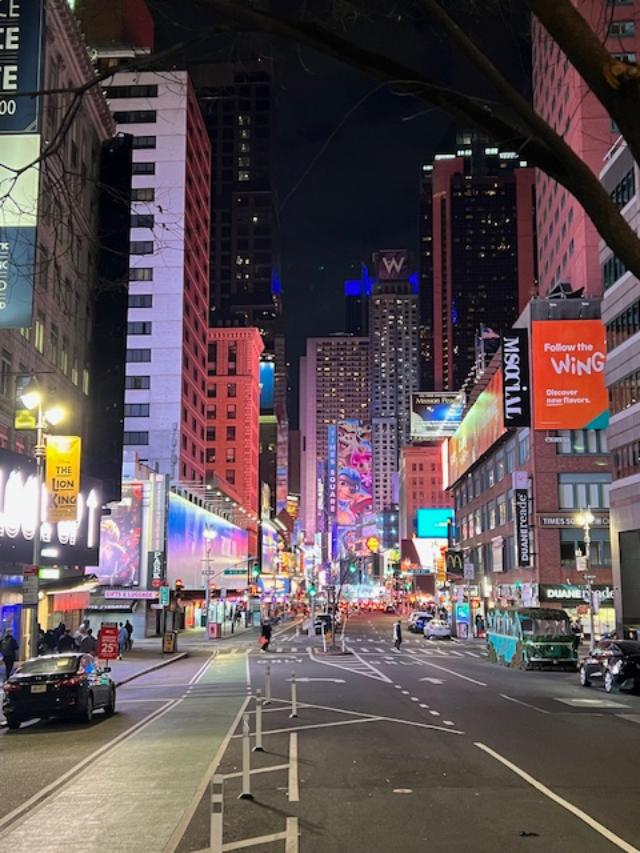
Broadway and West 53rd Street at night in 2024. Life has returned.
I had to avoid this area when the City reopened in June of 2020 because it was basically cordoned off by the police and since there was nothing open at the time, I could not give it a fair analysis. So I moved onto Murray Hill, Kips Bay, Chelsea, the Garment District, Hells Kitchen, NoMAD and Rose Hill just south and west of this neighborhood. I had just finished the Flatiron District before I would attempt this again. Trust me when I say that the Theater District/Times Square area is always in a state of transition.
They are literally always knocking it down and rebuilding it. What had been falling apart in the 1970’s and early 1980’s was now the glittering part of Manhattan. Still edgy at its core but much nicer than it had once been.

The Theater District at Seventh Avenue and West 53rd Street at night in 2024.
Even though the weather was cold, it was nice to finally walk around the City again. Since school had started at both colleges right after Labor Day, the semester had been a rough one. It still produced straight ‘A’s’ and three enormously successful projects, I wanted to get back to exploring Manhattan again. Walking the streets of the theater district opened my eyes to the changes this neighborhood had and was still going through.
I started the walk on a cold gloomy day in Mid-February and the streets were really empty. It was still getting dark early so time was of the essence every day of the walk. I had to revisit West 53rd Street to West 50th Street twice because the pictures never came out the way I wanted them to.

Hello Deli at 215 West 53rd Street was featured on ‘The David Letterman Show’ for years.
My review on TripAdvisor:
My review on DiningonaShoeStringinNYC@Wordpress.com:
https://wordpress.com/post/diningonashoestringinnyc.wordpress.com/5109
Every part of the Theater district is marked with either scaffolding or a hole where a new building is going up. There is such a hodge-podge of architecture in this section of the City. Historic buildings are hugged up against modern structures and small tenement buildings are right next to large modern hotels. Here and there you have to look but there is a real character to the Theater District.
I started my tour with something to eat. I stopped at Hello Deli at 215 West 53rd Street for an early dinner. I had not realized that this was the deli that David Letterman had made famous when he was on the Late Show. I looked at the reviews online and remembered the owner from so many years ago. The food is really good and very reasonable for Midtown (see my review on TripAdvisor).
I decided on a breakfast sandwich (they serve breakfast all day) called “The Doughy”, which was two scrambled eggs with bacon and American Cheese topped with a freshly fried hash brown on a toasted roll. On a cool late winter afternoon it hit the spot.
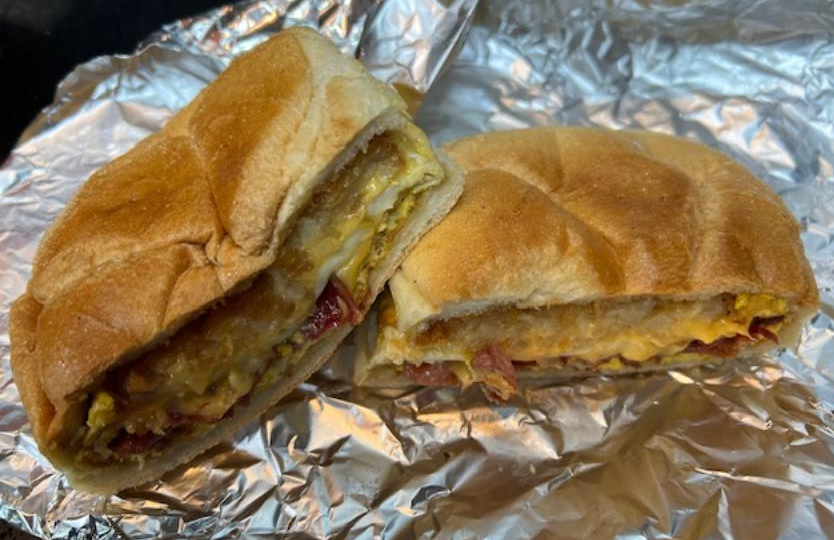
“The Doughy” at Hello Deli
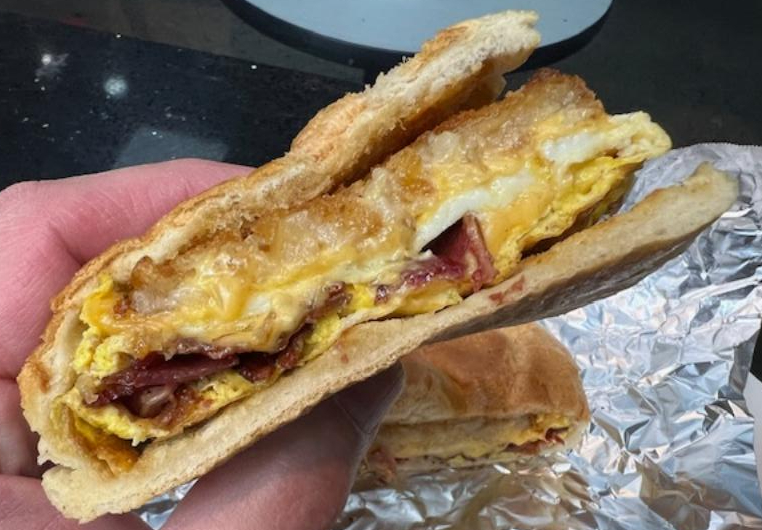
“The Doughy” is wonderful.
The selection at Hello Deli is extensive with sandwiches, snacks and drinks.
The nice part about Hello Deli is that there are tables outside when the weather is warm or you can just eat inside and people watch all the passersby in Times Square. It is always busy in this neighborhood.
I continued down West 53rd Street, passing the juxtapose of buildings on either side of the street. The first thing I started to notice was all the street art along the Avenues. Corporate America loves to decorate the streets. All over the neighborhood are statues, murals, artwork and embellishments on the buildings that you really have to take notice of when walking in the Theater district. The only reason you should have your cellphone out is to take pictures of all these wonderful things to see. Also spend a lot of time looking up at all the buildings from around the turn of the last century that now dot the neighborhood. You could miss a lot.

Jim Rennert’s ‘WTF’ is on the corner of West 53rd and Broadway.

The plaque for one of my many sculptures that Jim Rennert has in the neighborhood.

Artist Jim Rennert
Jim Rennert is an American born artist known for his large bronze sculptures depicting the everyday man. Mostly self-taught, his works are seen all over the country and really do make a statement.
In between Sixth and Seventh Avenues is a small street called ‘6 1/2 Avenue” that runs through the corridors of several buildings creating an urban walk between all the new construction that had been created between all the buildings. This is now used for cafes, lighting displays, small restaurants seating areas and for art displays.
This is the outdoor seating area for La Grande Boucherie restaurant at 145 West 53rd Street
https://www.boucherieus.com/la-grande-boucherie-menus
Review on TripAdvisor:
The reviews for this restaurant are amazing but so are the prices. A thirty dollar hamburger and fourteen dollars for soup? Not on my short list for right now but the food looks spectacular. I have to stick with the local restaurants for now. Right across from the restaurant as you continue down 6 1/2 Avenue, this wonderful light display illuminates the pathway while walking down.

I ended this part of the walk on Fifth Avenue, the border between the Theater District/Times Square and Manhattan East, which is part of Midtown. This classic area of Manhattan is filled with classic historic buildings, modern architecture and sleek new construction. The Theater District is becoming an extension of this area as the Hudson Yards is slowly becoming part of Midtown. The midsection of Manhattan is quickly changing even before the pandemic.

St. Thomas Church Fifth Avenue at 1 West 53rd Street
https://www.facebook.com/SaintThomasChurch
I reached the corner of West 53rd and Fifth Avenue to the beauty of St. Thomas Church.
St. Thomas Church was designed by the distinguished architectural firm of Cram, Goodhue and Ferguson and completed in 1913, Saint Thomas Church is built in the French High Gothic style, with stone ornamentation of the later Flamboyant period in the windows, small arches of the triforium, and stonework surrounding the statuary in the reredos. The flat wall behind the altar is characteristic of English cathedrals, and the magnificent reredos, one of the largest in the world, is strongly suggestive of the single, massive windows that terminate the naves of many English churches designed in the Perpendicular style (St. Thomas Church Website).
I stopped on the corner of West 53rd Street and Sixth Avenue for late lunch at Halal Guys Cart. This is where the empire started. There are now franchise stores of Halal Guys at started in 2015 all from this little cart right across the street from the MoMA. I have been coming here for over twenty years and the food has always been excellent.

The Halal Guys cart under the scaffolding on West 52nd Street and Sixth Avenue
https://thehalalguys.com/locations/west-53rd-street-new-york/
My review on TripAdvisor:
My review on DiningonaShoeStringinNYC@Wordpress.com:
https://wordpress.com/post/diningonashoestringinnyc.wordpress.com/1093
As you can see, I love the food here. It is my ‘go-to’ place on a cool night for a hot meal. This is more my price point with this project, plus I like to eat in the small plaza across from the MoMA when the weather is nice. I love the Combo sandwich (Gyro and Chicken with vegetables) and this is my staple except when I am really hungry and go for the Mixed Platter. This is the original cart that started the whole chain and it still is popular with tourists and business people alike.

The menu at Halal Guys Cart is really popular with everyone and the lines can get long at lunch time and early dinner. The Mixed Sandwich is the best!

The Mixed Combo sandwich with Gyro and Chicken lunch (Yum)
Across the street from the Halal Guys at the corner of Sixth Avenue and West 52nd Street is a very unusual blue stature that caught my attention. This is one of the corporate art works at that line Sixth Avenue and makes quite the statement. Sixth Avenue from West 59th to West 42nd Street around Bryant Park has become quite the ‘Open Air’ art museum. You just have to look around for the works tucked here and there by the buildings and in their lobbies. There is a lot to see. This piece is called “Jean Marc” and was created by artist Xavier Veilham.

Jean Marc statue at the corner of Sixth Avenue and West 53rd Street

Sign for artist Xavier Veilhan
Artist Xavier Veilhan was born in France and was educated at the Ecole nationale superieure des arts in Paris and at the Institut des hautes etudes en arts plastiques. He works in photography, sculpture, film, painting and installation art.

Artist Xavier Veilham
https://en.wikipedia.org/wiki/Xavier_Veilhan
I crossed the street and walked in the other direction past the very busy Museum of Modern Art and noted that I had not visited the museum in a while. There were some exhibitions that I wanted to see before they closed. I would visit the museum many times during my tour of the Theater/Times Square district.
The museum of Modern Art on West 53rd Street.
My review on TripAdvisor:
The Christmas decoration lights were still up on the Venus de Milo statues on the corner of Sixth Avenue and West 53rd Street. The singe Venus de Milo statues in the fountain and the double on the corner of West 52nd Street were designed by American artist Jim Dine.

Artist Jim Dine
https://en.wikipedia.org/wiki/Jim_Dine
Jim Dine is a contemporary American visual artist who graduated from Ohio University with a BFA. These are three of Jim Dine’s sculptures collectively entitled “Looking Toward The Avenue” installed in 1989 in the small plaza on the east side of Sixth Avenue at west 53rd and 54th Streets in Manhattan. The verdigris bronze statues emerge from a water pool. These sculptures are based on Venus de Milo, a masterpiece from the 2nd century BC (Big Apple Secrets).
Further down on the corner of West 53rd Street and Broadway is the shining red symbol of “Hope”. Now this could mean hopefuls on Broadway making their duet, hopefuls coming to the City for the first time to follow their dreams or maybe to a City that has had many ups and downs that it needs this message. It stands like a beacon at the heart of the Theater District.

The ‘Hope’ sculpture on the corner of Broadway and West 53rd Street.
The “Hope” sculpture was placed here in 2014 on ‘International Hope Day’ which also happened to be the artist’s 86th birthday, Robert Indiana. He created the sculpture in 2008 and offers encouragement in the future.
Robert Indiana is an American born artist who studied at the Art Institute of Chicago, the Skowhegan School of Sculpture and Painting in Maine, and the Edinburgh College of Art in Scotland. He was known for his large pop art sculptures.

Artist Robert Indiana
https://www.robertindiana.com/
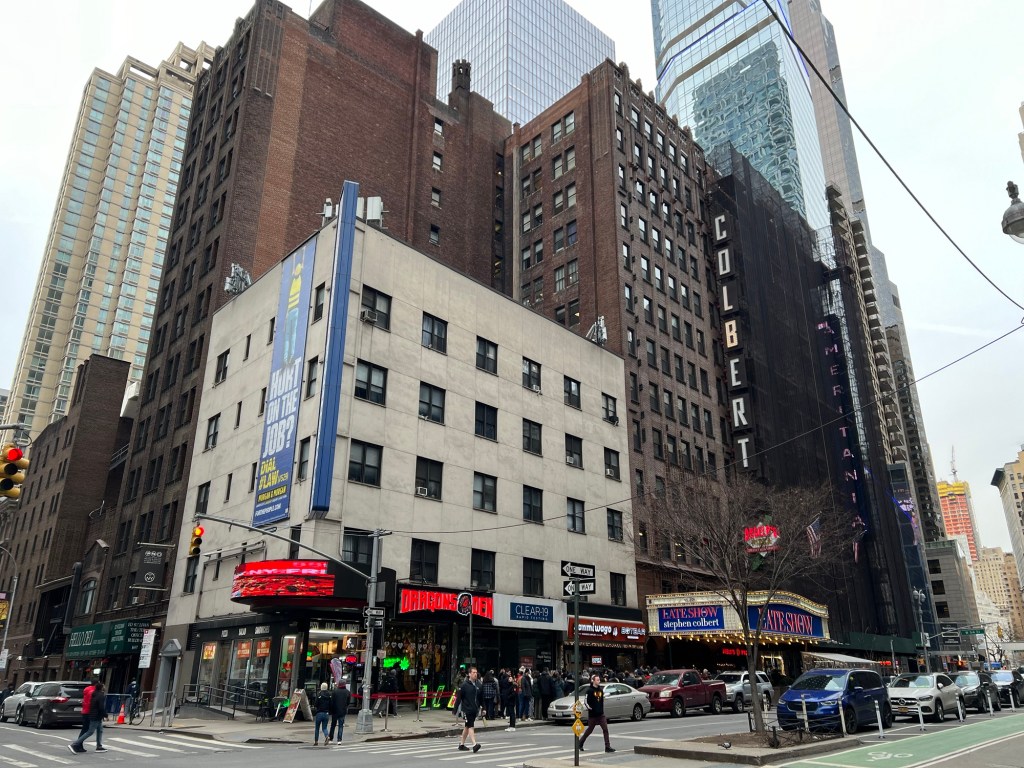
The dominant theater is Ed Sullivan Theater where the Late Show with Stephen Colbert is filmed. The neighborhood around it and its businesses were made famous by David Letterman, the former host.
It was getting dark and gloomy when I started walking West 52nd Street. It got colder and darker and the pictures I was taking didn’t come out the way I wanted so I stopped for the evening. I planned the next day earlier on a sunny day.

Looking down Sixth Avenue from West 52nd Street to see the corporate core of the neighborhood.
I decided to walk the neighborhood again starting first with West 53rd Street and a trip to inside of the Museum of Modern of Art. I had not been the museum in months and wanted to see some of the exhibitions from the holidays before they closed. The morning was a bit gloomy and I figured that walking around the museum would be a good idea until it cleared up and got warmer. The museum was filled with people who had the same idea.
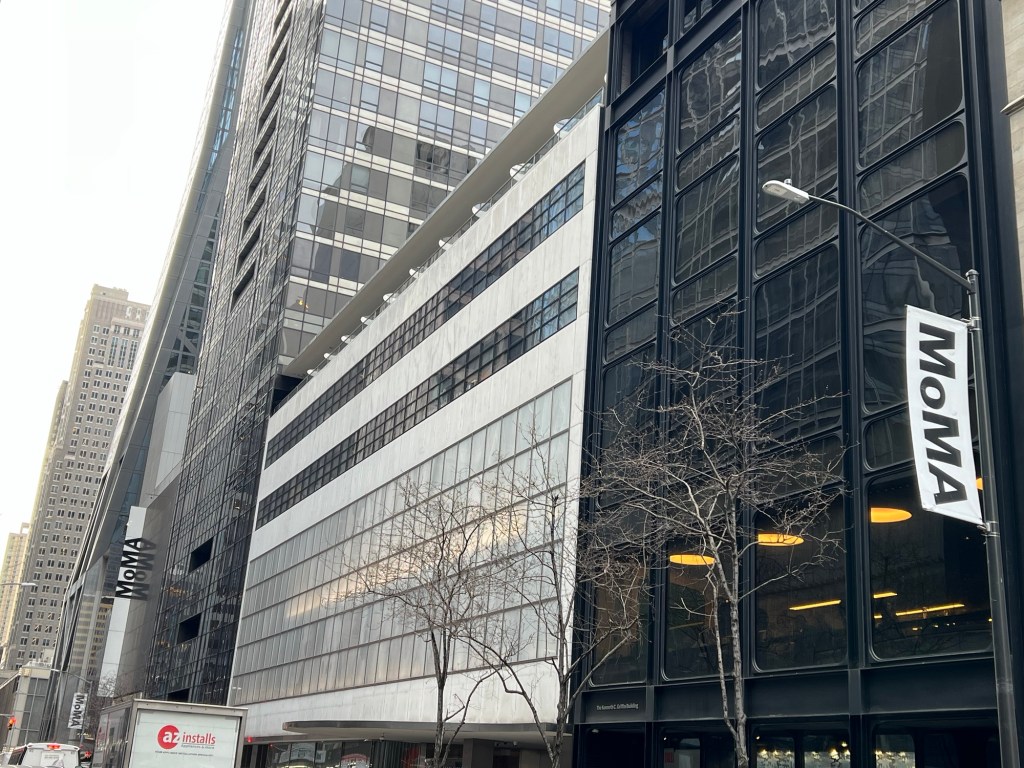
The Museum of Modern Art at 11 West 53rd Street
My review on TripAdvisor:
The museum was really busy that morning with many tourists milling around the museum and visitors visiting a lot of these exhibitions that were about to close. I had wanted to see the new Picasso exhibit so I headed upstairs and walked around the exhibition.

The “Picasso at Fontainebleau” exhibition before it closed for good.
https://www.moma.org/calendar/exhibitions/5530
The highlight of my tour that afternoon was the ‘Picasso in Fontainebleau’ exhibition and the works from that period. I had seen many of these paintings before in retrospect’s of the artist’s work many times at this and many other museums, but I never tire of them. My favorites from the exhibit were the ‘Three Musician’s’ paintings which are great to see side by side.

“The Three Musicians”
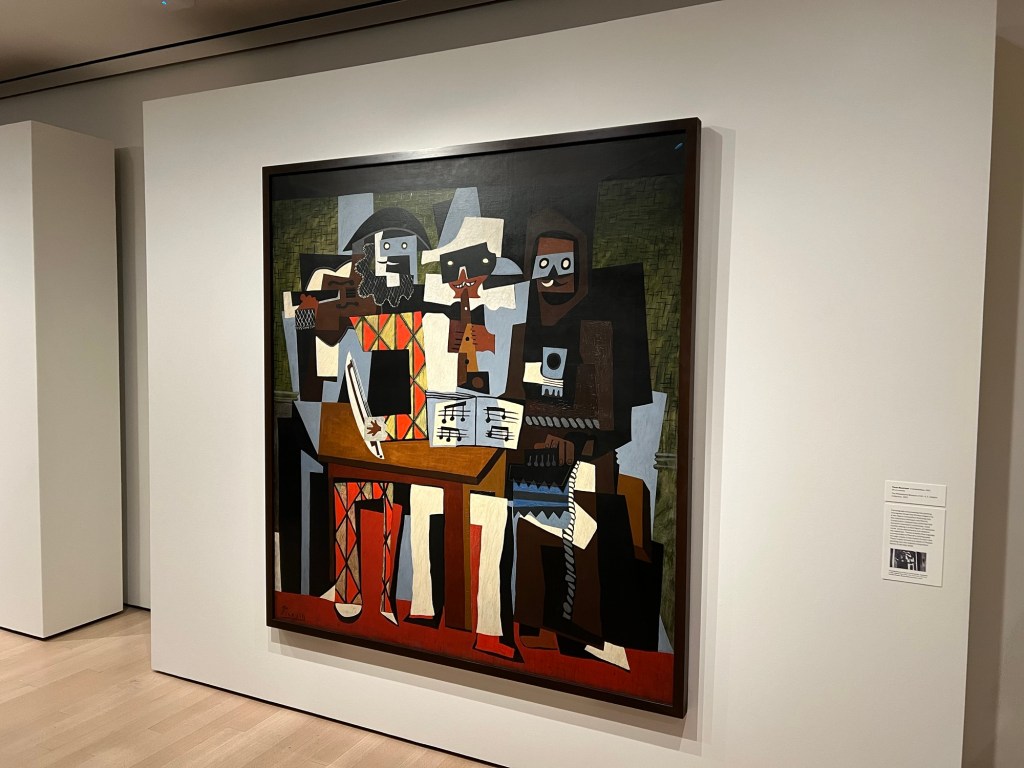
“The Three Musicians”
After I left the MoMA, I rewalked all of West 53rd street and really noticed the beauty of the alley 6 1/2 Avenue when it runs between the office buildings between West 53rd and West 52nd Streets. This is the best place to eat lunch and people watch when you are in the neighborhood.

The view of the skyline from the courtyard.

On a nice day, it is a great place to read a book or write just watch where the pigeons park themselves in the trees. I have gotten hit in the past. Same when sitting down, you have to look for a clean spot before you eat lunch.
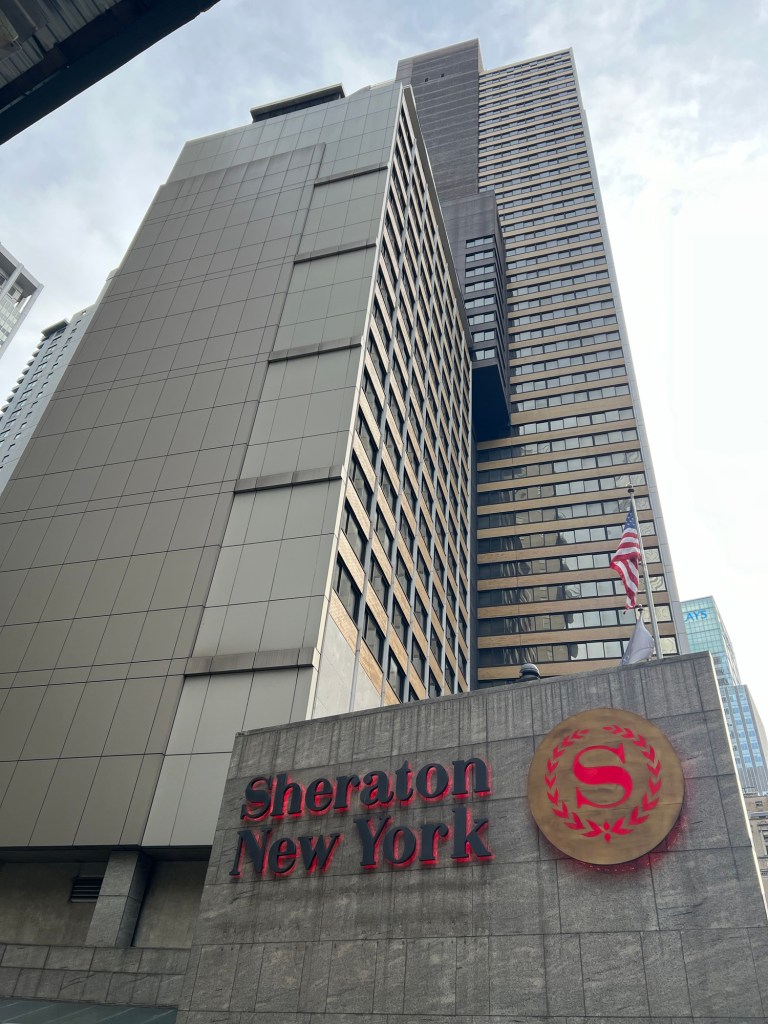
The Sheraton New York Times Square at 811 Seventh Avenue.
https://www.marriott.com/en-us/hotels/nycst-sheraton-new-york-times-square-hotel/overview
Review on TripAdvisor:
Passing the Sheraton New York again, I thought all the times I visited my best friend there. The hotel still had some of their holiday decorations in the front of the hotel. I continued the walk down West 52nd Street. This hotel was once the ‘bright star’ of the ITT hotel empire.
This classic hotel was built in 1962 as the Lowes Americana Hotel and was designed by architect Morris Lapidus. When the hotel opened up, it was the world’s tallest hotel and is still considered one of the 100 tallest hotels in the world. The hotel had been built to host convention business which it is still known for and its unique design was created due to zoning regulations along Seventh Avenue that created its unique look. The hotel was sold to Sheraton (which is now part of Marriott) in 1979 (Wiki).
Before I passed the historic Neil Simon Theater while walking down West 52nd Street when I admired piece of artwork above the door at 245 West 52nd Street with all the characters of the theater. I thought it was pretty unique. This was located on top of the doorway of the August Wilson Theater.
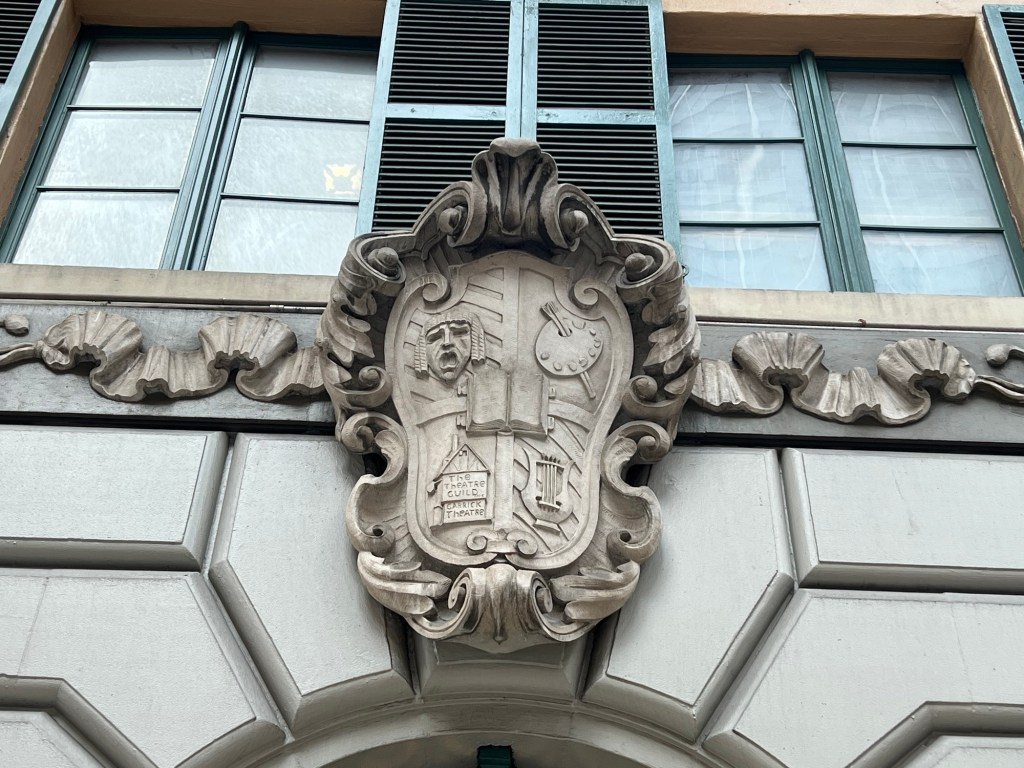
The artwork above the doorway to the side of the building at 245 West 52nd Street.

The doorway to the August Wilson Theater at night is just as interesting.
https://www.timessquarenyc.org/locations/august-wilson-theatre
Next to the August Wilson Theater is the Neil Simon Theater which was still having their performance the day I passed it. After the evening performances around 10:00pm, this area is jammed with people waiting for the stars of the show to come out and sign autographs.

The Neil Simon Theater at 250 West 52nd Street near Broadway.
https://broadwaydirect.com/theatre/neil-simon-theatre
https://en.wikipedia.org/wiki/Neil_Simon_Theatre
Review on TripAdvisor:
The Neil Simon Theater was designed by architect Herbert J. Knapp and opened in 1927 as the Alvin Theater (the acronym for the owners Alex A. Aarons and Vinton Freedley). It was renamed the Neil Simon Theater after the famous playwright in 1983. The theater has an exterior of brick and terra cotta which is a New York landmark and the interior was designed in the Adam style after William Adam, a Scottish architect who created the neoclassical design (Wiki). The theater has been host to many famous shows and sits in the heart of the Theater District.
Passing the Sheraton New York Times Square again, I never realized how big this hotel was and how it dominated Seventh Avenue. It takes almost half of the city block between Seventh and Sixth Avenue.
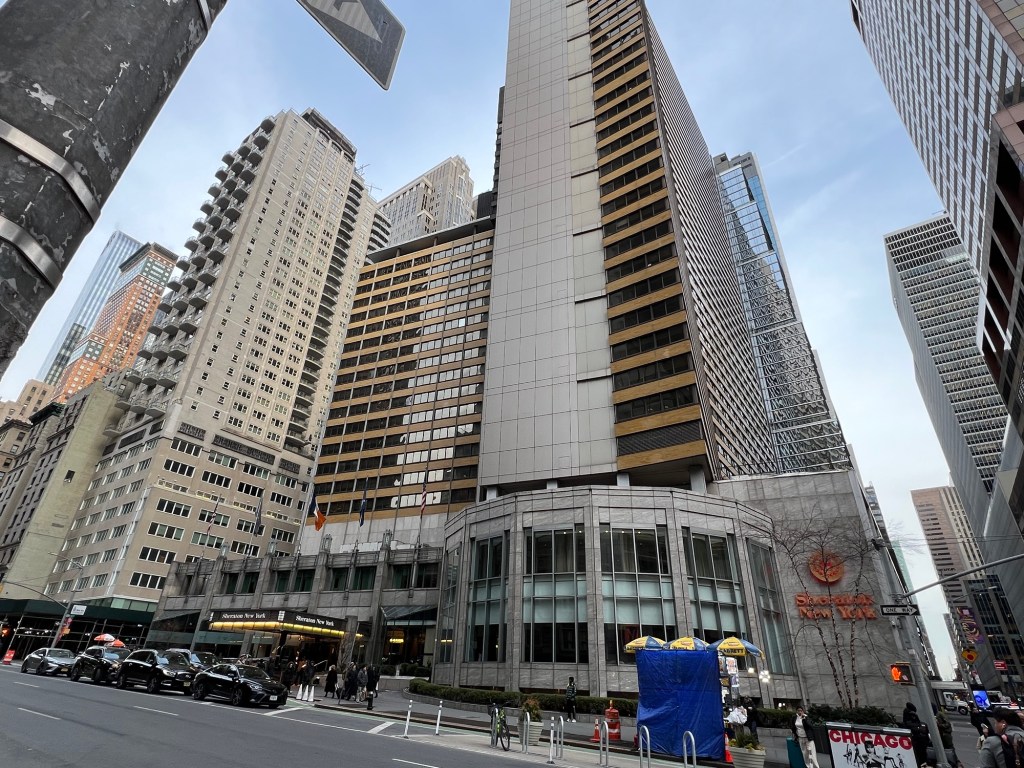
Passing the Sheraton Hotel from the other direction shows how much real estate it takes up on Seventh Avenue. I passed the second set up twin Venus De Milo’s by artist Jim Dine on the West 52nd Street side of the building.

The statues of the Venus de Milo at West 52nd Street were still decorated for the holidays but were not as beautiful as when the Christmas holiday season was in full form along Sixth Avenue. These interesting statues grace the outside of 1301 Sixth Avenue.

The statues at Christmas time in front of 1301 Sixth Avenue. Sixth Avenue is pretty spectacular at the holidays and should not be missed when touring around the City at Christmas time.
As I walked down West 52nd Street, I passed the Paley Museum which I had been a member of for years in the early 2000’s before YouTube became a place to watch old shows and commercials. Their video library was the only place to find them until everything started showing up on YouTube and made the library obsolete and one of the reasons why I was a member. That and it was a good place to escape the troubles of post 9/11 New York City. The museum still has a lot of programs going on during the week.
The Paley Museum started as the Museum of Broadcasting & Radio in 1975 with a donation from William Paley, the head of CBS. The museum was designed by renowned architect Philip Morris and has a classic appearance. The museum mission is to preserve television, radio and movie history and works are collected and shown in the various screening rooms in the museum. There is all sorts of educational programming and celebrity visits during the year. The museum was renamed The Paley Center for Media in 2007 now known as the Paley Museum (Wiki).
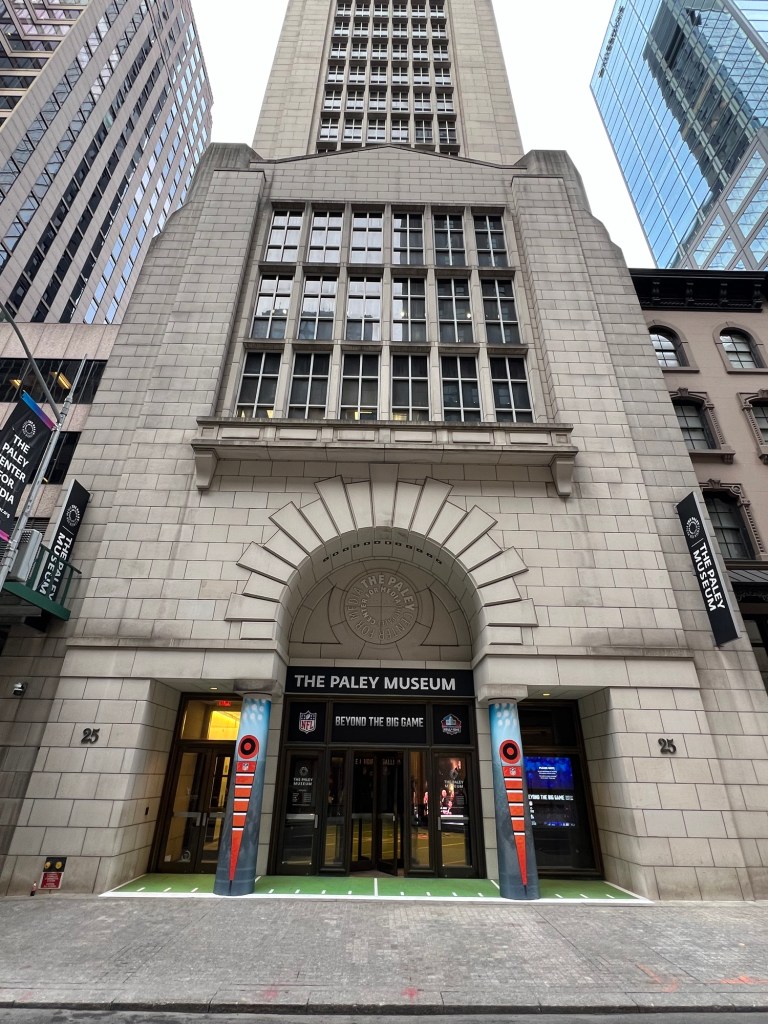
The Paley Museum (Center for Media) at 25 West 52nd Street
My review on TripAdvisor:
The former ‘21 Club’ is right next door to the museum. The “21 Club” was once one of the classic New York City restaurants with a long history and roots in Prohibition. The club opened in its current spot in 1930 with roots dating back to 1922. It was one of the most famous ‘speakeasies’ of Prohibition with elaborate secret passages and doors to hide the liqueur. The restaurant closed in March 2020 after 90 years of operation due to the pandemic and has not reopened. There is still uncertainty in the restaurants future (Wiki).
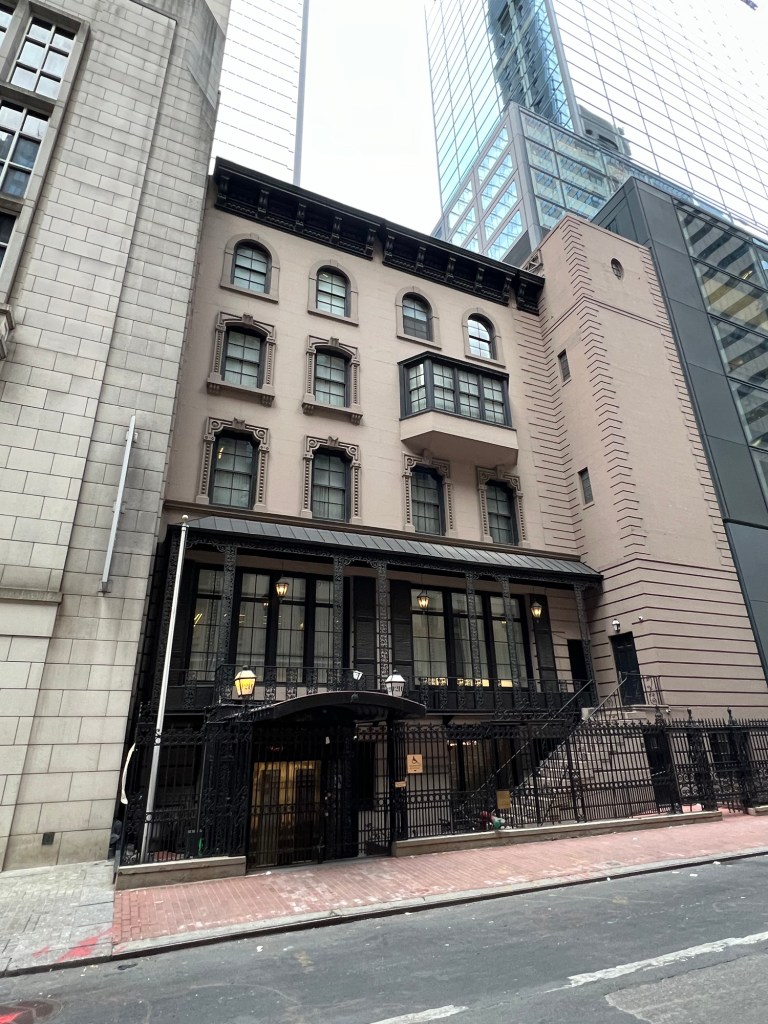
The 21 Club
My review on TripAdvisor:

The 21 Club closed during the pandemic when they could not pivot to delivery or pick up and they never reopened the restaurant. It has now been sitting dormant for four years. It is surprising considering its history and location.
I had spent a Father’s Day there probably back in 2008 or 2009 with my dad. We got all dressed up and went to lunch here and then went to see a show. I still remember the wonderful soft shell crabs I ate that afternoon. I also remember the Men’s Room Attendant asking me if I was black (I had a really deep tan at the time). He was insistent that I was not White and that I must have a black parent. That always stuck with me.
As I made my way around Fifth Avenue and back down the other side of West 52nd Street, I passed the American Girl Doll store at 75 Rockefeller Plaza Floor One. I thought it was a free standing store. It was much easier to maneuver around this store than their old one which was on Fifth Avenue before 2008 meltdown. I think the rents on Fifth Avenue were getting to be too much for them.
The American Girl Store at 32 West 52nd Street took over the old School of Visual Arts building and stretches into it home at 75 Rockefeller Plaza on West 51st Street.
https://www.americangirl.com/pages/retail-new-york
Review on TripAdvisor:

The inside of the American Girl Doll store on West 52nd Street. It is like a doll museum.

The American Girl Doll Cafe and Specialty doll area
The American Girl Doll store had a really nice selection of dolls and accessories and had a lot more space to walk around than the previous store on Fifth Avenue. These ‘lifestyle dolls’ have their own story and their own collections kept in their own in house boutiques. That’s what makes these dolls so special. That and their realistic take on playthings. In the late afternoon during the week though there was more staff there than there were customers.

The Cartier store at 653 Fifth Avenue
https://stores.cartier.com/en_us/united-states/ny/new-york/653-fifth-avenue
Review on TripAdvisor:
As I rounded Fifth Avenue, I saw the beauty of the Cartier store, which is a former ‘Gilded Age’ mansion at the corner of 653 Fifth Avenue. The store was once home to Morton Freeman Plant, the son of railroad tycoon Henry B. Plant. The home was designed by architect Robert W. Gibson in 1905 in the ‘Neo-Renaissance style’. Mr. Plant felt later that the area was getting too ‘commercial’ and moved further uptown and Cartier bought the building in 1917 (Wiki).
On the way back down West 52nd Street, I passed by 6 1/2 Avenue and saw the interesting and very unique statue of a ballerina balancing on top of an elephant by artist Barry Flanagan.
The elephant statue
Artist Barry Flanagan
https://en.wikipedia.org/wiki/Barry_Flanagan
Artist Barry Flanagan was an Irish-Welsh artist who studied at the Birmingham College of Arts & Crafts and St. Martin’s School of Art. He is best known for his larger sculptures of hares and other animals. These sculptures on West 51st and 50th Streets are prime examples of his works (Wiki).
Walking further down the street. I walked into Urban Space, one of the many food courts catering to the office worker and tourist crowds that visit Times Square. What I like about these food courts is that they house many branches of independent upscale restaurants from New York City and the surrounding areas that cater to a customer who enjoys innovative and sustainable dining.
The entrance to UrbanSpace at at 152 West 52nd Street
https://www.urbanspacenyc.com/west-52nd
Review on TripAdvisor:
The wonderful assortment of restaurants to choose from in the food court.
I continued walking down West 52nd Street, ducking through here and there. what I really liked was the views of Midtown from both Broadway and Sixth Avenue. This is what everyone imagines when they think of New York City.
Broadway looking down from West 52nd Street.
My walk that afternoon continued down West 51st Street. I passed 6 1/2 Street again to see another Barry Flanagan statue, the ‘Hare on the Bell’ on the other side of the walkway. That was an interesting piece hidden under scaffolding. I really had to walk around it to admire how whimsical it was. I have to say that the artist has a sense of humor.
The ‘Hare on top of the Bell’ by artist Barry Flanagan at 6 1/2 Avenue.

The statue’s plaque beside the statue.
When I reached Sixth Avenue and West 51st Street, I entered the beginning of the Rockefeller Center complex with its beautiful Art Deco architecture and interesting details on the buildings plus a post-Christmas Skating Rink.

Radio City Music Hall along Sixth Avenue
The Rockefeller Center complex contains 19 commercial buildings covering 22 acres of Midtown Manhattan. The 14 original buildings were commissioned by the Rockefeller family that span the area between Fifth and Sixth Avenue that contain such famous landmarks as the Skating Rink, Radio City Music Hall and 30 Rock, the home of NBC. The artwork that adorns the buildings and plazas were designed by multiple artists (Wiki).
I have toured this complex so many times and never noticed all the beautiful carvings and artwork. This is what you can discover when you look up and take the time to admire these beautiful buildings.
The artwork all over Rockefeller Center is unique. This work is called “The Cornucopia of Plenty” by artist Lee Lawrie with colorist Leon V. Solon (Rockefeller Center website)
This polychrome-painted stone carving depicts a messenger soaring from the clouds, emptying an overflowing horn onto the earth. Lee Lawrie wrote that it symbolizes “the plentitude that would result from well-organized international trade”, a theme compatible to the activities of the building. The figure’s downward angle, her flowing golden hair and the dramatic spilling of contents from her cornucopia all skillfully convey a feeling of motion and energy (Rockefeller Center website).
The outside of 640 Fifth Avenue
The Toots Shor Restaurant plaque

The Toots Shor’s Restaurant plaque at 51 West 51st Street
https://en.wikipedia.org/wiki/Toots_Shor%27s_Restaurant
This plaque was tucked into construction work and could easily be missed of this once famous celebrity hangout that closed in 1971.
The details of Rockefeller are wonderful. The buildings in the complex have a creative whim to them. You really have to stop and look at the details of each of the buildings to see their true beauty. This building was designed by architect Raymond Hood and completed in 1935. The detailed artwork of Attilio Piccirilli sits above the entrance (Wiki/Rockefeller website).

The food court the Urban Hawker at 135 West 50th Street
Review on TripAdvisor:
The whole food court is filled with restaurants from all over Asia. So you can Thai Pad Thai or Singaporean Chicken Rice and a lot more to choose from. The selection of different foods was fantastic and offered a great selection. The food court has a great selections of foods and delights available in each stall and then you can take your meal to one of the many seating areas in the facility and relax and enjoy your meal.
The beauty of the complex offers so many gorgeous embellishments on the buildings.
https://www.tattiartconservation.com/projects/2016/10/13/rockefeller-center-medallion-series
These ornate metal-and-enamel plaques – each measuring an impressive 18 feet in diameter – were created in 1932 by the American mosaicist and painter Hildreth Meiere in collaboration with the master metal worker Oscar B. Bach. It was a felicitous pairing of artistic talents. Meiere, one the few women of the time working in the field of architectural decoration, was at the high point of her career. Bach, the redoubtable technician, was one of the few people able to realize her elaborate – even audacious – designs. Interestingly enough, Meiere’s medallions, which celebrate Dance, Drama and Song, were among the first artistic works completed for the center and they have served as enduring emblems of Radio City Music Hall (Tatti Art Conservation website).

Artist Hildreth Meiere
https://en.wikipedia.org/wiki/Hildreth_Mei%C3%A8re
Artist Hildreth Meiere is an American born artist from New York City. She studied at such prestigious schools as the Art Students League of New York and the San Francisco Art Institute. She was known as a muralist with a specialty in Art Deco designs (Wiki)
Rockefeller Center’s entrance to the Observation Deck at 50 West 50th Street adorned with the carving “Radio” by artist Leo Friedlander.
Artist Leo Friedlander (Wiki)
https://americanart.si.edu/artist/leo-friedlander-1680
A native New Yorker, Leo Friedlander studied at the Ecole des Beaux-Arts in Brussels and Paris and was awarded the Prix de Rome in 1913. Radio is a companion piece to his Television, both themed after NBC, the building’s main tenant. The larger figure represents transmission, who sends the song of the figures on the east (broadcasting) to those on the west (acoustics). Mother Earth and her child represent the audience receiving the sounds of the radio. Size, mass, texture and repetition all work together here to lend strength to the architecture and interest to the carvings (Rockefeller Center History website).

Walking down West 50th Street toward the Rockefeller Center ice skating rink at twilight. Rockefeller Center is brilliant in the early evening when the lights come on and the music is playing.
Across from the skating rink and at the entrance of the building is the artwork “The Story of Mankind” by artists Lee Lawrie and Leon V. Solon. This beautiful art display towers over the entrance to the building.

“The Story of Mankind”

The Story of Mankind is a massive carved limestone screen divided into fifteen small rectangular spaces that Lawrie termed “hieroglyphs”. It was created to symbolize the purpose of the International Building and to chronicle mankind’s progress, starting with the bottom center’s four figures depicting the races of mankind. The sailing ship image above them symbolizes international trade, while other symbols include a Norman tower as pre-industry, a lion as kingdoms of the world, and Mercury as worldwide communication. The clock and rays at the very top represent earth (Rockefeller Center History website)
When I got to the Skating Rink across the street, there was a large crowd and a lot of activity on the ice as the music was playing and everyone was having a good time. With all the white lights on the trees surrounding the rink and the music I would have sworn it was still Christmas.

The detail work on the building on Rockefeller Center “The Immigrant” by artist Giacomo Manzu.
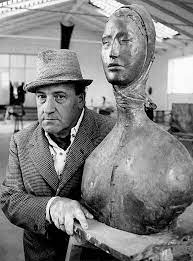
Artist Giacomo Manzu
https://www.britannica.com/biography/Giacomo-Manzu
‘The Immigrant’ is the companion work to the large panel titled Italia, this bas-relief is a poignant work depicting a weary barefoot mother and her naked child, the fundamental nature of poverty. She represents the Italian woman who, after the war and the loss of so many Italian men and homes, left Italy to seek new beginnings in America. Manzu is quoted as saying, “It is the immigrant’s search for two principal things—drinking and eating.” Here he captures universal human despair combined with a modicum of hope.
Three Golden Lions
https://www.rockefellercenter.com/art/arms-of-england
On this part of the building, I noticed the three golden lions that were above the doorway. I found out that these were the “Arms of England” artists Lee Lawrie with colorist Leon V. Solon. “Three gilded passant-gardant lions (passant means walking; gardant means looking out of the shield) reinforce the presence of the building’s primary tenant, the British monarchy. Lions were first used to decorate the shield of Richard I, who became King of England at age thirty-two and ruled from 1189 – 1199 (Rockefeller Center Art Website).
The skating rink was lit during twilight and this is when the magic begins in Rockefeller Center.
It still looked like Christmas time at Rockefeller Center with the white lights on the trees, the skaters bundled up and the festive music playing on the load speaker.

The Skating Rink was really active that evening with skaters having a nice time.
Video of Skating in Rockefeller Center during the post holiday season with great music!:
The statue of “Prometheus” at the head of the skating rink.
Of all the beautiful artwork that line the walls and courtyards of the complex, two stand out. Prometheus is a beautiful statue that stands proud above the ice-skating rink. This beautiful cast iron, gilded sculpture was made in 1934 by artist Paul Manship. The work is of the Greek legend of Titan Prometheus who brought fire to mankind by stealing it from the Chariot of the Sun (Wiki).
Mr. Manship was a well-known American artist who noted for his specialized work in mythological pieces in the classic style. He was educated at the St. Paul School of Art and at the Pennsylvania Academy of Fine Arts.

Artist Paul Manship
https://www.britannica.com/biography/Paul-Manship
The other standout statue is of the God Atlas that guards the courtyard of the International Buildings. The sculpture was created by artist Lee Lawrie with the help of Rene Paul Chambellan. The statue was created in the Art Deco style to match with the architecture of the Center and depicts Atlas carrying the celestial vault on his shoulders.

Atlas at Rockefeller Center
Mr. Lawrie was known as a architectural sculptor whose work is integrated into the building design. His work in the Art Deco design fit perfectly into the new building. Mr. Lawrie was a graduate of the School of Fine Arts at Yale.

Artist Lee Lawrie
The impressive entrance to the main building right in front of the ice skating rink.

The entrance to Rockefeller Center with the symbol of “Wisdom” at its entrance.
An Art Deco icon, ‘Wisdom’ famously looms over the entrance to the main building of Rockefeller Center and can be seen from Fifth Avenue. Created by Lee Lawrie, one of America’s foremost architectural sculptors, it is an impressive and imposing focal point. Wisdom is considered the creative power of the universe, and the figure’s commanding slant, intimidating expression and biblical quote help convey his strength, impact and control over man. It is flanked by two other important works by Lawrie: Sound and Light (Rockefeller Center History website).
As part of the shopping complex is the new flagship store of FAO Schwarz. It is not the store in the movie ‘Big’. The store went through bankruptcy a decade ago and an investment group bought the name and reopened the store in this location. The store still has a lot of its upscale and exclusivity in merchandise but is half the size of the previous store in the old General Motors Building up the road.
The entrance to the new FAO Schwarz at 30 Rockefeller Plaza.
https://www.rockefellercenter.com/shops/fao-schwarz
Review on TripAdvisor:
FAO Schwarz Fifth Avenue is one of the most iconic toy stores in the world. Founded in 1862 in Baltimore and moved to New York City in 1870, Frederick August Otto Schwarz opened his ‘toy bazaar’ in lower Manhattan. The Schwarz family owned and operated it for years featuring some of the most unique and special toys from all over the world. The store moved several times from Union Square to 23rd Street then to its iconic home at 745 Fifth Avenue (now Bergdorf-Goodman’s Men’s Store) and then to its famous home at 767 Fifth Avenue, which was made famous by the movie “Big” with Tom Hanks dancing on the famous piano.
The store has had many owners and moved from its iconic location to 30 Rockefeller Center. The store still its wonderful private label plush with “Patrick the Pup” plush and it’s great candy store, FAO Schweetz (where I was once the manager). The store is now opened by a private investment firm and still carries wonderful private label goods.

The candy department ‘FAO Schweetz’ located on the second floor.
The copy of the famous piano from the “Piano” scene from the movie big is located on the second floor and still attracts tourists from all over the world.
The piano from the movie ‘Big’ is located on the second floor of the store. There were two original pianos from the film, one was in the director of the film’s home and another had been sold off years ago. People have to remember that the movie “Big” was released in 1988 and shot over 25 years ago. The store in the movie was closed years ago.
The scene from “Big” with the piano.

The stuffed animal department is still amazing at the store as you enter and exit the front door. The store even on a quiet night is a tight squeeze and I would not want to be in the store on a busy holiday weekend. These “Patrick and Petunia Pups” are still a big seller and one of the softest stuffed animals you will find around. I love stopping at the store for old times sake even though this is not the store I worked at years ago. When I walked outside, Rockefeller Center was just being lit up at twilight.
It became twilight at Rockefeller Center as I exited the store by the skating rink. All the lights came on around 6:00pm and it is just spectacular to walk around the Theater District at this time of night. Everyone is getting ready to go to the theater, the restaurants are packed and people are just getting out of work. The City comes alive in the evening when it just starts to get dark. There was a show that evening at Radio City Music Hall so people were starting to line up and wait.
In the evenings, 1251 Sixth Avenue performs its magic of lights in their fountains facing Sixth Avenue
https://www.loopnet.com/Listing/1251-Avenue-of-the-Americas-New-York-NY/11790307

Walking past Broadway at 51st Street is a fantasy of lights. This is when Manhattan becomes quite brilliant and shows its personality. When I walk around the Theater District I think ‘this is what people think when they hear the words ‘New York’.

Sixth Avenue near Radio City Music Hall at night.
Fifth Avenue by Rockefeller Center in front of Saks Fifth Avenue.
Bryant Park during the end of the winter months before the leaves get on the trees.
I finished up for the evening walking around Bryant Park. The park is still busy even in the cooler months with the skating rink still in use and the restaurant vendors and bar still in operation after the holidays. The plaza below sits between West 42nd and West 41st just behind the buildings on Sixth Avenues and has the most amazing statuary. It also has great food trucks in the warmer months and it is nice to eat here. This is the park just before it closes for the evening.

The edge of the Theater District/Times square along West 42nd Street and Fifth and Sixth Avenues.

The New York Public Library at Fifth Avenue between West 41st and West 42nd Street.
https://www.nypl.org/locations/schwarzman
As I was finishing this part of the Theater District that evening, the City really came to life with this beautiful light show. This picture was taken when I passed the New York Public Library after it closed for the evening. All the statuary and windows are lit for the evening.

The view from the other side of the library at Fifth Avenue and West 41st Street is spectacular.

The views around the edge of the Theater District into the Broadway area are amazing.
When people complain about Manhattan, I just see the dazzling lights and remember how many people wish they were standing where I am standing. From where I was standing I felt like I was in the center of the world.
I returned the next day to continue my walk around the Theater District. For some reason the day before all the roads were blocked off and there were police all over the place. Maybe a VIP had come into the area but you could not walk around without garnering some attention so when I returned a few days later that was no longer the case.
I started the walk on the end part of West 51st Street and revisited some of the sites I had seen before.
It is strange that I never noticed this fountain and statues of a dog and rabbit before that sits behind 1221 Sixth Avenue between West 49th and West 48th Streets.
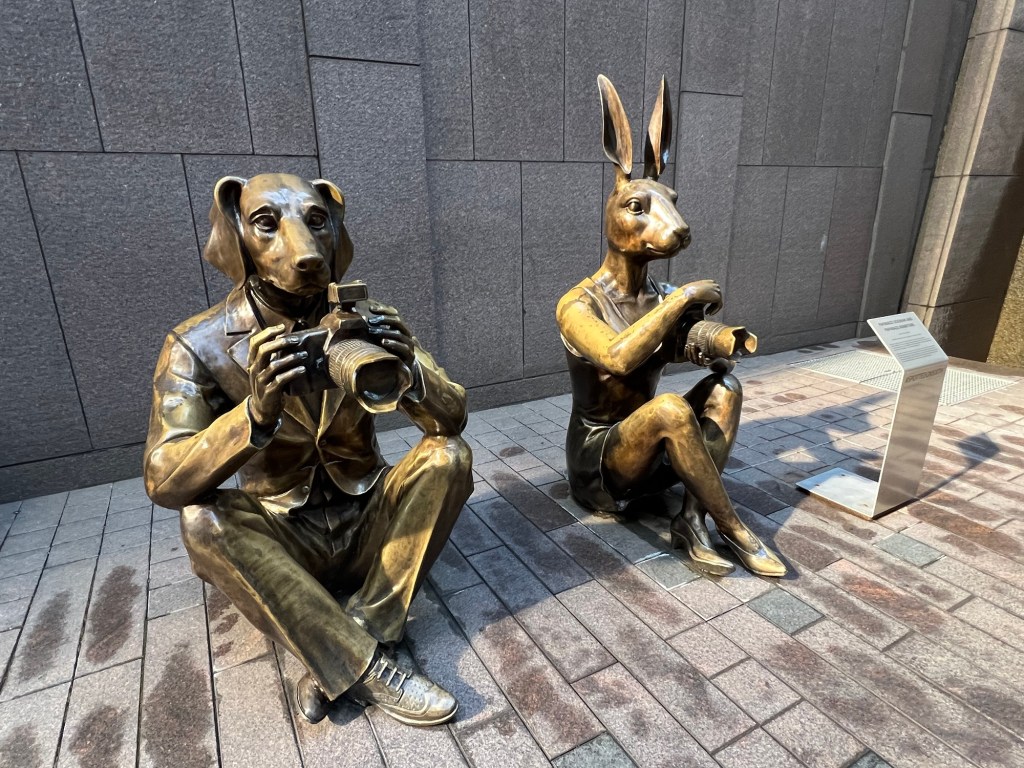
Paparazzi Dogman and Paparazzi Rabbitgirl by artists Gillie and Marc.
https://gillieandmarc.com/blogs/find-our-art/we-go-together-henry-norman-hotel-nyc
Thanks to The Avenue of the Americas Association we just installed the seven-foot tall Paparazzi Dogman and Paparazzi Rabbitgirl in Sixth Avenue opposite the Rockefeller Center in New York to promote diversity, love and acceptance and they’ve been a hit! The exciting, unprecedented installation is being hosted as part of the Association’s “Love the Avenue” campaign at lovetheavenue.com, which has demonstrated the enhancement of Sixth Avenue and Midtown over the past several years (Artist’s bio).

The artist’s plaque next to the statues.

Artists Gillie and Marc
https://gillieandmarc.com/pages/about
British and Australian artists, Gillie and Marc have been called “the most successful and prolific creators of public art in New York’s History” by the New York Times. Creating some of the world’s most innovative public sculptures, Gillie and Marc are redefining what public art should be, spreading messages of love, equality, and conservation around the world. Their highly coveted sculptures and paintings can be seen in art galleries and public sites in over 250 cities (Artists bio).
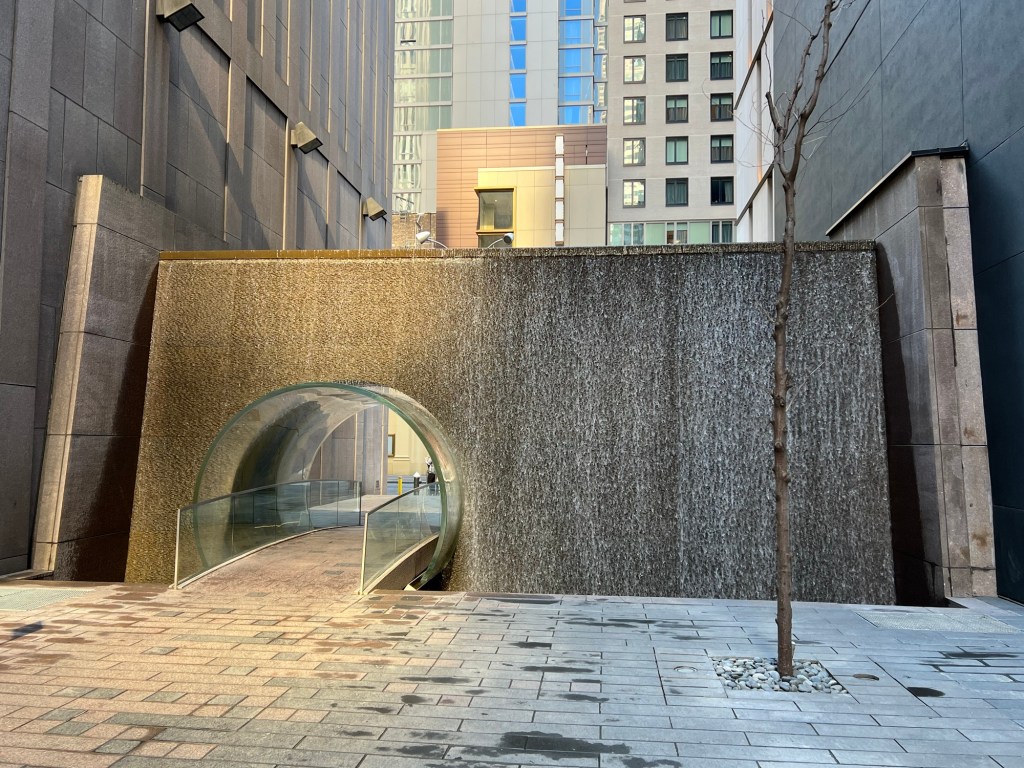
The fountain and plaza sits between West 49th and West 48th Streets behind 1251 Sixth Avenue. When you walk through the hole in the wall, you can see the water coming at you from the top and sides.
https://en.wikipedia.org/wiki/1221_Avenue_of_the_Americas
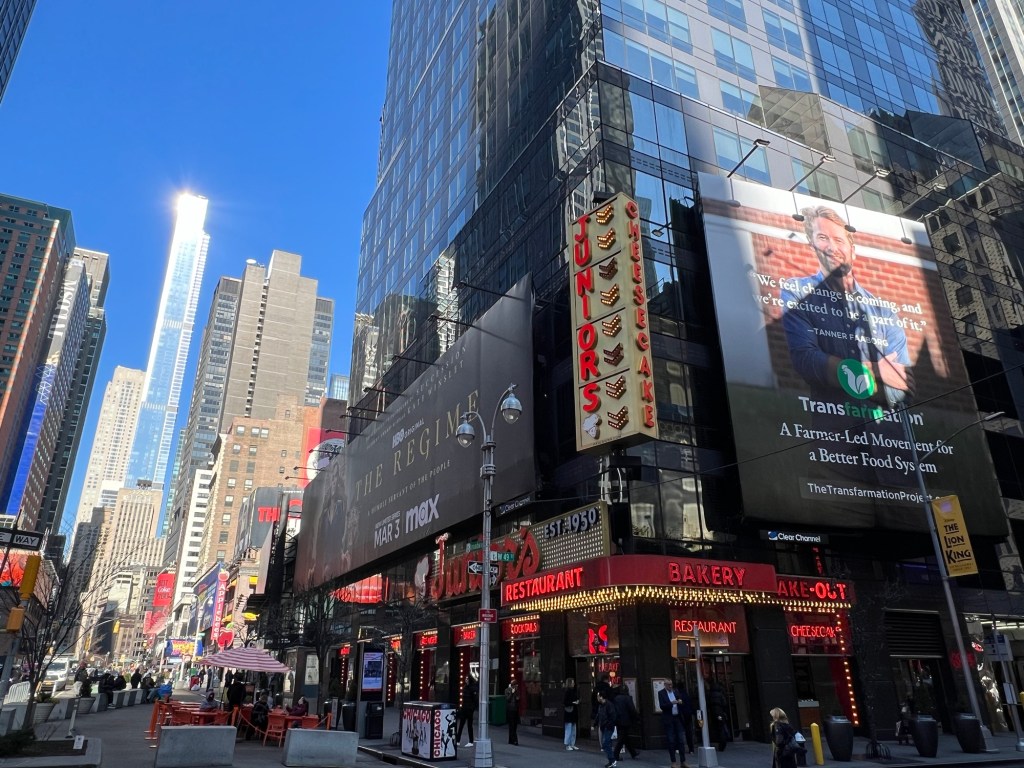
It was a beautiful day for a walk along Seventh Avenue in the Theater District. Even in the middle of a sunny day the lights add a sense of excitement to the area.
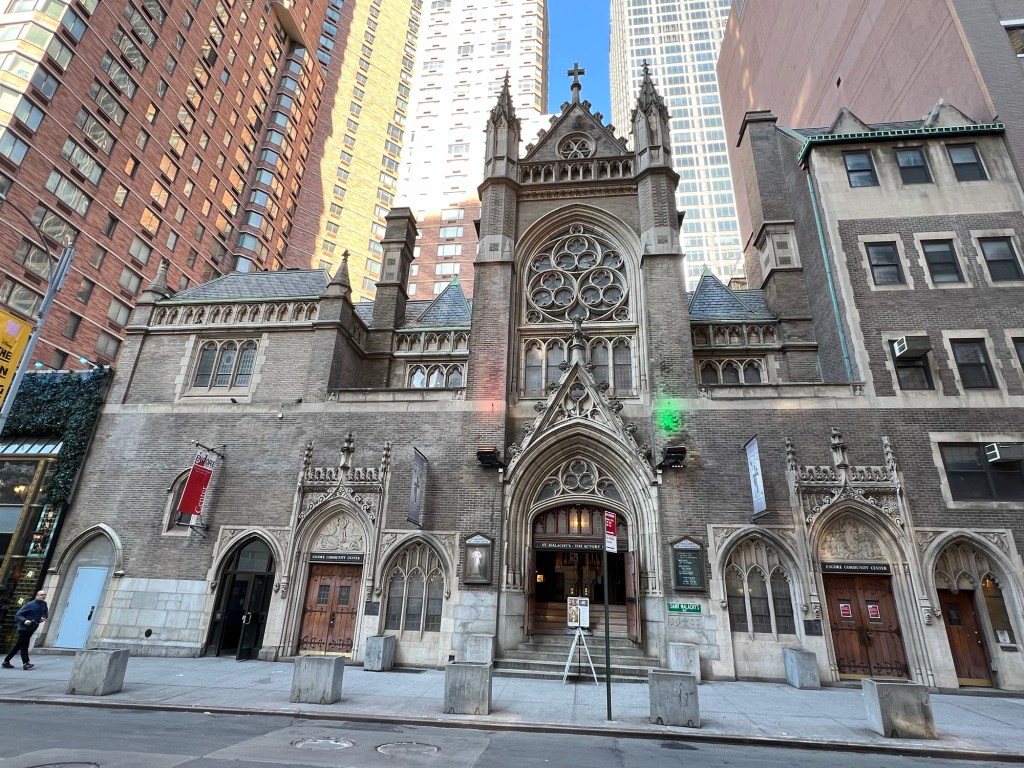
St. Malachy Roman Catholic Church, the Actor’s Church at 249 West 49th Street.
St. Malachy Roman Catholic Church, known as the Actor’s Church, was designed by architects John Hubert McGuire, Thomas J. Duff and Robert J. Reilly in the Gothic Revival design. The building was completed in 1920. Due to its proximity to the Theater District as it moved uptown in the 1920’s and 30’s, many actors, dancers and musicians started worship here (Wiki/St. Malachy website).
Walking down West 49th Street, I was stopped by this statue of a woman outside a well known restaurant in the heart of the Theater District, ‘Lilly’s Victorian Establishment at 249 West 49th Street in the Theater District. It was the statue of Lilly Langtry that caught my attention. That and the interesting window display.
https://www.lilliesnyc.com/menu-times-square
Review on TripAdvisor:
The statue of “Lilly Langtry” sits outside of Lillie’s Victorian Establishment.
Lillie Langtry was a highly successful British actress, a renowned beauty, and socialite of the late 19th century. She was notorious for her long list of prominent suitors, which included the future King of England, Edward VII. She was born on the Isle of Jersey, which lies off the southern coast of England, and was later known as the “Jersey Lillie” (Restaurant Bio).

Lilly Langtry, Actress and Socialite
https://en.wikipedia.org/wiki/Lillie_Langtry
Passing the restaurant and the statue of the famous actress, I found myself back at Rockefeller Center admiring more art along the walls of the buildings.
Walking back through Rockefeller Center I saw the carving “The Joy of Life” by artist Attilio Piccirilli.
Artist Attilio Piccirilli
https://en.wikipedia.org/wiki/Attilio_Piccirilli
John D. Rockefeller, the developer of the Center, was a reserved man who advocated temperance, yet this carving portrays the “joy” of life as wine. The main character is Bacchus, the Roman god of wine and revelry, who taught mankind the cultivation of the grape and then winemaking. He is depicted lolling on the ground in the center of the scene, surrounded by a group, and appears narcissistic. Lighthearted and decorative, the colors are as important as the carving, with the gray figures set against a brilliant blue sky (Rockefeller Center History website).
The Historic Longacre Theater is located at 220 West 48th Street.
https://shubert.nyc/theatres/longacre
Review on TripAdvisor:

The beautiful detail work on the Longacre Theater.
The theater was designed by architect Henry B. Herts, one of four currently operating Shubert playhouses that he designed. It boasts a French Neo-classical-style exterior and a Beaux Arts-style interior, but lacks some of the individuality and flair which characterized Herts’ other designs (Longacre website).
The Longacre, named for Longacre Square (now Times Square), was built by producer/manager H.H. Frazee (also known as the owner of the Boston Red Sox who sold Babe Ruth to the Yankees). After Frazee fell into financial difficulties, the theatre changed hands many times before being sold to Astor Theatre Incorporated, a Shubert subsidiary, in 1919 (Longacre website).
On the corner of West 49th and Broadway is the flagship Krispy Kreme Doughnuts, which makes wanting to go on a diet impossible. When you walk into this store, you are faced by the conveyor belt with doughnuts being dipped into the oil, shaken out and then having a thick layer of glaze on top of them.

The Krispy Kreme store at 1601 Broadway and West 48th Street.
https://www.krispykreme.com/timessquare
My review on TripAdvisor:

Just touring the store will make you hungry. The doughnuts are fried and glazed right in front of you and trust me, with all the tourists coming into this store, the doughnuts are never stale. A fresh Krispy Kreme doughnut is the best.

The doughnut cases are filled with delicious treats. The amount of doughnuts sold when I was there was tremendous. The selection of these doughnuts is extensive including a very expensive “Big Apple” doughnut that comes in its own box. Clever idea for all the tourists.
The views while walking around Broadway in the West 40’s in the middle of this neighborhood is spectacular. This is where the City ‘never sleeps’.

Wu Liang Ye Chinese Cuisine at 36 West 48th Street across from Rockefeller Center
My review on TripAdvisor:
Wu Liang Wu on West 49th Street is a very underrated restaurants in the neighborhood. It is one of the older and well known Chinese restaurants in the Theater and Business district. I had not eaten there in years but I remember the food being very good. Recently though the restaurant’s entrance is always behind scaffolding.
Another big theme store in Times Square is the M & M store at 1600 Broadway is another store that attracts lots of tourists and locals alike. I never really got some of these Times Square stores as they were not authentic New York City and were just another place for tourists to hang out and get a tee shirt but the kids just love the store.

The M & M Store at 1600 Broadway
https://www.mms.com/en-us/explore/mms-stores/new-york
My review on TripAdvisor:
The theme stores in Times Square like the M & M store, Kristie Kreme and the Hershey store is a strong attraction to families from out of town. Even though they can be touristy at times, they are still fun and the strong attraction of maybe getting an M & M sample is highly appealing to me. I loved all the characters all over the store and the displays are very over the top. You can even personalize your own color of M & M’s. It is fun to wonder around the store when it not thronged with people.
The inside of the M & M store on Broadway.
The inside of the M & M store on Broadway.
Down the street from the M & M store is the Hershey store displaying racks and racks of delicious Hershey products. This part of Broadway can get you fat if you let it. What I liked about the Hershey store but could not indulge in it this trip was the Shake bar they have at the back of the store. The selection of milk shakes they had on the menu looked really good and in the front of the store is a candy bar where the staff was creating homemade treats.
The Hershey store at 20 Times Square.
https://www.chocolateworld.com/locations/times-square.html
My review on TripAdvisor:
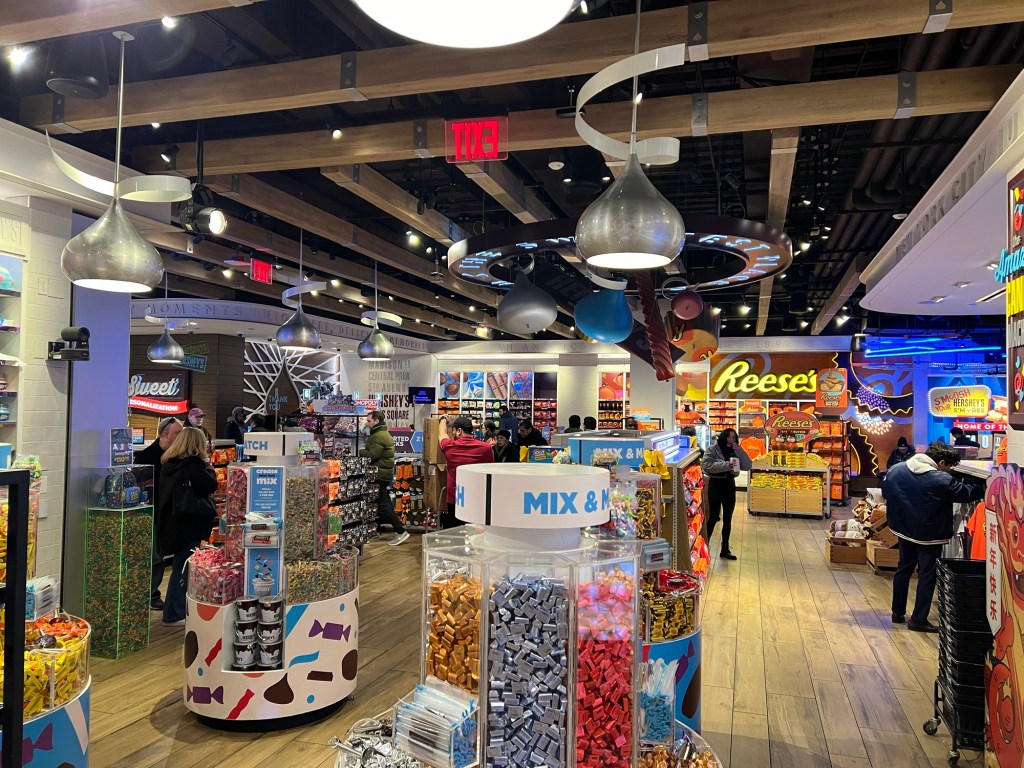
The Inside of the Hershey store is like walking through Mr. Wonka’s factory. There is something for everyone on the shelves and walls of this store. There are all sorts of candies that Hershey manufactures including the “World’s Largest Candy bar”. You can have everything chocolate from a think Hershey’s milkshake to make your own smores to creating a giant Reese’s Peanut Butter Cup. Your mouth will water like the other theme food stores in the area.
The world of Hershey

The selection of chocolates and candies at the store is extensive and expensive. You can find these things cheaper in the suburbs. What I liked about the store is ‘Make your Own Peanut Butter Cup” candy bar. Watching them be made is mouthwatering but over-whelming. Too much candy for me.
What looked really good was the Milkshake bar, with all the thick milkshakes in chocolate and vanilla leaving the store or consumed while people were walking around. Again for another trip but I made note of them for the future. Every once in a while, I think it is important to indulge in these items.

The World’s largest Hershey Bar almost tempted me.
When I rounded the corner from West 49th Street to West 48th Street, I came across the Engine 23/Battalion 9 firehouse. This firehouse got hit hard during 9/11 and I remember all the flowers outside the firehouse when I returned home from Guam in October 2001. This memorial is just outside the firehouse as a reminder of the ultimate sacrifice these men made that day.

The Engine 23 Memorial

The Engine 23 Memorial with plaque
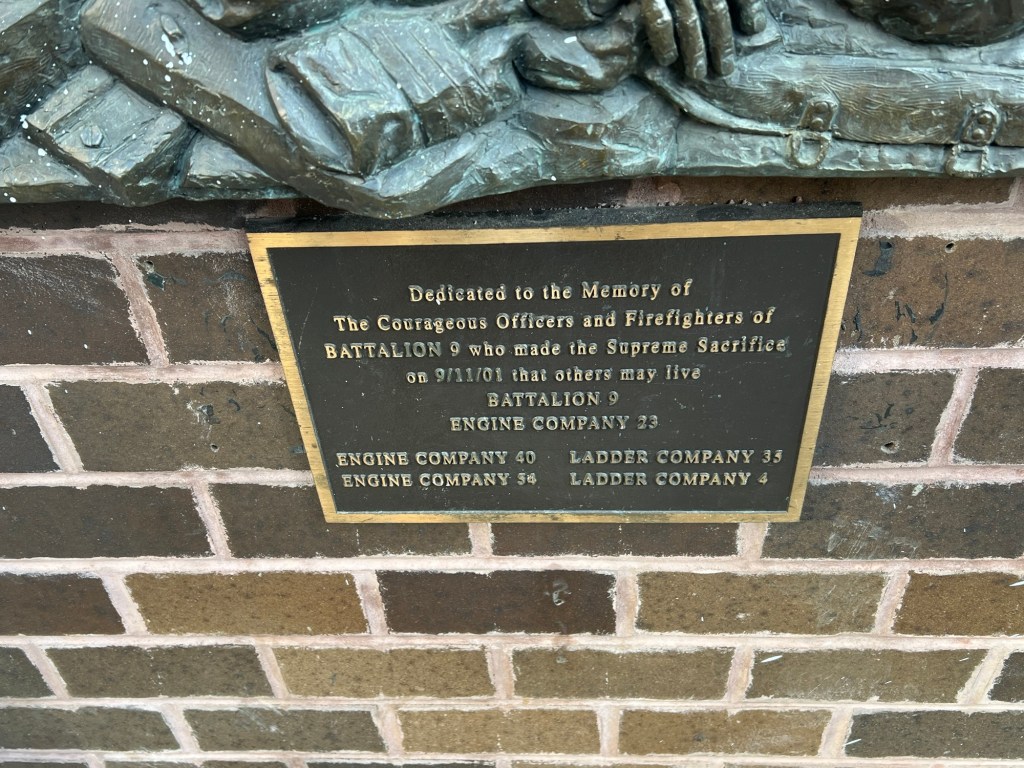
9/11 plaque for the Brothers of Battalion 9 and Engine Company 33

The Memorial to 9/11.
The pride of Midtown is Battalion 9, Engine 54 and Ladder 4. This house got hit heavily on 9/11 and this memorial was dedicated to them. The firemen here are very engaging with tourist and when not on a run, they are out talking to tourists and visitors to the area and take pictures with them. Just don’t distract them when they have to go on a call.
FDNY Engine 54/Ladder 4/Battalion 9 lost every firefighter they sent to the World Trade Center on September 11.

The beauty of the beaux arts building 58 West 47th Street
https://www.realtyhop.com/building/58-west-47th-street-new-york-ny-10036
This beautiful Beaux Arts designed building was built in 1906 as an office building and houses many businesses in the Diamond Exchange section of Midtown. You have to ignore the signs at the bottom of the building and look up at the elegant details around the windows and roof. It is one of the few Beaux Arts buildings left in the Theater District.
Further down the road there is more public art by artist Jim Rennert. On top of WTF, the artist has three more statues in the area that will be on display through 2024, two of which are on the plaza between West 48th and West 47th Street. This one on West 47th Street is entitled “Timing”.

The Jim Rennet statue “Timing”
‘Timing’ is a representation of a person looking anxiously at their watch, relates to the various aspects of business life and the daily struggle between yourself and others. From being at the right place at the right time to having the right opportunity, the importance of timing is essential (Gothamtogo website).
Just down the block is the interesting and very beautiful Samuel Friedman Theater. Both times I passed by it was loaded with people coming in and going out. You really can’t appreciate the theater’s design from the front but when you cross the street and look over, you can see all the interesting embellishments and details around the top of the building.
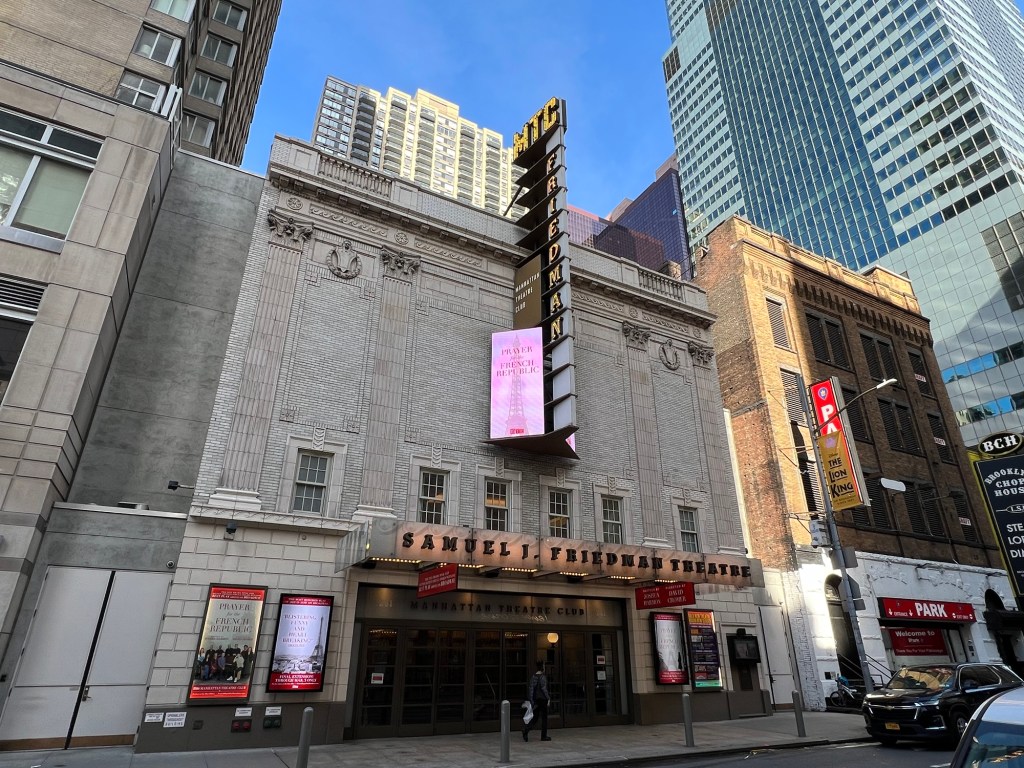
The Samuel Friedman Theater.
https://en.wikipedia.org/wiki/Samuel_J._Friedman_Theatre
https://www.newyorkcitytheatre.com/theaters/friedmantheater/theater.php
The Samuel J. Friedman Theatre, originally the Biltmore Theatre, was designed by architect Herbert J. Krapp in the Neo-Renaissance style of design and was constructed in 1925 for the Chanin brothers. Since 2008, the theater has been named for Samuel J. Friedman (1912–1974), a press agent.
You have to look up to see the detail work on this theater. I love the elaborate designs of the building.

Samuel J. Friedman historical plaque outside the theater.
Another beautiful theater that you have to cross the street to see all the detailed decorations at the top of the building is the Richard Rogers Theater. The theater was built in 1925 and is one of the largest theaters in the district. It was designed by architect Herbert J. Knapp in the Neo-Renaissance style with white brick and terracotta. The theater was constructed for Irwin Chanin, a architect himself who then leased it to the Shubert organization (Wiki).
The Richard Rogers Theater at 226 West 46th Street.
https://en.wikipedia.org/wiki/Richard_Rodgers_Theatre

The magnificent embellishments of the Roger’s Theater. You really have to look up at the details of the theater to appreciate it.
The Lunt-Fontanne Theater at 220 West 46th Street has the same beauty. The last performances of “Sweeney Todd” were being performed when I walked through the district (it closed May 5th) and the signs were all over the theater.
Lunt-Fontanne Theater at 205 West 46th Street
https://broadwaydirect.com/theatre/lunt-fontanne-theatre/
https://en.wikipedia.org/wiki/Lunt-Fontanne_Theatre
The Lunt-Fontanne Theater opened in 1910 and was designed by the architectural firm of Carrere and Hastings, who had designed the New York Public Library on top of other prominent buildings in Manhattan in the Beaux-Arts style design. This facade is the only surviving facade of the theater and it was once the carriage entrance. It was named for the theatrical couple Alfred Lunt and Lynn Fontanne (Wiki).
The Lunt-Fontanne Theater with all its detailed embellishments.

Details on the Lunt-Fontanne Theater

Details on the Lunt-Fontanne Theater’s carriage entrance on West 46th Street
As you reach the heart of Times Square at the crossroads of Broadway and Seventh Avenue you will see the impressive statue of George M. Cohen, the song and dance man. It is amazing how many people have forgotten who is and the contributions to the theater he brought with him. The statue is an just an after thought to most tourists snapping pictures in the neighborhood.
The George M. Cohan statue stands proud in Times Square.
George M. Cohan, entertainer and playwright
https://en.wikipedia.org/wiki/George_M._Cohan
The statue in Times Square of the composer was designed by artist Georg John Lober and was dedicated in 1959 in Father Duffy Square. Artist Georg John Lober was an American sculptor who studied at the Beaux-Arts Institute of Design and the National Academy of Design and was part of the New York Municipal Arts Commission from 1943-1960.
Artist George John Lober
http://www.askart.com/artist/George_John_Georg_Lober/68590/George_John_Georg_Lober.aspx

The Marriott Marquis Hotel, the crown jewel of the Times Square rejuvenation.
https://www.marriott.com/en-us/hotels/nycmq-new-york-marriott-marquis/overview/
My review on TripAdvisor:
The Marriot Marquis Hotel is considered by many in the real estate market the cornerstone of the Times Square rejuvenation of the area back in the 1980’s. The hotel was designed by John C. Portman, who was known for designing open air design and soaring lobbies known as the “Brutalist” design.
https://en.wikipedia.org/wiki/New_York_Marriott_Marquis
The Havana Central Restaurant at 151 West 46th Street.
https://www.havanacentral.com/
Review on TripAdvisor:
This unique office building in the middle of the Theater District and home to the Havana Central Restaurant on the bottom of the building was built in 1928 and has unique designs and carving along the floor sills and windows.

The details of the building.
Of the most elegant and detailed churches in the Theater District is the Free Church of Saint Mary the Virgin at 145 West 46th Street.

The front of the Free Church of Saint Mary’s the Virgin at 145 West 46th Street
The historic plaque of the church.

The church’s embellishments show such gracefulness. This statue of the Virgin Mary stands prominently at the entrance of the church.
The church was built in 1894 by architectural firm Napoleon LeBrun & Sons with Pierre LeBrun as the lead designer in the building. The church was built in the French Gothic design and has the most elegant statuary. The building has a unique refinement to it with its dedication to the Virgin Mary and many of the sculptural decorations J. Massey Rhind (Wiki).
The former School of Performing Arts at 120 West 46th Street.
https://en.wikipedia.org/wiki/High_School_of_Performing_Arts
This very unusual building was built in 1894 by architect C.B.J. Snyder in the Romanesque Revival design, the superintendent of School Buildings for the New York City Board of Education and was used for the School of Performing Arts from 1948-1984 (NYC Landmark Preservation website).
The school’s historical plaque out side the building.

Crossing the street is where you see the true beauty of this building.

The details on the building are interesting.
Down the street on the other side of the courtyard is the other statue by artist Jim Rennert, “Inner Dialogue”.
The Jim Rennet’s other work “Inner Dialogue” is on West 46th Street.
‘Inner Dialogue’ is the small figure that stands in the palm of the hand of a larger life-size figure is metaphorically speaking to their own conscience, showcasing the familiar feeling of having a conversation with that small voice within (Gothamtogo website)
Right down street is 33 West 46th Street, one of the most unusual office buildings in the neighborhood. You really have to look up and admire the details of the building as they have a dark almost sinister look of demons and devils. It is a building that looks like it has a dark past.
33 West 46th Street
https://streeteasy.com/building/33-west-46-street-new_york
You have to look up to appreciate the beauty of 33 West 46th Street. The details around the building are very morbid. The building was built in 1915 and has always served as an office building. The building was designed by architect Lorenz Weiher and the building was designed in the Neo-Gothic design (DaytoninManhattan.com).
https://daytoninmanhattan.blogspot.com/2012/07/somewhat-eerie-nos-33-35-west-46th.html

The building 33 West 46th Street looks like it has a dark past.

More details of the building.
In the heart of the Theater District is the Booth Theater, which is always busy on show nights. I think a lot of people waiting in line miss all the beautiful and unusual details of the building when they are seeing a show. You have to walk around the building to admire all the details.

The Booth Theater at 222 West 45th Street
https://shubert.nyc/theatres/booth/
https://en.wikipedia.org/wiki/Booth_Theatre
The Booth was designed by Henry Herts to be one of a pair of playhouses: the Booth and the Shubert Theatres abut each other along Shubert Alley in one seamless unit. Styled with “restrained classicism,” the Booth is the smaller, less extravagant of the two houses. The sgraffito that adorns the exterior of both theaters is the last known surviving example in New York of this once popular decorating technique. Lee Shubert built the Booth Theatre in partnership with the producer Winthrop Ames. Named for the actor Edwin Booth (1833-1893), brother to the infamous John Wilkes Booth, the venue was actually the second New York theatre to bear this name (Booth Theater/Shubert Organization website).

The beautiful inlaid details of the Booth Theater.

The ghosts of the theater stare out at you when you look up at the details of the theater.
As I exited past all the theaters, I again was greeted by the soaring Marriott Marquis Hotel again and thought about how it set the tone for the neighborhood that just keeps changing.

The Marriott Marquis in its glory.
Down the road from Times Square is the new Museum of Broadway that is very impressive. I passed this over dramatized window that greets visitors as they walk inside.

The display in the museum’s window.
The Museum of Broadway
https://www.themuseumofbroadway.com/
My review on TripAdvisor:
My review on VisitingaMuseum.com:
https://wordpress.com/post/visitingamuseum.com/15601
I had visited the Museum of Broadway a few months earlier when spending the night in the City with a friend. The museum is everything Broadway bound with all sorts of costumes, props and playbills from shows over the last hundred years with special displays from some of the most popular shows on Broadway. There is sound tracks to hear and displays to admire and if you love the theater, this museum you should make a special trip to when in Manhattan.

The entrance to the Museum of Broadway at 145 West 45th Street

The front of the Museum of Broadway
I visited the newly opened Museum of Broadway recently and what a nice surprise the museum is with a great depth in the collection. There was the history of the theater in New York City and how it progressed from small theaters downtown to the theater’s progression uptown to it home now in the core of Times Square.

The Make-Up Room on the way up the stairs.

The Call Board display.
The museum is very interesting in that when you enter the back of the museum you feel that you are going backstage at a theater and preparing for a show. You head up the stairs past make up rooms, wardrobe rooms and the star’s rooms. The you head out the door like you are going out on stage. You feel that rush of the stage. From the entrance to the exit, you will experience some of the most popular shows on Broadway and hum those tunes.
Then I passed the plaza between Sixth and Fifth Avenues and stopped in the plaza for a rest. On one side of the plaza was an unusual piece of art by artist Tony Smith and on the other was the 9/11 Memorial to the victims of March McLennan who died in the North Tower where the company had floors 93 through 100 when the first plane hit. This Memorial was dedicated to them.
The Marsh McLennan Memorial to employees who died in the 9/11 tragedy is located in the plaza behind 1166 Sixth Avenue.

9/11 Memorial to the employees who died in the World Trade Center is in the plaza behind 1166 Sixth Avenue outside the headquarters of the company. This is dedicated to the 358 employees who lost their lives on September 11th, 2001.
https://memorial.marshmclennan.com/
https://www.marshmclennan.com/

The memorial is a touching reminder of the innocent people lost in the World Trade Center disaster on September 11th, 2001.
The CEO’s Story:
https://hbr.org/2002/10/september-11-2001-a-ceos-story
The beauty of 56 West 48th Street
https://streeteasy.com/building/48-west-56-street-new_york
After admiring all the sculpture and statuary in the plaza, look across the street at 56 West 48th Street and the details along the windows and sills. You might find several faces staring back at you. This former office building was built in 1920 and is now luxury rental apartments.

The beauty of the details of the building that look back at you.
Inside the plaza between the buildings on one side was the 9/11 Memorial to the employees of Marsh McLennan, whose headquarters were in this building and whose employees died on 9/11 on the top floor of the World Trade Center that day. On the other side of the plaza is this interesting metal sculpture by artist Tony Smith entitled “Throwback”.
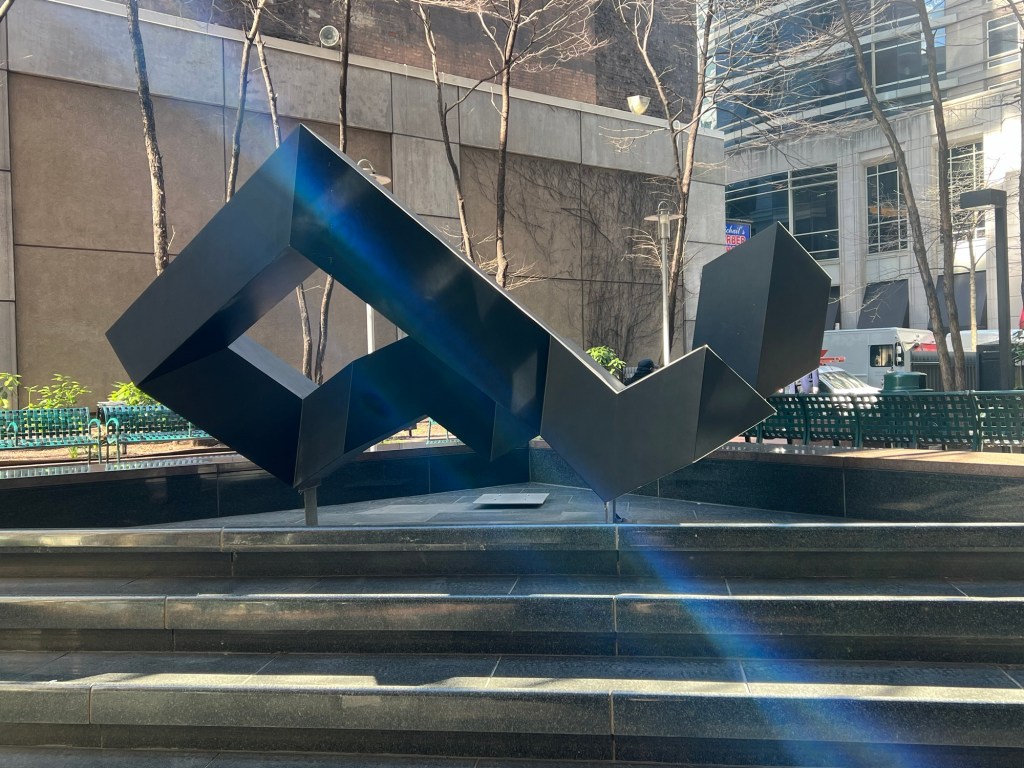
The sculpture sits on the opposite end of the plaza from the 9/11 sculpture of the Marsh McCellan Company.

The plaque of the sculpture.

Artist Tony Smith
https://www.theartstory.org/artist/smith-tony/
https://en.wikipedia.org/wiki/Tony_Smith_(sculptor)
Artist Tony Smith is an American born artist whose background was in architecture. He had studied at Georgetown University but got his influence in art from the Arts Student League of New York. He started creating these large pieces of sculpture in the early 1960’s and was known for these large metal works (Wiki/Artist bio).
Down the block I saw another face staring back at me at 40 West 45th Street above the entrance of the Club Quarters Hotel.

The beauty of 40 West 45th Street-The Club Quarters Hotel
https://en.wikipedia.org/wiki/Webster_Hotel
Review on TripAdvisor:
The Club Quarters Hotel is the former Webster Hotel that was built in 1902. It was designed by the architectural firm of Tracy and Swartwout and was designed in the Classical Revival style.

The beautiful carvings of of the archway of 40 West 45th Street.
As I crossed over Broadway, I looked up at the statuary of the I. Miller building. Funny how in all the years I had traveled down this street I never noticed the statues that lined the building. All along the West 45th Street side of the building are the statues of famous female entertainers of the 1920’s and 30’s.
The building is located at the corner of Broadway and West 46th Street and was designed by architect Louis H. Friedland with the sculptures designed by Alexander Stirling Calder. The building was built for the I. Miller Shoe Store since 1926 and continued on as a shoe store until the 1970’s.
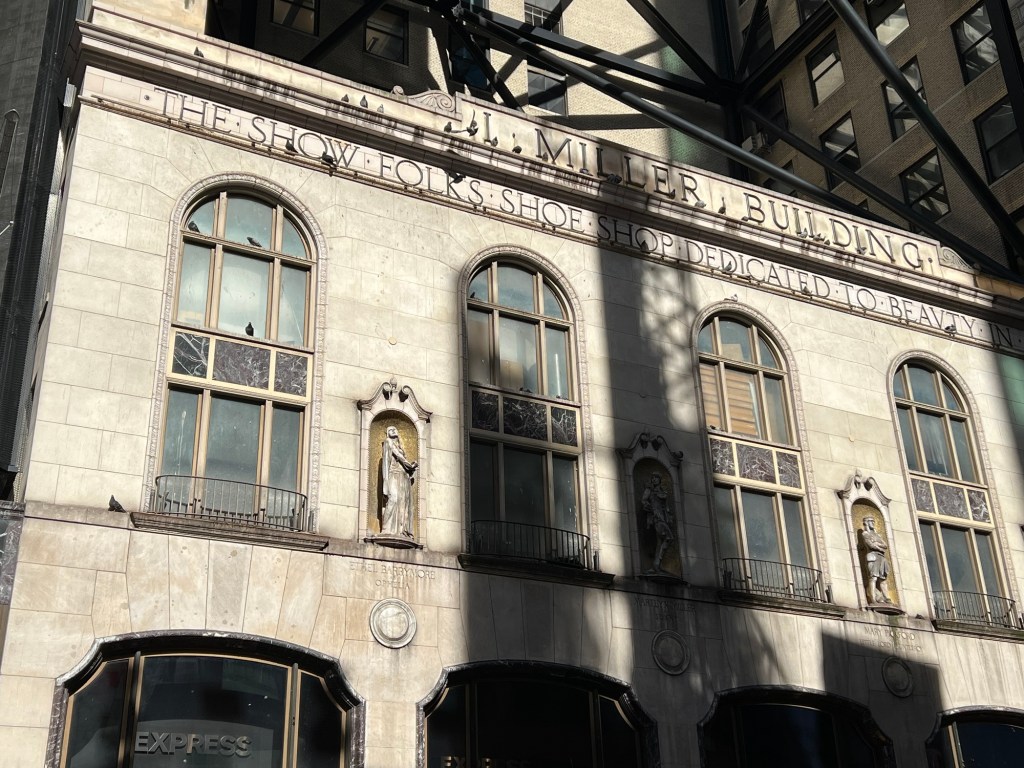
The I. Miller Shoe Building at 1552 Broadway and West 45th Street.
https://en.wikipedia.org/wiki/1552_Broadway
The I. Miller Shoe building at West has some elegant carvings of actors of the stage, screen and opera on the sides of the building. It is unfortunate that the front of the Broadway side of the building is covered with a sign but the beauty of these carvings can be seen from the West 45th Street northern side of the road.

Silent screen star Mary Pickford.

Mary Pickford, Actress
https://en.wikipedia.org/wiki/Mary_Pickford
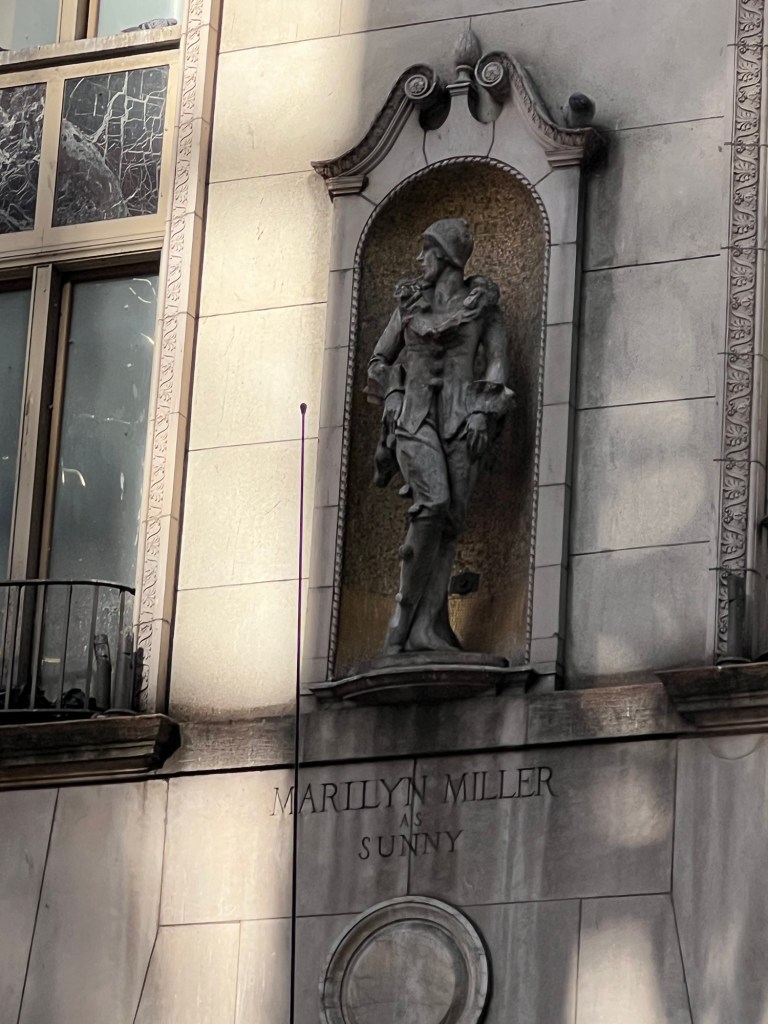
Silent Screen Star Marilyn Miller

Marilyn Miller, Actress
https://en.wikipedia.org/wiki/Marilyn_Miller

Broadway Actress Ethel Barrymore
Ethel Barrymore
https://en.wikipedia.org/wiki/Ethel_Barrymore
Opera Singer Rosa Ponselle

Rosa Ponselle, singer
https://en.wikipedia.org/wiki/Rosa_Ponselle

119 West 45th Street-Merrion Row Hotel and Public House
Review on TripAdvisor:https://www.tripadvisor.com/Hotel_Review-g60763-d15115402-Reviews-Merrion_Row_Hotel_and_Public_House-New_York_City_New_York.html?m=19905
At 119 West 45th Street is the Merrion Row Hotel and Public House, a luxury hotel. Our Beaux-Arts building, built in 1920, was one of Times Square’s first hotels. Frequented for decades by local actors and artists, as well as families in search of a truly New York experience, it has been reborn. A deep nod to the building’s rich history, Merrion Row remains a paragon of contemporary luxury (Merrion Row Hotel and Public House website).

The Hotel St. James at 109 West 45th Street had a moment of glory in the movie “Big”.
Review on TripAdvisor:
As I walked down West 45th Street toward Sixth Avenue I passed the Hotel St. James. This was not such a nice hotel in the 1980’s and had been featured in the opening scenes in the movie “Big”. Today it is a much different hotel. The hotel was constructed in 1901 and has gone through many transformations until the new owners renovated the hotel and brought it back to its former glory.
https://torimask.blogspot.com/2019/02/the-curious-case-of-hotel-st-james.html
This is a funny scene also in the movie “Big” that takes place in the hotel.
From the movie “Big”
As I walked down the street, I passed most of the theaters on this part of the block and there are some of the oldest, most beautiful theaters in the district. How much this area has changed since the 1970’s and 80’s. I remember how run down the area had gotten and how these theaters looked like they were falling apart. Now most of these theaters have had renovations and facelifts and this has brought them back to their former glory. This group of theaters is lead by the Lyceum Theater at 149 West 45th Street.

The beauty of the Lyceum Theater at 149 West 45th Street
https://shubert.nyc/theatres/lyceum/
https://en.wikipedia.org/wiki/Lyceum_Theatre_(Broadway)
The Lyceum Theater is one of the oldest surviving theaters in the Broadway area. It opened its doors in 1903 and was designed by the architectural firm of Herts & Tallant in the Beaux-Arts style. It was built for impresario Daniel Frohman (Wiki)
I love the deep embellishment of the faces staring down on you and all the curved carvings all around the pillars and windows. It is one of the most beautiful theaters in the Theater District.
The true beauty of the theater is when you look up and admire this beautiful building.
The heart of the Theater district walking down West 45th Street before the evening shows open. This area has become very active with all the immigrants and asylum seekers staying the at the old Milford Plaza hotel down the road. There are people milling around this area at all hours of the day and night on top of people going to the theater.
The Imperial Theater at 249 West 45th Street
https://shubert.nyc/theatres/imperial/
The Imperial was opened in 1923 and was designed by Herbert Krapp in his trademark Adam-style. The recessed ceiling and ornamental panels that grace the walls are elaborately decorated with a number of motifs, including florals and geometrics. The rectangular auditorium is wider than it is deep, which allows most audience members to feel close to the stage and performers (Shubert website).
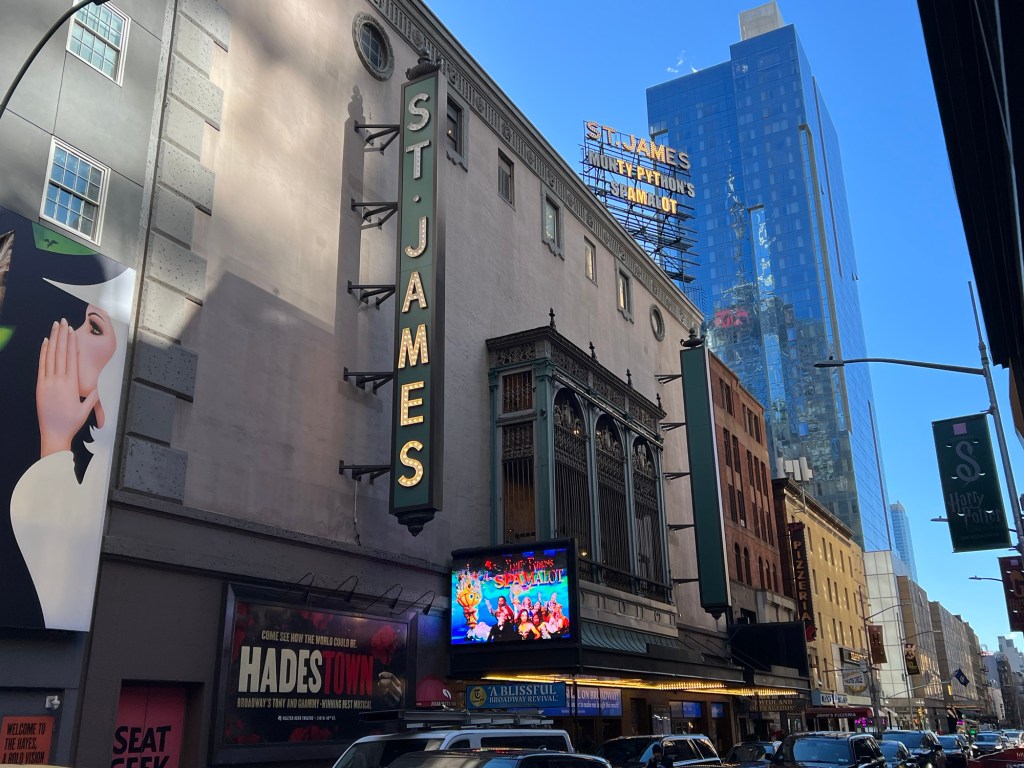
The St. James Theater at 246 West 44th Street
https://www.stjamestheatrenyc.com
https://en.wikipedia.org/wiki/St._James_Theatre
The St. James Theater is probably one of the most famous and most photographed theaters in the Theater District. It opened in 1927 as the Erlanger Theater as it was built for producer Abraham L. Erlanger. The theater was designed by the architectural firm of Warren and Wetmore and was designed in the Neo-Georgian style. You have to walk around the building to see the details in the design (Wiki/Shubert Theater website).
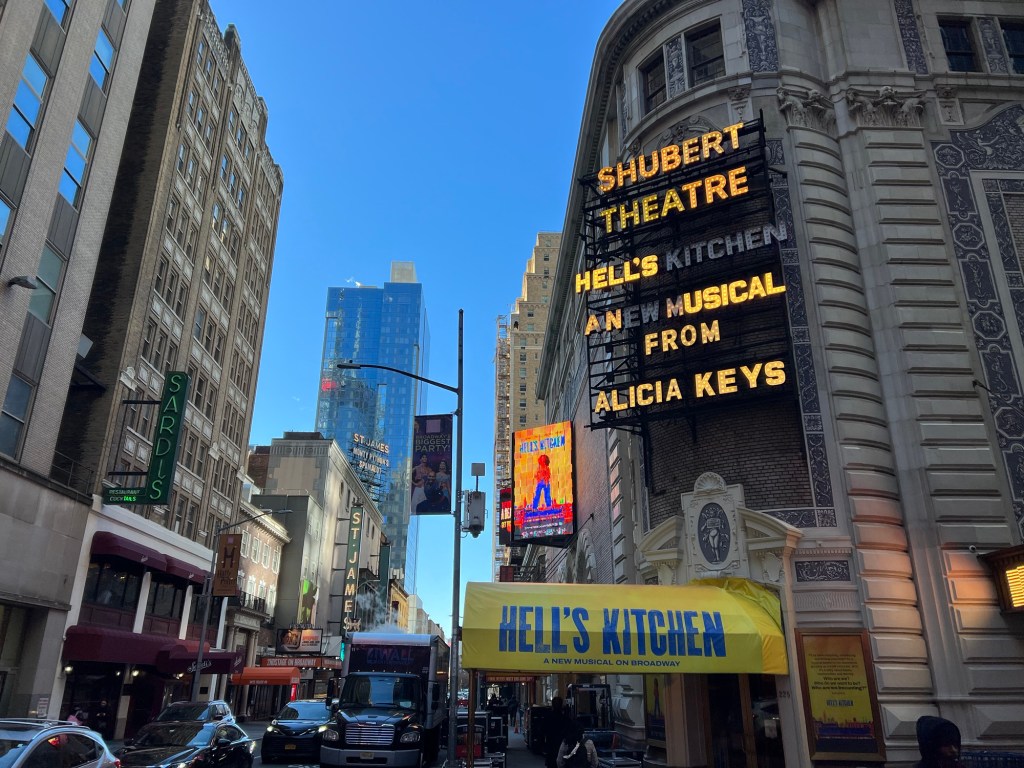
Shubert Alley in the middle of the afternoon before the opening of all the shows in the area.
I turned the corner to West 44th Street and admired the views from the street. The views from West 44th Street are what most people think New York City is when visiting. This really captures the heart and soul of the district. With the amount of well-known and popular restaurants, stores and theaters, this really is the hub the entire neighborhood. As you get closer to Fifth Avenue between Sixth and Fifth Avenues, are some of the oldest hotels in the district as well as many private clubs and Alumni clubs for the Ivy League schools including Harvard and Penn.

Virgil’s BBQ is amazing. While I was doing the walk of the neighborhood.
The entrance of Virgil’s at 152 West 44th Street.
My review on TripAdvisor:
While I was taking my walk around the Theater District, I had suggested to my best friend that we should celebrate her birthday with lunch at Virgil’s BBQ. We have both spent many birthdays and celebrations here and the food and the service are always excellent. My favorite dish here is the Pulled Pork sandwich with Cole slaw and fresh pickles (avoid the Potato Salad. It was pretty standard). I love the sweet and smokey flavor of the meat and it is melt in your mouth good on the soft bun.
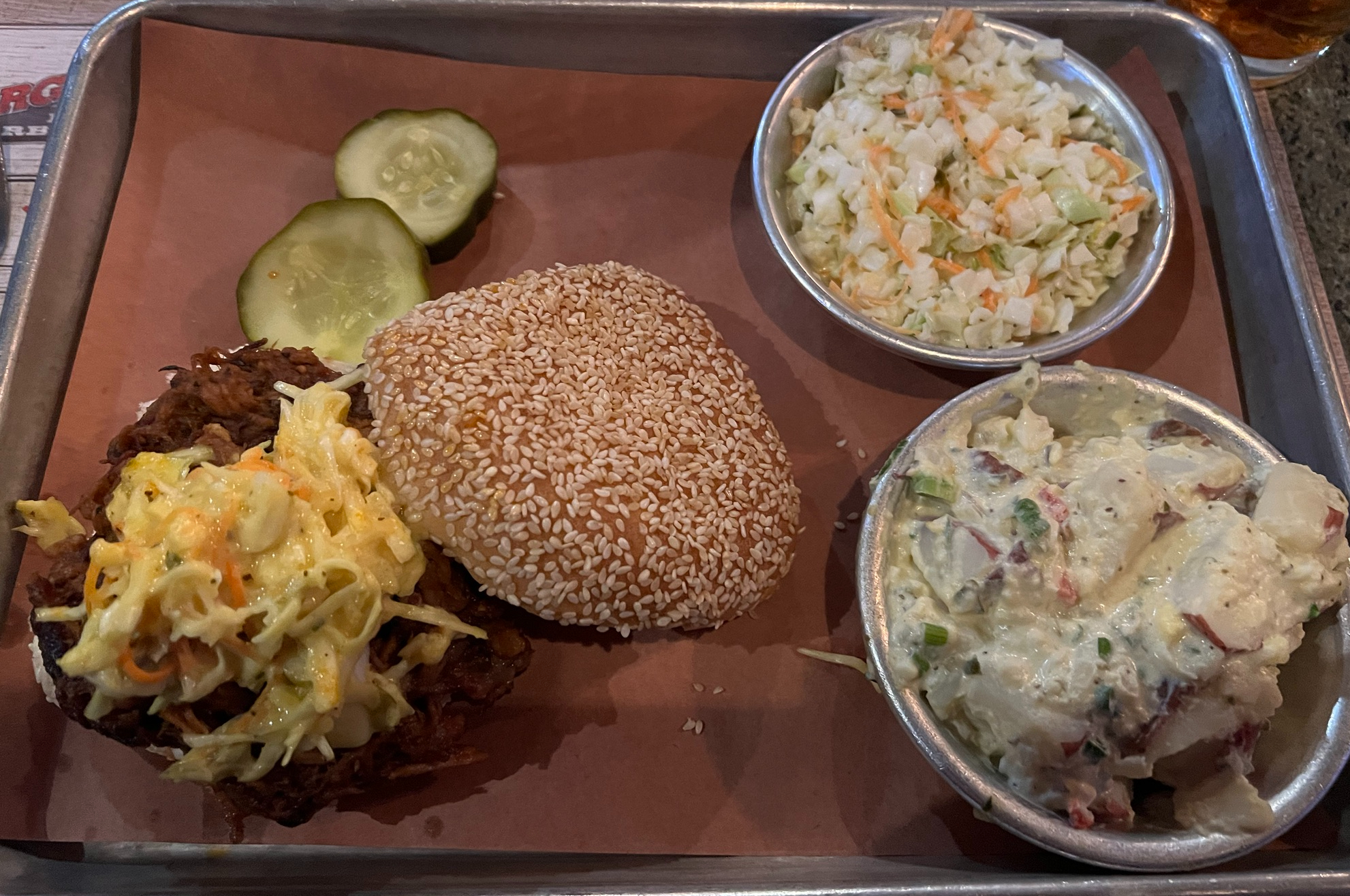
The Pulled Pork sandwich and Barbecue Ribs some of the most delicious items on the menu.
She ordered the Barbecued Smoked Ribs along with a side order of Chicken wings and Mac & Cheese. We devoured everything and then ordered the Banana Pudding for the dessert. It was the nice way to spend the afternoon after a long day of walking in the neighborhood. The one thing I have to say about Virgil’s is that they don’t skip on portion sizes and the prices are extremely fair. The service is really friendly and very quick if you have a show to catch.

Virgil’s BBQ has been open since 1995 and has been catering to barbecue lovers since that time. The food is excellent.
I continued my walk down West 44th Street after lunch to work off all that food. Otherwise I would have gotten very sleepy. West 44th between Fifth and Sixth Avenue is where all the Ivy League college clubs are located along with several historical hotels. The Harvard, Penn, Princeton and League clubs are all located along this strip along with the New York Yacht Club. A very Preppy neighborhood.

The Chawal Hotel on West 44th Street
https://www.hyatt.com/en-US/hotel/new-york/the-chatwal/nycuc
The review on TripAdvisor:
The Lambs Club Restaurant
My Review of the Lambs Club Restaurant on TripAdvisor:
The Chawal Hotel was developed in two phases first as the headquarters for the Lambs, a theatrical social club. The original wing of the hotel at 128-130 West 44th Street was designed by Stanford White of McKim, Mead & What between 1904 and 1905 in the Federal and Neo-Georgian design. Then the annex to the hotel as 132 West 44th Street was designed in 1915 by architect George Freeman (Wiki).
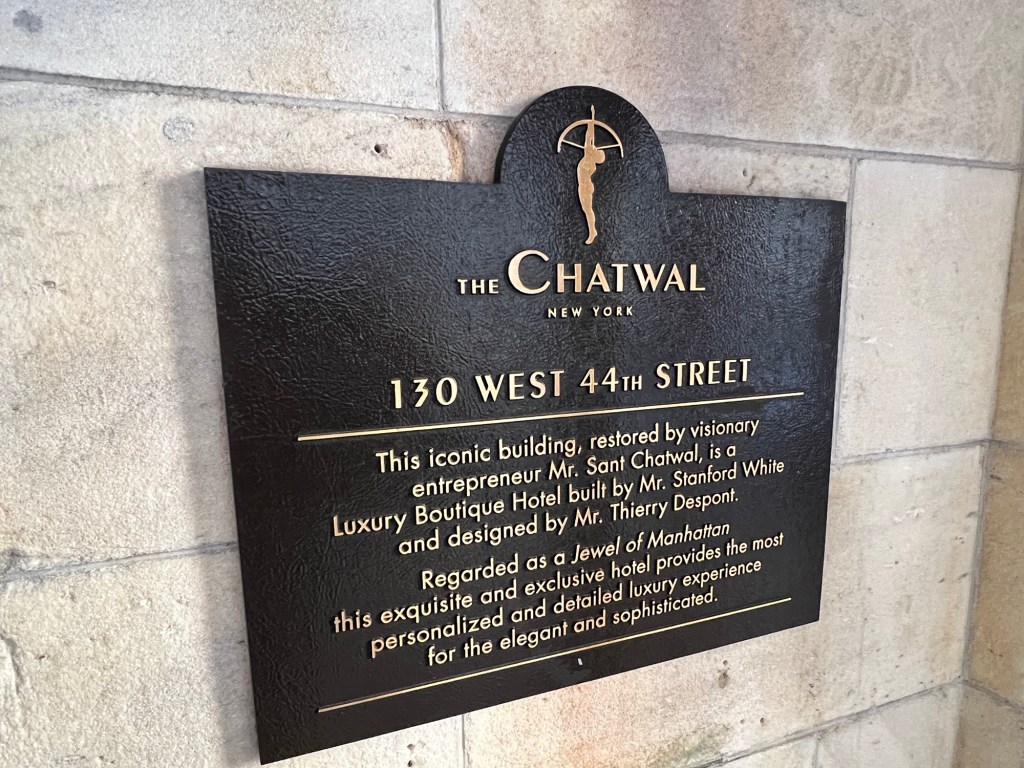
The Chawal Hotel Historic plaque.
The other historic hotel on this block is the AKA Hotel at 123 West 44th Street. This hotel also has an interesting history

AKA Hotel Times Square at 123 West 44th Street
https://www.stayaka.com/aka-times-square
Review on TripAdvisor:
The AKA Hotel was designed by architect George Keister and was built 1893 in the German Renaissance style. The hotel was originally built as an apartment hotel but has been receiving guests for over a hundred years. It opened as the Hotel Langwell and has also been the Hotel 1-2-3. It was the former Hotel Gerard (Wiki).
Crossing Broadway and walking along the street from Sixth to Fifth Avenue is lined with some of the most exclusive clubs, hotels and restaurants in the City. This is where many of the private clubs like the Harvard Club, Penn Club, the New York Yacht Club and a few older, well-known hotels are located. Its a collection of some of the oldest and most interesting architecture in Midtown Manhattan.
The first of these building is the famous Algonquin Hotel, the home of Dorothy Parkers famous “Round Table”.
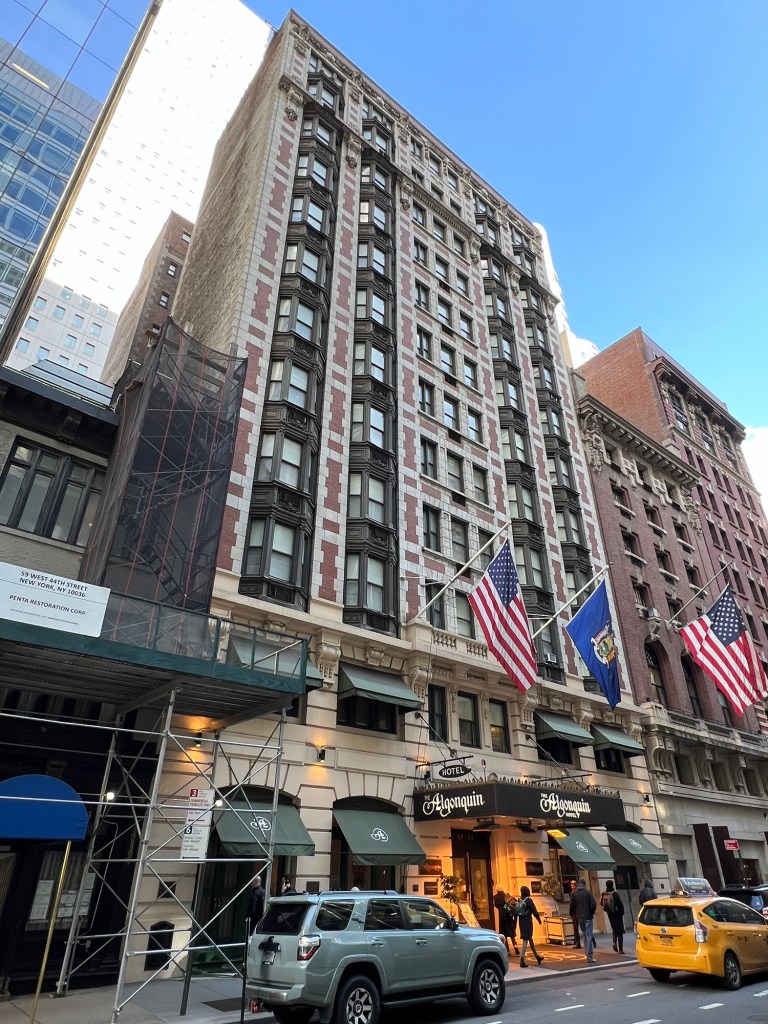
The historic Algonquin Hotel on West 44th Street.
Review on TripAdvisor:
The Algonquin Hotel is one of the oldest running hotels in New York City opening its doors to guests since 1902. The hotel was designed by architect Goldwin Starrett for the Puritan Realty Company. The hotel is a combination of Renaissance Revival style in the brick facade and Beaux-Arts in its terracotta details. Because of its proximity to Broadway, the hotel has always attracted a theater and literary crowd (Wiki).
The last time I had been at the hotel myself was about fifteen years ago when a friend was staying there and we had dessert in the hotel restaurant. I thought the food and service were both very good.
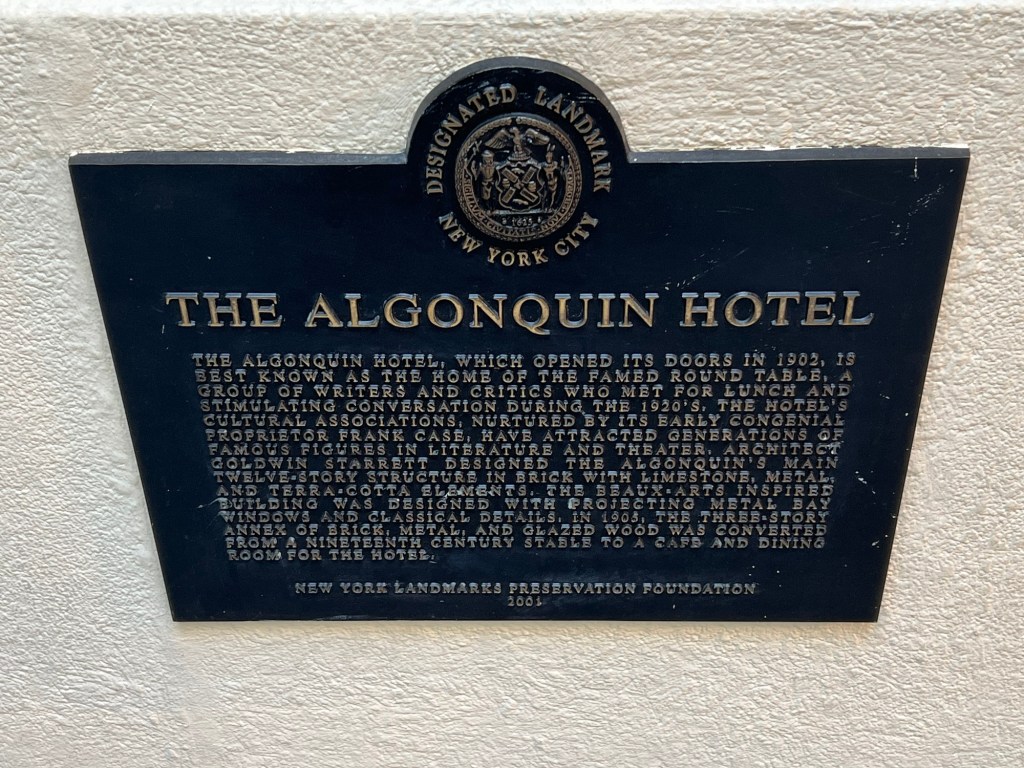
The historic marker of the hotel.

The hotel has a very historic past of its ‘literary luminaries”.
The other hotel on the block that has its own historic past is The Iroquois Hotel at 49 West 44th Street.

The Iroquois Hotel on West 44th Street.
My review on TripAdvisor:
The Iroquois Hotel was built in 1899 by designer and architect Harry Mulliken, The Iroquois has been a luxurious hospitality fixture on Midtown Manhattan’s 44th Street since 1902. Once the residence of prominent actors, celebrities, and artists, including James Dean, Leecy Woods, and The Clash (who wrote “Rock The Casbah” while staying at The Iroquois), our hotel continues its legacy of sophistication and timeless elegance in New York City to this day (Iroquois Hotel website).
The Harvard Club, one of the many Ivy League University clubs in Midtown Manhattan is located at 35 West 44th Street.
The Harvard Club was conceived in 1890 by a large group of Harvard alumni. Charles F. McKim (Harvard Class of 1867), of the renowned architectural firm, McKim, Mead & White, was chosen to design “Harvard House.” The club has been added onto over the years and most recently has added an outdoor addition.
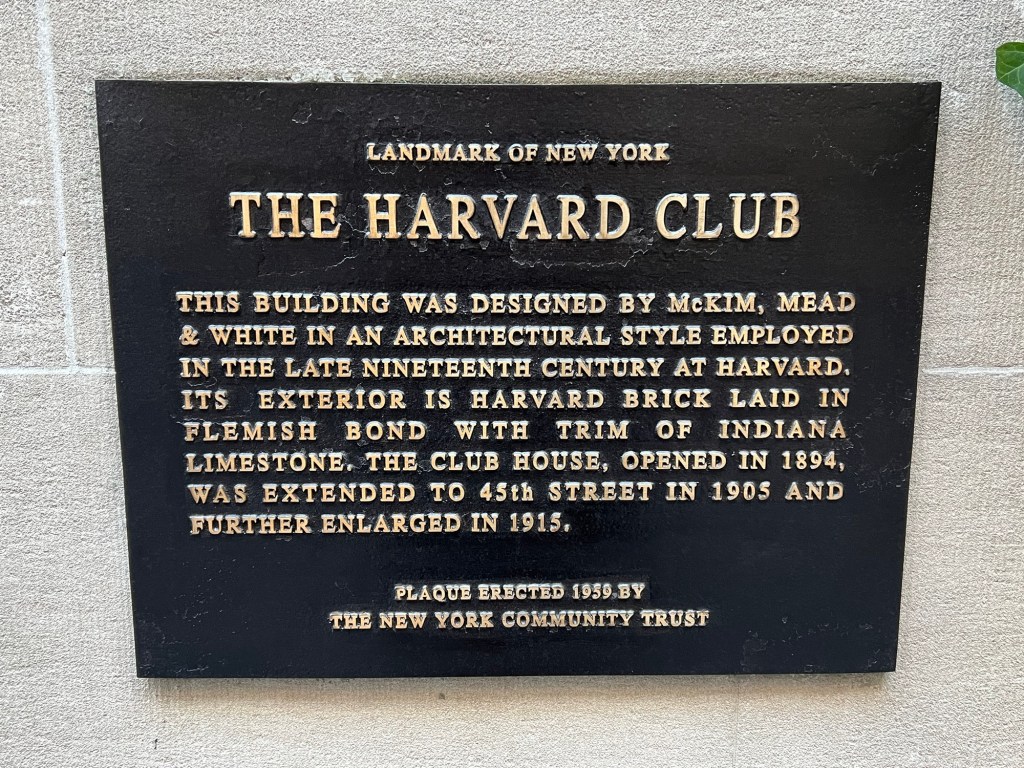
The next club over is the New York Yacht Club at 37 West 44th Street. The New York Yacht Club Building, a six-storied Beaux-Arts landmark with a nautical-themed limestone facade, at 37 West 44th Street. Opened in 1901, the clubhouse was designed by Warren and Wetmore. The centerpiece of the clubhouse is the “Model Room”, which contains a notable collection of full and half hull models including a scale model history of all New York Yacht Club America’s Cup challenges (Wiki).
The New York Yacht Club at 37 West 44th Street.
https://en.wikipedia.org/wiki/New_York_Yacht_Club_Building
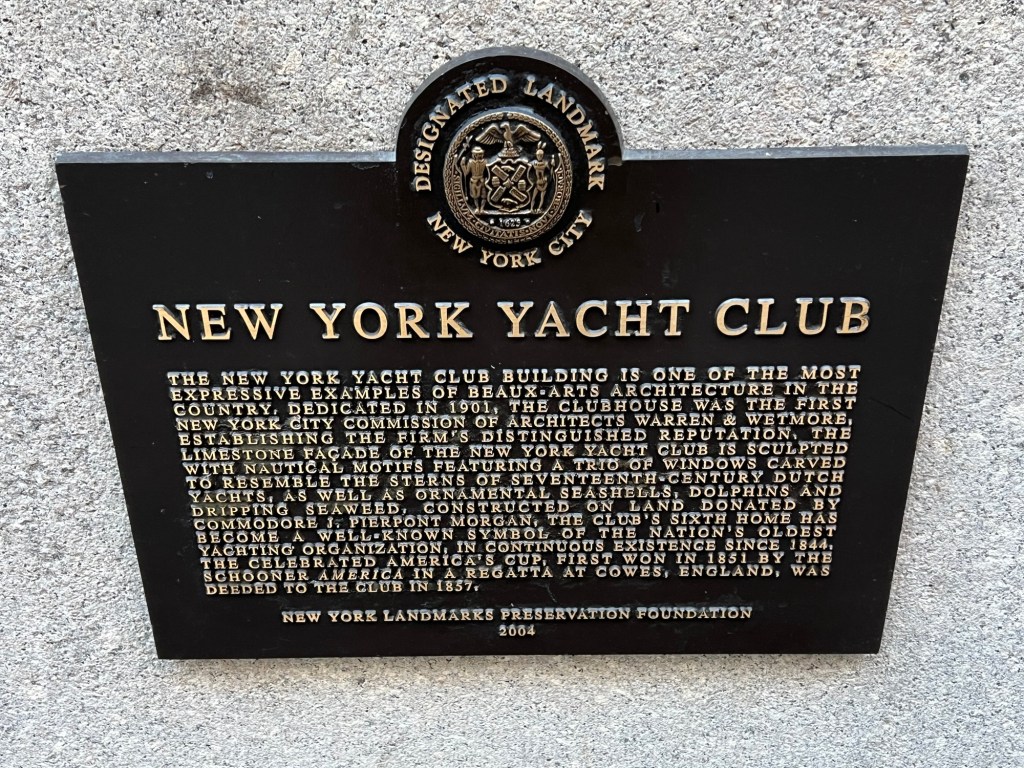
As you round the turn at Fifth Avenue and head back down West 44th Street, you pass the next of the Ivy League clubs, the Penn Club at
The Penn Club at 30 West 44th Street
The Penn Club had been established in 1886 and had several locations over the years. The Yale Club had owned this building until 1915 and then moved out when they built a newer club near Grand Central Station. The Penn Club bought this building in 1989 and established the headquarters for the Penn Club here. This Beaux-Arts designed building was designed by the architectural firm of Tracy & Swartwout (Wiki).
The Penn Club historic plaque.
The last club to dominate this block with its impressive historical architecture is The General Society of Mechanics and Tradesman Club at 20 West 44th Street. This club was founded in 1785 and the aims of the General Society were to provide cultural, educational and social services to families of skilled craftsmen. The club was designed by the architectural firm of Lamb and Rich for the Berkeley School for Boys and acquired by the club in 1899. The expansion was designed by Ralph S. Townsend and blends monumental Beaux Arts classicism with Renaissance elements (Wiki).
The General Society of Mechanics and Tradesman Club 20 West 44th Street.
https://en.wikipedia.org/wiki/General_Society_of_Mechanics_and_Tradesmen_of_the_City_of_New_York
The General Society of Society of Mechanics and Tradesman of the City of New York building.

The historical plaque for The General Society of Mechanics & Tradesmen Club
Once you cross Broadway, you enter the core of the Theater District and Times Square and all the well-known restaurants that are located here. Ollie’s Chinese Restaurant which used to be next to Carmine’s for years is now on Eighth Avenue (and not as good as it used to be) and a couple more closed during COVID but the standbys of Virgil’s, Carmine’s and Sardi’s are still open to crowds of tourists. Each caters to a different type of guest but most offer good food but high prices because of their location.

Carmines Italian Restaurant at 200 West 44th Street
My review on TripAdvisor:
Carmine’s Italian Restaurant is a real experience as a place to dine in the Theater District. You have better go in with a group because the portion sizes are very large. I have been here with my brother where the two of us came in starved and we ate a platter of Caesar Salad, a platter of Rigatoni with Meat Sauce and then for dessert a plate of Cannoli’s between the two of us. The waiter could not believe we ate all that ourselves. The last time I had eaten there with my dad back in 2000, we had a platter of Mixed Green Salad and a platter of Chicken Francais and I remember the food being wonderful and the service very engaging. It is a pre-theater treat for a group.
Sardi’s at 234 West 44th Street
https://www.shubertevents.com/sardis.html
My review on TripAdvisor:
Sardi’s Restaurant and Grill is one of the most famous restaurants left in the Theater District and probably one of the most overrated as well. The TripAdvisor and Yelp reviews are mixed on the food and service. It is a restaurant that continues on with a reputation in the past. Still the place is always busy.

Sardi’s historic markers outside the restaurant.
The only time I have eaten here was for my birthday back in 2006 and I had mixed reviews about it myself. I was ignored for most of the evening by the waitstaff who could not figure out who had my table. I had to wave someone down after a half hour of being ignored. Then the service was uneven. I can remember trying the Caesar Salad and the Cannelloni Au Gratin because they were the items on the menu that were so traditional to the restaurant.
I just remember the salad being a salad and the Cannelloni tasting like something that had been frozen and reheated for dinner. Like a Stouffers meal that you take out of the microwave. I can’t even remember the dessert I had. It was so long ago that that I didn’t write a TripAdvisor review about it. There are other great restaurants like Virgil’s to go to in the area or for traditional food, go to Carmine’s. At least the portion sizes are large.
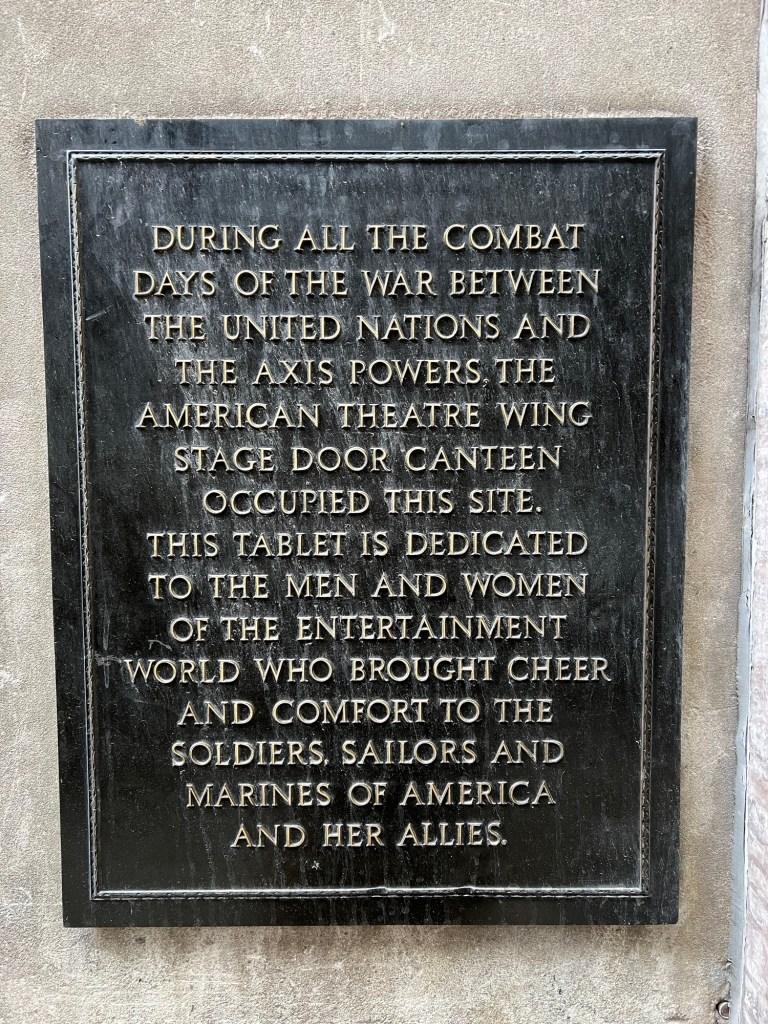
Shubert Alley on West 44th Street is the heart of the Theater District. This plaque sits on the side of the one of the buildings in West 44th Street.

China River is at 258 West 44th Street
https://www.timessquarenyc.org/locations/china-river
My review on TripAdvisor:
I have eaten at China River several times and have always enjoyed the food. Their Dim Sum selection is really good and their dishes are delicious. I have been here and ordered meals and just light snacks of Dim Sum. Their Pan-Fried Dumplings and Spring Rolls are especially delicious and their Wonton Soup is perfect on a cold night. Their Pan-fried Pork Buns are really good as well. It is always a treat to eat there.
When you turn onto West 43rd Street from Eighth Avenue, you can still see some signs of the old Times Square in the backs of many buildings.

The heart of the Theater District has changed over the years and just keeps changing. Once you pass the Westin Hotel at the corner of West 43rd Street and Eighth Avenue, you will experience the back of many buildings from West 42nd and West 43rd Street for most of the block until about Sixth Avenue. It is a lot of loading docks and backs of shipping areas. Still it has that classic Times Square feel about it.
The Westin New York at 270 West 43rd Street
https://www.marriott.com/en-us/hotels/nycsw-the-westin-new-york-at-times-square/overview
The Review on TripAdvisor:
The Westin Hotel Times Square when it was built was one of the most innovative buildings in New York City and the cornerstone along with the renovation of the New Amsterdam Theater of the renovation of Times Square in the late 1980’s and early 1990’s. This transformed a section of the City still overcoming the financial crisis.
The Westin was in 2002 the first “great hotel” which opened in Manhattan since 1993 and the first project that crystallized Architectural firm, based in Miami in the city of New York. The hotel construction in the downtown commercial area of Times Square, was supervised by the founders of Architecture, the Peruvian Bernardo Fort-Brescia and his wife Laurinda Spear American teachers in the School of Urban Design at Harvard (Wikiteria).
Across the street from the hotel is the historic Times Square Building

The Times Square Building 229 West 43rd Street
https://en.wikipedia.org/wiki/229_West_43rd_Street
The Times Square building at 229 West 43rd Street is the former headquarters of The New York Times newspaper. It was the paper’s place of business from 1913 to 2007. The original building was designed by architect Mortimer J. Fox of the firm of Buchman & Fox with the additions in the 1920’s by Ludlow & Peabody and in the 1930’s by architect Albert Kahn. The building has several different design styles as French Gothic, French Renaissance and Italian Renaissance (Wiki).
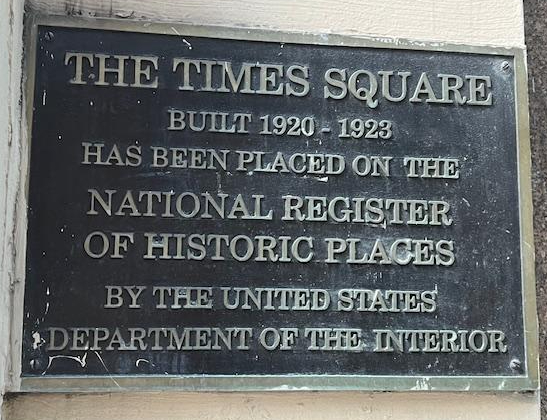
The Times Square Building plaque-The Home of the New York Times until 2007.
As you walk further down the block, it starts the heart of the old Theater district.

The Henry Miller Theater is now known as the Stephen Sondheim Theater.
https://www.roundabouttheatre.org/theatres-and-venues/stephen-sondheim-theatre
The original theater was built in 1918 by Henry Miller, an actor and producer. The theater today is a modern theater opened in 2009 as part of the Bank of America complex. All that remains of the old theater is facade. The original 950-seat theater was designed in the neoclassical style by Harry Creighton Ingalls of Ingalls & Hoffman, in conjunction with Paul R. Allen. Its facade is protected as a city landmark. The facade is made of red brick and marble. In 2010, it was renamed for playwright and composer Stephen Sondheim. (Wiki).
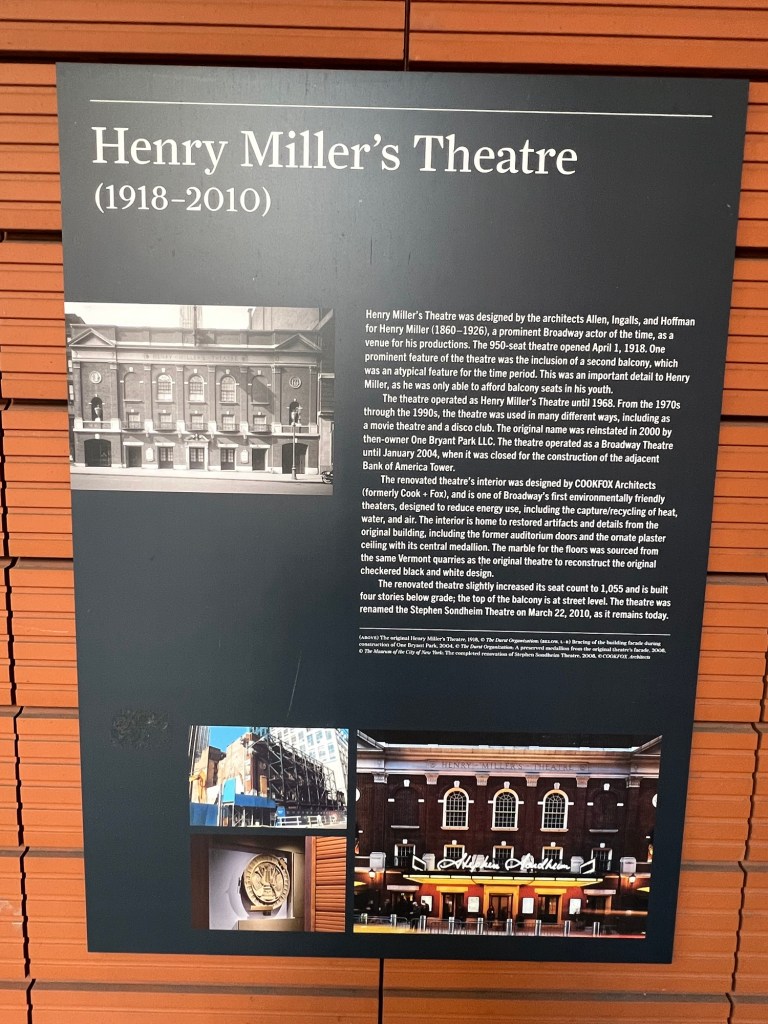
The historical sign just outside the theater. The outside of the theater is still undergoing a renovation.
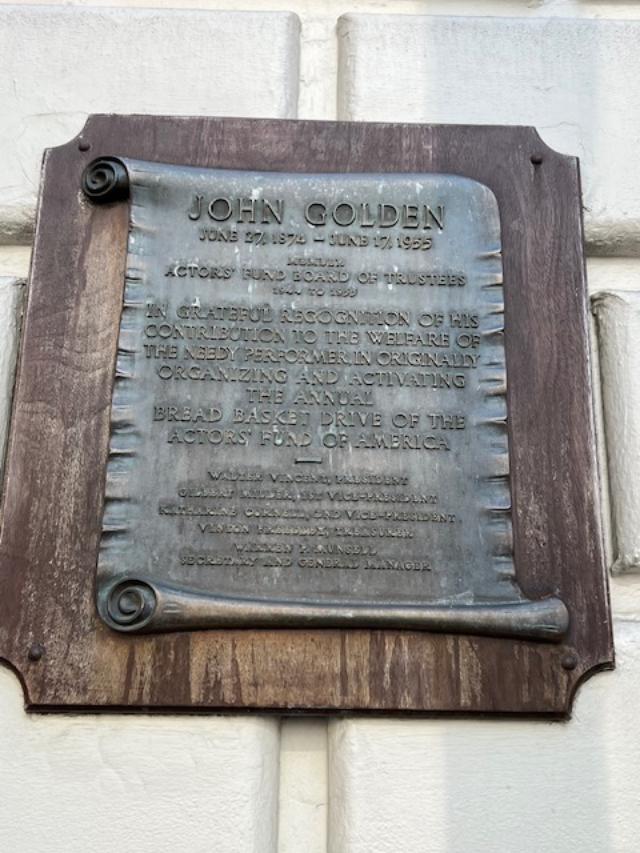
The John Golden plaque to John Golden who organized Bread Basket drive for the Actor’s Fund of American on West 44th Street.
John Golden, Songwriter and Producer
https://en.wikipedia.org/wiki/John_Golden
John Golden was a songwriter and lyricist who produced plays, movies and eventually opened his own theater. His contributions to both Broadway and Hollywood were numerous (Wiki).
Walking down West 43rd Street, you can see the embellishments on the buildings of what was once the edge of the old Midtown Manhattan. Tucked here and there all over the neighborhood there are buildings that stand out. When I passed 25 West 43rd Street the first time, CUNY Professors were striking and I could not get a good look at it. I was too busy supporting their effort. The second time I passed the building, I really looked at the beauty of the details and you have to look up to appreciate it.

The beautiful architecture of 25 West 43rd Street.
I couldn’t find much history on the building except for the fact is was built in the late 1920’s and it has always been an office building. It has some beautiful details to the architecture and take time to admire its stonework (and support their Professors).
Then I walked a few doors down and there was the firehouse that housed Engine 65, “The Pride of Midtown”. Engine 65’s quarters were designed by Francis l.V. Hoppin and Terence A. Koen and built by E. D. Colony and Son. It was started on July 12, 1897 and cost $23,449.00 to build. The front of the building is Indiana limestone and buff brick with terra cotta trimmings. The first floor and sidewalk vault is composed of steel I beams and brick arches with the apparatus flooring of cork brick. All ceilings are of stamped steel. The second and third floors and roof have wooden beams with flooring of wood and walls of brick (NYFD History.com).
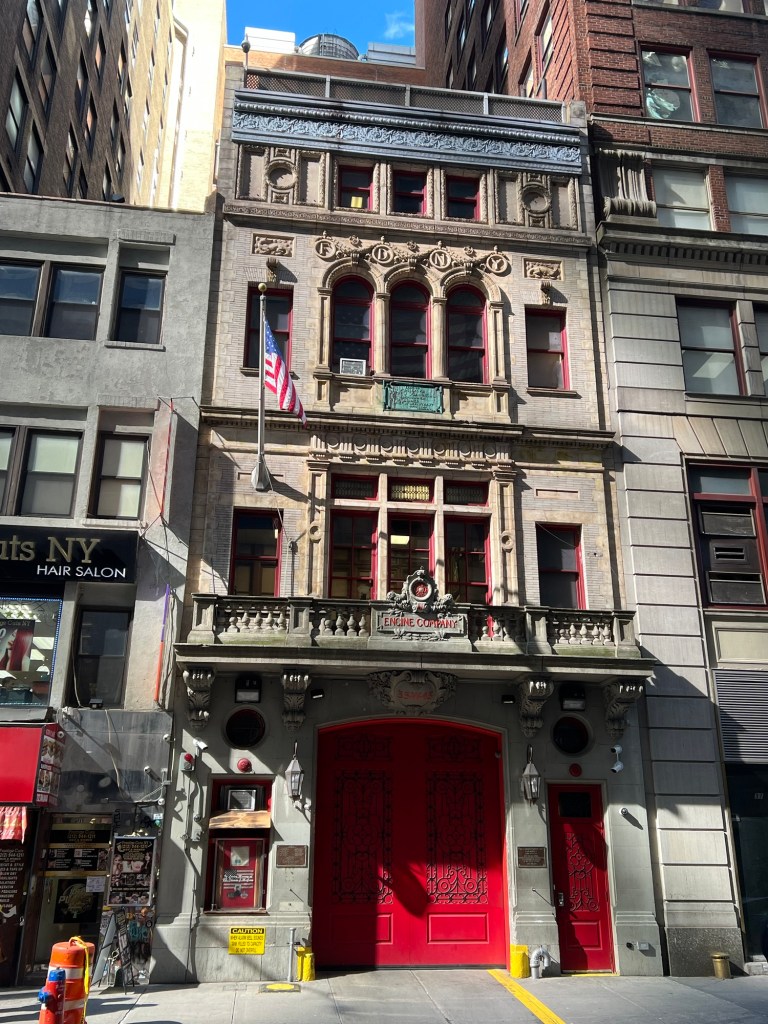
Engine 65 at 33 West 43rd Street
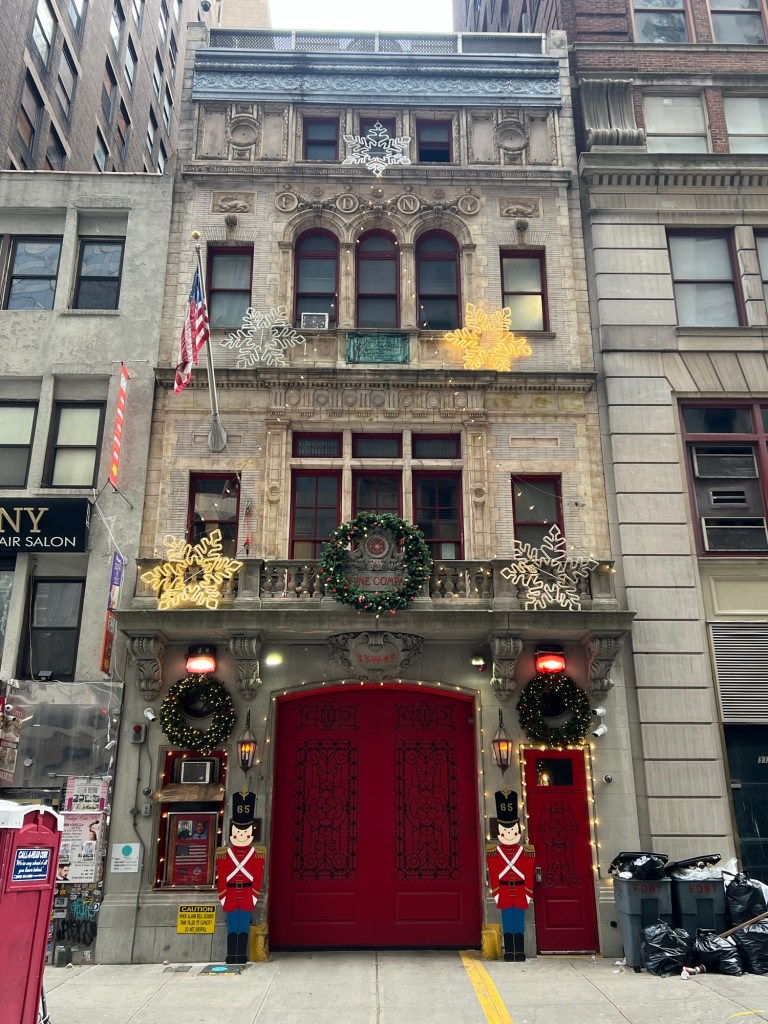
The firehouse decorated for Christmas
Engine 65 holds a special meaning to me as a trip inside back in March 2002 inspired my novel, “Firehouse 101”, the story of hotelier Alex Livingston, who returns to New York City a year and a half after the 9/11 attacks and befriends a FDNY fire fighter who survived the attacks.
On that afternoon when visiting Midtown, my best friend who had worked in the Towers and survived the attacks by being at a doctor’s appointment in Midtown at the time, had had lunch with me in a Times Square restaurant. We had been walking past the firehouse when the door was open to see a 9/11 display while the guys were out on a run. I could see the look on her face as she looked at the memorial for the men who had been lost that day and she started to tear up. As the guys were returning from their run and the door was about to close, we quickly walked out of the firehouse with one of the guys saying from behind that we did not have to leave.
As the door slammed shut, we walked down the road to Fifth Avenue and she turned to me and said, “These guys don’t really understand what they did that day. They saved us.” That inspired me to write the novel. It was dedicated to all those people affected by 9/11 who could never really share their feelings and to those displaced New Yorkers not living in the City (like myself living in California at the time) who were affected and did not know how to react.

My novel “Firehouse 101” IUniverse.com
https://www.iuniverse.com/BookStore/BookDetails/101408-FIREHOUSE-101
https://mywalkinmanhattan.com/tag/novel-firehouse-101
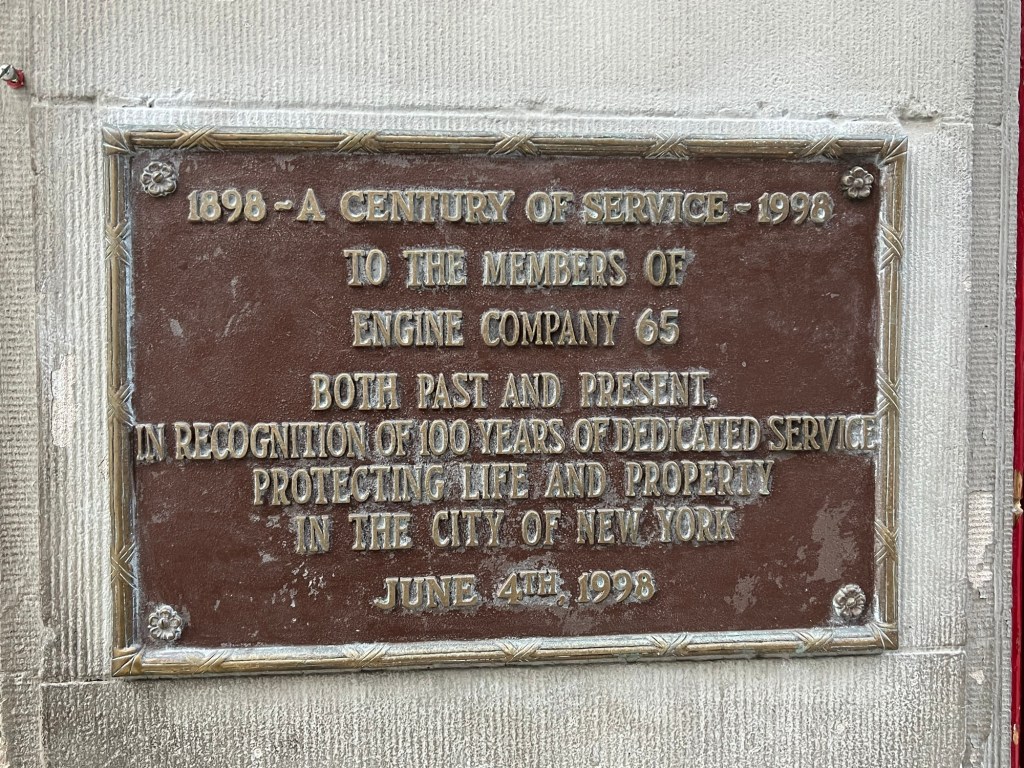
The historic plaque for Engine 65 and the dedicated service to Midtown.
One little hole in the wall restaurant that I must have passed many times but never noticed was City Cafe at 35 West 43rd Street right next to the firehouse. I stopped in one day and the place was so packed during lunch hour that I could not find a seat so I had to leave.
This restaurant may appear small but they have ample seating and a very extensive menu. When you get there at the height of the lunch rush, the pizzas are really fresh looking and they have a nice selection. Their lunch specials and sandwich selection are also quite large.
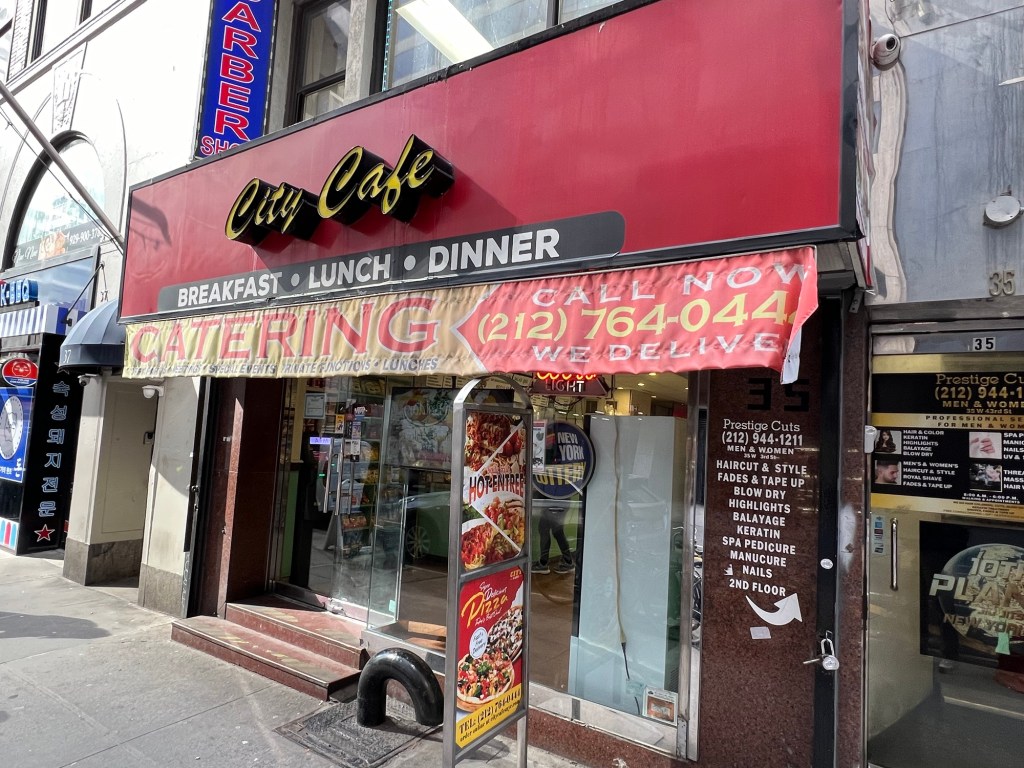
The City Cafe at 35 West 43rd Street
https://www.citycafenewyork.com/#menu
My review on TripAdvisor:
The City Cafe is one of the very few reasonable restaurants left in the district. This is the one place in this part of Midtown where you will see educators, business people, truck and taxi drivers and construction workers all dining together at the communal tables in the back of the restaurant. It is a real cross section of the population at lunch time and makes for interesting conversations that you overhear.
Down the block at 7 West 43rd Street is one of the most beautiful buildings on the block that is always being blocked by scaffolding. It is the Century Club Association. Its funny though of all the clubs in the area I never see anyone going in or out of it.

The Century Association Club at 7 West 43rd Street.
https://www.thecentury.org/club/scripts/public/public.asp?NS=PUBLIC
https://en.wikipedia.org/wiki/Century_Association
The Century Association was formed in 1847 at a meeting of the Sketch Club, a group of artists and writers, and took its name from the number of men who were invited to join it. Like many youths, the Century made its home in a variety of odd places around the city until it finally settled down, on January 10, 1891, in its present Renaissance-style building, designed by the firm of McKim, Mead & White (all three architects were members). Despite some recent renovations and additions, the building and its contents to all appearances have changed relatively little since 1891; much of the present furniture was originally bought for the building, some of it designed specifically for the building by the architectural firm (Century Club website).

The front of 20 West 43rd Street and the back of 11 West 42nd Street with its interesting carvings.
The symbols of the months are carved in the archway of the doorway of 20 West 43rd Street. The building known as the ‘Salmon Tower Building’ is a 31-story skyscraper located at 11 West 42nd Street and 20 West 43rd Street. It was designed by Albert J. Wilcox and finished in 1928. Ti has seen many famous tenants its many years but now the home of NYU Midtown.
https://en.wikipedia.org/wiki/Salmon_Tower_Building
Walking down the street, I passed the famous Royalton Hotel which is one of the many boutique hotels that have developed in this area over the years. The owners either took over old hotels that had fallen on bad times in the 1970’s and early 80’s or took old buildings in the area and converted their use. The Royalton Hotel had once been owned by the former operators of Studio 54.
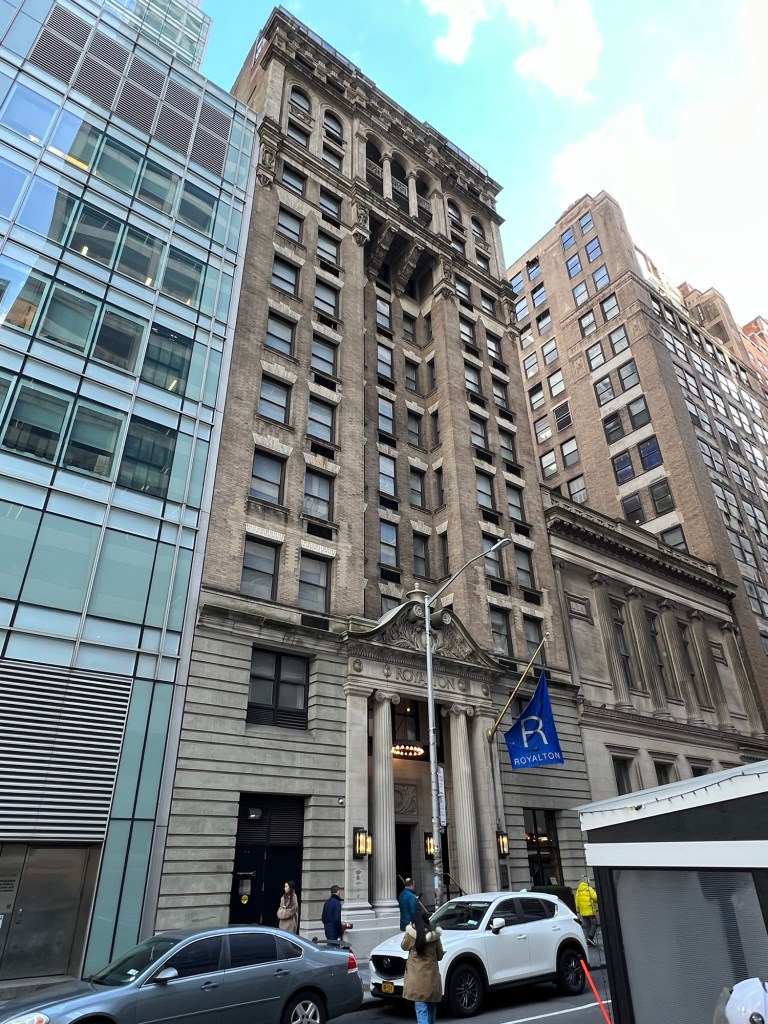
The Royalton Hotel at 44 West 44th Street stretches from West 44th to West 43rd Street. This is the entrance at West 43rd Street.
The Review on TripAdvisor:
The Royalton Hotel has an interesting history as well. The hotel, opened in 1898, was designed by architecture firm Rossiter & Wright and developed by civil engineer Edward G. Bailey. The 13-story building is made of brick, stone, terracotta, and iron. The hotel’s lobby, which connects 43rd and 44th Streets, contains a bar and restaurant. The upper stories originally featured 90 apartments, but these were replaced with 205 guestrooms when Philippe Starck and Gruzen Samton Steinglass Architects converted the Royalton to a boutique hotel in the 1980s (Wiki/Hotel website).

It took about a week to walk all the streets of the Theater/Times Square district, about a dozen revisits and having to go multiple sites to find all the research on the buildings, statuary and restaurants but there is so much to see and do in this ever changing district.
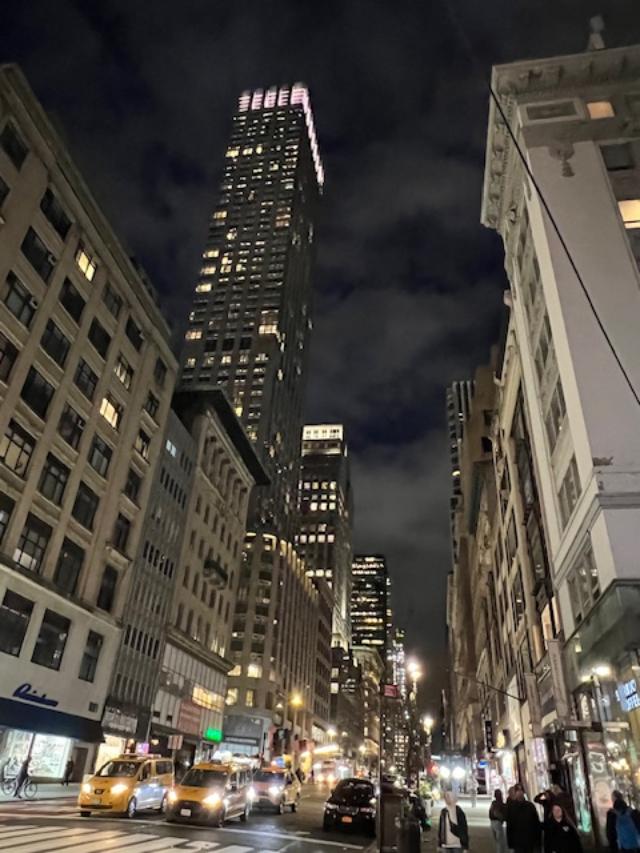
The area at night
On my last night of the walk at the end of the month, my best friend, Maricel and I stayed at the Renaissance Inn New York Manhattan/Central Park at 1717 Broadway for the evening. She gave me the smaller room with the most amazing room on the 64th floor. I was dazzled with the view both when I arrived during the day and at night. This is they way people should live everyday and is what tourists think when they hear the words “New York”.
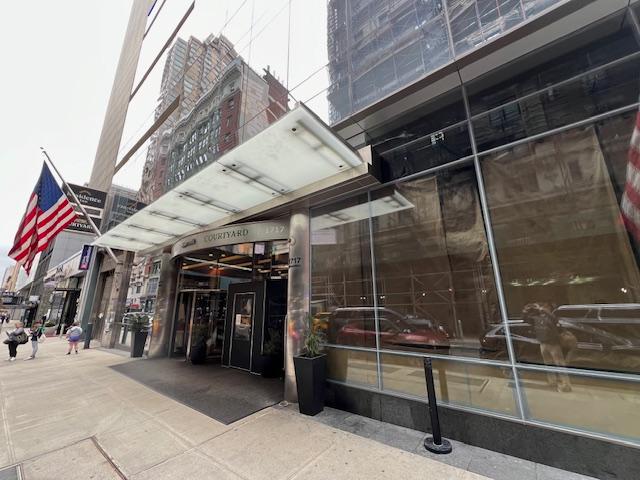
The Residence Inn New York Manhattan/Central Park at 1717 Broadway
https://www.marriott.com/en-us/hotels/nycpr-residence-inn-new-york-manhattan-central-park/overview
My review on TripAdvisor:
Normally when I stay at a hotel, I do not staying this high up (too many bad memories as a child watching the movie “The Towering Inferno”) but when Maricel showed me the view from the room, all I wanted to do is sink in the bed and relax. This is exactly what I did when she left. I had rewalked the last three blocks for a second time so that I did not miss anything. West 44th and West 43rd Streets had so much history to them I had to take special notes.
When she left to go to her room, I stared out the window of the room and could not believe the view. This view was two whole walls of the room and had million dollar views of Midtown.
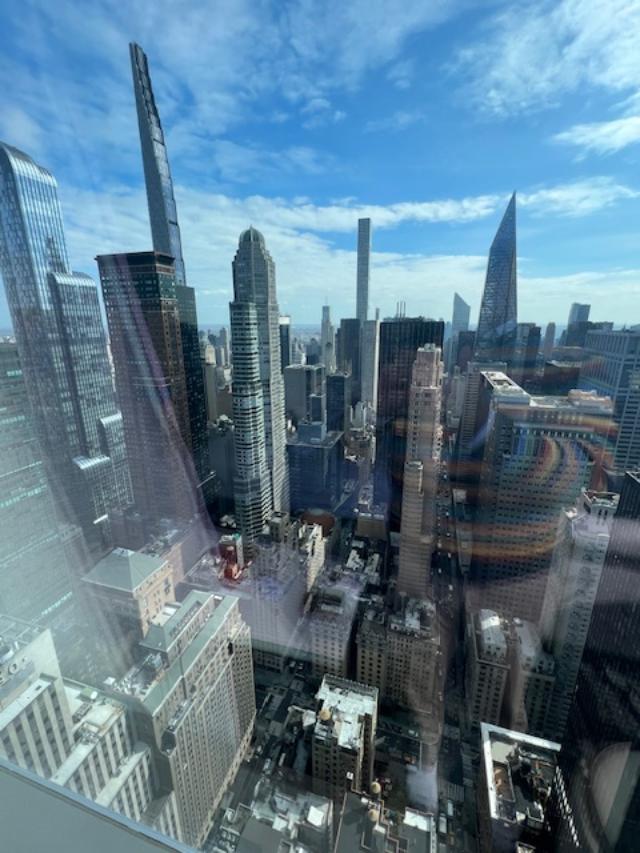
The view of Uptown

The view from the room during the day.

The view at night of the view looking downtown.

The sunrise the next morning.
I can’t tell you how well I slept that night. Not only was the hotel very quiet but the bed was so comfortable that I was asleep for eight hours. The room was so amazing I did not want to leave it. Between the views and the comfortable bed it was one of the best night’s sleep in a long time.
I met Maricel for breakfast in the morning and that matched the experience of room. The breakfast was an extensive buffet with an assortment of breakfast items.
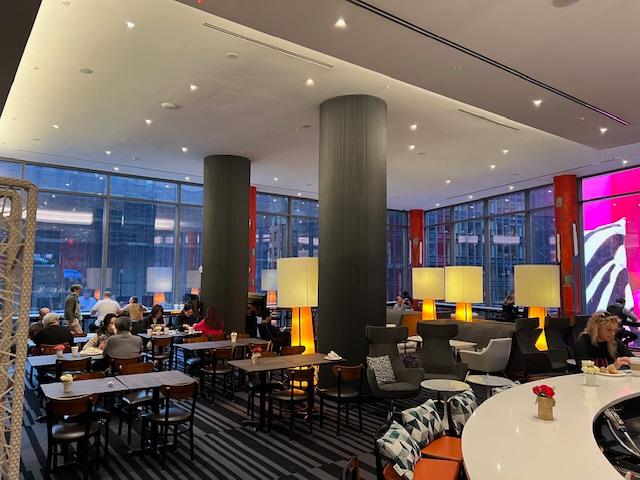
The Breakfast Buffet Room on the forth floor of the hotel.

The Buffet

The Buffet line
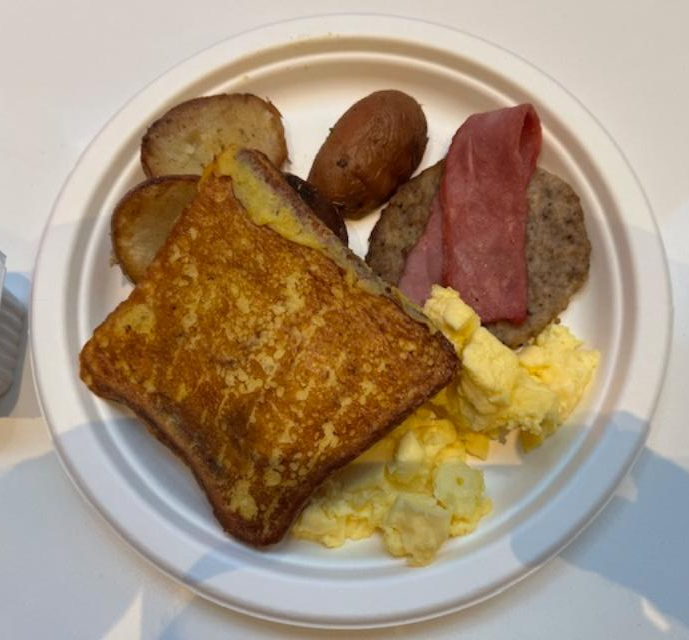
The breakfast was excellent and the food was so fresh.
It was an excellent overnight stay and not only did I have a wonderful night’s sleep but a wonderful breakfast. We had a nice talk over breakfast and I described my walk in the neighborhood. The hotel was in the center of the neighborhood I was exploring and I was able to resume my walking tour of the area once I checked out.
I checked my luggage and continued the walk around the Theater District. I finished my walk later that evening and ended the walk at the end of West 43rd Street. It is a large neighborhood with lots of interesting architecture, beautiful art installations and excellent restaurants both inexpensive and some more luxurious. You can get any type of cuisine here.
At the end of the night, the views at night were quite spectacular.
West 43rd Street and Sixth Avenue at the end of the walk. Late nights is when the beauty of Manhattan shines.
The Theater District/Times Square area has so much to see and do.
Places to Eat (the places in this blog I have personally eaten at):
China River
258 West 44th Street
New York, NY 10036
(646) 767-0854
https://www.timessquarenyc.org/locations/china-river
Open: Sunday 12:00pm-10:00pm/Monday-Saturday 11:00am-10:00pm
My review on TripAdvisor:
Carmines Italian Restaurant
200 West 44th Street
New York , NY 10036
(212) 221-3800
Open: Sunday-Thursday 11:30am-11:00pm/Friday & Saturday 11:30am-12:00am
My review on TripAdvisor:
Virgil’s Barbecue
152 West 44th Street
New York, NY 10036
(212) 921-9494
Open: Sunday-Thursday 8:00am-11:00pm/Friday & Saturday 8:00am-11:30pm
My review on TripAdvisor:
Sardi’s
234 West 44th Street
New York, NY 10036
(212) 221-8440
https://www.shubertevents.com/sardis.html
Open: Sunday-Monday Closed/Tuesday 12:00pm-10:45pm/Wednesday 12:00pm-11:00pm/Thursday 12:00pm-10:45pm/Friday and Saturday 12:00pm-11:00pm
My review on TripAdvisor:
Hello Deli
215 West 53rd Street
New York, NY 10019
(212) 489-7832
Open: Sunday-Saturday
My review on TripAdvisor:
My review on DiningonaShoeStringinNYC@Wordpress.com:
https://wordpress.com/post/diningonashoestringinnyc.wordpress.com/5109
The Halal Guys cart under the scaffolding on West 52nd Street and Sixth Avenue
https://thehalalguys.com/locations/west-53rd-street-new-york/
My review on TripAdvisor:
My review on DiningonaShoeStringinNYC@Wordpress.com:
https://wordpress.com/post/diningonashoestringinnyc.wordpress.com/1093
Wu Liang Ye Chinese Cuisine
36 West 48th Street across from Rockefeller Center
Open: Sunday-Saturday 11:00am-9:00pm
My review on TripAdvisor:
Places to Stay:
The Residence Inn New York Manhattan/Central Park
1717 Broadway
New York, NY 10019
(212) 324-3774
https://www.marriott.com/en-us/hotels/nycpr-residence-inn-new-york-manhattan-central-park/overview
My review on TripAdvisor:
Places to Visit:
Museum of Broadway
145 West 45th Street
New York, NY 10036
https://www.themuseumofbroadway.com/plan-your-visit
Open: Sunday-Tuesday 9:30am-6:30pm/Wednesday 9:30am-2:30pm/Thursday-Friday 9:30am-6:30pm/Saturday 9:30am-8:00pm
Admission: Adults $49.00/Seniors $32.00/Students $29.00
My review on TripAdvisor:
My review on VisitingaMuseum.com:
https://wordpress.com/post/visitingamuseum.com/15601
The Paley Museum (Center for Media)
25 West 52nd Street
New York, NY 10019
(212) 621-6600
Open: Sunday 12:00pm-6:00pm/Monday-Tuesday Closed/Wednesday-Saturday 12:00pm-6:00pm
Admission: Please check the website
My review on TripAdvisor:
My other walks in the Theater District:
Walking the Borders of the Theater District/Times Square: Day Two Hundred and Sixty:
https://wordpress.com/post/mywalkinmanhattan.com/31440
Walking the Avenues of the Theater District/Times Square: Day Two Hundred and Sixty One:
https://wordpress.com/post/mywalkinmanhattan.com/31763
Walking the Streets of the Theater District/Times Square: Day Two Hundred and Ninety-Nine:
https://wordpress.com/post/mywalkinmanhattan.com/41897
,
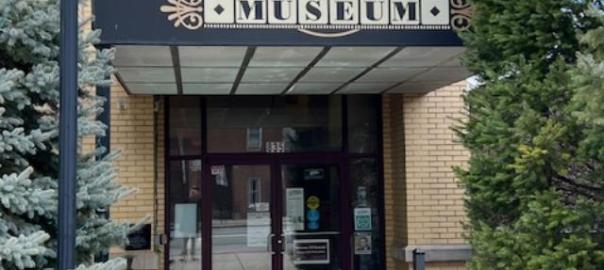
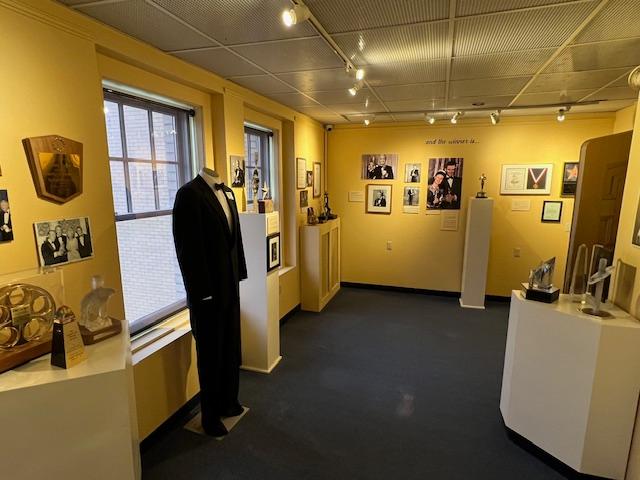
The Awards Gallery at The Jimmy Stewart Museum.
 mywalkinmanhattan