For a step back in time to a slower time and relaxing during the summer, Hudock’s Custard Stand is for you.
Going to Hudock’s is a step back in time to long warm summers and enjoying nature that surrounds us.
The hot dogs and fries are amazing! Especially when dining outside on the picnic tables.
Hudock’s Custard Stand menu in 2022-Their prices are so reasonable for their customers. It’s nice to see a restaurant be fair with their prices in this economy. Kudos to them!
Eating at the picnic tables at Hudock’s is a step back into time when things were a lot slower and you relaxed and enjoyed a meal outside.
Hudock’s Custard Stand is going to become part of my visits to southern New Jersey in the future if for anything just a moment where I can just relax and eat and worry about nothing else but a warm sunny afternoon.
Hudock’s Ice Cream & Custard menu 2022
The menu at Hudock’s is very reasonable (2022 menu)
Hudock’s Ice Cream menus and specials
Hudock’s full Ice Cream menu in Fall 2024 just a week before closing for the season in October
The heavenly Peach Ice Cream with bits of Fresh Jersey peaches in it. This is one of their signature homemade ice Creams
Yum!
Hudock’s October 2024 just before closing for the season
Sitting at the picnic tables at Hudock’s October 2024
I love this classic little Jersey food stand! Talk about character!
The one thing about Hudock’s Custard Stand is that it is a piece of New Jersey nostalgia to a time when things were just a little slower and when you visit, they still are. When people come here to dine, there is not a cellphone in site and people sit in the chairs or at the picnic tables and just talk to one another. Or admire the beautiful views of the surrounding farms. On a warm sunny day, there is nothing like a cup of ice cream or a footlong hot dog to make you forget your troubles.
Where you order food at Hudock’s
Hudock’s keeps things simple and friendly when you…
This was the first time I had been to City Island since 2008 when I visited the island for research for my third book “Dinner at Midnight” in which one of the main characters is a witch that moves to City Island. I had walked every street on the island trying to get a feel for what it might be like to live on the island and what the character may experience. There is a very important scene in the book where her boss comes to the island to search for her and notes to close proximity to Hart Island, New York City.
One of the two houses that I was impressed with on the island
The other house that impressed me overlooked the Long Island Sound.
He comes searching for the truth about his unusual employee and finds out too much. I will just leave this as a spoiler as I have not finished the last two chapters of the book yet. You can read the first book in my New York City trilogy, “Firehouse 101” that is available at IUniverse.com and Google Books.
My first book in the New York Trilogy “Firehouse 101”
On top of research for my book, “Dinner at Midnight”, I wanted to visit the City Island Nautical Museum for my blog, “VisitingaMuseum.com” as I had not been to the museum since I visited the island again in 2008. That was when I stayed at La Refuge, an inn that is now a private home. To add to the creepiness of the storyline, is that when I stayed at the inn for two nights, the first night in the first room there was no problem.
The former “La Refuge Inn” is now a private home and I think is haunted
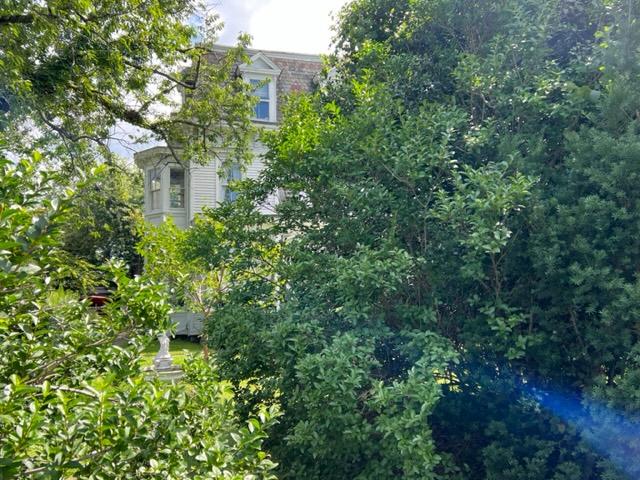
The former “Pell Mansion” is hidden from the street in parts.
When for some reason the second night they made me move to a back room, I could not sleep all night. I kept thinking that someone was in the room with me, and I finally had to sleep with the lights on. I never stayed or came back to the inn before it closed a few years later. I never felt that way before staying in an inn or B & B, and I have stayed in a lot of old houses.
The former “Pell Mansion” hidden from the street
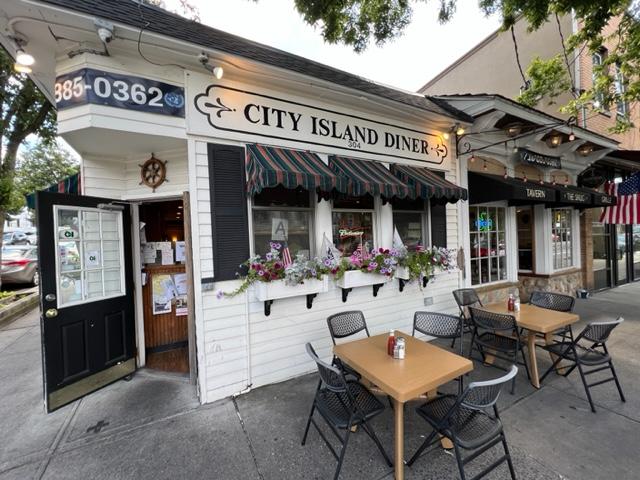
Before I visited the museum, I had to stop for something to eat. I had a very early breakfast wanting to get to City Island early so I got hungry again. I was surprised that the pizzeria around the corner from the museum was closed and the diner near the museum was closing soon as well. I found the Sea Breeze Deli at 325 City Island Avenue just down the road from the museum and stopped there.
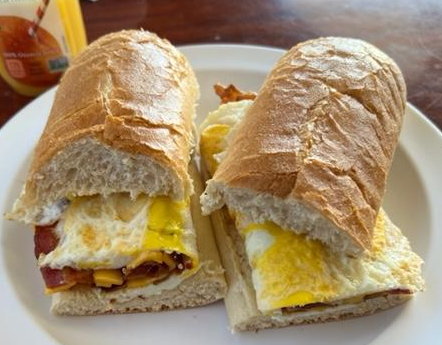
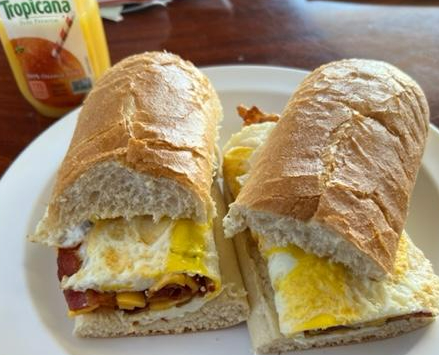
I felt like I had walked into time warp as the place looked like it was from the 1970’s. Even thought it was a bit dated inside, I ordered a Bacon, Egg and Cheese on a roll ($4.00) and it was terrific (See review on TripAdvisor) and hit the spot where I was ready for a long day of exploring.
The Bacon, Egg and Cheese on a roll is terrific at Sea Breeze Deli
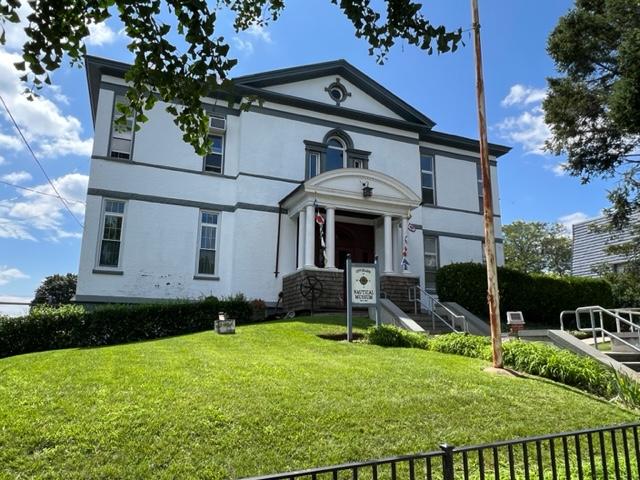
The City Island Nautical Museum located at 190 Fordham Street, had not changed much from that visit. The museum is located on a quiet, residential street just off the main strip of City Island Avenue. It is located in what was the old PS 17, the island’s elementary school. Loaded with information but a bit jumbled with historic artifacts all over the place. Still, it is a great little museum.
The City Island Nautical Museum at 190 Fordham Street
Each room in the museum has a different theme to it with more information lining the hallways (See my review on VisitingaMuseum.com). The Community Room toward the back of the museum shows the history of the City Island starting with the Native Americans and the Dutch and how the settlement grew. Lining the walls were signs and memorabilia from businesses that once dotted the island and a little about their history. There are all sorts of ads and items once carried by the merchants.
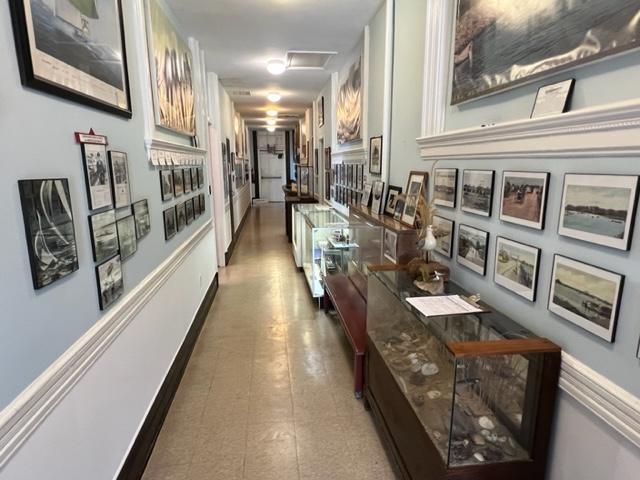
The Main Hallway at the City Island Nautical Museum is filled with the history of the America’s Cup races.
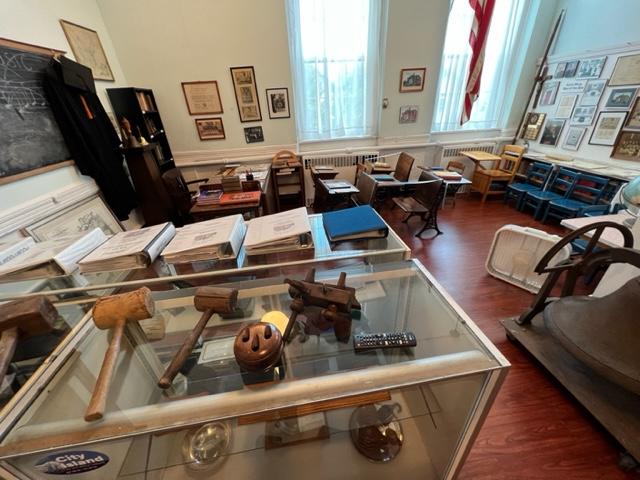
The Schoolroom had the history of PS 75 and PS 175 which were the public schools located on the island as well as St. Mary’s, the recently closed Catholic school. It had old class photos, pictures of the school at various times and a complete schoolroom set up. The rooms that dealt with Ship Building and the Nautical past were the most interesting.
The City Island Nautical Museum’s Schoolroom Gallery
City Island has a rich history in ship building, sail making and fishing it is reflected in the collection of materials in the museum and its archives. The museum really details the growth and history of the boating industry on the island and its importance in the local economy. What I found interesting was the rich history of the creation of the sailing ships for the America’s Cup tournament and how all the winning boats up until the 1980’s were built on the island and the one that lost the cup for us against Australia was the first one not built on the island.
The Nautical Room at the City Island Maritime Museum
Even Ted Turner’s boat “Courageous” was built on the island. There was a picture of the reunion of the boat winning twice at the museum with the crew’s signatures (The tour guide even said how he ‘freaked out’ members of the New York Yacht Club who did not consider him one of their own). All the sailing vessels lined the walls of the hallway of the museum.
The Nautical Room’s Americas Cup Race display
The display of winner of the Americas Cup award
Each room of the museum was dedicated to a different theme. When I toured the Community Room in the back of the museum, it held the records of a lot of old businesses of City Island with pictures and items that were once part of the businesses. There was a small FDNY display, a small WWII display about local residents who fought in the war, wedding garments, maps of the island and a small display of arrowheads.
The Community Room Gallery at the museum
Household items and clothing in the Community Room Gallery
The City Island Business items in the Community Room
In the School Room, the concentration was on PS 17, which the museum is now housed in and its history with all the classroom group shot pictures, graduation pictures and a small classroom set up. There were more records and event items of the current PS 175, which is the K-8 school that the residents attend. There were also records and pictures of St. Mary, Star of the Sea School, the former Catholic school that used to be on the island as well.
The School Room Gallery with information on the education field of City Island
The School Room display in the gallery
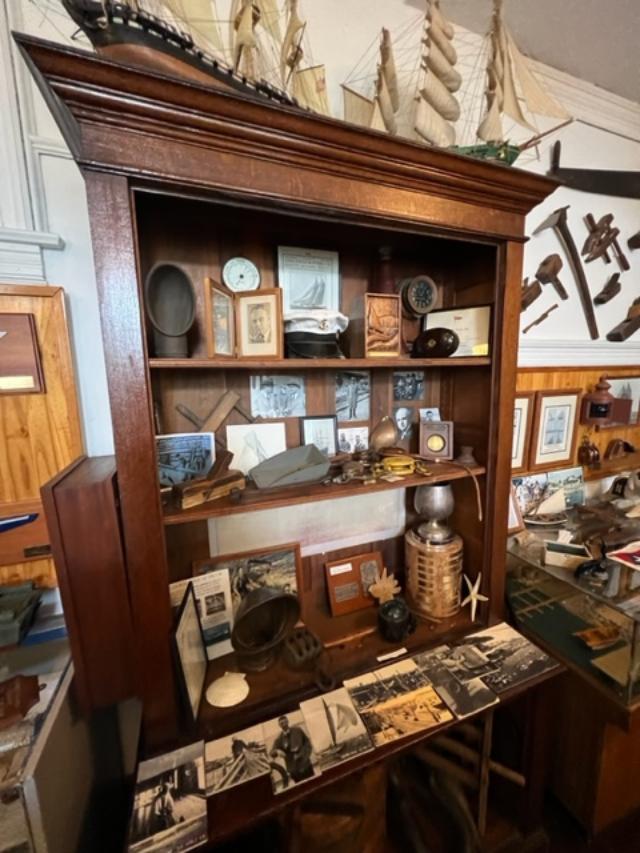
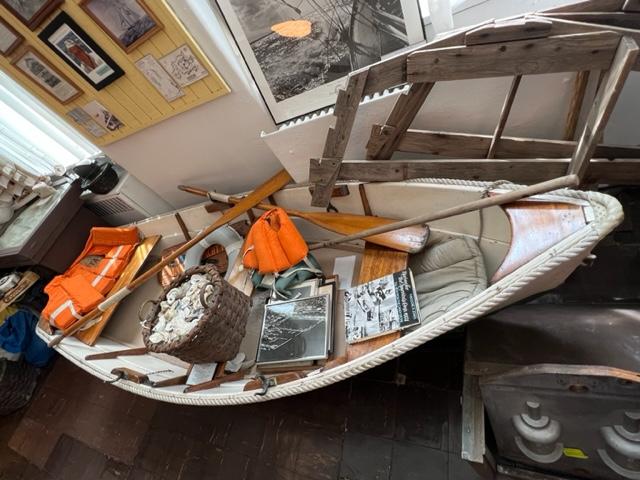
The Nautical Room needed an overall as there was too much going on in the room with pictures all over the walls, equipment for navigation and for fishing and records of the ship building companies that used to dot the island. There were boats in various shapes and sizes on display and the companies that built them like Wood Yacht, Nevins Yacht and Minneford Yacht. There was also the history of shipbuilding and sail making on the island. The tour guide told me there were no more ship builders on the island, but one sail maker left.
The Nautical Room Gallery at the museum
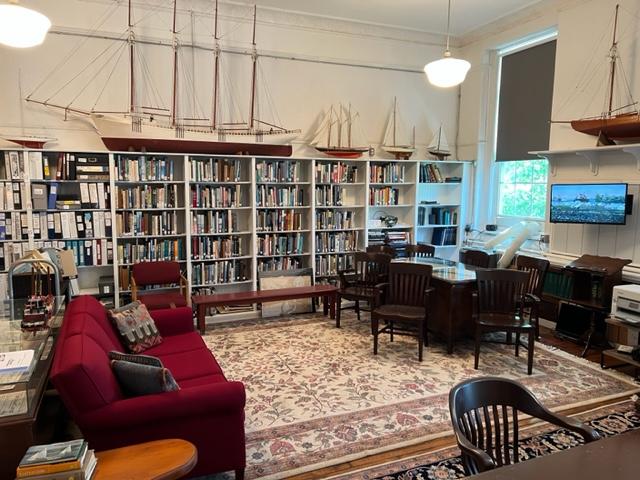
The Library where all the research is done on the island and on the families and businesses that were once here was dominated by yachting pictures and nautical photography. It held all the City Island records and even the ship building plans.
The City Island Nautical Museum Library
The museum has a lot to see but it needs to be a bit more organized to really showcase the collections properly. Still, it is one of the best museums I have seen with a nautical history theme. The best part is that you can see the whole museum in about an hour and this leaves you time to tour the island and see how the museum better explains why the island is the way it is right now.
The City Island Nautical Museum sign when I was leaving.
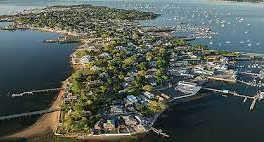
After I left the museum, I decided to tour the whole island and started with a tour down Fordham Street which lead me to the new apartment complex and their little walled park. It went in a spiral pattern and then I turned myself around back to the street and stood and admired the views. You get the most spectacular views on the Long Island Sound and the mysterious Hart Island from here.
The view of the mysterious Hart Island in the book.
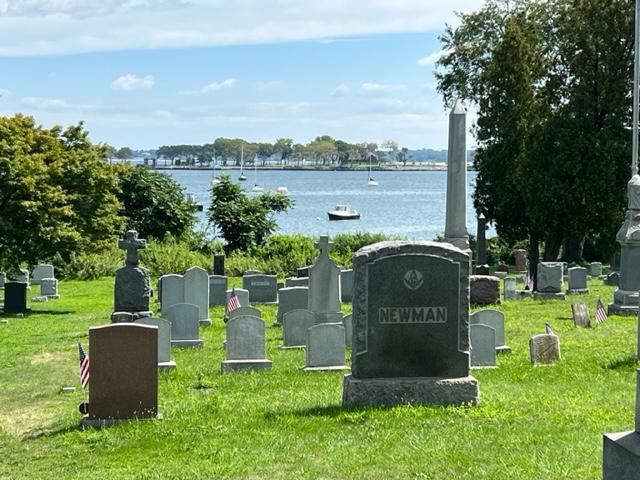
I then took a tour of King Street and passed the beautiful but eerie Pelham Cemetery. It just sat in front of the beautiful backdrop of the bay still giving you a look of longing. I wanted to walk through it but the cemetery was locked and there was no trespassing signs all over the place. I just admired it from the gate looking for family names.
The Pelham Cemetery on King Street in City Island also mentioned in the book.
The cemetery during the day. It does not seem creepy during the daylight hours.
The Cemetery overlooking the sound.
As I walked up both King and Minneford Streets, I admired the hodge-podge of architecture of the homes on the island. There are rows of bungalows and elegant Victorians with their large porches and shade trees again with the bay in the background in some cases.
A nice little bungalow right across the street from the museum.
Another interesting house in the neighborhood.
As I rounded up Terrace Street and got to the northern tip of the island, I saw the house that I used in the book as the home of the mysterious and sinister Serena Platt, the spell bounder in my novel. I set her apartment in this house and thought it had the right mood as a place that would be here home. I saw a couple of kids playing basketball on the property and did not want to stay too long to stare at it.
The original house that that I thought might make an interesting movie scene.
As I walked back down King and Minneford Streets, I saw another Victorian home with a dark colored paint job that might fit the mood of her home as well. I had not noticed this house when I was walking around the island years earlier on a scouting trip. With its dark tones and wrap around porch, it looked like something you would find in New England or Salem, MA.
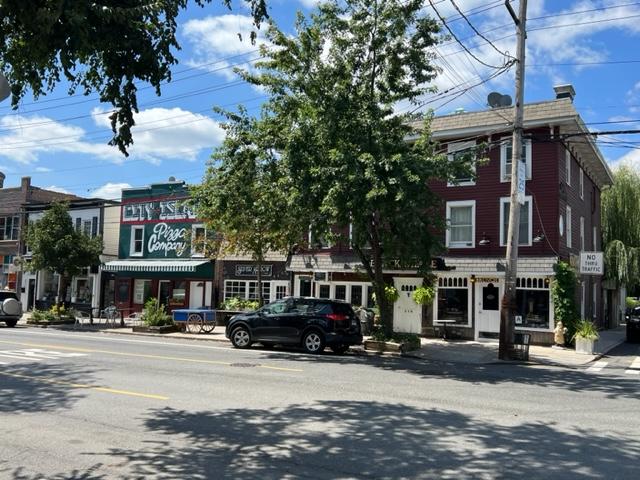
The City Island Avenue Business District
As I made my way down Cross Street back to City Island Avenue, I wanted to walk the whole street to see what stores and restaurants were there from I visited last. Most of the seafood restaurants were still there but the smaller antique and clothing stores were now gone. Many of the little unique stores had long since closed someone told me at a store I visited. Between the economy and the pandemic, they had taken their toll on business owners.
As I walked through the business district passing some of the old time businesses and seeing the new ones that have opened since last summer, I took a side detour and saw another historical site on the island, the Delmour’s Point home at 21 Tier Street. This beautiful old home has been used for many photo and film shoots and like a lot of historical sites on the island has keep out signs.
As I walked down City Island Avenue, I passed more familiar sites that had opened up since the previous year. I passed Licky Split, an ice cram shop that I had tried in the past when visiting the island. I love their whimsical way they attract people. The ice cream store has always been popular on all the trips I have made to the island.
Next to the ice cream store is Hawkins Park, a great place to relax and enjoy your ice cream on a hot day. I enjoy just siting down and relaxing in the shade. It is such a popular park with everyone of all ages.
Hawkins Street Park and the Soldiers Memorial is at 281 City Island Avenue
The very cute Hawkins Street Park is a nice place to relax on a hot day.
Off to the side of the island before I got to the point of the island where some of the most popular restaurants were located, I stopped to look at the historic Belden House which was just to the right of the restaurants.
The weird part of the historical sites on City Island is that they are sectioned off with signs of trespassing if you get too close to them but are on the island’s literature. Does not make much sense to me.
That may have been with the traditional businesses but not with the restaurants. As I walked down City Island Avenue from north to south, it seemed that every restaurant was getting a crowd especially as I walked further down the road.
The 9/11 Memorial just off City Island Avenue.
The City Island Grace Episcopal Church at 116 City island
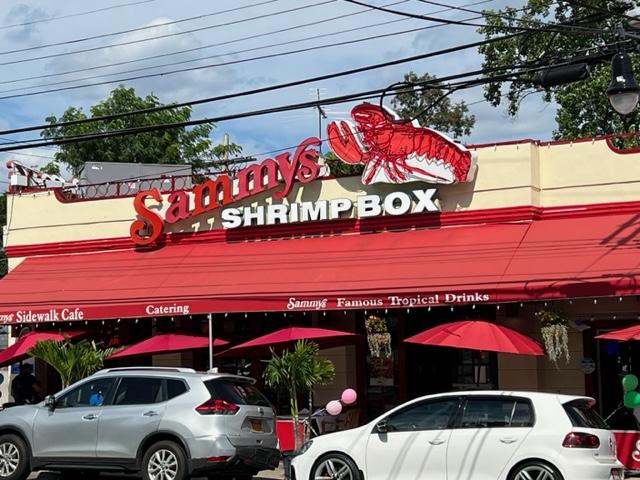
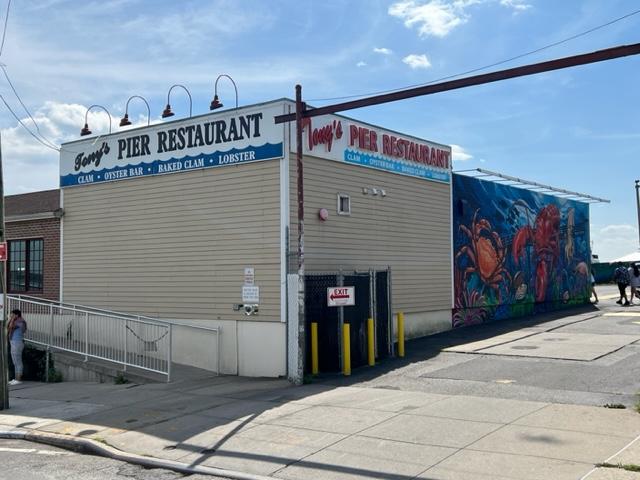
Sammy’s Fish Box at 41 City Island Avenue seemed to dominate the street with its various outlets. They have really grown even more since I on the island the last time. They must have had four different buildings. I could not remember if I had eaten there the last time I visited. At the tip of the island are Johnny’s Reef and Tony’s Pier, two extremely popular seafood restaurants that I do remember eating at then I visited years ago.
The Sammy’s Restaurant complex of restaurants at 41 City Island Avenue
When I walked into Tony’s Pier at 1 City Island Avenue, the parking lot was jammed with cars and the line was about 50 deep with customers. I was like ‘no way’ with this wait. It was too long, and everyone was getting antsy in the line. It was going by really slow.
Then I walked over to Johnny’s Reef at 2 City Island Avenue which I had dinner at the first night I visited the last time I came to City Island and the prices had gone up, but the portion sizes were still huge. The fried shrimp platters had not changed one bit. The only problem was the place was just as busy as across the street. It was really mobbed on this sunny warm night.
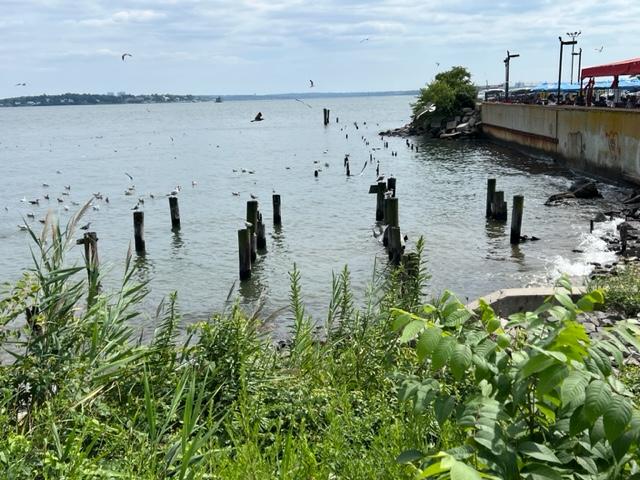
Between the two restaurants, there is the small Belden’s Point Park with views of the Long Island Sound and Long Island in the distance on a sunny day. It was mostly being used by people waiting to get into the restaurants or who had already eaten.
It was a nice place to relax but the smell of all the frying food and the grease got to be too much. As I left the park I walked around the dining room of Johnny’s Reef and was overwhelmed by all the crowds in the dining room.
The sight of people eating all that fried food really turned me off, so I decided to try a restaurant that had been reviewed on my Dining Around club. In the summer of 2023, they said the Fella’s Bar and Grill was where locals ate and socialized, so I decided to try it. It was closer to the middle point of the island near Bridge Park closer to the northern tip of the island. I was very impressed.
The bartender greeted me very warmly and gave me a lot of recommendations for dinner. She mentioned the Chicken Quesadilla and how terrific of it and that the burgers were really good. Then she mentioned how good the pulled pork was and that she had just tasted it. She sold me on that.
The Pulled Pork sandwich with a side of French Fries was excellent. The pork was perfectly cooked, and the sauce was a combination of honey, chilis and tomato for a rich barbecue taste. It was served on a chewy bun with a side of fries that were just out of the fryer (I needed some fried foods), and they were hot and crisp that snapped when you bit into them. I ordered an icy Coke, and it was the perfect meal after a long walk around the island (See my review on TripAdvisor).
While I was eating, I got to talk with the bartender about what was going on the island and about the over-whelming crowds of the restaurants on the southern part of the island. She just laughed and told me that they were really popular with people who lived off the island. I told her I could not understand this as the food was so good here. Then I just watched the game on TV.
The Pulled Pork Sandwich and Fries was fantastic
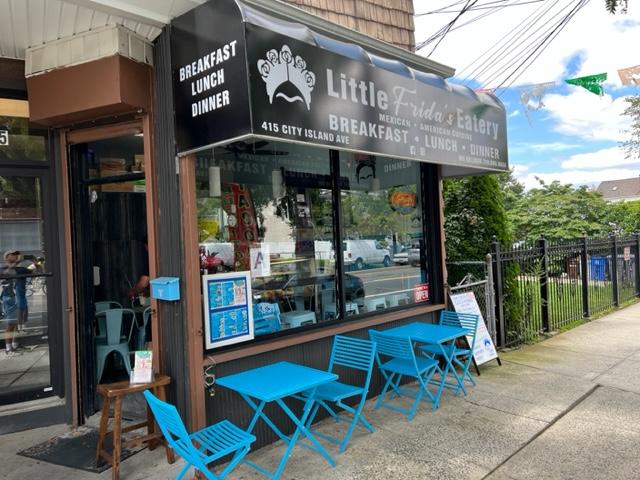
In the summer of 2023, Fella’s was no longer on the Dine Around Program but a new restaurant named Little Frida’s Eatery at 415 City Island Avenue. I was not sure of what they served at the time but I found out they served homemade Mexican food where the parents cooked and the daughter worked the front of the restaurant. The meal was wonderful.
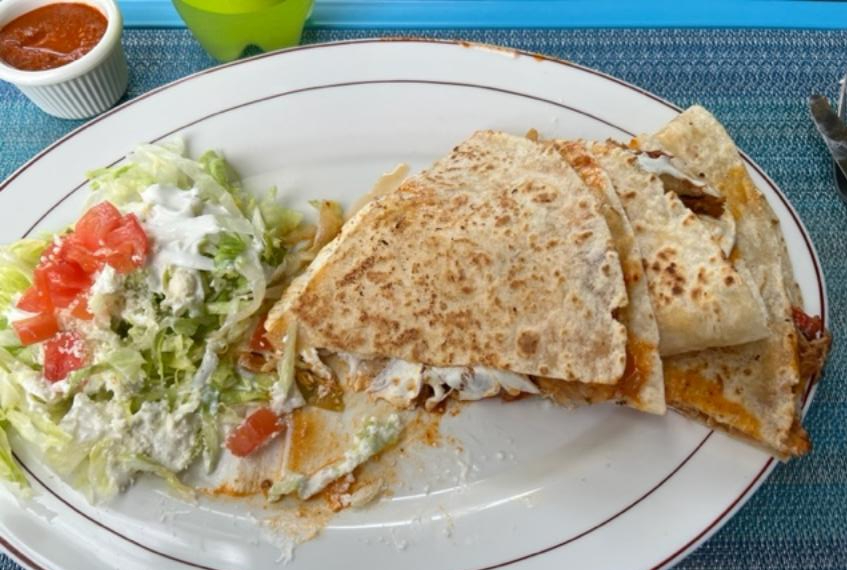
This brand new restaurant specializes in Mexican and Mexican-American dishes and has a nice selection to choose from. I wanted something different and ordered the Chipotle Chicken Quesadilla on the recommendation of the owners daughter and she was right. It was wonderful.
The quesadilla was really large and could have fed two people and was filled with very spicy meat that she said had been marinading for 24 hours. It was served with fresh lettuce and tomato and a homemade red hot sauce that brough some kick to the dish. I enjoyed my lunch on one of the outside tables and relaxed and enjoyed the sunshine and the breeze.
The Chipotle Chicken Quesadilla with hot sauce and lettuce and tomato was delicious
After I finished my meal, I was walking up City Island Avenue and noticed the large number of cars entering the island over the bridge probably coming for dinner. I walked past the busy Sea Shore Restaurant at 591 City Island Avenue and saw the cars pile into their parking lot and people coming and going.
The Sea Shore Restaurant at 591 City Island Avenue
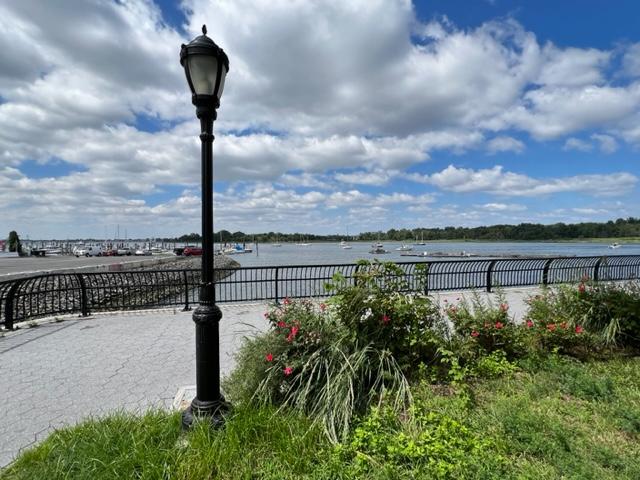
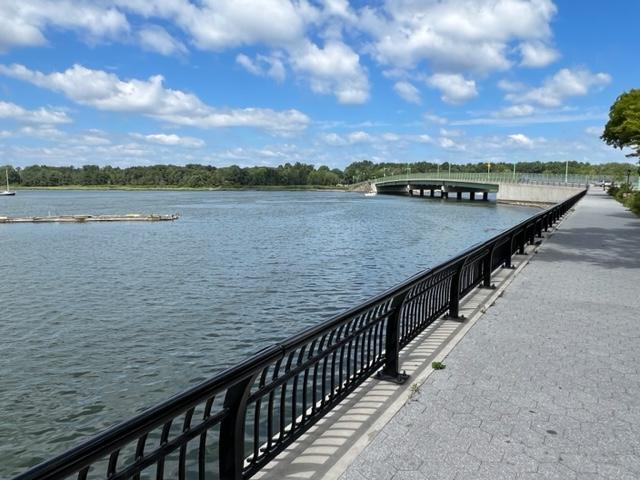
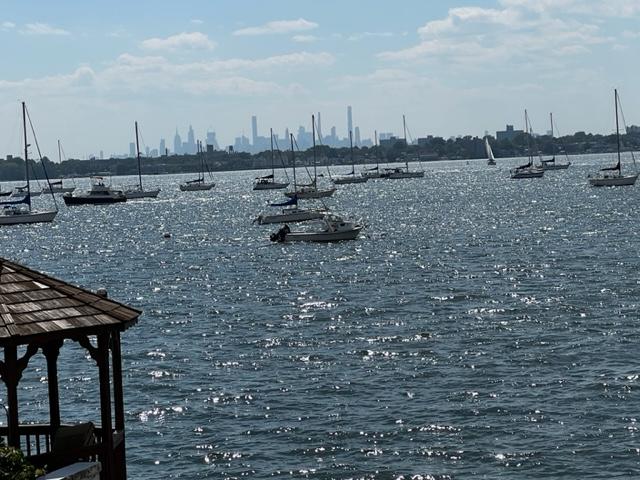
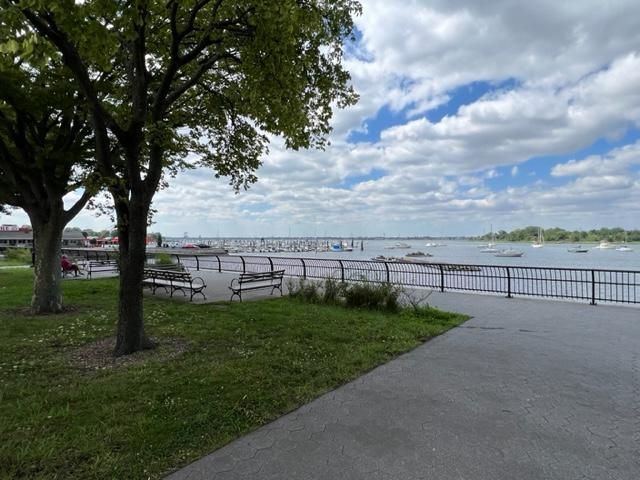
Just past that was the calm of Bridge Park-Catherine Scott Promenade at 549 City Island Avenue. Talk about views of the bay!The sun was just starting to set so there was a beautiful glow to the Long Island Sound, and you could see all the boats sailing by and people waterskiing around the harbor. In the distance, you could see the skyline of lower Manhattan. It has the most dazzling effect of seeing New York from this standpoint.
The Bridge Park-Catherine Scott Promenade at 549 City Island Avenue
It was like visiting Cape May and crossing the bridge to a small New England fishing village. City Island is the same way escaping to a beach community with a rich shipping and fishing history and showcasing its nautical past.
Bridge Park at 549 City Island Avenue on the northern tip of City Island
The bay on the sunny afternoon with the view of Manhattan in the background.
I had come to the island to search for a witch and why she chose to live here and found my answers in the beautiful homes, wonderful parks and spectacular views of the bay. City Island is unique New York neighborhood where you do not realize that you are still in New York City.
*Be on the lookout for “Dinner at Midnight” when it gets published in the future.
I found this wonderful combination bakery and gourmet shop when walking home from school one afternoon and exploring Greenwich Village. All the delicious pizzas and pastries in the window lured me in.
I had just eaten my lunch, so I was not that hungry and just wanted a snack. I saw the small doughnuts in the windows called Bombolones, which are yeast doughnuts filled with chocolate or vanilla cream fillings and then rolled in granulated sugar. The small one is $2.15 and the large one was $5.00. Don’t let the price deter you as it is a sweet and filling little dessert. The fresh vanilla cream played beautifully off the sweet dough and sugary topping. Each bite was wonderful, and it was…
The colorful and mouthwatering selection of donuts is what lured me into this popular and very special dessert shop in Greenwich Village. Just one look in the window wanted to make me walk inside.
The unique logo
Walking into The Donut Pub is like walking into the donut version of “Willy Wonka’s”. There are just so many choices and all those delicious donuts scream “Buy me”! I have only been in The Donut Pub a few times, but I am hooked already. Just looking in the window makes me hungry.
The first time I passed the shop I was just taking a look at what was on display to see what they carried and this delicious and mouthwatering large…
I love visiting the Hudson River Valley so any event or tour that I can go on is an excuse to come up here. I had visited all the sites that I wanted to see on a trip two weeks earlier but wanted to see them in more detail plus I wanted to take some pictures. The weather finally broke, and it was a much more pleasant 83 degrees as opposed to the 96 degrees the trip before. That makes the trip much nicer.
I asked my aunt along so that we could share in the experience, and I could use her phone to take pictures of the all the sites. It is a much nicer trip when you have someone along who enjoys these things. The one nice thing about traveling to the Fishkill, New York area is that it is only an hour away and a straight run up the New York Thruway to Route 84 and then to Route 9. Just a couple of quick back streets and you will be there.
On my first trip up, I got there so early that no one was at the first site, The Brinckerhoff Homestead Historical site, the home of the East Fishkill Historical Society at 68 North Kensington Drive in Hopewell Junction, NY. I double back and stopped for a quick snack at G & R Deli Cafe, a small deli at 2003 Route 52 in a strip mall near the old IBM campus. I needed a snack. This was my go to place both in the summer and when I came back for Christmas. The owners are really nice and the food is excellent.
Since I already had dinner plans, I ordered a Sausage, Egg and Cheese on a roll ($5.95) which was a bit more expensive than in the City but it was delicious. The sausage had a nice taste of sage and gave it a lot of flavor. I just relaxed outside in the parking lot and ate breakfast. Another time that I visited, I had the same version with bacon and both times the sandwiches were excellent.
The breakfast sandwiches at G & R Deli are excellent
After my snack, I got back to the Brinckerhoff Homestead at 12:00pm when it was supposed to open but around 12:30pm there was still no one there and I kept knocking on the door. That’s when one of the county members let me know that they did not open until 1:00pm. Since I had a list of places to visit that day and the time had been posted all over the internet, I asked if we could please start early. He agreed and I got a personal tour of the house. When I came back two weeks later, I better timed it for the 1:00pm opening to take pictures.
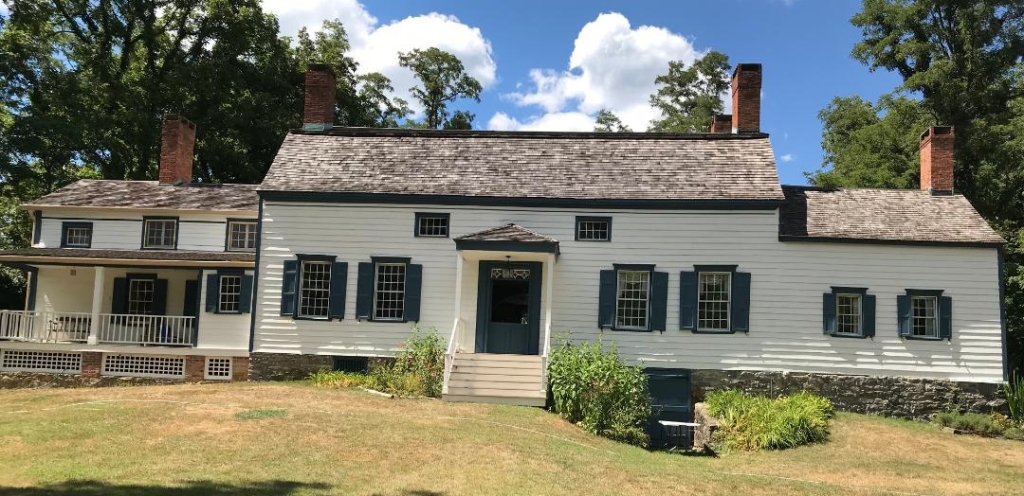
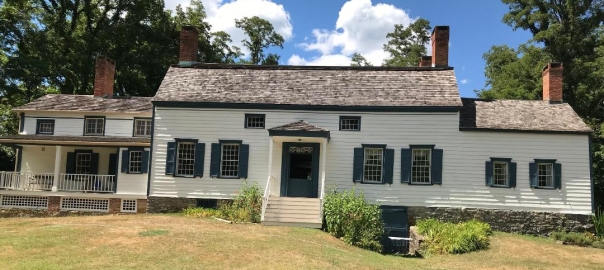
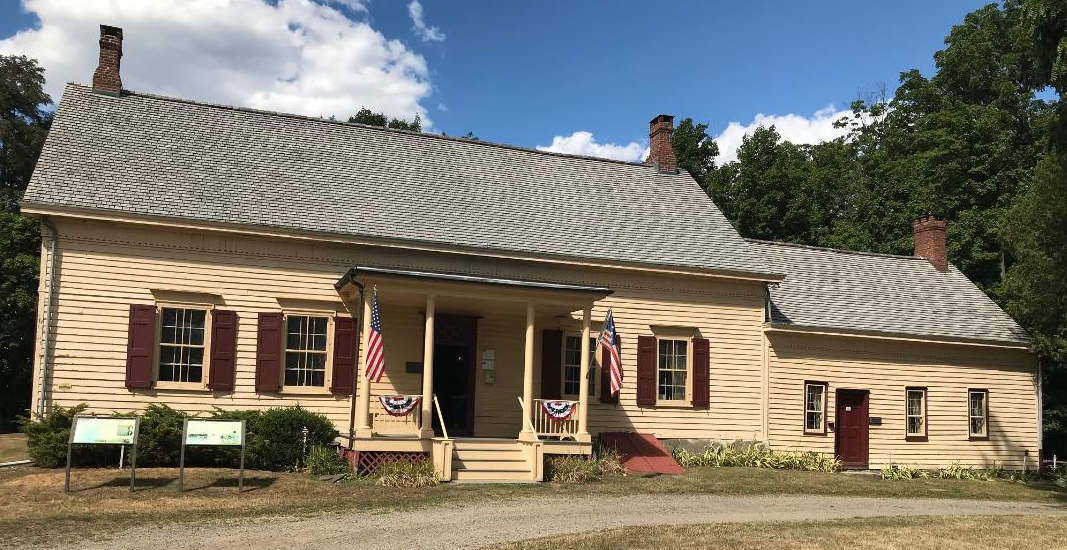
The Brinckerhoff family is prominent in the Fishkill area and family members still visit the homestead so the house’s history is ongoing. The house is broken down into three sections as you can see by the picture. The original part of the home was built by John G. Brinckerhoff in 1755 and it consisted of the “Everything Room” on the lower floor with the hearth for cooking, a beehive oven and the large room upstairs for family living.
As John Brinckerhoff’s family grew, they moved out of the house and his brother, George G. Brinckerhoff moved into the home with his family. After the Revolutionary War was over and George G.’s assignment was over in the army, he returned to the house and in 1785 added the middle main addition of the house with four additional rooms. The larger rooms and high ceilings showed the family affluence in that they could heat the home.
When George died in 1812, his brother John and his family moved back into the house. In 1814, the family sold the house to the Purdy family. They lived in the house for the next 60 years and added the final addition onto the house to the left with a summer kitchen and an outdoor oven. It remained in the family until 1875 when it was sold to the Palen family who used it again as a farm. It was then again sold to the Moore family in 1926 and lastly sold to East Fishkill Historical Society in 1974 by developer Gustav Fink who was a developer in the area (East Fishkill Historical Society).
The rooms are decorated in period furnishings and when we started the tour, you begin in the oldest section of the home with the original kitchen area.
The “Everything Room” in the Brinckerhoff Homestead
This is where the family would cook, eat, do their work on farm affairs and socialize. There was also a small general store on the property as well. The upstairs was closed to the public.
You next moved into the main rooms of the 1785 addition which brought it the into then modern era with high ceilings and larger rooms so that the family had more living space and could entertain.
The Main Dining Room of the home which was set for Hot Chocolate service which again showed the family’s affluence as chocolate was very expensive then
We also toured the Living Room which was set for socializing and work women did for the home with needlepoint, weaving, and clothes making. There was still room for people to gather and entertain.
The Living Room of the 1785 addition to the home
Along the main corridor of the home in the addition was all sorts of artifacts from the Revolutionary War period and items from the time.
Our last part of the tour was the latest addition by the Purdy family when we toured the ‘Summer Kitchen”, which showed how the home had progressed over the years. Little by little each family brought it into the next ‘modern era’.
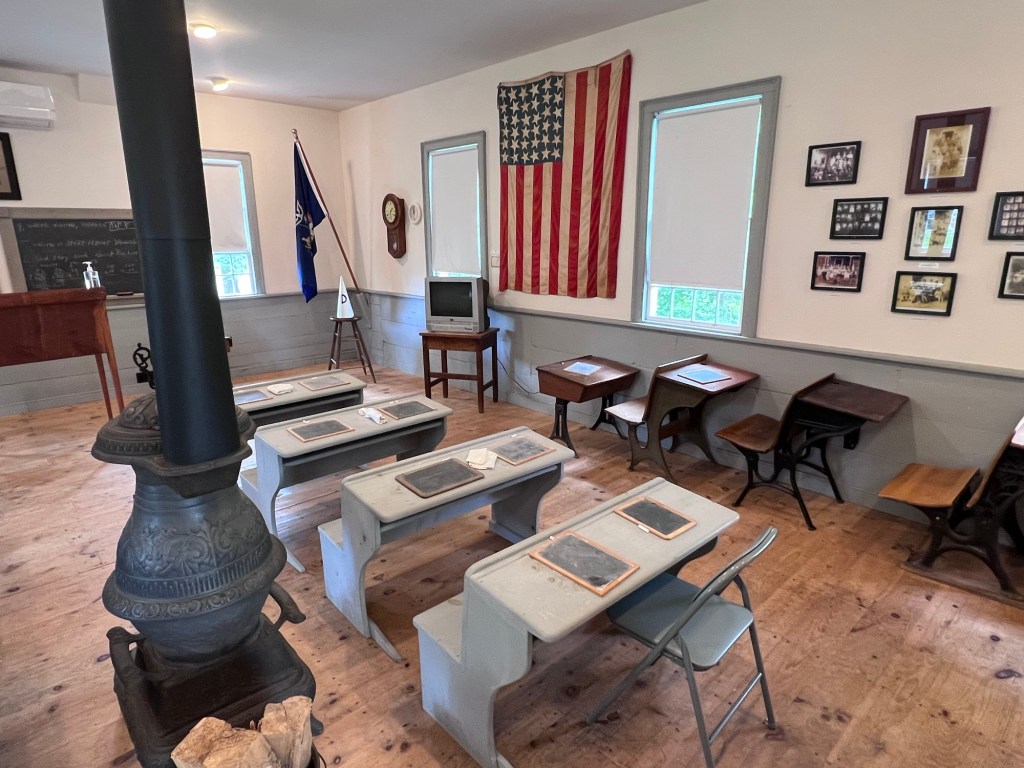
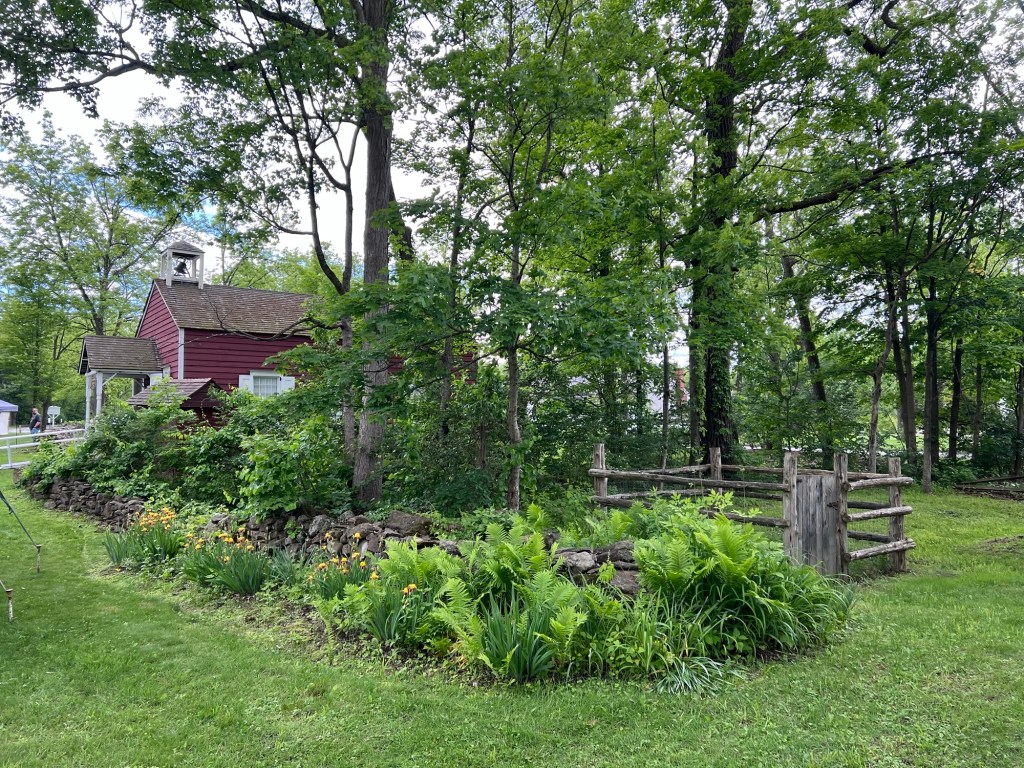
Both times I got to tour the grounds and the beautiful gardens that the volunteers maintained. Rock gardens and flower beds line the three acres of land around the house. Along with the flower beds, several historical buildings have been moved to the property including the one room schoolhouse from District 9 in East Fishkill that was built in 1826, the 1870 Icehouse which once supplied another home with its ice for the home to keep food fresh before the advent of refrigeration.
The Schoolhouse and the Icehouse and gardens
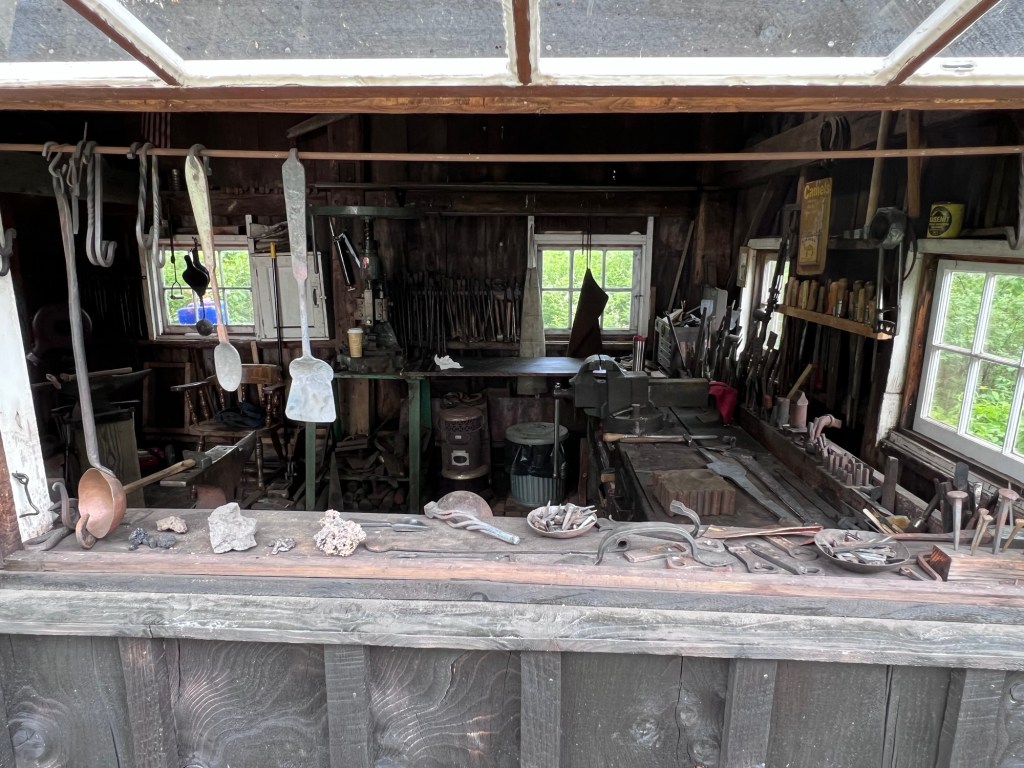
Another building that is still in use and is open when the house is open for touring is the John Hyatt Blacksmith shop from 1880. It still has some of the original tools and the blacksmith on duty still works the fire and performs tasks in the building.
The last building on the property is the Van Wyck Carriage Barn from 1845. It had been built by Judge Theodorus Van Wyck for his home that was built in East Fishkill that was torn down by the development of the IBM Campus in 1984. IBM paid to have the carriage house dismantled and moved to this property.
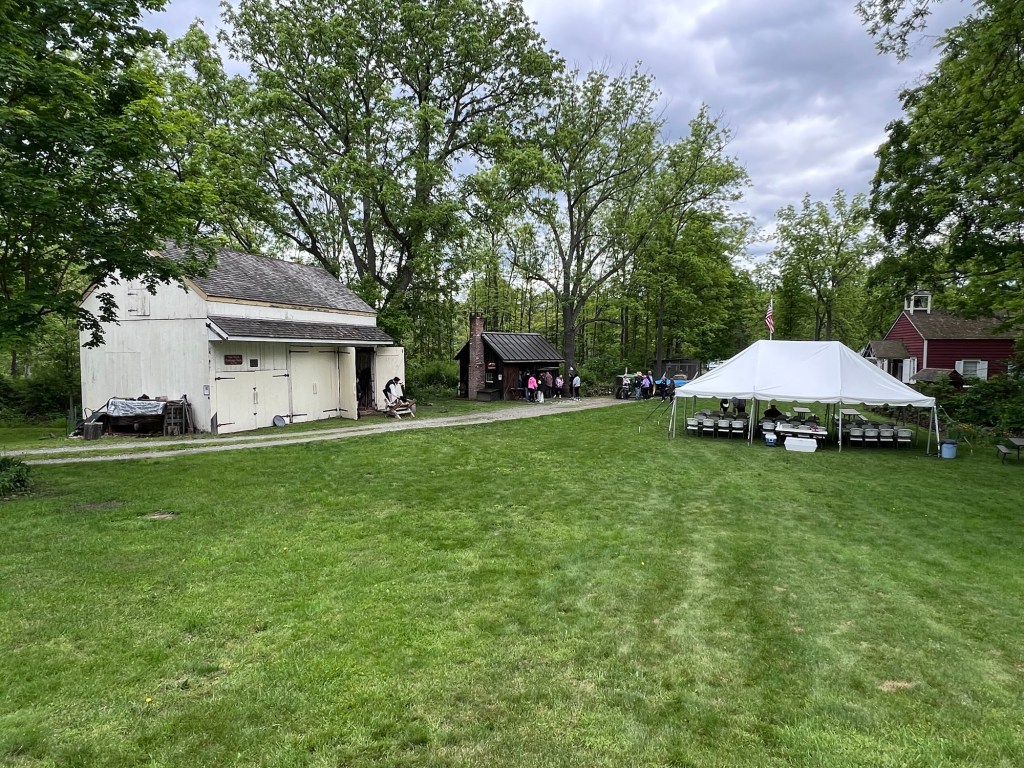
The East Fishkill Historical Society with the Brinckerhoff home in the center, the schoolhouse to the right and the blacksmith shop and the carriage house to the left
We took our time to tour the house and the grounds and on my initial visit I got to tour the schoolhouse, the ice house and the blacksmith shop to see the inner workings of these buildings and how they operated.
The docents had told me that they had recently held a ‘Strawberry Festival’ recently promoting the local fruit crops and serving complimentary strawberry shortcake that everyone enjoyed and was gone quickly.
I took what they said to heart and had planned to go to the Strawberry Festival the next year. Who knew it would be another three years before I attended the event (other things happened along the way like travel and Grad school), but in June 2025 I finally was able to attend the event. What a nice time.
The Strawberry Shortcake at the Strawberry Festival in the Fall of 2025
The grounds set up for the Strawberry Festival
The weather was a bit gloomy and cool for June but it ended up being a really nice day. They had all sorts of activities for visitors to watch and participate in. There were demonstrations in the Blacksmith Building and in the barn.
The demonstration in the Blacksmith shop
The Blacksmith during the demonstration
The wood and saw demonstration in the barn
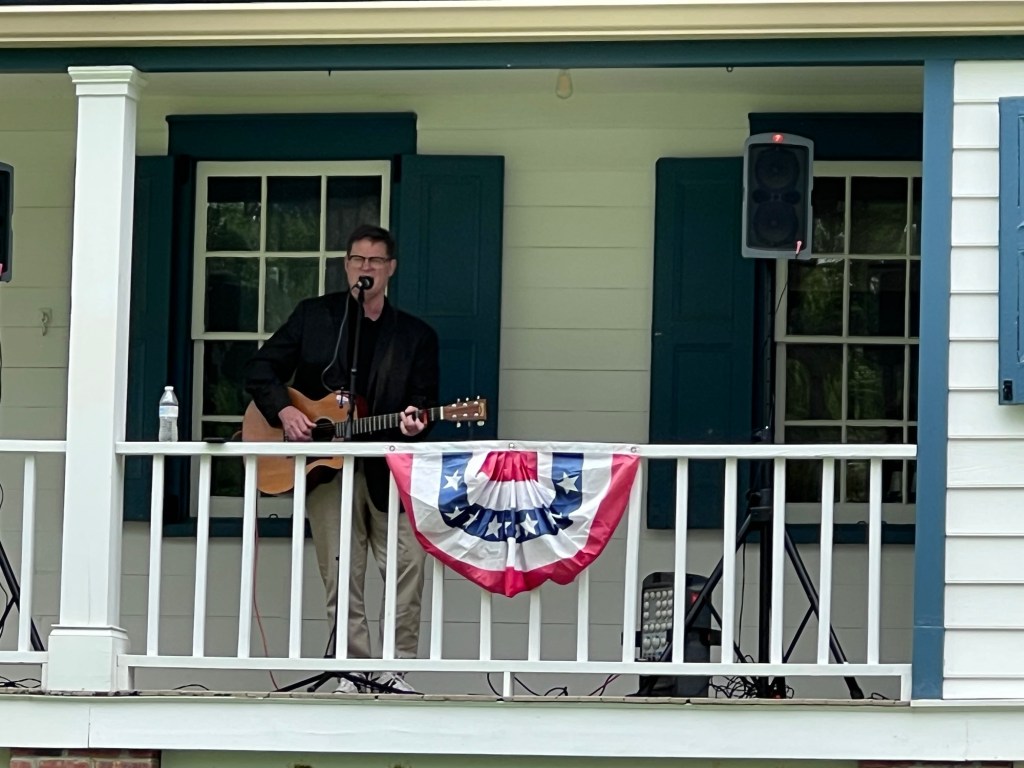
There was wonderful entertainment on the patio of the house as a guitarist entertained the ever growing crowds that attended the event.
The guitarist on the deck playing music from the 1960’s and 70’s
A clip of the entertainment
I took a tour of the house and the schoolhouse as well. I never realized that things have not changed over the last two hundred years.
The old schoolhouse on the property
The inside of the school
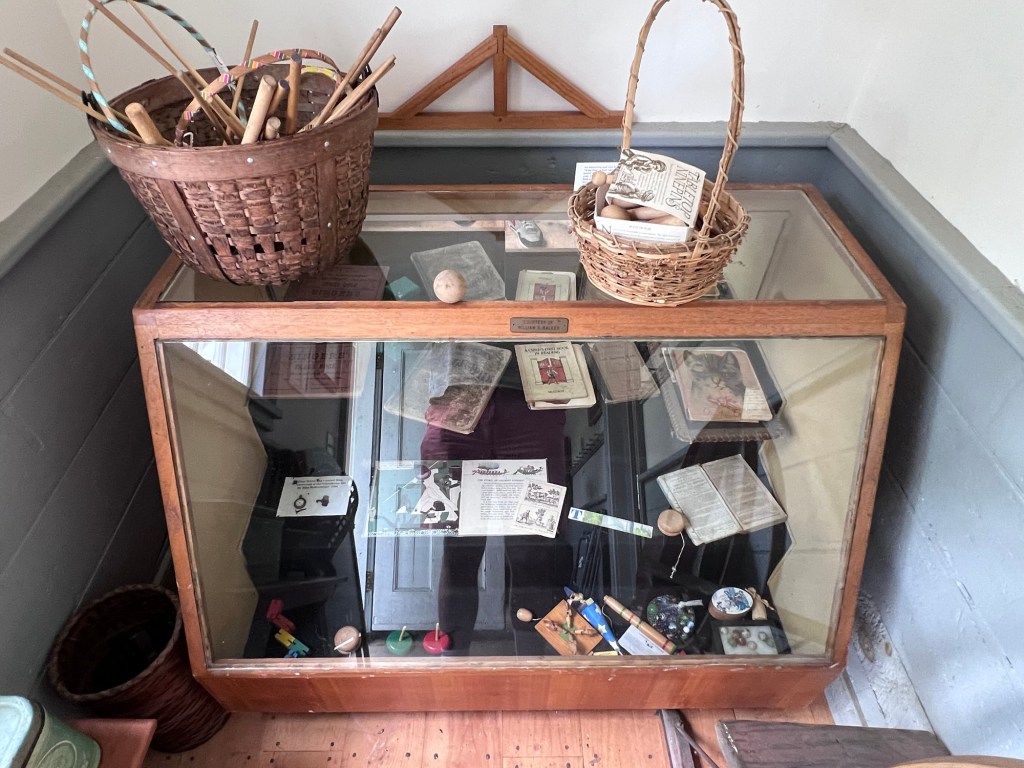
Books and games
Maybe the current education system would benefit from this
Walking around the grounds that afternoon
Walking around the grounds that afternoon
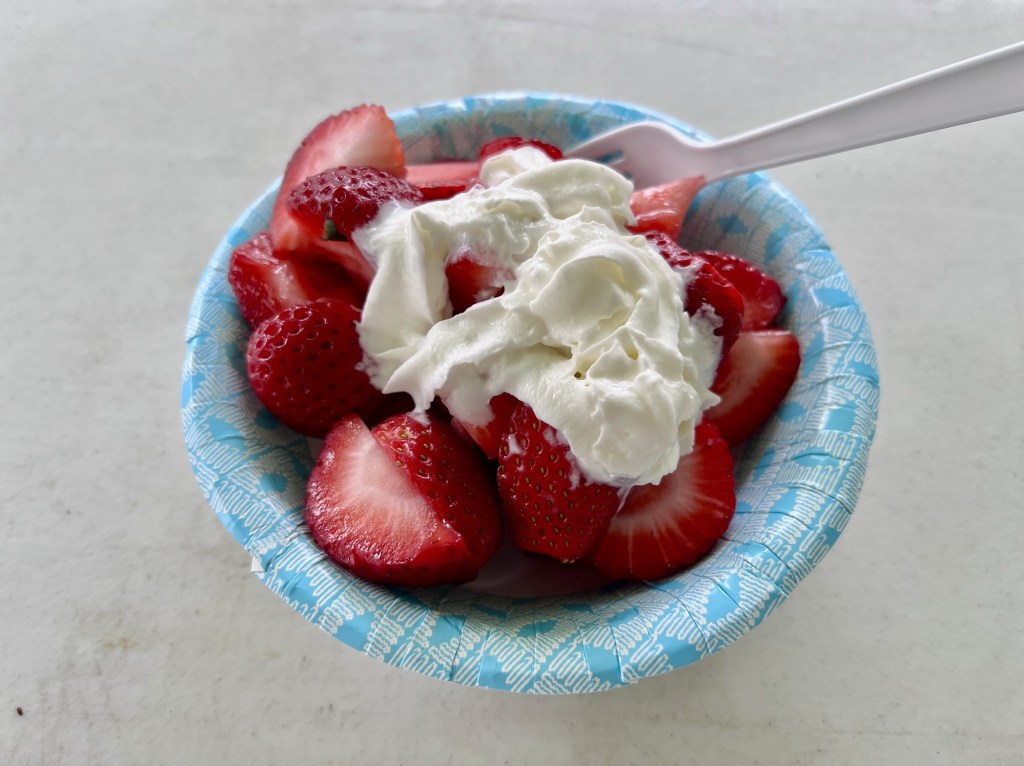
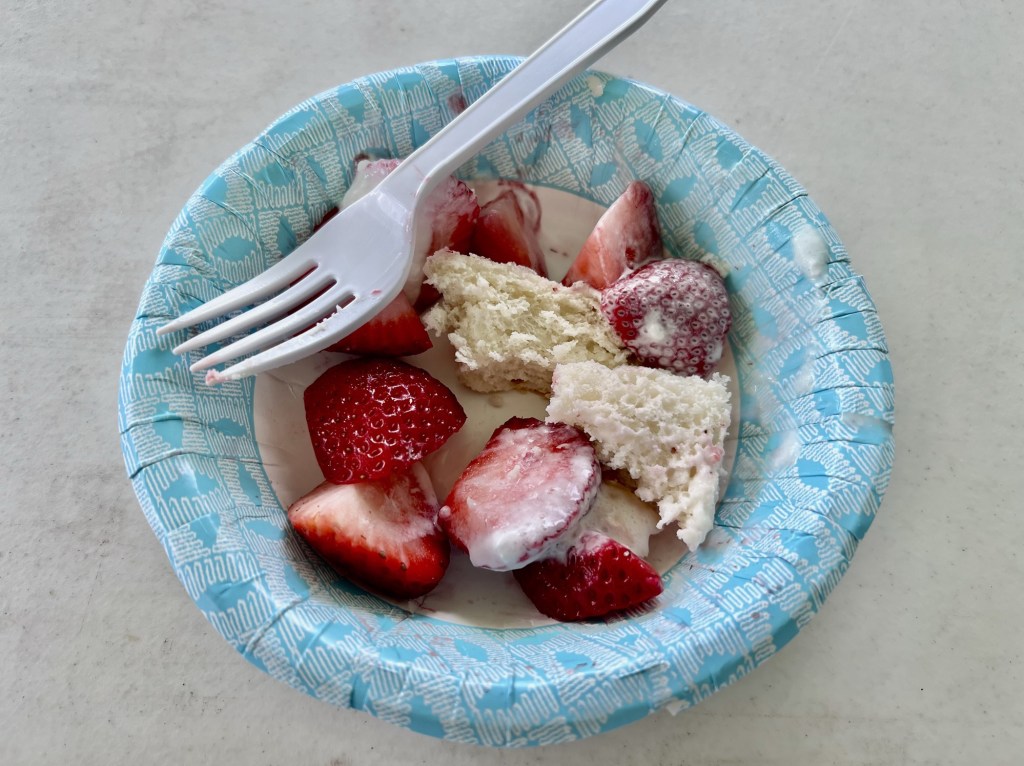
The Strawberry Shortcakes were the star that afternoon and I had to say that the strawberries they used were so juicy. I had to practically elbow my way into getting one but it was well worth it.
The homemade biscuit and the sweet juicy strawberries
They really put a lot of strawberries in the bowl
Yum!
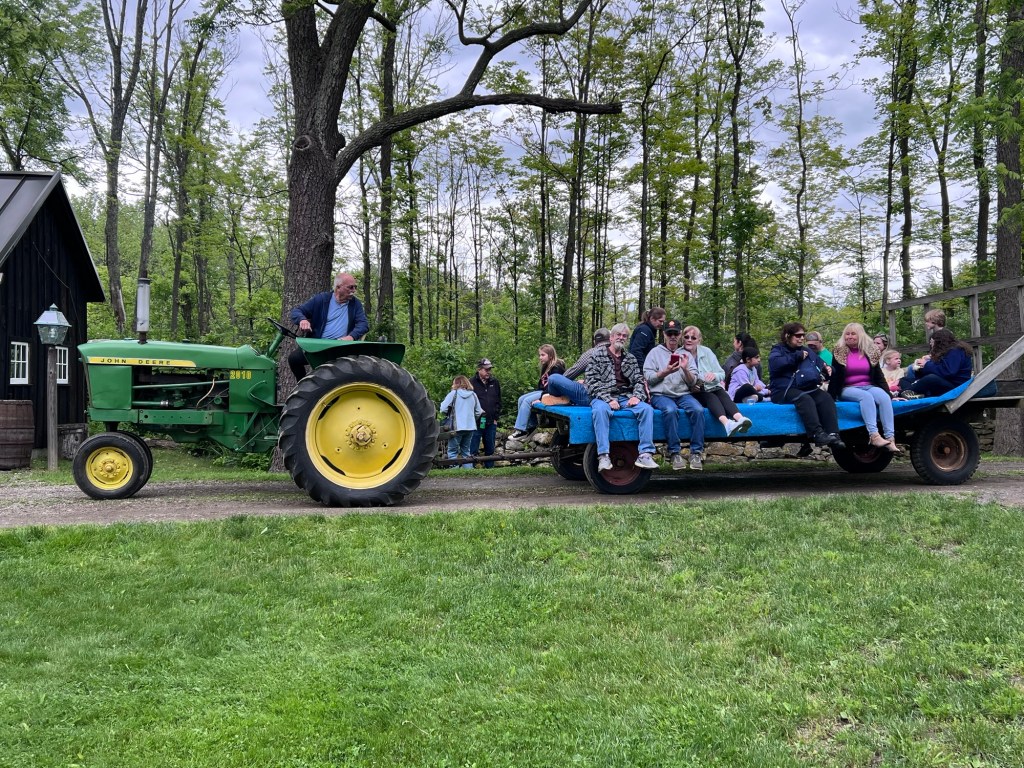
Before I left that afternoon, the Historical Society had a hayride around the property. I had not been on one in years, so I waited for the second trip. It was crowded on every trip it took and I forgot how much fun these were in the past.
The hayride around the neighborhood
Us on our turn on the hayride
The video of the start of the hayride
The video of the conclusion and everyone having a good time
I really enjoyed attending the Strawberry Festival and highly recommend if you can attend it in the future. It was an event I would have enjoyed as a kid and I did not see too many cellphones in site.
The Petting Zoo that afternoon
There are also Revolutionary War reenactments done on the property and for the holiday season the home will be decorated for the period Christmas holidays with an open house, so there will be things to do and see in the future.
When I returned in December of 2022, the curator invited me back to see the house decorated for Christmas. So while I was up seeing the decorated mansions of the Hudson River Valley the first, second and third weekends of December (read my blog on visiting the Hudson River Valley-Day Two Hundred and Fifty-Five-Christmas Again?):
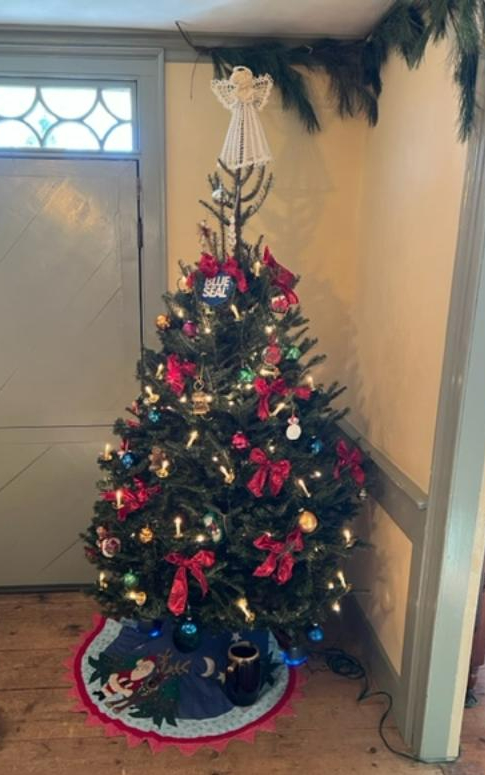
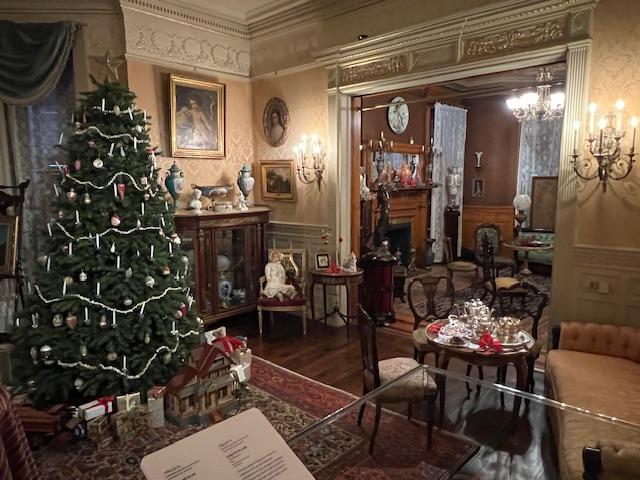
The whole Brinkerhoff Homestead site was decorated for a Revolutionary era Christmas and the tables were set for an Afternoon Tea Fundraiser. The displays showed both a Revolutionary War and Victorian theme. With the fire places blazing, it made the whole house smell of oak and pine.
The Brinckerhoff Homestead decorated for Christmas
The Brinckerhoff Homestead Christmas tree
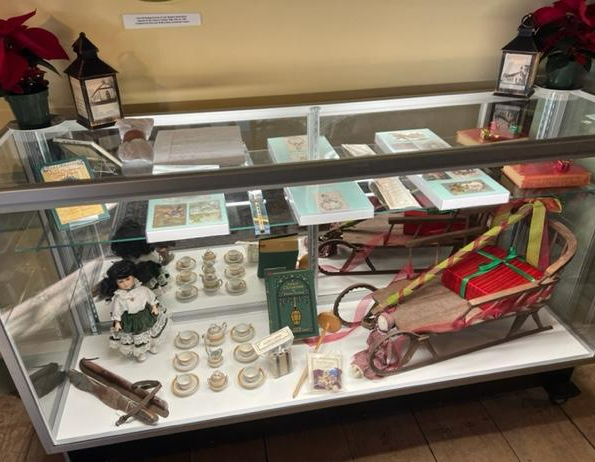
The Christmas display case at the Brinckerhoff House of Victorian toys
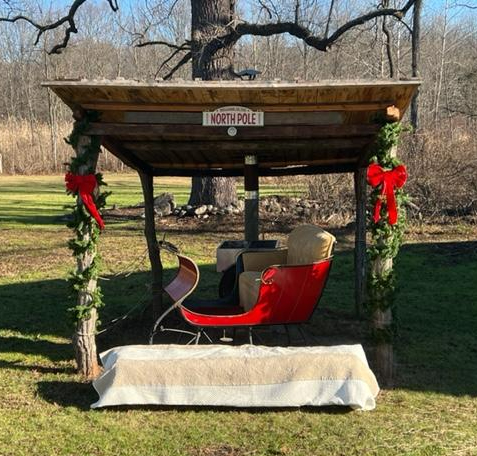
Santa does visit the first weekend of December
Our next stop on the tour of homes was the Van Wyck Homestead Museum at 504 Route 9, the old Albany Post Road. The house had stood on the main transportation line during the Revolutionary War period and it had served as General George Washington’s northern supply depot during the war because of this location.
Van Wyck Homestead Museum at 504 Route 9 (the Old Albany Post Road)
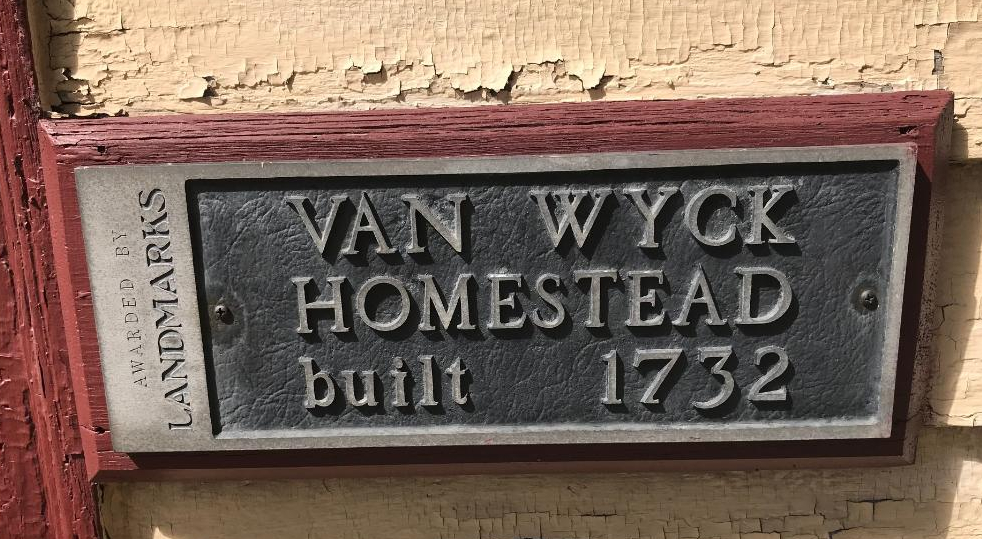
In 1732, Cornelius Van Wyck bought 959 acres of land from the original Rombout Patent and built the smaller section of the home to the right in 1732. As the family gained affluence in farming and trade, the larger section of the home to the left was built in 1757 with larger rooms and higher ceilings again to show a family’s wealth.
Because of the location of the house in Fishkill on the main road of transportation and the strategic location near the mountains to the south, General George Washington requisitioned the home as the northern supply depot for the Continental Army in October of 1776. Here supplies were run through, army regiments passed and people were buried who died during the war. The house was also used as the headquarters and court marshals and punishments took place on the property (Van Wyck Homestead Museum pamphlet). After the war was over, the house and farm was returned to the family.
The historical marker of the original home
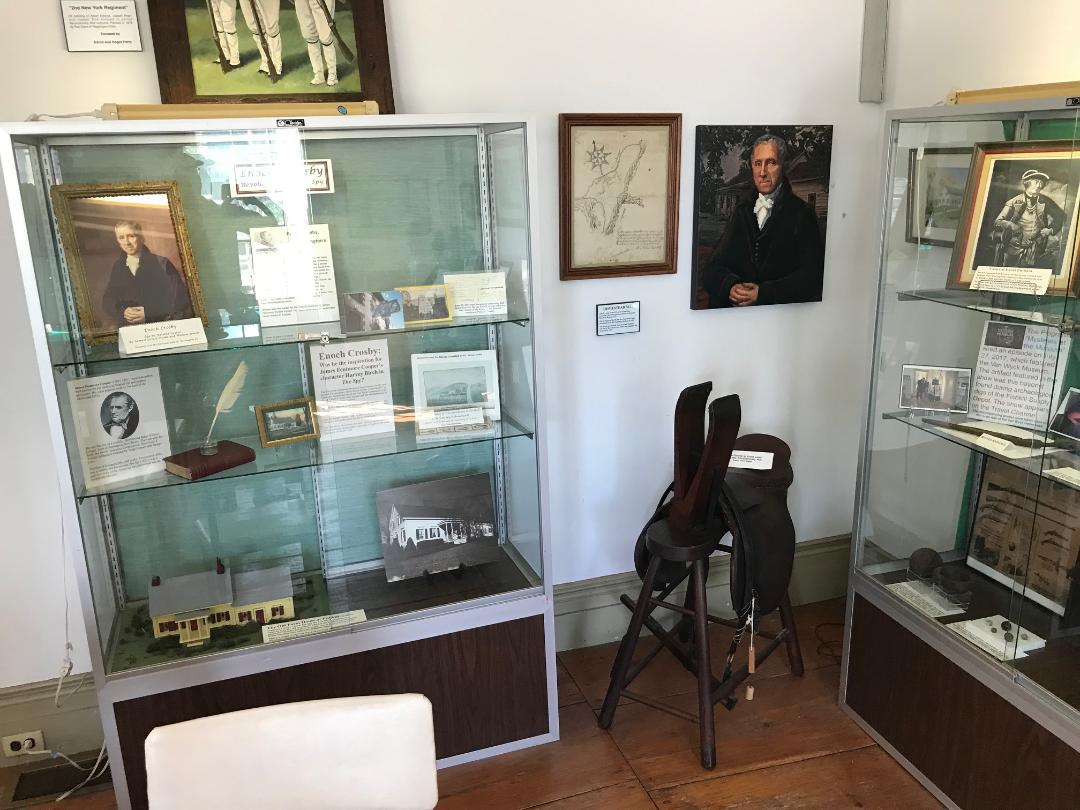
The way the house was furnished was slightly different from the Brinckerhoff Homestead that looked more like you were walking into someone’s actual home. The old Living Room of the Van Wyck Homestead is being used as a meeting room and a place to display items from the Revolutionary War.
The Living Room and Meeting Room at the Van Wyck Homestead
The Revolutionary War Collection at the Van Wyck Homestead
Towards the back of the home is a Library/Research area and we were able to see all the old books and records that are part of the home’s collection. This is where most people do their genealogy work and family research.
The Research Library at the Van Wyck Homestead
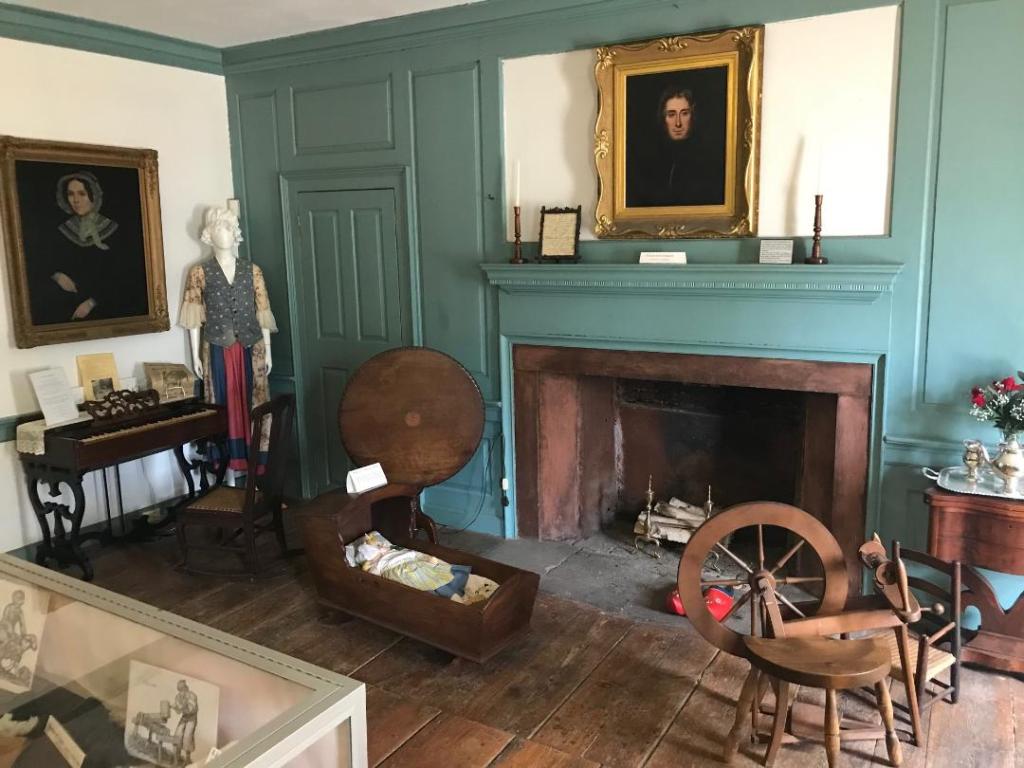
What both my aunt and I thought was interesting was when we entered the older part of the house and the old Dining Room area. Many of the artifacts were old Van Wyck family heirlooms that had been donated over the years.
The Dining Room of the Van Wyck Homestead
Some of the recent additions were the crib which had been in the family for five generations and had just been donated to the home as well as the painting over the fireplace had just been collected by the home. Like the Brinckerhoff Homestead, there are many members of the Van Wyck family who come back to visit and still live in the area.
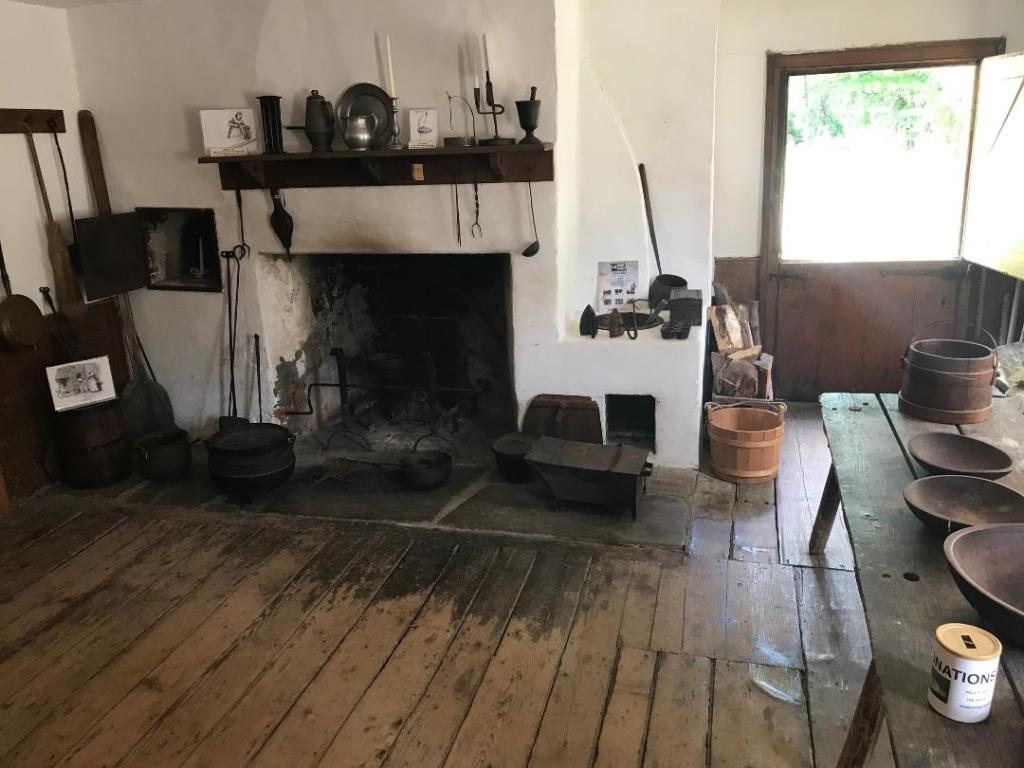
The Colonial kitchen and hearth are in the oldest section of the home from 1732. This is where the “Everything Room” was located. Back when this was the only section of the home, this is where all the cooking, dining, family business and social activities were located. All sorts of kitchen equipment lined the walls and shelves to show life in colonial times. It was funny that much of it has not changed over the years, just modernized.
The original family kitchen in the 1732 section of the Van Wyck Homestead
Outside the home, the organization planted the outside gardens and there is a recreation of the old beehive oven aside the home. It gave you a glimpse of how food came about for these large families before supermarkets.
The Van Wyck Gardens showed how the house was self-sufficient at one time
After touring the grounds, we walked back to see the displays one more time. On my initial trip, the tour guide let me see the upstairs rooms. In the newer part of the home, they had been turned into storage and offices for the docents. In the older part of the home, the old loft area was used for storage, and it was pretty dusty. The house was closed for Christmas but will reopen in the Spring.
After touring these two homes, we were off to Wappinger’s Falls further up Route 9 to visit the Mesier Homestead in Mesier Park just off the beginning of Downtown Wappinger’s Falls. There was a concert going on in the park and my aunt said she needed a break from visiting these old homes. Too many arrowheads and Revolutionary War furniture so she stayed and listened to the concert while I toured the home.
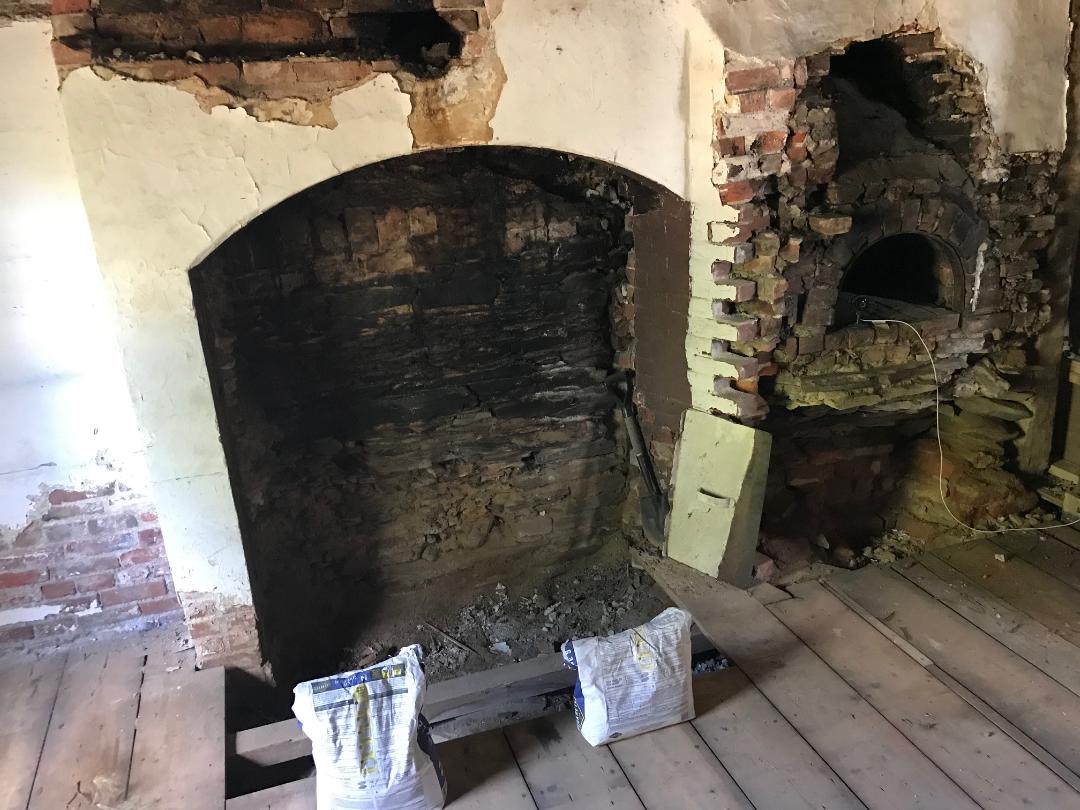
The Mesier Homestead is the home of the Wappinger Falls Historical Society, who maintains the home. The Mesier home is much like the other homes in that it had been added onto as the family grew and became more affluent. The original part of the home is currently going through a renovation and the President of the Wappinger Falls Historical Society explained that they just discovered the old hearth and oven and are currently restoring the historic windows.
The original part of the home is currently under renovation
Starting the tour at the front entrance of the home that leads to the formal Living Room that is decorated with Victorian decor. Again the large rooms and high ceilings showed the family affluence by showing how they could afford to heat their home.
The Living Room at the Mesier Homestead
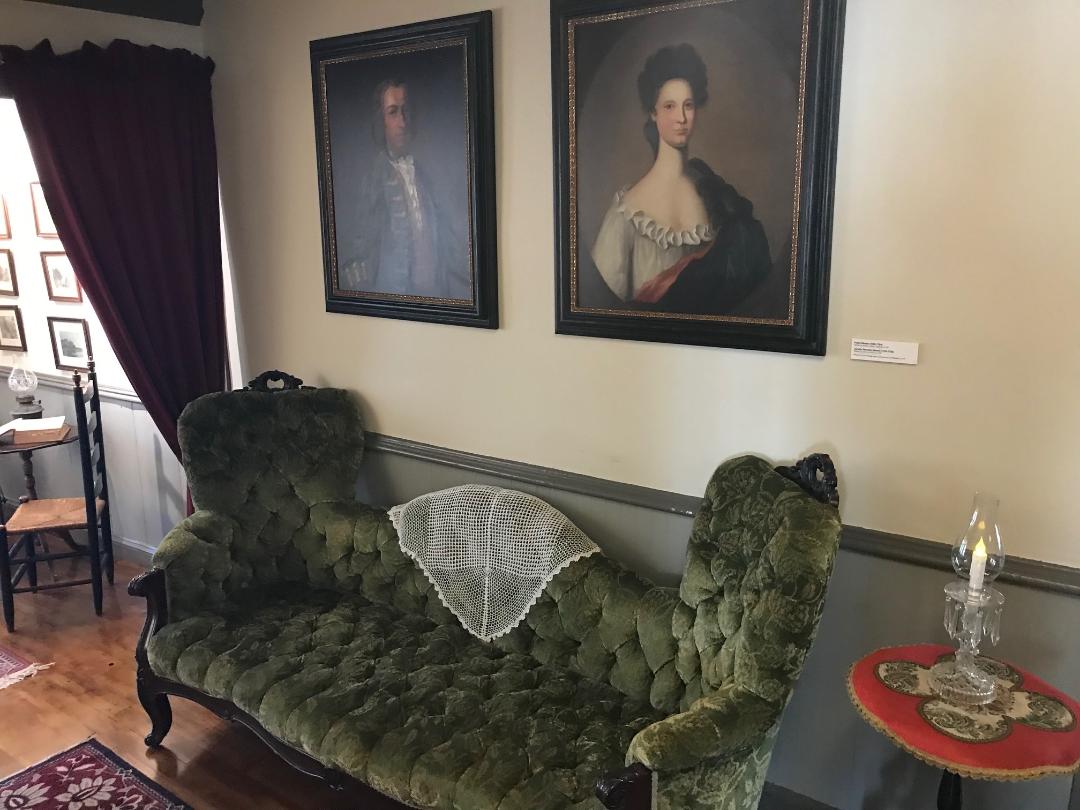
The copies of the Mesier family portraits in the Mesier Living Room
The Living Room leads to the back Library where many additions of older books are held and where visitors can do research on their family history in the Wappinger Falls. Many are trying to trace their family’s history.
The Mesier Homestead Library and Research Room
The back area of the house is closed for renovations, but you can climb the stairs to the old bedrooms on the second floor. Here is where both the family and the family slaves then servants lived on the same floor.
The Adult’s Bedroom set during Victorian times
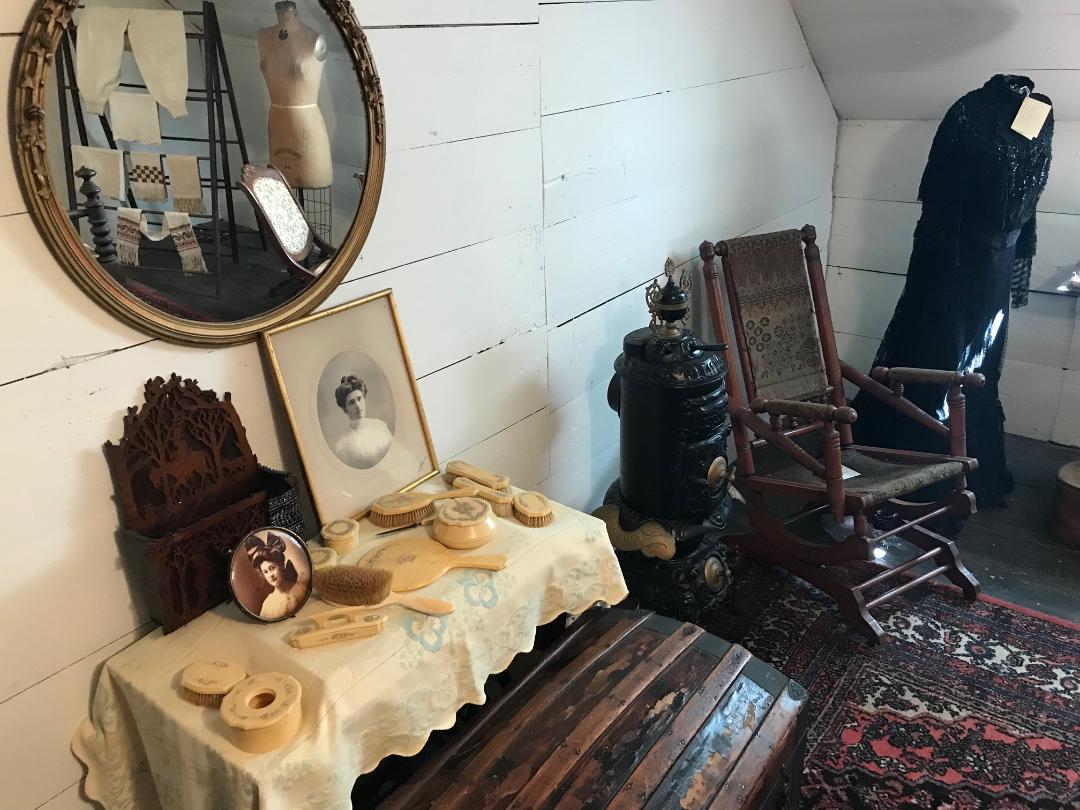
A woman’s boudoir during Victorian times
The rooms also showed a child’s place in the family where during Victorian times were treated like ‘little adults’ being trained for their future lives. Toys not just sparked the imagination but also prepared children for domestic life
Children’s playthings during Victorian times spurred imagination
On top of the recreations of the family life in both Colonial and Victorian times that the family lived through, there was an extensive collection of Native American items showing the original settlers of the region when the Lenape Indians lived, fished and hunted in this area before the arrival of the Dutch in the late 1600’s.
The Native American collection on the second floor of the Mesier Homestead
The last part of the tour ended in the formal Dining Room where the entertainment was done and the family took their meals. When I asked why these homes seemed so much smaller than homes like the Vanderbilts and Mills families, it was explained that these families were older, more established and did not have to show off their wealth. Since these were God fearing individuals, it was not acceptable to be ‘showy’. People knew they were affluent so they could show off but not flaunt it.
The formal Dining Room at the Mesier Homestead set for dinner
During the Christmas holiday season, the house is beautifully decorated for a Victorian Christmas with garlands and bows and period decorations. Most of these old homes are elegantly decorated as the families once had done during the holidays.
The Living Room at the Mesier Homestead at Christmas
During Colonial times, Christmas meant church services in the morning or afternoon and then a formal dinner in the afternoon. You might have pine, garland and berries decorate the house whereas during Victorian times, it was a much more elaborate affair. There would be a Christmas tree, garland and pine all over the home and gift giving. Christmas cards would have also decorated the home as well.
The Mesier Homestead foyer decked at Christmas time
The Dining Room table was decorated for Christmas lunch
After the tour, I took a quick walk into downtown Wappinger Falls which has a great downtown with terrific restaurants and a great view of the river and falls.
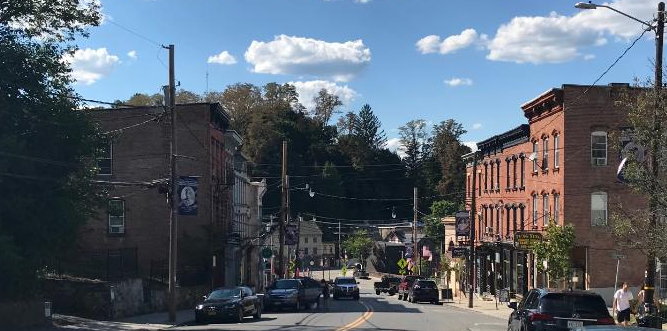
Downtown Wappinger Falls has such a unique look to it.
During Christmas time, the downtown had a quaint look to it with garland and wreaths decorating people’s homes.
Downtown Wappingers Falls during Christmas
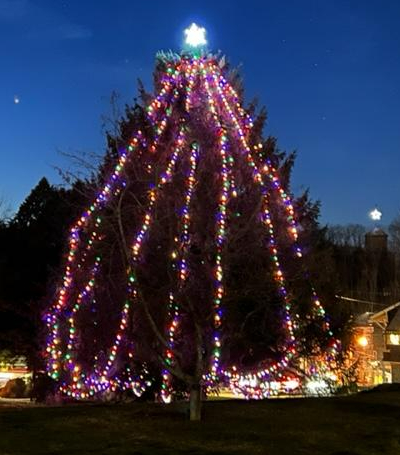
The Christmas tree in the Wappingers Falls square downtown
The Bandstand decorated at night
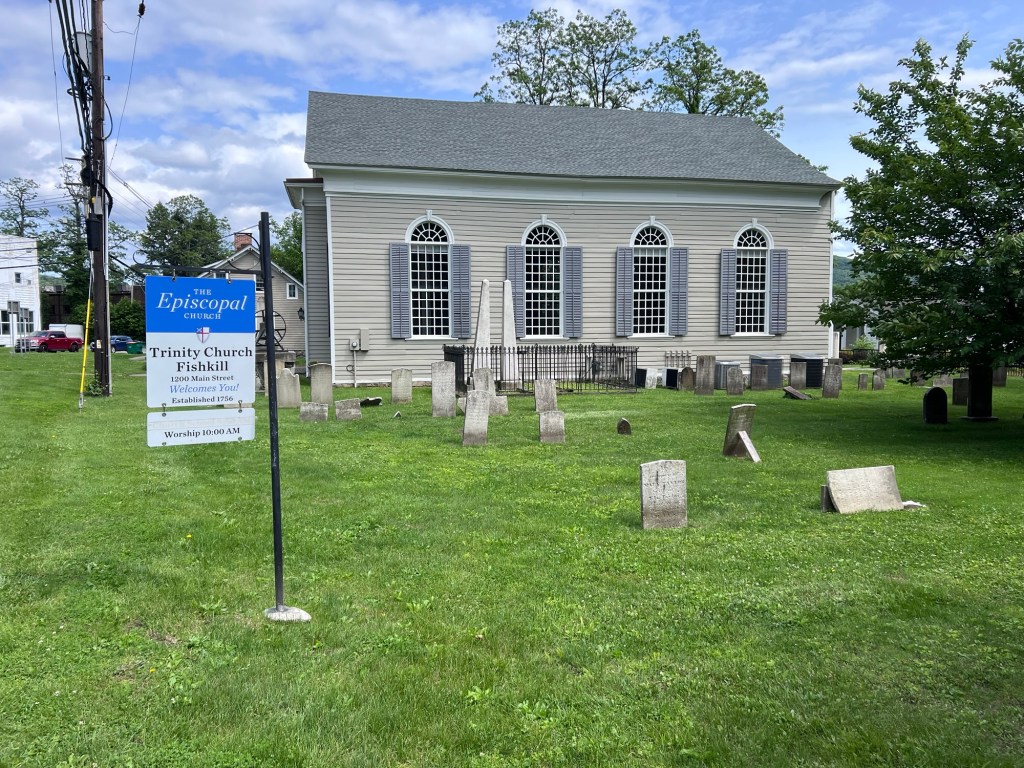
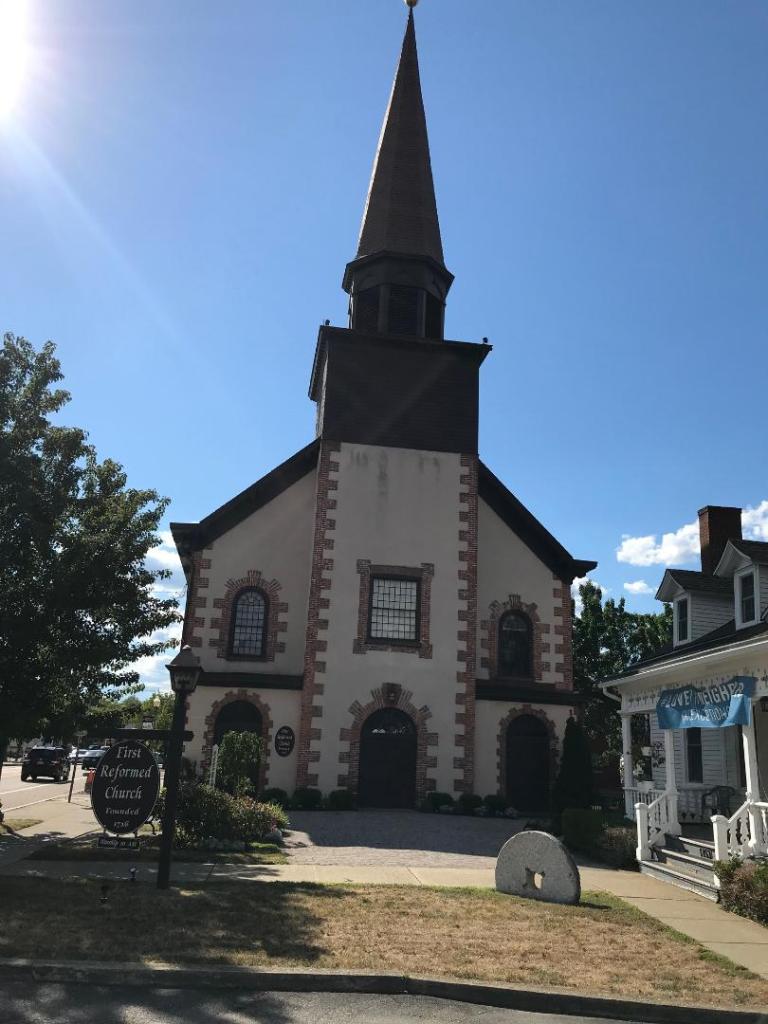
Our last part of the tour was visiting the First Reformed Church of Fishkill at 717 Route 9 at the beginning of Downtown Fishkill, NY. This elegant old church with its historic cemetery was built in 1732 on land that had been set aside for the church.
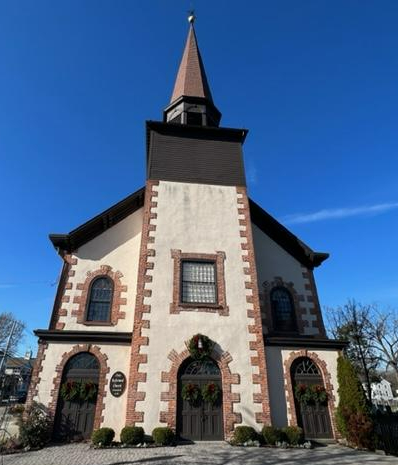
The Fishkill First Reformed Dutch Church at 717 Route 9 with the DuBois House next door
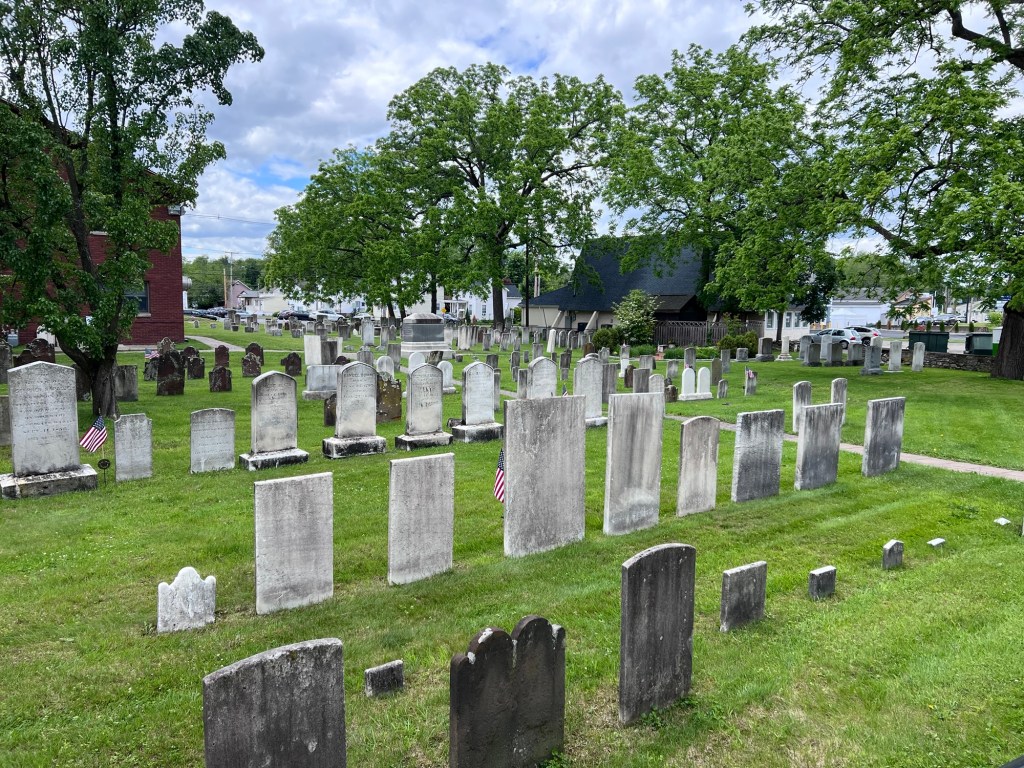
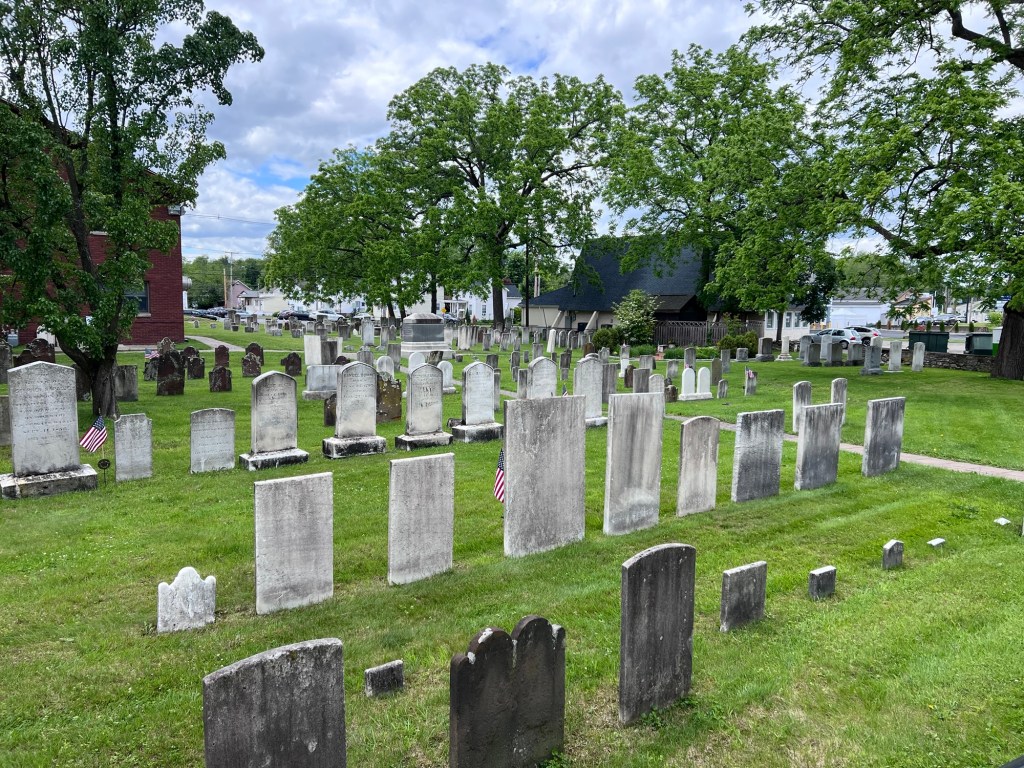
The church was closed for the afternoon as services are at 10:00am on Sundays so I toured around the church and the cemetery. What was interesting about the cemetery is all the family plots and who was intermarried into whose families.
The cemetery behind the church is full of family plots including the Brinckerhoff and Van Wyck families
The cemetery in the Spring of 2025
Walking through this quiet but I intriguing cemetery
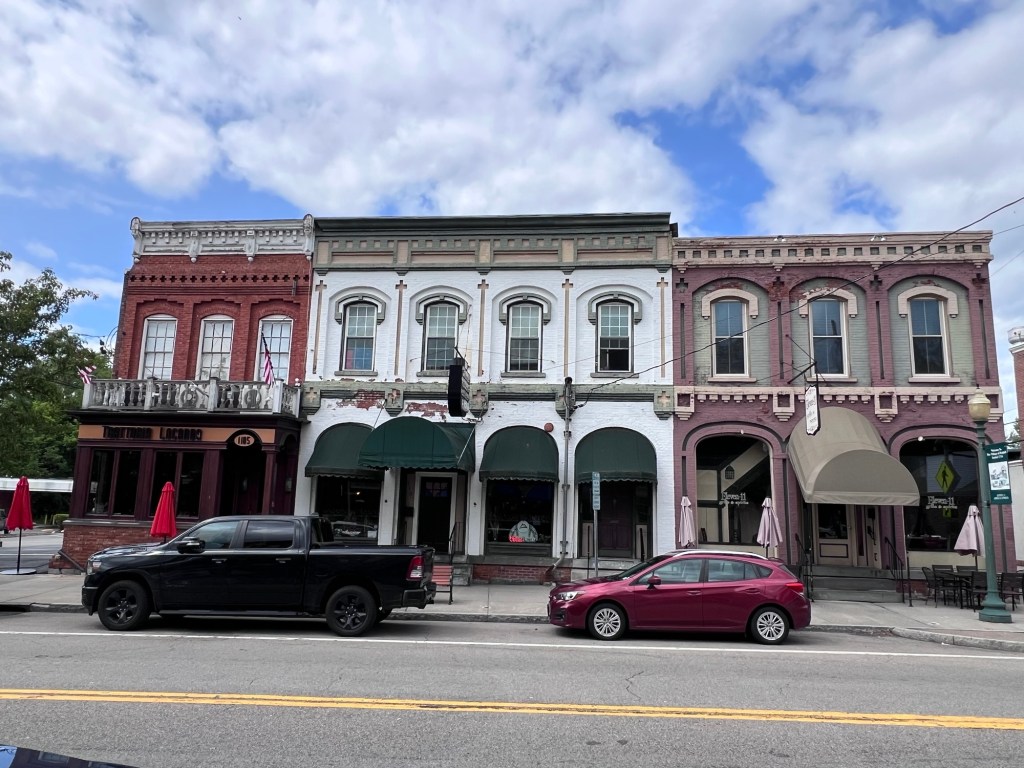
After touring the church and the cemetery grounds, I took my time and walked Downtown Fishkill which is lined with small but interesting restaurants and stores. The street had been lively the two times that I visited with people enjoying the outdoor dining and the perfect 80-degree weather.
The church was closed at that time as services had been at 10:00am but I did take the time to walk around its historic cemetery.
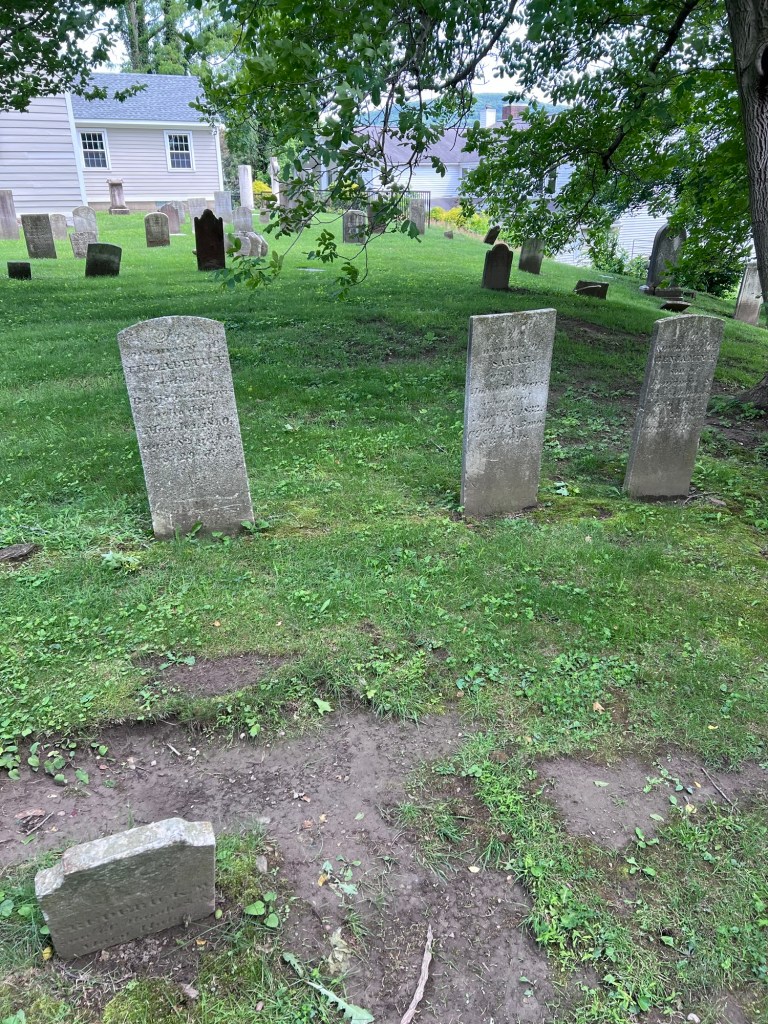
The Terboss family plot in the historic cemetery
The historic cemetery with familiar family names
The church just proved to me how time passes by and how some of these places are forgotten. The cemetery slopes down to the woods and highway.
The role these churches once played in the community as not just a place of worship but as a meeting and gathering place for friends and neighbors has changed over the last hundred years.
During Christmas time, I revisited the First Reformed Church of Fishkill and it was tastefully decorated for Christmas and for holiday services.
The church was decked with wreaths and garland
The church doorway looked like something out of a Christmas Card
Downtown Fishkill, NY decorated for Christmas
CIty Hall decorated for Christmas
I searched that entire downtown from one end to another and I could not find the Fishkill Town Christmas tree.
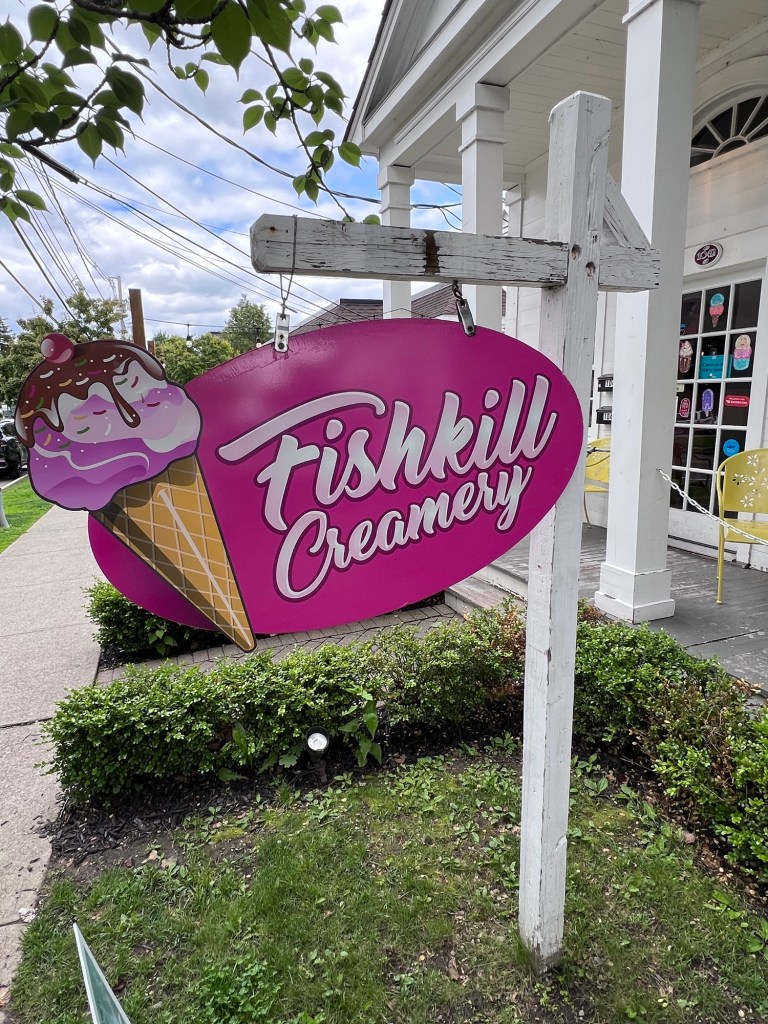
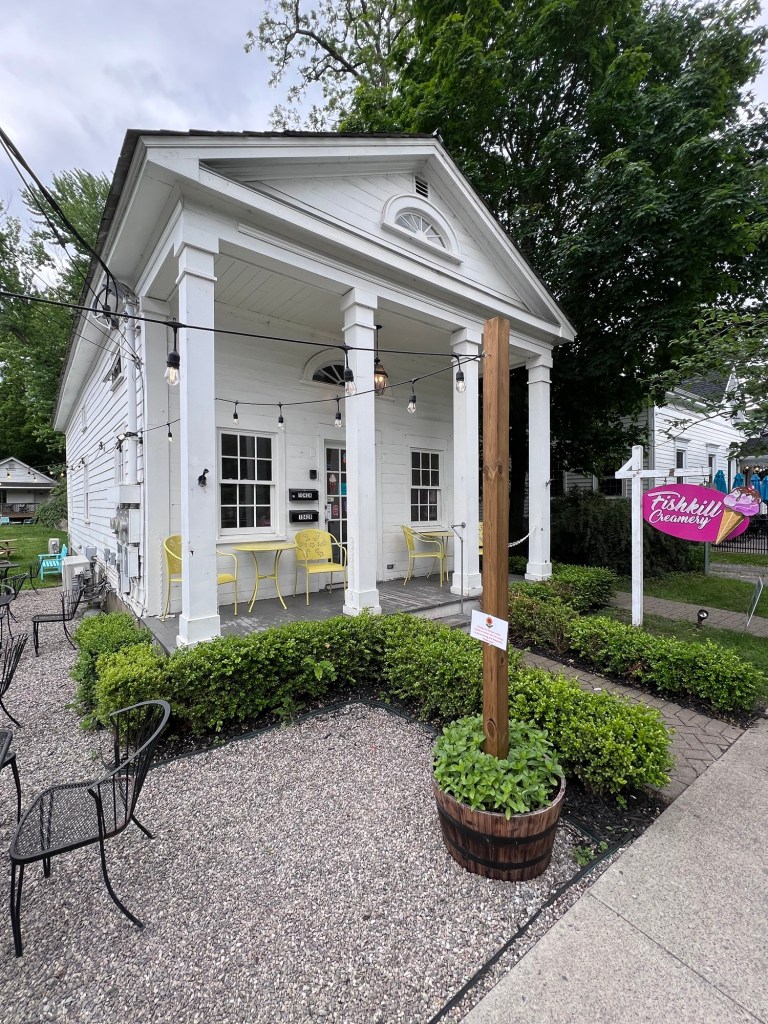
While walking around Downtown Fishkill, I came across the Fishkill Creamery at 1042 Main Street and needed a quick snack on a hot afternoon. The store was really busy with people eating outside on the benches and tables. I stopped in and had a scoop of Strawberry Cheesecake and a scoop of Birthday Cake ice cream. Did it hit the spot! The Strawberry Cheesecake was especially good with chunks of fresh strawberries in it.
The Fishkill Creamery at 1042 Main Street in Downtown Fishkill
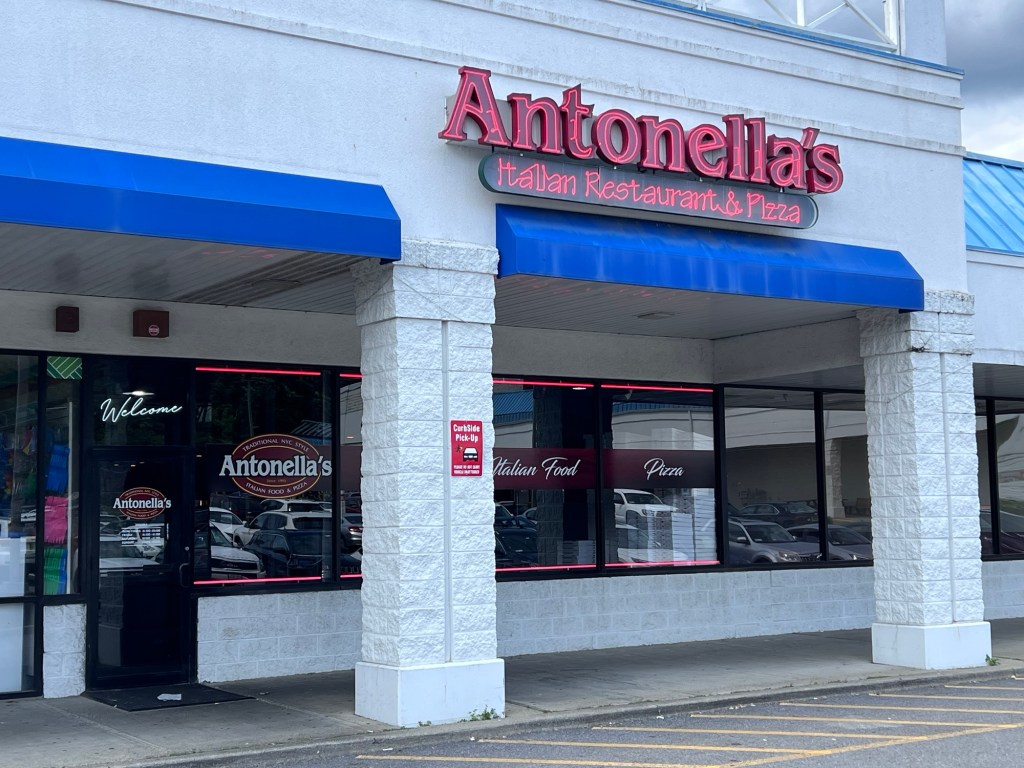
After the ice cream, it was time for dinner (I always believe in saving room for dessert). Both times I tried Antonella’s Pizzeria & Restaurant at 738 Route 9 in Fishkill. You really have to search for the restaurant as it is located in the strip mall in the Shoprite Mall.
The food here is really good. When I came up on my own, I just wanted something small, and I ordered the Cheese Calzone ($8.95). The thing was huge! The Calzone was so large that it could have fed two people easily. It was loaded with Ricotta, Mozzarella and Parmesan cheeses and they make a terrific marinara sauce that accompanied it. By the time I finished devouring the thing, I was stuffed. This after all that ice cream.
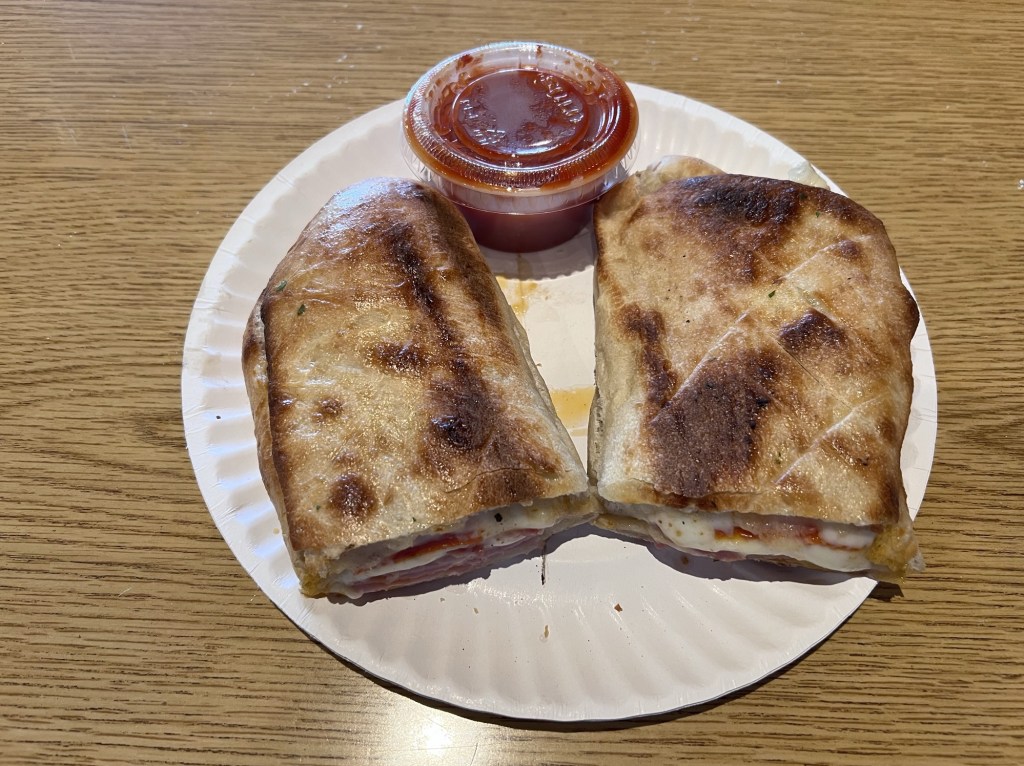
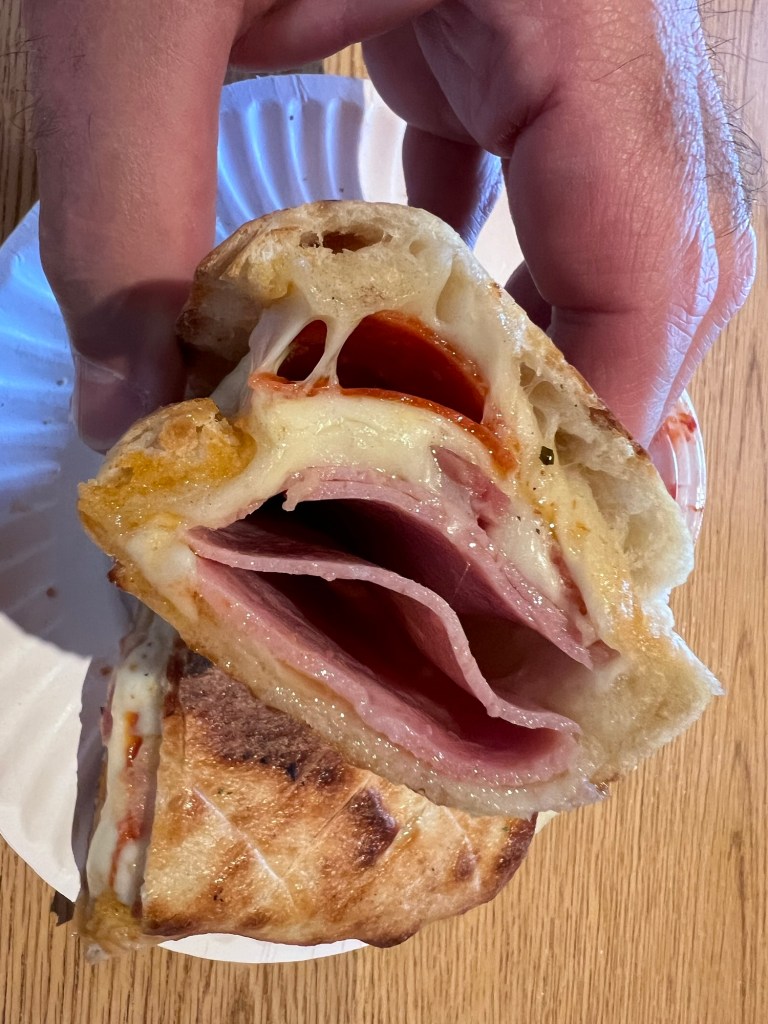
We returned to Antonella’s when my aunt and I returned to Fishkill for the touring since I was so impressed with the food and service. My aunt had the Sausage, Pepper & Onion Roll ($8.50) and I had the Stromboli Roll ($8.50) which had ham, salami, pepperoni, Ricotta and Mozzarella cheeses wrapped in a perfectly baked pizza dough.
The Stromboli at Antonella’s
Both were served with their flavorful marinara sauce. After a long day of touring, it was just what we needed. We also took plenty of time to relax and digest on this trip.
The Italian Meat Stromboli at Antonella’s are excellent for lunch and dinner
Yum!
It was really a nice day and there is so much to see and do in this part of the Hudson River Valley. I had not really explored Fishkill, NY so it was fascinating to see all these old homes and historic sites and know their place in history. Take the time to tour these homes and hear the family stories.
Remember to head back during the Christmas holiday season and explore these homes and the downtowns when they are decorated for the season. There is a special magic in the Hudson River Valley during the holiday season. Check their websites for more activities during the year.
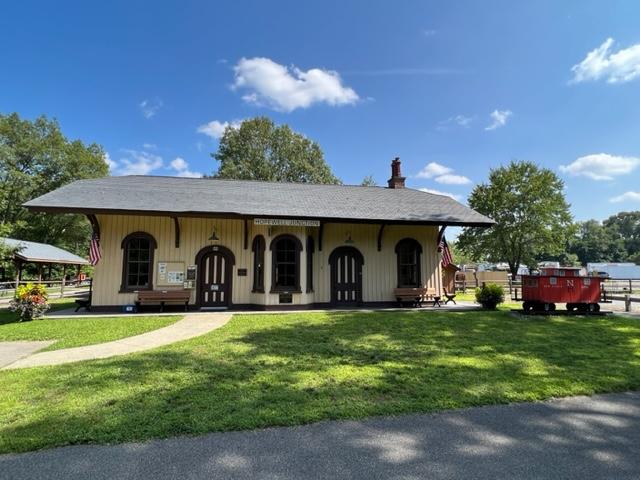
When I returned in the summer of 2023, I was finally able to visit the Hopewell Junction Depot Museum at 36 Railroad Avenue in Hopewell Junction, NY. This tiny museum tells the story of the growth of the local railroads and their impact not just on the local community but the country as well as farm produce and dairy products were able to be shipped all over the country.
The Hopewell Junction Depot Museum at 36 Railroad Avenue
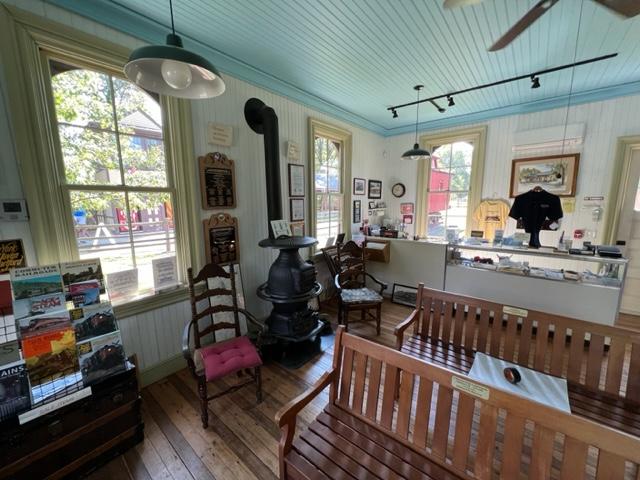
The entrance of the museum and the old Waiting Room
The museum is broken down into three sections: the Old Waiting Room area with the working potbelly stove and gift shop, the Train Station Manager’s Office and the Western Union communications office and the back gallery where the old Ticket Booth was located. This is filled with all sorts of railroad memorabilia from old railroad lamps to a display from the Borden Dairy Company whose plant used to be located across the street.
The back gallery of the museum
The Borden Dairy display
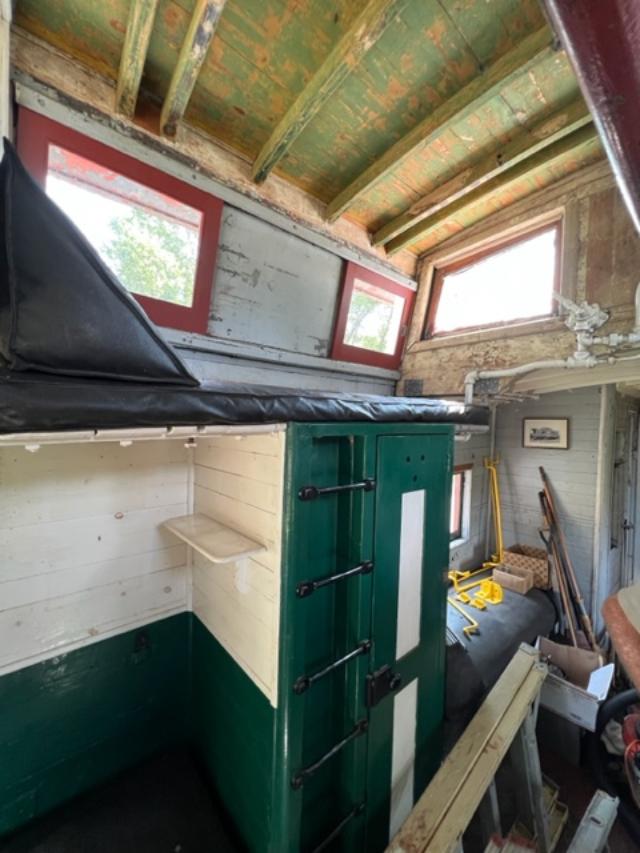
In the back of the museum, there is an old caboose that the volunteers are working on restoring. It is not finished as of this writing but they let me take a peek inside to see how the work progress is coming along.
The old caboose that is being restored on the grounds of the museum.
The old sleeping area of the caboose
The museum has lots of local and county information on the growth of these lines and their effects on the New York State economy. The museum has a lot to do and see.
(Please read the accompanying reviews on VisitingaMuseum.com to see a full description on these homes).
Places to Visit:
Brinckerhoff House Historic Site/East Fishkill Historical Society
After visiting three historical homes in the Fishkill area covering the towns of Hopewell Junction and Wappingers Falls, my last stop of the day was the First Dutch Reformed Church of Fishkill, NY. The church was closed at this point with services being on Sunday’s only starting at 10:00am. I was able to tour around the church admiring its architecture, looking over the DuBois House which is also owned by the church and exploring the cemetery.
The cemetery was the most interesting being the final resting place of many of the ‘first families’ of the area, including family plots of the Van Wyck and Brinckerhoff families, who also intermarried with each other. There were sections dedicated just to the families…
The Newark Museum at 49 Washington Place in Newark, NJ.
I have been a member of the Newark Museum for 29 years and have enjoyed the experience. There is a lot of things to do at all times of the year.
During the Summer months, I enjoy “Jazz in the Garden” where local and international jazz musicians perform in the beauty of the back garden of the museum under the trees. These almost hour and a half performance can be enjoyed on sunny, clear days in the gardens and in the auditorium on a rainy afternoon. It is something I look forward to every summer.
Jazz in the Garden at the Newark Museum. The gardens are amazing in the summer months.
The Newark Garden in the back of the museum.
Jazz in the Garden was a big event before the pandemic. It is on hiatus for now. It had resumed after COVID with a fee and did not happen in the Summer of 2023. Still, I had enjoyed these concerts for years.
The video celebration of the new entrance reopening
Entering the foyer of the museum
During December of 2019 I attended a holiday afternoon tea at the Ballantine House, the historic home attached to the museum. The Ballantine’s were one of the oldest families in Newark, NJ and were once major brewers in the city. They were considered High Society in Newark and the home, and its renovation reflect that.
The outside of the Ballantine House in 2019.
A new tradition was started this year with a Holiday Afternoon Tea and tour of the mansion. The caterer did a nice job with the food and their was plenty of it. We had finger sandwiches, various scones and pastries and different varieties of teas.
After the tea, we had a tour of the house and a talk about how the Ballantine’s and their crowd celebrated the holidays. They would be an open house for the neighbors during the holidays and then on Christmas day were church services in the morning and then a lunch afterwards with the family.
Ballantine House set for the neighborhood open house
Entering the newly renovated Ballantine House.
Another nice event is the Members Mornings of specialty tours of the galleries on a Sunday morning and a light breakfast afterwards. These are really nice, and you get a more in-depth view of the galleries with the docents. This is where I highly recommend membership.
The Ballantine House model
The Ballantine House reopened after a two year renovation of the property and I toured it in January of 2024 to see the redesign of the home. The home had been cleaned and new signage and carpeting had been added to the site. They were new signs with interpretations of the house with some major design changes.
The Ballantine children in portrait.
The house had gotten some much needed renovation work and cleaning and the house looked sparkling and looked like someone had just moved in. In 2024, the house continued its tradition of being decorated for the Christmas holidays but with a twist to it
The Foyer of the Ballantine House
The fireplace in the Foyer of the home at the holidays
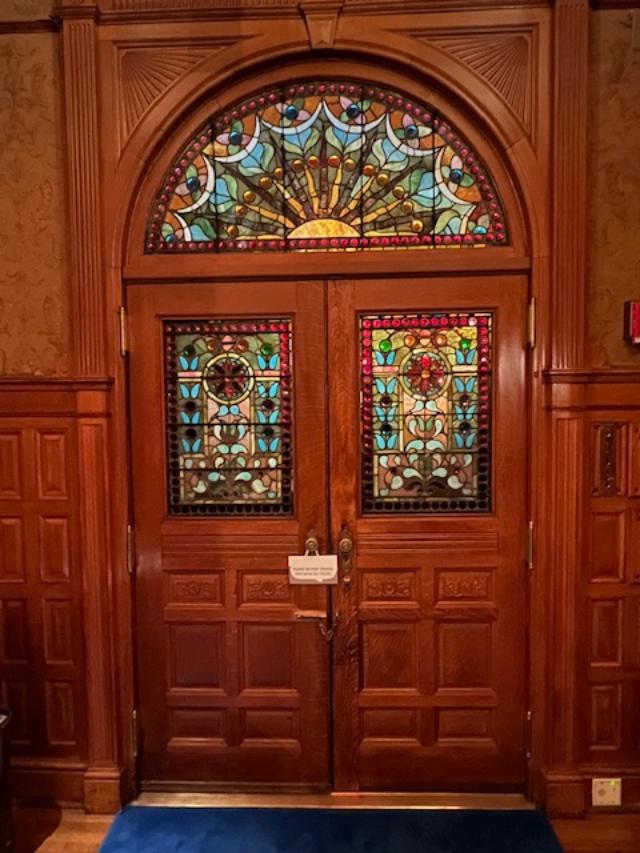
The front door ablaze with colors
The Reception/Receiving Room for guests.
The Receiving Room at the Ballantine House.
The Reception Room decorated for the holidays
We started the tour clock wise through all the rooms on the first floor starting with the Reception Room where guests would be received for a visit and would wait until the Ballantine’s were ready to greet you. We then moved onto the Library where the whole family would gather in the evenings to read and converse with one another in a more casual setting.
The Library
The Library at the Ballantine House
Mr. Ballantine’s chair and desk in the Library of the Ballantine House.
The Library decorated for the Christmas holidays:
The Library decorated for the Christmas holidays:
The Library decorated for the Christmas holidays:
The Dining Room
The Dining Room set for dinner.
The Dining Room sideboard.
The Dining Room decorated for the Christmas holidays:
The Dining Room decorated for the Christmas holidays:
The Billiard Room across the hall from the Dining Room.
The Billiard Room at the Ballantine House.
The Parlor at the Ballantine House.
The Parlor for receiving guests for afternoon tea
The other side of the parlor.
The Parlor set for tea.
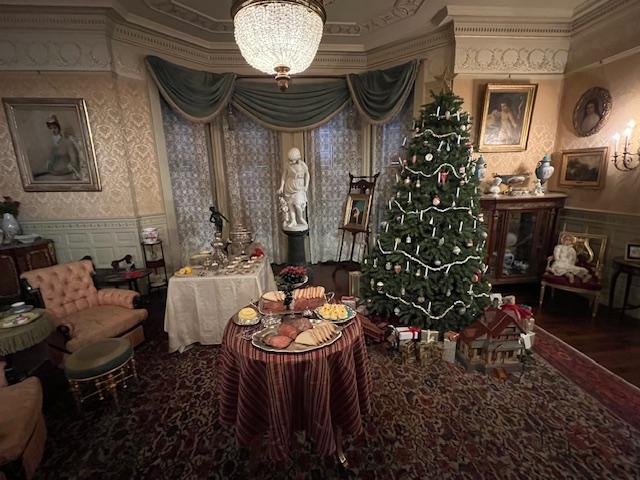
The Parlor set up for the Christmas Eve Tea:
The Parlor set for the Christmas Eve Tea service of the neighbors:
The Parlor would have been set for a light reception on Christmas Eve for the neighbors in the immediate neighborhood to stop in and join the family for a casual conversation and have a light snack. No one would stay more than an hour and it was in bad manners to stay longer than that.
The reception foods would be replenished as they ran out and this would take place for about two to three hours on Christmas Eve night as people would be leaving for church services or on their way to other celebrations.
The tour took us next upstairs to see the renovated bedrooms on the second floor and the galleries where some of the jewelry and art objects were on display.
The Staircase decorated for the Christmas holidays
The beautiful stained glass window on the landing to the second floor.
Mr. & Mrs. Ballantine’s Bedroom
The Boudoir where Mrs. Ballantine did her work.
The Boudoir where Mrs. Ballantine worked.
Alice’s bedroom on the second floor that was adjoined to her parents room by the way of the Boudoir.
Alice’s bedroom on the second floor looking over Washington Park.
The staircase to the Third Floor to Alice’s family apartment.
This was the main room of the apartment that was used by the family for entertaining friends and family. Alice, her husband and their four children lived in this apartment until 1919 at the time of Mrs. Ballantine’s death. Then her daughter moved to another part of Newark and then onto Morris County.
The Third floor apartment for Alice and her family that Mrs. Ballantine build for Alice and her family.
The beautiful skylight in Alice’s apartment on the Third floor of the Ballantine house.
The decorative fireplace that worked in Alice’s family apartment on the third floor of the house
On my most recent trip to the museum, I attended the opening of the new ‘Norman Bluhm Metamorphosis’ exhibition on February 11th, 2020.
Artist Norman Bluhm
Norman Bluhm: Metamorphosis celebrates six decades of painting by post-war American artist Norman Bluhm (1920-1999), who combined action painting with a lavish sense of color and formal experimentation on a grand scale.
Paintings and works on paper dating from 1947 to 1998 are on view in the Museum’s Special Exhibition Gallery and the Traphagen promenade galleries surrounding the Charles W. Engelhard Court (Newark Museum publication press release).
These large works showcase the artist’s work over a fifty year period.
Norman Bluhm’s work is quite dramatic
In 2022, I went on the first Members Morning that we had in almost two years. We toured the “Carlos Villa: Worlds in Collusion” exhibition featuring the works by American San Franciso born artist of Philippine decent Carlos Villa.
Artist Carlos Villa in the exhibition “Worlds in Collison”
Video on the Exhibition “Carlos Villa: Worlds in Collison”
What made this exhibition interesting was the feather work that he used in his art. He was trying to capture the ethnic history of identity not just of the Asian but the Pan-Pacific cultures of Hawaii. He used robes and other costumes to show the dynamic of the background of these cultures. Not just that but what describes Americans who are not of white decadency and where their role plays in society. The impression I got from his work and from the tour was feeling like an outsider in the country he was born in.
One of the feathered cloches that are in the exhibition
I also visited the interactive exhibition “Endangered”, showing video screenings of nature on the walls of the Natural Science Galleries. The exhibition highlights how human behavior is affection the natural environment and what we can do to stop it.
In the Summer of 2022, we had a member’s tour of one of the ongoing exhibitions at the museum and the docent described the works of local Brooklyn based artist Saya Woolfalk.
I joined the membership one morning to tour the exhibition on artist Saya Woolfalk who is based out of Brooklyn. Her current exhibition “Tumbling into Landscape” is being featured on a long-term exhibition. The works are a communication with nature and our relationship with nature and with one another. When you walk through it you are so relaxed between the music and the lighting. The artist ‘uses science fiction and fantasy to reimagine the world in multiple dimensions’ (Newark Museum).
The videos in the Saya Woolfalk exhibition
Her look at nature is very interesting. She looks at our relationship with the natural world and to each other and where we belong. Here works have a calming effect on the visitor and our interaction with the art.
‘The Four Virtues’ (Justice, Prudence, Temperance and Fortitude)
She even did a study of the Hudson River School and how her art worked into that perspective of nature. She included between six paintings from the School of Art with a self-portrait of herself.
It was interesting how she used her own self to compare to the stylized view of nature taken on by these past artists.
Recently, I joined other members for a special “Members Morning” that happen every third Thursday entitled “The Art of Collecting Abstracts”. It was a look at the contemporary works that have been collected by the Newark Museum over the years. We got a look at works from the early part of the last century to today. Each of the pieces chose were a way for us to think about the artist and what they were trying to convey. Some used bold strokes and colors to tell their story. I thought they were quite colorful.
The group of us on the tour walked through various galleries, admiring and learning about the contemporary collections of abstract work from artists from various periods. Each docent took their take on pieces they admired in the collection.
Abstract by Ilya Bolotwosky “Study for Mural for Hall of Medicine, Public Health Building, New York World’s Fair.
The Brinckerhoff House Historical Site was built in three different time periods with the oldest part of the house to the right, the main part of the house was built second and the Sun Room and porch to the left was built last. The house opens up in all parts but you can see the distinct different in the style of the design.
The entrance of the original homestead
The entrance of the Homestead has the schoolhouse and icehouse to the left of the entrance and the blacksmith shop and the carriage house to the right. The Blacksmith shop has a real blacksmith on duty working when the house is open for tours.
Visiting the Van Wyck Homestead is like stepping back into the past to see a part of our nation’s history. The homestead sits at a once pivotal point location in the Hudson River Valley and during the Revolutionary War, George Washington established his main northern supply depot here in October of 1776. After the war was over, the Van Wyck family returned to the home and lived here for five generations until the late 1800’s. The last member of the family, Sidney Van Wyck hung himself in the barn on the property (Van Wyck Homestead pamphlet).
The house was built in two sections. The original section of the house off to the right of the building is…
The City Island Nautical Museum at 190 Fordham Street
The City Island Nautical Museum
I recently took a trip to City Island, a small community just off the coast off the mainland of The Bronx (which is part of The Bronx) to visit the City Island Nautical Museum. This tiny museum located in the heart of the island is noted for its collection of ship building artifacts and items that are native to a community that once built the vessels for the America’s Cup.
City Island has a rich history in ship building, sail making and fishing it is reflected in the collection of materials in the museum and its archives. The museum really details the growth and history of the boating…



















































































 mywalkinmanhattan