I came across this unique clothing and accessories store when walking the lower part of the Upper East Side for my project “MywalkinManhattan.com”. I was attracted by the beautiful clothing designs in the windows. It just lured me in with classic tailored look and vibrant colors and patterns to the clothes.
Clean elegant store with vibrant colored clothing
When I walked into Cotelac, I was taken by the clean lines and elegant displays that I thought was unusual for this part of Lexington Avenue. I thought this shop would be located on Madison Avenue or maybe in SoHo. The clothing had a sporty, casual elegance to it and the motives of the clothes were different from the other stores in the area. The prices were also not outrageous as they might be on Madison Avenue…
Don’t miss this delightful little gourmet food shop on the Upper East Side for homey entrees.
I love the window displays here.
*This great little take out food market closed its doors during COVID and never reopened. The store is now pad-locked down when I visited it in February 2024.
Sometimes there are stores that just don’t fit into any category or they fit into many categories. Lorenzo and Maria’s Kitchen is one of the those stores. It is not a restaurant but more of a upscale, homey gourmet shop selling all sorts of entrée items that are displayed like jewels in the window and when you go inside there are more wonderful things to see and smell when you walk through the door.
Lorenzo and Maria’s Kitchen at 1418 Third Avenue
The store itself it a hark back to the old days of the Silver Palate and Dean & Deluca when they were in their heydays and had not gotten so frou-frou with their food and the customers and were more neighborhood shops that catered to…
I have been running in and out of the City since I started teaching classes again at the college and had a ‘bucket list’ of small museums that I wanted to visit for my blog, “VisitingaMuseum.com” and restaurants I wanted to try before the Summer was over. So there was a lot of running around the last several weeks. That’s why the blogs come out a little later than usual.
I got back to finishing my walk around ‘Midtown East’ by walking the only two Avenues inside the neighborhoods borders, Madison and Park Avenues from East 43rd Street (which hugs the Turtle Bay neighborhood) and East 59th Street (which hugs the Upper East Side & Sutton Place). On the Avenues in this part of the neighborhood is mostly residential and commercial spaces with rows glass boxes on some streets and limestone and marble residential buildings one the others. There is a lot of sameness in the architecture here but don’t let that fool you. There are a lot of interesting things to see and places to visit in this very much working modern neighborhood.
My walk started on Madison Avenue’s commercial district at the start of East 43rd Street where a giant new glass box is being created right next to Grand Central Station. Probably not Mr. Vanderbilt’s vision for the area but I think he would have been impressed by the progress the area has experienced in the last 100 years.
My first stop is admiring and walking into the headquarters of Brooks Brothers Clothing store at 346 Madison Avenue, one of the most American and famous clothing stores in the United States. Stepping into Brooks Brothers is like a step back into time when shopping was still experience and customer service actually meant something. Their displays are elegant without being stuffy.
The elegant displays at Brooks Brothers main floor (now closed)
The store was designed by architects La Farge & Morris in 1915 the Italian Renaissance design with prominent arched entrances, wrought iron arches and carved limestone details around the building. You can see the detail work in the cornices that line the top of the building.
The Brooks Brothers headquarters at 346 Madison Avenue (the now closed headquarters)
The detail work on the now closed Brooks Brothers headquarters
The Golden Fleece emblem of Brooks Brothers on the front of the building.
Another great clothing store is Paul Stuart at Madison Avenue and East 45th Street. The store has been in business since 1938 and carries some of the most impressive clothing and accessories for Men and Women.
Paul Stuart Specialty Store at Madison & East 45th Street
The store was a privately held family business until December of 2012 and then it was sold it’s long time partner, Mitsui. The store has changed a lot since the sale. It once had some of the best customer service in all the specialty stores in Manhattan but when I went to visit on this trip in my shorts and polo, the three sales people on the floor at the time ignored me. It’s not the same store with the orange carpet and older, more mature salespeople.
The Men’s Department after the renovation
When you get to Madison and 55th Street, watch for the security as this is the back section of Trump Tower and East 55th Street between Madison and Fifth Avenues is blocked off by barriers and armed NYPD detectives and police. Only one side of the street is open here so it is best to keep walking.
Another impressive building on Madison Avenue is at 550 Madison Avenue, the old AT&T Building with its signature ‘Chippendale’ roof. This building was considered radical and innovative at the same time when AT&T built it to house their world headquarters. The 37 story building was designed by famed architect Philip Johnson in 1984 in the postmodern design. Critics called it ‘Chippendale’ after the famed furniture due to the ‘open pediment’ look of the top of the building based on English furniture design (Wiki). The building is currently have some lobby renovations that I passed.
The beautiful atrium that you can sit and relax in between the buildings.
Next to the AT&T Building is the IBM Building at 590 Madison Avenue. This 41 story building was built in 1983 by architect Edward Larrabee Barnes & Associates and developed by IBM and designed in the post-modern design (Wiki).
The IBM Building at 590 Madison Avenue & East 57th Street
Because of the zoning laws established in 1916, there is a beautiful and relaxing open atrium filled with food kiosks and art work for the public to enjoy on the ground level. It is a nice place to relax after a long walk. Take time to admire the art works that line the atrium.
The Atrium at the IBM Building
Artist George Rickey’s work in 2024 in the atrium.
The George Rickey piece inside the atrium “Five Lines Diagonal Jointed II”
Artist George Rickey was an American born artist with multiple degrees and places of study. He holds a MA from B.A. (Modern History), Balliol College, Oxford, U.K. and a M.A. (Modern History), Balliol College, Oxford, U.K. He also did graduate study in Art History, Institute of Fine Arts, New York University, New York, NY. George Rickey worked as painter, muralist, and sculptor. Across his diverse body of work from the paintings of the 1920s through the final sculptures of the 2000s, there are four themes that emerge: Movement, Color, Relationships, and Scale (Artist bio).
One piece of art that stands out is the red geometric sculpture on the corner of Madison and East 57th Street is the great artist Alexander Calder “Saurien” (which is a large reptile), that was created by the artist in his studio in 1975. This is an example of Calder’s “Stoic” work and were called ‘stabiles’ because these abstract works, unlike his floating works of art, stand strongly and firmly into the ground (Art Nerd 2018).
The Alexander Calder sculpture, “Saurien” (now replaced by another sculpture by artist Joel Shapiro)
Walk around this wonderful work by Calder and try to take a breath and understand what the artist was trying to say. It is almost like all the ‘legs’ on the sculpture are trying to show stability and contrast.
Mr. Shapiro is an American born artist from New York City who graduated both with a BA and MA from New York University. He is best known for his sculptures of abstract human forms (Wiki).
Inside the atrium, there are two interesting pieces of artwork that standout. There are two colorful acrylic apples that are done in colorful motifs that you should not miss. The sculptures were created in 2004 for the “Big Apple Fest” to promote the City’s tourism. Companies paid $8,500.00 to sponsor and $12,500 to keep the apples in which artists were allowed to decorate inside or outside.
One of them is entitled “A Day in the Big Apple” by an artist named Billy.
‘A Day in the Big Apple’ by artist Billy
The other is of a colorful face by artist Romero Britto entitled “New York Future”.
“New York Future” by artist Romero Britto
Romero Britto is a Brazilian born American artist whose colorful works elude the optimism the artist has on his view of the world. He uses bold and colorful patterns to enhance his works (Artist Bio).
When you reach the edge of the neighborhood at East 59th Street, you are greeted by the former GM Building that stretches from Fifth to Madison Avenues. This elegant 50 story building once represented the presence of GM in New York City. It was designed by the architectural firms of Edward Durell Stone & Associates and Emery Roth & Sons in 1968. It was designed in the “International Style” and stands guard at the end of the commercial district of Midtown East and the Upper East Side.
As you cross back down Madison Avenue on East 59th Street, you will notice the ever-changing retail landscape and all the empty storefronts on this part of Madison Avenue. Twenty years ago, this would not have existed, but it is a sign of the times.
The details of the Fuller Building at 41 East 57th Street
Another interesting building to admire is the Fuller Building at 41 East 57th Street on the corner of Madison Avenue. The building was created for the Fuller Construction Company in 1929 by architects Walker & Gillette in the ‘Art Deco Style’. The building’s exterior sculptures were designed by architect Elie Nadelman. Look at the interesting details not just on the outside of the building but walk into the lobby to take a look around (Wiki).
One of the great hotels in New York City stands guard at 455 Madison Avenue and 50th Street, the New York Palace Hotel (formerly the Helmsley Palace Hotel) which is a combination of an old mansion and the modern building behind it. The front of the building facing Madison Avenue is the former Villard Mansion.
The front of the hotel is the “Villard Houses” created in 1882 for Henry Villard, a railroad financier, who worked with the architectural firm of McKim, Mead & White to create a series of six brownstone townhouses facing a courtyard in the ‘Italian Neo-Renaissance style’. Developer Harry Hemsley leased the houses and hired Emery Roth & Sons to create the 55 story modern hotel in the back of the houses.
The Villard Houses part of the New York Palace Hotel
The hotel at Christmas 2024
The Villard Houses at the hotel decorated for the Christmas holidays
I passed the hotel again during Christmas of 2025 and the decorations were even more elaborate during the day. The hotel looks amazing at the holidays.
The front of the Palace Hotel at Christmas
The beautiful wreathes that lined the fence
The Christmas tree at the Palace Hotel
The hotel opened in 1981 as the notorious ‘Helmsley Palace Hotel’ with hotelier Leona Helmsley in charge. Considered one of the best hotels at the time, it was a five star/five diamond hotel (with one of the most nervous staffs in New York City). The hotel has been owned by Lotte Hotels & Resorts since 2015.
The inside of the New York Palace Hotel, the Villard Houses
Take time to walk through the hotel from the East 50th Street entrance to the East 49th Street exit and walk around the public rooms and admire the architectural details from the Gilded Age. There are elegant features from staircases to marble fireplaces and the most beautiful views on Madison Avenue.
I found this pardon of the Helmsley Hotel on YouTube. It is very clever.
Another older hotel that stands out is the Roosevelt Hotel at 45 East 45th Street at the corner of Madison Avenue and East 45th Street. It stands guard next to Grand Central Station. The hotel opened in 1924 and was designed by the architectural firm of George P. Post & Son for businessman, Frank A. Dudley and it was ran by United Hotels Company from a leased agreement with the New York Central Railroad. Like the other hotels that line Lexington Avenue, there used to be a separate passageway from the railroad to the hotel (Wiki).
The Roosevelt Hotel being used as a immigration center in 2023 and 2024
This is similar hotel to take the time to walk through the lobby and look at the vaulted ceilings and the Gilded Age details of the hotels with its thick carpets and elegant staircases. The hotel has a somewhat dark, more European feel to it. There is a lobby restaurant when open that looks pretty interesting.
The entrance to the lobby at the Roosevelt Hotel in its heyday.
As you walk around Grand Central Terminal and through the archway pedestrian tunnels that lead to Park Avenue from East 45th to East 46th Streets, you will be traveling under the Helmsley Building at 230 Park Avenue that stands guard at the beginning to the business and residential neighborhood of Park Avenue.
The Helmsley Building was built in 1929 as the New York Central Building for the rail company and was designed by architects Warren & Wetmore, who also designed Grand Central Terminal, in the ‘Beaux-Arts style’. Take time to admire the statuary around the clock that dominates its front and the beautiful stone detail work of the exterior of the building.
The beautiful details of the Helmsley Building on Park Avenue
The beautiful statuary.
The historical marker of the Helmsley Building.
The New York Central used the building as its starting point of “Terminal City”, a series of buildings and hotels that the railroad developed on the top of the rail line (Wiki). The true beauty of The Helmsley Building is at night when the owners put on a light show illuminating the building with colorful spotlights.
The Helmsley Building light show after dark
Park Avenue in the East 40’s is quite amazing at night
All along Park Avenue is a series of ‘glass boxes’ for office buildings and residential towers that line the Avenue all the way up to East 96th Street at the exit of the rail line. Along the way, there are some interesting examples of architecture that line Park Avenue.
The Waldorf-Astoria Hotel at 301 Park Avenue is currently closed and under scaffolding awaiting its new life as a small hotel and condo complex. The hotel, as mentioned in previous blogs in ‘MywalkinManhattan.com’, was built and opened in 1931. It was designed by the architectural firm of Schultz & Weaver in the ‘Art Deco style’ and is probably one of the most famous and talked about hotels in New York City outside the Plaza Hotel (Wiki). There have been so many movies and TV shows filmed and written about the hotel to count and the restaurants inside the hotel were some of the better ones in New York City. The building will open sometime in the future.
The Waldorf-Astoria Hotel at 301 Park Avenue (currently under renovation)
The only part of the hotel I could photo while under renovation in 2024.
St. Bartholomew’s Episcopal Church at 325 Park Avenue is one of the older buildings on Park Avenue and stands alone amongst the bigger buildings on this part of Avenue. Though the congregation was started in 1835, this structure was built between 1916-17 and designed by Bertram Goodhue, who had designed the St. Thomas Church on Fifth Avenue (See Walking the Border of Midtown East-MywalkinManhattan). The church was designed in the ‘Byzantine Revival Design’ and he was required by the congregation to retain the old church portal from the former church on Madison Avenue and East 44th Street in the new church design (Wiki).
Look at the details of the old church and the stained-glass windows. In the Summer months, there is a wonderful (yet somewhat over-priced) restaurant in the courtyard of the church and there are art markets during the Summer and Christmas holiday season that you should visit. There is also afternoon music at certain times of the year.
St. Bart’s restaurant and terrace during the summer
One standout, innovative building on Park Avenue sits between East 52nd and 53rd Streets is the Seagram Building at 375 Park Avenue. The building and its exterior designs were created by German American architect Ludwig Mies van der Rohe with the interior Four Seasons Restaurant designed by American architect Philip Johnson.
The fountains are well known in their own right being used in TV and movies
The building was featured prominently in the first episode of “That Girl” in 1965.
This 38-story building of wonder was innovative in its time. Finished in 1958 as the corporate headquarters of Joseph E. Seagram & Sons, the building was noted for its ‘functional aesthetics’ and a prominent example of ‘corporate modern architecture’. Keeping up with modern building codes, the architect used ‘non-structural bronze I-beams and large glass windows’ to create the cool and well-toned exterior structure of the building (Wiki).
Also utilizing the 1916 building code and the new use of open public spaces, the building was one of the first in New York City to embrace the open-air plaza that was prevalent in the 1980’s and early 90’s design. It was an extremely innovative design at the time and still sets the standard for the modern ‘glass box’.
One of the last stand out buildings that I saw on Park Avenue before my walk back down the Avenue was at 465 Park Avenue, The Ritz Tower, an apartment hotel. This elegant residential building stands out because of its details on the exterior of the building and I later learned it was once home to the famous French restaurant, La Pavilion.
This elegant building was designed by architects Emory Roth and Thomas Hastings for journalist Arthur Brisbane, who was the developer. The apartment hotel was managed by the Ritz-Carlton Company. The exterior of the building has many carved stone features so look closely from the other side of Park Avenue to admire the detail work. Don’t stare too long because the doorman gets a suspicious look if you look too long. He kept looking me over as I admired the building and the read the plaques.
Look at the elegant details of the Ritz Tower
The historical plaque of the Ritz Tower.
Up and down the Park Avenue Mall is the work of artist Alex Katz “Park Avenue Departure”, of which it looks like the back of a woman who is walking away from some place. The work is a depiction of the artist’s wife, Ada. Each of the works along the mall is changed slightly to show the sculpture in motion as if it is walking down the mall. This street art exhibition will run through November 2019 (The Fund for Park Avenue).
Alex Katz’s Park Avenue Mall exhibit “Park Avenue Departure” (closed in December 2019)
American artist Alex Katz who was born in Brooklyn, NY and is a graduate of Cooper Union Art College. His long career has seen many changes in art form and today some of his concentrations are in landscape and portraiture. His work can be seen in museums all over the world.
For lunch and dinner that afternoon, I ate at Hop Won Chinese Noodle Shop at 139 East 45th Street between Lexington and Third Avenues (See reviews on TripAdvisor and DiningonaShoeStringinNYC@Wordpress.com). After a long day of walking, I treated myself to a plate of mixed roasted meats, duck and pork, with a side of rice ($9.00) and an egg roll ($1.38). Their roasted meats are a lacquered delight with the rich, crackling skin of the duck worth every bite. The food here is delicious and so reasonable for Midtown East.
By the end of the evening, I got a chance to double back around the Helmsley Building and look at the detail work of that structure as well and then walked up and down the tiny Vanderbilt Avenue between East 45th and 47th Streets that line next to Grand Central Terminal. The most notable building on this block is the Yale Club at 50 Vanderbilt Avenue. The famous clubhouse was designed by Yale Alumnus and architect James Gramble Rodgers, and it opened in 1915.
The Yale Club at 50 Vanderbilt Avenue; notice the plaque to Nathan Hale on the bottom left
The most notable item outside the club is the historical mark where supposedly Patriot Nathan Hale was hung. There is a conflict to where it actually took place and there is another site on the Upper East Side (See Walking the Upper East Side Streets in MywalkinManhattan), where that plaque is outside the local Pier One. I personally like that theory better. Where else in American could a Patriot of the Revolutionary War be hung in that two hundred years later would house a retailer that sells Christmas chukkas made in China?
That’s what I love about Manhattan!
Check out my other blogs on Walking Midtown East:
Day One Hundred and Forty-Three-Walking the Borders of Midtown East:
Folly is a cute little gift shop on the Upper East Side
I came across the gift shop, Folly, when I was walking the lower part of the Upper East Side for my blog, “MywalkinManhattan.com” and visited it a couple of times when I was in the neighborhood. It is a elegant and beautifully designed shop by owner, Emily Hottensen. Ms. Hottensen runs this delightful shop at the lower lever of an Upper East Side brownstone, which adds to the uniqueness of the design and makes it very welcoming to the customer.
When you walk through the door, you are greeted by her partner, her little dog whose charm adds to the customer service experience. Her dog knows how to charm a potential customer by licking your leg and expecting a belly…
Amado on 3rd Summer 2023 Hinson Wu’s collection is in the window.
I love this quirky clothing store run by two women who are best described as ‘engaging’, Merri and Roberta. They will keep you laughing and welcomed in your visit to their store. I walked past the store when visiting the Upper East Side for my walking project, “MywalkinManhattan.com” and thought there window display was interesting (Please check the blogs on ‘Walking the Upper East Side’ more information on the store).
The fashions at Amado on 3rd in the Fall of 2022
The beautiful knit hats in Fall 2022
Amado on 3rd is a very unique clothing store, carrying brands both domestic and abroad that I have never seen before like Oui, a French company for cashmere sweaters. The clothes are fashion forward for both casual and professional and are items the everyday woman could wear to the office or for an evening out on the town. It is trendy without being over the top. Items like nicely printed tops, colorful geometric sweaters, multi-colored and dyed fur jackets and knit and cashmere hats. These designs you will never see in the department stores.
Winter Knits and outfits at Amado on Third (plus refreshments)
The prices here aren’t cheap as a cashmere sweater will cost you between $200-$275, a dyed fox jacket around $600 and knit hats around $40 but the quality and materials match the price points. The clothes work almost as wearable art.
During a recent visit to look over their Spring clothing lines, they have beautiful floral prints by Tizzie, that are bright, elegant and have beautiful floral motifs on them that would match with jeans and slacks alike. These come in both floral, geometric and solid colors and offer the most vibrant colors. A line of elegant tops by Petit Pois were also very wearable and had nice geometric patterns to them.
One of Tizzie’s colorful blouses (may not be available now)
The Spring Arrivals on display at Amado on 3rd
On recent visit to the store to look at their Summer clothing, they have an interesting and colorful line of blouses from Gretchen Scott that I have never seen in the department stores. Again the lines are colorful without begin gaudy and go great with a pair of slacks, a skirt or jeans.
Gretchen Scott Blouse (may not be available now)
There is new transitional Fall clothing coming in that came in from a vendor called Kukon that were cotton tops with a gray colored motif on each of them. Very wearable with anything. The Fall clothing are now entering the store and there are many interesting sweaters and blouses coming into the store. Vendors being features are from Kokun, Cyrus, Tizzie ad Yah (not all lines are available at the same time.
One of the new blouses by Tizzie
The store also has an interesting line of jewelry and accessories that you should check out. Every season there is something new to see. There is a very nice line of young girl’s dresses that are Torie Birch inspired and an interesting line of Japanese jeans stuffed with sequins on them in the shape of Bugs Bunny and other cartoon characters.
Spring 2021 fashions at Amado on 3rd
The best part of the store is the level of customer service you get from the ladies. It is excellent. They know their merchandise and who their customer is walking through the door. They can tell you how to put outfits together, what item might look nice on a certain woman and how to mix and match. They have extensive knowledge of the clothes they carry and will pull each piece off the rack and explain it to you. As one of the owners explained to me, “We buy for women like us who like youthful, elegant clothing that matches our lifestyle. There really is something for everyone here.”
Tizzie Blouse at Amado on 3rd for Spring 2021
Another aspect is the free food items to munch on when you are shopping. They might open a bottle of wine, have an assortment of cookies and fruit or cheese and crackers out for the customers to nibble on while they are looking around. On a recent trip I nibbled on a few jellied candies that the ladies put out. I thought that was a nice detail when shopping and a way of keeping the customer engaged.
The Holidays at Amado on Third:
Keeping with the spirit of Halloween the fun and original displays at Amado on Third
They also don’t forget the furry four-legged customers who come into the store with treats for dogs and a water dish outside the store. They also had a small mirror outside during the warm months for the dogs to admire themselves. These are those interesting touches that most stores don’t offer.
For Men, they have an interesting line of colorful socks which are now all the trend for $15.00 in all patterns and styles.
The Winter merchandise is just coming in and there are many printed scarfs and fringed printed gloves that will go with any look.
Amado on 3rd has its Fall 2020 styles on display in time for the holidays
So if you are looking for the unique piece of clothing, jewelry or accessory that you might not find in boutiques and department stores around New York City, start at Amado on 3rd and let the ladies help you make a selection. If anything, you can still indulge in a cookie while you are walking around the store.
Spring 2021 fashions at Amado on 3rd
Even during COVID-19, the store has a personality. There are stylish face masks with geometric and colorful styles in the front display windows and the store still shows off it’s new innovative fashions. It’s nice when stores adapt to the times. These stylish face masks run between $75-$150 and are made by a graffiti artist who will soon be selling sneakers to match at the store.
COVID styles can still be fashionable. This is shopping made interesting.
The most interesting sneakers that are handmade in Brazil by a local artist are now being featured. He is the same artist that created the masks above. The sneakers sell for $275.00.
Spring 2022 has brought in a new look and attitude of the cosmopolitan woman.
Hand-painted blouses and tops from Melarosa Italy Clothing are featured:
The Spring 2022 collection includes beautiful hand-painted tops by Melarosa Italy Clothing, Whyc 1 YC and Inight Insights clothing that brings new directions in a women’s wardrobe.
Spring Fashions at Amado on 3rd for 2022
Some of the elegant separates at Amado on Third for the Spring 2022 season
These elegant looks can be worn either casual or dressy.
Amado on Third’s store selection for the Spring of 2022. There are a lot of colorful, dressy casual looks for the upcoming months.
In the Summer of 2023, the shop carried an array of summer colors with pastels and light hues. There was an interesting collection of pieces from designer Hinson Wu.
The interesting pastels and light hues with the two side tops by Hinson Wu
Hinson Wu’s pastel top
The Summer 2023 collection
Beautiful summer tops at Amado on 3rd
The colorful summer line
The Spring Collection 2024:
The Spring Collection 2024:
What I like about the clothing at Amado on 3rd is that you will not find these unique pieces at department stores. This collection is tailored by the owners of the store to their clients. There are many beautiful fashion forward items in the collection every season and the merchandise changes every month.
*The author wants to thank Roberta and Merri, the owners, for supplying extra pictures of the shop for the blog. It shows the true spirit of the store. They make up the heart of Amado on Third.
During the Christmas holiday season, I visited the store to see all their beautiful Fall merchandise and the store is a true hidden gem of beautiful high quality merchandise at reasonable prices. This coupled by excellent personal service.
The display window of Christmas pink
The wonderful selection of hats and scarfs
The assortment of sweaters in soft tones
The knit hats and gloves are perfect for the holidays
1322a Third Avenue between East 76th & 77th Street
New York, NY 10021
(917) 965-2852
merri258@hotmail.com
I love this quirky clothing store run by two women who are best described as ‘engaging’, Merri and Roberta. They will keep you laughing and welcomed in your visit to their store. I walked past the store when visiting the Upper East Side for my walking project, “MywalkinManhattan.com” and thought there window display was interesting (Please check the blogs on ‘Walking the Upper East Side’ more information on the store).
Amado on 3rd is a very unique clothing store, carrying brands both domestic and abroad that I have never seen before like Oui, a French company for cashmere sweaters. The clothes are fashion forward for both casual and professional and are items the everyday woman could wear to the office or for an evening out on the town. It is trendy…
For those of you who like to visit small family run stores, check out my blog, “LittleShoponMainStreet@Wordpress.com” to see all the unique stores I have visited on my walks that hark back to a time not too long ago when we dealt with the owner of the store or individualized shopping with excellent customer service before Amazon took over.
The inside of Bon Vivant on the Upper East Side.
*Bloggers note: the store in Manhattan closed in August 2022. It will be reopening in Jersey City, NJ soon).
I thought Bon Vivant was such an interesting little pastry shop to come across when I was visiting the Turtle Bay neighborhood for my blog, “MywalkinManhattan.com”. It is so unassuming from the street but such a little delight from the inside.
The store is a small pastry shop specializing in Petit Fours of various flavors in two different sizes and small pastries. The small cakes look like works of art in small cases. There were a few decisions that I faced between the Lemon or the Lavender cake, a few small ones ($3.50) or one large one ($6.50) but with the help of the woman at the counter I decided on the Lavender.
Tiny Lavender Cake
The Lavender cake was sweet without being overwhelming…
After my long walks around the classic New York neighborhoods of Sutton Place, Beekman Place and Turtle Bay, it was now time to turn my attention to the commercial part of Manhattan and the shopping districts that are popular with the tourists. This neighborhood is in a whirlwind of change right now as everything old is being knocked down and replaced with shiny new office towers and large glass boxes. Slowly the character of this part of Midtown is changing from the old stone buildings with the beautifully carved embellishments to a lot of glass towers lining both the Avenues and the Streets of the neighborhood. I have never seen so many changes over a twenty year period.
I have also seen the decline of the Fifth and Madison Avenue exclusivity in the shopping district from East 60th Street to East 43rd Street right near the New York Public Library. All the big department stores one by one have closed leaving only Saks Fifth Avenue and specialty store Bergdorf Goodman both Men’s and Women’s stores left. Even those stores have gone from elegant well-bred stores to somewhat showy and glitzy as I am not sure they know who their customer is anymore. There are a lot of empty storefronts because of the rising rents.
The selection of stores and restaurants lining this side of the neighborhood are still somewhat exclusive but it reminds me more of North Michigan Avenue in Chicago than Fifth Avenue in New York City. There seems to have been a dispersion of stores from the street over the last two years to areas like Madison Avenue or even SoHo or Tribeca downtown. There are a lot of empty store fronts both on Fifth and Madison Avenue which you never saw until the Stock Market Crash of 2008. The area has not fully recovered from that yet.
Still the borders of the neighborhood still hold some of the most iconic and famous buildings in Manhattan and interesting shops and restaurants along the way. Some of the most famous hotels in New York City are located in this neighborhood with their classic old world charm and their elegant stonework entrances.
I started my tour of the neighborhood by revisiting the length of Lexington Avenue from East 43rd Street and walking up the Avenue to East 59th Street and then crossing over East 59th to Fifth Avenue. First I stopped for some lunch at Hop Won Chinese Noodle Shop at 139 East 45th Street between Lexington and Third Avenues (See reviews on TripAdvisor and DiningonaShoeStringinNYC@Wordpress.com).
Hop Won Chinese Noodle Shop is one of the few remaining restaurants in the former brownstone section of the neighborhood that has not been razed for an office building. The food is so good and different from the other Chinese take out places in Midtown. They specialize in roasted meats, noodle soups and dishes while keeping the traditional Cantonese favorite for the busy office workers in the area.
Hop Won Chinese Noodle Shop at 139 East 45th Street
My first and second trips to the restaurant I wanted to concentrate on the roasted meats. You could not taste a more moist or succulent meat outside of Chinatown. The Roast Pork, Roast Duck and Boneless Roast Pork with rice makes a nice lunch. The meats are perfectly marinated, lacquered and roasted to perfection with crackling skin and the taste of soy and honey. Their prices are very fair and the selection of combination dishes all run under $10.00.
The delicious roasted meats at Hop Won
After lunch, I walked up the familiar Lexington Avenue to East 59th Street, passing well-known hotels and office buildings that still make up the character of the neighborhood. One place you will have to stop in and try is Hotel Chocolat at 441 Lexington Avenue for dessert and chocolates.
Hotel Chocolat at 441 Lexington Avenue (Closed in March 2022)
I stopped at the store on a revisit to the neighborhood and had the most amazing sundae called “The Billionaire’s Sundae” ($6.00). This is the most delicious dessert I have had in a long time. The sundae was a soft swirl of vanilla ice cream with chocolate pieces, crunchies, caramel and then topped with a chocolate/caramel topping. It was decadent.
‘The Billionaires Sundae’ at the Hotel Chocolat
In between the ‘glass boxes’ there are still many buildings that stand out and you can read about them more in my travels around Turtle Bay (Day One Hundred and Forty Walking Turtle Bay).
As I rounded along East 59th Street, I saw in the distance the now bankrupt Barney’s specialty store. Talk about a store that traveled in full circle from a discount store to exclusivity now into bankruptcy with the changing tastes and buying habits of customers all over the city. I’m surprised with the rent for this location they are bothering to keep it open.
Further down the street passing various stores and restaurants on the corner of Fifth Avenue and East 59th Street is the famous Sherry-Netherland Hotel at 781 Fifth Avenue. Built between 1926-27 by the architects Schultz-Weaver with Buckman and Kahn in the Neo-Romanesque/Neo-Gothic style and you can see the stone work details around the edges of the building. It was once the tallest apartment hotel in New York City.
When walking around the corner East 59th Street to Fifth Avenue, you will pass the General Motors Building at 767 Fifth Avenue. This modern skyscraper was designed in the ‘International style’ by architects by Edward Durell Stone & Associates with Emory Roth & Sons in 1968 and is one of the few buildings that utilizes a full city block (Wiki). The building was used by General Motors as their New York headquarters until 1998 when they sold the remaining interest in the building.
Next door to the GM Building is 745 Fifth Avenue, the home of Bergdorf-Goodman Men’s Store and once the home to FAO Schwarz Toy Store from 1932-1986. You can see this classic New York skyscraper in many TV shows and movies including the theme song for the opening of “That Girl” and in the FAO Schwarz scene of the movie “Baby Boom” with Diane Keaton. This beautiful ‘art-deco style’ building was designed by architects Buckman-Kahn in 1930.
745 Fifth Avenue on TV in the opening of “That Girl” with the Bergdorf-Goodman store window on the corner of 5th Avenue and 59th Street where she is looking into. Check it out in this episode of “The Apartment”.
The architecture continues to evolve on Fifth Avenue as you continue to make your way down the street.
Watch the traffic and security as you pass Trump Tower at 721 Fifth Avenue. I could write an entire book on the building of this famous and iconic structure of the 1980’s. The building was designed by architect Dur Scutt of Poor, Swanke, Hayden & Connell. It is tough to visit the building with all the security but still it is interesting to see the shops and inside design.
There is a combination of building designs and structure along the way. Located on the corner of Fifth Avenue and 55th Street is one of the most famous hotels in New York City, The St. Regis Hotel. This luxury hotel on the corner of 55th Street between Fifth and Madison Avenue’s at 2 East 55th Street was built in 1904 by John Jacob Astor IV.
The hotel was designed by architects Trowbridge & Livingston in the French Beaux-Art style and was the tallest hotel in New York when it was built. Take time to go inside and see the true beauty of this hotel which was fully renovated in 2013. There are interesting restaurants to eat at and they have a wonderful (but very pricey) Afternoon Tea. The hotel which is a Five Star and Five Diamond hotel has been featured on countless TV shows and movies.
The Front entrance of the St. Regis Hotel off Fifth Avenue
On the corner of Fifth Avenue and 52nd Street sits a true jewel box in the Cartier store at 653 Fifth Avenue. The store was once home to Morton Freeman Plant, the son of railroad tycoon Henry B. Plant. The home was designed by architect Robert W. Gibson in 1905 in the ‘Neo-Renaissance style’. Mr. Plant felt later that the area was getting too ‘commercial’ and moved further uptown and Cartier bought the building in 1917 (Wiki).
Cartier finished a renovation on the store in 2016 to bring back the true beauty and elegance of the store and of the building. Don’t miss the opportunity to walk around inside and see the refined displays of merchandise.
The Cartier store after the renovation
Next to the Cartier store at 647 Fifth Avenue is the next Versace store which is housed in the left side of the Vanderbilt ‘ marble twin mansions. The Vanderbilt family had bought the land and built twin buildings on the site at 647-645 Fifth Avenue. Designed by architects Hunt & Hunt in 1902, the homes were first leased out as homes until about 1915 when businesses and trade came to the area.
647 Fifth Avenue in 1902
After passing out the Vanderbilt family in 1922, the building went through many incarnations and 645 Fifth Avenue was torn down for the Best & Company Department store in 1945 only to be torn down again in 1970 for the Olympic Tower (which still stands in the spot). The building was renovated in 1995 by Versace as their Fifth Avenue store and spent six million dollars to create the store that greets customers today.
The true catalyst and center of the luxury shopping district though is St. Patrick’s Cathedral which sits gracefully at the corner of Fifth Avenue between 51st and 50th Streets. The Diocese of New York was created in 1808 and the land for the Cathedral was bought in 1810. The Cathedral was to replace the one in lower Manhattan.
This current Cathedral was designed by architect James Resnick Jr. in the Gothic Revival style. Construction was started in 1850 and was halted because of the Civil War and continued in 1865. The Cathedral was completed in 1878 and dedicated in 1879. The Cathedral was renovated in 2013 and this shows its brilliance (Wiki).
During the holiday season the Cathedral is beautifully decorated, and the music can be heard all over Fifth Avenue.
Next door to St. Patrick’s Cathedral is Saks Fifth Avenue’s headquarters. The business was founded by Andrew Saks in 1876 and was incorporated in 1902. After Mr. Saks died in 1912, the business was merged with Gimbel’s Brothers Department Store as Horace Saks was a cousin of Bernard Gimbel. In 1924, they opened the new store at 611 Fifth Avenue and changed the name of the store to Saks Fifth Avenue (The old store had been on 34th Street previously and called Saks 34th). The building was designed by architects Starrett & Van Vliet and designed in a ‘genteel, Anglophile classicized design’. (Wiki).
The store has recently gone through a major multi-million dollar renovation and is worth the time to look around the new first floor. The new cosmetic department is on the lower level along with jewelry so it is a different shopping experience.
Another former business that was well known on Fifth Avenue for years was located at 597 Fifth Avenue was Charles Scribner Sons Building. It originally housed the Charles Scribner Book Store replacing the old store on lower Fifth Avenue. The building at 597 Fifth Avenue was designed by architect Ernest Flagg in the Beaux Arts style between 1912-13 (Wiki). The bookstore moved out in 1980 and the company became part of Barnes & Nobel Bookstores and the building has been sold since. It now houses a Lululemon Athletica store but you can still see the Scribner’s name on the outside of the building and the Landmarked bookshelves inside the store.
The Charles Scribner Sons Building at 597 Fifth Avenue
The rest of Fifth Avenue is newer office buildings with retail space on the bottom levels some filled and some empty. When I was growing up, this part of Fifth Avenue was filled with high end stores. Today it is a combination of chain stores found in the suburbs or are just sitting empty, a trend found all over this part of Midtown East.
At 551 Fifth Avenue another interesting building, The Fred French Building really stands out. The building was created by architects H. Douglas Ives and Sloan & Robertson in 1927 in the ‘Art Deco Style’. Really look at the detail work all the up the building which was done in an ‘Eastern Design’ style with winged animals, griffins and golden beehives made to symbolize according to the architect ‘commerce and character and activities’ of the French companies. The outside material used on the building is faience, a glazed ceramic ware (Wiki).
The detail work on the top of the Fred French Building
When you cross over to West 43rd Street, you will see the elegant Grand Central Station complex which covers from West 42nd to West 45th Streets with the train station facing the West 42nd Street entrance to the MetLife Building (forever known at the Pan-Am Building for those of us to remember it) toward the back. It hovers over Grand Central like a modern gleaming giant. It should never been built there but that was the modern way of doing things in the 1960’s.
One of the best movie scenes of Fifth Avenue & the Pan-Am Building from “On a Clear Day you can see Forever”
Grand Central Station, once the home of the New York Railroad is one of the famous buildings in New York City. Saved from demolition in the 1960’s by Jacqueline Kennedy Onassis and other concerned preservationists.
Grand Central Terminal dominates this part of the neighborhood at 89 East 42nd Street
The magnificent clock “The Glory of Commerce” in front of the East 42nd Street skyline.
Grand Central Terminal was built between 1903-13 and opened in 1913. This beautiful rail station was designed New York Central Vice-President William J. Wilgus and the interiors and some exteriors by architects Reed & Stem and Warren & Wetmore in the Beaux Arts design. The exterior facade of building including the famous “Glory of Commerce” were designed by French artists and architects Jules Felix Coutan, Sylvain Salieres and Paul Cesar Helleu (Wiki).
There is a true beauty to the statuary and stone carvings on the outside of the building.
‘The Glory of Commerce’ at the front of the building.
The terminal housed the New York Central Railroad and some of the busiest routes. It now houses the New Haven, White Plains and Poughkeepsie lines and stop overs for some Amtrak lines. In 2020, it was house the new lines of the Long Island Railroad.
The interior of the building is just as spectacular. When you walk into the building and stare from the top of the stairs, you see the power and bustle of New York City. When you look up you will see the famous ‘Constellation’ ceiling cleaned and lit with all the stars in the sky. There is still a small portion of the ceiling that was not cleaned to show how dirty it once was before the renovation.
Take time in the building to walk around and look up and down. This is an amazing building that takes time to look around. I will admit that security is tight around the building so don’t be to obvious as a tourist. Take the escalator to the bottom level to the Food Court. If you can’t find it down here, you won’t find it. Every restaurant is represented down here and there are public bathrooms as well.
After touring Grand Central station, I walked back down West 43rd Street to Fifth Avenue. Outside the Emigrant Bank is the statue of ‘Kneeling Fireman’ which was once placed by Times Square when it first arrived in this country from Parma, Italy. The statue arrived in this country on September 9, 2001, on its way to Missouri as it had been commissioned for the Firefighters Association of Missouri (Wiki).
After the attacks on 9/11, the statue was presented to the Federal Law Enforcement Foundation as a gift to the City. With funding from the Milstein family, the statue was mounted and placed in front of their hotel, The Milford Plaza which is in the Times Square area. It was a placed of remembrance for people to gather after the attacks (Ciston 2011).
The Kneeling Fireman outside 6 East 43rd Street
The Statue is now placed in front of the Emigrant Savings Bank headquarters at 6 East 43rd Street and funding from the Millstein family provided a permanent home for the statue.
The Kneeling Fireman with the Fireman’s Prayer in the front of it
The Kneeling Fireman Plaque outside the building
People still come to visit the statue (which had been in storage for a decade until 2011) but its meaning seems different now with so many years passing. Still, it is an important part of the City’s history at a time when it brought everyone together.
The other plaque
Across the street from the statue, I noticed an unusual building that was part marble and part modern. This is the Fifth Church of Christ Scientist. The building was built in 1921 for the Church in the Classic Revival style and as part of the agreement there is a 21-story glass tower on top of it (Wiki). It really does stand out for its unique design. Still, it does not look that big from the outside but the building does seat 1800.
The Fifth Church of Christ Scientist at 340 Madison Avenue
From 43rd Street, I walked back up Fifth Avenue to the other side of the street and the buildings on this side of the street contains its share of architectural gems. The lower part of this side of Fifth Avenue is going through a transition as a lot of buildings exteriors are either being renovated or the building itself is being knocked down and a new one is rising. Many of the buildings here are quite new or just don’t stand out.
Once you get to West 49th Street things start to change when you enter Rockefeller Center which is across the street from Saks Fifth Avenue. The Rockefeller Center complex covers 22 acres with 19 buildings including Radio City Music Hall and the famous ice-skating rink that is holiday tradition once the famous tree is lite. The complex stretches from East 48th to East 51st Street from Fifth to Sixth Avenues. Rockefeller Center was built in two sections, the original 16 building of the complex and then the second section west of Sixth Avenue (Wiki).
Rockefeller Center at 45 Rockefeller Plaza on Fifth Avenue
The land under Rockefeller Center was owned by Columbia University (which was later sold) and the building of the complex started at the beginning of the Great Depression. Construction started in 1931 with the first section opening in 1933 and the remainder of the complex opening in 1939 (Wiki).
The original section of the complex was built in the ‘Art Deco style’ and the extension on Sixth Avenue was built in the ‘International style’. Three separate firms were hired to design the complex with the principal architects being Raymond Hood of Hood, Godley and Fouilhoux who was a student in the Art Deco style, Harvey Wiley Corbett and Wallace Harrison of Corbett, Harrison & McMurray and to lay the floor plans for the project L. Andrew Reinhard and Henry Hofmeister of Reinhard & Hofmeister. They were working under the Associated architects so that no one person could take the credit for the project (Wiki). Two of the original tenants including Radio Corporation of America (RCA) and National Broadcasting Company (NBC) which still exist.
The original section of Rockefeller Center
Radio City Music Hall, known for the elaborate shows and the Rockettes, was finished in 1932 and the ice-skating rink was finished in 1933 and the first Christmas tree was erected by the workers who were doing all the building.
The first tree in Rockefeller Center in 1933 with the constructions workers who erected it.
The rest of the complex went up over the next five years with extensions and renovations being done over the next fifty years. Many famous companies made Rockefeller Center their headquarters or moved their offices to the complex over the years. Still most tourists find their way to the restaurants and the famous rink at the holidays.
Rockefeller Center and the famous tree today
Of all the beautiful artwork that line the walls and courtyards of the complex, two stand out. Prometheus is a beautiful statue that stands proud above the ice-skating rink. This beautiful cast iron, gilded sculpture was made in 1934 by artist Paul Manship. The work is of the Greek legend of Titan Prometheus who brought fire to mankind by stealing it from the Chariot of the Sun (Wiki).
Mr. Manship was a well-known American artist who noted for his specialized work in mythological pieces in the classic style. He was educated at the St. Paul School of Art and at the Pennsylvania Academy of Fine Arts.
The other standout statue is of the God Atlas that guards the courtyard of the International Buildings. The sculpture was created by artist Lee Lawrie with the help of Rene Paul Chambellan. The statue was created in the Art Deco style to match with the architecture of the Center and depicts Atlas carrying the celestial vault on his shoulders.
Atlas at Rockefeller Center
Mr. Lawrie was known as a architectural sculptor whose work is integrated into the building design. His work in the Art Deco design fit perfectly into the new building. Mr. Lawrie was a graduate of the School of Fine Arts at Yale.
Touring around Rockefeller Center can take a full afternoon itself especially at the holidays but in the summer months with the outdoor cafe open on the skating rink it is much more open. Also visit the underground walkways of shops and restaurants and visit the new FAO Schwarz that opened in the center.
Leaving Rockefeller Center and heading up Fifth Avenue you will pass the rest of the complex that was designed in a combination of the International and Art Deco design. When reaching the corner of East 53rd Street another historic church, Saint Thomas Church Fifth Avenue stands guard. Though the church has been part of Manhattan since 1823, the current church was built here by 1914 and consecrated in 1916 as an Episcopal parish (Wiki).
The church was designed by architects Ralph Adams Cram and Bertram Grosvenor Goodhue of the firm Cram, Goodhue & Ferguson with added sculpture by Lee Lawrie. The building is designed in the French High Gothic style and has magnificent deals (Wiki). Even if you are not Episcopalian, going to services at the church is a nice experience. The services are always very relaxed and the Saint Thomas Choir of Men and Boys is excellent. The music and songs are wonderful to hear and the concerts in the afternoon and weekends are a treat.
The next block up is a combination of unique buildings back-to-back with the University Club of New York (Princeton) and the Peninsula Hotel. These buildings are so beautiful in their place on Fifth Avenue.
The University Club of New York is a private social club and is just as elegant inside as it is outside. The building was designed by the firm of McKim, Mead & White in 1899 and was designed in the Mediterranean Revival Italian Renaissance palazzo style.
The University Club of New York at 1 West 54th Street
Next door to the club is the New York branch of the Peninsula Hotel located at 700 Fifth Avenue at West 55th Street. The hotel opened in 1905 as the Gotham Hotel designed in the neoclassical style. The hotel lived in the shadow of the St. Regis across the street and the Plaza Hotel up the road and went bankrupt in 1908. The hotel had many incarnations over the next eighty yeas until 1988 when it was bought by the Peninsula Group. They spent forty-five million dollars in a renovation (Wiki).
Take time to go inside and see the elegant public rooms and take a walk down the hallway to see the inside of the hotel. During the holidays it is beautifully decorated and their restaurants are considered excellent.
The Peninsula Hotel is especially beautiful at Christmas time.
The beauty of the details of the hotel.
The historical plaque for the hotel.
Across the street from the Peninsula Hotel is the Fifth Avenue Presbyterian Church at 7 West 55th Street. The church was founded in 1808 and has been on this spot since 1875. The church was designed by architect Carl Pfeiffer in the Victorian Gothic style. The church is built with New Jersey Red Sandstone and the interesting part of the structure is that the clock tower has the original clockworks since 1875 and must be wound each week by hand (Wiki).
Fifth Avenue Presbyterian Church at 7 West 55th Street
On an Avenue of churches and department stores, another office building does stand out so you really have to look up and admire the detail work of the Crown Building at 730 Fifth Avenue one of the buildings that was gilded and gold leafed in the 1980’s.
The Crown Building was built in 1921 and was designed by architects from Warren & Wetmore who you will note had designed Grand Central Terminal and the Helmsley Building on Park Avenue. They changed the name to the Crown Building in 1983 because of the ‘crown like look’ when illuminated at night. The building has been owned by many well-known families including the Marcos Family from the Philippines and the Spitzers of New York (Elliot Spitzer was New York’s former Governor). It has been many ownerships over the years and their are considerations by the new owner to turn it into condos (Wiki).
The last building, I visited on my walk up Fifth Avenue was my old employer, Bergdorf-Goodman Specialty store. This is truly the palace of luxury and innovation in fashion. There are designers here that keep popping up that I have never heard of all displayed in elegant fashion where the store looks more like a art gallery of fashion than just a store.
The Cornelius Vanderbilt II house on the site before Bergdorf-Goodman
Bergdorf-Goodman was once the location of the Cornelius Vanderbilt mansion (which was torn down in 1926) and was opened in this location in 1928. The store was founded by Herman Bergdorf and was later owned by Edwin Goodman. The store is designed in the Beaux-Arts style and the inside of the store just went through a multi-million dollar renovation.
Bergdorf-Goodman is a lot of fun to walk around. My favorite floors are the first floor where Jewelry and Accessories is located. The displays of merchandise look like a museum and the Seventh Floor is stocked with interesting home furnishings, creative dishware and very pretty restaurant that overlooks Fifth Avenue and the park below. Pack your credit cards because you will find something you like here. Visit the store at Christmas for the creative window displays, the well-stocked Holiday Department or just go for Afternoon Tea in the restaurant. It’s fun to window shop here.
The last place I visited was Pulitzer Plaza to sit down and relax from all of the walking and see the Pulitzer Fountain. This unique fountain was built at a time when the sculpture was considered risqué and even Cornelius Vanderbilt faced his room away from it.
Pulitzer Plaza and Fountain at 1 Pulitzer Plaza (the park is currently under renovation in 2024)
This busy little park is a refuge for people shopping on Fifth Avenue, tourists wanting to take pictures of the Plaza Hotel and the pigeons so watch out. The park is of the Grand Army Plaza that extends to the other side West 59th Street.
The fountain was designed by sculptor Karl Bitter and the park by architect Thomas Hastings of the firm Carrere & Hastings. The statue is of the Pomona, the Goddess of Abundance who is holding a basket of fruit.
When Mr. Bitter died in a car accident, the statue was finished by his assistant, Karl Gruppe with the help of Isidore Konti. The fountain was dedicated in 1916 (Wiki).
The Goddess Pomona statue by artist Karl Bitter
While sitting in the park watching the tourists walk by muttering things about the “Home Alone” film that had been shot at the Plaza Hotel, it really struck me about the treasure trove of architectural styles, immense detail work on the buildings and the interesting statuary that lines this part of East Midtown. It is its own open-air museum if you really take the time to look up and around and admire the true beauty of the neighborhood. Some of the most famous buildings in Manhattan are located right here.
I ended my walk back at the corner of Lexington and East 59th Street, revisiting the Turtle Bay neighborhood that I walked a few months earlier. As much as this neighborhood is changing, there still is enough of the past to admire. Look to see how the future intertwines with the past in Midtown East.
Check out my other blogs on Walking Midtown East:
Day One Hundred and Forty-Three-Walking the Borders of Midtown East:
There are so many wonderful and beautiful buildings to see in this neighborhood that I mentioned their addresses in the main part of the walk rather one by one. Please walk both sides of Fifth Avenue and look across the street to admire the true beauty of these magnificent buildings.
Places to Eat:
Hop Won Chinese Restaurant
139 East 45th Street (between Lexington & Third Avenue)
The bitter winter finally gave way to some warmer weather and I was finally able to continue walking the streets of Manhattan again. It had been almost three months since I finished the Upper West Side but the holidays were particularly busy and full of activities that had me running from the Hudson River Valley to Rehoboth Beach, Delaware for Christmas plus a host of holiday activities, fundraisers, dinners at the house with my family, parties, selling Christmas trees and generally a lot of running around. On the first warm (at this point 48 degrees) and sunny day, off I went to continue my walk starting on the Upper East Side and revisiting East 59th Street.
After a long day at the Holy Apostles Soup Kitchen serving up breads and pastries to the guests, I walked up to the Upper East Side to start my walk of Sutton and Beekman Places by the East River, neighborhoods steeped in history and beautiful architecture. It was a beautiful warm day with the sun shining and that was a plus.
I started the afternoon with lunch at Flip, the restaurant inside the main Bloomingdale’s store on Lexington Avenue and 59th Street (see my review on TripAdvisor). I had been here a few times before when walking the lower part of the Upper East Side. It is located in the lower level of the store and has the most wonderful hamburgers and sandwiches. I had the Bavarian Burger, which was delicious and the perfect pick me up after a long day serving other people.
Flip is in the Men’s Department in the lower level of Bloomingdales
The burger was made with a combination of ground meat and short ribs and was topped with caramelized onions, apple smoked bacon, Brooklyn lager cheese sauce and homemade bread and butter pickles on a pretzel roll served with a side a steak fries. It tasted as good as the description. I highly recommend a trip to Flip when visiting Bloomingdale’s main store. You will find it in the downstairs Men’s Department.
The 24 Sycamores Park sign welcoming you to the park
I started my walk at 24 Sycamores Park on East 60th Street. I needed to take a quick rest after that big lunch and it was such a nice day to just relax on the benches and watch the kids play with their nannies. It is such a great little pocket park with an interesting history. It was one of the parks developed for the Upper East Side residents who complained to Robert Moses that there was no greenery on their side of the City. Here I planned my walk around Sutton Place, Beekman Place and Sutton East (between First & Second Avenues), which some people consider part of the Turtle Bay neighborhood.
After relaxing in the park for a half hour and catching my breath from the Soup Kitchen and lunch, I started my walk along First Avenue. This is lined with elegant apartment buildings and a combination of old brownstones and mansions. It depends on what part of the Avenue you live on. The area around Sutton Place and Beekman Place is pretty much self-contained and off to itself. You really have to walk through the side streets and the parks to see the real beauty of the neighborhood and the little gems that make the neighborhood special.
The park in the Summer of 2024
The one thing I have noticed in this part of the neighborhood is that a lot of the stores on East 59th Street from Second to First Avenue have closed down and have joined the rest of the epidemic of empty store fronts in the City. Since I finished the walk of the Upper East Side in December, in just three months about a half dozen businesses have closed down. It will be interesting to see what replaces them.
The park in the Summer of 2024
I started the day walking down from East 59th Street and walked the perimeter of the neighborhood from FDR Drive to Second Avenue from East 48th Street where the United Nations is located to East 59th Street, the border of Sutton Place with the Upper East Side. Here and there lots of buildings and restaurants stand out.
I walked down Sutton Place from Sycamore Park down to the United Nations Building. This official border of Sutton Place is lined with pre-war apartment buildings, modern co-ops and a few brownstones and mansions tucked here and there.
Sutton Place is named after Effingham B. Sutton (1817-1891), a shipping magnate and entrepreneur, who made a fortune during the Gold Rush. He developed a series of brownstones between East 58th and 57th Streets in hopes of reestablishing the neighborhood for residential purposes from its then current state of small factories and commercial purposes. The Sutton Place Parks at the end of each street from East 59th through East 54th Street were established in 1938 when the FDR Drive was built taking away the access to the river. There are a series of five parks now along the East River at the end of each block (NYCParks.org).
At the corner of East 59th Street and Sutton Place starts the series of mansions that line this part of the street. In 1883, this little stretch of roadway had been renamed Sutton Place, a nod to Mr. Sutton, who had constructed that row of brownstone residences in 1875 (Daytonian in Manhattan).
The Vanderbilt and Morgan Mansions on Sutton Place
The beautiful old mansion at 2 Sutton Place was renovated by Anne Vanderbilt, the widow of William K. Vanderbilt. She sold the Vanderbilt mansion on Fifth Avenue that had been built by her husband’s family and bought the Effingham Sutton House. She hired architect Mott B. Schmidt to renovate the home into a 13 room Georgian mansion.
Anne Vanderbilt Mansion at 2 Sutton Place; next door is the Anne Morgan Mansion
Anne Tracy Morgan bought the 3 Sutton Place, the house on the corner of Sutton Place and East 57th Street and merged it with the home at 5 Sutton Place. Mott Schmidt filed revised plans for Anne Morgan’s house at 3 Sutton Place when she bought 5 Sutton Place and had the homes merged. The plans called for the rebuilding of the two structures into a four-story dwelling in American Colonial style with a roof garden and Morgan and Vanderbilt would share a common garden. To create the illusion of a vintage home, Mott reused the bricks from the old buildings on the site. The house was completed in 1922 (Daytonian Manhattan).
The entrance to the Vanderbilt Mansion at 2 Sutton Place
As you walk the side streets between East 58th through East 48th Street, these dead-end blocks offer magnificent views of Roosevelt Island and the Queens-Brooklyn waterfront which is quickly changing from old warehouses to luxury high-rises and waterfront parks. Each has its own unique view of Roosevelt Island.
The historic homes and mansions of Sutton Place
The Vanderbilt Mansion at sunset
At the end of Sutton Place at the corner of East 53rd Street there is a small park, Sutton Place Park South, overlooking the tip of Roosevelt Island and FDR Park with its beautiful landscaping and stonework. It is a nice place to just relax and enjoy the cool breezes and hear the racket of FDR Drive zooming by.
Sutton Place Park South at the tip of Sutton Place
The new Sutton Place Park after the renovation and the addition of a pedestrian bridge.
At 11 Sutton Place was once the home to architect I.M Pei and his wife, Eileen. They lived in the house for 45 years. The four-story residence is now on the market for eight million dollars. Mr. Pei was responsible for some of the most famous and innovative architecture in the twenty century.
11 Sutton Place was home to architect I. M. Pei and his family
This wonderful park should be visited by everyone who visits Manhattan. It has the most spectacular views of Roosevelt Island and the Queens/Brooklyn Waterfront and on a sunny warm day, it is one of the most relaxing parks I have visited since MywalkinManhattan.com started.
Sutton Place Park South
It is nice to sit amongst the cool breezes of the river by small gardens and shade trees. There were two dedications in the park that stood out to me. One was to Clara Coffey and the other was to Bronka Norak.
Clara Stimson Coffey was a landscape architect who in 1936 accepted the role of Chief of Tree Plantings for the NYCParks system and helped design several parks including the Clement Clark Moore Park in Chelsea which I recently visited on my Victorian Christmas Tour (Day One Hundred & Twenty Eight).
Bronka Norak was a long time Sutton Place resident and upon her death, her husband, the late Adam Norak, left an endowment for the maintenance of the flowers, trees and shrubs in the park.
On the west side of Sutton Place is lined with pre and post war apartment buildings each with a doorman that will look you over if you walk around the neighborhood too much as I did. You would think that they would have better things to do.
As I crossed back over East 59th Street, my next part of the walk took me to First Avenue which itself is going through a transition. Many of the old buildings and store fronts are giving way to new apartment buildings. As with the rest of Manhattan, this area is going through a makeover to upscale housing.
On my next trip to Sutton Place after another long day at the Soup Kitchen (the Bread Station is beginning to get to me. Every time we have desserts available, the guests’ pound on me), I walked from Ninth Avenue and West 28th Street to First Avenue and East 59th Streets. On top of all the exercise from running around the Soup Kitchen, I got even more walking in but on a sunny, warm day it does not make much a difference.
I stopped into Jimbo’s Hamburger Place at 991 First Avenue (See reviews on TripAdvisor) and DiningonaShoeStringinNYC@Wordpress.com) for lunch. This small hole in the wall diner has been there for years and is a favorite for many of the older neighborhood residents who seem to know the owners quite well. The food is here is wonderful and the whole menu is very reasonable for this neighborhood.
I had a cheeseburger with fries ($8.50) that tasted as if the meat had just been ground and cooked perfectly with a nice caramelization on the meat. The fries were cooked to order and the whole meal was delicious and hit the spot. What was nice was to talk to people who had lived in Sutton Place. The restaurant has a nice neighborhood feel to it and the patrons had obviously been eating here for years. One woman who sat next to me eats here every day. I guess as you get older and are single you don’t want to cook for yourself anymore.
Jimbo’s Cheeseburger and fries
Jimbo’s burgers are really juicy, well-cooked and delicious
After lunch, I continued the walk down First Avenue, I stopped at 931 First Avenue which had once been an old elementary school that had been built in 1892 in the Romanesque style. Instead of knocking the school down, the builder incorporated the school into the office tower above and around it. It gives the building a modern twist. As I was looking over the current renovation, I noticed a plaque on the corner wall.
The former P.S. 135 now the Beekman Regent Building
The school sat on the site of patriot James Beekman’s estate, Mount Pleasant, that had once been the British headquarters during the Revolutionary War. James Beekman (1732-1807) was a prominent New York City merchant and came from a family of merchants, lawyers and politicians. His ancestors had been Mayors of New York City and Albany and held positions as Governors of New York, Delaware and Pennsylvania. His grandfather, Gerardus Beekman, had been the acting Governor of New York under British rule (Wiki).
James Beekman whose name is given to Beekman Place
His estate and mansion, Mount Pleasant, had been used by the British as their headquarters during the war. The estate covering what is currently now both Sutton and Beekman Place. This was also the site for the trial of Patriot Nathan Hale.
Nathan Hale had volunteered to go behind enemy lines during the war and was recognized in a tavern by Major Robert Rangers of the Queen’s Rangers. Another story was he was turned in by his own cousin, Samuel Hale, who was a loyalist. Either way, Hale was questioned at the Beekman mansion by British General William Howe and was led to gallows on September 22nd, 1776 (See MywalkinManhattan.com on the Upper East Side. He was hung where there is a Pier One store at present).
Mount Pleasant, the home of James Beekman and his family
The house was moved once to a buff at First Avenue and East 50th Street when the street grid was put into effect and the house was torn down in 1874 at the start of the real estate boom after the Civil War (Untapped Cities).
The “Mount Pleasant” plaque of the original location.
I continued walking down First Avenue until I reached East 48th and 49th Streets where the road forks into First Avenue and United Nations Plaza. This area is filled with Embassies and offices for the United Nations and Trump World Tower is at end of the neighborhood at 845 United Nations Plaza, so traffic here is rough and the security all around the place is tight.
The Bridge leading to the East River Walk
When I reached the east side of First Avenue and at 51st Street, I took a turn down the road to the river and I went over the pedestrian bridge at the end of the block. This leads into the enclave of Beekman Place, the former estate of James Beekman. As you cross the bridge, you will enter Peter Detmold Park and its extension leading down FDR Drive, General Douglas MacArthur Park.
Peter Detmold (1923-1972) was once a tenant of the Turtle Bay Gardens. He was a veteran of World War II, serving under General George Patton in the Battle of the Bulge in France. Upon his return to civilian life, he was a Cornell graduate and when he moved to the City, became the one of the founders and President of the Turtle Bay Association and the founded the Turtle Bay Gazette. He along with other residents fought to keep the are residential and away from the commercial districts that were creeping into the area. On the night of January 6, 1972, after returning home from a meeting of the East Side Residential Association, he was murdered inside his building. The murder still has not been solved and the park was named after him later that year (NYCParks.com).
Activist, Veteran, Resident of Turtle Bay and fellow Cornell Alumnus Peter Detmold
Before I walked the bridge to the overpass, I walked down the steep stone steps down to the park area. It is a really hidden park. The area is surrounded by stone walls and apartment buildings above. To the left is a dog walk park that is extremely popular with residents and pooches alike. It is always busy.
To the right is a series of garden beds and benches to sit down and relax. There are tables where people were eating their lunches or playing with their dogs and being the beginning of spring, lots of flowers are in bloom. I walked around the area and watched as groups of residents talked and ate their meals or played games. The parks trees were just budding so the park had a canopy covering the top. When you walk through the gate at the end corner of the park, it leads to the General Douglas MacArthur Park and playground. Here you will find the much-needed public bathrooms and they are in good shape.
The General Douglas MacArthur Park and Playground was named for General Douglas MacArthur (1880-1964), who had a illustrious military career that spanned four wars and five decades. Having served in the Philippine Islands and Mexico, he served in France during WWI. He was called back into service for WWII serving as the Supreme Allied Commander in the Pacific and developed the strategy of “island hopping” that turned the tide of the war. He also served in the Korean War as well. After serving as an unofficial advisor to two presidents before retiring in 1951. After that, he retired at the Waldorf Towers in NYC (NYCParks.com).
The park was originally built as part of the UN Plaza then was ceded to the City by Alcoa Associates and became part of the NYC Parks system in 1966. The small playground has a several swings, jungle gyms and tables to play chess along with bed of flowers and shade trees. It is right around the corner from some of the United Nations buildings so the outside can be busy with cars coming and going. The best part is the bathrooms are nice and open until 5:00pm (NYCParks.com)
After visiting both parks, I went back to Peter Detmold Park and went back up the narrow stone stairs and walked over the crosswalk to the riverfront promenade that lines the East River from East 51st to East 54th Streets offering breathtaking views of Governors Island and the Queens Riverfront. On a sunny day, the whole riverfront gleams.
View from the Riverfront Promenade of Long Island City
After walking the Promenade to East 54th Street and walking back, its hard to believe that changes in the riverfront areas in both Queens and Brooklyn in the last fifteen years. The whole coast is lined with luxury housing, boast slips and parks offering excellent views of the East Side of Manhattan.
Once you exit the park, you will notice a small tree lined street with brownstones and pre-war apartment buildings. You have just entered Beekman Place, a tiny enclave of older homes and an assortment of embassies.
I glanced down a small road lined with small brownstones, townhouses and pre-war apartment buildings and proceeded to detour down Beekman Place to tour the road and the side streets, each leading back out to First Avenue from East 51st Street to Mitchell Place.
As you walk down this quiet enclave of majestic architecture, there is a lot to admire in the surrounding buildings and the serene side streets of 50th Street and Mitchell Place. Each block is lined with unique buildings all decorated with plantings.
21 & 23 Beekman Place
Many famous people have lived in this neighborhood. At 23 Beekman Place, stage actress Katharine Cornell and her husband, Guthrie McClintic lived. Ms. Cornell was once considered one of the greatest American actresses on stage, best know for her roles in ‘The Barretts of Wimpole Street’ and her Tony award winning role in ‘Anthony and Cleopatra’. Her husband was a famous theater and film director whose production company produced all of his wife’s plays (Wiki).
At 21 Beekman Place, Ellen Biddle Shipman, one of the most famous and best regarded landscape architects in the United States known for her formal gardens with a lush planting style. A Radcliffe graduate, she is best known for her work on the Longue Vue Gardens in New Orleans and the Sarah P. Duke Gardens at Duke University, considered her finest work (Wiki).
As you walk to the end of these streets facing the river, you get the most spectacular views of the Queens waterfront and Roosevelt Island. Along East 51st, East 50th and Mitchell Place you will find an assortment of embassies from countries I am not too sure people might know.
I exited down Mitchell Place at the edge of the neighborhood and passed the Beekman Tower at 31 Mitchell Place. Originally called ‘The Panhellenic’, the tower was built between 1927 and 1928 in the Art Deco style by architect John Mead Howells. It was opened as a residence for women of the Greek sororities who were entering the workforce in New York City but by 1934, the building had male residents. Today this graceful building is being used as a corporate apartment building.
The Art Deco Beekman Tower at 31 Mitchell Place & First Avenue
I walked back up First Avenue, I looked across the street and saw the most beautiful floral displays and flowers for sale outside of Zeze Flowers at 938 First Avenue (See review on LittleShoponMainStreet@Wordpress.com). This is more than a store it is more like a museum of flowers. Everything from the window displays with the ‘Man in Moon’ to the exotic flowers enticing you inside you will be taken by the beauty of store.
Once inside Zeze Flower Shop you will admire the beauty of the displays, statuary and the gorgeous orchids that line the shelves and tables. All the tables are lined with all sorts of decorative objects and the walls with vases to hold their carefully cut flowers. The store itself is a work of art and the bouquets and arrangements look like something out of a painting. There is a lot of care in this store and the staff is attentive and friendly.
The beautiful flowers and gift ideas of Zeze Flower Shop
On the way back up First Avenue, I passed the spot of the Beekman Mansion again at First and East 51st Street and admired the renovation of the building which was once a school. The building, The Beekman Regent at 351 East 51st Street, had been designed and built in 1892 by George W. Debevoise, who was the Superintendent of Board of Education at the time as P.S. 135. Later it had become the United Nations School. It now serves as a luxury apartment building that won the 2002 Mercedes Benz Property Award for the ‘finest new redevelopment in the world’ (Beekman Regent history).
The Beekman Regent building at 351 East 51st Street
I continued up First Avenue past a long line of restaurants. I have noticed just in the two weeks that I have been walking the Sutton Place neighborhood, two businesses have closed and the storefronts are empty.
Another restaurant I ate at when walking the Upper East Side at another time was Go Noodle at 1069 First Avenue (See review on TripAdvisor). There combination platter at lunch are reasonable and I had a chicken with string beans and an egg roll ($8.50) that was delicious.
I made it back to East 59th Street in time to see the traffic building up on the Queensboro Bridge. The lights from the waterfront started to come on and when I walked back to 24 Sycamores Park, the place was still filled with families. I was exhausted and saved the rest of the walk for another day.
I came back to the neighborhood a week later on a beautiful sunny day after a long day working the Bread Station at Holy Apostles again. These guests love their bread and we were busy again, so it was another long walk up to Sutton Place. Here I started at East 59th and Second Avenue. Technically this area is known as Turtle Bay but some creative people in the real estate industry have called the area between First and Second Avenues between East 59th and 49th “Sutton East” as I saw on some of the buildings. So down Second Avenue I went to visit ‘Sutton East’.
Second Avenue between East 59th and East 48th Streets has become a real hodge-podge of buildings as the area closer to Midtown, between East 48th and 50th Streets have given way to larger office and apartment buildings. Once above East 51st Street, there still is a mixture of older brownstone and smaller apartment buildings that house the mom & pop stores and restaurants that keep the borders of Sutton Place and Turtle Bay unique.
I started my day with lunch at Mee’s Noodle Shop at 930 Second Avenue (See review on TripAdvisor) which I had passed a few times when walking back to Port Authority (the restaurant has moved its operations to Ninth Avenue in Hell’s Kitchen since 2022). The menu and the write ups on the restaurant had been very good and there is a lot of creativity to the selection.
Since it was Good Friday when I visited, I stuck to all seafood dishes which was a nice choice. The restaurant’s specialty is dumplings and noodles that are made fresh on premise, and you can see them being made as you walk in. Everything was fresh and delicious and you could tell it was homemade.
Mee’s Noodle Shop at 930 Second Avenue (Closed in August 2022-Now on First Avenue below East 14th Street)
I love the sign inside
I ordered the steamed seafood dumplings ($6.50) which were a combination of crab, shrimp and scallop. They were really light and had a nice taste to them with the soy dipping sauce.
The Seafood/Shrimp Dumplings
The Dumplings were light as air
They were delicious
For my main part of the meal, I ordered the Shrimp Lo Mein (Small $7.35/Large $9.20). This was especially good because all the noodles were being made in front of me and were fresh and cooked to perfection. The dish was studded with nice size shrimp and an array of vegetables including a very well cooked Bok choy. The service could not have been nicer especially during the lunch rush.
The Shrimp Lo Mein at Mee’s Noodle House is excellent. They do not skimp on the shrimp
The Lo Mein is excellent
After lunch I walked the distance of Second Avenue, looking over all the menus on the restaurants that lined the Avenue. There is a lot to choose from. There are coffee shops, Italian restaurants, Continental, German, Thai and several very good pizzerias. What I like about Second Avenue in this stretch of the Avenue is the juxtaposed look of the buildings that give it character. The most action at night seems to be between East 50th and 51st Streets where a lot of the bars are located. This part of the neighborhood I read that the residents here worked hard to fight the city on new construction to keep the character of the neighborhood the way it has been.
A nice place to sit and relax is the Katherine Hepburn Place by Sterling Plaza at Second Avenue and East 49th Street. This little park named after the actress who lived and advocated for the neighborhood is a small area of trees and benches that is nice to rest for a bit. It is nice to people watch here especially the dog walkers who all seem to converge here.
As I walked back up to East 59th Street, I began to notice that again smaller businesses between that and East 57th were beginning to close. It seems that the fringes of the Upper East Side are beginning to blend into this neighborhood. When you reach the top of the block at East 59th Street, you are greeted with the traffic going into the Queensboro Bridge, the tram going back and forth to Roosevelt Island and the sheer movement of people.
On the way back down Second Avenue, I visited La Vera Pizza at 922 Second Avenue (See review on TripAdvisor) for a quick slice. The pizza is really good and they make a delicious Sicilian slice ($3.00). The slice was pillowy and crisp and their sauce has a lot of flavor to it.
There is a distinct difference when you cross East 48th Street from the neighborhood as all the brownstones disappear and you see more office and apartment buildings on that part of Second Avenue. From East 58th to East 49th Streets, you will see a transition and change block by block. Some blocks will be all brownstones and small mom & pop businesses and others it will be a new building with a combination of businesses at street level.
From here, I walked block by block and explored the side streets of the neighborhood and there are many hidden gems in way of restaurants, stores and historic architecture to explore.
The vaulted ceilings under the Queensboro Bridge of Trader Joe’s
The Trader Joe’s under the Queensboro Bridge at 405 East 59th Street
Starting on East 59th Street a lot has changed since I walked the neighborhood since before the holidays. A lot of the stores that I had passed were gone and the stores were empty. Either to changing times or higher rents, these businesses disappeared right after the New Year so I turned the corner at Second Avenue and walked down East 58th Street and was surprised by the trove of stores and restaurants on the street. There are still a lot of antique stores and florists on the street as well many restaurants. You will also see the most amazing views of the Queensboro Bridge as it extends from Manhattan to the shores of Queens in the distance.
The Ed Koch Queensboro Bridge on East 59th Street it extremely detailed in its look.
When you turn the corner and enter 58th Street towards the entrance to the Queensboro Bridge, you will see two small brownstones, 311 and 313 East 58 Street. They were built between 1856-57 by Hiram G. Disbrow for his own use. They were built in the Greek Revival-Italianate style with a porch with a picket fence (Streeteasy). 311 is now the home of Philip Colleck Ltd., an antique furniture store where they carry beautiful classic furniture for the home. 315 is still a private home right next to the ramp on the entrance to the Queensboro Bridge. These two interesting little brownstone homes stand out against the modern high rises that dot the rest of East 58th Street.
This pretty much dominates East 57th Street as well until you get to the Morgan and Vanderbilt Mansions at 2 & 3 Sutton Place with the amazing view of Roosevelt Island and the Queens Waterfront. There is a real beauty in the line of old mansions and brownstones between East 58th and 57th on Sutton Place.
The mansions on Sutton Place
East 56th Street is lined with an array of pre and post war buildings as well with more great views of the river at the end of street of the East River on Sutton Place. East 55th Street is about the same but there is a standout with A La Mode, an ice cream shop at 360 East 55th Street.
A La Mode (see my review on TripAdvisor) is a very cute and engaging ice cream shop that caters to the locals. The selection of homemade ice creams offers a few unusual flavors. I enjoyed a double scoop of Pink Sprinkle (Strawberry with colored sprinkles) and Partly Cloudy (Cotton Candy with baby marshmallows) both of which were colorful and delicious.
The Pink Sprinkle and the Partly Cloudy flavors are excellent and refreshing
They also carry an assortment of gifts and clothes for that lucky child. I must have enjoyed eating it because everyone smiled at me on my walk down to Sutton Place Park to enjoy it and the views.
As I rounded the corner onto East 54th Street, I stopped by both Sofia Pizza and Marinara Pizza many times when touring the neighborhood. Sofia Pizza Shoppe at 989 First Avenue (see review on TripAdvisor) has been noted as being one of the best slices in the City by several magazines. I would bypass the traditional slice as it was okay ($3.25) but the Sicilian slice ($4.50) was delicious. It had a nice pillowy consistency, and the sauce is loaded with flavor of fresh tomatoes.
Marinara Pizza at 985 First Avenue and the corner of East 54th Street (see my review on TripAdvisor) is a beautiful open restaurant that allows you to look in at all the pizzas. I had a slice from a pizza that just came out of oven, and it was excellent. Their sauce is delicious and well spiced, and the cheese was nice and gooey. Between the slice of pizza here and the sundae at A La Mode while looking at the view at Sutton Place Park at East 54th Street it was the perfect afternoon. People were smiling back at me that I seemed so happy to indulge in my ice cream while walking down the street.
When you get to the end of East 54th by Sutton Place, there is a small set up stairs that will take you to the first part of Sutton Place Park, Sutton Place Park North, with benches that overlook the skyline of Queens and Roosevelt Island. On a nice day, it is the perfect place to soak up the sunshine and relax while looking at soaring skyline.
The view into Brooklyn is amazing!
Walking down East 54th Street from the park you will find the Recreation Center 54 at 348 East 54th Street with the Neighborhood Playhouse School of Theater next door at 350 East 54th Street. The Neo-Classical building was built in 1911 as a recreation facility for the working classes and has many of the original details inside such as wrought iron staircases and marble baths. Originally called the 54th Street Baths and Gymnasium, the facility has now morphed into complete gaming experience with basketball, volleyball and swimming (NYCParks.org). Really look up to see the beauty of the building.
Recreation 54 Building on East 54th Street
On the outside of the Neighborhood Playhouse School next door, there is a plaque for Sanford Meisner, one of its most famous faculty. He developed the ‘Meisner Technique’, which is a self-investigation for the actor.
The Sanford Meisner Plaque at the Neighborhood Playhouse School
Mr. Meisner, who had wanted to be an actor since he was a child has studied under Lee Strasberg at the Theater Guild for Acting. In 1935, he joined the faculty of The Neighborhood Playhouse School of the Theater which had been founded in 1928. He had served at the Director of the Acting Department until his retirement in 1990.
At the other end of East 54th Street by Second Avenue, there is an interesting and relaxing little public space that is part of the apartment complex, The Connaught Tower. This is the perfect place to relax and unwind after a long walk with benches, small gardens and shade trees. In the front of this public space is the artwork by artist Alexander Liberman, ‘POPS209: Accord’, a large geometric sculpture.
Mr. Liberman’s, Russian born immigrant as way of France, career as an artist covered many different forms of art including photography, painting, sculpture and retiring as an Editorial Director at Conde Nast. In his sculpture work, he was noted for his use of industrial objects like steel drums, and I beam and then painting them in uniform bright colors. POPS209: Accord is example of that, but you almost miss it as the trees are growing all around it.
After several breaks in this public space, it was off to explore East 53rd Street. As I made my way back to the river passing the southern part of Sutton Place Park and rounding Sutton Place South onto East 53rd. Be careful when walking in this area. You are blind to cars coming on street from Sutton Place South and they may not stop.
What stands here is this small red brownstone at 413 East 53rd Street that sits like a poor sole amongst the large apartment buildings that surround it.
This little building doesn’t look as good as this now on the outside, but it does have a colorful history in the transformation of this neighborhood several times. The property was once part of the Beekman estate in an area of summer homes and estates of wealthy downtown Manhattanites.
After the Civil War and the land boom that pretty much doomed the Beekman’s estate, this area was built up with tenement housing for the working class who worked in the nearby factories and this little house must have built somewhere in the late 1880’s. It has been lived in by several interesting characters.
The house was once lived in by corrupt politicians who were once slum lords in other parts of the neighborhood, then by a prostitute and her pimp and after that to an insurance company which dealt with cremations. After that it became a sheet metal shop and was fought over and sold by the slum lord’s estate (Daytonian in Manhattan).
By the time that Mrs. Vanderbilt and Mrs. Morgan built their homes up the road, the little brick building became a clock shop and then for the next several years was an antique reproduction store. Its last incarnation was as a dentist office and the upper two floors was renovated into a luxury home. Now it sits empty and boarded up waiting for the next stage of its history. So much history for such a small building.
As you pass the corner of East 53rd Street and First Avenue, take a peek inside the doorway to 400-402 East 53rd and look at the secret garden behind the locked door. If you glare to the back, you will see the garden that is hidden behind all the buildings on this part of First Avenue between East 53rd and 52nd Streets. If you could only sneak inside to take a peek.
The secret garden hides behind this entrance
The hidden garden behind the doorway
Walking further down East 53rd Street, two small wooden homes that stood out among all the luxury buildings and commercial shops on the street. These two little wooden homes are two of the last remaining in Manhattan and are currently landmarked.
The homes were built in 1866 by Robert and James Cunningham, two returning Civil War veterans who returned to an ever-changing City. The area had once been the farm of David Devore and now contained slaughterhouses and factories and was considered ‘sketchy’. The brothers built the two twin wooden homes right before the City changed the building codes banning wooden homes due to fires destroying the City like the ‘Great Fire of 1835, which destroyed most of downtown (Daytonian in Manhattan).
The two homes are built in the French Second Empire Style and have mansard roofs and brick basements and a shared garden in the back of both homes. The brothers leased the homes out until 1870. In the 1920’s 312 East 53rd was leased to Lincoln Kitsten, who founded the New York City Ballet and then to Society Hostess Muriel Draper and her dancer son, John. The homes were landmarked in 1968 and 2000 respectively (Daytonian in Manhattan).
As you cross the street at Second Avenue and walk down the other side of the street heading back to the river, you will pass Éclair Bakery at 305 East 53rd Street (see reviews on TripAdvisor and DiningonaShoeStringinNYC@Wordpress.com), which I consider one the best independent bakeries I have tried on my walk since Estrella Bakery in Washington Heights and the now closed Glaser’s Bakery on the Upper East Side.
Éclair Bakery has some of the most delicious pastries, quiches and sandwiches at what I consider very reasonable prices for this part of the city. The Strawberry and Nutella mini doughnuts ($2.50) are pillowy and coated with sugar filled with fresh strawberry jelly and chocolaty Nutella and are three bite wonders.
The pillowy little Nutella and Strawberry Mini Doughnuts at Eclair Bakery.
The eclair’s ($5.75) come in various flavors and are arranged in the case like jewels. The Hazelnut was my favorite. The Quiche with ham and cheese ($5.75) when warmed up has a nice custard like texture and a sharpness due to the cheese. Everything here is delicious, and the service is really friendly.
Do not miss a visit to Éclair Bakery when visiting Sutton Place. Their delicious savory sandwiches.
The Ham and Cheese Quiche at Eclair Bakery is wonderful
The Turkey, Swiss and fresh tomato on a baguette is also delicious too
52nd Street between the river and Second Avenue is filled with mostly pre- and post-war buildings and filled with many embassies and consulates. As you walk toward the United Nations, you will notice that a lot of the smaller apartment buildings and brownstones between East 52nd and East 48th Street have many foreign signs.
Turning the corner onto East 51st Street on Second Avenue, you will see a change in the neighborhood again. Second Avenue is the border between Turtle Bay and Sutton Place East neighborhoods, and you will notice as you get further down the avenue block by block you will see a change between new modern apartment buildings and the smaller brownstone buildings that house the locally owned restaurants. It still is a neighborhood in this section between East 51st and East 49th Streets.
Again, on the corner of East 51st Street and First Avenue, you will pass the site of the Beekman Mansion on the way back to the East River. At the end of street, you will return to Peter Detmold Park. On a beautiful sunny day, take another walk across the bridge to take in the views of the East River and Roosevelt Island or just sit on the benches in the park and watch people playing with their dogs.
There is one little standout building on the Street at 328 East 51st Street. This beautiful little yellow townhouse was built in 1861 and was the home of actress Katharine Cornell when she moved back to the City in 1965. The two tiny sculptures that sit above the doorway are of Julia and Comfort Tiffany, the twin daughters of Louis Comfort Tiffany who were born in 1887. Ms. Cornell commissioned sculpture to artist, Mary Lawrence Tonetti, who was a good friend of her’s and whose son-in-law, Eric Gugler and architect, had designed the actress’s homes in Martha’s Vineyard and Sneden’s Landing (New York Times). Really look at the stonework and grill work of this home.
328 East 51st Street has a beauty of something in the French Quarter
When you turn the corner again to East 50th Street, the area around Beekman Place closer to the East River by the park has more classic brownstones and prewar apartment buildings and the area between First Avenue and the river is its own little enclave. Here the brownstones on the side streets are filled with many consulates. As you walked down to Second Avenue, the streets are lined with pre and post war buildings. Take the time though to walk Beekman Place and Mitchell Place near the Beekman Tower. It is like its own neighborhood.
Walking back and forth down East 49th Street, you will notice this lower part of the neighborhood is changing to more modern buildings and businesses catering to the United Nations around the corner and the same with East 48th Street which is more modern buildings and parking garages for the UN. The classic brownstones give way to the modern buildings of Midtown.
Still, you have two great restaurants between East 49th and 50th Streets, Mee’s Noodles for those wonderful dumplings and noodles at 930 Second Avenue and La Vera Pizzeria on the corner of East 49th Street and Second Avenue at 922 Second Avenue (see reviews on TripAdvisor).
My last trip into the neighborhood I made another trip to La Vera Pizzeria and the place was crowded with people getting off work from Midtown. Their pizza is very good, and the service is friendly.
The Cheese Pizza at La Vera Pizzeria is delicious
You can see how this part of the City like all others is in a state of transition as the brownstone buildings with their independent businesses are giving way to the more modern structures of today changing it to an extension of Midtown. Still many parts of the blocks have a ‘neighborhood’ feel to it and the area is loaded with interesting buildings, wonderful restaurants, small pocket parks and amazing views of the East River and the outer boroughs changing skyline. It is a wonderful place to just walk around and enjoy!
Steve Tyrell and Neil Sedaka “Laughter in the Rain”. It cheered me up!
I don’t know why but I kept humming this the entire time I walked Sutton Place. I had heard this the previous day at work and I could not get it out of my mind.
It took several weeks to cover the lower part of the Upper East Side. The weather has started to get hotter and now with the Summer here, you have to deal with more humidity. That’s why I like to discover where all the public bathrooms are located in the City. When you drink as much water as I do on these trips, it can become the most important part of the walk (outside the great restaurant find or interesting historic site). You need to know your priorities when you walk the City especially when the temperature hits in the mid 90’s.
Walking the Upper East Side has its extremes in housing and architecture as it moves east from Central Park to the river. Here and there are little ‘treasures’ of buildings and places of business that pop up from block to block. As the weather has gotten hotter and more humid, I have taken my time to really walk the streets of the neighborhood and explore it properly. That is why it has taken so long to finish. There are a lot of great things to see on the lower part of the Upper East Side.
In 2024, I spent my birthday wondering around the Upper East Side just enjoying the beautiful weather and eating at some of the restaurants that had been on my bucket list for a long time, Majorelle and Perrine. I know these were expensive but on my birthday I felt I could splurge this one time. They were well worth the money and better than any stupid gift that I did not need. I just wanted a special day for myself to enjoy and be with me. I had spent the morning volunteering at the Soup Kitchen because I believe you should give back on your birthday. Then the rest of the day was mine.
My walk took me to East 59th Street starting at Grand Army Plaza at the statue of General Sherman, which is a big meeting and tourist site right off the edge of Midtown near the Plaza and Pierre Hotels. Many tourists meet their buses here and it is the southern entrance to the Central Park Zoo and then onto Central Park. On a hot day, many people were sitting on the benches in the shade.
The Statue of General Sherman was created by American and New York artist Augustus St. Gaudens in 1892 and finished it in 1903. He modeled the bust after the General who lived in New York City at that time after the Civil War. Mr. Saint-Gaudens was an American artist who specialized in American Renaissance and Beaux-Arts design whose concentration was in monument sculpture. He studied as an apprentice under artists while at Cooper Union and National Academy of Design and continuing at the Ecole des Beaux Arts in Paris.
General Sherman distinguished himself during the Civil War with his army taking Atlanta and then marched to the Atlantic to cut off the South (Central Park Conservatory).
The Statue of General Sherman at the edge of Central Park
In 2015, the Northern part of the Grand Army Plaza was restored by the Central Park Conservatory which included cleaning the statue and applying a layer of gold leaf covered with wax on the outside. The rest of the plaza was landscaped with new trees and is now ADA accessible (Central Park Conservatory).
This gilded statue now serves as a welcome to the southern part of the park as well as a focal point to the plaza. It sits majestically almost guarding the park from intruders. The interesting part of its placement here is that the Sherman family wanted it placed here after they rejected Riverside Drive near Grant’s Tomb (See VistingaMuseum@Wordpress.com)(Central Park Conservatory).
East 59th Street is a busy part of the neighborhood with a bevy of upscale stores, restaurants and hotel plus a meeting point for buses loaded with tourists and the carriage trade around the park. Central Park is a huge draw to people sunning themselves on the lawns and going to the zoo, playgrounds and the carousel.
I love walking around this area looking at the luxury stores and walking around the Pierre and Plaza hotels, especially around the holidays. Unfortunately because of recent occurrences, the security at the hotels becomes a point of harassment where you can’t even walk around to look at the displays in public areas anymore.
Pierre Hotel at 2 East 61st Street of Fifth Avenue
For my Birthday dinner in October 2024, I enjoyed my birthday dinner at the hotel’s signature restaurant, Perrine. The food and service were wonderful. The only problem was that the restaurant was so quiet during the Jewish holidays I felt alone sitting in the back of the restaurant (I had asked for a large table so that I could grade papers).
Perrine Restaurant inside the Pierre Hotel at 2 East 61st Street
The dinner was the perfect way to end my day walking around the Upper East Side. I had been eyeing that Perrine Burger for so long and on a cool night it was the perfect comfort foods.
The inside of Perrine on my birthday
My table at Perrine
I did not even need a menu I had memorized it and I was having the Perrine Burger. It was one of the best burgers I have eaten in a long time. It was made of Prime Beef and Short ribs and you could taste the difference in the meat. It was gamey and rich
My birthday dinner
Nothing like a juicy burger and fries on your birthday
The Perrine Burger is indeed special
Yum!
For dessert instead of any cakes or traditional sweets (I had all of that at Tea in the afternoon), I order the Apple Galette topped with sweet apples and cinnamon. Another perfect comfort food on a cool October night.
My birthday dessert, the Apple Galette
Don’t miss the Apple Galette at Perrine is amazing!
I just relaxed on this birthday evening, spending my day visiting the things I had missed before and just relaxed and enjoyed them.
Me on the night of my birthday at Perrine. It really was a special evening and a special day. It really cheered me up.
It had a wonderful afternoon in the City on the night of birthday. I had worked in the Soup Kitchen in the morning, then it was a haircut at York Barbers, then off to Tea and a trip to the Central Park to the Zoo, then a trip to the Met and then to Perrine for dinner. I certainly can’t do this all the time but it was the perfect treat to myself in lieu of buying things I did not want or could not use. Sometimes you should pamper yourself. Isn’t it that was life is about? After all that, it was a trip to the Central Park Zoo.
Also, the economy and rent increases have hit this area just as hard as the rest of the City and even the upscale stores of Fifth, Madison and Park Avenues have moved to either less choicer areas or have taken root on Lexington or Third Avenues, making them now more expensive. The old brownstone homes and businesses that used to line the Avenues (See the Avenue walks of the Upper East Side on previous ‘MywalkinManhattan.com’ entries) have given way to modern office and apartment buildings with not as much character and space. They rent mostly to the chain stores that can afford it.
I started my first day after a long day in the Soup Kitchen. They put me on the busy Bread Station where we could barely keep up with demand. Sometimes I feel the homeless and the working poor are acting entitled, like the Bread Station is some sort of Starbucks and we should have exactly what they want to eat. When one guy came down hard on us one afternoon I kindly reminded him that the food here is donated and distribute out what we get. It’s not like we order the bread. It is very generously donated by Amy’s Bread and Rockland Bakery. That’s why I like walking around so much, it gets that irritation out of my system as I realize that it is not there fault.
After Soup Kitchen, I decided on eating a few snacks before I came uptown. Before I got to Soup Kitchen, I stopped at Shamas Deli, a tiny little hole in the wall deli at 150 West 38th Street (See review on TripAdvisor). I had passed this place a million times over the years and decided that I needed an bacon, egg and cheese sandwich. It was okay but for $3.25, I thought it was fair. Not the prettiest place but it serves its customers well.
Shamus Deli in the Garment District at 150 West 38th Street
After Soup Kitchen, I like to go to Fu Xing at 273 West 38th Street (See reviews on TripAdvisor.com and DiningonaShoeStringinNYC@Wordpress.com) for cream and roast pork buns ($1.25) for a quick snack and then for lunch at Non Solo Piada at 302 West 37th Street for lunch. They specialize in Roman street food and make an egg, Italian sausage and cheese wrap called a Cassoni, which is almost like a calzone. Their prices are very reasonable (See reviews on TripAdvisor and DiningonaShoeStringinNYC@Wordpress.com)and their selection of tiny pizzas and calzone like sandwiches are not just delicious but reasonable. These two restaurants cater to the Garment Industry crowd who look for a reasonable lunch and thank God, I found them as well. I highly recommend them.
I walked up to East 59th Street via Fifth Avenue and even in the Herald Square area you can see that it is quickly gentrifying. All these old buildings that were once whole-sellers for the Garment Industry have made way for hotels and fancy condos.
Even Fifth Avenue changes from the New York Library on up. It used to be that from East 34th Street to East 59th Streets, there were all of these exclusive stores starting with B. Altman’s at Fifth and East 34th Street ending with the Pierre Hotel at East 60th Street.
Now it looks like a cross between North Michigan Avenue in Chicago and the Garden State Plaza Mall in Paramus. The stores and restaurants are more moderate as well as there are many empty store fronts which you would not have seen pre-2008. Now prime upscale real estate sits empty.
Things are changing as you get to the Upper East Side border as well. The stores are still nice but not as exclusive as in the past. I still take a short cut through Bloomingdale’s at 1000 Third Avenue at East 59th Street.
It is fun to look at the displays or have lunch at Flip, on the bottom level or 40 Carrots for frozen yogurt (See reviews on TripAdvisor). When the humidity starts, this is where I like to go to cool off and they have nice bathrooms on the bottom level and on the Forth Floor.
The Magic of Bloomies-60 Minutes 1976
Bloomingdale’s has some great restaurants. I have been to Flip on the lower level of the Men’s Department twice for lunch when walking in the neighborhood. Their Heritage Burger and fries ($19.00) is delicious. The burger was perfectly cooked and topped with onions and cheese. The second time I ate there, I tried their Flip Signature Grilled Cheese, which was a combination of three cheeses, bacon, jalapenos peppers (which it could have done without) served with shoe string fries ($16.00). This was a nice combination of flavors and with the fried egg added it gave it a nice complexity of flavors. It would make a nice brunch item.
I have written many times on 40 Carrots on Eighth Floor for their frozen yogurt and on a humid day, which there were many of during this part of the walk, it made going to the Eight floor of Bloomingdale’s well worth it (See all reviews on TripAdvisor).
As I walk past the store fronts and apartment buildings, I am greeted at the end of East 59th Street at Andrew Haswell Green Park by the Queensboro Bridge to look at the sculpture, the East River Roundabout by Alice Aycock again (See Walking the Avenues of the Upper East Side on ‘MywalkinManhattan.com). It is a nice place to just relax and watch the East River go by. There are nice seats to sit down and relax in.
Below the bridge, there is 24 Sycamores Park between East 61st and 60th Streets. It is a nice place on a hot day to sit under a tree and cool off. They also have nice bathrooms and a great water fountain with cool NYC tap water to fill the water bottles up with on a humid day. It is a very popular park for the neighborhood children and their babysitters so that means a lot of noise. It is a real family environment.
Twenty-Four Sycamores Park at 501 East 60th Street
Since I was meeting a good friend later that evening for dinner and a stay in Long Island City, I decided to walk the length of the Queensboro Bridge to Long Island City neighborhood in Queens, NY. That was interesting. The walk over the bridge led me to downtown Long Island City but along the way I passed over Roosevelt Island, the projects that face the park in Long Island City and then into a very gentrifying Long Island City. I swear the entire neighborhood is being knocked down and rebuilt from ground up. All over the place there are apartment and office buildings.
The Queensboro Bridge on the border of The Upper East Side and Sutton Place at East 59th Street
I spent most of my time walking over the bridge dodging joggers and bicyclist while watching what I was seeing in front of me. What a view of the City! The Manhattan skyline is just breathtaking from the bridge and you get a perfect view of the Upper East Side. I am convinced it is better to live in Roosevelt Island than on the Manhattan itself just for the view. I still can’t believe they built projects with a view of the river and the Upper East Side skyline. That’s the progress of the 60’s.
When I got to the other side, I walked around the area to see a rapidly changing environment. Bike paths were all over the place and smaller buildings were giving way to what looks like another city. I was floored with all this progress and square footage in such a small period of time. Even the next morning when I walked around, I could not believe how much of the neighborhood was being leveled giving way to Long Island City becoming almost a new city on its own. It seems to be happening overnight.
When I walked back over the bridge I walked directly back to the other side of East 59th Street and walked to the theater district to join my friend, Maricel and her friends for dinner at Viv Thai at 717 Ninth Avenue between West 48th and 49th Streets (See review on TripAdvisor). It is the most beautifully designed restaurant with interesting lighting and an enormous dragon to greet you at the door.
The food here is excellent! We shared a Fried Calamari with sweet sauce that was perfectly cooked and I had the Pad Thai with chicken which was flavorful with a generous portion of chicken and noodles.
The Pad Thai with Chicken was delicious
After a quick drink, Maricel and I went to the Fairfield Inn in Long Island City at 2927 40th Road (See review on TripAdvisor), right near where I had taken the walk at the Queensboro Bridge. I was so exhausted from all the walking over the bridge and the rest of the neighborhood, that I went out like a light as soon as I hit the pillow. So much for engaging in conversation.
The Fairfield Inn in Long Island City at 2927 40th Street
The irony was that I had just explored the area just a few hours before. While Maricel slept in the next morning, I explored the area in more detail and the whole neighborhood it seems is being torn down and rebuilt as almost a second city. After the hotel’s buffet breakfast (pretty good), I checked out and took the bus home. Enough walking for those two days.
The Breakfast Room inside the Fairfield Inn in Long Island City
I resumed my walk around the Streets of the neighborhood two days later starting on East 60th Street and then I worked my way up through the neighborhood. There is a lot to see and do in these many blocks. The neighborhood is rapidly changing and in the short time since I have walked the Upper and Middle parts of the Upper East Side many businesses have closed their doors and the store front remains empty.
The ever changing skyline of Long Island City
East 60th Street with its juxtaposed architecture offers a few gems amongst the newer construction. You just have to look up. When rounding 5th Avenue and East 60th Street take time to look at the architecture of the Metropolitan Club, one of the oldest and most exclusive private clubs in the city. The marble work on the club’s exterior has an elegant, polished look to it. The building was designed by Stanford White for the club which was founded in 1891 (Wiki).
Metropolitan Club on Fifth Avenue at One East 60th Street
Between Lexington and Third Avenues on East 60th Street, look to your left as you are approaching Third Avenue and you will see the original entrance to Bloomingdale’s Department Store. This entrance has been incorporated into the current store and notice the mansard roof which was part of the original design of the store when it was founded in the late 1880’s.
The original entrance to Bloomingdale’s on East 60th Street
On the corner of Lexington Avenue and 60th Street, there is a small brownstone attached to a modern building. This was the home of an old woman who owned the last apartment in the building and had lived there for years. She was the reason why the building is still there as they had to build the current building around her.
The Brownstone the lady would not move out of for the building behind it.
She was quoted as saying she would not move for any price as it gave her proximity to Bloomingdale’s. When she died when the current building was finished, the owners simply padlocked the brownstone and there is still stands as a symbol of corporate defiance.
On the corner of 2nd Avenue and 60th Street is Tony and Joe’s Pizza at 1097 First Avenue near East 60th Street (See review on TripAdvisor), an old line neighborhood establishment. I stopped in for a snack and had a slice of pizza and a coke ($4.95). The pizza is pretty good and the staff had their eyes glued to the soccer game that was on TV. It’s a nice place for lunch.
The cheese pizza was really good
I took another break in the 24 Sycamore Trees Park and need a rest in the shade because of the heat. The humidity was really getting to me. The one thing I like about this park is that there is plenty of places to sit under the trees, they have decent public bathrooms that they keep clean and are open until 5:00pm and they have a great water fountain that spurts out cool, New York tap water which is great when filling your water bottle. Its just nice to relax here.
This became my favorite place to relax when I was walking the Upper East Side
When making your way to East 61st Street, you will pass the decorative structure of the Queensboro Bridge, with all its geometric designs on the exterior. This is where you can enter the walkway to walk or bike to Long Island City. If you have a chance to do this, take in the beautiful views of the river and the Upper East Side skyline and at the end of the walkway, walk around Long Island City to see the creation of a new city from the ground up.
Right near the entrance to the Bridge is the Mount Vernon Hotel & Garden at 421 East 61st Street (See TripAdvisor and VisitingaMuseum@Wordpress.com), a much-overlooked historic home/hotel built in 1799. The museum is run and owned by the Colonial Dames of America. This very overlooked historic building and museum was once the home to Abigail Adams Smith, the daughter of the President John Adams. There is a very interesting one-hour tour of the museum.
The Mount Vernon Hotel Museum was a ‘day hotel’ which meant that City dwellers, mostly the growing middle class, would come up to the hotel for the day for lunch or tea and recreational pursuits. You would spend the afternoon in the formal parlors for games, music and readings.
The Dining Room at the Mount Vernon Hotel Museum
The Ladies Parlor decorated for the holidays in 2025
The tour takes you through all the rooms, dining rooms and kitchen. It is an interesting tour if you like historical buildings. Don’t miss the beautiful gardens in the back of the building (See review on TripAdvisor and VisitingaMuseum.com).
Mount Vernon Hotel & Gardens at 421 East 61st Street
There is an interesting waterfall that lines the building on the corner of Third Avenue and East 61st Street. You tend to miss these public spaces if you are not looking at them. As you walk from Second Avenue to Park Avenue, you enter the Treadwell Farm Historic District.
The Treadwell Farm Historic District was founded in 1967, making it one of the oldest in the City. The district extends from Second to Third Avenues between East 61st to East 62nd Street. This had been once part of the Treadwell family farm which was bought by Adam Treadwell in 1815 from the Van Zandt and Beekman families, who had owned the land previously. In 1854, the family sold the land for development. This happened between 1868-1875 and the they were building Italianate row houses, some still standing today (Wiki).
Treadwell Farm Historic District on the Upper East Side
You will notice that on the side streets from Third Avenue to Fifth Avenue and from East 59th Street to East 79th Street are part of the East Side Historic District which was founded in 1981. According to their Friends Group, it is one of the largest Historic Districts in New York City. This area cover a whole array of architectural types from the grand mansions near Fifth and Park Avenues to the limestone, brownstone and detailed apartment buildings that line block after block of the district (Friends of the Upper East Side Historic District).
When exploring and admiring these buildings in both historic districts, really look up to see the details to these homes. Here and there residents have added plantings and artwork to the fronts of their homes. The growth of vines up the walls and statuary really adds to the detail of these buildings.
When rounding East 62nd Street, I came across the beauty of 36 East 62nd Street with it’s gorgeous stone work, interesting keystones over the windows in the form of faces staring at the street and intricate iron work. This interesting building was designed in 1917 for the Links Club, a golfing club, by the firm of Cross & Cross for the club. The faces really do stare at you when you pass the building but remember to look up and take time to look at the details.
Another historical building is the Cumberland House at 30 East 62nd Street on was once of the home of President Teddy Roosevelt as the plaque states on the building. This luxury apartment building offers many luxury features and stands guard in this historical neighborhood.
The Knickerbocker Club at the corner of East 62nd and Fifth Avenue
The Knickerbocker Club historical plaque
At the corner of East 62 and Fifth Avenue at 807 Fifth Avenue is the exclusive Knickerbocker Club that was founded in 1871 by former members of the Union Club of the City of New York. They had thought that the membership to the club was losing its exclusivity. The building was designed by William Adams Delano and Chester Holmes Aldrich and was designed in the Neo-Georgian style (Wiki).
I stopped for lunch at the Ritz Diner at 1133 First Avenue #1 and the corner of East 62nd Street. The food was so-so. I was surprised for the reviews it has gotten online. I had one of their lunch specials ($12.95) for a bowl of Matzo Ball soup and a Gyro wrap sandwich. The soup was delicious, rich in flavor and the matzo ball was light as a feather.
Their gyro wrap I would avoid. It was a large soggy mess with too much iceberg lettuce and tomatoes. The sauce in it made it even soggier than the cut tomatoes and the whole thing fell apart. I checked the reviews online and it seems that the restaurant does breakfast best.
As I rounded East 63rd Street, I finished for the day. Between the heat, the walking and the afternoon at the Soup Kitchen, I had enough for the afternoon. This more time to explore the neighborhood with a fresh mind.
On my third day in the Upper East Side, I started my day with another long day putting my culinary skills together to work in the Prep Kitchen. We had loads of vegetables to prep for lunch for the next two days so we were all kept busy that afternoon. Surprisingly, I had the energy to walk up to East 63rd Street to continue the walk.
The first thing to check out is the Lowell Hotel at 28 East 63rd Street at Madison Avenue. This elegant little hotel is one of the ‘Leading Hotel’s of the World’ and whose architecture is elegant and inviting. The potted plants and well appointed doorman really give it that European looking touch.
On my birthday in 2024, I finally broke down and went for Afternoon Tea in Majorelle, one of their signature restaurants. I went to try the new “Lilly of the Valley” Tea designed by Dior. It was pricey but this was a once in lifetime experience (unless someone takes me here again). The whole experience was amazing from the time I walked in to the time I left. It was first class all the way.
The floral arrangements along were magnificent. I could not believe the attention to detail the whole hotel paid to every corner of the hotel. Even in the bathrooms nothing was out of place.
The floral arrangements in the lobby were polished and elegant
Majorelle is a quiet corner of the hotel’s restaurants with an elegant and polished look to it. The restaurant was not busy that afternoon with only three other tables having diners. People were well dressed and subdued and the room was polished elegance.
Majorelle set for Afternoon Tea patrons
Nothing was out of place in Majorelle
The table set for one and ready to celebrate my birthday
Ordering from a menu fit for a King! I did not look at any prices this afternoon (it was my present to myself)
The start of the Afternoon Tea service
The Sweets and Sandwiches of the Lilly of the Valley Tea
The Curried Chicken, Lobster Salad and Cucumber Sandwiches
The pastries were so beautiful that I did not want to eat them. They looked as good as tasted!
I toasted my father on the Anniversary of his passing and to my birthday for a happy and safe year. This French Rose Champagne was excellent and a generous pour. Happy Birthday to me!
I had to justify spending the extra $35.00 on a glass of Champagne, I admitted to the waiter that it was my birthday and I should spend it in a special way. They came out later with two freshly made Madeline’s with a candle on the plate for my birthday. I will not tell you how much they sell Madeline’s for here but this was a generous gift that the waiters gave me. I told them I did not say it for something free (this is hardly an Olive Garden) but they could see it was a special gift to myself.
The Madeline’s presented to me with a candle on my birthday
Then came out the freshly baked scones which were still warm from the oven. Everything was made from scratch and made for me for this Tea. Even the Madeline’s were still warm from the oven.
These scones just came out of the oven for me and they were served with freshly made jelly
The additional sweets: freshly made iced cookies, Madeline’s, the Pink Dior Cake and a Chocolate Puffed Cake were presented to me after Tea was served
The Pink Dior Cake that served as a Birthday cake
The Pink Dior Cake was the perfect Birthday cake
Me on my birthday at the Lowell Hotel tea. This was the perfect birthday present to myself. I did make a wish that afternoon but I will not tell it
After I filled myself with sweets and good things to eat, I needed to walk this all off. Even then the sugar was starting to affect me and I needed a stretch or I would have spend out in the hotel’s lobby. I walked outside in the warm weather and walked down East 63rd Street and enjoyed the sunny day. That was some birthday!
Along the way while walking down East 63rd Street, look up and admire the buildings that line the area from Fifth Avenue to Lexington Avenue. The historic district offers all sorts of interesting townhouses to admire.
At the very end of East 63rd Street you will reach the bottom of Rockefeller University and the entrance to the ramp that leads to the walkway that lines the East River. Take time to walk up the ramp and walk up and down the Riverwalk. The views of Roosevelt Island on a beautiful day are just breathtaking.
Rockefeller University (you have to be checked in to get on campus)
The grounds of Rockefeller University on the East Side
At 101 East 63rd Street, you will see a modern slick brownstone looking glass building named ‘The Halston House’, which was once the home of the New York designer, Halston. Many of the designers legendary parties and get togethers of the Studio 54 crowd took place here according to local legend (Wiki).
I visited the Society of Illustrators at 128 East 63rd, a small museum dedicated to the art of comics and illustrations both the whimsical and serious. I had never heard of the museum before, so I toured the whole museum. I got to see the “Kent State” shooting exhibition of the 1970’s and the “Eric Godal: Fighting for Human Rights” exhibition (See Reviews on VisitingaMusuem.com).
Walking on East 64th Street was routine until you arrive at the edge of York Avenue and you start to peak into the Rockefeller University campus. Unlike the other blocks, it just seemed like a row of buildings and stores. This is when newer architecture shows its lack of character of the ‘brownstone blocks’.
Crossing over to East 65th Street, you will notice the historic signs of the twin Roosevelt Houses at 47-49 East 65th Street. This is the New York home of Franklin Delano and Eleanor Roosevelt and their children and Franklin’s mother, Sara Delano Roosevelt. The home was finished in 1908 and the President and Eleanor moved into #49 while Mrs. Roosevelt moved into the adjoining #47 house.
The house was their city residence while Springwood in the Hudson River Valley served as their country estate. This is where Franklin started his political run and Eleanor got more involved in her own career in public life entertaining many famous political and foreign visitors. The house remained in the family’s hands until the death of Sara Delano Roosevelt in 1941 and the house was bought by Hunter College where it is now part of the Public Policy Institute of Hunter College. There are tours of the house during the schools year on Saturdays.
As you head towards Fifth Avenue, you will find the Kosciuszko Foundation at 15 East 65th Street. The interesting part of this Foundation is that it was named in honor of Tadeusz Kosciuszko, a Polish general and patriot who migrated to the United States and fought in the Revolutionary War. The one time Polish American Scholarship Committee was established in 1923 to bring students to the United States. The building was designed by Harry Allan Jacobs for James J. Van Alen, who was a member of the Astor family (Wiki).
Kosciuszko Foundation Building at 15 East 65th Street
When rounding onto East 66th Street, there are many interesting stone townhouses that line both sides of the street. One of them being the home of artist Andy Warhol at 57 East 66th Street, where the artist lived with his mother from 1974 until his death in 1987. The Historical Landmark Preservation Center erected the plaque in honor of the artist in 1998. It is the first memorial to the artist in New York City.
Artist Andy Warhol is one of the most famous American born artists whose works spread from paintings, sculpture, film and multimedia. He held a BFA in Fine Arts from Carnegie Institute of Technology.
Toward Fifth Avenue at 6 East 66th Street is the home of the Lotus Club, one of the oldest Literary Clubs in the United States founded in 1870. The French Renaissance style building was built in 1900 by Richard Howland Hunt for the home of Maria Shepard, a granddaughter of William H. Vanderbilt. Notice all the detail work on the outside of the old mansion, which was going through a cleaning when I passed it.
At 3 East 66th Street, there is a plaque dedicated to President Ulysses S. Grant as the site of the house where the President wrote his memoirs. It has since been replaced by a stone apartment building. I stopped here for the day as I was pooped from this part of the walk of the neighborhood.
The Ulysses S. Grant plaque outside what had once been the site of his home.
My last full trip of the neighborhood took me from the top portion of East 66th Street to the bottom of East 72nd Street. I had had a long day working the Bread Station at the Soup Kitchen and walked from West 27th Street to East 66th Street via Fifth Avenue so I got to see more of the City as planned.
I walked East 66th Street again and there is more interesting architecture to see along the street. At 45 East 66th Street, look up to see the detailed Gothic architecture and details toward the top of the building. You see more of this type of Gothic architecture at the Park Avenue Armory which stretches from Park Avenue to Lexington Avenue the former home of the Seventh Regiment of the National Guard and was designed by Charles W. Clinton, a former regiment member. It is now used for entertainment.
There is a lot of beauty to the old carriage houses from 110-112 East 66th Street and were probably the carriage houses and stables to the old Fifth Avenue mansions. These brick buildings with their arched fronts and key stones have since been converted into private homes.
At 122-124 East 66th Street look up to admire the interesting iron grilling work with its almost southern looking accents at the top. The design is done in graceful ovals along the grill work. The building is home to the Cosmopolitan Club that was founded in 1909.
On the corner of East 66th Street and Second Avenue in the courtyard of the Sloan-Kettering entrance to the hospital there is an interesting sculpture by artist Barbara Pepper called “MSKCC Twist” that the artist created in 2017.
Ms. Pepper was born in Brooklyn, NY and had studied at Pratt Institute, the Art Student’s League in New York and Brooklyn College and had studied aboard in Paris. She started to specialize in metal work in the 1960’s and her works were known to be outdoor sculptures (Wiki).
When rounding East 67th Street, stop at the New York Blood Center to visit their memorial to the victims of 9/11 just outside the building. The little metal footsteps by the wall are pretty touching and show that the tragedy is not forgotten in any part of New York City.
When walking further down the street, you will reach the twisted statue by artist Tony Cragg, Runner 2017, a creative twisted sculpture that sits on the Park Avenue island surrounded by flowers.
Tony Cragg is from England and studied art at the Gloucestershire College of Art. He uses a combination of synthetic and natural elements to this art and it show in this twisted beauty of a sculpture that looks almost like a moving tornado.
His work is part of the NYC Parks ‘Art in the ok Parks Program’, bringing temporary contemporary art to the parks (NYC Parks.org). Mr. Cragg’s works appear in five different locations on Park Avenue.
Tony Cragg Sculpture
Another interesting piece of sculpture is on Fifth Avenue and East 67th Street on the edge of Central Park. It is the statue of Seventh Regiment of New York 107th US Infantry’, whose building on Park Avenue I passed many times when crisscrossing the neighborhood.
It was designed by member of the Regiment, sculpture Karl Illava in 1927. Mr. Illava it was said drew from his experience from serving in the field of the Regiment and used his own hands as the model for the ‘doughboys’ he depicted (NYC Parks.org). I find it fascinating how many times we pass these sculptures in Central Park without ever stopping to notice them.
Walking past the New York Police Department Precinct 19 and Fire Department of New York Ladder 16 and Engine 28 and admire the beauty of the buildings that they are housed in and the surprise of the buildings are that they are part of Hunter College.
Police Sergeant Nathaniel Bush, who was responsible for designing the force’s new station houses from 1862-1895, laid out the plans for the station. It was a four-story Italian edifice of red brick with bluestone copings and Terra cotta trimmings and used the combined styles of Second Empire, Romanesque Revival, Neo-Greco and Renaissance Revival.
The FDNY building, which was designed in 1886 by architect Napoleon LeBrun, was originally the FDNY Department Headquarters until it moved down to Centre Street, now it just houses the companies. (Ladder 16 history). In 1980, the buildings were declared by the Landmarks Preservation Commission to landmark status (Daytonian New York)
In 1986, when Hunter College wanted to expand the college, there was an agreement to preserve the façade of both buildings and renovate them. A new building was built in the back and the facade’s of the front buildings were preserved to landmark status. The renovations were complete in 1992 with the Hunter portion separate from the civic buildings and the police station uses the the upper floors of the old fire station. These buildings were re-designed as a landmark in 1998 (Daytonian New York).
When walking back to the East River on East 67th Street, take a break in St. Catherine’s Park between East 67th and 68th Streets off First Avenue. It is nice place to take a break and sit down but by no means quiet especially in the summer months that I was walking the neighborhood. Children were running all over the park, chasing one another while parents and nannies traded stories on the benches and under the trees trying to escape the afternoon sun. It has a very nice playground and loads of benches to sit back and relax on.
The end of the block by York Avenue houses the hospitals of Sloan-Kettering and Cornell-Weill and this complex covers from First Avenue to FDR Drive from East 67th Street to East 71st Street. This is a busy area around York Street with ambulances and cars all over the place and security is high. The Cornell-Weill building still is something to see with its large cathedral looking exterior and gardens for guests to relax in the front. Don’t think of lingering as security is all over the place. The same goes for Rockefeller University at the end of York Avenue. You need a pass to go through the gates to walk on their landscaped campus.
As you turn the corner to East 68th Street, head back to the Hunter College campus between Park and Lexington Avenues and stop in the Karl & Bertha Leubsdorf Gallery at 132 East 68th Street (See TripAdvisor and VisitingaMuseum@Wordpress.com), one of several art galleries that are part of the Hunter College campus.
The Bertha and Karl Leubsdorf Gallery-The Hunter Art Gallery at 132 East 68th Street
There was a very interesting exhibition of West Coast LGBT art from the 70’s on display at this small but edgy gallery on the main campus. The best part is that the gallery is free to the public and the gallery takes less than an hour to view so it’s not over whelming.
If you are hungry, there are all sorts of food trucks parked outside the main entrance to the building of Hunter College. Their selection of all sorts of foods cater to the student palate and include hot dogs, Halal foods, hamburgers and fries. All of this for under $10.00.
As you head back to Central Park between Park and Fifth Avenues, you will notice that this area is under all sorts of scaffolding and there is a lot of renovation work on the buildings going on here. A lot of the stone work is being sandblasted back to its original beauty and the homes are getting gutted for present or new owners.
Heading back to Fifth Avenue admire the almost confection of a marble townhouse at 35 East 68th Street with its curbed windows, grill iron work and Queen-Anne decorations. A similar home is at 40 East 68th Street. This large mansion by the park has ornate details and lavish decorations around the windows and roof.
When making the turn around Central Park, stop for a rest under the trees on one of the many benches that line the path on Fifth Avenue. Its nice to stop and people watch in this area.
When walking down East 69th Street, there are a series of stables from 147-161 East 69th Street that have now been converted into homes. These rare structures are a holdover similar to other blocks off Fifth Avenue that used to cater to the elite mansion dwellers. These small buildings were located close enough to their owners but far enough away to not bother them (NY Times 2014). These small structures have now been converted into homes and studios. The stable at 159 East 69th Street was owned by John Sloane of the Sloane Department Store family and the stable at 157 East 69th Street was owned by artist Mark Rothko, who took his life there in 1970.
Carriage Houses on the Upper East Side
The most picturesque part of the of East 69th Street is when you walk between First and Second Avenues on a beautiful tree-lined block of homes full of character and many styles. It is full of marble and brownstone townhouses which have been restored by their owners. It just looks like a neighborhood. I stopped here for the day and relaxed at St. Catherine’s Park. Between all the walking and the heat I was exhausted.
Before I walked the rest of the neighborhood a few days later, I decided to double back to the upper part of the Upper East Side and take a free tour of Gracie Mansion, the home of the Mayor of New York City and his family (See review on TripAdvisor and VisitingaMuseum@Wordpress.com). On a beautiful day being next to the river, there is nothing like this tour.
The house is now located in Carl Schurz Park but originally it was part of the estate of Archibald Gracie, a prosperous merchant, who used this as his country home (See write up on VisitingaMuseum.com). The house was built in the Federalist style in 1799. The house was in the family’s hands until 1823 when Archibald Gracie had to see the house to pay off debts.
The formal gardens to the side of the house
The house had many uses over the years and became the Mayor’s residence in 1942.
The tour was really interesting and the best part is the tour is free. You have to go to the Gracie Mansion website at www1.nyc.gov/site/gracie/visit to set up a time and tickets. The tour meets only on Monday’s at 10:00am, 11:00am and 5:00pm and lasts one hour.
The formal gardens in the front of the mansion
It is an interesting tour that takes you through the Susan Wagner addition toward the back of the mansion when the former Mayor’s wife added the ballroom, receiving room and the library. The front of the house that we toured was the original part that included the living room, dining room and foyer and the formal stairs to the second floor. We were able to peak outside into the gardens that were in full bloom to see where they were setting up for a luncheon.
Touring the Wagner Ballroom
Our tour went through some of the historical furnishings of the home and the fact that art work from museums in the City were borrowed to decorate the house. It was interesting to listen to the history of the house and its current use and I highly recommend the tour.
The Wagner Ballroom fireplace from the Bayard Mansion
After the tour was over, I walked from East 84th Street back to York Avenue and East 69th Street to continue my walk of the neighborhood. I started at the hustle and bustle of hospital zone by Cornell-Weill. I walked the campus from East 68th Street to East 70th Streets to see the hospital. The main building is the most interesting and when you walk into the lobby (hopefully as a visitor), it is quite beautiful for a hospital. Security is running around all over the place so don’t linger long here but take time to walk the garden in the front.
I walked past the hospital zone and walked down East 70th Street towards the park. Around this part of the neighborhood, more college campuses seem to pop of with the New York School of Design and Marymount College having branches here. There are also a lot of small art galleries and museums to choose from and take time to visit them (See my reviews and write ups on TripAdvisor and VisitingaMuseum@Wordpress.com).
The first gallery I visited was the New York School of Interior Design Gallery at 170 East 70th Street. The gallery is open when the school is open and is free to the public. It had the ‘Senior BFA Thesis Projects’ of the graduate students on display.
The inside of the galleries
The seniors were reusing historical buildings for modern use and not only had the full design but all the materials that would be used for the interior.
New York School of Design Galleries at 170 East 70th Street
The exhibition on display in the Summer of 2024
The BFA Thesis Project exhibition
Technology has changed since we did these projects in the 80’s and 90’s and they are able to make 3D designs that show the finished product. I was floored by the creativity but realized that we had to do more with less twenty years ago.
The inside of the gallery
If you get a chance to see the gallery when it is open, take about an hour out to visit it. The show was a treat. Try to visit the gallery when it is open.
For lunch that afternoon, I tried New Shanghai Restaurant at 1388 Second Avenue between East 71st and East 72nd Streets (See reviews on TripAdvisor and DiningonaShoeStringinNYC@Wordpress.com). The food here was excellent and attracts quite the crowd at lunchtime.
One afternoon I had the General Tso’s Chicken with egg fried rice and an egg roll with a Coke ($10.44) and the other afternoon I tried the Orange Chicken with egg fried rice and a egg roll with a Coke ($10.44). Both were wonderful and the portion sizes were huge. You will not need dinner after eating here. Both had a sweet and spicy flavor to them and served with steamed broccoli.
The Orange Chicken with Pork Fried Rice is amazing at Shanghai Chinese Restaurant.
On the corner of Lexington Avenue & East 70th Street are two establishment’s you should not miss that are housed in one of the most picturesque brownstone’s covered with ivy that I have seen in New York City. On the corner at 960 Lexington Avenue is Corrado Bread & Pastry (See reviews on TripAdvisor & DiningonaShoeStringinNYC@Wordpress.com). The food here is wonderful, very reasonable and if you can nab one of the seats outside, a true New York experience.
Corrado Bread & Pastry at 960 Lexington Avenue (closed May 2025)
The seats overlook this part of the neighborhood and being around the corner from Hunter College, it attracts a mix of students, tourists and Upper East Side socialites. Their sandwiches are unusual with items like Ham with tomato and truffle butter and Brie and Tomato with truffle butter on a French Baguette. The Chicken and Tuna Salad sandwiches are delicious too.
The tiny Chicken and Tuna Salad sandwiches are the perfect snack when walking around
The two times I went their for dessert after a meal elsewhere, I tried the Apple Turnover , which is loaded with sweet apples in cinnamon in a flaky pastry and one of the their Cheese Puffs which are a type of chewy, cheesy popover. A real treat is their Chocolate Porcupine , which is made of layers of chocolate cake and mousse than covered in a chocolate ganache. The dessert is decorated with a face that smiles at you.
Next door and interesting to visit is Creel & Gow at 131 East 70th (See LittleShoponMainStreet@Wordpress.com) for the most unique gifts and decorative objects. They have all sorts of items from all over the globe with bowls from India, throws and pillows from Asia, taxidermy of exotic birds and all sorts of shells layered with silver. I have not seen merchandise like this since my travels abroad. Its a real treat.
From Lexington to Park Avenues on East 70th Street take time to admire the tree lined street with its interesting mix of brownstones and stone townhouses. These blocks in the historic district are what make Manhattan Manhattan. This stretches from East 70th Street to East 71st Street in this side of the neighborhood.
As you walk past Park Avenue, notice the Explorer’s Club building at 46 East 70th Street with its Gothic looking entrance. This is the home of the Explorer’s Club, which was founded in 1904 and is headquarters in New York City. The club promotes which bonds explorers in good fellowship and promote the work of exploration (The Explorer’s Club history). Membership is by application and invitation only but they do have a Friends group and the club is open once a week on Monday’s Public Lecture Day for touring. Take time though to look at the outside architecture of the building.
One block down at 725 Park Avenue at East 70th Street is the Asia Society Museum which I visited for a second time. I tried to visit their restaurant but for the second time it was already closed for the day. Since I had seen the upstairs galleries early in the walk of the neighborhood, I toured the gift shop. There are a lot of interesting things to buy at the shop.
At the end of the block on the corner of Fifth Avenue and 1 East 70th Street is the Frick Collection Museum, who was showing the ‘George Washington’ exhibition. The nicest part of visiting the collection is just walking around the private home of the Frick Family (See reviews on TripAdvisor and VisitingaMuseum@Wordpress.com).
The Frick Collection is housed in the former residence of Henry Clay Frick (1849-1919), which was designed by Thomas Hastings and constructed in 1913-14. After Mrs. Frick’s death in 1931, changes and additions to the building were made by the architect John Russell Pope and in 1935 the Collection was opened to the public (Frick Collection pamphlet).
The Frick Museum at 1 East 70th Street (under renovation in 2021-2023)
(The Collection preserves the ambiance of Mr. Frick’s private home and visitors are therefore asked to observe regulations necessary for protecting the works of art and their domestic setting: See regulations on site-Frick Collection Pamphlet).
Rounding East 71st Street the next day, I was determined to finish the neighborhood. With so much to do and see you will miss a lot if you keep your eyes glued to a cell phone.
This includes admiring the tree lined blocks between Fifth and Lexington Avenues with the interesting brownstones, stone townhouses and beautiful apartment buildings. When walking down block don’t miss some of the unique little shops that line East 71st Street.
Folly, a gift and decorative shop, at 157 East 71st Street is one store to stop by (See LittleShoponMainStreet@Wordpress.com-Closed in 2019). The shop is tucked into the bottom of a brownstone and has the most welcoming entrance. The owner, Emily Hottensen, could not have been more welcoming to me and her little dog knows his customer service as he will charm you to death.
Folly gift store at 157 East 71st Street (Closed 2020)
The shelves are lined with stenciled boxes of candy, decorative pillows and lamps, stationary and all sorts of items that would make the perfect host gifts. All I did was rub her dog’s stomach while I was there as he wanted a lot of attention.
Folly after it closed during COVID
Another nice shop is Cotelac at 983 Lexington Avenue for the latest in French fashions (See LittleShoponMainStreet@Wordpress.com). This small chain of French designer clothing has the most interesting designs in coats, dresses and tops all beautifully displayed. They also have nice accessories on the tables toward the middle of the store.
I stopped at the Hewitt Gallery of Art on the main campus of Marymount Manhattan College at 221 East 71st Street (See VisitingaMuseum@Wordpress.com) to see the ‘Senior Solo Show’ of the MFA students. They displayed their final projects and there was a collection of prints, pictures and oils to view and buy. All the art was on sale, which I had never seen before. The video art by student Corinne Grahn on emotions and the Plus size prints of Brianna Fazio should be seen and these artists watched. The art was very interesting.
Don’t miss the elegant headquarter of the National Society of Colonial Dames of the State of New York at 215-217 East 71st Street. The building was constructed in 1927 and looks like an old mansion. The club runs the Van Cortlandt House in the Bronx for touring.
215-217 East 71st Street The National Society of Colonial Dames
At the Belaire Building at 525 East 71st Street they have a nice sitting area in front of the building with gardens and a fountain that I see the doctors in the hospital use for breaks. It is a nice place to just sit and relax on a hot day, especially one with a lot of walking around.
On my last day in the neighborhood, I went museum hopping. I first started at the Metropolitan Museum of Art at 1000 Fifth Avenue (See reviews on TripAdvisor) and did a walking tour of the ‘California Contemporary Artists of the 1970-80’s’ with a long time docent of the museum, Judy. She was explaining the art and how the artists wanted to forge their own path away from the New York artists. She mentioned the video “Whatever happened to my Future” by video artist, Ilene Segalove and I found it very profound, especially to anyone over the age of 35. I have it below to share with the readers.
The Metropolitan Museum of Art at 1000 Fifth Avenue
I also stopped at the Met Breuer (the old Whitney Museum) at 945 Madison Avenue (See review on TripAdvisor) for the last day of the “Like Life Sculpture, Color and the Body” exhibition. The exhibition was described as ‘Seven hundred years of sculpture practice, from the 14th century Europe to the global present that explores the narratives of sculpture in which the artists have sought to replicate the literal, living presence of the human body’. I found some of the funeral looking works to be creepy and some the contemporary statues to be unusual. This exhibition (now closed) was not for everyone.
The last part of the touring took place at the Mount Vernon Hotel Museum and Garden at 421 East 61st Street (See reviews on TripAdvisor and VisitingaMuseum.com). This historic building is one of the last links to 19th century New York and should not be missed.
As I rounded East 72nd Street, my final destination, I stopped at La Crosta Restaurant & Pizzeria at 436 East 72nd Street for lunch (See reviews on TripAdvisor and DiningonaShoeStringinNYC@Wordpress.com). They have the best lunch specials for $7.00 and their pizza is excellent. I had the Spaghetti with Bolognese sauce ( a meat sauce) and the meal was wonderful as usual. They give a very generous portion size, and the sauce is packed with flavor from the rich ground meats they use in their sauce.
La Crosta Pizza at 426 East 72nd Street (Closed June 2021-Now York Pizza)
My review on TripAdvisor:
Closed
My review on DiningonaShoeStringinNYC@Wordpress.com:
This was one of my favorite places to go for lunch when it was open. The Linguini with Meat Sauce was delicious.
When walking some the blocks again up by the Met on another day, I tried Tri Dim Shanghai at 1378 Third Avenue between East 78th and 79th Streets for their lunch specials (See review on TripAdvisor). There lunch specials are wonderful and very reasonable as well. I had their specialty, Slippery Chicken which is prepared with thinly sliced chicken cooked with ginger, hot pepper and garlic in a brown sauce with spinach. The dish was rich with flavor and the spinach really brought out the flavor of the meat. Their Hot & Sour soup was really good and make sure to order a side of their Steamed Pork Xiao Long Bao (soup dumplings $8.00). They are the best!
As you can see there is a lot to see and do in this part of the Upper East Side and it will take you several days to explore the area thoroughly. You can’t do this neighborhood in just a day but pick out the blocks you want to visit and check out all the sites mentioned in the blog. You are going to be glad you took the time out to research first.
The Soup Dumplings here are amazing.
See read my other Blogs on walking the Lower Part of the Upper East Side:
Day One Hundred and Sixteen: Walking the Streets of the Lower Upper East Side:
Met Lecture on California Contemporary Artists by Docent Judy Bloom discussed Ms. Segalove’s video, which is brilliant. I wanted to share this with the readers.
Video Artist Ilene Segalove’s Video: “What ever happened to my Future”
I started my walk today with a walking tour of the Metropolitan Museum of Art. Sometimes the Soup Kitchen gets to be too much before these walks and since making my goal of two thousand hours, I have wanted to calm it down. My next goal will be twenty-five hundred hours but I can take my time on that one.
The Metropolitan Museum of Art at 1000 Fifth Avenue
I toured the Asian galleries with other patrons of the museum. The exhibition was the “Crowns of the Vajra Masters: Ritual Art of Nepal” which was a tour of the famous crowns of Nepal. The funny part of these crowns were that they had always been in the collection but had been marked incorrectly by museum for the Armory Galleries as helmets. When they discovered what they had in storage, they put them out on display and soon will be restored so we won’t see them again for a long time.
The “Crowns of the Vajra Masters: Ritual Art of Napel” exhibition at the Met
The unique part of the tour that the docent told us is that they had never been out on display together since they had been bought to the museum and the first time ever had been displayed at the museum the way they are now. You really had to have the details explained as the symbolism of each crown stood on its own, with their Buddhas and flowers described in detail. All of them were accented with semi-precious jewels.
After the tour was over, I had enough time to walk around the new “Visitors to Versailles” exhibition. This is an exhibition you should not miss while it is open. It has all sorts of the pictures and artifacts on the creation of the building, how it progressed, who visited and how it continued to be added on up to the French Revolution and into the modern times. It was fascinating to see the progress on how it started as a hunting lodge right up to the modern gardens that were installed. Be prepared for at least a two hour visit for both exhibitions to see them properly. It was better than spending the morning cutting vegetables.
The “Visitors to Versailles” exhibition at the Met
I started my walk around the neighborhood at East 72nd Street, walking the lower part of the street passing familiar businesses and apartment buildings. It is amazing how fast scaffolding goes up. It must grow on its own because in just a few weeks, more buildings are surrounded by it or are in the process of being redone or knocked down. As I have said in previous entries, Manhattan is changing at a pace that you cannot keep up with it. You can walk a block and a week later it seems that something is in the process of change.
This is true on the first Avenue I walked today, the ever-changing York Avenue. It just seems like the entire Avenue is being rebuilt. I have never seen so many new buildings going up on one street. The rest of the blocks will certainly be going through the transition.
If you want to tour the FDR Walkway tour of the river, cross over at East 71st Street and York Avenue and cross the walkway here. It has the most beautiful views of the river and of Roosevelt Island. This is one way to get down to East 59th Street and the edge of the neighborhood. You can also cross over the East 63rd Street entrance as well to the river walk.
The Riverwalk along the East River
York Avenue has the Cornell-Weill Hospital between East 71st to East 68th Streets so these are busy blocks and then you pass the tranquil Rockefeller University between East 68th to East 63rd Street where most of the property facing York Avenue is landscaped and park-like and very pleasant to walk by. I just wish the campus was more open like the Columbia is where you can walk around the Quad. At the end of York Avenue at East 59th Street under the Queensboro Bridge starts the exclusive Sutton Place.
As I have said in a previous blog, really look at the beautiful artwork on the Queensboro Bridge, with its geometric designs along the sides, its beautiful tiling and its vaulted ceilings. The now closed supermarket under the bridge must have been amazing to shop in when it was open.
For lunch I stopped at Go Noodle Chinese Restaurant at 1069 First Avenue (See review on TripAdvisor) which was part of a series of restaurants near the bridge. It’s a nice restaurant to sit in and people watch. The lunch specials are reasonable and very good.
I started my meal with an egg roll and then had shredded chicken with string beans for my entree. The food here is very good. The entree was loaded with chicken cooked in a brown garlic tasting sauce with properly sauteed string beans. The egg roll was better than most I have tried at neighborhood Chinese restaurants but standard with roast pork and shredded cabbage. At $8.25 for a full meal plus the soda, not a bad price for lunch and it was lunch and dinner for me.
Their Chicken and String Beans was very good
After lunch, I needed a rest from the large lunch and all the walking and I stopped in Twenty-Four Sycamore Park on the corner of York Avenue at 501 East 60th Street right next to the Andrew Haswell Green Park on the other side of the road. This delightful little park is very popular with the kiddie/nanny set and had kids scrambling all over the place on this hot day chasing after one another while all the adults sat in the shade and talked amongst themselves. It was a nice place to just sit back and relax. I just tried to avoid the squirt gun fight going on.
As you turn to the lower part of First Avenue, you still see traces of the older part of the city but as you enter the higher East 60’s, things start to change. More and more new buildings are going up. The popular St. Catherine’s Park is between East 67th to 68th Streets and according to the park system mimics the Santa Maria sopra Minerva Church in Rome in its layout to honor St. Catherine (NYCParks.org).
This is another popular spot in the neighborhood for kids and adults alike. Kids were running around all over the park while the parents were relaxing under the shade trees. The sandbox seemed to be really popular with the kids jockeying for space in it.
When reaching East 66th Street, you will come across the large condominium complex of Manhattan House, which was built between 1950 to 1951 and designed by Gordon Bunshaft for the firm of Skidmore, Owings & Merrill in the modernist style. It overlooks a garden that runs the entire block with two sculptures by the artist Hans Van de Bovenkamp (which you can see from the sidewalk through the windows).
Some of the famous people who have lived there include actress Grace Kelly and musician Benny Goodman. The apartment complex reached landmark status in 2007 and take time to walk around the front garden of the complex. It looks like something in Fort Lee, NJ.
Second and Third Avenues are mostly commercial but have many spots to look over and visit. Walking down Third Avenue past East 66th Street is a plaque on the site of the Nathan Hale, the American Patriot and spy, hanging by the British during the Revolutionary War. The site is much debated based on its location near the Dove Tavern on the Old Post Road. Another is by the Yale Club near East 44th Street. There has been a debate where the Royal Artillery Park was located.
If only Nathan Hale knew where he died would now be a TD Bank, even he would be shocked. It shows just how much Manhattan has changed.
Down the Avenue at East 60th Street is Dylan’s Candy Bar at 1011 Third Avenue, a giant emporium of candy and sweets, (which I hate to say is an exact copy of the old FAO Schweetz, which I ran back in the 90’s when I worked at FAO Schwarz Fifth Avenue. It was very reminiscent of the department due to the fact that the designers of the store, store management and buyer all came from the store to work with Dylan Lauren, designer Ralph Lauren’s daughter. My boss, Jeff, is one of her partners).
She took the creation and made it her own in a store that stocks 7,000 types of candy and a small cafe on the third floor. With the inspiration of “Willy Wonka and the Chocolate Factory”, the store leads into a real life ‘Candyland’. The store is stocked with a rainbow of sweets and treats and one of the top tourist spots in the City (Dylan’s Candy Bar press).
Dylan’s Candy Bar NYC at 1011 Third Avenue (closed January 2024)
I stopped at Bloomingdale’s Department Store at 1000 Third Avenue at 59th and Lexington Avenue, the famous ‘Bloomies’, for another visit to ‘Forty Carrots’ (See review on TripAdvisor) on the 7th Floor. I swear on a hot day this is one of the best solutions. For $7.00, I had a small strawberry yogurt with rainbow sprinkles that cooled me down after this part of the long walk around the neighborhood.
40 Carrots inside Bloomingdale’s New York City 1000 Third Avenue
I got a chance to walk around the store and look at the merchandise. I have to say that the store has changed a lot over the years. It has gotten more upscale and the merchandise more expensive. It still has its past allure but has gotten more elegant in its feel.
Walking back up Lexington Avenue there are a few buildings of interest you really have to see. At 131 East 66th Street and Lexington Avenue is The Studio Building, considered one of the purest Italian Renaissance-palazzo style apartment buildings in New York City. The twelve-story building was designed by Charles A. Platt for developer, William J. Taylor, who had developed ‘studio’ apartment buildings on the West Side of Manhattan. Mr. Platt also designed the other sister building at 130-134 East 67th Street (CityRealty).
The buildings are distinguished by the handsome and large cornice and its very impressive entrance portals flanked by columns and topped with broken pediments on the street-side. The building has a nice tall, wrought-iron fence and four string courses (CityRealty). The buildings were designed landmarked in 1949 for their unique design. Both buildings are quite breath-taking to look at for their elegance.
As you walk further up Lexington Avenue, you will pass the Seventh Regiment Armory, whose entrance is at 643 Park Avenue, that goes the full block from Lexington to Park Avenues (you can see the statue dedicated to the regiment on Fifth Avenue), the Armory was built between 1877-1881 and is considered to have one of the most important collections of 19th Century intact interiors in New York City. It is now used as a performance art space.
The building was built in the ‘Silk Stocking’ district of Manhattan and was one of the first regiments to answer the call of arms by President Lincoln for the start of the Civil War in 1861. It was designed by Charles W. Clinton of the firm of Clinton & Russell and had been a member of the Regiment. It had been used as a military facility and a social club Armory History).
Further up the road between East 67th-69th Streets is the famed Hunter College campus. The students were out in full force when I was walking around the campus. Like Rockefeller University, this college dominates this part of the neighborhood with students and businesses catering to them. The problem is that the rents are getting so expensive, the students can’t support the upscale businesses that surround the campus and I am beginning to notice that there are more and more empty storefronts around the neighborhood. Still, it has a great bookstore to visit.
The rest of Lexington Avenue is surrounded by businesses and apartment buildings that are rapidly changing like the rest of the city. It is funny to walk down these blocks months later to see buildings under scaffolding or businesses that were once a part of the neighborhood for years suddenly disappear.
This is why Park Avenue is so nice. It never really changes. Dominated by pre-war and/or Victorian apartment buildings, it still has the look and feel that it did in the 30’s although there is a lot more money here now than then. Here and there is an old mansion or a small shop and I have found it home to three small but interesting museums and galleries.
At Park Avenue & 66th Street is the front part of the Park Avenue ‘Seventh Regiment Armory”. Built in the Gothic style by architect Charles Clinton in 1880, you can see the real detail of the building on the Park Avenue side. The former home of the Seventh Regiment it is now the home of the performing center.
The Americas Society Gallery at 680 Park Avenue is a unique and small little gallery located in the Spanish Institute. There was an interesting exhibition “The Metropolis in Latin America 1830-1930” on the development of cities in Latin America that was very interesting. Another museum/gallery next door to that is Italian Cultural Institute at 686 Park Avenue, who has the tiny ‘Museo Canova’ with the works of Italian artist Antonio Canova.
His “The Tempera Paintings of Possagno” was cataloged in 1817 and reference is made to those paintings depicting “various dance moves, frolics between nymphs and lovers, muses and philosophers, drawn for the artist’s personal knowledge and delight.” (Museo Canova pamphlet). They were interesting little paintings of nymphs and little angels dancing around each other.
The Americas Society and Spanish Institute is housed in the former Percy Rivington Pyne home that was built between 1909-1911 by McKim, Mead & White. Mr. Pyne was a director of the First National City Bank of New York and the founder’s grandson. The other part of the Institute is the former home of Oliver D. Filley (husband of Mary Pyne Filley, Percy Rivington Pyne’s daughter).
The Museum has rotating exhibitions during the year and the admission is free to the museum for certain exhibitions.
The inside of the museum during one of the exhibitions in 2024
Italian Cultural Institute at 684 Park Avenue is housed in the former home of Henry P. Davison, a financier that was designed by the firm of Walker & Gillette in 1917 in the Neo-Georgian style. All three of these homes were saved by Margaret Rockefeller Strong de Larram, Marquesa de Cuevas in 1965 and all three of these homes (now Institutes) were designated as a New York City landmark by the New York City Landmark Preservation Commission on November 10, 1970. Take time to look at the plaques attached to the three buildings and the architecture of the homes. It forms one of the last intact architectural ensembles on Park Avenue (Wiki).
The exhibition had interesting sketches of famous Italian women not just in Italy but all over the world. It was a nice retrospect on women who have shaped industry all over the world.
Artist Salvatore Catalano at the opening of the exhibition
This tiny gallery is only open at certain times of the year but always has interesting exhibitions and they give you plenty of time to walk around.
Further up Park Avenue is the Asian Society and Museum at 725 Park Avenue which was founded by John D. Rockefeller III in 1956 with a vision, to create an institute that would build bridges of understanding between the United States and Asia (Asian Society pamphlet). The museum houses the collection of John D. Rockefeller III on the third floor along with an exhibition of local children’s art and their interpretation of Asian Art. The bottom level houses a well-received restaurant and gift shop. It is an interesting exhibition on Hindu and Buddhist Art.
Madison Avenue also offers a wide array of interesting architecture and retail stores. At the very top of Madison Avenue is the home of the main store of Ralph Lauren, which is housed in the former Gertrude Rhinelander Waldo Mansion.
The home was built by the old money heiress between 1893-1898 designed by Kimball & Thompson in the French Renaissance revival design. It has been leased by Ralph Lauren since 1983, whose company redesigned it as a retail store. This is a store that proves that the ‘brick & mortar’ store is not dead with its elegant displays of merchandise.
Madison Avenue from East 72nd Street to 59th Street is really an Avenue of extremes. Just like the uptown blocks from East 72nd to East 96th Streets is full of extremely expensive but always empty looking stores. More and more of the store fronts are empty as even the raising rents are affecting this area of the city as well. Still, it is a great Avenue to window shop.
Still, you will find a collection of top American and European upscale shops that cater to that ‘certain’ customer. Needless to say, this part of Madison Avenue I never notice that busy and late at night the Avenue is practically barren.
One stands out on the Avenue is the St. James Church at 865 Madison Avenue near the Ralph Lauren store. This graceful and beautiful Episcopalian church was built 1810-1883 in various locations until in 1884, the present church designed by Robert H. Robertson was designed and built to open in 1885 in the Romanesque style. It has been added onto since the church has been built. Look at the graceful details around the church when you pass by.
I reached the top of Fifth Avenue that evening and was totally pooped! It was 8:20pm and starting to get dark. I just wanted to get back home at that point. I don’t where I garnered the energy, but I walked from Fifth Avenue and East 72nd Street to Port Authority at West 42nd Street and collapsed on the bus ride home.
On the 25th of May, I started my day at the Soup Kitchen again lucking out at a somewhat quiet day working on the Bread Station. We did not get any donations of sweets or desserts, so it was just bread today and we were able to butter away.
I walked up Sixth Avenue to the Museum of Modern Art to pick up tickets for the museum’s restoration of the movie, “Rosita” with Mary Pickford. This silent film had been all but lost until a print was found in Germany. Most of Mary Pickford’s films were destroyed by the actress herself who I had once read in biography that she did not want to see herself in old films. Pity, she would have been thrilled to see the theater was packed to the gills and they were turning people away.
I had lunch at Halal Guys food cart on the corner of Sixth Avenue and West 53rd Street. I have been coming here for years and the lines for their food always keep increasing (See review on TripAdvisor and DiningonaShoeStringinNYC@Wordpress.com).
I had one of their combo sandwiches ($6.00), which is loaded with chopped chicken and gyro meat on a soft pita bread. It is so good, and I highly recommend it when visiting the MoMA. It is nice to have a sandwich or one of their platters and just sit by the stone benches by the CBS Building and watch the world go by.
Halal Brothers cart is always busy on the corner of Seventh Avenue and West 54th Street
I started my walk of the Upper East Side with a walk-through Central Park. On the way to the pathway into the park, I noticed a rather weird sculpture by British Nigerian artist Yinka Shonibane entitled “The Wind Sculpture”.
The artist created this sculpture to replace a more radical sculpture that had been taken down. The theme behind the piece is tolerance and highlights global migration (The Guardian). The artist concentrates on the themes of Colonial and Post-Colonial art.
As you pass the Batik colored sculpture, you will enter the walk way to Central Park Zoo, one of the biggest tourist spots for kids in the City. The Zoo, which is now part of the Wildlife Conservatory, has been part of Central Park since the 1860’s and then was renovated again in 1934. The current park was designed in 1984 and was reopened in 1988.
The Wind Sculpture at the entrance of Central Park off Fifth Avenue (no longer on display since 2020)
Like the rest of Central Park in the 1970’s and 80’s, the place got run down. Now it is more open and naturalistic to the animal’s home environment. Don’t miss the seal tanks and the penguin room as I find those the most interesting to visit. Try to get to the seal feeding at 2:00pm when the seals are not too tired of looking at tourists. The gardens are nice along the perimeter of the zoo to just sit and relax on a warm sunny day.
One thing not to miss is the Delacorte Clock just outside of the park. Every half hour, the clock chimes and all the animals do a dance routine. It starts with two monkeys’ hitting the bell and then the animals dance around the clock. There is an elephant, goat, bear, kangaroo, penguin and hippo that dance to songs like “Twinkle, Twinkle Little Star” and 24 other children’s songs. The clock was a gift from philanthropist George T. Delacorte, who also donated to the park the “Alice in Wonderland” statue and the Delacorte Theater. It was designed by artist Fernando Texidor in partnership of architect Edward Coe Embury and was dedicated in 1965 to Central Park. Try to get to the park to hear the songs and watch the animal’s dance.
I also took my first tour of the Tisch Children’s Zoo right next to the main zoo and this rather more mellow counterpart is more for younger children to see and pet smaller animals. Part of the original park, Lawrence Tisch saw to the renovations and it reopened in 1997. This is a great place for the under 12 crowd.
Between the late-night ambulance calls and the work in the Soup Kitchen and the long walks the days before, I relaxed on a grassy knoll in the park near the Fifth Avenue entrance off East 66th Street. I just fell asleep next to a bunch of other people who also were falling asleep in the park.
On a warm, sunny day under a shade tree, there is nothing like it. It is so relaxing to just look up at the trees and the sunshine and not believing you are still in the middle of a busy city. I can’t believe this is the same park of the 80’s when you didn’t dare enter. Just don’t do this late at night.
I walked up and around Fifth Avenue to East 72nd Street and walked back down on the park side. There are two interesting statues to take time to see. At Fifth Avenue and East 70th Street is the memorial to architect Robert Morris Hunt. Unveiled in 1893, this memorial was designed by Daniel Chester French, who was the sculptor of the Lincoln Memorial in Washington DC. Robert Morris Hunt designed some of the most prominent mansions during the ‘Gilded Age” and whose work is still a part of the New York City landscape.
The other sculpture is the memorial to the One Hundredth & Seventh Infantry at Fifth Avenue and East 67th Street. This memorial was designed by sculptor Karl Illava and was dedicated in 1927 to the City. Mr. Illava, a New York City resident, had been in the 107th as a Sargent and wanted to convey the horrors of war.
Across the street from the Robert Morris Hunt Sculpture is the Frick Collection housed in the former home of industrialist Henry Clay Frick. The mansion is one of the last intact surviving “Gilded Age” mansions left on Fifth Avenue. It was designed by architect Thomas Hastings of Carrere & Hastings between 1912-1914 and was lived in by the family until Mrs. Frick’s death in 1931. The house and all its artwork were willed as a museum and since that time, it has been expanded to add a research library and now has travelling collections on top of their permanent collection that contains many “Old Masters”.
I set out to see the new “George Washington” exhibition on the creation of the statue for the Virginia State Capital that was destroyed by fire in the last century. All of the models and drawings were accompanying the display to see how the work was created. After that, I just walked through the galleries to see all the paintings and sit by the fountain in the middle of the old house. The weather got to me and I left the City right after visiting the museum.
The inside of the Frick Museum (currently closed for renovation)
I finished my walk of this part of the neighborhood after another day in the Soup Kitchen on May 30th. I was lucky that there were so many people at the Soup Kitchen volunteering that I got put on the Spoon station wrapping spoons. I needed that after the week of walking around that I did.
There was a restaurant I wanted to try for lunch that I had passed when walking around First Avenue earlier in the visit, New Wong Asian Food Inc. at 1217 First Avenue between East 65th and 66th Streets (See review on TripAdvisor). This little Chinese ‘hole in the wall’ caters alot to the Memorial Sloan Kettering Hospital crowd and seeing the lunch in front of one of the hospital workers, I order the same thing, the General Tso’s Chicken lunch special with fried rice ($7.85).
I thought it was a little to American even for me. It was a large portion of tempura-like fried chicken pieces in a sauce that had not flavor to it. I mean none! It looked so good on the plate that I ordered it because of the worker and someone else ordered it because they saw it on my plate. It looked good but it was so over-fried and under spiced I would suggest not ordering it.
It was a sunny warm day and I decided to double back to see some of the sites I had passed earlier and visit some of the small museums and galleries, like the Asian Society at 725 Park Avenue, the Americas Society Gallery at 680 Park Avenue and the Museo Casnova at 686 Park Avenue. I also revisited some of the sites on Park, Madison and Fifth Avenues ended my day at Glaser’s Bake Shop at 1670 First Avenue (See many reviews on TripAdvisor and DiningonaShoeStringinNYC@Wordpress.com). This meant that I had to try a few things like the Lemon Crumb Danish ($3.00) and the Kitchen Sink Stuffed Cookie ($3.50). After all that walking, I figured I could walk this all off.
Glaser’s Bake Shop at 1670 First Avenue (Closed in 2018)
My last part of the day before going home I just relaxed at Carl Schurz Park at East 84th Street. I just ate my dessert and walked the boats go by. On a warm sunny late afternoon, there is nothing like sitting in the park and watching the river traffic go by and people walk their dogs and kids play in the playground (See reviews in earlier blogs).
Who says the Twitter generation does not have fun? I did not see many cellphones out while the kids were chasing one another around. By the way, they did finish that luxury building across the river in Queens next to the housing projects.
As I passed Park Avenue and East 72nd Street, I saw an unusual sculpture in the Park Avenue Mall by artist Tony Cragg made of fiberglass with the most unusual spirals called “Hammerhead 2017”. This British artist has been working with uses a form of mixed materials and is part of the “Art in the Park” program. Don’t miss this geometrical sculpture on the mall.
I did walk from York Avenue and East 84th Street back to Port Authority on West 42nd Street. Along the way at the very edge of the neighborhood, there is the famous hotels, The Pierre at 2 61st Street, where I had once worked for a week in college in the sales department and the Sherry-Netherland at 781 Fifth Avenue. These start the upscale hotels and stores of Fifth Avenue until about East 50th Street. I was exhausted by the time I hit the East 59th Street.
Still, it is an interesting neighborhood, loaded with small museums, parks, stores and public art. That’s why these entries are getting longer as there is so much more to see and so much more time to spend walking around. Hey, I had to work off the Chinese meal, two pastries, two protein bars and three Cokes. I need to buy stock in Coca Cola.
When I toured the neighborhood again for my birthday in 2024, I spent the afternoon walking around the East 59th Street entrance to the Central Park Zoo to spend part of the afternoon. The zoo was surprisingly busy for a Friday afternoon and it always a lot of fun to visit.
Central Park in the Fall of 2024
I just wondered around the zoo, taking in the sunshine of the beautiful 75 degree day and getting phone calls from friends and family wishing me a happy birthday. Just wondering around the zoo watching the seals and penguins was a nice way to spend the afternoon.
The view of Midtown from the zoo is just spectacular
The Fall Gardens as I entered the Central Park Zoo in the Fall of 2024
I just relaxed after I took all the phone calls (I consider myself a lucky person that so many people reached out to me on my birthday). I just sat by the seal tanks and watched the seals.
The seal tanks
The seals were really playful that afternoon and were enjoying the warm weather like we were that afternoon. One of them spent his time staring at all of us staring at him.
The seals were getting playful
This little guy just stared back at us looking like he wanted to be loved!
Watching people at the book stands just outside Central Park at East 60th Street
After a full morning at the Soup Kitchen and then a trip to the zoo, I spent my birthday at the Lowell Hotel for High Tea, giving a toast to my father who passed a decade earlier (who this blog is dedicated to-you can see this on my blog of Walking the Streets of the Lower Upper East Side), then getting my haircut and another trip to the Met to just walk around and enjoy some of the new exhibitions.
The Met that evening
Me visiting the Asian Galleries at The Met
The Rotunda of the Met during one of the Member’s Nights
I ended the evening with dinner at Perrine, the main restaurant inside the Pierre Hotel. The Perrine Burger had been on my bucket list to try so I spend my birthday lunch at The Lowell Hotel and dinner at The Pierre Hotel. Pricey but hey, it was my birthday and it had been a long year between work and graduation.
The front of Perrine Restaurant in The Pierre Hotel at 2 East 61st Street and Fifth Avenue
Talk about a beautiful place to spend your birthday dinner!
Perrine in the late evening
They gave me a large table to work at in Siberia
My birthday dinner: The Perrine Burger with French Fries
The perfect comfort food on a cool October night
The Perrine Burger is excellent and tastes just as good as it looks
Yum!
Now what is a birthday dinner without dessert? I had the Pink Cake at the Lowell Hotel, plus the waiters gave me a set of Madeline’s with a candle in them. What more could I ask? I still had all those sweets in me so I decided on a fresh fruit dessert and ordered the Apple Galette, which was out of this world!
My birthday dessert at Perrine, the Apple Galette with hot tea. What a way to end my birthday! I had anther special toast to my father!
The Apple Galette was just delicious. The perfect combination of tart fruit and cinnamon with the delicious Vanilla Sauce and topped with Ice Cream!
Me enjoying my dinner at Perrine-Happy Birthday to me!
I could not have asked for a better birthday. Who says the Upper East Side is dull! There are so many wonderful things to do and experience. Once in awhile you just need to treat yourself well and pamper yourself a bit. Everyone works hard and on your birthday you deserve something special. I know that I did. I stopped at the Lowell Hotel for a special birthday treat and had Afternoon Tea. That was something!
My birthday cake at The Lowell Hotel
The French Rose Champagne toast on my birthday to my father
The special toast on my birthday to myself and to my father, who would have shared this day with me. This is what I love about Manhattan and New York City.
Fifth Avenue and 60th Street the night of my birthday. I never tire at looking at it
See read my other Blogs on walking the Lower Part of the Upper East Side:
Day One Hundred and Sixteen: Walking the Streets of the Lower Upper East Side:


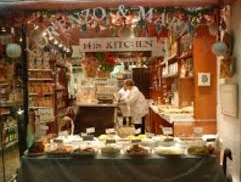
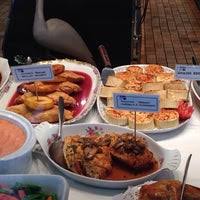
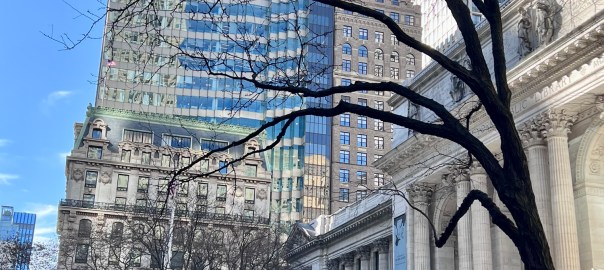


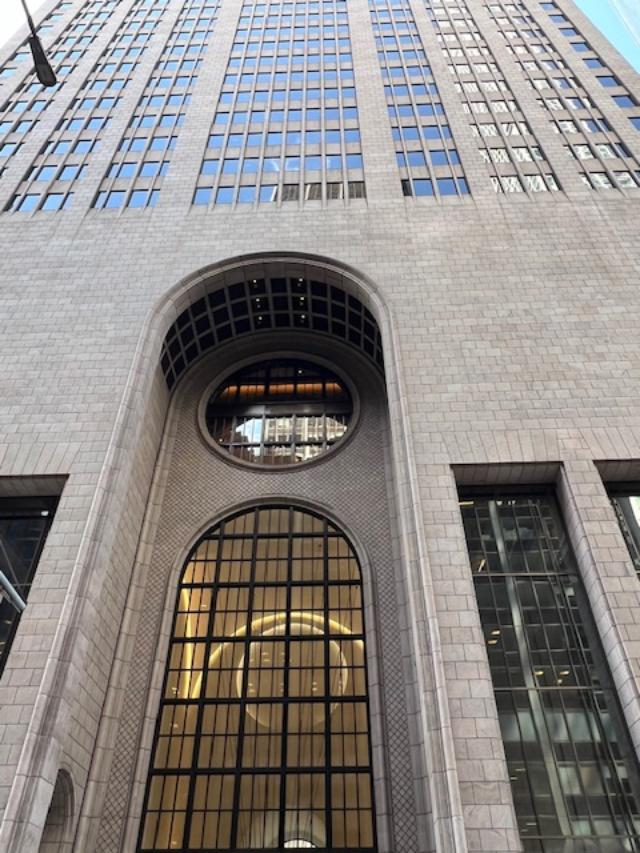
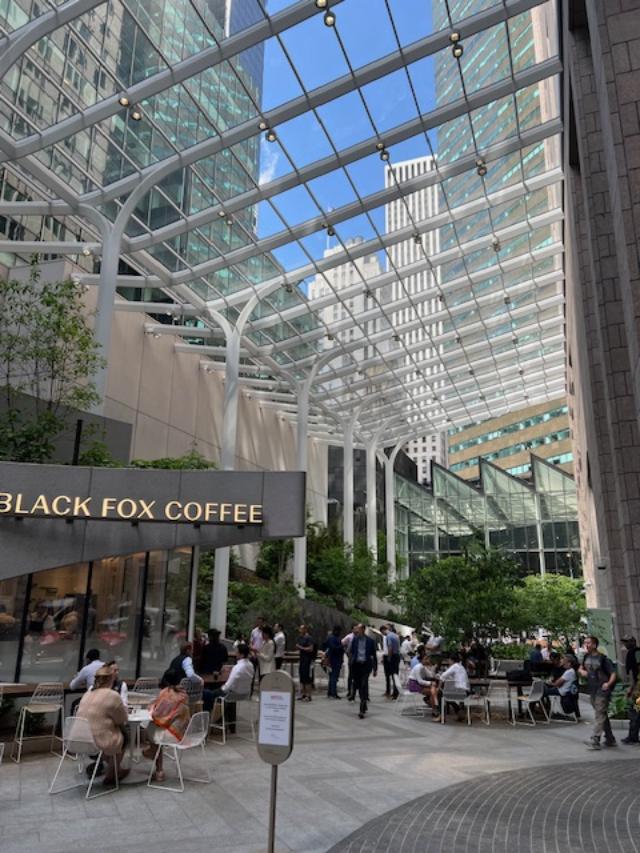
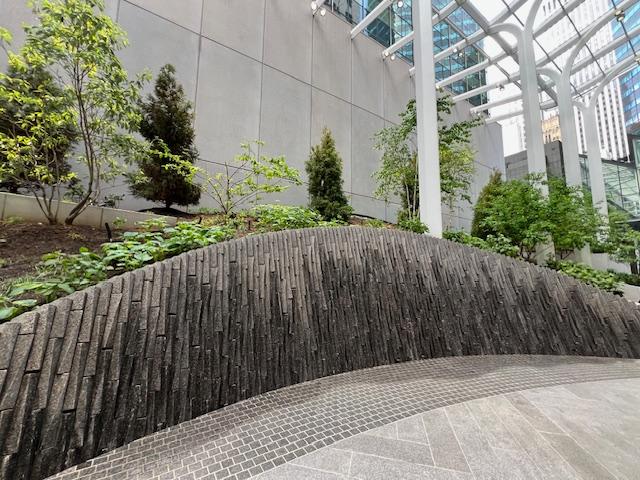


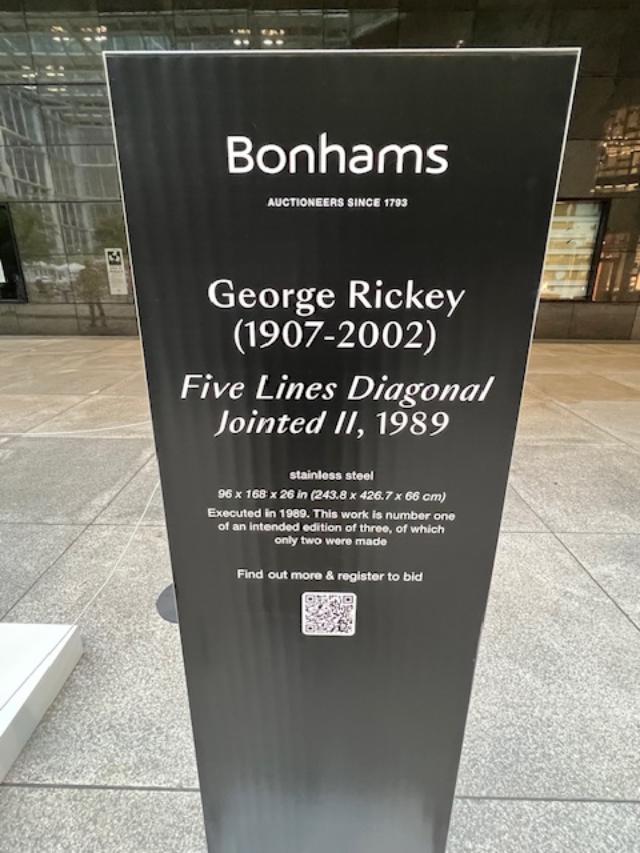

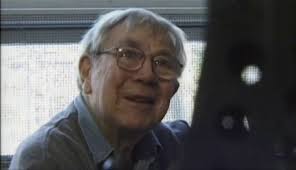
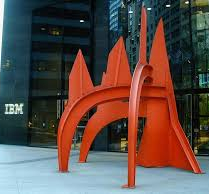
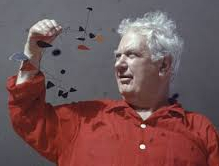


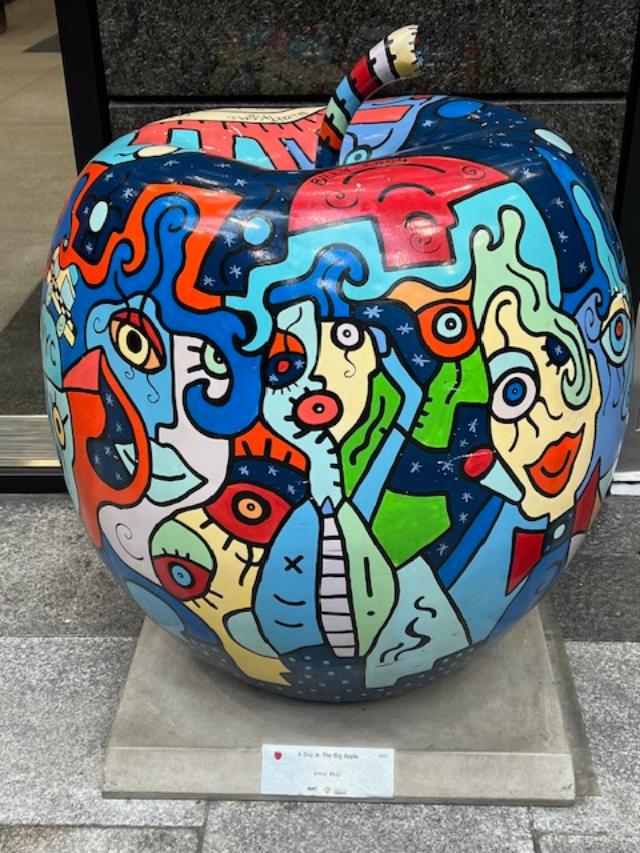


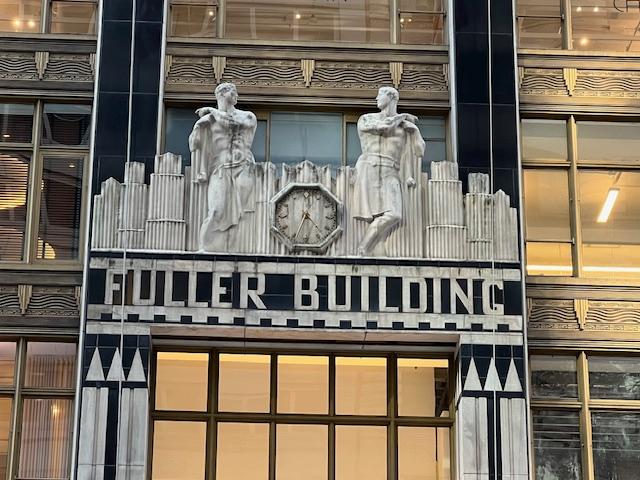
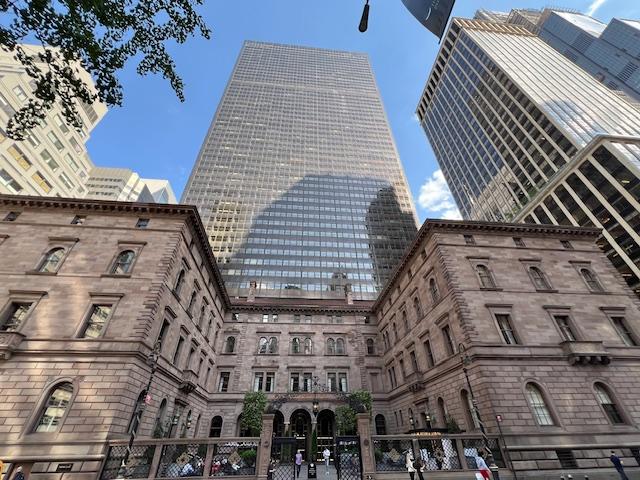
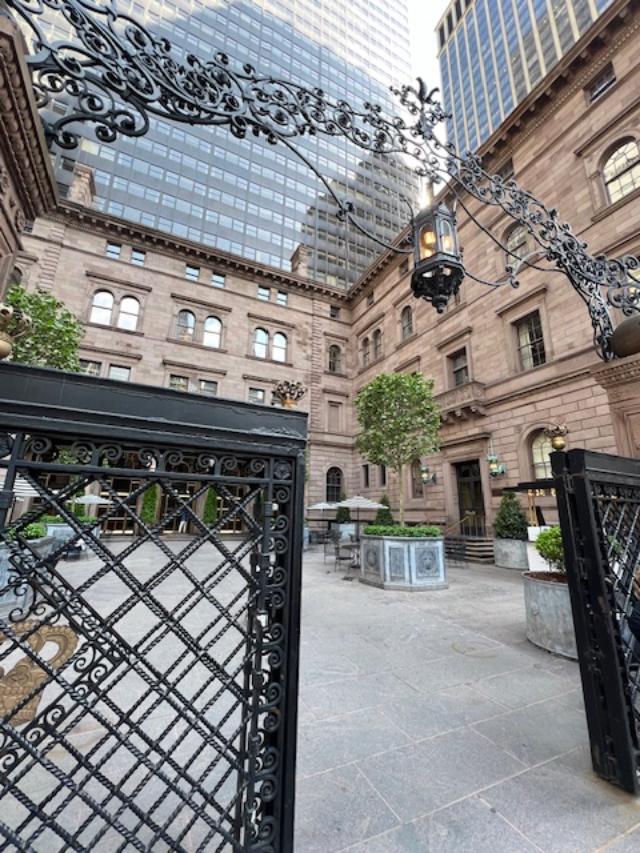
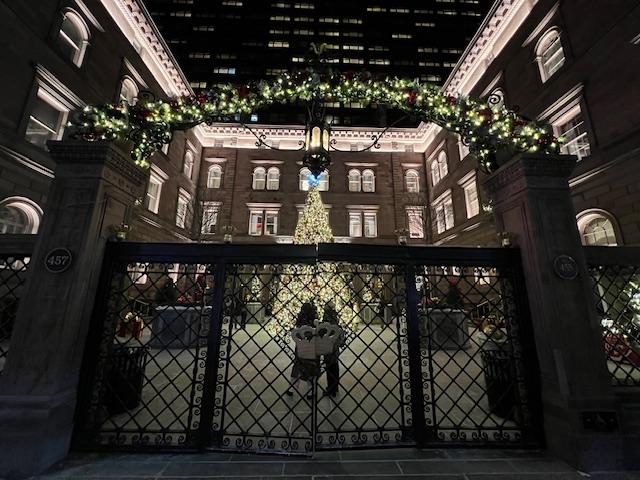


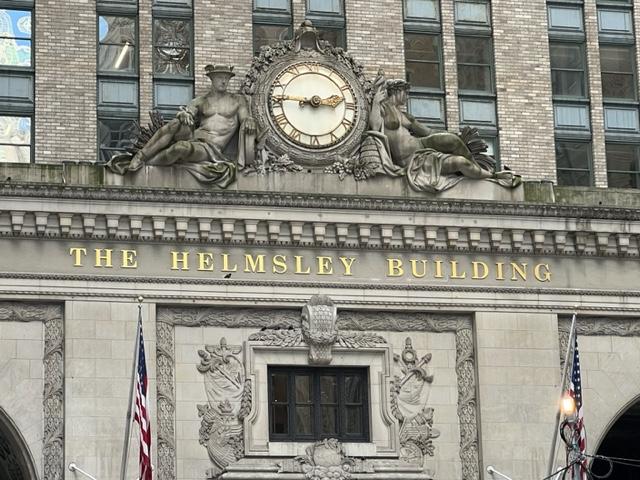


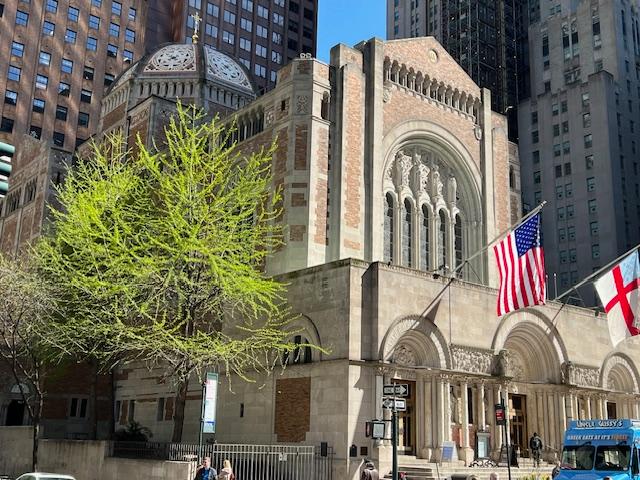
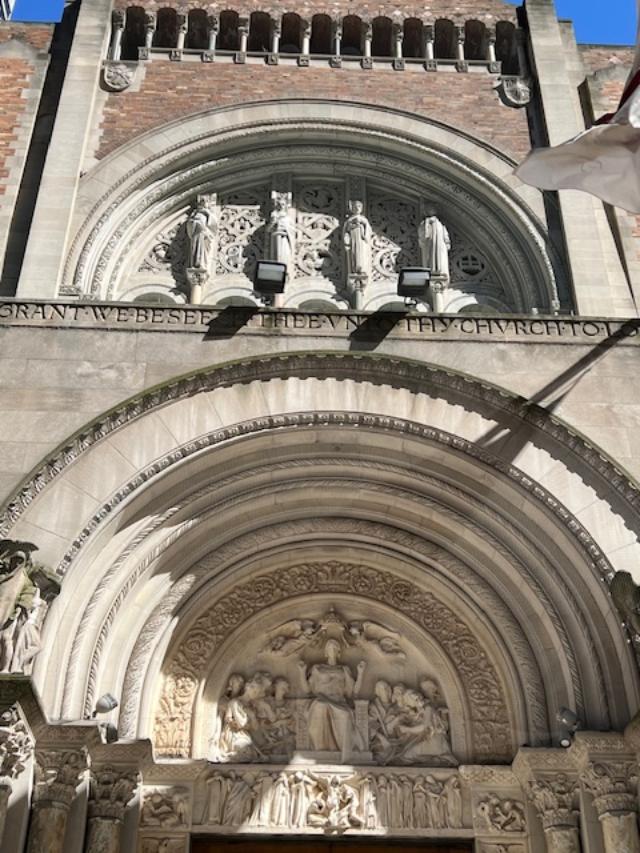

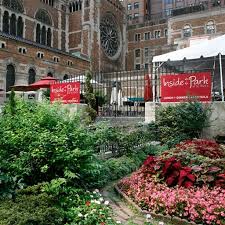
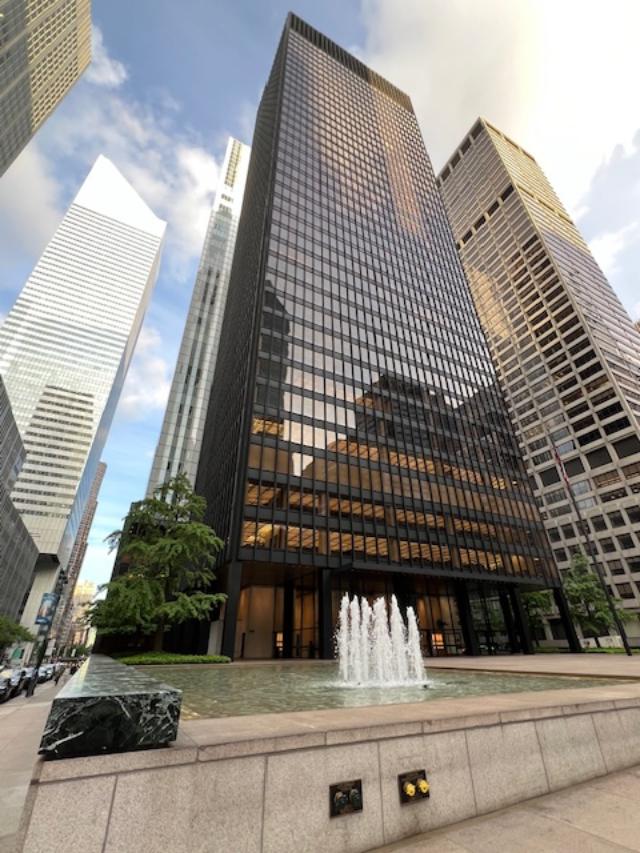
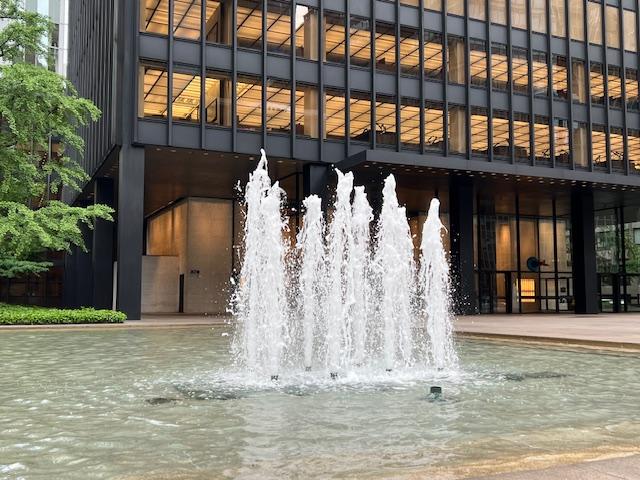


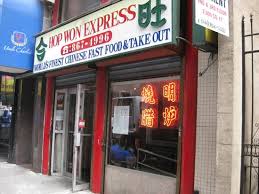
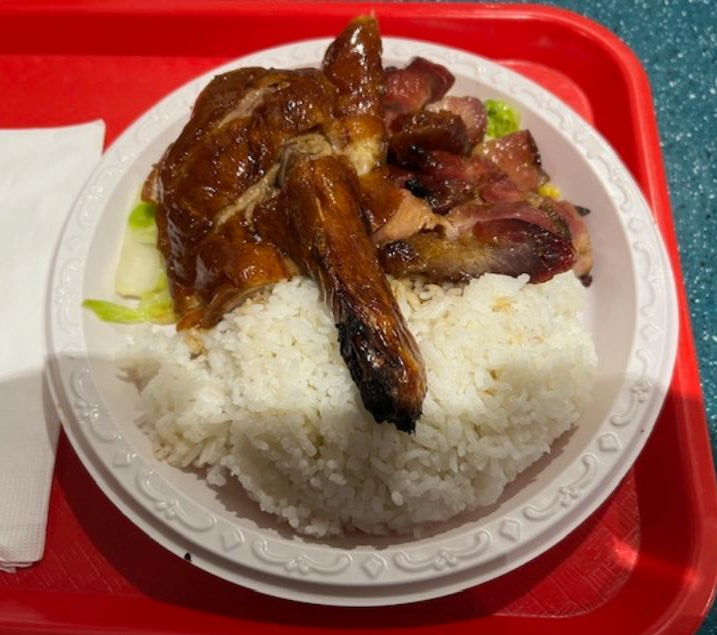

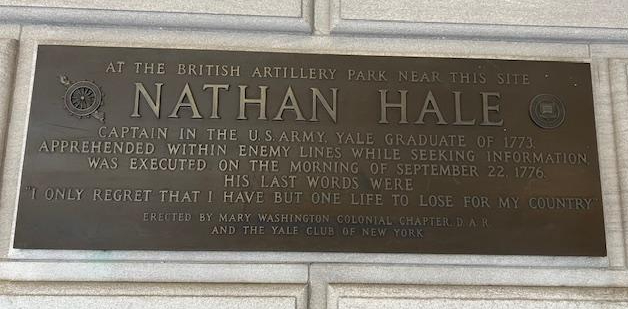





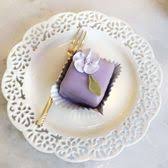

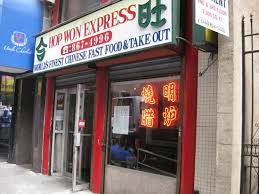


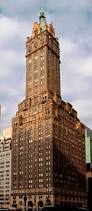
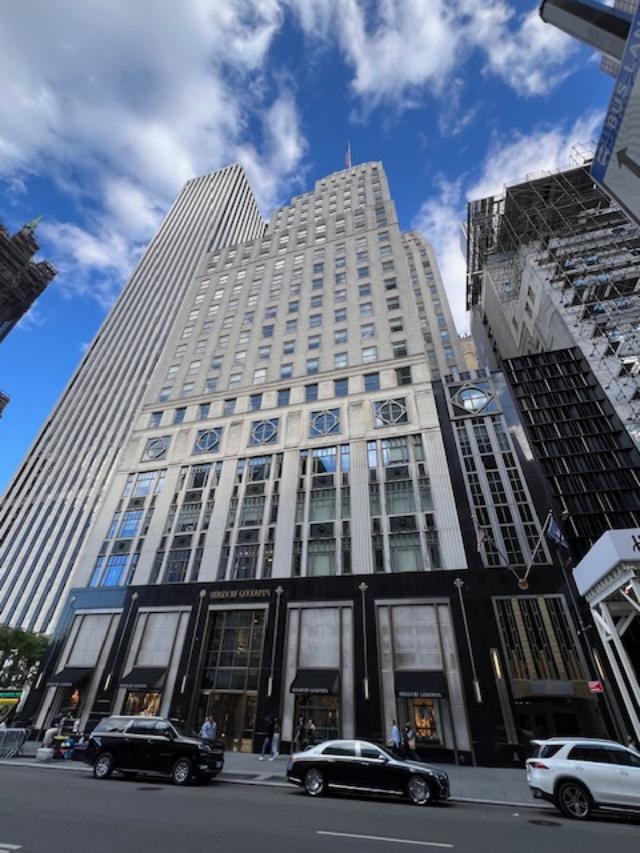


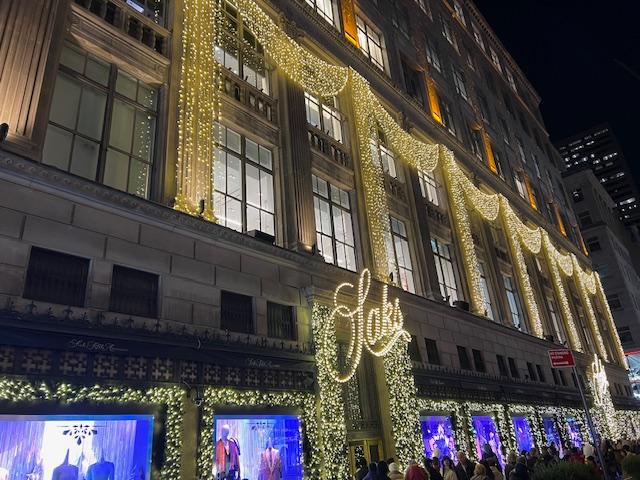




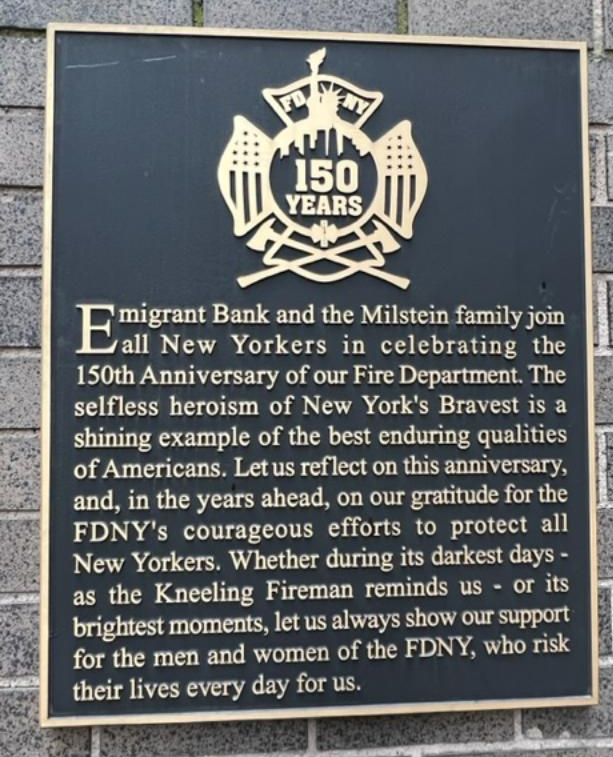


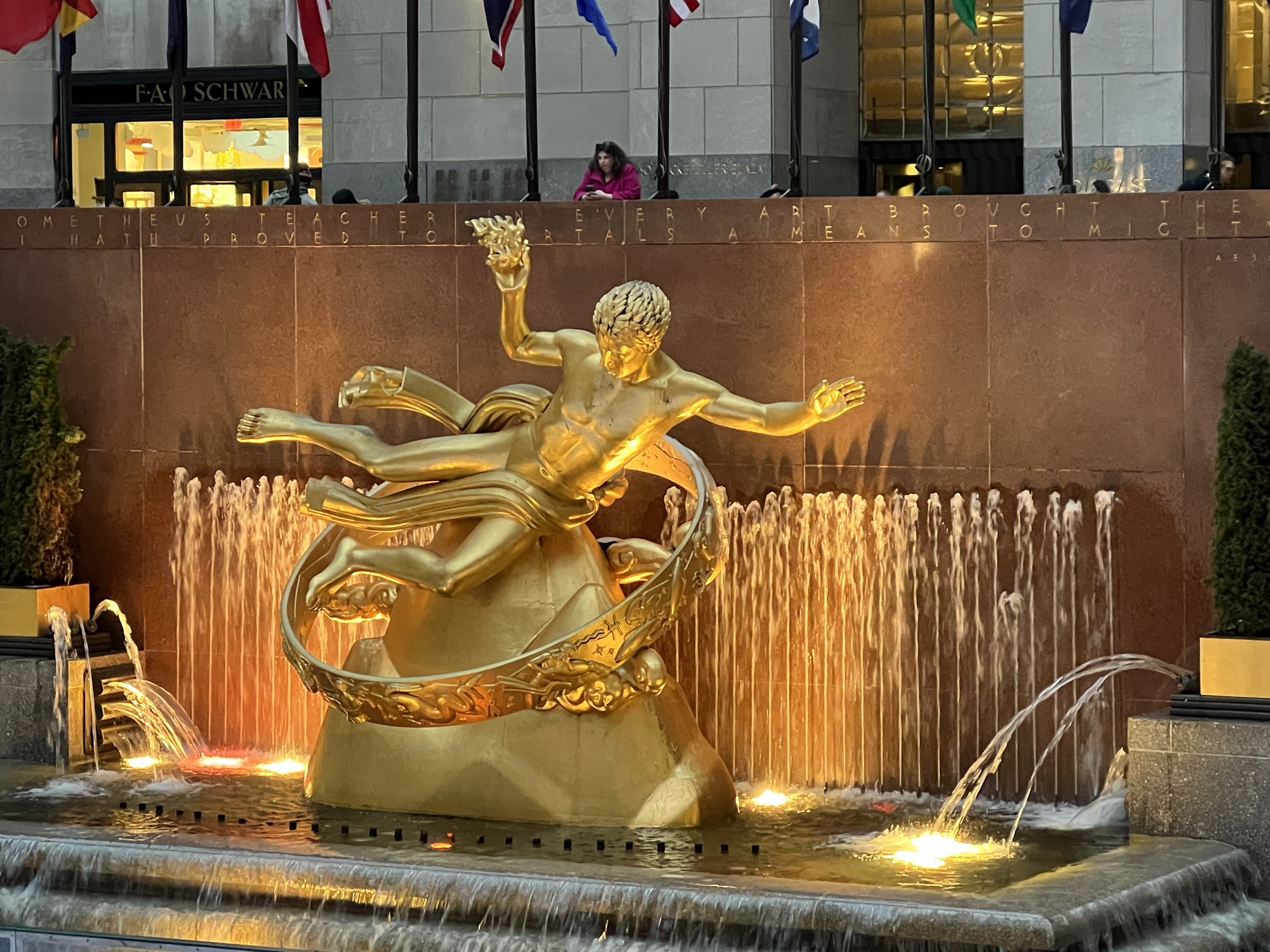


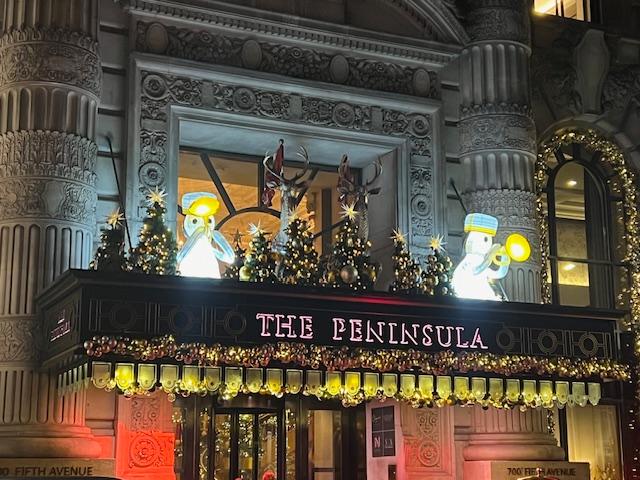




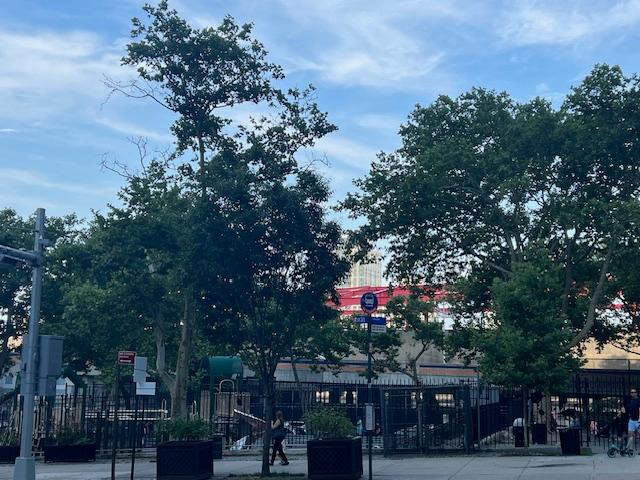
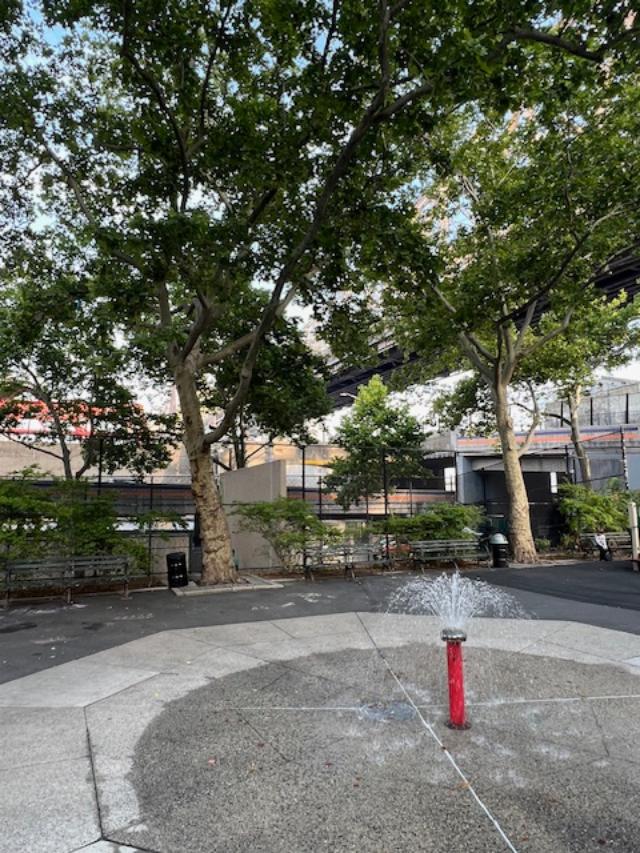

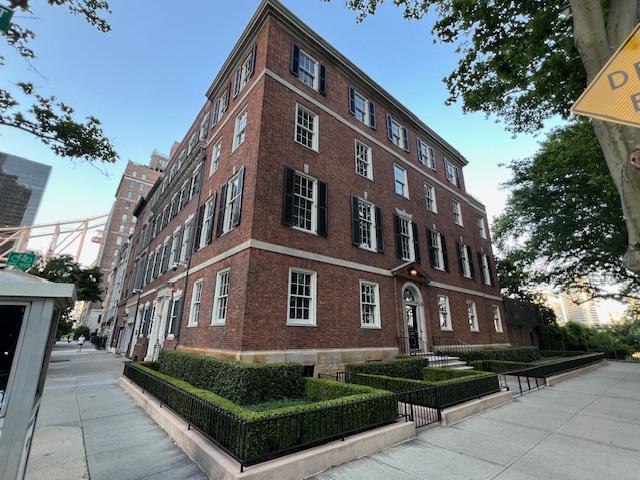


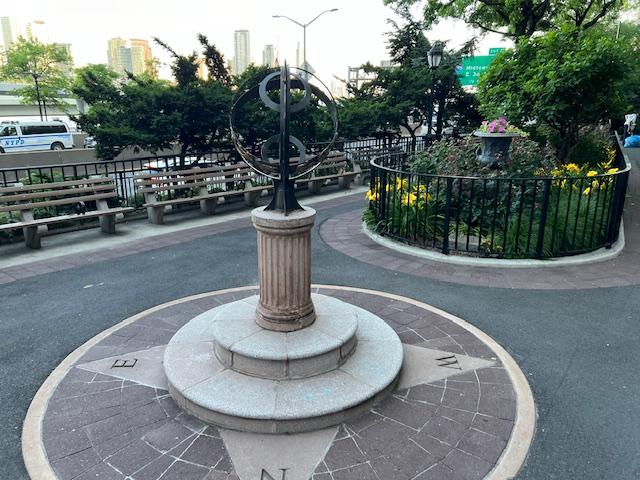


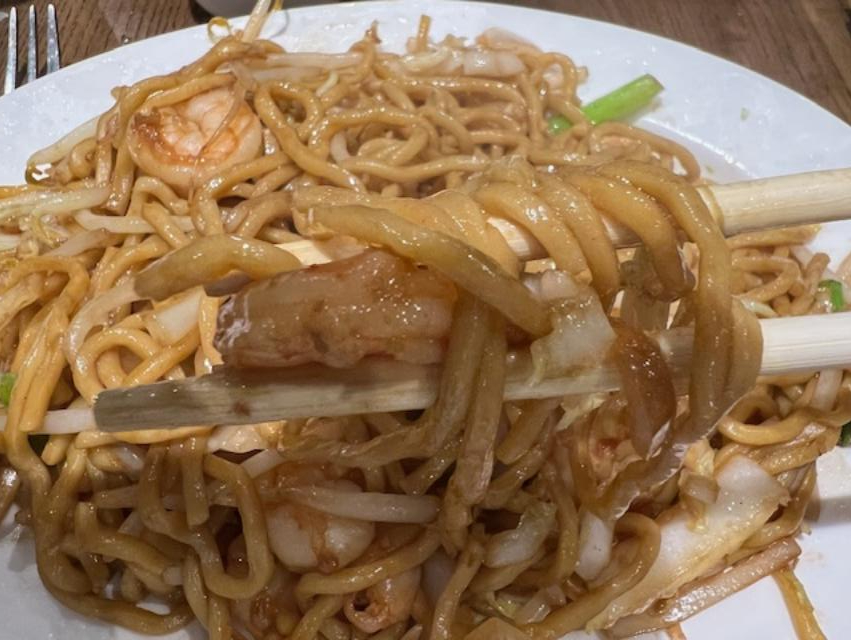
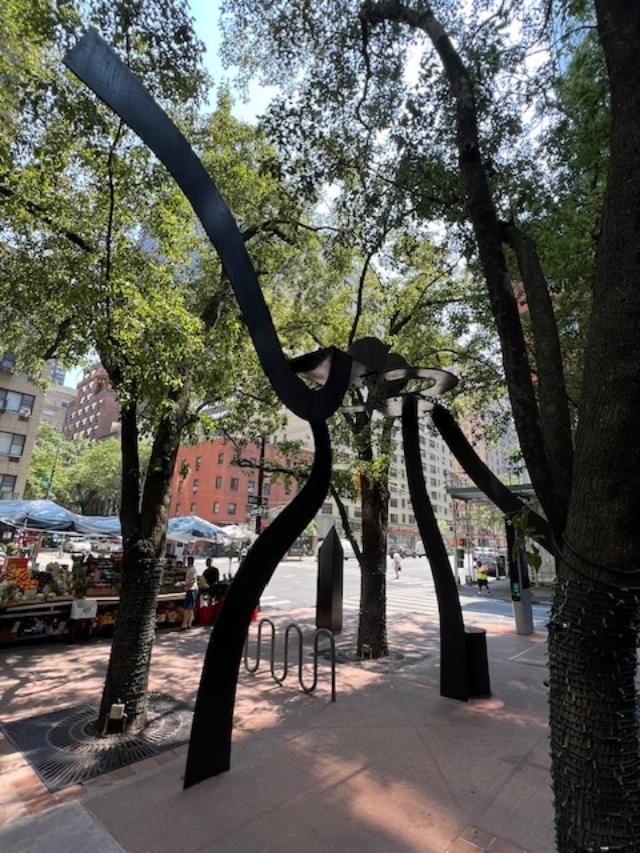


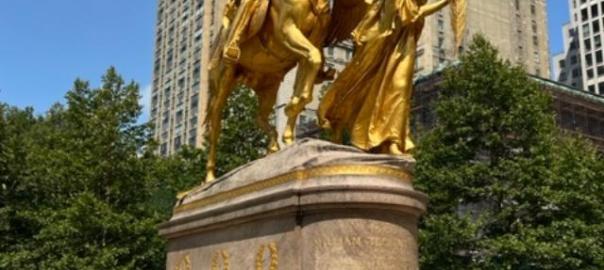


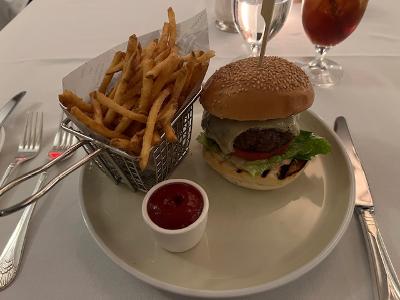

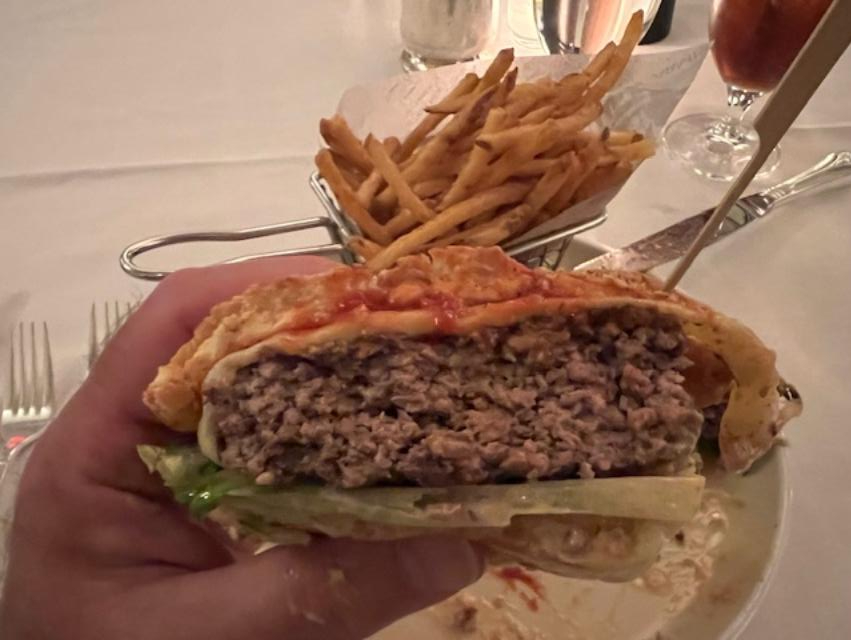

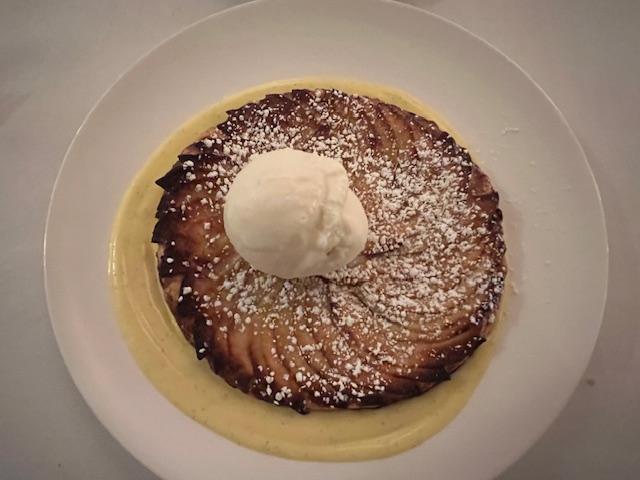
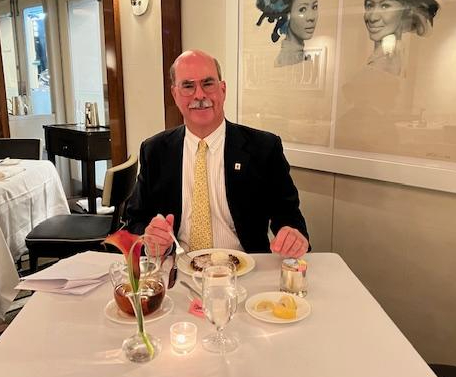


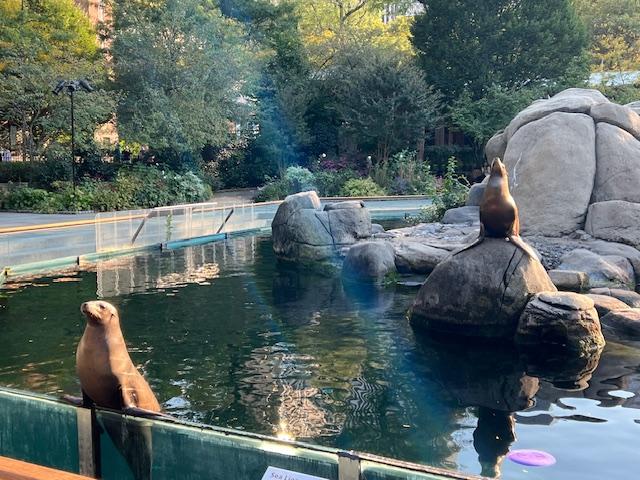

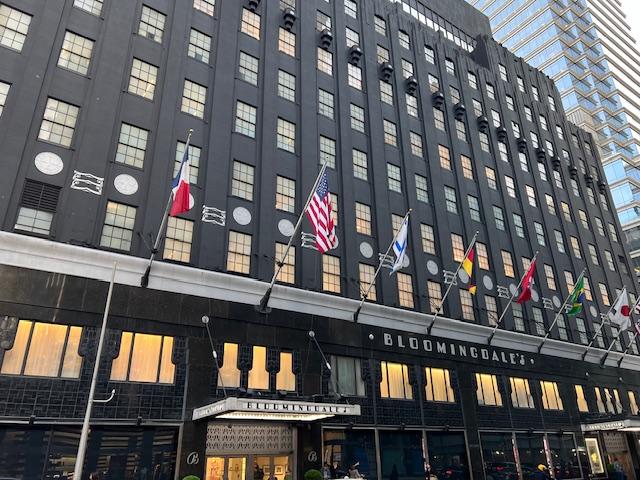
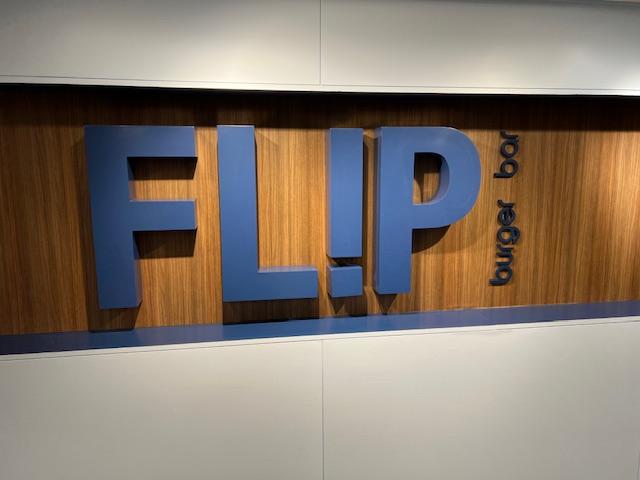
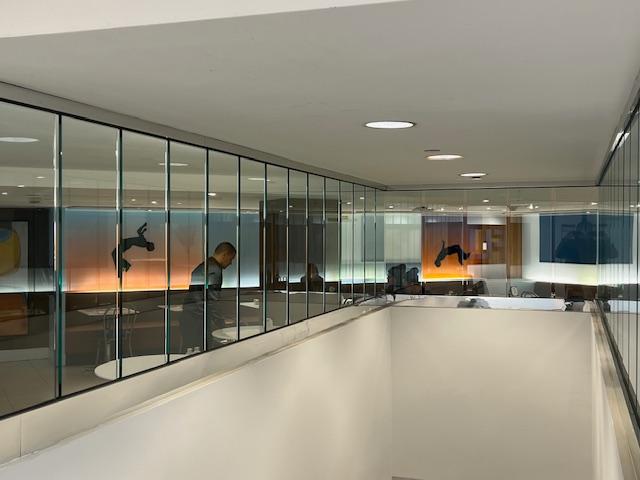


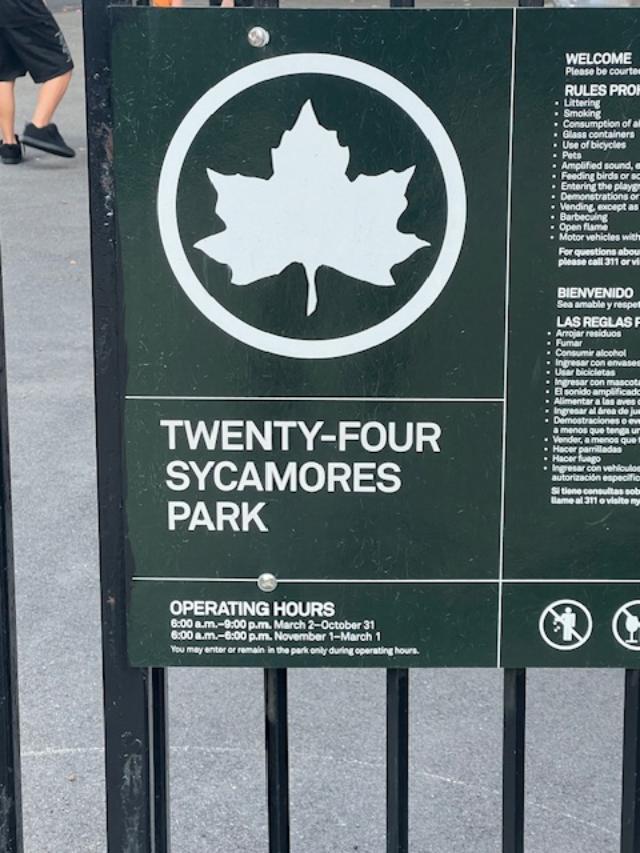
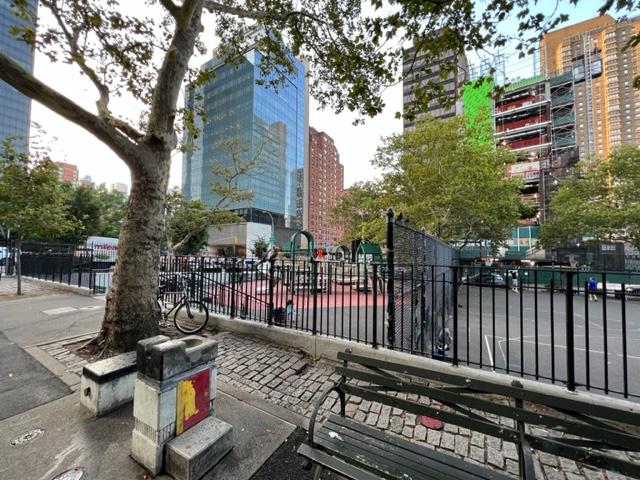
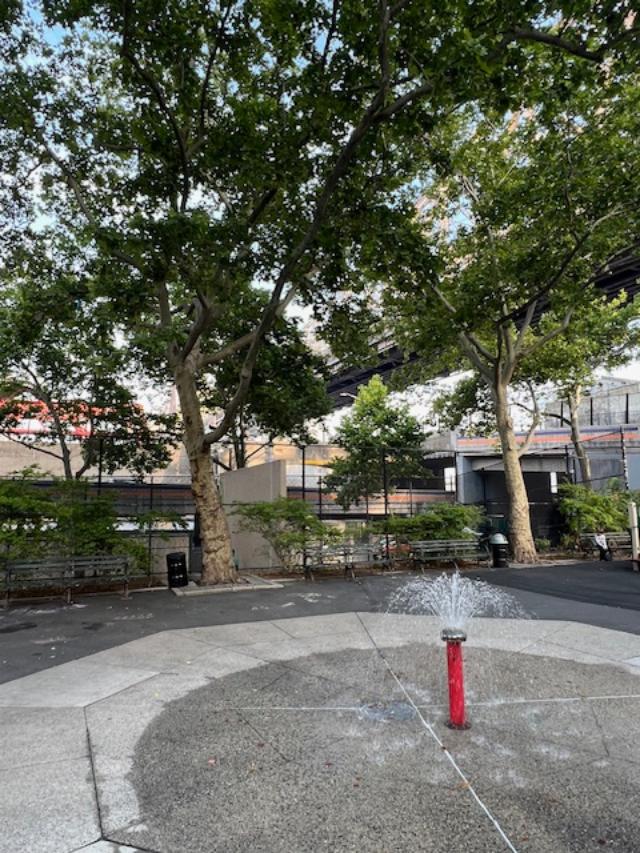
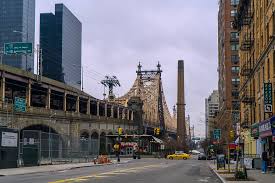
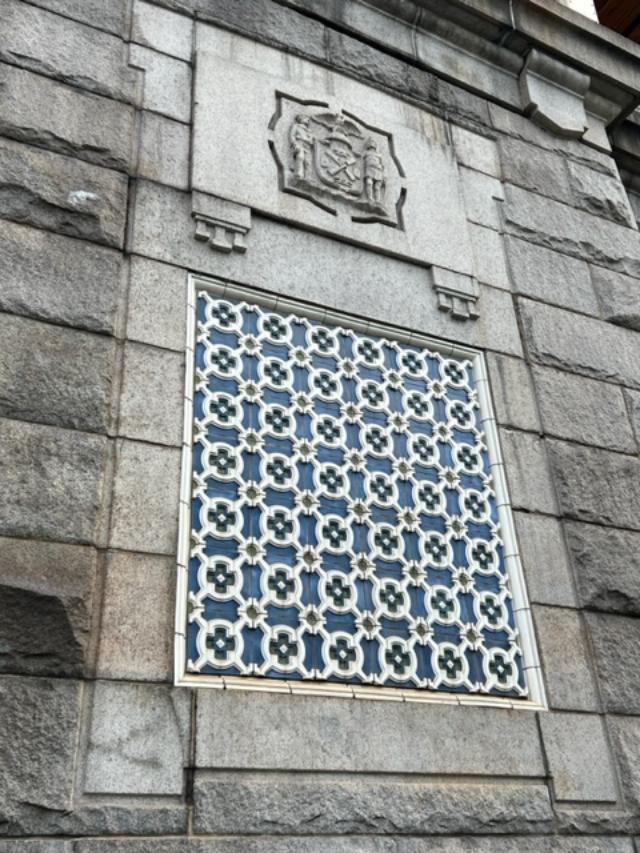
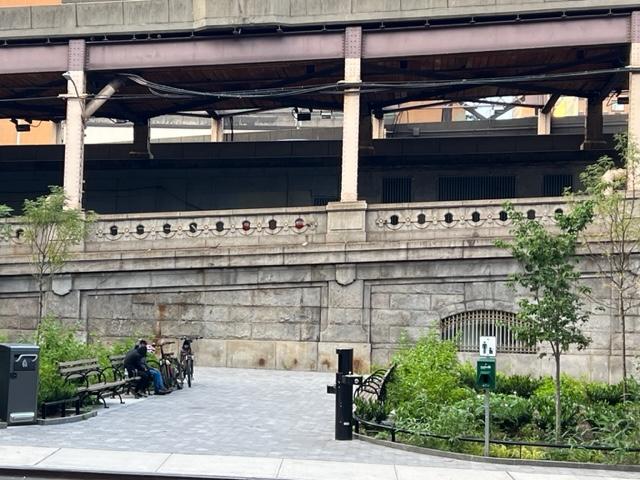

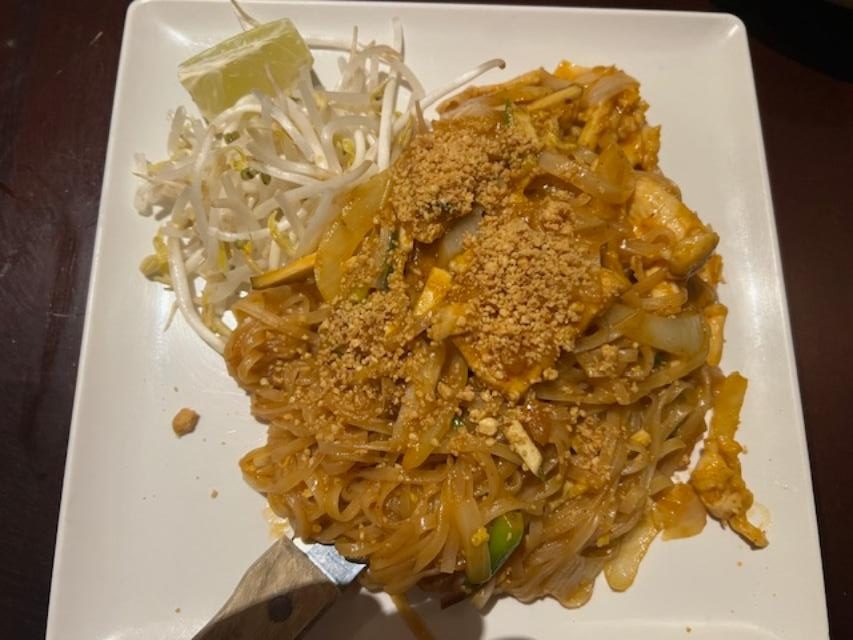

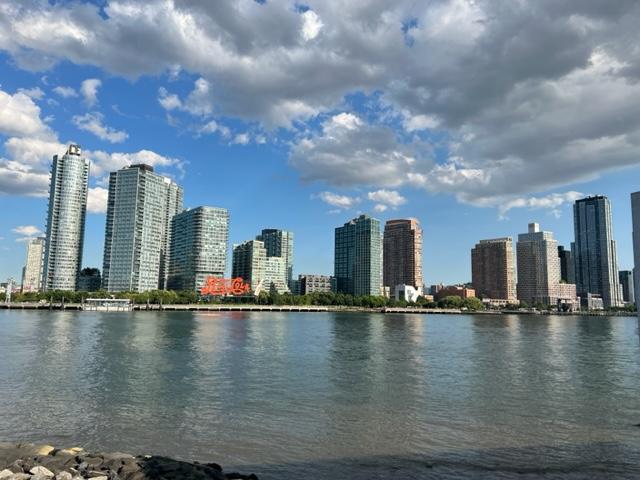

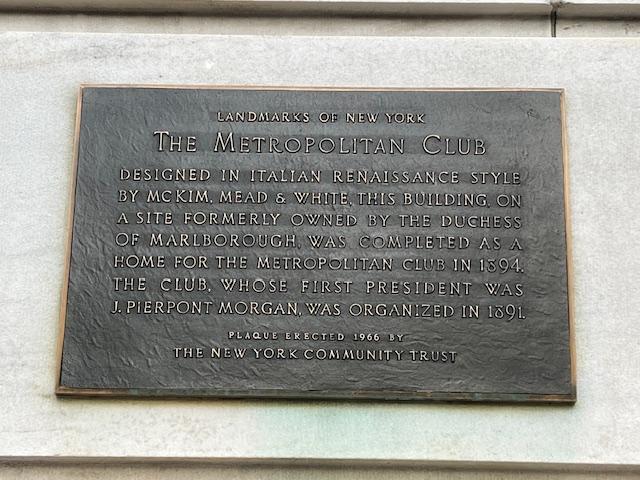
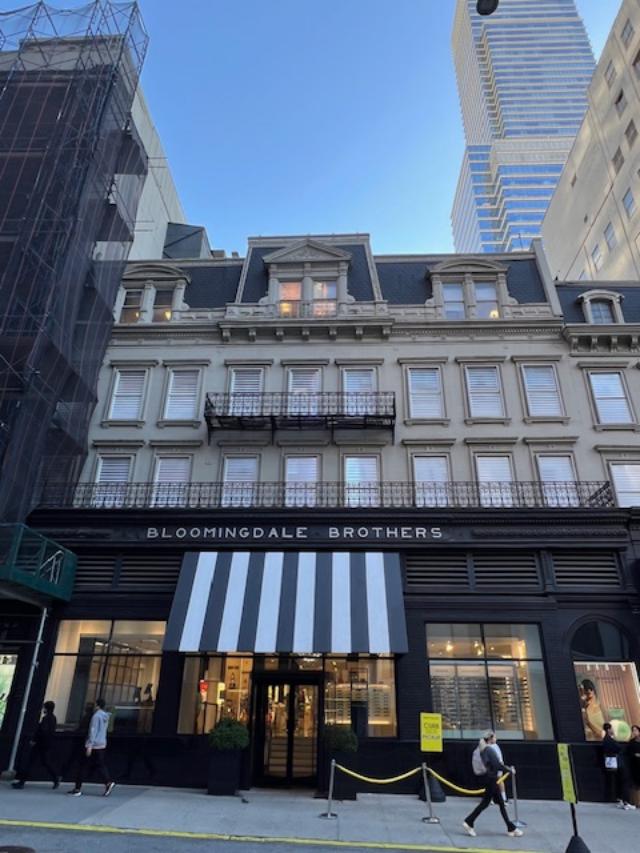


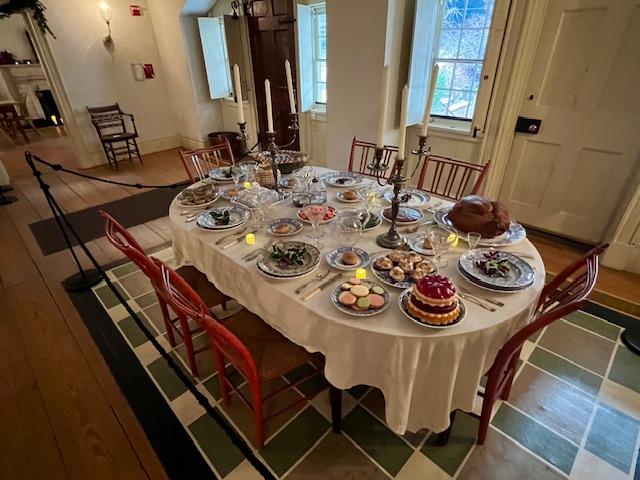
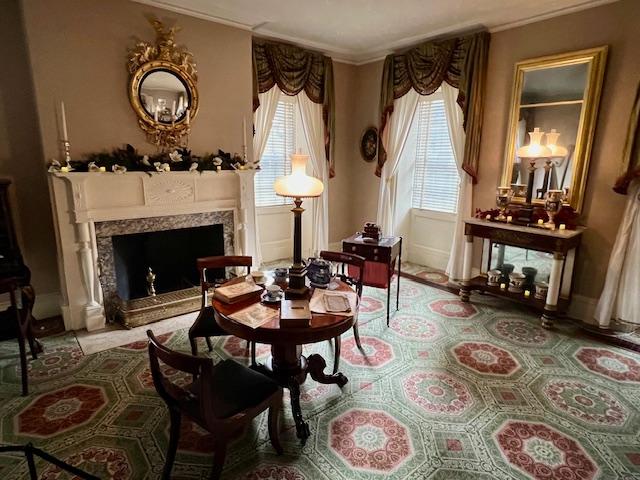
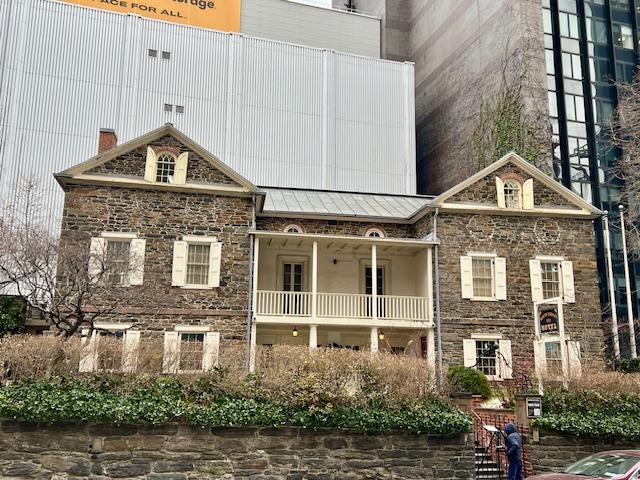


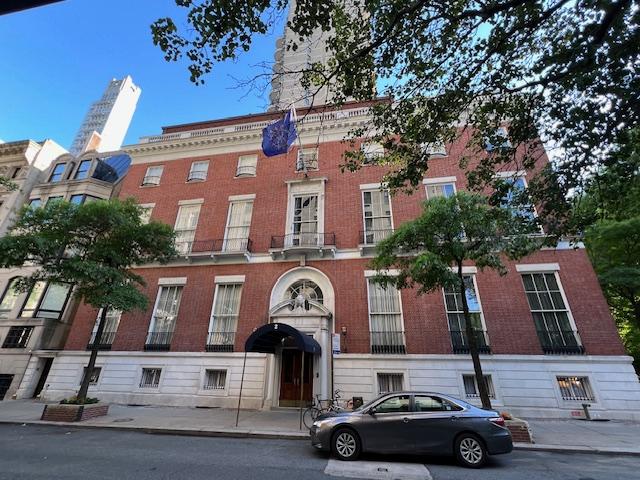


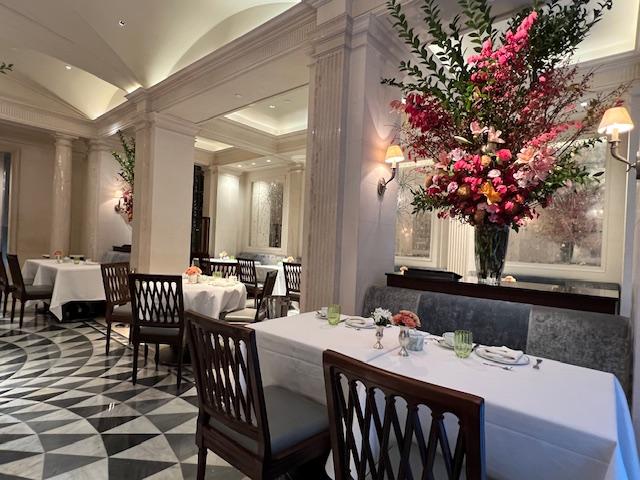
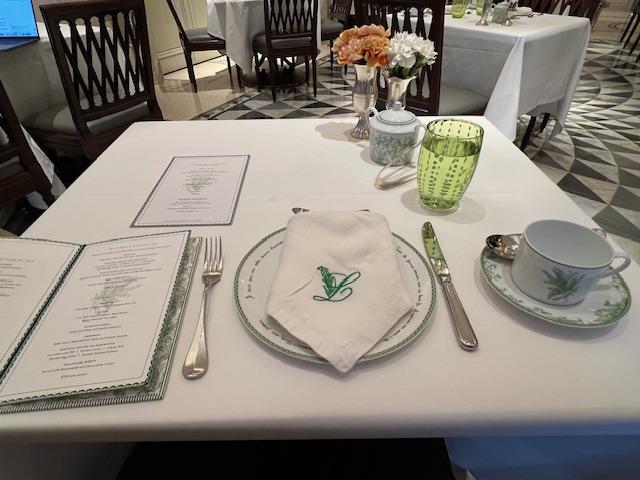
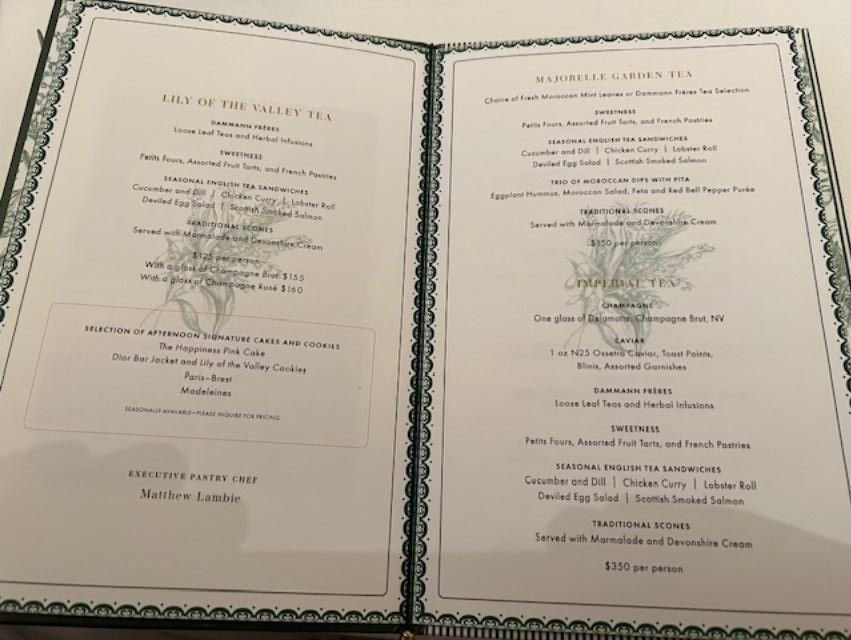




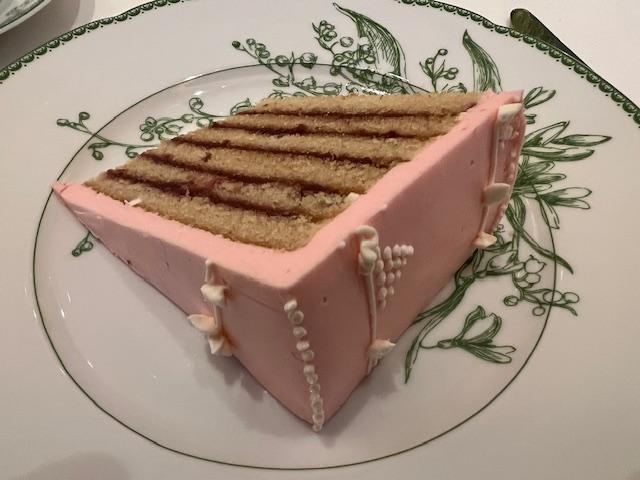

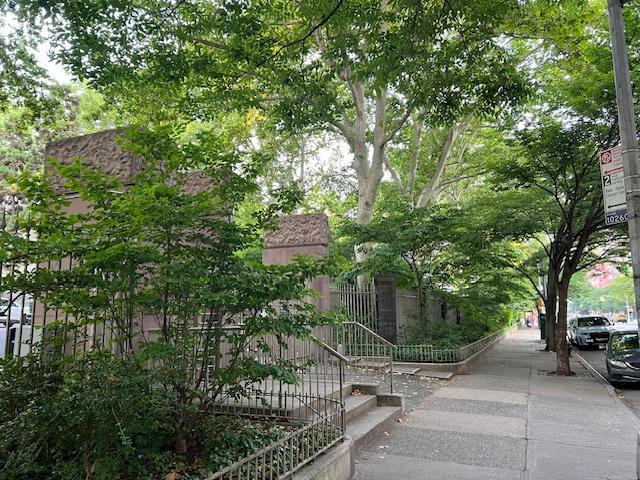
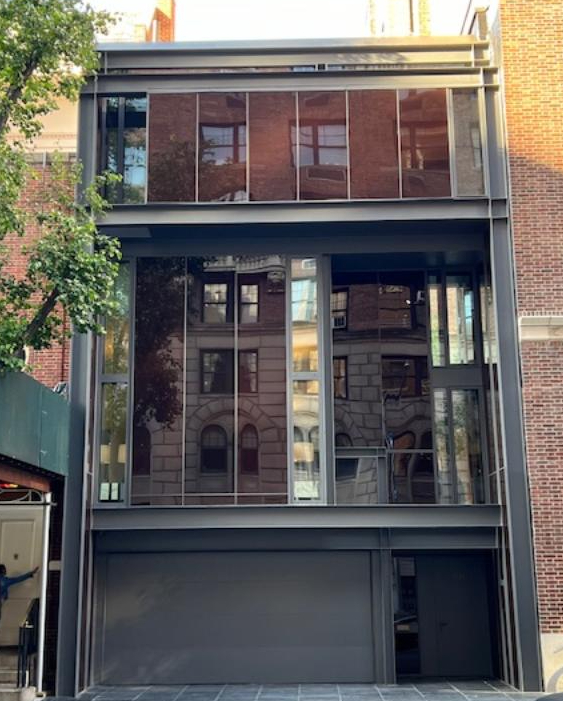
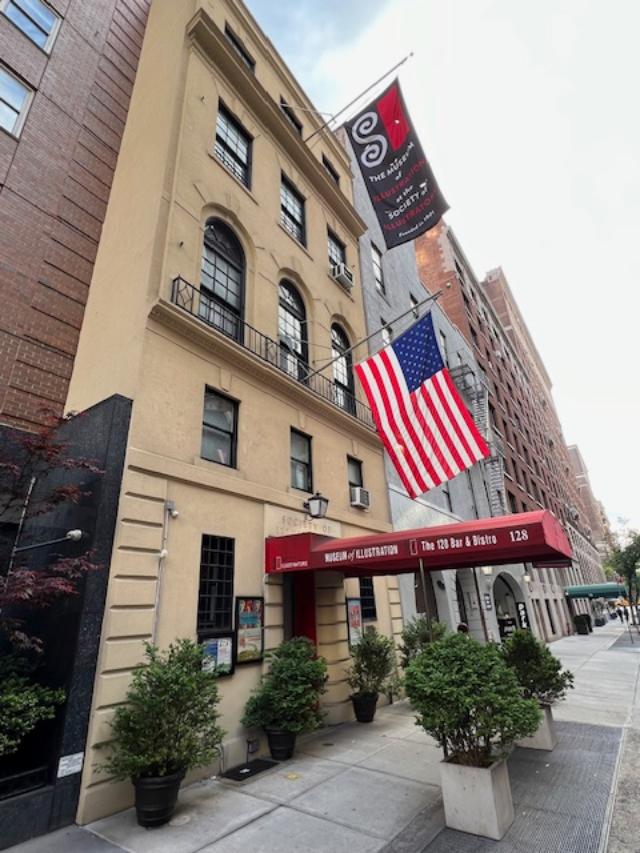
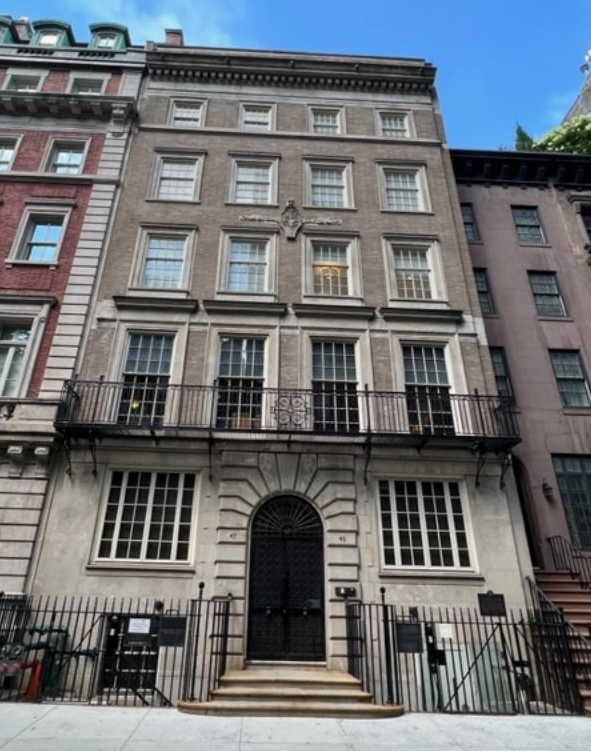
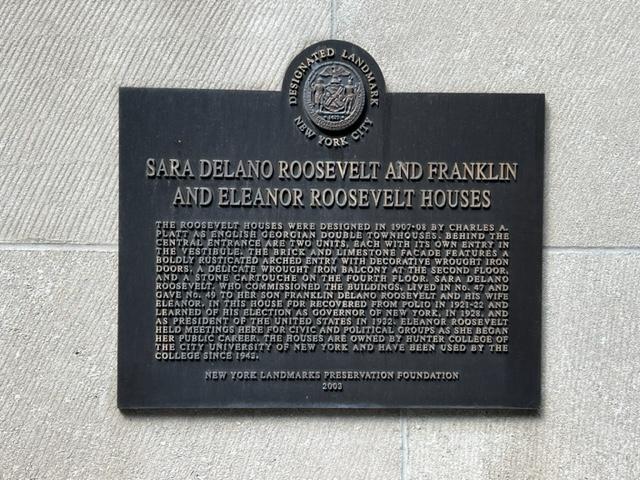


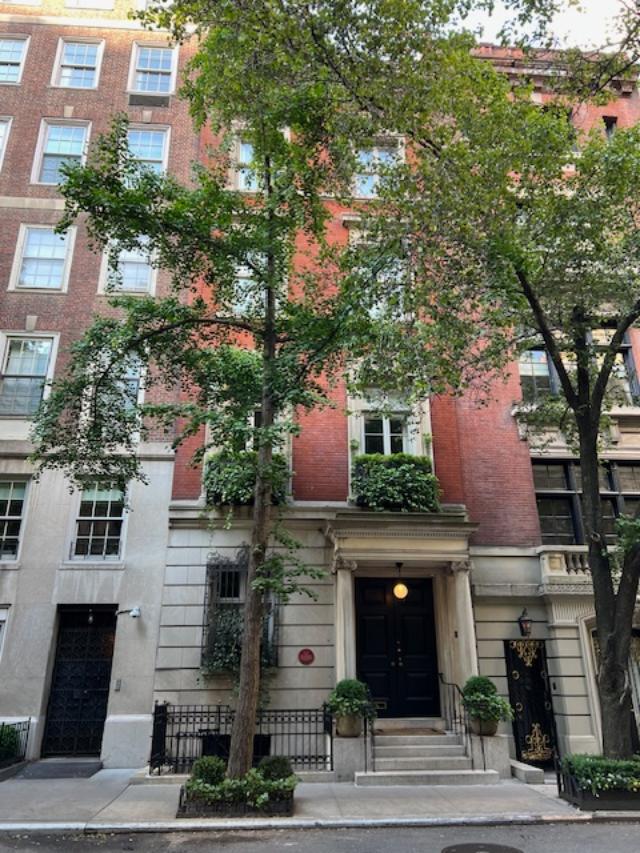


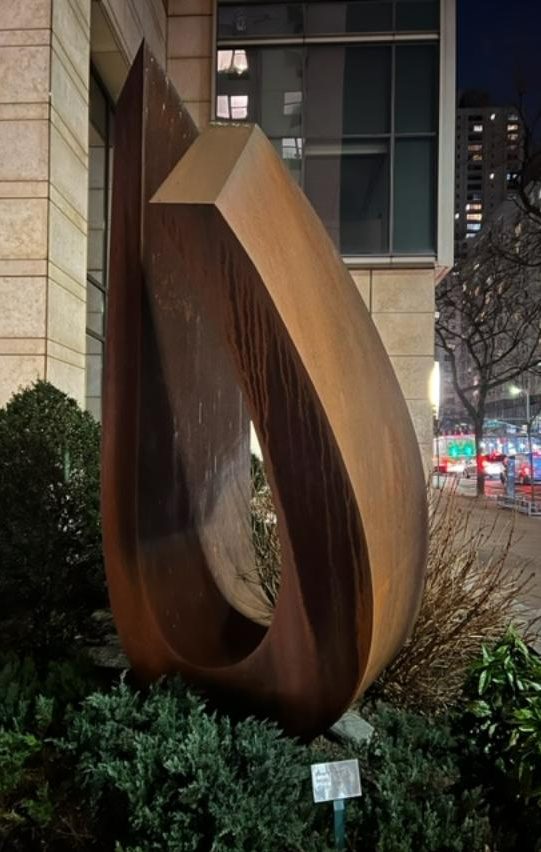


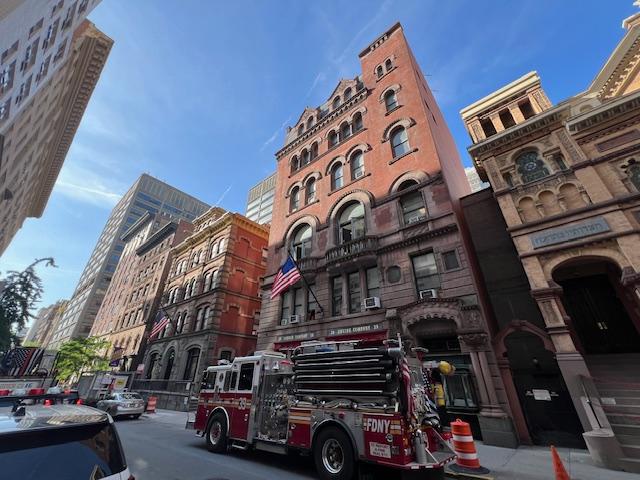
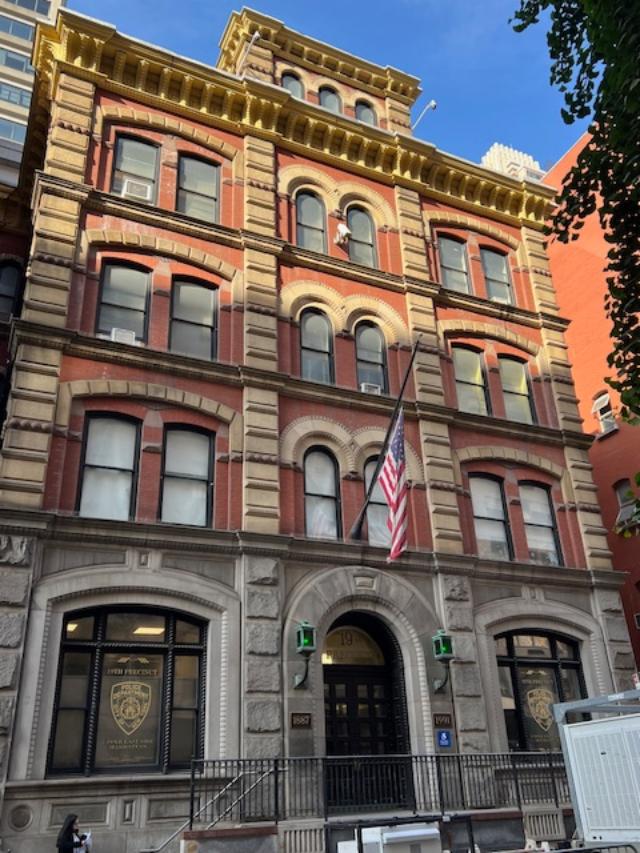


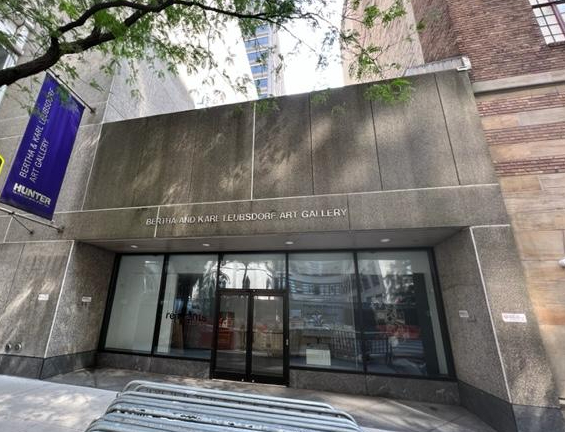


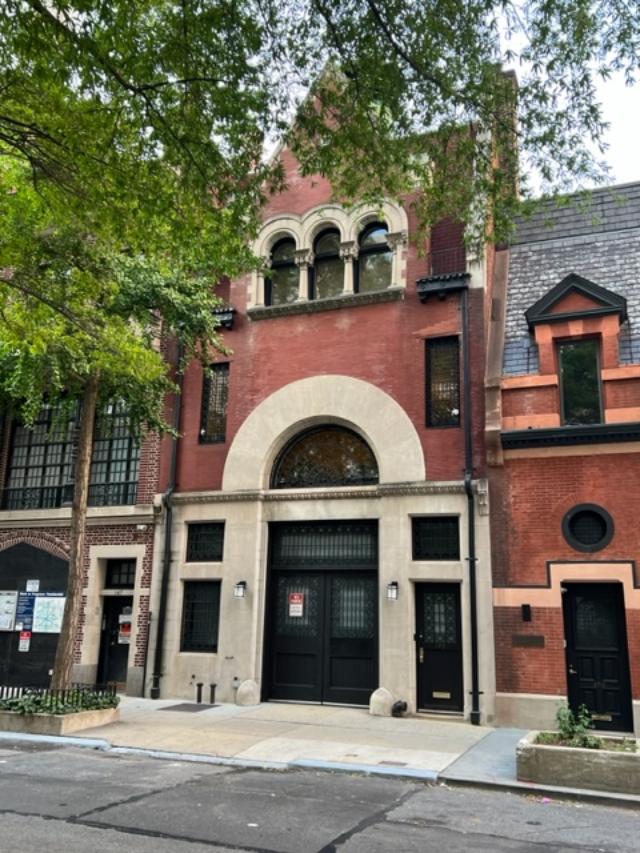


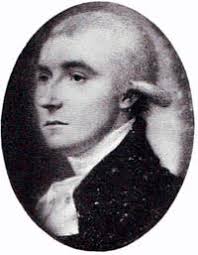



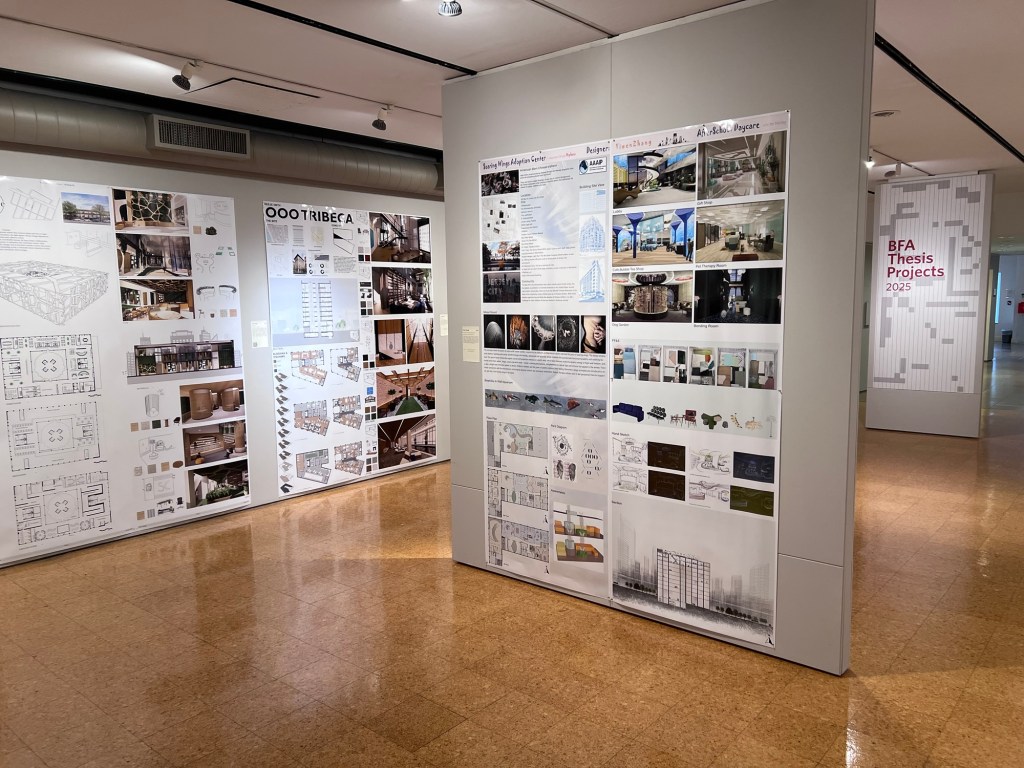


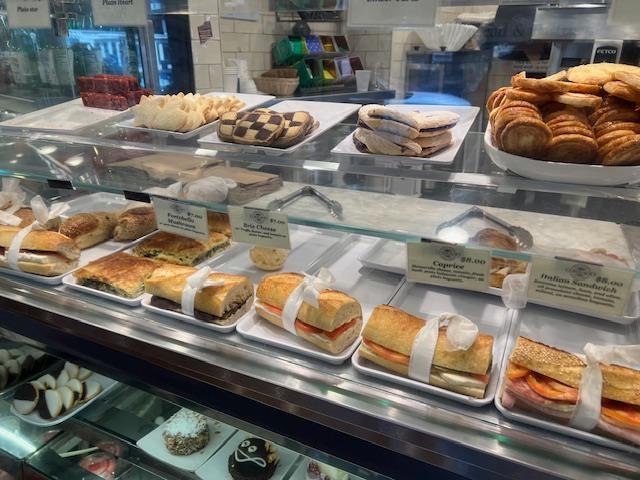

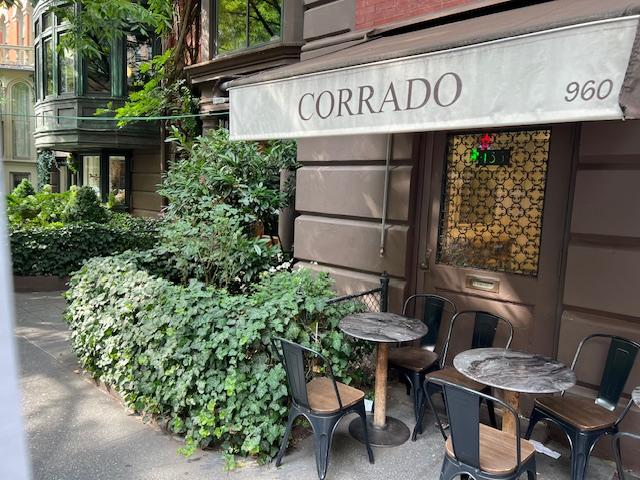

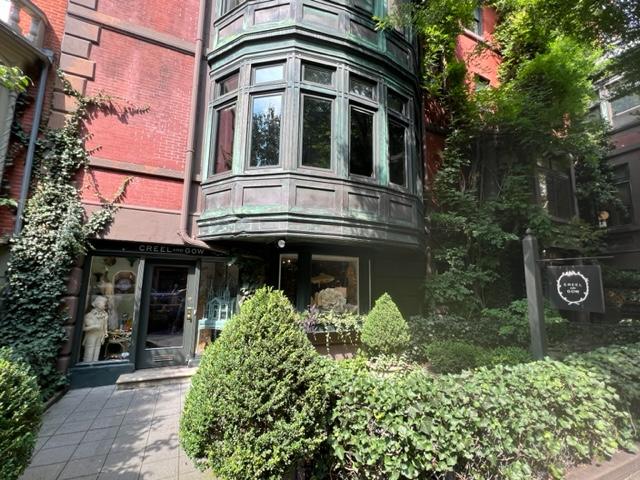


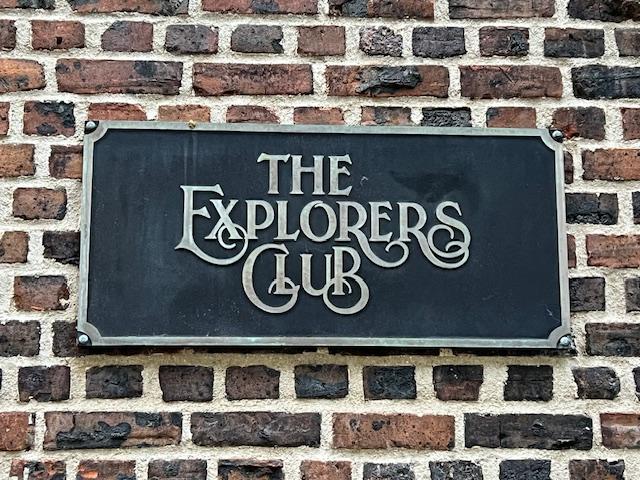
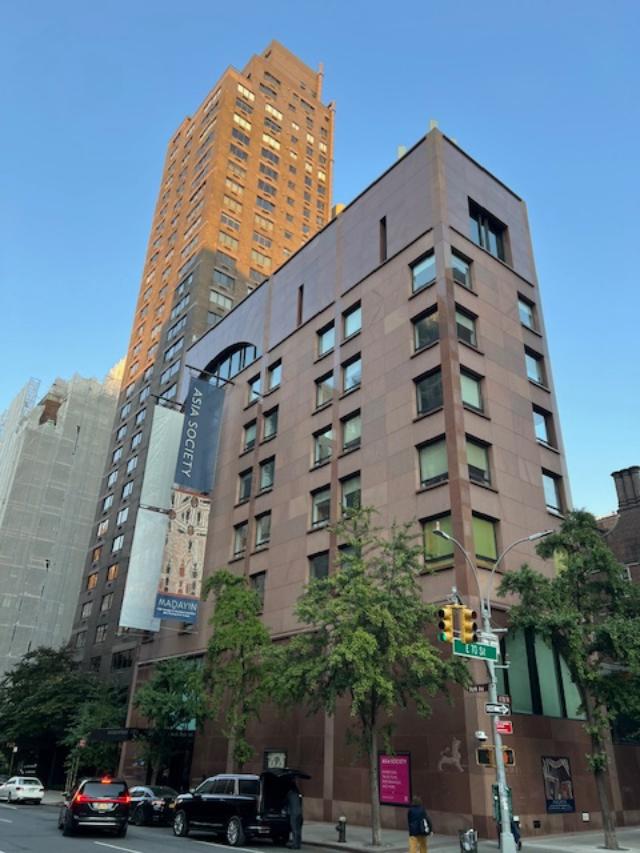


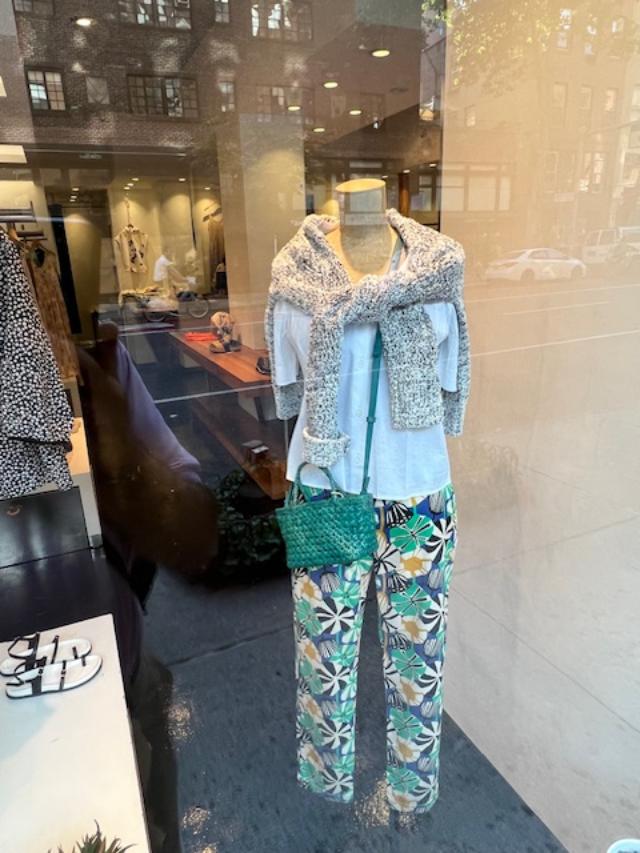
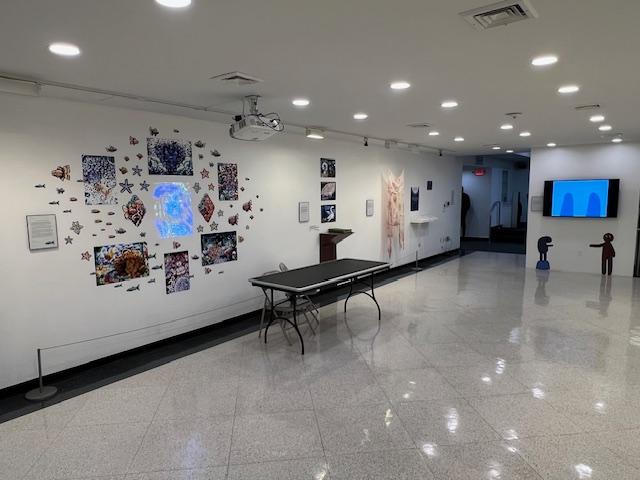

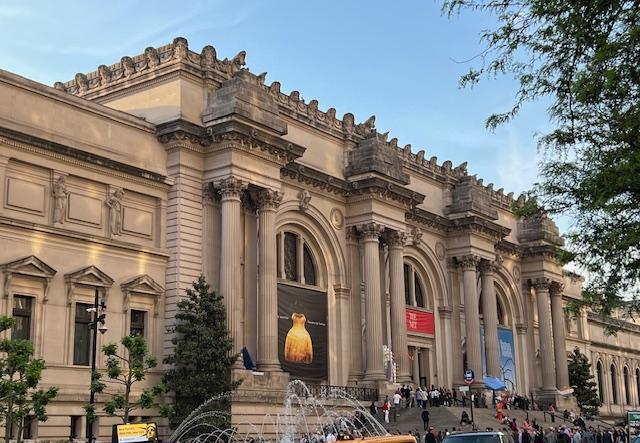
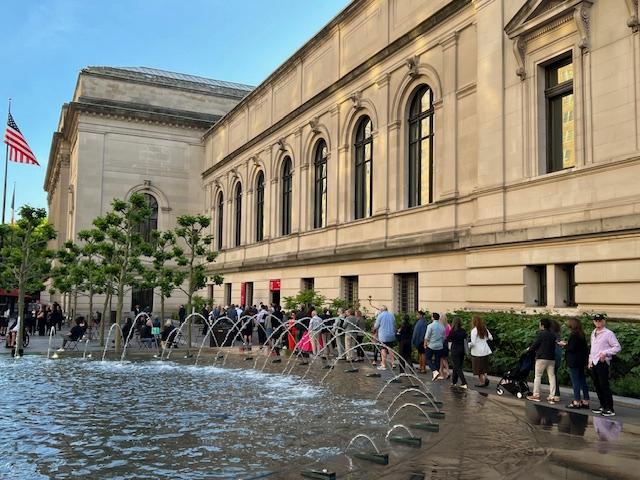
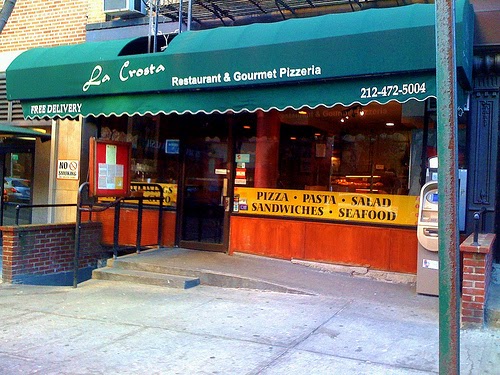


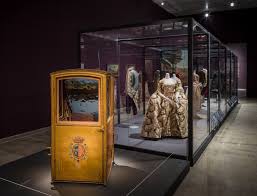


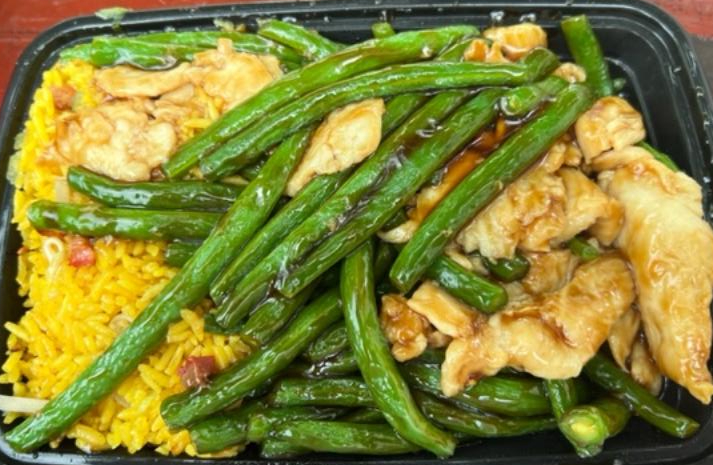


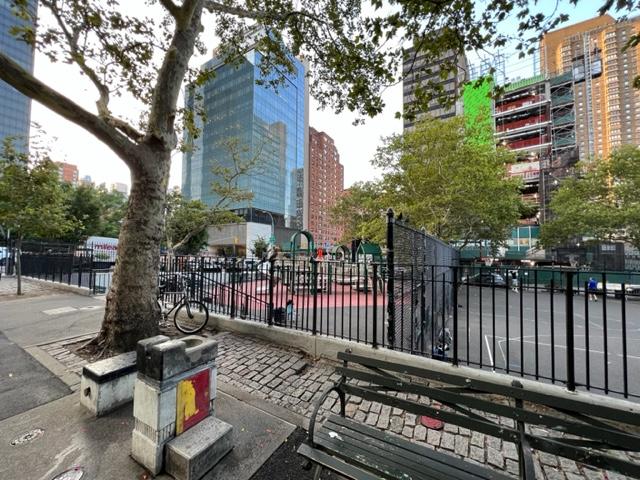


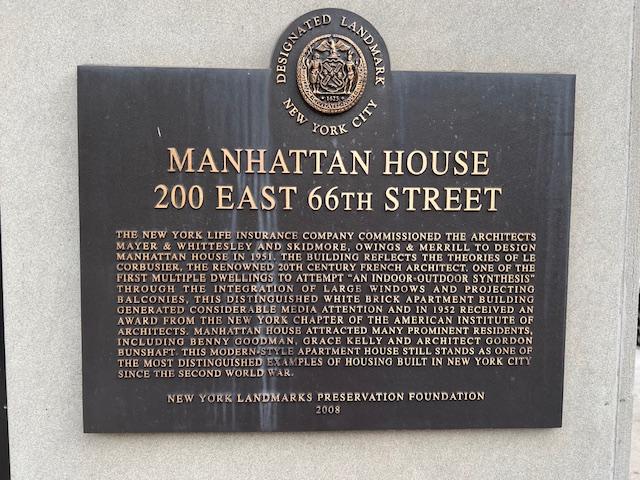

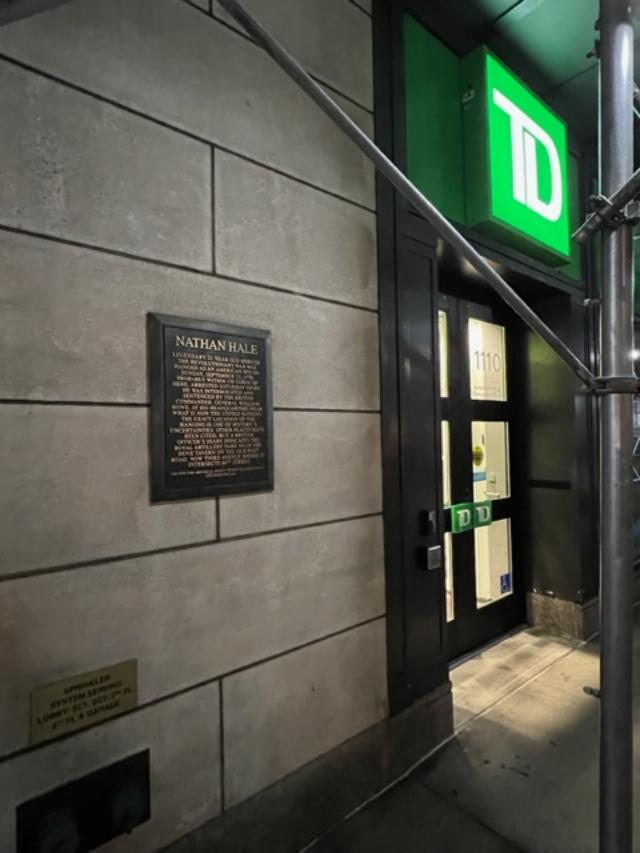



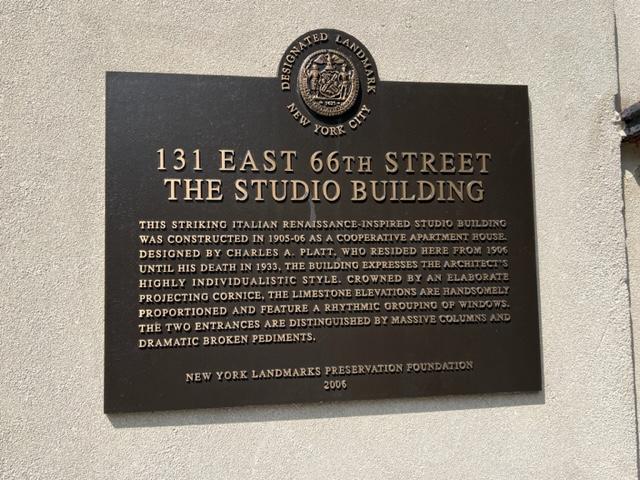
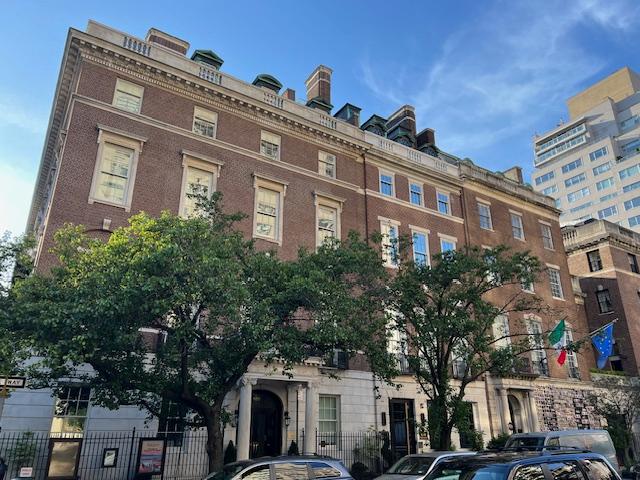
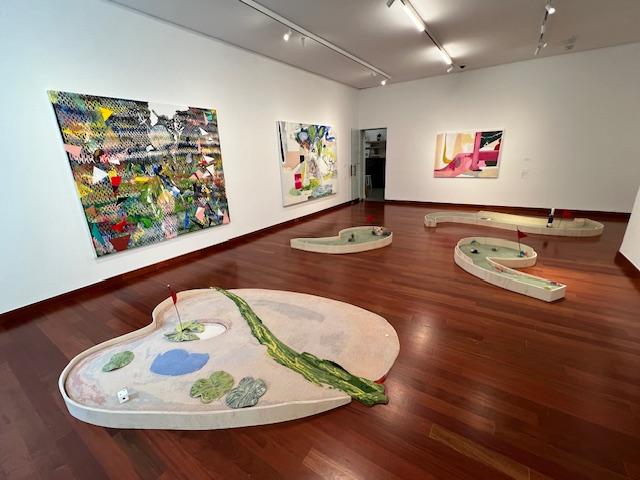
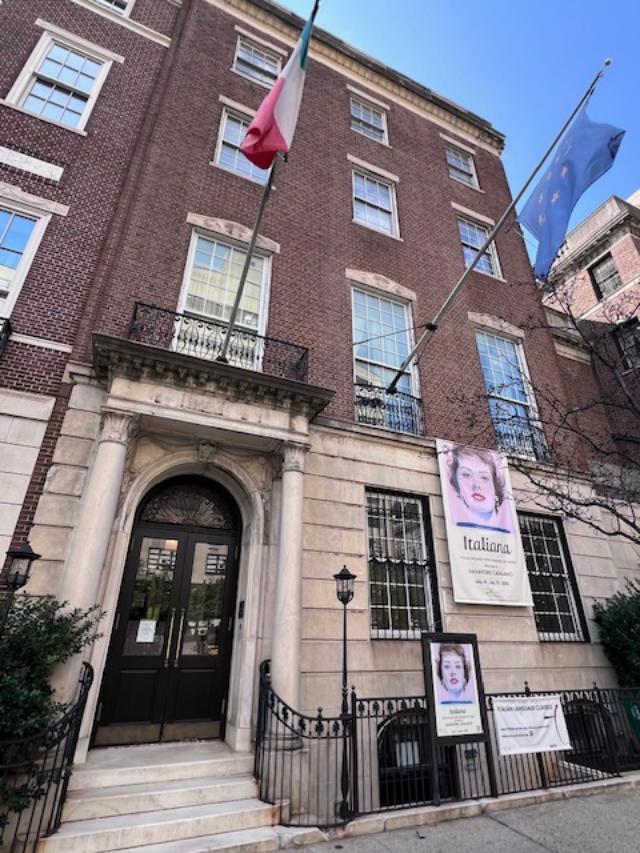
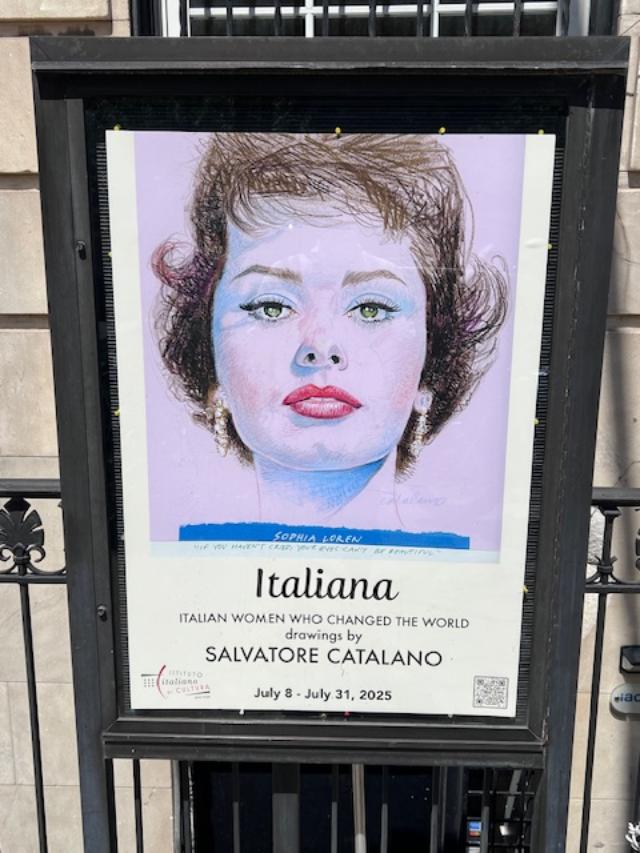


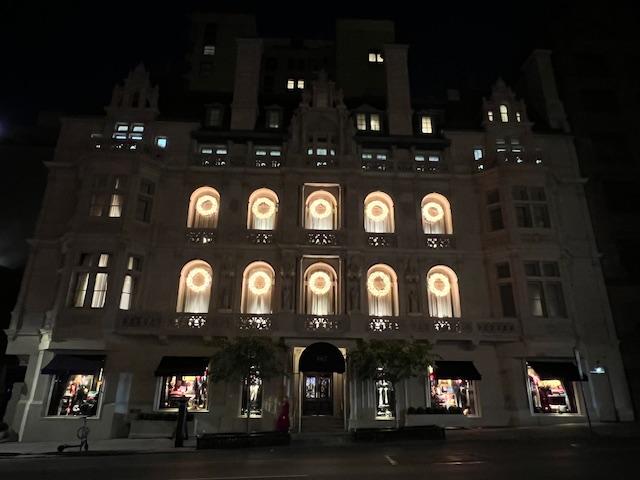

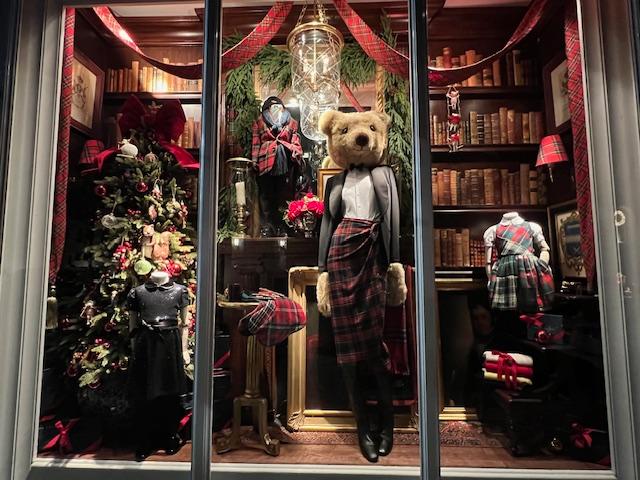
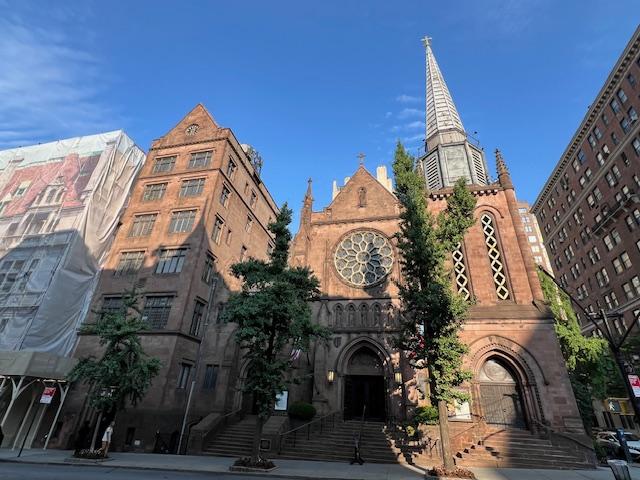

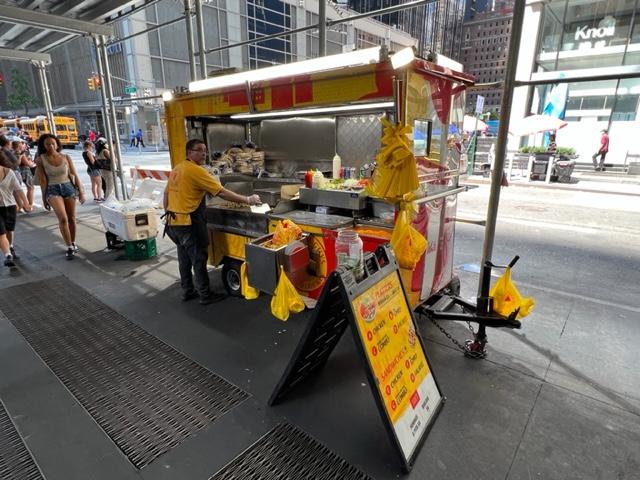





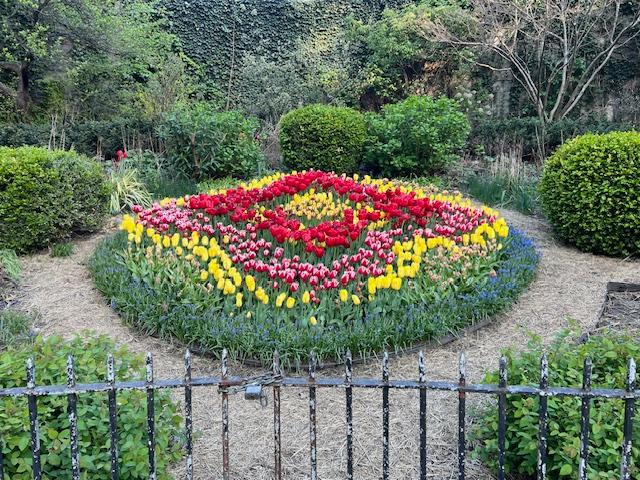
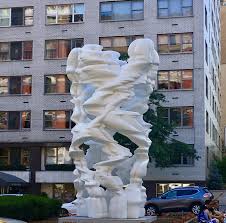


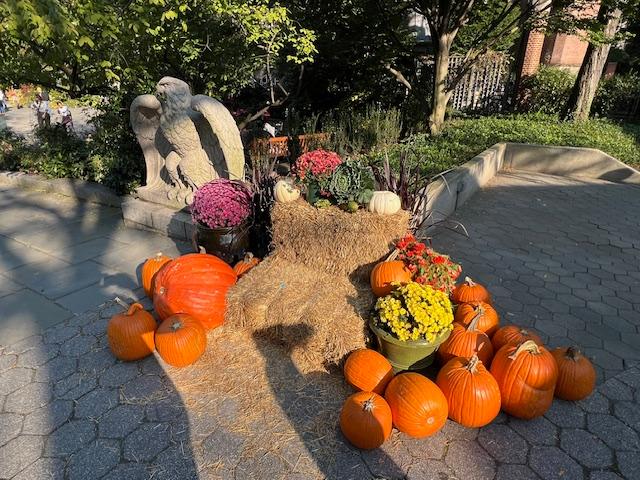


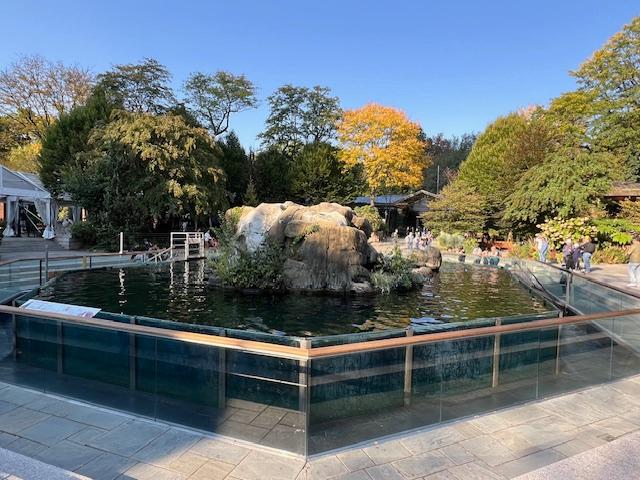


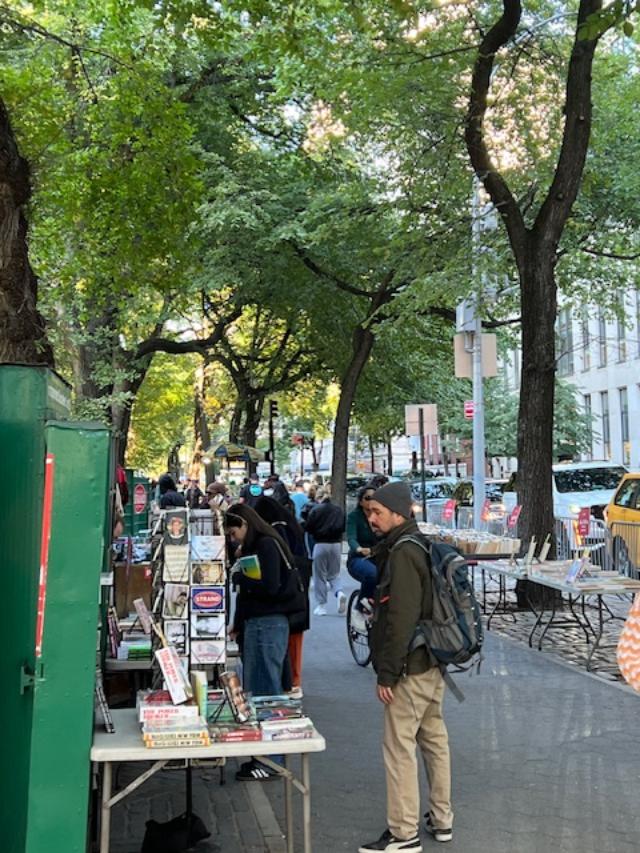
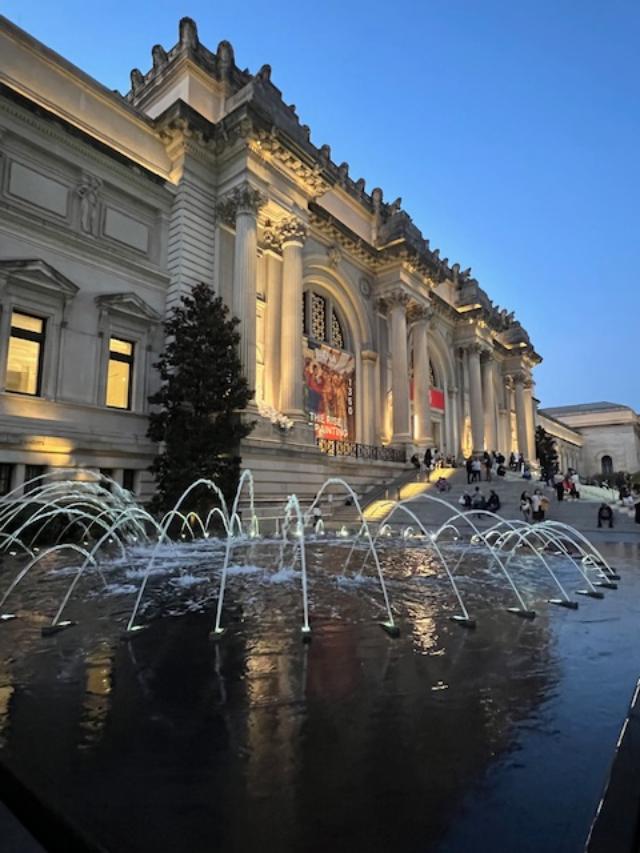
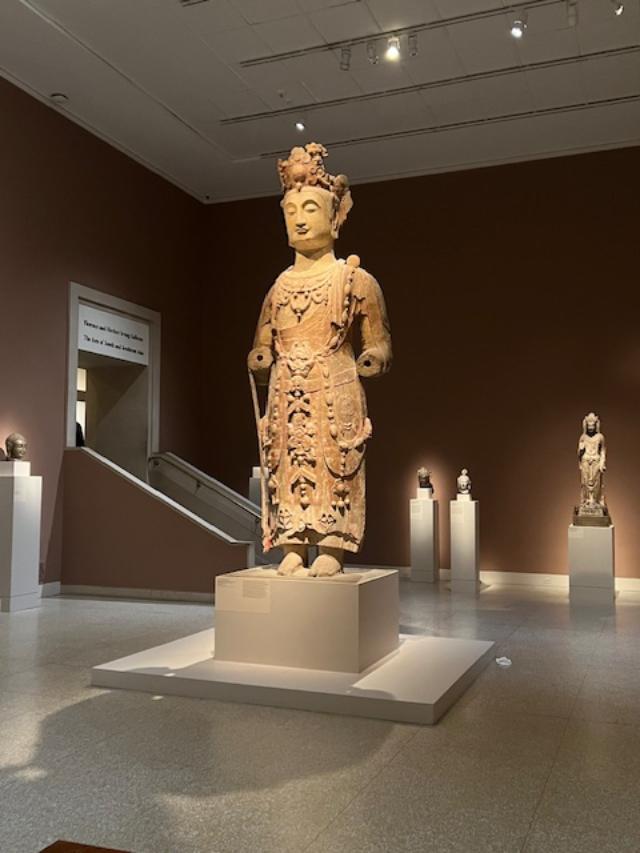
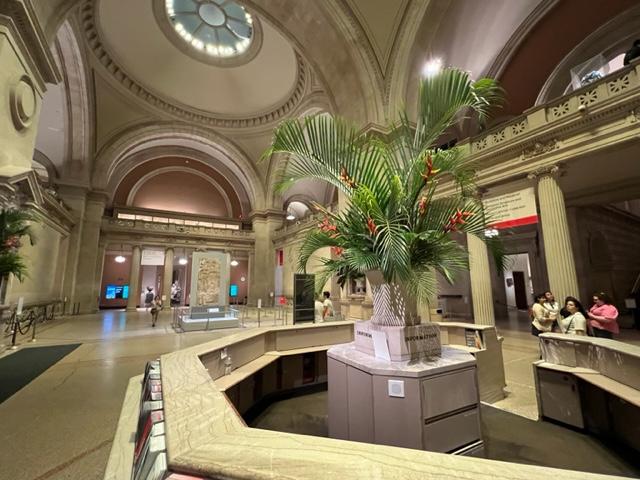
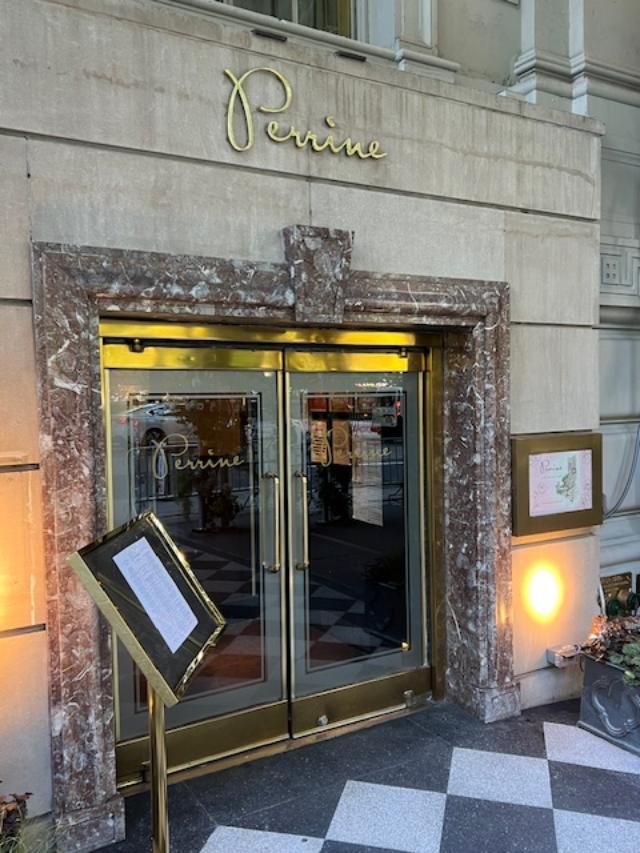


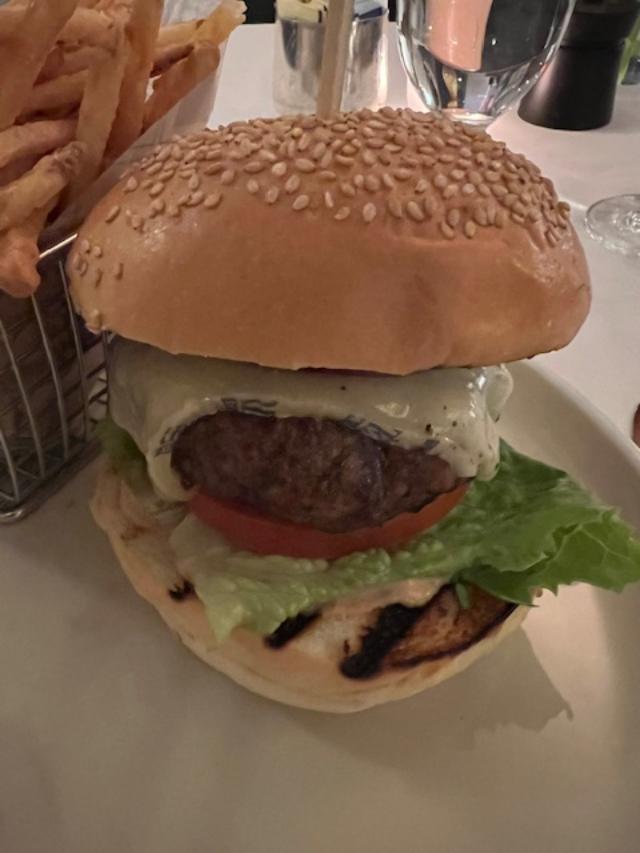

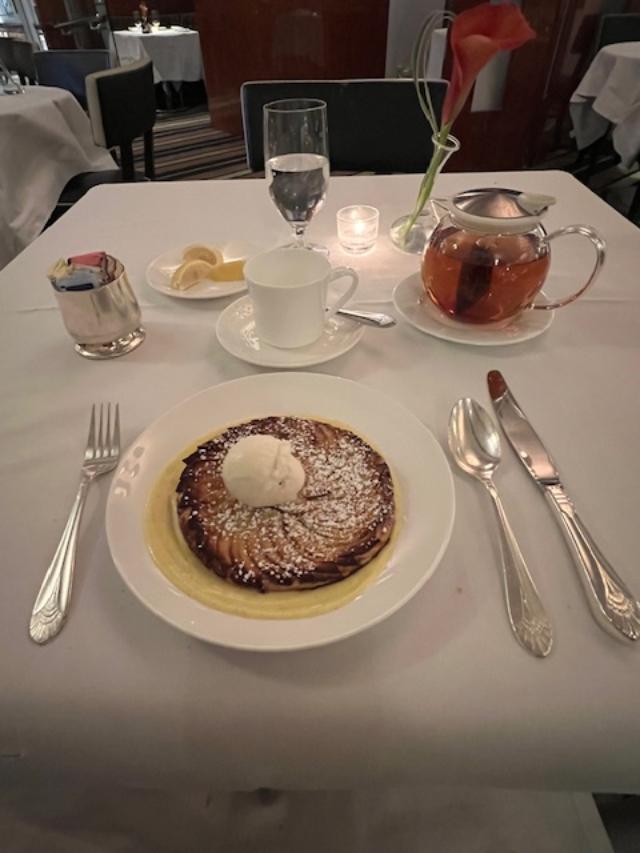
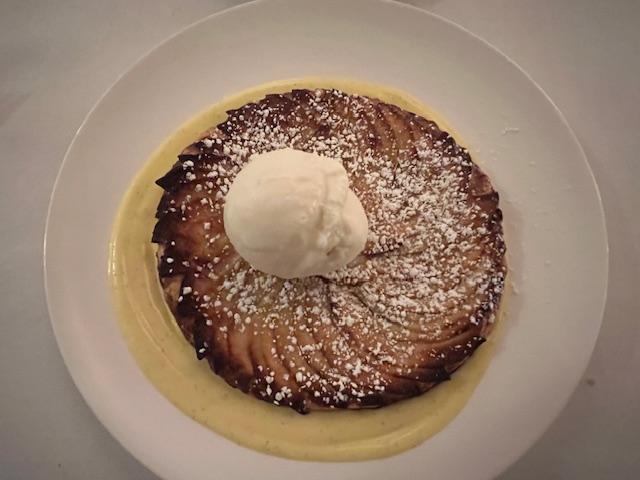


 mywalkinmanhattan