
The Goodie Girl logo

The delicious cookies from Goodie Girl Bakery

The Goodie Girl logo
The delicious cookies from Goodie Girl Bakery

It was another hot day in Manhattan. I worked a double shift at the Soup Kitchen so I was there until 3:00pm. The weather was a lot cooler since the rain showers but still hot. It was a lot better to walk around though.
I started my walk on Fifth Avenue and East 19th Street across from the old Arnold Constable Department store building. In comparison to the newer store across from the New York Public Library on Fifth and East 42nd Street, this store was four times the size. I had read online that not only was it the main store at the time but the warehouse, wholesale location and where some of the manufacturing took place. This building that stretches from Fifth Avenue to Broadway and was built in three stages over the late 1800’s.
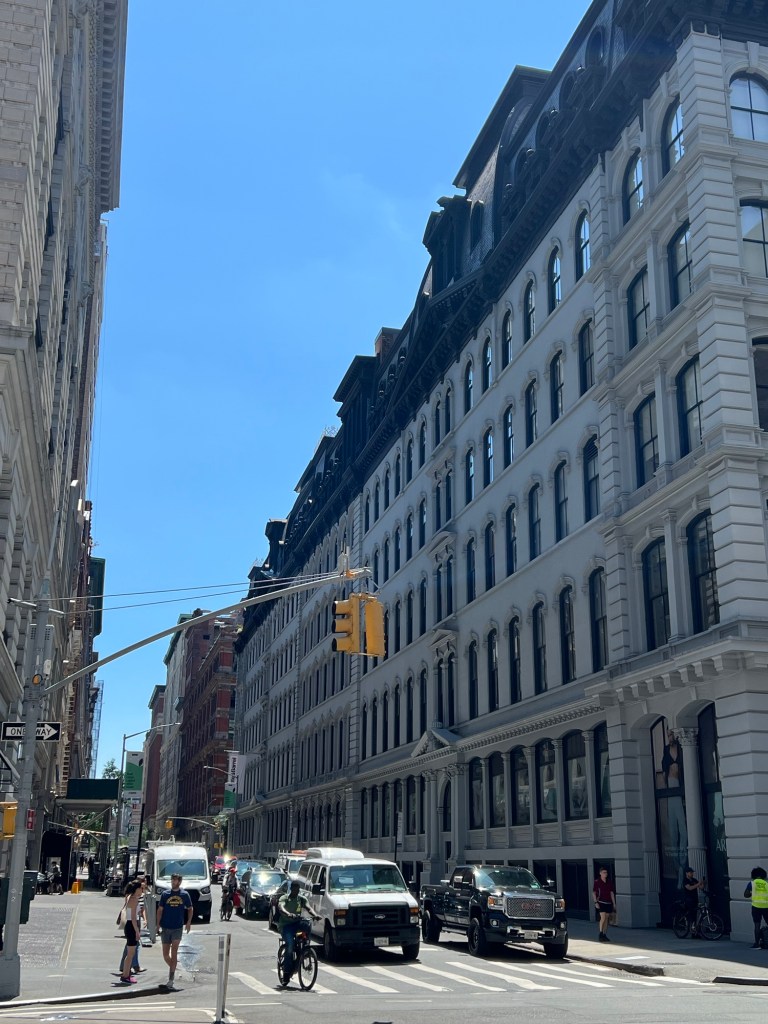
The former Arnold Constable building at Fifth Avenue and East 19th Street
When I crossed Broadway, it was the ABC store, the former store that dominates between Broadway and 19th Street, the old main shopping district from the pre-Civil War era. After the Civil War, it would move to 23rd Street. This was the former W. & J. Sloane’s Furniture store.
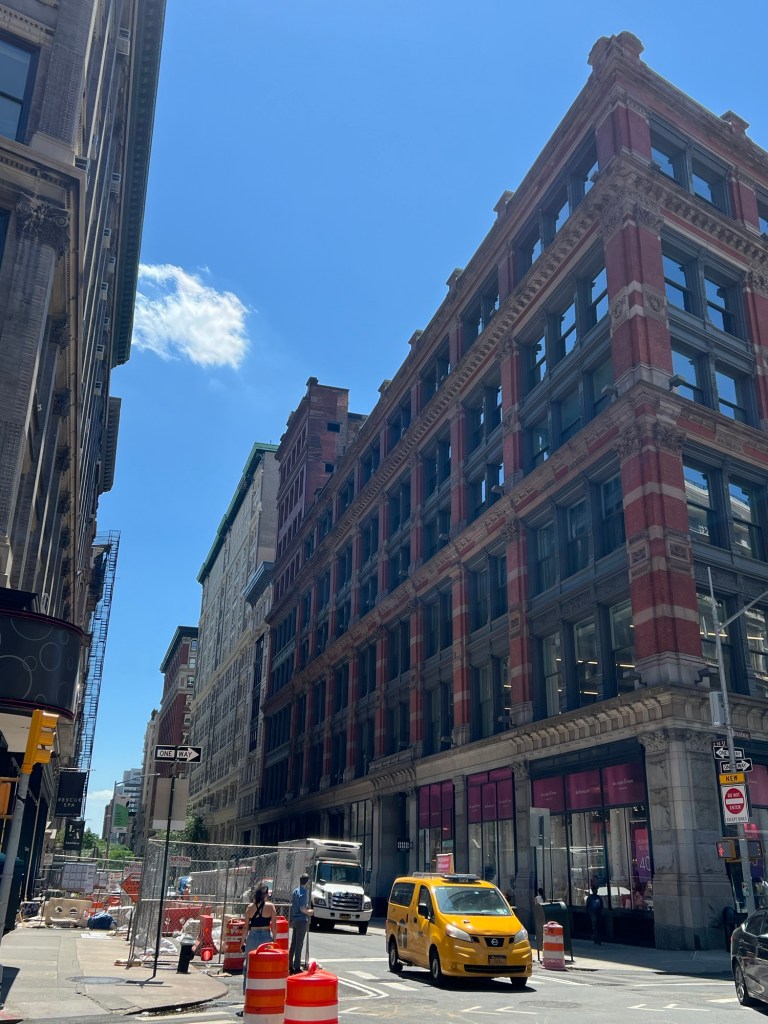
The ABC Store, the former at Broadway and East 19th Street
https://abchome.com/?srsltid=AfmBOoqf4tgHjk9A7XL6PkjC2EezcOdKtzgtokdHaDH4uRbv-5pFkEJq
When I walked further down East 19th Street to Park Avenue South, I came across the new location for the Union Square Cafe at 101 East 19th Street a restaurant I had eaten at many times in the old location since the 1990’s.
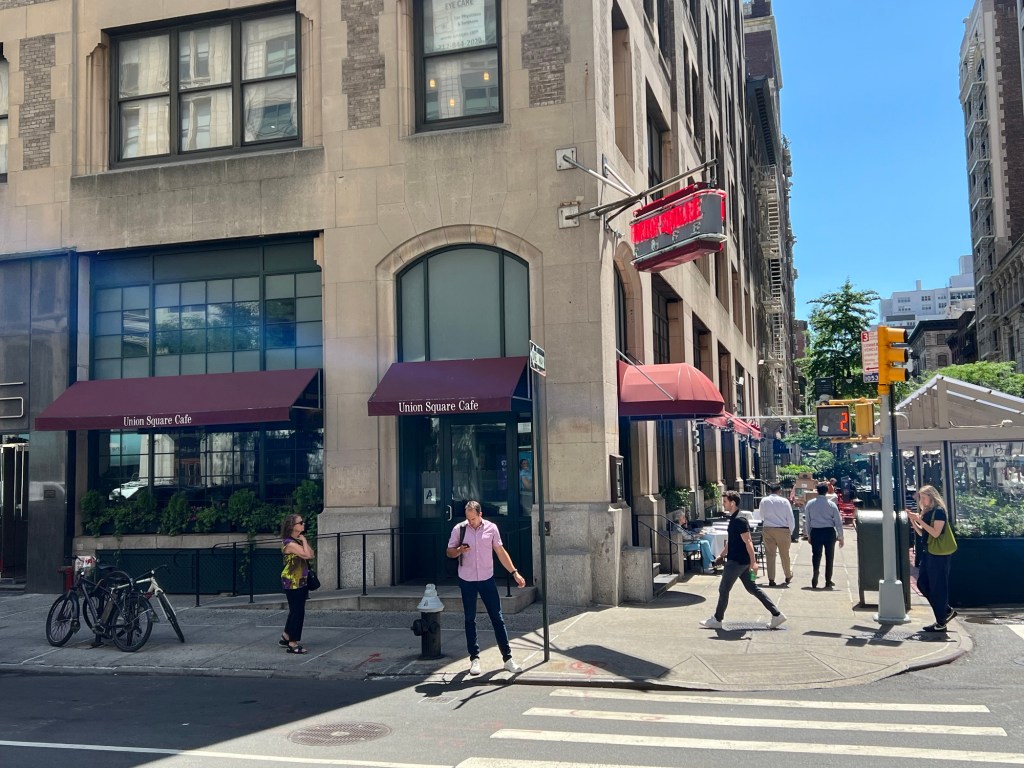
The new Union Square Cafe at 101 East 19th Street
https://www.unionsquarecafe.com/
My review on TripAdvisor:
I stopped and took a look at the menu. It wasn’t the innovative menu that I remember from past trips to the old restaurant. They had the standard dishes that I had seen before. It looked like they were keeping it safe in post-COVID but I did note that the restaurant has gotten very expensive.
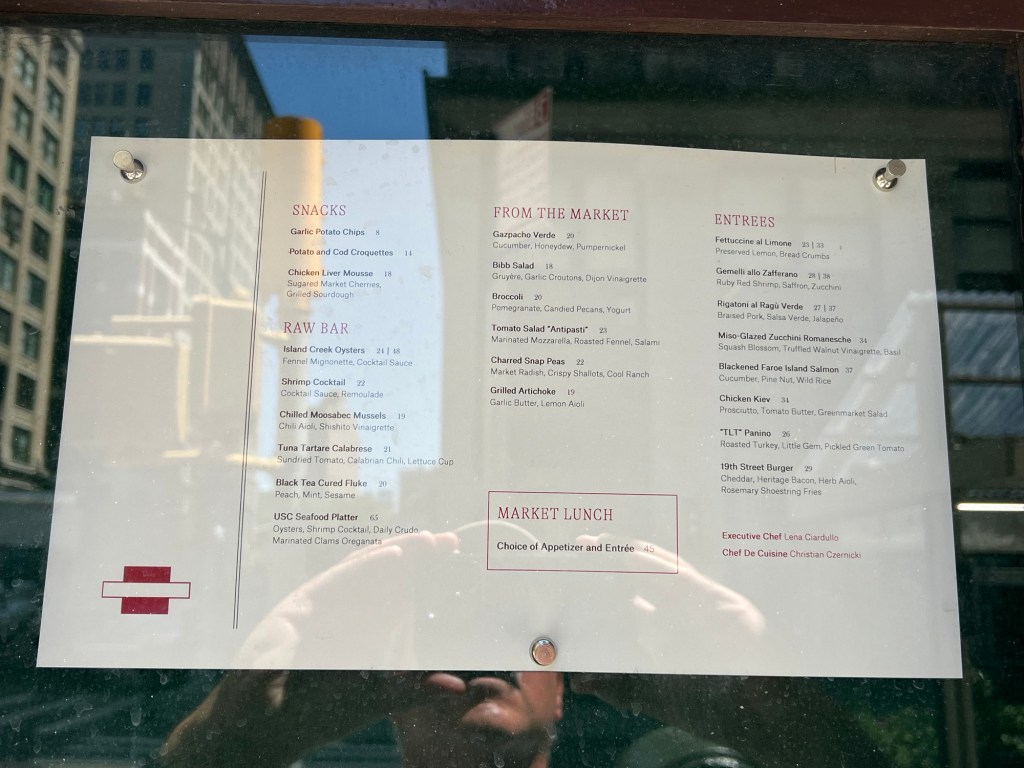
The new menu is expensive
https://www.unionsquarecafe.com/menu/dinner-menu/
The one thing I did like about the restaurant is that it had the most amazing outdoor seating. On a nice day this is the perfect restaurant to eat outside. The view of the quiet street and the historical buildings is a nice backdrop to the restaurant.
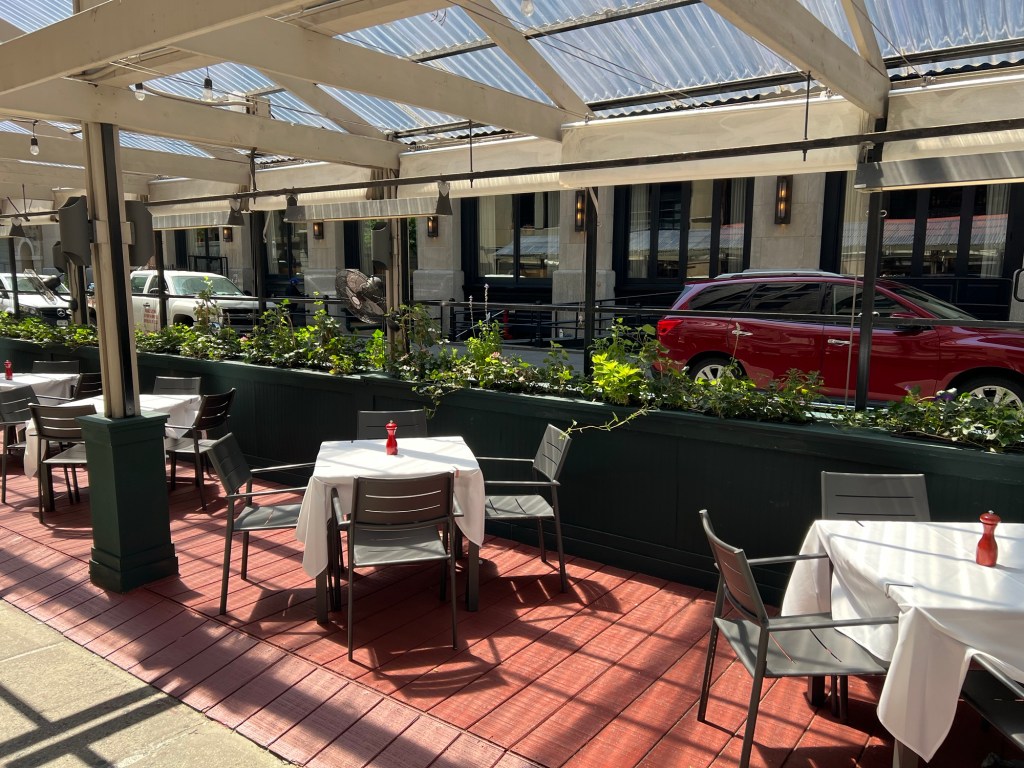
The outdoor cafe on this bright, sunny day
I had remembered the Union Square Cafe in the old location and the vibe was not the same here. It was like they wanted to cater to a hipper younger crowd instead of the older traditional crowd that they had before as customers. I continued walking down the street.
As you get closer to Irving Place, it starts to get more residential. Some of the homes are really beautiful. The residents have really done a nice job with their flower boxes and outdoor gardens in the neighborhood.
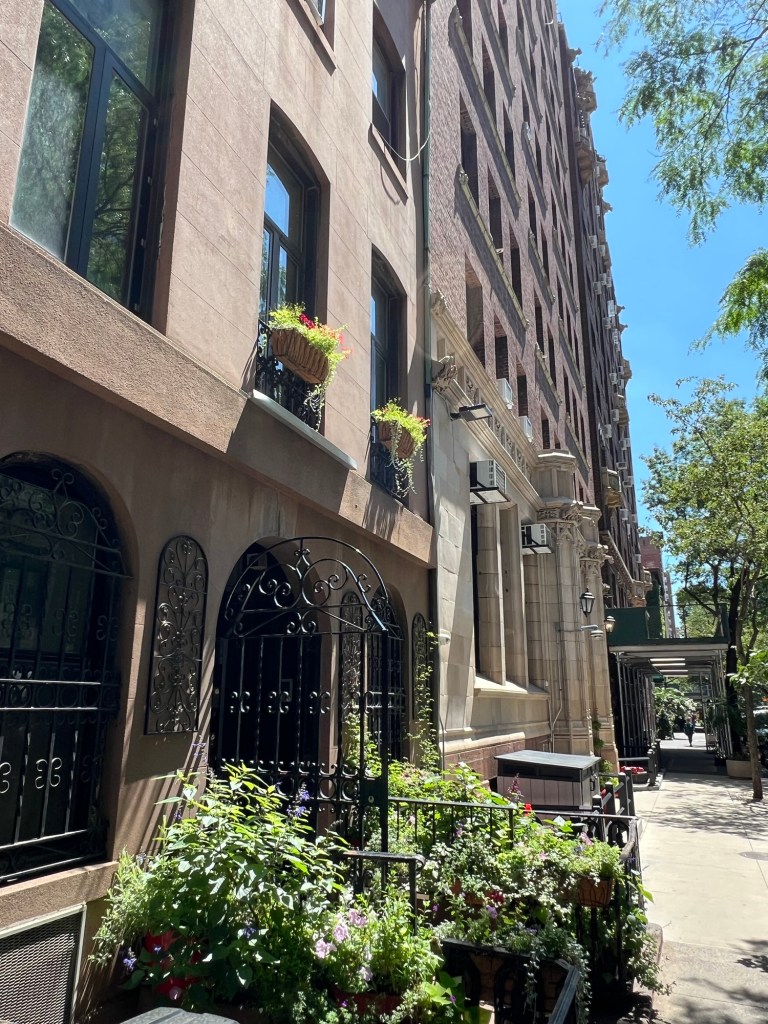
The homes closer to Irving Place on East 19th Street
I reached Irving Place and was confronted with the embellishments I had admired at 81 Irving Place. They were just so unusual and ghoulish. I think this is one of the more unique buildings in the neighborhood.
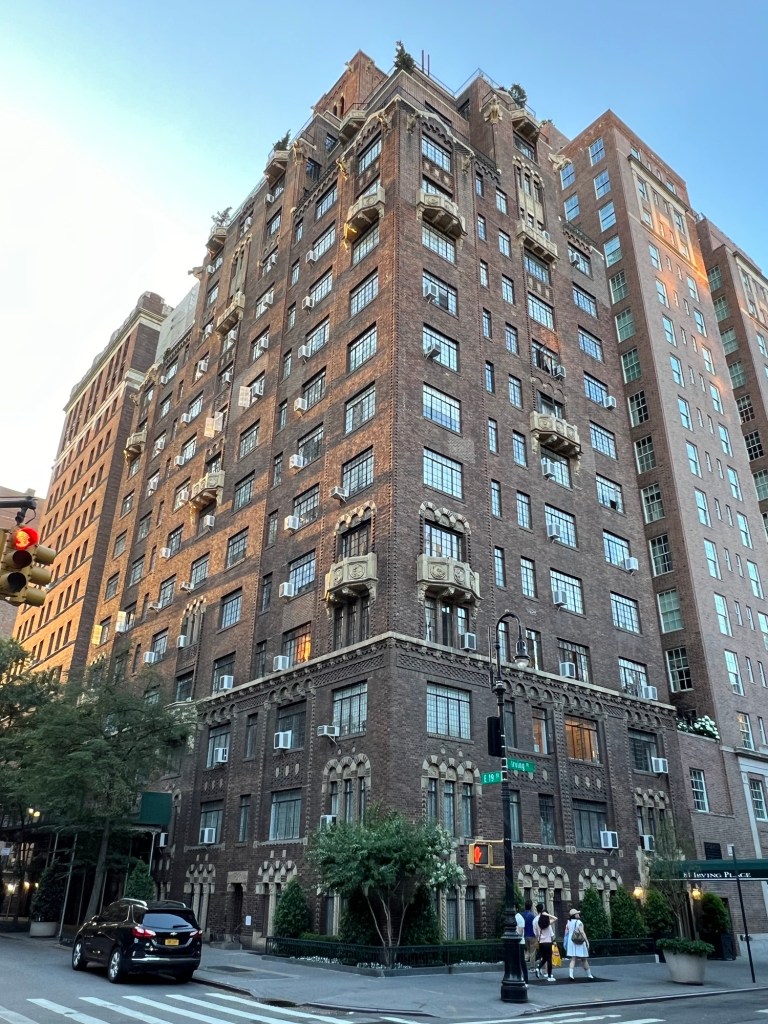
81 Irving Place in all its glory
https://streeteasy.com/building/81-irving-place-new_york
https://www.apartments.com/81-irving-pl-new-york-ny-unit-8a/5q6z3mp/
81 Irving Place is one of the most beautiful apartment complexes in the city that I have come across. The embellishments along the building are some of most detailed and elegant I have seen. This prewar Co-Op was built in 1929. You have to walk around the building to appreciate it and from the street level you can see all these wonderful details.

The strange creatures
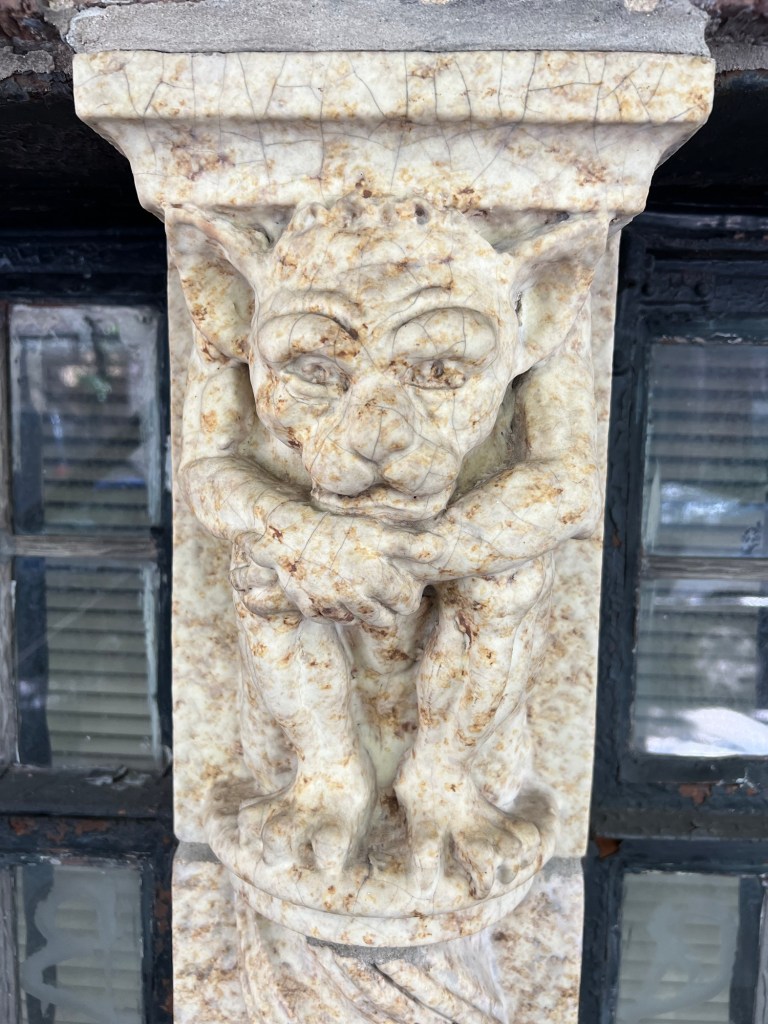
Surround this building

On all sides of it
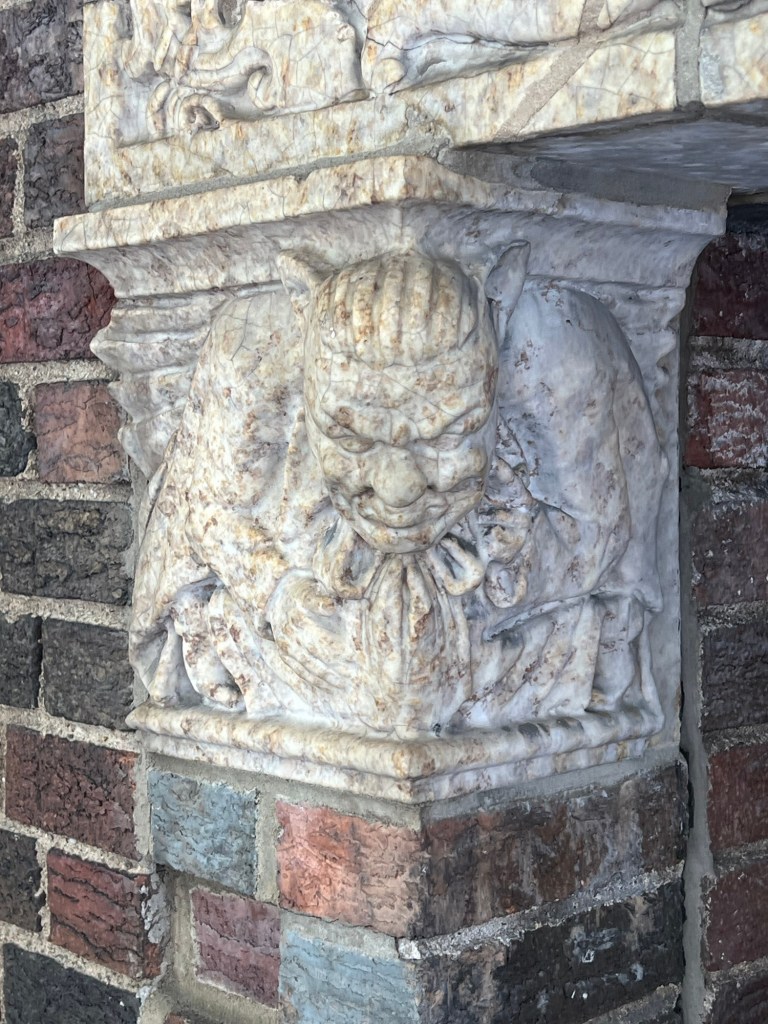
They stare at you

Welcoming you to the building
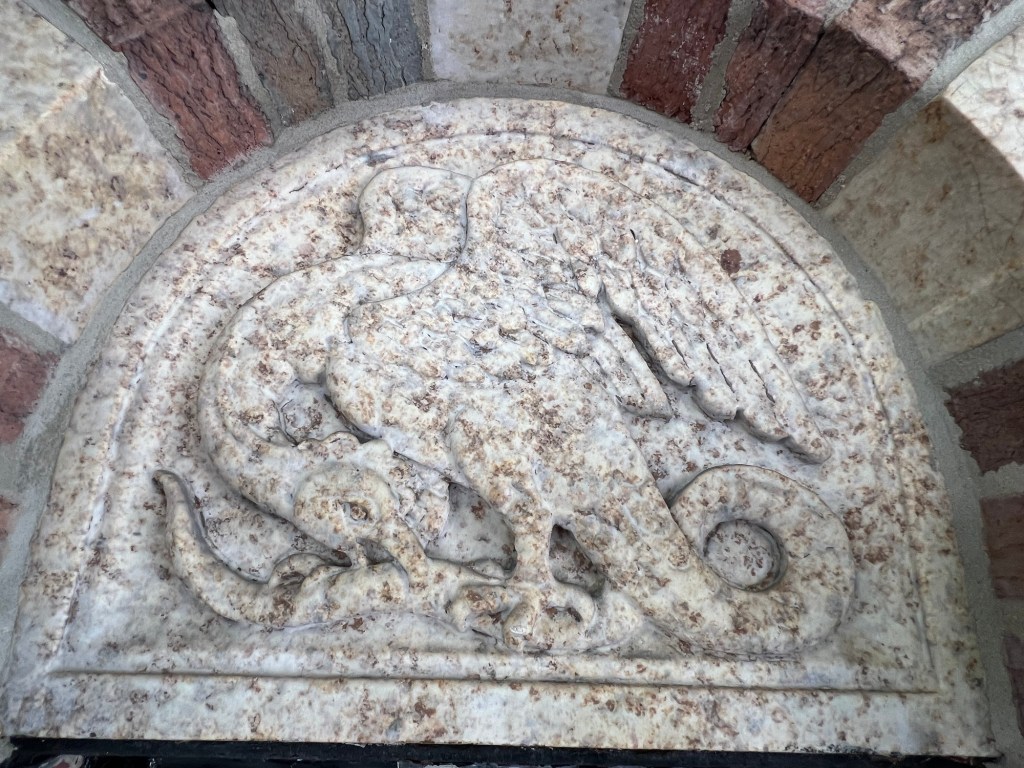
Protecting you
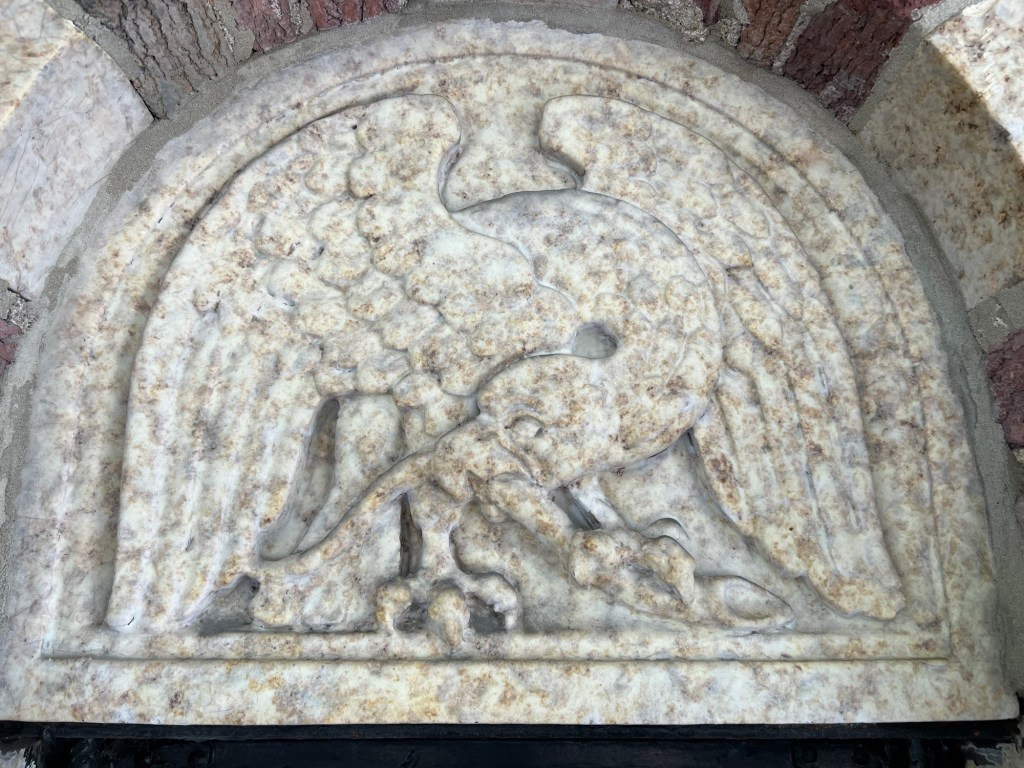
Staring at you
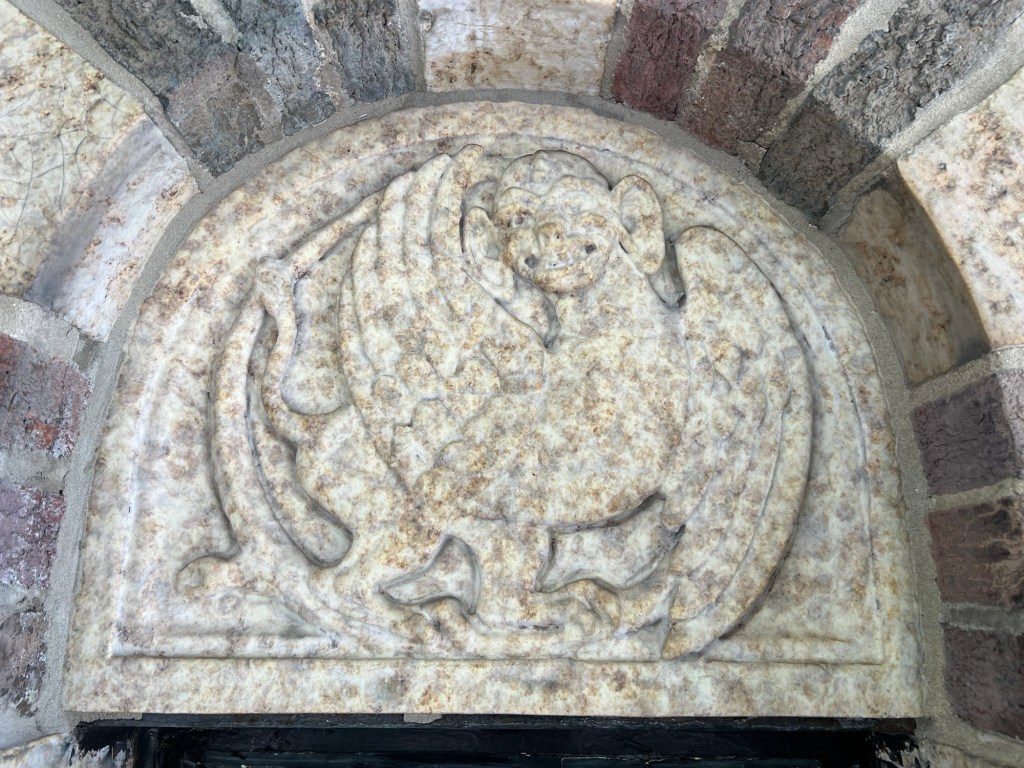
Welcoming you home

Happy to see you

The faces great you with strange looks
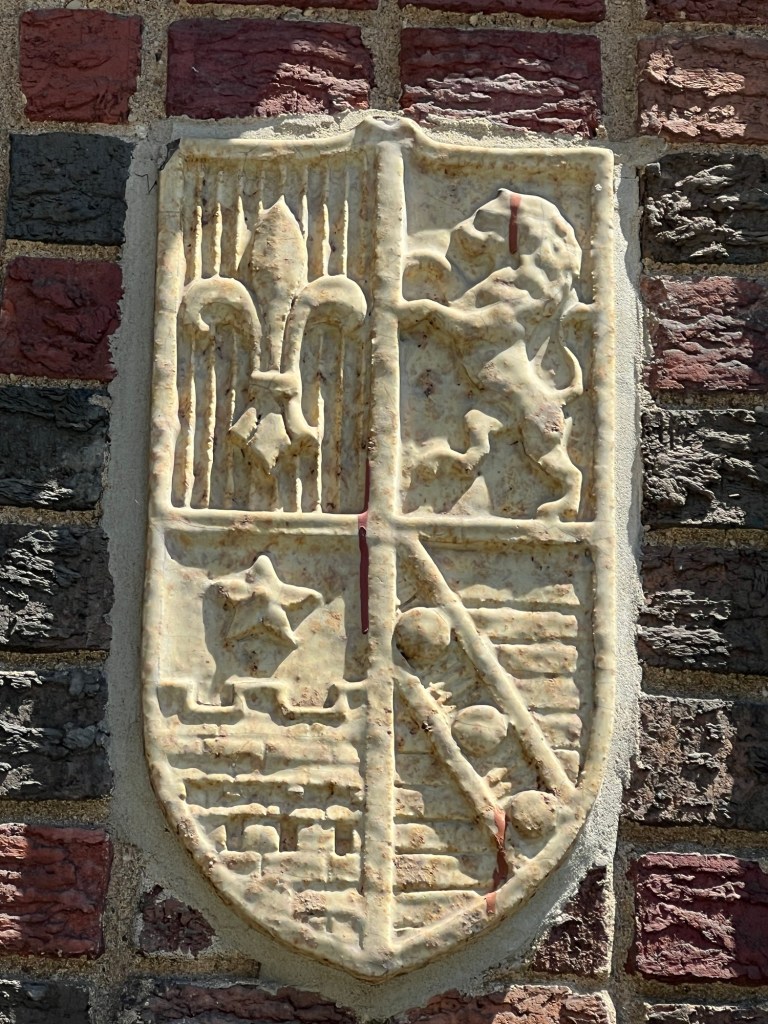
Coat of Arms

Coat of Arms

Coat of Arms
I had not noticed all of this when I had walked the borders of the neighborhood. I just saw all these detail from a distance. When you walk along East 19th Street, you see all designs in one long shot. I thought whoever created this building had a sense of humor. When I turned around on this corner, you really can enjoy the beauty of the building.
Another building where I had not noticed the elegance before was 33 East 19th Street. You really have to stare up to see the details of the faces and animals.

33 East 19th Street
https://www.loopnet.com/Listing/33-W-19th-St-New-York-NY/4429643/
This former office building was built in 1920 and have been converted to loft apartments.
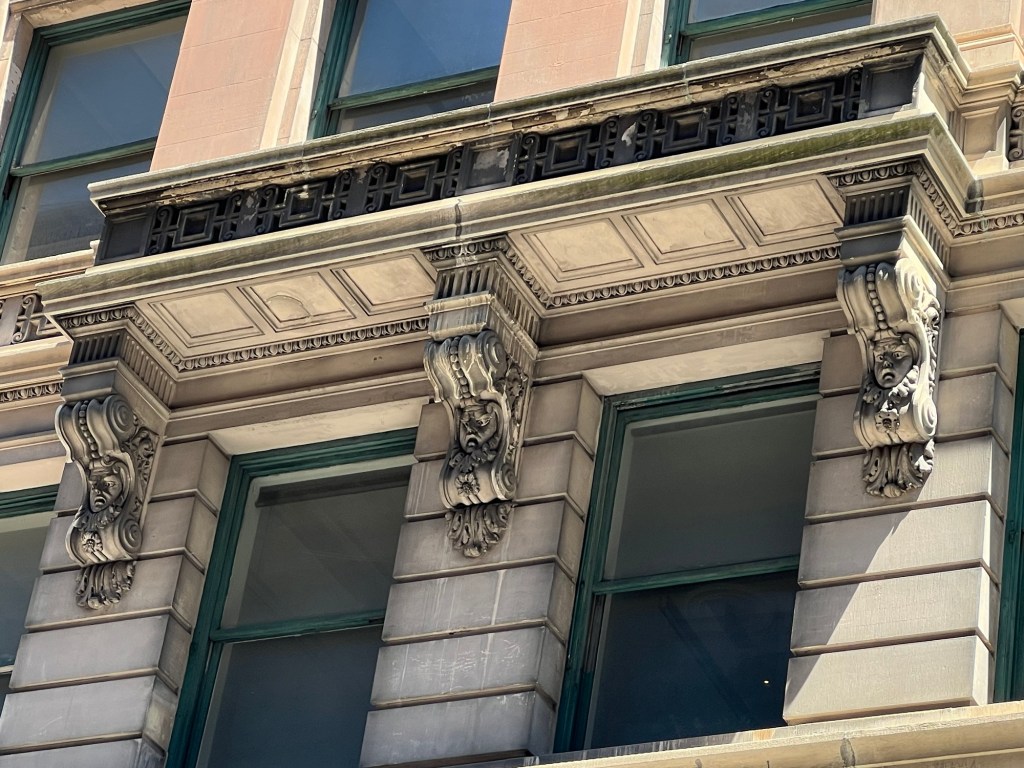
The faces greeting from the top of the building so you have to look up to look back

The strange stares you get from the building are almost a judgement call
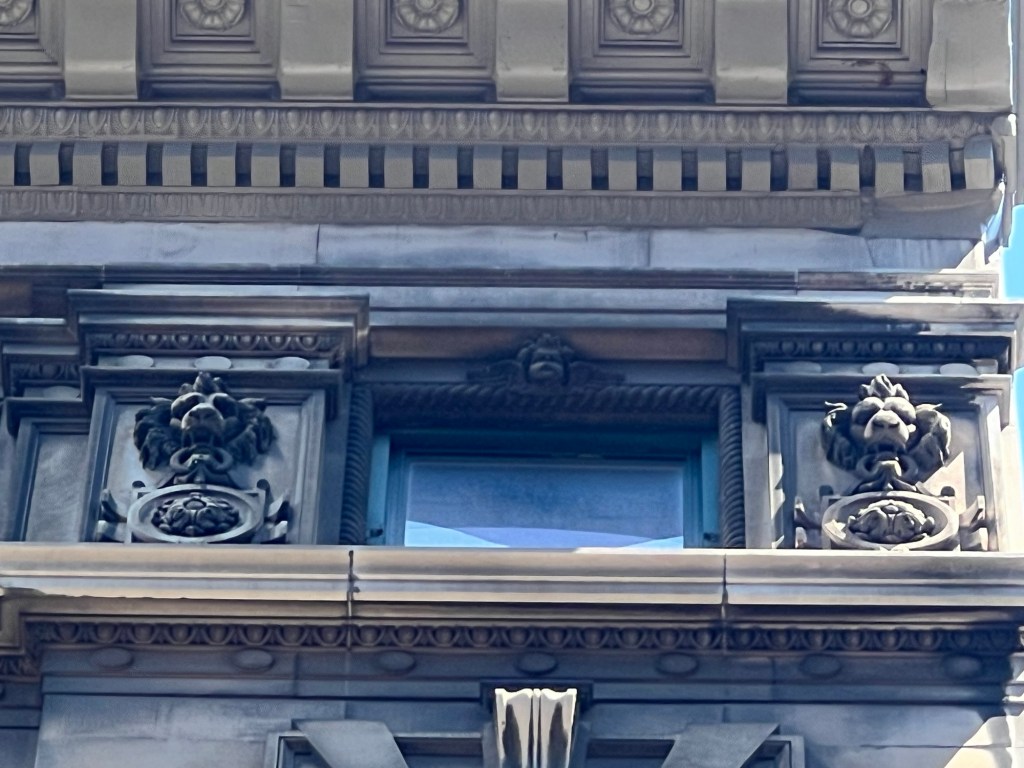
The lions protecting the building from the top
As I walked past Broadway, I passed 889 Broadway, which I had passed many times before. Just like other buildings on this street, there are more details on the street level rather than on the main avenues.
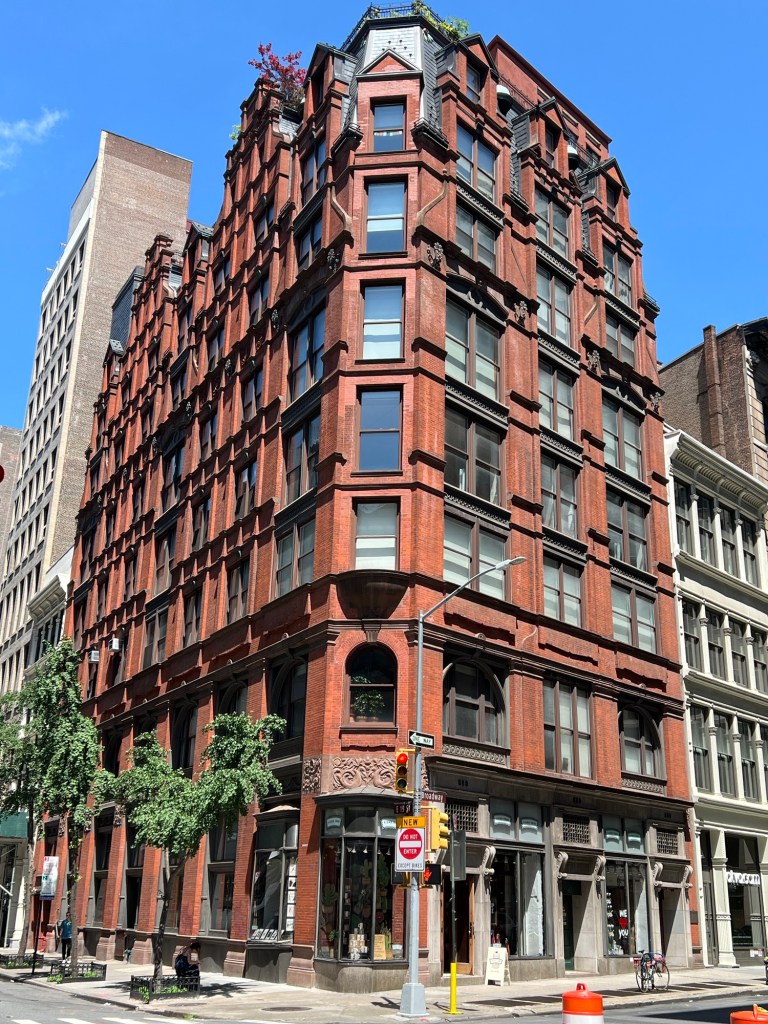
889 Broadway-The former Gorham Manufacturing Company Building
https://en.wikipedia.org/wiki/889_Broadway
The beauty of 889 Broadway can be seen on all sides but you have to look at every angle of the building to appreciate it. There is all sorts of masonry and iron work around the building that gives it unique look. The building was designed by architect Edward Hale Kendall in the Queen Ann style and finished in 1884. The company moved uptown in 1905 when the retail district started to move further north (Wiki).
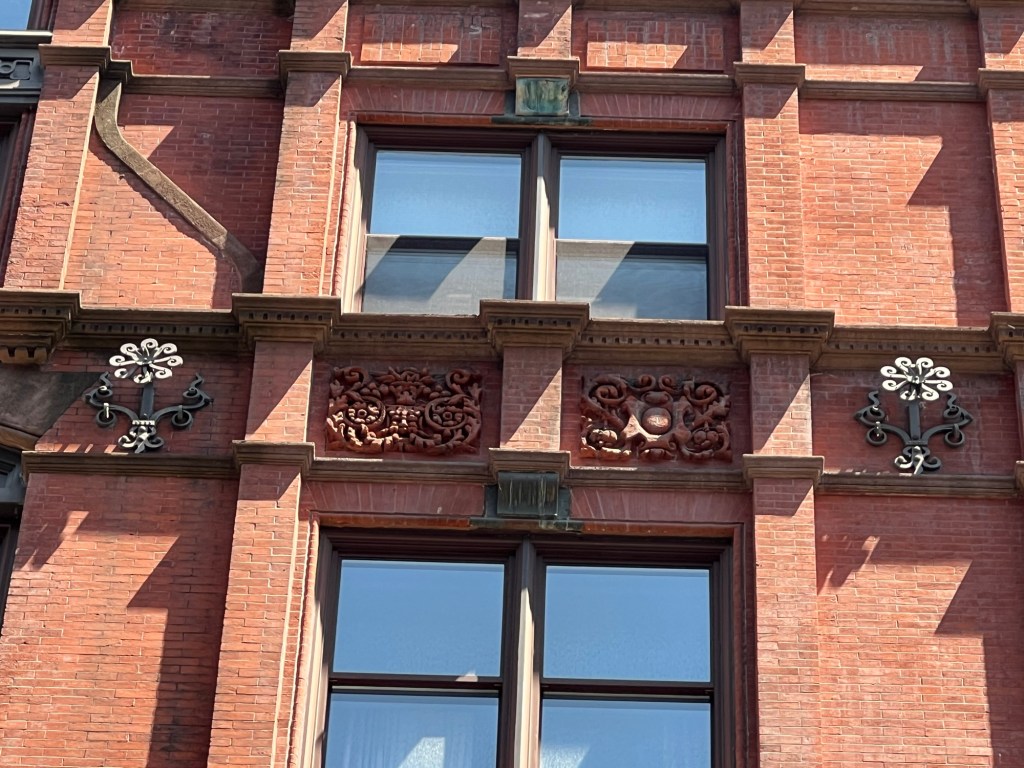
The unique carvings and metal work on the building

More faces watching you on the street making judgement calls

119 Fifth Avenue
https://www.propertyshark.com/mason/Property/13021/119-5-Ave-New-York-NY-10003/
https://streeteasy.com/building/119-5th-avenue-new_york
119 Fifth Avenue at the corner of East 19th Street in the Flatiron District neighborhood of Manhattan, New York City was built in 1905-06 and was designed by John H. Duncan in the neo-Renaissance style. It was built to be an annex to the Lord & Taylor department store buildings which took up most of the square block between Broadway and Fifth Avenue and East 19th and 20th Streets, being connected by bridge to two of them. After Lord & Taylor moved uptown in 1914, the building had multiple uses (Wiki).
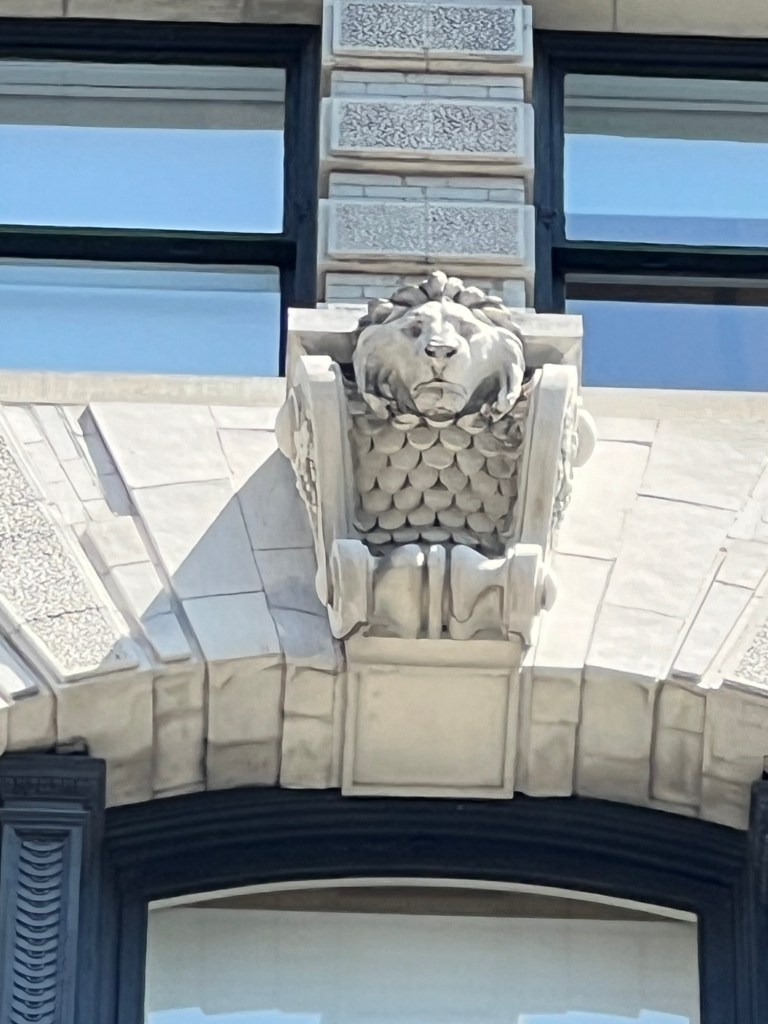
The lion watching over you

The stonework at the top of building
This section of Fifth Avenue was meant to impress when this was the financial and retail center of Manhattan. The buildings were designed in the Neo-Classical and Beaux Arts style sowing the importance of the companies who created them, who are that point long gone. This area had been the center of business before and after the Civil War.
I then rounded the Fifth Avenue business core and walked down East 18th Street and came across one of the most beautifully designed firehouses I have ever seen in the City, Engine 14. In all my times walking around Manhattan, I don’t think I have ever walked down this street before because I never noticed this.

Engine 14 at East 18th Street was under renovation but it’s 1894 facade peeked out
https://nyfd.com/manhattan_engines/engine_14.html
https://sideways.nyc/discover/4QoKRmk3SMVH6oAvWq68ef/engine-co-14
The building is currently under renovation. Engine Co. 14 was erected in 1895 by architect Napoleon LeBrun, who designed this in the Beaux Arts design. This style is typical of the earliest New York City firehouses (Manhattan Sideways).
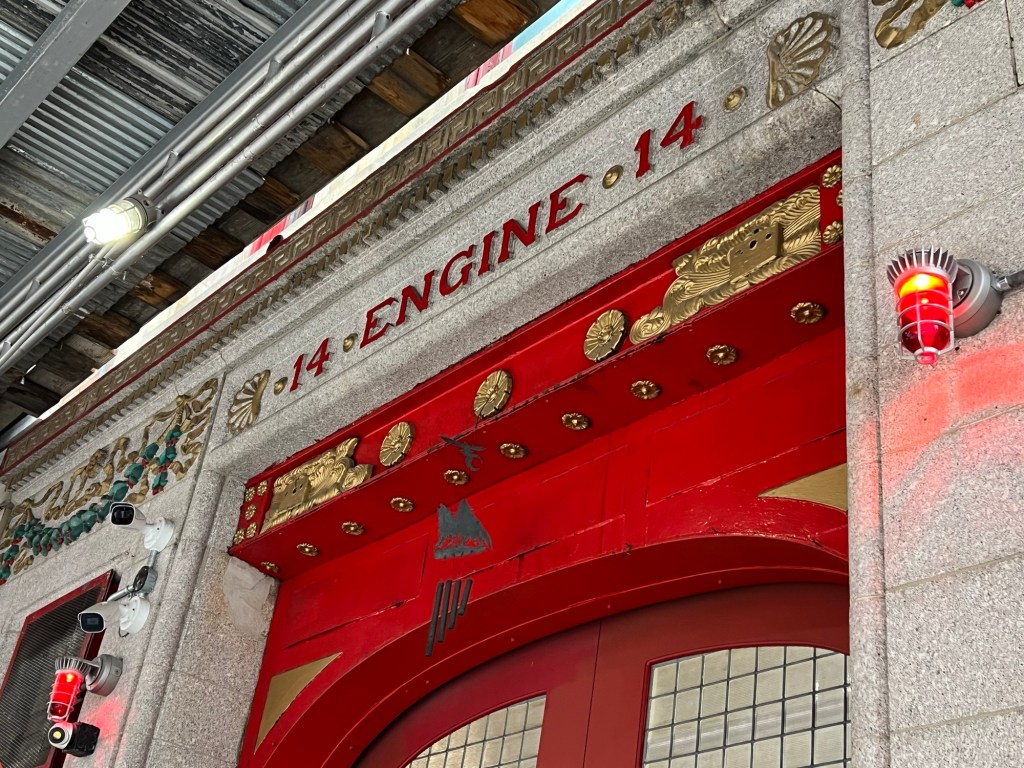
This was under the scaffolding
I turned the corner at East 17th Street and most of these buildings have a historic value to them and I was surprised by the collection of retailers on this block. I thought it would be a bit more upscale. I looked up at 16 East 17th Street and thought I heard the roar of a lion.

16 East 17th Street
https://www.corcoran.com/building/flatiron/303
https://www.bondnewyork.com/union-square/coop/16-east-17th-street-8-floor/1498324
The former office building was designed by William Dilthey and built in 1898. It had originally had been a button factory. It was converted to a Coop in 1979 (Corcoran.com/Bondnewyork.com).
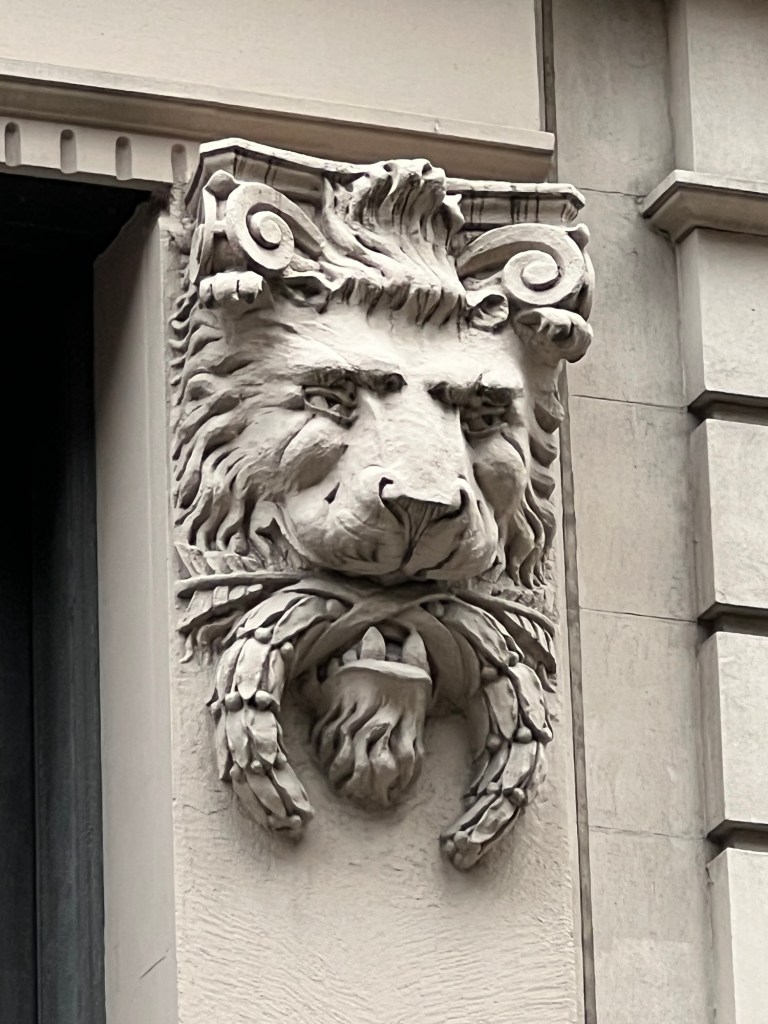
The lions protect you as you enter the building.
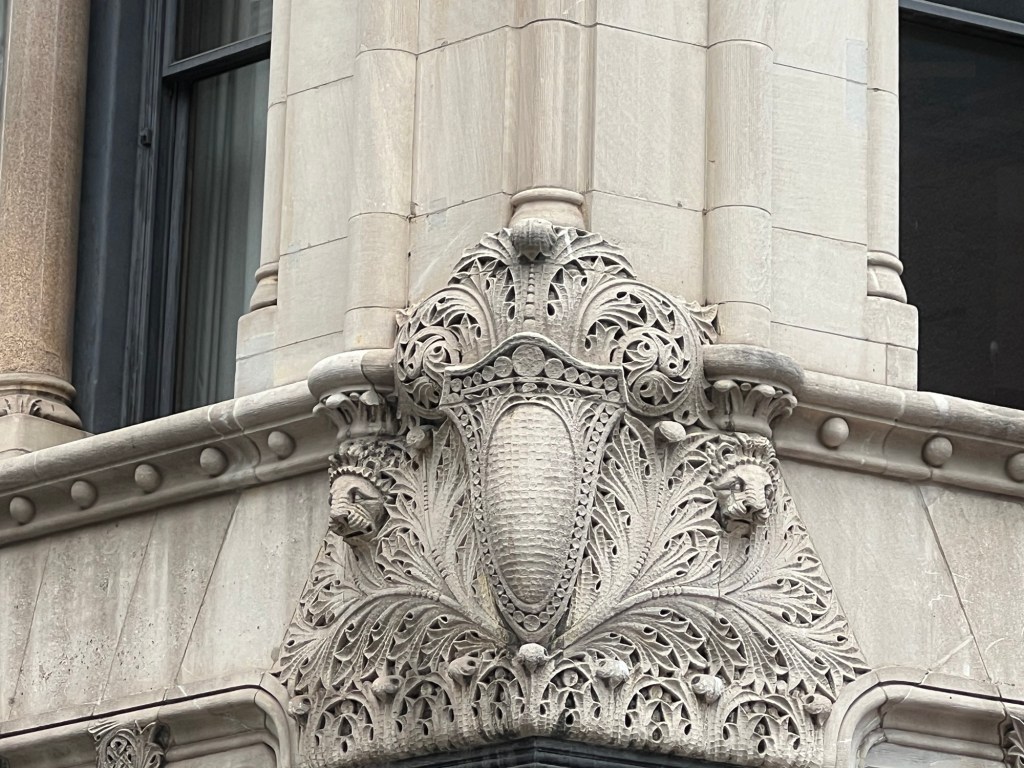
When I was walking back down East 17th Street I had not noticed this beautiful carving on 874 Broadway. This is on the corner of the McIntrye Building.

874 Broadway-The former McIntyre Building
https://daytoninmanhattan.blogspot.com/2010/07/1892-mcintyre-building-finials-snakes.html
https://www.cityrealty.com/nyc/flatiron-union-square/the-macintyre-874-broadway/6892
https://streeteasy.com/building/874-broadway-new_york
The McIntyre Building was the work of Ewen McIntrye, a pharmacist whose building had grown and had made him wealthy. He demolished the store he had on this spot and built this office building. The structure was designed by architect Robert Henry Robertson in a mixture of designs of the time. You can see Gothic Revival and Renaissance Revival and Victorian Eclectic in the design especially at the top of the building (DaytoninManhattan.com).
When I got to East 17th Street, I really got an excellent view of the northern part of Union Square Park. This is where you can see the real changes of the park. It is so lively and residents and business people use it as a place to unwind and relax.
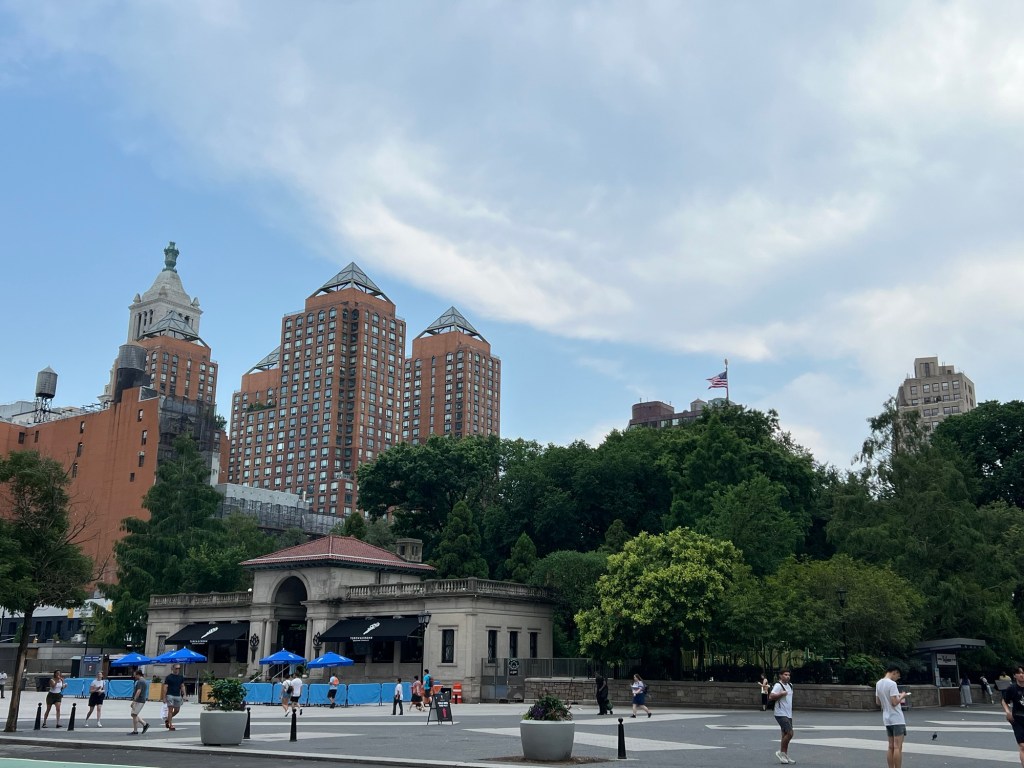
The northern section of Union Square Park
Facing the northern section Union Square Park is 33 East 17th Street. I have always admired this building for its embellishments and the elegance of the design.

33 East 17th Street-The Century Building
https://en.wikipedia.org/wiki/Century_Building_(Union_Square,_Manhattan)
https://www.facebook.com/BNUnionSqNYC/
The now Barnes and Nobel Publishing was once known as the Century Building, due to Century Publishing Company making this their headquarters from 1881 to 1915. It is also known as the Drapery Building. The building was designed by architect William Schickel and was completed in 1881 as a real estate project by the department store company Arnold Constable & Company. Left empty through the 1970’s, it was renovated by Barnes and Nobel as their headquarters in 1995 (Wiki).

The doorway entrance to the store at 33 East 17th Street

This fascinating face is on the left side of the entrance to 33 East 17th Street
The look from this face shows the determination of a serious book buyer
As I passed Union Square Park, I passed the old Tammany Hall Building at 100 East 17th Street. The balance of power in New York City has changed since and it now the home of Petco Pet Products.
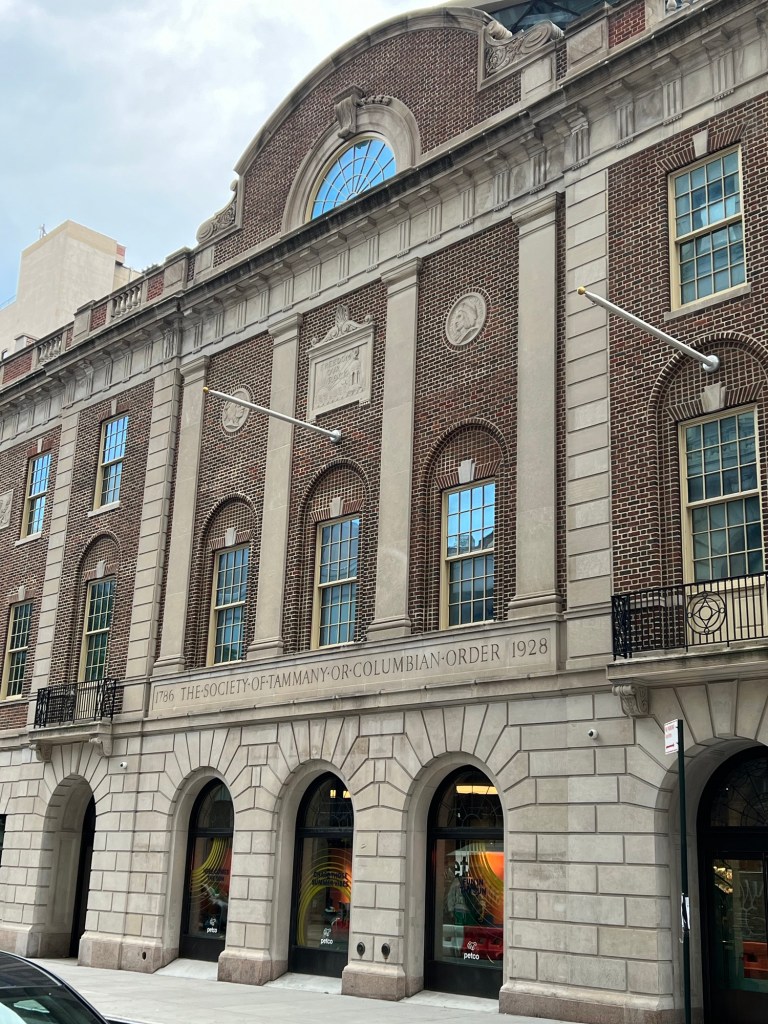
The Tammany Hall building 100 East 17th Street is now a Petco
https://en.wikipedia.org/wiki/44_Union_Square
The building was designed by the architectural firm of Thompson, Holmes & Converse and Charles B. Meyers for the Tammany Society political organization, known as Tammany Hall. It was designed in the neo-Georgian style and built in 1929. It was the organization oldest surviving headquarters building. After the loss of the organization’s political power in the early 1930’s, it was sold to the International Ladies Garment Workers Union and in present times has been used as a theater and performance space. It is now occupied by Petco (Wiki).

The symbols of Tammany Hall at the East 17th Street entrance
As I passed the commercial buildings of the neighborhood to the more residential buildings of Irving Place and passed the former carriage house at 121 East 17th Street.

The old carriage house at 121 East 17th Street-Martinys
https://daytoninmanhattan.blogspot.com/2015/10/no-121-east-17th-street.html
https://ny.eater.com/2022/4/19/23031877/martinys-japanese-cocktail-bar-opening-nyc-gramercy
Review on TripAdvisor:
This carriage house is a holdover from when Union Square was a fashionable neighborhood before the Civil War. After the war was over, the commercial neighborhood of Manhattan moved from Canal Street to between 14th to 23rd Street. This small carriage house survived all the decades of change to the neighborhood (DaytoninManhattan.com). I thought this a gracious building that added to the historical and Old New York look of the Gramercy Park neighborhood.
At the very edge of the neighborhood in Irving Place is the Washington Irving House that wasn’t his house.

The Washington Irving House that Washington Irving never lived in at 122 East 17th Street on the corner of East 17th Street and Irving Place
https://www.atlasobscura.com/places/the-irving-house-new-york-new-york
The “Irving House” was built by Peter Voorhis between 1843 and 1844, along with the adjacent two houses at 45 and 47 Irving Place. The original tenants of 49 Irving Place (at that time referred to as 122 East 17th Street) were Charles Jackson Martin, an insurance executive, and his wife, who would reside there from 1844 until 1852. Henry and Ann E. Coggill would live in it in 1853, and in 1854 it would become the home of banker Thomas Phelps and his wife Elizabeth, who would remain until 1863 (Atlasobsucra.com).
The first mention in print of Irving having lived in the house came in the Sunday Magazine Supplement of the New York Times on April 4, 1897. The article is a human interest story about Elsie de Wolfe and the means and methods she used to decorate “Irving’s house.” In 1905, de Wolfe would become known as the first professional interior decorator and it appears this article is an early attempt at publicity for her. As for the information about Irving, the article takes enormous liberties (actually, it flat-out makes things up), claiming that Irving had conceived of the house himself and was very particular about the architecture and design (Atlasobsucra.com).

Looking up Broadway to the old shopping district from East 17th Street
When I reached the border of the neighborhood at Irving Place, you could see the tradition of the old commercial and residential districts of the neighborhood. These have become blurred over time as restaurants, bars and boutiques have moved into former residential buildings.
On the way back to Union Square Park, I walked through the parks to admire all the flowers and gardens that were in full bloom and stopped to sit on a bench in the shade.
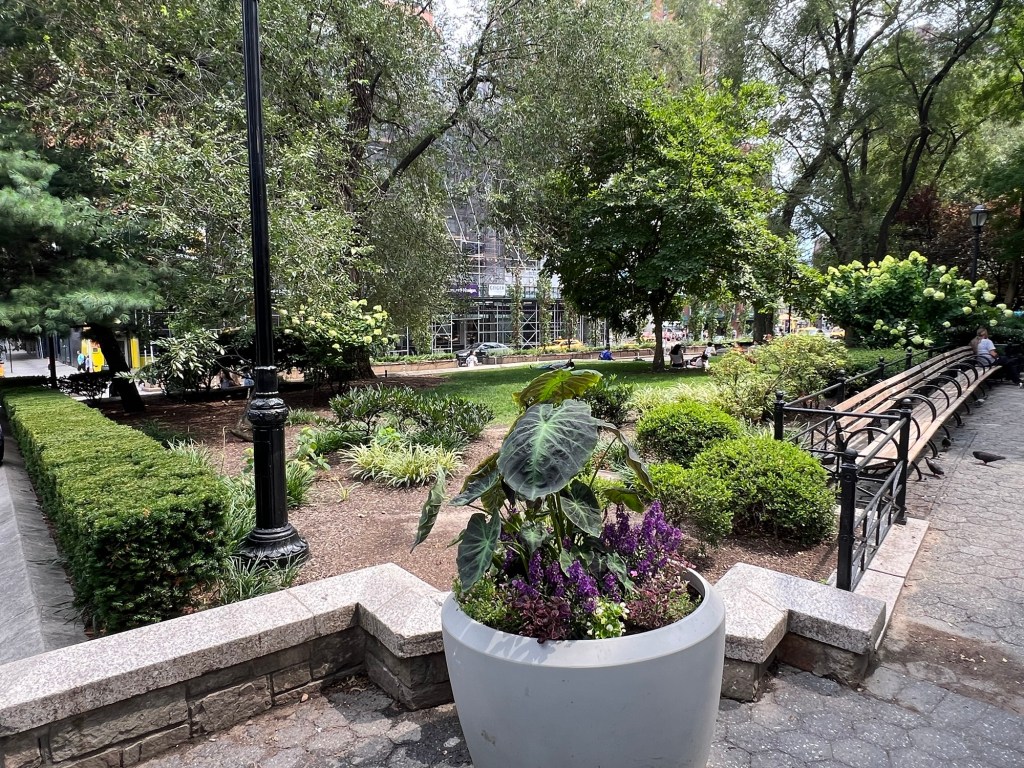
The view of Union Square Park at East 17th Street on the walk back to Fifth Avenue
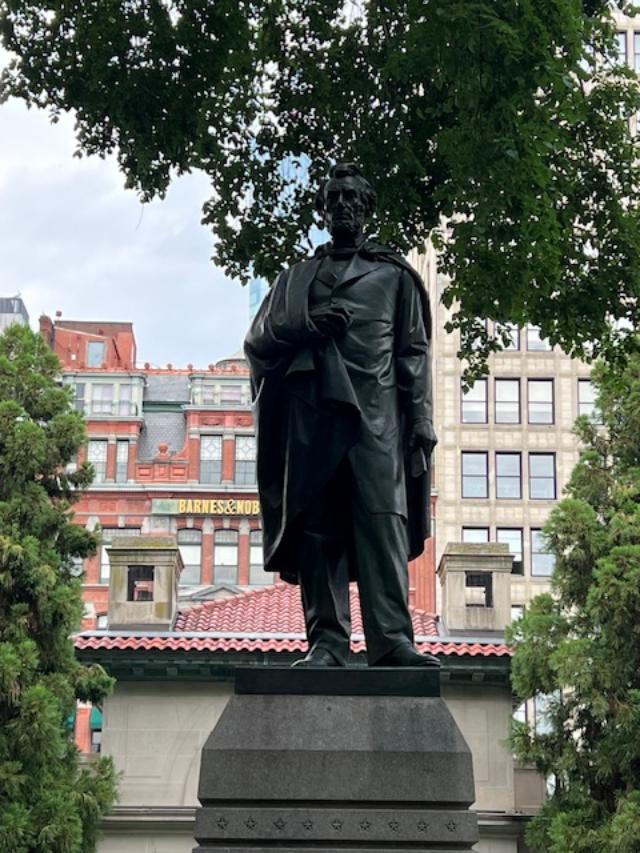
In the northern part of the park is the impressive statue of Abraham Lincoln. The one thing that I like about New Yorkers as opposed to other cities is that they look at statuary as a debate but not so quick to knock it down like in other cities. Either that or no one really noticed it at the time of the riots. These valuable art works are meant to be debated and discussed not torn down or hidden because someone does not agree with them.
Located at the northern end of the Union Square is the prominent statue of President Lincoln. This statue stands and overlooks the lawn of the park.

Abraham Lincoln
https://www.whitehouse.gov/about-the-white-house/presidents/abraham-lincoln/
https://www.nycgovparks.org/parks/union-square-park/monuments/913
This impressive statue of Abraham Lincoln was designed by sculptor Henry Kirke Brown and was dedicated in 1870. In his statue of Lincoln, cast in 1868, and dedicated September 16, 1870, he combines a classically styled pose with a perceptive naturalism, uniting realistic detail with an idealistic stance (NYCParks.org).
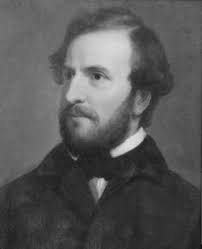
Artist Henry Kirke Brown
https://en.wikipedia.org/wiki/Henry_Kirke_Brown
Artist Henry Kirke Brown was an American born artist who had studied with artists in Italy for his training. He is best known for his figurative historical statues. He also designed the statue of George Washington in Union Square.
I started my walk down East 16th Street at the Levi Parsons Morton plaque at the corner of Fifth Avenue and East 16th Street.
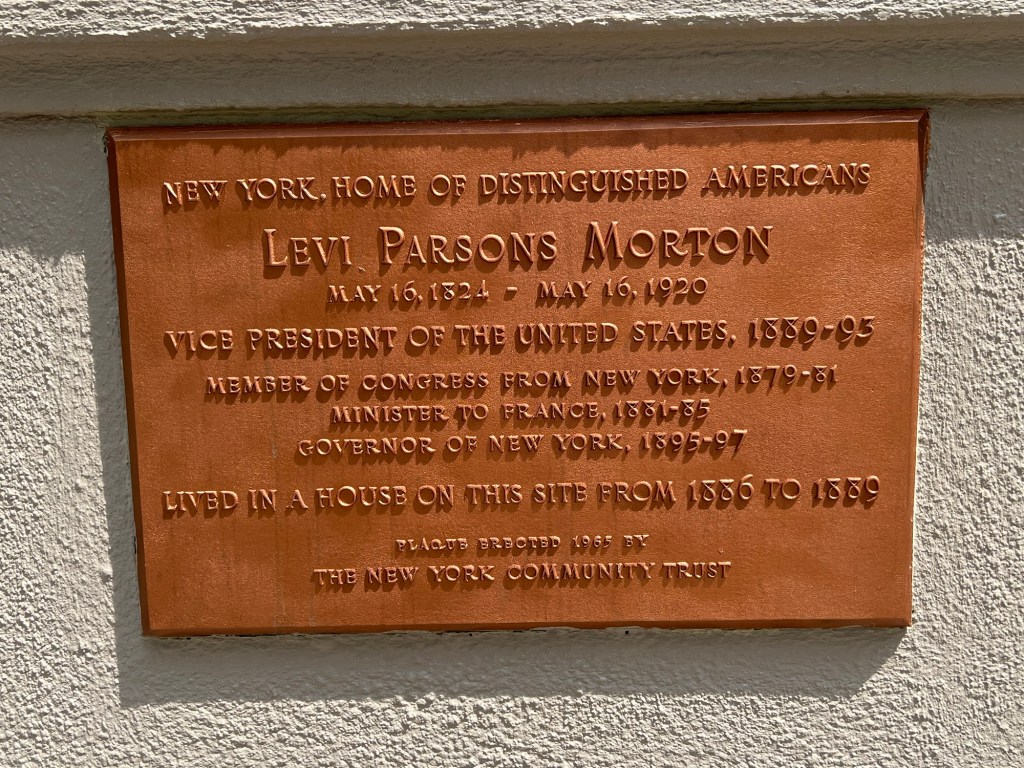
The Levi Parsons Morton historic plaque
The plaque of the former Vice-President’s home on Fifth Avenue.
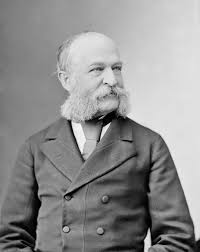
Vice-President and former New York Governor Levi Parsons Morton
https://en.wikipedia.org/wiki/Levi_P._Morton
On the building is also the B. Shackman & Company sign for a now long gone Fifth Avenue toy business.

The B. Shackman & Company sign
https://ephemeralnewyork.wordpress.com/tag/b-shackman-co/
The B. Shackman & Company sign was for the former B. Shackman & Company novelty and toy store that was located here until the 1970’s. The store once sold all sorts of novelties and gifts (Ephemeral New York.com/Consumer Grouch).
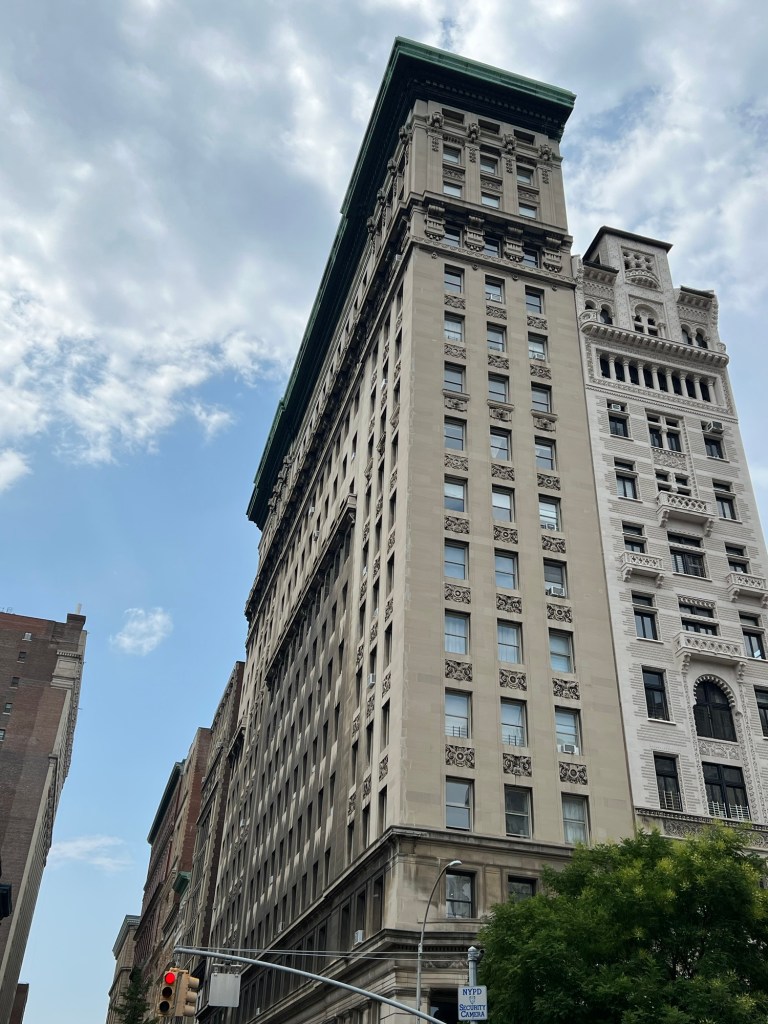
31 Union Square West
https://www.triumphproperty.com/Home/About
https://streeteasy.com/building/bank-of-the-metropolis
31 Union Square West built in 1902-03 as the Bank of the Metropolis was designed by architect Bruce Price and designated a landmark in 1988. This early skyscraper shows the influence of the American Renaissance sensibility celebrated at the Chicago World’s Fair of 1893 (Streeteasy.com).

You have to look at the very corners of the top of this building to appreciate the roar of these lions
Just like East 17th Street, East 16th Street is filled with more interesting historical buildings.

9 East 16th Street
https://streeteasy.com/building/9-east-16-street-new_york
https://www.compass.com/building/9-11-east-16th-manhattan-ny/281895198718436197/
https://en.wikipedia.org/wiki/9%E2%80%9311_East_16th_Street
The building was designed by architect Louis Korn for Martin Johnson and built between 1895 and 1896 (Wiki).
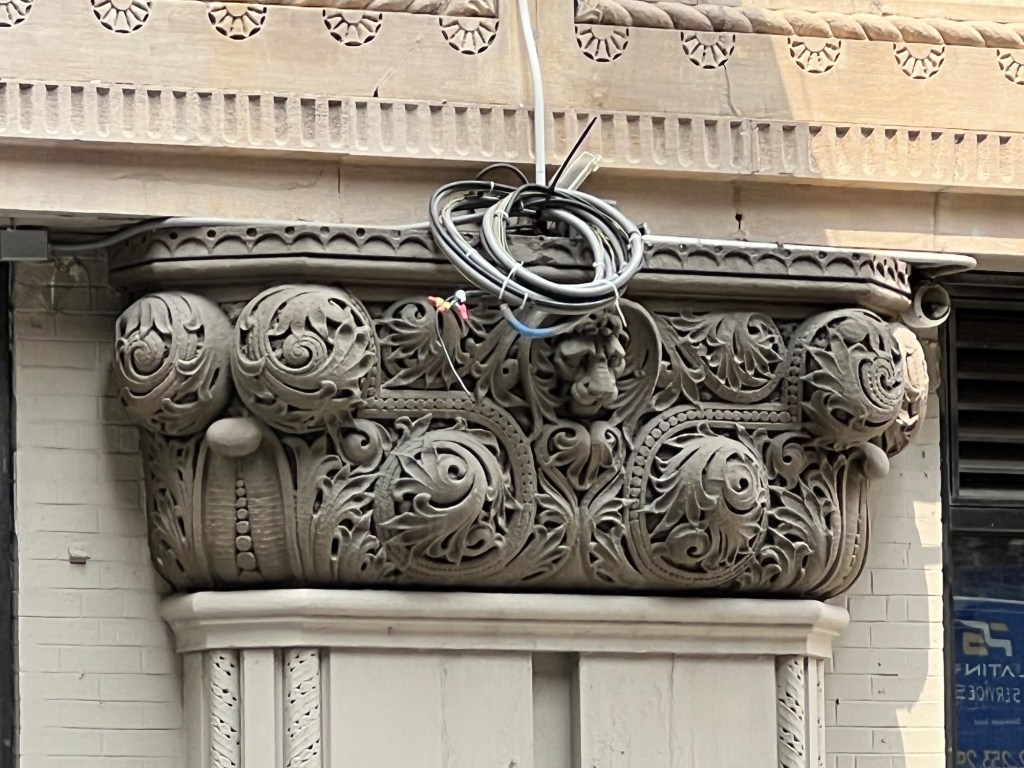
The corniches have such a fanciful design to them
As I walked down the street I noticed not just architecturally beautiful buildings but some very talented street artists left their mark in the neighborhood. Being so close to the Museum of Sex, I thought some were quite unique.

A fried egg
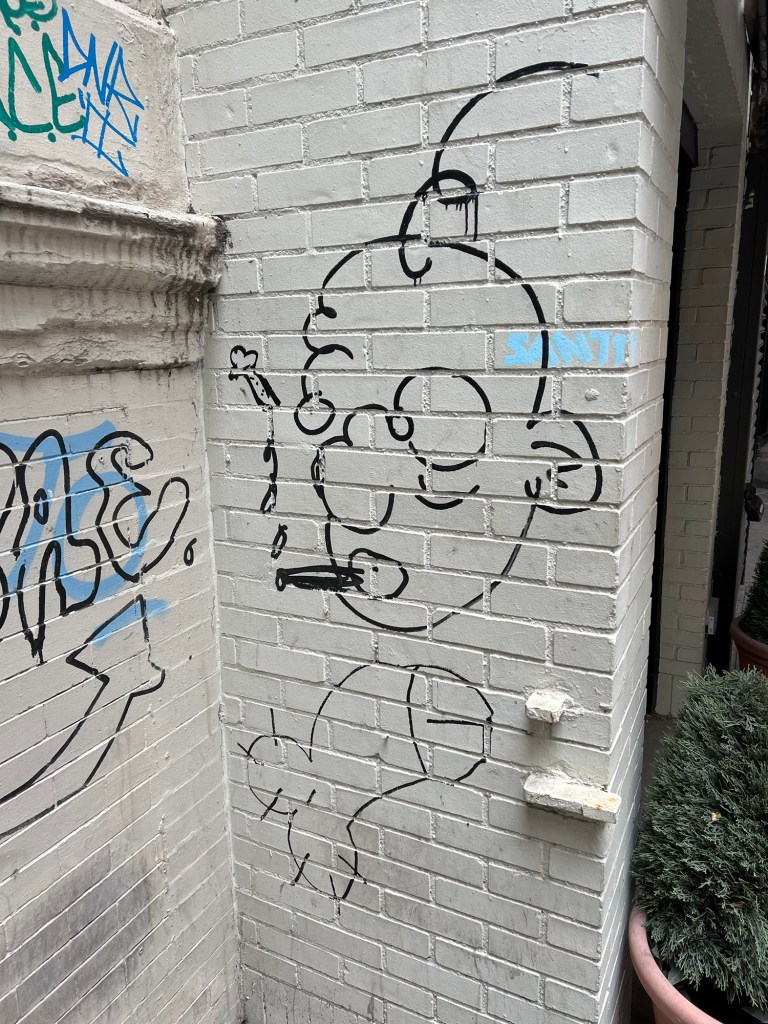
I won’t ask!
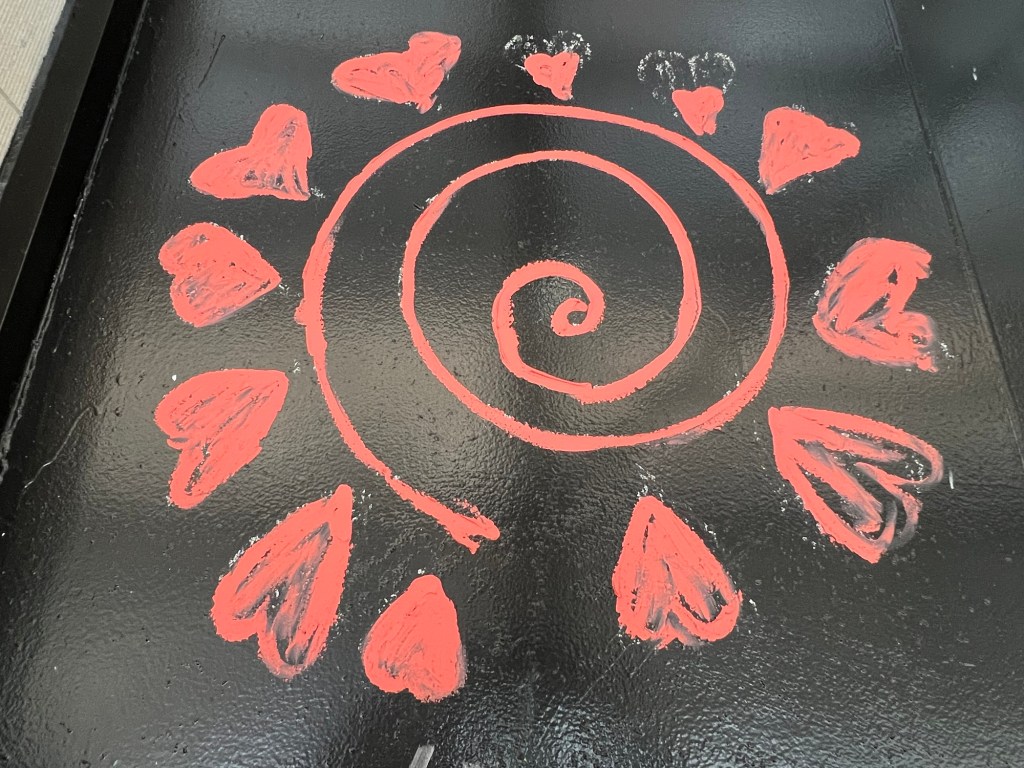
Love symbols
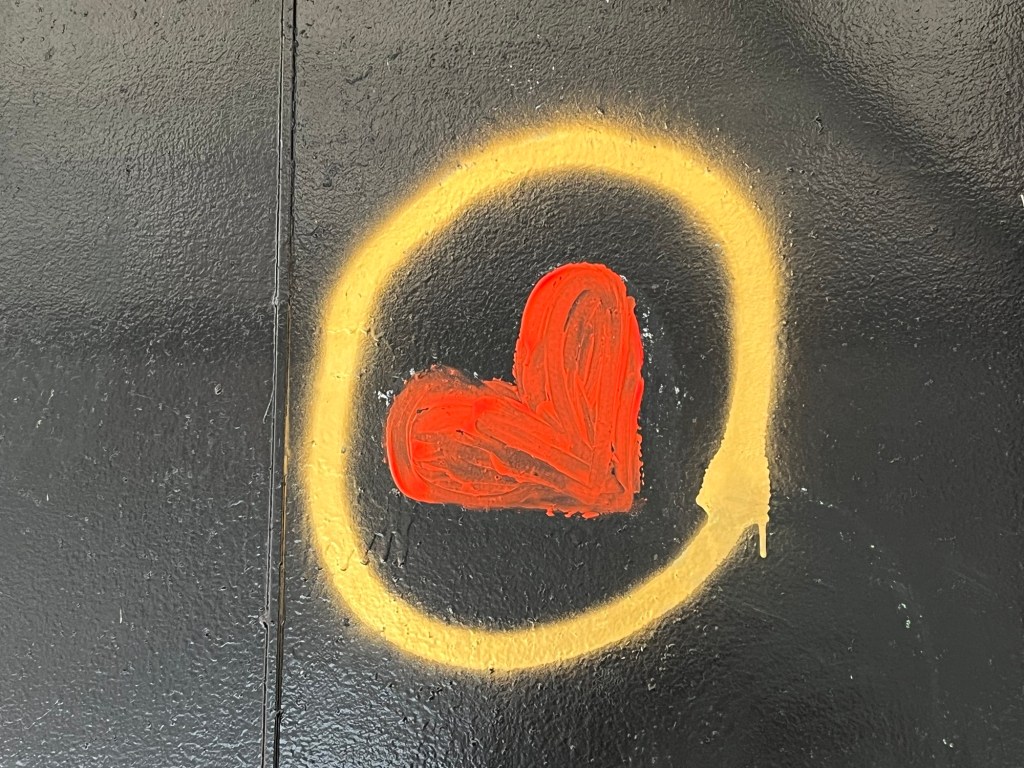
More love symbols
I love looking down the street with its small individually owned shops and restaurants give me faith that New York City is coming back strong after COVID. It is nice to see the City so alive.

This block leads into the heart of Union Square Park and to where the Farmers Market was going strong.
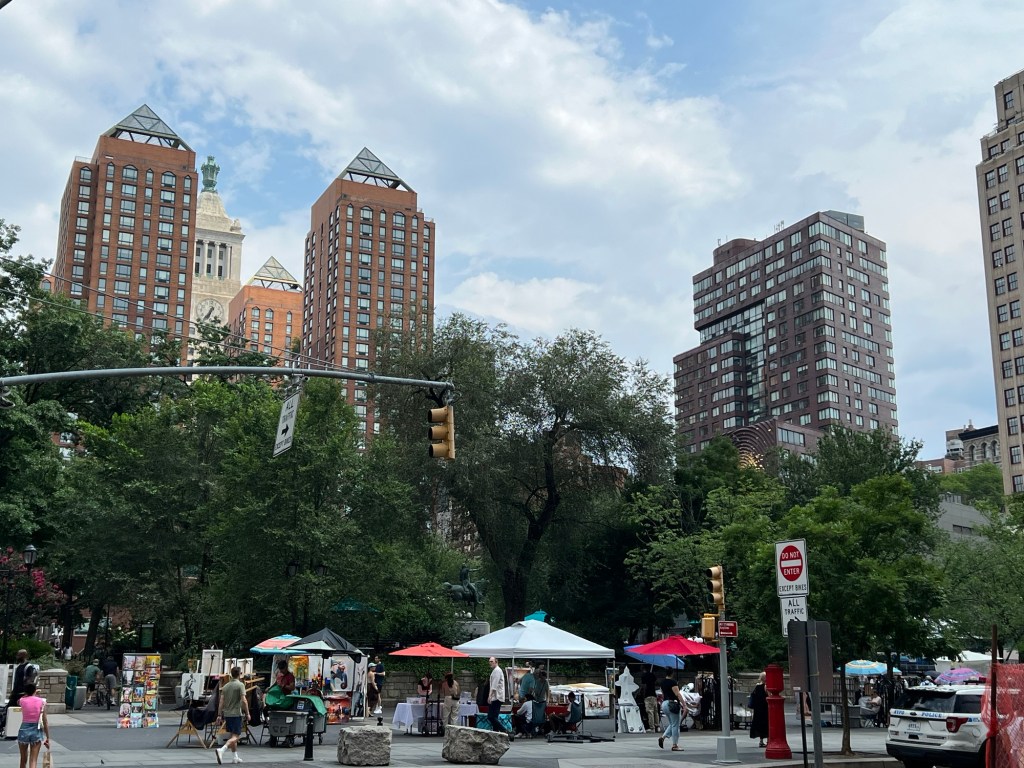
The beauty of the park by East 16th Street in the middle of the afternoon
I walked down East 15th Street and relaxed in the park for a while as it got hotter out. I walked along the flower beds and paths and admired the hard work it takes to maintain this park.

How colorful the park is at East 15th Street
I walked down East 15th Street and admired one the old bank buildings that was going through a renovation.
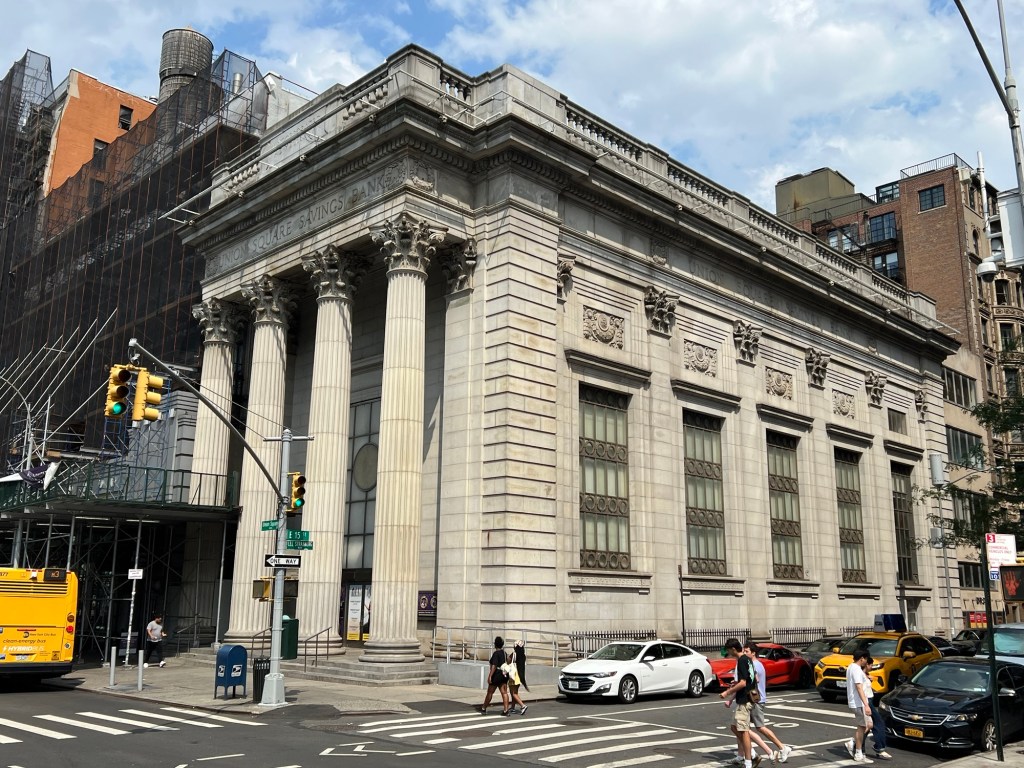
101 East 15th Street-The Union Square Savings Bank Building/Daryl Roth Theater
https://en.wikipedia.org/wiki/Daryl_Roth_Theatre
The bank itself was founded in 1848 and moved to this location in 1895. This building was designed by architect Henry Bacon in the neo classical design in 1905 and the building was finished in 1906. The bank closed in 1992 (Wiki).

The beauty in the side of the building facing East 15th Street
I find it interesting to look at these old buildings with names of companies long gone and ask myself, ‘What happened to them?’ and ‘What happened to them?’ These buildings were designed and built for companies that were once at the pinnacle of their success. Now they are being used for hotels and retail stores proving New York’s resilience to change and to time.
The last building that impressed me the most in the neighborhood was the apartment building at 105 East 15th Street with its garish details and graceful windows.

105 East 15th street-The Swannanoa
https://streeteasy.com/building/105-east-15-street-new_york
https://www.cityrealty.com/nyc/gramercy-park/the-swannanoa-105-east-15th-street/737
The Swannanoa is a 10-story Neo-Renaissance apartment building designed by architect Gilbert Schellinger, who was a renowned and prolific designer of residential buildings back in the late 1800’s and 1900’s. Constructed in 1898, this building is easily recognized by its bay windowed facade, elegant marble lobby and hallways, which have all been beautifully restored (Streeteasy.com).
In all the walks of this neighborhood that I have made walking back from NYU in the evening from class and I walked around and through Union Square Park and I had not noticed the sculpture on the edge of the park.
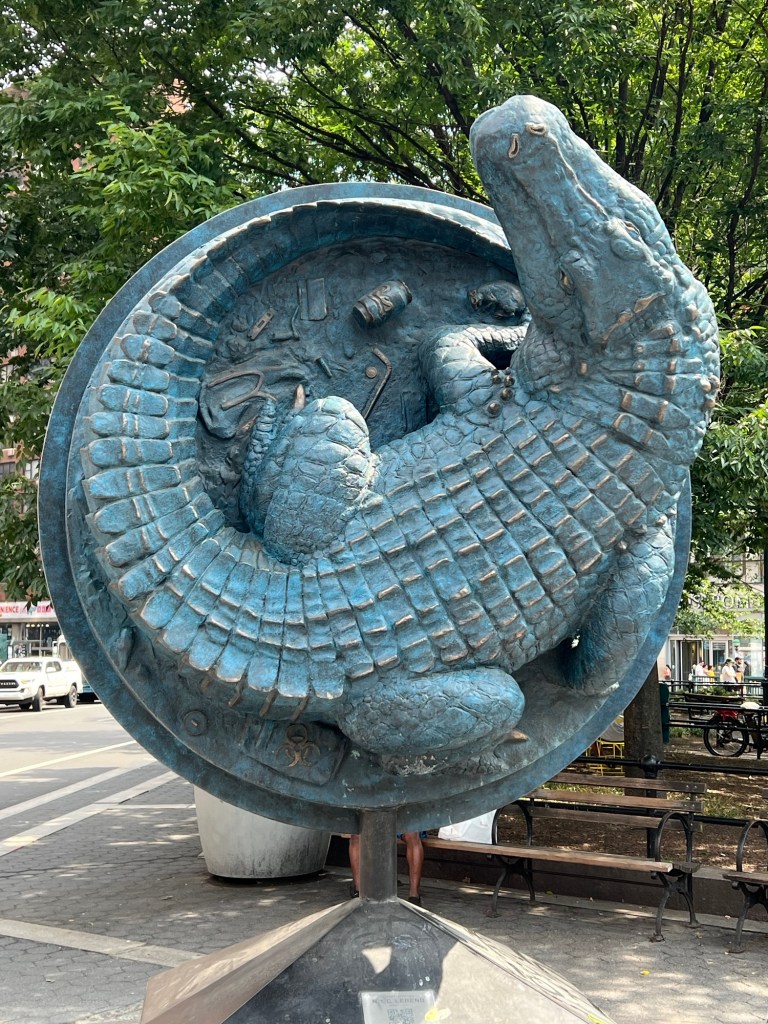
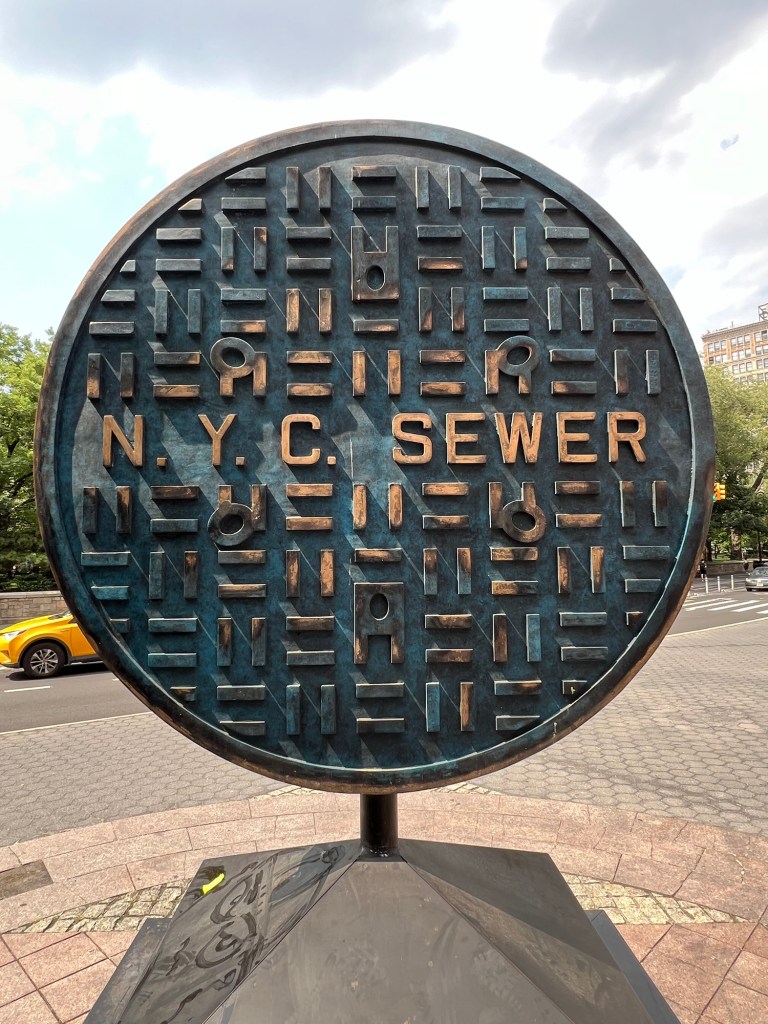
New York Legend-the front of the sculpture
New York Legend-the back of the sculpture
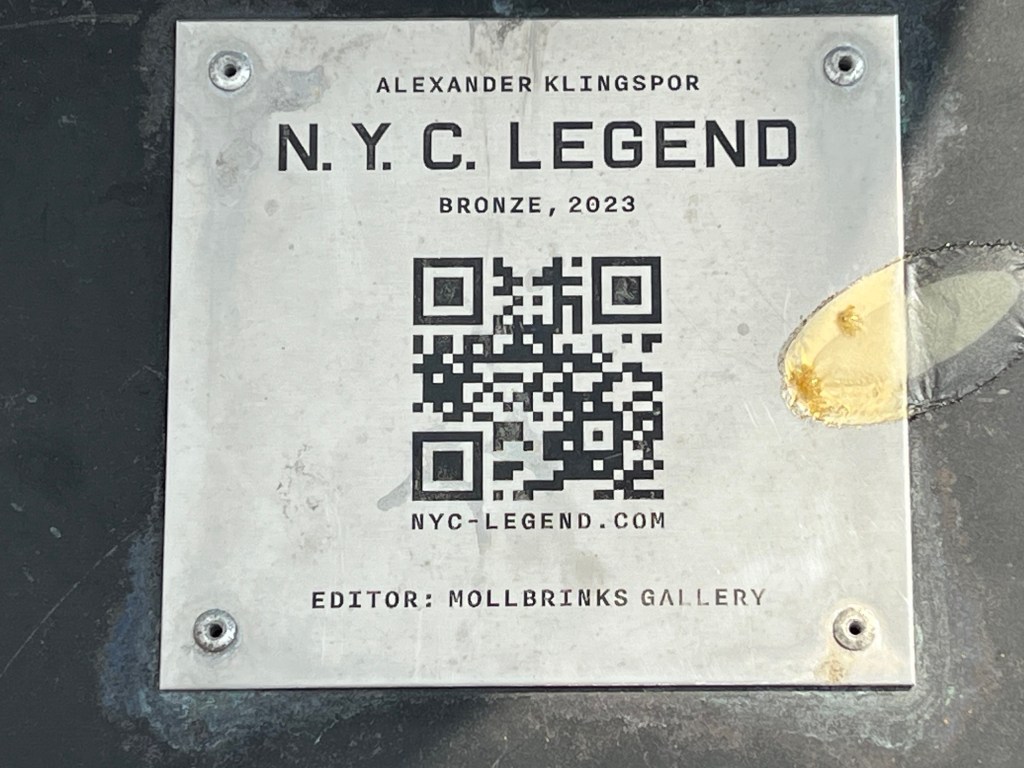
This unique and very creative sculpture was designed by artist Alexander Klingspor
This fascinating sculpture shows the urban legend of alligators lining in New York City sewers. With all the pollution in the water around Manhattan and the rest of the City, there is No Way this would happen. I’m surprised they can still live in Florida.
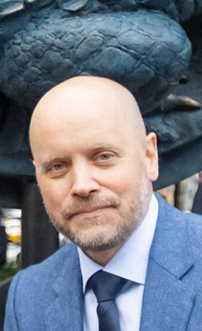
Artist Alexander Klingspor
Artist Alexander Klingspor is Swedish born artist who works both in the United States and Sweden. He apprenticed under American artist Mark English. He is known for his paintings and sculptures (Wiki).
I then walked through the park for the last time that afternoon as it really started to get hot and watched the people sunning themselves, reading books or just conversing. Again it shows what time and a little effort being made can change things in Manhattan. I think the artists that dominated this area when it was going downhill would be shocked if they got out of a time machine to see how the area has changed.
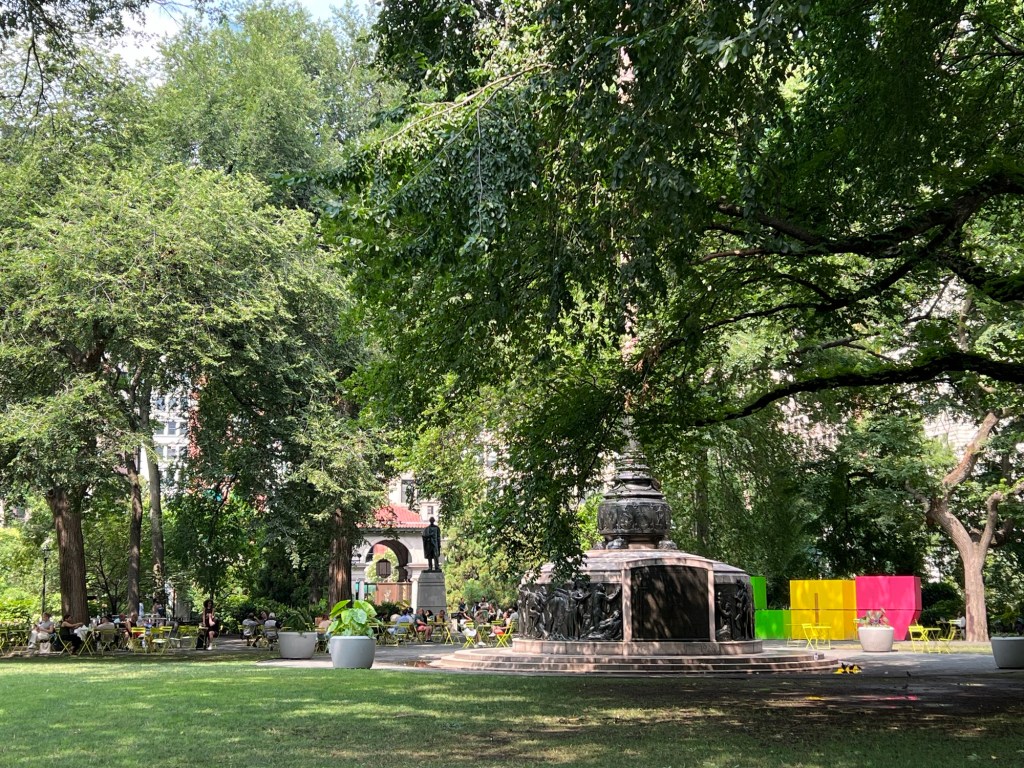
Union Square Park in the late afternoon.

The Union Square Art and Farmers Market
Just remembering coming here for a hot dog with my father in 1982 and eating next to a transvestite I realized how times have changed. I think about all this when I am looking at young couples strolling around the Farmers Market with expensive baby carriages, looking at $5.00 for one cookie and $15.00 for a Cinnamon Banana Bread. I think it is no longer 1982 but 2024 post COVID and how far we have come. Union Square Park just shows how Manhattan just reinventing itself and changes with the time.
That’s New York City!
The other blogs on the Union Square neighborhood:
Day Three Hundred and Thirteen: Walking the Borders of Union Square:
https://wordpress.com/post/mywalkinmanhattan.com/48888
Day Three Hundred and Seventeen: Walking the Avenues of Union Square:
https://wordpress.com/post/mywalkinmanhattan.com/50233
Day Three Hundred and Eighteen: Walking the Streets of Union Square:
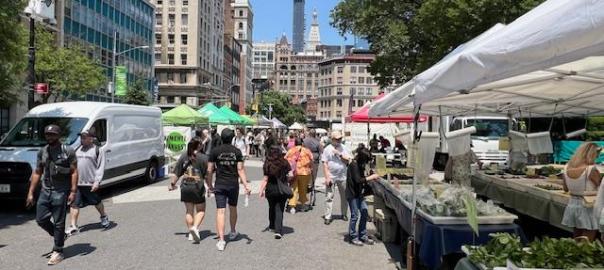
We had another long day at Holy Apostles Soup Kitchen. Since the holiday weekend, the Soup Kitchen does not close on the holiday, but we do on the weekend, so we had long lines on this Monday morning and afternoon. We spent our whole morning packing up bags of snacks and wipes for the meals that will be served tomorrow. We finished by 10:30am (talk about teamwork) and I was able to walk around Union Square Park and both Broadway and Park Avenue South and still make it back for lunch at 12:30pm. It was a long morning and afternoon.
The Farmer’s Market was in full swing again and the place was mobbed. Many people must have taken this week off as well because the City seemed so quiet today as well. It has been quiet since July 1st and will stay that way for another week. People were out in force walking through the market with their dogs, talking with their friends and sitting in the grass at the parking reading and relaxing.
I looked over all the statuary in the park and I found I had missed quite a few things that I had not seen because either they had been covered up with the Farmer’s Market going on or tables of things people were selling in the park. There were all sorts of medallions on the history of the park and the neighborhood and there was a statue of a mother and her child that formed the old water fountain of the park. In the corner of the park near 14th Street, there is a statue of Mohandas Karamchand Gandhi. I had never noticed it before because all the landscaping and flowers had surrounded it.
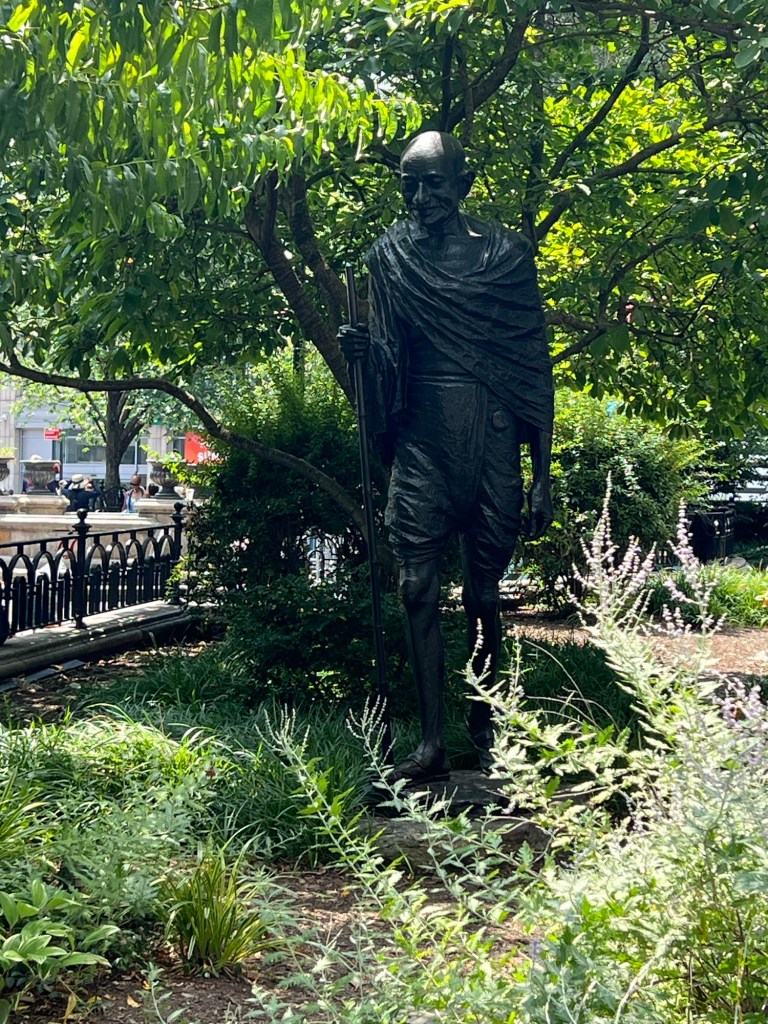
The statue of Gandhi is hiding in the bushes on the southern corner of the park
Statue of Mohandas Karamchand Gandhi

https://en.wikipedia.org/wiki/Mahatma_Gandhi
https://www.gandi.net/en-US/about-us
Artist Kantilal B. Patel
https://www.nycgovparks.org/parks/union-square-park/highlights/12380
As I walked around the Farmers Market, looking over the very over-priced fruits, vegetables and bakery products, J noticed more of the medallions that line the border of Union Square Park. The first one I admired without the sunlight distracting me was the medallion of the layout of the park from the 1800’s.
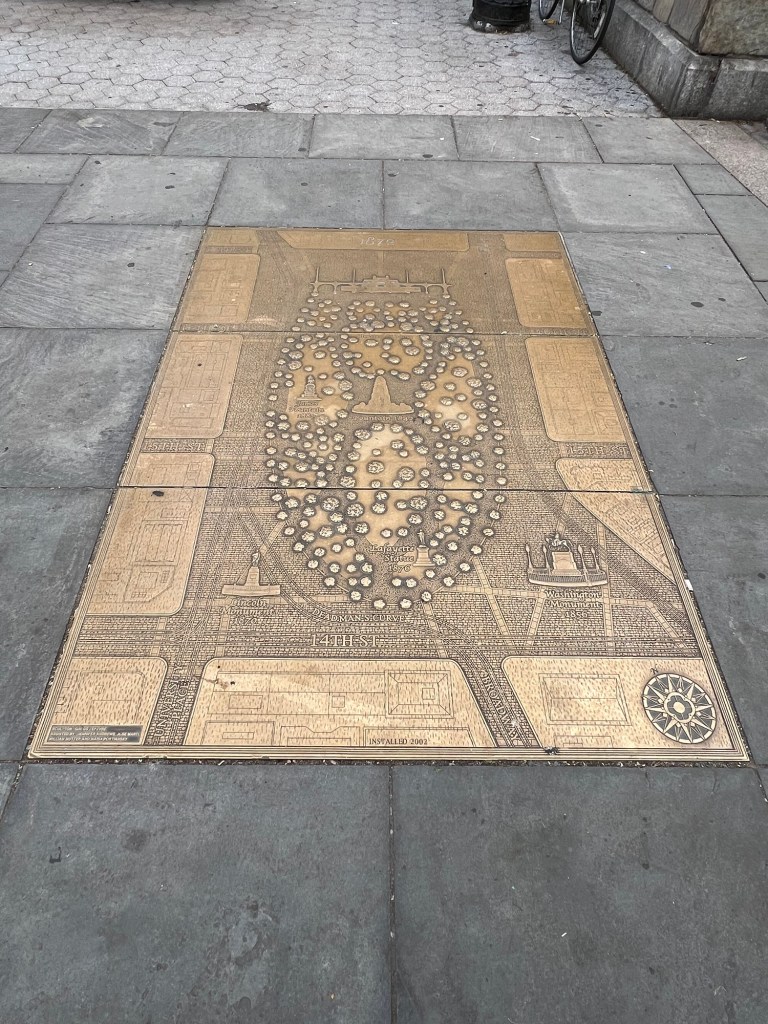
This is the original layout of the park in 1876 plaque
I walked around the park and marveled at it on a very hot afternoon. Like most parks in former edgy neighborhoods, it fascinates me how a bunch of twenty year old’s and families sun themselves and socialize where thirty years earlier you would be harassed by homeless, drug dealers and methadone addicts. You still might see them on the fringes of the part but not like in the early 1980’s.
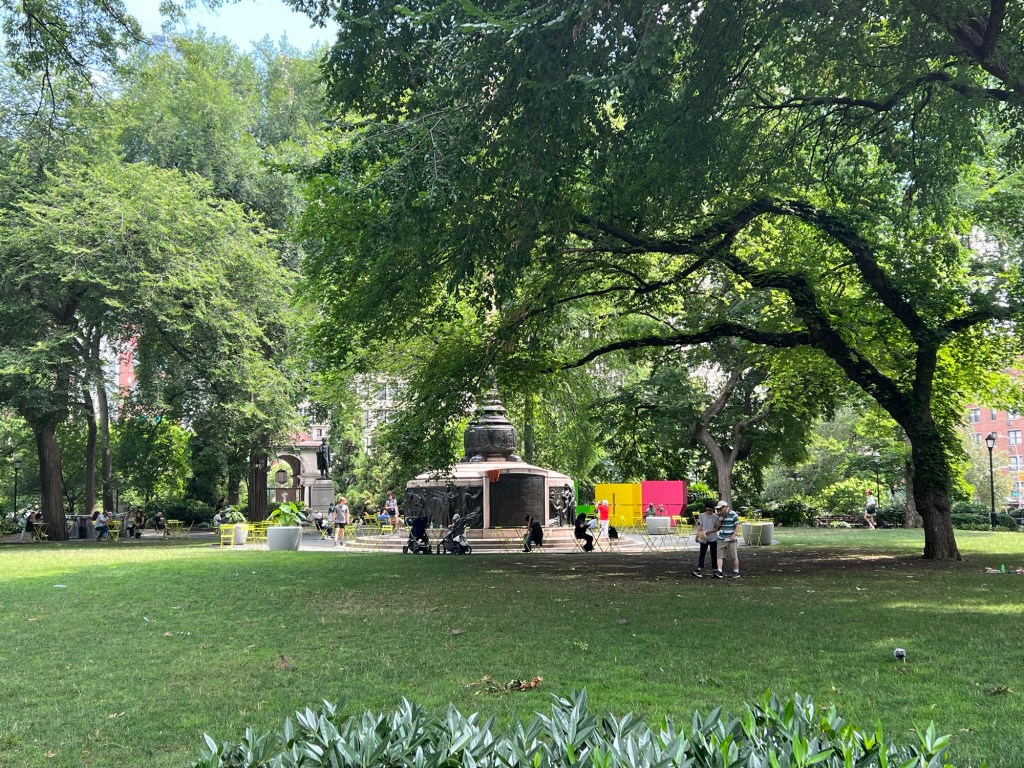
The expansive lawn of Union Square Park
https://www.nycgovparks.org/parks/union-square-park
https://en.wikipedia.org/wiki/Union_Square,_Manhattan
The park now has a business partnership and I believe a Friends group as well. There are so many activities going on in the park, that I am sure people don’t notice all the chess hustlers and counterculture types on the 14th Street perimeter.

Looking at the southern part of the park facing 14th Street and the southern entrance to Broadway
I started my walk up Park Avenue South which is actually the western border of Gramercy Park. I have always been impressed by the W Hotel on the corner of 16th Street and Park Avenue South at 201 Park Avenue South.
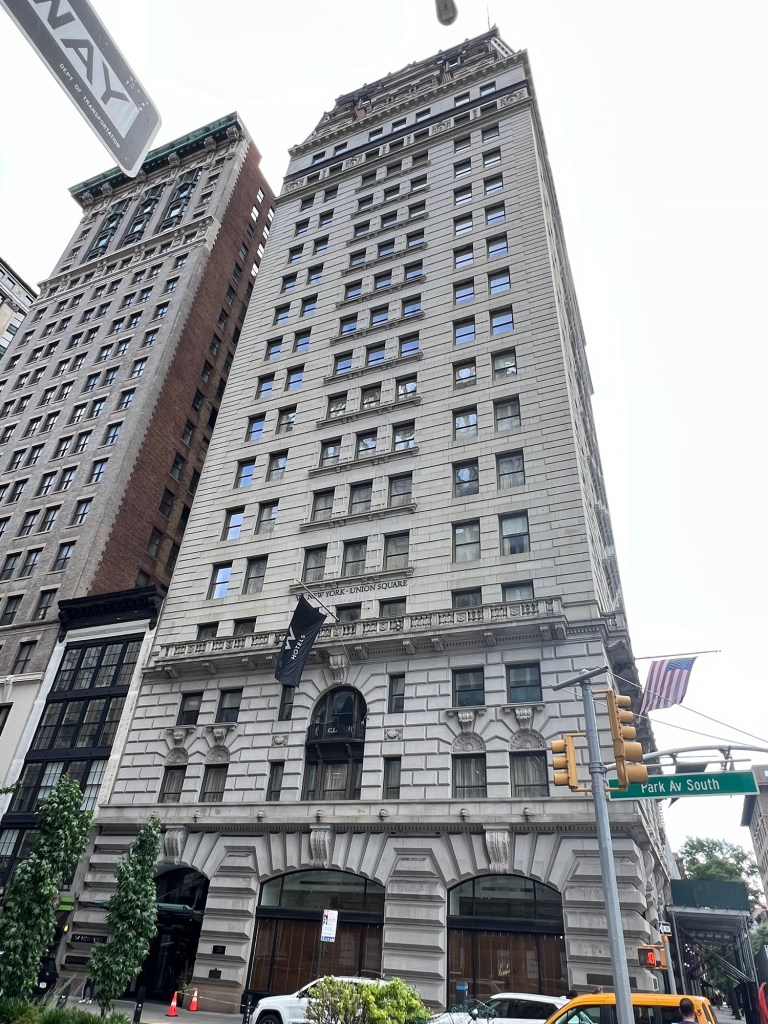
The W Hotel at 201 Park Avenue South
https://en.wikipedia.org/wiki/W_New_York_Union_Square
https://www.marriott.com/en-us/hotels/nycnu-w-new-york-union-square/overview/
Review on TripAdvisor:
This luxury hotel has an impressive history of being one of the innovators of luxury in the Marriott chain. The W Hotel concept was known for its edginess in design and the creativity in its restaurants. Things must be progressing as their customer gets older because their General Manager spoke to our Leadership class before I graduated from NYU and said they are softening the music (finally!) and changing the designs in the rooms. Maybe there will finally be a place to put your clothes.

The historic plaque on the building
This historic building was designed by the architects D’oench & Yost in the Modern French mode and built in 1911. Like most historic office buildings below 23rd Street, the are being refitted as hotels and condos as the desire for high ceilings and soaring lobbies have become desirable. This building had been designed for the Germanic Life Insurance Company Wiki).
I continued up Park Avenue South to East 20th Street to see another familiar building on the border of the neighborhood, 250 Park Avenue South. This building seems to be on the border of many Manhattan neighborhoods.
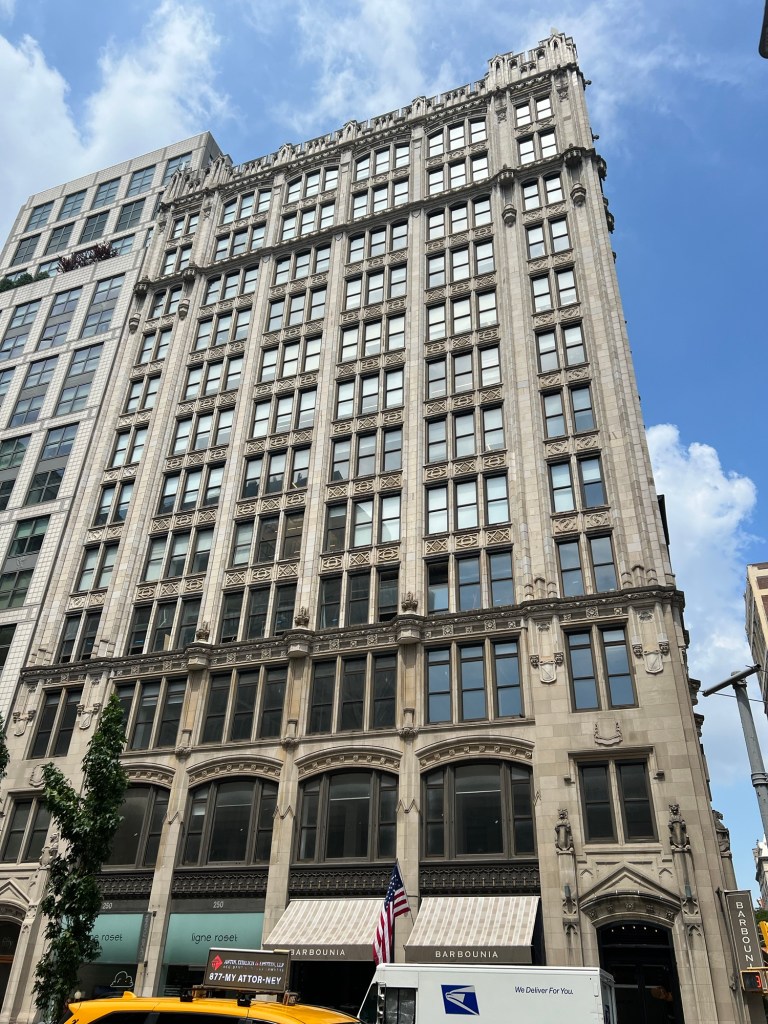
250 Park Avenue South

The embellishments on 250 Park Avenue South

The embellishments on 250 Park Avenue South on both sides of the building

Barbounia 250 Park Avenue
Review on TripAdvisor:
250 Park Avenue South was designed by architects Rouse & Goldstone in 1911 in the Neo-Classical design. You have to look at the building from a distance to appreciate all the interesting embellishments on the sides and top of the building.

The building 16 East 17th Street was plain but I thought these lions the adorned the build were pretty cool.
https://www.corcoran.com/building/flatiron/303
The building was designed by William Dilthey and built in 1898. The building’s style, scale and materials contribute to the special architectural and historic characteristics of the Ladies Mile District (Corcoran Group).
On the way back to Union Square Park, I passed the Tammany Hall building at 100 East 17th Street that I never noticed before because it was always under scaffolding being renovated. Now you could admire it the way the architects wanted you to originally.
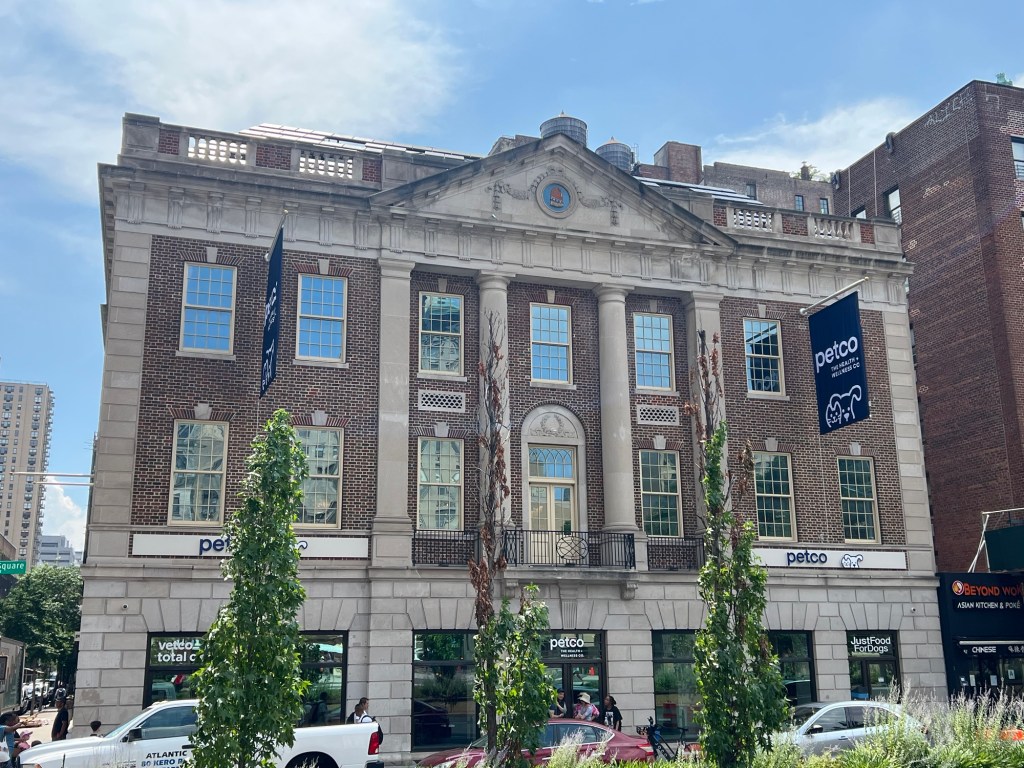
The Tammany Hall building 100 East 17th Street is now a Petco
https://en.wikipedia.org/wiki/44_Union_Square
The building was designed by the architectural firm of Thompson, Holmes & Converse and Charles B. Meyers for the Tammany Society political organization, known as Tammany Hall. It was designed in the neo-Georgian style and built in 1929. It was the organization oldest surviving headquarters building. After the loss of the organization’s political power in the early 1930’s, it was sold to the International Ladies Garment Workers Union and in present times has been used as a theater and performance space. It is now occupied by Petco (Wiki).
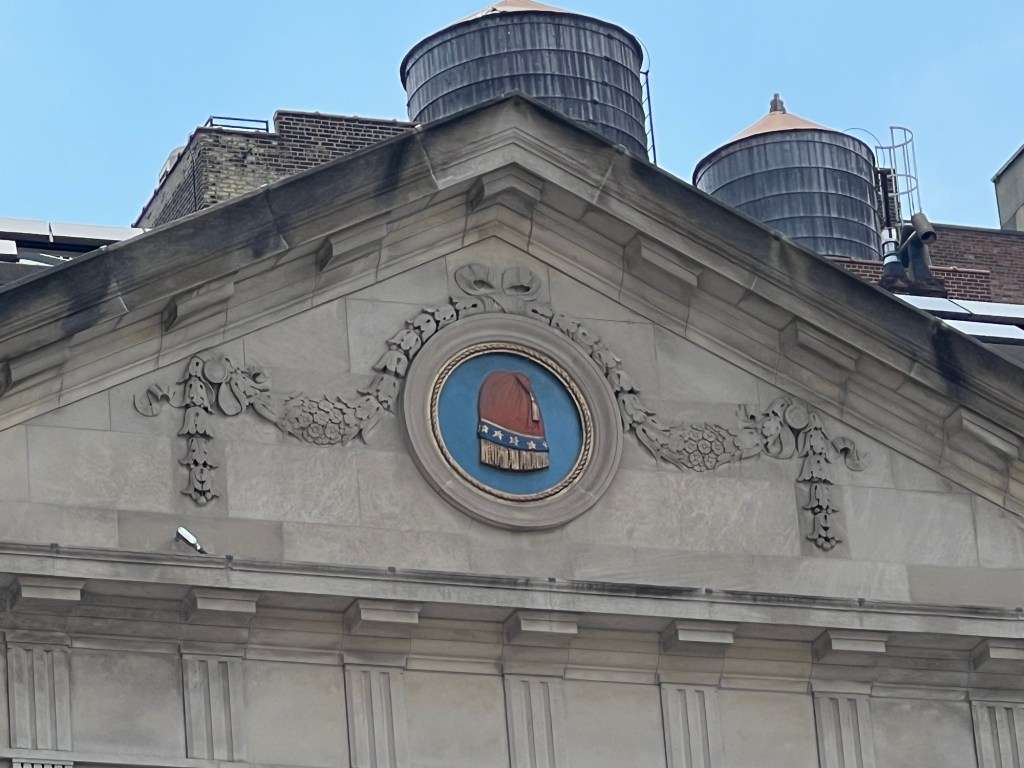
The design on the top of the building is the logo for Tammany Hall

The Society of Tammany or Columbia Order sign above the entrance on East 17th Street
https://www.britannica.com/topic/Tammany-Hall
From Park Avenue South Union Square East is the extension of the street that lines the eastern end of the park. At the corner of East 15th Street and Union Square East is 101 East 15th Street the old Union Square Savings Bank building.
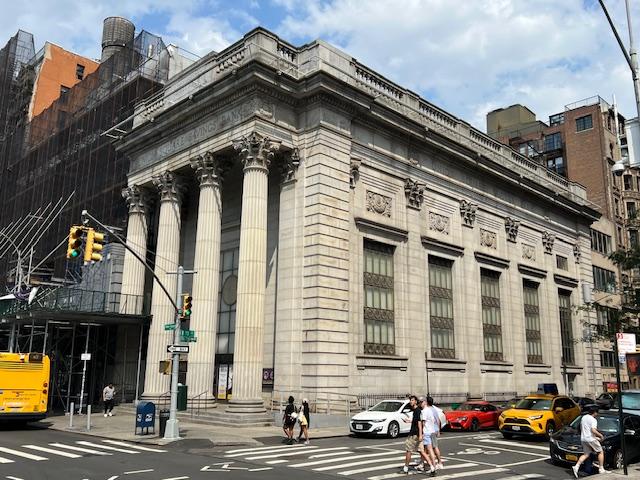
101 East 15th Street-The Union Square Savings Bank Building/Daryl Roth Theater
https://en.wikipedia.org/wiki/Daryl_Roth_Theatre

The side of the Union Square Savings Bank building
The bank itself was founded in 1848 and moved to this location in 1895. This building was designed by architect Henry Bacon in the neo classical design in 1905 and the building was finished in 1906. The bank closed in 1992 (Wiki).
I walked to the small triangle of Union Square Park that sits between East 15th and 14th Streets and came across a sculpture that I had never seen before on all my walks back from NYU. Maybe I just missed it when it was dark out. It was a depiction of an urban legend of the NYC sewers.

The alligator sculpture ‘N.Y.C. Legend’
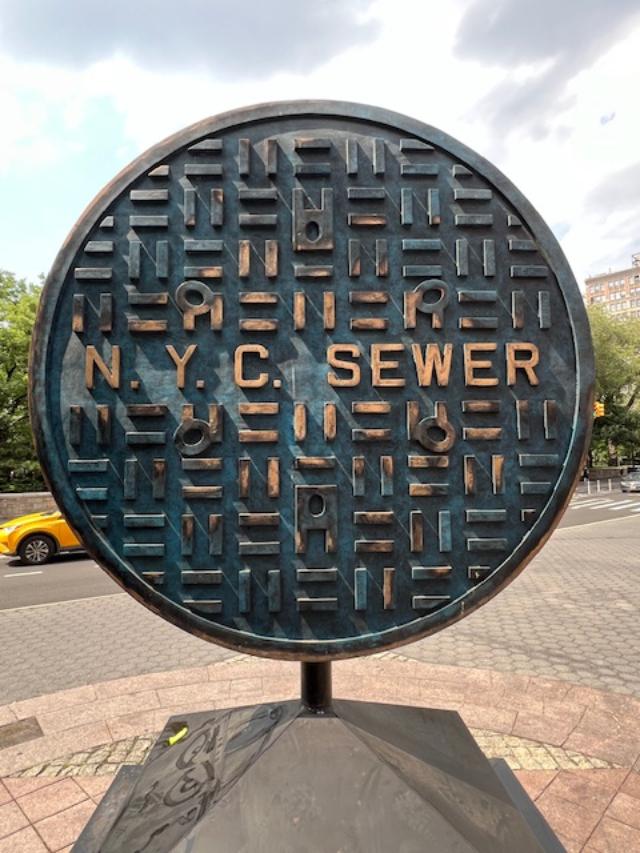
The sewer cover top of the sculpture

The sign for artist Alexander Klingspor
Artist Alexander Klingspor
Artist Alexander Klingspor is Swedish born artist who works both in the United States and Sweden. He apprenticed under American artist Mark English. He is known for his paintings and sculptures (Wiki).
Across the street from the park on the way up Union Square East is tucked off in the corner of the park is the statue of General Lafayette. Why this important figure of the Revolutionary War is hidden is unfortunate.
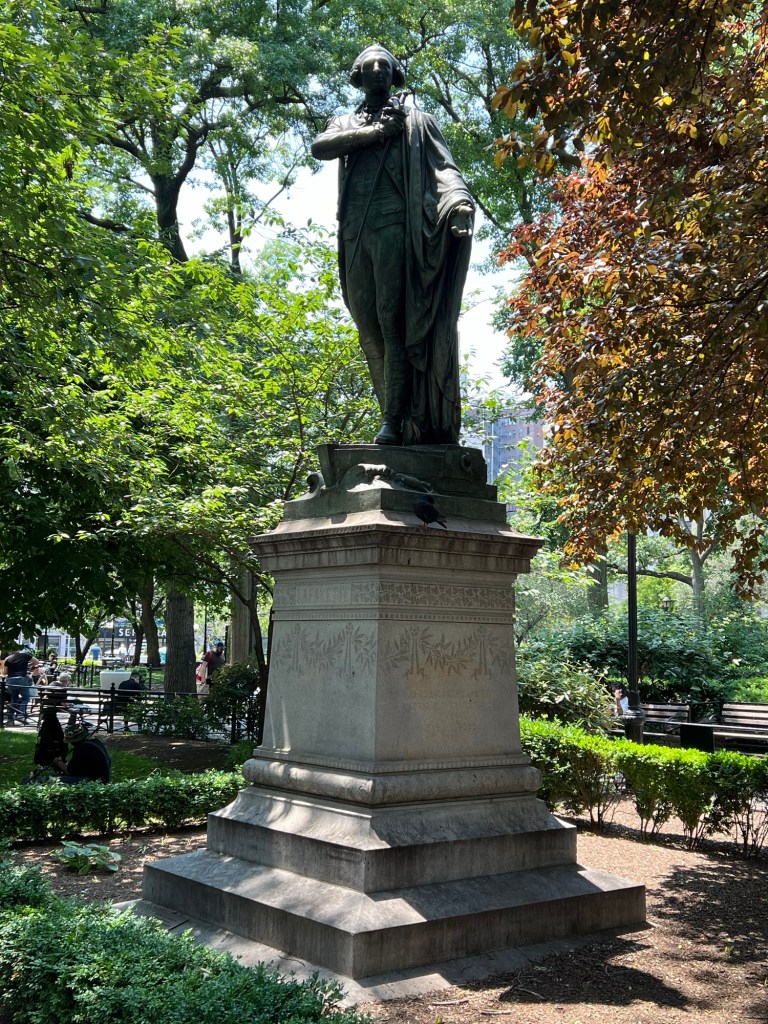
The statue of General Marie-Joseph Paul Yves Roch Gilbert du Motier de La Fayette, Marquis de La Fayette
https://www.nycgovparks.org/parks/union-square-park/monuments/884

General Marie-Joseph Paul Yves Roch Gilbert du Motier de La Fayette, Marquis de La Fayette
https://en.wikipedia.org/wiki/Gilbert_du_Motier,_Marquis_de_Lafayette
The larger-than-life-sized figure was sculpted by Frédéric-Auguste Bartholdi, who also designed the Statue of Liberty (1886), another gift from the French government that figures prominently in New York Harbor. The granite pedestal designed by H.W. DeStuckle was donated by French citizens living in New York. (NYCParks.org).

Artist Frédéric-Auguste Bartholdi
https://en.wikipedia.org/wiki/Fr%C3%A9d%C3%A9ric_Auguste_Bartholdi
Frederic Auguste Bartholdi was a French born artist best known for designing the Statue of Liberty. Bartholdi attended the Lycée Louis-le-Grand in Paris where he graduated in 1852. He then went on to study architecture at the Ecole nationale superieure des Beaux-Arts (Wiki).
I walked through the northern half of the park through the now busy Farmers Market again to get to Broadway. While I walked through the crowds all I kept saying to myself is ‘doesn’t anyone work anymore?’ I could not understand the large crowds on a early Friday afternoon.
When I walk through the parks in the City, all I see is twenty and early thirty year old’s sunning themselves, talking on their cell phones or chatting with friends. In 1990, I was behind a desk at Macy ‘s busy as hell all day when I was all of their ages. Things have changed in thirty years.

The Union Square Market on a busy Friday afternoon
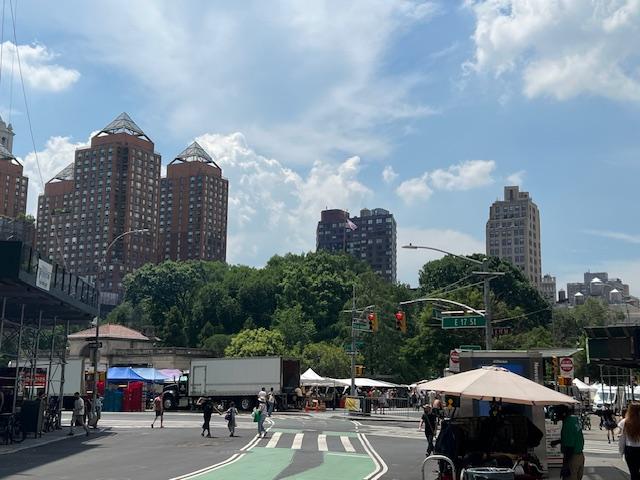
The northern end of the park from Broadway the day of the Union Square Farmers Green Market
https://www.grownyc.org/greenmarket/manhattan-union-square-m
I began the walk up Union Square West to Broadway. The stretch from Union Square Park from East 14th Street to East 20th Street was once a major shopping district right before the Civil War and is lined with the buildings of former department and specialty stores with their cast iron fronts and detailed embellishments. In some buildings you can still see the carvings of the old companies in the design of the front of the building.
These buildings are the ghosts of Sloan’s, Lord & Taylor, Arnold Constable, McCreery’s, FAO Schwarz, and other specialty stores whose names have either disappeared or who long moved uptown closer to Fifth Avenue. The irony of gentrification and time and the location of these beautiful buildings is that they are now filling up with new upscale independent and chain merchants filling in where past merchants have left. Old New York becomes new New York again.
The first building I noticed as I walked up Union Square West was under scaffolding. The Lincoln Building I could not see from the street or the view from the park but was able to read their historical plaque at street level. The building was designed by the architectural firm of R.H. Robertson with a combination of steel and masonry construction in the Romanesque Revival design. The building opened in 1890 (NY Landmarks Commission).
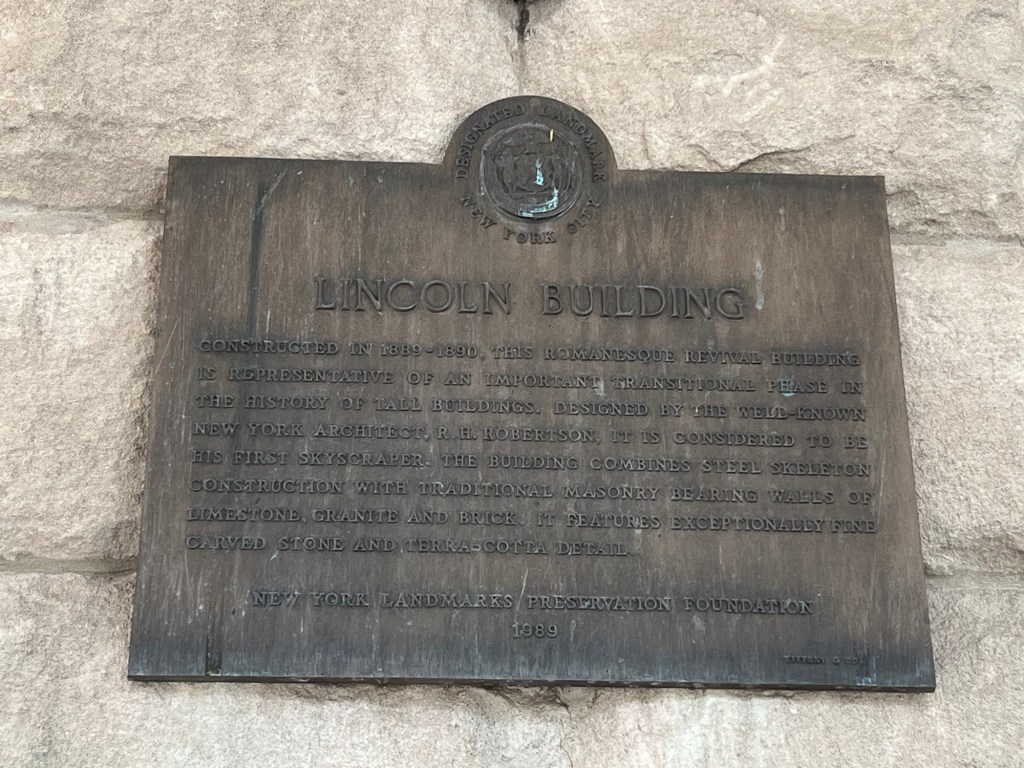
The historic plaque of the Lincoln Building which is under renovation with scaffolding in front of it. It will be interesting to see what emerges.
There were many buildings that faced Union Square Park that gives it a historical feel. The elegant look of the buildings with their neo-Classical and Beaux Arts designs gave the park the feel of the Victorian era of business. The first was 25 East 15th Street with its interesting details.
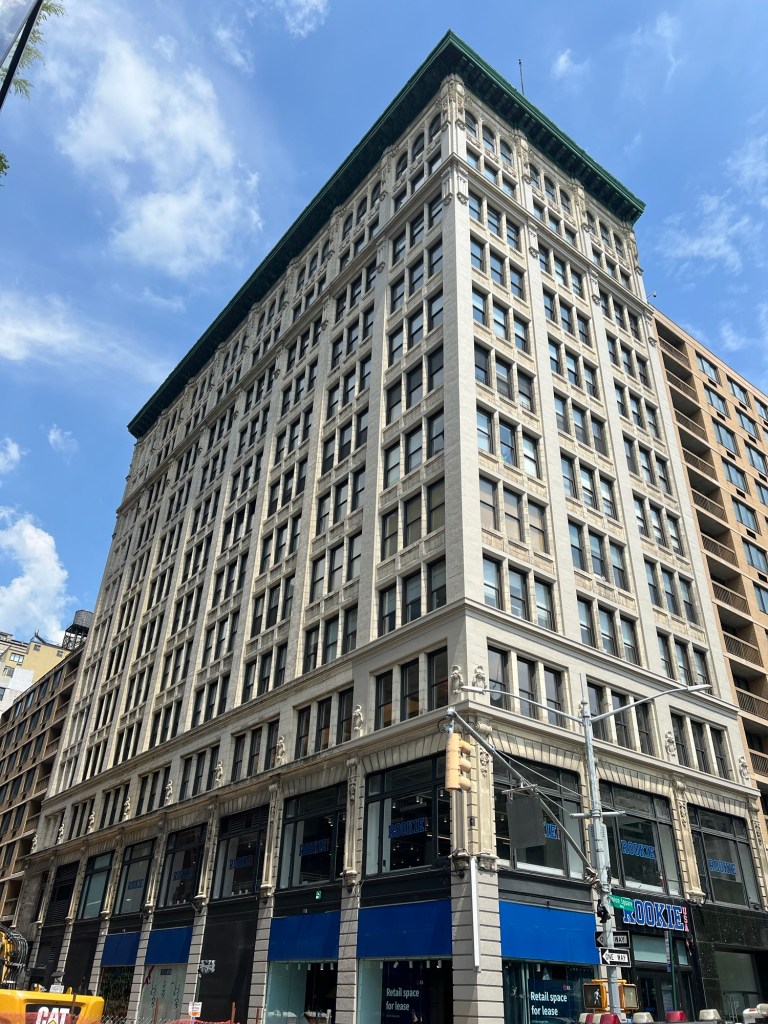
25 East 15th Street was built at the turn of the last century and it now fully renovated.

The beautiful details at the top of the building at 25 East 15th Street
The next building I admired was right across the street from the park as well at 31 Union Square West

31 Union Square West
https://www.triumphproperty.com/Home/About
https://streeteasy.com/building/bank-of-the-metropolis
31 Union Square West built in 1902-03 as the Bank of the Metropolis was designed by architect Bruce Price and designated a landmark in 1988. This early skyscraper shows the influence of the American Renaissance sensibility celebrated at the Chicago World’s Fair of 1893 (Streeteasy.com).
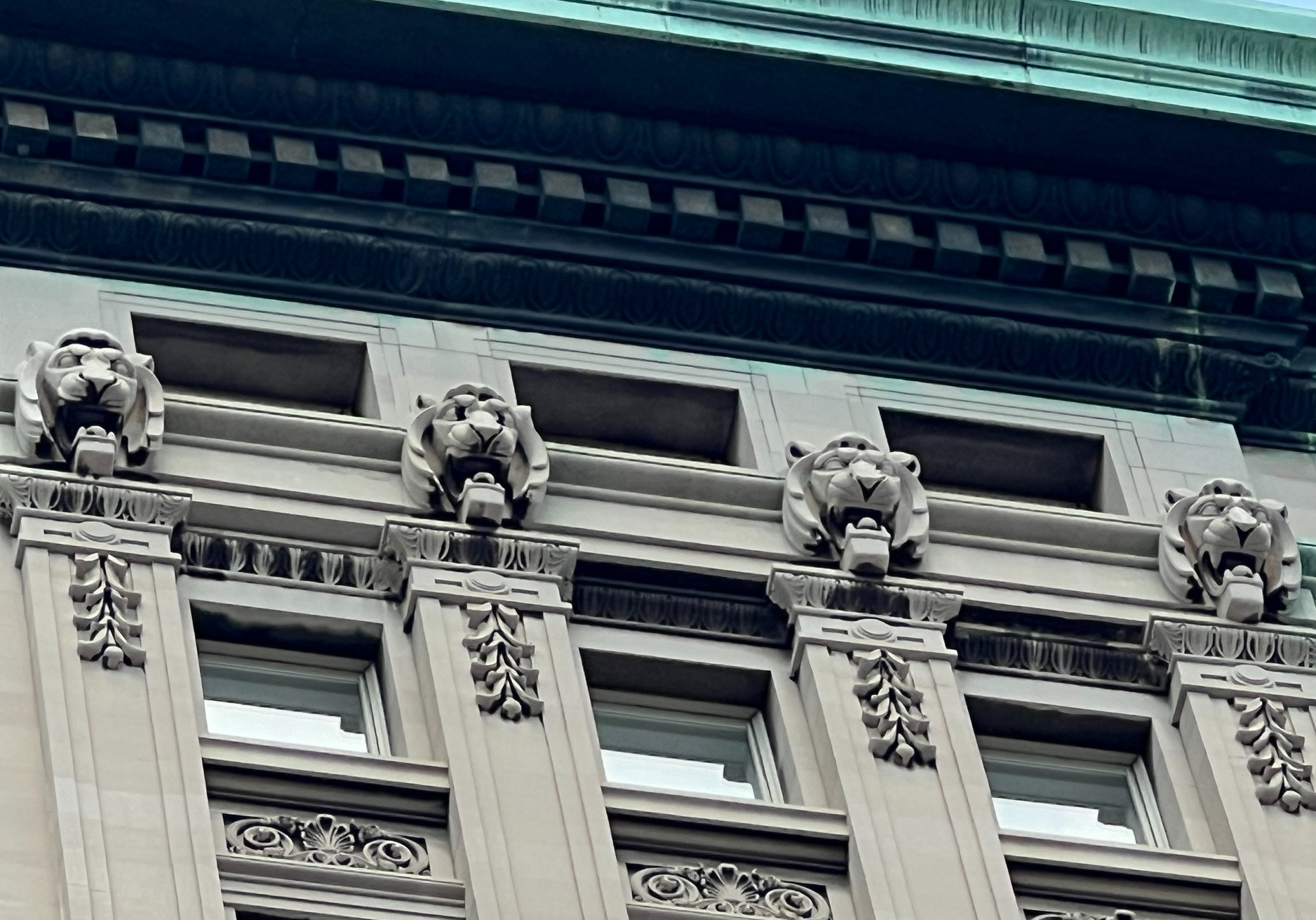
The lions roar at the top of 31 Union Square East give the top of the building a unique style
Right next door to the old Bank of the Metropolis building is 33 Union Square East which I thought looked like a Moorish castle. This building has an illustrious past.

33 Union Square East-The Decker Building
The building was built for the Decker Brothers Piano Company and was designed by architect John H. Edelmann. It was completed in 1892 and has influence of Venetian and Islamic styles in the details of the building. From 1968 to 1973, loft space in the building was used by artist Andy Warhol for his studio, ‘The Factory’. This is where Valerie Solaris shot the artist in 1968 (Wiki).
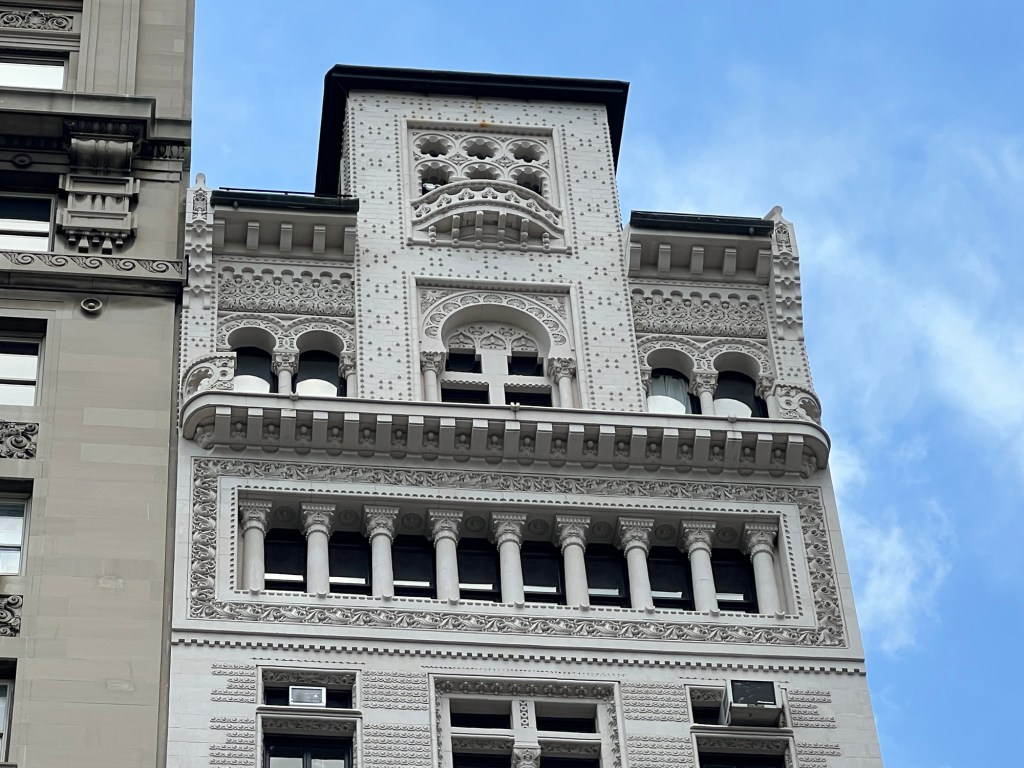
The Islamic influences of the building can be seen in its details at the top of the structure

Artist Andy Warhol
https://en.wikipedia.org/wiki/Andy_Warhol
I passed the park and the Farmers Market and took the walk up Broadway which I have made many times on my full walk of Broadway blog. This part of the neighborhood was once the main shopping district just before and after the Civil War and many of these buildings still stand in all their beauty. Unless you are a architectural major, many people don’t appreciate the elegance of this part of Broadway and its steep history in New York City business and trade.
Day One Hundred and Thirty-Nine: Exploring Broadway blog:
https://wordpress.com/post/mywalkinmanhattan.com/9069
The first building I admired but I have to admit never really noticed is 867 Broadway. This is a building steeped in retail history as the home of Ditson & Company, retailers selling musical instruments and books (Daytonian in Manhattan.com).
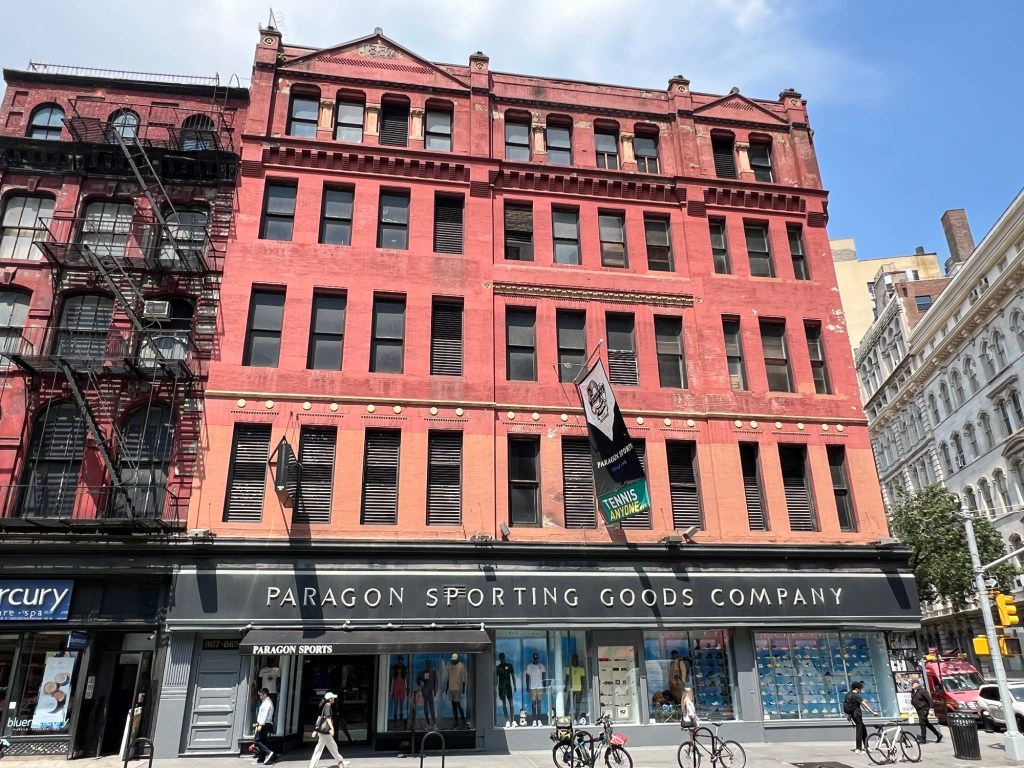
867 Broadway is a brick building
https://daytoninmanhattan.blogspot.com/2015/11/the-ditson-co-bldg-no-827-broadway.html
https://www.propertyshark.com/mason/Property/13001/867-871-Broadway-New-York-NY-10003/
The building was designed by architect George Washington Pope and was designed in the Romanesque Revival style. The building was completed in 1882 as the top marker is carved at the top of the building. They conducted business on the ground floor of the building until 1906 when they moved to a new headquarters on East 34th Street (DaytonianinManhattan.com).

I can’t believe this building is from 1882
The next series of buildings have the Cast Iron design that was becoming fashionable after the Civil War at 873 and 881 Broadway. These show the change of direction of American businesses at that time there was a permanence to their business and these buildings were meant to last.

873 Broadway-The former Hoyt, Spragues & Company Department store
https://daytoninmanhattan.blogspot.com/2012/10/the-1868-hoyt-building-nos-873-879.html
https://marketplace.vts.com/building/873-broadway-new-york-ny
https://streeteasy.com/building/873-broadway-new_york
As Union Square gave way from being a residential district to a commercial district after the Civil War, the old homes were torn down and were being replaced by a modern shopping district. The retailer Hoyt, Spragues & Company hired architect Griffith Thomas to design this store as the new headquarters of the company on the southern corner of 18th Street and Broadway. The other half of the block was the new Arnold Constable & Company store at 881 Broadway that stretched from Fifth Avenue to Broadway. The architect designed this store as well (Wiki/DaytonianinManhattan.com).
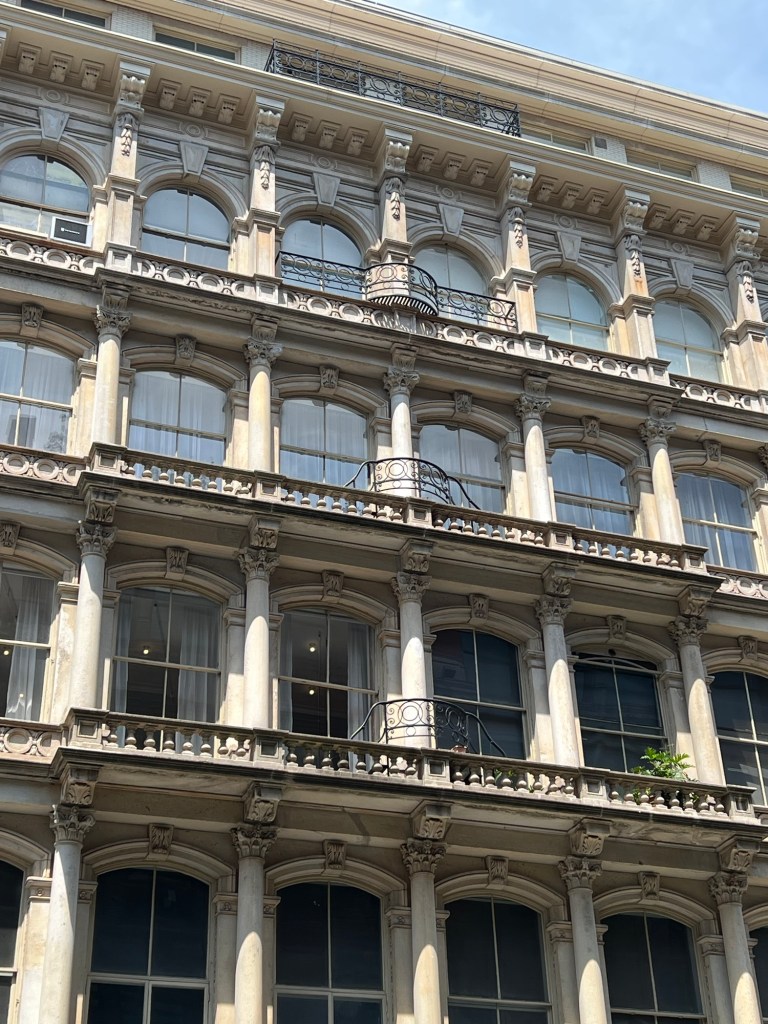
The cast iron front of 873 Broadway and its elaborate details
Next to 873 Broadway is the Fifth Avenue extension of the Arnold Constable & Company building. The company owned this entire side of the block and was an extremely large department store for its time.

873 Broadway-The Arnold Constable Building
https://en.wikipedia.org/wiki/Arnold_Constable_%26_Company
https://www.propertyshark.com/mason/Property/13019/881-887-Broadway-New-York-NY-10003/
Arnold Constable & Company had outgrown its Canal Street headquarters (which still exists at 309-311 Canal Street) and moved to this new location in 1869. The store had two more expansions to Fifth Avenue in 1872 and 1876 to Fifth Avenue for both retail and wholesale businesses. The facade on Broadway was designed by architect Griffin Thomas who had designed the the Hoyt, Spragues & Company building to give a continuous flow to the block. Arnold Constable added the Mansard Room as the building was designed in the Second Empire Commercial style. The store moved to Fifth Avenue in 1914 right across from the NY Public Library (which is now the annex across the street) (Wiki).

The Mansard Roof of the old Arnold Constable building designed in the Second Empire Commercial style
One of the buildings on Broadway that I have always admired for its details and embellishments is 889 Broadway. You really have to walk around this building to appreciate its details and the beautiful carvings and faces that stare back at you.
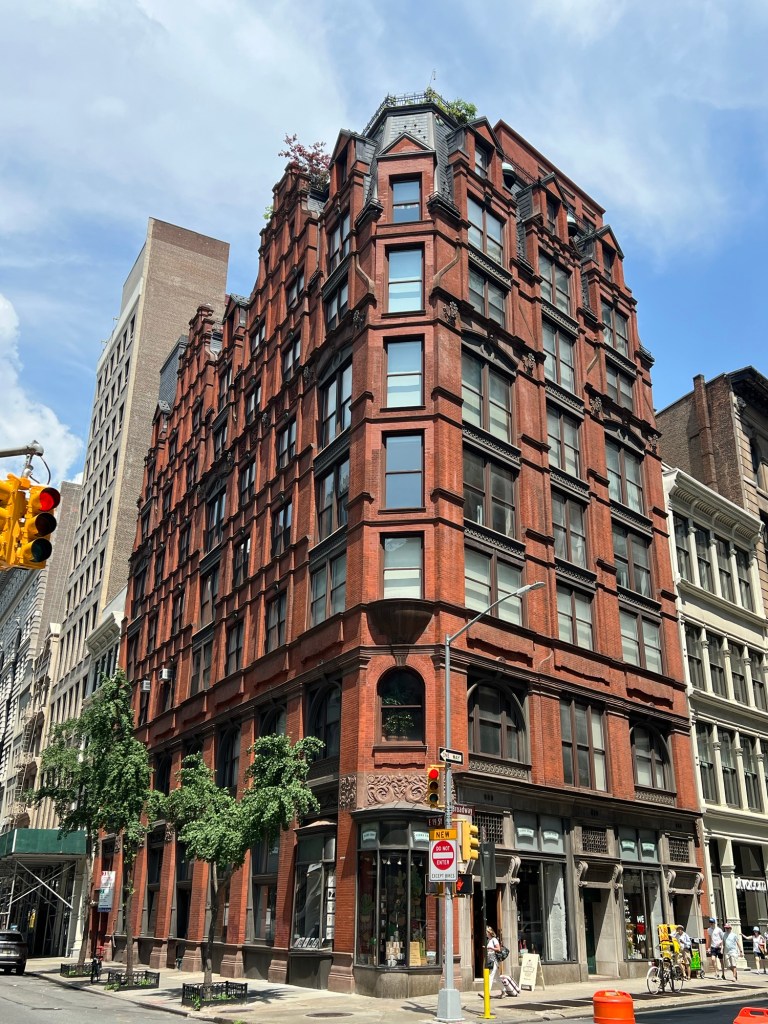
889 Broadway-The former Gorham Manufacturing Company Building
https://en.wikipedia.org/wiki/889_Broadway
The beauty of 889 Broadway can be seen on all sides but you have to look at every angle of the building to appreciate it. There is all sorts of masonry and iron work around the building that gives it unique look. The building was designed by architect Edward Hale Kendall in the Queen Ann style and finished in 1884. The company moved uptown in 1905 when the retail district started to move further north (Wiki).

The cast iron and carved details of 889 Broadway
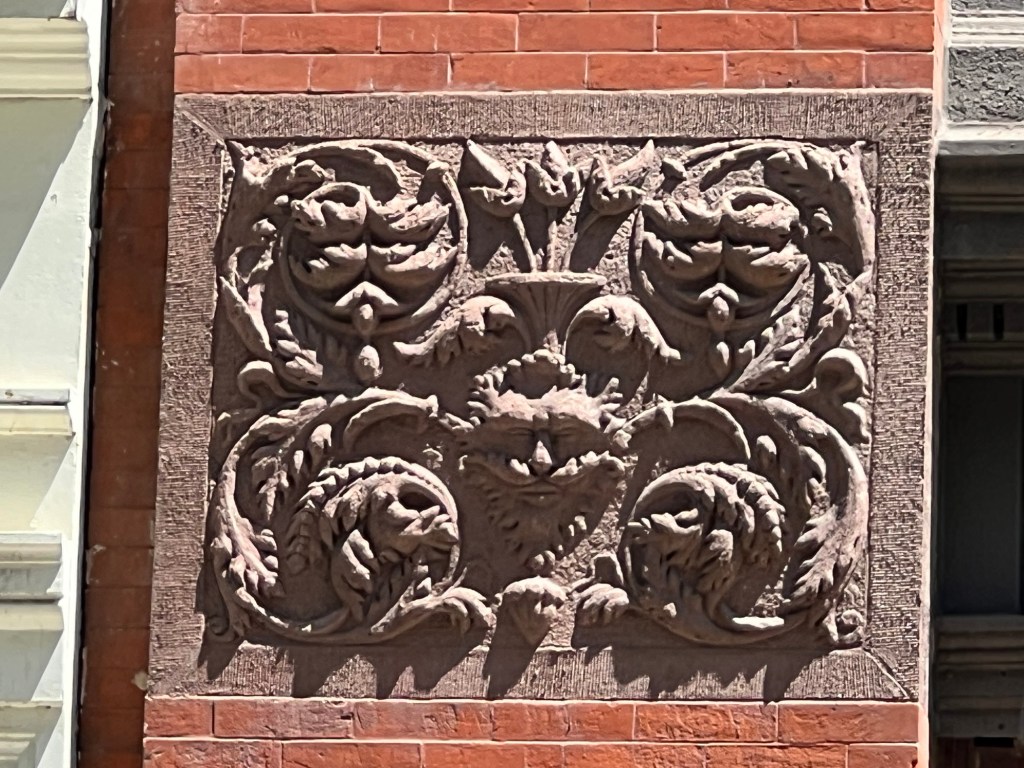
The carved faces of the embellishment of 889 Broadway
The last building in this former shopping district is the old Lord & Taylor building at 901 Broadway. This is one of the most elegant and most underrated building in the neighborhood. The problem with the building was the renovation of the Broadway side of the building throws off the rest of the design. The company used to use this building in its old Christmas window designs in their former Fifth Avenue store.
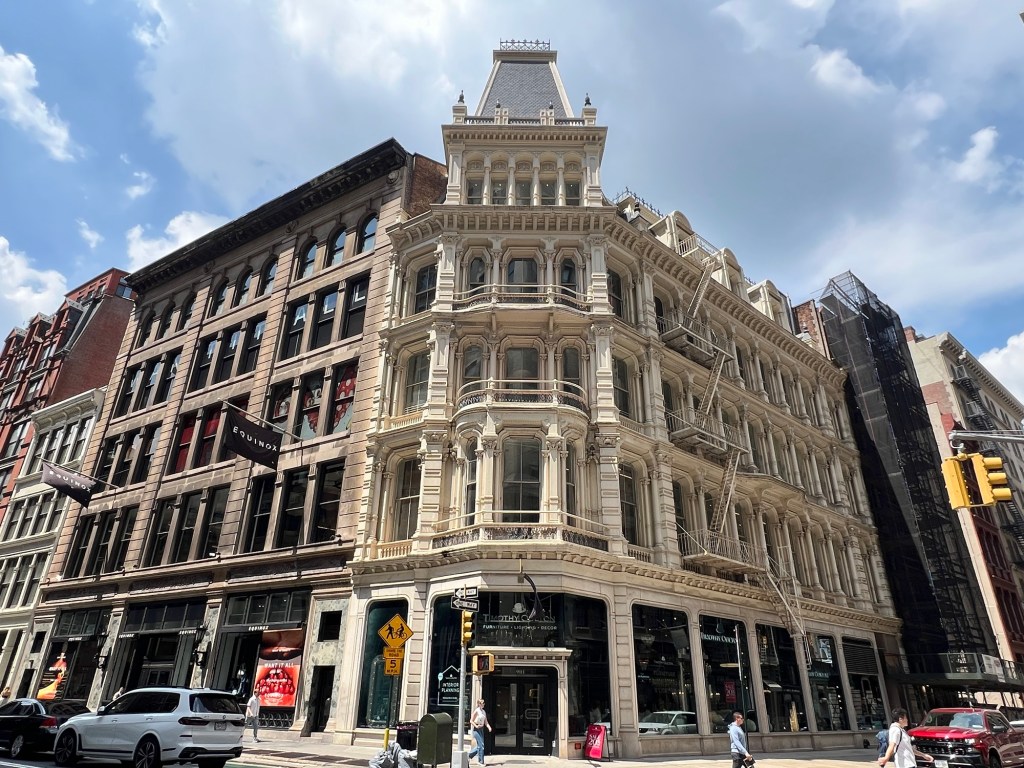
901 Broadway-The former Lord & Taylor building
https://en.wikipedia.org/wiki/Lord_%26_Taylor
https://architizer.com/projects/901-broadway/
https://streeteasy.com/building/former-lord-taylor-building/4
The former Lord & Taylor building is the border of the neighborhood and was the northern tip of the shopping district that expanded along 23rd Street from Broadway to Sixth Avenue. The store was designed in a Cast Iron design by architect James H. Giles. The store has one of the first steam-powered elevators in the City when it opened. This was all part of the Ladies Shopping Mile from just before the Civil War to the Gilded Age before it moved to 34th Street around 1905 (Wiki/Lord & Taylor history blog).
I made my way back down Broadway to admire the other side of the avenue and its historical set of buildings. The first was 888 Broadway, the home of ABC Carpet and the former home of W. & J. Sloan.

888 Broadway-The old W. & J. Sloan’s now ABC Carpeting
https://daytoninmanhattan.blogspot.com/2011/12/w-j-sloane-buildling-880-888-broadway.html
The building that now houses ABC Carpeting was once the headquarters of W. & J. Sloan. The building was designed by architect William Wheeler Smith and was completed in 1882. The store that once held floor after floor of high end rugs, furniture and decorative products for the home moved uptown in 1912 (DaytonianinManhattan.com).
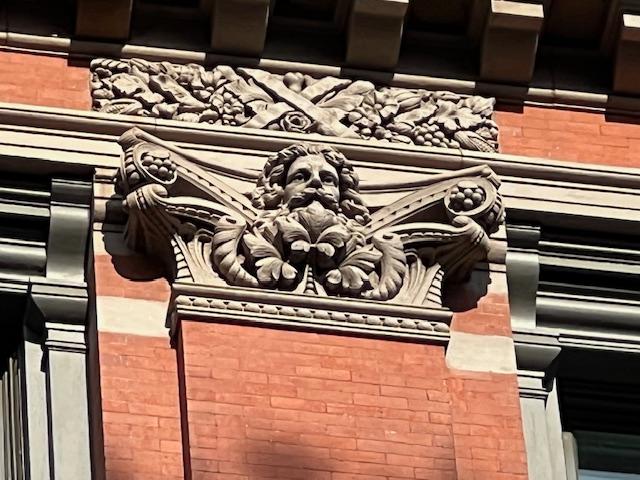
The details of 888 Broadway
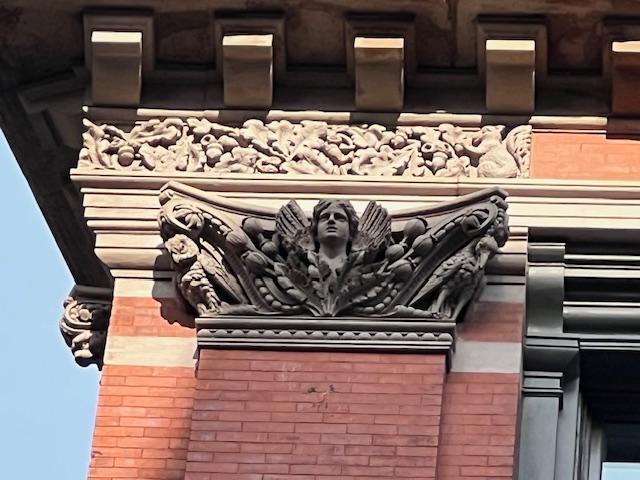
The details of 888 Broadway
Next to ABC Carpet is 876 Broadway, the former D.S. Hess Building. This impressive brick building was built for David S. Hess, a decorator and furniture dealer.
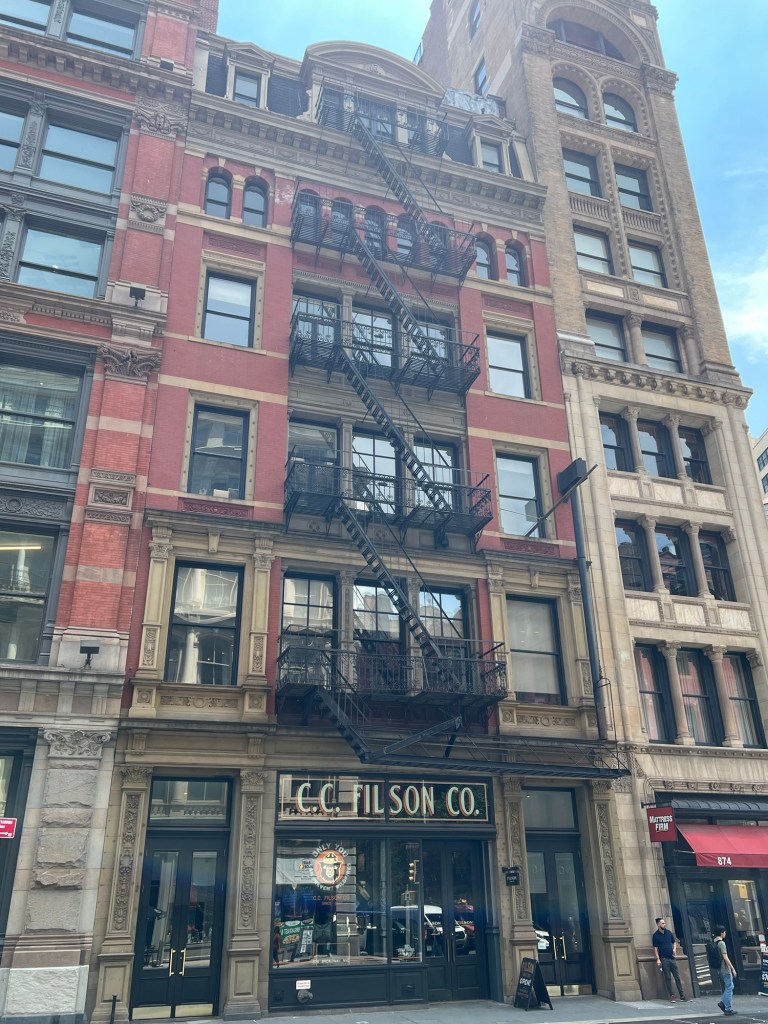
876 Broadway-the former D.S. Hess Building
https://daytoninmanhattan.blogspot.com/2012/07/the-1884-d-s-hess-building-nos-876-878.html
https://streeteasy.com/building/876-broadway-new_york/3rd-floor
https://www.realtor.com/realestateandhomes-detail/876-Broadway-Fl-4_New-York_NY_10003_M32603-94846
The brick building was designed by architect Henry Fernbech in the Renaissance style and was completed in 1884. The details are in the panels by the doors and display window. D.S. Hess moved out of the building in 1984 to a new location on Fifth Avenue and a series of retailers have rented the space since (DaytoninManhattan.com).
a
874 Broadway-The former McIntyre Building
https://daytoninmanhattan.blogspot.com/2010/07/1892-mcintyre-building-finials-snakes.html
https://www.cityrealty.com/nyc/flatiron-union-square/the-macintyre-874-broadway/6892
https://streeteasy.com/building/874-broadway-new_york
The McIntyre Building was the work of Ewen McIntrye, a pharmacist whose building had grown and had made him wealthy. He demolished the store he had on this spot and built this office building. The structure was designed by architect Robert Henry Robertson in a mixture of designs of the time. You can see Gothic Revival and Renaissance Revival and Victorian Eclectic in the design especially at the top of the building (DaytoninManhattan.com).

874 Broadway from the front angles showing the commercial section of the building on East 17th Street

The elegant roof and details of 874 Broadway
I finished walking the neighborhood in just three hours and was able to enjoy walking around Union Square Park and just relaxing with some cold water on one of the benches. This is when I really discovered all the statuary and attributes to the park that I missed all these years. I had always been so busy passing by the park on my way to something that I never really noticed it before.
The Farmers Market was in full swing in northern section of Union Square Park when I returned and as I walked through the northern end of Union Square Park, I passed the Abraham Lincoln statue. It still surprises me that all these presidential statues survived the riots in 2020. Unlike other cities, New Yorkers did not knock down their statues.

The statue of Abraham Lincoln in Union Square Park
https://www.nycgovparks.org/parks/union-square-park/monuments/913
Located at the northern end of the Union Square is the prominent statue of President Lincoln. This statue stands and overlooks the lawn of the park.
Abraham Lincoln
https://www.whitehouse.gov/about-the-white-house/presidents/abraham-lincoln/
This impressive statue of Abraham Lincoln was designed by sculptor Henry Kirke Brown and was dedicated in 1870. In his statue of Lincoln, cast in 1868, and dedicated September 16, 1870, he combines a classically styled pose with a perceptive naturalism, uniting realistic detail with an idealistic stance (NYCParks.org).
Artist Henry Kirke Brown
https://en.wikipedia.org/wiki/Henry_Kirke_Brown
Artist Henry Kirke Brown was an American born artist who had studied with artists in Italy for his training. He is best known for his figurative historical statues. He also designed the statue of George Washington in Union Square.
From there I strolled to the edges of the park admiring the landscaping and the work that the Union Square Partnership along with volunteers do to keep the park looking pristine. Like Bryant Park on West 42nd Street, these parks had a dark past made lighter by modern times and a new found enjoyment found in New York City parks.

I then just relaxed and admired the beauty of Union Square Park. I got to watch the sunbathers and dog walkers in the park.

Union Square Park in the late afternoon
As I explored the borders of the park, I came across a statue of a mother and child. I never noticed that this was an old water fountain for the park. It is always blocked off by vendors during either the Farmers or Arts Markets. With nothing in front of it, I could finally see it in its full form.
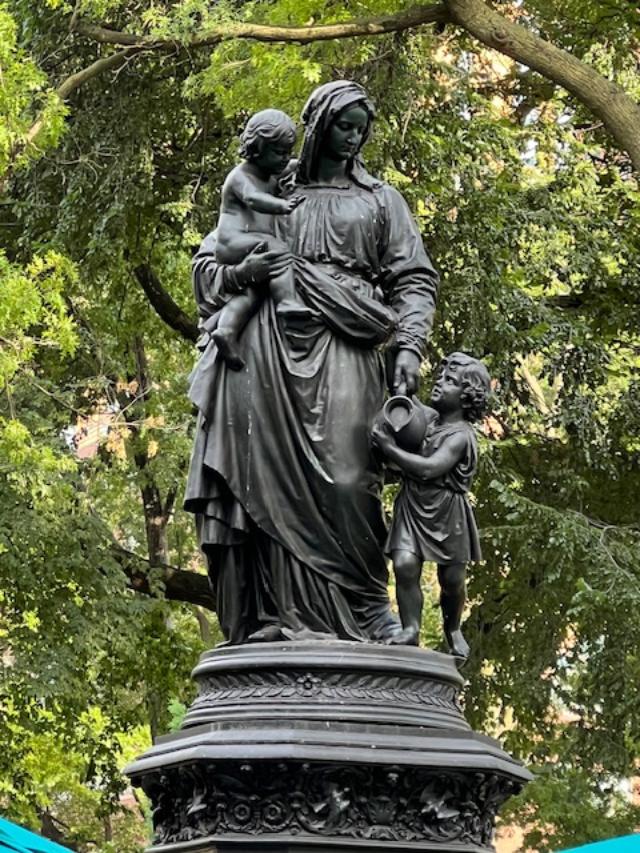
The Union Square Drinking Fountain
https://www.nycgovparks.org/parks/union-square-park/monuments/797
Consisting of a bronze statuary group atop a granite stepped pedestal, it was crafted by German sculptor Karl Adolph Donndorf and donated by philanthropist Daniel Willis James to promote public health as well as the virtue of charity (NYCParks.org).

Artist Karl Adolph Donndorf
https://en.wikipedia.org/wiki/Adolf_von_Donndorf
Artist Karl Adolph Donndorf was a German born artist know for his large realistic sculptures. He had served as an artist apprentice to further his education on sculpture (Wiki).
I look at where Union Square started then progressed to and then what it turned into in the late 1960’s, 70’s and 80’s and what it is today coming back to where it was before and it gives me faith in how a City keeps morphing. It has its ups and downs over time but then keeps progressing. It improves and neighborhoods find new purpose.
How I have seen this neighborhood change from the 1980’s to today is a gap as large as the Atlantic Ocean. The twenty year old’s today can not imagine what I saw in this park when I was twenty. It is night and day. This shows the resilience of Manhattan and of New York City and how with each year it reinvents itself. I can only imagine the neighborhood in 2030 and what we will see then.
It will be fun to find out.
The other blogs on the Union Square neighborhood:
Day Three Hundred and Thirteen: Walking the Borders of Union Square:
https://wordpress.com/post/mywalkinmanhattan.com/48888
Day Three Hundred and Seventeen: Walking the Avenues of Union Square:
https://wordpress.com/post/mywalkinmanhattan.com/50233
Day Three Hundred and Eighteen: Walking the Streets of Union Square:
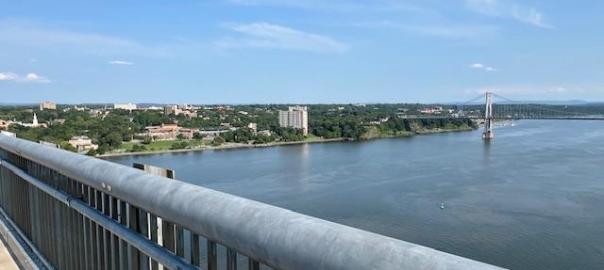
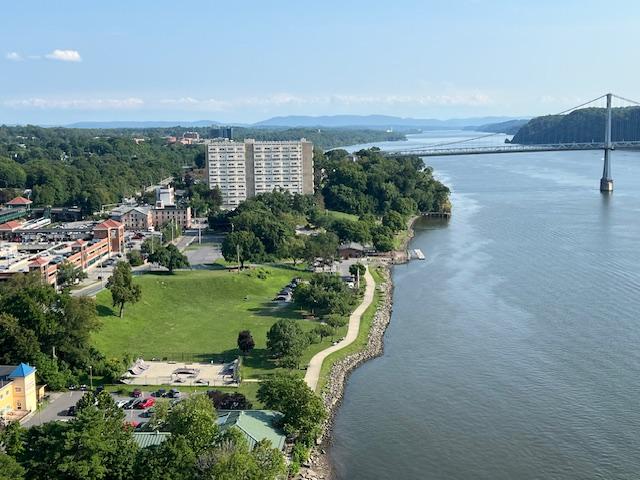
The views on the Poughkeepsie waterfront from the bridge


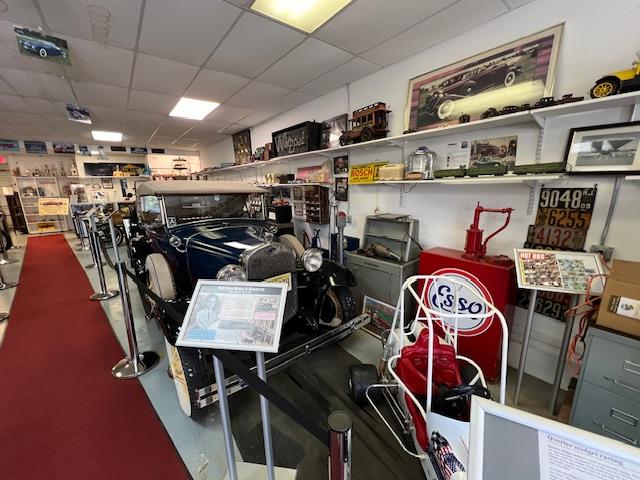
The Main Gallery at the Vintage Car Museum of New Jersey

The beautiful and classic cars of the Vintage Car Museum of New Jersey

The main gallery at the New Jersey Museum of Boating


The new Seaside Heights Historical Museum at 1400 Boardwalk in Seaside Heights, NJ


The Saugerties Historical Society at 119 Main Street


The Fritz Behnke Museum at 330 Paramus Road

The farming display
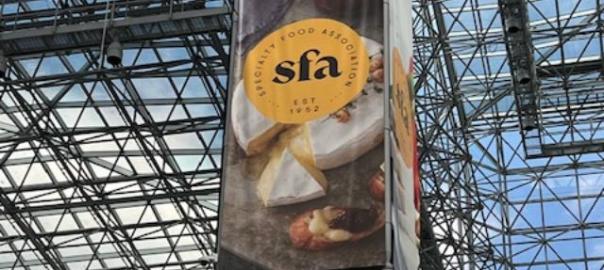
One of the highlights of my industry and my favorite amongst the big shows geared towards the hospitality field is the New York Fancy Food Show held at the Javits Center every June.

The Specialty Food Association sponsors the show every year at the Javits Center
https://www.specialtyfood.com/
The Fancy Food Show is aisle after aisle of the latest products that will be stocking our grocery stores, specialty shops and gift stores. From the latest cheeses and pates to snack foods, flavorful drinks and waters to the latest heat and eat prepared foods to almost anything else to stock your pantry with, they are being showcased at this show. It takes me the full three days to get through the show just to walk down the aisles and see what new products there are to sample. That is not enough time plus you get over-whelmed with all the foods to taste and flavors to experience.
My first day I concentrated on the first floor of the show. The first several aisles were dedicated to vendor after vendor of cheeses. I have learned over the years to pace myself when I start the show, or you go into system overload. You have to take your time in the first three aisles of the show or else you will not be able to enjoy all the other samples you need to experience to form an opinion.
I was funny that I felt this way because when I said this to a cheese merchant, she repeated that comment back to me. She said, “You know, I keep asking everyone to try our cheese, but they keep saying they have to pace themselves. Why do they keep saying that?” I reminded her that we have aisles and aisles of food to see and a lot of first timers start to fill themselves up on the first three aisles and then can’t handle the rest of the show. She did not seem pleased with that answer and went back to work.
I continued to take my time walking the Food Show. Traveling aisle after aisle of cheeses, crackers, cookies and olive oils. The snack foods selection was extensive this year. I guess the pandemic got people creating food items that they liked, and they want to make a cottage business out of it. The problem is that there are only so many different ways to make caramel popcorn or chocolate chip cookies.
The biggest problem with food items at the show is when vendors are trying to be too specific who they want their customers to be or catering to a niche customer who is gluten intolerant or looking for all natural foods. I have had to keep a straight face when I had to sample all natural sodas with no sugar or cookies without eggs, wheat, sugar and are dairy free that tasted like saw dust. I know what the vendor is trying to achieve but when an item has no flavor no one will want to buy it. Some products can achieve this but somewhere in the recipe they will have to put a few ingredients back.
I found a lot of successful items at the show that did not agree with judges when it came time to give awards out. Some of their choices just had no flavor, taste or appeal to a lot of customers. I judged products by a couple of standards, how different was it in product, how it tasted and was the flavoring different from other items on the market and creativity in packaging. Some of the snack foods and sodas that won awards boggled me because they had no flavor and no enticing packaging.
I found that some of the best products in the French and Korean Food Pavilions. The Asian countries really had the pulse of appealing to a younger customer or an older customer who liked things from their childhood. The French always know packaging. They are famous for it. The color schemes and the pictures just appeal to a sophisticated customer. It is also the taste of their foods. The flavors are direct and intense. Their snacks had more unusual flavors and better cooking methods. There just seemed like they wanted to bring gourmet foods to the snack masses of the United States. I was impressed by a handful of items that I highly recommend to those who want to indulge in a treat.
The following were the best products I sampled on the first day of the 2024 Fancy Food Show and I want to share them with other foodies and culinarians. These products stood out the most for their taste and packaging:
In the French Pavilion, the first brand I highly recommend is the potato chip brand Simply Gourmand brand Brets, whose crispy flavorful snacks were the best potato chips at the show. in the Snack Food category, I thought they were the best I tasted. With their unique flavors, the best being the Camembert Cheese and the Miel Moutarde, the honey Dijon mustard flavors and colorful packaging, were outstanding. I had to beg the vendor for two bags to take home to sample. The crispy fried French potatoes were perfectly flavored and salted and they filled the bag with chips and not air like American companies.
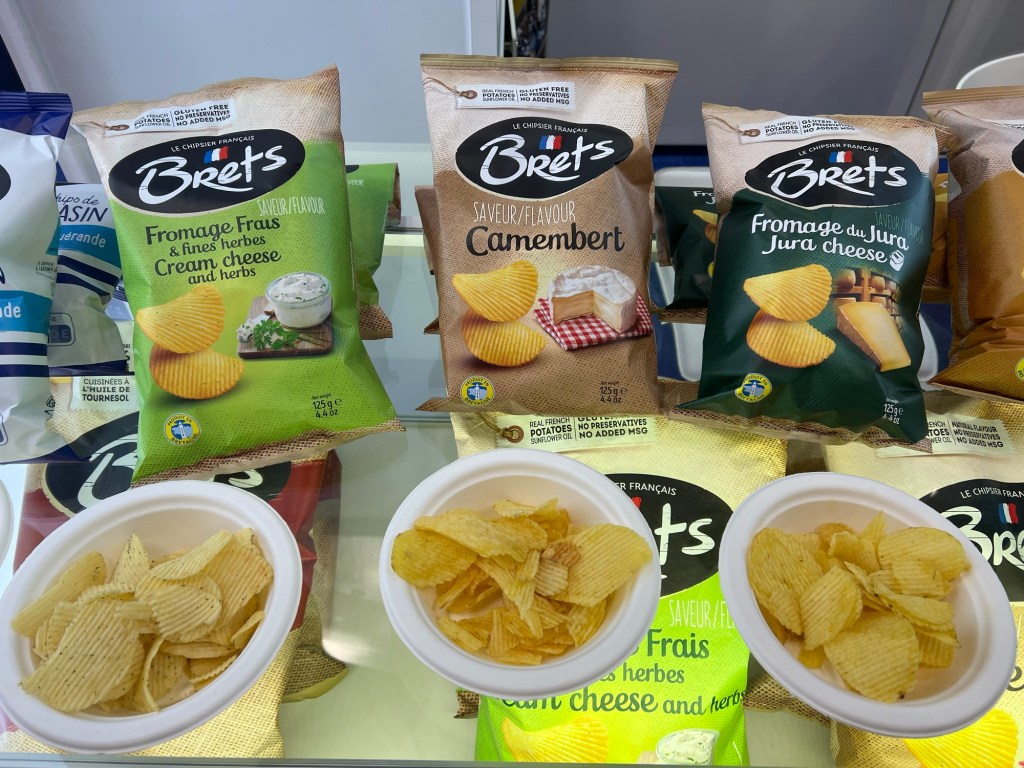
The Brets brand of potato chips by Simply Gourmand
https://www.simplygourmand.com/brets/

The samples I took home were excellent. I loved the crunch and the perfect seasonings.
The other item from the French Pavilion were the cookie brands by Gozoki Deceures, both the Maison Jacquemart and the Noots. These buttery delights were a treat when I tried the different varieties.
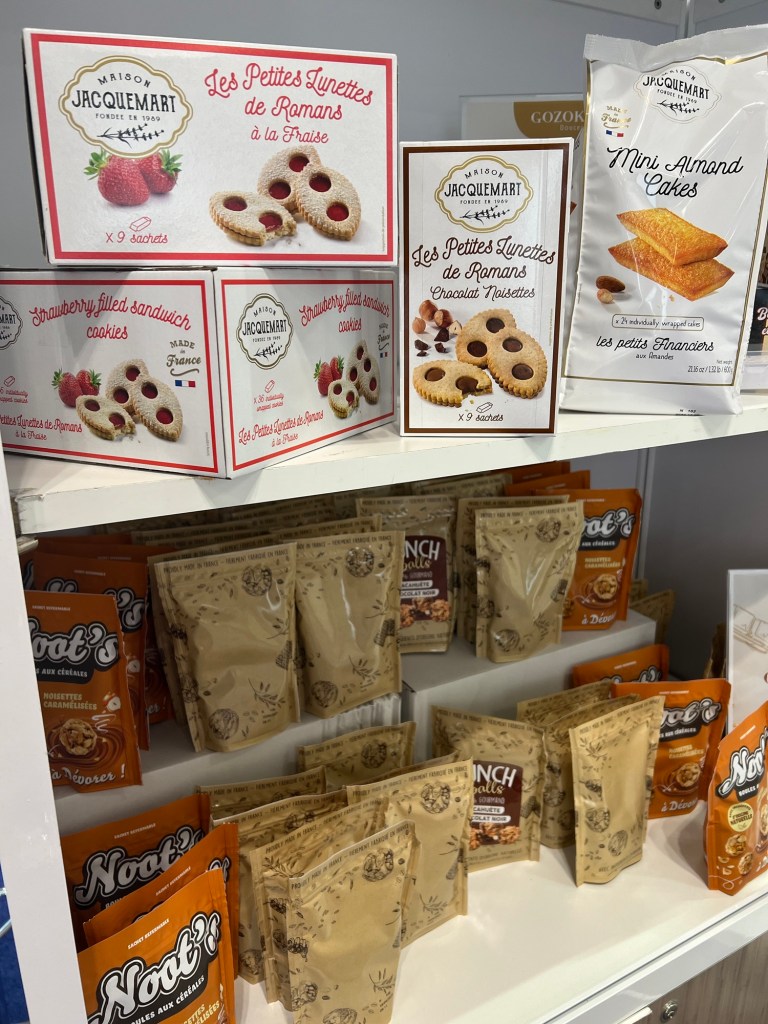
The cookies from Maison Jacquemart were excellent
I sampled the various flavors of cookies from Maison Jacquemart and the cookies look as good as they taste. I was able to try their Les Petits Lunettes, a small type of Linder tart cookie filled with strawberry jelly and chocolate cream and their mini Almond cakes, that tasted like a Madeline. You could taste the sweet butter in the cookie dough and the fresh jelly in the cookie. The crunchiness of the cookie with the sweetness of the filling was a delectable combination.
It was the same with their tartlets as well. There was a thick layer of chocolate, strawberry and apricot jelly on the top of their cookies with a buttery cookie base that showed me that they did not skimp anywhere when producing their product.
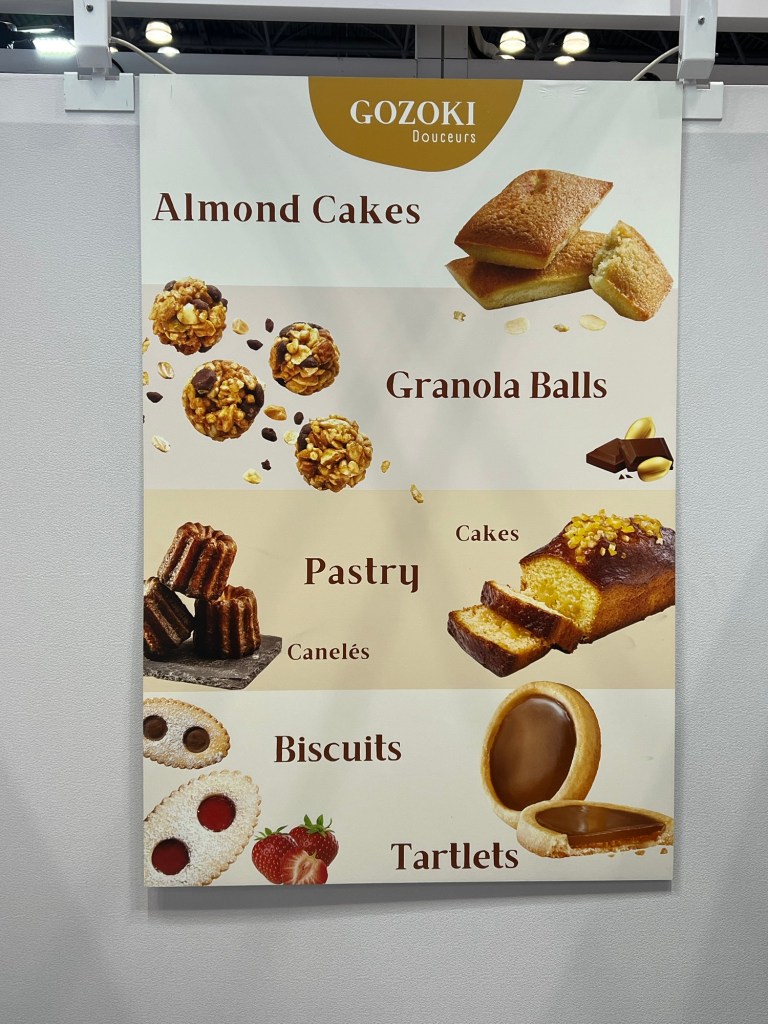
Gozoki Douceurs products were my pick for best baked products at the show
https://www.linkedin.com/company/gozoki/

The samples they gave me of the Strawberry Jelly and the Chocolate filled tarts were delicious
In the Canadian Pavilion, around lunch time on my first day of the show, I sampled the Chicken Nuggets by Al Safa Foods and these were impressive especially the spicy ones. They were juicy on the outside and crisp on the inside and the spicy flavor had a nice kick to it.
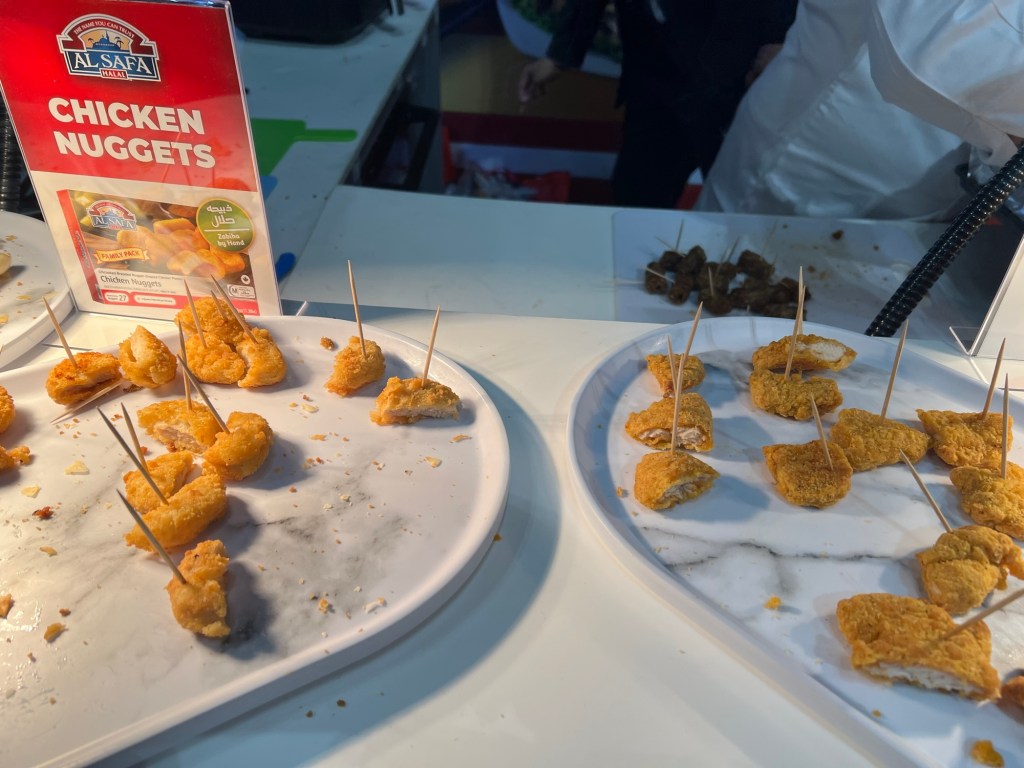
The Al Safa Chicken nuggets were one of the best chicken products I tasted at the show
What I like about Al Safa Chicken products is the quality and taste of the chicken. The product cooked up nicely and the taste would appeal to children and adults alike.
in the Italian Pavilion, there were many honey products being sampled at the show but the best flavored honey was from Casa Folino were stood out for flavor and packaging.
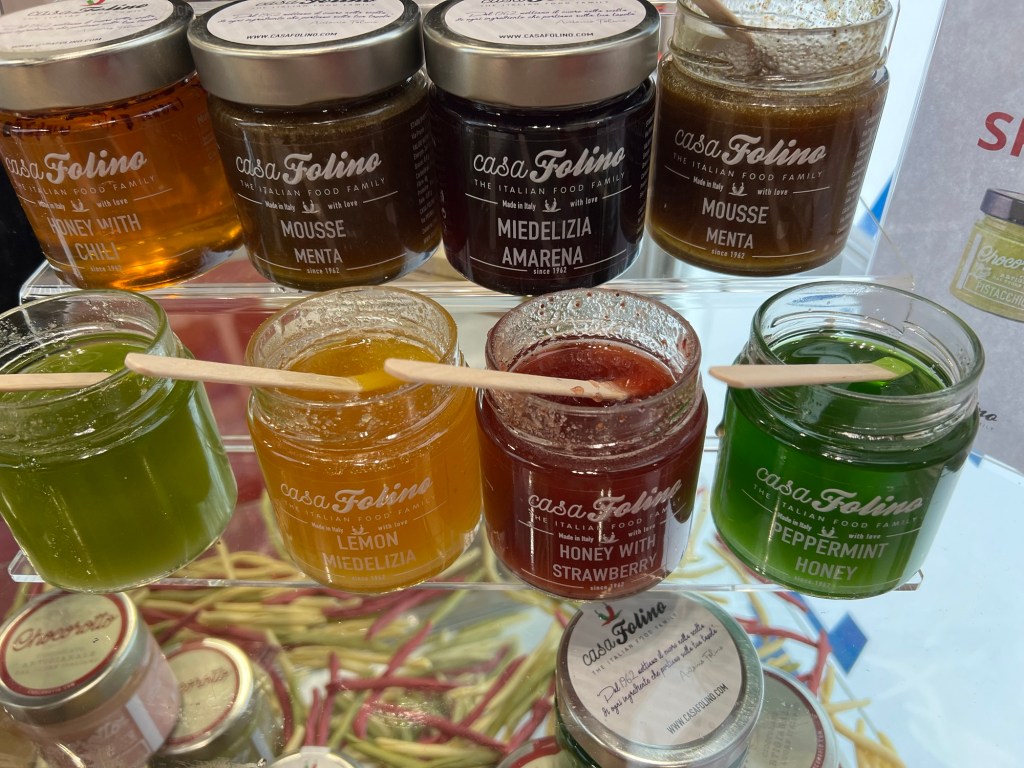
The Casa Folino flavored honey is a different alternative to jellies when topping toast or biscuits
The Casa Folino line of honeys had a zippy set of flavors and were unique to the show. Other vendors offered different flavored honeys due to the bees or the region they were produced but this company added the flavorings to the high quality honey making a unique accompaniment to biscuits an
The Asian Pavilion offered so many amazing products and these are the best of the best when I walked this part of the show:
I was very impressed with food items from both Korea and Thailand with a few vendors from Taiwan as well. What I liked about the Asian food products is the unique flavors and bright packaging of their products. They made their food products appealing to the eye and engaging to the senses and the packaging was fun. Once they reeled you in with the engaging packaging, the flavors were very intense with different tastes like Rose, Melon and Mango for sweets and peppers and cheeses for their savory products.
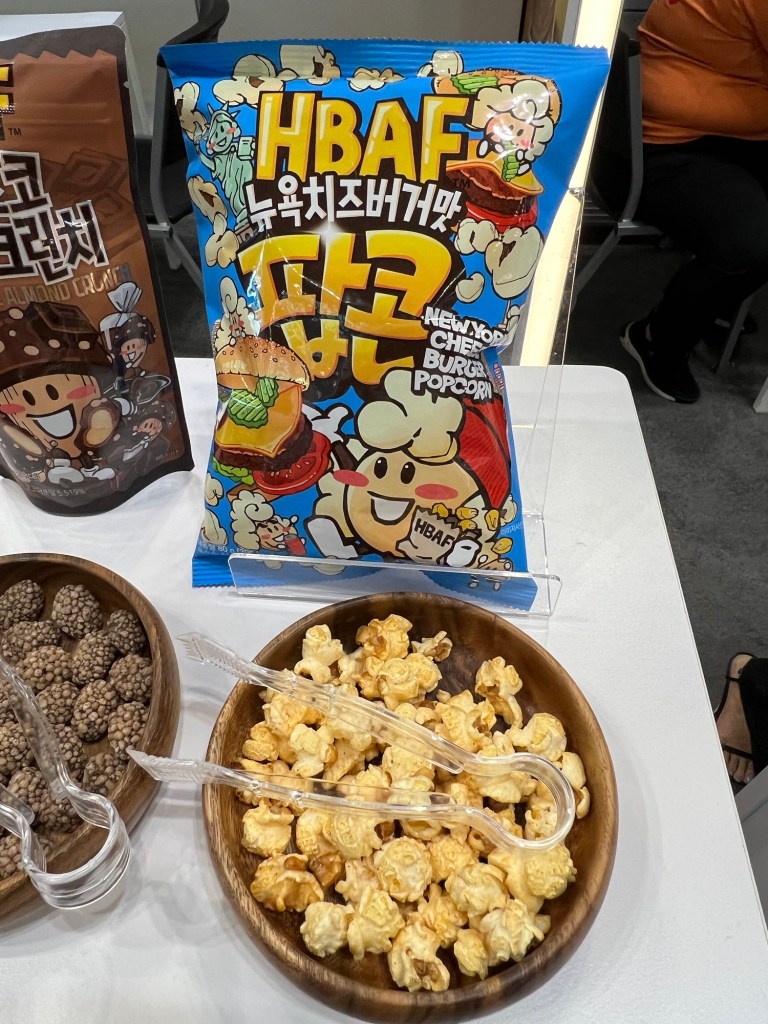
HBAF Snack Products
These Cheeseburger popcorn snack from HBAF were very impressive. The seasonings really did taste like a cheeseburger and you could taste the beef and tomato flavorings in the popcorn. Their other snacks had unusual flavors as well. I think these innovative snacks will work well in the American market. They also sampled a Cookie & Cream Malt balls and Honey Butter Almonds that were also delicious. All their products had a delicious taste and engaging packaging. The perfect stocking stuffer at the holidays.

Yummy LOL has the most interesting packaging
Yummy LOL candies had some of the most creative packaging in the candy category. The vibrant colors and the way that the company combines the use of candy as a toy makes this packaging all the more fun. The product was candy and a toy all in one package.
The quality of the candy is very good. The flavors of the candy have a high level of sweetness and I notice sometimes that the Asian made candies have a more intense flavor than their American counterparts. I think it is the use of different fruit flavors being used and the way these taste.

Sappe Products
In the Thailand Pavilion, the Sappe products had the top beverage of the show. I have not tasted such refreshing sodas in a long time with such unique flavors. The use of unusual fruits and things like rose petal gave the sodas a bite and a flavor that I had never had before. I loved the Aloe Vera sodas, the Mogu Mogu beverages but the standout of their products was these floral Keaf sodas that were so refreshing and had such a bite to them that they were the perfect accompaniment with any spicy dish.

Keaf Sodas have an amazing and zesty taste to them
The Keaf sodas Relaxing Mood, Day Dreamer and Romantic Date Night flavors when well chilled have refreshing flavor due to all natural ingredients and just the way the tastes combine together. These sodas will not be on the market until next year but should be a huge hit in the specialty soda category. Their sodas were the best at the food show.
Of the American made products that I was most impressed with I have talked about in previous blogs on the food show such as Wein-Chuan Chinese Dim Sum products which are such high quality and taste homemade like they are made in the restaurant. Another was Goodie Girl cookies with their packaging and cookie flavors almost mimic Girl Scout cookies. I have found the high quality and consistency and packaging to be excellent.

Goodie Girl Cookies
Goodie Girl Cookies I have mentioned in past blogs as being a high quality brand of cookies and crackers. These delightful treats remind me of a version of Girl Scout cookies and even the Rep told me everyone gets confused by them. Even the packaging and flavors of the cookies are very similar to the latest versions of the scouts cookies.
The best part about Goodie Girl cookies is that you do not have to wait until once a year to buy them. Their Birthday Cake cookies have a creamy sweetness to them and the Fudge Stripped are a crisp sweet cookie and both can satisfy any sweet tooth.
I spent a lot of time visiting the Wei-Chuan booth at the show during meal times to sample all their products and I highly recommend the whole assortment.
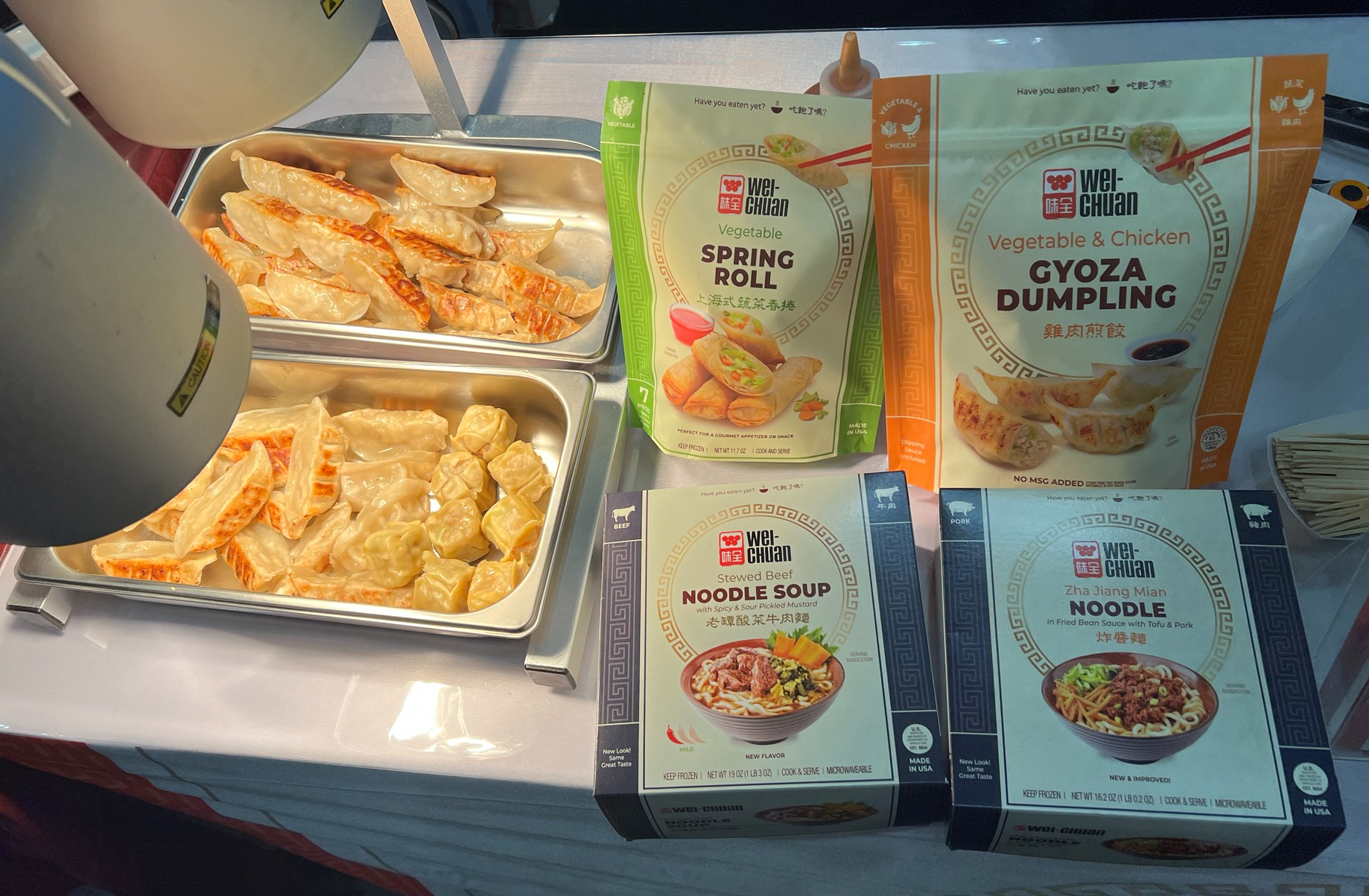
The Wei-Chuan products of Dumplings and Spring rolls
https://www.weichuanusa.com/en/frozen-foods.html
Wei-Chuan is another American based company that makes high quality Chinese-American Dim Sum products. They were sampling two types of dumplings, the Chicken and the Pork along with their delightful crisp Spring rolls. I have always been impressed by the quality and taste of their appetizers. They are a product that are restaurant quality and you would have thought they were made in front of you.
A new standout product that I thought was fun and had a lot of promise was Sweetapolita, a specialty sprinkle set for kid’s parties.

Sweetapolita packaging of their specialty sprinkles for children’s birthday parties I think would be a huge hit with adults as well.
When I talked with the founder of the company, she said that when she used to have parties for her kids and said the best part of the party is when the kids had their own toppings. She said she created the product because she found that kids loved sprinkles and the creativity of decorating their own cakes. She found no product that fulfilled the need the way she wanted it so she imagined her own line and that was how she created her brand.
After the first day of the show, I had covered the whole first floor which is like walking four football fields of food. The SFA sponsored on the first night of the show the ‘Five Boro Block Party’ for all the attendees of the show. I was so stuffed from all the sampling that I had been doing at the show that I had no appetite whatsoever. There was a series of food trucks offering complimentary to all the vendors and attendees’ things like tacos, quesadillas, hot dogs and ice cream. Of all the times that something like this was free.

The Five Boro Block Party at the end of the first night of the show
They gave the attendees who wanted to have something to eat a generous sample of the different ethnic foods. Even though everything looked and smelled delicious, all I could manage after a day of sampling foods was a soft serve ice cream cone with a cherry dipped topping.

The variety of food trucks made for a nice light meal
This gave attendees a chance to socialize after the first long day of the show. They had a great DJ at the food truck festival and an actress walking around as the Statue of Liberty on stilts doing photo ops with all the guests. I thought that was fun evening and stayed for bit before I dragged myself back to Port Authority.
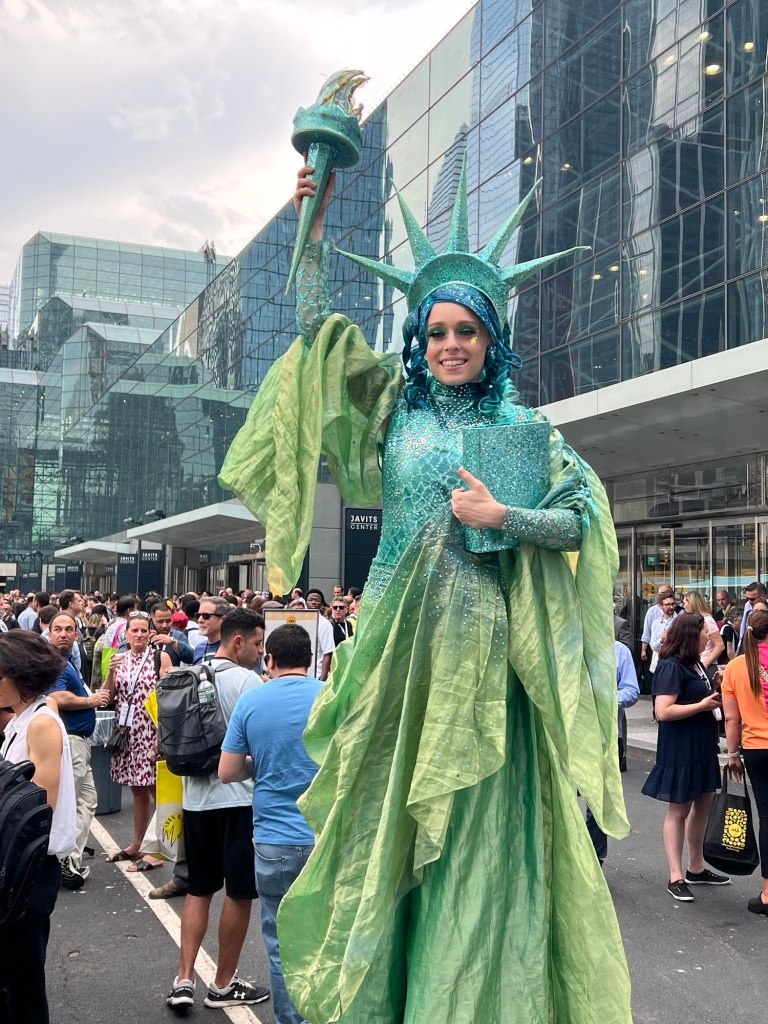
The Statue of Liberty who walked around the show greeting guests
I was so tired and stuffed with food that leaving early was no problem for me. So many of my friends imply that it must be so much fun to sample free food all day. It is a lot of work not to be tempted to try everything and to walk what is about four football fields of different types of food can really throw off your body. Too much of too many different things. I had to walk around the City for a bit before I went home that first day of the show.
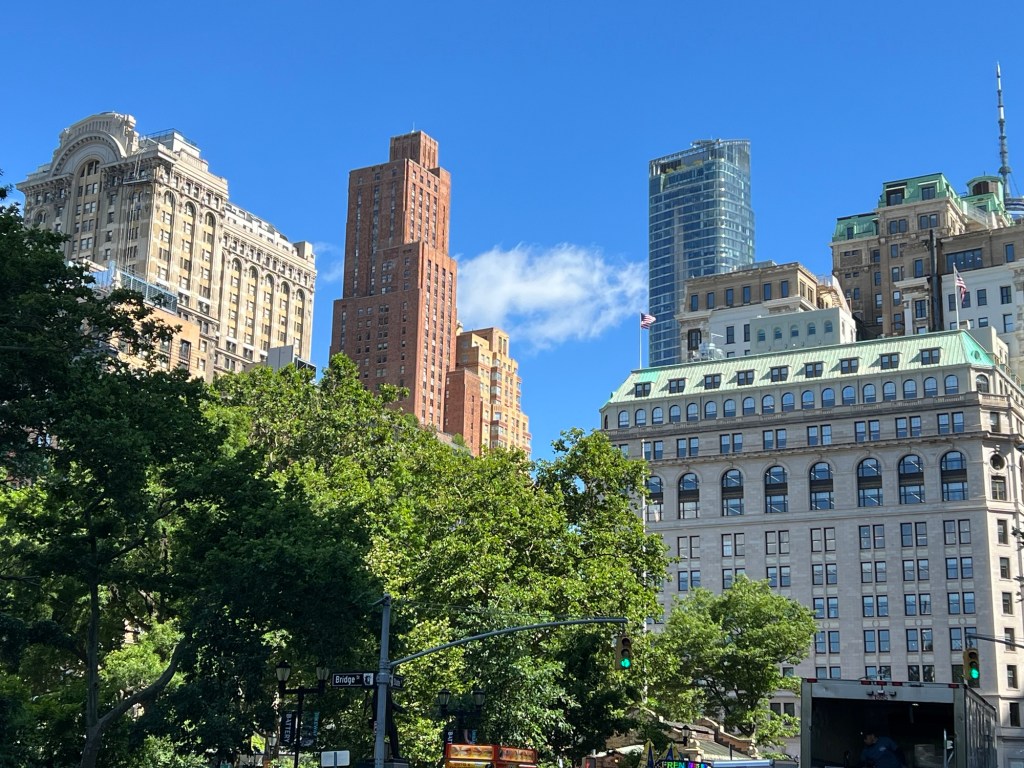
I love walking around the City during the early evening
The second day of the food show I was raring to go and started the show on the bottom level of the Jarvis Center, where parts of the show was broken down by category and by country and state not just by product, so it gave me a chance to spend some more time in the country pavilions.

The dumplings or Momo’s were a Nepali dumping that were spicer than than their Chinese counterparts
https://www.facebook.com/mothersmagicworld/
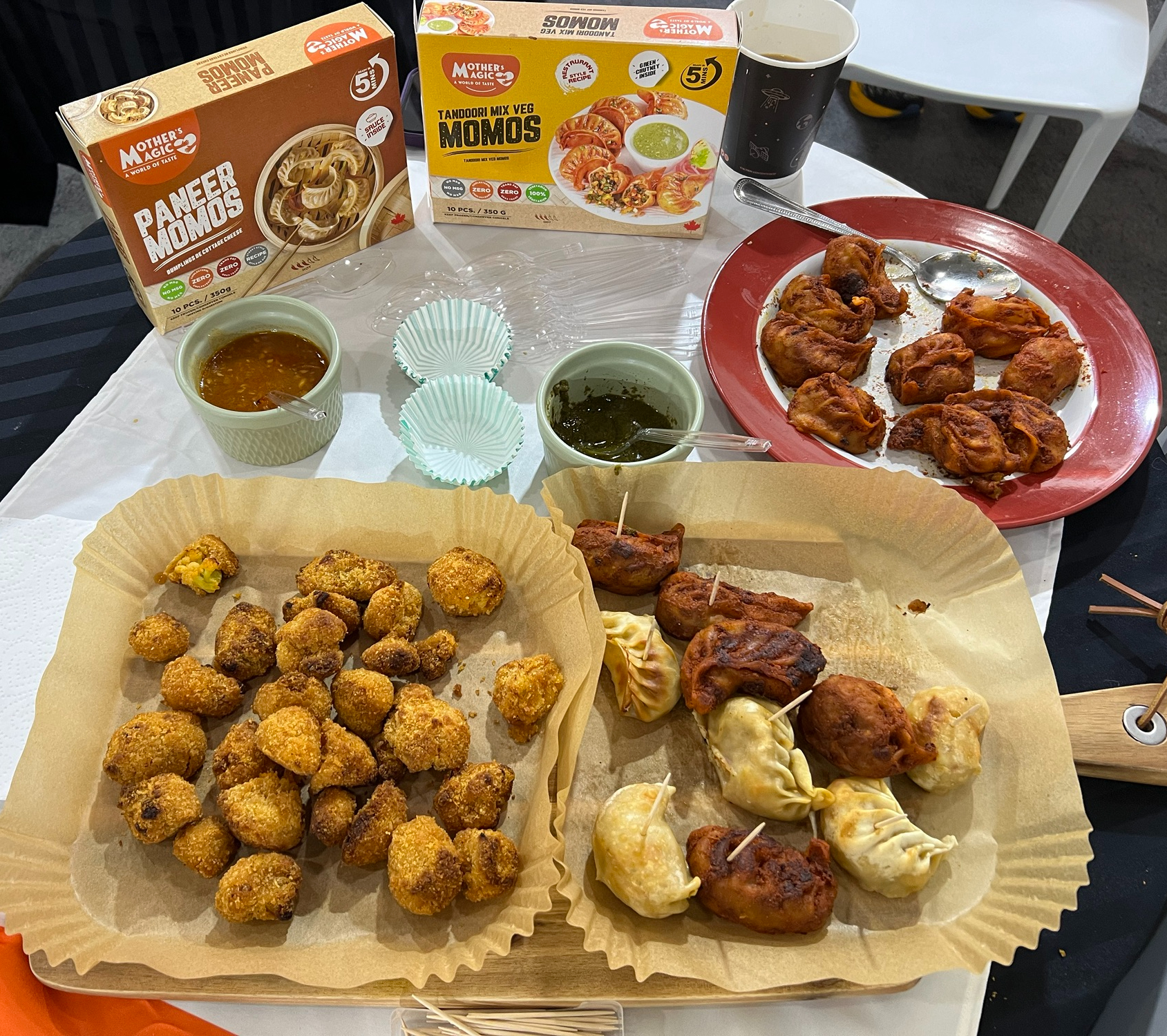
The Momo’s had a spicer flavor to them due to the chilies in the dough and meats
The selection of Momos had a fiery flavor to them and reflected the colder climate where these types of dumplings originated. They are a different twist to typical Asian food. They used different spices and were hotter than most dumplings I tried at the show.
In the Chinese pavilion, one of the most popular vendors was ACC Foods LLC. The women who worked there were making everything fresh and right in front of us.

ACC Foods out of China had some of the best quality Dim Sum at the show
https://www.facebook.com/p/ACC-Foods-LLC-100054619171853/
They had employees making fresh pork dumplings and soup dumplings as we watched and then cooking them fresh as we waited for them to come out of steamers and frying pans.

All the samples for ACC Foods were prepared right in front of us
Everything at this booth was made from scratch and then cooked and served under the heat lamps. Trust me, nothing lasted that long where food sat at this booth. The quality, consistency and taste were all excellent.

In the Taiwan Pavilion, Pocas Foods had some of the most amazing food products from the show
Pocas Foods had a fantastic display of items at the show in both the beverage and the candy categories. I was blown away by the quality of their beverages and flavors of their candies. I have not tasted products that have such a vivid taste and in such unique flavors like melon, pineapple and mango.
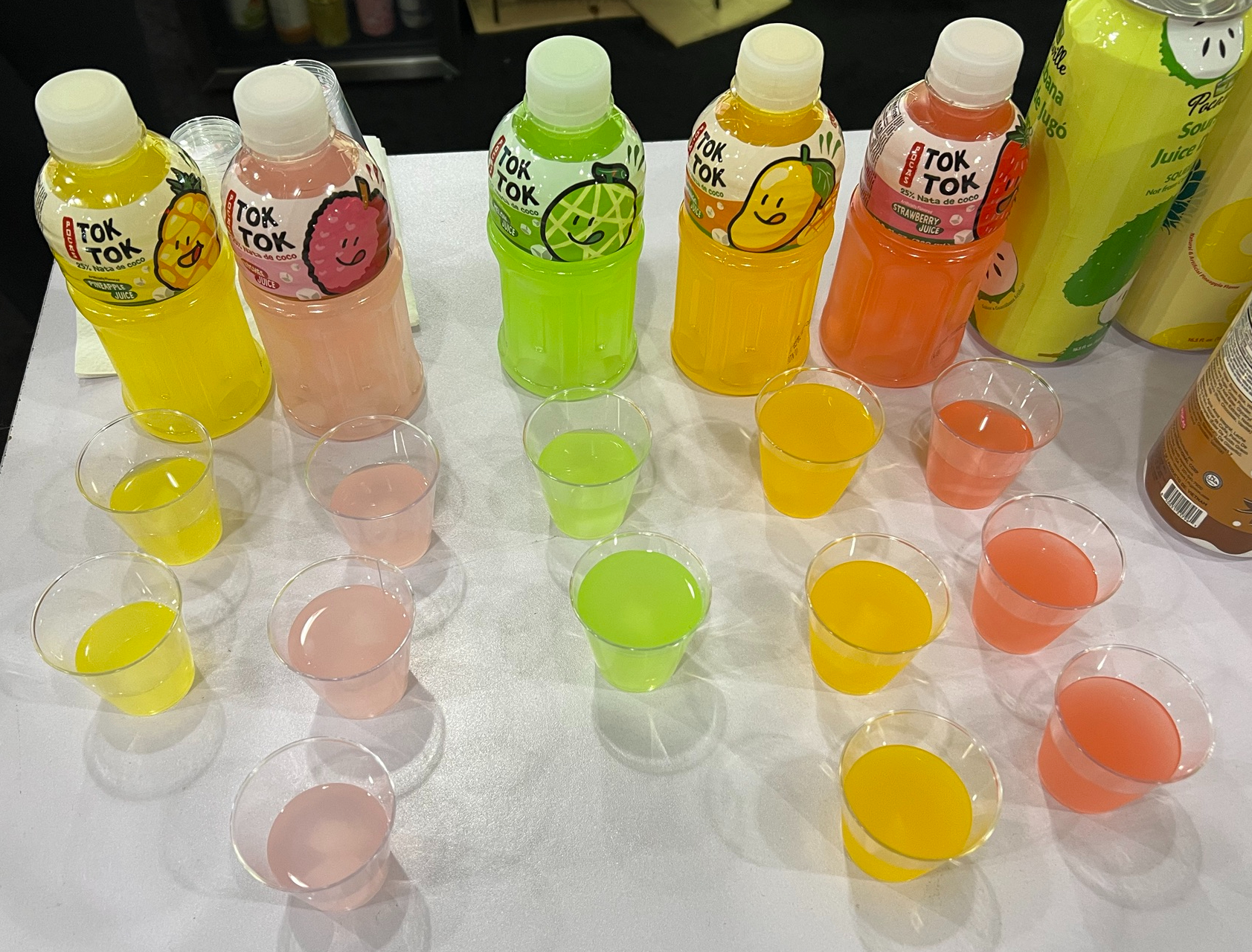
The Tik Tok beverages to me were some of the best in show at the Food Show. Not only were each of the flavors I tried delicious, but each had small pieces of gelatin inside the bottles to add another sweet treat to each beverage. These were made in Vietnam.

Their freeze-dried candy was so intensely sweet and crunchy. Such a delicious and unusual candy and with each bite it seems to get sweeter. I loved crunching on these and they are addictive.
Another excellent spread that I had tasted was by Trai foods. This brand of sauces were fiery and flavorful.

The delicious and punchy sauces by Tari Foods.
Their sauces had amazing taste. They gave me a sample of the Amarillo Pepper to take home and delicious hot sauce added a nice kick to chicken and hot dogs.
There were several small batch snack makers I met in the Innovation and New Products Pavilion on my last day of the show. The popcorn from Little Lad’s was delicious and had flavors that I did not see in the more commercial brands.
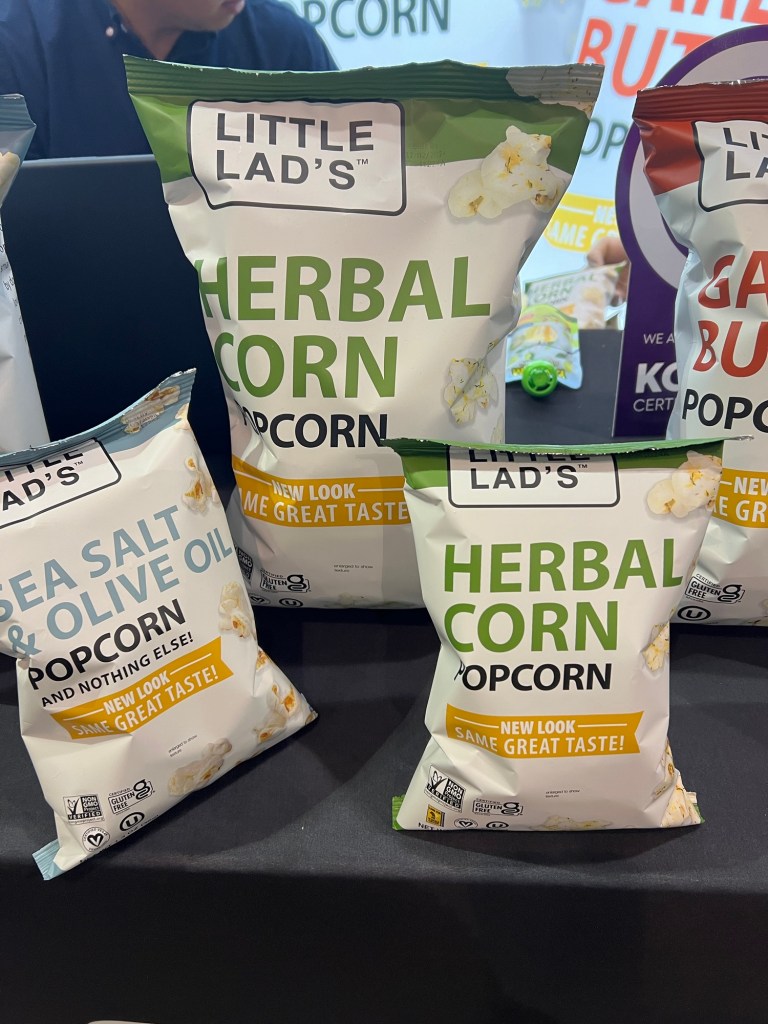
The representative from Little Lad’s was so impressed by my comments of his product that he sent me home with a big bag of his Sea Salt & Olive Oil Popcorn which was a delight. I loved the subtle flavor of the popcorn and their was a nice saltiness to it.
Another unique and delicious snack were the Caulipuffs snacks. These puffed snacks were made with dried cauliflower flour and then air puffed into a type of ‘doodle’ snack.
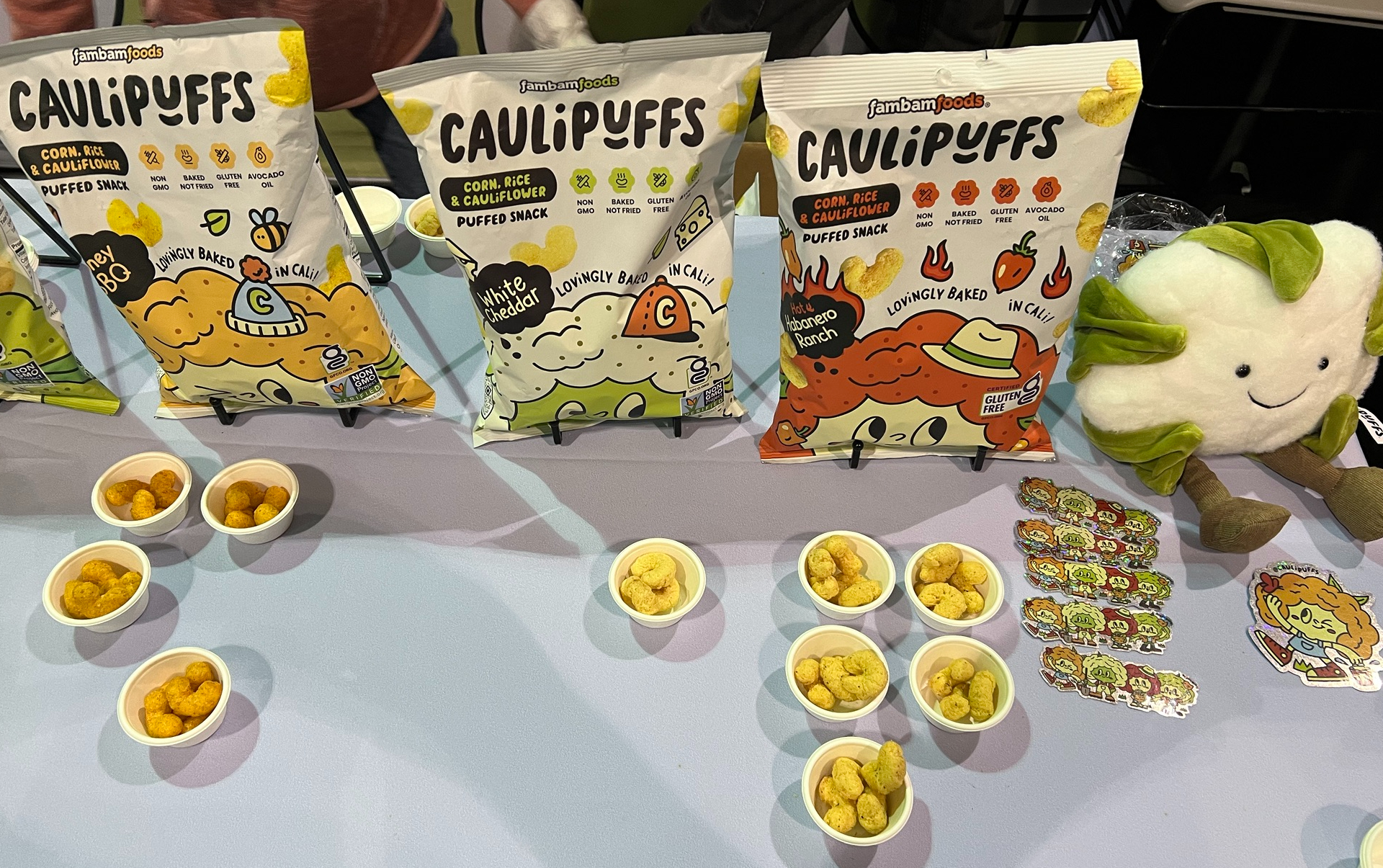
Caulipuffs are snacks made from cauliflower
Caulipuffs were a big surprise to me at the Food Show and one of the most delicious snacks. Not only were they lighter than most of the snack foods I sampled but they were flavored so nicely. Both the honey barbecue and the white cheddar had a rich flavor and the had a nice crunch in every bite.
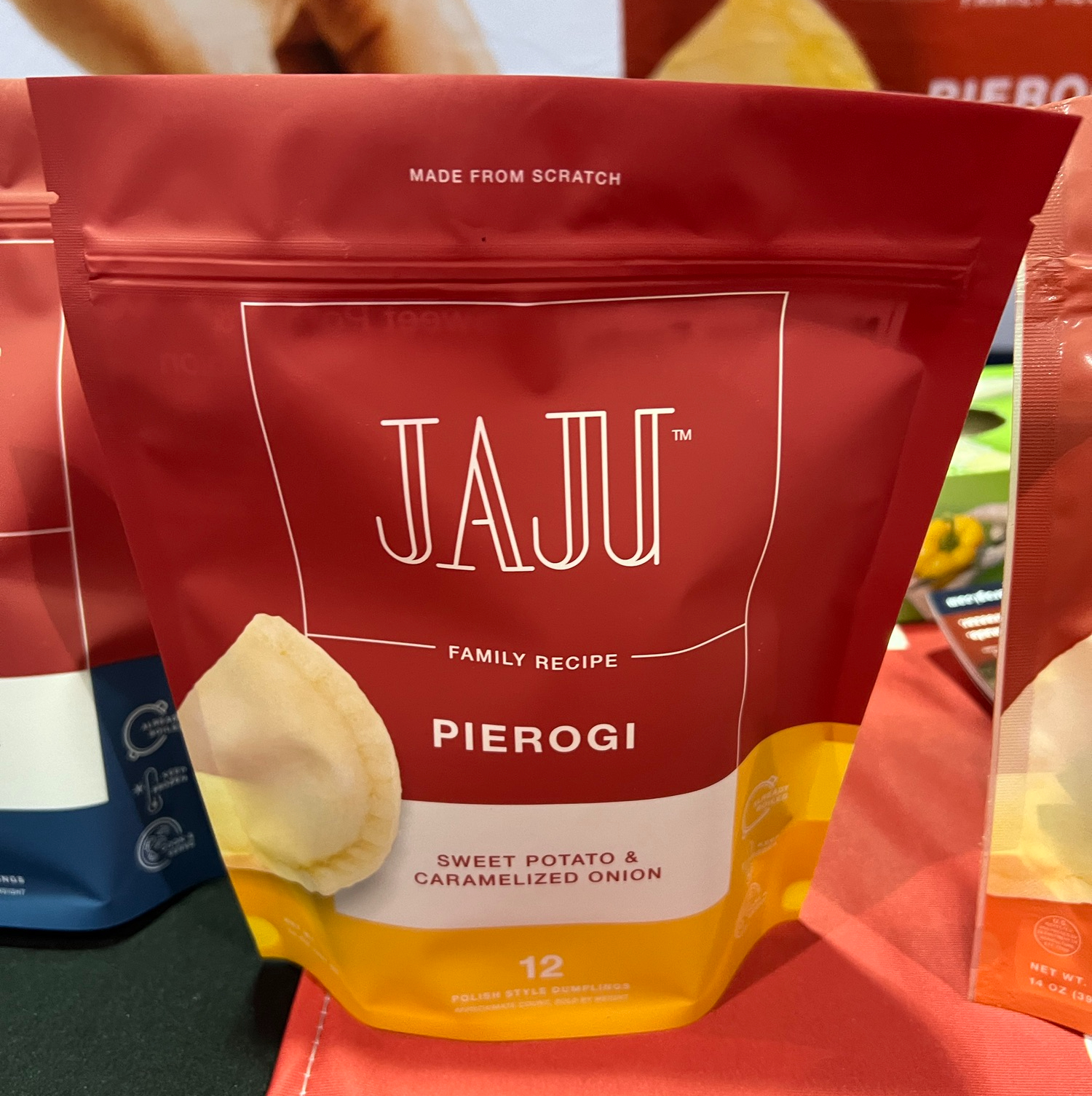
The Jaju Pierogi had delicious fillings and great flavor
I had tried a variety of pierogi at the show, but the brand Jaju stood out the most. These small batch dumplings had a variety of fillings, and the Sweet Potato with the Caramelized Onions had a sweet and savory flavor in every bite. They were also the perfect size for a side dish or a snack and cooked up well.
There were many frozen and fresh pizzas that I sampled at the Food Show but PiOOa Pizza stood out not just for the quality and taste but for the ethical stance they took in the company.

PiOOa Pizza
PiOOa pizza frozen pizzas stood out not just for their delicious flavor and consistency in the crust but the owner is deaf, and the company gives opportunities for those who are deaf employment in the company. The staff here works together to create these wonderful frozen pizzas.
One of the friendliest vendors I met were the Mother/Daughter team at Miss Hannah’s Gourmet Popcorn.

The mother/ daughter team behind Miss Hannah’s Gourmet Popcorn
https://www.misshannahspopcorn.com/
One of the surprising popcorn snacks I sampled was in the New Products Pavilion were the deliciously sweet Miss Hannah’s Tutti Frutti and Caramel Popcorn. Made in small batches by hand it is right now only available online. This decadent popcorn tastes like each individual popped kernel was coated individually with a touch of sweetness in every bite. It’s delicious taste and simple but fun packaging will make a wonderful gift or host present.
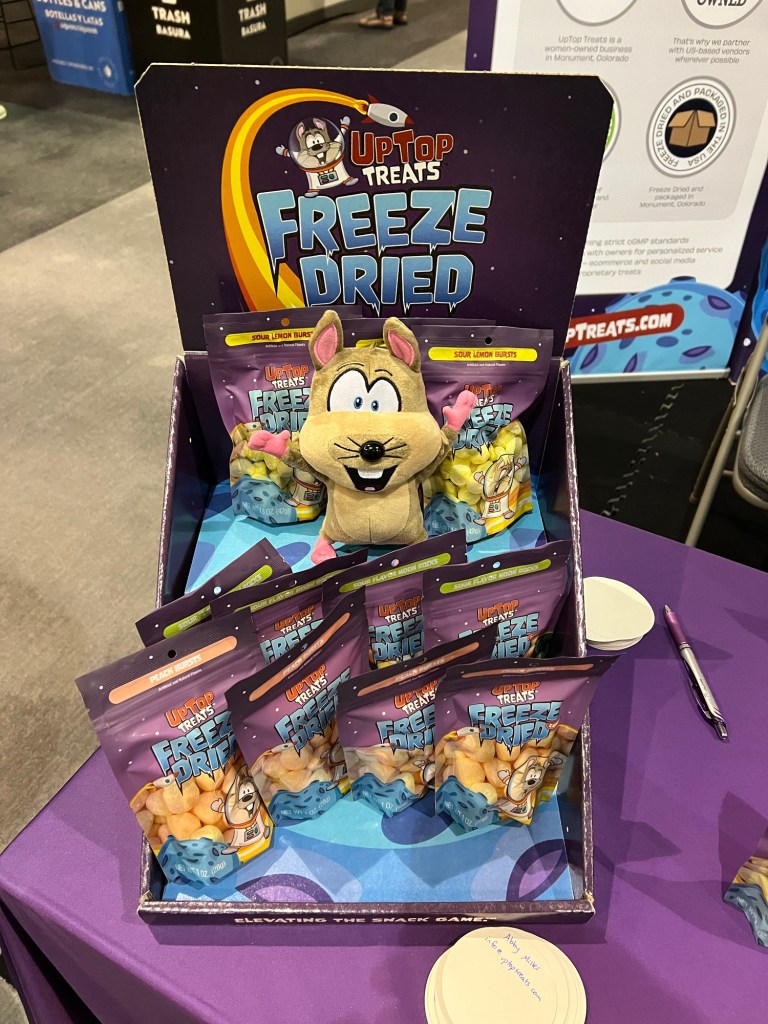
UpTop Candies are truly out of this world
The candy from UpTop Treats was very unique both in packaging, taste and in the logo. I thought this was a great product for children especially ones who were interested in the Space Age. The candies were freezes dried fruits that were sweet and crunchy and were the perfect snack for kids. Even this big kid (me), was impressed by the flavor and quality as well as the portion size of the product.
I loved the logo and the little space creature they created for the candy. I told the vendor that these would wonderful to sell in the Natural History and Children’s Museums. This is their get selling point. She had not even thought of that angle for the product. I also liked the little stuffed animal the had and said it was another good selling point.
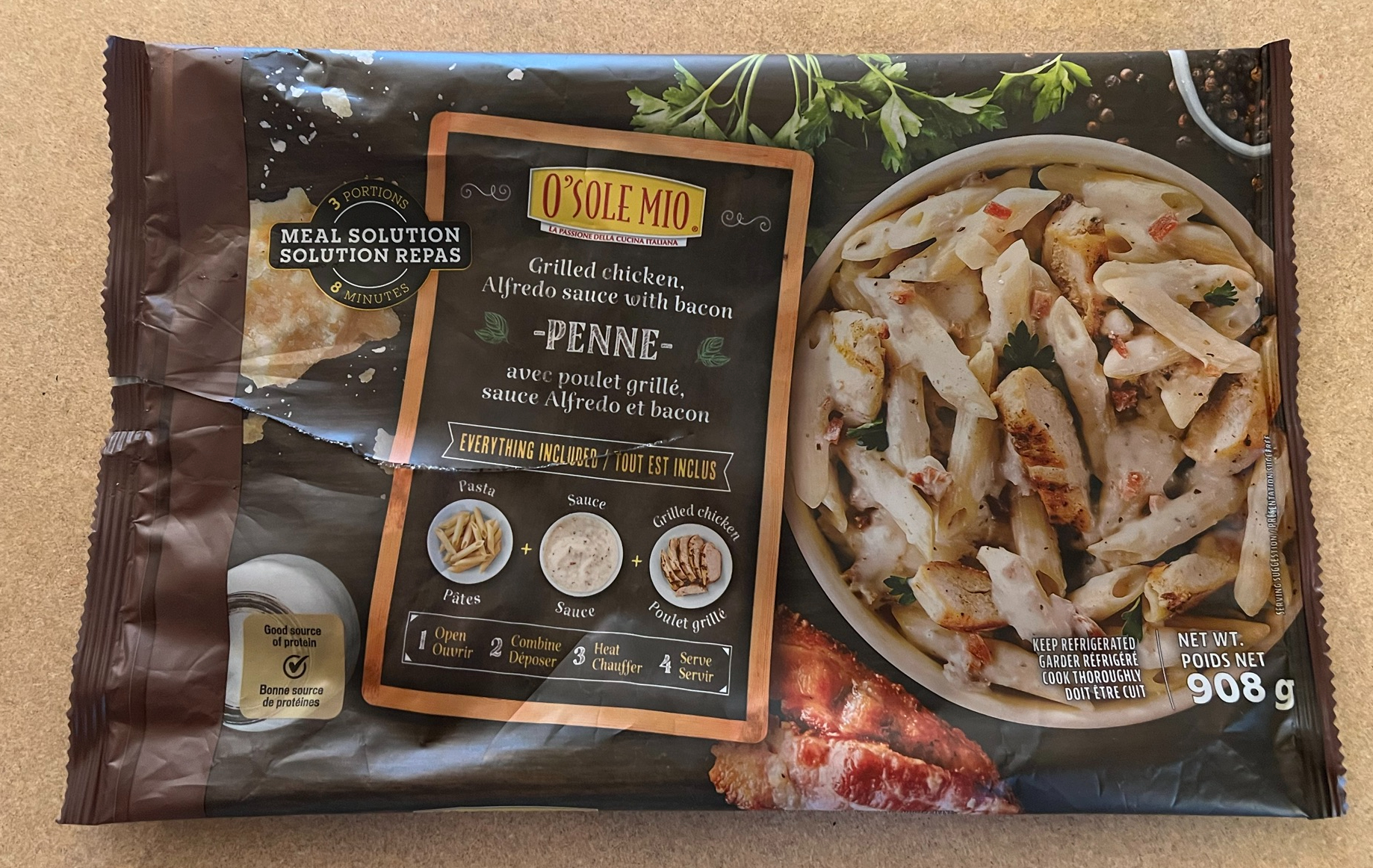
O Sole Mio Prepared entrees
https://www.osolemio.ca/product-category/frozen-prepared-meals/individual-portion/
On my last day of the show, the vendors were trying to get rid of their samples because no one wants to travel home with boxes of samples. The vendor from O Sole Mio was explaining his product to me that it was a refrigerated, fully prepared meal that just needed to be unwrapped, mixed in the enclosed container and then microwaved and served. He offered me two samples and I foolishly took only one. It was delicious and easy to prepare.

The packaging and the dinner I prepared at home
The product was delicious and so easy to to put together. Each part of the entree, the sauce, grilled chicken and the pasta were fully prepared and in their own individual bags. I just put them into the microwaveable container, mixed it up and cooked it for four minutes and dinner was done.
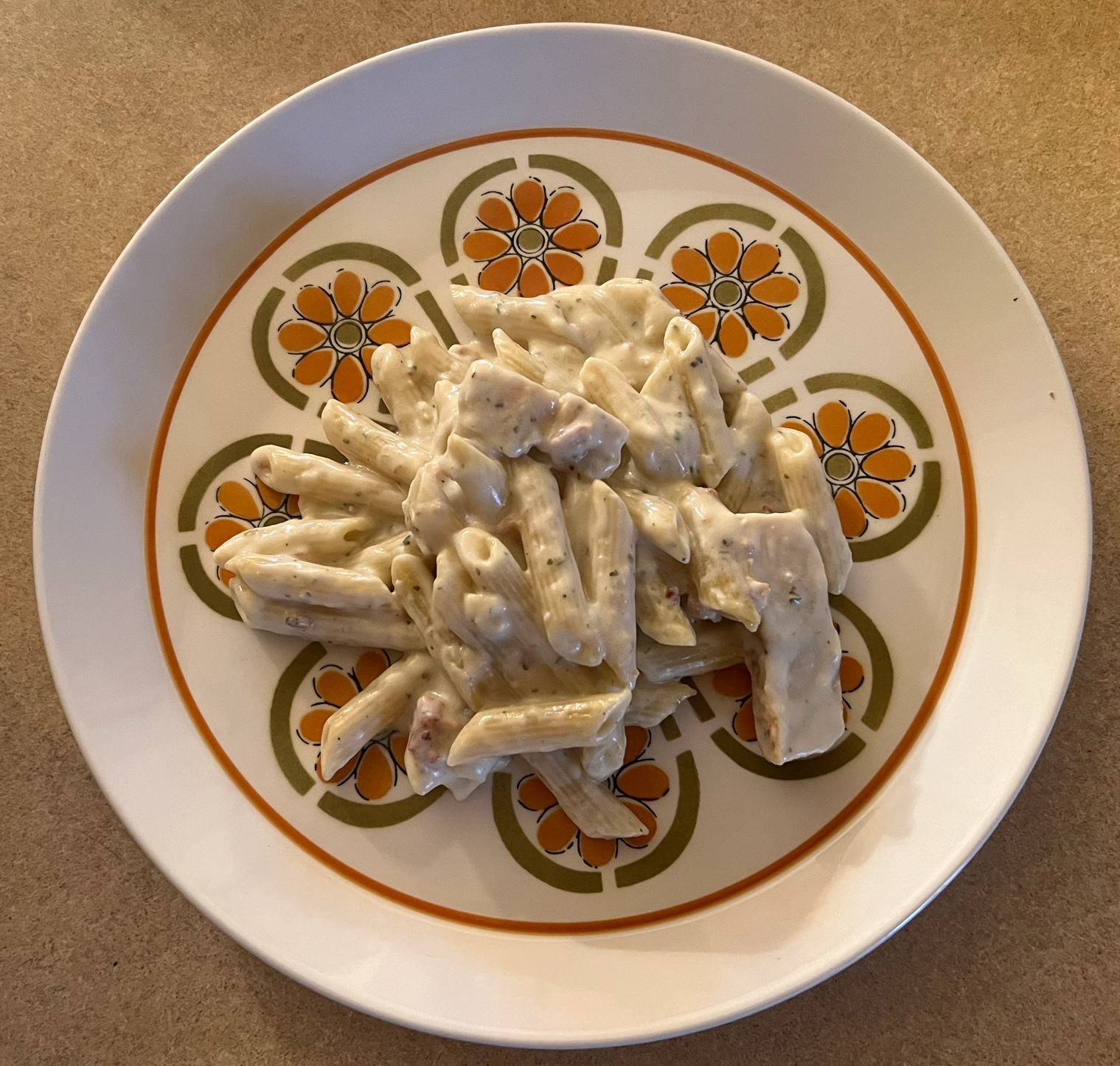
The quality of the entree was excellent and it had a nice creamy rich flavor
I thought the product was a nice alternative to these expensive food kits and if you are in a rush or tired after a long day at work, this is a very nice alternative to eating out.
The best for last was a vendor that I have featured a few times before in my blogs on the Food Show. Featured in the Korean Pavilion, Melona frozen desserts. These were excellent and some of the best frozen ice pops and novelties of the show. These fruit purée ice pops are the best at the Food Show but hard to find at the supermarkets.

Melona Frozen Products
They have about a dozen different flavors of ice pops and not your typical flavors. Melona frozen foods have some of the most original and creative flavors like honeydew melon, mango, watermelon, banana and green tea. Their ice cream products, some in the shape of fish which has symbolism in Korea, were filled with vanilla ice cream and fruit syrup wrapped in a sweet rice flower dough. Not just beautiful to look at but delicious in taste.

Melona’s version of an ice cream sandwich filled with Vanilla ice cream and sweet strawberry syrup
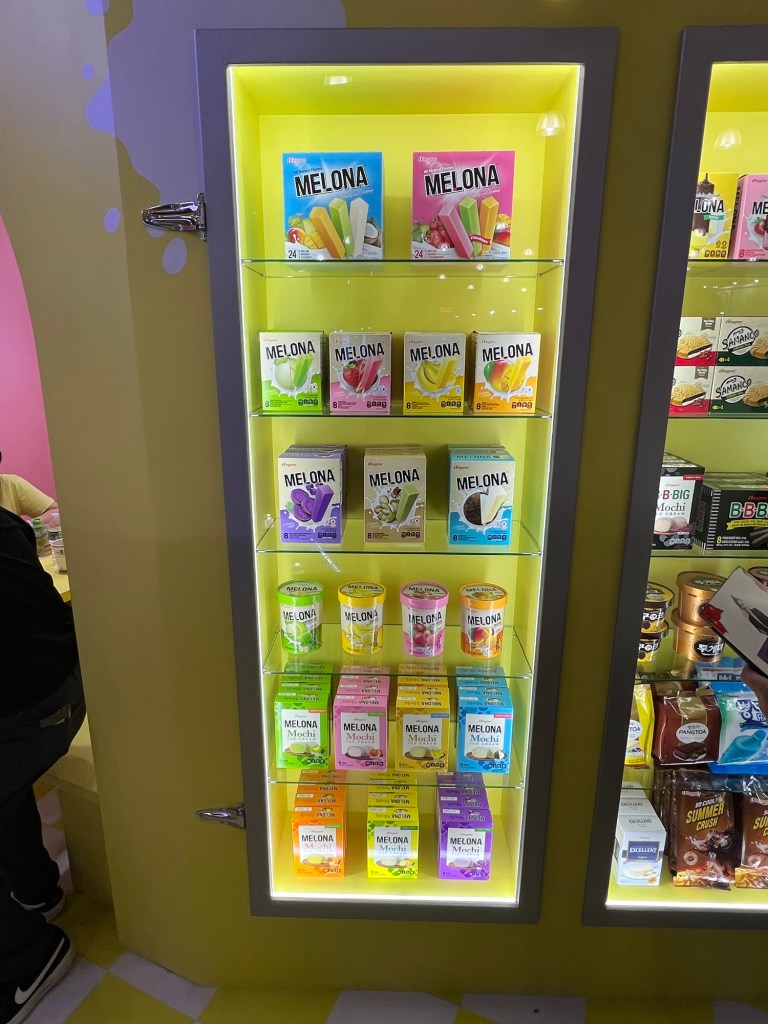
The selection of frozen treats by Melona products put other ice cream companies to shame with their unique flavors, beautiful packaging and delicious taste. I had to keep coming back to their booth just to try all the flavors all three days of the show. They could not have been more generous with their samples and their representatives encouraged you to try more.
The New York Fancy Food show had many other quality products to sample and purchase for stores but these were the products that really stood out to me in taste, flavor, packaging and originality in the product itself. If I owned a grocery store, these are the products that I would stock and recommend to customers. In the three days I attended the show, these were my set of winners. They were wonderful in every way.
I will be looking for them in grocery stores soon. I look forward again to the Fancy Food Show in 2025.
 mywalkinmanhattan