The Hill Memorial was constructed in 1916 by Newton contractor Thomas Farrel in renaissance revival style according to the design of Henry T. Stephens, a Paterson architect. It was built for the society’s use by donations from Joshua Hill, a native of Sussex County and was dedicated on Founder’s Day, June 8, 1917. The building was named in memory of Joshua’s parents, Luther and Abigail (Dildine) Hill, and his uncle, Joseph Price Hill. The building is faced with two shades of tapestry brick furnished by the N.H. Sloan kilns of Pennsylvania. The main entrance is ornamented with a portico and door casings manufactured by the Brick Terra Cotta & Tile Company of Corning, New York. The main architectural feature of the entry hall is the grand staircase of quartered oak.
The Hill Memorial Museum Mission Statement:
(from the museum website)
The purpose of the SCHS is to promote public knowledge and interest in the history of Sussex County, New Jersey, and surrounding areas by:
Compiling, publishing and disseminating information;
Collecting, preserving and studying historical, genealogical and archaeological records, documents, papers and artifacts;
Maintaining a public museum;
Promoting the preservation and protection of buildings, cemeteries and other sites of historic interest and co-operating with other organizations of similar interest.
During the Sussex Heritage Weekend, one of the museums on my bucket list was the Hill Memorial Museum, the home of the Sussex County Historical Society. The museum has very limited hours and I have been wanting to visit since last summer. The museum is worth the wait. What an interesting museum filled with fascinating artifacts found from all corners of Sussex County, NJ. The collections fills two floors that also include a historical room and a research library.
The entrance foyer to the museum is quite grand
The museum home to an extensive collection of artifacts and does an interesting job of displaying these objects case by case. Each case holds a story of businesses, the participation of the community in wars, parks and schools and daily life over the last hundred years. The museum is a treasure trove of information on not just the County but the State of New Jersey as well.
Historic musical instruments on display along the stairs
The Second Floor Galleries of the Hill Memorial Museum:
(from the museum website)
The Victorian display in the upstairs gallery were custom made for jeweler H.D. Couse, and donated by his successor, John Coats Sr., when Coats Jewelry Store moved from the Cochran House to 103 Spring Street in 1950. Here are displayed some of the Society’s collections including the partial skeleton of a Mastodon discovered in 1962 during the dredging of a bog at Camp Auxilium in Hampton Township. New exhibits include “The History of” Farming, Railroads, and Creameries “of Sussex County”. The Civil War display now includes information about 22 Soldiers who rest across the street in the Old Newton Burial Ground.
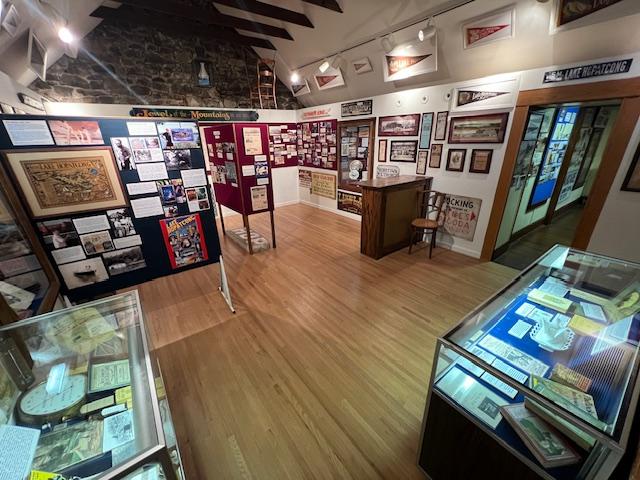
The second floor is where the larger part of the gallery and displays are located. Each case-line has a different category of artifacts depending on the theme. The main room is used as a meeting space for organization meetings and lectures for the community. The room is surrounding on all sides by cases filled with different objects depending on the subject matter.
The main gallery and meeting room on the second floor
The back of the main gallery behind the meeting space is lined with glass and wood case lines of artifacts from the County of Sussex, NJ
Each case line has a different set of displays:
The first display case was lined with dinosaur bones locally found and the Woolly Mammoth skull and bones found in the County is the highlight of the collection
The Native American and Lenape display of domestic and agriculture artifacts
The 250th Anniversary display
The Sussex County farming and agriculture display
The Sussex County Railroad display
The Dairy industry case
The World War I display and veterans memorabilia
The rail system in Sussex County
The vintage Toy display
It was interesting to look at the vintage toy collection as you wonder today if children in the twenty-first century still have the same imagination as the children in the 19th century. I think creativity comes from within.
The vintage doll
The vintage rocking horse
The World War II display
The history of Photography in Sussex County
Various household and everyday items from elaborate clothes and accessories to household products
The elaborate outfits of the day
The household goods that made the home run
The museum had an elaborate and detailed display of the old Chatterbox Restaurant, that was once a staple in the Newton area that has since been replaced by a Wawa.
As the name indicates, this room on the lower floor focuses on local history. The main feature is a large stone fireplace built by George Sharp in 1921, incorporating stones from Sussex County that are of geological and historical significance. A framed copy of G.M. Hopkins Jr.’s 1860’s map of Sussex County hangs near the oak roll-top desk of Judge Henry T. Kays. Portraits of Luther and Abigail (Dildine) Hill are on display. Other interesting pieces include a safe from the first bank in Newton – The Sussex Bank, founded in 1818; a Wheeler and Wilson sewing machine – once used to sew clothing for Civil War soldiers; and an original wrestling robe from Newton High School during the time of “Henry Boresch –father of NJ Wrestling”. In the center of the room is a display featuring the Cochran House, once located on Spring Street, it was the center of local social, business, and political activities.
The museum really covers the history of Sussex County in detail with wonderful and interesting displays and lots of historical artifacts. It will take you more than one afternoon of visiting the museum to see the whole collection.
Tour of the Museum on video
After the tour of the museum was over, I toured the historic Green in the middle of the downtown. Downtown Newton as the County Seat of Sussex County is coming into its own as the City gentrifies bringing in new restaurants and shops. The Green was in bloom with Fall colors. Lots of restaurants are in the process of opening and their are lots of coffee shops as well.
I really learned a lot about the City of Newton both inside the museum and outside. This is a community that is still writing its own history.
It was not just an interesting museum visit but it was nice to walk the downtown and see how this small city was changing rapidly as new people were moving in and changing the demographics. Newton, NJ is a town in transition.
The last museum on my tour during the Sussex County Heritage Weekend was the Stillwater Historical Society Museum in Stillwater, NJ, a small town just west of Newton, NJ, the County Seat of Sussex NJ.
The Historical Society is set up like a General store on the first floor with displays with merchandise of the past and household items. They have recreated the recreation of the past with a modern twist. How did a small town buy and sell a hundred years ago? How did they socialize when this was the place of communication?
The sign for the museum
The Historical Society of Stillwater Township:
(from the museum pamphlet)
Since its organization in 1977, the mission of the Society has been to foster and promote an interest in Stillwater area history by maintaining a museum and reference library of historic artifacts and genealogical records of area families and support preservation efforts of historic structures sites and events.
Through the generous foresight and planning of Mr. Amos F. Dixon and his wife, Mrs. Mary W. Dixon, the museum associated with the Historical Society of Stillwater Township has been located within the Neighborhood House on Main Street in Stillwater since 1954. Originally a one room schoolhouse from 1842 to 1909 and the home of Mary W. Dixon Library, within the building are interpretive displays of a restored schoolroom and a general store with a post office. A collection of artifacts depicting the early life of the village and surrounding area is on display as well as a costume collection, mineral collection, Native American artifacts and military items dating back to the Revolutionary War. Genealogical records, photographs and newspaper clippings of historic significance to the area and its families are part of the Reference Library.
The first floor gallery of the Stillwater Historical Society is set up like a general store.
The first floor gallery
The History of the Museum:
(from the museum pamphlet)
The museum’s collection has grown and flourished throughout the years thanks to generous donations from the Stillwater community. The Society is always seeking locally-relevant physical artifacts and genealogical information. Dedicated members are working to preserve the artifacts and we are currently computerizing our collections to make the information.
The Preservation of the Museum:
(from the museum pamphlet)
Along with the continued preservation of the Museum and its artifacts, the society has supported the concept of an historic district in Stillwater and recently assisted in the historic registry designation of the Shafer Grist Mill in Stillwater village. The Society & the Casper Shafer residence on Main Street previously assisted with the preservation of Keen’s Mill in the Swartswood Lake area.
The Van Horn family burial plot is also preserved and maintained by the Society. The Society supports all efforts to preserve these and other important historic structures and to make them available for public enjoyment and educational purposes.
To support Stillwater’s community life, the Society hosts educational programs and fund-raising events throughout the year. Past topics have included the evolution of grist mills, herbal remedies used during the 18th Century, Revolutionary War weaponry, the Tocks Island Project and historic cemeteries. Fundraising events range from festivals featuring music, food and games to seasonal bus tours.
The General Store display
The General Store display
The old pot belly stove the center of the General store
The stove of the old General Store
The pot belly stove
Kitchen artifacts
Local artifacts from the Stillwater community
The second floor galleries were broken up into two different sections, Native American and early settler artifacts plus part of the building was once a schoolhouse so the museum also set up a schoolhouse display.
The Lenape Native American display
Native American artifacts
Native American artifacts
This was the old stage of the elementary school now being used to house the Children’s display.
The Children’s Schoolhouse display on the old second floor stage
The other side of the second floor galleries houses clothes, accessories and household goods. The clothing was beautifully displayed.
The second part of the second floor galleries
The back part of the second galleries
It really was an interesting little museum with wonderful artifacts nicely displayed throughout the museum. The museum did a nice job with this.
The Morning clothing display
Day and Evening dresses
Hats and gloves and other accessories
Military outfits and some formal clothing
Farming equipment
Farming equipment
Shoes and sewing items from the turn of the last century
Stillwater Township is located in Sussex County, eights miles west of Newton. Its encompasses an area of 28 square miles. Three small villages: Stillwater, Middleville and Swartswood, together with residents now residing in what was only a few years ago a farming community, compete its population of approximately 4,500.
After my tour of the Stillwater Historical Society Museum, I took a walk in the rural downtown of Stillwater, NJ. I felt like I was in a quaint New England village and not twenty miles from Manhattan.
The original farmhouse decorated for the Halloween holidays
The ghost on their porch
The picturesque farmland
The farm stand in front of the house (on the honor system)
The plant and pumpkin stand on the farm (also on the honor system)
The also had a arranged flower stand with colorful Fall flowers
The back of the old Shafer farm in the Fall
The town was so beautiful and picturesque and it was so much fun just walking around looking at the foliage. It was also a nice way to end my tour on the Sussex County Heritage Tour for the afternoon. I could not believe I was still in New Jersey.
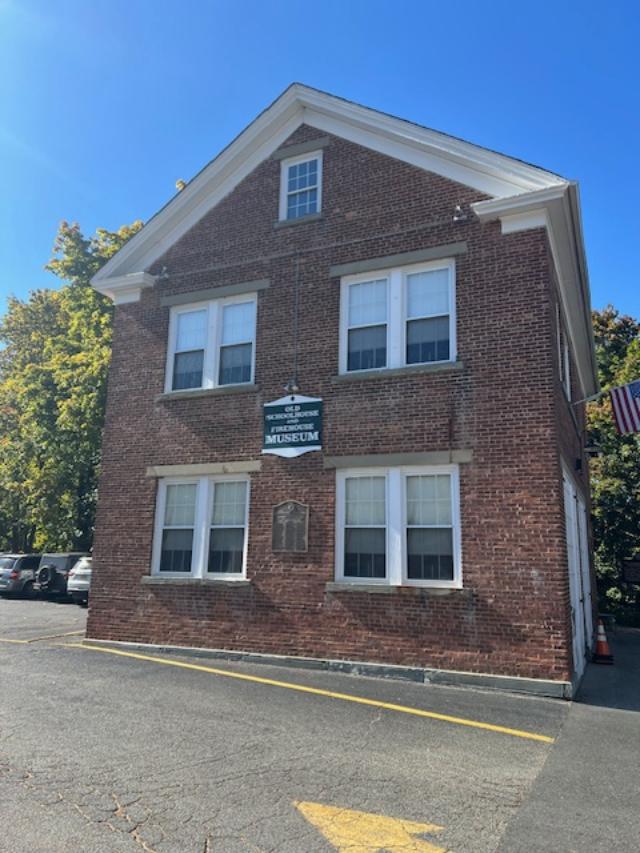
I recently visited the Ogdensburg Old Schoolhouse and Firehouse Museum at 6 Passaic Avenue in Downtown Ogdensburg and discovered the community’s rich history of farming and mining in its past and its current destination as a weekend vacation spot and a up and coming bedroom community of New York City.
The County still has some farming and agriculture going on as the County continues to be built up with expats from the City, and Bergen and Morris Counties. The first floor is dedicated to the history of the Ogdensburg Fire Department with an old Engine and Ladders trucks, artifacts from the Sterling Mine just up the road and township property such as an old voting booth. You can read about the history of the Ogdensburg family as you head to the outside gallery.
The second floor has displays of various town departments including the Rescue, the Police Department and Fire Department. There are various displays of the town’s school system and various clubs in town. There are displays on the town’s mining and agricultural past with items such as farm advertising and mining equipment and minerals. Each display plays a role in the development of the community and how it progressed from farming to mining to manufacturing to the bedroom community it is today.
History of the Building:
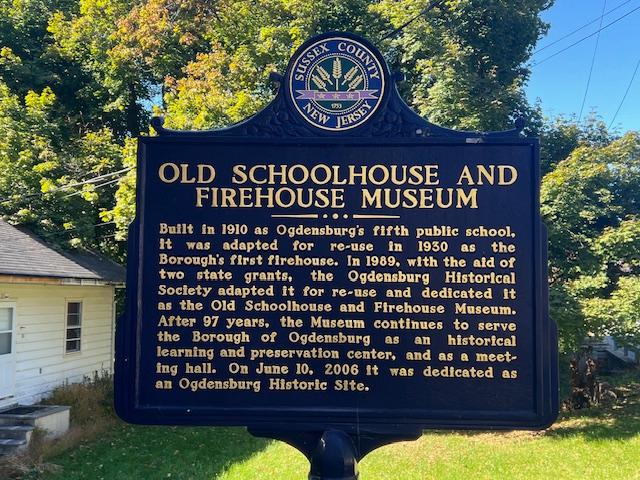
“Built in 1910 as Ogdensburg’s fifth public school, it was adapted for re-use in 1930 as the Borough’s first firehouse replacing the one built in 1872. In 1984, with the aid of two state grants, the Ogdensburg Historical Society adapted it for re-use and dedicated it as the Old Schoolhouse and Firehouse Museum in 1987.
After 97 years, the Museum continues to serve the Borough of Ogdensburg as an historical learning and preservation center, and as a meeting hall. On June 10, 2006 it was dedicated as an Ogdensburg Historic Site.”
The historic sign of the museum
The Borough of Ogdensburg is the host of this marker commemorating the rich history provided by this building. This building has been maintained with much thought and care and remains as a museum and meeting place for the residents of the town. The marker is located in front of the building on Passaic Avenue just off Main Street by the Ogdensburg Elementary School. This marker was part of the 2008 placement (Museum website).
The outside of the museum which served as a school and a firehouse
The first floor of the building has the fire trucks, the history of the fire department and Ogdensburg’s 250th Anniversary of the United States on display.
The museum artifacts from the 250th celebration of the Country
The museum is on the heart of mining country of Sussex County, NJ and the museum has an interesting mineral collection along with their collection of mining artifacts.
The Mineral and Mining Collection
The museum being home to the Ogdensburg Fire Department contains the history of the local fire department along with vehicles and artifacts from the department.
One of the early pull hose beds pulled by men and then by horses
The first floor also contains the history of the Ogden family in the region.
The history of the Ogden family in the community
The town voting booth and a turn of the last century phone
The second floor gallery used to serve as offices and living space of the fire department.
The main gallery on the second floor
The gallery case lines are filled with memorabilia from different aspects of the community telling the story of the growth of the community that included Mining and Farming. It explains the growth into the modern suburbs of today.
The main gallery on the second floor of the museum
The main gallery on the second floor
The display case of Ogdensburg departments including school, fire and police departments
Blanket with historical sites and artifacts of the town of Ogdensburg, NJ
The businesses including schools and the domestic and farming industries
Each of the display cases represented different aspects of the town and has a variety of pictures and memorabilia from a variety of eras. The case lines show how the community changed over time from a mining community to the changes of a bedroom community of Newark and New York City.
The Entertainment display of recorders, phonographs, radios and early record players
The influence that Thomas Edison had on the community with new technology. Several pieces of Thomas A. Edison memorabilia are on exhibit to honor the ten years Edison spent mining iron ore at the old Edison Ore Milling Company on Sparta Mountain. Several of his phonographic inventions were created here (Ogdensburg Historical Society website).
Close up view of record players and Victrola’s
The School system display
The Ogdensburg Presbyterian Church display of artifacts from inside the church
The Sterling Mine display with minerals and equipment
The NJ Zinc Mine and Mineral display is a small s as molding of the museum down the street and the importance of the mining industry at the turn of the last century.
A closer look at the minerals display
A replica of a working mine operation. The machine shows how workers descending and brought up rock from the mines.
The Dedication to Mr. Waco Hadowantez, the town historian
The last display as you leave the museum is dedicated to the man who founded the historical society, Waco Hadowantez.
The museum tells an interesting story of the history of Ogdensburg and the surrounding area. It shows the importance of the Mining Community at the turn of the last century and how the community is pivoting towards tourism to tell its story.
Please contact the museum directly for seasonal hours and tours.
I recently attended the Annual ‘Pathways Tour’ in Morris County, NJ to visit some of the historical sites. It was a very interesting visit to some of these sites that were over 250 years old. With the anniversary of our country coming up in two months, I can see that these sites will be getting more attention.
Having toured most of the sites in Morris County, which has a treasure trove of historical homes, parks and museums, I concentrated on the sites that are rarely open, like the Doremus House and the Florham Park Schoolhouse for my blog, VisitingaMuseum.com.
Readers reach out to me asking about these sites but no one seems to man them outside the Pathways tours. So you have to race to see them then. These small historical sites offer a glimpse into New Jersey’s rural past and the history of how our state developed.
The Henry Doremus House during the Pathway’s tour
I visited the Henry Doremus House first during the Morris County Pathways Tour in May of 2026 and it is good look at the early farming communities of New Jersey under the Dutch and then the English. The house was used by General George Washington while he was passing through this section of New Jersey during the Revolutionary War.
The sign for the Henry Doremus House
The historic sign for the house
Montville Township Historical Society:
(from the Museum website)
Established in 1963, the Montville Township Historical Society is dedicated to the preservation and promotion of the cultural heritage of Montville Township. Our unwavering commitment to meticulous archival work, interactive educational programs, and community outreach initiatives is aimed safeguarding the rich history of our town. Our ultimate objective is to ensure that the stories and traditions of Montville Township are cherished and celebrated for years to come.
The farm and harvest equipment
General Washington’s payment to the Doremus family for use of their home during the Revolutionary War. I thought this was really cool.
The farming equipment
The farm and household equipment room
The farm equipment from the time of the Revolutionary War
Henry Doremus House History:
(from the Museum’s website)
The Henry Doremus House is a Dutch American stone farmhouse that has been remarkably preserved since the time the first portion was built, circa 1760. The house has never been modernized with heating, plumbing, electricity, or wiring, and is one of only seven left in New Jersey without modern electricity. What is now Route 202 was one of the main military routes during the Revolutionary War through Montville and Towaco, (then part of Pequannock Township). The Henry Doremus house was located in a small community often referred to as Doremus Town.
The main room of the original house during the tour
The kitchen and cooking equipment by the open hearth fireplace
The open hearth fireplace for cooking and heat for the home
Cooking items
I visited Diane’s Dairy at 446 Main Road Suite 8 after my tour of the Henry Doremus House, a local ice cream store just around the corner from the historic home. What started as a place to turn around my car, I had to stop on this historical looking strip mall. When I saw the words ‘homemade ice cream’ I of course had to stop. Ice cream is one of my weaknesses.
Diane’s Dairy at 446 Main Road Suite 8
The menu of the selection of flavors
What was nice was I got to meet Diane herself that morning and she explained to me that they create and make over 92 flavors inside the store. I could tell by the quality and taste of the ice cream that a lot of care was taken in the making of her ice creams.
The section of ice cream
Diane has created many unique flavors so it was hard for me to choose but I wanted to try something different and settled on Bubble Gum flavored ice cream. It was delicious.
The Bubble Gum ice cream
The ice cream was rich and dense and had such an intense flavor of cream and cherry flavored gum. What I also liked was her prices were very fair and the portion size for a small ice cream is the size of most mediums sizes at the commercial ice cream stores. Plus I like to support local businesses. Diane has created a wonderful product and could not have been nicer.
The ice cream is do good
This ice cream was the best. Funny enough though I was her first review on TripAdvisor. I would have thought more people would have been singing her praises. After my snack, it was off to the second site on my list, the Florham Park Little Red Schoolhouse.
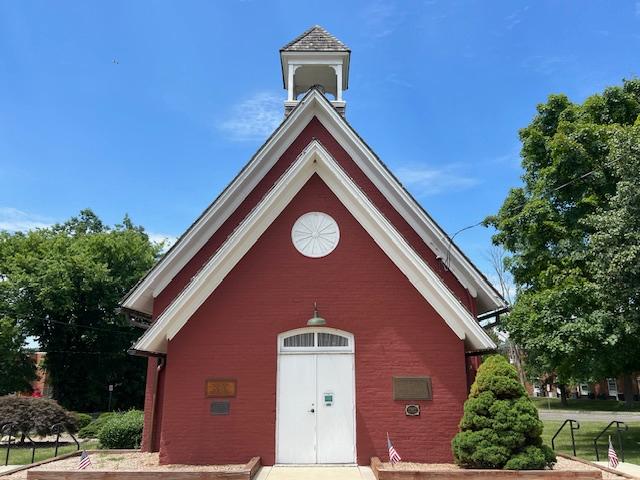
I visited the “Little Red Schoolhouse” Museum at 203 Ridgedale Avenue in Florham Park, which is also rarely opened. This interesting little museum showcases the town’s historical collection of items from the 1800’s and 1900’s dealing with all aspects of town life.
Schooling at the “little red frame building” prospered and so by the 1850’s, the building was “in condition of dilapidation rendering it unfit to be occupied” due to overcrowding.
The schoolhouse from the front
The inside of the museum schoolhouse display
The inside of the old classroom
The schoolhouse setting
In the back there is a small classroom set up keeping with the theme of the building. This lets students, who are visiting the building of their counterpart’s early education with desks, ink wells and chalk boards that have not changed that much over the years.
Not much has changed in the modern classroom over the years
The old schoolhouse desks
There is early century clothing, farming equipment from the town’s farming past and even Native American objects found in the town and in private collections.
The town artifacts and school items
The hitching post
Other items included decorative items from the home including dishware, home products and furnishings.
Each section of the museum is divided up by lifestyle.
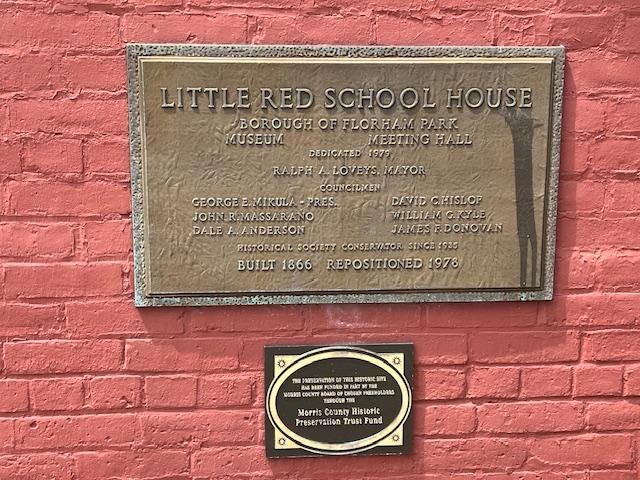
The museum’s historic plaque
The docents that day explained that the items were reflect the town’s past and some came from families that have been in town for years. The museum reflects the community spirit of town’s past. It explains that times have progressed but not changed too much over the years.
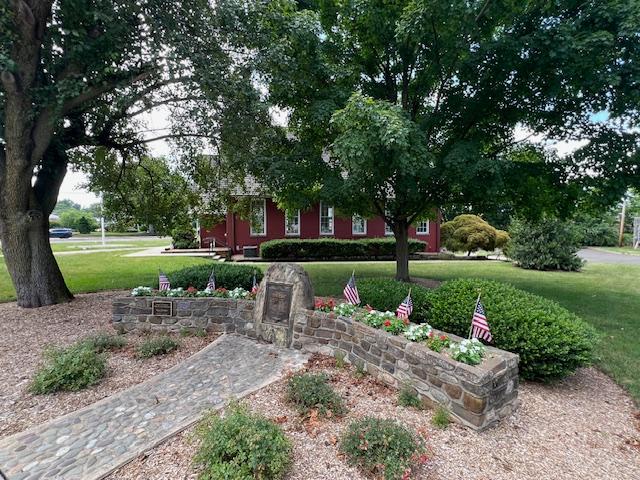
The Veteran’s Monument outside the museum
History of the Little Red Schoolhouse Museum:
(From the Museum Website)
By Kat Kurylko, Research Assistant
In 1830, the residents of Columbia, now Florham Park, sought to improve their thriving farming and broom-making community by establishing a public school for the local children. Therefore, a small schoolhouse, Columbia School #5, was built on the corner of Columbia Turnpike and Ridgedale Avenue and dedicated it on February 17th, 1831.
The schoolroom display
Schooling at the “little red frame building” prospered and so by the 1850’s, the building was “in condition of dilapidation rendering it unfit to be occupied” due to overcrowding. It just showed me one thing as an educator, that the concept of modern education has not changed that much in 150 years.
I next visited the Tunis-Ellicks House 16 Village Road in New Vernon and enjoyed the self-guided tour of this well maintained and displayed home. Unlike many sites I have visited over the years where things are left out and jumbled on tables, the Tunis-Ellicks House offers a look at small family farms from before the Civil War. The displays depict and discuss the life of a farming family in Central New Jersey.
The Tunis-Ellicks House in New Vernon, NJ
The house sign
The house is located in the New Vernon Historic District
The house was located in one of the oldest sections of the community, facing other structures in the historical district of New Vernon, NJ.
The house and front garden from the road
The vegetable garden in the front of house
In front of the house was a large vegetable and fruit garden with a grape arbor for spirits on the side of the house. These items would be jarred and pickled for the winter months or sold at market.
I liked the way the volunteers maintained the gardens with fruits and vegetables that would have been used in Colonial times mixed in with a modern twist.
Mission Statement:
(From the Museum website)
The Harding Township Historical Society is a private, not-for-profit corporation founded in 1977 to stimulate interest in the history of Harding Township. The Society shall support, assist in and seek to achieve the preservation of documents, buildings and sites related to Harding Township. It shall also collect, preserve, maintain and interpret original cultural material, which illuminates this history. In addition, The Society is responsible for preserving and maintaining the Tunis-Ellicks House and environs. Through use of its historic site, collections and programs, the society endeavors to document and illustrate the history of Harding Township for present and future generations (Tunis-Ellicks website).
You enter the museum from the back of the house. In the backyard of the home, there were all sorts of activities going on while you could start a self-guided tour of the house.
The back of the Tunis-Ellick’s House
The beautiful view from the back door of the home
The inside of the main part of the museum
The main part of the museum was the newer extension of the home where the living room and dining rooms were located. There were displays on the walls discussing farm life in New Jersey during the late 1700’s and early 1800’s.
The Dining Room section of the house
The workings of the Dining Room
The story of ‘Country Life’ and the gentleman farmer
Pieces of the decor on display
The kitchen area of the older part of the home offers a homey fireplace for cooking and summer storage for jarred and pickled food stuffs for the winter.
The kitchen and storage areas of the home
Pottery collection in the museum
The pottery collection
The kitchen dining and cooking area of the home
The fireplace for cooking, roasting and stewing of foods
The oven for baking breads, cookies and pies and the baking equipment
The Summer storage area for canned and jarred provisions for the winter months and for cooking.
History of the Harding Township Historical Society:
(From the Museum website)
The Harding Township Historical Society was formed in 1977 to save the circa 1795 Tunis-Ellicks House and restore it as it appeared in the early 19th century. The society discovered an original 18th century hearth and Federal-style mantel and a water-fed cooling room besides the well. Areas of the house were left exposed to showcase the post-and-beam construction. A permanent exhibit on 19th century farming was created as well as space for temporary exhibits.
The Society saved a circa 1870 Tramp House from destruction when the Great Swamp National Wildlife Refuge was created by having the building moved the Tunis-Ellicks House property. The Harding Township Historical Society maintains an extensive archive containing records, maps, and objects since the colonial era pertaining to the town. The archive is open to researchers, genealogists and the public. Each year we provide an award to a student at the Harding Township School that excels in the subject of history. The Society produces exhibits, lectures, tours, and interactive events to bring history to the public.
When I drove to the Tunis-Ellicks House, I was really hungry and it was lunch time. I had passed the Green Village Deli at 536 Green Village Road and I read the reviews online while in their parking lot and they were excellent so I decided to give it a try. The food and the service were excellent.
The Green Village Deli at 536 Green Village Road
The sign that welcomes you to this local breakfast and lunch establishment
The Village Green Deli is a popular local sandwich shop, where the staff seems to know all the customers by name (with the exception of me) and is located in this small downtown area facing the Village Green.
I really liked the vibe of this small town deli where the owners knew everyone by name and I felt like an interloper at a private party.
The inside of the Village Green Deli
The deli has that small town feel to it, with local art and sports paraphernalia in the walls. The woman who worked the register was greeting everyone by name and the guys that worked the grill seemed happy to see me.
Looking at the menu at the grill
I looked at the extensive lunch menu of popular sandwiches and some wonderful combos. You could even still get breakfast as I saw some of the guys at the counter devouring as I decided on what I wanted to order.
The deli has a wonderful selection of sandwiches, hero’s and other delicious sounding items.
There were so many things I wanted to try that day that it was hard to choose. Was it a breakfast sandwich with local sausage? The Thanksgiving ‘Gobbler’ sandwich with turkey, stuffing and cranberry relish, that sounded so good? I decided on an Italian hero sandwich with a selection of deli meats with fresh lettuce, tomato and onion. The hero was excellent!
The Italian hero with a pickle
The sandwiches here are huge! One half of a sandwich a normal person could eat for lunch and save the rest for another meal. The sandwich was loaded with salami, bologna, ham, Swiss Cheese and fresh veggies. I could barely fit it in my mouth.
The sandwich was excellent
The food was excellent. The bread was so fresh and the cooks did not skimp on one ingredient. The vegetables were so fresh and crispy and I loved the combination of flavors of the cold cuts. I really enjoyed my lunch and would like to make a special trip back just to try more of their sandwiches. I was very happy with my lunch.
One of the last places I visited was the Historical Society of Boonton Township, which is located in the former Oscar Kincaid Farm Homestead 591 Powerville Road. The house and what was left of the acreage of the farm was part of the current museum. The museum was an example of early New Jersey farming that dated from the 1800’s to the Twenty-First century.
There was not much in the way of period furniture or farm equipment (items of the home were sold off since Mr. Kincaid’s passing), but the new historical society is buying artifacts and bringing them back to the farm. This includes one of Mr. Kincaid’s tractors. His roll up desk is also still in the display room which was once the Living Room of the home.
The Kincaid Homestead at 591 Powerville Road
History of Oscar Kincaid and Homestead:
(From the Morris County Historical Society website)
Originally a part of the extensive tract belonging to William Penn, the earliest portion of the home was constructed in 1785 by Adam Miller and Anna DeMouth Miller. Just over a decade later, they sold the property to Adam’s cousin, Sarah Miller Parlimen (of the Miller/Dixon homestead) and her husband, John, who built a sawmill there. After a brief ownership by William Scott of Powerville, a Miller relative, the land was sold to John Decker in 1828. An industrious man, Decker operated both a farm and successful forge, shipping his goods to New York via the Morris Canal. By 1837, he expanded the home, adding a distinctive folk-art painting of a face and unique plasterwork that can still be seen today (MCHS website).
The homestead passed through generations of Decker’s family, ultimately being inherited by Oscar Kincaid Sr. in the early 20th century. Kincaid ran a popular ice cream stand and dairy business throughout the 1920s and 30s. Following World War II, the family opened Valley Farm on the site, which continued until the death of Oscar Kincaid Jr. in 2000. Added to the National Register of Historic Places in 2005, the Decker-Kincaid Homestead today operates as a museum and headquarters of the Historical Society of Boonton Township (MCHS website).
The Kincaid House
The historical marker for the house
The front yard
The entrance to the house
The main foyer of the house
The house is a small farmhouse built in two sections. The original part of the house dates back to the late 1700’s and the newer part in the early 1800’s. The once furnished rooms now hold displays of Morris County and the farming industry of the time plus community artifacts.
The former Living Room
Oscar Kincaid’s desk
There were not much left in the way of family furnishings and heirlooms but this desk was Oscar Kinkaid’s.
The back bedroom
The Flag display for the ‘250th Anniversary’
Story of Oscar Kincaid’s life: Oscar Kincaid was a farmer/businessman, a politician and a conservationist.
After the short tour around the house, I walked around the farm grounds. The house was set on a beautiful piece of land that sloped down to the old farmstand. There was also a swimming pond which was once part of the farm which is now private property.
The farm property from the side with the barn
The barn across the street
The property was about ten acres at the time of his death and parts have been developed. It still has some of the most wonderful views of the area.
The view of the old farm from the front porch
The farm land stretches over different sections of the road and the property is very picturesque. It is a very beautiful homestead.
The view of the farm from the lawn
The swimming pond on the edge of the property
The old farm stand that had been used for eighty years
Every semester for my Business Marketing, Management and Communications classes, I create one big Team assignment for my students. In a Commuter College, it is a lot tougher for students to get to know one another between their studies and their jobs, so I create these projects to foster learning, creativity and especially Teamwork.
This semester I taught two sections of Business 101-Introduction to Business, which is the entry level course to the Business/Hotel Management School. This is a tough course to teach as you always have students of various age groups and various levels of industry experience.
The Spring semester was no different. This makes the class more interesting yet more challenging to teach. I still challenge them and test them to see what type of future executives they will become.
I also taught Principles of Management, which came with its own set of challenges. It was the amount of people in the class and what projects would they be working on.
In the past, I have created these Team projects under the Bergecco-Parc Consulting Inc. banner, the main consulting company, the Orion Malls banner, a Mall design company and the Buscomonzefi.com banner, my Tech Division. All of these business concepts are simulated.
Each business does its best to be creative, forward thinking and have a thought producing presentations. I also challenge the students to top on another in their presentations and build on what they have seen others do in the past.
The Bergecco-Parc Consulting Inc. concept is an acronym for Bergen Community College Paramus campus where I work.
Professor Justin Watrel, CEO Bergecco-Parc Consulting Inc.
Our Corporate site (created my one of my former President’s:
While my morning Business 101 classes worked on their ‘Breakfast at Primo Pizza’ project and my International Marketing students worked on their “The Historic Revolutionary War Graveyards and Cemeteries of Bergen County” projects, I had my Principle of Management students create a game plan to market the Pascack Historical Society Museum in Park Ridge, NJ to a younger, more modern audience.
When choosing a project for this class, I had had two other ideas that fell through, then I had remembered working with the Pascack Historical Society Museum the prior year for my “Bergen 250” Team Project. We had proposed a Farm to Table Dinner at the Wortendyke Barn down the road with the dinner starting with a Cocktail Party here with a tour of the museum. I asked the museum again to partner with me on this project.
The Video Presentation of the “Bergen 250”in 2024:
The museum had created a wonderful exhibition for the “Bergen 250” but when I went to visit it, no one was at the museum but myself. When I asked the volunteers that day how many people had visited the museum, they told me I was the first one. That got me thinking why people were not visiting this wonderful museum with its interesting artifacts and intriguing displays.
The outside of the Pascack Historical Society Museum at 19 Ridge Avenue in Park Ridge, NJ
Then I looked at their website and their displays. I realized that the museum was not adapting to the cellphone age. There were no QR codes at any of the displays, not enough pictures of the display on their website and their scavenger hunt bingo game needed an update to engage a younger crowd.
That’s when I came up with a Marketing plan for the museum and proposed it to their Executive Board. We worked together to come up with new ways to promote the museum and its collection. This was our combined idea and we looked at how to bring more traffic to the museum.
The Proposal for “Bergen 250: Touring the Pascack Historical Society Museum”:
I presented the project to my students after the Spring Break and then the next week took my students on a mandatory field trip to the Pascack Historical Society Museum in early April. The Board members of the Museum led us on a tour of all the exhibitions, then discussed their plans for the “Bergen 250” and then discussed some of the challenges that the museum faced with attendance.
Touring the museum
The students on their part took pictures and notes about the museum and their displays. Many would make various trips back to the museum to crest the QR codes for the displays and map the museum’s backyard for the Farm to Table fundraiser and a proposed afternoon tea.
Touring the museum
Touring the museum
Touring the museum with the Board of the museum
The museum’s Board members could not have been nicer and more helpful to the students and myself. We got a lot of insights on what direction the Board wanted to go.
Our Team picture at the museum
The tour of the museum took about an hour. We then had a Division Team Dinner at Pompilio’s Pizzeria in Downtown Westwood, NJ:
I find that these Team dinners and lunches are very helpful in getting the students together to get to know each other and we share a nice meal as a Team should. We asked the Board to join us so we could continue the conversation.
Dinner with both the Board and my Team
For the next five weeks the three Teams broken into Marketing, Historical and Foodservice created their ideas and game-plans to help the museum increase traffic by trying to bring a younger and tech savvy visitor into the space.
The Pascack Historical Society YouTube Presentation:
The video of our Presentation to the Board of the Pascack Historical Society Museum on the evening of April 29th, 2026
On the evening of April 29th, the Board members of the museum joined us for the Presentation of ideas the students came up with including setting new QR codes for all the displays, a revamped Marketing plan to showcase the museum, a new historical walking tour, one aimed at adults and one to children and the ideas for the fundraising dinner, a children’s birthday party concept and a Afternoon Tea fundraiser.
After the Presentation, we had a Q & A on the ideas and after the Presentation was over, we had a reception for our guests and for the student consultants. Then we took our Corporate Team picture.
My Divisional Team the night of the Presentation
Our reception after the Presentation
It was another successful project accomplished and it looked like the Board went home with new ideas and the students learned a few things about themselves. I could not have been more proud of the students.
Open: Please call for a appointment and special tour
My review on TripAdvisor:
a
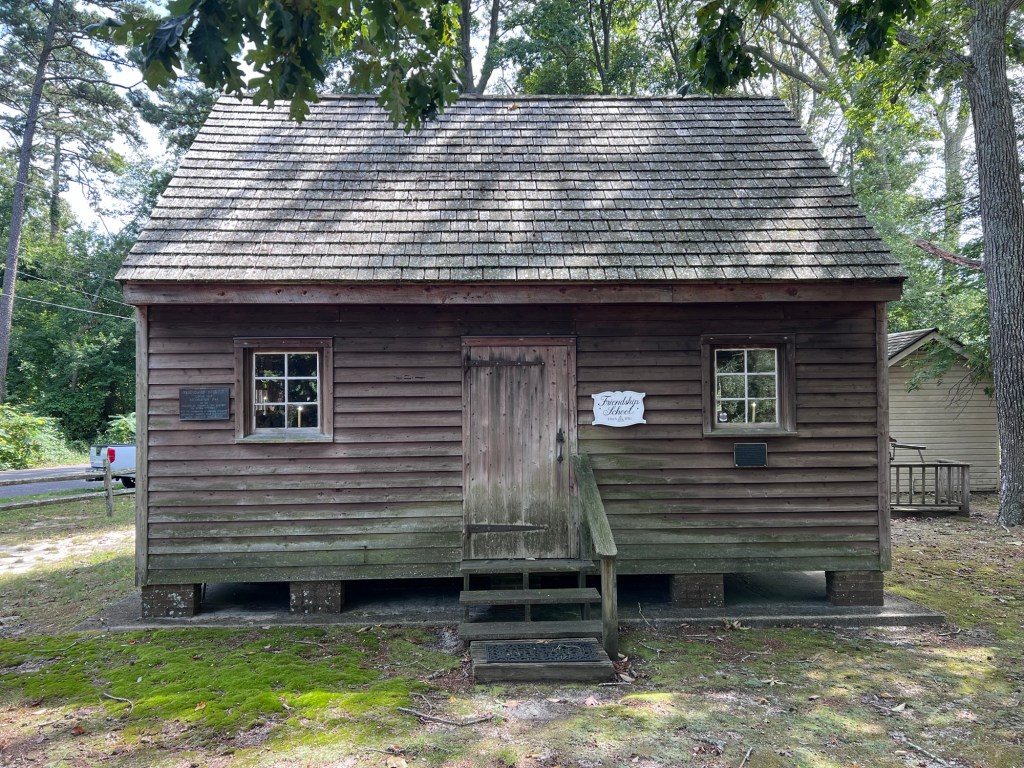
The front of the schoolhouse
The entrance to the property
The historic marker
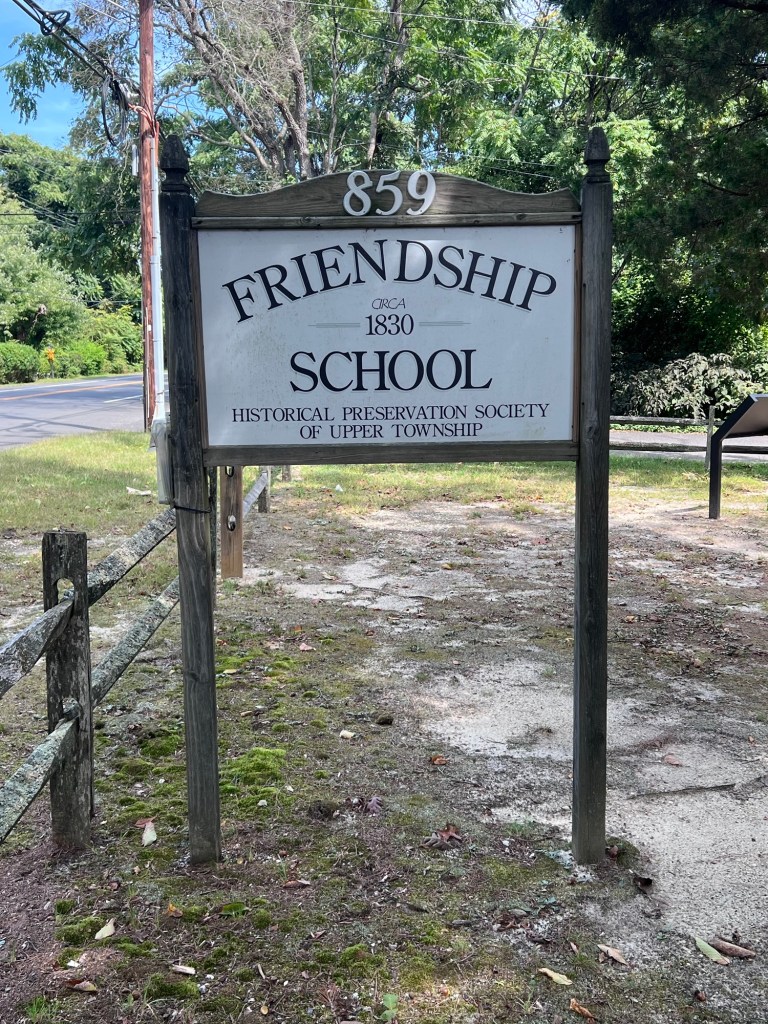
The outside sign
The Friendship School was an interesting look at early rural education where students of various ages would be educated together.
The hours would vary with the growing seasons and students would be educated in the basics to educate them to the next level.
During the school day, children would have various chores to do such as gather wood, collect water, mind the fire and watch the day’s lunch. It would be a full day for both the teacher and the students.
My tour guide confirmed that nothing was easy during the school day and children had a lot of responsibility for what went on in their lives.
The tour was an interesting look at the lives of children of that period of time and the education they received.
The history of the Friendship School:
(from the Museum’s website)
This historic property contains the circa 1930 Friendship School, a circa 1900 privy, and a circa 1917 coal storage shed. The Friendship School was originally donated in 1976 by William Wells, grandson of Enoch Clouting to the Upper Township Bicentennial Committee during a time when Upper Township was particularly interested in its earliest buildings.
The historic plaques
The school’s hand pump
The committee, headed by the late Curtis T. Cordon, evolved to become the nucleus of the Historical Preservation Society of Upper Township (HPSUT) in 1977. Virginia M. Wilson was its’ first President.
The history of the Friendship School begins when it was incorporated in May of 1831 with Jonathon Corson, Lewis Corson, and Seth Young as trustees. The students’ tuition was paid for by parents in 1830, but by 1869, public funding for schools was established. In the 1862-63 school year, 52 students crowded into this 15’x 20’ structure, and of those students in the teacher’s roll book, 24 were Corsons!
The grounds of the school grounds
The school itself is standing on its fourth known location! It was originally located 6 houses southeast of its present location. It was used for classes until it was replaced with a larger building in the 1860’s.
The abandoned school house later owned by resident, Lot Corson, became known as “Lot’s Temple” because church services were held there. Then, it was moved to Enoch Clouting’s farm where a corn crib was placed on one side. It is Enoch’s grandson who kindly donated the school.
The barn on the grounds
The school building was in extreme disrepair when it was moved from the Clouting property to the corner of Ocean Ave. and Shore Road. According to an undated news article, “mere fragments of the (original) building remained” although “some of the heavier corner posts were salvaged.”
The school’s outhouse (pricey)
The historic sign
Nevertheless, restoration of this Friendship School was researched and planned by Kyle Fleetwood of Tuckahoe and James Wilson of Marmora; with assistance from Matt Unsworth, Robert Entirkin, Curtis Corson III, Somers Corson, Marshall “Ted” Behr, Guy Himmelberger, Harry “Hap” Folger and other members of the Bicentennial Committee. It was completed in 1980.
All replacement wood matched the original in size and material and great care was taken to restore it to its original appearance. Locally sourced materials for the restoration/reconstruction came from the Van Vorst sawmill in Petersburg, the Hess sawmill in South Seaville and the Brewer sawmill in Dennisville. Benches donated by Myra Clouting Biggs, were reproduced by Matt Unsworth.
The inside of the school house
The teacher’s desk is a reproduction also made by Matt Unsworth. Hardware for the building was hand-wrought by Robert Entrikin of Petersburg. Although it does not qualify for the State and National Registers listing because it retains little original historic building fabric, the building is important to the historical time line of Upper Township.
The schoolbooks and school equipment
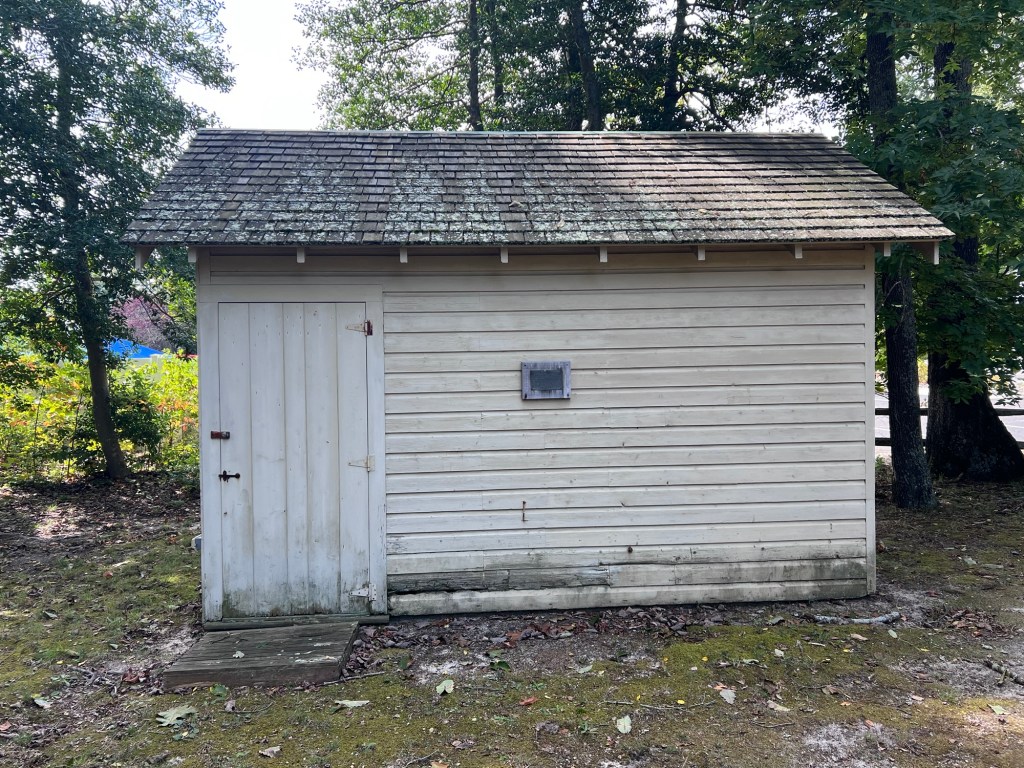
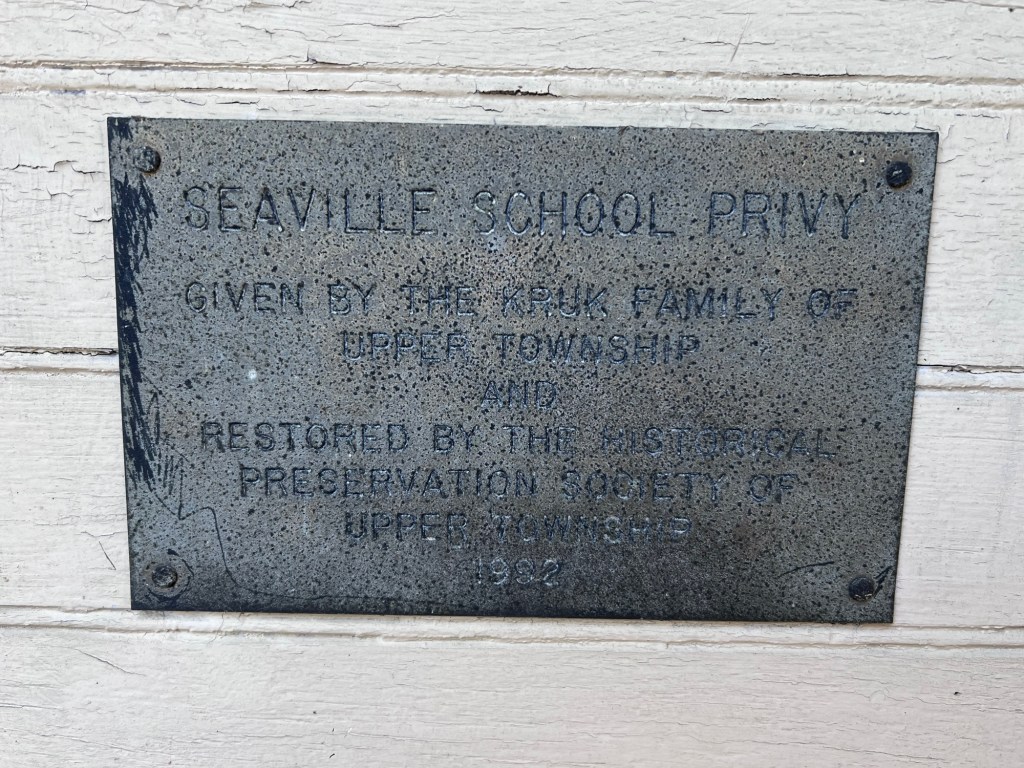
Also on this site are two old frame buildings: a circa 1900 privy donated from the property of the Seaville School on Kruk Drive and a circa 1917 coal/storage shed donated from the Palermo School on Route 9. The coal storage shed, was donated by Wes and Doris Nickerson with Jim and Nancy Siegrist helping with its restoration. It was added to the property in 1993. Three three-seat privy (outhouse) from the old unused Seaville School was donated by Sharon Kruk in honor of her father, and was restored by Lewis Albrecht and Jim Siegrist. It is a work of art (with a French style roof), but is non-functional.
The school room reproduction
A special item, the cedar flag pole, from which flew a U.S. flag that flew above the capitol in Washington, DC, was donated by former Deauville Inn owners, Walter and Gloria Carpenter in December of 1983. (Since replaced)
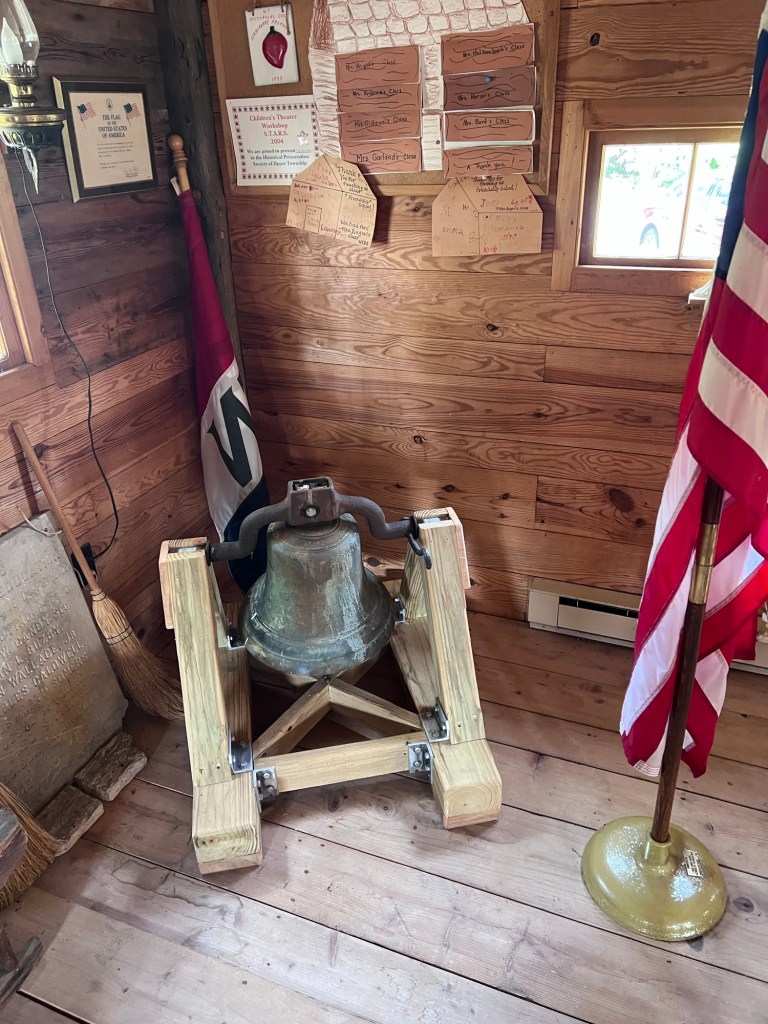
The school bell and flag
The Friendship School was dedicated on September 10, 1983 by Virginia M. Wilson, President of the Historical Preservation Society of Upper Township, Upper Township Mayor Leonard Migliaccio, HPSUT members: Ebbie Unsworth and her son, Matt Unsworth, and guest speaker, New Jersey State Senator, James R. Hurley.
The children would collect water and fire wood for the class room during the school day
The reproduction of the school
Upper Township continues to own and manage the property and the school, while HPSUT members manage the inside and its activities. Each Upper Township Kindergarten class is invited to the annual Kindergarten Day to learn what a student classroom life is like in a one room school house in the early