I came across Myzel’s Chocolates when walking the Central Park South neighborhood for ‘Day One Hundred and Fifty Eight’ for my ‘MywalkinManhattan.com’ project. This delightful little store sits across the street from the City Center and just down the road from Fifth Avenue.
What attracted me to the store, which was right before Christmas was its whimsical display window with all sorts of colorful Christmas decorations, Santa’s and figurines in the window. Inside it was a mob scene of people buying the store out. You could not get near the counter, let alone fit into the 100 square foot store. I had to wait outside for a few people to leave and then I could walk in.
Myzel’s Chocolates is the brainchild of Kamila Myzel and…
Open: Sunday-Monday 9:30am-5:00pm (closes 4:00pm between November and January 5th) The house is only open between April and the beginning of January.
Fee: Adults $18.00/Seniors $15.00/Children (5-18) $9.00/Children (under 5 years old) Free (This is for house and Garden/Garden tours are different and depend on the season. Please check the website)
My review on TripAdvisor:
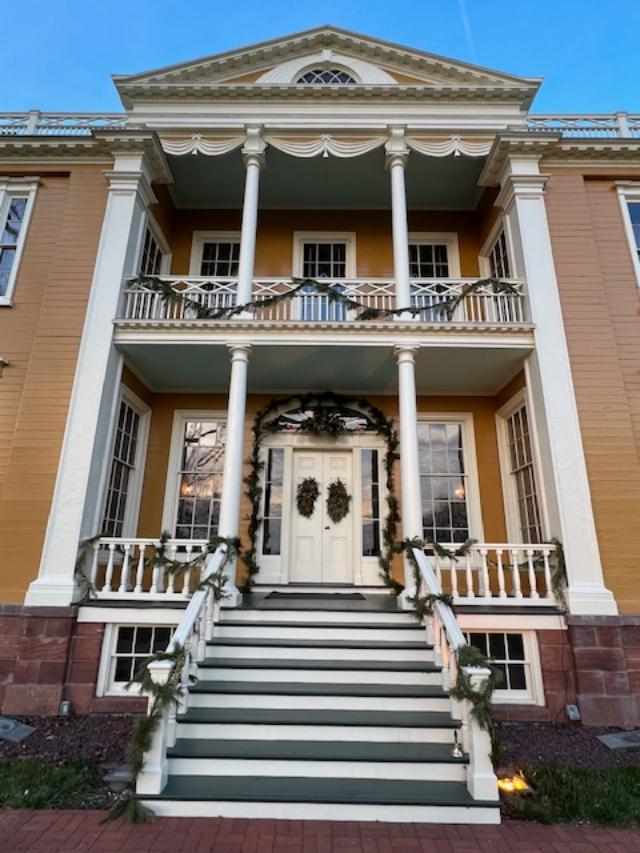
I recently visited the Boscobel House and Garden for their Christmas decorations and for a tour of the house at the holidays. Like most houses of its time period (the house was built in 1806), it was Post-Revolutionary War and the decorations would not have been that lavish as in the Victorian times.
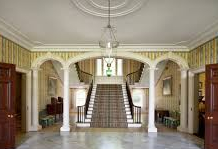
The Grand Foyer at Boscobel
The house was tastefully decorated with garlands and mistletoe along the archways inside the foyer and with holly and mistletoe inside the house…
Hours: There are free house tours at 10:30am, 12:00pm and 1:30pm on Mondays only. Check their website for availability. This is one of the few rare treats of New York if you can snare one of the tours of Gracie Mansion. It is a really interesting tour of the first floor rooms and entrance to the gardens of this historic home and the Mayor of New York City’s residence.
This was really a wonderful tour of the mansion given by a woman who has been a docent for twenty years and has seen the changes of the administrations. We went room by room and discussed how the Gracie’s then the Wheaton’s and the other families who lived here use the house until Robert Moses, the great City Planner, decided this should become the Mayor’s residence.
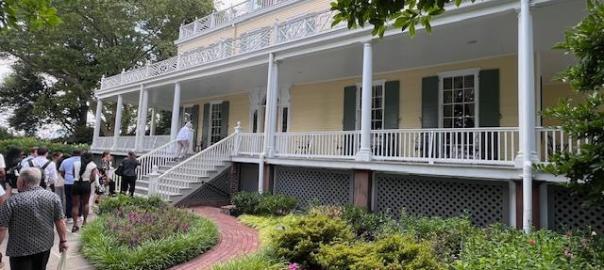
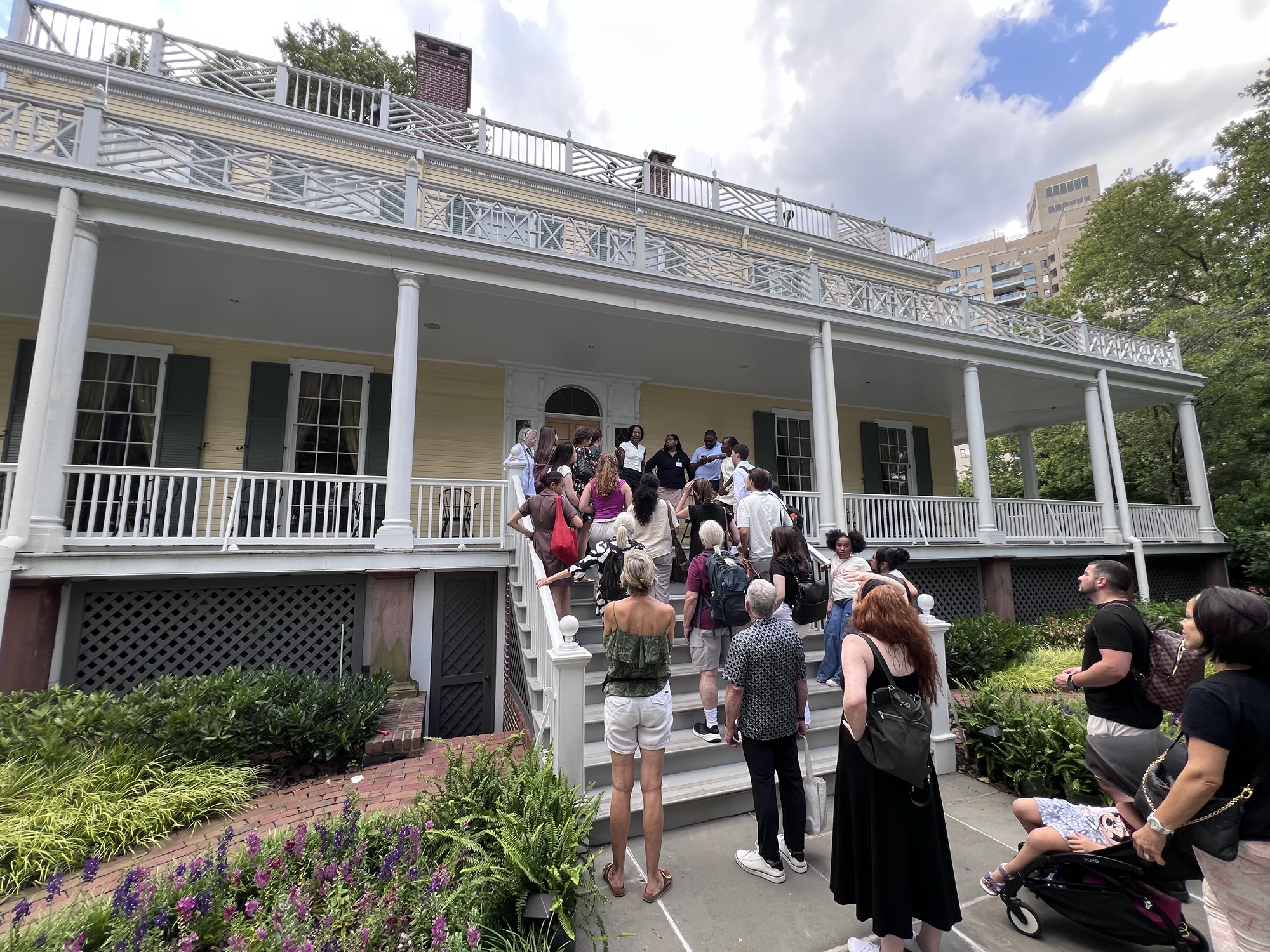
The front of the mansion at the start of the tour in the Summer of 2025
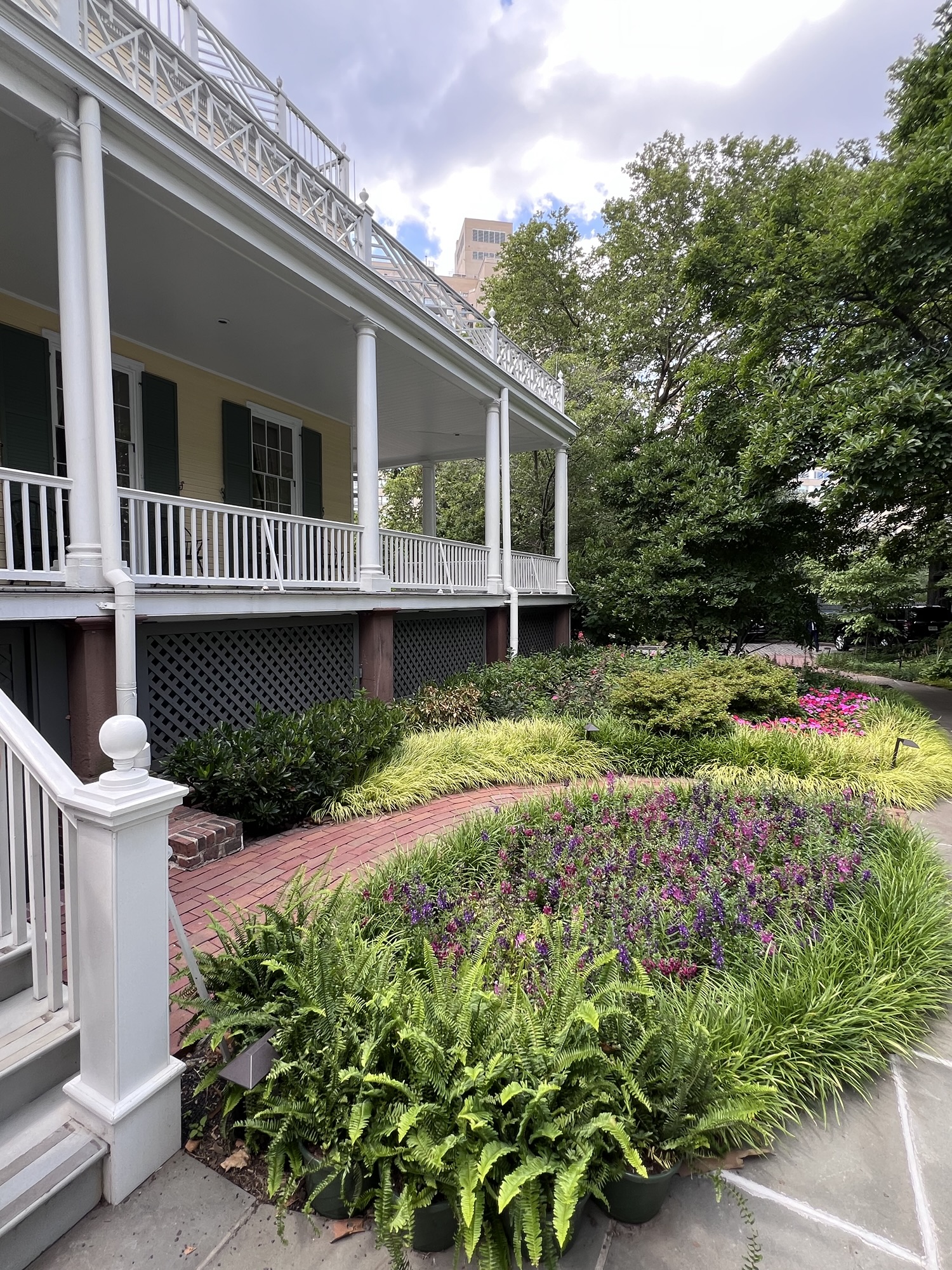
The formal gardens in front of the house in full bloom
The formal gardens to the side of the house near the parking lot
We started the tour on the front porch of the old Gracie Mansion
The tour consists of the first floor only and you can not take pictures inside with the exception of the Wagner Ballroom. We saw the formal entrance, the Living Room, Library, Dining Room and then the hallway leading to the front of the house to the Susan Wagner Ballroom, the newest extension of the house (the front section is the original section of the home built during the Gracie period).
The front rooms you are not allowed to take pictures so as you tour the Living Room, the Dining Room and Parlor rooms, you can not take pictures. When we left the older section of the home and entered the hallway to the Susan Wagner Ballroom added in the Wagner Administration, then you could take pictures in this room only (outside the gardens).
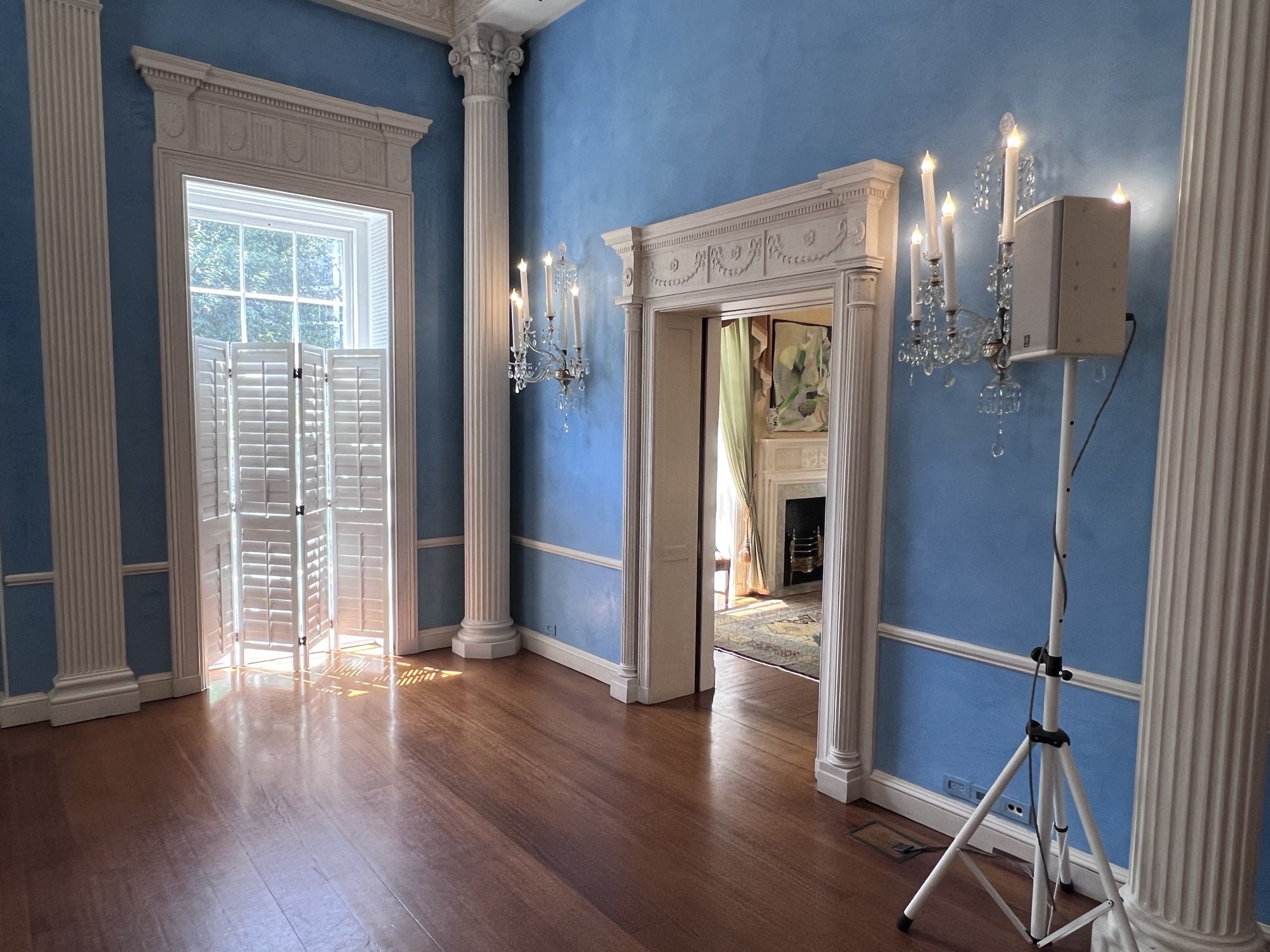
The inside of the Susan Wagner Ballroom
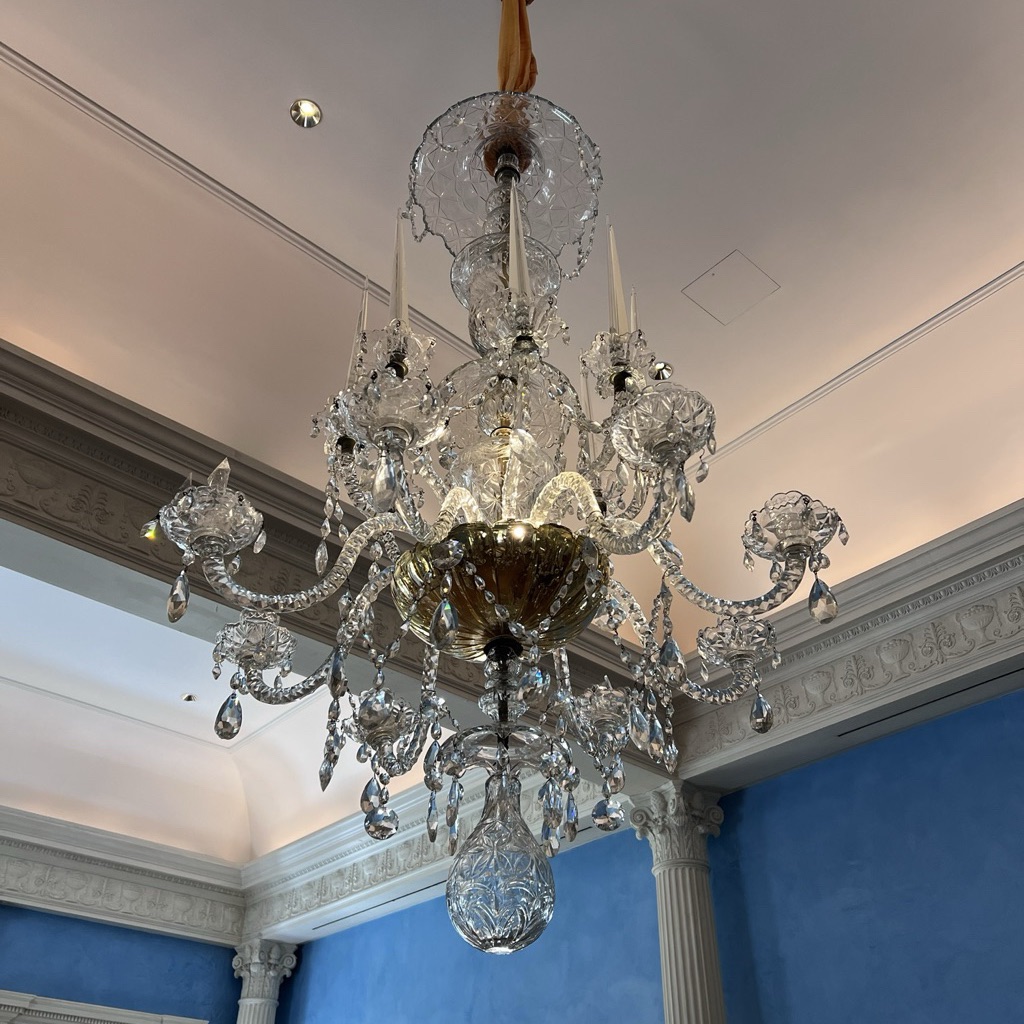
The Chandelier in the ballroom was from an old mansion downtown
The Bayard Fireplace from the Bayard Mansion once located in lower Manhattan
The Wagner Ballroom details
The corniches in the ballroom
History of the Mansion and Gracie Family:
Gracie Mansion, built in 1799 by shipping merchant Archibald Gracie, is the last of the elegant county estates that once lined Manhattan’s East River shore. Gracie hosted elegant dinner parties at his country estate for visitors including Alexander Hamilton, Rufus King, Joseph Bonaparte and Washington Irving.
Major losses during the years after the War of 1812 forced Gracie to sell his estate in 1823 to Joseph Foulke. In 1857, the Mansion was bought by Noah Wheaton. After Wheaton’s death in 1896, the City of New York appropriated the estate, incorporating ts 11 acres of grounds into the surrounding park that was renamed Carl Schurz Park in 1910.
After years as a comfort station and ice cream stand, Gracie Mansion became the first home of the Museum of the City of New York. When the museum moved to a larger building, Parks Commissioner Robert Moses convinced City Authorities to designate the Mansion as the official residence of the Mayor. In 1942, Fiorello H. La Guardia moved into Gracie Mansion.
In 1966, the Mansion was enlarged with the construction of the Susan E. Wagner Wing, which includes a ballroom and two additional rooms. Under the guidance of the Gracie Mansion Conservatory, major restorations to the Mansion were undertaken between 1981 and 1984 and in 2002.
The 2002 restoration transformed Gracie Mansion into the “People’s House” and increased accessibility to the public and City agencies. First Lady Rosalyn Carter and South African President Nelson Mandela are among the many notable visitors.
Gracie Mansion at the turn of the last century
Gracie Mansion is owned by the New York City Department of Parks & Recreation, operated by the Gracie Mansion Conservatory and is a member of the Historic House Trust.
(Gracie Mansion Pamphlet)
Gracie Mansion Conservatory:
After years of neglect and continual erosion of any trace of history, Mayor Edward I. Koch and founding Chair Joan K. Davison, established the Gracie Mansion Conservatory in 1981. as a public./private partnership.. Under its guidance, the first major restoration of the house was undertaken between 1981 and 1984. Besides creating a connection between the original house and the Wagner Wing, this effort included the display of art, furniture and decorative objects either purchased or more often, lent by the City’s many cultural institutions. The Charter mandate of the Conservatory was not to seal the residence in the past (especially as there is no record of how it originally appeared inside) but to protect its history while accommodating change and progress by successive generations of New Yorkers.
The Gracie Mansion Conservatory continues to operate as a charitable organization dedicated to enhancing and enlivening its namesake. Its mission is to preserve and honor Gracie Mansion’s Federal Period origins while also making sure it remains as forward-looking and welcoming as the city it serves. An increasing share of this work focuses on exploring the many different people and cultures whose contributions to Gracie Mansion and the New York at large gone unrecognized for far too long. The Conservatory also works to improve the surrounding landscape and gardens and provide public programming and educational services, including publications and tours for local school students, especially those studying in New York State’s 7th grade social studies curriculum.
(Gracie Mansion Conservatory pamphlet)
Disclaimer: This information was taken from the Gracie Mansion Conservatory pamphlet press kit given on my tour and I give the Conservatory full credit for it. Please check the website for tour information or call them to find out about group tours.
Hours: There are free house tours at 10:00am, 11:00am and 5:00pm on Mondays only. Check their website for availability. This is one of the few rare treats of New York if you can snare one of the tours of Gracie Mansion. It is a really interesting tour of the first floor rooms and entrance to the gardens of this historic home and the Mayor of New York City’s residence.
This was really a wonderful tour of the mansion given by one of the interns who worked for the Mayor. We started the tour in the extension Wagner Wing addition that was added in the 1960’s by the Wagner Administration. We saw the formal ballroom, library…
*I discovered the Morris-Jumel Mansion on my walk around Manhattan and noted it on my blog site “MywalkinManhattan.com”. This is the only remaining Colonial residence left on the island of Manhattan and is worth the time to take the tour of the house for its significance in the American Revolutionary War and in it’s later history.
The Morris-Jumel Mansion, Manhattan’s only remaining Colonial era residence is unique in its combination of architectural and historical significance. Built as a summer ‘villa’ in 1765 by the British Colonel Roger Morris and his American wife, Mary Philipse, it originally commanded extensive views in all directions: of New York harbor and Staten Island to the south; of the Hudson and Harlem Rivers to the west and east and of Westchester county to the north. The estate named “Mount…
In the late 1700’s, well-to-do dwellers moved to Harlem Heights in the summer, seeking its cool breezes. They also wanted to avoid yellow fever, a summer threat in lower Manhattan, Hamilton and his wife, Elizabeth (of the influential Schuyler family) often visited friends here and decided to build their own retreat.
In 1802, they moved in and Hamilton began commuting to his downtown law office, a 90 minute carriage trip. He and Elizabeth also began to entertain friends, colleagues and leader in their elegant home and gardens. Little did Hamilton know that his time at The Grange would be brief.
Witness to Slavery:
Alexander Hamilton (1755-1804) grew up on Nevis and St. Croix, islands in the Caribbean, where thousands of enslaved Africans labored in…
I recently had some time to visit the Bronx Museum of the Arts when I was visiting Yankee Stadium recently for a football game. The museum is right down the road on the Grand Concourse. It is an impressive little museum.
I had wanted to see the exhibit “Art Versus Transit: 1977-1987” by artist Henry Chalfant who had recorded the graffiti art on the subway cars during the late 70’s into the early 1980’s. This is before the subway investing in the new subway cars that could be cleaned by hosing them off.
“Art versus Transit: 1977-1987”
The art was interesting as it was an expression of the times just when Hip-Hop was becoming popular and the City was going…
I came across the Children’s store, Little Moony, on a trip up Mulberry Street when visiting ‘Little Italy’ in Manhattan for dinner. Right above Grand Street in the area between Houston and Grand Street where “Little Italy” ends ‘Nolita’ (North Of Little Italy). This trendy area is starting to fill with smart boutiques, innovative restaurants and interesting stores that are replacing the older neighborhood establishments.
I love their welcoming store window display
Little Moony is a cute Children’s store that is stocked with handmade clothing, imported handmade toys and an assortment of stuffed animals, small wooden games and infant toys. There is also a small selection of independent author children’s books many of which I had never seen before.
Welcome to my consulting company, Bergecco-Parc Consulting Inc. which is part of my Business 101-Introduction to Business class at Bergen Community College. The students in my December 2019 class presented their project on marketing the City of Paterson, NJ to tourism.
The presentation was a huge success.
The Bergecco-Parc Consulting Inc. Logo for the City of Paterson, NJ.
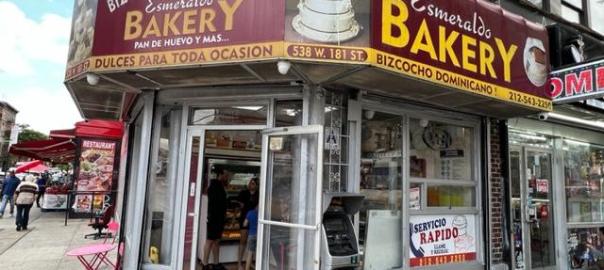
Esmeraldo Bakery is one of my ‘go-to’ spots when I am up in Washington Heights in Upper Manhattan. This Dominican bakery is very popular in the neighborhood and is in the middle of the busy shopping district between Broadway and Audubon Avenue along the 181st Street corridor. It has the nicest selection of baked goods and hot and cold snacks to choose from. The one nice thing I love about the bakery is that almost everything is a dollar or around that.
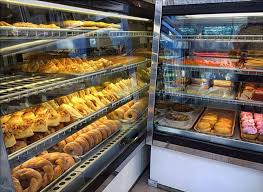
The cases are full of delicious doughnuts, turnovers and pastries
I have been the bakery on many occasions and have had a chance to ‘munch’ through a lot of the pastries. The Chocolate and Vanilla topped doughnuts ($1.00) are light, fluffy and have a nice chewy consistency. …
Admission: $5.00 for Adults/$3.00 for Seniors & Students/Children under 12 are free/General Admission is free on Wednesdays. Guided and group tours are available.
I visited the Van Cortlandt House Museum for the their Annual Christmas Decorated House event. The mansion was decorated for Christmas in the 1700’s so it was not overdone as it would during the Victorian times. The front of the house entrance was done with sprays of holly, mistletoe above the door and garlands of pine around the banister and fireplaces. The windows had candles in them and the dining room was set for Christmas luncheon in post-Revolutionary War era.
Van Cortlandt House for Christmas is Post-Revolutionary War
While most of the house is represented during the Dutch…



















 mywalkinmanhattan