*I discovered the Morris-Jumel Mansion on my walk around Manhattan and noted it on my blog site “MywalkinManhattan.com”. This is the only remaining Colonial residence left on the island of Manhattan and is worth the time to take the tour of the house for its significance in the American Revolutionary War and in it’s later history.
The Morris-Jumel Mansion, Manhattan’s only remaining Colonial era residence is unique in its combination of architectural and historical significance. Built as a summer ‘villa’ in 1765 by the British Colonel Roger Morris and his American wife, Mary Philipse, it originally commanded extensive views in all directions: of New York harbor and Staten Island to the south; of the Hudson and Harlem Rivers to the west and east and of Westchester county to the north. The estate named “Mount…
The realtors have changed the borders many times to extend neighborhoods from their traditional borders to include areas that have improved and been renovated to add to the value of the neighborhood. This is what I have seen in SoHA (South Harlem). Morningside Heights has creeped across the border, leap-frogging over Morningside Park to include a new ‘Restaurant Row’ on Frederick Douglas Boulevard making it the new eastern border of Morningside Heights.
What the borders might be now, I really could not say but I can see how the area has changed in the last twenty years. When I visited the Columbia campus in the early 90’s, I remember overhearing some of the students talking about all the fires that they saw the night before in the area on the other side of Morningside Park and how metal gates used to be in front of the steps leading to the park. Oh, how times have changed in this area.
I started my walk during the winter break from school and the weather was in the high 60’s and low 70’s the whole week and it seemed that everyone had a case of cabin fever. People were all out and about this whole week. I started my walk that Wednesday morning and the weather had to be about 68 degrees and it was just beautiful out. It had started out a little cloudy then just cleared giving me perfect weather to walk around. My first part of the trip to me to the border of ‘SoHA’, South of Harlem 125th Street.
125th Street, which is the main artery of Harlem, is still being developed. All over the place things are under scaffolding or being knocked down and rebuilt all over the street. It is amazing the changes that have taken place so quickly since the summer. Since the summer, many of the side streets are under scaffolding as brownstones have been bought and even ones that have been bricked up for years have been sold and are being gutted.
The entrance to Morningside Park.
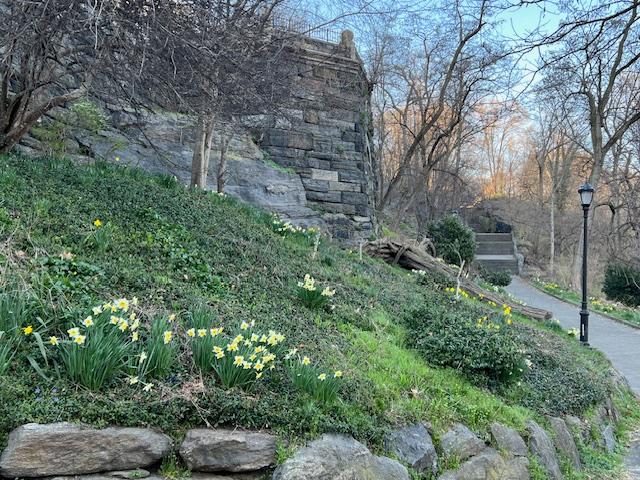
My first part of the day was exploring Morningside Park by walking down Morningside Avenue and walking through the park area in the late morning. Most of the buildings facing the park have been renovated and sandblasted back into beauty and I am sure have gone up in value in the last 15 years. New playgrounds and spring plantings and clean up were happening all over the park as the park service had their crews were working all day to clean up the park for spring. The warm weather had plants popping up all over the park about a month early as I could see daffodils ready to bloom.
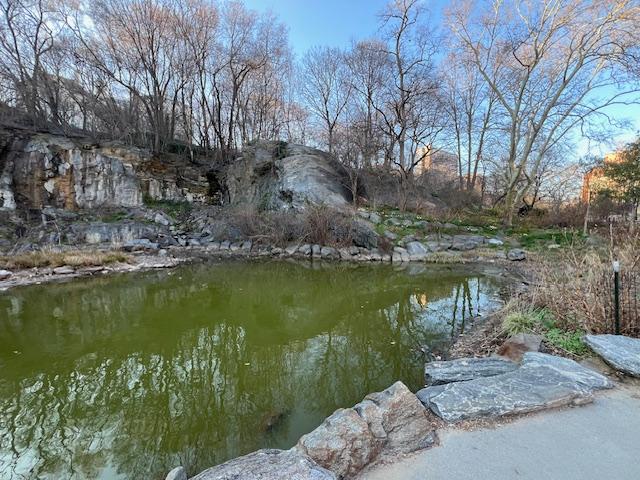
Morningside Park has come back to life with the renovation
The park was full of mothers with strollers and kids playing baseball and soccer. The schools were out for the winter break and these kids really lucked out with the beautiful weather. It was more like late spring instead of the middle of the winter with warm temperatures and lots of sunshine. Everyone was taking advantage of the warm weather.
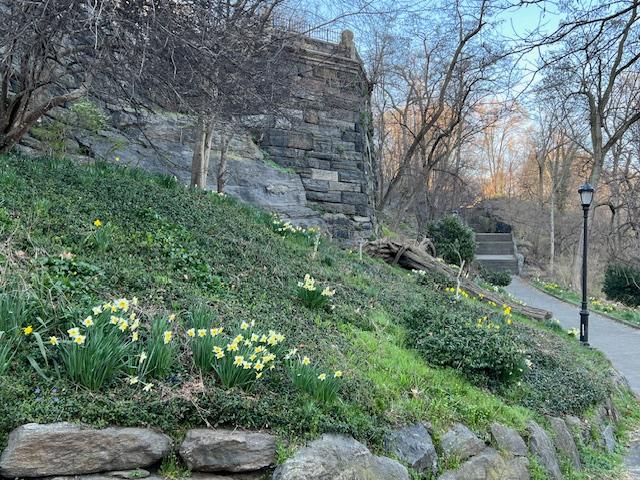
The park’s daffodils popping up in the early Spring.
I was impressed by how nice the park looked with its new landscaping, well-tended paths and new playgrounds. It was a far cry from the drug dens that my father described when he was attending Columbia. The police would not even let him cross the park when he took the wrong subway and wanted to walk across the park to get to class. They made him go back downtown and take the 1 subway uptown.
Morningside Park by Columbia University
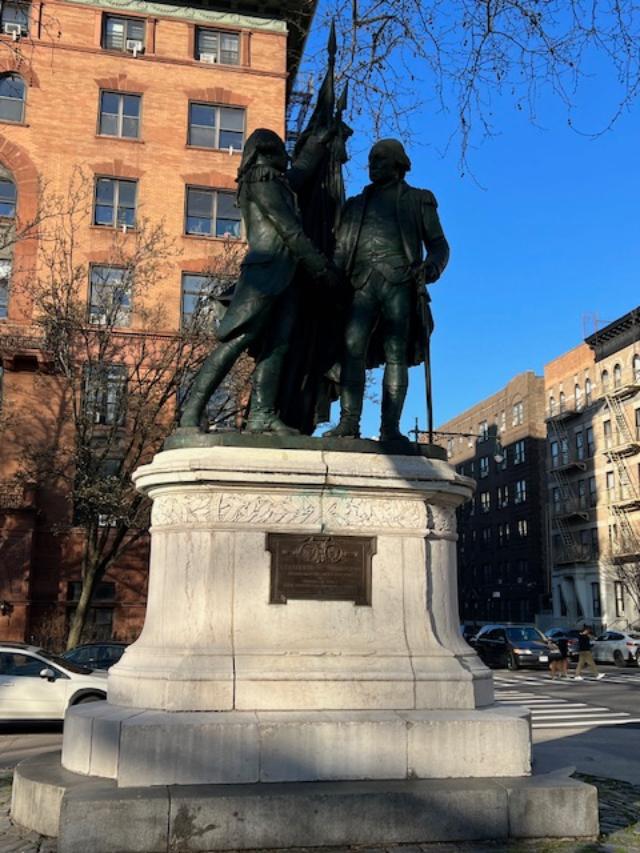
I was fascinated by a statue of George Washington and General Lafayette that stood at the corner of 114th Street and Morningside Avenue. This impressive statue sits in a small triangle park across the street from Morningside Park and is surrounding by Victorian looking apartment buildings. The whole block surrounding the park has been sandblasted and renovated back to its original elegance. It is an impressive block of brownstones and prewar apartment buildings that surround this pocket park.
“Washington Greeting Lafayette’ by Morningside Park
The Statue of George Washington and Marquis de Lafayette was designed by Frederic Auguste Bartholdi, who had designed the Statue of Liberty. This copy of the statue was donated to the City of New York by Charles B. Rouss, who was a merchant in New York City at the time (Walk About New York).
Frederic Auguste Bartholdi was born in Colmar, France in 1834 and had attended the Lycée Louis de Grand in Paris and then went off to study architecture and painting. In 1871 on his first visit to the United States he suggested the idea of a massive gift from France to the United States for the Centennial Celebrations which resulted in the “Statue of Liberty (Wiki).
As I exited the park, I can see all the new construction that is taking place on 110th Street which now looks like the Upper East Side. Pretty much everything from Riverside Drive to Adam Clayton Powell Boulevard has been renovated or rebuilt and has become an extension of Columbia University. The whole area was loaded with students going to classes or just trying to escape their classes by sitting in both Morningside and Central Parks. Several of the apartment buildings along 110th Street look straight off Park Avenue downtown with their elegant facades and their doormen.
The first day I walked this part of the neighborhood, I walked the Avenues and was able to walk Manhattan Avenue, Fredrick Douglas Boulevard, Nicholas Avenue (which crosses these Avenues) and Adam Clayton Powell Boulevard. It is amazing how the neighborhood changes from block to block.
Morningside Avenue and Manhattan Avenue are lined with elegant brownstones and prewar apartments that are beginning to see signs of college students moving in. I saw students milling around the area all day long. These and Fredrick Douglas Boulevard (which in the not-so-distant future will probably be renamed Central Park North) have extended Morningside Heights further west. These three blocks east of the park are starting to cater to Columbia students and faculty.
Fredrick Douglas Boulevard has become ‘Restaurant Row’ to the college students and hipsters living in the area. I had never seen so many new restaurants on a fifteen-block stretch and the funny part was you know that they are not catering to the local crowds as the cheapest entrée on most of the menus was between $15.00 to $20.00. All of these places were ridiculously expensive for this part of the city and the menus were very similar.
Fifth Avenue and Central Park from the Harlem Meer at 110th Street
On such a warm day though, the outdoor cafes were in full swing and the street was loaded with people either walking their dogs, catching up with friends or eating outside. I have to tell you this though, the white population in this section of SoHA is growing fast and they are young.
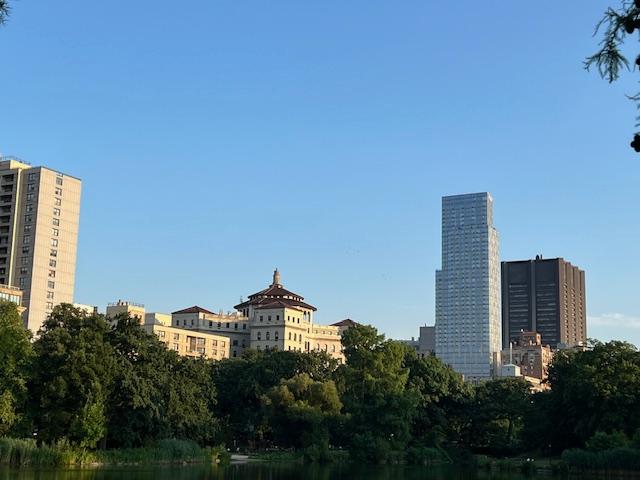
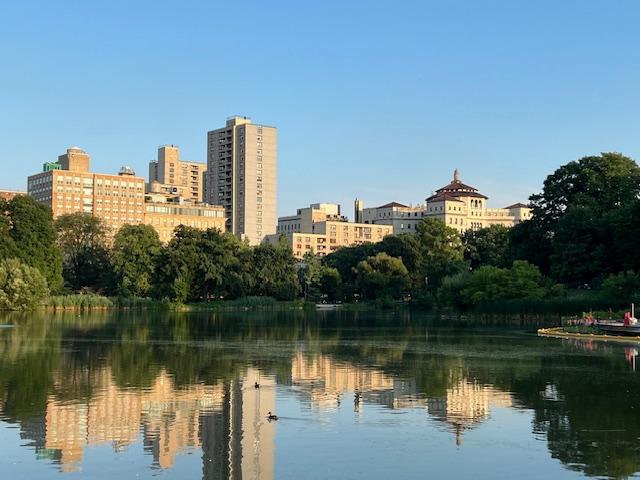
The Harlem Meer on a Summer evening in 2024
After covering these streets from 110th to 125th and back, I took a break and relaxed at the Harlem Meer (Dutch for Lake) located in Central Park North at 110th Street. On a beautiful sunny day, there is no better place to relax than on the benches facing the Meer. People were outside fishing with their children and seniors were relaxing with their fishing poles bobbing by the side of the Meer and gossiping about their neighbors. Behind them, loads of small children and their parents were running around the playground.
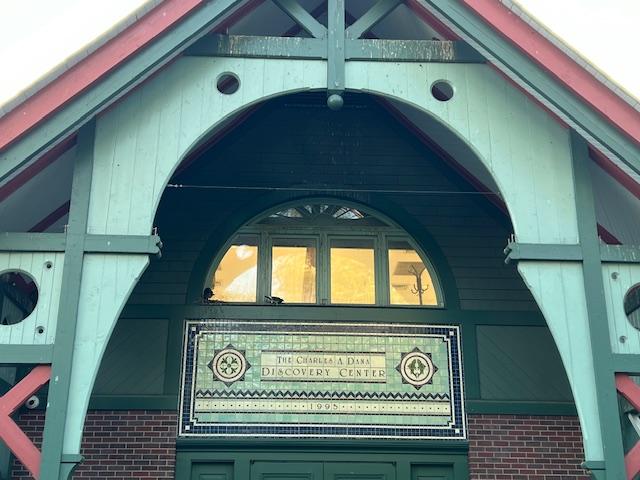
The Charles A. Dana Discovery Center and the Harlem Meer in the Summer months
I took some time out from my sunning and walked around the Charles A. Dana Discovery Center, where the bathrooms (note these are open late), visitors center and the history the park played in the Revolutionary War are located here. You can also arrange walking tours or become a member of the Central Park Conservatory (I know because I did).
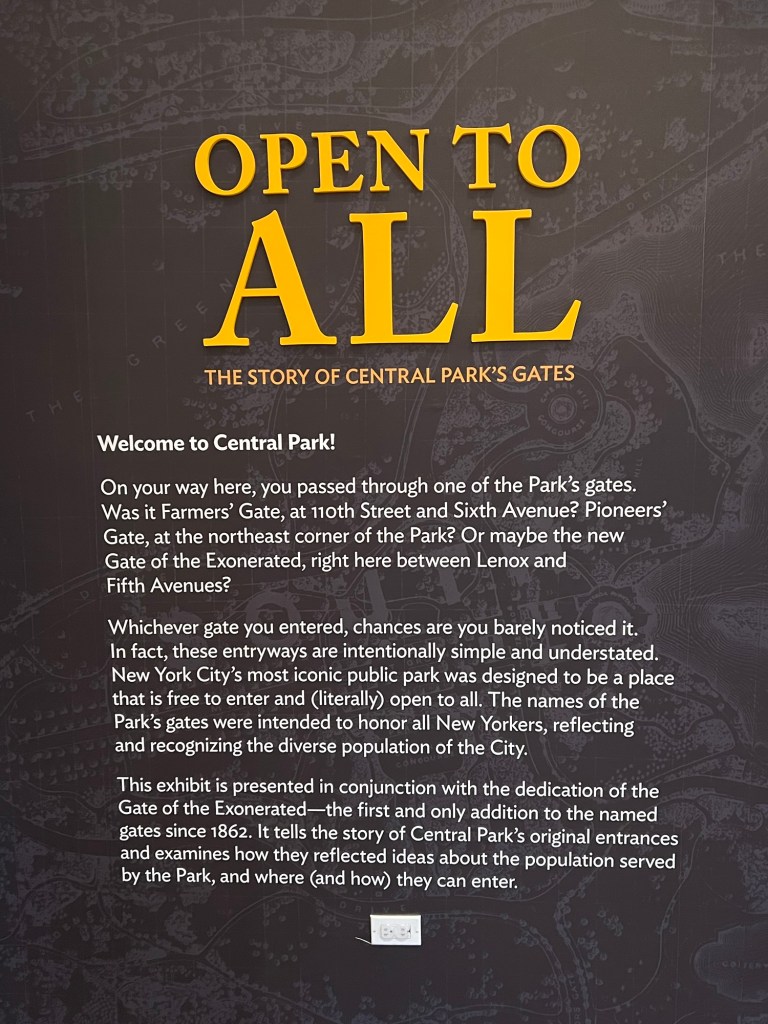
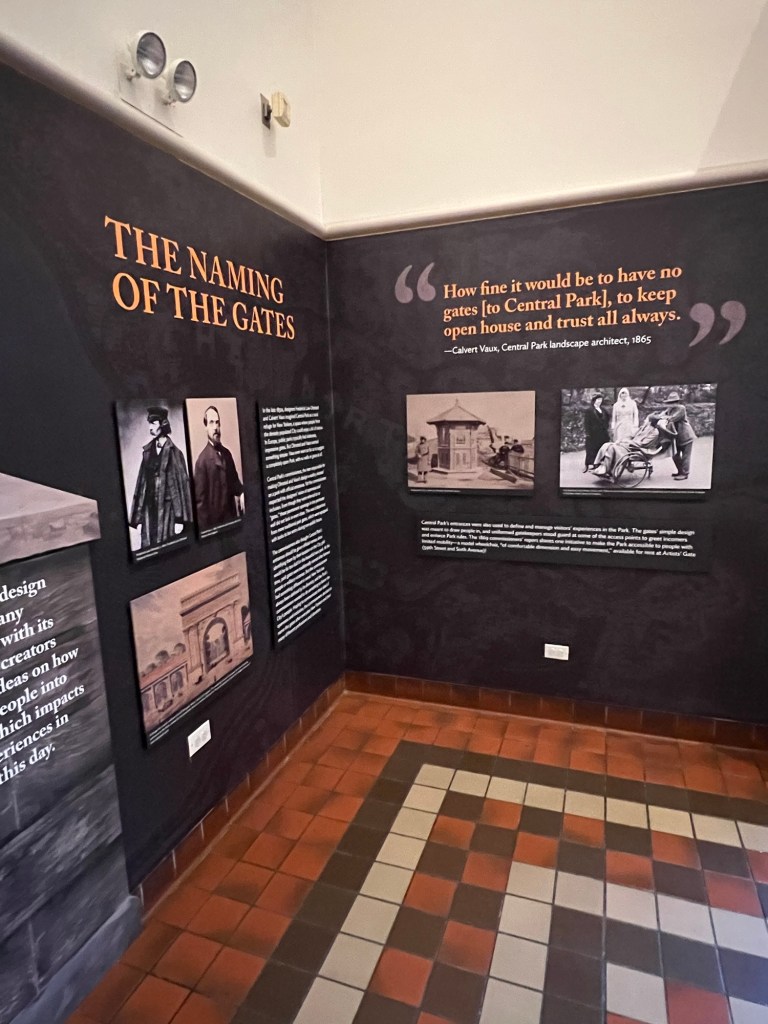
I took some time out and looked over the history of the park. It is a very interesting timeline of the park during both the Revolutionary War and the War of 1812. Take a half hour out and look over the display. When I revisited in 2024, I saw the “Open to All-The Gates of Central Park” exhibition”, on the entrances of Central Park.
Inside the Charles A. Dana Discovery Center
The “Open to All” Central Park Gates exhibition in 2024
The exhibition at the Dana Center
I walked up and down every changing Nicholas Avenue that cuts across the neighborhood from Fredrick Douglas Boulevard across 7th Avenue to exit at Lenox Avenue. This ever-changing street has loads of new restaurants and businesses on it. It starts off a small triangle a block below 125th Street that has a theater and a slew of new restaurants.
You can see how the blocks keep changing with a lot of the buildings under scaffolding and for rent signs. There was an impressive memorial tribute to Harriet Tubman at 122nd Street and St. Nicholas Avenue with a beautiful statue located on a triangle overlooking the road crossing.
The Harriet Tubman Statue at St. Nicholas Avenue and Fredrick Douglass Boulevard by Artist Alison Saar.
Ms. Saar is a Sculptor and Installation artist from California, who graduated from Scripps College with a BFA and another degree in MFA from Otis College of Art & Design.
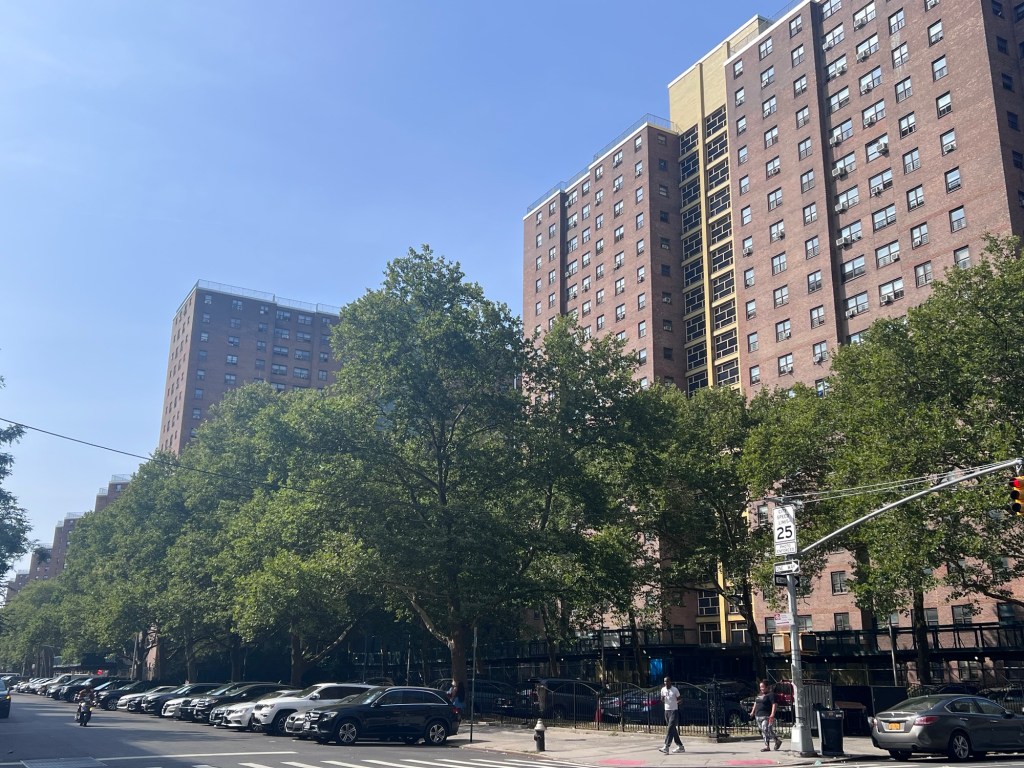
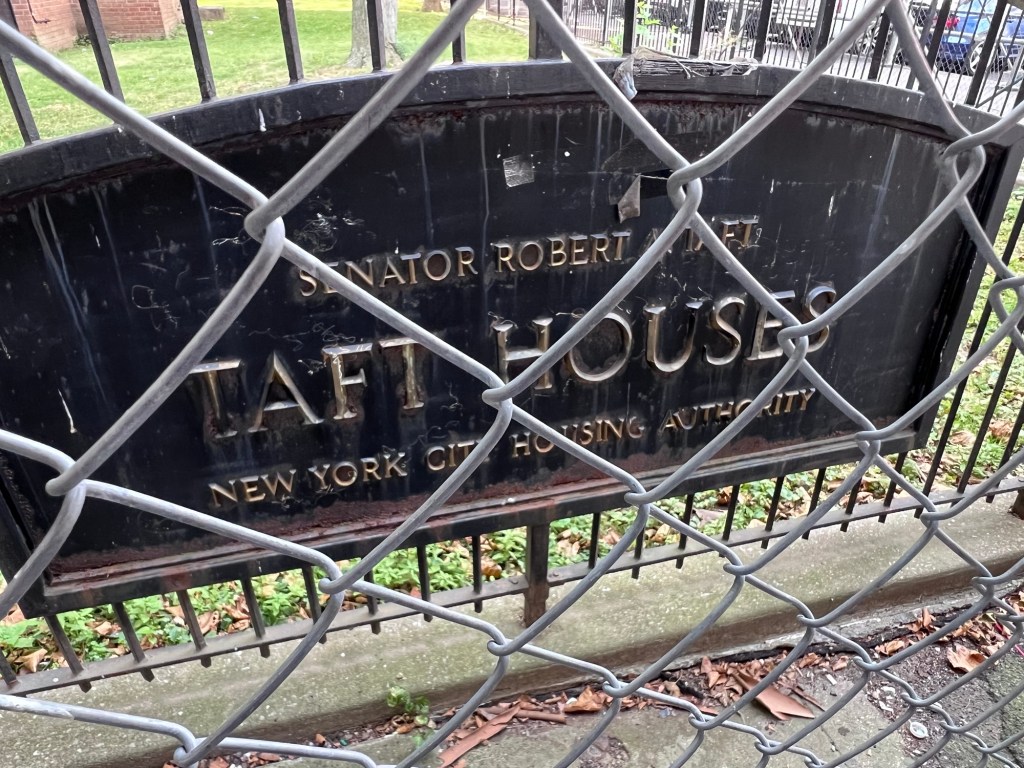
I was able to cover a small section of Lenox Avenue the first day in the neighborhood and between 112th to 115th Streets stretching from Lenox Avenue to 5th Avenue the area is dominated by the Martin Luther King Jr. Houses and then from 5th Avenue to Park Avenue by the Taft Houses.
Martin Luther King Houses between 112th-115th Streets
It looks like the city just bulldozed down an entire part of the neighborhood to build this hideous public housing. No wonder Jane Jacob said in “The Death and Life of American Cities” that public housing was the failure of a neighborhood and how it disengages itself from the rest of the neighborhood. There was a lot of renovation of the houses and parks in both areas but it looked out of place with the blocks of prewar buildings and brownstones (Who knew that living in the projects was so trendy?).
It was getting dark on my first day in this part of the neighborhood but with so many people outside, I never felt unsafe even walking through the projects. I double backed down part of Lenox Avenue and discovered at the corner between 109th and 110th Streets in a series of restaurants, a small take-out Chinese restaurant named Hunan Chen’s Kitchen at 1003A Columbus Avenue (see review on TripAdvisor). This little hole in the wall is amazing.
Hunan Chen’s Kitchen at 1003A Columbus Avenue is excellent (Closed June 2020)
The food and the service are just excellent. The place is so small it can barely hold three people comfortably and it has only one table to sit on and that is always full. The food is so reasonable and the portion sizes are huge. I was there for a second time and had to try their General Tso’s Chicken, which had been raved about online on Grubhub.
The General Tso’s Chicken is worth the trip
At about twilight, I took my food and ate it on the benches at the entrance of Morningside Park on the corner of 110th Street and just watched the crowds of people in the park. The large portion of chicken was well-fried and the sauce had a tangy sweetness and just enough fire from the hot chilies to wake me up. It was excellent. The food was steaming hot and the egg roll had just come out of the fryer. With a Coke, the whole meal which could have easily fed two people was $8.25. It was a real steal and the food was wonderful.
My second day I walked in the neighborhood, I concentrated on walking more of the avenues and covered Lenox, Madison, Park and Lexington Avenues. That took time as I walked from 110th to 125th Streets both sides up and down. I also stopped in various parks and businesses. I could see traces of the old Italian neighborhood up on 116th Street east of Park Avenue with many Italian restaurants with Spanish menus.
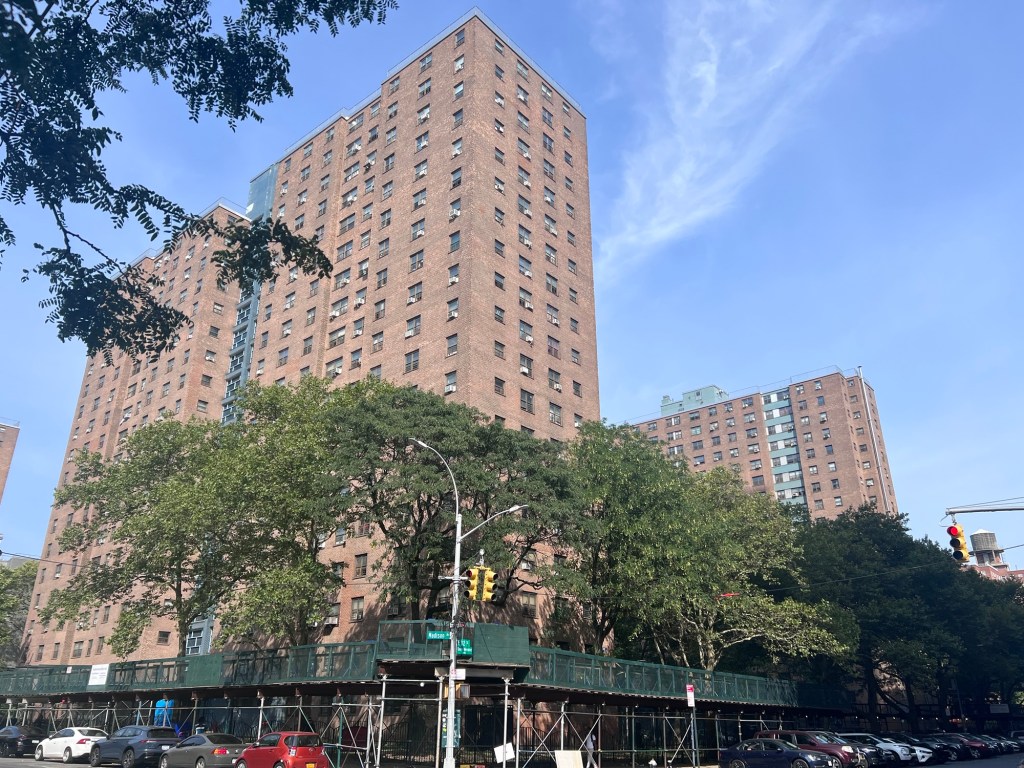
All three streets are dominated by public housing surrounding 110th Street and between 112th and 115th Streets. The Taft Houses, the Martin Luther King Jr. Houses and the Jefferson Houses pretty much surrounds this section of the neighborhood and you see as far as you can about a dozen hulking buildings surrounded by small businesses.
Taft Houses at 1694 Madison Avenue from 112th to 115th Streets
Again, once you cross 116th Street, it starts to change again with new apartment complexes wedged a block from the projects that cater to a whole other person. Surrounding those new apartment buildings are new restaurants and shops especially coffee shops are dotted all over this section of the neighborhood. They are the hang outs for all the twenty and thirty something’s that live there.
Lenox and Fifth Avenues above 116th and near Mount Morris (Marcus Garvey) Park is dominated by the Mount Morris Historic District. Streets that surround the park on the west side of the park are either scaffolded or have already been sandblasted to their original charm. These brownstones and prewar apartments have a turn of the last century charm to them and the blocks are very elegant and well-maintained. When you pass them, really look at the stonework and detail work in the carvings. Are those flowers and faces in the buildings?
Park Avenue has its own charm and uniqueness to it after you go above 98th Street when the tracks become elevated and it cuts the street in half. Some businesses have been established under the tracks to add to the charm of the area.
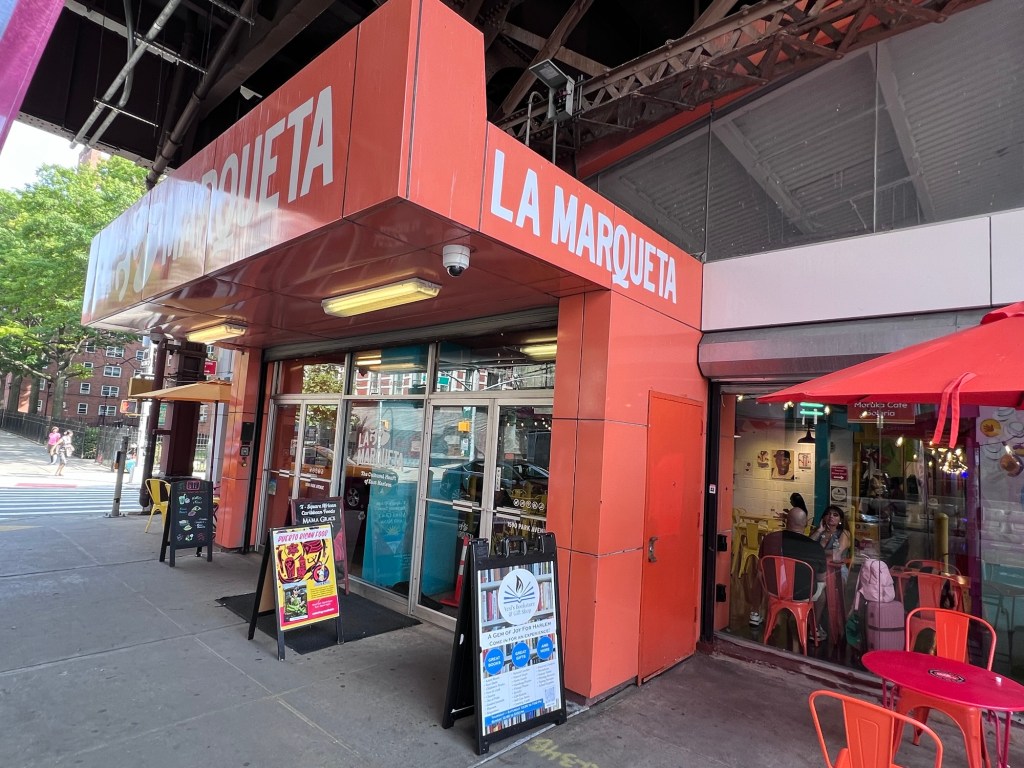
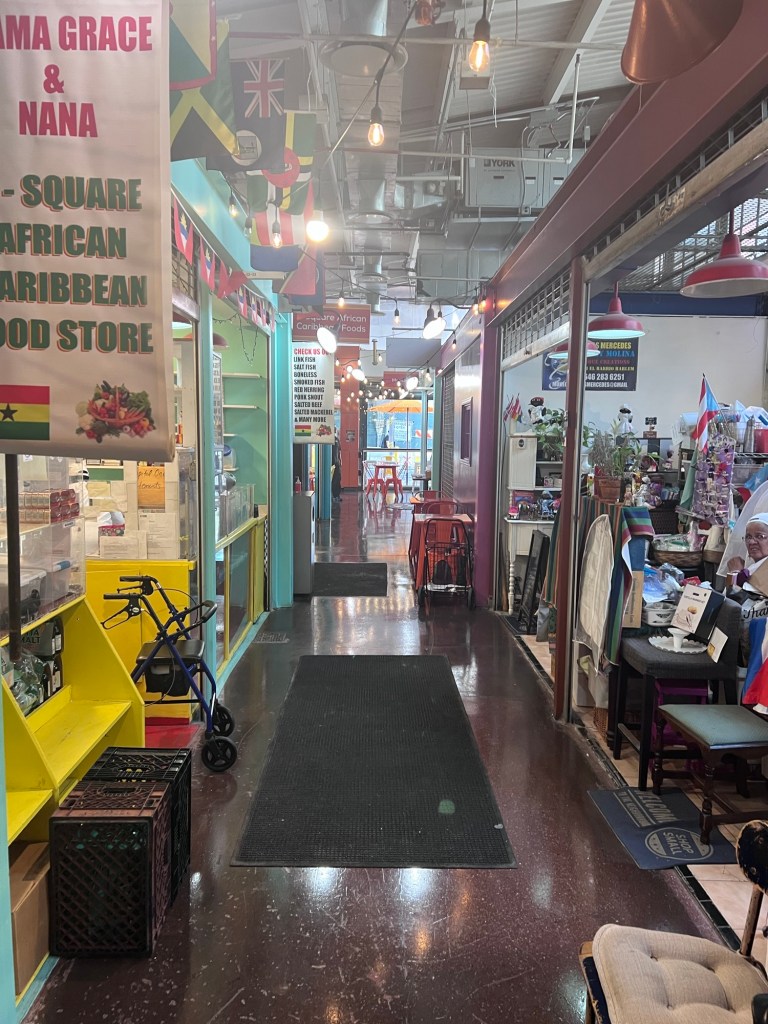
The Urban Garden Center at 1640 Park Avenue has a huge array of products for the urban gardener including the trees, bushes and all the equipment for heavy duty gardening. La Marqueta Marketplace is at 1590 Park Avenue, which has an interesting grouping of bakeries and shops that cater to both the locals and the hipsters.
There are about three bakeries inside the market and it is a nice place to venture on a long day. I stopped at Patisserie Vanessa one afternoon and had a Caramel Canelés, which was a tiny crème caramel with burnt sides (see TripAdvisor review). It was a delicious little chewy dessert and was cute to look at and had a wonderful bite to it. The problem is that these bakeries never seem to be open during the week.
The Inside of La Marqueta
Another nice bakery I came across is Lee Lee’s Bakery, which I stopped at for a much-needed pastry. This bakery is located at 283 West 118th Street.
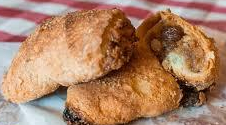
I had the most amazingly buttery peach pastry that melted in my mouth (see review on TripAdvisor). They also have the most delicious buttery rugelach, little cinnamon pastries. This little store is located right off Fifth Avenue and is worth the trip uptown.
Lee Lee’s Bakery pastries are so buttery
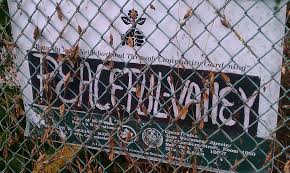
There are several Community Gardens tucked in between the blocks of businesses and the projects. I cam across Peaceful Valley Community Garden at 117th Street that looked like it was being replanted in the middle of the winter in the warm weather. Chenchita’s Garden was at East 112th Street and was also being worked on in the warm weather. The Villa Santurce Jardinera at East 112th Street looked like it was going to need some work in the spring. That is the resourcefulness of this neighborhood is that the residents have taken these empty lots and created something beautiful in their place. It shows the pride of wanting to build a neighborhood.
Peaceful Valley Community Garden at 117th Street
I walked the last section of SoHA on April 3rd and it took most of the day. After a long day of working at the Holy Apostles Soup Kitchen (which I do most mornings before I start by neighborhood walks), I took the subway up to 125th Street and walked down the street from Adam Clayton Powell Boulevard to Park Avenue. 125th Street keeps morphing.
It seems that every building on the block around 5th Avenue is going through some sort of renovation or is being knocked down. It is so funny to see a Red Lobster next to the Apollo Theater (but it is the same when you pass the Cotton Club and how it is dominated by the new Columbia campus extension. It is out of place now). Once you pass 5th Avenue, the businesses start to get a little fancier reflecting the changes in this part of the neighborhood with the renovation of the brownstones around Mount Morris Park (Marcus Garvey Park).
I stopped at Lady Lexis Sweets Bakery at 1931 Madison Avenue to grab a quick snack to keep me going before lunch. They had a nice selection of cookies, candy and cakes in the cases and very creative art work on the walls (See review on TripAdvisor). The mother-daughter team that runs the bakery does a nice job. I had a from scratch M & M cookie that was pretty good but a little on the expense side. I think that $1.75 for a cookie is a little steep but it was well worth it. It had a sugar cookies sweetness to it.
I rounded the corner of 5th Avenue and Madison Avenue and decided to pin-point the walk between 5th Avenue and Lexington Avenue between 125th Street and 116th Street and then Lenox Avenue from 115th Street to 110th Street and retraced my tracks on 125th, 124th, 116th and 110th Streets. The scaffolding keeps going up.
It was such a nice day that I took some time out and walked around Mount Morris Park (Marcus Garvey Park) or about a half hour. I was able to walk all over the park but I want to warn readers about going into the park. I walked around the upper level of the park and there were more than a few suspicious looking guys hanging around the top of the hill of the park. They took one look at me walking around and they left the top of the hill.
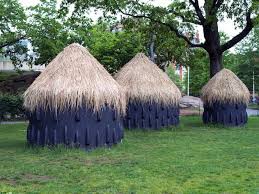
I walked around the hill and watched them and then walked around the perimeter of the park. I watched the families in the playground and by the dog park and admired a structure of huts by artist Simone Leigh, that had been placed in the park. Ms. Leigh is an American artist from Chicago now living in New York who holds a BA in Art and Philosophy from Earlham College. Her specialty is art of an auto-ethnographic with a specialty in African art, vernacular objects and feminism (Wiki).
The exhibit was part of the ‘Flex Public Art’ display as part of the city’s ‘Changing Landscapes’ program. It’s a work that shows three huts or ‘imba Yokubikira’ or called ‘kitchen houses’ based on structures in Zimbabwe. The artist from what I read was trying to show the sense of community or a loss of it. They are located the entrance to the hill and are very interesting public art.
Simone Leigh’s ‘Imba Yokubikira’ in Mount Morris Park
After walking the whole park, it was off down 123rd Street and covering the upper section of the neighborhood. Most of this section of SoHA is dominated by schools and businesses. Before you cross over to 118th Street, most of what I saw were the commercial strips of 125th Street and its back lot 124th Street. As you walk in this area, there are a lot of elementary schools, health clinics, churches and apartment buildings, especially a lot of affordable housing buildings that are being renovated. It seems that the city is trying to upgrade its public housing.
Around 118th Street and Madison Avenue, the neighborhood starts to change again with new apartment buildings and businesses dominating 5th, Madison, Park and Lexington Avenues. This area is being knocked down for new construction and small residential buildings are opening all over the place. The strangest thing is that there is luxury housing opening right next door to the public housing. It seems that the next generation of luxury owners does not mind this arrangement.
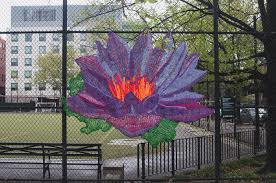
In the midst of all of this change and renovation, you discover all sorts of pocket parks and street art. Artist Naomi Lawrence has a yarn work called ‘Lotus’ on the fence at the corner of Park Avenue and 120th Street.
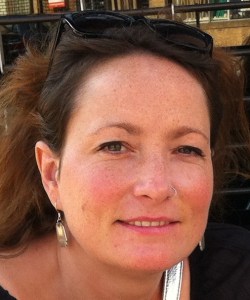
Ms. Lawrence is a fabricartist that hails from England who now lives in East Harlem and uses acrylic yarn to create her works of art on chain link fences by schools and public places. This flower sculpture is woven into the fence and is the image of a colorful opening up. This street art that is also part of the ‘Changing Landscapes’ project (Naomi Lawrence Blog site).
Artist Naomi Lawrence creating her interesting weaves on a school fence
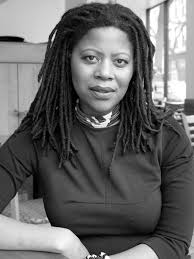
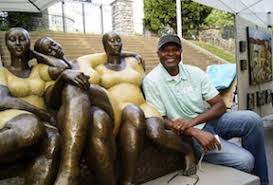
The ‘Three Women’ sculpture in front of the new apartment building at 120th and 5th Avenue by artist Nnamdi Okonkwo, shows three somewhat rotund women hugging one another. Mr. Okonkwo was born in Nigeria and graduated with a BFA from BYU-Hawaii and currently lives in Fayetteville, GA.
Artist Nnamdi Okonkwo in front of his work, “Friends”
It was interesting to see how these artists expressed themselves. It was not typical of you might see outside.
“Friends” by Nnamdi Okonkwo
I discovered more urban community gardens while walking around the neighborhood. The Peaceful Valley Community Garden at 117th and Madison Avenue and the Jackie Robinson Garden at 122nd and Park show the creativity of residents with space and plantings. They have managed to put in raised vegetable beds, flower gardens, modern sculpture and stone paths into a tiny area and still make it attractive. I have noticed these small urban parks that are part of the ‘Green Thumb’ initiative. The city is really backing all these small gardens that dot Harlem.
I also noticed that even in the projects that people are adopting the raised vegetable beds. Many of the residents are fencing off space to grow fruits and vegetables in obscure parts of lawns and playgrounds. I noticed this as I walked 114th Street through the Taft, Johnson and Jefferson Housing Projects. There is a little ray of sunshine in these rather depressing complexes. It is sad to walk through what was once supposed to be ‘transition’ housing’ and see desolate parks and playgrounds and the mountains of garbage piling up in their dumpsters and wonder how the city has let this happen.
I also wondered what people thought of a six-foot white guy walking the length of these complexes. These interlocking complexes stretch from Lenox Avenue to 2nd Avenue from 115th to 112th Streets and it is an interesting and eye-opening walk of how not to ‘warehouse’ people.
Small groups of people gave me either the strangest looks or just pretended that I was not there. As I kept reentering the playgrounds to cross the projects to get to the other side, I noticed that people kept disappearing. Try to walk around the exterior boundaries of these areas.
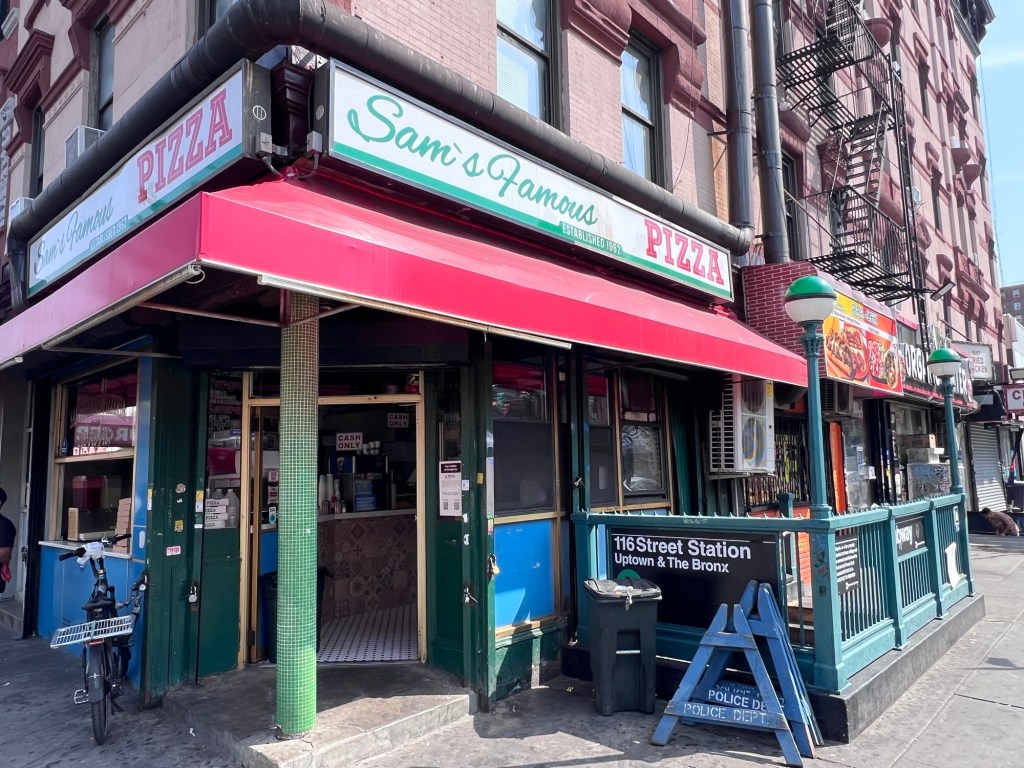
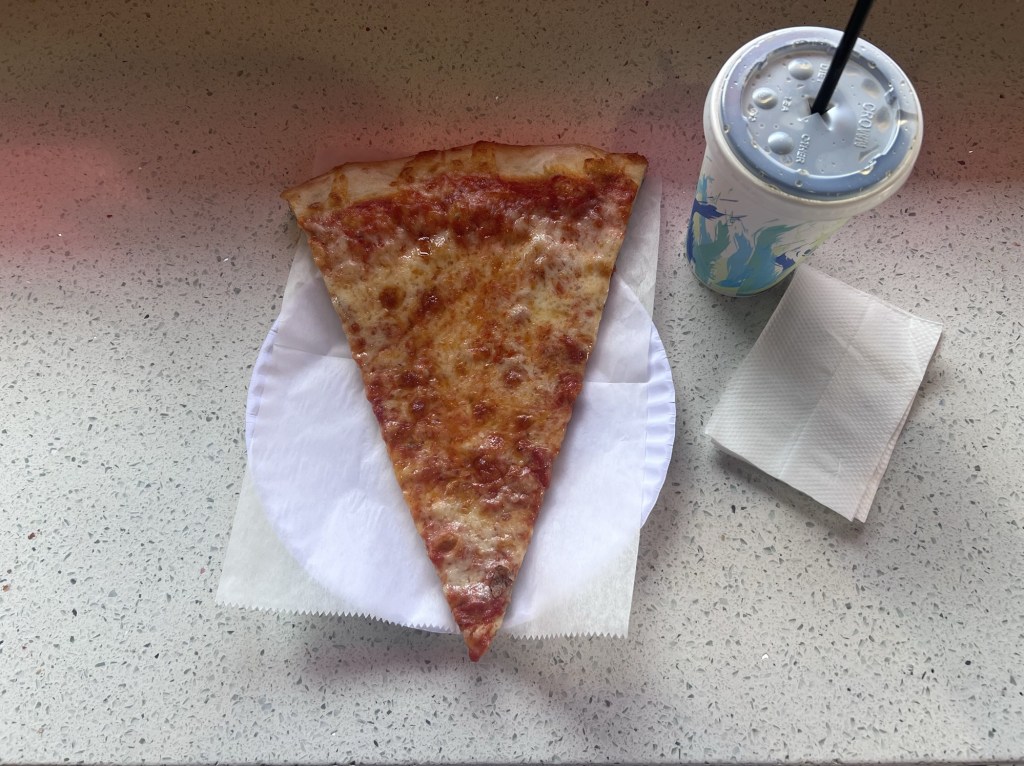
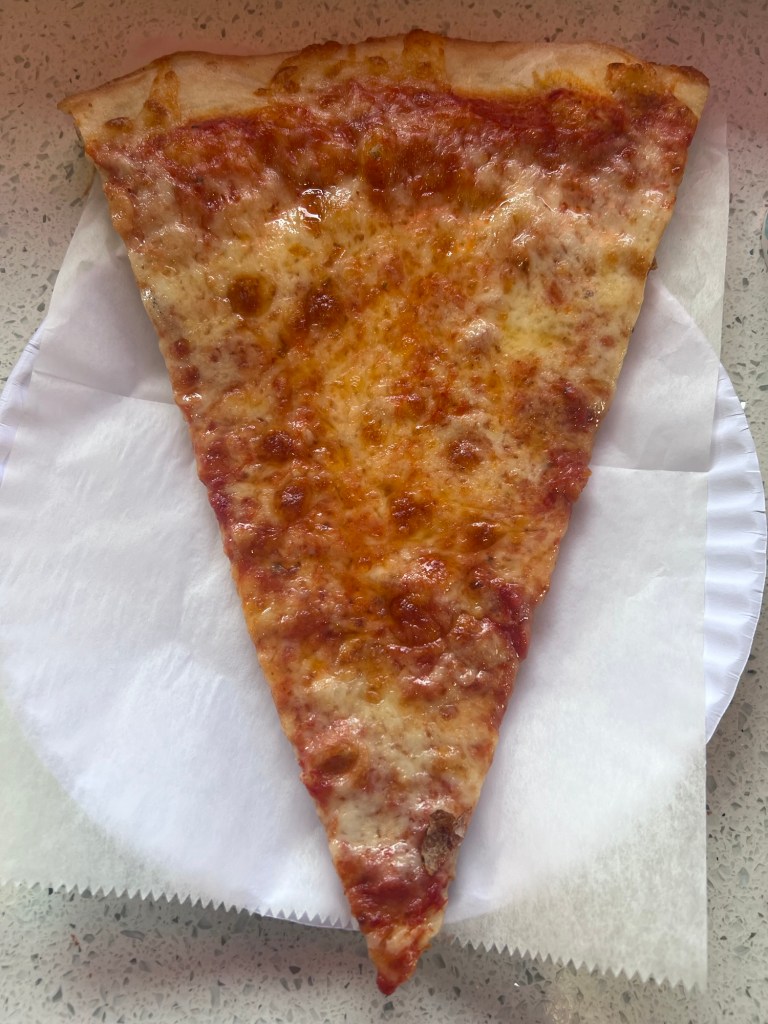
I revisited 116th Street again with its dozens of eating selections and took a pit stop for lunch at Sam’s Famous Pizza at 150 East 116th Street on the corner of 116th and Lexington Avenue. These over-sized slices are well worth the $2.25 price (See review on TripAdvisor). The sauce has the right amount spices and a rich tomato flavor and is well cooked. The owner and his son seem to know everyone in the neighborhood.
For dessert not far from the end of the projects, I discovered Milenio Bakery at 2030 Third Avenue not far from Thomas Jefferson Park. This amazing little bakery (see TripAdvisor review) has a selection of both Spanish and Italian baked treats run by an Asian family and trust me; nothing gets lost in translation.
I had the most delicious Spanish sugar cookie, filled with mango cream, I had ever tasted. It was two chewy sugar cookies with the cream in the middle and gave a new twist to a traditional Woopie pie. Among the mouthwatering pastries in the cases were mango and lemon filled puffs, apple turnovers and several Spanish desserts that I have never seen before. The quality is excellent and the selection is interesting. The nice part is that the owners are very engaging and want to be sure that you made the right selection.
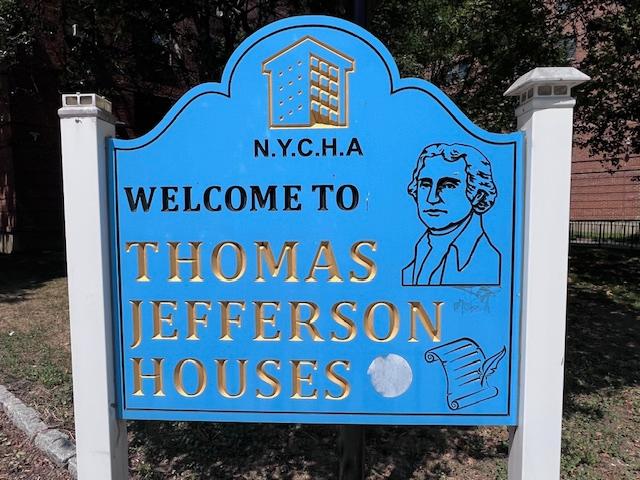
I took to munching it on the way back to Thomas Jefferson Park, across the street from the Thomas Jefferson Houses. This park attracts everyone from the kids in the projects playing basketball and soccer to the hipsters who are moving into the former Italian neighborhood strolling with their kids.
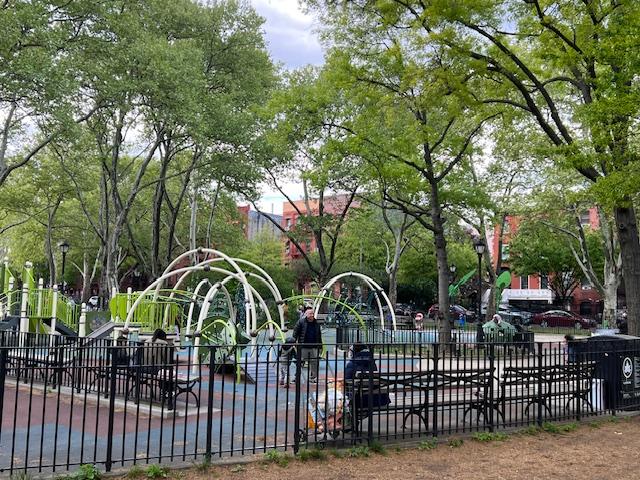
Jefferson Park in the late afternoon
It is a very Democratic Park. It is also in need of a dire renovation and could be a jewel of a park with its view of the river and extensive recreational options. Just try to avoid it towards sundown when most people leave the park as the characters in it get very interesting.
Thomas Jefferson Park at 2180 First Avenue in East Harlem
My last section of the neighborhood that I covered was the entire lengths of 112th and 111th Streets from Lenox to the Jefferson Park and by the time I exited Lenox Avenue at 110th Street, I needed to rest by the Harlem Meer.
At the time of the day, the clouds had started to roll in but people were still playing with their kids in the park or fishing or reading or singing. At sundown, there was still a lot of action going on in Central Park. All I know that after walking 24 blocks by 4 city blocks, I was done for the day.
This is why East Harlem is so interesting.
Please read my other blogs on walking East Harlem:
In 2017, I started the day walking 125th Street again on a beautiful sunny February day. It must have been 62 degrees out, sunny and glorious. The kids in the city like in the suburbs were off from school for the winter break, so everyone was outside in the parks enjoying the warm weather. The streets were crowded with people walking their dogs, students from Colombia walking around between classes and neighborhood children playing football and baseball in the parks.
When I returned to walk the borders of the neighborhood in 2026, I started on West 110th Street and walked from the tip of Central Park up First Avenue and then up Pleasant Avenue and then turned around down 120th Street to West 125th Street to complete that part of the border of the neighborhood. There are parts of the neighborhood that have changed over the last decade and some parts I was surprised had changed very little.
The real estate people now call this “SoHA”, South of Harlem from 125th Street to 110th Street between Riverside Drive to the west and Pleasant and Paladino Avenues to the East. This covers three very distinct neighborhoods with one of the largest concentrations of public housing in the City. I made it a point to walk the neighborhood in the early morning and late afternoon. I never felt unsafe during my walks around Harlem.
The Pa’lante Community Garden on the corner of Madison Avenue and West 110th Street
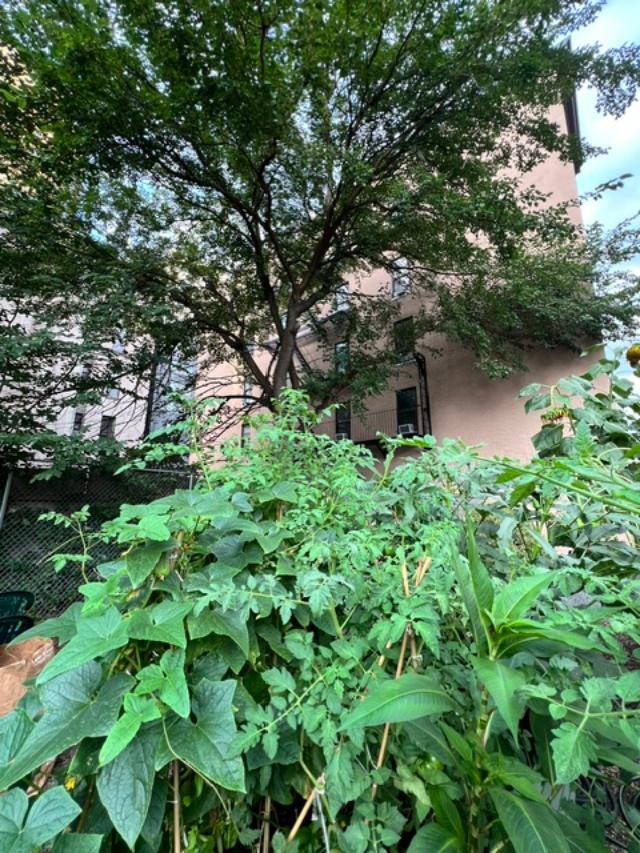
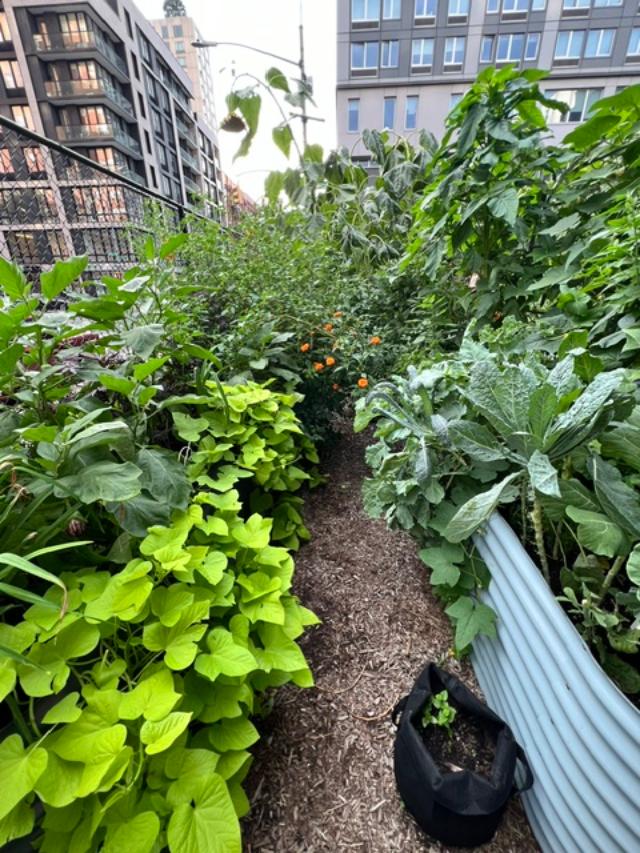
I stated the walk up First Avenue with a stop at the Pa’lante Community Gardens at 1651 Madison Avenue. The gates were finally open and I was able to visit the inside of the gardens. What a nice garden that grows vegetables and flowers for both the members and the community. I got to talk with some of the volunteers there and see what their goals were for the gardens.
The inside of the gardens in the Summer of 2026
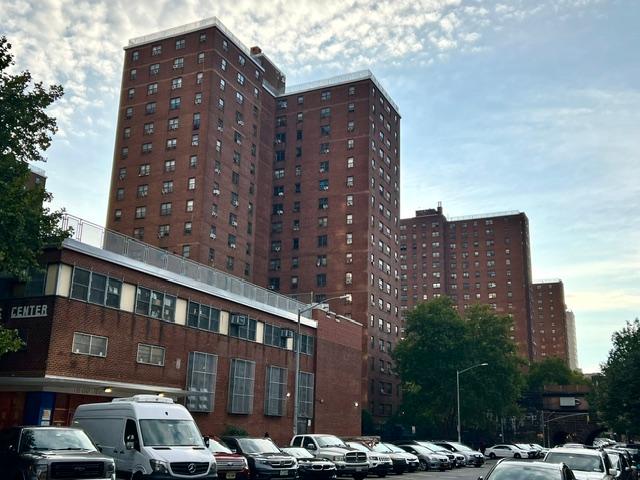
I passed the Dewitt-Clinton Houses that line West 110th Street along this part of the neighborhood until I continued the walk up First Avenue.
I walked past the complex and it was quiet during the day with a few kids playing in the playgrounds. Then I took the walk up First Avenue. First Avenue in this section of Manhattan is first the lined with small businesses giving way to public housing complexes as you walk up the Avenue.
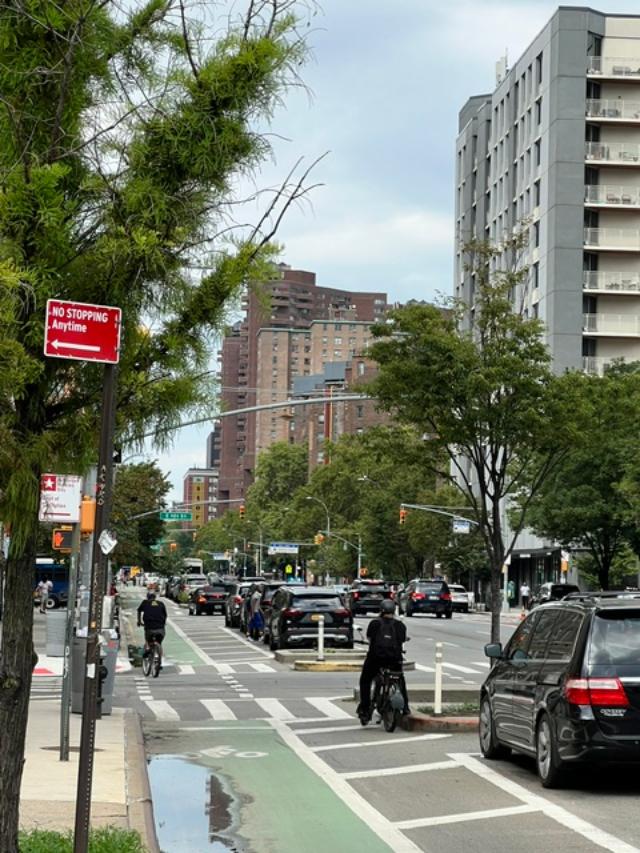
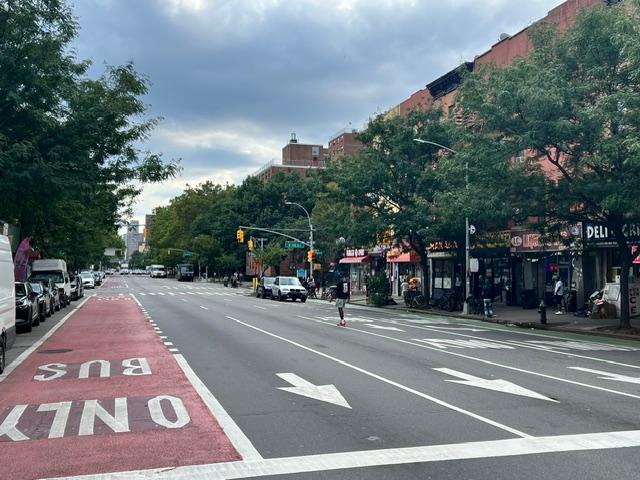
Looking up First Avenue at 110th Street
As you cross up First Avenue, to the right is Jefferson Park and to the left is the Jefferson Houses. The park was really busy that afternoon with kids playing soccer and football and families outside enjoying the nice weather.
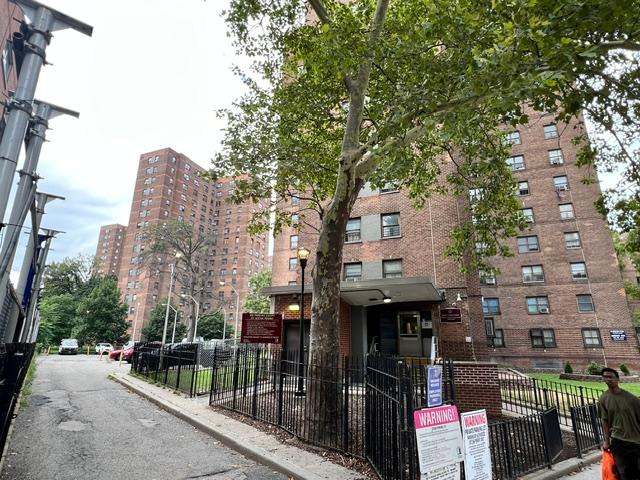
The outside of most of the housing complexes were filled with people going about their business and people heading in and out with delivers. I just continued the walk up the street. The border of the neighborhood is really on Pleasant Avenue so I walked up through the Wagner Houses complex to West 125th Street and then double backed and walked down West 120th Street to Pleasant Avenue and then walked down through the neighborhood back to Jefferson Park.
First Avenue and West 116th Street
The very edge of the neighborhood is dominated by the Wagner Houses, a public housing complex that stretches from First to Second Avenues from West 120th to West 125th Streets and Paladino Avenue, which surrounds the complex. The neighborhood is not bad to walk around during the day when the parks are busy but I would avoid this corner of Manhattan after twilight.
The Wagner Houses on First Avenue and West 121st Street
I walked all around the complex and could not believe the amount of garbage on the lawns and in the playgrounds. I wondered if they had anyone to clean this up.
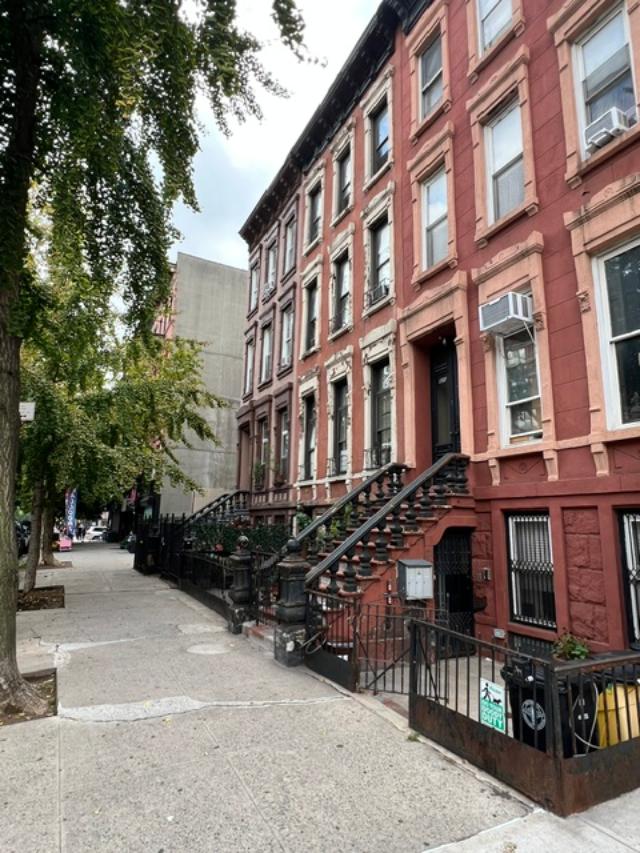
I then walked down West 120th Street to Pleasant Avenue which used to be the heart of the Italian community up until the early 1960’s. The area has gone through some changes and now it is gentrifying again.
Walking down Pleasant Avenue during the Summer of 2026
The neighborhood recently hosted the “Dancing of the Giglio” event in early August that is always popular with former residents and their families from the surrounding boroughs and the suburbs.
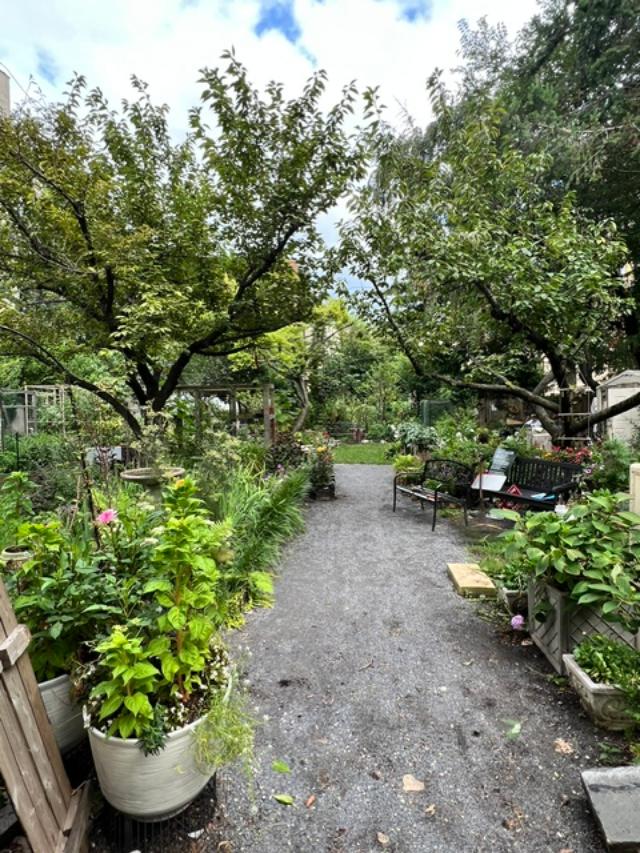
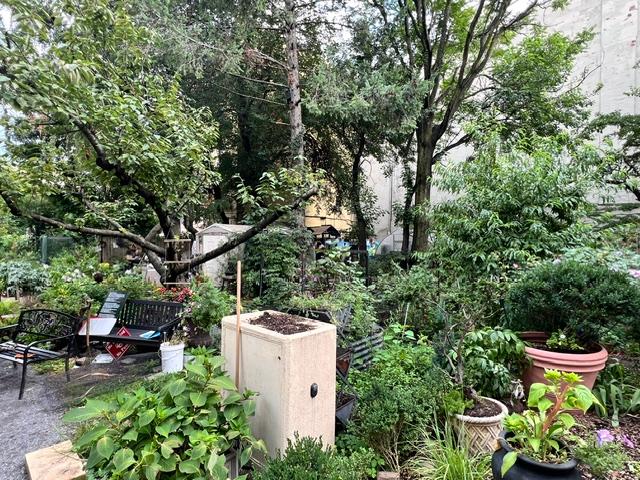
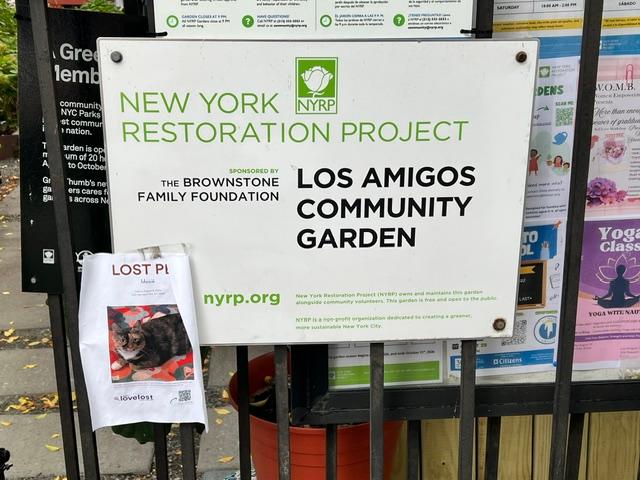
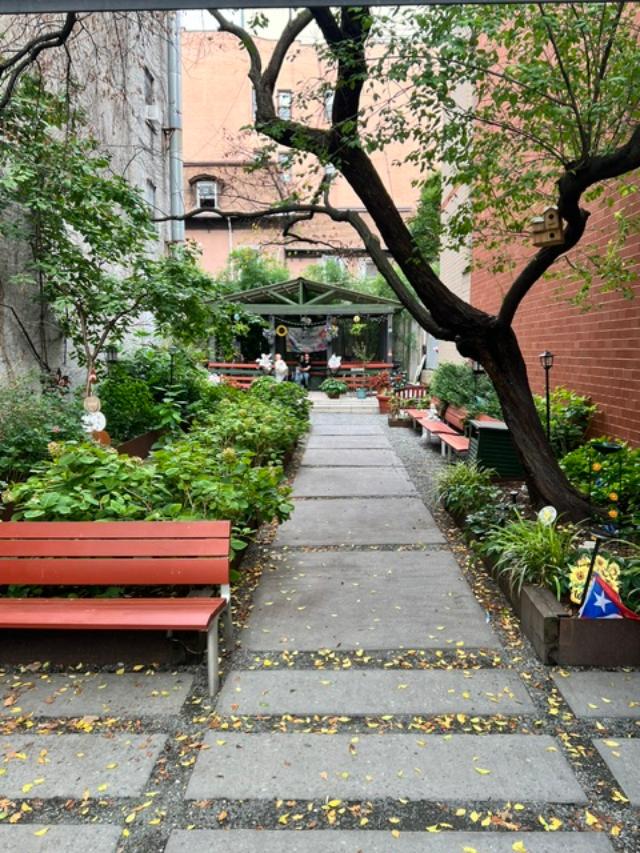
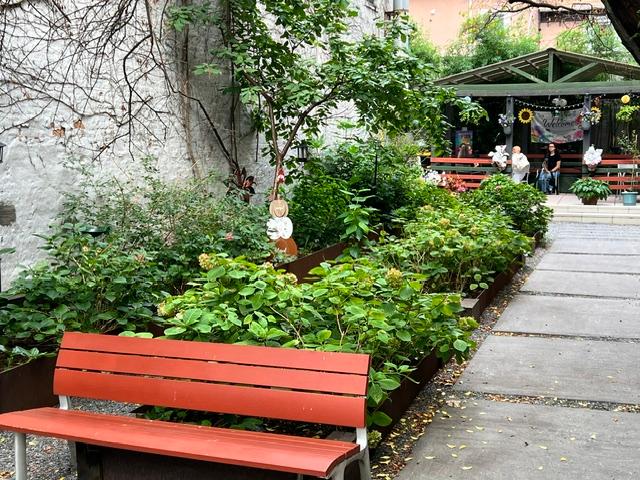
The inside of the Los Amigos Community Gardens in the Summer of 2026
The inside of the gardens
I finished my walk of this side of the border of the neighborhood in the late afternoon. I have walked this neighborhood over the last decade and every year it continues to change. A younger crowd of residents have been moving in and changing the neighborhood. You see this in the parks and residents. After I finished, I relaxed in Jefferson Park before I walked back to West 110th Street for dinner and a walk to the West Side where I took the subway by the Columbia Campus.
In 2017, with all the area above 125th finally complete, I have started to walk the neighborhoods below traditional Harlem and above the Upper East and West sides. Morningside Heights is the area bordered by Morningside Avenue to 110th to 125th to Riverside Square Park, South Harlem is from Fredrick Douglas Boulevard, South Harlem is bordered again from Fredrick Douglas Boulevard to Fifth Avenue from 110th to 125th Streets and Spanish Harlem from 5th Avenue to FDR Drive from 110th to 125th Streets. So this time to make it easier I have broken it up into three sections to do the walk.
I started the walk today at 125th Street at Morningside Avenue walking shoppers and tourists milling around the shopping district at 125th Street. The whole shopping district is going through a transformation from old cut-rate stores and family businesses to a series of chain restaurants, stores and gyms. Every business you find in a suburban strip mall are coming to Harlem from TJMax and Rainbow to Red Lobster (now closed) and Olive Garden. It is pretty shocking how fast it has changed but even more how the flavor of the area is being adjusted to tourism.
When I walked 125th Street again on a return trip to the neighborhood in 2026, there is a new Renaissance Hotel next to the theater and the entrance of the hotel is another old theater that is now part of the building. The one thing about 125th Street along the entire length of the street is that it is one long set of chain stores.
Apollo Theater at 125th Street with the new Renaissance Hotel in the background
The historic plaque now sits at West 126th Street behind the theater
Another surprising aspect of the neighborhood is how nice it has gotten. Gone are the days that Colombia University had to practically erect walls to keep the neighborhood out. Colombia students like their fellow SUNY students thirty blocks up are starting to move in and take over this neighborhood. The South Harlem area is awash with scaffolding of people renovating the buildings and new restaurants and shops. Now this gentrification is all over the neighborhood with cafes, bars and restaurants dotting every street.
The street art along the walls is very interesting
A lot of 125th Street is being knocked down and redeveloped with new office and apartment buildings and new retailers moving into the neighborhood. It is amazing to see the changes in just nine years.
All along the walls of the sites are being cleared and new buildings are going up, local artists who are part of “The Grand Scale Mural Project” are showcasing their works.
The project brings the Uptown art community together with the intent of creating opportunities for emerging and established artists. The call is open every two years to any artist based in New York City, with preference given to artists with connections to Harlem, Upper Manhattan and the Bronx (GSMP.com).
The Mural Ptoject
During three weekends in late summer 2019, 50 artists came together to transform 1,500 feet of fencing across three blocks into a canvas for mural artwork. In 2021 and 2023, more than 100 artists each year united to transform more than half a mile of construction fencing into colorful, memorable blocks to walk (GSMP.com).
The Mural Project
In 2025, the Grandscale Mural Project is taking place all summer long, on the last Saturday of each month: June 28, July 26, and August 30. On each Saturday, artists will gather for a sidewalk painting party that will transform the visual landscape of East Harlem, turning dull green plywood into vibrant street art (GSMP.com).
The Mural Project
The Robot Mural, my favorite
The murals run the length of the fencing and try to see it before they take it down with the construction of the buildings. The murals cover about three blocks of 125th Street and contain some interesting street art.
The historic Mount Morris Bank Building also known as the ‘Corn Exchange’ building at 81 East 125th Street
I have admired this building for over thirty years as you pass it on the Metro North train to New Haven. After years of being abandoned, it has finally been restored as a office building.
The building was first known as the Mount Morris Bank Building and it sits on the corner of 125th Street and Park Avenue at 81-85 East 125th Street. It was built in 1883 by architectural firm Lamb & Rich in the Queen Anne and Richardson Romanesque styles. In 1913, the bank became part of the Corn Exchange Bank and then merged into Chemical Bank in the 1950’s (Wiki).
Walking down 125th Street by Lennox Avenue
Fifth Avenue at East 125th Street still holds some of the beautiful and elegant architecture from the turn of the last century that is now being renovated into housing and new office buildings as the neighborhood continues to genetrify.
Reaching the end of East 125th Street on one side of the street
As I reached the end of 125th Street, I passed the overhead bridges and underpasses that make up a big part of the transportation hub of this part of the island. You can’t walk very well on the other side of the street due to traffic and construction so I turned around and walked back down 125th Street.
The front of Sylvia’s Restaurant at 328 Malcolm X Boulevard as it opened for lunch
I was not hungry but I tried to go later in the evening. When I arrived there at 8:00pm thinking that the crowds would be gone, I could tell they were understaffed and there would be an hour wait. I will visit on another trip up to the neighborhood.
As I headed west on 125th Street, I passed the Adam Clayton Powell Jr. Building at 163 West 125th Street and they were setting up for a concert that evening. I noticed the statue of Adam Clayton Powell Jr. in the front of the building and stopped to admire it.
Artist Branly Cadet is an American born New York City native. He was trained at Cornell University and New York Academy of Art in New York and in France at the Vaugel Sculpture Studio and L’Ecole Albert Defois. He is trained in the classical tradition of both figurative and portrait sculpture (Wiki/Artist bio).
While I was walking around the neighborhood, I was able to see a free Jazz concert at the Summer Stage in Harlem and the concert was great.
Taking a break to enjoy a Summer Jazz concert in front of the Adam Clayton Powell Building.
While I was walking back to towards the Columbia campus, I walked past the former Hotel Theresa, once ‘The Waldorf Hotel of Harlem’. This had once been one of the most important places in Harlem to visit.
Walking past the former Hotel Theresa at 2082-86 Adam Clayton Powell Jr. Boulevard
The hotel was designed by architectural firm George & Edward Blum and built by a German-born stockbroker, Gustavas Sidenberg, whose wife the hotel was named for. In the heyday of Harlem, it was known as the “Waldorf of Harlem”, when many black stars of sports, entertainment and politics could not stay at the segregated hotels in other parts of the City, they would stay here making it the center of Black social life. It deteriated in the 1950’s and 60’s and was eventually turned into an office building (Wiki).
The logo outside the famous and very busy Harlem firehouse Engine 37/Ladder 40
I then passed the very busy Engine 37/Ladder 40 that had made several calls while I was walking around the neighborhood. They were just coming back from a call as I was walking around 125th Street. I really admired their logo.
Towards the end of the block and across from the new extension of the Columbia campus is the Grant Houses, which dominate this side of 125th Street. Years ago, walked through all the pathways around the complex startling some residents. I was never sure if it was my appearance or that I might have been trespassing on the grounds. I thought they were open paths to walk on.
The sign for the Grant Houses near Columbia University
The Grant Houses are a ten complex of housing units line 125th Street and around Broadway. As I passed the complex this time, I noticed a lot of seniors sitting outside the entrances talking amongst themselves.
The Grant Houses Housing Complex line 125th Street near the East River
Facing the Hudson River on the Western of Broadway is the new extension of the modern Columbia University campus. More buildings are planned but this futuristic campus is of glass and steel and faces the Hudson River.
The Columbia University extension above 125th Street
The Manhattanville campus is the newest part of Columbia University containing their Business and Arts Schools as well as classroom space and a new art museum. The new campus will encompass everything west of Broadway to the Hudson River from West 125th to West 133rd and will eventually surround the Manhattanville Houses across the street. I already have seen the changes on West 125th Street to about 7th Avenue and the side streets. The campus is changing the complexity of the neighborhood and gentrifying most of the area around the housing projects and 125th Street.
The street plan for the campus
Tour of the new campus
As you pass the campus on 12th Avenue, the overhead pass is its own piece of artwork and gives a modern approach to the Hudson River.
The overpass on 125th Street and 12th Avenue is picturesque
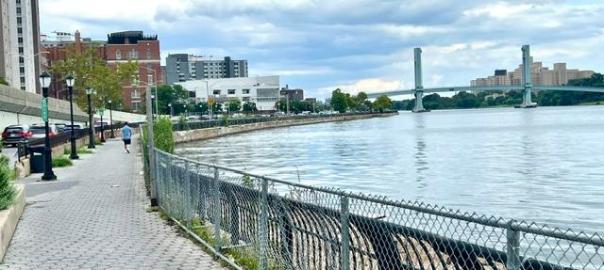
Lining the Hudson River is West Harlem Piers park, one of the nicest parks uptown with the best views of the Hudson River and gets some of the best breezes on a hot day.
West Harlem Piers Park at 125th Street and Marginal Street
The park has the most beautiful views and it is nice to just sit under the trees on the benches and just relax and enjoy the view. The park is also very big with people fishing on the pier and with bicyclists.
West Harlem Piers Park in the Summer of 2026
West Harlem Piers Park
Walking through West Harlem Piers Park offers the nicest views of the Hudson River
Walking up and down Riverside Drive from 110th Street to 125th Street and back along the Hudson River and Riverside Park offers many beautiful views, elegant architecture, an open air museum of statuary and cool shady paths to playgrounds and gardens.
Riverside Drive at 110th Street
The stonework on the building at 110th Street with beautiful windows
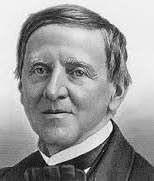
As I continued the walk up further, the monuments continued with the statue of Samuel Tilden, a former Governor of New York located at West 112th Street.
Tilden’s career was illustrious with fights against the Tweed stronghold in NYC and some saying that he had the Presidential election stolen from him with the Electoral College by Rutherford Hayes. His large estate and book collection helped found the New York Public Library (Wiki).
The statue was created by sculpturer William Ordway Partridge, an American born artist who had studied at both Columbia and Ecole de Beaux Arts. He had worked under many well known artists both here and abroad. He is known for his life like sculptures.
The Samuel Tilden statue in the Summer of 2026
(From the NYCParks.org website)
Tilden was active in city, state, and national politics. Elected to the state assembly in 1845, he also served in the Constitutional Convention of 1846 and ran on the Democratic ticket for Attorney General in 1855. He was a member of the Free Soil movement, which fought the extension of slavery into U.S. Territories. In 1863, Tilden moved into a home on Gramercy Park. He combined that house with an adjacent townhouse in 1874 to form a mansion where he lived for the remainder of his life. The mansion has been the home of the National Arts Club since 1905 (NYCParks.org).
By 1868, Tilden had assumed the leadership of the Democratic Party in New York State. In 1870, he launched a high-profile attack on the Tweed Ring, which had dominated New York City government from 1860 to 1871. Tilden helped to impeach several judges, exposed the plunder amassed by certain Tweed officials, prosecuted many of them on behalf of the state, and described the Ring’s illegal dealings in the pages of the New York Times (NYCParks.org).
Walking up Riverside Drive
As I made my way up Riverside Drive, I stopped at another bend on the street and came across the statue of Lajos Kossuth, the leader of the Hungarian uprising in 1848. The statue was created by Hungarian artist Janos Horway.
Kossuth was born to a family of noble heritage in Monok in northeastern Hungary. In the early 1830s, he emerged as a leader of the country’s radical reform movement. Trained as a lawyer, Kossuth edited several journals and newspapers that allowed him to broadcast his increasingly popular ideas. He issued fiery pleas for Hungary’s independence from Vienna’s Hapsburg Monarchy, for emancipation of the peasants, and for industrial development. Kossuth was elected to the Hungarian Diet (national assembly) in 1847, and a year later he led the revolution that created a new national government for Hungary (NYCParks.org).
The new government fell to invading Russian and Austrian armies in 1849, and Kossuth fled into exile. Rallying support for Hungarian independence, he dazzled European and American audiences with his eloquence. Sympathizers in the United States identified with the aims of overthrowing the foreign monarchy and establishing republican government for Hungary. Kossuth visited New York in December 1851 at the start of a seven-month tour of the United States. Upon arrival, he was given a tremendous welcome, described in the newly-founded New York Times as one of “the most magnificent and enthusiastic ever extended to any man in any part of the world.” A reception hosted by Mayor Ambrose C. Kingsland, banquets, and a parade up Fifth Avenue were held in his honor. Kossuth lived in exile in England and (after 1865) in Italy. After his death in Turin in March 1894, his body was brought to Budapest and buried in state (NYCParks.org).
The Kossuth statue was designed by artist Janos Horvay
Janos Horvay was a Hungarian born artist who studied under artist Edmund Hellmer. Known for his realistic sculpture work, he was also known for his funeral works of art (Wiki).
Walking through Riverside Drive in the Morningside Heights Historical District
When I crossed over 110th Street, I walked through the most western part of the Columbia Campus in Morningside Heights section of Harlem and admired the beauty of the architecture of the Morningside Heights Historical District.
The sign for Historical Morningside Heights District
The last sculpture I passed in Riverside Park before I got to Grant’s Tomb was the Woman’s Health Protective Association Fountain at West 116th Street created by artist Bruno Louis Zimm. The fountain is currently undergoing a renovation.
The Women’s Health Protective Association Fountain
Members of the WHPA were usually part of the city’s elite, and Charlotte Wilbour, one of the names inscribed along the Riverside Park benches, helped to found the first New York City Woman Suffrage Association in 1870. This more radical branch of the movement (in comparison with the relatively conservative chapter in Boston) lobbied against the passage of the 15th amendment, which proposed to give suffrage to African-American men. Leaders Susan B. Anthony and Elizabeth Cady Stanton opposed the male focus of the bill and suggested a new, 16th amendment in its place, one that would offer “universal suffrage” to all races, genders, and religions (NYCParks.org).
The dream of the founding suffragettes finally actualized on August 16, 1920, eleven years after this fountain was commissioned. With the vote in hand, the National Woman Suffrage Association disbanded, but its surviving members went on to become the core of the League of Women Voters and to continue the focus on women’s health issues in New York City (NYCParks.org).
The fountain was under renovation and not working but was beautifully designed
Artist Bruno Zimm was a New York City born artist and studied under Artist Carl Bitter and at the Arts Student League of New York under Artist Augustus Saint-Gaudens. He was known for his freestanding memorials, fountains and architectural sculptures (Wiki).
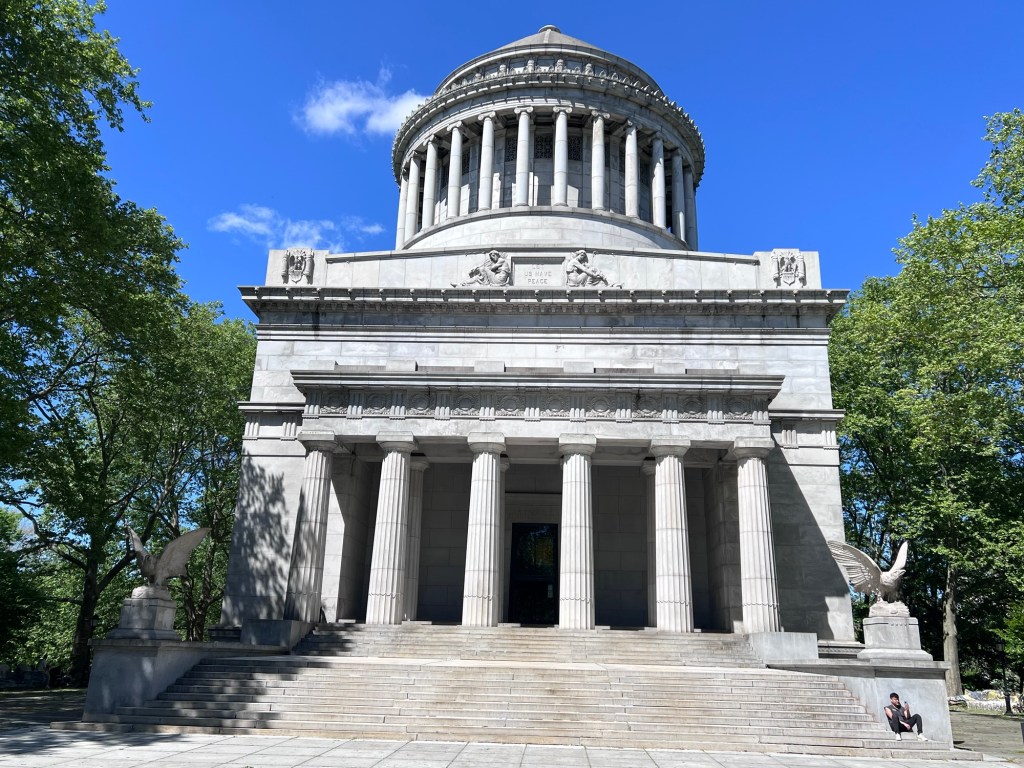
In the afternoon, I finally made it to one of my goals for the day, Grant’s Tomb (see the reviews on TripAdvisor and VisitingaMuseum.com), the final resting place of our 18th President Ulysses Grant and his wife, Julia. This monument has had a love-hate relationship with the city.
The President died of throat cancer in 1885 and his wife recommended that his burial place be in New York City over West Point and Washington DC as President Grant and his wife made this their home for the last years of their life (Wiki).
The monument was designed by architect John H. Duncan and was finished in 1897 and the President’s remains were moved here before the dedication. His wife died in 1902 and was buried along side her husband.
In 1958, the National Park Service took the monument over and was given a small budget to oversee it. In the 70’s and 80’s as the city had declined, this part of the park was a mess and the monument was vandalized to the hilt.
The graves of President Grant and his wife
It had gotten so bad at one point where the descendants of the family threatened to pull the bodies out of the tomb because of neglect. Since the 90’s, the monument and the park have been restored and it is open to the public for limited times during the week.
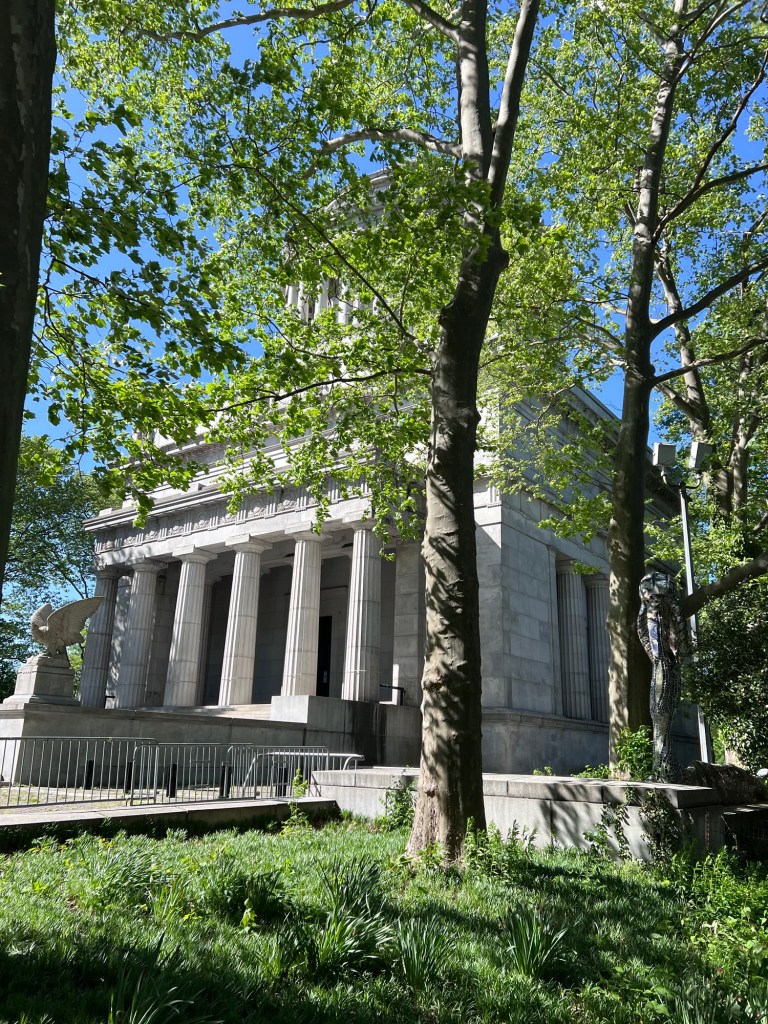
The side view of the tomb facing the park
The park now is used for picnicking and parties as many were going on as I walked through the park. The tomb itself was closed for the day but I returned another day to tour the tomb, watch a video on the family and enjoy the park.
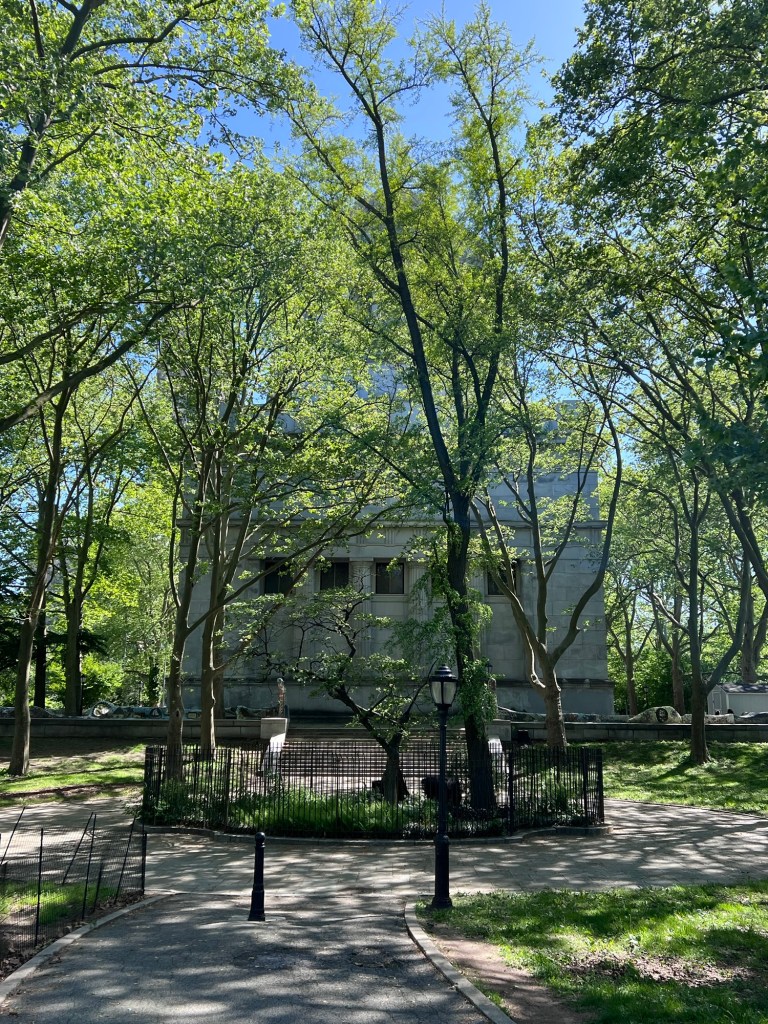
The park behind Grant’s Tomb
The park near the tomb
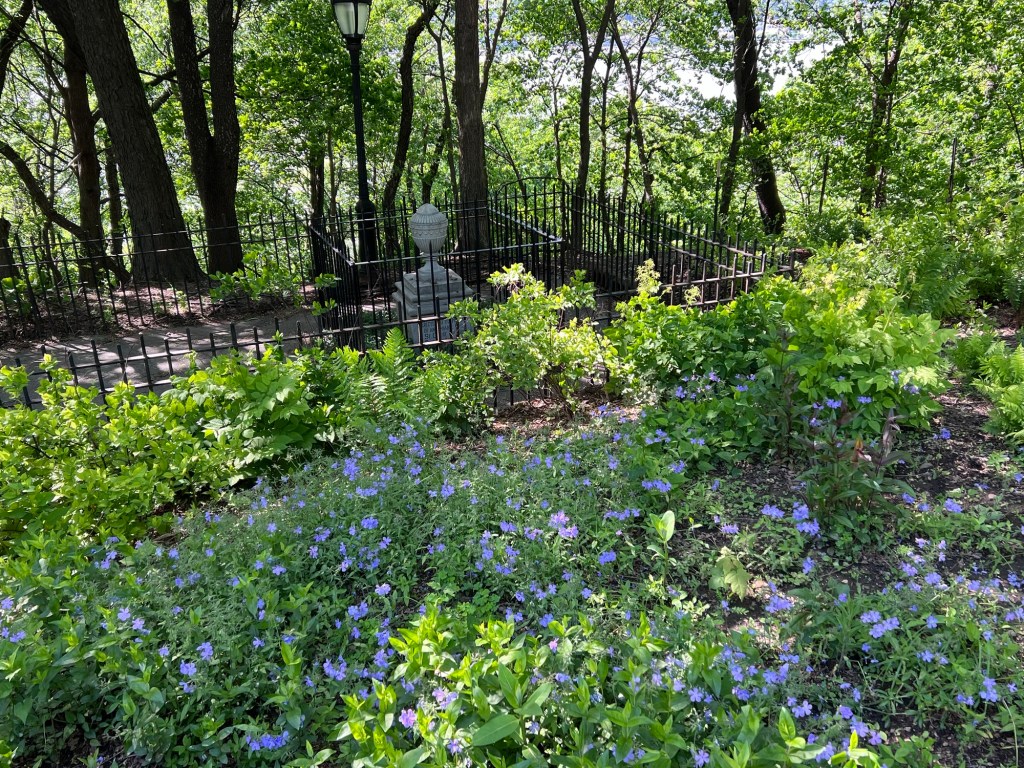
Off to the side of the monument, inside Riverside Park next to the path, is the Amiable Child Memorial (See review on VisitingaMuseum.com), the resting place to St. Clair Pollock. This touching little monument is dedicated to a child who died in 1797 in the fifth year of his life from a fall from the cliffs somewhere in the current park. It is one of the private graves located on public land. This small stone funeral urn is on a pedestal marking the grave. It is a very touching grave to a small child. I left a coin there as many have in the past.
I continued the walk up through the park until I hit Riverbank Park on 145th Street, one of the unique parks I have ever seen. The 28 acre park is built on the top of a water treatment plant that was inspired by parks built on roof tops in Japan. This park has everything. It has a pool, basketball courts, tennis courts, soccer field, baseball field, a cool off fountain and ice skating rink. It has it all and has the neighborhood embraced this park. The place was packed in all venues. It was a truly democratic park as all races play here.
I was most impressed by the number of families having parties and barbecues in the park. There must have been about a dozen birthday parties going on at once. The smells of barbecue meats and vegetables wafted in the air and the sounds of laughter and singing was all over the place. Even on a hot day, nothing stops people from having a good time.
I was most impressed by the Snack Bar located in the park’s main building. For $6.00, I got a cheeseburger, fries and a Coke and for a park snack bar they were really good. The portion size was generous and I can tell you for fact that the fries are excellent. Even if you don’t like sports make a special trip to snack bar and you won’t be disappointed. (See review on TripAdvisor)
Admiring the street art on the extension of 12th Avenue off Riverside Drive
When I made my way back down Riverside Drive to West 110th Street, I headed to Morningside Park at the edge of Morningside Heights, whose new border is Central Park North (Fredrick Douglass Boulevard).
West 110th Street by Morningside Avenue
Morningside Park, which pretty much is the traditional border between the university and Harlem has been renovated over the past twenty years and is no longer the dismal overgrown park that you would get mugged in if you entered. My dad went to Colombia in the 60’s and my cousin in the 80’s and in those years, you would never enter the park. In 1993-95, the park was renovated and had new plantings and equipment installed in the park, giving it the same cheerful appearance of any other park in the city. Does it have it’s share of problems still? Like any park in New York City after dusk, you have to watch yourself.
Morningside Park near Columbia University
Because of the weather being so warm at this time, the park was being spruced up with park employees raking and cleaning up the beds and lawns. The garbage was being picked up as well and the park looked clean and well planted. With it being February, not much is in bloom but you can see where tulips and daffodils are starting to pop up in the soil. Lots of people were jogging in the park, walking with baby carriages or playing sports. A far cry from the needle and crack cocaine days in the 80’s. You can see the new landscaping and water features that have been created in the park and at dusk the lights actually work.
Morningside Park in bloom in the late Winter.
I traveled down the road planning on visiting the park again in more detail. I turned at 110th Street and walked the entire length of 110th from west side to east side and talk about a street of extremes. As you walk towards Riverside Park, you have Colombia to the north and the very top of the Upper West Side to the south. The buildings on this side of West 110th have been sandblasted back to their original elegance and from what I can see of the residents had never really gone down hill with the rest of the neighborhood.
Amsterdam Avenue north of 110th Street has some interesting restaurants that I will need to try and I am discovering the holes in the wall that must cater to the students. Many have reasonable lunch specials and some have creative menus. I stopped in Riverside Park for a bit to relax before the long walk and the park was busy with nannies and mother’s with their kids in the 110th Street Tot Playground. The place was teaming with toddlers having a good time. The park still has not had the hint of Spring but having traveled this area last summer, it is a beautiful park when in bloom.
I walked down to Columbus Avenue and walked around the newly planted park area and discovered Hunan Chen’s Kitchen, a tiny hole in the wall restaurant at 1003 A Columbus Avenue (See review on TripAdvisor and on DiningonaShoeStringinNYC@Wordpress.com). This little restaurant has only one table and is so small you can barely turn around. What is lacks in atmosphere, it makes up in food and service.
Hunan Chen Kitchen off 110th Street at 1003A Columbus Avenue (Closed 2020)
The restaurant is now Dragon 109 but the prices are much higher than before
The lady who works the counter could not have been friendlier and accommodating. The prices were so cheap that you can order a nice meal for under $10.00 that could feed two people and for $5.00 you can buy a nice snack in their appetizer and soup section. I ordered an eggroll and a pint of Roast Pork Lo Mein. I must have gotten a pound of Lo Mein that was steaming hot and loaded with roast pork. It was delicious and well seasoned. The eggroll could have had more roast pork in it but was still plump and well-cooked.
I was able to eat in on the benches in Morningside Park at the entrance at 110th Street. It was nice to people watch on a warm day and fun to see the students finally utilizing the park for pleasure.
Their Roast Pork Lo Mein with egg roll is the best!
When I returned to the neighborhood to walk the Streets and Avenues again in the Summer of 2026, I returned to the restaurant when it named Dragon 109.
The front of the new restaurant, Dragon 109
I ate at the restaurant as Dragon 109 for lunch and they had a very nice lunch special. I tried the Boneless Roast Pork with Fried Rice and a side of Wonton Soup.
The inside of the restaurant which has some seating
The lunch special of Boneless Roast Pork with Fried Rice and a side of Wonton Soup
The Wonton Soup was good and the wontons were very large
The Boneless Roast Pork with Fried Rice
The food and the service were very good. The portion for lunch was enough for both lunch and dinner. The service was very nice and the family who owns the restaurant could not have been nicer. Try to get there before 3:00pm to get the lunch special. It is a very fair deal for good food and service.
After lunch, it was a the long walk to the northern stretches of Central Park and the Harlem Meer. This section of the park was packed with people. Seniors were fishing in the Meer (lake) and the kids were playing in the playground by the Lenox Avenue entrance. This area had been replanted and fixed in the late 90’s and again in the early 2000’s by the city with the help of the Central Park Conservatory. People were taking pictures of the ducks or chasing the pigeons around the park.
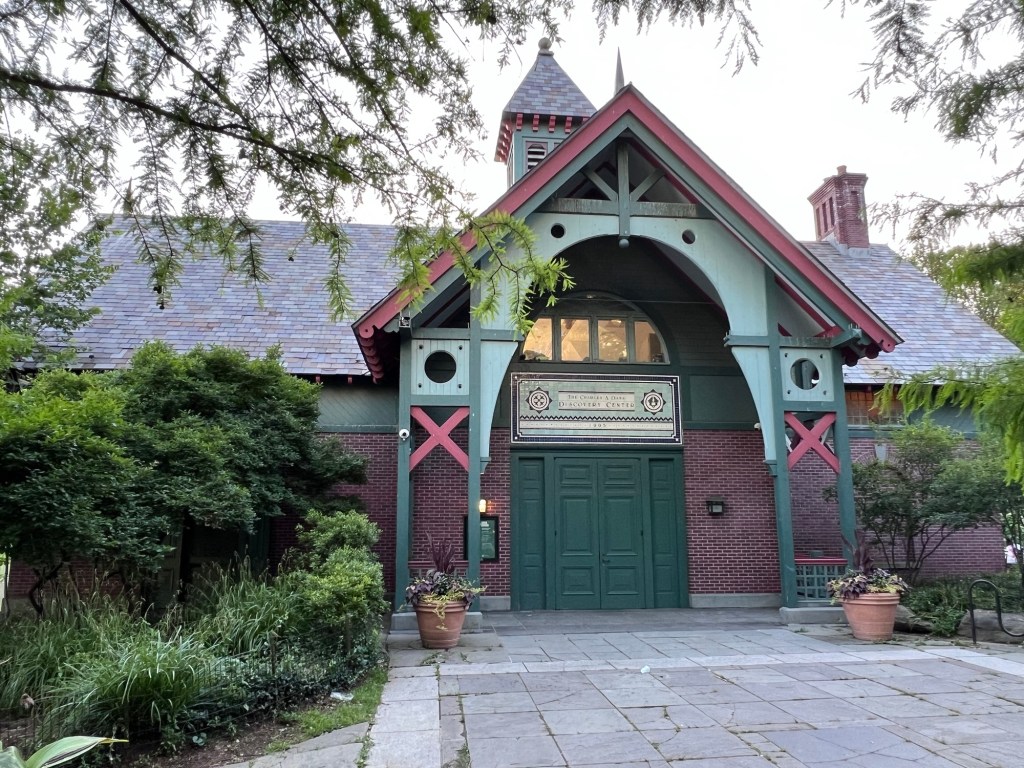
The Charles A. Dana Discover Center and the Harlem Meer
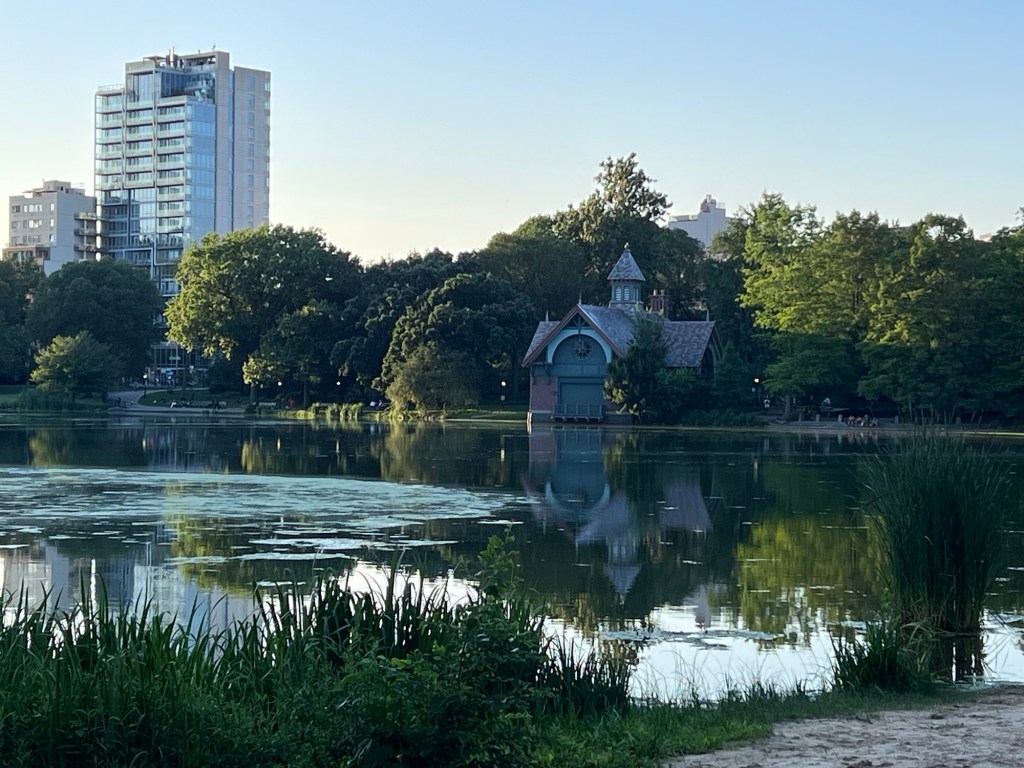
I had an interesting afternoon at the Charles A. Dana Discover Center located on the Meer and reading how the area was so influential in the Revolutionary War. Much of the battles had taken place in this area and the forts were located right in the park boundaries. The Battle of Harlem was not far from this spot and it was amazing how the area went back to nature once the war was over.
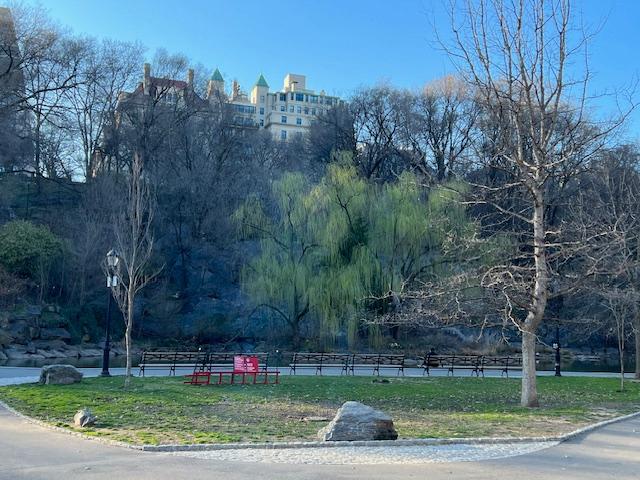
The Harlem Meer with the Dana Center in the background
The panels tell the story of the area and you should take about an hour and really read about the areas part in the war. On such a beautiful day the park really sparkled and it looked like a lot of adults were playing hooky on such a nice day.
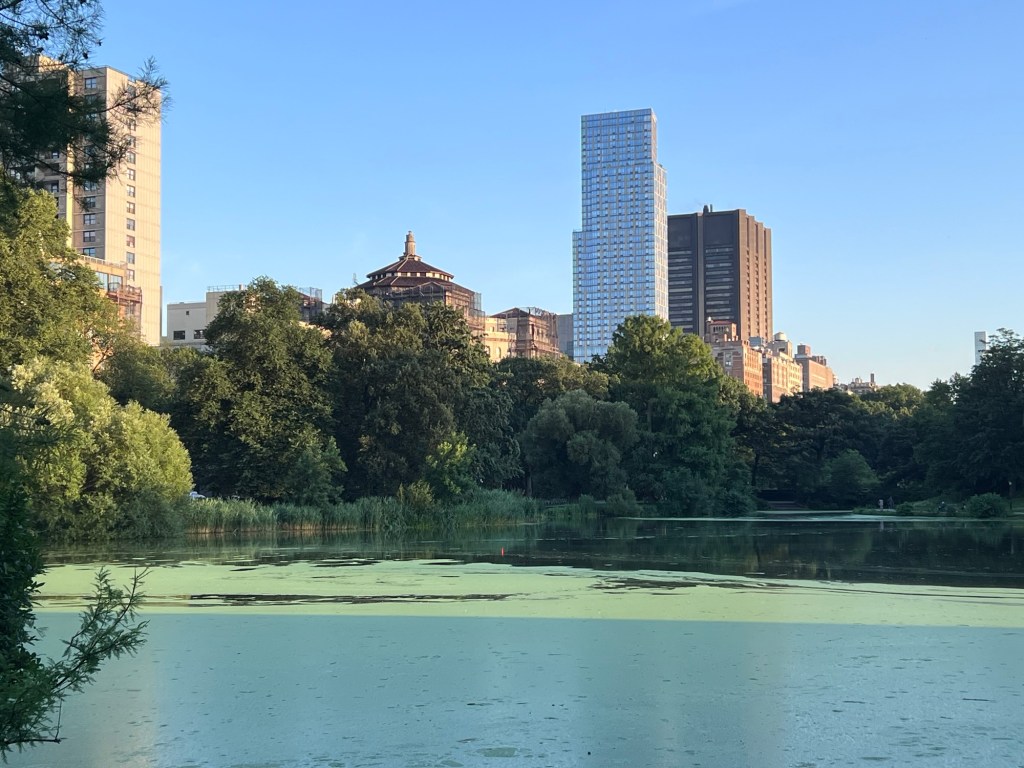
The Harlem Meer and Fifth Avenue
Crossing Fifth Avenue to Madison Avenue is the start of the extremes of 110th Street. You will pass what was once public housing but looks like it is going ‘market rate’ with renovations and once you pass the border of Madison Avenue, you will enter Spanish Harlem and a series of public housing projects. Again this area was alive with people but the mood of the area is completely different.
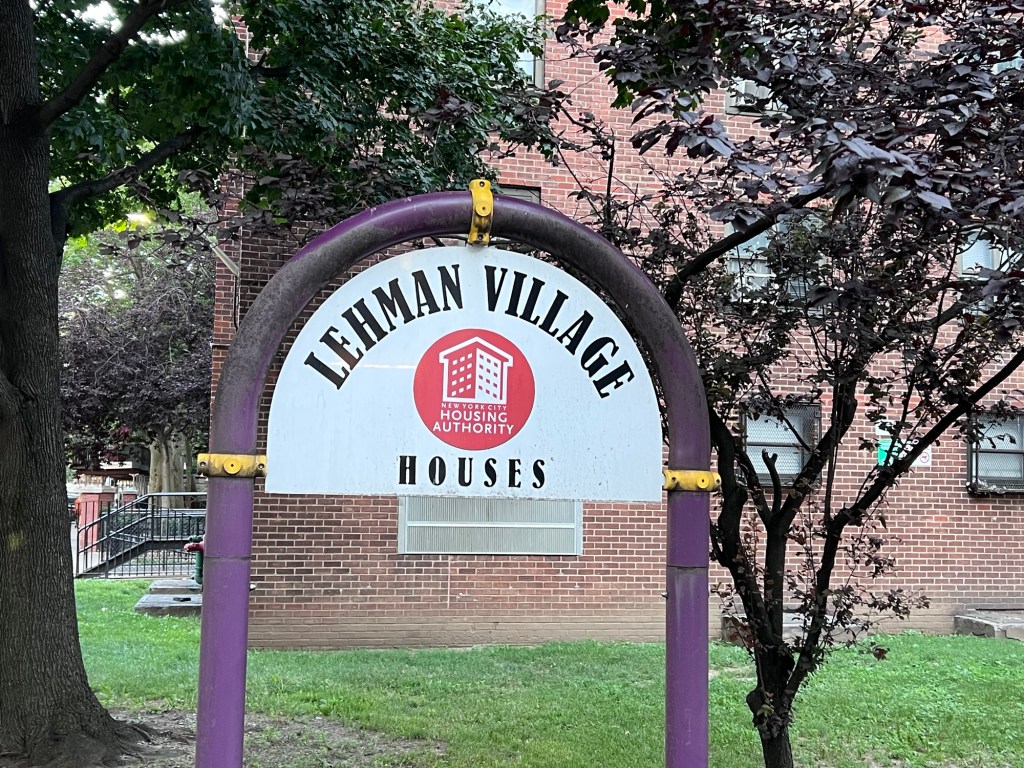
The Lehman Village Houses
The Spanish influence was all over the place. On the walls of the stores and in the restaurants and signs as well as the music. There must be at least four or five housing projects in this area in various degrees of maintenance. Some were well maintained like by the Lehman Houses. By the Houses, it got a little scary. I would not venture in that area at night. At the end of 110th Street, you have the East River Houses, that look like a more pleasant middle-class looking development.
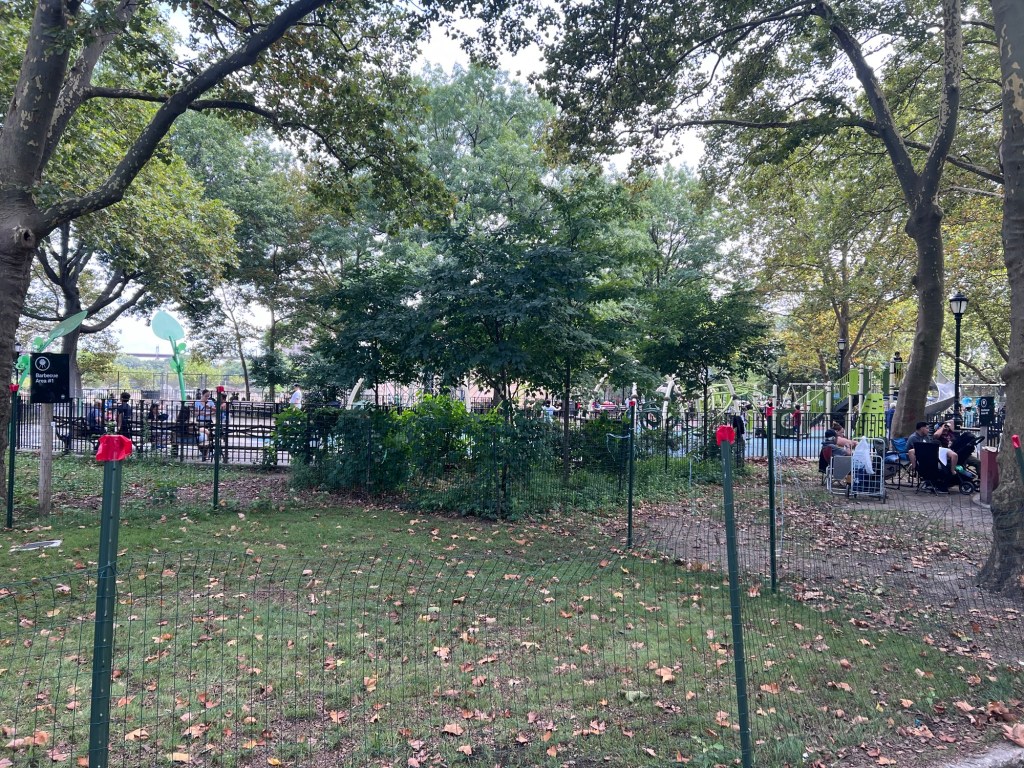
I walked around Thomas Jefferson Park, a space of green that needs a serious renovation. The park could use a little sprucing up from what I could see. I did not want to enter the basketball grounds due to a scary looking group of teens and walked around the edges of the park. Just south of the park on New Street, Zip Car seems to have their headquarters and the whole lot is lined with cars.
The funny part about 110th street in this area is that it is dotted with new housing, bars and restaurants. The 20 year old set is starting to move into this area. On a rather seedy stretch of 110th, I was always looking over my shoulder until I saw some 20 year old ‘hipster’ with shorts on and an expensive iPhone playing that I felt like a jerk. Either I was the one worrying or he was putting himself at risk.
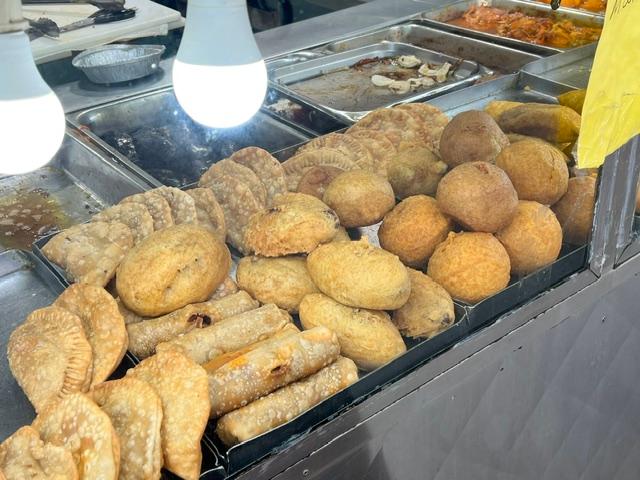
I stopped for a snack at El Chevere Cuchifritos, a Spanish restaurant, take-out place and bakery at 2000 Third Avenue for some pastilitoes. I ordered them with my broken Spanish which seemed to pass fine as the woman waiting on me understood what I said.
I ordered a chicken and beef but got a cheese and they were good but not as good as some I have had in Washington Heights. They are reasonable at $1.50 each and very fresh. They have a nice selection of reasonable hot foods to take out and I just munched on them on the trip back up 110th to Fifth Avenue.
The bakery selection at El Chevere
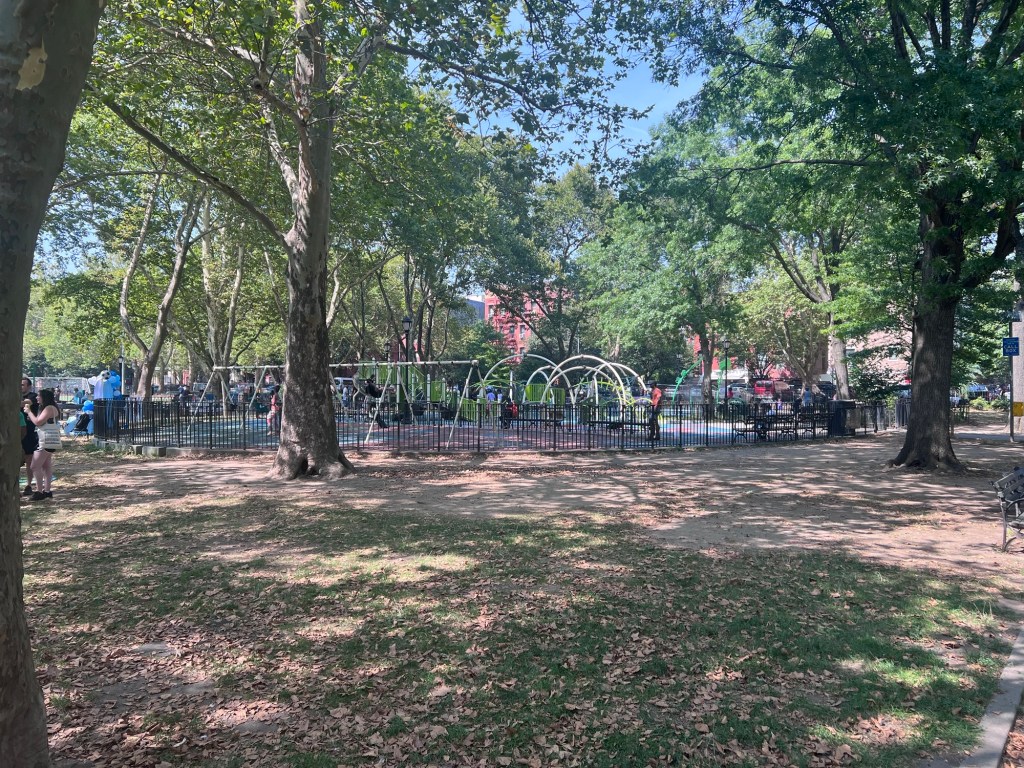
Fifth Avenue from 110th to 125th Streets was where I was lining my walk to concentrate in this area. I walked up and down Fifth Avenue to Marcus Garvey Park and walked around the park which was packed with people walking their dogs by the dog park and kids playing in the playground. Even though the avenue is lined with public housing, the area is dotted with new developments especially on the north and west parts of the park.
Marcus Garvey Park (Mount Morris Park)
The west side of Marcus Garvey Park is the Mount Morris Historical Area. This stretches from about 124th Street to 118th Street and has the most beautiful and graceful brownstones the line the side streets by the park. This area like the rest of Harlem is being sandblasted and renovated back to an earlier era and people are snatching up these homes.
I finished this park of the walk by walking down Fifth Avenue through the Taft Homes that line the streets and back down 110th and back up Morningside Avenue and then down Manhattan Avenue to finish off the walk for this part of the visit to the area.
This is a huge area to cover so I will be breaking the visit down into three sections to really see what the neighborhood has to see and offer. I have already walked the boarders of 125th Street and 110th Street and will continue on to do the avenues first and then the side streets. So join me as we explore the newest in ‘hip’ areas, SoHA.
Still with all this progress, things are still shaky in the housing projects
Please read my other blogs on walking East Harlem:




































 mywalkinmanhattan