Abracadabra right before Halloween is an experience into itself
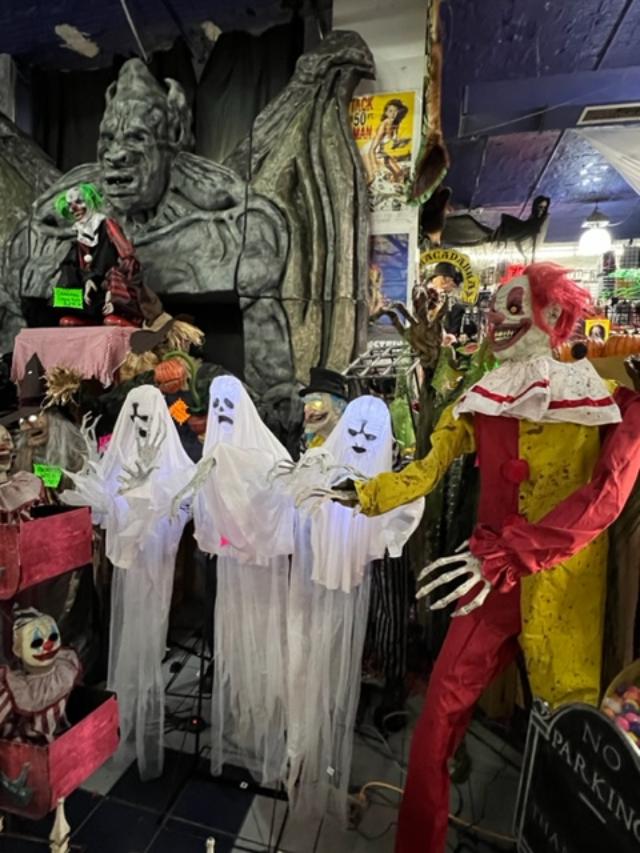
Ghosts and Ghouls greet you when you enter the store
Abracadabra is one of those stores that just stands out when you walk in. Every day is Halloween when you walk in the door and everything is there to shock and amaze you. It is a interesting blend of theater, imagination and creativity that makes the store come to life. Even the staff walk around in masks and costumes showing off the merchandise. Many I am sure are actors and artists using their own sense of style to show the costumes off.
Abracadabra is no ordinary store
There is no lack of interesting costumes to try on or accessories to match them…
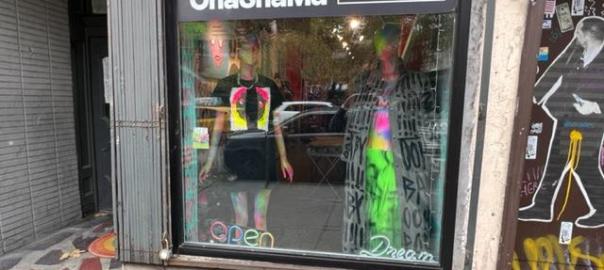
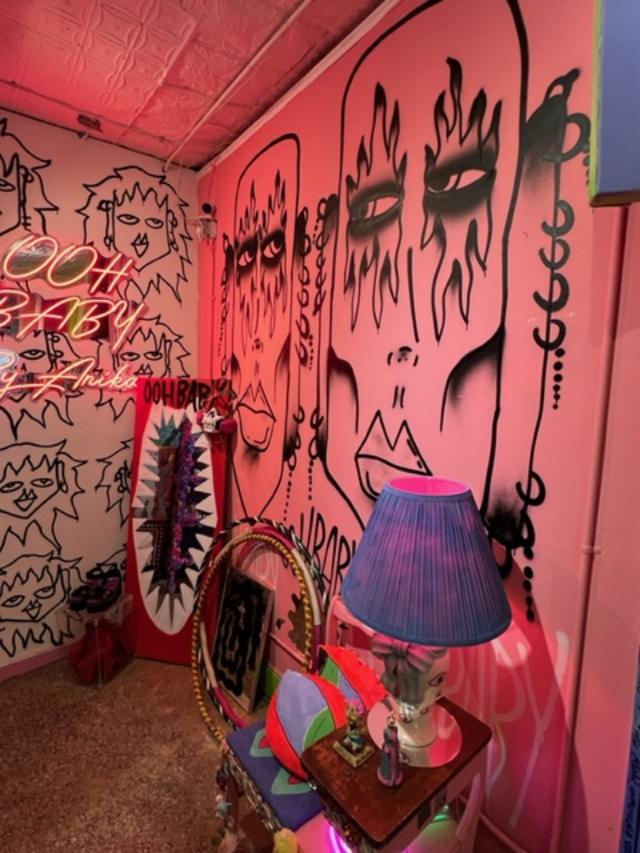
I don’t know what made me walk into Ooh Baby by Artist Anika Ignozzi at 21 Greenwich Avenue in Greenwich Village but I was curious because of the colors and designs I could see from the window. I met the artist who was hard at work that afternoon and introduced myself as a student at NYU. She looked up and said that she was thinking of taking some business classes at the school.
I looked at her and said that she looked like she already found her calling and made a successful business of it. She was already doing what most business students want to be doing, creating a business, finding their passion in it and making money at it. I told her she was already…
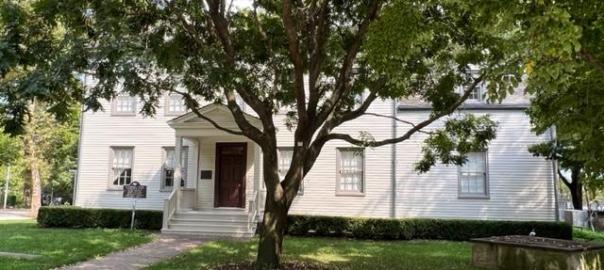
The Blackwell House on Roosevelt Island finally opened for tours after a major renovation of the house. When I had visited Roosevelt Island the last time in 2017, the house was corded off and was not open for touring. It had looked like it was falling apart from the inside out.
The home has now gone through a major renovation. The grounds outside were beautifully landscaped and gave the house a very warm and welcoming entrance to the property. In the middle of the summer, the flowers and trees were all in bloom and it was a nice view from the street. The house is conveniently located in the middle of the island, so…
There are a lot of standout bakeries in Chinatown Manhattan that offer a nice selection of baked goods and hot foods at a very reasonable price and Happy Star bakery is one of them. Not only do they have a nice selection of breakfast foods in the morning catering to the large crowd that works around here but an excellent selection of Chinese pastries, buns and twists that are available all day. What is also nice is that the nothing is over $5.00 and you can have a nice meal for under $10.00.
What is also nice about the bakery is that it is right across the street from Seward Park so that after you get your order, you can walk across the park and eat…
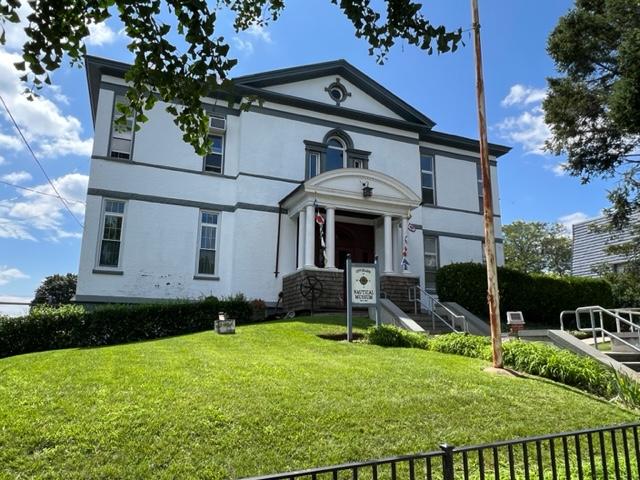
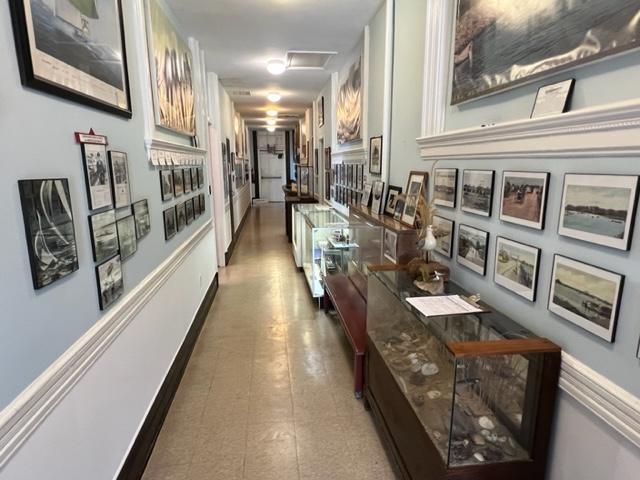
The City Island Nautical Museum at 190 Fordham Street
The City Island Nautical Museum
I recently took a trip to City Island, a small community just off the coast off the mainland of The Bronx (which is part of The Bronx) to visit the City Island Nautical Museum. This tiny museum located in the heart of the island is noted for its collection of ship building artifacts and items that are native to a community that once built the vessels for the America’s Cup.
City Island has a rich history in ship building, sail making and fishing it is reflected in the collection of materials in the museum and its archives. The museum really details the growth and history of the boating…
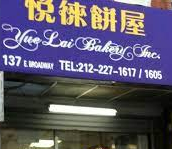
I have been visiting Yue Lai Bakery for many years but recently I have been exploring the outskirts of Chinatown for my blog, ‘MywalkinManhattan.com’ and started to revisit it again. I know that Chinatown is loaded with little bakeries all over the place, but Yue Lai Bakery really stands out for selection, quality and display of their products. Their pastries are always so nicely displayed.
The pork buns are wonderful
What I enjoy is the quality and the selection of their baked goods. There are always a lot of interesting buns and twists to order here. I used to come in for their Baked Pork Buns ($1.50) but the last three times I was in they were sold out. So, I ordered…
There are times you find those little ‘hole in the wall’ restaurants that just standout because of the quality of their food and their prices that make them affordable to everyone. King Dumpling at 74 Hester Street is one of them. Everything that I have tried there has been excellent and the portion sizes are very fair.
I had watched one of the “Cheap Chinatown Eats” videos from the Fung Brothers and they had mentioned the restaurant as a great place to get dumplings (one of my favorite things) and that they were only $3.00 for ten. I had to try it and have to say that it lives up to its reputation.
The weather finally broke, and it has cooled down to a pleasant 87 degrees. Thank God because it was a nice day in the City walk around and visit the Flatiron District without sweating like crazy. The last few walks I have done in the neighborhood have been in the mid 90’s and that got to be too much.
I had spent the morning working in Social Services at the Soup Kitchen, helping people with things like getting clothes, writing out haircut vouchers and getting them toiletries. It is a lot of running around but the best part was that I really felt that I was helping people in need. The weather cooperated, and it was so nice to be outside enjoying the sunshine. It was a productive afternoon.
After I finished lunch, I was off to walk the Avenues of the Flatiron District. I have to admit that this has been one of the harder neighborhoods to research because there are so many amazing buildings to view, and the architecture is so detailed that it takes time to look up at all the ornamentation on the buildings. As I said in my previous blog on the borders of the neighborhood, these companies built these buildings to impress and last forever.
I started the walk at the intersection of Broadway, Fifth Avenue and West 25th Street at the General Worth Memorial, a distinct triangle park right across the street from Madison Square Park. This is the Memorial to and burial site of General William Jenkins Worth.
William Jenkins Worth was a native New Yorker (Hudson, NY) and decorated Army officer who had served our country in the Battles of 1812, The Second Seminole War and the Mexican American War. His series of campaigns shaped this Country to where it is today. He died working for the Department of Texas in 1849 (Wiki).
The General’s remains are buried under the monument at Worth Square at the corner of Fifth Avenue, Broadway and East 24th and 25th Street. General Worth was interned here in November of 1857 on the anniversary of the British leaving the colonies (NYCParks.org).
The Worth Monument between East 24th and East 25th Street at Broadway and Fifth Avenue
The Worth Monument was designed by artist James Goodwin Batterson, whose main profession was one of the founders of the Travelers Insurance Company in Hartford, CT and helped design the Library of Congress Building in Washington DC. He had immersed himself in his father’s quarrying and stone importing business early in his career and traveled extensively to Europe and Egypt for the job. He designed this monument in 1857 (Wiki).
Turning the corner at East 25th Street and Madison Avenue is Madison Square Park, named after our fourth President of the United States, James Madison. This well landscaped park is the gathering place of the residents of NoMAD and has a wonderful playground that has been busy the whole time I have spent in the neighborhood.
Madison Square Park is an interesting little oasis from all the traffic and office space. It has an interesting history since it was designated a public space in 1686 by British Royal Governor Thomas Dongan. It has served as a potter’s field, an arsenal and a home for delinquents. In 1847, the space was leveled, landscaped and enclosed as a park. It became part of the New York Park system in 1870. There are many historical figures featured in the park (NYCParks.org). The park today is a major meeting spot for residents and tourists alike with a dog track and the original Shake Shack restaurant.
Madison Square Park in the Spring when I was walking the length of Broadway
When I walked into the park to take a break, it must have been the busiest section of the neighborhood between the playground and the original Shake Shack that were serving food to a crowd clung to their cellphones.
Another sculpture that is in Madison Square Park is the statue of William Henry Stewart, the former Governor of New York State, US Senator and Secretary of State during the Civil War. He also negotiated the Alaskan Purchase in 1867.
Governor William Henry Stewart statue in Madison Square Park
Governor William Henry Sewart, who negotiated the Alaskan Purchase “Sewart’s Folly”
The statue was designed by artist Randolph Rogers an American born sculptor who studied in Italy. He was a Neoclassical artist known for his famous historical commissions.
Madison Square Park is noted for its beautiful plantings, shaded paths and for being home to the first Shake Shack, a Danny Meyers restaurant and popular upscale fast-food restaurant.
The very first Shake Shack is in Madison Square Park
As you look down further on the square, you will see the Flatiron Building one of the most famous and most photographed buildings in New York City. The building was designed by Daniel Burnham as a Renaissance Palazzo with Beaux-Arts style. The original name for the building was the “Fuller Building” for the Company. The name “Flatiron” comes from a cast iron clothes iron from the turn of the last century. (Wiki)
The ‘Flatiron’ Building at 175 Fifth Avenue at 23rd Street
As you pass the Flatiron Building and continue the walk south between 23rd and 14th Streets, take a look up to admire the buildings that once help make up the “Ladies Shopping Mile”, once the most fashionable neighborhood after the Civil War for shopping, hotels and entertainment (See my blog in MywalkinManhattan.com “Walking the Ladies Shopping Mile”).
My Christmas Blog on “Victorian Christmas in New York City”: Day One Hundred and Twenty-Eight:
The buildings that line Broadway from the Flatiron Building until you get to Bowling Green Park at the tip of Manhattan are some of the most beautiful and detailed examples of Victorian architecture and were built between 1870 to about 1915. You really need to put the cellphone down and look up when walking south on both sides or you might miss the details of these buildings.
The Warren Building is another example of turn on the last century elegance. Designed by Stanford White of McKim, Mead & White in 1896, the building was designed in the Neo-Renaissance style (Daytonian).
One of the most elegant buildings on this part of Broadway is the former “Lord & Taylor” building at 901 Broadway. The building was constructed for the department store in 1870 and was the main store until 1914. Really take time to look at the detail work of the store and step inside. The Mansard Roof is an amazing touch. In 2022, it is now a restaurant on the lower level.
901 Broadway “Lord & Taylor” building from 1870-1914
I walked back through Madison Square Park after my walk down Broadway and there were two small jazz concerts that were going on at opposite side of the park. Two three person combos were entertaining people by the fountain and near Shake Shack and on a sunny after there was a pretty big crowd enjoying the park and listening to the music.
Walking down Fifth Avenue was interesting on both sides as you will notice how ornate the buildings are as you travel from West 25th to West 20th Street leading me to believe how important of a shopping and business district this once must have been. Here and there from the Flatiron Building you can see all the elegant and ornate buildings that line the Avenue.
I started my walk south down Fifth Avenue and here and there you need to look up and admire the details of the buildings. On the corner of Fifth Avenue and 23rd Street is 186 Fifth Avenue, which was built for the Western Union Telegraph Company in 1883.
186 Fifth Avenue-The Western Union Telegraph Company Building
The building was designed by architect Henry J. Hardenberger in the Queen Anne style with its details being in brick and terra cotta (Daytonian in Manhattan). The building just finished a restoration, and you can see the details by the windows and dormers.
At 170 Fifth Avenue and West 22nd Street, you can see the beauty and elegance of the Beaux Art details of the former Sohmer Piano building. The building was built between 1897-88 and designed by architect Robert Maynicke for the owners of the Sohmer Piano Company for their showrooms and offices. The company was known for its introduction of the baby grand piano (Wiki/Daytonian in Manhattan).
At 166 Fifth Avenue, the building has almost a confectionary look of a wedding cake. This commercial building was constructed in 1900 by the architectural firm of the Parfitt Brothers in the Northern Renaissance Revival style with all sorts of embellishments around the windows and doors with an elaborate roof design. In the beginning it housed art galleries and upscale retailers until the area became manufacturing at the turn of the last century. It has made a full swing again as a luxury retailer building on street level (Daytonian in Manhattan/Streeteasy/LoopNet.com).
On the corner of West 21st Street and Fifth Avenue is 162 Fifth Avenue, another impressive building with interesting details. This office building was built in 1930 and is still used for commercial purposes.
At the edge of the neighborhood standing guard in the Flatiron District is 156 Fifth Avenue, the Presbyterian Building. This building has an interesting past being built for the Presbyterian Church for offices for missionary work when the neighborhood housed many religious institutions (Daytonian in Manhattan/LoopNet.com).
It was designed by architect James B. Baker in the French Gothic style, and you have to admire the roof for its unique details.
The detail in the entrance of the building
As I rounded the corner of the neighborhood at West 20th Street another building caught my eye at 150 Fifth Avenue, the former Methodist Book Concern. The building was built between 1888-90 and designed by architect Edward Hale Kendall in the Romanesque Revival style. It had originally held the offices, printing and a chapel for the church. This was the section of Fifth Avenue that housed many religious offices and headquarters (Wiki).
Walking north back up Fifth Avenue is 141 Fifth Avenue another confection of architecture. This gorgeous building was built in 1897 by architect Robert Maynicke, who had also designed Sohmer Piano Building at 170 Fifth Avenue, in the Beaux Arts style for the Merchant Bank of New York (Flatironnomade.nyc/fsiarchitecture.com).
141 Fifth Avenue-The Merchants Bank of New York Building
This impressive bank has recently been converted to luxury apartments with a current one sold at over three million dollars.
The entrance to 141 Fifth Avenue
I made my way back up Fifth Avenue and admired all these buildings once again. Each has their own style and design and since the time of their construction continue to live on in different forms for various companies. Since many were built at the turn of the last century it also proved to me how well constructed and designed these buildings are and how desirable they are in the marketplace as you will not see this construction again. These were made to last and give this section of Manhattan its unique appearance and its own sense of character.
The Flatiron District from Fifth Avenue and East 23rd Street
The beauty of the Flatiron District at night
I found myself hungry again and took the subway back down to Chinatown to visit many of the takeout places and bakeries that were on my list to visit. I have been building up my blog, DiningonaShoeStringinNYC@Wordpress.com and wanted to see how many of them had stayed open post pandemic. Many of these little ‘hole in the wall’ restaurants are going strong as Chinatown is continuing to come back to life.
I started my walk in Chinatown at China North Dumpling at 27A Essex Street across from Seward Park for some fried dumplings and spring rolls. For ten large fried dumplings that were really juicy and well cooked, four spring rolls and a Coke it was $7.00. Everything was so well made, and you can watch from the counter the ladies making the fresh dumplings right in front of you. The place is real bare bones, but the food and the service are amazing. Try to eat at the counter and watch everything get prepared.
China North Dumpling at 27A Essex Street located in the Lower East Side
The Dumplings at China North Dumpling are made right in front of you
In needed something sweet after all the fried foods so I headed back to Yue Lai Bakery at 137 East Broadway to look for a baked pork bun. They had none left at that time of the day, but they were having a special on their baked goods three for $2.00 and I picked out a Coconut Bun, a Cream filled Bun and a Plain Bun.
They bagged it all up for me and I walked over to Sewart Park across the street and sat on the benches and ate them one by one. The Cream and Plain buns were really good and very sweet, and everything was so soft and well baked. I ended up sharing the Coconut Bun with the little birds in the park who surrounded me looking for a handout.
After a nice rest in the park and enjoying the sunshine and watching families play with their kids, I found myself still hungry. So, I walked down Hester Street from the park and made my way to King Dumpling this time for some steamed Pork and Chive Dumplings. For ten dumplings and a Coke it was only $5.00. The Steamed Pork & Chive Dumplings were excellent and again were freshly made right in front of us. They are large and well-cooked and burst with juiciness when you bite into them.
Steamed Dumplings at King Dumplings are also made right in front of you
The place was packed with customers and people getting takeout. It is amazing to me how many people write about both King Dumpling and China North Dumpling and I had never really noticed them before. I saw them on a Fung Brothers “Cheap Chinatown Eats” video and then wanted to try them.
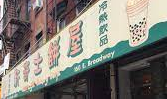
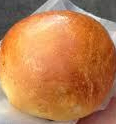
My last stop on the eating tour because even after twenty dumplings, four spring rolls, three pastries and three Cokes, I was still hungry and needed that baked pork bun. I found it at Happy Star Bakery at 160 East Broadway and it was just $1.75. Not the $3.50 in Midtown as I recently found at Dim Sum Sam in the Theater District. It was soft and chewy and filled with the most amazing, chopped pork and baked into a sweet dough. I barely made it out the door and I was finished with it.
After all the munching on snacks throughout the afternoon, I needed a good walk so I double backed and walked around the Twin Bridges section of the neighborhood walking down Henry, Madison, Rutgers and Clinton Streets around the public housing projects looking at all the small businesses that still catered to the people in the projects.
It is really a funny section of the City in that in-between the cut rate stores, and discount pizzerias are tiny gourmet restaurants, coffee bars and art galleries. It is really a case of extremes all over this section of the neighborhood and shows that both Twin Bridges and Chinatown south are going through a change in both residents and the businesses that cater to them.
With Little Italy slowly fading away (down to just four blocks now from forty at the turn of the last century), I can see the same changes happening in Chinatown as well. It is just another sign of Manhattan going through a metamorphosis.
It will be interesting to see what I will find when I reach this section of Manhattan in the near future.
There are some neighborhoods in Manhattan that just stand out for their access to parks or to the rivers and others are loaded with historic value who architecture had not changed over the years.
The Flatiron District which was once served as the old Midtown between the Civil War and World War One and “The Ladies Shopping Mile”, where women could shop and engage with one another without a chaperon on Avenues and Streets lined with Department stores, restaurants, movie theaters, tea houses and specialty stores catering to their needs. When you look up at the grand buildings of the district with their large windows and their Beaux-Art designs and decorations, you can see that their purpose was to impress the customers.
I had toured the area around Sixth Avenue and West 23rd Street three years earlier for a tour of a “New York Victorian Christmas” and you can see by the architecture that these buildings were meant to last.
These Grand Department Store buildings are the ghosts of their former selves with a shopping district that left them behind and names that have been out of business for over a hundred years (with the exception of B. Altman & Company which closed in 1990). You can still see the beauty and gracefulness that is carved into the stone of these buildings and in some cases still show the name or the initial of the original store owner.
Day One Hundred and Twenty-Eight: ‘Victorian Christmas Tour’
As I started my walk on the borders of the Flatiron District at West 25th Street and Sixth Avenue, there was not much to see as it was all new construction. The one thing that I did notice from my last walk in the neighborhood is that the colorful street art piece by was tagged over. It was on the very edge of the neighborhood on the wall of The Corner Cafe at the corner of 729 Sixth Avenue was the New York City painting by artist Dirt Cobain.
The New York City Street art by artist Dirt Cobain on the side of The Corner Cafe at 729 Sixth Avenue (painted over in 2022)
Artist Dirt Cobian is an American born artist who started with a spray can when he was a teenager. He creates the most interesting and eye-opening street art. He currently lives in Brooklyn (Artist bio).
A video on who the artist is and what he represents.
The colorful piece of street art was painted over by another tagger who did not do the painting justice. That and the fact that the Corner Cafe had closed its doors for business since I walked the northern part of the Chelsea neighborhood in June and now sat empty. It was when you reached West 23rd Street when the true gems of architecture began.
This unusual office building was built in 1920 and you have to look up to see the carving of “The Corner” at the top of the corniche
I remembered what the tour guide said this had once been the first real shopping district when shopping was acceptable for the middle to upper middle-class woman to shop and socialize unchaperoned. These were the days before malls when shopping was an experience and not something to be rushed.
You could see it in the size of the buildings that housed everything you needed for your household from furniture and clothing to wines and fine gourmet food. They had something for everyone. I could have only imagined what it must have been like and to go back in time to experience those times.
The shopping district stretched from the border of West 23rd Street to the border of West 14th along the Sixth Avenue corridor from the old shopping district to the new one. Even today when you walk that area of West 14th Street, you can still see traces of the old shopping district in the elaborate buildings that are left that line the street. As I walked the back-and-forth length of Sixth Avenue, I admired the buildings that still line it.
I walked south first down Sixth Avenue so that I could really see the stores for myself on one side and then walked past the storefronts on my way back up. What were once Upper Middle Class clothing emporiums are today ‘Big Box’ stores still catering to the retail trade just in another form on the bottom and offices to the top.
Th shopping district border with the Flatiron District starts at the Simpson-Crawford Department Store at 641 Sixth Avenue between West 19th and 20th Streets, which once catered to the wealthy elite of Manhattan and beyond. The store was established in 1878 by Richard Meares and William Crawford as Richard Meares & Company. Meares left the firm a year later and William Crawford then partnered with Thomas and James Simpson to create Simpson, Crawford and Simpson. When Thomas Simpson died in 1885, the store became known as Simpson-Crawford (Daytonian in Manhattan).
Simpson-Crawford Store today at Sixth Avenue between West 19th and 20th Streets
When James Simpson died in 1894, William Crawford became the sole owner and in 1899 with the rise of the great stores on Sixth Avenue, Crawford designed a new store of marble designed by William H. Hume & Son. The exterior of the store shined with polished marble and granite (Daytonian in Manhattan & the tour guide).
The store had many innovations at the time. It had the first escalator in the city, the first display windows with mannequins and large display windows that had to be created for the store. The store was stocked with the finest imported clothes, furs and laces and on the top floor was a restaurant that catered to 1200 guests (Daytonian in Manhattan & the tour guide).
Before the store opened, William Crawford retired and sold the store to Henry Siegel across the street who kept the tradition of the store going. When Siegel-Cooper Company collapsed in 1914, Simpson-Crawford was kept closed for three weeks and then reopened. Both stores closed one year later, and the store was converted to mail order warehouse. Today it holds various stores (Daytonian in Manhattan).
Our next stop was in front of Hugh O’Neill’s Dry Goods Store at 655 Sixth Avenue between West 20th and 21st Streets. It was built by the firm of Mortimer C. Merritt in the neo-Greco style who built the four stages of the building between 1887-1890 (Wiki & the tour guide).
Hugh O’Neill had started a small dry goods business right after the Civil War in 1865 with a small store around Union Square. In 1870, he decided to build a trade on the middle market customer and offered discounts on goods. The four floors of merchandise contained laces, ribbons, clocks and on the upper floors women’s and children’s clothing (Wiki).
When O’Neill died in 1902, the shopping area had just begun its decline and in 1906 it merged with Adams Dry Goods up the block. A year later they both went out of business as the area gave way to manufacturing. The building today has been converted into condos.
The Hugh O’Neill store today
Next door to it we looked at and discussed was the former Adams Dry Goods Store at 675 Sixth Avenue between West 21st and 22nd Street.
Samuel Adams, a merchant who had been selling upscale clothing and furnishing to customers in the area decided to open a store on Sixth Avenue. He used the architectural firm of DeLemos & Cordes, who had designed the Seigel-Cooper Department Store and the six-story building opened in 1902. The store was the first in New York City to use the new Pneumatic tubes to transport money and messages throughout the store (Wiki).
The problem with the store was its location. He built the store at the very edge of the neighborhood as the business changed. As the shopping area started to decline in the early 1900’s, Adams sold the store to Hugh O’Neill Dry Goods Store and they merged the two companies together, converting three floors of the Adams Dry Goods store to furniture. This concept was not popular as well and the businesses failed, and the store closed in 1913 (Wiki & the tour guide).
Adams Dry Goods Store today at Sixth Avenue between West 21st and 22nd Streets
The store has gone through a manufacturing stage and in the 80’s became part of the change to large box retailing. The building now houses eBay and several stores including Trader Joe’s and Michael’s. As we could see on the tour, the old department stores are finding new life in retailing.
The old entrance to the Adams Dry Goods Store
Between West 22nd and West 23rd Streets located between the old Adams Dry Goods and next to the former Macy’s store was Ehrich Brothers Department Store at 701 Broadway. The building was constructed in 1889 by architect William Schickel & Company with additions by Buchman & Deisler and Buchman & Fox in 1889 (Wiki).
Ehrich Brothers Department Store building at 701 Sixth Avenue (Wiki)
The “K” still adorns the store of the old J.L. Kesner Department Store
Another addition was added by Taylor & Levi in 1911 when the store was leased to J.L. Kesner. They added the terra cotta “K”s that can still be seen from the top of the storefront. The store folded in 1913 and then was used for manufacturing and offices as the shopping district moved to 34th Street and the Fifth Avenue area (Wiki).
At the corner of the neighborhood on Sixth Avenue and West 23rd Street at 100 West 23rd Street is the second Macy’s Department Store building. This was on the very edge of the Ladies Shopping Mile that once stretched along Sixth Avenue.
The building was built in 1871 and you can see all the elaborate embellishments on it with interesting stone carvings and elegant window design and some wrought iron details on different parts of the building. It was the last location of the store before it moved to its current location at 151 West 34th Street.
100 West 23rd Street (Renthop.com) is an old Macy’s
The plaque at The Caroline apartments tells of the location as being the former home of both the Booth Theater and McCreery Department store. The Shakespeare sculpture on the side of the building was once part of both structures.
This Shakespeare sculpture dates from the 1800’s and has been part of all three buildings.
At the edge of the shopping district on the corner of West 20th Street and Sixth Avenue is the old Church of the Holy Communion, which recently housed the Limelight Night Club and now the Limelight Shops at 47 West 20th Street.
The former Church of the Holy Communion at 47 West 20th Street (now the Limelight Shops)
The church was designed by architect Richard Upjohn and was built between 1844-45 and was consecrated in 1846. It was designed in the ‘Gothic Revival’ style and according to the church’s founder, Reverend William Muhlenberg “was the true architectural expression of Christianity” (Wiki). The church closed in 1975 due to declining membership. It had many uses until 1983 when it opened as the Limelight Nightclub. Today it houses the Limelight shops.
The church set up for outdoor dining in the summer
Samuel Hagai is an Israel born artist now living in Los Angeles. He is a self-taught artist know for his realistic portraits (Artist bio)
As I turned the corner onto West 20th Street, there was a lot of commotion across the street and there were police cars everywhere. I did not see what exactly happened, but it made me walk faster down West 20th Street.
West 20th Street is officially the southern border of the Flatiron District, but I have found that the district overlaps with NoMad, Rose Hill, Kips Bay and Chelsea so much of the neighborhood has two or sometimes three community names. The borders begin to blur here. You can see though that this was once a very important business district with buildings that were designed with distinction.
At the corner of Sixth Avenue and West 20th Street, another building got my attention at 650 Sixth Avenue. This impressive building, which is known as the Cammeyer and is located at 650 Avenue of the Americas on the southeast corner at 20th Street, was converted to a residential condominium in 2007 (Carter Horsley. CityRealty.com).
650 Sixth Avenue at the corner of Sixth Avenue and West 20th Street-Now the Cammeyer
The building was designed by Hubert, Piersson & Hoddick in 1892 for the estate of William C. Rhinelander. The red-brick, Neo-Renaissance-style building has white stone and terra cotta trim, a large copper cornice and a handsome band course beneath its top floor. It was the home of the Cammeyer Shoe Store, the one of the largest shoe stores in country (Daytonian).
The conversion was designed by Perkins Eastman for by Penterium, the residential development arm of Korean firm Kumang Housing Corp (Carter Horsley. CityRealty.com).
I was admiring 27 West 20th Street on my walk down West 20th Street to Park Avenue South. This detailed twelve story office building was built in 1908 and now offers loft style offices. the details of the building include elaborate stonework both around the doorways and lower windows and the top floors.
What I liked about the side streets as well as the avenues as I walked the neighborhood was that it kept its character and that these buildings had not been knocked down for the modern skyscraper. They were finding new use like the buildings in Midtown South and in NoMAD and become very desirable.
There was true beauty in the details of 20 West 20th Street that was built in 1906. The Beaux Art style details around the windows and doors accent the elegant building.
This is also the details you see in the office building of 10 West 20th Street built in 1903 with Beaux Art style details along the lower windows and doors and the upper floors of the building.
I passed 156 Fifth Avenue as I crossed the border from west to east in this part of the neighborhood and admired it for its detailed stonework carving and unusual styled roof. The Presbyterian Building was built in 1893 and was designed by architect James B. Baker and was designed in the French Gothic style. It was to be used by the Presbyterian Church as their base for domestic and foreign missions and used as office space. The Panic of 1893 changed that, and they had to lease the space out (Daytonian in Manhattan).
I reached Broadway and to what was once heart of the elegant shopping district of the old Midtown Manhattan before it moved up to the 34th Street area at the turn of the 20th Century. At 901 Broadway at East 20th Street is the old Lord & Taylor Building before its final move to Fifth Avenue in 1915 (they closed in 2020).
901 Broadway at West 20th Street-The Lord & Taylor Building
The building was designed by New York architect James H. Giles and was designed in the innovative cast iron style of the time that resembled stone. After the store closed in 1915 when it moved business uptown, the Broadway side of the store was resurfaced in stone which is why only a sliver of the old store design is intact (Daytonian in Manhattan/New York Public Library).
The original look of the Lord & Taylor Store at 901 Broadway (New York Public Library)
Across the street from the old Lord & Taylor Building is 903 Broadway, the former Warren Building. It was designed in 1891 by Stamford White for the Goelet family for their new commercial holding company. The Goelet family had owned all the land around this area and as it moved from residential to commercial, the family developed the neighborhood around them. The building was named after Robert Goelet’s wife, Harriette Louise Warren (Daytonian in Manhattan).
903 Broadway at West 20th Street-The Warren Building
Moving further down East 20th Street is the recreation of the childhood home of Theodore Roosevelt and the Theodore Roosevelt Birthplace Museum at 28 East 20th Street.
28 East 20th Street-Theodore Roosevelt Birthplace Museum
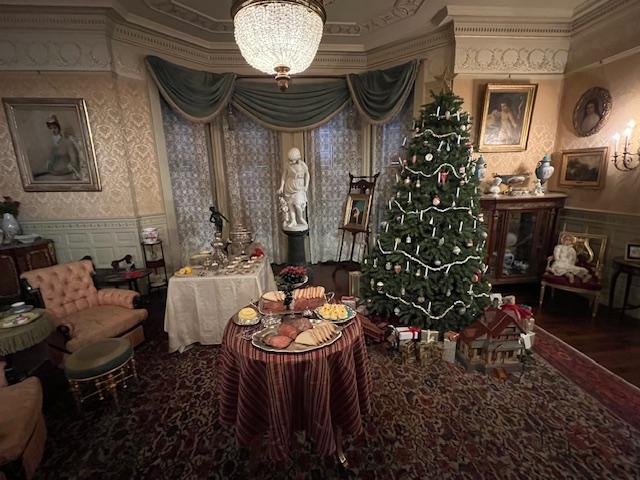
The house opened finally for touring after being closed for the pandemic in January 2023 so I finally got to tour the home. It is filled with period furniture, family heirlooms and many artifacts of the late President.
The Theodore Roosevelt Birthplace Museum at 28 East 20th Street
The small gardens outside the house were in full greenery when I visited.
The Living Room at the Roosevelt Home.
The Parlor at the Roosevelt Home
Towards the corner of East 20th Street and Park Avenue South near the border of the neighborhood is 42 East 20th Street, the current home of the Gramercy Tavern, The Bullmoose building. This loft style store building was built between 1898-1899 and was designed by architects Neville & Bagge. The building was converted into lofts and the restaurant below.
The beautiful entrance to the former N.S. Meyer Inc.
Turning the corner to Park Avenue South, you can see Gramercy Park in the distance which shares it border with the Flatiron District. This is where the lines get blurred between the Flatiron District and Gramercy Park, which share the same border.
As you walk up Park Avenue South, the first building that makes an impression is 251 Park Avenue South. This elegant office building with its large display windows and clean lines shows of the store inside. The office building was built in 1910 and has large windows both on the ground level and towards the top of building.
One building that does standout from the others on Park Avenue South is the Calvery Church at 277 Park Avenue. The church was established in 1832 and moved to its current location in 1842. The current church was designed in the Gothic Revival style by James Renwick Jr., who designed St. Patrick’s Cathedral.
Another interesting building, I looked up and admired while walking up Park Avenue South was 281 Park Avenue South, the former Church Mission House. The building was designed by architects Robert W. Gibson and Edward J. Neville in the Medieval style and was built between 1892 and 1894. It was built for the Episcopal Church’s Domestic and Foreign Missionary Society (Wiki). It now houses the photography museum The Fotografista Museum.
281 Park Avenue South-The Fotografiska Museum (The Church Mission House)
Another impressive building, I passed before East 23rd Street is 105 East 22nd Street the former United Charities Building. This is the final building in what was once known as “Charity Row” (Wiki). The building was designed by architect R. H. Robertson and the firm of Rowe & Baker. It was built by John Stewart Kennedy in 1893 for the ‘Charity Organization Society’ (Wiki).
When you turn the corner down East 23rd Street, you are heading back up to the border that the Flatiron District shares with the Kips Bay, Rose Hill and NoMAD neighborhoods. I had walked these district two years earlier when I explored these neighborhoods. I walked north first to the Infantry Regiment building and then walked south again to East 23rd Street to see if there were any changes. With the exception of DiDi Dumpling moving to 34 Lexington from 38 Lexington, it looked pretty much the same.
I walked to the front of the 69th Regiment Building at 68th Lexington Avenue. The scaffolding was finally down, and you could see the whole building now. This beautiful building is the home to the New York Army National Guard’s 69th Infantry Regiment, known as the “Fighting Irish” since the Civil War (Wiki).
The building was designed by architects Hunt & Hunt in the Beaux Arts style and was completed in 1906. It has been home to many events and show including the controversial 1913 Armory Show of contemporary art (Wiki). You really have to walk around the building to admire its beauty and history.
Just across the street is another beautiful building covered with snakes, skulls and dragons carved along the side of it at 130 East 25th Street.
Someone had a warped sense of humor
The former B. W. Mayer Building which now houses the Friends House in Rosehall was built in 1916 by architect Herman Lee Meader (Wiki). You really have to walk around the building to see all the unusual carvings that line the building.
130 East 25th Street, the former B. W. Mayer Building
The street art is also interesting on this part of Lexington Avenue. One the corner of East 24th Street & Lexington Avenue is the Friends House New York, a housing unit. Painted on the wall is a very unique painting by Italian street artist, Jacopo Ceccarelli.
Painting by artist Jacopo Ceccarelli
The mural is on the corner of East 24th & Lexington Avenue-The St. Francis Residence Building
The Milan born street artist, who goes by the name “Never 2501” hones his skills after moving to San Paolo, painting murals with an edge that got global recognition. He uses geometric forms in his work with circles and lines creating the abstract (Do Art Foundation).
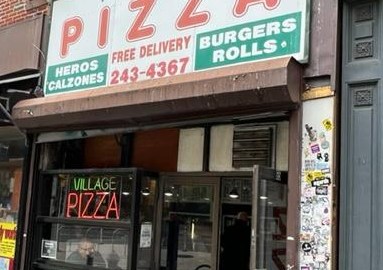
I was getting hungry again with all this criss crossing across Lexington Avenue and I had two choices for a snack, DiDi Dumpling at 38 Lexington Avenue or Pick & Pay Pizza at 30 Lexington Avenue both having reasonable snacks. Since I would be stopping for Dim Sum later that afternoon, I chose the pizza. For a $1.25 a slice, the pizza was not bad in this tiny little hole in the wall that also served Indian food as well. The sauce had a lot of flavor and that is what makes the pizza.
Pick & Pay Pizza at 30 Lexington Avenue (Closed January 2024)
I noticed on the wall right near the doorway near the Starbucks was another wall mural “Urban Ocean” by artist Yuki Abe that is off to the side of the building on the corner of Lexington & 25th, Look at the interesting color and design of the work.
Surrounding this area of Lexington & 25th Street starts the campus of Baruch College which is part of the SUNY system, and I could see students who were taking live classes walking around enjoying the day. I am sure it is much different when classes were in full swing, and the students were hanging around the restaurants and coffee shops in the area.
The Baruch College Student Plaza at East 25th Street is a nice place to relax
Another building that stands out in its beauty and design is on the corner of the neighborhood on Lexington Avenue between 24th and 23rd Streets, the Freehand Hotel at 23 Lexington Avenue. The hotel was originally built as the Hotel George Washington in 1928 and designed by architect Frank Mills Andrews in the French Renaissance style.
The Freehand Hotel (the former George Washington Hotel) at 23 Lexington Avenue
While still a apartment building and a dorm in the 1990’s, several famous New Yorkers lived at the hotel including artist Keith Haring and musician Dee Dee Ramone. Playwright Jeffery Stanley also lived at the hotel for a period of time.
The entrance to the Freehand Hotel is very elegant
After the north south trip around the boundaries of Lexington Avenue, I turned at East 25th Street to head back to Sixth Avenue. The border of the Flatiron District is also part of the Rose Hill and NoMAD neighborhoods and shares the border with Kips Bay.
Walking down East 25th Street, you realize as you start to border the Midtown area that the buildings take up more of the blocks and there are less smaller brownstones and tenements in the area. The dominate building on the block by Madison Square Park is 11-25 Madison Avenue, the Metropolitan Life Buildings. The building that lines this part of East 25th Street is the Metropolitan Life North Building (or 11 Madison Avenue).
Metropolitan Life North Building at 25 Madison Avenue
This beautiful building was the extension of the main headquarters next door on Madison Avenue. The building was designed by the architectural team of Harvey Wiley Corbett and D. Everett Waid in the Art Deco style in the late 1920’s as the tallest building in the world but the Great Depression changed the plans and it was built in three stages. The first finished in 1932, the second in 1940 and the third in 1950 (Wiki).
The archways ‘Loggias’ on each side of the building
What stands out about the building is the arched vaults on each corner of the structure called ‘loggias’ and the features were made in limestone and pink marble. When you stand under them you can see the colors and details of the marble carvings (Wiki). Just walking around the building the features are impressive and standout.
Across the street from the Metropolitan Life North Building at 27 Madison Avenue is the Appellate Division Courthouse of New York State and one of the most beautiful and detailed buildings I have seen on my walks. The building was designed by architect James Lord Brown in 1896 in the Beaux Arts Style and is adorned heavily in sculpture (Wiki). You really have to step back and walk across the street to see the details on the building.
27 Madison Avenue The Appellate Division Courthouse of New York State
The side of the building facing Madison Square Park.
Looking up close, you can see that the building resembles a Greek Temple and was considered one of the best examples of the “City Beautiful Movement” that occurred during the 1890’s and 1900’s to enhance cities with monumental grandeur and beauty (Wiki).
The historical beauty of the architecture continued up the border of the neighborhood as I walked up Madison Avenue towards East 30th Street. You have to walk both sides of Madison Avenue to appreciate the designs and details of the buildings that line the avenue.
You have to look close to the building or you will miss it is the sculpture by artist Harriet Feigenbaum. It is a memorial to victims of the Holocaust and is very powerful in its work showing the concentration camps.
“The Memorial to the Injustice of the Victims of the Holocaust”-“Indifference to Justice is the Road to Hell”
Harriet Feigenbaum is an American sculptor and environmentalist. Her works cover sculpture, film and drawings that are seen all over the world (Wiki and artist bio).
I passed 50 Madison Avenue and noticed how the buildings blended in design. The bottom level of the building was built in 1896 as the headquarters of the ASPCA (American Society of the Prevention of Cruelty of Animals). The building was designed by architects Renwick, Aspinwall & Owen and had a classic ‘club like’ design to it. The building was refitted and added to in 2005 by the firm of Samson Management with a six story addition to luxury condos (CityRealty.com).
Another ornamental building that stands out in the neighborhood is 51 Madison Avenue which is the home of New York Life Insurance Building. The building was designed by architect Cass Gilbert in 1926 in the Art Deco style with Gothic Revival details along the sides and was finished in 1928. The structure is topped with a gilded roof (Wiki & New York Life Insurance history). This is another building that you have to see from all sides.
51 Madison Avenue-The New York Life Insurance Building
Continuing my walk up Madison Avenue while admiring the architecture of the neighborhood is The James NoMAD Hotel, the former Seville Hotel, on the corner of East 29th Street at 88 Madison Avenue. This interesting hotel has gone through several name changes and renovations since it was built in 1904. The hotel was designed by architect Harry Alan Jacobs in the Beaux Arts style and the annex to the hotel was designed by Charles T. Mott in 1906 (Wiki).
88 Madison Avenue-The James NoMAD Hotel (formerly The Seville)
The outdoor dining was open for the restaurant the first afternoon I had visited the neighborhood even though I thought it was a little cool to eat outside. Even though you can’t go inside unless you are a guest, I could see the lights stung from the street, and it looked very elegant in the outside dining area. It was noted in the paper that they will be keep the tradition of closing Broadway from West 25th to West 28th for the summer.
Across the street from this elegant hotel is 95 Madison Avenue the former Emmett Building. The structure was designed by architects John Stewart Barney and Stockton B. Colt of Barney & Colt for Dr. Thomas Addis Emmet in 1912 when the area was a wholesale district. The building is designed in the French Neo-Renaissance with Gothic style ornamentation (New York Landmark Preservation Commission and Wiki).
Heading straight ahead at East 25th Street and Madison Avenue is Madison Square Park, named after our fourth President of the United States, James Madison. This well landscaped park is the gathering place of the residents of NoMAD and has a wonderful playground that has been busy the whole time I have spent in the neighborhood.
Madison Square Park is an interesting little oasis from all the traffic and office space. It has an interesting history since it was designated a public space in 1686 by British Royal Governor Thomas Dongan. It has served as a potters field, an arsenal and a home for delinquents. In 1847, the space was leveled, landscaped and enclosed as a park. It became part of the New York Park system in 1870. There are many historical figures featured in the park (NYCParks.org).
The park today is a major meeting spot for residents and tourists alike with a dog track and the original Shake Shack restaurant.
Madison Square Park in the Spring when I was walking the length of Broadway
When I walked into the park to take a break, it must have been the busiest section of the neighborhood between the playground and the original Shake Shack that were serving food to a crowd clung to their cellphones.
The original Shake Shack is located in Madison Square Park at Park and 23rd Street
I stopped to look at the statue of our 21st President Chester A. Arthur, who had taken oath just two blocks away in his New York townhouse where the Kalustyan’s Specialty Foods is located at 123 Lexington Avenue (See My Walk in Kips Bay below). I thought about what was going on in our government today and what they must have gone through with this transition.
The Statue of Chester A. Arthur in Madison Square Park
George Edwin Bissell was an American born artist from Connecticut whose father was a quarry-man and marble carver. He studied sculpture abroad in Paris in the late 1870’s and was known for his historical sculptures of important figures of the time (Wiki).
The Admiral David Farragut statue in Madison Square Park by artist Augustus St. Gaudens
Another interesting statue that stands out in Madison Square Park is the of Civil War Navy hero, Admiral David Farragut. Admiral Farragut commanded the Union Blockage of Southern cities and helped capture New Orleans. The statute was designed by sculptor Augustus St. Gaudens. This was the artist’s first major commission when it was dedicated in 1881 (NYCParks.org).
Augustus St. Gaudens was an Irish born American artist whose specialty during the Beaux-Arts era was monuments to Civil War heroes. He had created the statue the William Tecumseh Sherman in the Central Park Mall on Fifth Avenue along with this statue of Admiral Farragut. He had studied at the National Academy of Design, apprenticed in Paris and then studied at the Ecole des Beaux Arts (Wiki).
Upon leaving Madison Square Park and proceeding across East to West 25th Street (Fifth Avenue separates the East Side from the West Side of Manhattan), I was traveling into what was once part of Midtown between the Civil War until WWI and then after that Midtown moved closer to Central Park during the 1920’s through the 1940’s.
Most of the buildings in this section of NoMAD were built with decorative stonework and elaborate ornamentation. There are so many in this section of Manhattan I will highlight the ones that are the standouts. As I walked the border of the neighborhood, you could see many beautiful buildings lining 25th Street.
When walking down East 25th Street from Madison Square Park, the first interesting site you pass is the historic Worth Square, the Memorial to and burial site of General William Jenkins Worth.
William Jenkins Worth was a native New Yorker (Hudson, NY) and decorated Army officer who had served our country in the Battles of 1812, The Second Seminole War and the Mexican-American War. His series of campaigns shaped this Country to where it is today. He died working for the Department of Texas in 1849 (Wiki).
The General’s remains are buried under the monument at Worth Square at the corner of Fifth Avenue, Broadway and East 24th and 25th Street. General Worth was interned here in November of 1857 on the anniversary of the British leaving the colonies (NYCParks.org).
The Worth Monument between East 24th and East 25th Street at Broadway and Fifth Avenue
The historic artwork on the monument.
The Worth Monument was designed by artist James Goodwin Batterson, whose main profession was one of the founders of the Travelers Insurance Company in Hartford, CT and helped design the Library of Congress Building in Washington DC. He had immersed himself in his father’s quarrying and stone importing business early in his career and traveled extensively to Europe and Egypt for the job. He designed this monument in 1857 (Wiki).
Passing Worth Square and continuing down West 25th Street, I noticed the impressive architecture that lines the streets of this section of the Broadway part neighborhood.
At 1123 Broadway is the detailed Townsend Building that was built between 1896-97 and was designed by New York architect Cyrus Lazelle Warner Eidlitz in the Classical style. The building is names for Isaac Townsend whose estate the building was built on (Flatiron Partnership).
Another beautiful building is the Heritage Hotel at 18-20 West Fifth Avenue. This detailed hotel was designed by the architectural firm of Israels & Harder in 1901 in the Beaux-Arts style.The hotel opened in 1902 as the Arlington Hotel, a residential hotel for well-heeled guests (Daytonian).
By the time I reached Sixth Avenue again, I could see the reason why most people call the Flatiron District a treasure trove of architecture. Block after block walking the borders of this neighborhood was an experience in the hopes and dreams of so many companies of the turn of the last century. When they built these buildings, they were meant to last, and they believed in what they were creating.
What I love about the Flatiron District is the belief that business had in itself to last, to make an impression on the not just the people that worked there but to the outside world. It showed a world of promise and power and showed New York City’s representation in business and culture. Between the Civil War and WWI, you could see the growth in commerce, marketing, retail and the arts representing in these blocks of Manhattan.
This was meant to show the country where New York City stood and what it represented. These were not just buildings but statements to the optimism that a country that had just been through a Civil War could accomplish. While this trend was followed by cities all over the country growing between the wars, New York stood out by doing it first and doing it bigger.
This is why Manhattan is the capital of the World.