I do not know how Christmas creeps up every year. It starts when Forth of July weekend ends and then we blink our eyes and there is Christmas. The years just keep getting faster and faster. Even though the holiday season snuck up on me the month of December was full of interesting events.
I had to put my walk around Manhattan on hold for most of the holiday season. Between classes, work, the Fire Department and selling Christmas trees (as you have seen in other blogs), the month of December was a busy one. There were different events to attend, activities to participate in and places to visit.
Christmas to me is not just the holiday itself but the time of the year to give back and help raise money for those in need. I really believe in giving back to the community during the holidays so there was a whole series of fundraisers that I attended. As my friends always say of me, you never sit still for one minute.
The holiday season started right after returning from seeing Lillian out in Kings Park, NY. We had such a nice time together having dinner with the other families and enjoying the entertainment that I promised her that I would see her in two weeks for the family Christmas dinner at her facility.
The next day, I got up early to the firehouse to help wash the truck as the Hasbrouck Heights Fire Department was participating in the Annual Holiday Parade in Hasbrouck Heights, NJ. Our Chamber of Commerce sponsors the parade and Christmas tree lighting every year on Thanksgiving weekend.
The Holiday Parade in Hasbrouck Heights, NJ is always a lot of fun. It gives all of us a chance to give back to the community as the procession of floats, decorated cars and organizations participate in the parade ending at the circle near the edge of town for the tree lighting ceremony.
Engine One in the Hasbrouck Heights Holiday Parade
Before the parade, all of us met up at the firehouse to wash and decorate the trucks and then stage by the Boulevard before the parade. I always enjoy watching the little kids in awe when the trucks pass by. It was cold the night of the parade so the crowds were thinner than previous years but still people looked like they were having a nice time. After the parade was over, everyone met at the circle for the tree lighting ceremony which got the usual ohhs and ahhs.
I had to be up early the next day as we had to unload 340 Christmas trees from the truck for the Annual Christmas tree sales for the Hasbrouck Heights Men’s Association. This is our organization’s largest fundraiser and it is our job to sell all those trees for our scholarship program. We must have set a new record for emptying the truck and by the end of the season for selling them (See Day One Hundred & Twenty Six).
It is something for me as next year I will be going on my twentieth year on the Hasbrouck Heights Men’s Association. I have seen the growth of the organization and the all the high school seniors that we have given a head start with our scholarship program. I can’t believe I have served on the Executive Board for four years now as Director (Sargent of Arms). It has been quite the journey.
The members of the Hasbrouck Heights Men’s Association setting up the trees.
This starts the holiday season in Hasbrouck Heights, NJ with the Boulevard decorated for the holidays, fantastic window displays by our town merchants and everyone excited that Santa was coming. The holiday season means holiday parties, tours of decorated mansions, hand writing Christmas cards and keeping everything in check. I went to a record thirteen Christmas parties and get togethers this year. I am the member so many organizations and with four jobs everyone wants to get together. I was a busy person this year.
Right after Thanksgiving Weekend with the endless activity and getting to work selling those trees, I had to go back to work and put my schedule together for the month of December.
My first weekend of December was busy with back to back activities with Sinterklaas Weekend ahead of me and the day after the Bergen County Firemen’s Home Association Christmas Party. This is always a busy weekend so I spend my weekend up in Rhinebeck at the Quality Inn (See review on TripAdvisor) while I run from one place to another. This was on top of the fact that my class would be presenting their final project for my Communications class the Monday I got back to work.
This was my sixth year participating in the parade. Rhinebeck, New York is a magical place at the holidays. The store windows are beautifully decorated with all sorts of merchandise that showcase the stores and the trees that line the downtown are layered with white lights that illuminate the downtown. Little wooden paintings line all the trees in the downtown area and garland accents a lot of buildings. It looks like a quaint little Christmas town straight out of a Currier & Ives print.
Downtown Rhinebeck, NY at Christmas
I help with the set up at 10:00am at the Starr Library every year. This year the theme was the Butterfly. (At the cocktail party fundraiser before Thanksgiving, the Sinterklaas community was introduced to the Butterfly King & Queen and were given the traditional blessing before the start of the Sinterklaas season.) The committee created Butterfly puppets for the parade that we put together that morning. As I unpacked the truck with the other volunteers, I could not believe how fast the year went. I kept asking myself how did this go so fast.
The same group of volunteers I have worked with for four years and we all worked in tandem with each other, emptying out the truck, unloading all the puppets and then putting them all together and stacking them against the library for the night of the parade. I have done this for so many years, I know how to put most of them together in my sleep. We were done in about two hours and then I was able to enjoy the rest of the days activities.
I have been volunteering in the parade now since 2010 and I can definitely tell you that the number of people has tripled over the past four years alone. After the Opening Ceremony at the Beekman Arms Hotel (I get a kick out of Mother Holly’s ‘feeling Jolly’ speech every year), I got a copy of the day’s activities and then snuck up to Red Hook, NY right up Route 9 to visit a few stores and restaurants on my bucket list for my blogs (you will find Little Pickles Children’s Store on ‘LittleShoponMainStreet’ and Village Pizza II on ‘DiningonaShoeStringinNYC’ on my WordPress.com blog sites).
Red Hook’s downtown was decorated for their Christmas event the next weekend. As one gallery owner explained “everyone is in Rhinebeck for Sinterklaas, so the town is quiet”.
Little Pickles in Red Hook, NY
I was able to visit businesses for my blogs that had not been open the weekend I visited President Van Buren’s home in Kinderhook, NY (see the Van Buren Homestead on my VisitingaMuseum.com site) and revisit old ones. I wanted to get a better feel for their downtown. (Please don’t miss the pizza at Village Pizza III at 7514 North Broadway. Their slices are excellent).
By the time I got back to Rhinebeck at about 1:30pm, I could not find a parking spot. The town was mobbed with people and almost every block around the downtown was lined with cars. I had to park almost five blocks away.
The rest of the afternoon was full of concerts, performances by the dancing polar bear and the grumpuses and lively singing at the churches. All four churches in town had either singing groups or bands. Lining the Main Street of Rhinebeck were all sorts of local charities selling Christmas cookies, hot chocolate, hot dogs and other snacks. Most were almost empty when I got back as people were snacking as they walked the streets to get from one activity to another.
The Grumpus singing and dancing in Downtown Rhinebeck, NY
I decided to relax and not run around for the afternoon as I have seen most of the shows and acts that were on the roster and pinpointed how I wanted to spend the rest of the afternoon.
I first visited the Butterfly nest that was located in the courtyard. The artists are very creative on the Sinterklaas staff. They built entire Butterfly cocoon that you could walk through. There was music going on in and around the cocoon and when I exited, the grumpuses were starting to do one of their dances in the courtyard. They had the whole crowd laughing and clapping along.
My stop on the event was the ‘Into the Light’ show at the Church of the Messiah. I have seen this show over the years of coming to Sinterklaas and I swear, the girl who plays the main character has not changed in the last five years. She is just getting older.
‘Into the Light’ Show
I spent the rest of the afternoon at the United Methodist Church listening to the Brass bands. I got to hear the Funkrust Brass Band and The Second Line Brass Band. It was nice to just sit back and relax and listen to the music. I had been running around the town the who afternoon.
After the bands, it was time to get ready for the parade. So back up to the Starr Library and my position in the parade as part of the “Star Forest” of puppets. We lucked out again that night as the weather was mild and it was in the high 40′ that night.
As the excitement of the parade started and we made our way down the hill, I noticed immediately that the crowds had really grown this year. They were five deep at the parade route on both sides and everyone had their cellphones out to record the parade. With all the white lights on the trees, all the decorated windows in full light and all the Sinterklaas stars that lined the route, it was a beautiful and festive night when coming into town.
Me in the Parade in the ‘Star Forrest; by the Mother Earth Float
People got so excited to see “Sinterklaas” (the Dutch word for ‘Santa Claus’) and the various characters in the parade as ‘Mother Holly’, ‘The Pocket Lady’, ‘The Dancing Polar Bear and his trainer”, ‘The Butterfly King and Queen’, ‘The Grumpuses’ and ‘The Wild Women of Rhinebeck’ joined the brass bands, floats, puppets and singers, dancers, performers and animals who make the parade what is every year. It really is exciting to be part of this parade.
At the end of the parade route, we pass the stage with all the members of the Sinterklaas family to make our final goodbyes until next year and drop off the puppets. It was funny that the whole time I was walking in the parade I kept telling myself how fast the year had gone and I could not believe I was here again.
Watch me in the Sinterklaas Parade in the ‘Star Forrest’ on the right
I dropped off my puppet and went to watch the last of the parade before leaving for dinner. It was fun to watch the fire throwers perform at the end of the parade. It was a nice way to end the evening and after the performance was over, the crowds dispersed to go to dinner. Every restaurant in town was mobbed all evening.
I went to a barbecue restaurant that I had wanted to try for years, (See review on TripAdvisor). I had the buffet dinner ($20.00) that they had set up for the day and just ate. I had to admit as much as l liked the food, the waiter annoyed me when he charged me for the refills on the drinks (Noted in the review and in his tip).
As I walked back to my car, it started to mist and rain lightly. I did not realize how far I had packed away from town. I was four blocks away near the Duchess County Fairgrounds. That is how busy the town was that day. I just went back to the hotel and relaxed. I had an early trip the next morning.
The next morning after a big breakfast, it was off to the Boonton Firemen’s Home for the Bergen County Firemen’s Home Association Christmas Party for the residents that we throw every year. The facility was nicely decorated and we had some crowd that afternoon with all the residents present and their family members as well.
The band was a lot to be desired as they were off key most of the time and the lead singer could not sing a note. The place was really in the holiday spirit when member, Jerry Naylis and his family, who sing in their church choir and whose daughter in law sing opera, entertained the crowd. It really livened up the room and put us all in the holiday spirit. His little granddaughter stole the show when she sang ‘Jingle Bells’.
The Naylis Family entertaining the residents at the Firemen’s Home in Boonton, NJ
During the intermission we gave the residents their Christmas presents, monogrammed sweatshirts with their names on them, as a gift which I still see them wearing everytime we come to the home for events (See blog, BCFHA@Wordpress.com-Bergen County Firemen’s Home Association below).
The residents look forward to this party every year and were very touched by the gifts and the holiday thoughts. It was a fun time for all.
The members of the Bergen County Firemen’s Home Association with the residents in December 2018
After the party was over, the members of the Bergen County Firemen’s Home Association went to dinner at the Columbia Inn for our annual get together. We had a great time just catching up with one another and having a few laughs. The restaurants pizza is terrific too (See review on TripAdvisor).
With the weekend closing, it was back to work for me and another week of a round of holiday parties. First though, my students presented their project, “Bergecco-Park Consulting Inc. presents “Welcome Week 2019-Follow the Yellow Brick Road back to Bergen Community College”, their final exam project (See Day One Hundred & in ‘MywalkinManhattan.com’). The students gave a very professional presentation to a crowd of professors and administrators and members of the Athletic, Theater, Art, College Foundation, Alumni Association and Department of Special Services were on hand to view the presentation. It was well received by everyone and I could not have been prouder as a professor (please view that blog for the full project presentation).
Our logo for “Welcome Week 2019-Follow the Yellow Brick Road back to Bergen Community College”.
See the whole project presentation on my site, “MywalkinManhattan.com”
After I finally had the presentation behind me, it was a series of holiday parties one after another between the school, the fire department and various organizations that I am involved in (and that number is high). I joined the faculty at the college for our annual holiday get together, which was really nice. They had a full Thanksgiving dinner for us and a lot of holiday cheer. The Administration got up and wished us all a happy holiday season and good luck with the remainder of classes. It was nice to talk to the other professors who had come to the presentation. They gave me nice feedback at the party.
The next night it was off to the Engine One Christmas Party at Segovia’s in Moonachie. It was a nice evening with the guys, toasting the year and the successes that we had as a company (See The Brothers of Engine One HHFD-Blog on WordPress.com). It had been a busy year for us activity and project wise accomplishing both getting the bell fixed and chromed and getting the tee-shirts finally ordered and out to everyone. It was nice to catch up with everyone in a relaxed environment.
On Friday night was the annual Friends of Mills Mansion Holiday Cocktail party and fundraiser. Normally this is the night before Sinterklaas but it seemed that no one was in the holiday spirit on November 30th so they held it the week after.
Me at the Mills Mansion Holiday Party with members of the Friends Executive Board and dancers from the Isabel Duncan Dance company.
We had a really nice time. The event for the first time was sold out and the mansion was packed with well dressed people. The food was excellent and the servers did a nice job passing appetizers to all the guests. One of the local wineries was sampling one of their new sweet ice wines as well as a Chenin Blanc. It was a perfect dessert wine for the holidays.
The rooms were fully decorated for a Victorian Christmas and the Jazz band they had performing were excellent. They were engaging and people cleared the floor for impromptu dancing. It was nice to see people get up and dance again. It was nice to just sit back and catch up with other members I had met over the years and listen to the music. After that I took a quick tour of the rooms before heading back to the main room to hear the holiday greetings from the Executive Board.
The formal dining room at the Mills Mansion for Christmas
It was important that they sold out the event because the money will go to renovating both ceiling in the dining room and redoing the curtains that line the dining room windows. The mansion is slowly returning to its past glory and these events make this possible. The only problem was I was really tired after the event and it was a long ride home.
The weekend was coming up and there were two big events planned and I wanted to get enough rest to enjoy them. The first was on Saturday afternoon where I joined the Cornell Club as we we took a tour of the Ladies Shopping Mile and Gramercy Park with an event, the “Victorian Tour: Origin of Christmas Traditions” (See Day One Hundred & Twenty Eight). We literally walked this entire section of the City around Union and Gramercy Parks and walked up lower Sixth Avenue to visit the old department store buildings to know their history as part of the shopping area after the Civil War.
On Sunday was the dress rehearsal for the “Washington Crossing Reenactment” at Washington Crossing Historic Park. The event takes place every Christmas morning to remember when General Washington crossed the Delaware River and surprised the British. It was an interesting event that everyone should see once in life. It is very important to know how he crossed the river, in what type of boat and the conditions they were under that morning during a snow storm.
The Military Parade by the Delaware River
We started the morning with a Artillery Demonstration and then this lead to a Fife and Drum Parade in the historic village on the Pennsylvania side of the park. Then the troops had a Musket Firing Demo & Soldier’s Drill by the Delaware River. At noontime, the troops had their formation and the Reading of the Order of Battle.
See the parade of soldier’s before the Crossing December 2018
By 12:45pm when the troops made their trip, the event was narrated by Major General Walter Lord, U.S. Army (Retired). The troops had their parade movement and then they loaded the Durham boats, which were rebuilt for the event from the original designs that General Washington and the troops actually used.
The Washington Crossing Reenactment 2018
What I found interesting about the event was that they used the same boats as General Washington used and even in normal conditions, it was hard to maneuver these boats in the river. One of the boats even had problems had with the crossing and it took them extra time to cross and they had rescue boats off to the side in case the boats lost control, Imagine doing this during an ice storm riding in boats with chunks of ice coming at you in the water. What these men did to save our freedom is commendable.
The reenactments have been going on at this site since 1838 where it was discussed the importance of this historic event. The first attempt at a proper crossing was done in 1844 but the crowd was so rowdy and drunk that it marred the event. When they tried the event again in 1876, it was so cold and the exposure to the weather and too much alcohol consumption by the crowd marred the event again and it was noted not to attempt is again for another hundred years (History of Washington Crossing-Park).
As part of a pledge project in 1947, a group of Rider College students attempted the crossing again and it received national attention. In 1953, a half-scale Durham boat was built and a proper ‘authentic’ using the same boats as used that day of the crossing and it was successful. Over 700 people came to the event and since then it has become an annual tradition (Washington Crossing Park History).
It was a busy first half of the holiday season and just kept getting busier as the holiday got closer. Between work and outside activities, I just kept running.
Please read about the Victorian Walking Tour on Day One Hundred & Twenty Eight.
It took a long time to finish the Upper West Side with classes and work going on and the beginning of the holiday season. I started walking the streets between West 59th Street in early October when the weather was still warm and the trees were still green then somehow along the way the leaves turned a golden brown and I started to see cobwebs and pumpkins all over the place. By the time I was finished, these would be replaced by garland, holly, wreathes and pine trees. I had never seen a neighborhood transform so fast or was it just me revisiting so many times over the period of three months. The holidays just creeped up on me and then overwhelmed me.
The lower part of the Upper West Side is much different from the rest of this side of town. As noted in earlier blogs of the neighborhood, pretty much everything below West 69th Street was leveled to make way for the Lincoln Center complex and only buildings around Central Park West, historic churches and some pre-war ‘gems’ survived the wrecking ball. Everything east of Broadway seemed to survive the wrecking ball but that has continued to change.
This ‘clearance’ made way for the performing arts center, many branches of college campuses, a hospital, new residential housing and new schools. There are very few traces of the old neighborhood once you cross West 70th Street until you get to about West 58th Street where some of the older buildings survived. If it did not have historic value or a certain charm, it got knocked down in the way of progress.
The Lincoln Center clearance project that transformed this part of the City
The charm of the neighborhood continued from West 72nd Street to West 70th Street. These was the edges of the old Upper West Side that had survived the 60’s wrecking ball. West 72nd Street to me still represents the old New York with stores catering to the neighborhood residents and not to tourists. They are stores and restaurants for New Yorkers not New York places for tourists looking for a New York experience like walking around Times Square.
I started walking the streets of the Upper West Side from West 72nd Street to West 59th Street in early October and finishing a section here and a section there finishing closer to Thanksgiving. It was so weird to start this part of the walk when the trees still had green leaves on them to seeing Christmas decorations on the brownstone homes. Between work and the beginnings of the holidays and my hectic schedule it took a long time to see all the streets in the detail I wanted.
In the few months that I had been walking around, West 72nd Street has really started to change. I starting seeing a lot more scaffolding on the street and more restaurants opening and closing. I could not keep up the pace of the changes. Many older businesses started to close up shop due to the rent increases. All over the City rents that must have been negotiated in the mid to late 90’s were now coming due and business owners just can’t pay some of these rents. I am seeing more and more empty store fronts or restaurants replacing them with $20.00 hamburgers and $25.00 pasta dishes which are over-priced to the average person.
West 72nd Street is still worth the visit as they are many shops and restaurants that reasonably priced and are patronized by the neighborhood residents. There are many places that I like to revisit whenever I am in the neighborhood. As you round the corner onto West 72nd Street from Central Park West, you are greeted by the anchor of the neighborhood, the Dakota Apartments at 1 West 72nd Street, the famous home of John Lennon. These beautiful apartments were built between 1880-84 by architect Henry Janeway Hardenbergh for Edward Cabot Clark, the head of the Singer Manufacturing Company (Wiki).
During my time on the walk, there had been a memorial in the park on the date of his passing and many people were trying to take pictures there but the doorman are shooing people away. This is the private home to many people.
Walking down West 72nd is an array of well maintained apartment buildings and Coops but here and there on the street, there are still some pockets where you will find a brownstone here or there tucked into some corner of the street or look at the stone work on a apartment building.
Walking down West 72nd Street is a treasure trove of wonderful restaurants, interesting shops and historical architecture. It’s not just the Dakota and Olcott Apartments that are interesting. When looking up you notice so much. As you walk past the famous apartment buildings of Central Park West past Columbus Avenue, you pass an avenue of ever changing bars, restaurants and shops that continue to surprise residents and tourists alike.
The Olcott Apartments at 27 West 72nd Street were built in 1925
One restaurant/bar I enjoy visiting is Malachy’s Donegal Inn at 103 West 72nd Street (See my reviews on TripAdvisor and Diningonashoestringinnyc@Wordpress.com) just past Columbus Avenue. The bar has been there for years and a neighborhood staple for locals in the neighborhood. I had eaten here many times and I always felt like I was being watched, like people at the bar were trying to figure out whether I lived there or not.
The food is really good. Their burgers, chicken fingers and hot turkey sandwiches ($8.95 each) are generous in size and their prices for food and drinks is very reasonable. It is a great place to sit back and talk to strangers about just about anything.
Just past Malachy’s is an unassuming store, Stationary & Toy World at 125 West 72nd Street (See my blog ‘LittleShoponMainStreet@Wordpress.com) for a great selection of office supplies and toys for all ages.
The aisles are stacked top to bottom with popular games, crafts and building blocks while others with hard to find office supplies. Why order on Amazon when you can walk out your door and talk to people in the store who know their merchandise? It’s a throwback to a store in the 70’s that had it all. The people who work there are really nice and will help you find anything.
The extensive selection in the windows shows a glimpse of the inside
Verdi Square, part of the once infamous ‘Needle Park’ of the 70’s when this area got very run down has become a cornerstone of this part of the neighborhood.
There is no ‘Needle Park’ here anymore with fancy coffee vendors and musicians playing the park on a warm day. The park has been landscaped with flowers blooming each season and is a nice place to just relax and talk before taking the busy subway up or downtown.
What the neighborhood used to look like in the early 70’s
Just to tell you how much the neighborhood has changed there is a very popular Bloomingdale’s Outlet Store at 2085 Broadway with loads of merchandise from the popular chain and a 40 Carrots yogurt shop upstairs. You can get lost in the racks of clothing.
The unique shopping district on West 72nd
Just past Bloomingdale’s at 233 West 72nd Street is Westsider Records, another 70’s looking store for vinyl records and used books. If you are looking for the hard to find classics or for book or record that your mother threw out years ago, this is the store to start in. There is a wide variety of records here including original cast albums from musicals that I have not seen in years.
As you head down West 72nd Street, take a stop before arriving at West End Avenue and admire what is left of the old mansions that still peak out here and there on the street especially towards the very bottom of Riverside Park, when the neighborhood was an exclusive address. At the end of the block is Riverside Drive and the bottom of Riverside Park.
Across the street under all that scaffolding is The Chadsworth Apartment House that was designed in the late 1800’s (See Day One Hundred & Eight of MywalkinManhattan.com for full history of the apartment houses on West 72nd Street). Under all that piping if you look close, you can see the beauty and the detail work of the stone carvers. It will be something when the renovation is finished.
The beauty of The Chadsworth with the lower part of Riverside Park
Before crossing back, take a look at the Eleanor Roosevelt Monument at the corner of Riverside Drive and West 72nd Street. The statue is dedicated to the former First Lady and is a nice place to sit and relax on a warm day. American artist Penelope Jencks designed the statue and is a graduate of Boston College with a BFA. This is one of her best known works.
I have seen this part of the park in all seasons since starting to walk this part of the neighborhood and the Spring is best when the first set of flowers starts to peek out.
The Eleanor Roosevelt Statue at the end of West 72nd Street by artist Penelope Jencks
Walking back down West 72nd Street on the other side of the road is West Side Cafe at 218 West 72nd Street (closed as of February 2020), my go to place in the neighborhood for reasonable meals and snacks (See my TripAdvisor reviews and review on DiningonaShoeStringinNYC@Wordpress.com).
How I found this restaurant/deli was the sign that they had on the street with the prices of their meals and went in immediately for their pizza lunch special ($5.00). The pizza there is amazing as is all of their food and seems to be the place all the cabbies and doormen eat at as well. Large portions of well made food at a reasonable price.
West Side Cafe and Pizza at 218 West 72nd Street (now closed in 2020)
The pizza was amazing here
If you are still hungry from all the walking, another place I like to stop for a snack is Gray’s Papaya at 2090 Broadway right across from the subway station. Their hot dogs are the best and since they are grilled, they snap when you bit into them (See review on TripAdvisor and DiningonaShoeStringinNYC@Wordpress.com).
The food is really good and you have to eat outside when the weather is nice to experience New York City.
The hot dogs and Papaya drink is the best
Yum!
The one thing I like about West 72nd Street on the West Side is that there is something for everyone from the fancy dining establishments heading toward Central Park West to the more reasonable hole in the wall restaurants that dot the street and those hidden stores stacked high with merchandise, this street was created for the New York customer and has not given into the tourists yet.
Rounding the corner of Central Park West, this trip around the neighborhood took so much time that I saw the four seasons occur in the park. Fall is most distinct with the colorful leaves with a touch of still warm weather. Morning or night, the park is always busy.
West 71st Street has a more residential feel to it and between the park and Broadway is lined with impressive brownstones and apartment buildings. Facing Central Park is the Majestic Apartments at 115 Central Park West, which opened right before the stock market crash of 1929. The apartment building is an interesting example of Modern American Art Deco architecture and was considered quite innovative when it opened. The building was built by the firm of Chanin Construction Company by Irwin Chanin (StreetEasy 2019).
Take time to look at the buildings design from the other side of Central Park West. Its elegant design is in contrast to the more Victorian look of the Dakota right across the street. Just don’t stare too long or the building doormen will give you a funny look.
The beautiful row of brownstones and small apartment buildings on West 71st Street were decorated at all times of the holiday season. When I started the walk in early October with the leaves still green on the trees, people were preparing for the Halloween and the coming of the Fall. As I finished the walk, many people were putting up trees, garland and lights. With the care of these brownstones and their decorations, especially at night, made it look like a true neighborhood.
Halloween decorations on the Upper West Side are quite creative
Further down West 71st Street is the Church of the Blessed Sacrament at 152 West 71st Street which was built in 1917. The first church was built in 1887 near West 72nd Street and the second church was built in 1900 on the site of the current church. This church was built by architect Gustav Steinbach, a Columbia graduate, who modeled it after a much smaller 14th century French Gothic Sainte Chapelle in Parish (Church History).
The Church of the Blessed Sacrament at 152 West 71st Street
The church has a very engaging sermon and mass and if you are in the area during that time, take the time out to stay and enjoy it. It was a small crowd that afternoon that I was there but I only stayed for a short period of time. It would be nice to hear the whole mass sometime.
The plaque dedicated to the Reverend Monsignor Matthew A. Tailor
Once you reach Sherman Square, you will see the artist Kathy Ruttenberg’s statue, ‘In Sync’ which is part of her open air exhibition with the NYC Arts, ‘In Dreams Awake: Kathy Ruttenberg on Broadway exhibition (one of her other statues, ‘All the World’s a Stage’ is located in the neighborhood on West 64th near Lincoln Center). Take time to look at this interesting twist of nature by the Woodstock, NY based artist. She has four other statues up and down Broadway which means revisited the Upper West Side above West 84th Street.
‘In Sync’ By Kathy Ruttenberg
“All the World’s a Stage” by Kathy Ruttenberg
I have to say one thing is that she is very creative and looks at nature and art in an extremely unusual fashion. Her work takes on a different meaning showing nature in human form. The funny part is that the whole time I was looking over the statue everyone else just bumped into me passing it. No one stopped to look at the deer-man and tree walking in tandem like it was something you saw every day in New York City.
Two of my favorite and reasonable places to eat in this part of the Upper West Side are located right across the street on Broadway. The McDonald’s at 2049 Broadway and Little Italy Pizza at 2047 Broadway (see reviews on TripAdvisor and DiningonaShoeStringinNYC@Wordpress.com).
The McDonald’s is one of the better ones in the City for food quality and cleanliness. I have many lunches and dinners here and it is fun to order a Sausage McMuffin and Egg and a cheeseburger at 9:00pm. When the weather was really hot at the beginning walk of this neighborhood I came here for one of their frozen lemonades.
The Sausage McMuffin with Egg
It is still the best dinner meal
Little Italy Pizza is one of the best places for slices in the City as their pizza actually has some flavor to it. When you have a slice ($2.95) here it is a decent sized piece of pizza and the sauce is nicely spiced. Their calzones are excellent ($6.50). They are almost the size of a small pizza and are loaded with ricotta and mozzarella cheese. Their marinara sauce is delicious and well spiced. If you have one for lunch, you will need no dinner. The service here is quick and the pizza makers are in a rush all the time so take your order and wait to be called.
As you continue down West 71st Street towards West End Avenue, there is a little slice of oasis in Septuagesimo Uno Park between Broadway and West End Avenue. The park was created in 1969 as part of Mayor Wagner’s ‘Vest Park Program’ to take vacant lots in neighborhoods at the time and turn them into a ‘small oasis’ for the neighborhood.
The park was part of an effort between the Mayor, the NYC Parks and neighborhood groups who wanted to beautify the neighborhood. It is beautifully landscaped and in season you can see the flowers and scrubs in full bloom. The only problem that I found with visiting the park is that the gate is always locked. Every time I wanted to visit, there was no one there.
The inside of the park in the Spring
As you walk to the end of the block, you will see the transition in the street from where it used to stop at the back of the Chadsworth Apartments and the new Heritage at Trump Place Apartment Building. This leads back to the extension of West 72nd Street and the new Riverside Boulevard. This is where you see old and new mix in both architecture and parks. When you reach Riverside Boulevard you will see all the new buildings that I described when walking the Avenues. It shows the ingenuity of the city planners of reclaiming land and redesigning the City into the 21st Century.
As you head back down West 71st Street, really look up and admire some of the architecture and details on the buildings along the street. Once you pass West End Avenue, look at the details of 260-266 West 71st Street with their large staircases and the elegance of the clean lines on these brownstones. These brownstones were built in 1899 and were to have a look ‘different from one another’ (NY Times Real Estate).
Lots of care has been taken to restore them to their glory and when the weather was warmer, were decorated outside with potted plants.
Move on to the brownstones from 248-250 West 71st Street that are across the street to see their details. These were build in 1892 and look up to see the weird faces staring back at you. Further down the street, sitting like a Grand Dame of the neighborhood and not part of the Moses chopping block is The Dorilton Apartments at 171 West 71st Street that were built in 1902. These were built at a time architects were trying to lure people off Fifth Avenue and onto Broadway which was modeled after a French Boulevard.
Heading back to Central Park West is the brownstones of 35-39 West 71st Street with their elegant staircases, curved windows and their lion keystones staring back at you. These brownstones were built in 1900 and show a grace and elegance of ‘Old New York’.
I found West 71st Street offers a lot in beautiful small parks, gorgeous architecture, wonderful restaurants and interesting shops. The people here must really love it.
Across the street, the buildings at 264-266 West 71st Street is just as beautiful. These buildings were built in 1899. The embellishments on the building are so interesting.
264-266 West 71st Steet has the most beautiful embellishments
The front of 260 West 71st Street
The embellishments
The doorway
The banister of the stairs
The four faces stare back at you as you w
I rounded Central Park West again looking at the Central Park as it transitioned seasons during the walk and walked onto West 70th Street. This is where the neighborhood starts to change. Up to Columbus Avenue, you see the older part of the neighborhood that survived the wrecking ball and past Broadway is all new construction.
I traveled down West 70th Street to Riverside Boulevard and it is amazing how in just one block a neighborhood can change. You see how ‘urban renewal’ can change the character of a neighborhood.
Still there is a beauty to many buildings on the block. It may not have all the charismatic brownstones as West 71st Street but still here and there are buildings that stand out and you take notice of when walking around. At 135 West 70th Street there is a building that has an Egyptian style motif that decorates the entire frontage.
The Pythian was designed by architect Thomas Lamb and was built in 1926 for the Knights of the Pythians, who were a fraternal order founded in 1864. The building was constructed of buff brick and terra cotta. The outside decorations of the building are designed in ‘Egyptian Revival Art Deco’ and are some of the best examples of the use of polychrome terra cotta in the City. The building was converted to condos in 1983. Really look up and admire the details of ancient Gods and Goddesses, mythical animals and artwork that looks like the outside of an ancient temple. Admire the orb that sits atop the entrance with the Goddess Isis stand guard (Streetscapes & Wiki).
I stopped by P.S. 199 as they were letting out of school and it was sea of children and parents for the next hour. Next to the school is Matthew P. Sapolin Park, which is a great place to visit on a hot day. There are really nice public bathrooms that come in handy after a long walk and benches under shade trees to relax on. The parents are so busy watching their kids and the other parents no one noticed me walk in the many times I visited here. This was my go to place for the bathroom and to relax when walking this section of the neighborhood and they keep the park up really nicely.
The former Playground 70 was renamed in 2011 to Matthew P. Sapolin Park after the former Commission of the Mayor’s Office for People with Disabilities, who died of cancer in 2011. The park is fitted for children with disabilities with a children’s garden, a basketball court with backstops for children in wheel chairs and picnic table seating low enough to allow for disability access (NYCParks.com).
Matthew P. Sapolin has a very interesting life before dying at age 41. He had been mainstreamed in school on Long Island, was a drummer in a band he formed and the Co-Captain of his wrestling team at NYU. Many people had commented that he was an inspiration for many people who never let a disability define them and it is fitting that such a park available to so many be named after him (NY Obituary).
Walking back from a relaxing break at the park, I walked back to towards Central Park West. Tucked away near Columbus Avenue is an interesting little antique jewelry store called Icon Style by Lara Kornbluh at 104 West 70th Street (See review on LittleShoponMainStreet@Wordpress.com). Do not miss this interesting little shop refitted in a turn of the last century pharmacy, if you like vintage and antique fine and costume jewelry.
It has some of the most unusual pieces in the shapes of animals and sunburst. I got to meet the owner, artist Lara Kornbluh, whose work had been shown in galleries in the 90’s. She had gotten interested in jewelry as a side business while working as an artist to make extra money. Her creativity as an artist shows in the one of kind selections she has bought for the store. No two pieces look alike. For jewelry lovers, it should not be missed.
After a long day in Soup Kitchen and walking all of West 72nd to West 70th Streets and rounding onto West 69th Street, I had had it. I wanted to relax and decided to end this part of the evening at the New York Historical Society at 170 Central Park West. I had not visited the museum in a long time and wanted to look around some of the exhibitions. What is nice about the museum is that on a Friday night it is ‘pay what you want’ and since I was broke, I just paid $5.00.
The New York Historical Society & Museum at 170 Central Park West
It was an busy evening for the museum with the ‘Harry Potter’ exhibition going on. I bypassed that and went upstairs to see the ‘Billy Jean King’ exhibition on her career as a tennis player, philanthropist and activist. I also got to see the permanent collection of objects in the collection. What was nice about that was I had the galleries pretty much to myself. I stayed until the museum closed at 8:00pm. I stopped for a quick snack on Broadway and then headed home. There would be more to see for another day.
My next trip to the neighborhood started at the Soup Kitchen again. Why I exhaust myself and walk the rest of the afternoon amazes even me. I have no idea where I get my energy from. I worked the busy bread station and after my four hour shift was over, I walked from 28th and Ninth Avenue to Harriet’s Kitchen (see review on TripAdvisor) at 502 Amsterdam Avenue, a small southern hole in the wall restaurant for lunch.
I had visited Harriet’s before and wanted to try more entrees on their menu. I had a chicken pot pie with mashed potatoes for lunch ($12.95 plus $4.95 for the potatoes and gravy) which was the perfect lunch on a cool day and the calories would support an afternoon of walking around the neighborhood. Don’t miss this rich gravy loaded pie loaded with fresh white chicken.
Harriet’s Kitchen on 502 Amsterdam Avenue (Closed October 2019)
After a full lunch, I walked down Central Park West tracing the park side. I really looked at the park as the joggers and walkers entered and wondered when I missed the leaves changing colors. It was the middle of October and the pumpkin decorations and mums started to appear on steps and porches of the brownstone blocks of the Upper West Side.
As I walked onto West 69th Street, I was greeted by a juxtaposed of brownstone and small apartment house styles between Central Park West and Columbus Avenue. The shopping area around Columbus Avenue has not changed much over the years but the stores are constantly in transition. In the three months that I visited and walked the neighborhood I had never seen so many restaurants change hands and even watched a few open and close while I was there. The rents must be skyrocketing in the neighborhood as the twenty and ten year leases that were negotiated after the last recession have given way to market rates. Again, I don’t think the Upper West Side needs another restaurant that serves a $20.00 hamburger.
The sign for the church
One of the most beautiful and quintessential blocks of the neighborhood is West 69th Street from Columbus to Amsterdam Avenues. This row of brownstones on both sides is met in the middle by Christ & St. Stephens Church at 120 West 69th Street. This cute little church has a garden just a few steps up from the side walk with benches to relax on.
Christ & Stevens Church at 120 West 69th Street. This block is amazing to walk in!
When I was visited earlier in the month, I just saw the last of the flowers in bloom and the leaves change colors. During the winter months, you could better appreciate the beauty of the buildings.
129-135 West 69th Street
The brownstones across the street were decorated with colorful pumpkins and potted plants and the whole effect was out of a movie. It is what you would think all of New York City should look like or probably did at one time.
129-135 West 69th Street
Take time to admire the brownstones from at 129-135 West 69th Street with the unique carvings, beautiful details and their curving stairs. Decorated for both Halloween and Christmas when I walked the neighborhood, this is truly picturesque.
The front of the buildings
The banister of the stairways
Once you cross Broadway, you see where the changes of the 60’s come in and the neighborhood has given way to modern construction. Between Amsterdam and Broadway you will begin to see the final buildings as part of the Lincoln Center complex of buildings of schools, theaters and offices which leads to the modern apartment complex of Lincoln Towers that continues from West 69th Street to West 66th Street. They are not so keen about letting people walk around the grounds so I snuck in carefully and did not walk around where I wasn’t supposed.
Along West End Avenue to Freedom Place is the same. Lincoln Towers, a modern apartment complex stretches from West 70th Street to West 66th and there are guards all over the place at each entrance to the complex. It is mostly paths leading the the apartments. Between Freedom Place and Riverside Boulevard are all the sparkling new apartment buildings that line the extension of Riverside Park. This new modern look to the city stretches on the West Side from West 70th Street to West 59th where some new buildings are behind fencing waiting to appear this Summer.
So to complete this part of the walk and it was such a nice day when I did it, I made a right turn up Amsterdam Avenue from West 69th Street and walked up to West 70th Street and walked the entire length around the Lincoln Towers Complex to West 66th Street and then back to see some of the garden and paths of the complex that I could see with the guards looking me over and then back around.
When I finished that, I made the turn once I returned to West 66th Street and West End Avenue and walked to Riverside Boulevard and re-walked all the side streets between West 66th to West 70th Streets between the park and Freedom Place and looked at all the new construction again. This part of the neighborhood is dissected from the rest of the Upper West Side and is almost its own self-contained neighborhood similar to Battery Park City. It has its own shops, stores and schools. It faces a beautiful sparkling new park where the sod had just been laid that Summer and it was in full use when I was there (See Days One Hundred and Twenty One and Two).
Freedom Place marker
I crossed back over the street at West 70th and continued to walk down past this extensive neighborhood and in the corner of Freedom Place and West 70th Street saw the Freedom Place marker from the Freedom Summer of June 21, 1964 when volunteers went to Mississippi to register Black voters. The plaque was dedicated to the three volunteers who were killed, Andrew Goodman, Michael Schwerner and James Chaney. They had been ambushed and killed that evening. A very somber plaque for such an interesting block of luxury housing.
I made the turn again and back down the other side of West 69th I went. Once you past Broadway, you pass from new to old again and it is the other side of the brownstone row until you get to Central Park West. When you turn the corner again at West 68th Street, you are pretty much looking at what is left of the old Upper West Side between Central Park West and Columbus Avenue. After that the rest of the neighborhood is new construction especially around the boundaries of Broadway which is loaded with chain businesses.
West 67th Street is almost the same as the area contains many new buildings between Central Park West and Columbus Avenue. Here you start to see more of the buildings that are part of Lincoln Center just to the south or are part of the commercial district that has developed over the last twenty five years. When you turn the corner again from Central Park West to West 66th Street, you see the neighborhood streetscape change again with differences in the buildings from Central Park to Riverside Park.
West 66th Street takes you right back over to Riverside Park and then back to Central Park as I stopped in the park to relax. It has a wonderful view of New Jersey of the cliffs facing the Hudson River. On a warm Summer day you have a choice of things to do in the park, admiring the artwork, walking, jogging or just lying by the grass.
A tiny triangle of grass greets you right across the street from Lincoln Center in the former Empire North Park now dubbed “Richard Tucker Park”. This little park like its counterpart Verdi Square further uptown not only serves as a subway entrance but in the warmer months has a very popular Farmers Market, waffle stand and bookseller. Its a pleasant park to sit in the Summer and watch the world go by.
Richard Tucker had started off as a Cantor who in 1945 made his operatic debut with the Metropolitan Opera, where he stayed on with the company until his passing in 1975. The bust of him by artist Milton Hebald that graces the park was donated to the park system by his wife, Sarah, in 1975.
West 65th Street brings you to the heart of Lincoln Center. This is also where the neighborhood has its extremes. On one side of Amsterdam Avenue is Lincoln Center and on the other is the Amsterdam Houses. Still the neighborhood houses some of the best schools in the country. Julliard is housed between Broadway and Amsterdam Avenue as well as the Fiorella H. Laguardia School of the Performing Arts, two of the nation’s finest performing arts schools in the US.
Making the rounds back to Central Park and back in to the heart of the neighborhood, you will walk through Lincoln Center with all it’s beauty and glory. It really is a stellar site with its fountains and walkways and art. In the evening after a performance, I have always enjoyed just sitting by the fountain in the middle of the theaters and just watched people walk by either afternoons or evenings. It brings back many memories of performances past.
The Lincoln Center complex stretches from West 65th to West 62nd Streets from Columbus to Amsterdam Avenue so it takes some time to walk the whole complex and admire the gardens and statuary.
I had an interesting walk behind Lincoln Center once I crossed Amsterdam Avenue into the Amsterdam Houses, which are currently under scaffolding and being renovated. The Amsterdam Houses stretch from West 64th to West 61st from Amsterdam to West End Avenues. It is an interesting set of paths to walk through all the scaffolding. With my progressive glasses and dark jacket, I made most of the construction guys and residents a little nervous. I had a glass thrown from a third floor window at me, security guards look the other direction when I walked by and watched a few construction guys get nervous. It just seems out of the place with the rest of the neighborhood.
One bright spot of the complex is the Samuel N. Bennerson 2nd Playground located toward the back of the complex which has recently been renovated. It has new swings and a plastic climbing complex. The few afternoons that I entered the park, the kids seemed well-behaved but there were a lot of adults there talking.
Samuel N. Bennerson 2nd was a local resident and activist, who was a third generation member of the ‘San Juan Hill’ community who served as a mentor to children in the neighborhood and a sports coach.
I continued by walk down West 64th Street and walk all around the Amsterdam Housing Complex which made me very popular with the construction crew who seemed to step of the pace every time they saw me walking through taking notes. I walked down and around West 61st Street and covered all the area from West 59th Street to West 64th Street from Riverside Boulevard to Amsterdam Avenue. Amsterdam Houses are really an island on to themselves with the Lincoln Center complex to the east and the luxury apartments by Riverside Park South to the west.
As you head around West 59th and 60th Streets past Amsterdam Avenue you will see the John Jay College and Fordham College campuses just south of Lincoln Center. These and Mt. Sinai Hospital pretty dominate the very bottom of the Upper West Side.
There are two stand out buildings that you should not miss admiring on West 59th Street, the IRT Powerhouse between West End Avenue and the Henry Hudson Parkway and West 59th and 58th Streets. This historic building was built in 1904 by architect Stanford White for the Interborough Rapid Transit Company and is designed in ‘Renaissance Revival’ and was part of the City Beautiful Movement (Wiki). Note all the beautiful carvings and decor at the sides of the building.
The beautiful details of the building on all sides
The other building not to miss is the Williams J. Syms Operating Theater at 338 West 59th Street right behind the Time-Warner Complex. It was built in 1892 as a medical hospital and is the last remaining piece of the old Roosevelt Hospital. Made with marble and mosaic floors as not to harbor bacteria, it was considered state of the art when it opened. It is now being renovated for a school.
From West 59th Street, I walked around the back of the Columbus Circle complex and walked up Columbus Avenue back to West 64th Street and continued the walk back to Central Park West. Here you see the sparkling new Time-Warner complex with its luxury stores, hotels and restaurants. This has set the tone for the transformation of the Upper West Side.
Making the walk back onto West 63rd Street, I walked again through the Lincoln Center Complex again and then through the Amsterdam Houses again just to rile the builders who by this point just ignored me. Towards the end of the block between West 63rd and 64th Streets and West End Avenue and Freedom Place there is another really nice park to relax in that does not have a formal name by the Parks system. It has a nice playground in the front and paths with benches to the back which is the perfect place to relax on a hot day. This park is always busy with kids.
Walking back to the commercial district of Columbus Avenue and right across from Lincoln Center is Dante Park, which in the summer is busy with vendors and book sellers and at the holidays has the most beautiful Christmas tree with an even nicer holiday event. Dante Park was originally part of Empire Park to the north but was renamed in 1921 for the Italian poet Dante Alighieri.
There is a statue of him facing the park by artist Ettore Ximemes (Wiki). Mr. Ximemes was born in Italy and had studied at the Palermo Academy of Fine Arts and then at the Naples Academy under artist Domenico Morelli.
Dante Park shows its true magic when the sun goes down and the lights go on.
When walking back to West 63rd to Central Park and then back to Columbus Avenue the areas between West 62nd, 61st and 60th Streets are lined with commercial buildings, hotels and apartment buildings. The Empire Hotel which faces Dante Park and is always busy on theater night in its restaurants was built in 1923 by owner Herbert DePuy.
The last part of my walk that evening was exploring the artwork at Lincoln Center. As I looked over the signs for upcoming shows and watched the holiday decorations being placed on the inside of the opera house, I admired pieces of art tucked here and there in the complex. There was artist Henry Moore’s ‘Working Model for Reclining Figure’ in one part and Alexander Calder’s “Le Guichet” that stand out. In all my times at the theater, I never noticed these two pieces of outdoor art. Taking time to walk around and needing to sit down you do notice them.
Henry Moore’s “Working Model for Reclining Figure” at Lincoln Center
Henry Moore was a English artist who had graduated from the Royal College of Art in London and Leeds School of Art. He was known for his semi-abstract figures and his work in bronze. This work, “Working for Reclining Figure” was installed in 1965 and has been thought to be human figure in a reclining state. One piece represents that head and the torso and the other the figures legs. You really have to walk around the piece to figure it out (Wiki).
Alexander Calder is an American artist who graduated from the Stephens Institute of Technology. He was known for his abstract mobiles with some known of the themes of the cosmos and nature (Wiki). The work, “Le Guichet” (the ticket window) was installed in Lincoln Center in 1963. Some say it represents a irregularly shaped hand reaching through a window.
My last night walking the streets of the Upper West Side was also the beginning of the holiday season. It had been a long day at the Soup Kitchen working the Social Services area and I just wanted to get out of there.
I walked back up Columbus Avenue to look at the store windows and took a short cut through West 69th Street between Columbus and Broadway again to look at all the lights along the brownstones again. People really decorated their homes with lights, garlands and trees. At nightfall, this is what New York is all about. The simple decorations that make the City so special.
I ended my evening with dinner at the West Side Cafe again at 218 West 72nd Street (now closed as of February 2020). I just needed a couple of slices of pizza and remembered how much I enjoyed it. I am beginning to feel like a regular here.
West Side Cafe at 218 West 72nd Street (now closed in 2020)
The pizza here was amazing
So here on the Upper West Side is a wonderful mixture of architecture, unusual art by interesting artists, great hole in the wall restaurants and a great mix of retail. Here and there a real ‘gem’ pops out but at the end of the day it is a great neighborhood to take a long walk in.
Merry Christmas everyone!
Please read my other blogs on the Lower Part of the Upper West Side:
Day One Hundred and Twenty-One: Walking the Borders of the Lower Part of the Upper West Side:
It has been nice being on this side of town again. It has been a few months since my last visit to the Upper West Side. I had a long day in the Soup Kitchen working on the Bread Station and of course, they put me on the dessert section handing out cookies and pies. They kept me going until we ran out of desserts half way through service. How I walked all the Avenues from West 72nd to West 58th Streets in some parts, I don’t know.
After Soup Kitchen, I revisited Lions, Tigers and Squares at 238 West 23rd Street for a sausage and onion pizza square ($10.89-See Reviews on TripAdvisor and Diningonashoestringinnyc@Wordpress.com), which is a deep dish Detroit pizza with the cheese baked into the crust and loaded with chopped sweet onions and spicy sausage. I took the pizza and relaxed on the High-line. I just watched everyone walk by and get jealous watching me enjoy my pizza.
Lion’s and Tigers and Squares at 238 West 23rd Street (Closed May 2025)
Their sausage and pepperoni pizza is really good
After lunch, I walked up 9th Avenue which leads to Columbus Avenue by West 59th Street. The lower part of the Upper West Side is a neighborhood of extremes. This part of the Upper West Side is rather unusual in that once you pass West 70th Street everything is large block long buildings, new architecture and one of the most impressive cultural arts centers in the world.
In 1967, New York City planner, Robert Moses, had most of the neighborhood, over 67 acres demolished to make way for the new Lincoln Center complex. You can see the difference in the neighborhood as you pass West 71st Street and the change in each block. Some of the more historical buildings made the cut to survive and the rest were demolished. The City pretty much cleared the area of all buildings and housing and redeveloped everything south of West 70th Street from Columbus Avenue to Riverside Drive and the Hudson River to just past West 59th Street. You can see a distinct change in the architecture south of the low 70’s.
The area was once known as ‘San Juan Hill’ and ‘Lincoln Square’ and was the center of the Puerto Rican and Black community more so than Harlem and East Harlem was at the time. The whites were concentrated to the east from Amsterdam Avenue to Central Park West and the Blacks and the growing Puerto Rican population to the west to West End Avenue. The area was slated for demolition and renewal by the city planners.
I watched the neighborhood change from getting ready for Halloween to getting ready for Christmas (it tells you how long I spent on this side of the City), so I got to see how people decorated their homes during the duration of the holiday season.
Brownstones decorated for the holidays.
With the exception of some of the historical buildings and the Brownstone area between Columbus Avenue and Central Park West, they pretty much looked like they leveled the neighborhood from about West 71st Street all the way down to West 58th Street. Everything here now is relatively new in comparison to the rest of the Upper West Side.
The City leveled the neighborhood for the Lincoln Center complex
It is now filled with large apartment complexes, colleges, schools and office buildings though here and there some of the historic buildings were saved from the wrecking ball. With the exception of a small amount of brownstones and the apartment houses facing Central Park West, most of the buildings below West 71st are only about thirty to forty years old.
My first part of walking the neighborhood was walking down the new extension of Riverside Boulevard which is being built on claimed land that was once part of the railroad tracks. This area of the city has been added to on the shoreline of the Hudson River and the the City is just finishing the extension of Riverside Park with Hudson River Park.
This section of green space hugs the Hudson River from West 72nd Street to West 59th Street with new plantings, paths and playgrounds along the way. During my entire trip in the neighborhood no matter the weather, there were joggers, strollers and residents of the neighborhood sitting on the benches talking. This park has created a new neighborhood on the edge of this part of the Upper West Side.
The new Riverside Park on the West Side of Manhattan
All along Riverside Boulevard from West 71st Street to the extension by the walls of West 59th Street is lined with innovative luxury resident buildings that have a beautiful views of the Hudson River and the New Jersey Palisades. On a sunny day by the park, the views must be amazing from the windows facing the windows.
Turning the corner at West 70th to Freedom Place which dissects the riverfront from West End Avenue, you begin to see the changes that Robert Moses and the City of New York made when they leveled the neighborhood for Lincoln Center and the universities. The architecture changes from prewar apartments and brownstones to modern buildings of the sixties, seventies up to current construction. These are much bigger more modern structures that change the complexity of the neighborhood.
Freedom Place and Freedom Place South are separated by resident structures between West 66th and West 64th Streets. This area is morphing again as buildings are being sandblasted back to life or being rebuilt. Freedom Place is an Avenue in transition as the neighborhood is changing again and bringing in a whole new set of residents.
Unfortunately though these buildings don’t have the personality of those above West 71st Street. The detail to the architecture is more ‘big box’ then the stonework with carved details. What is does show though is a new modern neighborhood in Manhattan. These is one detail that stands out. On the corner of West 62 Street is Collegiate Garden, a small rose garden with benches to relax. When it was in bloom during the end of the Summer and beginning of Fall it was in full bloom. It was a nice place to just relax and watch people walking their dogs.
West End Avenue in this part of the Upper West Side does not have that pre-war classic look to it. In this section of the neighborhood it is modern apartment buildings dominated by 150 West End Avenue. This complex of modern apartment buildings covers from West 70th Street to West 66th Street. From West 63rd to West 61st Streets from West End Avenue to Amsterdam Avenue is the Amsterdam Houses which were built in the late 50’s when the neighborhood was being leveled.
The Amsterdam Complex on Amsterdam Avenue on the West Side
They are currently going under a renovation. Still it was creepy walking through the complex. Someone threw something out the window when I walked by. Also most of the construction workers stared at me as I walked through the complex as I had to criss cross it several times to walk this part of the Avenues. I still get that debated look on everyone’s face of whether I am a cop or DEA.
Like West End Avenue, Amsterdam Avenue is very similar to West End Avenue dominated by new construction, the Fordham University campus, two high schools one being the famous Fiorello H. LaGuardia High School of Performing Arts where many famous actors, singers and performers have graduated from.
This part of Amsterdam Avenue is a place of extremes right across the street from one another. You have the Amsterdam Houses right which were built in the 1950’s right across the street from Lincoln Center which was built in the 1960’s. Literally a huge change in walking across the street.
I walked all through the Amsterdam Houses and got a lot of looks from the construction guys who were working on the renovation of the complex. Like most of the neighborhood, even the complex is going through changes. The whole complex was under scaffolding or under wraps as all the buildings were being fumigated. It is so strange that the City would have built this complex in this area considering what Robert Moses thought of the poor and being across from the new ‘jewel’ of the neighborhood, Lincoln Center.
If you thought you were in some upscale part of the area trust me I was reminded when a bottle was lodged from one of the top floors at me when I was walking around. It is amazing what people will do when someone was just walking around. That was the wake up call to what gentrification is doing to change the neighborhood. It will be interesting to see what the results of the renovation will look like. The weird part about this complex is that it sits like an island in the middle of a neighborhood that is getting richer and richer.
As you pass the Amsterdam Houses though, you are reminded that this is now a neighborhood of culture. Right across the street from the projects is Lincoln Center, one of the most influential and prestigious entertainment complexes in the world.
The Lincoln Center for the Performing Arts is a 16.3 acre complex of buildings that house the New York Philharmonic, the Metropolitan Opera, the New York City Ballet and the New York City Opera. Built as part of the “Lincoln Square Renewal Project” during the Robert Moses program of urban renewal in the 1950’s and 1960’s, the complex spans from West 60th to West 66th Streets between Columbus and Amsterdam Avenues.
The Lincoln Center urban renewal site in the 1960’s
Under the direction of city planners and civic leaders that included John D. Rockefeller III, almost the entire neighborhood from West 59th Street to West 69th Street from Amsterdam to West End Avenue was leveled of its tenements and the has become home to two college campus, two high schools, the sprawling Lincoln Center campus and many new apartment buildings that now line the streets from the Hudson River to Columbus Avenue.
Over the past fifty years, the entire neighborhood has changed with new buildings for schools and housing on the spot where black and Irish gangs used to do battle. This once area of immense black culture has given way to an upper middle class enclave that now includes the Time Warner Building with the Mandarin Hotel and upscale shops.
As you continue the walk up Amsterdam Avenue, you will pass Fiorella H. LaGuardia High School for the Performing Arts whose Alumni reads like a Who’s Who in the entertainment world. On the next block up from that is the Martin Luther King High School, which specializes in Law, the Arts and Technology. At lunch hour and after school the neighborhood is teeming with teenagers gossiping and yelling at one another. Nothing has changed in the 35 years since I graduated. The conversations are still the same.
LaGuardia High School of the Performing Arts at 100 Amsterdam Avenue
As you cross over the West 70th Street border of the neighborhood, you start to see the older section of the neighborhood and this is the tail end of the neighborhood before everything below was leveled. You will see a distinct change in the architecture and how the city planners must have saved the more historic buildings of the neighborhood bounded east of Broadway.
Passing Sherman Square, a small pocket park on the corners of Amsterdam, Broadway and West 70th Street that is dedicated to Civil War General William T. Sherman once had a past all of its own as the notorious “Needle Park” of the 60’s and 70’s, where drug dealers and pushers used to habit.
I had to watch “The Panic in Needle Park” again to see how this stretch of the neighborhood has changed. Between Verdi Square and Sherman Square with the new plantings, trees and freshly painted benches and a branch of Bloomingdale’s around the corner, it is amazing how a city transformed itself in 35 years. The area is now loaded with new housing, restaurants and stores (and its still morphing!).
Sherman Square near West 71st Street (Formerly Needle Park)
In the lower part of Verdi Square, you can continue to admire what the Art in the Parks is doing with the statue “In Sync” by artist Kathy Ruttenberg. This unusual sculpture looks like a deer mashed with people and the strangest expression on its face. It is part of the project “Kathy Ruttenberg on Broadway, a series of sculptures by the artist. It is a cross between some surrealist beast in “Alice in Wonderland” or you would see “Over the Rainbow”. What I loved about her work in this outside show was how depicted nature in such an unusual fashion.
In Sync by Kathy Ruttenberg
“Kathy Ruttenberg on Broadway: in dreams awake”: features six large-scale, figural sculptures artist on the Broadway malls between 64th and 157th Street. In her first major outdoor installation, Ruttenberg created narrative works, combining human, animal and plant forms that bring alive a wonder world in which different species merge and figures serve as landscapes. The artist employs a variety of sculptural media including paginated bronze, glass mosaic, transparent cast resin and carefully orchestrated LED lighting. The interaction among color and form, opacity and transparency and even light itself used as a medium highlights the inherently theatrical nature of the visual storyteller’s art (Broadway Mall Association 2018).
Ms. Ruttenberg was born in Chicago but her family moved to New York City. She received her BFA with Honors from the School of Visual Arts in 1981. It was noted that her work expresses a distinctly feminine perspective with mostly women as main characters and masculine characters depicted in complex but usually secondary roles. The natural world and our relationship to it underpin her work and feature broadly in her narratives (Wiki). Try to see the works before they disappear in February of 2019.
Sitting at the corner at 171 West 71st Street and Broadway near the intersection with Amsterdam Avenue is The Dorilton Apartments which looks like a Victorian wedding cake. The apartment building is a reminder when apartment buildings were not glass boxes but graced with elegance and loaded with carved marble and statuary.
The apartment building was designed by Janes & Leo, the New York based architectural firm of Elisha Harris Janes and Richard Leopold Leo for real estate developer Hamilton Weed. The building is noted for its opulent Beaux-Arts style limestone and brick exterior, featuring monumental sculptures, richly balustraded balconies and a three story copper and slate mansard roof. The building was finished in 1902 (Wiki).
You can see through the gateway in front to the courtyard of the building, something similar to The Dakota and The Ansonia a few blocks away. Residents enter their building through a narrow entrance that leads into a recessed courtyard and the masonry archway over this entrance rises to the 9th floor. The doorway to this courtyard is comprised of a stone doorway topped with globes, all of which is sandwiched in between detailed wrought iron fencing (Wiki). You can see from the building that it sits as a grand dame amongst the new buildings in the area and was spared the wreaking ball by being on the right side of the neighborhood.
As you cross into West 72nd Street, you are greeted by the upscale coffee stands that are now in Verdi Square which lies above Sherman Square. It just goes to show how thirty years has changed this once downtrodden section of the Upper West Side. There is still grit along this side of the Avenue but slowly, like the rest of Manhattan, is covered up by scaffolding and will either be sandblasted or torn down to make way for the next high-rise. Still as written in various other walks, West 72nd Street still holds onto its charms with older shops in its business district that are geared to the locals and not the tourists.
On the way back down Amsterdam Avenue by the corner of West 63rd Street is the firehouse FDNY Engine 40/Ladder 35 made famous by the David Halberstam novel “Firehouse” based on the events of 9/11 which was published in 2002. Mr. Halberstam discusses in his book the tragedy of that day and the companies losing their members (eleven) in the collapse of the towers.
The memorial outside the firehouse shows the members who were lost that day. Take time to look over the memorial and say a prayer for these members who gave up their lives to make us safe.
Engine 40/Ladder 35
After meeting Mr. Halberstam at a book signing, it inspired me to write my novel, “Firehouse 101” a fictional tale taking it from the standpoint of the people were survived and were left behind to pick up the pieces of their own lives. My novel took it from the standpoint of the neighbors and friends where Mr. Halberstam took it from the stand point of the non-fictional lives of the fire fighters lost. I swear for the couple of weeks that I criss crossed the neighborhood and passed this firehouse, I just kept thinking of the sacrifice these men made and how that inspired books to be written.
As you pass the firehouse, you are walking in the back section of Lincoln Center for the Performing Arts. Towards the bottom of the Avenue heading to West 59th Street is Fordham University and Mt. Sinai Hospital campus which run from Amsterdam Avenue to Columbus Avenue as you cross West 59th Street. As you walk from Amsterdam Avenue to Columbus Avenue down West 59th Street, you pass these active campuses.
At the corner of West 59th Street and Columbus Avenue is the William J. Syms Operating Theater that was built in 1891. This is the last part of the old Roosevelt Hospital that was part of the neighborhood. William Syms was a gun merchant, who had had surgery at the hospital. After a successful surgery at the hospital, he wanted to give more than his bill which the hospital would not accept (Wiki).
William Syms Operating Hospital at West 59th Street
What he did is upon his death, he left Roosevelt Hospital $350,000 of which $250,000 was to be used for an ‘operating theater’ and at the time used the most innovative materials to keep out bacteria. It had been used for this purpose until the 1950’s and left to ruin. The structure today was gutted and it now going to be used as a private school. The building is now part of modern structure that has been expanded. Look to the details of the building and the signage that is carved in.
As you walk further up Columbus Avenue, you pass the front part of the college and hospital campus and the new construction that happened in the 1960’s to the 1980’s. By the time you get to West 62nd Street to West 66th Street you get to the Lincoln Center complex and its grandeur especially at night with the lights of all the buildings ablaze. It is even more beautiful as we got closer to the holidays when everything was being decorated for Christmas.
Across the street from Lincoln Center is Dante Park which is located at the corner of Columbus Avenue, Broadway and West 66th Street. This little triangle of green across the street from the Empire Hotel and Lincoln Center, was originally called Empire park. The park, which was established in 1921 by Americans of Italian decadency and named it after Dante Alighieri, an Italian poet. At Christmas time, there was one of the most beautiful Christmas trees in the City lit in the park which was part of neighborhoods Annual Winter’s Eve festival, which takes place in the last week of November.
Across the street from Dante Park is the Empire Hotel, a small boutique hotel that has been part of the neighborhood since 1923. The hotel was built by Herbert DuPuy, who had knocked down the original structure in the park and opened this unique hotel on December 5, 1923 (Wiki). It has been part of the neighborhood dining experience since with a series of restaurants over the years that has graced the ground floor. Between the park and the hotel it sits in contrast to the rest of the neighborhood that has been rebuilt over the years.
Columbus Avenue gets interesting once you cross over West 68th Street as the modern structures of lower Columbus Avenue give way to the smaller brick buildings that house a series of homegrown restaurants and stores with an every growing number of national chain stores. Back in 1984, just as the economy was booming due to the rise in Wall Street and junk bonds, Columbus Avenue from West 70th Street to West 84th Street was the new ‘happening neighborhood’ with papers touting it as the next Madison Avenue.
Through several booms and busts in gentrification and the rise of rents, there is not much left of that era except the American Museum of Natural History. On my walk through the Upper West Side in the few months that I have explored the streets of the area, I have started to watch stores and restaurants change hands and open and close with lighting speed. Some have moved further up the Avenue and others have transplanted to other parts of the City.
These articles tell the Boom and Bust of the neighborhood:
Broadway has seen the most changes from West 59th Street to West 72nd Street with loads of new apartment buildings and stores built along the street since the 1980’s. I remember all the construction along Broadway in those years and I have never seen this section of the City change so much. Many modern apartment buildings are popping up along the street and this is going all the way up into the 90’s and 100’s now. Still it is interesting to see the old and new structures mix in various parts of the neighborhood.
I ended the walk in the neighborhood by walking across West 72nd Street, looking at the street come to life after work hours. The restaurants started to fill up and people were walking up and down the street heading into stores for dinner. I saw the guys lighting the lights around The Dakota at the corner of West 72nd and Central Park West. It is such a beautiful building.
I walked down to the Museum of Modern Art on West 52nd to see a movie and I just relaxed for the rest of the evening. It had been a long afternoon and my feet were killing me.
Please read my other blogs on the Lower Part of the Upper West Side:
Day One Hundred and Twenty-One: Walking the Borders of the Lower Part of the Upper West Side:
I can’t believe that the year went by so fast. I blinked my eye and the leaves changed colors and it was the end of the summer. The weather has been so unpredictable since the beginning of 2018, it is hard to judge the seasons. It was a cold Winter, was cool and rainy most of the Spring, and the Summer was either humid or rainy. We never had normal seasonable days the way we have had in the past. We had two rather nice days around Labor Day Weekend and that was about it.
The Fall became cool very quickly. Where as last year, the leaves did not change colors until November 12th, this year it got really cool early in October and the leaves changed quickly and were off the trees because of constant rain storms. So much for the seasons!
The Hudson River Valley in the early Fall
Halloween was the exception to the rule. We had a sudden burst of an “Indian Summer” and the weather to 59 degrees on October 30 and the night of Halloween it was 64 degrees, a perfect night for the Halloween Parade. It was nice to have three days of above 60 degree weather and then by November 2nd back down to 40 degrees. Still it made Halloween more fun and engaging.
Halloween activities ranged from watching films to museum events to the best part of all, the New York Halloween Parade in Greenwich Village. Its more of a lower Manhattan parade now but still keeps it heart in the community. I even designed our shirts for Engine One HHFD with a Jack-o-Lantern logo.
The Engine One Hasbrouck Heights tee-shirt logo.
Hasbrouck Heights Engine One members in their new Fire Fighter tee shirts
Eddie Carter, Bernie Valente and Justin Watrel from Engine One HHFD wearing our new logoed tee shirts.
My first activity of Halloween was visiting the Meadowlands Museum for the Annual Scarecrow Festival. The tough part was it was a gloomy day and there were not many participants. Still the people who came were really artistic and very enthusiastic. There were only a dozen or so scarecrows on the sticks but there were some interesting designs. The sad part was there were only about twenty or so people at the event. This could be a very interesting event if they advertised it more.
Scarecrow Day at the Meadowlands Museum in Rutherford, NJ
The second event I attended was the Ridgewood Schoolhouse Museum Historical Society’s Annual Cemetery Walk through both the Old Dutch Cemetery and the Valleau Cemetery across the street. This is an interesting tour that I did last year by with different actors at the grave sites.
What the Schoolhouse Museum located at 650 East Glen Avenue in Ridgewood does is they wait until nightfall and they take you on a lantern tour of the grave sites of prominent members of the Ridgewood community and an actor plays that person and describes their life and their role in the community.
Joe Suplicki from the Ridgewood Historical Society
Under the direction of Ridgewood historian, Joe Suplicki, who leads the tour into the graveyard with lantern in hand, you will walk a lighted path of luminaries into the heart of the cemetery to the different sites. The most interesting one I found on this tour was the mausoleum of J. J. Newberry, the founder of the discount department store. This company went out of business years ago but I had not realized the family had lived in Ridgewood.
The Cemetery Walk in Ridgewood, NJ.
The tour really does take you to the spooky parts of the cemetery and it is best to stay with the group. Although no one is popping out at you, you still have a creepy feeling from walking around all the tombstones. It is almost a relief to get back to the museum. The best part is that Demerest Farms in Hillsdale, NJ donates their apple cider and cider doughnuts to the museum for the end of the tour and that is a real treat.
You get to munch on doughnuts and listen to ghost stories from the head of the museum around ‘a campfire’. The best part is watching the kids scared from stories that are told and by kids I mean the forty year olds. Their children are too busy on their cell phones. The museum does a wonderful job every year and for the $10.00 donation it a nice tour.
My next venture on the Halloween list takes me to Croton-on-Hudson to the Van Cortlandt Manor to the annual ‘Pumpkin Blaze’. That is a site to see every year. Even though I have visited it over the last five years, I never get tired of looking at it. The estate is illuminated with hundreds of pumpkins. The pumpkins take all sorts of shapes, sizes, carved faces and even in the structures.
Entering the Pumpkin Blaze at Croton on the Hudson in Upstate New York.
When you enter the estate, you are greeted with a form of mortuary, Halloweenish music that sets the tone for the walk. The Pumpkin Blaze has gotten even more popular in the four years that I have been going and I had to get the tickets way in advance. The weather was nice but it had cooled by this point and was in the low 40’s when I got there.
I was part of the last group that arrived at 8:30pm so the place was starting to clear out when I arrived. It is a lot easier coming towards the end of the night as it gives you more time to walk around.
Van Cortlandt Manor decorated for Halloween.
The display was just as spectacular as in years past. You are greeted at the beginning of the path by the river with carved lit pumpkins of all expressions until you reach the pumpkin bridge, ‘The Pumpkin Zee Bridge’ and travel over it to the rest of the displays which include pumpkin jack in the boxes, a pumpkin Ferris wheel and a pumpkin tunnel.
The Pumpkin Zee Bridge and Spider Web at the Pumpkin Blaze.
Through out the display, I walked the path by myself to see pumpkin skeletons, the pumpkin version of the headless horseman, spiders, dinosaurs and a pumpkin circus train. This lead to the main house, the Van Cortlandt Manor, where there were pumpkin scarecrows, a pumpkin cemetery and a light show at the manor that was ablaze with lit pumpkins. The whole effect was engaging.
The Pumpkin Blaze Graveyard
I doubled back around the cemetery and walked through the sea of pumpkins smiling and grinning at me. The music continued to play as I doubled back through the display but by this time the crowds started to thin and it got colder. When I reached the gift shop it was about 38 degrees I heard someone say. I looked back at the dark lawn with the music still moaning and thought about the amount of work to make this spectacular display every year.
Ghosts and Ghouls at the Pumpkin Blaze.
My last event of the holiday was work as a marshal for the Halloween Parade in New York City. I have been working as a marshal for five years now starting in 2014. My job is the least glamorous part of the parade. I work the performance gate where all the performers enter the parade route to their floats. It is also one of the tougher jobs of the parade as I have to make sure all the people who don’t belong in the parade stay out.
“Cousins” Mark Schuyler and Justin Watrel at the gate of the Halloween Parade.
It has gotten easier since the passes are now on cell phones or the performers print them out. They know that they have to bring it to the parade. What I love are all the people who try to wheedle their way in to see the parade at its starting point. I have watched people say that they lived there, were staying at the hotel near by, they have dinner plans across the street, they are meeting someone there or try to sneak in with the groups of performers.
The Halloween Parade practice on Domick Street in Lower Manhattan.
After five years, I have gotten wise to everyone. The only problem I have is that I work with people who just let people in because they don’t want to confront people. I just tell them “and the cow jumped over the moon!” when they give me a lame answer.
This year I had a pretty good track record of keeping people out with new volunteers who followed the rules. It is fun watching the parade come to life. I have watched hundreds of volunteers come through the parade entrance in costume and with instruments in hand who volunteer to make the magic of the parade.
The Halloween Parade and getting ready to march.
After we got everyone in the parade route, we closed the gate for the night and the NYPD protected it. I got to go into the parade route and by Broome Street got to watch the parade come together with a combination of floats, performing acts and costumed participants progress up the Avenue. By the time I got to the parade starting point most of the parade was already over and had proceeded uptown. I got to see the last of the floats and bands head uptown.
The robot themed puppets in the parade.
By 9:00pm, the last float headed uptown with a group of Mardi Gras drag queens yelling and screaming over disco music. The rest of the people in the parade were the costumed participants from all over the world who were thrilled to be in the parade. We left yelling and cheering as they entered the parade route.
There were many creative costumes in the parade. You had your usual cartoon characters, police, fire fighters, superhero’s and witches and devils. There was not much politics as I had seen in the last two years though there were a few Donald Trump masks. Maybe because I was seeing the end of the parade head up town, it looked to me like people were there to have fun and march in the parade less the politics. I did see some unusual and creative costumes such as geometric angels, elaborate dress costumes and show outfits. There still is a lot of creativity left in the population and they like to show it off one night of the year.
Getting ready to enter the parade.
To end Halloween, we all met at Tipsy Parson on 156 9th Avenue for a parade rap up party. It was a nice way to end the evening meeting with all the parade marshals and volunteers. They had a nice meal for us as they did the year before with pulled pork sliders, spiced chicken wings, deviled eggs, macaroni and cheese, chips and dip and assorted desserts. Everyone was starved by the time we got there at 9:30pm and made multiple trips to the buffet.
It was nice to sit back and laugh with everyone. My distant cousin, Mark Schuyler and I got to kid around through the evening about some of the stories we heard about people trying to sneak into the parade lineup. We have been swapping these stories now for five years ( I can’t believe it was that long) and still through the back of my mind I thought “We are here again? A year has gone by this quickly? Where did it all go?”
Through the laughing I realized that time has gone by pretty quickly and Christmas was right around the corner. As another Halloween drew to a close, I look back on this Halloween and realize that you can have fun without dressing up and Trick or Treating. You just have to see where life takes you and the experiences in front of you.
I finally was able to get back into New York City to resume my walk of the Upper West Side. It is amazing how fast the summer went. I haven’t been on this side of the island for months. Walking the lower part of the Upper East Side took many days and there was so much to return to in way of galleries, parks and restaurants that I had wanted to take my time. I hope to see the same on the lower part of the Upper West Side.
I really lucked out and it was a spectacular day, sunny and warm with blue skies. It had been a very difficult summer with the rain and the humidity and it was nice to see a pleasant fall day.
I started my day taking a seminar of the changes that will be going on with the editing system at WordPress.com (where this is printed through). It seems that they will be introducing a new editing system to our blogs that will help make them better and I look forward to improving my sites.
After class was over I visited the Museum at FIT (The Fashion Institute of Technology-see reviews on TripAdvisor and VisitingaMuseum.com) which is located at 227 West 27th Street on the corner of Seventh Avenue at 27th Street on the main campus to see some of the new exhibitions. Don’t miss their “History of Pink” exhibition on the use of the color in fashion with some clothing items dating back to the 1700’s and their “Reconstruction” exhibition of the components of fashion.
From FIT, I took the number 1 subway up to West 79th Street to continue my walk of the lower part of the Upper West Side. My first stop in the neighborhood was to join other Alumni from Michigan State University at Blondie’s Sports Bar at 212 West 79th Street to watch the Michigan State versus Western Michigan football game (we won 31-20).
Even though the score was not that high I have to admit our coach does have class and does not run up the score like other coaches do when playing a smaller school. Over a plate of chicken tenders ($8.99 for six), which were delicious (see review on TripAdvisor) I got to hear all the noisy Alumni in the back go nuts at every play. I had gotten there after half time so I had to sit through all the play by plays of the game.
After the game it was the late afternoon but sunny, gorgeous and warm, the perfect day for a walk around the City. My starting point was West 72nd Street and Central Park West corner near The Dakota Apartments at 1 West 72nd Street, where tourists were all snapping pictures. They had just finished the outside renovation on the building and the apartment complex looks elegant and you can see all the architecture elements of the building shine. The iron work around the Dakota is interesting with all its twists and faces looking out at you.
I walked down West 72nd Street like I was visiting an old friend. I had not been on this side of the island since the beginning of the summer and there have been quite a few changes on the road. A few more of the businesses have closed and more of the buildings on the street are under scaffolding. So much is being renovated in the neighborhood.
The West 72nd Street shopping district
As I rounded West 72nd Street onto Riverside Drive, I came across the very busy Little Engine Playground at West 67th and Riverside Drive. This whimsical playground is part of the NYC Parks Department and the main feature of the park that the small children enjoy the is the small train that they can climb inside and on top of in the middle of the park. This popular park is on the corner of West 67th Street and Riverside Boulevard and it one of the popular parks for kids in the Riverside Park Conservatory. The afternoon I was there the kids running all over the park while the parents talked amongst themselves.
Riverside Drive and Riverside Park end at West 72nd Street but the park continues with the new Hudson River Park that currently lines the river below the Henry Hudson Parkway which itself ends at West 57th Street. This stretch of riverside is the newly landscaped park with benches, running and biking paths and a cafe, Cafe Pier One. The park is a new addition to the City that stretches down to Battery Park City.
It is a pleasure to walk along the newly reclaimed waterfront which I think was what Robert Moses wanted in the first place. This highway was needed at the time to open up the whole area to cars and now is being reclaimed as parkland. The park was conceived in the mid-90’s but construction started on parts of the park starting in the Bloomberg Administration in 2003 and still continues today to reclaim river side land and rotting piers for parkland and it the largest riverfront park in New York City and one of the largest in the country.
As I walked down Riverside Boulevard, you can see all the new sidewalks, plantings and small pocket parks that line the Boulevard from West 72nd Street to West 57th Street and the Boulevard is now lined across the street from the park with series of luxury office and apartment buildings. Everything is so new that you can see the deep green of the new sod in the park from parts of the Boulevard above.
Riverside Boulevard and Riverside Park on the Upper West Side
To get a full view of the park, I walked along both the Boulevard and the inside the parks paths to see what the vision of the Hudson River Park Trust is trying to achieve. What the park does so well it that it combines the river with the park and it blends the natural beauty of both. It also protects the park goers with large boulders so that people don’t fall into the river from the side of the park. It’s a sloped effect where the river shines on a sunny day.
Both from the street and from the paths, you get beautiful views of the cliffs on the New Jersey side of the river but still engage it via the various piers that you can walk on that jut out into the river. When you reach West 59th Street, Pier 96 and the Hudson River Pier and the boat basin giver great views of the Hudson River.
I walked around the park and saw an unusual sculpture in the shape of a bottle. The public art piece ‘Private Passage’ by artist Malcolm Cochran is a unique sculpture in that what appears to be a ship in a bottle is actually a replica of a stateroom in the Queen Mary all done in metals. At night and in bad weather I read that the piece is illuminated.
‘Private Passage’ by Malcolm Cochran
The inside of the sculpture
Malcolm Cochran is an American artist and former Art Professor at Ohio State University. A graduate of Wesleyan College, Mr. Cochran has had many solo and group shows since the 70’s and has created numerous works all over the world. ‘Private Passage’ was created for Hudson River Park in 2005 and is an engaging piece of art where the visitors have to look inside the port holes to see the art inside the bottle. It is very clever.
Another piece of art that stands out in the park is actually part of the original park when the train tracks dominated the area. At the West 63rd Street section of the park is a section of the New York Central Transfer Station elevated above the side of the park. This is all that is left of the celebrated rail line that had been built in the 1800’s. It sits majestically above the park on what is left of a rotting pier.
As part of the Hudson River Park is ‘Linda’s Lawn’, a piece of the newly landscaped park named after Linda Stone Davidoff, a champion of the City and one of the city planners and a member of the Parks Council who fought to have this 27 acre park as part of the West Side landscape (NYParks.org).
As I walked the park up and down from West 72nd Street back to West 59th Street, I crossed the rather difficult street path and walked down West 59th Street. Near the local school is Gertrude Ederle Playground which sits next to the Gertrude Ederle Recreation Center. This park stretches from West 59th to West 60th Street and is a very popular park with the areas families offering many whimsical playground jungle gyms and swings and a very nice field for soccer and baseball. It also offers a very nice public bathroom that is nice to have when walking around the area.
Gertrude Ederle Park
The playground
Gertrude Ederle was a champion Olympic and distance swimmer, who was a member of the 1924 Paris Olympic Games. She set over twenty world records in swimming in the early 1920’s and won a gold medal for the 400 meter freestyle relay. She swam the 22 mile harbor swim from Battery Park to Sandy Hook, NJ in a record that stood for 81 years. She also set the record for crossing the English Channel as the first American woman and received a ticker tape parade when she returned. She also appeared as herself in the 1927 romantic comedy ‘Swim, Girl Swim’. She continued to swim by teaching deaf children to swim (she had lost her hearing at this point) and lived to ripe age of 98 passing in 2003 (NYCParks.org).
Across the street from the park is the former IRT (Interborough Rapid Transit) Powerhouse at 840 12th Avenue. This ornate building was built in 1904 and takes up the entire area from West 59th to West 58th Street between 11th and 12th Avenues. Designed by architect Stamford White, the building is used by Con Ed of New York to supply the New York Steam system. It is designed in the ‘Renaissance Revival’ and really walk around the building you can see the beautiful details of the building especially around the building . It was recently declared a Landmark Building in New York (Wiki).
I walked both sides of West 59th Street past John Jay College which stretches from 11th to 10th Avenue and then past a branch of Mt. Sinai Hospital which stretches from 10th to 9th Avenues. These buildings take up the entire city blocks between West 58th and 59th Streets and stop at the intersection of West 59th Street where Columbus Avenue turns in 9th Avenue. This leads to the back section of Columbus Circle and the new building that houses the headquarters of Time Warner and the Mandarin Hotel. This complex stretches from 9th Avenue to Columbus Circle from West 58th to 60th Streets so there is a lot of crossing streets in this area that is loaded with tourists.
I stopped in Columbus Circle Park roundabout and sat watching skateboarders who took over the southern part of the park filming their antics of flying over benches. Tourists stopped here to take pictures and film movies of the guys skateboarding.
The Statue of Christopher Columbus has been part of a recent controversy that has since calmed down. There were some New Yorker’s that said that the statue should be taken down for the way Columbus exploited the Native Americans. Honestly, I don’t think they thought that way in 1492 and it shouldn’t be related to in 2018.
The statue was designed in 1892 as part of the 400 hundred anniversary of Columbus discovering America by Italian artist Gaetano Russo. Russo was an artist from Messina, Sicily who studied at the Academia de Belle Arti in Rome. In the inscription it says “To the world he gave a world”.
The 76 foot statue was designed by Italian sculptor Gaetano Russo as part of a plan to honor Columbus’s discovery of the Americas as part of the 1892 commemoration of the 400 year anniversary of the event. If you look closely at the pillar, you will see the reliefs of the Nina, Pinta and Santa Maria ships on the memorial (Columbus Memorial and Wiki).
The statue and the circle had recently been renovated in 1992 for the 500th Anniversary of the crossing and again in 2005 adding the new fountains and benches which everyone relaxes on (Wiki).
Christopher Columbus Statue at Columbus Circle
The bottom statuary of the statue.
The traffic circle had been part of the original plan by Frederick Olmstead design for the park in 1857 for a ‘Grand Circle at the Merchants Gate’ and the entrance to the park and 8th Avenue (NYCParks.org).
The roundabout is where traffic enters the Upper West Side from Midtown Manhattan and is the halfway point of the island of Manhattan. I still can’t believe that I have gotten here.
From Columbus Circle, I doubled back around the Time Warner Building and made my way back down West 60th Street crossing Columbus Avenue to West 59th with a second pit stop at the bathroom at Gertrude Ederle Park, which at this point was loaded with families climbing the jungle gyms and playing softball.
Sometimes it’s nice to sit by the fountain and just relax
The Time Warner Building really changed the complexity and mood of the neighborhood from an working class area to one very upscale. The building replaced the old New York Coliseum which was knocked down in 2000. The building was designed by David Childs and Mustafa Kemel Abadan of Skidmore, Owings & Merrill. The complex houses many upscale shops, restaurants and offices as well as the new Mandarin Hotel (Wiki).
I made my way back up through Hudson River Park to enjoy the sunshine and walked from West 59th to 72nd Street passing familiar businesses that I had seen the last time I was in the neighborhood.
The complex at nightfall
This took me to my last leg of rounding the neighborhood by crossing the West 72nd Street border to Central Park West and making my way down past the still green trees of Central Park. There was a free concert going on in the park at the time so there was security all over the place.
I walked past the many families walking around the park at twilight and thinking to myself how it had all changed in thirty years when you would not be caught dead in the park after sunset. Now there are free concerts and walking tours after dark.
I relaxed in Columbus Circle for the remainder of the evening and watched the skate boarders do their routine and this lady dressed as a ballet dancer or could have been a ballet dancer in a tutu with Christmas lights in her dress dancing around the circle. Half way through her routine she bumped into a guy walking around the park and then they danced together.
What was amusing was when the skateboarder collided into her as she danced and the two of them bumped one another. Both of their reactions were priceless but they both got a laugh out of it. Funny for a park that could have torn a city apart that people can still laugh at their differences and find a common ground. They both talked and she continued to do her ballet around the park and the group of skate boarders continued to do their flip routines on the benches.
That’s true New Yorker’s for you!
Please read my other blogs on the Lower Part of the Upper West Side:
Day One Hundred and Twenty-One: Walking the Borders of the Lower Part of the Upper West Side:
In 2018, my aunt called me out of the blue and said that she had an extra spot on a trip to Governors Island with her Retired Teachers Association group and I jumped at the chance. I had never been to the island before only having seen it from a distance so it was a chance to visit the island with a tour group. The nice part of the tour was that we could walk independently around the island, which my cousin, Bruce and I decided to do.
The view from the lawn at Governor’s Island toward Lower Manhattan
When going to Governor’s Island during the week, there is a $5.00 round trip fee to travel to the island, which is now open seven days a week. On the weekends, the ferry is free before 11:00am, so it is a treat to go to the island as a type of ‘Staycation’. For people living in New York City, it is an oasis away from the hustle and bustle of the island of Manhattan and the surrounding boroughs.
The walkway to Fort Jay
Governor’s Island has been a public space since 1996 when the US Coast Guard left the island and part of the island reverted to the National Park system. Since then, twenty-two acres of the park where the forts are located have been part of the National Park system and the remaining one hundred and fifty acres of the landfill area are part of the Trust of Governor’s Island, which is an entity of the City of New York. Governor’s Island is now part of Manhattan. Since 2001, the island has reinvented itself and in 2012, Mayor Bloomberg broke ground on the master plan for the island. In the next six years, the island has developed into the park is has now become with more developments in the future (Wiki).
Governor’s Island from the top of the hill with views of Downtown and Collective Hotel on the bottom.
The rock on the main path on the southern most part of the island as you arrive.
Andes Road is the southern most road from the ferry to Fort Castle Williams. Most people follow this path when they come to the island.
On a nice day, there is nothing like a boat ride out to the island. It only takes about ten minutes to leave from the Battery to the dock of the island. It’s a nice ride over to the island with the most spectacular views of Lower Manhattan, Jersey City, NJ, Liberty Island and the Statue of Liberty and Ellis Island. These are all ‘must sees’ when you are visiting New York. The views of Lower Manhattan are most breathtaking when you reach the area around Castle Williams, one of the two forts on the island.
Once you arrive on the island, the gift shop and information booth is to your left up the hill and the public bathrooms are to your right. Make sure to make pit stops at both before venturing further on the island. At the gift shop you can get a map of the island to know where to walk and the public bathroom at the dock is the best place to go on the island.
The sign welcoming you to Castle Williams
We started our walk of Governor’s Island on the path to Castle Williams, one of the two forts of the island and one of the last relics of ‘Old’ New York. Castle William is fort that protected New York Harbor for the War of 1812 and after that was used during the Civil War as a jail for prisoners of war and then during World Wars for training base.
The model of Castle Williams inside the fort.
The fort is made of red sandstone quarried in New York area and was designed by Lt. Colonial Jonathan Williams, who was the Chief Engineer of the US Army Corps of Engineers. The fort was designed in a innovative circular pattern, which protected the fort from all sides and was considered a prototype for a new form of coastal fortification (US National Park System).
The historic entrance to Castle Williams.
The tour was very interesting as we started in the courtyard, which had once been a training ground for the troops. They took us on a tour of the jail cells on the first floor, solitary confinement on the second floor and then took us to the roof to see where the cannons were located that protected the harbor during the War of 1812. The views were breathtaking of Lower Manhattan and Jersey City, NJ. One a clear day, the view is amazing with all the soaring towers, pleasure boats and helicopters above.
The courtyard to Castle Williams Fort.
The tour took us all over the building and the guide told the story of how the fort supported the City during The War of 1812 and its use in later years for other military service. Since the City was surrounding by forts on the various islands protecting New York Harbor, the British did not venture to New York during the war.
The inside of the quarters of Castle Williams Fort
As we left the Castle Williams, we walked the path toward Fort Jay, which is located in the middle of the island. The fort is currently being renovated and some of the walls were crumbling around us. The interior of the fort is open and there are rocking chairs around the porches that line the insides of the fort while the outside walls of the fort are being renovated and repaired.
The pathway leading to Fort Jay
Fort Jay has been altered and rebuilt since its inception around 1775, when defenses were made on the island by the Continental troops during the Revolutionary War. This fort and Governor’s Island was held by the British during the war and surrendered after the war in 1783. With renewed tensions abroad, the New York Legislature and United States Congress reconstructed the fort in 1794 as part of the First American System of Coastal Fortifications. The fort was called Fort Jay in 1798 for New York Governor John Jay (US National Park Services).
The walls of Fort Jay were built in the 1800’s
The fort went through extensive renovations between 1855-1921 with the brick barracks being replaced, interior remodeling and the addition of officer’s apartments and a golf course. Fort Jay has sat vacant with minimal upkeep since closure of the Coast Guard base in 1997 and you can see the current renovation going on now (US National Parks Services). There is also an art installation in this fort that is on view.
Both forts do close early for tours and viewing. Make sure you get to the island early so that you can take the tours or visit on your own to admire the architecture. They are interesting examples of early harbor defenses not just in New York but of the coastal cities that were established before the Revolutionary War.
The inside of Fort Jay
The inside of Fort Jay
Exiting the old fort, look up to see the statuary going through a renovation. The soft stone of the fort have been damaged by the sea air over the years and the eagle statues need extensive repairs.
The back wall of Fort Jay.
The pathway then leads to Nolan Park, home of the Officers Homes when they lived on the island. These are currently being renovated for non-profit organizations. I had a nice walk through of one of the homes on a second trip to the island and it is now part of the NY Audubon Society. There are a lot of interesting displays that the Society shows on both floors.
The Commanding Officers House on Governor’s Island.
The information sign at the Commanding Officers House.
Most of the homes are still going through a renovation and are not open to the public but it is interesting to see the Victorian architecture and how the officers and their families must have lived when they were stationed here. Even when walking through the homes you can see that a lot of work is needed in these buildings with the sagging porches and peeling paint.
Noland Park artwork is part of the Artist’s Collective now on the island in 2024.
Leaving Nolan Park you head to the South Battery, where there is an active school and it leads to one of the three piers on the island. To the north of this is the Parade Ground where they were setting up for one of the summer movies that was going to be shown on the lawn with the last one being in mid-September.
The artwork as you are leaving Noland Park to the southern part of the island.
We walked along the Yankee Pier on the southern part of the island and looked over the views from Brooklyn, which are not that exciting and then walked to Liggett Terrace to cool down and grab some lunch. Before we got there, I stopped at the South Battery Building but there was not much to see there.
The back of South Battery Building with a view of Downtown Brooklyn.
The Bronze Propeller sculpture right near Liggett Terrace.
On the weekends in the warmer weather is there are a lot of food trucks on this side of the island and we stopped at Fauzia Jamaican Food truck stand right near the building for some Jerk Chicken sandwiches. This was an experience. I felt like I was sitting in a little restaurant in Kingston. They had the tables set up just so with colorful chairs and decorations and they were playing music by Luciano, a well-known singer from Jamaica.
The front of Fauzia’s Heavenly Delights in Liggett Terrace.
The food at Fauzia’s is really good. Their Jerk Chicken Gyro sandwich ($14.99) has some kick to it and when you add their hot sauce, it ‘sets fire’ in your stomach. The sandwiches are a rather large so be prepared to have an appetite. The ladies are really nice and engaging to talk to and bring a warm island hospitality to the dining experience.
When I returned to the island in 2024, I went back to Fauzia’s for lunch and had the same Jerk Chicken Gyro sandwich that I had in 2018. It was just as delicious as I remember. Tender pieces of chicken tossed in a very spicy jerk sauce that had a spicy tang to it.
The Frozen Pineapple Lemonade was the refreshing touch with the meal. They make their own homemade lemonade and then add a little pineapple juice to it and then run it through the blender with some ice. It is a the perfect drink on a hot day.
The menu at Fauzia’s Heavenly Delights
The homemade patties were made on the island restaurant.
The Jerk Chicken Gyro sandwich with white sauce and a Frozen Pineapple Lemonade. What a great meal!
The Jerk Chicken Gyro sandwich is excellent and I highly recommend it.
After lunch, we sat by the fountains near the building and I amused a bunch of ten-year old’s by taking off my shoes and socks and walking around the shooting fountains. The temperature had hit 98 degrees and was really humid and I could not take the heat. So, I splashed around the fountain. The jumping and shooting of the fountains felt really good on my legs and feet and my cousin could not stop laughing. Even in the late Spring of 2024, the island gets very hot even with the harbor breezes.
The gardens leaving Liggett Terrace.
The rest of the afternoon we explored the southern part of the island which is all landfill (from building the first subway system in the City and the island grew an additional 150 acres). Once you leave Liggett Terrance, you follow the paths to the southern (or western) part of the island which is all divided up park land by a series of paths.
Looking at the World Trade Center from the southern path of the island.
We walked through the Hammock Grove and relaxed in the hammocks that are always in demand. It is a nice place to relax on a hot day but do spray yourself as the bugs can bite here. All along the paths there are local wildflowers and trees so that paths can be very colorful in season. The hammocks are a nice place to just lie back and relax. On a hot, humid day they were not as much fun but nice for a break. My second time to the island was after a rainstorm and the bugs were biting me so I did not venture long.
The “Yankee Hanger” Sculpture on the southern part of the island by Artist Mark Handsforth. This is meant to be a interactive sculpture with the public.
Artist Mark Handsforth is an English born artist now based in Miami. He attended the Slade School of Fine Art at the University College London. He is known for his large public sculptures (Wiki).
The Play Lawn area around the south part of the island was booked for an event called “Pinknic”, a picnic where everyone wore pink and drank rose wines. On a 94-degree day with the humidity hitting almost 100 degrees drinking rose wine in that heat was the last thing I would want to do but my cousin and I watched as each wave of ferry riders became pinker in color in their dress and the place filled up.
The stone stairs leading to the top of the hill on the southern part of the island.
We walked up The Hills section just below the Play Lawn and that is some exercise. Climbing up the rocks on the ‘Outlook Hill’, can be trying but the views are well work it. When the two of use reached the top neither of us took the time to notice that there was a path leading up the hill that was paved.
The top of the hill view on Governor’s Island offers the most amazing views of Lower Manhattan.
When you reach the top of the hill, there are the most interesting and beauty views of the island and of the harbor region. Since Governor’s Island is in the heart of the harbor, you can see everything around the surrounding islands and Lower Manhattan.
The view from the top of the hill on Governor’s Island.
Picnic Point was closed for private events on both trips I made to the island and the area surrounding The Hills is being developed for a future hotel or inn on the island from what one of the tour guides I over-heard talking to a group of tourists.
The view of Liberty Island from Governor’s Island.
We traveled up the northern part of the island and noticed a tent village. The Collective Governor’s Island was having a soft opening the day we were there and just starting to receive guests. The Collective is an eco-friendly resort concept and the tents are hardly ‘roughing it’ with gourmet treats and meals, 1000 thread sheets and plush Turkish towels and some of the tents have private baths. The day were there was no one on the property yet and the second time I visited the island, it was not yet check in time and the place looked like a ghost town with no one there. I will have to revisit before it closes for the season.
The Collective Governor’s Island is now fenced off in 2024.
On my second trip to explore the island, I attempted to slide down the two slides found in the ‘Slide Hill’ section of The Hills. Good luck on that. At 6:4, I had to push myself down the slides while the little kids slide down with no problems. The slides are hidden by trees on this part of the hill but just look for the little and big ‘kids’, who are laughing hard at each other.
Slide Hill
As we traced out steps back to the Manhattan Ferry landing, we passed various restaurants that were open for the season. The Oyster House has a nice menu and the bar area was packed that afternoon and Taco Beach, a slightly more casual place was full of guests enjoying Mexican food. Those I will have to try on future trips.
I would like to point out the various public arts works on the island by in the Chapel of St. Cornelius, which is an old church on the island near the South Battery and the Liggett Archway in the middle of the Liggett Terrace. These sculptures are by artist Jacob Hasimoto, who currently lives in Queens, NY.
Mr. Hashimoto was born in 1973 in Greeley, CO and is a graduate of The School of the Art Institute of Chicago. Having shown in museums and galleries all over the world, this is the first major installation by the artist (Artist Bio)
Using sculpture and installation, the artist creates worlds from a range of modular components: bamboo and paper kites, model boats and even AstroTurf-covered blocks. His accretive, layered compositions reference video games, virtual environments and cosmology, while also remaining deeply rooted in art-historical traditions notably, landscaped-based abstraction, modernism and handcraft (Artist Bio).
In the historic Chapel of St. Cornelius which closed in 2013, the artist reopened it with a sculpture of 15,000 bamboo and paper kites done in white and black named ‘The Eclipse’. To me it looked more like a sunrise/sunset pattern in the sky than a full eclipse but the artist really captured the progressiveness of the color and light of the movement of the sun and moon. It blew me away of the intricate detail work the artist had to figure to get the placement just so to get this effect. It takes over the whole church and you have to see it from all sides to fully appreciate it.
Jacob Hashimoto’s “Eclipse”
In the Liggett Hall archway, his sculpture ‘Never comes Tomorrow’ contains hundreds of wooden cubes and two massive steel funnels which showcases the artists interest in architecture. To me I found it whimsical and fun showing a combination of a work straight out of ‘Alice in Wonderland’ or ‘The Phantom Tollbooth’. It looked like a series of trumpets with the communication devise in the middle of the structure. Hurry though, these sculptures I read online will only be up until Halloween.
Jacob Hashimoto’s “Tomorrow Never Comes”
After a hot and sticky day on the island both times, it is a pleasurable trip back to Lower Manhattan. The breezes are really nice and the view unbelievably beautiful. When you hear the words “New York” this is what you would imagine it to be.
Governor’s Island is from May 1st until October 31st during the season from 10:00am-6:00pm Monday-Thursday and on Friday’s and Saturday’s there are late hours until 10:00pm but only until September 14th. The island is open on Sunday from 10:00am-7:00pm. The ferries run on the hour except extended on the weekends. The last ferry departs the island 6:00pm Monday-Thursday and 7:00pm on Saturdays and Sundays. The island closes after Halloween night.
Depending on the part of the season you visit, there is loads to do on the island from just walking around, biking, skate boarding, touring or just relaxing.
Places to Visit:
All restaurants and historical sites are located on Governor’s Island and you can see it all by accessing their website at http://www.govisland.com.
I took some time out of my regular touring and took a historic tour of the pubs and bars of lower Manhattan with the Cornell Club. The club had arranged this tour through one of the local historical tour companies in the City in which we would be touring sections of local historic watering holes. This included the Frances Tavern, Delmonico’s and India House.
We met on the stairs of the National Museum of the American Indian which once upon a time was the U.S. Customs House. Here we met our tour guide and we started our discussion on historic bars and restaurants and their place in lower Manhattan.
The tour started with a talk on the Alexander Hamilton U.S. Custom House building located at 1 Bowling Green. The building was designed by architect Cass Gilbert, who also designed the Woolworth Building with construction beginning in 1902 and was finished in 1907 and considered a masterpiece in Beaux-Arts style (Wiki).
The interesting part of the building is when you look up to the roof to see the statuary of ‘The Continents’, also called the ‘Four Continents’ of Asia, America, Europe and Africa. Located on the main cornice are standing sculptures representing the great seafaring nations, representing American seagoing commerce (Wiki and tour guide).
The interesting part of the discussion was that the U.S. Custom House sits on the site of Fort Amsterdam, the fortification constructed by the Dutch West Indian Company to defend their operations in the Hudson Valley. It was the center of the settlement (Wiki and tour guide).
Our next stop on the tour was walking around Bowling Green Park across the street from the U.S. Custom House. The park is the oldest public park in New York City and is one of the two rumored places that Peter Minuit ‘bought’ the island of Manhattan from the Native Americans in 1626 (the other being in Inwood Park) and had once served as the Council grounds for the local Native American tribes (NYC Parks.org).
The park was first designated a park in 1733 when it was offered for rent at the cost of one peppercorn per year. There had been a gilded statue of King George III erected there in 1770 and an iron fence (still there and a New York landmark) installed in 1771. On July 9, 1776 at the first public hearing of the Declaration of Independence, the statue was toppled by angry citizens and melted down for ammunition (NYC Parks & Tour Guide). The crowns that used to line the fence had been sawed off and you can still see traces of it on the fences.
The area surrounding the park became a fashionable residence in the late 18th century and mid-19th century, the area gave way to business and manufacturing. The park has since gone through many renovations, including the most recent 2004 which re-landscaped the park and added new bluestone sidewalks, plantings, gas lamps and hoof benches (NYC Parks & Tour guide).
Just north of the Bowling Green Park is the 7,100 pound statue of the ‘Charging Bull’ by artist Arturo DiModica. Mr. DiModica is a self taught Italian artist who had once worked in the foundries and then immigrated to New York City in the 1970’s. He became part of the 80’s art scene in lower Manhattan.
DiModica states that “Bronze figure of the bull represents the strength, power and hope of the American people for the future.” This was dealing after the Crash of the Market in 1987. Considered ‘guerrilla’ art when it was illegally installed in front of the New York Stock Exchange during the Christmas holiday season in 1989, the statue was moved to its current location in the Spring of 1989 and been there since.
Next to the statute, another statue has been cast and placed near the bull. “Fearless Girl” was installed in 2017 the night before International Women’s Day and was created by artist Kristen Visbal and was commissioner by State Street Global Advisers as a marketing campaign for their index fund. Ms. Visbal is a graduate from Salisbury State University with a BFA and currently runs the Visbal Fine Arts Sculpture in Lewes, DE (Wiki).
The artist says that the statue of the young girl shows her as being “brave, proud and strong.” There has been criticism between the two artists on the meaning of the statutes (Wiki).
The first historic bar we visited was the Fraunces Tavern at 54 Pearl Street (See review on TripAdvisor). The restaurant has played a prominent role in history before, during and after the American Revolution, serving as a headquarters for George Washington, a venue for peace negotiations with the British and housing federal offices in the Early Republic. It is owned by the Sons of the Revolution in the State of New York Inc. and claim it is Manhattan’s oldest surviving buildings with the current being built by Stephen DeLancey, the son in law of New York Mayor Stephanus van Cortlandt in 1719 (Wiki).
We only stayed at the bar for a short time, looking at the period furniture and some of the museum quality artifacts before some of the members of our group ordered a drink. I have to tell you one thing, they get very testy if you sit a table and don’t order anything. Check out their website at http://www.francestavern.com for the menu’s and full history.
Our next stop on the tour was historic Stone Street, a cluster of historic buildings along Stone, South William and Pearl Streets and Coenties Alley. The street’s stores and lofts were built for dry-goods merchants and importers shortly after the Great Fire of 1835, which destroyed many remnants of New Amsterdam (Wiki).
The entrance to Stone Street
The street had been neglected for years but a partnership between the New York Landmarks Preservation Commission and other city agencies, the Alliance for Downtown New York and Stone Street business owners transformed the area into the lively entertainment area that contains several restaurants and bars (Wiki & the Tour Guide).
The buildings of Stone Street.
The middle of Stone Street now is lined with tables used by all the restaurants for seating and is a very active area during lunch and Happy Hour time. We walked among the busy tables and looked at the menus but didn’t stop here. I had stopped earlier at Justino’s Pizzeria at 77 Pearl Street for a snack (See review on TripAdvisor). Their pizza is quite good although I think that Pranzo at 34 Water Street is better. They give you a better slice and the sauce is much spicier.
After we left the Stone Street Historic area, we walked up Broad Street to see the New York Stock Exchange and the Federal Hall District. This is the seat of the financial center and the capital of the financial world.
The New York Stock Exchange at 8-18 Broad Street was built in 1903 replacing the original Victorian structure which had been built in 1865. The building was designed by architect George Browne Post, who was a native New Yorker who studied architecture and civil engineering at NYU. He designed it in Second Empire design (Wiki and the Tour Guide).
Standing on Wall Street, you can see the 1903 building rise ten stories above the sidewalk. Six Corinthian columns steadily rise from a seven-bay-wide podium set between two rectangular pilasters. He complimented the six columns with symmetry of seven with a center flat arched doorway with three more on either side. The podium symmetry continues to the second store, where directly above each street-level doorway is a contrasting round-arched opening. Balustraded balconies between floors provide the classic ornamentation as do lintels with carved fruit and flowers (Architecture of New York Stock Exchange Building & Tour Guide).
New York Stock Exchange at 8-18 Broad Street
We passed the now closed Stock Exchange building and continued on to Federal Hall at 26 Wall Street. We discovered that this is not the original building but its replacement that was built in 1842.
The original Federal Hall was a Greek Revival structure completed in 1703 and served as New York’s first City Hall. It was where the Stamp Act Congress met to draft a letter to King George on opposition to the Stamp Act and after the Revolution for the Congress of the Confederation held under the Articles of Confederation. It was renamed Federal Hall when it became the first Capital of the Newly created United States in 1789 and hosted the first United States Congress. On its steps, George Washington was sworn in as the first President. That building was demolished in 1812 (Wiki & the Tour Guide).
Federal Hall at 26 Wall Street
The current structure, completed in 1842 and one of the best surviving examples of neoclassical architecture in New York, was built as the U.S. Custom House for the Port of New York. Later it served as a sub-Treasury building. It is operated today by the National Park Service as a national memorial and designated the Federal Hall National Memorial (Wiki and the Tour Guide).
The statue of George Washington was designed by John Quincy Adams Ward in 1882. Mr. Quincy Adams is an American born artist from Ohio. He trained under known artist Henry Kirk Browne and is the brother of artist Edgar Melville Ward. He moved to New York City in 1861, was elected to the National Academy of Design and was a known sculpture of historical busts and monuments (Wiki).
It was erected on the front steps of the building, marking the approximate site where he was inaugurated as President of the United States. Part of the original railing and balcony floor where Washington was inaugurated are on display in the memorial (Wiki).
We also looked at the original J.P. Morgan Building at 23 Wall Street or known as ‘The Corner’. The building was designed by Trowbridge & Livingston and built in 1913. It was known as the ‘House of Morgan’ so there were no signs with the Morgan name. The building was designed in the classical architecture and Morgan made sure that it was designed only four feet high (Wiki). When I asked the tour guide why, he basically said everyone knew who J. P. Morgan was and he didn’t have to prove it.
JP Morgan Building Wall Street 23 Wall Street
The foundation of the building is constructed deep and strong enough in order to support a forty foot tower if it needed to be built. The company moved its operations to 60 Wall Street and the company sold the building and it has had several owners. Our tour guide said that the building was rumored to be turned into condos (Wiki and the Tour Guide).
We moved down Beaver Street towards Wall Street and our second stop of the tour at Delmonico’s restaurant at 56 Beaver Street. The restaurant has moved and changed since it was founded in 1827. The restaurant has always been since it’s founding a place of society and influence. The restaurant was first operated by the Delmonico family as a small cafe and pastry shop at 23 William Street. Later it would be considered one of the nation’s top fine dining restaurants and the birthplace of such dishes as Baked Alaska, Lobster Newberg and famous Delmonico steak. It was the first restaurant to allow patrons to order from a menu a la carte as opposed to table d’hote. It also claimed to be the first to employ a separate wine list (Wiki & the Tour Guide).
The current location of Delmonico’s was opened in 1926 by restaurateur Oscar Tucci as a speakeasy and this restaurant would continue on until 1986. It has operated in this location at different times as Delmonico’s since and has currently been open since 1998 (Wiki, Delmonico’s History and the Tour Guide).
I found the restaurant to be very formal and a little stuffy for a tour group to visit since we were not all dressed for the occasion. The restaurant patrons were all dressed up and I had to parade through the dining room in shorts, which are not allowed in the formal dining room. We had a drink at the bar and I found it to be excellent. The service at the busy bar was friendly and very inviting and I was ready to stay for some dinner. The bar atmosphere was very engaging and we had a nice time there. It is expensive but well worth it once (See review on TripAdvisor).
We walked down the street to The Queen Elizabeth II September 11th Garden located across the street from Hanover Square. The land around this part has been in public used since 1637 and in 1730 became known as Hanover Square in tribute to the House of Hanover. It had been the center for commerce and printing in the beginnings of New York and was destroyed by the Great Fire of 1835. The small triangled parcel was not developed into a park until 1952 and was rededicated with new landscaping until the 1970’s. It has since been redesigned again with new plantings, benches and decorations (Wiki and the Tour Guide).
It was rededicated July 6, 2010 by Queen Elizabeth II as The Queen Elizabeth II September 11th Garden in memory of the 67 British citizens that lost their lives in the September 11th attacks. Originally named the ‘British Gardens’ it was again rededicated and renamed on May 2, 2012 and the ceremony led by the Dean of Westminster Abbey which included other members of the Commonwealth nations (Wiki). It is such a nice place to just relax and the plantings are beautiful. I told the tour guide that it is a very touching place to visit.
Queen Elizabeth II September 11th Park at 1 Hanover Square
Our last part of the tour was a visit to India House now called 1 Hanover Square, which is located at the very end of the Stone Street Historic district. Located at the southern end of Hanover Square and facing the Queen Elizabeth II September 11th garden across the street, the building was built in 1851 and was the site of the nation’s first commodity futures exchange, the New York Cotton Exchange and was designated a National Landmark in 1977 and a New York City Landmark in 1965 (Wiki & the Tour Guide).
India House at 1 Hanover Square
The structure was built out of brownstone and designed in the Italian Renaissance style by builder, developer and merchant, Richard F. Carman. It had been the headquarters of Hanover Bank and then the Cotton Exchange. Since then it has operated as a private club since 1913 and now houses restaurants (Wiki).
The main facade of the building has eight bays wide, with the main entrance occupying two bays at the center. Windows on the ground floor are tall and set in openings flanked by paneled pilasters and topped by pediment segmental arches Second floor windows are smaller, set beneath gabled pediments and their floor windows are smaller still with simpler surrounds. The building is crowned by a modillioned cornice (Wiki).
We ended the tour at the restaurant on the bottom level where some of the group stayed for dinner. I headed off to the Wonton Noodle Garden at 56 Mott Street for dinner. After a long tour outdoors and the night getting cooler, a steaming bowl of Cantonese Wonton Soup ($8.95) with a side of pan-fried dumplings ($5.00).
Wonton Noodle Garden at 56 Mott Street (this location has moved to 23 Pell Street)
This restaurant in the middle of the heart of Chinatown is my main standby when eating in the neighborhood. Like the rest of the Manhattan, I see the traces of gentrification creeping into the area. All you have to do is look at the buildings above.
My message to readers, please, get off the cell phones and look around you. You are missing a lot! I have walked this neighborhood dozens of times over the years and my eyes were open by all the changes and by the beauty of the surroundings. I will print more of my travels with the Cornell Club in future blogs.
They are very interesting and a detailed perspective of New York City.
It took several weeks to cover the lower part of the Upper East Side. The weather has started to get hotter and now with the Summer here, you have to deal with more humidity. That’s why I like to discover where all the public bathrooms are located in the City. When you drink as much water as I do on these trips, it can become the most important part of the walk (outside the great restaurant find or interesting historic site). You need to know your priorities when you walk the City especially when the temperature hits in the mid 90’s.
Walking the Upper East Side has its extremes in housing and architecture as it moves east from Central Park to the river. Here and there are little ‘treasures’ of buildings and places of business that pop up from block to block. As the weather has gotten hotter and more humid, I have taken my time to really walk the streets of the neighborhood and explore it properly. That is why it has taken so long to finish. There are a lot of great things to see on the lower part of the Upper East Side.
In 2024, I spent my birthday wondering around the Upper East Side just enjoying the beautiful weather and eating at some of the restaurants that had been on my bucket list for a long time, Majorelle and Perrine. I know these were expensive but on my birthday I felt I could splurge this one time. They were well worth the money and better than any stupid gift that I did not need. I just wanted a special day for myself to enjoy and be with me. I had spent the morning volunteering at the Soup Kitchen because I believe you should give back on your birthday. Then the rest of the day was mine.
My walk took me to East 59th Street starting at Grand Army Plaza at the statue of General Sherman, which is a big meeting and tourist site right off the edge of Midtown near the Plaza and Pierre Hotels. Many tourists meet their buses here and it is the southern entrance to the Central Park Zoo and then onto Central Park. On a hot day, many people were sitting on the benches in the shade.
The Statue of General Sherman was created by American and New York artist Augustus St. Gaudens in 1892 and finished it in 1903. He modeled the bust after the General who lived in New York City at that time after the Civil War. Mr. Saint-Gaudens was an American artist who specialized in American Renaissance and Beaux-Arts design whose concentration was in monument sculpture. He studied as an apprentice under artists while at Cooper Union and National Academy of Design and continuing at the Ecole des Beaux Arts in Paris.
General Sherman distinguished himself during the Civil War with his army taking Atlanta and then marched to the Atlantic to cut off the South (Central Park Conservatory).
The Statue of General Sherman at the edge of Central Park
In 2015, the Northern part of the Grand Army Plaza was restored by the Central Park Conservatory which included cleaning the statue and applying a layer of gold leaf covered with wax on the outside. The rest of the plaza was landscaped with new trees and is now ADA accessible (Central Park Conservatory).
This gilded statue now serves as a welcome to the southern part of the park as well as a focal point to the plaza. It sits majestically almost guarding the park from intruders. The interesting part of its placement here is that the Sherman family wanted it placed here after they rejected Riverside Drive near Grant’s Tomb (See VistingaMuseum@Wordpress.com)(Central Park Conservatory).
East 59th Street is a busy part of the neighborhood with a bevy of upscale stores, restaurants and hotel plus a meeting point for buses loaded with tourists and the carriage trade around the park. Central Park is a huge draw to people sunning themselves on the lawns and going to the zoo, playgrounds and the carousel.
I love walking around this area looking at the luxury stores and walking around the Pierre and Plaza hotels, especially around the holidays. Unfortunately because of recent occurrences, the security at the hotels becomes a point of harassment where you can’t even walk around to look at the displays in public areas anymore.
Pierre Hotel at 2 East 61st Street of Fifth Avenue
For my Birthday dinner in October 2024, I enjoyed my birthday dinner at the hotel’s signature restaurant, Perrine. The food and service were wonderful. The only problem was that the restaurant was so quiet during the Jewish holidays I felt alone sitting in the back of the restaurant (I had asked for a large table so that I could grade papers).
Perrine Restaurant inside the Pierre Hotel at 2 East 61st Street
The dinner was the perfect way to end my day walking around the Upper East Side. I had been eyeing that Perrine Burger for so long and on a cool night it was the perfect comfort foods.
The inside of Perrine on my birthday
My table at Perrine
I did not even need a menu I had memorized it and I was having the Perrine Burger. It was one of the best burgers I have eaten in a long time. It was made of Prime Beef and Short ribs and you could taste the difference in the meat. It was gamey and rich
My birthday dinner
Nothing like a juicy burger and fries on your birthday
The Perrine Burger is indeed special
Yum!
For dessert instead of any cakes or traditional sweets (I had all of that at Tea in the afternoon), I order the Apple Galette topped with sweet apples and cinnamon. Another perfect comfort food on a cool October night.
My birthday dessert, the Apple Galette
Don’t miss the Apple Galette at Perrine is amazing!
I just relaxed on this birthday evening, spending my day visiting the things I had missed before and just relaxed and enjoyed them.
Me on the night of my birthday at Perrine. It really was a special evening and a special day. It really cheered me up.
It had a wonderful afternoon in the City on the night of birthday. I had worked in the Soup Kitchen in the morning, then it was a haircut at York Barbers, then off to Tea and a trip to the Central Park to the Zoo, then a trip to the Met and then to Perrine for dinner. I certainly can’t do this all the time but it was the perfect treat to myself in lieu of buying things I did not want or could not use. Sometimes you should pamper yourself. Isn’t it that was life is about? After all that, it was a trip to the Central Park Zoo.
Also, the economy and rent increases have hit this area just as hard as the rest of the City and even the upscale stores of Fifth, Madison and Park Avenues have moved to either less choicer areas or have taken root on Lexington or Third Avenues, making them now more expensive. The old brownstone homes and businesses that used to line the Avenues (See the Avenue walks of the Upper East Side on previous ‘MywalkinManhattan.com’ entries) have given way to modern office and apartment buildings with not as much character and space. They rent mostly to the chain stores that can afford it.
I started my first day after a long day in the Soup Kitchen. They put me on the busy Bread Station where we could barely keep up with demand. Sometimes I feel the homeless and the working poor are acting entitled, like the Bread Station is some sort of Starbucks and we should have exactly what they want to eat. When one guy came down hard on us one afternoon I kindly reminded him that the food here is donated and distribute out what we get. It’s not like we order the bread. It is very generously donated by Amy’s Bread and Rockland Bakery. That’s why I like walking around so much, it gets that irritation out of my system as I realize that it is not there fault.
After Soup Kitchen, I decided on eating a few snacks before I came uptown. Before I got to Soup Kitchen, I stopped at Shamas Deli, a tiny little hole in the wall deli at 150 West 38th Street (See review on TripAdvisor). I had passed this place a million times over the years and decided that I needed an bacon, egg and cheese sandwich. It was okay but for $3.25, I thought it was fair. Not the prettiest place but it serves its customers well.
Shamus Deli in the Garment District at 150 West 38th Street
After Soup Kitchen, I like to go to Fu Xing at 273 West 38th Street (See reviews on TripAdvisor.com and DiningonaShoeStringinNYC@Wordpress.com) for cream and roast pork buns ($1.25) for a quick snack and then for lunch at Non Solo Piada at 302 West 37th Street for lunch. They specialize in Roman street food and make an egg, Italian sausage and cheese wrap called a Cassoni, which is almost like a calzone. Their prices are very reasonable (See reviews on TripAdvisor and DiningonaShoeStringinNYC@Wordpress.com)and their selection of tiny pizzas and calzone like sandwiches are not just delicious but reasonable. These two restaurants cater to the Garment Industry crowd who look for a reasonable lunch and thank God, I found them as well. I highly recommend them.
I walked up to East 59th Street via Fifth Avenue and even in the Herald Square area you can see that it is quickly gentrifying. All these old buildings that were once whole-sellers for the Garment Industry have made way for hotels and fancy condos.
Even Fifth Avenue changes from the New York Library on up. It used to be that from East 34th Street to East 59th Streets, there were all of these exclusive stores starting with B. Altman’s at Fifth and East 34th Street ending with the Pierre Hotel at East 60th Street.
Now it looks like a cross between North Michigan Avenue in Chicago and the Garden State Plaza Mall in Paramus. The stores and restaurants are more moderate as well as there are many empty store fronts which you would not have seen pre-2008. Now prime upscale real estate sits empty.
Things are changing as you get to the Upper East Side border as well. The stores are still nice but not as exclusive as in the past. I still take a short cut through Bloomingdale’s at 1000 Third Avenue at East 59th Street.
It is fun to look at the displays or have lunch at Flip, on the bottom level or 40 Carrots for frozen yogurt (See reviews on TripAdvisor). When the humidity starts, this is where I like to go to cool off and they have nice bathrooms on the bottom level and on the Forth Floor.
The Magic of Bloomies-60 Minutes 1976
Bloomingdale’s has some great restaurants. I have been to Flip on the lower level of the Men’s Department twice for lunch when walking in the neighborhood. Their Heritage Burger and fries ($19.00) is delicious. The burger was perfectly cooked and topped with onions and cheese. The second time I ate there, I tried their Flip Signature Grilled Cheese, which was a combination of three cheeses, bacon, jalapenos peppers (which it could have done without) served with shoe string fries ($16.00). This was a nice combination of flavors and with the fried egg added it gave it a nice complexity of flavors. It would make a nice brunch item.
I have written many times on 40 Carrots on Eighth Floor for their frozen yogurt and on a humid day, which there were many of during this part of the walk, it made going to the Eight floor of Bloomingdale’s well worth it (See all reviews on TripAdvisor).
As I walk past the store fronts and apartment buildings, I am greeted at the end of East 59th Street at Andrew Haswell Green Park by the Queensboro Bridge to look at the sculpture, the East River Roundabout by Alice Aycock again (See Walking the Avenues of the Upper East Side on ‘MywalkinManhattan.com). It is a nice place to just relax and watch the East River go by. There are nice seats to sit down and relax in.
Below the bridge, there is 24 Sycamores Park between East 61st and 60th Streets. It is a nice place on a hot day to sit under a tree and cool off. They also have nice bathrooms and a great water fountain with cool NYC tap water to fill the water bottles up with on a humid day. It is a very popular park for the neighborhood children and their babysitters so that means a lot of noise. It is a real family environment.
Twenty-Four Sycamores Park at 501 East 60th Street
Since I was meeting a good friend later that evening for dinner and a stay in Long Island City, I decided to walk the length of the Queensboro Bridge to Long Island City neighborhood in Queens, NY. That was interesting. The walk over the bridge led me to downtown Long Island City but along the way I passed over Roosevelt Island, the projects that face the park in Long Island City and then into a very gentrifying Long Island City. I swear the entire neighborhood is being knocked down and rebuilt from ground up. All over the place there are apartment and office buildings.
The Queensboro Bridge on the border of The Upper East Side and Sutton Place at East 59th Street
I spent most of my time walking over the bridge dodging joggers and bicyclist while watching what I was seeing in front of me. What a view of the City! The Manhattan skyline is just breathtaking from the bridge and you get a perfect view of the Upper East Side. I am convinced it is better to live in Roosevelt Island than on the Manhattan itself just for the view. I still can’t believe they built projects with a view of the river and the Upper East Side skyline. That’s the progress of the 60’s.
When I got to the other side, I walked around the area to see a rapidly changing environment. Bike paths were all over the place and smaller buildings were giving way to what looks like another city. I was floored with all this progress and square footage in such a small period of time. Even the next morning when I walked around, I could not believe how much of the neighborhood was being leveled giving way to Long Island City becoming almost a new city on its own. It seems to be happening overnight.
When I walked back over the bridge I walked directly back to the other side of East 59th Street and walked to the theater district to join my friend, Maricel and her friends for dinner at Viv Thai at 717 Ninth Avenue between West 48th and 49th Streets (See review on TripAdvisor). It is the most beautifully designed restaurant with interesting lighting and an enormous dragon to greet you at the door.
The food here is excellent! We shared a Fried Calamari with sweet sauce that was perfectly cooked and I had the Pad Thai with chicken which was flavorful with a generous portion of chicken and noodles.
The Pad Thai with Chicken was delicious
After a quick drink, Maricel and I went to the Fairfield Inn in Long Island City at 2927 40th Road (See review on TripAdvisor), right near where I had taken the walk at the Queensboro Bridge. I was so exhausted from all the walking over the bridge and the rest of the neighborhood, that I went out like a light as soon as I hit the pillow. So much for engaging in conversation.
The Fairfield Inn in Long Island City at 2927 40th Street
The irony was that I had just explored the area just a few hours before. While Maricel slept in the next morning, I explored the area in more detail and the whole neighborhood it seems is being torn down and rebuilt as almost a second city. After the hotel’s buffet breakfast (pretty good), I checked out and took the bus home. Enough walking for those two days.
The Breakfast Room inside the Fairfield Inn in Long Island City
I resumed my walk around the Streets of the neighborhood two days later starting on East 60th Street and then I worked my way up through the neighborhood. There is a lot to see and do in these many blocks. The neighborhood is rapidly changing and in the short time since I have walked the Upper and Middle parts of the Upper East Side many businesses have closed their doors and the store front remains empty.
The ever changing skyline of Long Island City
East 60th Street with its juxtaposed architecture offers a few gems amongst the newer construction. You just have to look up. When rounding 5th Avenue and East 60th Street take time to look at the architecture of the Metropolitan Club, one of the oldest and most exclusive private clubs in the city. The marble work on the club’s exterior has an elegant, polished look to it. The building was designed by Stanford White for the club which was founded in 1891 (Wiki).
Metropolitan Club on Fifth Avenue at One East 60th Street
Between Lexington and Third Avenues on East 60th Street, look to your left as you are approaching Third Avenue and you will see the original entrance to Bloomingdale’s Department Store. This entrance has been incorporated into the current store and notice the mansard roof which was part of the original design of the store when it was founded in the late 1880’s.
The original entrance to Bloomingdale’s on East 60th Street
On the corner of Lexington Avenue and 60th Street, there is a small brownstone attached to a modern building. This was the home of an old woman who owned the last apartment in the building and had lived there for years. She was the reason why the building is still there as they had to build the current building around her.
The Brownstone the lady would not move out of for the building behind it.
She was quoted as saying she would not move for any price as it gave her proximity to Bloomingdale’s. When she died when the current building was finished, the owners simply padlocked the brownstone and there is still stands as a symbol of corporate defiance.
On the corner of 2nd Avenue and 60th Street is Tony and Joe’s Pizza at 1097 First Avenue near East 60th Street (See review on TripAdvisor), an old line neighborhood establishment. I stopped in for a snack and had a slice of pizza and a coke ($4.95). The pizza is pretty good and the staff had their eyes glued to the soccer game that was on TV. It’s a nice place for lunch.
The cheese pizza was really good
I took another break in the 24 Sycamore Trees Park and need a rest in the shade because of the heat. The humidity was really getting to me. The one thing I like about this park is that there is plenty of places to sit under the trees, they have decent public bathrooms that they keep clean and are open until 5:00pm and they have a great water fountain that spurts out cool, New York tap water which is great when filling your water bottle. Its just nice to relax here.
This became my favorite place to relax when I was walking the Upper East Side
When making your way to East 61st Street, you will pass the decorative structure of the Queensboro Bridge, with all its geometric designs on the exterior. This is where you can enter the walkway to walk or bike to Long Island City. If you have a chance to do this, take in the beautiful views of the river and the Upper East Side skyline and at the end of the walkway, walk around Long Island City to see the creation of a new city from the ground up.
Right near the entrance to the Bridge is the Mount Vernon Hotel & Garden at 421 East 61st Street (See TripAdvisor and VisitingaMuseum@Wordpress.com), a much-overlooked historic home/hotel built in 1799. The museum is run and owned by the Colonial Dames of America. This very overlooked historic building and museum was once the home to Abigail Adams Smith, the daughter of the President John Adams. There is a very interesting one-hour tour of the museum.
The Mount Vernon Hotel Museum was a ‘day hotel’ which meant that City dwellers, mostly the growing middle class, would come up to the hotel for the day for lunch or tea and recreational pursuits. You would spend the afternoon in the formal parlors for games, music and readings.
The Dining Room at the Mount Vernon Hotel Museum
The Ladies Parlor decorated for the holidays in 2025
The tour takes you through all the rooms, dining rooms and kitchen. It is an interesting tour if you like historical buildings. Don’t miss the beautiful gardens in the back of the building (See review on TripAdvisor and VisitingaMuseum.com).
Mount Vernon Hotel & Gardens at 421 East 61st Street
There is an interesting waterfall that lines the building on the corner of Third Avenue and East 61st Street. You tend to miss these public spaces if you are not looking at them. As you walk from Second Avenue to Park Avenue, you enter the Treadwell Farm Historic District.
The Treadwell Farm Historic District was founded in 1967, making it one of the oldest in the City. The district extends from Second to Third Avenues between East 61st to East 62nd Street. This had been once part of the Treadwell family farm which was bought by Adam Treadwell in 1815 from the Van Zandt and Beekman families, who had owned the land previously. In 1854, the family sold the land for development. This happened between 1868-1875 and the they were building Italianate row houses, some still standing today (Wiki).
Treadwell Farm Historic District on the Upper East Side
You will notice that on the side streets from Third Avenue to Fifth Avenue and from East 59th Street to East 79th Street are part of the East Side Historic District which was founded in 1981. According to their Friends Group, it is one of the largest Historic Districts in New York City. This area cover a whole array of architectural types from the grand mansions near Fifth and Park Avenues to the limestone, brownstone and detailed apartment buildings that line block after block of the district (Friends of the Upper East Side Historic District).
When exploring and admiring these buildings in both historic districts, really look up to see the details to these homes. Here and there residents have added plantings and artwork to the fronts of their homes. The growth of vines up the walls and statuary really adds to the detail of these buildings.
When rounding East 62nd Street, I came across the beauty of 36 East 62nd Street with it’s gorgeous stone work, interesting keystones over the windows in the form of faces staring at the street and intricate iron work. This interesting building was designed in 1917 for the Links Club, a golfing club, by the firm of Cross & Cross for the club. The faces really do stare at you when you pass the building but remember to look up and take time to look at the details.
Another historical building is the Cumberland House at 30 East 62nd Street on was once of the home of President Teddy Roosevelt as the plaque states on the building. This luxury apartment building offers many luxury features and stands guard in this historical neighborhood.
The Knickerbocker Club at the corner of East 62nd and Fifth Avenue
The Knickerbocker Club historical plaque
At the corner of East 62 and Fifth Avenue at 807 Fifth Avenue is the exclusive Knickerbocker Club that was founded in 1871 by former members of the Union Club of the City of New York. They had thought that the membership to the club was losing its exclusivity. The building was designed by William Adams Delano and Chester Holmes Aldrich and was designed in the Neo-Georgian style (Wiki).
I stopped for lunch at the Ritz Diner at 1133 First Avenue #1 and the corner of East 62nd Street. The food was so-so. I was surprised for the reviews it has gotten online. I had one of their lunch specials ($12.95) for a bowl of Matzo Ball soup and a Gyro wrap sandwich. The soup was delicious, rich in flavor and the matzo ball was light as a feather.
Their gyro wrap I would avoid. It was a large soggy mess with too much iceberg lettuce and tomatoes. The sauce in it made it even soggier than the cut tomatoes and the whole thing fell apart. I checked the reviews online and it seems that the restaurant does breakfast best.
As I rounded East 63rd Street, I finished for the day. Between the heat, the walking and the afternoon at the Soup Kitchen, I had enough for the afternoon. This more time to explore the neighborhood with a fresh mind.
On my third day in the Upper East Side, I started my day with another long day putting my culinary skills together to work in the Prep Kitchen. We had loads of vegetables to prep for lunch for the next two days so we were all kept busy that afternoon. Surprisingly, I had the energy to walk up to East 63rd Street to continue the walk.
The first thing to check out is the Lowell Hotel at 28 East 63rd Street at Madison Avenue. This elegant little hotel is one of the ‘Leading Hotel’s of the World’ and whose architecture is elegant and inviting. The potted plants and well appointed doorman really give it that European looking touch.
On my birthday in 2024, I finally broke down and went for Afternoon Tea in Majorelle, one of their signature restaurants. I went to try the new “Lilly of the Valley” Tea designed by Dior. It was pricey but this was a once in lifetime experience (unless someone takes me here again). The whole experience was amazing from the time I walked in to the time I left. It was first class all the way.
The floral arrangements along were magnificent. I could not believe the attention to detail the whole hotel paid to every corner of the hotel. Even in the bathrooms nothing was out of place.
The floral arrangements in the lobby were polished and elegant
Majorelle is a quiet corner of the hotel’s restaurants with an elegant and polished look to it. The restaurant was not busy that afternoon with only three other tables having diners. People were well dressed and subdued and the room was polished elegance.
Majorelle set for Afternoon Tea patrons
Nothing was out of place in Majorelle
The table set for one and ready to celebrate my birthday
Ordering from a menu fit for a King! I did not look at any prices this afternoon (it was my present to myself)
The start of the Afternoon Tea service
The Sweets and Sandwiches of the Lilly of the Valley Tea
The Curried Chicken, Lobster Salad and Cucumber Sandwiches
The pastries were so beautiful that I did not want to eat them. They looked as good as tasted!
I toasted my father on the Anniversary of his passing and to my birthday for a happy and safe year. This French Rose Champagne was excellent and a generous pour. Happy Birthday to me!
I had to justify spending the extra $35.00 on a glass of Champagne, I admitted to the waiter that it was my birthday and I should spend it in a special way. They came out later with two freshly made Madeline’s with a candle on the plate for my birthday. I will not tell you how much they sell Madeline’s for here but this was a generous gift that the waiters gave me. I told them I did not say it for something free (this is hardly an Olive Garden) but they could see it was a special gift to myself.
The Madeline’s presented to me with a candle on my birthday
Then came out the freshly baked scones which were still warm from the oven. Everything was made from scratch and made for me for this Tea. Even the Madeline’s were still warm from the oven.
These scones just came out of the oven for me and they were served with freshly made jelly
The additional sweets: freshly made iced cookies, Madeline’s, the Pink Dior Cake and a Chocolate Puffed Cake were presented to me after Tea was served
The Pink Dior Cake that served as a Birthday cake
The Pink Dior Cake was the perfect Birthday cake
Me on my birthday at the Lowell Hotel tea. This was the perfect birthday present to myself. I did make a wish that afternoon but I will not tell it
After I filled myself with sweets and good things to eat, I needed to walk this all off. Even then the sugar was starting to affect me and I needed a stretch or I would have spend out in the hotel’s lobby. I walked outside in the warm weather and walked down East 63rd Street and enjoyed the sunny day. That was some birthday!
Along the way while walking down East 63rd Street, look up and admire the buildings that line the area from Fifth Avenue to Lexington Avenue. The historic district offers all sorts of interesting townhouses to admire.
At the very end of East 63rd Street you will reach the bottom of Rockefeller University and the entrance to the ramp that leads to the walkway that lines the East River. Take time to walk up the ramp and walk up and down the Riverwalk. The views of Roosevelt Island on a beautiful day are just breathtaking.
Rockefeller University (you have to be checked in to get on campus)
The grounds of Rockefeller University on the East Side
At 101 East 63rd Street, you will see a modern slick brownstone looking glass building named ‘The Halston House’, which was once the home of the New York designer, Halston. Many of the designers legendary parties and get togethers of the Studio 54 crowd took place here according to local legend (Wiki).
I visited the Society of Illustrators at 128 East 63rd, a small museum dedicated to the art of comics and illustrations both the whimsical and serious. I had never heard of the museum before, so I toured the whole museum. I got to see the “Kent State” shooting exhibition of the 1970’s and the “Eric Godal: Fighting for Human Rights” exhibition (See Reviews on VisitingaMusuem.com).
Walking on East 64th Street was routine until you arrive at the edge of York Avenue and you start to peak into the Rockefeller University campus. Unlike the other blocks, it just seemed like a row of buildings and stores. This is when newer architecture shows its lack of character of the ‘brownstone blocks’.
Crossing over to East 65th Street, you will notice the historic signs of the twin Roosevelt Houses at 47-49 East 65th Street. This is the New York home of Franklin Delano and Eleanor Roosevelt and their children and Franklin’s mother, Sara Delano Roosevelt. The home was finished in 1908 and the President and Eleanor moved into #49 while Mrs. Roosevelt moved into the adjoining #47 house.
The house was their city residence while Springwood in the Hudson River Valley served as their country estate. This is where Franklin started his political run and Eleanor got more involved in her own career in public life entertaining many famous political and foreign visitors. The house remained in the family’s hands until the death of Sara Delano Roosevelt in 1941 and the house was bought by Hunter College where it is now part of the Public Policy Institute of Hunter College. There are tours of the house during the schools year on Saturdays.
As you head towards Fifth Avenue, you will find the Kosciuszko Foundation at 15 East 65th Street. The interesting part of this Foundation is that it was named in honor of Tadeusz Kosciuszko, a Polish general and patriot who migrated to the United States and fought in the Revolutionary War. The one time Polish American Scholarship Committee was established in 1923 to bring students to the United States. The building was designed by Harry Allan Jacobs for James J. Van Alen, who was a member of the Astor family (Wiki).
Kosciuszko Foundation Building at 15 East 65th Street
When rounding onto East 66th Street, there are many interesting stone townhouses that line both sides of the street. One of them being the home of artist Andy Warhol at 57 East 66th Street, where the artist lived with his mother from 1974 until his death in 1987. The Historical Landmark Preservation Center erected the plaque in honor of the artist in 1998. It is the first memorial to the artist in New York City.
Artist Andy Warhol is one of the most famous American born artists whose works spread from paintings, sculpture, film and multimedia. He held a BFA in Fine Arts from Carnegie Institute of Technology.
Toward Fifth Avenue at 6 East 66th Street is the home of the Lotus Club, one of the oldest Literary Clubs in the United States founded in 1870. The French Renaissance style building was built in 1900 by Richard Howland Hunt for the home of Maria Shepard, a granddaughter of William H. Vanderbilt. Notice all the detail work on the outside of the old mansion, which was going through a cleaning when I passed it.
At 3 East 66th Street, there is a plaque dedicated to President Ulysses S. Grant as the site of the house where the President wrote his memoirs. It has since been replaced by a stone apartment building. I stopped here for the day as I was pooped from this part of the walk of the neighborhood.
The Ulysses S. Grant plaque outside what had once been the site of his home.
My last full trip of the neighborhood took me from the top portion of East 66th Street to the bottom of East 72nd Street. I had had a long day working the Bread Station at the Soup Kitchen and walked from West 27th Street to East 66th Street via Fifth Avenue so I got to see more of the City as planned.
I walked East 66th Street again and there is more interesting architecture to see along the street. At 45 East 66th Street, look up to see the detailed Gothic architecture and details toward the top of the building. You see more of this type of Gothic architecture at the Park Avenue Armory which stretches from Park Avenue to Lexington Avenue the former home of the Seventh Regiment of the National Guard and was designed by Charles W. Clinton, a former regiment member. It is now used for entertainment.
There is a lot of beauty to the old carriage houses from 110-112 East 66th Street and were probably the carriage houses and stables to the old Fifth Avenue mansions. These brick buildings with their arched fronts and key stones have since been converted into private homes.
At 122-124 East 66th Street look up to admire the interesting iron grilling work with its almost southern looking accents at the top. The design is done in graceful ovals along the grill work. The building is home to the Cosmopolitan Club that was founded in 1909.
On the corner of East 66th Street and Second Avenue in the courtyard of the Sloan-Kettering entrance to the hospital there is an interesting sculpture by artist Barbara Pepper called “MSKCC Twist” that the artist created in 2017.
Ms. Pepper was born in Brooklyn, NY and had studied at Pratt Institute, the Art Student’s League in New York and Brooklyn College and had studied aboard in Paris. She started to specialize in metal work in the 1960’s and her works were known to be outdoor sculptures (Wiki).
When rounding East 67th Street, stop at the New York Blood Center to visit their memorial to the victims of 9/11 just outside the building. The little metal footsteps by the wall are pretty touching and show that the tragedy is not forgotten in any part of New York City.
When walking further down the street, you will reach the twisted statue by artist Tony Cragg, Runner 2017, a creative twisted sculpture that sits on the Park Avenue island surrounded by flowers.
Tony Cragg is from England and studied art at the Gloucestershire College of Art. He uses a combination of synthetic and natural elements to this art and it show in this twisted beauty of a sculpture that looks almost like a moving tornado.
His work is part of the NYC Parks ‘Art in the ok Parks Program’, bringing temporary contemporary art to the parks (NYC Parks.org). Mr. Cragg’s works appear in five different locations on Park Avenue.
Tony Cragg Sculpture
Another interesting piece of sculpture is on Fifth Avenue and East 67th Street on the edge of Central Park. It is the statue of Seventh Regiment of New York 107th US Infantry’, whose building on Park Avenue I passed many times when crisscrossing the neighborhood.
It was designed by member of the Regiment, sculpture Karl Illava in 1927. Mr. Illava it was said drew from his experience from serving in the field of the Regiment and used his own hands as the model for the ‘doughboys’ he depicted (NYC Parks.org). I find it fascinating how many times we pass these sculptures in Central Park without ever stopping to notice them.
Walking past the New York Police Department Precinct 19 and Fire Department of New York Ladder 16 and Engine 28 and admire the beauty of the buildings that they are housed in and the surprise of the buildings are that they are part of Hunter College.
Police Sergeant Nathaniel Bush, who was responsible for designing the force’s new station houses from 1862-1895, laid out the plans for the station. It was a four-story Italian edifice of red brick with bluestone copings and Terra cotta trimmings and used the combined styles of Second Empire, Romanesque Revival, Neo-Greco and Renaissance Revival.
The FDNY building, which was designed in 1886 by architect Napoleon LeBrun, was originally the FDNY Department Headquarters until it moved down to Centre Street, now it just houses the companies. (Ladder 16 history). In 1980, the buildings were declared by the Landmarks Preservation Commission to landmark status (Daytonian New York)
In 1986, when Hunter College wanted to expand the college, there was an agreement to preserve the façade of both buildings and renovate them. A new building was built in the back and the facade’s of the front buildings were preserved to landmark status. The renovations were complete in 1992 with the Hunter portion separate from the civic buildings and the police station uses the the upper floors of the old fire station. These buildings were re-designed as a landmark in 1998 (Daytonian New York).
When walking back to the East River on East 67th Street, take a break in St. Catherine’s Park between East 67th and 68th Streets off First Avenue. It is nice place to take a break and sit down but by no means quiet especially in the summer months that I was walking the neighborhood. Children were running all over the park, chasing one another while parents and nannies traded stories on the benches and under the trees trying to escape the afternoon sun. It has a very nice playground and loads of benches to sit back and relax on.
The end of the block by York Avenue houses the hospitals of Sloan-Kettering and Cornell-Weill and this complex covers from First Avenue to FDR Drive from East 67th Street to East 71st Street. This is a busy area around York Street with ambulances and cars all over the place and security is high. The Cornell-Weill building still is something to see with its large cathedral looking exterior and gardens for guests to relax in the front. Don’t think of lingering as security is all over the place. The same goes for Rockefeller University at the end of York Avenue. You need a pass to go through the gates to walk on their landscaped campus.
As you turn the corner to East 68th Street, head back to the Hunter College campus between Park and Lexington Avenues and stop in the Karl & Bertha Leubsdorf Gallery at 132 East 68th Street (See TripAdvisor and VisitingaMuseum@Wordpress.com), one of several art galleries that are part of the Hunter College campus.
The Bertha and Karl Leubsdorf Gallery-The Hunter Art Gallery at 132 East 68th Street
There was a very interesting exhibition of West Coast LGBT art from the 70’s on display at this small but edgy gallery on the main campus. The best part is that the gallery is free to the public and the gallery takes less than an hour to view so it’s not over whelming.
If you are hungry, there are all sorts of food trucks parked outside the main entrance to the building of Hunter College. Their selection of all sorts of foods cater to the student palate and include hot dogs, Halal foods, hamburgers and fries. All of this for under $10.00.
As you head back to Central Park between Park and Fifth Avenues, you will notice that this area is under all sorts of scaffolding and there is a lot of renovation work on the buildings going on here. A lot of the stone work is being sandblasted back to its original beauty and the homes are getting gutted for present or new owners.
Heading back to Fifth Avenue admire the almost confection of a marble townhouse at 35 East 68th Street with its curbed windows, grill iron work and Queen-Anne decorations. A similar home is at 40 East 68th Street. This large mansion by the park has ornate details and lavish decorations around the windows and roof.
When making the turn around Central Park, stop for a rest under the trees on one of the many benches that line the path on Fifth Avenue. Its nice to stop and people watch in this area.
When walking down East 69th Street, there are a series of stables from 147-161 East 69th Street that have now been converted into homes. These rare structures are a holdover similar to other blocks off Fifth Avenue that used to cater to the elite mansion dwellers. These small buildings were located close enough to their owners but far enough away to not bother them (NY Times 2014). These small structures have now been converted into homes and studios. The stable at 159 East 69th Street was owned by John Sloane of the Sloane Department Store family and the stable at 157 East 69th Street was owned by artist Mark Rothko, who took his life there in 1970.
Carriage Houses on the Upper East Side
The most picturesque part of the of East 69th Street is when you walk between First and Second Avenues on a beautiful tree-lined block of homes full of character and many styles. It is full of marble and brownstone townhouses which have been restored by their owners. It just looks like a neighborhood. I stopped here for the day and relaxed at St. Catherine’s Park. Between all the walking and the heat I was exhausted.
Before I walked the rest of the neighborhood a few days later, I decided to double back to the upper part of the Upper East Side and take a free tour of Gracie Mansion, the home of the Mayor of New York City and his family (See review on TripAdvisor and VisitingaMuseum@Wordpress.com). On a beautiful day being next to the river, there is nothing like this tour.
The house is now located in Carl Schurz Park but originally it was part of the estate of Archibald Gracie, a prosperous merchant, who used this as his country home (See write up on VisitingaMuseum.com). The house was built in the Federalist style in 1799. The house was in the family’s hands until 1823 when Archibald Gracie had to see the house to pay off debts.
The formal gardens to the side of the house
The house had many uses over the years and became the Mayor’s residence in 1942.
The tour was really interesting and the best part is the tour is free. You have to go to the Gracie Mansion website at www1.nyc.gov/site/gracie/visit to set up a time and tickets. The tour meets only on Monday’s at 10:00am, 11:00am and 5:00pm and lasts one hour.
The formal gardens in the front of the mansion
It is an interesting tour that takes you through the Susan Wagner addition toward the back of the mansion when the former Mayor’s wife added the ballroom, receiving room and the library. The front of the house that we toured was the original part that included the living room, dining room and foyer and the formal stairs to the second floor. We were able to peak outside into the gardens that were in full bloom to see where they were setting up for a luncheon.
Touring the Wagner Ballroom
Our tour went through some of the historical furnishings of the home and the fact that art work from museums in the City were borrowed to decorate the house. It was interesting to listen to the history of the house and its current use and I highly recommend the tour.
The Wagner Ballroom fireplace from the Bayard Mansion
After the tour was over, I walked from East 84th Street back to York Avenue and East 69th Street to continue my walk of the neighborhood. I started at the hustle and bustle of hospital zone by Cornell-Weill. I walked the campus from East 68th Street to East 70th Streets to see the hospital. The main building is the most interesting and when you walk into the lobby (hopefully as a visitor), it is quite beautiful for a hospital. Security is running around all over the place so don’t linger long here but take time to walk the garden in the front.
I walked past the hospital zone and walked down East 70th Street towards the park. Around this part of the neighborhood, more college campuses seem to pop of with the New York School of Design and Marymount College having branches here. There are also a lot of small art galleries and museums to choose from and take time to visit them (See my reviews and write ups on TripAdvisor and VisitingaMuseum@Wordpress.com).
The first gallery I visited was the New York School of Interior Design Gallery at 170 East 70th Street. The gallery is open when the school is open and is free to the public. It had the ‘Senior BFA Thesis Projects’ of the graduate students on display.
The inside of the galleries
The seniors were reusing historical buildings for modern use and not only had the full design but all the materials that would be used for the interior.
New York School of Design Galleries at 170 East 70th Street
The exhibition on display in the Summer of 2024
The BFA Thesis Project exhibition
Technology has changed since we did these projects in the 80’s and 90’s and they are able to make 3D designs that show the finished product. I was floored by the creativity but realized that we had to do more with less twenty years ago.
The inside of the gallery
If you get a chance to see the gallery when it is open, take about an hour out to visit it. The show was a treat. Try to visit the gallery when it is open.
For lunch that afternoon, I tried New Shanghai Restaurant at 1388 Second Avenue between East 71st and East 72nd Streets (See reviews on TripAdvisor and DiningonaShoeStringinNYC@Wordpress.com). The food here was excellent and attracts quite the crowd at lunchtime.
One afternoon I had the General Tso’s Chicken with egg fried rice and an egg roll with a Coke ($10.44) and the other afternoon I tried the Orange Chicken with egg fried rice and a egg roll with a Coke ($10.44). Both were wonderful and the portion sizes were huge. You will not need dinner after eating here. Both had a sweet and spicy flavor to them and served with steamed broccoli.
The Orange Chicken with Pork Fried Rice is amazing at Shanghai Chinese Restaurant.
On the corner of Lexington Avenue & East 70th Street are two establishment’s you should not miss that are housed in one of the most picturesque brownstone’s covered with ivy that I have seen in New York City. On the corner at 960 Lexington Avenue is Corrado Bread & Pastry (See reviews on TripAdvisor & DiningonaShoeStringinNYC@Wordpress.com). The food here is wonderful, very reasonable and if you can nab one of the seats outside, a true New York experience.
Corrado Bread & Pastry at 960 Lexington Avenue (closed May 2025)
The seats overlook this part of the neighborhood and being around the corner from Hunter College, it attracts a mix of students, tourists and Upper East Side socialites. Their sandwiches are unusual with items like Ham with tomato and truffle butter and Brie and Tomato with truffle butter on a French Baguette. The Chicken and Tuna Salad sandwiches are delicious too.
The tiny Chicken and Tuna Salad sandwiches are the perfect snack when walking around
The two times I went their for dessert after a meal elsewhere, I tried the Apple Turnover , which is loaded with sweet apples in cinnamon in a flaky pastry and one of the their Cheese Puffs which are a type of chewy, cheesy popover. A real treat is their Chocolate Porcupine , which is made of layers of chocolate cake and mousse than covered in a chocolate ganache. The dessert is decorated with a face that smiles at you.
Next door and interesting to visit is Creel & Gow at 131 East 70th (See LittleShoponMainStreet@Wordpress.com) for the most unique gifts and decorative objects. They have all sorts of items from all over the globe with bowls from India, throws and pillows from Asia, taxidermy of exotic birds and all sorts of shells layered with silver. I have not seen merchandise like this since my travels abroad. Its a real treat.
From Lexington to Park Avenues on East 70th Street take time to admire the tree lined street with its interesting mix of brownstones and stone townhouses. These blocks in the historic district are what make Manhattan Manhattan. This stretches from East 70th Street to East 71st Street in this side of the neighborhood.
As you walk past Park Avenue, notice the Explorer’s Club building at 46 East 70th Street with its Gothic looking entrance. This is the home of the Explorer’s Club, which was founded in 1904 and is headquarters in New York City. The club promotes which bonds explorers in good fellowship and promote the work of exploration (The Explorer’s Club history). Membership is by application and invitation only but they do have a Friends group and the club is open once a week on Monday’s Public Lecture Day for touring. Take time though to look at the outside architecture of the building.
One block down at 725 Park Avenue at East 70th Street is the Asia Society Museum which I visited for a second time. I tried to visit their restaurant but for the second time it was already closed for the day. Since I had seen the upstairs galleries early in the walk of the neighborhood, I toured the gift shop. There are a lot of interesting things to buy at the shop.
At the end of the block on the corner of Fifth Avenue and 1 East 70th Street is the Frick Collection Museum, who was showing the ‘George Washington’ exhibition. The nicest part of visiting the collection is just walking around the private home of the Frick Family (See reviews on TripAdvisor and VisitingaMuseum@Wordpress.com).
The Frick Collection is housed in the former residence of Henry Clay Frick (1849-1919), which was designed by Thomas Hastings and constructed in 1913-14. After Mrs. Frick’s death in 1931, changes and additions to the building were made by the architect John Russell Pope and in 1935 the Collection was opened to the public (Frick Collection pamphlet).
The Frick Museum at 1 East 70th Street (under renovation in 2021-2023)
(The Collection preserves the ambiance of Mr. Frick’s private home and visitors are therefore asked to observe regulations necessary for protecting the works of art and their domestic setting: See regulations on site-Frick Collection Pamphlet).
Rounding East 71st Street the next day, I was determined to finish the neighborhood. With so much to do and see you will miss a lot if you keep your eyes glued to a cell phone.
This includes admiring the tree lined blocks between Fifth and Lexington Avenues with the interesting brownstones, stone townhouses and beautiful apartment buildings. When walking down block don’t miss some of the unique little shops that line East 71st Street.
Folly, a gift and decorative shop, at 157 East 71st Street is one store to stop by (See LittleShoponMainStreet@Wordpress.com-Closed in 2019). The shop is tucked into the bottom of a brownstone and has the most welcoming entrance. The owner, Emily Hottensen, could not have been more welcoming to me and her little dog knows his customer service as he will charm you to death.
Folly gift store at 157 East 71st Street (Closed 2020)
The shelves are lined with stenciled boxes of candy, decorative pillows and lamps, stationary and all sorts of items that would make the perfect host gifts. All I did was rub her dog’s stomach while I was there as he wanted a lot of attention.
Folly after it closed during COVID
Another nice shop is Cotelac at 983 Lexington Avenue for the latest in French fashions (See LittleShoponMainStreet@Wordpress.com). This small chain of French designer clothing has the most interesting designs in coats, dresses and tops all beautifully displayed. They also have nice accessories on the tables toward the middle of the store.
I stopped at the Hewitt Gallery of Art on the main campus of Marymount Manhattan College at 221 East 71st Street (See VisitingaMuseum@Wordpress.com) to see the ‘Senior Solo Show’ of the MFA students. They displayed their final projects and there was a collection of prints, pictures and oils to view and buy. All the art was on sale, which I had never seen before. The video art by student Corinne Grahn on emotions and the Plus size prints of Brianna Fazio should be seen and these artists watched. The art was very interesting.
Don’t miss the elegant headquarter of the National Society of Colonial Dames of the State of New York at 215-217 East 71st Street. The building was constructed in 1927 and looks like an old mansion. The club runs the Van Cortlandt House in the Bronx for touring.
215-217 East 71st Street The National Society of Colonial Dames
At the Belaire Building at 525 East 71st Street they have a nice sitting area in front of the building with gardens and a fountain that I see the doctors in the hospital use for breaks. It is a nice place to just sit and relax on a hot day, especially one with a lot of walking around.
On my last day in the neighborhood, I went museum hopping. I first started at the Metropolitan Museum of Art at 1000 Fifth Avenue (See reviews on TripAdvisor) and did a walking tour of the ‘California Contemporary Artists of the 1970-80’s’ with a long time docent of the museum, Judy. She was explaining the art and how the artists wanted to forge their own path away from the New York artists. She mentioned the video “Whatever happened to my Future” by video artist, Ilene Segalove and I found it very profound, especially to anyone over the age of 35. I have it below to share with the readers.
The Metropolitan Museum of Art at 1000 Fifth Avenue
I also stopped at the Met Breuer (the old Whitney Museum) at 945 Madison Avenue (See review on TripAdvisor) for the last day of the “Like Life Sculpture, Color and the Body” exhibition. The exhibition was described as ‘Seven hundred years of sculpture practice, from the 14th century Europe to the global present that explores the narratives of sculpture in which the artists have sought to replicate the literal, living presence of the human body’. I found some of the funeral looking works to be creepy and some the contemporary statues to be unusual. This exhibition (now closed) was not for everyone.
The last part of the touring took place at the Mount Vernon Hotel Museum and Garden at 421 East 61st Street (See reviews on TripAdvisor and VisitingaMuseum.com). This historic building is one of the last links to 19th century New York and should not be missed.
As I rounded East 72nd Street, my final destination, I stopped at La Crosta Restaurant & Pizzeria at 436 East 72nd Street for lunch (See reviews on TripAdvisor and DiningonaShoeStringinNYC@Wordpress.com). They have the best lunch specials for $7.00 and their pizza is excellent. I had the Spaghetti with Bolognese sauce ( a meat sauce) and the meal was wonderful as usual. They give a very generous portion size, and the sauce is packed with flavor from the rich ground meats they use in their sauce.
La Crosta Pizza at 426 East 72nd Street (Closed June 2021-Now York Pizza)
My review on TripAdvisor:
Closed
My review on DiningonaShoeStringinNYC@Wordpress.com:
This was one of my favorite places to go for lunch when it was open. The Linguini with Meat Sauce was delicious.
When walking some the blocks again up by the Met on another day, I tried Tri Dim Shanghai at 1378 Third Avenue between East 78th and 79th Streets for their lunch specials (See review on TripAdvisor). There lunch specials are wonderful and very reasonable as well. I had their specialty, Slippery Chicken which is prepared with thinly sliced chicken cooked with ginger, hot pepper and garlic in a brown sauce with spinach. The dish was rich with flavor and the spinach really brought out the flavor of the meat. Their Hot & Sour soup was really good and make sure to order a side of their Steamed Pork Xiao Long Bao (soup dumplings $8.00). They are the best!
As you can see there is a lot to see and do in this part of the Upper East Side and it will take you several days to explore the area thoroughly. You can’t do this neighborhood in just a day but pick out the blocks you want to visit and check out all the sites mentioned in the blog. You are going to be glad you took the time out to research first.
The Soup Dumplings here are amazing.
See read my other Blogs on walking the Lower Part of the Upper East Side:
Day One Hundred and Sixteen: Walking the Streets of the Lower Upper East Side:
Met Lecture on California Contemporary Artists by Docent Judy Bloom discussed Ms. Segalove’s video, which is brilliant. I wanted to share this with the readers.
Video Artist Ilene Segalove’s Video: “What ever happened to my Future”
I started my walk today with a walking tour of the Metropolitan Museum of Art. Sometimes the Soup Kitchen gets to be too much before these walks and since making my goal of two thousand hours, I have wanted to calm it down. My next goal will be twenty-five hundred hours but I can take my time on that one.
The Metropolitan Museum of Art at 1000 Fifth Avenue
I toured the Asian galleries with other patrons of the museum. The exhibition was the “Crowns of the Vajra Masters: Ritual Art of Nepal” which was a tour of the famous crowns of Nepal. The funny part of these crowns were that they had always been in the collection but had been marked incorrectly by museum for the Armory Galleries as helmets. When they discovered what they had in storage, they put them out on display and soon will be restored so we won’t see them again for a long time.
The “Crowns of the Vajra Masters: Ritual Art of Napel” exhibition at the Met
The unique part of the tour that the docent told us is that they had never been out on display together since they had been bought to the museum and the first time ever had been displayed at the museum the way they are now. You really had to have the details explained as the symbolism of each crown stood on its own, with their Buddhas and flowers described in detail. All of them were accented with semi-precious jewels.
After the tour was over, I had enough time to walk around the new “Visitors to Versailles” exhibition. This is an exhibition you should not miss while it is open. It has all sorts of the pictures and artifacts on the creation of the building, how it progressed, who visited and how it continued to be added on up to the French Revolution and into the modern times. It was fascinating to see the progress on how it started as a hunting lodge right up to the modern gardens that were installed. Be prepared for at least a two hour visit for both exhibitions to see them properly. It was better than spending the morning cutting vegetables.
The “Visitors to Versailles” exhibition at the Met
I started my walk around the neighborhood at East 72nd Street, walking the lower part of the street passing familiar businesses and apartment buildings. It is amazing how fast scaffolding goes up. It must grow on its own because in just a few weeks, more buildings are surrounded by it or are in the process of being redone or knocked down. As I have said in previous entries, Manhattan is changing at a pace that you cannot keep up with it. You can walk a block and a week later it seems that something is in the process of change.
This is true on the first Avenue I walked today, the ever-changing York Avenue. It just seems like the entire Avenue is being rebuilt. I have never seen so many new buildings going up on one street. The rest of the blocks will certainly be going through the transition.
If you want to tour the FDR Walkway tour of the river, cross over at East 71st Street and York Avenue and cross the walkway here. It has the most beautiful views of the river and of Roosevelt Island. This is one way to get down to East 59th Street and the edge of the neighborhood. You can also cross over the East 63rd Street entrance as well to the river walk.
The Riverwalk along the East River
York Avenue has the Cornell-Weill Hospital between East 71st to East 68th Streets so these are busy blocks and then you pass the tranquil Rockefeller University between East 68th to East 63rd Street where most of the property facing York Avenue is landscaped and park-like and very pleasant to walk by. I just wish the campus was more open like the Columbia is where you can walk around the Quad. At the end of York Avenue at East 59th Street under the Queensboro Bridge starts the exclusive Sutton Place.
As I have said in a previous blog, really look at the beautiful artwork on the Queensboro Bridge, with its geometric designs along the sides, its beautiful tiling and its vaulted ceilings. The now closed supermarket under the bridge must have been amazing to shop in when it was open.
For lunch I stopped at Go Noodle Chinese Restaurant at 1069 First Avenue (See review on TripAdvisor) which was part of a series of restaurants near the bridge. It’s a nice restaurant to sit in and people watch. The lunch specials are reasonable and very good.
I started my meal with an egg roll and then had shredded chicken with string beans for my entree. The food here is very good. The entree was loaded with chicken cooked in a brown garlic tasting sauce with properly sauteed string beans. The egg roll was better than most I have tried at neighborhood Chinese restaurants but standard with roast pork and shredded cabbage. At $8.25 for a full meal plus the soda, not a bad price for lunch and it was lunch and dinner for me.
Their Chicken and String Beans was very good
After lunch, I needed a rest from the large lunch and all the walking and I stopped in Twenty-Four Sycamore Park on the corner of York Avenue at 501 East 60th Street right next to the Andrew Haswell Green Park on the other side of the road. This delightful little park is very popular with the kiddie/nanny set and had kids scrambling all over the place on this hot day chasing after one another while all the adults sat in the shade and talked amongst themselves. It was a nice place to just sit back and relax. I just tried to avoid the squirt gun fight going on.
As you turn to the lower part of First Avenue, you still see traces of the older part of the city but as you enter the higher East 60’s, things start to change. More and more new buildings are going up. The popular St. Catherine’s Park is between East 67th to 68th Streets and according to the park system mimics the Santa Maria sopra Minerva Church in Rome in its layout to honor St. Catherine (NYCParks.org).
This is another popular spot in the neighborhood for kids and adults alike. Kids were running around all over the park while the parents were relaxing under the shade trees. The sandbox seemed to be really popular with the kids jockeying for space in it.
When reaching East 66th Street, you will come across the large condominium complex of Manhattan House, which was built between 1950 to 1951 and designed by Gordon Bunshaft for the firm of Skidmore, Owings & Merrill in the modernist style. It overlooks a garden that runs the entire block with two sculptures by the artist Hans Van de Bovenkamp (which you can see from the sidewalk through the windows).
Some of the famous people who have lived there include actress Grace Kelly and musician Benny Goodman. The apartment complex reached landmark status in 2007 and take time to walk around the front garden of the complex. It looks like something in Fort Lee, NJ.
Second and Third Avenues are mostly commercial but have many spots to look over and visit. Walking down Third Avenue past East 66th Street is a plaque on the site of the Nathan Hale, the American Patriot and spy, hanging by the British during the Revolutionary War. The site is much debated based on its location near the Dove Tavern on the Old Post Road. Another is by the Yale Club near East 44th Street. There has been a debate where the Royal Artillery Park was located.
If only Nathan Hale knew where he died would now be a TD Bank, even he would be shocked. It shows just how much Manhattan has changed.
Down the Avenue at East 60th Street is Dylan’s Candy Bar at 1011 Third Avenue, a giant emporium of candy and sweets, (which I hate to say is an exact copy of the old FAO Schweetz, which I ran back in the 90’s when I worked at FAO Schwarz Fifth Avenue. It was very reminiscent of the department due to the fact that the designers of the store, store management and buyer all came from the store to work with Dylan Lauren, designer Ralph Lauren’s daughter. My boss, Jeff, is one of her partners).
She took the creation and made it her own in a store that stocks 7,000 types of candy and a small cafe on the third floor. With the inspiration of “Willy Wonka and the Chocolate Factory”, the store leads into a real life ‘Candyland’. The store is stocked with a rainbow of sweets and treats and one of the top tourist spots in the City (Dylan’s Candy Bar press).
Dylan’s Candy Bar NYC at 1011 Third Avenue (closed January 2024)
I stopped at Bloomingdale’s Department Store at 1000 Third Avenue at 59th and Lexington Avenue, the famous ‘Bloomies’, for another visit to ‘Forty Carrots’ (See review on TripAdvisor) on the 7th Floor. I swear on a hot day this is one of the best solutions. For $7.00, I had a small strawberry yogurt with rainbow sprinkles that cooled me down after this part of the long walk around the neighborhood.
40 Carrots inside Bloomingdale’s New York City 1000 Third Avenue
I got a chance to walk around the store and look at the merchandise. I have to say that the store has changed a lot over the years. It has gotten more upscale and the merchandise more expensive. It still has its past allure but has gotten more elegant in its feel.
Walking back up Lexington Avenue there are a few buildings of interest you really have to see. At 131 East 66th Street and Lexington Avenue is The Studio Building, considered one of the purest Italian Renaissance-palazzo style apartment buildings in New York City. The twelve-story building was designed by Charles A. Platt for developer, William J. Taylor, who had developed ‘studio’ apartment buildings on the West Side of Manhattan. Mr. Platt also designed the other sister building at 130-134 East 67th Street (CityRealty).
The buildings are distinguished by the handsome and large cornice and its very impressive entrance portals flanked by columns and topped with broken pediments on the street-side. The building has a nice tall, wrought-iron fence and four string courses (CityRealty). The buildings were designed landmarked in 1949 for their unique design. Both buildings are quite breath-taking to look at for their elegance.
As you walk further up Lexington Avenue, you will pass the Seventh Regiment Armory, whose entrance is at 643 Park Avenue, that goes the full block from Lexington to Park Avenues (you can see the statue dedicated to the regiment on Fifth Avenue), the Armory was built between 1877-1881 and is considered to have one of the most important collections of 19th Century intact interiors in New York City. It is now used as a performance art space.
The building was built in the ‘Silk Stocking’ district of Manhattan and was one of the first regiments to answer the call of arms by President Lincoln for the start of the Civil War in 1861. It was designed by Charles W. Clinton of the firm of Clinton & Russell and had been a member of the Regiment. It had been used as a military facility and a social club Armory History).
Further up the road between East 67th-69th Streets is the famed Hunter College campus. The students were out in full force when I was walking around the campus. Like Rockefeller University, this college dominates this part of the neighborhood with students and businesses catering to them. The problem is that the rents are getting so expensive, the students can’t support the upscale businesses that surround the campus and I am beginning to notice that there are more and more empty storefronts around the neighborhood. Still, it has a great bookstore to visit.
The rest of Lexington Avenue is surrounded by businesses and apartment buildings that are rapidly changing like the rest of the city. It is funny to walk down these blocks months later to see buildings under scaffolding or businesses that were once a part of the neighborhood for years suddenly disappear.
This is why Park Avenue is so nice. It never really changes. Dominated by pre-war and/or Victorian apartment buildings, it still has the look and feel that it did in the 30’s although there is a lot more money here now than then. Here and there is an old mansion or a small shop and I have found it home to three small but interesting museums and galleries.
At Park Avenue & 66th Street is the front part of the Park Avenue ‘Seventh Regiment Armory”. Built in the Gothic style by architect Charles Clinton in 1880, you can see the real detail of the building on the Park Avenue side. The former home of the Seventh Regiment it is now the home of the performing center.
The Americas Society Gallery at 680 Park Avenue is a unique and small little gallery located in the Spanish Institute. There was an interesting exhibition “The Metropolis in Latin America 1830-1930” on the development of cities in Latin America that was very interesting. Another museum/gallery next door to that is Italian Cultural Institute at 686 Park Avenue, who has the tiny ‘Museo Canova’ with the works of Italian artist Antonio Canova.
His “The Tempera Paintings of Possagno” was cataloged in 1817 and reference is made to those paintings depicting “various dance moves, frolics between nymphs and lovers, muses and philosophers, drawn for the artist’s personal knowledge and delight.” (Museo Canova pamphlet). They were interesting little paintings of nymphs and little angels dancing around each other.
The Americas Society and Spanish Institute is housed in the former Percy Rivington Pyne home that was built between 1909-1911 by McKim, Mead & White. Mr. Pyne was a director of the First National City Bank of New York and the founder’s grandson. The other part of the Institute is the former home of Oliver D. Filley (husband of Mary Pyne Filley, Percy Rivington Pyne’s daughter).
The Museum has rotating exhibitions during the year and the admission is free to the museum for certain exhibitions.
The inside of the museum during one of the exhibitions in 2024
Italian Cultural Institute at 684 Park Avenue is housed in the former home of Henry P. Davison, a financier that was designed by the firm of Walker & Gillette in 1917 in the Neo-Georgian style. All three of these homes were saved by Margaret Rockefeller Strong de Larram, Marquesa de Cuevas in 1965 and all three of these homes (now Institutes) were designated as a New York City landmark by the New York City Landmark Preservation Commission on November 10, 1970. Take time to look at the plaques attached to the three buildings and the architecture of the homes. It forms one of the last intact architectural ensembles on Park Avenue (Wiki).
The exhibition had interesting sketches of famous Italian women not just in Italy but all over the world. It was a nice retrospect on women who have shaped industry all over the world.
Artist Salvatore Catalano at the opening of the exhibition
This tiny gallery is only open at certain times of the year but always has interesting exhibitions and they give you plenty of time to walk around.
Further up Park Avenue is the Asian Society and Museum at 725 Park Avenue which was founded by John D. Rockefeller III in 1956 with a vision, to create an institute that would build bridges of understanding between the United States and Asia (Asian Society pamphlet). The museum houses the collection of John D. Rockefeller III on the third floor along with an exhibition of local children’s art and their interpretation of Asian Art. The bottom level houses a well-received restaurant and gift shop. It is an interesting exhibition on Hindu and Buddhist Art.
Madison Avenue also offers a wide array of interesting architecture and retail stores. At the very top of Madison Avenue is the home of the main store of Ralph Lauren, which is housed in the former Gertrude Rhinelander Waldo Mansion.
The home was built by the old money heiress between 1893-1898 designed by Kimball & Thompson in the French Renaissance revival design. It has been leased by Ralph Lauren since 1983, whose company redesigned it as a retail store. This is a store that proves that the ‘brick & mortar’ store is not dead with its elegant displays of merchandise.
Madison Avenue from East 72nd Street to 59th Street is really an Avenue of extremes. Just like the uptown blocks from East 72nd to East 96th Streets is full of extremely expensive but always empty looking stores. More and more of the store fronts are empty as even the raising rents are affecting this area of the city as well. Still, it is a great Avenue to window shop.
Still, you will find a collection of top American and European upscale shops that cater to that ‘certain’ customer. Needless to say, this part of Madison Avenue I never notice that busy and late at night the Avenue is practically barren.
One stands out on the Avenue is the St. James Church at 865 Madison Avenue near the Ralph Lauren store. This graceful and beautiful Episcopalian church was built 1810-1883 in various locations until in 1884, the present church designed by Robert H. Robertson was designed and built to open in 1885 in the Romanesque style. It has been added onto since the church has been built. Look at the graceful details around the church when you pass by.
I reached the top of Fifth Avenue that evening and was totally pooped! It was 8:20pm and starting to get dark. I just wanted to get back home at that point. I don’t where I garnered the energy, but I walked from Fifth Avenue and East 72nd Street to Port Authority at West 42nd Street and collapsed on the bus ride home.
On the 25th of May, I started my day at the Soup Kitchen again lucking out at a somewhat quiet day working on the Bread Station. We did not get any donations of sweets or desserts, so it was just bread today and we were able to butter away.
I walked up Sixth Avenue to the Museum of Modern Art to pick up tickets for the museum’s restoration of the movie, “Rosita” with Mary Pickford. This silent film had been all but lost until a print was found in Germany. Most of Mary Pickford’s films were destroyed by the actress herself who I had once read in biography that she did not want to see herself in old films. Pity, she would have been thrilled to see the theater was packed to the gills and they were turning people away.
I had lunch at Halal Guys food cart on the corner of Sixth Avenue and West 53rd Street. I have been coming here for years and the lines for their food always keep increasing (See review on TripAdvisor and DiningonaShoeStringinNYC@Wordpress.com).
I had one of their combo sandwiches ($6.00), which is loaded with chopped chicken and gyro meat on a soft pita bread. It is so good, and I highly recommend it when visiting the MoMA. It is nice to have a sandwich or one of their platters and just sit by the stone benches by the CBS Building and watch the world go by.
Halal Brothers cart is always busy on the corner of Seventh Avenue and West 54th Street
I started my walk of the Upper East Side with a walk-through Central Park. On the way to the pathway into the park, I noticed a rather weird sculpture by British Nigerian artist Yinka Shonibane entitled “The Wind Sculpture”.
The artist created this sculpture to replace a more radical sculpture that had been taken down. The theme behind the piece is tolerance and highlights global migration (The Guardian). The artist concentrates on the themes of Colonial and Post-Colonial art.
As you pass the Batik colored sculpture, you will enter the walk way to Central Park Zoo, one of the biggest tourist spots for kids in the City. The Zoo, which is now part of the Wildlife Conservatory, has been part of Central Park since the 1860’s and then was renovated again in 1934. The current park was designed in 1984 and was reopened in 1988.
The Wind Sculpture at the entrance of Central Park off Fifth Avenue (no longer on display since 2020)
Like the rest of Central Park in the 1970’s and 80’s, the place got run down. Now it is more open and naturalistic to the animal’s home environment. Don’t miss the seal tanks and the penguin room as I find those the most interesting to visit. Try to get to the seal feeding at 2:00pm when the seals are not too tired of looking at tourists. The gardens are nice along the perimeter of the zoo to just sit and relax on a warm sunny day.
One thing not to miss is the Delacorte Clock just outside of the park. Every half hour, the clock chimes and all the animals do a dance routine. It starts with two monkeys’ hitting the bell and then the animals dance around the clock. There is an elephant, goat, bear, kangaroo, penguin and hippo that dance to songs like “Twinkle, Twinkle Little Star” and 24 other children’s songs. The clock was a gift from philanthropist George T. Delacorte, who also donated to the park the “Alice in Wonderland” statue and the Delacorte Theater. It was designed by artist Fernando Texidor in partnership of architect Edward Coe Embury and was dedicated in 1965 to Central Park. Try to get to the park to hear the songs and watch the animal’s dance.
I also took my first tour of the Tisch Children’s Zoo right next to the main zoo and this rather more mellow counterpart is more for younger children to see and pet smaller animals. Part of the original park, Lawrence Tisch saw to the renovations and it reopened in 1997. This is a great place for the under 12 crowd.
Between the late-night ambulance calls and the work in the Soup Kitchen and the long walks the days before, I relaxed on a grassy knoll in the park near the Fifth Avenue entrance off East 66th Street. I just fell asleep next to a bunch of other people who also were falling asleep in the park.
On a warm, sunny day under a shade tree, there is nothing like it. It is so relaxing to just look up at the trees and the sunshine and not believing you are still in the middle of a busy city. I can’t believe this is the same park of the 80’s when you didn’t dare enter. Just don’t do this late at night.
I walked up and around Fifth Avenue to East 72nd Street and walked back down on the park side. There are two interesting statues to take time to see. At Fifth Avenue and East 70th Street is the memorial to architect Robert Morris Hunt. Unveiled in 1893, this memorial was designed by Daniel Chester French, who was the sculptor of the Lincoln Memorial in Washington DC. Robert Morris Hunt designed some of the most prominent mansions during the ‘Gilded Age” and whose work is still a part of the New York City landscape.
The other sculpture is the memorial to the One Hundredth & Seventh Infantry at Fifth Avenue and East 67th Street. This memorial was designed by sculptor Karl Illava and was dedicated in 1927 to the City. Mr. Illava, a New York City resident, had been in the 107th as a Sargent and wanted to convey the horrors of war.
Across the street from the Robert Morris Hunt Sculpture is the Frick Collection housed in the former home of industrialist Henry Clay Frick. The mansion is one of the last intact surviving “Gilded Age” mansions left on Fifth Avenue. It was designed by architect Thomas Hastings of Carrere & Hastings between 1912-1914 and was lived in by the family until Mrs. Frick’s death in 1931. The house and all its artwork were willed as a museum and since that time, it has been expanded to add a research library and now has travelling collections on top of their permanent collection that contains many “Old Masters”.
I set out to see the new “George Washington” exhibition on the creation of the statue for the Virginia State Capital that was destroyed by fire in the last century. All of the models and drawings were accompanying the display to see how the work was created. After that, I just walked through the galleries to see all the paintings and sit by the fountain in the middle of the old house. The weather got to me and I left the City right after visiting the museum.
The inside of the Frick Museum (currently closed for renovation)
I finished my walk of this part of the neighborhood after another day in the Soup Kitchen on May 30th. I was lucky that there were so many people at the Soup Kitchen volunteering that I got put on the Spoon station wrapping spoons. I needed that after the week of walking around that I did.
There was a restaurant I wanted to try for lunch that I had passed when walking around First Avenue earlier in the visit, New Wong Asian Food Inc. at 1217 First Avenue between East 65th and 66th Streets (See review on TripAdvisor). This little Chinese ‘hole in the wall’ caters alot to the Memorial Sloan Kettering Hospital crowd and seeing the lunch in front of one of the hospital workers, I order the same thing, the General Tso’s Chicken lunch special with fried rice ($7.85).
I thought it was a little to American even for me. It was a large portion of tempura-like fried chicken pieces in a sauce that had not flavor to it. I mean none! It looked so good on the plate that I ordered it because of the worker and someone else ordered it because they saw it on my plate. It looked good but it was so over-fried and under spiced I would suggest not ordering it.
It was a sunny warm day and I decided to double back to see some of the sites I had passed earlier and visit some of the small museums and galleries, like the Asian Society at 725 Park Avenue, the Americas Society Gallery at 680 Park Avenue and the Museo Casnova at 686 Park Avenue. I also revisited some of the sites on Park, Madison and Fifth Avenues ended my day at Glaser’s Bake Shop at 1670 First Avenue (See many reviews on TripAdvisor and DiningonaShoeStringinNYC@Wordpress.com). This meant that I had to try a few things like the Lemon Crumb Danish ($3.00) and the Kitchen Sink Stuffed Cookie ($3.50). After all that walking, I figured I could walk this all off.
Glaser’s Bake Shop at 1670 First Avenue (Closed in 2018)
My last part of the day before going home I just relaxed at Carl Schurz Park at East 84th Street. I just ate my dessert and walked the boats go by. On a warm sunny late afternoon, there is nothing like sitting in the park and watching the river traffic go by and people walk their dogs and kids play in the playground (See reviews in earlier blogs).
Who says the Twitter generation does not have fun? I did not see many cellphones out while the kids were chasing one another around. By the way, they did finish that luxury building across the river in Queens next to the housing projects.
As I passed Park Avenue and East 72nd Street, I saw an unusual sculpture in the Park Avenue Mall by artist Tony Cragg made of fiberglass with the most unusual spirals called “Hammerhead 2017”. This British artist has been working with uses a form of mixed materials and is part of the “Art in the Park” program. Don’t miss this geometrical sculpture on the mall.
I did walk from York Avenue and East 84th Street back to Port Authority on West 42nd Street. Along the way at the very edge of the neighborhood, there is the famous hotels, The Pierre at 2 61st Street, where I had once worked for a week in college in the sales department and the Sherry-Netherland at 781 Fifth Avenue. These start the upscale hotels and stores of Fifth Avenue until about East 50th Street. I was exhausted by the time I hit the East 59th Street.
Still, it is an interesting neighborhood, loaded with small museums, parks, stores and public art. That’s why these entries are getting longer as there is so much more to see and so much more time to spend walking around. Hey, I had to work off the Chinese meal, two pastries, two protein bars and three Cokes. I need to buy stock in Coca Cola.
When I toured the neighborhood again for my birthday in 2024, I spent the afternoon walking around the East 59th Street entrance to the Central Park Zoo to spend part of the afternoon. The zoo was surprisingly busy for a Friday afternoon and it always a lot of fun to visit.
Central Park in the Fall of 2024
I just wondered around the zoo, taking in the sunshine of the beautiful 75 degree day and getting phone calls from friends and family wishing me a happy birthday. Just wondering around the zoo watching the seals and penguins was a nice way to spend the afternoon.
The view of Midtown from the zoo is just spectacular
The Fall Gardens as I entered the Central Park Zoo in the Fall of 2024
I just relaxed after I took all the phone calls (I consider myself a lucky person that so many people reached out to me on my birthday). I just sat by the seal tanks and watched the seals.
The seal tanks
The seals were really playful that afternoon and were enjoying the warm weather like we were that afternoon. One of them spent his time staring at all of us staring at him.
The seals were getting playful
This little guy just stared back at us looking like he wanted to be loved!
Watching people at the book stands just outside Central Park at East 60th Street
After a full morning at the Soup Kitchen and then a trip to the zoo, I spent my birthday at the Lowell Hotel for High Tea, giving a toast to my father who passed a decade earlier (who this blog is dedicated to-you can see this on my blog of Walking the Streets of the Lower Upper East Side), then getting my haircut and another trip to the Met to just walk around and enjoy some of the new exhibitions.
The Met that evening
Me visiting the Asian Galleries at The Met
The Rotunda of the Met during one of the Member’s Nights
I ended the evening with dinner at Perrine, the main restaurant inside the Pierre Hotel. The Perrine Burger had been on my bucket list to try so I spend my birthday lunch at The Lowell Hotel and dinner at The Pierre Hotel. Pricey but hey, it was my birthday and it had been a long year between work and graduation.
The front of Perrine Restaurant in The Pierre Hotel at 2 East 61st Street and Fifth Avenue
Talk about a beautiful place to spend your birthday dinner!
Perrine in the late evening
They gave me a large table to work at in Siberia
My birthday dinner: The Perrine Burger with French Fries
The perfect comfort food on a cool October night
The Perrine Burger is excellent and tastes just as good as it looks
Yum!
Now what is a birthday dinner without dessert? I had the Pink Cake at the Lowell Hotel, plus the waiters gave me a set of Madeline’s with a candle in them. What more could I ask? I still had all those sweets in me so I decided on a fresh fruit dessert and ordered the Apple Galette, which was out of this world!
My birthday dessert at Perrine, the Apple Galette with hot tea. What a way to end my birthday! I had anther special toast to my father!
The Apple Galette was just delicious. The perfect combination of tart fruit and cinnamon with the delicious Vanilla Sauce and topped with Ice Cream!
Me enjoying my dinner at Perrine-Happy Birthday to me!
I could not have asked for a better birthday. Who says the Upper East Side is dull! There are so many wonderful things to do and experience. Once in awhile you just need to treat yourself well and pamper yourself a bit. Everyone works hard and on your birthday you deserve something special. I know that I did. I stopped at the Lowell Hotel for a special birthday treat and had Afternoon Tea. That was something!
My birthday cake at The Lowell Hotel
The French Rose Champagne toast on my birthday to my father
The special toast on my birthday to myself and to my father, who would have shared this day with me. This is what I love about Manhattan and New York City.
Fifth Avenue and 60th Street the night of my birthday. I never tire at looking at it
See read my other Blogs on walking the Lower Part of the Upper East Side:
Day One Hundred and Sixteen: Walking the Streets of the Lower Upper East Side:
I decided to take a long walk up Fifth Avenue from the Chelsea when I finished at Soup Kitchen today. I was exhausted from working in the prep kitchen again. I don’t know why I just don’t skip it and concentrate on the walk, but I am very proud to say that I have achieved one of my goals there.
I have exceeded the 2000 hour volunteer threshold. That was a big accomplishment for me as I reached the 1000 hour threshold back in 2011 ( I made the 500 hour threshold in 2007 since joining the Soup Kitchen as a volunteer in 2003). In the old days, that would have meant a silver bowl on accomplishment. Now it means just cut more vegetables and meat.
I got off to a late start on a somewhat gloomy day but it was still warm out and gave me time to really walk the border of the neighborhood. Since I had already done Fifth Avenue, both sides from East 59th Street to East 72nd Street, I decided to walk to East 72nd Street along Fifth again facing the park.
The park is finally coming to life after a cool Spring. It has been odd weather lately. It is either unbearably hot or cloudy and cool. We even had snow in parts of Northern New Jersey three weeks ago. That was really odd this time of year. Now that it is May, Central Park is starting to burst with color and the daffodils and tulips are coming out ahead of their New Jersey counterparts. Flowers always seem to bloom quicker in the park than in the suburbs.
Walking up Fifth Avenue by East 62nd Street in May 2025
Fifth Avenue and East 62nd Street in the Spring
Fifth Avenue in the low East 60’s
I walked from Fifth Avenue across East 72nd Street past many of the buildings that I had seen before and even in a month, there are some new businesses opening up in the lower 70’s and more buildings slated to come down. As I had commented before, all of the Avenues of the Upper East Side are in a somewhat state of flux. You never know which block will come down next and be replaced by something else.
I passed 155 East 72nd Street and looked at the historic plaque outside the apartment building and it had once been the home of charismatic Mayor John Lindsay.
155 East 72nd Street-The once home to Mayor John Lindsay
The Christmas decorations along East 72nd Street were really beautiful in 2024 and I walked down the street just at twilight so I got to enjoy the lights.
The beauty of the City at Christmas time
The beautiful lights and garland decorations
The beauty of the Upper East Side at Christmas time
As I entered East 72nd Street to the end of the street by FDR Drive, it stops in front of those interesting brownstones painted black, which makes them stand out and the dead end with the scenic view and benches right by the hospital at 527 East 72nd Street.
The view of FDR Drive and Roosevelt Island from the very end of East 72nd Street.
These interesting brick buildings built in 1894 were once tenements and renovated in the 1940’s. You have to turn around and go up two blocks to walk along the Promenade by FDR Drive. You have to walk up to East 74th Street get to the bridge to get you across to the walkway.
The “Black and White’s” tenements now luxury housing at 527 East 72nd Street
There is a small amount of sidewalk between East 74th Street and East 72nd Street but please don’t walk it! There is barely enough room to walk and you are about a foot from the highway and these cars zoom by. Don’t make the attempt! Just walk up the two blocks and you will walk twenty blocks of skyline on Roosevelt Island. On a beautiful day, there is nothing like the view of the East River as the boats pass by.
A beautiful view of the building
Once crossing the passage over the FDR Drive, you can walk along the East River on a beautiful day while admiring the buildings on Roosevelt Island. Once you reach the end of it, you are greeted by the ‘East River Roundabout’, a park that ends the walkway for now as the rest of the park project is being completed between East 58th and East 60th Streets.
Look up at the spiral structure above the park that was created by artist, Alice Aycock, an American artist known for her large metal sculptures and was an early artist in the ‘land art’ movement (Wiki). The ‘East River Roundabout’, her 1995 sculpture sits aside the Queensboro Bridge, shows much creative imagination and whimsical ideas of how space can used. Take time to follow the twists and turns, almost like a roller coaster was inspired by the artist’s love of Fred Astaire’s dancing of almost weightless motion.
The structure is part of the bigger complex of Andrew Haswell Green Park, which was dedicated to the city in 1994. The park represented much needed green space in this part of Manhattan. The park is currently in transition as there is more being added to it but after a long walk down the East River, it has nice benches and flowers and a good place to relax. The flowers were just coming into bloom, so it looks beautiful.
Andrew Haswell Green, whom the park is named after, was a 19th Century Urban Planner who among his many accomplishments was one of the key figures in getting such iconic tourist attractions as Riverside Park, Central Park, the Bronx Zoo and the Metropolitan Museum of Art and the American Museum of Natural History. He was even the inspiration for the 1898 consolidation of the five boroughs of New York (Wiki). I think that deserves a park being named after him.
The former heliport and waste transfer station is becoming a thing of beauty in a much-congested area of the neighborhood. As you walk down East 59th Street, you will see how the bridge twists and turns its way around the street. The is some beautiful artwork attached to the bridge so try not to miss that. Just don’t try walking on the bridge side of the road as there is no sidewalk and I would not risk the traffic.
To your right starts famous Sutton Place, where most of ‘Old New York Society’ moved after all the old mansions came down. From a distance, you can see all the elegant apartment buildings. To the north of it, the ‘ever changing to new buildings’ York Avenue, in which blocks uptown is going through a building boom.
When passing Second Avenue and East 59th Street, you pass Tramway Plaza, a small park that leads to the Roosevelt Island Tram. This is a trip on a nice day you should not miss (See my review on it on TripAdvisor and on ‘Day Ninety-Five’ of MywalkinManhattan.com).
The view is amazing especially the sky views as you enter Manhattan from Roosevelt Island. The views of the skyline are fantastic and it is an amazing trip on a sunny day.
Tramway Park at Second Avenue and East 59th Street
My video of taking the Roosevelt Island Tram to Roosevelt Island
Across the street from Tramway Park at the corner of Lexington Avenue and East 60th Street is a an interesting mural entitled “Comes in Every Color” by artist Jason Naylor. It must have been just painted in 2023 because I had not seen it on my initial trip of the neighborhood.
“Comes in all Colors” by Jason Naylor on 60th Street
Artist Jason Naylor is an American born artist who is based in Brooklyn. He studied at Brigham Young University and graduated with a BFA in Graphic Design. he is known for his bright colored murals and positive messages that they represent (artist website).
I had to stop at Bloomingdale’s on the corner of Third Avenue and East 59th Street for a bathroom break. It is one of the few places until you hit Central Park to go to the bathroom in the neighborhood.
The store has changed so much over the years but I still remember it as the place I had my first epiphany of what I wanted to do for a living. It was 1980 and I was a sophomore in high school and went with my mother and my family to see the “China at Bloomingdale’s” festival event. When I walked in the store and saw all the beautiful merchandise and Chinese dancers on the top of display cases, Chinese music and artifacts in the display cases, I knew I wanted to be in retailing.
The store no longer resembles that moment and in fact tries to be more like Saks Fifth Avenue. Still the store has a soft spot for me and I still love roaming the floors at the holidays. Plus, they have several floors of public bathrooms and you don’t want to miss Forty Carrots, their casual restaurant on the top floor for frozen yogurt.
Forty Carrots at Bloomingdale’s New York 1000 Third Avenue
As I exited Bloomingdale’s, I walked the rest of East 59th Street to Central Park and then the length of Central Park West to Columbus Circle and back to Plaza Hotel the around the southern tip of Central Park. The weather started to get gloomy but I continued on.
Most of the livery cabs I passed were standing around gossiping with one another. They are getting more and more expensive. A ride for $100? You have got to be kidding me. I am not surprised that the tourists are balking at this. You just don’t see them as busy as they once were.
I took the long trip now back up East 59th Street and walked back up the way I came, passing the all the sites but from the other side of East 59th Street. There are some interesting restaurants and shops I will have to explore while by the underneath path of the Queensboro Bridge. They seemed to have taken the underpart of the bridge and renovated it.
Fifth Avenue and East 59th Street as I was leaving the City that evening
Fifth Avenue by the St. Regis Hotel
As I walked up the path facing the East River, I could see further up the river to all the areas I explored and though. I really have covered half the island at this point.
I reached East 72nd Street and with plenty of time to spare, I walked through Central Park and over to the Upper West Side. There were some places that I still wished to explore and I wanted to find that elusive brownstone by the American Museum of Natural History that I wanted to admire again. I found it at 233 West 83rd Street. Really admire the entrance way of the house.
To finish the day off, I visited Malachy’s Donegal Inn bar on 103 West 72nd Street (See TripAdvisor reviews and my blog “DiningonaShoeStringinNYC@Wordpress.com) for dinner. I had wanted to try the restaurant one more time before leaving the neighborhood. It was a busy night at the bar with the NBA playoffs and a room full of Boston ex-patriots cheering on the Celtics. I never knew what people from Boston who now live in New York City think of New York City. They were still talking about the Yankee-Red Sox games of 2004. Fourteen years still does not make a difference. It was a great series though.
I sat quietly in the corner eating my dinner. The one thing that I love about Malachy’s is that the food is so reasonable and they give you a nice size meal. I had their Chicken Fingers and Chips ($8.95 plus Cokes-two large, breaded cutlets and about a pound of French Fries) which were really good but the chicken could have been taken out of the fryer amount thirty seconds earlier. Otherwise, I could just about finish my meal it was so big.
With about five Cokes in me after about a five-mile walk, I started to feel much better. You can always feel the vibe of this bar. Just like ‘Cheers’, the regulars really do size you up.
The inside of Malachy’s bar
So, this finished the border of the lower part of the Upper East Side and the middle part of the Upper West Side, so join me as I walk the Streets and Avenues of the lower part of the Upper East Side.
See read my other Blogs on walking the Lower Part of the Upper East Side:
Day One Hundred and Sixteen: Walking the Streets of the Lower Upper East Side:
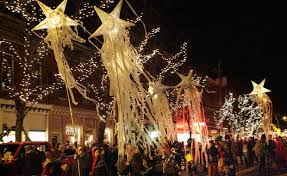
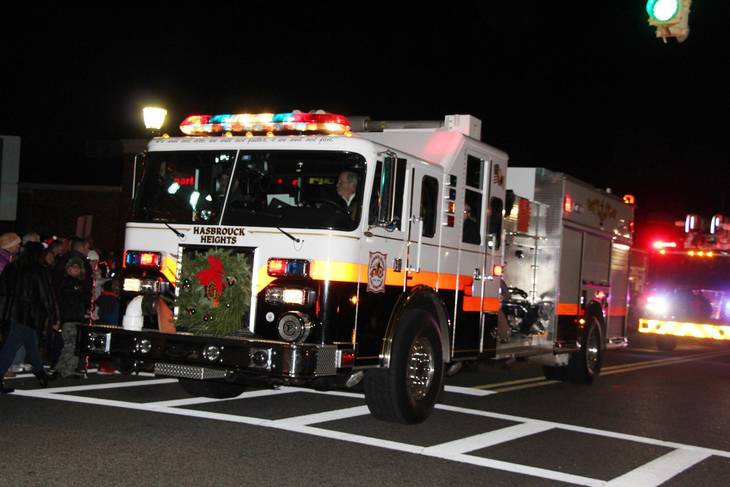
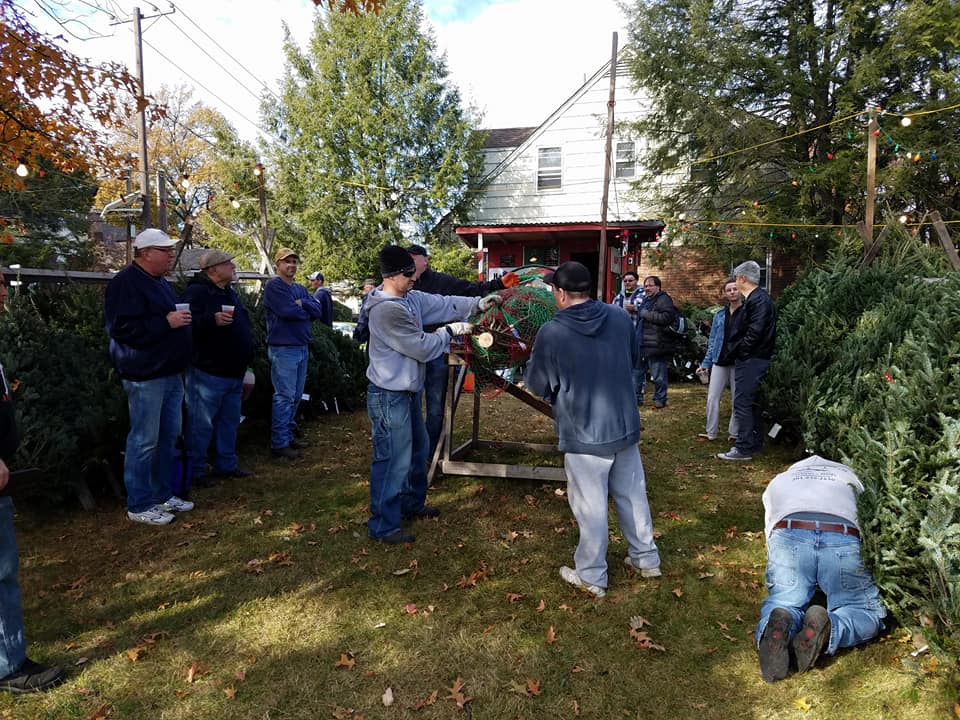
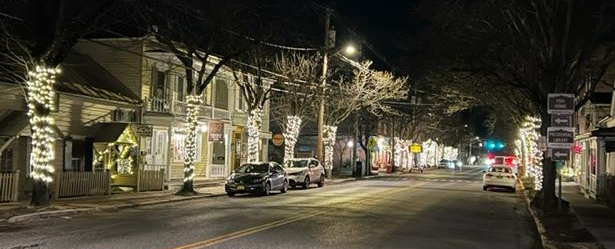

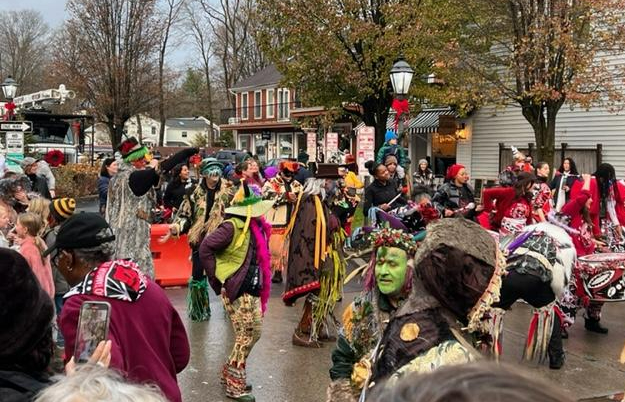
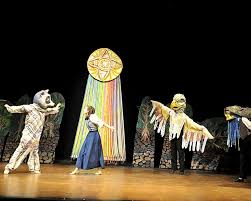


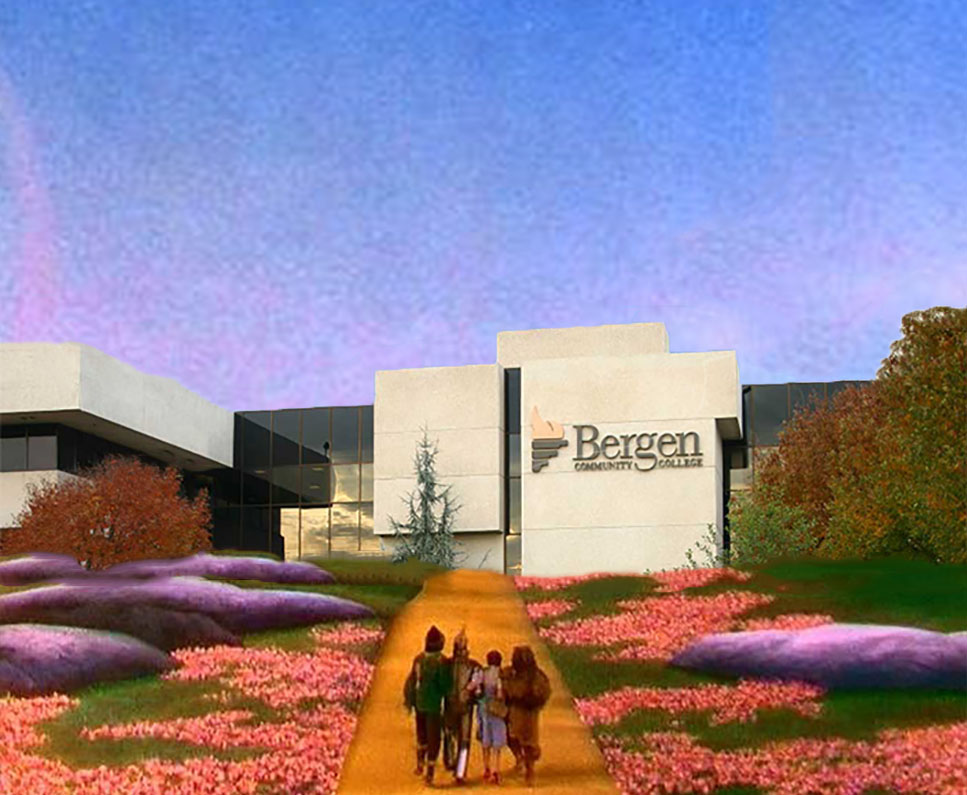
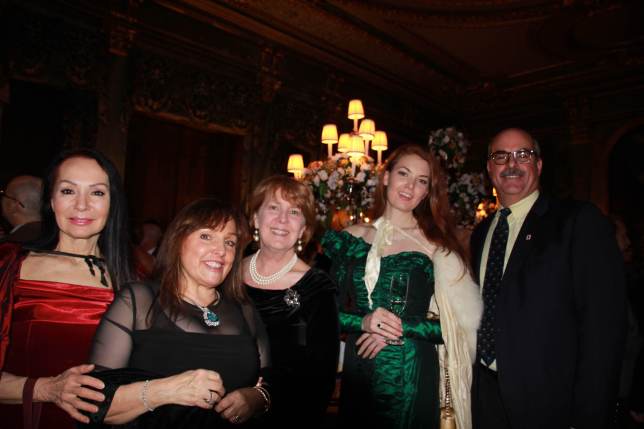
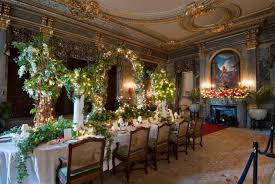

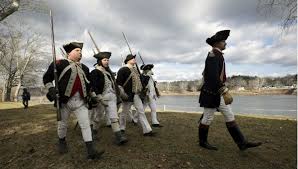


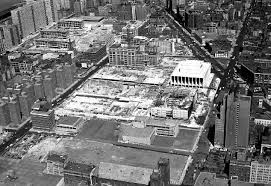
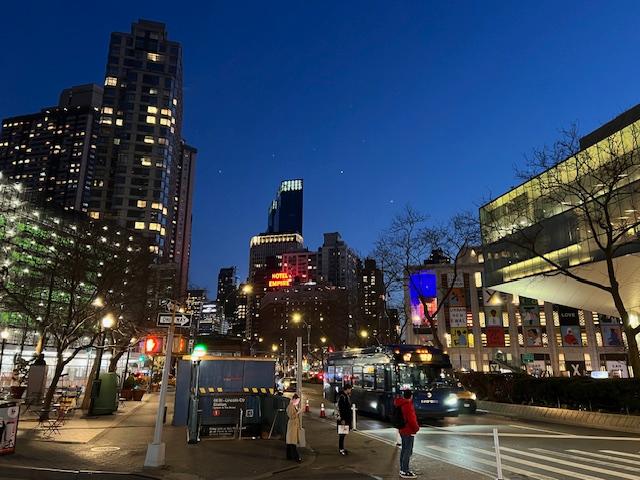


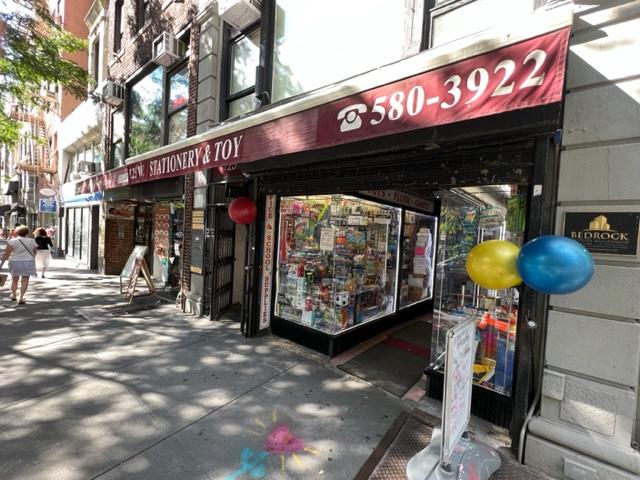

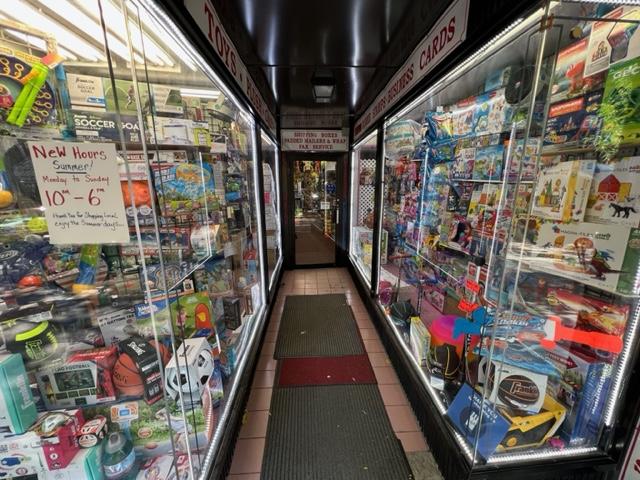
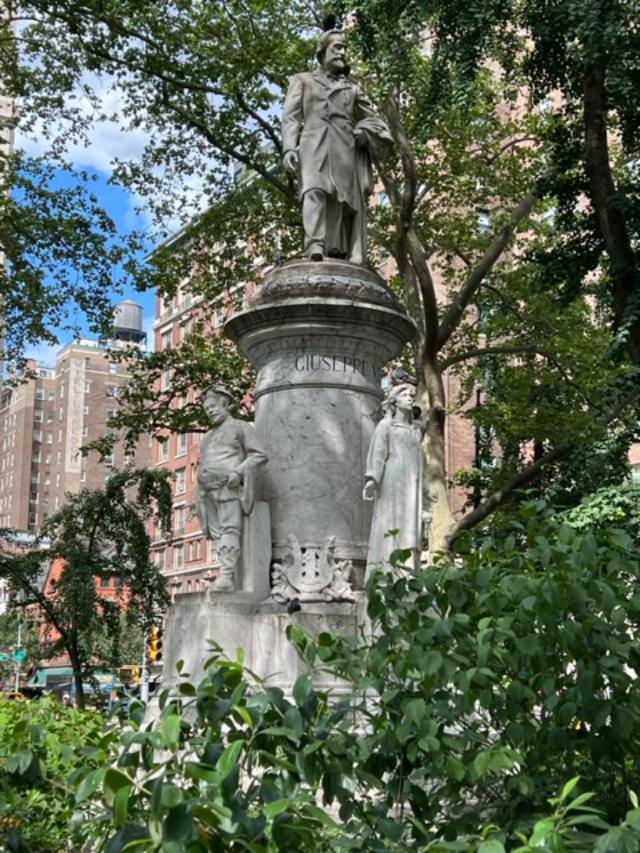


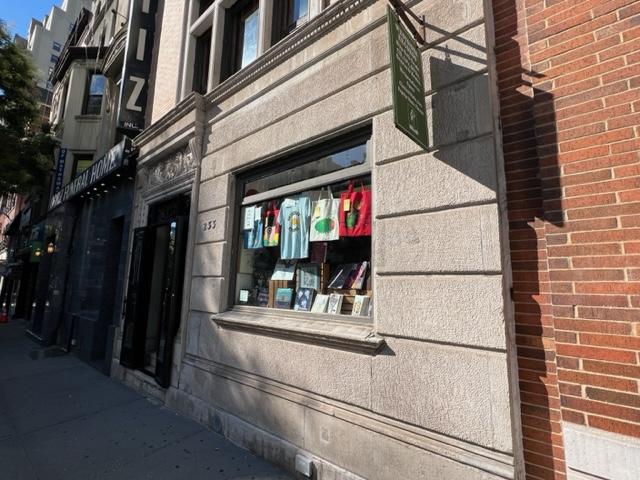
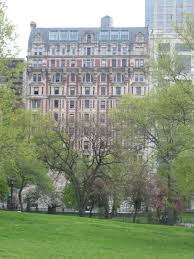
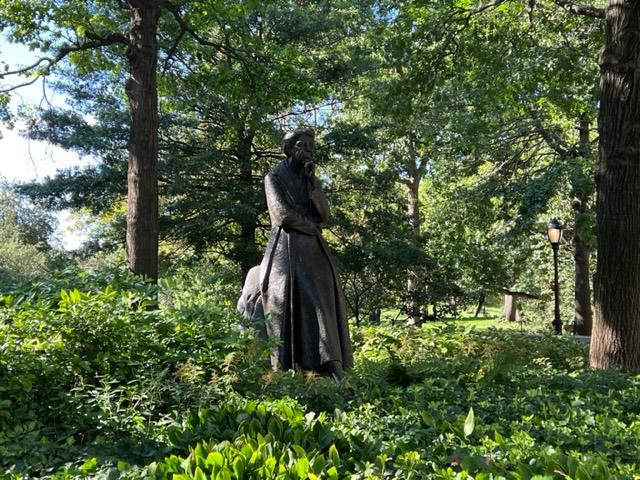


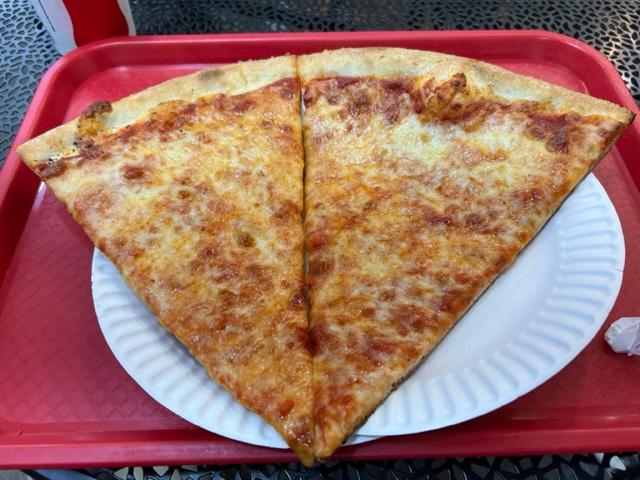
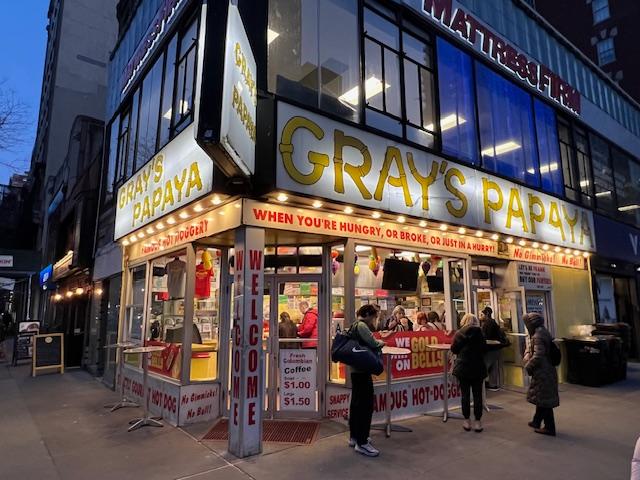
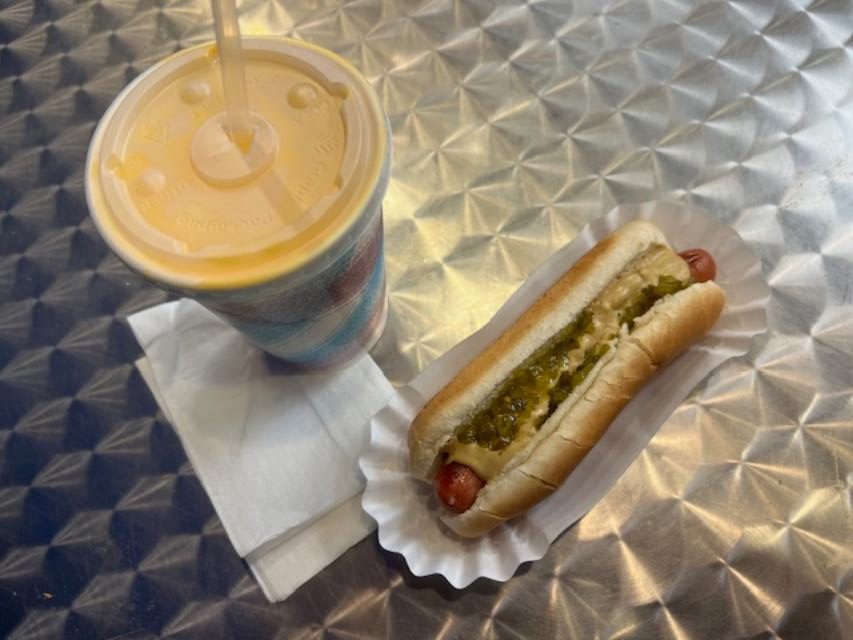
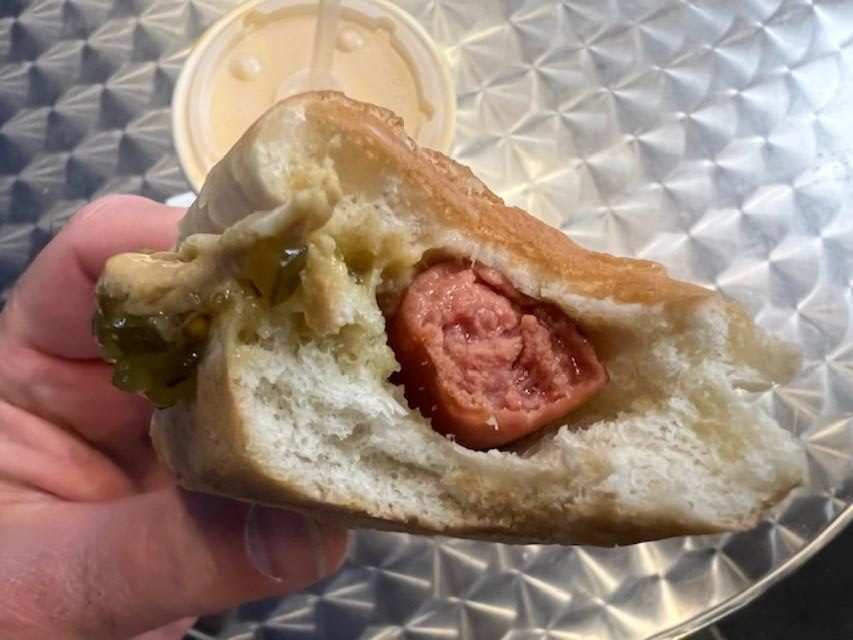


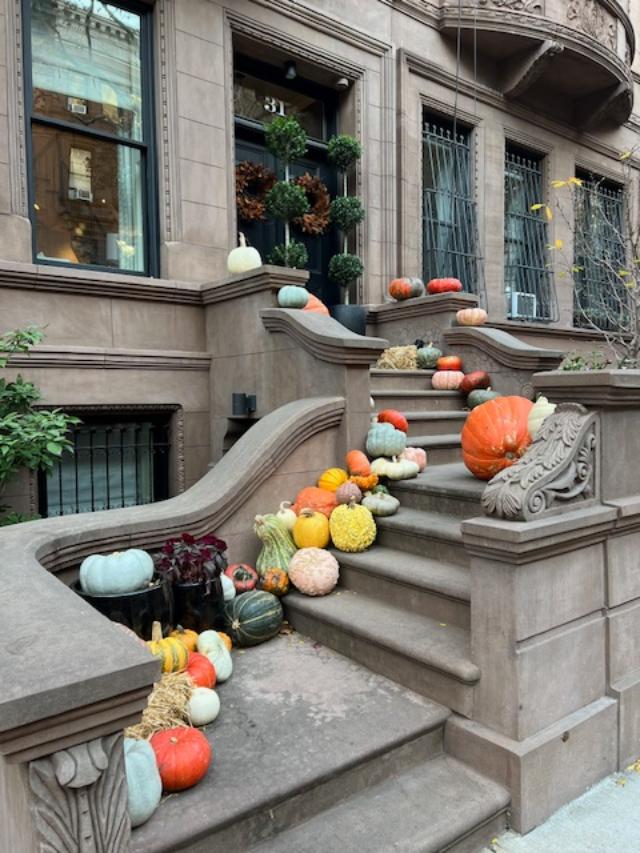
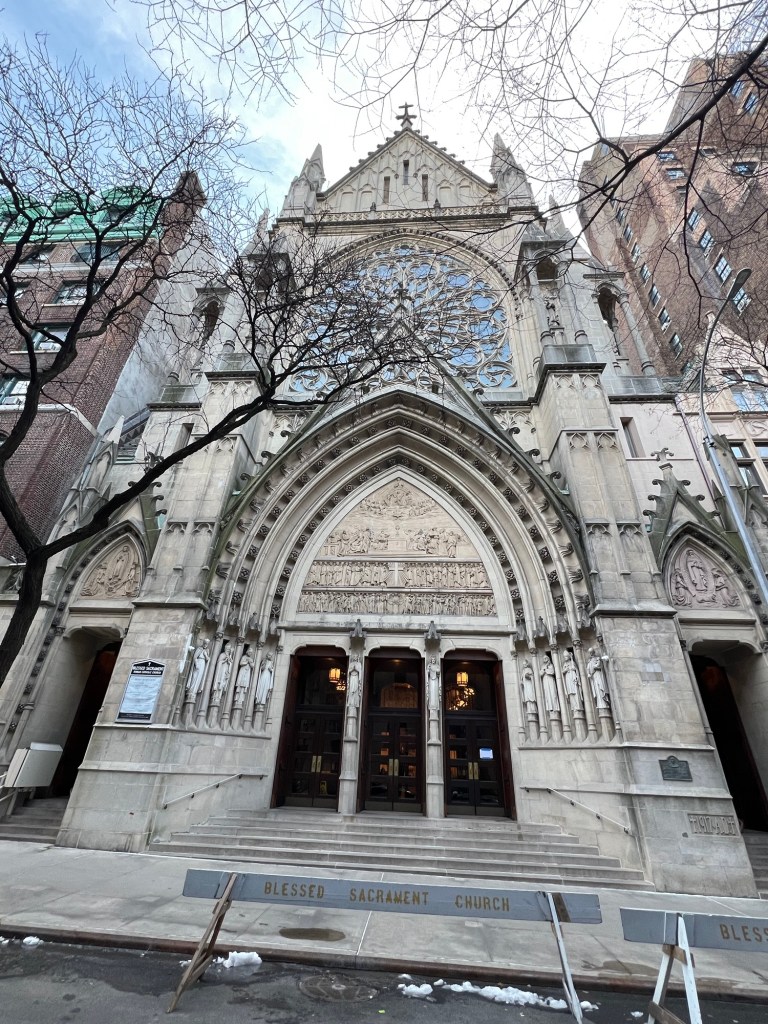
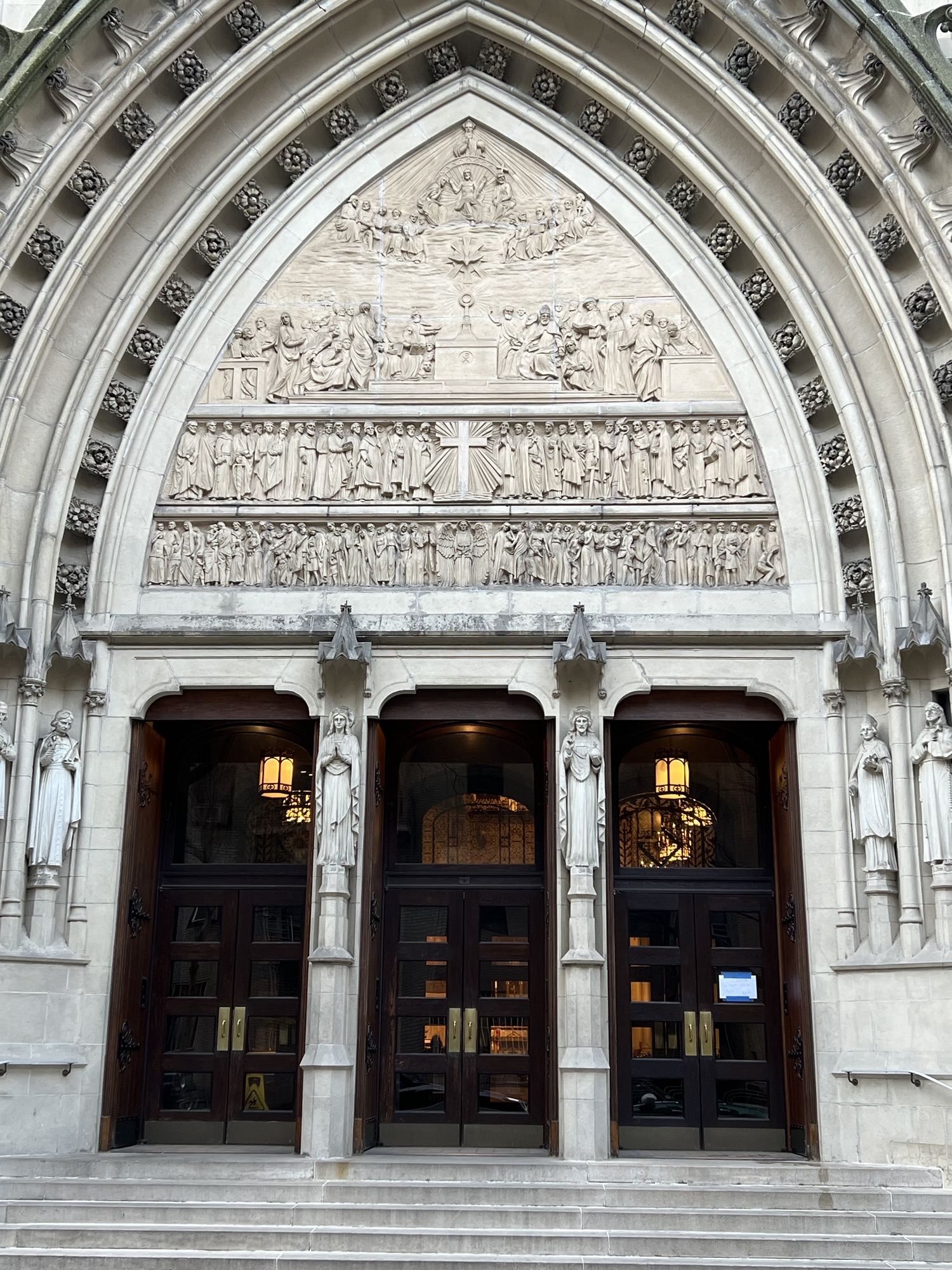

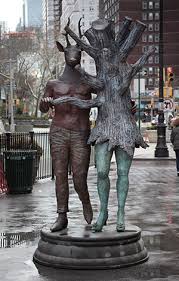



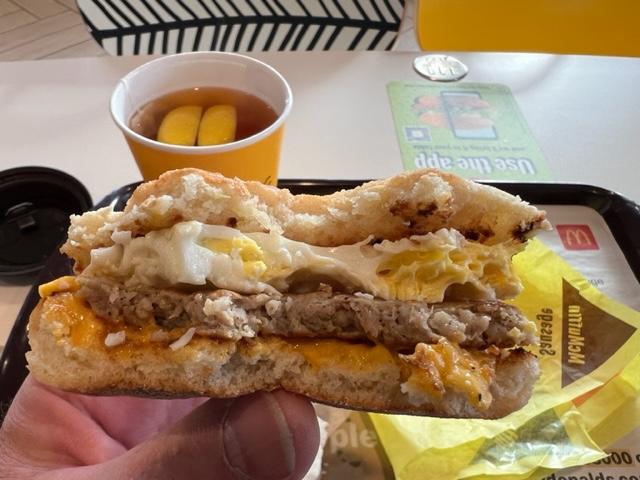




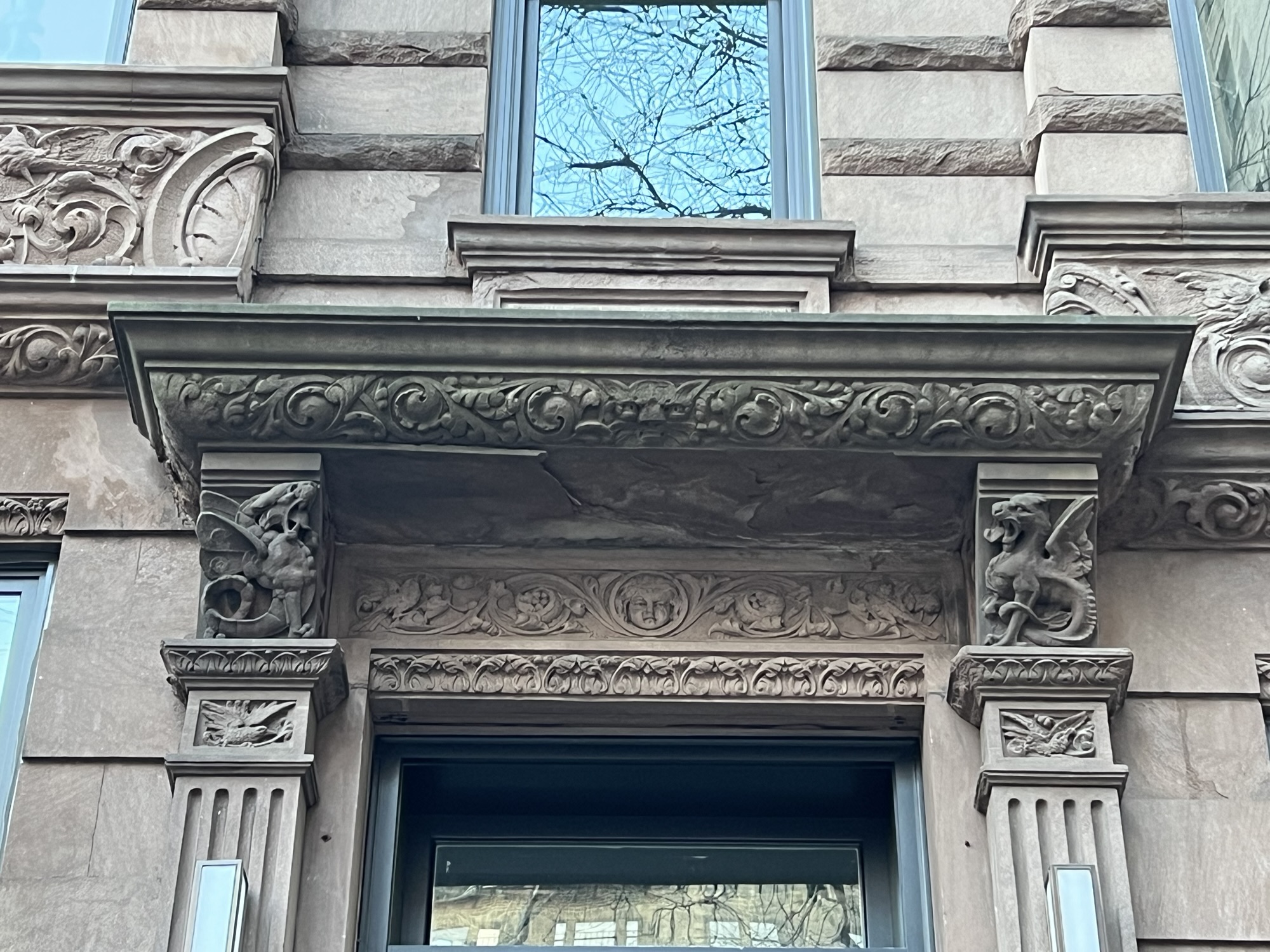


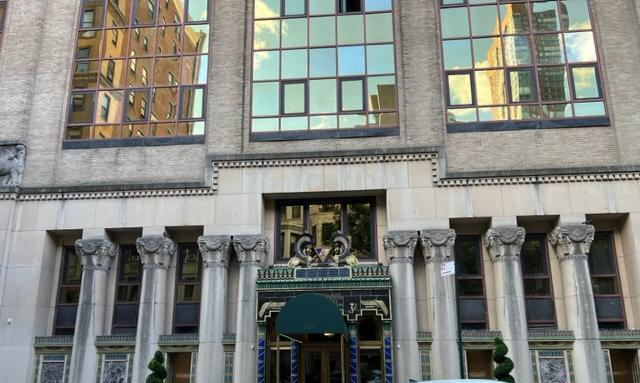
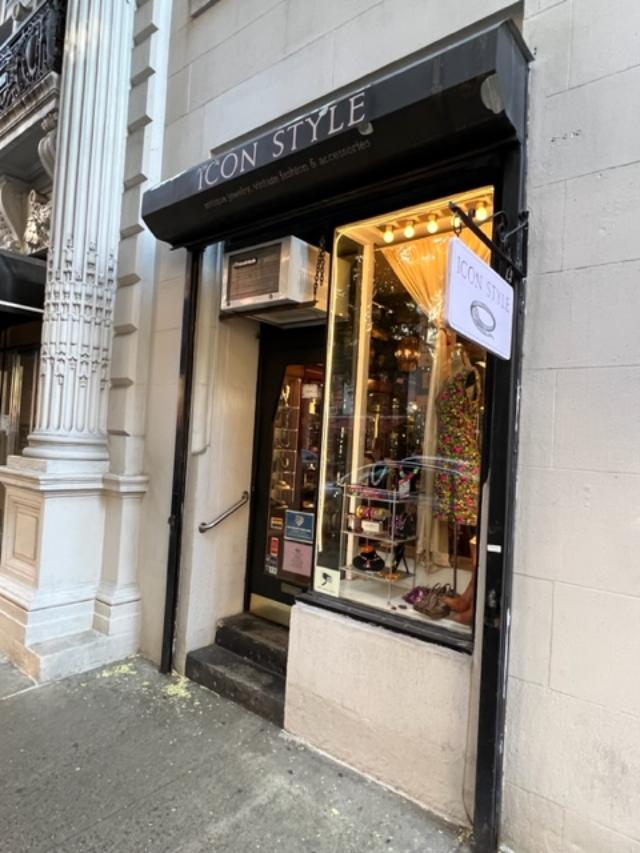


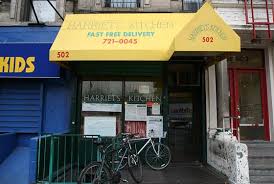
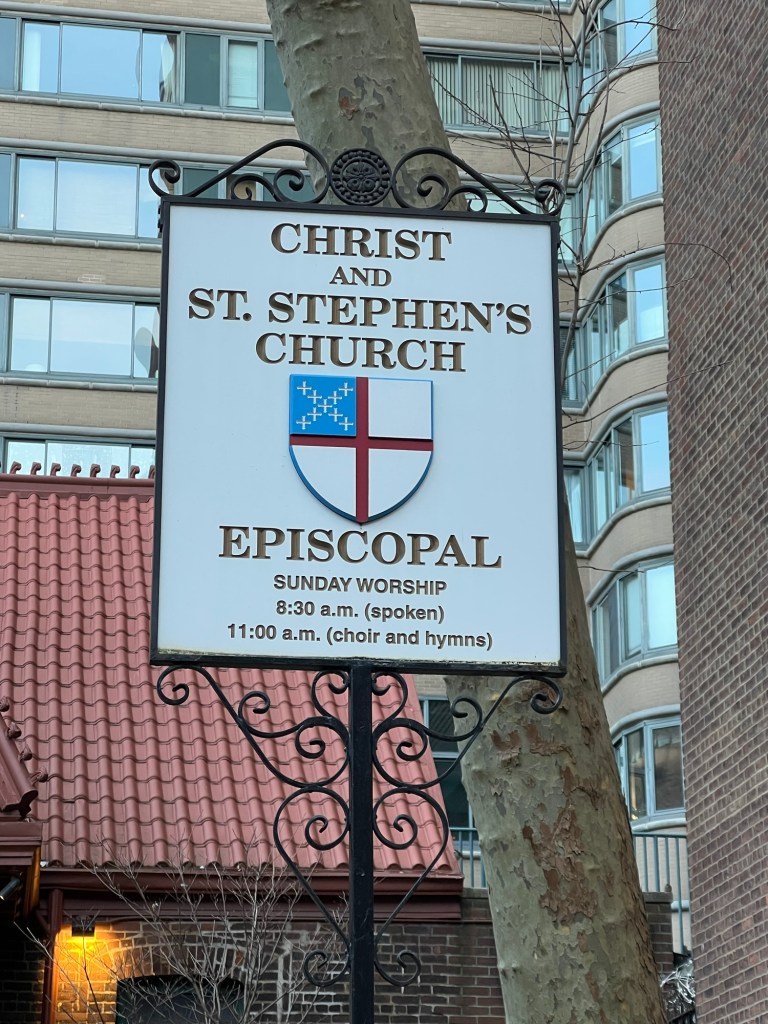

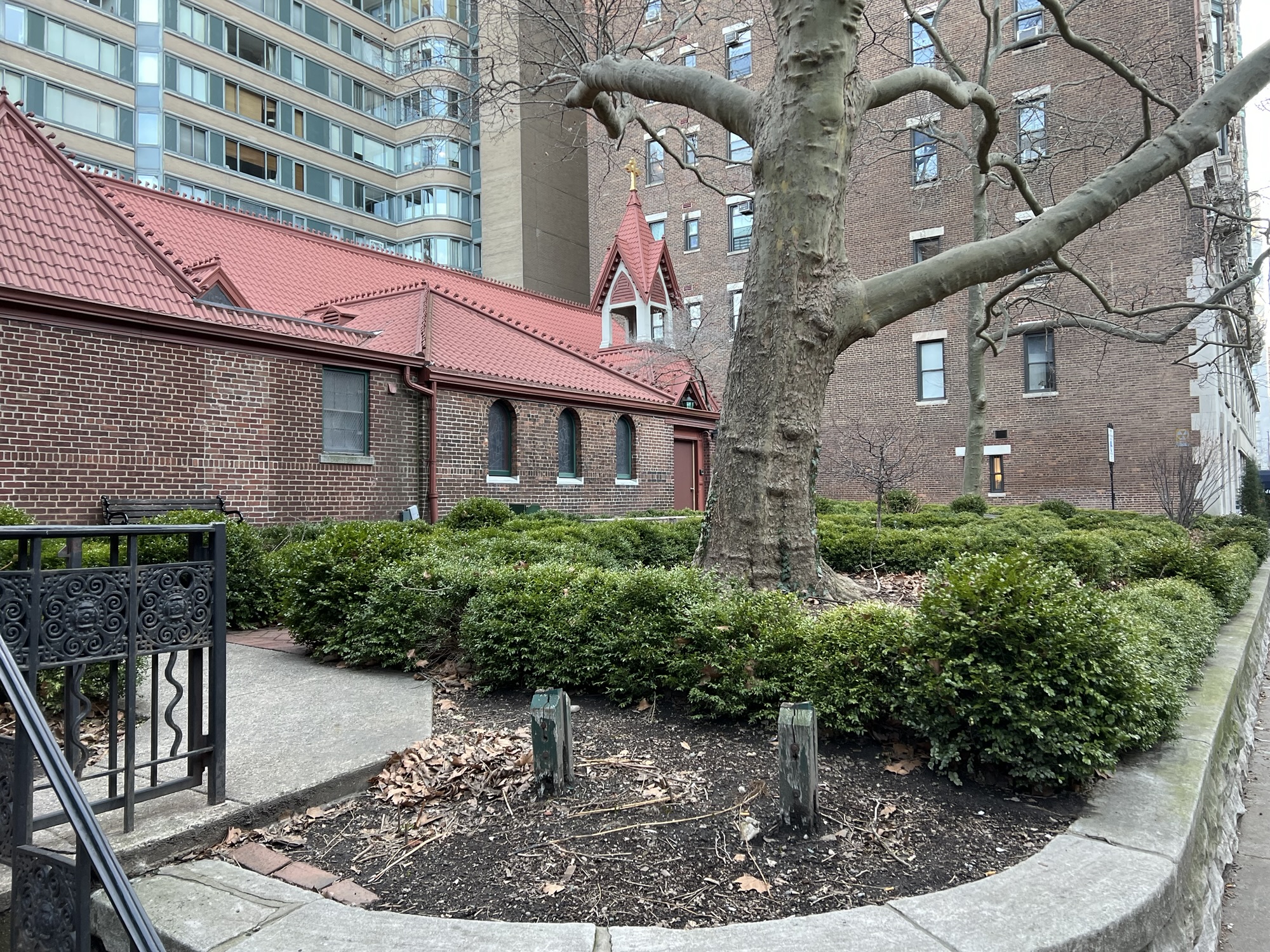
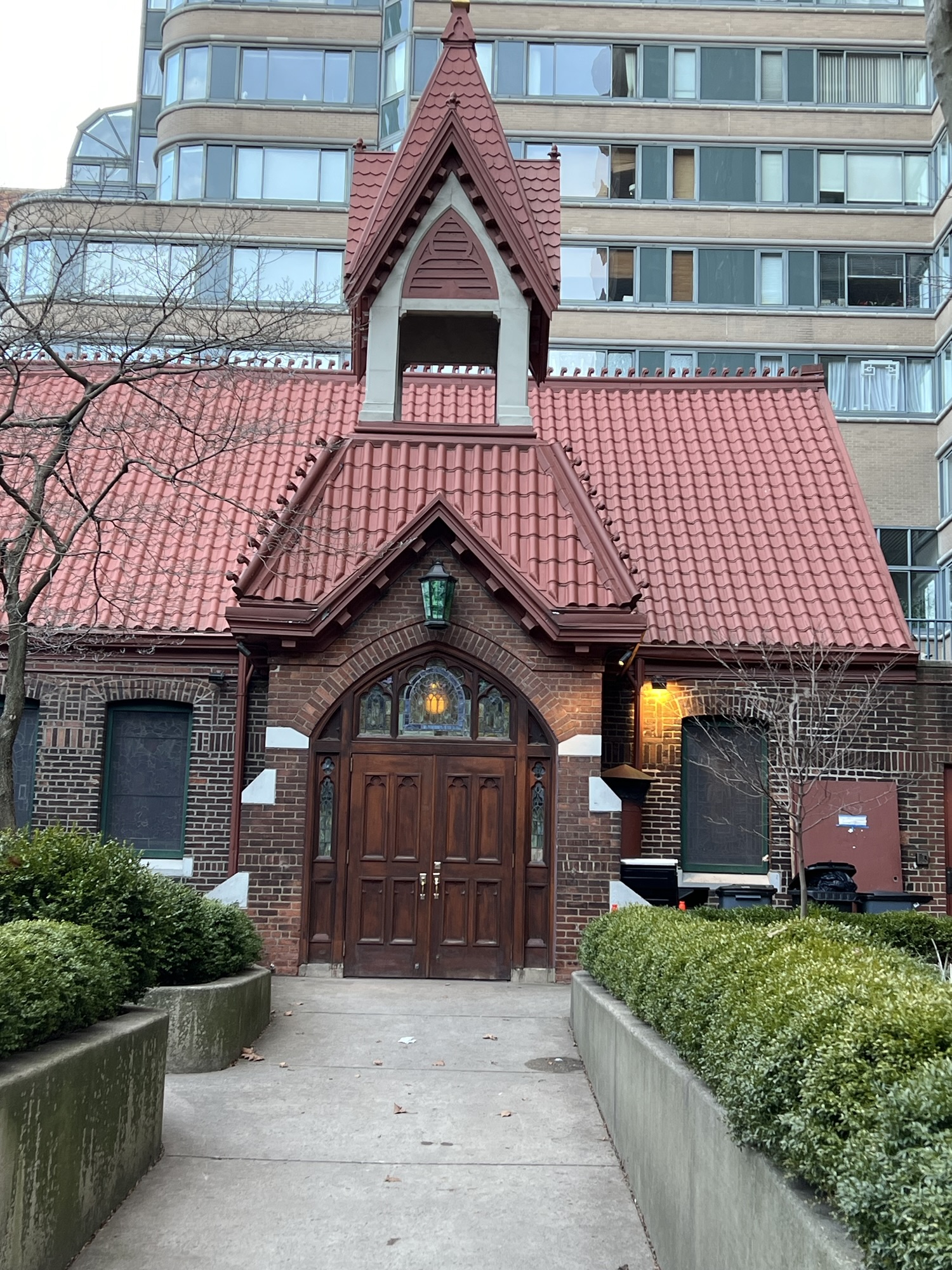


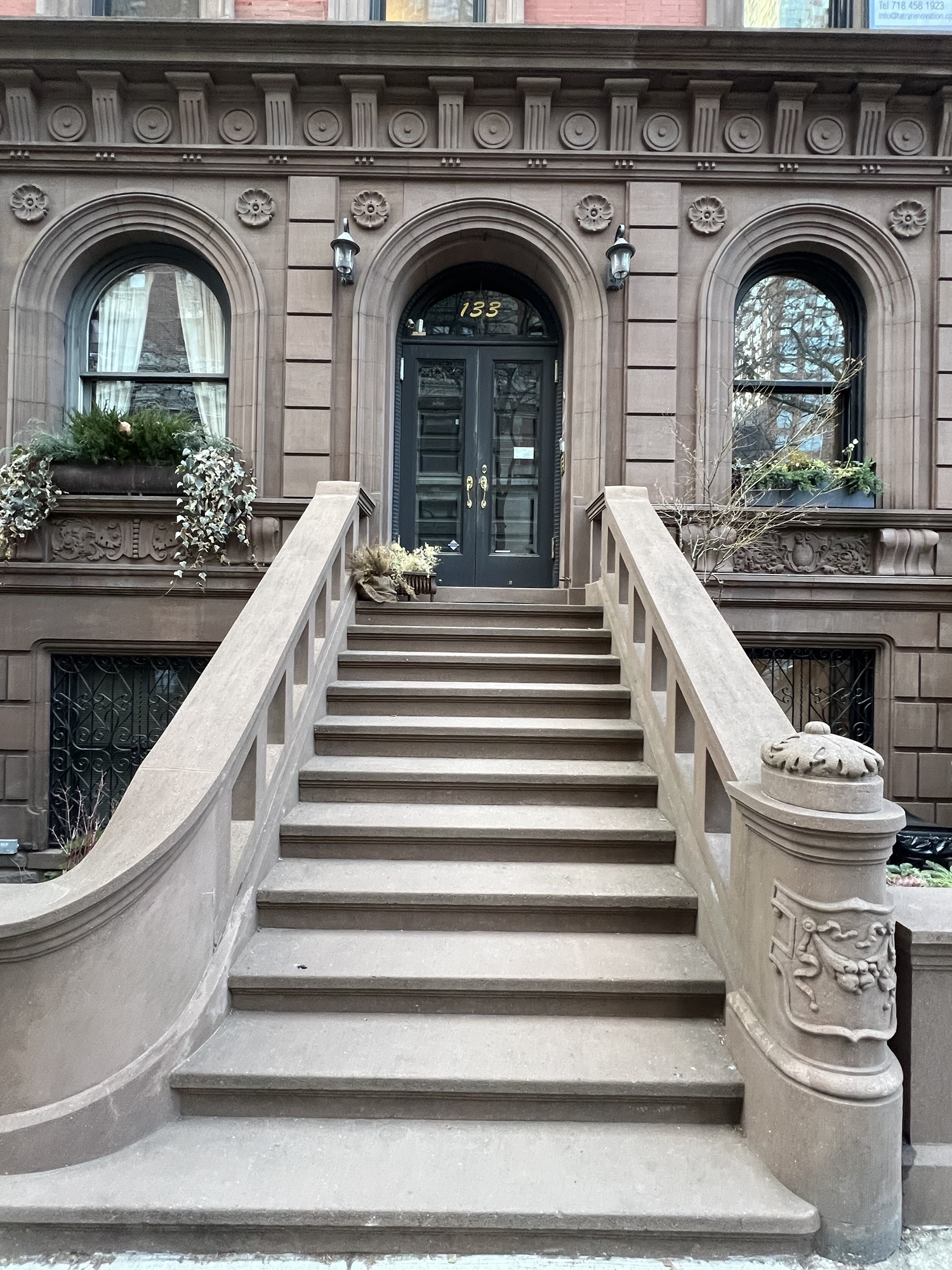


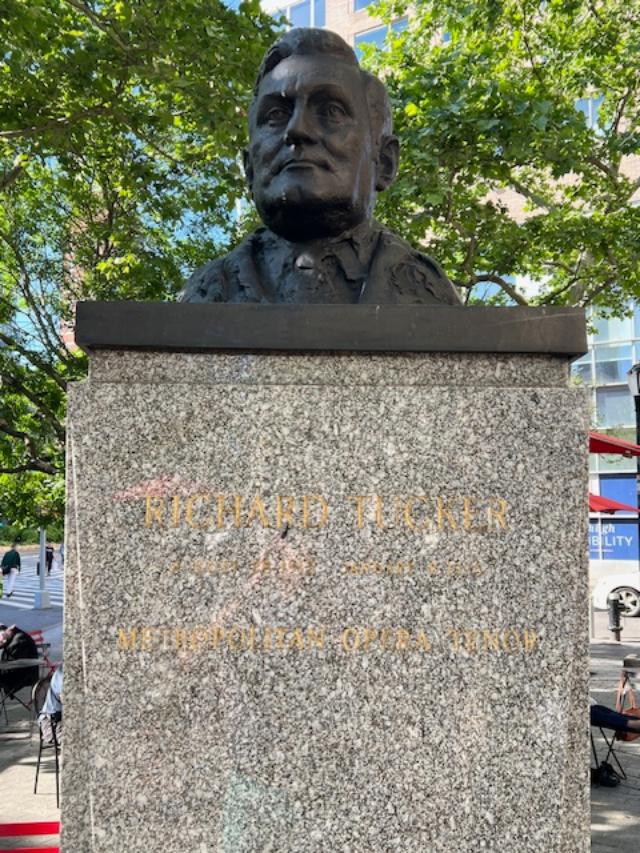



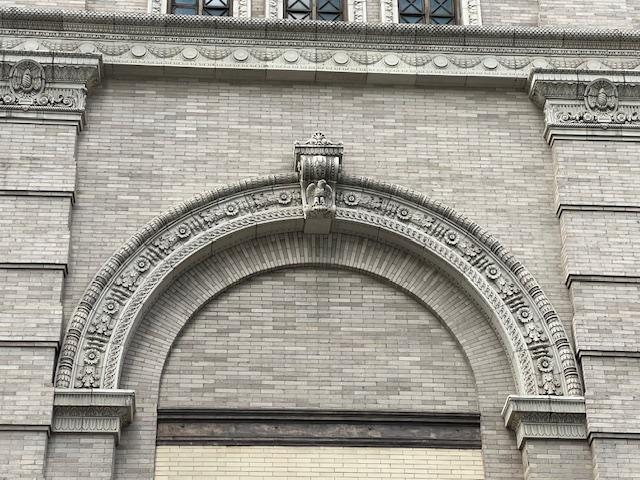
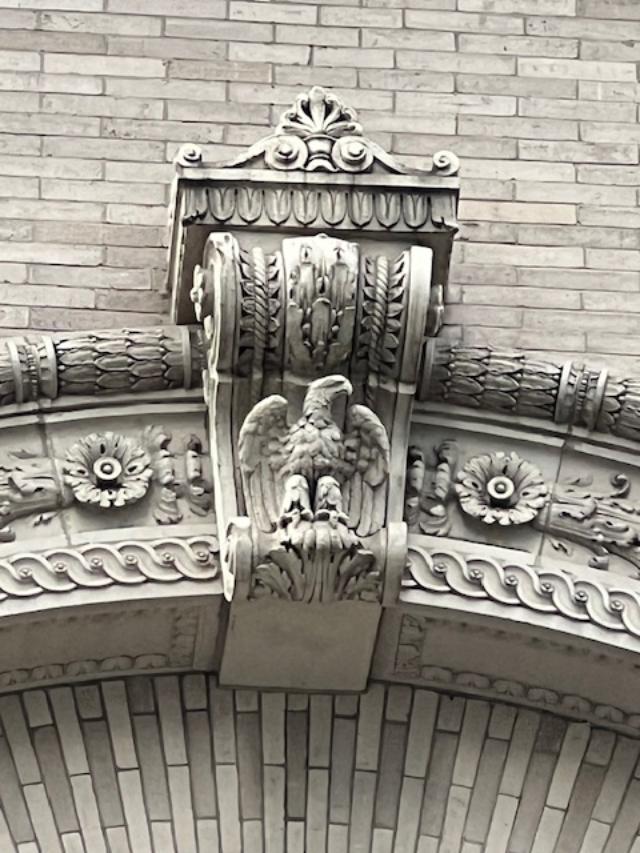
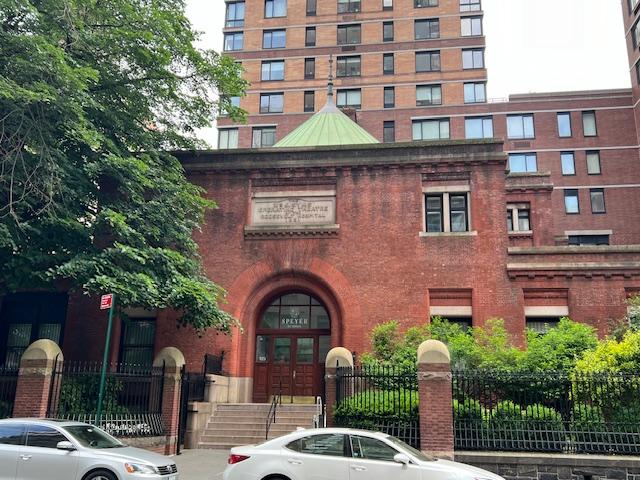
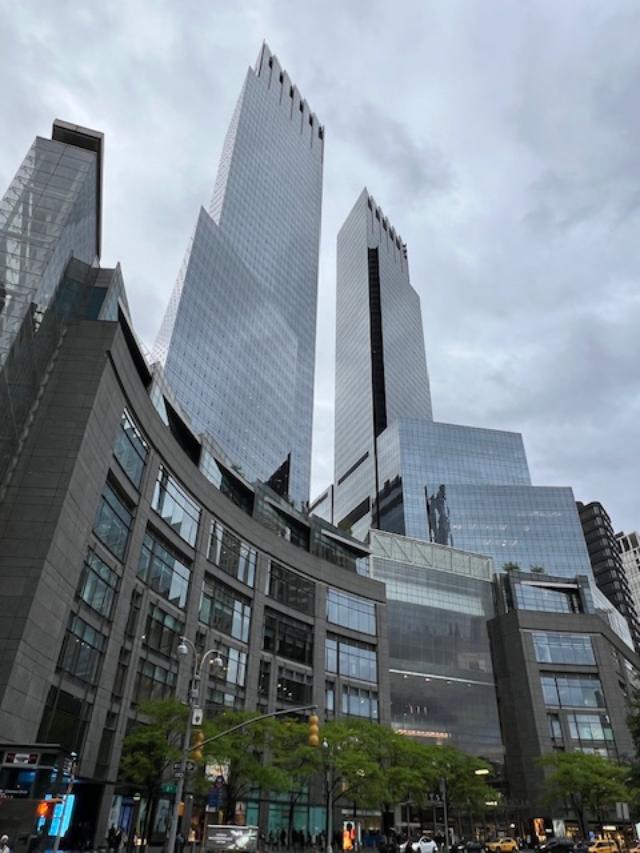
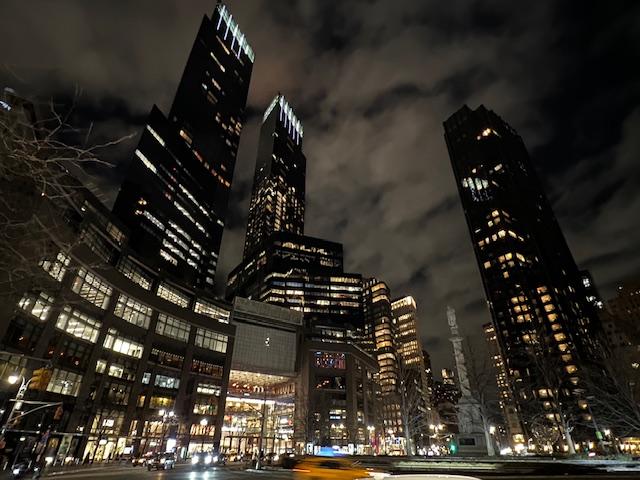
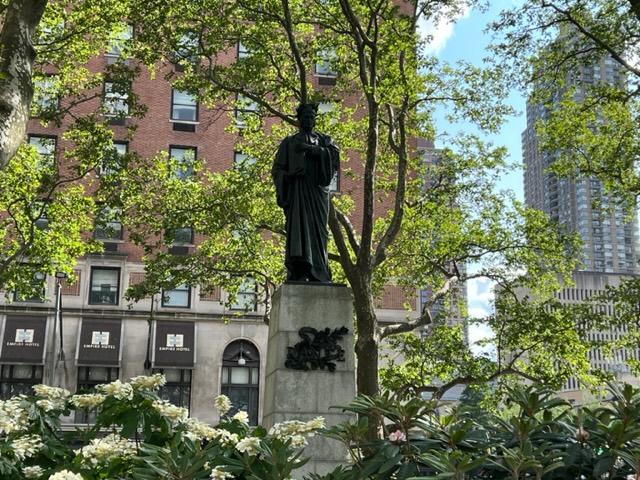

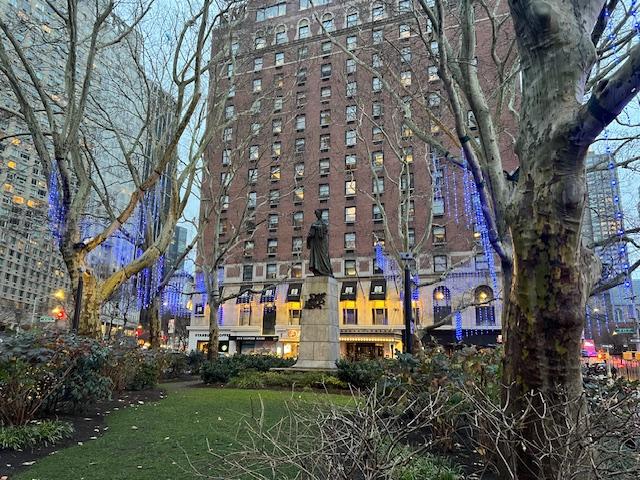

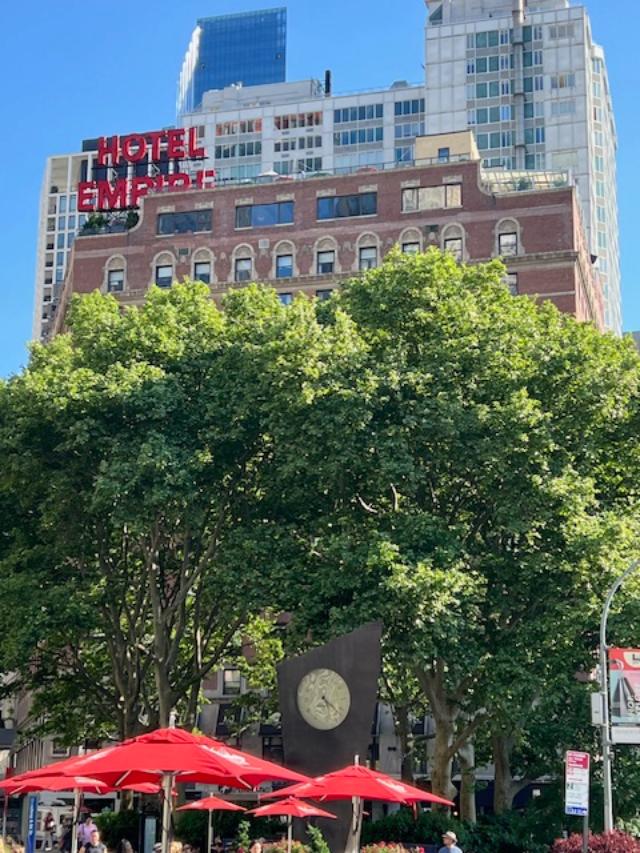
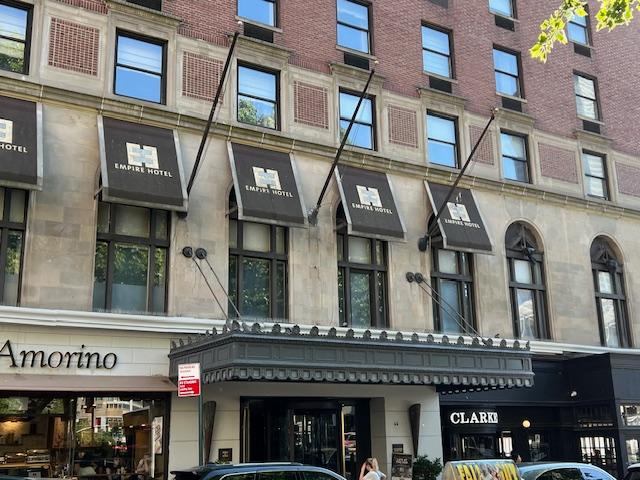


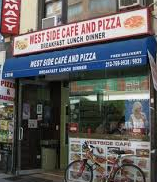
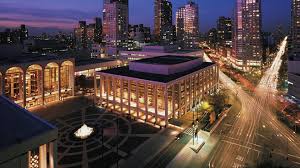
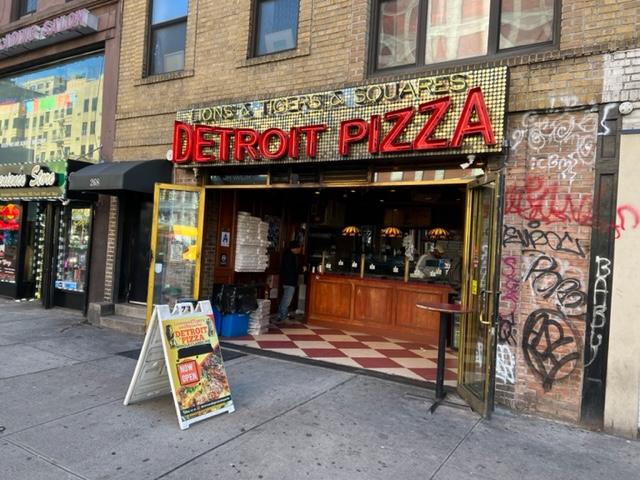
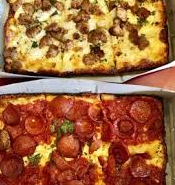
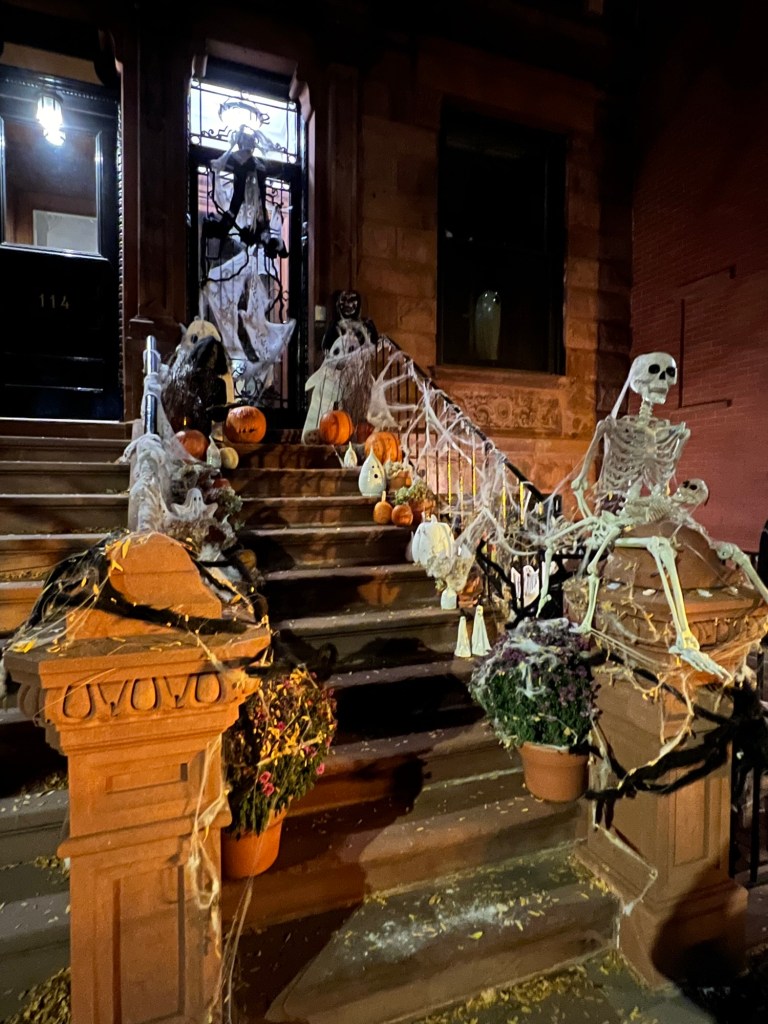


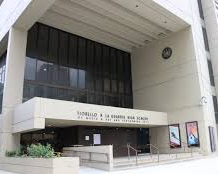
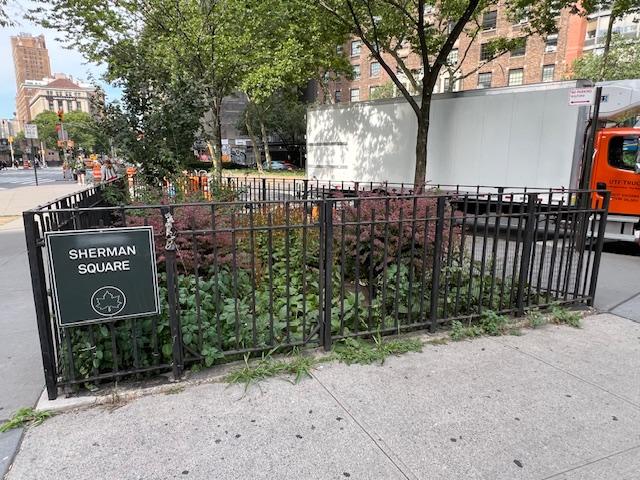
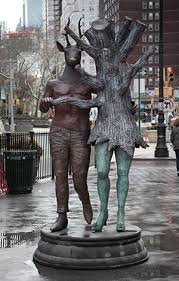
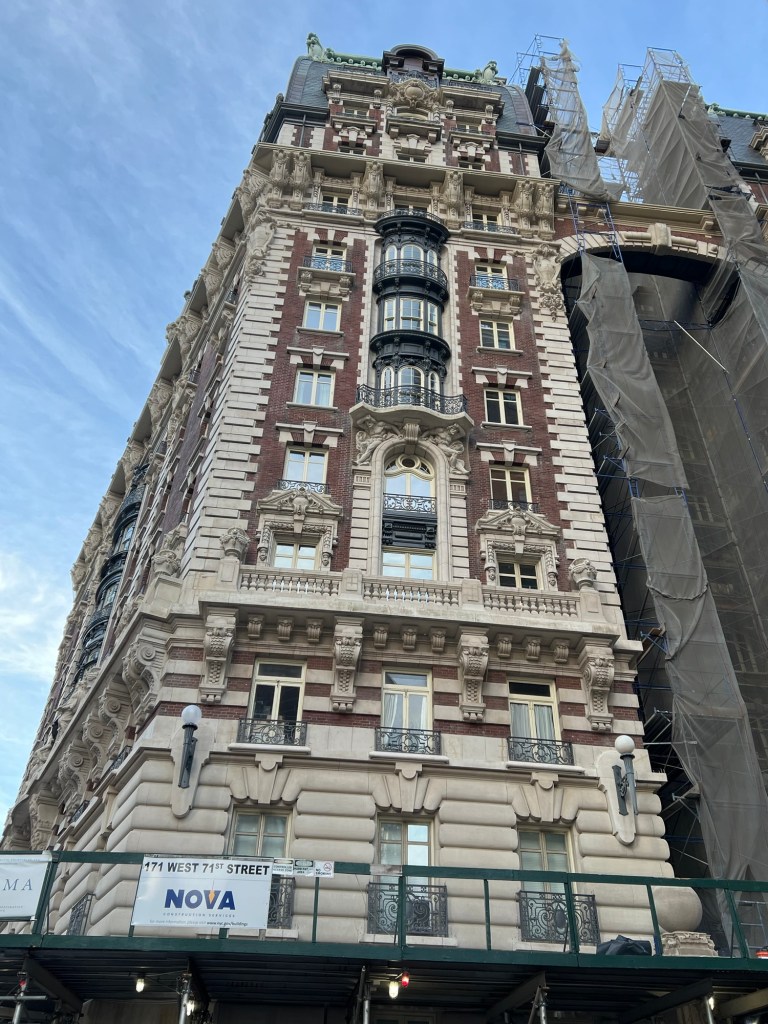
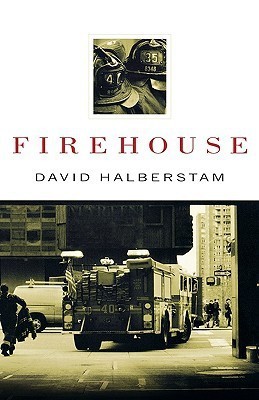
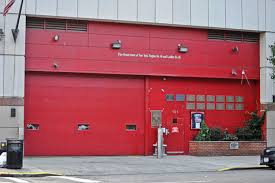
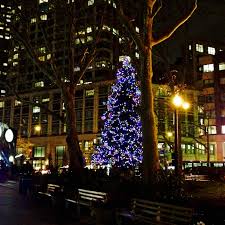


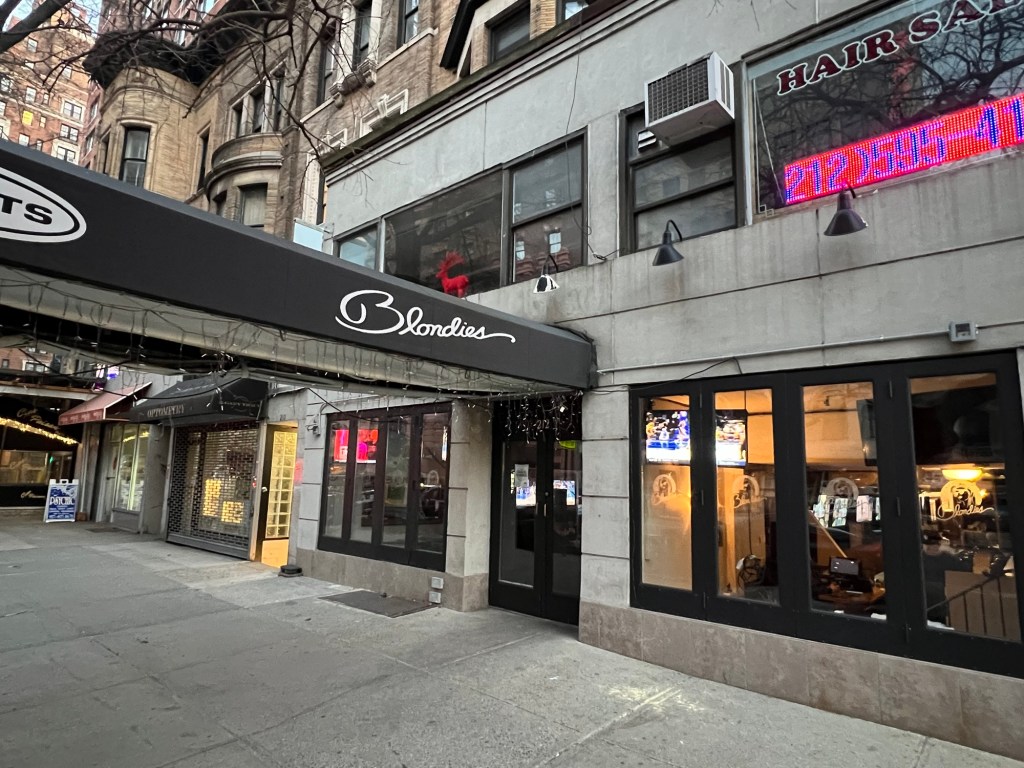
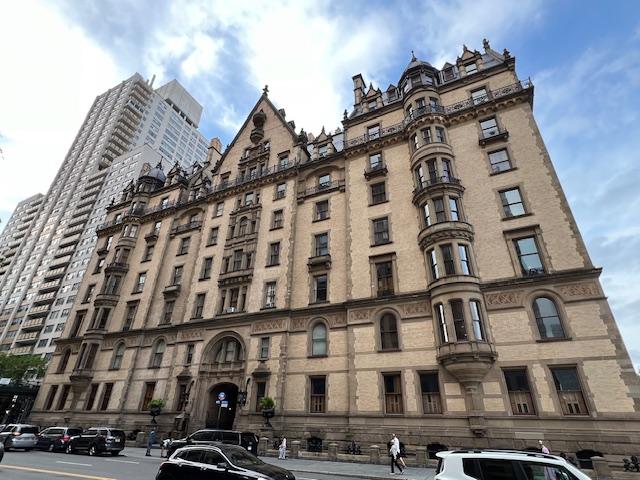

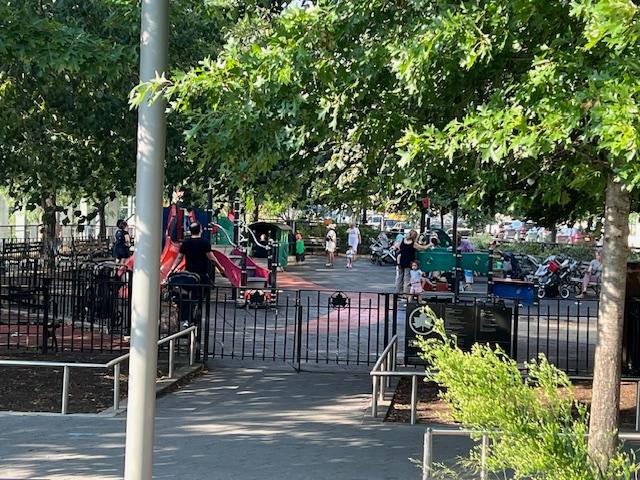




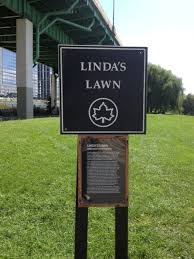


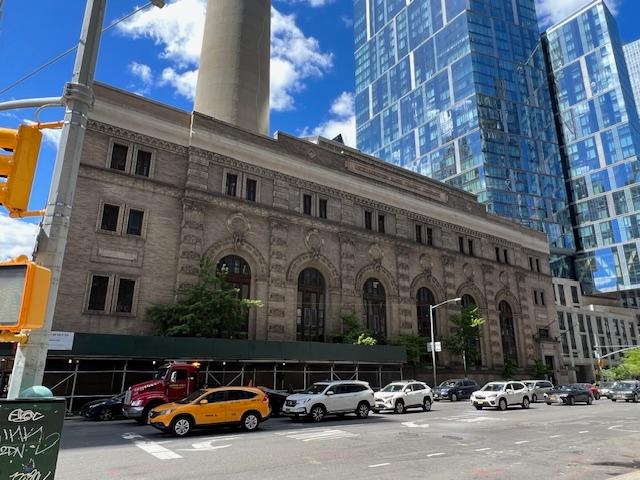


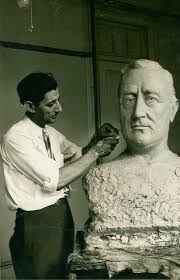
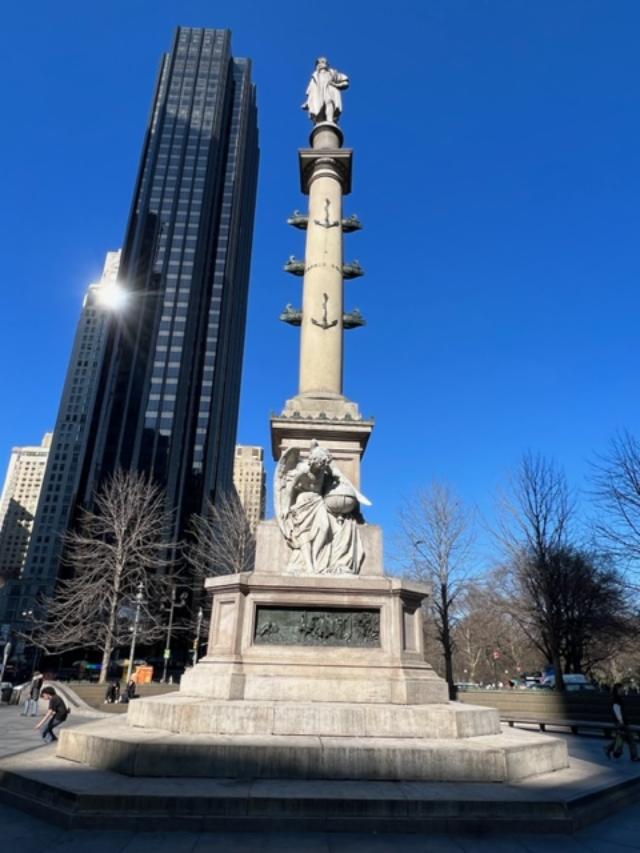






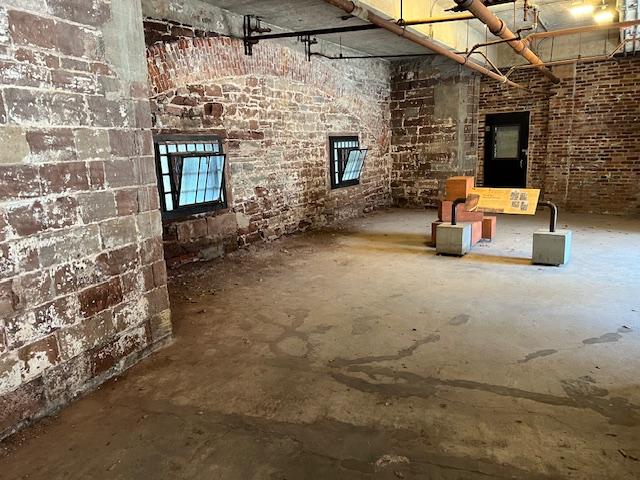


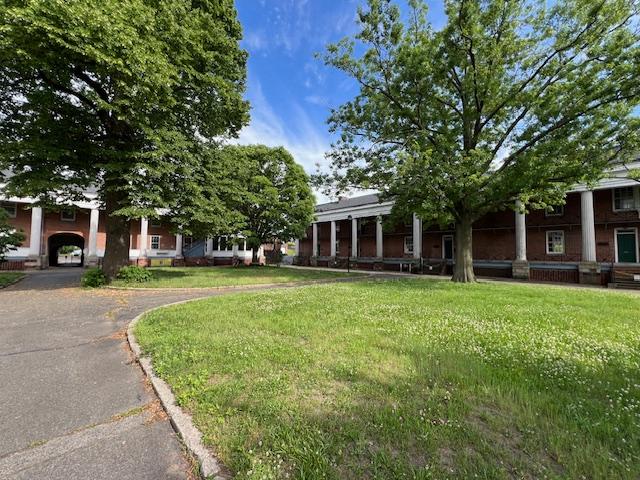


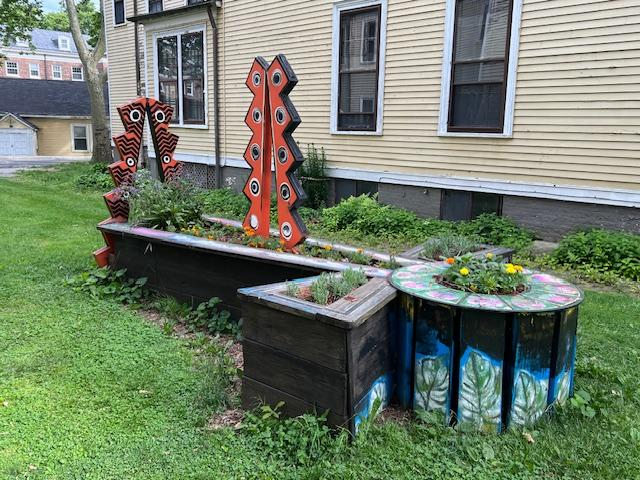


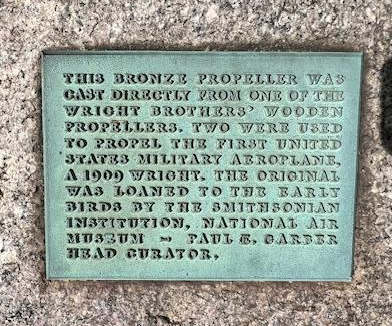




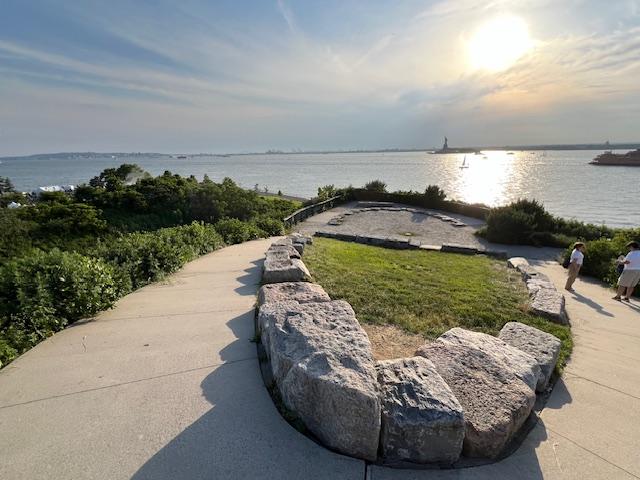


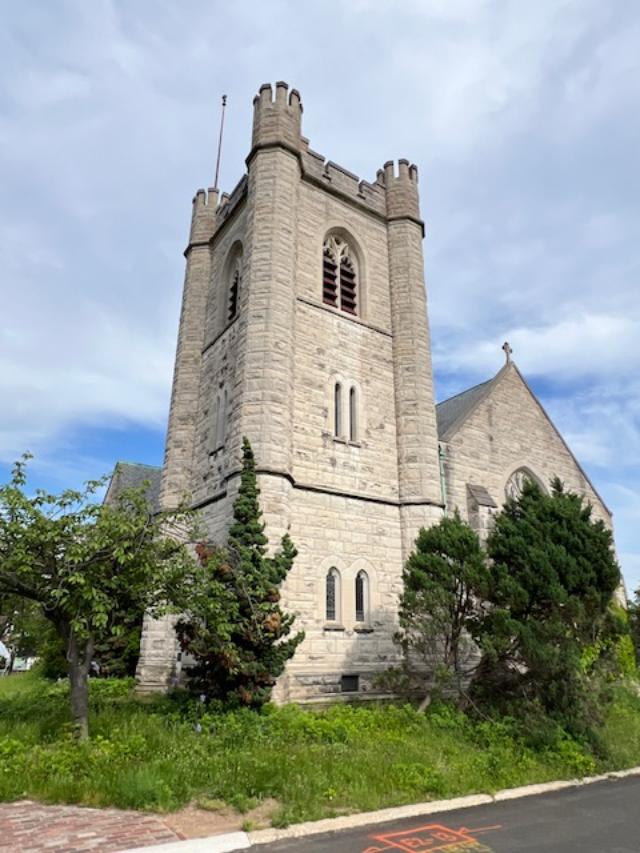



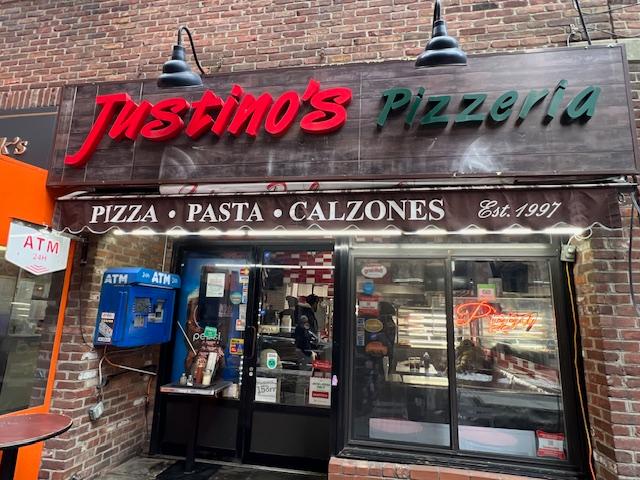


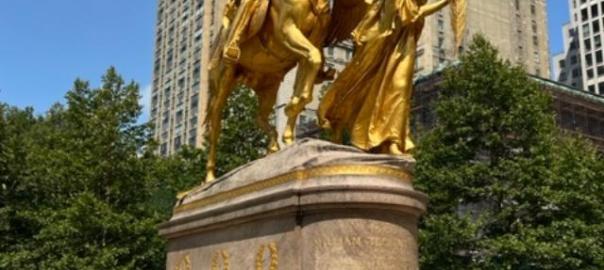
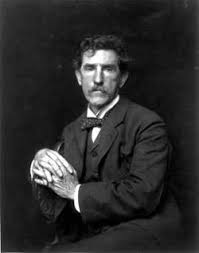


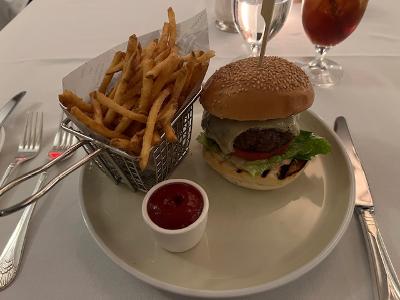

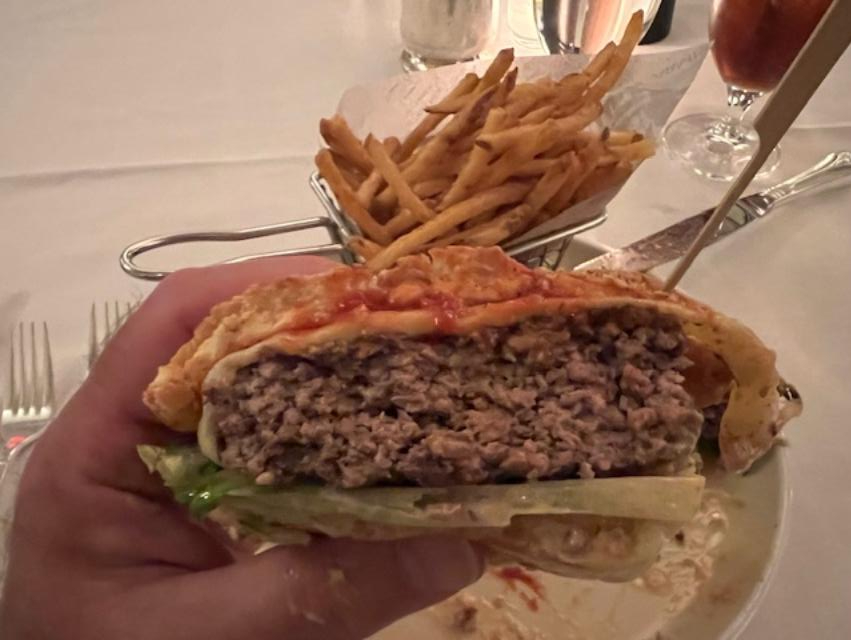

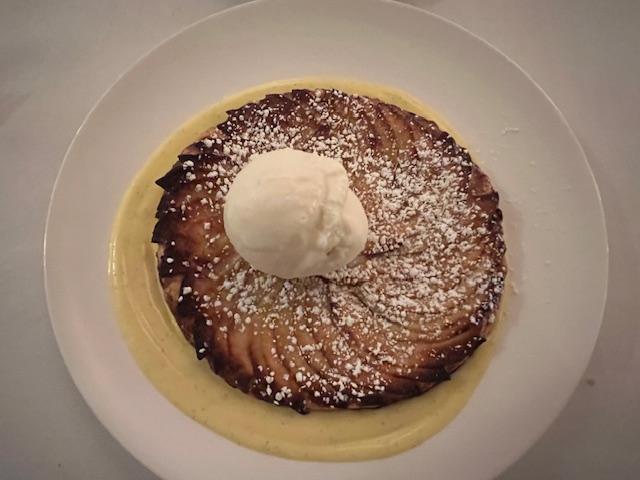
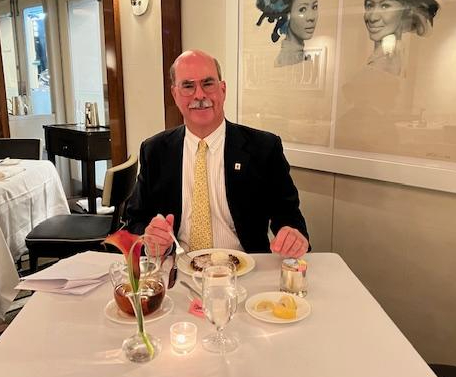


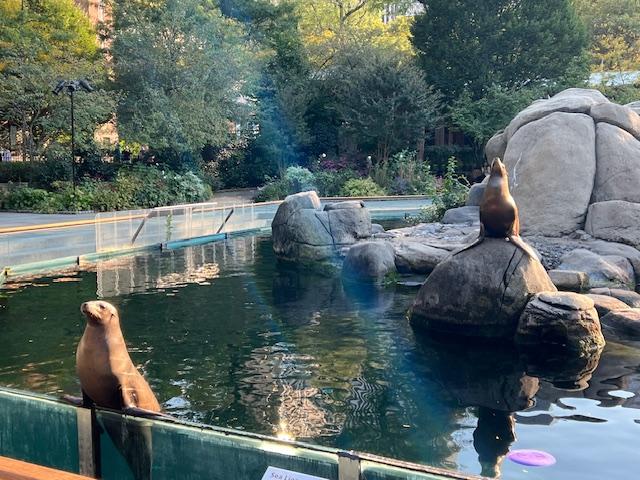

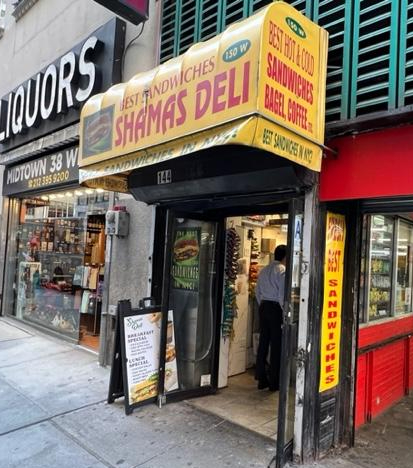


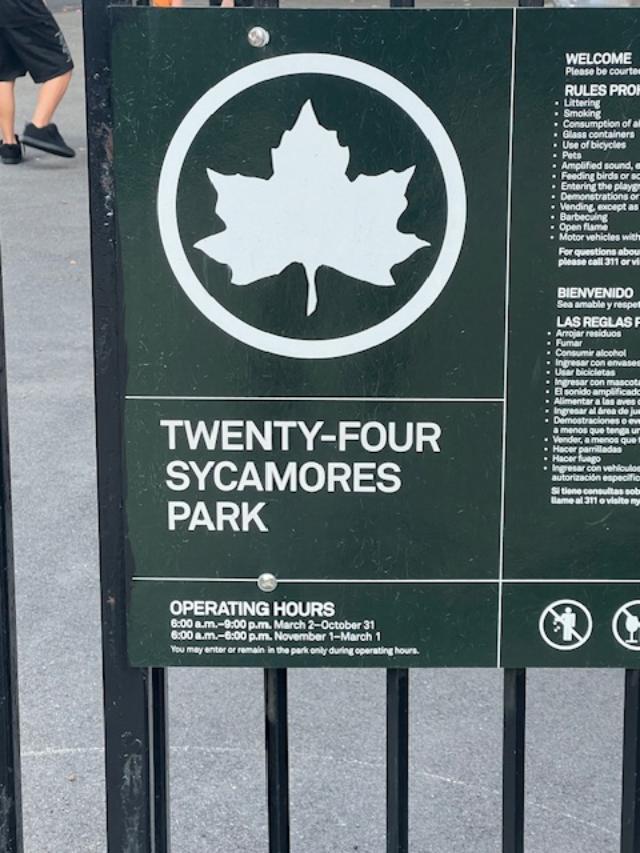
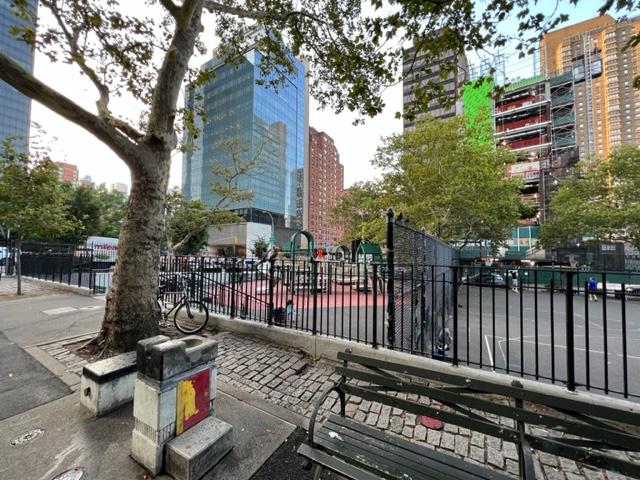
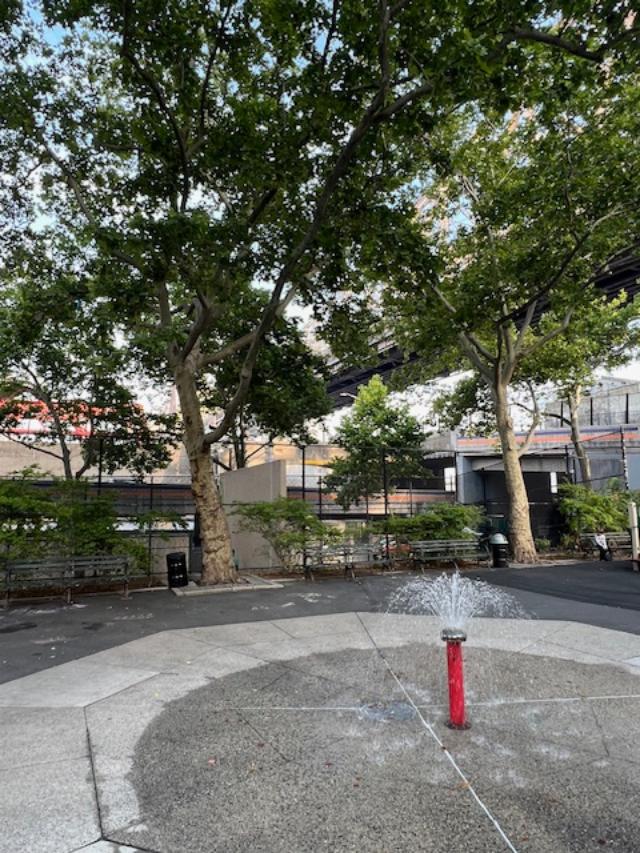
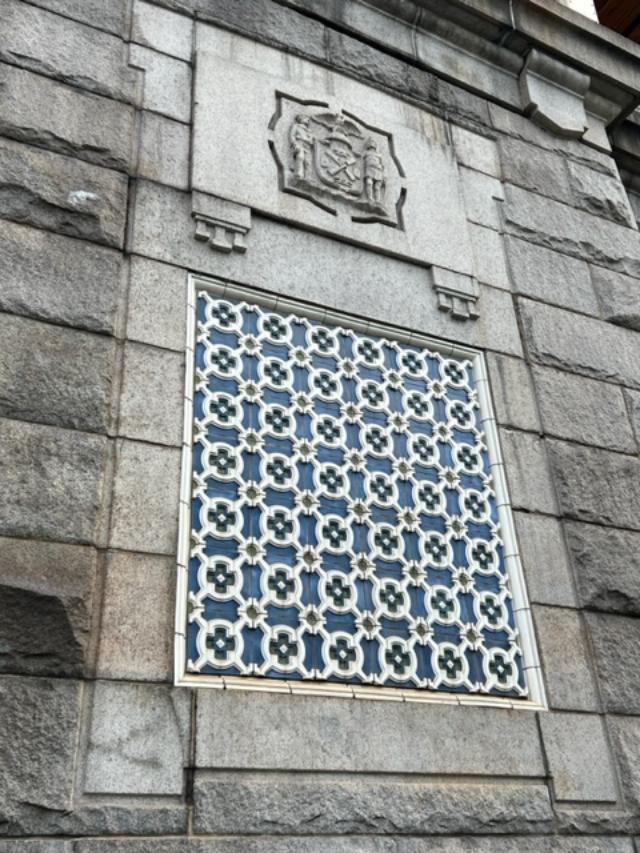
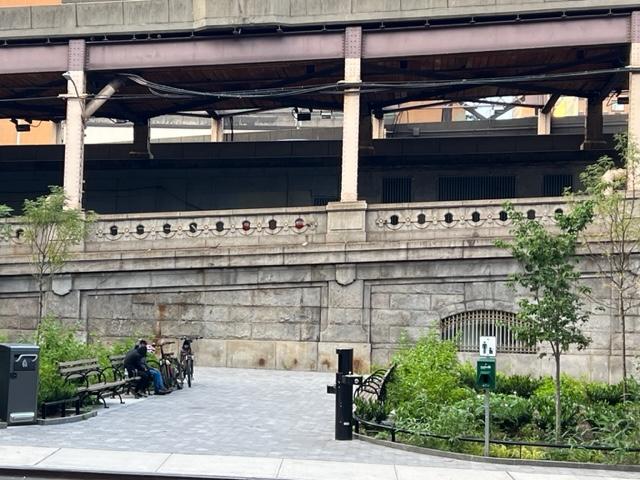

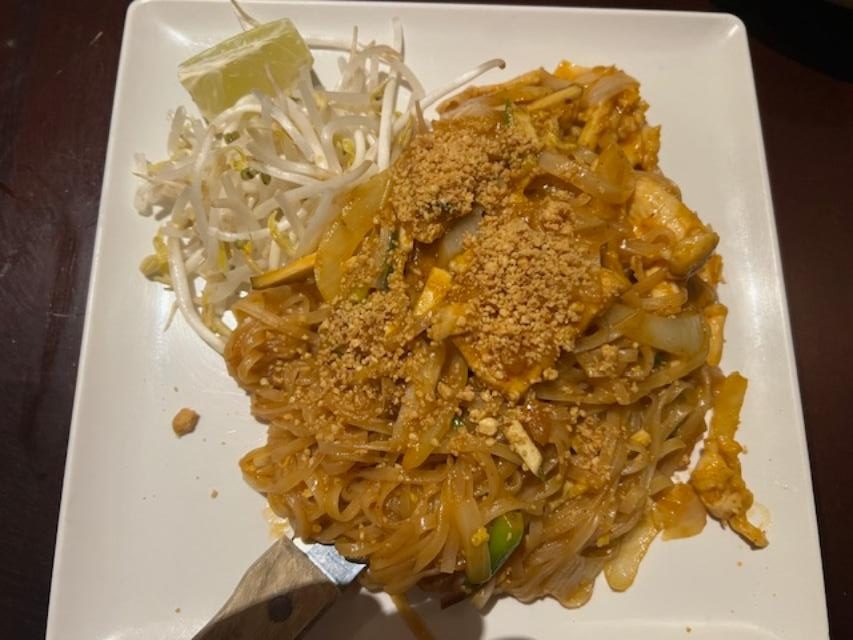

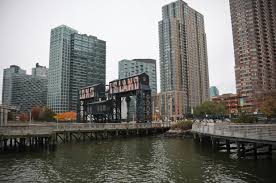
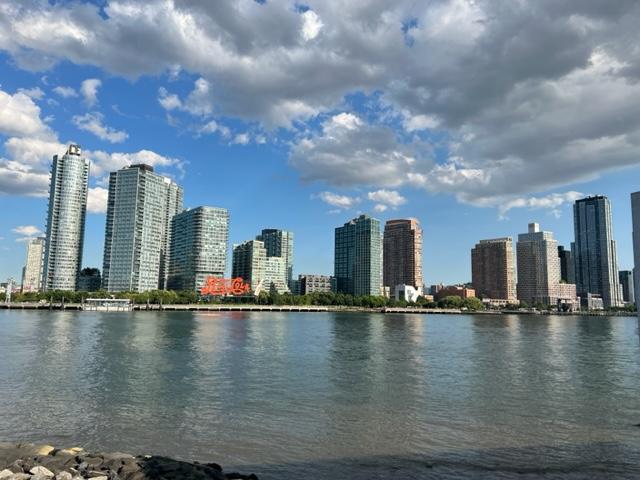

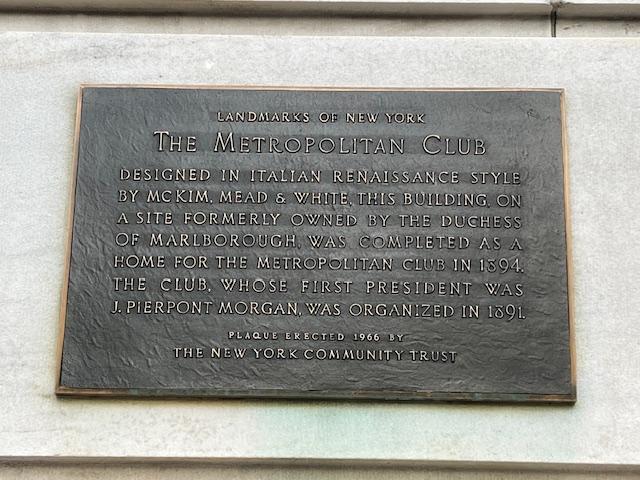
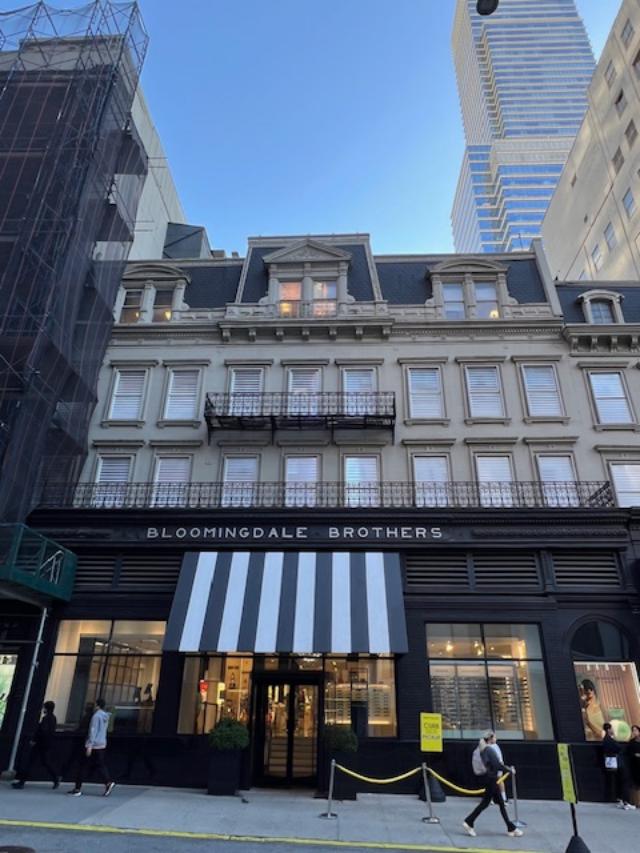


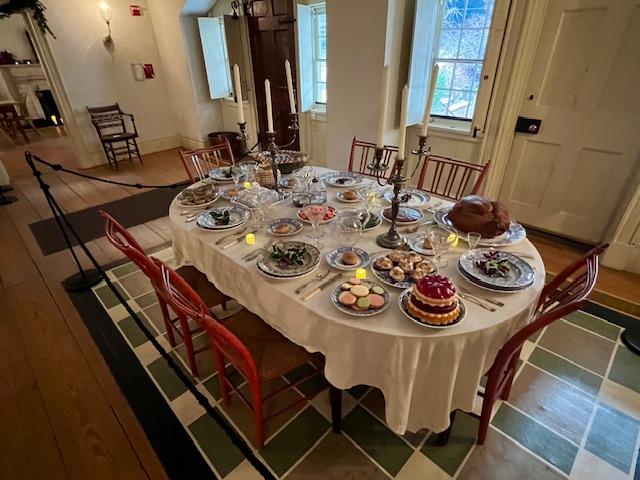
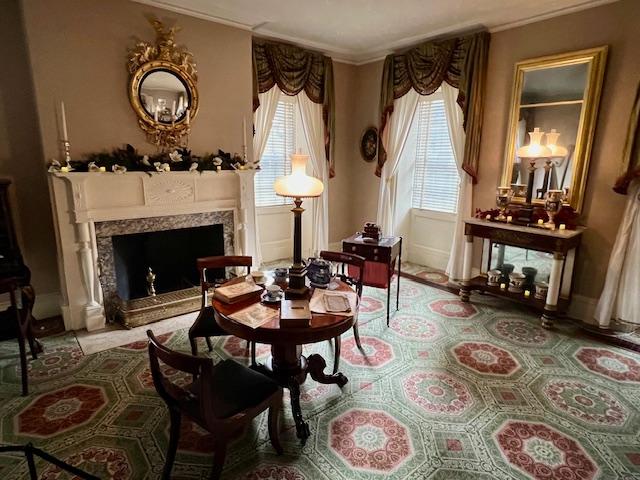
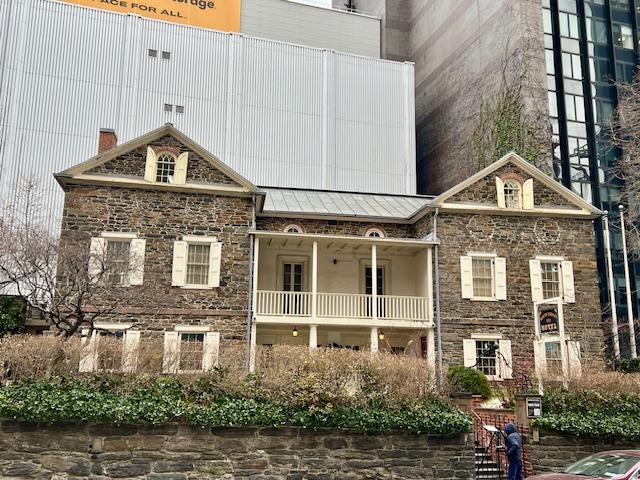


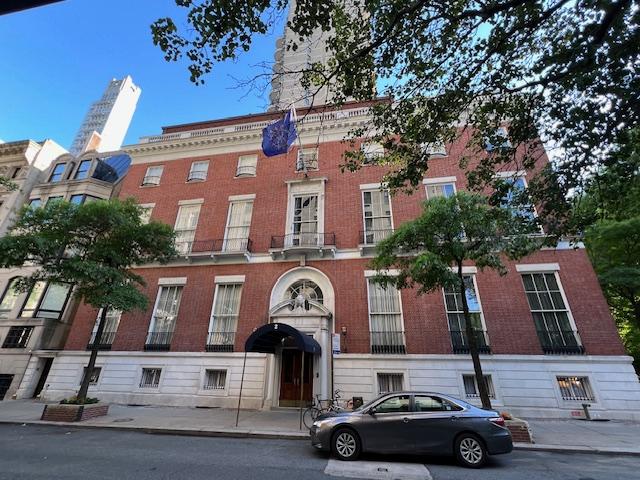







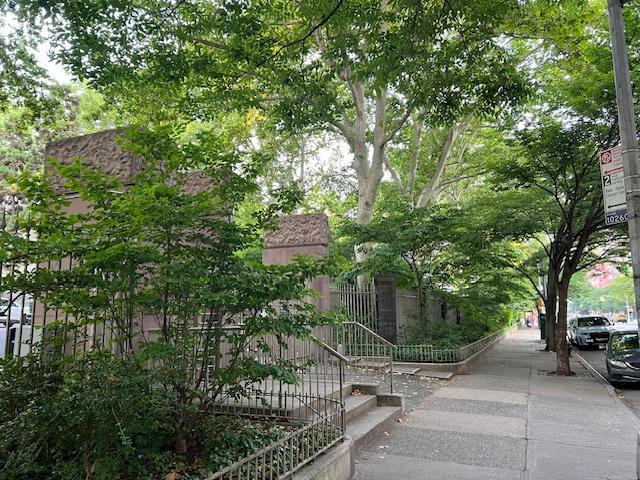
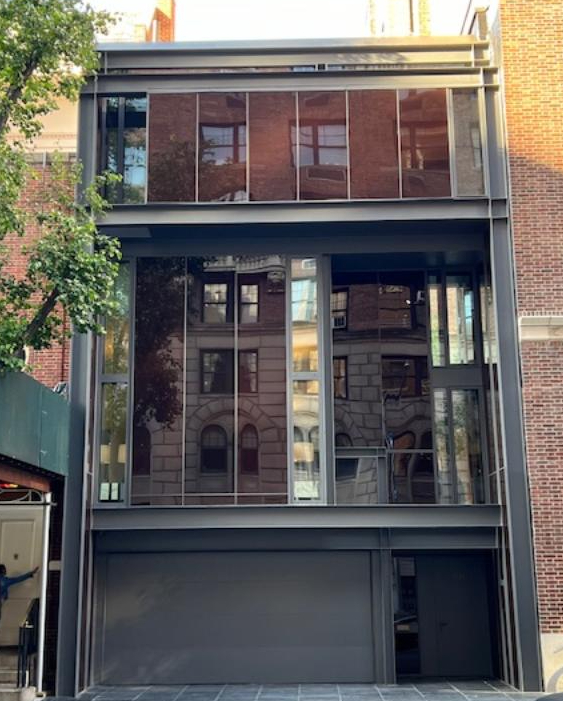
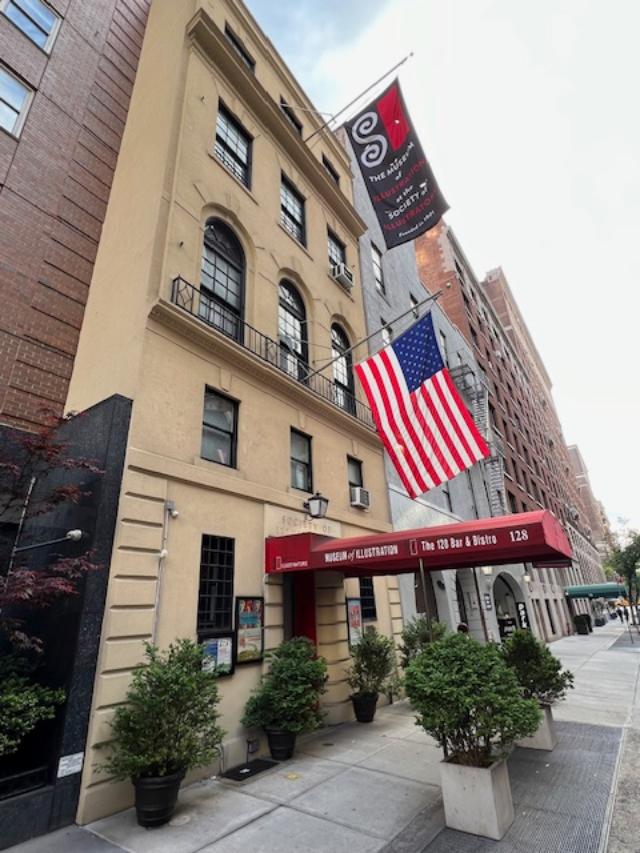
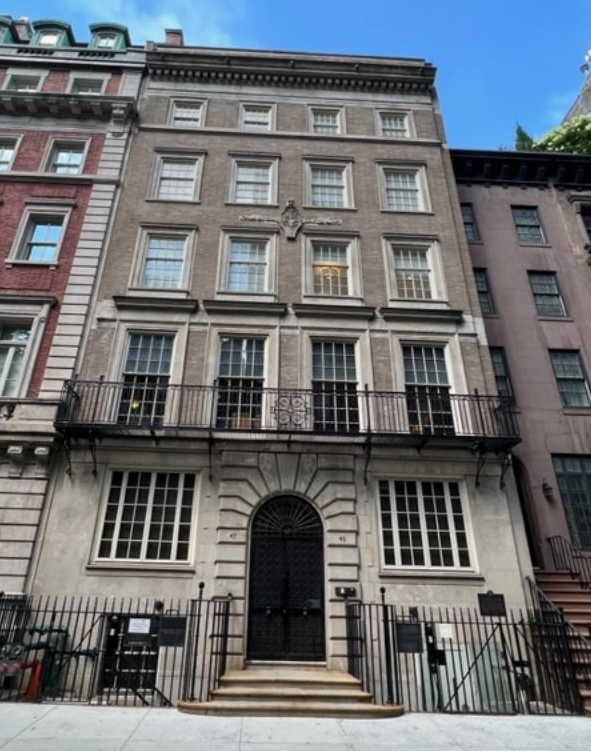
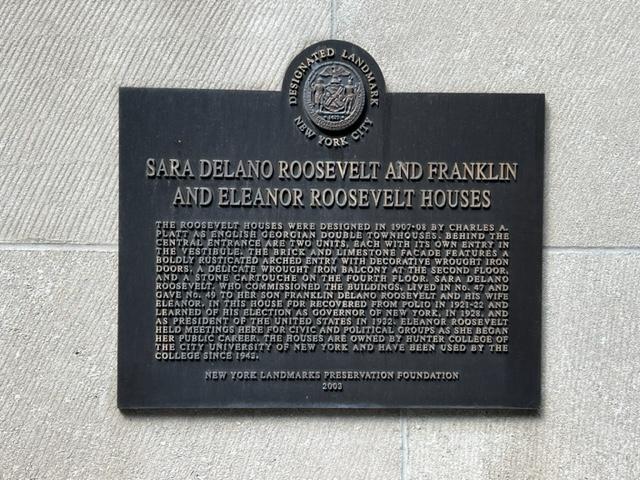






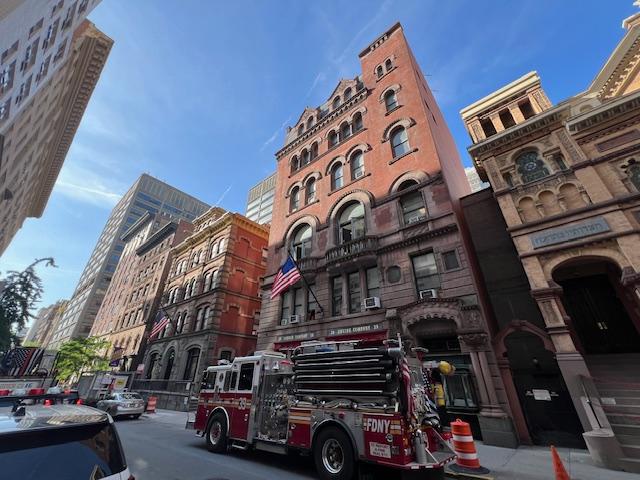
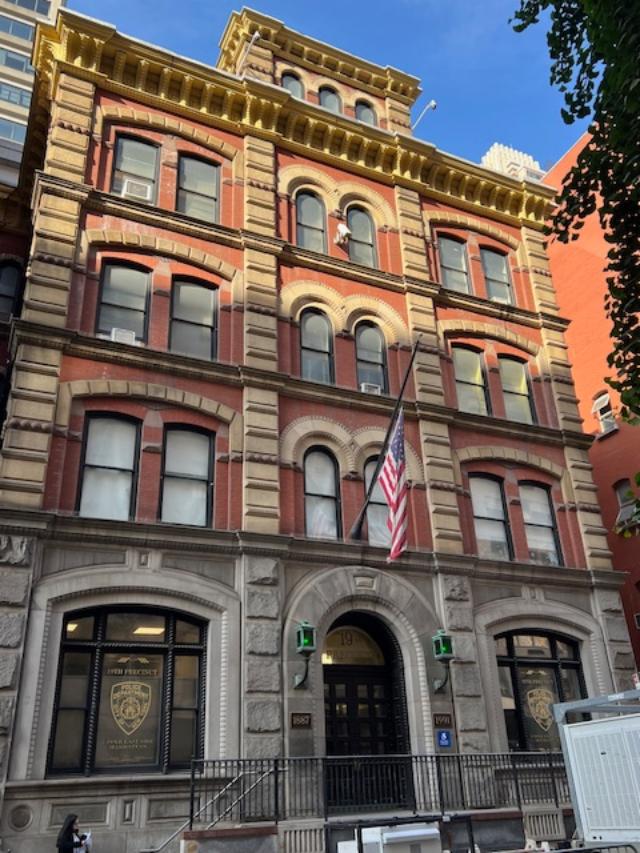


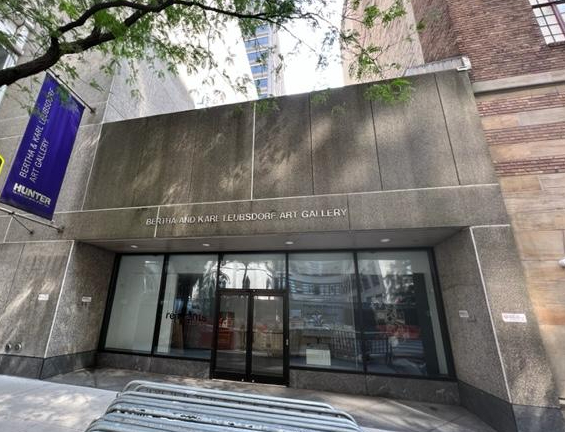


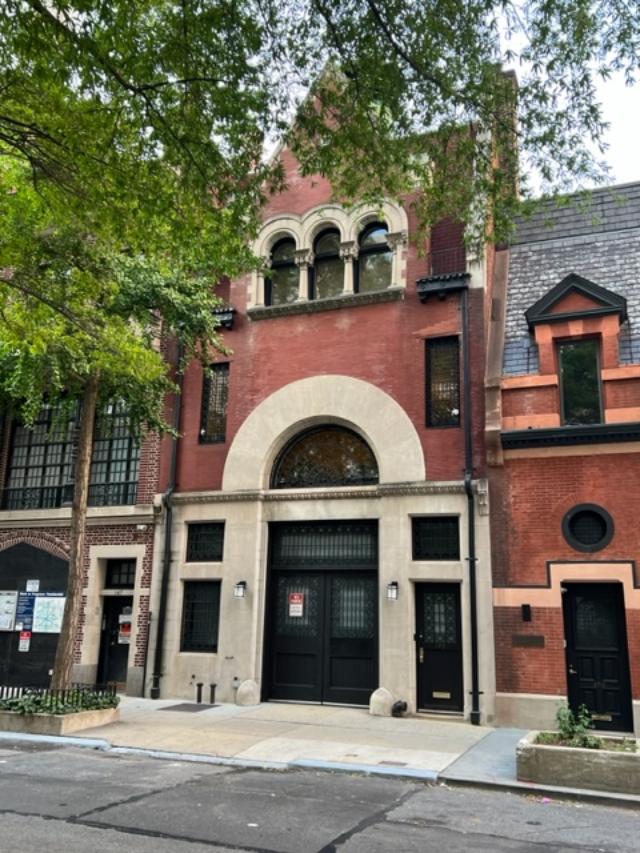







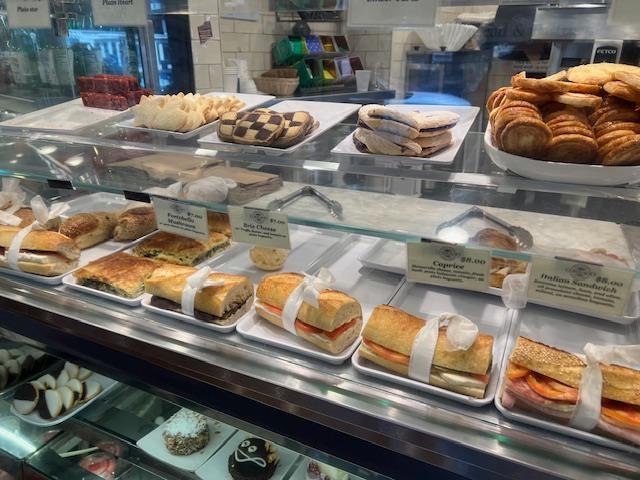

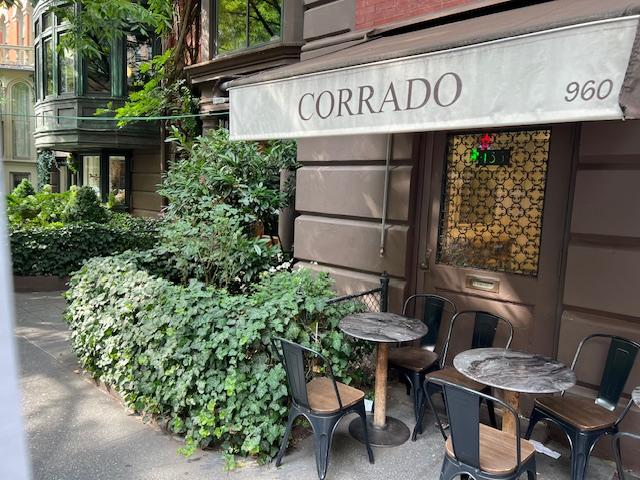

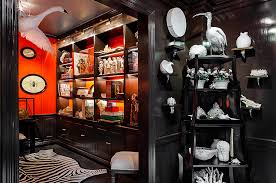
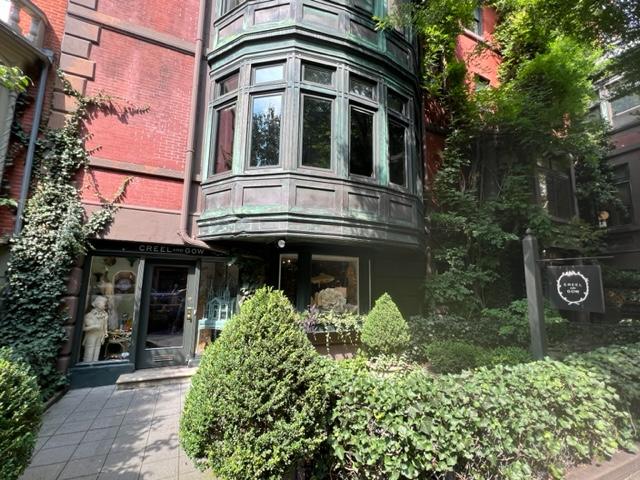


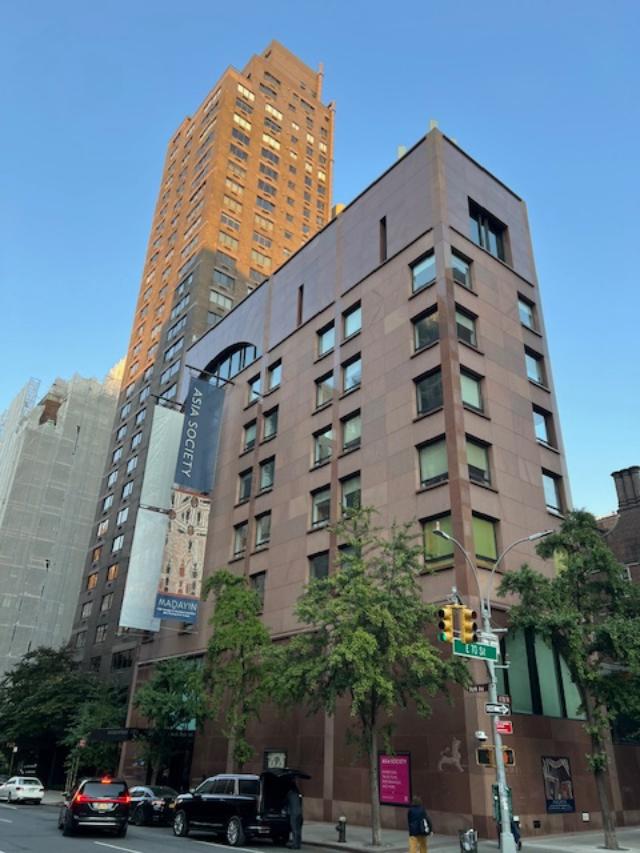


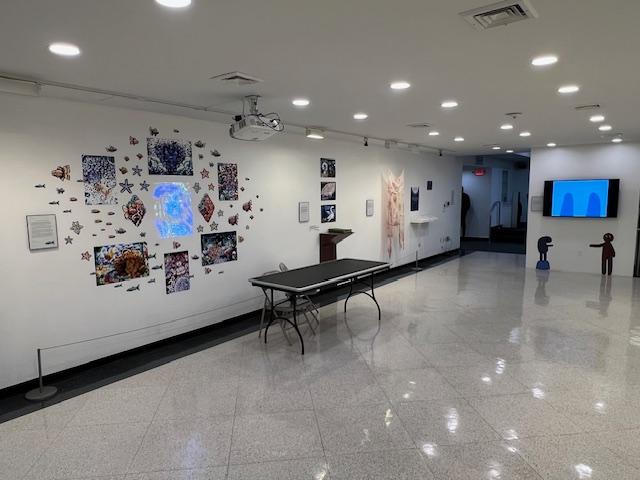

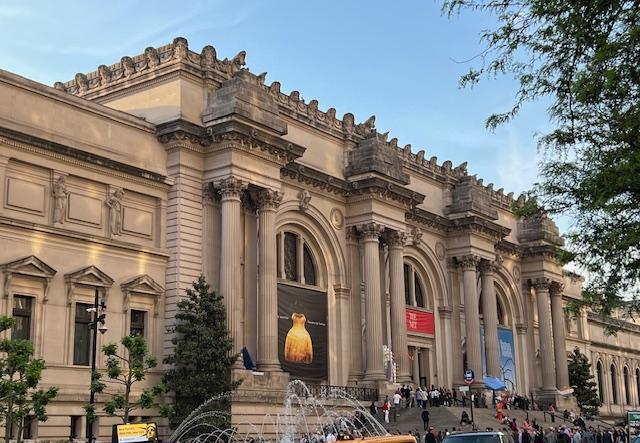
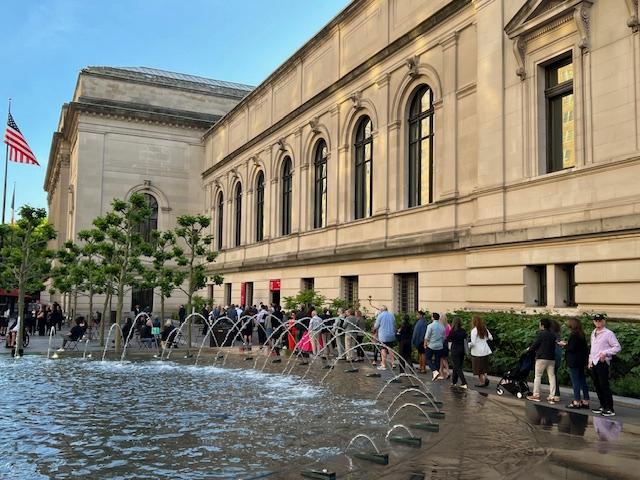
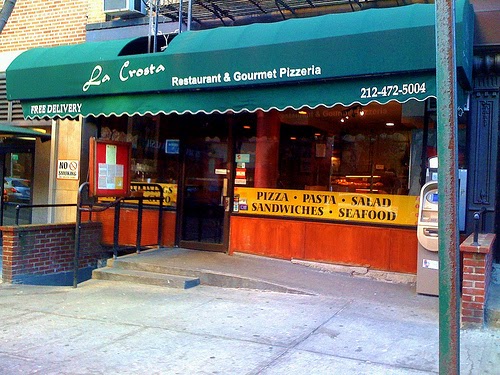


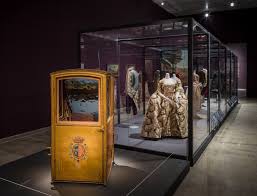


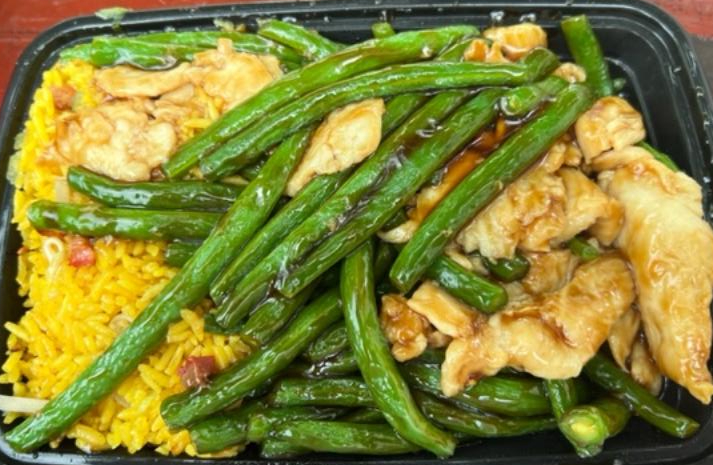


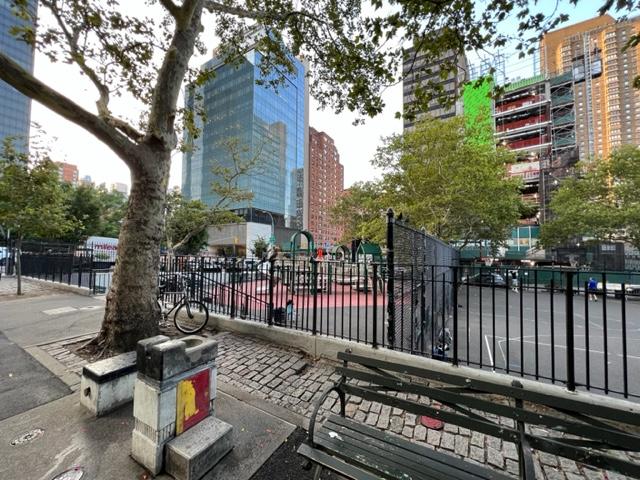


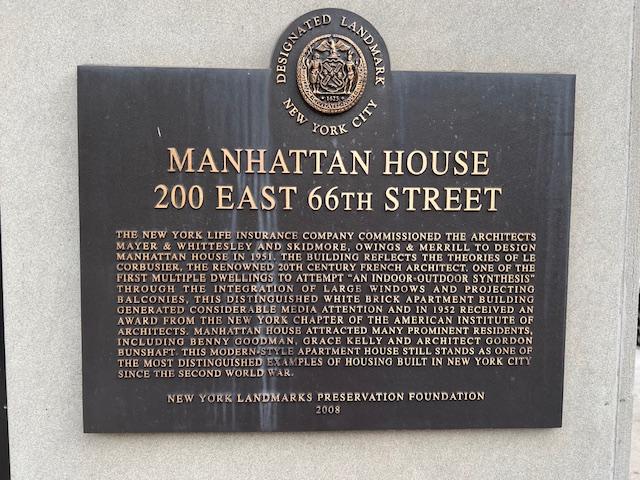

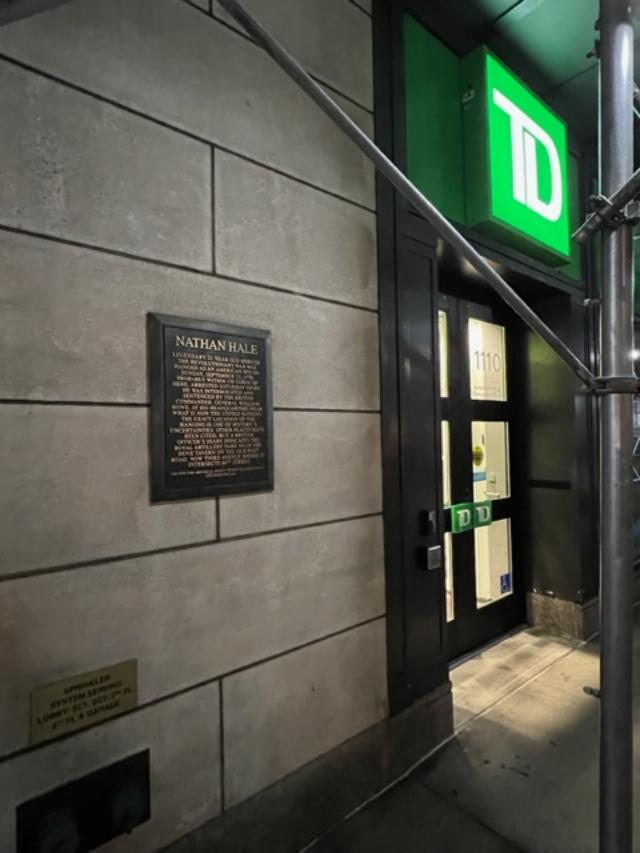


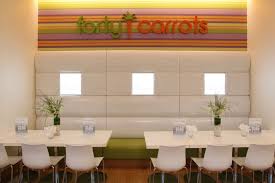

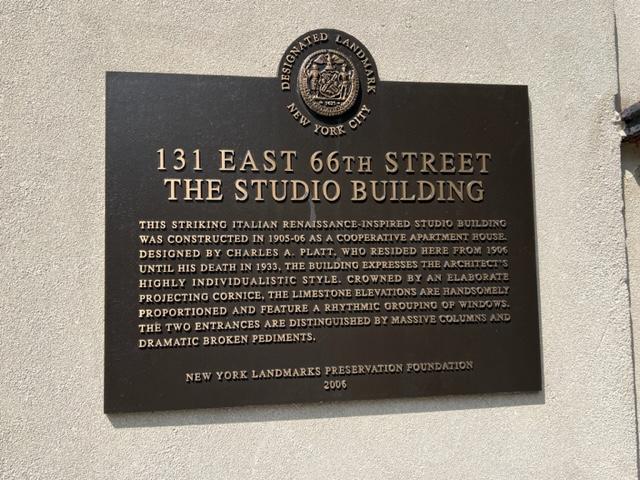
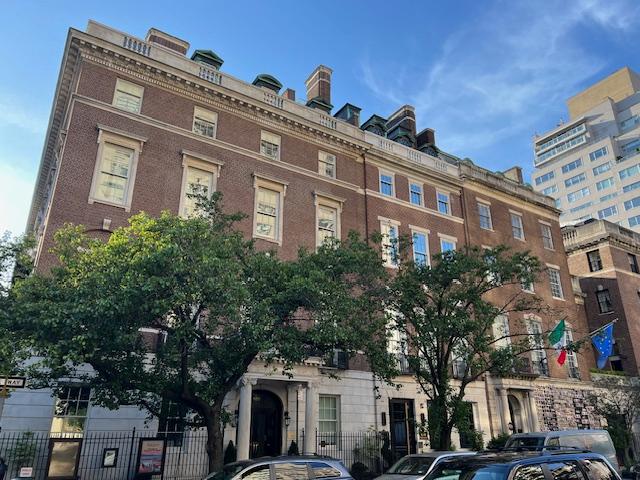


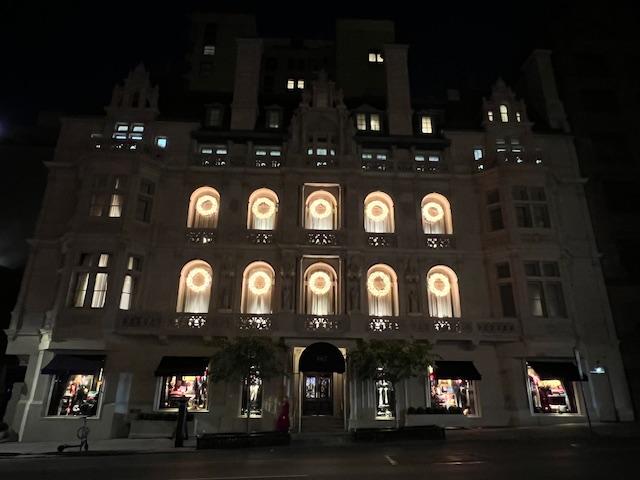

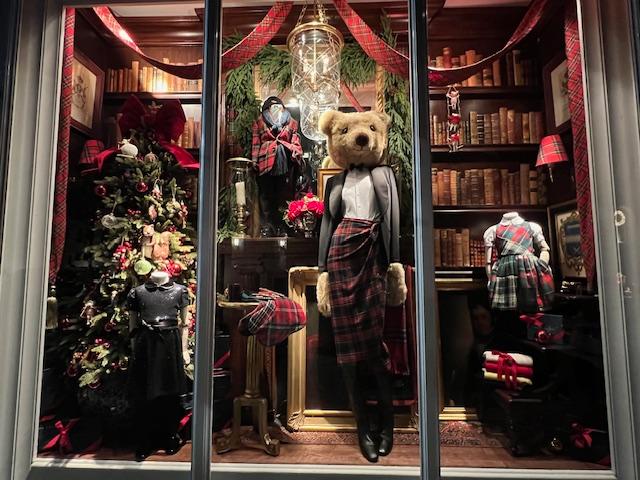
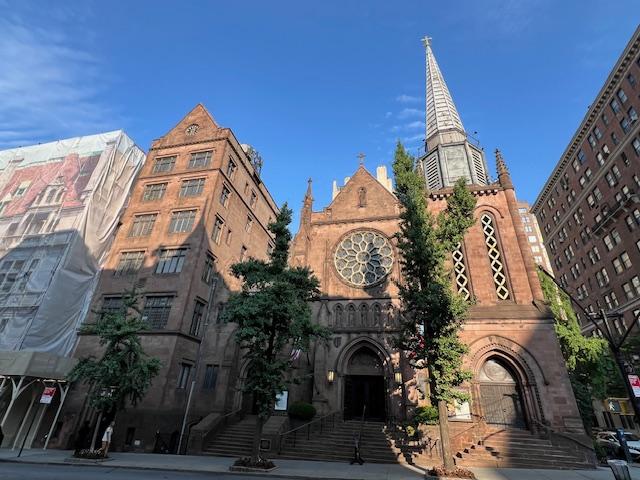

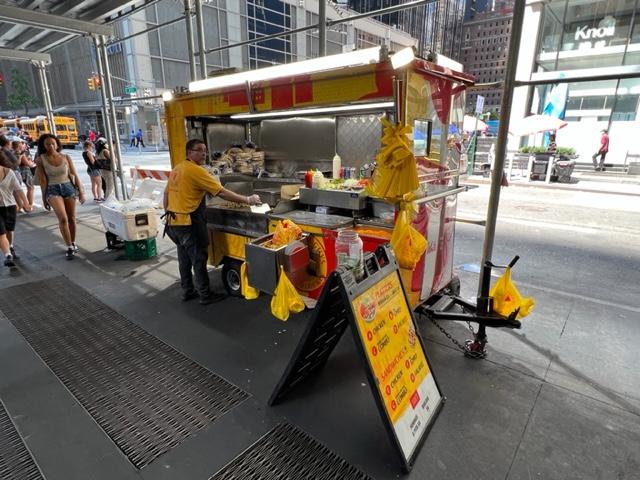



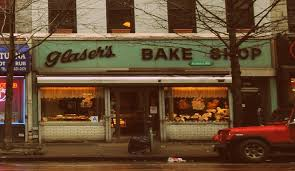


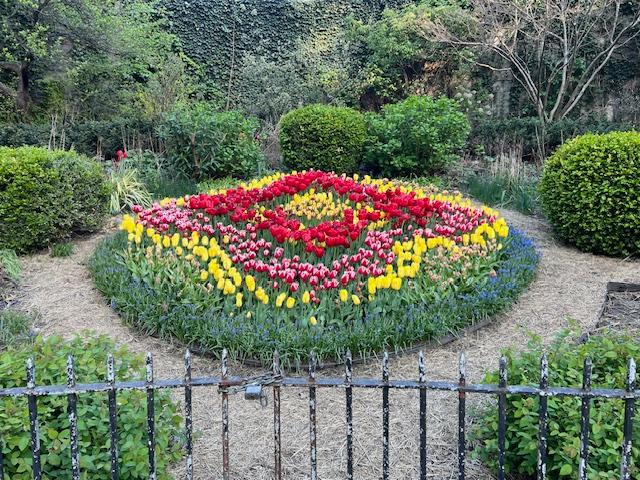
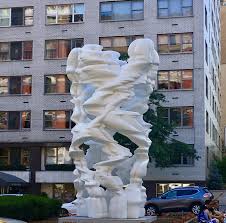


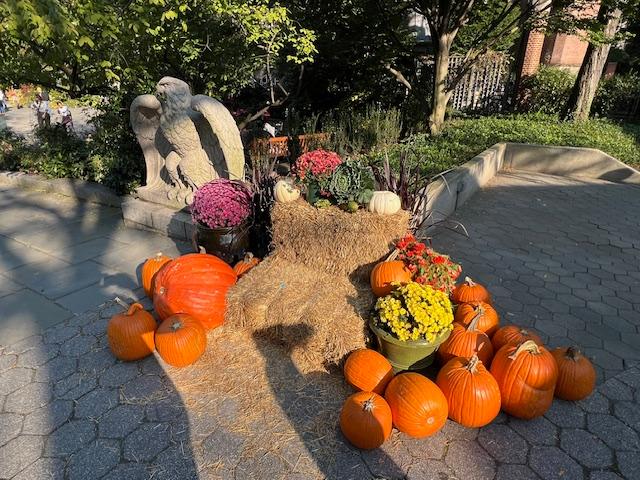


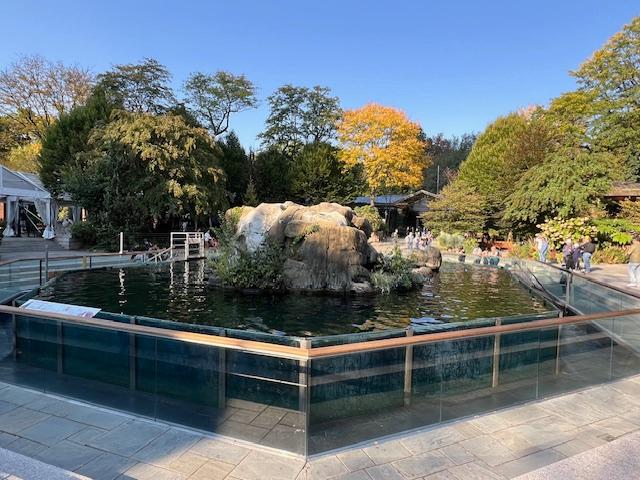


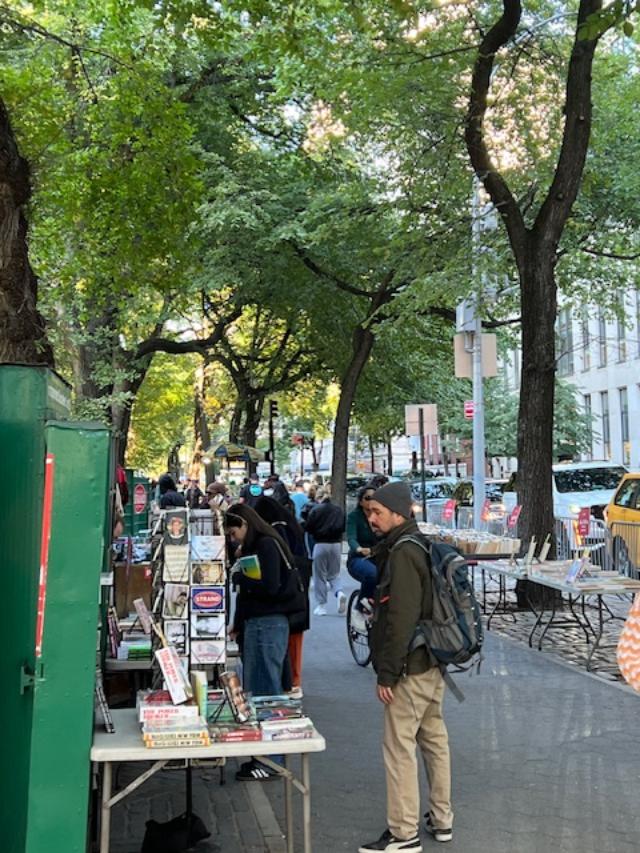
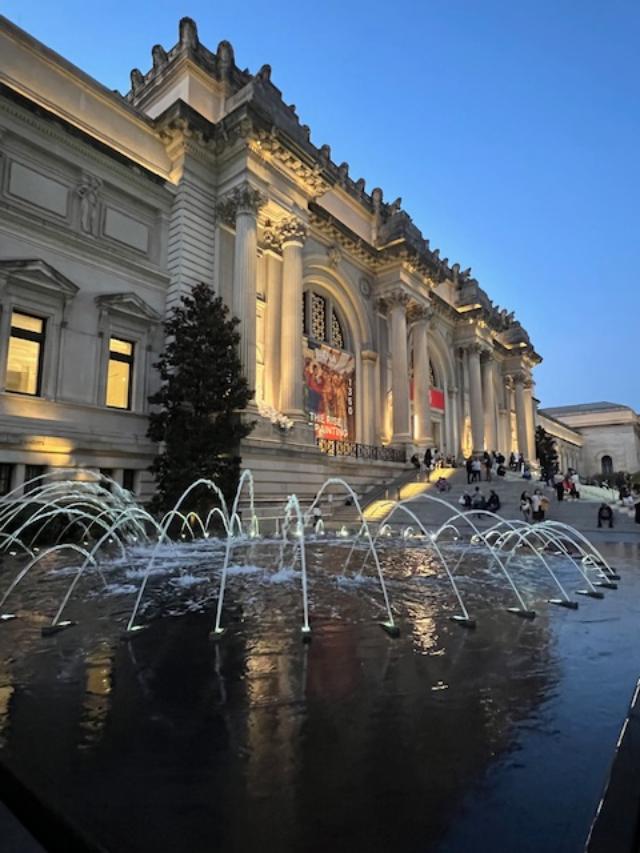






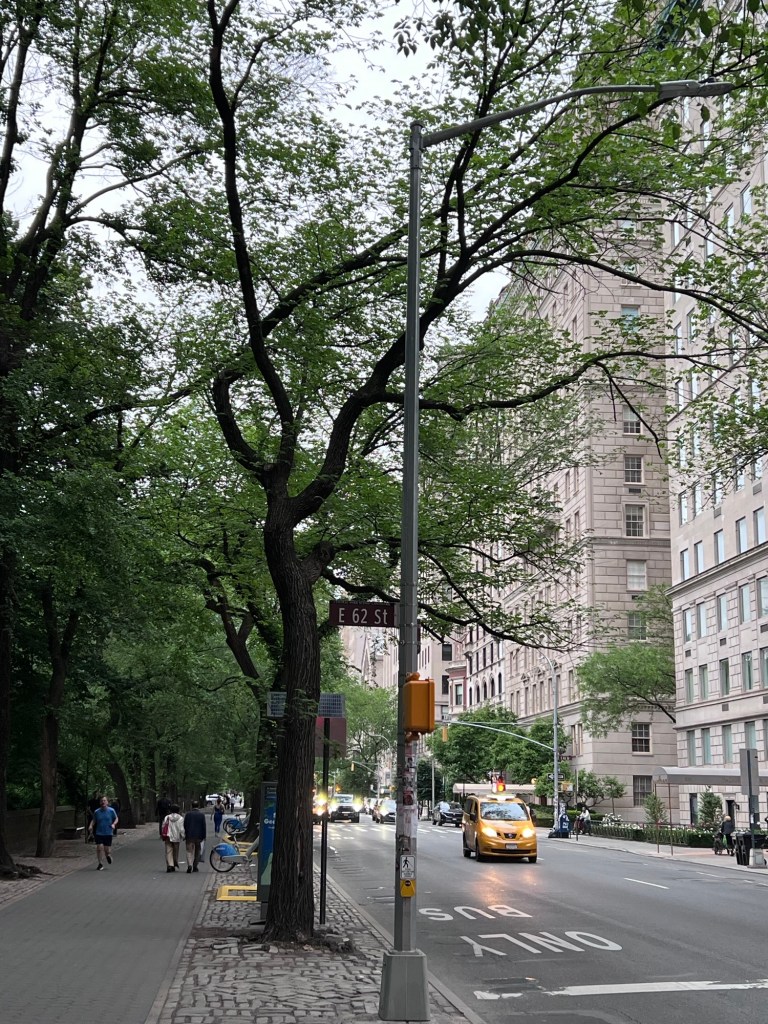
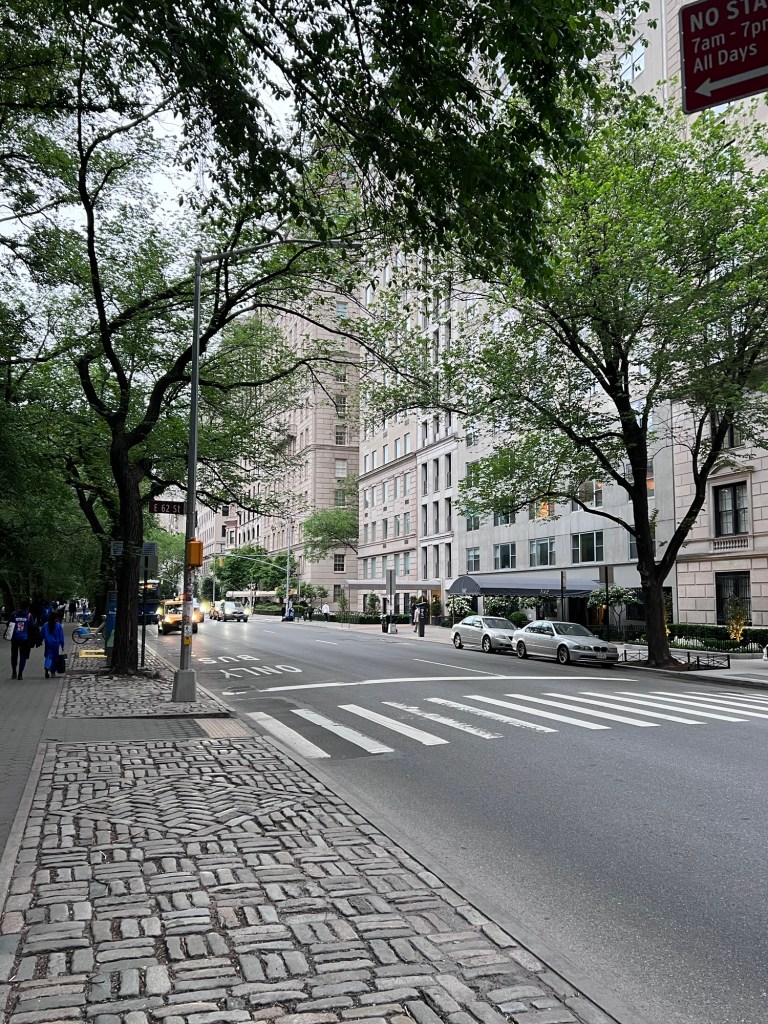

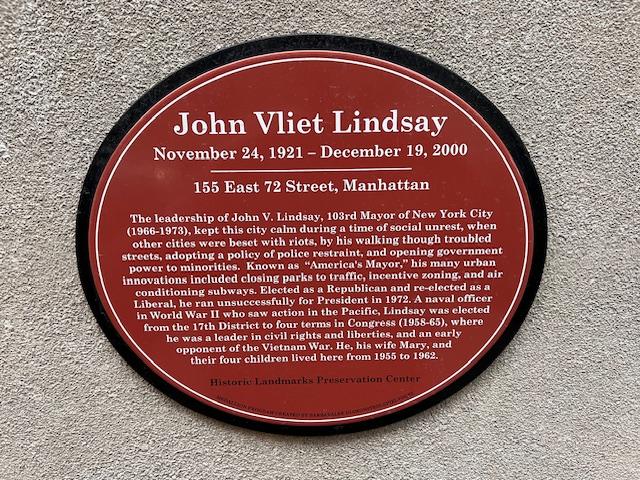


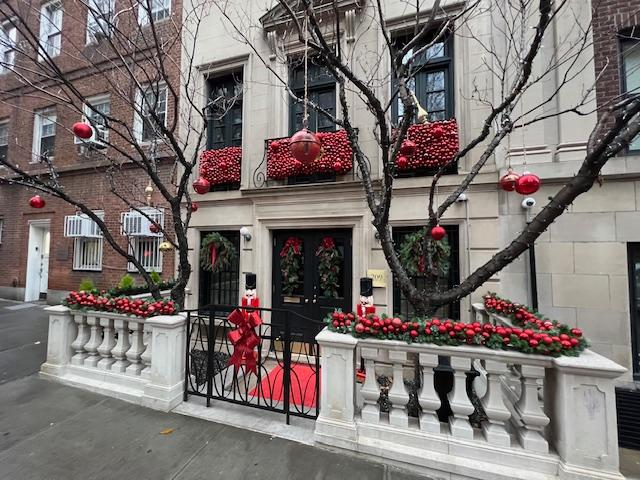


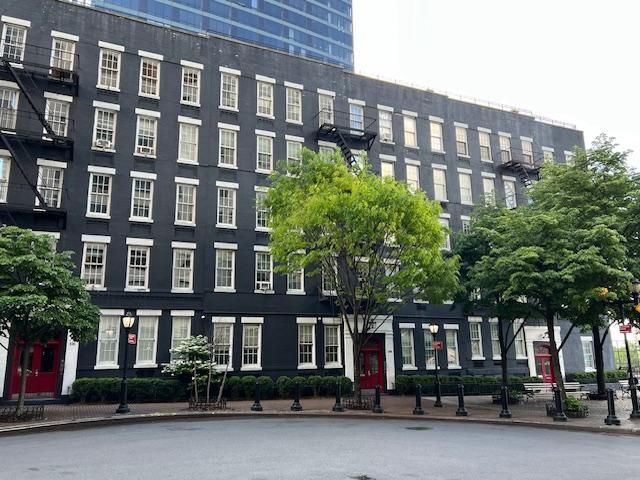


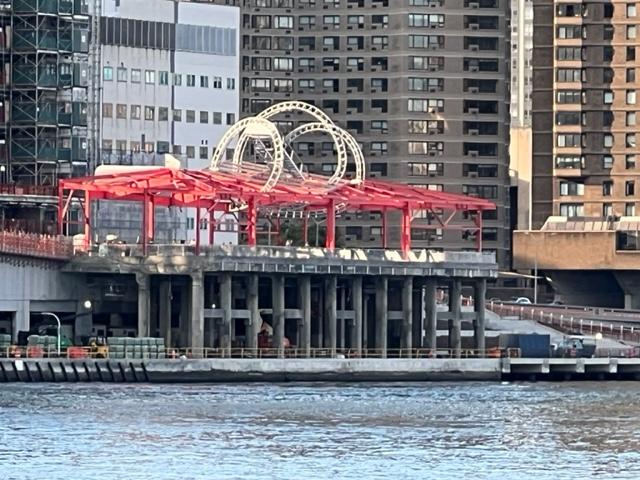

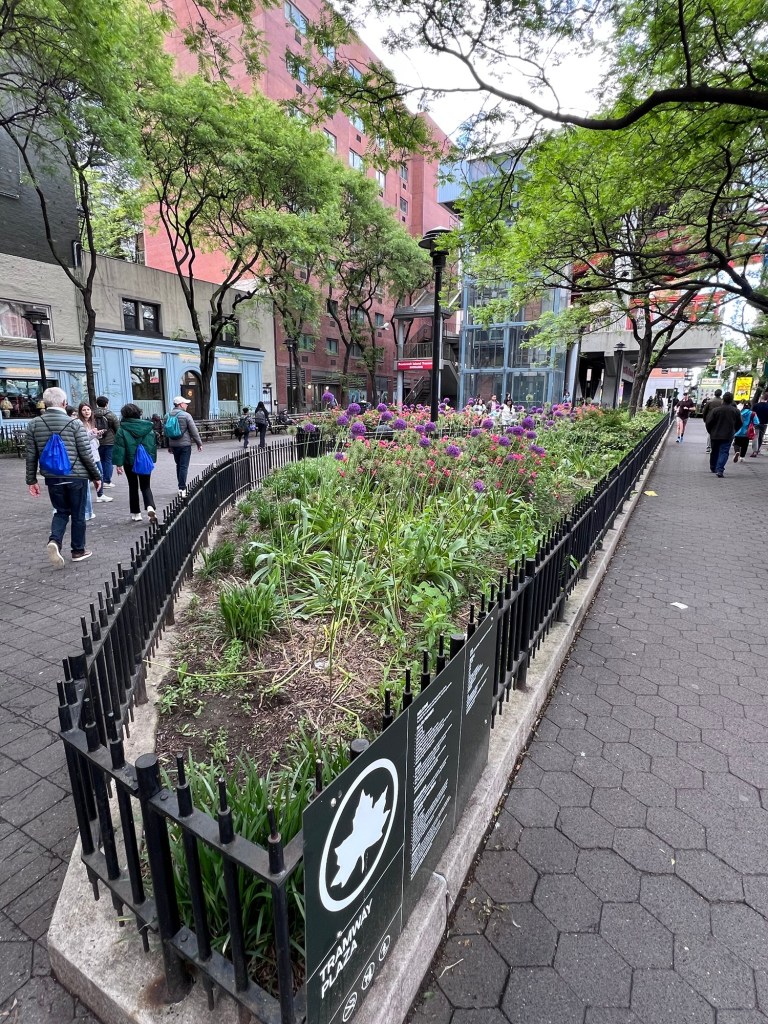




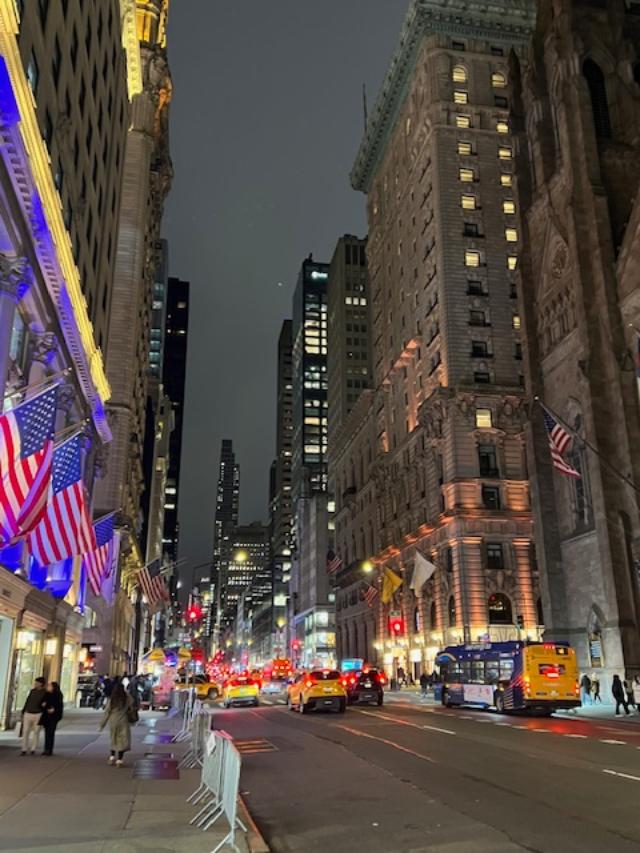


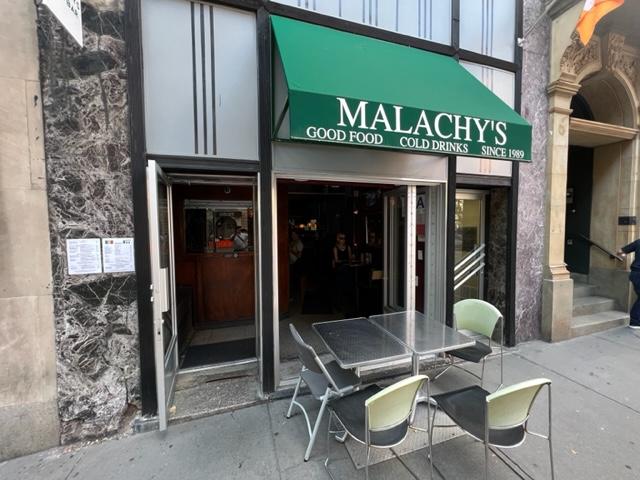
 mywalkinmanhattan