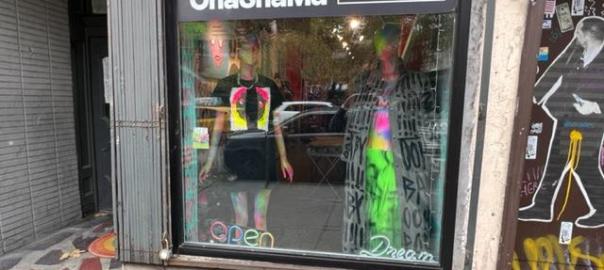
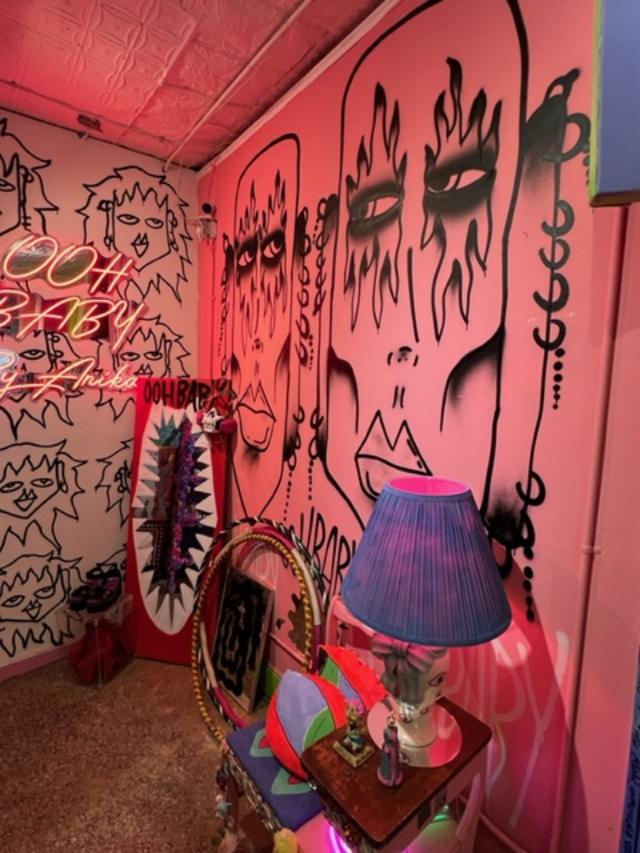
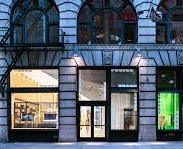
I don’t know what made me walk into Ooh Baby by Artist Anika Ignozzi at 21 Greenwich Avenue in Greenwich Village but I was curious because of the colors and designs I could see from the window. I met the artist who was hard at work that afternoon and introduced myself as a student at NYU. She looked up and said that she was thinking of taking some business classes at the school.
I looked at her and said that she looked like she already found her calling and made a successful business of it. She was already doing what most business students want to be doing, creating a business, finding their passion in it and making money at it. I told her she was already…
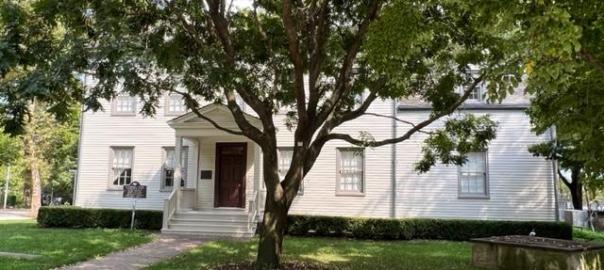
The Blackwell House on Roosevelt Island finally opened for tours after a major renovation of the house. When I had visited Roosevelt Island the last time in 2017, the house was corded off and was not open for touring. It had looked like it was falling apart from the inside out.
The home has now gone through a major renovation. The grounds outside were beautifully landscaped and gave the house a very warm and welcoming entrance to the property. In the middle of the summer, the flowers and trees were all in bloom and it was a nice view from the street. The house is conveniently located in the middle of the island, so…
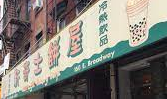
There are a lot of standout bakeries in Chinatown Manhattan that offer a nice selection of baked goods and hot foods at a very reasonable price and Happy Star bakery is one of them. Not only do they have a nice selection of breakfast foods in the morning catering to the large crowd that works around here but an excellent selection of Chinese pastries, buns and twists that are available all day. What is also nice is that the nothing is over $5.00 and you can have a nice meal for under $10.00.
What is also nice about the bakery is that it is right across the street from Seward Park so that after you get your order, you can walk across the park and eat…
The Newark Museum at 49 Washington Place in Newark, NJ.
I have been a member of the Newark Museum for 29 years and have enjoyed the experience. There is a lot of things to do at all times of the year.
During the Summer months, I enjoy “Jazz in the Garden” where local and international jazz musicians perform in the beauty of the back garden of the museum under the trees. These almost hour and a half performance can be enjoyed on sunny, clear days in the gardens and in the auditorium on a rainy afternoon. It is something I look forward to every summer.
Jazz in the Garden at the Newark Museum. The gardens are amazing in the summer months.
The Newark Garden in the back of the museum.
Jazz in the Garden was a big event before the pandemic. It is on hiatus for now. It had resumed after COVID with a fee and did not happen in the Summer of 2023. Still, I had enjoyed these concerts for years.
The video celebration of the new entrance reopening
Entering the foyer of the museum
During December of 2019 I attended a holiday afternoon tea at the Ballantine House, the historic home attached to the museum. The Ballantine’s were one of the oldest families in Newark, NJ and were once major brewers in the city. They were considered High Society in Newark and the home, and its renovation reflect that.
The outside of the Ballantine House in 2019.
A new tradition was started this year with a Holiday Afternoon Tea and tour of the mansion. The caterer did a nice job with the food and their was plenty of it. We had finger sandwiches, various scones and pastries and different varieties of teas.
After the tea, we had a tour of the house and a talk about how the Ballantine’s and their crowd celebrated the holidays. They would be an open house for the neighbors during the holidays and then on Christmas day were church services in the morning and then a lunch afterwards with the family.
Ballantine House set for the neighborhood open house
Entering the newly renovated Ballantine House.
Another nice event is the Members Mornings of specialty tours of the galleries on a Sunday morning and a light breakfast afterwards. These are really nice, and you get a more in-depth view of the galleries with the docents. This is where I highly recommend membership.
The Ballantine House model
The Ballantine House reopened after a two year renovation of the property and I toured it in January of 2024 to see the redesign of the home. The home had been cleaned and new signage and carpeting had been added to the site. They were new signs with interpretations of the house with some major design changes.
The Ballantine children in portrait.
The house had gotten some much needed renovation work and cleaning and the house looked sparkling and looked like someone had just moved in. In 2024, the house continued its tradition of being decorated for the Christmas holidays but with a twist to it
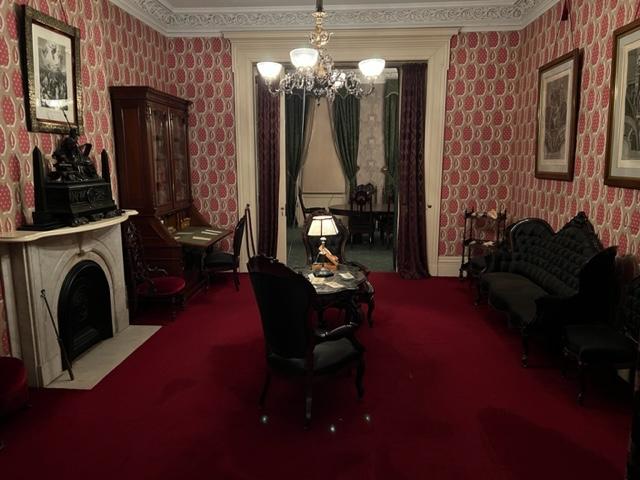
The Foyer of the Ballantine House
The fireplace in the Foyer of the home at the holidays
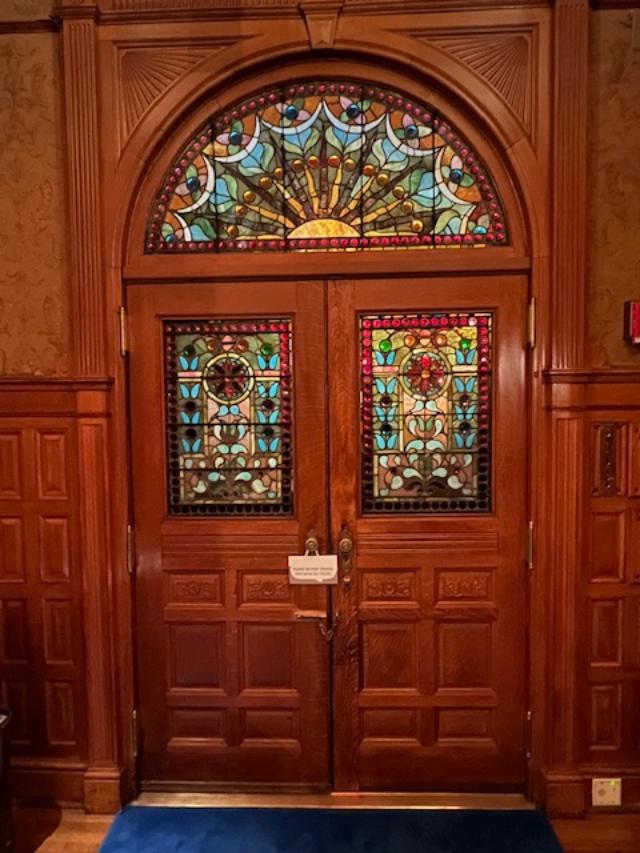
The front door ablaze with colors
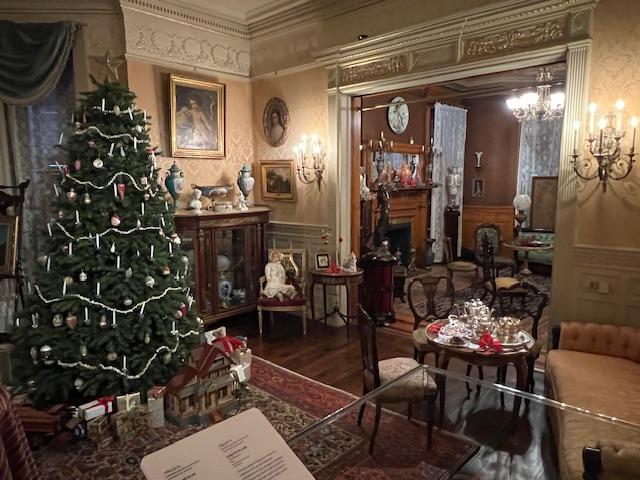
The Reception/Receiving Room for guests.
The Receiving Room at the Ballantine House.
The Reception Room decorated for the holidays
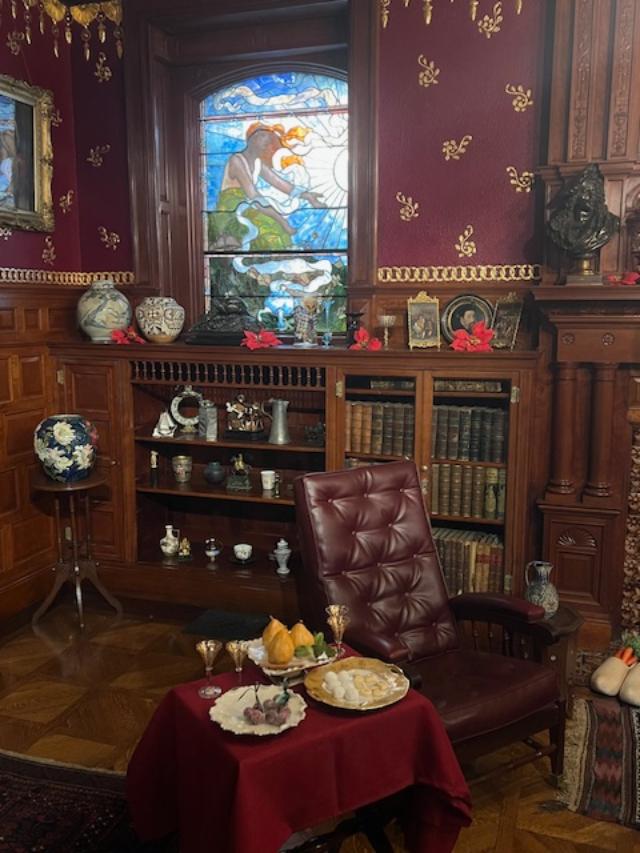
We started the tour clock wise through all the rooms on the first floor starting with the Reception Room where guests would be received for a visit and would wait until the Ballantine’s were ready to greet you. We then moved onto the Library where the whole family would gather in the evenings to read and converse with one another in a more casual setting.
The Library
The Library at the Ballantine House
Mr. Ballantine’s chair and desk in the Library of the Ballantine House.
The Library decorated for the Christmas holidays:
The Library decorated for the Christmas holidays:
The Library decorated for the Christmas holidays:
The Dining Room
The Dining Room set for dinner.
The Dining Room sideboard.
The Dining Room decorated for the Christmas holidays:
The Dining Room decorated for the Christmas holidays:
The Billiard Room across the hall from the Dining Room.
The Billiard Room at the Ballantine House.
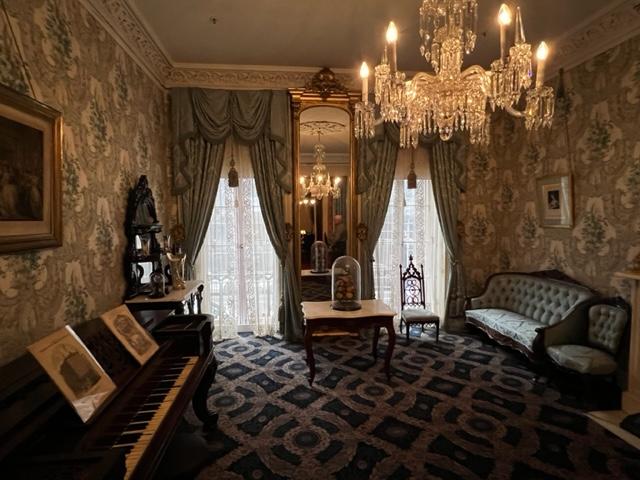
The Parlor at the Ballantine House.
The Parlor for receiving guests for afternoon tea
The other side of the parlor.
The Parlor set for tea.
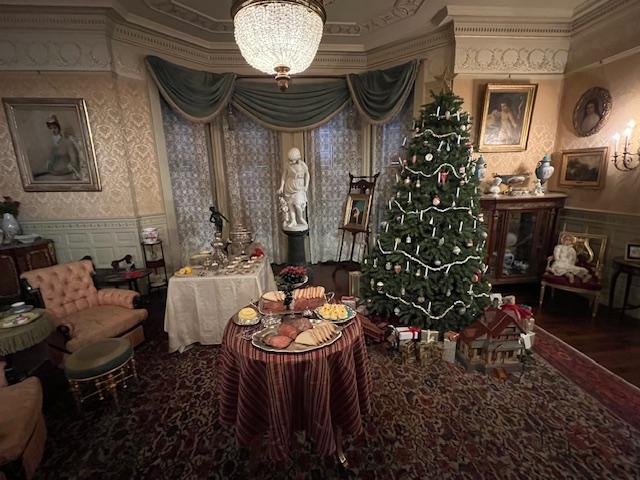
The Parlor set up for the Christmas Eve Tea:
The Parlor set for the Christmas Eve Tea service of the neighbors:
The Parlor would have been set for a light reception on Christmas Eve for the neighbors in the immediate neighborhood to stop in and join the family for a casual conversation and have a light snack. No one would stay more than an hour and it was in bad manners to stay longer than that.
The reception foods would be replenished as they ran out and this would take place for about two to three hours on Christmas Eve night as people would be leaving for church services or on their way to other celebrations.
The tour took us next upstairs to see the renovated bedrooms on the second floor and the galleries where some of the jewelry and art objects were on display.
The Staircase decorated for the Christmas holidays
The beautiful stained glass window on the landing to the second floor.
Mr. & Mrs. Ballantine’s Bedroom
The Boudoir where Mrs. Ballantine did her work.
The Boudoir where Mrs. Ballantine worked.
Alice’s bedroom on the second floor that was adjoined to her parents room by the way of the Boudoir.
Alice’s bedroom on the second floor looking over Washington Park.
The staircase to the Third Floor to Alice’s family apartment.
This was the main room of the apartment that was used by the family for entertaining friends and family. Alice, her husband and their four children lived in this apartment until 1919 at the time of Mrs. Ballantine’s death. Then her daughter moved to another part of Newark and then onto Morris County.
The Third floor apartment for Alice and her family that Mrs. Ballantine build for Alice and her family.
The beautiful skylight in Alice’s apartment on the Third floor of the Ballantine house.
The decorative fireplace that worked in Alice’s family apartment on the third floor of the house
On my most recent trip to the museum, I attended the opening of the new ‘Norman Bluhm Metamorphosis’ exhibition on February 11th, 2020.
Artist Norman Bluhm
Norman Bluhm: Metamorphosis celebrates six decades of painting by post-war American artist Norman Bluhm (1920-1999), who combined action painting with a lavish sense of color and formal experimentation on a grand scale.
Paintings and works on paper dating from 1947 to 1998 are on view in the Museum’s Special Exhibition Gallery and the Traphagen promenade galleries surrounding the Charles W. Engelhard Court (Newark Museum publication press release).
These large works showcase the artist’s work over a fifty year period.
Norman Bluhm’s work is quite dramatic
In 2022, I went on the first Members Morning that we had in almost two years. We toured the “Carlos Villa: Worlds in Collusion” exhibition featuring the works by American San Franciso born artist of Philippine decent Carlos Villa.
Artist Carlos Villa in the exhibition “Worlds in Collison”
Video on the Exhibition “Carlos Villa: Worlds in Collison”
What made this exhibition interesting was the feather work that he used in his art. He was trying to capture the ethnic history of identity not just of the Asian but the Pan-Pacific cultures of Hawaii. He used robes and other costumes to show the dynamic of the background of these cultures. Not just that but what describes Americans who are not of white decadency and where their role plays in society. The impression I got from his work and from the tour was feeling like an outsider in the country he was born in.
One of the feathered cloches that are in the exhibition
I also visited the interactive exhibition “Endangered”, showing video screenings of nature on the walls of the Natural Science Galleries. The exhibition highlights how human behavior is affection the natural environment and what we can do to stop it.
In the Summer of 2022, we had a member’s tour of one of the ongoing exhibitions at the museum and the docent described the works of local Brooklyn based artist Saya Woolfalk.
I joined the membership one morning to tour the exhibition on artist Saya Woolfalk who is based out of Brooklyn. Her current exhibition “Tumbling into Landscape” is being featured on a long-term exhibition. The works are a communication with nature and our relationship with nature and with one another. When you walk through it you are so relaxed between the music and the lighting. The artist ‘uses science fiction and fantasy to reimagine the world in multiple dimensions’ (Newark Museum).
The videos in the Saya Woolfalk exhibition
Her look at nature is very interesting. She looks at our relationship with the natural world and to each other and where we belong. Here works have a calming effect on the visitor and our interaction with the art.
‘The Four Virtues’ (Justice, Prudence, Temperance and Fortitude)
She even did a study of the Hudson River School and how her art worked into that perspective of nature. She included between six paintings from the School of Art with a self-portrait of herself.
It was interesting how she used her own self to compare to the stylized view of nature taken on by these past artists.
Recently, I joined other members for a special “Members Morning” that happen every third Thursday entitled “The Art of Collecting Abstracts”. It was a look at the contemporary works that have been collected by the Newark Museum over the years. We got a look at works from the early part of the last century to today. Each of the pieces chose were a way for us to think about the artist and what they were trying to convey. Some used bold strokes and colors to tell their story. I thought they were quite colorful.
The group of us on the tour walked through various galleries, admiring and learning about the contemporary collections of abstract work from artists from various periods. Each docent took their take on pieces they admired in the collection.
Abstract by Ilya Bolotwosky “Study for Mural for Hall of Medicine, Public Health Building, New York World’s Fair.
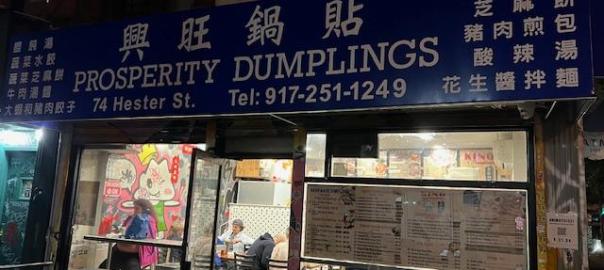
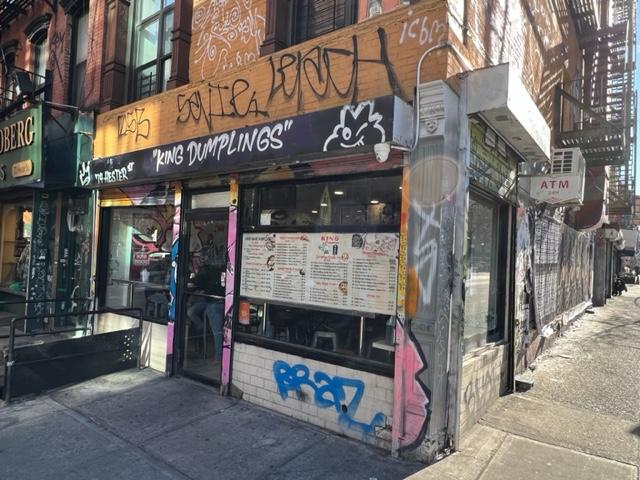
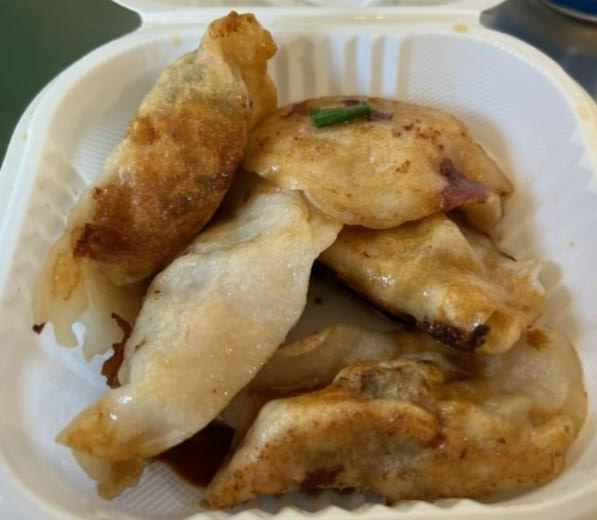
There are times you find those little ‘hole in the wall’ restaurants that just standout because of the quality of their food and their prices that make them affordable to everyone. King Dumpling at 74 Hester Street is one of them. Everything that I have tried there has been excellent and the portion sizes are very fair.
I had watched one of the “Cheap Chinatown Eats” videos from the Fung Brothers and they had mentioned the restaurant as a great place to get dumplings (one of my favorite things) and that they were only $3.00 for ten. I had to try it and have to say that it lives up to its reputation.
There are some neighborhoods in Manhattan that just stand out for their access to parks or to the rivers and others are loaded with historic value who architecture had not changed over the years.
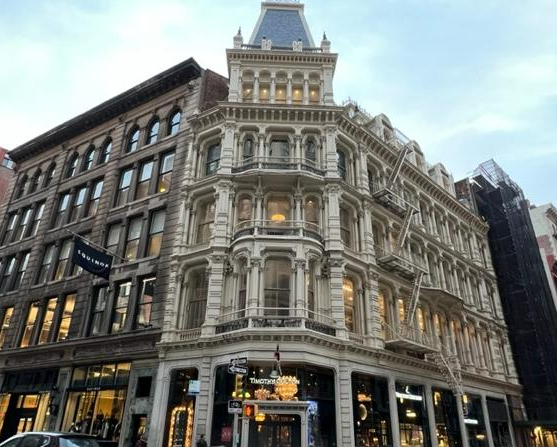
The Flatiron District which was once served as the old Midtown between the Civil War and World War One and “The Ladies Shopping Mile”, where women could shop and engage with one another without a chaperon on Avenues and Streets lined with Department stores, restaurants, movie theaters, tea houses and specialty stores catering to their needs. When you look up at the grand buildings of the district with their large windows and their Beaux-Art designs and decorations, you can see that their purpose was to impress the customers.
I had toured the area around Sixth Avenue and West 23rd Street three years earlier for a tour of a “New York Victorian Christmas” and you can see by the architecture that these buildings were meant to last.
These Grand Department Store buildings are the ghosts of their former selves with a shopping district that left them behind and names that have been out of business for over a hundred years (with the exception of B. Altman & Company which closed in 1990). You can still see the beauty and gracefulness that is carved into the stone of these buildings and in some cases still show the name or the initial of the original store owner.
Day One Hundred and Twenty-Eight: ‘Victorian Christmas Tour’
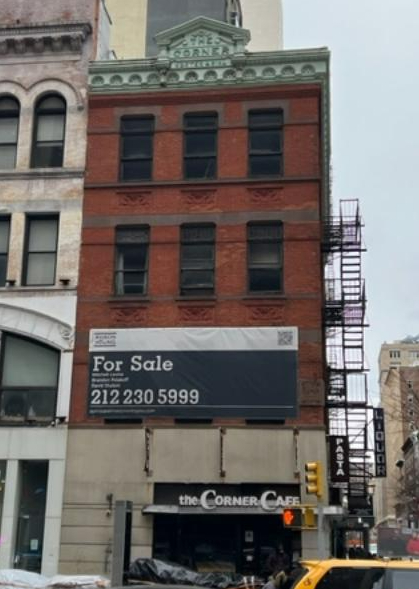
As I started my walk on the borders of the Flatiron District at West 25th Street and Sixth Avenue, there was not much to see as it was all new construction. The one thing that I did notice from my last walk in the neighborhood is that the colorful street art piece by was tagged over. It was on the very edge of the neighborhood on the wall of The Corner Cafe at the corner of 729 Sixth Avenue was the New York City painting by artist Dirt Cobain.
The New York City Street art by artist Dirt Cobain on the side of The Corner Cafe at 729 Sixth Avenue (painted over in 2022)
Artist Dirt Cobian is an American born artist who started with a spray can when he was a teenager. He creates the most interesting and eye-opening street art. He currently lives in Brooklyn (Artist bio).
A video on who the artist is and what he represents.
The colorful piece of street art was painted over by another tagger who did not do the painting justice. That and the fact that the Corner Cafe had closed its doors for business since I walked the northern part of the Chelsea neighborhood in June and now sat empty. It was when you reached West 23rd Street when the true gems of architecture began.
This unusual office building was built in 1920 and you have to look up to see the carving of “The Corner” at the top of the corniche
I remembered what the tour guide said this had once been the first real shopping district when shopping was acceptable for the middle to upper middle-class woman to shop and socialize unchaperoned. These were the days before malls when shopping was an experience and not something to be rushed.
You could see it in the size of the buildings that housed everything you needed for your household from furniture and clothing to wines and fine gourmet food. They had something for everyone. I could have only imagined what it must have been like and to go back in time to experience those times.
The shopping district stretched from the border of West 23rd Street to the border of West 14th along the Sixth Avenue corridor from the old shopping district to the new one. Even today when you walk that area of West 14th Street, you can still see traces of the old shopping district in the elaborate buildings that are left that line the street. As I walked the back-and-forth length of Sixth Avenue, I admired the buildings that still line it.
I walked south first down Sixth Avenue so that I could really see the stores for myself on one side and then walked past the storefronts on my way back up. What were once Upper Middle Class clothing emporiums are today ‘Big Box’ stores still catering to the retail trade just in another form on the bottom and offices to the top.
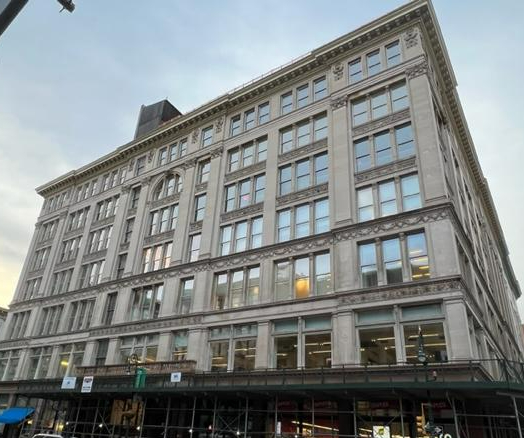
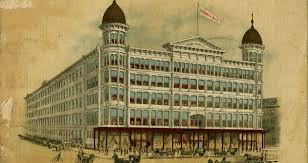
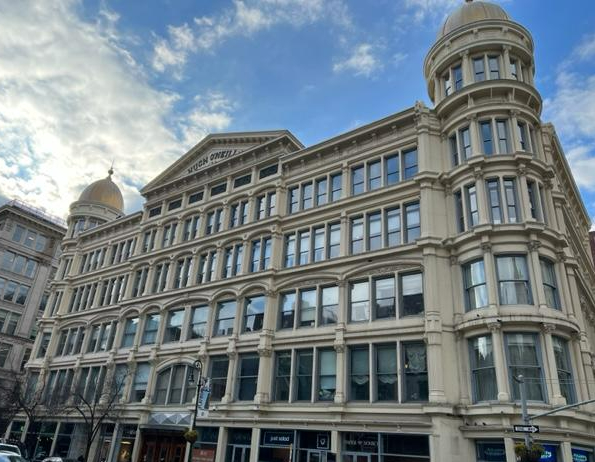
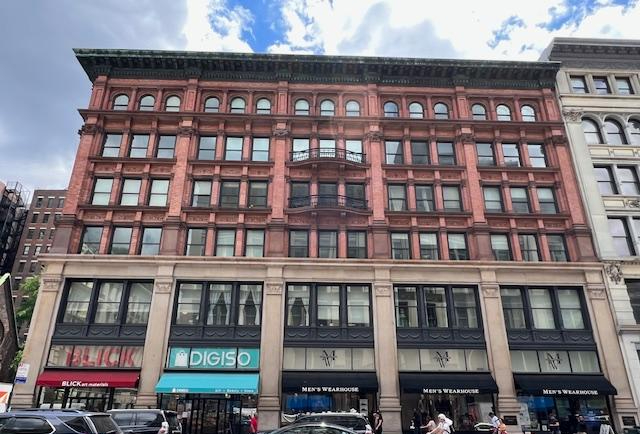
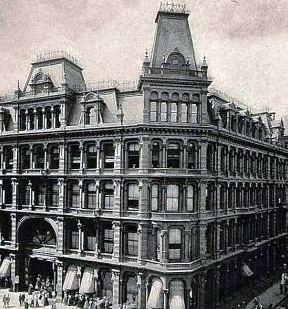
Th shopping district border with the Flatiron District starts at the Simpson-Crawford Department Store at 641 Sixth Avenue between West 19th and 20th Streets, which once catered to the wealthy elite of Manhattan and beyond. The store was established in 1878 by Richard Meares and William Crawford as Richard Meares & Company. Meares left the firm a year later and William Crawford then partnered with Thomas and James Simpson to create Simpson, Crawford and Simpson. When Thomas Simpson died in 1885, the store became known as Simpson-Crawford (Daytonian in Manhattan).
Simpson-Crawford Store today at Sixth Avenue between West 19th and 20th Streets
When James Simpson died in 1894, William Crawford became the sole owner and in 1899 with the rise of the great stores on Sixth Avenue, Crawford designed a new store of marble designed by William H. Hume & Son. The exterior of the store shined with polished marble and granite (Daytonian in Manhattan & the tour guide).
The store had many innovations at the time. It had the first escalator in the city, the first display windows with mannequins and large display windows that had to be created for the store. The store was stocked with the finest imported clothes, furs and laces and on the top floor was a restaurant that catered to 1200 guests (Daytonian in Manhattan & the tour guide).
Before the store opened, William Crawford retired and sold the store to Henry Siegel across the street who kept the tradition of the store going. When Siegel-Cooper Company collapsed in 1914, Simpson-Crawford was kept closed for three weeks and then reopened. Both stores closed one year later, and the store was converted to mail order warehouse. Today it holds various stores (Daytonian in Manhattan).
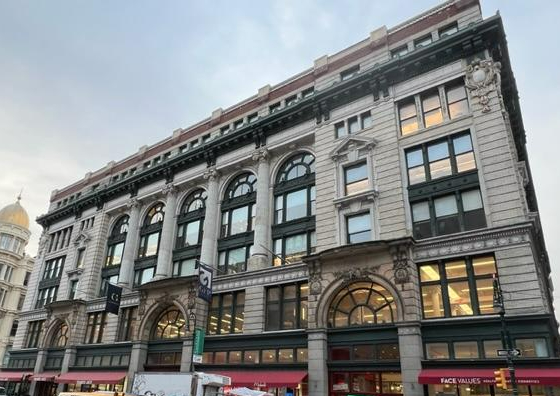
Our next stop was in front of Hugh O’Neill’s Dry Goods Store at 655 Sixth Avenue between West 20th and 21st Streets. It was built by the firm of Mortimer C. Merritt in the neo-Greco style who built the four stages of the building between 1887-1890 (Wiki & the tour guide).
Hugh O’Neill had started a small dry goods business right after the Civil War in 1865 with a small store around Union Square. In 1870, he decided to build a trade on the middle market customer and offered discounts on goods. The four floors of merchandise contained laces, ribbons, clocks and on the upper floors women’s and children’s clothing (Wiki).
When O’Neill died in 1902, the shopping area had just begun its decline and in 1906 it merged with Adams Dry Goods up the block. A year later they both went out of business as the area gave way to manufacturing. The building today has been converted into condos.
The Hugh O’Neill store today
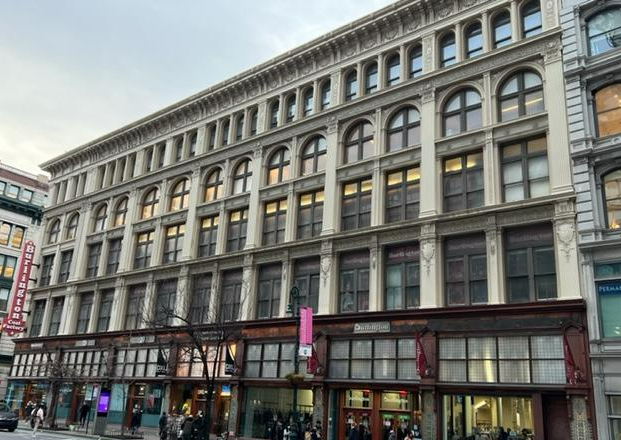
Next door to it we looked at and discussed was the former Adams Dry Goods Store at 675 Sixth Avenue between West 21st and 22nd Street.
Samuel Adams, a merchant who had been selling upscale clothing and furnishing to customers in the area decided to open a store on Sixth Avenue. He used the architectural firm of DeLemos & Cordes, who had designed the Seigel-Cooper Department Store and the six-story building opened in 1902. The store was the first in New York City to use the new Pneumatic tubes to transport money and messages throughout the store (Wiki).
The problem with the store was its location. He built the store at the very edge of the neighborhood as the business changed. As the shopping area started to decline in the early 1900’s, Adams sold the store to Hugh O’Neill Dry Goods Store and they merged the two companies together, converting three floors of the Adams Dry Goods store to furniture. This concept was not popular as well and the businesses failed, and the store closed in 1913 (Wiki & the tour guide).
Adams Dry Goods Store today at Sixth Avenue between West 21st and 22nd Streets
The store has gone through a manufacturing stage and in the 80’s became part of the change to large box retailing. The building now houses eBay and several stores including Trader Joe’s and Michael’s. As we could see on the tour, the old department stores are finding new life in retailing.
The old entrance to the Adams Dry Goods Store
Between West 22nd and West 23rd Streets located between the old Adams Dry Goods and next to the former Macy’s store was Ehrich Brothers Department Store at 701 Broadway. The building was constructed in 1889 by architect William Schickel & Company with additions by Buchman & Deisler and Buchman & Fox in 1889 (Wiki).
Ehrich Brothers Department Store building at 701 Sixth Avenue (Wiki)
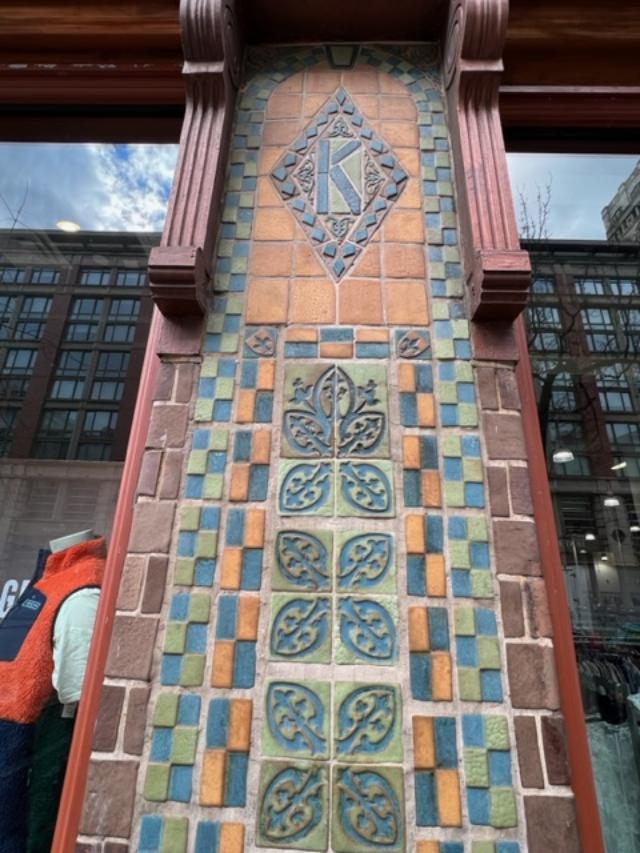
The “K” still adorns the store of the old J.L. Kesner Department Store
Another addition was added by Taylor & Levi in 1911 when the store was leased to J.L. Kesner. They added the terra cotta “K”s that can still be seen from the top of the storefront. The store folded in 1913 and then was used for manufacturing and offices as the shopping district moved to 34th Street and the Fifth Avenue area (Wiki).
At the corner of the neighborhood on Sixth Avenue and West 23rd Street at 100 West 23rd Street is the second Macy’s Department Store building. This was on the very edge of the Ladies Shopping Mile that once stretched along Sixth Avenue.
The building was built in 1871 and you can see all the elaborate embellishments on it with interesting stone carvings and elegant window design and some wrought iron details on different parts of the building. It was the last location of the store before it moved to its current location at 151 West 34th Street.
100 West 23rd Street (Renthop.com) is an old Macy’s
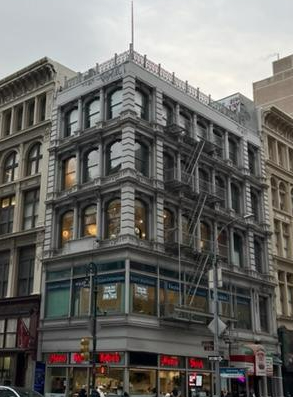
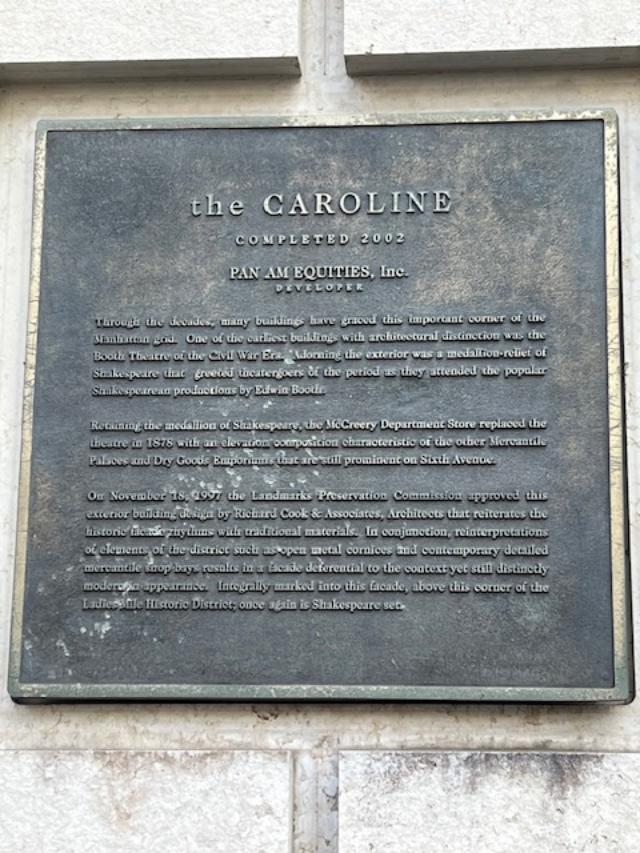
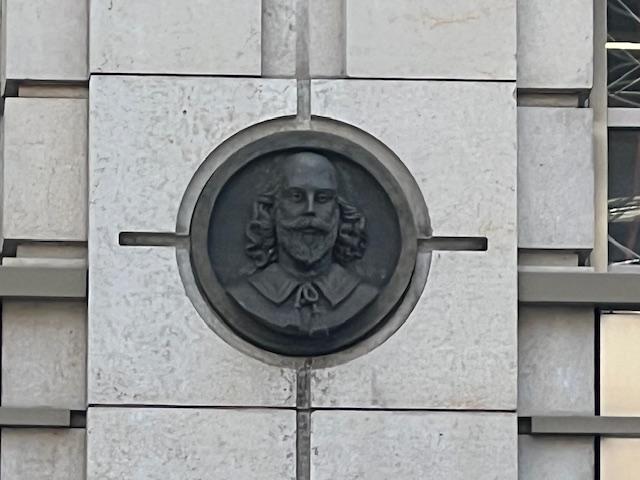
The plaque at The Caroline apartments tells of the location as being the former home of both the Booth Theater and McCreery Department store. The Shakespeare sculpture on the side of the building was once part of both structures.
This Shakespeare sculpture dates from the 1800’s and has been part of all three buildings.
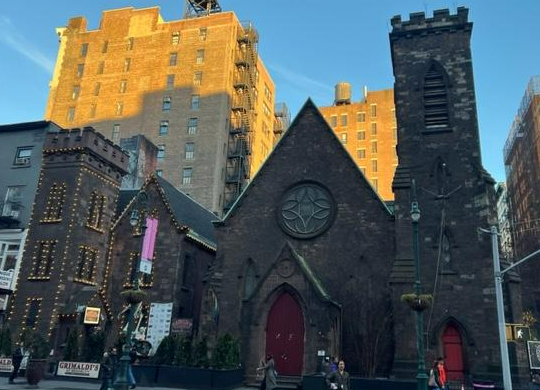
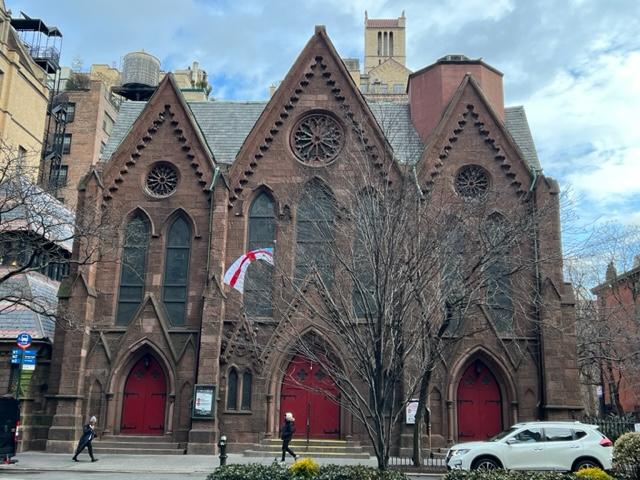
At the edge of the shopping district on the corner of West 20th Street and Sixth Avenue is the old Church of the Holy Communion, which recently housed the Limelight Night Club and now the Limelight Shops at 47 West 20th Street.
The former Church of the Holy Communion at 47 West 20th Street (now the Limelight Shops)
The church was designed by architect Richard Upjohn and was built between 1844-45 and was consecrated in 1846. It was designed in the ‘Gothic Revival’ style and according to the church’s founder, Reverend William Muhlenberg “was the true architectural expression of Christianity” (Wiki). The church closed in 1975 due to declining membership. It had many uses until 1983 when it opened as the Limelight Nightclub. Today it houses the Limelight shops.
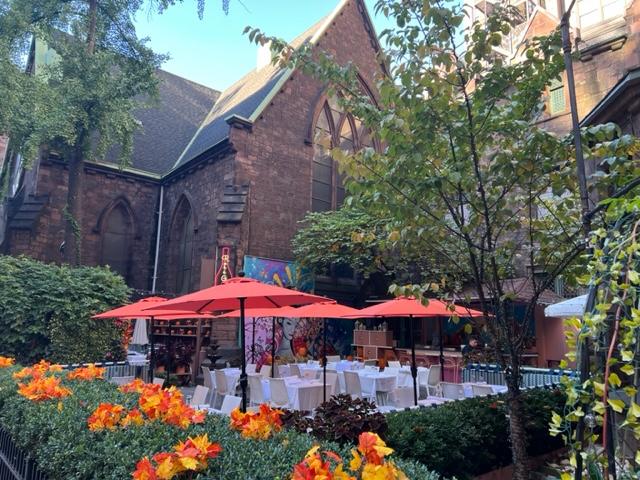
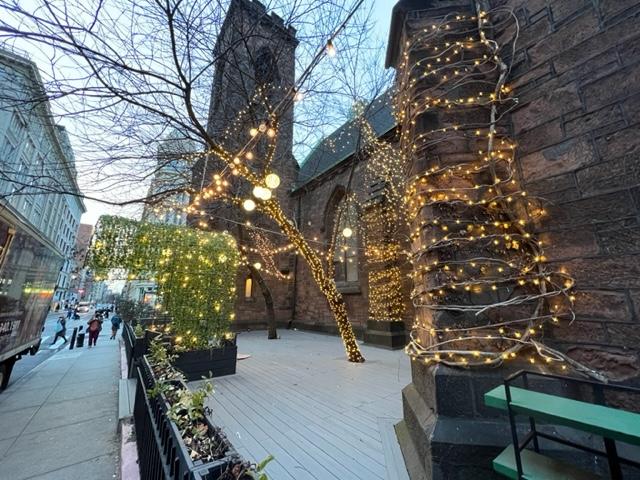
The church set up for outdoor dining in the summer
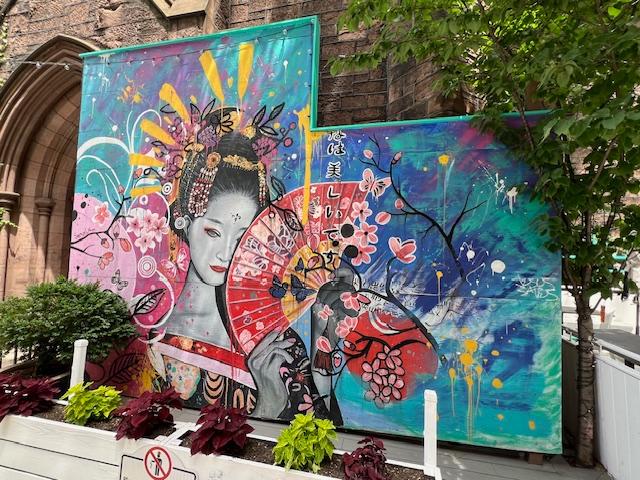
Samuel Hagai is an Israel born artist now living in Los Angeles. He is a self-taught artist know for his realistic portraits (Artist bio)
As I turned the corner onto West 20th Street, there was a lot of commotion across the street and there were police cars everywhere. I did not see what exactly happened, but it made me walk faster down West 20th Street.
West 20th Street is officially the southern border of the Flatiron District, but I have found that the district overlaps with NoMad, Rose Hill, Kips Bay and Chelsea so much of the neighborhood has two or sometimes three community names. The borders begin to blur here. You can see though that this was once a very important business district with buildings that were designed with distinction.
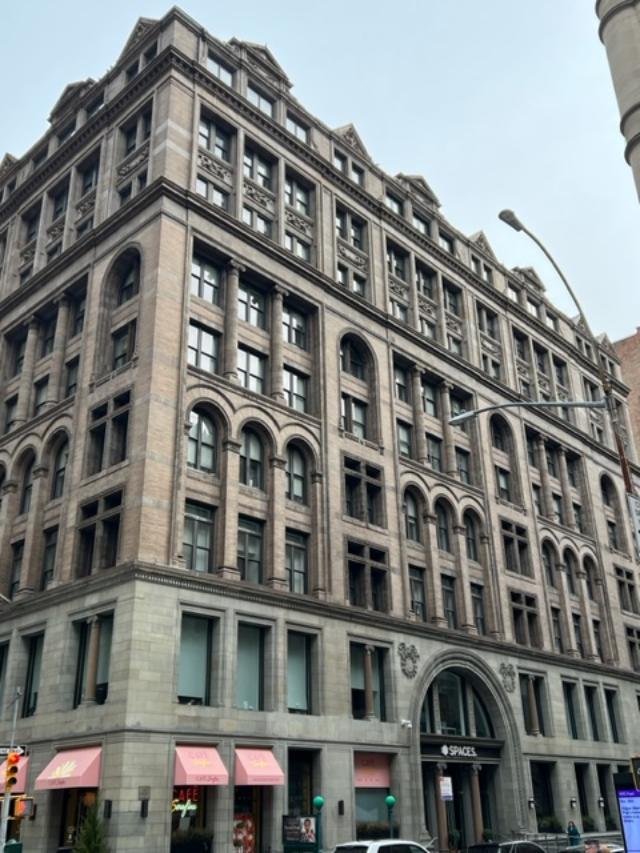
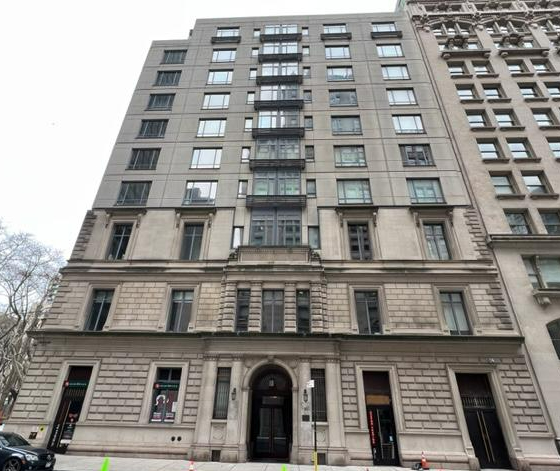
At the corner of Sixth Avenue and West 20th Street, another building got my attention at 650 Sixth Avenue. This impressive building, which is known as the Cammeyer and is located at 650 Avenue of the Americas on the southeast corner at 20th Street, was converted to a residential condominium in 2007 (Carter Horsley. CityRealty.com).
650 Sixth Avenue at the corner of Sixth Avenue and West 20th Street-Now the Cammeyer
The building was designed by Hubert, Piersson & Hoddick in 1892 for the estate of William C. Rhinelander. The red-brick, Neo-Renaissance-style building has white stone and terra cotta trim, a large copper cornice and a handsome band course beneath its top floor. It was the home of the Cammeyer Shoe Store, the one of the largest shoe stores in country (Daytonian).
The conversion was designed by Perkins Eastman for by Penterium, the residential development arm of Korean firm Kumang Housing Corp (Carter Horsley. CityRealty.com).
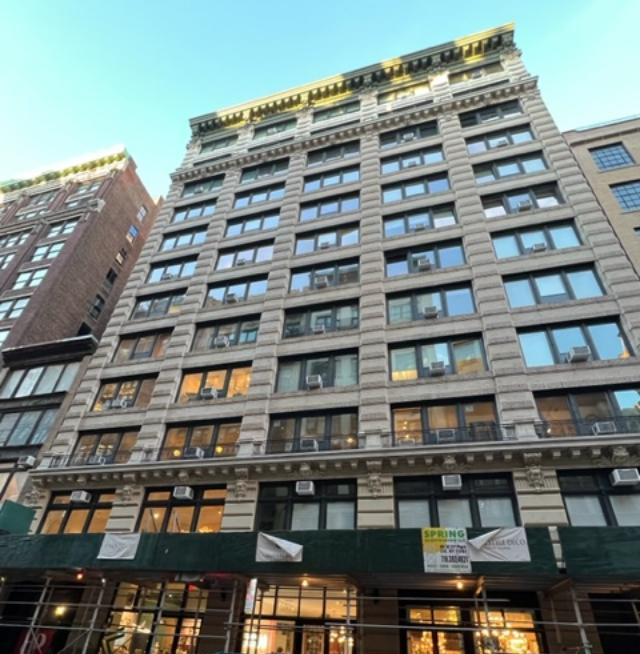
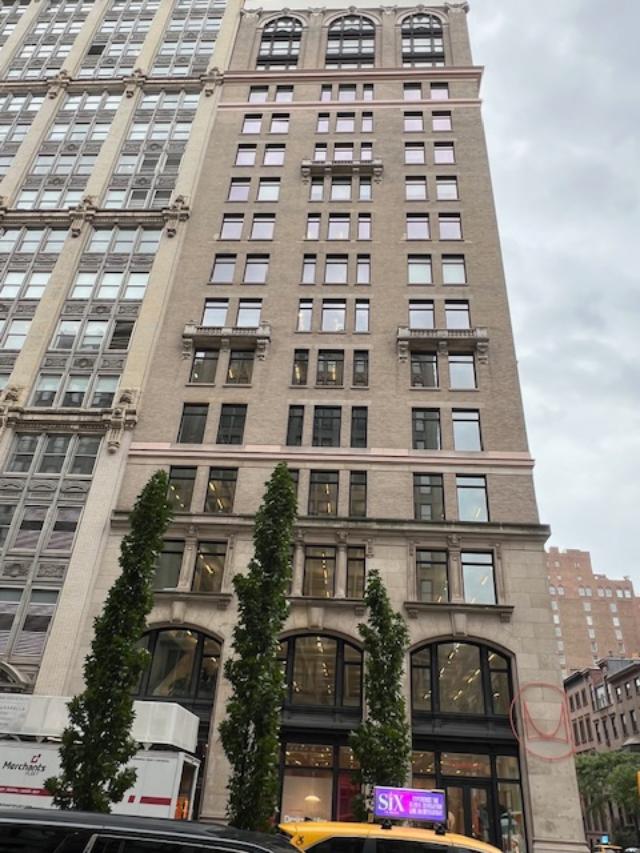
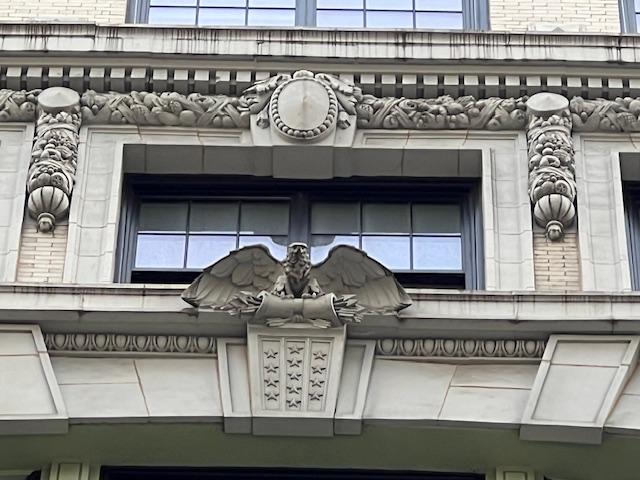
I was admiring 27 West 20th Street on my walk down West 20th Street to Park Avenue South. This detailed twelve story office building was built in 1908 and now offers loft style offices. the details of the building include elaborate stonework both around the doorways and lower windows and the top floors.
What I liked about the side streets as well as the avenues as I walked the neighborhood was that it kept its character and that these buildings had not been knocked down for the modern skyscraper. They were finding new use like the buildings in Midtown South and in NoMAD and become very desirable.
There was true beauty in the details of 20 West 20th Street that was built in 1906. The Beaux Art style details around the windows and doors accent the elegant building.
This is also the details you see in the office building of 10 West 20th Street built in 1903 with Beaux Art style details along the lower windows and doors and the upper floors of the building.
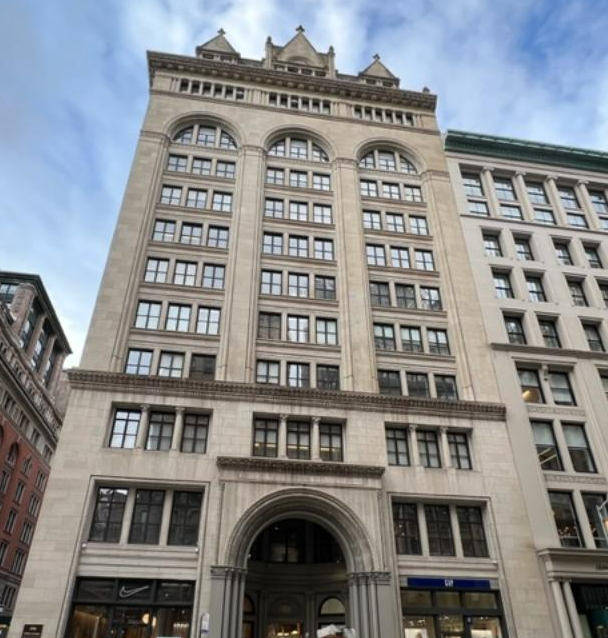
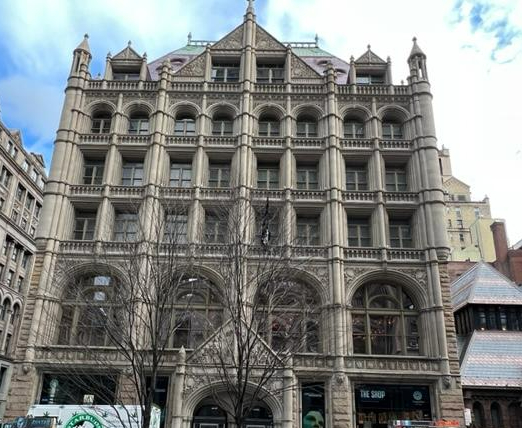
I passed 156 Fifth Avenue as I crossed the border from west to east in this part of the neighborhood and admired it for its detailed stonework carving and unusual styled roof. The Presbyterian Building was built in 1893 and was designed by architect James B. Baker and was designed in the French Gothic style. It was to be used by the Presbyterian Church as their base for domestic and foreign missions and used as office space. The Panic of 1893 changed that, and they had to lease the space out (Daytonian in Manhattan).
I reached Broadway and to what was once heart of the elegant shopping district of the old Midtown Manhattan before it moved up to the 34th Street area at the turn of the 20th Century. At 901 Broadway at East 20th Street is the old Lord & Taylor Building before its final move to Fifth Avenue in 1915 (they closed in 2020).
901 Broadway at West 20th Street-The Lord & Taylor Building
The building was designed by New York architect James H. Giles and was designed in the innovative cast iron style of the time that resembled stone. After the store closed in 1915 when it moved business uptown, the Broadway side of the store was resurfaced in stone which is why only a sliver of the old store design is intact (Daytonian in Manhattan/New York Public Library).
The original look of the Lord & Taylor Store at 901 Broadway (New York Public Library)
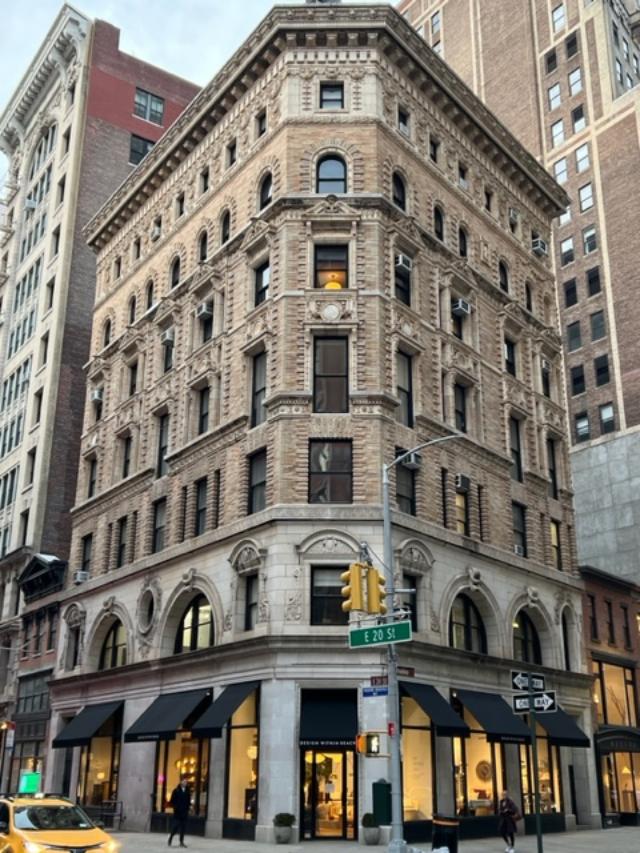
Across the street from the old Lord & Taylor Building is 903 Broadway, the former Warren Building. It was designed in 1891 by Stamford White for the Goelet family for their new commercial holding company. The Goelet family had owned all the land around this area and as it moved from residential to commercial, the family developed the neighborhood around them. The building was named after Robert Goelet’s wife, Harriette Louise Warren (Daytonian in Manhattan).
903 Broadway at West 20th Street-The Warren Building
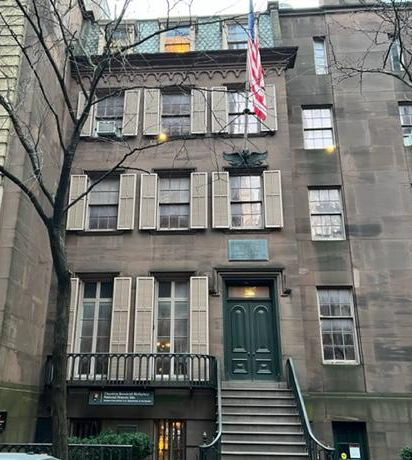
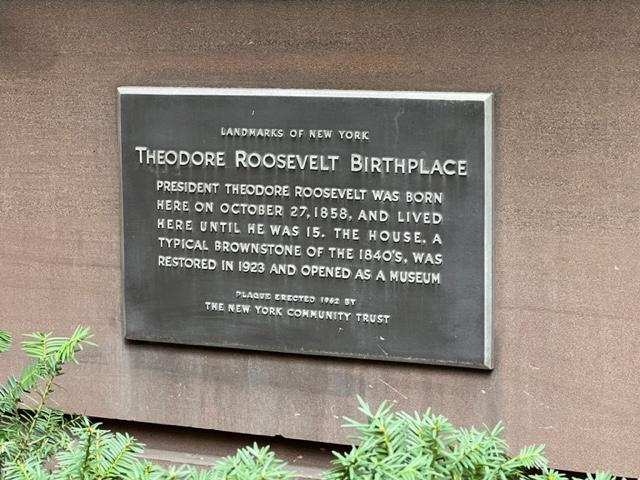
Moving further down East 20th Street is the recreation of the childhood home of Theodore Roosevelt and the Theodore Roosevelt Birthplace Museum at 28 East 20th Street.
28 East 20th Street-Theodore Roosevelt Birthplace Museum
The house opened finally for touring after being closed for the pandemic in January 2023 so I finally got to tour the home. It is filled with period furniture, family heirlooms and many artifacts of the late President.
The Theodore Roosevelt Birthplace Museum at 28 East 20th Street
The small gardens outside the house were in full greenery when I visited.
The Living Room at the Roosevelt Home.
The Parlor at the Roosevelt Home
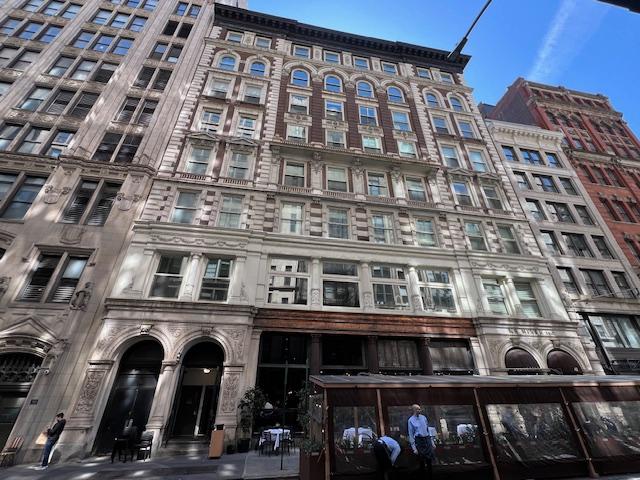
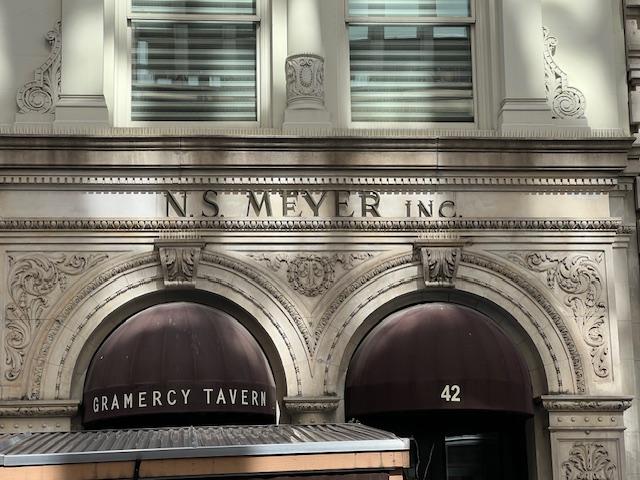
Towards the corner of East 20th Street and Park Avenue South near the border of the neighborhood is 42 East 20th Street, the current home of the Gramercy Tavern, The Bullmoose building. This loft style store building was built between 1898-1899 and was designed by architects Neville & Bagge. The building was converted into lofts and the restaurant below.
The beautiful entrance to the former N.S. Meyer Inc.
Turning the corner to Park Avenue South, you can see Gramercy Park in the distance which shares it border with the Flatiron District. This is where the lines get blurred between the Flatiron District and Gramercy Park, which share the same border.
As you walk up Park Avenue South, the first building that makes an impression is 251 Park Avenue South. This elegant office building with its large display windows and clean lines shows of the store inside. The office building was built in 1910 and has large windows both on the ground level and towards the top of building.
One building that does standout from the others on Park Avenue South is the Calvery Church at 277 Park Avenue. The church was established in 1832 and moved to its current location in 1842. The current church was designed in the Gothic Revival style by James Renwick Jr., who designed St. Patrick’s Cathedral.
Another interesting building, I looked up and admired while walking up Park Avenue South was 281 Park Avenue South, the former Church Mission House. The building was designed by architects Robert W. Gibson and Edward J. Neville in the Medieval style and was built between 1892 and 1894. It was built for the Episcopal Church’s Domestic and Foreign Missionary Society (Wiki). It now houses the photography museum The Fotografista Museum.
281 Park Avenue South-The Fotografiska Museum (The Church Mission House)
Another impressive building, I passed before East 23rd Street is 105 East 22nd Street the former United Charities Building. This is the final building in what was once known as “Charity Row” (Wiki). The building was designed by architect R. H. Robertson and the firm of Rowe & Baker. It was built by John Stewart Kennedy in 1893 for the ‘Charity Organization Society’ (Wiki).
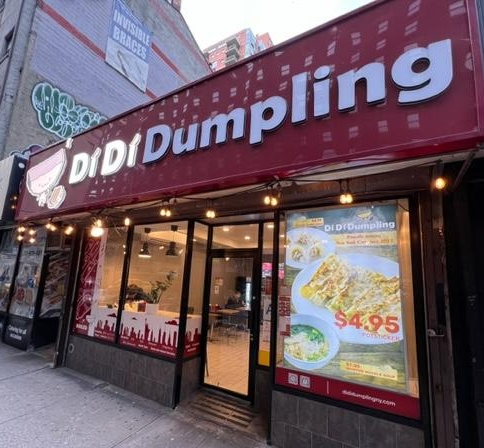
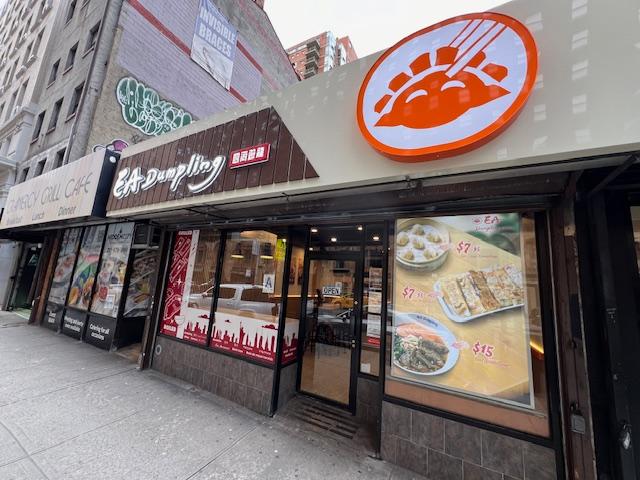
When you turn the corner down East 23rd Street, you are heading back up to the border that the Flatiron District shares with the Kips Bay, Rose Hill and NoMAD neighborhoods. I had walked these district two years earlier when I explored these neighborhoods. I walked north first to the Infantry Regiment building and then walked south again to East 23rd Street to see if there were any changes. With the exception of DiDi Dumpling moving to 34 Lexington from 38 Lexington, it looked pretty much the same.
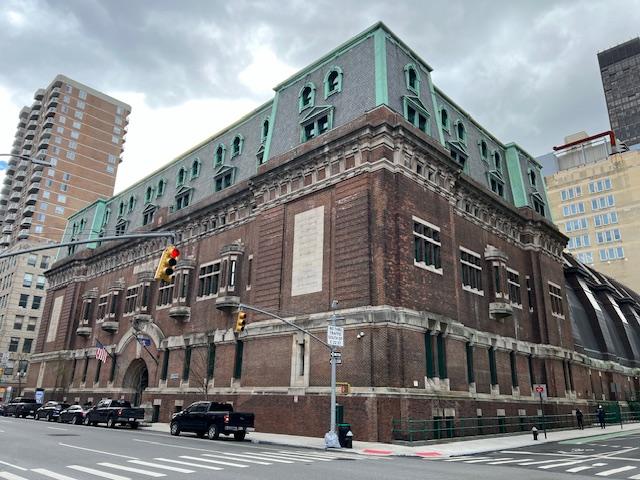
I walked to the front of the 69th Regiment Building at 68th Lexington Avenue. The scaffolding was finally down, and you could see the whole building now. This beautiful building is the home to the New York Army National Guard’s 69th Infantry Regiment, known as the “Fighting Irish” since the Civil War (Wiki).
The building was designed by architects Hunt & Hunt in the Beaux Arts style and was completed in 1906. It has been home to many events and show including the controversial 1913 Armory Show of contemporary art (Wiki). You really have to walk around the building to admire its beauty and history.
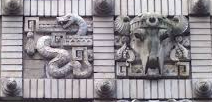
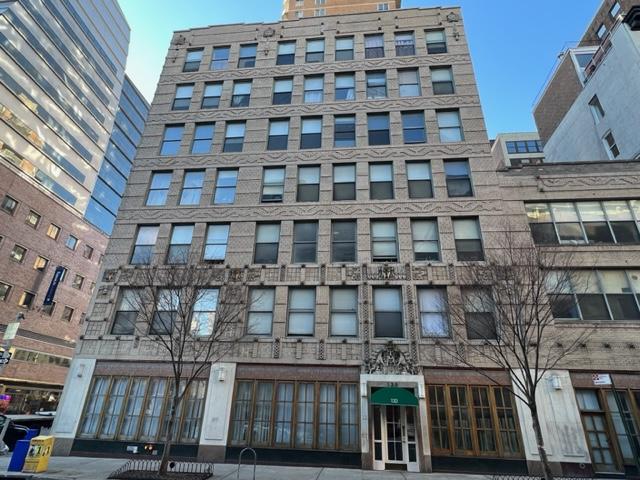
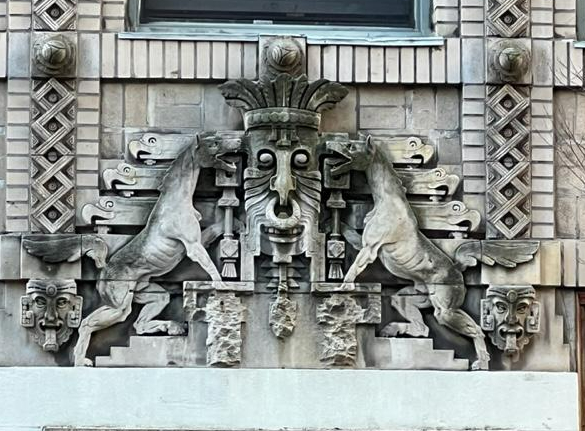
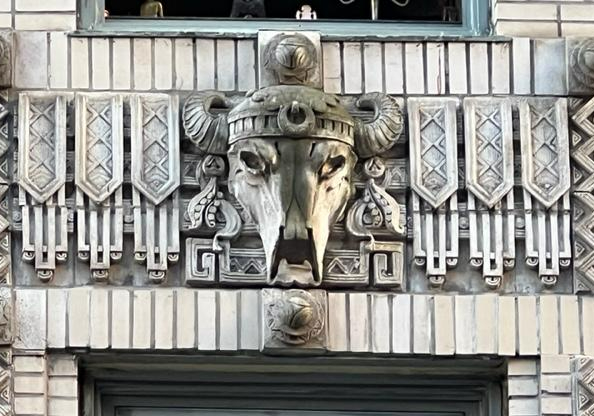
Just across the street is another beautiful building covered with snakes, skulls and dragons carved along the side of it at 130 East 25th Street.
Someone had a warped sense of humor
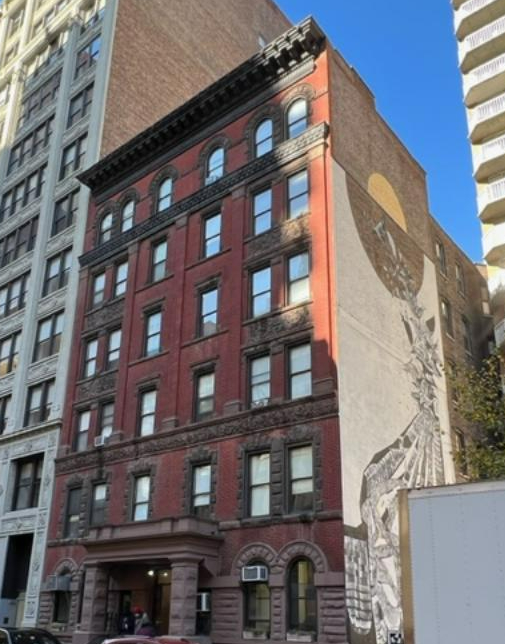
The former B. W. Mayer Building which now houses the Friends House in Rosehall was built in 1916 by architect Herman Lee Meader (Wiki). You really have to walk around the building to see all the unusual carvings that line the building.
130 East 25th Street, the former B. W. Mayer Building
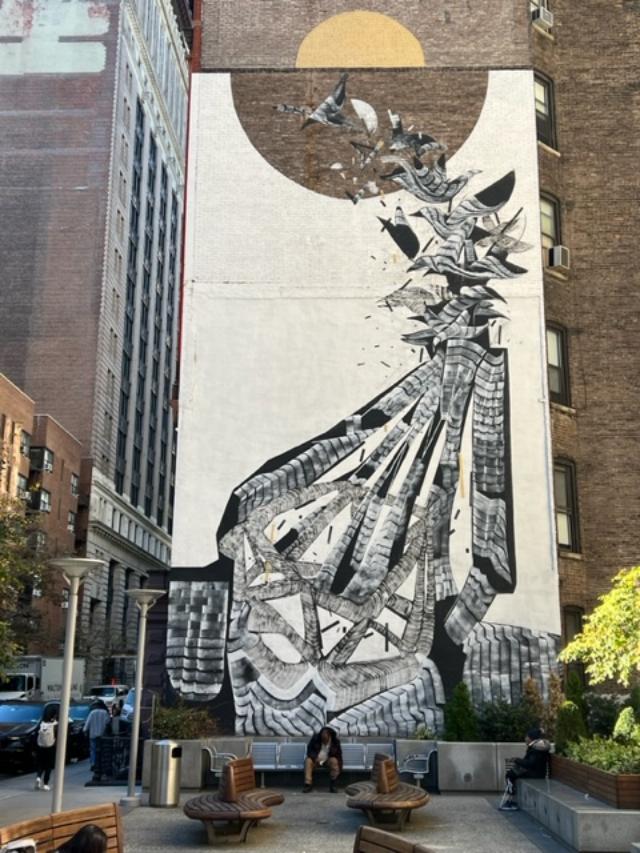
The street art is also interesting on this part of Lexington Avenue. One the corner of East 24th Street & Lexington Avenue is the Friends House New York, a housing unit. Painted on the wall is a very unique painting by Italian street artist, Jacopo Ceccarelli.
Painting by artist Jacopo Ceccarelli
The mural is on the corner of East 24th & Lexington Avenue-The St. Francis Residence Building
The Milan born street artist, who goes by the name “Never 2501” hones his skills after moving to San Paolo, painting murals with an edge that got global recognition. He uses geometric forms in his work with circles and lines creating the abstract (Do Art Foundation).
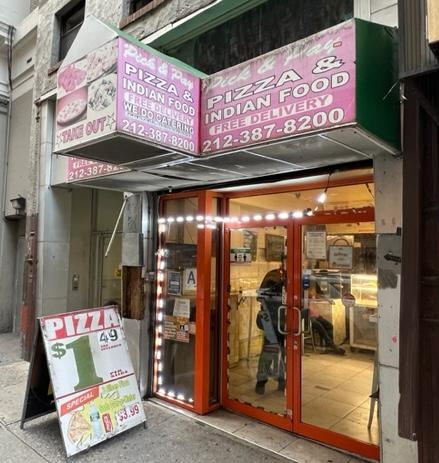
I was getting hungry again with all this criss crossing across Lexington Avenue and I had two choices for a snack, DiDi Dumpling at 38 Lexington Avenue or Pick & Pay Pizza at 30 Lexington Avenue both having reasonable snacks. Since I would be stopping for Dim Sum later that afternoon, I chose the pizza. For a $1.25 a slice, the pizza was not bad in this tiny little hole in the wall that also served Indian food as well. The sauce had a lot of flavor and that is what makes the pizza.
Pick & Pay Pizza at 30 Lexington Avenue (Closed January 2024)
I noticed on the wall right near the doorway near the Starbucks was another wall mural “Urban Ocean” by artist Yuki Abe that is off to the side of the building on the corner of Lexington & 25th, Look at the interesting color and design of the work.
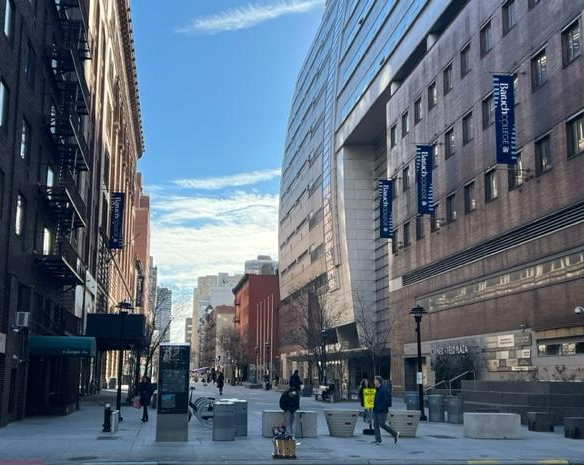
Surrounding this area of Lexington & 25th Street starts the campus of Baruch College which is part of the SUNY system, and I could see students who were taking live classes walking around enjoying the day. I am sure it is much different when classes were in full swing, and the students were hanging around the restaurants and coffee shops in the area.
The Baruch College Student Plaza at East 25th Street is a nice place to relax
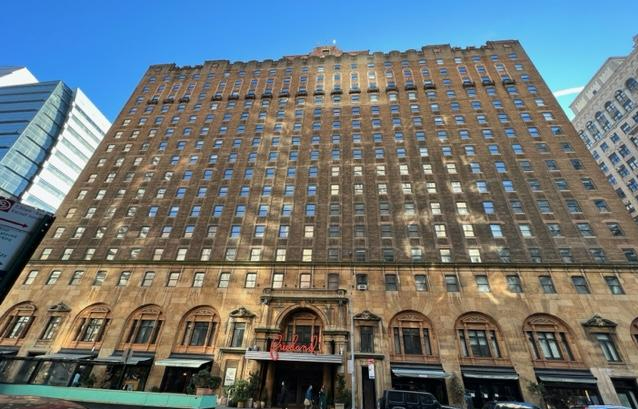
Another building that stands out in its beauty and design is on the corner of the neighborhood on Lexington Avenue between 24th and 23rd Streets, the Freehand Hotel at 23 Lexington Avenue. The hotel was originally built as the Hotel George Washington in 1928 and designed by architect Frank Mills Andrews in the French Renaissance style.
The Freehand Hotel (the former George Washington Hotel) at 23 Lexington Avenue
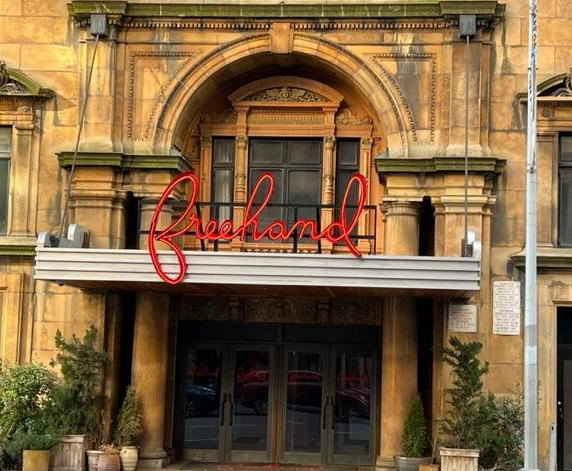
While still a apartment building and a dorm in the 1990’s, several famous New Yorkers lived at the hotel including artist Keith Haring and musician Dee Dee Ramone. Playwright Jeffery Stanley also lived at the hotel for a period of time.
The entrance to the Freehand Hotel is very elegant
After the north south trip around the boundaries of Lexington Avenue, I turned at East 25th Street to head back to Sixth Avenue. The border of the Flatiron District is also part of the Rose Hill and NoMAD neighborhoods and shares the border with Kips Bay.
Walking down East 25th Street, you realize as you start to border the Midtown area that the buildings take up more of the blocks and there are less smaller brownstones and tenements in the area. The dominate building on the block by Madison Square Park is 11-25 Madison Avenue, the Metropolitan Life Buildings. The building that lines this part of East 25th Street is the Metropolitan Life North Building (or 11 Madison Avenue).
Metropolitan Life North Building at 25 Madison Avenue
This beautiful building was the extension of the main headquarters next door on Madison Avenue. The building was designed by the architectural team of Harvey Wiley Corbett and D. Everett Waid in the Art Deco style in the late 1920’s as the tallest building in the world but the Great Depression changed the plans and it was built in three stages. The first finished in 1932, the second in 1940 and the third in 1950 (Wiki).
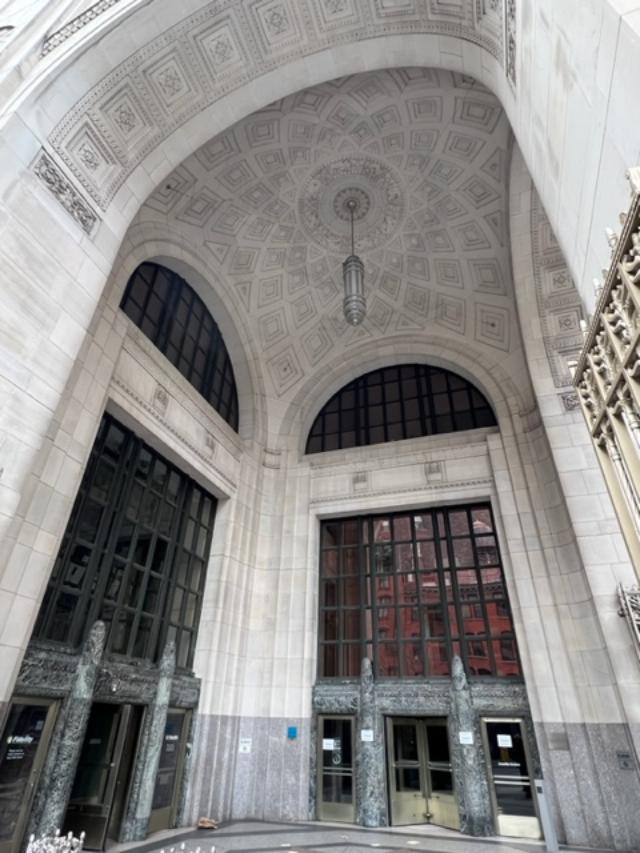
The archways ‘Loggias’ on each side of the building
What stands out about the building is the arched vaults on each corner of the structure called ‘loggias’ and the features were made in limestone and pink marble. When you stand under them you can see the colors and details of the marble carvings (Wiki). Just walking around the building the features are impressive and standout.
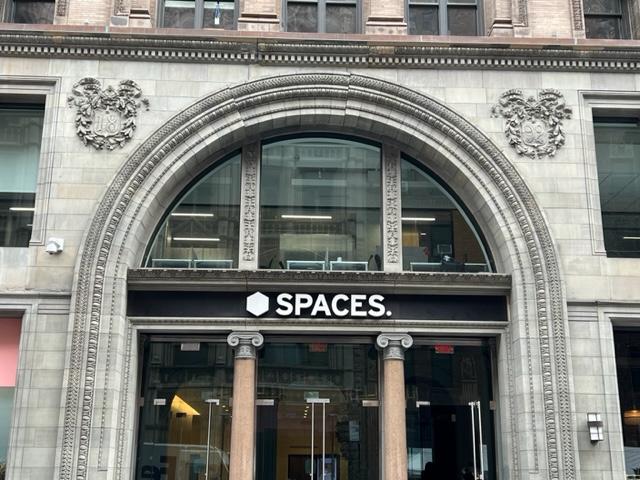
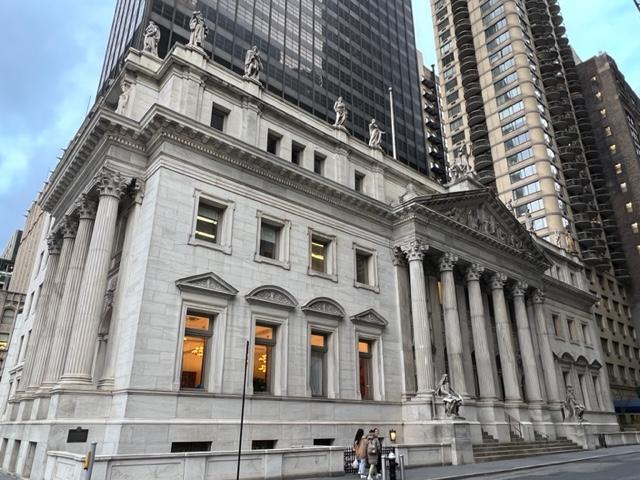
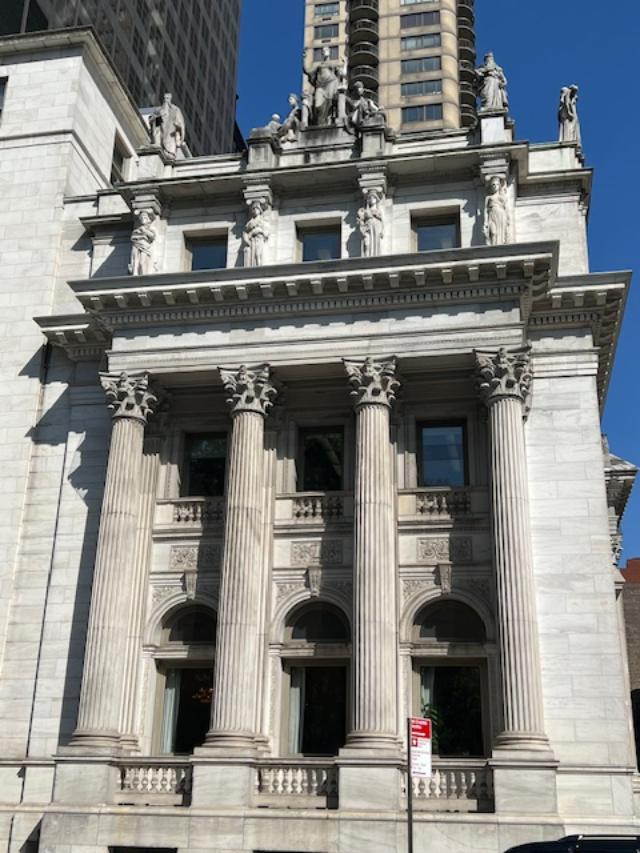
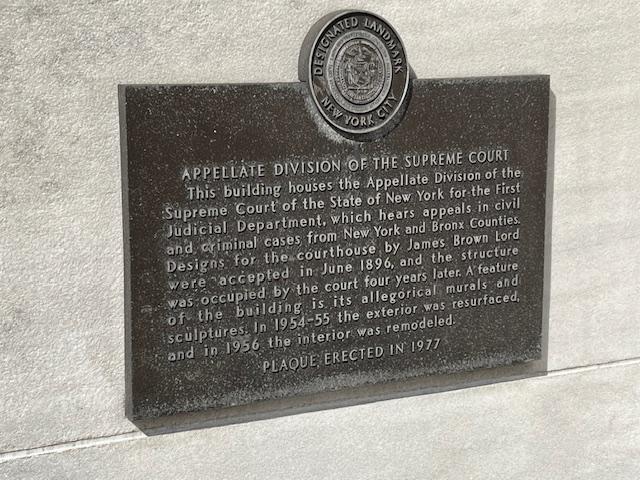
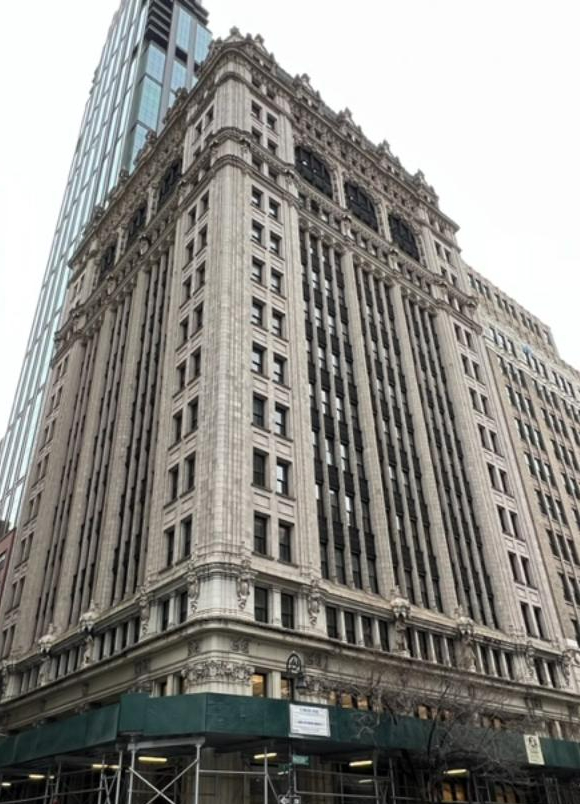
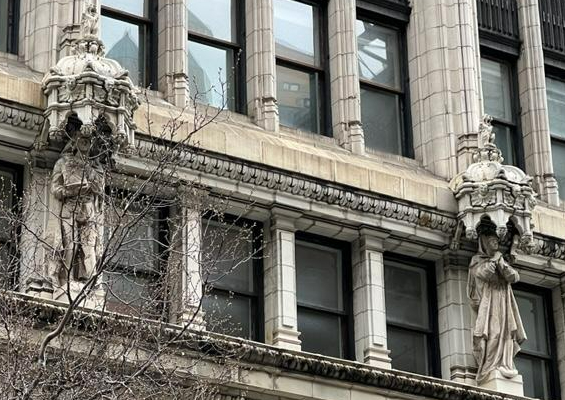
Across the street from the Metropolitan Life North Building at 27 Madison Avenue is the Appellate Division Courthouse of New York State and one of the most beautiful and detailed buildings I have seen on my walks. The building was designed by architect James Lord Brown in 1896 in the Beaux Arts Style and is adorned heavily in sculpture (Wiki). You really have to step back and walk across the street to see the details on the building.
27 Madison Avenue The Appellate Division Courthouse of New York State
The side of the building facing Madison Square Park.
Looking up close, you can see that the building resembles a Greek Temple and was considered one of the best examples of the “City Beautiful Movement” that occurred during the 1890’s and 1900’s to enhance cities with monumental grandeur and beauty (Wiki).
The historical beauty of the architecture continued up the border of the neighborhood as I walked up Madison Avenue towards East 30th Street. You have to walk both sides of Madison Avenue to appreciate the designs and details of the buildings that line the avenue.
You have to look close to the building or you will miss it is the sculpture by artist Harriet Feigenbaum. It is a memorial to victims of the Holocaust and is very powerful in its work showing the concentration camps.
“The Memorial to the Injustice of the Victims of the Holocaust”-“Indifference to Justice is the Road to Hell”
Harriet Feigenbaum is an American sculptor and environmentalist. Her works cover sculpture, film and drawings that are seen all over the world (Wiki and artist bio).
I passed 50 Madison Avenue and noticed how the buildings blended in design. The bottom level of the building was built in 1896 as the headquarters of the ASPCA (American Society of the Prevention of Cruelty of Animals). The building was designed by architects Renwick, Aspinwall & Owen and had a classic ‘club like’ design to it. The building was refitted and added to in 2005 by the firm of Samson Management with a six story addition to luxury condos (CityRealty.com).
Another ornamental building that stands out in the neighborhood is 51 Madison Avenue which is the home of New York Life Insurance Building. The building was designed by architect Cass Gilbert in 1926 in the Art Deco style with Gothic Revival details along the sides and was finished in 1928. The structure is topped with a gilded roof (Wiki & New York Life Insurance history). This is another building that you have to see from all sides.
51 Madison Avenue-The New York Life Insurance Building
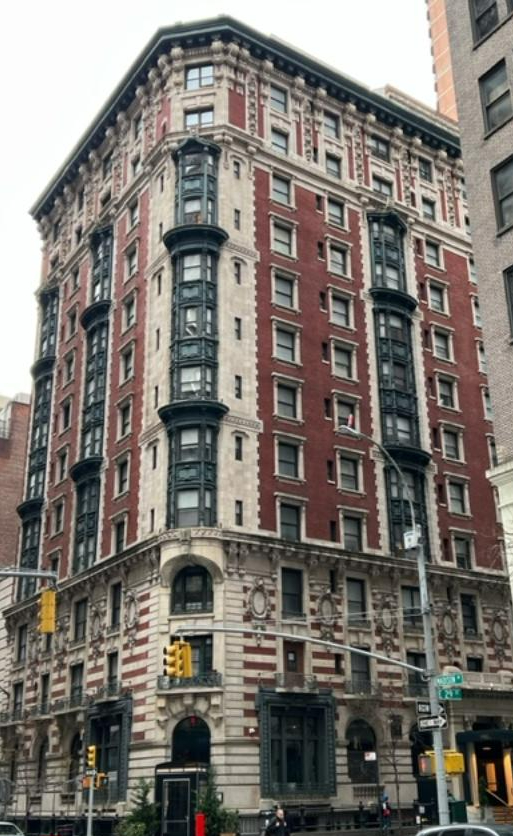
Continuing my walk up Madison Avenue while admiring the architecture of the neighborhood is The James NoMAD Hotel, the former Seville Hotel, on the corner of East 29th Street at 88 Madison Avenue. This interesting hotel has gone through several name changes and renovations since it was built in 1904. The hotel was designed by architect Harry Alan Jacobs in the Beaux Arts style and the annex to the hotel was designed by Charles T. Mott in 1906 (Wiki).
88 Madison Avenue-The James NoMAD Hotel (formerly The Seville)
The outdoor dining was open for the restaurant the first afternoon I had visited the neighborhood even though I thought it was a little cool to eat outside. Even though you can’t go inside unless you are a guest, I could see the lights stung from the street, and it looked very elegant in the outside dining area. It was noted in the paper that they will be keep the tradition of closing Broadway from West 25th to West 28th for the summer.
Across the street from this elegant hotel is 95 Madison Avenue the former Emmett Building. The structure was designed by architects John Stewart Barney and Stockton B. Colt of Barney & Colt for Dr. Thomas Addis Emmet in 1912 when the area was a wholesale district. The building is designed in the French Neo-Renaissance with Gothic style ornamentation (New York Landmark Preservation Commission and Wiki).
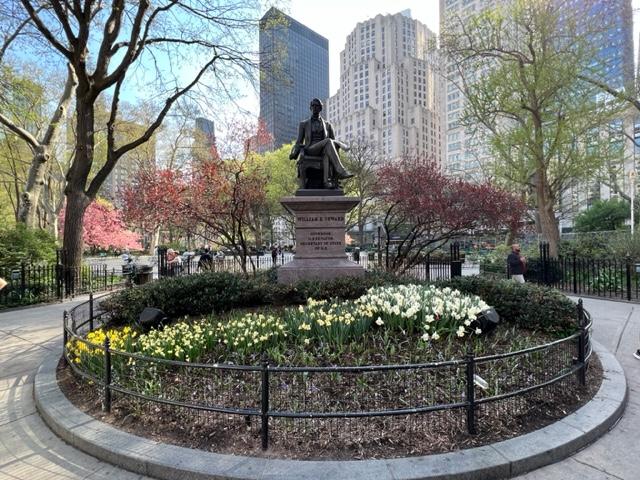
Heading straight ahead at East 25th Street and Madison Avenue is Madison Square Park, named after our fourth President of the United States, James Madison. This well landscaped park is the gathering place of the residents of NoMAD and has a wonderful playground that has been busy the whole time I have spent in the neighborhood.
Madison Square Park is an interesting little oasis from all the traffic and office space. It has an interesting history since it was designated a public space in 1686 by British Royal Governor Thomas Dongan. It has served as a potters field, an arsenal and a home for delinquents. In 1847, the space was leveled, landscaped and enclosed as a park. It became part of the New York Park system in 1870. There are many historical figures featured in the park (NYCParks.org).
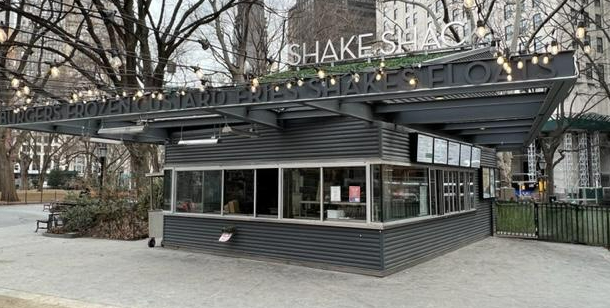
The park today is a major meeting spot for residents and tourists alike with a dog track and the original Shake Shack restaurant.
Madison Square Park in the Spring when I was walking the length of Broadway
When I walked into the park to take a break, it must have been the busiest section of the neighborhood between the playground and the original Shake Shack that were serving food to a crowd clung to their cellphones.
The original Shake Shack is located in Madison Square Park at Park and 23rd Street
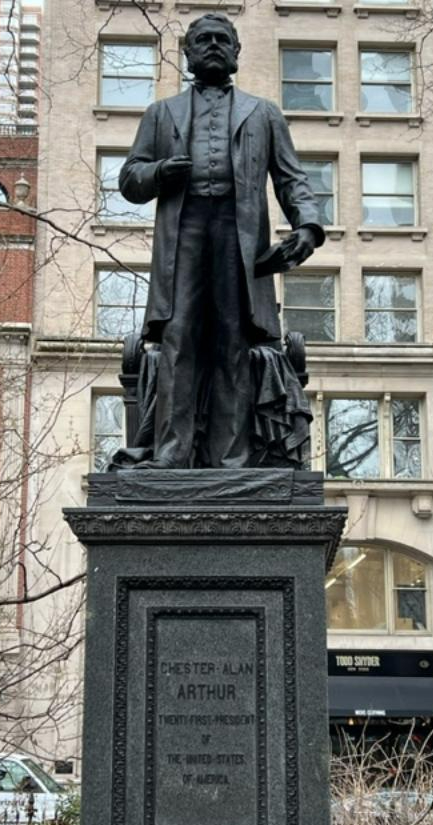
I stopped to look at the statue of our 21st President Chester A. Arthur, who had taken oath just two blocks away in his New York townhouse where the Kalustyan’s Specialty Foods is located at 123 Lexington Avenue (See My Walk in Kips Bay below). I thought about what was going on in our government today and what they must have gone through with this transition.
The Statue of Chester A. Arthur in Madison Square Park
George Edwin Bissell was an American born artist from Connecticut whose father was a quarry-man and marble carver. He studied sculpture abroad in Paris in the late 1870’s and was known for his historical sculptures of important figures of the time (Wiki).
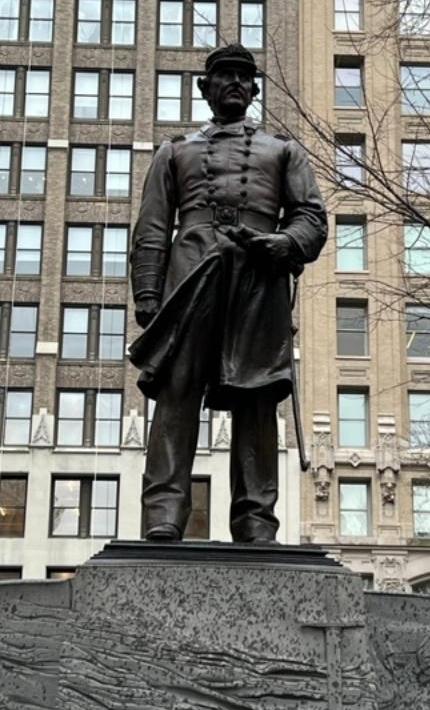
The Admiral David Farragut statue in Madison Square Park by artist Augustus St. Gaudens
Another interesting statue that stands out in Madison Square Park is the of Civil War Navy hero, Admiral David Farragut. Admiral Farragut commanded the Union Blockage of Southern cities and helped capture New Orleans. The statute was designed by sculptor Augustus St. Gaudens. This was the artist’s first major commission when it was dedicated in 1881 (NYCParks.org).
Augustus St. Gaudens was an Irish born American artist whose specialty during the Beaux-Arts era was monuments to Civil War heroes. He had created the statue the William Tecumseh Sherman in the Central Park Mall on Fifth Avenue along with this statue of Admiral Farragut. He had studied at the National Academy of Design, apprenticed in Paris and then studied at the Ecole des Beaux Arts (Wiki).
Upon leaving Madison Square Park and proceeding across East to West 25th Street (Fifth Avenue separates the East Side from the West Side of Manhattan), I was traveling into what was once part of Midtown between the Civil War until WWI and then after that Midtown moved closer to Central Park during the 1920’s through the 1940’s.
Most of the buildings in this section of NoMAD were built with decorative stonework and elaborate ornamentation. There are so many in this section of Manhattan I will highlight the ones that are the standouts. As I walked the border of the neighborhood, you could see many beautiful buildings lining 25th Street.
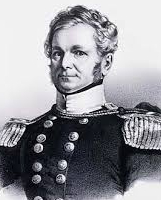
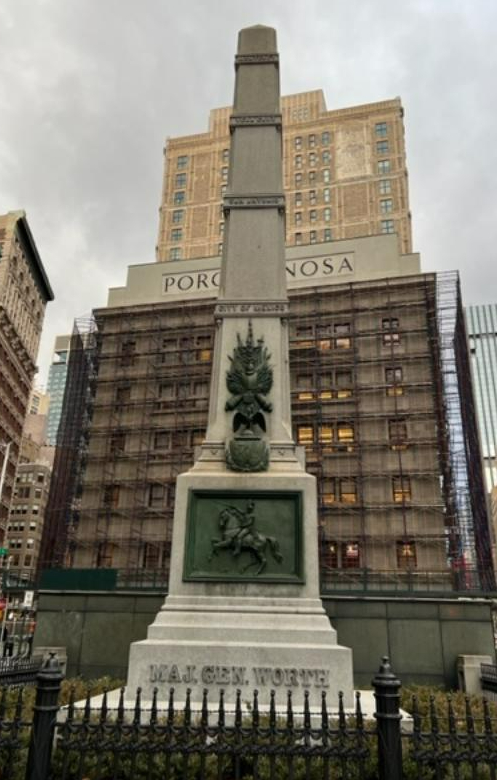
When walking down East 25th Street from Madison Square Park, the first interesting site you pass is the historic Worth Square, the Memorial to and burial site of General William Jenkins Worth.
William Jenkins Worth was a native New Yorker (Hudson, NY) and decorated Army officer who had served our country in the Battles of 1812, The Second Seminole War and the Mexican-American War. His series of campaigns shaped this Country to where it is today. He died working for the Department of Texas in 1849 (Wiki).
The General’s remains are buried under the monument at Worth Square at the corner of Fifth Avenue, Broadway and East 24th and 25th Street. General Worth was interned here in November of 1857 on the anniversary of the British leaving the colonies (NYCParks.org).
The Worth Monument between East 24th and East 25th Street at Broadway and Fifth Avenue
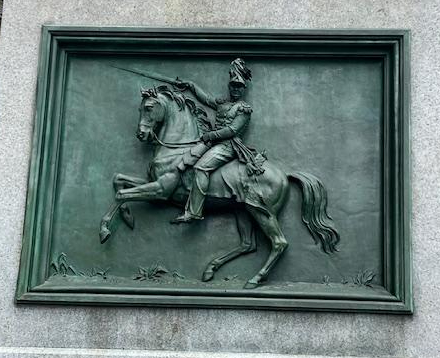
The historic artwork on the monument.
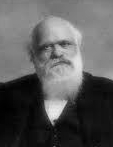
The Worth Monument was designed by artist James Goodwin Batterson, whose main profession was one of the founders of the Travelers Insurance Company in Hartford, CT and helped design the Library of Congress Building in Washington DC. He had immersed himself in his father’s quarrying and stone importing business early in his career and traveled extensively to Europe and Egypt for the job. He designed this monument in 1857 (Wiki).
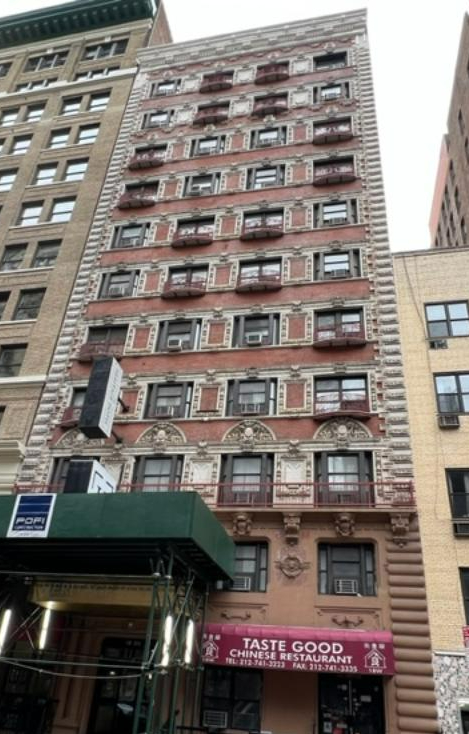
Passing Worth Square and continuing down West 25th Street, I noticed the impressive architecture that lines the streets of this section of the Broadway part neighborhood.
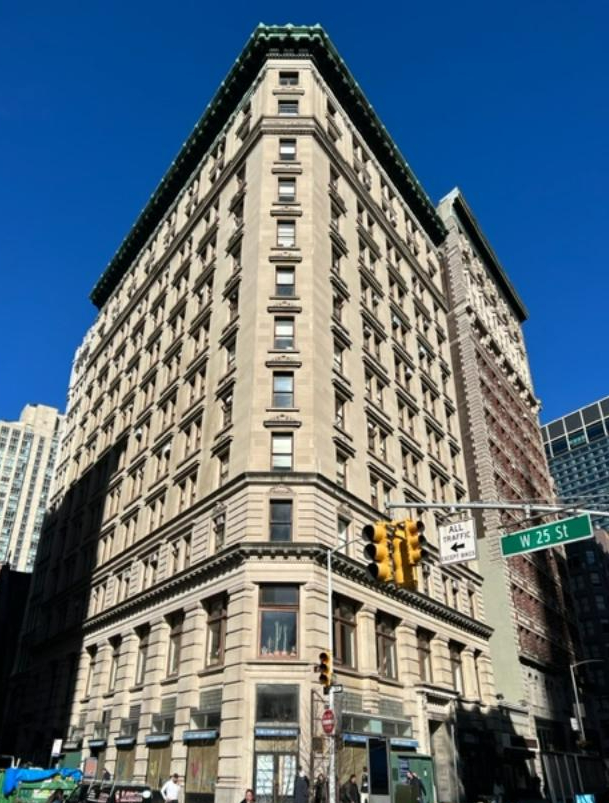
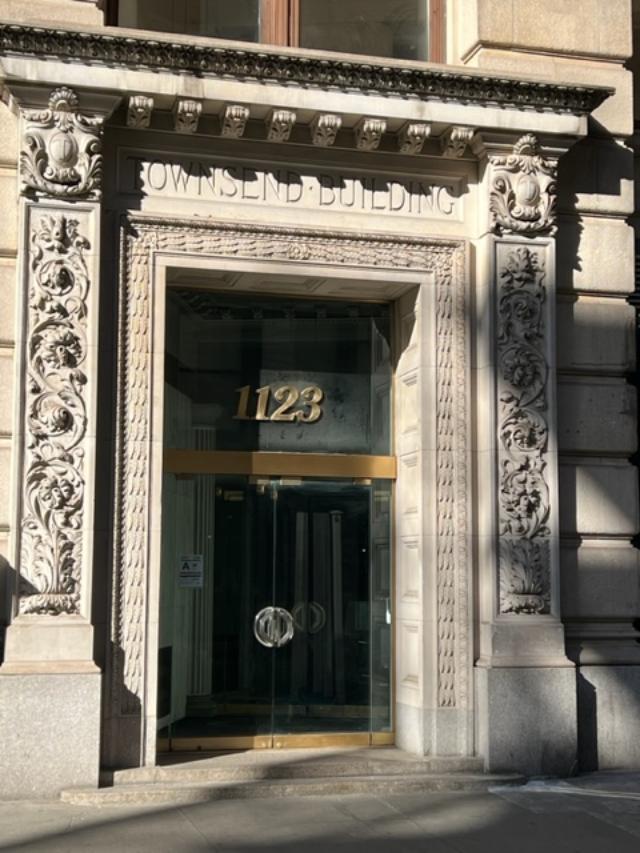
At 1123 Broadway is the detailed Townsend Building that was built between 1896-97 and was designed by New York architect Cyrus Lazelle Warner Eidlitz in the Classical style. The building is names for Isaac Townsend whose estate the building was built on (Flatiron Partnership).
Another beautiful building is the Heritage Hotel at 18-20 West Fifth Avenue. This detailed hotel was designed by the architectural firm of Israels & Harder in 1901 in the Beaux-Arts style.The hotel opened in 1902 as the Arlington Hotel, a residential hotel for well-heeled guests (Daytonian).
By the time I reached Sixth Avenue again, I could see the reason why most people call the Flatiron District a treasure trove of architecture. Block after block walking the borders of this neighborhood was an experience in the hopes and dreams of so many companies of the turn of the last century. When they built these buildings, they were meant to last, and they believed in what they were creating.
What I love about the Flatiron District is the belief that business had in itself to last, to make an impression on the not just the people that worked there but to the outside world. It showed a world of promise and power and showed New York City’s representation in business and culture. Between the Civil War and WWI, you could see the growth in commerce, marketing, retail and the arts representing in these blocks of Manhattan.
This was meant to show the country where New York City stood and what it represented. These were not just buildings but statements to the optimism that a country that had just been through a Civil War could accomplish. While this trend was followed by cities all over the country growing between the wars, New York stood out by doing it first and doing it bigger.
This is why Manhattan is the capital of the World.
Admission: Adults $12.00/Children Over 18/People with Disabilities/Students & Educators/Veterans $8.00. Children under 18 and Members are free (please check website for changes)
The Poster House is a little gem of a museum that I must have passed many times and never knew it was a museum. I had never heard of this museum before. The Poster House is dedicated to the history and art of posters and how they impact our lives as a way of communication. I got a chance to see the whole museum in about two hours.
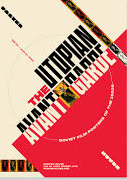
The first exhibition on the first floor of the museum was “Utopian Avant-Guard: Soviet Film Posters of the 1920’s”, a retrospect on the film industry during the Silent Era…
Park Terrace Deli has been one of my go to places to eat uptown for a few years. I came across the deli when I was walking “The Great Saunter”, the 32 mile walk around Manhattan and needed an additional breakfast for extra protein and carbs. They did not disappoint me.
Park Terrace Deli at 510 West 218th Street
I always order the same thing here, the Bacon, Egg and Cheese on a hero roll ($6.50) and it is one of the best in Manhattan. They scramble two fresh eggs and then tuck it into a soft chewy hero roll lined with American cheese. Then they top it with several pieces of crisp bacon. The combination of flavors is amazing, and the portion size is enough for breakfast…
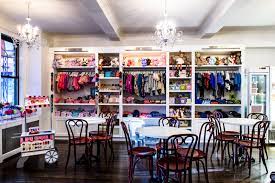
A la Mode Shoppe is the type of ice cream/candy shop that every neighborhood should have in it. It is a colorful spot with unusual, homemade ice cream flavors, and a nice selection of gourmet sodas, candies and gifts. The store is decorated with bright colors, comfortable chairs and a festive inviting environment. They even have a small party room off to the side of store with seating for small children.
The inside of A la Mode Shoppe (A la Mode Facebook)
What I come for is the ice cream. There are two flavors that I come for when I visit the store, Pink Sprinkles, which is Strawberry ice cream with loads of colorful sprinkles layered…
The weather finally broke and it was goreous today. It was a crazy morning before I left for the City and I got in early before I had to work at the Soup Kitchen. The numbers keep growing and we are getting busier and busier. We are now packing a thousand bags of food for the growing number of people visiting Holy Apostles.
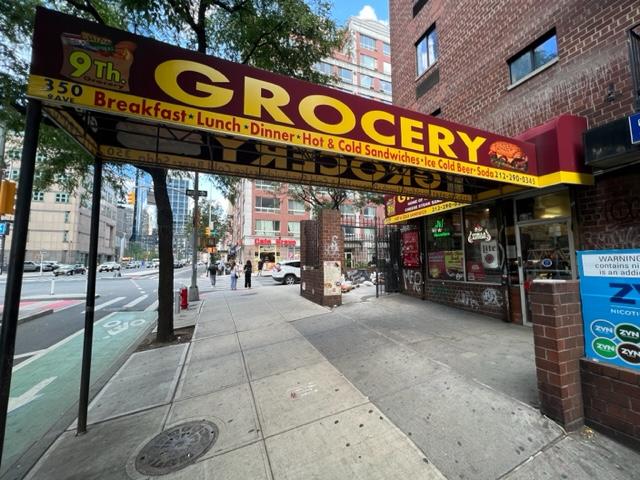
I needed some extra energy before I got to the church and decided to stop at 9th Avenue Grocery, a tiny deli a block from the church for a Bacon, Egg and Cheese sandwich. I must have passed this place a hundred times over the last twenty years but never stopped in. With all the construction going on in the neighborhood, I have noticed more signs outside for the deli with their specials to bring these guys in.
9th Avenue Grocery at 350 Ninth Avenue (Closed January 2024)
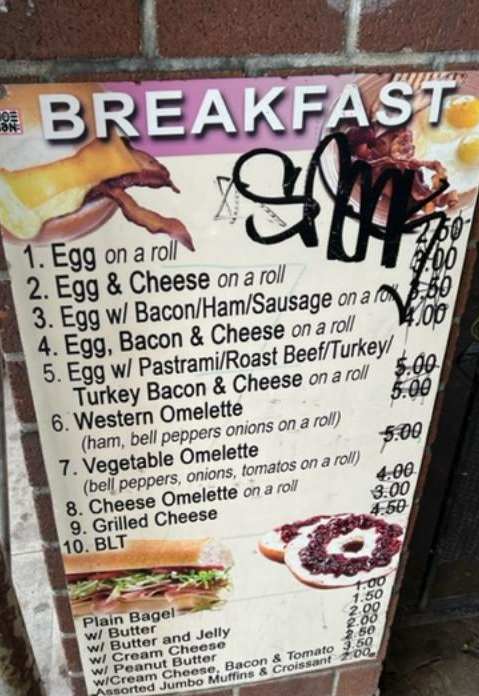
The Breakfast menu at 9th Avenue Grocery (prices have changed)
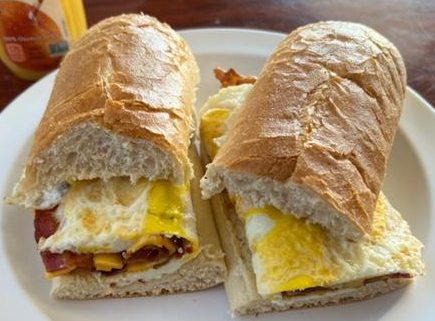
I have to tell you the Bacon, Egg and Cheese on a soft roll ($4.50) was not only was reasonable but delicious. The roll was so fresh and chewy, but they gave you a nice portion of eggs to bacon which must have been two or three per order. What I liked about their menu was that almost all their hot foods were under $10.00.
The Bacon, Egg and Cheese at 9th Avenue Grocery is worth the trip dodging construction workers
When I finished breakfast, it was time to go to work and we spent the rest of the morning packing food bags to go with the hot food lunch we were serving that morning. We worked in coordination and packed 800 bags this morning so that the Monday staff had something to work with that day. Five of us got this done in two and a half hours.
After we finished, it was time to to explore the Streets of the Chelsea neighborhood. I lucked out and it was a beautiful sunny afternoon with blue skys and about 82 degrees. That’s when these walks are fun.
I have to tell you that this, Chelsea in this section of the neighborhood is a juxtapose of different styles of architecture and reflects how the area is reinventing itself from an old shipping and receiving/distribution business to the modern-day tech companies. Not only has there been a reuse of these buildings, but the historical brick townhouses have been brought back to their glory with extensive renovations. With every block it just keeps changing with a new business filling the stores that once had ‘For Rent’ signs.
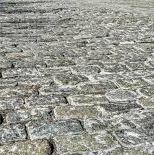
I walked around the block from Holy Apostles Church to start the walk from Twelve Avenue and then continued down West 27th Street. You are going to find that most of the buildings between Twelfth and Tenth Avenues which were probably once garages and car washes have now been refitted into art galleries. You can see the art peering out from the glass windows. You will also notice that it is one of the few streets in the City with cobblestones. It is rare to see this anymore.
The cobblestone streets of West 27th Street off Twelve Avenue
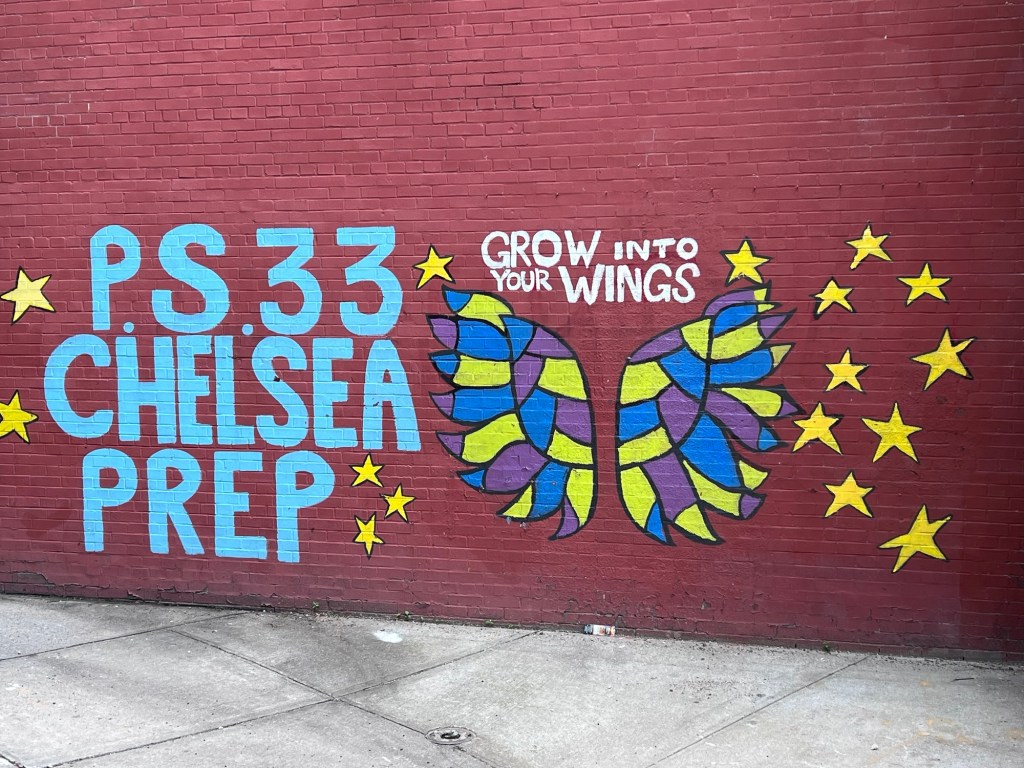
From Tenth to Ninth Avenues, you pass Chelsea Park, which looked like it was busy on the soccer field with a gym class from the Avenues World School on one side, the kids screaming and yelling all over the playground equipment from P.S. 33 Chelsea Prep and the homeless who just finished their lunch from Holy Apostles lying around the benches in the middle of the park. It is never a dull moment in that park and it has become very much alive with the warmer weather and probably the anticipation of school ending.
For security reasons, you will have to walk around the Penn South Complex down West 26th Street and around to reach Ninth Avenue and the entrance to the Fashion Institute of Technology campus at West 27th Street.
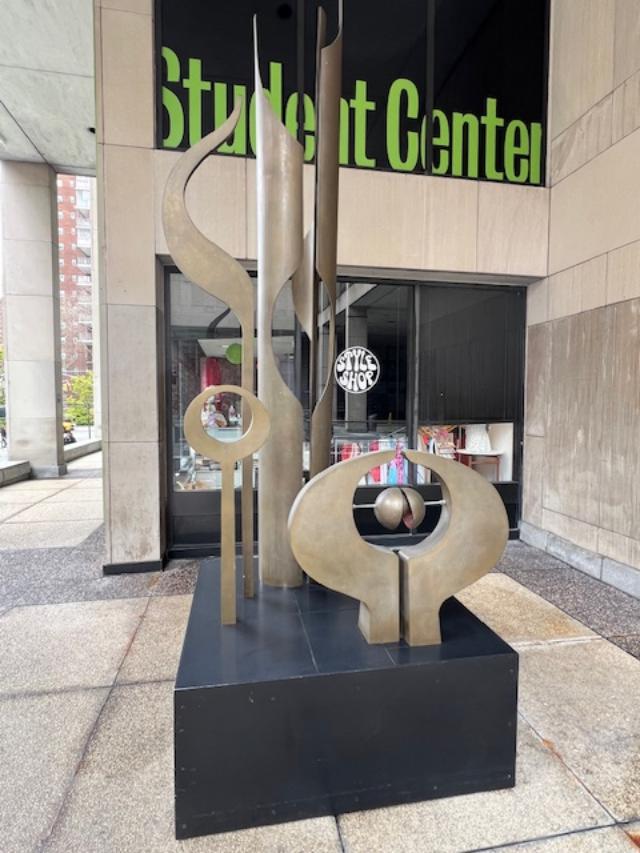
“Untitled” by Ami Shamir
The campus was really quiet as summer classes were probably going on right now. I noticed tucked in front of the Dubinsky Building is the sculpture “Untitled” by artist Ami Shamir. This work appears to represent a figure group of fashion industry-related tools (Hue Magazine). The piece dates back to the 1970’s.
Ami Shamir is an Israeli American born artist was a noted sculpture and stained-glass artist whose works were related to Jewish themes and the Holocaust. The work was part of the Public Art Movement of its time (Hue Magazine).
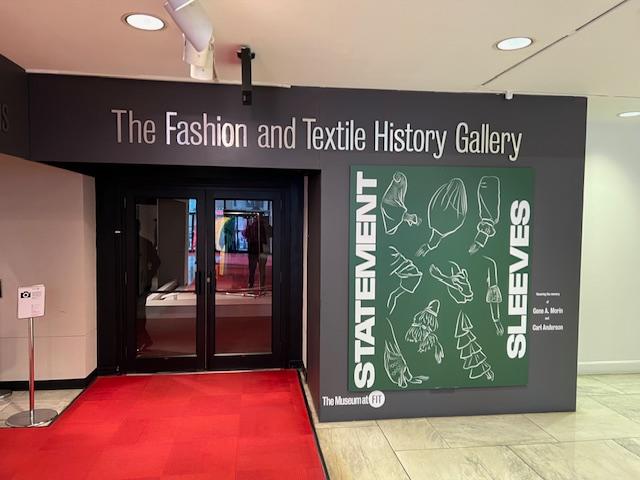
On the corner of West 27th Street and Seventh Avenue is the Museum of FIT at 227 West 27th Street. This wonderful and unique museum showcases the clothing, shoes and accessories of the Fashion Institute of Technology collection. I stopped in earlier to see the new exhibition “Dior + Balenciaga-Kings of Couture and their Legacies” which was the current show.
The “Dior + Balenciaga: Kings of Couture and their Legacies” show
The show compares and contrasts both designers both on how their work was perceived and how it compares to the fashion represented in their ‘Houses’ today. The museum does a wonderful job mounting a show and it should not be missed. It is also open free to the public.
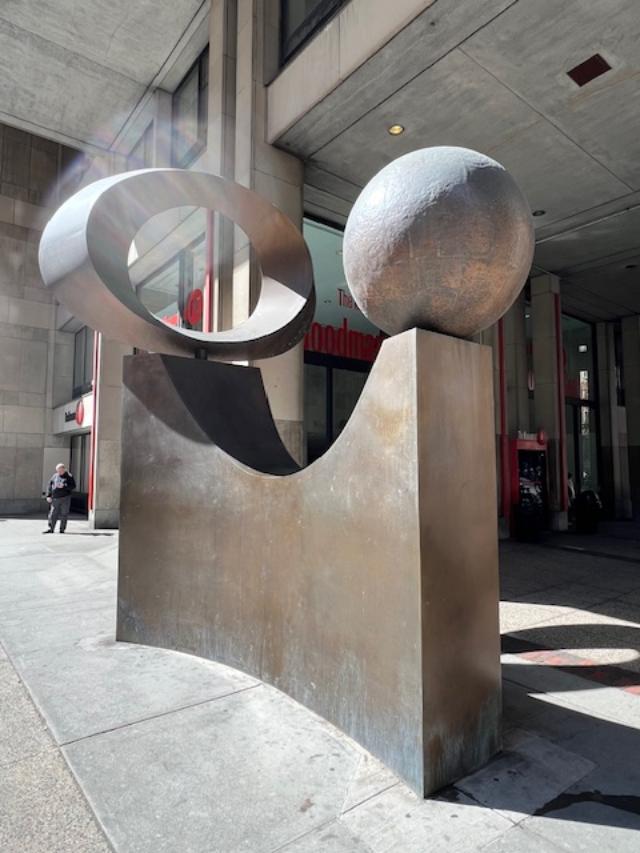
When you arrive at the corner of campus at Sixth Avenue, you are greeted by one of the most iconic sculptures in the City, The ‘Eye of Fashion’ by artist Robert Cornbach. This was designed by the artist in 1976 and just returned to the campus after a major renovation.
“The Eye of Fashion” by artist Robert Cornbach
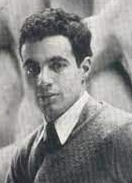
Robert Cornbach was an American born artist from St. Louis, who was educated at the St. Louis Academy of Fine Arts and the Pennsylvania Academy of Fine Arts. He was known for his large abstract artworks that includes sculptures and fountains (NYTimes.com/Obituary). He also created works for the WPA for the Government’s Federal Art Project (Wiki).
When you cross Seventh towards Sixth Avenue, you see the last traces of the old Garment/Wholesale District with many of those old wholesale businesses being replaced by trendy stores and hotels. The area is shared with the very desirable NoMAD (North of Madison Park) neighborhood that is slowly expanding to this neighborhood. Reaching Sixth Avenue, it was like revisiting an old friend since I had not visited NoMAD/Koreatown in a few months.
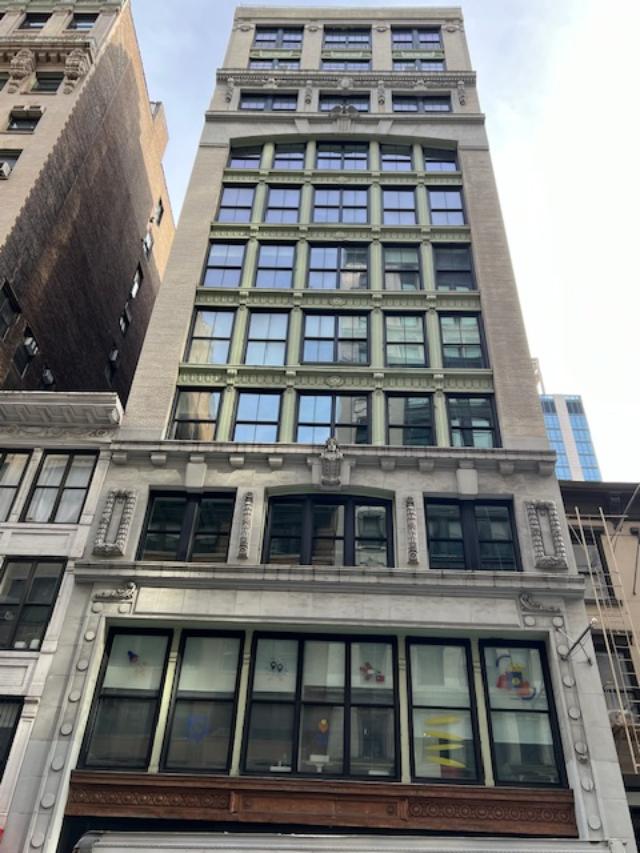
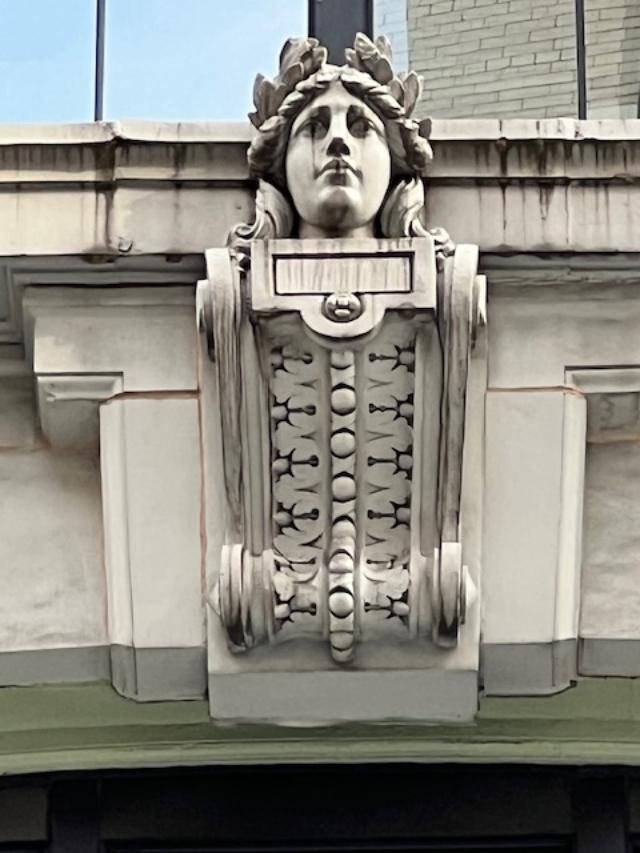
As you are walking back down the street, you will notice the beauty of 109 West 27th Street amongst the smaller buildings in the old Wholesale District. Some relators will say this is NoMAD and some will say the Garment District. The building was built in 1908 and you really have to look at the upper floors to see the detailed stone carvings and embellishments that adorn the buildings.
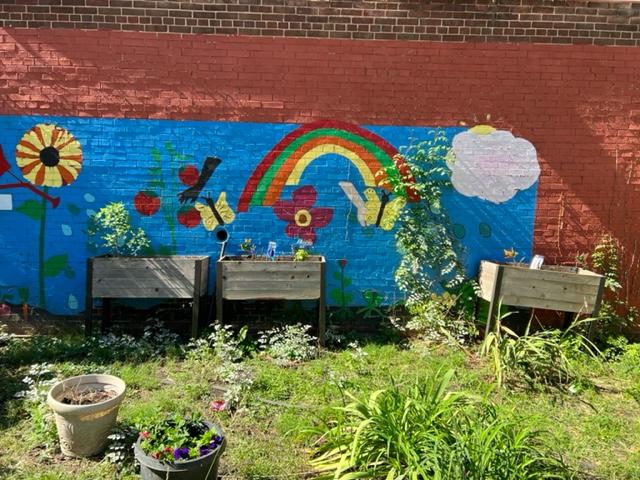
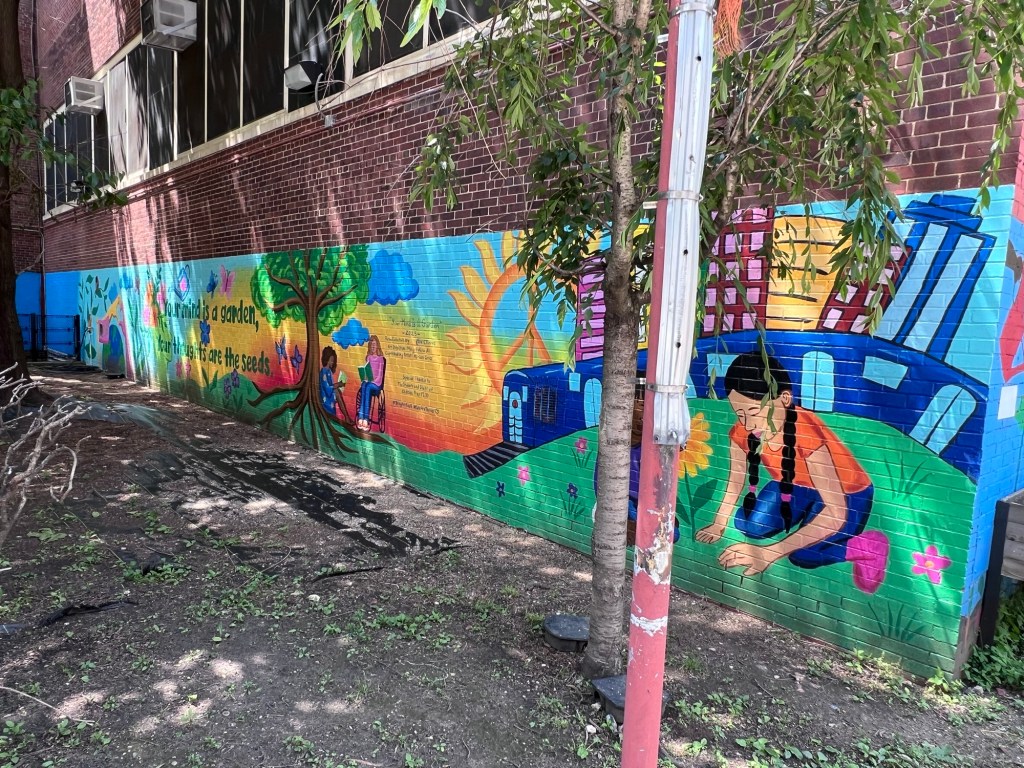
PS 33 Chelsea Prep mural at the back of the school
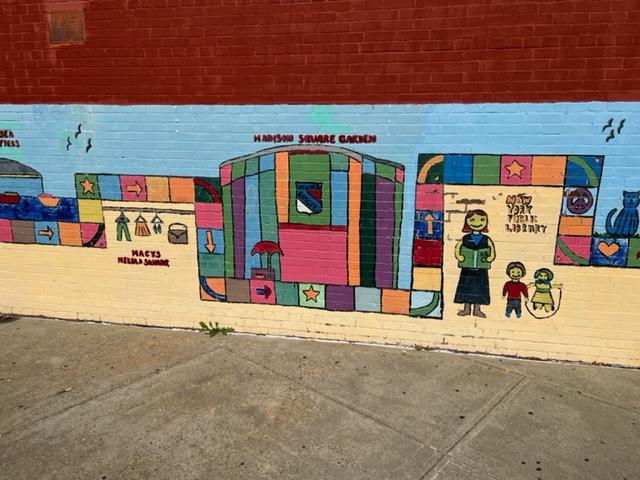
The front of the school and its engaging murals
On the walk back, you will start to notice this transition with all the empty ‘For Rent’ signs on the buildings. COVID really affected this part of the neighborhood and just accelerated the gentrification.
The Chelsea School PS 33 artwork on the school
Chelsea School Art
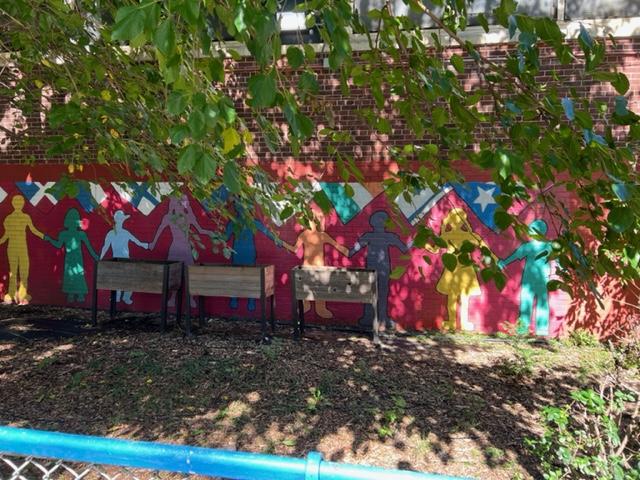
Chelsea School Artwork in the Garden
Just be sure that when you are walking back through Chelsea Park, it is at school time and not after dark. The park can get a little seedy at twilight. Also take time to look at the nice vegetable garden the kids at PS 33 planted behind the school. They did a good job.
I found this cute production of “Singing in the Rain” that the students of P.S. 33 Chelsea Prep performed
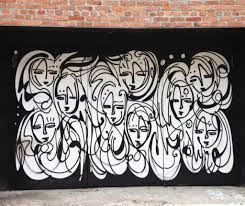
As you are walking back towards Twelvth Avenue, you will be greeted by the most unusual women faces and creatures the move and swirl. These are the works of artist Jordan Betten that line the door fronts of the building facing West 27th Street.
Artist Jordan Betten’s artwork on West 27th Street entitled “Sleep No More” is located on the south side of the street
Artist Jordan Betten is a Miami based American born artist who works include painting, sculpture and design. With unique application and use of colors, his art captures a feeling of freedom and strength. He shows his love of the streets with sophistication and modernism (Artist Bio).
Video on artist Jordan Betten’s work
West 26th Street has a similar feel for the first two blocks as well with many of the building housing art galleries. A crew was filming a movie, so I had to move around the street as I was walking through it and there is a lot of construction on the street with renovations of these old buildings so be careful.
When crossing the street at Tenth Avenue, you will be walking through the middle of the Chelsea-Elliott Houses so please be aware of who is around you. My advice is to walk through this area when either school is out for a break or just after school. It can get a little shady in the early evenings. Some of the residents will really look you over if they feel you don’t belong, and this is on the sidewalk that rims the complex.
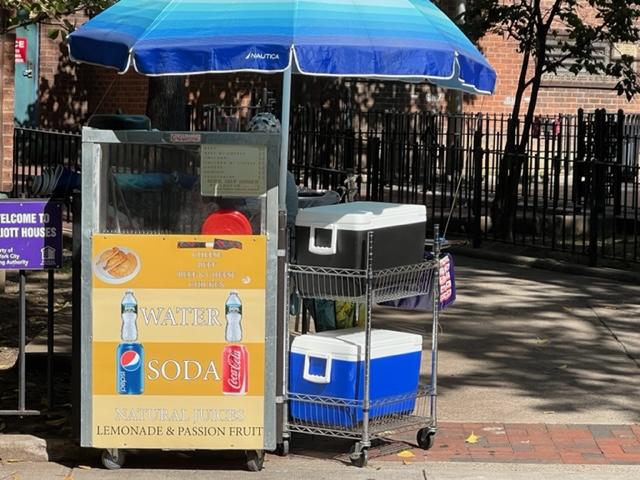
Still there are a few bright points when you walk through the projects. Senoria Pastilito, a woman who sells freshly fried chicken and beef pastelitos, a Dominican empanada and icy sodas. This little stand is open around the time school lets out. Do not miss these delicious pastelitos, filled with chopped and well spiced meats that she fries fresh in front of you. I ate them right by the little park where her stand is located, and she is busy when school lets out.
Senoria Pastelito at the Chelsea-Elliott Houses
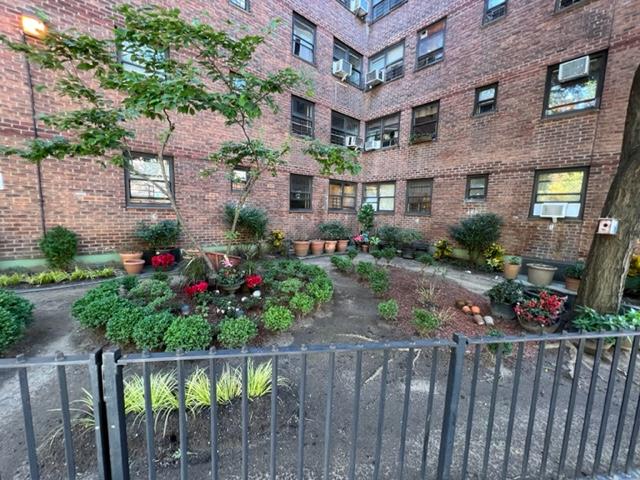
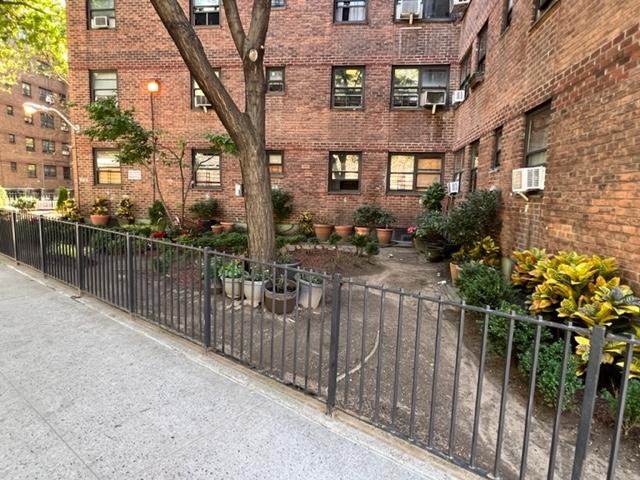
Also, tucked into the side of the building is a beautiful flower garden where dozens a of red rose bushes were in bloom, and someone planted flower beds between the building and the sidewalk.
The Chelsea-Elliott Houses Gardens
The Chelsea-Elliott Houses Gardens
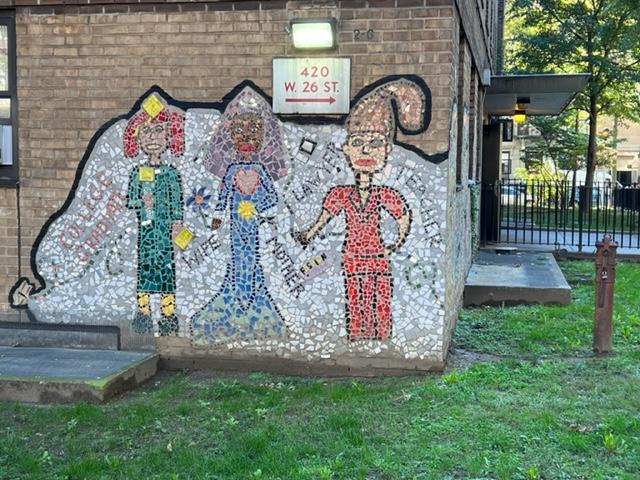
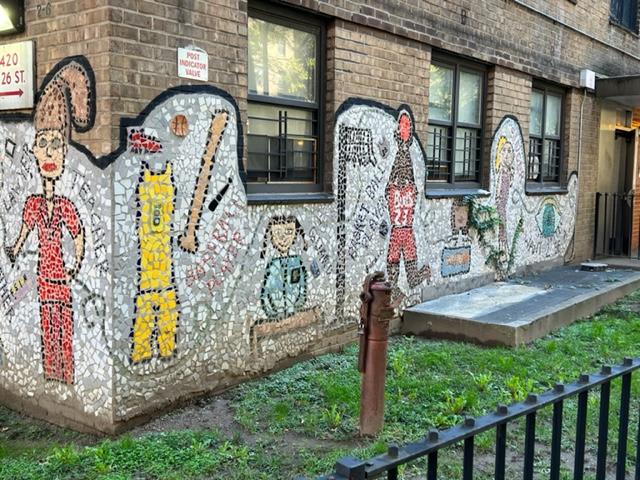
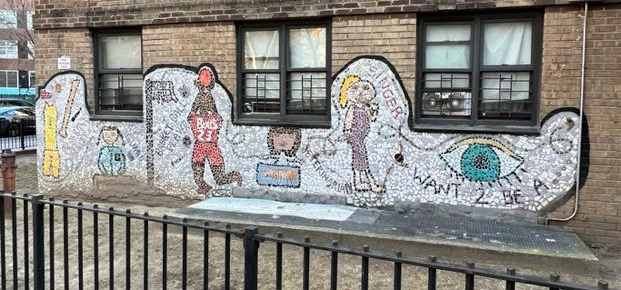
It just shows that there are people in public housing that really do care about their homes and take pride in its appearance. There is also interesting tile art on the side of one of the buildings that is really interesting. I was not sure what it meant though.
The tile art at the Chelsea-Elliott Houses
The tile art at the Chelsea-Elliott Houses
The tile art at the Chelsea-Elliott Houses
Changes in the neighborhood
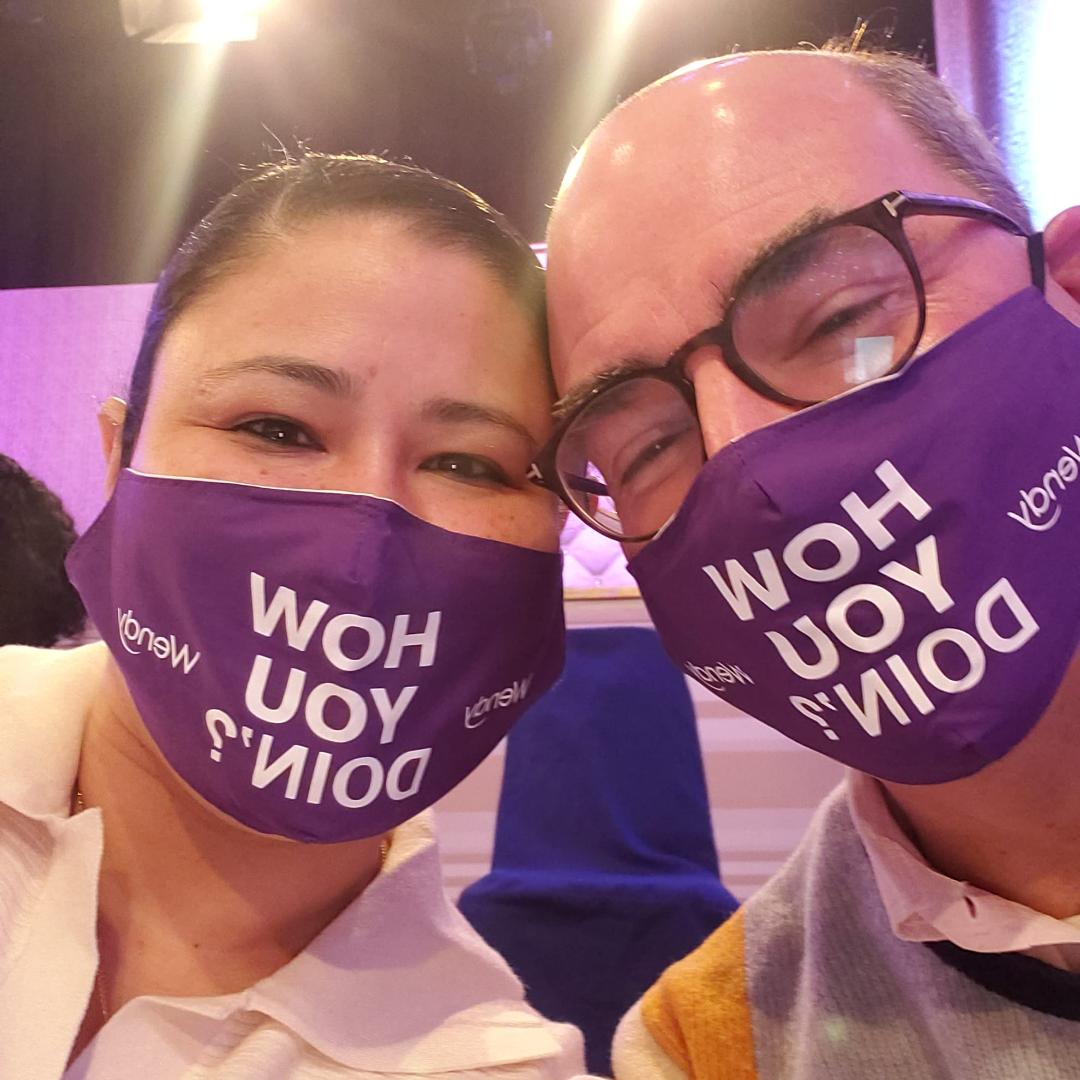
Further down the road towards the southern part of the Fashion Institute of Technology campus is the studio for the Wendy Williams Show, where my best friend, Maricel and I attended the show back in March. The theater is at 221 West 26th Street and when I passed it I could not believe so much time had gone by. The worst part is I heard on the Internet that the show is closing after 13 seasons.
My best friend Maricel and I at the ‘Wendy Williams Show’
As you travel to the other side of Seventh Avenue, you will see the constant change over of the neighborhood from the old Garment District to the fashionable NoMAD with small restaurants and shops tucked into former wholesale shops. COVID closed a lot of the older businesses that used to be on the block.
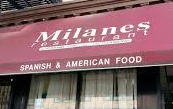
West 25th Street is very similar to the other blocks with lots of art galleries on the first two blocks from Twelve to Tenth Avenues taking space that was formerly used for shipping or car repair. When you crossover to Seventh Avenue, I was bummed to see that Milanes at 168 West 25th Street closed for business. That’s where Maricel and I ate after attending the Wendy Williams Show and I ate when I was in the neighborhood. It was funny in that it was always busy when I ate there.
Milanes at 168 West 25th Street (Closed in June 2022)
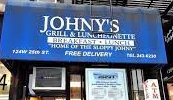
The COVID economy takes another victim. Its too bad as this restaurant had quite the following. Their business seems to be have been taken up by Johny’s Lunchonette at 124 West 25th Street, a small lunch counter business a few doors down.
Johny’s Grill and Lunchonette at 124 West 25th Street
This looks like another winner that I will have to try in the future.
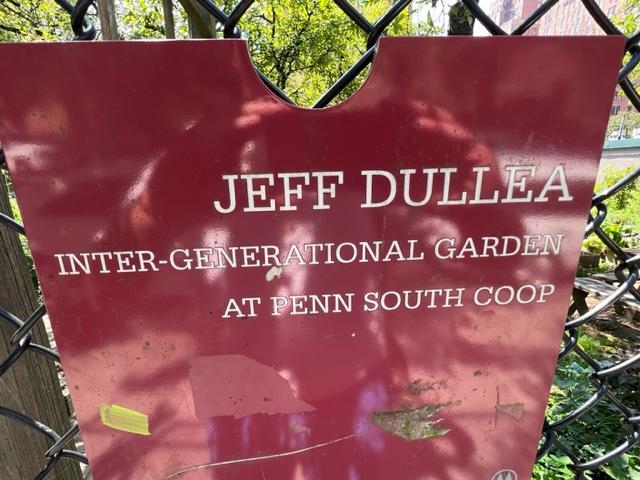
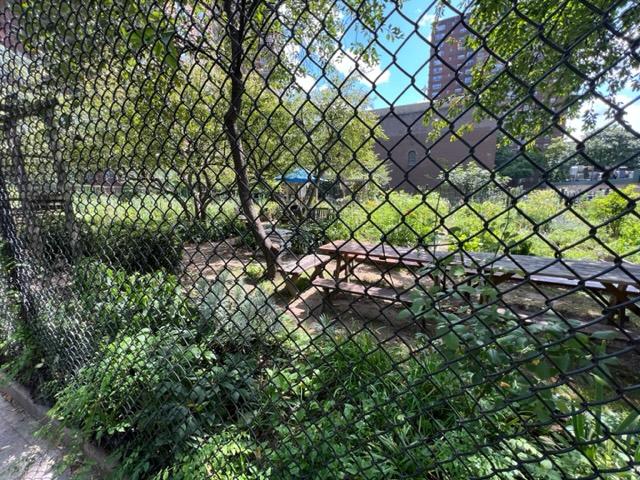
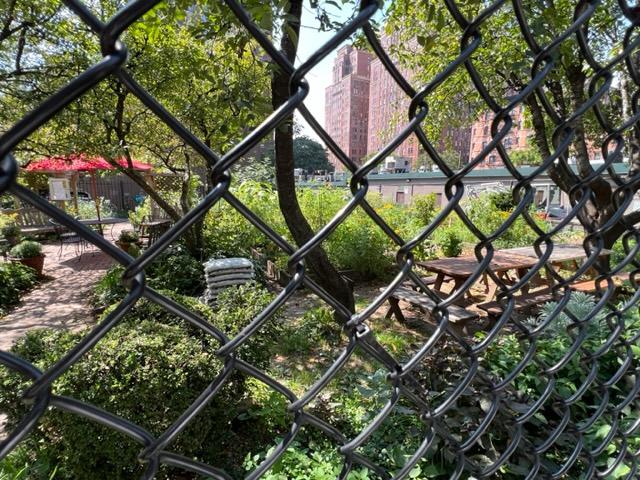
The Jeff Dullea Inter-Generational Garden
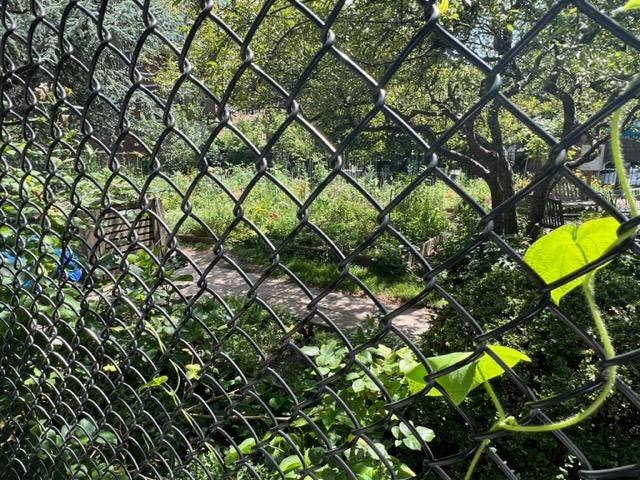
On the way back from Sixth Avenue and tucked into the southern part of the Penn South complex is the Jeff Dullea Generational Garden at 365 West 25th Street just before your get to Ninth Avenue. This tiny garden was locked but in full bloom with vegetable beds and wildflowers growing all over garden. Mr. Dullea had been a founding member of the Green Guerillas.
The Jeff Dullea Intergenerational Garden at 365 West 25th Street
The ‘Green Guerillas’ are a group that uses education, organizing and advocacy to to help people cultivate community gardens, sustain grassroots groups, grow food, engage youth and address critical issues of food justice and urban agriculture (Green Guerillas).
The gardens in full bloom
When turned the corner and started my walk down West 24th Street from Twelfth Avenue, I noticed all the former shipping buildings have all been converted to art galleries. Each building had its own look with the artwork shining from the large glass windows where you can peer in.
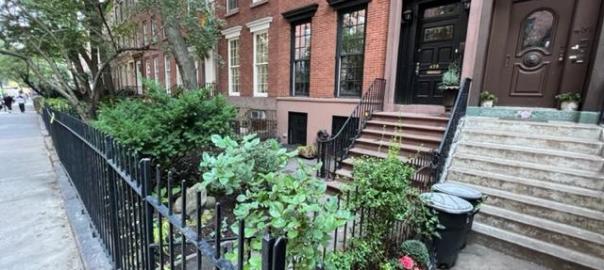
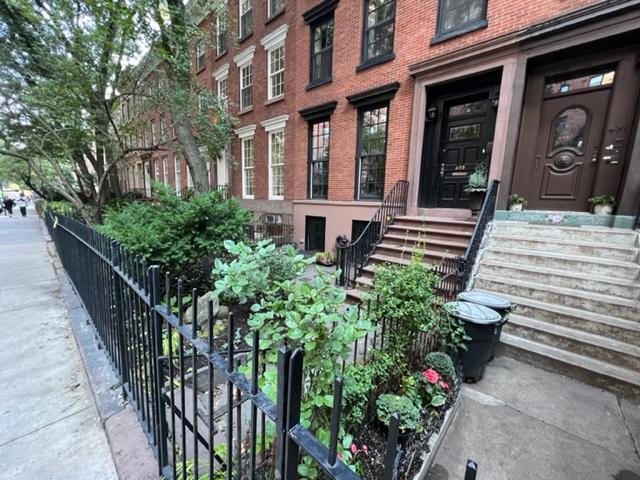
When you reach Tenth Avenue, you reach the historical district of the neighborhood which lines Tenth Avenue from West 25th to West 24th and the from Tenth to Ninth Avenues. These blocks are lined with late 19th century townhouses with detailed grillwork and small front gardens. This is one of the nicest sections of the neighborhood to walk.
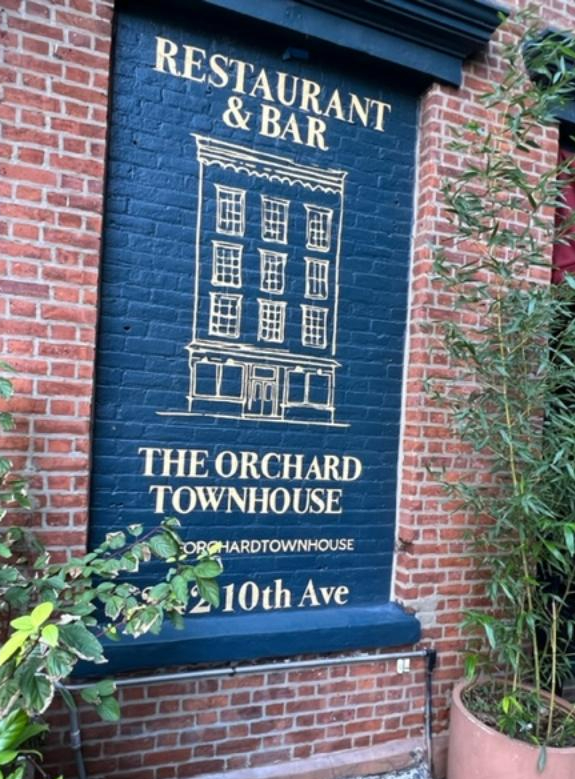
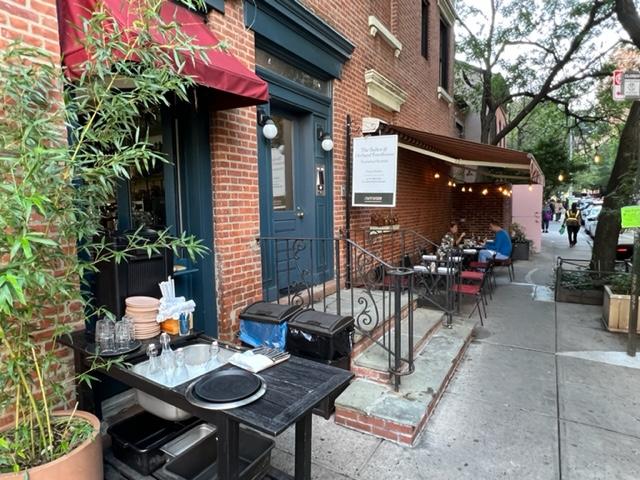
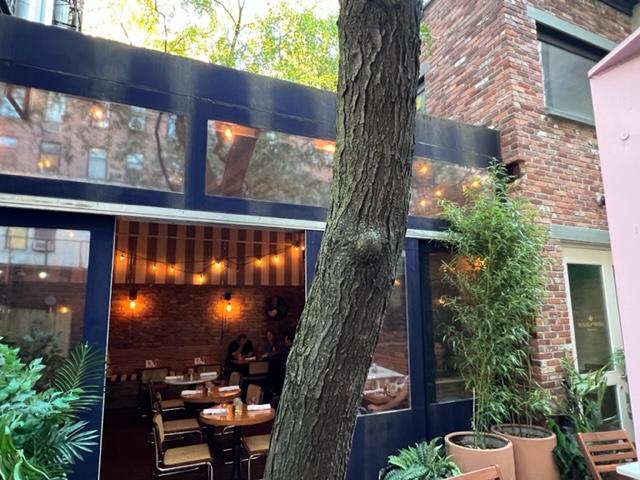
On the corner of Tenth Avenue and West 24th Street is Orchard Townhouse, a small restaurant and inn. Talk about quaint. The restaurant has indoor and outdoor dining with a small garden that flows to the sidewalk. It has that historic ‘inn’ look about it and an interesting menu for lunch. A mostly American and Continental menu and something to try in the future.
The Orchard Townhouse at twilight (Orchard Townhouse) at 242 Tenth Avenue at West 24th Street
The courtyard of the Orchard Townhouse (Orchard Townhouse)
The courtyard of the Orchard Townhouse (Orchard Townhouse)
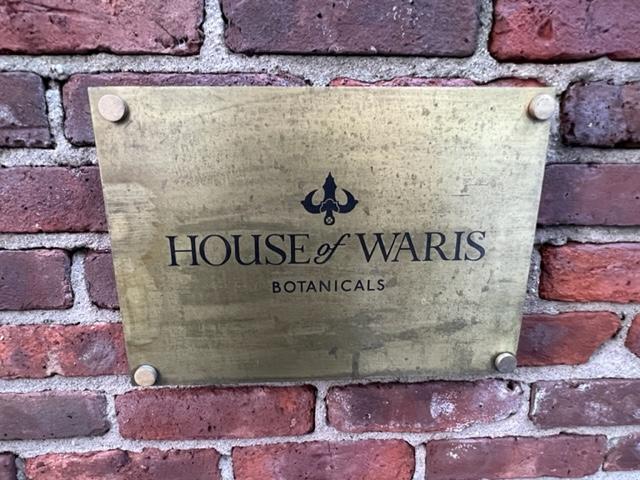
The House of Waris at the Old Orchard
This historic district extends from the southern side of West 25th Street and the northern side of West 24th and offers a glimpse at early 1880-90’s architecture at its finest. Back then, this was meant to be upper class housing but ended up being for a middle class resident. Today, you can’t buy one of these townhouses for under two million dollars. It would be interesting to know the builders perspective on that a hundred and thirty years later.
Chelsea Historic District at West 24th Street
West 24th Street offers a juxtaposed mix of architectural designs of buildings depending on the block. From Twelfth Avenue to Tenth Avenue it is a combination of old shipping and garage buildings that have now been converted like the rest of the neighborhood into art galleries, the historic district stretches from Tenth to Ninth Avenues and from Ninth to Sixth Avenues there is a mixture of the old residential district mixed into the commercial district that it has become.
Chelsea Historic District at West 24th Street
Here and there small brick townhouses mix in with larger commercial businesses that themselves have transformed from manufacturing to digital and tech companies and a growing number of restaurants. Businesses are closing and opening all over the street but it does look like the worst of the COVID problems are behind us (for now).
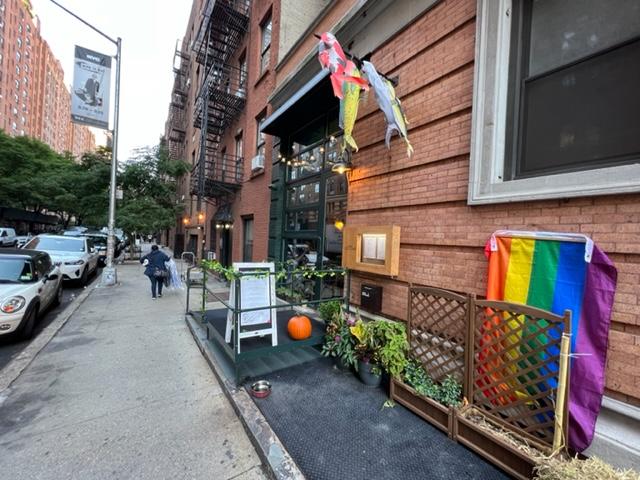
New restaurant opening at West 24th Street
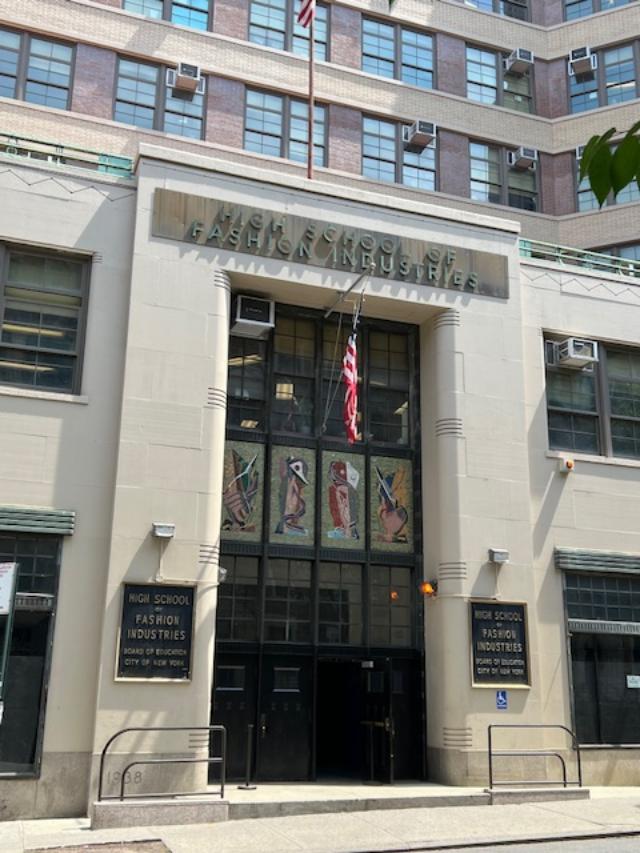
One stand out was the Fashion Industries High School at 225 West 24th Street where the windows were decorated with the students fashion ideas and I was figuring their final projects of the semester. They had some interesting looks pictured in the windows.
Fashion Industries High School at 225 West 24th Street
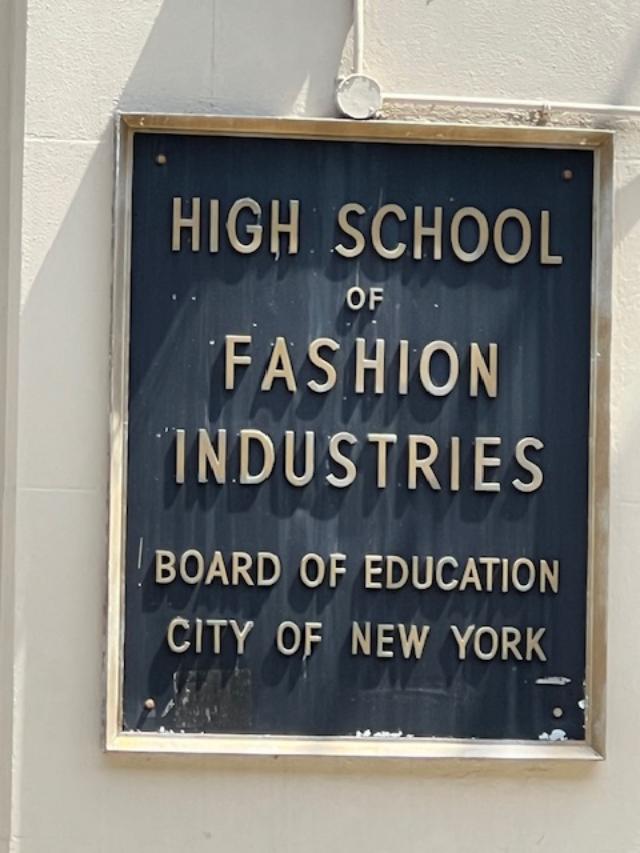
The school plaque for the High School of Fashion Industries
The one thing that did stick out at the very edge of the neighborhood on the wall of The Corner Cafe at the corner of 729 Sixth Avenue was the New York City painting by artist Dirt Cobain (now gone).
The New York City street art by artist Dirt Cobain on the side of The Corner Cafe at 729 Sixth Avenue (painted over December 2022)
Artist Dirt Cobian is an American born artist who started started with a spray can when he was a teenager. He creates the most interesting and eye opening street art. He currently lives in Brooklyn (Artist bio).
A video on who the artist is and what he represents.
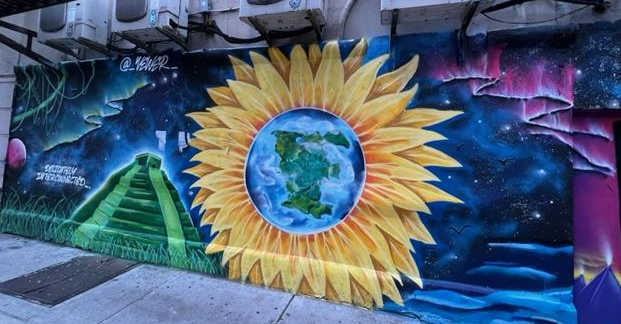
This new piece of art appeared in 2022 by artist
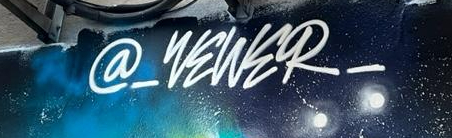
The artist Wewer
I could not find any information on the Internet about the artist
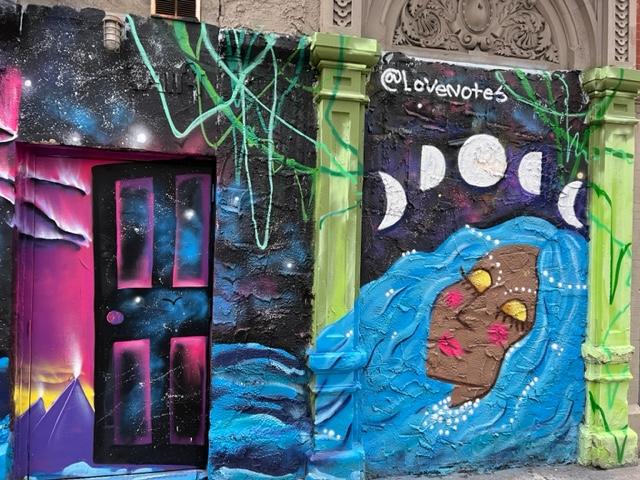
This was painted right next to it by artist Lola Lovenotes
Artist Lola Lovenotes is a self-taught graffiti artist from New York City who was heavily influenced by growing up in the Bronx. She also works as a teaching artist in Manhattan and the Bronx (Artist Bio).
I finished the walk back at Twelve Avenue admiring the art from the windows of the galleries and then relaxed in Hudson River Park and admired the view across the river. New Jersey looks very different on this side of the Hudson River. More intriguing.
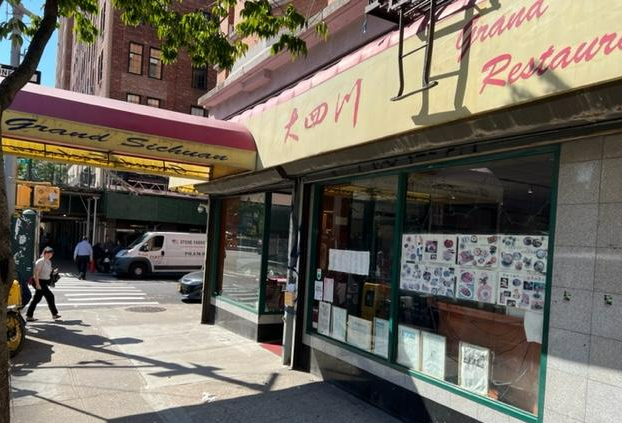
I finished the afternoon with lunch at the Grand Sichuan Restaurant at 229 Ninth Avenue. I had passed the restaurant many times when walking around the neighborhood and they have some interesting (and very reasonable) lunch specials that I wanted to try. Walking this whole neighborhood I began to notice that there was not too many reasonable (i.e. cheap) places to eat in Chelsea and thought this would be a nice place.
Grand Sichuan Restaurant at 229 Ninth Avenue (Closed in 2023)
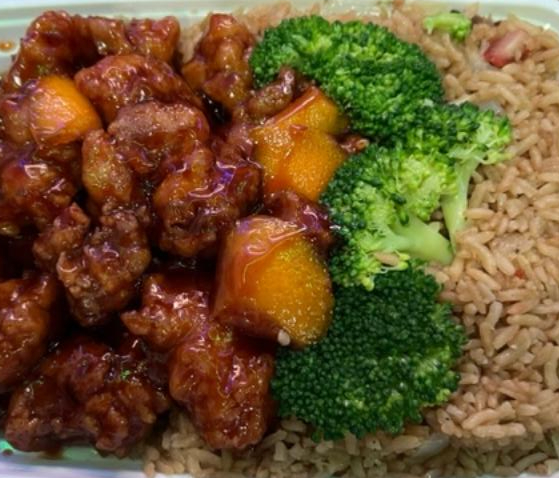
The Grand Sichuan I have to admit could use a good makeover as it is a little dated and theadbare but the food and the service are really good and are worth the visit. Wanted to try something different I had the Orange Flavored Beef Special with Fried Rice and an Egg Roll. The whole meal was delicious.
The Orange Flavored Beef was wonderful
The one thing I liked about the lunch specials ($9.95) at the Grand Sichuan Restaurant is that the portion sizes are very fair and everything was freshly cooked and spiced extremely well. The beef really loaded with chilis that gave it a good pinch. The egg roll was loaded with shredded cabbage and nice pieces of roast pork.
It really was an interesting walk of the neighborhood. Not just on learning the history of the area but passing the open air museum that the area has become. With the renovation of the local parks and new building going on there is more changes on the way. As we leave enter the hopeful post-COVID era where we enter the new normal you are going to see a lot of development on all sides of this neighborhood.
Just like the rest of Manhattan it just keeps morphing.
See my other blogs on Walking North Chelsea/Flower District:
Day Two Hundred and Thirty Seven: Walking the Borders of North Chelsea/Flower District:


































 mywalkinmanhattan