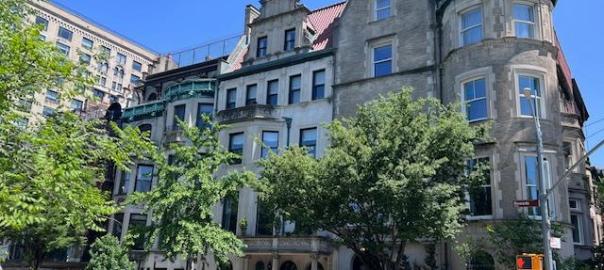
I went to the Museum of Natural History this morning for a walking tour called “The History of Sharks” that took us through several galleries as the tour guide explained the history of sharks from pre-historic times to present day.

‘The History of Sharks’ exhibition at the American Museum of Natural History
https://www.amnh.org/explore/ology/marine-biology/all-about-sharks
How we live with sharks, how their DNA developed over the years and a discussion on the famous attacks on the New Jersey shore in 1916 to the movie ‘Jaws’.
How we live with sharks, how their DNA developed over the years and a discussion on the famous attacks on the New Jersey shore in 1916 to the movie ‘Jaws’.

The front of the American Museum of Natural History
The museum runs these special tours for members and it was nice to explore the museum as a small group. Their volunteers do a wonderful job explaining things and the museum, in anticipation of a major rainstorm that never happened, was packed to the gills. I never see it that busy.
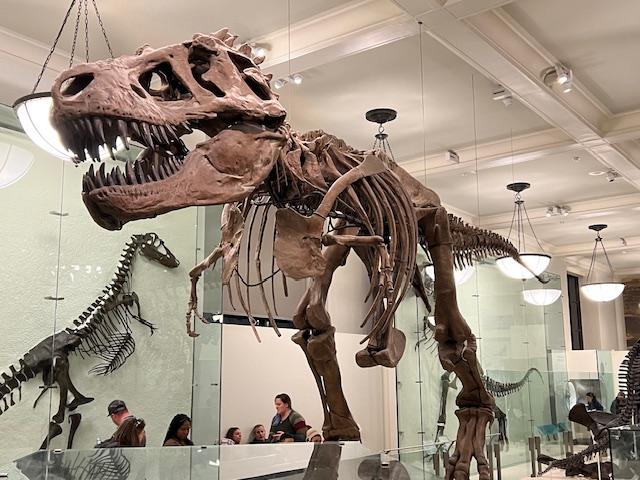
The Dinosaur Hall
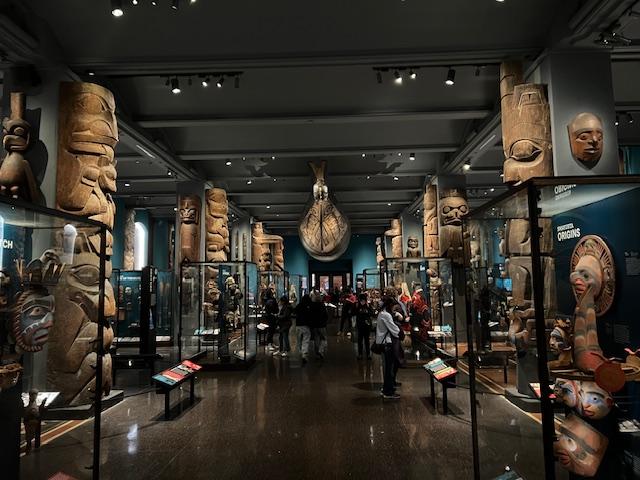
The Native American Wing just after the renovation of the hall

The Pre-Columbian Wing

The Pre-Columbian Wing
After my visit to the museum, I decided to take a walk up Riverside Drive. It was such a beautiful day with no sign of rain coming, I walked the length of Riverside Drive from 86th Street to 155th Street, crossed over 155th Street to St. Nicholas Avenue and walked down the street to 145th Street to get a better look at the brownstones and mansions and then back up to 155th Street and back down the other side of Riverside Drive to 110th Street and across to the subway station the corner of Central Park.
This part of the walk took me past many historical sites and statues, past pocket parks and mansions and the beauty of Riverside Park. When I revisited the walk again in July 2026

Starting the walk at West 72nd Street and admiring some old mansions

The twin mansions at the corner of West 72nd Street and Riverside Drive
This ‘twin’ mansion was actually two homes with a courtyard created in between the two homes. The Beaux Arts home on West 72nd Street was owned by the Sutphen family, and the right plainer mansion was owned by the Prentiss family both designed by mansion architect C.P.H. Gilbert. Both descended from old colonial families, the Sutphen family were the first one to build their mansion and it was finished 1902 and the Prentiss Mansion was built in 1900. The architect built the courtyard to compliment both homes (Wiki).
At the corner of Riverside Drive and West 72nd Street, just inside the park is a statue dedicated to First Lady Eleanor Roosevelt, the wife of President Franklin Delano Roosevelt. Known for her many civic and charitable contributions to the government at the time one top of being a teacher, women’s rights activist and raising five children during the Presidency, she fought for the rights of people.
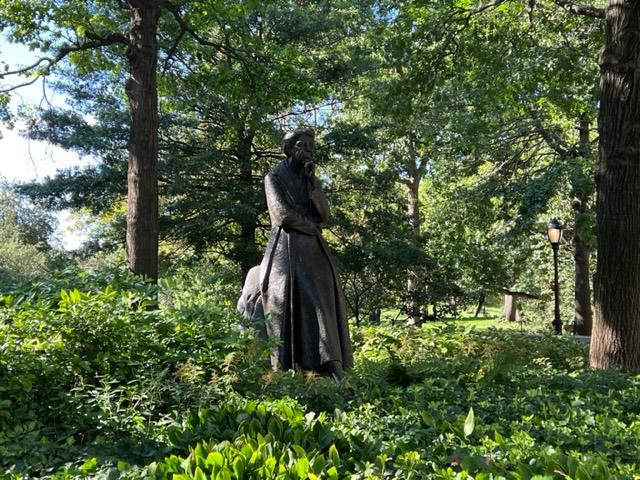
Eleanor Roosevelt Statue by artist Penelope Jencks in Riverside Park

The statue was done by sculptor Penelope Jencks and Michael Middleton Dwyer and the architects on the project were Bruce Kelly and David Varnell. Ms. Jencks is an American artist who studied at Boston University and graduated with BFA.
The monument lies at the threshold of the Riverside Park and is one of a sequence of civic monuments along Riverside Drive honoring people of historical significance (NYC Parks.org). It’s a nice place to just relax and watch the world go by. This is also the end of Riverside Park which ends at West 72nd Street.

Artist Penelope Jencks
http://www.penelopejencks.com/

Eleanor Roosevelt (Wiki)
https://en.wikipedia.org/wiki/Eleanor_Roosevelt
One building that stands out right across the street from the beginning of Riverside Park is the Chadsworth Apartment Building at 344 West 72nd Street built in 1904 designed by architect John D. Scharsmith for owner George F. Johnson. It was designed to face the park in an English garden fashion. It was lavishly designed in detail to attract the wealthy patrons of Fifth Avenue, who had started to abandon their mansions after the turn of the 20th century (Wiki).

Chatsworth Apartments at 344 West 72nd Street
Done in a brick and limestone exterior, the detail work on the building is magnificent. Carved angels, faces and flowers line the building, and the iron work of the lamps and banisters are just breathtaking. You really have to look beyond the scaffolding to see the true beauty of this building. They just don’t build apartment buildings with this type of detail anymore.
When I walked Riverside Drive again in July of 2026, I started the walk on West 72nd Street and walked up both sides of the Drive, stopping at historic and cultural sites and small parks that dot Riverside Park. I forgot how much there was to see and do along the way.
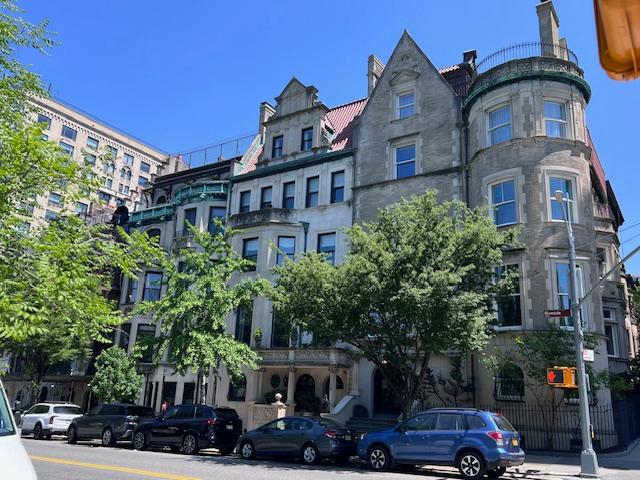
The mansions that line Riverside Drive
First there is nothing like walking around the west side of Manhattan along Riverside Park. It is a truly wonderful park with people jogging, biking, sunbathing and picnicking. Everyone was really enjoying this clear, sunny Summer afternoon. On a quiet Sunday, the park is mostly yours depending on where you are walking.

Walking along Riverside Drive park side
All along the way uptown, Riverside Park and Drive are lined with many memorials and statues. I was amazed on many were in the area of the drive. My first stop along the way was the Soldiers’ & Sailors’ Monument at West 89th Street that was dedicated to the Union Army soldiers and sailors who contributed in the American Civil War.

The Sailor’s & Soldiers Monument in the Fall of 2024

The monument in the Summer of 2026
This structure was completed in 1902 and President Theodore Roosevelt presided over the opening. A very impressive structure that I can see most people miss. Part of the structure is still in disrepair but you can still walk around the pillared structure and gaze at its beauty.
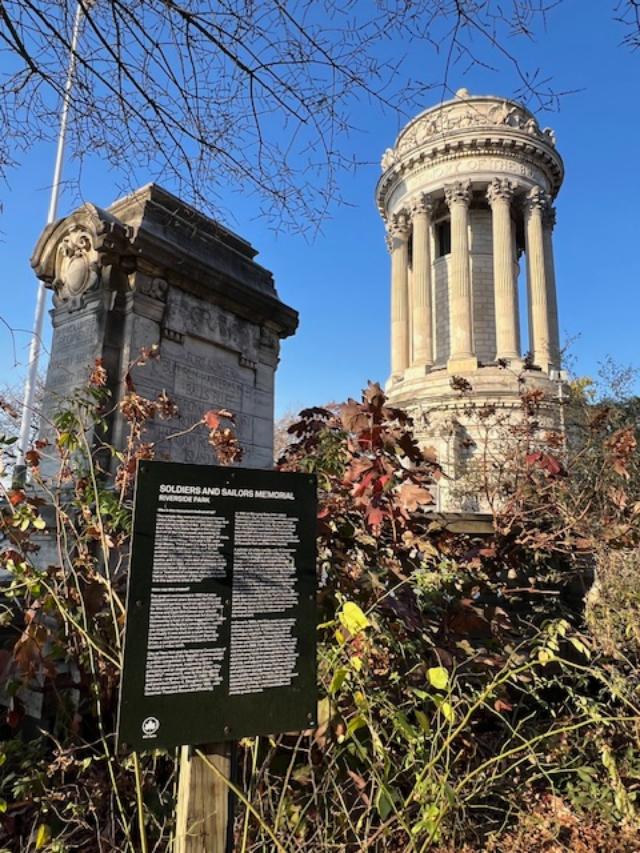
Soldier’s & Sailors Monument on Riverside Drive near West 89th Street
https://www.nycgovparks.org/parks/riverside-park/highlights/12871
https://en.wikipedia.org/wiki/Soldiers%27_and_Sailors%27_Monument_(Manhattan)
My review on TripAdvisor:
My review on VisitingaMuseum.com:
I took a turn and swung into Riverside Park to visit a small playground and a very lively birthday party.

Hippo Playground in Riverside Park

Hippos in Hippo Park
I dropped into Hippo Park at 91st Street, a lively little playground with tons of kids running around, climbing on playground structures and actually acting like kids.

The park in the Summer of 2026
I see far too many children obsessed with the cell phones not paying attention to what is going on around them. The kids were obviously having fun while the parents handed out food and gossiped amongst themselves.

The water feature at Hippo Park
Hippo Park is part of the Riverside Park Conservatory and run by volunteers in the neighborhood that also provides entertainment during the summer with outdoor concerts and a newly renovated playhouse for parties. Check out their website for details.

Hippo Park at Riverside Park at West 91st Street
https://www.nycgovparks.org/parks/riverside-park/highlights/12339
I walked behind Hippo Park to discover a beautiful floral garden that was the 91st Street Garden that J had missed on previous walks in the park. The Garden did not look like this in the Fall.

The 91st Street Garden in the Summer of 2026

The sign for the garden
As I passed the garden, I remember this was the garden in the last scene of the movie, “You Got Mail” when Meg Ryan realizes that her secret email pal is Tom Hanks. It was such a great scene and the perfect end to a great Rom-Com.
The end of the movie “You Got Mail” with Meg Ryan and Tom Hanks

The Gardens from the front

The flowers in full bloom

The flowers in full bloom in July 2026
All I could think about was this scene as I walked around the garden. The funny part is this was the first time I had ever visited this garden as I did not know where it was located. I knew it was on 91st Street but could never figure out where. You have to walk on the path behind the Hippo Playground and follow it to the other path.

The gardens from the front

Walking back up through Riverside park from the Hippo Playground

Walking in Riverside Park in the 90’s

Walking up Riverside Drive in the 90’s

Walking along Riverside Drive at West 92nd Street
When you cross Riverside Drive at West 93rd Street, you pass the statue of Joan of Arc by artist Anna Hyatt Huntington, which sits on the island inside the park.

Joan of Arc Statue
(From the NYC Parks.org website)
In New York, a prominent group of citizens formed a Joan of Arc monument committee in 1909. Their efforts coincided with those of a young sculptor, Anna Hyatt Huntington, to create a sculpture of Joan.

Artist Anna Hyatt Huntington
https://en.wikipedia.org/wiki/Anna_Hyatt_Huntington
https://nmwa.org/art/artists/anna-hyatt-huntington
Artist Anna Hyatt Huntington was an American born artist and one of the most success sculpturers in the early twentieth century. She was known for her realisitc animals sculptures, she was one of the first women artists inducted into the American Academy of Arts and Letters (Wiki).

Joan of Arc
https://en.wikipedia.org/wiki/Joan_of_Arc
https://www.britannica.com/biography/Saint-Joan-of-Arc
The video on the history of Joan of Arc
(From the NYCParks.org website)
Her first version, in which she emphasized “the spiritual rather than the warlike point of view,” was submitted to the prestigious Salon in Paris. It received an honorable mention from the jury, nevertheless skeptical that such an accomplished work of art could have been made solely by a woman (NYCParks.org).

Joan of Arc statue
The New York monument committee, headed by J. Sanford Saltus, was so impressed by her work, that they awarded her the commission. Architect John van Pelt was retained to design the pedestal, which is made of Mohegan granite composed of Gothic-style blind arches, decorated with coats of arms. A few limestone blocks from the tower in Rouen where Joan of Arc had been imprisoned were incorporated into the base. Van Pelt situated the monument at the top of the steps in the park island at 93rd Street and Riverside and had planted a screen of trees to disguise the buildings (NYCParks.org).

The Joan of Arc statue
Huntington’s version is both heroic and infused with naturalistic detail. For Joan’s armor, she conducted research at the arms and armory division of the Metropolitan Museum of Art; the refinement of the equine anatomy was based on a horse borrowed from the fire department of her native town of Gloucester, Massachusetts. Her niece posed astride a barrel, as she modeled the figure, first nude, then in costume (NYCParks.org).
I continued the walk down Riverside Drive through the high 90’s, admiring the architecture and beautiful trees and gardens in full bloom.

Walking down Riverside Drive around West 100th Street
The next monument that I passed was the Firemen’s Memorial at 100th Street and Riverside Drive. Being a veteran of the fire service, this sculpture has a lot of personal meaning to me.

The Firemen’s Memorial from street side

The statuary is so beautiful
This is a very quiet and relaxing sculpture that is dedicated to the members of the Fire Department who have lost their lives in the line of duty. This sculpture was dedicated in 1913 and has been renovated a few times since. During the tragedy of 9/11 in 2001, this became a vigil site for those morning the loss of so many members of the FDNY. This stop is a must for all fire fighters. The sculpture was designed by artist Harold Van Buren Magonigle (NYCParks.org).
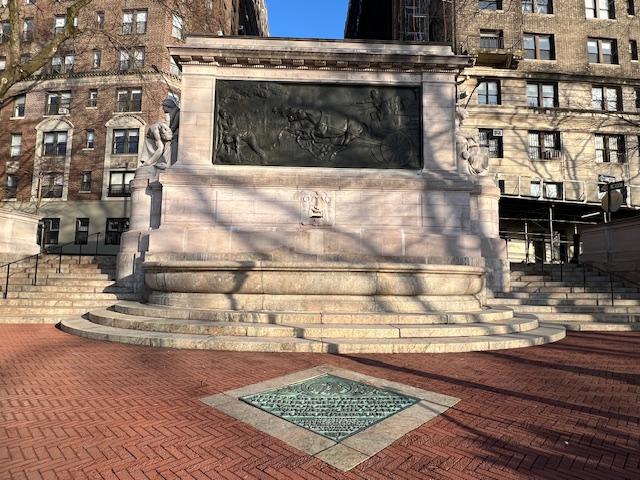
Firemen’s Memorial
https://www.nycgovparks.org/parks/riverside-park/monuments/482
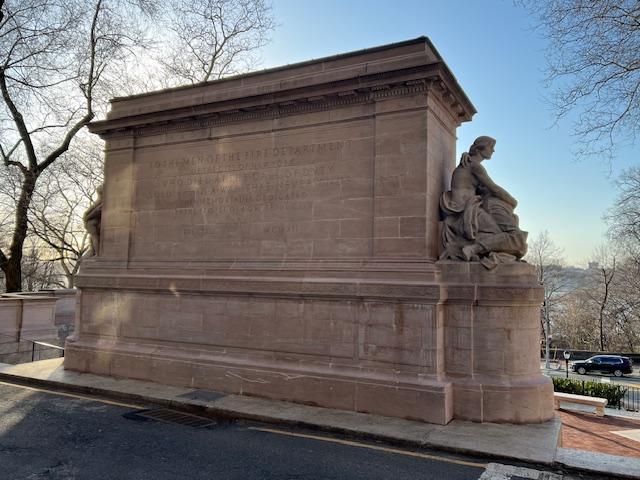
The Firemen’s Memorial on Riverside Drive
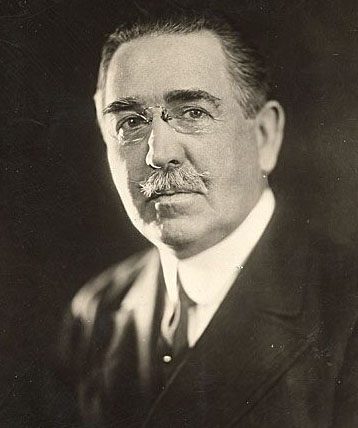
Artist Harold Van Buren Magonigle
https://en.wikipedia.org/wiki/Harold_Van_Buren_Magonigle
https://nationalacademy.emuseum.com/people/1564/harold-van-buren-magonigle
Artist Harold Van Buren Magonigle was an American born architect, artist, and author best known for his memorials. He had worked at several well known architectural firms before working as a artist (Wiki).
Next I passed the statue of Shinran Shonin at the New York Buddhist Church. I had noticed the statue several times when walking around the neighborhood but never knew its meaning. It had survived the atomic blast at Hiroshima and was shipped New York after the war.

The New York Buddhist Church at 331-332 Riverside Drive
https://www.newyorkbuddhistchurch.org
The New York Buddhist Church (founded 1938) is a temple of Jodoshinshu True Pure Land School Buddhism, whose head temple is Nishi Hongwanji in Kyoto, Japan. May the Wisdom and Compassion of Amida Buddha, which embraces us just as we are, touch your heart so that you may be awakened to the world of Living With Nembutsu, guided by the teachings of Shinran Shonin (New York Buddhist Church website).

In the last 65 years, the Shinran Statue has known two homes. Its latest home is a fenced stoop on Riverside Drive outside of the New York Buddhist Church. But before that, the Shinran Statue stood proudly outside of a temple in Hiroshima, Japan, in 1945.

The plaque outside the church

The statue sitting outside the church
(From Atlas Obsura website)
https://www.atlasobscura.com/places/shinran-statue
More specifically, the statue stood only 1.5 miles from the center of the atomic blast that decimated 70 percent of the buildings in the city and took the lives of 150,000 people. Amazingly, the statue emerged from the explosion unscathed, still standing guard at the burning temple (AtlasObsura.org).
Following the war, a Japanese man shipped the statue to New York where it has stayed since 1955. The statue has been free from radiation since it began its stay in the United States and has never posed a danger to visitors (AtlasObsura.org).
Video on the statue
Today, the 15-foot bronze statue stands as a monument to world peace and the frightening power of the atomic bomb. Its weathered bronze exterior is visible in front of the Buddhist Church, and its amazing legacy is preserved in the nation responsible for its near destruction (AtlasObsura.org).

The story of Shinran Shonin
My next stop was at the Franz Sigel Statue at West 106th Street. The majestic statue of a Major General in the Union Army during the Civil War. He encouraged many then German-Americans to fight for the Union. After the war, he became a proud New Yorker. This small park faced Riverside Drive on the other side of the street overlooking the Hudson River.

Major General Franz Sigel
https://en.wikipedia.org/wiki/Franz_Sigel
https://encyclopediavirginia.org/entries/sigel-franz-1824-1902/
Franz Sigel was a German born American officer in the US Army during the Civil War. Before the war, he was a teacher in the New York City school system and after the war got involved with politics and publishing (Wiki).

The statue was created by artist Karl Bitterin the Summer of 2026

The Franz Sigel statue in the Fall
https://www.shenandoahatwar.org/franz-sigel

The Franz Sigel historical sign
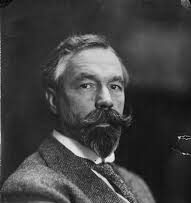
Artist Karl Bitter
https://en.wikipedia.org/wiki/Karl_Bitter
https://www.aaa.si.edu/collections/karl-theodore-francis-bitter-papers-8889
Karl Bitter was an Austrian born American artist who was best known for his architectural sculpture and memorials that he sculpted. He was educated at the Academy of Fine Arts in Austria. He immigrated to New York City in 1889 (Wiki).
a

Riverside Drive at 110th Street

The stonework on the building at 110th Street with beautiful windows
As I continued the walk up further, the monuments continued with the statue of Samuel Tilden, a former Governor of New York located at West 112th Street.

Governor Samuel Tilden Statue
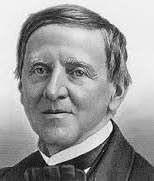
NY Governor Samuel Tilden
https://en.wikipedia.org/wiki/Samuel_J._Tilden
Tilden’s career was illustrious with fights against the Tweed stronghold in NYC and some saying that he had the Presidential election stolen from him with the Electoral College by Rutherford Hayes. His large estate and book collection helped found the New York Public Library (Wiki).

Artist William Ordway Partridge
https://en.wikipedia.org/wiki/William_Ordway_Partridge
https://americanart.si.edu/artist/william-ordway-partridge-3695
The statue was created by sculpturer William Ordway Partridge, an American born artist who had studied at both Columbia and Ecole de Beaux Arts. He had worked under many well known artists both here and abroad. He is known for his life like sculptures.

The Samuel Tilden statue in the Summer of 2026
(From the NYCParks.org website)
Tilden was active in city, state, and national politics. Elected to the state assembly in 1845, he also served in the Constitutional Convention of 1846 and ran on the Democratic ticket for Attorney General in 1855. He was a member of the Free Soil movement, which fought the extension of slavery into U.S. Territories. In 1863, Tilden moved into a home on Gramercy Park. He combined that house with an adjacent townhouse in 1874 to form a mansion where he lived for the remainder of his life. The mansion has been the home of the National Arts Club since 1905 (NYCParks.org).
By 1868, Tilden had assumed the leadership of the Democratic Party in New York State. In 1870, he launched a high-profile attack on the Tweed Ring, which had dominated New York City government from 1860 to 1871. Tilden helped to impeach several judges, exposed the plunder amassed by certain Tweed officials, prosecuted many of them on behalf of the state, and described the Ring’s illegal dealings in the pages of the New York Times (NYCParks.org).

Walking up Riverside Drive
As I made my way up Riverside Drive, I stopped at another bend on the street and came across the statue of Lajos Kossuth, the leader of the Hungarian uprising in 1848. The statue was created by Hungarian artist Janos Horway.

The next statue I passed was of Lagos Kossuth

https://en.wikipedia.org/wiki/Lajos_Kossuth
(From NYCParks.org website)
Kossuth was born to a family of noble heritage in Monok in northeastern Hungary. In the early 1830s, he emerged as a leader of the country’s radical reform movement. Trained as a lawyer, Kossuth edited several journals and newspapers that allowed him to broadcast his increasingly popular ideas. He issued fiery pleas for Hungary’s independence from Vienna’s Hapsburg Monarchy, for emancipation of the peasants, and for industrial development. Kossuth was elected to the Hungarian Diet (national assembly) in 1847, and a year later he led the revolution that created a new national government for Hungary (NYCParks.org).
The new government fell to invading Russian and Austrian armies in 1849, and Kossuth fled into exile. Rallying support for Hungarian independence, he dazzled European and American audiences with his eloquence. Sympathizers in the United States identified with the aims of overthrowing the foreign monarchy and establishing republican government for Hungary. Kossuth visited New York in December 1851 at the start of a seven-month tour of the United States. Upon arrival, he was given a tremendous welcome, described in the newly-founded New York Times as one of “the most magnificent and enthusiastic ever extended to any man in any part of the world.” A reception hosted by Mayor Ambrose C. Kingsland, banquets, and a parade up Fifth Avenue were held in his honor. Kossuth lived in exile in England and (after 1865) in Italy. After his death in Turin in March 1894, his body was brought to Budapest and buried in state (NYCParks.org).

The Kossuth statue was designed by artist Janos Horvay
Artist Janos Horvay
https://en.wikipedia.org/wiki/J%C3%A1nos_Horvay
Janos Horvay was a Hungarian born artist who studied under artist Edmund Hellmer. Known for his realistic sculpture work, he was also known for his funeral works of art (Wiki).

Walking through Riverside Drive in the Morningside Heights Historical District
When I crossed over 110th Street, I walked through the most western part of the Columbia Campus in Morningside Heights section of Harlem and admired the beauty of the architecture of the Morningside Heights Historical District.

The sign for Historical Morningside Heights District
The last sculpture I passed in Riverside Park before I got to Grant’s Tomb was the Woman’s Health Protective Association Fountain at West 116th Street created by artist Bruno Louis Zimm. The fountain is currently undergoing a renovation.

The Women’s Health Protective Association Fountain
https://www.nycgovparks.org/parks/riverside-park/monuments/1723
(From the NYCParks.org website)
Members of the WHPA were usually part of the city’s elite, and Charlotte Wilbour, one of the names inscribed along the Riverside Park benches, helped to found the first New York City Woman Suffrage Association in 1870. This more radical branch of the movement (in comparison with the relatively conservative chapter in Boston) lobbied against the passage of the 15th amendment, which proposed to give suffrage to African-American men. Leaders Susan B. Anthony and Elizabeth Cady Stanton opposed the male focus of the bill and suggested a new, 16th amendment in its place, one that would offer “universal suffrage” to all races, genders, and religions (NYCParks.org).
The dream of the founding suffragettes finally actualized on August 16, 1920, eleven years after this fountain was commissioned. With the vote in hand, the National Woman Suffrage Association disbanded, but its surviving members went on to become the core of the League of Women Voters and to continue the focus on women’s health issues in New York City (NYCParks.org).

The fountain was under renovation and not working but was beautifully designed

Artist Bruno Louis Zimm
https://en.wikipedia.org/wiki/Bruno_Zimm_(artist)
Artist Bruno Zimm was a New York City born artist and studied under Artist Carl Bitter and at the Arts Student League of New York under Artist Augustus Saint-Gaudens. He was known for his freestanding memorials, fountains and architectural sculptures (Wiki).
In the afternoon, I finally made it to one of my goals for the day, Grant’s Tomb (see the reviews on TripAdvisor and VisitingaMuseum.com), the final resting place of our 18th President Ulysses Grant and his wife, Julia. This monument has had a love-hate relationship with the city.

Ulysses Grant
https://en.wikipedia.org/wiki/Ulysses_S._Grant
The President died of throat cancer in 1885 and his wife recommended that his burial place be in New York City over West Point and Washington DC as President Grant and his wife made this their home for the last years of their life (Wiki).
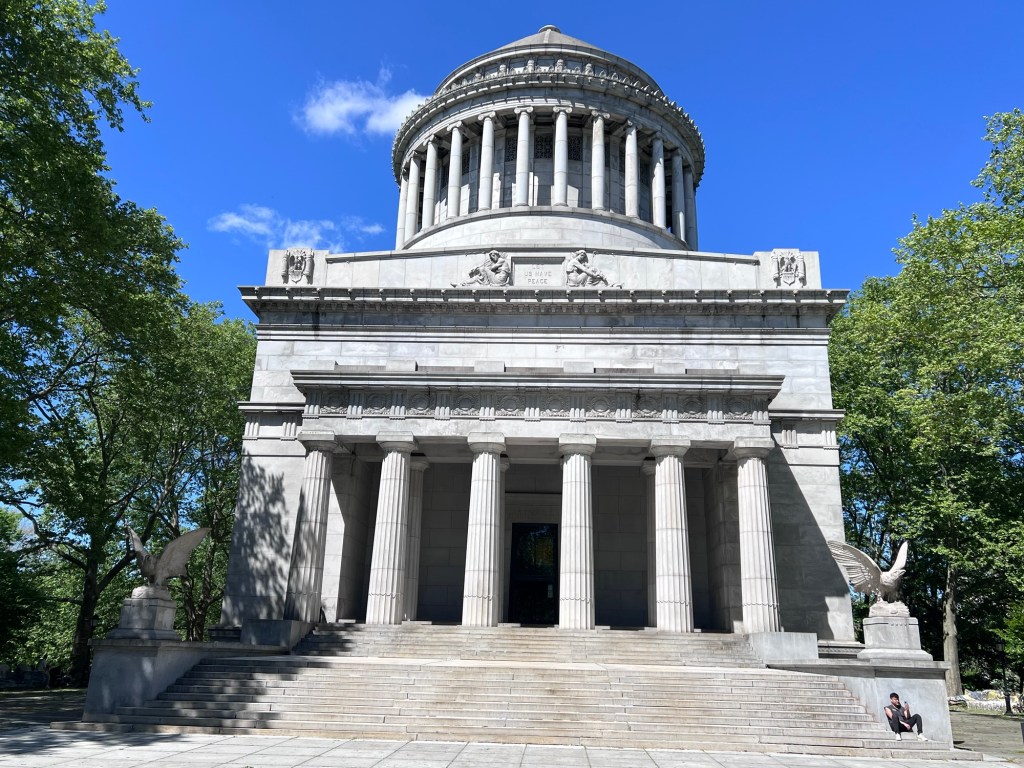
Grant’s Tomb on a sunny afternoon
https://www.nps.gov/gegr/index.htm
https://en.wikipedia.org/wiki/Grant%27s_Tomb
My review on TripAdvisor:
My review on VistingaMuseum.com:
The monument was designed by architect John H. Duncan and was finished in 1897 and the President’s remains were moved here before the dedication. His wife died in 1902 and was buried along side her husband.
In 1958, the National Park Service took the monument over and was given a small budget to oversee it. In the 70’s and 80’s as the city had declined, this part of the park was a mess and the monument was vandalized to the hilt.

The graves of President Grant and his wife
It had gotten so bad at one point where the descendants of the family threatened to pull the bodies out of the tomb because of neglect. Since the 90’s, the monument and the park have been restored and it is open to the public for limited times during the week.
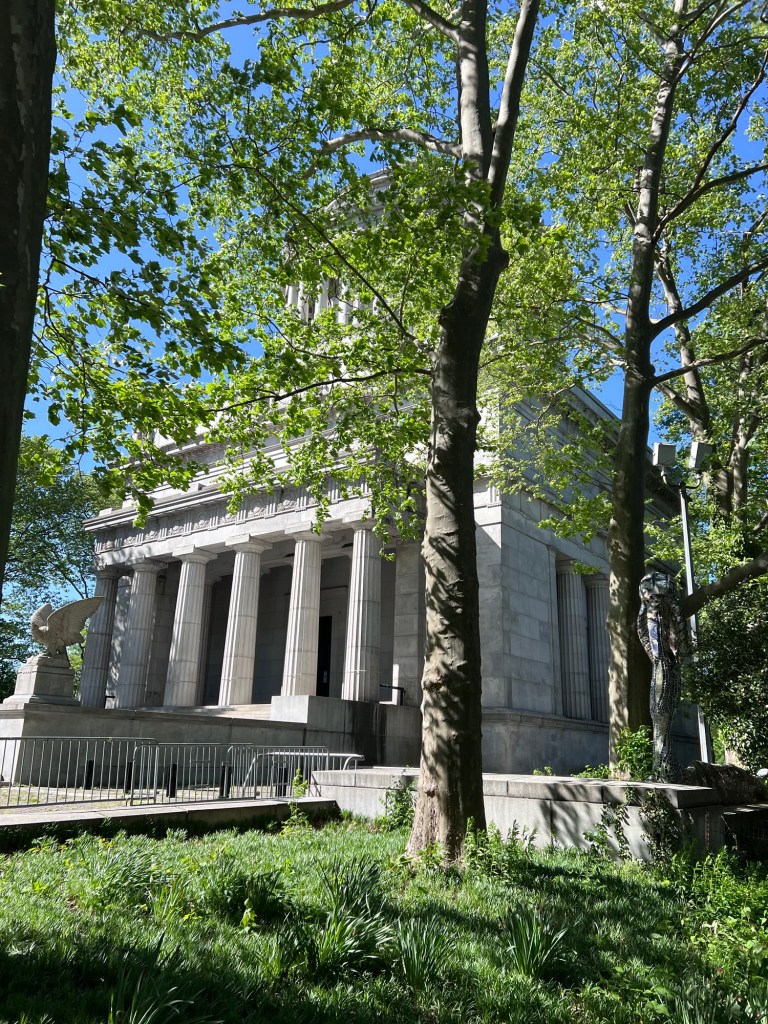
The side view of the tomb facing the park
The park now is used for picnicking and parties as many were going on as I walked through the park. The tomb itself was closed for the day but I returned another day to tour the tomb, watch a video on the family and enjoy the park.

The park behind Grant’s Tomb
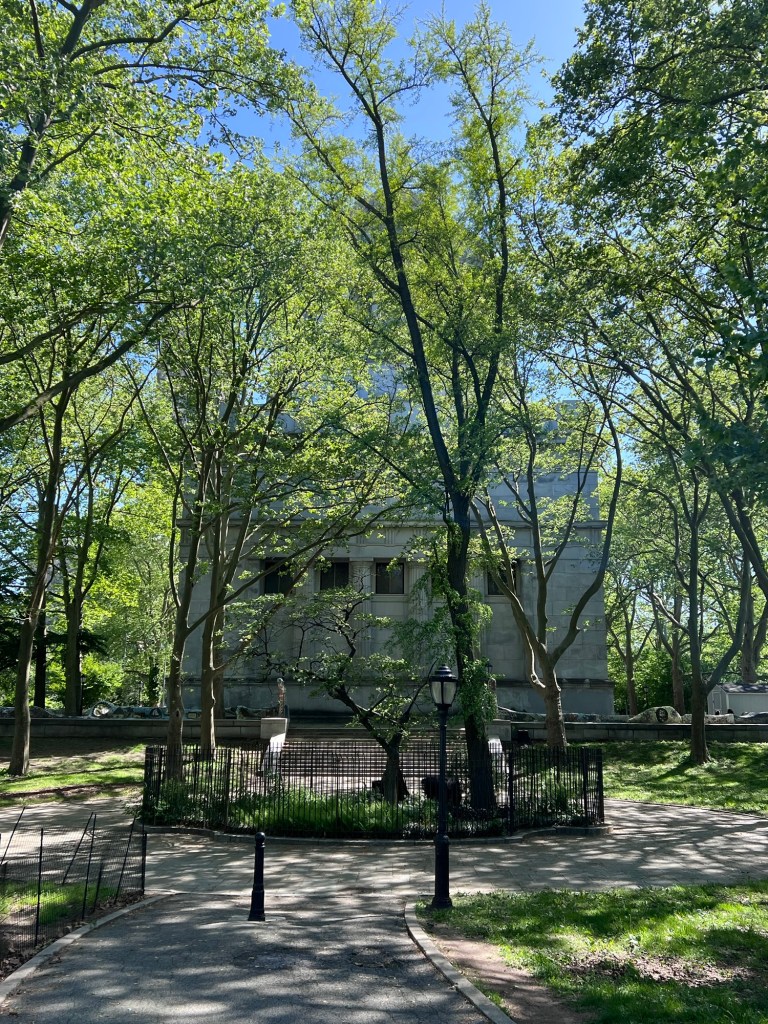
The park near the tomb
Off to the side of the monument, inside Riverside Park next to the path, is the Amiable Child Memorial (See review on VisitingaMuseum.com), the resting place to St. Clair Pollock. This touching little monument is dedicated to a child who died in 1797 in the fifth year of his life from a fall from the cliffs somewhere in the current park. It is one of the private graves located on public land. This small stone funeral urn is on a pedestal marking the grave. It is a very touching grave to a small child. I left a coin there as many have in the past.

Tomb of the Amicable Child
https://www.nycgovparks.org/parks/riverside-park/monuments/1206
My review on TripAdvisor:
My review on VisitingaMuseum.com:
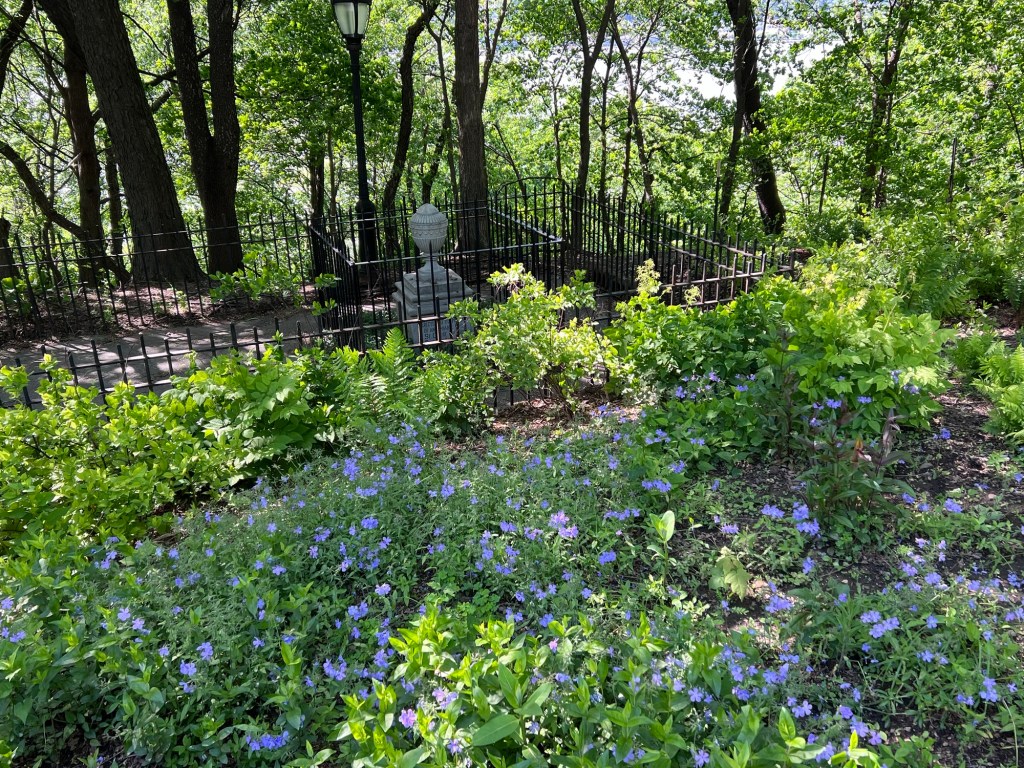
The park the tomb is located in the Spring
I continued the walk up through the park until I hit Riverbank Park on 145th Street, one of the unique parks I have ever seen. The 28 acre park is built on the top of a water treatment plant that was inspired by parks built on roof tops in Japan. This park has everything. It has a pool, basketball courts, tennis courts, soccer field, baseball field, a cool off fountain and ice skating rink. It has it all and has the neighborhood embraced this park. The place was packed in all venues. It was a truly democratic park as all races play here.
I was most impressed by the number of families having parties and barbecues in the park. There must have been about a dozen birthday parties going on at once. The smells of barbecue meats and vegetables wafted in the air and the sounds of laughter and singing was all over the place. Even on a hot day, nothing stops people from having a good time.
I was most impressed by the Snack Bar located in the park’s main building. For $6.00, I got a cheeseburger, fries and a Coke and for a park snack bar they were really good. The portion size was generous and I can tell you for fact that the fries are excellent. Even if you don’t like sports make a special trip to snack bar and you won’t be disappointed. (See review on TripAdvisor)

Admiring the street art on the extension of 12th Avenue off Riverside Drive

Riverside Drive as you walk up the stairs at
After a 45 minute detour of this amazing park, I walked the rest of the way through Riverside Park until I hit Trinity Cemetery again and crossed 155th Street to St. Nichols Avenue again. I wanted to take a better look at the mansions at 150th Street in Sugar Hill. This section of Sugar Hill I did not have time to take a good look at the last time I was walking St. Nichols Avenue.

Homes along West 142nd Street

The Palisades Playground at West 148th Street and Riverside Drive
https://www.nycgovparks.org/facilities/playgrounds/368
https://www.mapquest.com/us/new-york/palisades-playground-447788040
My review on TripAdvisor:
I stopped in the Palisades Playground for a rest and to go to the bathroom. I loved the stonework and masonry of the park. The views from the top of the park has a breathtaking view of both the park below and the Hudson River.

Inside the playground

The view of the playground
I finished my walk of Riverside Drive at West 155th Street when I got to the Trinity Church Cemetery and then walked up and around Broadway. I then did the turn around

The Berler-Levy Houses at 809-811 Riverside Drive East at the corner of West 158th Street and Riverside Drive East
http://www.audubonparkny.com/AudubonParkBerlerHouse-1017.html
The two joined brick houses, designed by Moore & Landsiedel in a Spanish style, feature a tiled roof and a one-story conservatory at either end. Notice the arched windows with fanlights, the pairs of Doric columns flanking each door and a balustrade at each window (AudubonPark.com website).

The front of the house
In 1920, Nathan Berler, a wholesale clothing manufacturer, and lawyer Charles Levy, built the Berler-Levy duplex as a prototype for an alternative to apartment dwelling in Washington Heights (AudubonPark.org website).
The homes and brownstones in this area are just gorgeous and give you a totally different prospective of Harlem. Most of these buildings have been sandblasted and restored or in the process of being done. The mansions on the corner of 150th Street and Edgecomb Avenue hark back to a time when this was a very fashionable avenue and don’t miss the Bailey House that is fully restored.
I took a pit stop and stopped for a quick slice of pizza on 145th Street at Victorio’s Pizza Plus at 348 West 145th Street and one of the best slices of pizza I have ever had for $1.00. The pie had just come out of the oven and it was a thin crust made with fresh mozzarella and it was heavenly. Flavorful sauce and the right amount of cheese that was cooked perfectly at any price the pizza was delicious. This is a must for all the CUNY students. (See TripAdvisor review)
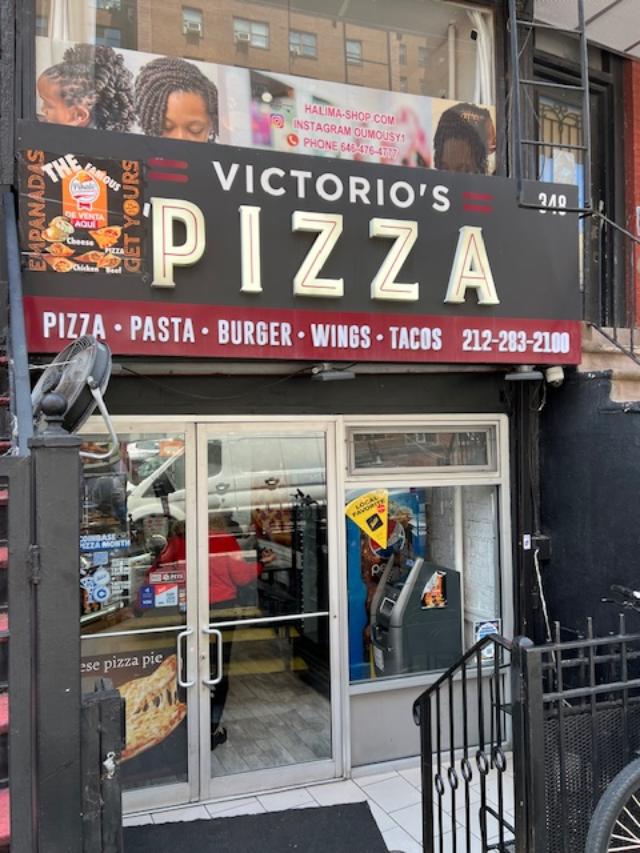
Victorio’s Pizza at 348 West 145th Street
https://www.facebook.com/p/Victorios-Pizza-100075958516829/
My review on TripAdvisor:

Their Cheese Pizza is delicious
The walk took me back across 155th Street and back down Riverside Drive. The park, even at twilight is busy. There were so many bikers, joggers and walkers that you had to move a lot on the sidewalks. My last structure I saw as I walked down Riverside Drive was the Ralph Ellison art piece “Invisible Man” (the picture above) done by sculpture Elizabeth Catlett at 150th Street. Ms. Catlett was a artist who themes were the struggles of the Black experience with race and feminism. Her work was influences by Primitivism and Cubism (Art.net).
It was dedicated to the novelist work on his book “The Invisible Man” about his experience as a Black man during the Civil Rights Movement in NYC. Ralph Ellison lived in the area before he died in 1994. It really is quite the statue.
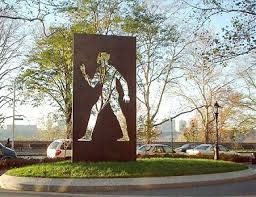
Invisible Man Sculpture Riverside Park

Elizabeth Catlett, artist
http://www.artnet.com/artists/elizabeth-catlett/
As I passed Grant’s Tomb, there were about three parties going on in the park. I don’t think the President even partied that much in one evening when he lived in the city. I could not believe that the park around the tomb would be this busy at eight at night. There were colorful lights all over the trees and a grill going.
I got to 110th Street around 8:30pm and as I rounded Riverside Drive to 110th Street the neighborhood which had been on the fringe for many years has completely changed. The area by Riverside Park had always been nice but as I walked further down the street this area has been sandblasted and rebuilt. Many parts of uptown that had been ignored for years look more like the Upper East Side.
I even saw people walking into Morningside Park which when I was working in the city in the 90’s was a death trap that you would not walk anywhere near but like the rest of the parks like Tompkins Square in the Lower East Side and Bryant Park behind the main library time has passed and they have been fixed up, cleaned up and the area around them now is priced higher.

Morningside Park in the Springtime
https://www.nycgovparks.org/parks/morningside-park
My review on TripAdvisor:

Morningside Park Pond in the early Spring
My last stop of the evening was Miss Mamie’s Spoonbread Too at 366 West 110 Street. This neighborhood staple has been around for years and in a much gentrifying neighborhood that seems to be getting away from its Harlem roots. I hope owns the building. The food and service were just excellent. The biggest problem I had with the restaurant is that I over thought how hungry I was that night. After a big lunch at 5:00pm and a slice of pizza by the time the food came I was barely hungry.
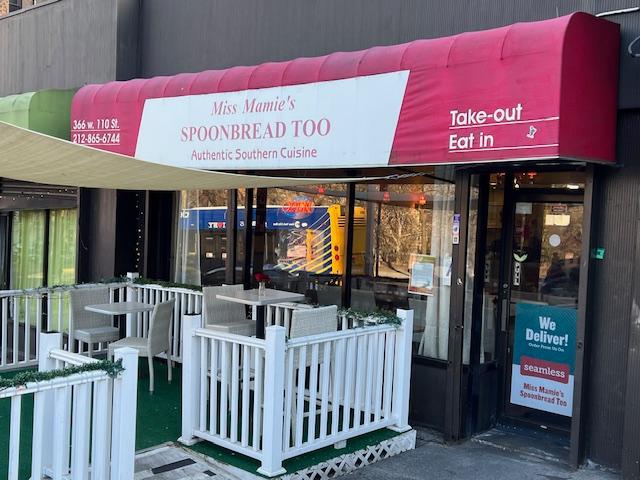
Miss Mamie’s Spoonbread Too at 366 West 110th Street
My review on TripAdvisor:
Miss Mamie’s is not to be missed. They had a dinner special that was $19.99 for a salad that was one of the best restaurant salads I had had in years. It was crisp with fresh lettuce and tomatoes with a light dressing, for the entrée was freshly Fried Chicken that was crisp on the outside and moist on the inside and the chicken had so much flavor to it.
I had it with Mac and Cheese and Mashed Potatoes, not the most healthy choices but after a five mile walk I figured I had burned off a few calories. It was so much food that I had to take half of it home with me along with the Peach Cobbler dessert that was included in the meal (See the review on TripAdvisor).

Miss Mamie’s Spoonbread Too
The service was friendly with out being overwhelming. I must give off certain vibes in this neighborhood because the waitress asked me if I was a lecturer for Columbia. I laughed at the one and asked why. She said I looked smart. I don’t know what looking smart is but I took it as a compliment. Usually above 110th Street every assumes that I am either a cop or DEA. Amazing what being tall is to people.
I ended the evening totally exhausted and took the subway from the 110th Street and Central Park West. Another sign of changes in the neighborhood is that I saw people jogging into the northern park of Central Park at 9:30pm. Things have really changed up here.
Places to Visit:
Hippo Park Conservatory
West 91st and Riverside Drive
New York, NY 10025
(212) 870-3070
https://riversideparknyc.org/groups/hippo-playground
Riverbank Park
679 Riverside Drive
New York, NY 10031
(212) 694-3600
https://www.nycgovparks.org/parks/riverside-park
https://parks.ny.gov/parks/93/details.aspx
Reviews on TripAdvisor:
General Grant’s National Memorial (Grant’s Tomb)
122nd Street & Riverside Drive
New York, NY 10027
https://www.nps.gov/gegr/index.htm
My review on TripAdvisor:
My Review on VisitingaMuseum.com:
https://wordpress.com/post/visitingamuseum.com/1354
Tomb of the Amicable Child
524 Riverside Drive
New York, NY 10027
https://www.nycgovparks.org/parks/riversidepark/monuments/1206
My review on VisitingaMuseum.com:
https://wordpress.com/post/visitingamuseum.com/630
The Palisades Playground at West 148th Street and Riverside Drive
https://www.nycgovparks.org/facilities/playgrounds/368
https://www.mapquest.com/us/new-york/palisades-playground-447788040
My review on TripAdvisor:
Various Statues along Riverside Drive
See Riverside Park Memorials NYCParks.com
https://riversideparknyc.org/event/monuments-tour
https://www.nycgovparks.org/parks/riverside-park/monuments
Places to Eat:
Victorio’s Pizza Plus
348 West 145th Street
New York, NY 10039
(212) 283-2100
https://www.victoriospizzaplusmenu.com/
My review on TripAdvisor:
Miss Mamie’s Spoonbread
366 West 110th Street
New York, NY 10039
My review on TripAdvisor:
Riverbank Park Snack Bar
679 Riverside Drive
Riverbank Park at West 145th Street
New York, NY 10031
Check their website for hours and days
My review on TripAdvisor:
 mywalkinmanhattan
There’s lots to see and do in Riverside and Riverbank Parks. It is a place to explore!
LikeLiked by 1 person
The park is especially beautiful in the Spring and Fall,
LikeLiked by 1 person
I took a walk along the same route in July of 2026 and took all new pictures in the Summer months so that everyone could enjoy the true beauty of Riverside Park. It is an amazing walk and an open air museum.
LikeLiked by 1 person