Fee: Adults $30.00/Seniors/Students $17.00/Children $12.00/Members & Patrons and Children under 12 are free (prices do fluctuate). NY, NJ and CT students and NY residents Pay as you wish.
Museum Hours:
Hours: Open 7 days a week
March-October 10:00am-5:15pm
November-February 10:00am- 4:45pm
Closed Thanksgiving Day, December 25th and January 1st.
*Some galleries may be closed for construction or maintenance.
I went on the Spring Garden tour at the Cloisters Museum with a discussion on Spring plantings and the use of those plants during Medieval times. The museum studied what plants were used for religious and medical practices.
We started the discussion of the plantings out in the first Cloister by the Hudson River
The Tour of the Gardens at The Cloisters in the Spring 2026:
(From the Museum website)
The gardens of the Middle Ages included both real and ideal gardens. Poets and artists delighted in the depiction of fantasy gardens like the Garden of Love or of Paradise, but no real garden of the time remains to us. Historical records are rare and incomplete; the ninth-century plan for the monastery of St. Gall, with its carefully drawn and labeled garden beds, is unique. Archaeological excavations are yielding valuable new evidence, but we still know more about infirmary gardens of medicinal plants and aristocratic pleasure gardens than we do about humble kitchen plots of potherbs and vegetables (Met.org).
The gardens of the Museum, planted in reconstructed Romanesque and Gothic cloisters, evoke those that provided sustenance and spiritual refreshment within the medieval monastery. Designed as an integral feature of the Museum, the gardens have been a major attraction of The Cloisters since its opening in 1938, enhancing both the setting in which the Museum’s collection of medieval art is displayed and the visitor’s understanding of medieval life. The gardens are designed and maintained by a horticultural staff actively engaged in researching and developing the living collection (Met.org).
The plantings of the first Cloister we visited
We walked through the Cloister discussing how plantings were determined by medical and religious purposes
The flower beds in the Cloister
The view of the Hudson River was amazing
The flowers in bloom
Flowers in bloom
Flowers in bloom
Flowers in bloom
We moved the next Cloister looking over the medical plants and flowers
The Cloister in bloom
Walking around the Cloister
The plants around the sills of the Cloisters
Touring the Cloisters and admiring the flowers
Everything in bloom
We toured the last Cloister while the tour guide explained the plantings
The last Cloister we toured
The garden in full bloom
The growth of the hops growing on a trellis
The hops planting up close
The flowers in bloom in the Cloister
We ended the tour admiring the art in the Tapestry Room and having a discussion about the use of plants and flowers in Medieval art. The artists at that time thought of the natural world with awe and respect. They admired the beauty of the natural world where in some points was still feared,
‘The Hunt of the Unicorn’ tapestry discussion
I then visited the ‘Creatures of Myth and Imagination-European and the Americas’ exhibition.
This exhibition was an interesting look at mythical beasts of the era of great exploration from European to the Americas. It reminded me of the book “In Search of Ancient Astronauts” with many golden creatures that look like they are visitors from another planet, Ancient Gods to worship and one civilization’s outlook on the unknown. The artwork was a cross between mysticism and respect.
The exhibition sign for “Creatures of Myth and Imagination: Europe and the Americas”
Set in the evocative atmosphere of The Met Cloisters, Creatures of Myth and Imagination: Europe and the Americas sheds light on a selection of works created on either side of the Atlantic Ocean between 500 and 1500 CE. The exhibition’s exploration of hybrid creatures deepens our understanding of their apparent necessity among diverse peoples. In the Americas, a complex gold pendant by a Tairona artist of northern Colombia, depicting a confrontational figure with hands on hips, a crocodile-like head, and an enormous headdress, would have reflected and expressed the wearer’s status and power. In Europe, ferocious dragons such as the one depicted on a monumental fresco from the monastery of San Pedro de Arlanza, Spain, took center stage to convey a multiplicity of meanings both sacred and profane (Met.org).
The exhibition gallery
Unusual mythical creature
(From the museum website)
For as long as humans have told stories, we’ve imagined creatures that transcend the natural world. Fantastical beings combining the features of animals, humans, and even plants appear across cultures, emerging in the most ancient myths and enduring in contemporary epics. The widespread presence of these supernatural beings, possessing the power to transform and be transformed, reflects a global impulse to make sense of both known and unknown worlds. Visual artists have given form to these imaginary creatures, resulting in some of the most fearsome, beloved, and extraordinary works of art ever made (Met.org).
Small gold ancient Gods
Ritual Knives
Double pendants
Earth Deity
I took one last tour of the museum gardens before I left for the afternoon. On the balcony overlooking the Hudson River offered beautiful views and beautiful potted plants.
Walking out of the back Cloister
The back Cloister
The beautiful white flowers
The balcony overlooking the Hudson River
The potted plants by the doorway
The view of the Hudson River
Looking north up the Hudson River
The tour of the Gardens was amazing and the exhibition on the Pre-Columbian art interesting. It was a wonderful tour of the Cloisters.
Interesting video on YouTube on “Gardens and Art at the Met”
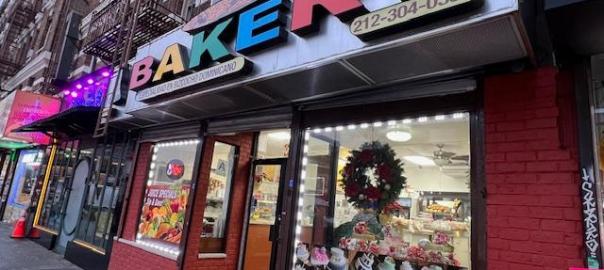
D’Lili Bakery is a small neighborhood bakery that stands out because of the quality, selection, service and prices. The bakery is extremely reasonable, the portion sizes are enough for a meal and the ladies that work there are very nice but you had better know some Spanish.
Their Beef and Chicken Pastilitos are delicious
You can buy a complete meal here and not go over budget. The pastilitos, which are the Dominican version of the empanada, are generously filled with either cheese or meat and make the perfect meal on the run. I love their Chicken and Beef Pastilitos and two of those are more than enough for a quick lunch.
The Beef Pastilitos
Both the Chicken and the Beef are very well spiced and I enjoy eating these on my walks around the neighborhood.
The Chicken pastilitos
Where D’ Lili Bakery really shines is there baked items. Everything I have tried there was wonderful. From their fruit filled pastries to their donuts, everything I have bought there has been fresh and delicious.
The Sugar doughnuts
The sugar doughnuts here are fried and loaded with sugar. They are soft and chewy.
These are pillowy and chewy
What I really love is their fruit filled pastries. Their Guava pastry comes in both fruit filled and fruit cheese filled and they give you a generous slice. The fruit filling has a tangy taste and makes the perfect end to the meal.
The flaky Guava pastries
D’Lili Bakery is one of those neighborhood bakeries that every block should have around. The food is very reasonable, the service is very nice and the prices in this economy are very fair.
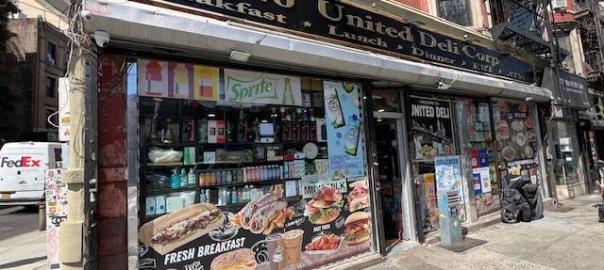
New York City is loaded with bodegas and delis sometimes a couple on each block. Brooklyn has many of them and when I walk through neighborhoods here, I try to eat locally and support small businesses. I came across 840 United Deli when I was visiting the Brooklyn Botanic Garden and wanted a sandwich instead of pizza.
The menu at 840 United Deli
The place was busy in the late morning with people ordering breakfast sandwiches. The guy next to me was raving about a Bacon, Egg and Cheese hero that the breakfast cook made for him.
The ingredients to make those great sandwiches and wraps
The selection of sodas and snacks
I wanted lunch and was in the mood for something that would get me through the afternoon and I went for a Cheeseburger Deluxe. Great Choice!
The Cheeseburger Deluxe
The cheeseburger was perfectly cooked and caramelized. The burger was oversized and was more than enough for lunch.
The Cheeseburger
The French Fries
They gave me more than French Fries on the side. This could have fed two people comfortably.
What a great dinner before the show
On another trip to Brooklyn for an exhibit at the Brooklyn Museum, I stopped in for a sandwich and ate on the steps of the Brooklyn Museum again. It is the perfect place to people watch. This time I ordered a Cheesesteak. You have to be pretty clear with these guys on ordering a Philly Cheesesteak. While it is delicious, the guy asked me if I wanted lettuce and tomato on it with mayo. That would make anyone from Philly either pissed or cry.
The Philly Cheesesteak
The hero was loaded with meat and cheese
I felt like I was back in Philly
When I was visiting the Brooklyn Botanic Garden for “Members Movie Night”, I stopped in for another hero sandwich. I ordered the “All American Hero” with Hot Pastrami, Turkey and Swiss Cheese heated on the grill and then tucked into a chewy bun. It was really good on a cool night.
This made the perfect dinner on the cool evening in the Brooklyn Botanic Garden
The sandwich was loaded with meats and cheeses
Yum!
Don’t miss the friendly bodega cat as he travels around the store keeping watch
You know the food will be safe
480 United Deli is one of those bodega/deli’s that every neighborhood should have on its block.
I enjoy coming up to Germantown to visit the Clermont Mansion at any time of the year especially at Christmas time. I came for a tour of Clermont in the Christmas season of 2019 (pre-COVID) to tour the home. The old mansions of the Hudson River Valley show their real beauty at this time of the year.
The Clermont Library decorated for Christmas
In 2020, the home closed like everything else for COVID and because of extensive renovations on the property and in the home, did not open again until June of 2023. I came up finally in July of 2023 for another tour of the home. The mansion looked very refreshed and bright on a blue, sunny afternoon. The grounds were in full bloom and everything looked so green.
The views of the river when you arrive
Walking around Clermont is like walking through a history book. To think you are walking around the very rooms that family members who wrote the Declaration of Independence, were Governors and Ambassadors from our country and who owned most of Upstate New York lived is really incredible. The Livingston Family did so much for the United States in the formation of this country is a testament to the family.
Once you arrive at the Visitors Center and pay for your tour, you will have time to walk around the exhibition of the history of the family in the old stables. Here you will learn about the family who built and lived in this wonderful home. The family lived here for seven generations and like most families over time when the money depleted, they had to move out. The last daughter of the family, Honoria, sold the estate to the State of New York as a park. The upkeep got to be too much for the family.
The Visitor’s Center display on the family
The family story boards in the old stables
The history of the estate and the Livingston family in the Visitor’s Center
The history of the estate
The tour 2019 was wonderful because of the one on one conversation I had with my tour guide, Molly. It was the same in 2023 when Aaron took me on a one on one tour of the mansion. We started in the entry hallway where the family hang many of the family portraits and the long hall lead to wonderful views of the Hudson River.
The Entrance Hall of Clermont
Just off to the right of the front entrance of the home (the front entrance faces the river not the back entrance where you start the tour) is the Receiving Room. This was the room in 2023 during my summer tour of the house. The Receiving Room is where guests would wait to be welcomed by family members or people would call on the family and leave their calling cards.
The Receiving Room was also used as a Music Room as well
The Receiving Room was decorated for the holidays in 2019 with more beautiful views of the river and a very interesting clock on the mantle that there are only two in the world. This clock represented the first balloon launch in France and this was the clock where the balloon went up. In France was the other clock with the balloon going down. I thought that was pretty interesting.
Our next stop was the Library which seemed very homey and relaxing. It looked like a room that a family would want to spend their time in after a long day. The windows faced the river and the formal gardens at that time and let in a lot of light. The room was decorated with a elegant tree and looked like the family was ready to walk in and join us for the holidays.
The Library of Clermont
The Office/Library on the first floor
Next it was off to the formal Dining Room where the portraits of Margaret Beekman Livingston (a VERY distant relative of mine by marriage) and her husband, Robert Livingston hung. She had saved these along with the grandfather clock before her first house was burned by the British during the war years. It was set for Christmas lunch when the family would dine together.
In the summer months, the room was pretty plain with no set up on the table. The Dining Room has just had some renovation work so the walls and ceiling looked really nice.
The Clermont Dining Room in the summer of 2023
The Dining Room portraits
Margaret Beekman Livingston’s Wedding portrait in the Dining Room
Robert Livingston’s Wedding portrait in the Dining Room
We also toured where the food was prepared and prepped from the kitchen to the Dining Room, which was all done in organized fashion. I was told by the tour guide that for the most part the family lived here year round unlike some of the other mansions who only lived here during certain times of the season.
The Kitchen at Clermont
We took a walk upstairs to see the upstairs bedrooms and see where the third Mrs. Livingston lived. I thought it was interesting that she had two beds in her room in which neither was big enough to accommodate her. One was the main bed and the smaller one was a Day bed when she wanted to take a nap but did not want to mess up her main bed.
The last Mrs. Livingston’s bedroom until the 1960’s
We then toured what had been Honoria’s and Alice’s bedroom when they were children and then became the Guest Room. It still looked like a Children’s Room.
The Daughter’s/Guest Bedroom
Then it was back down to the formal hallway for the end of the tour. The one thing I have to say about Clermont is that it looks like someone’s home not some grand mansion like the Mills or Vanderbilt mansions that looked like they for a moment time or only for a season. This family lived here all the time.
The upstairs bathroom was one of the remodeling features
The family lived here until the 1960’s when upkeep of the estate got to be too much for the family and it was sold to the state. The New York Park is now maintained by the New York State Park system.
The Gardens:
The formal gardens were in bloom when I got there that weekend. Since the house opened in June most of the Spring plantings were already gone but the Summer plantings were in full bloom. There were three gardens on the property, two of which had been brought back to nature, the Wilderness Garden and the South Spring Garden and then the Walled Garden was well maintained and planted.
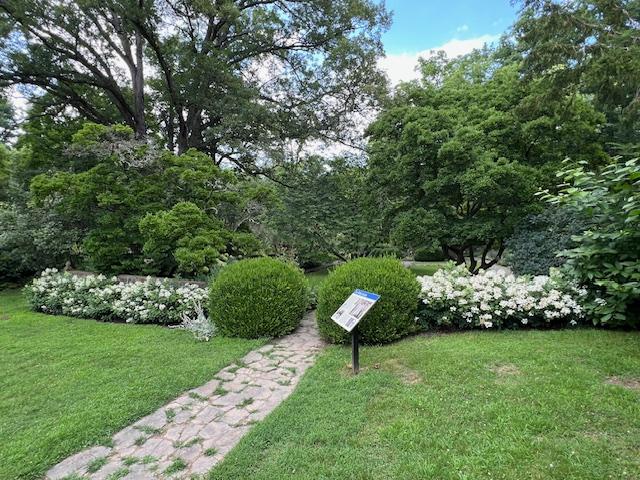
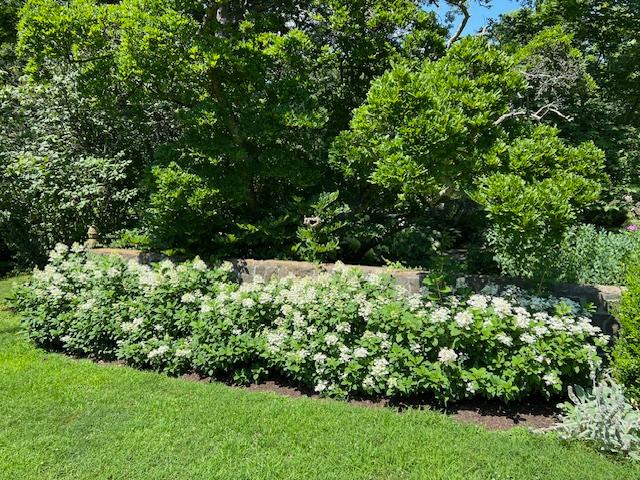
The Wilderness Garden was well-maintained and planted with natural plants
The South Spring Garden
The South Spring Garden has given way to nature
The Walled Garden was the most formal of all the gardens
The Walled Garden
The Walled Garden
The Walled Garden
The Walled Garden
The Walled Garden
In the Fall, I went back up to Clermont for the Ghost Tour and the foliage was amazing, but the rain knocked a lot of it off. Still the colors were glorious.
Clermont in the Fall of 2023
The formal gardens in the Fall
The formal gardens in the Fall
The gardens in the Fall.
The I toured the rest of the estate and saw the ruins of the other mansion, Arryl, that is on the other side of the parking lot and then saw the ruins of the Old House and the Root Cellar.
The Ice House
The Root Cellar
The flowers by the Root Cellar
View of the Hudson River
The History of Clermont:
The name Clermont derives from “clear mountain” in French and was inspired by the view of the Catskill Mountains across the Hudson River from the estate.
The front of Clermont that faces the Hudson River
The estate was established by Robert Livingston following the death of his father, the first Lord of the Manor was inherited by the eldest son, Philip Livingston, 13,000 acres in the southwest corner later named Clermont was willed to Robert. The original house was built around 1740.
The path leading to the main house
Robert Livingston of Clermont died on June 27, 1775 and the estate passed to his son, Robert, who was known as ‘Judge Livingston’ to distinguish him from his father. Judge Livingston was a member of the New York General Assembly from 1759 to 1768, served as Judge of the admiralty court from 1760 to 1763 and was a delegate to the Stamp Act Congress of 1765. He married Margaret Beekman, daughter of Colonel Henry Beekman. Their son, Robert R. Livingston, later known as “Chancellor”, served on the committee that drafted the Declaration of Independence. Judge Robert died about six months after his father, on December 9, 1775.
Burning and Rebuilding:
In October 1777, British ships sailed upriver from New York City in support of General John Burgoyne who was north of Albany. That same force had already stormed two forts in the Hudson Highlands and burned Kingston, New York. Major General John Vaughan led a raiding party to Clermont and burned Livingston’s home because of the family’s role in the rebellion.
The history of the ‘famous’ Robert’s of Clermont
Margaret Beekman Livingston rebuilt the family home between 1779 and 1782. Robert R. Livingston became the estate’s most prominent resident. Chancellor Livingston administered the oath of office to President General Washington, became Secretary of Foreign Affairs and negotiated the Louisiana Purchase.
Margaret Beekman Livingston
He also partnered with Robert Fulton in 1807 to create the first commercially successful steamboat on the Hudson River, the North River Steamboat (later known as the Clermont) which stopped at the house on its inaugural trip.
Robert Livingston in the famous Gilbert Sullivan painting.
The home’s final Livingston owners were John Henry Livingston and his wife, Alice. They added to the home and greatly valued the homes important historical role. The Livingston’s built second mansion on the property known as Arryl House, which burned down in 1909. The ruins of Arryl House are still visible at the south end of the property.
The burnt ruins of Arryl Mansion on the other side of the property.
The Arryl Mansion in the Fall of 2023
Alice Livingston was responsible for creating many of the landscaped gardens that are continued to this day. Following John Henry’s death, Alice turned the Mansion and property over to the State of New York in 1962 so that all the people of New York could enjoy it.
The landscaping around the old Ice House
The house is now a New York State Historic Site and was designated a United States National Historic landmark in 1972. It is a contributing property to another National Historic Landmark, the Hudson River Historic District. Although locate in the town of Clermont, its mailing address is in the nearby town of Germantown.
The views from the back of Clermont to the Hudson River
(This information is a combination from the Clermont Website and Wiki and I give them full credit for this information. Please check the website above for more information on the site and its activities through their Friends site.)
The Clermont Grounds
The Fall in the Hudson River Valley is one of the most brilliant times to visit and the foliage is so colorful. The constant rain knocked a lot of it down already but all around the house their were still signs of the reds, golds and oranges. I came up for the Ghost Tours which the mansion resumed this year to sold out crowds.
The Clermont Estate in the Fall.
The river front of the estate in the fall.
The Hudson River in all its glory.
The Ghost Tour of the estate:
The Ghost Tour took us on a tour through the house to meet the costumed characters throughout the mansion. The mansion was decorated for the Halloween and with the lights dimmed, it gave the house an eerie appearance to it.
When I arrived at the estate, the house loomed in the distance in its it glories with the golden colors of autumn.
Jack-a Lanterns lined the pathways and lit the way to the house.
We were greeted with fresh Apple Cider Doughnuts and Apple Cider from a local farm in Kingston, NY.
We were also treated to old fashioned Halloween candy with Mary Janes, Tootsie Rolls and other treats.
We started our tour at 7:00pm at twilight with the lanterns lit and the house waiting in the distance.
The hallway was decorated for Halloween.
First we met an embittered Robert Livingston (who over acted)
We stopped in the haunted Living Room to talk to the maid.
We met the ghost of Janet Livingston Montgomery in the Parlor.
Then it was off to the Dining Room to meet the last inhabitant of the house, Janet Livingston.
Margaret Beekman Livingston guarding the Dining Room.
On the way to the kitchen, we met Captain Kidd, the Livingston children and the last owners of the house on the way out the back door to end the tour. The whole tour took less than an hour.
We exited the house through the kitchen and out the door to a moon lit night with jack-a-lanterns taking us back to the Visitors Center. The night had fallen in the early evening at the mansion as we were the second to last tour of the evening and the moon had come out giving the sky a ominous and spooky look about it.
The Christmas Open House: 2024
I visited again for the Christmas Open House in early December to see the decorations. I had not been there since 2018 and wanted to see how things had changed for the winter months. Everything was decked out for Christmas. The rooms were decorated but not in an over the top way as some of the other Hudson River homes.
The Clermont Estate at Christmas time.
The Clermont Estate at Christmas time.
The Front porch at Christmas time.
The Christmas tree on the porch.
Even the logs on the porch were decorated for the holidays.
The entrance foyer from the stairs.
Upon entering the front door, you could see the beauty and simplicity of the Christmas holidays in the early 1800’s before Victorian traditions took over and the house was overdone with decorations. Garland, Holly and simple pine trees adorned the rooms and welcomed everyone to the Christmas Holiday Open House sponsored by the Friends of Clermont. The home was nicely decorated for the holidays circa 1840’s.
Entering the Front Door at Clermont at Christmas.
The wreath was beautiful on the door.
Livingston Painting in the foyer
The Sugar Spun Clermont Sculpture.
Painting in the Foyer of Robert Livingston
Portrait of Margaret Livingston in the Foyer.
The holiday display.
The Office of Clermont
The Table Top tree in the Office.
The Library was set for Christmas morning with a large tree, homemade presents from the family and a morning of Christmas cheer. The views from the windows would have shown the beautiful views of the river.
The Library at Clermont
The Clermont Library at Christmas time.
The Christmas tree in the library.
The Library decorations.
Library decorations.
The Living Room was set for Afternoon Tea and for greeting guests who would have entered through the front door right off the main hallway.
The Living Room decorated for Christmas.
The Living Room was set for Afternoon Tea.
The portrait of Robert Livingston in the Living Room.
The portraits of Alida and Robert Livingston.
The Dining Room was not set for dinner but in anticipation of the holidays. The elegant runners, china, crystal and silver were off to the side awaiting the servants to set the table and prepare for Christmas dinner.
The Dining Room decorated for the holidays.
Holiday display in the Dining Room.
The Wedding Painting of Margaret Beekman Livingston in the Dining Room.
The family’s private bedrooms were decorated with garland and a small tree in the foyer.
Heading to the Second Floor of Clermont.
The view of the foyer from the upstairs.
The Livingston girls Bedroom.
The Livingston girl’s doll adorns the room.
The Christmas tree in the upstairs Foyer outside the bedrooms.
The Gingerbread House display in the Foyer.
When touring the kitchen which is located to the side of the house, the counters and tables were filled with all the delicious foods that would have been served at Christmas. Roasts, Trifles, Cakes and Pies would have been served by the staff for holiday get togethers and dinners at the mansion.
The Kitchen staff preparing the family’s Christmas dinner feast.
Preparations for Christmas dinner for the family.
Preparing Christmas dinner in the kitchen at Clermont.
After the Christmas Open House tour was over, the Friends sponsored Marshmallow roasting on the front lawn of the mansion and refreshments and talks up at the Visitors Center.
Roasting Marshmallows over the firepit on the mansion’s grounds after the walking tour of the mansion.
Christmas cookies, Apple Cider and Classic Candies in the Visitors Center ended the tour and the Open House for the day.
After the tour was over, I toured the gardens, which were dormant at the time and the grounds along the Hudson River. The views were just amazing and the gardens awaited the coming of the Spring when flowers would be blooming again.
The Garden Tours:
In the Summer of 2024, I took a special Garden Tour of the Livingston Gardens. A new Lead Gardener had been hired by the State of New York and she was starting to renovate the gardens. So we took a tour of the four gardens near the mansion. While we toured the estate grounds, we visited the South Spring Garden, the Walled Garden, the Children’s Garden and the Cutting Garden to see how they were progressing. The staff here is doing a good job bringing these gardens back to life to how Alice Livingston envisioned them.
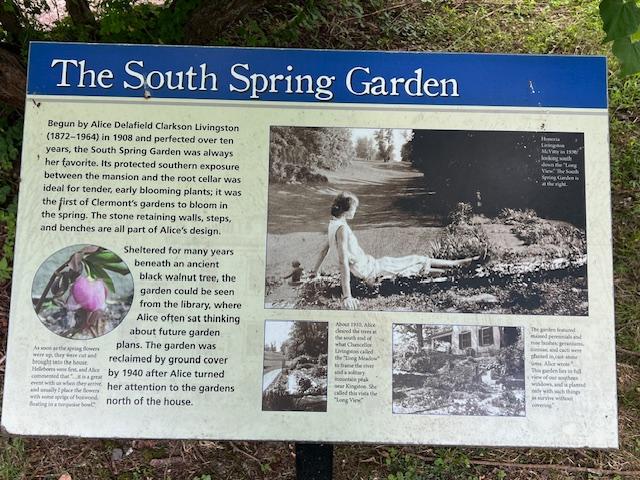
The first was the South Spring Garden which is closest the house. This was built when the stairs to the side of the home were built and one of Alice Livingston’s first gardens.
The South Spring Garden sign
The South Spring Garden in Summer 2023
The South Spring Garden being cleaned up in Summer 2024
The grown in wall of the South Spring Garden
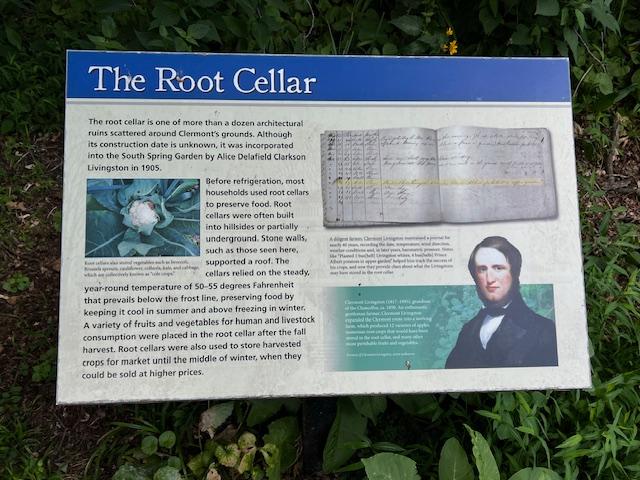
The Root Cellar sign
The Root Cellar remains by the South Spring Gardens
The flowers in the South Spring Gardens
The sign for the Walled Garden
The Walled Garden
The Walled Garden
The Walled Garden
The Walled Garden
The Walled Garden Statuary
The Walled Garden
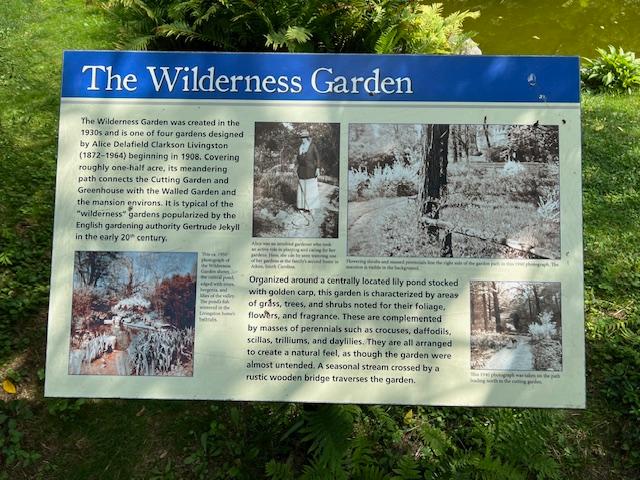
Then we visited the Wilderness Gardens that were just beyond these and they also had been brought back to life by the gardeners. This was to be a transition from the formal gardens to the woods.
The Wilderness Gardens:
The Wilderness Gardens sign
The Wilderness Gardens
The Wilderness Gardens
The we visited the Children’s Garden and the Cutting Gardens which were the newest gardens on the estate. The Children’s Garden playhouse had just been renovated and the beds had been replanted.
The Children’s Garden with the Children’s playhouse
The Children’s Garden from the entrance
The Children’s Garden Garden
The Children’s Garden
The Cutting Gardens were created so that Alice Livingston could grow the types of flowers that would decorate the house at various points in the season. These gardens have been brought back to their original purpose and the flowers and assortments that have been planted are colorful and the fragrances are so nice. On a beautiful day, walking amongst the beds is so nice and relaxing.
The Cutting Garden
The Cutting Garden
The Cutting Garden
The Cutting Garden trellis
The bridge between the Walled Gardens and the Children’s and Cutting Gardens
The Gardens Tour was very informative. Alice Livingston’s love of flowers and how they accented the house were her pride and joy. The Cutting Garden were all the flowers that she used to decorate the house with and the Children’s Gardens taught her daughters responsibilities and knowledge of horticulture.
The biggest problem in recent years is how to maintain all these gardens. This takes a lot of effort and work to weed. plant and prune these beds and make them look nice. The new gardener hired by the State and her team of two staff and volunteers are doing a nice job cleaning out the old beds and replanting and pruning all the plants and bushes that were already there. You can tell by the pictures there is a lot more to do but the gardens are on their way back to their original look.
The Garden Tour in 2026: “Gardens and Growth-The Evolving Landscape of Clermont”
The Clermont Garden Walking Tour 2026:
I returned in the Spring of 2026 for the an updated walking tour of the gardens “Gardens and Grounds: Evolving Landscaping of Clermont”, where the State of New York horticulturalist who had just been hired to maintain the gardens, explained to us the developments and goals that the State wanted for the direction of the landscaping on the property. They wanted it brought back to the 1930’s blueprint of what Alice Livingston had originally envisioned for the estate when she returned from Europe.
Arriving to the Clermont estate for the walking tour
We started the tour with a history of the house and Alice Livingston’s return from Europe to create her famous gardens
The front of the mansion in the Spring of 2026
We started the tour at the Walled Garden which was just finished being restored. The back wall had just been finished and the site’s main horticulturalist explained that she was working with a group of volunteers to maintain the gardens.
The Walled Garden designed by Alice Livingston
The Walled Garden in the Spring of 2026
The inside to the entrance of the Walled Garden
The back part of the Walled Garden
The next garden we toured was the Wilderness Garden which included wildflowers and a fish pond
The Wilderness Garden sign
The back part of the Walled Garden leads to the Wilderness Garden
The entrance to the Wilderness Gardens
The lecture on the design and plantings of the Wilderness Garden
The colorful wildflowers that line the grass paths
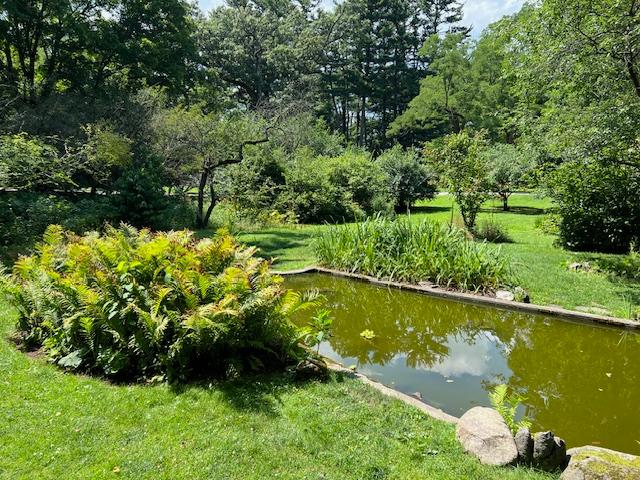
The fish pond in the Wilderness Garden
We then followed the path and walked up and toured the Cutting and Children’s Garden. These colorful gardens once supplied the house with an assortment of fresh flowers. It also taught the Livingston girls the attributes of gardening.
The Cutting Garden and Greenhouse sign
The main Cutting Garden
The Cutting garden
The Cutting Garden in the late Spring
The in season flowers in the Cutting Garden
The Children’s Playhouse and Garden is next to the Cutting Garden
The Children’s Garden in the Spring
Touring past the old Greenhouses
Part of the former greenhouse
The tour through the grounds with my group
The pathway back to Clermont
Touring along the river
The former roadway between the house and the river
The South Spring Garden
Our last garden toured was the one closest to the house and that was the South Spring Garden of which Alice could see from her window. When the porch was removed from the home and Alice developed plans for other gardens, this garden went ‘native’.
The South Garden
The South Garden in bloom
The views from the South Garden
The flower planters near the South Garden
The planters filled with Spring geraniums
Walking back after the tour was over and looking at the beautiful grounds
Ending the tour that day with a walk along the river
It was a beautiful day to walk the gardens and the perfect way to spend the afternoon. Each time I take a tour of the gardens, I am amazed how different they seem. I love the different times of the year and how it changes these gardens.
Downtown Germantown during the Christmas holidays.
Downtown Germantown at the Christmas holidays.
Downtown Germantown for the Christmas holidays and church service.
After the tour in July 2024 for the Summer Garden tour, I revisited Germantown again to see what it was like during the summer months. It is a very active and historical downtown with nice restaurants and shops, a wonderful gourmet grocery store and beautiful historical churches. It is a nice place to spend the weekend when touring the mansions in Columbia and Duchess Counties.
Germantown in the Summer of 2024:
Downtown Germantown, NY in the summer
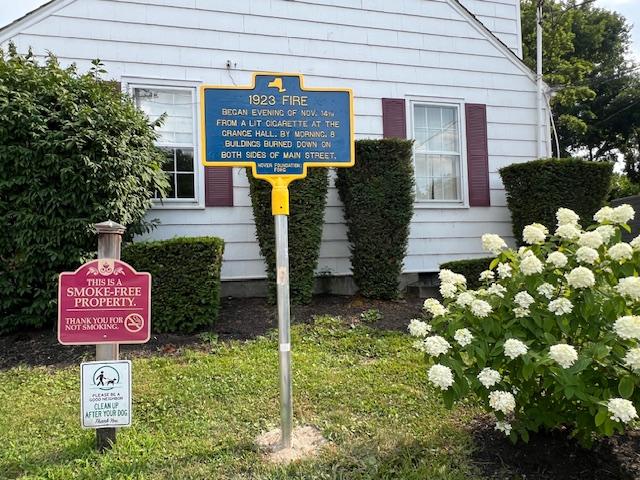
The town square and historical sign
The Inn downtown
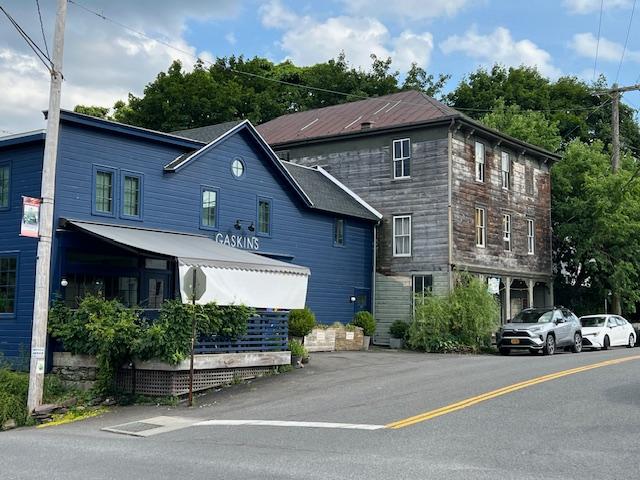
The restaurant row of Germantown with Gaskin’s in the background
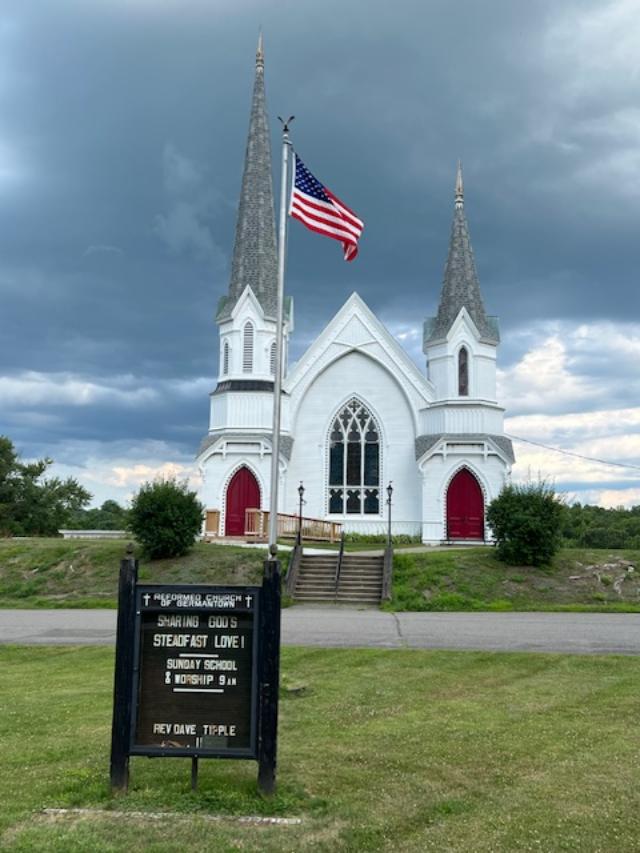
The Reformed Church of Germantown. For some reason the clouds started to roll in after a sunny day.
The church grounds across the street
Germantown is a small town that keeps changing as more people from the City move up to the Hudson River Valley. A lot of the buildings in town are becoming art galleries, furniture shops and new restaurants. With each season, there are more changes coming to the town.
Westwood Cemetery was established in 1861 as the Old Hook Cemetery. The earliest burial was in 1791. Westwood Cemetery is a non-sectarian cemetery and continues to offer final resting places that suit individual needs. Whether you are planning for the future or purchasing for an immediate need, we have a variety of options available within the 35 acre park.
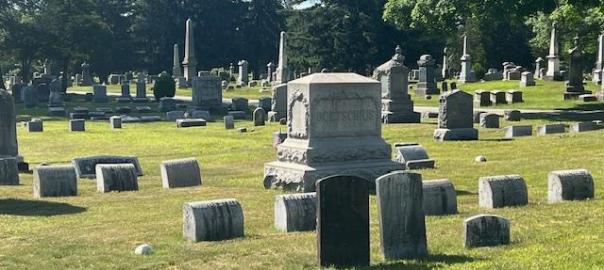
The newest part of the Westwood Cemetery where the family burials start around 1840 to Present sits on the Kinderkamack Road side of the cemetery
The back of the cemetery sits on a buff overlooking the pond that is parallel to Old Hook Road
The original family members were buried in this section of the cemetery while their grandchildren and great grandchildren are interned in the front section.
The oldest section of the cemetery which sits next to Old Hook Road is the Hopper Family plot which dates back to before the Revolutionary War
The Blauvelt Family plot sits next to the Hopper Family plot
The oldest section of the cemetery by Old Post Road home to family members of the Post, Blauvelt, Voorhis and Hopper members
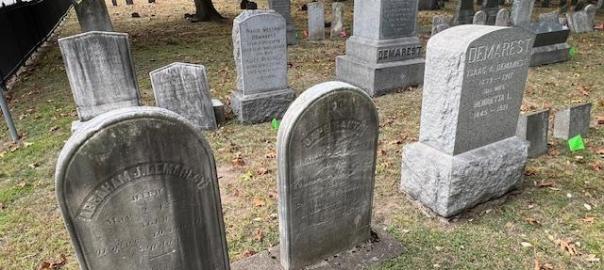
The Demarest family plot overlooking the pond from the buff
The Blauvelt and Bogart family plot
The DeBaun family plot by Old Hook Road
One of the original Demarest family plots
The Haring family plot overlooking the pond
The Ackerman family plot
The Eckerson family plot with members of the Hopper and Demarest families
This section of the cemetery contains the oldest tombstones in the cemetery so many have broken or crumbled away. The lawn in this section of the cemetery is also not as well maintained so there are overgrown bushes and trees hiding the tombstones so you really have to look.
Then I worked my way back to the front of the cemetery finding the graves of these people’s children and grandchildren by following the names and dates of these people’s family members.
One branch of the Demarest family is front and center in the front of the cemetery
Next to them are the DeBaun and Vanderbeck families
Another branch of the Demarest family is a few rows behind
The Kipp family have a rather large family plot
The Hopper & Banta families share this large twin family plot
The Bogart family has this large family plot
The Westervelt family is near them with many of their members of the family
The Demarest family had two large family plots in the middle of the cemetery
The family plot of the Demarests and the Harings
The Demarest and Van Bushkirk family plot
The large Blauvelt family plot
The DeWolfe family plot
The Voorhis family plot
The Terhune Bogart family plot
What I found fascinating about this cemetery was to see the progression of each of these families from parent to child to grandchild just by walking through it. The families branch out in all sections intermarrying with similar families and the buried next to them. From back to front here they rest.
It was another warm and sunny Saturday afternoon and we lucked out that the day fell between two rain storms, where the rain cooled down the temperature and got rid of the humidity. It made it the perfect day for our June barbecue.
The grounds of the NJ State Firemen’s Home
The NJ State Firemen’s Home built an outdoor grill a few years ago making it easier for us to sponsor our barbecues, where the food is cooked and served outside for the residents and their guests. The tables and chairs were set under tents and umbrellas and shade trees making it an enjoyable afternoon.
The built in barbecue was ready to start cooking
The food preparation by Chef Prince and our own President of the NJ State Firemen’s Association Bob Ordway was started in the afternoon
Chef Prince and his helper manning the grill
With the grill fired up and meat sizzling for lunch, everyone anticipated a wonderful lunch ahead. With the assistance of Chef Prince of the Firemen’s Home and NJ State Fire Association President and member Bob Ordway, we stated serving lunch to everyone by 12:30pm.
NJ State Firemen’s Association President Bob Ordway helping with service to the residents
Entertainment rocked that afternoon with the sounds of performer Kelly Carpenter
As residents and their families settled in for lunch and the members of our organization startled to serve everyone, singer Kelly Carpenter started to perform singing popular contemporary songs.
Singer Kelly Carpenter is always a favorite at our events
Residents got to enjoy the beautiful weather that afternoon
It was such a beautiful afternoon with temperatures hovering around 80 degrees with no humidity making it the perfect afternoon to eat under the large shade trees.
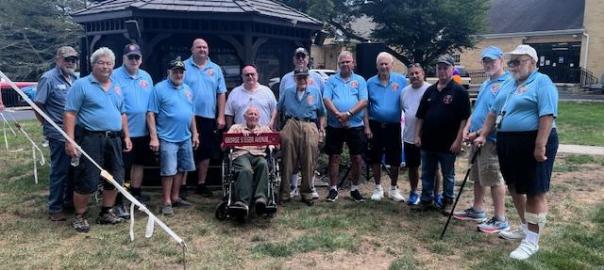
Members of the Bergen County Firemen’s Home Association relaxing for their lunch after serving the residents
Kelly Carpenter performing as the sun shines on this marvelous afternoon
Sitting down to enjoy our barbecue lunch. One of the perks of membership to the Bergen County Firemen’s Home Association
The lunch started to wrap up by 1:00pm and everyone started to either head back inside or wondered ofc to spend time with their families.
It was another successful picnic sponsored by the Bergen County Firemen’s Home Association.
If you would like to make a donation to our organization, please send it to:
BCFHA
C/O Jeff Parma
277 Harriott Avenue
Harrington Park, NJ 07640
Please make the checks out to the Bergen County Firemen’s Home Association
Our 2026 Meeting Schedule:
All our meetings at the home start at 12:00pm at the NJ State Firemen’s Home in Boonton, NJ:
August 15th (August Barbecue)
October 18th
December 6th (Annual Christmas Party)
A big “Thank you” from The Bergen County Firemen’s Home Association Executive Board 2026
In the months of March and May right before the Memorial Day holiday, many of the museums I belong to held their private ‘Members Night’, where they hold extra hours for members after the museums are closed to the public to come and see the exhibitions, listen to music, have something to eat and drink and listen to talks about the exhibitions. The funny part is that the museum’s are more crowded on these nights than when they are open to the public.
Walking inside the soaring dining space at the Morgan Library
The first set of ‘Members Nights’ I went to were on March 24th with my first stop at the Morgan Library. I was there to see the ‘Mozart’ exhibition again.
Wolfgang Amadeus Mozart: Treasures from the Mozarteum Foundation of Salzburg, an exhibition that traces the extraordinary life and enduring legacy of Wolfgang Amadeus Mozart (1756–1791). On view March 13th through May 31st, 2026, this two-gallery exhibition combines the Morgan’s significant holdings in Mozart manuscripts and first editions with remarkable objects, on view in the United States for the first time, from the Mozarteum Foundation of Salzburg. These include Mozart’s clavichord on which he composed The Magic Flute and his childhood violin, as well as famous portraits, letters, and personal objects of Mozart and his family (Morgan Library.com).
Touring the exhibition
Video on the exhibition:
The concert of Mozart as a child
The Magic Flute music and costumes
I happen to love ‘The Magic Flute’ and it was interesting to see the notes and some of the original costumes from the opera at the exhibition.
The costumes from the Magic Flute
After I toured the Mozart exhibition, I toured the rest of the museum that included the original part of the mansion.
The old Living Room
The ceiling outside the exhibition hall
The old Library and Rare book collection
The ceiling in the old Library
I then visited the exhibition of ancient Mesopotamia art scrolls. This was really interesting how this form of written art worked into the collection.
After touring the museum, I went to see what everyone was eating in the museum’s small restaurant was eating because it was getting crowded. The counter was filled with delicious looking desserts.
The sweet treats at the dessert bar at the Morgan Library
The selection of desserts at the Morgan Library the night of Member’s Night
I then visited their very interesting Gift Shop
Admiring the flowers at the Coat Check on the way out. I thought this was a nice touch.
All good things come to an end and I made my way up Fifth Avenue to the Museum of Modern Art for the second part of the evening
I could not believe that the museums arranged these ‘Members Nights’ on the same night. They would plan this three weeks late when the Museum of Modern Art and the Metropolitan Museum of Art. I just had to enough time at one museum and see what I wanted to see and then go up the next.
The Museum of Modern Art (MoMA) at 11 West 53rd Street
Frida and Diego: The Last Dream celebrates Frida Kahlo and Diego Rivera—two of Mexico’s most beloved icons of 20th-century art—in a first-of-its-kind collaboration with the Metropolitan Opera. Organized in conjunction with the Met’s new production of El Último Sueño de Frida y Diego, the presentation at MoMA features artworks by Kahlo and Rivera in an elaborate setting designed by Jon Bausor, the set and co-costume designer of the opera. For both the opera and installation, Bausor evokes the artists’ lives and artworks in his theatrical designs (MoMA.org).
Key participants in a movement to redefine Mexican culture and identity after the revolution of 1910–20—Rivera through monumental murals and Kahlo through intimate self-portraits—the artists were romantically involved from 1928 until Kahlo’s death in 1954. The fictional narrative of the opera El Último Sueño de Frida y Diego begins three years after Kahlo’s death and follows an aging Rivera as he summons the deceased Kahlo back to life on the Day of the Dead, a Mexican holiday honoring passed loved ones. As the opera and installation design attest, the pair continue to have an enduring influence on artists across the visual and performing arts (MoMA.org).
Video on the exhibition:
The opening of the ‘Frida and Diego’ exhibition brought members out in droves
The description of the exhibition
The tree dominates the center of the exhibition
The signature piece from the exhibition
One of the dominate drawings
Looking over costume designs
Some of my favorite costume designs
Another great costume design
After touring the exhibition, I visited some of the other galleries and looked over other works of art that I admired in the past. I took a quick tour of the Modern Galleries before I left that evening.
The Jackson Pollack work
I loved this creative food service work
After touring the museum, I joined the rest of the crowd on the main floor for music.
The main lobby of the MoMA the night of Member’s Night
A few weeks later, the Metropolitan Museum of Art had planned their Member’s Night and then the Museum of Modern Art planned a Member’s Night the same night. So I planned another night of running back and forth between museums.
Member’s Night at the Museum of Modern Art
The schedule of events
There was a lot of activities happening that evening and I wondered around museum to see all of them. I started in the Museum Garden to hear the singers who were performing that evening.
The first performer was Lizzy Hilliard, who performed the guitar and was really enjoyable to hear. She is a very lively and engaging entertainer.
The crowds were outside enjoying the beautiful weather that evening
Lizzy Hilliard performing that evening in the garden
After the performance, I wondered around the museum to see some of the exhibitions and started on the first floor which was really active.
I love wondering through the lobby of the MoMA.
While most of the crowds were still listening to the entertainment in the garden, I went up to the Marcel Duchamp exhibition and toured the galleries again (I had been there the previous week and quickly walked the exhibition).
The Marcel Duchamp exhibition was the biggest retrospect of the artist’s work in years
Marcel Duchamp is organized by The Museum of Modern Art, New York, and the Philadelphia Art Museum, with the generous collaboration of the Centre Pompidou. “Contemporary artworks often prompt viewers to ask, ‘Why is this art?’ It is virtually impossible to answer this question without referring to the work of Duchamp,” said Temkin. “More than any other modern artist, Duchamp challenged and transformed the very definition of an artwork.” Kuo added, “Duchamp’s influence is incalculable and his myriad contributions have established him as one of the most important figures in modern culture (MoMA.org).
Our exhibition will foreground the ways in which Duchamp upended conventional oppositions between hand and machine, original and copy, intention and chance, and matter and idea.” MoMA and PMA have a longstanding history with Duchamp’s work. MoMA was the first museum to acquire a work by Duchamp, in addition to including his work in early landmark exhibitions such as Fantastic Art, Dada, Surrealism (1936) and The Art of Assemblage (1961) (MoMA.org).
Video on the exhibition from the MoMA curator:
I joined the start of the walking tour with one of the docents at the MoMA at the beginning of the exhibition
The gallery was so crowded with people listening to the one docent that was describing the exhibition that I continued on my own. I had never seen much of this artist’s work in museums before and had heard about his piece of changing the look of the Mona Lisa. I really enjoyed seeing it up close.
The 1919 original “L.H.O.O.Q.” was on a card
The 1930 replica “L.H.O.O.Q.”
The information on the replica piece
I then moved on to other works that he was well known for especially his controversial urinal piece.
The work “Fountain” (I thought this was unusual)
The write up on the piece
The last piece that I saw in the exhibition before I left the museum for the Met was his spoke wheel piece.
The work “Bicycle Wheel”
I wondered around the museum for a bit after the tour of the exhibition and admired works in the Modern Wing.
I love Picasso’s Cubism works
After I finished touring the exhibition, I left the MoMA for The Met. The weather was beautiful and with it being light out until almost 8:30pm. It was a beautiful walk up Fifth Avenue with the trees and the flower beds in full bloom.
Arriving at The Metropolitan Museum of Art for “The Met After Hours”
The lobby and rotunda for the event seemed very quiet to me
The beautiful floral arrangements in the lobby area were fresh Cherry Blossoms
The Cherry Blossoms in the urns around the lobby
The American Wing where the Member’s Bar and entertainment was located
The Met seemed very quiet that night. Being the Tuesday after Memorial Day Weekend, I guess most members were getting back to work or still tired from the weekend. It had been a rainy mess the whole weekend and I could not see many people going away.
The bar and the entertainment in the American Wing were located that evening.
I had about two hours before the museum closed for the evening, so I wondered through some of the special exhibitions and started with the “Raphael-Sublime Poetry” exhibition on the second floor.
Raphael: Sublime Poetry is the first comprehensive exhibition on Raphael in the United States, bringing together more than 170 of the artist’s greatest masterpieces and rarely seen treasures to illuminate the brilliance of Raphael’s extraordinary creativity. The son of a painter and poet, Raphael engaged with the foremost writers and thinkers of his age in Rome, displaying a poetic sensibility that captivated his peers and generations that followed. Follow the full breadth of his life and career, from his origins in Urbino to his rise in Florence, where he began to emerge as a peer of Leonardo da Vinci and Michelangelo, to his final, prolific decade at the papal court in Rome (Met.org).
Dive into the artistic process of one of history’s most beloved and influential artists. A true titan of the Italian Renaissance, Raffaello di Giovanni Santi (1483–1520)—better known as Raphael—matched ambition with lyricism to create works with both intellectual heft and emotional depth, a necessary skill in the complex political landscape of Renaissance courts. In his short life of only 37 years, he achieved such profound success as a painter, designer, and architect that he was regarded as the pinnacle of artistic perfection for centuries after his death (Met.org).
Video on the exhibition with the MoMA:
Video on the exhibition with CBS This Morning:
The work admired as I was walking around the exhibition.
This was my favorite piece from the exhibition
The Raphael Exhibition I know was a big deal for the museum but it really was not my taste in art. As much as I admired the work, the whole exhibition did not ‘grab me”.
I was not as impressed with the art in the exhibition and took a quick tour of the works. I had seen the exhibition on a previous tour of the museum so I just wanted to walk around again to see the works that I missed.
I then went back to the first floor and spent more time at the Costume Art exhibition. There had been so much media on the exhibit that you could not get in without timed tickets but because it was quiet on Member’s Night, I just walked in.
The Costume Institute’s spring 2026 exhibition explores depictions of the dressed body across The Met’s vast collection, pairing garments with artworks to reveal the inherent relationship between clothing and the body (Met.org).
Focusing primarily on Western art from prehistory to the present, Costume Art presents connections between garments from The Costume Institute and objects from the Museum’s other collecting areas. Pairings between fashions and artworks will present a spectrum of connections and experiences: from the formal to the conceptual, the aesthetic to the political, the individual to the universal, the illustrative to the symbolic, and the playful to the profound. These pairings are organized into a series of thematic body types that reflect their pervasiveness and endurance through time and cultures (Met.org).
Video on the Costume Art exhibition:
Walking through the entrance of the exhibition
This gallery was newly created for this collection and I had display the pieces that stood out to me the most in the Costume Art exhibition.
One of the pieces I admired
Some of the Evening clothes I admired
Another piece I admired
I thought this was really unusual
I really enjoyed looking over the exhibition yet wondering how many people would actually wear some of these pieces out in public. It really asks the question “What is art?” Still, I loved the dress with all the human organs on it. Now that would stop everyone in mid conversation at a party.
All good things come to an end again and I left the Met as it was closing for the evening. It really is a pretty site at night looking down Fifth Avenue.
How beautiful the Upper East Side is at night
I was starved when I left the museum and knew not too many places outside the bars would be open this late at night. I remembered Asian 83 on East 83rd Street that still might be open for the evening and I was one of their last customers that night. The food is excellent at this little ‘hole in the wall’ on the Upper East Side.
Dinner at Asian 83, Beef and Broccoli with Fried Rice
I ordered a combination platter of Beef and Broccoli with Fried Rice and an Egg Roll with a Coke. Their prices are so reasonable and their portion sizes are very fair. It was a nice dinner before I left Manhattan that evening.
The Beef and Broccoli entree
Their Egg Rolls are excellent
Being a member of many museums, this is one of the perks about membership. You get to enjoy these wonderful evenings while supporting the museums which in this economy really helps. That’s why I have enjoyed supporting them for years. The donation benefits everyone.
Maple Grove Park Cemetery in Hackensack, New Jersey, is a historic burial ground originally established around 1850 by the Dutch Reformed Churches of New York City. Formerly known as the New York Cemetery, it is a significant local repository for both 19th-century history and rescued historical remains.
Originally founded to serve members of the True Reformed Dutch Church, the cemetery was previously referred to as the New York Cemetery on Plank Road. As older churches and their surrounding burial grounds in northern New Jersey were decommissioned, their headstones and remains were frequently relocated to Maple Grove
The historic front section of the cemetery in the front of the cemetery
I visited the Maple Grove Park Cemetery one afternoon in search of a Revolutionary War Veteran, Albert Voorhis. I did not find his particular tombstone but I did find his family plot and many of the ‘first families’ of Bergen County. These include families such as the Demarest’s, Haring’s, Voorhis, Ackerman’s, Christie’s, Hopper’s, Van Saun’s and Blauvelt’s.
The Demarest family plot
The front part of the cemetery is nicely landscaped with interesting family plots dotted all over the this part of the cemetery. These were the families that shaped this history of the County and other branches of their extended family are either buried in historic Reformed Church graveyards or are in small cemeteries that were part of the family farm that now sit in subdivisions of McMansions, neglected and forgotten.
The Demarest family plot
I found it interesting to note how big many of these families were and how all of these ‘first families’ married into one another, probably because of family stature or maybe to extend the length of the family farm. These interconnections shaped and developed how Bergen County developed over a three hundred year period.
The Demarest/Hopper family plot
The Westervelt Family plot
The extended Voorhis family plot
The Zabriskie family plot
The extended Terhune family plot
The DeBaun family
The Brinkerhoff family plot
The Van Winkle family plot
The Ackerman family plot
The Blawvelt (Blauvelt) family plot
The Van Saun family plot
Another Terhune family plot
The Vreeland family plot
The Quackenbush family plot
The Hopper family plot
The Hopper-DeWolfe family plot
The extended Christie family plot
The extended Lydecker family plot
The Van Valen family
Another branch of the extended Demarest family
This cemetery is an interesting look at the early history of not just Bergen County or New Jersey but of the United States. These extended families contributed so much not just in military activity but in business, religion and education that helped build this country.
This unique cemetery is more than just a place of rest but a place of history and of respect. These were the extended families who contributed so much to the progress of our country and how it was directed into the future.
I thought I knew all the farms in Bergen County, NJ and where Trey were located. I recently went to Alpine, NJ to visit an old cemetery for another blog I was writing and as I arrived at my destination, I passed the Closter Farm & Livestock Company. It was almost closing time so when I finished back at the cemetery, the gates were closed and I had to make the trip another day.
The entrance to the farm
The entrance to the farm
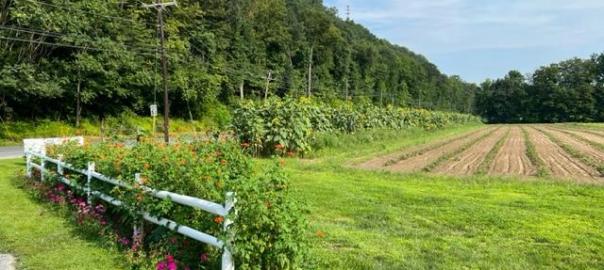
What I discovered was a small picturesque farm tucked in between a suburban development offering wonderful organic produce and meats. The farm even supplements what they don’t grow or produce by working with other organic farms in the area.
History of the Farm:
(From the Farm’s website)
Jon Friedland and his family spent many weekend afternoons driving from their home in Manhattan to the movie theater in Closter. They loved Closter and the community reminded Jon of the Ohio suburb where he grew up. When the farm became available they saw the opportunity to have a direct hand in creating the food, health and environmental practices they have long believed in, and to learn and participate directly as a family in the labor and care required to operate an Organic farm. It has been a massive learning experience to get the farm up and running and we are grateful to have the opportunity to continue learning and growing with the Closter community (Closterfarm.com).
The farm stand store
The Closter Farm
The fields are not just beautiful to look at but produce an assortment of produce that is organic and sustainable. On a warm Spring or Summer day, walking next to the fence and below the shade trees, you can a glimpse of the upcoming crops that will line the farm stand a few weeks in the future.
The Philosophy:
(From the Closter Farm website)
We believe that the healthiest, best tasting, most beautiful vegetables and livestock are grown when they are a symbiotic product of whole farm health. Every action we take is focused on fostering a diverse, resilient, verdant ecosystem whose natural byproduct is intense soil fertility and natural pest resistance (Closterfarm.com).
The fields of fresh vegetables growing
Equally important to us is that our approach follows sustainable environmental best practices by sequestering carbon in our soil and minimizing or eliminating the water and air pollution associated with conventional agriculture and its reliance on synthetic chemicals (ClosterFarm.com).
The fruits and vegetables grown in the farm
The selection of fresh fruits and vegetables available for sale
Honey, cut flowers, grass-fed and grass-finished beef, pasture-raised and heritage pork, Organic mushrooms, Organic and pasture raised eggs, Corn and soy-free eggs, Organic milk, cheese, kefir, as well as heritage breed turkeys for Thanksgiving.
The selection of plants for sale
The flower selection
The farm barn
The barn and the fields that support the farm
The Farm Store:
The Closter Farm store carries a selection of freshly grown products seasonally, from other organic farm proveyors and vendors who supply similar products that meet the farm’s standards.
The entrance of the farm store with a selection of fresh flowers and organic seeds
The flower sign
The selection of farm grown products
The outside meat cooler
The outside cooler of organic beef, chicken and fresh eggs
The inside of the store carries a more of the same products, nicely packaged and reasonably priced quality products. These are the type of quality you would expect from fine dining establishments in the area, which you can prepare at home.
The selection of meat, poultry, eggs and dairy products
The selection of fruits and vegetables from the farm’s fields and partner farms
A selection of fresh vegetables and flower ms and fresh pies from Noble Pies of New York State.
A selection of farm fresh products like fresh honey and organic products
What is nice about the Closter Farm is the picturesque environment tucked in a suburban environment. You drive through entrance and are taken back to a world of Bergen County before WWII when the County was an agrarian society.
Places for children to play without cellphones
The property reminds me of the farms in the more rural parts of Southern and Western New Jersey with their corn mazes and decorated barns. Here they have small cut outs for children’s pictures and from a distance you can see the farmhouse.
The farmhouse on the property that some of the farm hands live
The farm offers families not just quality products and welcoming service, but a chance to step back for an afternoon to a time when things were much slower and afternoons were about appreciating the experience without trying to record every moment of it.
I visited the Alpine Cemetery, which is a historical active cemetery just off Closter Dock Road. This is the resting place of Revolutionary War Veteran, William Wilson and many other veterans from the Civil, Spanish American, World War I and II as well as from Vietnam, Korea and Desert Storm. All the graves were marked with American flags as we just finished Memorial Day weekend.
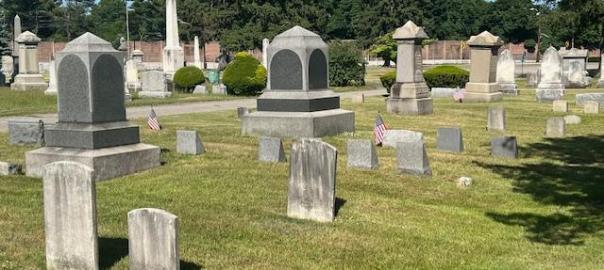
The family plots that separate the site
There are many family plots of “First Family’s” of Bergen County like the Westervelt’s, the Haring’s and the Campell’s. The family plots are separated by small fences and some are marked by the family names.
The cemetery on the hill in Alpine, NJ
The separate family burial plots
The Campbell Family burial plot
The Campbell family plots
The Van Sciver family plots
The Anthony Family plots
The Anthony family plot
The Haring Family plot
The Haring family obelisk
The Westervelt family plot
The Jordan/Wilson family plot
I looked at the Wilson family plot for the Revolutionary War veteran but the burial spot is probably has been lost to time. William Wilson may be lost to history but I know he was buried here.
The front part of the cemetery
The Veteran’s Memorial Rock with the names of World War I and II, Vietnam and Korea veterans
The Van Valen family plots
The Pearsall family plots
The Older family plots
The burial grounds from the front
There is a quiet elegance to these historic cemeteries. Who were these people? What did they do? Do people remember them? They are very interesting places to visit.
The history of the cemetery:
(From the historic sign)
The cemetery was founded in 1822 by resident William Gecox along Closter Dock Road when he bought 23 and a half acres as a burial ground for neighbors and for laborers who worked in the area. Mr. Gecox sold these plots on what had already been a burial ground.
The people buried in the cemetery were farmers, laborers, and tradesmen and their family. By 1870, the village “in the Closter Mountain” had take the name “Alpine” in the 1890’s. When William and his wife, Susan Helms pass in the 1890’s, their children sold the remaining plots. The cemetery has continued to be used into the twenty-first century.