Under the direction of Chef Prince of the NJ State Firemen’s Home and our member, NJ Firemen’s Association President Bob Ordway, they cooked up a feast for the residents, their guests and members and families.
NJ State Firemen’s Association President and Bergen County Firemen’s Home Association member Bob Ordway manning the grill.
Chef Prince of the NJ State Firemen’s Home cooking up a storm.
The wonderful lunch that everyone enjoyed
Our entertainment that afternoon was singer Kelly Carpenter, who had entertained at many of our functions in the past. She sang popular show tunes, rock hits and country tunes.
The Sautjes Tave Begraven Ground Cemetery is an example of an early Dutch Cemetery of some of the first Colonists in Bergen County with some families arriving in the early 1600’s .
The entrance to the Sautjes Tave Begraven Ground Cemetery in Demarest, NJ
The historic sign at the entrance placed by the David Demarest Chapter of the Daughters of the American Revolution
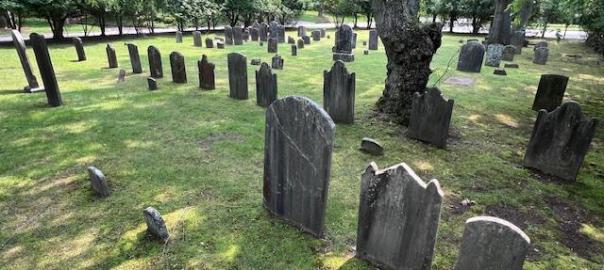
The inside of the historic cemetery
These early families once owned farms under royal patents of hundreds of acres and these would be passed down from generation to generation. These small family cemeteries were once located on the edge of family land that have since been replaced by modern suburbs. This is now in the middle of a traffic circle surrounded by homes. The cemetery is a wonderful shape and is nicely landscaped.
The cemetery from the south side
Generations of a Bogarts, Blauvelts, Haring, Demarest, Du Bois, Van Scivan and other prominent families all inter married into each family were buried here.
The Bogart-Bauvelt family plot
The Bogart-Blauvelt family plot
The Demarest family plot
The Demarest-Haring family plot
The Ann Marie Demarest grave
The Cornelius Demarest grave site, a Revolutionary War veteran
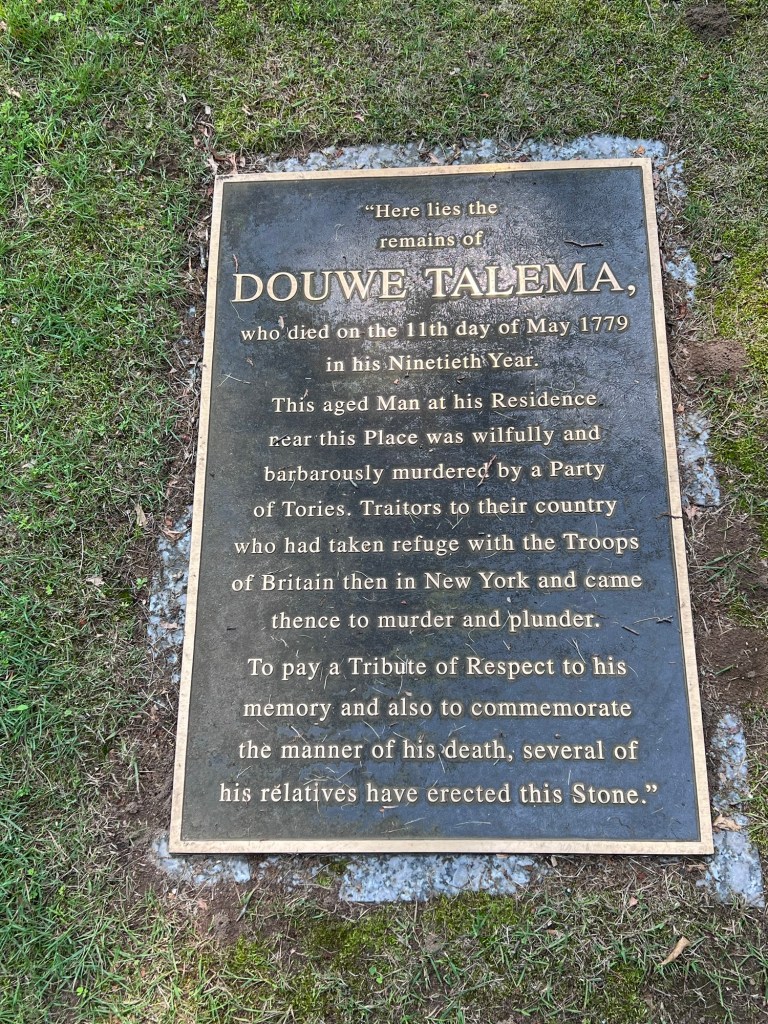
Patriot Douwe Talema, who was killed by the Tories during the Revolutionary War
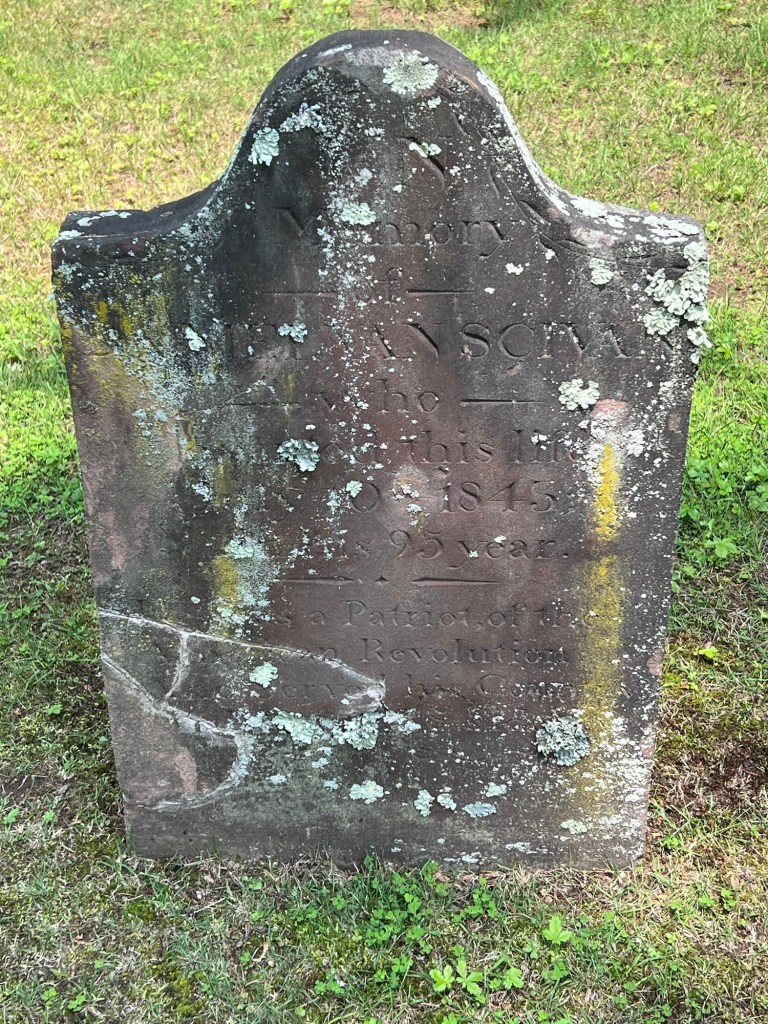
The Daniel Van Scivan grave, another Revolutionary War veteran
The Haring Family plot
The Haring family plot
The James Haring grave
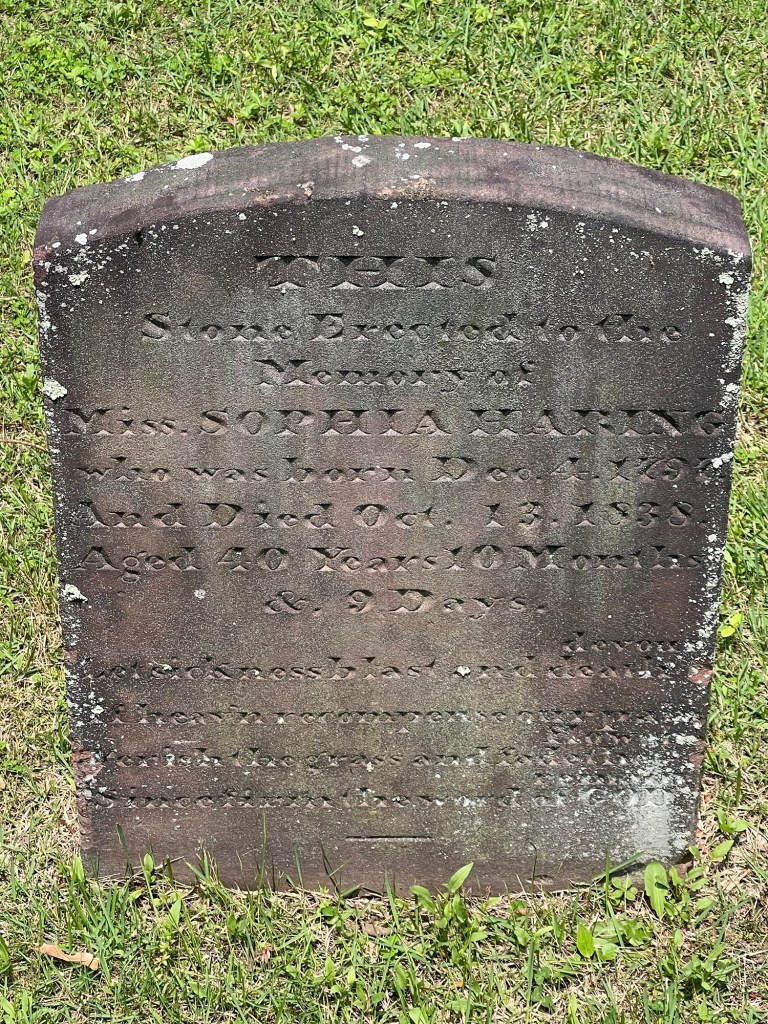
The Sophia Haring grave
The Du Bois family plot
The Cemetery view from the southern corner
My video of Touring the Cemetery and its historic roots:
My tour of the cemetery
Leaving the cemetery you can see the landscaping offers these families privacy in both life and death.
After the tour of the cemetery, I explored Downtown Demarest, NJ and discovered a beautiful little town with small local stores and a beautiful set of parks surround the streams and the train station just off the downtown.
The town of Demarest Veteran’s display
The town of Demarest has its own rich beauty and you can see this by visiting its Downtown area and its parks.
The breathtaking Duck Pond Park attracted a lot of painters who set their easels by the banks of the streams.
The Duck Pond is really beautiful
They also have a really nice railroad terminal that is now a senior center
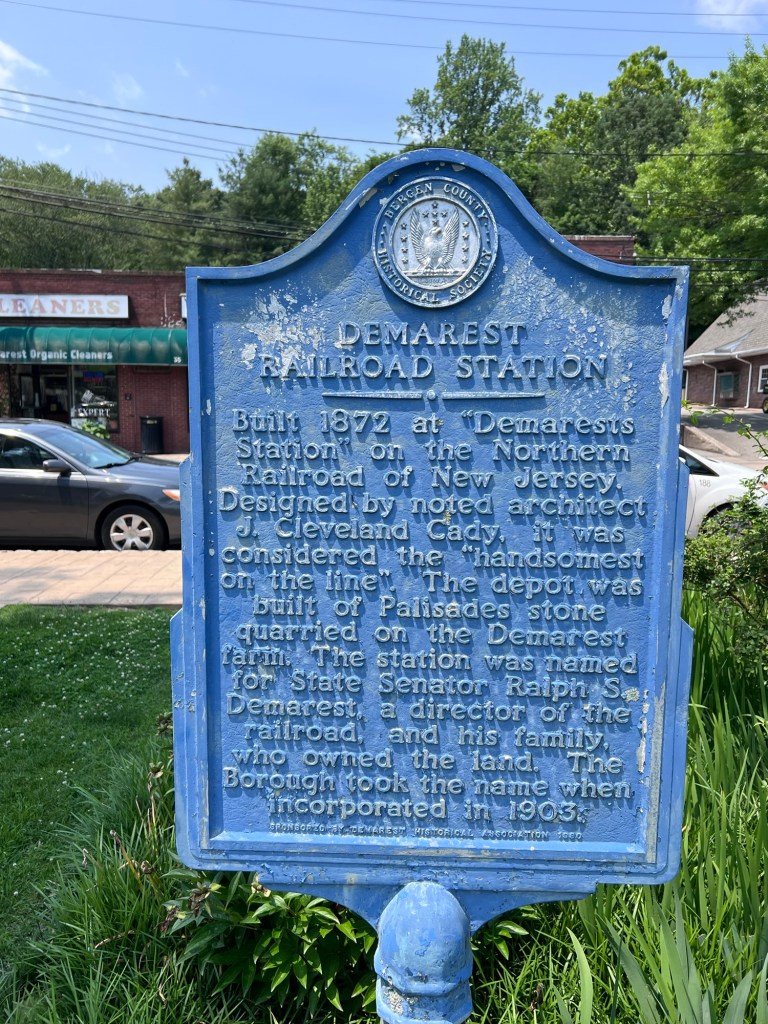
The historic Demarest Railroad Station
This wonderful community has so many wonderful attributes.
After six months of classes and finishing Graduate school, I am finally back to walking the neighborhoods again. This time to finish Lower Chelsea, which has changed from a neighborhood of manufacturing and shipping to one of the now more exclusive neighborhoods in Manhattan. I started my walk at Sixth Avenue and West 23rd Street.
I found the City a little quieter than on other weekends but figured those who get out of New York City were probably at their weekend homes either at the shore or in the country.
The corner of Sixth Avenue and West 23rd Street
I started the walk where I left off last November walking the streets of the Lower Flatiron District on the corner of Sixth Avenue and West 23rd Street. This is the border of the Lower Flatiron District and Lower Chelsea. These neighborhoods overlap so much I am not sure where on neighborhood starts and the other stops.
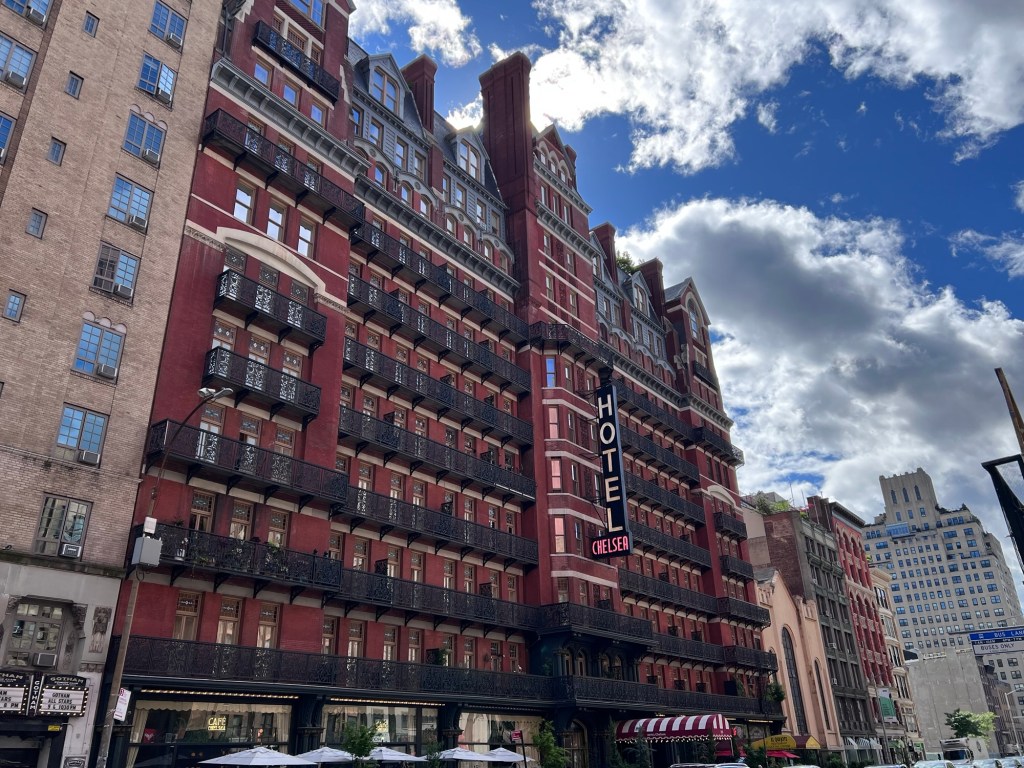
Much of West 23rd Street over the last several years has been torn down and rebuilt with new apartment buildings or older more historical buildings have been renovated for the same purpose. The neighborhood has become that desirable especially with the creation of the High line Park. The first building that always stands out in the neighborhood is the Chelsea Hotel at 204 West 23rd Street.
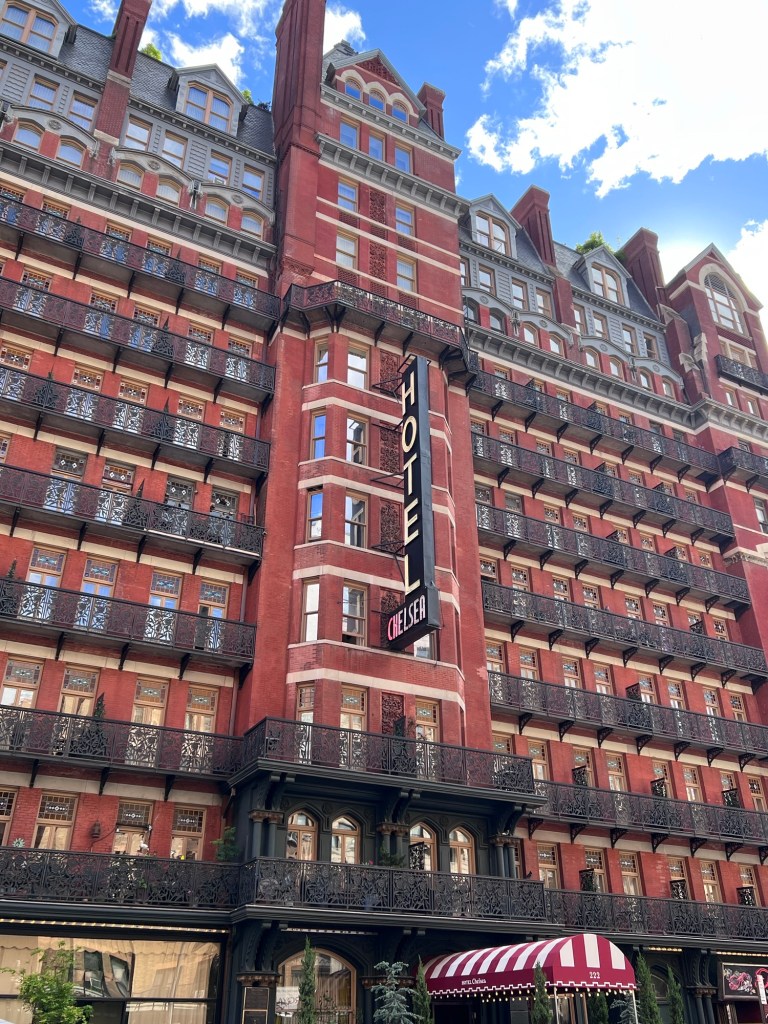
The historic Chelsea Hotel at 204 West 23rd Street
The one building that always impresses me is the Chelsea Hotel. This former Residential hotel is now a combination of residential apartments and a traditional independent hotel.
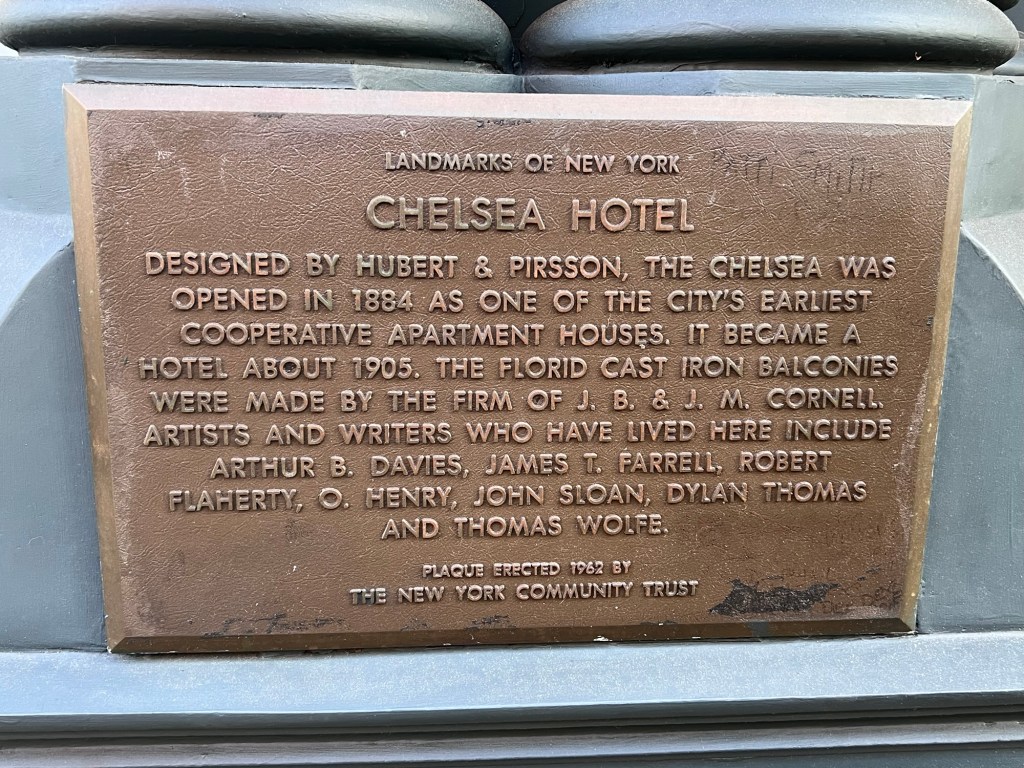
The Chelsea Hotel at 222 West 23rd Street was built between 1883 and 1885 and was designed by architect Philip Hubert from the firm of Hubert, Pirrson & Company. The hotel is designed in the Queen Anne Revival with a combination of American Gothic (Wiki).
The hotel had originally opened as a cooperative and a home to artists and members of the theater community, but the concept changed in 1905 when it reopened as a hotel. The hotel has gone through several management changes over the years. In early 2022, the Chelsea Hotel reopened again as a hotel when the interior renovations were finished.
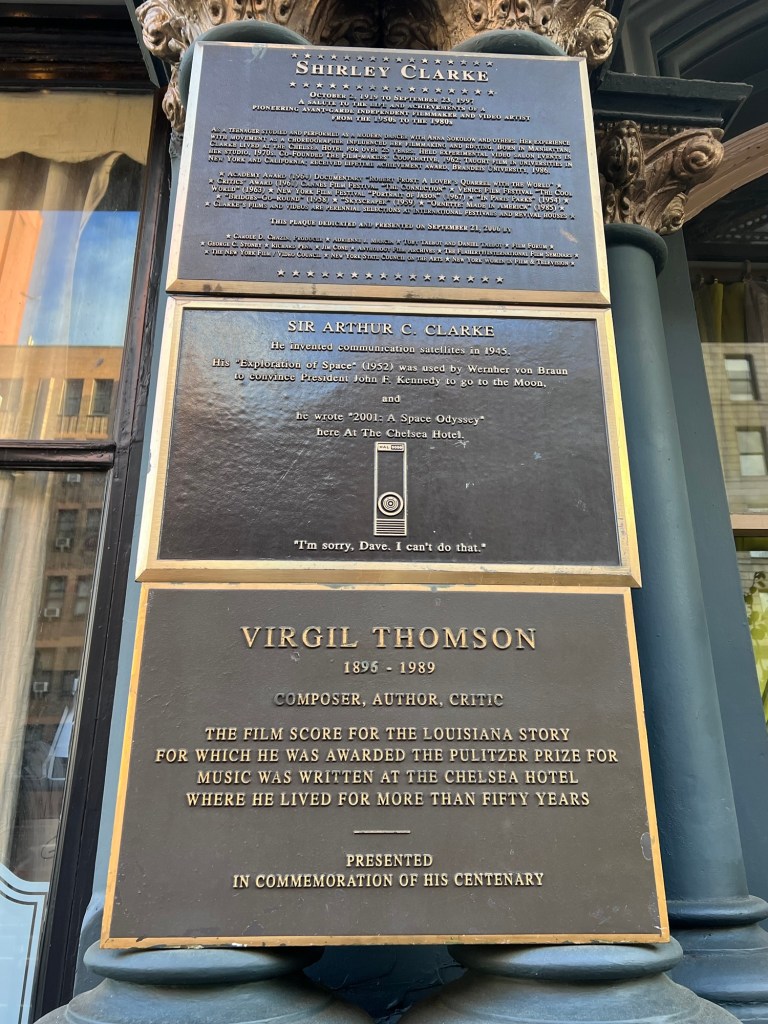
The historic plaques at the hotel
The hotel has such a celebrated past with all the famous people who have stayed here. I think all the plaques on the front of the hotel don’t even touch the number of well known names who resided here.
The historic plaque
The historic plaque
The historic plaque
This is just a small portion of the famous people who have resided here.
The hotel went through a massive renovation recently and is now open as a regular hotel. Many older residents still live there but as their numbers dwindle that rest of the building will probably become a regular hotel.
At 244 West 23rd Street is a beautifully embellished building in brick and cream colors was built in 1900 by developer Isidor Hoffstadt. Decorations of garlands adorn the windows and top of the building and some of the upper floor windows are surrounded by archways. It now contains twelve lofts with multiple bedrooms (Daytonian in Manhattan).
While the core of West 23rd Street has changed with gleaming new buildings as residential and office space, as you get closer to Eighth Avenue the neighborhood has that classic ‘old New York’ look to it.
Walking down West 23rd Street near Eighth Avenue
I walked the length of West 23rd Street from Sixth Avenue, the border of the lower Flatiron District to Riverside Park. The weather just kept changing going from really sunny to cloudy and rainy the entire time I walked the neighborhood. One comment it was raining and the other it would be dazzling sunshine.
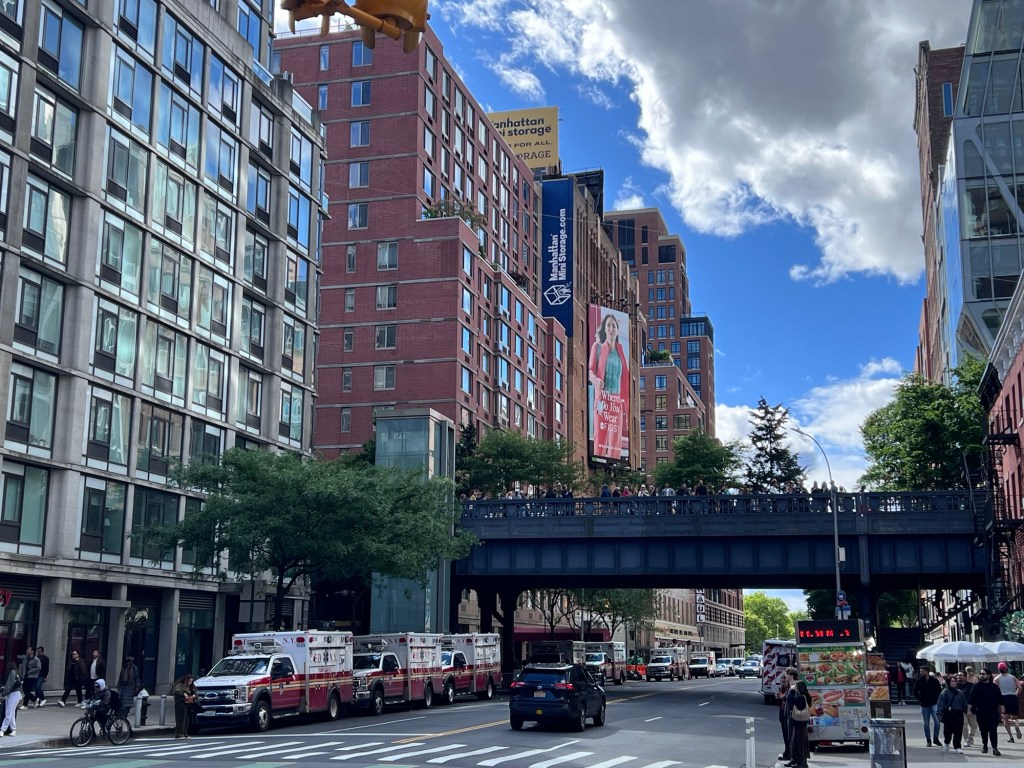
West 23rd Street by Tenth Avenue and the Hi Line Park
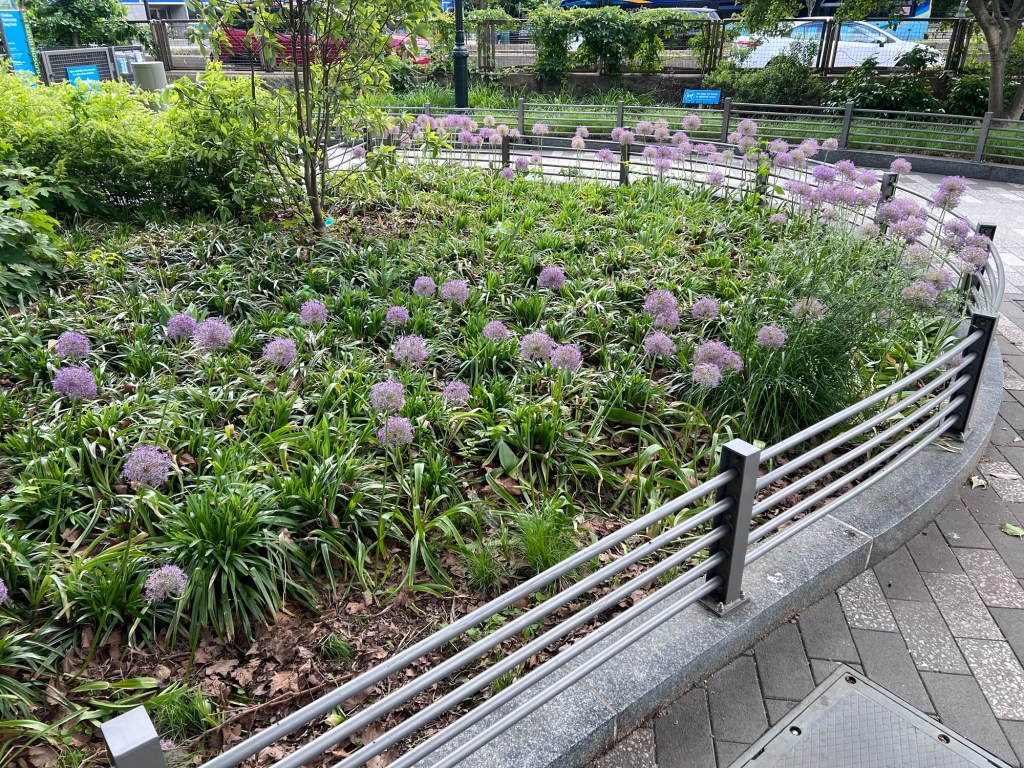
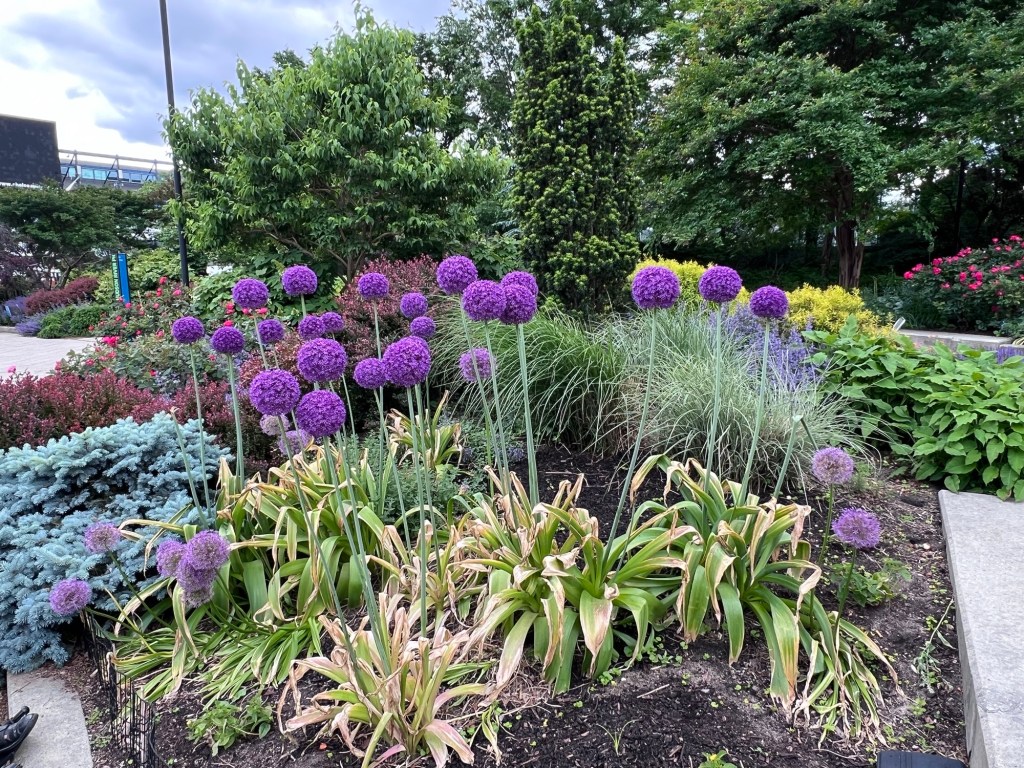
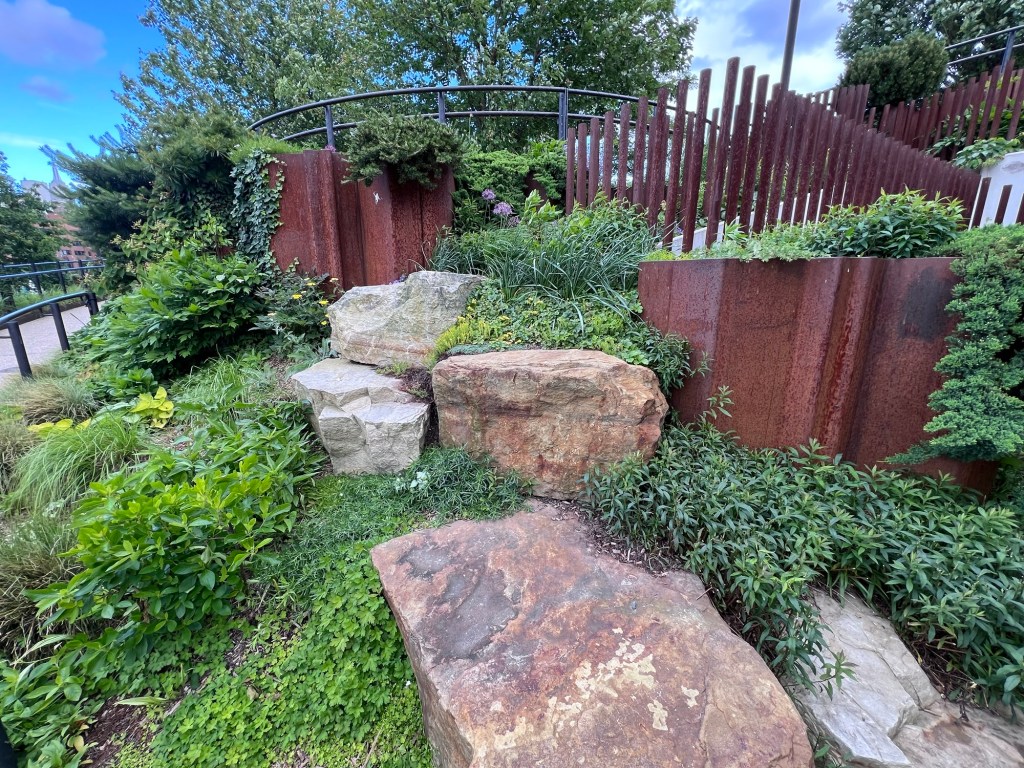
At the end of West 23rd Street starts Chelsea Waterside Park and Hudson River Park, which lines the entire side of the Upper West Side. The gardens were at the height of their bloom and it was a beautiful display of flowers.
This was the legacy of the Bloomberg Administration’s ‘Million Tree’ initiative. Between these parks that lined the waterways and the High line Park, it just made the neighborhood more desirable.
Funny how the weather went from sunny to rainy in ten minutes on Memorial Day weekend. By the time I walked to Hudson River Park, it got gloomy again. Still, it did not affect the beauty of the parks and helped water all the beautiful flowers blooming.
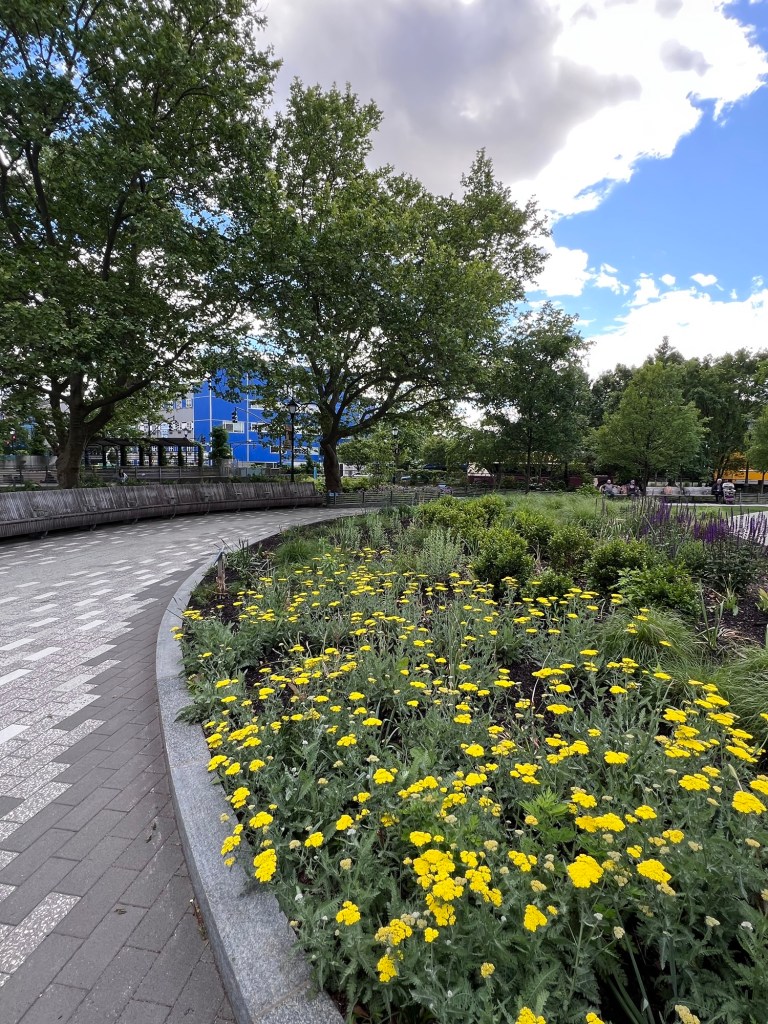
The flower beds were in full bloom
The park was in full bloom in the late Spring and was dazzling. Their Friends groups and gardeners are doing a wonderful job maintaining these flower beds.
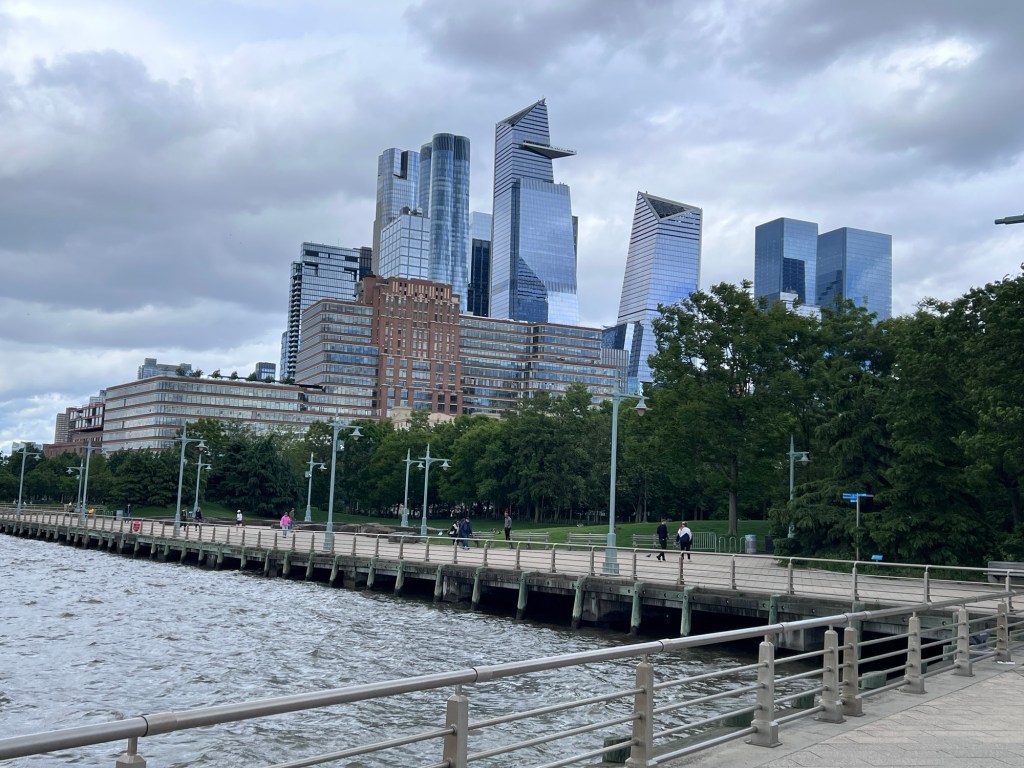
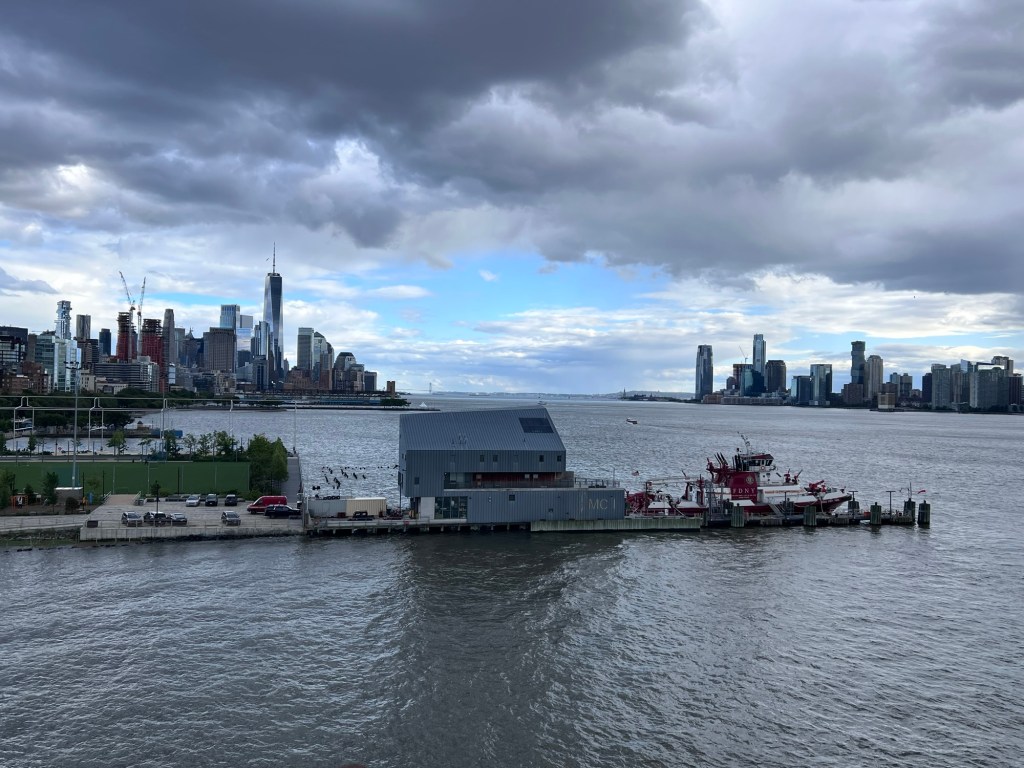
As I walked the piers, the clouds kept rolling in and out and it sprinkled off and on that afternoon.
Admiring the view as I was waiting for the clouds to clear
The skyline of Jersey City was gloomy and impressive at the same time
Then the clouds broke again and the sun came out. This would be the weather all day long. The clouds then the sun then the clouds then rain and then the sun. It made for an interesting walking day.
The sun finally came out on Pier 57
The view of the Hudson Yards was just spectacular when the clouds passed by
The path led from the Hudson River Park to Pier 57 and I took the pathway through the Pier and all the recreation buildings that now make up the complex. I had never seen it from the river side of the pier.
Pier 57 from the waterfront side of the complex with all the pleasure boats
As I walked through the passageway, I learned the history of the pier and all the famous ships that had docked or left the pier. There was a display of pictures of famous arrivals and departures from the pier that I stopped to read about. It was a interesting look at the past of these piers,
The people at the dock were waiting for the Carpathian to arrive with the Titanic survivors in 1914.
The Carpathian arriving at New York harbor with the Titanic survivors.
The Lusitania leaving New York harbor for its final voyage. It would be torpedoed before it arrived in Europe.
The modern Chelsea Piers of today
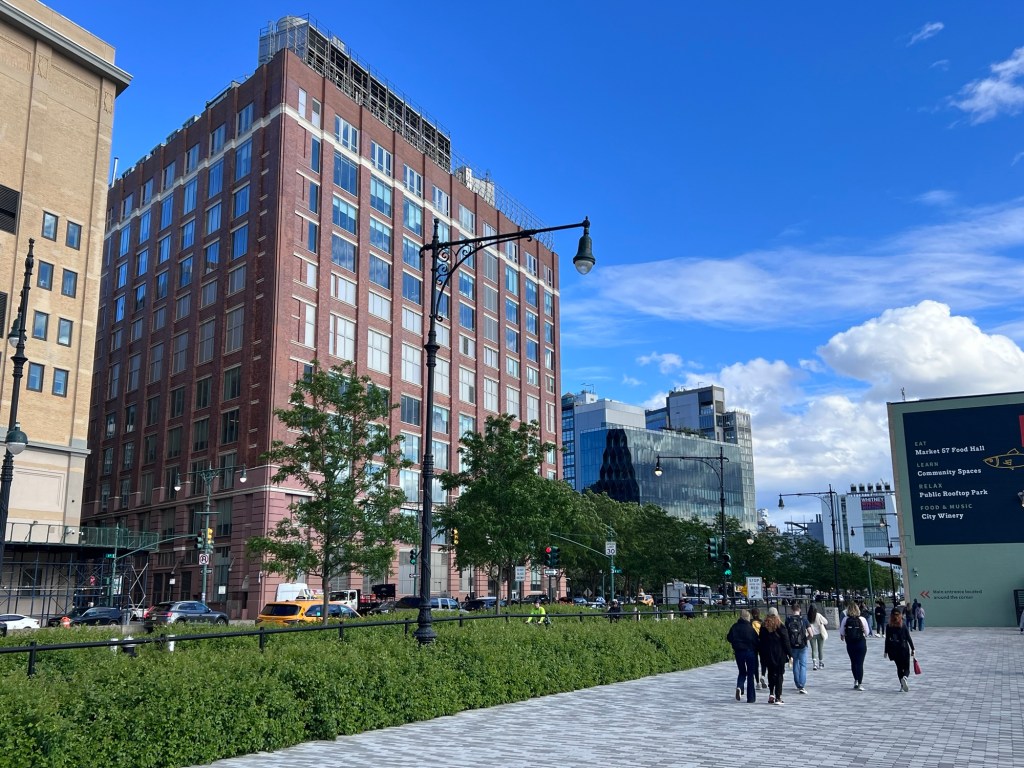
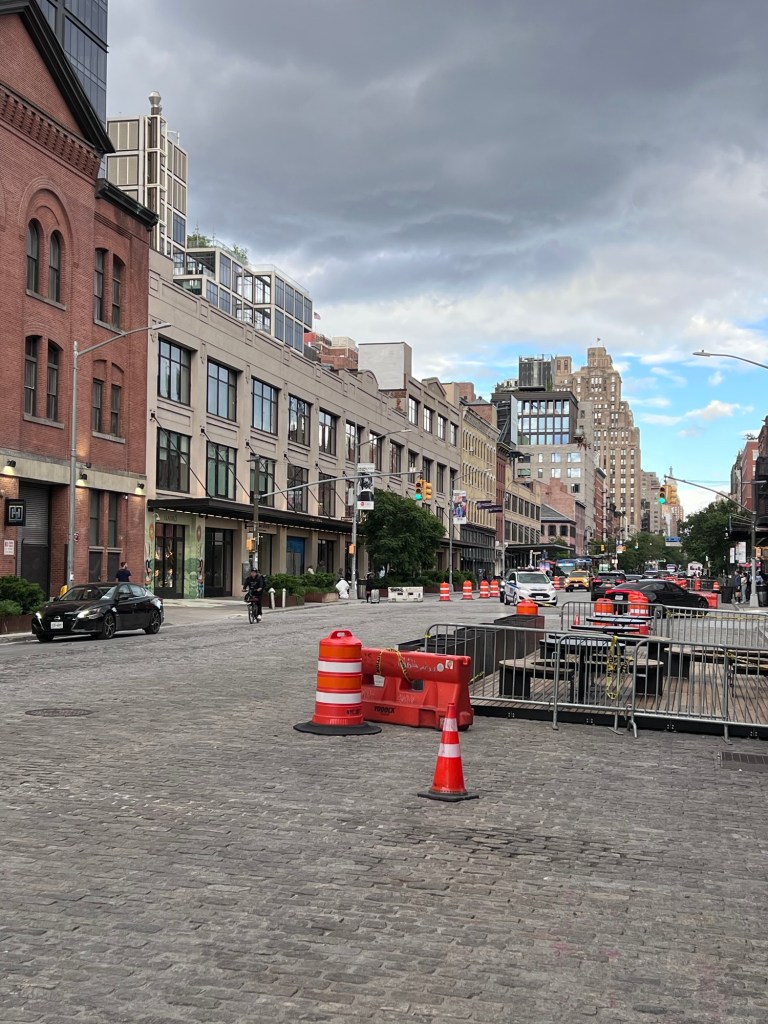
Walking down Eleventh Avenue when the rain cleared
Along past the new construction along Eleventh Avenue
For all the building and changes this neighborhood has been through and so many luxury buildings replacing the docks of the past, there is still a little influence of the old neighborhood that still pops up from time to time. The graffiti art is still fantastic all over the City.
Some of the street art on the construction site on Eleventh Avenue
Some of the street art along the fence of the new construction
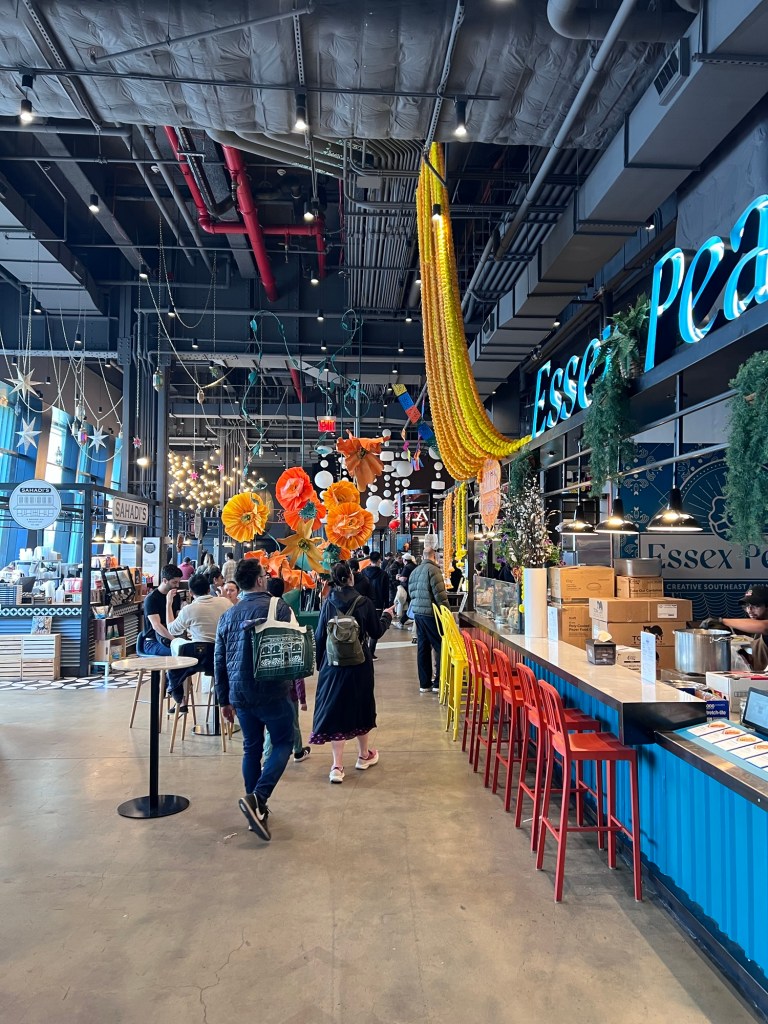
I followed Eleventh Avenue down the sidewalk to the Food Court at Pier 57. That was interesting with all the sounds and smells of different cuisines cooking.
The Food Court at Pier 57 should not be missed
The Food Court at Pier 57 really has some wonderful restaurants. There is an interesting mix of Spanish, Italian and Asian cuisines in the food court but it can be a bit pricey. The smells are amazing and you could almost taste the spices in the air. The couple of times I have been here the place is always busy.
The excitement of entering the Pier 57 Food Court
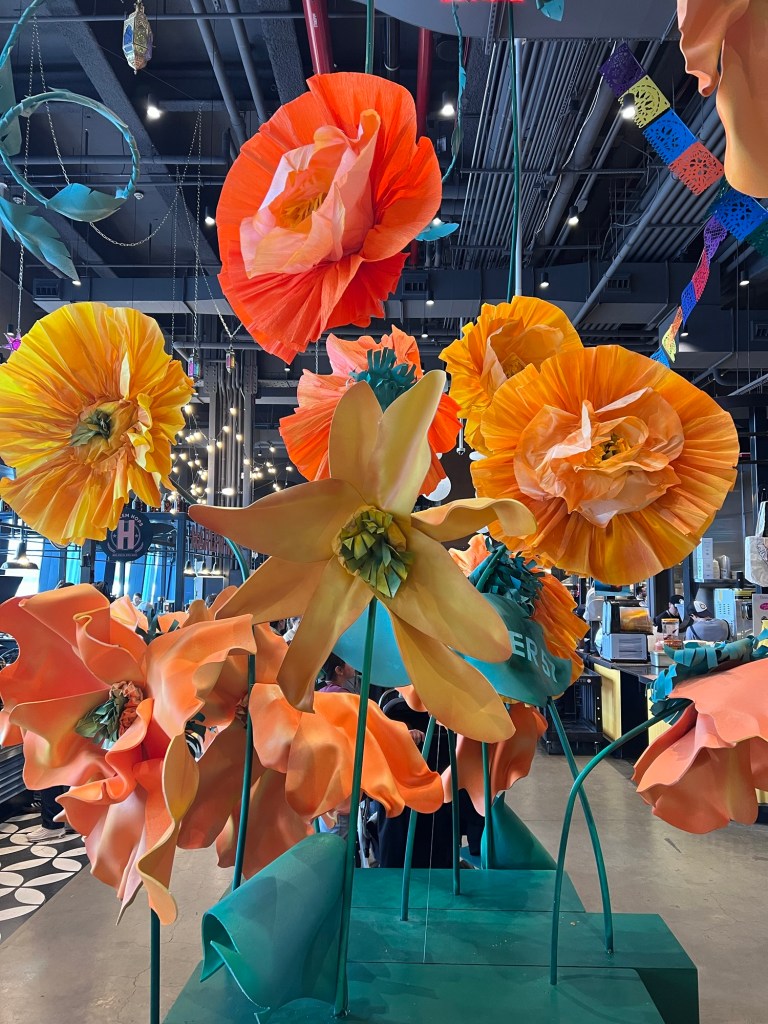
The floral decorations in the middle of the food court. I love the decorations here. They are really festive. The only bad part of the food court is the prices are really high so be prepared to spend money on lunch and dinner.
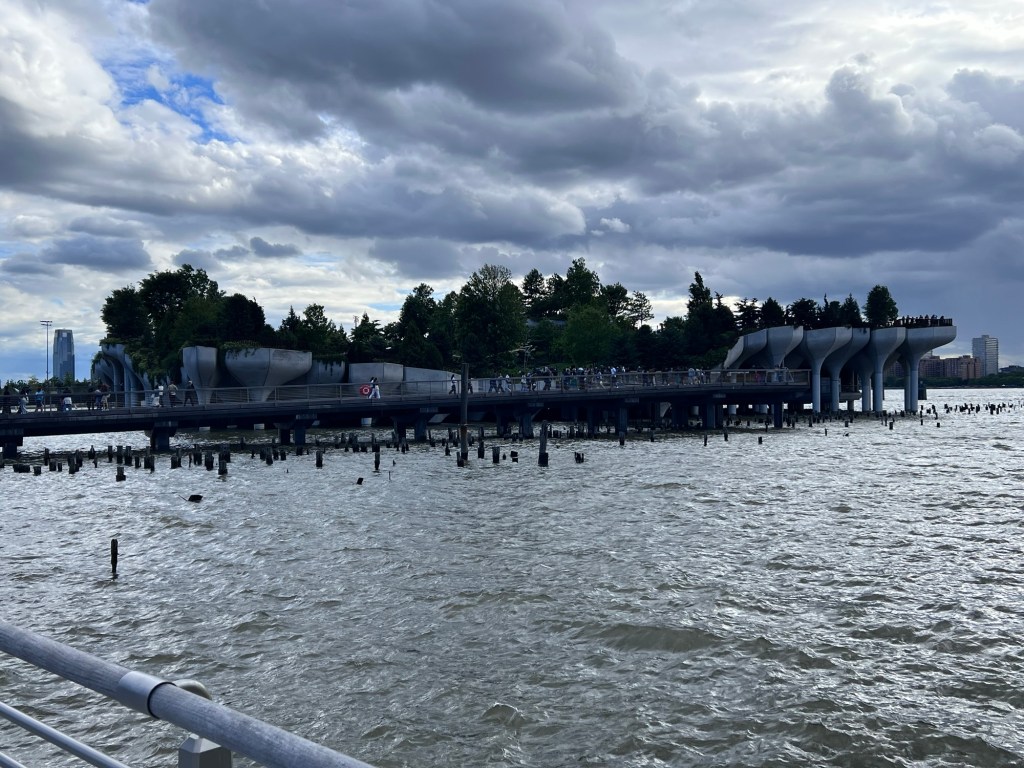
I left my tour of the food court as the clouds rolled in again and I arrived at Little Island Park, one of the newest and most innovative parks in New York City. The whole park is built on this innovative type of piling that come together to create this whimsical park. Something out of “Whoville”.
My trip to Little Island and the Chelsea Market with my NYU class:
At the very corner of the neighborhood was ‘Little Island Park’ at . This very unique structure has been captivating both New Yorker’s and tourists since it was built.
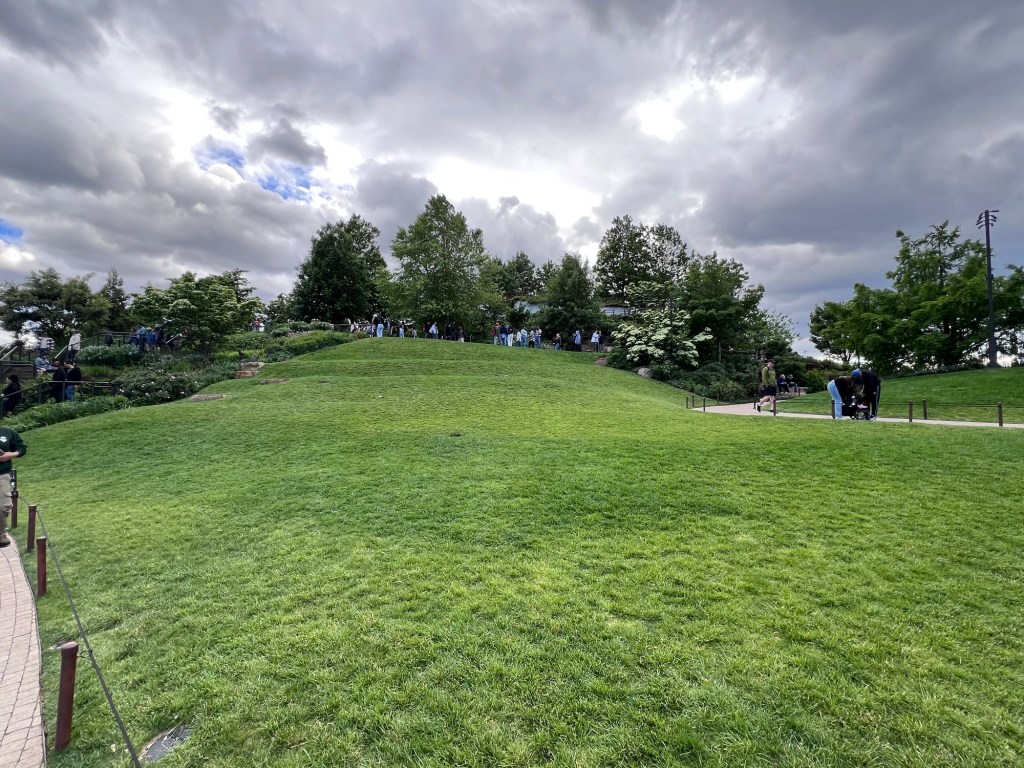
I then took the time to walk all over Little Island. I explored all the paths and stairs and explored all the beautiful gardens and terraces. What views! As the clouds passed by, we had moments of brilliant sunshine and at times it looked like it was going to down pour.
The gardens in full bloom on Little Island
The views from the very top of the terraces as the clouds finally cleared
Walking back down the stairs
The view from the pathway on the way down towards the exit
The view from the exit of Little Island as the clouds rolled by
The rest of the afternoon was on again off again clouds. I crossed over Eleventh Avenue to West 14th Street into the borders of Chelsea and the Meatpacking District (where at this point all the meatpacking companies are gone). In their place now are gleaming new apartment buildings that surround the High Line Park.
Eleventh Avenue at West 14th Street
I crossed the street to see 14th Street Park in full bloom. This park represents this new neighborhood with its gleaming towers and expensive stores. The lawn was perfectly manicured and the flowers were in full bloom. I did not even see any homeless people in the park. Just young couples walking their dogs.
The gardens in 14th Street Park as you cross onto West 14th Street from Eleventh Avenue
The gardens in full bloom at the park on West 14th street
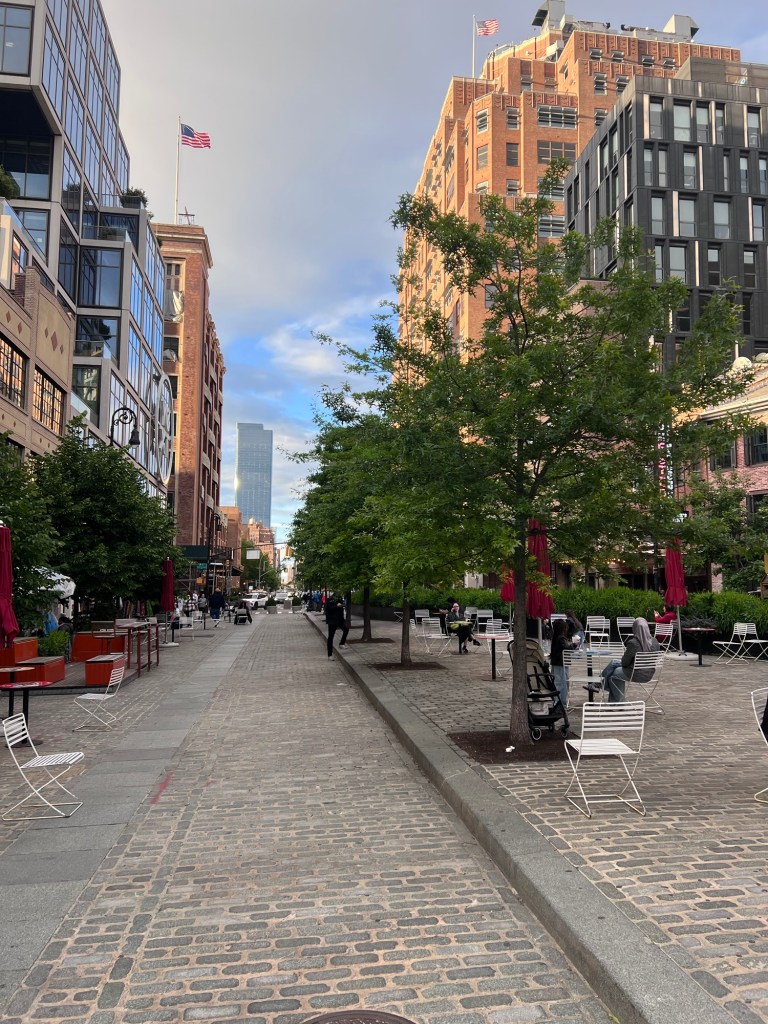
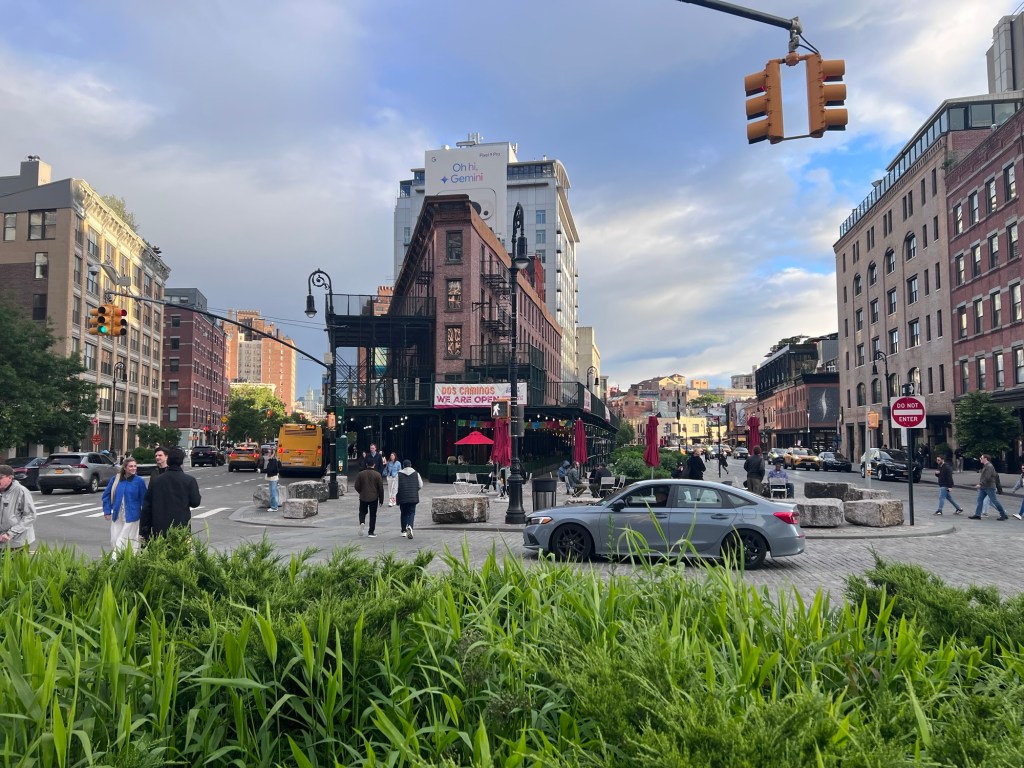
Crossing onto West 14th Street by the Meatpacking District near 11th Avenue
I have been walking around this neighborhood since the 1980’s and talk about change. What used to be buildings that were geared to the docks and shipping, then became clubs in the 1980’s and early 90’s are now lofts and luxury stores. I have really seen this City change.
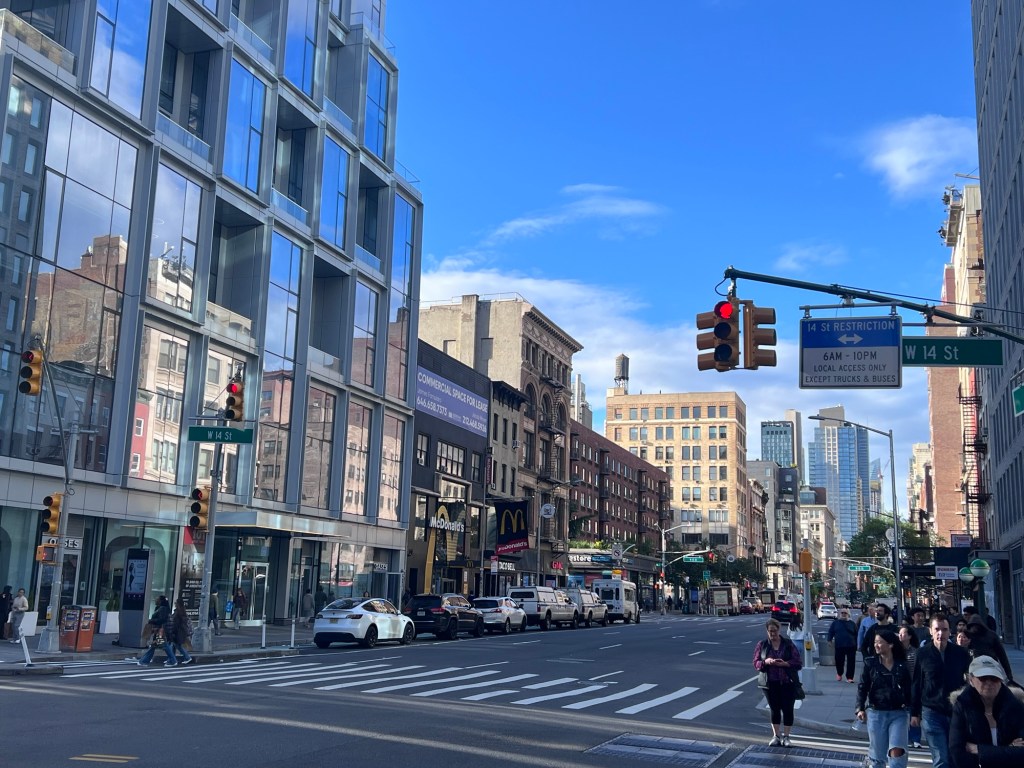
Walking down West 14th Street
Walking down West 14th Street near the Meatpacking District
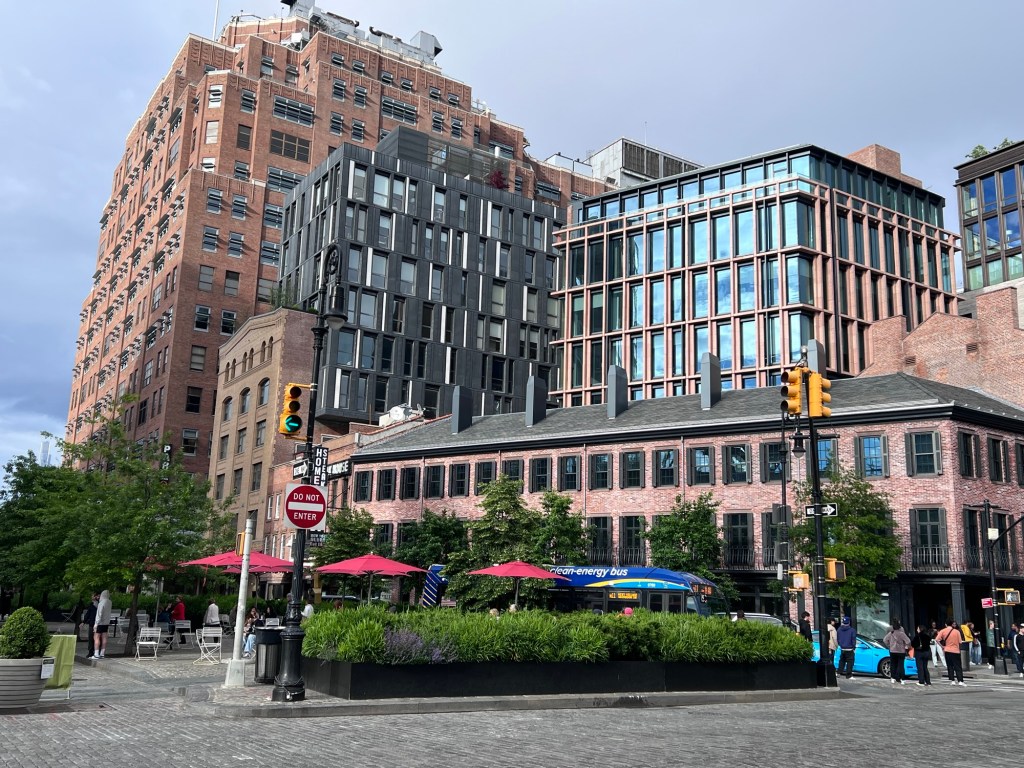
Walking in Meatpacking District by Tenth Avenue
This border that Chelsea now shares with the Meatpacking District (which no longer has any more meatpackers) has become one of the trendiest and innovative neighborhoods in the City. Aldo judging by the prices at the restaurants and stores, one of the most expensive.
West 14th Street in the Meatpacking District
Walking down West 14th Street
As you walk further away from the parks along the river coastline and further down West 14th Street, more modern buildings pop up on both sides of the street. Still here and there, details of the old neighborhood still pop up such as at 200 West 14th Street, with its stoic faces and immense detail in the doorway.
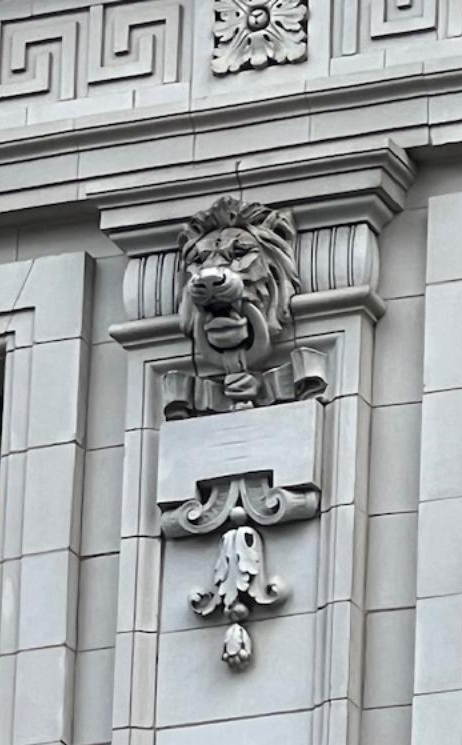
The unique sculptures on outside of 200 West 14th Street
The building was marketed with the sophisticated-sounding name “French Flats,” one of the very first of these was built by Jersey City businessman Henry Meinken at the corner of 14th Street and 7th Avenue. Meinken called on James W. Cole to design his new building in 1888. Cole was a favorite of the Astor family and he built several factory, warehouse and apartment buildings for them, several a few blocks west on 14th around Hudson and 9th Avenues (Daytonianinmanhattan.com).
It was completed in 1889 and given the cultured name “The Jeanne d’Arc.” The five-story brick building with brownstone trim had commercial space on the street floor and 8 commodius apartments above — two apartments per floor. To set the building apart from the baser tenements, Cole added an attractive pressed metal cornice and carved brownstone sills and lintels (Daytonianinmanhattan.com).
The street art along West 14th Street was very interesting as well. I loved this version of lady liberty. This was painted outside of a pharmacy.
The street art outside the pharmacy by Artist Shira One
Shiro’s artwork is an exploration of classic New York urban history through the lens of an artist who reveres Hip Hop culture. Her artwork is a prime example of the fusion of Japanese aesthetics and old school New York graffiti art. In 2002, she moved to New York alone, and after living between Japan and New York, she obtained an US American artist visa in 2013, acquired an US artist green card in 2021, and is currently based in New York (Artist Shiro1 website).
Another great mural that sits on the side of a building on West 14th that stands out entitled “Mural on 14th Street, New York” by Brazilian artists brothers Gustavo and Otavio Pandolfo known as ‘Osgemeos’. This colorful and engaging piece of artwork towers over the street and shows an exaggerated image of everyday New Yorkers.
The word ‘Osgemeos’ is translated as “the twins” in Portuguese, is a collaborative art duo comprised of twin brothers Gustavo and Otavio Pandolfo. It was in the 1980’s with the invasion of hip-hop, and the explosion of Brazilian culture that the brothers began to use art as a way of sharing their dynamic and magical universe with the public. Combining traditional, folkloric, and contemporary elements of Brazilian culture with graffiti, hip-hop, music, dreams and international youth culture, the artists have created an expansive body of work that includes murals, paintings, sculpture, site-specific installations, and video (Lehmannmaupin.com website).
This is what I love about walking around Manhattan. You do not even have to step foot in a museum to enjoy great artworks that are tucked into corners of every neighborhood on walls, telephone poles, on the street and in courtyards. You just have to look for it.
As I walked further down West 14th Street, between all the new construction going on and the gleaming glass towers that seemed to be changing the face of the neighborhood a few buildings stood out for the beauty and details in their architecture.
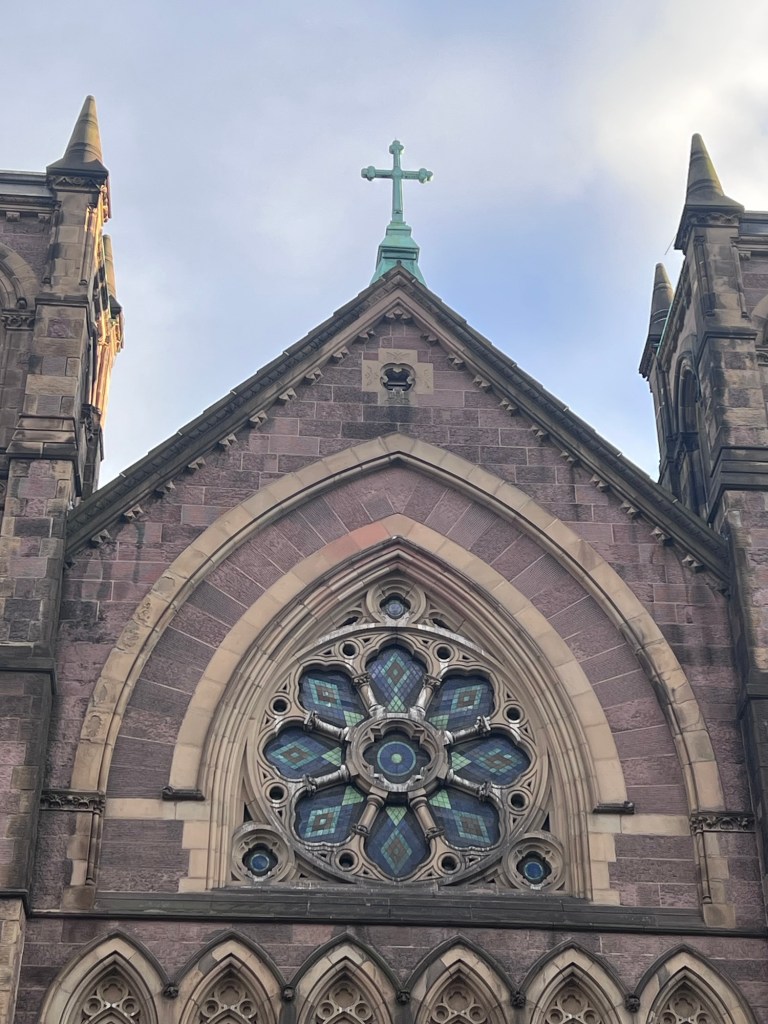
The first one was the Church of Our Lady of Guadalupe at 229 West 14th Street. I was attracted the elegant look of the church.
Church of Our Lady of Guadalupe at 229 West 14th Street
The church opened in 1902 and was designed by architect Gustave E. Steinback in both the Baroque Revival and the Spanish Baroque style of architecture (Wiki).
The Church of Our Lady of Guadalupe was founded in 1902, and became the first parish in New York City to serve the swelling numbers of Hispanics. During this time the Archdiocese was ill-staffed with priests who could not speak Spanish and those who were willing to reach out to the newcomers and learn their language and their ways were preoccupied with other important ministries. Our Lady of Guadalupe parish was established as a national parish, responsible for the spiritual care of all Hispanics of the city. (Church of Our Lady of Guadalupe website).
The details of the Church stood out for their beauty and elegance
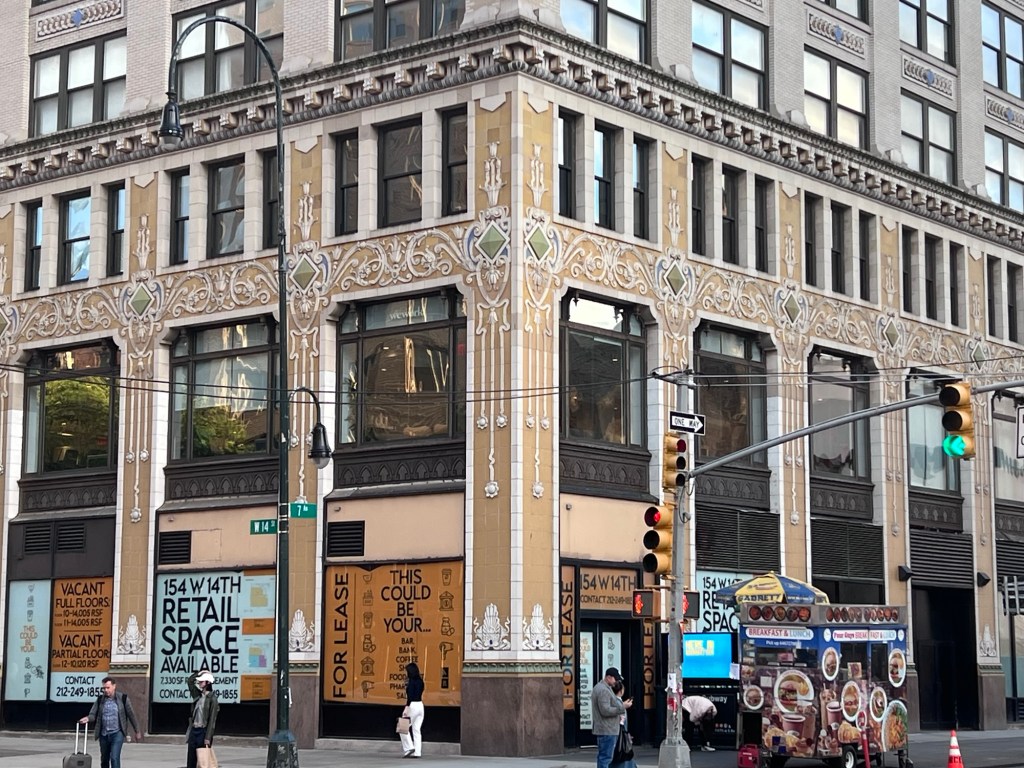
Another standout building on the corner of West 14th Street and Seventh Avenue is 154 West 14th Street. Arranged in a tripartite base-shaft-capital composition with large window areas, this building is a striking and unusual example of a large loft building partly clad in terra cotta, on the three-story base, on the spandrels between the white-brick piers of the midsection, and on the upper portion. The building was designed by architect Herman Lee Meader and was built between 1912-1913 (The Historic District Council Website).
The details on the building are so unusual and you really have to look at the building close to appreciate its beauty.
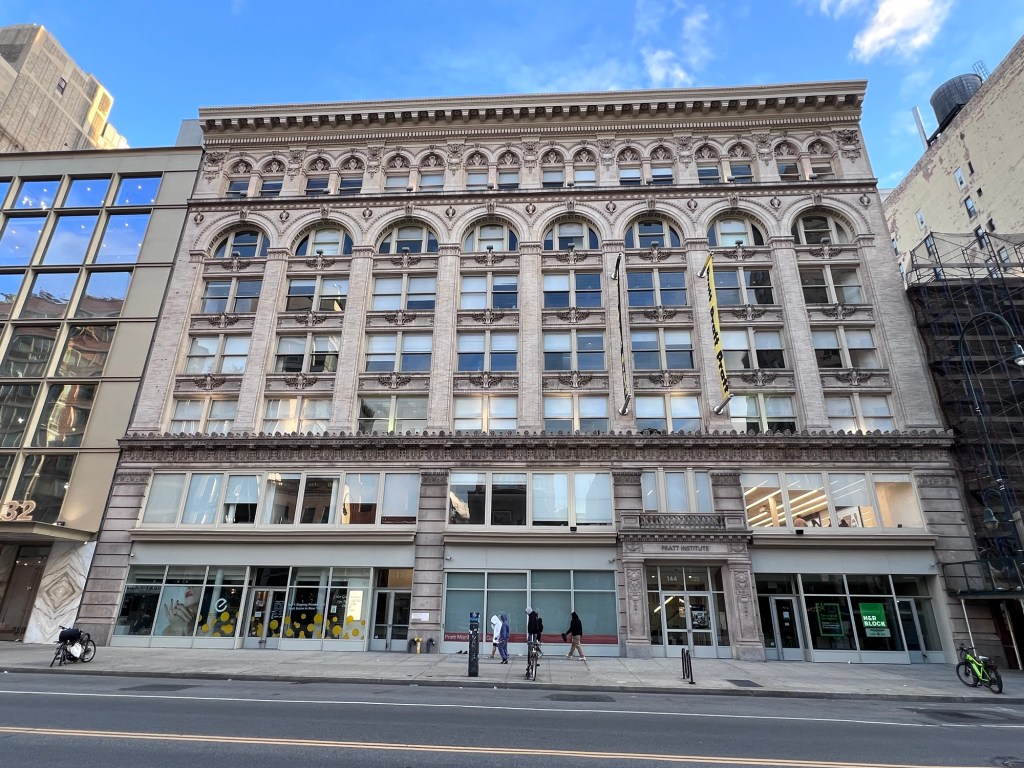
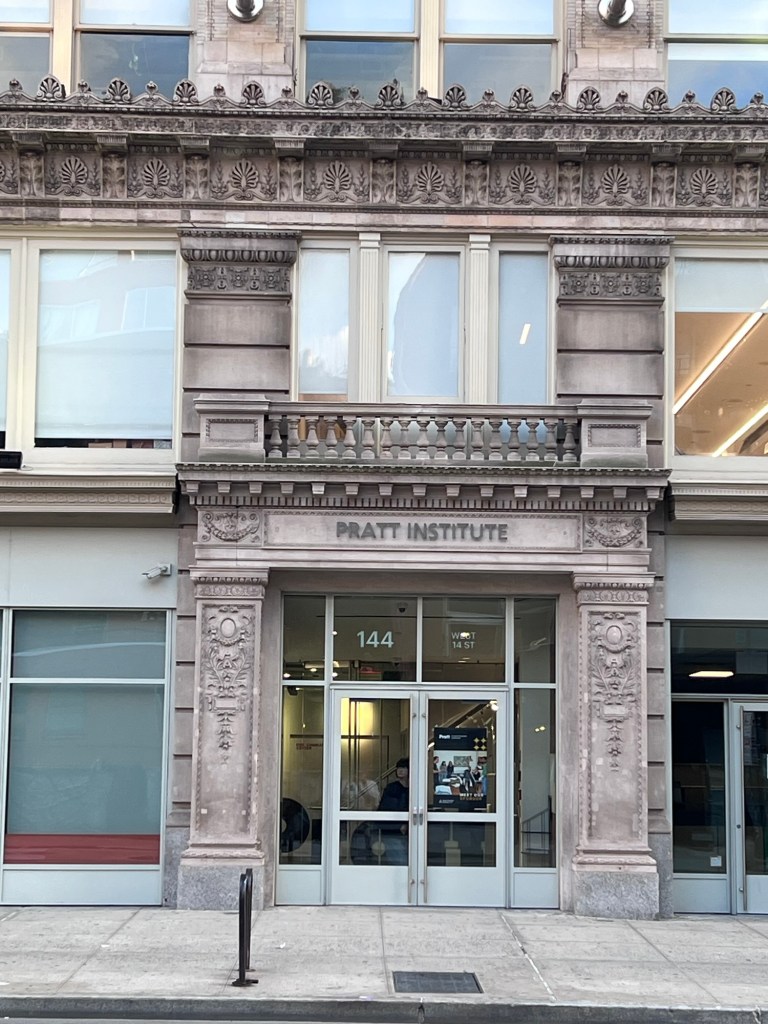
Another building that stands out on West 14th Street is 144 West 14th Street which is part of the Pratt College today but has an interesting past. Pratt bought the building in 1999.
The beautifully detailed building at 144 14th Street
144 West 14th Street is a grandly-proportioned Renaissance Revival-style loft building. It is faced with limestone, tan brick and terra cotta and was designed by the prominent architects Brunner & Tryon in 1895-96. It is seven stories tall and has a street façade articulated through a series of monumental arches embellished with neo-classical ornament (Historic District Council website).
The detail work at 144 West 14th Street
Though the building reminded me of one of the department stores from the post Civil War period, the building was actually used for manufacturing, one the tenants of the building being Macy’s (DaytonianinNYC website).
Turning the corner onto to Sixth Avenue that Chelsea shares with the Lower Flatiron District, you enter what was once the next great shopping area of the late 1880’s to about 1920 when the “Ladies Shopping District’ moved from 14th Street after the Civil War to Sixth Avenue between West 20th Street to West 23rd Street to create “The Ladies Shopping Mile”.
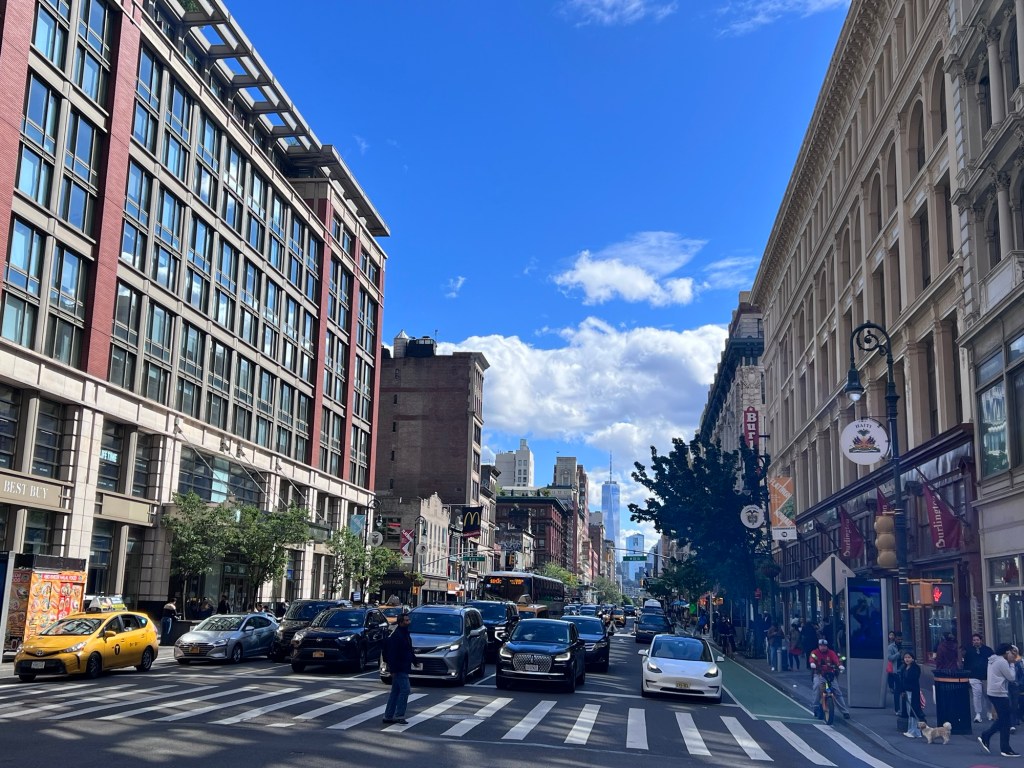
It would then move to West 34th Street where Macy’s resides today and the ghosts of B. Altman, Stern’s, Orbach’s and Franklin Simon buildings still remain to the last holdout of Lord & Taylor on Fifth Avenue that closed a few years ago that used to line the blocks. Most of the older smaller buildings have been torn down and gleaming new towers are starting to line parts of West 14th Street between Eighth to Fifth Avenues and up along the Avenues.
West 14th Street by Sixth Avenue
Looking up Sixth Avenue and 19th Street, the eastern border of Chelsea
Walking up Sixth Avenue towards West 20th Street, most of the more elaborate buildings are closer to the edge of West 20th Street. Walking back up toward the heart of the former “Ladies Shopping Mile” along Sixth Avenue from West 18th Street to West 23rd Street, the lower part of Sixth Avenue is similar in look to West 14th Street. A mish-mosh architectural styles from years of knocking down the older buildings. Inside are a variety of fast food restaurants, coffee shops and small stores.
The first building left of the former shopping district is the former Pace Building at 610 Sixth Avenue.
David Price opened his first women’s clothing store, D. Price & Co. around 1887. The Price Building was built in 1910-1912 and designed by Buchman & Fox in the Beaux-Arts style (Wiki). The was the combination of the two stores, the one facing Sixth Avenue and the one facing 18th Street (DaytoninManhattan.com).
The embellishments of 610 Sixth Avenue designed by Buchman & Fox.
Next to the Price Building is what was one of the grandest of the department stores in New York City at 620 Sixth Avenue, Seigel Cooper
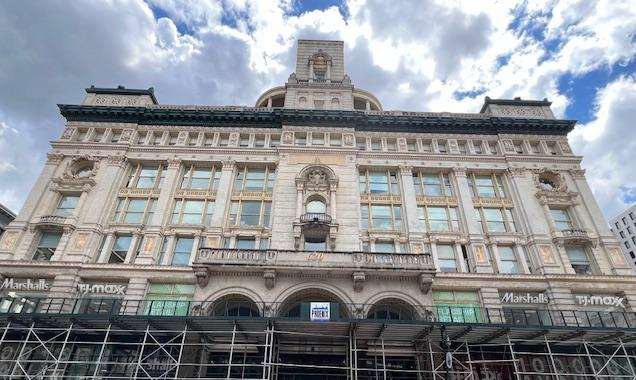
620 Sixth Avenue-The former Siegal Cooper Department Store
The original store design in the late 1800’s (New York Historical Society)
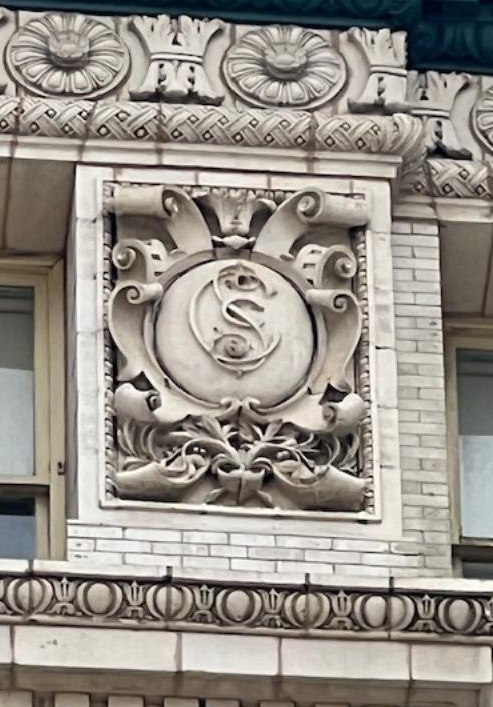
The Siegel-Cooper Department store was a Chicago based store that was founded in 1877 by Henry Siegel, Frank H. Cooper and Isaac Keim. They opened the New York City store in 1896 on the Ladies Mile Shopping District. The store was designed by the architectural firm of DeLemons & Cordes in the Beaux-Arts design. When it opened, it was the largest department store in the world until Macy’s opened in 1902 (Wiki).
The Siegal Cooper insignia on the building.
The window details
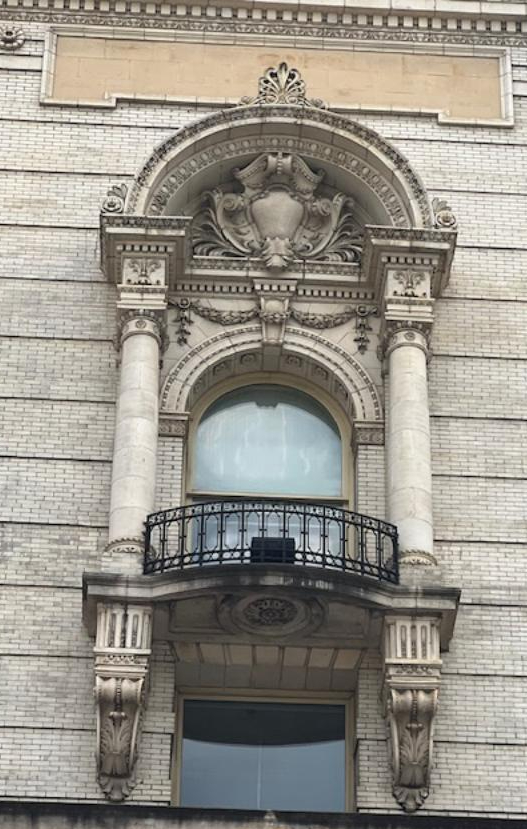
The details on the upper windows of the store.
Henry Siegel over-extended himself and sold the company in 1902 to an investor and the store declared bankruptcy in 1915 and closed in 1917. After the store closed, it was used as a military hospital and then as a warehouse. Today after years of being used as a warehouse, it now has several retailers located in the store space (Wiki).
Across the street from the Siegel-Cooper store is the old B. Altman & Company store before they moved to East 34th Street.
625 Fifth Avenue-The old B. Altman & Company Department Store.
B. Altman & Company was founded in 1865 as a family store that eventually came under the control of Benjamin Altman. It moved from its Third Avenue and Tenth Street location to 621 Sixth Avenue in 1877. The store expanded four times in this location to cover what is now 625 Sixth Avenue. The store was designed in the Neo-Grec design and built in four stages. First by architects David and John Jardine for the original store in 1877 and then the extension in 1880. Then by architect William Hume in 1887 and then by architects Buchman & Fox in 1910. The store moved to the corner of Fifth Avenue and 34th Street in 1906 when the shopping district moved to 34th Street (Wiki).
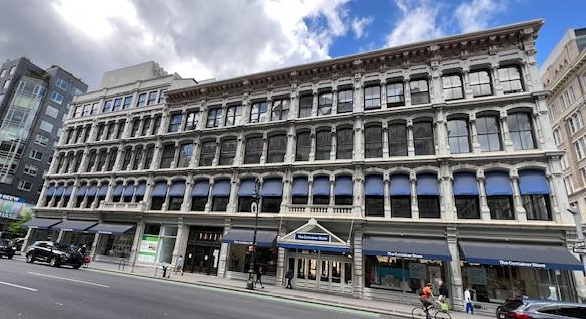
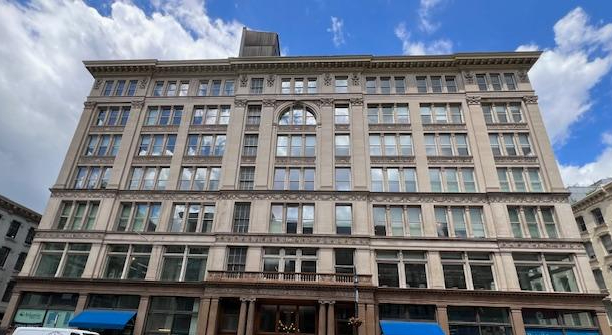
The last old department store on the Ladies Mile Shopping District is at 641 Sixth Avenue on the corner of Sixth Avenue and West 20th Street.
641 Sixth Avenue-The old Simpson Crawford Department Store
Simpson Crawford like many stores on Sixth Avenue had its humble beginnings on 19th Street. The store continued to grow and expand catering to the ‘carriage trade’ and selling the finest merchandise. After their new store was destroyed in a fire in 1880, they opened the store at 641 Sixth Avenue in 1899 which was designed by architectural firm William H. Hume & Son in the Beaux-Arts design (dayoninmanhattan.com).
The details of 641 Sixth Avenue.
This part of the Flatiron District feels so different from the northern part of the neighborhood. So much of it has disappeared over the years that the character has changed. It does not have the distinction of the blocks between 23rd and 20th streets. There are blocks of these types of buildings whereas the blocks of the old shopping districts of the early to late 1800’s from 14th to 18th Streets have slowly disappeared over time. Older buildings have since been replaced with modern office and apartment buildings. The buildings have even been refitted for apartments and for the growing college campuses in the area.
While there are many architectural gems in this neighborhood, it just goes to show the progression of Manhattan and how things have changed in the last 100 years. The City keeps marching on. Still this section of the Lower Flatiron District shows just how important this part of the old “Midtown Manhattan” was from the Civil War until WWI. Just look up and admire all the details on each building. There are a surprise and delight for the eyes.
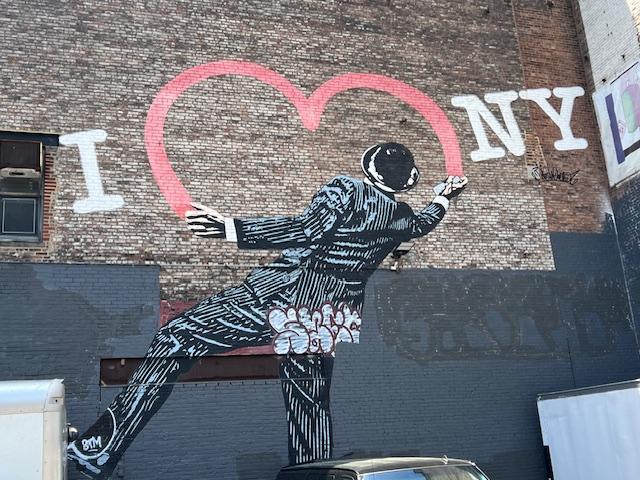
The Street art on West 15th Street off Sixth Avenue “I Love New York”
Read my blog on Walking the Streets of the Lower Flatiron District:
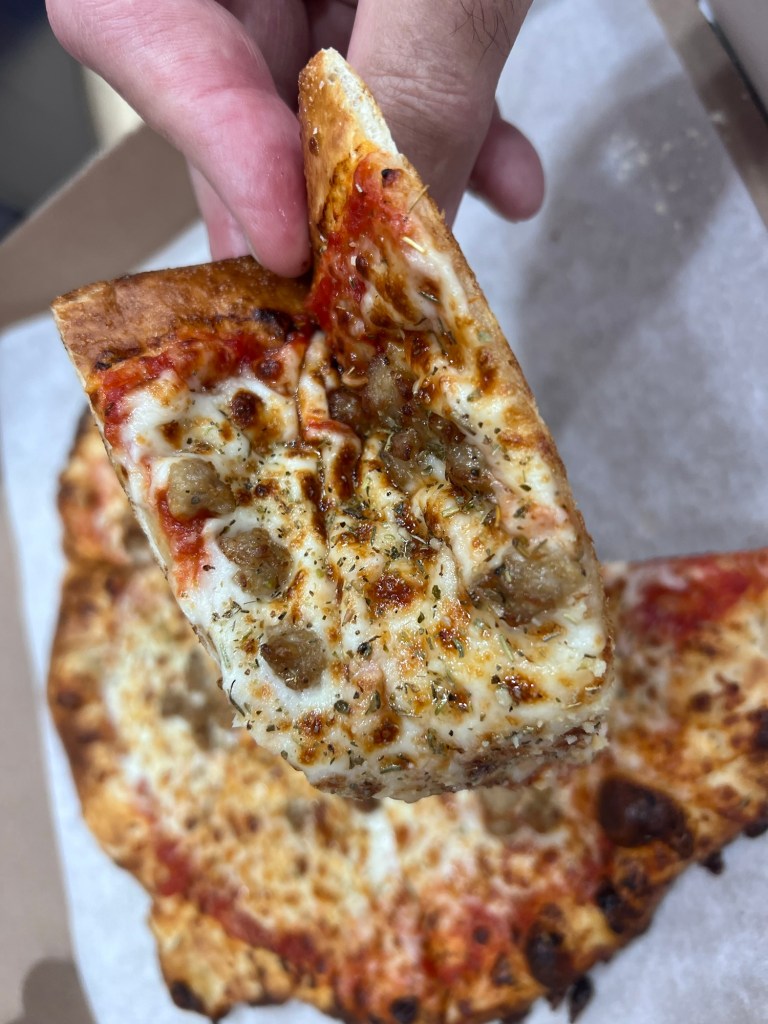
While I was walking around Chelsea, I was trying to figure out where to go for dinner. A guy was sampling slices of pizza outside of a new branch of Pizza Studio on West 14th Street. It was delicious and I decided to eat there for dinner.
I thought that the prices were very fair and you got a delicious 12 inch pizza for $10.00 and a lemonade. The whole bill with an extra tip was around $12.50, which was reasonable for all the food. Plus the pizza was delicious.
The ingredients to choose from
The Sausage pizza I ordered that evening
The pizza was wonderful
The pizza served with the Blue Lemonade
What was really nice after the day walking around the neighborhood was the lemonade was so refreshing. You got a choice between Watermelon Lemonade and the Blue Lemonade above and you got free refills. Talk about quenching your thirst on a hot day. It was a great dinner.
Walking past Holy Apostles Church at night
The Empire State Building lit for the holiday
A beautiful site of the Empire State Building
On each corner of the neighborhood, surprises and changes keep this neighborhood in a continuous flux. It just keeps reinventing itself.
This mysterious little cemetery sits on a bluff overlooking Crooked Pond in Franklin Lakes, NJ. Unless you are looking for it, it is difficult to find as there are no markers or historical signs to guide you to the path.
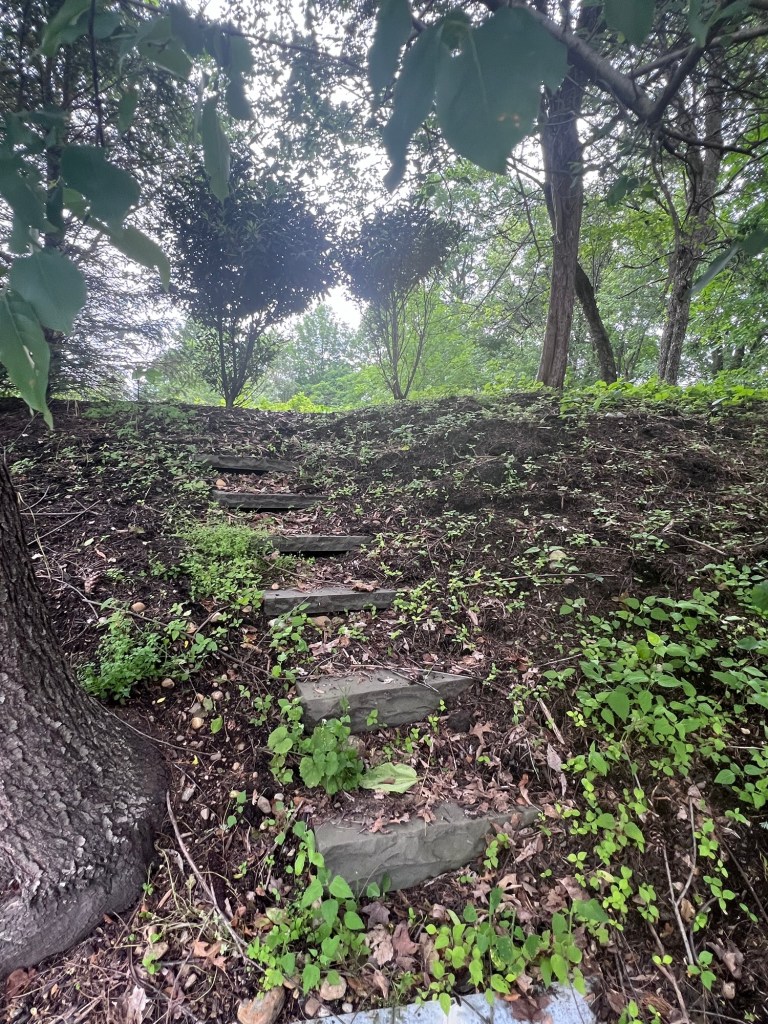
You have to park the car across the street, walk across a dangerous road and you come across this small set of stairs that leads to the cemetery. In the pictures online it always looks so well maintained but the afternoon I was there, it had been over grown.
This set of stairs is hidden by the trees and bushes. This leads to the cemetery
This is another example of a small family cemetery
The History of the Cemetery:
(From the Borough of Franklin Lakes, NJ website-Written by Colin Knight)
Generations of Ackerman, Van Winkle, Romaine and other Dutch families are interred on top of the steep hill overlooking the serene body of water originally known as Hopper’s Pond. Owing to the geography, the local Dutch Reformed congregation assumed the name Ponds Reformed Church and established themselves in the Ramapo Valley in 1710. The early history of the Church recalls several changes in location and according to oral tradition services were held in a log cabin on the north side of the pond not far from the burial ground.
The other end of this small plot
The resting spot sits on a bluff overlooking Crooks pond
The view of the cemetery to the pond below
Among the tombstones are the graves of many members of troops that served in the Revolutionary War and the War of 1812.
We owe a lot to these Veterans who put their lives on the line for us in the War years. These men and their families helped shape not just the foundation of Bergen County but of the Country as well. These tombstones are of some of the men who fought in the Revolutionary War.
The grave of Gerrit Van Cleve
The grave of Joseph Van Cleve
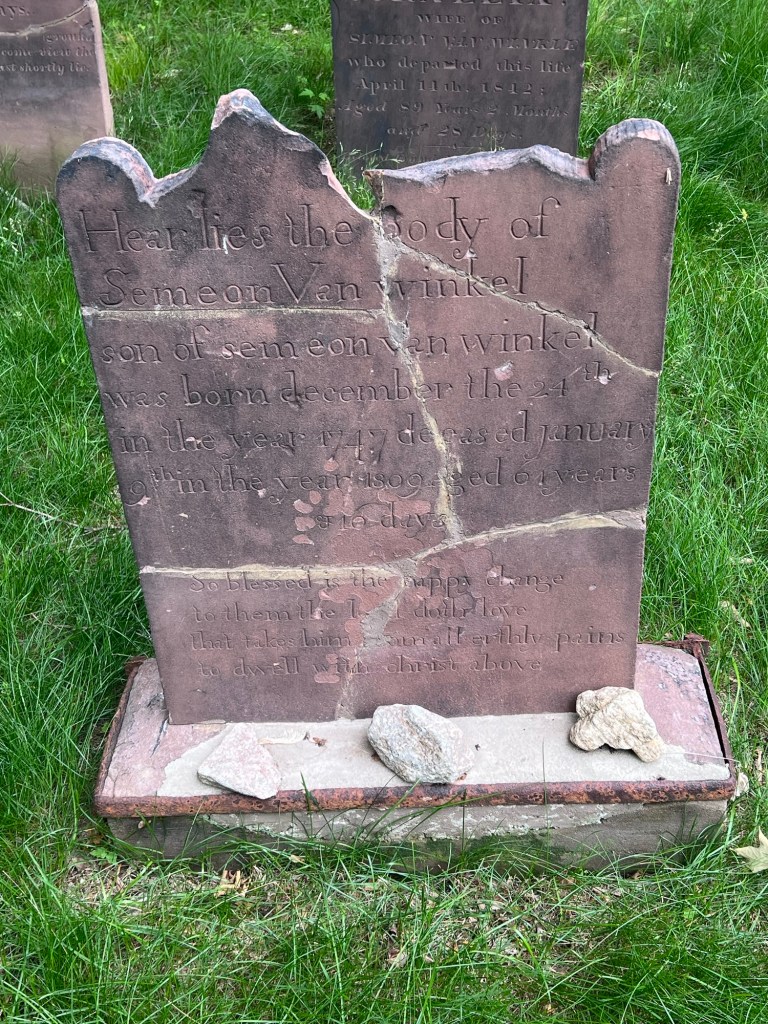
The grave of Veteran Simeon Van Winkle
These brave soldiers fought in the Revolutionary War with some of their tombstones marker as veterans as others are not.
The graves face Crooks Pond
The tombstone of Veteran Samuel Romine
Samuel Romine’s original tombstone
The Veterans of the Crooked Pond Cemetery:
(From the Borough of Franklin Lakes website-Written by Colin Knight)
The Daughters of the American Revolution stepped up and have been working to restore the cemetery to it’s rightful state. 20 headstones have been restored, and recently, the Veteran’s Administration installed two new headstones for Revolutionary War veteran Samuel Romine and another for War of 1812 veteran Ralph Benjamin Romaine. Crooked Pond Cemetery has fourteen Veterans interred within its bounds, ten from the Revolutionary War, two from the War of 1812, and two who served in the Civil War.
An incomplete list of veterans buried here are John Ackerman; John Folley and Elias Folley; Samuel Romine, Benjamin Romine, and Ralph Romaine; Gerrit Van Cleve and Joseph Van Cleve; Corniess Van Houten, Hendrick Van Houten, and Roeloff Van Houten; and Simeon Van Winkle and Epson Van Winkel.
What is sad about these small family cemeteries is that I am sure that the families never thought to the future when the land would be sold off and the family would move on. The Voorhis and Demarest names still dot the landscape of Bergen County but these tiny plots are lost to the current generations.
The gravesite of Lucas Van Voorhis
The grave of Mary Demarest, who was the wife of James
The Dewolf-Haring family cemetery sits on a homeowners front yard
The Dewolf-Haring Cemetery is one of the most unusual of the small cemeteries in Bergen County that I have seen. It sits right in front of someone’s front yard.
The cemetery probably at one time sat at the very edge of the farmland which is now a golf club and a neighborhood of McMansions. It shows the progress of the area as the farmland was sold off.
The gravesite of John Haring
The DeWolf-Haring family; grandparents and grandson
The oldest part of the cemetery sits on the highest bluff overlooking the woods and the street. The Eckerson family burial plot is located here with graves dating back to before Revolutionary War.
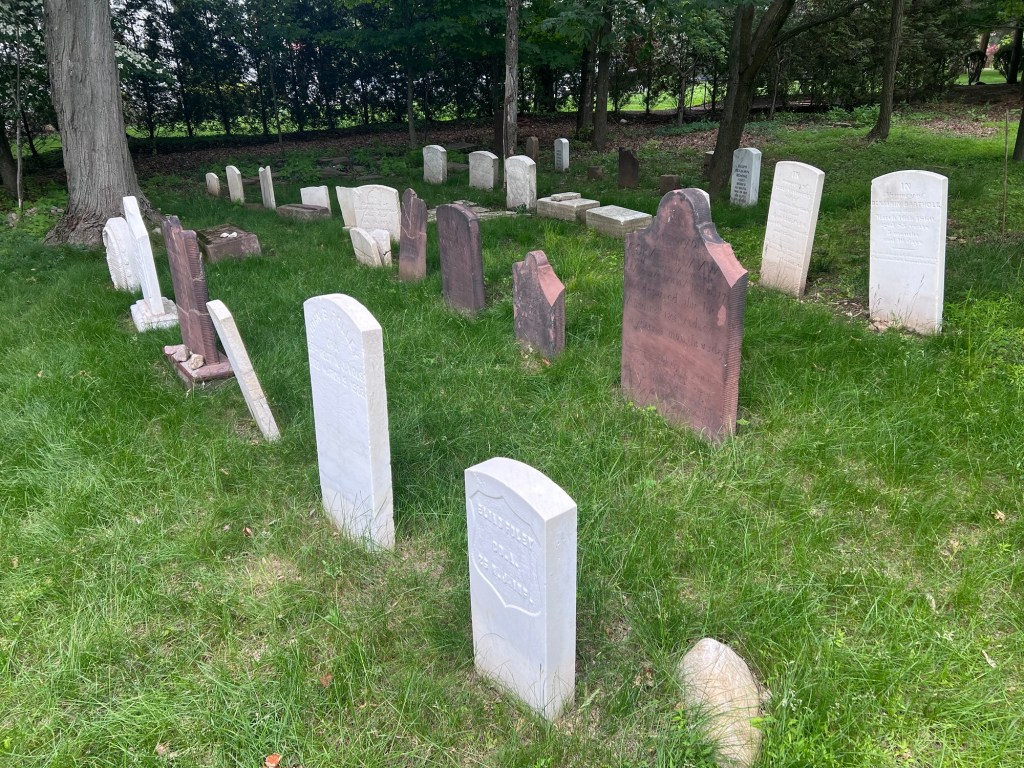
The Old Tappan Cemetery sits on a hill in the woods
The oldest part of the cemetery sits on the very top of the hill overlooking the neighborhood
The site houses the graves of the Eckerson and Haring families
When the festival began and before the Strawberry Shortcakes came out that afternoon, there were all sorts of activities and docent led tours. The first one that I went to was the 1820 Schoolhouse.
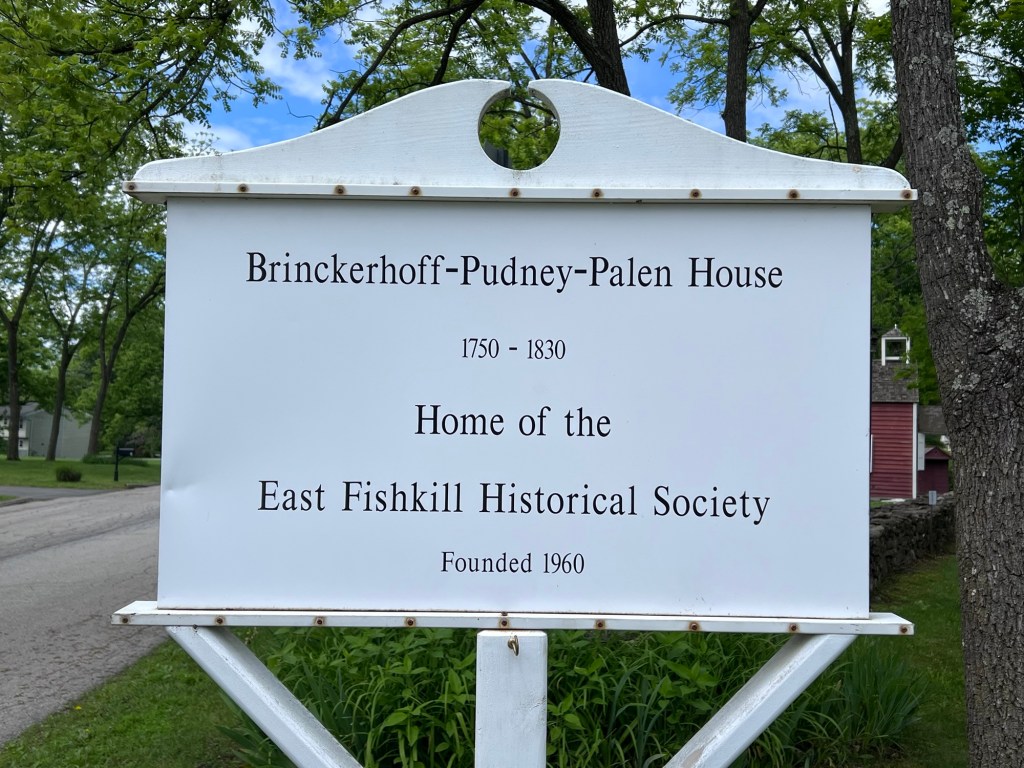
The historic sign for the 1820 One Room Schoolhouse of Upper Hopewell
The entrance to the schoolhouse
Even though the schoolhouse is from the early part of the 1800’s, it is amazing how it still relates to classrooms of today. I am still convinced it is the connection that students have with their teachers establishes the fundamentals of a good education and learning.
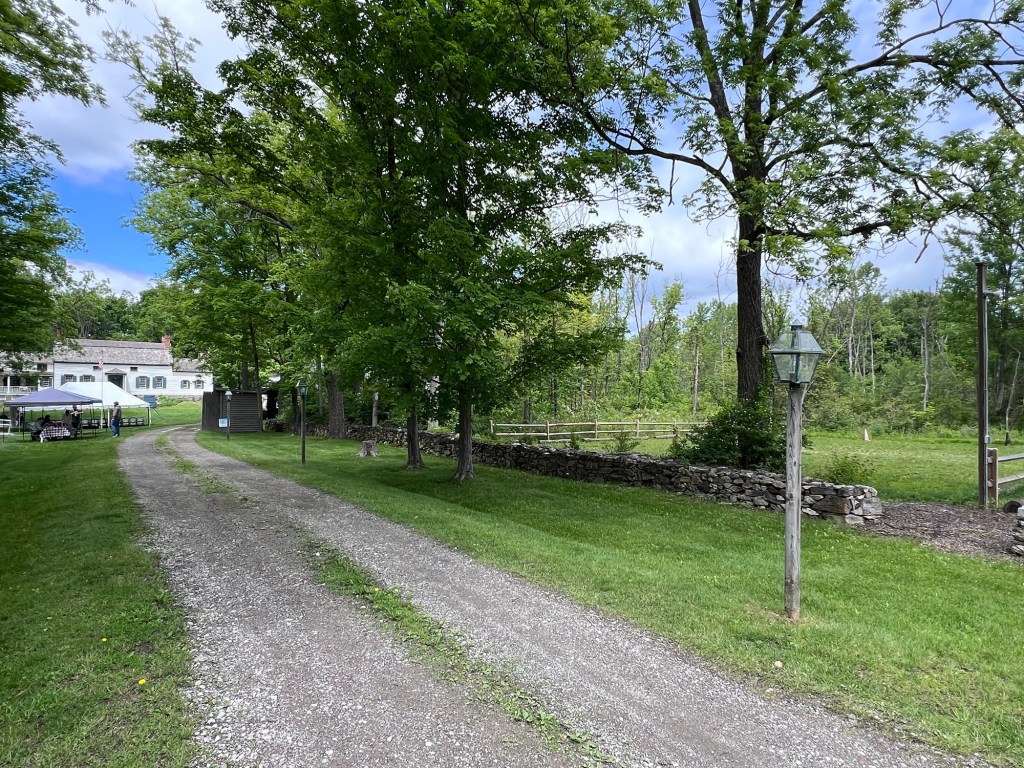
The schoolhouse from the back of the building
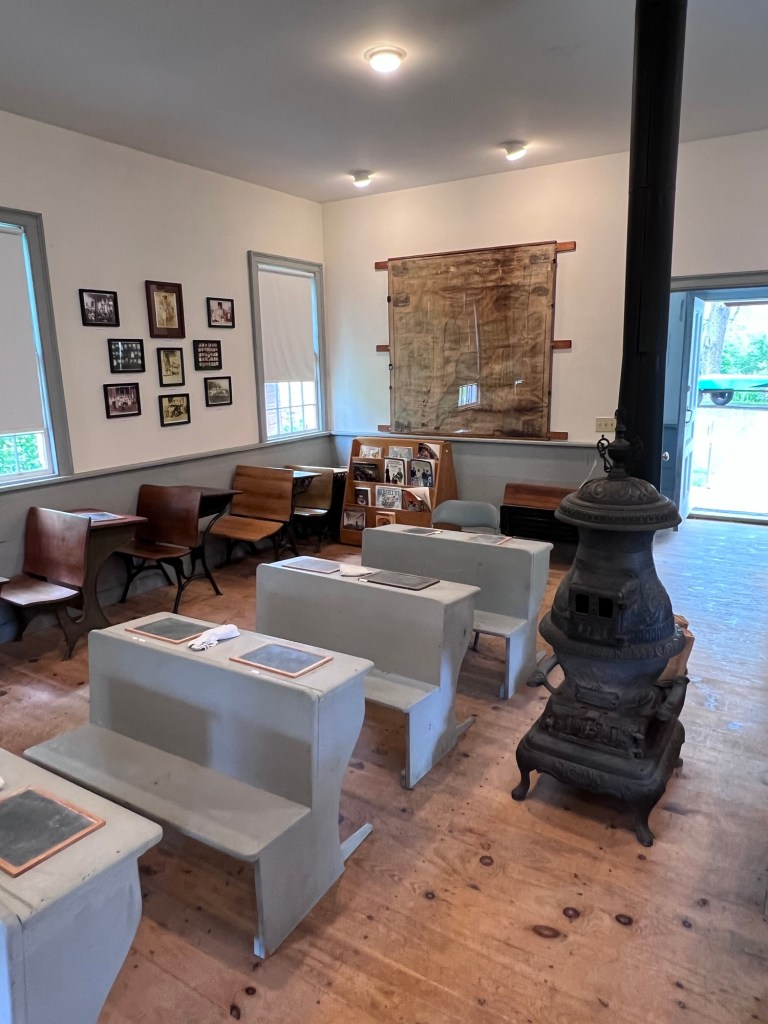
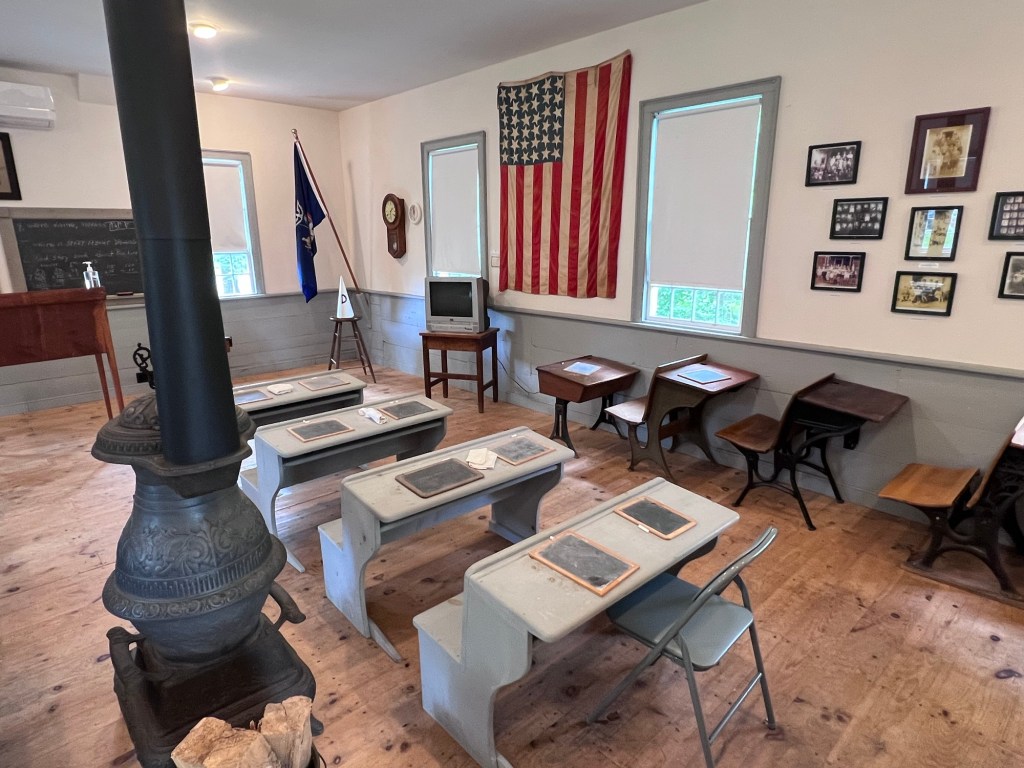
The inside of the classroom has not changed in two hundred years
The schoolhouse classroom is similar to today
I will be quite honest in saying that outside the potbelly stove, the classroom here is pretty much the same as the lecture halls that I see at our college campus.
Games and books of the past are similar to those of today
The items of the classroom of the 1800’s. I am not too sure the use of the Apple press but the children may have had chores to do outside the classroom.
A discipline system that should be brought back
After the tour and talk at the schoolhouse and a talk with other educators on the status of the modern classroom (we all had a lot to say on this), I went over to tour the barn.
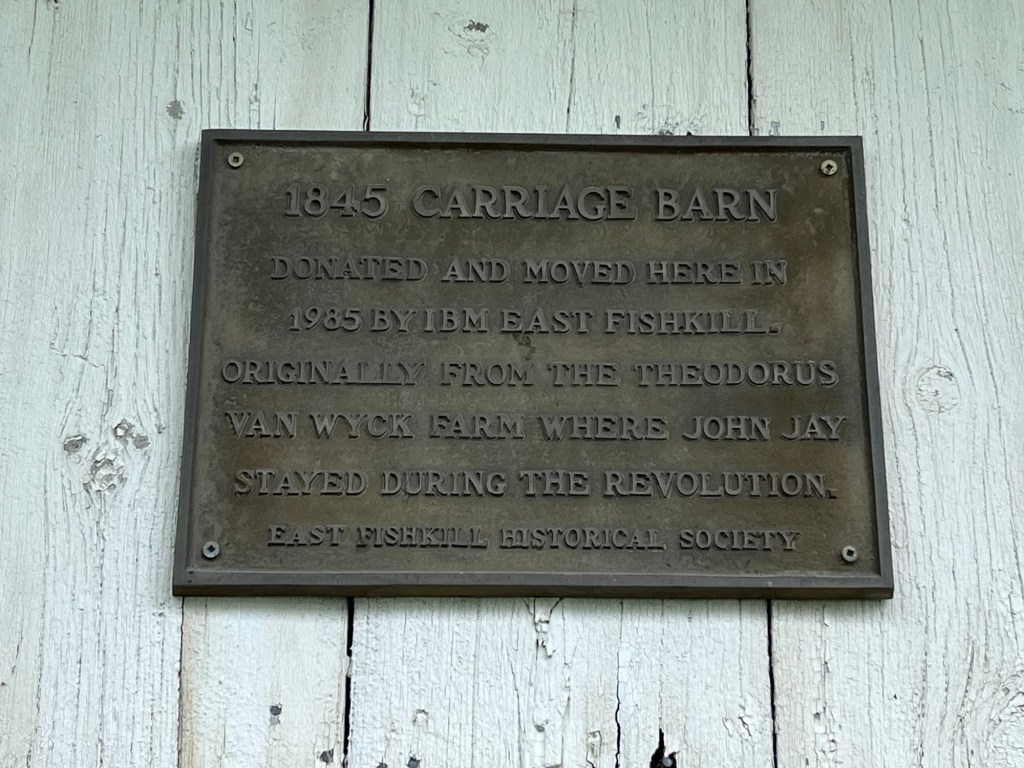
The Van Wyck Barn
The historic sign of the mid-1800’s barn
The historic marker of the 1845 barn
The actor who was working at the barn told us about wood making and about saws and how to maintain them for work on the farm.
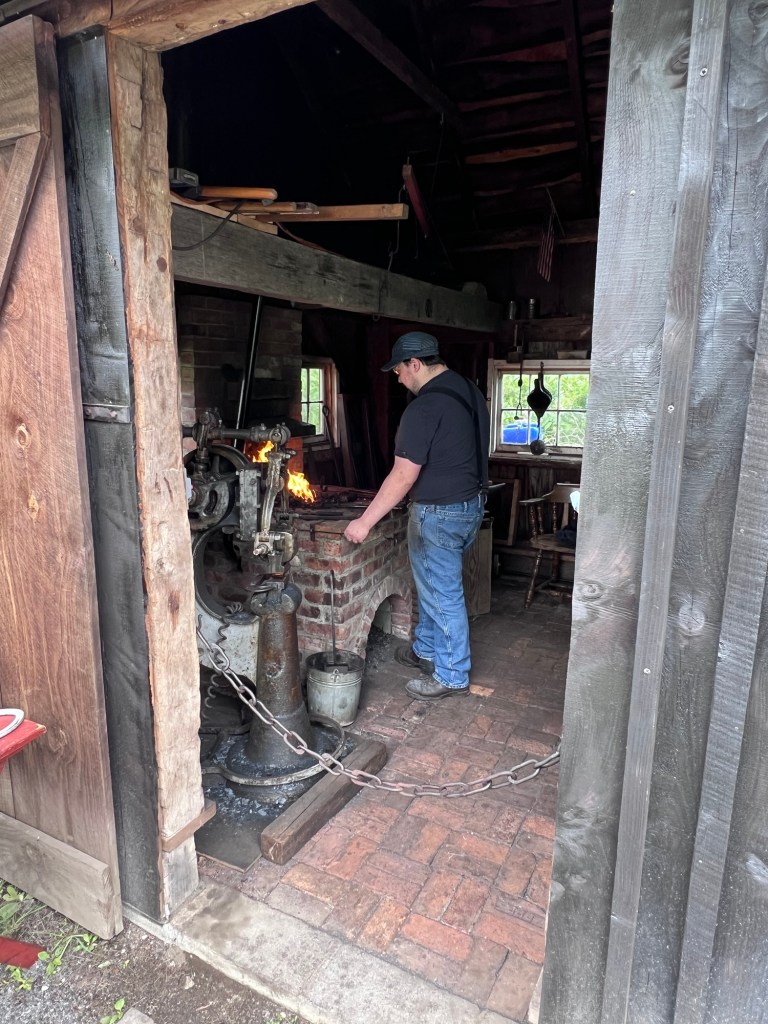
Next to the barn, there was a small blacksmith building where the volunteer was demonstrating items that would have to been made or maintained to keep work on the farm going. Never a dull moment on the farm.
Keeping the fires going and a certain amount of heat is needed to fix these items and create the objects needed on the farm.
The objects and items made at the blacksmith
I know that these tours may seem hokey to some but the volunteers who were at both the barn and the blacksmith were really interesting in their demonstrations. There was a lot of time, talent and creativity needed to keep these aspects of the farm in working conditions.
The rains had really made the grounds lush and all the flowers and trees were in full bloom. The gardens were really well maintained and it was really pretty to walk arounds the grounds of the house.
The gardens by the schoolhouse
In the little pen by the Ice House, they set up a small petting zoo with little goats who looked terrified of us. If we had something to feed them, trust me they would have been less shy.
These little lambs were so cute
I was trying to wave them down but they huddled together
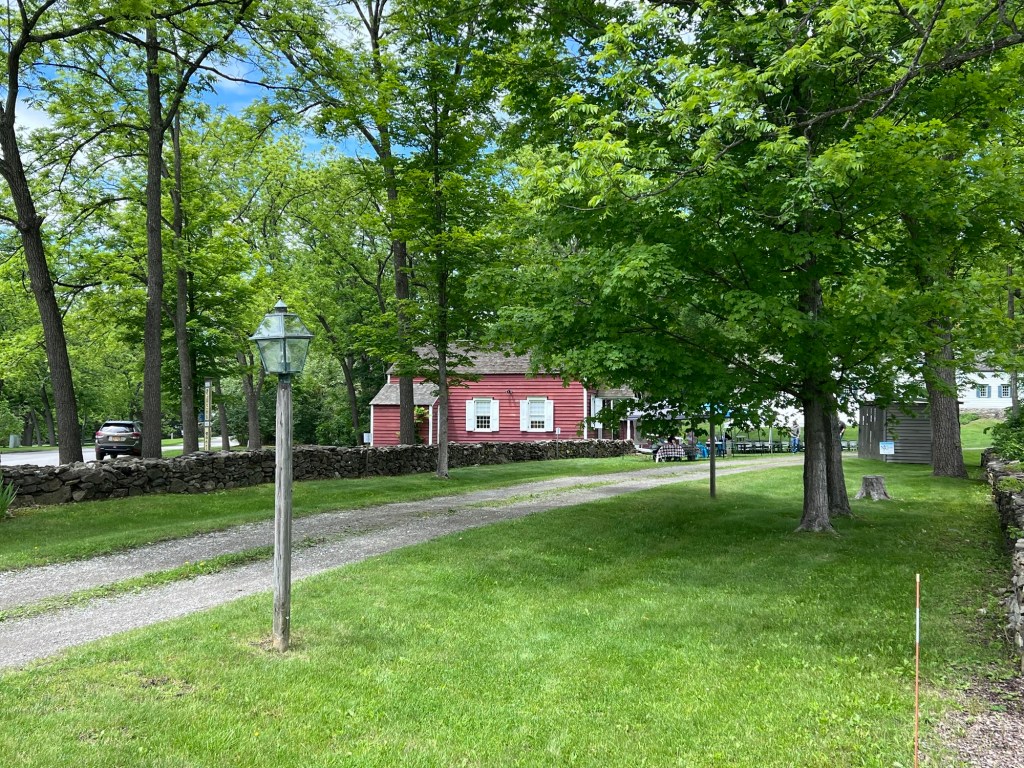
Walking around the grounds
The Icehouse was closed that day
The crowds were starting to get bigger around 1:30pm because that was when the Strawberry Shortcakes were being served.
Since they were a little behind as the high school students were inside preparing the Strawberry Shortcakes, I decided to tour the Brinckerhoff House again. They had a Butter Making class going on in the old kitchen section of the home and there were early American displays in all the cases. All the first floor rooms were open and I got a chance to see some of the new artifact donations.
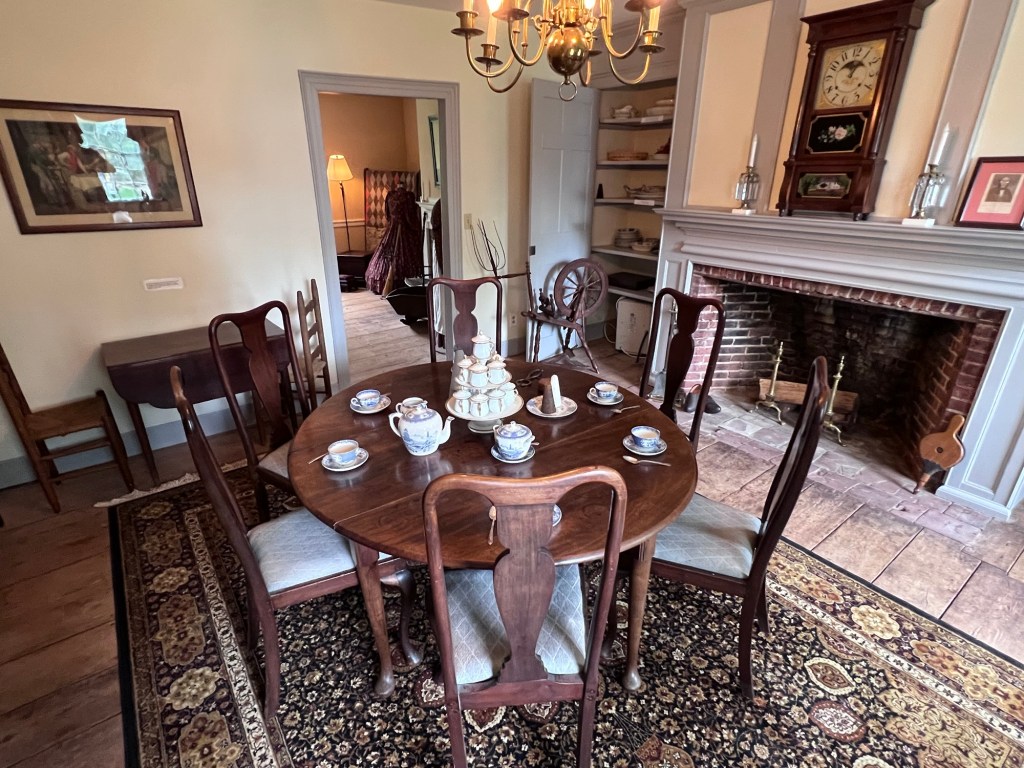
There were all sorts of displays of clothing, furnishings and assorted dish ware on display in the Living Room and Dining Room.
Early American display of women’s clothing
Early American display of Men’s clothing
The Dining Room on the first floor was all set for tea
The Dining Room led to the bedrooms and the old kitchen
The old Main Bedroom on the first floor
Some the artifacts in the second floor bedroom
Some of the paperwork and artifacts in the main foyer
As I exited the house, I passed the door to the roof cellar. I did not think they would put this on the tour. Only the first floor of the house is open to the public.
The door to the root cellar
I took a tour around the grounds and passed the old outhouse
As soon as I finished the tour of the house and grounds the first trays of Strawberry Shortcakes started to come out and I never saw such a mad dash to get something.
The tent set up to sit and relax and eat
As I went to reach for a Strawberry Shortcakes on one of trays. I swear this woman grabbed two off the tray and practically barreled into me. I know they looked good but I could not believe the way some people behave. These were plenty of trays coming outside.
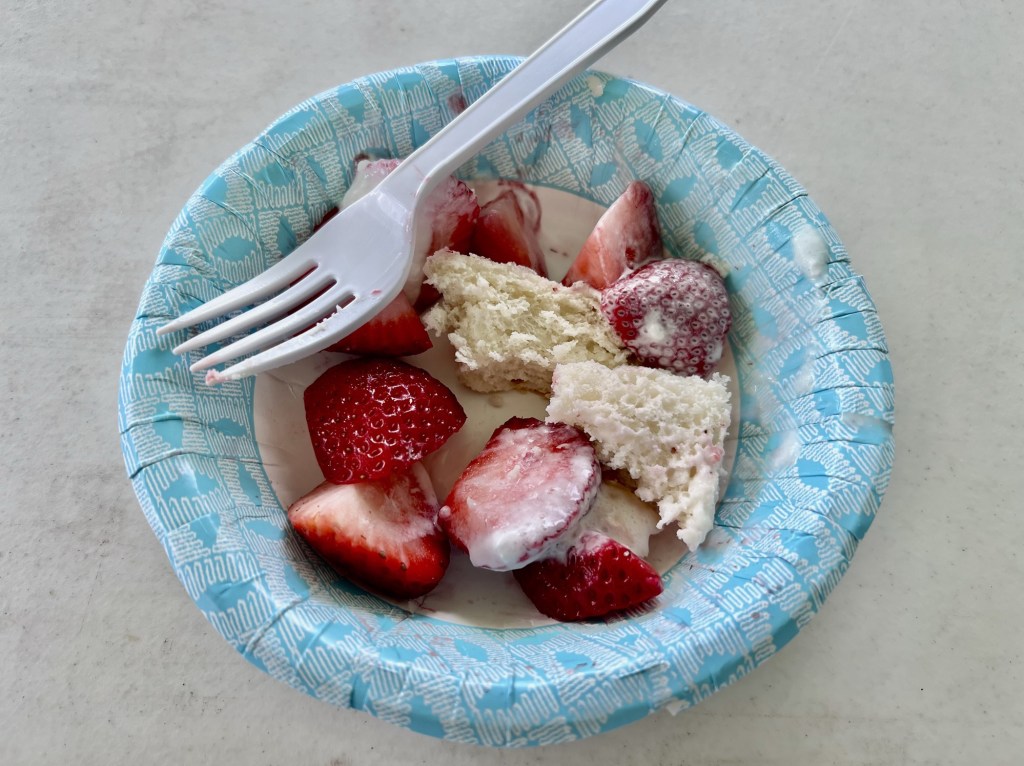
After I avoided the collusion, I was able to get one of the shortcakes off the tray and sit down. The Historical Society had plenty of seating under the tent and what was nice was they had ice cold lemonade as well. It made the perfect afternoon snack and the reason why everyone was here. When I had taken the initial tour of the property three years earlier, the tour guide told me that they went through 600 of these. I could believe it.
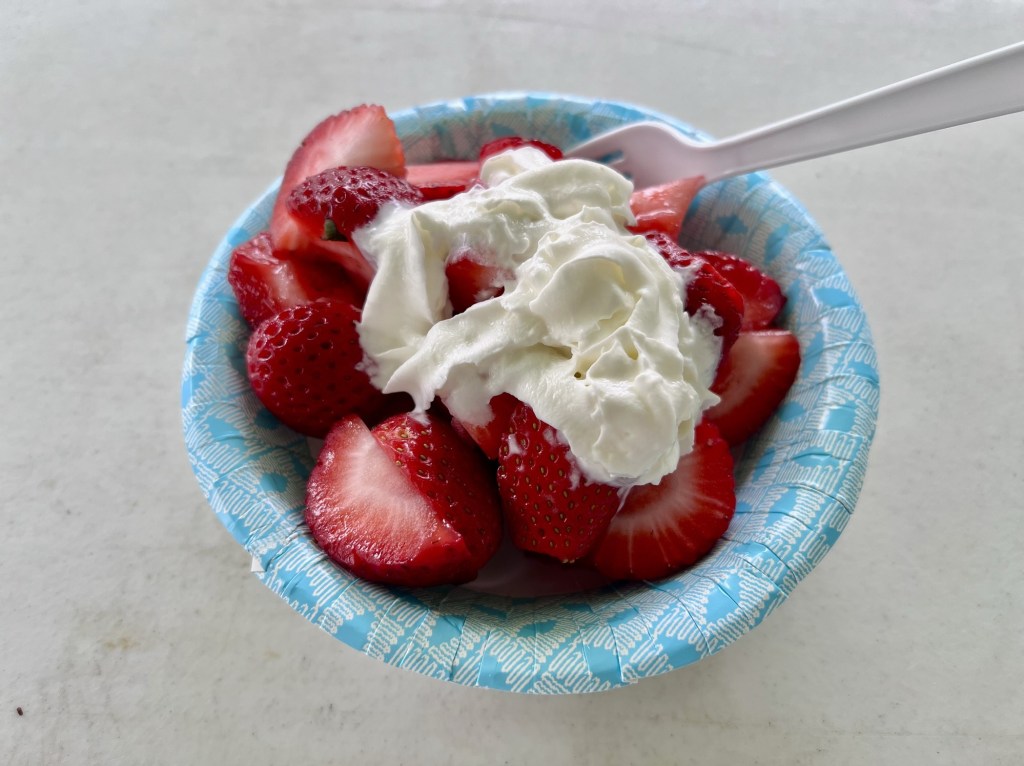
The Strawberry Shortcake with homemade whipped cream
I hate to say this but I waited almost four years to finally try this shortcake and admittingly it was well worth the wait.
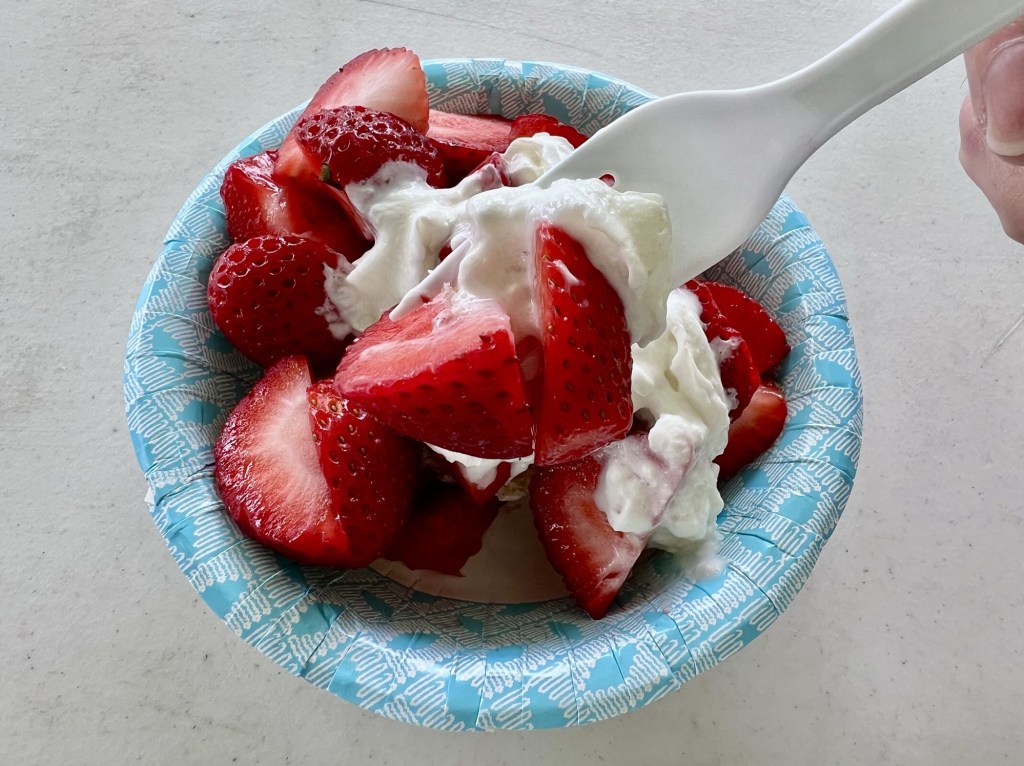
The strawberries were so juicy and fresh. I was not sure if they were from a local farm but by the sweetness and juiciness these were not imported.
Yum!
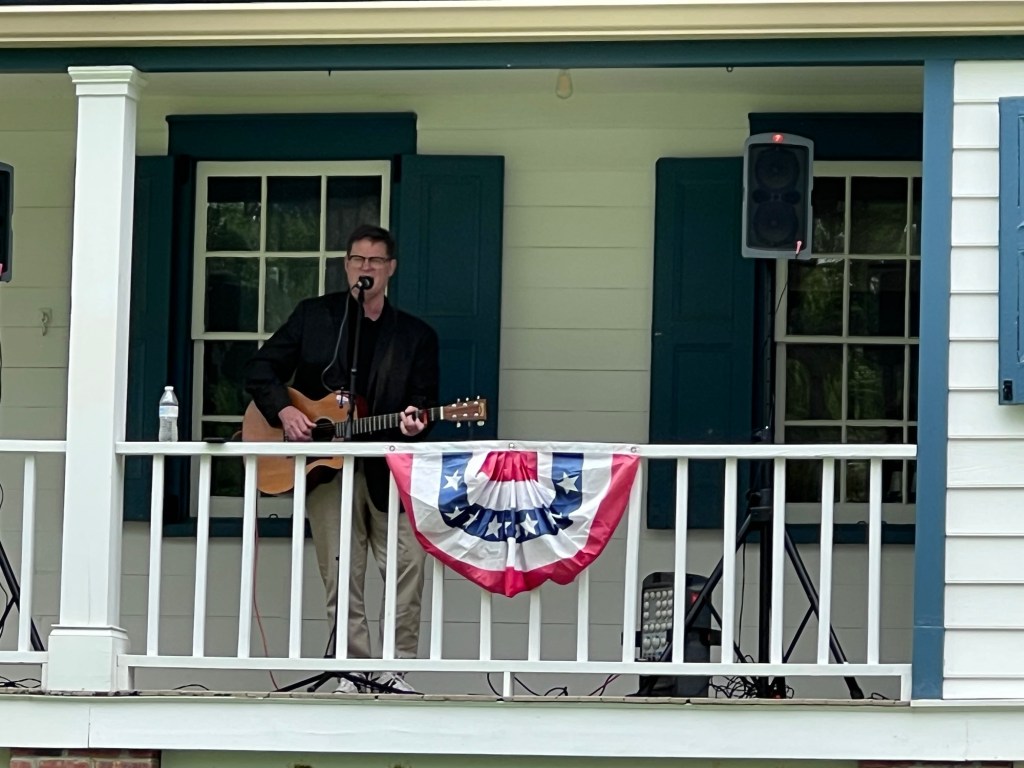
While we were eating the entertainment began. They had a wonderful guitarist playing on the patio and we could hear him down at the tent further away on the lawn.
The guitarist was wonderful. He played all sorts of songs from the 1960’s and 70’s.
Here is a short clip of the concert on the lawn
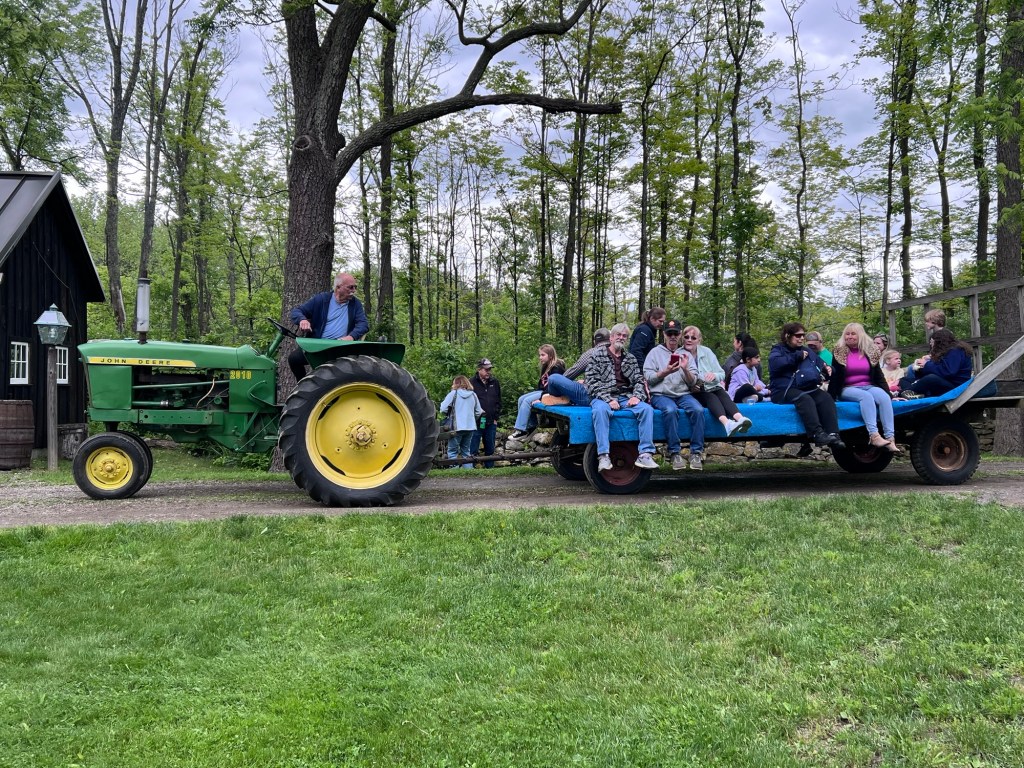
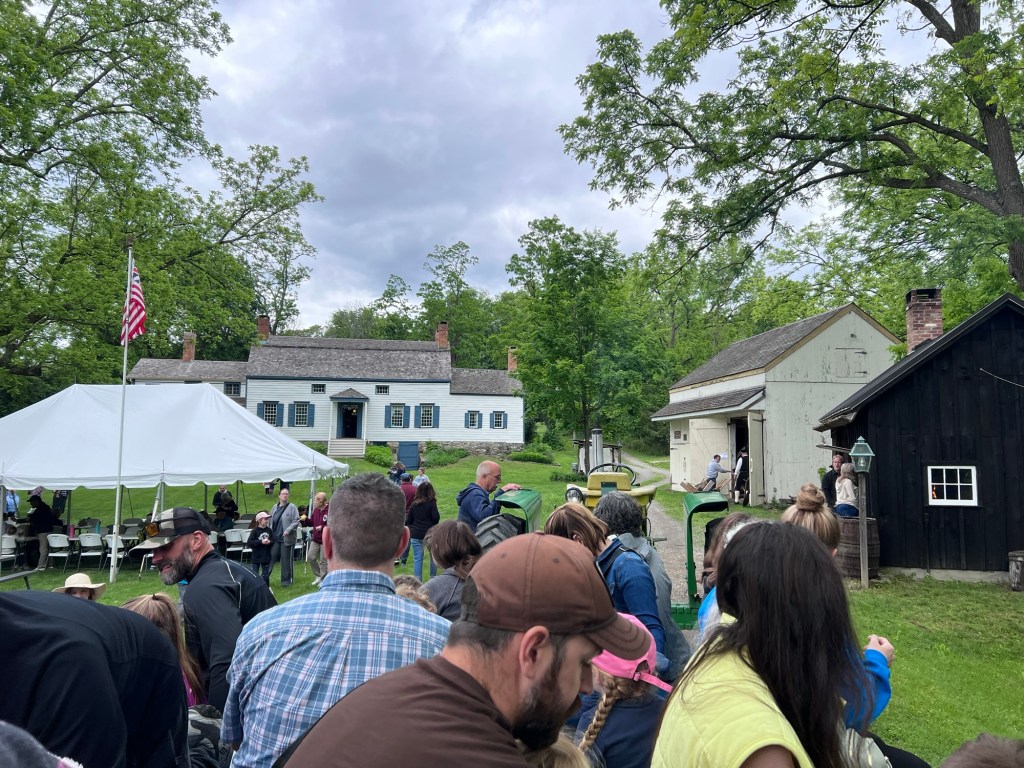
After relaxing and enjoying the shortcake, I saw that they were starting up the hayrides around the property and the first riders were leaving. I thought it looked like fun.
The first group of riders leaving
I got on the second ride and there was plenty of room on the flatbed. Even though it was a short ride, it was a lot of fun. The sun peeked out for a bit and it made the ride pleasurable.
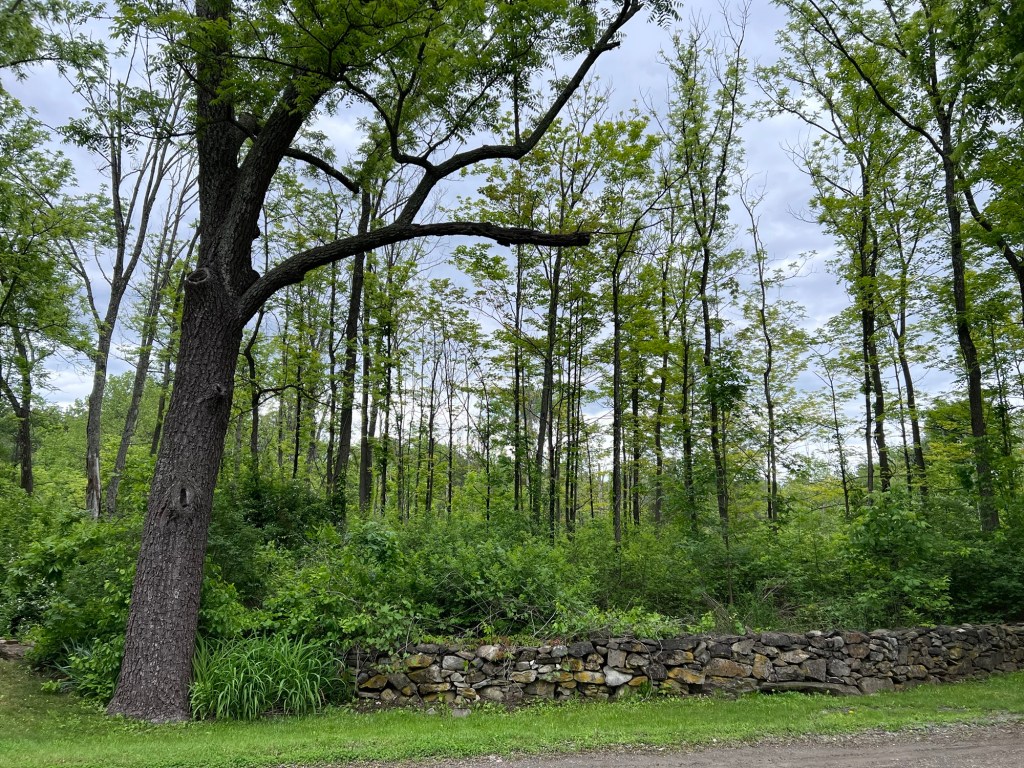
Us passing the woods at the start of the trip
The start of our journey around the grounds of the Brinckerhoff house.
The start of the journey
The end of the journey
As I exited the flatbed, there was a pretty long line to get on the ride. As simple as this ride was it was so relaxing to just drive around the neighborhood and see the beauty of the house grounds. The volunteers do such a wonderful job of maintaining the house and gardens.
By 3:00pm the crowds had gotten larger and more trays of shortcakes were being devoured under the tent and people were having such a wonderful time. It was almost like a 1970’s event with families spending time together and I did not see one person playing with a cell phone in sight.
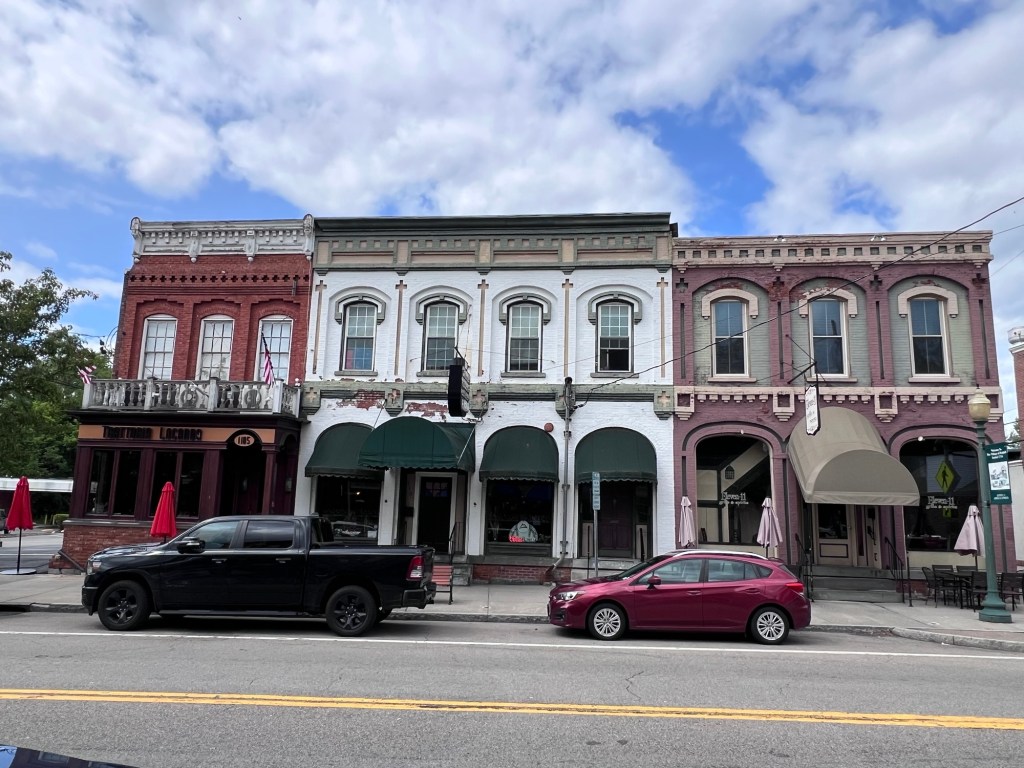
Since there was only an hour left of the event, I decided to beat the crowds out of there and explore historic Fishkill. There are a lot of great things to see in town.
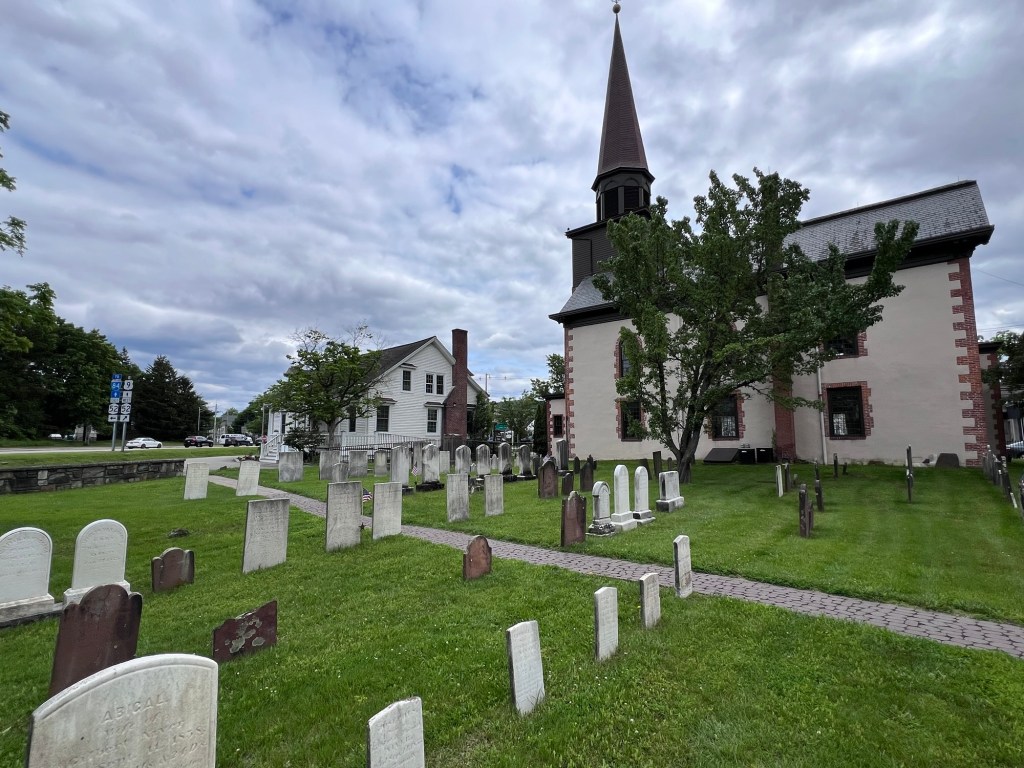
The Reformed Dutch Church and its historic cemetery
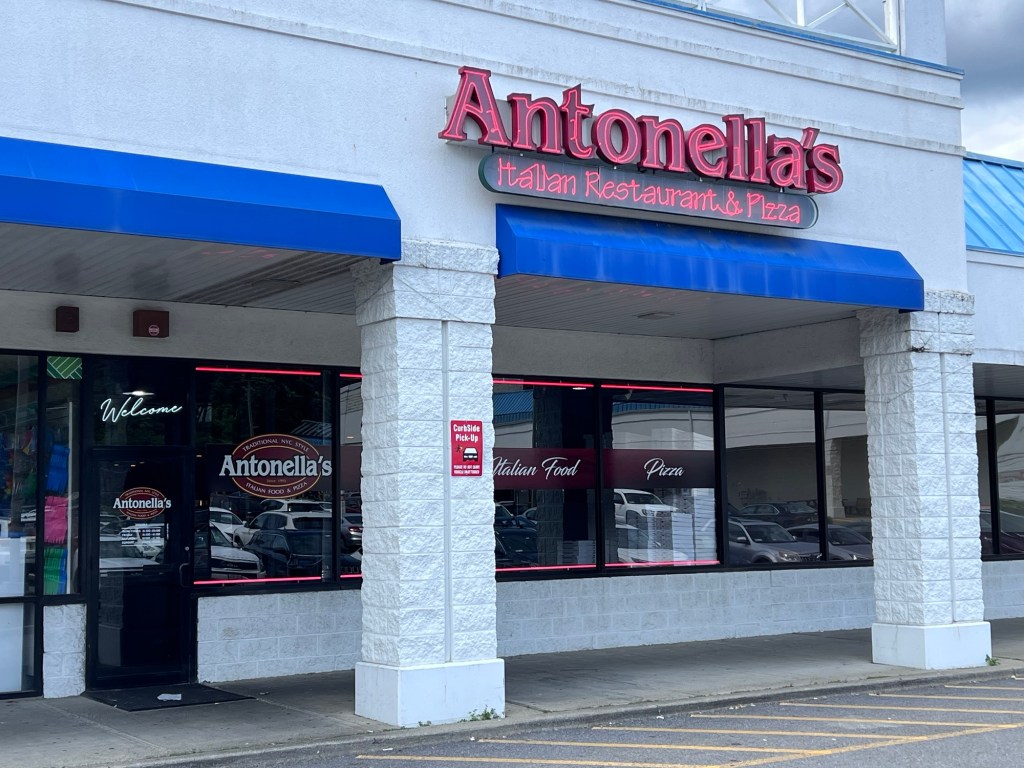
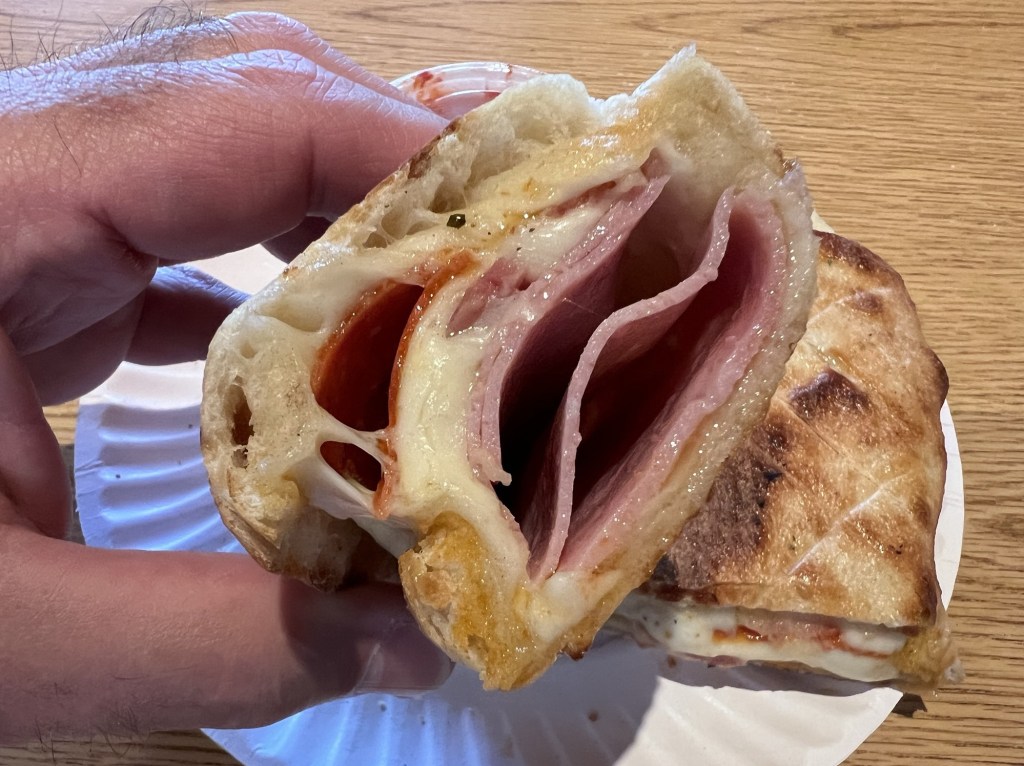
After walking Downtown Fishkill and noting some of the restaurants I would like to visit in the future, I headed to a pizzeria that I enjoyed on my last trip up and stopped at Antonella’s Pizzeria at 738 US 9 for dinner. I ordered one of their Stromboli’s with a red sauce and it was the perfect dinner.
My dinner, a Stromboli with Italian meats and a Coke
The Stromboli here are excellent and are filled with three different types of meat and two cheeses
Yum!
It really was a wonderful and relaxing afternoon. It was like I was put back into a Time Machine pre-cellphones and families just talked and enjoyed each other’s company. I think that the Historical Society did an excellent job on the event and I look forward to it again next year.
The Strawberry Festival is the first weekend in June as the strawberries start coming in. It’s an enjoyable afternoon.
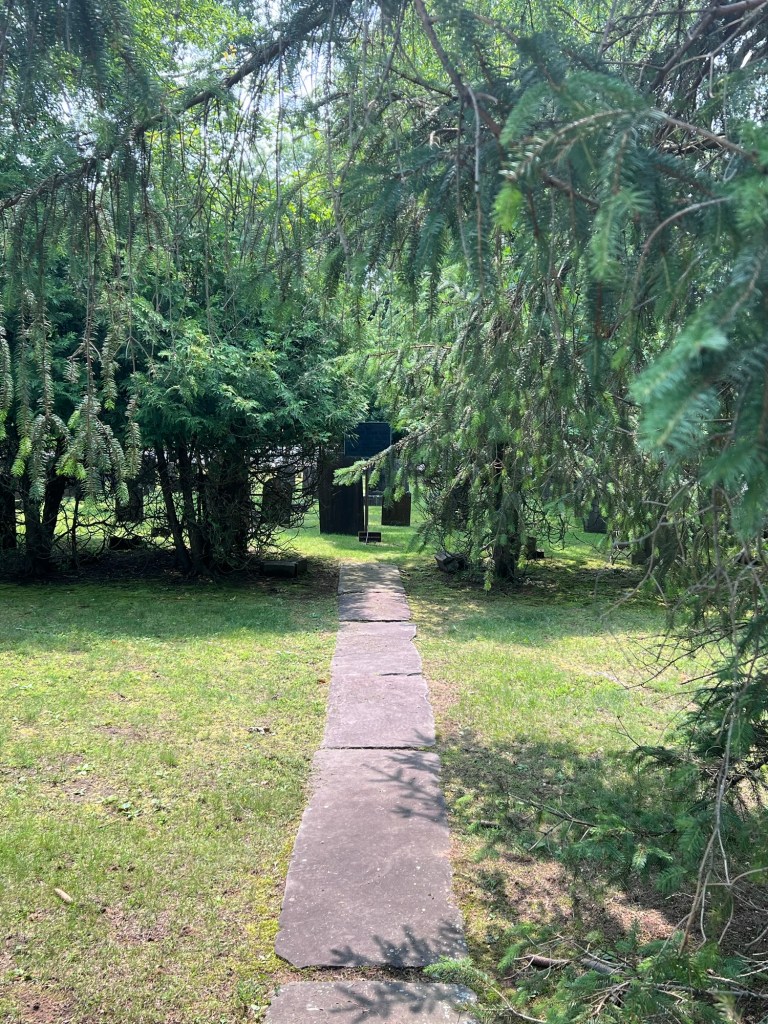
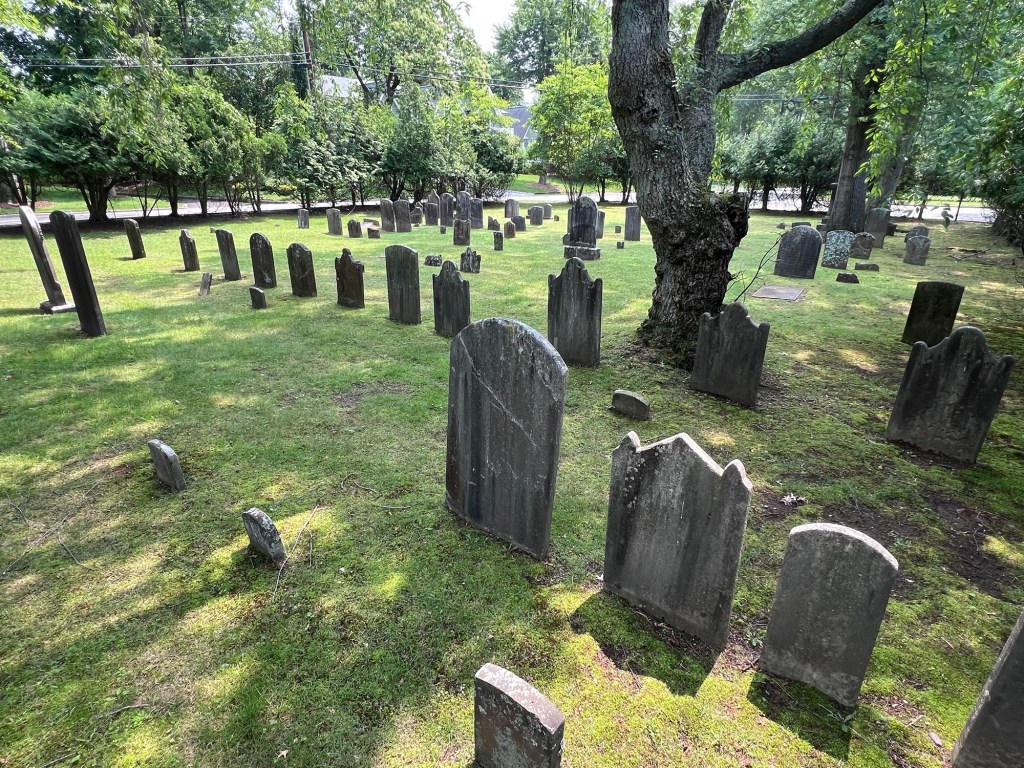
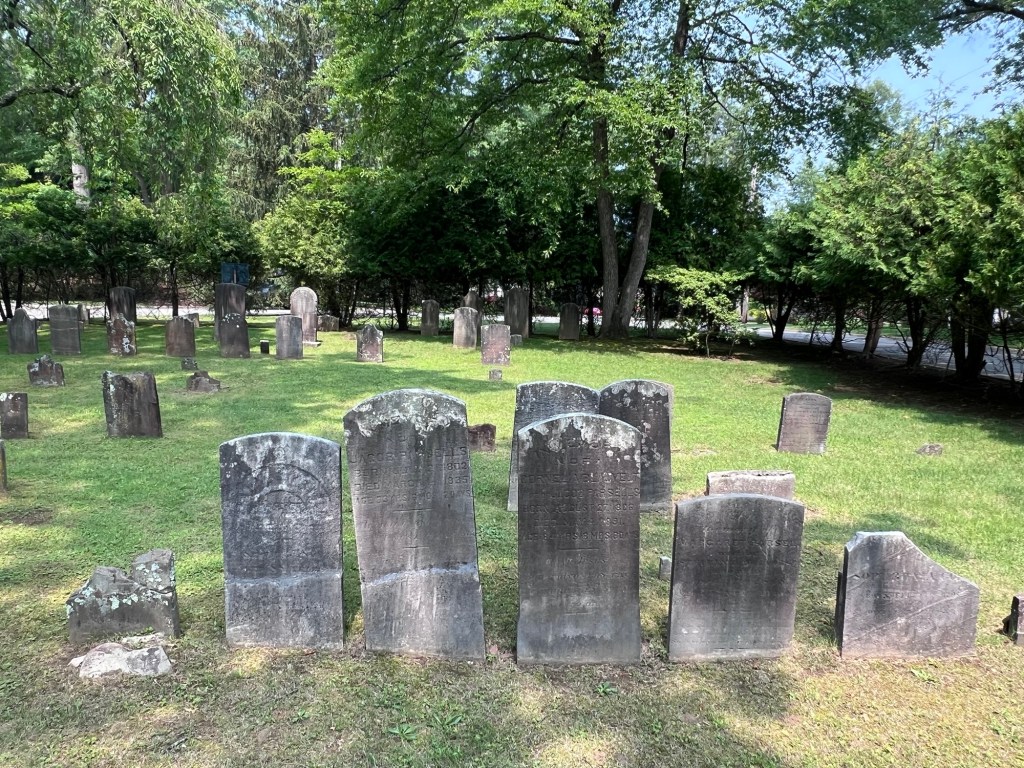
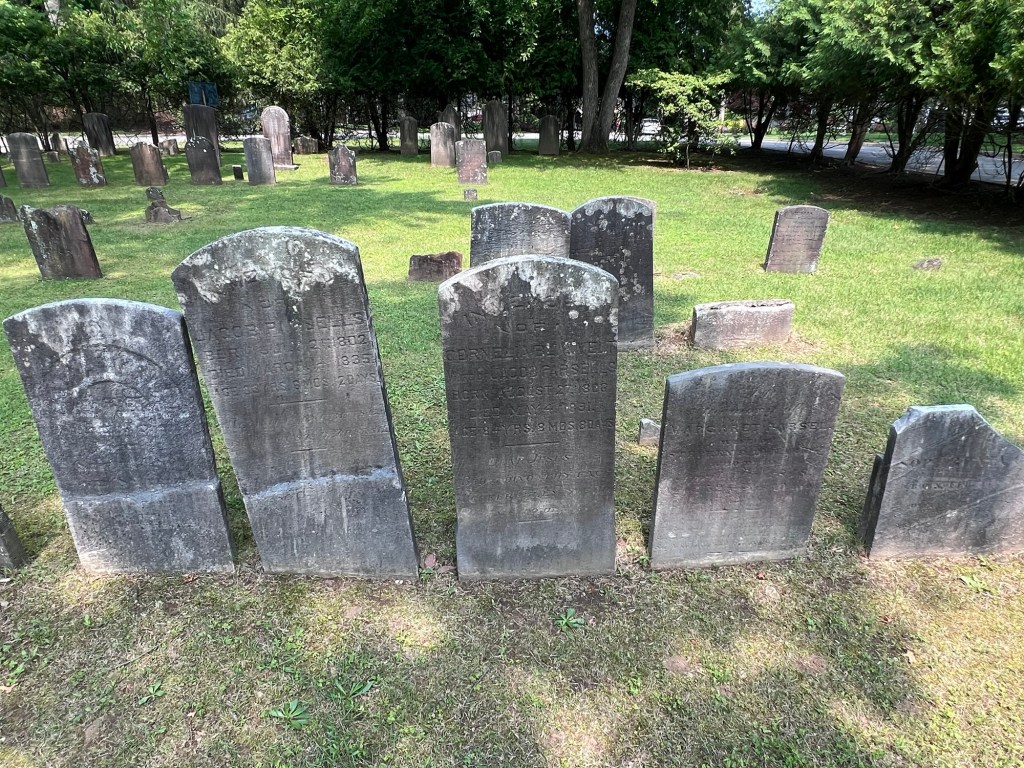
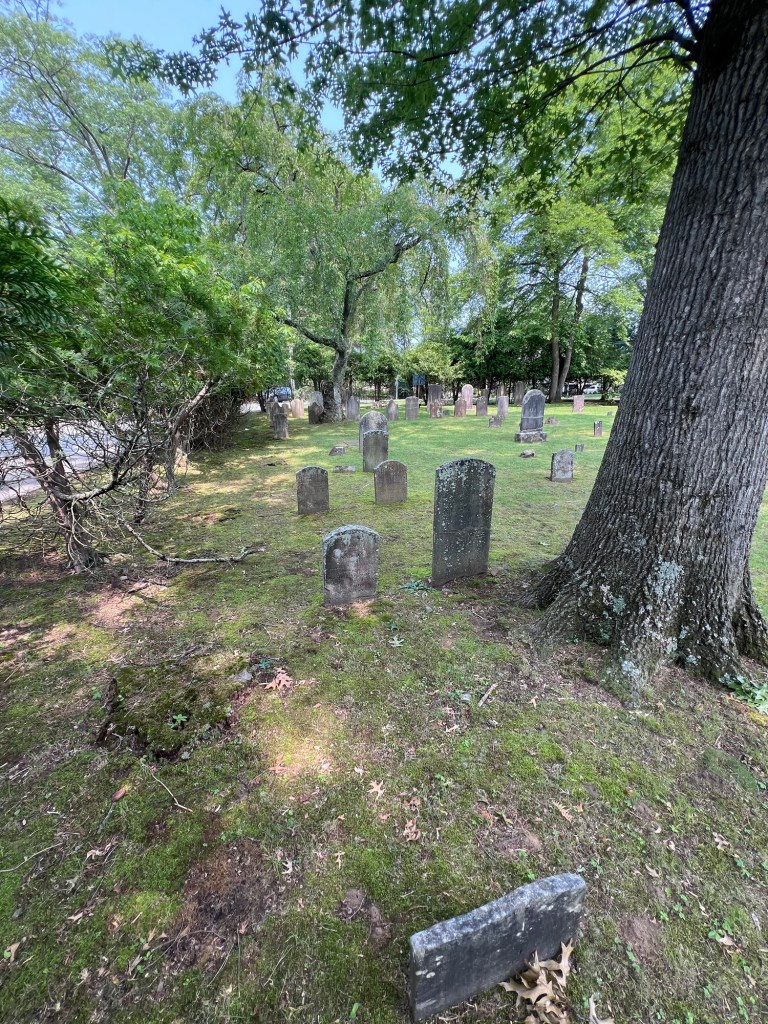
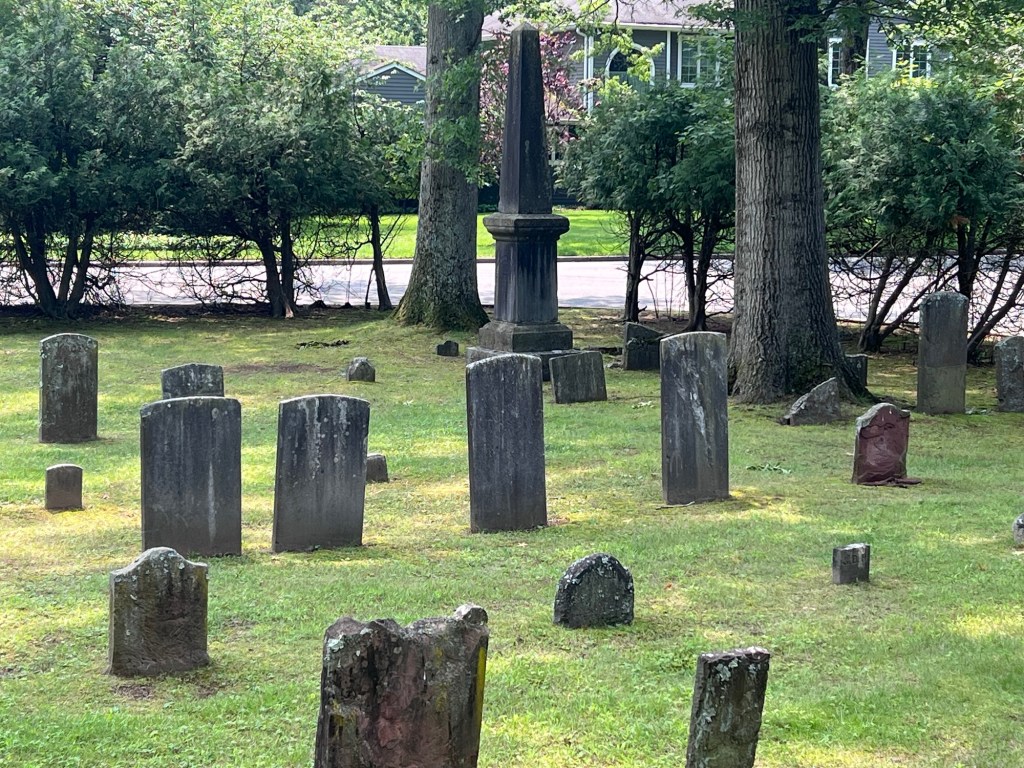
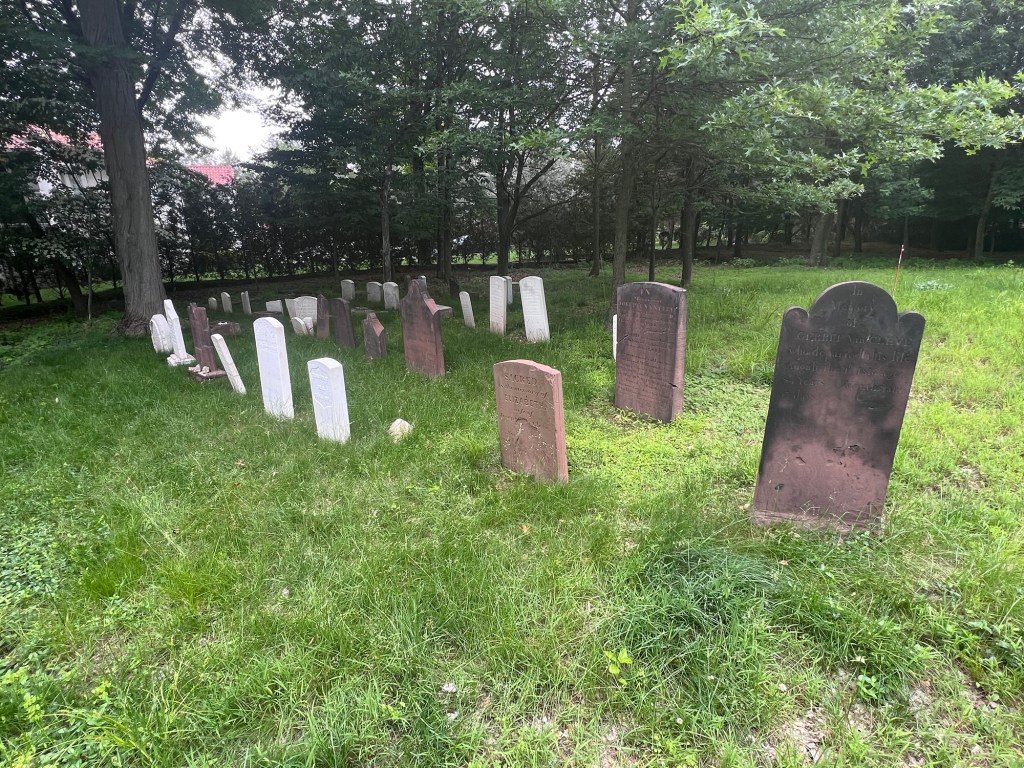
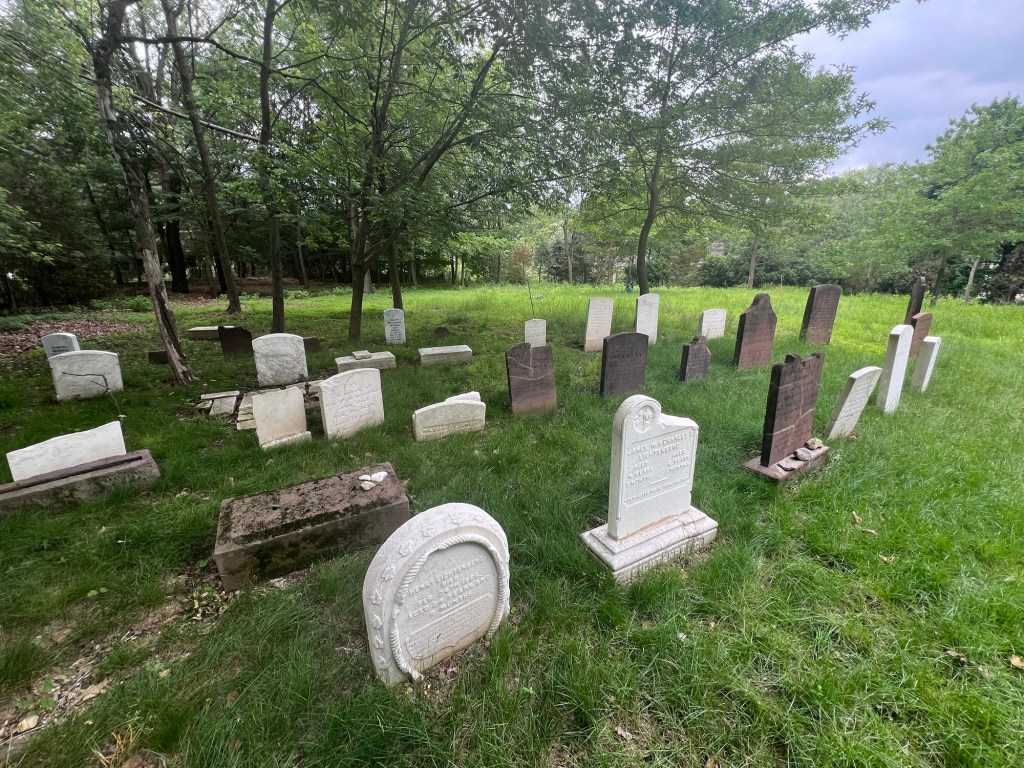
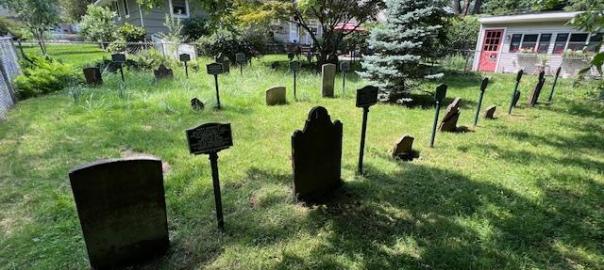
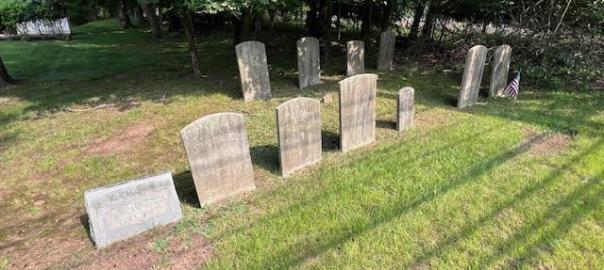
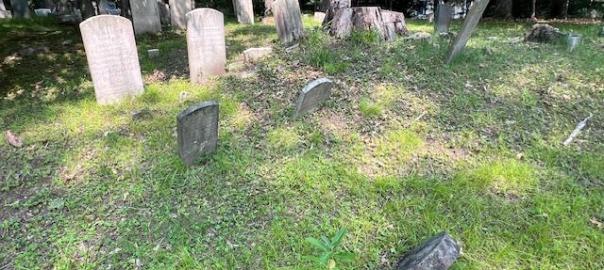
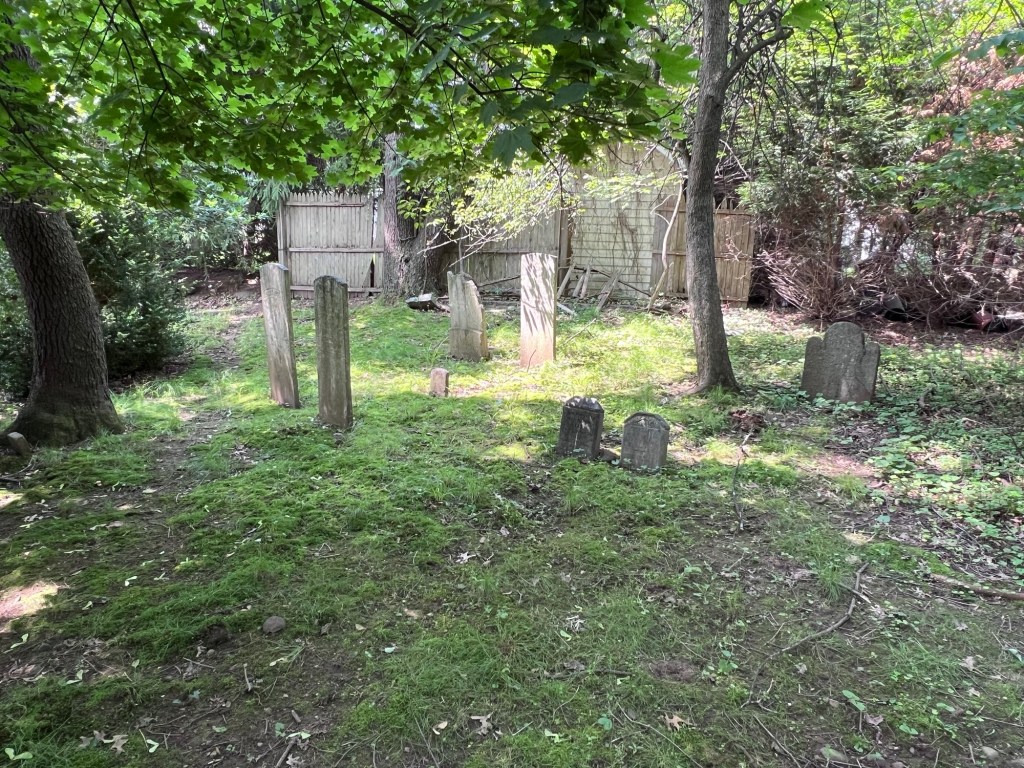
The cemetery is in a quiet corner between two house in what was once the Haring Farm
The family that is buried here:
(From the Dutch Door Genealogy website)
When some of this property, which originally had belonged to Abraham Jans Haring
according to the Zabriskie genealogy, was sold in 1785, ownerhip of the burial plot
was retained, and is described as being one square chain, which is 66 feet on each
side.
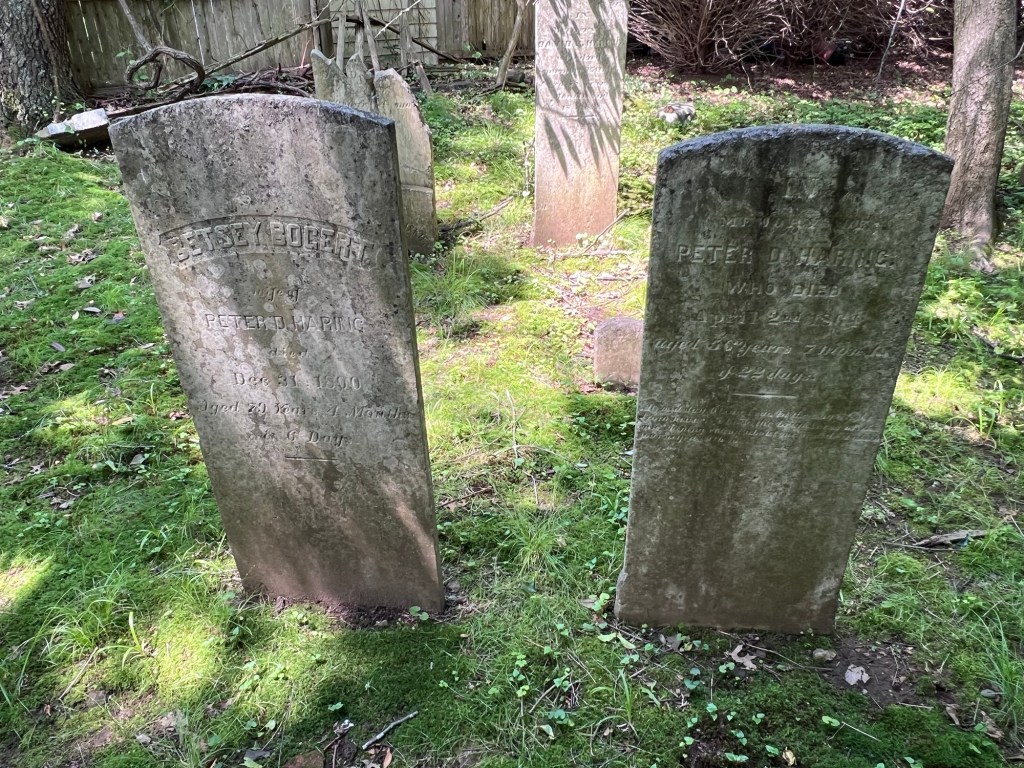
HARING FAMILY BURIAL PLOT AT NORWOOD, BERGEN COUNTY, N.J. ON THE PROPERTY NOW KNOWN AS THE ALLISON FARM.
10718 Abraham J. Haring d.1.1.1801 b.9.30.1720 a.80.3.1 (Tap. #358)
Broken stone
10719 David P. Haring d.9.15.1853 a.78.3.18 (Tap.#2418)
10720 Lydia Zabriskie w. of (Sch.p.186) David P. Haring d.12.30.1869 a.89.4.13
10721 Peter D. Haring d.4.2.1864 a.56.7.22 (Tap.#3727)
10722 Betsey Bogert w. Peter D. Haring d.12.31.1890 a.79.4.6






































































 mywalkinmanhattan