Tag Archives: Exploring Historic Graveyards and Cemeteries

English Neighborhood Reformed Church 1040 Edgewater Avenue Ridgefield, NJ 07657

English Neighborhood Reformed Church

1040 Edgewater Avenue

Ridgefield, NJ 07657

(201) 943-1231

https://www.englishneighborhoodreformed.org

Open:

Worship: Sunday 11:00am-12:30pm

Office: Sunday 11:00am-12:00pm/ Monday Closed/Tuesday 9:00am-12:00pm/Wednesday-Thursday Closed/Friday 9:00am-12:00pm/Saturday Closedi

My review on TripAdvisor:

https://www.tripadvisor.com/Profile/R4960NKjustinw/mediabatch/14329261?m=19905

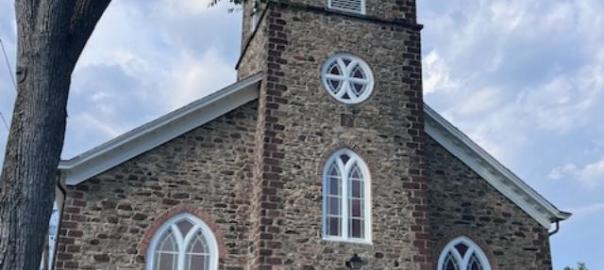
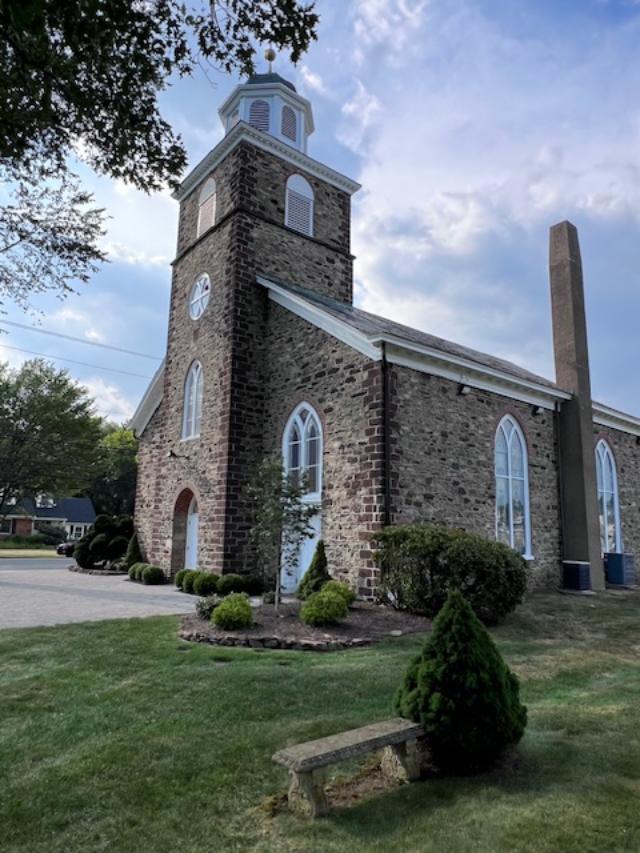
The front of the English Neighborhood Reformed Church

The sign in front of this historic church

The front of the church

The front of the church from Church Road

The historic marker in front of the church

Since my project studying the historic graveyards and cemeteries of the Revolutionary War with my International Marketing students, I have taken my time to walk these sites and try to understand the history and importance of these sites as part of the memories of who these people were, the contributions that made to not just our county but the country and trying to keep their memories alive while many have been forgotten by their families.

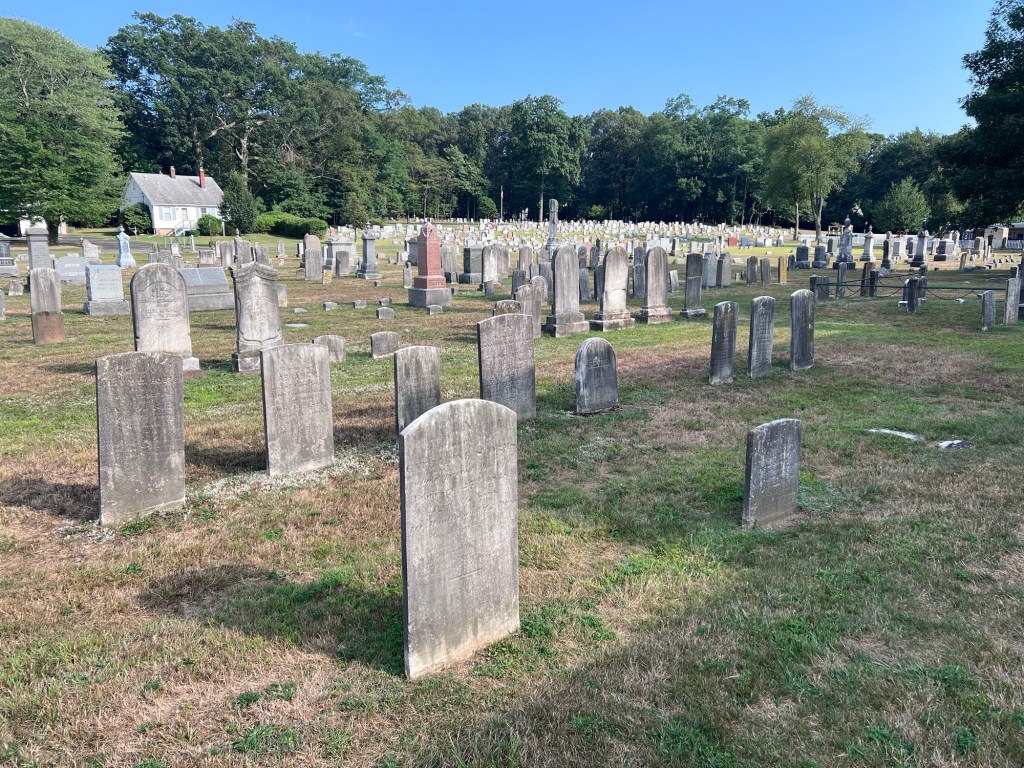
The newer back part of the cemetery

Visiting during a recent post Memorial Day visit, I got to see how many veterans of all the wars from the American Revolution to Desert Storm were buried here. Even though we studied just the veterans of the Revolutionary War, I was fascinated by the number of Civil War and World War I and II veterans here as well.

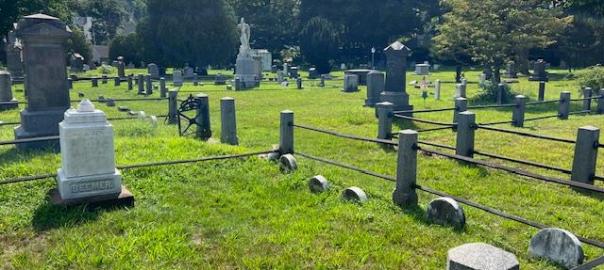
The older section of the graveyard

The history of our County and Country are shown among the rows of tombstones that represent the contribution of our County residents to the many causes. It was very humbling to see them being honored at this time.

What I found interesting was many of the branches of ‘Founding First Families’ of Bergen County were interned here, representing Bergen County’s contributions to the foundation of the United States.

The Engle family plot where Revolutionary War veteran John Engle was a member

The Vreeland family plot closest to the church is the resting place of Revolutionary War veteran Michael Vreeland (again this site was once their family’s farm)

A closer look at the Vreeland family plot

I believe this is the tombstone of Michael Vreeland, Revolutionary War veteran

Another branch of the Vreeland family

Another branch of the Vreeland family

The Herring (Haring) family crypt

The Outwater family crypt. General Outwater’s side of the family is buried in a family plot in Carlstadt, NJ

The Banta family plot

The DeGraw family plot

The grave of Benjamin Westervelt

The grave of a soldier I could not read

It was so interesting to walk amongst the rows of tombstones and trying to understand each person’s story and their personal contributions to the way our community was founded and developed. So many of these family names are woven into the history of Bergen County.

There is a quiet elegance to these graveyards and on a warm sunny afternoon they are less scary and more of a place of understanding and respecting our past. It was an interesting history lesson.

Looking at the oldest section of the graveyard where many Colonial family plots are located

History of the Church:

(From the Church website)

The English Neighborhood Reformed Church is the oldest building in Ridgefield, NJ, erected on its current site way back in 1793, long before Bergen County became the bustling metropolitan area it is today.

But even before this, way back in 1675, Ridgefield was known as “The English Neighborhood” and covered roughly 10 miles of land between the Hackensack and Hudson Rivers. This is where our church gets its historic name. The first construction of the church (in Leonia) dates back to 1768, but was moved to its present site in Ridgefield, in 1793.

This area played a role in the Revolutionary war, when General Washington retreated with the Continental Army in 1776 from NY City and passed through the English Neighborhood. Those who fled the area for their cause, included the English Neighborhood Church’s first minister, Garrit Leydekker, an Englishman and a Tory, who fled for the safety of New York City, taking the church’s first records with him.

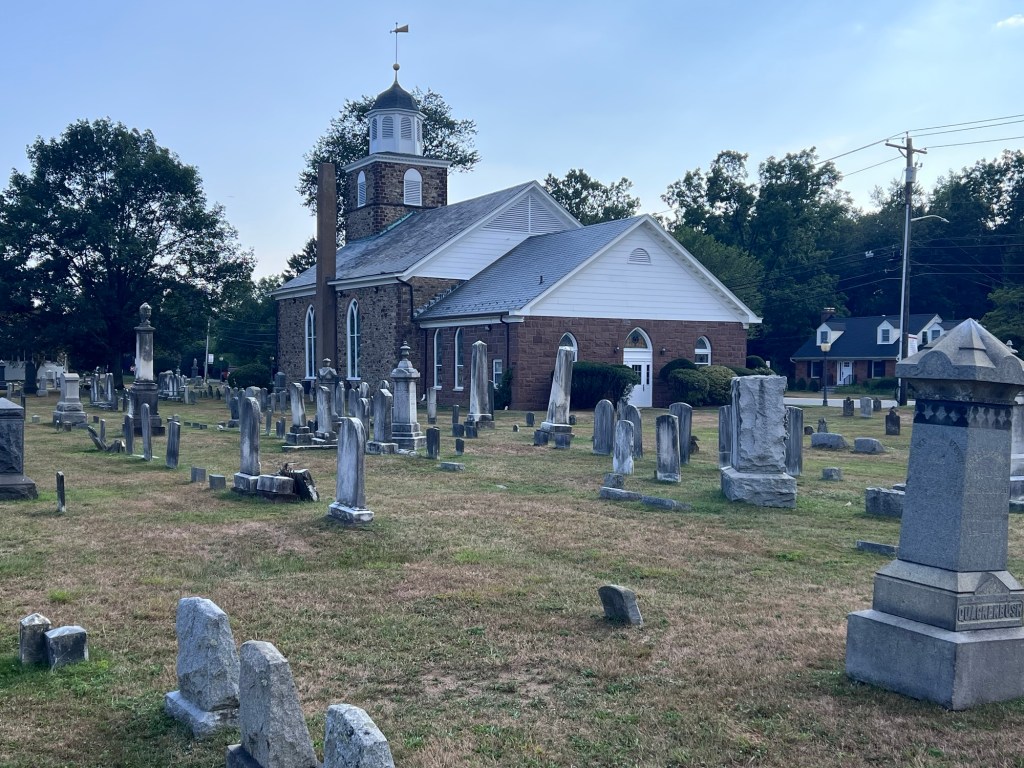
The historic graveyard next to the church

The church’s steeple was the tallest structure to rise above the flat meadowlands and would become a surveyors landmark. It is approx. 80 ft. in height and made from hand-strewn timbers and wood dowels, rather than nails.

The historic church on a sunny afternoon

In 1804, Edgewater Avenue was a bustling artery for commerce and was part of the toll road known as the Bergen Turnpike. For 100 years, covered wagons transported their goods from the farms of NJ, to the ferries that would carry them to market in NY City, right past the church. The church was once located in the heart of the bustle of life as it was, before the industrial revolution.

The historic doors of the church

In 1854, the railroad was brought to Ridgefield, which introduced industry and growth to the town. Throughout the Civil War, members of the congregation were active in the “underground railroad.” Runaway slaves were hidden under the bridge by Overpeck Creek. They were given food, clothes and other necessities to help move them to the next safe haven, during the night.

In 1912, the Sunday school building was added, across the way from the church. Additions to the building were completed in 1954 and 1962.

A bridge was built over the Railroad tracks in 1932, which led to the closing of Edgewater Avenue and the “Old Highway” that once brought passersby with regularity, became a dead-end street. These gradual changes have meant that the historic legacy of the English Neighborhood and its church, goes largely unnoticed.

However, these changes also, today provide the quiet hamlet that the church finds itself surrounded by – a little piece of heaven on earth – right here in a busy, and often congested, Ridgefield. It is this history and this unique location that makes the English Neighborhood Church a one-of-a-kind place to worship.

We hope you will join us some Sunday to see for yourself. God has blessed this congregation for nearly 233 years (2026). Jesus is doing some amazing things with this church and its people. You are welcome to be one of them, as we move into the next thing God is calling us to do and be, as Jesus’s disciples.

The back part of the graveyard

The oldest sections surround the church
Van Bushkirk Burial Ground 45 East Saddle River Road Saddle River, NJ 07458

Van Bushkirk Burial Ground

45 East Saddle River Road

Saddle River, NJ 07458

https://www.findagrave.com/cemetery/2160733/edit

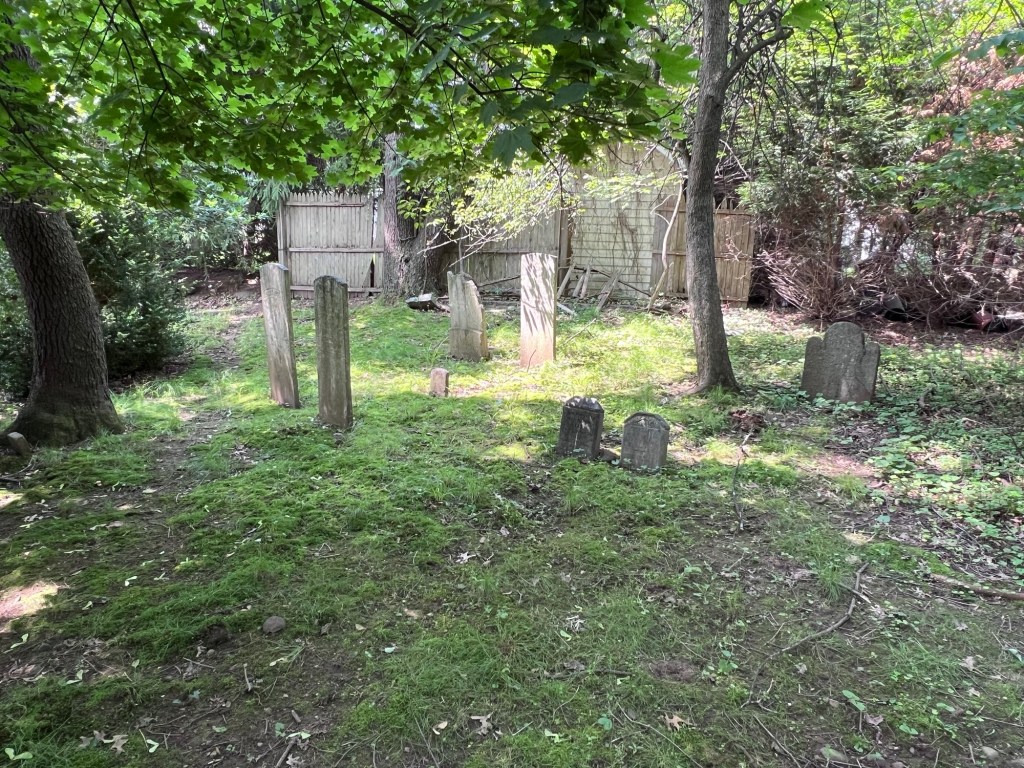
The Van Bushkirk Burial Ground behind the residence at 45 East Saddle River Road

The Van Bushkirk Burial Ground is part of the history of Saddle River, NJ’s early settlement period. The burial ground has about 40 tombstones that are arched and shaped. These are some of the first residents both of Saddle River and Bergen County, NJ.

The burial ground lies next to a creek off East Saddle River Road and can only be accessed by going through private property of the residents living at 45 East Saddle River Road. Please do not enter without permission of the owner of the home. These pictures were taken with a long distance camera from the street.

The Van Bushkirk Burial Ground at 45 East Saddle River Road

The History of Saddle River:

(from the Saddle River Town website):

In 1675, Lenni Lenape tribal leaders sold a large amount of land on the Eastern side of the Saddle River (known as Werimus) to Albert Zabriskie. In 1708, Zabriskie sold this tract of land to Thomas Van Buskirk. The first house in Saddle River was built by the Van Buskirk family in 1709. The original Van Buskirk homestead still stands at 164 East Saddle River Road across from Borough Hall.

In 1709, the Lenni Lenape sold the land on the west side of the Saddle River to the English as part of the Ramapo Tract. Property on the west side of the Saddle River was acquired from this Tract throughout the 1700’s. The Ackerman Family was the most prolific buyer of these early Saddle River parcels and first settled on the West side of the Saddle River in 1745 when Johannes Ackerman acquired 245 acres.

The graves of George and Margaret Achenbach

Saddle River continued to grow and populate during the 18th century.  Families such as the Van Buskirk’s, the Ackerman’s, the Achenbach’s, the Hopper’s, the Zabriskie’s, the Stilwell’s and the Baldwin’s farmed and developed the area.

The grave of George Achenbach

The first of many Saddle River mills was built in 1714 and the first school was constructed in 1720. Another early 18th century business was the blacksmith shop operated by the Ackerman family. Over the years, these 1st families built the quintessential “Old Dutch Homesteads” from actual sandstone that was found in town.

The Revolutionary War era tombstones

The Revolutionary War was a horrendous time for the residents of Saddle River. The townsfolk had spent the entire 18th century developing the area into a well established community and all growth essentially stopped during the war. Since the Jersey Dutch initially considered the revolution to be an English issue, it was particularly shocking when the fighting came to their backyards. From December 1776 until the end of the war, both American and British forces traveled through Saddle River and many times set up camp in the center of town.

Residents were in constant fear of the British employed Hessian soldiers who would terrorize families by raiding the houses for food and then burning the fields before leaving. Although no major battles took place in Saddle River, there were small skirmishes to fend off raids and the Blue Mill on East Saddle River Road was destroyed. Even George Washington, the future father of our country, passed through Saddle River on multiple occasions and tradition has him staying overnight at the Ackerman Homestead on the East road.

When the Revolutionary War ended, Saddle River residents picked up right where they left off in terms of community and industry development. The Ackerman’s built a Foundry on what is now Waterford Gardens. Tice and Berdan both opened stores in town and the Bulls Head Tavern opened its doors to weary travelers in 1802. Old mills were re-opened and new ones such as Van Riper’s Saw Mill and Basket Factory were established. The post war growth continued for decades and culminated in the 1820s with the construction of the Zion Lutheran Church in 1821 and a new schoolhouse behind the church in 1825.
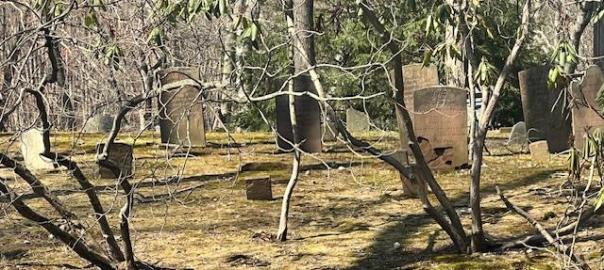
The worn tombstones in the cemetery

History of the Van Bushkirk family in Bergen County during the Revolutionary War:

(From the Bergen County Historical Society website):

Loyalists in Bergen County | Bergen County Historical Society

Loyalists in Bergen County came from all backgrounds, religions and economic classes. At the beginning of the war, a number were officers in the militia, the military force composed of all able-bodied males maintained by each province, and later the states. The lieutenant colonel of the militia was John Zabriskie of New Bridge. Zabriskie understood the sentiments of many of his neighbors, particularly those of Abraham Van Buskirk, whose property was directly across the bridge in Teaneck. Van Buskirk was a surgeon in the militia under Zabriskie, and with whom he served on Bergen County’s Committee of Correspondence, an entity established to keep in touch with other New Jersey counties and the events occurring there.

Wyckoff Reformed Church 580 Wyckoff Avenue Wyckoff, NJ 07481

Wyckoff Reformed Church

580 Wyckoff Avenue

Wyckoff, NJ 07481

(201) 891-1782

https://www.wyckoffreformed.org/

Open: Sunday 9:00am-11:00am (Sunday Mass)

My review on TripAdvisor:

https://www.tripadvisor.com/Profile/R4960NKjustinw/mediabatch/13777849?m=19905

The Wyckoff Reformed Church and Graveyard

The front of the church in the Summer of 2025

The graveyard at the church dates back to before the Revolutionary War. The graveyard has veterans from all the wars since the Revolutionary War to the current wars.

The Wyckoff Reformed Church was built with local fieldstone in 1806. The carpentry inside was done by Daniel Baldwin. The style features vernacular Early Republic, Federal architecture and the windows are done in the Gothic Revival style (Wiki).

The historic graveyard in the back of the church

The back of the graveyard that reaches further back into town

The part of the graveyard from the mid to late 1800’s. There are Civil War veterans buried here.

The back of the church from the 1800’s

The graveyard from the 1800’s

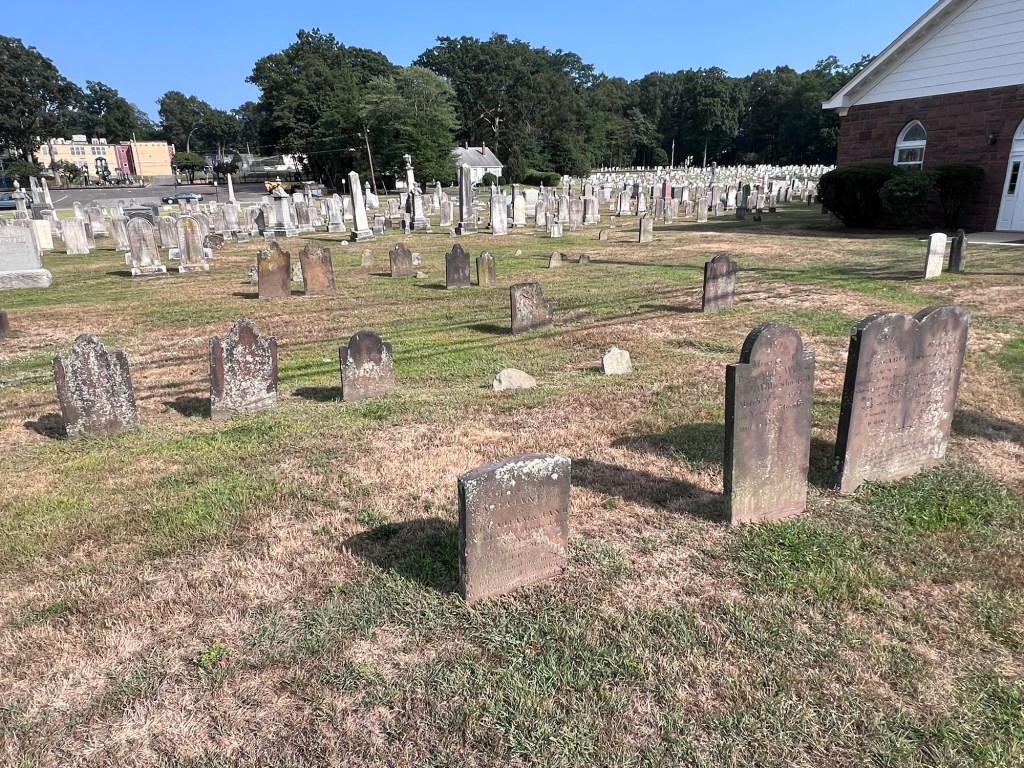
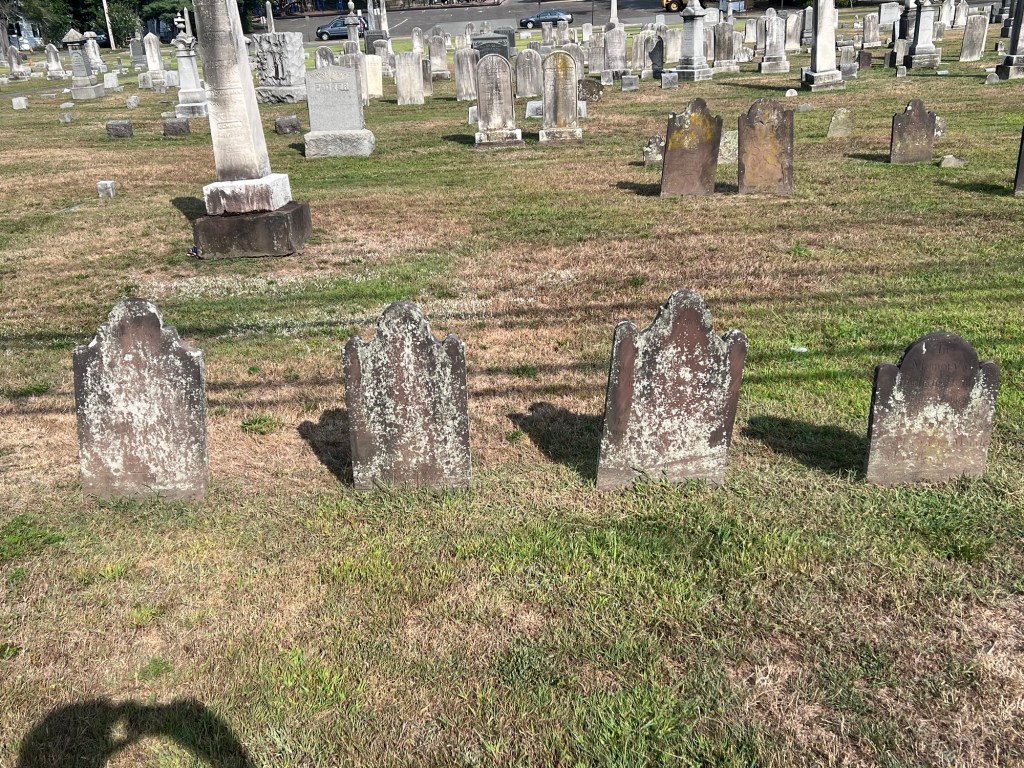
The Revolutionary War era section of the graveyard

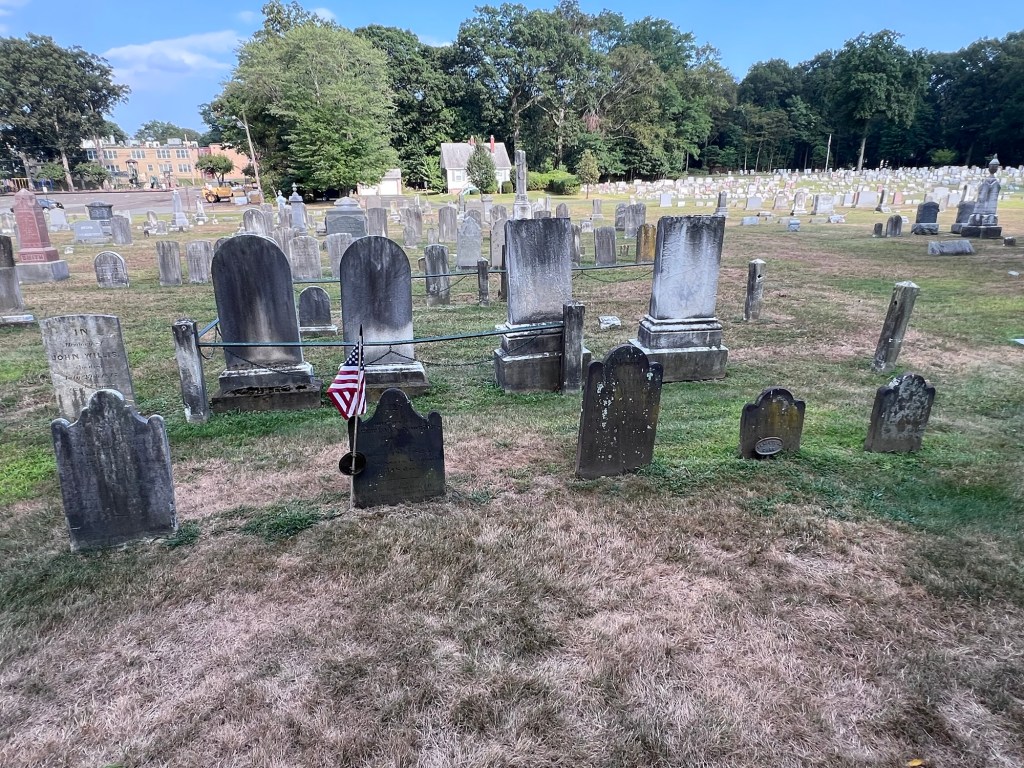
The graves of the Revolutionary War veterans

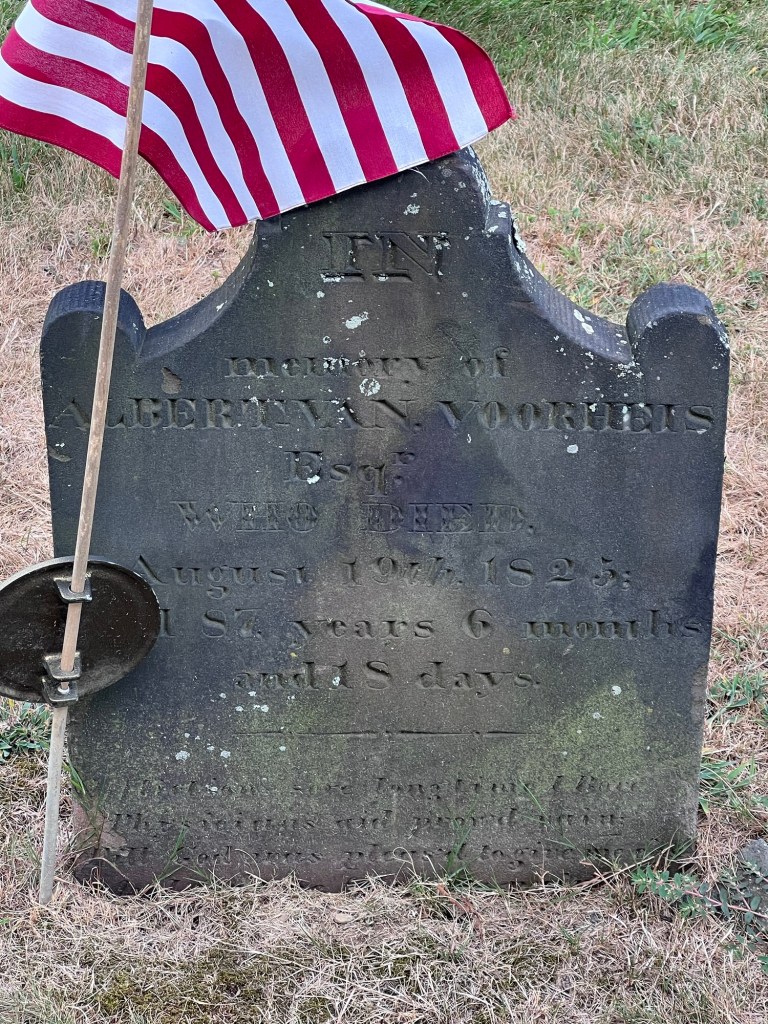
The grave of Revolutionary War veteran Albert N. Van Voorheis

https://ancestors.familysearch.org/en/LXQY-KCH/albert-voorhees-1759-1820

https://www.hmdb.org/m.asp?m=12407

https://www.wikitree.com/wiki/Stephensz-2

When Albert Voorhees was born on 24 July 1759, in Bergen, New Jersey, British Colonial America, his father, Albert Van Voorhees, was 54 and his mother, Cornelia H. Van Gieson, was 42. He married Rachael Hopper on 26 July 1788, in Acquackanonk Township, Passaic, New Jersey, United States. They were the parents of at least 5 sons and 6 daughters. He died on 17 October 1820, at the age of 61 (FamilySearch.com).

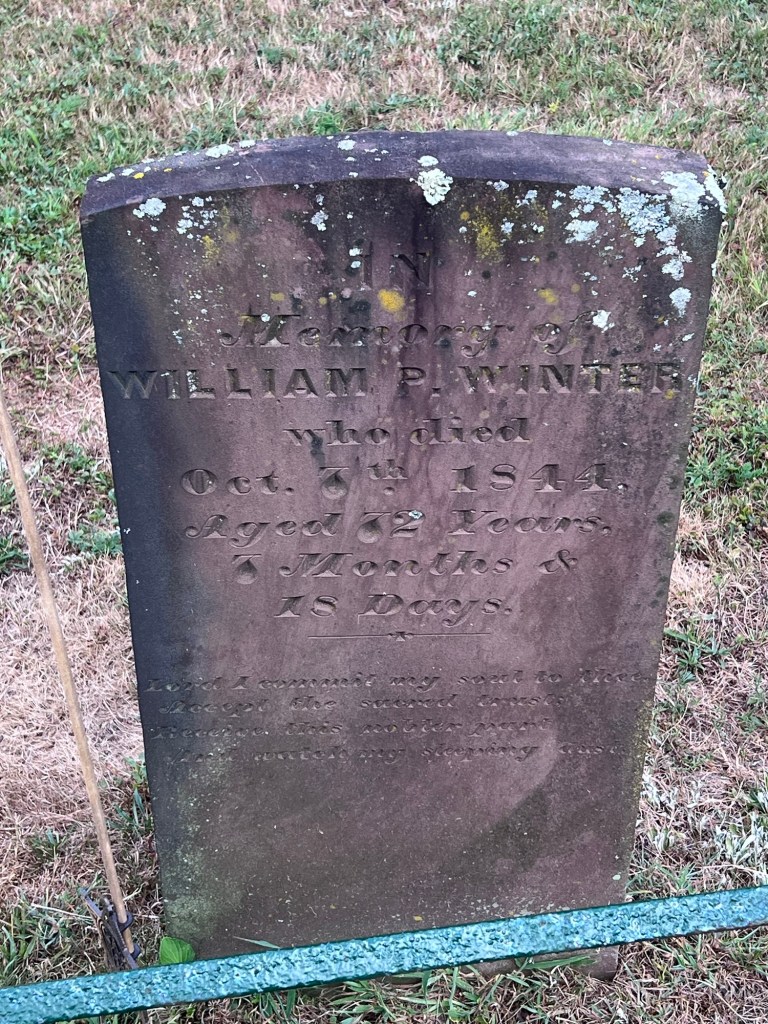
The grave of William P. Winter

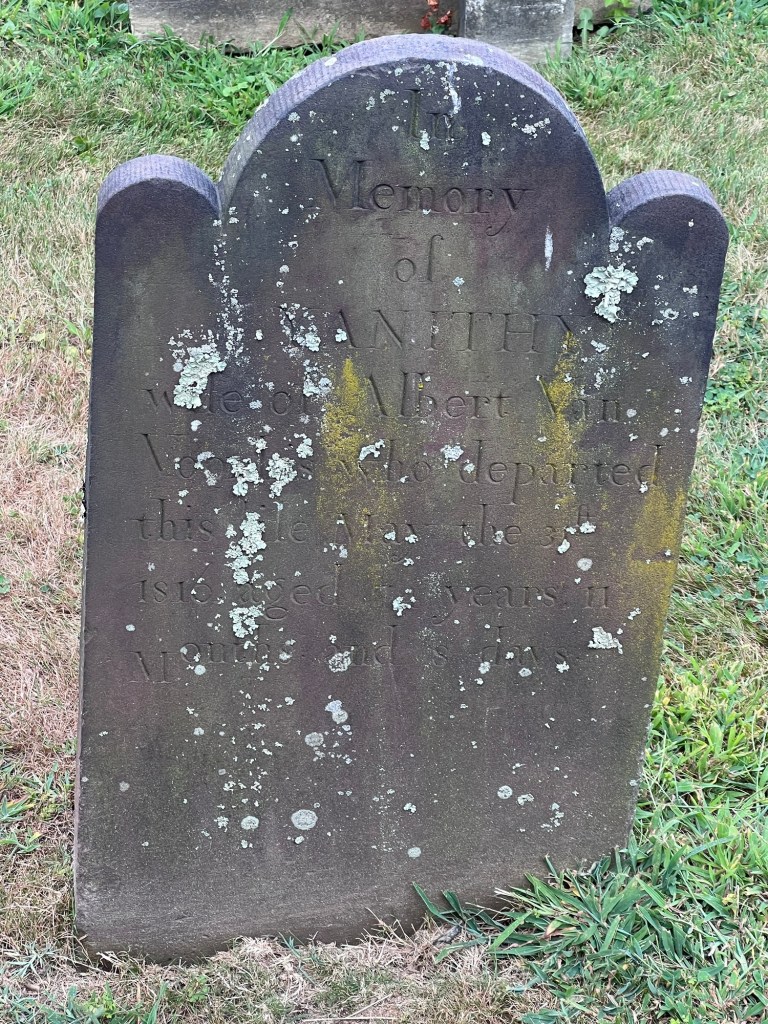
The grave of Vanithy Van Voorheis, the wife of Albert Van Voorheis.

The historic part of graveyard right behind the church

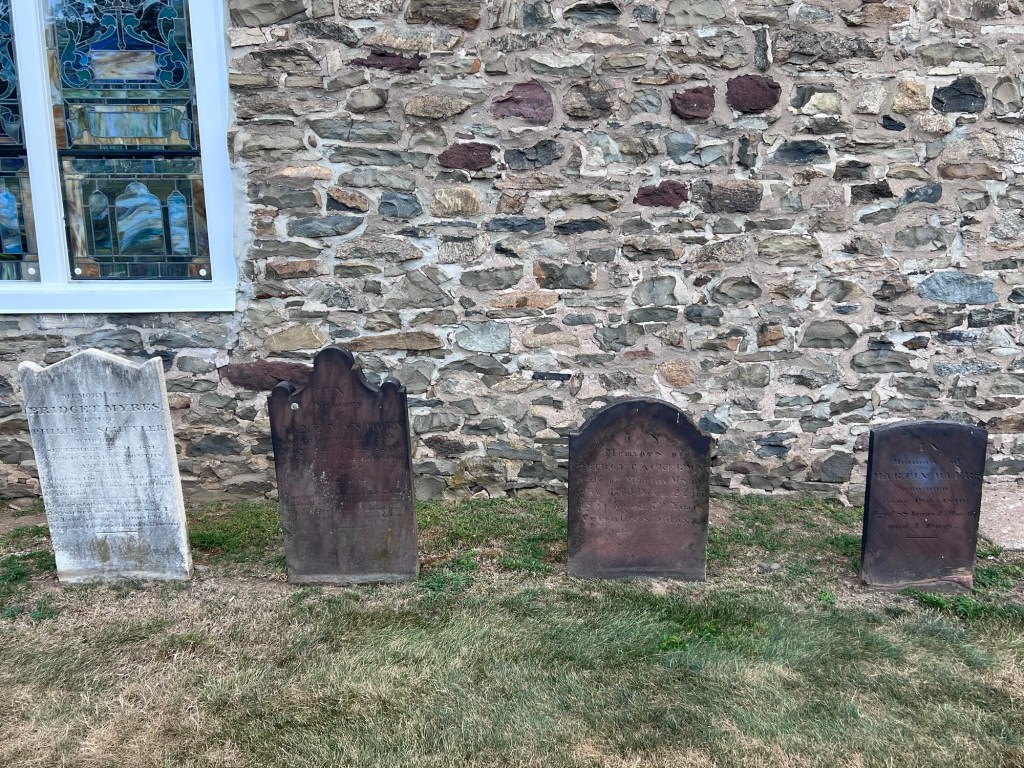
The graves of Bridget Ackerman and Martin Myers

The graves of Jack Van Saun and his wife, a descendant of the Van Ripper farm family

The graves of the Van Ripper family

The family plots

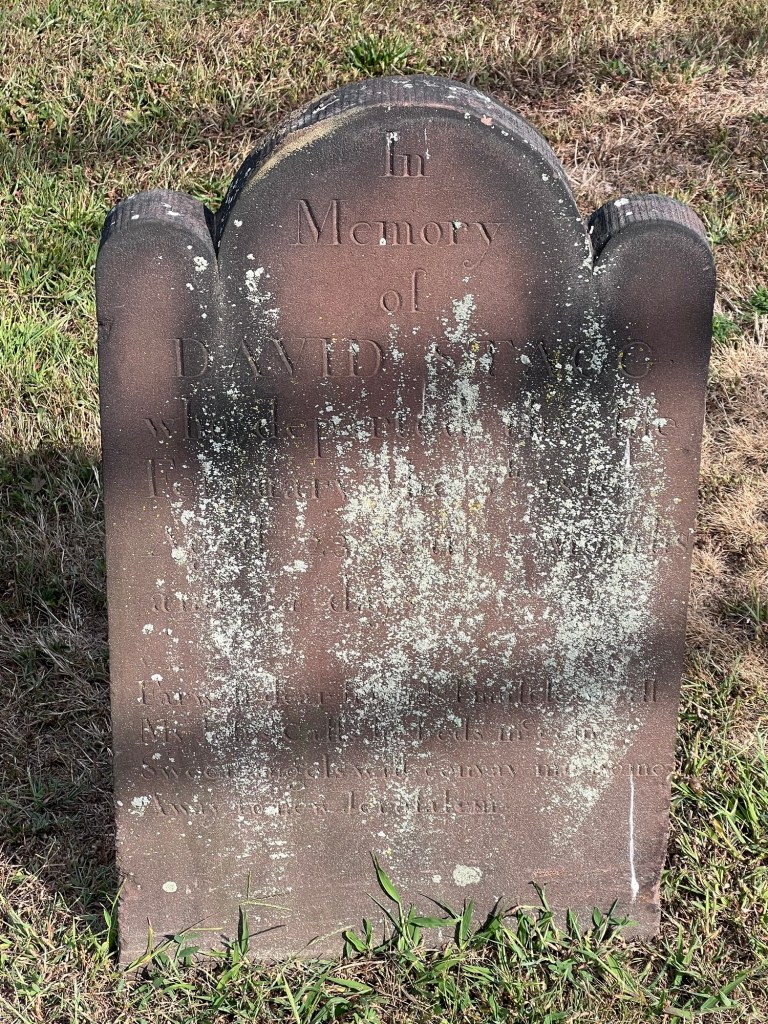
The grave of David Stagg

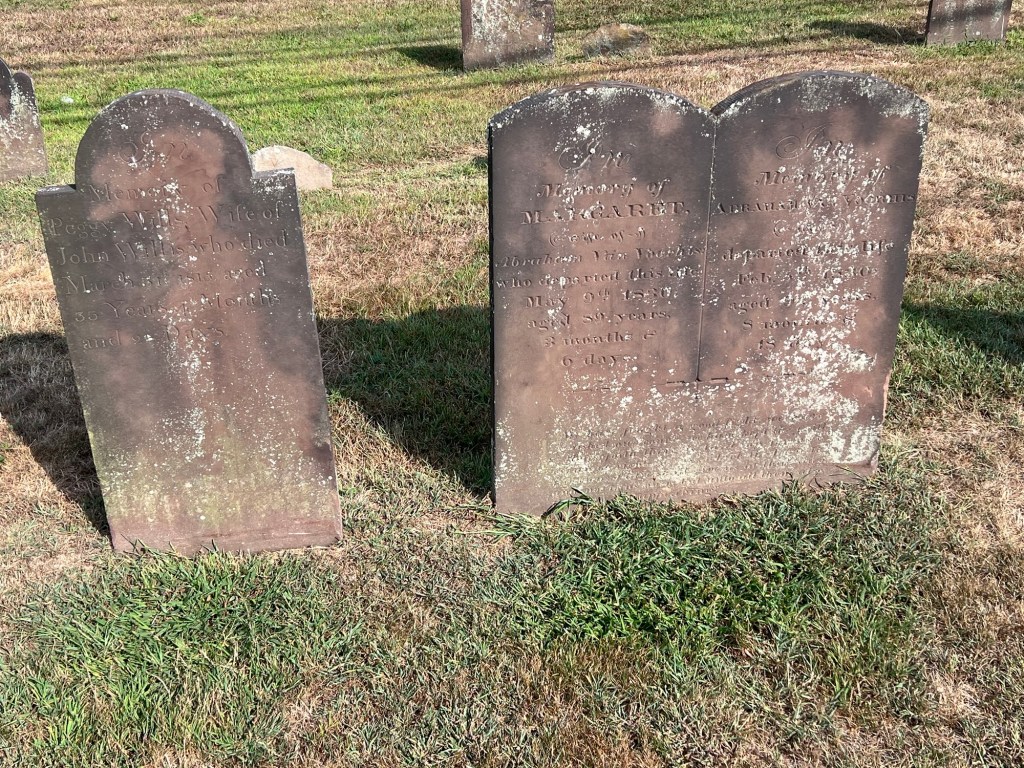
The graves of Peggy Willis and Margaret and Abraham Van Voorheis

The graves of the Mickler family

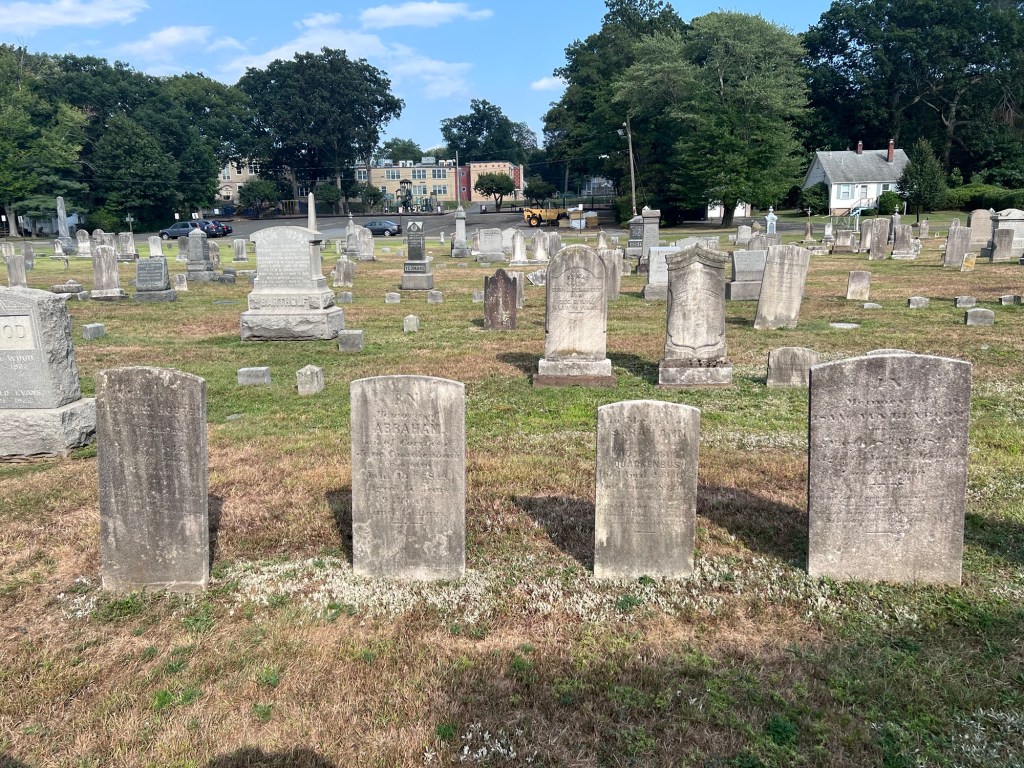
The graves Abraham and Sara Ann Quackenbush

This historic church and graveyard are really interesting to walk around. It is a glimpse into the past of Bergen County, NJ and the entire State of New Jersey
Haring Family Cemetery Meadow Lane Norwood, NJ 07648

The entrance to the Haring Family Cemetery

The cemetery is in a quiet corner between two house in what was once the Haring Farm

The family that is buried here:

(From the Dutch Door Genealogy website)

When some of this property, which originally had belonged to Abraham Jans Haring
according to the Zabriskie genealogy, was sold in 1785, ownerhip of the burial plot
was retained, and is described as being one square chain, which is 66 feet on each
side.
HARING FAMILY BURIAL PLOT AT NORWOOD, BERGEN COUNTY, N.J.
ON THE PROPERTY NOW KNOWN AS THE ALLISON FARM.


10718 Abraham J. Haring d.1.1.1801 b.9.30.1720 a.80.3.1 (Tap. #358)

Broken stone

10719 David P. Haring d.9.15.1853 a.78.3.18 (Tap.#2418)

10720 Lydia Zabriskie w. of (Sch.p.186)
David P. Haring d.12.30.1869 a.89.4.13

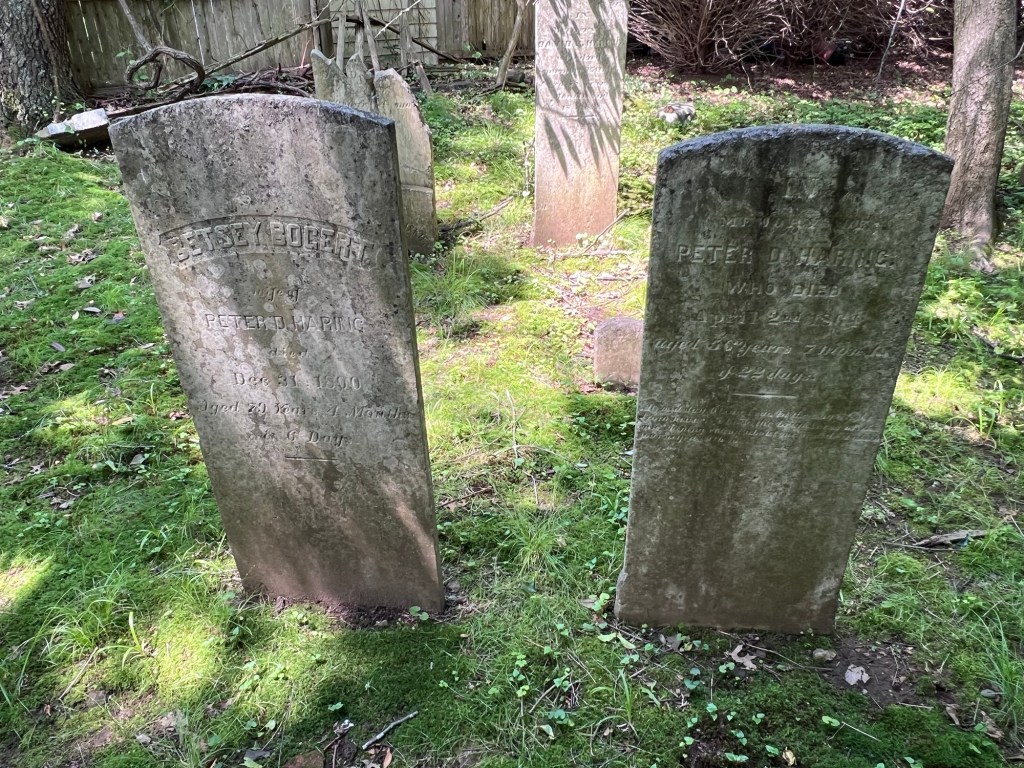
10721 Peter D. Haring d.4.2.1864 a.56.7.22 (Tap.#3727)

10722 Betsey Bogert w.
Peter D. Haring d.12.31.1890 a.79.4.6

10723 Ruth Haring d.3.3.1876 a.0.2.14

10724 Bessie Haring d.10.2.1877 a.0.7.24

Betsey Bogart Haring and Peter Haring

The Nagel/Auryansen Cemetery 42-50 Susan Drive Closter, NJ 07624

The front of the Nagel/Auryansen Cemetery

The inside of the cemetery

The inside of the cemetery

The historic sign that welcomes you to the site