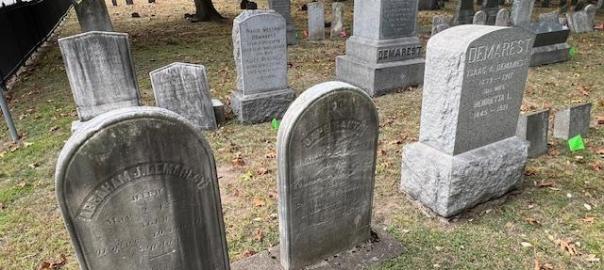
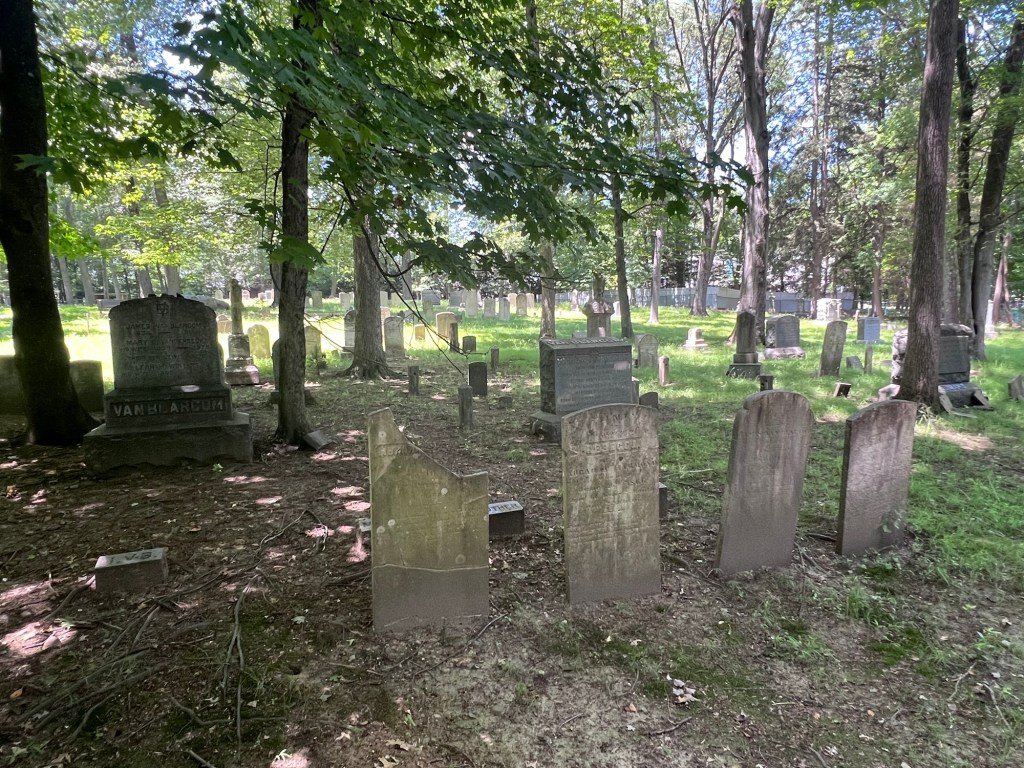
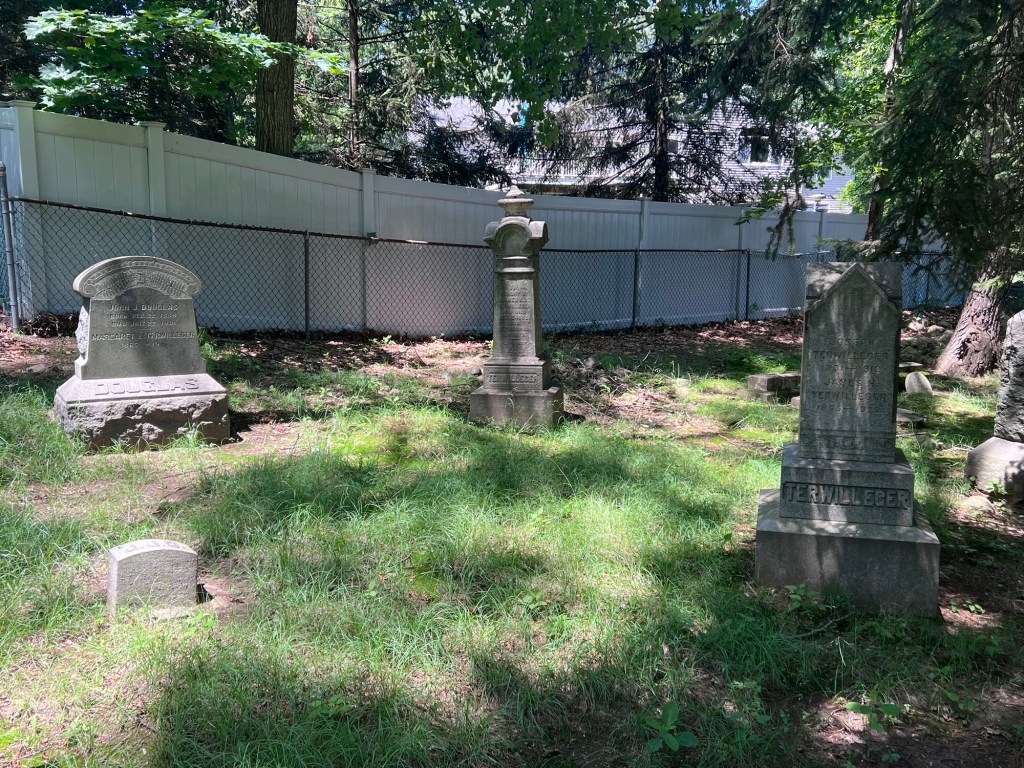
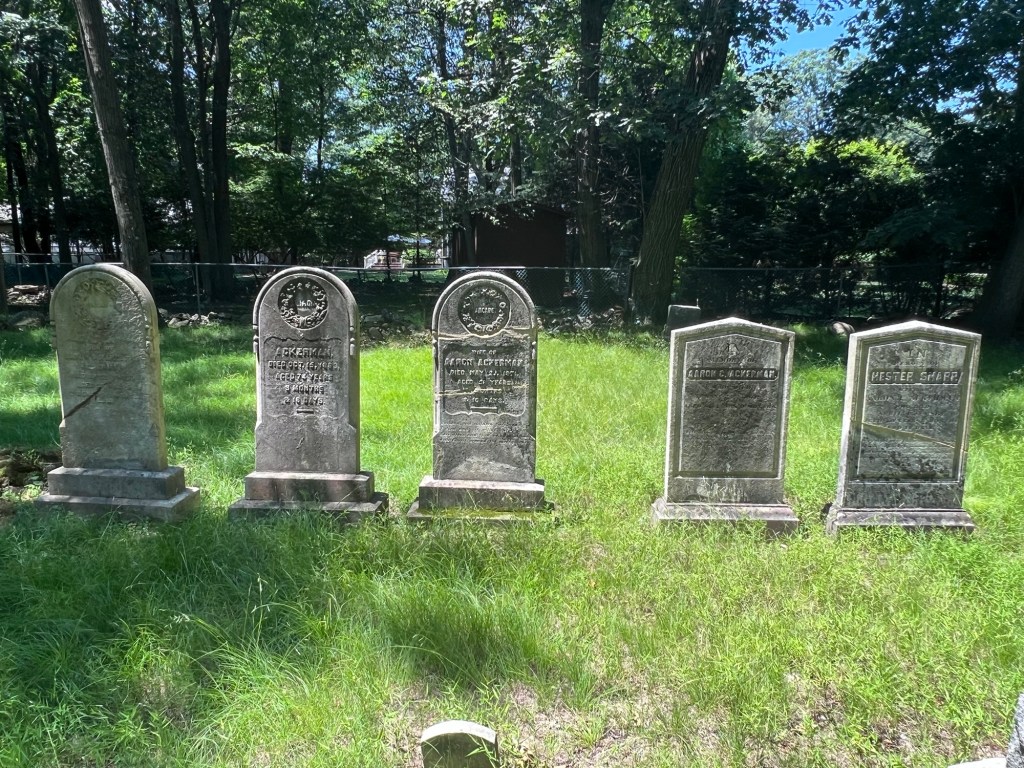
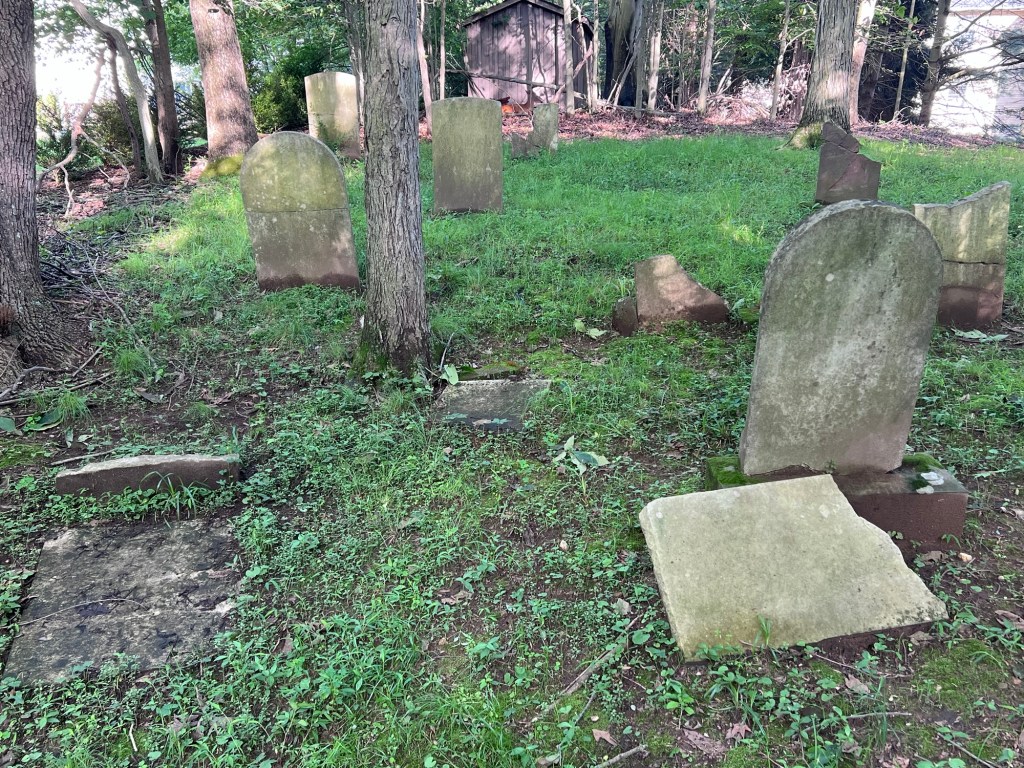
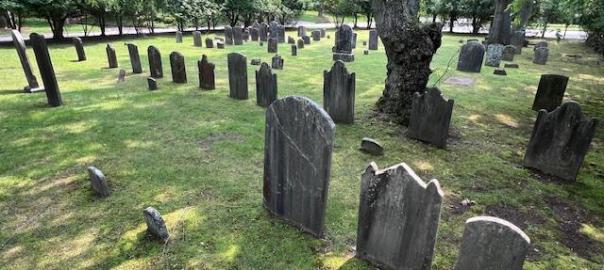
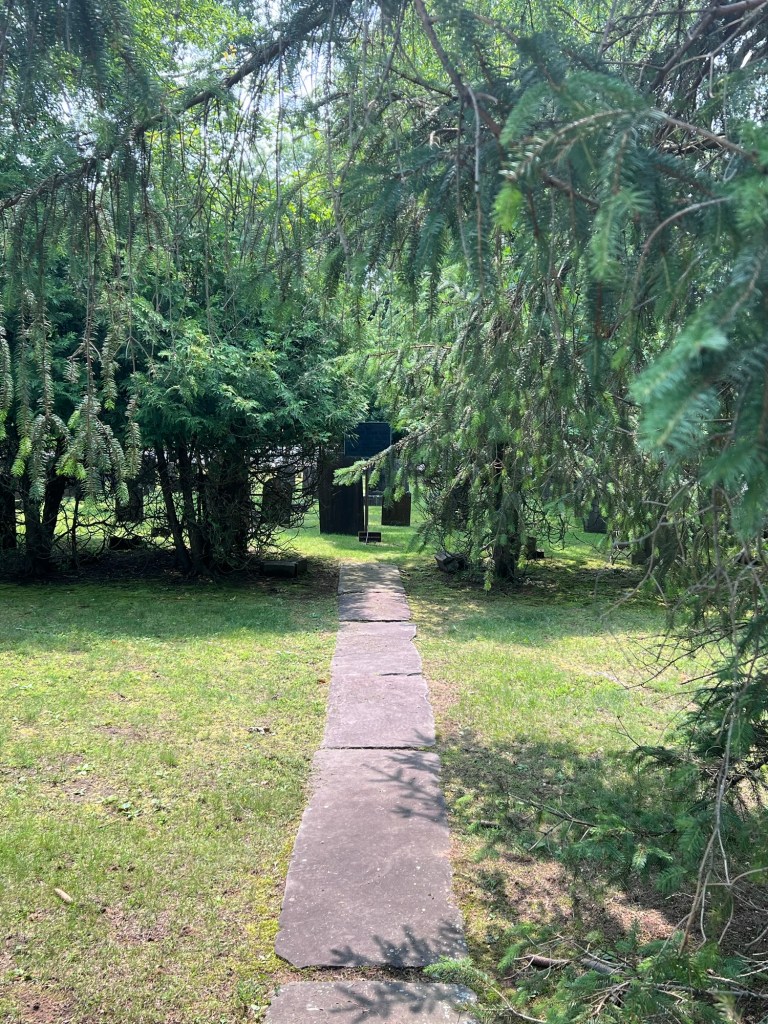
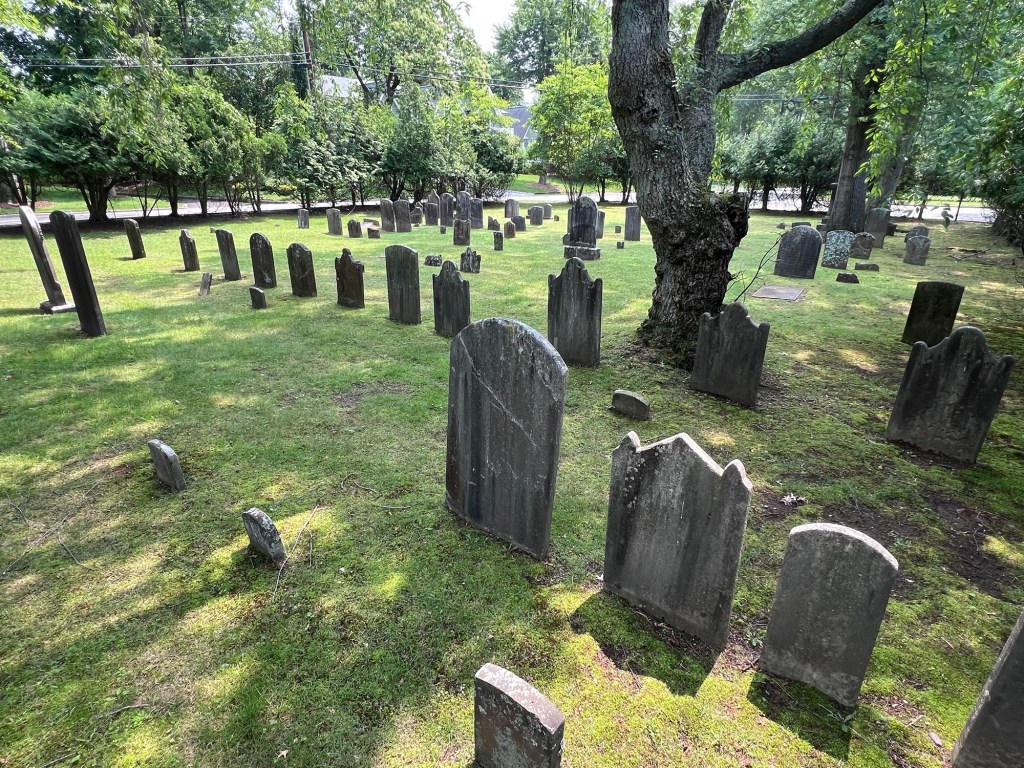
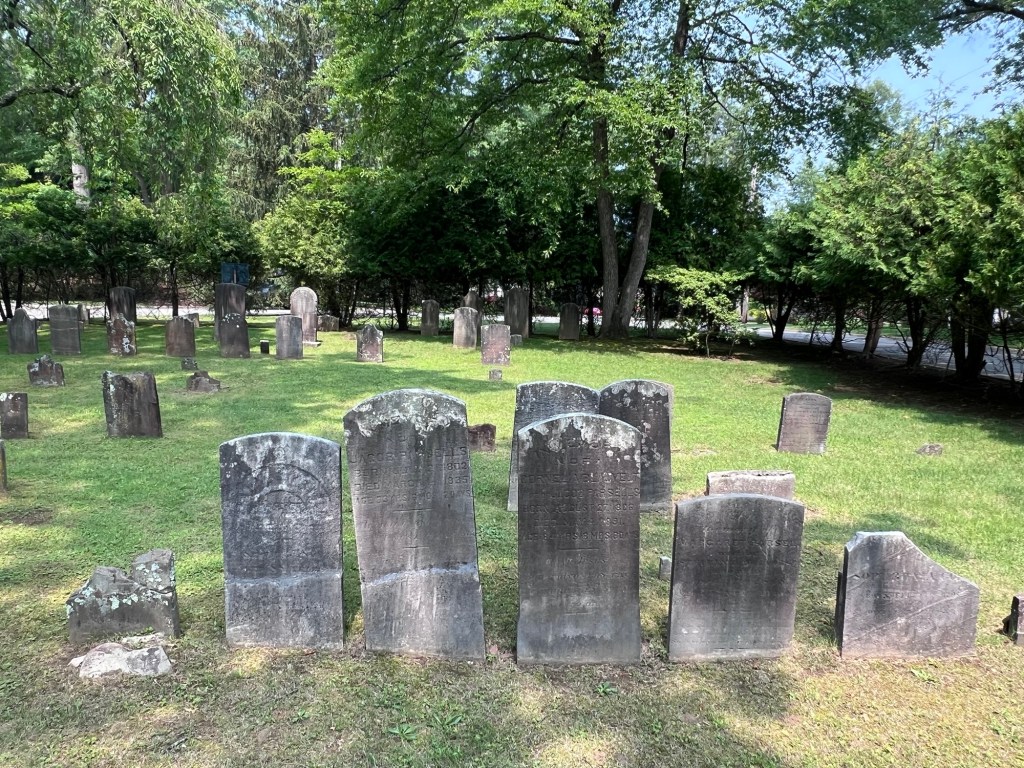
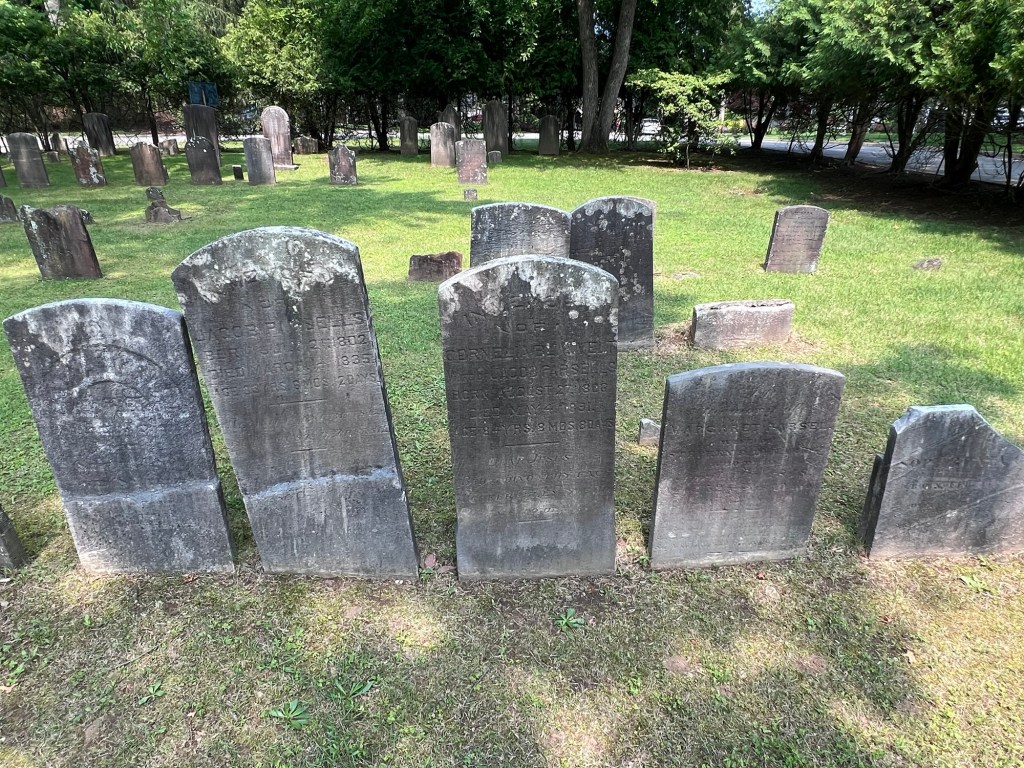
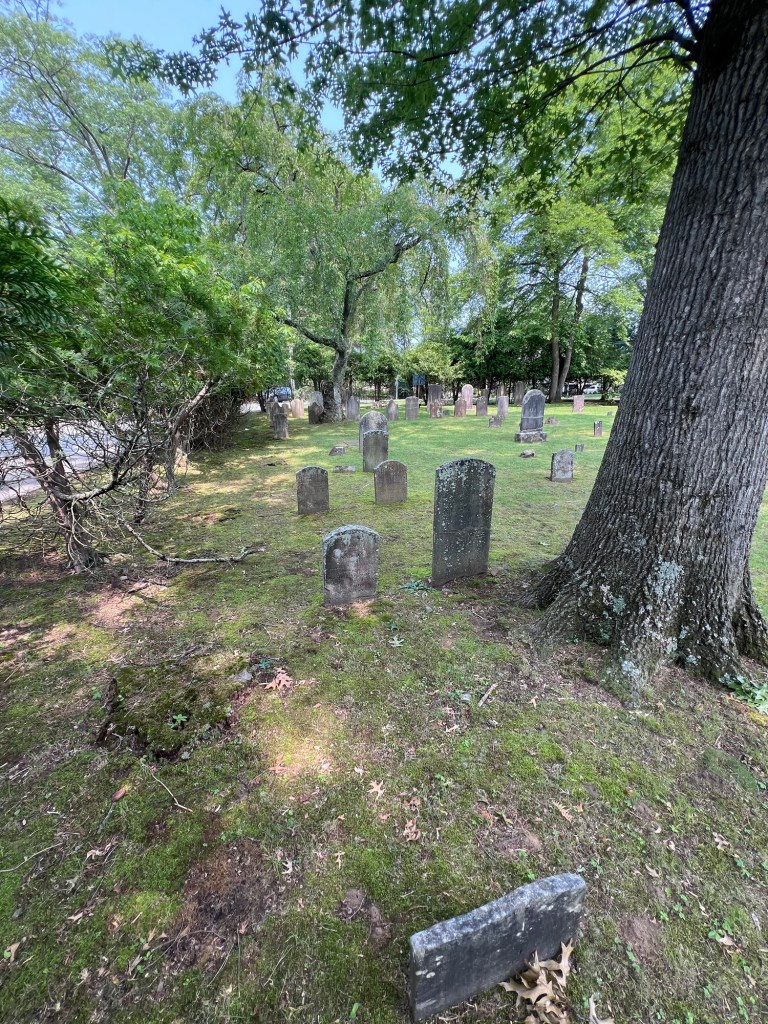
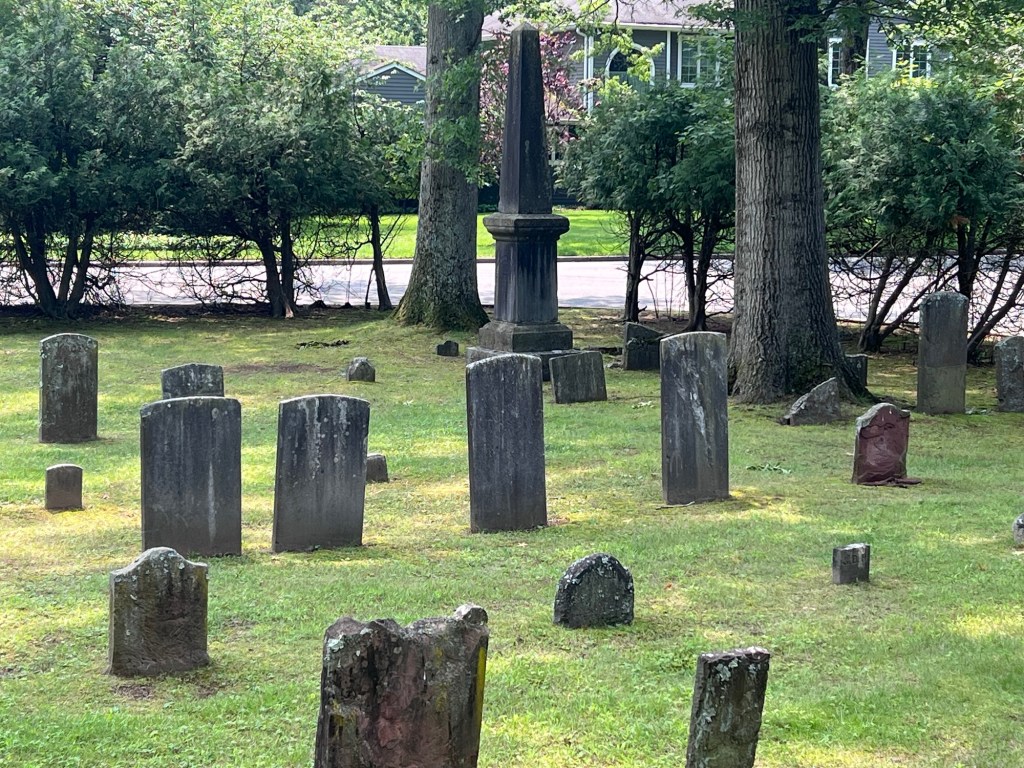
The historic Woodside Cemetery in Dumont, NJ. It is the home of many ‘founding families’ of Bergen County, NJ., such as the Demarest’s, Hopper’s, Van Buskirk’s, Haring’s (Hering’s), Van Saun’s, DeBaun’s, Westervelt’s and Zabriskie’s. These are the families that dominated the farming industry in Bergen County before and after the Revolutionary War. It is one of the many historical cemeteries and graveyards in Bergen County, NJ.
My mapping of historical cemeteries and graveyards in Bergen County, NJ:
The inside of the cemetery in the historical section of the cemetery
The historical Woodside cemetery is the resting place of many of the founding families of Bergen County and the surrounding communities of New York State.
Lining the historical Main Street of Downtown Dumont, the older part of the cemetery holds the family plots of some of the original settlers who shaped this country from its beginning.
The Voorhis family plot
The Zabriskie family plot
The Brinkerhoff family plot
The Waite Van Bushkirk family plot
The Van Bushkirk family family plot
The large Demarest family plot
The Hasbrouck family plot (The Family who Hasbrouck Heights is named after)
The Blauvelt family plot
The DeBaum-Westervelt family plot
The Van Saun-Demarest family plot
The Demarest-Haring-Van Vliet-Vorhees family plot
The Demarest-Van Bushkirk family plot
The Brinkerhoff-Doremus-Demarest family plot
The Van Bushkirk-Hopper family plot
The grave of James Blauvelt DeMott
The cemetery is the resting place of many War of 1812, Civil War, the World Wars, Korean and Vietnam and the modern wars.
The cemetery is a place of respect and quiet contemplation. To see the contributions of these members of the community is to reflect on the history of Bergen County. These families and many people buried here have helped shape Bergen County and the State of New Jersey to what it is today.
I thought I knew all the farms in Bergen County, NJ and where Trey were located. I recently went to Alpine, NJ to visit an old cemetery for another blog I was writing and as I arrived at my destination, I passed the Closter Farm & Livestock Company. It was almost closing time so when I finished back at the cemetery, the gates were closed and I had to make the trip another day.
The entrance to the farm
The entrance to the farm
What I discovered was a small picturesque farm tucked in between a suburban development offering wonderful organic produce and meats. The farm even supplements what they don’t grow or produce by working with other organic farms in the area.
History of the Farm:
(From the Farm’s website)
Jon Friedland and his family spent many weekend afternoons driving from their home in Manhattan to the movie theater in Closter. They loved Closter and the community reminded Jon of the Ohio suburb where he grew up. When the farm became available they saw the opportunity to have a direct hand in creating the food, health and environmental practices they have long believed in, and to learn and participate directly as a family in the labor and care required to operate an Organic farm. It has been a massive learning experience to get the farm up and running and we are grateful to have the opportunity to continue learning and growing with the Closter community (Closterfarm.com).
The farm stand store
The Closter Farm
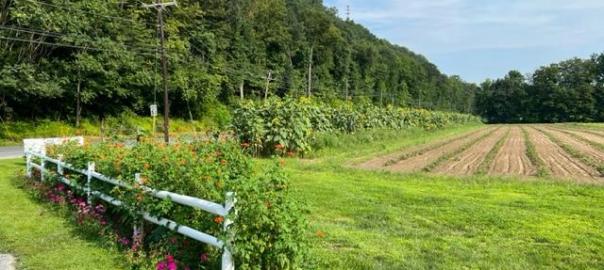
The fields are not just beautiful to look at but produce an assortment of produce that is organic and sustainable. On a warm Spring or Summer day, walking next to the fence and below the shade trees, you can a glimpse of the upcoming crops that will line the farm stand a few weeks in the future.
The Philosophy:
(From the Closter Farm website)
We believe that the healthiest, best tasting, most beautiful vegetables and livestock are grown when they are a symbiotic product of whole farm health. Every action we take is focused on fostering a diverse, resilient, verdant ecosystem whose natural byproduct is intense soil fertility and natural pest resistance (Closterfarm.com).
The fields of fresh vegetables growing
Equally important to us is that our approach follows sustainable environmental best practices by sequestering carbon in our soil and minimizing or eliminating the water and air pollution associated with conventional agriculture and its reliance on synthetic chemicals (ClosterFarm.com).
The fruits and vegetables grown in the farm
The selection of fresh fruits and vegetables available for sale
Honey, cut flowers, grass-fed and grass-finished beef, pasture-raised and heritage pork, Organic mushrooms, Organic and pasture raised eggs, Corn and soy-free eggs, Organic milk, cheese, kefir, as well as heritage breed turkeys for Thanksgiving.
The selection of plants for sale
The flower selection
The farm barn
The barn and the fields that support the farm
The Farm Store:
The Closter Farm store carries a selection of freshly grown products seasonally, from other organic farm proveyors and vendors who supply similar products that meet the farm’s standards.
The entrance of the farm store with a selection of fresh flowers and organic seeds
The flower sign
The selection of farm grown products
The outside meat cooler
The outside cooler of organic beef, chicken and fresh eggs
The inside of the store carries a more of the same products, nicely packaged and reasonably priced quality products. These are the type of quality you would expect from fine dining establishments in the area, which you can prepare at home.
The selection of meat, poultry, eggs and dairy products
The selection of fruits and vegetables from the farm’s fields and partner farms
A selection of fresh vegetables and flower ms and fresh pies from Noble Pies of New York State.
A selection of farm fresh products like fresh honey and organic products
What is nice about the Closter Farm is the picturesque environment tucked in a suburban environment. You drive through entrance and are taken back to a world of Bergen County before WWII when the County was an agrarian society.
Places for children to play without cellphones
The property reminds me of the farms in the more rural parts of Southern and Western New Jersey with their corn mazes and decorated barns. Here they have small cut outs for children’s pictures and from a distance you can see the farmhouse.
The farmhouse on the property that some of the farm hands live
The farm offers families not just quality products and welcoming service, but a chance to step back for an afternoon to a time when things were much slower and afternoons were about appreciating the experience without trying to record every moment of it.
Every semester for my Business Marketing, Management and Communications classes, I create one big Team assignment for my students. In a Commuter College, it is a lot tougher for students to get to know one another between their studies and their jobs, so I create these projects to foster learning, creativity and especially Teamwork.
This semester I taught two sections of Business 101-Introduction to Business, which is the entry level course to the Business/Hotel Management School. This is a tough course to teach as you always have students of various age groups and various levels of industry experience.
The Spring semester was no different. This makes the class more interesting yet more challenging to teach. I still challenge them and test them to see what type of future executives they will become.
I also taught Principles of Management, which came with its own set of challenges. It was the amount of people in the class and what projects would they be working on.
In the past, I have created these Team projects under the Bergecco-Parc Consulting Inc. banner, the main consulting company, the Orion Malls banner, a Mall design company and the Buscomonzefi.com banner, my Tech Division. All of these business concepts are simulated.
Each business does its best to be creative, forward thinking and have a thought producing presentations. I also challenge the students to top on another in their presentations and build on what they have seen others do in the past.
The Bergecco-Parc Consulting Inc. concept is an acronym for Bergen Community College Paramus campus where I work.
Professor Justin Watrel, CEO Bergecco-Parc Consulting Inc.
Our Corporate site (created my one of my former President’s:
While my morning Business 101 classes worked on their ‘Breakfast at Primo Pizza’ project and my International Marketing students worked on their “The Historic Revolutionary War Graveyards and Cemeteries of Bergen County” projects, I had my Principle of Management students create a game plan to market the Pascack Historical Society Museum in Park Ridge, NJ to a younger, more modern audience.
When choosing a project for this class, I had had two other ideas that fell through, then I had remembered working with the Pascack Historical Society Museum the prior year for my “Bergen 250” Team Project. We had proposed a Farm to Table Dinner at the Wortendyke Barn down the road with the dinner starting with a Cocktail Party here with a tour of the museum. I asked the museum again to partner with me on this project.
The Video Presentation of the “Bergen 250”in 2024:
The museum had created a wonderful exhibition for the “Bergen 250” but when I went to visit it, no one was at the museum but myself. When I asked the volunteers that day how many people had visited the museum, they told me I was the first one. That got me thinking why people were not visiting this wonderful museum with its interesting artifacts and intriguing displays.
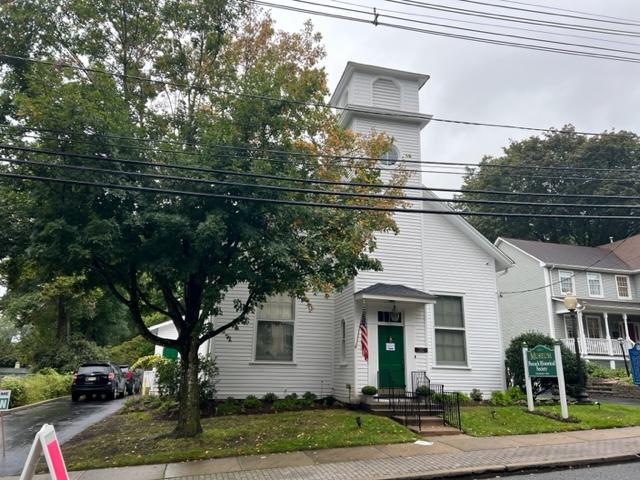
The outside of the Pascack Historical Society Museum at 19 Ridge Avenue in Park Ridge, NJ
Then I looked at their website and their displays. I realized that the museum was not adapting to the cellphone age. There were no QR codes at any of the displays, not enough pictures of the display on their website and their scavenger hunt bingo game needed an update to engage a younger crowd.
That’s when I came up with a Marketing plan for the museum and proposed it to their Executive Board. We worked together to come up with new ways to promote the museum and its collection. This was our combined idea and we looked at how to bring more traffic to the museum.
The Proposal for “Bergen 250: Touring the Pascack Historical Society Museum”:
I presented the project to my students after the Spring Break and then the next week took my students on a mandatory field trip to the Pascack Historical Society Museum in early April. The Board members of the Museum led us on a tour of all the exhibitions, then discussed their plans for the “Bergen 250” and then discussed some of the challenges that the museum faced with attendance.
Touring the museum
The students on their part took pictures and notes about the museum and their displays. Many would make various trips back to the museum to crest the QR codes for the displays and map the museum’s backyard for the Farm to Table fundraiser and a proposed afternoon tea.
Touring the museum
Touring the museum
Touring the museum with the Board of the museum
The museum’s Board members could not have been nicer and more helpful to the students and myself. We got a lot of insights on what direction the Board wanted to go.
Our Team picture at the museum
The tour of the museum took about an hour. We then had a Division Team Dinner at Pompilio’s Pizzeria in Downtown Westwood, NJ:
I find that these Team dinners and lunches are very helpful in getting the students together to get to know each other and we share a nice meal as a Team should. We asked the Board to join us so we could continue the conversation.
Dinner with both the Board and my Team
For the next five weeks the three Teams broken into Marketing, Historical and Foodservice created their ideas and game-plans to help the museum increase traffic by trying to bring a younger and tech savvy visitor into the space.
The Pascack Historical Society YouTube Presentation:
The video of our Presentation to the Board of the Pascack Historical Society Museum on the evening of April 29th, 2026
On the evening of April 29th, the Board members of the museum joined us for the Presentation of ideas the students came up with including setting new QR codes for all the displays, a revamped Marketing plan to showcase the museum, a new historical walking tour, one aimed at adults and one to children and the ideas for the fundraising dinner, a children’s birthday party concept and a Afternoon Tea fundraiser.
After the Presentation, we had a Q & A on the ideas and after the Presentation was over, we had a reception for our guests and for the student consultants. Then we took our Corporate Team picture.
My Divisional Team the night of the Presentation
Our reception after the Presentation
It was another successful project accomplished and it looked like the Board went home with new ideas and the students learned a few things about themselves. I could not have been more proud of the students.
The Meadowlands Museum is the main steward of the history and culture of the Meadowlands region and one of its leading storyteller.
The sign welcoming you
Its mission and collection, which resides in the Yereance-Berry House in southern Bergen County in Rutherford, NJ are distinctive and unique. The house too is a historic treasure and landmark and was built in 1804 by the Berry family, who were among the county’s earliest European settlers.
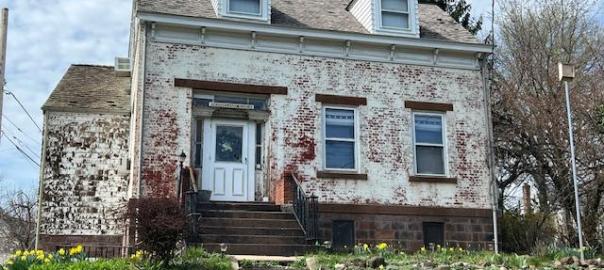
The front of the museum in the Spring of 2026
Rooms in the three-level American Dutch farmhouse are alive with permanent and temporary exhibits and sometimes include loaned objects from other museums and private collections. Historical artifacts like archives and photographs are mingled with textiles, furniture, housewares and artwork.
The display on the history of area
There is even correspondence by the daughters of John Rutherfurd, a close confidant of George Washington.
The display in the local artifacts
The gardens outside in the Spring of 2016
Grounds include the William Carlos Williams Poetry Garden, which acknowledges the legacy of Rutherford’s most famous native and the town’s history as a cultural center.
The everyday products of the Meadowlands Museum
Founder in 1961 as the Rutherford Junior Museum by parents of school age children to help connect them to their community, the museum is staffed by professionals assisted by dedicated volunteers and involved trustees. Interns add to the rich resource of individuals who contribute to its present and future.
A recent commercial developed by my Business 101 Class for the Meadowlands Museum for the project “Rocking it in Rutherford: Being a Tourist in your own Town”
The location of the Yereance-Berry House suggests a colonial farm dating to 1740. The oldest house in south Bergen County in close to original condition, it was part of the Historic American Building Survey project of the 1930’s. The building is also listed on the state and national registers of historic places and the Bergen County Stone House Survey.
The Yereance-Berry House is the now the Meadowlands Museum
Affiliated organization include the American Alliance of Museums, American Association for State and Local History, Meadowlands Regional Chamber of Commerce, New Jersey Association of Museums and The National Trust for Historic Preservation.
Programming & Community Service:
Free and reasonably priced services for individuals, community groups, businesses, government bodies and educational institutions are available.
*Educational programs, lectures and traveling exhibits.
The ‘Historic Rutherford Homes’ exhibition at the museum in 2026
The Historic Homes exhibition
The Historic Homes exhibition
*Customized on and off site programs.
*Collaborative ventures with a wide range of partners.
*Assistance with academic research and other archival support.
Special Events:
Special events, which often are made possible by partnerships with businesses and other organizations, are an additional way for visitors of all ages to enjoy the museum. Public and private events occur on a regular or one-time basis; many are fundraisers. Call or email for a current calendar and sponsorship possibilities. The house hosts both permanent and special exhibits.
Our permanent exhibits include:
*Yereance Berry House: During the Spring of 2026.
The outside of the museum
*Pre-electric kitchen: This unique kitchen in the basement shows off the collection of equipment that would be used in the kitchen from the Civil War to the 1950’s. There are coffee grinders, whisks, wash boards and such. It showed how much effort was put into preparing the family meal through the ages.
The Farm Kitchen of Bergen County
The Farm Kitchen at the Turn of the Century
*Meadowlands Geology: there are all sorts of rocks and gems not just from the area but all over the state. There are two different rooms one of the specimens locally and there is a separate room for glowing stones. It is very interesting to see when the lights are out.
The Mineral Collection at the Meadowlands Museum
The fluorescent Zinc display
The Mining Display
*Mining in South Bergen: This is how the county has changed when we mined ore.
The Mining Display at the Meadowlands Museum
The Mining Display
The Mining Display
*19th century Laundry Room: The Laundry room that is located in the basement has many of the things our grandparents would have used. The washboards, scrub bushes, old washing machines and ringers. Washing clothes was much harder back then.
The Wash Room of the Turn of the Century
*The wonderful Toy Exhibition of turn of the last century toys and from the 1960’s 70’s and 80’s. This contains Dolls, Board Games, play things and instruments:
The Toy Collection fascinates kids of all ages
The Factory Toys display
The wonderful toy factory in Kearny, NJ that used to produce all these wonderful toys.
The Toy Display
The Toy Display
The Doll display
The Doll display
The ‘Brownies’ display in the Toy Room
*The Bergen County Farm display:
Farming in the County in the past
The Farm display
The home Spinning Wheel display
Spinning Wheel display
The new Turn of the Century Furnace display
*Horse elevator
Recent special exhibits have included:
*High school football
*Needlecraft
*Steampunk
*Medical Innovations
*Maps of the region
*Civil Rights
*Dr. Williams’ Babies
Dr. William’s display
Dr. Williams display
Dr. William’s display
Dr. William’s display
Dr. William’s display
*World War I
Special Events:
Scarecrow Day 2018:
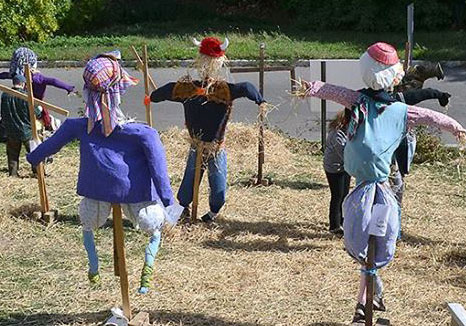
I went to the recent Scarecrow Day on October 20, 2018 where guests of the museum created their own scarecrows using their own creativity. All the scarecrows were lined up facing the street with their interesting clothes and accessories.
Each person got to use their own clothes and each one had its own style to it. It was fun watching the families show their creativity at this annual event.
Scarecrow Day at the museum in 2018
Scarecrow Day in 2021: the winners of the contest for best Scarecrow
I also stopped by for the Dutch Christmas decorations. The museum was decorated for the holidays with garland and trees. On December 1st, they had a Dutch Christmas festival (I could not attend) with food and entertainment.
Celebrating the Easter Holidays in 2026
Help tell the story…
(from the museum website)
Individuals who value the purpose and work of the Meadowlands Museum remain its inspiration and abiding spirit. Donations, memberships, sponsorship’s, grants and fundraisers are crucial elements of the museum’s financial well-being.
Admission to the museum is free but donations are greatly appreciated. Fees for events and other services vary. A personal letter to the appropriate person acknowledges a gift made in the name of an individual. Donations to provide for the buildings and grounds are valuable links to the future and a kind of giving that is among the museum’s top priorities.
Disclaimer: This information was taken directly from the Meadowlands Museum’s pamphlet. For information on the site, please call or email the museum for more information.
My Bergen Community College Team Project in 2022:
Bergecco-Parc Consulting Inc.-Rocking it in Rutherford:
My Business 101 class at Bergen Community College Lyndhurst branch visit in the Spring of 2022 for the project “Rocking it in Rutherford: Be a Tourist in your own Town”.
For Spring Semester in 2022, my Business 101-Introduction to Business class made a weekend visit to the Meadowlands Museum for the project “Rocking it in Rutherford-Be a Tourist in your own Town”. We were promoting the museum to increase tourism with a fundraiser and a barbecue. So on the weekend, I took my Team to the museum to tour it for extra credit. They ended up learning a lot about not just the museum but the history of Rutherford and Bergen County, NJ.
The project was promoting the Town of Rutherford for Domestic and Foreign Tourism and created a fundraiser and modernization of displays for the museum. This is a copy of the project, presentation and Commercials.
The Team Project “Rocking it in Rutherford: Be a Tourist in your own Town”:
Who says there’s nothing to do in the cold months? It all depends on how much you want to bundle up and enjoy the outdoors.
The last weekend of the ‘Monet & Venice’ showing at the Brooklyn Museum brought me out to Brooklyn on a sunny but chilly Saturday afternoon recently. I knew there would be crowds at the Brooklyn Museum as everyone was probably thinking of doing the same (at the end of the visit I found this to be true) so I got to the museum by noon and got tickets to the first slot open at 2:30pm.
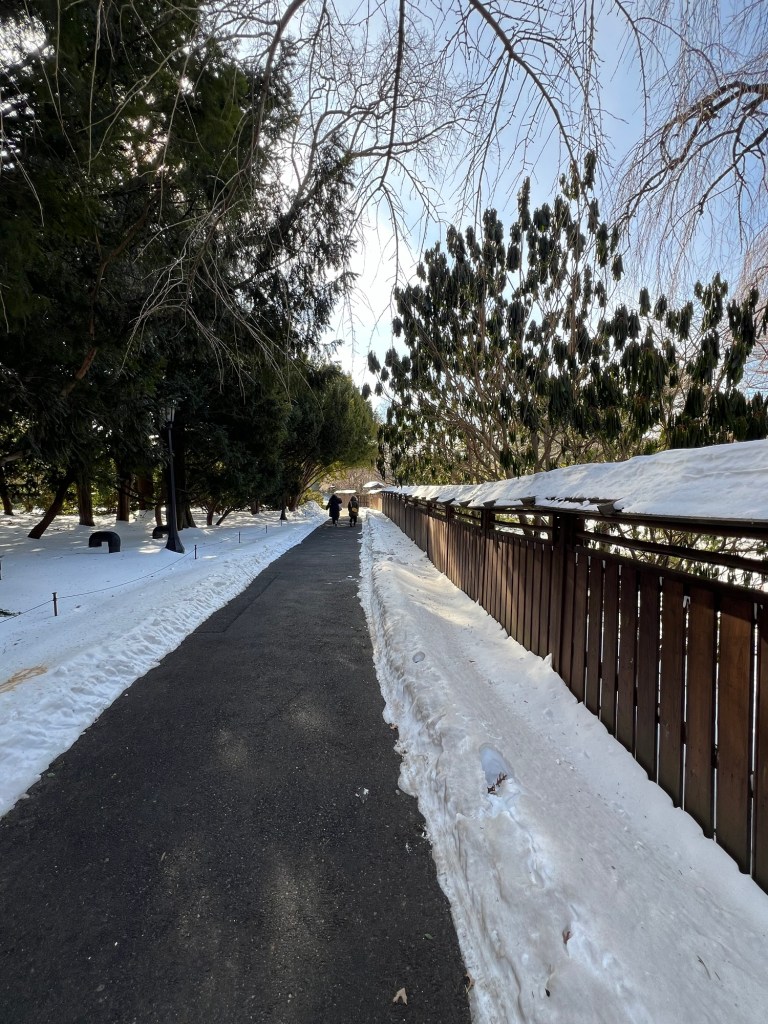
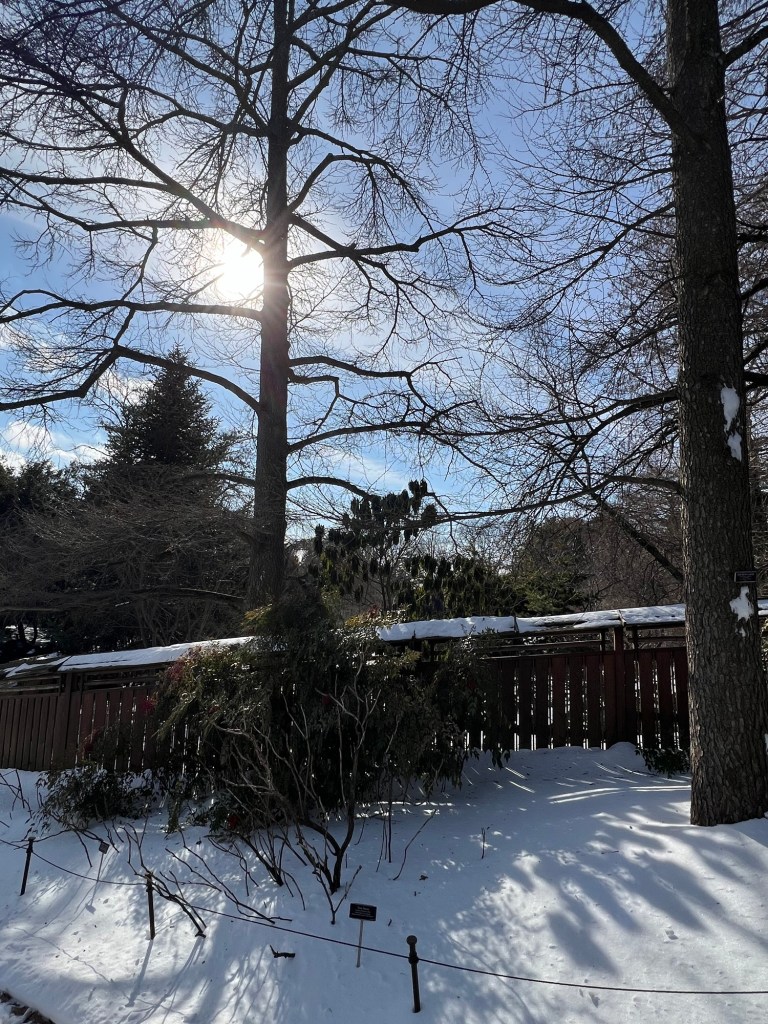
Since I had a couple of hours until my tour of the exhibit, I decided to tour the Brooklyn Botanic Garden next door. There were no walking tours that day and the gardens were under a foot of snow from the recent storm. There was a quiet beauty of all the snow and the way it fell and shined in the sun all over the gardens. There were no lines or crowds (like the recent lightshow a few weeks earlier), so I had the gardens pretty much to myself.
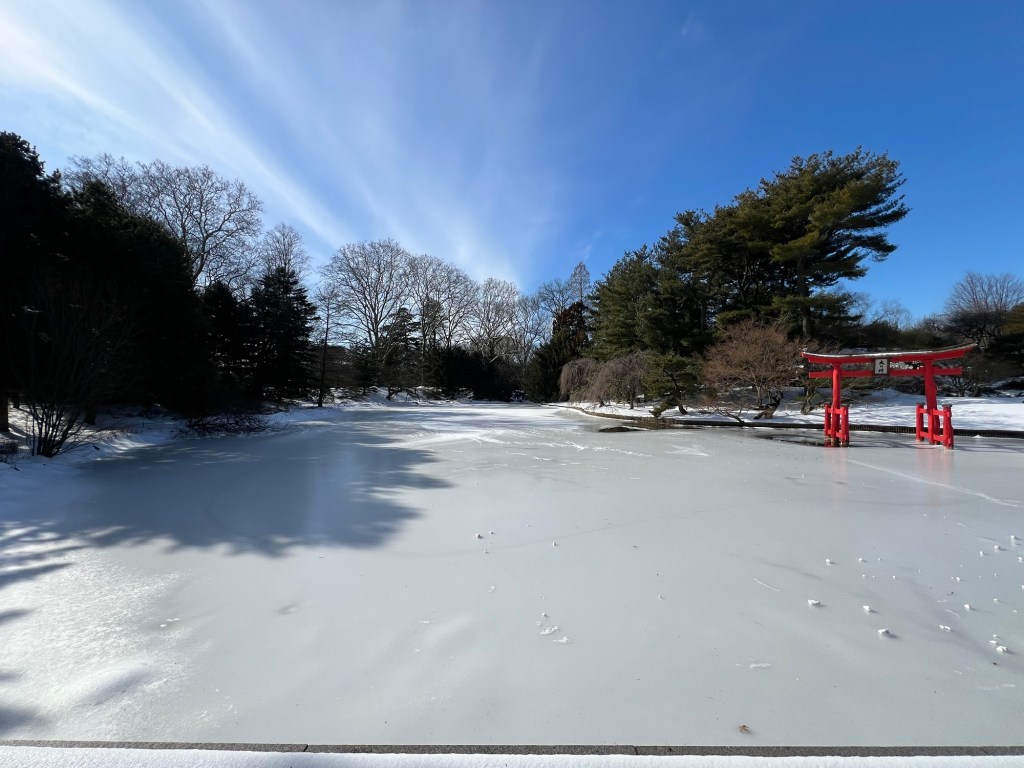
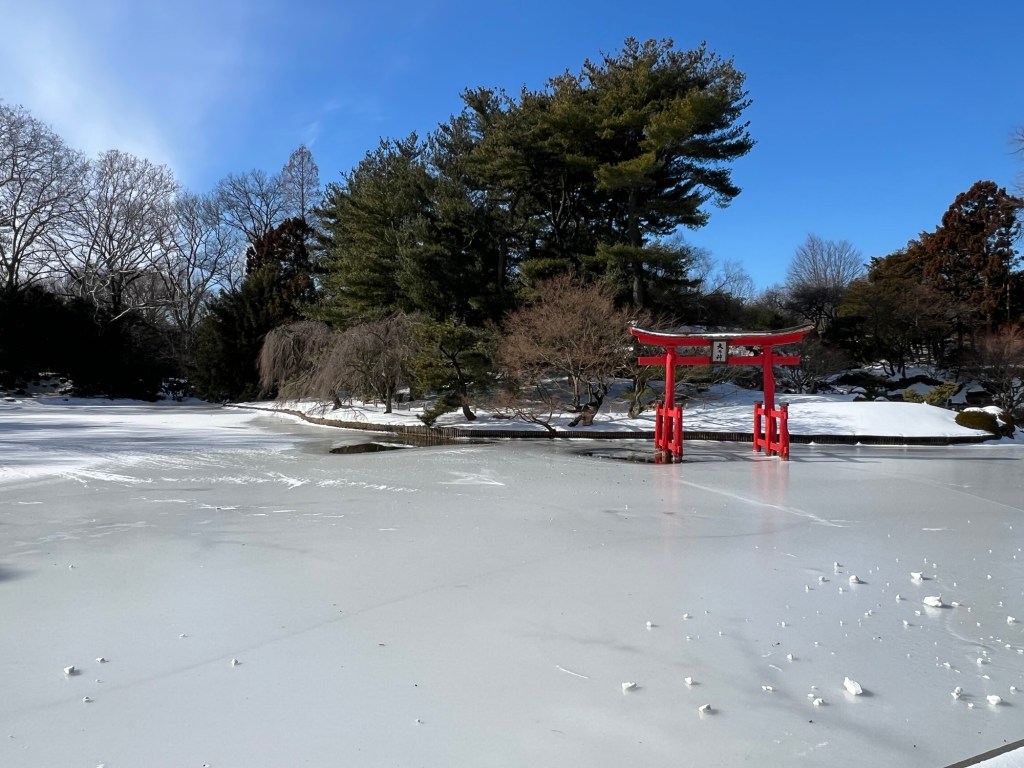
The first stop on my walk was the Japanese Gardens, which has I had visited recently for the lightshow and experienced the fantastic musical display. The pond now sat under snow and ice and still it was impressive looking.
Walking through the Brooklyn Botanic Garden next to the Japanese Gardens
The Japanese Gardens in the early afternoon
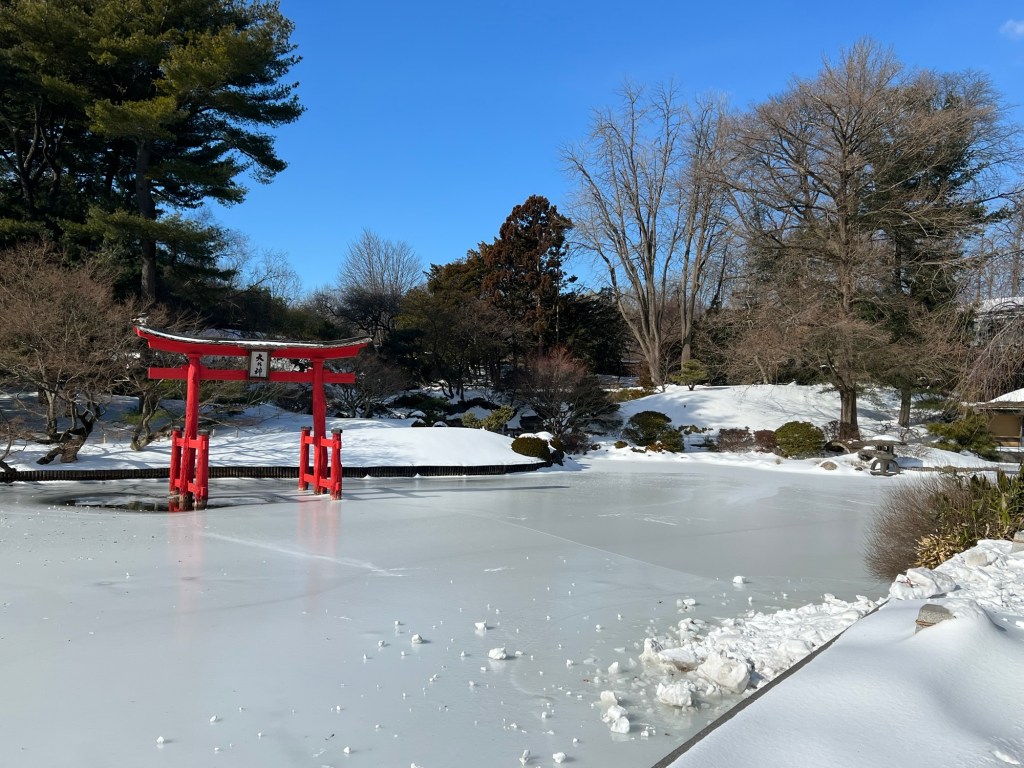
The inside of the Japanese Gardens in the middle of winter. It was such a spectacular view of the pond.
The beauty of the snow covered pool
Another view of the Garden
I never realized how beautiful the Japanese Gardens were in the winter. The sun shines so nicely on the snow covered trees. It was just as beautiful snow covered as it is in the Spring and Summer when the garden is in full bloom.
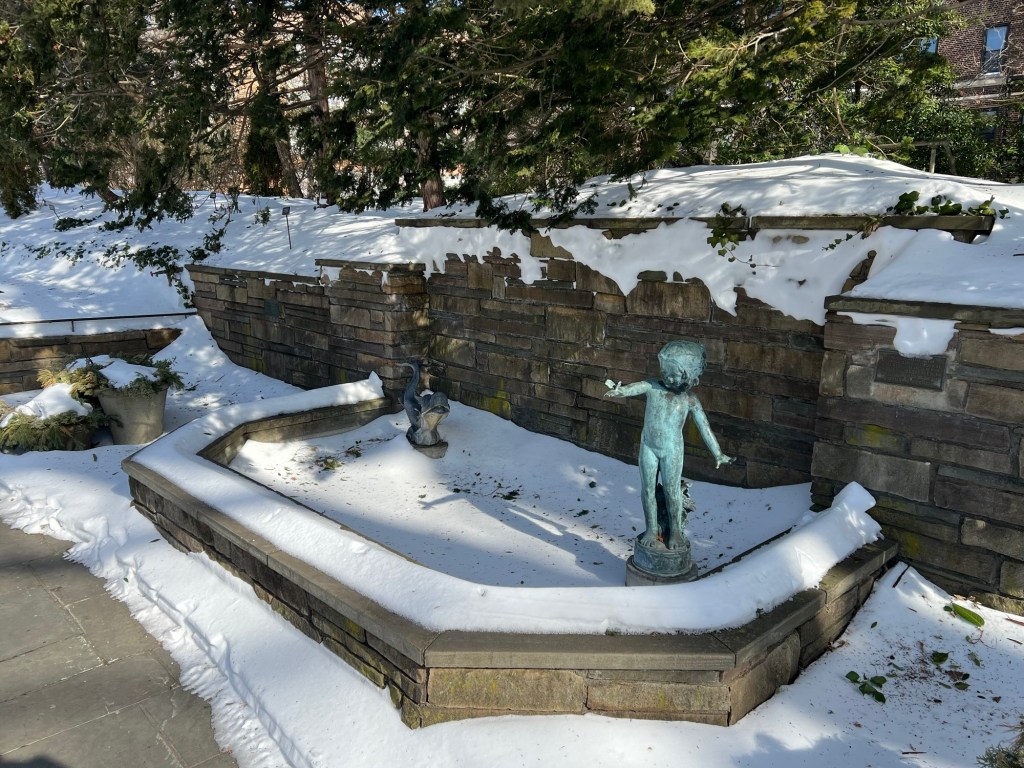
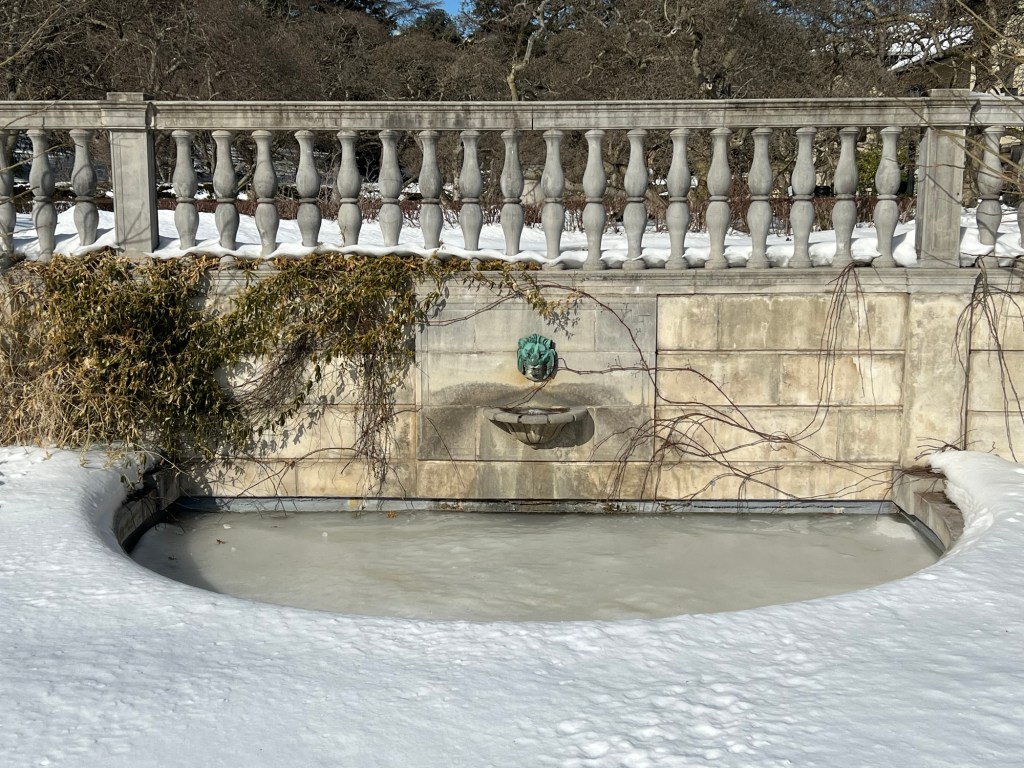
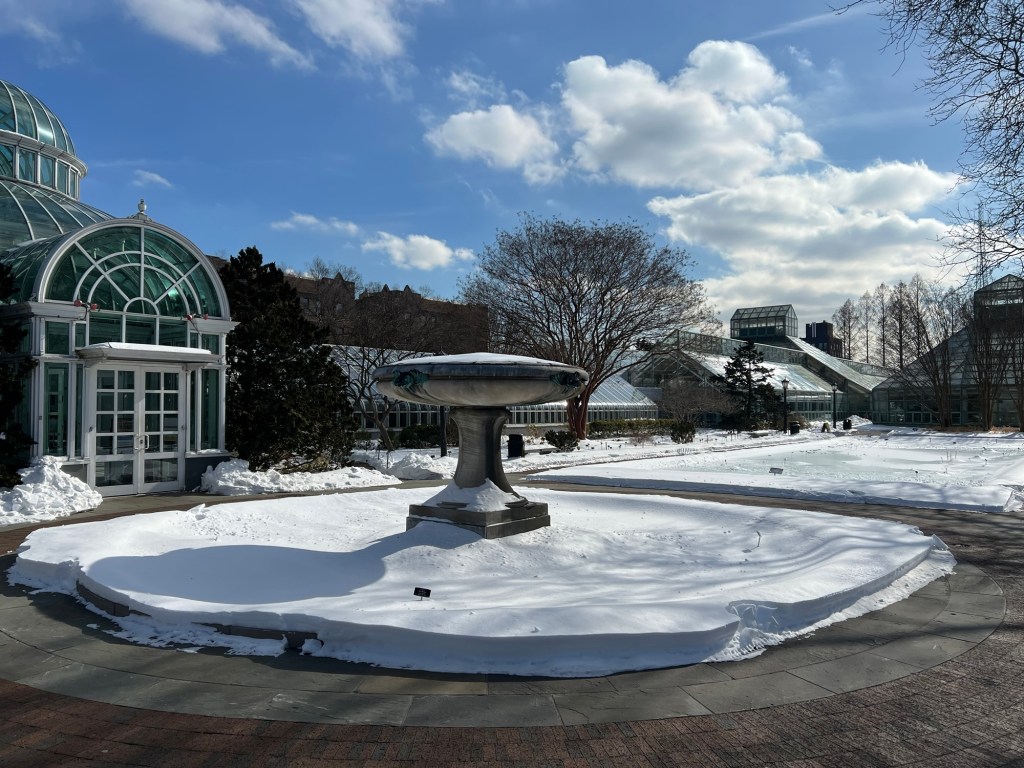
The fountain in the Shakespeare Garden
I then walked through the entire gardens stopping in various gardens to see what they looked like topped with snow. My first stop was the Shakespeare Gardens and I marveled at the elegance of the snow covered fountain I like so much in the Spring. The variety of the colors of this garden are waiting just under the snow for the warmer months.
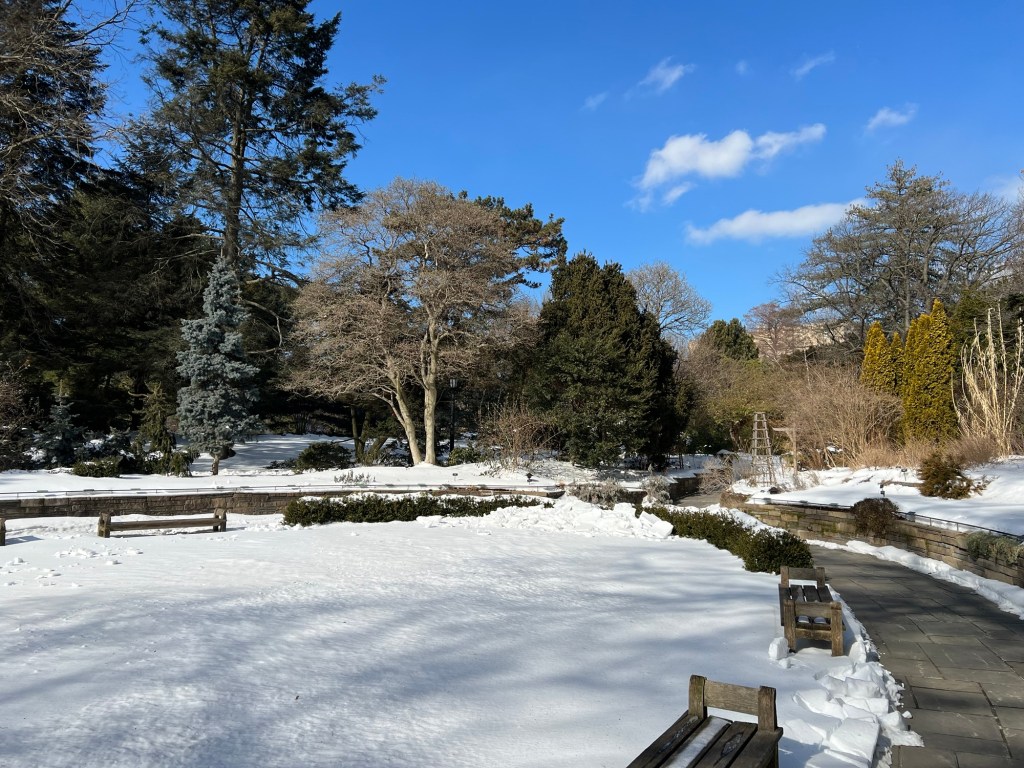
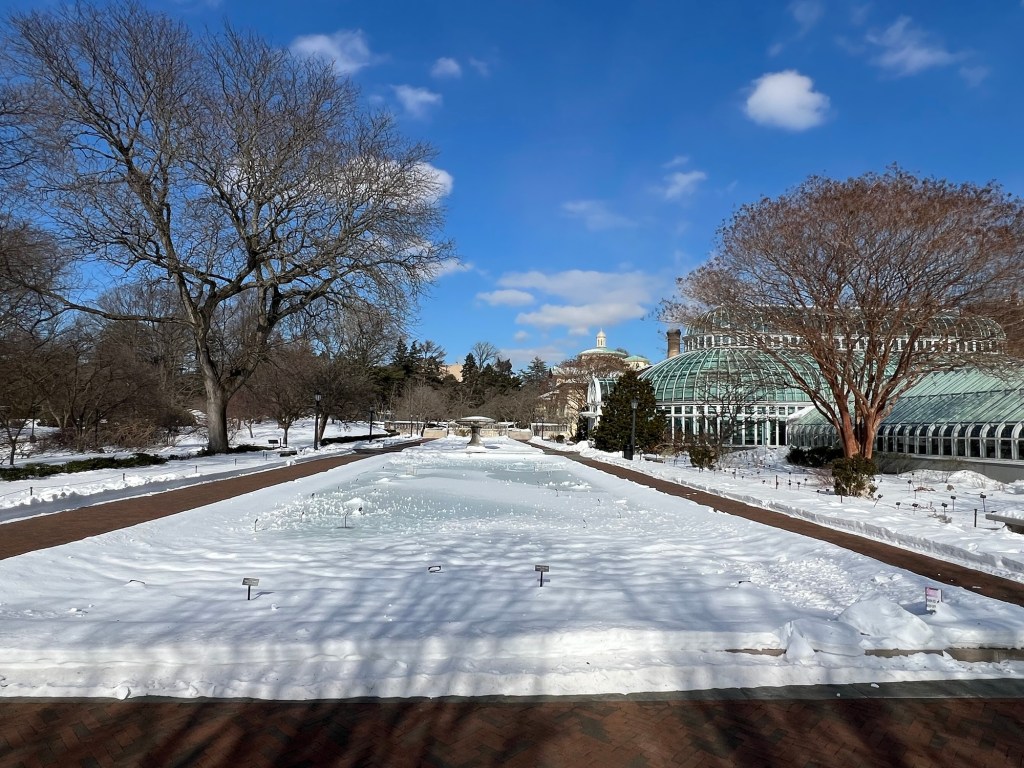
The view of the snow covered gardens
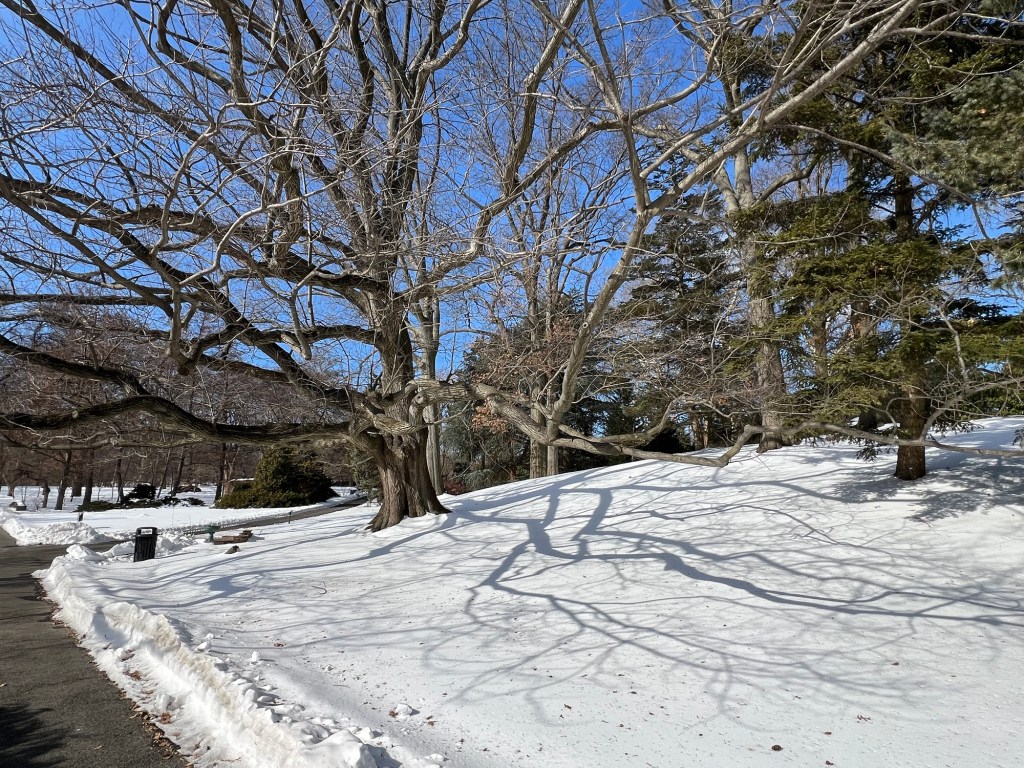
I then walked around the paths to the back of the gardens along the watershed lawns that were under a foot of snow and still impressive.
Daffodil Hill in the winter. In two months this will be covered by hundreds of brightly colored daffodils
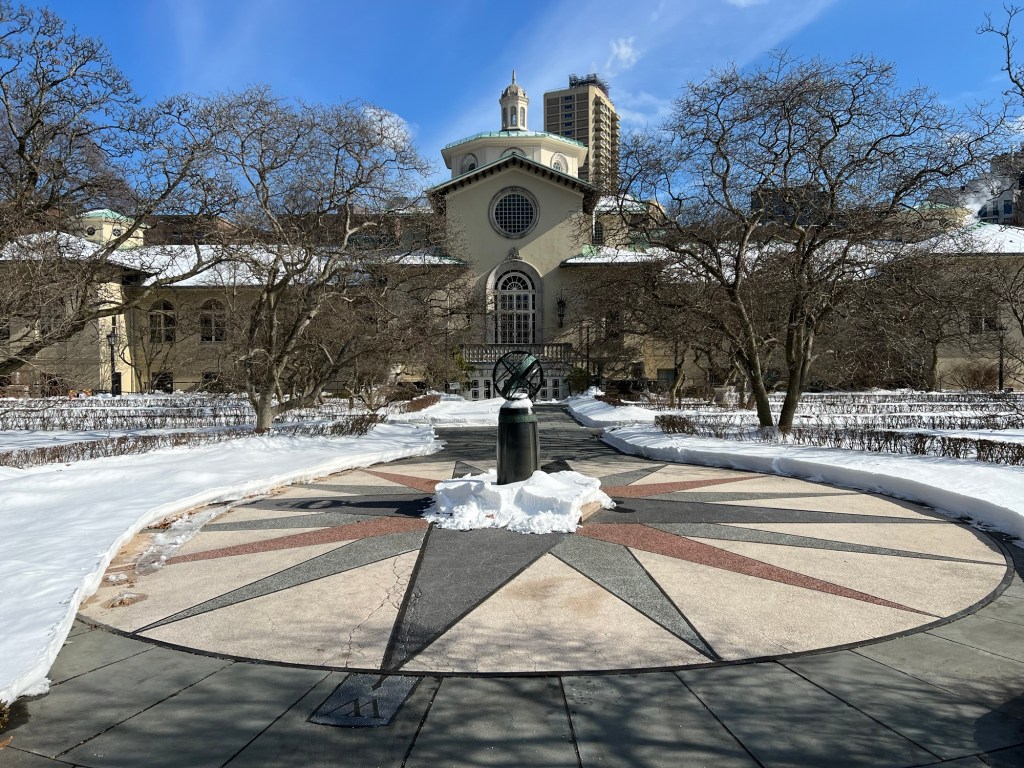
The Magnolia tree court and sun dial
In the Spring, this is my favorite part of the garden with the hues of pinks and whites of the Magnolia trees and the yellows of the daffodils.
My favorite fountain just off the Magnolia Court on the stairs leading to the Lotus polls
The snow covered fountains by the Lotus pools
The snow covered Lotus pools shined in the sun
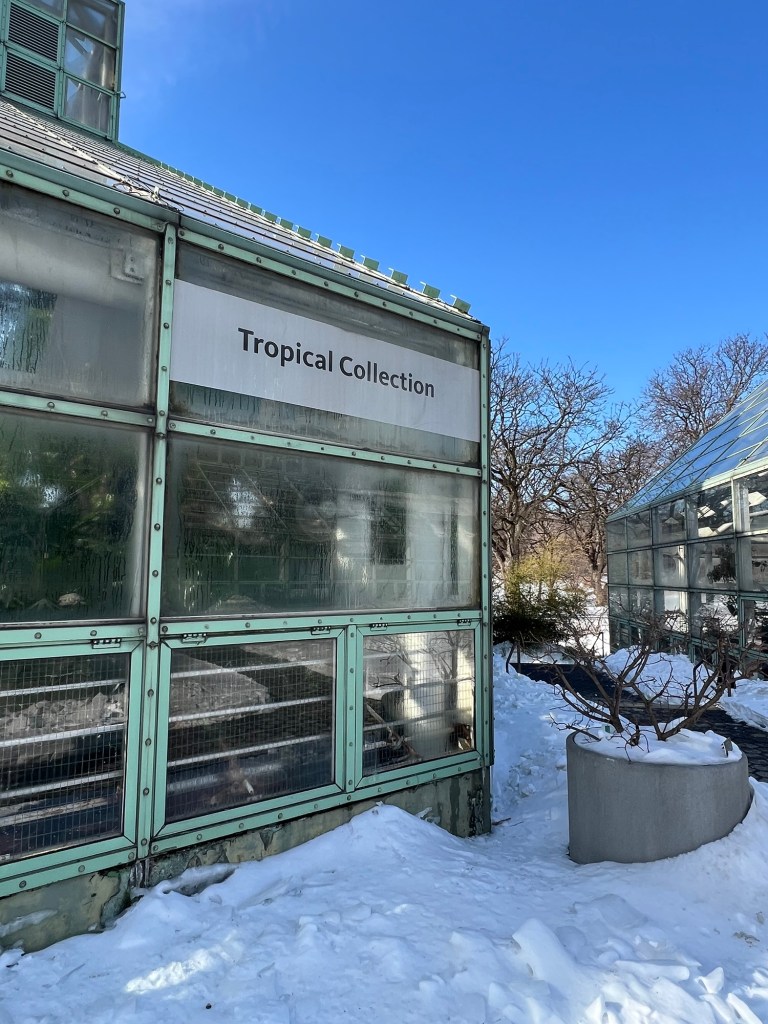
I then got out of the cold weather and entered into the warmth of the Tropical Garden Collection. This series of gallery of plants is a series of greenhouses at various degrees of temperatures that display a series of themed gardens. They don’t just display plants but also keep you warm in a cold day.
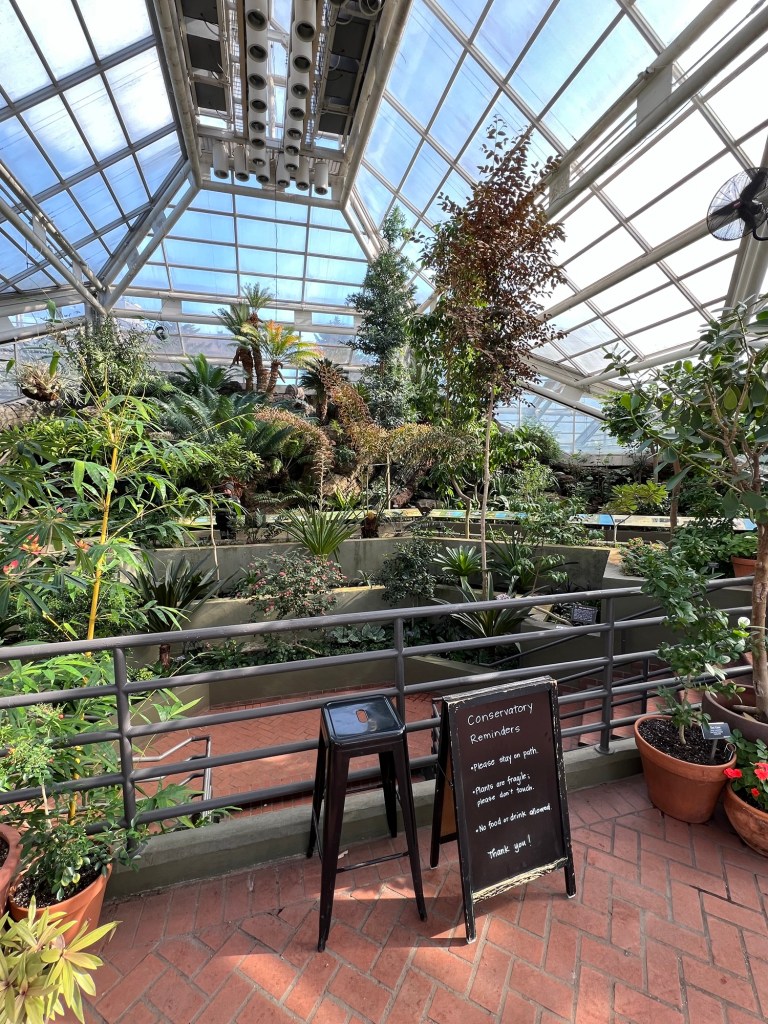
The indoor tropical gardens
The Tropical Garden collection
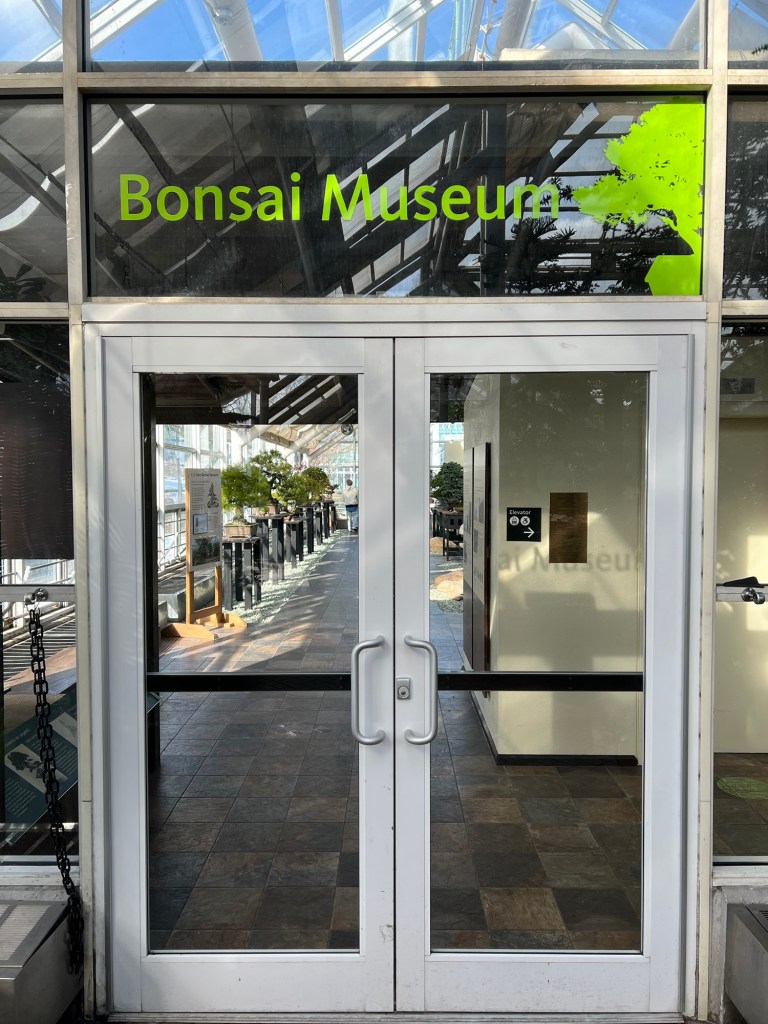
The first room I visited wasabi the Bonsai Museum room. The temperature controlled room was perfect for a stroll.
The Bonsai museum
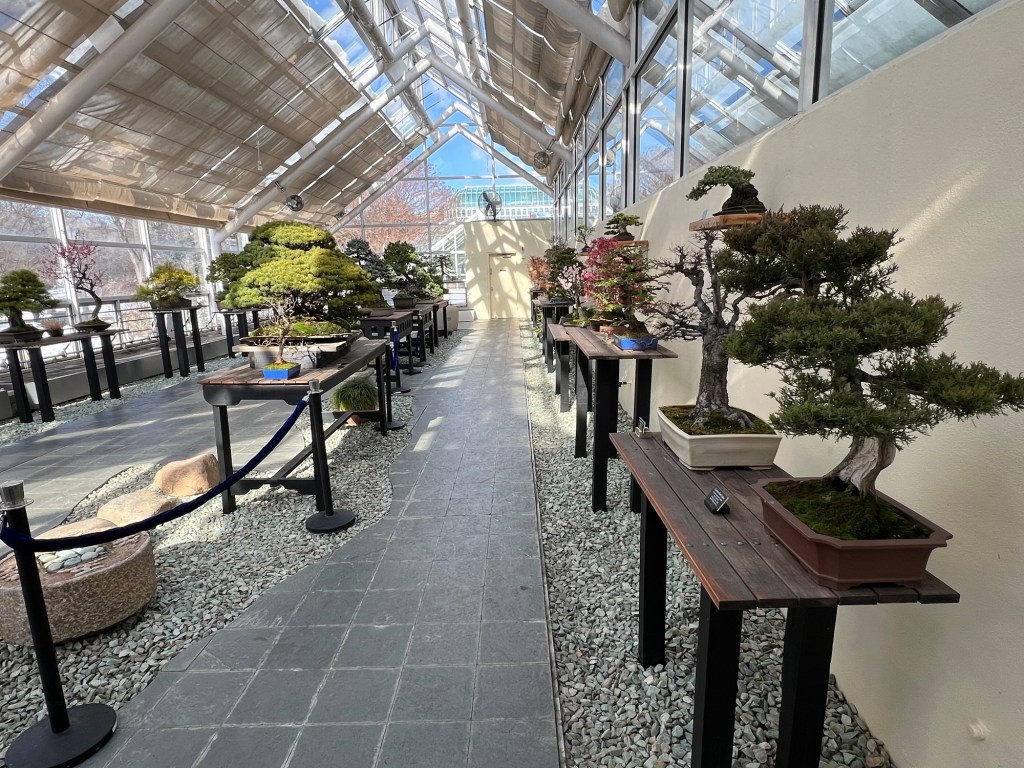
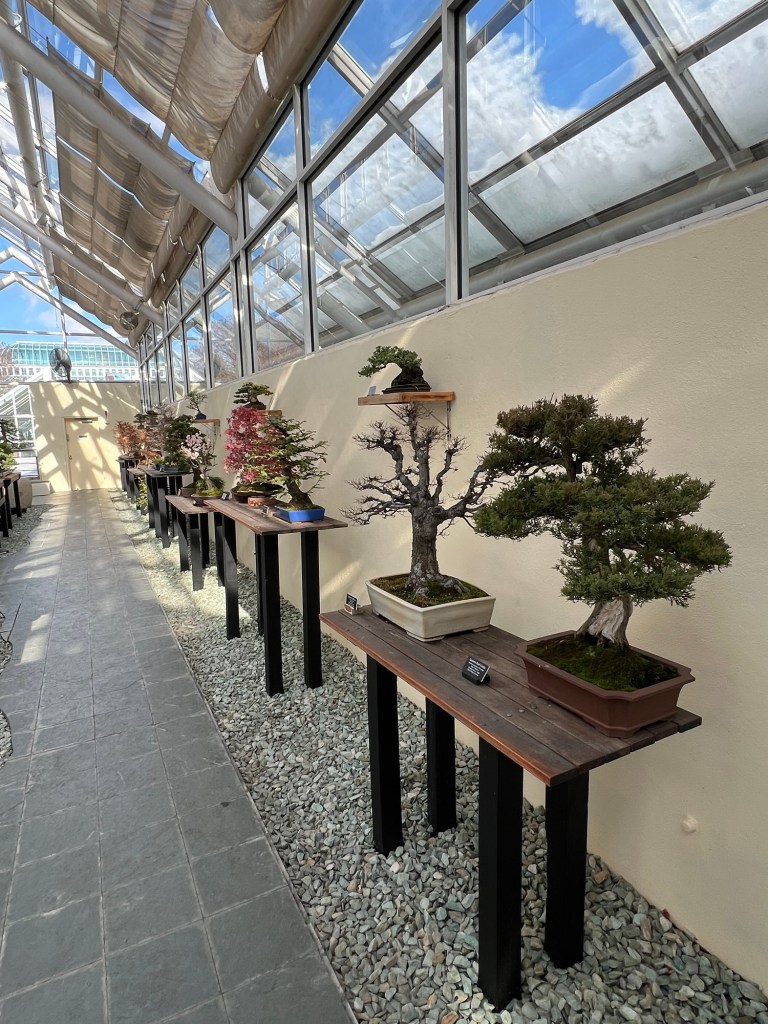
These beautiful tiny well pruned trees lined the tables with their elegance and been so well maintained.
The Bonsai trees lining the tables in the galleries
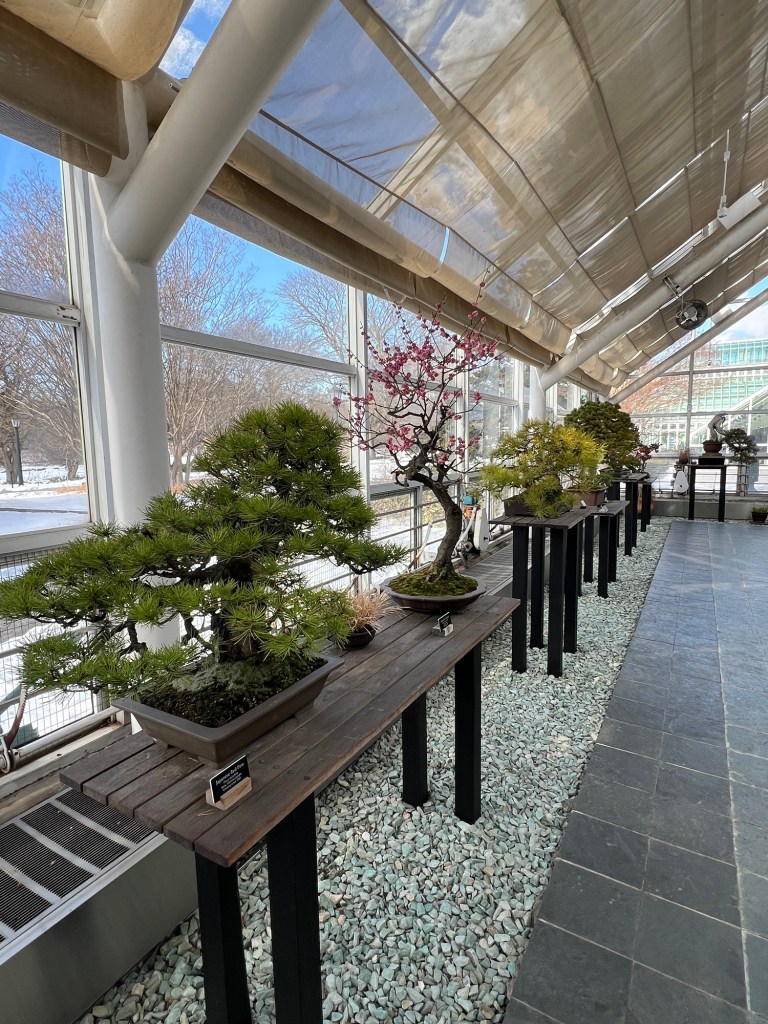
The beautiful bonsai
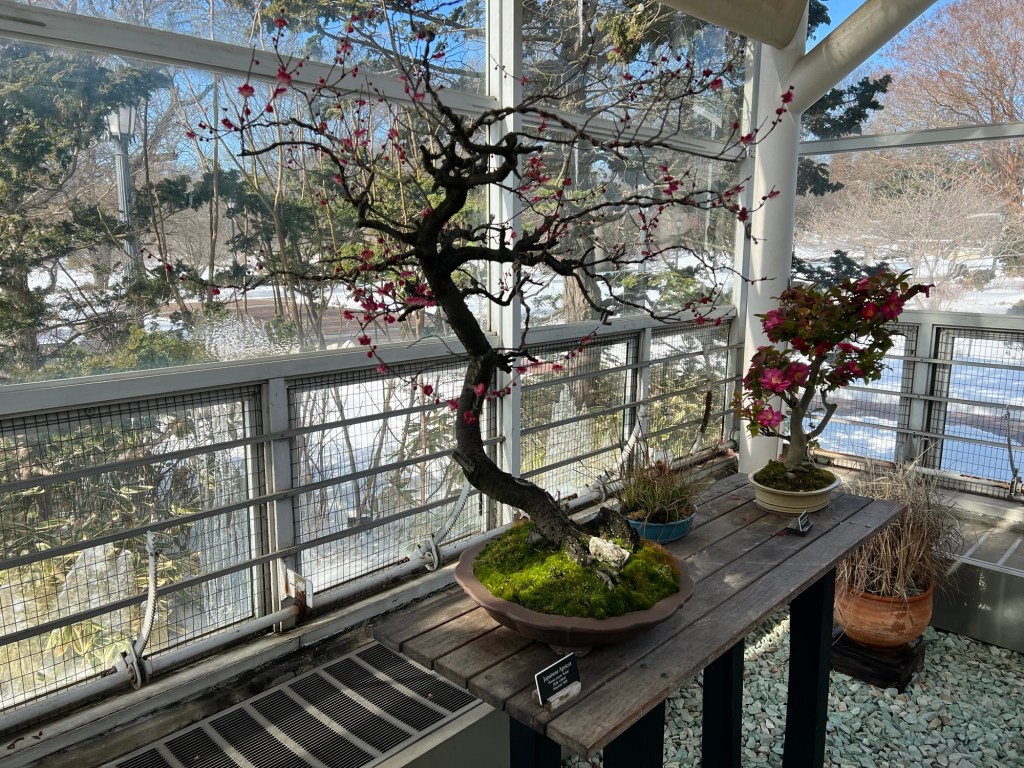
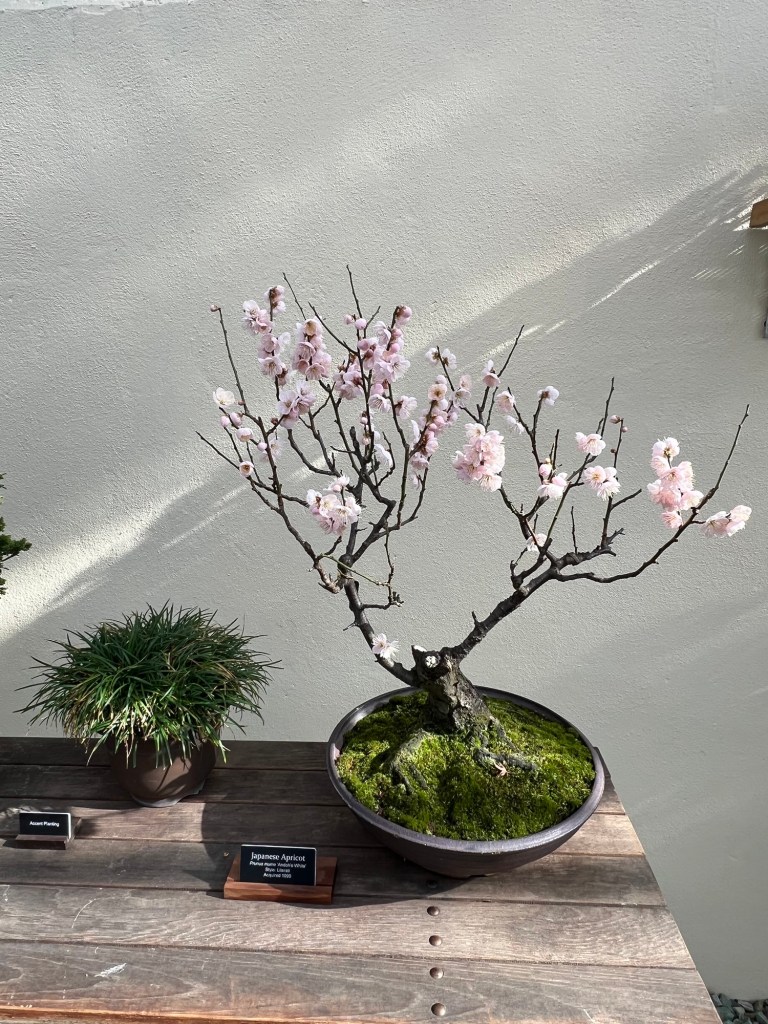
The flowering bonsai
The beautifully shaped bonsai
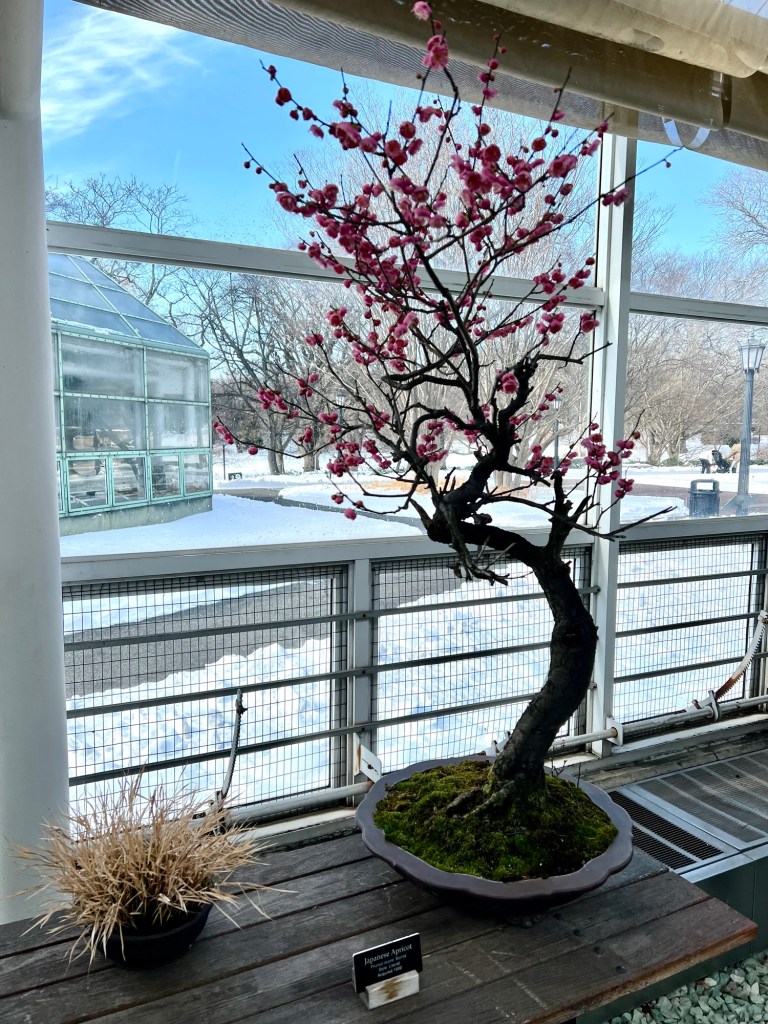
The Cherry blossom bonsai in the middle of the winter
The other trees in the gallery
The video tour of one side of the Bonsai Gallery:
The video tour of one side the Bonsai Gallery:
My video of the gallery tour
The Tropical Room
The tropical room
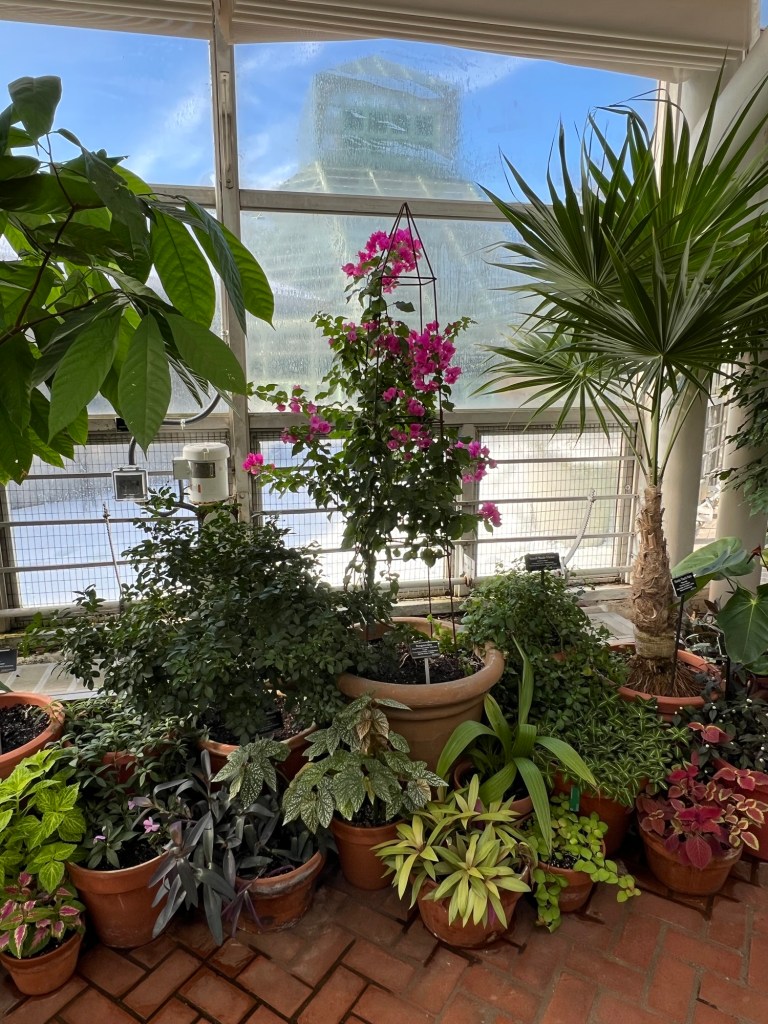
I then toured the Tropical Garden collection with its series of flowering plants and palms. It was so nice and warm inside and a break from the cool temperatures outside.
A video tour of the Tropical Gallery:
The walk is amazing
The Tropical Room
Colorful tropical flowers line the walkway in the dead of winter
The blooming Lotus
The real White Lotus
I then walked through the second tropical room in the rain forest and there were more beautiful plants to see and experience. There was a wedding garden shoot going on so I was not able to tour the complex.
The flowering tiers of plants in the Tropical room
The flowering plants in the Tropical gallery
The beautiful violets
I then began the tour of the Desert Gallery and the beauty and warmth of the room made me very happy.
The Birds of Paradise in bloom
Along the walls of the gallery, more flowering plants were placed.
Flowers in bloom in the winter
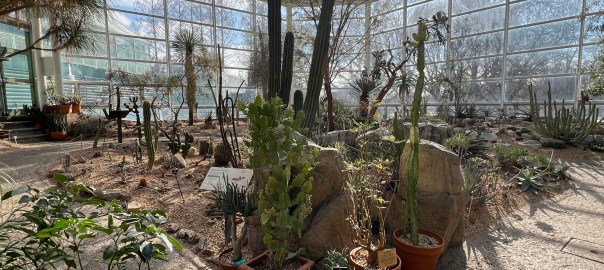
The climate controlled Desert collection was filled with cactus and other plantings the defied the weather. They have a pretty extensive collection of desert flowers and cactus in the room.
The Desert Collection gallery
The flowering cactus family
Walking back through the rainforest
Walking back through the Desert Gallery before exiting to tour the snow covered gardens
Video tour of the Desert Gallery:
There was still a foot of snow on the ground when I visited the gardens that day, which did not make it popular with people wanting to visit the gardens but I found a quiet elegance in just walking the paths and admiring the snow covered plantings. It was like they were waiting to awake again in the near future.
I walked through the gardens which while under a blanket of snow still offered the most beautiful views. I was one of the few people walking through the gardens that afternoon so it was quiet and you could just enjoy watching nature.
Walking past the Children’s Garden in the Winter
Walking over the bridge in the Watershed lawn
I saw this little squirrel holding on to the tree looking cold
The geese feeding on the Watershed lawn
The Cherry Blossom lawn in the winter
The Rose Garden Fountain in the winter
Walking through the Cherry Blossom lawn
Walking back through the Magnolia garden
Taking one last walk around the Lotus Pools
Before I left the gardens that afternoon, I stopped in the Gift Shop for some warmth and see the items they were carrying. They have such beautiful selection of flowers and gifts and the perfect place to warm up on a cold day. Everything is so colorfully displayed.
The Gift Shop at the Brooklyn Botanic Garden
Everything was in full bloom and really colorful
Everything was so beautifully displayed here
Before I left for the Brooklyn Museum to start my 2:30 pm tour, I stopped at one of my favorite sandwich shops down the road from the museum, Bahn Mai Place at 824b Washington Avenue for lunch. I love their sandwiches and drinks.
I ordinarily try a restaurant a few times before I recommend it for my dining website, DiningonaShoeStringinNYC@Wordpress.com, but I had the most amazing sandwich for dinner a few years ago and I had to share this place with the world.
There are also all sorts of rice dishes on the menu, Pho (soups) and salads on the menu as well most priced around $10.00. On the Beverage menu, there is a selection of Hot, Iced and Milk drinks to choose from as well as a selection of Bubble teas and smoothies.
One sandwich I can recommend on a cold day is the Grilled Chicken Banh Mai. I had the sandwich with a mild hot sauce on a cold wintery day. The warm bun and crunchy fresh vegetables with the spicy sauce really warmed me up on a cold afternoon in Brooklyn.
The Grilled Chicken Bahn Mi with a mild spicy sauce
The grilled chicken with fresh veggies
The mild spicy sauce really brings out the flavor of the grilled meat. With a little plumb and chili sauces, it really brings out the flavor of the sandwich.
The chicken was spicy and moist
It was the perfect lunch
The service was very quick and very friendly. The woman who made my sandwich pushed my order ahead of someone else’s who ordered the same thing as me so I could be on my way which I thought was very nice of her.
After lunch, it was off to the Brooklyn Museum and the tour of the ‘Monet & Venice’ exhibition. I was so lucky that I got to the museum early and got the tickets. The show was completely sold out by the time I left.
The museum was seriously packed that afternoon, not just for the show but all over the museum. I have been coming here for over twenty years and I had never seen it so packed. Every floor was filled with people.
Claude Monet once claimed that Venice was “too beautiful to be painted,” a challenge he embraced by creating an extraordinary sequence of works depicting the Italian city. Monet and Venice is the first exhibition to focus on Monet’s luminous Venetian paintings—a radiant yet underexplored chapter in the artist’s late career—since their debut in 1912 (Brooklyn Museum website).
New York’s largest museum show dedicated to Monet in over 25 years, the exhibition features more than 100 artworks, books, and ephemera. Two masterpieces, the Brooklyn Museum’s own Palazzo Ducale and The Grand Canal, Venice from the Fine Arts Museums of San Francisco, are presented alongside selections from throughout Monet’s career—including 19 of his Venetian paintings (Brooklyn Museum website).
The artist’s singular vision of Venice is also set in dialogue with portrayals of the city by renowned artists such as Canaletto, Paul Signac, John Singer Sargent, and Pierre-Auguste Renoir. Where others focused on Venice’s busy streets and canals, Monet’s interpretation is hauntingly devoid of human presence. Instead, he captures the interplay of architecture with color and light, enveloping viewers in the city’s distinctive atmosphere. Sonic installations by Niles Luther, the Museum’s composer in residence, and other immersive elements will further transport you to this fabled place (Brooklyn Museum website).
Walking through the galleries admiring the art
These were some of my favorite pieces from the show. These also were a favorite of Monet himself to the City of Venice.
The paintings of the Grand Canal
The views along the coastline of Italy
One of Monet’s famous ‘Water Lilly’ collection
Views from the Grand Canal
Walking around the gallery
Another view of the Grand Canal
I could not believe how packed the exhibition got behind me as I double backed through the gallery on the way out. Not only did the crowds grow in the exhibition but the line outside the exhibition was over a hundred deep and wrapped around three galleries on the Fifth Floor. It was so busy on the floor, I decided to walk around other exhibitions.
My favorite painting in the American Wing of the Mountain House Hotel in the Catskills
Then I walked down to the Middle Eastern Wing with the Assyrian and Egyptian Art, one of personal favorites in the museum. Unlike the Met, the Egyptian Wing of the museum is not overwhelming and is easier to view as the exhibits are not as packed with artifacts.
I started first admiring the Assyrian panels of the genies gracing the walls of the famous palace. It blows my mind that these are almost over a thousand years old.
The panels of genies along the walls of the old palace
The panels of genies along the walls
The different versions of genies along the walks
I have been visiting the Egyptian Wing of the museum since I attended the opening of the renovation with my father over a decade ago. It has an iconic entrance to the wing of the museum.
The entrance to the Egyptian Wing of the Brooklyn Museum
Walking through the Egyptian Galleries
Admiring the art on the wall
Walking through the Mummy display
The details on the Mummy coffin
Finishing the tour of the Egyptian galleries
I had a nice time at both the Brooklyn Botanic Gardens and at the Brooklyn Museum. There is more than enough to see and do at both cultural locations in the heart of Brooklyn.
It was a wonderful walk around neighborhood and even with all the snow on the ground, it was easy to maneuver around the sidewalks and streets. The snow may have covered the ground but was a backdrop for the beauty that it displayed. The recent storm did not keep us inside but brought us outside to see how it looked and enjoy its beauty.
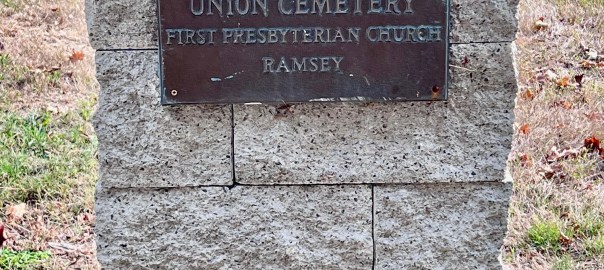
The Union Cemetery of The First Presbyterian Church of Ramsey, NJ
History of the Cemetery:
(from the church website)
Union Cemetery is a religious cemetery located at 316 Darlington Ave. in Ramsey, NJ. The cemetery is owned and managed by the First Presbyterian Church in Ramsey. As a religious cemetery, the cemetery is restricted under New Jersey state law and is not open to the general public. Only members of a Christian church and their immediate relatives may be interred at the cemetery.
The historic cemetery from the road. To the left is the oldest part of the cemetery
Entering the cemetery from Darlington Avenue
The newer part of the cemetery is to the right of the driveway
I was visiting the Union Cemetery in search of veterans of the Revolutionary War and found an interesting cemetery with a deep history in Bergen County. Many first families of Bergen County are buried here and veterans not just from the Revolutionary War but the Civil War all the way up to today are buried in this active town cemetery.
The older part of the cemetery is to the left of the driveway. These tombstones are from the early 1800’s.
The older part of the cemetery dates back to before the Revolutionary War
Many of the early family plots are located here with well known names like Hopper, Christie, Ackerman and the town’s namesake, the Ramsey family, whose family plot is in the oldest section of the cemetery.
The grave of Hannah Jane Ramsey in the Ramsey family plot
Part of the Ramsey family plot
The Ramsey family plot
The Union Cemetery to find the graves of Revolutionary War veterans and found some but not all of them. The tombstones are so worn after over two hundred years that they either had disappeared or were so worn you could not read them.
The oldest section of the cemetery where many veterans both from the Revolutionary and Civil War are buried. It was hard to read many of the tombstones. Some the veterans were buried in their family plots, others with their spouses separately. The burials were concentrated in the oldest part of the cemetery. Most of the veterans have been honored with American flags.
The first tombstones I found were from Ackerman family members
I could not make out the name of this Ackerman member but I figured it was one of the brothers wife
The grave of veteran John P. Post
The Post family history:
(from the Saddle River Historical Society website)
The Post family was of Dutch descent. The first Post was a soldier, who came here to protect the new settlements along the Hudson. They soon turned to milling; the name Post is attached to several mills in Bergen and Rockland Counties. Joseph Post, born in 1775, built a mill on the west branch of the Saddle River about 1800. He also opened a tavern and store on what is now West Saddle River Road, just north of Parker Place, across from the entrance to the mill.
The graves of members of the community at that time including the grave of John P. Post
The grave of veteran William Vanderbeck
The grave of a member of the Van Blarcom family, who was married to James Ramsey
I was not too sure who this was but by the veteran’s flower I am assuming the grave of veteran John Van Blarcom
The grave of Hannah (I believe Ackerman)
The Christie family plot
The Hopper family plot
The Hopper Family history:
(from the Saddle River Historical Society website)
The Hopper family is one of the oldest of European descent in Bergen County. Andries Hopper came from the Netherlands to New Amsterdam in the 1640’s. His widow and her son Hendrick were in the Polifly area (Hackensack) by the late 1600s. There was land to be had in the unsettled areas of what became Bergen County. Hendrick’s two oldest sons, Andries and Jan settled in the HoHoKus area (part of Paramus) around 1712. The Hopper name appears on many old homes and mills on early maps of the area. It was two of Andries’ children, Abram and Jan, who settled sometime around 1730 along the Saddle River in what is now Upper Saddle River.
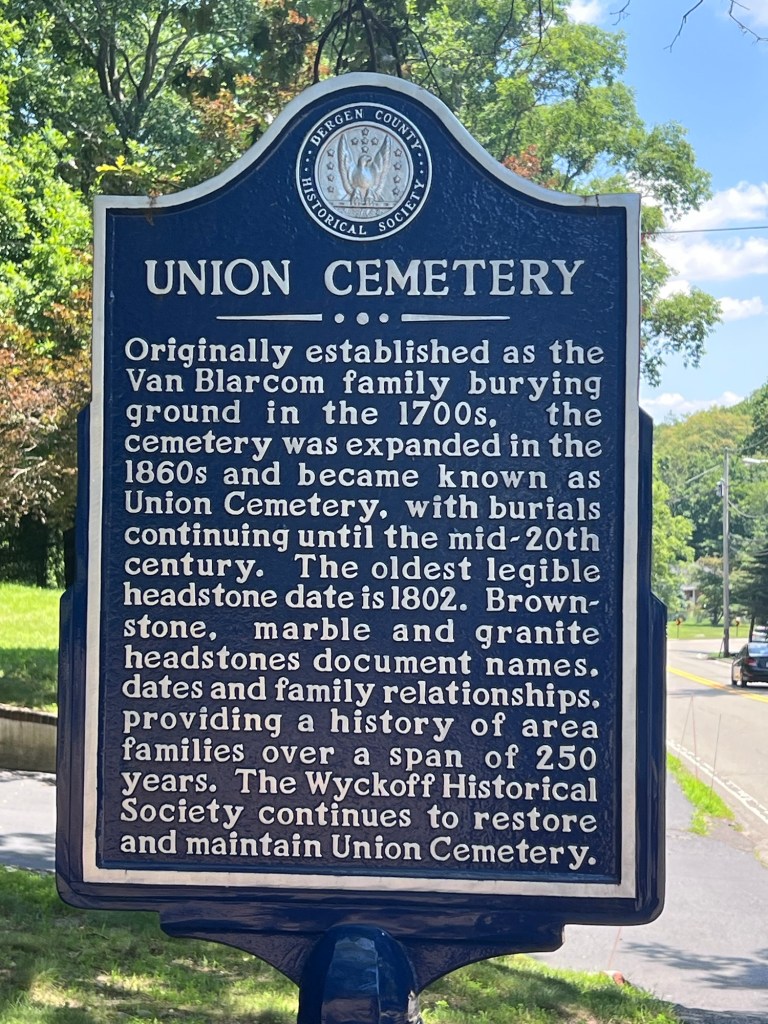
The historical sign for the Union Cemetery at 151 Franklin Avenue in Wyckoff, NJ
The marker sign put up by the Wyckoff Historical Society
The walled garden just outside the cemetery in bloom
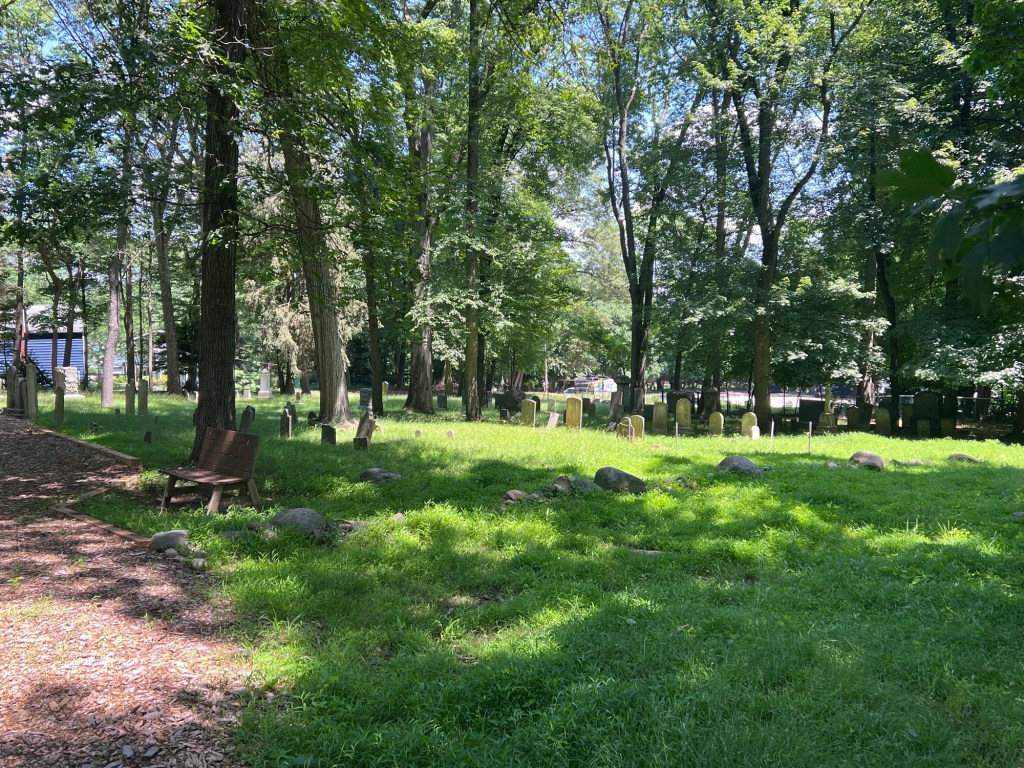
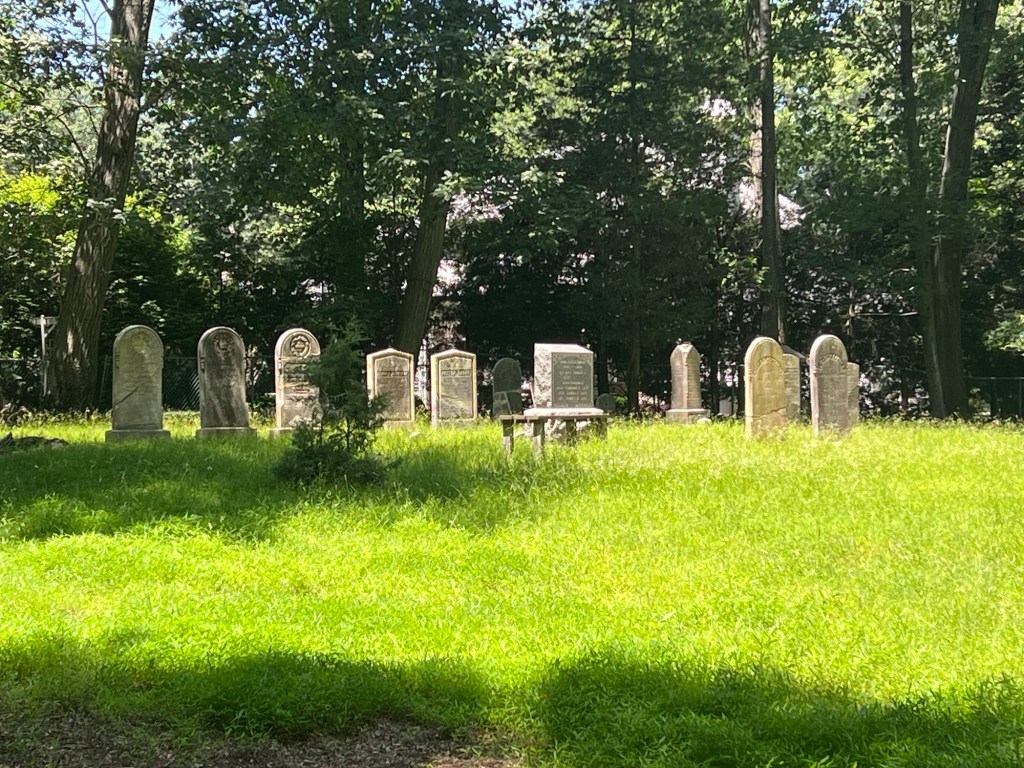
The Union Cemetery was originally the resting place of the Van Blarcom family and the right hand side of the cemetery has the Van Blarcom family plot
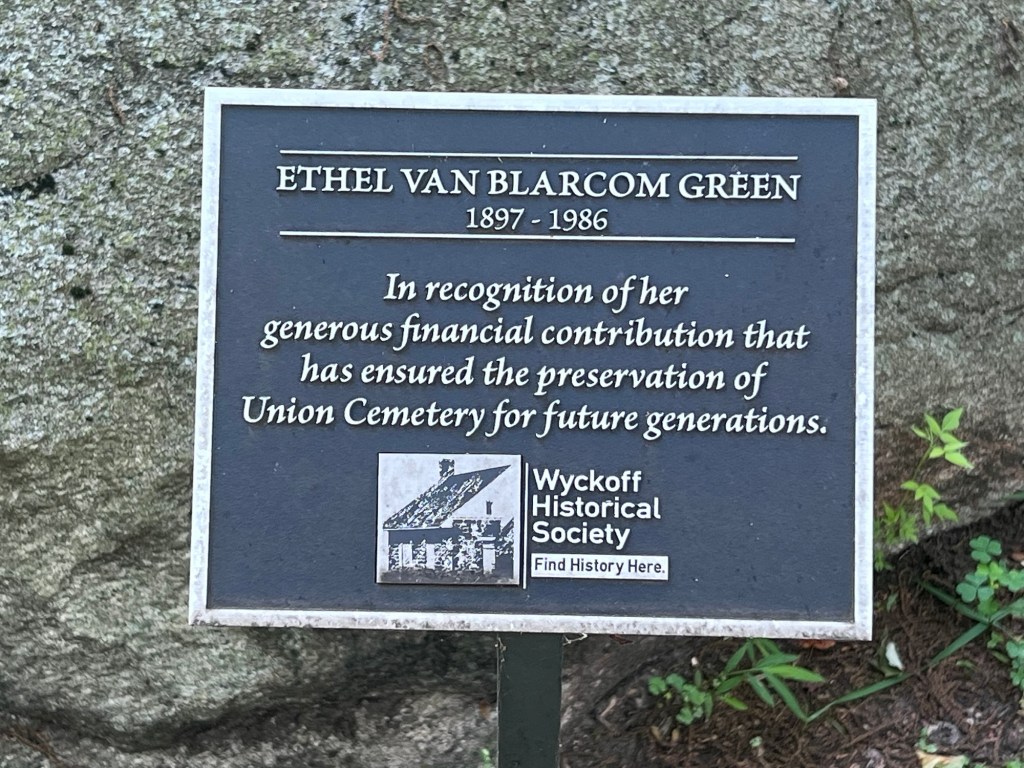
One of the descendants of the family, Ethel Van Blarcom Green donated money for the preservation of this family plot.
The Biography of Ethel Van Blarcom Green:
(From the Wyckoff Historical Site)
If you at all familiar with the Wyckoff Historical Society’s recent activities at Union Cemetery, you may know that the 250 year-old site was the original Van Blarcom burial site. The name can be traced to the early 1700s when the first Van Blarcom family settled in New Jersey. The oldest legible headstone dates to 1764.
What you may not know, is that Ethel Van Blarcom, a direct descendant, bestowed a significant financial contribution to the Society beginning in 1978, with her wish that her beloved family cemetery be maintained. Although she lived in California for most of her adult life, Union Cemetery obviously held a special place in her heart, and she wanted to see it survive. The Society has Ethel’s hand-written letters that confirm her generous donation. She also continued to renew her Society membership until 1984.
However, it wasn’t until 2019 that the current trustees decided it was time to use the funds for its intended use, and honor Ethel’s wishes. Several headstones were repaired, new fencing is being installed, and yearly grounds maintenance is conducted, thanks, in part, to Ethel’s generosity.
It was at this time that Society trustees, Doris Noerr, Melanie Long, and Linda Vreeland, dove into genealogy websites and Society archives to learn more about Ethel’s life and to particularly find a photograph of her.
“After several week of research, we obtained Ethel’s death certificate which led to contacting her niece Naomi who is now 92,” said Society president, Lynn Groel-Lynch. “To our delight, she had a photo of Ethel and her husband, Roy Green that we believe is her 1916 wedding photo.”
Ethel was born in Paterson in 1897 and lived to the age of 89. She and Roy moved to the Los Angeles, California area most likely around the time of her mother’s death in 1933. The couple had no children.
“We are still in the process of contacting a few descendants, and those we’ve spoken to have been happy to share what they know about Ethel,” said Melanie Long. “We also will install a plaque in her memory near where her father, Edward is buried in Union Cemetery. There are thousands of Van Blarcom names as they were the one of the prominent families in our area’s farming community, and after all these years, the Society is thrilled to finally honor the legacy of one very important Van Blarcom, Ethel Van Blarcom Green. As they say, ‘It’s never too late’”.
The current history of the Union Cemetery:
(Wyckoff Historical Society website)
The original Grange sign from the 1960s at the Franklin Avenue entrance of Union Cemetery was weathered and fragile. The Wyckoff Historical Society recently replaced the old sign with one that is also hand-lettered, and includes the Grange logo which was barely visible on the old sign. Two new posts display the new sign.
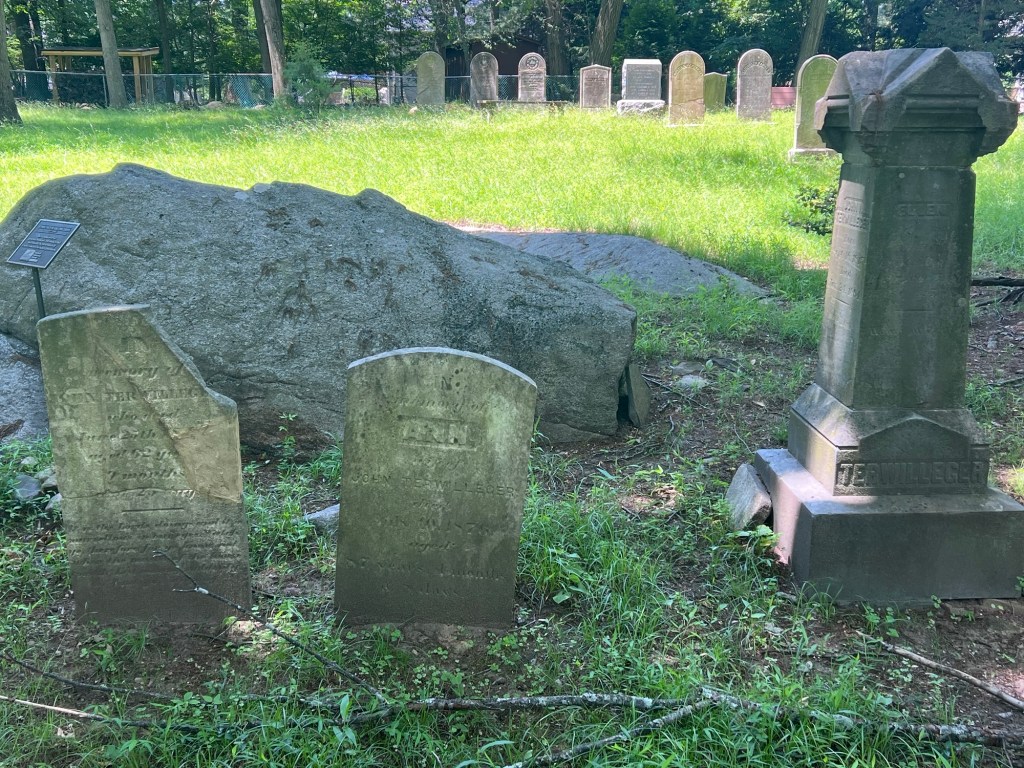
The Ackerman and Terwilliger families are buried to the left/northern side of the cemetery
The Terwilliger family plot
The resting place of James Terwilliger’s tombstone
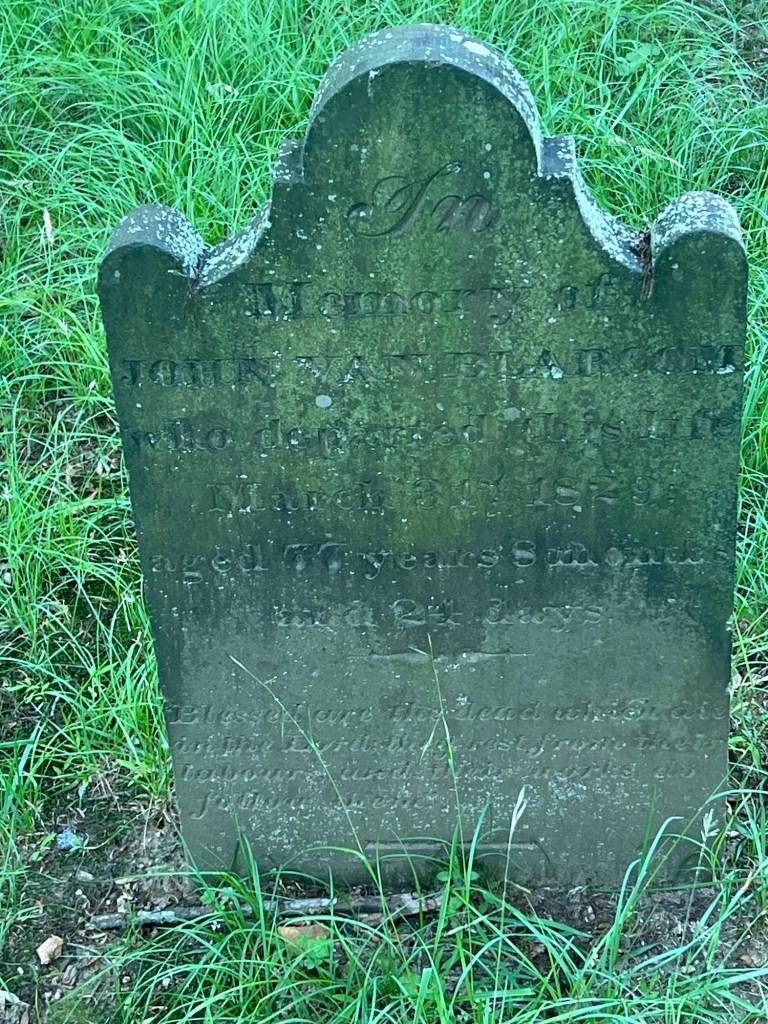
To the right of the pathway around the cemetery to the south is the Van Blarcom family plot where on the oldest graves is that of John Van Blarcom, a veteran of the Revolutionary War.
The resting place of Revolutionary War veteran, John Van Blarcom
The original section of the Van Blarcom family plot dating back to the Revolutionary War
The later burial section of the Van Blarcom family
The resting place of Daniel and Rebecca Van Blarcom
The Terwilliger family has two sections of the family plot in the northern section of the cemetery
The Ackerman family’s plot is to the middle most northern end of the cemetery
The Mallinson/Westervelt family has the further most family plot of the cemetery
The cemetery is so peaceful and relaxing to walk around. The Wyckoff Historical Society has done a wonderful job maintaining the property. Even though it is the resting place of many family plots, it’s still a very welcoming place and you can feel it as you walk the paths. There is a respect of remembering the people of the past that can be felt here
As you walk the pathways, you visit the people who have contributed to the growth and history of Bergen County and the surrounding area. They shaped their communities from before the Revolution War to today.
My video of visiting the cemetery and the families that rest here.
The History of the Cemetery:
(From the Wyckoff Historical Society website)
The Union Cemetery on Franklin Avenue dates back to the first half of the 1700s, when Johannes Van Blarcom set aside an area of his property to become a burial place. The earliest readable stone is from 1764 and thought to mark the grave of a slave girl because there is no surname given. Johannes Van Blarcom’s daughter, who died in 1725, is alleged to be buried there also. Various community groups have volunteered to maintain the cemetery, including the Wyckoff Historical Society. In 2018, dead trees, underbrush, and poison ivy were removed.
Most are early Van Blarcom family members as the cemetery was one of the original family cemeteries.
Open: During the hours of the Nursery that surrounds it.
My review on TripAdvisor:
The Demarest Family Cemetery sits on a small embankment surrounded by trees and a cement island. You can only access it from one side and there is no stairs. Totally forgotten burial site.
The fencing and locked door with a rusty lock surrounds the cemetery. There is no way to access it. I was able to walk up the cement embankment and was able to walk around the fence. The trees have taken over the cemetery and have knocked over the tombstones.
You can see some of the fallen tombstones from neglect at the fence
The growth surrounding the burial site
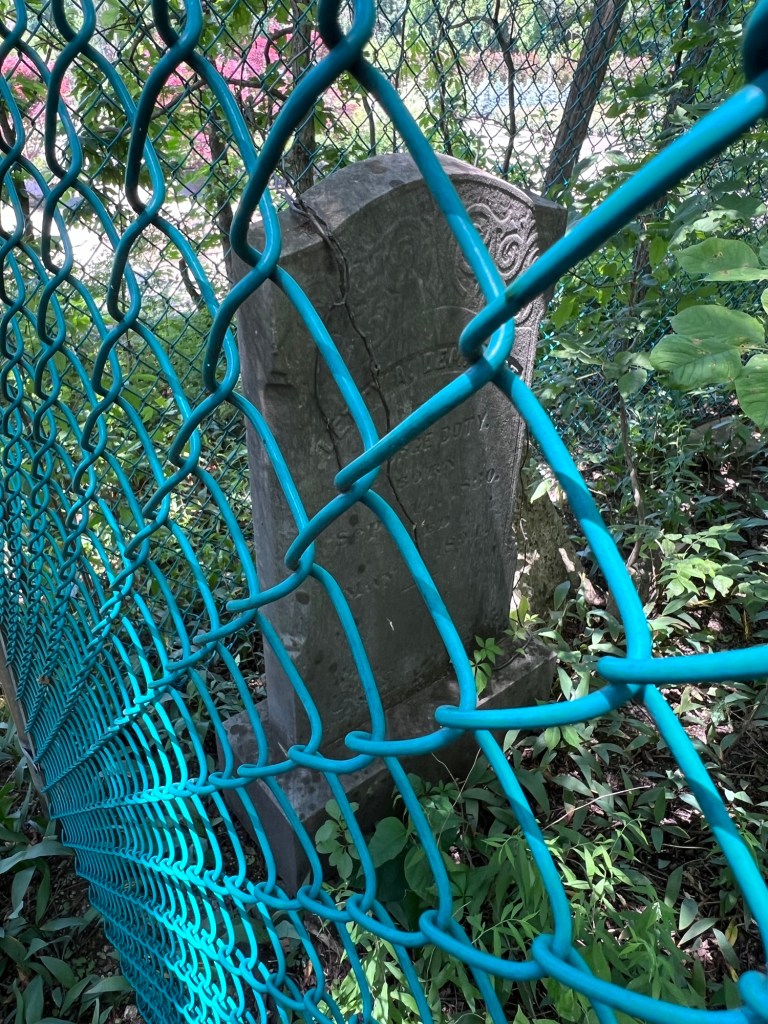
Some of the historic tombstones are still standing like this one of the burial sites of Lettya Ann Demarest who was born in 1830. She had inherited the house in 1863.
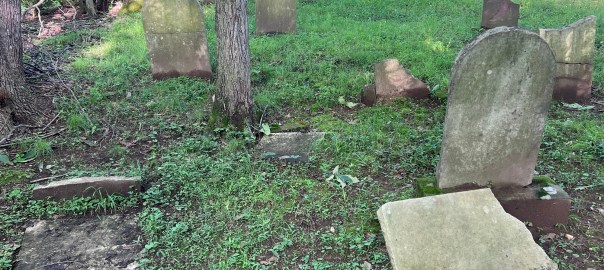
Most of the historic tombstones have fallen down
The fallen and forgotten tombstones have growth surrounding them.
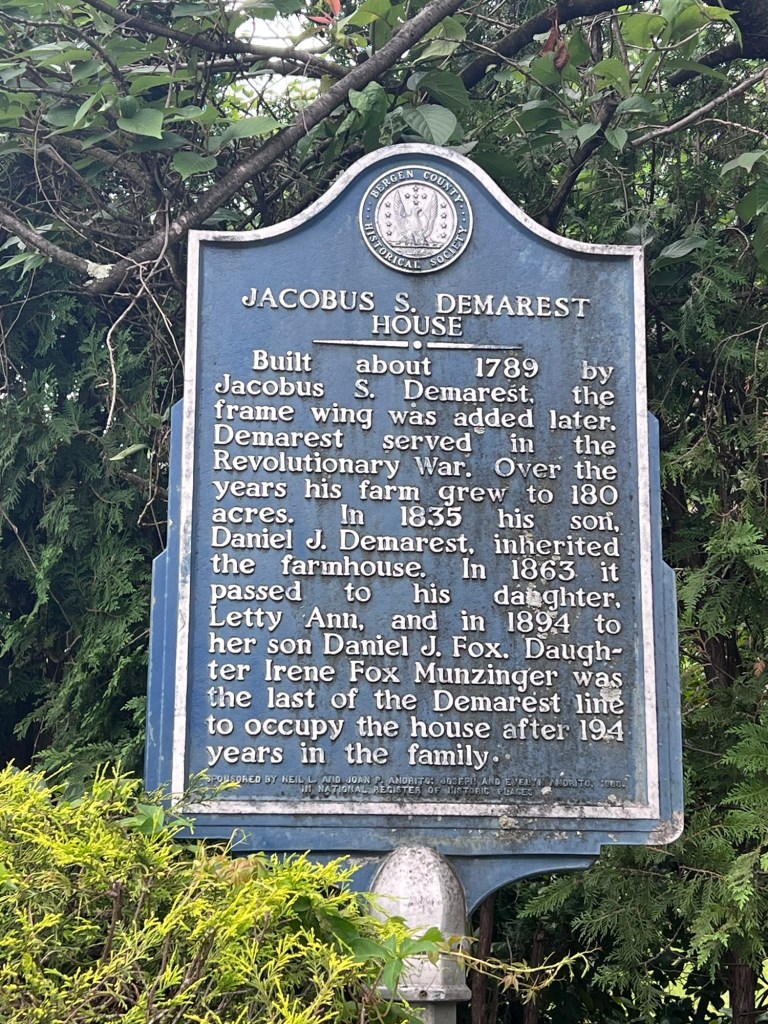
The historic Demarest homestead was around the corner from the nursery. The house had been in the family for 194 years almost five generations.
The family homestead still exists up the road around the corner from the nursery. This is the historical sign outside the sign. The Demarest family home in Oakland:
The Demarest family home
A view from the front of the Demarest family home
This tiny historical and very forgotten and neglected cemetery was once part of this branch of the Demarest family. The small cemetery sits on a small hill not far from the house. Once the farm was sold off and the town grew around it, this small cemetery sits still in its original spot in the middle of nursery.
When I talked with one of the workers there, he said the owner was very careful to built around it and let it intact. He also said that no one seems to own it. It is the final resting place of James S. Demarest, who fought in the Revolutionary War.
With all the growth, I could not find it. It has been lost to time.
The Hopper Farm Family Cemetery is a reminder of what happens when time passes you by and the world changes around you. I went in search for the grave of Andrew Hopper, a veteran of the Revolutionary War. I could not find it.
This historic cemetery is hidden from the road behind two large homes on a tiny hill in the back woods. The only way to access the cemetery is to walk down the utility road off the main road, walk through the woods and walk up through the bush to back of two families back yards.
You can tell by the rotting fallen fence that this cemetery was once enclosed but the fence has since fallen and the cemetery in disarray. Still there is a quiet elegance to it.
The cemetery is in desperate need of clean up and repair as tombstones are broken, fallen and discolored.
Some of the family tombstones have fallen. Still you can see members of the Hopper and Demarest families buried here.
Members of the Vanderbryck family Maryann and Rachel
The grave of David Hopper
The grave of Susan Storms, wife of one of the family members buried here.
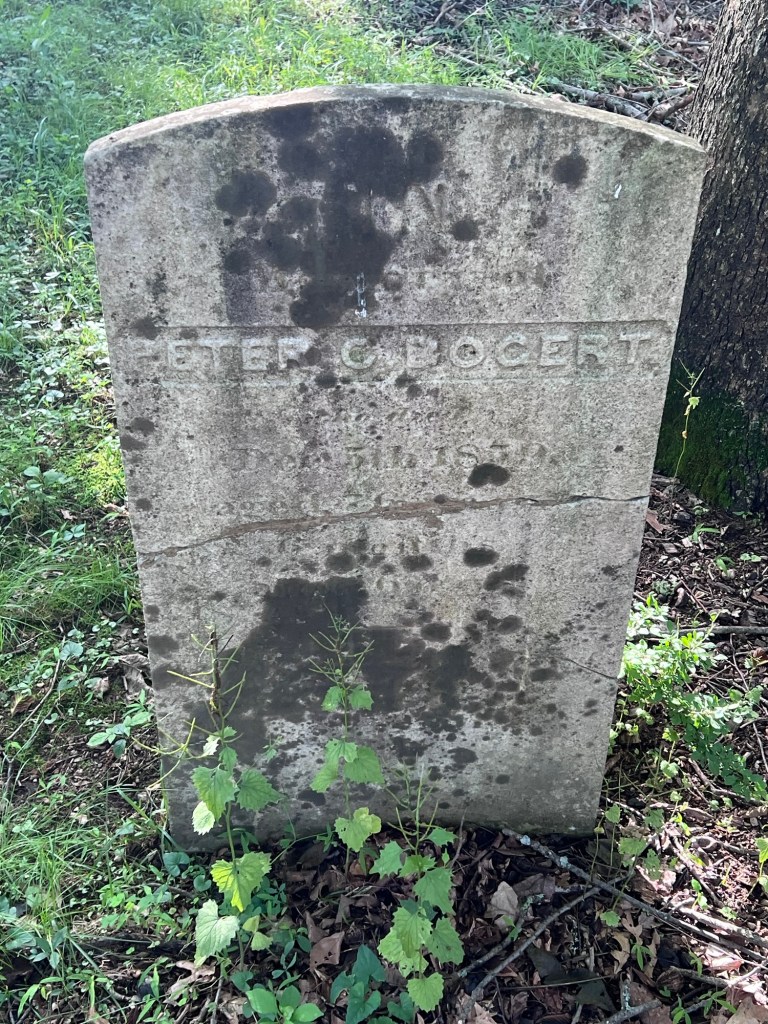
The grave of Peter Bogart, a member of the extended family
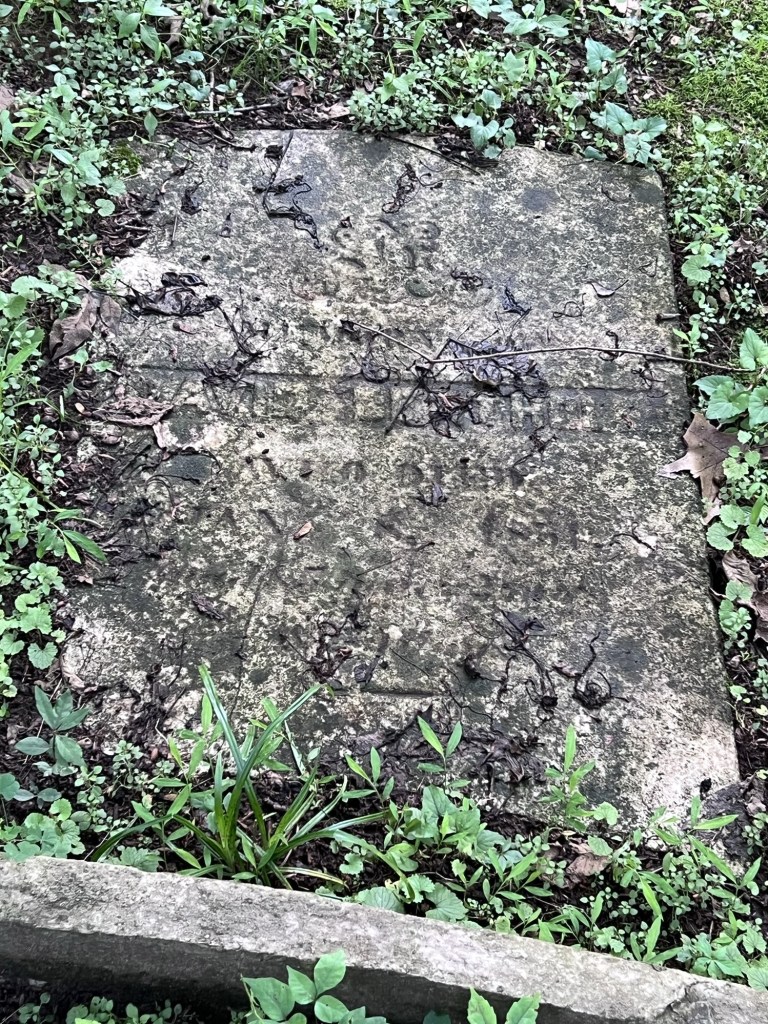
One of the broken tombstones that I could not read
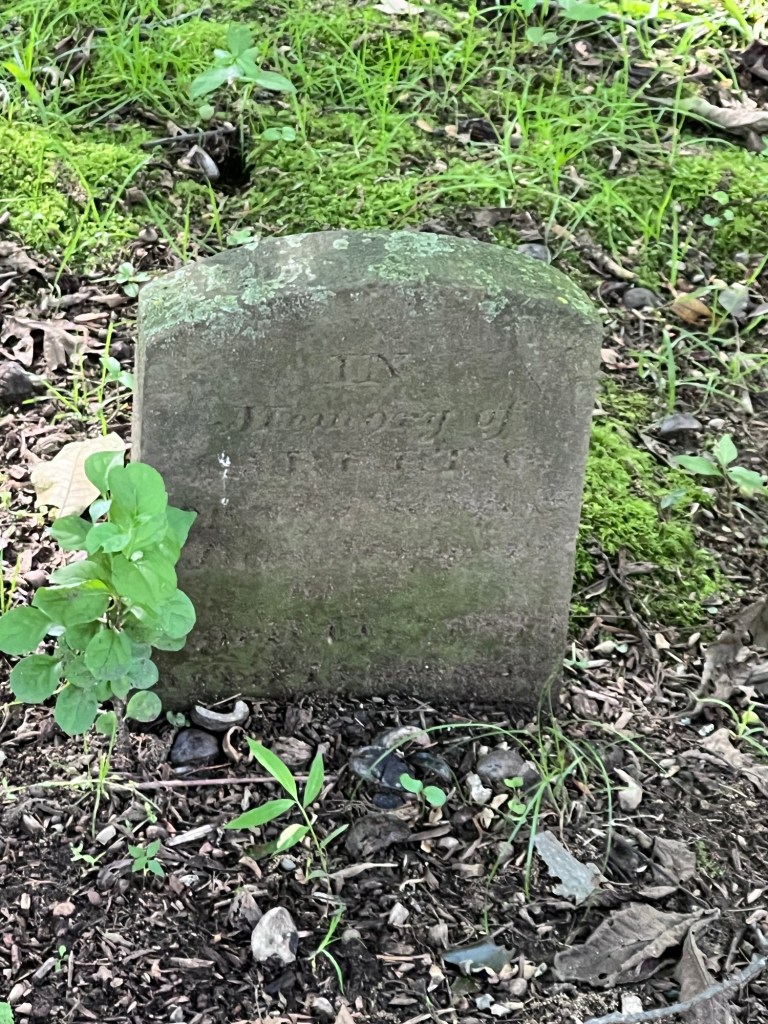
Another tombstone in loving memory of a name I could not read
The broken stone of Fredrick Storms grave
The family cemetery sits quiet and neglected in the woods. Most of the tombstones broken and discolored and hard to read.
I took one last look as I walked down the hill and said a prayer to these forgotten people. One what must have once been the family farm sits a development of extremely large and well maintained McMansions. This is the irony of this once prominent family.
The family buried at this cemetery:
(Bergen County Genealogical Society website)
Copied July 4, 1913, By John Neafie New York City.

    1.  Abraham Verbryck, d. Jan. 8, 1843 ae. 63-11-8.
    2.  John P. Ackerman, d. Feb. 24-1829 ae. 34-1-4.
    3.  Rachel, wife of John P. Ackerman, d. Oct. 4,1844
        ae. 49-11-22.
    4.  Martha Ann, d. Apr. 6, 1835 ae. 1 yr. 8 da.
    5.  Martha Ann, d. Feb. 5, 1837 ae. 2 mos. 7 da.
    6.  Rachel Ann, d. July 12,1838 ae. 6 mos.
    Children of
    Abraham and
    Susan Hopper.
    7.  Peter G. Bogert d. 5 Dec. 1859 ae. 76-6-16.
    8.  Mary his wife d. 5 April 1866 ae. 72-6-21.
    9.  David Berthoif d. 8 Jan. 1851 ae. 85-2-29.
    10. Catharine Storms his wife d. 19 June 1864 ae. 87-2-5.
    11. Peter, son of Stephen D. and Eliza Berthoif, d. 19 Nov.1843
        ae. 1-7-2.
    12. Elizer L. Ramsey (My Mother), wife of Stephen D. Bertholf
        d. 18 Dec. 1876 ae. 56-7-5.
    13. Stephen S. Berthoif (Brother), d. 28 Oct. 1875
        ae. 21-11-17.(same stone as above.)
    14. Frederick Storms d. 20 Feb. 1826 in 54th yr.
    15. Alice, widow of above, d. 6 Jan. 1859, ae. 81-6-25.
    16. John, son of Frederick and Alice Storms d. 29 Apr. 1852
        ae. 37-7-10.
    17. Susan B. Storms, wf. of Stites Miller d. at San Francisco,
        Cal. 16 Dec. 1863 ae. 60 y.
    18. Eliza, wf. of Philip Vantassel d. 10 Sept. 1830
        ae. 29 y.21 d.
    19. Samuel V. Codington b. 19 Jan. 1824 d. 30 Oct. 1834.
    20. Mary Ann Verbryck, wf. of William Codington b. 9 Sept.1802
        d. 17 Feb. 1835.
    21. Samuel Verbryck b. 15 Nov. 1780 d. 16 June 1847.
    22. Rachel his wife b. 5 Aug. 1778 d. 13 Dec. 1864.
    23. Conrod Lines d. 20 Dec. 1839 ae. 66-2-8 (footstone C. L.)
    24. Garret G., son of Philip and Jane Hopper, d. 17 Apr. 1833
        ae. 15 mos.
    25. Rachel Bogert d. 22 Oct. 1793 ae. 70 y. 22 d.
        widow of Lucas Bogert.
    26. Rachel dau. of Lucas Bogert d. 21 Feb. 1791 ae. 30-10-4.
    27. Lucas Bogert d. 2 Sept. 1777 ae. 57 y. 4 m.
    28. Maria Mandevil, wf. of Steven Bartolf, b. 26 May 1736
        d.22 Feb. 1813 ae. 76-8-27.
    29. Aaron G. son of Patrick and Sarah M. Cronk d. 25 Nov.1861
       ae. 6 m. 29 d.
The Sautjes Tave Begraven Ground Cemetery is an example of an early Dutch Cemetery of some of the first Colonists in Bergen County with some families arriving in the early 1600’s .
The entrance to the Sautjes Tave Begraven Ground Cemetery in Demarest, NJ
The historic sign at the entrance placed by the David Demarest Chapter of the Daughters of the American Revolution
The inside of the historic cemetery
These early families once owned farms under royal patents of hundreds of acres and these would be passed down from generation to generation. These small family cemeteries were once located on the edge of family land that have since been replaced by modern suburbs. This is now in the middle of a traffic circle surrounded by homes. The cemetery is a wonderful shape and is nicely landscaped.
The cemetery from the south side
Generations of a Bogarts, Blauvelts, Haring, Demarest, Du Bois, Van Scivan and other prominent families all inter married into each family were buried here.
The Bogart-Bauvelt family plot
The Bogart-Blauvelt family plot
The Demarest family plot
The Demarest-Haring family plot
The Ann Marie Demarest grave
The Cornelius Demarest grave site, a Revolutionary War veteran
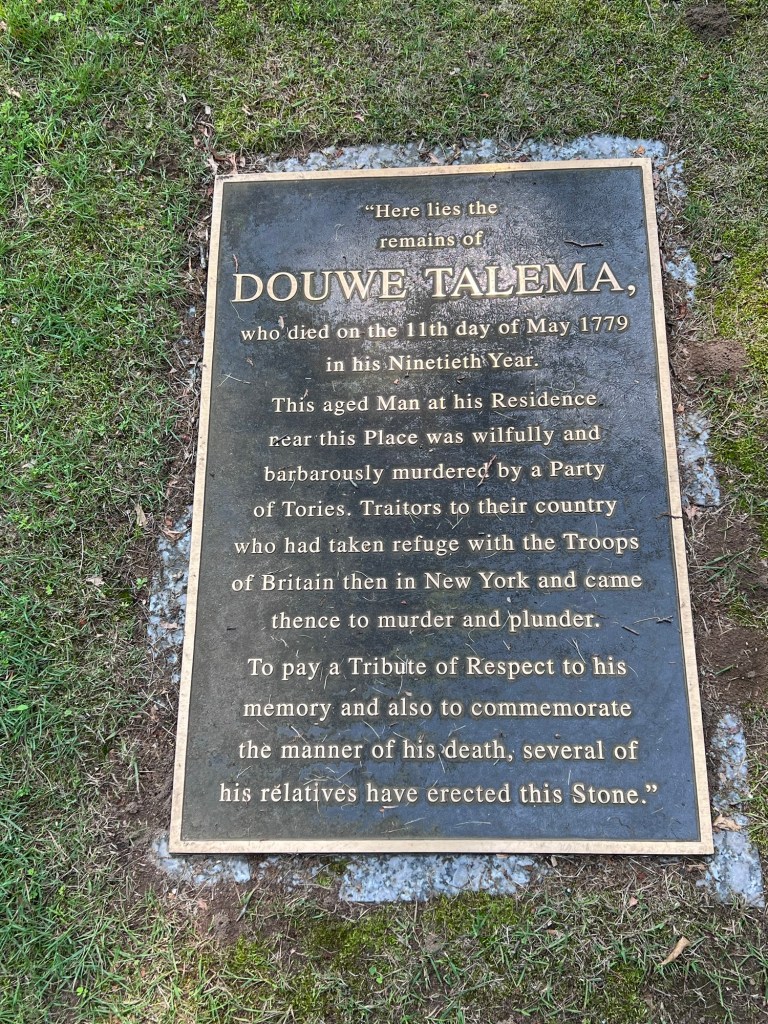
Patriot Douwe Talema, who was killed by the Tories during the Revolutionary War
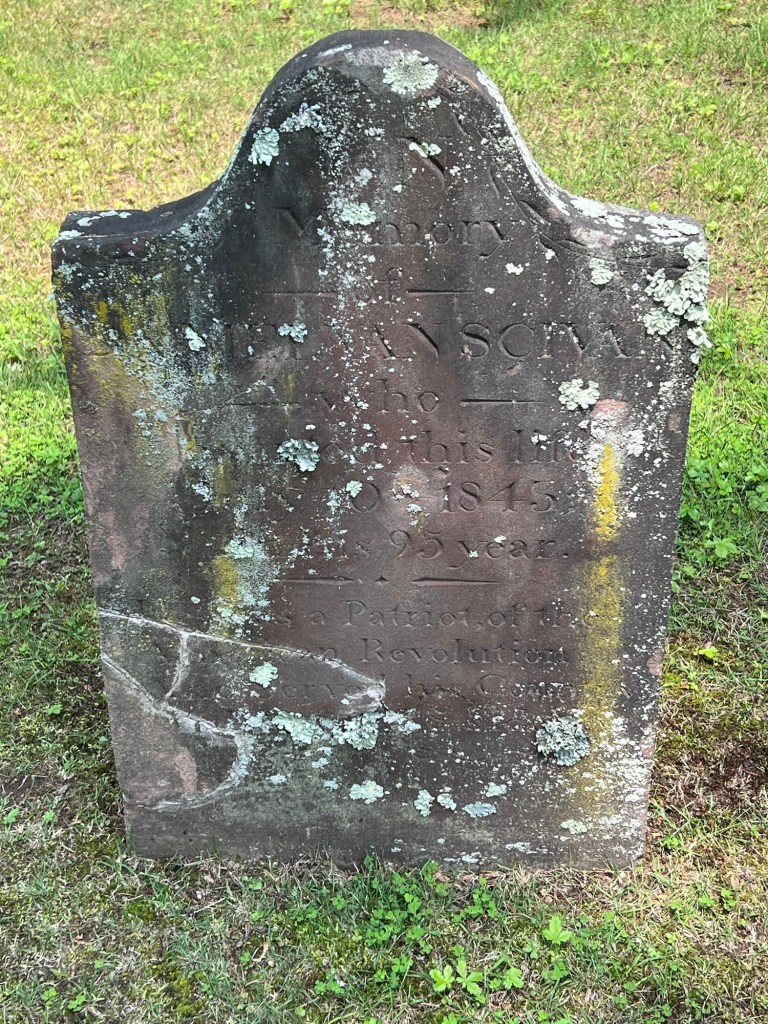
The Daniel Van Scivan grave, another Revolutionary War veteran
The Haring Family plot
The Haring family plot
The James Haring grave
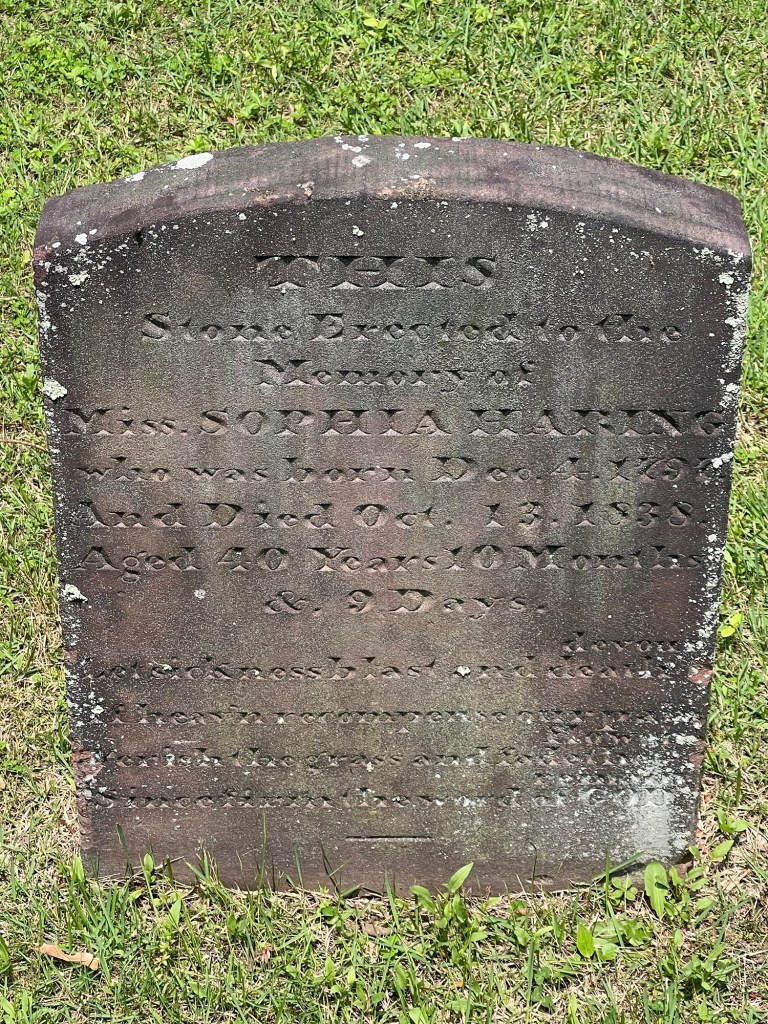
The Sophia Haring grave
The Du Bois family plot
The Cemetery view from the southern corner
My video of Touring the Cemetery and its historic roots:
My tour of the cemetery
Leaving the cemetery you can see the landscaping offers these families privacy in both life and death.
After the tour of the cemetery, I explored Downtown Demarest, NJ and discovered a beautiful little town with small local stores and a beautiful set of parks surround the streams and the train station just off the downtown.
The town of Demarest Veteran’s display
The town of Demarest has its own rich beauty and you can see this by visiting its Downtown area and its parks.
The breathtaking Duck Pond Park attracted a lot of painters who set their easels by the banks of the streams.
The Duck Pond is really beautiful
They also have a really nice railroad terminal that is now a senior center
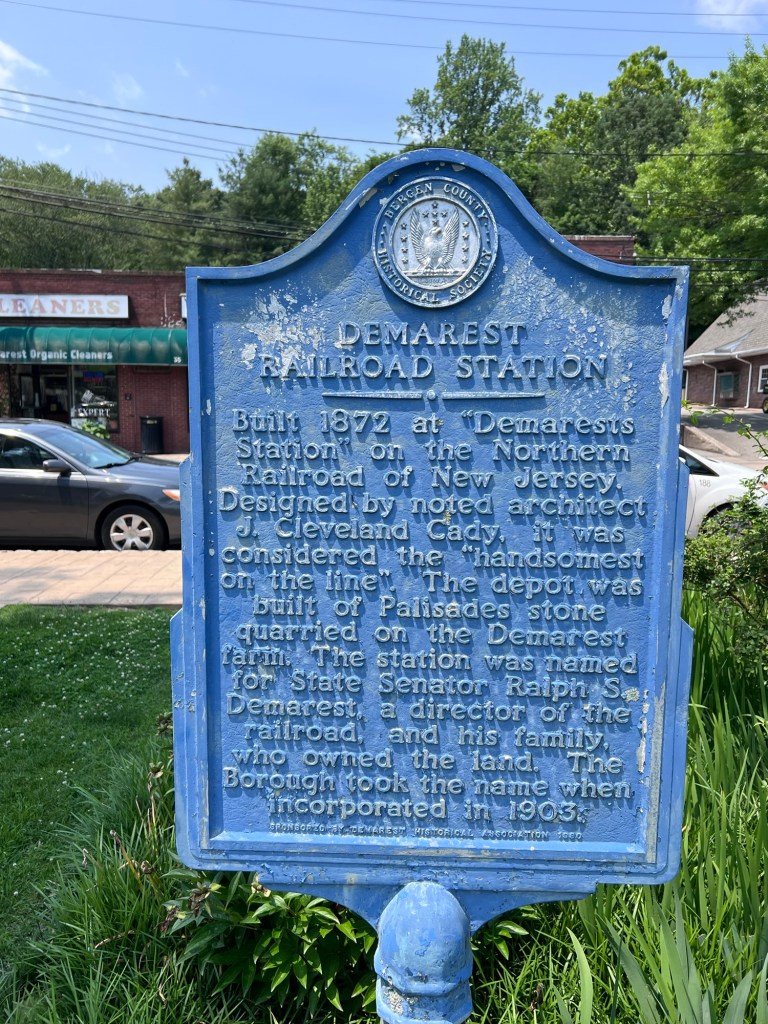
The historic Demarest Railroad Station
This wonderful community has so many wonderful attributes.