Tag Archives: Exploring Historic Morris County, NJ

Nathan Cooper Gristmill 66 Route 24 Chester, NJ 07930

Nathan Cooper Gristmill

66 Route 24

Chester, NJ 07930

(908) 879-5463

https://en.wikipedia.org/wiki/Nathan_Cooper_Gristmill

https://www.facebook.com/pages/Nathan%20Cooper%20Gristmill/495480777136425/#

Open: Sunday 10:00am-3:00pm/Monday-Thursday Closed/Friday 10:00am-4:00pm/Saturday Closed

Admission: $5.00 for everyone for everyone taking the tour; For special events it might be a different fee. Walking around the grounds is free.

My review on TripAdvisor:

https://www.tripadvisor.com/ShowUserReviews-g46355-d10355549-r1076722884-Nathan_Cooper_Gristmill-Chester_Morris_County_New_Jersey.html?m=19905

The location of the Cooper Gristmill:

(from the Cooper Gristmill website)

Located on 14 acres along the Black River, the Gristmill is the only restored water-powered mill in New Jersey and is listed on the State and National Registers of Historic Places. It’s a living example of the state’s transition from an agricultural to an industrial economy. Costumed staff lead guided tours of the mill, running restored machinery to harness the power of the Black River to grind grains, using two sets of massive 2,000-pound mills

The Nathan Cooper Gristmill

The sign welcoming you to the site

I spent an afternoon walking the grounds of the Nathan Cooper Gristmill after a trip to Hacklebarney Park and was able to tour the outside of the mill and the pathways around the property.

The historic sign welcoming you to the site

The front of the mill building

The front of the old mill had been decorated for the “250th Anniversary” of the nation and the grounds were really beautiful. The mill lined the Black River in the back of it and the lawns were filled with lush trees. The mill was not open for the day but you could walk around the grounds.

The Washington Turnpike historic sign

The front grounds and the water pump

The water pump marker in the front of the building

The water pumps at the front of the mills were closed off at this point but must have been used as a water source for the people working there at the time.

The stairway to the back of the mill

The pump by the front of the stairs

The back of the building is where the water wheel is located by the Black River water source. When I took the tour later the next month, the tour guide showed me how it worked. The mill is still a functioning mill and they still do produce flour for sale but on a limited basis.

The waterwheel that moved all the equipment inside

The Waterwheel and the water source to power it

The waterwheel

The history of the Water Wheel:

The Fitz water wheel was made in 1927 for a mill in Pennsylvania that burned down before it could be installed. It was then purchased for a mill in Pottersville, NJ in 1935 and powered until 1955. In 1974, the wheel was donated to the Morris County Park Commission and moved to the Cooper Gristmill (Cooper Gristmill pamphlet).

The video of the waterwheel working:

The historic sign on the waterwheel and the water source

The pathway to the Black River and the trails

The back trails of the gristmill have the most beautiful views of the river and the steams around the property. At the end of the Summer of 2026, it offers the most amazing views of the grounds. All the trees were still in bloom and the trails take you far back into the park. I just walked to the river stream and looked at the small waterfalls. This was the water source that powered the mill.

The historic sign on the Black River

The grounds and paths along the river are really picturesque but watch the paths when the paths are wet. It can be a muddy experience.

The Black River from the trails

The Black River water source

Video of my walk along the river:

The history of the Cooper Gristmill:

(from the site pamphlet)

A gristmill was apparently built at this site in the early 1700’s by the first Europeans to settle the Chester area. Records show that is was offered for sale in 1761. Later in the 18th century, it was owned by Ellis Howell. The property was purchased by Nathan Cooper in 1825 and then Cooper rebuilt the mill in 1826, since the original structure had been damaged by an earlier fire. This is the mill building that remains standing.

Following the death of Nathan Cooper in 1826, the mill was passed to his nephew, Nathan A. Cooper. The younger Cooper, who became one of Chester’s wealthiest and most important citizens, owned the mill property until his death in 1879.

Mills were built at close intervals. In 1832, the town of Chester reported five sawmills and three gristmills. Surrounding these mills were small settlements that developed followed by good roads so that the farmers could haul their grain to the site. Soon it was followed by a blacksmith shop and a general store. This was the beginning of the town of Milltown, later called “Milldale”.

Once in the forefront of technology and economic progress, village gristmills had become largely obsolete by the end of the 19th century. By then, milling had become a vast factory enterprise and the dynamic railroad system made it possible to ship grain and flour over great distances. No longer the bustling centers of activity, mills like the Cooper Gristmill came to be viewed as relics of a bucolic past.

In modern times and now restored, the mill once again hums with activity. The water wheel has been replaced and some of the mill’s mechanical equipment has been put back into place and now operates. In the place of farmers with wagon loads of grain, busses filled with school children arrive to see the millstones once again grinding flour. Cooper Gristmill and the Village of Milltown are good examples of the many small agricultural and industrial communities that once dotted the landscape of Morris County, NJ.

The back pathway to the front of the site

The first floor:

When I toured the facility a week later when the museum was open, I got a glimpse inside the mill’s past and how it was the economic engine of the area during Colonial times. The inside of the mill was in working shape and was still being used to produce flour when in season.

The first floor of the mill

The inside entrance to the mill on the first floor with the fireplace to the left and the millstones to the right. The stairs led to three floors of the workings of the mills from grinding to bagging and shipping of the flour produced by local wheat.

The inside framework of the mill in the process of milling wheat

The large gears that made these rocks special waterwheel work that harnessed the Black River power source. The river and lake that have been dammed are across the street.

The millstones for the grinding of wheat

The millstones on the first floor of the mill

The millstones used to process flour

The second floor:

The second floor of the mill displays contain the office of the manage of the mill, the flour separating area for the grades of flour and the old bagging area of the flour product for shipping.

The recreation of the manager’s office

The milling and bagging area

The flour processing machine

The flour grade sorting machine is off to the left. The machine would sort the grades of flour based on the weight and bulk.

The machines processing and sorting the milled wheat

Pieces of millstones

Pieces of the millstones used in the production. The pieces would be shipped individually and then assembled when they arrived at the mills because of their sheer weight.

The attic room

The Attic:

The attic was the last part of the tour and where a lot of the inner workings of the mill were located. Just watch your head.

The Visitors Center:

When I finished the inside tour of the mill museum, I returned to the Visitors Center with the tour guide where a small museum on historic Morris County and the county’s rural past and development was displayed.

The small museum inside the Visitors Center

The inside of the museum tells the story of the development of Morris County, NJ

The small gift shop inside the museum

After the tour of the inside of the mill and museum was over, I explored the grounds of the property and admired the foliage. I decided to explore the power source of the mill on the advice of the tour guide who was preparing to close up for the day.

The grounds of the mill building and the beautiful surrounding foliage

The tunnel under the road taking you to the damned river and the lake on the other side of the road.

The video of the walk through the tunnel:

The path underneath the tunnel lead to the lake that was the original and still the power source to the mill. It still makes the water wheel run and is its source of power.

The lake and the waterfall are the source of power for the mill

The Water source of the Cooper Gristmill:

(from the Cooper Gristmill site pamphlet)

Unlike the electric machinery of today. the water powered gristmill drew upon the natural environment for its power. The miller chose a location close to a water course that has a drop in elevation. A dam was built to form a pond that would store the water needed to power the mill even in the dry summer months.

A sturdy building was required to support the water wheel and its associated machinery. The water was brought from the pond in a wooden trough, headrace or flume. The height from which the water would fall when it reached the mill was called the ‘head’. It determined the amount of power that could be generated. A tailrace carried the water away from the wheel and returned it to the stream. The turning shaft of the water wheel transferred its mechanical power into the mill. The gears and belts then transmitted the power throughout the building. The four sets of millstones at the Cooper Gristmill originally required two water wheels to operate.

The mill was often the social center of an agricultural community and the miller was a community leader. The miller lived nearby in order to attend to the constant stream of customers and keep his machinery in good order.

The beautiful foliage on this side of the road

I walked through the pathway and looked into the pond to see the small waterfalls in the distance. The foliage colors on the background of the water was quite spectacular.

The Visitors Center and the mill complex from the other side of the road

It was a very interesting visit to see part of New Jersey’s manufacturing past and how it was still being utilized in the present. The tour guide explained that at certain times of the year, they still mill flour and sell it to the public.

So it is still a working mill in production and you can still see that production in the warmer months. You can also buy the finished product on premise.

Not only is it an interesting tour but the surrounding foliage in the Fall is breathtaking. It really was a fascinating tour of New Jersey’s past.

Take you time and enjoy the paths and trails around the mill building

In the whole time I toured the gristmill did the tour guide say the place was haunted. I never saw or felt anything but according to many videos, the place is haunted.

The Ghost Investigation
My Life as a Fireman: The Bergen County Firemen’s Home Association: October Meeting and Entertainment October 18th, 2026

On a very sunny and warm Fall day, the Bergen County Firemen’s Home Association met for our October meeting.

The beautiful foliage of Morris County, NJ on the way to the home that morning

There was a lot to discuss with the upcoming Christmas holidays approaching with our popular Christmas party to plan. We discussed the entertainment and the gift chosen by the Home’s Resident Executive Board. We also discussed the membership and staff lunch that has been so popular over the last few years.

The foliage in Mortis County that morning

Our fundraising has been on plan and fire companies all over Bergen County have been so supportive to the organization. Their donations have made a big difference in our efforts to make the residences of the home feel remembered.

We talked about recruiting and membership as our organization needs new members to come on board so that we can keep the traditions of the organization going into the future. We talked about different ways to attract members through Social Media. I had discussed much of this at the recent Caucus Meeting in August in front of the Bergen County delegation.

The home was decorated for the Fall and Halloween activities that were happening this month.

The NJ Firemen’s Home decorated for the Fall holidays

After the meeting, we joined the residents of the home for the afternoon entertainment and refreshments in the main room of the home.

Singer Gigi entertained the crowd that afternoon on a stage decorated for Halloween

We were joined by singer, Gigi, who is a crowd favorite, who sang a mixture of pop, contemporary and country music to the crowd. It was a really great concert.

We had so much fun that afternoon

Gigi entertaining the crowd with the song “Love Train”

Here is Gigi’s business card and information to contact her if you like the video’s:

If you like the songs and concert, here is Gigi Onofrio’s contact information. We have such great afternoon concerts up at the home and the residents love her.

On the break from the Entertainment, the members got up and thanked the residents for their support and that we hoped they and their families had enjoyed the recent barbecues over the Summer. These were so popular with everyone who attended.

The members of the Bergen County Firemen’s Home Association at the October Meeting

Before the Entertainment ended, we took our traditional group picture and thanked everyone again for their support of our organization. It was another productive meeting and we look forward to another wonderful breakfast at the Wyckoff Firehouse for our November meeting.

If you would like to make a donation to our organization, please send it to:

BCFHA

C/O Jeff Parma

277 Harriott Avenue

Harrington Park, NJ 07640

Please make the checks out to the Bergen County Firemen’s Home Association

Our 2026 Meeting Schedule:

All our meetings at the home start at 12:00pm at the NJ State Firemen’s Home in Boonton, NJ:

December 6th (Annual Christmas Party)

A big “Thank you” from The Bergen County Firemen’s Home Association Executive Board 2026

Harding Township Historical Society/Tunis-Ellicks House 16 Village Road New Vernon, NJ 07976

Harding Township Historical Society/Tunis-Ellicks House

16 Village Road

New Vernon, NJ 07976

(973) 272-3661

https://www.hths.org/museum

Open: Special Events and Pathways Tours

Admission: Free but donations are accepted

My review on TripAdvisor:

https://www.tripadvisor.com/ShowUserReviews-g46670-d24085125-r1058924664-Tunis_ellicks_House_Museum-New_Vernon_Morris_County_New_Jersey.html?m=19905

I visited the Tunis-Ellicks House on the Morris County ‘Pathways’ tour of historical sites throughout the County and enjoyed the self-guided tour of this well maintained and displayed home. Unlike many sites I have visited over the years where things are left out and jumbled on tables, the Tunis-Ellicks House offers a look at small family farms from before the Civil War. The displays depict and discuss the life of a farming family in Central New Jersey.

The Tunis-Ellicks House in New Vernon, NJ

The house sign

The house is located in the New Vernon Historic District

The house was located in one of the oldest sections of the community, facing other structures in the historical district of New Vernon, NJ.

The house and front garden from the road

The vegetable garden in the front of house

In front of the house was a large vegetable and fruit garden with a grape arbor for spirits on the side of the house. These items would be jarred and pickled for the winter months or sold at market.

Mission Statement:

(From the Museum website)

The Harding Township Historical Society is a private, not-for-profit corporation founded in 1977 to stimulate interest in the history of Harding Township. The Society shall support, assist in and seek to achieve the preservation of documents, buildings and sites related to Harding Township. It shall also collect, preserve, maintain and interpret original cultural material, which illuminates this history. In addition, The Society is responsible for preserving and maintaining the Tunis-Ellicks House and environs. Through use of its historic site, collections and programs, the society endeavors to document and illustrate the history of Harding Township for present and future generations (Tunis-Ellicks website).

You enter the museum from the back of the house. In the backyard of the home, there were all sorts of activities going on while you could start a self-guided tour of the house.

The back of the Tunis-Ellick’s House

The beautiful view from the back door of the home

The inside of the main part of the museum

The main part of the museum was the newer extension of the home where the living room and dining rooms were located. There were displays on the walls discussing farm life in New Jersey during the late 1700’s and early 1800’s.

The Dining Room section of the house

The workings of the Dining Room

The story of ‘Country Life’ and the gentleman farmer

Pieces of the decor on display

The kitchen area of the older part of the home offers a homey fireplace for cooking and summer storage for jarred and pickled food stuffs for the winter.

The kitchen and storage areas of the home

Pottery collection in the museum

The pottery collection

The kitchen dining and cooking area of the home

The fireplace for cooking, roasting and stewing of foods

The oven for baking breads, cookies and pies and the baking equipment

The Summer storage area for canned and jarred provisions for the winter months and for cooking.

The bathrooms were on the second floor of the home/museum and I got a quick tour of the upstairs bedrooms.

Bedroom One

Bedroom Two

These were not part of the self-guided tour but I was able to see them and how they were decorated.

History of the Harding Township Historical Society:

(From the Museum website)

The Harding Township Historical Society was formed in 1977 to save the circa 1795 Tunis-Ellicks House and restore it as it appeared in the early 19th century. The society discovered an original 18th century hearth and Federal-style mantel and a water-fed cooling room besides the well.  Areas of the house were left exposed to showcase the post-and-beam construction. A permanent exhibit on 19th century farming was created as well as space for temporary exhibits. 

The Society saved a circa 1870 Tramp House from destruction when the Great Swamp National Wildlife Refuge was created by having the building moved the Tunis-Ellicks House property.  The Harding Township Historical Society maintains an extensive archive containing records, maps, and objects since the colonial era pertaining to the town. The archive is open to researchers, genealogists and the public. Each year we provide an award  to a student at the Harding Township School that excels in the subject of history. The Society produces exhibits, lectures, tours, and interactive events to bring history to the public.

I then joined many of the other visitors to hear an historical reading on the patio of the home from a descendant of a Colonial family. He was discussing life in Colonial New Jersey.

The Colonial talks

They also had a table set up for arts and crafts. The volunteers were making corn husk dolls with some of the visitors.

They also had corn husk doll making as an activity

Then I was able to tour the grounds and visit the ‘Tramp House’ that was used for workers of these farms. This had been moved from the ‘Great Swamp’ to this location. It showed the living conditions of workers on the farm.

Walking on the grounds of the farm

The Wine Arbor on the side of the house

History of the Tunis-Ellicks House:

(From the Museum website)

The Tunis-Ellicks House was built in 1795 when George Mitchell bought it from Michael Pearce, a Minuteman in the Revolutionary War. The deed for 7 acres of land is dated April 22, 1795. Interestingly, the ledgers of Daniel Tunis, who lived down Millbrook Rd and had a store, show that, beginning May 9, 1795, Mitchell bought items consistent with building a house: a load of timber and half a bushel of hair (used for plaster).

In 1838, a local farmer named Silas Tunis bought the farm and his descendants owned the house until 1923. Eva and Lee Ellicks sold the house to the township in 1968. In 1977, the Harding Township Historical Society began to restore the home as it would have appeared in the early 19th century. The house is a post-and-beam East Jersey cottage complete with a cooling room fed by the well outside. The museum features a permanent exhibit entitled A Country Life about the workings of 18th-century farms.

The ‘Tramp House’ for farm workers

The historic sign

The inside of the small living quarters

The farm equipment used in processing crops

History of the Tramp House:

(from the Museum website)

The Tramp House is a simple stone building built about 1870 by the Morris Overseer of the Poor as a place to stay for wandering Civil War veterans searching the countryside for work.  By providing a place to stay, farmers protected their barns from accidental fires by the men trying to cook or keep warm. The men would work on the farms in exchange for a safe and warm place to sleep

The house was located in one of the oldest sections of the community, facing other structures in the historical district.

The house and front garden from the road

I really enjoyed visiting the site and got a good view how life on a New Jersey farm was before the Civil War. The museum was very nicely organized and the displays were engaging. The volunteers and docents could not have been nicer and it was a fun afternoon.

Green Village Deli 536 Green Village Road New Vernon, NJ 07935

Green Village Deli

536 Green Village Road

New Vernon, NJ 07935

(973) 773-1709

https://www.greenvillagedeli.com/menu

https://www.facebook.com/GreenVillageDeli/

Open: Sunday 7:00am-3:30pm/Monday-Friday 6:30am-4:00pm/Saturday 7:00am-3:30pm

My review on TripAdvisor:

https://www.tripadvisor.com/ShowUserReviews-g46475-d4623019-r1058921757-Green_Village_Deli-Green_Village_Morris_County_New_Jersey.html?m=19905

The Green Village Deli at 536 Green Village Road

The sign that welcomes you to this local breakfast and lunch establishment

I was visiting New Vernon, NJ for the annual ‘Pathways Tour’ that the Morris County Historical Board sponsor’s twice a year. While visiting the Tunis-Eckllis House around the corner, I passed the Village Green Deli, a popular local sandwich shop while driving through this small downtown area facing the Village Green. I made note of it as it was getting closer to lunch time.

After the tour, I stopped by the deli, read the wonderful TripAdvisor reviews online in the parking lot and headed inside for lunch. I really liked the vibe of this small town deli where the owners knew everyone by name and I felt like an interloper at a private party.

The inside of the Village Green Deli

The deli has that small town feel to it, with local art and sports paraphernalia in the walls. The woman who worked the register was greeting everyone by name and the guys that worked the grill seemed happy to see me.

Looking at the menu at the grill

I looked at the extensive lunch menu of popular sandwiches and some wonderful combos. You could even still get breakfast as I saw some of the guys at the counter devouring as I decided on what I wanted to order.

The deli has a wonderful selection of sandwiches, hero’s and other delicious sounding items.

There were so many things I wanted to try that day that it was hard to choose. Was it a breakfast sandwich with local sausage? The Thanksgiving ‘Gobbler’ sandwich with turkey, stuffing and cranberry relish, that sounded so good? I decided on an Italian hero sandwich with a selection of deli meats with fresh lettuce, tomato and onion. The hero was excellent!

The Italian hero with a pickle

The sandwiches here are huge! One half of a sandwich a normal person could eat for lunch and save the rest for another meal. The sandwich was loaded with salami, bologna, ham, Swiss Cheese and fresh veggies. I could barely fit it in my mouth.

The sandwich was excellent

I was able to eat about half of the sandwich before I told myself I was finished and not to push anymore. I wrapped the rest up to go and went back to study the menu before I left. I definitely want to come back and try more. The food and the service were both excellent.

The historic Village Green sign

https://vernonhistoricalsociety.com/

After lunch was over, it was such a beautiful sunny day and I walked over to the historic Green across the street and looked over the artifacts in the park. New Vernon is a very picturesque and beautiful little town.

The New Vernon Village Green in the early Spring

It was nice to have a place to walk and digest after that wonderful meal. It is worth the trip to visit this wonderful little deli in the small town. I really enjoyed my meal and the afternoon that followed.

The New Milford Village Green

I have to come back. There are so many sandwiches to try and I want to visit the Great Swamp which is a mile away. Until the next time.

Frelinghuysen Arboretum 53 East Hanover Avenue Morristown, NJ 07962

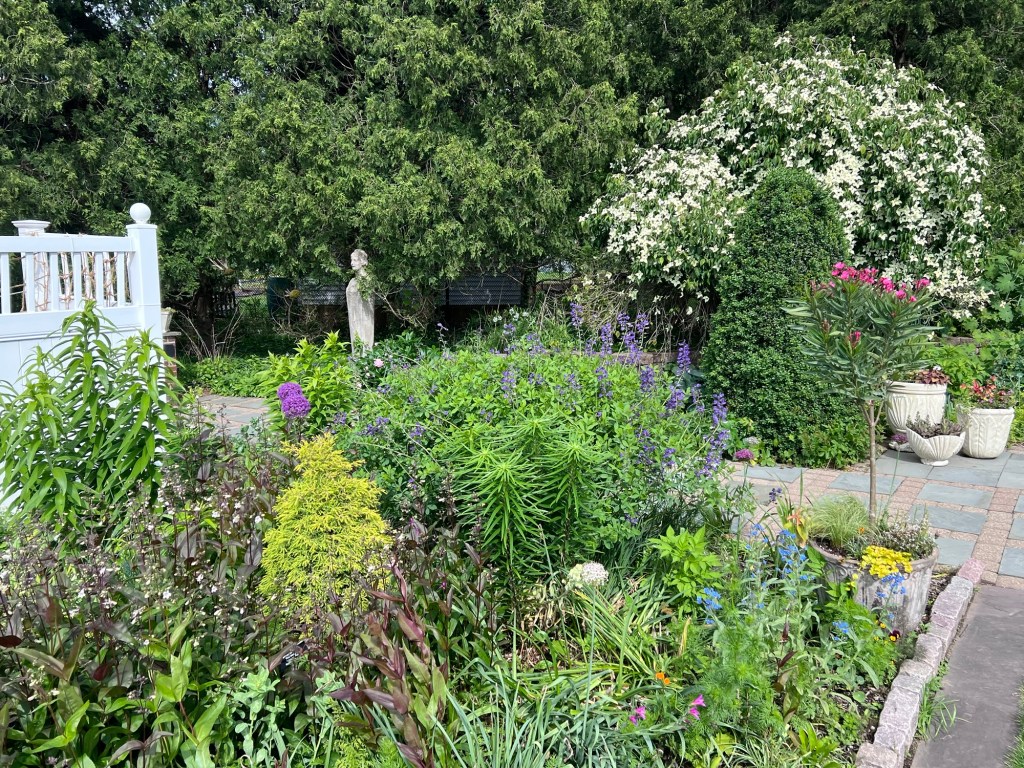
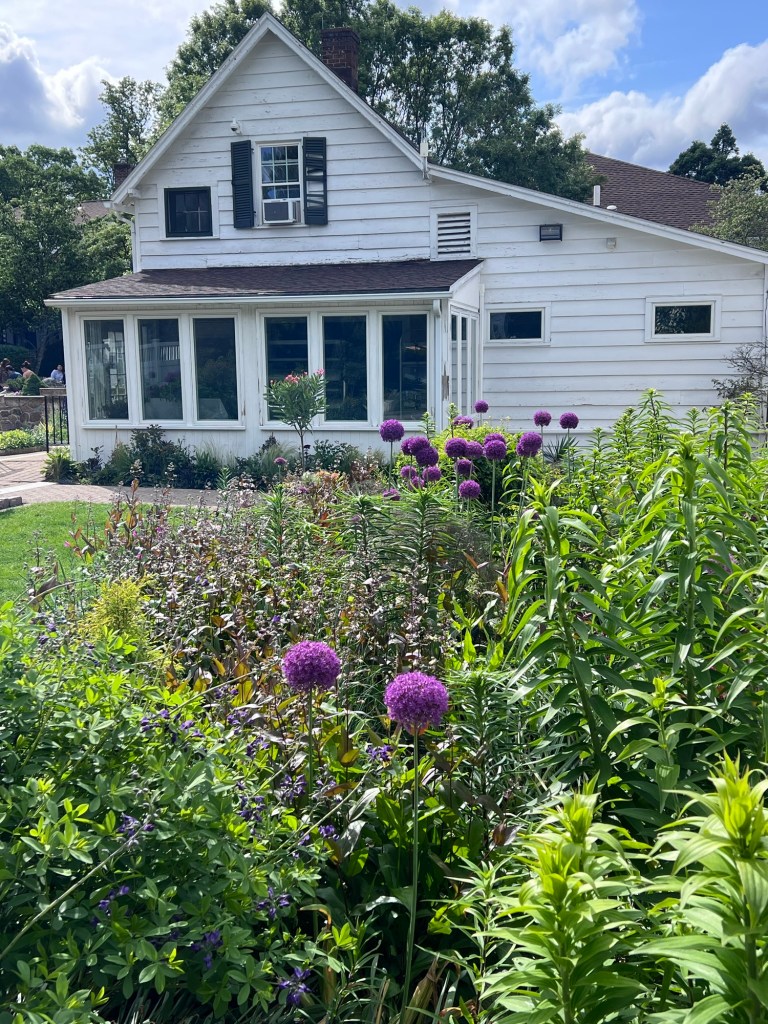
The gardens in bloom in the Spring of 2025

The flowers on the beds in full bloom

The pathways around the gift shop and Education Center.

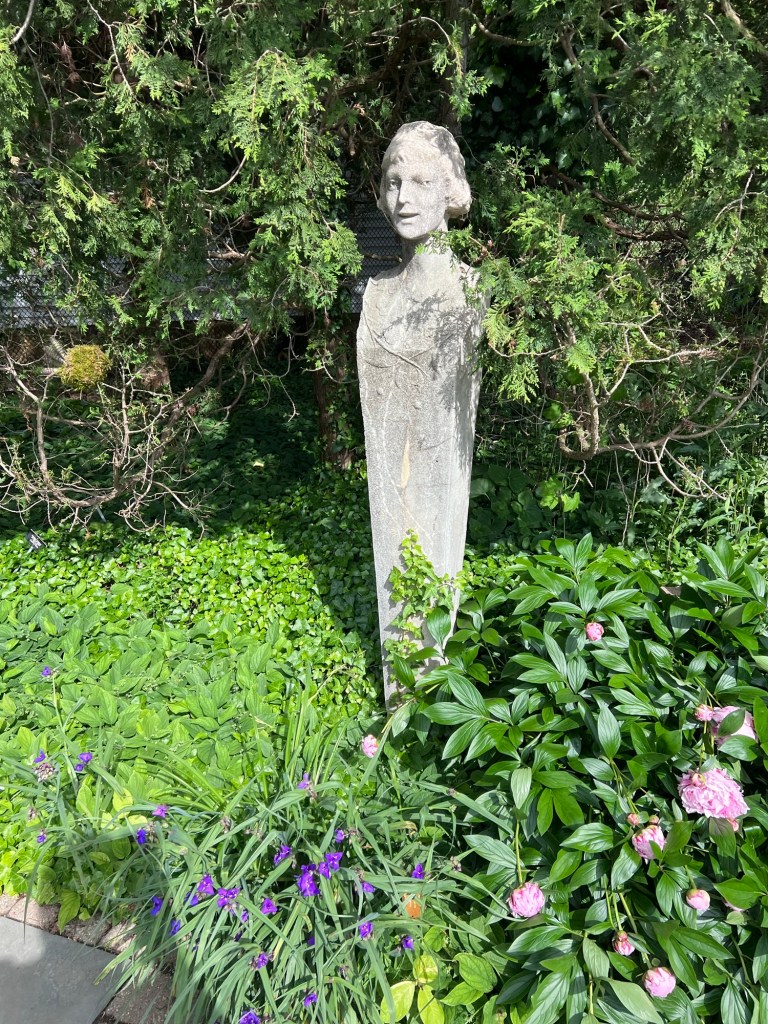
The statuary around the gardens

The flowers around the old stables area

Historical Society of Old Randolph 630 Millbrook Avenue Randolph, NJ 07869

The Randolph Museum and gardens in the Summer of 2024

The main gallery in the farmhouse

The farming equipment of Randolph, NJ’s past