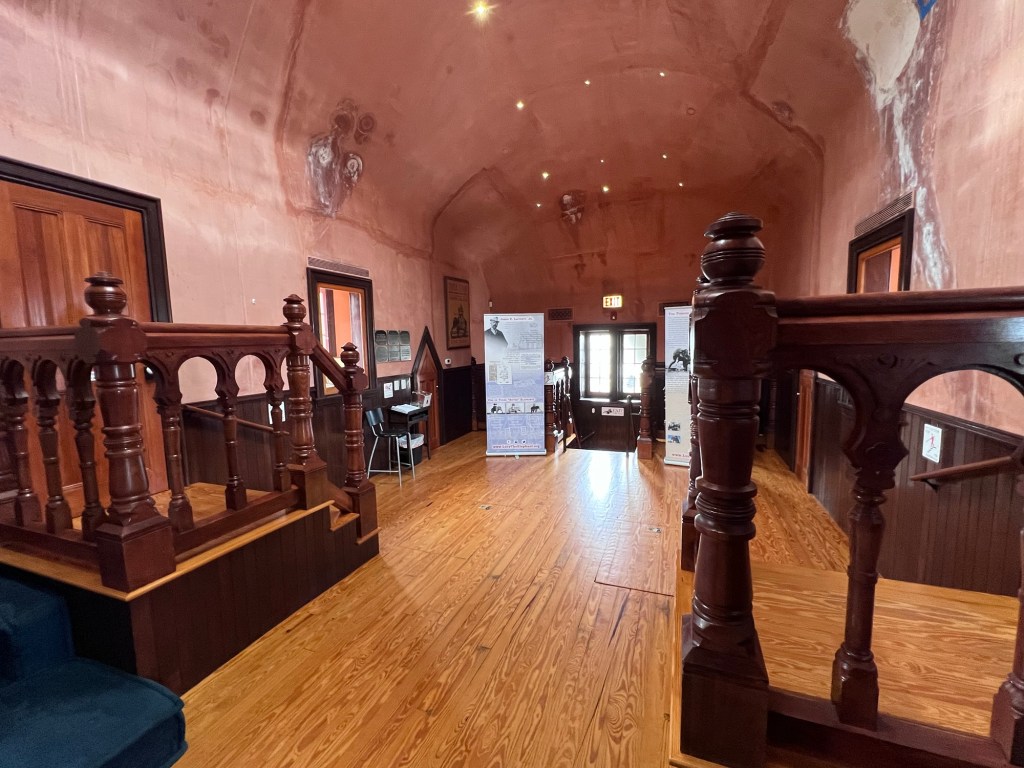
The Shandaken Historical Museum began as the second school house of Pine Hill, District #10. There were two school rooms on the second floor. Where the office of the museum is now located was the library. The rooms were divided by a cloak room used by both rooms. The room to the right was used by the upper grades.
When they started to send high school children to Fleischmanns High School their room was closed. The large room on the left them housed grades 1-8. Downstairs was the gym. On the west end was a stage that folded up against the wall. The stage was used for recitals and at Christmas time, a play was put on for the whole town. For most of the year it was the gym, the favorite sport was basketball (TSHS website).
The old school could tell some pretty good tales. It has housed a coat factory, a furniture stripping business, a community center, as a village building it held Boy Scout meetings, Red Cross gatherings as well as free vaccination clinics and is now the Town of Shandaken Historical Museum (TSHS website).
The museum sign that greets you outside
The Museum’s Mission:
The museum displays a fascinating collection of 19th and 20th Century tools, machinery, clothing, letters and artifacts relating to the Town of Pine Hill and the surrounding hamlets of Allaben, Big Indian, Bushnellsville, Chichester, Highmount, Mt. Pleasant, Mt. Tremper, Oliverea, Phoenicia, Pine Hill, Shandaken and Woodland.
The inside of the main gallery showcases the best of the surrounding hamlets. Each small town surrounding Pine Hill history is displayed town by town with artifacts from each community.
Pine Hill’s history is prominently displayed in the front starting with a display of an old classroom. It is amazing how things stay the same over the years.
Each of the displays have interesting details in all the artifacts that being showcased in each section. There are all sorts of photos, historical objects, artworks and personal affects of local citizens.
The classrooms of the past are similar to today
Local artifacts from the town
Each of the small hamlets surrounding Pine Hill had their own displays of artifacts ranging from local history, schools, fire and police departments, local events and residents and their day to day lives. Many of the residents from these communities have donated their or their family’s personal affects to the museum to build this collection.
When you visit some of these communities and look at the pictures on the wall, you can see in some cases not much has changed in these Upstate towns.
The museum celebrated the 250th Anniversary of the United States with an interesting display of the history of the Country and New York’s contributions.
The New York State display of the 250th Anniversary of the Country
The lower level of the museum is a reflection of life on the farm and an agrarian society from the turn of the last century. The funny part is that only being two hours out of New York City, many small towns in New York State still have that feel.
The lower level Farm Living Galleries
The first set of artifacts are dedicated to the home, family and faith. Everyday living to most families in the small farming communities of Upstate New York. These artifacts reflect homelife from the late 1880’s to the 1930’s.
Home and Living on the farm
The kitchen tools and equipment to run a household
The tools of the trade for the life in these rural communities was based on what they could grow and trade with other farmers. Before WWII, you can see the life of the rural housewife was tedious with growing, preserving, pickling, baking and canning for the winter months long before modern supermarkets and refrigeration. It was a lot more work to get meals on the table and took a lot of grit and a budget of both money and time.
The Baking and Jarring on the farm to prepare for the Winter Season
The workings of the farm kitchen
Children’s playthings and cribs
Children’s play was based around the household and work in the future.
The family and faith
The items in a household that make it function
The workings of the home and farm
Life and functions of the Upstate Farm
The communities of Upstate New York still have agriculture as a base and even though electronic gadgets still help, many of these ‘tools of trade’ are still being used. These are the tools that built the farming industry Upstate through the 1970’s.
Tools of the Trade
The farm tools
Farm and field equipment
The equipment of the Farm
Small businesses were part of the community and the druggist was very important
The museum touches on life in small and large Upstate New York towns and the challenges they still face in a economy where farming and tourism are dependent on the economy. Though many of these communities are only two hours outside New York City, they might as well be a world away.
The displays are an interesting look of how communities develop and how they sustain themselves over time and we can see how COVID and the transplants from New York City and beyond are still shaping these communities.
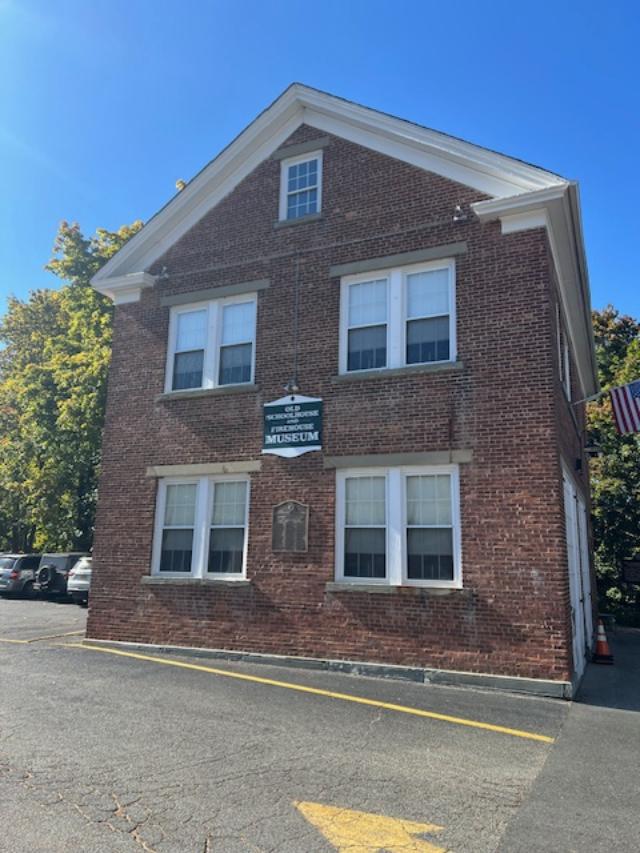
I recently visited the Ogdensburg Old Schoolhouse and Firehouse Museum at 6 Passaic Avenue in Downtown Ogdensburg and discovered the community’s rich history of farming and mining in its past and its current destination as a weekend vacation spot and a up and coming bedroom community of New York City.
The County still has some farming and agriculture going on as the County continues to be built up with expats from the City, and Bergen and Morris Counties. The first floor is dedicated to the history of the Ogdensburg Fire Department with an old Engine and Ladders trucks, artifacts from the Sterling Mine just up the road and township property such as an old voting booth. You can read about the history of the Ogdensburg family as you head to the outside gallery.
The second floor has displays of various town departments including the Rescue, the Police Department and Fire Department. There are various displays of the town’s school system and various clubs in town. There are displays on the town’s mining and agricultural past with items such as farm advertising and mining equipment and minerals. Each display plays a role in the development of the community and how it progressed from farming to mining to manufacturing to the bedroom community it is today.
History of the Building:
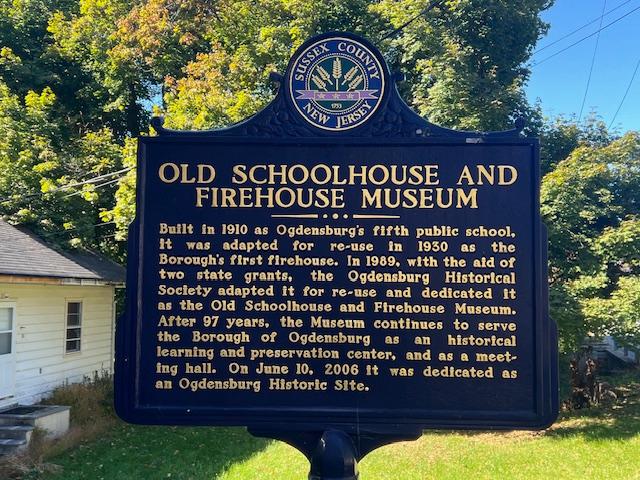
“Built in 1910 as Ogdensburg’s fifth public school, it was adapted for re-use in 1930 as the Borough’s first firehouse replacing the one built in 1872. In 1984, with the aid of two state grants, the Ogdensburg Historical Society adapted it for re-use and dedicated it as the Old Schoolhouse and Firehouse Museum in 1987.
After 97 years, the Museum continues to serve the Borough of Ogdensburg as an historical learning and preservation center, and as a meeting hall. On June 10, 2006 it was dedicated as an Ogdensburg Historic Site.”
The historic sign of the museum
The Borough of Ogdensburg is the host of this marker commemorating the rich history provided by this building. This building has been maintained with much thought and care and remains as a museum and meeting place for the residents of the town. The marker is located in front of the building on Passaic Avenue just off Main Street by the Ogdensburg Elementary School. This marker was part of the 2008 placement (Museum website).
The outside of the museum which served as a school and a firehouse
The first floor of the building has the fire trucks, the history of the fire department and Ogdensburg’s 250th Anniversary of the United States on display.
The museum artifacts from the 250th celebration of the Country
The museum is on the heart of mining country of Sussex County, NJ and the museum has an interesting mineral collection along with their collection of mining artifacts.
The Mineral and Mining Collection
The museum being home to the Ogdensburg Fire Department contains the history of the local fire department along with vehicles and artifacts from the department.
One of the early pull hose beds pulled by men and then by horses
The first floor also contains the history of the Ogden family in the region.
The history of the Ogden family in the community
The town voting booth and a turn of the last century phone
The second floor gallery used to serve as offices and living space of the fire department.
The main gallery on the second floor
The gallery case lines are filled with memorabilia from different aspects of the community telling the story of the growth of the community that included Mining and Farming. It explains the growth into the modern suburbs of today.
The main gallery on the second floor of the museum
The main gallery on the second floor
The display case of Ogdensburg departments including school, fire and police departments
Blanket with historical sites and artifacts of the town of Ogdensburg, NJ
The businesses including schools and the domestic and farming industries
Each of the display cases represented different aspects of the town and has a variety of pictures and memorabilia from a variety of eras. The case lines show how the community changed over time from a mining community to the changes of a bedroom community of Newark and New York City.
The Entertainment display of recorders, phonographs, radios and early record players
The influence that Thomas Edison had on the community with new technology. Several pieces of Thomas A. Edison memorabilia are on exhibit to honor the ten years Edison spent mining iron ore at the old Edison Ore Milling Company on Sparta Mountain. Several of his phonographic inventions were created here (Ogdensburg Historical Society website).
Close up view of record players and Victrola’s
The School system display
The Ogdensburg Presbyterian Church display of artifacts from inside the church
The Sterling Mine display with minerals and equipment
The NJ Zinc Mine and Mineral display is a small s as molding of the museum down the street and the importance of the mining industry at the turn of the last century.
A closer look at the minerals display
A replica of a working mine operation. The machine shows how workers descending and brought up rock from the mines.
The Dedication to Mr. Waco Hadowantez, the town historian
The last display as you leave the museum is dedicated to the man who founded the historical society, Waco Hadowantez.
The museum tells an interesting story of the history of Ogdensburg and the surrounding area. It shows the importance of the Mining Community at the turn of the last century and how the community is pivoting towards tourism to tell its story.
Please contact the museum directly for seasonal hours and tours.
Northwest Bergen History Coalition History Day/Summer Open House 2026:
I visited the Hopper-Goetschius House Museum during the 8th Annual Northwest Bergen History Coalition History Day. I had never been here before and it is a real treat. There are many buildings on the property to visit on top of the house and the fact that this was someone’s house into the 1980’s is pretty interesting.
The historic marker in front of the house
The Hopper property in July 2026 for the Weekend Open House
The Gris Mill wheel
The historical tree stump
The historical plaque
The property in the Summer of 2026
Christmas Open House December 2019:
The house still holds many secrets. The best part of the tour of the house is the secret stairs in the kitchen that lead to the old second floor. This can only accessed behind a panel that leads to a narrow set of steps. You can see it from the new second floor from the top floor.
I attended Holiday Celebration on December 8th, 2019 and it was a beautiful sunny day for an outside event. It was a really nice afternoon. They had a visit with Santa at the Dutch barn which was decorated with trees surrounding him and presents and a decorated Dutch sleigh. In the schoolhouse, there were all sorts of games and talks to enjoy.
Santa in the Dutch Barn at the Hopper museum
In the outside kitchen, there were chestnuts and fresh popcorn being made that you could munch on while walking around enjoying the festivities and the smells of the cooking food were mouthwatering. The gentleman doing the cooking was doing a demonstration on how the food was cooked and the amount of time it took to make things.
The outside buildings still had a bit of snow left
The inside of the house was decorated for the Victorian holidays with a nicely decorated tree in the Living Room and garland all over the place. There was a Victorian music box playing songs and a reading of “The Night Before Christmas” being read on the hour.
In the kitchen of the oldest part of the house, they served hot cider and homemade Christmas cookies of all kinds. They were also selling fresh homemade jam that one of the members made. The kitchen was decorated for the holidays as well. There was an open tour of the house and it was fun to see the upstairs decorated with all sorts of Victorian toys and dolls. The fee was a $5.00 donation and it happens every first week of December at the site.
The Hopper House kitchen
The house is a treasure trove of period furniture and family items and on the property there is a schoolhouse, a barn, a blacksmith shop and an outhouse. During the Summer months, the house is open for special tours on the weekends and in the Fall, they have a Harvest Festival and Christmas holiday events. The house is run and operated by the Upper Saddle River Historical Society.
The antique toys in the upstairs bedroom
In April of 2023, I returned to the Hopper-Goetschius House for the Northwest Bergen History Coalition Day for the event. It was a gloomy day with mist and rain but that did not put a damper on the event. There were lots of activities going on in each of the buildings.
My first stop was at the barn where the ladies were doing a demonstration on spinning thread and we had a conversation of where the expression “Pop goes the weasel” came from (from the spun threat reaching its max and then the machine made a ‘pop’ sound). The ladies were demonstrating the way women spun yarn and made clothes and the work that it entailed.
The yarn spinning demonstration at the Hopper Barn
The ladies explaining how the spinning works
‘Pop goes the weasel’, the weasel at the Van Riper-Tice Barn
When I left the barn, I went over to the school house building to see what was going on. A very bored volunteer took up all my time and would not leave me alone. She had to read from a script and take me all over the house. I just wanted to get out of there. Thank God another person walked in so that I could escape and see the rest of the property.
The Ramsey House was moved to the property to save it from destruction and the society has done a good job transform it to a turn of the century classroom. This is a surprising display in many historical societies as I am sure that people have donated so much of their childhood mementos.
The Ramsey House schoolroom
The schoolroom
The teacher’s seat at the school room. Nothing has really changed.
The farm artifacts at the Ramsey House schoolhouse
After the tour of the Ramsey House, I took the tour of the main house again and its secrets. The Hopper House is a very interesting home as the owner did not want plumbing in the house. Up until 1963, she still used the well. She was forced by her nephew to get a modern bathroom. I thought this was strange that the woman did not want a bathroom. She still used the outhouse into the 1960’s.
The Hopper House kitchen
The home is decorated with all sorts of beautiful antique furnishes and decorations. The house is so well organized and the volunteers do such a nice job telling its story especially at the holidays. I visited all the rooms where the volunteers explained its purpose.
The bedroom upstairs
Bedroom Two
Bedroom Three in the upstairs loft of the house
My last part of the tour was visiting the Smokehouse right behind the house.
The Smokehouse during the Summer Open House
Inside the kitchen during the Open Kitchen
The inside of the Smokehouse
The volunteers were cooking corn bread, homemade potato soup and biscuits in the fireplace. It was interesting to see how food was cooked on the farm in the days before modern kitchens.
The two volunteers working there were so happy to see someone. They told me that no one wanted any soup. On a cold rainy and misty day, I was taking them up on it and it was really good! Talk about warming you up.
The Smoke House on the Hopper estate was cooking away that afternoon
The volunteers were making breads, biscuits and soup that afternoon that warmed me up
The delicious Potato Kale Soup warmed me up on this rainy day
The delicious Corn Bread was cooked with bacon fat and tasted so good! I munched on most of this.
I finished eating and talking with the volunteers about all cooking they were doing. They told me that they were following the recipes that were from the late 1700’s that would have been cooked at the farmhouse at that time. It was a really interesting conversation we had on cooking. It was nice to eat something as well. I was starved at this point.
After the meal, I left to go to the next site. I felt for these volunteers. The Hopper House is off the beaten tract and they must have not gotten the visitors that the other homes had seen. Still it was a wonderful visit with members who care so much about the house and its grounds.
The Hopper estate with the barn, school house and ice house in the distance during the Northwest Bergen Historical Coalition Day
The Hopper House entrance hall
The Hopper-Goetschius house on the corner of Lake Street and East Saddle River Road dates back to 1739. Built by the Hopper family, it is the oldest remaining house in Upper Saddle River. We know it existed in 1739 because it was recorded in surveyor Charles Clinton’s journal and possible it is older.
The picture of Steven Goetschius and his wife,
The other family pictures on the table in the parlor
Rosalie Fellows Bailey in her book on pre-Revolutionary Dutch houses, says it was marked as the home of Gerrit Hoppa on a rough sheepskin map made about 1713.
The Goetschius family, the second owners of the house
The house underwent several changes in the mid 1800’s. The large central chimney with back to back fireplaces was removed. Probably, with more modern forms of heating available such as wood stoves, the fireplace seemed a bit old-fashioned and the owners took it out. Besides, they wanted to use the entrance hall as a room, so the stairway along the east wall was removed and a central staircase added where the fireplaces had once been. The dormers were added in the Victorian era.
The Hopper house in 2023
The Hoppers farmed the land and had a lot of it by today’s standards. The property extended from the Saddle River (Lion’s Park) up the hill almost to Montvale and up the East Road to where Creative Gardens was located.
The antique dolls at the Hopper House bedrooms
(From the Society website)
In 1814, the house became the home of the Reverend Stephen Goetschius of the Old Stone Church. It remained in the Goetschius family for a century and a half, always a place of central importance in town as Stephen Goetschius, the great-great grandson of the Reverend Stephen, served as the borough clerk for over 40 years and conducted his town business from the east room of the house (SRHS.com).
The Hopper House Living Room
The house was without running water until Stephen’s death in 1962. Until improvements were made at that time, Steve’s wife, Lizzie, as those before her, carried water from the well for washing, cooking and shoveled coal for heat (SRHS.com).
The Hopper House Kitchen
The kitchen in the new section of the house
In 1985, the Hopper-Goetschius house was presented to the Borough of Upper Saddle River by Clinton and Grace Carlough. Lizzie Goetschius, the last resident of the house was Clint Carlough’s aunt. The house today serves as a museum, run by the Upper Saddle River Historical Society and offers the public historically related events throughout the year (SRHS.com).
The Hopper House Living Room
The back bedroom Dutch wardrobe
The Patriotic Display for the ‘Bergen 250’
(Upper Saddle River Historical Society)
The Hopper House property also contains:
*The Privy or Outhouse that was in use at the Hopper-Goetschius House until 1962 when plumbing was installed in the house.
The Outhouse
Hopper House estate with all the important buildings in the Summer of 2026
*The Ramsey Sayer House was moved to the grounds in 1999 to become part of the museum complex. This is the oldest existing from house in Upper Saddle River, a good example of a tenant house common on farms in this area. The Ramsey Sayer house belonged to William Ramsey, the grandfather of Kate Fisher Goetschius, mother of Steve Goetschius, who lived in the Hopper Goetschius house for many years.
The Ramsey-Sayre House now serves as the makeshift schoolhouse
The schoolhouse at the turn of the last century
The Native American artifact collection at the Schoolhouse
*The Van Riper-Tice Barn was erected about 1800 by the Van Riper Family on their farm on West Saddle River Road (near the Cultural Center). It was later owned for many years by Harmon Tice.
The Dutch American barn in the Summer of 2026
Sleighs and buggies and outdoor equipment
In 1989, it was scheduled to be demolished to make way for a development, the Historical Society dismantled it, moved it to the Museum ground and had it restored and rebuilt on its present location.
The inside of the Van Riper-Tice Barn at the Hopper House estate
Winter transportation at the barn
Transportation and farming equipment
The farming equipment display
More farming equipment
The displays of wool at the Van Riper-Tice Barn
The display of waffle irons
The Apple Cider Press that the Tice and Van Ripper families were so well known for making especially at Thanksgiving
*Snake Fence: a zig-zag fence of split rails once common in this area was added in the property north of the Van Riper Tice barn. The project was completed in 2001 with the help of Will Mazzuto and the vision of John Kroner and Joanne Lombardo.
The Hopper House estate
The Blacksmith Shop
The blacksmith doing a demonstration
The Upper Saddle River Historical Society:
The Upper Saddle River Historical Society was organized in 1977 to collect, preserve and distribute the history of the Upper Saddle River area. The Society is also responsible for the management and restoration of the Hopper-Goetschius House Museum located at 245 Lake Street, Upper Saddle River, NJ.
The Historical Society has over 500 members and is host to nearly 2000 museum visitors each year. The Society holds program meetings throughout the year along with special events such as a Spring Concert, a wonderful Harvest Fair in the fall and an Old Time Holiday Open House in December, featuring mulled cider with chestnuts roasting on an open fire.
The Museum is open for tours every Sunday during July & August from 2:00pm-4:00pm or by appointment. For group or individual tours contact: Althea Gardner @ (201) 327-7807 or Kay Yeoman @(201) 327-2236.
Hopper-Goetschius House Museum Restoration Fund Drive
Disclaimer: This information was taken directly from the Upper Saddle River Historical Society website. Please check the site for the hours and days it is open.
The sign that welcomes you to this local breakfast and lunch establishment
I was visiting New Vernon, NJ for the annual ‘Pathways Tour’ that the Morris County Historical Board sponsor’s twice a year. While visiting the Tunis-Eckllis House around the corner, I passed the Village Green Deli, a popular local sandwich shop while driving through this small downtown area facing the Village Green. I made note of it as it was getting closer to lunch time.
After the tour, I stopped by the deli, read the wonderful TripAdvisor reviews online in the parking lot and headed inside for lunch. I really liked the vibe of this small town deli where the owners knew everyone by name and I felt like an interloper at a private party.
The inside of the Village Green Deli
The deli has that small town feel to it, with local art and sports paraphernalia in the walls. The woman who worked the register was greeting everyone by name and the guys that worked the grill seemed happy to see me.
Looking at the menu at the grill
I looked at the extensive lunch menu of popular sandwiches and some wonderful combos. You could even still get breakfast as I saw some of the guys at the counter devouring as I decided on what I wanted to order.
The deli has a wonderful selection of sandwiches, hero’s and other delicious sounding items.
There were so many things I wanted to try that day that it was hard to choose. Was it a breakfast sandwich with local sausage? The Thanksgiving ‘Gobbler’ sandwich with turkey, stuffing and cranberry relish, that sounded so good? I decided on an Italian hero sandwich with a selection of deli meats with fresh lettuce, tomato and onion. The hero was excellent!
The Italian hero with a pickle
The sandwiches here are huge! One half of a sandwich a normal person could eat for lunch and save the rest for another meal. The sandwich was loaded with salami, bologna, ham, Swiss Cheese and fresh veggies. I could barely fit it in my mouth.
The sandwich was excellent
I was able to eat about half of the sandwich before I told myself I was finished and not to push anymore. I wrapped the rest up to go and went back to study the menu before I left. I definitely want to come back and try more. The food and the service were both excellent.
After lunch was over, it was such a beautiful sunny day and I walked over to the historic Green across the street and looked over the artifacts in the park. New Vernon is a very picturesque and beautiful little town.
The New Vernon Village Green in the early Spring
It was nice to have a place to walk and digest after that wonderful meal. It is worth the trip to visit this wonderful little deli in the small town. I really enjoyed my meal and the afternoon that followed.
The New Milford Village Green
I have to come back. There are so many sandwiches to try and I want to visit the Great Swamp which is a mile away. Until the next time.
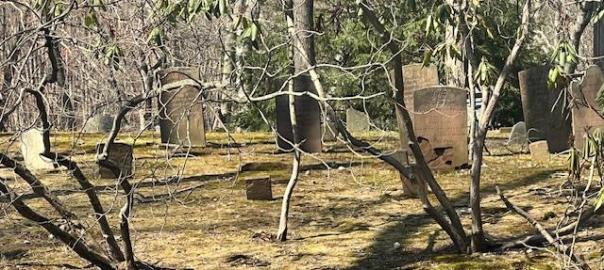
The Van Bushkirk Burial Ground behind the residence at 45 East Saddle River Road
The Van Bushkirk Burial Ground is part of the history of Saddle River, NJ’s early settlement period. The burial ground has about 40 tombstones that are arched and shaped. These are some of the first residents both of Saddle River and Bergen County, NJ.
The burial ground lies next to a creek off East Saddle River Road and can only be accessed by going through private property of the residents living at 45 East Saddle River Road. Please do not enter without permission of the owner of the home. These pictures were taken with a long distance camera from the street.
The Van Bushkirk Burial Ground at 45 East Saddle River Road
The History of Saddle River:
(from the Saddle River Town website):
In 1675, Lenni Lenape tribal leaders sold a large amount of land on the Eastern side of the Saddle River (known as Werimus) to Albert Zabriskie. In 1708, Zabriskie sold this tract of land to Thomas Van Buskirk. The first house in Saddle River was built by the Van Buskirk family in 1709. The original Van Buskirk homestead still stands at 164 East Saddle River Road across from Borough Hall.
In 1709, the Lenni Lenape sold the land on the west side of the Saddle River to the English as part of the Ramapo Tract. Property on the west side of the Saddle River was acquired from this Tract throughout the 1700’s. The Ackerman Family was the most prolific buyer of these early Saddle River parcels and first settled on the West side of the Saddle River in 1745 when Johannes Ackerman acquired 245 acres.
The graves of George and Margaret Achenbach
Saddle River continued to grow and populate during the 18th century. Families such as the Van Buskirk’s, the Ackerman’s, the Achenbach’s, the Hopper’s, the Zabriskie’s, the Stilwell’s and the Baldwin’s farmed and developed the area.
The grave of George Achenbach
The first of many Saddle River mills was built in 1714 and the first school was constructed in 1720. Another early 18th century business was the blacksmith shop operated by the Ackerman family. Over the years, these 1st families built the quintessential “Old Dutch Homesteads” from actual sandstone that was found in town.
The Revolutionary War era tombstones
The Revolutionary War was a horrendous time for the residents of Saddle River. The townsfolk had spent the entire 18th century developing the area into a well established community and all growth essentially stopped during the war. Since the Jersey Dutch initially considered the revolution to be an English issue, it was particularly shocking when the fighting came to their backyards. From December 1776 until the end of the war, both American and British forces traveled through Saddle River and many times set up camp in the center of town.
Residents were in constant fear of the British employed Hessian soldiers who would terrorize families by raiding the houses for food and then burning the fields before leaving. Although no major battles took place in Saddle River, there were small skirmishes to fend off raids and the Blue Mill on East Saddle River Road was destroyed. Even George Washington, the future father of our country, passed through Saddle River on multiple occasions and tradition has him staying overnight at the Ackerman Homestead on the East road.
When the Revolutionary War ended, Saddle River residents picked up right where they left off in terms of community and industry development. The Ackerman’s built a Foundry on what is now Waterford Gardens. Tice and Berdan both opened stores in town and the Bulls Head Tavern opened its doors to weary travelers in 1802. Old mills were re-opened and new ones such as Van Riper’s Saw Mill and Basket Factory were established. The post war growth continued for decades and culminated in the 1820s with the construction of the Zion Lutheran Church in 1821 and a new schoolhouse behind the church in 1825.
The worn tombstones in the cemetery
History of the Van Bushkirk family in Bergen County during the Revolutionary War:
(From the Bergen County Historical Society website):
Loyalists in Bergen County came from all backgrounds, religions and economic classes. At the beginning of the war, a number were officers in the militia, the military force composed of all able-bodied males maintained by each province, and later the states. The lieutenant colonel of the militia was John Zabriskie of New Bridge. Zabriskie understood the sentiments of many of his neighbors, particularly those of Abraham Van Buskirk, whose property was directly across the bridge in Teaneck. Van Buskirk was a surgeon in the militia under Zabriskie, and with whom he served on Bergen County’s Committee of Correspondence, an entity established to keep in touch with other New Jersey counties and the events occurring there.
The Doo Wop Preservation League Museum at 4500 Ocean Avenue.
I visited the Doo Wop Preservation League Museum when I was visiting Wildwood, NJ for the Firemen’s Convention. They were sponsoring the DJ on the stage behind the museum. It was easy to miss the museum with all the fire equipment around it and hundreds of firemen milling around.
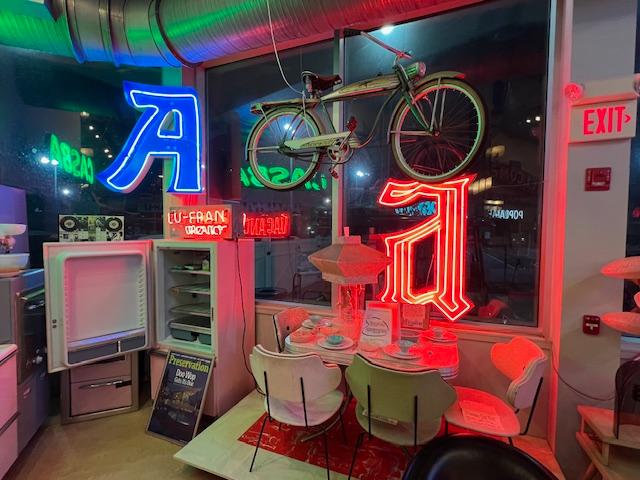
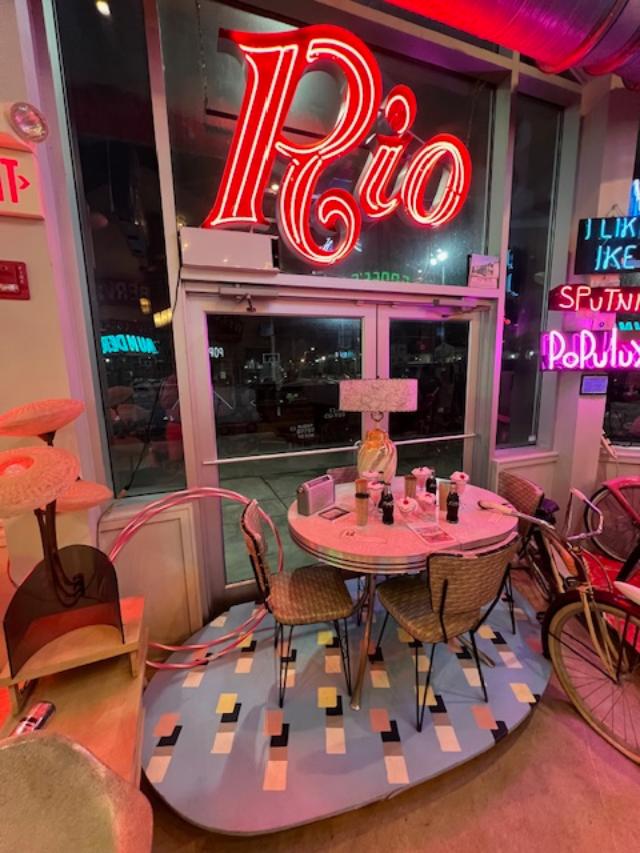
The neon signs in front of the Doo Wop Museum.
The old neon hotel signs outside the museum
Once inside, this small museum is a treasure trove of history of the resort motels that once lined the beaches of Wildwood, Wildwood Crest and North Wildwood. As time rolls on, many of these old motels, hotels and restaurants are giving way to condos, newer homes and new chain hotels changing the landscape of Wildwood. It is bringing it into modern times with newer looks.
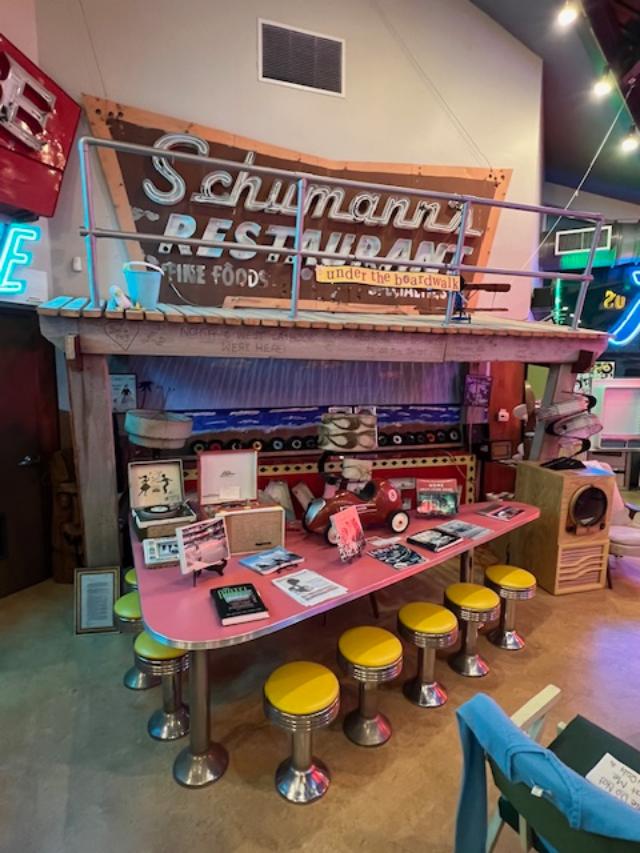
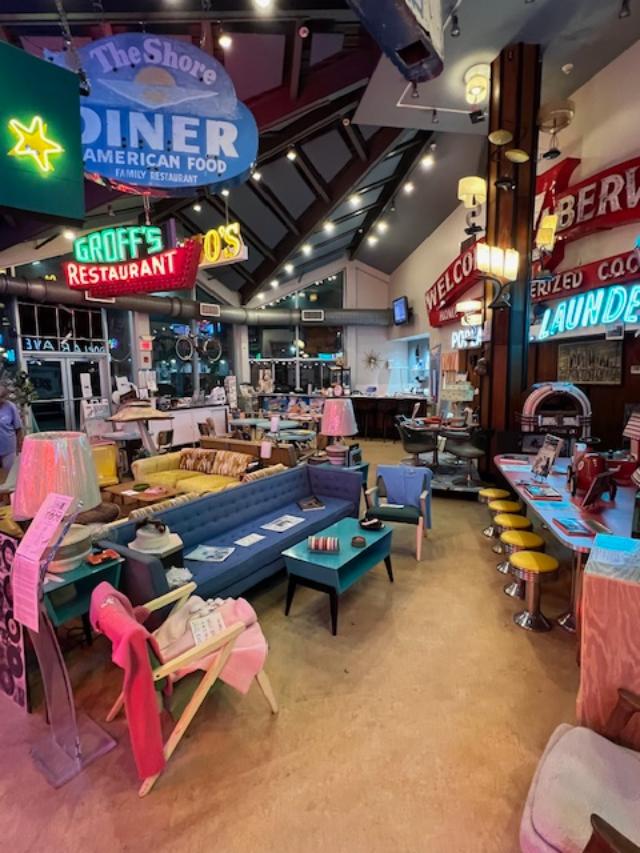
The restaurant section of the Doo Wop Museum
When many of these motels are torn down, the establishments donate old furnishes, decorative objects and signs from the outside to the museum. The outside of the museum is decorated with signs of businesses that are now closed, there neon lights still shining but for a different purpose. These somewhat gaudy and over-grandised signs and looks were of a time of great optimism and travel. Since the middle and working class families did not have the money to travel to these exotic places, something similar was created for them in the Wildwoods bringing that look to the Jersey shore.
The restaurant section of the Doo Wop Museum
The neon room of the 1950’s
When talking to the curators , a couple that ran the museum said that the museum represents the change in décor used after WWII when they used the neon lights and steel from the war into the signs and lighting of the new resorts. It was a unique style of the late 1950’s and 60’s, when these materials were plentiful and motel owners were getting creative to bring in the rising middle class tourists that could not afford the trips to Hawaii and Miami Beach. These owners brought these themes to Wildwood with a creative twist. Check out the signing and furniture that lines the walls and dining set ups of the museum.
The old neon signs of the hotels in Wildwood, NJ.
The museum is small and takes only about an hour to walk through. Each of the vignettes are designed as its own room with furnishings from old hotels and motels like tables, chairs, lamps and ashtrays in one corner, in another are stools, a jukebox and menus from a 50’s or 60’s style restaurant or items used at the time like bicycles or scooters.
The interesting preservation by the museum shows all over
The History of the Doo Wop Museum:
The Doo Wop Preservation League was founded in 1997 as a 501C3 to preserve the 1950’s and 60’s architectural styles of the Wildwood’s. Doo Wop style is a combination of Space Age dreams of the late 60’s and the exotic seaside tropics of recently opened South Seas Islands like Hawaii which became out 50th State in 1959. The Polynesian look was very ‘in’ at this time as most people could not afford to go but wanted to replicated for them.
The signs of the museum beacon visitors.
The museum is housed in the 1960’s ‘Space Age’ restaurant “The Surfside” that was saved from the wrecking ball and moved to this spot right across the Convention Center and the Boardwalk. On Tuesdays and Thursdays when in season (i.e. Warmer Months), there are bus tours offered by the museum. The museum’s goal is catalogue the remaining businesses in town that still keep their look of the era (Museum website and The Wildwooder Newspaper).
Don’t miss the museum tours:
The best part is that the museum is free (donation suggested) and you can take your time for a self-guided tour of the museum.
The Tuckerton Museum and the Seaport at 120 West Main Street in Tuckerton, NJ
The entrance to the complex from Route 9
The entrance to the Tuckerton Seaport complex on a sunny Saturday morning
The complex was once a bustling fishing and shipping area that has now been preserved as a cultural site with tours, a series of restaurants and a museum.
The Mission of the Museum:
(from the Tuckerton Seaport Museum website)
Our mission at the Tuckerton Seaport is to preserve, present and interpret the rich maritime history, artistry, heritage and environment of the Jersey shore and the unique contributions of its baymen.
The dock area by the coffee shop
The artwork by the parking lot and coffee shop
I walked over to the main building which served as both the gift shop and museum. It was funny that the gift shop took both the first two front rooms of the museum. I had to look behind shirts to see the displays.
The docks and touring boats by the museum
The Seaport Tuckerton Museum at 120 West Main Street
The History of the Complex:
(from the Tuckerton Museum website)
Originally launched as the Barnegat Bay Decoy and Baymen’s Museum, the Tuckerton Seaport has evolved over the past twenty-two years into a community museum and community center occupying 40 acres located along historic Tuckerton Creek in Tuckerton, New Jersey. Tuckerton Seaport benefits from a prime location at the center of the Jersey shore, easily accessible via Exit 58 on the Garden State Parkway. Tuckerton Seaport works as a coastal cultural center to bring folklife traditions of the past and present to life through programs on land and water.
The museum was just opening up as I arrived and the staff was busy getting everything ready so I just walked around the museum. It is an interesting museum on New Jersey’s nautical past and the growth of the shipping and trading that went on in the turn of the last century. The museum also showed the bustling fishing industry that still exists today.
The Giant Chicken greets you at the door
The Giant Chicken was a road stop symbol of the White Way Farm Market and a tourist attraction
I thought it was rather cute and could see why people stopped
The view from the front porch of the museum was spectacular on this sunny day
The exhibit at the museum ‘Museum in the Making’, which is a through look at Tuckerton, its past and its contributions to the growth of New Jersey
The first room also served as a bustling gift shop with the main attraction this carving of the ‘Jersey Devil’
A display of Duck Decoys
A collection of woodcarvings of fisherman
The popular businesses that once lined Route 9 up and down the shore area
Displaying life down the shore in that era with quilting and sewing
The display of wood carvings and artwork on the first floor
The artworks made of driftwood by local artists
The driftwood art display on the first floor
The rooms both on the first and second floor were displayed by themes of Lenape Indian life at the shore, the Dutch and English traders, growth of shore farming, shipping and trade and fishing industries and the development of tourism in the area with steamships and the railroads.
The first room in the museum is a detailed look at the life of the Lenape and the froth of the fishing industry
The early life at the Jersey shore
The Native American display
The first part of the early development of Tuckerton started as the fishing and hunting grounds of the Native Americans until the settlement of the Dutch
The history of the Lenape
The arrival of the Europeans started the bustling shipping and trade industries that supplied the home country
With the growth of industry and farming many people started businesses to supply the population
Some started popular businesses that lasted over a century
E. Walter Parsons Jr. had a very successful fishing business that was in the family until 1984
With the rich soil in the area, local farmers worked the land providing fruits and vegetables for the growing population
Early farming equipment on display
The second floor galleries depicted the developing life at the shore with creating of modern life saving for the shipping and fishing industries and with coming of railroads, the bustling tourism industry with the change of leisure travel after the Civil War and the Industrial Revolution.
The second floor rail transportation display
The second floor display on shipwrecks off the Jersey coast
The development of modern Life Saving procedures
With storms at sea and affecting life in the area, as it still does today, there was a growth and development of modern Live-saving procedures and rescue methods.
The Life Saving exhibit
The use of the Lyle Gun in rescues
The series of pulleys and wenches are still used today in different forms. They had to create a safe way to rescue people not just from storms but accidents as well.
The Life Saving and Rescue display
Rescue display
The railroad made its way to the Jersey shore bringing tourists from both New York and Philadelphia and bustling North Jersey. This opened the area up to tourism as leisure travel grew at the end of the nineteenth century.
One example of a visiting tourist was the Cinderella Cramer display with long distance travel to the shore.
The first female passenger of the Tuckerton Railroad
Getting the rail ticket
Tourism developing at the Jersey shore
The Cinderella Cramer display representing that eras travels to the shore with Victorian standards and use of steamer trunks
Packing the steamer trunks for the long journey
Artifacts from the shore
Life at the shore still had its perils as it does today with storms affecting development and shifting shore lines
The lighthouse light display
The museum once served as a beacon for shipping and the top level served as a lookout. Today you can walk upstairs and enjoy the views.
Traveling up the tower stairs
On this beautiful sunny and clear morning that I visited, the views were spectacular.
The view of the port area of the complex
The view of the inlet and Lake Pohatcong across from Route 9
My video of the views from the top of the lookout
The Tuckerton Seaport Museum tour was a very thorough look at the community and its development over the last three hundred years. The exhibits showed the progress the community has made and where it is headed in the future as the shore communities keep changing.
With the economy, the rise of AI, climate change and overall population growth toward the shore, it will be interesting to see the changes of the future.
Leaving the museum complex at the end of the trip
Tuckerton has an interesting past as a shipping and fishing destination and now you can tour the buildings and see what life was like back then and there it is moving in to the future today.
The Stone Harbor Bird Sanctuary is a wonderfully preserved microcosm of what the barrier islands of New Jersey looked like hundreds of years ago. As you walk along Sanctuary paths, it is easy to imagine the Lenni-Lenape Indians wandering through the maritime forest, crossing wind swept sand dunes, past groves of white cedar, birch, pine, holly and sassafras trees, taking time to drink water from a spring fed freshwater pond and then, fishing in the salt water meadows surrounded by herons and songbirds.
As early as the 1870’s and 1880’s, the Sanctuary area was recognized as a “veritable paradise of birds” for ornithologists. The primary attractions were Little Blue Herons, Black-crowned Night Herons, Green Herons and egrets. Once the 96th Street Bridge opened in 1911, those who wanted to study, hunt or collect the eggs of birds no longer had to walk across four miles of marsh. Easy access to the heronry was a boon to birders but also a threat to birds whose plumes and eggs were valued.
In 1941, the Stone Harbor Bird Club was organized in the home of Lillian R. Leuallen. The Bird Club was renamed in 1946 as the Witmer Stone Club to honor Witmer Stone, one of the first ornithologists to document birds in the Sanctuary area. With considerable foresight, the Witmer Stone Club proposed early in 1947 that the Borough of Stone Harbor establish a “sanctuary”. In October of 1947, the Borough Council passed Ordinance #208 which preserved 31 acres of land as a wildlife sanctuary. Subsequent to expert study in 1961 which demonstrated that no birds were nesting on the beach side sanctuary acreage, the Stone Harbor Borough Council sold ten acres to the east of Second Avenue. The remaining 21 acres bounded by Second Avenue to the East, Third Avenue to the West, 111th Street to the North and area between 116th and 117th on the South represents the Sanctuary as we know it today. The Sanctuary remains one of the few bird sanctuaries in the world that are completely within municipal boundaries.
One can’t overstate the foresight and commitment of the residents and Borough officials to conservation as well as the preservation of open space and wildlife in 1947, 1961 and every year since. This commitment was reinforced by the United States Park Service in 1965 when it designated the Sanctuary as a National Natural Landmark.
Over the years, the Sanctuary has been home to thousands of birds and visited by more than a million people representing all fifty states and most countries in the world. It has been estimated that Sanctuary visitors spend more than $5 million each year, locally. Although some like the New York Times in 1960 glorify the Sanctuary, referring to it as “The Everglades of New Jersey”, Stone Harbor residents think of the Sanctuary as a symbol of the character of this quiet, single family town which respects the nature and wildlife that surrounds them while placing a premium on livability, aesthetics and serenity.
The front of the sanctuary from 3rd Avenue
I took a walk when I was in Stone Harbor through the town’s Bird Sanctuary to hopefully view some rare birds. While I did not see much, I heard a lot of singing and scrawling as I walked the path through the trees.
The front gardens in the sanctuary
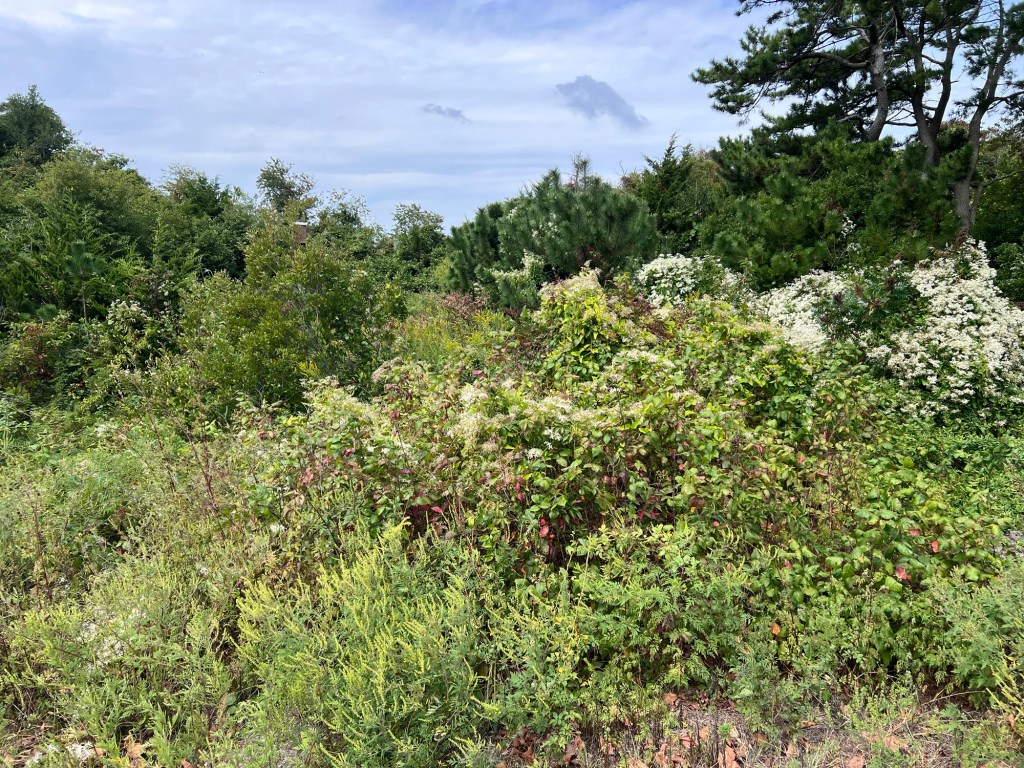
The gardens were still in bloom in the late Summer and many colorful wildflowers attracted all sorts of butterflies and other insects.
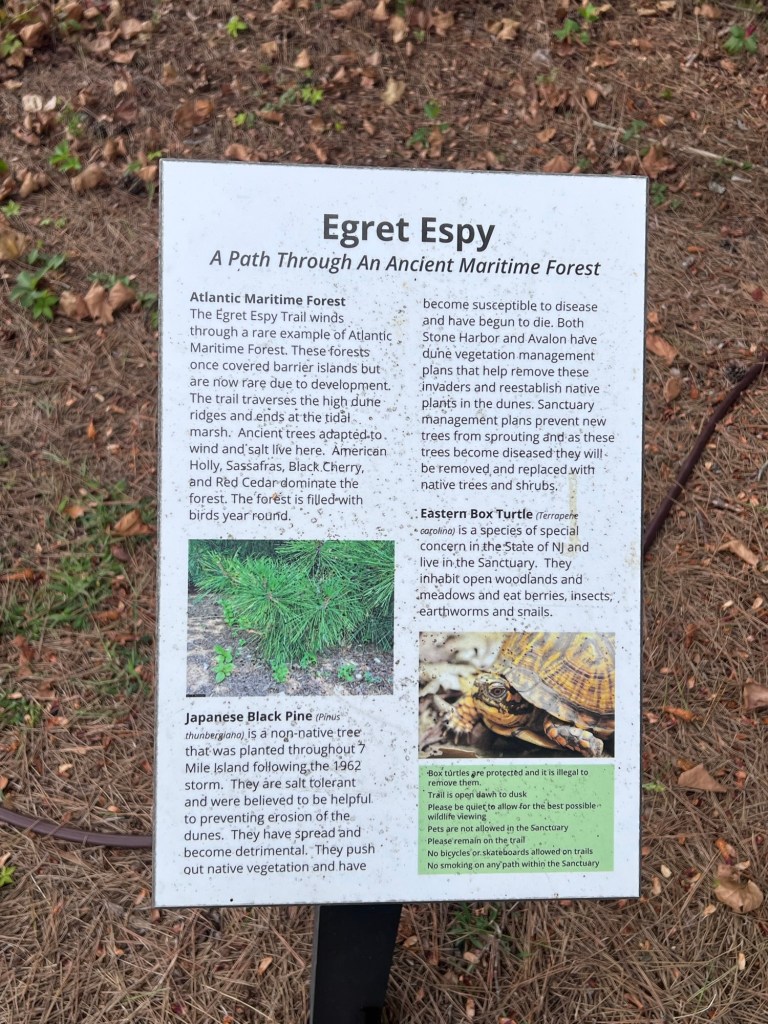
The sign greeting you about the experience
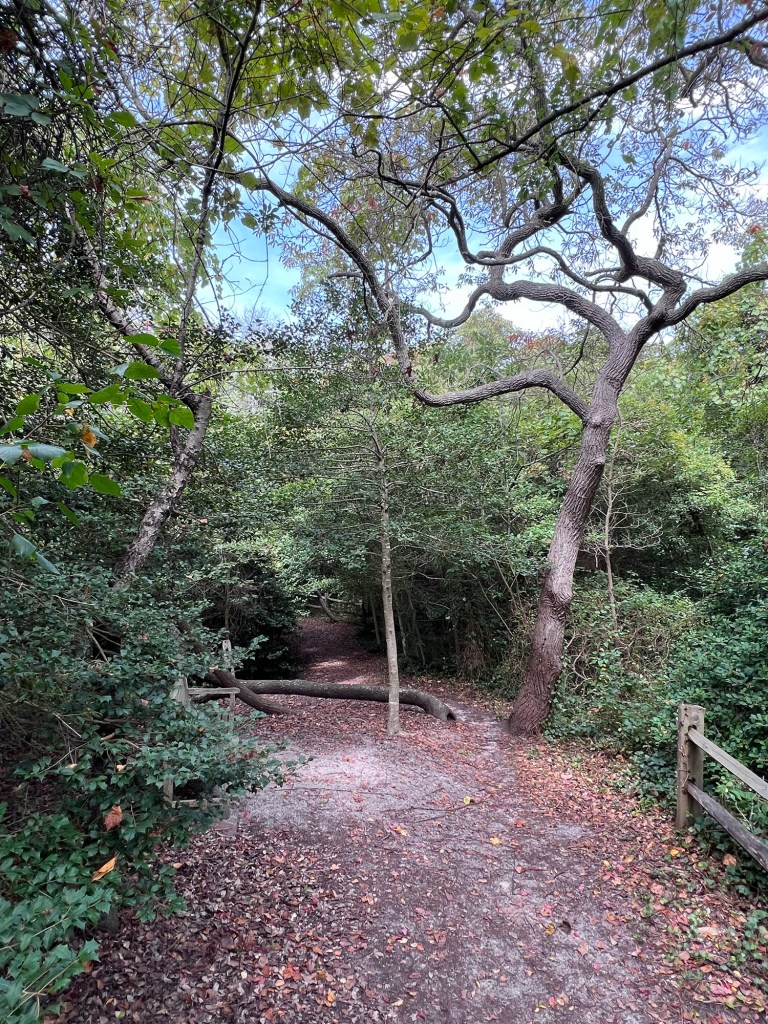
The front path of the sanctuary
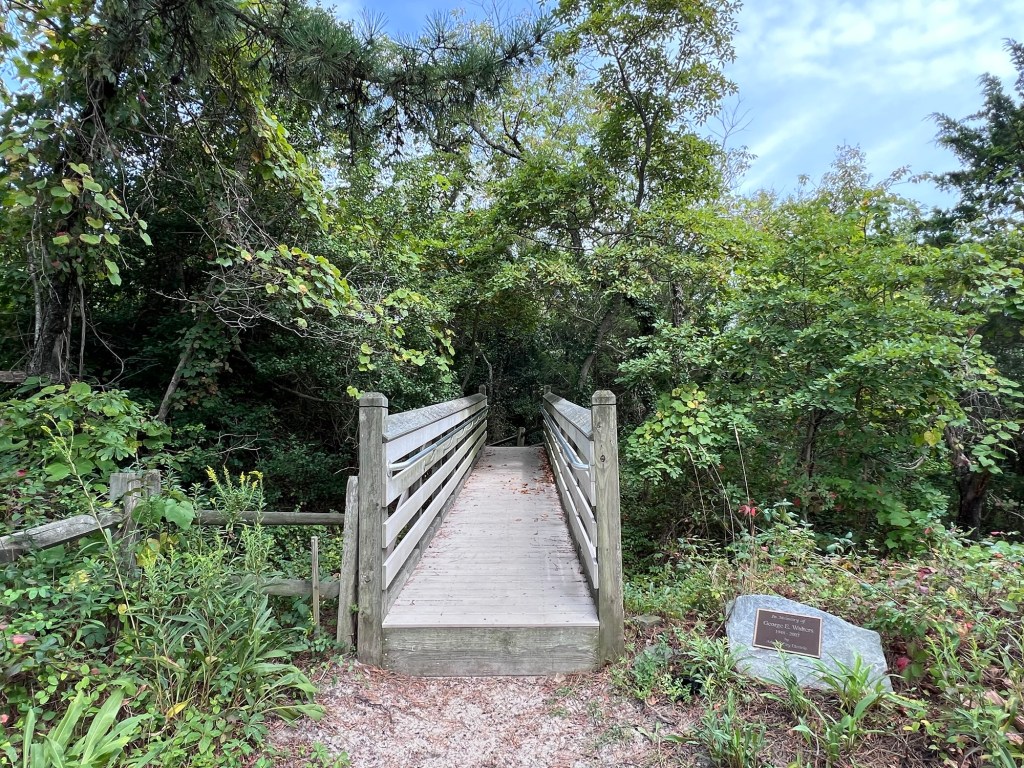
You head over the bridge to the paths that take you into the woods
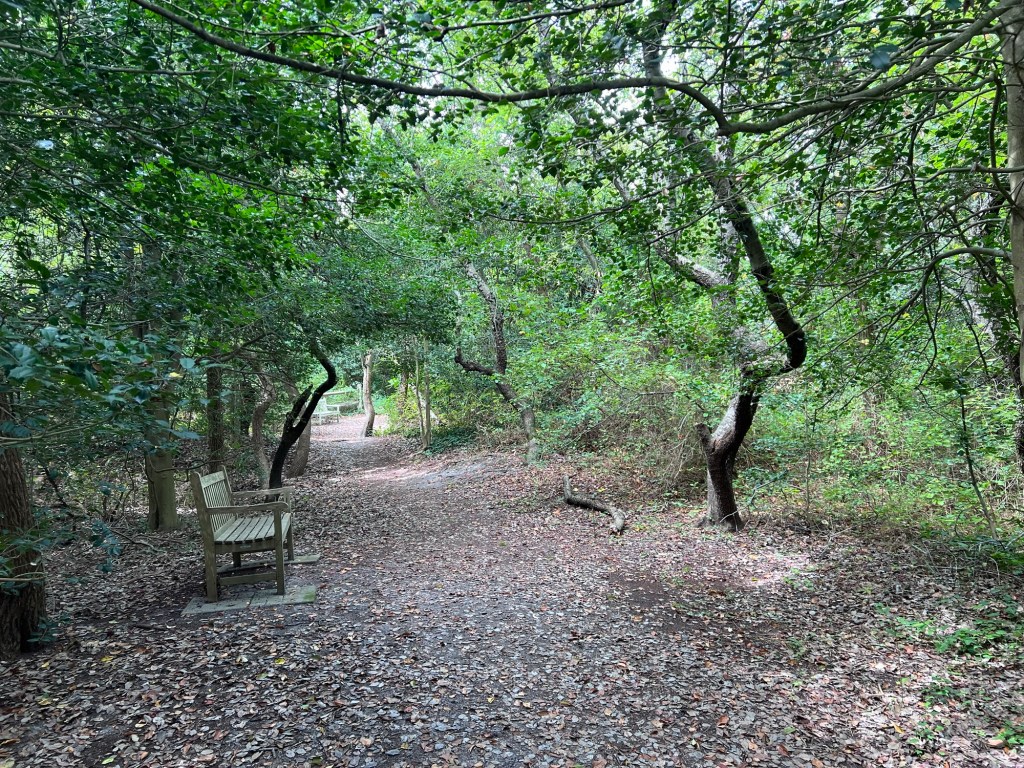
Walking down the pathways through the woods
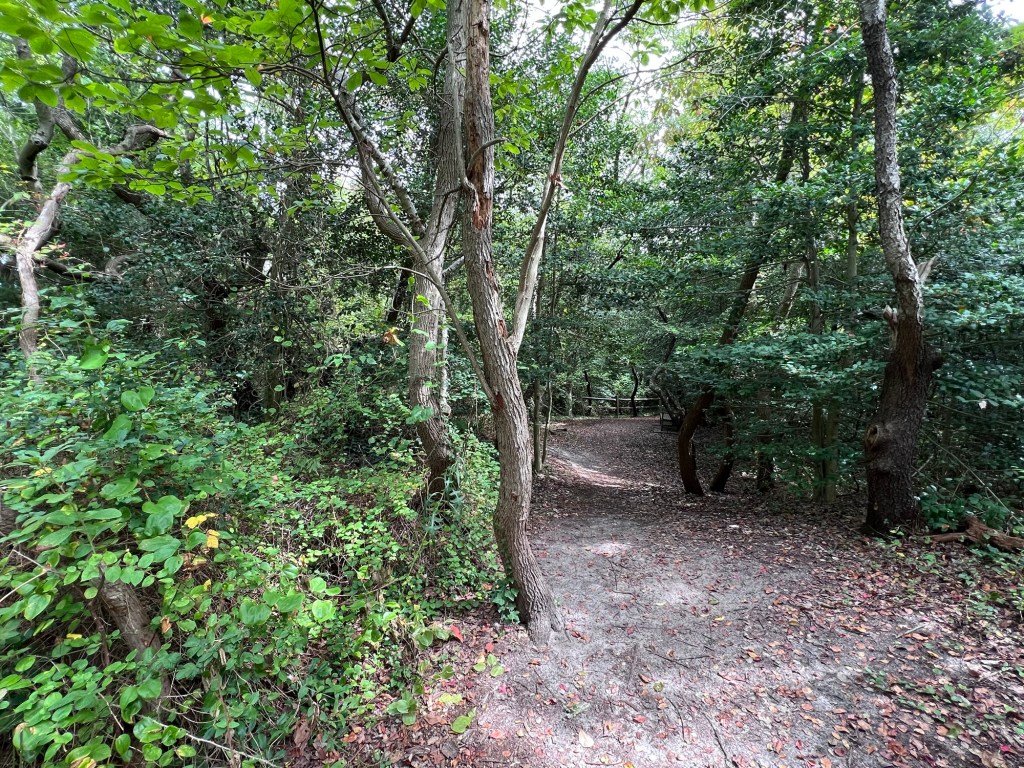
The path takes you into a deep wooded area in the middle of the town and by the time you get to the middle of the path, you can hear the mating calls of many birds. It’s funny to note that we are a couple of blocks from the shore.
Walking through the pathways
Reaching the middle of the beach woods
The middle of the bird sanctuary noisy with bird calls
Walking back through the pathways through the roads
Touring through the Bird Sanctuary does not take a long time, but offers relief from a busy shore town.
Open: The hours for the structure change throughout the year, so please check the website for time availability of the park and structure.
Admission: $8.00 Adults/$4.00 Children/Children under 2 free
Group Tours & Information:
Lucy is available year round for groups of 10 or more by appointment. For special holiday hours and weather closings, please call or check our website.
How to get to Lucy:
It is best to check the website for your location to the structure. For detailed instructions, please visit http://www.lucythe elephant.org.
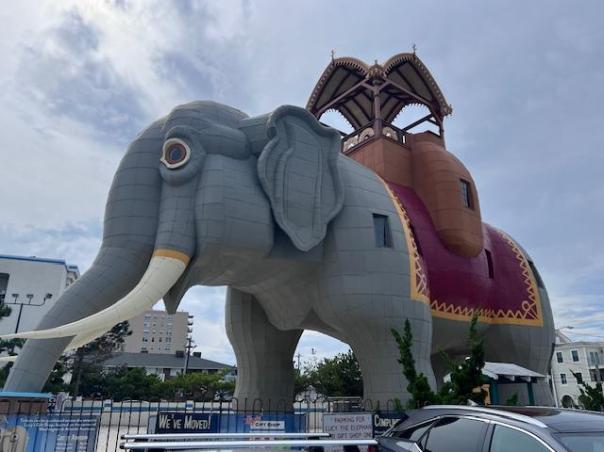
I visited Lucy the Elephant in the fall of 2015 right before Christmas on a tour I was taking of Southern New Jersey and the shoreline. This unique structure was built to attract people to the shore to buy land and for development.
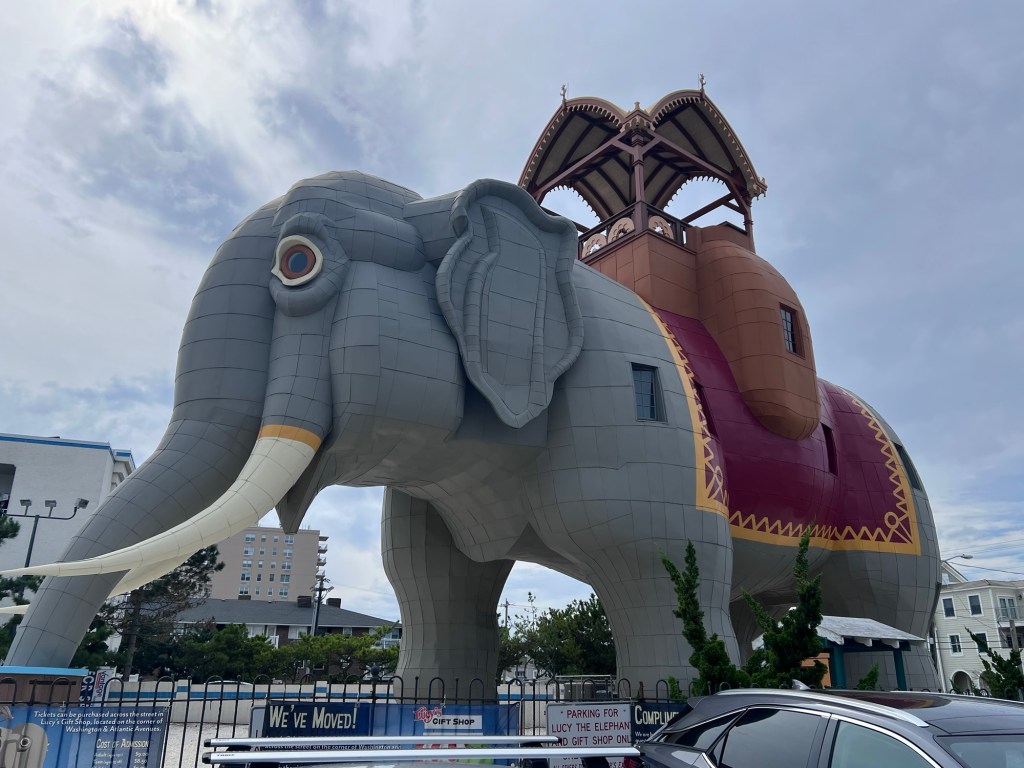
The view from the parking lot
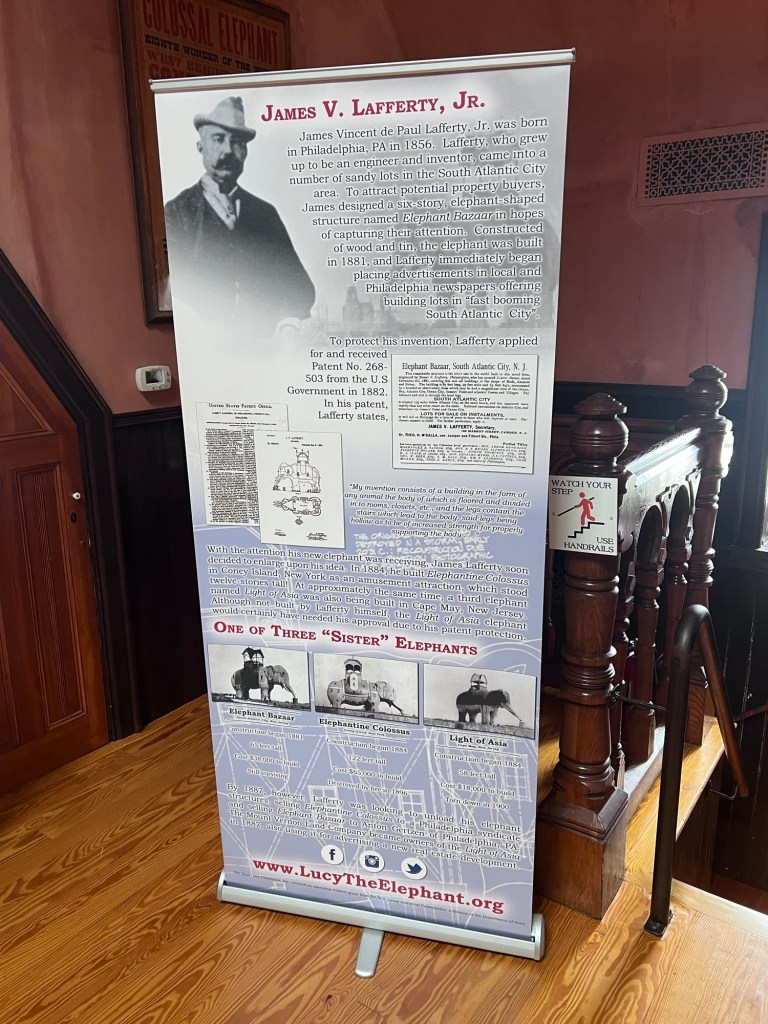
There were two other ‘Lucy’s’ built one of them being the former ‘Elephant Hotel’ in Coney Island that burned down in the last century.
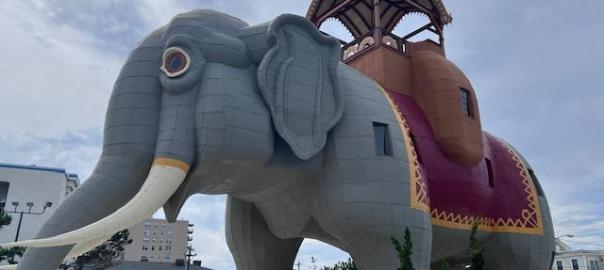
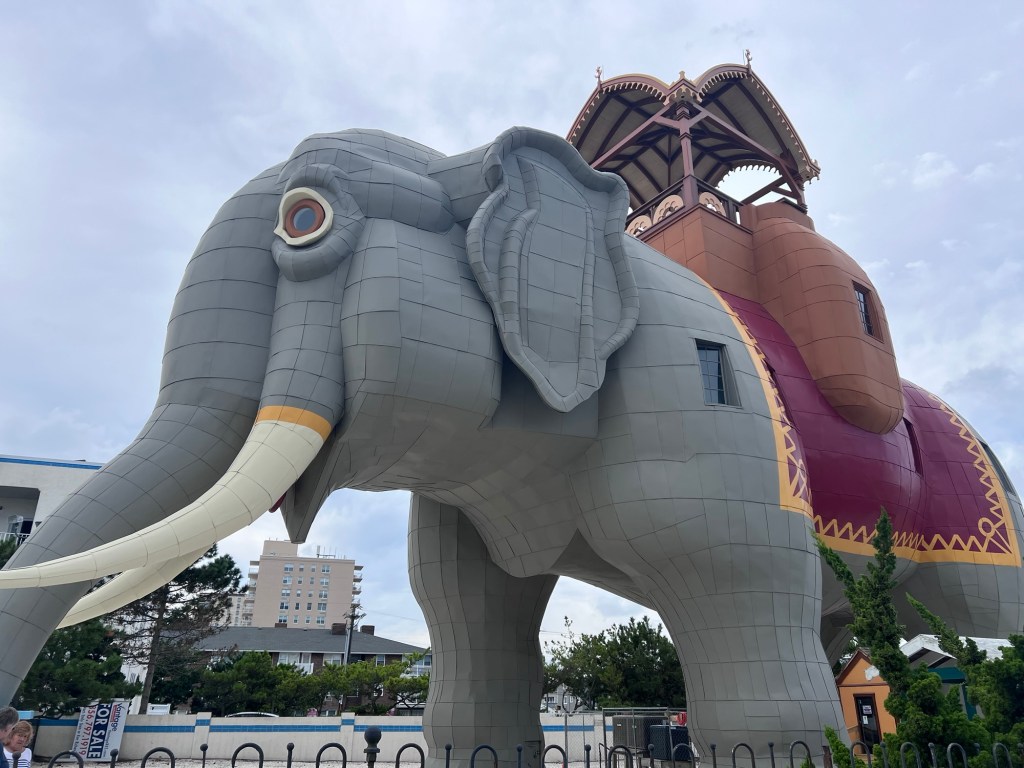
The front view of the elephant
This well preserved building has been renovated and part of the Jersey shore lore. It is well worth the visit in the off season on a nice day. I unfortunately visited on a rainy day in 2015 and was not able to go to the top and still have a free pass to go whenever I want to visit again.
Entering the elephant through the winding stairs
Still I was able to take the spiral staircase to her belly to learn the history of the structure and that is very interesting.
Lucy the Elephant in its full glory
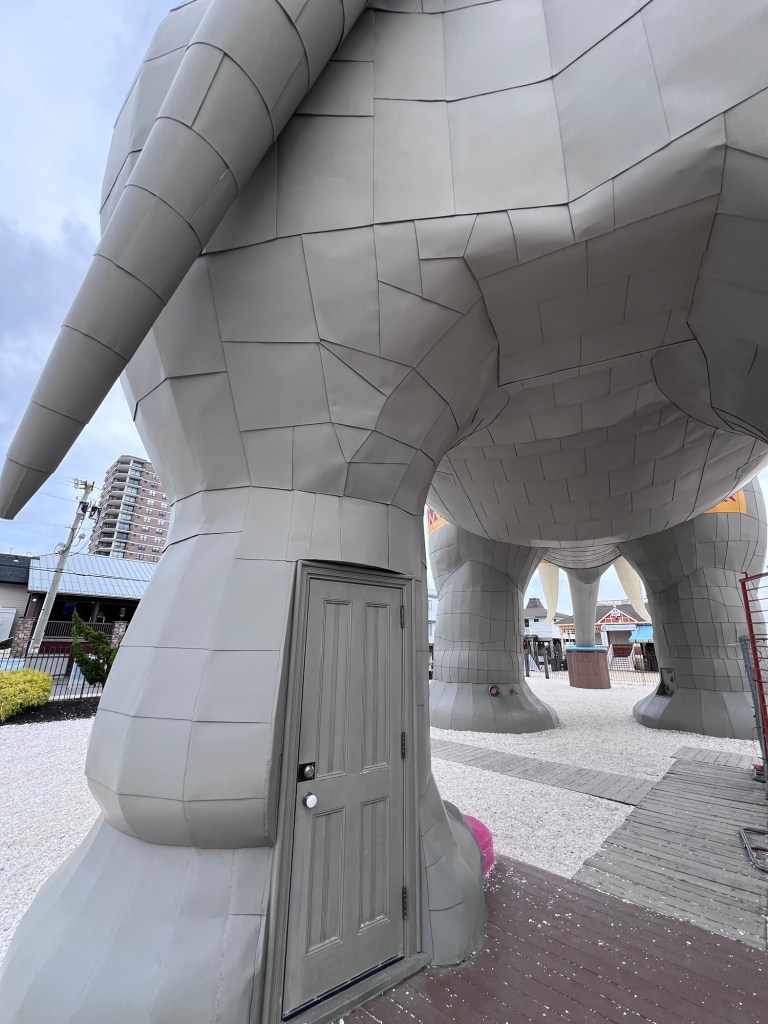
I started my tour in 2025 at the door of her base
I visited Lucy again in 2025 and was finally able to visit the top of the statue, the howdah, and able to take in the view of the ocean and the surrounding area. Try to visit “Lucy” when it is a sunny day out. You will be able to take in the spectacular view of the ocean.
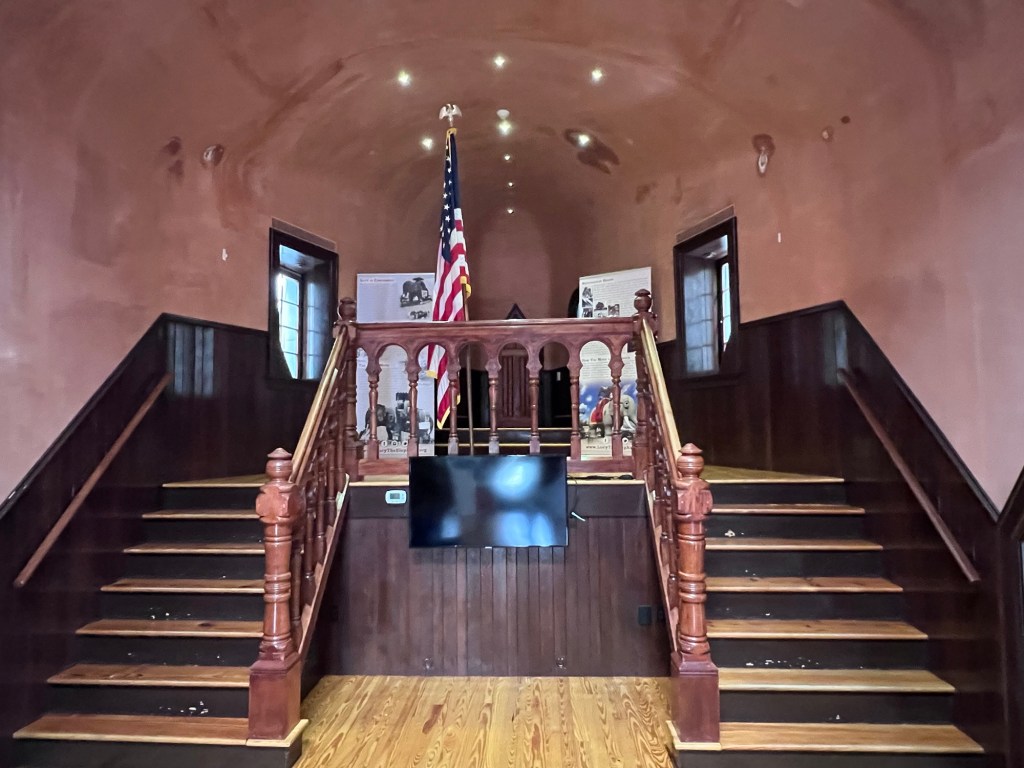
The tour starts in her inside, looking over the displays and where the bar was located where the owner would ply investors with liquor to have them invest in beach real estate.
Inside of Lucy the Elephant: the history and displays
The inside of Lucy on a recent tour
Touring the inside of Lucy
I was able to take my time because I visited in the off season on a nice day and since J was the only one on the tour, I got to take my time and talk with the tour guide.
I got to look through Lucy’s eyes and see the views of the ocean and of the surrounding areas was interesting.
Lucy’s eyes and truck
Lucy’s left eye
Lucy’s right eye
The former bathroom inside of Lucy
The inside displays of Lucy
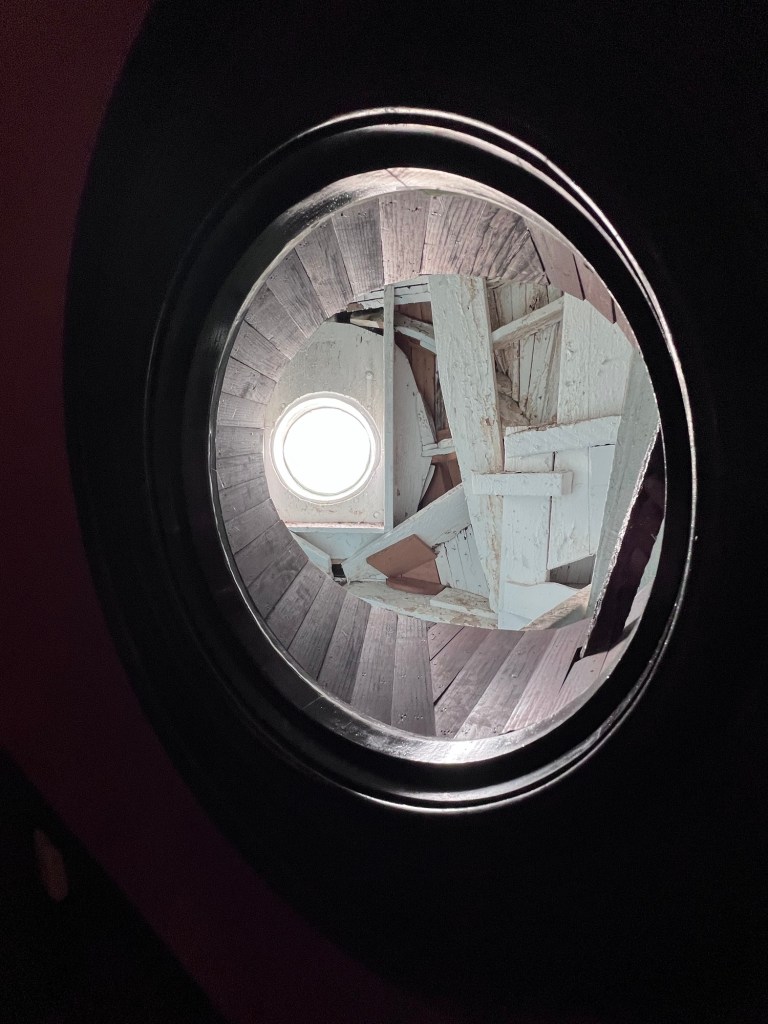
The skylight that illuminates the inside
Then it was time to walk up to the howdah and enjoy the view. It was a somewhat over cast day but you could still enjoy the view.
The view from the howdah on the top of the elephant
The roof of the howdah
The view of the beach from the howdah
The view of Margate from the howdah
The view from the howdah showcases the view of both the beach and the City of Margate. You can see from mikes around and on a hot day, the breezes are amazing.
The restored wood work
The video of the views
The tour of Lucy is about an hour but the history of this shore landmark and its influence in shore real estate and the development of these towns is so interesting.
Leaving the elephant we could see her behind
The History of Lucy the Elephant:
Lucy was built by a real estate speculator who owned a great many parcels of open land at the Jersey shore. In order to attract visitors and potential buyer, he built Lucy as a novelty amusement. He patented his idea, ensuring that Lucy would remain a unique piece of architecture.
Eventually, a popular hotel business was built around Lucy. Presidents and royalty came from around the world to stay at the neighboring Elephant Hotel and climb the stairs to Lucy’s howdah.
Lucy facing the ocean
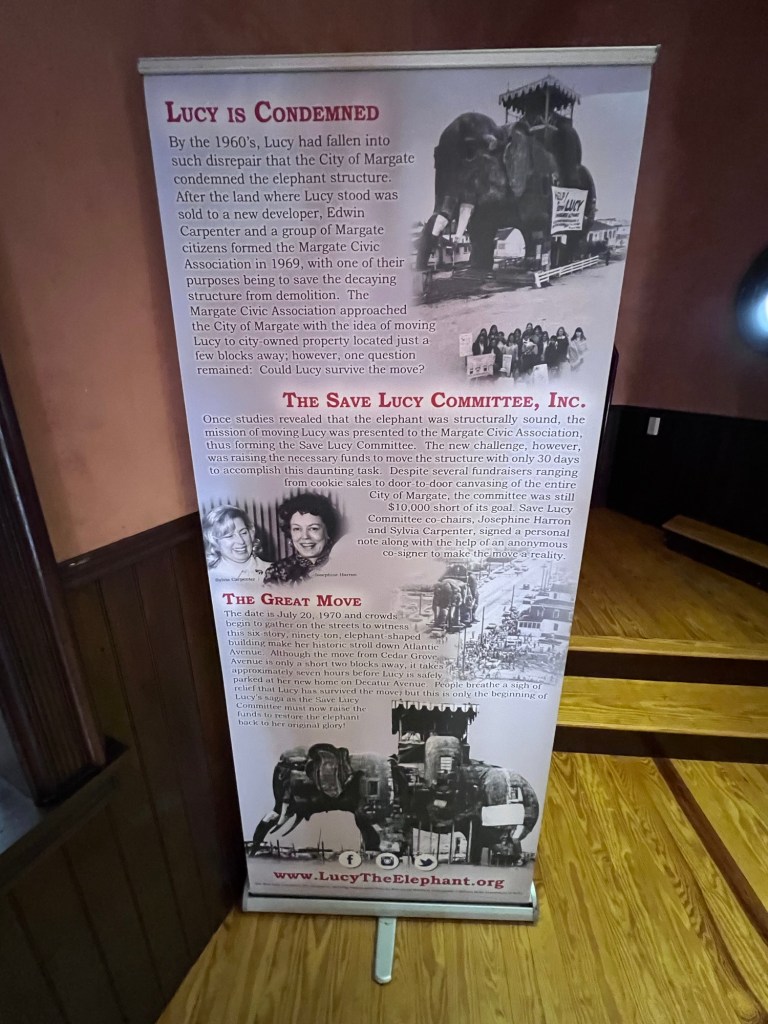
During her history, Lucy has survived hurricanes, ocean floods and even a fire accidentally stated by some inebriated party-goers when she served as tavern. However, by the 1960’s, it became apparent there was one disaster Lucy could not overcome-neglect. By that time, the once proud jewel of the South Jersey Isles had become an almost hopeless, condemned structure.
Eventually a developer purchased Lucy’s lot and intended to build a new condominium building on the site. The beach and the ocean could stay-but the elephant had to go!
Lucy the Elephant near the wrecking ball
To the rescue came the Save Lucy Committee. Within weeks, this small, concerned group of ordinary citizens had raised enough money to move the entire decaying structure two blocks away to a new site owned by the city. Thirty years and over one million dollars later, Lucy has been completely restored to her original splendor, inside and out.
In 1976, Lucy was designated a National Historic Landmark by the United States Government as the oldest surviving example of a unique form of “zoomorphic” architecture. Today, she is every bit as popular and beloved as she ever was.
The history of the elephant
The history of the park
The history of Lucy
The history of the park and who saved it
About the Park:
Lucy the Elephant is located along the beach in Josephine Harron Park (named for our co-founder) in Margate, NJ. Lucy is six stories high and is listed on the National Park Registry of Historical Landmarks. Our park is fenced and contained, making child supervision easy. Picnic tables are on site for eating outdoors. We also have friendly, trained volunteers and staff to assist you during your visit. On the tour, you will learn about Lucy’s unique architecture and her colorful history.
Lucy facing the sea
You will get to climb a spiral staircase through her insides and all the way up to the howdah on her back, providing a spectacular 360 degrees view of the surrounding shore area. Kids and adults alike are sure to enjoy visiting the only elephant in the world “you can walk through and come out alive”.
Lucy is also available by appointment for schools, groups and special events such as weddings or birthday parties. There are guided tours, a gift shop, free parking and all major credit cards are accepted.
Lucy the Elephant symbol of the town
Lucy from the front of the parking lot
Lucy from the ticket booth across the street
This information was taken from the pamphlet from The Save Lucy Committee. For more information, visit the online website at http://www.LucyTheElephant.org
*Disclaimer from author: All this information is located both on the pamphlet and on the website. Visiting Lucy is a treat and should be visited by all residents of New Jersey.
The gift shop the supports raising much needed funds for restoration.
Visit downtown Margate for lunch after your visit
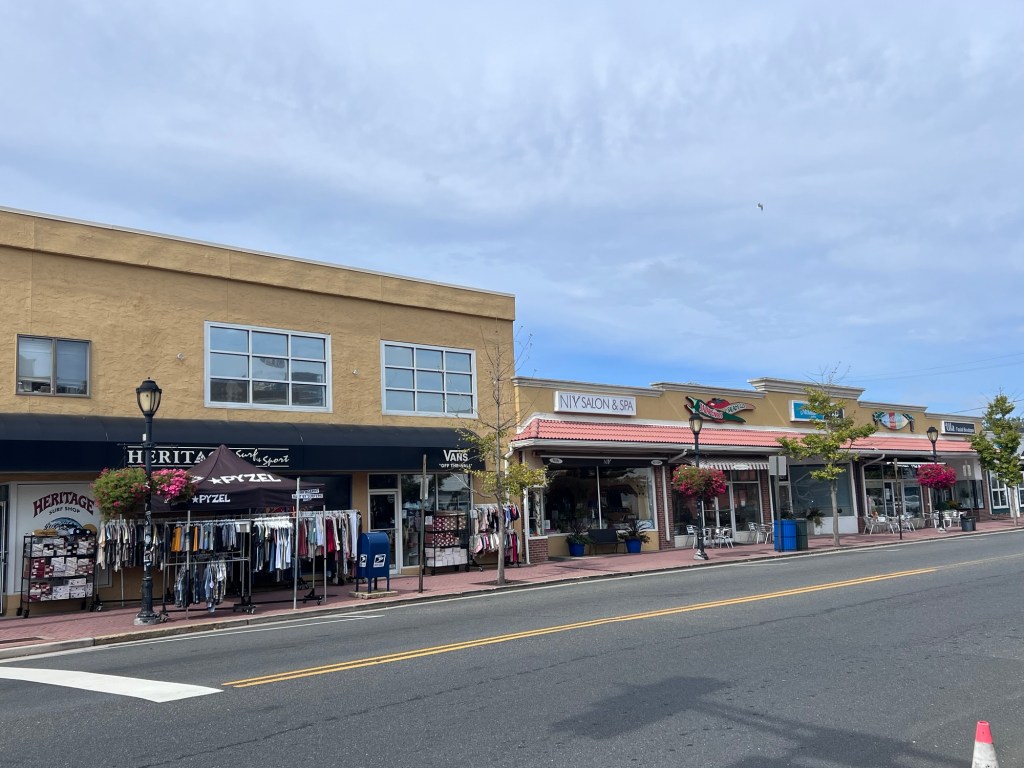
Downtown Margate after my tour
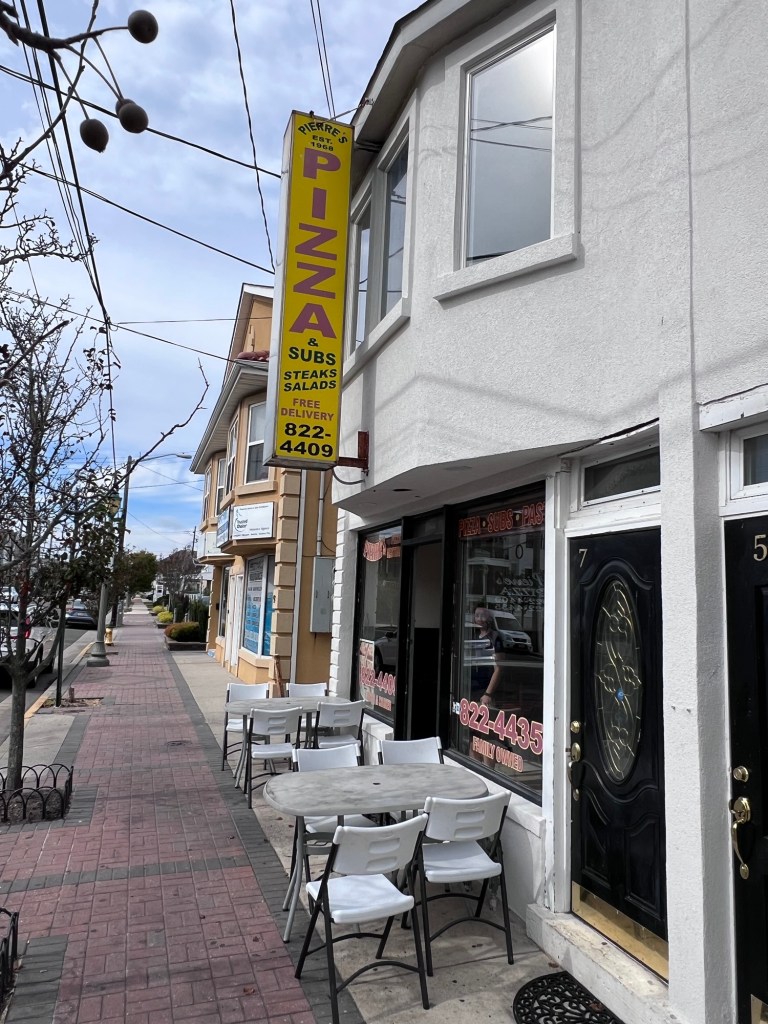
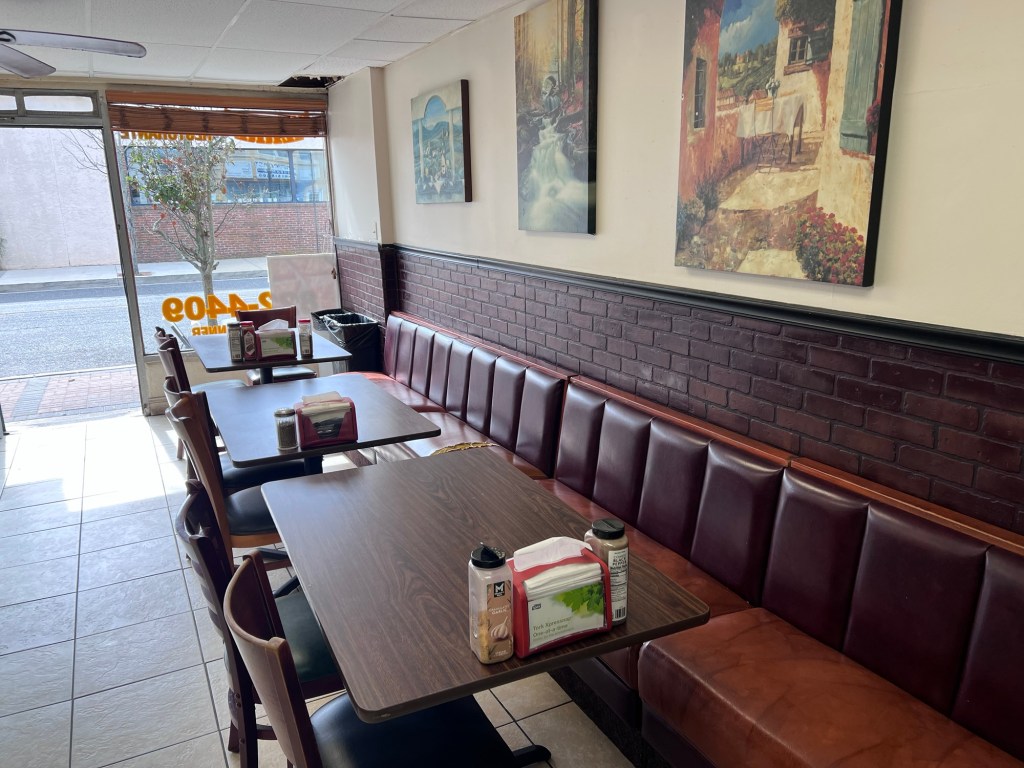
I went to Pierre’s Pizza at 7 North Washington Avenue for lunch. Their cheese pizza is wonderful. The restaurant is two blocks from Lucy.
Pierre’s Pizza at 7 North Washington Street in Margate, NJ
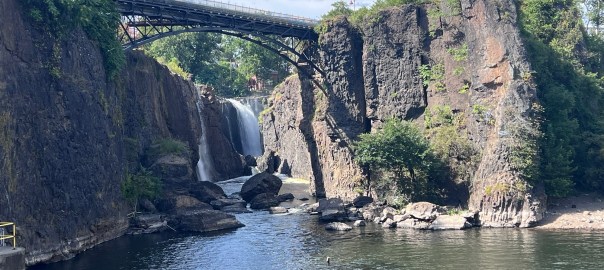
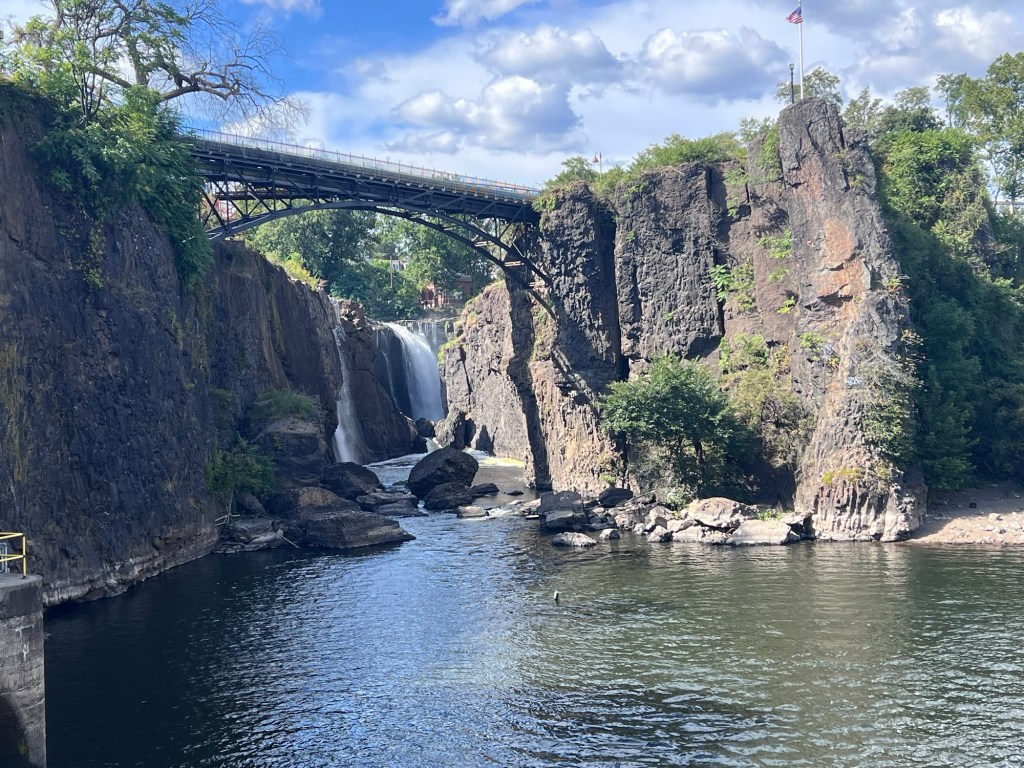
A trip to Paterson, NJ to see the Great Falls is an experience. Surrounded by the old mill buildings that once powered the Silk Industry that made Paterson world renowned, the Falls has been turned into a part of the National Park Service.
The renovation has now been completed that includes new landscaping and a large parking lot. The surrounding park is as impressive as the Falls.
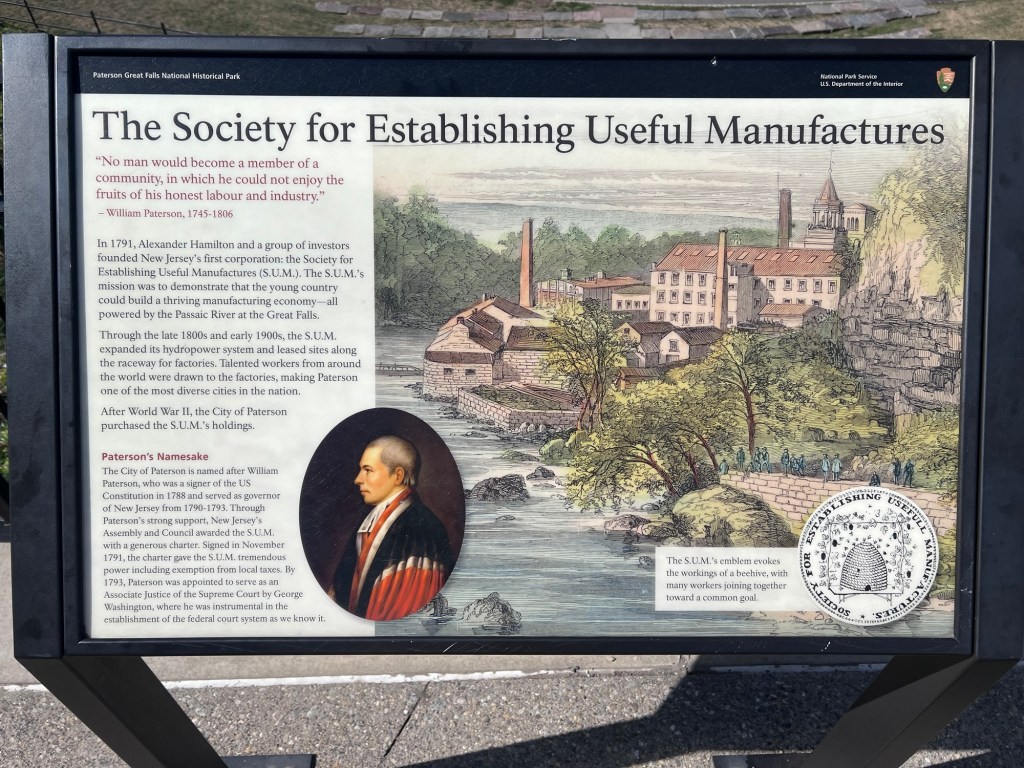
The information sign by the falls
When walking the park, it is breathtaking to see how the Passaic River approaches the drop and then the water hitting the bottom of the cliffs. It is an impressive site of the how the Ice Age still plays a role in ‘Mother Nature’ in current times.
Take time to walk through the park and travel over the bridges and through the landscaped parks to see the Falls through all angles. It is a spectacular park that does not get the credit it deserves. Paterson, NJ still has its issues but it does have a lot of gems too.
History of the Falls-The Formation and early history:
Geologically, the falls were formed at the end of the last Ice Age approximately 13,000 years ago. Formerly the Passaic River had followed a shorter course through the Watchung Mountains near present-day Summit. As the glacier receded, the river’s previous course was blocked by a newly formed moraine. A large lake, called Glacial Lake Passaic, formed behind the Watchung’s.
The Falls in the Summer
As the ice receded, the river found a new circuitous route around the north end of the Watchungs, carving the spectacular falls through the underlying basalt, which was formed approximately 200 millions years ago. The Falls later became the site of a habitation for Lenape Native Americans, who called this homeland, ‘Acquackanonk’ and later for Dutch settlers in the 1690’s (Wiki).
History of Powering a Free Economy:
The history and power of the Falls
The Great Fall of the Passaic River drove the imagination of a young Alexander Hamilton to harness the power of water to manufacturer goods in the United States. The story of Paterson and the Great Falls is on of national importance. Here in 1792, Hamilton founded America’s first planned city of industry and innovation, helping to spur what would become the world’s largest and most productive economy (US Parks.org).
After the Revolutionary War, Hamilton, the first Secretary of the Treasury, knew this country needed to be economically independent. He led the founding of Paterson and the Society for Establishing Useful Manufacturers (S.U.M.), New Jersey’s first corporation.
The S.U.M. constructed America’s first multitiered waterpower system to attract entrepreneurs and workers who would manufacture goods and develop new inventions. A system of water channels or raceways, the most significant power system of the day, diverted water from the Passaic River above the falls to mills along its route (US Parks.org).
The old Power Plant at the Paterson Falls
Paterson became the manufacturing hub for locomotives, textiles, silk finishing and dyeing, machines tools, paper, sailcloth, twine and airplane engines. By the mid-1800’s, the city was home to the largest producers of locomotives in this country and nearly half of the nation’s silk trade, earning Paterson the nickname “Silk City”. Paterson is also the birthplace of the Colt Revolver and the prototype for the first operable submarine (US Parks.org).
The formation of the Falls
The S.U.M. fulfilled the vision of its founder for more than 150 years, moving the United States from an agrarian, slave-based economy to one based in industry and freedom. Paterson attracted successive waves of immigrant entrepreneurs, skilled craftsmen and workers, the ‘diversity of talents’ Hamilton had hoped would be drawn to America. Immigrants still settle here to pursue their ‘American Dream’ and to weave their threads into the storied fabric of Silk City (US Parks.org).
Visiting Paterson Great Falls:
Welcome to America’s first planned city of industry and innovation. Begin your visit at Overlook Park. View the iconic Great Falls and a monument to Paterson’s founder, Alexander Hamilton. Cross McBride Avenue to the Welcome Center where you can visit the facilities, purchase a gift and learn about tours and programs.
The beauty of the Falls
To get a close look at the river that powered Paterson to prominence, follow the path behind the hydroelectric plant over the Passaic footbridge to Mary Ellen Kramer Park. From there you can peek into Hinchliffe Stadium, one of the few remaining stadiums that hosted Negro League Baseball.
Come back across the river, follow the short loop trail along Upper Raceway Park, ending at the Ivanhoe Wheelhouse. Walk across Spruce Street and visit the Paterson Museum, a park partner.
Exhibits include textile machinery, the first Colt firearms, steam locomotives and the first prototype of a submarine.
Video of the Falls
Regularly scheduled guided tours of the park are available during the summer season. From fall through late spring, reservations are required for all guided tours. You may also download a self-guided tour or smartphone app from our partner, the Hamilton Partnership at http://www.millmile.org.
Accessibility: We strive to make our facilities services and programs accessible to all. For information go to a visitor center, ask a ranger, call or check our website.
Firearms: For firearms regulations, check the park website.
Disclaimer: This information was taken from the National Parks Foundation pamphlet and I give the parks system full credit for the information. Please check out their blogs and website on the falls for more information on visiting the park. The parking lot is currently going through a renovation so call in advance of visiting the falls.