The Clayton Historical Museum is the perfect example of a community recording and preserving its past and showing the direction of its future through historical timeline of this town. From its place in glass manufacturing the the cheer of its high school, the museum displays the community pride of Clayton, NJ.
It shows how small towns all over New Jersey can preserve their past while still being part of the community at large. Each of the rooms in the museum displays a part of the community and its progression through time.
The first small gallery is dedicated to the uniformed forces that help protect this small community, the majority of the second gallery is dedicated to the glassworks business that once dominated the area and the back gallery displays its community with schools, the business district and the continuation of the glassworks.
The docents and volunteers give you the freedom to walk around but time is limited because the museum is only open for two hours a month plus special events happening in the town.
The History of the Museum:
(From the Museum website)
Clayton Historic Preservation collects personal papers, local business and organization records, photographs, early maps, genealogies, church histories, family Bibles, historic books, newspapers, artifacts and so much more.
The Veteran’s Exhibition in the middle of the museum
Our museum’s archives showcases the heritage and culture of Clayton, allowing visitors to explore and appreciate the town’s fascinating journey. Clayton Historic Museum is a guardian of the borough’s rich heritage, offering visitors a journey through its exhibits and displays (Clayton Historical Society pamphlet).
The entrance hall to the museum
The church artifacts in the first entrance gallery
The Clayton Historic Museum fosters a sense of pride and appreciation for Clayton’s past by preserving artifacts, documenting stories and engaging the community. CHP invites residents and visitors to explore, learn and connect with the borough’s history.
As a testament to the borough’s commitment to preserving its unique identity, CHP is creating an enduring legacy for future generations(Clayton Historical Society pamphlet).
The front gallery dedicated to the town’s First Responders:
The front gallery of Clayton Fire and EMS displays
The Clayton Police and Fire Department displays
The Clayton Police display
The middle gallery is dedicated to the glassworks businesses:
The middle gallery
The glass making industry was a majority of the work force at the turn of the last century and shows New Jersey’s craftsmanship over the years.
The glass milk bottles showing the areas both dairy and glass bottle industries of the past
The back gallery contained a lot of Clayton’s manufacturing and retail history
The glassworks history in the community run deep
The Clayton Glass Works factory at the turn of the last century
Decorative glass was one of its specialties
Creative glass works are part of the extensive collection at the museum
The everyday decorative items were made right here in New Jersey
The main part of the gallery discusses and displays how important the glass industry was to the community and the creativity of the artisans.
The display of the glass blowers chair and the time and effort once part of this craft
The glass blowers chair on display
The museum’s exhibits offer an overview of Clayton’s history, covering various aspects such as industry, agriculture, transportation and daily life.
Collections from The local Clayton High School
The Clayton, NJ local business district businesses
Through an assortment of photgraphs and documents, visitors can explore the Borough’s development.
The beautiful decorative glass on display
The Clayton High School display showing small town pride
The progression of the telephone
The antique Victrola got its start in the Edison labs here in New Jersey
The exhibits provide a deeper understanding of Clayton’s past, fostering an appreciation for the borough’s heritage.
A clipping from the Salem Oak in Salem, NJ is in the yard behind the museum
The Mission Statement of the Museum:
(From the Museum website)
• Acquire and preserve documents, records and relics of the Borough of Clayton, Gloucester County and the State of New Jersey
• Encourage the protection and preservation of the historical landmarks and points of interest
Furnish historical information and documentation to the Borough
• Partner with Clayton Special Events and neighboring Preservation Associations to exchange and display historical related information, documents and artifacts
The middle gallery of the museum’s extensive glassworks collection
Remember that the museum is only open from 11:00am-1:00pm the third Saturday of the month so plan your trip to museum accordingly.
Located on 14 acres along the Black River, the Gristmill is the only restored water-powered mill in New Jersey and is listed on the State and National Registers of Historic Places. It’s a living example of the state’s transition from an agricultural to an industrial economy. Costumed staff lead guided tours of the mill, running restored machinery to harness the power of the Black River to grind grains, using two sets of massive 2,000-pound mills
The Nathan Cooper Gristmill
The sign welcoming you to the site
I spent an afternoon walking the grounds of the Nathan Cooper Gristmill after a trip to Hacklebarney Park and was able to tour the outside of the mill and the pathways around the property.
The historic sign welcoming you to the site
The front of the mill building
The front of the old mill had been decorated for the “250th Anniversary” of the nation and the grounds were really beautiful. The mill lined the Black River in the back of it and the lawns were filled with lush trees. The mill was not open for the day but you could walk around the grounds.
The Washington Turnpike historic sign
The front grounds and the water pump
The water pump marker in the front of the building
The water pumps at the front of the mills were closed off at this point but must have been used as a water source for the people working there at the time.
The stairway to the back of the mill
The pump by the front of the stairs
The back of the building is where the water wheel is located by the Black River water source. When I took the tour later the next month, the tour guide showed me how it worked. The mill is still a functioning mill and they still do produce flour for sale but on a limited basis.
The waterwheel that moved all the equipment inside
The Waterwheel and the water source to power it
The waterwheel
The history of the Water Wheel:
The Fitz water wheel was made in 1927 for a mill in Pennsylvania that burned down before it could be installed. It was then purchased for a mill in Pottersville, NJ in 1935 and powered until 1955. In 1974, the wheel was donated to the Morris County Park Commission and moved to the Cooper Gristmill (Cooper Gristmill pamphlet).
The video of the waterwheel working:
The historic sign on the waterwheel and the water source
The pathway to the Black River and the trails
The back trails of the gristmill have the most beautiful views of the river and the steams around the property. At the end of the Summer of 2026, it offers the most amazing views of the grounds. All the trees were still in bloom and the trails take you far back into the park. I just walked to the river stream and looked at the small waterfalls. This was the water source that powered the mill.
The historic sign on the Black River
The grounds and paths along the river are really picturesque but watch the paths when the paths are wet. It can be a muddy experience.
The Black River from the trails
The Black River water source
Video of my walk along the river:
The history of the Cooper Gristmill:
(from the site pamphlet)
A gristmill was apparently built at this site in the early 1700’s by the first Europeans to settle the Chester area. Records show that is was offered for sale in 1761. Later in the 18th century, it was owned by Ellis Howell. The property was purchased by Nathan Cooper in 1825 and then Cooper rebuilt the mill in 1826, since the original structure had been damaged by an earlier fire. This is the mill building that remains standing.
Following the death of Nathan Cooper in 1826, the mill was passed to his nephew, Nathan A. Cooper. The younger Cooper, who became one of Chester’s wealthiest and most important citizens, owned the mill property until his death in 1879.
Mills were built at close intervals. In 1832, the town of Chester reported five sawmills and three gristmills. Surrounding these mills were small settlements that developed followed by good roads so that the farmers could haul their grain to the site. Soon it was followed by a blacksmith shop and a general store. This was the beginning of the town of Milltown, later called “Milldale”.
Once in the forefront of technology and economic progress, village gristmills had become largely obsolete by the end of the 19th century. By then, milling had become a vast factory enterprise and the dynamic railroad system made it possible to ship grain and flour over great distances. No longer the bustling centers of activity, mills like the Cooper Gristmill came to be viewed as relics of a bucolic past.
In modern times and now restored, the mill once again hums with activity. The water wheel has been replaced and some of the mill’s mechanical equipment has been put back into place and now operates. In the place of farmers with wagon loads of grain, busses filled with school children arrive to see the millstones once again grinding flour. Cooper Gristmill and the Village of Milltown are good examples of the many small agricultural and industrial communities that once dotted the landscape of Morris County, NJ.
The back pathway to the front of the site
The first floor:
When I toured the facility a week later when the museum was open, I got a glimpse inside the mill’s past and how it was the economic engine of the area during Colonial times. The inside of the mill was in working shape and was still being used to produce flour when in season.
The first floor of the mill
The inside entrance to the mill on the first floor with the fireplace to the left and the millstones to the right. The stairs led to three floors of the workings of the mills from grinding to bagging and shipping of the flour produced by local wheat.
The inside framework of the mill in the process of milling wheat
The large gears that made these rocks special waterwheel work that harnessed the Black River power source. The river and lake that have been dammed are across the street.
The millstones for the grinding of wheat
The millstones on the first floor of the mill
The millstones used to process flour
The second floor:
The second floor of the mill displays contain the office of the manage of the mill, the flour separating area for the grades of flour and the old bagging area of the flour product for shipping.
The recreation of the manager’s office
The milling and bagging area
The flour processing machine
The flour grade sorting machine is off to the left. The machine would sort the grades of flour based on the weight and bulk.
The machines processing and sorting the milled wheat
Pieces of millstones
Pieces of the millstones used in the production. The pieces would be shipped individually and then assembled when they arrived at the mills because of their sheer weight.
The attic room
The Attic:
The attic was the last part of the tour and where a lot of the inner workings of the mill were located. Just watch your head.
The Visitors Center:
When I finished the inside tour of the mill museum, I returned to the Visitors Center with the tour guide where a small museum on historic Morris County and the county’s rural past and development was displayed.
The small museum inside the Visitors Center
The inside of the museum tells the story of the development of Morris County, NJ
The small gift shop inside the museum
After the tour of the inside of the mill and museum was over, I explored the grounds of the property and admired the foliage. I decided to explore the power source of the mill on the advice of the tour guide who was preparing to close up for the day.
The grounds of the mill building and the beautiful surrounding foliage
The tunnel under the road taking you to the damned river and the lake on the other side of the road.
The video of the walk through the tunnel:
The path underneath the tunnel lead to the lake that was the original and still the power source to the mill. It still makes the water wheel run and is its source of power.
The lake and the waterfall are the source of power for the mill
The Water source of the Cooper Gristmill:
(from the Cooper Gristmill site pamphlet)
Unlike the electric machinery of today. the water powered gristmill drew upon the natural environment for its power. The miller chose a location close to a water course that has a drop in elevation. A dam was built to form a pond that would store the water needed to power the mill even in the dry summer months.
A sturdy building was required to support the water wheel and its associated machinery. The water was brought from the pond in a wooden trough, headrace or flume. The height from which the water would fall when it reached the mill was called the ‘head’. It determined the amount of power that could be generated. A tailrace carried the water away from the wheel and returned it to the stream. The turning shaft of the water wheel transferred its mechanical power into the mill. The gears and belts then transmitted the power throughout the building. The four sets of millstones at the Cooper Gristmill originally required two water wheels to operate.
The mill was often the social center of an agricultural community and the miller was a community leader. The miller lived nearby in order to attend to the constant stream of customers and keep his machinery in good order.
The beautiful foliage on this side of the road
I walked through the pathway and looked into the pond to see the small waterfalls in the distance. The foliage colors on the background of the water was quite spectacular.
The Visitors Center and the mill complex from the other side of the road
It was a very interesting visit to see part of New Jersey’s manufacturing past and how it was still being utilized in the present. The tour guide explained that at certain times of the year, they still mill flour and sell it to the public.
So it is still a working mill in production and you can still see that production in the warmer months. You can also buy the finished product on premise.
Not only is it an interesting tour but the surrounding foliage in the Fall is breathtaking. It really was a fascinating tour of New Jersey’s past.
Take you time and enjoy the paths and trails around the mill building
In the whole time I toured the gristmill did the tour guide say the place was haunted. I never saw or felt anything but according to many videos, the place is haunted.
During the Annual Sussex County Heritage Weekend, one of the first stops I made was to the Franklin Heritage Museum in Downtown Franklin, NJ. The museum was the house in one of the offices of the mining company. The museum was a glimpse into community’s mining past and how it shaped this area of the State of New Jersey.
The museum sign out front
The museum building was the old New Jersey Zinc Company ‘Time Office’. This meant that the miners had to punch into their shift at the mine through this building. The old turnstile is to the right of the building.
History of the Franklin Historical Society:
(From the museum pamphlet)
The Franklin Historical Society was organized and incorporated in September 1996 as a non-profit all volunteer education association. It was founded to preserve the heritage of the Franklin Borough to create awareness of both the County and Borough of Franklin and its rich history of culture and ethnic heritage.
The Historical Society’s Museum is located at 95 Main Street in the historic Franklin Mill complex of the former New Jersey Zinc Company.
The Heritage Museum was opened to the public in April 1997 and its displays include:
Iron and Zinc Mining
Railroads
Franklin’s Churches and Schools
Franklin’s Local History
The sign for the old New Jersey Zinc Company ‘Time Office’ historical sign
The history of the Franklin Mine and its place in New Jersey history
The smaller gallery off to the side of the building concentrates on the history of the NJ Mining industry and the many mining areas in Sussex County.
The room contains all sorts of artifacts related to the industry including both pictures and everyday equipment.
The pictures of all the miners at the company
The Mining Gallery
The Mining Gallery with equipment and artifacts for a day of working in the mines
Artifacts from home and work
This gallery was in transition with the volunteers working on the displays. This side of the museum with be on the local NJ Zinc Mine Company and its history.
The main gallery in the old Main Office space
The main gallery of the museum has a mixture of more mining artifacts and town objects that cover the history of the town.
The ‘250th Anniversary exhibition of the town and its mining past
For the ‘250th Celebration’ of our country, the museum created an interesting display of the formation of the community around the mining industry to its growth today.
The Mining and Equipment display
Community artifacts
Pictures of the police and fire department’s in this small mining community
The museum’s main emphasis is on the development of the mining industry both its early development up until when the mines closed in the 1980’s. The display above is on the early mining tools used by the workers.
The Mineral display
What I found interesting was all the minerals that are on display and the glow in the dark components that make these rocks special. When the lights go out, the true magic begins.
The old turnstile to enter the mining compound before the start of the shift
The back of the museum behind the fencing and the weeds, is the entrance to the old mines. Both the entrance building and entrance to the mine has been closed off for years but you can still see behind the fencing. This is the old turnstile off to the side of the building where the miners entered the complex.
Across the street from the museum is the old Hungarian Reformed Church, which is planned to be renovated.
The sign for the church
The old Hungarian church
Down the road from the downtown area where the museum is located is the Franklin Furnace Park, which is a beautiful picturesque park situated around a lake.
All along the highway facing the park and in the park itself was the most beautiful and colorful foliage. Plan to visit the park after the museum for a colorful and relaxing break.
The foliage around the park in early October
The lake view of the park from the highway
The views from every angle of the park are breathtaking.
The view from inside the park and the footbridge to the island
The view of the park from south of the park
A view of the islands in the park
A view of the islands and the foliage
The islands and the foliage in the beginning part of October
The small center pine island
Traveling back down the road back to Route 23 South to continue my tour of museums
The view of the islands to the north in the lake
The view of the lakes from the south
The view of the foliage from the south
For a small town, Franklin offered such an interesting look at this part of New Jersey’s mining past and its transition from a mining industry to tourism based around the mines. The series of museums and cultural sites offers so much for visitors to see and experience.
A start at the Franklin Heritage Museum offers a glimpse into that past and as the museum keeps developing their exhibits will tell that story to visitors.
On a very sunny and warm Fall day, the Bergen County Firemen’s Home Association met for our October meeting.
The beautiful foliage of Morris County, NJ on the way to the home that morning
There was a lot to discuss with the upcoming Christmas holidays approaching with our popular Christmas party to plan. We discussed the entertainment and the gift chosen by the Home’s Resident Executive Board. We also discussed the membership and staff lunch that has been so popular over the last few years.
The foliage in Mortis County that morning
Our fundraising has been on plan and fire companies all over Bergen County have been so supportive to the organization. Their donations have made a big difference in our efforts to make the residences of the home feel remembered.
We talked about recruiting and membership as our organization needs new members to come on board so that we can keep the traditions of the organization going into the future. We talked about different ways to attract members through Social Media. I had discussed much of this at the recent Caucus Meeting in August in front of the Bergen County delegation.
The home was decorated for the Fall and Halloween activities that were happening this month.
The NJ Firemen’s Home decorated for the Fall holidays
After the meeting, we joined the residents of the home for the afternoon entertainment and refreshments in the main room of the home.
Singer Gigi entertained the crowd that afternoon on a stage decorated for Halloween
We were joined by singer, Gigi, who is a crowd favorite, who sang a mixture of pop, contemporary and country music to the crowd. It was a really great concert.
We had so much fun that afternoon
Gigi entertaining the crowd with the song “Love Train”
Here is Gigi’s business card and information to contact her if you like the video’s:
If you like the songs and concert, here is Gigi Onofrio’s contact information. We have such great afternoon concerts up at the home and the residents love her.
On the break from the Entertainment, the members got up and thanked the residents for their support and that we hoped they and their families had enjoyed the recent barbecues over the Summer. These were so popular with everyone who attended.
The members of the Bergen County Firemen’s Home Association at the October Meeting
Before the Entertainment ended, we took our traditional group picture and thanked everyone again for their support of our organization. It was another productive meeting and we look forward to another wonderful breakfast at the Wyckoff Firehouse for our November meeting.
If you would like to make a donation to our organization, please send it to:
BCFHA
C/O Jeff Parma
277 Harriott Avenue
Harrington Park, NJ 07640
Please make the checks out to the Bergen County Firemen’s Home Association
Our 2026 Meeting Schedule:
All our meetings at the home start at 12:00pm at the NJ State Firemen’s Home in Boonton, NJ:
December 6th (Annual Christmas Party)
A big “Thank you” from The Bergen County Firemen’s Home Association Executive Board 2026
The Twin Kiss Drive Inn at 25 South Delsea Drive in Clayton , NJ
The restaurant has been around since 1955 and one of those classic restaurants in New Jersey
During the Firemen’s Convention and on a more recent trip to South Jersey, I had passed by Twin Kiss, a local family restaurant in Downtown Clayton, NJ. It was one of those family chain restaurants that kept its identity even after the rest of the chain folded.
I loved the menu and stopped for ice cream as a snack to continue on with my journey. I planned on coming back for lunch the next time I returned to the area.
When I came back a month later to visit a series of museums in the area for my blog, I stopped for lunch and enjoyed a delicious meal. I love these little places on the back roads. The food is wonderful and the service is personable and friendly.
Twin Kiss Drive In, at 25 S. Delsea Drive, has been a CLAYTON icon since 1955 when George W. and Mary Lillian “Lilly” Kasper opened the ice cream franchise. The couple borrowed $5,000.00 and bought into the brand-new Twin Kiss franchise (Photo 1 & 2), opening several locations throughout Pennsylvania, coming to CLAYTON opening that stand on May 19, 1955 .
In 1959, when Twin Kiss developed a sandwich unit, Lilly joined George full time, and they worked side by side for over 40 years. They ran it for 46 years until retiring in 2001. New owners, John and Stacey Chamberlin (Photo 5), took over in 2001.
Twin Kiss Drive Inn and their Mission Statement:
(from the restaurant website)
Welcome to Twin Kiss Drive-In, a beloved local staple in Clayton, New Jersey, where great food and classic drive-in charm come together.
Proudly owned and operated by Stacy and John Chamberlain, Twin Kiss Drive-In is built on a simple idea: serve quality food, create a welcoming atmosphere, and give the community a place to gather and enjoy. Whether you’re stopping by for a quick bite, bringing the family for a casual night out, or reliving a bit of nostalgia, Twin Kiss offers an experience that feels both timeless and uniquely local.
For years, Twin Kiss has been known for its friendly service, classic American favorites, and that unmistakable drive-in vibe. Stacy and John are hands-on owners who take pride in maintaining the tradition while continuing to make the space feel fresh, inviting, and community-focused.
More than just a place to eat, Twin Kiss Drive-In is a part of Clayton’s story—a spot where memories are made, from summer nights and after-game stops to everyday moments worth savoring. We’re grateful to be part of this community and look forward to serving you.
The front of the restaurant
The ice cream and dessert menu
The sandwich and sub menu
The delicious Salted Caramel with Pretzel Ice Cream I had that day and this was a small!
Driving through on a recent visit, I stopped for lunch and had a craving for a cheesesteak. So I ordered a Fat Cheese steak with Wiz, a side of fries and a Vanilla Malted. It was a wonderful lunch on a cool day.
My lunch
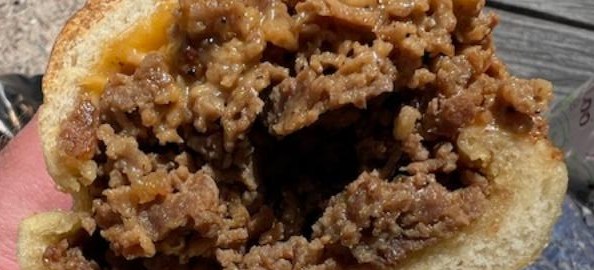
The Cheesesteak is made of steakems with long thin slices of beef with a generous portion of Cheese Wiz on a soft chewy roll. It was delicious. The perfect comfort food.
The Cheesesteak with Wiz
The Cheesesteak was so good!
The French fries were freshly made and were hot and crisp and served in a over-sized bag.
The fresh French Fries
The Vanilla Malted is made with vanilla ice cream that is made on premise. It was thick creamy and delicious.
The Vanilla Malted
The malted Vanilla Milkshake was so rich and creamy.
The freshly made Vanilla ice cream really make the milkshake
Later that afternoon after visiting all the museum sites that I had wanted to see and finishing my work, I returned to Twin Kiss for dessert.
I went through the listing of ice cream flavors and could not decide, so I got a medium sundae and chose three flavors, Double Chocolate Fudge, Birthday Cake and Strawberry Cheesecake.
I loved the way they served their ice cream
They layered the ice creams one on top of the other creating a colorful treat. All their ice is made on premise and the ice cream was rich, dense and sweet.
Each one dug into the next flavor giving them a complex taste
The combination of the Strawberry Cheesecake and the Birthday Cake with their pieces of cake and sweet frostings made for an extra rich dessert
The restaurant will be closing on November 15th for the season not reopening until the end of March so you have to visit soon.
Watching the sun start to set at the restaurant that day
The end of the summer roses on the fence in the back parking lot
Twin Kiss with its reasonable and limited but homey menu is the restaurant that every community wishes it had. It is the perfect family restaurant.
The Morgan Farmhouse at the Morgan Farm Museum, the headquarters of the Cedar Grove Historical Society
The museum sign just off Route 23 South
The farm property the day of the Fall Pumpkin & Apple sale and Open House
I recently visited the Morgan Farm and Museum one Saturday afternoon in the Fall and was surprised to find that they were hosting their Annual Pumpkin & Apple Sale, which has been a tradition on the property since the last owners of the farm, the Morgan family did this every Fall.
It was a lot of fun. The Society members were selling pumpkins and apples, baked goods like Cider doughnuts and cookies (completely sold out by the time I got there), Apple Cider and clothing products. On the farm land there was a petting zoo, picture taking by the Pumpkin Patch and tours of the house. The tour of the house was very interesting in that their docents to assist you on each floor to explain the family dynamic. It was a wonderful afternoon and a enjoyable family event.
The sign of Route 23 South for the Pumpkin & Apple Sale
The History of the Pumpkin and Apple Sale at the Morgan Farm Museum:
(from the museum pamphlet)
Each year the Cedar Grove Historical Society holds a Pumpkin and Apple Sale in honor of Edith Morgan and her son Courtenay Morgan. In the Fall of each year, the Morgan’s sold pumpkins and apples in the front of the Morgan farmhouse. The pumpkins were grown on the farm but the apples came from northern New Jersey. Mrs. Morgan passed away in 1961 but Courtenay, the last farmer in Cedar Grove, continued the tradition until his death in 1985 at the age of 86. The Historical Society continues that tradition each October.
Courtenay left his property to the Township of Cedar Grove with the stipulations that the Township create a park for passive recreation and that the Historical Society create a museum to preserve the history of Cedar Grove. Our pumpkins and apples are from the Chester area. Today the Historical Society’s home is the Morgan Museum located in the Morgan farmhouse. The Township created the J. Courtenay Morgan Park on the property.
The farm’s old barn now used as a meeting place and gift shop
History of the Morgan’s Farm and Museum:
(from the Museum pamphlet)
The Cedar Grove Historical Society welcomes you to Morgan’s Farm & Museum and the Canfield-Morgan House. The guide explains why Morgan’s Farm is unique and leads you to points of interest that you may want to explore.
The Morgan’s Farm is a fourteen acre site that was farmed continuously from the mid-1800’s until 1985. In 1985, Courtenay Morgan donated the farm to the Township of Cedar Grove. This portion of the farm is a park managed by the Township while the farmhouse and other buildings are operated as a museum and education center by the Cedar Grove Historical Society.
The Cedar Grove Historical Society maintains a wonderful collection of agricultural tools and equipment that reflect farming methods over a period of one hundred years. Items on display in the Canfield-Morgan House includes letters, photographs, clothing, furniture and other objects that show us how people lived during the early 1900’s.
The Family History:
(from the Museum pamphlet)
Benjamin Canfield built the farmhouse sometime around 1845 for his family. The Canfields were typical, hardworking farmers who were respected for the quality of their produce. They grew corn, apples, melons and other crops which they sold in the Newark and Paterson markets. The Canfield family farmed the land until 1910 when James and Edith Morgan bought the property James Morgan was an advertising executive who commuted by rail to New York City.
Mr. Morgan was passionate about farming and he worked hard to learn the latest farming methods. he experimented with the different types of crops until tuberculosis took his life in 1920. After Mr. Morgan died, Edith and her son, Courtenay struggled to keep the farm operating. They were well known locally for the vegetable and fruit stand they operated off the front porch.
Long before the Canfield and Morgan families lived here, the Lenape Indians used the site as temporary camp. Courtenay Morgan found many Native American tools as he plowed the fields. These artifacts are now preserved by the Cedar Grove Historical Society. A portion of the Lenape Trail passes through Morgan’s Farm.
The front parking lot of the farm property and the Pumpkin Patch
The inside Barn gift shop was selling apples, pumpkins, gourds, apple cider and doughnuts. By the time I got there, there was not much left. The Society even sells their own honey.
The barn from across the gardens near the farmhouse
The History of the Barn:
(from the Museum pamphlet)
The barns that you see behind the Canfield-Morgan House today were reconstructed by the Cedar Grove Historical Society in 1994 because they were had badly deteriorated. While the center of the barn is not as high as it once was, it has its original foundation and looks much like it did in 1910. This barn was probably used to house livestock at one time. On the west side of the main barn is a structure that once was a carriage house with a small apartment on the second floor for hired help. At some point, possibly in 1911, the second floor was removed. The shed on the east side was used to shelter livestock and later to store farm machinery.
There was all sorts of fun activities for families and especially the kids with a Pumpkin Patch, games and a Petting Zoo plus tours of the house.
The entrance to the Pumpkin Patch offered kids a chance to take pictures and pick the perfect pumpkin to make a Jack O Lantern
The Pumpkin Patch was perfect for picture taking
The pumpkin decorations in the Pumpkin Patch
The were plenty of places where the kids could take pictures with all sorts of characters of ghosts and ghouls and things that go bump in the night
Halloween is on its way
I loved the small Petting Zoo that they had set up. There was a baby cow, a baby pig, ducks and chickens.
The Petting Zoo
The baby cow was really friendly
The ducks were walking around their pen
The baby pig ran around his pen as well
The highlight of the afternoon was touring the old Morgan Farmhouse, which was furnished with family antiques and heirlooms, plus artifacts from the community of Cedar Grove, NJ.
The back of the house facing the barn
The History of the House and Barn:
The Canfield-Morgan House looks much like it did after Benjamin Canfield finished building it in the mid-1800’s. The modern kitchen and the accessible porch and bathroom are the most visible changes. The size and character of the house are typical of a traditional farmhouse. The features of the French windows in the front parlor and a wide entrance hall suggest that the Canfield’s were interested in current fashion and design of homes. A cistern under the kitchen floor stored water that was collected in gutters and piped into the cistern.
The gardens have many flowers such as daylilies, akebia, peonies, roses and quince that were planted by Edith Morgan and continued to bloom in the garden. The Morgan family added pergolas to the garden in 1911 and grew honeysuckle to cover them.
The fields of the farm is a variety of crops were planted in fields east of the park and south of the farmhouse. Crops included everything from tomatoes to pumpkins and apples. The Canfield family grew corn on what is now the front lawn. While these crops are no longer grown on Morgan’s Farm, the fields remain open space.
The Cedar Grove Historical Society sign on entering the house
The entrance to the house through the main hallway. The original part of the house was built in the 1700’s with an addition which added these rooms in the mid 1800’s. This is the newer side of the house.
The tour of the house was on my own but there were plenty of docents from the Society to explain each room. There were all sorts family furnishings and heirlooms of the Morgan family that were donated when this became a museum. The Society keeps the home in immaculate shape and its looks like the family still lives here and off for the day, letting us see a glimpse into their home.
The Living Room/Music Room
The corner of the Living Room and Music Room
Mr. Morgan’s desk in the home
The antique musical instruments in the collection
The Cedar Grove Music Association in 1900
The Morgan family photos from the family’s private collection, now part of the museum
The Morgan family portrait
Gail Morgan Chandler as a young girl
The Reception and Recreation Room next to the Living Room
Some of the family decorative pieces on display
Across the hall from the Living Room is the Dining Room that displays the home’s baking and serving pieces and some of the family China.
The Dining Room of the farmhouse
You can also see how the fireplace served as not just conversation but as the heat source as being part of the original section of the home.
The Morgan Dining Room
The formally set Dining Room table
The fireplace was the source of heat on the original 1700’s section of the home
Family baking and cooking equipment on display in the Dining Room
Family China and serving pieces on display in the Dining Room
Along the stairs on the way to the seconds floor is lined with all sorts of family and community artifacts.
The stairs to the second floor
The library in the house and a display of hats at the staircase landing
The second floor contained these rooms bedrooms and the museum offices , which were located in the old bedroom loft of the original 1700’s house.
Mr. and Mrs. Morgan’s bedroom at the end of the hall
Mrs. Morgan’s bedroom vanity with some personal items from the Morgan family
Mrs. Morgan’s desk
A small doll by the bed
Mr. James W. Morgan
Mrs. Edith Louise Potter-Morgan
The Morgan children when they were young
The second bedroom was being used as a gallery for local artifacts either found or donated from Cedar Grove. This included old pictures of buildings and homes in the community, Native American artifacts, clothing and uniforms and everyday items.
The second floor Artifact Gallery
The display of local artifacts
The Native American display
Display of local artifacts
Artwork by local artists
The pictures of local hospitals and medical centers
The pictures of local historical houses
When I was through touring the house, I went back outside to join the rest of the visitors, who were picking out pumpkins on the lawn.
The back part of the estate
What I like about the Morgan Farm Museum is that it is not just about walking around an old house, it is about experiencing someone’s life story.
I also got to see how the community of Cedar Grove grew from the farming community it once was to the bedroom community of New York City it is today.
The Morgan family dealt with quite a blow with the death of Mr. Morgan but is son took control and built the farm up to what the museum it is today. A living breathing example of turn of the last century ingenuity and determination and created a successful business that we can all share in today.
I can’t believe that a whole year passed and I am back to Wildwood for the NJ State Firemen’s Convention. Time just keeps zipping by each year.
Just before the Convention, I left a couple of days before and visited my mother and her partner since I will not see them again until the Christmas holiday. This is when I give them both the first part of their Christmas present and take them to dinner at a restaurant of their choice. They chose Blue Coast in Rehoboth Beach as their present, the same restaurant we celebrated Mother’s Day. The food was really good but the service was a little off. I do not think they had enough help that evening. Still we had a very nice time.
Blue Coast at 30115 Veterans Way in Rehoboth Beach, DE
The food at Blue Coast is always wonderful and I am glad they made the choice. With the Christmas holidays here before you know it, getting one Christmas present out of the way makes things easier. Plus we had a ball!
My mother and I at dinner for her ‘early Christmas’ present
The Fried Calamari we shared
The food was really a standout. My mother’s partner and I shared the Fried Calamari, which they make really well and was perfectly cooked and not greasy and for my main entree, I had the Fried Shrimp with French Fries. I had not eaten this much fried food in one sitting in a long time and I considered it a rare treat.
The Fried Shrimp entree
Before I left my mother’s house for the Convention, she prepared an amazing French Toast breakfast for me while they enjoyed all the doughnuts and pastries I brought from Mills bakery. My mother still likes to spoil me at my age. This is when it is fun to have parents who care!
Having breakfast with my mother before the Convention and we talked through the meal
The Raison Bread French Toast was delicious
The it was off to the Lewes-Cape May Ferry Terminal for my annual trip from Lewes, DE to Cape May, NJ. The trip takes about an hour and forty-five minutes and on a nice sunny not only is quicker but the views are amazing. Dolphins traveling along side of us made the trip more interesting as the whole ferry moved to one side of the boat every time they passed by. I think they just wanted the attention and know what we were doing.
The Lewes Cape May Ferry Terminal on the Lewes, DE side of the ride
It was a beautiful day that morning and many of the patrons were either at the bar or eating an early lunch at the restaurant. It was also enjoyable to listen to music at the bar. I think many of the locals enjoy eating here just for the views and watching the ferries coming and going.
The restaurant and bar were really busy that afternoon
The ferry looks so graceful as it enters the port in Lewes, DE
My video on the ship arriving
I swear everyone makes a B line to the concession stand for snacks when I get on one of these ferries. During the holidays when I take the ferry over to Cape May, I have enjoyed their egg sandwiches.
They really stock this place and have a nice selection of snacks
Depending on the weather, it can take between an hour and a half to get to Cape May from Lewes or when the water is rough like in December, two hours. The views are beautiful
Entering the Cape May coastline during the late summer of 2026
The concert continued into the early evening and the end of the Summer brought darkness earlier in the evening. I could not understand why it was getting dark around 7:30pm. I was used to it at 8:30pm. The crowds kept getting busier as the evening wore on.
The Ramble in the evening
The audience really grew
The Ramble
I loved the performance of ‘Let My Love Open the Door” at the Howard Street Rumble
I was not hungry after such a big breakfast and a snack, so I just wanted a slice of pizza but not much was open this late at night so I walked around the beach after the concert was over and found Blue Moon Pizza open late. It was really quiet and it must have been quiet for a while because the counter guy and the owner/pizza maker looked bored.
My dinner that night and the Cheese pizza was quite good for a slice that was warmed
The strange part of the meal was it was about 10:00pm when I finished and it looked like the restaurant had been quiet for a while. While I was eating a party of four came in and ordered a large pizza, then another gentleman walked in and ordered four slices to go and then another couple came in and ordered another four slices and they needed to make another cheese pie for the case. When I left, there were seven people eating in the pizzeria and another couple walked in as I was leaving. The owner came out into the dining room to see what was going on and then gave me a big smile like I brought all these people into his pizzeria. Even I was surprised by all this at this time of night.
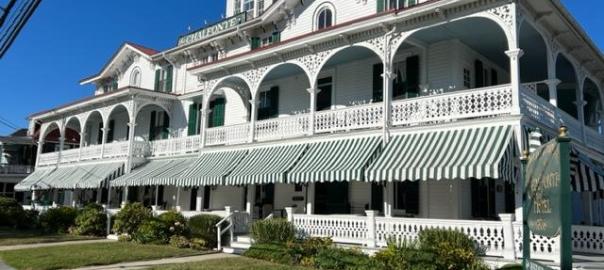
I just walked along the shore line for the rest of the evening and then through Washington Mall (Cape May’s Downtown) before going to bed. I was exhausted both from work and the trip and needed a little R & R. When I got back to the hotel, it was later in the evening and it had that creepy, ominous look about it. Sometimes it looks like ‘The Overlook Hotel’ from ‘The Shining’.
The Chalfonte Hotel at night after ‘The Ramble’ was finished.
I was staying in one of the back rooms on the second floor. I felt like I was walking down haunted halls.
Especially with old pictures of the hotel and faded bathing beauties line the walls of the hallway. Late in the evening, you feel like you are in the “Overlook Hotel” in the “The Shining”
Touring the Haunted halls of the Chalfonte Hotel
My comfortable room for the next three days of the Convention
I slept like the dead that night and even if there were a ghost haunting the halls they could not have woken me up. I slept for a solid eight hours and woke up to a beautiful sunny morning.
The morning of the Convention I got up at eight and got ready to head over to Wildwood. I had time before our 11:00am meeting a so I decided to treat myself to breakfast on the Veranda at The Magnolia Room, the hotel’s signature restaurant. It was a beautiful, sunny morning so it was perfect to eat outside.
Dining on the Veranda of the hotel on the first morning at The Magnolia Room
They have a nice but limited breakfast menu. I miss their breakfast buffet
I ordered the Challah bread French Toast with bacon
Though I miss the old Breakfast Buffet at the Magnolia Room before COVID, the breakfasts on the porch are part of my first day meetings ritual. On a nice warm morning, there is nothing like it and the French Toast was really good.
It did not look like a lot but I was stuffed after breakfast
The French Toast was excellent and I highly recommend ordering it
It was nice to just sit back and enjoy breakfast on this warm sunny morning before a long day of meetings. With all the grading, scheduling and driving and running around between the prior week and this week, I needed this break.
This is the way to dine in the morning
I got to the Convention Center early and checked in and wondered into the empty Convention Hall before the meeting. To start the meeting, the Wildwood Fire Department Honor Guard and the Bergen County Pipe and Drum performed to open the meeting along with a very loud and heartfelt ‘Pledge of Alliance”. You have never heard it recited until you are with over a thousand firefighters reciting it all at once.
The start of the meeting as the Wildwood Color guard entered with the Bergen County Pipe and Drum
The video of the Pipe and Drum and Color Guard
One of the main speakers was Donna Busch’s, whose husband the Buschio Exam is named after who helps so many firefighters with full medical exams.
After several hours in the meeting, we finished for the day and I walked down the Boardwalk for lunch. I knew where all wanted to go and made a beeline to Franconi’s Pizzeria on the Boardwalk.
Walking on the Boardwalk in Wildwood, NJ after the first Convention meeting
What really surprised me that afternoon was how quiet the Boardwalk was for lunch. Normally the Boardwalk is bustling with people but for some reason only the restaurants closest to the Convention Center were busy and that was it.
Walking around the Morey Piers whose staff was preparing for that evening when it opened at night
The second bend of the Boardwalk was very quiet that Friday afternoon
What was crazy was the number of restaurants loaded with food on their cases and extra staff all sitting around with cellphones waiting for people to come. I had never seen this before at a Convention meeting afternoon.
There was not a lot of people on the Boardwalk and when I got to Franconi’s Pizza. I was one of three customers at the restaurant after hundreds of guys had just attended meeting down the Boardwalk.
Franconi’s Pizzeria at Oak Avenue and the Boardwalk
I stopped in for lunch after the first set of meetings. I did not want to have a huge lunch because I had plans for dinner. So I thought I will just order sausage calzone. Big mistake, the thing was huge!
When the waitress brought it out, I thought she brought me the large one. This is the small!
I wondered how I would finish this thing
This calzone was the size of a small pizza
The calzone was filled with lots of cheese and sausage and came with the restaurants delicious red sauce. This could have fed two people.
It was delicious and what a lunch
After a meal like this, I needed a long walk on the Boardwalk and then walked the length of the Boardwalk to North Wildwood and back. When I walked back it seemed emptier than before.
I took a pit stop through Douglas Candies on the Boardwalk when I saw the candy demo in the window and the festive Halloween displays.
The one product I really like at the store is their candy bars especially their milk chocolate. They are a bit pricy but a once in a while treat is a good thing. You can always taste the richness in freshly made chocolate and their chocolate bars are the best. Their moi taffy was delicious too when they were sampling it.
The delicious taffy and assorted candies
The decorated Candy Apples
Each counter has a different type of candy and even in early September, the store was being decorated for Halloween. This smiling witch greeted customers at the door. There was all sorts of products being packaged for the Halloween when I was there and the store was creatively decorated for the holidays.
The store decorated for Halloween
The store was decorated early for Halloween
After I was finished with my walk of the Boardwalk, I planned on coming back later in the evening after dinner. I just wanted to get back to the hotel and relax for awhile.
When I got to Cape May, I put my feet in the ocean and enjoyed my walk along the beach. It was one of those beautiful sunny late afternoons. The water was a little rough as a Nor’easter was supposed to be heading up the coast later next week but for now the perfect late Summer afternoon.
Walking along the beach in Cape May
My video of the shore
The beach was perfect and the water was so warm and because most of the kids were back in school at this point it was quiet on the beach.
The waves were so relaxing
My video on the waves
The Ravioli House at 102 East Bennett Avenue in Downtown Wildwood, NJ
For dinner that evening I kept with my annual tradition on the first night of Convention and it was a trip to the Ravioli House in Downtown Wildwood. I dined there for a late dinner and ordered the Lasagna with a side of meatballs and came with bread and a House Salad. The meal was excellent.
The House Salad with fresh bread that I enjoyed before my Lasagna dinner
The Lasagna at Ravioli House is the type you might find in the Emilo-Romano section of Italy. It is layered with two different types of meat, two different types of cheese and slices of hard-boiled eggs baked between the homemade lasagna sheets and then topped with their homemade red sauce. It is decadent and delicious. They served it with two homemade Pork Meatballs that were excellent.
The Lasagna dinner also came with two homemade meatballs
They give you a sizeable slice of Lasagna loaded with meats, cheese and sliced hardboiled eggs
Yum!
The restaurant closes for the season on October 13th, so there will be no more trips until next year so I planned on dining here both nights of the Convention.
I was so stuffed from dinner, I had no interest in dessert and more interested in a long walk on the Boardwalk to work off both lunch and dinner. The lights had come on and the whole Boardwalk takes on a fantasyland look to it.
The Boardwalk was busier in the evening
The Boardwalk was much busier in the evening than it had been in the afternoon but still not what it once was in years past. It’s a sign of the times with this economy. I am used to it being much more crowded with families.
It got busier by the Morey Amusement Piers, where the park was celebrating Octoberfest
The Morey family extends their season for the Firemen’s Convention and the park was pretty busy that night with the young families. All the rides were full force and there was such an energy on this part of the Boardwalk. It is almost bittersweet because after this weekend, the piers close until next May.
The piers were lit like a fantasyland that evening
Video of the pier at night
The rides were so colorful on that Friday night
The Garage bands they had that evening were good but not great. Some of the singers were a bit off key but still some of them brought energy to the park and it was a lot of fun that night. They really had the crowd moving around the dance floor in front of the stage.
The opening of ‘Octoberfest’ that evening
My video on the concert with the group singing “I’m a Believer” by the Monkeys
I stayed until about 9:00pm and then wanted to head back to the hotel. We had voting in the early morning and then after that I had to head up to Vineland to visit the Vineland Historical Society Museum in Downtown Vineland, NJ. So I had some running around to do the next day.
It was another good night’s sleep at the hotel and then back to Wildwood for breakfast and voting. It was another beautiful sunny morning and I love the drive between Cape May and Wildwood through the marshes.
The Chalfonte Hotel in the early morning. The wedding party who were in house the night before had filled up the patio for breakfast.
The drive between the two towns is beautiful in the late summer with the tall grasses and green trees. Fall had not hit yet so the last vestiges of Summer were still here. You have stop and look at their gracefulness. You can see all the birds digging for their breakfast.
The local highway between the two towns along the shoreline
The marshes in the late Summer
The views of the marshes are spectacular in the early morning
I got to the Convention Center for voting at 8:00am and was able to take a picture of the Wildwood Boardwalk when it was quiet.
The Boardwalk and the beach are quite beautiful in the early morning
I got to the Convention Center which I could not believe was that busy that early in the morning. I guess everyone else had the same idea to vote early and start their day as well.
The entrance to the Wildwood Convention Center in the morning
After I left voting and got back to the Boardwalk to go have breakfast, everyone on the Boardwalk stopped as they played the National Anthem at 9:00am sharp. If you want to see patriotism, watch hundreds of firefighter s and their families stop, remove their hats and sing ‘God Bless America’. It is quite a site.
Everything stopped for the National Anthem
I have to say that I was very impressed and proud to be a member of the fire service. With all the problems we have in this country, it is nice to see that some people still believe in it. The whole Boardwalk stopped for this.
This led to two more patriotic songs and then everyone went back to their morning. I walked down the Boardwalk to Franconi’s Pizzeria, who was having their annual Firefighters specials for breakfast.
I loved the Lorax sign on the Boardwalk
I love coming to Franconi’s for any meal. The food is so reasonable, the service always so welcoming and meals excellent. In all the years I have been coming here, I have never had a bad meal.
Franconi’s Pizzeria at 3300 Boardwalk on the second bend of the Boardwalk
The lunch was so good that I stopped in for breakfast the next morning. I had one of the Firemen’s Special Breakfast’s that had three eggs, your choice of bacon or sausage, hashbrowns and two blueberry pancakes (I paid three dollars extra for these but well worth it).
The Firemen’s Special of Three Eggs with Sausage and Hashbrowns and two large Blueberry pancakes
They did not skip on the blueberries in the Blueberry Pancakes
The Scrambled eggs were excellent and everything on the plate was perfectly cooked and spiced
I don’t what it is about Franconi’s that makes it so special to eat here. Maybe it is the location on the boardwalk so close to the beach and the sea air or the sounds of the ocean and the boardwalk or just people enjoying themselves.
What a breakfast!
I walked the Boardwalk for a bit since it was such a beautiful morning and then headed out to Vineland, NJ for a visit to the Vineland Historical Society Museum. The Museum Director had reached out to me about a year earlier to come for a visit and everytime I tried to go, it just did not work out. Before I left for Wildwood, I had Googled the museum for hours and it just happened to be open the weekend of the Convention so off I went up the back highways to Downtown Vineland, NJ.
I had not been to Vineland since my father had worked for Vineland Industries back in 1974, so it had been a long time and I hardly remember it. Downtown Vineland is still vibrant in some ways but could use some more businesses. The historical society was located just off the downtown area and located in a beautiful building that had been built for the museum around the turn of the last century.
The front of the Vineland Historical Society Museum at 108 South Seventh Street in Downtown Vineland, NJ
On my off time from the Firemen’s Convention after voting, I had planned to visit a group of small museums in Cumberland and Glouster Counties in New Jersey. Most of the small ones were closed or had changed their hours online but the Vineland Historical Society was open for touring and was having a speaker that day. I had been invited to come by the President of their Board of Directors about a year earlier so I was glad that I was able to visit this weekend where the schedules matched up.
What an interesting museum with its focus not just on the history of the Town of Vineland but of the surrounding communities and the impact that Vineland had and has on Urban Design, Farming, Manufacturing and Inventions that contribute to the whole country.
About the Museum:
The museum had been designed as a Historical Museum for community leaders who wanted to share their love of historical objects and the past history of the community. This is what built the collection over the years. Each section of the museum tells a different part of Vineland’s history from the community events like its “100th Anniversary” of the town, the history of the Police, Fire and Veterans of Foreign Wars, members of the community who contributed to Women’s Suffrage and to the number of everyday products we use like Grape Juice and Marshmallow Fluff that were invented here. Each section of the museum tells an interesting story.
The museum is a stop on the Woman’s Suffrage Tour
The Mission of the Museum:
The Vineland Historical and Antiquarian Society is the oldest local historical society in New Jersey and its museum is the oldest purpose-built museum in the State of New Jersey. The Society is dedicated to collecting and preserving artifacts and records related to Vineland and the South Jersey region, and to sharing that material with visitors through exhibits, programs and other appropriate venues. Vineland has a rich, culturally-diverse past that is reflected through our collections. To learn more, please contact us or make an appointment to visit.
The Rain Garden outside the museum
The Rain Water Garden sign
The Rain Water Garden outside the museum was in full bloom at the Summer and you could see that the garden was trying to attract butterflies and other insects that would help pollinize the garden. It must be very colorful during the Spring.
The first floor of the museum is the lecture room, the library and the gift shop along with local artifacts and the Glass Manufactured Gallery
The main gallery was set for a lecture later that afternoon. On all sides of the museum tell the story and the timeline of Vineland and the surrounding communities. There is the City of Vineland and Vineland Borough and Landis Township in 1952. So you see the artifacts of the farming communities and those of the developing City (Wiki).
The early views of the museum with the original heating unit and turn of the century shell art
Historical community information
The First floor collection of artifacts
The bust of Charles K. Landis, who founded the town
The display of the early Women’s Suffrage Movement in town, which helped women earn the right to vote. New Jersey was an early pioneer in the Movement.
The photo of Portia Kellogg Chase, an early leader in the Women’s Suffrage Movement in Vineland, NJ
Made in Vineland: A Celebration of Local Inventors and Their Creations:
The exhibition highlights the remarkable people and ideas born right here in Vineland. From everyday household items to groundbreaking innovations in transportation, food, tools, and telecommunications, this special 2026 exhibit tells the stories of local inventors whose creations shaped daily life far beyond our city. Visitors are invited to explore these inventions and the fascinating individuals behind them during our Open House held every third Saturday of the month.
The ‘Made in Vineland’ exhibition:
The inventions of the Flower vase, the Woodruff Train Car and the Self Adjusted Plane
The inventions of Angel Food Cake Marshmallow fluff
The inventions of the Grape Juice industry and Skee-ball game
The post office desk from the turn of the last century
Just off the side of the main room is the Blown Glass Room. The area is known for special sand that is used for glass making. This made the State of New Jersey one of the leading manufacturers of glass in the country at the time.
Each of the cases displays glass for different purposes and for different industries made by different companies. The museum has a very extensive collection of glass.
The Blown Glass Room
The Blown Glass Room
Since the other museums closed around 1:00pm, I decided to head back to Cape May. I would have to visit these small local museums on my next trip to the area. Both the Matchbox Road Museum at 15 Pearl Street in Newfield, NJ and the Clayton Historic Museum at 29 East Avenue in Clayton, NJ both had limited hours that I missed on my trip to the area. For the next time.
The Matchbox Road Museum at 15 Pearl Street in Newfield, NJ
Along the local highway coming back from the Clayton Historic Museum, I passed Twin Kiss, a small restaurant and ice cream stand that looked like time had passed by. One of these little establishments that dot parts of New Jersey that once well travelled roads.
The Twin Kiss Drive Inn at 25 South Delsea Drive in Clayton, NJ
Twin Kiss Drive In, at 25 S. Delsea Drive, has been a Clayton icon since 1955, when George W. and Mary Lillian “Lilly” Kasper opened the ice cream franchise. The couple borrowed $5,000.00 and bought into the brand-new Twin Kiss franchise, opening several locations throughout Pennsylvania, coming to CLAYTON opening that stand on May 19, 1955 .
In 1959, when Twin Kiss developed a sandwich unit, Lilly joined George full time, and they worked side by side for over 40 years. They ran it for 46 years until retiring in 2001. New owners, John and Stacey Chamberlin, took over in 2001.
Twin Kiss Drive Inn and their Mission Statement:
(from the restaurant website)
Welcome to Twin Kiss Drive-In, a beloved local staple in Clayton, New Jersey, where great food and classic drive-in charm come together.
Proudly owned and operated by Stacy and John Chamberlain, Twin Kiss Drive-In is built on a simple idea: serve quality food, create a welcoming atmosphere, and give the community a place to gather and enjoy. Whether you’re stopping by for a quick bite, bringing the family for a casual night out, or reliving a bit of nostalgia, Twin Kiss offers an experience that feels both timeless and uniquely local.
For years, Twin Kiss has been known for its friendly service, classic American favorites, and that unmistakable drive-in vibe. Stacy and John are hands-on owners who take pride in maintaining the tradition while continuing to make the space feel fresh, inviting, and community-focused.
More than just a place to eat, Twin Kiss Drive-In is a part of Clayton’s story—a spot where memories are made, from summer nights and after-game stops to everyday moments worth savoring. We’re grateful to be part of this community and look forward to serving you.
The front of the restaurant
The ice cream and dessert menu
The sandwich and sub menu
The delicious Salted Caramel with Pretzel Ice Cream I had that day and this was a small!
Twin Kiss Drive Inn is one of those classic New Jersey restaurants that every town should have in them. After my visit to Twin Kiss for dessert, I drove back to Cape May through the back roads, visiting towns that I had never been to and driving down roads that once had been the major highways in this region.
The funny part about traveling some of these local highways is that I felt like I wasn’t even in New Jersey anymore. I felt like I was in small towns in Alabama or something. This is the way I feel sometimes when I visit small towns in the Hudson River Valley.
Once you leave the more ‘popular’ tourism towns like Rhinebeck, you visit these more ‘local’ towns and you feel like you are visiting the place that time forgot. I will have to make a special road trip back next month to visit some of the local museums.
I got back to Cape May with plenty of time to walk around. Unfortunately the hotel was hosting another wedding and I just wanted to get away from that. Cape May was really busy that night now that the Convention meeting was over so couples and families were running around the town.
I changed my clothes and went back to Wildwood for dinner and to walk the Boardwalk to work off meals. My goal was to go to the Ravioli House for dinner one last time because I knew it would be closing in two weeks.
The town had quieted down since the Firemen’s Parade was over and I think a lot of people had headed home. I just wanted another night at the shore to relax now that my work was done. I had another excellent evening.
I was so happy with dinner the night before, that I decided to have dinner there again my last night at the shore. The restaurant closes for the season on October 13th, so there will be no more trips until next year.
What I really enjoy about the restaurant is starting with their house salad with homemade dressing
The salads are so crisp and fresh
Dinner was the Shrimp Scampi with homemade linguine
After several days of fried foods and heavy sauces, I decided to order something lighter and ordered the Shrimp Scampi, which came with a lemon and wine sauce. It blended in wonderfully with the fresh cooked pasta. The sauce had a creamy consistency.
The jumbo shrimp were perfectly cooked and were sweet and tender
The meal was delicious and the seafood was so fresh
After dinner was over and I was thoroughly stuffed from both the meal and dessert, I enjoyed another night of walking the Boardwalk and enjoying the lights.
I watched part of Michigan State-Notre Dame football game on the big screen TV at the Morey Pier. They kept it on low and I watched enough to goal at Notre Dame’s last touch down against us. It was depressing but we held our own for a team that is going through a rebuild.
The lights dazzled my last night on the Boardwalk
Before I left the Boardwalk that evening. I stopped by the Douglass Pavilion for some ice cream. I had never noticed this before and when the menu, it carried such unusual flavors.
The store has a complete ice cream store to compliment the sale of the pints of ice cream in the Douglass Candy store across the Boardwalk. This way you can taste the flavors before you buy them. The store was getting ready for the Halloween holiday season so it was all about pumpkins and Jack-0-Lanterns.
The Douglas Creamery is across the Boardwalk from the store
The menu and flavors of the ice creams that you can choose from. The ice creams are homemade and themed with some of the candy items in the store
I loved the selection of flavors and some included the candies that they sell in the store. The flavors were also geared toward the Fall with Pumpkin and Apple Cider Doughnut flavors.
The tables and the store were decorated for Halloween
I chose the Molasses Paddy (which is a candy they are known for) and the Apple Cider Doughnut ice cream
The ice cream is rich and delicious and they give you nice sized scoops
The store is getting ready for Halloween
I got back to the hotel as the wedding broke up and the hotel had that eerie late evening look to it. I love the look of this old hotel. It looks like the ghosts from the past still visit it.
The Chalfonte Hotel on my last evening
I woke up the next morning like I slept for a year. I got nine hours of sleep. It was overcast that morning and I was still full from dinner and the ice cream the night before. Since I didn’t foresee coming back to the shore, I decided to just have a piece of pastry at the Ravioli House Pastry Shop, take another quick walk on the Boardwalk and then head home.
The Wildwood Boardwalk on the last day of my trip
The Morey Pier was quiet in the early morning and I believe was closed for the season
My video of watching the Ferris Wheel
I stopped at the Ravioli House for breakfast on my last morning of the Convention. I was getting tired of Pancakes, Bacon and Eggs and wanted something different. I had seen pastries in the case I had always wanted to try so I returned one last time before I headed home.
The Ravioli House Bake Shop has a wonderful assortment of bakery treats
The seating area in the pastry shop allows people to talk amongst themselves
Since my dinners were so filling, I never got a chance to try two of the desserts I had wanted in the last two visits to the restaurant so I stopped in the bakery and had breakfast here ordering a Cassata Cake and a Napoleon with fruit. I could just about finish the Cassata Cake because the pastry was so large and very sweet that I brough the Napoleon home.
The Napoleon and the Cassata Cake with some hot tea with lemon
The Cassata Cake at Ravioli House is very dense and rich and should be shared
The dessert is filled with a mixture of cake, nuts and liquors
The Napoleon I saved for later
I was on a major sugar high on the way home that morning. I knew this would be going on the three hour trip home. I was surprised how quickly I got home that afternoon. I figured everyone else had checked out the day before.
It was another successful trip for my Fire Department Convention work and my blogging for all the Travel sites. I got a lot accomplished this weekend. We got the voting for the Convention done that we wanted and I had another set of museums that I had visited or planned to visit in the future. Now on to Halloween.
Ringwood Manor in Ringwood Park at Christmas time:
I have visited the Ringwood Manor during the Christmas holidays over the last four years and it keeps getting better. Each room in the house is tastefully decorated for the holidays. The West Milford Garden Club does an excellent job decorating every year and in the post-COVID environment, it is nice to see such a beautiful and well thought out display for Christmas.
The outside of the house was decorated with garland and ribbons and welcomed visitors with Christmas cheer.
The entrance of Ringwood Manor.
The entrance to the estate.
The patio of Ringwood Manor.
The outside of the house was tastefully decorated in garland and bows.
The decorated front door on the Ryerson side of Ringwood Manor.
History of Ringwood, NJ:
Colonial Ringwood:
Long before the Forges & Manor of Ringwood existed this property was occupied by the Native American people. Prehistoric artifacts found on the grounds confirm their inhabitants back to the Archaic and Woodlands periods. Living in a hunting and farming paradise, these Munsee-speaking Lenape peoples dwelled at the head of the Topompock or Ringwood River Valley. This paradise attracted colonial prospectors, who by 1740, came for the iron ore found in the ground. Recognizing the rich magnetite ores, Cornelius Board settled here in 1739 and first utilized the property for iron mining. He was followed shortly thereafter by the Ogden family who established the Ringwood Company and built the first blast furnace here in 1742.
After twenty years of production, a German promoter, Peter Hasenclever, organized the American Iron Company to exploit the resources in colonial North America, purchasing the Ringwood area in 1764. He would also develop forges at Long Pond and Charlotteburg but made Ringwood the center of his iron empire. Hasenclever established iron plantations and developed the production of flax and timber across 50,00 acres of land stretching through New Jersey and New York, from present day Butler to New Foundland and Nova Scotia. The iron was said to have been “the best iron in the American colonies.” Robert Erskine, the last ironmaster of the American Iron Company, was sent from England in 1771 and would manage the company during the Revolutionary War.
(History of Ringwood, NJ)
The decorated carriage house.
When you walk into the home, the first rooms is decorated tastefully around a collection of antique guns and hunting equipment. The Great Hall was decorated with garland and ornaments with a large tree in the corner.
The Great Hall of the Ringwood Manor when you enter for Christmas.
The Great Hall upon entering.
The Chamber Gun display.
The Chamber Gun display in the Great Hall of Ringwood Manor.
The Great Hall fireplace decorated for the holidays.
The formal dining room was set for Christmas dinner for the family after church. The elegant china was set on the table with poppers and small Christmas gifts for the guests. The side boards were set with the dinner entrees and sides for the family meal. There was a little discussion of how the Hewitt family would entertain during the holidays and in 2019 and in 2023, they opened up the kitchen and Butler’s pantry for touring.
The Hallway leading to the formal Dining Room.
The decorated staircase in the Great Hall
The Great Hall hallway
The Dining Room sign
The Dining Room at the Ringwood Manor.
The Dining Room set for Christmas dinner.
Dining Room set for Christmas dinner beautifully.
The details of the Dining Room
The Dining Room paintings and details.
Preparing for the holidays in the Dining Room
The statuary of the Dining Room
The lighting fixtures of the Dining Room.
Each room was set for the holidays with garlands, trees and decorations. As it was explained to me on another house tour during the holidays, the Victorians would normally only decorate one or two rooms for the holidays and not the whole house. The whole house might be decorated based on the wealth of the family and the amount of servants to take care of the home. Needles would have to cleaned up and the trees would have to be attended to on a daily basis.
the Butler’s Pantry just off the Dining Room
The Butler’s Pantry in preparation for Christmas dinner
The Christmas treats in the Butler’s Pantry.
I then walked back through the house and passed by the Office on my way to the social rooms of the first floor. The office is where business was taken care by Mr. Hewitt when he was in residence.
Mr. Hewitt’s Office decorated for Christmas
Mr. Hewitt’s office at Christmas time.
The Christmas tree in Mr. Hewitt’s office.
Before I left this part of the house, I passed the Breakfast Room which is just off the Dining Room. It had beautifully decorated for a Christmas breakfast.
The Breakfast Room sign
The Breakfast Room was decorated with desserts and sweets for the Christmas holidays.
The Breakfast Room beautifully decorated for the holidays.
The Breakfast Room for a Christmas feast.
The Christmas tree in the Breakfast Room.
Before entering the Great Hall, I visited the Receiving Room, where guests waited until dinner was served.
The Waiting Room
The Waiting Room was for guests to relax and wait for Mr. & Mrs. Hewitt.
The Waiting Room fireplace is nicely decorated.
The ‘Birdcage’ in the Waiting Room
Passing through the Great Hall again, I entered what had once been the original Ryerson House built in the early 1800’s. The first room on the tour of this side of the house was the French Drawing Room decked out for the holidays. This room was used by the ladies after dinner was over to converse and get away from their husbands, who would have still been in the dining room.
French Drawing Room, the “Withdrawing” room.
The French Drawing Room
The French Drawing Room in all its Christmas glory.
The Christmas tree in the French Drawing Room
The fireplace in the French Drawing Room.
On the other side of the house is the original Ryerson mansion that was added on by the Hewitt’s when they bought the house. The older house had the original moldings and windows from the early 1800’s and that side of the house had a different feel to it starting with the original entrance and staircase.
The Ryerson Staircase and foyer sign
The Ryerson Staircase and foyer
The decorated Ryerson staircase.
One of the nicest rooms that was decorated was the screened in porch. Here there was a tree set with presents, hot house flowers and garland lining the room. The sunlight shined throughout the room and the decorations sparkled.
The South Ryerson Parlor
The South Ryerson South Parlor
The fireplace in the South Parlor.
The latest addition to the house was the screened in porch, The Glass Piazza, of the house which was used in the summer months for rest and relaxation. The screen in porch was beautifully decorated for the holidays with all sorts of Christmas trees and decorations.
The Glass Piazza, the screened in porch of the main house.
The Glass Piazza decked out at Christmas time.
The doll mini tea service in the Glass Piazza.
The Glass Piazza set for tea at the holidays.
The Glass Piazza at Christmas time.
The beautiful Christmas tree in the Glass Piazza in 2023.
When you leave the Glass Piazza, you enter the original part of the house again with the North Ryerson Parlor. This room was used by the family for less formal affairs but it was still decked out of the holidays.
The North Ryerson Parlor
The Ryerson North Parlor decorated for tea.
The Ryerson North Parlor fireplace decorated for Christmas time.
The last room I visited on the tour was the Music Room in the original Ryerson House. The room was used by both the Ryerson’s and the Hewitt’s for social occasions and the Hewitt’s were all musically inclined.
The Music Room at the Ringwood Manor
The Music Room at the Ringwood Manor.
The Music Room at the Ringwood Manor.
The fireplace in the Music Room decked out for the holidays.
The Music Room during Christmas time.
Each room had a docent to explain the decor or what the room’s use had been in the family’s time. A visitor can roam the house at their leisure and see the rooms as many times as they want. There is also a gift shop in a room off the formal dining room that contains some beautiful Christmas crafts for sale by the Women’s Club of New Milford. Some of these women are very creative and sell the most amazing Christmas ornaments made of glitter, wood, branches, walnuts and moss.
The decor of the home changes over time and there are different things to see every year. The barn also on the property as you drive in has more artwork and crafts. In the Gardener’s Shed next to the house, the Society has a small cafe with sandwiches, desserts and coffee/tea/hot chocolate.
The Carriage House was used as a gift shop and a place to get something to eat.
The tour of Ringwood Manor is wonderful during the holiday season and the rest of the house opens up during the warmer months of the year.
History of the House:
This 582 acre historic site is open to the public year round. The historic house museum, Ringwood Manor is open Wednesday to Sundays year round.
History of 19th Century Manor House and Landscape:
The present manor house was begun by Martin J. Ryerson in 1807. He and his sons controlled not only the iron mines and forges on the property but also operated productions at four other locations in the area. The Ryerson family resided in their 10 room Federal style home for almost 50 years.
The entrance to the historical home.
In 1853, the Ryerson’s house and property were purchased by business partners Peter Cooper and his son in law Abram S. Hewitt. The 22,000 acre ironworks and the Ryerson’s home were purchased for a sum of $100,000. Their company, Cooper-Hewitt & Company, grew to be the fifth largest corporation in the United States. The Hewitt’s, one of the most influential and wealthiest families of the 19th century, fell in love with the Ringwood estate.
The expanded Ringwood Manor estate in the winter months.
Ringwood manor at the holidays.
They decided to make this site of their summer home, naming it The Forges and Manor of Ringwood. They enlarged the home of the Ryerson’s, constructing major additions or renovations in 1864, 1875, 1900 and 1910. The completed 51 room house is 226.5 feet long and features 28 bedrooms, 24 fireplaces and 13 bathrooms and more than 250 windows. The house was built in an eclectic style, typical of the Victorian period. In 1875, the Manor House was an excellent example of the Gothic Revival style of architecture. By 1900, the Hewitt’s changed the exterior facade to its present appearance, adding the neo-classical portico and columns of the front porch and affixing white stucco to the exterior walls. The furnishings of the house reflect the varying tastes and styles of the family and time period.
Ringwood Manor during the holidays.
(From the Ringwood Manor website)
The formal gardens surrounding the Manor House were developed by Mrs. Hewitt and her daughter, Eleanor around 1900. Their design was influenced by the Hewitt’s many trips overseas. The gardens possess a mysterious old world charm that captivates visitors as they enjoy the serenity of reflecting pools and the progression of blooms from early spring to late fall. Placed throughout the garden are French and Italian statuary and garden ornaments as well many interesting architectural items from New York City acquired while Abram Hewitt served as Mayor and Congressman. Examples of these features include columns from the old New York Life building, gates from the Astor family’s home and gate posts from Columbia College. Relics from the iron company that are found on the grounds include a trip hammer and anvil, cog wheel and a Dictator-class mortar the base of which was created by the Hewitt’s company and used at the Battle of Vicksburg in Mississippi during the Civil War.
The Ringwood Manor in the Fall of 2026:
I visited the park again in October of 2026 after taking a tour of the NJ Botanical Gardens down the road at the Skylands Manor. The grounds were just changing colors during all the cool weather we were having and the grounds could not have been more picturesque.
The lawn of the estate in the early Fall in 2026
Walking through the walkways and driveway of the estate
Walking up to the Manor House at Ringwood Park
The pond by the house overlooking the barns
The marble walkway up to the house
The Manor House in the Fall of 2026
The estate lawn from the house
The gardens and landscaped gardens on the estate
In the barn which is used as a Art Gallery, hosts a Jazz Concert on some weekends during the Fall. We had a nice time listening the music.
The Jazz Concert in the afternoon
The Jazz Concert at the barn
The grounds are so beautiful at any time of the year.
The Ravioli House Restaurant and Pastry Shop at 102 East Bennet Avenue.
* I wanted to note that since COVID all the prices have changed so please check the website as my prices enclosed were reflective at the time of the visit.
Sometimes a shop does not fit the traditional pattern of establishments that I include on this site. They fall into a category that is more restaurant than a traditional store. Ravioli House & Pastry Shop is a combination of both where quality and service separates it from other restaurants and bakeries that I have visited lately.
The Pastry counter at the back of the restaurant
I came across the Ravioli House when I was attending the Firemen’s Convention every September. I was walking around Wildwood to see what the town was like after our main meeting and came across the Ravioli Pastry Shop which is the back part of the restaurant. It had an inviting entrance with the words “fresh Italian desserts” and that was for me. What a great surprise inside!
The sign for the Pastry Shop in the back.
The pastries here are amazing and are very innovative. There is a combination of traditional and modern Italian desserts to choose from. The eclairs are larger than their French versions and full of creamy vanilla filling. They are topped with a thick layer of chocolate frosting and this confection is a pleasure in every bite.
The Pastry Shop and Bar in the back of the restaurant.
They bake a usual cookie called a “Deliciousioso”, which is a type of Linzer Tart but instead of jelly it is filled with almond cream and then the sides are rolled in nuts. It has a subtle sweetness to it and you can taste the richness in the cream filling.
Having a Deliciousioso on a recent night
They are so delicious
Don’t miss these sweet treats
It is hard to choose from all the delicious pastries
All the delicious pastries I enjoy: the Peach dessert, The St. Joseph’s Puff, the Deliciousso and the Chocolate Cake dessert.
The St. Joseph dessert with Vanilla Cream
The St. Joseph Puff Pastry differs from a Cream Puff only in that it is filled with a combination of Cannoli cream and vanilla filling rather than a traditional whipped cream or vanilla filling. It large, dense and you can taste the sweetness in both the Cannoli Cream and in the pastry itself.
On another recent trip, I had the St. Joseph Puff Pastry with the Vanilla Cream, and it was amazing. Creamy and sweet on the inside and the same crisp outside. Both versions are worth a try.
The St. Joseph’s Pastries with both Vanilla Cream and Cannoli Cream are both delicious
The Cannoli’s here are filled to order and made in house. The Cannoli Cream is thick, rich and delicious and studded with chocolate chips. The outside shells are crisp and well baked.
The Ravioli House Restaurant:
The restaurant section is just as good as the Pastry Shop, with all sauces, pastas and dressings that are made in house and the quality of the food and service is top notch. It is a real home town restaurant as it has been owned by the same family for almost 50 years and the daughter of the owner still guards over the dining room and her mother, the owner still works in the kitchen and supervises the staff.
The Dining Room at the Ravioli House.
The Dining Room in the late evening
The new outdoor addition of the restaurant is seasonal
The best start to the meal: the salad with homemade Creamy Italian Dressing with their freshly baked bread
The homemade Ravioli here is excellent and was the meal of my choice on my visit in 2023. Little pillows of fresh pasta that are filled with Cheese, Meat and Spinach. Order the Ravioli House Trio with a side of meatballs and you will get to sample all three. The marinara sauce here is made with fresh tomatoes and garlic and is full of flavor.
Their homemade Ravioli is excellent
The Manicotti here with meatballs is very good. They are made with light as air pasta pancakes filled with a ricotta and Parmesan cheese filling and topped with their fresh marinara sauce.
The Manicotti with Homemade Meatballs
The pasta was light as air
The side of pork meatballs were amazing. So rich in the sauce.
All their entrees come with a freshly tossed salad along with their homemade creamy Italian dressing that is so good you will need extra bread to sop it up with when finished.
You always need plenty of their freshly made in house breads to soak up their sauces. When really hot, there is nothing like it.
Their fresh tossed mixed salads come with the entree and are topped with their homemade creamy Italian dressing
Another dish I can recommend is the Linguine in White Clam Sauce, which is made with fresh in house linguine and studded with fresh baby clams and steamers in a light white wine and lemon sauce which enhances the freshness of the seafood and not overwhelming. I had this on a recent trip for dinner.
The Linguini with Clam Sauce has two different types of clams in the dish
The pasta was perfectly cooked and the clams were sweet and tender
The Linguine is also good with their Bolognese Sauce, which is topped with a rich and flavor packed meat sauce of ground beef and chopped vegetables.
The Linguini with Bolognese Sauce
They must have given me a pound of pasta
The sauce was full of lots of meats and vegetables
When visiting for the 2021 Convention, I made my annual visit to Ravioli House again and this time because of COVID, they used the parking lot next to the restaurant for outdoor dining. So I had a nice table facing New Jersey Avenue and ordered my meal. The waiter could not have been nice enough and the service here is always top notch.
For dinner, I ordered the Chicken Pastina Soup, which was a rich chicken stock with chunks of chicken, carrots and tiny pastina pasta cooked to perfection in the soup. Each spoonful had a nice combination of flavors of the cooked chicken and the chopped fresh vegetables. It was the perfect way to start a meal on a early summer evening.
The Chicken Pastina Soup with its rich broth.
As part of my dinner, it included a house salad with crisp green leaf lettuce, tiny cherry tomatoes and chopped cucumber in a zesty house creamy Italian dressing that is also made inhouse. The dressing was just enough to add some zing to the salad. Each bite was crunchy and sweet.
The Tossed House salad
The entrée was a real feast when I ordered the ‘Trip Around Italy’, which was a sampler of the restaurant’s fresh pastas. The entrée included two large stuffed shells, two fresh cheese ravioli, a large portion of homemade Gnocchi and Spaghetti covered with a rich red sauce that was topped with a large meatball and a nice piece of sausage. The meal could have feed two people comfortably.
The “Trip to Italy” can feed two people
All the pastas were delicious and so well prepared. The Spaghetti was perfectly cooked and was a meal in itself. The Gnocchi was perfectly cooked and each piece of pasta was nice sized. The pillowy Ravioli and Stuffed Shells were filled to the brim with a nice cheese mixture of Mozzarella, Ricotta and Parmesan. The red sauce had a nice combination of spices that accented the fresh tomatoes used in the sauce.
I was completely stuffed when I finished the meal that I could not eat dessert. I had been eyeing the Napoleons when I was in the pastry shop before dinner, but I could not eat another bite. It was another excellent meal at the restaurant.
In 2022 and in the summer of 2024 (a month before Convention), I returned to the Ravioli House for dinner on my traditional Saturday night at 8:00pm meal and it was ‘same time next year’ with the owner who l left in the same spot last year this time. We even laughed about it.
I wanted something totally different this year and I had the Chicken Picante, which is thinly sliced chicken breasts sauteed in butter, wine and lemon and then was served with a side of spaghetti in a red sauce. It also came with a small house salad with oil and vinegar. This was the perfect meal.
The delicious home made rolls served with the meal.
Most of the entrees start with a fresh tossed salad with homemade Italian dressing
The tossed salad with a side of the homemade bread is the best way to start a meal at Ravioli House
The chicken was so tender, and you got two nice sized pieces with the order. The sauce had such a nice flavor, and you could taste the lemons and capers in every bite. Their red sauce is made from scratch, as all their sauces and pastas are and you could taste the spices, they added to it. The spaghetti was cooked perfectly and had a nice bite to it.
The Chicken Piccante at Ravioli House is a real treat
The full dinner comes with two large chicken breasts with a side of homemade spaghetti and homemade red sauce
When I came for dinner during the convention in 2025, it was picture taking time and I revisited the dishes I had before like the Manicotti and the Pasta Bolognese. This time though I tried the Fried Mozzarella for an appetizer and it was delicious.
The Fried Mozzarella with Red Sauce
The pastas here are all homemade
This includes all the stuffed pastas, ravioli and stuffed shells
On a recent trip to the Ravioli House during the Firemen’s Convention, I dined there for dinner and ordered the Lasagna dinner which came with bread and a House Salad. The meal was excellent.
The House Salad with fresh bread that I enjoyed before my Lasagna dinner
The Lasagna at Ravioli House is the type you might find in the Emilo-Romano section of Italy. It is layered with two different types of meat, two different types of cheese and slices of hard-boiled eggs baked between the homemade lasagna sheets and then topped with their homemade red sauce. It is decadent and delicious.
The Lasagna dinner also came with two homemade meatballs
They give you a sizeable slice of Lasagna loaded with meats, cheese and sliced hardboiled eggs
Yum!
I was so happy with dinner the night before, that I decided to have dinner there again my last night at the shore. The restaurant closes for the season on October 13th, so there will be no more trips until next year.
What I really enjoy about the restaurant is starting with their house salad with homemade dressing
The salads are so crisp and fresh
Dinner was the Shrimp Scampi with homemade linguine
After several days of fried foods and heavy sauces, I decided to order something lighter and ordered the Shrimp Scampi, which came with a lemon and wine sauce. It blended in wonderfully with the fresh cooked pasta. The sauce had a creamy consistency.
The jumbo shrimp were perfectly cooked and were sweet and tender
The meal was delicious and the seafood was so fresh
For Dessert and Visiting the Bakery behind the restaurant:
For dessert this time, I had one of the St. Joseph pastries with the vanilla cream. Talk about heaven in each bite. The pastry was sweet and tender for each bite and the vanilla cream had a sweet and luscious taste to it. I love all their pastries as I work my way through it every year.
The St. Joseph’s pastries come in both Vanilla and Cannoli Cream.
The Saint Joseph dessert is so special
Even the Whipped Cream that it was served with tasted homemade
All the desserts are made in house in the pastry shop next door
The service here is always very friendly and when it is not too busy can be very personal. Their wait staff has been very well trained and handle a busy dining room like an artist. Everyone is made to feel at home here.
The Chocolate Éclair was the star dessert in 2023
The restaurant is opened seasonally and will close in October until the beginning of April.
The Peach Pastry has been a favorite of mine for years. This was the dessert of choice when I visited during the Firemen’s Convention in 2024. I found out from the waiter that this dish was the creation of the restaurant owner, Teresa. It is one of her signature desserts.
The Peach doughnut
The Peach dessert up close
The inside of the dessert is filled with rich cream and is soaked in maraschino cherry juice. It is heavenly!
Take time to visit the pastry shop in the back of the restaurant where an assortment of delicious Italian baked goods are available.
The bake shop has a wonderful assortment of bakery treats
The assortment of cookies and puffs
The assortment of cakes and pastries
The seating area in the pastry shop allows people to talk amongst themselves
I stopped in for a late breakfast snack and tried one of the Delishioso cookies.
My dessert that morning
The Delishioso cookie
The delicious crème filled cookie
It was delicious
I stopped in for breakfast on my last morning of the Convention in 2026. I was getting tired of Pancakes, Bacon and Eggs and wanted something different. Since my dinners were so filling, I never got a chance to try two of the desserts I had wanted in the last two visits to the restaurant so I stopped in the bakery and had breakfast here ordering a Cassata Cake and a Napoleon with fruit. I could just about finish the Cassata Cake because the pastry was so large and very sweet that I brough the Napoleon home.
The Napoleon and the Cassata Cake with some hot tea with lemon
The Cassata Cake at Ravioli House is very dense and rich and should be shared
The dessert is filled with a mixture of cake, nuts and liquors
The Napoleon I saved for later
It is fun after a day at the beach to come in for a piece of pastry. The selection is wonderful and very creative.
It is nice to come to a restaurant where quality still matters and everything is made from scratch. That is very rare these days.
The Empire State Railway Museum is housed in the historic, restored Phoenicia Railway Station, which was built in 1899 and example of the stations built by the Ulster & Delaware Railroad.
From the 1800’s through the 1940’s, the steam locomotives of the Ulster & Delaware climbed the mountain grades bound for the grand hotels and boarding houses of the Catskills. The trains carried thousands of passengers over the years. This transportation system was instrumental in the region becoming famous. All the trains stopped at the Phoenicia Station. Beside the passenger trains, there were many freight trains carrying lumber, blue stone, dairy and agricultural products bound for New York City and beyond.
The History of the Museum:
(From the museum website)
Founded in 1960 and then moved to Phoenicia in 1983. The historic Phoenicia Station, built in 1899, allow visitors to view the three interior rooms of the building. Enjoy the unique architecture of the Waiting Room with its framed artwork, photographs and artifacts on display. Step into the Agent’s Office and view the diorama with the HO-scaled layout of the Ulster & Delaware Railroad as it was in the early 1900s, plus several other dioramas and antique telegraph equipment (The Empire State Railway Museum website).
The front of the museum station
The welcoming sign to the Museum in the Summer of 2026
The Mission of the Museum:
The Empire State Railway Museum’s mission is to preserve the history of the Catskill Mountain and surrounding railroads and their impact on our culture, society, economy and communities through education, interpretation, restoration and preservation of not only railroad records, photographs, equipment, cars and locomotives, but also that of the personal histories and recollections of those involved with and affected by the railroads (Empire State Railway Museum website).
The Rail Explorers Building
When I visited the museum for the first time, I started with a tour of the grounds where the tracks are still being used for recreation purposes by the bike business that runs on the tracks next to the museum.
The railway on the museum’s grounds
I then toured the caboose that has been restored and displayed outside where the trains used arrive from the City. The museum did a nice job with the restoration showing was life was like on the train lines back at the turn of the last century.
The caboose car at the museum
The caboose car was acquired recently is from the Leigh Valley, PA line and is from the 1940’s (Museum pamphlet).
The inside of the caboose
The view from the back of the caboose
The cooking area of the caboose
The views from the caboose of the railways
I then toured the barn where train cars were being restored. This was fascinating. The volunteers are restoring all these train pieces back to their original glory with a small staff of volunteers.
The barn where the train cars are being restored and renovated
The cars being renovated
The front of the locomotive
Fixing the locomotive equipment
The sides of the cars being restored
It was fascinating to see how these train cars were being cared for by a small army of people and for the many hours it takes to care for these train pieces.
The inside of the museum and the building once served as the train station bringing people from the City to the Hudson River Valley for recreation and tourism to the Grand Hotels. The original waiting room has a rustic opened ended look about it and still looks like it is ready to welcome people from the early 1900’s.
The inside of the old train station that serves as the gallery
I love how elaborate the main Waiting Room was with the dark woods and rustic appearance, which must have fascinated visitors to the hotels when they arrived.
The history of the train station
The hallway that leads to waiting rooms and the old offices
The artifacts from railways
The sides of the museum displayed all sorts of artifacts that would have been used on the lines for maintenance and construction. There is all sorts of lanterns and lights on the tables and shelves.
The train artifacts
Lanterns, spikes and oil cans used on the rail lines
The lanterns used on the rail lines by workers at the station
The signal lights used on the train lines
All around the museum, the history of the area is told in pictures from the turn of the last century. People arriving to the area, the construction of the rail lines, the development of the Grand Resorts and the functions of the trains. It was an interesting history of the affects of the railroads on rural areas.
The development on three rail industry in the area
The construction of the Ashoken Reservoir
The Grand Hotels that brought tourism to the area
The area once boast the Grand Hotels of the Catskills long before air travel. Once upon a time, this was only accessible to the wealthy by carriage but with the coming of the railroads, opened these resorts up to a larger clientele. The famous Mountain House Hotel and others are featured in this display.
A video discussions on the tools to repair the rails
Rail and tourism artifacts from the era
In the center of the museum, there was a display case of many artifacts used in the rail service. All sorts of tools of the trade, functions of the rails and memoribilia are displayed in these cases.
The museum artifacts in the displays cases
The display of the rail cars and movements
Servicing the railroad
The deeds and business of the railroad
The workings of the railroads
The old Brake Stand of the rail yard on display
Off to the side of the old Waiting Room was the Conductor’s old office, which was now another gallery of model trains. The displays showcased the old railroads and have all sorts of artifacts on the Conductor’s old office and life at the station.
The Conductor’s old office now the Model Train Room
The model of the old railways
The Conductor’s old desk
A picture of the old station
The pot belly stove that kept him warm in the colder months
At the end of the tour is a small gift shop and information area of other cultural sites to visit. There is all sorts of information about the area and other cultural sites in the area.
The Gift Shop
The information area
The museum is an interesting look at travel after the Civil War until after WWII when the area opened up to automobiles. Jet travel in the 1960’s changed the area again as families left these grand hotels and traveled to places like Florida and the Caribbean.
It is an interesting peek at the past and the volunteers really showcase all their restoration work.