I started walking the streets of Lower Chelsea after Maricel and I spent the morning wondering around Chinatown with her nephew. I swear that kid has an appetite. We went out for dumplings and roast pork buns and between them and myself nothing was left.
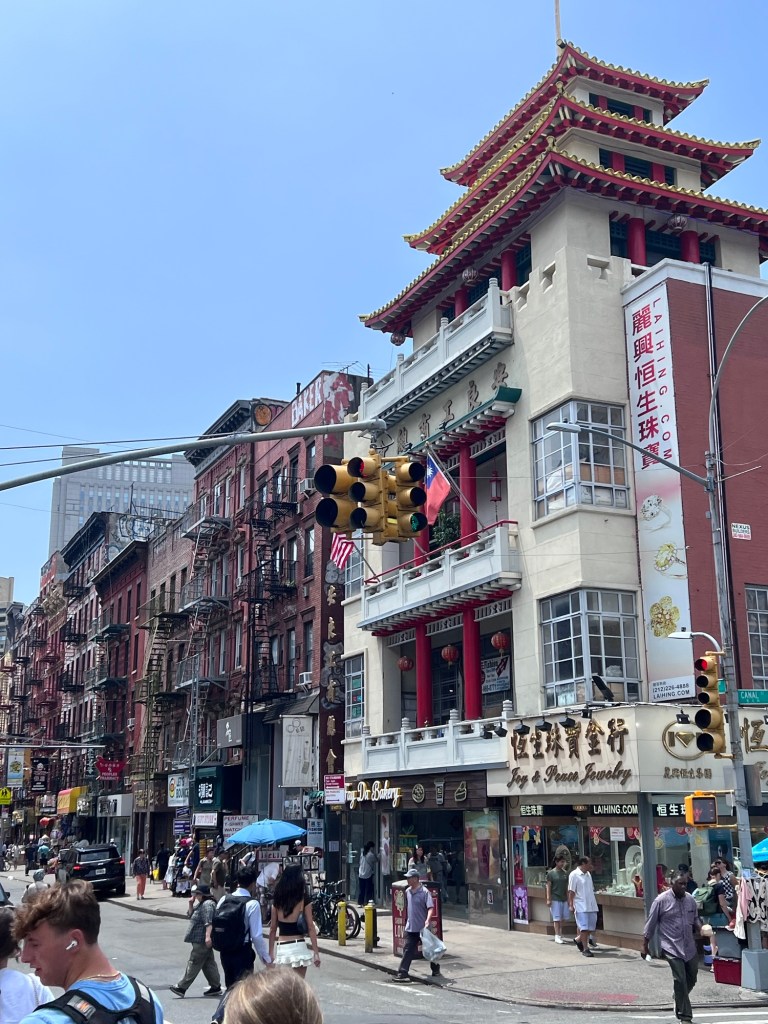
Getting to the heart of Mott Street in Chinatown
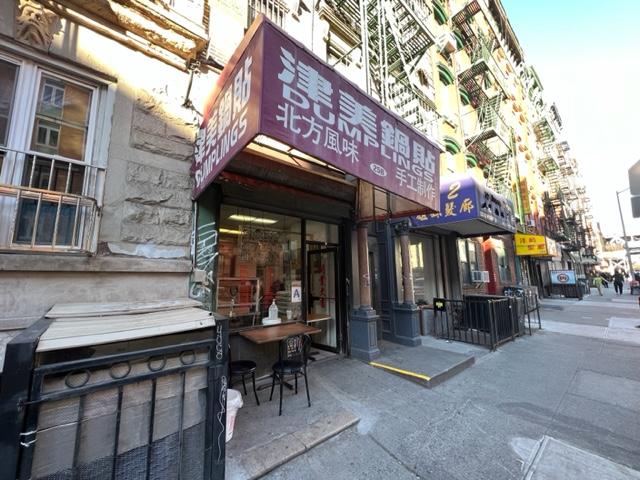
Dumplings (Jen Mai) at
https://www.instagram.com/explore/locations/269338288/jin-mei-dumpling/?hl=en
My review on TripAdvisor:
My review on DiningonaShoeStringinNYC@Wordpress.com:
Dumplings is a wonderful place on Henry Street right off Catherine Street in Chinatown and for $5.00 you can get either ten large pork and chive dumplings or ten large pork buns. I opted for the pork buns on this trip.
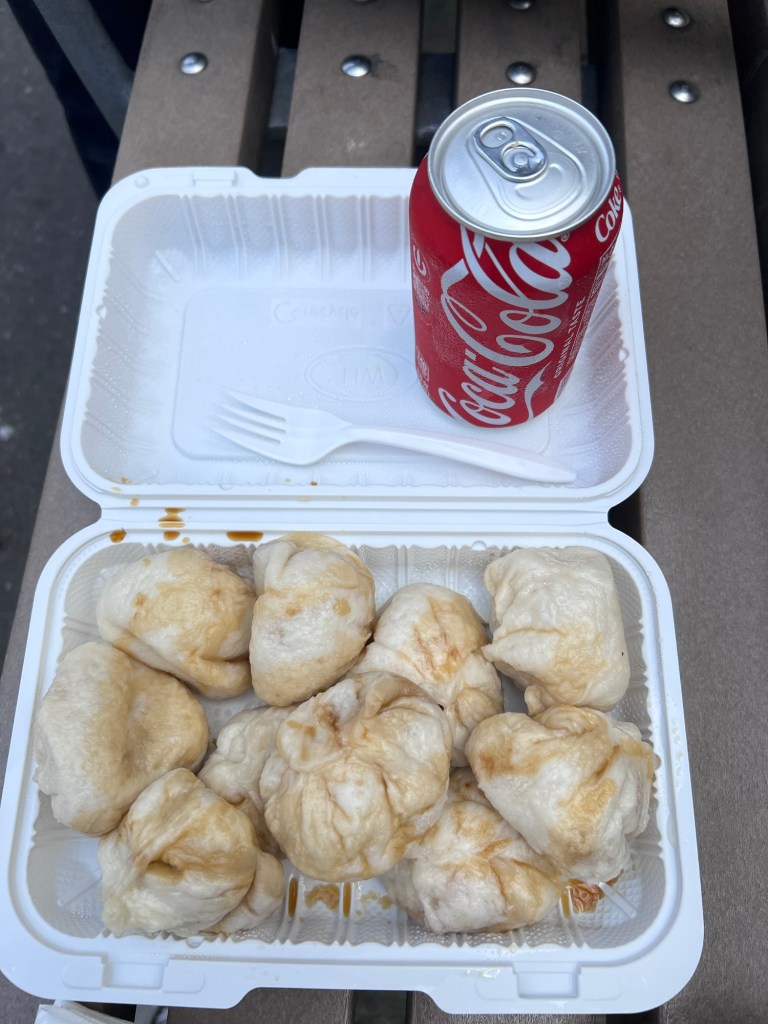
The Pork Buns from Dumplings

These make the best lunch
We ate in the park and caught up with work. I had to thank her again for that wonderful Afternoon Tea at the Plaza the week before. It was pretty amazing being back in the Palm Court after all those years.
My blog on the Afternoon Tea at the Plaza Hotel:
https://mywalkinmanhattan.com/tag/afternoon-tea-at-the-plaza/

Great Taste Bakery at 35 Catherine Street
https://www.instagram.com/explore/locations/402220001/great-taste-bakery-inc/
My review on TripAdvisor:
My review on DiningonaShoeStringinNYC@Wordpress.com:
Then it was off the Tasty Bakery on Catherine Street for dessert. We indulged in Cream buns for dessert. Tasty Bakery is one of those very local coffee and bakery places that the older Chinese residents meet during the day and that are quickly disappearing. That’s why you have to visit for these fantastic pastries.

The Cream filled buns are the best
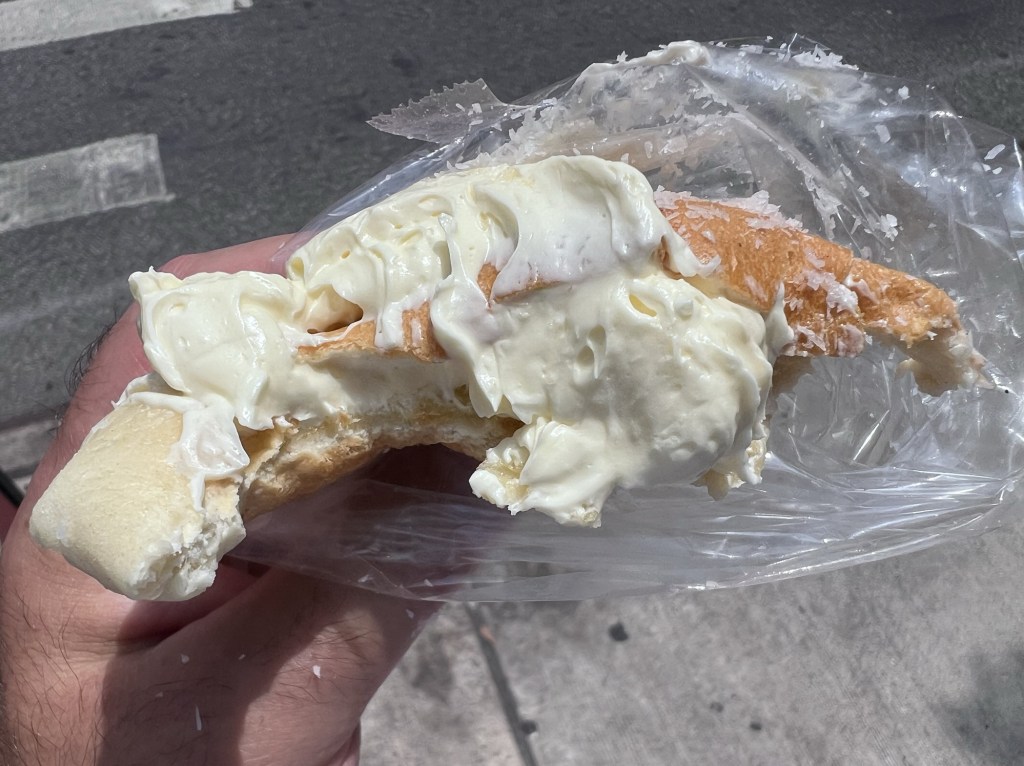
Yum!
After walking around the East Village for a while, they left the City and I ventured up to Lower Chelsea to start the walk of the neighborhood. I walked up from Chinatown as the humidity seemed to die down today. It ended up being a bit cooler than the recent days. The weather had been so hot and humid during some of these walks.
I started the walk on this spectacular day in Madison Square Park. It was such a breathtaking sunny day and the humidity was finally starting to fall. Perfect for walking around the park admiring the gardens and fountains. Everything was in bloom and the park looked spectacular. I love this patch of green in the middle of Manhattan.
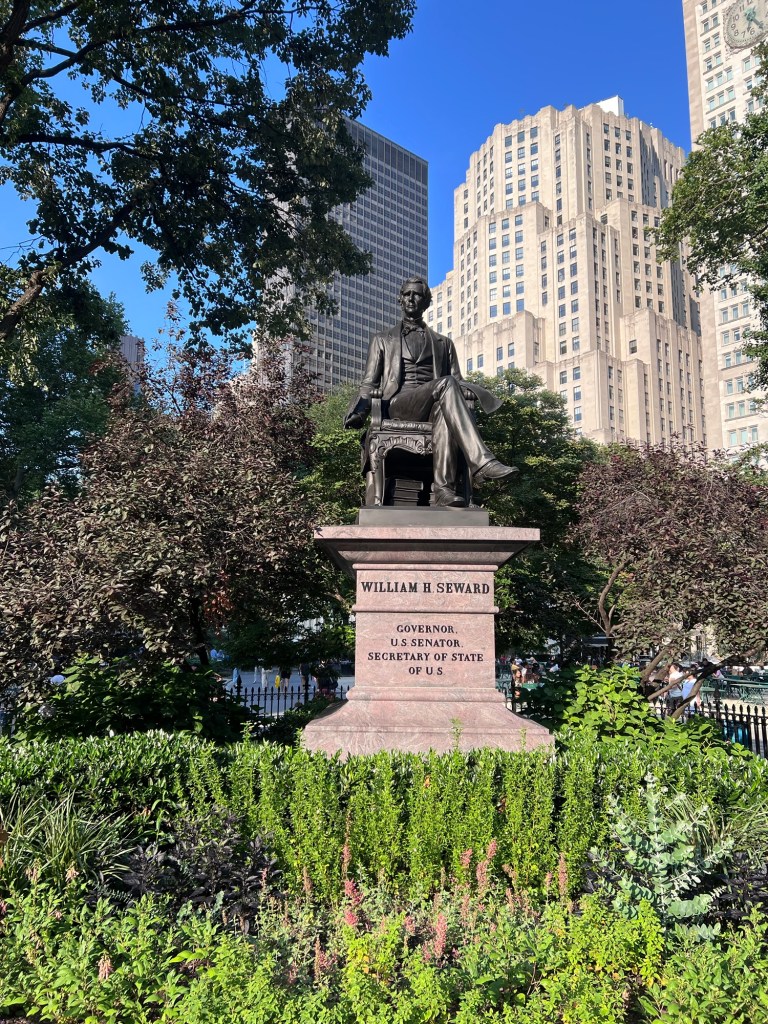
The statute of Senator William Sewart, who was famous for the purchase of Alaska ‘Stewart’s Folly’ greets you at the entrance to Madison Square Park at West 23rd Street
https://madisonsquarepark.org/
https://www.nycgovparks.org/parks/madison-square-park
My review on TripAdvisor:
My review on VisitingaMuseum.com:
The park was in full bloom in the beginning of the summer and the pathways and gardens were just gorgeous.
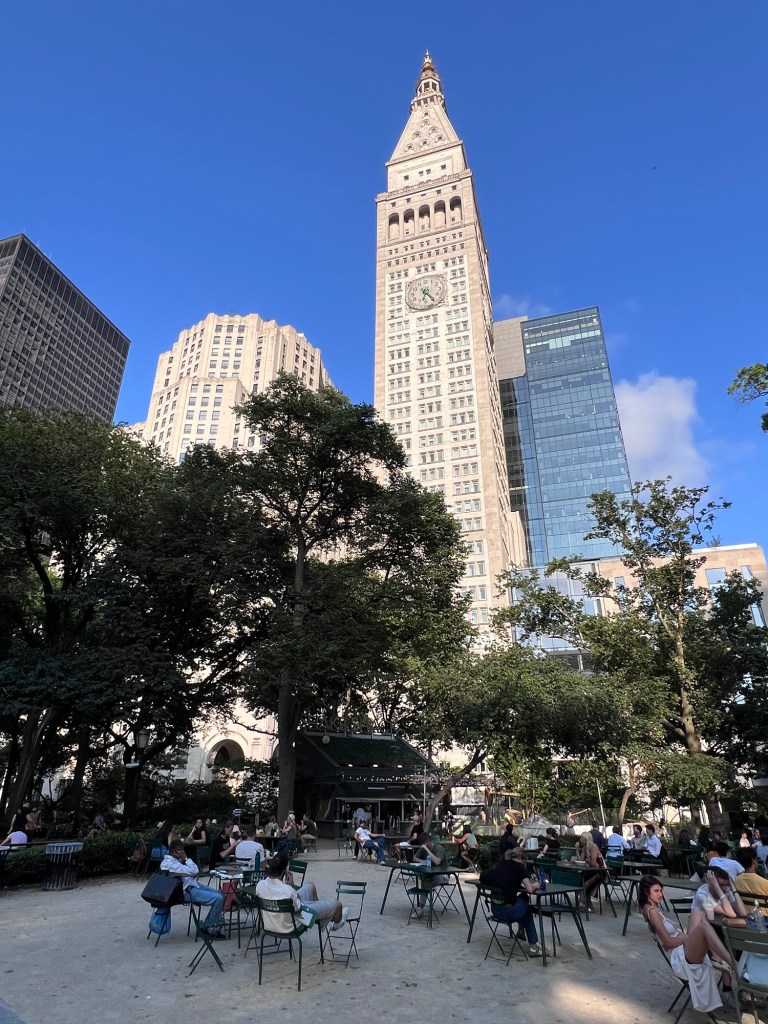
Madison Square Park in front of Shake Shack

The fountain in the park
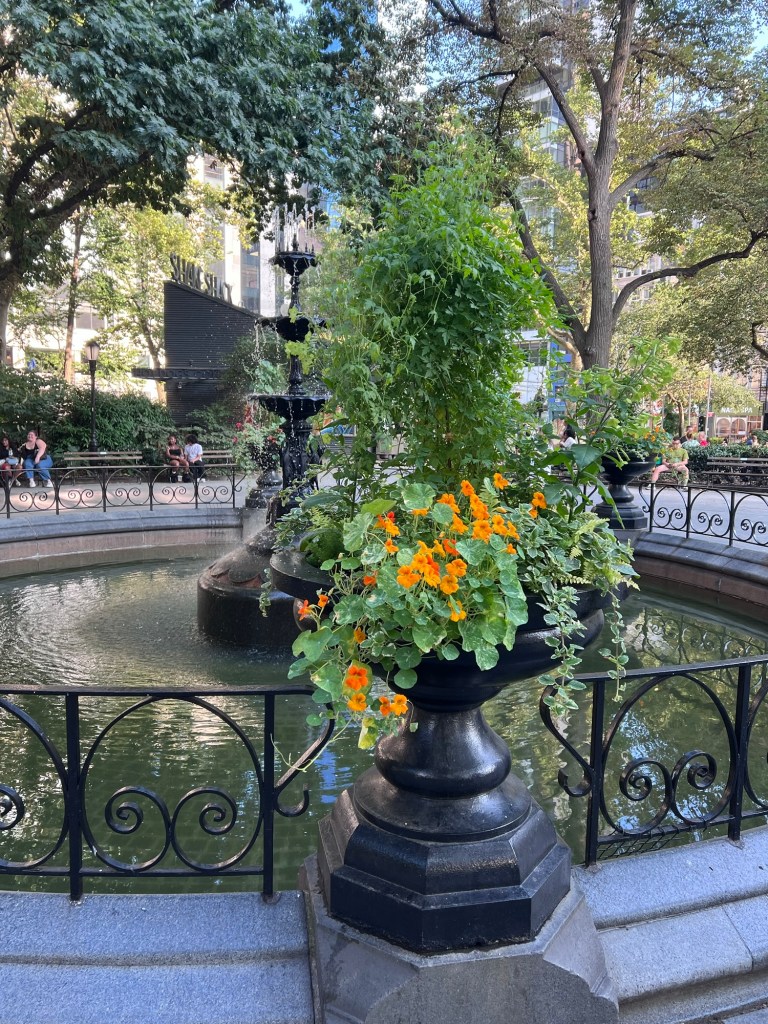
The flower pots around the fountain

Looking north of the park with the Empire State Building in the background
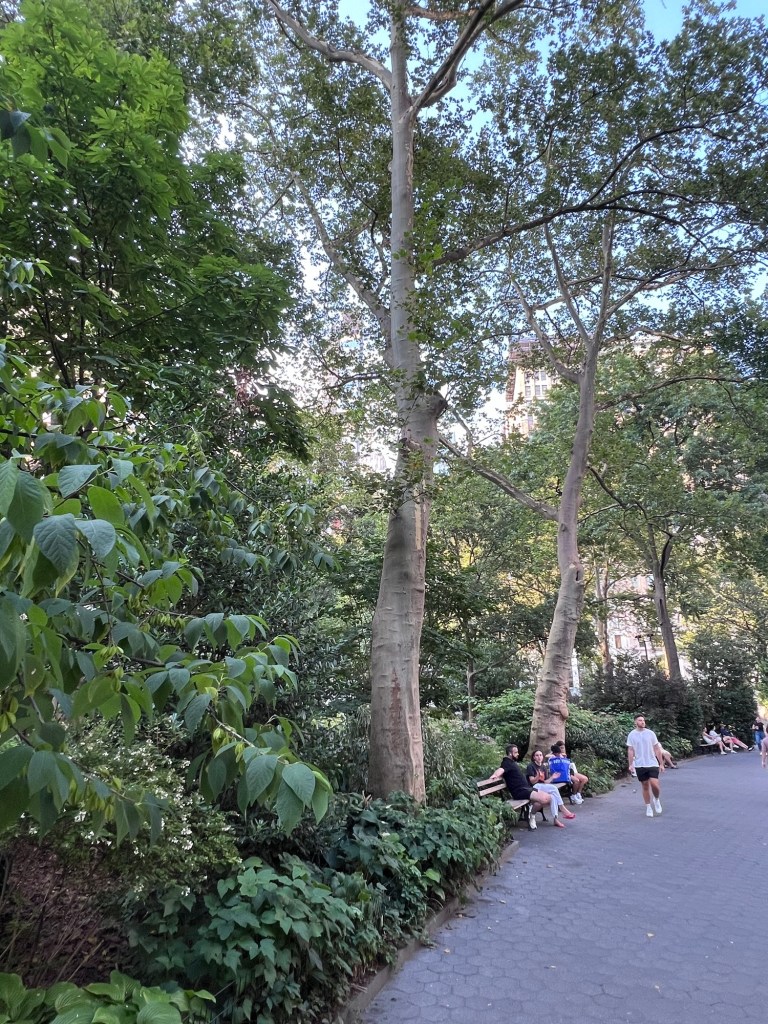
Walking along the paths inside the park

Looking west of the park in the trendy NoMAD neighborhood
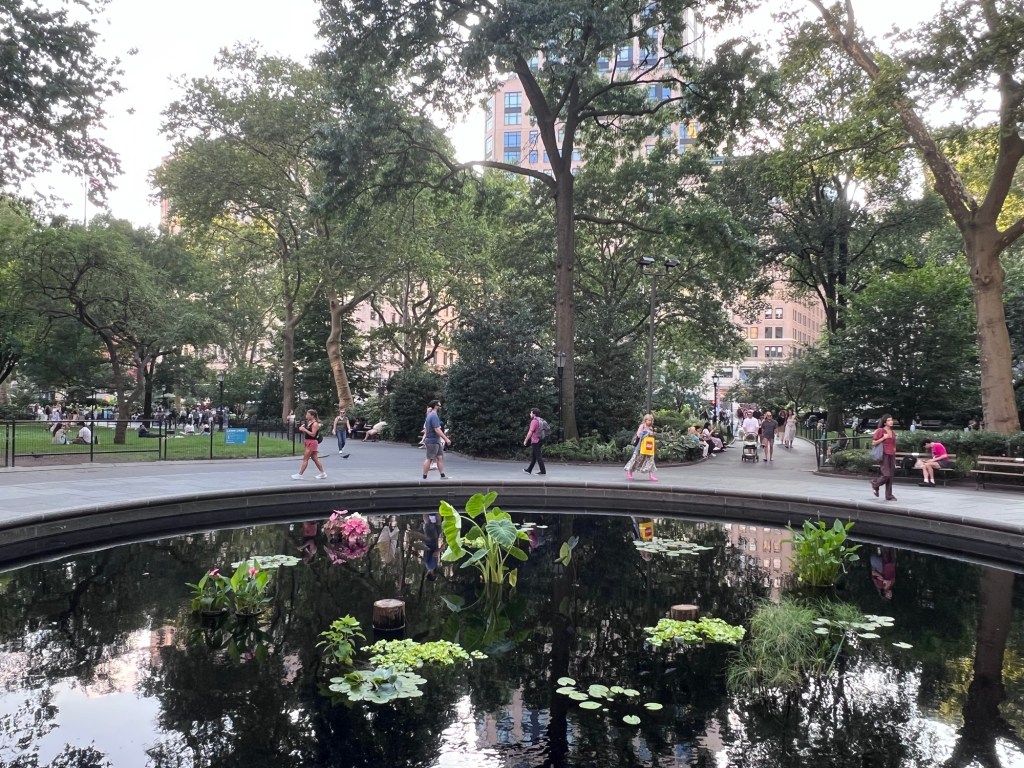
The Lilly Pond in the northern side of the park
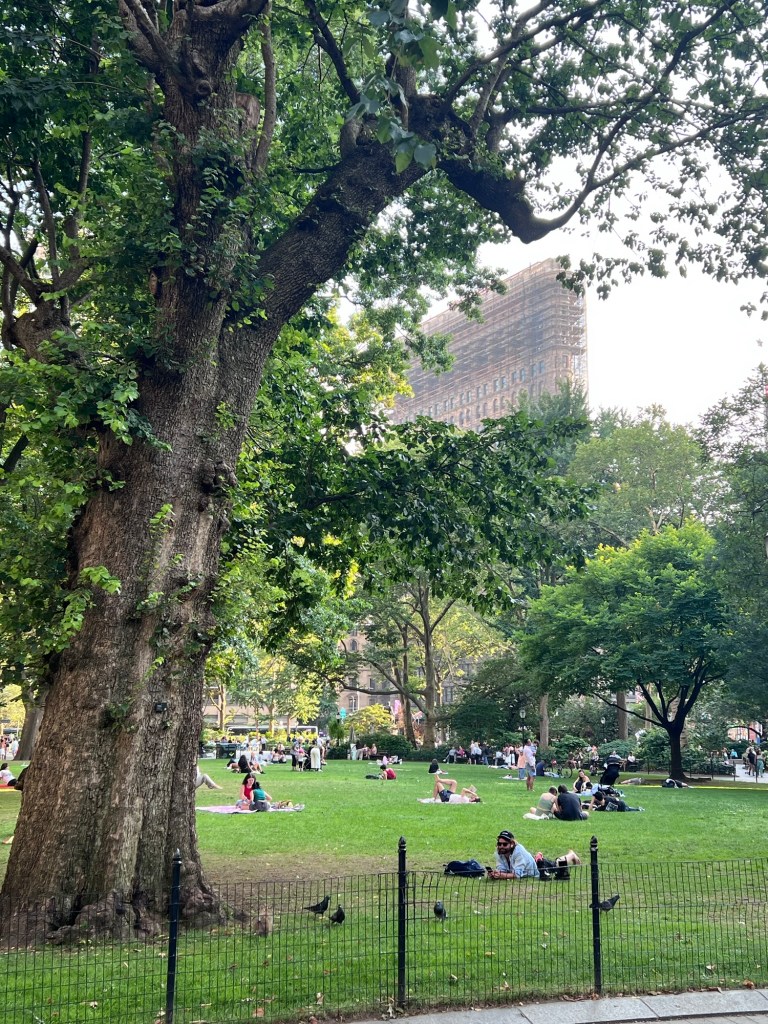
Looking south on the lawn in the middle of the park where office workers and tourists relaxed under the shade trees

Starting the walk on the cross roads of the neighborhood at West 23rd Street and Fifth Avenue

I love the way that the light reflects off the buildings at West 23rd Street
I was lucky that the weather broke. My recent Broadway was ended up being on a 91 degree day. I did not get too far that afternoon as ‘Manhattanhenge’, the alignment of the sun setting to the street grid of the West Side of Manhattan was that evening and I wanted to see it. I needed to get a good spot.
Manhattanhenge:
https://www.amnh.org/research/hayden-planetarium/manhattanhenge
My blog on Watching Manhattanhenge:
https://mywalkinmanhattan.com/tag/manhattanhenge/
I doubled back that evening to watch ‘Manhattanhenge’, a time when the sun aligns with the buildings on the West Side and set a between the buildings. This happens two times a year and you have to pray for clear weather or else the clouds get in the way. The clouds got in the way this evening.
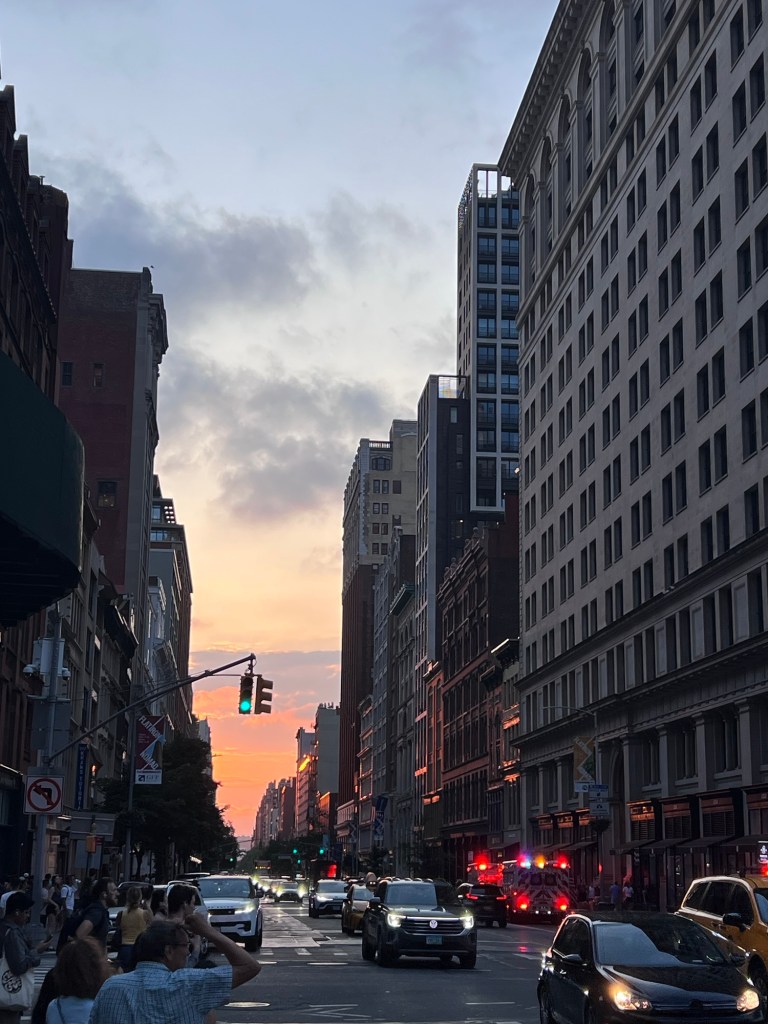
The start of ‘Manhattanhenge’ at 8:15pm on July 11th, 2025
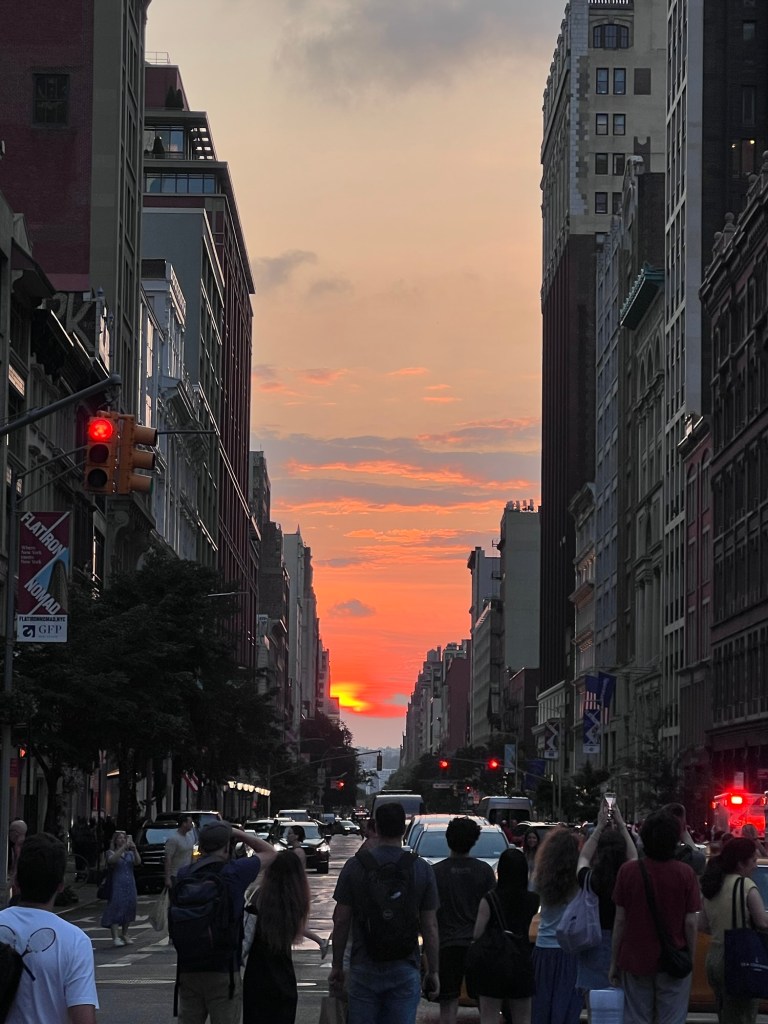
The sun starting to set
The sun setting on ‘Mznhattanhenge’
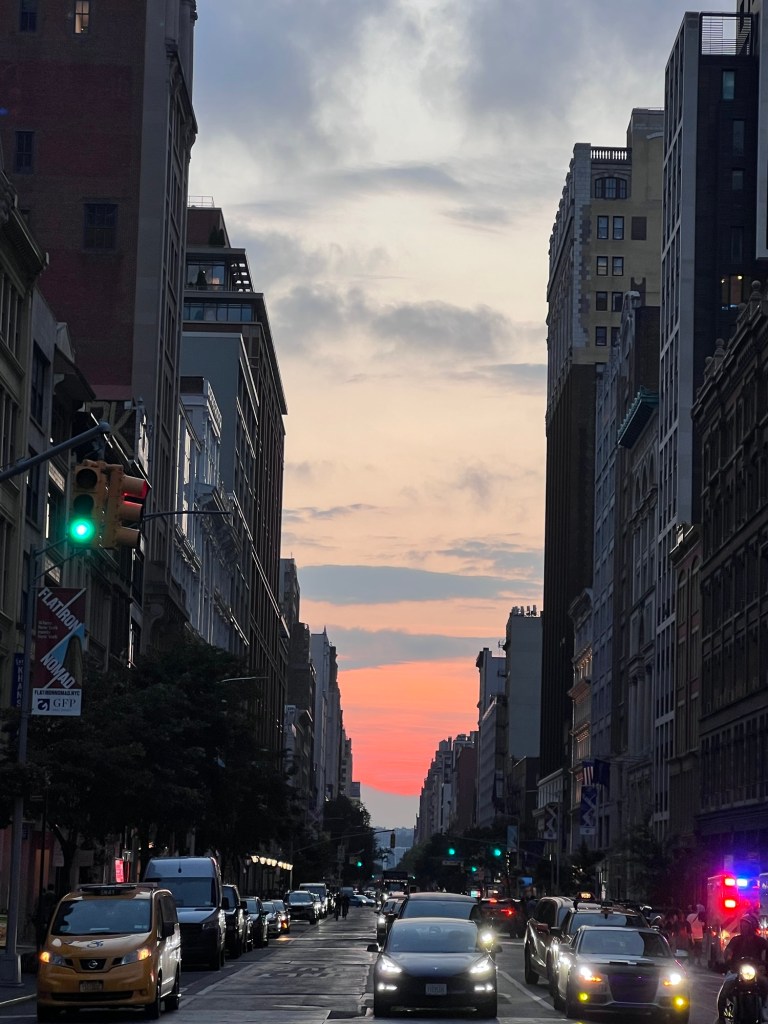
Just as the sun set a cloud got in the way
A video of the final setting of the sun
After the sun set, I went back into Madison Square Park and just relaxed. It had been a long week of running around and was going to be busier over the weekend.
Madison Square Park is especially beautiful in the evening. The lights come on and then the park works its magic with all the beautiful lights, cool music from the patrons and the talking and laughter from the many people visiting on a warm New York evening.
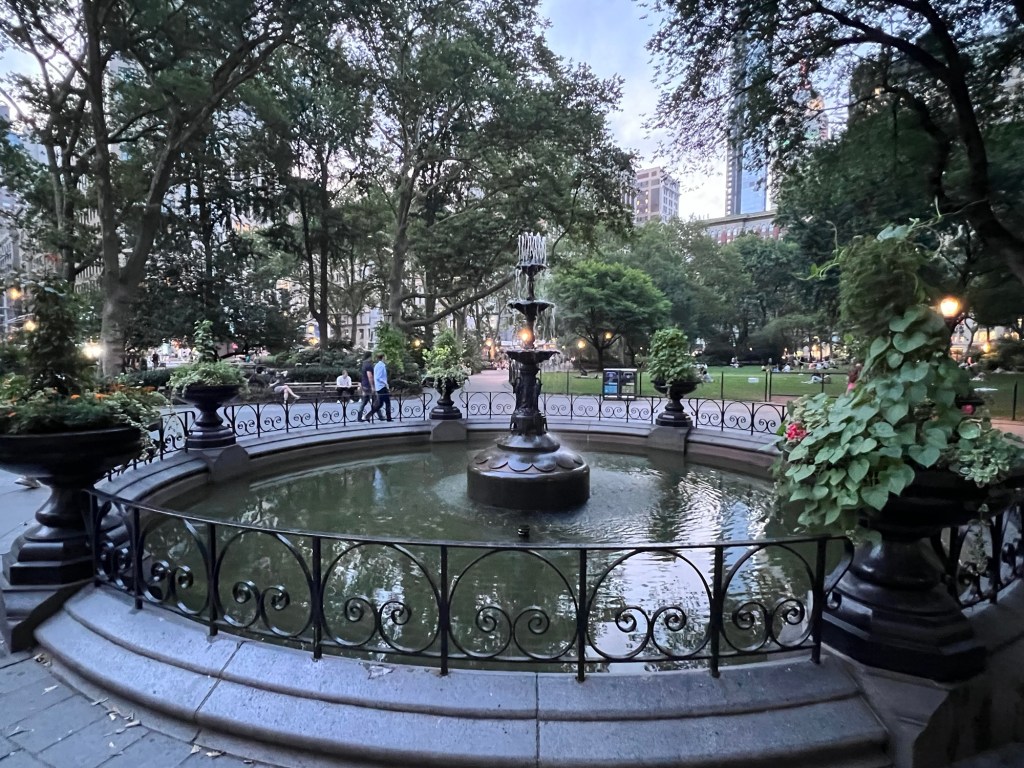
The fountain inside the park at twilight
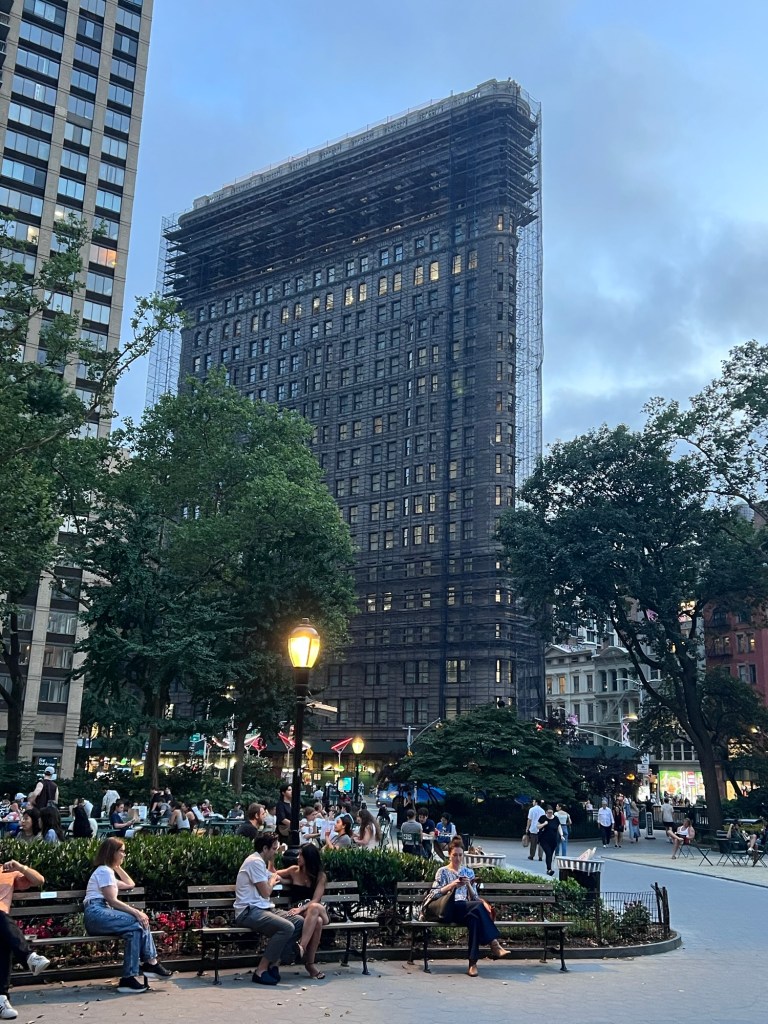
The Flatiron Building across from the park at night
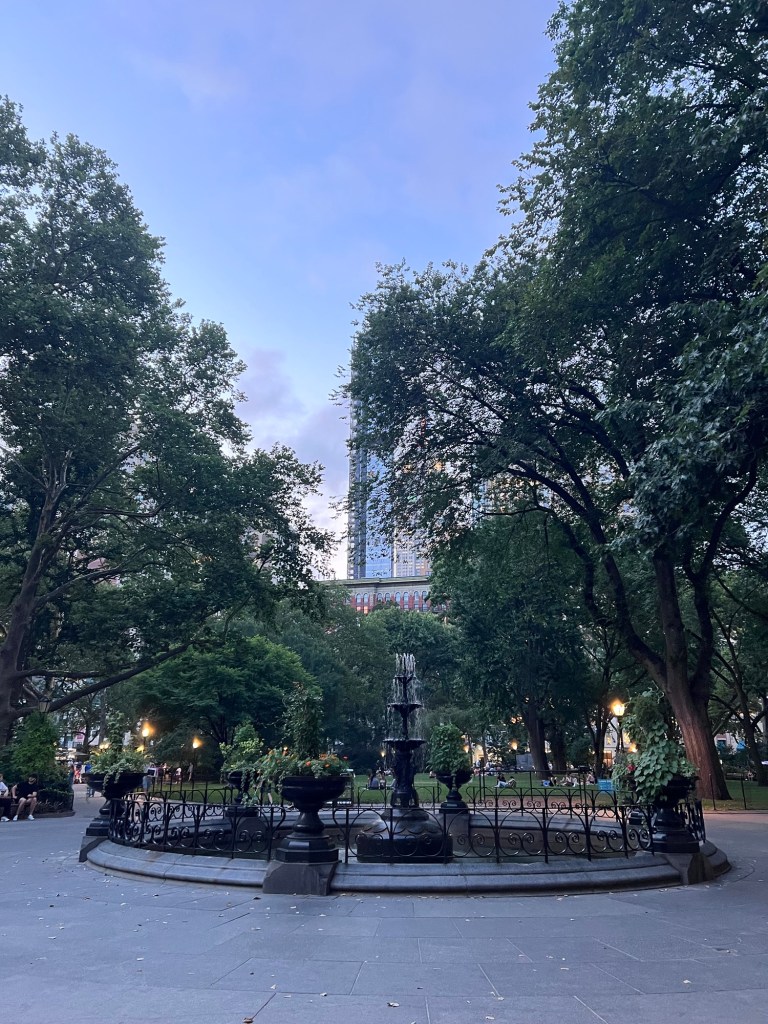
The fountain flowing while looking north in the park
Video of the Madison Square Park fountain at night

The skyline of the park at night with the Empire State Building lit in the distance
During the warmer months, I have found Madison Square Park to be safe due to the sheer number of people in the park and the extra security the park hired. Still like any part of New York, you have to watch yourself. Don’t let your guard down just because there are people in the park. Just like any other part of New York City, have eyes in the back of your head.
I started my walk of the streets of Lower Chelsea around 1:00pm in the afternoon on a Saturday and found the City to be extremely quiet. Most of the residents must have been out of town. I started at the corner of West 22nd Street and Sixth Avenue in the middle of the old Ladies Shopping District.

The old department stores on Sixth Avenue and West 22nd Street
On the way down each block, I admired two things that stood out, the street art and the stone work that seemed to stare out you at every twist and turn on many of the buildings I passed.
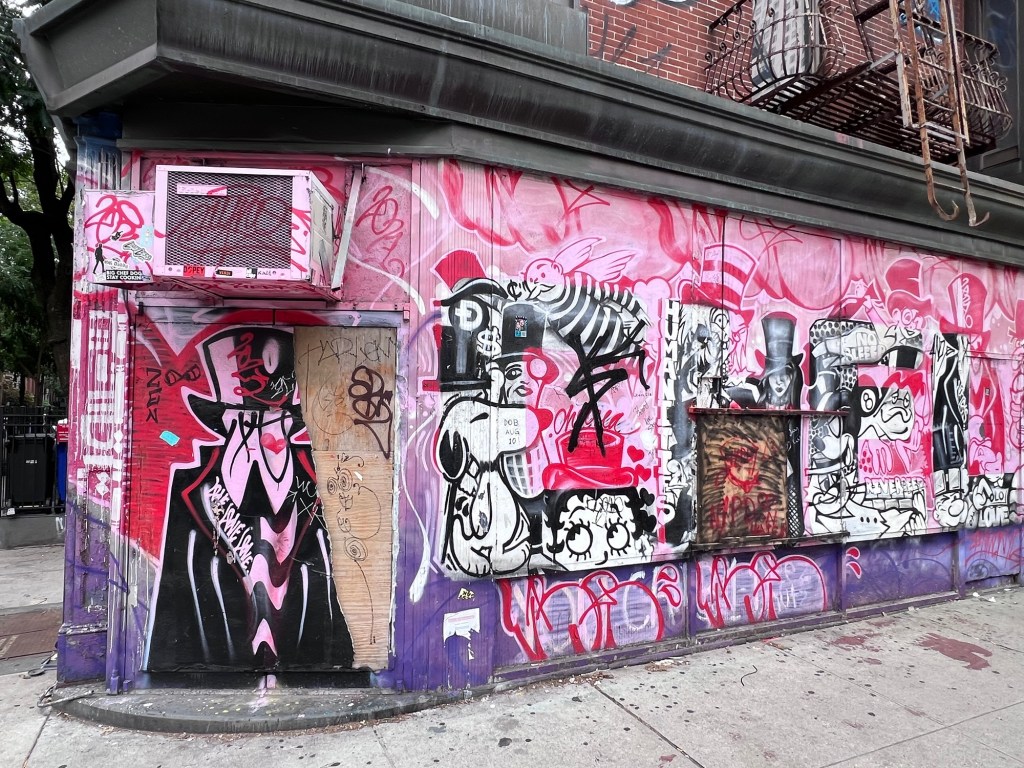
The street art at the corner of Seventh Avenue and West 22ns Street

The other walk facing West 22nd Street

Walking down West 22nd Street between Seventh and Eighth Avenues
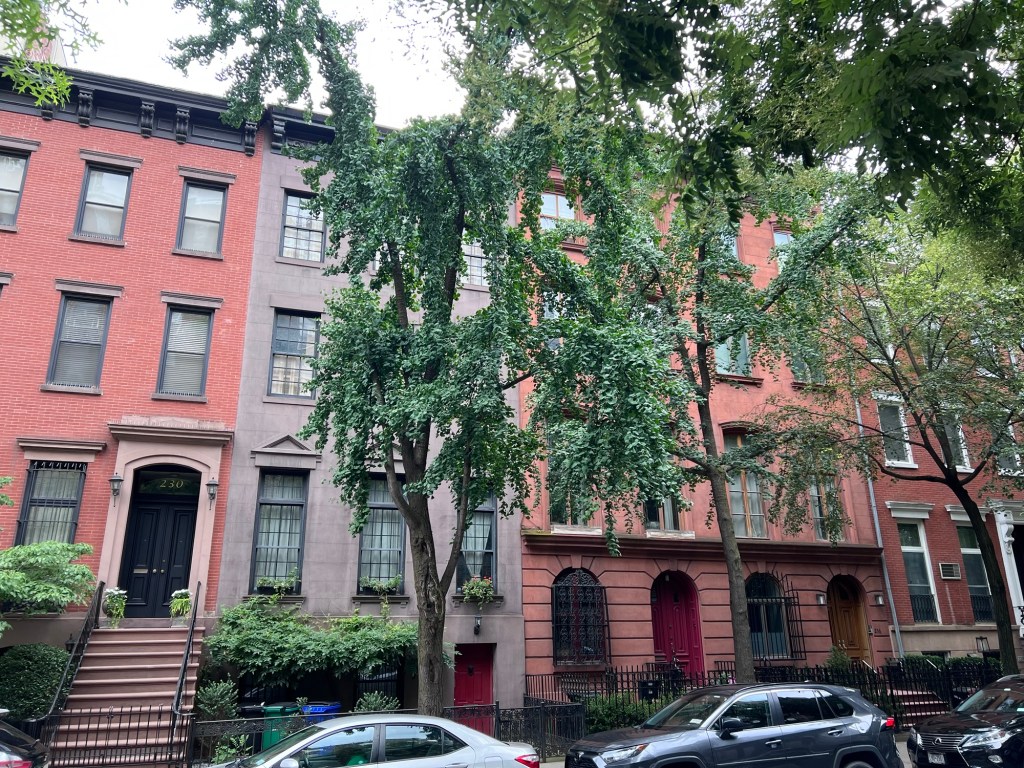
The beautiful brownstones and brick townhouses on the block

246 West 22nd Street
https://streeteasy.com/building/246-west-22-street-new_york
https://www.cityrealty.com/nyc/chelsea/246-west-22nd-street/54117
One brownstone on this part of the street is 246 West 22nd Street with its interesting embellishments. This building is a pre-war apartment that was built in 1920(Streeteasy.com).

The unusual stonework on the building

The faces can captivate you
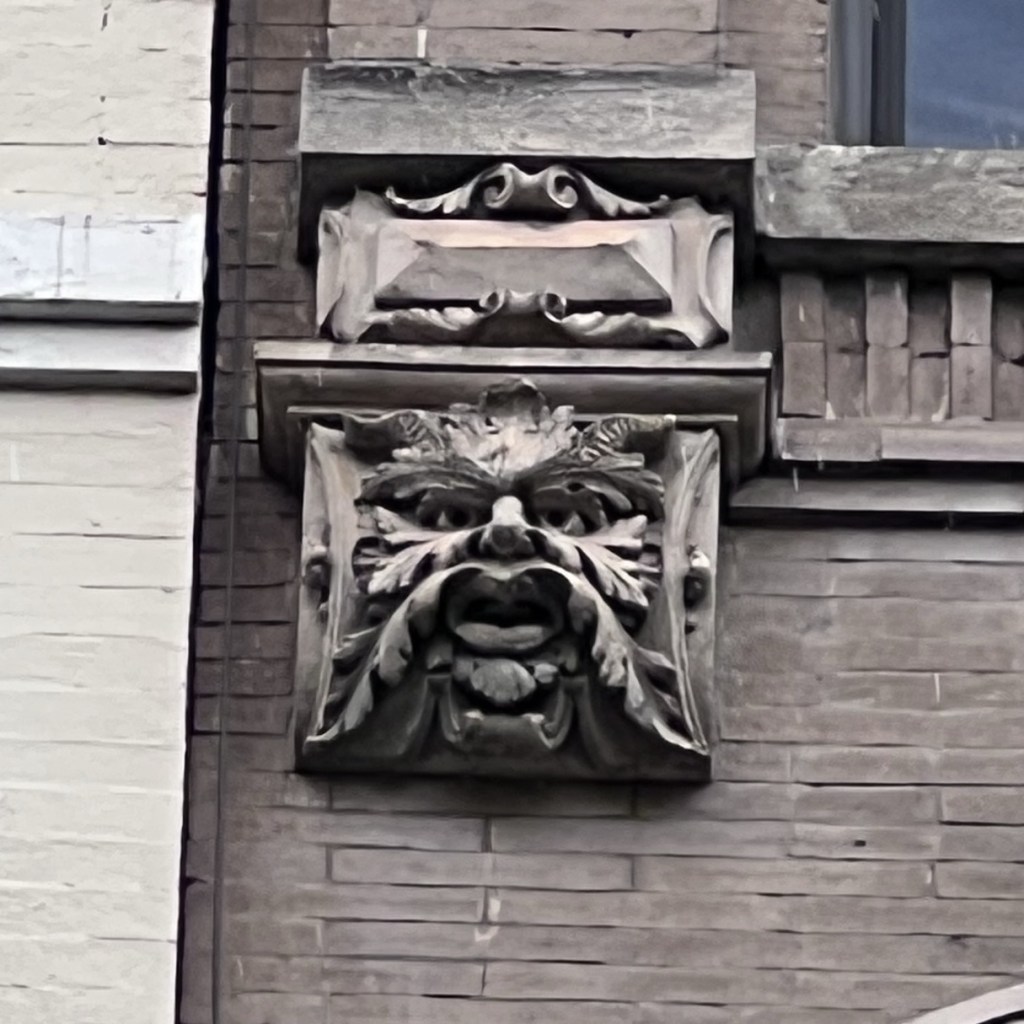
Face number one

Face number two
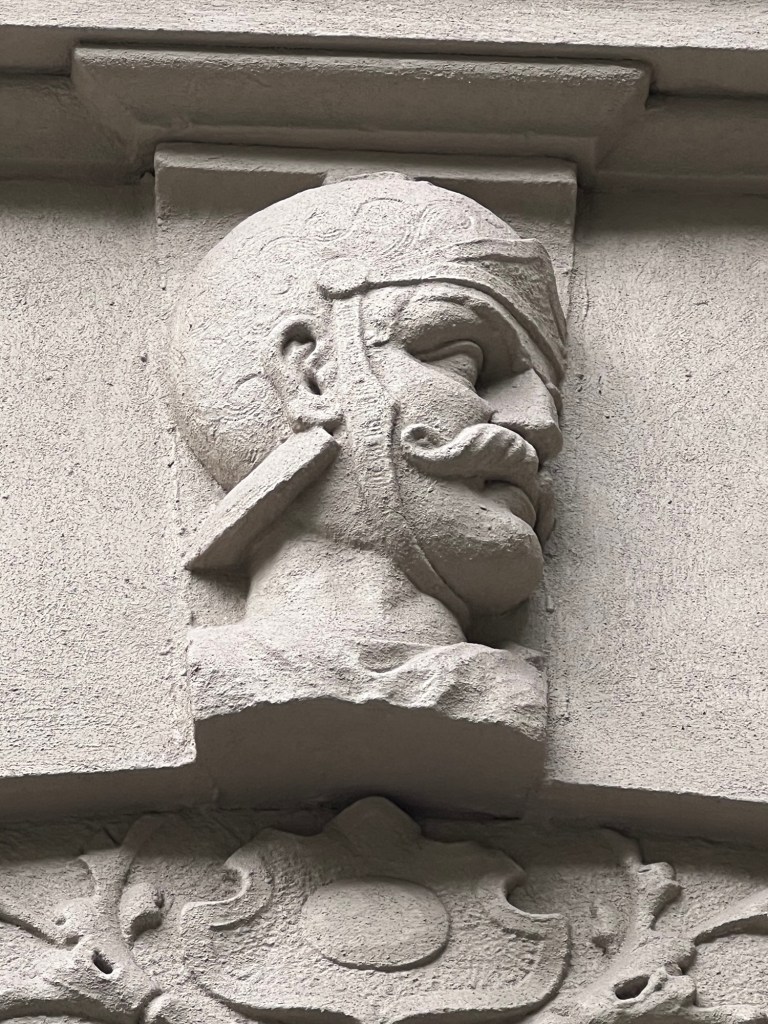
Face number three

Face number four
The next building to stand out was 262 West 22nd Street. This is another pre-war building was built in 1920 (Streeteasy.com).

262 West 22nd Street
https://streeteasy.com/building/262-west-22-street-new_york

The embellishments on 262 West 22nd Street
Another building whose embellishments were rather unusual were outside of 264 West 22nd Street. This building was another pre-war building in the 1920’s. It has a lot of unique embellishments all over the building (Streeteasy.com).

264 West 22nd Street
https://streeteasy.com/building/264-west-22-street-new_york
https://www.realtor.com/realestateandhomes-detail/264-W-22nd-St-4_New-York_NY_10011_M97749-55939

The embellishments on 264 West 22nd Street

The beautiful stonework

The beautiful stonework

The stone faces staring at you
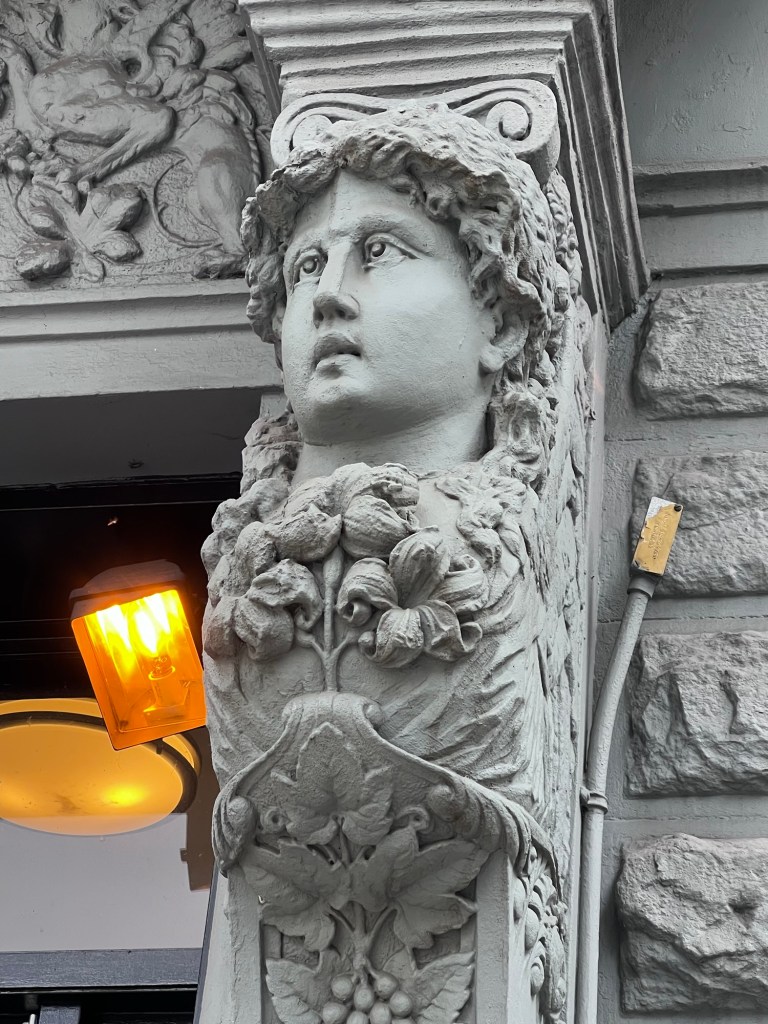
Either drunk or having a bad day
West 22nd Street from Seventh to Ninth Avenues has several blocks of beautiful townhouses and brownstones some dating back to the mid 1880’s. The blocks look something out of a movie set.
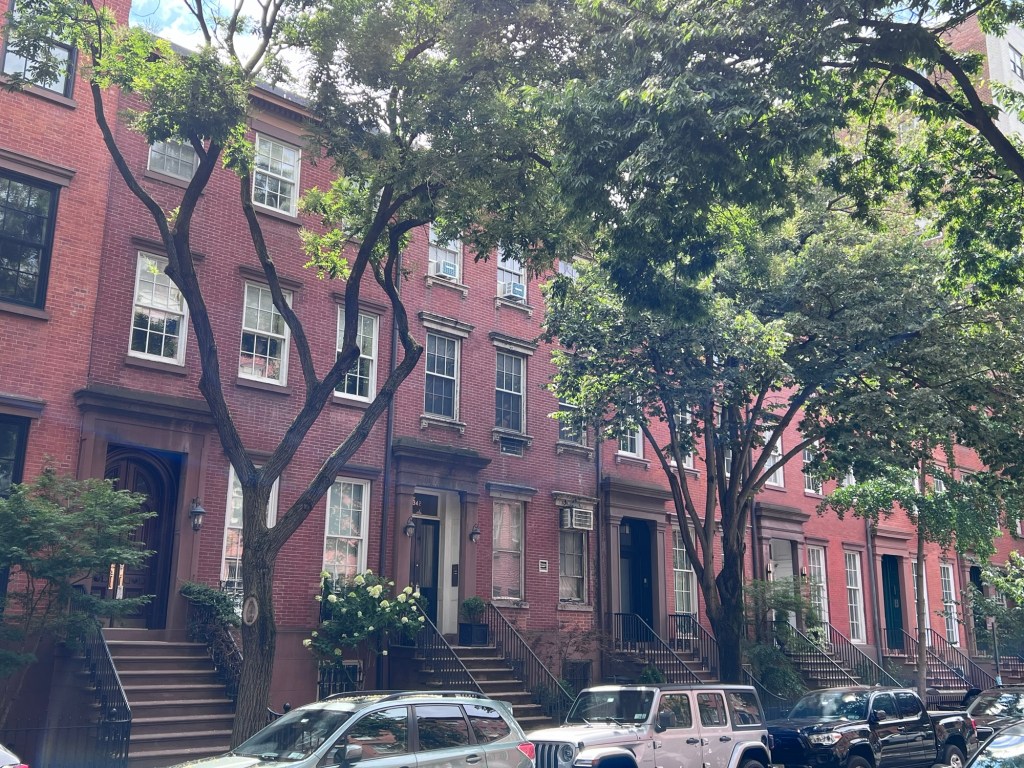
Walking past rows of brick townhouses
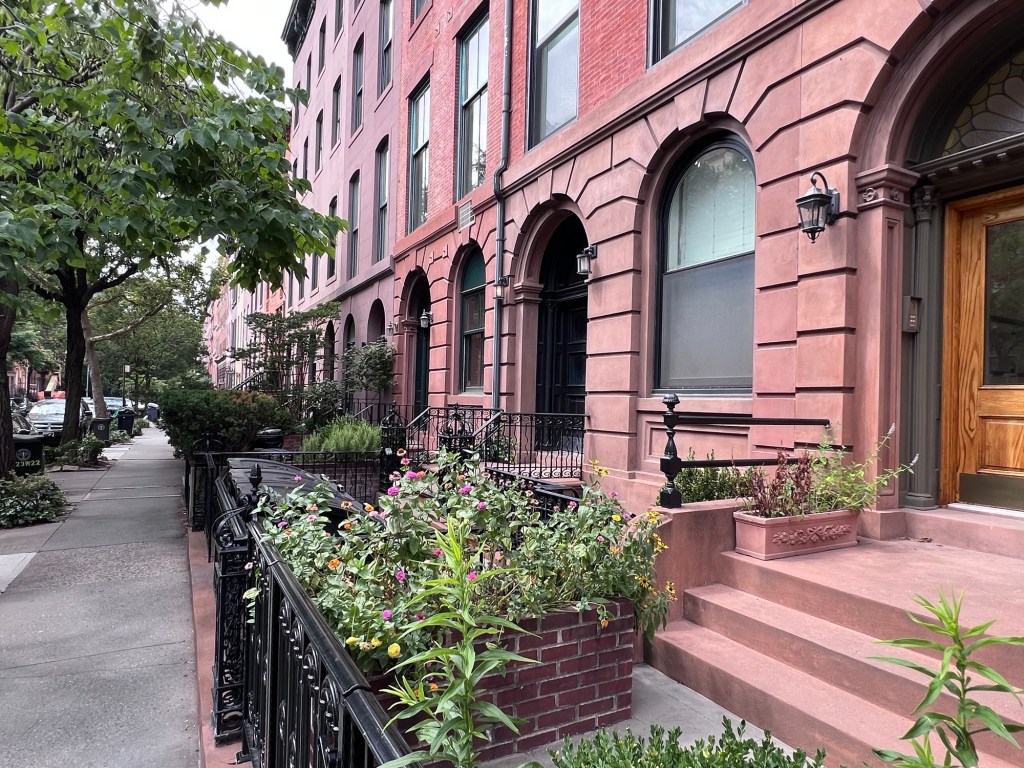
Rows of townhouses and gardens
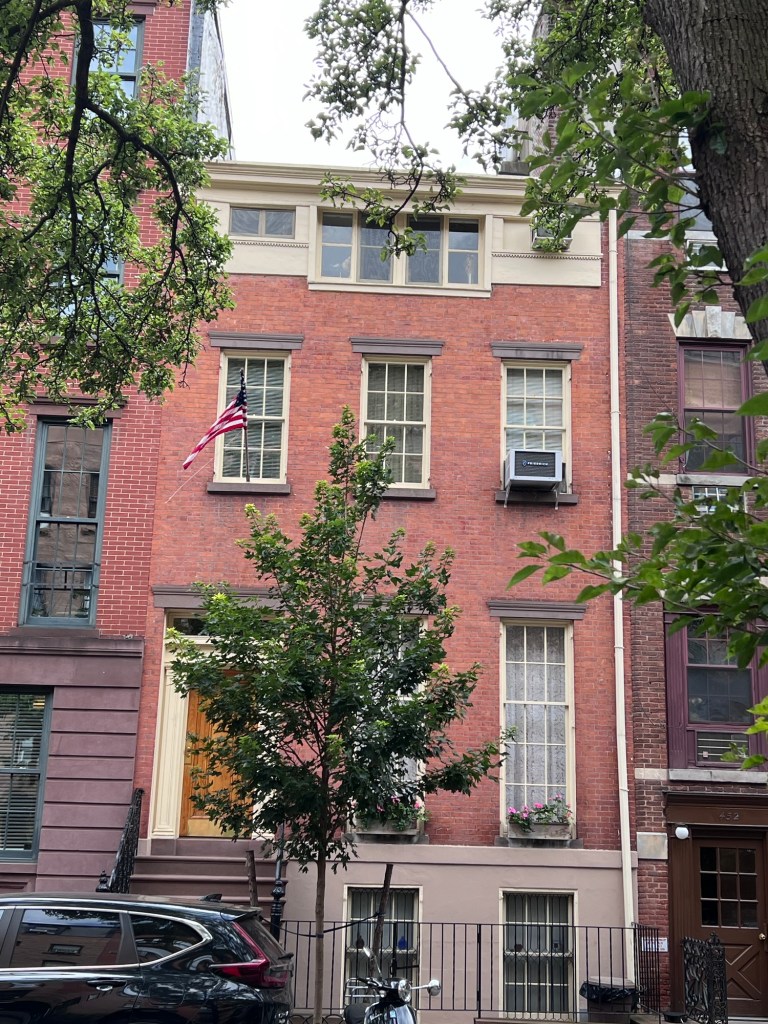
An historic brick townhouse
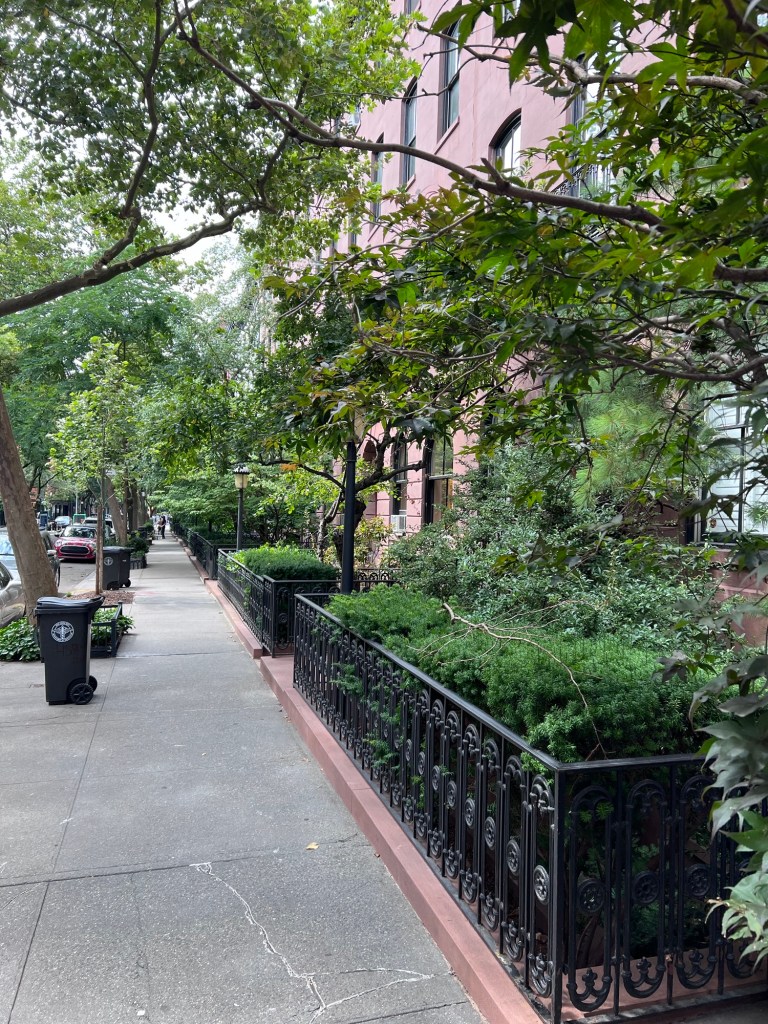
The townhouse gardens by Eighth Avenue

Clemente Moore Park in the Summer of 2025
https://www.nycgovparks.org/parks/clement-clarke-moore-park
My review on TripAdvisor:
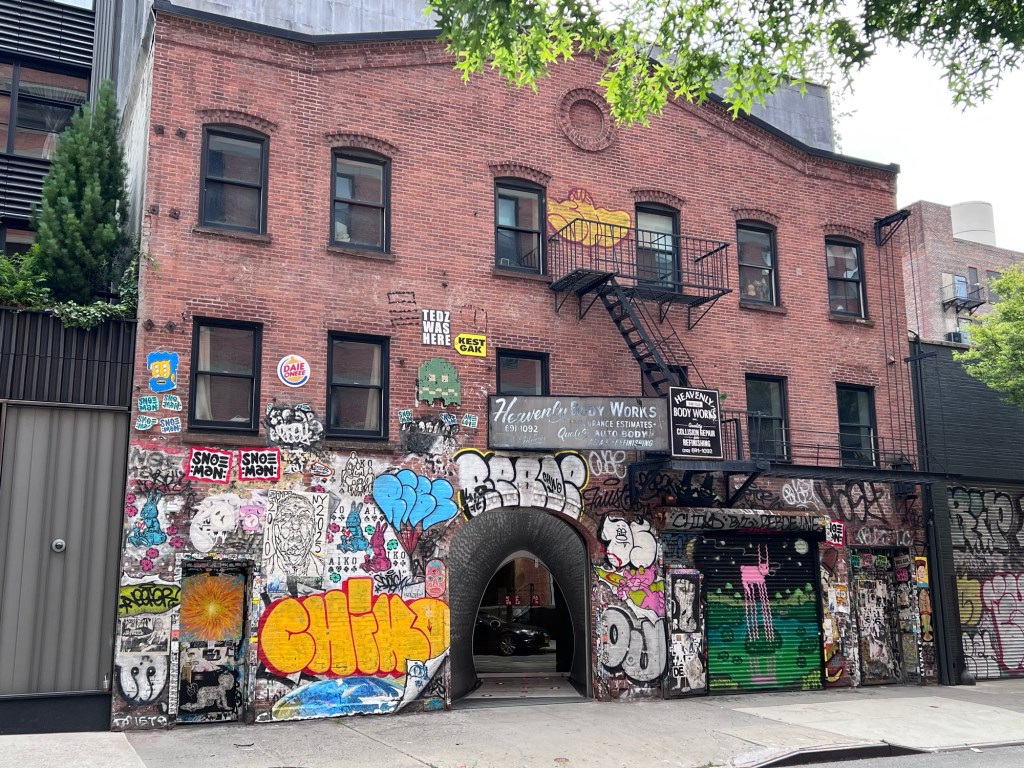
Between Tenth and Eleventh Avenue this commercial brick building has the most interesting street art
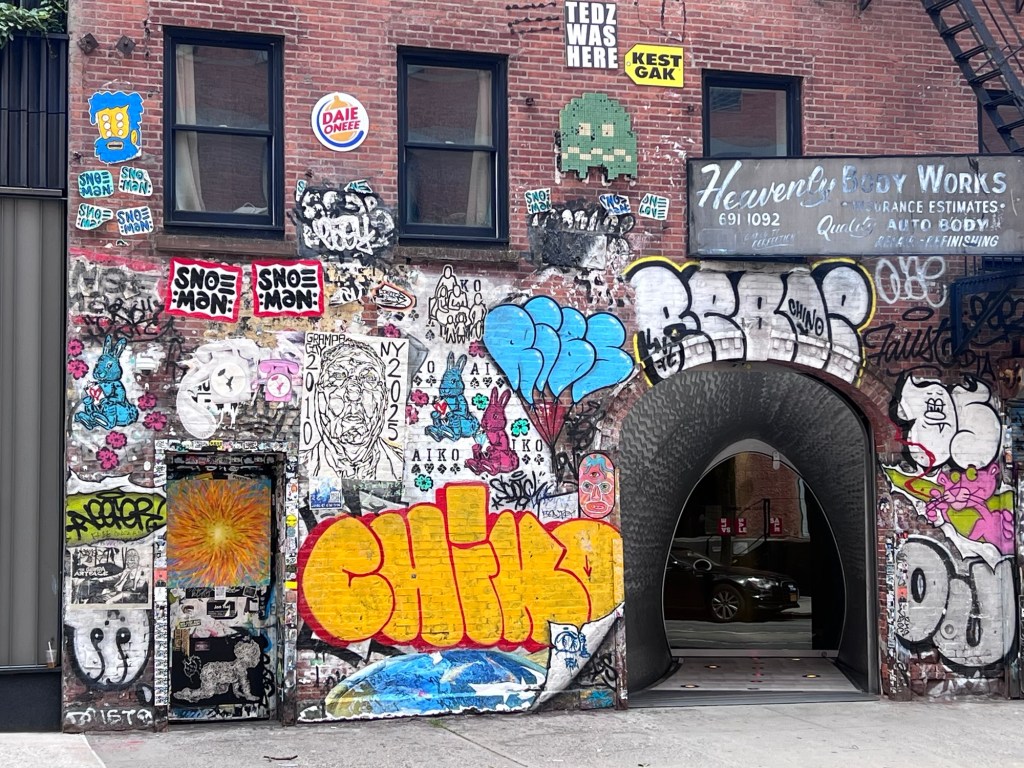
A close up shot of the building artistry of 441 West 16th Street, the former Heavenly Body Works building
https://artsology.com/graffiti-on-west-22nd-street-nyc.php#google_vignette
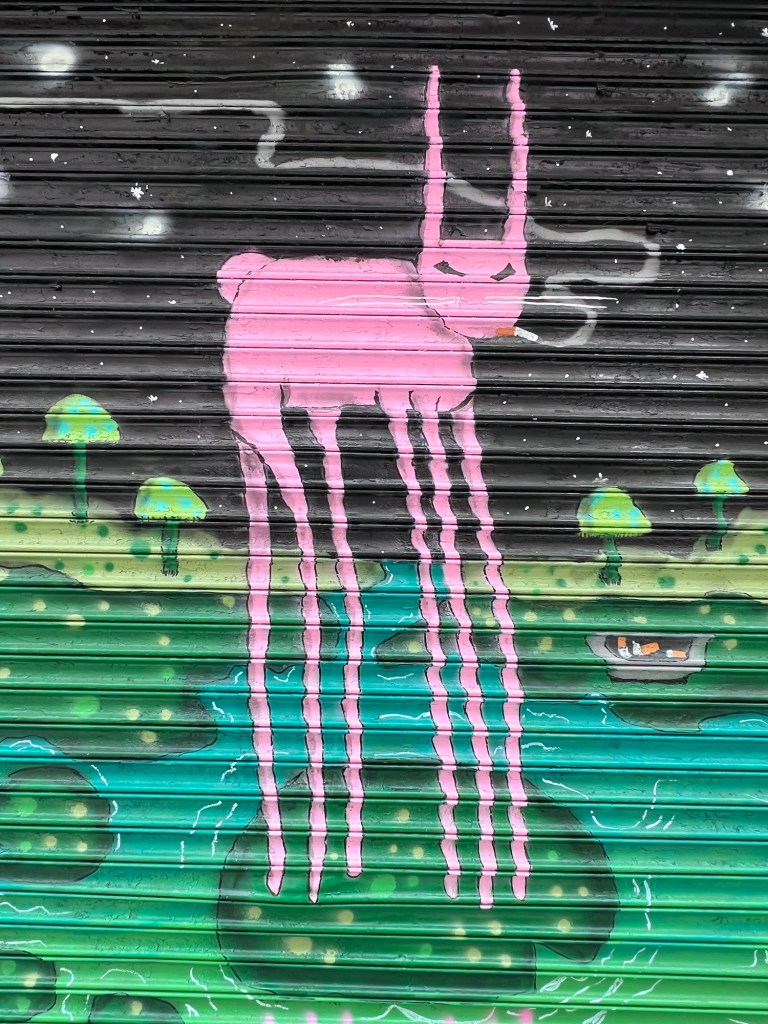
Street art on the building at 441 West 16th Street

Street art on the building
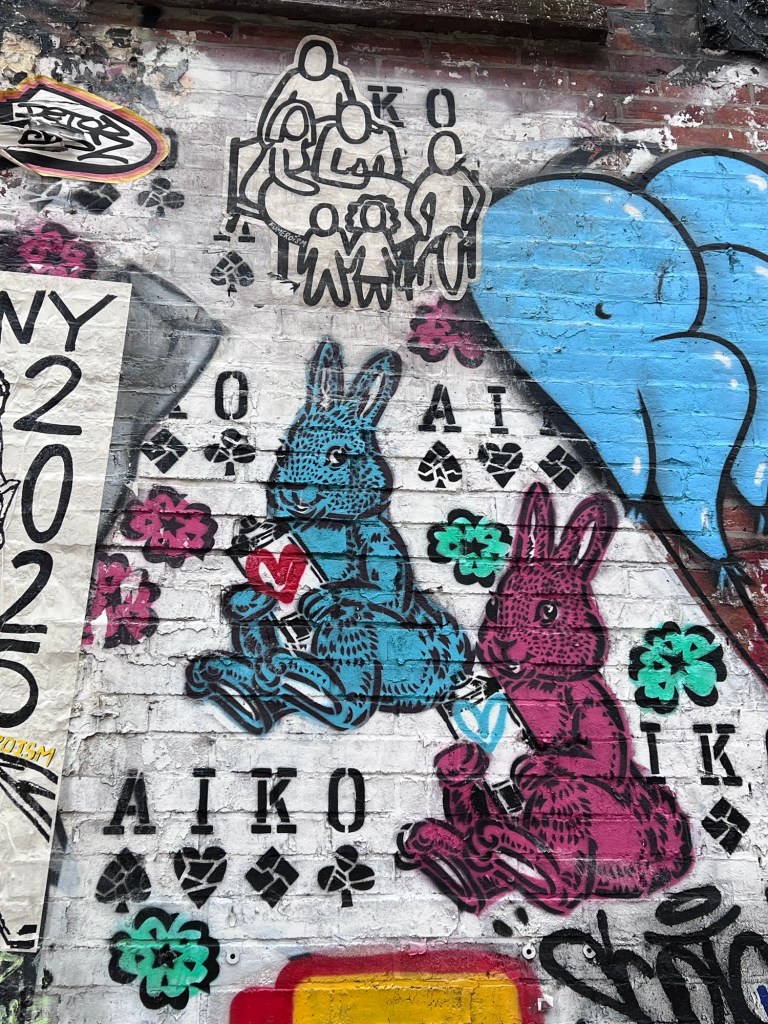
Street art on the building

Walking under the High Line Park
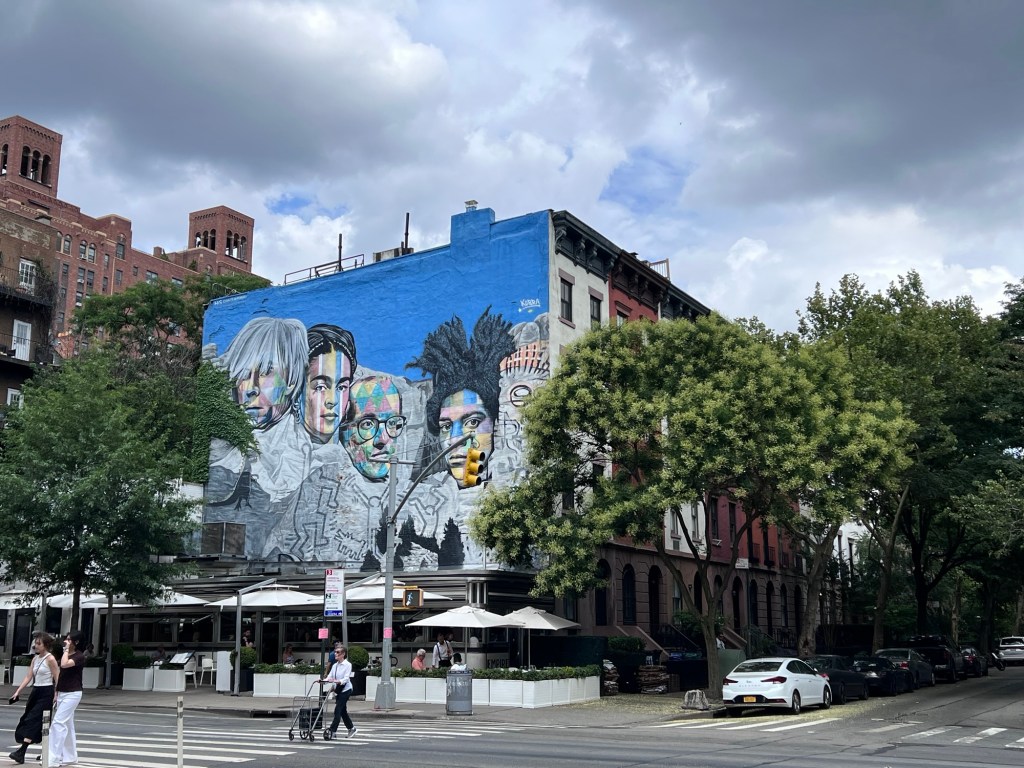
Artist Eduardo Kobra painting “The Mount Rushmore of Art” above the Empire Diner at Tenth Avenue and West 22nd Street
The mural, created by Brazilian artist Eduardo Kobra, “Mount Rushmore of Art”, is the artist’s memorial to some of modern art’s biggest artists including Andy Warhol, Frida Kahlo, Keith Haring and Jean-Michel Basquiat (Vibe Map 2023).
http://www.hgcontemporary.com/news/kobra-paints-mural-for-hg-contemporary

Artist Eduardo Kobra
https://en.wikipedia.org/wiki/Eduardo_Kobra
https://www.streetartbio.com/artists/about-eduardo-kobra-biography/
Eduardo Kobra is a Brazilian born artist known for his contemporary and colorful art murals all over the world.
I continued to walk down the road and admired the beauty of each of the streets with their front gardens and plantings.
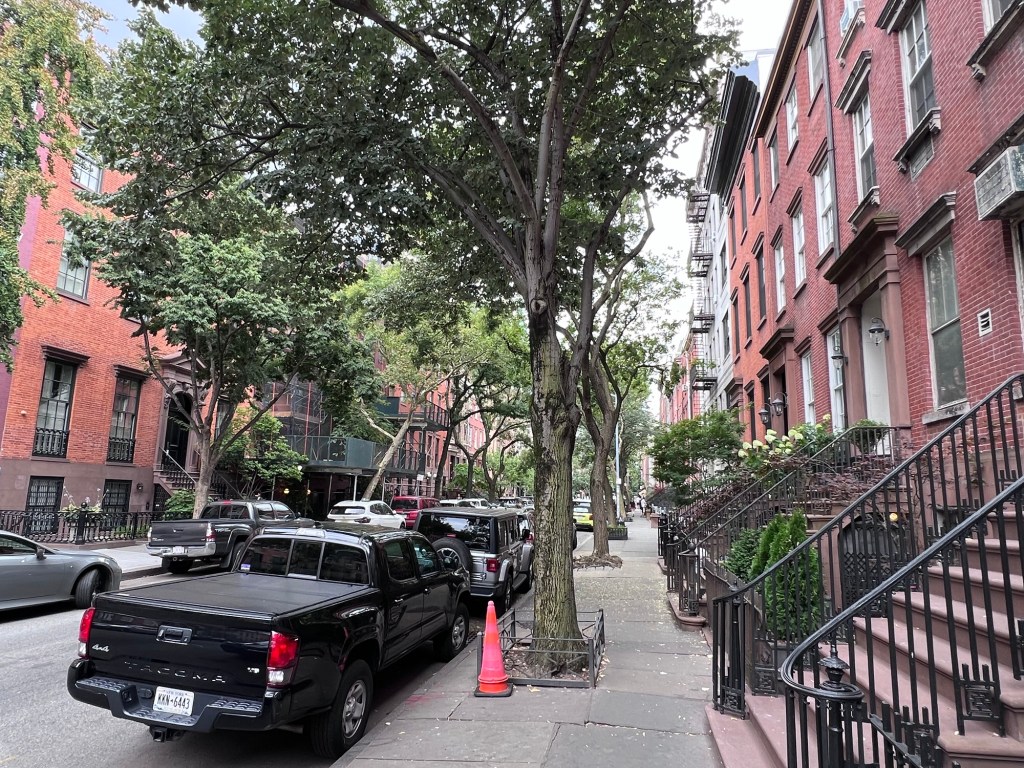
The beauty of West 22nd Street between Eighth and Seventh Avenues

More faces staring at you while you walk by
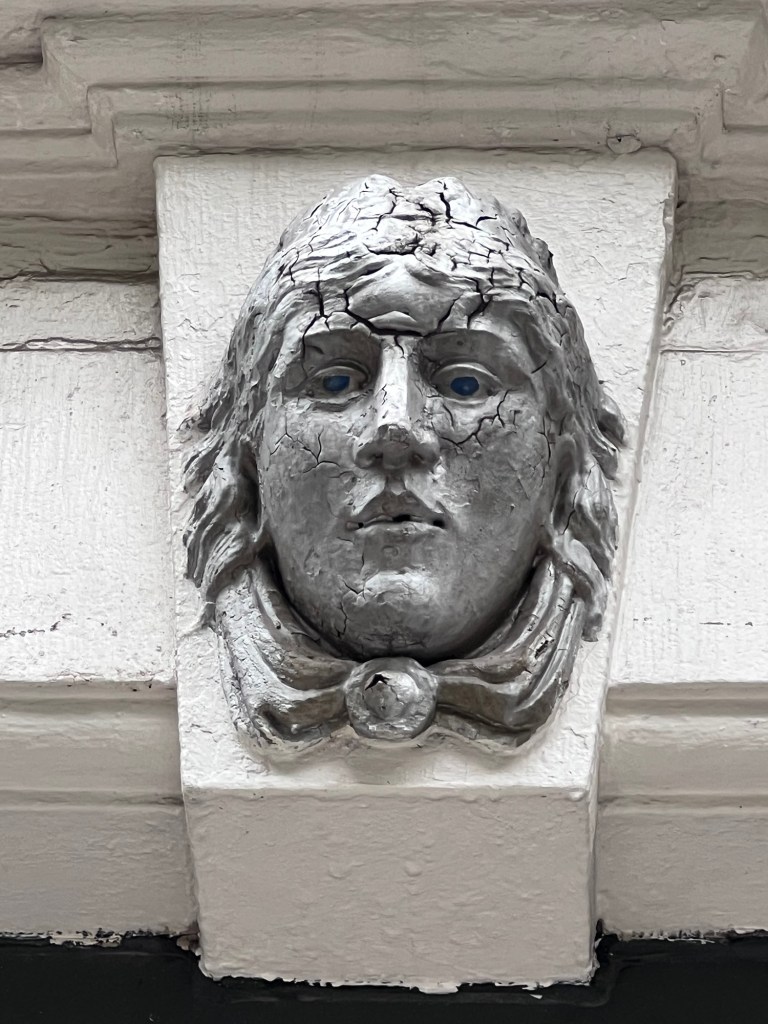
I feel like they are passing judgement as you walk by
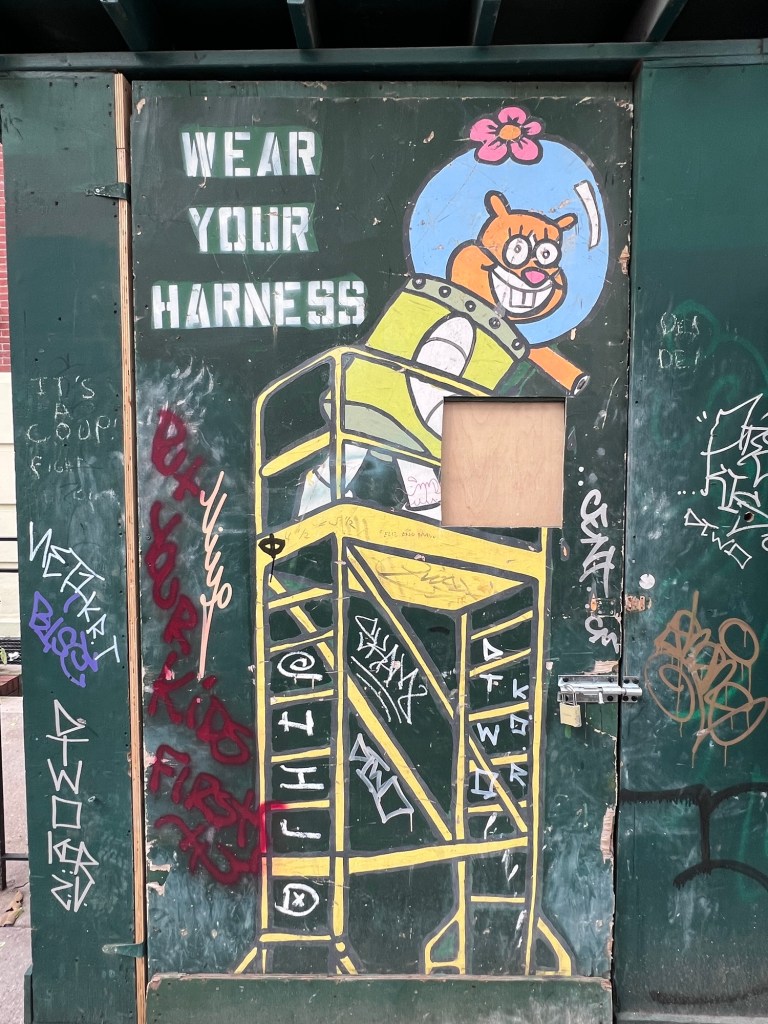
Even the work sites are home to art work
While making my way down West 22nd Street, I passed NY Cake, a specialty store all the items cake decorating and making. The store has everything you need for both professional and amateur baking. I walked along the aisles looking at all the merchandise when I spotted an fascinating piece of art at the front entrance.

NY Cake at 118 West 22nd Street
https://www.instagram.com/nycakeacademy/
The front display at NY Cake
The store has many interesting items to buy, but the art display at the entrance was the most interesting. The detail on it captured my attention.
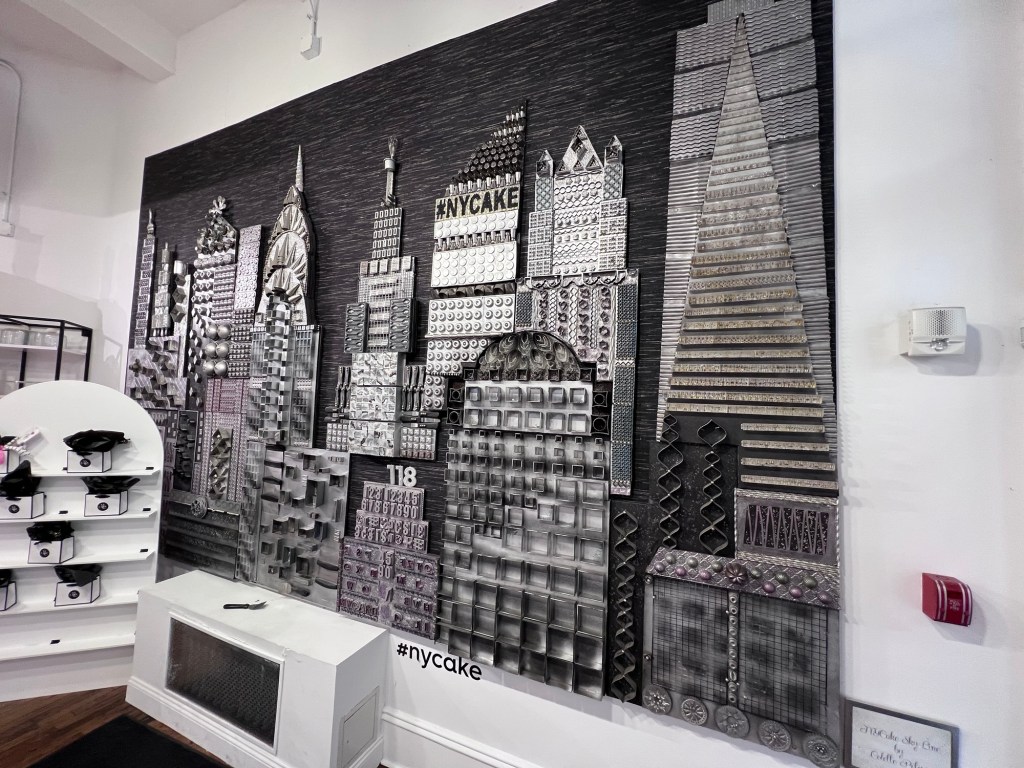
The artwork at the entrance ‘NY Cake Sky Line’ by Cake Artist Colette Peters

The sign for the would by artist Colette Peters, a renowned Cake Decorator

Cake Artist Collette Peters
https://www.facebook.com/colettescakesinc/
https://www.instagram.com/colette_peters/?hl=en
Cake Artist Collette Peters is an American born baker, artist, cake design maker and author of “Collette’s Cakes: The Art of Cake Decorating”.
I the rounded West 21st Street and walked down the street admiring all the beautiful homes and street art.

Sixth Avenue and West 23rd Street
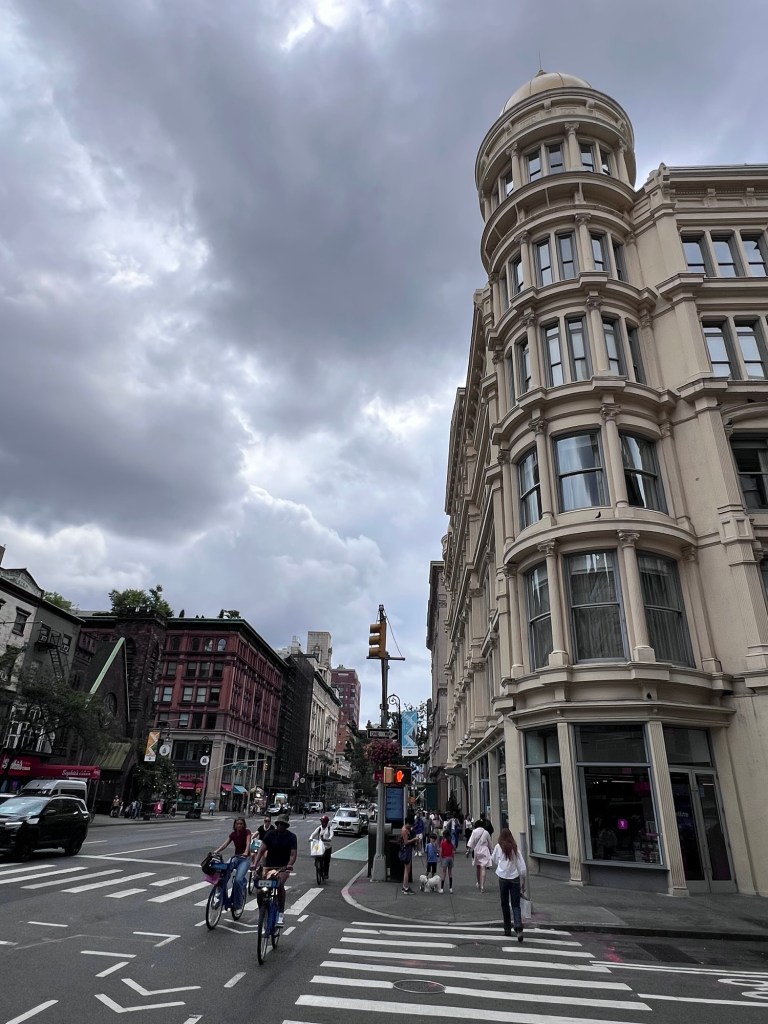
This was in the very heart of what once the ‘Ladies Shopping Mike’, with the former Crawford-Simpson Department store
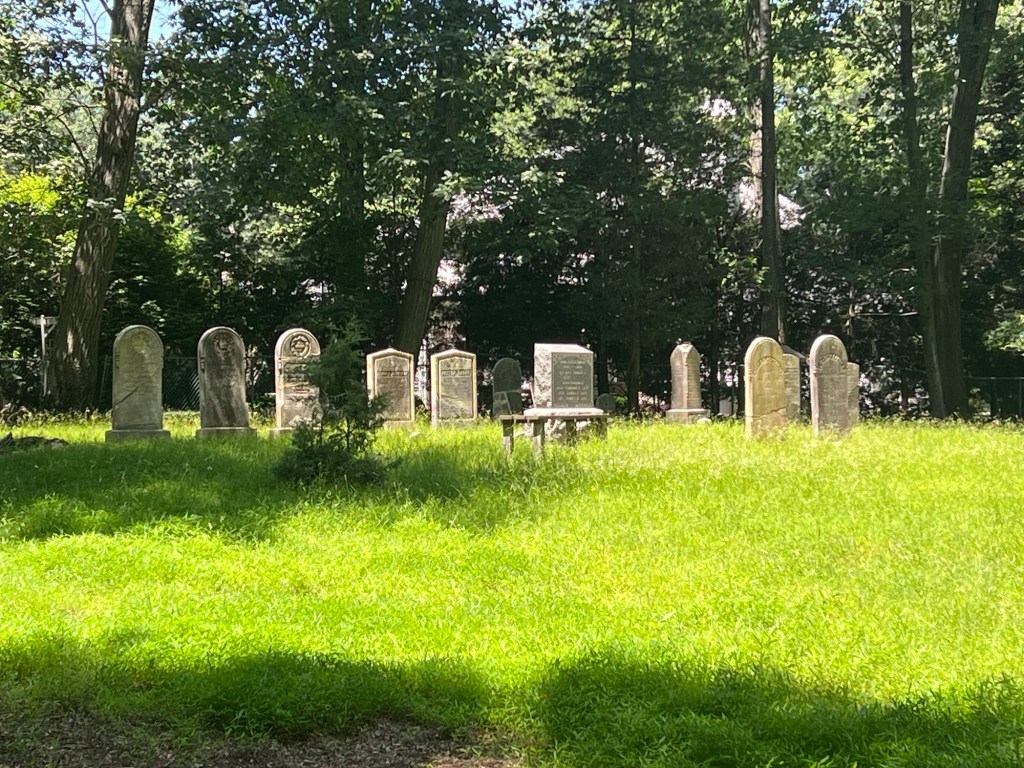
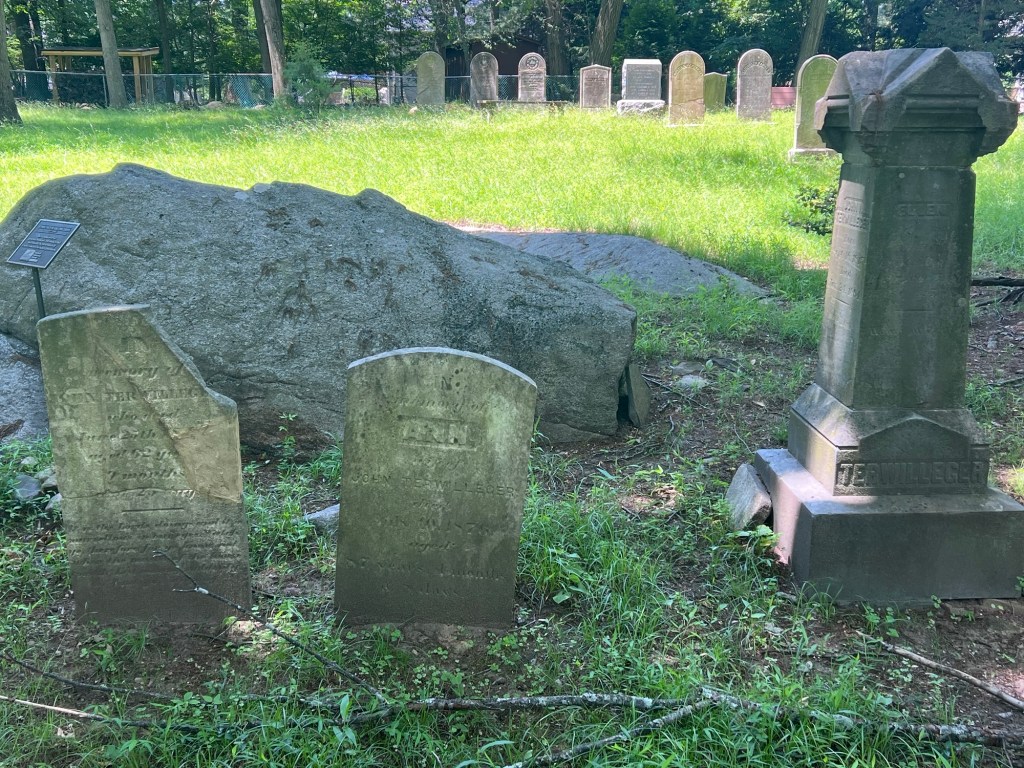
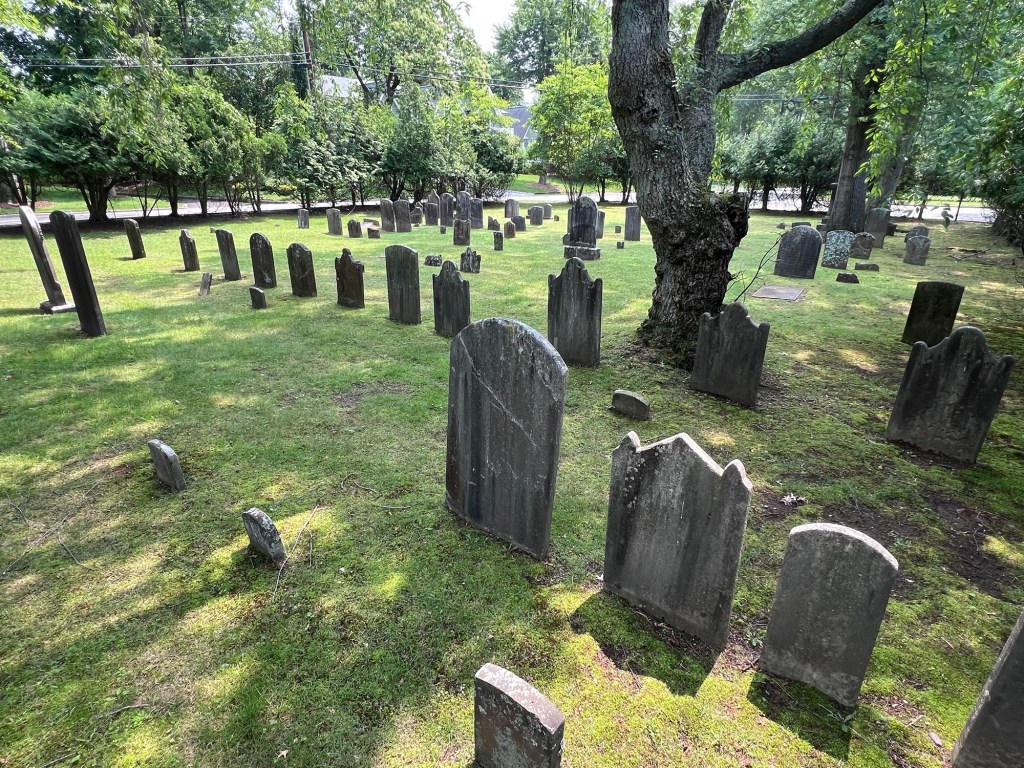
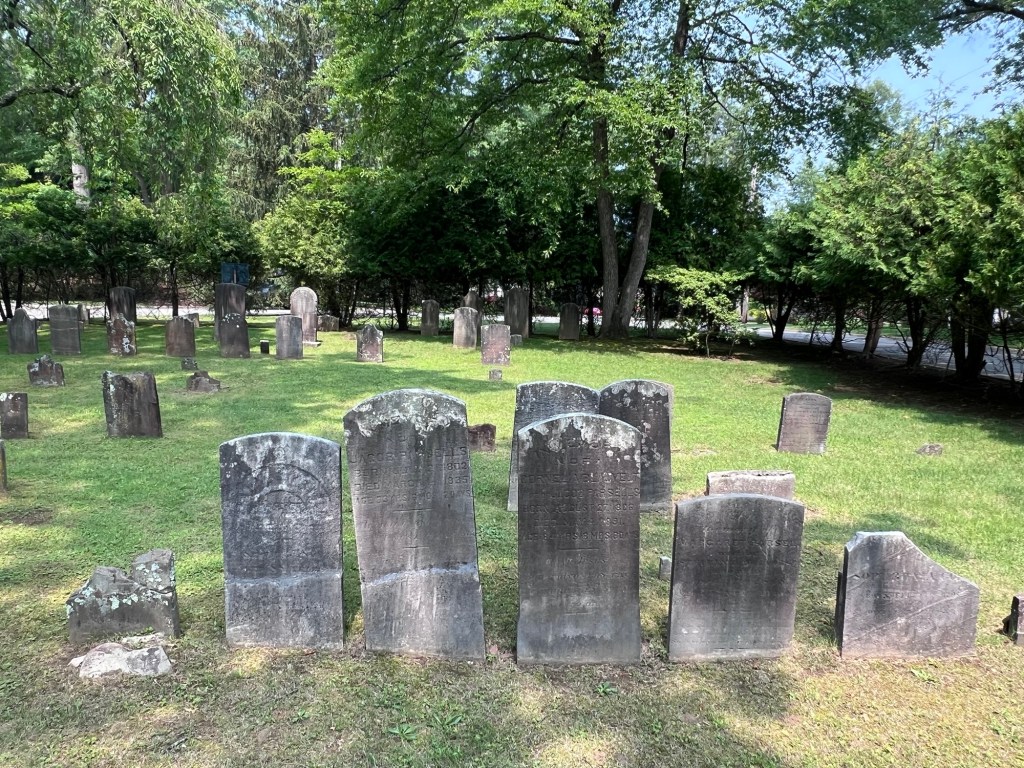
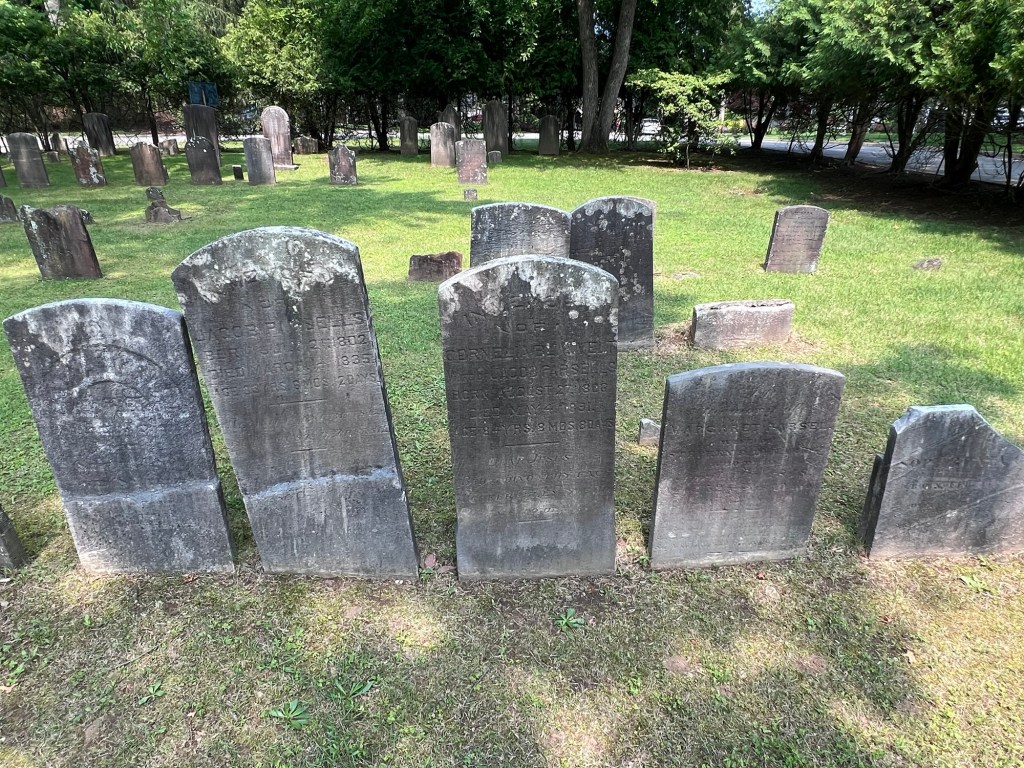
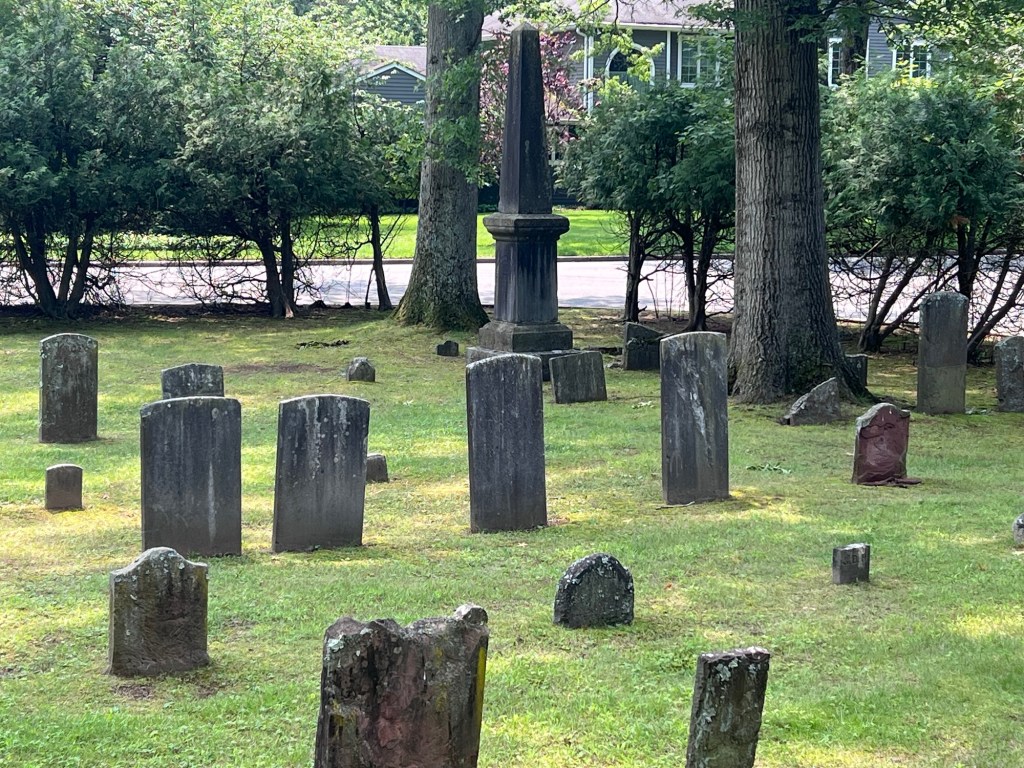
The first thing I saw as I walked down the street admiring, tucked in between the buildings was the Third Shearith Jewish Cemetery at 98-110 West 21st Street.
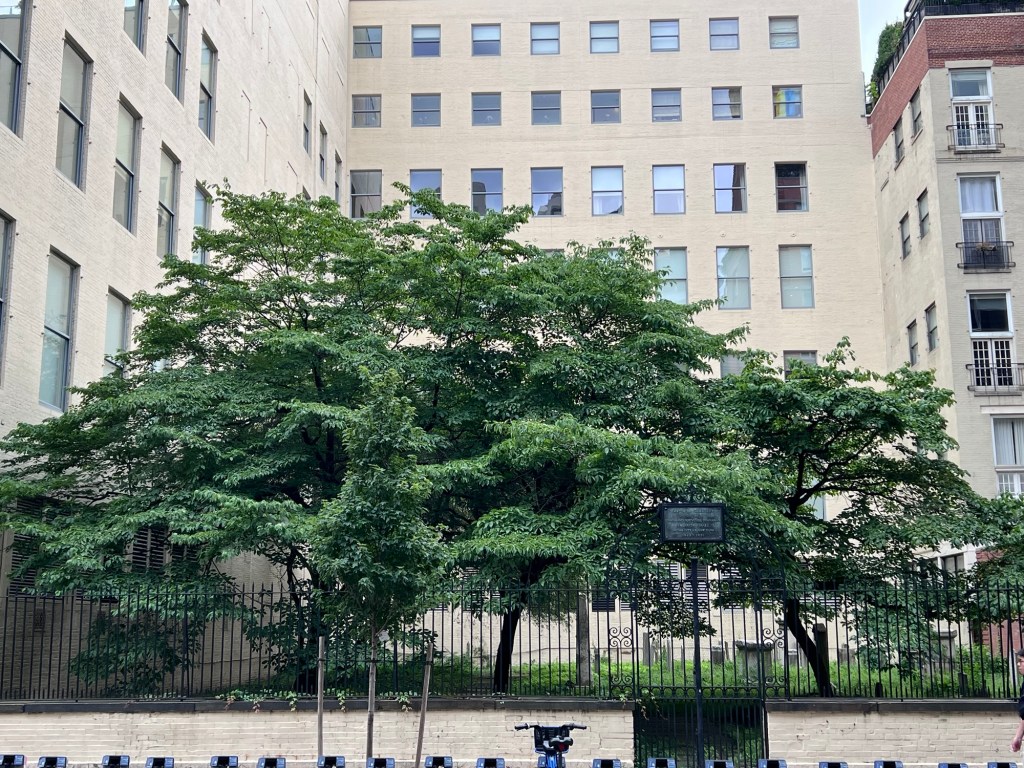
The Third Shearith Cemetery at 98-110 West 21St Street
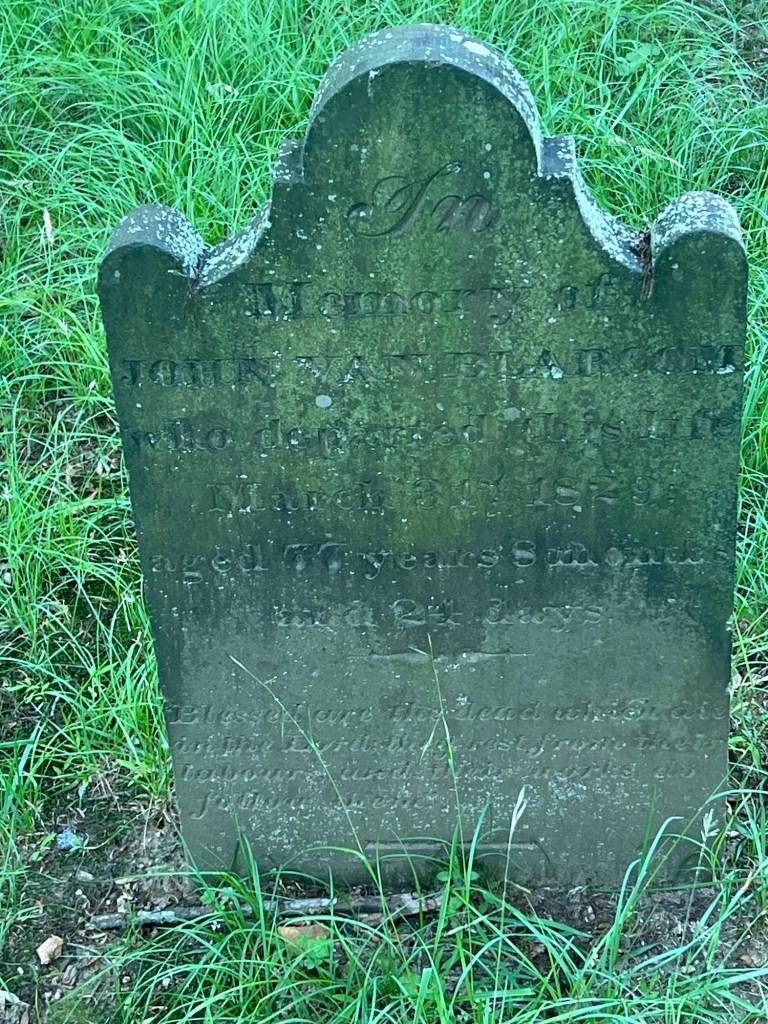
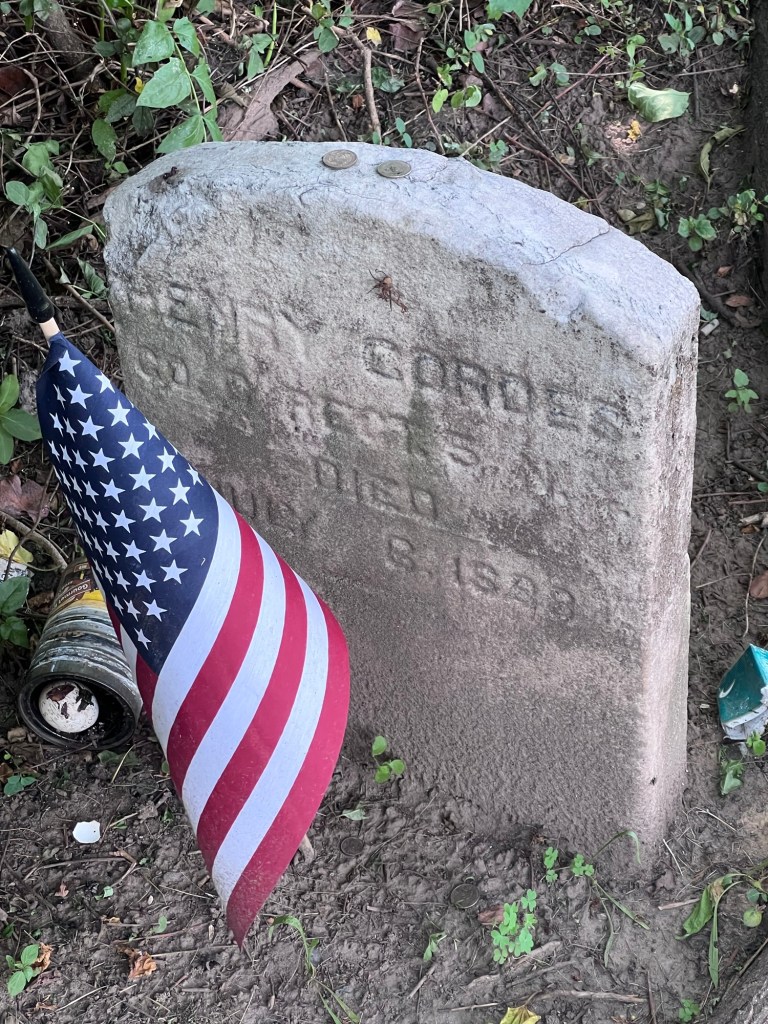
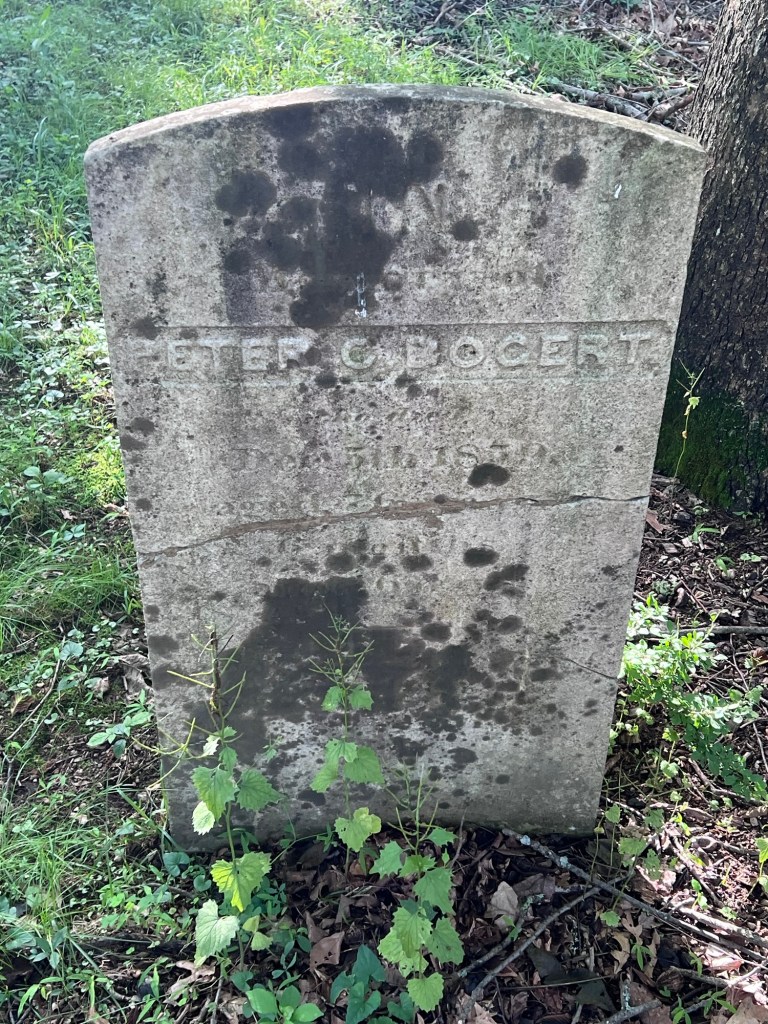
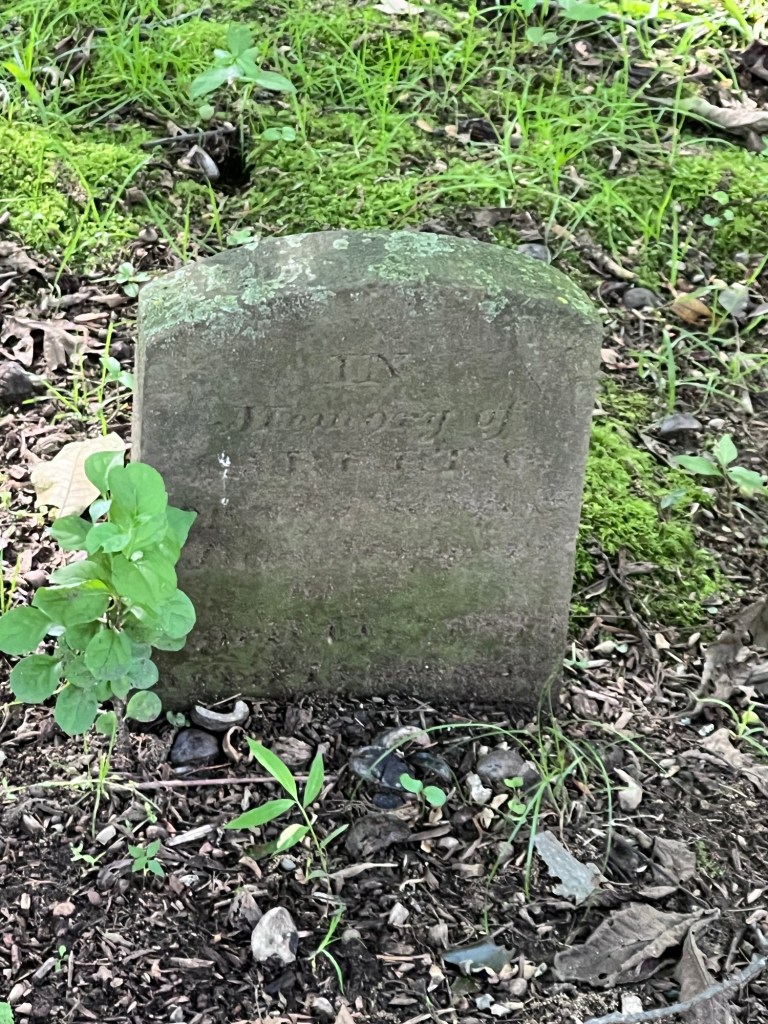
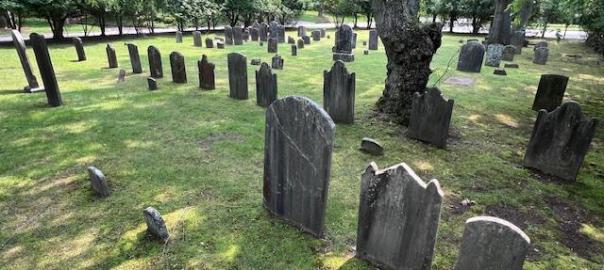
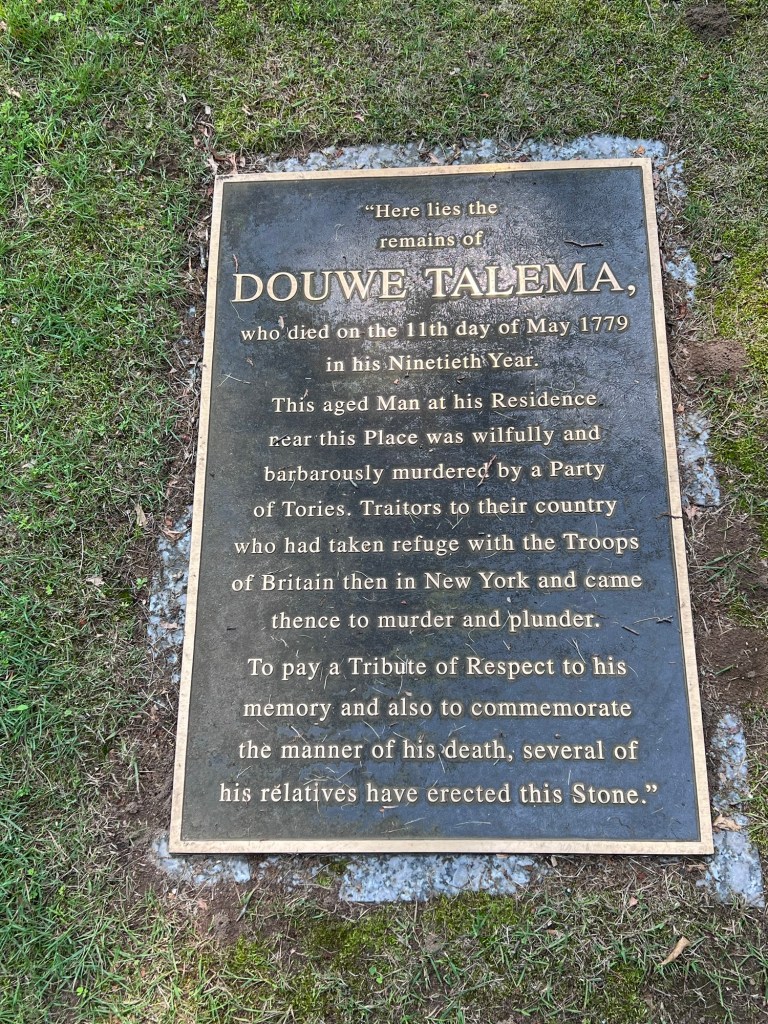
When Congregation Shearith Israel was forced to close its graveyard in Greenwich Village in 1829, it established a new cemetery in an area even further away from the city center. The 21st Street cemetery served as the congregation’s burial ground until 1851, when the city banned burials below 86th Street (New York City Cemetery Project website). Their original cemetery was just off Canal Street in Chinatown and also sits behind a locked gate.
https://www.findagrave.com/cemetery/2260432/third-cemetery-of-congregation-shearith-israel
My review on TripAdvisor:
My review on VisitingaMuseum.com:

The sign at the Third Shearith Cemetery
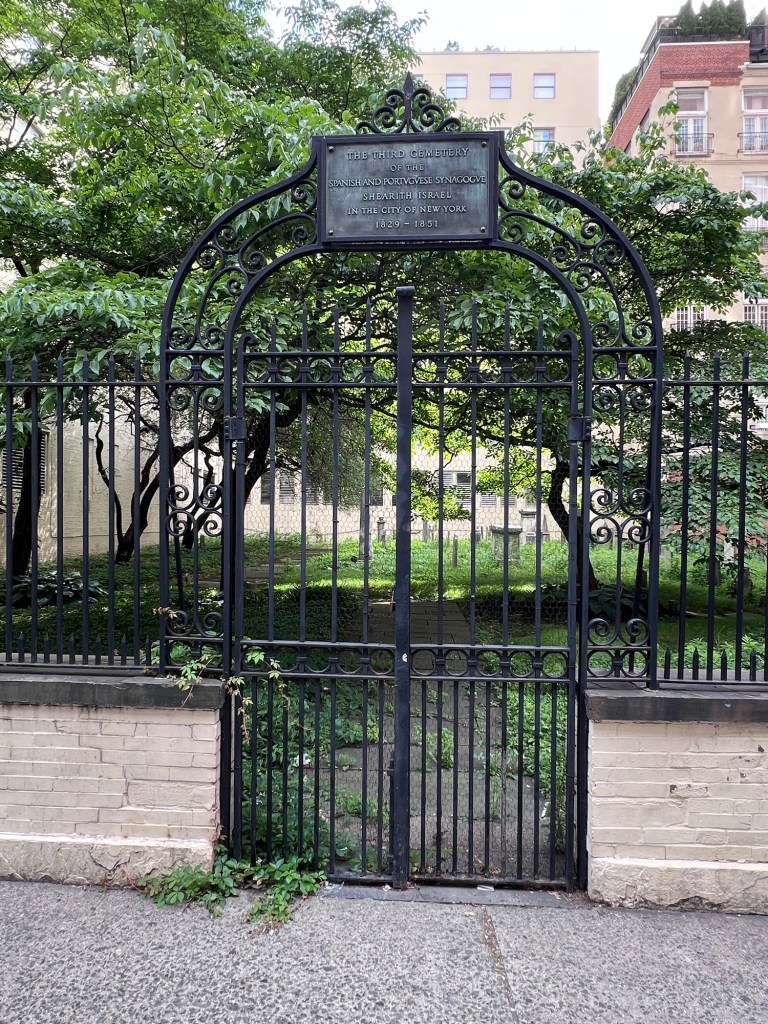
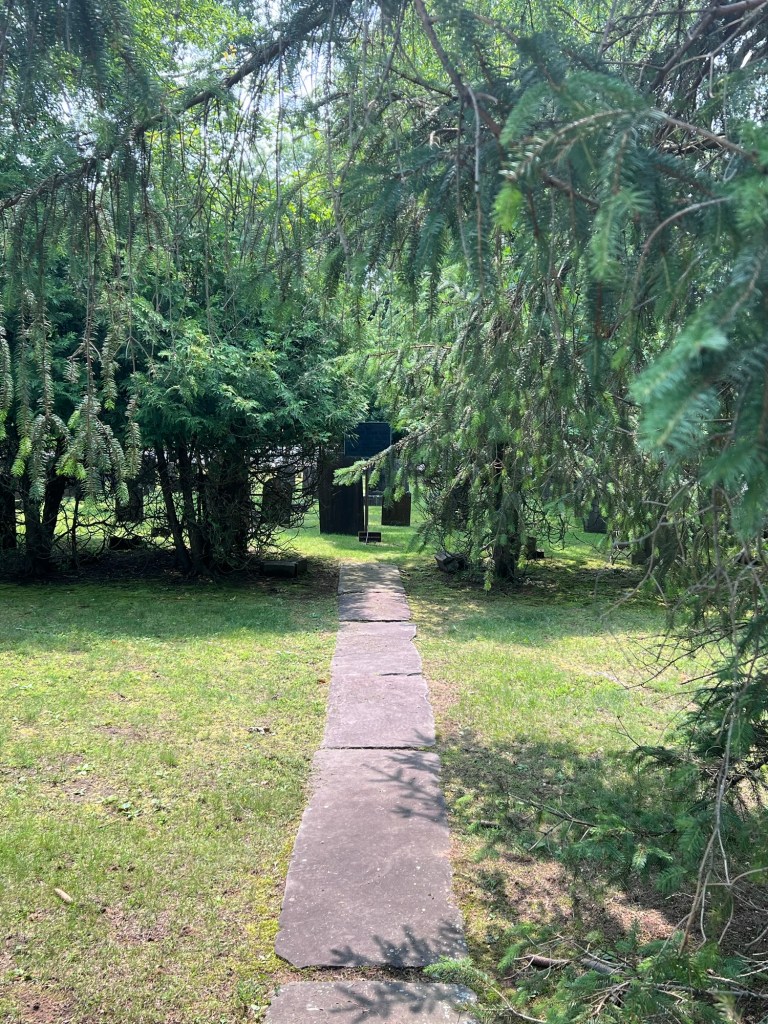
The entrance to the cemetery
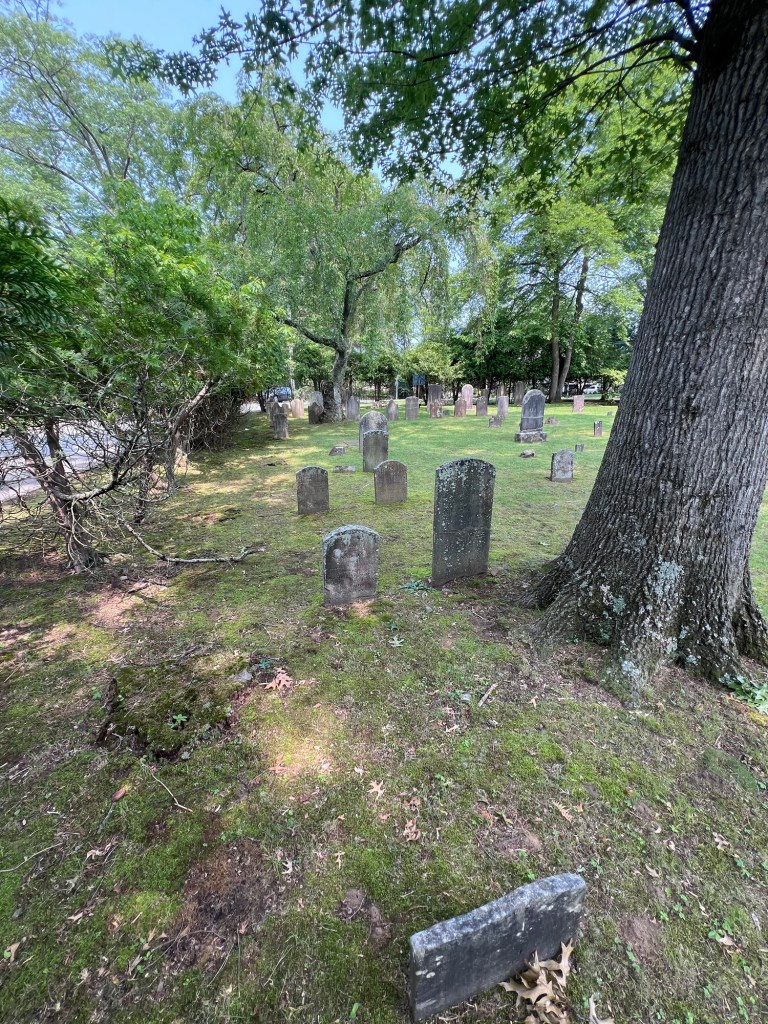
The cemetery is a quiet reminder that the City keeps progressing and builds around the past. It just shows how time marches on.
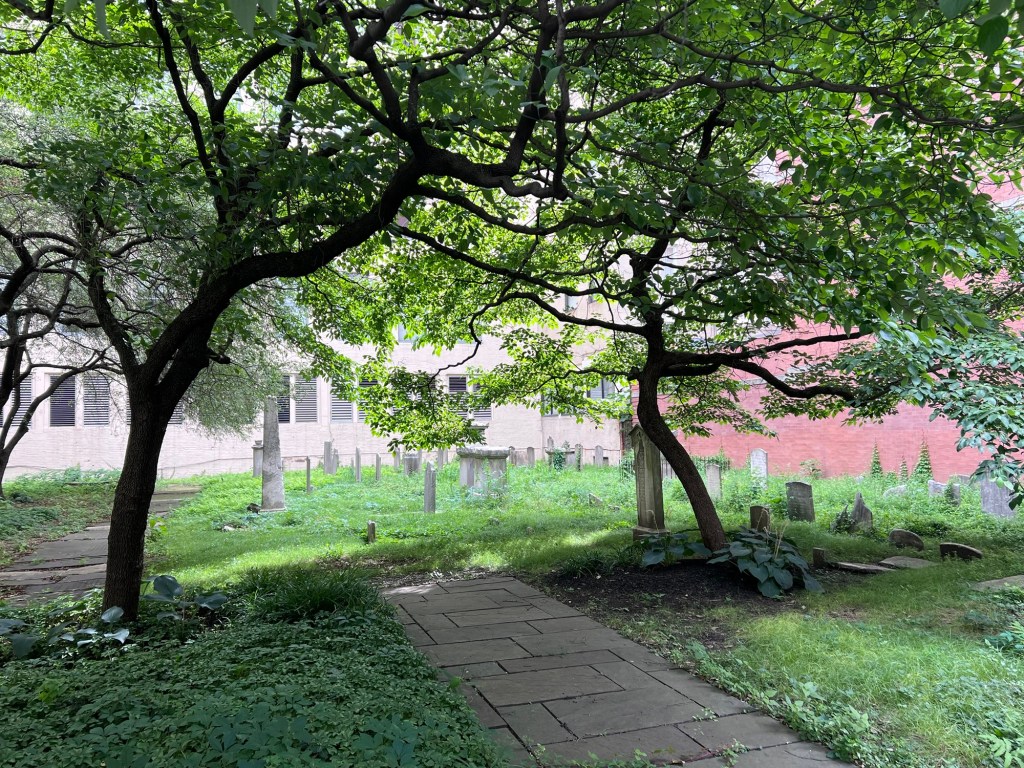
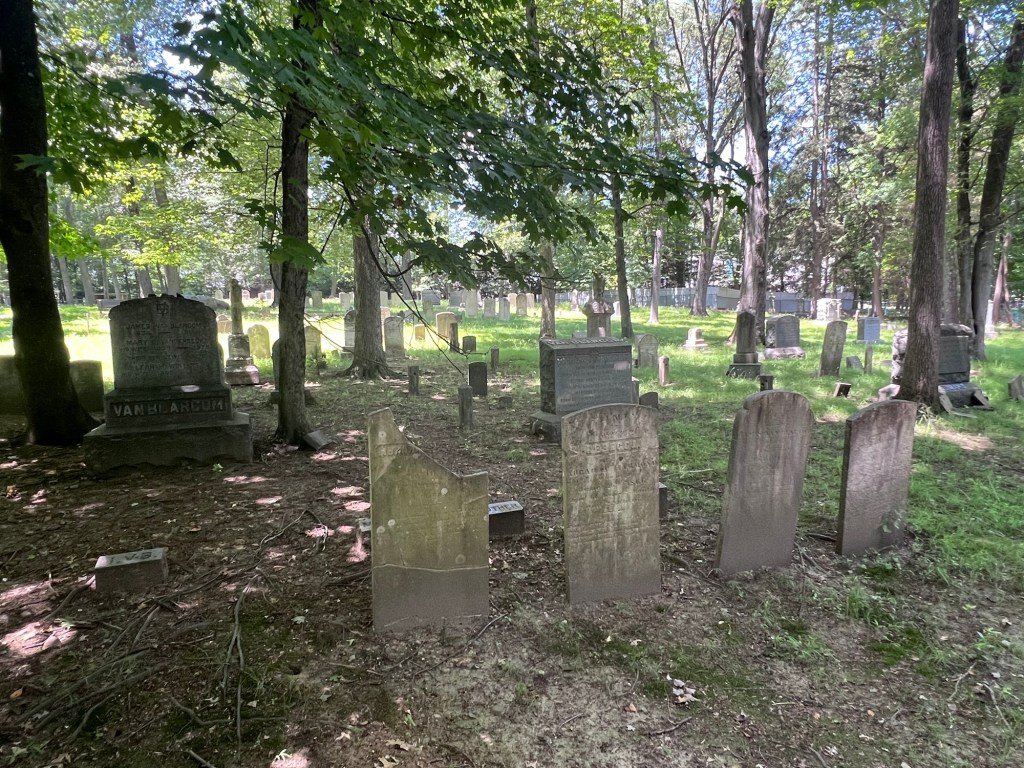
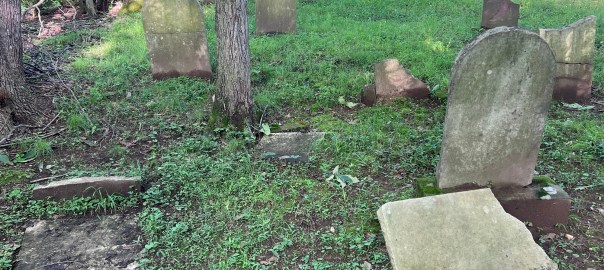
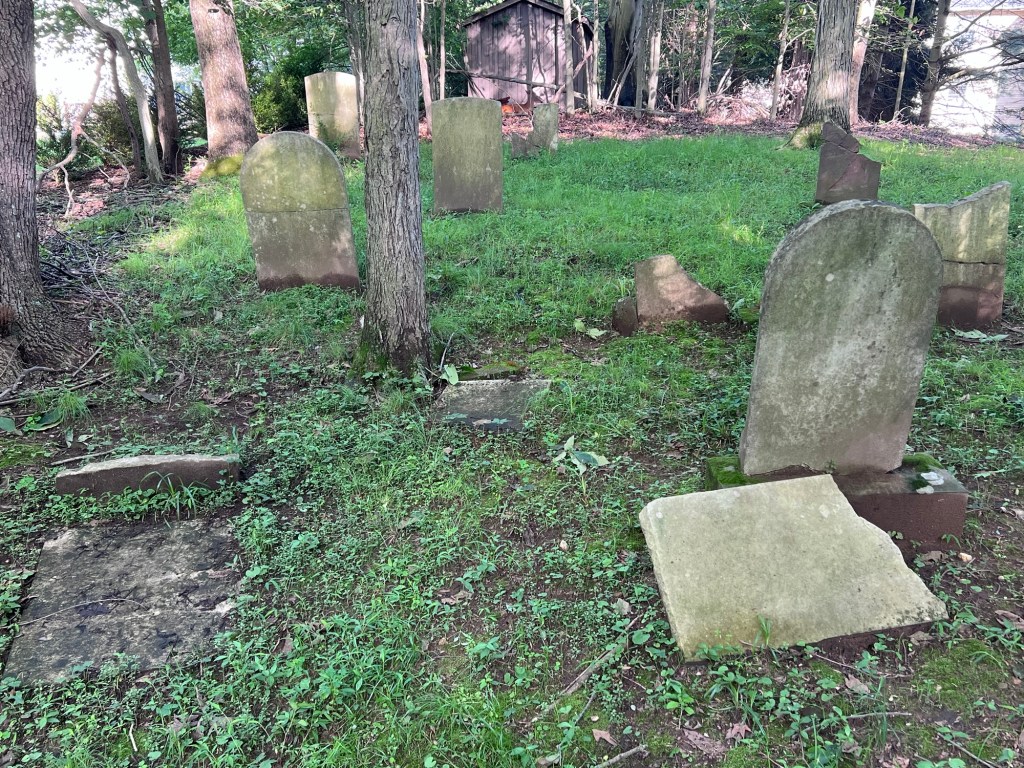
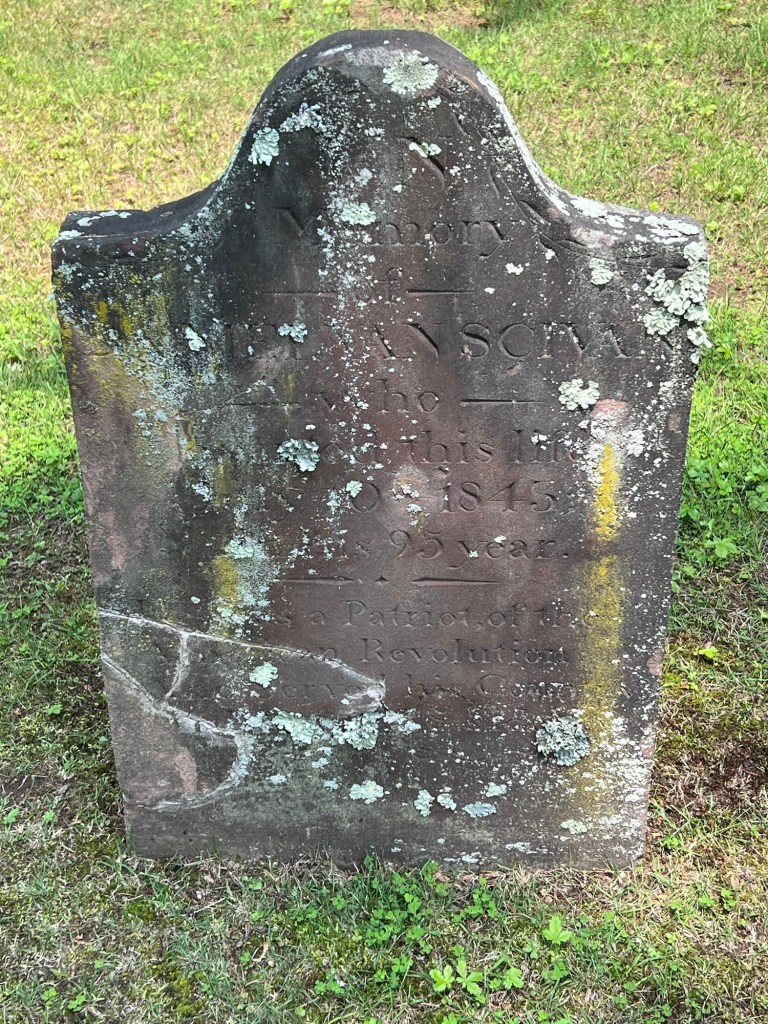
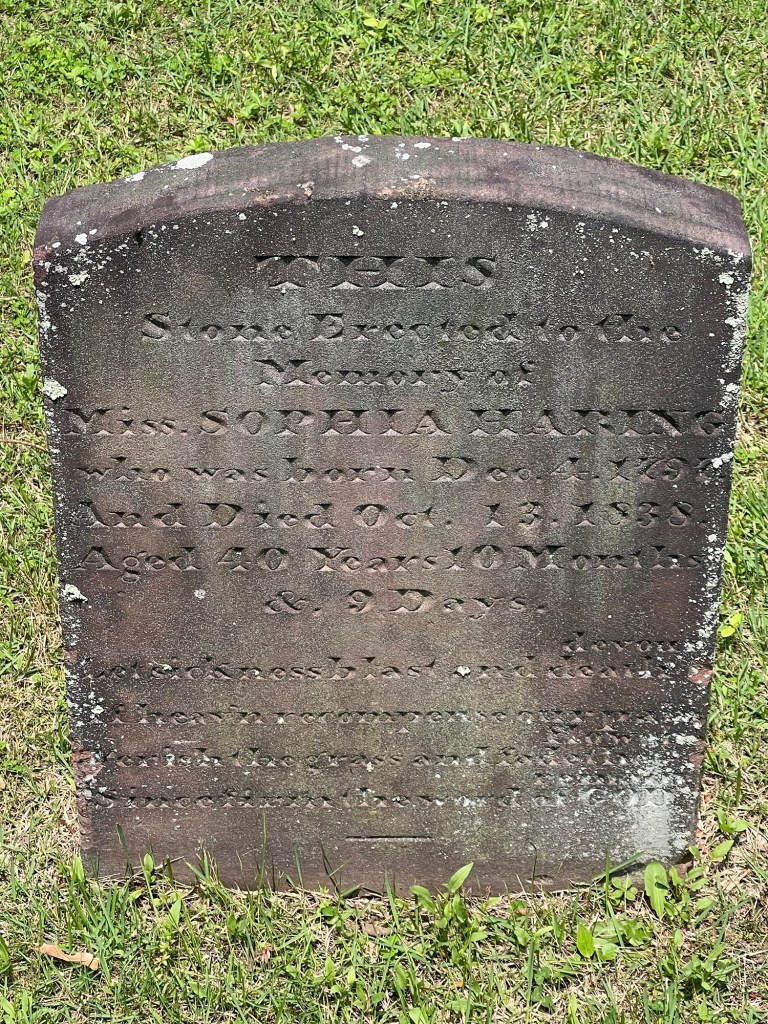
The inside of the cemetery
There is a real beauty to these small historic cemeteries. You wonder if the families understood the changes and progress in the City over the next hundred years.
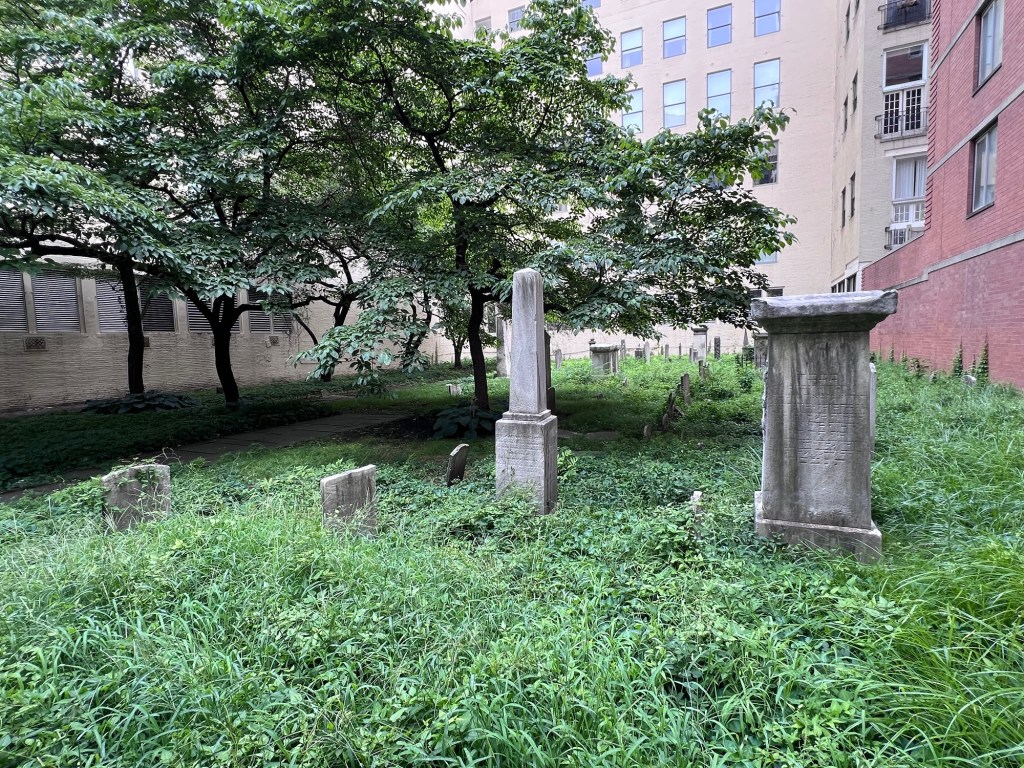
The small cemetery seems surreal in this built up neighborhood

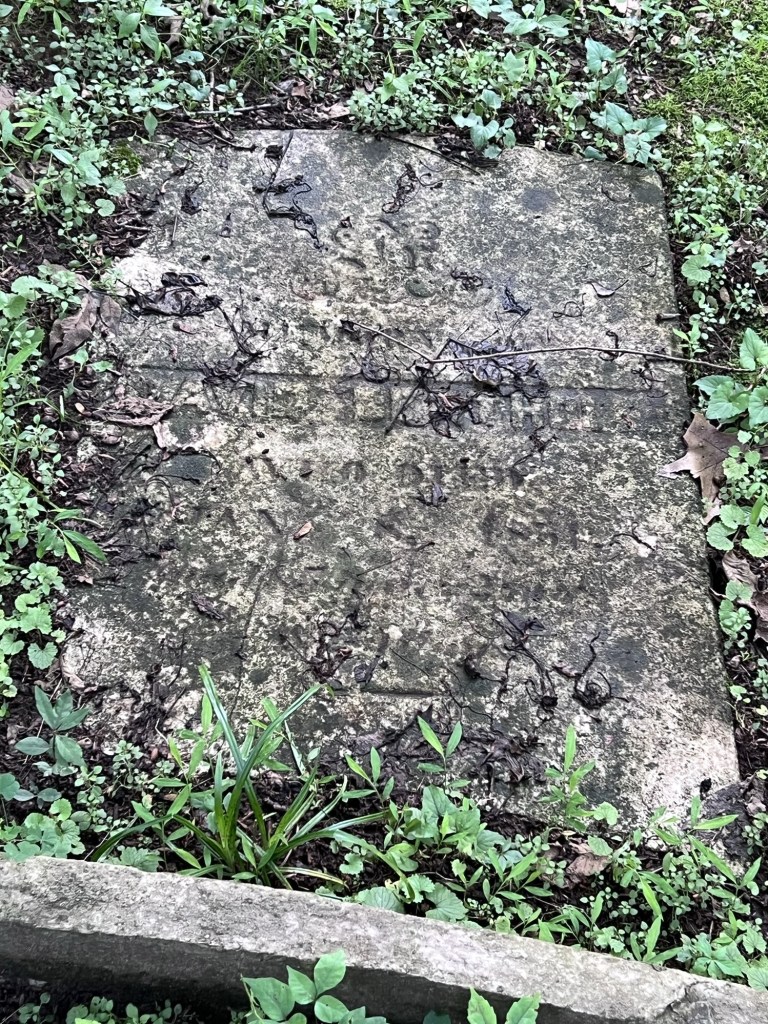
I wondered if anyone visited these folks anymore. The cemetery looks like it is taken care of but not on a regular basis.
As I continued to walk down the street more surprises popped up along the way. Along the blocks with townhouses and brownstones, there are small pocket gardens and flower beds bursting with color. Along all these streets in Chelsea, there were little surprises everywhere on buildings architecture, tucked in corners by stairs and along the staircases. There is a lot of detail you can miss if you don’t stop for a moment and just appreciate it.
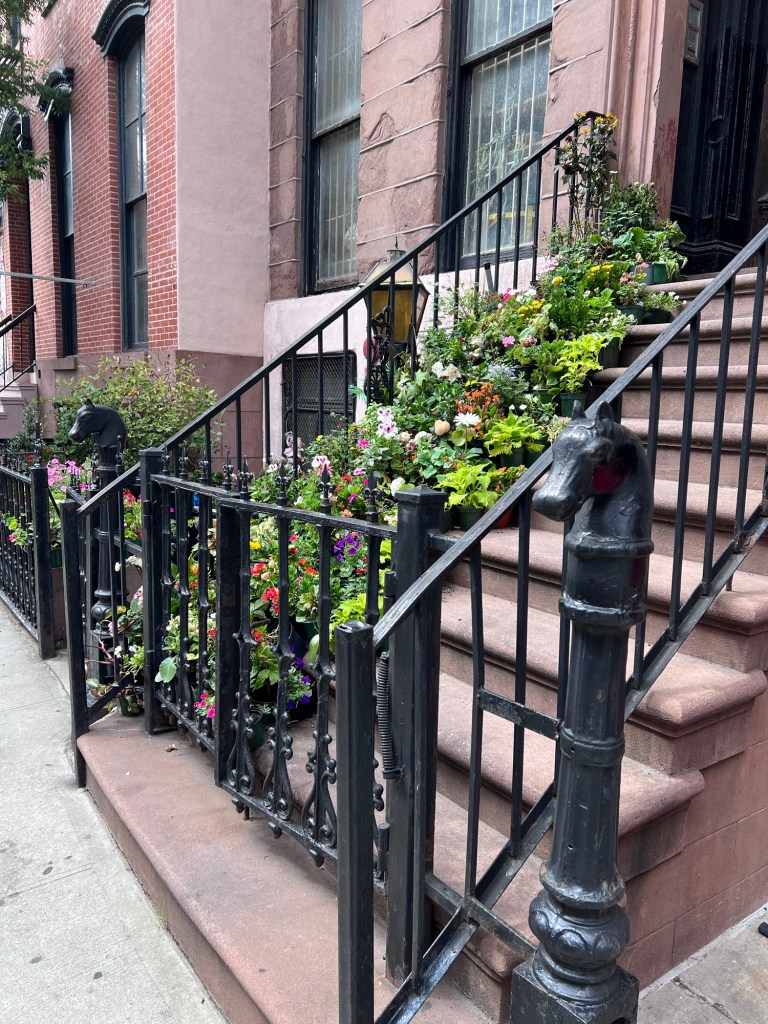
The beautiful plantings and urban gardens that lined the street

Outside of C.S. Hardware at 189 Seventh Avenue there is an interesting mural
https://www.facebook.com/CSBrownco/

The mural outside the hardware store
The streets in the neighborhood are really picturesque and look like they are out of a movie set. The streets are lined with beautiful brownstones and brick townhouses. Just be careful as the faces follow you around. You will find one thing about Chelsea, the faces on the buildings are all over the place and each has their own unique look about them.
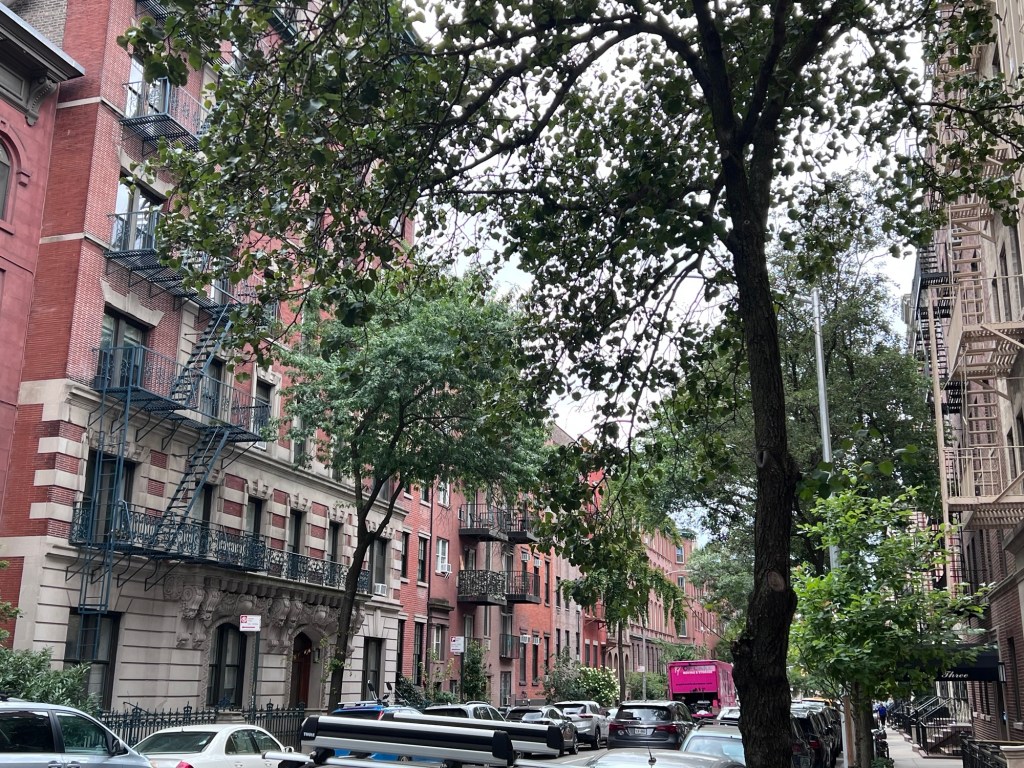
The beauty of West 21st Street

Faces carved into the doorways around the neighborhood

They just seem to follow you around

Even on the sidewalks faces follow you on the walk to 11th Avenue. The eyes are always watching
I love all the carved faces in the buildings in the neighborhood. These interesting embellishments in some cases are the only decorations the buildings have so I looked out for them as I walked by. The rest of the building is rather plain but the keystone greeting you always has a look of longing.
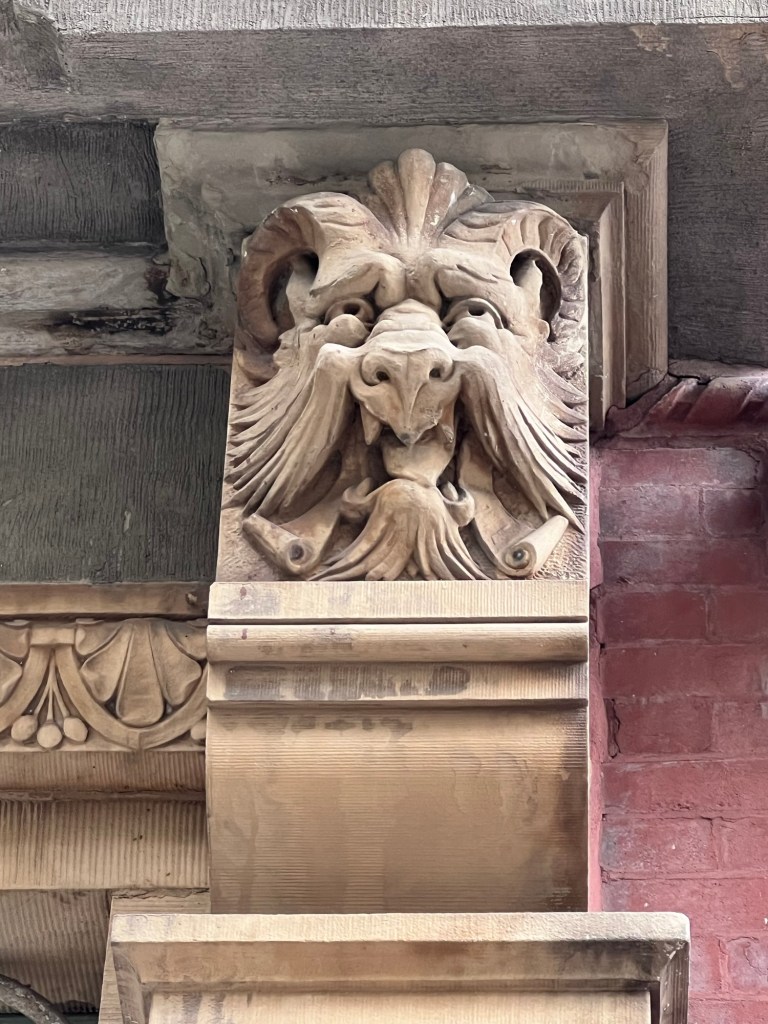
I wasn’t sure if this was a lion or a demon
The neighborhood has three Fernando Kobra murals painted on the buildings. This is ‘I ❤️ New York’ on 212 Eighth Avenue.

The Kobra painting ‘I Love New York’
The Kobra painting of Albert Einstein ‘We ❤️ New York’
https://streetartcities.com/markers/15376
I continued my walk down West 21st Street looking at the treasure trove of outside art and architecture.

The entrance to the Reilly Building

Has the most interesting face guarding the building
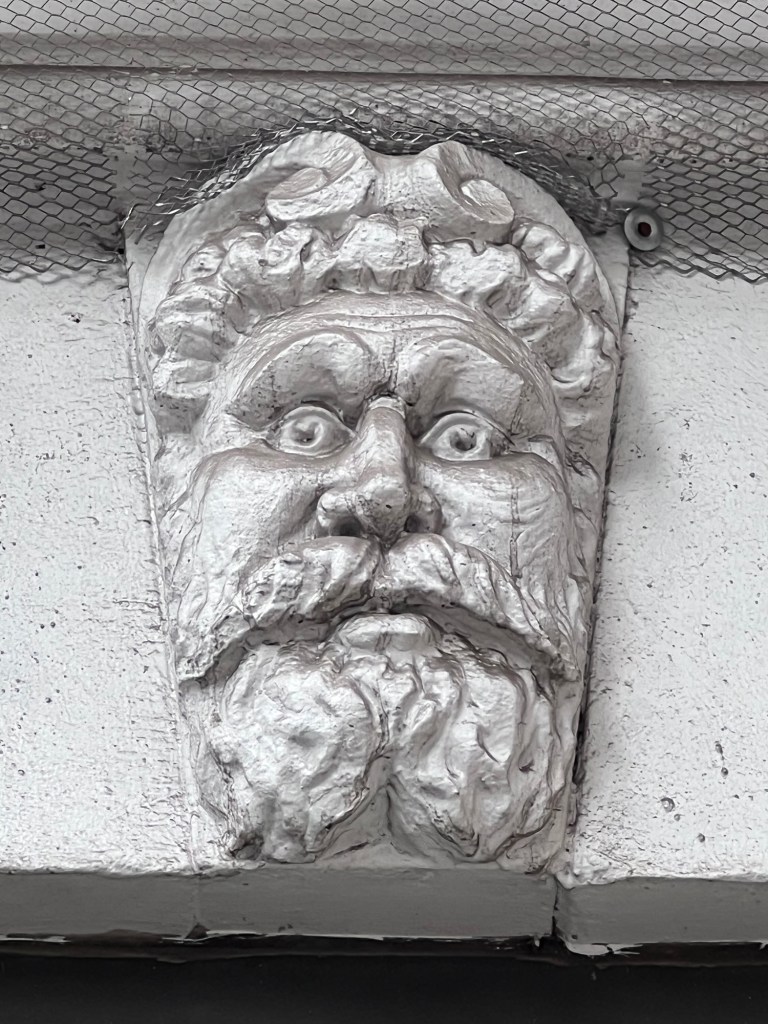
The buildings that watch you

Look at you with a look of horror
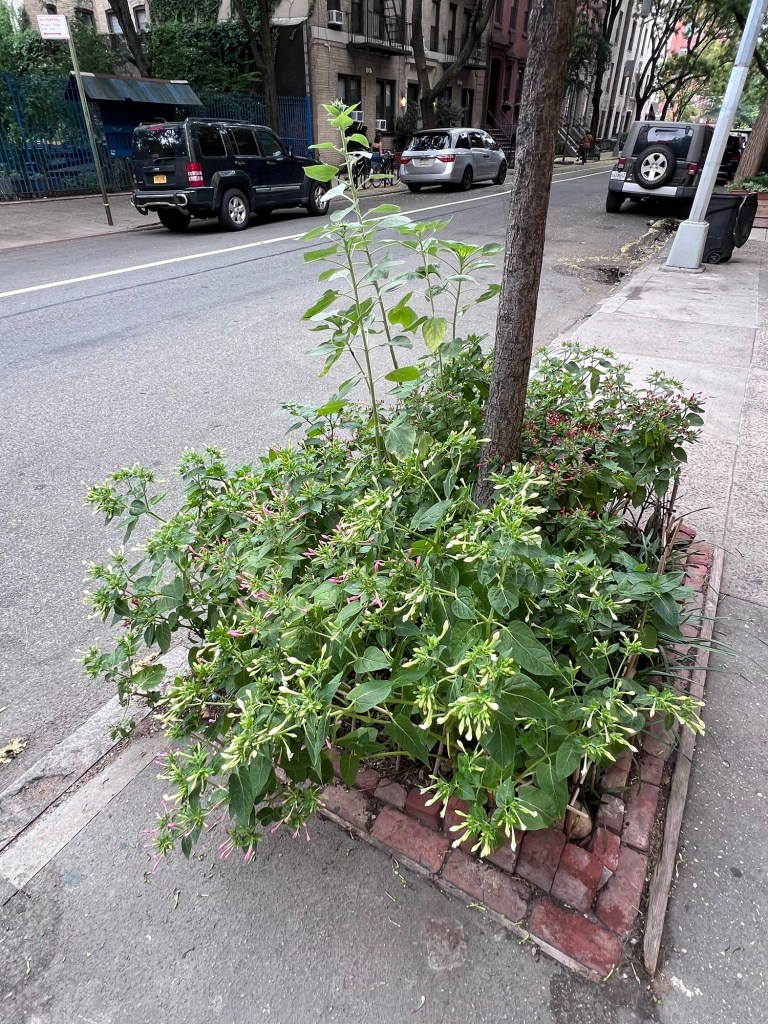
The residents creating small gardens along the blocks
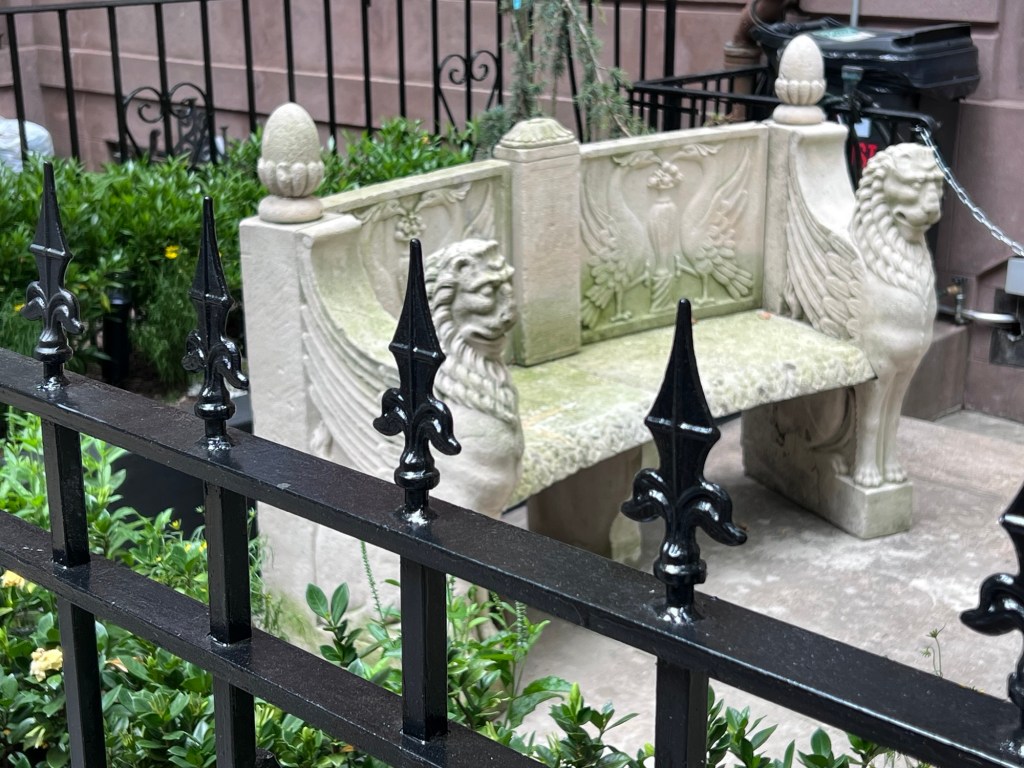
I loved this stone chair outside on of the brownstones
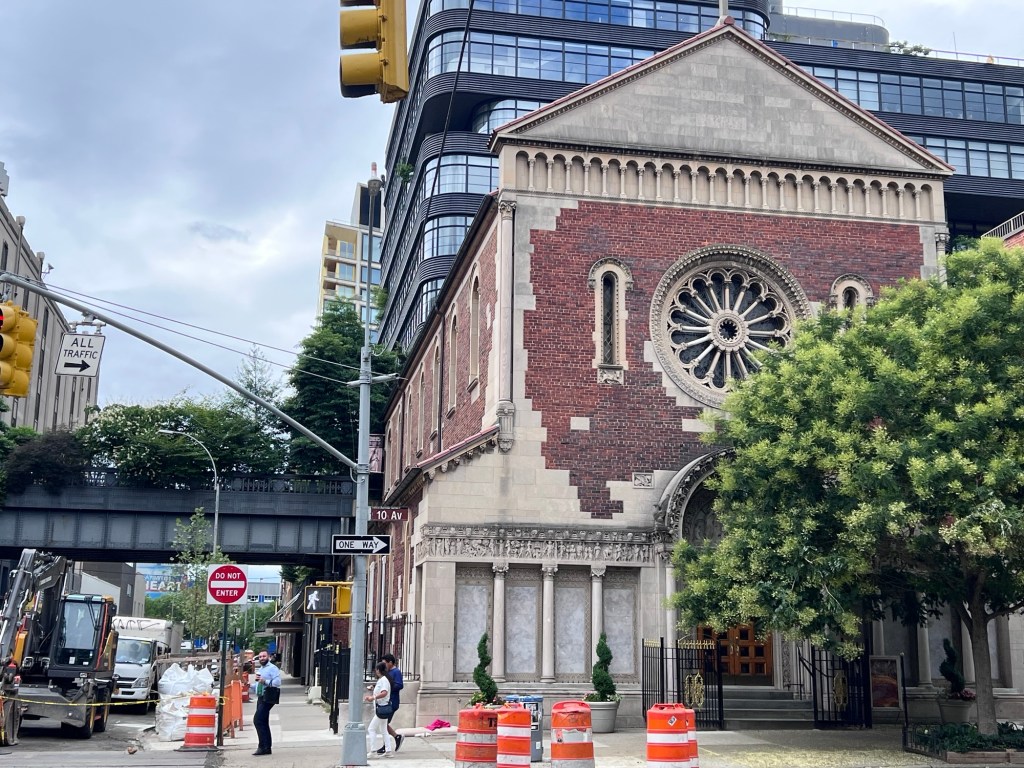
Passing by the Guardian Angel School on 193 Tenth Avenue with High-line Park in full bloom
The church school was designed and built in 1930 by architect John Van Pelt of the Van Pelt, Hardy & Goubert firm. The building was designed in the Southern Sicilian Romanesque style and has many different religious elements in the detail of the outside of the building. You have to look at it from all directions to appreciate its beauty (Wiki).
https://en.wikipedia.org/wiki/Church_of_the_Guardian_Angel_(Manhattan)
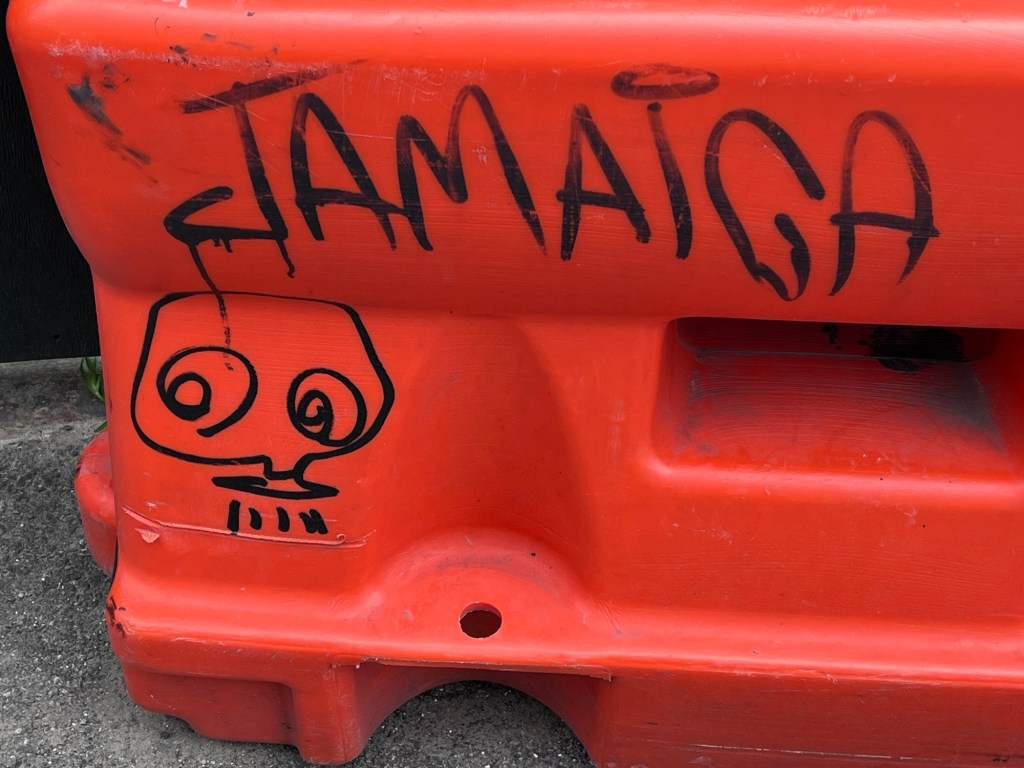
On the corner of West 21st Street and 11th Avenue, I came across this interesting drawing on a plastic barrier. I assumed the street artist was from Jamaica.
Walking on the other side of West 21st Street on the way back showed just as many interesting views.

High line Park is in full bloom by 10th Avenue
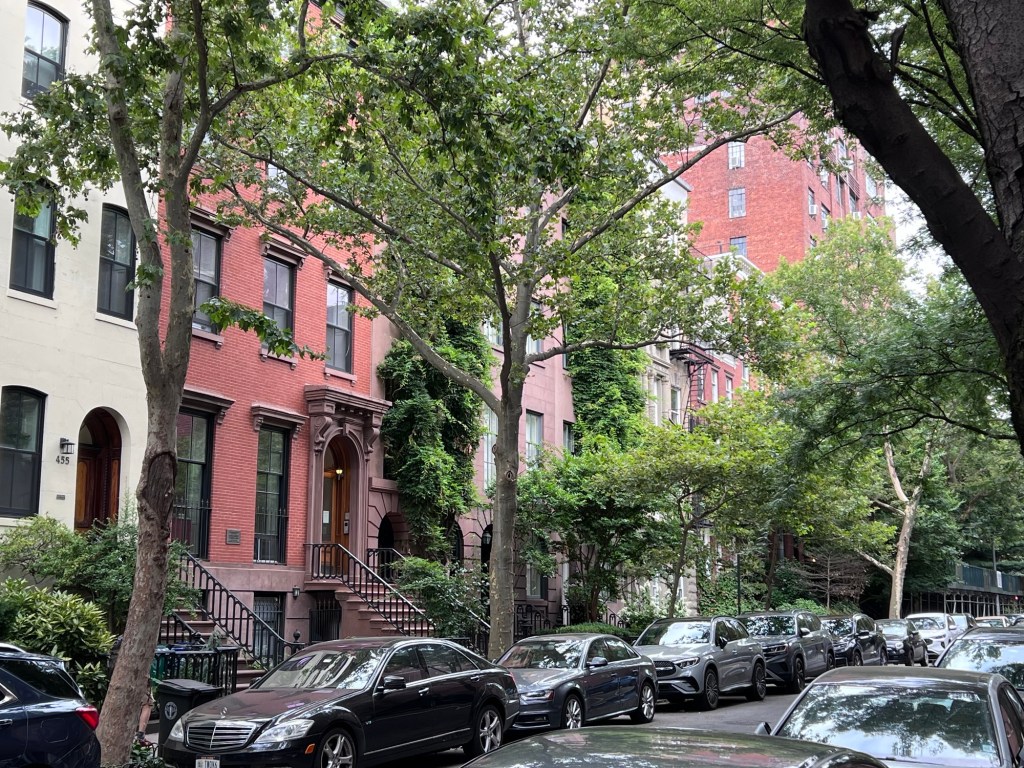
Walking down West 21st Street near Eighth Avenue
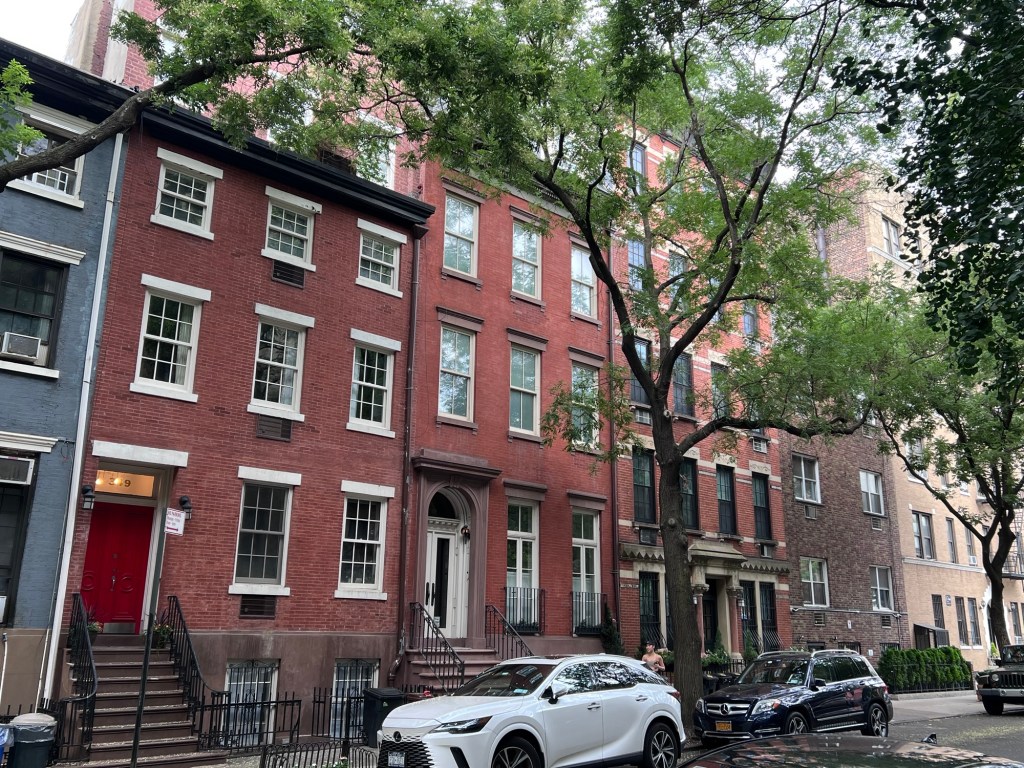
Walking past the historic brick townhouses in the neighborhood

As I passed the school yard, I saw this work on the fence and thought it was really whimsical
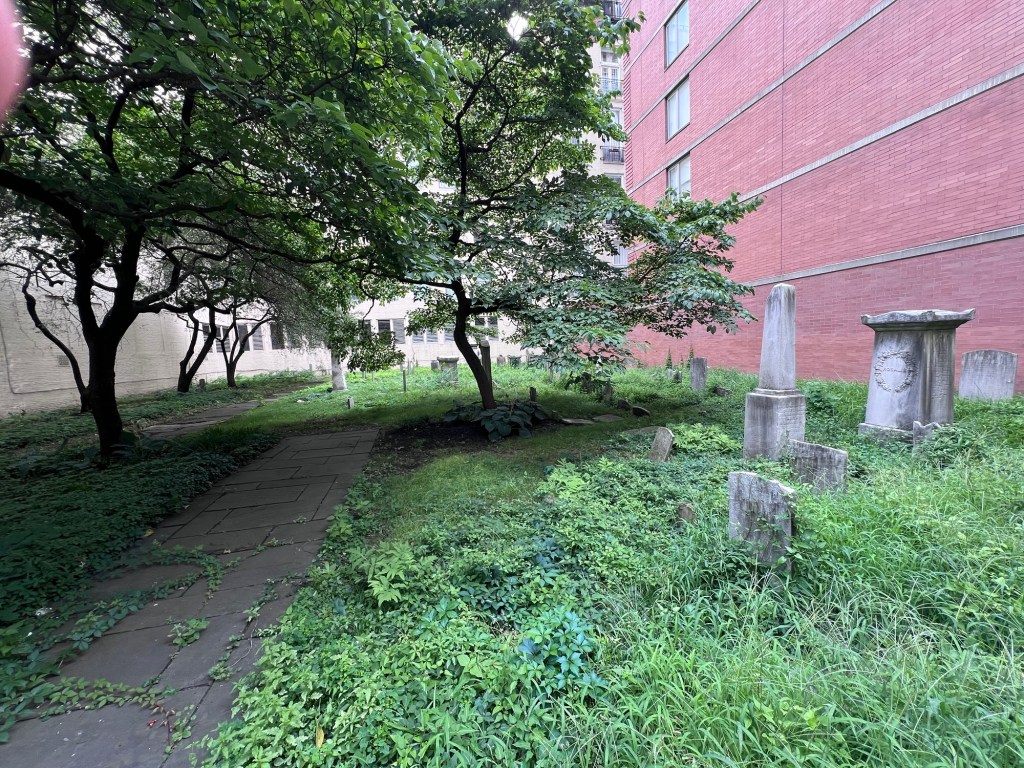
As I left West 21st Street, I took another peak at the cemetery and thought about when they buried these people. It must have been wilderness at the time this cemetery was created. The first one is down in Chinatown.

I rounded West 20th Street in the late afternoon and I did notice a change in the architecture as I walked further into the neighborhood. It seemed a little more commercial though the use of the buildings seem to be changing.

Then I passed Chelsea Green Park at 140 West 20th Street
https://www.nycgovparks.org/parks/chelsea-green-park
https://www.instagram.com/chelseagreennyc/?hl=en
My review on TripAdvisor:
The Chelsea Green Park was an oasis from the hot weather that had been going on the week I walked the neighborhood. It seemed all the parents were trying to escape the heat as well as everyone sat under shade trees while the kids ran through the sprays of water and throwing water balloons at each other.

Chelsea Green Park sign

The parks history
This park sits on a former school and when the building was torn down, the neighborhood rallied to create this park. This much needed green space is the neighborhood focal point on these hot summer days that we experienced in the summer of 2025.

Walking by the busy park in the early afternoon
Some of the businesses are quite unique in the neighborhood. I loved the window display at ‘Purple Passion’ at 211 West 20th Street. If anything stood out was this creative set of ensembles.

The display window at Purple Passion at 211 West 20th Street
https://www.instagram.com/purplepassion/?hl=en
http://www.nycgoth.com/shops/purple_passion/
Purple Passion has become the darling of fetishists-in-the-know over the last few years almost exclusively by word of mouth. A selection of fetish “toys”, restraints and clothing more diverse than almost any other store in New York is crammed into a tiny shop now so packed with merchandise it’s difficult for more than two or three customers to be inside it at once (The NYCGoth.com website).

The entrance to 220 West 20th Street
https://streeteasy.com/building/220-west-20-street-new_york
https://www.corcoran.com/building/chelsea-hudson-yards/179576
This interesting brownstone is a pre-war building that was built in 1920. This rather daring face protects the entrance of the building.

The front door is on guard
The blocks in the center of the neighborhood down each street from Seventh to Ninth Avenue are lined with rows of rows of tree lined streets with classic brick townhouses.
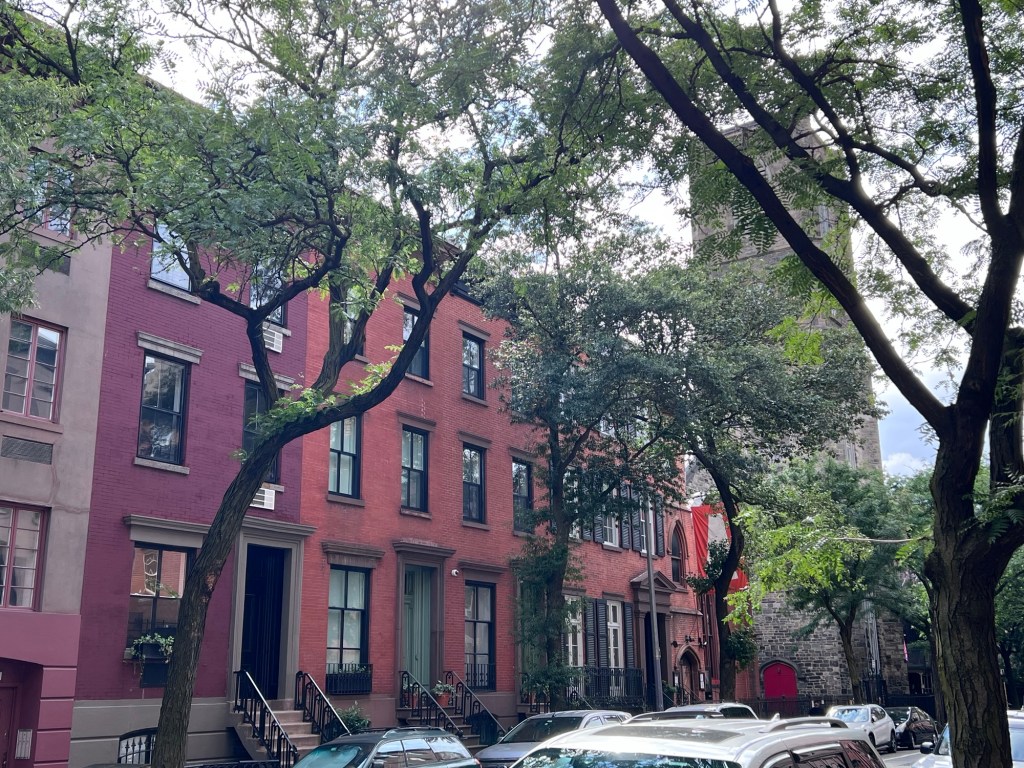
Walking down the picturesque West 20th Street

The garden boxes along the way
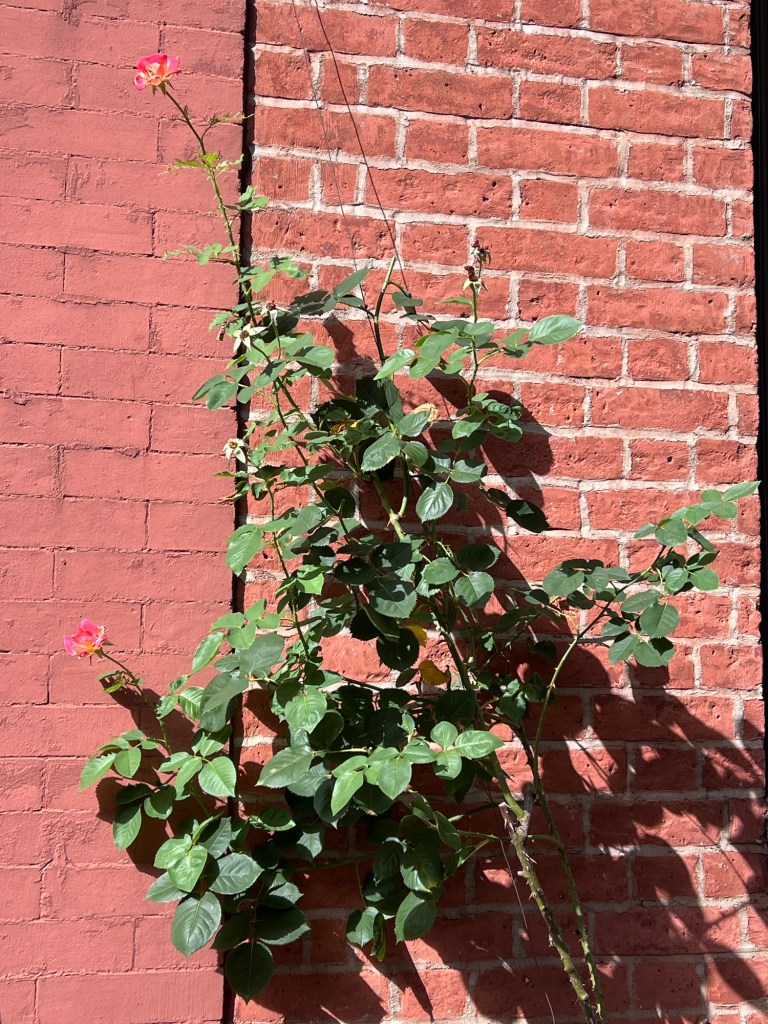
Flowers peaking out here and there along the walls
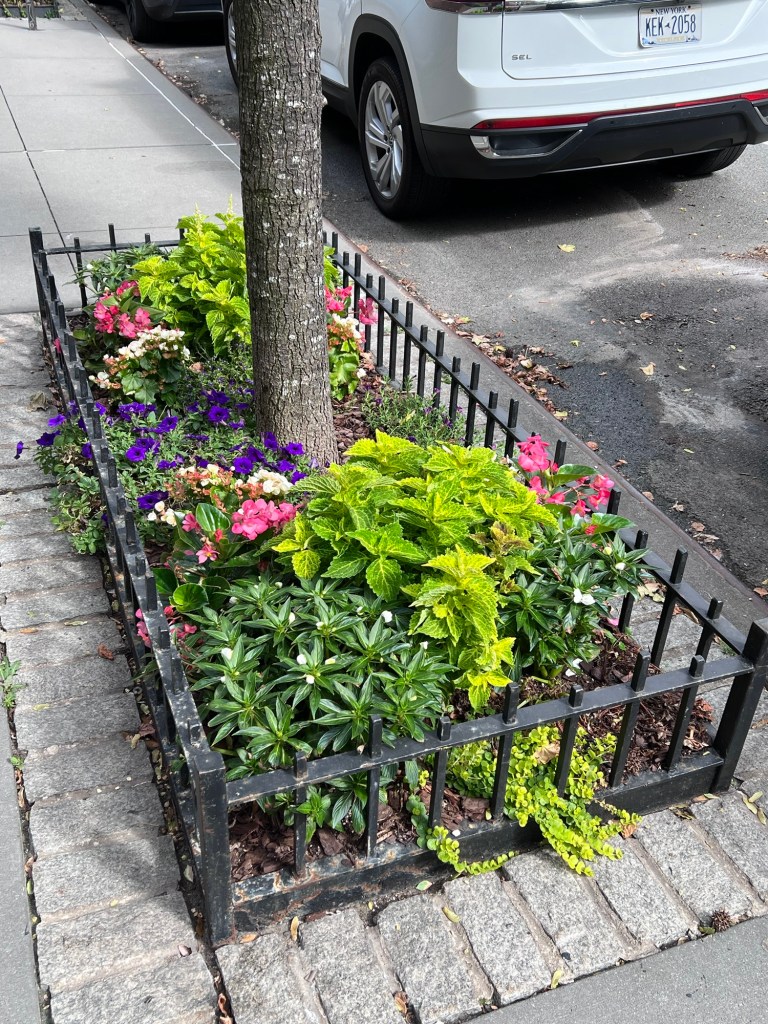
The residents landscaping the tree boxes along the street
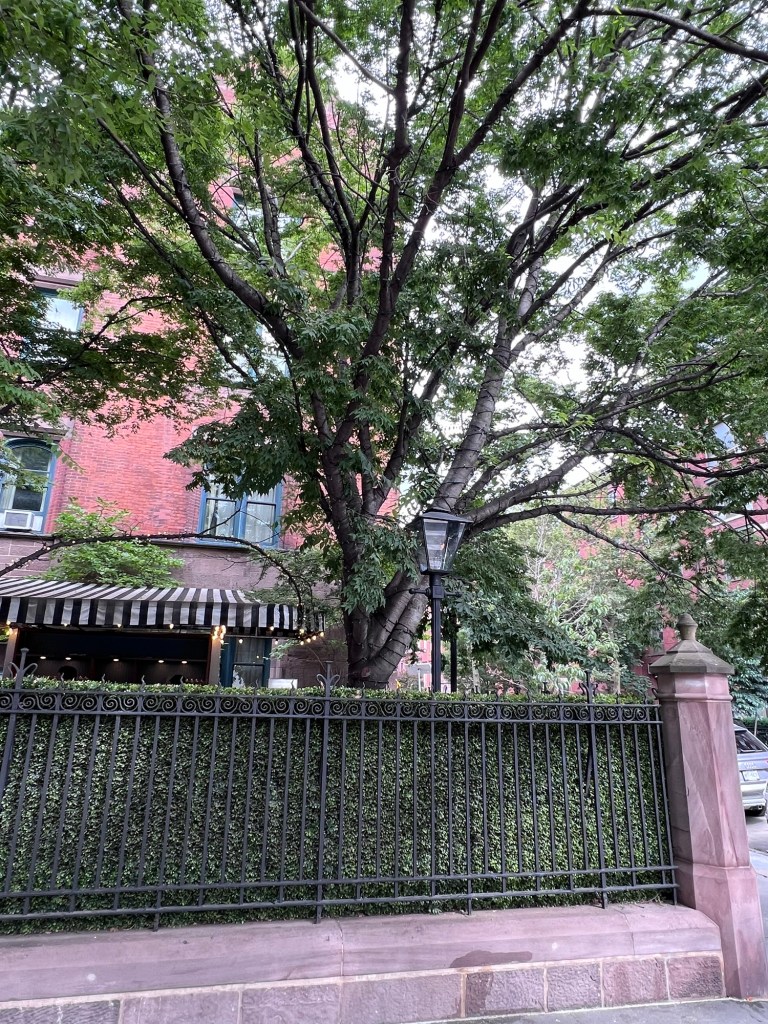
A tree growing in the High Line Hotel courtyard at 180 Tenth Avenue
Review on TripAdvisor:
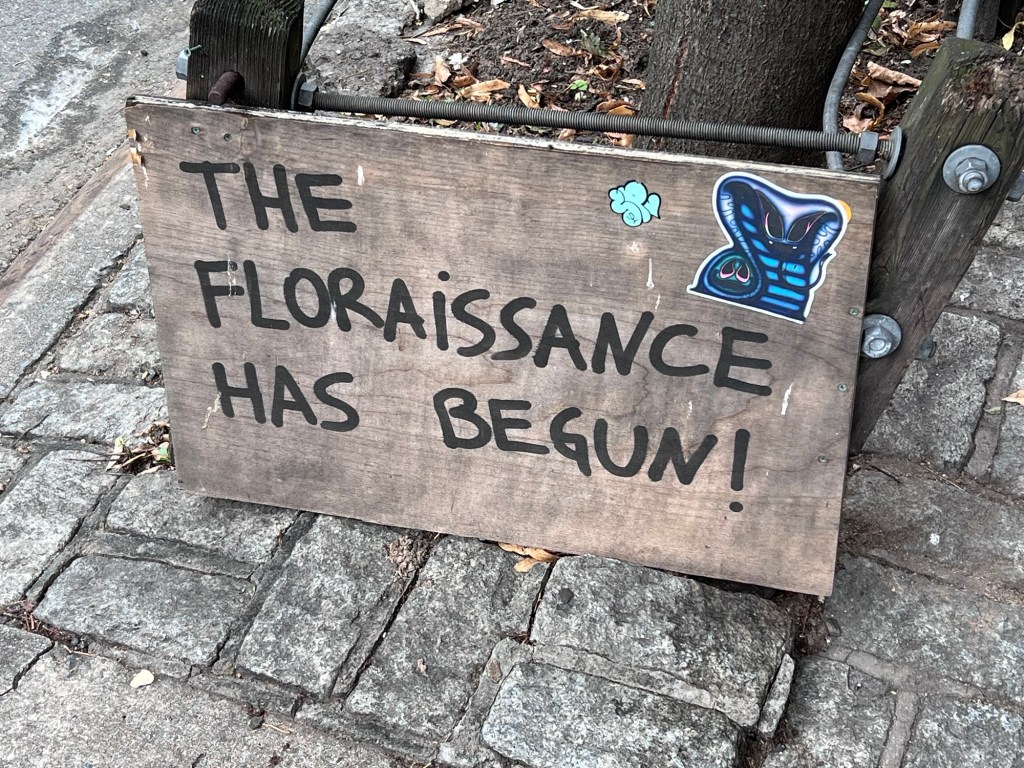
I was not too sure what the meaning of the sign was but I thought it might have something to do with all the gardens on the block.

The outdoor art museum continued on the side walk with more street art
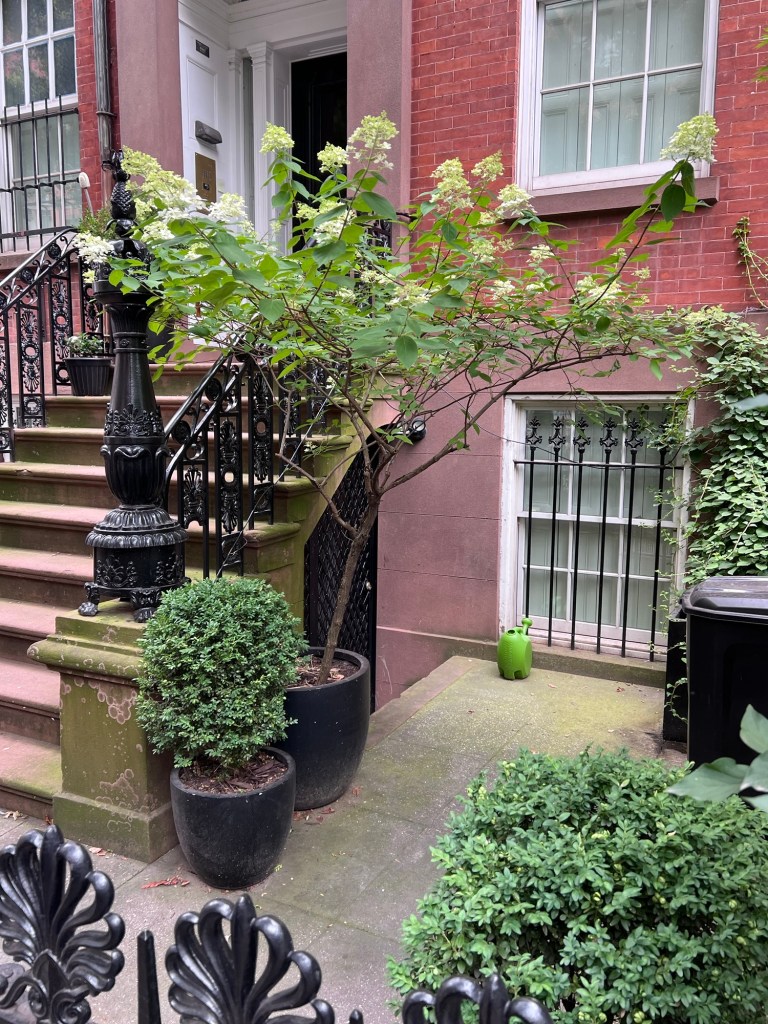
People taking a lot of pride in their urban gardens

The Chelsea Historic District sign of the neighborhood from West 23rd to West 19th Street
https://en.wikipedia.org/wiki/West_Chelsea_Historic_District

The Cushman Row historic sign
https://ephemeralnewyork.wordpress.com/tag/cushman-row/
https://www.hmdb.org/m.asp?m=127169

The ‘Cushman Row’ historic brick townhouses
The Cushman Row is one of the finest examples of Greek Revival style of architecture in New York, this superbly designed row of houses has retained most of its handsome original detail. Built by Don Alonzo Cushman, parish leader and financier, in 1840 (from the Cushman Historical Marker).
Then I passed the elegant and beautiful St. Peter’s Church was in the middle of the neighborhood.

The sign for St. Peter’s Episcopal Church at 346 West 20th Street
chrome-extension://fheoggkfdfchfphceeifdbepaooicaho/html/site_status_block_page.html
https://www.facebook.com/StPetersChelsea/
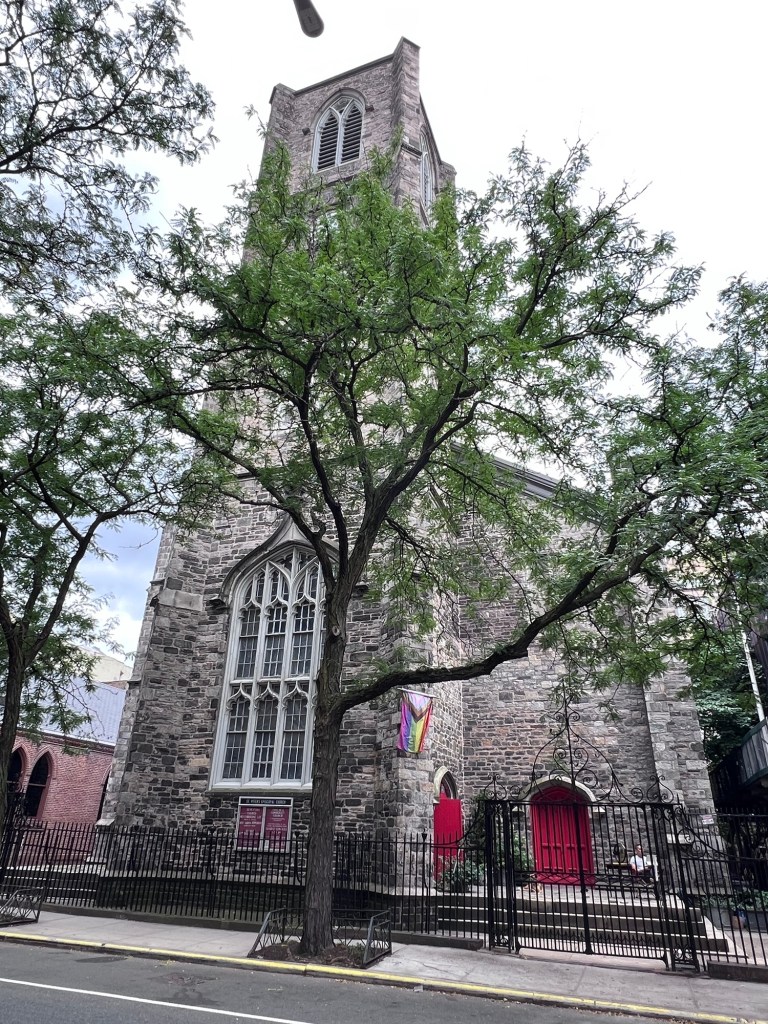
The historic St. Peter’s Episcopal Church in the summer of 2025
St. Peter’s Episcopal Church was constructed in 1835 and was designed by architect James W. Smith in the Greek Revivial style. The design was also influenced by Clement Clarke Moore, on whose estate the land had been donated (Wiki).
As I passed the 10th Precinct at 230 West 20th Street, I looked at the 9/11 mural and realized that next year would be 25 years since that horrible day. It is amazing how fast it has gone by.

The 9/11 Mural outside the 10th Precinct
https://www.nyc.gov/site/nypd/bureaus/patrol/precincts/10th-precinct.page
I stopped inside the Chelsea Green Park to relax for a while and it was a lot of kids running around and parents talking amongst themselves. The kids seemed occupied by both a water balloon and a squirt gun fight.
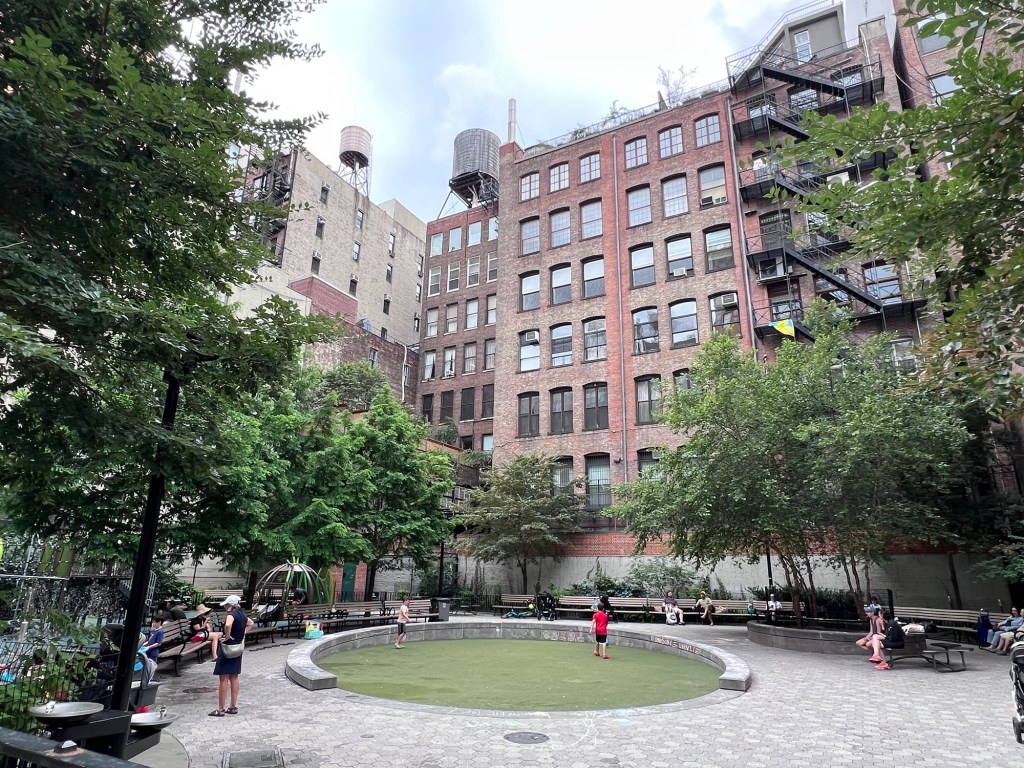
The Chelsea Green Park in the late afternoon
After a nice rest and a lot of water, I turned down West 19th Street to continue my tour.

In front of of the old Siegel-Cooper Department Store building on Sixth Avenue and West 19th Street
https://en.wikipedia.org/wiki/Siegel-Cooper_Company
https://daytoninmanhattan.blogspot.com/2010/08/big-store-1896-siegel-cooper-department.html
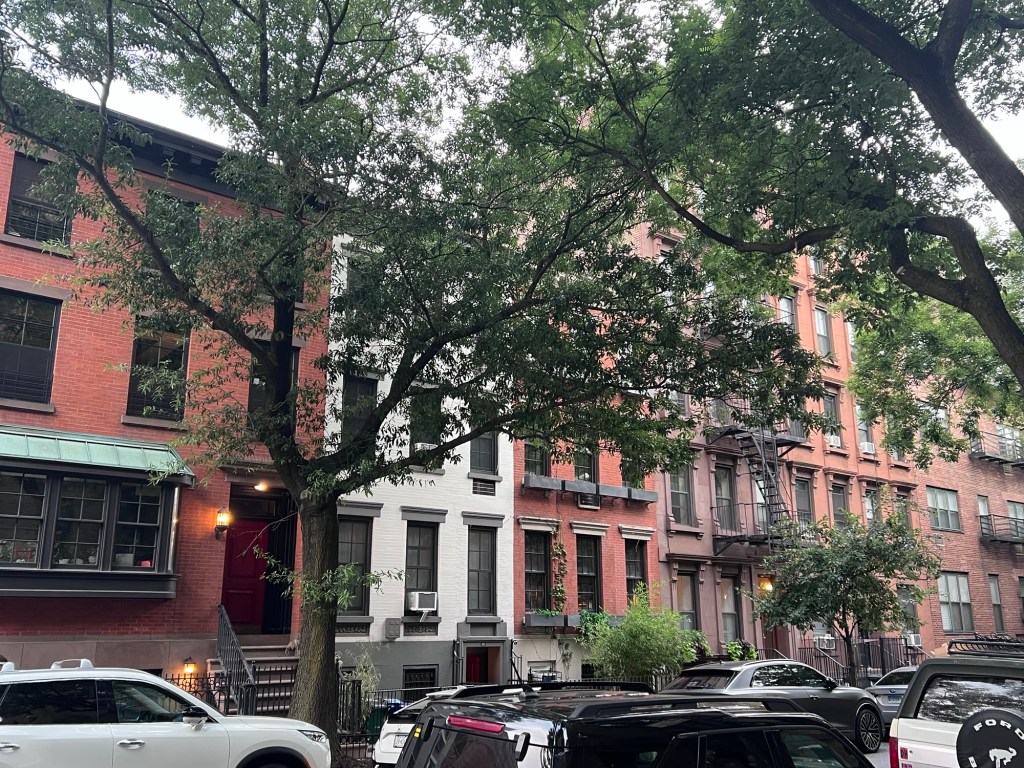
Walking past the townhouses along West 19th Street

The street art along the way
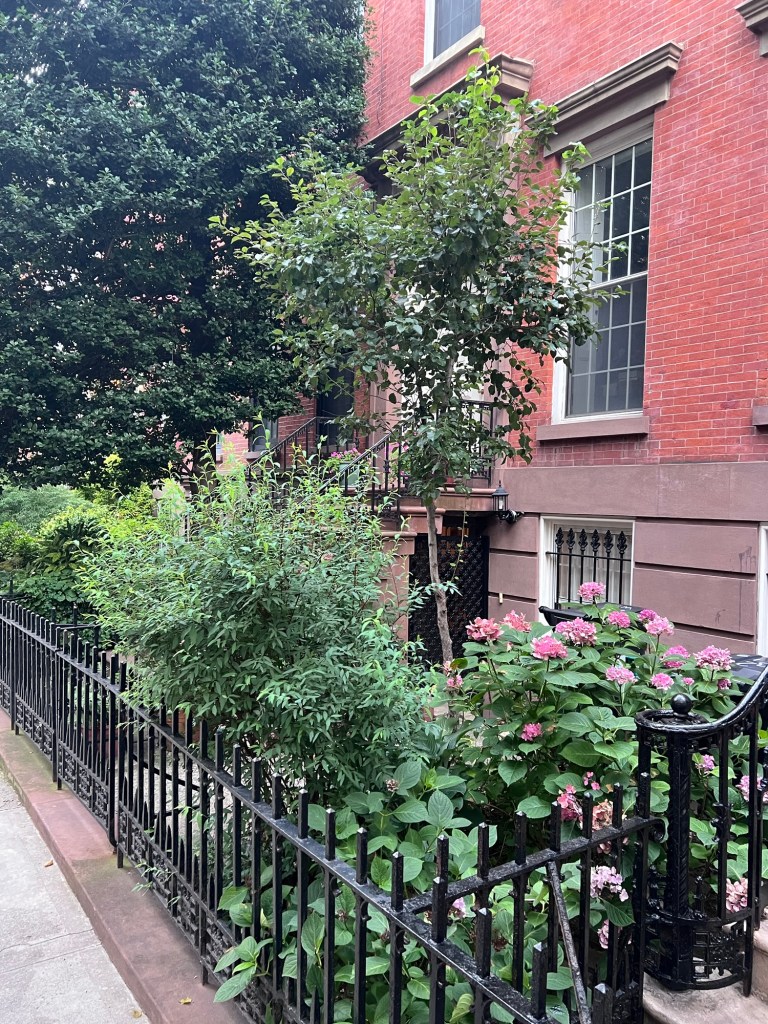
The beautiful gardens in front of of the homes
In the middle of the block were the Robert Fulton Houses which along with the Chelsea-Elliott Houses are both slated for demolishing later this year. That will change the completion of this neighborhood. These were opened in 1962 and were designed by architects Brown & Guenther.
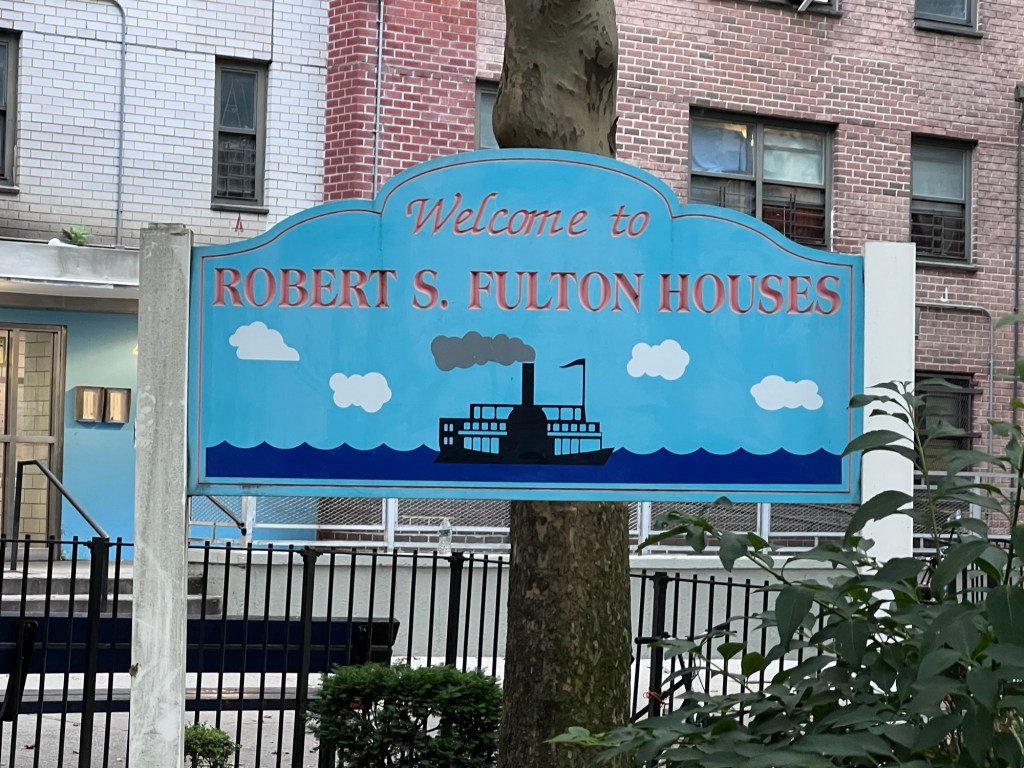
The sign for the Robert Fulton Houses
https://en.wikipedia.org/wiki/Fulton_Houses
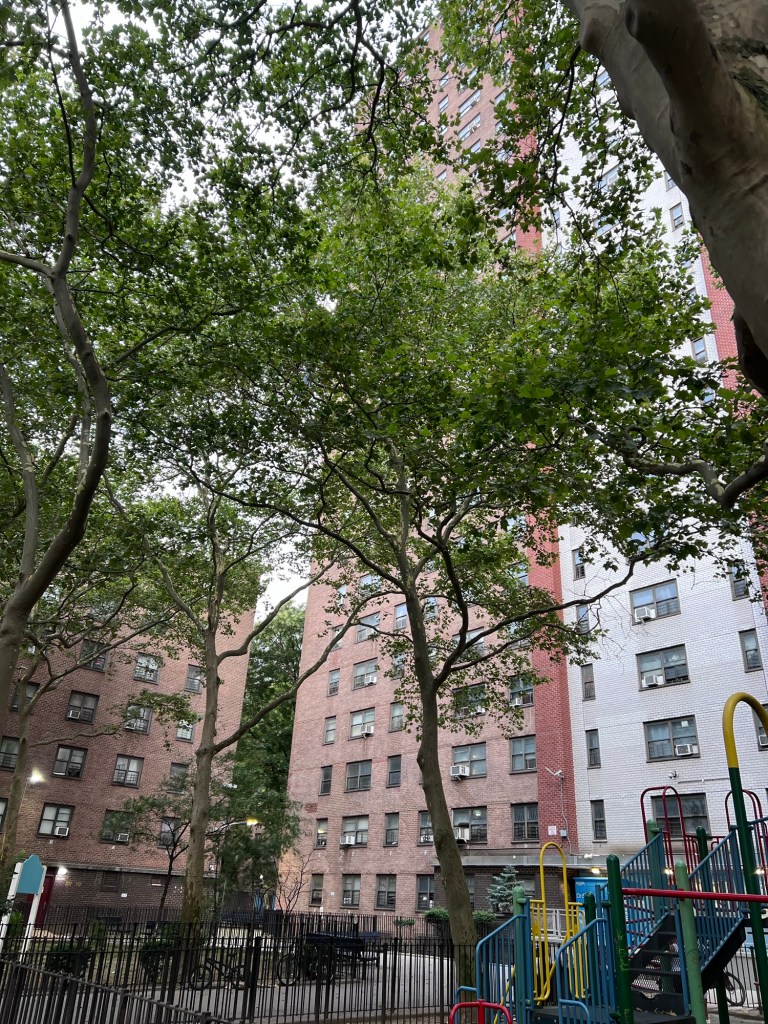
The Robert Fulton Houses at 421 West 17th Street
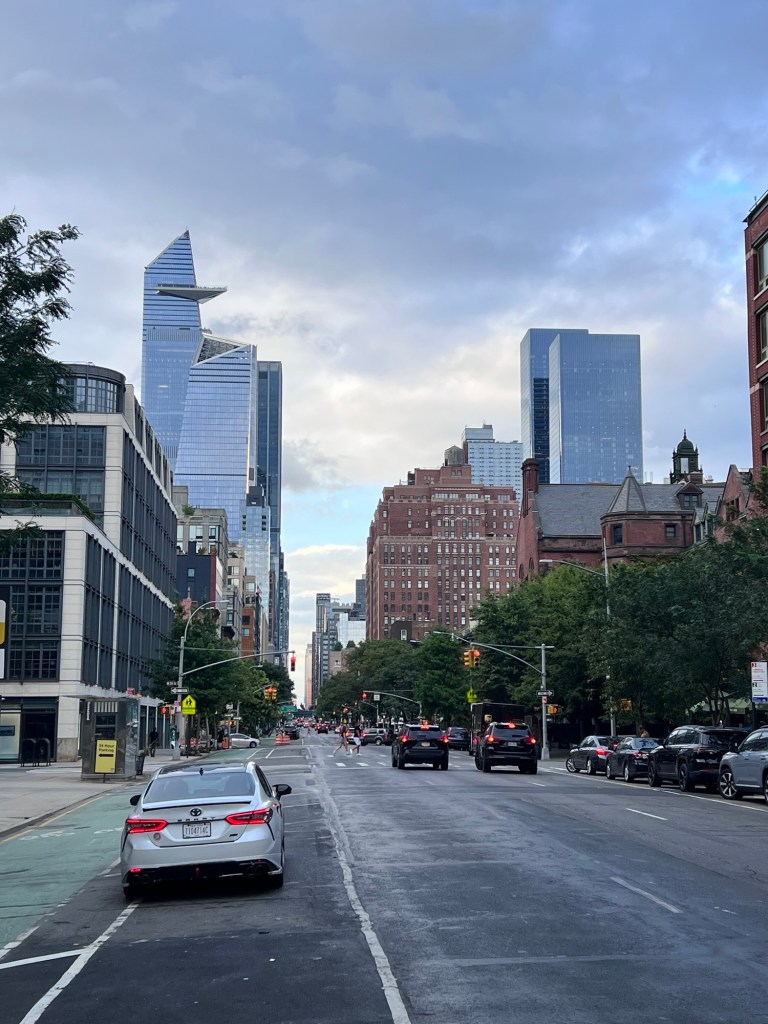
Looking up Tenth Avenue into the Hudson Yards neighborhood

Admiring the Jenna Mello mural on the Gotham Pizza building
I thought this mural was really vibrant even though it is by the garbage cans. The cans hide the artist’s name Jenna Morello
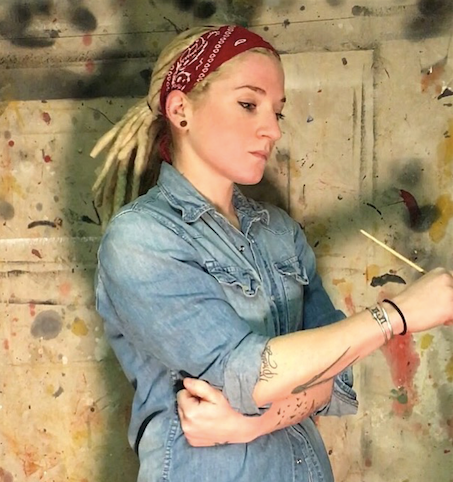
Artist Jenna Morello
https://www.jennamorello.com/commissioned
https://www.facebook.com/jenna.morello/
Artist Jenna Morello is an American born artist based in Brooklyn. She is known for her colorful and detailed murals.
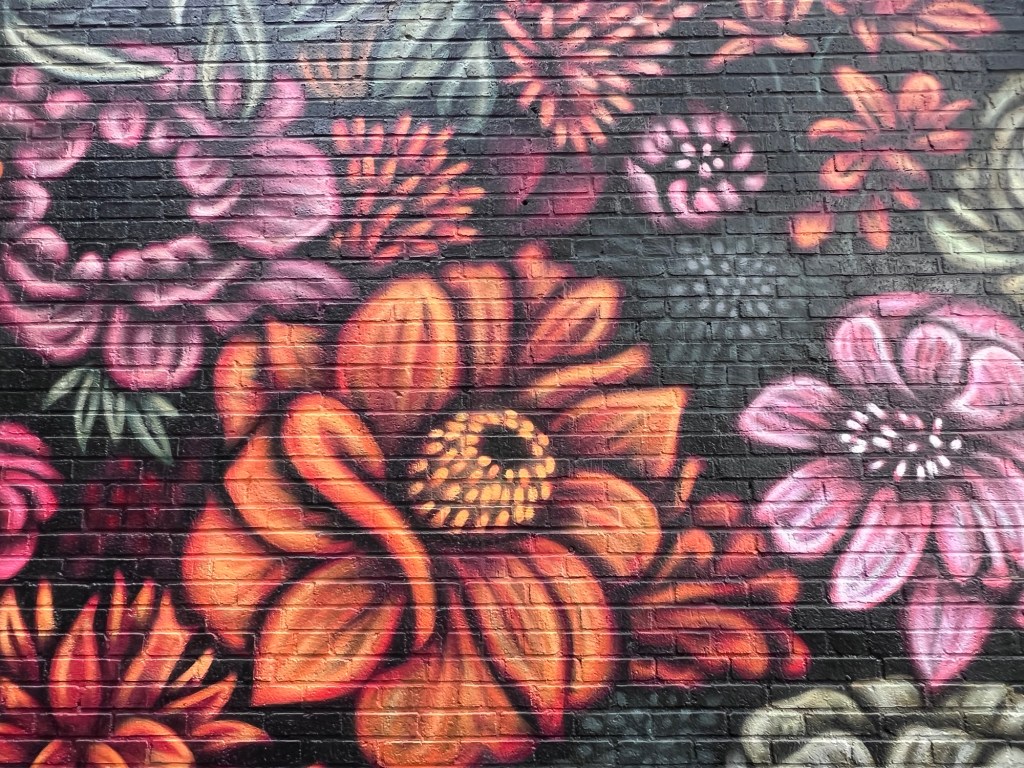
A close up of the mural

The artist signature

One of the galleries in an old townhouse at 515 West 19th Street
https://streeteasy.com/building/515-west-19-street-new_york
Its narrow, 18-foot-width precluded the traditional stable design of a centered carriage bay flanked by a pedestrian entrance and window. The property was a three-story brick house, home to Samuel Weekes and his family who would remain through 1858 (DaytonianinManhattan.com).
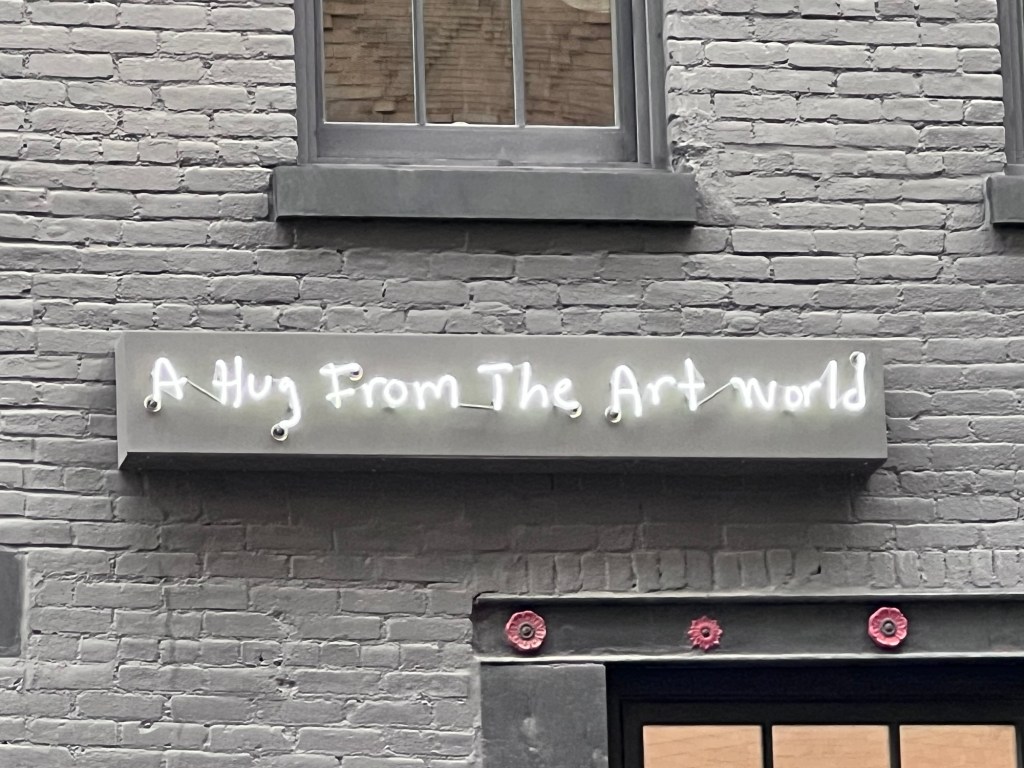
I liked the sign at the top of the door way of the “A Hug from The Art World”
https://www.ahugfromtheartworld.com/

There was even more street art on the sidewalk at the end of the block
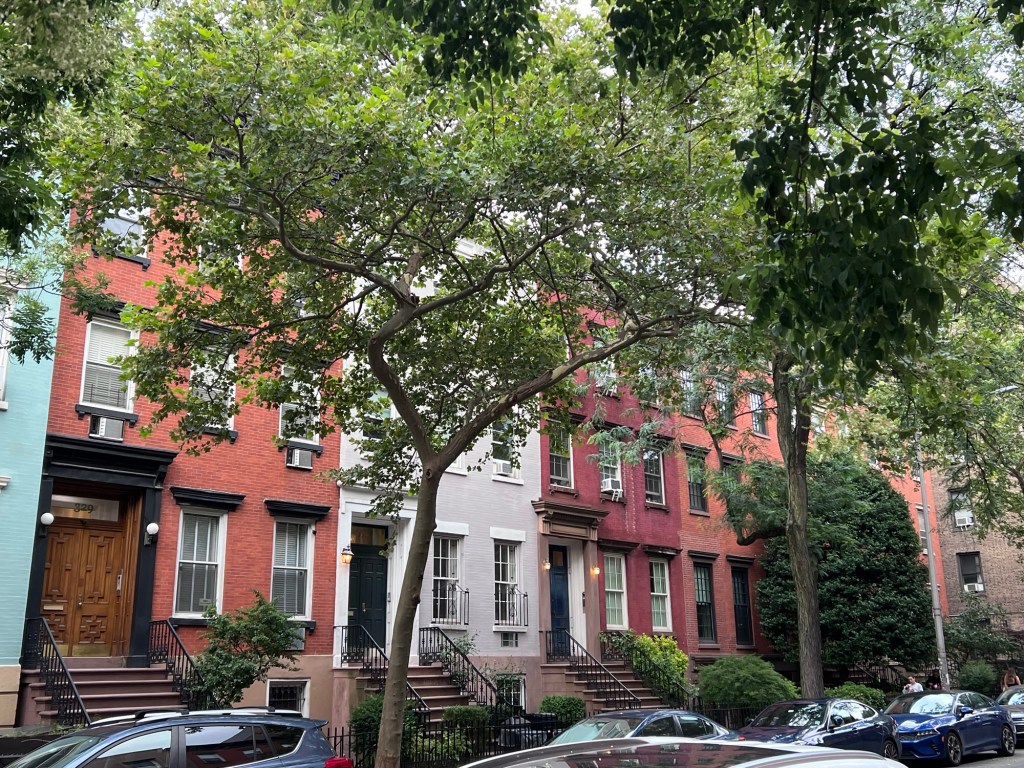
The rows of historic townhouses heading back to Sixth Avenue
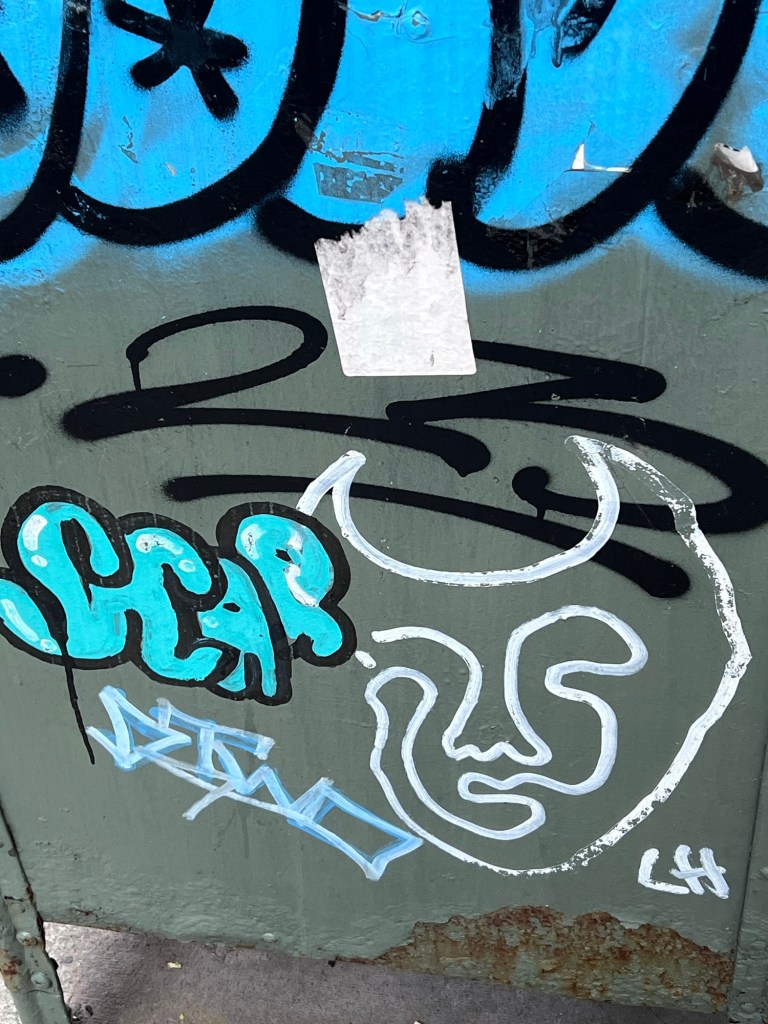
The Street art on a mailbox
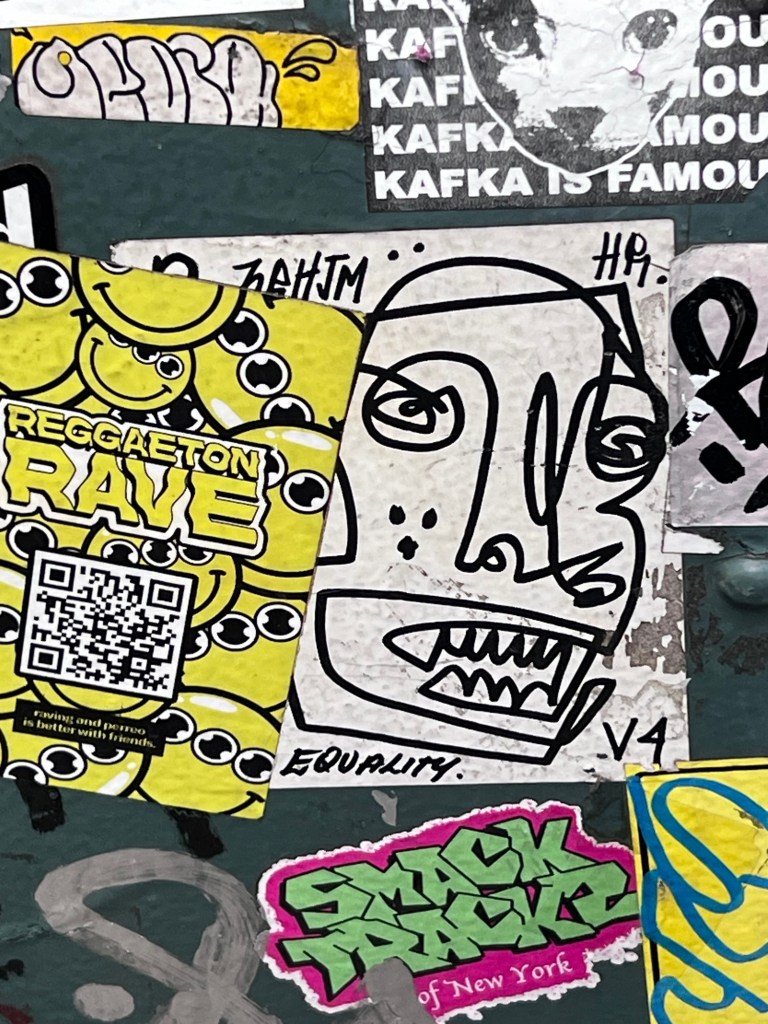
The street art on the mailbox on the block

The Sleeping Cat at 160 Seventh Avenue
https://www.sleepingcatbakery.com/
My review on TripAdvisor:
My review on LittleShoponMainStreet@Wordpress.com:

The menu in the Sleeping Cat Cafe
I took a break after all the walking at The Sleeping Cat at 160 Seventh Avenue for a quick snack/late lunch. The place was pretty crowded in the late afternoon. They ran out of the three things I wanted to try so I ordered a Chicken with Brie Club sandwich on a milk bun with a Pomegranate soda for lunch.

My lunch that afternoon

The Chicken and Brie sandwich

Yum!

For dessert I chose a Lemon Poppyseed Cake, which was delicious. You could really taste the fresh lemon juice and zest in the cake.
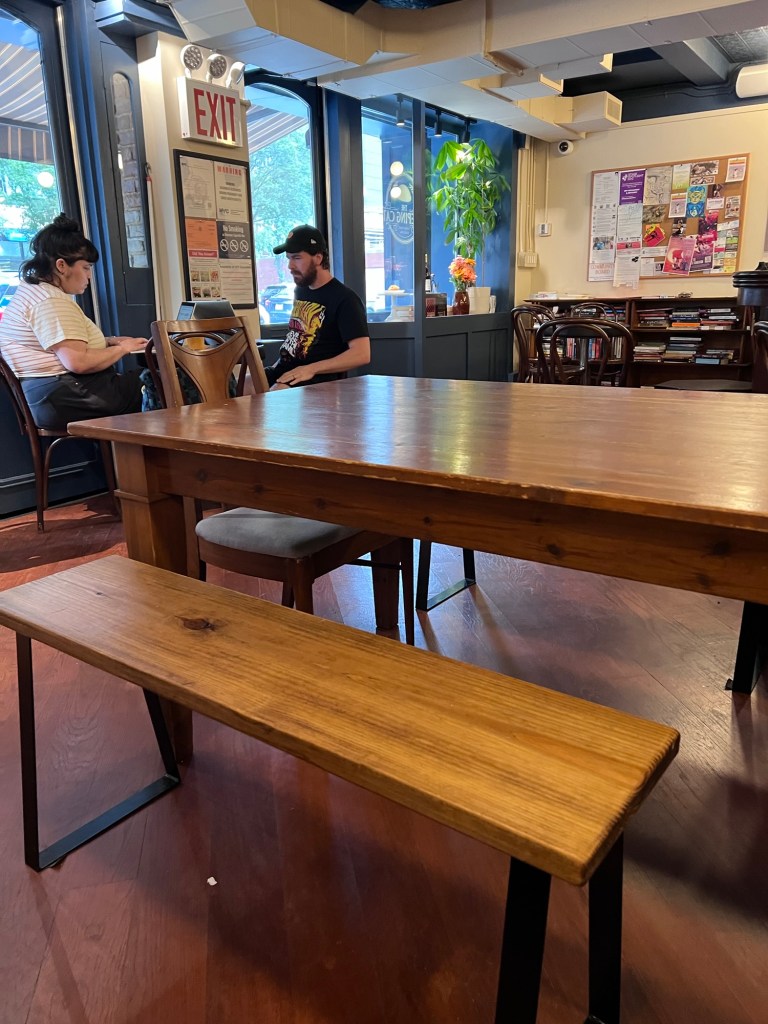
The inside of the unique coffee shop
I continued my tour of the neighborhood a few days later when I came back into the City for the Michigan State Alumni Picnic that Saturday. We ended the picnic at 4:00pm, so I walked from Central Park to West 18th Street after a pit stop to recharge my phone and go to the bathroom.
I wanted to finish the neighborhood before dark but could only finish the blocks from West 18th through West 17th Streets. You just can’t take good pictures after 7:00pm when the shadows hit the buildings.
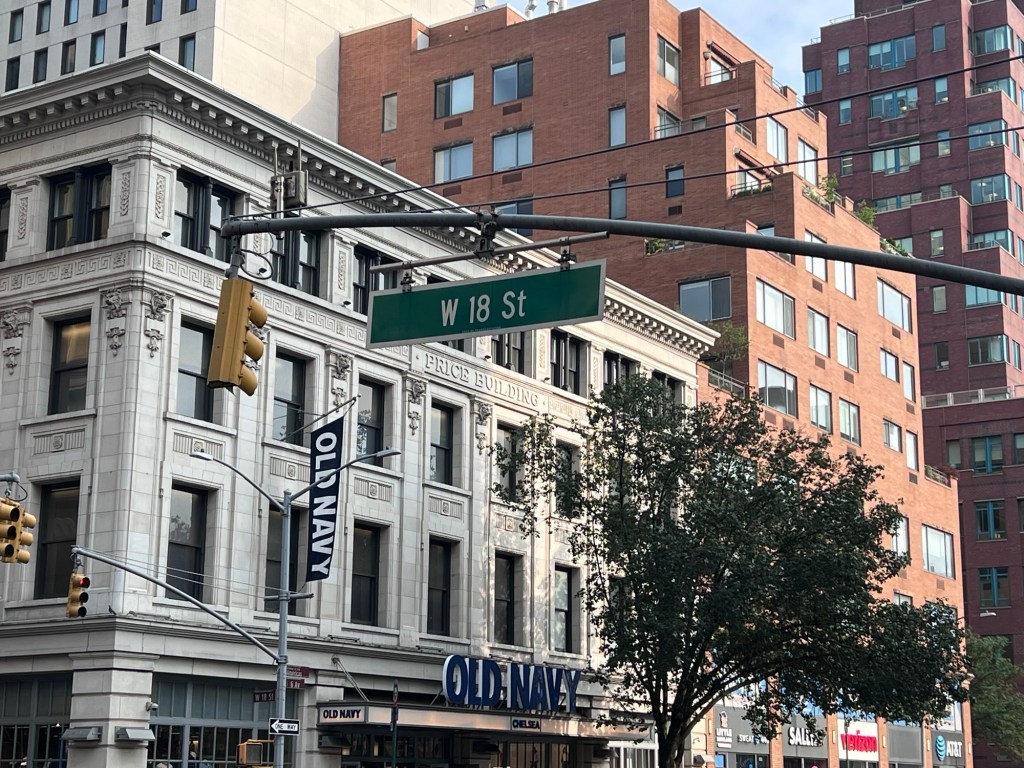
Starting on West 18th Street
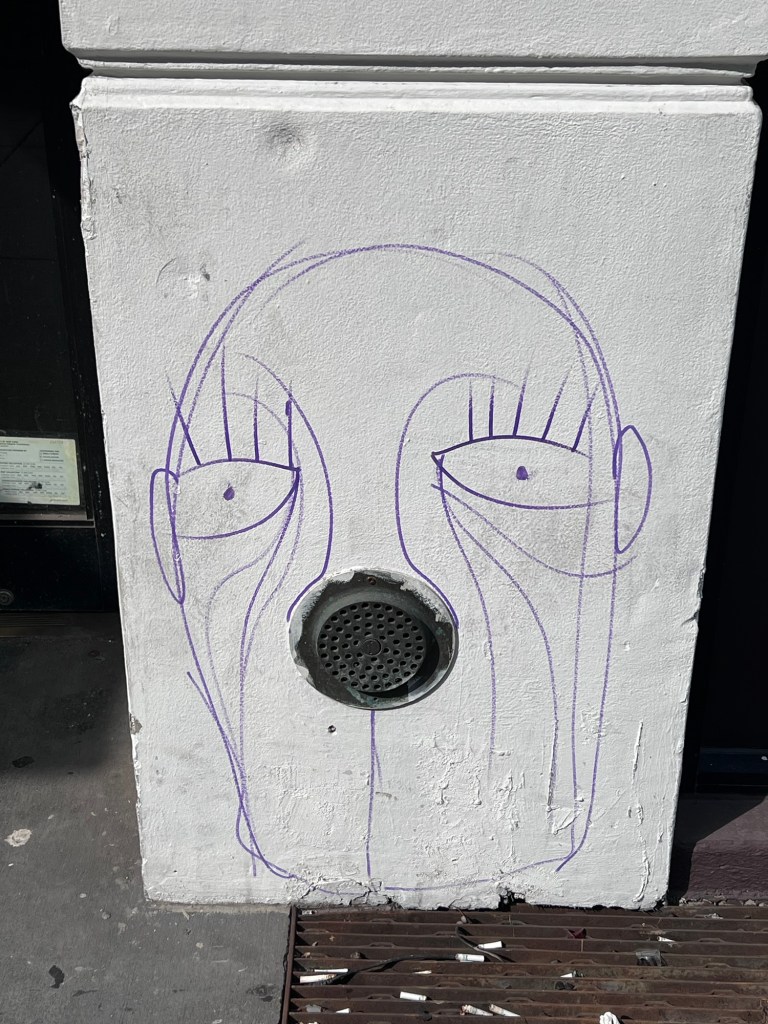
Some of the interesting street art you will see in the neighborhood
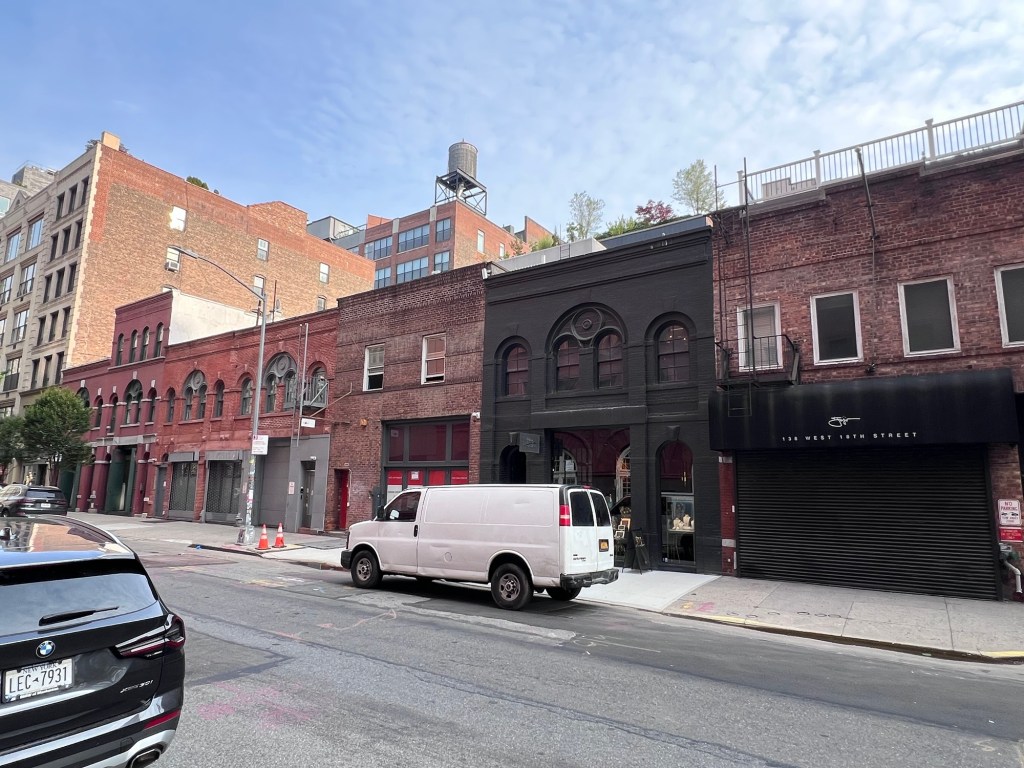
This series of what looks like old carriage houses lines West 18th Street just off Sixth Avenue
These buildings were designed in a round arched utilitarian style related to the German Rundbogenstil and incorporate Romanesque and Renaissance Revival details. They were built between 1864 and 1865 and were used as stables (HDC.com). They are now being used as restaurants, shops and art galleries.
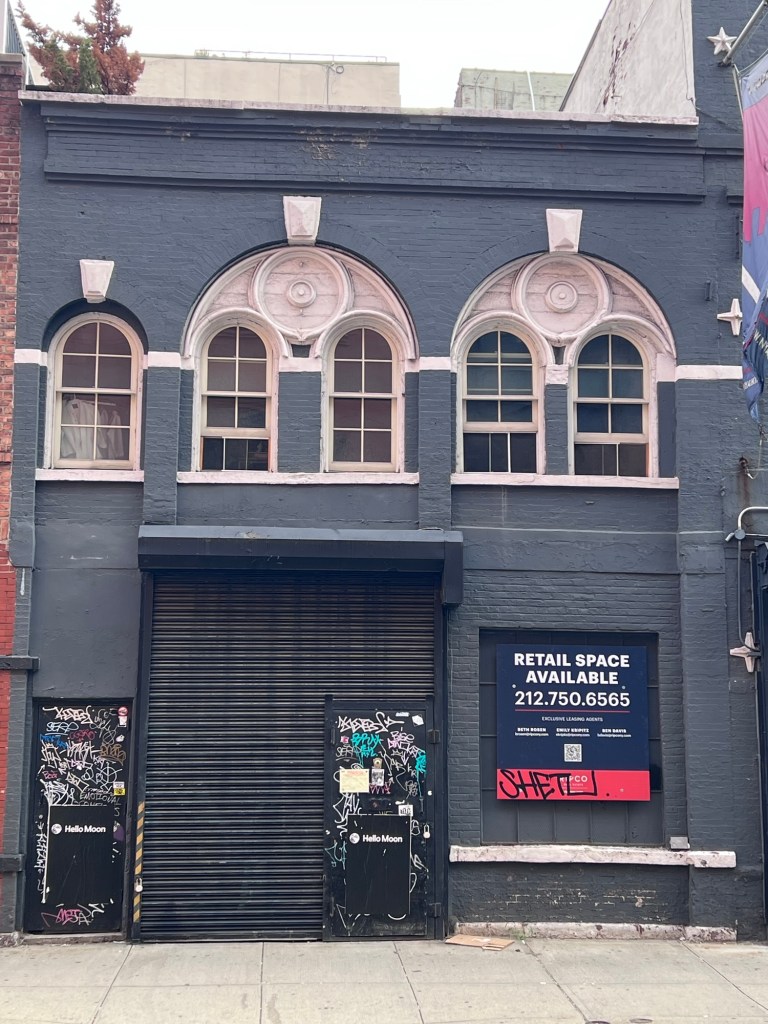
A close up of one of the series of buildings at 136 West 18th Street
There were several buildings that stood out along West 18th Street and one of them was 154 West 18th Street, the Hellmutg Building now home to the Lazzoni store.
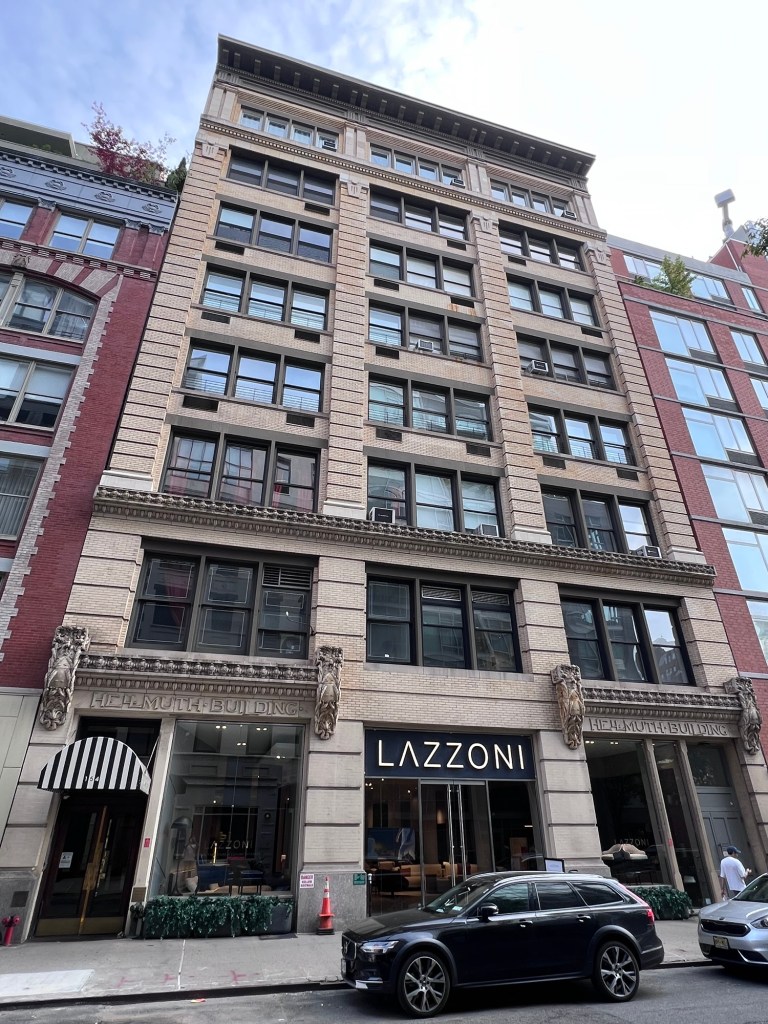
154 West 18th Street The Hellmuth Building
https://www.corcoran.com/building/chelsea-hudson-yards/350
https://daytoninmanhattan.blogspot.com/2015/08/the-1907-hellmuth-bldg-no-154-west-18th.html
The Hellmuth Building was designed by architect Adolph Schoeller in the Art Nouveau style in 1907 and was built for William Hellmuth, who was a highly-successful manufacturer of printing and lithographic inks and varnishes (DaytonianinNYC.com)

The details of the Hellmuth Building
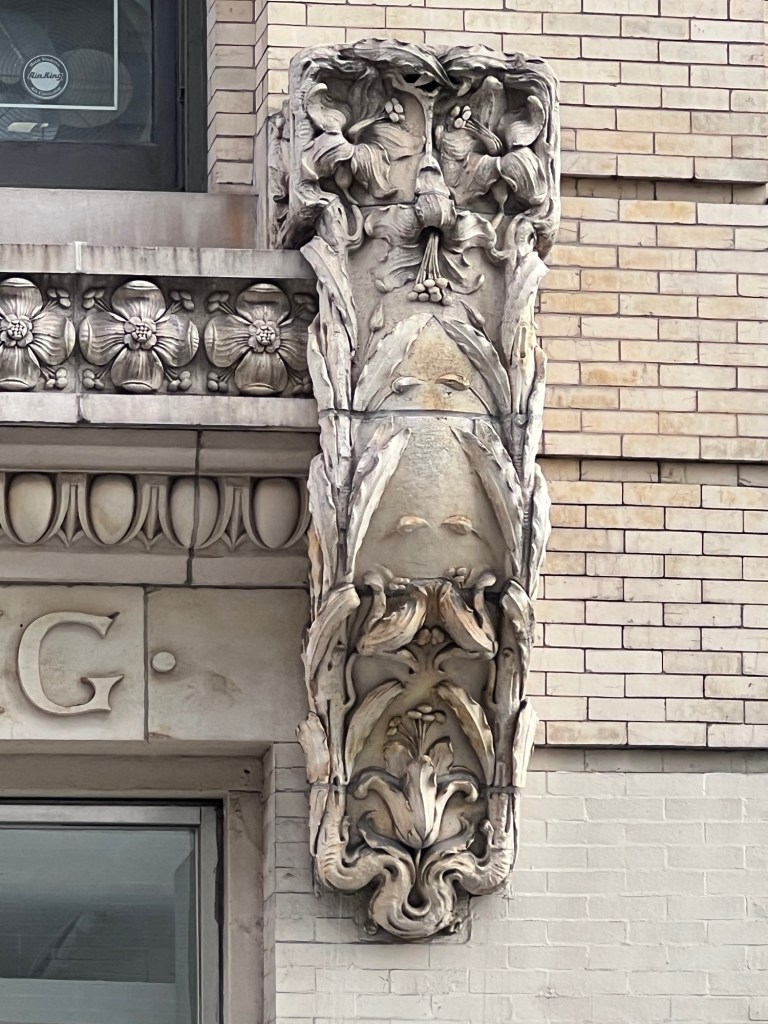
The carved embellishment of the building
Another building that stood out was the Art Deco style Walker Tower at 212 West 18th Street
https://www.walkertowernyc.com/
https://propertymg.com/portfolio/walker-tower
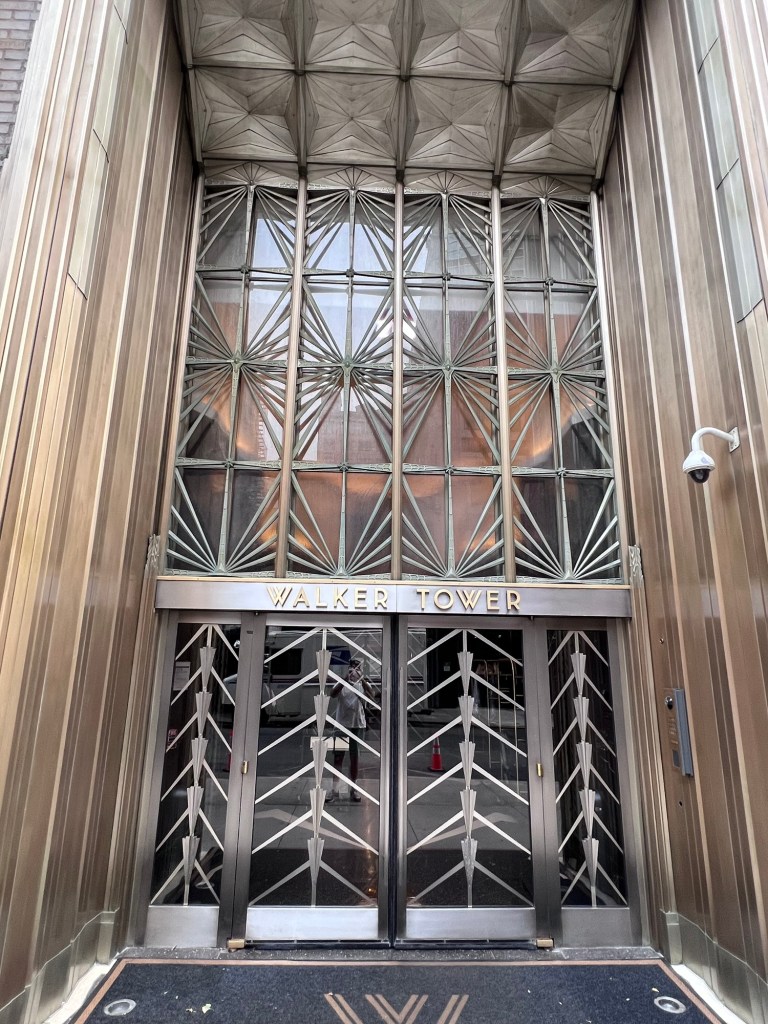
The Walker Tower at 212 West 18th Street
Originally constructed in 1929 as a commercial building for the New York Telephone Company, this historic structure was designed by the renowned architect Ralph Thomas Walker, celebrated for his distinctive Art Deco style (The Walker Tower website).

The Walker Tower in full view
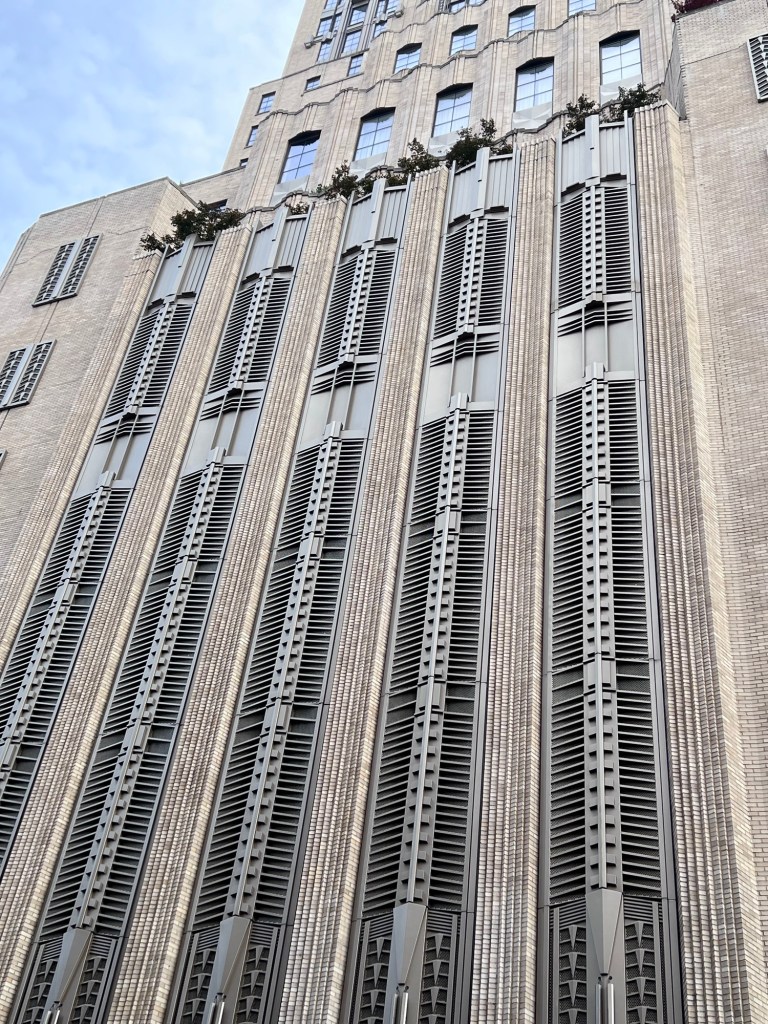
The art deco details to the outside of the building
The details outside of 265 West 18th Street were very unique.

265 West 18th Street details
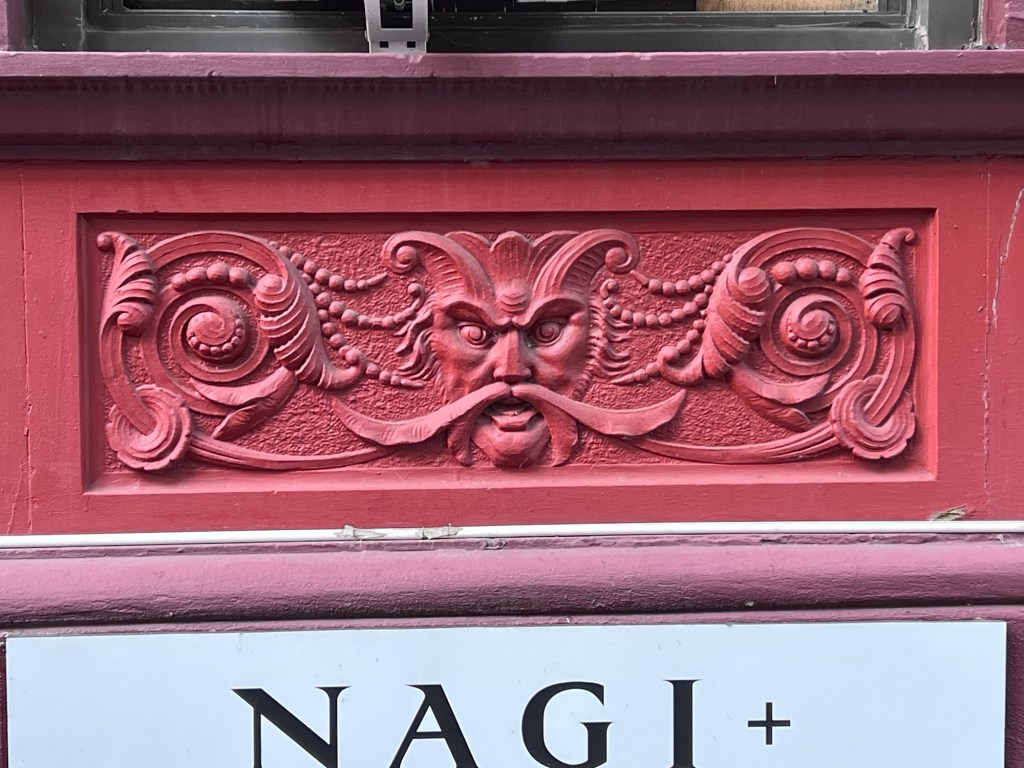
The details outside 265 West 18th Street
While I was walking down the street, I passed the Room & Board store and saw all the embellishments on the building and wondered what they meant. It was the insignia for the old Seigel-Cooper Warehouse building.
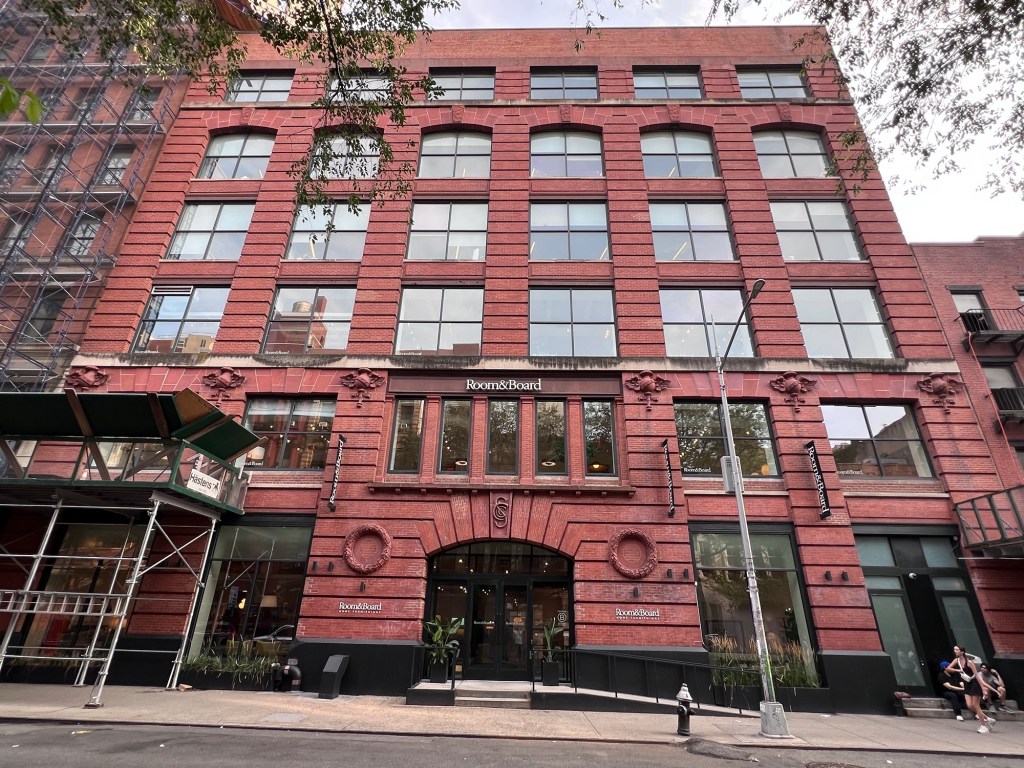
The old Siegel-Cooper Warehouse Building is now home to the Room & Board showroom at 249 West 17th Street with entrance at West 18th Street
https://daytoninmanhattan.blogspot.com/2015/09/the-1902-siegel-cooper-warehouse-no-249.html

The details of the building
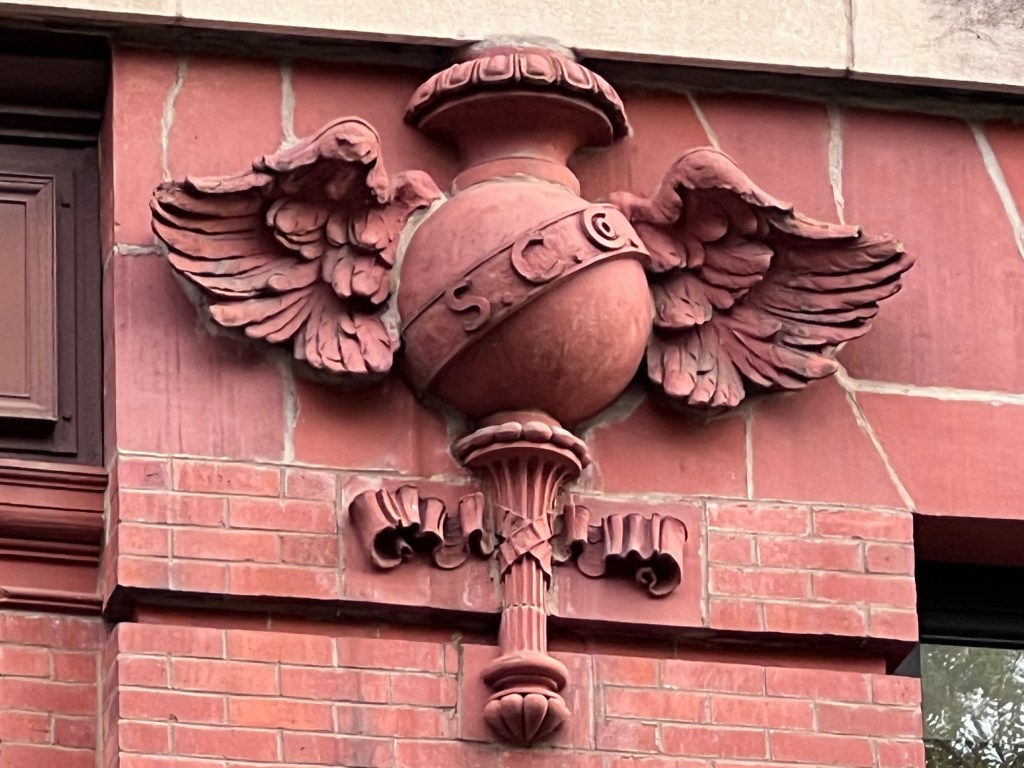
The Seigel-Cooper logo on the building

The Seigel-Cooper insignia can still be seen on the building
The building was designed by the architectural firm De Lemos & Cordes and opened in 1904. the architects used lusty terra cotta ornaments to distinguish the façade. Each pier culminated with winged orbs bearing a sash emblazoned with SC&Co; and the bay doors were flanked by large, intricate wreaths (DaytonianinManhattan.com).
You can find street art all over the sidewalks in this neighborhood. Just look down and many artists leave their mark.

On the sidewalk on West 18th Street

The beauty of the outside of 304 West 18th Street
https://serhant.com/properties/304-west-18th-street-new-york-city-ny-10011-rplu-1032523259573
https://streeteasy.com/building/304-west-18-street-new_york

The embellishments outside of 333 West 18th Street
https://streeteasy.com/building/333-west-18-street-new_york
https://www.realtor.com/realestateandhomes-detail/333-W-18th-St_New-York_NY_10011_M30873-27192
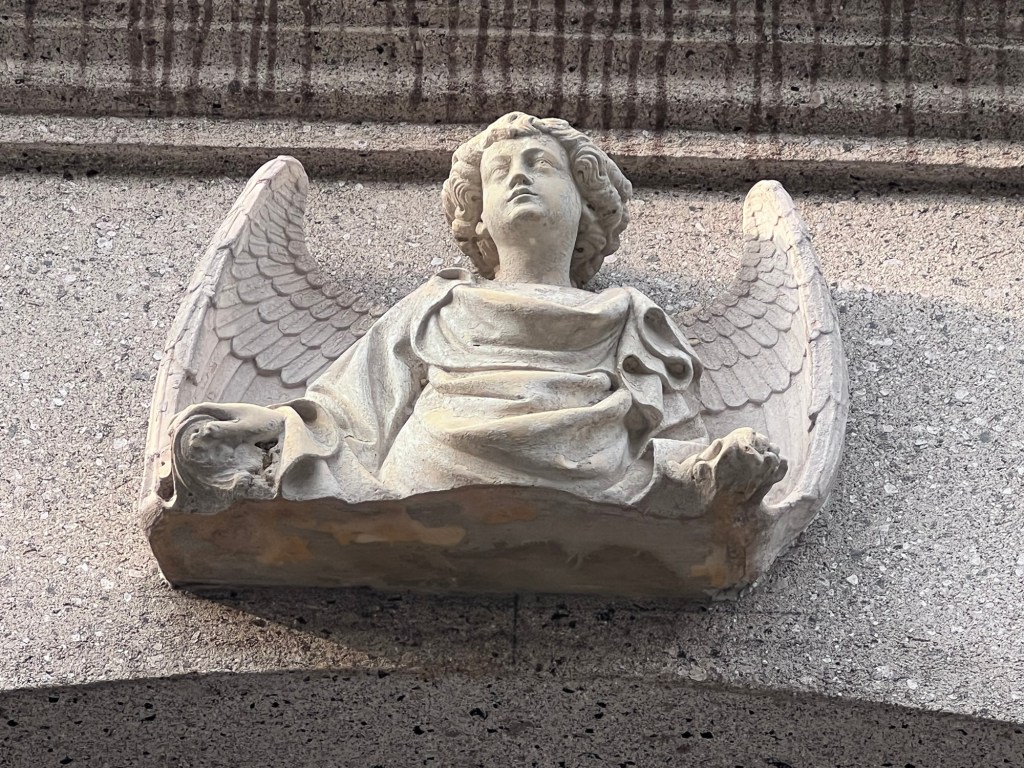
An angel protecting the building

Street art on one of the metal stairs. I thought this was very clever.
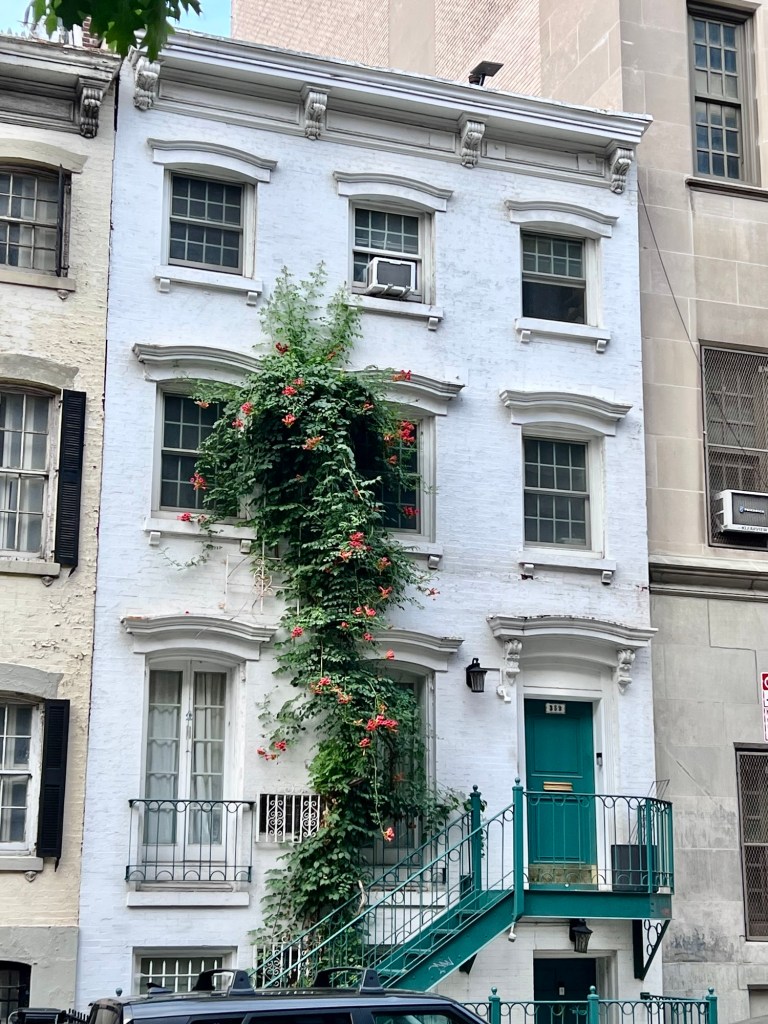
359 West 18th Street not only had interesting street art but I loved the flowering plant outside the building
https://www.realtor.com/realestateandhomes-detail/359-W-18th-St_New-York_NY_10011_M41482-02947
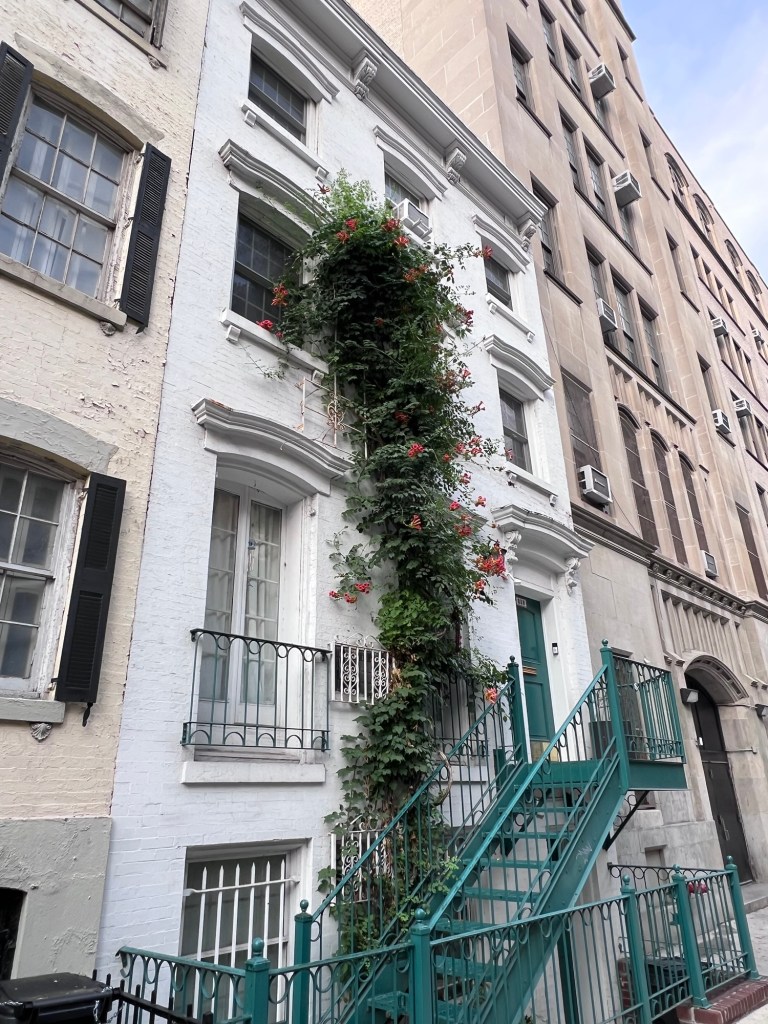
The plant lined the whole building
On the southern most part of the Lantern Building, I saw this elegant and colorful garden outside the entrance near 11th Avenue.

The garden outside the Lantern Building
https://en.wikipedia.org/wiki/Lantern_House
https://www.related.com/our-company/properties/lantern-house
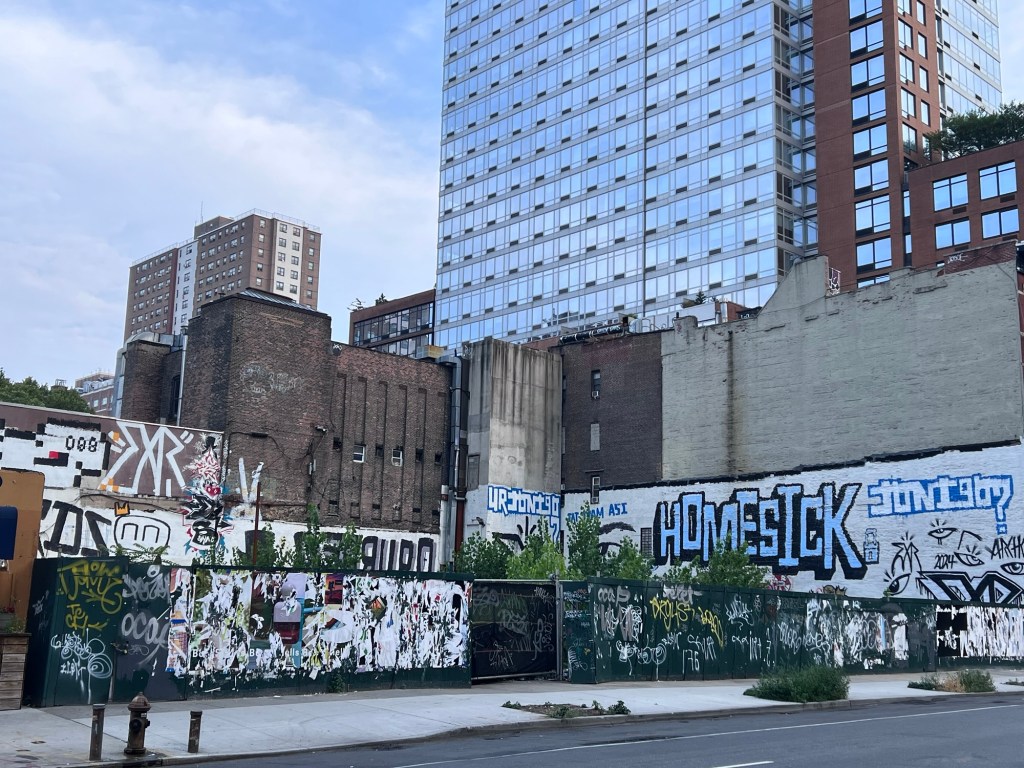
The street art in an empty lot along 10th Avenue
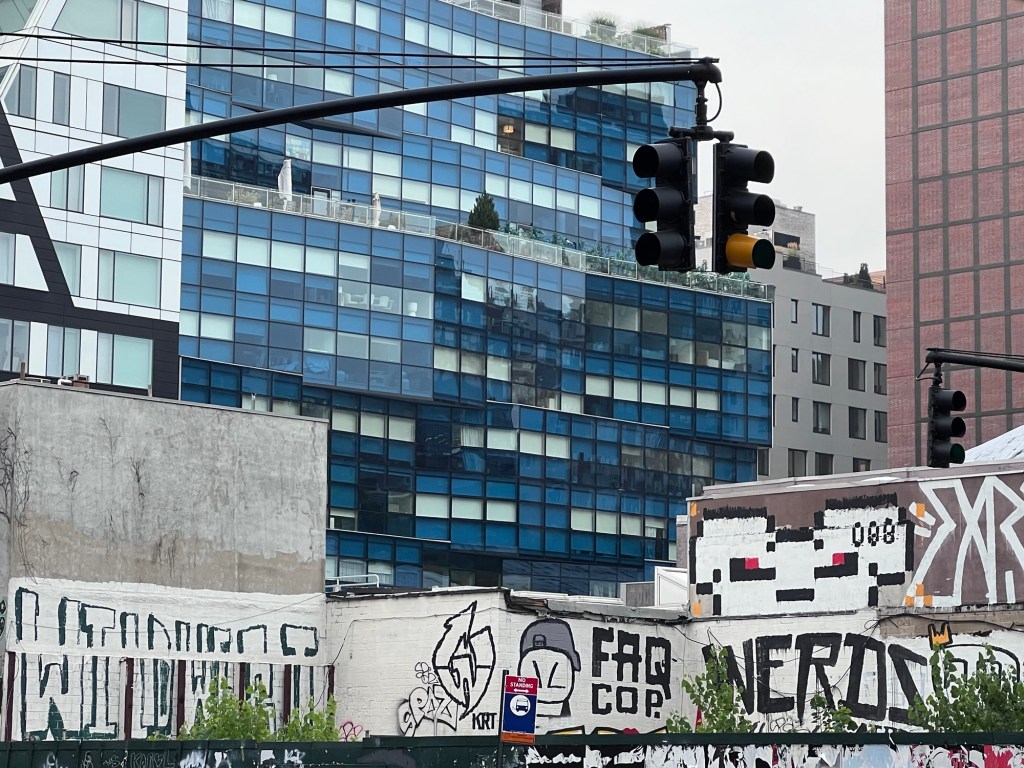
The lot from both the West 18th and 17th Streets views

The Kobra mural on the outside of the Chelsea Square Market building
The Kobra painting “Tolerance” on the Chelsea Square Market building at 79th Tenth Avenue of Mother Theresa and Gandhi (see artist bio above).

I thought this building with the mansard roof looked really interesting at 363A and 363B
https://streeteasy.com/building/363-west-18th-street-new_york
https://www.homes.com/property/363-w-18th-st-new-york-ny/n29rwlvshqfpq/
This interesting twin building with a mansard roof was built in 1910 (Streeteasy.com). What I thought was interesting about the building is how it stands out amongst all the brick townhouses that had a plainer design. It looks like something you would see on the Upper East Side inside of this neighborhood.
As I passed the high school in the area, I came across this mural painted on the playground walls. I saw this mural on the Liberty High School for Newcomers at 250 West 18th Street. I could not get a good look at it as the playground was locked.
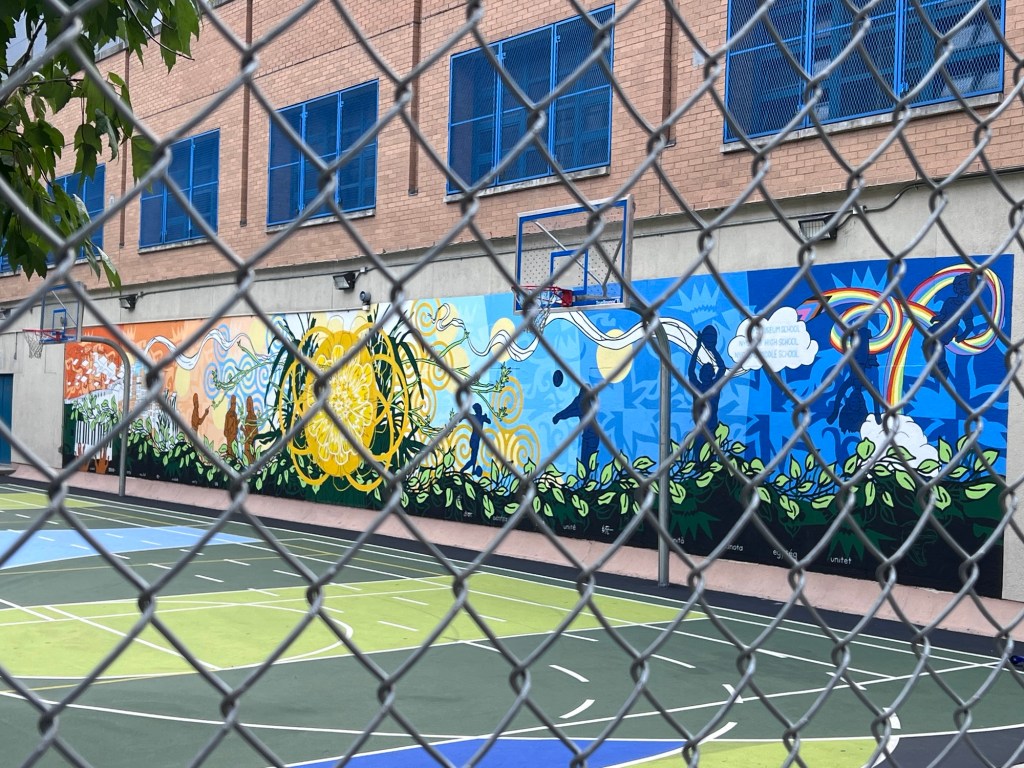
The mural outside of the Liberty High School for Newcomers at 250 West 18th Street
https://www.creativeartworks.org/blogpreview/2024/3/21/branches-of-belonging
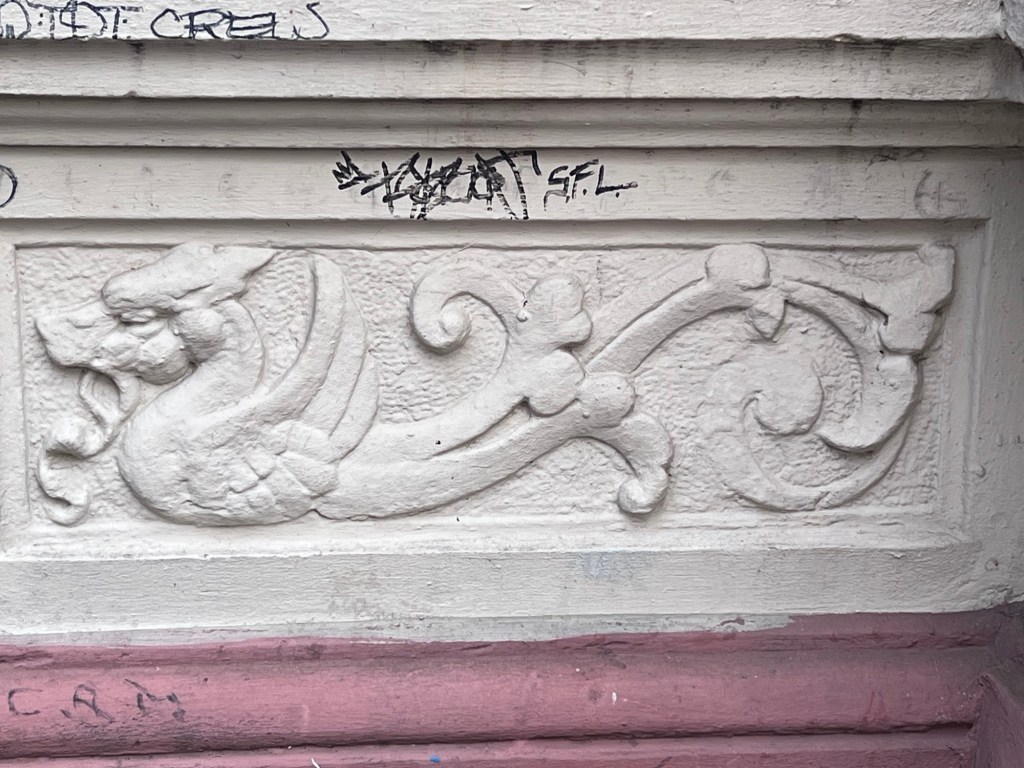
A serpent embellishment outside one of the buildings
Tucked in the corners of buildings all over the neighborhood, there were all sorts of interesting and unusual street art and stone carvings and embellishments. While most of the buildings were rather plain, it was a serpent here, a dragon there and a face staring back at you from the front door keystone that gave the building something special to admire.
Some of the street artists, whether hired or tagging were very creative on the sides of buildings. I am sure that the building owners were not happy to see this but the City has its own ideas sometimes.
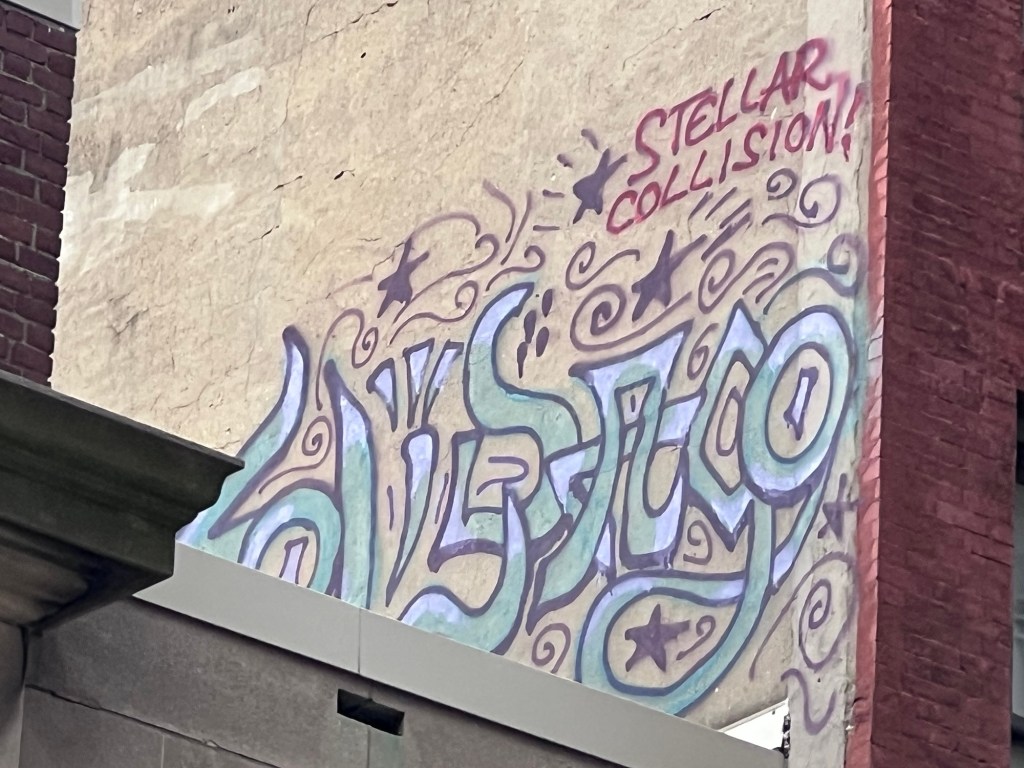
You have to look up or you will miss this street art on the top of one of the buildings

I have seen this artist’s work all over the neighborhood
With all the unique architecture and street art along West 18th Street, I anticipated more surprises when I rounded the corner of West 17th Street. You never know what you will see tucked here and there along these streets.

Turning the corner along West 17th Street and Sixth Avenue
The mural of ‘I Love New York’ is iconic in this neighborhood. This has been here for many years. This work of art was created by artist Nick Walker.
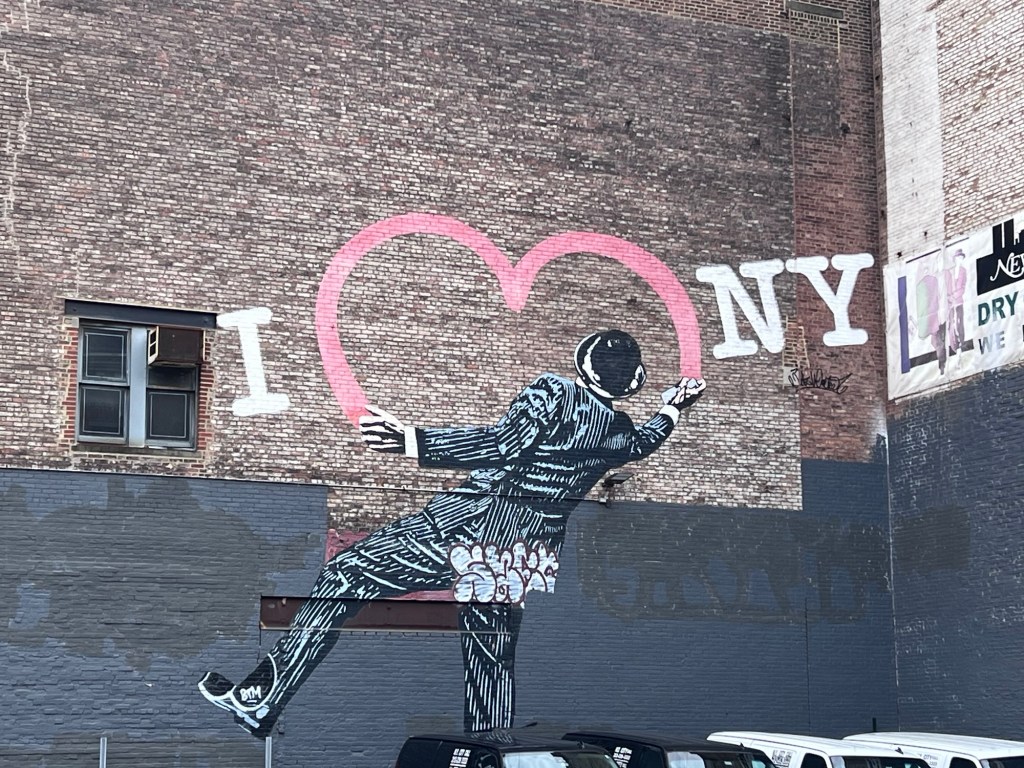
‘I Love NY’ by artist Nick Walker

Artist Nick Walker
https://en.wikipedia.org/wiki/Nick_Walker_(artist)
https://www.artsy.net/artist/nick-walker
Artist Nick Walker is a British born artist that now lives in Manhattan. He is know for being part of the ‘stencil art’ movement that was started in the 1980’s. He is know for his large murals of contemporary art and is best known for merging freehand work with stenciled imagery (Wiki/Artsy.net).
As I started to walk down West 16th Street, I passed an old friend in the restaurant da Umberto’s at 107 West 17th Street. I have spent the last three Halloween nights enjoying dinner with other volunteers from the Halloween parade here after the parade was over. The food and service are excellent.

da Umbertos Restaurant at 107 West 17th Street
My review on TripAdvisor:
Da Umberto’s Restaurant is where we have our dinners after finishing our night volunteering at the Halloween Parade. I have been here for the post dinner celebration for the last four years and the food and service are wonderful (See review on TripAdvisor.com).

Our dinner at Da Umberto’s on Halloween night
The restaurant’s food and service are wonderful and I highly recommend it.

The irony was just to add to the Halloween lore, these street art bats were right next to the restaurant.
One of the most beautiful buildings on the block is the old Xavier Parochial School now the Winston Preparatory School at 126 West 17th Street. The details on the school are so beautiful and it still has the original entrances of one for Boys and one for Girl’s.
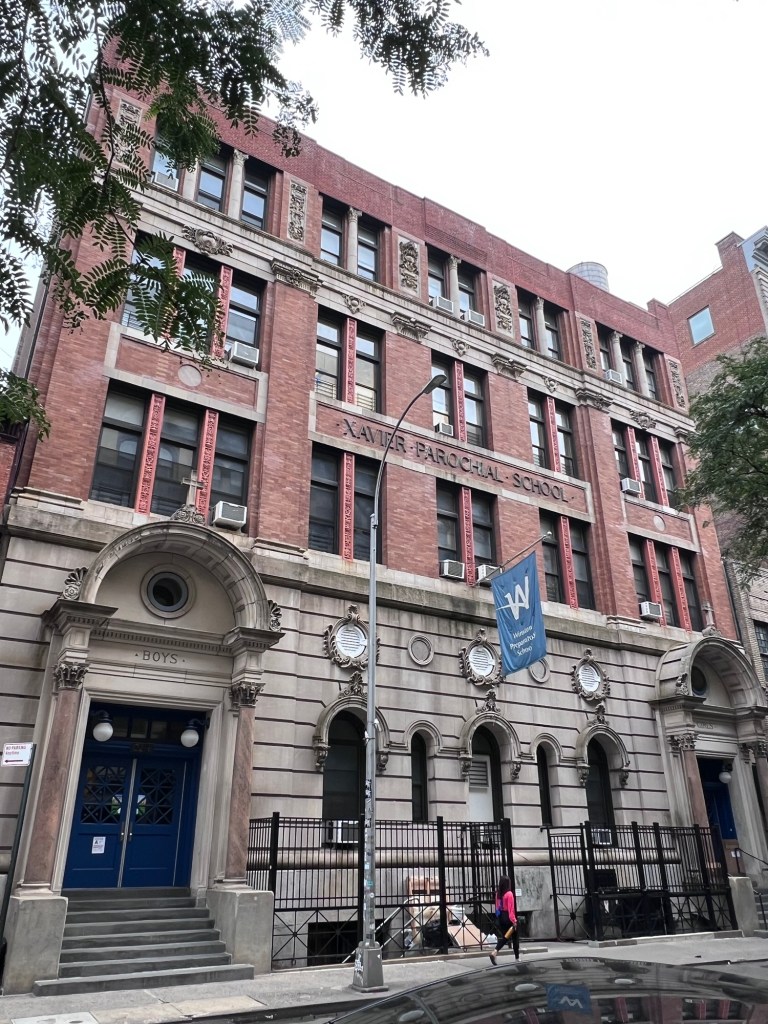
The Winston Preparatory School at 126 West 17th Street
https://www.winstonprep.edu/our-campuses/new-york
The building at 128 West 17th Street was built around 1853 and had once served as the Xavier Parochial School and now houses the Winston Preparatory School (Wiki).
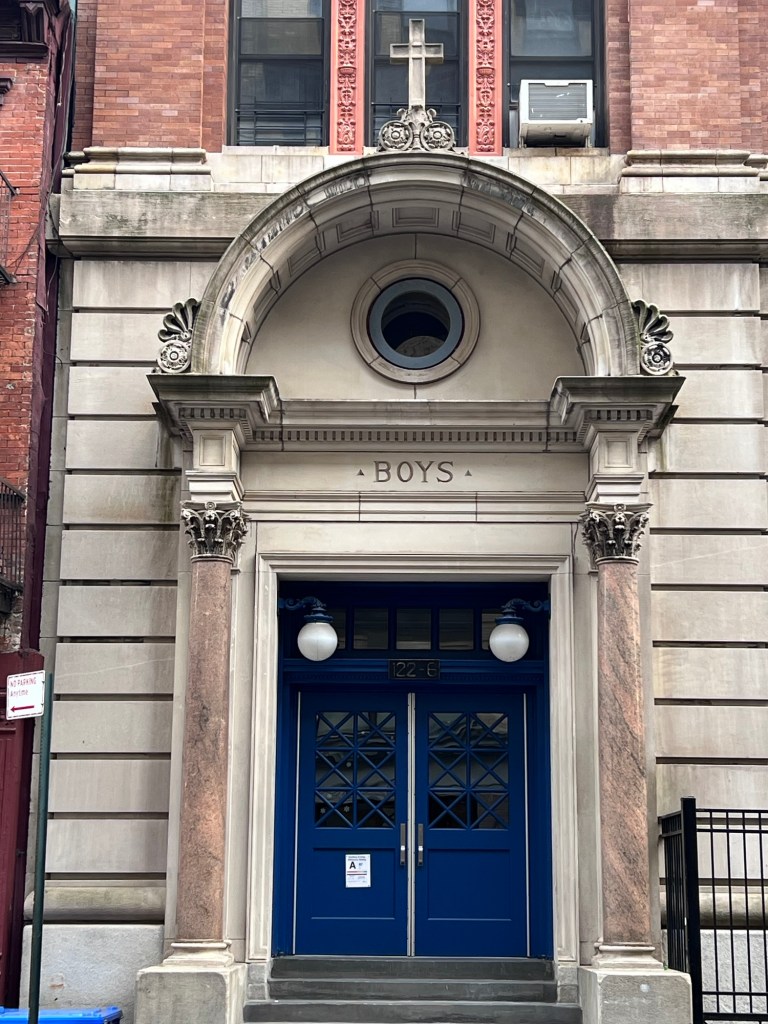
The old Boys entrance

The old Girl’s entrance
All along the buildings in Chelsea there are the interesting embellishments that stare, surprise and snarl at you. You just have to put down that cellphone and look up.

The top of the building had many snarling tigers staring out into space
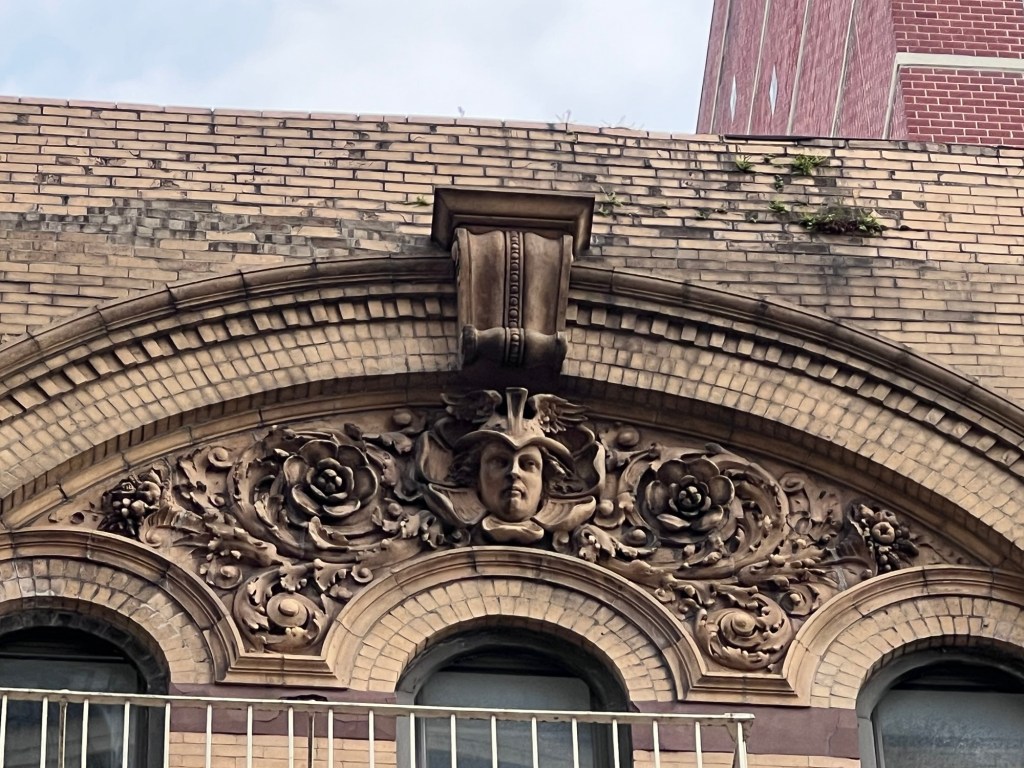
Embellishment on the top of the building

The embellishments on the top of the building
Another building that stood was futuristic structure with all sorts of pot holes. This is the former Maritime Union Building that is now the Dream Hotel. It was once part of a series of three buildings that was part of the National Maritime Union. When the Union folded due to lack of membership as industry changed, the building was left empty. The building designed by Bronx-born but New Orleans-based architect Albert C. Ledner in 1966 (New Yorkitecture 2015).
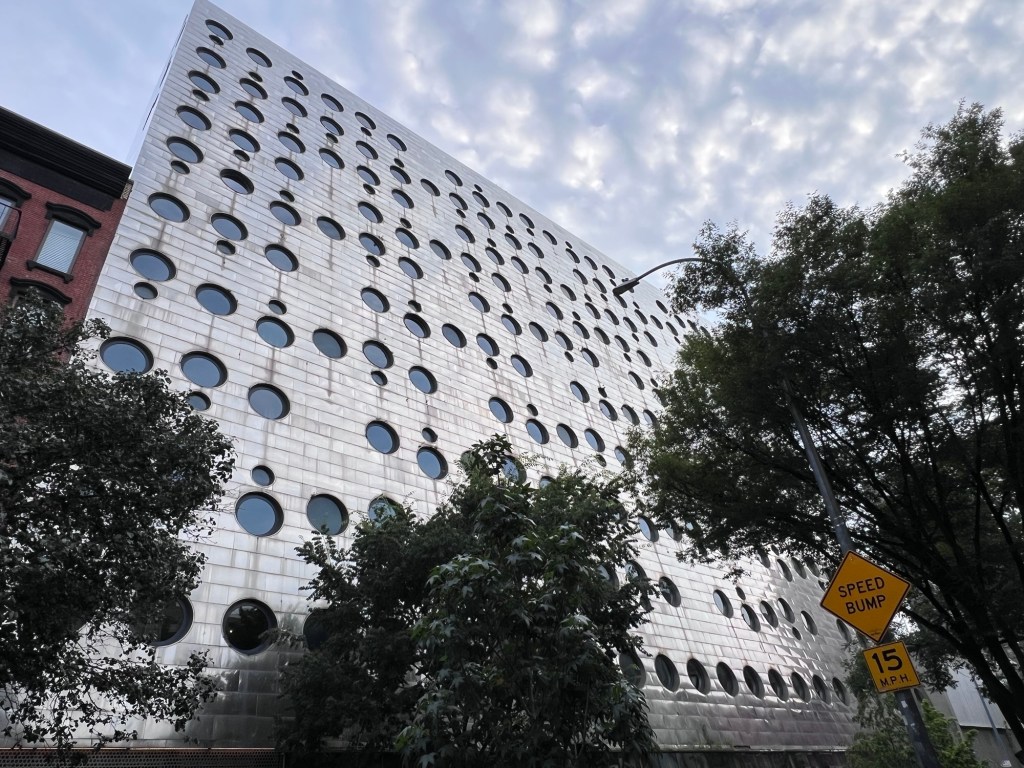
The Marine Union Bank Building is now the Dream Hotel with many wonderful restaurants
The port building on Ninth Avenue was once the Maritime Union Building and is now the Dream Hotel.
https://www.hyatt.com/dream-hotels/en-US/nycdd-dream-downtown
Review on TripAdvisor:
When I walked to the end of the block and turned back, it took a look across the street to the Robert Fulton Houses playground and saw the most creative and unusual set of plantings along the wall. I could not find on the artist on these works (but I will keep looking). These are fun!

The paintings in the Robert Fulton figure

This series of paintings was behind the water fountain along the back wall of the park.

The close up of the third painting in the series
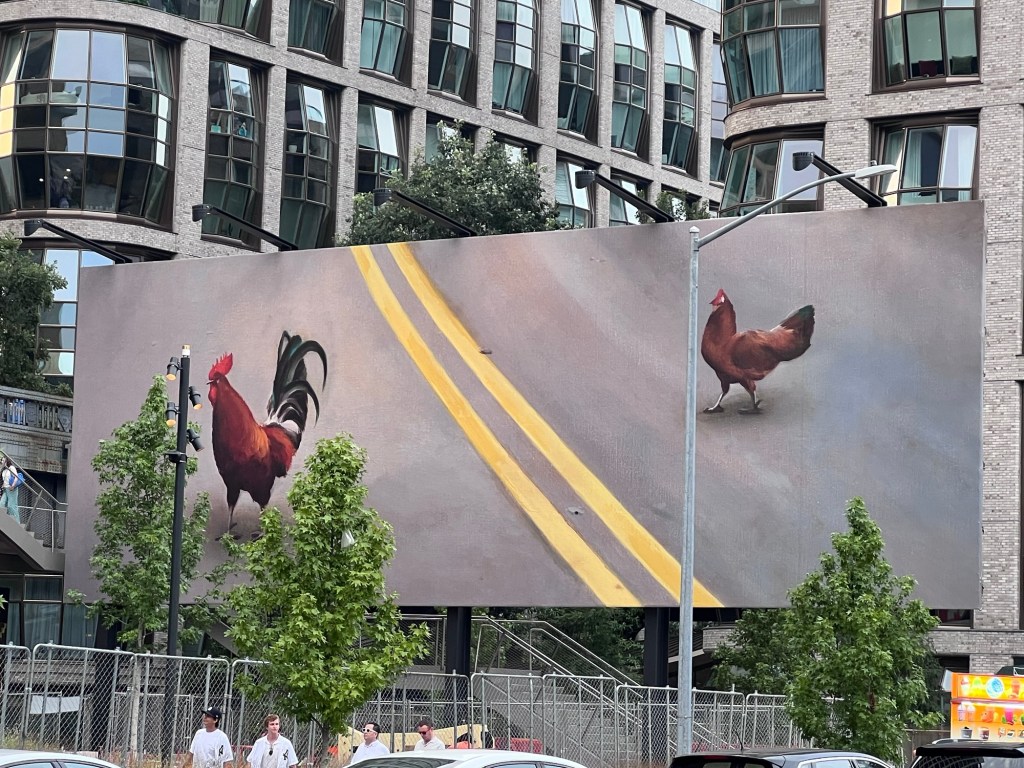
This painting of the Chicken crossing the road “Don’t Ask” by Artist Allison Katz. It seemed to replace the Pink Panther mural of a few weeks ago.
https://www.thehighline.org/art/projects/allison-katz/
Artist Allison Katz presents Don’t ASK. On this monumental scale, a rooster and hen are depicted in the middle of an asphalt street, seemingly bringing to life the classic anti-joke, “why did the chicken cross the road?” (High Line.org).
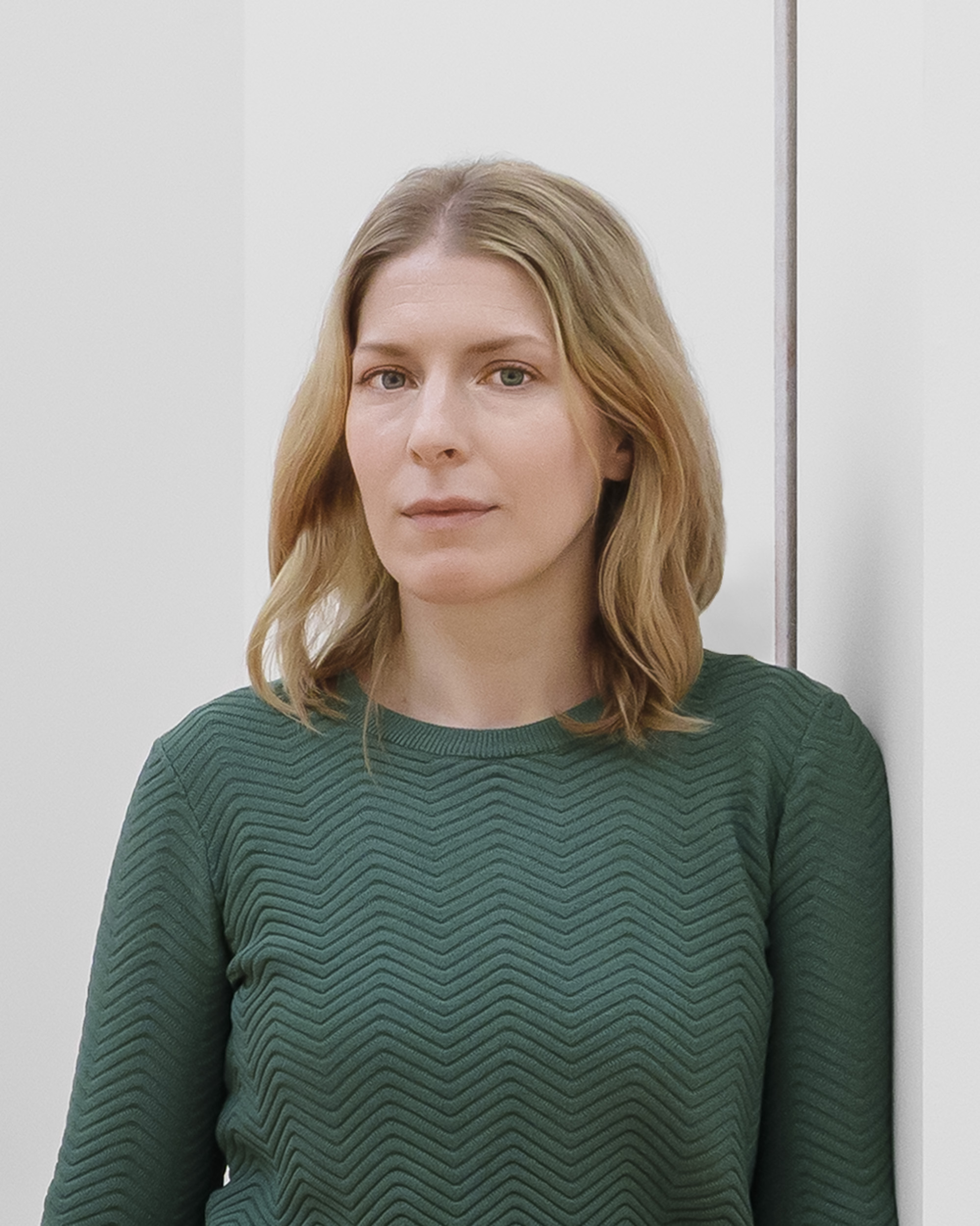
Artist Allison Katz
https://ago.ca/exhibitions/allison-katz-inner-momentum
https://www.instagram.com/allison.katz/?hl=en
Artist Allison Katz is Canadian born artist who now lives in London, England. She studied Fine Arts at Concordia University in Montreal and received her MFA from Columbia University in New York. Katz’s work investigates the ways in which aesthetic practices link and absorb autobiography, information systems, graphic icons, and art history (Ago.ca).

At the very end of the road, West 17th Street turned into a cobblestone street and you do not see much of this anymore in Manhattan.
Walking back from Tenth Avenue, I saw the street art from a different angle and I could see the street art peaking out from behind the fence.

The street art in the empty lot along 20th Avenue
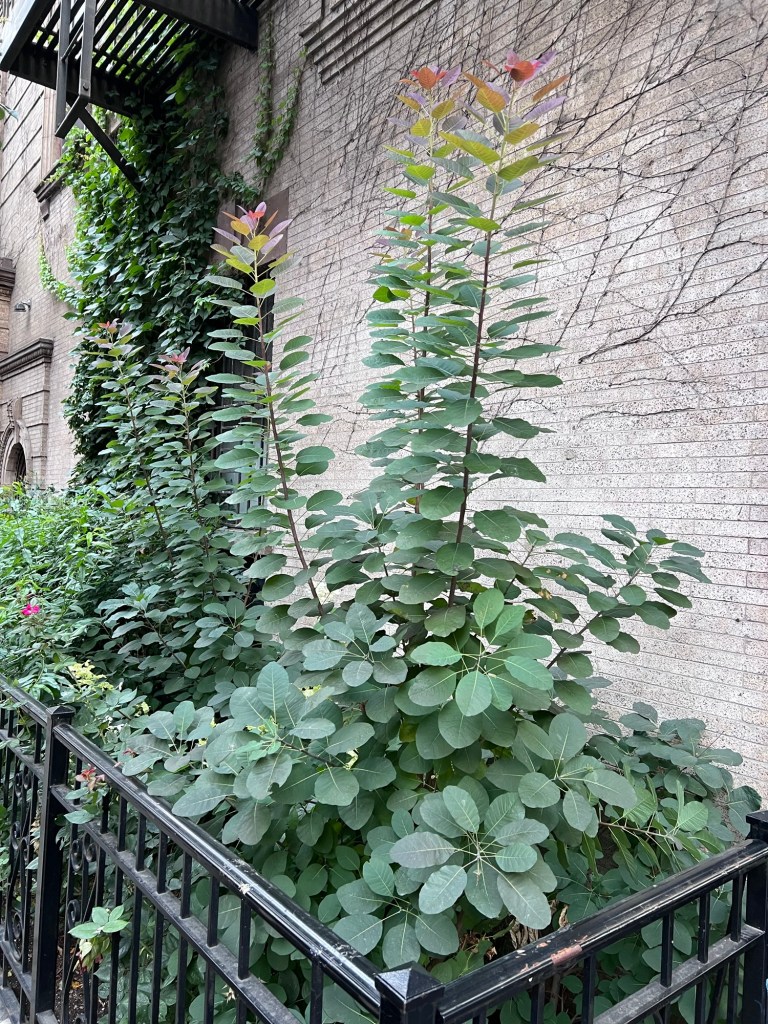
There was something unique about this tiny garden just off 10th Avenue
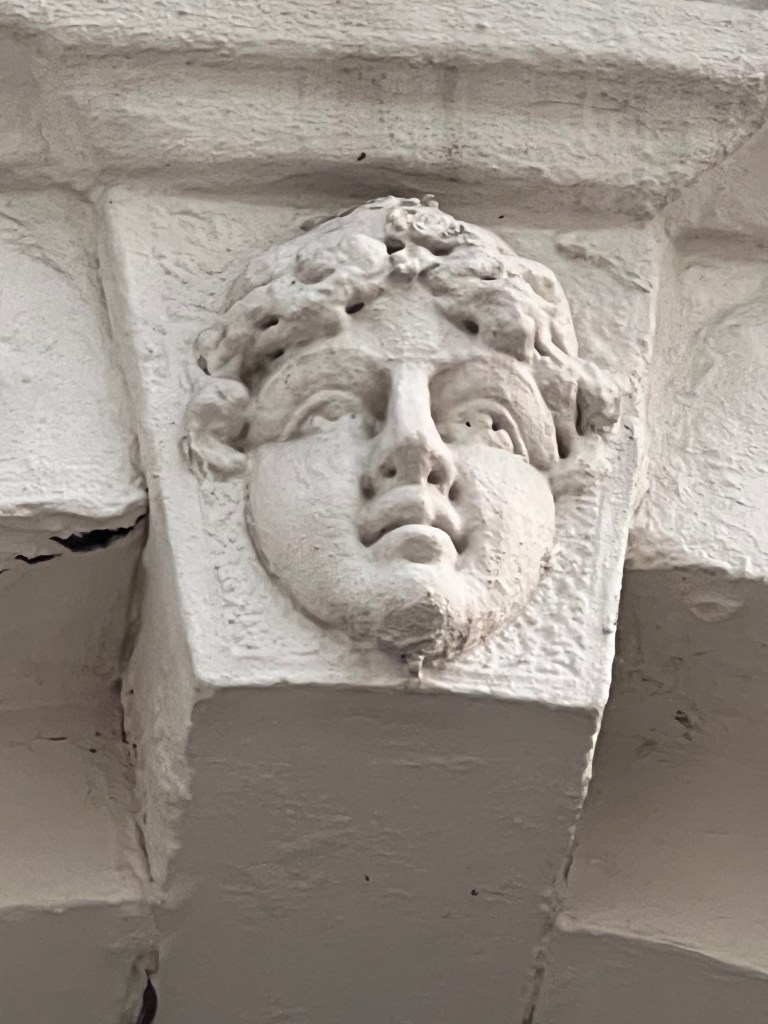
Another face staring out at me
There was another small park on this block to relax and cool off too. The Dr. Gertrude Kelly Park is another patch of green where residents were relaxing that afternoon.

The Dr. Gertrude B. Kelly history
https://www.nycgovparks.org/parks/dr-gertrude-b-kelly-playground
It was nice to be able to sit under a shade tree and just relax. Though it was not as hot as previous days, it got warmer in the late afternoon.
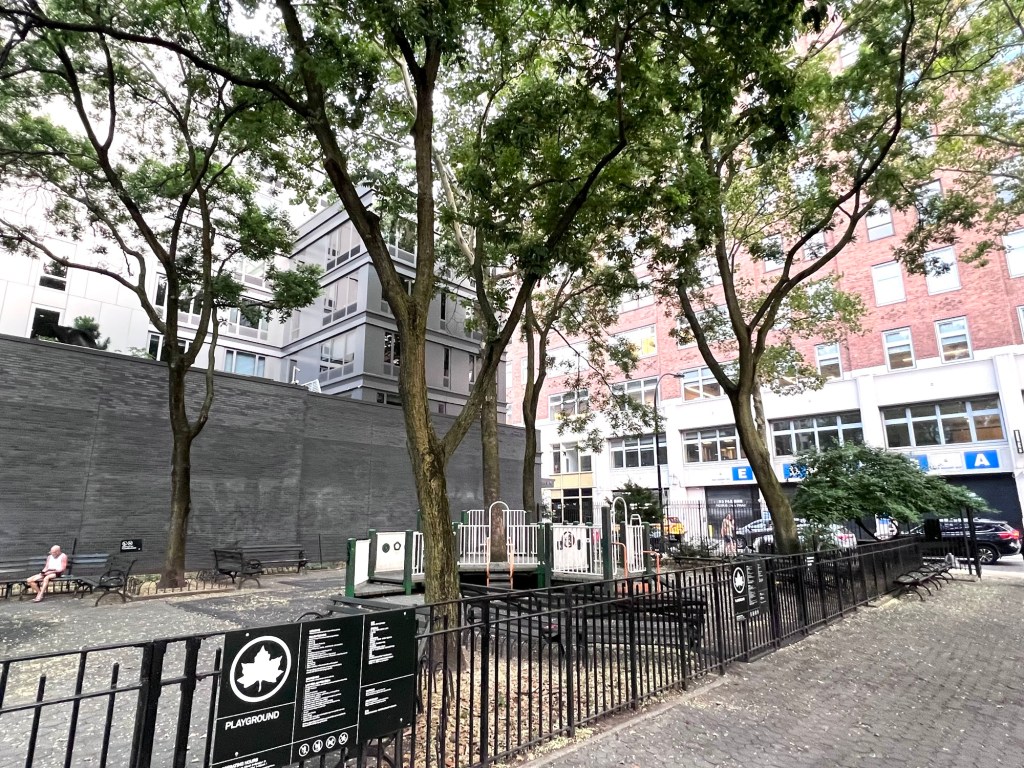
The inside of Dr. Gertrude B. Kelly Park on hot afternoon

The park goes through the two blocks
On the way back to Sixth Avenue, I passed the back of the old Siegel-Cooper Department Store warehouse building that is now the Room & Board store. The same beautiful details were on both sides of the building.

The Seigel-Cooper Warehouse Building
Here and there I kept seeing such interesting street art along the walls and corners of buildings all over the neighborhood.

This interesting looking ‘PAC Man’ figure was on one of the walls of a building on the block
The last building I passed was the Rubin Museum which was closed that day. I had not been there in over a decade and remembered that it did have very interesting art. I had not realized that the museum had closed its doors in the Fall of 2024. It closed October 6th, 2024.

The Rubin Museum at 140 West 17th Street (Closed in October 2024)

The Rubin Museum of Himalayan Art entrance
The Rubin Museum of Himalayan Art (formerly Rubin Museum of Art) was founded in 2004 as a haven for Himalayan art in the Chelsea neighborhood of New York City by Shelley and Donald Rubin, who are philanthropists, cultural leaders, and collectors. The opening was the culmination of 30 years of art collecting, six years of planning, and the purchase and renovation of the former Barneys department store (Rubin Museum website-Museum Closed in October 2024).
As I exited West 17th Street to finish my walk of this part of the Chelsea neighborhood, I came across this interesting piece of street art on Seventh Avenue. It always amazes me with people on what they can create.

This was on the wall of an empty store on Seventh Avenue
On my last day walking around the lower part of the neighborhood, the temperature hit 96 degrees and the humidity was worse. Since I only had to walk from Sixth to Eleventh Avenues from 15th to 16th Streets, I thought it would take about an hour. Throw in lunch and a dessert break and it was two and a half hours in the heat.

Starting the walk at the corner of West 16th Street and Sixth Avenue
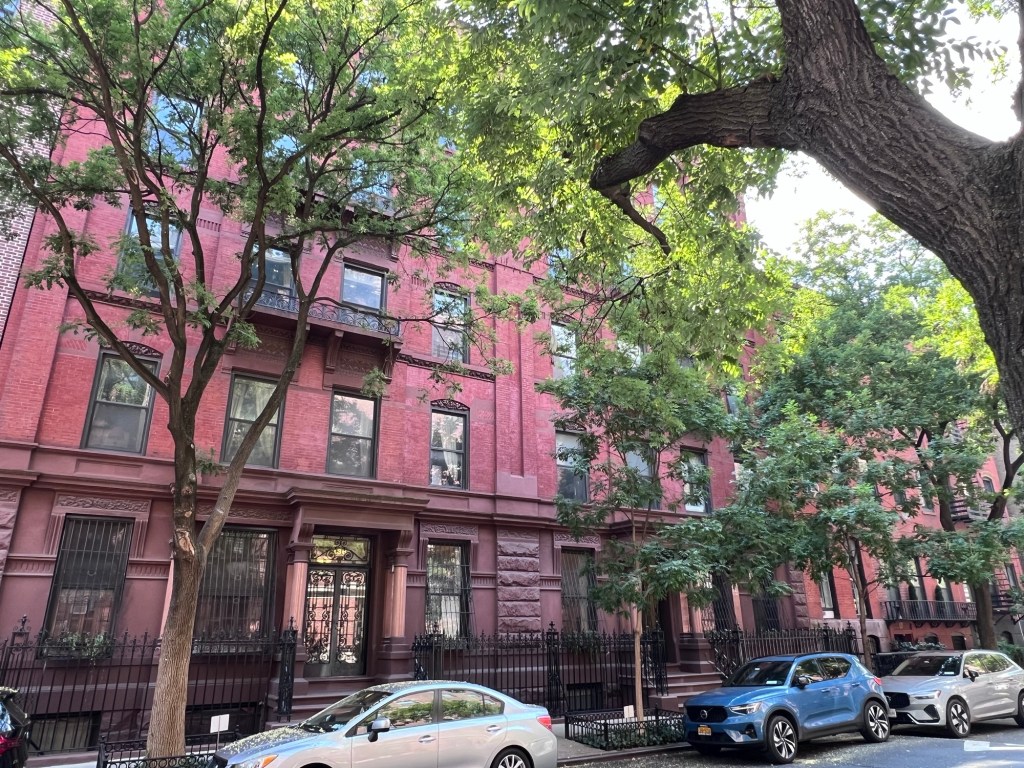
The tree lined blocks between Sixth and Seventh Avenues

Here and there the small gardens pop up with lots of colorful flowers
I loved this serpent carving at the entrance of 200 West 16th Street. The building was covered with all types of creatures.
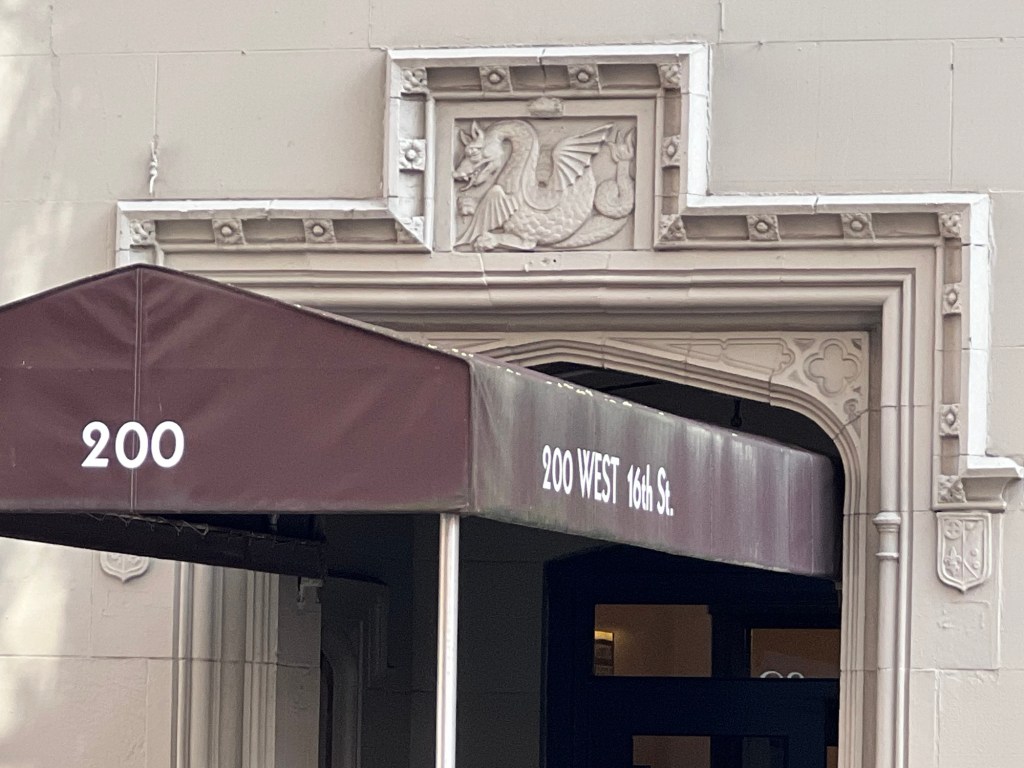
The entrance to 200 West 16th Street
https://streeteasy.com/building/200-west-16-street-new_york
https://www.corcoran.com/building/chelsea-hudson-yards/160270
t was the first of the four distinguished developments by visionary developer Henry Mandel and was designed by esteemed architects Farrar & Watmough. Farrar & Watmough harmoniously blended the Jazz Age and Gothic Revival styles creating a building with a visually striking and architecturally significant facade adorned with variegated orange brick, limestone and terracotta (Streeteasy.com)
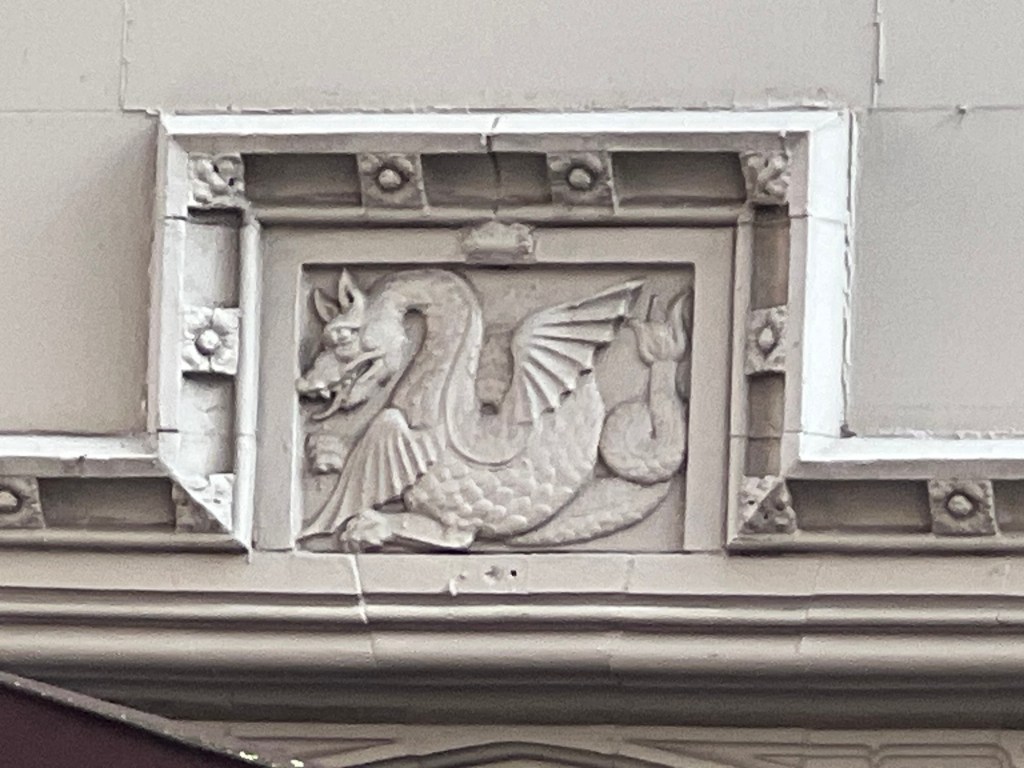
The serpent above the doorway at 200 West 16th Street
I had to stop for some lunch and I came across a pizzeria that had been my ‘go-to’ since I started at NYU. I always enjoyed the specials for lunch and dinner. In just a year, the prices did go up a few dollars but the pizzeria is still reasonable.

J’s Pizza at 96 Seventh Avenue at the corner of Seventh Avenue and West 16th Street
My review on TripAdvisor:
My review on DiningonaShoeString@Wordpress.com:
I stopped in at J’s Pizza for a quick lunch. I had not realized I had not eaten here since I had graduated from NYU in the middle of last year (did college fly by in the blink of an eye). I forgot how good their food was when I ordered my lunch. I had a slice of their Fresh Mozzarella Sicilian pizza and a Coke and it hit the spot on this hot day.
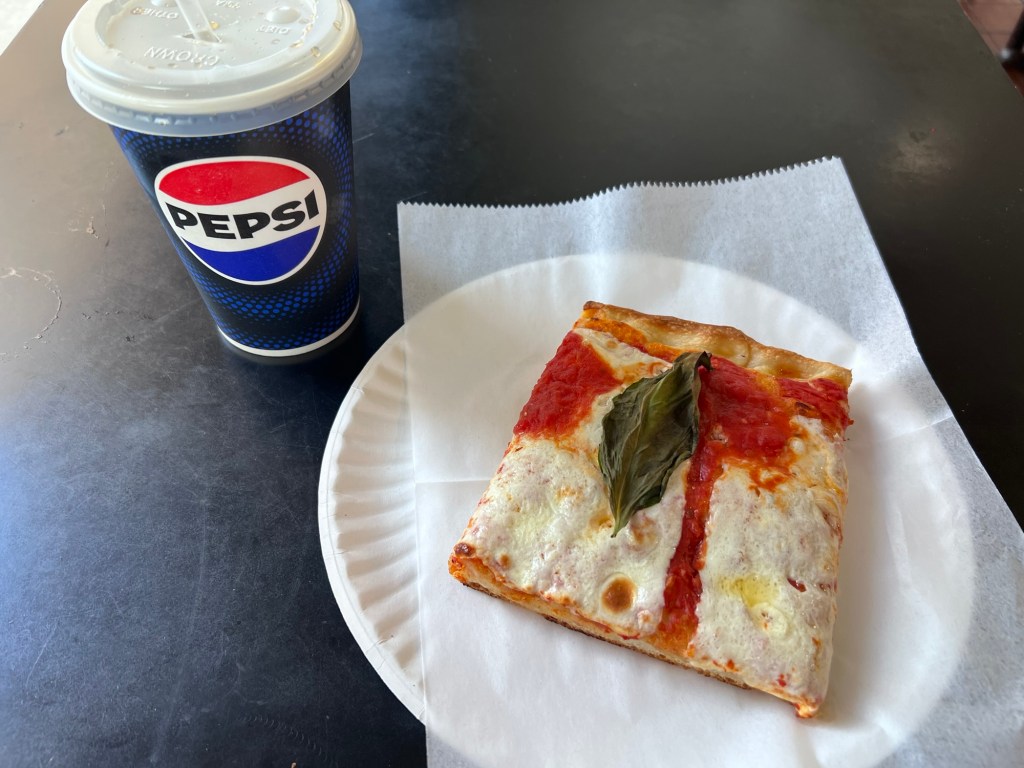
My Sicilian slice

What a great lunch and a nice break
I continued my walk down West 16th Street passing businesses and homes and noticing the changes in the neighborhood with renovations and new buildings going up. More and more this particular neighborhood is getting very desirable and the homes more expensive.

The embellishments outside of 224 West 16th Street
https://streeteasy.com/building/224-west-16-street-new_york
https://www.corcoran.com/building/chelsea-hudson-yards/8542
https://www.cityrealty.com/nyc/chelsea/224-west-16th-street/72351
This beautiful pre-war building was built in 1901 (Streeteasy.com)
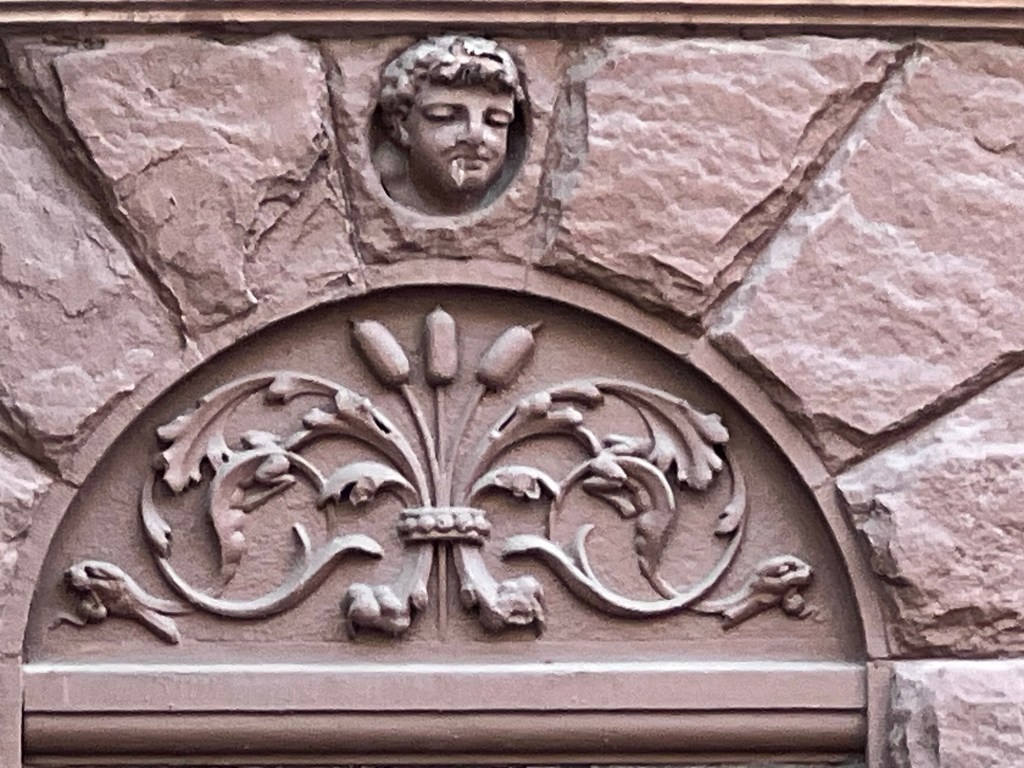
The beautiful carvings outside the building

The face that guards the entrance
The walls of some of the buildings and the doorways to buildings closed down have some interesting street art that I noticed.

I loved the street art up and down the street

It was fun discovering such interest works tucked in doorways and stairs and back walls
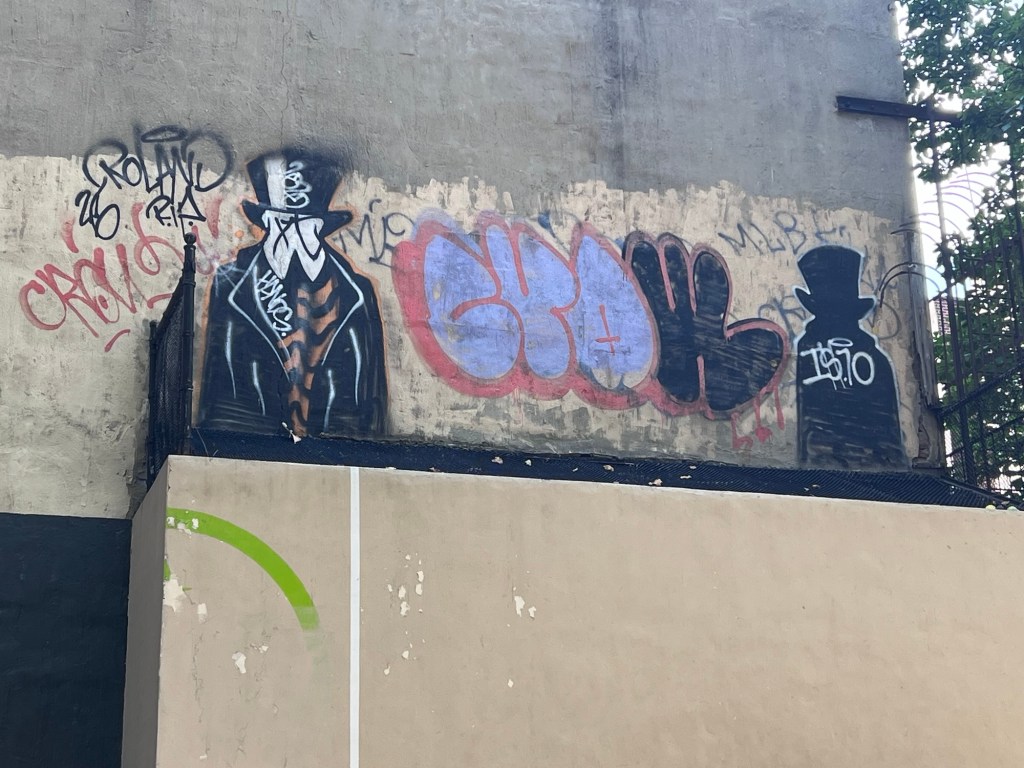
I had seen this artist’s work on Seventh Avenue and again in Dr. Gertrude Kelly Park. This is located on top of one of the basketball courts.
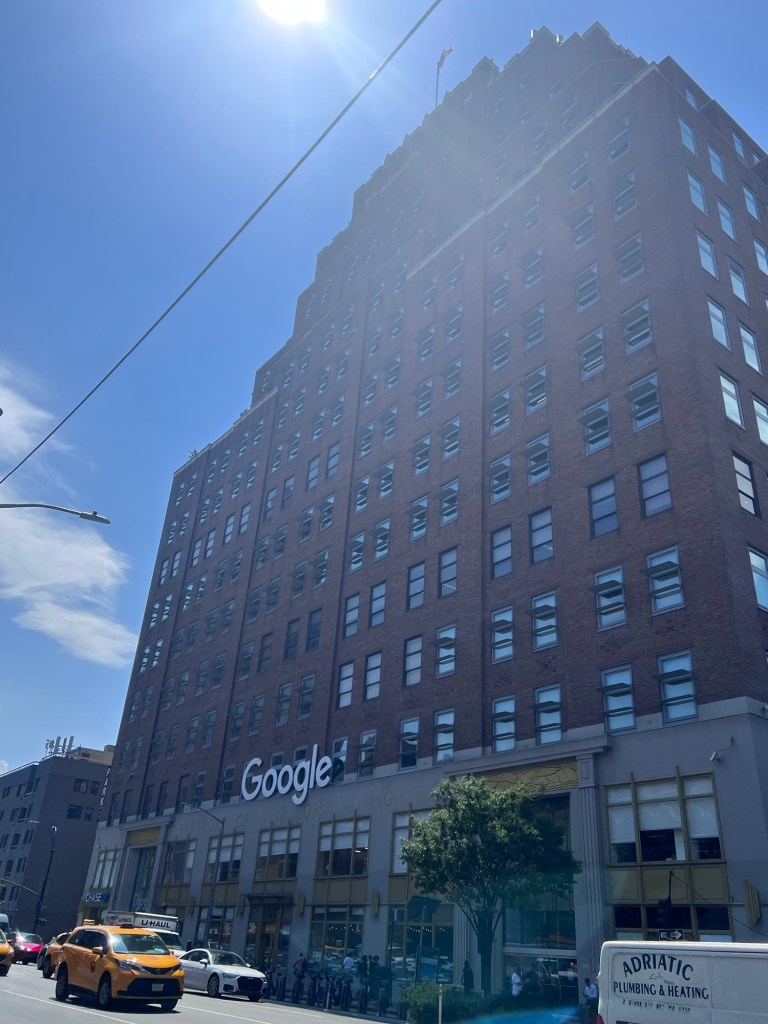
The end of the block was dominated by the Google Building that stretches from Ninth to Tenth Avenues at 75 Ninth Avenue
https://en.wikipedia.org/wiki/111_Eighth_Avenue
https://www.hlw.com/project/google-111-eighth-ave-commons/

I saw this beautiful stonework above 319 West 16th Street
https://streeteasy.com/building/319-west-16-street-new_york
This interesting pre-war building was built in 1800’s (Streeteasy.com). By the mid-1840’s Timothy Phelan and his family lived in the three story, brick-faced house at 197 West 16th Street (renumbered 319 in 1859), just west of Eighth Avenue. Twenty-five feet wide, its dignified Greek Revival design reflected influences of the emerging Italianate, notably in the understated entrance above a stone stoop (DaytonianinNYC.com)
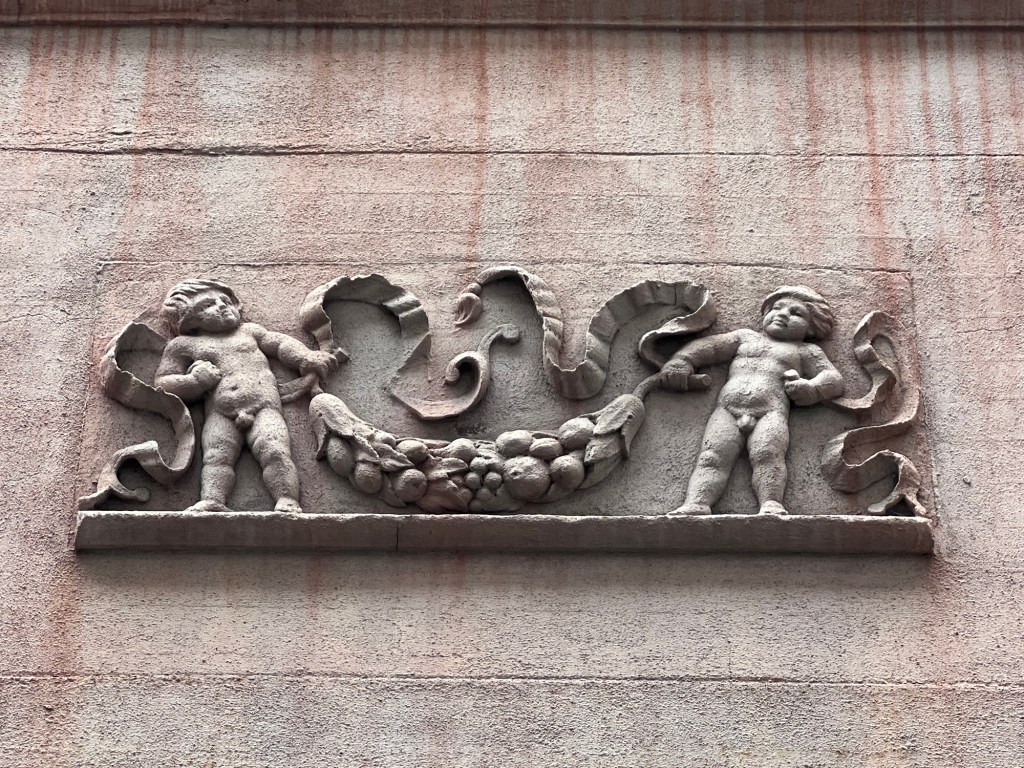
The stonework in more detail
The end of the block is dominated by the Marine Hotel and its series of high end restaurants

The Marine Hotel with its restaurant, Tao Downtown is in front
https://www.instagram.com/taodowntown/?hl=en
Review on TripAdvisor:

They even had a Buddha statue out front
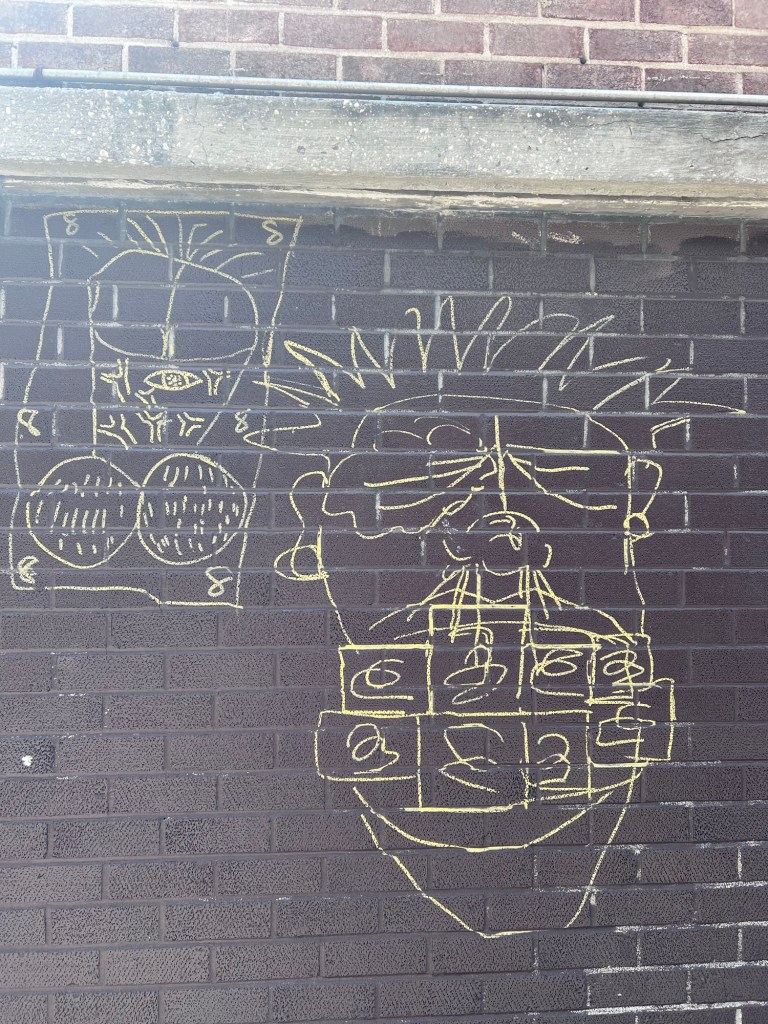
Then I saw this very unusual street art right by the Fulton Houses
The High Line Park dominates over this part of the neighborhood with its lush plantings and its interesting display of artwork. Try to walk the distance on the walkways of this incredible urban park.

The High Line Park sign
https://www.nycgovparks.org/parks/the-high-line
My review on TripAdvisor:

The High Line Park near Eleventh Avenue
As I was walking back up the street, I noticed a whole building of faces following me along the sides of 111-114 Eleventh Avenue. You have to look really closely to see the changes by each window.
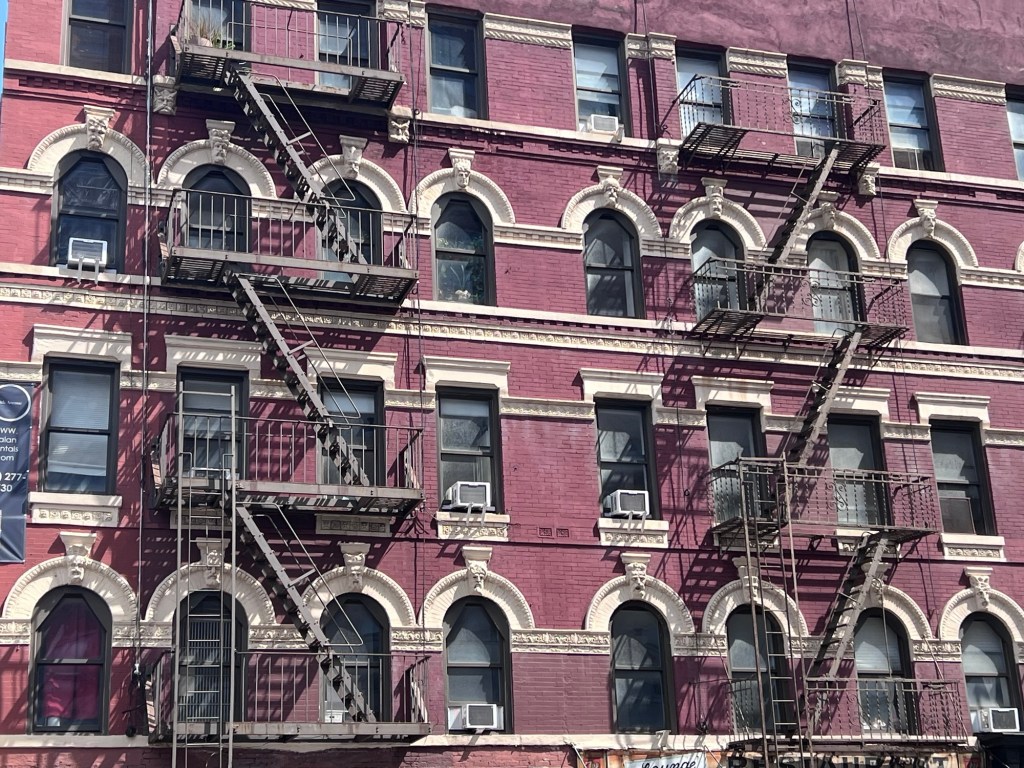
Along Eleventh Avenue I had not noticed this building at all
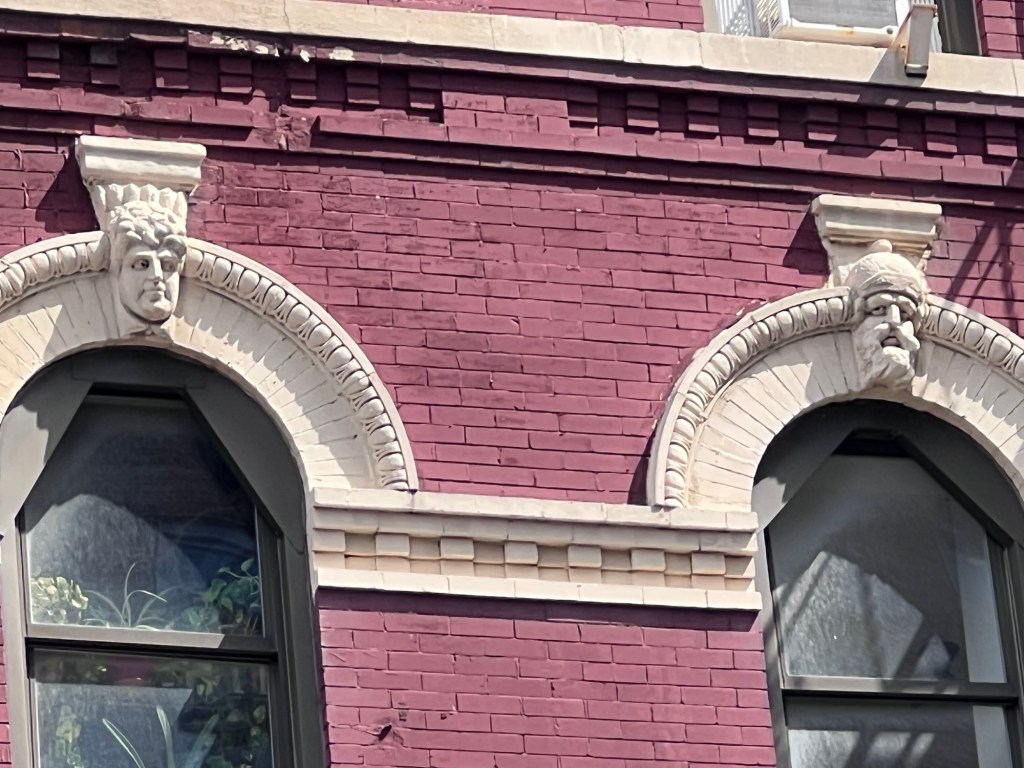
The faces staring back at 114-116 Eighth Avenue
https://streeteasy.com/building/114-8-avenue-new_york
You have to look at each window and doorway from across the street to really appreciate the beauty of this building.

The last of art that I saw on the block was this mural for the Bond Vet business around the corner by artist Jade Purple Brown. I thought the colors were so vibrant and that it really promoted this business well.

Artist Jade Purple Brown
https://jadepurplebrown.com/pages/info
https://www.instagram.com/jadepurplebrown/
Jade Purple Brown is a Brooklyn based artist known for her vibrant portrayals of Black women in psychedelic, dreamlike worlds (Artist bio on website).
I finally rounded West 15th and Sixth Avenue in the late afternoon and breathed a sigh of relief as it was getting so hot out.
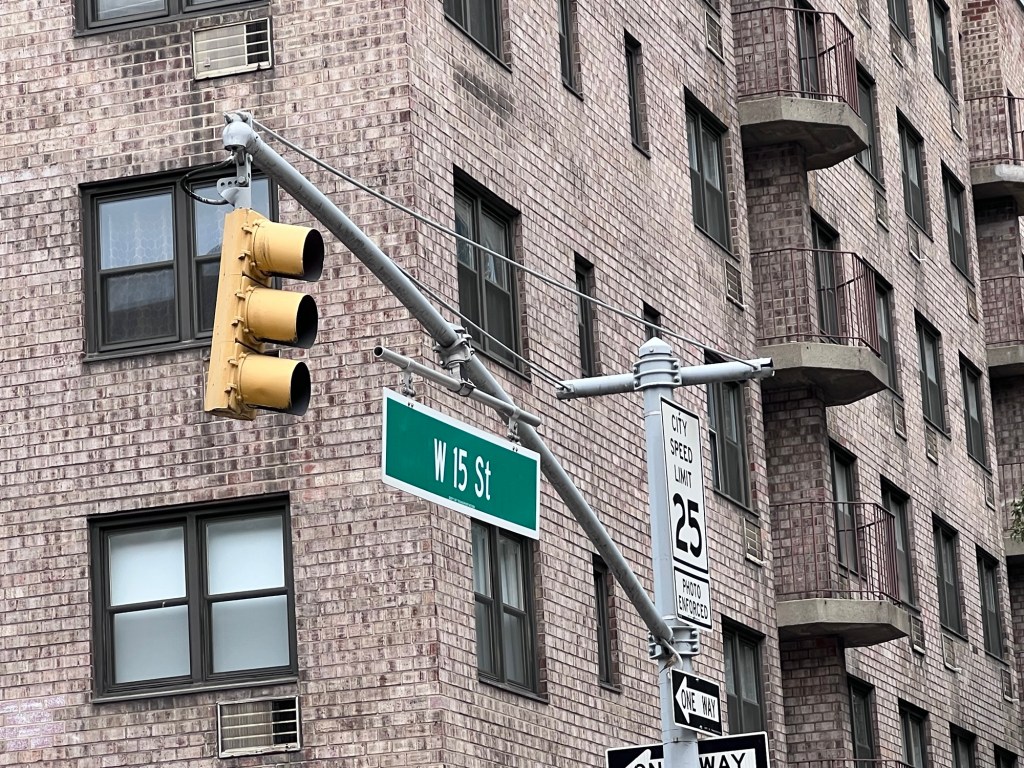
Reaching West 15th Street and the edge of both Lower Chelsea and the Meatpacking District at the end of a hot afternoon. There was a picturesque view of old New York between Sixth and Seventh Avenues. More tree lined blocks with brick townhouses.
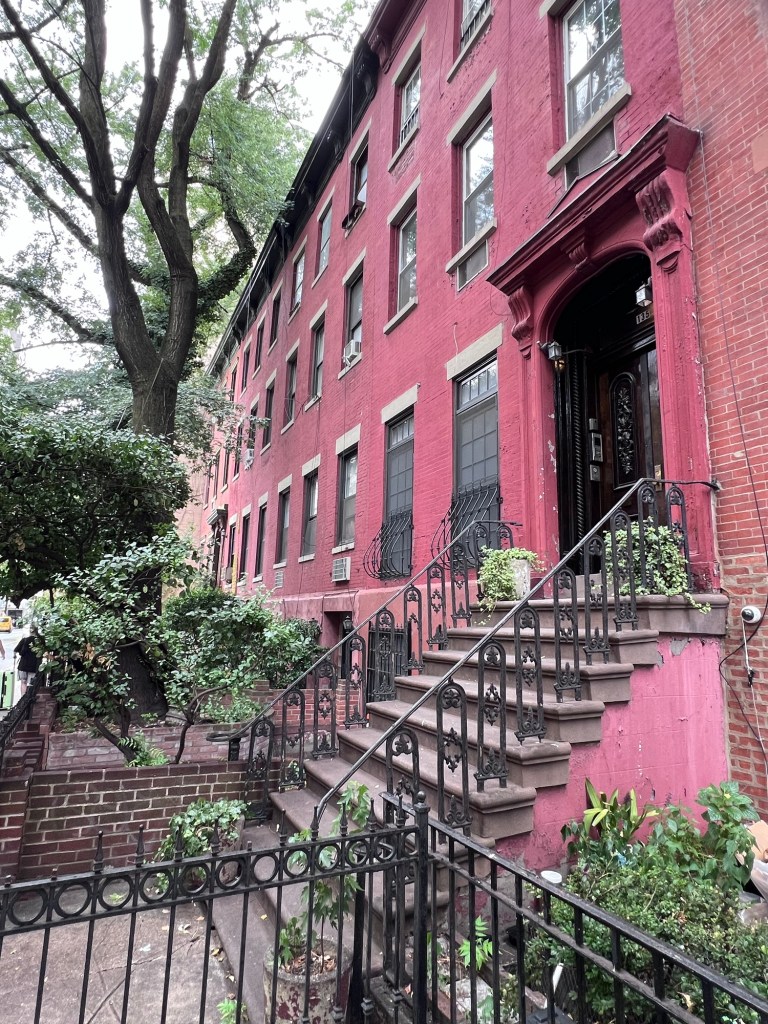
The Old Nee York look about the blocks in Chelsea
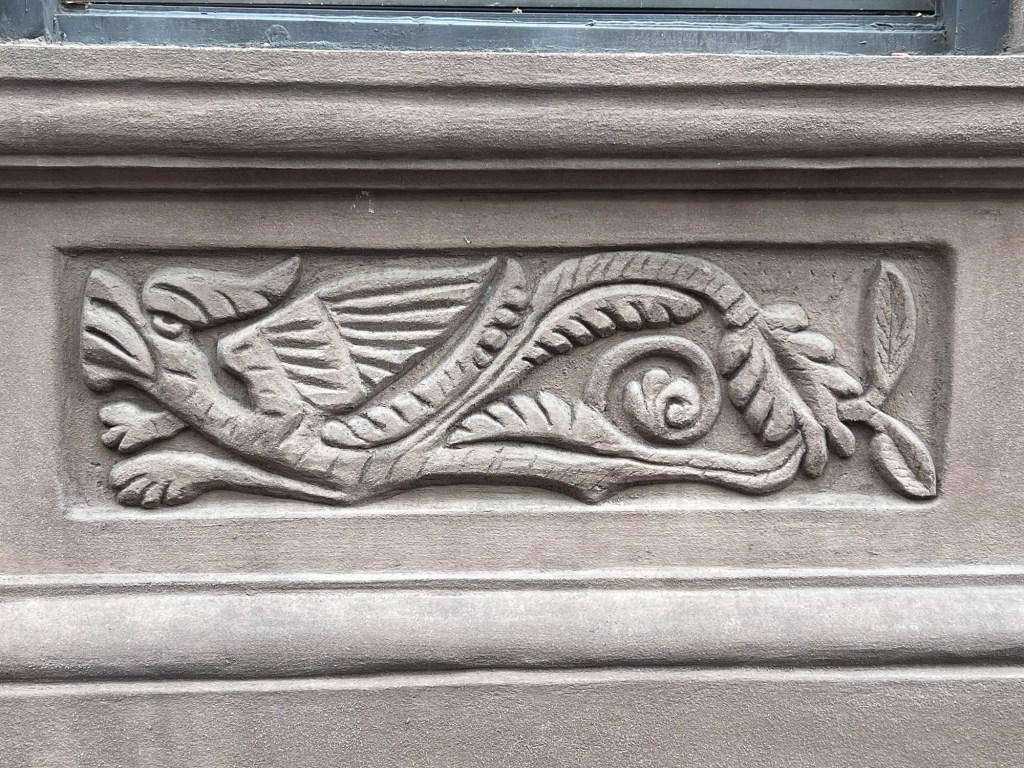
Here and there tucked within dome of plain brick and brownstone homes, interesting carvings and embellishments can be found.
Decorated below the windows of 229 West 15th Street, I saw these interesting carvings staring back at me.

The entrance to 229 West 15th Street
https://streeteasy.com/building/229-west-15-street-new_york
https://www.cityrealty.com/nyc/chelsea/229-west-15th-street/19863
This unique pre-war building was built in 1901 (Streeteasy.com)

Face number one staring back with an evil look

Face number two just as evil
As I walked down the street, a French flag and the colors of France when I passed La Sandwicherie Chelsea, which I found out later had two small sister restaurants. I saw these festive signs for crepes and sandwiches, I stopped in to take a peek.
I was still a little stuffed from the pizza but thought a crepe might be nice to tide me through the rest of the evening.

The front of La Sandwicherie Chelsea at 239 West 15th Street
https://www.lasandwicherienyc.com/hours-and-location-test/
https://www.lasandwicherienyc.com/location/la-sandwicherie-chelsea/
My review on TripAdvisor:

The selling point was the sign. It did remind me of Paris

The sandwiches sounded interesting too
I stopped inside and I swear I was back in Paris again with the tiny chairs and tables and the French music. I was not thrilled that the price was higher inside but only by a dollar and the manager explained it to me. I was still in the mood for that crepe.

The inside of the restaurant brought me right back to Paris
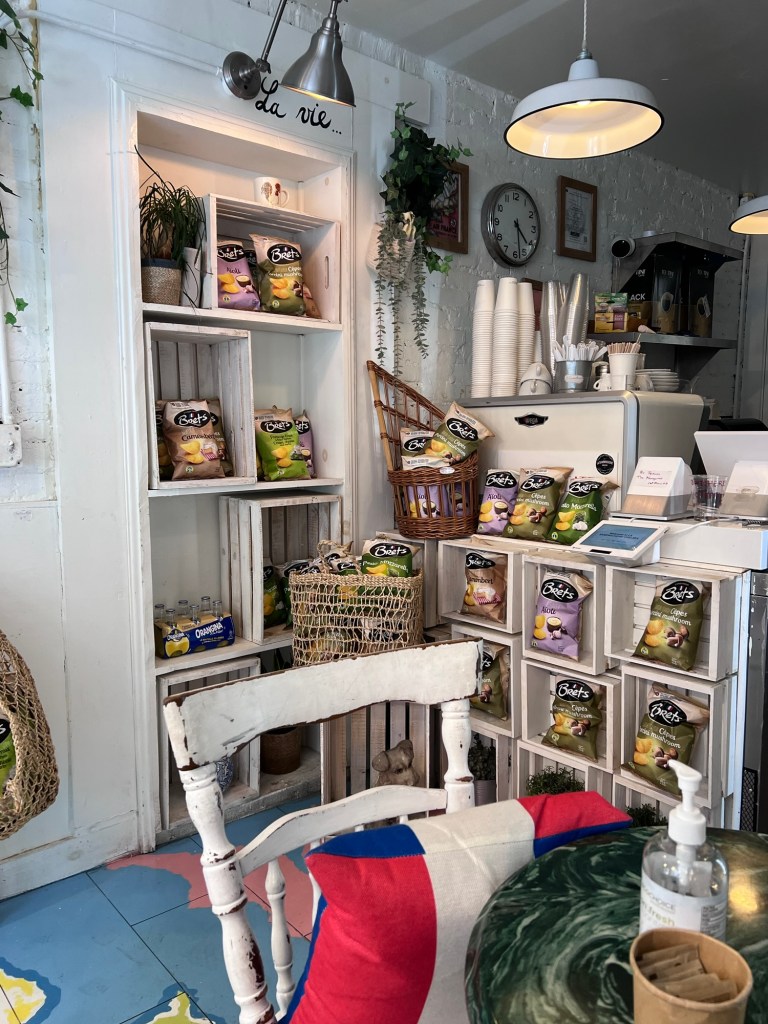
The shelves were lined with the wonderful French potato chips I had tried at the food show
I ordered a Strawberry Crepe, which was a freshly made crepe( he even showed me the crepe batter to prove it), which was filled with strawberry jam and topped with sugar. I ordered a Pomegranate soda to have with my dessert.
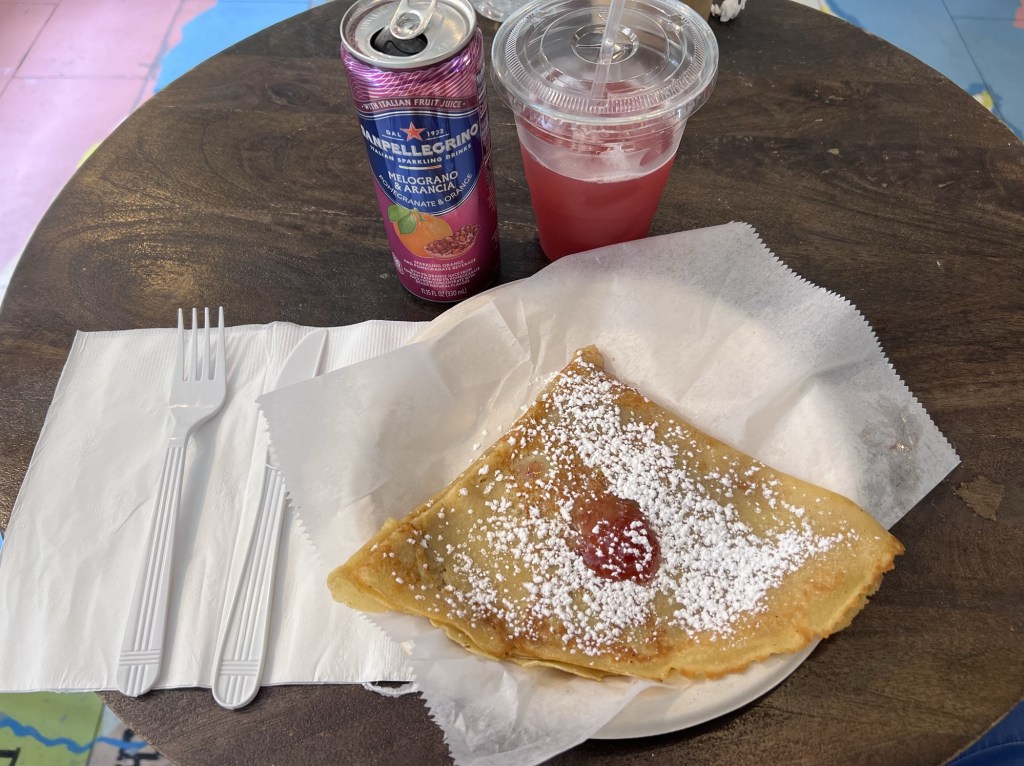
The Strawberry Crepe with my soda

Yum!
Now having some more carbs and sugar to wear off, I started back down West 15th Street happy and content. The crepe brought back a lot of memories of my trip to Paris two summers ago.
I continued my walk down West 15th Street with more pairs of eyes watching me at the buildings.

This face looked on at 241 West 15th Street
https://streeteasy.com/building/241-west-15-street-new_york
This pre-war building was built in 1901 (Streeteasy.com).

The face just stared out into space
There were many more faces on buildings similar to this one. Not passing judgement but staring into space like they were protecting the building.

Staring one building down

Similar faces staring out

The rows of brick townhouses give the neighborhood that classic feeling

The Chelsea Market at 75 9th Avenue sits like a beacon of gourmet foods and gifts
https://www.chelseamarket.com/
https://en.wikipedia.org/wiki/Chelsea_Market
My review on TripAdvisor:

The front of the Chelsea Market is so welcoming to neighborhood
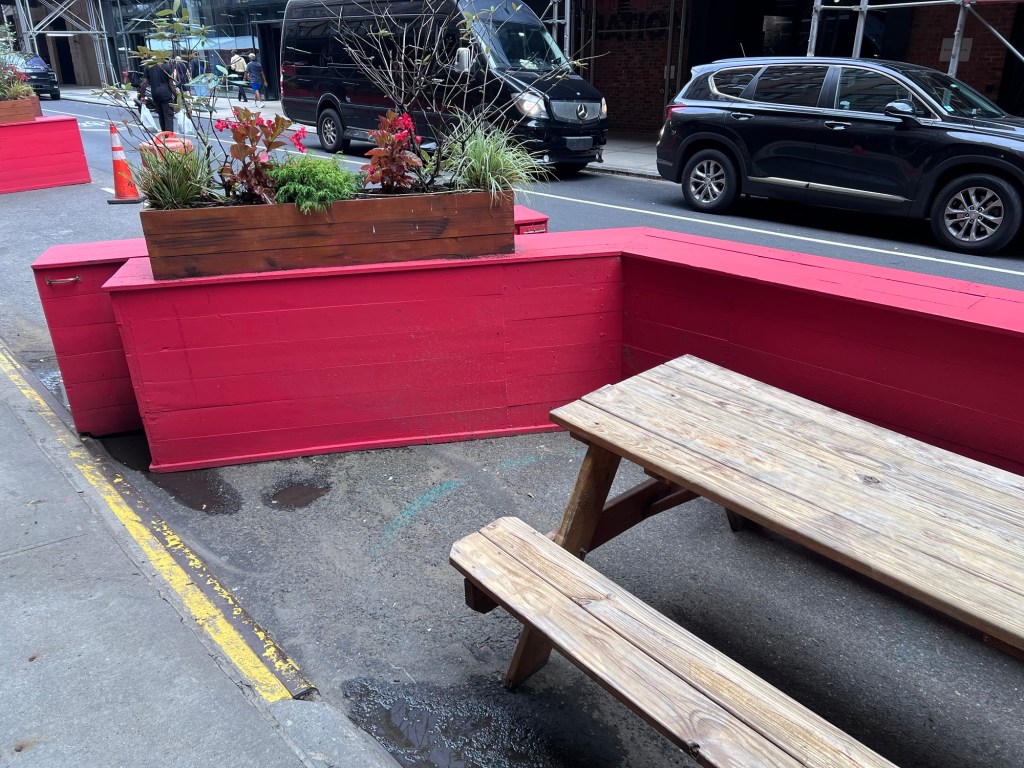
Their outdoor seating is safe and well kept for eating outside on a nice day
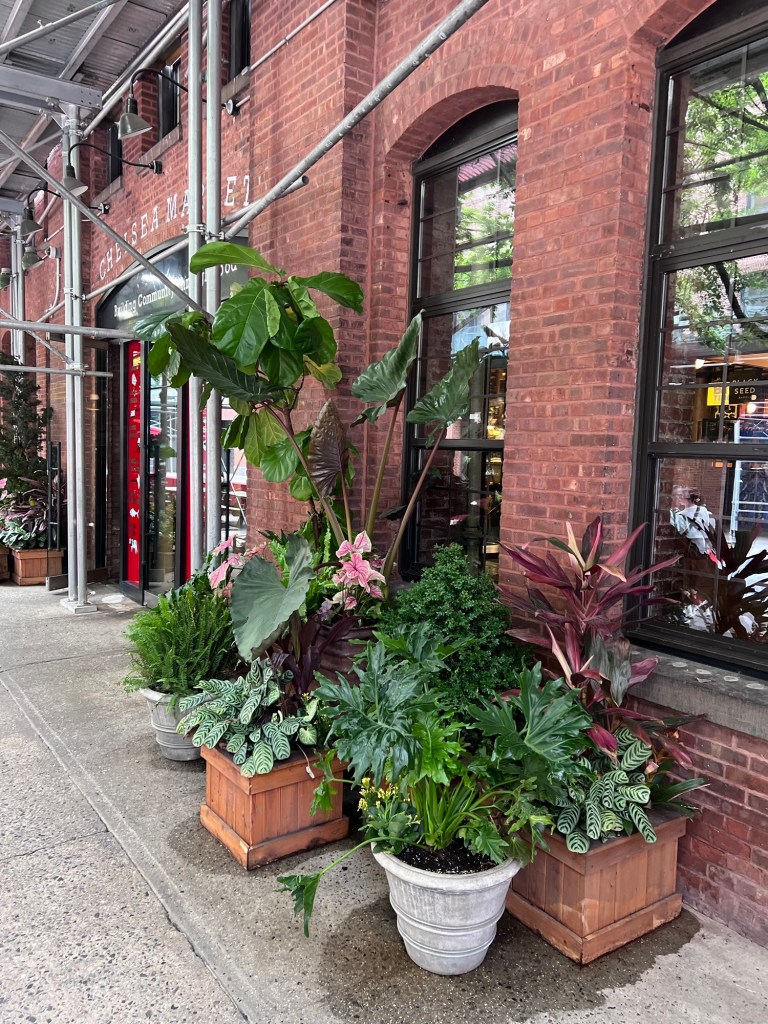
There are even small gardens to sit next to restaurants

I finally reached the end of the block and beautiful park and gardens of Hudson’s River Park. Here I just relaxed and walked along the flower beds.
My review on TripAdvisor:
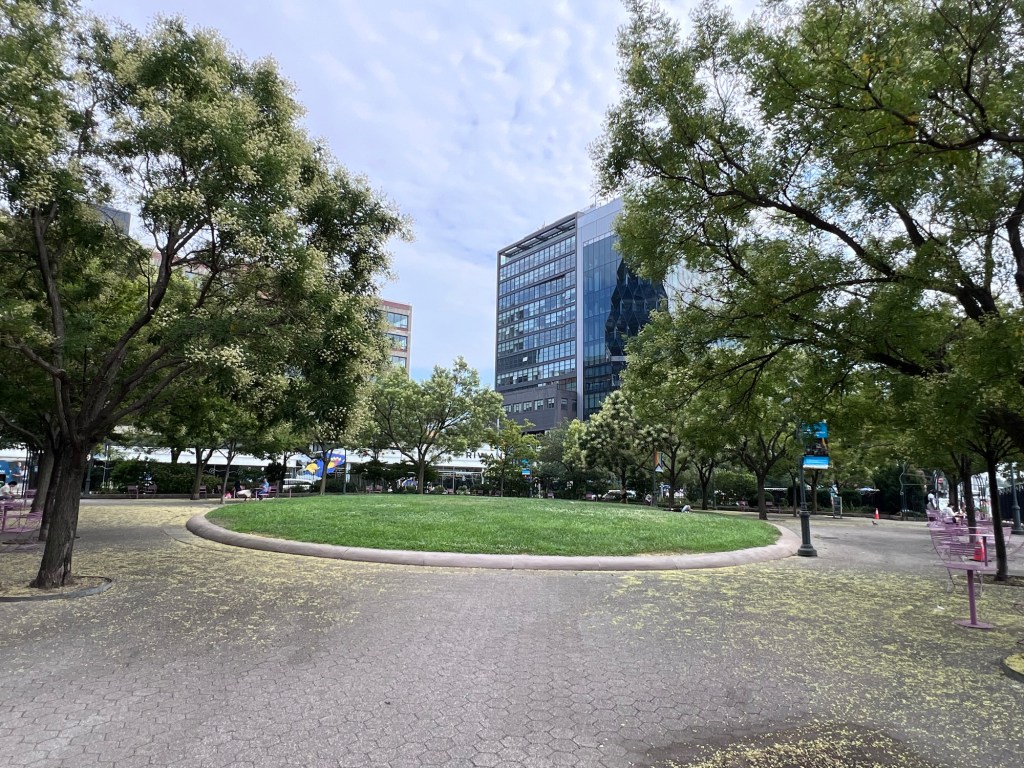
The enclosed gardens and lawn

The innovative architecture that surrounds the park

The gorgeous landscaping in bloom on a sunny afternoon

I walked back out of the park and headed back down West 15th Street to complete the walk

The skyway between the office buildings and the Chelsea Market
On the way back, it gave me a chance to look at so many of the vintage buildings of the block with their carved details and elaborate embellishments.
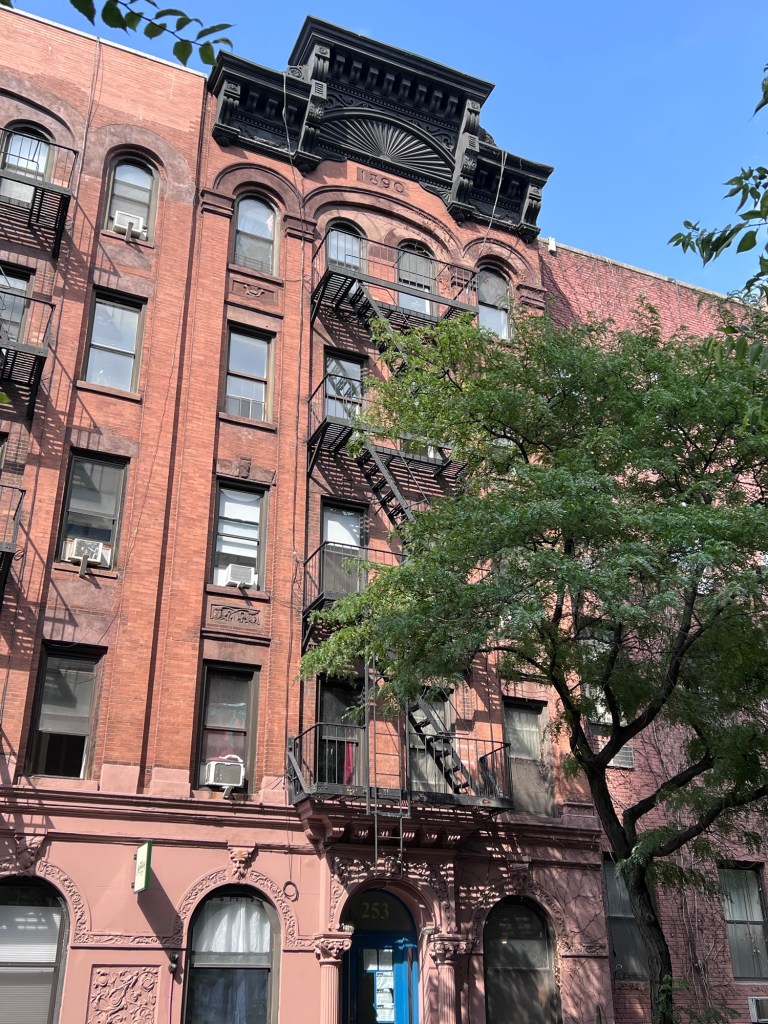
The elegance of 253 West 15th Street
https://streeteasy.com/building/253-west-15-street-new_york
https://www.mondaymorningmgmt.com/buildings/253-255-west-15th-street/
What I love about this building is the extensive embellishment of faces and curvatures throughout the front of the building. Faces stare at you from all directions and passing judgement right by the front door. You have to look up and down to really appreciate this building.

There is emended detail to building

The faces staring back

Don’t pass judgement
The sister building next door at 251 West 15th Street had just as many details.
https://www.apartments.com/251-w-15th-st-new-york-ny-unit-24/9hlpgp4/
This unique pre-war building was built in 1928 (Apartments.com).

251 West 15th Street
The faces on this building grapple, snarl and stare at you.

The lion face guarding the door
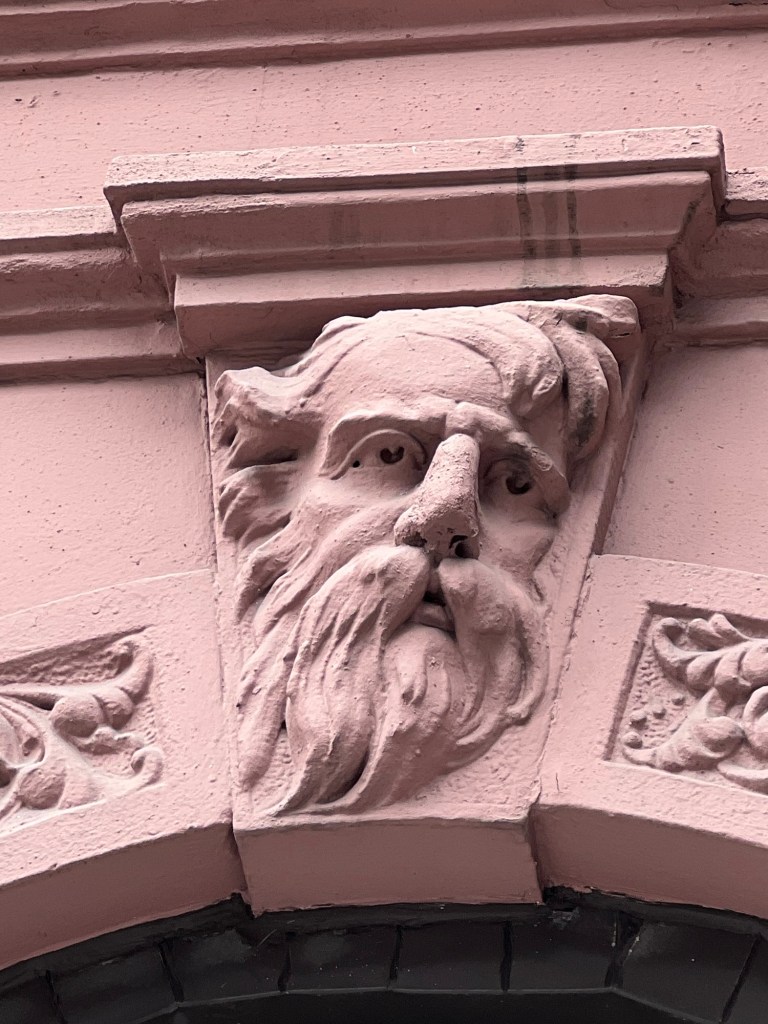
Faces guarding the sides
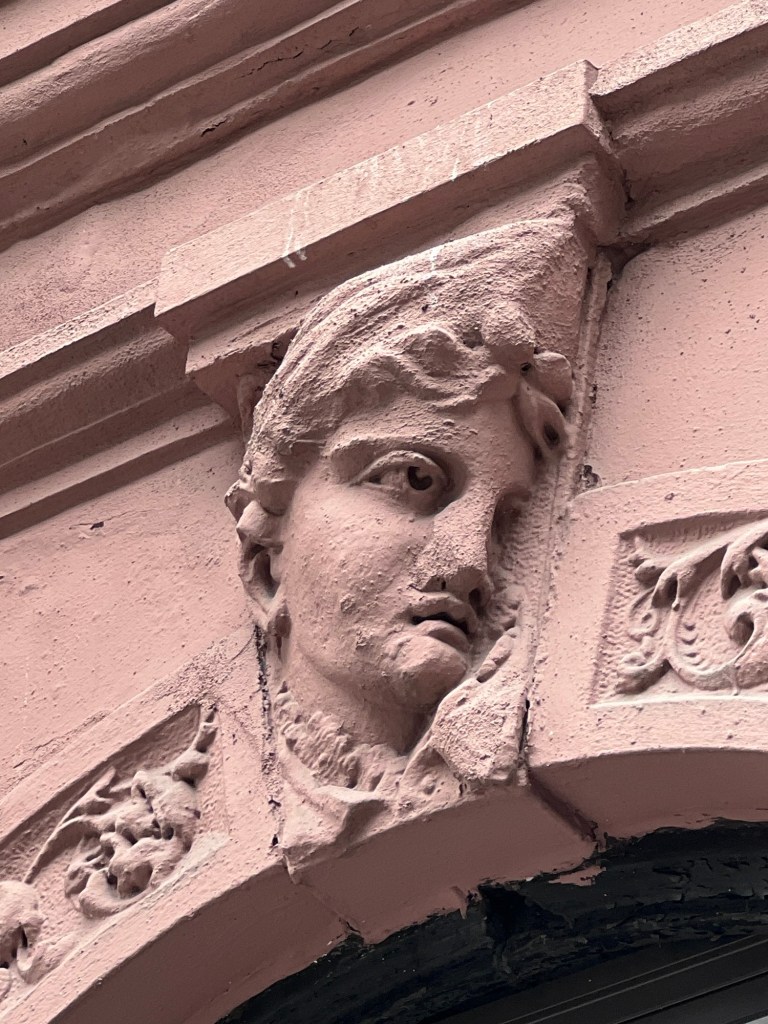
Staring from both sides
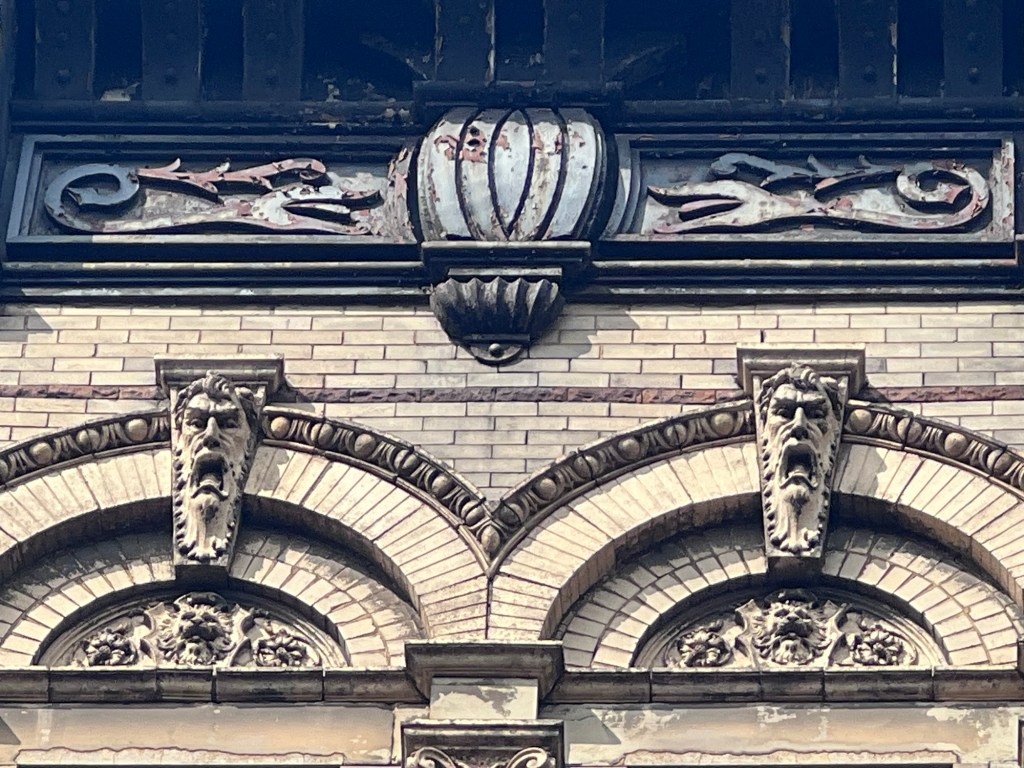
The details from the top of the building

The Stonehenge Gardens at 108 West 15th Street
https://www.stonehengenyc.com/buildings/stonehenge-gardens
At Stonehenge Gardens, travel through the private gate and along the walkway where you will find this gem of a building setback between 14th and 15th streets. Built in 1950, this six-story building is located in the center of Manhattan’s trendiest downtown neighborhoods: Chelsea, the West Village and Union Square (From the Stonehenge website).
The private gate and gardens were locked when I was visiting the neighborhood but you could see how beautiful it was right behind the gate.
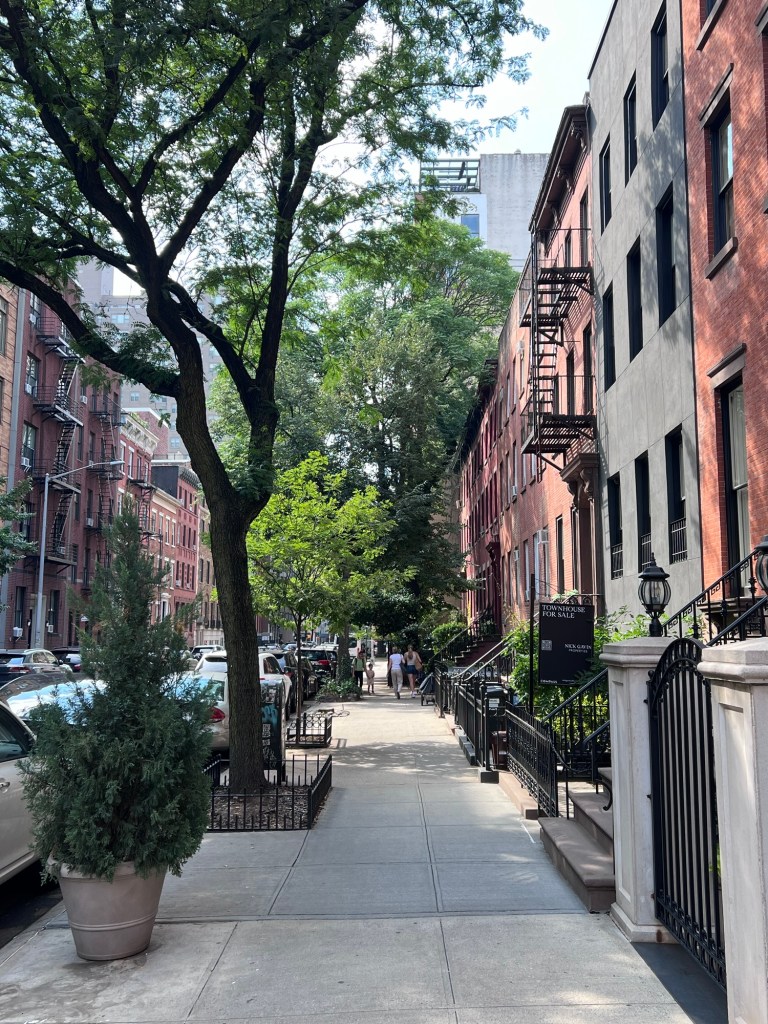
Finishing my walk down West 15th Street
The Jazz Concert that evening at the Brooklyn Botanic Gardens:
My review on TripAdvisor:
My review on VisitingaMuseum.com:
https://visitingamuseum.com/tag/brooklyn-botanical-garden/
After I finished the streets of Lower Chelsea, I took the subway to Brooklyn for a Jazz Concert at the Brooklyn Botanic Gardens. On the way to the subway, I noticed these two mosaics on the wall of the subway platform. What interesting work by Brooklyn based artist Fred Tomaselli entitled “Wild Things”. These gorgeous and colorful works flank both the upstairs and downstairs of the subway station
https://www.mta.info/agency/arts-design/collection/wild-things
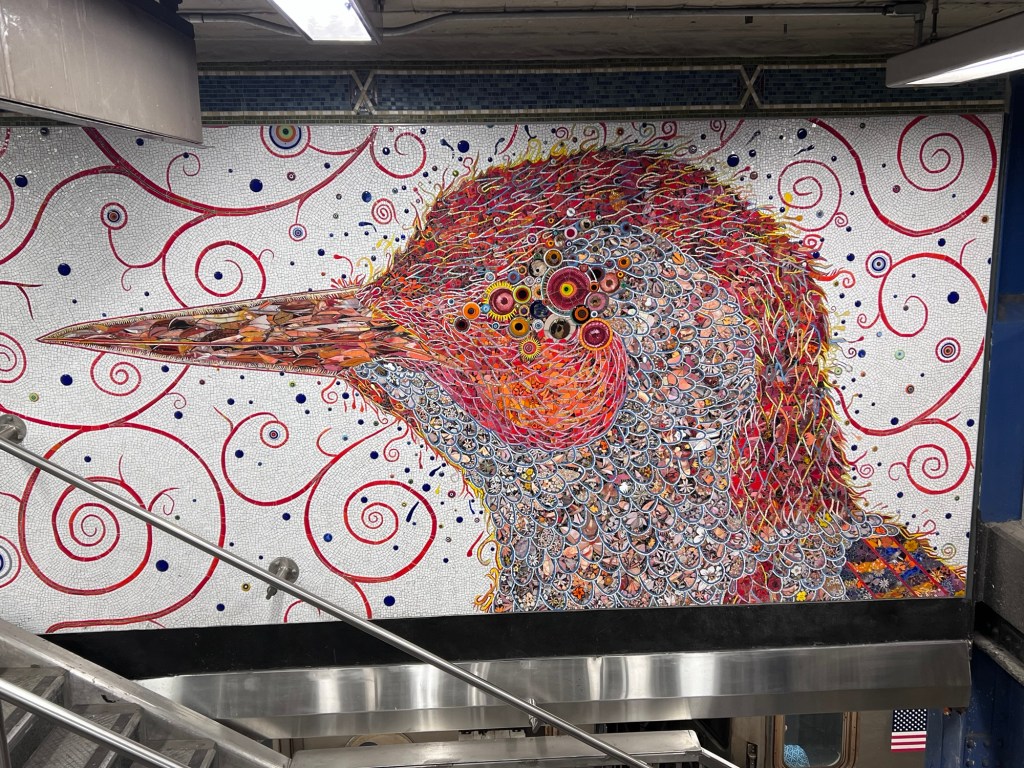
Bird One

Bird Two

Artist Fred Tomaselli
https://www.instagram.com/fredtomaselli/?hl=en
https://en.wikipedia.org/wiki/Fred_Tomaselli
https://www.artnet.com/artists/fred-tomaselli/
Artist Fred Tomaselli is an American born artist best known for his highly detailed paintings on wood panels, combining an array of unorthodox materials suspended in a thick layer of clear, epoxy resin. He studied at California State University and his studio is in Brooklyn (Wiki).
It was a quick subway ride to the gardens on the express subway and I got there in record time . It was enough time to tour the gardens before the concert. The gardens were at their peak in the middle of the summer and everything was so green.

The lawn by the Cherry Bloom Gardens
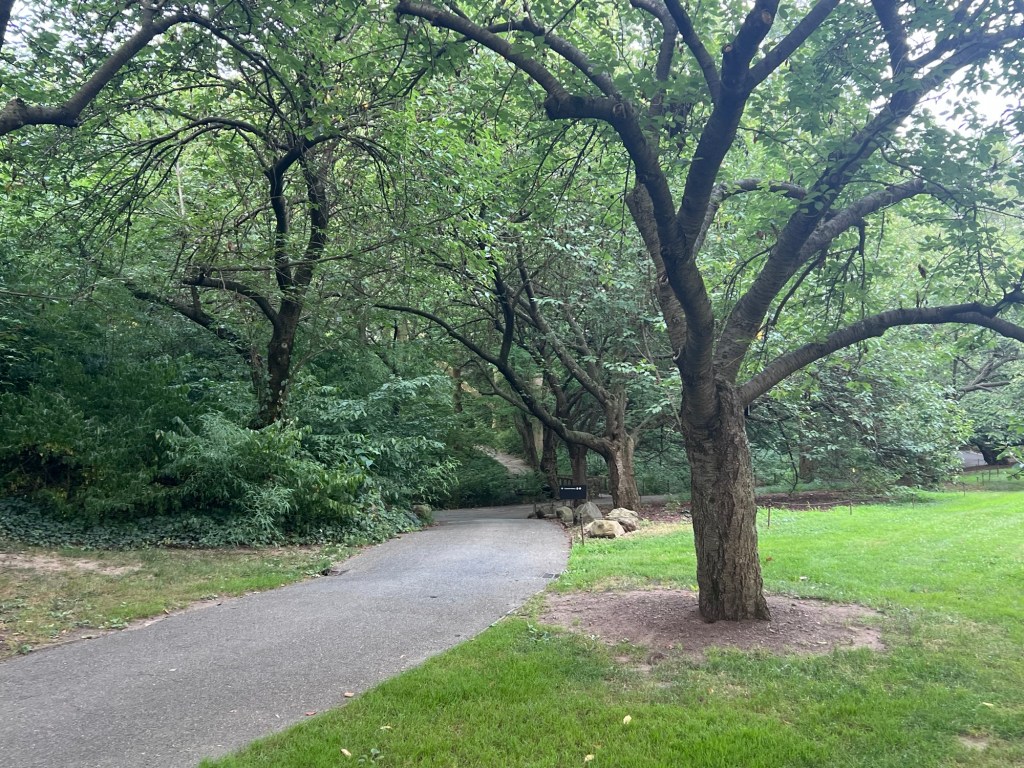
The Cherry Bloom lawn is where the concerts are held
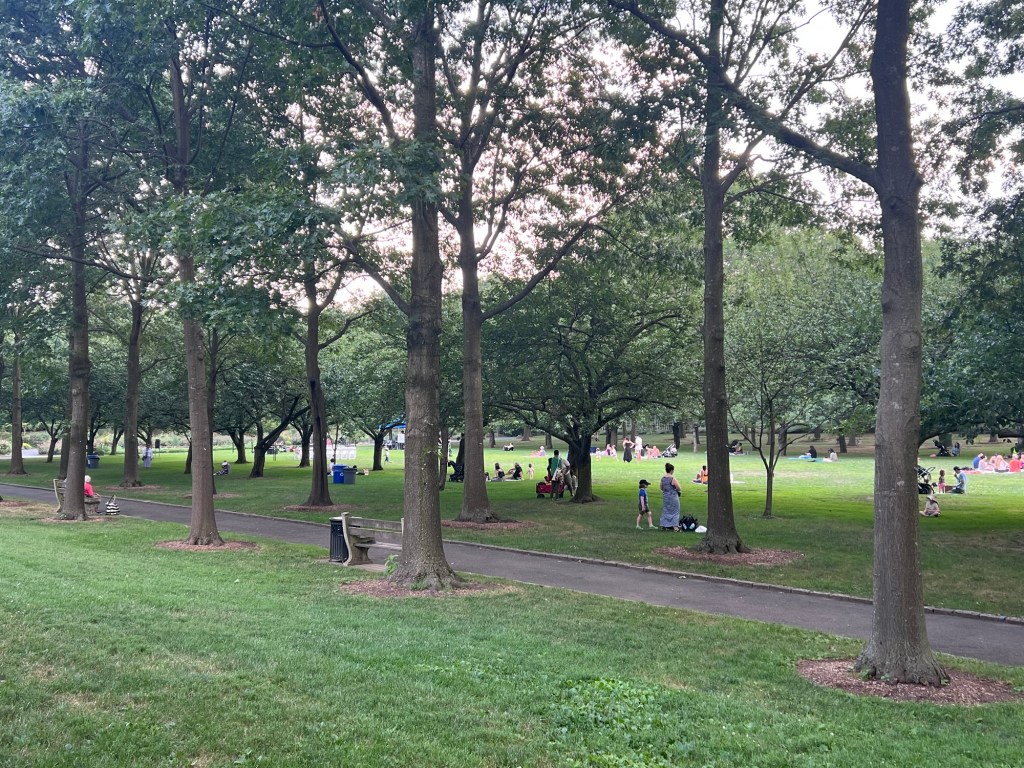
People getting ready for the concert

Members waiting on the lawn for the concert to begin
I was sunny and warm out when I got there and just about five minutes before they were supposed to start the concert, it poured for the next twenty minutes. They end up cancelling the concert again on me. The weather played havoc that evening.
The only problem was that the moment it stopped those twenty minutes later, the sun came back and it was beautiful as the musicians were packing up. I can tell everyone hoped they would have a change of heart. They kept packing up and I decided to walk around the gardens again. There would be one more concert in the future the next week.

It did clear up after it stopped raining

The sun rose over the Japanese Gardens

So for the next hour, I just wanted to walk around and admire the flowers and the garden beds.

It ended up being a nice night and the best way to end of evening.
Even though the concert was cancelled, it still was a nice evening and I did get my share of exercise. Even as the lights turned on in the Botanic Gardens, there is still such a magic of walking along the beds and admiring the flowers and the other plantings. You should not miss the gardens during any of the seasons. There is always something to see even in the dead of winter. The true beauty though is in the late Spring and early Summer when everything is in bloom.
Now it off to exploring more neighborhoods
Please read my other blogs of Lower Chelsea:
The Borders of Lower Chelsea:
The Avenues of Lower Chelsea:
The Streets of Lower Chelsea:
Places to Eat:
Dumplings (Jin Mei)
25B Henry Street
New York, NY 10002
(212) 608-8962
Open: Sunday-Saturday-8:00am-9:00pm
My review on TripAdvisor:
My review on DiningonaShoeStringinNYC@Wordpress.com
Great Taste Bakery
35 Catherine Street
New York, NY 10038
(212) 566-8383
https://www.restaurantji.com/ny/new-york/great-taste-bakery-
My review on TripAdvisor:
My review on DiningonshowStringinNYC@Wordpress.com:
The Sleeping Cat
160 Seventh Avenue
New York, NY 10011
(631) 419-2651
https://www.sleepingcatbakery.com/
Open: Sunday 8:00am-9:30pm/Monday-Tuesday 8:00am-6:30pm/Wednesday-Saturday 8:00am-9:30pm
My review on TripAdvisor:
My review on LittleShoponMainStreet@Wordpress.com:
J’s Pizza
96 Seventh Avenue
New York, NY 10011
(646) 760-8120
Open: Sunday-Saturday 11:00am-8:30pm
My review on TripAdvisor:
https://www.tripadvisor.com/Restaurant_Review-g60763-d4432818-Reviews- J_s_Pizza-New_York_City_New_York.html?m=19905
My review on DiningonaShoeStringinNYC@Wordpress.com:
Da Umberto’s
107 West 17th Street
New York, NY 10011
(212) 989-0303
Open: Sunday Closed/Monday-Thursday 12:00pm-3:00pm/5:00pm-10:00pm/Friday 12:00pm-3:00pm/5:00pm-11:00pm/Saturday 5:00pm-11:00pm
My review on TripAdvisor:
La Sandwicherie Chelsea
239 West 15th Street
New York, NY 10011
(917) 472-7172
https://www.lasandwicherienyc.com/location/la-sandwicherie-chelsea/
Open: Sunday-Saturday 10:00am-5:00pm
My review on TripAdvisor:
Places to Visit:
Madison Square Park
11 Madison Avenue
New York, NY 10010
(212) 520-7600
https://madisonsquarepark.org/
https://www.nycgovparks.org/parks/madison-square-park/events
Open: Sunday-Saturday 10:00am-9:00pm
My review from TripAdvisor:
High Line Park
From 34th Street to West 14th Street Manhattan
New York, NY 10011
(212) 500-6035
https://www.nycgovparks.org/parks/the-high-line
https://en.wikipedia.org/wiki/High_Line
Open: Sunday-Saturday 7:00am-10:00pm (Seasonal)
My review on TripAdvisor:
Clemente Clarke Moore Park
10th Avenue and West 22nd Street
New York, NY 10011
(212) 639-9675
https://www.nycgovparks.org/parks/clement-clarke-moore-park
Open: Sunday-Saturday 10:00am-8:00pm (Seasonal)
My review on TripAdvisor:
Chelsea Green Park
West 20th Street between Sixth and Seventh Avenue
New York, NY 10011
(212) 639-9675
https://www.nycgovparks.org/parks/chelsea-green-park
Open: Saturday-Saturday 7:00am-6:00pm
My review on TripAdvisor:
Dr. Gertrude Kelly Park
320 West 17th Street
New York, NY 10011
(212) 639-9675
https://www.nycgovparks.org/parks/dr-gertrude-b-kelly-playground
Open: Sunday-Saturday 7:00am-6:00pm
My review on TripAdvisor:
Third Shearith Cemetery
West 21st Street between Sixth and Seventh Avenue
New York, NY 10011
https://www.findagrave.com/cemetery/2260432/third-cemetery-of-congregation-shearith-israel
Open: The cemetery is locked from tourism



































































 mywalkinmanhattan