In honor of Small Business Saturday I am sending out merchants I have found on MywalkinManhattan.com. Sutton Clock Shop is not only a place to have any type of clock repaired but has a curio shelf of unusual trinkets and baubles to choose from.
Sutton Clock Shop
218 East 82nd Street
New York, NY 10028
(212) 758-2260
info@suttonclocks.com
Hours: Tuesday-Friday-11:00am-4:00pm
The Sutton Clock Shop is fascinating store that literally runs on time. It is one of the few shops in New York that is strictly for watch repair and sales. When you walk into the store, the walls are lined with clocks of all shapes, sizes, colors and ages. They work on modern clocks with the same precision and care as they would an antique or grandfather clock.
In the front of the store, there are case lines of antique curios and bric-a-brac that includes pieces of jewelry, small table pieces and decor items all displayed with gentle care to show their beauty. The prices are very fair as well depending on the piece. This is run by Knud’s wife, Sonia Laws, who takes special pride in the small trinkets of elegance that line…
Don’t miss this little ‘gem’ of a museum down the block from the Metropolitan Museum of Art. It is fun to discover these small gallery museums that the University’s run.
I just happened to stumble across this museum on the way back from the Metropolitan Museum of Art and saw that they were having an exhibition entitled “A Wonder to Behold: Craftsmanship and the Creation of Babylon’s Ishtar Gate”. The exhibition is on the craftsman who created the ‘Ishtar Gate’ and the ‘Processional Way’ in the Ancient City of Babylon.
Glazed brick art from the ‘Processional Way’
The small exhibition contains many examples of clay bricks that were used to build the decorative walls and pathways, artwork from the ‘Processional Way’ were displayed as well as smaller decorative art pieces from the time period.
Some of the works in the exhibition
The exhibition also showed tablets from the time period, information on…
Five Locations in Manhattan, Brooklyn, Greenvale, Rye Brook and Westport, CT
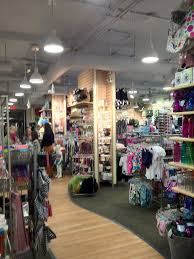
I came across Lester’s, a clothing store for children’s, teens and adults when I was walking around the Upper East Side on ‘Day One Hundred & Four’ on my blog “MywalkinManhattan” when I walked this section of the Upper East Side. I saw crowds of school kids coming in and out of the store with their parents and stopped in for look.
Don’t miss the children’s section
What I discovered was a store that almost sets the tone for what most people would think the Upper East Side teen might want for school, summer camp and casual wear. The store was stocked with all sorts of jeans, tops and shoes for the toddler to teens alike. There are Layette sets for infants…
I came across this unique clothing and accessories store when walking the lower part of the Upper East Side for my project “MywalkinManhattan.com”. I was attracted by the beautiful clothing designs in the windows. It just lured me in with classic tailored look and vibrant colors and patterns to the clothes.
Clean elegant store with vibrant colored clothing
When I walked into Cotelac, I was taken by the clean lines and elegant displays that I thought was unusual for this part of Lexington Avenue. I thought this shop would be located on Madison Avenue or maybe in SoHo. The clothing had a sporty, casual elegance to it and the motives of the clothes were different from the other stores in the area. The prices were also not outrageous as they might be on Madison Avenue…
Don’t miss this delightful little gourmet food shop on the Upper East Side for homey entrees.
I love the window displays here.
*This great little take out food market closed its doors during COVID and never reopened. The store is now pad-locked down when I visited it in February 2024.
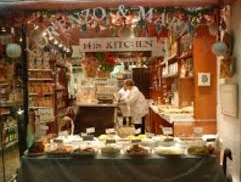
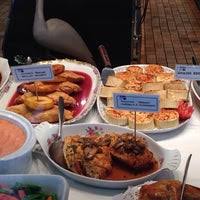
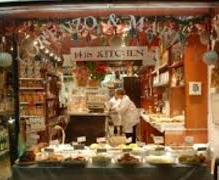
Sometimes there are stores that just don’t fit into any category or they fit into many categories. Lorenzo and Maria’s Kitchen is one of the those stores. It is not a restaurant but more of a upscale, homey gourmet shop selling all sorts of entrée items that are displayed like jewels in the window and when you go inside there are more wonderful things to see and smell when you walk through the door.
Lorenzo and Maria’s Kitchen at 1418 Third Avenue
The store itself it a hark back to the old days of the Silver Palate and Dean & Deluca when they were in their heydays and had not gotten so frou-frou with their food and the customers and were more neighborhood shops that catered to…
I have been running in and out of the City since I started teaching classes again at the college and had a ‘bucket list’ of small museums that I wanted to visit for my blog, “VisitingaMuseum.com” and restaurants I wanted to try before the Summer was over. So there was a lot of running around the last several weeks. That’s why the blogs come out a little later than usual.
I got back to finishing my walk around ‘Midtown East’ by walking the only two Avenues inside the neighborhoods borders, Madison and Park Avenues from East 43rd Street (which hugs the Turtle Bay neighborhood) and East 59th Street (which hugs the Upper East Side & Sutton Place). On the Avenues in this part of the neighborhood is mostly residential and commercial spaces with rows glass boxes on some streets and limestone and marble residential buildings one the others. There is a lot of sameness in the architecture here but don’t let that fool you. There are a lot of interesting things to see and places to visit in this very much working modern neighborhood.
My walk started on Madison Avenue’s commercial district at the start of East 43rd Street where a giant new glass box is being created right next to Grand Central Station. Probably not Mr. Vanderbilt’s vision for the area but I think he would have been impressed by the progress the area has experienced in the last 100 years.
My first stop is admiring and walking into the headquarters of Brooks Brothers Clothing store at 346 Madison Avenue, one of the most American and famous clothing stores in the United States. Stepping into Brooks Brothers is like a step back into time when shopping was still experience and customer service actually meant something. Their displays are elegant without being stuffy.
The elegant displays at Brooks Brothers main floor (now closed)
The store was designed by architects La Farge & Morris in 1915 the Italian Renaissance design with prominent arched entrances, wrought iron arches and carved limestone details around the building. You can see the detail work in the cornices that line the top of the building.
The Brooks Brothers headquarters at 346 Madison Avenue (the now closed headquarters)
The detail work on the now closed Brooks Brothers headquarters
The Golden Fleece emblem of Brooks Brothers on the front of the building.
Another great clothing store is Paul Stuart at Madison Avenue and East 45th Street. The store has been in business since 1938 and carries some of the most impressive clothing and accessories for Men and Women.
Paul Stuart Specialty Store at Madison & East 45th Street
The store was a privately held family business until December of 2012 and then it was sold it’s long time partner, Mitsui. The store has changed a lot since the sale. It once had some of the best customer service in all the specialty stores in Manhattan but when I went to visit on this trip in my shorts and polo, the three sales people on the floor at the time ignored me. It’s not the same store with the orange carpet and older, more mature salespeople.
The Men’s Department after the renovation
When you get to Madison and 55th Street, watch for the security as this is the back section of Trump Tower and East 55th Street between Madison and Fifth Avenues is blocked off by barriers and armed NYPD detectives and police. Only one side of the street is open here so it is best to keep walking.
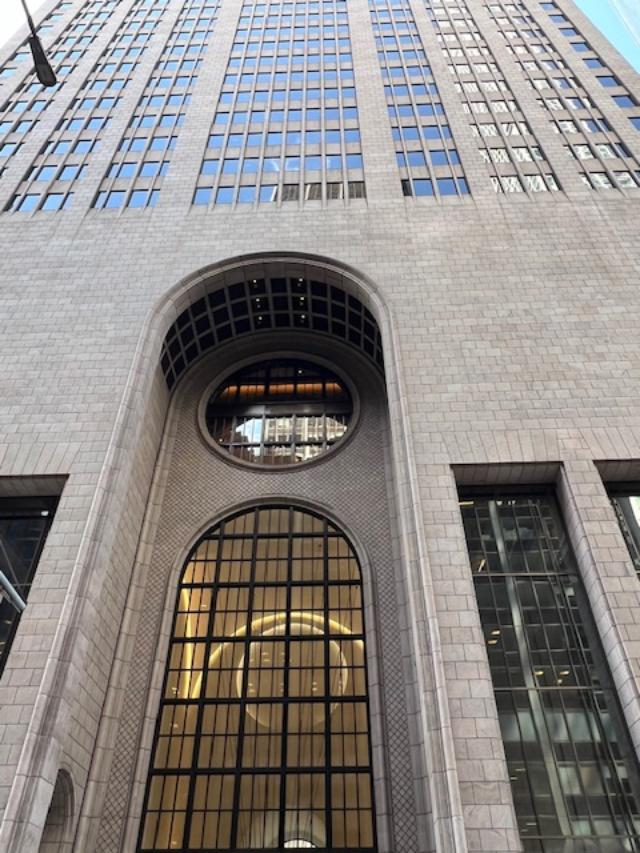
Another impressive building on Madison Avenue is at 550 Madison Avenue, the old AT&T Building with its signature ‘Chippendale’ roof. This building was considered radical and innovative at the same time when AT&T built it to house their world headquarters. The 37 story building was designed by famed architect Philip Johnson in 1984 in the postmodern design. Critics called it ‘Chippendale’ after the famed furniture due to the ‘open pediment’ look of the top of the building based on English furniture design (Wiki). The building is currently have some lobby renovations that I passed.
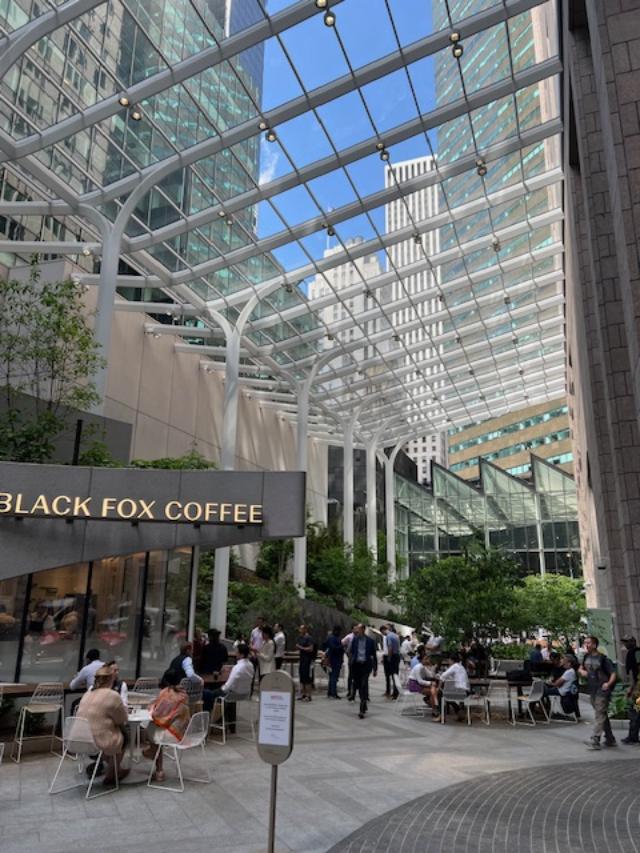
The beautiful atrium that you can sit and relax in between the buildings.
Next to the AT&T Building is the IBM Building at 590 Madison Avenue. This 41 story building was built in 1983 by architect Edward Larrabee Barnes & Associates and developed by IBM and designed in the post-modern design (Wiki).
The IBM Building at 590 Madison Avenue & East 57th Street
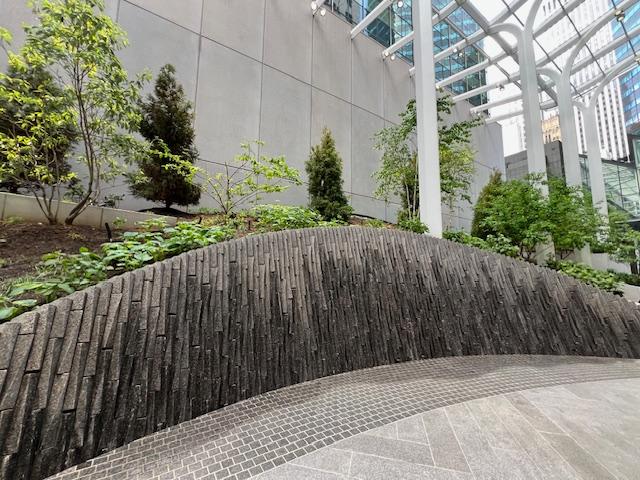
Because of the zoning laws established in 1916, there is a beautiful and relaxing open atrium filled with food kiosks and art work for the public to enjoy on the ground level. It is a nice place to relax after a long walk. Take time to admire the art works that line the atrium.
The Atrium at the IBM Building
Artist George Rickey’s work in 2024 in the atrium.
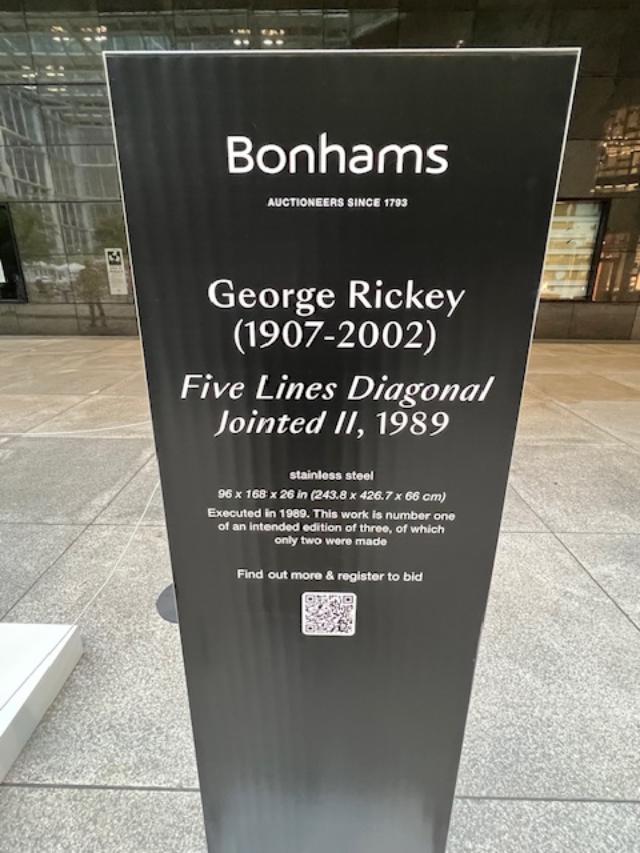
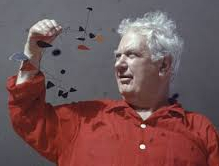
The George Rickey piece inside the atrium “Five Lines Diagonal Jointed II”
Artist George Rickey was an American born artist with multiple degrees and places of study. He holds a MA from B.A. (Modern History), Balliol College, Oxford, U.K. and a M.A. (Modern History), Balliol College, Oxford, U.K. He also did graduate study in Art History, Institute of Fine Arts, New York University, New York, NY. George Rickey worked as painter, muralist, and sculptor. Across his diverse body of work from the paintings of the 1920s through the final sculptures of the 2000s, there are four themes that emerge: Movement, Color, Relationships, and Scale (Artist bio).
One piece of art that stands out is the red geometric sculpture on the corner of Madison and East 57th Street is the great artist Alexander Calder “Saurien” (which is a large reptile), that was created by the artist in his studio in 1975. This is an example of Calder’s “Stoic” work and were called ‘stabiles’ because these abstract works, unlike his floating works of art, stand strongly and firmly into the ground (Art Nerd 2018).
The Alexander Calder sculpture, “Saurien” (now replaced by another sculpture by artist Joel Shapiro)
Walk around this wonderful work by Calder and try to take a breath and understand what the artist was trying to say. It is almost like all the ‘legs’ on the sculpture are trying to show stability and contrast.
Mr. Shapiro is an American born artist from New York City who graduated both with a BA and MA from New York University. He is best known for his sculptures of abstract human forms (Wiki).
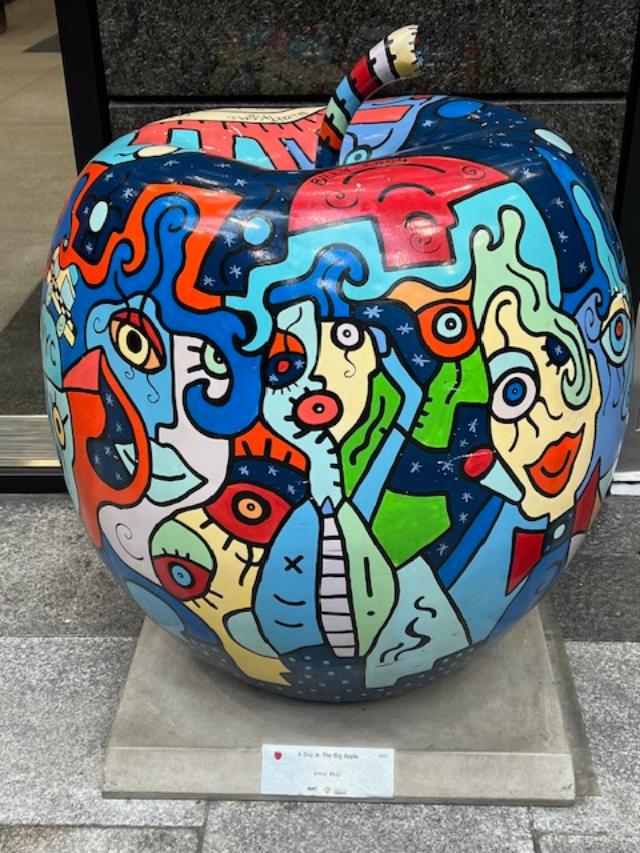
Inside the atrium, there are two interesting pieces of artwork that standout. There are two colorful acrylic apples that are done in colorful motifs that you should not miss. The sculptures were created in 2004 for the “Big Apple Fest” to promote the City’s tourism. Companies paid $8,500.00 to sponsor and $12,500 to keep the apples in which artists were allowed to decorate inside or outside.
One of them is entitled “A Day in the Big Apple” by an artist named Billy.
‘A Day in the Big Apple’ by artist Billy
The other is of a colorful face by artist Romero Britto entitled “New York Future”.
“New York Future” by artist Romero Britto
Romero Britto is a Brazilian born American artist whose colorful works elude the optimism the artist has on his view of the world. He uses bold and colorful patterns to enhance his works (Artist Bio).
When you reach the edge of the neighborhood at East 59th Street, you are greeted by the former GM Building that stretches from Fifth to Madison Avenues. This elegant 50 story building once represented the presence of GM in New York City. It was designed by the architectural firms of Edward Durell Stone & Associates and Emery Roth & Sons in 1968. It was designed in the “International Style” and stands guard at the end of the commercial district of Midtown East and the Upper East Side.
As you cross back down Madison Avenue on East 59th Street, you will notice the ever-changing retail landscape and all the empty storefronts on this part of Madison Avenue. Twenty years ago, this would not have existed, but it is a sign of the times.
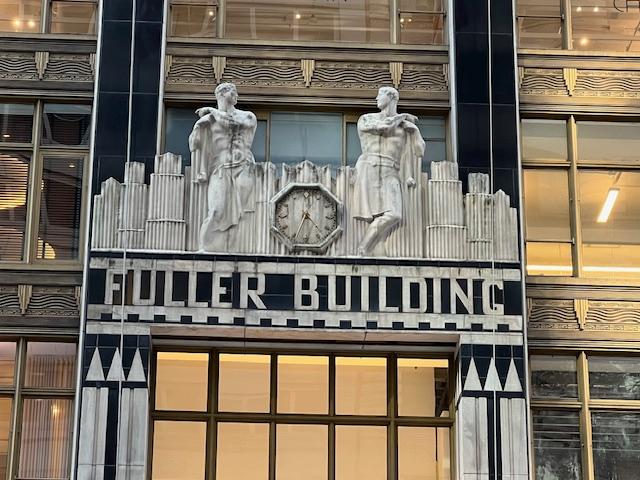
The details of the Fuller Building at 41 East 57th Street
Another interesting building to admire is the Fuller Building at 41 East 57th Street on the corner of Madison Avenue. The building was created for the Fuller Construction Company in 1929 by architects Walker & Gillette in the ‘Art Deco Style’. The building’s exterior sculptures were designed by architect Elie Nadelman. Look at the interesting details not just on the outside of the building but walk into the lobby to take a look around (Wiki).
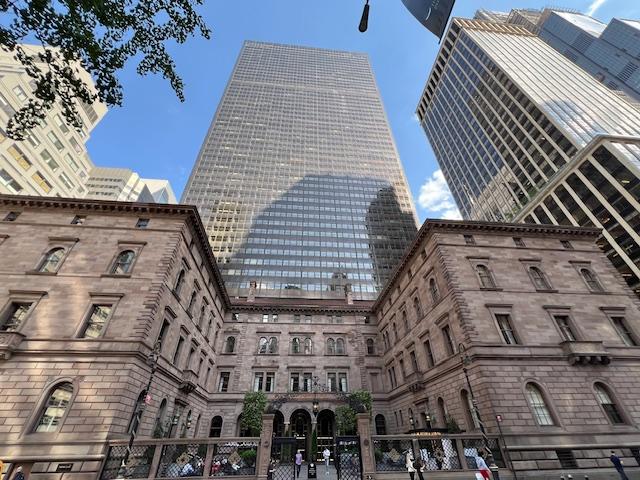
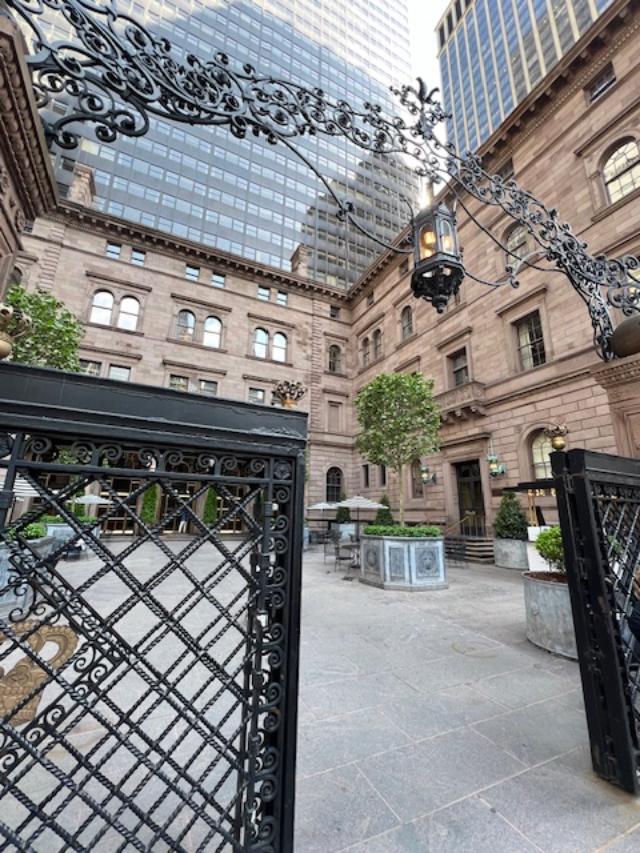
One of the great hotels in New York City stands guard at 455 Madison Avenue and 50th Street, the New York Palace Hotel (formerly the Helmsley Palace Hotel) which is a combination of an old mansion and the modern building behind it. The front of the building facing Madison Avenue is the former Villard Mansion.
The front of the hotel is the “Villard Houses” created in 1882 for Henry Villard, a railroad financier, who worked with the architectural firm of McKim, Mead & White to create a series of six brownstone townhouses facing a courtyard in the ‘Italian Neo-Renaissance style’. Developer Harry Hemsley leased the houses and hired Emery Roth & Sons to create the 55 story modern hotel in the back of the houses.
The Villard Houses part of the New York Palace Hotel
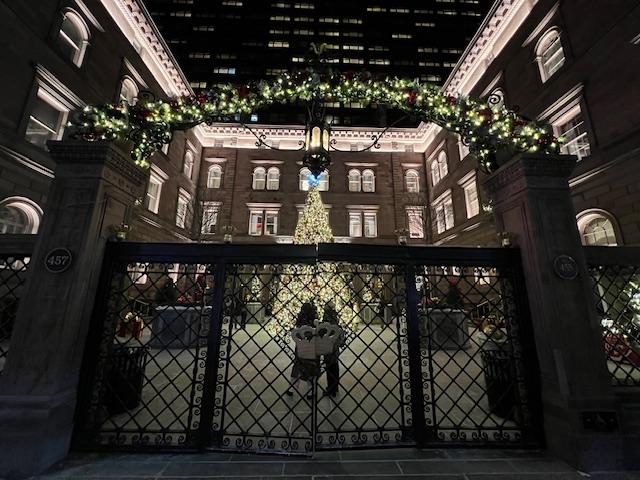
The hotel at Christmas 2024
The Villard Houses at the hotel decorated for the Christmas holidays
I passed the hotel again during Christmas of 2025 and the decorations were even more elaborate during the day. The hotel looks amazing at the holidays.
The front of the Palace Hotel at Christmas
The beautiful wreathes that lined the fence
The Christmas tree at the Palace Hotel
The hotel opened in 1981 as the notorious ‘Helmsley Palace Hotel’ with hotelier Leona Helmsley in charge. Considered one of the best hotels at the time, it was a five star/five diamond hotel (with one of the most nervous staffs in New York City). The hotel has been owned by Lotte Hotels & Resorts since 2015.
The inside of the New York Palace Hotel, the Villard Houses
Take time to walk through the hotel from the East 50th Street entrance to the East 49th Street exit and walk around the public rooms and admire the architectural details from the Gilded Age. There are elegant features from staircases to marble fireplaces and the most beautiful views on Madison Avenue.
I found this pardon of the Helmsley Hotel on YouTube. It is very clever.
Another older hotel that stands out is the Roosevelt Hotel at 45 East 45th Street at the corner of Madison Avenue and East 45th Street. It stands guard next to Grand Central Station. The hotel opened in 1924 and was designed by the architectural firm of George P. Post & Son for businessman, Frank A. Dudley and it was ran by United Hotels Company from a leased agreement with the New York Central Railroad. Like the other hotels that line Lexington Avenue, there used to be a separate passageway from the railroad to the hotel (Wiki).
The Roosevelt Hotel being used as a immigration center in 2023 and 2024
This is similar hotel to take the time to walk through the lobby and look at the vaulted ceilings and the Gilded Age details of the hotels with its thick carpets and elegant staircases. The hotel has a somewhat dark, more European feel to it. There is a lobby restaurant when open that looks pretty interesting.
The entrance to the lobby at the Roosevelt Hotel in its heyday.
As you walk around Grand Central Terminal and through the archway pedestrian tunnels that lead to Park Avenue from East 45th to East 46th Streets, you will be traveling under the Helmsley Building at 230 Park Avenue that stands guard at the beginning to the business and residential neighborhood of Park Avenue.
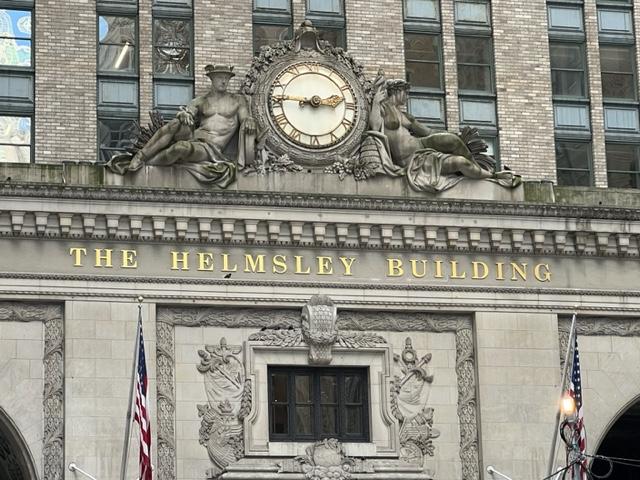
The Helmsley Building was built in 1929 as the New York Central Building for the rail company and was designed by architects Warren & Wetmore, who also designed Grand Central Terminal, in the ‘Beaux-Arts style’. Take time to admire the statuary around the clock that dominates its front and the beautiful stone detail work of the exterior of the building.
The beautiful details of the Helmsley Building on Park Avenue
The beautiful statuary.
The historical marker of the Helmsley Building.
The New York Central used the building as its starting point of “Terminal City”, a series of buildings and hotels that the railroad developed on the top of the rail line (Wiki). The true beauty of The Helmsley Building is at night when the owners put on a light show illuminating the building with colorful spotlights.
The Helmsley Building light show after dark
Park Avenue in the East 40’s is quite amazing at night
All along Park Avenue is a series of ‘glass boxes’ for office buildings and residential towers that line the Avenue all the way up to East 96th Street at the exit of the rail line. Along the way, there are some interesting examples of architecture that line Park Avenue.
The Waldorf-Astoria Hotel at 301 Park Avenue is currently closed and under scaffolding awaiting its new life as a small hotel and condo complex. The hotel, as mentioned in previous blogs in ‘MywalkinManhattan.com’, was built and opened in 1931. It was designed by the architectural firm of Schultz & Weaver in the ‘Art Deco style’ and is probably one of the most famous and talked about hotels in New York City outside the Plaza Hotel (Wiki). There have been so many movies and TV shows filmed and written about the hotel to count and the restaurants inside the hotel were some of the better ones in New York City. The building will open sometime in the future.
The Waldorf-Astoria Hotel at 301 Park Avenue (currently under renovation)
The only part of the hotel I could photo while under renovation in 2024.
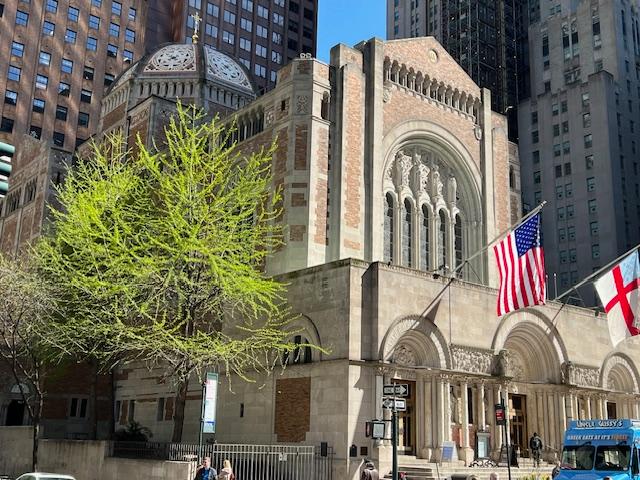
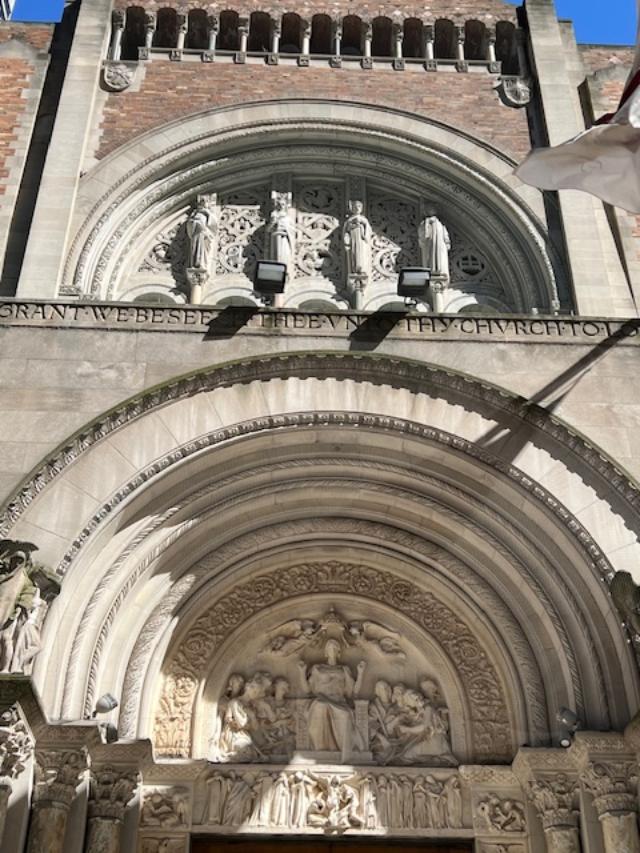
St. Bartholomew’s Episcopal Church at 325 Park Avenue is one of the older buildings on Park Avenue and stands alone amongst the bigger buildings on this part of Avenue. Though the congregation was started in 1835, this structure was built between 1916-17 and designed by Bertram Goodhue, who had designed the St. Thomas Church on Fifth Avenue (See Walking the Border of Midtown East-MywalkinManhattan). The church was designed in the ‘Byzantine Revival Design’ and he was required by the congregation to retain the old church portal from the former church on Madison Avenue and East 44th Street in the new church design (Wiki).
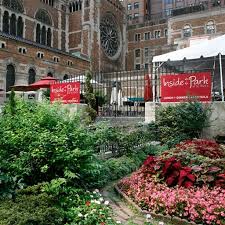
Look at the details of the old church and the stained-glass windows. In the Summer months, there is a wonderful (yet somewhat over-priced) restaurant in the courtyard of the church and there are art markets during the Summer and Christmas holiday season that you should visit. There is also afternoon music at certain times of the year.
St. Bart’s restaurant and terrace during the summer
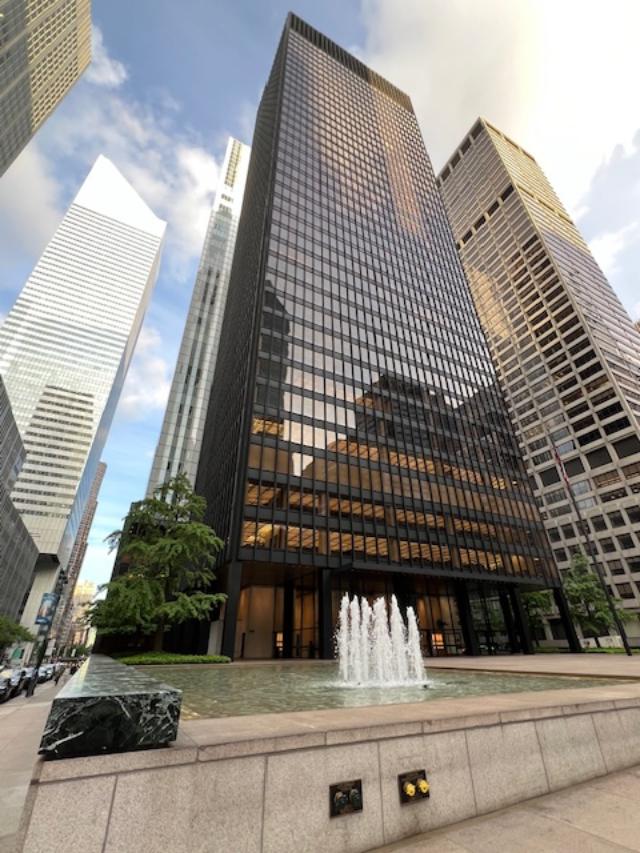
One standout, innovative building on Park Avenue sits between East 52nd and 53rd Streets is the Seagram Building at 375 Park Avenue. The building and its exterior designs were created by German American architect Ludwig Mies van der Rohe with the interior Four Seasons Restaurant designed by American architect Philip Johnson.
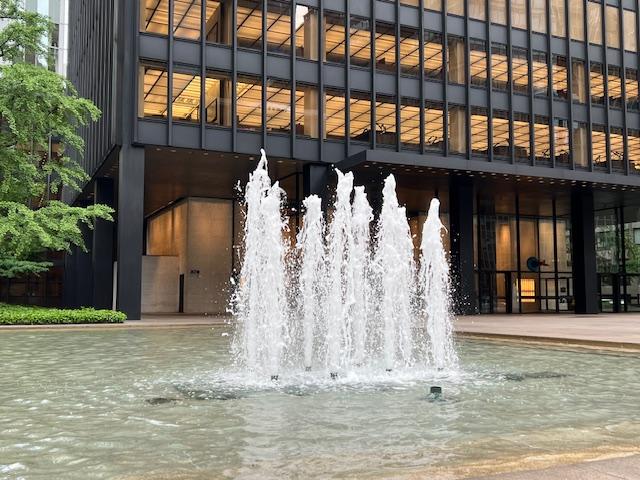
The fountains are well known in their own right being used in TV and movies
The building was featured prominently in the first episode of “That Girl” in 1965.
This 38-story building of wonder was innovative in its time. Finished in 1958 as the corporate headquarters of Joseph E. Seagram & Sons, the building was noted for its ‘functional aesthetics’ and a prominent example of ‘corporate modern architecture’. Keeping up with modern building codes, the architect used ‘non-structural bronze I-beams and large glass windows’ to create the cool and well-toned exterior structure of the building (Wiki).
Also utilizing the 1916 building code and the new use of open public spaces, the building was one of the first in New York City to embrace the open-air plaza that was prevalent in the 1980’s and early 90’s design. It was an extremely innovative design at the time and still sets the standard for the modern ‘glass box’.
One of the last stand out buildings that I saw on Park Avenue before my walk back down the Avenue was at 465 Park Avenue, The Ritz Tower, an apartment hotel. This elegant residential building stands out because of its details on the exterior of the building and I later learned it was once home to the famous French restaurant, La Pavilion.
This elegant building was designed by architects Emory Roth and Thomas Hastings for journalist Arthur Brisbane, who was the developer. The apartment hotel was managed by the Ritz-Carlton Company. The exterior of the building has many carved stone features so look closely from the other side of Park Avenue to admire the detail work. Don’t stare too long because the doorman gets a suspicious look if you look too long. He kept looking me over as I admired the building and the read the plaques.
Look at the elegant details of the Ritz Tower
The historical plaque of the Ritz Tower.
Up and down the Park Avenue Mall is the work of artist Alex Katz “Park Avenue Departure”, of which it looks like the back of a woman who is walking away from some place. The work is a depiction of the artist’s wife, Ada. Each of the works along the mall is changed slightly to show the sculpture in motion as if it is walking down the mall. This street art exhibition will run through November 2019 (The Fund for Park Avenue).
Alex Katz’s Park Avenue Mall exhibit “Park Avenue Departure” (closed in December 2019)
American artist Alex Katz who was born in Brooklyn, NY and is a graduate of Cooper Union Art College. His long career has seen many changes in art form and today some of his concentrations are in landscape and portraiture. His work can be seen in museums all over the world.
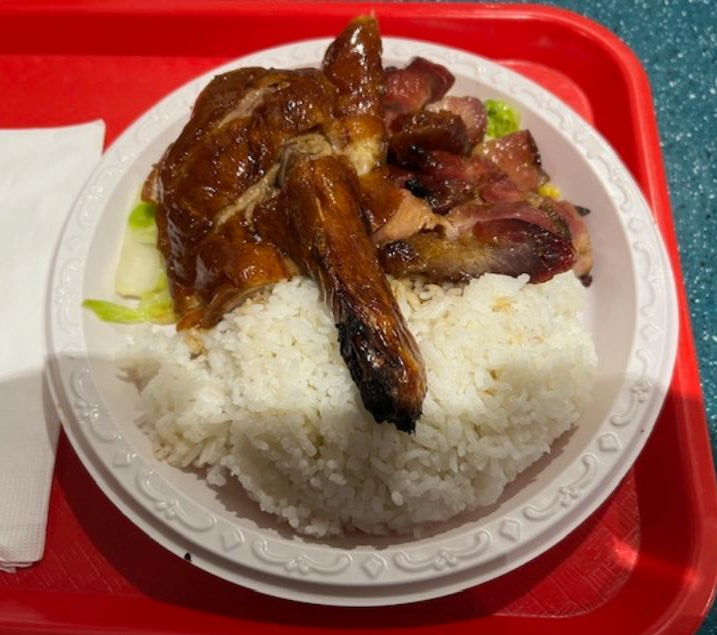
For lunch and dinner that afternoon, I ate at Hop Won Chinese Noodle Shop at 139 East 45th Street between Lexington and Third Avenues (See reviews on TripAdvisor and DiningonaShoeStringinNYC@Wordpress.com). After a long day of walking, I treated myself to a plate of mixed roasted meats, duck and pork, with a side of rice ($9.00) and an egg roll ($1.38). Their roasted meats are a lacquered delight with the rich, crackling skin of the duck worth every bite. The food here is delicious and so reasonable for Midtown East.
By the end of the evening, I got a chance to double back around the Helmsley Building and look at the detail work of that structure as well and then walked up and down the tiny Vanderbilt Avenue between East 45th and 47th Streets that line next to Grand Central Terminal. The most notable building on this block is the Yale Club at 50 Vanderbilt Avenue. The famous clubhouse was designed by Yale Alumnus and architect James Gramble Rodgers, and it opened in 1915.
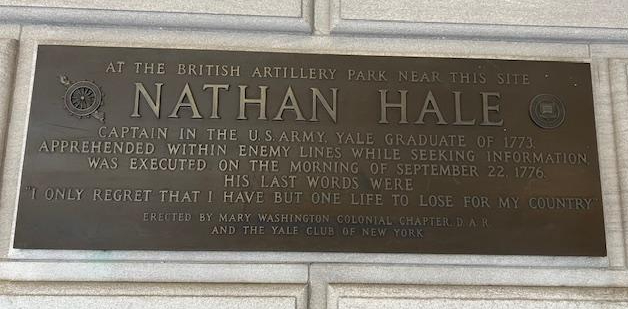
The Yale Club at 50 Vanderbilt Avenue; notice the plaque to Nathan Hale on the bottom left
The most notable item outside the club is the historical mark where supposedly Patriot Nathan Hale was hung. There is a conflict to where it actually took place and there is another site on the Upper East Side (See Walking the Upper East Side Streets in MywalkinManhattan), where that plaque is outside the local Pier One. I personally like that theory better. Where else in American could a Patriot of the Revolutionary War be hung in that two hundred years later would house a retailer that sells Christmas chukkas made in China?
That’s what I love about Manhattan!
Check out my other blogs on Walking Midtown East:
Day One Hundred and Forty-Three-Walking the Borders of Midtown East:
Folly is a cute little gift shop on the Upper East Side
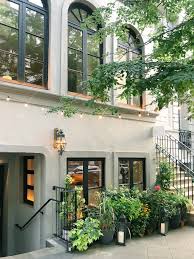
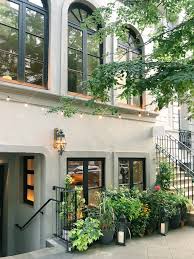
I came across the gift shop, Folly, when I was walking the lower part of the Upper East Side for my blog, “MywalkinManhattan.com” and visited it a couple of times when I was in the neighborhood. It is a elegant and beautifully designed shop by owner, Emily Hottensen. Ms. Hottensen runs this delightful shop at the lower lever of an Upper East Side brownstone, which adds to the uniqueness of the design and makes it very welcoming to the customer.
When you walk through the door, you are greeted by her partner, her little dog whose charm adds to the customer service experience. Her dog knows how to charm a potential customer by licking your leg and expecting a belly…
Amado on 3rd Summer 2023 Hinson Wu’s collection is in the window.
I love this quirky clothing store run by two women who are best described as ‘engaging’, Merri and Roberta. They will keep you laughing and welcomed in your visit to their store. I walked past the store when visiting the Upper East Side for my walking project, “MywalkinManhattan.com” and thought there window display was interesting (Please check the blogs on ‘Walking the Upper East Side’ more information on the store).
The fashions at Amado on 3rd in the Fall of 2022
The beautiful knit hats in Fall 2022
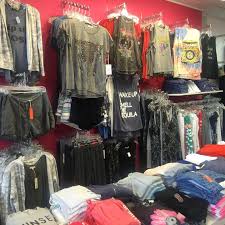
Amado on 3rd is a very unique clothing store, carrying brands both domestic and abroad that I have never seen before like Oui, a French company for cashmere sweaters. The clothes are fashion forward for both casual and professional and are items the everyday woman could wear to the office or for an evening out on the town. It is trendy without being over the top. Items like nicely printed tops, colorful geometric sweaters, multi-colored and dyed fur jackets and knit and cashmere hats. These designs you will never see in the department stores.
Winter Knits and outfits at Amado on Third (plus refreshments)
The prices here aren’t cheap as a cashmere sweater will cost you between $200-$275, a dyed fox jacket around $600 and knit hats around $40 but the quality and materials match the price points. The clothes work almost as wearable art.
During a recent visit to look over their Spring clothing lines, they have beautiful floral prints by Tizzie, that are bright, elegant and have beautiful floral motifs on them that would match with jeans and slacks alike. These come in both floral, geometric and solid colors and offer the most vibrant colors. A line of elegant tops by Petit Pois were also very wearable and had nice geometric patterns to them.
One of Tizzie’s colorful blouses (may not be available now)
The Spring Arrivals on display at Amado on 3rd
On recent visit to the store to look at their Summer clothing, they have an interesting and colorful line of blouses from Gretchen Scott that I have never seen in the department stores. Again the lines are colorful without begin gaudy and go great with a pair of slacks, a skirt or jeans.
Gretchen Scott Blouse (may not be available now)
There is new transitional Fall clothing coming in that came in from a vendor called Kukon that were cotton tops with a gray colored motif on each of them. Very wearable with anything. The Fall clothing are now entering the store and there are many interesting sweaters and blouses coming into the store. Vendors being features are from Kokun, Cyrus, Tizzie ad Yah (not all lines are available at the same time.
One of the new blouses by Tizzie
The store also has an interesting line of jewelry and accessories that you should check out. Every season there is something new to see. There is a very nice line of young girl’s dresses that are Torie Birch inspired and an interesting line of Japanese jeans stuffed with sequins on them in the shape of Bugs Bunny and other cartoon characters.
Spring 2021 fashions at Amado on 3rd
The best part of the store is the level of customer service you get from the ladies. It is excellent. They know their merchandise and who their customer is walking through the door. They can tell you how to put outfits together, what item might look nice on a certain woman and how to mix and match. They have extensive knowledge of the clothes they carry and will pull each piece off the rack and explain it to you. As one of the owners explained to me, “We buy for women like us who like youthful, elegant clothing that matches our lifestyle. There really is something for everyone here.”
Tizzie Blouse at Amado on 3rd for Spring 2021
Another aspect is the free food items to munch on when you are shopping. They might open a bottle of wine, have an assortment of cookies and fruit or cheese and crackers out for the customers to nibble on while they are looking around. On a recent trip I nibbled on a few jellied candies that the ladies put out. I thought that was a nice detail when shopping and a way of keeping the customer engaged.
The Holidays at Amado on Third:
Keeping with the spirit of Halloween the fun and original displays at Amado on Third
They also don’t forget the furry four-legged customers who come into the store with treats for dogs and a water dish outside the store. They also had a small mirror outside during the warm months for the dogs to admire themselves. These are those interesting touches that most stores don’t offer.
For Men, they have an interesting line of colorful socks which are now all the trend for $15.00 in all patterns and styles.
The Winter merchandise is just coming in and there are many printed scarfs and fringed printed gloves that will go with any look.
Amado on 3rd has its Fall 2020 styles on display in time for the holidays
So if you are looking for the unique piece of clothing, jewelry or accessory that you might not find in boutiques and department stores around New York City, start at Amado on 3rd and let the ladies help you make a selection. If anything, you can still indulge in a cookie while you are walking around the store.
Spring 2021 fashions at Amado on 3rd
Even during COVID-19, the store has a personality. There are stylish face masks with geometric and colorful styles in the front display windows and the store still shows off it’s new innovative fashions. It’s nice when stores adapt to the times. These stylish face masks run between $75-$150 and are made by a graffiti artist who will soon be selling sneakers to match at the store.
COVID styles can still be fashionable. This is shopping made interesting.
The most interesting sneakers that are handmade in Brazil by a local artist are now being featured. He is the same artist that created the masks above. The sneakers sell for $275.00.
Spring 2022 has brought in a new look and attitude of the cosmopolitan woman.
Hand-painted blouses and tops from Melarosa Italy Clothing are featured:
The Spring 2022 collection includes beautiful hand-painted tops by Melarosa Italy Clothing, Whyc 1 YC and Inight Insights clothing that brings new directions in a women’s wardrobe.
Spring Fashions at Amado on 3rd for 2022
Some of the elegant separates at Amado on Third for the Spring 2022 season
These elegant looks can be worn either casual or dressy.
Amado on Third’s store selection for the Spring of 2022. There are a lot of colorful, dressy casual looks for the upcoming months.
In the Summer of 2023, the shop carried an array of summer colors with pastels and light hues. There was an interesting collection of pieces from designer Hinson Wu.
The interesting pastels and light hues with the two side tops by Hinson Wu
Hinson Wu’s pastel top
The Summer 2023 collection
Beautiful summer tops at Amado on 3rd
The colorful summer line
The Spring Collection 2024:
The Spring Collection 2024:
What I like about the clothing at Amado on 3rd is that you will not find these unique pieces at department stores. This collection is tailored by the owners of the store to their clients. There are many beautiful fashion forward items in the collection every season and the merchandise changes every month.
*The author wants to thank Roberta and Merri, the owners, for supplying extra pictures of the shop for the blog. It shows the true spirit of the store. They make up the heart of Amado on Third.
During the Christmas holiday season, I visited the store to see all their beautiful Fall merchandise and the store is a true hidden gem of beautiful high quality merchandise at reasonable prices. This coupled by excellent personal service.
The display window of Christmas pink
The wonderful selection of hats and scarfs
The assortment of sweaters in soft tones
The knit hats and gloves are perfect for the holidays
1322a Third Avenue between East 76th & 77th Street
New York, NY 10021
(917) 965-2852
merri258@hotmail.com
I love this quirky clothing store run by two women who are best described as ‘engaging’, Merri and Roberta. They will keep you laughing and welcomed in your visit to their store. I walked past the store when visiting the Upper East Side for my walking project, “MywalkinManhattan.com” and thought there window display was interesting (Please check the blogs on ‘Walking the Upper East Side’ more information on the store).
Amado on 3rd is a very unique clothing store, carrying brands both domestic and abroad that I have never seen before like Oui, a French company for cashmere sweaters. The clothes are fashion forward for both casual and professional and are items the everyday woman could wear to the office or for an evening out on the town. It is trendy…
For those of you who like to visit small family run stores, check out my blog, “LittleShoponMainStreet@Wordpress.com” to see all the unique stores I have visited on my walks that hark back to a time not too long ago when we dealt with the owner of the store or individualized shopping with excellent customer service before Amazon took over.
The inside of Bon Vivant on the Upper East Side.
*Bloggers note: the store in Manhattan closed in August 2022. It will be reopening in Jersey City, NJ soon).
I thought Bon Vivant was such an interesting little pastry shop to come across when I was visiting the Turtle Bay neighborhood for my blog, “MywalkinManhattan.com”. It is so unassuming from the street but such a little delight from the inside.
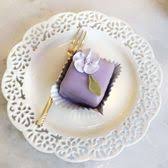
The store is a small pastry shop specializing in Petit Fours of various flavors in two different sizes and small pastries. The small cakes look like works of art in small cases. There were a few decisions that I faced between the Lemon or the Lavender cake, a few small ones ($3.50) or one large one ($6.50) but with the help of the woman at the counter I decided on the Lavender.
Tiny Lavender Cake
The Lavender cake was sweet without being overwhelming…
After my long walks around the classic New York neighborhoods of Sutton Place, Beekman Place and Turtle Bay, it was now time to turn my attention to the commercial part of Manhattan and the shopping districts that are popular with the tourists. This neighborhood is in a whirlwind of change right now as everything old is being knocked down and replaced with shiny new office towers and large glass boxes. Slowly the character of this part of Midtown is changing from the old stone buildings with the beautifully carved embellishments to a lot of glass towers lining both the Avenues and the Streets of the neighborhood. I have never seen so many changes over a twenty year period.
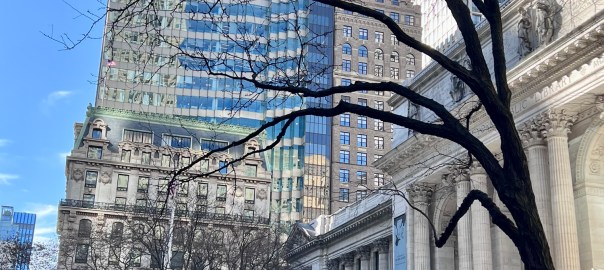
I have also seen the decline of the Fifth and Madison Avenue exclusivity in the shopping district from East 60th Street to East 43rd Street right near the New York Public Library. All the big department stores one by one have closed leaving only Saks Fifth Avenue and specialty store Bergdorf Goodman both Men’s and Women’s stores left. Even those stores have gone from elegant well-bred stores to somewhat showy and glitzy as I am not sure they know who their customer is anymore. There are a lot of empty storefronts because of the rising rents.
The selection of stores and restaurants lining this side of the neighborhood are still somewhat exclusive but it reminds me more of North Michigan Avenue in Chicago than Fifth Avenue in New York City. There seems to have been a dispersion of stores from the street over the last two years to areas like Madison Avenue or even SoHo or Tribeca downtown. There are a lot of empty store fronts both on Fifth and Madison Avenue which you never saw until the Stock Market Crash of 2008. The area has not fully recovered from that yet.
Still the borders of the neighborhood still hold some of the most iconic and famous buildings in Manhattan and interesting shops and restaurants along the way. Some of the most famous hotels in New York City are located in this neighborhood with their classic old world charm and their elegant stonework entrances.
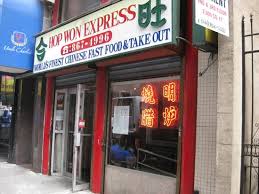
I started my tour of the neighborhood by revisiting the length of Lexington Avenue from East 43rd Street and walking up the Avenue to East 59th Street and then crossing over East 59th to Fifth Avenue. First I stopped for some lunch at Hop Won Chinese Noodle Shop at 139 East 45th Street between Lexington and Third Avenues (See reviews on TripAdvisor and DiningonaShoeStringinNYC@Wordpress.com).
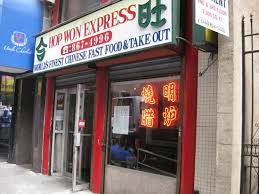
Hop Won Chinese Noodle Shop is one of the few remaining restaurants in the former brownstone section of the neighborhood that has not been razed for an office building. The food is so good and different from the other Chinese take out places in Midtown. They specialize in roasted meats, noodle soups and dishes while keeping the traditional Cantonese favorite for the busy office workers in the area.
Hop Won Chinese Noodle Shop at 139 East 45th Street
My first and second trips to the restaurant I wanted to concentrate on the roasted meats. You could not taste a more moist or succulent meat outside of Chinatown. The Roast Pork, Roast Duck and Boneless Roast Pork with rice makes a nice lunch. The meats are perfectly marinated, lacquered and roasted to perfection with crackling skin and the taste of soy and honey. Their prices are very fair and the selection of combination dishes all run under $10.00.
The delicious roasted meats at Hop Won
After lunch, I walked up the familiar Lexington Avenue to East 59th Street, passing well-known hotels and office buildings that still make up the character of the neighborhood. One place you will have to stop in and try is Hotel Chocolat at 441 Lexington Avenue for dessert and chocolates.
Hotel Chocolat at 441 Lexington Avenue (Closed in March 2022)
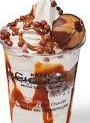
I stopped at the store on a revisit to the neighborhood and had the most amazing sundae called “The Billionaire’s Sundae” ($6.00). This is the most delicious dessert I have had in a long time. The sundae was a soft swirl of vanilla ice cream with chocolate pieces, crunchies, caramel and then topped with a chocolate/caramel topping. It was decadent.
‘The Billionaires Sundae’ at the Hotel Chocolat
In between the ‘glass boxes’ there are still many buildings that stand out and you can read about them more in my travels around Turtle Bay (Day One Hundred and Forty Walking Turtle Bay).
As I rounded along East 59th Street, I saw in the distance the now bankrupt Barney’s specialty store. Talk about a store that traveled in full circle from a discount store to exclusivity now into bankruptcy with the changing tastes and buying habits of customers all over the city. I’m surprised with the rent for this location they are bothering to keep it open.
Further down the street passing various stores and restaurants on the corner of Fifth Avenue and East 59th Street is the famous Sherry-Netherland Hotel at 781 Fifth Avenue. Built between 1926-27 by the architects Schultz-Weaver with Buckman and Kahn in the Neo-Romanesque/Neo-Gothic style and you can see the stone work details around the edges of the building. It was once the tallest apartment hotel in New York City.
When walking around the corner East 59th Street to Fifth Avenue, you will pass the General Motors Building at 767 Fifth Avenue. This modern skyscraper was designed in the ‘International style’ by architects by Edward Durell Stone & Associates with Emory Roth & Sons in 1968 and is one of the few buildings that utilizes a full city block (Wiki). The building was used by General Motors as their New York headquarters until 1998 when they sold the remaining interest in the building.
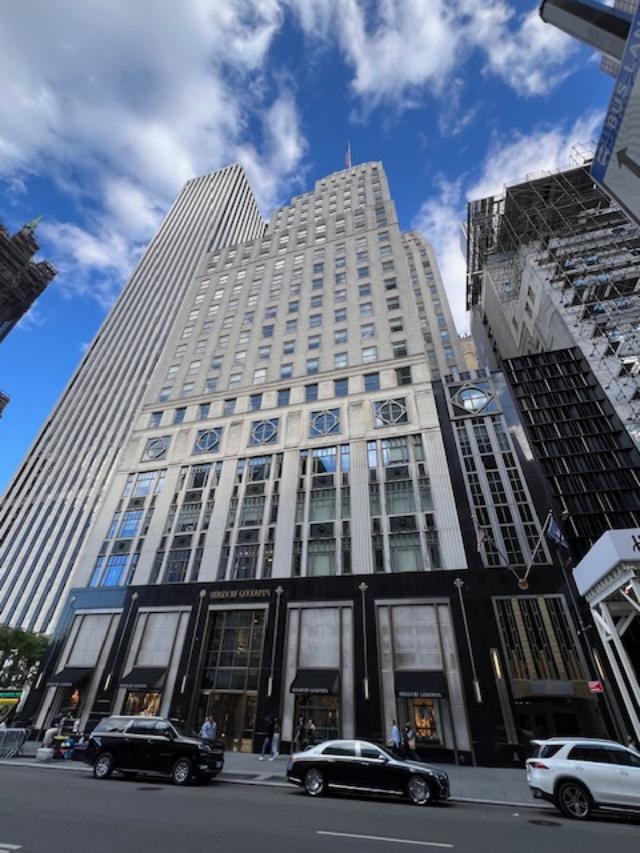
Next door to the GM Building is 745 Fifth Avenue, the home of Bergdorf-Goodman Men’s Store and once the home to FAO Schwarz Toy Store from 1932-1986. You can see this classic New York skyscraper in many TV shows and movies including the theme song for the opening of “That Girl” and in the FAO Schwarz scene of the movie “Baby Boom” with Diane Keaton. This beautiful ‘art-deco style’ building was designed by architects Buckman-Kahn in 1930.
745 Fifth Avenue on TV in the opening of “That Girl” with the Bergdorf-Goodman store window on the corner of 5th Avenue and 59th Street where she is looking into. Check it out in this episode of “The Apartment”.
The architecture continues to evolve on Fifth Avenue as you continue to make your way down the street.
Watch the traffic and security as you pass Trump Tower at 721 Fifth Avenue. I could write an entire book on the building of this famous and iconic structure of the 1980’s. The building was designed by architect Dur Scutt of Poor, Swanke, Hayden & Connell. It is tough to visit the building with all the security but still it is interesting to see the shops and inside design.
There is a combination of building designs and structure along the way. Located on the corner of Fifth Avenue and 55th Street is one of the most famous hotels in New York City, The St. Regis Hotel. This luxury hotel on the corner of 55th Street between Fifth and Madison Avenue’s at 2 East 55th Street was built in 1904 by John Jacob Astor IV.
The hotel was designed by architects Trowbridge & Livingston in the French Beaux-Art style and was the tallest hotel in New York when it was built. Take time to go inside and see the true beauty of this hotel which was fully renovated in 2013. There are interesting restaurants to eat at and they have a wonderful (but very pricey) Afternoon Tea. The hotel which is a Five Star and Five Diamond hotel has been featured on countless TV shows and movies.
The Front entrance of the St. Regis Hotel off Fifth Avenue
On the corner of Fifth Avenue and 52nd Street sits a true jewel box in the Cartier store at 653 Fifth Avenue. The store was once home to Morton Freeman Plant, the son of railroad tycoon Henry B. Plant. The home was designed by architect Robert W. Gibson in 1905 in the ‘Neo-Renaissance style’. Mr. Plant felt later that the area was getting too ‘commercial’ and moved further uptown and Cartier bought the building in 1917 (Wiki).
Cartier finished a renovation on the store in 2016 to bring back the true beauty and elegance of the store and of the building. Don’t miss the opportunity to walk around inside and see the refined displays of merchandise.
The Cartier store after the renovation
Next to the Cartier store at 647 Fifth Avenue is the next Versace store which is housed in the left side of the Vanderbilt ‘ marble twin mansions. The Vanderbilt family had bought the land and built twin buildings on the site at 647-645 Fifth Avenue. Designed by architects Hunt & Hunt in 1902, the homes were first leased out as homes until about 1915 when businesses and trade came to the area.
647 Fifth Avenue in 1902
After passing out the Vanderbilt family in 1922, the building went through many incarnations and 645 Fifth Avenue was torn down for the Best & Company Department store in 1945 only to be torn down again in 1970 for the Olympic Tower (which still stands in the spot). The building was renovated in 1995 by Versace as their Fifth Avenue store and spent six million dollars to create the store that greets customers today.
The true catalyst and center of the luxury shopping district though is St. Patrick’s Cathedral which sits gracefully at the corner of Fifth Avenue between 51st and 50th Streets. The Diocese of New York was created in 1808 and the land for the Cathedral was bought in 1810. The Cathedral was to replace the one in lower Manhattan.
This current Cathedral was designed by architect James Resnick Jr. in the Gothic Revival style. Construction was started in 1850 and was halted because of the Civil War and continued in 1865. The Cathedral was completed in 1878 and dedicated in 1879. The Cathedral was renovated in 2013 and this shows its brilliance (Wiki).
During the holiday season the Cathedral is beautifully decorated, and the music can be heard all over Fifth Avenue.
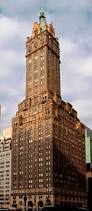
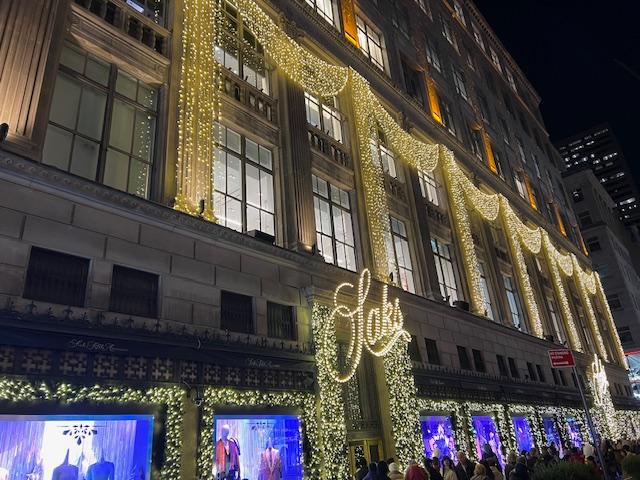
Next door to St. Patrick’s Cathedral is Saks Fifth Avenue’s headquarters. The business was founded by Andrew Saks in 1876 and was incorporated in 1902. After Mr. Saks died in 1912, the business was merged with Gimbel’s Brothers Department Store as Horace Saks was a cousin of Bernard Gimbel. In 1924, they opened the new store at 611 Fifth Avenue and changed the name of the store to Saks Fifth Avenue (The old store had been on 34th Street previously and called Saks 34th). The building was designed by architects Starrett & Van Vliet and designed in a ‘genteel, Anglophile classicized design’. (Wiki).
The store has recently gone through a major multi-million dollar renovation and is worth the time to look around the new first floor. The new cosmetic department is on the lower level along with jewelry so it is a different shopping experience.
Another former business that was well known on Fifth Avenue for years was located at 597 Fifth Avenue was Charles Scribner Sons Building. It originally housed the Charles Scribner Book Store replacing the old store on lower Fifth Avenue. The building at 597 Fifth Avenue was designed by architect Ernest Flagg in the Beaux Arts style between 1912-13 (Wiki). The bookstore moved out in 1980 and the company became part of Barnes & Nobel Bookstores and the building has been sold since. It now houses a Lululemon Athletica store but you can still see the Scribner’s name on the outside of the building and the Landmarked bookshelves inside the store.
The Charles Scribner Sons Building at 597 Fifth Avenue
The rest of Fifth Avenue is newer office buildings with retail space on the bottom levels some filled and some empty. When I was growing up, this part of Fifth Avenue was filled with high end stores. Today it is a combination of chain stores found in the suburbs or are just sitting empty, a trend found all over this part of Midtown East.
At 551 Fifth Avenue another interesting building, The Fred French Building really stands out. The building was created by architects H. Douglas Ives and Sloan & Robertson in 1927 in the ‘Art Deco Style’. Really look at the detail work all the up the building which was done in an ‘Eastern Design’ style with winged animals, griffins and golden beehives made to symbolize according to the architect ‘commerce and character and activities’ of the French companies. The outside material used on the building is faience, a glazed ceramic ware (Wiki).
The detail work on the top of the Fred French Building
When you cross over to West 43rd Street, you will see the elegant Grand Central Station complex which covers from West 42nd to West 45th Streets with the train station facing the West 42nd Street entrance to the MetLife Building (forever known at the Pan-Am Building for those of us to remember it) toward the back. It hovers over Grand Central like a modern gleaming giant. It should never been built there but that was the modern way of doing things in the 1960’s.
One of the best movie scenes of Fifth Avenue & the Pan-Am Building from “On a Clear Day you can see Forever”
Grand Central Station, once the home of the New York Railroad is one of the famous buildings in New York City. Saved from demolition in the 1960’s by Jacqueline Kennedy Onassis and other concerned preservationists.
Grand Central Terminal dominates this part of the neighborhood at 89 East 42nd Street
The magnificent clock “The Glory of Commerce” in front of the East 42nd Street skyline.
Grand Central Terminal was built between 1903-13 and opened in 1913. This beautiful rail station was designed New York Central Vice-President William J. Wilgus and the interiors and some exteriors by architects Reed & Stem and Warren & Wetmore in the Beaux Arts design. The exterior facade of building including the famous “Glory of Commerce” were designed by French artists and architects Jules Felix Coutan, Sylvain Salieres and Paul Cesar Helleu (Wiki).
There is a true beauty to the statuary and stone carvings on the outside of the building.
‘The Glory of Commerce’ at the front of the building.
The terminal housed the New York Central Railroad and some of the busiest routes. It now houses the New Haven, White Plains and Poughkeepsie lines and stop overs for some Amtrak lines. In 2020, it was house the new lines of the Long Island Railroad.
The interior of the building is just as spectacular. When you walk into the building and stare from the top of the stairs, you see the power and bustle of New York City. When you look up you will see the famous ‘Constellation’ ceiling cleaned and lit with all the stars in the sky. There is still a small portion of the ceiling that was not cleaned to show how dirty it once was before the renovation.
Take time in the building to walk around and look up and down. This is an amazing building that takes time to look around. I will admit that security is tight around the building so don’t be to obvious as a tourist. Take the escalator to the bottom level to the Food Court. If you can’t find it down here, you won’t find it. Every restaurant is represented down here and there are public bathrooms as well.
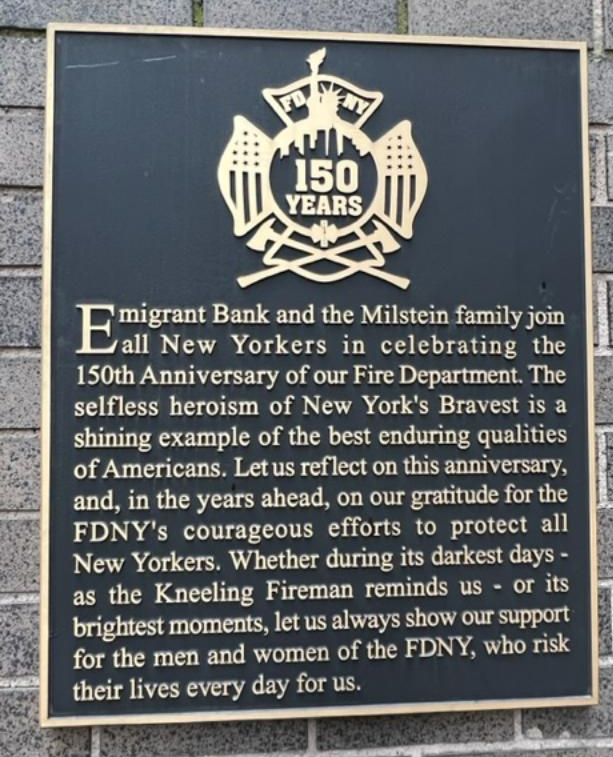
After touring Grand Central station, I walked back down West 43rd Street to Fifth Avenue. Outside the Emigrant Bank is the statue of ‘Kneeling Fireman’ which was once placed by Times Square when it first arrived in this country from Parma, Italy. The statue arrived in this country on September 9, 2001, on its way to Missouri as it had been commissioned for the Firefighters Association of Missouri (Wiki).
After the attacks on 9/11, the statue was presented to the Federal Law Enforcement Foundation as a gift to the City. With funding from the Milstein family, the statue was mounted and placed in front of their hotel, The Milford Plaza which is in the Times Square area. It was a placed of remembrance for people to gather after the attacks (Ciston 2011).
The Kneeling Fireman outside 6 East 43rd Street
The Statue is now placed in front of the Emigrant Savings Bank headquarters at 6 East 43rd Street and funding from the Millstein family provided a permanent home for the statue.
The Kneeling Fireman with the Fireman’s Prayer in the front of it
The Kneeling Fireman Plaque outside the building
People still come to visit the statue (which had been in storage for a decade until 2011) but its meaning seems different now with so many years passing. Still, it is an important part of the City’s history at a time when it brought everyone together.
The other plaque
Across the street from the statue, I noticed an unusual building that was part marble and part modern. This is the Fifth Church of Christ Scientist. The building was built in 1921 for the Church in the Classic Revival style and as part of the agreement there is a 21-story glass tower on top of it (Wiki). It really does stand out for its unique design. Still, it does not look that big from the outside but the building does seat 1800.
The Fifth Church of Christ Scientist at 340 Madison Avenue
From 43rd Street, I walked back up Fifth Avenue to the other side of the street and the buildings on this side of the street contains its share of architectural gems. The lower part of this side of Fifth Avenue is going through a transition as a lot of buildings exteriors are either being renovated or the building itself is being knocked down and a new one is rising. Many of the buildings here are quite new or just don’t stand out.
Once you get to West 49th Street things start to change when you enter Rockefeller Center which is across the street from Saks Fifth Avenue. The Rockefeller Center complex covers 22 acres with 19 buildings including Radio City Music Hall and the famous ice-skating rink that is holiday tradition once the famous tree is lite. The complex stretches from East 48th to East 51st Street from Fifth to Sixth Avenues. Rockefeller Center was built in two sections, the original 16 building of the complex and then the second section west of Sixth Avenue (Wiki).
Rockefeller Center at 45 Rockefeller Plaza on Fifth Avenue
The land under Rockefeller Center was owned by Columbia University (which was later sold) and the building of the complex started at the beginning of the Great Depression. Construction started in 1931 with the first section opening in 1933 and the remainder of the complex opening in 1939 (Wiki).
The original section of the complex was built in the ‘Art Deco style’ and the extension on Sixth Avenue was built in the ‘International style’. Three separate firms were hired to design the complex with the principal architects being Raymond Hood of Hood, Godley and Fouilhoux who was a student in the Art Deco style, Harvey Wiley Corbett and Wallace Harrison of Corbett, Harrison & McMurray and to lay the floor plans for the project L. Andrew Reinhard and Henry Hofmeister of Reinhard & Hofmeister. They were working under the Associated architects so that no one person could take the credit for the project (Wiki). Two of the original tenants including Radio Corporation of America (RCA) and National Broadcasting Company (NBC) which still exist.
The original section of Rockefeller Center
Radio City Music Hall, known for the elaborate shows and the Rockettes, was finished in 1932 and the ice-skating rink was finished in 1933 and the first Christmas tree was erected by the workers who were doing all the building.
The first tree in Rockefeller Center in 1933 with the constructions workers who erected it.
The rest of the complex went up over the next five years with extensions and renovations being done over the next fifty years. Many famous companies made Rockefeller Center their headquarters or moved their offices to the complex over the years. Still most tourists find their way to the restaurants and the famous rink at the holidays.
Rockefeller Center and the famous tree today
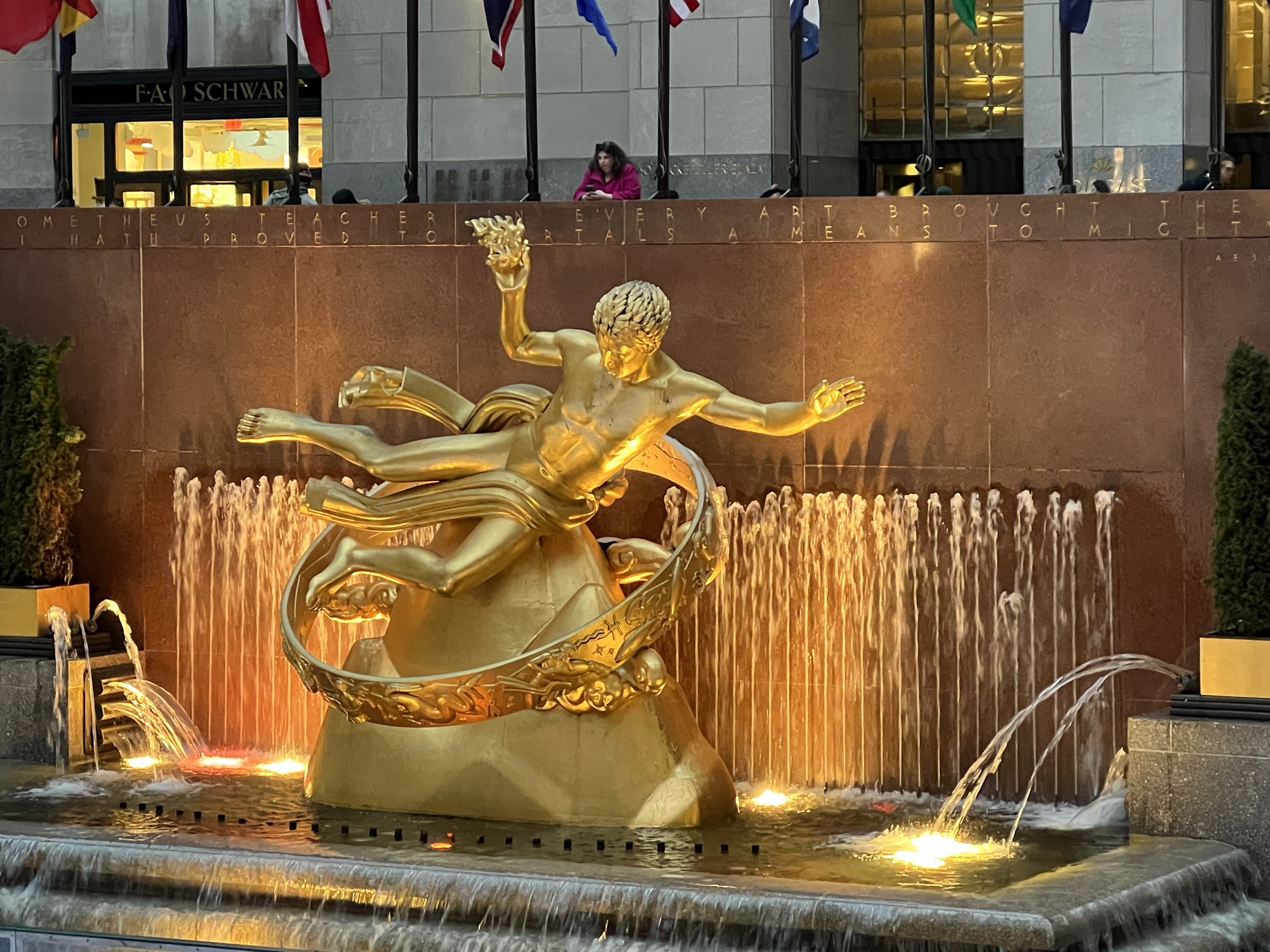
Of all the beautiful artwork that line the walls and courtyards of the complex, two stand out. Prometheus is a beautiful statue that stands proud above the ice-skating rink. This beautiful cast iron, gilded sculpture was made in 1934 by artist Paul Manship. The work is of the Greek legend of Titan Prometheus who brought fire to mankind by stealing it from the Chariot of the Sun (Wiki).
Mr. Manship was a well-known American artist who noted for his specialized work in mythological pieces in the classic style. He was educated at the St. Paul School of Art and at the Pennsylvania Academy of Fine Arts.
The other standout statue is of the God Atlas that guards the courtyard of the International Buildings. The sculpture was created by artist Lee Lawrie with the help of Rene Paul Chambellan. The statue was created in the Art Deco style to match with the architecture of the Center and depicts Atlas carrying the celestial vault on his shoulders.
Atlas at Rockefeller Center
Mr. Lawrie was known as a architectural sculptor whose work is integrated into the building design. His work in the Art Deco design fit perfectly into the new building. Mr. Lawrie was a graduate of the School of Fine Arts at Yale.
Touring around Rockefeller Center can take a full afternoon itself especially at the holidays but in the summer months with the outdoor cafe open on the skating rink it is much more open. Also visit the underground walkways of shops and restaurants and visit the new FAO Schwarz that opened in the center.
Leaving Rockefeller Center and heading up Fifth Avenue you will pass the rest of the complex that was designed in a combination of the International and Art Deco design. When reaching the corner of East 53rd Street another historic church, Saint Thomas Church Fifth Avenue stands guard. Though the church has been part of Manhattan since 1823, the current church was built here by 1914 and consecrated in 1916 as an Episcopal parish (Wiki).
The church was designed by architects Ralph Adams Cram and Bertram Grosvenor Goodhue of the firm Cram, Goodhue & Ferguson with added sculpture by Lee Lawrie. The building is designed in the French High Gothic style and has magnificent deals (Wiki). Even if you are not Episcopalian, going to services at the church is a nice experience. The services are always very relaxed and the Saint Thomas Choir of Men and Boys is excellent. The music and songs are wonderful to hear and the concerts in the afternoon and weekends are a treat.
The next block up is a combination of unique buildings back-to-back with the University Club of New York (Princeton) and the Peninsula Hotel. These buildings are so beautiful in their place on Fifth Avenue.
The University Club of New York is a private social club and is just as elegant inside as it is outside. The building was designed by the firm of McKim, Mead & White in 1899 and was designed in the Mediterranean Revival Italian Renaissance palazzo style.
The University Club of New York at 1 West 54th Street
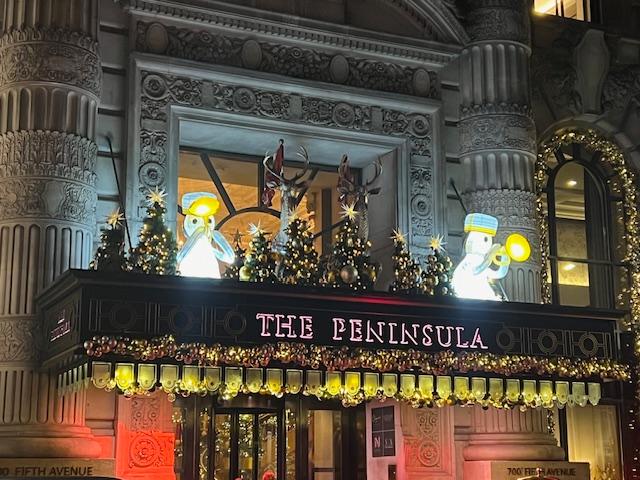
Next door to the club is the New York branch of the Peninsula Hotel located at 700 Fifth Avenue at West 55th Street. The hotel opened in 1905 as the Gotham Hotel designed in the neoclassical style. The hotel lived in the shadow of the St. Regis across the street and the Plaza Hotel up the road and went bankrupt in 1908. The hotel had many incarnations over the next eighty yeas until 1988 when it was bought by the Peninsula Group. They spent forty-five million dollars in a renovation (Wiki).
Take time to go inside and see the elegant public rooms and take a walk down the hallway to see the inside of the hotel. During the holidays it is beautifully decorated and their restaurants are considered excellent.
The Peninsula Hotel is especially beautiful at Christmas time.
The beauty of the details of the hotel.
The historical plaque for the hotel.
Across the street from the Peninsula Hotel is the Fifth Avenue Presbyterian Church at 7 West 55th Street. The church was founded in 1808 and has been on this spot since 1875. The church was designed by architect Carl Pfeiffer in the Victorian Gothic style. The church is built with New Jersey Red Sandstone and the interesting part of the structure is that the clock tower has the original clockworks since 1875 and must be wound each week by hand (Wiki).
Fifth Avenue Presbyterian Church at 7 West 55th Street
On an Avenue of churches and department stores, another office building does stand out so you really have to look up and admire the detail work of the Crown Building at 730 Fifth Avenue one of the buildings that was gilded and gold leafed in the 1980’s.
The Crown Building was built in 1921 and was designed by architects from Warren & Wetmore who you will note had designed Grand Central Terminal and the Helmsley Building on Park Avenue. They changed the name to the Crown Building in 1983 because of the ‘crown like look’ when illuminated at night. The building has been owned by many well-known families including the Marcos Family from the Philippines and the Spitzers of New York (Elliot Spitzer was New York’s former Governor). It has been many ownerships over the years and their are considerations by the new owner to turn it into condos (Wiki).
The last building, I visited on my walk up Fifth Avenue was my old employer, Bergdorf-Goodman Specialty store. This is truly the palace of luxury and innovation in fashion. There are designers here that keep popping up that I have never heard of all displayed in elegant fashion where the store looks more like a art gallery of fashion than just a store.
The Cornelius Vanderbilt II house on the site before Bergdorf-Goodman
Bergdorf-Goodman was once the location of the Cornelius Vanderbilt mansion (which was torn down in 1926) and was opened in this location in 1928. The store was founded by Herman Bergdorf and was later owned by Edwin Goodman. The store is designed in the Beaux-Arts style and the inside of the store just went through a multi-million dollar renovation.
Bergdorf-Goodman is a lot of fun to walk around. My favorite floors are the first floor where Jewelry and Accessories is located. The displays of merchandise look like a museum and the Seventh Floor is stocked with interesting home furnishings, creative dishware and very pretty restaurant that overlooks Fifth Avenue and the park below. Pack your credit cards because you will find something you like here. Visit the store at Christmas for the creative window displays, the well-stocked Holiday Department or just go for Afternoon Tea in the restaurant. It’s fun to window shop here.
The last place I visited was Pulitzer Plaza to sit down and relax from all of the walking and see the Pulitzer Fountain. This unique fountain was built at a time when the sculpture was considered risqué and even Cornelius Vanderbilt faced his room away from it.
Pulitzer Plaza and Fountain at 1 Pulitzer Plaza (the park is currently under renovation in 2024)
This busy little park is a refuge for people shopping on Fifth Avenue, tourists wanting to take pictures of the Plaza Hotel and the pigeons so watch out. The park is of the Grand Army Plaza that extends to the other side West 59th Street.
The fountain was designed by sculptor Karl Bitter and the park by architect Thomas Hastings of the firm Carrere & Hastings. The statue is of the Pomona, the Goddess of Abundance who is holding a basket of fruit.
When Mr. Bitter died in a car accident, the statue was finished by his assistant, Karl Gruppe with the help of Isidore Konti. The fountain was dedicated in 1916 (Wiki).
The Goddess Pomona statue by artist Karl Bitter
While sitting in the park watching the tourists walk by muttering things about the “Home Alone” film that had been shot at the Plaza Hotel, it really struck me about the treasure trove of architectural styles, immense detail work on the buildings and the interesting statuary that lines this part of East Midtown. It is its own open-air museum if you really take the time to look up and around and admire the true beauty of the neighborhood. Some of the most famous buildings in Manhattan are located right here.
I ended my walk back at the corner of Lexington and East 59th Street, revisiting the Turtle Bay neighborhood that I walked a few months earlier. As much as this neighborhood is changing, there still is enough of the past to admire. Look to see how the future intertwines with the past in Midtown East.
Check out my other blogs on Walking Midtown East:
Day One Hundred and Forty-Three-Walking the Borders of Midtown East:
There are so many wonderful and beautiful buildings to see in this neighborhood that I mentioned their addresses in the main part of the walk rather one by one. Please walk both sides of Fifth Avenue and look across the street to admire the true beauty of these magnificent buildings.
Places to Eat:
Hop Won Chinese Restaurant
139 East 45th Street (between Lexington & Third Avenue)


 Don’t miss this little ‘gem’ of a museum down the block from the Metropolitan Museum of Art. It is fun to discover these small gallery museums that the University’s run.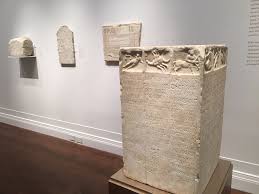













































 mywalkinmanhattan