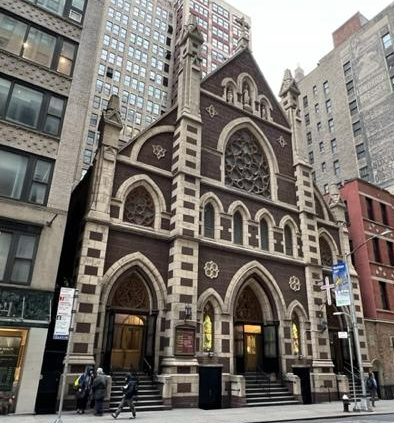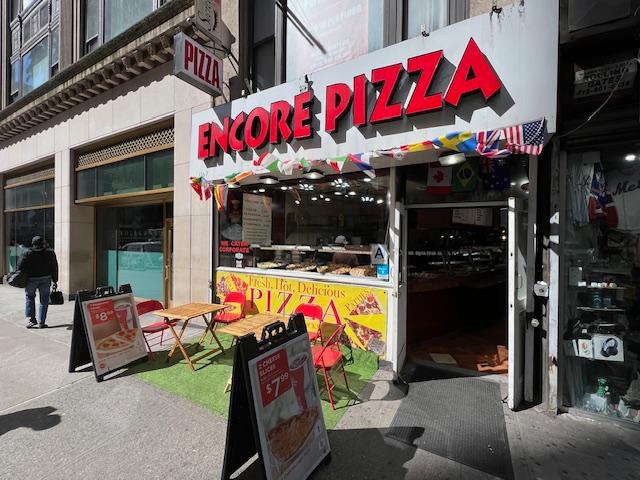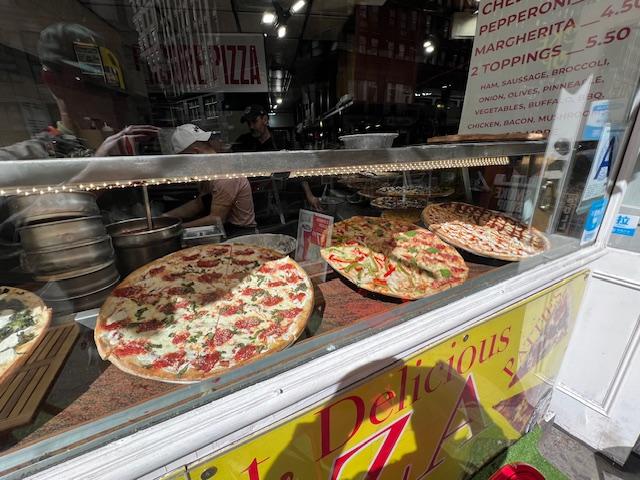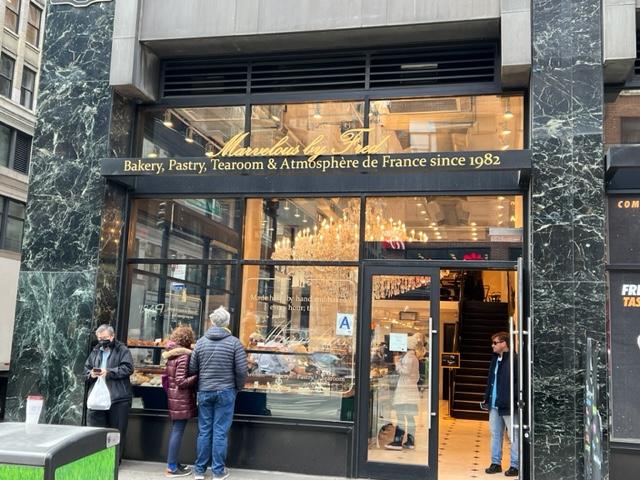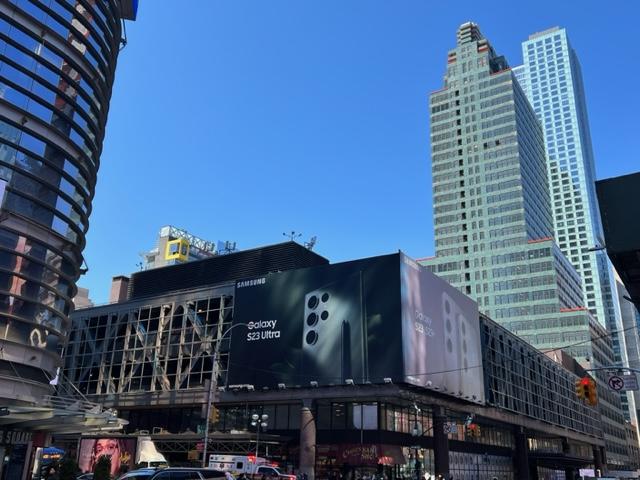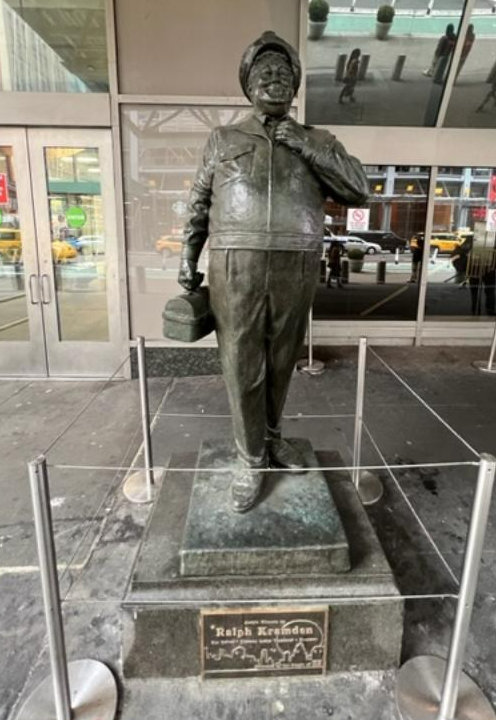
I never thought I would see the day that Manhattan would look like Beirut. Manhattan and the rest of New York City finally opened back up and it was right after all the riots had happened all over the City.
Author Dominick Dunne wrote a book years ago entitled “Another City, Not My Own” about his return to Los Angeles after years of being away. It has been four months since the Membership Night at the Met Breuer, and I swear it was almost surreal going back into New York City for the first time in over four months. I felt like I was in exile.
First barely anyone was on the bus into New York. I was one of about seven people on the bus that had to stop in Union City, NJ first before getting into Manhattan. It was strange to see everyone with masks on. It was a real eye opener. I felt like I was entering a different world and you could feel it when we arrived in Port Authority Bus Terminal. I had never seen the terminal so quiet in all my years coming into the City. Even late at night when I used to take the 12:20am or 1:20am buses out of Manhattan, there will still people all over the place at night.
When you get into Port Authority Terminal, there is not a lot of people hanging around anymore. All the stores and restaurants are closed except for a few fast-food coffee places as not everything has opened up yet. Coming out of the terminal, there are no longer the crowds hanging out outside the terminal like there used to be. Everyone is on their way to where they have to go.
I started my walk up Eight Avenue past all the bodegas, fast food restaurants and many closed hotels. This stretch of Avenue was very quiet and because of the recent protesting and looting due to the George Floyd incident in Minneapolis, the Theater District was completely fenced off. You could not walk through that section of the neighborhood. There were a few fast-food places open for takeout and the popular Shake Shack, the upscale hamburger restaurant, was open for takeout and going strong with the few tourists and businesspeople in the area.
Some businesses were still closed and boarded up due to the nights of looting the first week of June during the protests. Plywood covered some of the smaller stores and hotels while most everything else was either starting to open up or opened. This was a very different scene from a week ago.
When I arrived at Columbus Circle, my end point for the project on the West Side, Columbus Circle Park has fencing and guard rails around it. They were trying to protect the statue of Christopher Columbus that stands tall atop a pedestal.
Columbus Circle in its better days
All over the county, people are vandalizing statues of what they conceive as ‘controversial’ historical figures and Christopher Columbus seems to now be a major target. The statue, created by artist Gaetano Russo, was donated by Americans of Italian descent and lead by publisher Carlo Barsotti, was dedicated in 1892 on the 400th Anniversary of Columbus arriving in the New World.
Now the statue, fountain and park are behind fencing to keep vandal from defacing the statue. It is a sad day in this Country when people try to ‘erase’ history because they do not agree with it. Trust me, the police were all over Columbus Circle.
The Christopher Columbus Statue at Columbus Circle
The details on the bottom of the statue
It was even stranger as I walked down 59th Street toward Fifth Avenue. All the hotels were boarded up on the lower levels, the apartment buildings had guards inside and out and to see plywood across the Plaza Hotel and the Park Lane Hotel it almost makes me wonder what Leona Helmsley, who once owned the hotel, would say? The guards and the doorman were standing tall in front of the hotels trying to direct people.
Turning the corner to Fifth Avenue was very calming. All over Fifth Avenue merchants were either taking down the plywood or had taken it down by Monday afternoon when I started my walk. Just six days earlier, businesses were scrambling to put the boards up and now they were taking them down. The guards were still there but there was security inside and out in stores up and down Fifth Avenue.
Bergdorf-Goodman with plyboards (has since come down)
The new Nordstrom Department Store that opened on Broadway was just taking the last of their plyboards down when I took a quick on Broadway to see the store. By the time I passed The Plaza Hotel, Bergdorf-Goodman and the Apple Store had either taken their boards down or were just finishing. Walking further down Fifth Avenue, the condition of the shopping area went block by block.
Fifth Avenue boarded up (still up at the time of this writing)
The exclusive stores on one side of St. Patrick’s Cathedral were still boarded up and Saks Fifth Avenue had taken all the plyboards down but still had guards all around the store. Even Rockefeller Center which just five and a half months ago was mobbed with people for the holidays was fenced off with guards and police all around it. You could only see the fountain in the distance.
Fifth Avenue north of St. Patrick’s Cathedral (still up at the time if this writing)
The change that five years can bring in November 2025
Saks Fifth Avenue had been really closed off with plywood on the doors and windows and barbed wire against the building. Armed guards with watch dogs monitored the store for several days. When I got there on Monday, the guards and dogs were still there but the boards were taken down, but the store still looked eerie.
Saks Fifth Avenue boarded up (has since come down)
The guards did not look like anyone’s fools, and I walked by quickly on my way down Fifth Avenue to East 44th Street. The Cornell Club which is where I work when I am in Manhattan working on the blog, was closed tight and would not be opening according to the sign until July 1st. Across the street from the club, the headquarters for Brooks Brothers Men’s store, which just declared bankruptcy, was still boarded up tight like that whole section of Madison Avenue. Madison Avenue also was just opening up the afternoon I was in Manhattan.
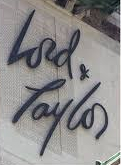
From East 44th Street, I walked down Fifth Avenue through the old shopping district below East 42nd Street and it was sad to see the old Lord & Taylor building being torn apart for an office building. A company that has been in business since 1826 declared bankruptcy and will be liquidated as soon as stores are allowed too fully open. This was a company that was once one of the best women’s stores in the world reduced to closing because of bad management.
Even Lord & Taylor could not get a break from all this
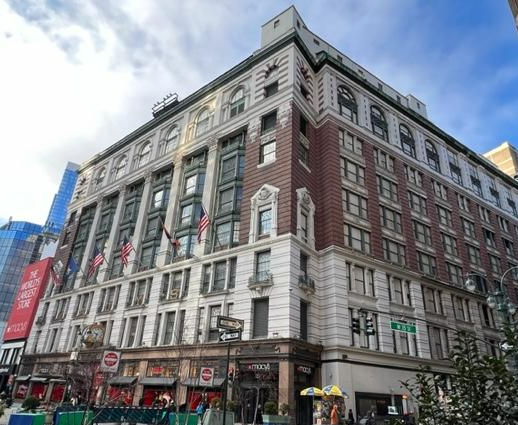
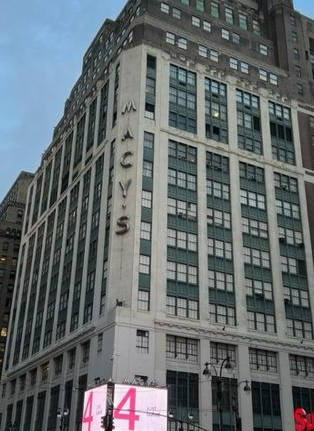
I rounded the corner at West 34th Street to see Macy’s Herald Square, where I had worked for four years back in the 1990’s when the neighborhood was not that great. The store had just taken the plywood off the store and the windows that were damaged on the night of the looting a week ago had been replaced. There was security and guards all around the store and strangely enough people were eating their lunch in the plaza by Herald Square like nothing had happened a few days earlier.
Macy’s Herald Square boarded up (has since come down)
I could not believe what I saw on TV the night it was being looted and there were small fires outside the store. I had been working at the store during the Rodney King riots, the first attack on the World Trade Center and the problems in Crown Heights but I never thought I would see anything like this as the neighborhood is far better today than it was back then.
Macy’s the night of the looting a week ago
I never thought I would live to see this at a store I worked at for four years
As I walked by the store filled with colorful displays and ‘reopening soon’ signs you would have never known any of this had just happened a week earlier. People were just walking along the sidewalks like it was a regular day.
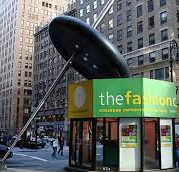
My walk continued down Seventh Avenue past the Fashion Institute of Technology, which was all boarded up since the campus is closed for classes and guards were all over the place. Here and there small restaurants and shops had now opened for curve side business and deliveries.
I crossed over to West 23rd Street to Ninth Avenue and again small take out places had reopened and drug stores were buzzing with people. There was a lot of people walking around in the neighborhood, taking to one another or walking their dogs. I walked past Holy Apostles Soup Kitchen which was gated at that time as service ended at 1:00pm and there was newsletters and posts on the fence that dated back to March 13th when the Soup Kitchen closed for business.
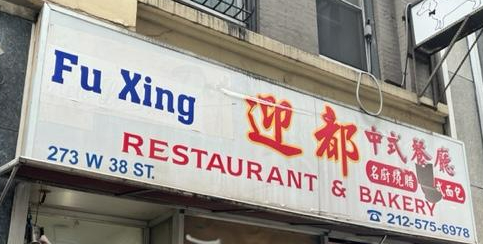
I walked up Ninth Avenue and crossed over again onto West 38th Street to where all the reasonable restaurants and take out places who cater to the Garment District are located. Most were closed for business but there were still a few Chinese places still open to the workers in the area.
I walked back into Times Square and took the subway to Chinatown. Now that was unusual. The platform had about four other people on it and it was spotless. There were no homeless people hanging around and the everything was very clean. I took the N Subway downtown and the car was spotless as well. I had never seen such a clean subway car. There was only two of us on the car and he was about ten feet away from me. We got to Chinatown the quickest I ever had in all the time I took the subway. Another eerie thing was all the posters on the walls of the subways were dated back from either February or March. By Chinatown, there is still a poster for a failed Christmas film.
Chinatown in lower Manhattan is usually a bustling neighborhood where you can barely walk the streets because there are so many people on the sidewalks. The sidewalks are usually lined on all sides by fruit and vegetable vendors and people selling prepared foods. I had not seen the neighborhood this quiet ever. Even when I visited Chinatown after 9/11 for my birthday dinner it was not this quiet. Almost all the businesses were still closed.
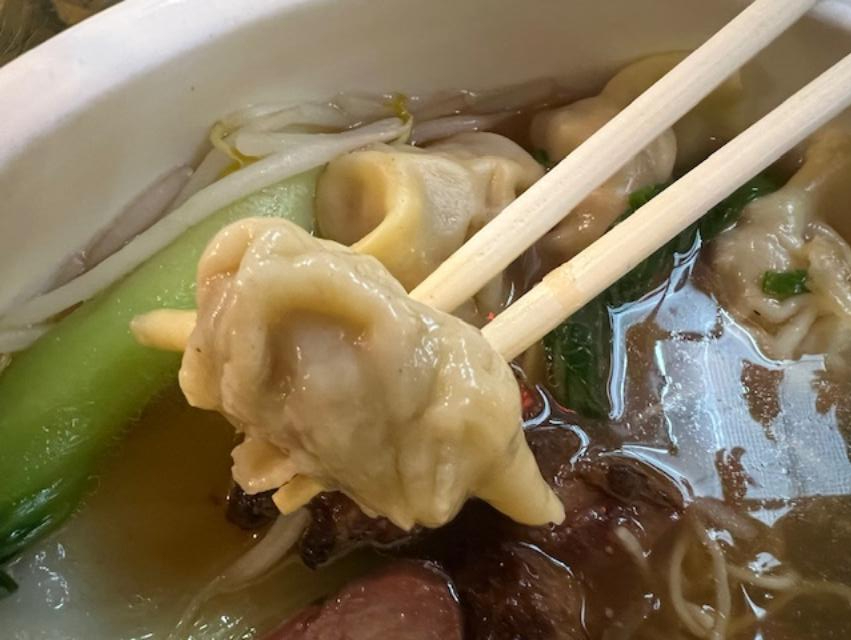
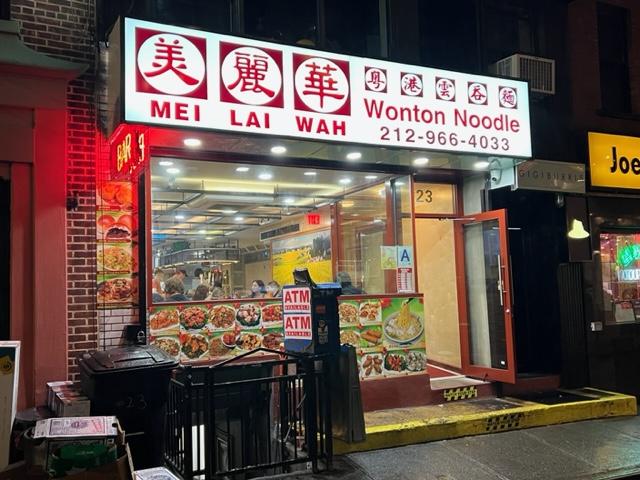
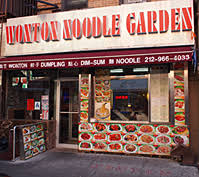
Mott Street which is the heart of Chinatown was deserted. Most of the popular restaurants and take out places were closed. Wonton Noodle Garden, my go to place for Cantonese Wonton Soup, was just doing takeout and delivery. It is hard to believe the last time I had eaten there was March 9th and it was almost empty then.
Most of Mott Street and the side streets were closed for business.
It was strange to walk down a street of closed restaurants and stores. Unlike Little Italy located across Canal Street, they have never closed Mott Street down for outside dining. There were a few restaurants opened here and there and I was surprised that Chinatown Ice Cream Factory on Bayard Street was open that afternoon and they looked busy.
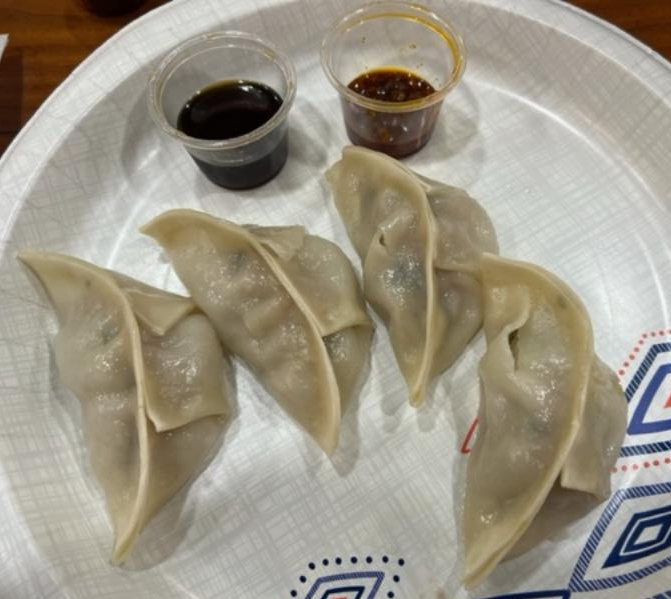
I walked all over the neighborhood and one after one of my favorite spots to eat where either closed down or were in the process of opening up again. There were not too many choices to eat at in the late afternoon. Still, I walked to Chrystie Street and my old standby, Chi Dumpling House at 77 Chrystie Street A, for some fried pork and chive dumplings ($2.00). I swear that just cheered my up after everything I saw.
Chi Dumpling House at 77 Chrystie Street (Closed January 2023)
I sat in Sara Delano Roosevelt Park and just enjoyed the warm sunny day. The food at Chi Dumping House could put a smile on anyone’s face. These plump pork and chive dumplings are perfectly fried and crisp and crackle when you bite into them. With a little hot sauce, it was the perfect meal.
The dumplings here are so good (I had to eat outside in the park)
The people who were walking around seemed happy to be outside and that there was calm in the air. It was a beautiful sunny day and people were sitting and talking, jogging around the park and talking to their kids. There was some normalcy in the world that afternoon.
As I traveled back down Canal Street, I needed something sweet to finish off the meal and everyone one of my favorite bakeries was closed so I tried New Cameron Bakery at 242 Canal Street.
The selection was pretty small that afternoon and I chose one of their Sweet Topped Buns ($1.35). A couple of bites of that and it really made the afternoon.
The sweet topped bun
Before I took the E Subway back up town to leave the Manhattan, I took a quick stroll through SoHo (South of Houston), which once upon a time when I was growing up was a manufacturing district and then was an artist enclave in the late 70’s and through the 80’s. By the 2000’s, it had become an extremely expensive and exclusive neighborhood. After a night of looting and stealing, the whole neighborhood boarded up.
SoHo boarded up
I had not seen the neighborhood look like this since the 1970’s and I can’t believe it looked the same when I was a kid. I have to admit the graffiti on the plywood was interesting but not something I really wanted to see here now.
This was truly pathetic
It is a sad day when you see human nature at its worst but I am still convinced that there are more good people in this world then bad and I still think we are winning!
I finally entered the core of the tourist area of Manhattan with Central Park South, some of the most expensive real estate in the world and some of the most spectacular views of Central Park. It is also one of the most iconic neighborhoods and most photographed in New York City. It is the neighborhood that is anchored by The Plaza Hotel in one corner, the Time-Warner Building Complex in another, the New York Hilton in another and the newly reopened Museum of Modern Art in the last corner. This are some of the most famous modern landmarks in Manhattan.
The Plaza Hotel in front of the Fifth Avenue Plaza
This neighborhood is also one of the smaller I have walked but packed with famous landmarks, lots of street art, many beautifully designed buildings and here and there remainders of the ‘old’ New York of the 70’s and 80’s that is being ushered aside by new buildings with new ideas.
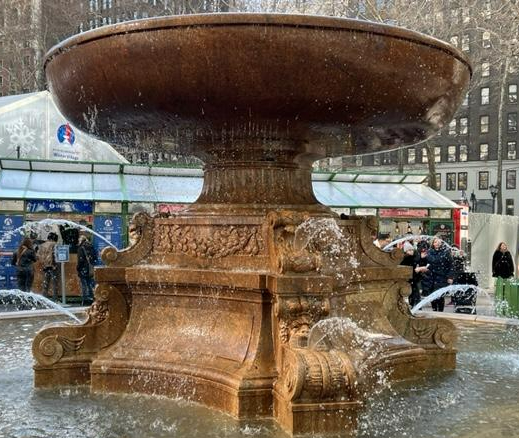
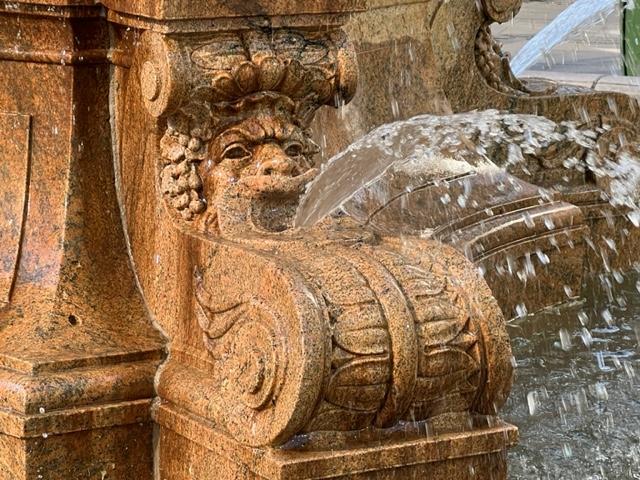
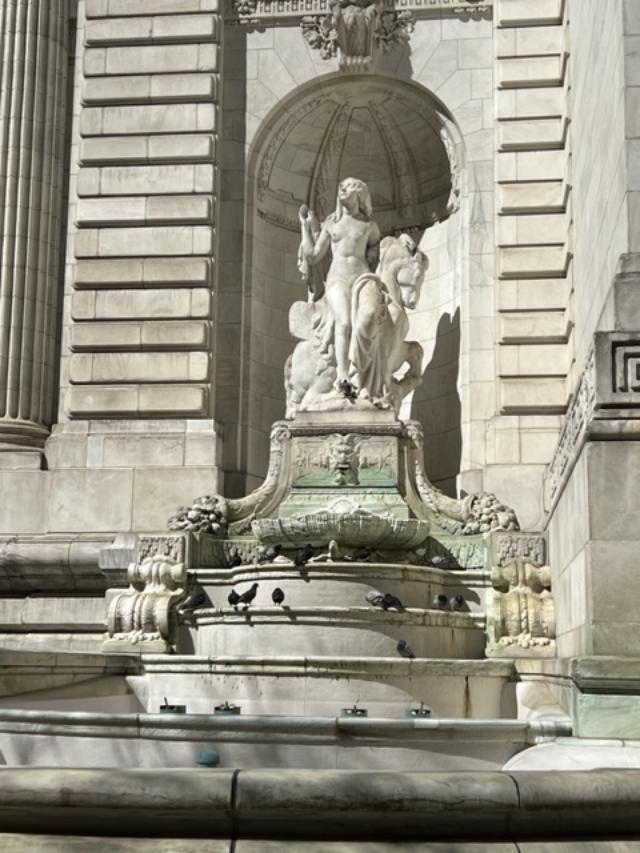
The Pulitzer Fountain graces the small park.
This busy little park is a refuge for people shopping on Fifth Avenue, tourists wanting to take pictures of the Plaza Hotel and the pigeons so watch out. The park is of the Grand Army Plaza that extends to the other side West 59th Street.
The fountain was designed by sculptor Karl Bitter and the park by architect Thomas Hastings of the firm Carrere & Hastings. The statue is of the Pomona, the Goddess of Abundance who is holding a basket of fruit.
When Mr. Bitter died in a car accident, the statue was finished by his assistant, Karl Gruppe with the help of Isidore Konti. The fountain was dedicated in 1916 (Wiki).
It was a rather gloomy day when I started the walk and after a busy day working the Bread station at Holy Apostles Soup Kitchen. With the weather getting cooler, the Soup Kitchens’ needs begin to change, and we are starting to see the effects of the Fall upon us with people needing warm weather outfits and more places to sleep than ever. It looks like it is going to be a very cold winter!
I started my walk in front of one of the most famous hotels in the world, The Plaza Hotel at 768 Fifth Avenue. This iconic masterpiece is more cult figure than a hotel. The 20 story hotel opened in 1907, replacing a smaller version of the hotel and was designed by Henry Janeway Hardenbergh in the ‘French Renaissance inspired chateau style’ design (Wiki). The hotel is famous for its restaurants, The Oak Room and the Palm Court for Afternoon Tea and has been used in countless TV shows and movies.
The problem with walking around the hotel these days is that hotel security is really tight and since the recent renovation of the hotel, most the hotel is now closed off. You can still visit the Plaza Hotel Food Hall (which is wildly expensive) and the Palm Court for meals. Since the renovation that turned most of the hotel into condos, the hotel just does not have the same zing it once did. Everything now seemed so overpriced. The famous Afternoon Tea is now $86.00 (US) and even the burger which I enjoyed as a teenager is now $32.00 (US). I thought that was a bit much.
The Palm Court at the Plaza Hotel is a New York Institution
Entering the lobby of the Plaza Hotel in July of 2025
The hallway in front of the Palm Court
Afternoon Tea in the last seating in the afternoon
The Palm Court at the beginning of the last seating
I recently had Afternoon Tea in Palm Court with my best friend and her nephew. It really brought back a lot of memories for me when I used to come here in the 1990’s in my Macy years. It was a thrill to come back but it just didn’t seem the same. Still it was a lot of fun to come back for Afternoon Tea at the Plaza.
The hallway Chandelier’s from the film still shine
Don’t miss this fun scene of The Plaza Hotel in Home Alone 2 with former President Trump
Afternoon Tea at the Palm Court is iconic and we really enjoyed it. Maricel works at the Plaza and had arranged for the afternoon out. It was a lot of fun.
Maricel’s little cousin enjoying tea that afternoon
The tea sandwiches and cakes and sweets
The sandwiches on the tea stand
The cakes and sweets on the tea stand
Enjoying Afternoon Tea at the Plaza
Enjoying the tea sandwiches
Maricel out of uniform and on the other side of the kitchen enjoying Afternoon Tea with us
Another iconic hotel and once part of the Helmsley Hotel Empire is the Park Lane Hotel at 36 Central Park South. The hotel was constructed in 1971 and designed by Emery Roth and Sons for financier Harry Helmsley. The hotel was designed in the post-modernism design. The hotel was once noted when run by Hotelier Leona Helmsley for ‘Harry’s Bar’ named after her husband. It was noted for its drinks and complimentary appetizers. The hotel itself may be replaced by a super tall building in the near future.
Columbus Circle itself was part of the great plan of Central Park in 1857 by Fredrick Law Olmsted, the designer of many parks in New York City as having four rotary entrances to the park. The other rotary in the neighborhood is Grand Army Plaza by The Plaza Hotel.
I then walked across that street to the Time Warner Building right off the subway station under Columbus Circle (it is amazing where they put this stuff) to the food court in the subway station. The Turnstyle Underground Market is located at the West 59th Street entrance at the Time-Warner Building. Just take the escalator down.
The Turnstyle Underground is in the subway station at the Time Warner Building at 59 Columbus Circle
The food court market had just reopened a few months ago and the place was more than half empty. All the great little restaurants that were independently owned were gone. VIctims to the COVID pandemic and the lack of tourists and office workers. I had read that my favorite, Daa Dumplings had closed about four or five months ago due to lack of traffic (See Day One Hundred and Fifty-Walking the Borders of Central Park South):
If I saw four people sitting down there, it was a lot. Most of the restaurants were empty and almost all the small stores were gone as well. Even the bar that was so popular at the end of the food court and the small independent pizzeria were shut down. It was really spooky because just a year and a half earlier your could not get a seat here.
While walking down West 59th Street, look across the street into Central Park as the leaves are starting to change colors and the signs of autumn are in the air. They don’t call this Central Park South for no reason as you will see some the best and safest views of the Park here.
On the Park side of West 59th Street, you will notice the Monument to General Jose de San Martin, the liberator of Peru just past the entrance to Sixth Avenue. This statue which sits at the entrance to Central Park South, makes a pretty bold statement. General Jose de San Martin helped liberate Argentina, Chile and Peru from Spain in the early part of the 19th century.
The statute was created by French Sculptor Louis Joseph Daumas and the statue was given to New York City by the City of Buenos Aires in exchange for a statue of General George Washington that we sent to their country. The statue was dedicated in 1951 (NYCParks.org).
General Jose de San Martin Statue on West 59th Street
The other statue further in the park
Down further was a statue of Simon Bolivar. The Simon Bolivar statue commemorates a military general and advocate of Pan-Americanism. Bolivar (1783-1830) is credited with the liberation from Spanish domination of Venezuela, Colombia, Ecuador, Peru, Bolivia, and Panama (NYCParks.com).
Mrs. Sally James Farnham was an American born self taught sculpture artist who was influenced and trained by several sculpturer friends of hers. She was known for her large public works statues (Wiki).
In 1916, the Venezuelan government sponsored a worldwide competition to select a sculptor to render Bolivar. From 20 entrants, the committee selected Sally James Farnham (1876-1943), a relatively unknown sculptor. Farnham’s statue depicts Bolivar in full military dress upon his steed, which has its hoofs in the air. The sculpture was dedicated at Bolivar Hill on April 19, 1921. United States President Warren G. Harding (1865-1923), who spoke at the event, used the occasion to deliver a major policy address in which he urged greater cooperation between North and South America (NYCParks.com).
Continuing the walk down West 59th Street, you will next pass the JW Marriott Essex House New York Hotel at 160 Central Park West. This iconic hotel was designed to be a condominium hotel complex and construction started on the hotel one day after the Stock Market Crash of 1929.
The JW Marriott Essex House Hotel at 160 Central Park West
The hotel opened during the Depression in 1931. In 1969, it was acquired by Marriott hotels and since then has has several owners and management groups. Take a good look at the hotel as its details are an excellent example of Art Deco style architecture.
The Essex House sign is a fine example of Art Deco style art.
The hotel’s historical plaque
Walking further down West 59th Street, you will pass the famous NY Athletic Club at 180 Central Park South. This private club was founded in 1868 and has some of the best sporting facilities in New York City. This interesting building was designed by architect Charles W. Clinton and was built in the early twentieth century. Really look up to see the interesting details of the building.
The New York Athletic Club at 180 Central Park South
The details on the entrance of the New York Athletic Club
The details on the front of the New York Athletic Club
As I continued walking down West 59th Street towards Columbus Circle I saw the familiar sites of that statue of Christopher Columbus and the Time-Warner Complex in the background. It has been a long time since I finished the Upper West Side of Manhattan and even as I walk those streets again I always feel like I missed something.
Columbus Circle has changed over the last twenty years
The Christopher Columbus Statue at Columbus Circle
The detail work on the statue
Columbus Circle is always busy day and night with street vendors, bicyclists, performers and just people sitting and reading or enjoying the weather and people watching on a warm day.
The 76 foot statue was designed by Italian sculptor Gaetano Russo as part of a plan to honor Columbus’s discovery of the Americas as part of the 1892 commemoration of the 400 year anniversary of the event. If you look closely at the pillar, you will see the reliefs of the Nina, Pinta and Santa Maria ships on the memorial (Columbus Memorial and Wiki).
Columbus Circle itself was part of the great plan of Central Park in 1857 by Fredrick Law Olmsted, the designer of many parks in New York City as having four rotary entrances to the park. The other rotary in the neighborhood is Grand Army Plaza by The Plaza Hotel.
The Time Warner Center on the other side of the circle represents the massive change in the Upper West Side from a liberal working class area to the new luxury of Manhattan. The Time Warner Center is a mixed use building containing office space, the Mandarin Hotel, many exclusive restaurants and shops and entertainment. The building was designed by David Childs and Mustafa Kemel Abadan of Skidmore, Owings & Merrill. This modern palace of luxury replaced the old New York Coliseum and opened in 2003 (Wiki). Don’t miss just wondering around the building.
On the other side of the Circle is the new Museum of Art & Design that opened in 2008. The building was the former home of the Gallery of Modern Art designed by Edward Durell Stone in 1969. The building was modernized by architect Brad Cloepfil (Wiki) and the museum shows interesting aspects of art from media, video, painting and photography. I just recently saw the “Post Punk New Wave” exhibition at the museum.
Museum of Art and Design at 2 Columbus Circle
The Post Punk New Wave Exhibition at the Museum of Art and Design
As I rounded the corner, the neighborhood is full of Post War architecture but one building stands out with its modern twist. The Hearst Tower at 300 West 57th Street.
The first six floors of the original Hearst Tower were built in 1928 by architect Joseph Urban for the headquarters of the Hearst publishing empire. The building was originally supposed to have an office tower on top but the Great Depression put a stop to the construction. Take a look at the statuary, stone work and details of the original building before admiring the new addition (Wiki).
Admire the detail work of the original 1928 building
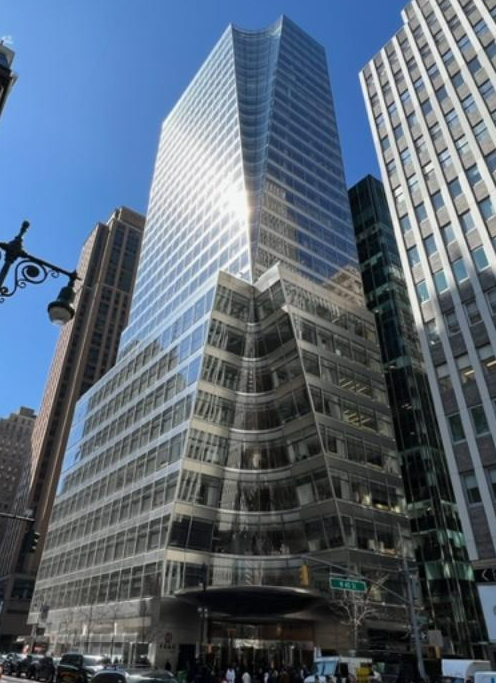
Architect Norman Foster designed the 46 story addition to the building which was completed in 2006. The addition of glass and steel is designed in the ‘Diagrid’ pattern and was the first ‘green building’ with environmental features in New York City (Wiki).
As I walked the border of the neighborhood on West 54th Street from Eighth Avenue, you can see the traces of Old Residential New York side by side with the new office towers, hotels and the extension of the Museum of Modern Art on the corner of West 54th and Fifth Avenue.
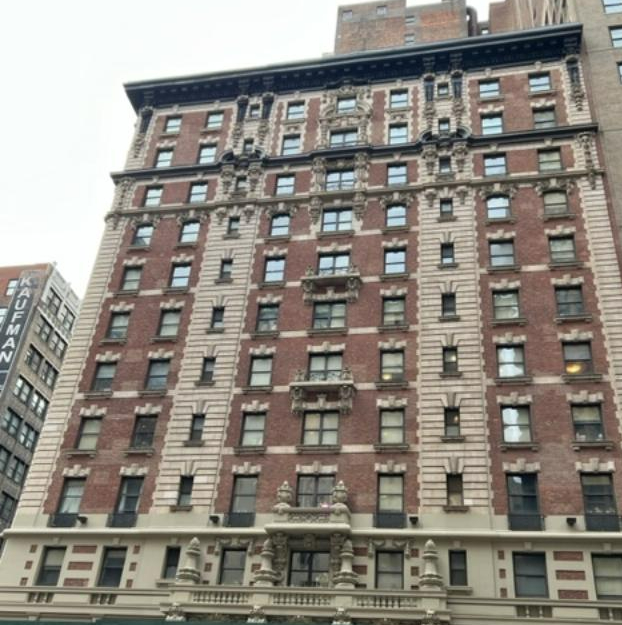
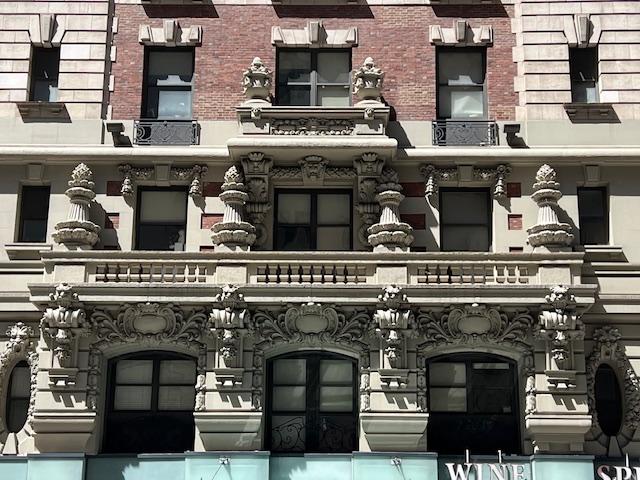
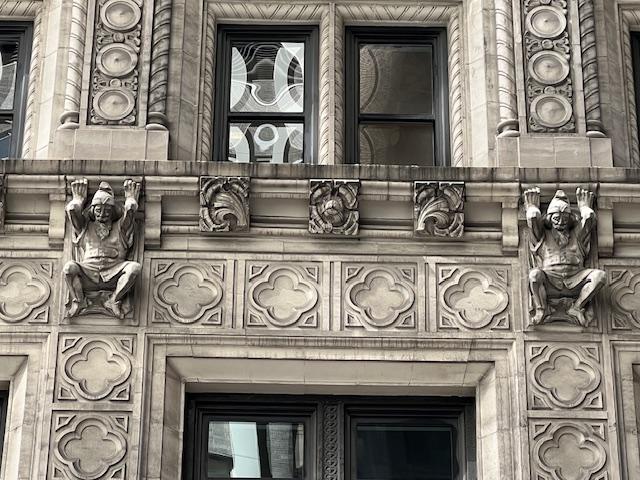
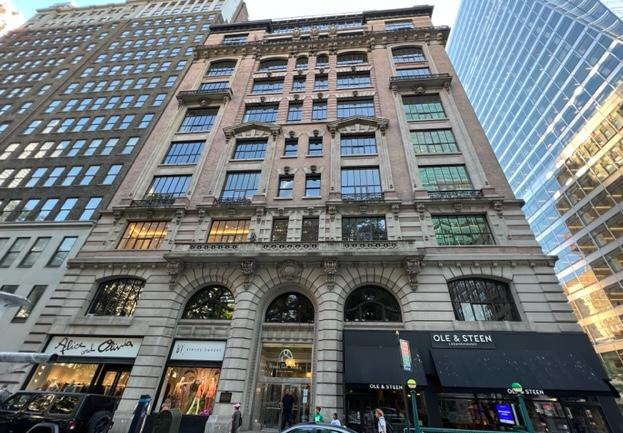
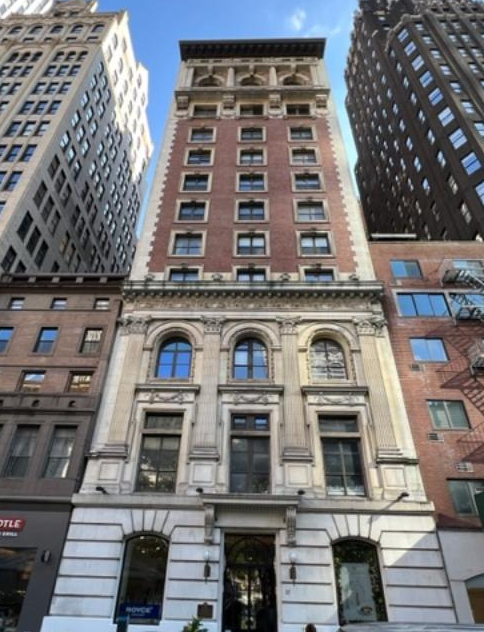
The first building that popped out to me was The Albermarle at 205 West 54th Street. This 12 story Beaux-Arts building was built in 1903 and was once known as the Hotel Harding and then the Alba. Actress Mae West once living in the building. The hotel at one time was home to the notorious “Club Intime” run by Texas Guinan. This was a well-known Speakeasy during Prohibition (City Realty).
Take time to look at the detailed stone work and carvings along the building. It really stands out amongst its more modern neighbors.
Walking further down the street, you will realize that this part of the neighborhood is home to many of the most famous ‘old line’ hotels in Manhattan. At 65 West 54th Street is the luxury Warwick Hotel.
The 36 story hotel was built by William Randolph Hearst in 1926 with the help of architect Emery Roth with the firm of George B. Post & Sons. The outside of the hotel is done with brick, granite and limestone giving it it’s unusual color scheme. Take time to look at the hotel’s detail work and old world charm in the lobby (Wiki).
As you continue to walk the border of West 54th Street closer to Fifth Avenue, you will see the back of the Museum of Modern Art which just reopened after its renovation and expansion. On the northern side of West 54th Street is a series of historical mansions each with its distinctive look.
The James Gordon House at 9-11 West 54th Street really stands out. James J. Gordon was the owner of the Erie Railroad and two insurance companies and was a cousin of JPMorgan, the banker. The house was designed by McKim, Mead & White in the Colonial American style. Mr. Gordon’s family had come to the United States in the 17th century and was from an old line Connecticut family. Look at the classic look of the mansion and its elegant stone and grill work. The house is now on the market for 65 million dollars (Curbed New York).
Another mansion that stands out along West 54th Street is the William Murray House at 13-15 West 54th Street. These twin mansions were built for Larchmont businessman William Murray by architect Henry Janeway Hardenbergh in the ‘Renaissance style’. This section of fashionable mansions is what is left of the Gilded Age residences in the neighborhood.
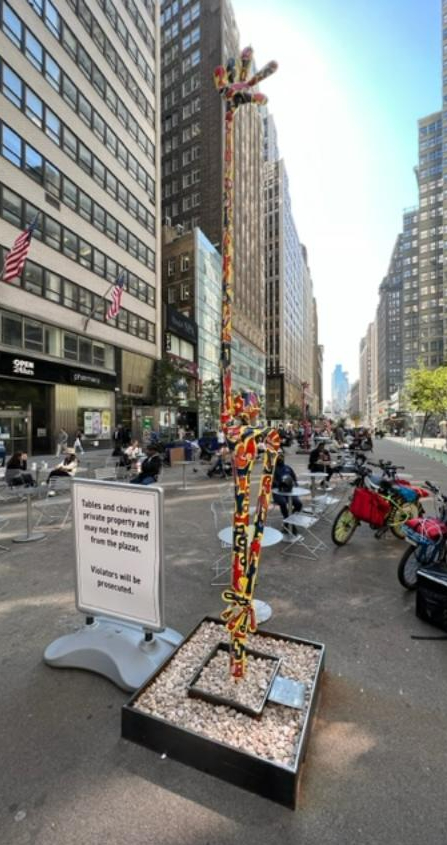
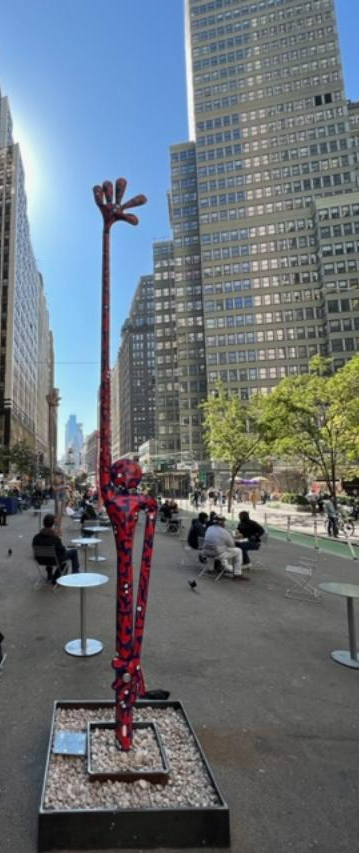
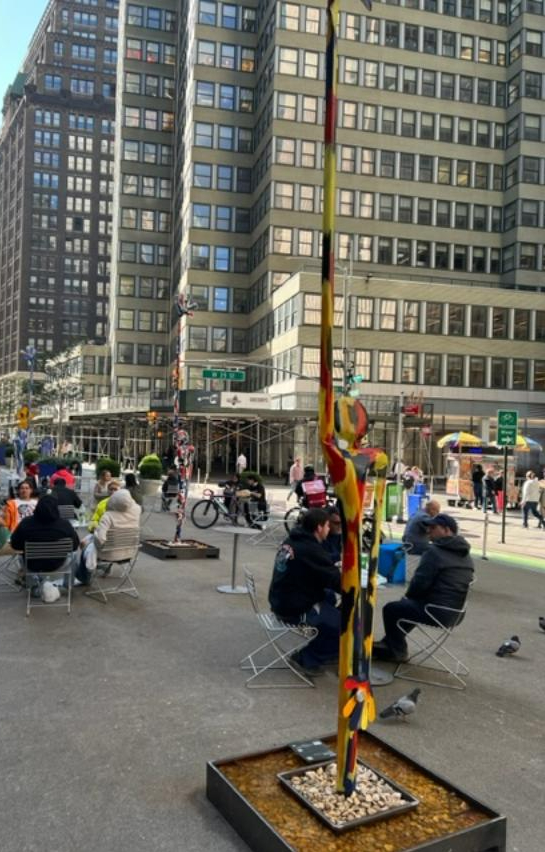
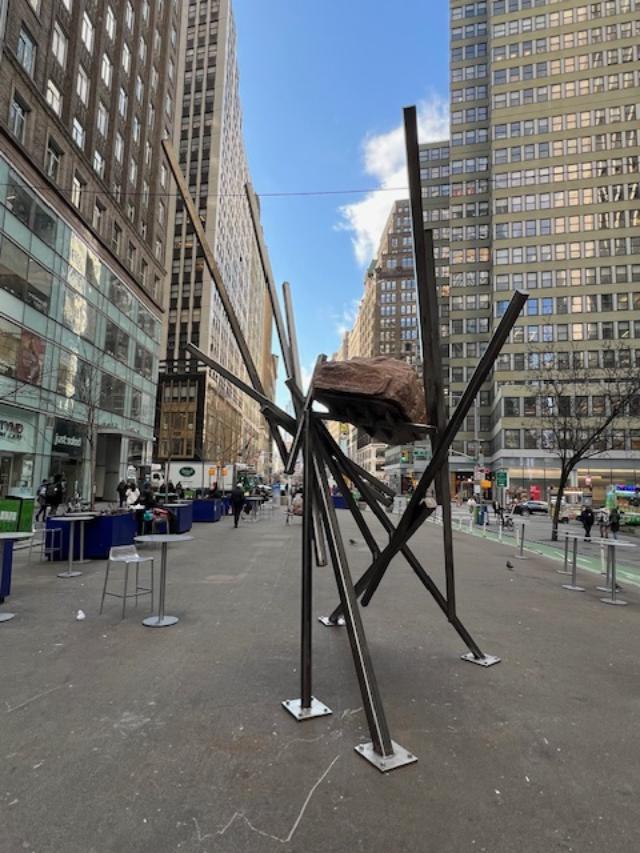
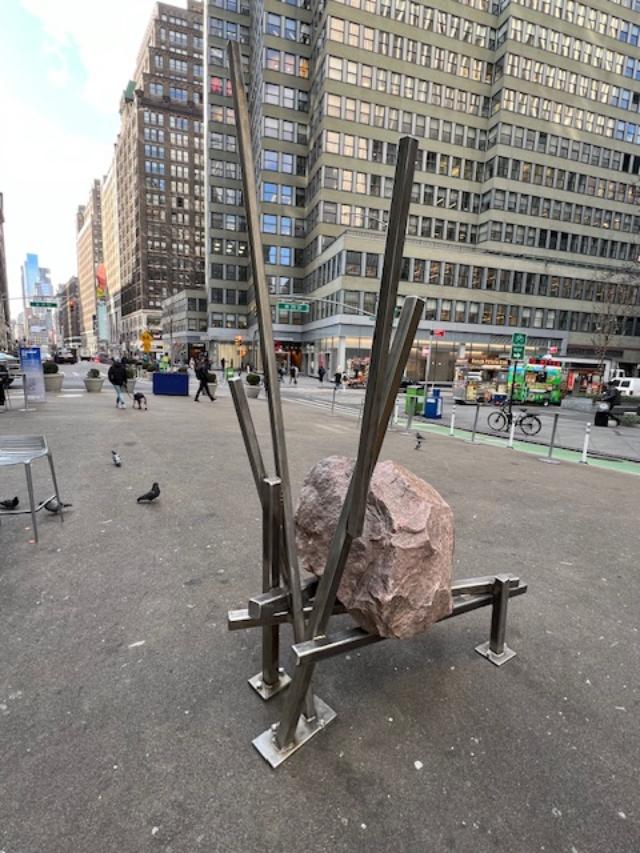
Seed54 Sculpture at the corner of Sixth Avenue and West 54th Street
On the corner is the an unusual sculpture that I first noticed when walking past a hot dog vendor on the corner of Sixth Avenue and West 54th Street in front of 1330 Sixth Avenue building. This strange looking piece of artwork resembles an open air egg is by artist Haresh Lalvani. This unusual sculpture can be interpreted many different ways. The only problem is that the hot dog vendor on the corner distracts from even looking at it and I have passed it without even noticing it over the times I have been in the neighborhood.
Mr. Lalvani is a professional artist and Professor at Pratt Institute in Brooklyn. His emphasis in the work is his study of morphology into nature and its affects on art. ‘Seed54′ is part of his HyperSurface’ series. Mr. Lalvani is a graduate of the Pratt Institute of Architecture (Pratt Institute).
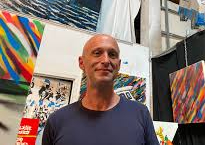
Artist Haresh Lalvani in front of one of his “HyperSurface” works
At the very edge of the neighborhood is 254 West 54th Street now the home of a theater but in the late 70’s was home to the famous ‘Studio 54’ nightclub and epicenter of the Disco era. There has never been a club before and after that can compare to it.
The club was opened in 1977 by club owners Steve Rubell and Ian Schlager who had once opened clubs out on Long Island and to much fanfare and the party did not end until the club was raided for tax evasion and closed February of 1980. The party was over! The club continued to open over the years but the original magic was gone as the Disco era faded away in the early 80’s.
254 West 54th Street The famous former “Studio 54”
The history of the Rise and Fall of Studio 54
So Central Park South keeps morphing. From fashionable residential area to commercial properties and hotels now back to residential properties. The buildings get renovated or gutted, knocked down and then rebuilt or a bit of both. But you can see by the architecture, stores, new hotels and progressive office buildings the area just keeps changing. From the added Nordstrom’s (let’s see how long it lasts in this retail environment) to the converting hotels to condos back to hotels it is a never ending change.
I ended the day eating at the food court below the Time Warner Building right off the subway station under Columbus Circle (it is amazing where they put this stuff). The Turnstyle Underground Market is located at the West 59th Street entrance at the Time-Warner Building. Just take the escalator down.
Among the independent vendors that I passed, one stood out and it was one I had read about in the WestSider newspaper, Daa! Dumpling (See review on TripAdvisor-Now Closed) at 1000 South 8th Avenue.
Daa! Dumpling is so good! (Closed 2021)
This little Russian Dumplings are delicious. Perfectly boiled and seasoned I had the combination chicken and pork dumplings with sour cream and pickles and each bite was a pleasure. The woman even kept it open for me when I ordered and closed as soon I started to devour my dumplings. For $8.00, they were so good and dipping them into the sour cream made them extra rich.
It was the perfect meal to end the day.
When visiting the Underground Market in 2021, the era of COVID, the market has been badly hit and more than half the stores, restaurants and take out places have closed for business. The ones that were remaining the afternoon I had visited were barely busy. It was sad to see from a market that was once elbow to elbow.
To see my write up on the border of Fifth Avenue with Midtown East, see MywalkinManhattan.com below:
Day One Hundred & Forty Six: Walking the Streets of Midtown East:
To see the historic buildings and hotels I provided all the addresses to see them on your own. Just look for the plaques on the outsides of these buildings.
*Bloggers note: I was talked to the owner over lunch in May 2026 and the prices have gone up at the restaurant. They are not too expensive, but the prices have changed since my initial visit.
I had passed Jimbo’s Hamburger Palace many times when walking the Sutton Place neighborhood of Manhattan for my project “MywalkinManhattan.com” and decided to come in for lunch. It is a small local restaurant and most of the customers obviously have been coming here for years since the guys at the grill seemed to know everyone. Most of the locals in the neighborhood were sitting at the counter, kidding around with the cooks who seemed to know everyone by either name or site.
The kitchen is really small and there is a counter up front and two small tables
Jimbo’s is a small diner type restaurant on First Avenue and one of those small hole in the wall restaurants that every neighborhood needs and are now becoming a dying breed in areas all over Manhattan. Lucky that this wonderful little restaurant is here with a nice selection of breakfast and lunch dishes. Most items on the menu are $10.00 or less and there is something for everyone.
The menu at the counter inside Jimbo’s Place
The breakfast menu has such items as pancakes, French Toast and Omelets while the lunch menu has burgers, club sandwiches, cheese steaks, chicken cutlet, grilled cheese and mayonnaise based salad sandwiches. The portion sizes are quite large so bring your appetite.
They have a nice selection of baked items for breakfast
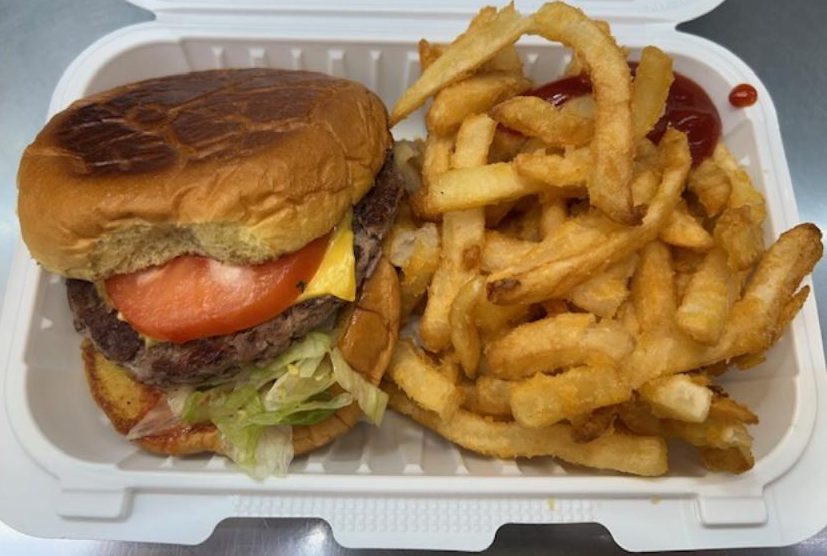
I had the Bacon Cheeseburger Deluxe sandwich, which came with a side of French fries and lettuce and tomato and pickles. The burger was cooked to perfection about medium-well where it was cooked through with just a touch of pink to it. The meat was juicy and flavorful.
Jimbo’s Bacon Cheese Burger Deluxe
I had one their jelly doughnuts for dessert which are brought in from a local bakery and it was large, fluffy and full of a raspberry and currant tasting jelly.
The Bacon Cheeseburger was delicious
The burgers here are really juicy
On my second trip to Jimbo’s, I wanted something light on a hot day. I ordered the Chicken Salad Club sandwich, which was served on white toast.
My Chicken Salad Club
The chicken salad was full of flavor and the sandwich had a nice sized portion on it with lettuce and tomato and crisp bacon in layers and was served with pickles and a side of Cole Slaw. The chicken salad was nicely spiced and was crisp with every bite due to the fresh vegetables.
The Chicken Salad Club
They give you a nice portion of Chicken Salad
The third trip to Jimbo’s was a little disappointing. I had the Chicken Parmesan Platter, which was a Chicken Cutlet with pizza sauce and mozzarella on top with a side of fries. I was not impressed by the sauce which had no flavor to it. The fries were a tad over cooked. The second time I had the Chicken Parmesan again the sauce was much better but I skipped the fries.
The Chicken Parmesan sandwich was much better the second time
The sandwich itself was fresh and the ingredients were good quality but when put together did not have much flavor. The second time trying it, they must have changed the sauce. They made it really good this time
The Chicken Parmesan sandwich
It was a nice lunch
The service is quick and friendly and the food came out perfectly timed all the times I have visited the restaurant.
What I liked about the restaurant the most was the sense of comradery that the restaurant creates. Everyone at the counter was talking with one another and it was nice to get to know some of the people in the neighborhood and hear their perspective on what is happening in the city.
I had passed Jimbo’s Hamburger Palace many times when walking the Sutton Place neighborhood of Manhattan for my project “MywalkinManhattan.com” and decided to come in for lunch. It is a small local restaurant and most of the customers obviously have been coming here for years since the guys at the grill seemed to know everyone. Most of the locals in the neighborhood were sitting at the counter, kidding around with the cooks who seemed to know everyone by either name or site.
Jimbo’s is a small diner type restaurant on First Avenue and one of those small hole in the wall restaurants that every neighborhood needs and are now becoming a dying breed in areas all over Manhattan. Lucky that this wonderful…
Walking the streets of Midtown East is very different from all the other neighborhoods that I have walked so far. The character of the neighborhood differs so much in that it is mostly commercial with hotels, specialty shops, office buildings and more residential on the upper parts of the neighborhood than any other part of the City. When you walk down the side streets of Midtown East, you are usually passing a building that stretches from one block to the other with nothing much in between but a loading dock or garage for the employees. Most of the smaller buildings and brownstones have been long knocked down and replaced with large office buildings some of which the character lacks in these giant ‘glass boxes’.
I know in the past few years that New York City has allowed more innovation in building design and there has been more original designs then the original 1980’s ‘glass boxes’ but even now there are a lot of makeovers that are happening all over the neighborhood and you will be dodging scaffolding that I have not seen since my days walking Harlem. From block to block especially as you get closer to Grand Central Station, there are many closed sidewalks and you can only walk on one side of the street.
Grand Central Station sits at the head of this neighborhood
With that said, there are still many hidden treasures to find if you just look up and across and they just jump out on you. It is surprising in this ever-changing neighborhood of soaring towers and busy hotels that tucked here and there are public atriums with places to sit and tiny cafes inside them that cater to the busy lunch crowd. Small brownstones here and there around the neighborhood have survived the wrecking ball and now house small cottage businesses and some upscale boutiques. I even found a few waterfalls along the way. I started my walk on the corner of Fifth Avenue and 59th Street, which is becoming like an old friend. East 59th Street with its luxury shops and hotels is going through a transition itself since the domination of the internet.
Many of the luxury stores from Steuben Glass to the old FAO Schwarz Fifth Avenue have either disappeared or have moved to other parts of Midtown. Even the Barney’s New York on Madison Avenue on the edge of the Upper East Side neighborhood has filed for bankruptcy sighting changing tastes (people just don’t dress like that anymore) and the cost of doing business in a Brick & Mortar store which such high rents. I really don’t think honestly that people can afford these places anymore and if they can, will order it online not having to deal with the sometimes-indifferent service you get now in stores (I experienced this feeling in Paul Stuart when I walked in twice with shorts). The result is a lot of empty retail space.
This is changing though with the remodeling of the older office buildings with new facelifts and newer foreign stores coming into the neighborhood. Even so, look again for the open-air museum of artwork all over the streets and in the lobbies of these soaring office buildings. When walking down East 58th Street, I came across the sculpture “Rondo” by artist Tony Rosenthal in 1969 in front of 127 East 58th Street. This interesting circular sculpture is made of welded bronze.
‘Rondo’ by artist Tony Rosenthal
Tony Rosenthal was known for his large ‘Monumental Public Art Sculptures’ that appeared in cities all over the United States. Mr. Rosenthal had studied at the Chicago Institute of Art and in the 1960’s concentrated on large Abstract Geometric Sculptures. With his “Rondo” series in the 1960’s, it is noted that “Tony Rosenthal finds, discovers and reports to us what we might not have seen without him” (Tony Rosenthal biography).
Take a look at the detail work of 480 Park Avenue on the corner of Park Avenue and East 58th Street. Designed by architect Emery Roth in 1929, notice the terracotta detail work all over the building. It is one of the great residential buildings where each apartment had working fireplaces and high ceilings.
One building that stands out on the corner of Lexington Avenue and East 57th Street is the Cohen Building at 135 East 57th Street with its soaring floors and interesting entrance with a ringed pavilion. This 31-story commercial office building has a unique circular path for vehicles up from and pillared terrace entrance. The architect is Kohn Pederson Fox Associates and was built in 1987 in the ‘Post-Modern’ design with a plaza in the front of a concave tower. The building is right across the street from Bloomingdale’s Department Store (NewYorkitecture).
Walking past the IBM Building again, it was nice to finally discover that the sculpture outside the building was an Alexander Calder, the famous “Saurien”, that he created to emulate a reptile. This interesting and unusual sculpture deserved a second look. Other buildings that stand out in the neighborhood have been mentioned in Day One Hundred and Forty of MywalkinManhattan.com are the Fuller Building at 41 East 57th Street and 465 Park Avenue. Look up and notice their detail and artworks that line the outside of these buildings.
Mr. Shapiro is an American born artist from New York City who graduated both with a BA and MA from New York University. He is best known for his sculptures of abstract human forms (Wiki).
When walking around East 57th to East 56th Streets, please be careful of the security around Trump Tower. They watch everything you do and it is best to just walk around this part of the neighborhood between Fifth and Madison Avenues. Most of the buildings on this block stretch from one block to the next.
Trump Building at 725 Fifth Avenue is where the security is tight
When walking down East 55th Street from Fifth Avenue back to Lexington Avenue, stop and notice the building at 116 East 55th Street, home to the SUNY Global Center. The building was the former mansion to the Zeigler family and was built between 1926-1927. The house was designed by architect William L. Bottomley in the ‘Neo-Georgian style’ and features Flemish blond brickwork on the outside. William Zeigler Jr., who owned the house with his wife, Helen was a businessman, sportsman and philanthropist (Wiki).
I finished the first day of the neighborhood at East 55th Street and had dinner at Tri Dim Shanghai Restaurant at 1378 Third Avenue (see review on TripAdvisor). Their food is excellent and you have to try their Soup Dumplings that they are noted for.
Tri Dim’s Soup Dumplings are excellent
They burst in your mouth with each bite and their Classic Chicken, which is cooked in what I figure is a honey, soy and plum sauce is just excellent.
For dessert, it was time to revisit Bon Vivant Bakery at 231 East 58th Street for dessert (See reviews on TripAdvisor and DiningonaShoeStringinNYC@Wordpress.com). I had one of their Rose Petit Fours ($4.00) and it was just excellent. A subtle sweetness with the accent of the rose extract that is used in the filling and the icing. These delightful cakes can be eaten in the two tier bakery and it is fun to watch the world go by.
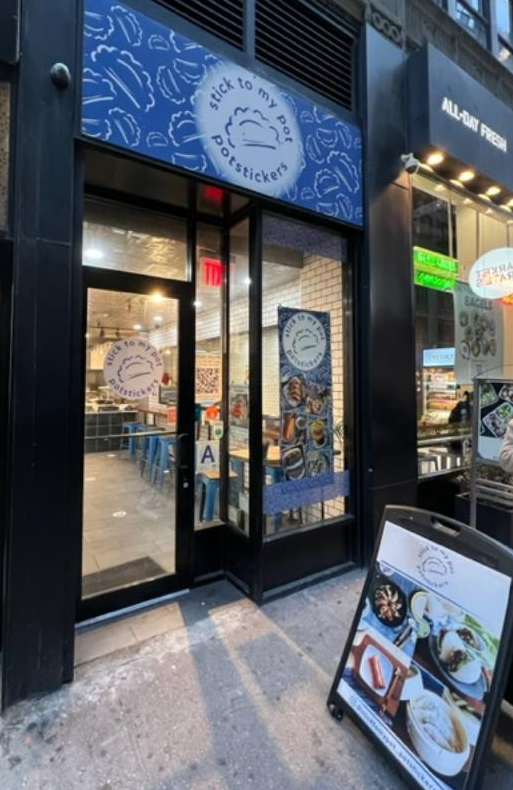
Bon Vivant at 231 East 58th Street is wonderful for desserts (Closed January 2021-Moved to Jersey City, NJ)
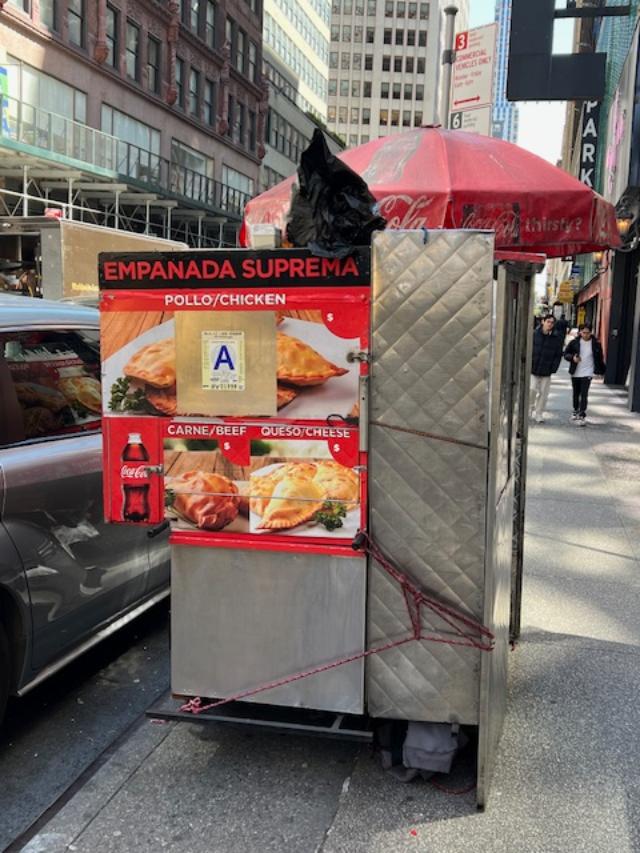
On my second day of walking the Streets of Midtown East I had just finished a busy day at Holy Apostles Soup Kitchen working in the busy Bread Station and was exhausted by the time I got to East 55th Street. I stopped along the way for a Chicken Empanada at Empanada Suprema (see reviews on TripAdvisor and DiningonaShoeStringinNYC@Wordpress.com) at the corner of East 38th Street and Broadway for a quick lunch. This little stand is open only during the week and had the most delicious chicken, beef and cheese empanadas for $2.00! I love his sign with the Caped Empanada.
Empanada Suprema at the corner of West 38th Street & Broadway
In 2024.
The empanada’s are delicious
The Chicken Empanadas are wonderful with a little hot sauce
Don’t miss admiring the famous Friar’s Club at 57 East 57th Street. This beautiful building was built for Investment Banker Martin Erdman in 1908 by architect Alfredo S.G. Taylor and was designed in the ‘English Renaissance’ style.
When walking the bottom of East 55th Street from Lexington Avenue, take time again to admire the former AT&T Building at 550 Madison Avenue and IBM Building at 590 Madison Avenue in the distance. These iconic buildings show the resilience and creativity of their corporate owners. They are such interesting designs (see Day One Hundred and Forty Walking the Borders of Midtown East).
Madison Avenue in the 50’s both during the day and at night
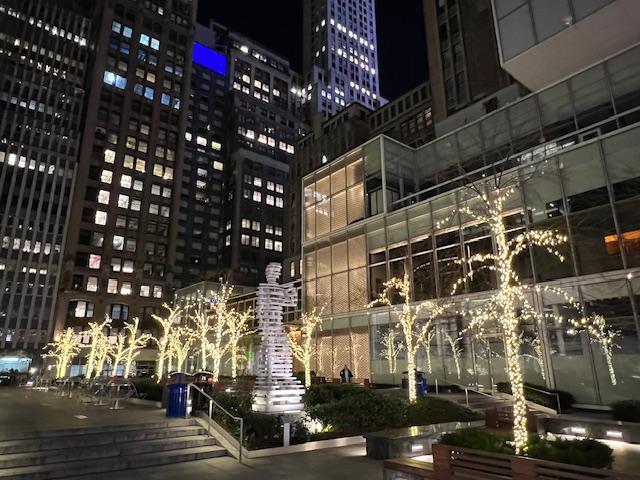
One of the most interesting little pocket parks in the neighborhood I found when I rounded the corner at East 54th Street. It was right in front of the Christie’s at 535 Madison Avenue is the Christie’s Sculpture Garden with its small tables and chairs, trees covered with white lights and interesting public art. The artist Jonathan Prince is showing his work, “Shattered I, II and III’ in the garden courtyard.
Christie’s Sculpture Garden in front of 535 Madison Avenue with “Shattered Sculptures”
The park in the Spring of 202( from the opposite direction
Artist Jonathan Prince is New York born and raised and holds degrees from Columbia University and the University of Southern California. Over the past twenty years, the artist has had a passion for form and material with the use of chaos in his works. His use of steel and CorTen is used in the ‘Shattered’ pieces and they have a reflective element against the white lights of the park (Artist website).
Jonathan Prince in front of his “Shattered Sculptures”
This public garden is one of the nicest I have seen in many blocks and it is nice that Christie’s gives us an opportunity to view Public Art on sale while sitting back on the chairs on a nice day and just admire the park and people passing by.
During Christmas of 2025, I revisited the park and noticed it has being used as a sort of revolving outside art gallery featuring new works by arts both inside the building and outside in the gardens. These are some of the works that were being displayed. I had gotten there just as the sun was beginning to set and the lights were coming on.
The park in the winter
New artworks are being featured seasonal. These new artworks were in the park in the Fall of 2025.
The ‘Untitled’ work by Artist Joel Shapiro
The sign
‘Walla Walla’ by Artist Deborah Butterfield
The sign
‘Golem’ by Artist Julian Schnabel
The sign
Walking through the park in the Winter time
Walking through the park at night when the lights are on gives the park a very elegant look to it. I love the way the park stands out at night.
The park with the white lights on
The park lit at night in the early Spring of 2026
The Kiton Store at 4 East 54th Street is the former home William Earle Dodge Stokes and his former wife, Rita. Mr. Stokes bought the land and leveled the houses that were there and had architects McKim, Mead and White design the marble mansion in 1896. The couple never lived in the house and filed for divorce soon after. The house was then bought by William H. Moore, the founder of Nabisco and his wife, Ada who movements in New York Society were well known. After Mrs. Moore’s death in 1955, the mansion was used for retail purposes (Daytonion in Manhattan).
The Kiton Store Stokes/Moore House at 4 East 54th Store
The ironic part of the former Stokes/Moore house is that right behind it when rounding the corner to East 54th Street is the Paley Garden, another small public garden with a waterfall as its centerpiece at 3 East 54th Street. The park was designed by architects Zion Breen Richardson Associates and opened in 1967. CBS Head William Paley financed the park in honor of his father, Samuel Paley (Wiki). This pristine little park is also nice to just sit and relax and listen to the waterfall and drown out the sounds of the City. The rest of East 54th Street is lined with large office buildings and the rush of people walking from one block to the next.
When it is open ‘in season’ don’t miss the Refreshment stand here. The food is pretty good
Rounding East 53rd Street make an effort to stop inside the lobby of 1 East 53rd Street to see the gallery display from the Studio in the School New York City. The works that line the wall of the lobby space of the building is from art students all over New York City.
The Studio in the School is the largest not for profit visual arts education organization in New York City with the mission to “foster the creative and intellectual development of youth through quality visual arts programs, directed by arts professionals. We also collaborate with and develop the ability of those who provide or support arts programming and creative development for youth both in and outside of schools. We fulfill our mission through two divisions; the New York City Schools Program and the Studio Institute” (Studio in the School mission statement).
The Studio in the School Gallery at East 53rd Street
Walking the rest of East 53rd and then onto East 52nd and East 51st is lined with large office buildings that stretch from one block to the other. Most of this part of the neighborhood was knocked down in the late 1960’s for commercial use.
This little dragon protects the museum.
The Studio in the School gallery.
When walking down East 50th Street there is a small gem of a public pocket park at the south side of East 50th Street between Madison and Park Avenues. Created by the MTA (Metropolitan Transportation Authority in 2014, this little park called the “50th Street Commons” features a water feature ‘waterfall’ that turns colors from blue to green to yellow to fuchsia. This unique little park surrounded by exotic plants is another nice place to just sit and relax (Murray Hill, Gramercy and Midtown East Paper).
Across the street from the park and wedged between office buildings is the restaurant, Maloney & Porcelli, which was founded in 1996 and offers “clubby American cuisine” and harks back to an era when lunch time was taken seriously. It stands in contrast to the ever-changing neighborhood.
The restaurant classic, Maloney & Porcelli at 37 East 50th Street
When rounding East 49th Street, stop at Tower 49 at 12 East 49th Street, the home of WeWork to see the art exhibition of artist Enrico Isamu Oyama exhibition “Inside Out”. This exhibition located on all side of the lobby. This contemporary and rather unusual exhibition starts with the pillars on both East 49th and 48th Streets to invite you inside (the security at the building is really cool and nice about people looking around). The Tower 49 Gallery offers exhibitions of art free of charge and is open to the public at street level.
Mr. Oyama’s work is unique at best with a lot of lines and movement. His work “Quick Turn Structure” consists of interlocking intersections of black and white shapes and the unique style replaces letters with lines, highlighting their dynamic motion through the process of repetition that subsequently creates and abstract form with angular points and three-dimensional depth (Artist Press Release).
Tower 49 Gallery
Mr. Oyama is originally from Tokyo and is now based in New York City and likes to create a visual art in various mediums that features Quick Turn Structure, the motif composed of spontaneous repetition and expansion of free-flowing lines influenced by the aerosol writing of the 1970’s-1980’s New York and beyond (Artist Press Release).
Opening in a former upscale Italian restaurant, Joe’s Home of the Soup Dumpling at 7 East 48th Street has been packing them in in 2021. I am not sure if they are part of the former Joe’s Shanghai that used to be located in Chinatown but this restaurant is gaining a reputation for their Soup Dumplings.
Joe’s Home of Soup Dumplings at 7 East 48th Street opened in 2021
The evening I went there I just happened to come across it and decided to have dinner. The Soup Dumplings ($11.95) are amazing. These are larger than most I have had recently and were loaded with fresh ground pork and crab and steamed perfectly. I ate these six little delights quickly and enjoyed my Shanghai Wonton Soup ($5.25) and Beef Scallion Sandwich ($8.95) as well. The food and service were excellent. Another time I was there, I had the Pork and Shrimp Spring rolls ($5.95) that are excellent.
I highly recommend the Soup Dumplings here
Dinner on a recent night of Crab and Pork Soup Dumplings and Pork and Shrimp Spring rolls.
Follow the neon sign to Joe’s.
If you are in need of a public bathroom, try the fourth floor of Saks Fifth Avenue in the Men’s Department. When the store is open, this is one of the most convenient places to go to the bathroom in the area.
When proceeding down East 48th Street, take a stop in front of 4 East 48th Street, The Church of Sweden. This Neo-Gothic Church was built in 1921 for “The Bible House” and was sold to the Church in 1978. There is a library and cafe that are inside and open to the public. For the most part, the rest of East 48th Street is filled with large buildings that stretch from side to side.
There is one stand out piece of artwork in the lobby of 280 East 48th Street of four people hunched over in a circle. As hard as I tried though I don’t know who the brilliant artist is of the work (in 2024 when I revisited the building I still could not find the plaque to the artist).
The lobby sculpture at 280 East 48th Street
Rounding East 47th Street, take a trip back in time to Manhattan of the 1970’s inside of Phil’s Stationary at 9 East 47th Street. I was talking to the gentlemen who were running the store and told them I had not seen inventory like this on sale in a long time. Hard to find things like stationary, note pads, typing paper and ribbon and even recommendations to a place to fix the typewriter. This stationary store harks back to the days when people left the office to go shopping for things needed at the last minute. They still sell pens, pencils and even the old accounting ledger books. The nice part is that it still smells like a stationery store.
Most of the Streets between East 47th to East 46th Streets are lined with larger office buildings that stretch from block to block with a smattering of small businesses here and there. One standout at 556 Fifth Avenue at the entrance of East 46th Street is the Philippine Consulate General which services Philippine nationals in the Northeast states. This unique building is one of the last holdovers from the Country buildings that used to line this part of Fifth Avenue in the 1960’s, 70’s and 80’s. The building was designed by Carrere & Hastings in 1912 for the Knoedler and Company Art Gallery.
On the edge of East 46th Street sits the famous Roosevelt Hotel and the Helmsley Building which sit as the old guards to the neighborhood once known as “Terminal City”. The Helmsley Building at 230 Park Avenue was originally built for the headquarters of the New York Central Building in 1929 by Warren & Wetmore in the Beaux-Arts style. These are also the architects of Grand Central Station behind it that stands guard of the neighborhood from Turtle Bay to Midtown East.
The Helmsley Building at 230 Park Avenue stands guard over this part of Park Avenue
The historical marker for the walkway and drive through.
The decorations in the Helmsley Building walkway.
The Helmsley Building at night
The Roosevelt Hotel at 45 East 46 sits between East 46th and 45th Streets next to Grand Central Terminal. The hotel was designed by architect George C. Post & Son in 1924 and was once part of a series of hotels that made up “Terminal City” that stretched along both sides of Grand Central. The hotel was named for President Teddy Roosevelt and even had a childcare service in ‘The Teddy Room’.
The faded Roosevelt Hotel being used as an immigrant intake center in 2024.
The Roosevelt Hotel’s other faded entrance.
These embellishments stare at you when you pass the hotel.
The embellishments also take a glance at you as well.
Take time to walk around these impressive buildings and look at the outside stone carvings and elaborate lobbies. The lobby of the Helmsley Building is impressive with its marble floors and impressive chandeliers.
On the corner of Fifth Avenue and East 46th Street tucked behind the Barnes & Noble bookstore I had lunch at a new branch of Joju at 555 Fifth Avenue, which had just opened that afternoon with a soft opening. I had some of their Vietnamese spring rolls which were filled with ground pork and vegetables and were cooked to perfection.
On another occasion to visit the restaurant, I had the Vietnamese sandwich with Caramel Pork and fish sauce and a side plain double-fried French Fries and a Lemon/Leechee Mojito Lunch did come to almost $22.00 but the sandwich can feed two and it is worth the indulge. The service there is really nice as well.
JoJu is a new addition to the Fifth Avenue restaurants at 555 Fifth Avenue
My Bahn Mai Sandwich with the Double Cooked Fries and a Leechee Lemon Mojito
The sandwich was delicious and so good!
The fries are excellent and so crispy
The Lemon Leechee Mojito was so refreshing on a hot day and all their drinks are so creative
Tucked into the side of the Helmsley Building at the corner of East 45th Street and Vanderbilt Avenue is Urbanspace Vanderbilt, an indoor food court with some of the most hip and innovative local restaurants in New York City.
The outside of UrbanSpace, the original in Vanderbilt Hall
These artisan and chef driven restaurants are outposts of the original neighborhood restaurants including well-known names of Roberta’s Pizza and Dough Doughnuts.
Dough at the UrbanSpace Vanderbilt (this location closed in 2025)
The company UrbanSpace has been creating these experiences since 1993 since the company’s establishment in 1972 in Great Britain. Don’t miss the vibrancy of the atmosphere and the smells that waft through the hall at lunch time. I love going to Dough that occasional $4.00 doughnut that is well worth it. UrbanSpace food court in the corner of the Helmsley Building on East 49th Street
The rest of East 45th and 44th Streets are lined with small office buildings and stores and along Madison Avenue the headquarters of Brooks Brothers (Closed 2020) and Paul Stuart stores that cater to the City professionals and “preppie class”.
Brooks Brothers at 346 Madison Avenue (Closed 2020)
You can still see the Brooks Brothers emblem on the old store.
Midtown East is now mostly a commercial neighborhood lined with office buildings and retail businesses but as you walk the streets here and there things still pop out and amaze you. It really shows the complexity of the City at its best and how a little creativity and renewal can change a space from one use to another.
That shows the imagination of the people who keep making Manhattan a unique experience.
Check out my other blogs on Walking Midtown East:
Day One Hundred and Forty-Three-Walking the Borders of Midtown East:
(Great for their public restrooms during business hours)
All the buildings and street art that is mentioned in this walk is done by address and street to make it easy to find. Please note the buildings and pocket parks that you should not miss.
I have been running in and out of the City since I started teaching classes again at the college and had a ‘bucket list’ of small museums that I wanted to visit for my blog, “VisitingaMuseum.com” and restaurants I wanted to try before the Summer was over. So there was a lot of running around the last several weeks. That’s why the blogs come out a little later than usual.
I got back to finishing my walk around ‘Midtown East’ by walking the only two Avenues inside the neighborhoods borders, Madison and Park Avenues from East 43rd Street (which hugs the Turtle Bay neighborhood) and East 59th Street (which hugs the Upper East Side & Sutton Place). On the Avenues in this part of the neighborhood is mostly residential and commercial spaces with rows glass boxes on some streets and limestone and marble residential buildings one the others. There is a lot of sameness in the architecture here but don’t let that fool you. There are a lot of interesting things to see and places to visit in this very much working modern neighborhood.
My walk started on Madison Avenue’s commercial district at the start of East 43rd Street where a giant new glass box is being created right next to Grand Central Station. Probably not Mr. Vanderbilt’s vision for the area but I think he would have been impressed by the progress the area has experienced in the last 100 years.
My first stop is admiring and walking into the headquarters of Brooks Brothers Clothing store at 346 Madison Avenue, one of the most American and famous clothing stores in the United States. Stepping into Brooks Brothers is like a step back into time when shopping was still experience and customer service actually meant something. Their displays are elegant without being stuffy.
The elegant displays at Brooks Brothers main floor (now closed)
The store was designed by architects La Farge & Morris in 1915 the Italian Renaissance design with prominent arched entrances, wrought iron arches and carved limestone details around the building. You can see the detail work in the cornices that line the top of the building.
The Brooks Brothers headquarters at 346 Madison Avenue (the now closed headquarters)
The detail work on the now closed Brooks Brothers headquarters
The Golden Fleece emblem of Brooks Brothers on the front of the building.
Another great clothing store is Paul Stuart at Madison Avenue and East 45th Street. The store has been in business since 1938 and carries some of the most impressive clothing and accessories for Men and Women.
Paul Stuart Specialty Store at Madison & East 45th Street
The store was a privately held family business until December of 2012 and then it was sold it’s long time partner, Mitsui. The store has changed a lot since the sale. It once had some of the best customer service in all the specialty stores in Manhattan but when I went to visit on this trip in my shorts and polo, the three sales people on the floor at the time ignored me. It’s not the same store with the orange carpet and older, more mature salespeople.
The Men’s Department after the renovation
When you get to Madison and 55th Street, watch for the security as this is the back section of Trump Tower and East 55th Street between Madison and Fifth Avenues is blocked off by barriers and armed NYPD detectives and police. Only one side of the street is open here so it is best to keep walking.
Another impressive building on Madison Avenue is at 550 Madison Avenue, the old AT&T Building with its signature ‘Chippendale’ roof. This building was considered radical and innovative at the same time when AT&T built it to house their world headquarters. The 37 story building was designed by famed architect Philip Johnson in 1984 in the postmodern design. Critics called it ‘Chippendale’ after the famed furniture due to the ‘open pediment’ look of the top of the building based on English furniture design (Wiki). The building is currently have some lobby renovations that I passed.
The beautiful atrium that you can sit and relax in between the buildings.
Next to the AT&T Building is the IBM Building at 590 Madison Avenue. This 41 story building was built in 1983 by architect Edward Larrabee Barnes & Associates and developed by IBM and designed in the post-modern design (Wiki).
The IBM Building at 590 Madison Avenue & East 57th Street
Because of the zoning laws established in 1916, there is a beautiful and relaxing open atrium filled with food kiosks and art work for the public to enjoy on the ground level. It is a nice place to relax after a long walk. Take time to admire the art works that line the atrium.
The Atrium at the IBM Building
Artist George Rickey’s work in 2024 in the atrium.
The George Rickey piece inside the atrium “Five Lines Diagonal Jointed II”
Artist George Rickey was an American born artist with multiple degrees and places of study. He holds a MA from B.A. (Modern History), Balliol College, Oxford, U.K. and a M.A. (Modern History), Balliol College, Oxford, U.K. He also did graduate study in Art History, Institute of Fine Arts, New York University, New York, NY. George Rickey worked as painter, muralist, and sculptor. Across his diverse body of work from the paintings of the 1920s through the final sculptures of the 2000s, there are four themes that emerge: Movement, Color, Relationships, and Scale (Artist bio).
One piece of art that stands out is the red geometric sculpture on the corner of Madison and East 57th Street is the great artist Alexander Calder “Saurien” (which is a large reptile), that was created by the artist in his studio in 1975. This is an example of Calder’s “Stoic” work and were called ‘stabiles’ because these abstract works, unlike his floating works of art, stand strongly and firmly into the ground (Art Nerd 2018).
The Alexander Calder sculpture, “Saurien” (now replaced by another sculpture by artist Joel Shapiro)
Walk around this wonderful work by Calder and try to take a breath and understand what the artist was trying to say. It is almost like all the ‘legs’ on the sculpture are trying to show stability and contrast.
Mr. Shapiro is an American born artist from New York City who graduated both with a BA and MA from New York University. He is best known for his sculptures of abstract human forms (Wiki).
Inside the atrium, there are two interesting pieces of artwork that standout. There are two colorful acrylic apples that are done in colorful motifs that you should not miss. The sculptures were created in 2004 for the “Big Apple Fest” to promote the City’s tourism. Companies paid $8,500.00 to sponsor and $12,500 to keep the apples in which artists were allowed to decorate inside or outside.
One of them is entitled “A Day in the Big Apple” by an artist named Billy.
‘A Day in the Big Apple’ by artist Billy
The other is of a colorful face by artist Romero Britto entitled “New York Future”.
“New York Future” by artist Romero Britto
Romero Britto is a Brazilian born American artist whose colorful works elude the optimism the artist has on his view of the world. He uses bold and colorful patterns to enhance his works (Artist Bio).
When you reach the edge of the neighborhood at East 59th Street, you are greeted by the former GM Building that stretches from Fifth to Madison Avenues. This elegant 50 story building once represented the presence of GM in New York City. It was designed by the architectural firms of Edward Durell Stone & Associates and Emery Roth & Sons in 1968. It was designed in the “International Style” and stands guard at the end of the commercial district of Midtown East and the Upper East Side.
As you cross back down Madison Avenue on East 59th Street, you will notice the ever-changing retail landscape and all the empty storefronts on this part of Madison Avenue. Twenty years ago, this would not have existed, but it is a sign of the times.
The details of the Fuller Building at 41 East 57th Street
Another interesting building to admire is the Fuller Building at 41 East 57th Street on the corner of Madison Avenue. The building was created for the Fuller Construction Company in 1929 by architects Walker & Gillette in the ‘Art Deco Style’. The building’s exterior sculptures were designed by architect Elie Nadelman. Look at the interesting details not just on the outside of the building but walk into the lobby to take a look around (Wiki).
One of the great hotels in New York City stands guard at 455 Madison Avenue and 50th Street, the New York Palace Hotel (formerly the Helmsley Palace Hotel) which is a combination of an old mansion and the modern building behind it. The front of the building facing Madison Avenue is the former Villard Mansion.
The front of the hotel is the “Villard Houses” created in 1882 for Henry Villard, a railroad financier, who worked with the architectural firm of McKim, Mead & White to create a series of six brownstone townhouses facing a courtyard in the ‘Italian Neo-Renaissance style’. Developer Harry Hemsley leased the houses and hired Emery Roth & Sons to create the 55 story modern hotel in the back of the houses.
The Villard Houses part of the New York Palace Hotel
The hotel at Christmas 2024
The Villard Houses at the hotel decorated for the Christmas holidays
I passed the hotel again during Christmas of 2025 and the decorations were even more elaborate during the day. The hotel looks amazing at the holidays.
The front of the Palace Hotel at Christmas
The beautiful wreathes that lined the fence
The Christmas tree at the Palace Hotel
The hotel opened in 1981 as the notorious ‘Helmsley Palace Hotel’ with hotelier Leona Helmsley in charge. Considered one of the best hotels at the time, it was a five star/five diamond hotel (with one of the most nervous staffs in New York City). The hotel has been owned by Lotte Hotels & Resorts since 2015.
The inside of the New York Palace Hotel, the Villard Houses
Take time to walk through the hotel from the East 50th Street entrance to the East 49th Street exit and walk around the public rooms and admire the architectural details from the Gilded Age. There are elegant features from staircases to marble fireplaces and the most beautiful views on Madison Avenue.
I found this pardon of the Helmsley Hotel on YouTube. It is very clever.
Another older hotel that stands out is the Roosevelt Hotel at 45 East 45th Street at the corner of Madison Avenue and East 45th Street. It stands guard next to Grand Central Station. The hotel opened in 1924 and was designed by the architectural firm of George P. Post & Son for businessman, Frank A. Dudley and it was ran by United Hotels Company from a leased agreement with the New York Central Railroad. Like the other hotels that line Lexington Avenue, there used to be a separate passageway from the railroad to the hotel (Wiki).
The Roosevelt Hotel being used as a immigration center in 2023 and 2024
This is similar hotel to take the time to walk through the lobby and look at the vaulted ceilings and the Gilded Age details of the hotels with its thick carpets and elegant staircases. The hotel has a somewhat dark, more European feel to it. There is a lobby restaurant when open that looks pretty interesting.
The entrance to the lobby at the Roosevelt Hotel in its heyday.
As you walk around Grand Central Terminal and through the archway pedestrian tunnels that lead to Park Avenue from East 45th to East 46th Streets, you will be traveling under the Helmsley Building at 230 Park Avenue that stands guard at the beginning to the business and residential neighborhood of Park Avenue.
The Helmsley Building was built in 1929 as the New York Central Building for the rail company and was designed by architects Warren & Wetmore, who also designed Grand Central Terminal, in the ‘Beaux-Arts style’. Take time to admire the statuary around the clock that dominates its front and the beautiful stone detail work of the exterior of the building.
The beautiful details of the Helmsley Building on Park Avenue
The beautiful statuary.
The historical marker of the Helmsley Building.
The New York Central used the building as its starting point of “Terminal City”, a series of buildings and hotels that the railroad developed on the top of the rail line (Wiki). The true beauty of The Helmsley Building is at night when the owners put on a light show illuminating the building with colorful spotlights.
The Helmsley Building light show after dark
Park Avenue in the East 40’s is quite amazing at night
All along Park Avenue is a series of ‘glass boxes’ for office buildings and residential towers that line the Avenue all the way up to East 96th Street at the exit of the rail line. Along the way, there are some interesting examples of architecture that line Park Avenue.
The Waldorf-Astoria Hotel at 301 Park Avenue is currently closed and under scaffolding awaiting its new life as a small hotel and condo complex. The hotel, as mentioned in previous blogs in ‘MywalkinManhattan.com’, was built and opened in 1931. It was designed by the architectural firm of Schultz & Weaver in the ‘Art Deco style’ and is probably one of the most famous and talked about hotels in New York City outside the Plaza Hotel (Wiki). There have been so many movies and TV shows filmed and written about the hotel to count and the restaurants inside the hotel were some of the better ones in New York City. The building will open sometime in the future.
The Waldorf-Astoria Hotel at 301 Park Avenue (currently under renovation)
The only part of the hotel I could photo while under renovation in 2024.
St. Bartholomew’s Episcopal Church at 325 Park Avenue is one of the older buildings on Park Avenue and stands alone amongst the bigger buildings on this part of Avenue. Though the congregation was started in 1835, this structure was built between 1916-17 and designed by Bertram Goodhue, who had designed the St. Thomas Church on Fifth Avenue (See Walking the Border of Midtown East-MywalkinManhattan). The church was designed in the ‘Byzantine Revival Design’ and he was required by the congregation to retain the old church portal from the former church on Madison Avenue and East 44th Street in the new church design (Wiki).
Look at the details of the old church and the stained-glass windows. In the Summer months, there is a wonderful (yet somewhat over-priced) restaurant in the courtyard of the church and there are art markets during the Summer and Christmas holiday season that you should visit. There is also afternoon music at certain times of the year.
St. Bart’s restaurant and terrace during the summer
One standout, innovative building on Park Avenue sits between East 52nd and 53rd Streets is the Seagram Building at 375 Park Avenue. The building and its exterior designs were created by German American architect Ludwig Mies van der Rohe with the interior Four Seasons Restaurant designed by American architect Philip Johnson.
The fountains are well known in their own right being used in TV and movies
The building was featured prominently in the first episode of “That Girl” in 1965.
This 38-story building of wonder was innovative in its time. Finished in 1958 as the corporate headquarters of Joseph E. Seagram & Sons, the building was noted for its ‘functional aesthetics’ and a prominent example of ‘corporate modern architecture’. Keeping up with modern building codes, the architect used ‘non-structural bronze I-beams and large glass windows’ to create the cool and well-toned exterior structure of the building (Wiki).
Also utilizing the 1916 building code and the new use of open public spaces, the building was one of the first in New York City to embrace the open-air plaza that was prevalent in the 1980’s and early 90’s design. It was an extremely innovative design at the time and still sets the standard for the modern ‘glass box’.
One of the last stand out buildings that I saw on Park Avenue before my walk back down the Avenue was at 465 Park Avenue, The Ritz Tower, an apartment hotel. This elegant residential building stands out because of its details on the exterior of the building and I later learned it was once home to the famous French restaurant, La Pavilion.
This elegant building was designed by architects Emory Roth and Thomas Hastings for journalist Arthur Brisbane, who was the developer. The apartment hotel was managed by the Ritz-Carlton Company. The exterior of the building has many carved stone features so look closely from the other side of Park Avenue to admire the detail work. Don’t stare too long because the doorman gets a suspicious look if you look too long. He kept looking me over as I admired the building and the read the plaques.
Look at the elegant details of the Ritz Tower
The historical plaque of the Ritz Tower.
Up and down the Park Avenue Mall is the work of artist Alex Katz “Park Avenue Departure”, of which it looks like the back of a woman who is walking away from some place. The work is a depiction of the artist’s wife, Ada. Each of the works along the mall is changed slightly to show the sculpture in motion as if it is walking down the mall. This street art exhibition will run through November 2019 (The Fund for Park Avenue).
Alex Katz’s Park Avenue Mall exhibit “Park Avenue Departure” (closed in December 2019)
American artist Alex Katz who was born in Brooklyn, NY and is a graduate of Cooper Union Art College. His long career has seen many changes in art form and today some of his concentrations are in landscape and portraiture. His work can be seen in museums all over the world.
For lunch and dinner that afternoon, I ate at Hop Won Chinese Noodle Shop at 139 East 45th Street between Lexington and Third Avenues (See reviews on TripAdvisor and DiningonaShoeStringinNYC@Wordpress.com). After a long day of walking, I treated myself to a plate of mixed roasted meats, duck and pork, with a side of rice ($9.00) and an egg roll ($1.38). Their roasted meats are a lacquered delight with the rich, crackling skin of the duck worth every bite. The food here is delicious and so reasonable for Midtown East.
By the end of the evening, I got a chance to double back around the Helmsley Building and look at the detail work of that structure as well and then walked up and down the tiny Vanderbilt Avenue between East 45th and 47th Streets that line next to Grand Central Terminal. The most notable building on this block is the Yale Club at 50 Vanderbilt Avenue. The famous clubhouse was designed by Yale Alumnus and architect James Gramble Rodgers, and it opened in 1915.
The Yale Club at 50 Vanderbilt Avenue; notice the plaque to Nathan Hale on the bottom left
The most notable item outside the club is the historical mark where supposedly Patriot Nathan Hale was hung. There is a conflict to where it actually took place and there is another site on the Upper East Side (See Walking the Upper East Side Streets in MywalkinManhattan), where that plaque is outside the local Pier One. I personally like that theory better. Where else in American could a Patriot of the Revolutionary War be hung in that two hundred years later would house a retailer that sells Christmas chukkas made in China?
That’s what I love about Manhattan!
Check out my other blogs on Walking Midtown East:
Day One Hundred and Forty-Three-Walking the Borders of Midtown East:
Amado on 3rd Summer 2023 Hinson Wu’s collection is in the window.
I love this quirky clothing store run by two women who are best described as ‘engaging’, Merri and Roberta. They will keep you laughing and welcomed in your visit to their store. I walked past the store when visiting the Upper East Side for my walking project, “MywalkinManhattan.com” and thought there window display was interesting (Please check the blogs on ‘Walking the Upper East Side’ more information on the store).
The fashions at Amado on 3rd in the Fall of 2022
The beautiful knit hats in Fall 2022
Amado on 3rd is a very unique clothing store, carrying brands both domestic and abroad that I have never seen before like Oui, a French company for cashmere sweaters. The clothes are fashion forward for both casual and professional and are items the everyday woman could wear to the office or for an evening out on the town. It is trendy without being over the top. Items like nicely printed tops, colorful geometric sweaters, multi-colored and dyed fur jackets and knit and cashmere hats. These designs you will never see in the department stores.
Winter Knits and outfits at Amado on Third (plus refreshments)
The prices here aren’t cheap as a cashmere sweater will cost you between $200-$275, a dyed fox jacket around $600 and knit hats around $40 but the quality and materials match the price points. The clothes work almost as wearable art.
During a recent visit to look over their Spring clothing lines, they have beautiful floral prints by Tizzie, that are bright, elegant and have beautiful floral motifs on them that would match with jeans and slacks alike. These come in both floral, geometric and solid colors and offer the most vibrant colors. A line of elegant tops by Petit Pois were also very wearable and had nice geometric patterns to them.
One of Tizzie’s colorful blouses (may not be available now)
The Spring Arrivals on display at Amado on 3rd
On recent visit to the store to look at their Summer clothing, they have an interesting and colorful line of blouses from Gretchen Scott that I have never seen in the department stores. Again the lines are colorful without begin gaudy and go great with a pair of slacks, a skirt or jeans.
Gretchen Scott Blouse (may not be available now)
There is new transitional Fall clothing coming in that came in from a vendor called Kukon that were cotton tops with a gray colored motif on each of them. Very wearable with anything. The Fall clothing are now entering the store and there are many interesting sweaters and blouses coming into the store. Vendors being features are from Kokun, Cyrus, Tizzie ad Yah (not all lines are available at the same time.
One of the new blouses by Tizzie
The store also has an interesting line of jewelry and accessories that you should check out. Every season there is something new to see. There is a very nice line of young girl’s dresses that are Torie Birch inspired and an interesting line of Japanese jeans stuffed with sequins on them in the shape of Bugs Bunny and other cartoon characters.
Spring 2021 fashions at Amado on 3rd
The best part of the store is the level of customer service you get from the ladies. It is excellent. They know their merchandise and who their customer is walking through the door. They can tell you how to put outfits together, what item might look nice on a certain woman and how to mix and match. They have extensive knowledge of the clothes they carry and will pull each piece off the rack and explain it to you. As one of the owners explained to me, “We buy for women like us who like youthful, elegant clothing that matches our lifestyle. There really is something for everyone here.”
Tizzie Blouse at Amado on 3rd for Spring 2021
Another aspect is the free food items to munch on when you are shopping. They might open a bottle of wine, have an assortment of cookies and fruit or cheese and crackers out for the customers to nibble on while they are looking around. On a recent trip I nibbled on a few jellied candies that the ladies put out. I thought that was a nice detail when shopping and a way of keeping the customer engaged.
The Holidays at Amado on Third:
Keeping with the spirit of Halloween the fun and original displays at Amado on Third
They also don’t forget the furry four-legged customers who come into the store with treats for dogs and a water dish outside the store. They also had a small mirror outside during the warm months for the dogs to admire themselves. These are those interesting touches that most stores don’t offer.
For Men, they have an interesting line of colorful socks which are now all the trend for $15.00 in all patterns and styles.
The Winter merchandise is just coming in and there are many printed scarfs and fringed printed gloves that will go with any look.
Amado on 3rd has its Fall 2020 styles on display in time for the holidays
So if you are looking for the unique piece of clothing, jewelry or accessory that you might not find in boutiques and department stores around New York City, start at Amado on 3rd and let the ladies help you make a selection. If anything, you can still indulge in a cookie while you are walking around the store.
Spring 2021 fashions at Amado on 3rd
Even during COVID-19, the store has a personality. There are stylish face masks with geometric and colorful styles in the front display windows and the store still shows off it’s new innovative fashions. It’s nice when stores adapt to the times. These stylish face masks run between $75-$150 and are made by a graffiti artist who will soon be selling sneakers to match at the store.
COVID styles can still be fashionable. This is shopping made interesting.
The most interesting sneakers that are handmade in Brazil by a local artist are now being featured. He is the same artist that created the masks above. The sneakers sell for $275.00.
Spring 2022 has brought in a new look and attitude of the cosmopolitan woman.
Hand-painted blouses and tops from Melarosa Italy Clothing are featured:
The Spring 2022 collection includes beautiful hand-painted tops by Melarosa Italy Clothing, Whyc 1 YC and Inight Insights clothing that brings new directions in a women’s wardrobe.
Spring Fashions at Amado on 3rd for 2022
Some of the elegant separates at Amado on Third for the Spring 2022 season
These elegant looks can be worn either casual or dressy.
Amado on Third’s store selection for the Spring of 2022. There are a lot of colorful, dressy casual looks for the upcoming months.
In the Summer of 2023, the shop carried an array of summer colors with pastels and light hues. There was an interesting collection of pieces from designer Hinson Wu.
The interesting pastels and light hues with the two side tops by Hinson Wu
Hinson Wu’s pastel top
The Summer 2023 collection
Beautiful summer tops at Amado on 3rd
The colorful summer line
The Spring Collection 2024:
What I like about the clothing at Amado on 3rd is that you will not find these unique pieces at department stores. This collection is tailored by the owners of the store to their clients. There are many beautiful fashion forward items in the collection every season and the merchandise changes every month.
*The author wants to thank Roberta and Merri, the owners, for supplying extra pictures of the shop for the blog. It shows the true spirit of the store. They make up the heart of Amado on Third.
During the Christmas holiday season, I visited the store to see all their beautiful Fall merchandise and the store is a true hidden gem of beautiful high quality merchandise at reasonable prices. This coupled by excellent personal service.
The display window of Christmas pink
The wonderful selection of hats and scarfs
The assortment of sweaters in soft tones
The knit hats and gloves are perfect for the holidays
1322a Third Avenue between East 76th & 77th Street
New York, NY 10021
(917) 965-2852
merri258@hotmail.com
I love this quirky clothing store run by two women who are best described as ‘engaging’, Merri and Roberta. They will keep you laughing and welcomed in your visit to their store. I walked past the store when visiting the Upper East Side for my walking project, “MywalkinManhattan.com” and thought there window display was interesting (Please check the blogs on ‘Walking the Upper East Side’ more information on the store).
Amado on 3rd is a very unique clothing store, carrying brands both domestic and abroad that I have never seen before like Oui, a French company for cashmere sweaters. The clothes are fashion forward for both casual and professional and are items the everyday woman could wear to the office or for an evening out on the town. It is trendy…
I covered the edges and the Avenues of Turtle Bay recently and it was time to walk all the streets. To cover the rather odd shaped part of the neighborhood, I walked from East 58th Street to East 48th from Lexington Avenue to Second Avenue first and on the second part of the walk, I covered from East 47th to East 44th Streets from Lexington Avenue to the East River on the second part of the walk to complete the neighborhood. I criss crossed some of the same blocks so I might be pointing things out for a second time that you should not miss seeing. Even amongst the all the modern architecture, there are many beautiful things to admire here.
It is an interesting mix of buildings and residential use and a neighborhood in much transition as it is becoming more commercial and more like Midtown as the small neighborhood feel is surrounded by glass tower apartment buildings and offices. The side streets still keep a localized charm while the Avenues have given way to the big towers. Here you can see the distinct difference in the Upper West Side and the Upper East Side. The West Side has not lost that charm on the Avenues.
I started the walk revisiting 58th Street and walked past all the bath and home design shops that line the street. It is an interesting block of old brownstones and prewar apartment buildings fitted for all the small businesses. One stand out on the block was Bon Vivant at 231 East 58th Street Petit Fours and drinks (See reviews on TripAdvisor and LittleShoponMainStreet@Wordpress.com).
Bon Vivant’s display at 231 East 58th Street (Closed August 2022)
This charming little bakery had the most whimsical little cakes for $3.50 for a small and $6.50 for a large. The cakes come in various flavors but do try the Lavender with its fusion of lavender petals and sweet fondant outside studded with flavors. Its a nice place to eat in and just watch the street traffic go by.
Their delicious Lavender Cake
At the end of the block on the corner of Lexington Avenue and East 58th Street is the Bloomberg Building at 731 Lexington Avenue. Designed by architect Cesar Pelli & Associates, the building opened in 2004 to house the Bloomberg Company headed by former Mayor Michael Bloomberg. The building holds the offices and meeting areas for the company as well as the back part of the building which is connected by a seven-story courtyard to hold the residences. This impressive building replaced the empty and now defunct Alexander’s Department Store which had closed years earlier.
The impressive Bloomberg Tower dominates the northwest corner of the Turtle Bay neighborhood at 731 Lexington Avenue
As you round Lexington Avenue onto East 57th Street, you will notice the mix of old and new buildings with a collection of old grand hotels and modern office buildings. The street itself is lined with all sorts of businesses catering to the busy Midtown customer. On stand out business is Royal-Athena Galleries at 153 East 57th Street (See my review on LittleShoponMainStreet@Wordpress.com-Closed in 2022), which carries ancient Egyptian, Roman and Greek art of museum quality at all prices.
It is part museum and part store. It is like visiting the Metropolitan Museum of Art and seeing price tags on all the artworks. Everything here is authenticated and anything over $5,000 is registered with the Art Loss Registry in London so you know where it comes from. Don’t miss walking through the gallery cases and tables to see all the beautiful items.
Royal-Athena Gallery 153 East 57th Street (closed in January 2022)
Also, part of the shopping district is the iconic Hammacher Schlemmer store at 147 East 57th Street, which has been in this location since 1926. The company was founded in New York City as a hardware store for finding hard to find tools in 1848 in the Bowery district downtown. The company was founded by Charles Tollner and R. Stern with Albert Hammacher investing in the company in 1859. William Schlemmer bought out Charles Tollner part of the company in the 1860’s. It stayed in the family until 1953 when it was sold to investors (Company History).
The store is like a playground for adults with all sorts of unusual items on sale like fishing equipment, survival kits, transportation vehicles and clothing and accessories not found in the department stores.
The Hammacher Schlemmer store at 147 East 57th street (company now closed)
Rounding the corner on Second Avenue towards East 56th Street, you will pass the unassuming High School of Art & Design at 245 East 56th Street, which is closed for the school year except for a few students taking summer classes and their gallery which is still open to the public. I went to see the “Honors Illustration Show” in the John B. Kenny Gallery, which was still opened when I was walking the neighborhood.
The High School of Art & Design at 245 East 56th Street
I only got to spend about a half hour viewing the show which dealt in different media forms with the theme of social justice, social media, racism and phobias in modern society. The graduating students created their works in all media aspects including painting and quilts, which I thought was interesting.
The John B. Kenny Gallery at the High School of Art & Design
The Kenny Gallery was named after John B. Kenny who was one of four art teachers that founded the school in 1936. He became principal of the school in 1941. Originally named the School of Industrial Arts, the name was changed to the High School of Art & Design in 1960 when the school moved to its currently location (School History page).
After saying my goodbyes to the security staff for letting me spend time alone in the gallery I turned the corner at Lexington Avenue and walked down East 55th Street towards Second Avenue again. I passed the Central Synagogue, which is the second oldest continuous Synagogue in New York and the oldest in the City. Designed by architect Henry Fernbach between 1870-72, the building was designed in Moorish Revival.
I admired the Central Synagogue on the corner of Lexington Avenue and East 55th Street at 652 Lexington Avenue
Walking down the street, I revisited some of the sites I had seen before. On the corner of Third Avenue and East 55th is the original P.J. Clarke’s Restaurant at 915 Third Avenue which was jammed with people for happy hour.
P.J. Clarke’s has been in this location since 1884 at 915 Third Avenue
This famous restaurant has been in business since 1884 and is named after Patrick J. Clarke who bought it from the original owner after ten years of working there. The restaurant is currently privately owned. When you look at the structure, the building is a holdout wraparound of 919 Third Avenue when the rest of the block was torn down. The building was built around the bar. This makes it really stand out.
Look for the sculpture, ‘Red Flying Group’ in front of 909 Third Avenue by artist Ann Gillen. This unusual sculpture really stands out for its bold design. Ms. Gillen was raised in Brooklyn and is a graduate of both Pratt and Columbia University. As an artist, she is noted for her use of Greek theory of matter which uses geometric forms to explain spatial relationships. When she creates a piece, she considers the work’s axis, resistance to gravity, the manner of construction and the color dynamic. This really shows in this particular piece (Wiki and Artist Bio).
The Red Flying Group outside of 909 Third Avenue by artist Ann Gillen
Making the next turn onto East 54th Street from Second to Third Avenue on the corner of Third Avenue that stretches from East 54th to East 53rd is the well-known ‘Lipstick Building’.
Looking down Third Avenue by the Lipstick Building
The building was completed in 1986 by John Burgee Architects with Philip Johnson and is called the ‘Lipstick Building’ because of the ‘set-backs’ that were required by the zoning laws for use of light. With its oval design and pinkish hue, it almost looks like a retracting lipstick. An oval building really stands out among the rest of the glass boxes along Third Avenue (Wiki and Builders history). The building had been featured in the papers recently being the offices of Bernie Madoff and his major Ponzi scheme.
The Lipstick Building that looks like a ‘contracting lipstick’
When crossing back from East 54th to East 53rd by Lexington Avenue again please notice all the turn of the last century architecture in both the office buildings and hotels (See this on Day One Hundred & Thirty-Eight Walking the borders and Avenues June 2019). This line of hotels was built to accommodate the railroad patrons coming into New York City from Grand Central Station.
At 599 Lexington Avenue in the lobby of the building at the corner of Lexington Avenue and East 53rd Street, look into the glass lobby and notice the colorful sculpture “Salto nel Mio Sacco” by New York artist Frank Stella. This colorful ad whimsical piece translates to ‘Jump into my Sack’ (Art Nerd).
Salto nel mio sacco’ by Frank Stella inside the lobby
Frank Stella is a New York City artist who had worked in many mediums before being influenced by the abstract artists of the 50’s and 60’s like Jasper Johns. His use of many materials and colors reflex in his artwork. This piece which is made in aluminum and colorful paints in a three-dimensional form with all different shapes on top of one another. This bold work was quoted by the artist in saying, “the essential issue is to have a sense of form without it being illustrational, to make things that impress the eyesight and have an impact”. (New York Times McGill 1986).
How beautiful it all is at night as well
Walking towards Second Avenue into the heart of Turtle Bay, you will notice a series of excellent restaurants on both side of the street. You will also begin to notice more brownstones and small apartment buildings which gives this part of Turtle Bay its character which is rapidly disappearing. You can wonder amongst the ethnic restaurants and small retail stores tucked into the block.
East 52nd Street offers its charms as well full of brownstones and small apartment buildings. The Consulate of Hungary takes up a large portion between Second and Third Avenues and tall office buildings line the Avenue.
Look up and notice the detailed stonework of 240 East 52nd Street with its carved windows and stone faces staring at you from every direction as you pass by. The building was built in 1900 and is considered an “Old Law Tenement” which means that it is built in a dumbbell shape to let in natural light and fresh air.
At the end of the block as you walk down Lexington Avenue to East 51st Street is the famous subway grates that were featured in the 1955 movie, “The Seven Year Itch” with Marilyn Monroe. The famous scene was shot here at night and took 14 times to film to get it right.
The grates today that I walked on top of and did not know.
The famous 1955 scene in the movie
When walking down East 51st Street from Lexington Avenue you will notice more hotels popping up not just on the Avenue but on the side streets as wellbeing refigured into older buildings. I revisited the old RCA Headquarters at 570 Lexington Avenue which was designed by architects Cross & Cross in the Gothic style. You really have to look up and around the building to see the details in it. Try to look at the building from a distance to see its sculpture work and admire the ‘GE’ clock outside the entrance.
One place that I found and is such a nice place to just sit and relax is the Greenacre Park at 217 East 51st Street. This wonderful little park is situated between two buildings and has nice shade trees and benches to relax on and go down the stairs and you will come to a waterfall and streams on the side where the water replenishes itself.
The Rockefeller Park
Greenacre Park was built between 1970 and 1971 by Abby Rockefeller Mauze, who founded the Greenacre Foundation in 1971 who still maintains the park. The park was designed by architect Hideo Sasaki and Harmon Goldstone. The park is privately owned but open to the public (Greenacre Foundation).
The park is composed of three levels. The lowest level has a 25-foot waterfall composed of huge, sculptured granite blocks with the east wall trickling down its face to form a brook along the sidewalk. The central level is landscaped with locust trees and small chairs and tables and then there is a raised terrace which has a trellis roof to protect park goers and there is a small snack shop, Carol’s Cafe, (See review on TripAdvisor) offering a variety of refreshments (Greenacre Foundation).
The Cheeseburgers are delicious
I ate at Carol’s Cafe one afternoon when visiting the neighborhood and the food is very good. I had a cheeseburger that was loaded with fresh veggies and one of the coldest cans of Coke I had in a long time. It was fun to eat at one of the tables and just relax (Beware though and check your bill. These people can Bait and Switch on posting their prices).
Carol’s Cafe offers delicious food at reasonable prices but check your bill!
Across the street from the park is another really nice and very reasonable restaurant, The Pho 6 at 222 East 51st Street (See review on TripAdvisor and DiningonaShoeStringinNYC@Wordpress.com). It is a Vietnamese restaurant offering some of the simplest and freshest food since my trip to Vietnam back in 2016.
The Pho 6 for very reasonable Vietnamese food at 222 East 51st Street (Closed August 2020)
The room is done all in woods and the walls, tables and chairs are all made of the same material which makes for interesting decor. The food is delicious. I had an order of Pork Spring Rolls ($6.00) which were crisp and full of ground pork and fresh veggies and Vermicelli Noodles with grilled Shrimp ($10.00) which was studded with fresh shrimp and topped with assorted greens. The whole meal was wonderful and very reasonable for what I ate.
The delicious Pork Spring Rolls at The Pho 6
The Pork Spring Rolls
The Vietnamese Noodles with Grilled Shrimp
The noodles are loaded with perfectly cooked Grilled Shrimp
After lunch, I continued to walk down East 51st Street to round Lexington Avenue again to East 50th Street and look at the details and renovations of the old hotels lining this part of the Avenue. The Waldorf-Astoria which sits between East 50th and 49th Streets is currently going though a major renovation to make it part hotel and part condo.
The Waldorf-Astoria Hotel at 301 Park Avenue (under renovation in 2024)
The outside Waldorf-Astoria on the Park Avenue side.
The Waldorf-Astoria at 301 Park Avenue was opened in 1931 replacing the original hotel where the Empire State Building now sits. The hotel was designed in Art Deco design by architects Schultz & Weaver. The hotel when finished will contain 350 condos and 350 hotel rooms with most of the public rooms reopened. It will be interesting to see the results.
The Benjamin Hotel at 125 East 50th Street sits across from the Waldorf-Astoria and recently went through a major renovation and is open for business. The former Hotel Beverly was built between 1926-27 by architect Emery Roth and was designed in Romanesque Motif with pelican and owl sculptures around it. The hotel currently was named after Benjamin J. Denihan Sr., who is the new owner of the hotel (New York Landmarks).
The rest of East 50th Street is dotted with mom-and-pop businesses, pre-war apartment buildings and Consulates being so close to the United Nations. Here and there there are still brownstones letting you know that Turtle Bay is exists alongside the commercial district.
East 49th Street is graced by The Barclay InterContinental Hotel which sits at the entrance of the neighborhood at 111 East 48th Street. The hotel stretches from East 49th to East 48th Streets. Designed by architects Cross & Cross in 1926 in the neo-Federal Colonial Style the hotel was part of Terminal City as part of the Grand Central complex and had been owned by the Vanderbilt family (Wiki).
The InterContinental Barclay Hotel at 111 East 48th Street
The faces at the Intercontinental Hotel watch you as you walk in.
And Stare…
And stare at you….
Walking down East 49th Street to Third Avenue you will see the historic Smith & Wollensky Restaurant at 797 Third Avenue which has been serving the neighborhood since 1897 when it was called Manny Wolf’s Steakhouse. The restaurant was opened by Allan Stillman, the founder of T.G.I. Fridays in 1977 and who still owns the original restaurant (the rest of the chain is privately owned). Known for their USDA Grade A Prime Meats, the restaurant is still a popular neighborhood institution (Company History and Wiki).
This building like the rest of the neighborhood has seen the change in times as it too is surrounded by a glass skyscraper at 797 Third Avenue
On the corner of East 48th Street and Third Avenue it is easy to miss the sculpture ‘Etazin’ by artist Kathleen Werner sitting in front of an office building.
Ms. Werner is a Manhattan based fine artist who studied at the Frank Lloyd Wright School of Architecture. She has created what is called ‘interactive art’ with the ‘Etazin’ an outdoor lounge chair. She was quoted by saying she was creating “large pieces that were both beautiful and useful.” (JustLux 2017)
Further down the street is lined with brownstones which is the back part of the Turtle Bay Gardens that line East 48th Street. The lovely stretch of brownstones is residential and also houses more Consulates. Many of these historic homes were built in the 1860’s.
When you double back to Third Avenue look up at 780 Third Avenue to the murals by Brazilian graffiti artist, Eduardo Kobra, who has three murals in the neighborhood. The one on the right side of the building on East 49th Street is of an exhausted fire fighter who fought bravely on 9/11. The 343 represents the number of fire fighters killed that day and pays honor to them.
The 9/11 Tribute to Fallen Fire Fighters by Eduardo Kobra on the East 49th Street side of the building
On the other side of the building is another mural by Mr. Kobra “Genius is to Bike Ride”, which is a commentary of the new bike lanes in New York City. Mr. Kobra is weighing in on the debate of adding bicycle lanes on New York streets to relieve traffic. The mural is of Albert Einstein riding a bicycle. Einstein was rumored to have come up with some of his best ideas while riding a bicycle (780 Third Avenue building history).
“Genius is to Bike Ride” by Eduardo Kobra on the East 48th Street side of the building
Ms. Pepper was born in Brooklyn, NY and had studied at Pratt Institute, the Art Student’s League in New York and Brooklyn College and had studied aboard in Paris. She started to specialize in metal work in the 1960’s and her works were known to be outdoor sculptures (Wiki).
As I finished that afternoon at East 48th Street, I walked past these murals again taking a good glance of the vibrant colors, the detail work and the message each was trying to tell of the City. Mr. Kobra knows how to tell a story in his paintings.
I finished walking down East 49th Street and stopped abruptly to see the building at 225-227 East 49th Street. It looked like a creepy old fraternity house. It was built in 1900 as a Converted Dwelling/Rooming House and now contains apartments. Look at the writing carved in the doorway from 1926 and unusual coat of arms that greets you at the doorway with the words “Erected in the Year 1926”, whatever that means carved over the entranceway. It looks more like ‘enter if you dare’.
The inscription “Erected in the year 1926”. I thought it something more sinister.
I completed the top part of the neighborhood by walking part the Turtle Bay Garden Historic District homes again, looking at these historic brownstones that were built in the 1860’s and how luck they were saved by Charlotte Hunnewell Sorchan in the 1920’s. She bought these twelve historic homes, renovated them to modern feel and restored them to their former glory combining the homes with the brownstones on East 49th Street so that they all looked out on a common garden. Don’t miss admiring the work that was done on them and that the owners still continue into today.
The Turtle Bay Gardens Historic District on East 48th Street between Second and Third Avenues
The Turtle Bay Historic District details on the buildings
At 237 East 48th Street at the Turtle Bay Gardens Historic District there is a plaque to Dorothy Thompson, a journalist who lived in the home from 1941-1957. Her novel “I saw Hitler” and her column ‘One the Record’ were influential in calling for the intervention of America into World War II. She was one of the first female foreign correspondents in the 1930’s and had been expelled from Germany right before the war.
Dorothy Thompson, Turtle Bay resident, journalist and foreign correspondent
Also near the brownstones is a modern home by William Lescaze at 211 East 48th Street, the Father of the Modernist Movement and the designer and builder of this historic home that served as his living quarters and studio. It may not seem that radical today but it was when it was designed in 1934.
I finished my first day of walking the streets of the upper part of the neighborhood and I was exhausted by the heat. The weather had gotten to me. Turtle Bay has a lot to do and see. Here and there is tucked another gem that you can only see by walking around the neighborhood.
I came back to explore the streets of Turtle Bay after a long day in the Soup Kitchen. They had me working in the prep kitchen making salads and cutting vegetables for the next day’s service, so I was tired when I arrived in the neighborhood. It was a little cooler then the first day around 80 degrees, so it was more pleasant to walk around and take my time.
I started with lunch at Lin’s Gourmet Chinese Restaurant at 1097 Second Avenue by 57th Street (See my reviews on TripAdvisor and DiningonaShoeStringinNYC@Wordpress.com). This was my second time at the restaurant having lunch and I highly recommend it. I order the Shredded Beef with Hot Spicy Sauce with pork fried rice and hot & sour soup ($8.25). The food was excellent and perfect on a hot day as it seemed to cool me down.
Lin’s Gourmet Chinese Restaurant at 1097 Second Avenue
The beef was cut in very thin slices like the accompanying vegetables and was cooked with hot chilies to give it some bite. The dish was studded with shredded carrots and celery, so it was a nice combination of flavors. They did not skip on the beef, and it was a generous portion. The hot & sour soup also had its share of chilies and the whole meal woke me up and I was ready to walk again.
The Hot & Sour Soup at Lin’s is amazing!
Lin’s Shredded Beef with Pork Fried Rice and an Egg Roll
The Spicy Shredded Beef here is amazing (pick out the onions though)
After lunch, I started my day walking down First Avenue to East 47th Street and started by taking a break in Dag Hammarskjold Plaza, which I had read was the comprise of the grand entrance to the United Nations complex. This popular park is full of nice shade trees, benches, a small restaurant and the Katharine Hepburn Garden.
Dag Hammarskjold Plaza in Turtle Bay in the Summer of 2024
The park and many of the surrounding buildings to the park were named after Dag Hjalmar Agne Carl Hammarskjold who was born in 1905 to the former Prime Minister of Sweden in World War One, Hjalmar Hammarskjold. Mr. Hammarskjold had served many government and educational positions over the years in Sweden until 1953 when he was asked to serve as Secretary-General of the United Nations. His work in Middle East Peace talks, involvement in the Suez Canal dispute and work in operations in the Republic of Congo earned him a reputation in the United Nations. He died in a plane crash near Norther Rhodesia in 1961 and was post humorously awarded the Nobel Peace Prize in 1961 (NYCParks.org).
Dag Hammarskjold Plaza has been part of the NYC Parks system since the land was acquired in 1948 and was renamed for him in 1961. In 1997, the park had a major reconstruction which created a symmetrical layout from north to south. The same year the Katharine Hepburn Garden was created on the south side of the park. The Friends of Dag Hammarskjold Plaza was formed to raise funds for the park, organize events and keep the place clean (NYCParks.org).
Dag Hammarskjold Plaza in Turtle Bay
The Katharine Hepburn Garden, which is inside of the park, is a quiet oasis from the hustle of the city. Ms. Hepburn, one of most accomplished American actors, moved to Turtle Bay in 1932 with her then husband, Ludlow Ogden Smith, had joined the Turtle Bay Association in 1957 and was instrumental in keeping construction from encroaching into the neighborhood. In 1997, the community got together and dedicated this garden in her honor for the work she did in the neighborhood and for her love of gardening and flowers. It is so peaceful to walk along this path and just look at the plantings.
There is a new sculpture that I had not noticed before called “Undercurrent” by artist Zheng Lu. This graceful and interesting piece of art was just installed in the neighborhood and makes quite a statement. I thought it was beautiful and looked like a wave crashing in front of me.
Artist Zheng Lu is a Chinese born artist who studied at the Lu Xun Arts Academy and the Central Academy of Fine Arts. He is known for his sculpture and installation works in steel structure and for two-dimensional, multimedia, stage and public art (Wiki).
Across the street from Dag Hammarskjold Plaza is the Japan Society at 337 East 48th Street. It was founded in 1907 to promote friendly relationships with the United States and over the years has promoted Japanese art and culture, held lectures and hosted Japanese dignitaries and royalty. During the strained times of World War II, the Society did not take sides politically and closed for time. In 1971, under the direction of then President John D. Rockefeller III the organization grew, and a new building was opened, the Japan House, designed by architect Junzo Yushimura. It became the first building in New York of Japanese contemporary design. It now hosts many exhibitions and social functions. When I was visiting the neighborhood, they were promoting their film festival which I attended. That was a lot of fun.
I saw four excellent films including the release of the musical “Dance with Me” which was a light weight and fun musical. The director knew what he was doing when he wanted to create escapism from the troubles outside. I can’t wait for the Society to open their Fall exhibition.
Japan Society at 337 West 48th Street at night for movies.
Watch ‘Dance with Me’ the opening film to the Film Festival
At the end of the block right on the island on First Avenue in front of the United Nations Building is the monument to Raoul Wallenberg. You could almost miss them (I did twice look for them) but they stand like so many black pillars in a row at 300-386 East 47th Street.
The Raoul Wallenberg Monument at First Avenue and East 47th Street
Raoul Wallenberg was a Swedish citizen who was educated in the United States in the 1930’s and when he returned to Europe was recruited by the U. S. Refugee Board to go to Hungary to save as many Hungarian Jews as possible. His and his colleagues’ efforts help save over 100,000 Jewish citizens by issuing protection from the Swedish Government. His own ending was more tragic in that when the Soviets entered Budapest he disappeared (Wiki).
The monument by designers Gustav and Ulla Kraitz are made of Swedish black disbase and bronze and were dedicated in 1998. Take time to look at the inscriptions on each of the five pillars. Gustav Kraitz is from Hungary and studied at the Art Academy in Budapest when the war broke out. He fled to Sweden in 1956 after the invasion of Hungary and stayed on as a visiting professor. There he met his wife; Ulla and they continue their artwork together and apart.
A store that stood out when walking past it was the Gabrielle Carlson Studio at 501 Lexington Avenue near East 47th Street (moved to 1034A Lexington Avenue in 2022). The clothes in the window really stand out for the vibrant and almost jewel like colors in deep greens, red and purples. The side tables are lined with custom ‘Made in New York’ jewelry. If you are lucky to meet Ms. Carlson like I did she can give you advice and help dress, you for the office or a nice evening out on the town.
Owner Gabrielle Carlson outside Gabrielle Carlson Studio
As I walked down East 46th Street I passed Sparks Steakhouse at 210 East 46th Street. Well- known for their food and service it was also the spot of the assassination of ‘Big” Paul Castellano, the Boss of the Gambino Crime Family in December 1985. This ‘hit’ took place right outside the restaurant and the gunmen fled down Second Avenue. This still casts a shadow on an excellent restaurant for those of us who remember the incident.
Right down the road there is a group of buildings, the Blue Buildings at 222 East 46th Street that house offices and art galleries. They just stand out for being brownstones painted blue.
Artwork seems like it is all over this neighborhood especially when I crossed onto East 45th Street and was greeted by the painting “Youth Employment” tucked into the side of the building by artist Cenzano.
Youth Employment by Cenz
When walking in the other direction on East 44th Street I saw the painting by artist Faith XLVII, “Gender Equality”.
These paintings that were created so close to the United Nations to promote programs such as youth employment, child labor laws, green jobs, gender equality at work and forced labor (Brooklyn Street Art).
Faith XLVII is an international artist who is based in Los Angeles. Through her works she attempts to disarm the strategies of global realpolitik in order to advance the expression of personal truth. In this way her work is both an internal and spiritual release that speaks to the complexities of human condition its deviant histories and existential search (Artist Bio).
I passed ‘Zuma’ again in front of the Nigerian Consulate created by artist Billy Omebegho and have to say it does pack a punch.
I finished my walk at the James P. Grant Plaza at East 44th Street and First Avenue. I needed a rest from all the walking and from the heat. The cool waterfalls and chairs to relax in.
James P. Grant Plaza at East 44th Street
This little pocket park adjoins the UNICEF Building and was dedicated to former Director of UNICEF, James P. Grant who worked tirelessly to combat preventable childhood illness and a ‘childhood survival and development revolution’ (NYCPark.org).
By the time I got to East 44th Street I was exhausted. The summer heat was getting to me, and I had to rewalk the neighborhood several times to go back to things I wanted to see for a second time. Turtle Bay offers so many wonderful things to see if you look up and around. They are tucked here and there, in corners of parks, on the sides of buildings, in front of you on the sidewalk or if you just look up at the structure of the that building that you have passed a hundred times.
The street art alone makes Turtle Bay its own open-air museum and it is nice to see so many perspectives on life from so many artists of all ages ranging from the traditional to the contemporary that I have learned a lot from them. Walking around this neighborhood is not just enjoyable but entertaining but educational as well. The United Nations has done its job here bringing together so many visionaries into the neighborhood.
For more information on my walk in the Turtle Bay neighborhood, please read my blogs on Turtle Bay:
The Borders of Turtle Bay:
‘MywalkinManhattan.com-Day One Hundred and Eighty-Three: Walking the Borders of Turtle Bay’:
The Street Artwork and Architectural Buildings are too numerous to name but I gave the best directions to see everything. Like I said, Turtle Bay is an open-air museum with loads of public art to see. Just look up and you won’t miss anything.
If you have never visited the Brooklyn Botanical Garden when visiting New York City you are missing a lot. I have been a member of the garden since 2002 and fell in love with walking around the gardens when visiting the Brooklyn Museum next door. It is the most relaxing place to walk around and just think. It is also nice to grab a book, sit under a tree and just relax.
The Cranford Rose Garden at the Brooklyn Botanic Garden
One of the benefits of membership are the private event nights that the Gardens have for its members. ‘Rose Night’ is one of my favorites. This is when the Crawford Rose Garden and the surrounding rose gardens to the main one are in full bloom and on display. Because the weather has been so hot lately most plants have been blooming about two weeks ahead of their normal schedule.
The entrance to the Cranford Rose Garden on Rose Night 2024
The Cranford Rose Garden
The crowds were large on the night of Rose Night at 2024
The Crawford Rose Garden was no exception as the recent hot weather and two rainstorms put some strain on the rose bushes and some of them were going out of bloom the night of the party. Still the roses were ablaze with color and the fragrant smells of the garden were prevalent all over the garden. The event draws a very large crowd and people were all over the place picnicking and relaxing while listening to a jazz band that was performing inside the cherry trees.
The Glenn Crytzer Quartet performing on Rose Night 2024
The large crowd of members on Rose Night, a private members event
I started my day working at the Soup Kitchen working in the prep kitchen for the morning. They kept me busy making a cucumber and tomato salad and cutting kale for a side dish they were making the next day. One thing I like about working at Holy Apostles Soup Kitchen is that the work is never dull. They always keep me busy.
Since I had plenty of time before the event, I decided to take a trip down to Coney Island to explore any changes that were going on in the amusement center. I wanted to visit the New York Aquarium and see the new ‘Shark Tanks’ exhibition and revisit the Coney Island Museum. When I arrived at the beach about 45 minutes later it was beautiful, clear and sunny on Surf Avenue.
The sign welcoming you to Nathan’s
The afternoon started out at Nathan’s at 1310 Surf Avenue for lunch (see review on TripAdvisor). I swear that I eat at Nathan’s in the suburb malls and it never tastes as good as it does in the original restaurant on Coney Island. Be prepared to face the lines for the rest of the summer as beach season approaches.
Their hot dogs and French fries are the best but they do not come cheap. I think this restaurant is getting more and more geared to tourists wanting to visit Coney Island. The hot dog was $4.75 and the French fries were $3.75, which is a little ridiculous considering a pack of their hot dogs are $1.99 and a bag of their frozen French fries are $1.99 on sale at the supermarket.
Their hot dogs are the best
Nathan’s French Fries are best!
Still their hot dogs were delicious. They have a nice garlicky snap to them and are nicely grilled and their French fries are cooked to perfection. It is nice to enjoy your lunch at their outside tables where you can breath in the fresh salt air. After finishing my lunch, I visited the New York Aquarium at 602 Surf Avenue.
The aquarium is finally updating itself as this is the first addition to the park in years. I got there in time before the last sea lion show and that was fun. The ‘Sea Lion Celebration’ as they call it takes place in the summer at 11:00am, 1:00pm, 3:00pm and 5:30pm. The trainers look like they are having a good time with animals. These sea lions were born and raised at the aquarium so they are used to being around humans. The surprising part is that they act like humans with their responses. Unlike a zoo, these mammals get out and get their exercise. It is an interesting show as they are very talented and seem to enjoy working with the trainers.
I was able to walk through the ‘Ocean Wonders: Sharks!” exhibition before the aquarium closed for the evening. I found it fascinating about the history of sharks and their place in ocean world and where they are on the feeding scale. They hardly care about eating humans and like one of the displays said that ‘Jaws’ gave them a bad wrap. They are bottom dwellers who eat all the things that are ‘left over’ and are a good cleanser for the sea.
The Shark Tanks
We as humans unfortunately over-fish them or with some of the Asian countries, they will cut off the fins of the sharks for meat and then throw them back into the sea where they drown, which I think it the cruelest thing you can do to an animal. Its like being buried alive and the aquarium showed the results of what happens to this fish when it happens.
The last large tank before you leave has several variety of sharks and fish which sets up an almost feeding ecosystem for them and it looks almost graceful watching the sea go by. They even have a small crawl tunnel where you can travel under the fish to see them up close. At the top of the exhibition, they have a new restaurant, ‘Oceanview Bites’.
The tunnel under the tanks
After the aquarium, I visited the Coney Island Museum at 1208 Surf Avenue (See reviews on TripAdvisor and VisitingaMuseum.com). This is the most underrated museum that covers the history of Coney Island from just being dunes that Walt Whitman read poetry on to the modern day amusement parks to current developments.
The museum covers this history of the three great amusement parks, Steeplechase, Luna and Dreamland Parks especially in their heyday. The amusement area of Coney Island still is considered one of the most innovative in history and most developments in amusement rides took place in Coney Island.
Each room covers a part of the history of Coney Island from its years as a luxury resort, to seaside travel to the island, development of the amusement industry, to modern times and what the new developments might bring to the area. I was lucky enough to meet the curator of the museum, Lisa Mangels-Schaefer, whose family has a rich history on the island as a manufacturer of amusement rides. Her grandfather had manufactured and maintained many of the amusement rides in the park.
As the only two at the museum at the time, she gave me a personal tour of the museum, explaining the many displays and artifacts of the museum. She also told me stories of how her family used to manufacture the amusement rides back at the turn of the last century.
Some of the manufactured items by Ms. Mangels-Schaefer’s family
There are a lot of interesting artifacts at the museum from illuminated post cards to old amusement rides to many nostalgic pictures of the area from various times of history. Each gallery covers another theme of the history of the area. Don’t miss the displays of the amusement rides and the hall of fun house mirrors. For a $5.00, this museum is a real treat.
The Main Gallery of the museum.
After the museum, I walked on the boardwalk for awhile and then just put my feet in the ocean. After a long day of working in the kitchen, it started to catch up to me. It was nice to feel the cool water and breath in the salt air. Coney Island has its problems as I could see but still it is a place to relax and have fun. I just laid on the beach, relaxed and let the sun shine down on me. The view of the Rockaways in the distance is really nice and on a clear sunny day, the views were wonderful.
By 5:00pm, it was time to go back up to the Botanical Garden for the ‘Rose Night’ cocktail party and tours. I was smart taking the Q back as I got off by the back entrance and did not have to face the crowds of the main entrance by the Brooklyn Museum. I got there at the opening at 6:30pm and the place was already mobbed with people. The main part of the gardens by the cherry trees must have had about three hundred people sitting down having their picnic dinner.
The Rose Garden in bloom
The crowds walking through the gardens
While everyone else was conversing on the main lawn, I took the time to walk the gardens and see the Crawford Rose Gardens in bloom. It had been hot over the last two months and all the flowers were blooming two weeks earlier than usual, so a lot of roses had already bloomed and had fallen off the branches due to two recent rainstorms.
The Rose Garden Fountain
Still there were lot of species of roses and many were still at the height of blooming and made a very colorful and fragrant display while touring the paths. Many types of roses had the big blooms and smelled like perfume. Others lined the trellises and created a beautiful display overhead. You really have to take your time to admire the true beauty of the garden which only has about two weeks of blooming.
Crawford Rose Garden inside the Brooklyn Botanic Garden
After I left the Crawford Rose Garden, I walked the back fountain area which had large rose bushes that were all in bloom. The fountain had been cleaned and turned on for the event so it made quite an impression in color and design with the way the rose bushes were growing.
The Fountain in the Summer of 2023
The fountain in the spring of 2025
The Fountain in bloom on Rose Night 2024
For the rest of the evening, I walked all the different garden concepts from the Rock Gardens to the Shakespeare Gardens to the new water recycling gardens that had just been completed. All the tulip, daffodil and magnolia gardens were long gone but still a good memory of visiting a couple of months earlier.
The Brooklyn Botanic Garden Rock Garden
The Rock Garden on Rose Night 2024
The only problem with the event is that it has gotten so big. When it was much smaller it was more intimate and concentrated in one part of the garden but now there are more members, and it is the first official ‘picnic night’ in the garden so it has gotten crowded.
Walking through the Rock Garden in Sprinv 2025
In the post pandemic years, they stopped making that wonderful ‘rose cocktail’ they used to make for the event and had canned and bottled beverages that were between $8.00 to $12.00 which I thought was a little ridiculous. I know you have to raise money but $8.00 for a non-alcoholic canned beverage.
In 2024, they brought it back and now the cost is $15.00 (less the member discount). It is not the one I remembered from the past put still good and was relaxing after a long business trip.
The Rose Night Cocktail
The Rose Night Cocktail in 2024 was made of blush wine, juices and a little rose essence.
I just sat back and enjoyed the drink and watched the other members relax with their families as well. It was a beautiful late Spring evening and a nice way to start the upcoming Summer season.
In 2019, I had dinner at Family Pizza at 720 Flatbush Avenue, whose pizza is amazing. They have the richest tomato sauce which is the basis for any good pizza and the food here is excellent.
They make their own tomato sauce with fresh tomatoes, garlic and olive oil and you can taste the flavor in the sauce. I had a Chicken Parmesan Sandwich. Talk about an amazing sandwich.
Not only was it loaded with fresh chicken cutlets but topped with several handfuls of melted mozzarella cheese. The sandwich was a gooey delight and the perfect dinner. They have nice outside seating and I like watching the characters walk by.
The flowers in bloom
Still, it was nice to have the gardens for the members only night and the newly renovated Japanese Gardens had opened again so I spent the last part of the evening walked around the wooded paths and stopping at the pagoda to look at the man-made lake that now feed the entire Botanical Garden its water supply. You could still hear the jazz band on the main lawn from here and it was a nice place to just sit and relax and enjoy the sun setting.
The Japanese Gardens
The Japanese Garden in the early Spring when the Cherry Blossoms were out.
It is a simple evening of walking paths and looking at flowers while listening to music but still isn’t that what a pleasant evening in a garden is supposed to be?
Returning to Rose Night again June 11th, 2025:
I had the day off from summer classes at the college and arrived in Brooklyn early and was able to get into the Gardens before 6:00pm and was able to tour the gardens with no crowds. It was perfect for picture taking.
The Crawford Rose Gardens in the Summer of 2025
The array of colors in the gardens that night
Walking through the archways when everything is in bloom
The gardens were an array of all sorts of colors
Purples and greens
Reds and greens
I walked around all the beds to see the dazzling display of colors
The beautiful display of colors
A combination of roses makes an interesting display
The brilliance of colors adds to the roses
The purple flowers were dazzling
The roses at the back part of the garden
The statue in the back of the gardens
The back of the Crawford Rose Gardens
I left the rose garden to explore the rest of the gardens before the concert started. The crowds were not huge at this time but when I finished my walk of the gardens the place was packed.
The Cherry Blossom lawn before the start of the concert.
I took a long walk around the gardens to see everything in bloom. All this rain made everything so lush.
The was the most unusual rose bush. I never saw anything like this.
I took a walk to the back of the gardens to see the Water Shed Gardens, the Rock Gardens and the Children’s Gardens. The whole place was spectacular.
The Water Shed Gardens
People picnicking in the Water Shed Gardens
The flowers in the Water Shed Gardens
Touring the Rock Gardens
The Rock Garden Pathways
What vibrant colors in the Rock Gardens
The unusual fountains in the Planting Gardens
I thought they were very interesting
I walked through the Children’s Gardens
The Children’s Garden building at the start of the summer
The Lotus Pools
The Magnolia Gardens after the blooming period. They are so green and lush.
The sphere in the Magnolia Gardens
I then walked through the Shakespeare Gardens which were in full bloom
Walking through the Shakespeare Gardens
The beautiful flowers in the garden
The Cherry Blossom Lawn was packed when I got back and more people were walking through the back entrance.
The New Orleans Renaissance Group entertained that night
The band was excellent and played all the classics plus some of their original works
Here is the band playing one of their songs that evening. This was the best shot I got as all the parents were dancing with their kids that night.
Overall Rose Night was another wonderful evening and I look forward to it every year. There will be more wonderful theme nights going forward at the Gardens.
The future of Coney Island under the Bloomberg Administration:
Open: Saturday and Sunday 10:00am-6:00pm/Monday-Friday 8:00am-6:00pm
Admission: Adults $18.00/Seniors (over 65) and Children over 12 $12.00/Children under 12 Free/Portion of the day’s tickets are free to community members who need them/Winder Weekends Pay as you wish.
I took some time out of my regular touring and took a historic tour of the pubs and bars of lower Manhattan with the Cornell Club. The club had arranged this tour through one of the local historical tour companies in the City in which we would be touring sections of local historic watering holes. This included the Frances Tavern, Delmonico’s and India House.
We met on the stairs of the National Museum of the American Indian which once upon a time was the U.S. Customs House. Here we met our tour guide and we started our discussion on historic bars and restaurants and their place in lower Manhattan.
The tour started with a talk on the Alexander Hamilton U.S. Custom House building located at 1 Bowling Green. The building was designed by architect Cass Gilbert, who also designed the Woolworth Building with construction beginning in 1902 and was finished in 1907 and considered a masterpiece in Beaux-Arts style (Wiki).
The interesting part of the building is when you look up to the roof to see the statuary of ‘The Continents’, also called the ‘Four Continents’ of Asia, America, Europe and Africa. Located on the main cornice are standing sculptures representing the great seafaring nations, representing American seagoing commerce (Wiki and tour guide).
The interesting part of the discussion was that the U.S. Custom House sits on the site of Fort Amsterdam, the fortification constructed by the Dutch West Indian Company to defend their operations in the Hudson Valley. It was the center of the settlement (Wiki and tour guide).
Our next stop on the tour was walking around Bowling Green Park across the street from the U.S. Custom House. The park is the oldest public park in New York City and is one of the two rumored places that Peter Minuit ‘bought’ the island of Manhattan from the Native Americans in 1626 (the other being in Inwood Park) and had once served as the Council grounds for the local Native American tribes (NYC Parks.org).
The park was first designated a park in 1733 when it was offered for rent at the cost of one peppercorn per year. There had been a gilded statue of King George III erected there in 1770 and an iron fence (still there and a New York landmark) installed in 1771. On July 9, 1776 at the first public hearing of the Declaration of Independence, the statue was toppled by angry citizens and melted down for ammunition (NYC Parks & Tour Guide). The crowns that used to line the fence had been sawed off and you can still see traces of it on the fences.
The area surrounding the park became a fashionable residence in the late 18th century and mid-19th century, the area gave way to business and manufacturing. The park has since gone through many renovations, including the most recent 2004 which re-landscaped the park and added new bluestone sidewalks, plantings, gas lamps and hoof benches (NYC Parks & Tour guide).
Just north of the Bowling Green Park is the 7,100 pound statue of the ‘Charging Bull’ by artist Arturo DiModica. Mr. DiModica is a self taught Italian artist who had once worked in the foundries and then immigrated to New York City in the 1970’s. He became part of the 80’s art scene in lower Manhattan.
DiModica states that “Bronze figure of the bull represents the strength, power and hope of the American people for the future.” This was dealing after the Crash of the Market in 1987. Considered ‘guerrilla’ art when it was illegally installed in front of the New York Stock Exchange during the Christmas holiday season in 1989, the statue was moved to its current location in the Spring of 1989 and been there since.
Next to the statute, another statue has been cast and placed near the bull. “Fearless Girl” was installed in 2017 the night before International Women’s Day and was created by artist Kristen Visbal and was commissioner by State Street Global Advisers as a marketing campaign for their index fund. Ms. Visbal is a graduate from Salisbury State University with a BFA and currently runs the Visbal Fine Arts Sculpture in Lewes, DE (Wiki).
The artist says that the statue of the young girl shows her as being “brave, proud and strong.” There has been criticism between the two artists on the meaning of the statutes (Wiki).
The first historic bar we visited was the Fraunces Tavern at 54 Pearl Street (See review on TripAdvisor). The restaurant has played a prominent role in history before, during and after the American Revolution, serving as a headquarters for George Washington, a venue for peace negotiations with the British and housing federal offices in the Early Republic. It is owned by the Sons of the Revolution in the State of New York Inc. and claim it is Manhattan’s oldest surviving buildings with the current being built by Stephen DeLancey, the son in law of New York Mayor Stephanus van Cortlandt in 1719 (Wiki).
We only stayed at the bar for a short time, looking at the period furniture and some of the museum quality artifacts before some of the members of our group ordered a drink. I have to tell you one thing, they get very testy if you sit a table and don’t order anything. Check out their website at http://www.francestavern.com for the menu’s and full history.
Our next stop on the tour was historic Stone Street, a cluster of historic buildings along Stone, South William and Pearl Streets and Coenties Alley. The street’s stores and lofts were built for dry-goods merchants and importers shortly after the Great Fire of 1835, which destroyed many remnants of New Amsterdam (Wiki).
The entrance to Stone Street
The street had been neglected for years but a partnership between the New York Landmarks Preservation Commission and other city agencies, the Alliance for Downtown New York and Stone Street business owners transformed the area into the lively entertainment area that contains several restaurants and bars (Wiki & the Tour Guide).
The buildings of Stone Street.
The middle of Stone Street now is lined with tables used by all the restaurants for seating and is a very active area during lunch and Happy Hour time. We walked among the busy tables and looked at the menus but didn’t stop here. I had stopped earlier at Justino’s Pizzeria at 77 Pearl Street for a snack (See review on TripAdvisor). Their pizza is quite good although I think that Pranzo at 34 Water Street is better. They give you a better slice and the sauce is much spicier.
After we left the Stone Street Historic area, we walked up Broad Street to see the New York Stock Exchange and the Federal Hall District. This is the seat of the financial center and the capital of the financial world.
The New York Stock Exchange at 8-18 Broad Street was built in 1903 replacing the original Victorian structure which had been built in 1865. The building was designed by architect George Browne Post, who was a native New Yorker who studied architecture and civil engineering at NYU. He designed it in Second Empire design (Wiki and the Tour Guide).
Standing on Wall Street, you can see the 1903 building rise ten stories above the sidewalk. Six Corinthian columns steadily rise from a seven-bay-wide podium set between two rectangular pilasters. He complimented the six columns with symmetry of seven with a center flat arched doorway with three more on either side. The podium symmetry continues to the second store, where directly above each street-level doorway is a contrasting round-arched opening. Balustraded balconies between floors provide the classic ornamentation as do lintels with carved fruit and flowers (Architecture of New York Stock Exchange Building & Tour Guide).
New York Stock Exchange at 8-18 Broad Street
We passed the now closed Stock Exchange building and continued on to Federal Hall at 26 Wall Street. We discovered that this is not the original building but its replacement that was built in 1842.
Looking down Wall Street at the NY Stock Exchange and other historical buildings
The original Federal Hall was a Greek Revival structure completed in 1703 and served as New York’s first City Hall. It was where the Stamp Act Congress met to draft a letter to King George on opposition to the Stamp Act and after the Revolution for the Congress of the Confederation held under the Articles of Confederation. It was renamed Federal Hall when it became the first Capital of the Newly created United States in 1789 and hosted the first United States Congress. On its steps, George Washington was sworn in as the first President. That building was demolished in 1812 (Wiki & the Tour Guide).
Federal Hall at 26 Wall Street
The current structure, completed in 1842 and one of the best surviving examples of neoclassical architecture in New York, was built as the U.S. Custom House for the Port of New York. Later it served as a sub-Treasury building. It is operated today by the National Park Service as a national memorial and designated the Federal Hall National Memorial (Wiki and the Tour Guide).
The statue of George Washington was designed by John Quincy Adams Ward in 1882. Mr. Quincy Adams is an American born artist from Ohio. He trained under known artist Henry Kirk Browne and is the brother of artist Edgar Melville Ward. He moved to New York City in 1861, was elected to the National Academy of Design and was a known sculpture of historical busts and monuments (Wiki).
It was erected on the front steps of the building, marking the approximate site where he was inaugurated as President of the United States. Part of the original railing and balcony floor where Washington was inaugurated are on display in the memorial (Wiki).
We also looked at the original J.P. Morgan Building at 23 Wall Street or known as ‘The Corner’. The building was designed by Trowbridge & Livingston and built in 1913. It was known as the ‘House of Morgan’ so there were no signs with the Morgan name. The building was designed in the classical architecture and Morgan made sure that it was designed only four feet high (Wiki). When I asked the tour guide why, he basically said everyone knew who J. P. Morgan was and he didn’t have to prove it.
JP Morgan Building Wall Street 23 Wall Street
The foundation of the building is constructed deep and strong enough in order to support a forty foot tower if it needed to be built. The company moved its operations to 60 Wall Street and the company sold the building and it has had several owners. Our tour guide said that the building was rumored to be turned into condos (Wiki and the Tour Guide).
We moved down Beaver Street towards Wall Street and our second stop of the tour at Delmonico’s restaurant at 56 Beaver Street. The restaurant has moved and changed since it was founded in 1827. The restaurant has always been since it’s founding a place of society and influence. The restaurant was first operated by the Delmonico family as a small cafe and pastry shop at 23 William Street. Later it would be considered one of the nation’s top fine dining restaurants and the birthplace of such dishes as Baked Alaska, Lobster Newberg and famous Delmonico steak. It was the first restaurant to allow patrons to order from a menu a la carte as opposed to table d’hote. It also claimed to be the first to employ a separate wine list (Wiki & the Tour Guide).
The current location of Delmonico’s was opened in 1926 by restaurateur Oscar Tucci as a speakeasy and this restaurant would continue on until 1986. It has operated in this location at different times as Delmonico’s since and has currently been open since 1998 (Wiki, Delmonico’s History and the Tour Guide).
I found the restaurant to be very formal and a little stuffy for a tour group to visit since we were not all dressed for the occasion. The restaurant patrons were all dressed up and I had to parade through the dining room in shorts, which are not allowed in the formal dining room. We had a drink at the bar and I found it to be excellent. The service at the busy bar was friendly and very inviting and I was ready to stay for some dinner. The bar atmosphere was very engaging and we had a nice time there. It is expensive but well worth it once (See review on TripAdvisor).
We walked down the street to The Queen Elizabeth II September 11th Garden located across the street from Hanover Square. The land around this part has been in public used since 1637 and in 1730 became known as Hanover Square in tribute to the House of Hanover. It had been the center for commerce and printing in the beginnings of New York and was destroyed by the Great Fire of 1835. The small triangled parcel was not developed into a park until 1952 and was rededicated with new landscaping until the 1970’s. It has since been redesigned again with new plantings, benches and decorations (Wiki and the Tour Guide).
Queen Elizabeth Park September 11th Garden
It was rededicated July 6, 2010 by Queen Elizabeth II as The Queen Elizabeth II September 11th Garden in memory of the 67 British citizens that lost their lives in the September 11th attacks. Originally named the ‘British Gardens’ it was again rededicated and renamed on May 2, 2012 and the ceremony led by the Dean of Westminster Abbey which included other members of the Commonwealth nations (Wiki). It is such a nice place to just relax and the plantings are beautiful. I told the tour guide that it is a very touching place to visit.
Queen Elizabeth II September 11th Park at 1 Hanover Square
Our last part of the tour was a visit to India House now called 1 Hanover Square, which is located at the very end of the Stone Street Historic district. Located at the southern end of Hanover Square and facing the Queen Elizabeth II September 11th garden across the street, the building was built in 1851 and was the site of the nation’s first commodity futures exchange, the New York Cotton Exchange and was designated a National Landmark in 1977 and a New York City Landmark in 1965 (Wiki & the Tour Guide).
India House at 1 Hanover Square
The structure was built out of brownstone and designed in the Italian Renaissance style by builder, developer and merchant, Richard F. Carman. It had been the headquarters of Hanover Bank and then the Cotton Exchange. Since then it has operated as a private club since 1913 and now houses restaurants (Wiki).
The main facade of the building has eight bays wide, with the main entrance occupying two bays at the center. Windows on the ground floor are tall and set in openings flanked by paneled pilasters and topped by pediment segmental arches Second floor windows are smaller, set beneath gabled pediments and their floor windows are smaller still with simpler surrounds. The building is crowned by a modillioned cornice (Wiki).
We ended the tour at the restaurant on the bottom level where some of the group stayed for dinner. I headed off to the Wonton Noodle Garden at 56 Mott Street for dinner. After a long tour outdoors and the night getting cooler, a steaming bowl of Cantonese Wonton Soup ($8.95) with a side of pan-fried dumplings ($5.00).
Wonton Noodle Garden at 56 Mott Street (this location has moved to 23 Pell Street)
This restaurant in the middle of the heart of Chinatown is my main standby when eating in the neighborhood. Like the rest of the Manhattan, I see the traces of gentrification creeping into the area. All you have to do is look at the buildings above.
My message to readers, please, get off the cell phones and look around you. You are missing a lot! I have walked this neighborhood dozens of times over the years and my eyes were open by all the changes and by the beauty of the surroundings. I will print more of my travels with the Cornell Club in future blogs.
They are very interesting and a detailed perspective of New York City.
It took several weeks to cover the lower part of the Upper East Side. The weather has started to get hotter and now with the Summer here, you have to deal with more humidity. That’s why I like to discover where all the public bathrooms are located in the City. When you drink as much water as I do on these trips, it can become the most important part of the walk (outside the great restaurant find or interesting historic site). You need to know your priorities when you walk the City especially when the temperature hits in the mid 90’s.
Walking the Upper East Side has its extremes in housing and architecture as it moves east from Central Park to the river. Here and there are little ‘treasures’ of buildings and places of business that pop up from block to block. As the weather has gotten hotter and more humid, I have taken my time to really walk the streets of the neighborhood and explore it properly. That is why it has taken so long to finish. There are a lot of great things to see on the lower part of the Upper East Side.
In 2024, I spent my birthday wondering around the Upper East Side just enjoying the beautiful weather and eating at some of the restaurants that had been on my bucket list for a long time, Majorelle and Perrine. I know these were expensive but on my birthday I felt I could splurge this one time. They were well worth the money and better than any stupid gift that I did not need. I just wanted a special day for myself to enjoy and be with me. I had spent the morning volunteering at the Soup Kitchen because I believe you should give back on your birthday. Then the rest of the day was mine.
My walk took me to East 59th Street starting at Grand Army Plaza at the statue of General Sherman, which is a big meeting and tourist site right off the edge of Midtown near the Plaza and Pierre Hotels. Many tourists meet their buses here and it is the southern entrance to the Central Park Zoo and then onto Central Park. On a hot day, many people were sitting on the benches in the shade.
The Statue of General Sherman was created by American and New York artist Augustus St. Gaudens in 1892 and finished it in 1903. He modeled the bust after the General who lived in New York City at that time after the Civil War. Mr. Saint-Gaudens was an American artist who specialized in American Renaissance and Beaux-Arts design whose concentration was in monument sculpture. He studied as an apprentice under artists while at Cooper Union and National Academy of Design and continuing at the Ecole des Beaux Arts in Paris.
General Sherman distinguished himself during the Civil War with his army taking Atlanta and then marched to the Atlantic to cut off the South (Central Park Conservatory).
The Statue of General Sherman at the edge of Central Park
In 2015, the Northern part of the Grand Army Plaza was restored by the Central Park Conservatory which included cleaning the statue and applying a layer of gold leaf covered with wax on the outside. The rest of the plaza was landscaped with new trees and is now ADA accessible (Central Park Conservatory).
This gilded statue now serves as a welcome to the southern part of the park as well as a focal point to the plaza. It sits majestically almost guarding the park from intruders. The interesting part of its placement here is that the Sherman family wanted it placed here after they rejected Riverside Drive near Grant’s Tomb (See VistingaMuseum@Wordpress.com)(Central Park Conservatory).
East 59th Street is a busy part of the neighborhood with a bevy of upscale stores, restaurants and hotel plus a meeting point for buses loaded with tourists and the carriage trade around the park. Central Park is a huge draw to people sunning themselves on the lawns and going to the zoo, playgrounds and the carousel.
I love walking around this area looking at the luxury stores and walking around the Pierre and Plaza hotels, especially around the holidays. Unfortunately because of recent occurrences, the security at the hotels becomes a point of harassment where you can’t even walk around to look at the displays in public areas anymore.
Pierre Hotel at 2 East 61st Street of Fifth Avenue
For my Birthday dinner in October 2024, I enjoyed my birthday dinner at the hotel’s signature restaurant, Perrine. The food and service were wonderful. The only problem was that the restaurant was so quiet during the Jewish holidays I felt alone sitting in the back of the restaurant (I had asked for a large table so that I could grade papers).
Perrine Restaurant inside the Pierre Hotel at 2 East 61st Street
The dinner was the perfect way to end my day walking around the Upper East Side. I had been eyeing that Perrine Burger for so long and on a cool night it was the perfect comfort foods.
The inside of Perrine on my birthday
My table at Perrine
I did not even need a menu I had memorized it and I was having the Perrine Burger. It was one of the best burgers I have eaten in a long time. It was made of Prime Beef and Short ribs and you could taste the difference in the meat. It was gamey and rich
My birthday dinner
Nothing like a juicy burger and fries on your birthday
The Perrine Burger is indeed special
Yum!
For dessert instead of any cakes or traditional sweets (I had all of that at Tea in the afternoon), I order the Apple Galette topped with sweet apples and cinnamon. Another perfect comfort food on a cool October night.
My birthday dessert, the Apple Galette
Don’t miss the Apple Galette at Perrine is amazing!
I just relaxed on this birthday evening, spending my day visiting the things I had missed before and just relaxed and enjoyed them.
Me on the night of my birthday at Perrine. It really was a special evening and a special day. It really cheered me up.
It had a wonderful afternoon in the City on the night of birthday. I had worked in the Soup Kitchen in the morning, then it was a haircut at York Barbers, then off to Tea and a trip to the Central Park to the Zoo, then a trip to the Met and then to Perrine for dinner. I certainly can’t do this all the time but it was the perfect treat to myself in lieu of buying things I did not want or could not use. Sometimes you should pamper yourself. Isn’t it that was life is about? After all that, it was a trip to the Central Park Zoo.
Also, the economy and rent increases have hit this area just as hard as the rest of the City and even the upscale stores of Fifth, Madison and Park Avenues have moved to either less choicer areas or have taken root on Lexington or Third Avenues, making them now more expensive. The old brownstone homes and businesses that used to line the Avenues (See the Avenue walks of the Upper East Side on previous ‘MywalkinManhattan.com’ entries) have given way to modern office and apartment buildings with not as much character and space. They rent mostly to the chain stores that can afford it.
I started my first day after a long day in the Soup Kitchen. They put me on the busy Bread Station where we could barely keep up with demand. Sometimes I feel the homeless and the working poor are acting entitled, like the Bread Station is some sort of Starbucks and we should have exactly what they want to eat. When one guy came down hard on us one afternoon I kindly reminded him that the food here is donated and distribute out what we get. It’s not like we order the bread. It is very generously donated by Amy’s Bread and Rockland Bakery. That’s why I like walking around so much, it gets that irritation out of my system as I realize that it is not there fault.
After Soup Kitchen, I decided on eating a few snacks before I came uptown. Before I got to Soup Kitchen, I stopped at Shamas Deli, a tiny little hole in the wall deli at 150 West 38th Street (See review on TripAdvisor). I had passed this place a million times over the years and decided that I needed an bacon, egg and cheese sandwich. It was okay but for $3.25, I thought it was fair. Not the prettiest place but it serves its customers well.
Shamus Deli in the Garment District at 150 West 38th Street
After Soup Kitchen, I like to go to Fu Xing at 273 West 38th Street (See reviews on TripAdvisor.com and DiningonaShoeStringinNYC@Wordpress.com) for cream and roast pork buns ($1.25) for a quick snack and then for lunch at Non Solo Piada at 302 West 37th Street for lunch. They specialize in Roman street food and make an egg, Italian sausage and cheese wrap called a Cassoni, which is almost like a calzone. Their prices are very reasonable (See reviews on TripAdvisor and DiningonaShoeStringinNYC@Wordpress.com)and their selection of tiny pizzas and calzone like sandwiches are not just delicious but reasonable. These two restaurants cater to the Garment Industry crowd who look for a reasonable lunch and thank God, I found them as well. I highly recommend them.
I walked up to East 59th Street via Fifth Avenue and even in the Herald Square area you can see that it is quickly gentrifying. All these old buildings that were once whole-sellers for the Garment Industry have made way for hotels and fancy condos.
Even Fifth Avenue changes from the New York Library on up. It used to be that from East 34th Street to East 59th Streets, there were all of these exclusive stores starting with B. Altman’s at Fifth and East 34th Street ending with the Pierre Hotel at East 60th Street.
Now it looks like a cross between North Michigan Avenue in Chicago and the Garden State Plaza Mall in Paramus. The stores and restaurants are more moderate as well as there are many empty store fronts which you would not have seen pre-2008. Now prime upscale real estate sits empty.
Things are changing as you get to the Upper East Side border as well. The stores are still nice but not as exclusive as in the past. I still take a short cut through Bloomingdale’s at 1000 Third Avenue at East 59th Street.
It is fun to look at the displays or have lunch at Flip, on the bottom level or 40 Carrots for frozen yogurt (See reviews on TripAdvisor). When the humidity starts, this is where I like to go to cool off and they have nice bathrooms on the bottom level and on the Forth Floor.
The Magic of Bloomies-60 Minutes 1976
Bloomingdale’s has some great restaurants. I have been to Flip on the lower level of the Men’s Department twice for lunch when walking in the neighborhood. Their Heritage Burger and fries ($19.00) is delicious. The burger was perfectly cooked and topped with onions and cheese. The second time I ate there, I tried their Flip Signature Grilled Cheese, which was a combination of three cheeses, bacon, jalapenos peppers (which it could have done without) served with shoe string fries ($16.00). This was a nice combination of flavors and with the fried egg added it gave it a nice complexity of flavors. It would make a nice brunch item.
I have written many times on 40 Carrots on Eighth Floor for their frozen yogurt and on a humid day, which there were many of during this part of the walk, it made going to the Eight floor of Bloomingdale’s well worth it (See all reviews on TripAdvisor).
As I walk past the store fronts and apartment buildings, I am greeted at the end of East 59th Street at Andrew Haswell Green Park by the Queensboro Bridge to look at the sculpture, the East River Roundabout by Alice Aycock again (See Walking the Avenues of the Upper East Side on ‘MywalkinManhattan.com). It is a nice place to just relax and watch the East River go by. There are nice seats to sit down and relax in.
Below the bridge, there is 24 Sycamores Park between East 61st and 60th Streets. It is a nice place on a hot day to sit under a tree and cool off. They also have nice bathrooms and a great water fountain with cool NYC tap water to fill the water bottles up with on a humid day. It is a very popular park for the neighborhood children and their babysitters so that means a lot of noise. It is a real family environment.
Twenty-Four Sycamores Park at 501 East 60th Street
Since I was meeting a good friend later that evening for dinner and a stay in Long Island City, I decided to walk the length of the Queensboro Bridge to Long Island City neighborhood in Queens, NY. That was interesting. The walk over the bridge led me to downtown Long Island City but along the way I passed over Roosevelt Island, the projects that face the park in Long Island City and then into a very gentrifying Long Island City. I swear the entire neighborhood is being knocked down and rebuilt from ground up. All over the place there are apartment and office buildings.
The Queensboro Bridge on the border of The Upper East Side and Sutton Place at East 59th Street
I spent most of my time walking over the bridge dodging joggers and bicyclist while watching what I was seeing in front of me. What a view of the City! The Manhattan skyline is just breathtaking from the bridge and you get a perfect view of the Upper East Side. I am convinced it is better to live in Roosevelt Island than on the Manhattan itself just for the view. I still can’t believe they built projects with a view of the river and the Upper East Side skyline. That’s the progress of the 60’s.
When I got to the other side, I walked around the area to see a rapidly changing environment. Bike paths were all over the place and smaller buildings were giving way to what looks like another city. I was floored with all this progress and square footage in such a small period of time. Even the next morning when I walked around, I could not believe how much of the neighborhood was being leveled giving way to Long Island City becoming almost a new city on its own. It seems to be happening overnight.
When I walked back over the bridge I walked directly back to the other side of East 59th Street and walked to the theater district to join my friend, Maricel and her friends for dinner at Viv Thai at 717 Ninth Avenue between West 48th and 49th Streets (See review on TripAdvisor). It is the most beautifully designed restaurant with interesting lighting and an enormous dragon to greet you at the door.
The food here is excellent! We shared a Fried Calamari with sweet sauce that was perfectly cooked and I had the Pad Thai with chicken which was flavorful with a generous portion of chicken and noodles.
The Pad Thai with Chicken was delicious
After a quick drink, Maricel and I went to the Fairfield Inn in Long Island City at 2927 40th Road (See review on TripAdvisor), right near where I had taken the walk at the Queensboro Bridge. I was so exhausted from all the walking over the bridge and the rest of the neighborhood, that I went out like a light as soon as I hit the pillow. So much for engaging in conversation.
The Fairfield Inn in Long Island City at 2927 40th Street
The irony was that I had just explored the area just a few hours before. While Maricel slept in the next morning, I explored the area in more detail and the whole neighborhood it seems is being torn down and rebuilt as almost a second city. After the hotel’s buffet breakfast (pretty good), I checked out and took the bus home. Enough walking for those two days.
The Breakfast Room inside the Fairfield Inn in Long Island City
I resumed my walk around the Streets of the neighborhood two days later starting on East 60th Street and then I worked my way up through the neighborhood. There is a lot to see and do in these many blocks. The neighborhood is rapidly changing and in the short time since I have walked the Upper and Middle parts of the Upper East Side many businesses have closed their doors and the store front remains empty.
The ever changing skyline of Long Island City
East 60th Street with its juxtaposed architecture offers a few gems amongst the newer construction. You just have to look up. When rounding 5th Avenue and East 60th Street take time to look at the architecture of the Metropolitan Club, one of the oldest and most exclusive private clubs in the city. The marble work on the club’s exterior has an elegant, polished look to it. The building was designed by Stanford White for the club which was founded in 1891 (Wiki).
Metropolitan Club on Fifth Avenue at One East 60th Street
Between Lexington and Third Avenues on East 60th Street, look to your left as you are approaching Third Avenue and you will see the original entrance to Bloomingdale’s Department Store. This entrance has been incorporated into the current store and notice the mansard roof which was part of the original design of the store when it was founded in the late 1880’s.
The original entrance to Bloomingdale’s on East 60th Street
On the corner of Lexington Avenue and 60th Street, there is a small brownstone attached to a modern building. This was the home of an old woman who owned the last apartment in the building and had lived there for years. She was the reason why the building is still there as they had to build the current building around her.
The Brownstone the lady would not move out of for the building behind it.
She was quoted as saying she would not move for any price as it gave her proximity to Bloomingdale’s. When she died when the current building was finished, the owners simply padlocked the brownstone and there is still stands as a symbol of corporate defiance.
On the corner of 2nd Avenue and 60th Street is Tony and Joe’s Pizza at 1097 First Avenue near East 60th Street (See review on TripAdvisor), an old line neighborhood establishment. I stopped in for a snack and had a slice of pizza and a coke ($4.95). The pizza is pretty good and the staff had their eyes glued to the soccer game that was on TV. It’s a nice place for lunch.
The cheese pizza was really good
I took another break in the 24 Sycamore Trees Park and need a rest in the shade because of the heat. The humidity was really getting to me. The one thing I like about this park is that there is plenty of places to sit under the trees, they have decent public bathrooms that they keep clean and are open until 5:00pm and they have a great water fountain that spurts out cool, New York tap water which is great when filling your water bottle. Its just nice to relax here.
This became my favorite place to relax when I was walking the Upper East Side
When making your way to East 61st Street, you will pass the decorative structure of the Queensboro Bridge, with all its geometric designs on the exterior. This is where you can enter the walkway to walk or bike to Long Island City. If you have a chance to do this, take in the beautiful views of the river and the Upper East Side skyline and at the end of the walkway, walk around Long Island City to see the creation of a new city from the ground up.
Right near the entrance to the Bridge is the Mount Vernon Hotel & Garden at 421 East 61st Street (See TripAdvisor and VisitingaMuseum@Wordpress.com), a much-overlooked historic home/hotel built in 1799. The museum is run and owned by the Colonial Dames of America. This very overlooked historic building and museum was once the home to Abigail Adams Smith, the daughter of the President John Adams. There is a very interesting one-hour tour of the museum.
The Mount Vernon Hotel Museum was a ‘day hotel’ which meant that City dwellers, mostly the growing middle class, would come up to the hotel for the day for lunch or tea and recreational pursuits. You would spend the afternoon in the formal parlors for games, music and readings.
The Dining Room at the Mount Vernon Hotel Museum
The Ladies Parlor decorated for the holidays in 2025
The tour takes you through all the rooms, dining rooms and kitchen. It is an interesting tour if you like historical buildings. Don’t miss the beautiful gardens in the back of the building (See review on TripAdvisor and VisitingaMuseum.com).
Mount Vernon Hotel & Gardens at 421 East 61st Street
There is an interesting waterfall that lines the building on the corner of Third Avenue and East 61st Street. You tend to miss these public spaces if you are not looking at them. As you walk from Second Avenue to Park Avenue, you enter the Treadwell Farm Historic District.
The Treadwell Farm Historic District was founded in 1967, making it one of the oldest in the City. The district extends from Second to Third Avenues between East 61st to East 62nd Street. This had been once part of the Treadwell family farm which was bought by Adam Treadwell in 1815 from the Van Zandt and Beekman families, who had owned the land previously. In 1854, the family sold the land for development. This happened between 1868-1875 and the they were building Italianate row houses, some still standing today (Wiki).
Treadwell Farm Historic District on the Upper East Side
You will notice that on the side streets from Third Avenue to Fifth Avenue and from East 59th Street to East 79th Street are part of the East Side Historic District which was founded in 1981. According to their Friends Group, it is one of the largest Historic Districts in New York City. This area cover a whole array of architectural types from the grand mansions near Fifth and Park Avenues to the limestone, brownstone and detailed apartment buildings that line block after block of the district (Friends of the Upper East Side Historic District).
When exploring and admiring these buildings in both historic districts, really look up to see the details to these homes. Here and there residents have added plantings and artwork to the fronts of their homes. The growth of vines up the walls and statuary really adds to the detail of these buildings.
When rounding East 62nd Street, I came across the beauty of 36 East 62nd Street with it’s gorgeous stone work, interesting keystones over the windows in the form of faces staring at the street and intricate iron work. This interesting building was designed in 1917 for the Links Club, a golfing club, by the firm of Cross & Cross for the club. The faces really do stare at you when you pass the building but remember to look up and take time to look at the details.
Another historical building is the Cumberland House at 30 East 62nd Street on was once of the home of President Teddy Roosevelt as the plaque states on the building. This luxury apartment building offers many luxury features and stands guard in this historical neighborhood.
The Knickerbocker Club at the corner of East 62nd and Fifth Avenue
The Knickerbocker Club historical plaque
At the corner of East 62 and Fifth Avenue at 807 Fifth Avenue is the exclusive Knickerbocker Club that was founded in 1871 by former members of the Union Club of the City of New York. They had thought that the membership to the club was losing its exclusivity. The building was designed by William Adams Delano and Chester Holmes Aldrich and was designed in the Neo-Georgian style (Wiki).
I stopped for lunch at the Ritz Diner at 1133 First Avenue #1 and the corner of East 62nd Street. The food was so-so. I was surprised for the reviews it has gotten online. I had one of their lunch specials ($12.95) for a bowl of Matzo Ball soup and a Gyro wrap sandwich. The soup was delicious, rich in flavor and the matzo ball was light as a feather.
Their gyro wrap I would avoid. It was a large soggy mess with too much iceberg lettuce and tomatoes. The sauce in it made it even soggier than the cut tomatoes and the whole thing fell apart. I checked the reviews online and it seems that the restaurant does breakfast best.
As I rounded East 63rd Street, I finished for the day. Between the heat, the walking and the afternoon at the Soup Kitchen, I had enough for the afternoon. This more time to explore the neighborhood with a fresh mind.
On my third day in the Upper East Side, I started my day with another long day putting my culinary skills together to work in the Prep Kitchen. We had loads of vegetables to prep for lunch for the next two days so we were all kept busy that afternoon. Surprisingly, I had the energy to walk up to East 63rd Street to continue the walk.
The first thing to check out is the Lowell Hotel at 28 East 63rd Street at Madison Avenue. This elegant little hotel is one of the ‘Leading Hotel’s of the World’ and whose architecture is elegant and inviting. The potted plants and well appointed doorman really give it that European looking touch.
On my birthday in 2024, I finally broke down and went for Afternoon Tea in Majorelle, one of their signature restaurants. I went to try the new “Lilly of the Valley” Tea designed by Dior. It was pricey but this was a once in lifetime experience (unless someone takes me here again). The whole experience was amazing from the time I walked in to the time I left. It was first class all the way.
The floral arrangements along were magnificent. I could not believe the attention to detail the whole hotel paid to every corner of the hotel. Even in the bathrooms nothing was out of place.
The floral arrangements in the lobby were polished and elegant
Majorelle is a quiet corner of the hotel’s restaurants with an elegant and polished look to it. The restaurant was not busy that afternoon with only three other tables having diners. People were well dressed and subdued and the room was polished elegance.
Majorelle set for Afternoon Tea patrons
Nothing was out of place in Majorelle
The table set for one and ready to celebrate my birthday
Ordering from a menu fit for a King! I did not look at any prices this afternoon (it was my present to myself)
The start of the Afternoon Tea service
The Sweets and Sandwiches of the Lilly of the Valley Tea
The Curried Chicken, Lobster Salad and Cucumber Sandwiches
The pastries were so beautiful that I did not want to eat them. They looked as good as tasted!
I toasted my father on the Anniversary of his passing and to my birthday for a happy and safe year. This French Rose Champagne was excellent and a generous pour. Happy Birthday to me!
I had to justify spending the extra $35.00 on a glass of Champagne, I admitted to the waiter that it was my birthday and I should spend it in a special way. They came out later with two freshly made Madeline’s with a candle on the plate for my birthday. I will not tell you how much they sell Madeline’s for here but this was a generous gift that the waiters gave me. I told them I did not say it for something free (this is hardly an Olive Garden) but they could see it was a special gift to myself.
The Madeline’s presented to me with a candle on my birthday
Then came out the freshly baked scones which were still warm from the oven. Everything was made from scratch and made for me for this Tea. Even the Madeline’s were still warm from the oven.
These scones just came out of the oven for me and they were served with freshly made jelly
The additional sweets: freshly made iced cookies, Madeline’s, the Pink Dior Cake and a Chocolate Puffed Cake were presented to me after Tea was served
The Pink Dior Cake that served as a Birthday cake
The Pink Dior Cake was the perfect Birthday cake
Me on my birthday at the Lowell Hotel tea. This was the perfect birthday present to myself. I did make a wish that afternoon but I will not tell it
After I filled myself with sweets and good things to eat, I needed to walk this all off. Even then the sugar was starting to affect me and I needed a stretch or I would have spend out in the hotel’s lobby. I walked outside in the warm weather and walked down East 63rd Street and enjoyed the sunny day. That was some birthday!
Along the way while walking down East 63rd Street, look up and admire the buildings that line the area from Fifth Avenue to Lexington Avenue. The historic district offers all sorts of interesting townhouses to admire.
At the very end of East 63rd Street you will reach the bottom of Rockefeller University and the entrance to the ramp that leads to the walkway that lines the East River. Take time to walk up the ramp and walk up and down the Riverwalk. The views of Roosevelt Island on a beautiful day are just breathtaking.
Rockefeller University (you have to be checked in to get on campus)
The grounds of Rockefeller University on the East Side
At 101 East 63rd Street, you will see a modern slick brownstone looking glass building named ‘The Halston House’, which was once the home of the New York designer, Halston. Many of the designers legendary parties and get togethers of the Studio 54 crowd took place here according to local legend (Wiki).
I visited the Society of Illustrators at 128 East 63rd, a small museum dedicated to the art of comics and illustrations both the whimsical and serious. I had never heard of the museum before, so I toured the whole museum. I got to see the “Kent State” shooting exhibition of the 1970’s and the “Eric Godal: Fighting for Human Rights” exhibition (See Reviews on VisitingaMusuem.com).
Walking on East 64th Street was routine until you arrive at the edge of York Avenue and you start to peak into the Rockefeller University campus. Unlike the other blocks, it just seemed like a row of buildings and stores. This is when newer architecture shows its lack of character of the ‘brownstone blocks’.
Crossing over to East 65th Street, you will notice the historic signs of the twin Roosevelt Houses at 47-49 East 65th Street. This is the New York home of Franklin Delano and Eleanor Roosevelt and their children and Franklin’s mother, Sara Delano Roosevelt. The home was finished in 1908 and the President and Eleanor moved into #49 while Mrs. Roosevelt moved into the adjoining #47 house.
The house was their city residence while Springwood in the Hudson River Valley served as their country estate. This is where Franklin started his political run and Eleanor got more involved in her own career in public life entertaining many famous political and foreign visitors. The house remained in the family’s hands until the death of Sara Delano Roosevelt in 1941 and the house was bought by Hunter College where it is now part of the Public Policy Institute of Hunter College. There are tours of the house during the schools year on Saturdays.
As you head towards Fifth Avenue, you will find the Kosciuszko Foundation at 15 East 65th Street. The interesting part of this Foundation is that it was named in honor of Tadeusz Kosciuszko, a Polish general and patriot who migrated to the United States and fought in the Revolutionary War. The one time Polish American Scholarship Committee was established in 1923 to bring students to the United States. The building was designed by Harry Allan Jacobs for James J. Van Alen, who was a member of the Astor family (Wiki).
Kosciuszko Foundation Building at 15 East 65th Street
When rounding onto East 66th Street, there are many interesting stone townhouses that line both sides of the street. One of them being the home of artist Andy Warhol at 57 East 66th Street, where the artist lived with his mother from 1974 until his death in 1987. The Historical Landmark Preservation Center erected the plaque in honor of the artist in 1998. It is the first memorial to the artist in New York City.
Artist Andy Warhol is one of the most famous American born artists whose works spread from paintings, sculpture, film and multimedia. He held a BFA in Fine Arts from Carnegie Institute of Technology.
Toward Fifth Avenue at 6 East 66th Street is the home of the Lotus Club, one of the oldest Literary Clubs in the United States founded in 1870. The French Renaissance style building was built in 1900 by Richard Howland Hunt for the home of Maria Shepard, a granddaughter of William H. Vanderbilt. Notice all the detail work on the outside of the old mansion, which was going through a cleaning when I passed it.
At 3 East 66th Street, there is a plaque dedicated to President Ulysses S. Grant as the site of the house where the President wrote his memoirs. It has since been replaced by a stone apartment building. I stopped here for the day as I was pooped from this part of the walk of the neighborhood.
The Ulysses S. Grant plaque outside what had once been the site of his home.
My last full trip of the neighborhood took me from the top portion of East 66th Street to the bottom of East 72nd Street. I had had a long day working the Bread Station at the Soup Kitchen and walked from West 27th Street to East 66th Street via Fifth Avenue so I got to see more of the City as planned.
I walked East 66th Street again and there is more interesting architecture to see along the street. At 45 East 66th Street, look up to see the detailed Gothic architecture and details toward the top of the building. You see more of this type of Gothic architecture at the Park Avenue Armory which stretches from Park Avenue to Lexington Avenue the former home of the Seventh Regiment of the National Guard and was designed by Charles W. Clinton, a former regiment member. It is now used for entertainment.
There is a lot of beauty to the old carriage houses from 110-112 East 66th Street and were probably the carriage houses and stables to the old Fifth Avenue mansions. These brick buildings with their arched fronts and key stones have since been converted into private homes.
At 122-124 East 66th Street look up to admire the interesting iron grilling work with its almost southern looking accents at the top. The design is done in graceful ovals along the grill work. The building is home to the Cosmopolitan Club that was founded in 1909.
On the corner of East 66th Street and Second Avenue in the courtyard of the Sloan-Kettering entrance to the hospital there is an interesting sculpture by artist Barbara Pepper called “MSKCC Twist” that the artist created in 2017.
Ms. Pepper was born in Brooklyn, NY and had studied at Pratt Institute, the Art Student’s League in New York and Brooklyn College and had studied aboard in Paris. She started to specialize in metal work in the 1960’s and her works were known to be outdoor sculptures (Wiki).
When rounding East 67th Street, stop at the New York Blood Center to visit their memorial to the victims of 9/11 just outside the building. The little metal footsteps by the wall are pretty touching and show that the tragedy is not forgotten in any part of New York City.
When walking further down the street, you will reach the twisted statue by artist Tony Cragg, Runner 2017, a creative twisted sculpture that sits on the Park Avenue island surrounded by flowers.
Tony Cragg is from England and studied art at the Gloucestershire College of Art. He uses a combination of synthetic and natural elements to this art and it show in this twisted beauty of a sculpture that looks almost like a moving tornado.
His work is part of the NYC Parks ‘Art in the ok Parks Program’, bringing temporary contemporary art to the parks (NYC Parks.org). Mr. Cragg’s works appear in five different locations on Park Avenue.
Tony Cragg Sculpture
Another interesting piece of sculpture is on Fifth Avenue and East 67th Street on the edge of Central Park. It is the statue of Seventh Regiment of New York 107th US Infantry’, whose building on Park Avenue I passed many times when crisscrossing the neighborhood.
It was designed by member of the Regiment, sculpture Karl Illava in 1927. Mr. Illava it was said drew from his experience from serving in the field of the Regiment and used his own hands as the model for the ‘doughboys’ he depicted (NYC Parks.org). I find it fascinating how many times we pass these sculptures in Central Park without ever stopping to notice them.
Walking past the New York Police Department Precinct 19 and Fire Department of New York Ladder 16 and Engine 28 and admire the beauty of the buildings that they are housed in and the surprise of the buildings are that they are part of Hunter College.
Police Sergeant Nathaniel Bush, who was responsible for designing the force’s new station houses from 1862-1895, laid out the plans for the station. It was a four-story Italian edifice of red brick with bluestone copings and Terra cotta trimmings and used the combined styles of Second Empire, Romanesque Revival, Neo-Greco and Renaissance Revival.
The FDNY building, which was designed in 1886 by architect Napoleon LeBrun, was originally the FDNY Department Headquarters until it moved down to Centre Street, now it just houses the companies. (Ladder 16 history). In 1980, the buildings were declared by the Landmarks Preservation Commission to landmark status (Daytonian New York)
In 1986, when Hunter College wanted to expand the college, there was an agreement to preserve the façade of both buildings and renovate them. A new building was built in the back and the facade’s of the front buildings were preserved to landmark status. The renovations were complete in 1992 with the Hunter portion separate from the civic buildings and the police station uses the the upper floors of the old fire station. These buildings were re-designed as a landmark in 1998 (Daytonian New York).
When walking back to the East River on East 67th Street, take a break in St. Catherine’s Park between East 67th and 68th Streets off First Avenue. It is nice place to take a break and sit down but by no means quiet especially in the summer months that I was walking the neighborhood. Children were running all over the park, chasing one another while parents and nannies traded stories on the benches and under the trees trying to escape the afternoon sun. It has a very nice playground and loads of benches to sit back and relax on.
The end of the block by York Avenue houses the hospitals of Sloan-Kettering and Cornell-Weill and this complex covers from First Avenue to FDR Drive from East 67th Street to East 71st Street. This is a busy area around York Street with ambulances and cars all over the place and security is high. The Cornell-Weill building still is something to see with its large cathedral looking exterior and gardens for guests to relax in the front. Don’t think of lingering as security is all over the place. The same goes for Rockefeller University at the end of York Avenue. You need a pass to go through the gates to walk on their landscaped campus.
As you turn the corner to East 68th Street, head back to the Hunter College campus between Park and Lexington Avenues and stop in the Karl & Bertha Leubsdorf Gallery at 132 East 68th Street (See TripAdvisor and VisitingaMuseum@Wordpress.com), one of several art galleries that are part of the Hunter College campus.
The Bertha and Karl Leubsdorf Gallery-The Hunter Art Gallery at 132 East 68th Street
There was a very interesting exhibition of West Coast LGBT art from the 70’s on display at this small but edgy gallery on the main campus. The best part is that the gallery is free to the public and the gallery takes less than an hour to view so it’s not over whelming.
If you are hungry, there are all sorts of food trucks parked outside the main entrance to the building of Hunter College. Their selection of all sorts of foods cater to the student palate and include hot dogs, Halal foods, hamburgers and fries. All of this for under $10.00.
As you head back to Central Park between Park and Fifth Avenues, you will notice that this area is under all sorts of scaffolding and there is a lot of renovation work on the buildings going on here. A lot of the stone work is being sandblasted back to its original beauty and the homes are getting gutted for present or new owners.
Heading back to Fifth Avenue admire the almost confection of a marble townhouse at 35 East 68th Street with its curbed windows, grill iron work and Queen-Anne decorations. A similar home is at 40 East 68th Street. This large mansion by the park has ornate details and lavish decorations around the windows and roof.
When making the turn around Central Park, stop for a rest under the trees on one of the many benches that line the path on Fifth Avenue. Its nice to stop and people watch in this area.
When walking down East 69th Street, there are a series of stables from 147-161 East 69th Street that have now been converted into homes. These rare structures are a holdover similar to other blocks off Fifth Avenue that used to cater to the elite mansion dwellers. These small buildings were located close enough to their owners but far enough away to not bother them (NY Times 2014). These small structures have now been converted into homes and studios. The stable at 159 East 69th Street was owned by John Sloane of the Sloane Department Store family and the stable at 157 East 69th Street was owned by artist Mark Rothko, who took his life there in 1970.
Carriage Houses on the Upper East Side
The most picturesque part of the of East 69th Street is when you walk between First and Second Avenues on a beautiful tree-lined block of homes full of character and many styles. It is full of marble and brownstone townhouses which have been restored by their owners. It just looks like a neighborhood. I stopped here for the day and relaxed at St. Catherine’s Park. Between all the walking and the heat I was exhausted.
Before I walked the rest of the neighborhood a few days later, I decided to double back to the upper part of the Upper East Side and take a free tour of Gracie Mansion, the home of the Mayor of New York City and his family (See review on TripAdvisor and VisitingaMuseum@Wordpress.com). On a beautiful day being next to the river, there is nothing like this tour.
The house is now located in Carl Schurz Park but originally it was part of the estate of Archibald Gracie, a prosperous merchant, who used this as his country home (See write up on VisitingaMuseum.com). The house was built in the Federalist style in 1799. The house was in the family’s hands until 1823 when Archibald Gracie had to see the house to pay off debts.
The formal gardens to the side of the house
The house had many uses over the years and became the Mayor’s residence in 1942.
The tour was really interesting and the best part is the tour is free. You have to go to the Gracie Mansion website at www1.nyc.gov/site/gracie/visit to set up a time and tickets. The tour meets only on Monday’s at 10:00am, 11:00am and 5:00pm and lasts one hour.
The formal gardens in the front of the mansion
It is an interesting tour that takes you through the Susan Wagner addition toward the back of the mansion when the former Mayor’s wife added the ballroom, receiving room and the library. The front of the house that we toured was the original part that included the living room, dining room and foyer and the formal stairs to the second floor. We were able to peak outside into the gardens that were in full bloom to see where they were setting up for a luncheon.
Touring the Wagner Ballroom
Our tour went through some of the historical furnishings of the home and the fact that art work from museums in the City were borrowed to decorate the house. It was interesting to listen to the history of the house and its current use and I highly recommend the tour.
The Wagner Ballroom fireplace from the Bayard Mansion
After the tour was over, I walked from East 84th Street back to York Avenue and East 69th Street to continue my walk of the neighborhood. I started at the hustle and bustle of hospital zone by Cornell-Weill. I walked the campus from East 68th Street to East 70th Streets to see the hospital. The main building is the most interesting and when you walk into the lobby (hopefully as a visitor), it is quite beautiful for a hospital. Security is running around all over the place so don’t linger long here but take time to walk the garden in the front.
I walked past the hospital zone and walked down East 70th Street towards the park. Around this part of the neighborhood, more college campuses seem to pop of with the New York School of Design and Marymount College having branches here. There are also a lot of small art galleries and museums to choose from and take time to visit them (See my reviews and write ups on TripAdvisor and VisitingaMuseum@Wordpress.com).
The first gallery I visited was the New York School of Interior Design Gallery at 170 East 70th Street. The gallery is open when the school is open and is free to the public. It had the ‘Senior BFA Thesis Projects’ of the graduate students on display.
The inside of the galleries
The seniors were reusing historical buildings for modern use and not only had the full design but all the materials that would be used for the interior.
New York School of Design Galleries at 170 East 70th Street
The exhibition on display in the Summer of 2024
The BFA Thesis Project exhibition
Technology has changed since we did these projects in the 80’s and 90’s and they are able to make 3D designs that show the finished product. I was floored by the creativity but realized that we had to do more with less twenty years ago.
The inside of the gallery
If you get a chance to see the gallery when it is open, take about an hour out to visit it. The show was a treat. Try to visit the gallery when it is open.
For lunch that afternoon, I tried New Shanghai Restaurant at 1388 Second Avenue between East 71st and East 72nd Streets (See reviews on TripAdvisor and DiningonaShoeStringinNYC@Wordpress.com). The food here was excellent and attracts quite the crowd at lunchtime.
One afternoon I had the General Tso’s Chicken with egg fried rice and an egg roll with a Coke ($10.44) and the other afternoon I tried the Orange Chicken with egg fried rice and a egg roll with a Coke ($10.44). Both were wonderful and the portion sizes were huge. You will not need dinner after eating here. Both had a sweet and spicy flavor to them and served with steamed broccoli.
The Orange Chicken with Pork Fried Rice is amazing at Shanghai Chinese Restaurant.
On the corner of Lexington Avenue & East 70th Street are two establishment’s you should not miss that are housed in one of the most picturesque brownstone’s covered with ivy that I have seen in New York City. On the corner at 960 Lexington Avenue is Corrado Bread & Pastry (See reviews on TripAdvisor & DiningonaShoeStringinNYC@Wordpress.com). The food here is wonderful, very reasonable and if you can nab one of the seats outside, a true New York experience.
Corrado Bread & Pastry at 960 Lexington Avenue (closed May 2025)
The seats overlook this part of the neighborhood and being around the corner from Hunter College, it attracts a mix of students, tourists and Upper East Side socialites. Their sandwiches are unusual with items like Ham with tomato and truffle butter and Brie and Tomato with truffle butter on a French Baguette. The Chicken and Tuna Salad sandwiches are delicious too.
The tiny Chicken and Tuna Salad sandwiches are the perfect snack when walking around
The two times I went their for dessert after a meal elsewhere, I tried the Apple Turnover , which is loaded with sweet apples in cinnamon in a flaky pastry and one of the their Cheese Puffs which are a type of chewy, cheesy popover. A real treat is their Chocolate Porcupine , which is made of layers of chocolate cake and mousse than covered in a chocolate ganache. The dessert is decorated with a face that smiles at you.
Next door and interesting to visit is Creel & Gow at 131 East 70th (See LittleShoponMainStreet@Wordpress.com) for the most unique gifts and decorative objects. They have all sorts of items from all over the globe with bowls from India, throws and pillows from Asia, taxidermy of exotic birds and all sorts of shells layered with silver. I have not seen merchandise like this since my travels abroad. Its a real treat.
From Lexington to Park Avenues on East 70th Street take time to admire the tree lined street with its interesting mix of brownstones and stone townhouses. These blocks in the historic district are what make Manhattan Manhattan. This stretches from East 70th Street to East 71st Street in this side of the neighborhood.
As you walk past Park Avenue, notice the Explorer’s Club building at 46 East 70th Street with its Gothic looking entrance. This is the home of the Explorer’s Club, which was founded in 1904 and is headquarters in New York City. The club promotes which bonds explorers in good fellowship and promote the work of exploration (The Explorer’s Club history). Membership is by application and invitation only but they do have a Friends group and the club is open once a week on Monday’s Public Lecture Day for touring. Take time though to look at the outside architecture of the building.
One block down at 725 Park Avenue at East 70th Street is the Asia Society Museum which I visited for a second time. I tried to visit their restaurant but for the second time it was already closed for the day. Since I had seen the upstairs galleries early in the walk of the neighborhood, I toured the gift shop. There are a lot of interesting things to buy at the shop.
At the end of the block on the corner of Fifth Avenue and 1 East 70th Street is the Frick Collection Museum, who was showing the ‘George Washington’ exhibition. The nicest part of visiting the collection is just walking around the private home of the Frick Family (See reviews on TripAdvisor and VisitingaMuseum@Wordpress.com).
The Frick Collection is housed in the former residence of Henry Clay Frick (1849-1919), which was designed by Thomas Hastings and constructed in 1913-14. After Mrs. Frick’s death in 1931, changes and additions to the building were made by the architect John Russell Pope and in 1935 the Collection was opened to the public (Frick Collection pamphlet).
The Frick Museum at 1 East 70th Street (under renovation in 2021-2023)
(The Collection preserves the ambiance of Mr. Frick’s private home and visitors are therefore asked to observe regulations necessary for protecting the works of art and their domestic setting: See regulations on site-Frick Collection Pamphlet).
Rounding East 71st Street the next day, I was determined to finish the neighborhood. With so much to do and see you will miss a lot if you keep your eyes glued to a cell phone.
This includes admiring the tree lined blocks between Fifth and Lexington Avenues with the interesting brownstones, stone townhouses and beautiful apartment buildings. When walking down block don’t miss some of the unique little shops that line East 71st Street.
Folly, a gift and decorative shop, at 157 East 71st Street is one store to stop by (See LittleShoponMainStreet@Wordpress.com-Closed in 2019). The shop is tucked into the bottom of a brownstone and has the most welcoming entrance. The owner, Emily Hottensen, could not have been more welcoming to me and her little dog knows his customer service as he will charm you to death.
Folly gift store at 157 East 71st Street (Closed 2020)
The shelves are lined with stenciled boxes of candy, decorative pillows and lamps, stationary and all sorts of items that would make the perfect host gifts. All I did was rub her dog’s stomach while I was there as he wanted a lot of attention.
Folly after it closed during COVID
Another nice shop is Cotelac at 983 Lexington Avenue for the latest in French fashions (See LittleShoponMainStreet@Wordpress.com). This small chain of French designer clothing has the most interesting designs in coats, dresses and tops all beautifully displayed. They also have nice accessories on the tables toward the middle of the store.
I stopped at the Hewitt Gallery of Art on the main campus of Marymount Manhattan College at 221 East 71st Street (See VisitingaMuseum@Wordpress.com) to see the ‘Senior Solo Show’ of the MFA students. They displayed their final projects and there was a collection of prints, pictures and oils to view and buy. All the art was on sale, which I had never seen before. The video art by student Corinne Grahn on emotions and the Plus size prints of Brianna Fazio should be seen and these artists watched. The art was very interesting.
Don’t miss the elegant headquarter of the National Society of Colonial Dames of the State of New York at 215-217 East 71st Street. The building was constructed in 1927 and looks like an old mansion. The club runs the Van Cortlandt House in the Bronx for touring.
215-217 East 71st Street The National Society of Colonial Dames
At the Belaire Building at 525 East 71st Street they have a nice sitting area in front of the building with gardens and a fountain that I see the doctors in the hospital use for breaks. It is a nice place to just sit and relax on a hot day, especially one with a lot of walking around.
On my last day in the neighborhood, I went museum hopping. I first started at the Metropolitan Museum of Art at 1000 Fifth Avenue (See reviews on TripAdvisor) and did a walking tour of the ‘California Contemporary Artists of the 1970-80’s’ with a long time docent of the museum, Judy. She was explaining the art and how the artists wanted to forge their own path away from the New York artists. She mentioned the video “Whatever happened to my Future” by video artist, Ilene Segalove and I found it very profound, especially to anyone over the age of 35. I have it below to share with the readers.
The Metropolitan Museum of Art at 1000 Fifth Avenue
I also stopped at the Met Breuer (the old Whitney Museum) at 945 Madison Avenue (See review on TripAdvisor) for the last day of the “Like Life Sculpture, Color and the Body” exhibition. The exhibition was described as ‘Seven hundred years of sculpture practice, from the 14th century Europe to the global present that explores the narratives of sculpture in which the artists have sought to replicate the literal, living presence of the human body’. I found some of the funeral looking works to be creepy and some the contemporary statues to be unusual. This exhibition (now closed) was not for everyone.
The last part of the touring took place at the Mount Vernon Hotel Museum and Garden at 421 East 61st Street (See reviews on TripAdvisor and VisitingaMuseum.com). This historic building is one of the last links to 19th century New York and should not be missed.
As I rounded East 72nd Street, my final destination, I stopped at La Crosta Restaurant & Pizzeria at 436 East 72nd Street for lunch (See reviews on TripAdvisor and DiningonaShoeStringinNYC@Wordpress.com). They have the best lunch specials for $7.00 and their pizza is excellent. I had the Spaghetti with Bolognese sauce ( a meat sauce) and the meal was wonderful as usual. They give a very generous portion size, and the sauce is packed with flavor from the rich ground meats they use in their sauce.
La Crosta Pizza at 426 East 72nd Street (Closed June 2021-Now York Pizza)
My review on TripAdvisor:
Closed
My review on DiningonaShoeStringinNYC@Wordpress.com:
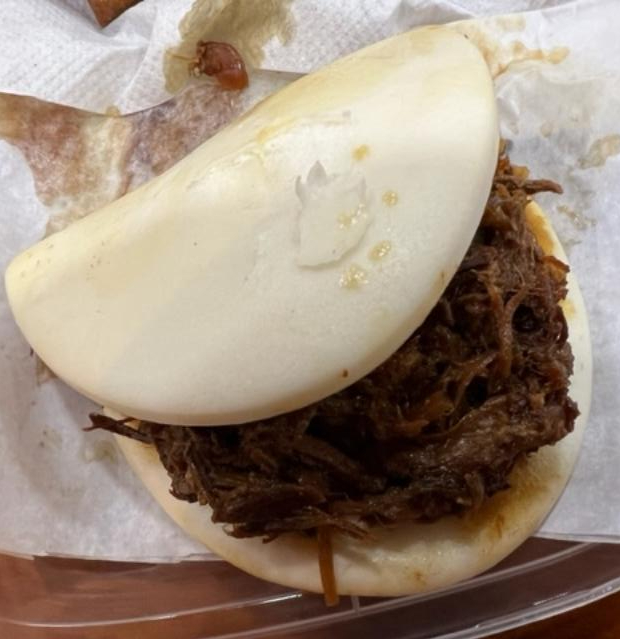
This was one of my favorite places to go for lunch when it was open. The Linguini with Meat Sauce was delicious.
When walking some the blocks again up by the Met on another day, I tried Tri Dim Shanghai at 1378 Third Avenue between East 78th and 79th Streets for their lunch specials (See review on TripAdvisor). There lunch specials are wonderful and very reasonable as well. I had their specialty, Slippery Chicken which is prepared with thinly sliced chicken cooked with ginger, hot pepper and garlic in a brown sauce with spinach. The dish was rich with flavor and the spinach really brought out the flavor of the meat. Their Hot & Sour soup was really good and make sure to order a side of their Steamed Pork Xiao Long Bao (soup dumplings $8.00). They are the best!
As you can see there is a lot to see and do in this part of the Upper East Side and it will take you several days to explore the area thoroughly. You can’t do this neighborhood in just a day but pick out the blocks you want to visit and check out all the sites mentioned in the blog. You are going to be glad you took the time out to research first.
The Soup Dumplings here are amazing.
See read my other Blogs on walking the Lower Part of the Upper East Side:
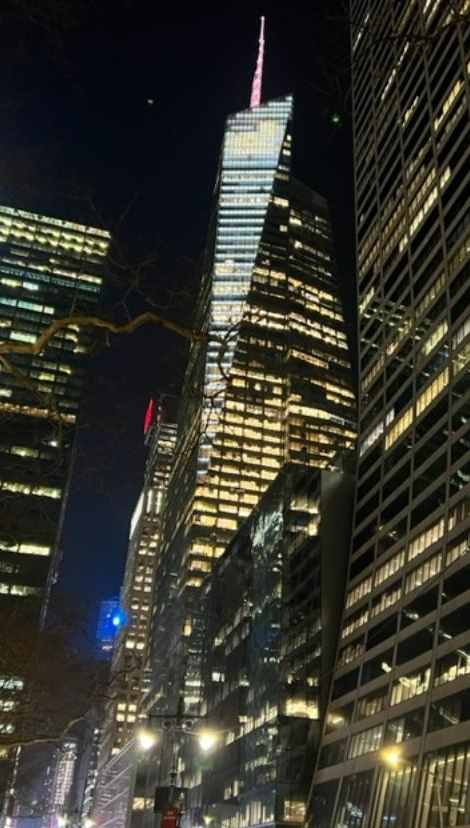
Day One Hundred and Sixteen: Walking the Streets of the Lower Upper East Side:
Met Lecture on California Contemporary Artists by Docent Judy Bloom discussed Ms. Segalove’s video, which is brilliant. I wanted to share this with the readers.
Video Artist Ilene Segalove’s Video: “What ever happened to my Future”