Twice a year a phenomenon called ‘Manhattanhenge’ happens in Manhattan, a time of the year when the sun perfectly aligns with the grid pattern of the city. Based on the theory of Stonehenge in England without the religious connotations, the sun sets between the buildings of Manhattan in perfect form.
This is the forth time I have seen this happen (the last being June 14th, 2024)and you never get tired of seeing it, but it does drain your eyes. It really is pretty amazing and makes me think that maybe two hundred years from now that someone might theorize that Manhattan might have been gridded for that reason when we all know that it is just a natural phenomenon. Just don’t look at it directly or it will hurt your eyes.
Manhattanhenge, sometimes referred to as the Manhattan Solstice, is an event during which the setting sun is aligned with the east-west streets of the main grid of Manhattan. This occurs twice a year on dates evenly spaced around the Summer Solstice. The first Manhattanhenge occurs around May 28th while the second occurs around July 12th. There were cloudy nights in Manhattan in 2024 and June 14th was the first night it was clear. I was in Morningside Heights when it occured.
“Manhattanhenge” in Manhattan at West 109th Street on June 14th, 2024
The term “Manhattanhenge’ was popularized by Neil deGrasse Tyson, an astrophysicist at the American Museum of Natural History. It is reference to Stonehenge, a prehistoric monument located in Wiltshire, England, which was constructed so that the rising sun, seen from the center of the monument at the time of the summer solstice, aligns with the outer ‘Heel Stone’.
In accordance with the Commissioners’ Plan of 1811, the street grid for most of Manhattan is rotated 20 degrees clockwise from true east-west. Thus, when the azimuth for sunset aligns with the streets on that grid. A more impressive visual spectacle and the one commonly referred to as Manhattanhenge, when a pedestrian looking down the center line of the street westwards towards New Jersey can see the full solar disk slightly above the horizon the time the last of the sum disappears below the horizon.
The precise dates of Manhattanhenge depend on the date of the summer solstice, which varies from year to year but remains close to June 21st (Wikipedia).
The Alignment at West 109th Street on June 14th, 2024
We started the program in the Hayden Planetarium at the Museum of Natural History with an explanation of the event and how it hits the grid pattern. Then how it ties into the summer solstice. Then the staff got us out in time at 8:20pm to see the setting of the sun.
The American Museum of Natural History at 200 Central Park West
The museum had 79th Street closed off to us and it was nice to see it from the middle of the street on a hill overlooking New Jersey. It happens really fast, so you have to be there in time. This was third time I had seen it, so I knew what I was looking at, but I have to say it is something you have to see once. It is pretty amazing how the sun falls right between the buildings from the street.
It has also grown in popularity as well. When I first went, they could only close off a small portion of 79th Street and we had to keep running in the middle of the street with cars buzzing by and it was just a small handful of people. Now the whole street was packed with people with their obnoxious cell phones taking pictures and shooting films. Someone kept playing the Beatles ‘Here comes the Sun’ while he was filming it.
“Manhattanhenge” at its height in 2016
It was quite the site watching the sun set. Last year the clouds rolled in at the last minute. This year, it was clear, and the sun set perfectly between the buildings. Everyone seemed very impressed by it all.
This coupled with my walk of Hamilton Place for the second time up in Harlem made for a nice evening. This is when you discover all the little ‘gems’ of Manhattan that most visitors don’t see. As I was walking down Columbus Avenue, a couple asked me what everyone was doing on the street, and I told them we were watching ‘Manhattanhenge’ and then explained it.
I said, “only crazy New Yorkers come to see this but it is really something to see” and they looked at each other and then said to me “We wished we had known “and the wife said they may have to come back next year.
Everyone you have to see this once. You have to experience it to know what I am talking about. It is one of those things you only see when walking the streets of Manhattan.
Don’t miss this recent video that the museum put out in 2020:
How to learn about Manhattanhenge
On July 11th, 2025, I joined the crowds on West 23rd Street at 8:00pm to see the event happen in Midtown. I was not about to go anywhere near the American Museum of Natural History and since I was starting the walk in the streets of Lower Chelsea, I decided to stay near West 23rd Street.
The start of sunset at 8:15pm.
The event has gotten more popular with the rise of social media and sometimes I feel like I am competing with Digital Natives for space. The place really filled up about a half hour before sunset and I was sitting on one of the protective boulders that line West 23rd Street on Broadway. This is why I got such great pictures.
The start of sun down
Then starting to set
Video of the start of sunset
The setting of the sun before the clouds rolled in
The sun setting with the clouds blocking the setting
The final setting
My video of the final setting of the sun with the clouds blocking it
The final sunset that evening
The Manhattanhendge this year was a little disappointing with the clouds but still is a lot of fun to see. It is fun to watch everyone run to the middle street the second there was a red light. It is amazing what will do for a picture.
*Bloggers note Manhattenhenge happens every May and June around mid-month
I continued walking the Harlem neighborhood this afternoon after a very exhausting morning working in the Soup Kitchen. I am beginning to discover that I should not combine the two together as it gets to be too much to do in one day. I was a food runner by myself and we served 660 meals that morning. When you serve mac & cheese to the homeless, you had better wear comfortable shoes.
The entrance to the Trinity Cemetery
After I left, I took the Number One subway to 155th Street and ended up back at 168th Street again. I never win. I walked down to 155th Street to start the walk at my starting point at the cemetery. I walked around the local arts campus and around the cemetery again. It is a beautiful to just sit and think with a gorgeous view of the Hudson River. I walked through Audubon Place reminding myself to leave time for their museums in the future.
The Trinity Church cemetery at 770 Riverside Drive
My walk today took me down Broadway and St. Nicolas Avenue and back. Like every other part of Manhattan that I walk, everything is in a state of flux. I have noticed one thing in the area, the closer you get to the CUNY campus, the more gentrified it becomes. It seems that the old students who may have in the past avoided the area that surrounded the college, the new students seem to embrace it and rather enjoy it.
The CUNY Campus on Amsterdam Avenue and 140th Street
Let’s be fair in that the area is so much safer and cleaner than it was even ten years ago. I remember taking a walking tour with a professor from FIT and the area has changed so much since then. I remember her saying how fast the brownstones were changing hands and how the shell of a building was going for over a million dollars and us smirking at her. That same property is probably worth six times that now.
Most of Broadway is filled with interesting shops and restaurants catering to both students and residents or both. My first part of the walk started at 5 Star Estrella Bakery, on the corner of Broadway and 161st Street at 3861 Broadway. This amazing little bakery is so reasonable and the food is great. To add to the mac & cheese I indulged in at Soup Kitchen, I had the most delicious cinnamon Danish and a ‘papa’ a type of Dominican croquette that is filled with meat tucked into mashed potatoes and then deep-fried. (See my review on TripAdvisor and DiningonaShoeStringinNYC@Wordpress.com) Everything I try there is good and fun to munch on while walking.
You start to see Broadway’s transition from a Dominican neighborhood to college town between 145th Street to about 138th. The commercial area is filled with bike shops, trendy little restaurants and clothing stores. Bars seem to be opening up all over the commercial area. Between 155th and 145th and further down, there are many a hole in the wall and good sit down Spanish restaurants offering reasonable prices on traditional meals.
On the trip back up Broadway, I walked the length back and forth of Hamilton Place, which is lined with some of the most beautiful brownstones and apartment buildings that I have seen in Harlem. So many of the stairs to these homes are lined with flowering potted plants and the whole area looks like ‘Old New York’, with their washed fronts and vine lining the home. This stretch of the neighborhood I predict will be the next ‘hot neighborhood’ with the college being so close by and two very popular subway lines.
The Hamilton Place and Terrace areas are amazing
The beauty of the Hamilton Terrace neighborhood near the CUNY campus
There were some unusual and trendy little shops in the area that seemed out-of-place at this point in a neighborhood in transition. I just don’t think too many students or residents in the area is going to go for a $12.00 pie at Sweet Southern Style Bakery at 122 Hamilton Place but that’s just me. Everything at the shop looks so good from the window. Next door is the trendy Hogshead restaurant with a delicious sounding pulled pork sandwich and sliders. I see more of these restaurants opening up in the small spaces that line the brownstones.
Sweet Chef Southern Style Bakery at 122 Hamilton Place (Closed in April 2024)
Hamilton Place also has its share of pocket parks. At the top of the street is Johnny Hartman Plaza originally known as Hamilton Park after the founding fathers whose home located here. Hartman was a musician who lived in the neighborhood back in the 1960’s. Johnny Hartman was known for his love ballads and was nominated for a Grammy in 1981 (NYCParks.org).If this park is honoring someone it should be better weeded and taken care of by the community.
Johnny Hartman Plaza at Amsterdam Avenue and 143rd Street
Further down the road is a very nice family park in the Alexander Hamilton Playground at West 140th Street, a popular spot for young families trying to cool down in the hot weather. It is funny that some people say that they would never raise a child in the city but these kids looked pretty happy to me.
Alexander Hamilton Playground at West 140th Street
At the end of the block that leads to Broadway is Montefiore Park at West 138th Street, where it seems that the whole neighborhood meets. The park was named after Sir Moses Haim Montefiore, a British banker and philanthropist.
There are several food vendors here to check out, especially the lady who sells the flavored ices for a dollar. At night there is a vendor that sells Mexican sandwiches, tacos and empanadas. Everything here is very reasonable.
By the number of people playing dominoes and cards, it is popular meeting place for the retirees in the neighborhood. There is a lot of yelling and laughing going on most of the day. Walking back up to Amsterdam Avenue, you can walk the side streets to see the beautiful restoration of the brownstones in the area. There is so much care to this area.
The inside of the park since the renovation
The park’s wall painting in the back of the park
The Mural in the park and the artists
The artists on the mural in the park
My video on the mural:
At 113th Street, look down the road to see the amazing view of the Hudson River and then up the road to see the CUNY campus and you will now know why I think this is going to be a hot neighborhood. It offers parks, stunning housing close to a college campus, great views of the river and some great restaurants that cater to the whole community.
I was able to walk around the CUNY campus without the campus police bothering me and I have to say that it might be a small campus but it is a pretty one that is an oasis in a busy neighborhood. I was surprised that the neighborhood was not more tailored to the students but I could tell for a long time that the students must have felt very isolated being so far uptown.
To the west of the campus is St. Nicholas Park, a very well used but overgrown park. The paths, basketball courts and bathrooms really need some capital improvement and the park needs a good weeding. The views of the neighborhood and beyond are quite spectacular. I could see why Alexander Hamilton had his home here. The Hamilton Grange as its called was closed for the day but in its day, it must have been an amazing estate. Hamilton was married into the Schuyler family and at that time they were the Gates and Buffets of their day.
The Hamilton Grange, the home of Alexander Hamilton and his family
After the walk up and own the commercial strip of Broadway, I walked across 155th Street again and walked down St. Nicholas Avenue. This part of the city has some of the most beautiful architecture in Upper Manhattan. This part of the walk took me down St. Nicholas Avenue from 155th to 125th and then back up. All along the way there are beautiful restored mansions, elegant brownstones, small well-landscaped pocket parks and delicious restaurants to try.
The shopping area at West 145 Street
Some of the most beautiful restored mansions I saw line 150th Street off the avenue. The breathtaking mansion on the corner of St. Nicholas Avenue and 150th Street was once owned by the Bailey family of Barnum & Bailey fame at 10 St. Nicholas Place. The mansion and the surrounding four mansions have been beautifully restored to their true glory. The owners have taken a lot of pride in the exterior and the landscaping of these homes. There are about four or five mansions to walk around in the area to view their unique beauty.
The Bailey Mansion in the Hamilton Heights section of Harlem at 10 St. Nicholas Place
This area is known as ‘Sugar Hill’ for the sweet life that it gave its residents. The area is bounded by West 155 Street to the north, West 145th Street to the south and Edgecombe Avenue to the east and Amsterdam Avenue to the west. Sugar Hill got its name in the 1920’s when the neighborhood became a popular place for wealthy African-Americans to live during the Harlem Renaissance and people like Clayton Powell Jr., Thurgood Marshall, Duke Ellington and Cab Calloway resided here. (Wikipedia)
“Sugar Hill” in Harlem on the western side of Harlem from West 155 to West 145th from Edgecombe to Amsterdam Avenues
The whole area is going through a massive gentrification with scaffolding all over the place. People are snatching up these buildings and revitalizing them. I call it the ‘new windows’ effect. When you see new windows in the building, it means that it has already changed hands. There are three historic districts in the area but view the row houses between 718-730 St. Nicholas Avenue and you will respect the true beauty of the area.
The area also has a series of pocket parks. One gathering place is the Donnellan Square Park named after Timothy Donnellan, Private First Class during WWI. This attractive little park is a place for some serious sports conversation as I found out when some guy asked me about all my Michigan State gear. The way he approached me I thought he was ready to say ‘Hi Officer’. This well landscaped little park is a nice to place to just to sit and relax.
Further up on 151st Street is the Convent Garden, which is a small pocket park Community Garden off West 151 Street and St. Nicholas Avenue. The park has a unique history.
In 1985, a gas station occupying the site was demolished and the remaining empty lot was an eyesore to the community until local activist Luana Robinson and a small group of female volunteers from the Coalition of Hamilton Heights Tenants Associations established the Convent Garden to Women. In 1989, Convent Garden was the pilot location for the new Greenstreets program, which was launched by the Parks and the Department of Transportation to transform traffic triangles and other paved areas into green spaces.
Convent Garden Park at 150th Street
After the site was heavily disturbed by the removal of underground gas tanks in 1998, Juliette Davis and other local residents began to rebuild the garden. The gazebo, donated by the Marriott Corporation, was installed in November 1998 and in the spring of 1999, the Convent Garden Community Association added three wooden benches and a new lawn. (New York Park System online)
Juliette Davis at the entrance of her pride at Convent Garden in Harlem
While I was walking by this time, the park was open and I was able to walk around. I was introduced to Ms. Davis, who was working in the park with her grandchild. She said she keeps healthy by doing some of the work around the garden with her neighbors and family helping with the hard stuff. “It did not even have grass when we first started. We had to dig the whole thing out,” she said with a lot of pride. When she won a grant from the city for all of her hard work, she put the lawn in.
The park is such a tranquil place with several flower beds, benches to sit, a lush lawn and flowers all over the place. The volunteers do such a nice job keeping the park up and I had just missed on of the local choir groups perform in the park that day. Maybe next time. It was just fun watching Ms. Davis’s grandchildren run around the park ‘trying to help’ as most kids do. Her pride in the park I think is what makes it so special. It’s that care in the community.
On my way back to 155th Street, I stopped at Victorio’s Pizza at 348 West 145th, right across the street from Jackie Robinson Park. OMG. This is some of the best pizza that you can get for a dollar a slice. I was completely blown away by the quality of the fresh mozzarella and the sauce had so much flavor. The service was very friendly and the woman behind the counter seemed surprised when I walked back in and said how much I enjoyed the slice. (See TripAdvisor for the full review).
I took the train back down to Times Square from 155th Street and then it would be off and running for another day. I covered the whole area from 155th Street to 125th Street both Broadway and St. Nicholas Avenue’s. It was a long day but there was so much to see.
Please read my other Blogs on walking Harlem/Hamilton Heights/NoHA:
Day Forty-Four-Walking Broadway and Amsterdam Avenue 155th-125th Streets:
It has been a year since I started the blog site and the project has now taken me on an extensive trip to Los Angeles, a tour of the State of New Jersey and the Anniversary Day of the project to the much changing and gentrifying Newark, NJ. You heard correctly, Newark like all major cities is going through a revival and I had two afternoons and evenings at the Newark Conservatory located on Prince Street.
I have been a member of the Newark Conservatory for years but never really got involved in their events until recently. The organization is small but is currently looking at way to ‘Green’ Newark. Yes, Newark still does have its share of problems but like any other city has small groups of people trying to deal with them. I have seen so many changes in the downtown area alone.
The Conservatory has sponsored many interesting events and is doing their best to promote urban farming. On June 4th, they sponsored a ‘Strawberry Jam’, promoting their strawberry crops at the Court Street Farm. It was an interesting event with strawberry tea infusions, strawberry jam tastings and tours of the farm and the Kruger mansion, which sits on the back part of the farm.
The Newark Conservatory Gardens
The farm has some interesting crops being grown and the strawberry crop was pretty extension. We were able to take the tour around the farm, have tastings of the various fruits being grown and see how the local kids were getting involved on the farm.
The Kruger Mansion sits at the edge of the farm like a sad remnant of a bygone era. The poor mansion, which once stood in one of the most fashionable areas of the city, is falling apart and it is such a beautiful home. It has been partially renovated but the rest of the house is falling apart. It is so overgrown that it sits like a haunted house on the edge of optimism. There are plans to fix it but like they said to me it takes money.
The Newark Conservatory Farm with the Kruger Mansion right behind it.
The other event they ran was a ‘Wine & Cheese in the Garden’ event to raise money for the main farm on Prince Street. It was a really beautiful night of tour of the main gardens, tasting local vineyards in New Jersey and a lecture on the future efforts of the gardens. The event attracted a large number of supporters and members and the gardens were in beautiful shape with long flowering beds and natural art work.
The Conservatory has big plans with the renovation of a church into an experimental kitchen and classrooms and expanding the gardens further. These grass roots efforts are really improving this area of the city.
So on this very special One Year Anniversary of the ‘Walk in Manhattan and traveling Beyond’, I wish my best to all the readers and a very Happy Father’s Day to everyone. A big Happy Father’s Day to my dad, Warren, who could not be with me in Los Angeles or Newark on this special day but is always with me in spirit on these walks.
My father and I at the Junior Friends of the Library First Annual Grandparent’s Day lunch
Its amazing how many wonderful things there are to see in your own backyard! I’ll keep on walking!
I finally crossed the border of Washington Heights into Harlem and I can tell you that border does make a difference in the neighborhoods. Not in a bad way it just seemed to me that there is a different personality to the neighborhood.
I started my walk at the 168th Street subway station and walked down to Amsterdam and 155th Street. In a period of barely a year (six months for that matter), I have seen a whole bunch of businesses close their doors, scaffolding all over buildings both in Washington Heights and Harlem and a rebirth to the area around the CUNY campus. I had even taken walking tours of Harlem as little as eight years ago and have seen a huge change in the area since Mayor Bloomberg rezoned the city. 125th Street is going through a big makeover as the chain stores seem to be taking over the street.
The entrance to the cemetery at 145th Street
Trinity Church cemetery in the summer of 2025
I started my walk in the Trinity Church Cemetery with a visit to my favorite New York Mayor, Ed Koch. He brought so much positive change to New York and was New York in the late 70’s and 80’s. Mayor Koch was still mayor when I came back to work in the city in the 80’s. New York was going through its first wave of gentrification at the time. I had even sent him a copy of my book, ‘Firehouse 101’ of which his office sent a nice not too generic form letter to me thanking me for the book. As far as I know I do not know if he ever read the copy I sent him.
Still there I was sitting on a bench on a small hill over-looking Amsterdam Avenue paying my respects. It was a quiet moment until school let and then there were kids yelling and screaming all over the place. I then decided to start the rest of the walk. I said my goodbyes to the Mayor, placed a rock on the tombstone and started out of the cemetery and down Amsterdam Avenue.
My travels today took me down Amsterdam Avenue from 155th Street to 125th Street as my border and then I walked the entire length of 125th Street from the Hudson River to the East River. Then it was back up Amsterdam Avenue to 155th Street and then the walk down Broadway. Needless to say, the journey was long but full of surprises.
Amsterdam Avenue is a street in major transition. It also depends on what part you walk. As you get closer to the CUNY campus around 138th Street the are starts to get even better with small, trendy restaurants and pre-war buildings with sandblasted fronts and new windows. The crowd is certainly getting younger with a lot of students and their parents milling around the street.
One little gem to walk around if it is open is the Hope Stevens Garden at 505 West 142nd Street. The garden was in full bloom but unfortunately the gates were locked at the time.
In 1986, the Hope Steven Community Garden (then known as the West Harlem Group Assistance Garden) was selected to participate in Artists in the Gardens, a project of Green Thumb, the community gardening program sponsored by the New York City Department of Parks and Recreation. From a roster of artists chosen by a panel of art professionals, the gardeners selected Eva Cockcroft to paint a mural on the building facing their garden. In 1998, the garden was sold by the City of New York to the Trust for Public Land for eventual transfer to the newly formed Manhattan Land Trust, thus ensuring its preservation. (Harlem One Stop)
Hope Stevens Garden at 505 West 142nd Street near Amsterdam Avenue
If you get a chance to walk into the garden when it is open it looks like a real treat. The flowers are all in bloom and the bed showcases a colorful assortment of plants.
I stopped a little snack shop, The One Stop Patty Shop at 1708 Amsterdam Avenue (See review on TripAdvisor). This delightful little shop has the best Jamaican meat patties. The spicy beef patty that I munched on as I walked down the road had just come out of the oven. It was flaky, filled with a generous portion of spicy beef and was a nice size patty. It more than filled me up for a quick lunch. The service was really friendly and the staff there takes a lot of pride in their food. The guy was encouraging me to buy more for my trip home. (see my review on TripAdvisor)
The patties were delicious and filled with a lot of ground beef and spices
I really enjoyed my lunch here
My trip took me past of the campus of CUNY where a very active student body was milling around the campus, in the park across the street and eating in the new outdoor cafes that are now dotting Amsterdam Avenue by the campus at 138th Street and Amsterdam Avenue. The campus was a buzz with students socializing and just enjoying a sunny day. There are some interesting restaurants to investigate in the future.
Before I continued down the street, I took a turn on 145th Street to Broadway to try my dining destination for the evening, Handpulled Noodles. It was further up the street but I discovered Grullon II Bakery at 3522 Broadway (see review on TripAdvisor). A nice selection of baked goods and traditional Dominican snacks like Pastelitos and croquets. Most of the items had been sitting most of the day. The vanilla iced doughnut I had looked really good but was hard and the hot snacks looked dried out. It was obvious that the store had not seen too much action that day. It warrants another try though as the service was attentive and friendly and the selection of baked goods looks good.
The lower part of Amsterdam Avenue was a collection of public housing and a warehouse district that was transformed into lofts, studios and a few art galleries. What was interesting was that in the middle of a housing project was that a developer was building a mixed use building with luxury apartments. That is going to be an interesting mix of people.
From Amsterdam Avenue, I walked the entire length of 125th Street, considered the heart of Harlem, that since the Bloomberg zoning changes is under the biggest transformation since Times Square was completely knocked down. By the time the transformation is complete, it will more chain stores, hotels, office buildings and the northern branch of Columbia University.
When I walked to the right down 125th Street, most of the former cheaper stores were in the process of closing down and being replaced by new businesses.
The mural at the edge of 125th and Broadway by Artist Angel Toren is amazing a array of color and brightness. It adds something to this corner.
Ángel Toren is a contemporary urban artist and muralist who combines influences from graphic design, typography, and brutalist architecture to create visually striking compositions. Toren’s compositions intertwine with the lines and volumes of brutalism, reinterpreting its monolithic forms through vibrant color palettes and optical effects that evoke both the digital and the painterly (Artist’s Bio website).
The controversial new section of Columbia University is being built, replacing some old buildings with sleek new towers. Once done it will be a very impressive campus of glass, steel and new gardens. It will bring a whole new resident to this part of Harlem.
Walking down the border of 125th Street
What I thought was progressive was that the campus was surrounding the famous Cotton Club nightclub that sat there in the middle of all this change. It looked totally out of place with a modern campus being built around it and a Dinosaur Barbecue restaurant catering to the college students a block down.
Surreal was not the word for it as if anyone from the 20’s walked down this block now would not know where there were in Manhattan. The club was preparing for a show and I saw the performers passing by groups of college students on their way to Riverside Park and the surrounding restaurants.
The Cotton Club has a very interesting past as this is the third Cotton Club in the history of the club. It open in 1920 by Jack Jones, the heavyweight boxing champion as the Club Deluxe. In 1923, bootlegger, Owney Madden bought the club and renamed it the Cotton Club, with a ‘whites only’ policy that lasted until the club closed in 1936. The club has had two other locations and the current club in the present location opened in 1977 (Wiki).
I passed the projects on the way back down 125th Street where a woman passed me and made a comment under her breathe with a few four-letter words enough where she knew I could hear her on her thoughts about policemen. I guess more and more I am realizing that everyone in this part of Manhattan thinks I am a cop or DEA. I remember how fast the drug dealers in the Dykeman House projects ran when they saw me coming.
I had taken a recent walking tour of Harlem with the Cornell Club and we covered the areas from 125th Street to 124th Street from 5th Avenue to 7th Avenue and how some of the residents did not appreciate being treated like a curiosity by tourists. Now there are so many white residents in the area and visiting tourists eating in the restaurants that you blend right in.
Be prepared thought more culture shocks as there are a Red Lobster and a Banana Republic on either side of the Apollo Theater and there is a mall like environment between Fredrick Douglas Boulevard and 5th Avenue that will one day be a suburban strip mall environment. It reminds me of the changes going on in downtown Brooklyn as everything is being replaced by chain stores. The local businesses that give it the character of the neighborhood are being pushed out.
The Apollo Theater was built in 1913-14 by architect George Keister in a neo-classical style and opened as Hurtig & Seamon’s New Burlesque Theater with a ‘white’s only’ policy which existed until the 1930’s when it reopened in 1934. It was then open to black patrons as well with a mixture of entertainment.
I passed the famous Hotel Theresa which is now called Theresa Towers. When built in 1912-1913 by German-born stockbroker, Gustavus Sidenberg and it was ‘the’ hotel in Harlem and all the famous black celebrities stayed when they could not stay in the luxury hotels of midtown (Wiki).
Today it has been refitted as an office building with commercial businesses. The building has seen better days but is still impressive and maybe one day someone will get the good idea to convert it back into a hotel like the renovation and reopening of the Hotel Knickerbocker in Times Square. It is an ideal place for a good hotel in the midst of all this change. The building itself has seen better days but like the rest of Harlem it will be catching up to the rest of the city soon.
Hotel Theresa in Harlem 2600-2700 Adam Clayton Powell Boulevard
As I walked towards the East River, most of 125th Street is in the process of being either knocked down and renovated. In not even two years, the whole makeup of this area will change as more chain stores and apartment buildings are added to the area. I still can’t believe how run-down parts of this area are in comparison to the rest of the city.
The worst is that it is tough to find a public bathroom anywhere in the area. I stopped by a library on 125th Street and there was no public bathroom anywhere in the building. Even the libraries in Washington Heights had bathrooms. I had to hold it in until I found a McDonald’s closer to the Washington Heights border.
My last part of the walk took me back down 125th Street to the Studio Museum 127 at 144 West 125th Street (see review on TripAdvisor and VisitingaMuseum.com) in Harlem where my next walk in the area will include a tour of some of the exhibitions and tours of some of the smaller museums in the area. I passed so many galleries that I wanted to stop in as well.
The Studio Museum 127 of Harlem opened in 1968 to showcase Black artists. The museum is currently closed for construction.
Studio Museum 127 of Harlem at 144 West 125th Street
The CUNY campus had quieted down for the day as I walked back up and the students and their friends filled the parks and restaurants in the area enjoying the warm Spring night.
I got back up to 155th Street, turned the corner and proceeded down Broadway to my dinner destination Handpulled Noodles at 3600 Broadway (see review on TripAdvisor), which bills itself as Northwestern Chinese Soul Food which attracts not only the locals but students and tourists as well. It is considered by many in the Asian community as one of the best Chinese restaurants in New York City.
It is a small hole in the wall restaurant with limited seating in a very energetic environment. The place was loaded with CUNY students who knew the menu by hard. I had the Spicy Cumin Lamb with Lagman noodles (traditional thick cut noodles that are native to Northern China) and their jumbo pork and chive dumplings that melt in your mouth and are out of this world.
The inside of the restaurant
The lamb was very spicy and you could taste the cumin in every bite. This is not the traditional Cantonese restaurant so do not look for fried rice and egg rolls. It is more of a cross between Indian and Mongolian cooking. There menu is very unusual with more stew like dishes like the cumin lamb, ginger chicken and herbal beef. The service is friendly and very fast paced to keep up with the large dinner crowds in such a small space (See my review on TripAdvisor).
The Dumplings here are amazing
I had a interesting talk with someone from the neighborhood who worked renovating brownstones in the area and talked about the local real estate market. He told me that if you had bought even five years ago, you could have made your money back quickly after a renovation. The whole area above 125th Street is in a major state of transformation that happens even month by month as I have seen in a six-month period in Washington Heights as old family businesses and small restaurants give way to coffee bars and fancy shops and galleries. Even he said it is not the Harlem it was last year.
My walk concluded with a subway ride back down to 42nd Street with a game plan to cover the rest of the area above 125th Street as my border for this part of the project. There are so many pocket museums and parks to cover and explore.
The Northwest Bergen History Coalition 6th Annual History Day Theme: ‘Spreading the News: Rail, Mail & the Press in Days Gone By’
Special Exhibitions at each Museum
Come discover how we communicated when letter were left at the local inn, when postcards were our ‘twitter feed’ and the operator listened to all our calls on the party line. See how mail was delivered by train and what our local newspapers were like in 1900.
I took a day out of touring in the city to tour my own county, Bergen County, New Jersey is rich in Revolutionary, Civil and WWI &II history yet we still have a big link to our Colonial past in each town in Bergen County.
The unfortunate part of this tour is that it only covers a small portion of the county and it was hard to get to all of the sites in one day and really see them once a docent took over. I just didn’t want to leave the sites quickly because each tour was special in its own way.
I got off to a late start and got lost in Ridgewood because the Map Quest was not very good in describing the location of the first site on the west side of Route 17 South on the Ridgewood side of the highway. From there it just got easier.
My first stop was at the Schoolhouse Museum at 650 East Glen Avenue in Ridgewood, NJ (see my reviews on TripAdvisor and VisitingaMuseum.com). This quirky little school house sits at the edge of a vast cemetery next to Route 17 South in Ridgewood.
The School House Museum, built in 1872, is maintained by the Ridgewood Historical Society. This year’s exhibit is ‘Farm to Home: Exploring Our Agrarian Roots with Artifacts from the 18th and 19th Centuries’. Objects on display include early Dutch artifacts, farm tools, home furnishings, quilts, coverlets, pottery and tin ware. During the Spring, there will also be a special small exhibit featuring letters and writing tools as well as newspapers communicating important events. For History Day only, a letter from George Washington will be on display. The current exhibition is called ‘Farm & Home: Exploring our Agrarian Roots with Artifacts from the 18th & 19th centuries’. The museum is open from 1:00pm-3:00pm on Thursdays and Saturdays and 2:00pm-4:00pm on Sundays.
Schoolhouse Museum at 650 East Glen Avenue in Ridgewood, NJ
I bought my pass here to start the tour and a nice donation of $10.00 let me into all the sites on the tour. Since I was the first one to the museum, I got a personal tour by Dot, a retired teacher from Ridgewood who taught in Hasbrouck Heights. It’s a small world.
The Schoolhouse Museum is a step back into Bergen County’s rural past with many interesting displays from the Lenape Indians who first lived in the area and taught the Dutch how to farm and fish to early Colonial clothing and its purpose when working. The displays were beautifully presented and well noted by their cards. The section on cooking utensils and their changes over time with modernization was interesting. How to bake on an open hearth versus a modern cast iron grill is the difference from a rotary phone to a smartphone.
Farm equipment in the collection
The fact that many of these items came from people’s basements and private dwellings was the most interesting part. That people kept these heirlooms for so long and then gave them up when they moved and donated them to the museum really tells the story of Ridgewood’s farming past.
The museum’s antique toy collection
We had good conversation for over an hour and the ladies volunteering that day invited me back in the future and then provided me with chocolate bites and bottled water, which I thought was a nice touch.
My next stop on the tour was The Hermitage located at 335 North Franklin Turnpike in Ho Ho Kus, New Jersey (see my review on TripAdvisor and VisitingaMuseum.com). The old homestead sits on a rather large parcel in the middle of a residential and commercial area that shows how time has progressed on in this town.
The Hermitage at 335 North Franklin Turnpike in Ho Ho Kus, NJ at Halloween
The Hermitage, a National Historic Landmark and house museum, incorporates an 18th century stone house that was visited during the Revolutionary War by General George Washington. It was also the site of the marriage of Aaron Burr and Theodosia Prevost. Its picturesque Gothic Design dates to the 1847-48 Gothic Revival renovation by architect William Ranlett for Elijah Rosencrantz. The house was willed to the State of New Jersey by his granddaughter Mary Elizabeth in 1970 and is furnished as it appeared in the 1890’s. A special exhibition in the 1888 summer kitchen honors the legacy of Bergen County historian, Claire K. Tholl. Her maps, books and drawings are on display.
The Hermitage in the Summer months
Bumping your head on some of these tours is easy as parts of the homes visited were built when people must have been smaller. When you start the tour of the Hermitage, you enter through the kitchen which was built in the late 1700’s and it is small. The rest of the house was built before the Civil War with high ceilings and a more Victorian flair. The rest of the house had been modernized in the 1920’s.
The Revolutionary War display in the house
The later history was hardly the glory days of when Aaron Burr married there. The last of the Rosencrantz descendants had gone broke after the Crash and their source of income which was a tearoom to traveling tourists from New York City when the Franklin Turnpike was a major thoroughfare, had dried up as fewer cars were traveling through the area. It had gotten to the point where the family was living in the back room of the house and the rest of the house was shut down. The house is still in need of a lot of repairs so donations are accepted by the foundation. It is an unique house with an interesting history so take the time and tour the house in detail.
Revolutionary War display at The Hermitage
The next home on the tour was The John Fell House at 475 Franklin Turnpike in Allendale, New Jersey (see my review on TripAdvisor and VisitingaMuseum.com). The house was vacated by the former owner and was scheduled to be knocked down for townhouses. The community rallied together and saved the house from the wrecking ball. Now the house is being renovated room by room to its former glory.
The John Fell House at 475 Franklin Turnpike in Allendale, NJ
The historic John Fell House is named in recognition of Founding Father, John Fell, a revolutionary war patriot, who purchased the property circa 1766. The house was also home to Colonel Joseph Warner Allen, a Civil War hero for whom Allendale is named.
This 22 room Colonial Revival mansion was home to a Founding Father, a Civil War Colonel and a Sunday School that led to the first church in Allendale. The stately house is set on a hill on 2.8 acres near the center of town. The property also includes a late 19th Century Barn, exceptional wetlands and a stand of old-growth.
The Fell House Living Room
The history is very unique. John Fell led the local resistance movement against the British. He was arrested at the house by 25 armed Loyalist and imprisoned in New York City, where he kept a secret diary documenting the British Army’s horrific treatment of American prisoners of war. Located across the street from the house is the Celery Farm Natural Area, 107 acres of wetlands and woods originally known as “Wolf Swamp” and later “Fell’s Meadows”, which was originally part of the Fell estate.
The original section of the John Fell House
The home, which was built circa 1760 and originally called Peterfield, has had several subsequent owners, including John H. Thompson, John G. Ackerman, the Stephen Cable family and the Joseph B. Taylor family, who enlarged it in the Colonial Revival style in the early 1900’s. Colonel Joseph Warner Allen for whom Allendale is named, stayed at the house while he surveyed the route for the Paterson-Ramapo Railroad. He was a key New Jersey figure at the beginning of the Civil War. The house is listed on the National Register of Historic Places.
Exhibits will include recreations of early 18th and 19th century broadsides, early local 20th century newspapers featuring historic military news, copies of historic letters, photos and railroad news. Jim Wright gave a brief talk and a slide show on “Revolutionary Communications: Getting the Word Out in John Fell’s Day.”
The Teapot Collection in the Kitchen
The Fell House is owned and operated by the Concerned Citizens of Allendale, a 501(c) 3 nonprofit group, which saved the house looked mostly modern to me as it had just been lived in by a family before the sale. The exterior of the house needs lots of work saved the property from being bulldozed to make way for a controversial townhouse development. The house is home to a tearoom, community events, school events, nature programs and an annual holiday open house.
The organization has also developed several history programs that inform the public and students about the history of the John Fell House, including reenactments of his arrest at the house. During every open house, docents inform visitors of the timeline of the house and its important role in American history. Historic preservationists have studied the house and produced a Preservation Plan that document the history of the home, barn and landscape while suggesting how to best restore, preserve and maintain the house and property. As a member of the Northwest Bergen History Coalition, the organization works with eight other historical sites to encourage both children and adults to learn about the region’s amazing history. (The Historic John Fell House Pamphlet)
The house tour was very interesting and the docents lead some of us to the outside grounds to show some of us some new discoveries such as an old well that was discovered. The only problem with the tour was that house was modernized for current times as it was a private home until just recently and needs more period furniture and decorations to it. While the outside looks historical on the outside, the interior is quite modern. The Fell House has a rich history but is a work in progress. It is still worth the trip just to see the grounds and hear about its rich history.
The next site on the tour was The Waldwick Signal Tower at 1 Bohnert Place, which had just finished a renovation (see my review on TripAdvisor and VisitingaMuseum.com). The tower sits in a rather obscure place by the railroad tracks up the tracks from the station. You have to make several twists and turns to get to the tower.
Waldwick Signal Tower at 1 Bohnert Place in Waldwick, NJ
Built in 1890 by the New York Lake Erie and Western Railroad, the Waldwick Signal Tower was the key to the movement of railroad traffic within the newly created yard facility. Eventually it also handled 4 tracks of heavy m service on the Erie’s route between New York and Chicago. Manned 24 hours a day, seven days a week for over 50 years, it was also the hub for maintenance of the signal systems between Ridgewood, NJ and Suffern, NY. The tower museum is dedicated to the railroad workers of the area and educates visitors about the variety of jobs and operations of the Waldwick Facility. Check http://www.allaboardwaldwick.org for a schedule of events. (Historical pamphlet)
The train sign inside the Signal Tower
Waldwick’s Train Signal tower is both historically and architecturally significant. It is a rare historical treasure for its residents and railroad enthusiasts from far and wide. Before the turn of 20th Century, the Waldwick rail yard was an active repair depot and turn station for the Erie Main Line from Jersey City, NJ to Port Jervis, NY and was a major employer in Waldwick thus contributing to the bough’s residential and commercial growth.
The ornate Queen Anne style building was built in 1890 and housed the mechanism connecting switches and signals allowing trains to safely move from one track to another. The tower men who operated the switches by hand had a great power indeed in their time. By the mid 1980’s upgrades in computerized signal equipment warranted the elimination of the tower.
The lighting display at the Signal Tower
The tower was slated for demolition in June 1987. The Waldwick Historical Society members led by Kay Williams campaigned to place the tower on The National Registry of Historical Places. This accomplishment allowed the tower to at least stay dormant till the next wave of enthusiasts came along in 1999. Michael Brunkhorst and Glen Corbett banded together a group of citizens to form the All Aboard committee of Waldwick’s Historical Society. Curtis Springstead of Wanaque who is the great-great grandson of the renowned locomotive engineer Harvey Springstead, got wind of the tower’s trials. He stepped up to the plate and purchased the tower for $6,000 then gave the Tower to the Borough of Waldwick as a gift to preserve for future generations in honor of the trainman’s family name. The small All Aboard group set out to create awareness of the tower’s existence and it’s plight.
The historical sign of information
Before long, fund drives were organized and grant applications were filed. The response of the number of supporters including Mr. Robert Keeble have given this project a solid start. Meticulous measures are currently being made can now be witnessed at the track end of Bohnert Place, to maintain the tower’s historic authenticity. Attention is being given to the placement of exact shaped decorative shingles and the repair and replacement of the original slate roof are among the initial stage of it’s restoration.
The railroad tracks outside the Signal Tower
Mission Statement: The All Aboard continues seeking membership and financial support to complete the tower with the vision of becoming “The Harvey Springstead Memorial Tower at Waldwick” for generations of Waldwick citizens and for rail enthusiasts everywhere. If funding continues the tower is sure to be the pride of Waldwick with time and care. (All Aboard Pamphlet of the Waldwick Historical Society).
I was the only one at the tower that part of the afternoon. It was a colorfully decorated tower full of pictures and timelines. The docent who was there that afternoon could not believe the number of visitors that the tower was getting that afternoon. I told him if it were not for the tour, I would have never known the tower even existed. The history of the tower and how it played a role in the town of Waldwick. It was considered very innovative at that time. The fact that it was still being used into the 80’s was pretty amazing. Now they want to bring back some of the equipment that was being used at the time that is just sitting in warehouses. It will be an interesting place to revisit once those items are put into place.
I double backed on the tour with only an hour left and I went to the Zabriskie House at 421 Franklin Avenue in Wyckoff, New Jersey (See my review on TripAdvisor and VisitingaMuseum.com). This old home is a combination of historic home and modern day living as it was in the family’s hands until 1973.
Zabriskie House 421 Franklin Turnpike in Wyckoff, NJ
The original stone structure of the house was built by William Van Voor Haze in 1730 on a 550 acre of tract of land and is believed to be the oldest house in Wyckoff. Prior to 1806, a small parcel of land was purchased from William’s son and heir, Albert, to build the Wyckoff Reformed Church. In 1824, Albert completed a major addition to the house in the classically Dutch Colonial style and the original section of the home became the dining room.
The entrance to the house
The house was purchased by Uriah Quackenbush in 1867 and was willed to his granddaughter, Grace Quackenbush Zabriskie, the wife of the late County Judge John B. Zabriskie. In 1964, Mrs. Zabriskie, the last resident owner, donated the pond and the surrounding acreage to the township of Wyckoff. Upon her death in 1973, she bequeathed the house and the antique furnishings to the town. Throughout its history, the Zabriskie House has been used, at different times, as a village store, a candy store, a tavern, a hotel and a ballroom.
The kitchen in the original section of the house
Under the guidance of the house’s Trustees, the Zabriskie House is continuing restoration for future generations to enjoy. The Trustees have recently overseen extensive work on the porch and stairs, re-oiling of the roof, stone step repairs and limited gutter installation. Children can try colonial toys and all can guess the at the ‘What It’ table.
The Zabriskie House gardens
This was one of the quickest tours I went on as the house was closing down for the day and I was in the kitchen looking at one of the docent’s daughter’s wedding pictures. I excused myself and walked through out the house. It had been left the way it had when Mrs. Zabriskie was still living there. There were many antiques mixed in with the modern furniture. Nothing remains of the original owners but the docents told me that a clock was still in the house from the Quackenbush family. Most everything left in the house was owned by Mrs. Zabriskie.
The grounds outside the house
The docents described all the rooms to me and how the house was added on through the years. Watch your head as some of the places have low ceilings. The kitchen really gives you an idea of how old the home really is in comparison to the rest of the house. It was a nice mix of the old and the new. At the end of the tour, the members of their Friends group had the nicest selection of homemade treats and lemonade. It was nice to talk to members and what goals they have for the house. It looks over the pond in the park next door and is a picturesque view.
The house gardens outside the home
I had just enough time to visit my last house, the Van Allen House at 3 Franklin Avenue (corner of Route 202 & Franklin Avenue) in Oakland, New Jersey. Most of the volunteers were leaving for the day but let me still walk around as many of them were talking around a table. The house is falling apart and the grounds are over-grown.
Van Allen House at 3 Franklin Avenue in Oakland, NJ
The Van Allen House was host to George Washington and troops on July 14, 1777 and helped get word to his field officers by allowing him to compose documents there which were dispatched by carriers along the Ramapo Valley trail, now Route 202. In 1915-1919 owners of the Van Allen House and builders of the Stream House adjacent were the publishers and editors of the Sussex Register of Newton, NJ. Edward Page often published trade and economic articles in the NY Times, inspiring his son Allen to take over the Sussex Register until Allen’s death in 1917, passing on ownership to the father Edward until he died 12/26/1918. The Sussex Register joined the NJ Herald in 1928. (Tour Pamphlet)
Van Allen House artifacts
I was able to tour the Van Allen House and grounds on my own. Most of the docents were relaxing after a long day. I walked up and around the house and there was not much to see as the house needed a serious renovation. The new roof had just been put on the house but there still were leeks in it. The grounds were loaded with weeds and was in need of a good landscaper. The one thing the house had going for it was their gift shop. They had the most interesting sewn dolls that one of the members makes and they had a beautiful selection of Christmas ornaments.
Van Allen House artifacts
One the Van Allen house goes through some form of restoration, it will really be a jewel on the tour as it sits on a nice piece of land that was part of the original estate.
Overall it was a nice tour of the historical sites and gave me a real insight to old Bergen County when it was still called Franklin Township that was formed in 1771. The population was small. The families who lived here all knew one another , worshipped together and intermarried. It showed the important role that Bergen County played in the American Revolution. If you are able to take time out to visit these sites, you will be pleasantly surprised on what you will learn. I did not realize how much history was right in the neighborhood. (Tour Pamphlet)
Van Allen House bedroom
Don’t miss this amazing tour of Historical sites in Northern Bergen Country each May.
Places to Visit:
The Schoolhouse Museum-Ridgewood Historical Society
National Library Week at the Lodi Memorial Library on April 18,2016
I took some time out from my walk to organize another celebrity visit to the Lodi Memorial Library for the Friends of the Lodi Memorial Library. As part of National Library Week, we extended the event by one day and welcomed to the library NY Red Bulls II goalie Rafael Diaz, a local New Jersey resident who is becoming a much talked about player on the NY Red Bulls MLS.
Rafael Diaz reading “Oh the Places you will Go”
As with all the events for the library, this one took about four and a half months to organize. One of the younger patrons who had come to ‘Teens, Tots & Toys’ when Elaine Zayak visited the library asked after the event was over would it be possible to bring in a professional soccer player. I said that I would try and the next day I found myself emailing the NY Red Bulls MLS Organization. I was very lucky that I found a person in the PR Department of the Red Bulls who was very nice and really wanted to help me out. I have to say that the event exceeded all my expectations and we had a really good turn out of over 50 kids and an additional 30 adults at the book reading and Q & A after the reading.
The following is the bio of Mr. Diaz that we read at the event:
“Welcome everyone to the Lodi Memorial Library on the final day of National Library Week. The Friends of the Lodi Memorial Library and staff of the Lodi Memorial Library welcome with honor a young man who is making New Jersey proud, Mr. Rafael Diaz.
Mr. Diaz was born in the Dominican Republic and spent part of his early childhood locally in Paterson, NJ. Later he moved to Rockaway, NJ with his family and is a graduate of Morris Hills High School. While with the Scarlet Knights of Morris Hills for three seasons he was the starting goalkeeper and served as team captain his senior year.
He earned NSCAA New Jersey Player of the Year and New Jersey Gatorade Player of the Year honors his senior year. He was two-time NSCAA High School All-American and two time NSCAA High School All-Region selection, two time first team All-State, All-Area and All-Morris County and a three time All-Conference
As a student at St. John’s University majoring in Sports Management, as a Red-Shirted Freshman, he earned Second team Soccer American All-Freshman Honors, a Big East All-Rookie of the Year and started all 18 games with a posted record of 10-6-2. As a sophomore, he started 15 games and went 9-4-1 and recorded seven shutouts. As a junior was a second team NSCAA All-Northeast Region selection, a first team All-Big East honoree, started all 19 games and posted a record of 10-5-4 with eight shutouts. He was the All-Time shutout leader at St. John’s University.
Raphael Diaz the goalie for the Red Bulls II read the book “Oh the places you will go!”
Mr. Diaz at the Q & A at the Lodi Memorial Library in Lodi, NJ
After finishing at St. John’s University, he signed his first contract with the United Soccer League’s Orlando City Soccer Club and made his first team debut with Orlando on May 14, 2014 with a 4-1 win. During the 2015 season, he went through a trial with the Red Bulls Major Soccer League Club and signed with the New York Red Bulls II for the season and made the game day roster for the side in its first ever match on March 28, 2015 and his debut with the team on April 12, 2015 and his debut as a starter for the New York Red Bulls II on April 18, 2015 in a 1-1 draw against the Charleston Battery.”
The event was extremely well received by the library patrons and the community as well. We had a very long question and answer session and it was fun to watch many star-eyed children ask engaging questions to Mr. Diaz. Mr. Diaz was every bit the gentleman talking to all the kids and adults alike about his career, his goals and his own heroes.
The Q & A was followed by a presentation by our President of the Friends of the Lodi Memorial Library, Mrs. Judy Schroeder, who presented Mr. Diaz with an Honorary Membership to the Friends of the Lodi Memorial Library and our Library Director Siobhan Koch, who presented Mr. Diaz with a special gift set of the books of “Oh, the Places You will Go” and “Oh, the Places you want to Go” by Dr. Seuss.
The highlight of the afternoon was being joined by our Mayor of the Borough of Lodi, Mayor Emil Carafa. Mayor Carafa gave an enlightened talk about reaching your goals through hard work. He then presented Mr. Diaz with a proclamation from the town and a medal from the Borough of Lodi. We could all see that Mr. Diaz was touched.
Lodi Mayor Emil Cafara with Raphael Diaz giving him a Proclamation from the Borough of Lodi, NJ
Mr. Diaz with his Honorable Mayor Emil Carafa
After the event was over, we had a reception with light refreshments to everyone who joined us that afternoon. Mr. Diaz and staff from the Red Bulls joined us later to tell us what a nice time they had at the library.
The Friends of the Lodi Memorial Library want to thank the NY Red Bulls II for letting Mr. Diaz visit us and a big hats off to Rafael Diaz, who showed true sportsmanship and a real role model to all of our patrons.
Thank you to everyone who helped with the event.
Enjoy this video of the event with Rafael Diaz!
Articles on the Friends of the Lodi Memorial Library:
The weather finally broke and it was a nice day to continue the walk. It has been a mild winter but it is hard to find time to do much with work and my volunteer activities plus the job search to keep me busy. Wednesday brought a sunny, warm day to New York City and I was going to take full advantage of it. After a busy morning at the Holy Apostles Soup Kitchen, I took the A Train up to 207th Street and was about to complete the last leg of Washington Heights. I walked the entire stretch of Dyckman Street leading to Harlem River Drive to FDR Drive which covers the whole east side of the river. This part of my walk took from 1:45pm to 7:15pm. I walked fifty-two blocks both ways with stops in all parts of High Bridge Park.
The Dyckman Houses as you are walking towards Highbridge Park
First off, there are many changes going on all over Washington Heights since I started the walk in June. There is scaffolding all over the place and many businesses are starting to change hands.
The Dyckman Street Shopping District by the Dyckman Houses
There have been more upscale looking restaurants opening up all over the neighborhood, more renovations in the parks and more white residents jogging in the parks and walking their dogs is telling me that the neighborhood is transitioning. So many apartment buildings and brownstones are being renovated that the whole look of the neighborhood is changing.
High Bridge Park is under renovation
I started the walk on Dyckman Street walking by the very top of High Bridge Park by Fort George Hill right across from the Dyckman Houses. This part of the park could be quite pretty if it were not so full of trash. The beautiful rolling hills and trees are loaded down with garbage. It’s sad in that this part of the park is in such bad shape since it gives the impression of what Manhattan must have looked like when the Dutch arrived with rock formations and hanging trees. If cleaned up and properly landscaped, it could be breathtaking.
The entrance to High Bridge Park by Dyckman Street and the Dyckman Houses
I walked down Harlem River Drive making stops inside High Bridge Park along the way. It is sad that most of the park is full of trash and not well maintained. All along the highway though interesting rock formations and flowering trees enhanced what you really saw by walking next to it.
By the time you get to 175th Street, you can’t walk any farther and you have to make your way into the park, which I had been through many months before the Fall. The parks system is working on the pathway from 175th Street to about 170th and then it stops again. You will have to walk down Amsterdam Avenue to about 166th Street where the park meets the local school parks and then take the path extension through High Bridge Park.
The beginning of High Bridge Park by Dyckman Avenue
During the day, I would trust this path but I would not venture through it after twilight. As you wind down the paths, go off the beaten track around 170th Street and you will see all the natural cliffs that overlook the Bronx. This winding pathways can be rugged so make sure you have comfortable walking shoes when venturing off the paths. The natural rock formations are unusual and there are many places to view the surrounding area.
Walking the path down High Bridge Park by the East River
What was fascinating was the graffiti art work by the overpass at 175th Street. This form of tagging is all over Upper Manhattan and rather than a hindrance, the artists (or ‘taggers’) have an interesting display of faces and animals that would belong in any inventive gallery. The ‘x’ed out eyes on some of the cartoon like work hark back to the work of Keith Haring in the 80’s. Since these band of ‘gangs’ often paint over each other’s work, these pieces of art are in a constant state of flux and are ever changing.
High Bridge Park in not so good light
The famous High Bridge Water Tower that is located in the park between West 173rd and 174th streets was built in 1866-72 to help meet the increasing demands on the city’s water system. The 200 foot octagonal tower was designed by John B. Jervis in a mixture of the Romanesque Revival and Neo-Greco styles and was accompanied by a 7-acre reservoir.
The High Bridge Water Tower from the park
The High Bridge system reached its full capacity by 1875. With the opening of the Croton Aqueduct, the High Bridge system became less relied upon; during World War I it was completely shut down when sabotage was feared. In 1949, the tower was removed from service and a carillon was installed in 1958. The tower and the cupola were rehabilitated and restored in 1989-90 and the tower was designated a NYC landmark in 1967. Located behind the Highbridge Play Center, it is fenced off and you can only see it from a distance. (Wikipedia).
The Water Tower in High Bridge Park at 173rd Street
The Highbridge Play Center located at West 172nd and West 174th Streets was built between 1934-36 in the Art Moderne style. It was built on the site of the reservoir and features a very large swimming pool that has been closed since the Summer. It was designated a NYC Landmark in 2007. (Wikipedia).
These two landmarks are located once you exit the path off Harlem River Drive and take some time to walk around this part of the park. Another landmark you should not miss is the High Bridge, which is the oldest standing bridge in NYC. Built in 1848, it was built to carry the Old Croton Aqueduct over the Harlem River. (Wikipedia).
The bridge is fun to walk over and offers the most beautiful views of the river and the surrounding park. On a clear day, you can see for miles around and once the foliage comes back a nice view of the park.
The Bridge at 173rd Street
The pathway brought me back to the Morris-Jumel Mansion park, which I had visited right after the holidays and to the end of the park at 155th Street. I exited the park at 158th Street and walked down the Historic Brush Staircase.
Walking towards the Polo Grounds Houses
Named after John T. Brush, the owner of the New York Giants baseball team that used to play in the Polo Grounds, the stairs were built in 1913 and were used to go from the ticket booth that was located on the top of Edgecombe Avenue to the stadium below. When the Giants moved out and the stadium was knocked down in 1967 to be replaced by a public housing project in 1968, the stairs were in a state of disrepair. (Google).
Brush Staircase at 155th Street leading to the Polo Grounds
Renovated in 2014 and rededicated, the stairs takes you from the top of the park at 158th Street back down to Harlem River Drive. The stairs are a steep walk so remember to hold onto the rail on the way down. At the bottom of the stairs is a very scary vendor selling Spanish food that looks like it has not passed inspection so avoid it and maybe grab a coke like I did that afternoon. Make sure to look at the inscription on the stairs as it harks back to a time when this was a major sports area and a footnote in NYC sports.
I ended the afternoon by crossing 155th Street and walking down the stairs by the bridge into the lower part of 155th Street where the public housing was located. I have to say that I was pretty naïve to walk through this area with my ‘CIA’ hat on (Culinary Institute of America where I am an Alumni).
The Polo Ground Towers are a 15.5 acre parcel of land in which four 30 story towers were built on the site of the old stadium. It was a scary part of the walk as even the cops that were located by the Community Center would not get out of their car. It was funny though in that no one looked at me weird or even bothered my but I could see that the firemen on the fire truck exiting the projects and the police looked at me strange.
Everyone who lived there just went upon their business without even noticing me and I just walked around the projects down 155th Street and up and around Fredrick Douglas Drive and around Harlem River Drive West. There is a series of supermarkets, convenience stores and small restaurants. The area is isolated and pretty self-contained. I have to admit it is not the most pleasant place to live and looks plagued with problems.
The funny part is that when you cross the street onto 154th Street, you can see where the buildings are starting to renovate and it looks like new residents are moving into the area just one block away. I made my rounds down Fredrick Douglas Boulevard around the block and headed around the projects on my way back to Harlem River Drive and then crossed over to the overpass where the sidewalk started to go back up Harlem River Drive across from the end of the projects. That was another interesting part of the walk.
Walking by the path on the East River
As you walk up the left side of the highway facing the river, you will realize the true beauty of Manhattan island by way of the river. Many pleasure boats, rowing teams and flocks of birds habitat this area. It has a whole culture just based on the river and from across the street you don’t see the faults of High Bridge Park. Just the visuals of the park and the rock formations jutting out.
The Dyckman Beach at the end of Dyckman Avenue
As I finished the walk at Dyckman Street and crossed over Broadway, all the upscale outdoor cafes were open and loaded with customers signaling that the warm weather was back, and winter might finally be over. Mother Nature has a way of toying with us, but it looks like the cold days are behind us and we are looking forward to a warm Spring ahead.
I took some time out from my walk to run an event for the Friends of the Lodi Memorial Library which is located in Lodi, NJ. I started to get involved in the Friends group last September and that has lead to many interesting visits from celebrities and athletes. Our latest guest helped us welcome in the first day of Spring (which ironically came after a snow storm the day before in which the heat melted all the snow before the event). His name was ‘Lodi Larry, the Rabbit’ and his home is the Bergen County Zoo.
The event was in response to our version of ‘Groundhog’s Day’, when we could not find a groundhog anywhere in Bergen County, NJ. Not one zoo or natural center had one. So when I approached a friend of mine who works at the zoo about one and she could not find one, she suggested the rabbit that they use for children’s events. With that in mind and not wanting to get caught in a snow storm for the event, we moved the event to the first day of Spring with the theme “Lodi Larry comes to the Library”.
Members of the Lodi community on the “First Day of Spring Event”
I was supposed to have only 25 children and their parents but word got out and we ended up with almost 40 children and almost 50 parents and grandparents. This was the first of the three events that I ran for the library since I joined that was a complete sell-out and then some. It was nice to see kids of all ages out to hear the program and participate in the question and answer session.
The only big problem we had was one of the volunteers from the zoo. The program was called “Lodi Larry comes to the Library on the First Day of Spring”. She got up and said, “I don’t know about the rabbit being from Lodi, but this rabbit’s name is Roger, not Larry.” Then she proceeded on with the event. If ever there was a time that someone screwed up, it was then. I was lucky that no one really noticed and the kids and parents had such a good time for the two programs that it was forgotten. I pulled her aside later and explained everything in detail about the program.
The Bergen County Zoo staff with the Friends of the Lodi Memorial Library 2016
Outside that little mishap, the programs went off without a hitch. Our first event was a program called ‘Wild & Crafty Animal Tales’, where the kids listened to the story “Make room for the Bunny” and then did a bunny craft. After that the kids got in line to meet the rabbit. That was a big deal for all the small kids. The rabbit seemed very happy with the kids and did not make a fuss. All the kids seemed to enjoy petting the rabbit.
Then our second program “In My Backyard”, took place right after the first program. The theme was that the zoo is a great place to see exotic animals but children can see wild animals every day right in their own backyards. The program induced children to identifying and safely observing New Jersey’s wildlife. Here the kids got to see a real turtle, something that has become very rare in the wilds of New Jersey. I was amazed on how children were so excited on seeing a turtle.
After both programs were over, we had a question and answer time with the staff from the zoo. Some of the questions these kids had were so observant and interesting. So much for the theory that kids today are obsessed with their cellphones. Put a turtle or a rabbit in front of them and they are no different then we were in the 70’s and 80’s.
When the question and answers were over, we had a really nice reception that was catered by our local ShopRite supermarket. Everyone was really impressed with the food. We had a six foot Italian sub that was cut into pieces for us, five pounds of Italian cookies, five pounds of cut fruit, bags of salty snacks and assorted water and juices. I have never seen such a reaction to food before. The site of a colorful buffet of refreshments really brought out the excitement of people. They formed two lines and when I am saying there was not a crumb left of food, there was nothing left. The platters were stripped clean. I was happy that there were no leftovers.
Special Events Chair Justin Watrel of “The Friends of the Lodi Memorial Library”
People left and they were all saying that they had a good time. The kids loved their little crafts and clean up was so easy because they brought everything home. Its nice to see a crowd of happy faces leaving the library and hopefully this starts a trend of very successful programming.
I wanted to send a big ‘thank you’ to Mayor Emil Carafa and the entire Lodi Borough Council for their support, Superintendent of School’s Frank Quatrone for all his help getting the word out to the schools, the Lodi Boys & Girls Club, the Lodi Senior Club, Library Director Siobhan Koch and her staff for the filming of the program, picture taking and for helping with the reservations. A big ‘thank you’ to the Lodi Memorial Library’s Library Board and a another big ‘thank you’ to Friends President Judy Schroeder, Treasurer Edith Witte and Board Member Marilyn De Molli for all of their assistance on the event plus all the support from the Friends of the Lodi Memorial Library.
Now back to the ‘Walk in Manhattan’.
Enjoy this three part video of the event at the Lodi Memorial Library. It would have been one solid video but one the volunteers made a serious boo-boo during the event:
Articles on The Friends of the Lodi Memorial Library:
I am finding more and more that the professional shows are getting smaller and quicker to walk through. As part of my job as a college professor, I attend the shows to keep up with the latest trends in the industry. The New York Restaurant Show is one of the three shows I like to attend for professional reasons. The show is a showcase of all the new trends in the restaurant industry and all the new technology that is coming out. There has been a vast improvement in the purchasing, ordering and managing of a restaurant and the technology today is marrying all three systems from the waiter, to the cook, to the manager and purchasing director.
Even with all this new technology and innovations in furniture and decorations, the show keeps getting smaller every year and like the Hotel Show later in the year is a fraction of the size it was pre-2008. The good news is that they are slowly introducing the food vendors back in the show and that has made a difference in the number of people that I saw in that part of the show.
Technology keeps changing in the field. Everything is going based on the ‘cloud’, which can be a little scary because what do you do if the power goes off and the lights go out. One company that really stood was a company named “Toast”, which is Restaurant POS & Management System.
Their technology is interesting that you can marry both the waiter’s ordering system through tablets set up to the main system as well as being to able to not just able to adjust inventory through the dining room ordering but through how much food is cooked and then it lets you know what to order from your supplier as well as it lets you know what your best sellers on the menu. This is the trend right now in restaurants. I remember when we had to know it by POS sheets and past history as well as we had to do it all by hand. (www.Toasttab.com).
Passing by all the furniture and hardware vendors I made my way towards the end of the show where the new suppliers booths were located. There were some new products that were worth noting.
Pure Genius Foodservice had an interesting tasting product for health conscious customers, brownies and blondies made with a secret ingredient, beans. These desserts are gluten-free and vegan, under 200 guilt free calories with no nuts, no soy and no GMO’s. There are also made in a kosher, allergen-free facility. These come fully baked and frozen. All you have to do is thaw and they are ready to cut and sell. They come in Deep Chocolate and Chocolate Chunk Blondie. They are a very tasty dessert. (sales@puregeniusprovisons.com).
Another product that stood out was Grown-Up Soda (Gus) that is made with real juice and natural extracts, cane sugar, no preservatives, are kosher, gluten-free, non-GMO and can be easily used for cocktail mixers. Some of the flavors that stood out were the Dry Valencia Orange, the Dry Meyer Lemon and the Dry Cranberry Lime. These beverages delightful flavor to them and a wonderful fizziness to them. They might be refreshing on a hot day. (info@drinkgus.com)
Another beverage that stood out at the show was Bruce Cost Ginger Ale. Bruce Cost is a well known Asian themed chef who opened Big Bowl and Wow Bao in Chicago and brought the recipe of the fresh ginger ale with him. In 2014, he opened his own factory in Bushwick, Brooklyn. (Twitter @BCostGingerAle)
Some of the stand out flavors were that I tasted were the Passion Fruit and the Pomegranate. I found them fruity and flavorful and have a nice fizziness to them as well. They would be nice paired with both Asian and spicy Mexican.
I was impressed with Natural Cabana drinks. These were truly refreshing and would be perfect to drink on a hot day. These are made with 100% natural fruit flavored juices and natural lemon juice. They are sweetened with a combination of pure cane sugar and the pure sweetness of the Stevia leaf. The Stevia plant is a herb that produces a natural sweetness without the calories or carbohydrates. The flavors I tried were the raspberry, blueberry and the mango. They even let me sneak out a blueberry to enjoy on the way home that did not last one block once leaving the show. (Pulse Beverage Corp. 720-382-5476).
One of the snacks that stood out were Kitchen Table Bakers Parmesan Crisps. These pure cheese little crisps had a sharpness and snap to them. They would be great on a salad or just munching out of the package. There is a distinct zing to them when you bite into these crisp little snacks. (KTB@KitchenTableBakers.com)
Desserts stood out at the show as well. Allie’s GF (Gluten Free) Goodies were delicious and it was interesting talking to Allie herself. She is a AllerTrain certified baker who whips up cakes, cookies, brownies and tarts. She can make soy-free, low glycemic and Fod-map options upon request. Her facility is nut free as well. Allison Luckman created the business due to her and some family members having health issues to lactose intolerance and allergies to eggs and gluten. These tasty desserts satisfy any sweet tooth. Some of her standouts included her chocolate chip and banana buddies. (www.Alliesgfg.com)
Jersey Cookie Girl is a tasty and whimsical product in which the cookies are beautifully decorated cookies in various shapes, sizes and colors. Her face cookies and animal shaped cookies will be a hit at any child’s or adult’s party as well. They are almost to good to eat as each one is its own piece of art.(www.jerseycookiegirl.com).
Another beautifully decorated dessert that stood out was 2 Chicks with Chocolate chocolates that looked to good to eat. These colorful chocolates each had a unique hand-painting on them and were not just candies but each bite was a piece of art. These would make a great gift to any artist at heart and the perfect host gift. (2chickswithchocolate.com).
The show was not a total loss as there were many standout innovators but the show has gotten so small in comparison to previous years that I am beginning to wonder if they should just merge it with the Hotel/Motel Show and show all the products at one show and bring back a bigger food presence to compliment the items being shown to run a proper hotel or restaurant. It is just a thought.
Places to Visit:
The New York Restaurant Show is every March at the Javis Center in Manhattan.
Have you ever experienced a parade in 19-degree weather? I just did. Today was the Annual Chinese New Year Parade in New York City and I spent the morning watching the parade travel down Mott Street, the heart of New York City’s Chinatown. There was a large crowd for such a cold day.
The worst was the night before it was 0 degrees outside with a wind chill factor of 10 below. I felt like I was sleeping in Alaska. The breezes were the worst as the heat was on in the house and still it was cold.
Even with the cold the parade was very festive.
We lucked out with the weather as it was a beautiful sunny day outside and at least when the sun hit, it started to get a little bit warmer. For a parade that was standing in a refrigerator, it was fun. The sights and sounds of the music as the lion dancers performed their dances. The contestants from the ‘Miss Chinatown’ contest were waving to the crowds with much enthusiasm.
It was not a particularly long parade. The parade was mostly made up of Chinese businesses, Lion Dance groups and small bands. The parade was led off by the NYPD Marching band and honor guard and by members of the Asian Jade Society, the Asian version of the Vulcan Society or the many organizations for Italian or Irish NYPD members.
The Jade Society of the Police Department.
What surprised me was how young they all were, mostly in their 20’s and 30’s leading me to wander when the first wave of Americans with Chinese decadency entered the NYPD. The oldest person there was a detective that looked about my age and I really wandered what his career must have been like in the late 80’s or early 90’s with the NYPD. The rest of the members were these fresh-faced guys who looked right out of the academy while this guy looked hardened from years on the job. It is amazing what years on the same job can do to a person.
The atmosphere was electric as with every passing float poppers filled with confetti and streamers were let off and confetti flew over the whole parade. I heard so many different languages in the crowd especially German and French, I wondered how many New Yorkers ventured down for the parade.
The Chinese New Year Parade at the beginning of the parade.
The parade ended with many floats for the airlines and one last lion dance that included four different colored lions. I was impressed on how long this parade goes. It just does not go down Mott Street and ends. It goes up and around Chinatown going up East Broadway to the other side of Chinatown that has creeped into the Lower East Side. What has thrown me is how much of this neighborhood has gentrified in the last five years.
Dancers in the parade.
As I walked the streets on the edges of Chinatown, I am fascinated by how fast SoHo, Nolita, NoHo and the East Village have morphed and changed and have gotten more upscale pushing more into this neighborhood. So, I decided to explore it and I toured all around the Bowery, a street that when I was a kid was a dump! And it had always been a dump until recently.
I have never seen such a swift change in a place in ten years. I remember walking up the Bowery which stretches from Chinatown to about West 4th Street near Cooper Park. The area around Chinatown is slowly changing in that their businesses are there to stay as long as the population stays but it starts to give way by about Kenmore Street, which also pretty much ends ‘Little Italy’ over by Mulberry Street. Even ‘Little Italy’ doesn’t exist the way it did when I was a kid. That neighborhood is pretty much five blocks by a block.
I love a parade!
The lower part of the Bowery is small restaurants, small businesses such as transportation companies and lighting companies. This slowly gives way to the first wave of galleries, hip restaurants and spas. Once you pass Kenmore Street it really begins to change. From Kenmare to West 4th Street, like the rest of the neighborhood, a lot of this has been knocked down and rebuilt with luxury housing and chic new stores. In some cases, I can see how the first wave of ‘hip’ stores have given way to even more expensive stores as the neighborhood have gotten more desirable and more expensive. Who knew that the Bowery was someplace that people really wanted to live?
No walk around Manhattan could be complete without something to eat. Having to rush into the city on a Sunday is never fun but we got into the city rather quick, and I always start my day off in Chinatown with baked roast pork and crème buns at Sun Sai Gai at 220 Canal Street (see reviews on TripAdvisor & DiningonaShoeStringinNYC@Wordpress.com), one of the most traditional and cheapest places to eat in Chinatown right on the edge of the original Chinatown. It is a dumpy place that used to cater to mostly locals and workers in the local businesses but over time has its share of tourists as well.
They have the cheapest and most delicious buns for sale for around a dollar. I always go for their baked roast pork bun and when I sit down for lunch, I love their Roast Pork plate with fried rice. So good and so reasonable. What I always get the impression at is that the people who work there wonder why so many tourists are coming there. I guess they don’t read TripAdvisor.
After I walked both sides of the Bowery and will take guesses of when gentrification will get to Canal Street (I give it about two years not even), I found that all the restaurants were still packed with people especially in the heart of Chinatown, so I decided to try someplace brand new and went to New Style Handpulled Noodles at 23 Pell Street (see review on TripAdvisor). What a nice meal. It is a small place that must be brand new because it was not even in the review books.
New Style Handpulled Noodle at 23 Pell Street (Closed in 2020)
I had their pork soup dumplings which were freshly made and just excellent. They just burst in your mouth with a sweet pork flavor and to warm me up their roast duck and pulled noodle soup. The noodles were freshly made, and the broth really warmed up every part of my body that was cold. The place was just starting to empty out when I got there and was half empty when I left. Everyone else seemed to like the food as well.
For something sweet, I came across the Double Crisp Bakery at 230 Grand Street (see review on TripAdvisor), which I had passed on my way back down from walking the Bowery. They had this raisin what they called a “top”. It was just a sweet bun covered with a sugary top with raisins for a dollar (most everything there was a dollar) but I munched on this sweet, sugary treat while I was walking back to the subway. Another great find!
My walk will find me back in this next of the woods at this rate in a few months where I will revisit all these places, but for now it was a nice side trip while watching the parade and watching the neighborhood in another state of transition.
This was a fun video of the parade in 2016:
The parade still had a festive tone while we were freezing!

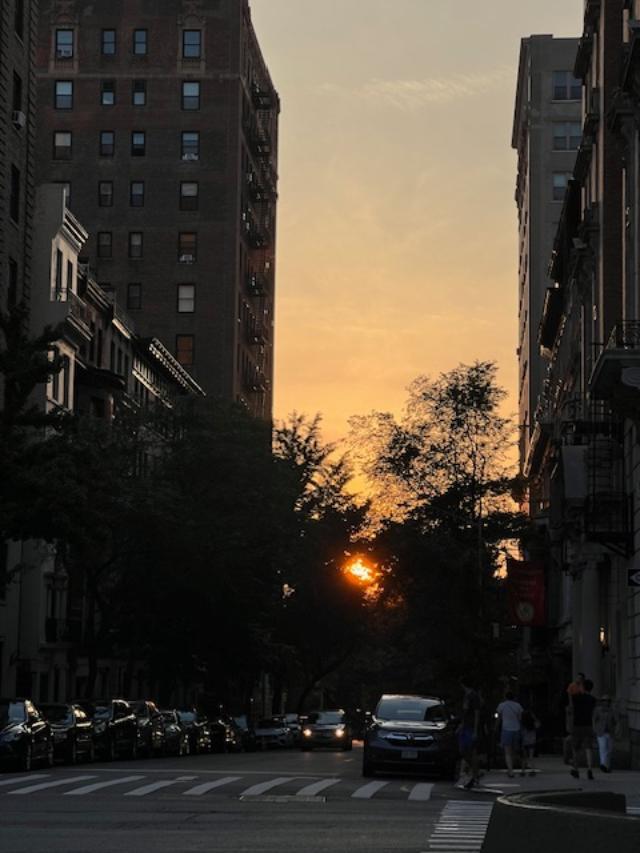

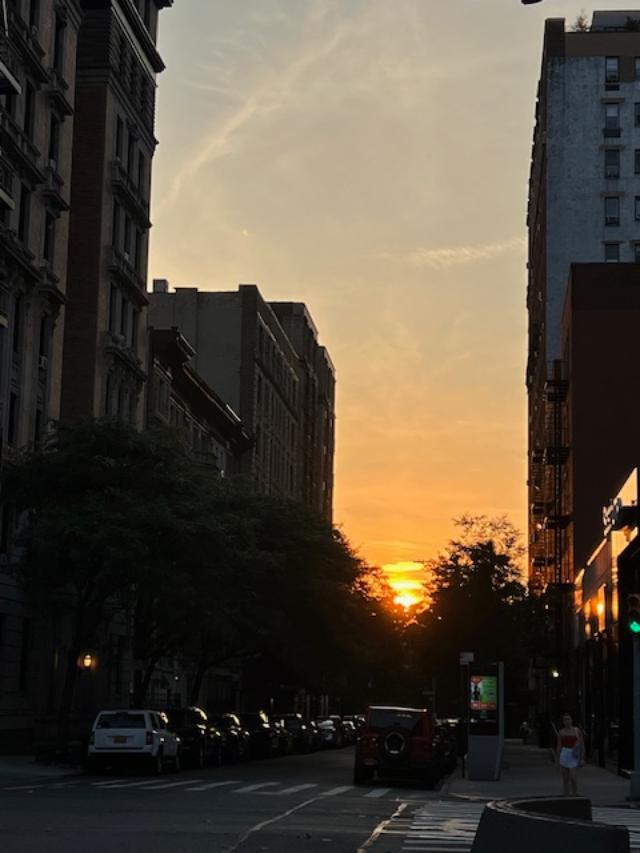


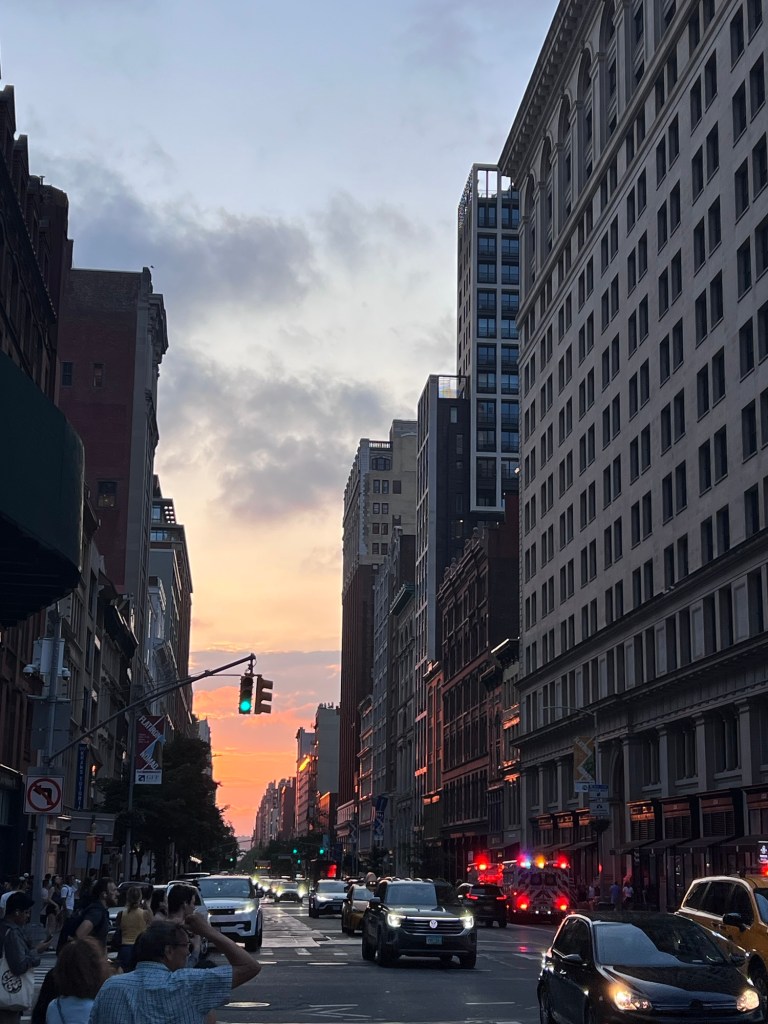
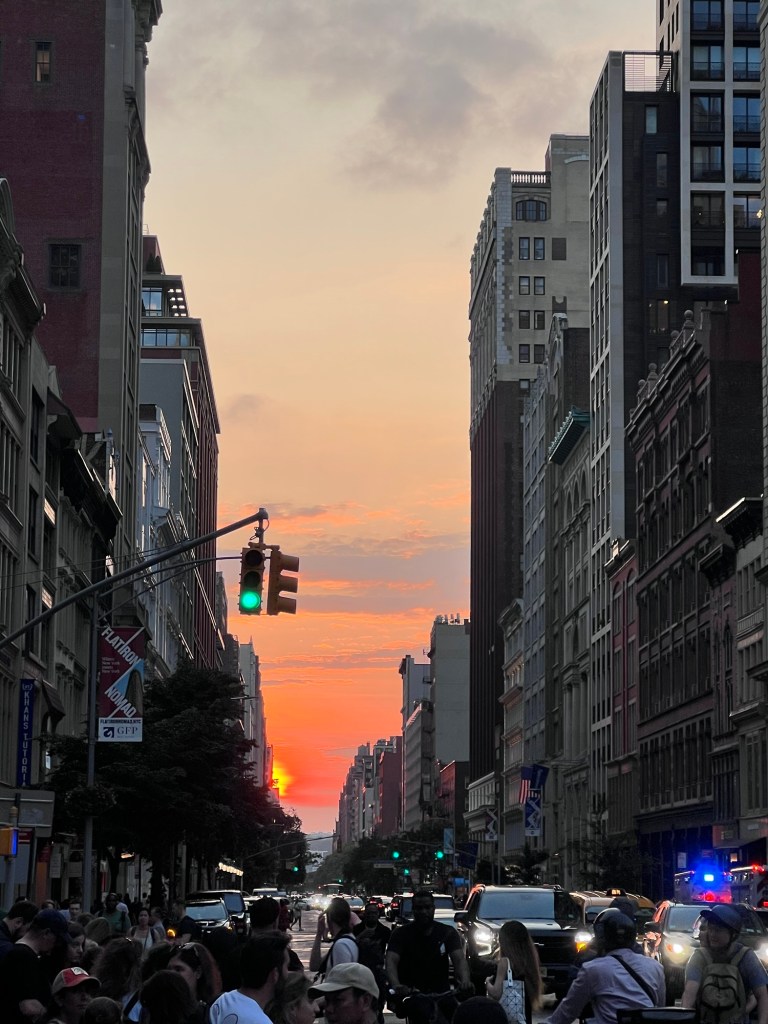


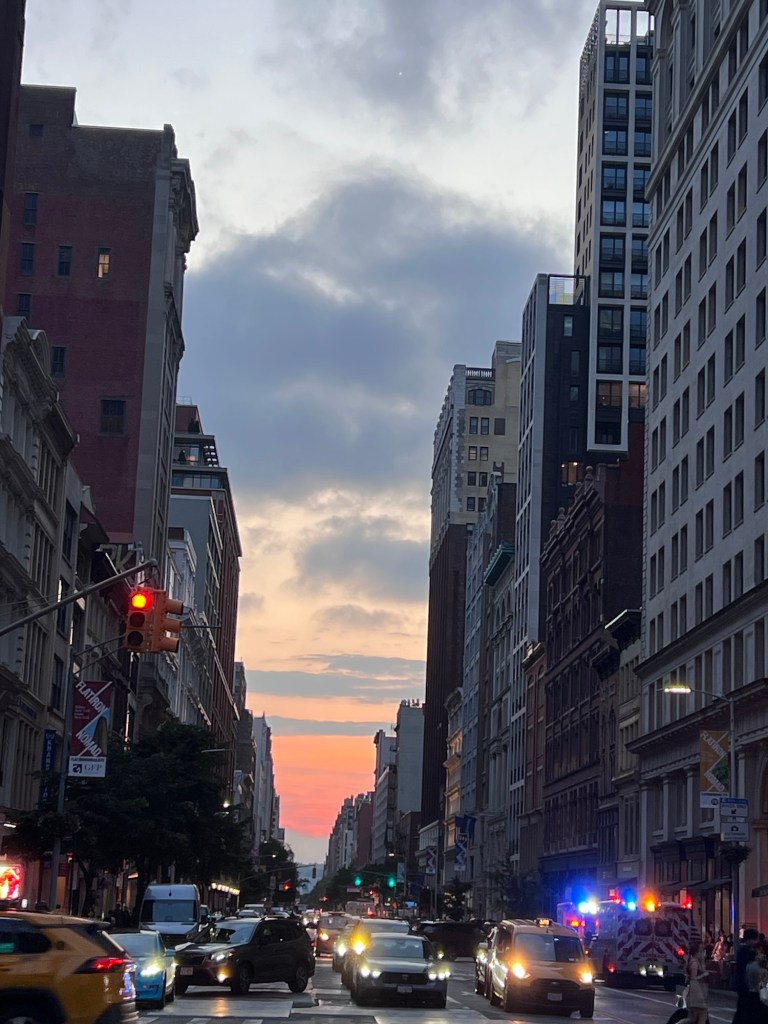


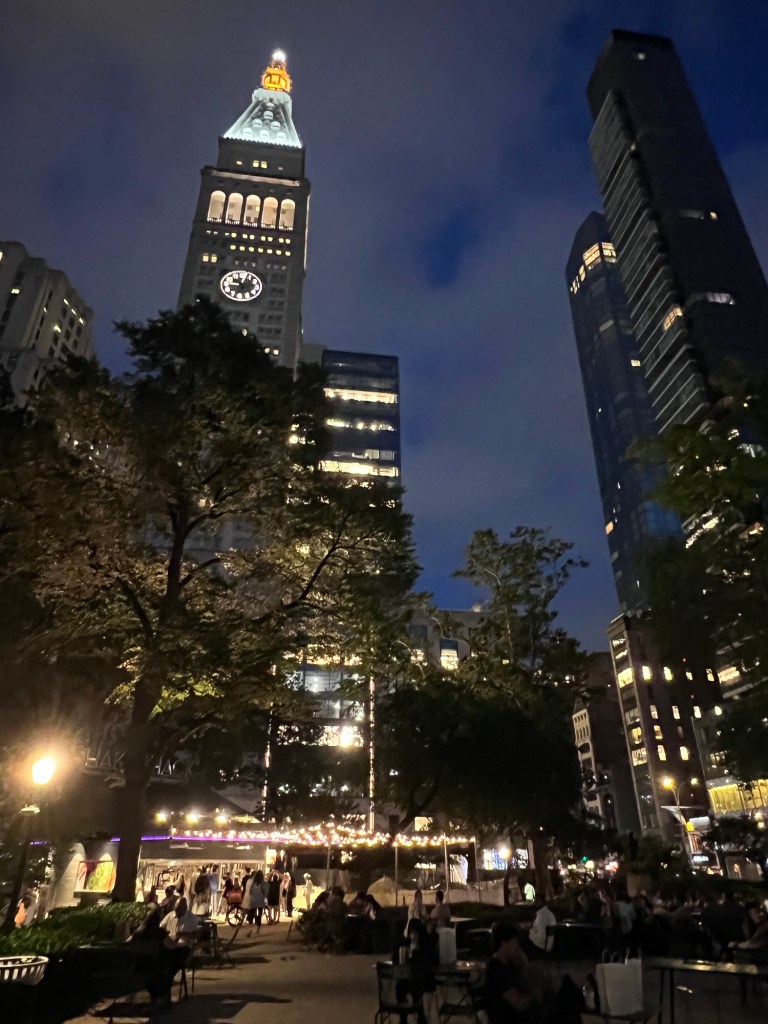
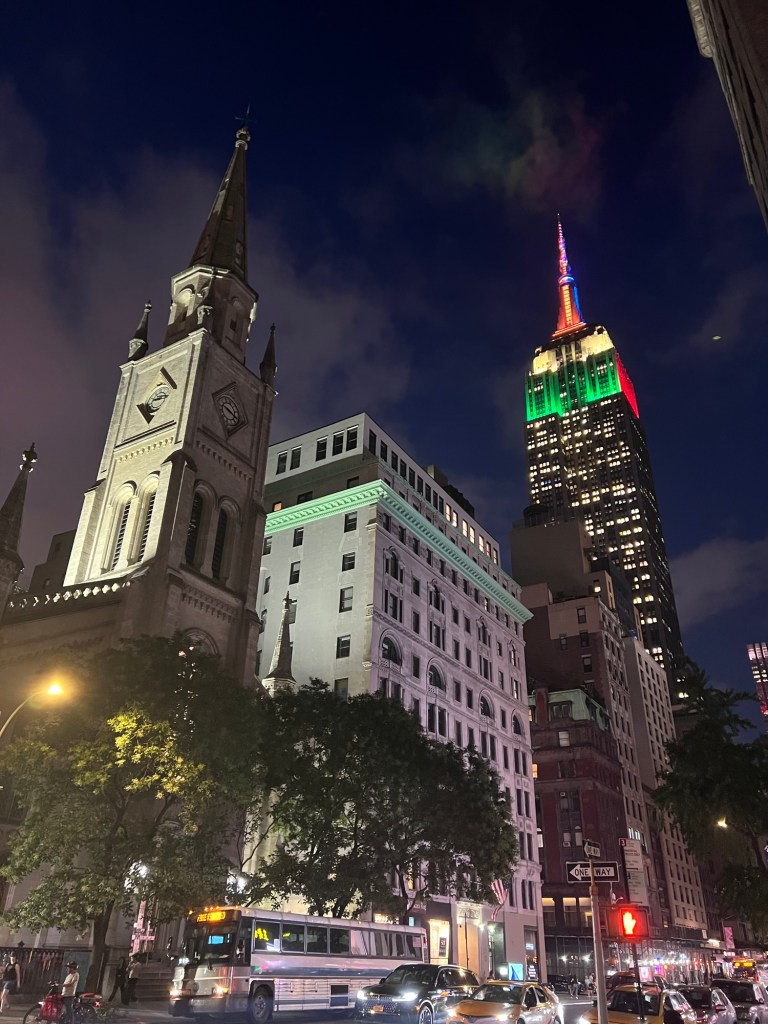

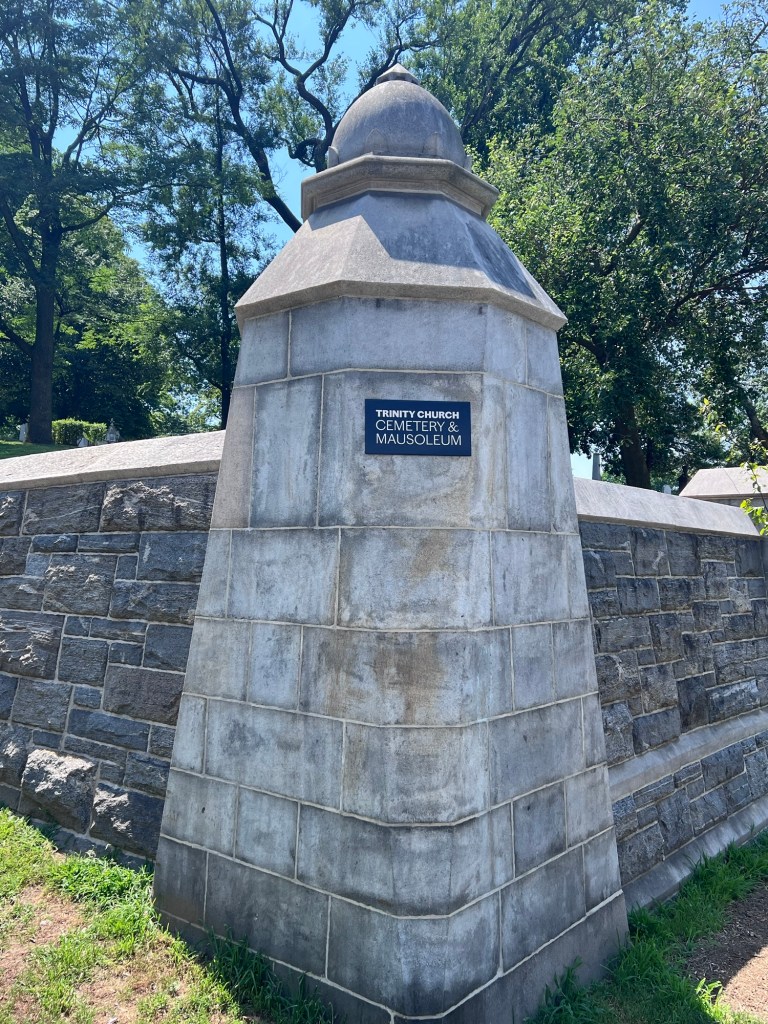


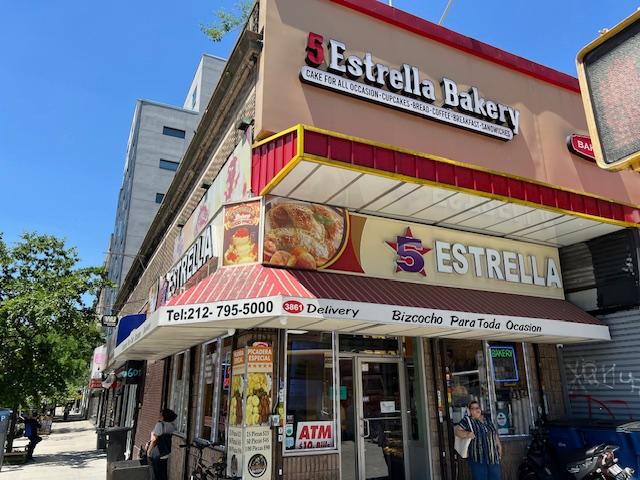
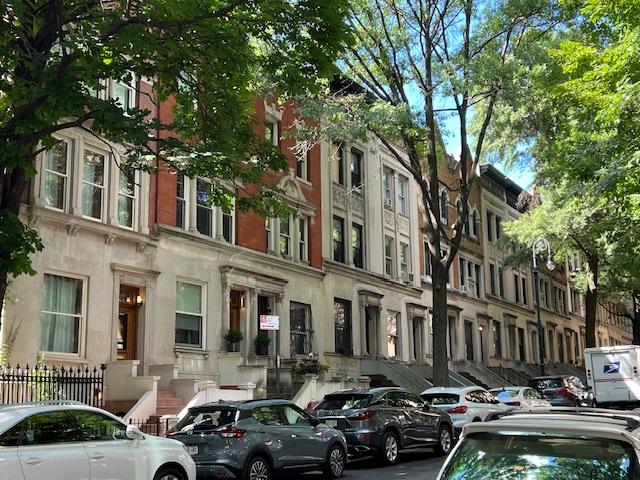
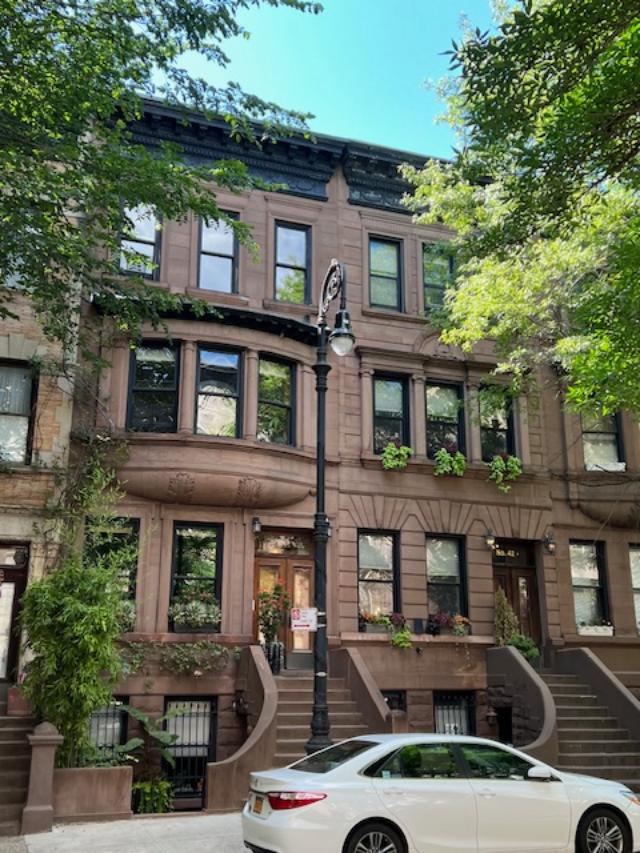




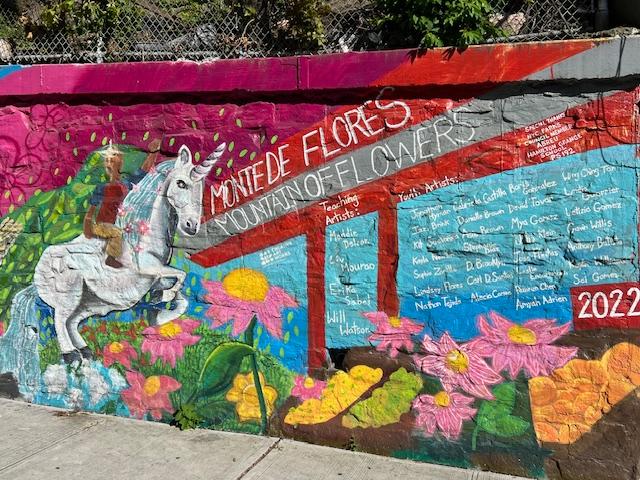

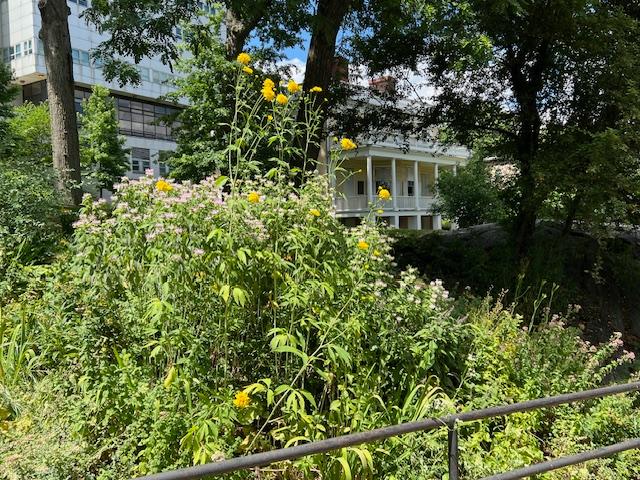


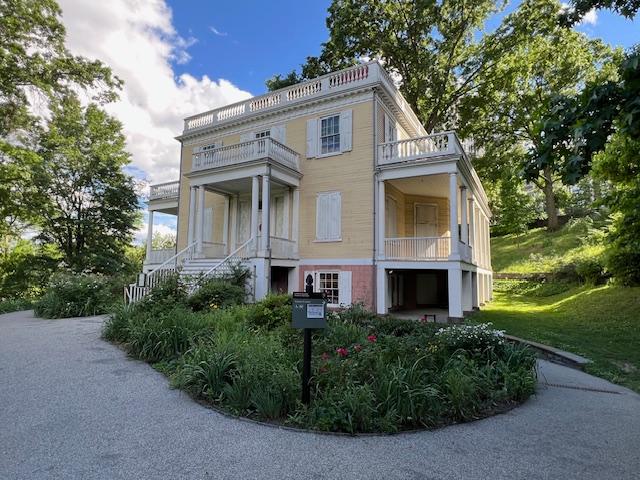




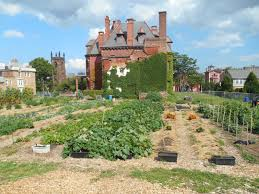


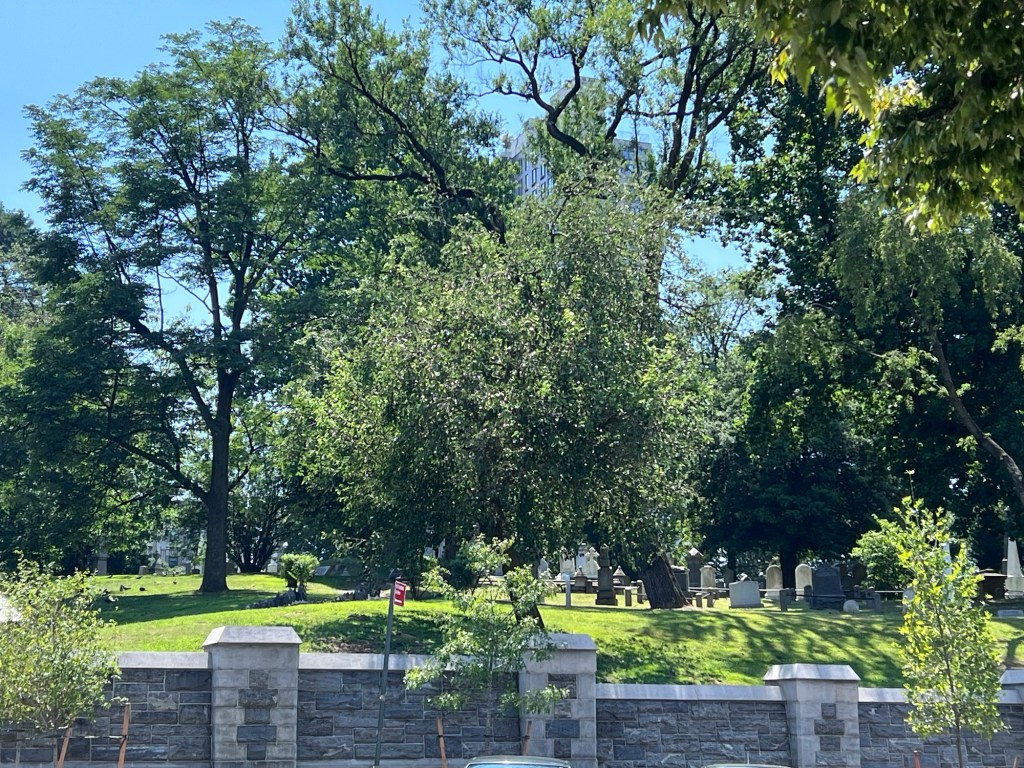
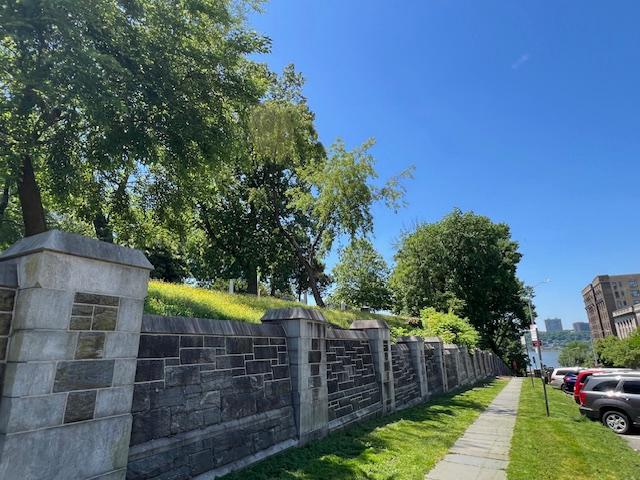
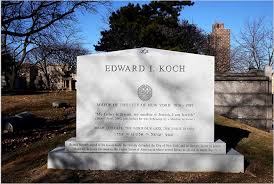



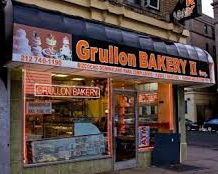

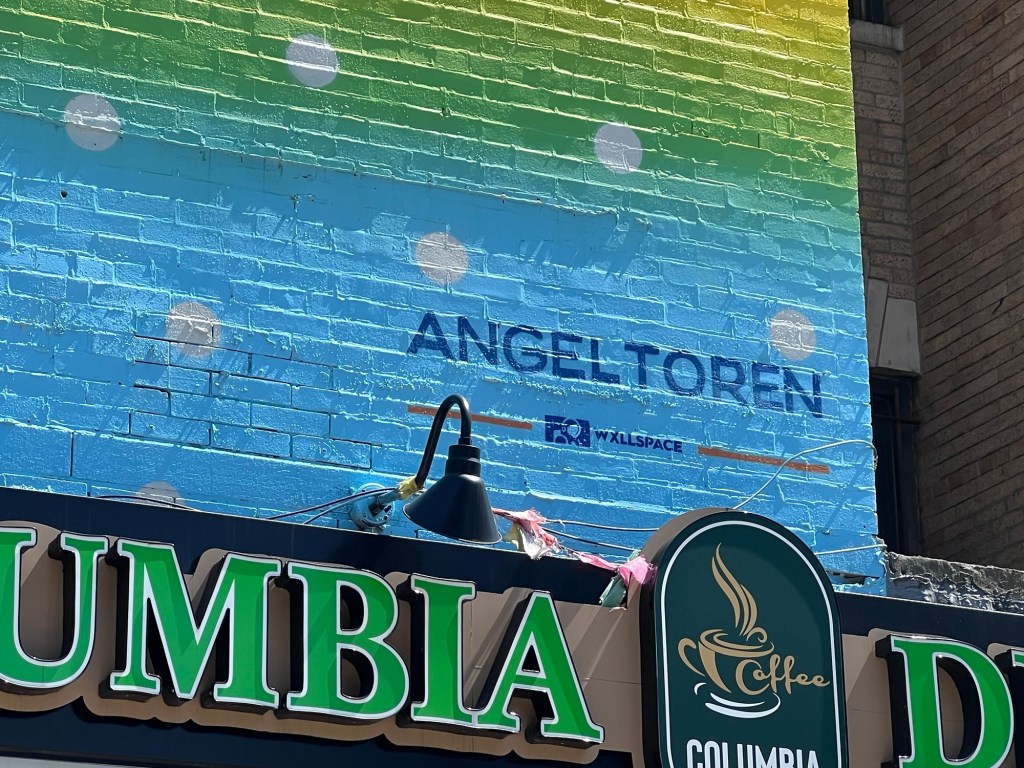

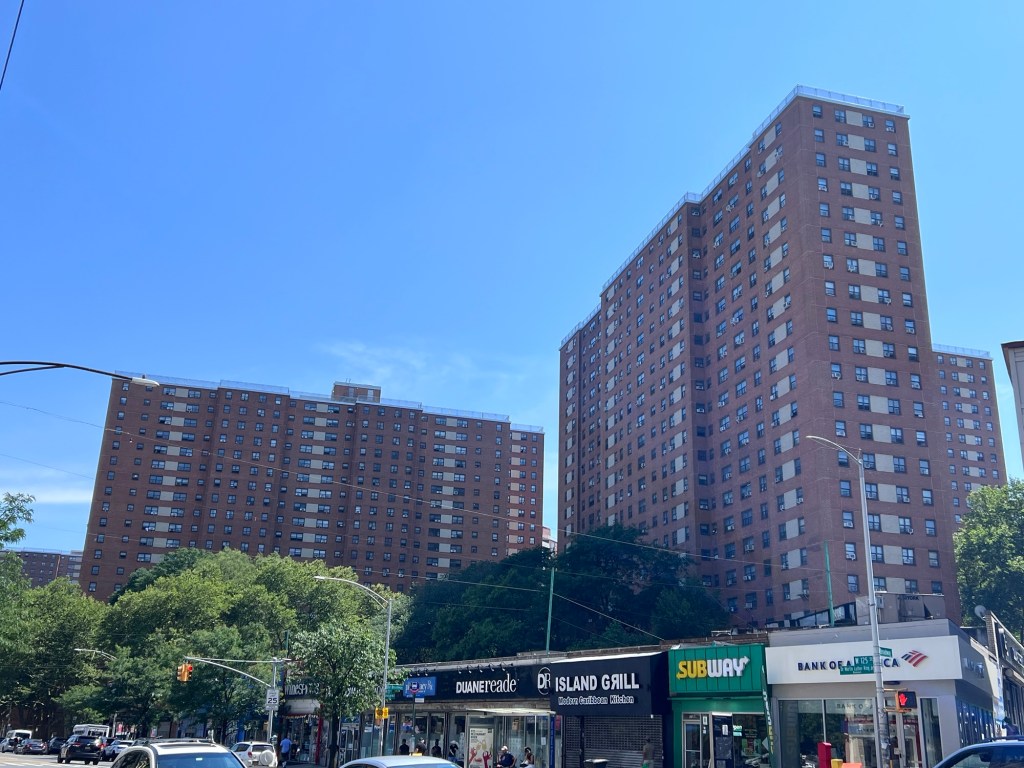
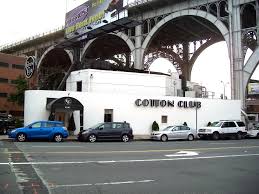
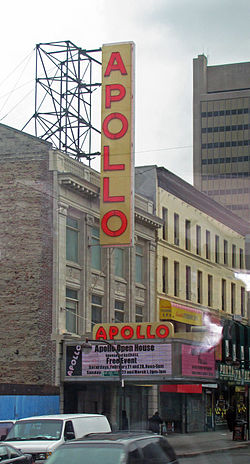
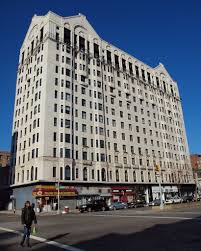


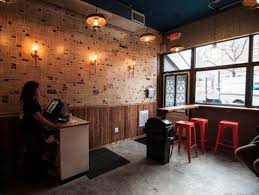
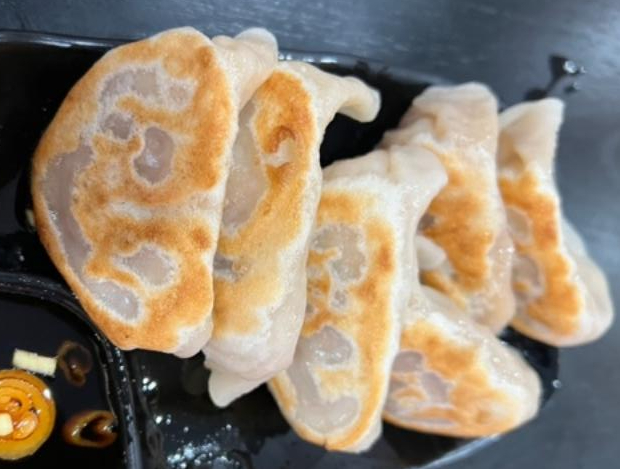


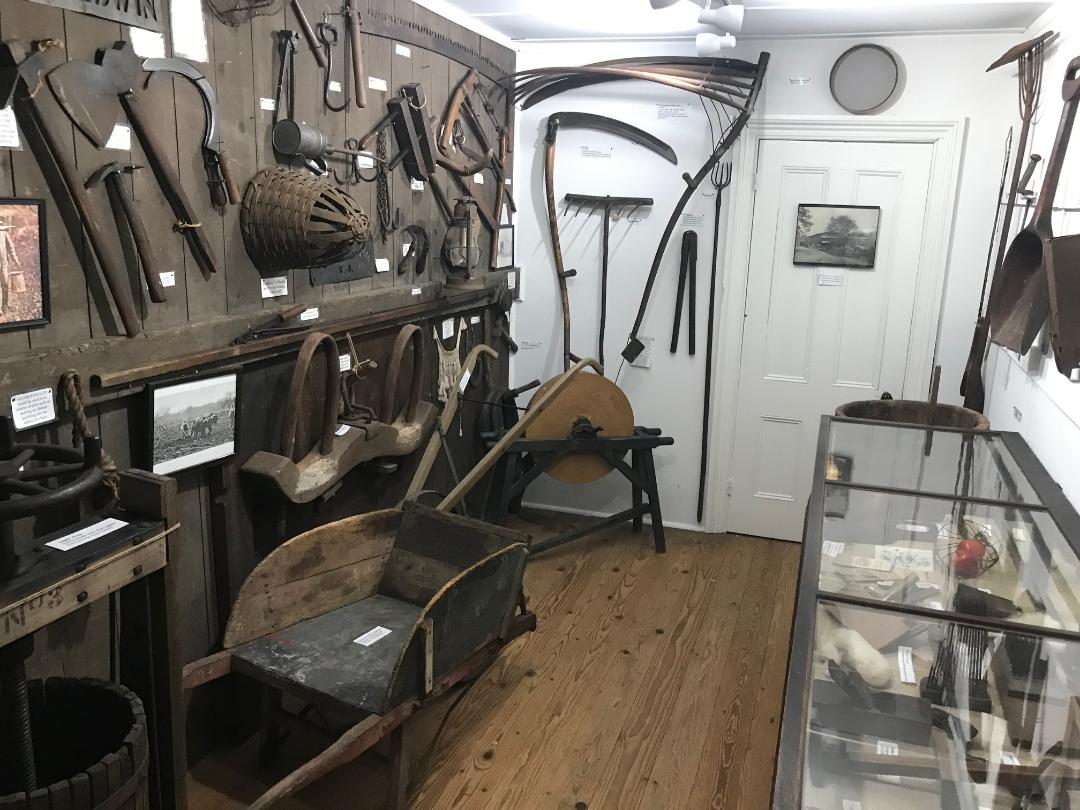

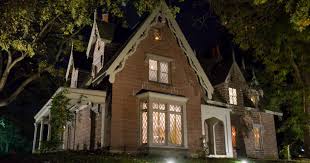
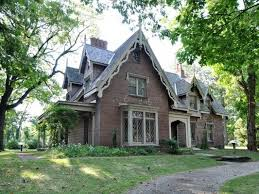
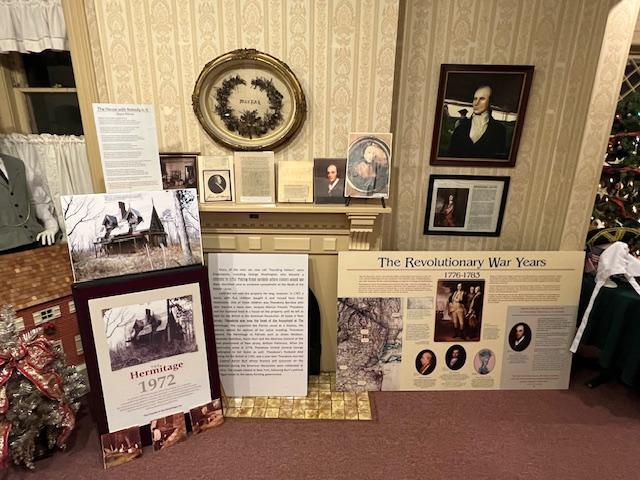
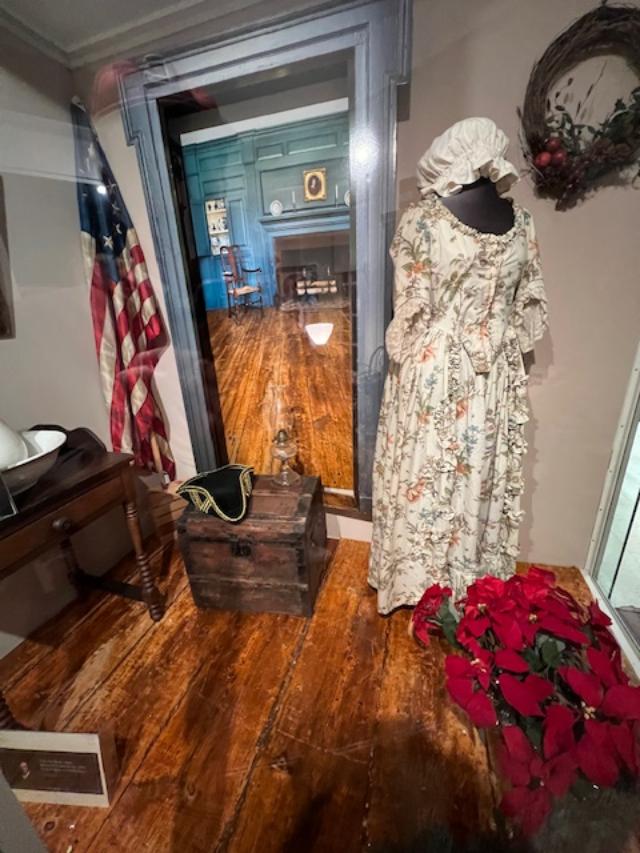
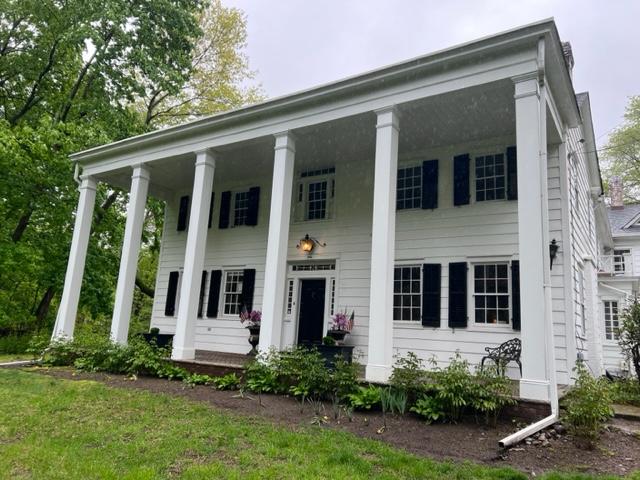
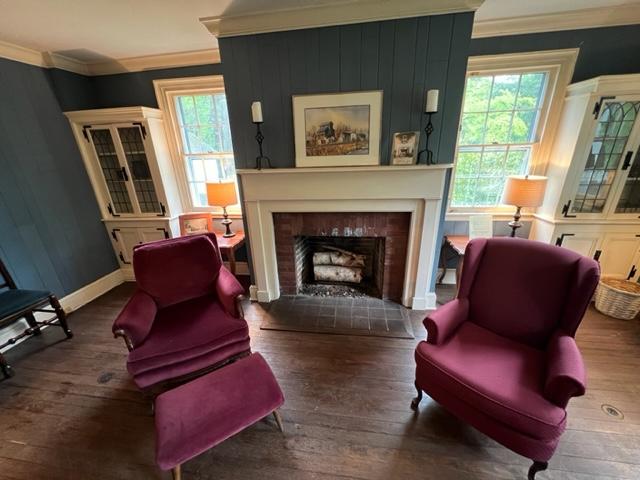
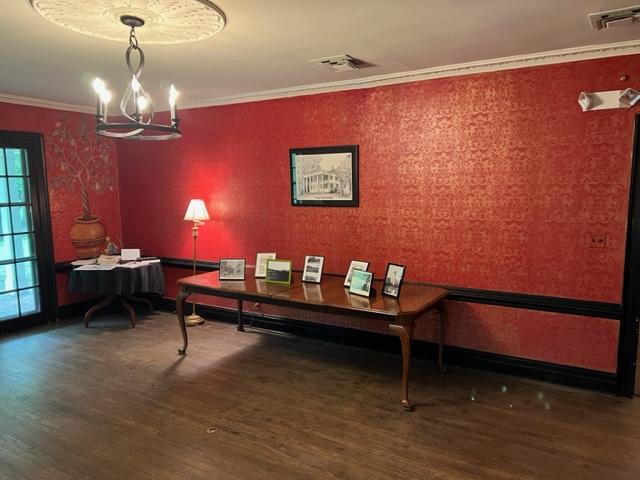
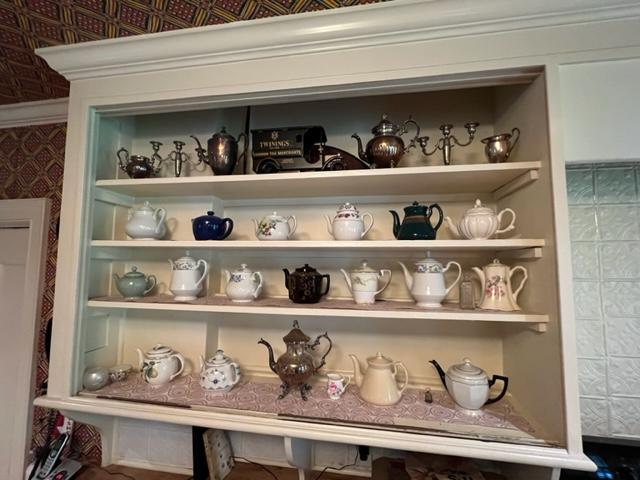


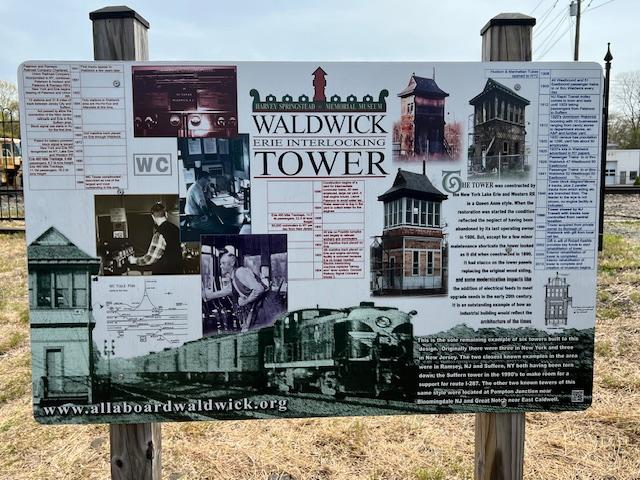

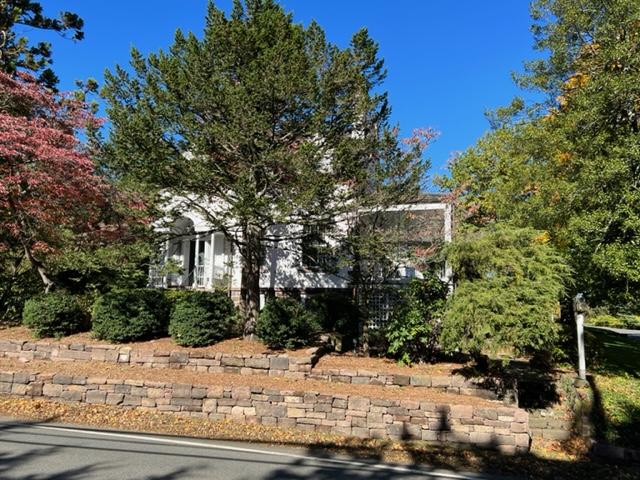


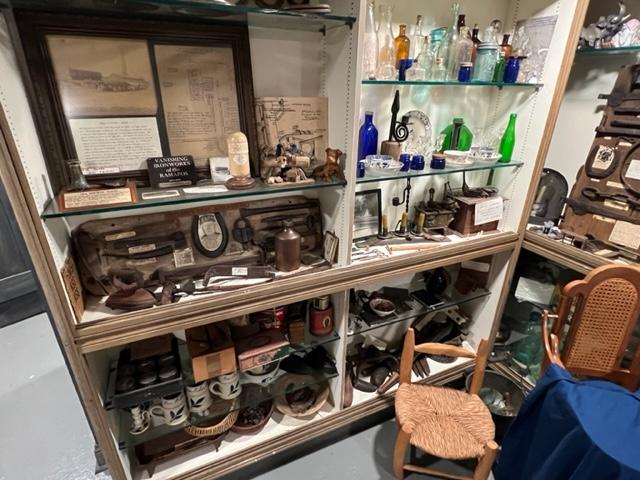

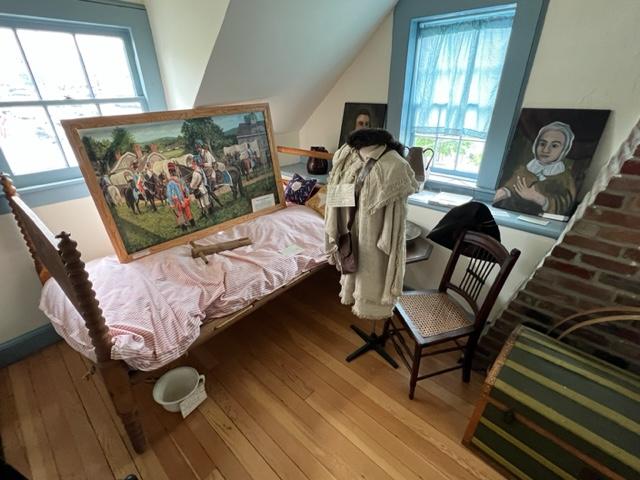


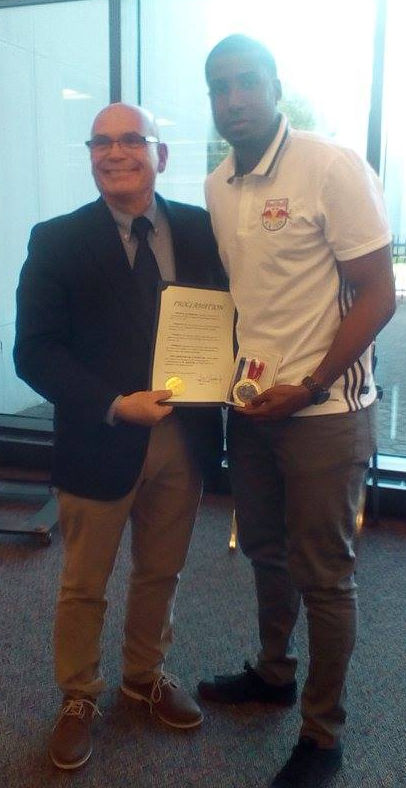



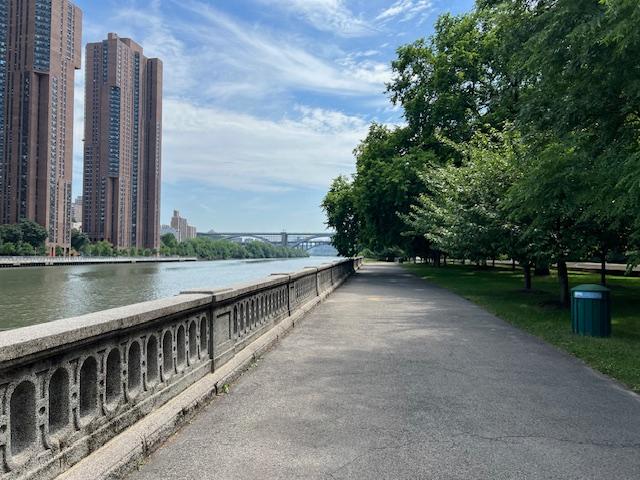

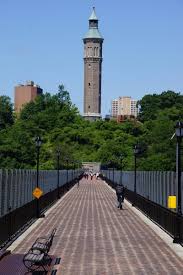
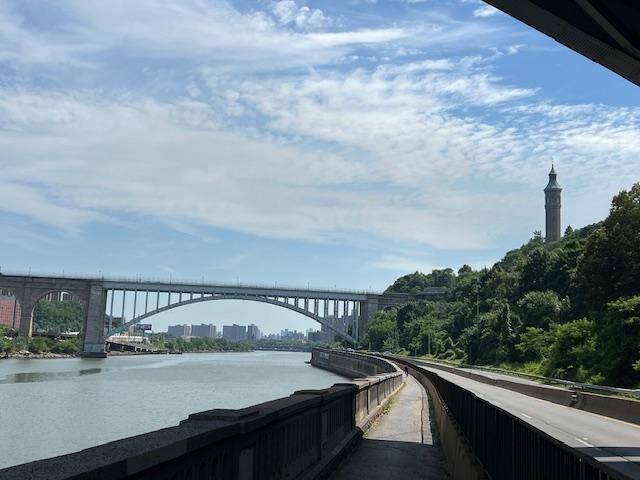


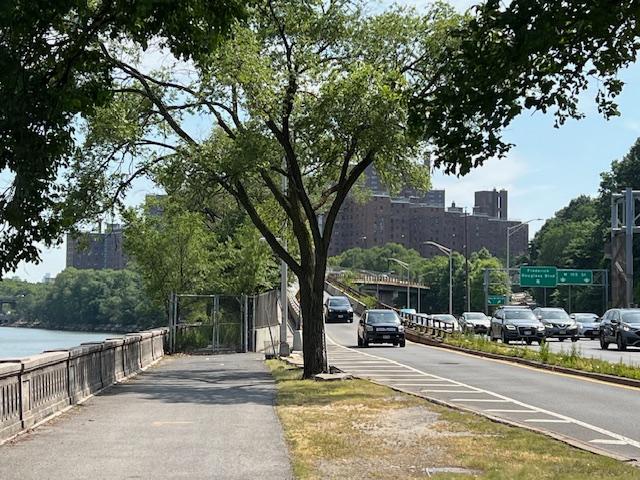
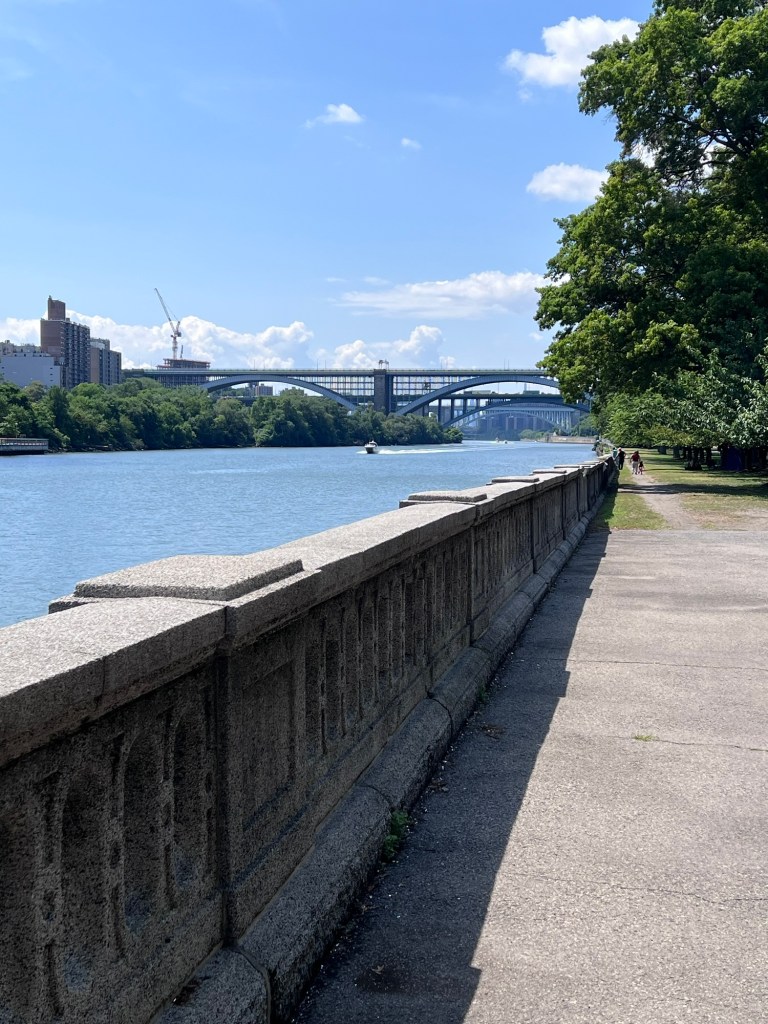

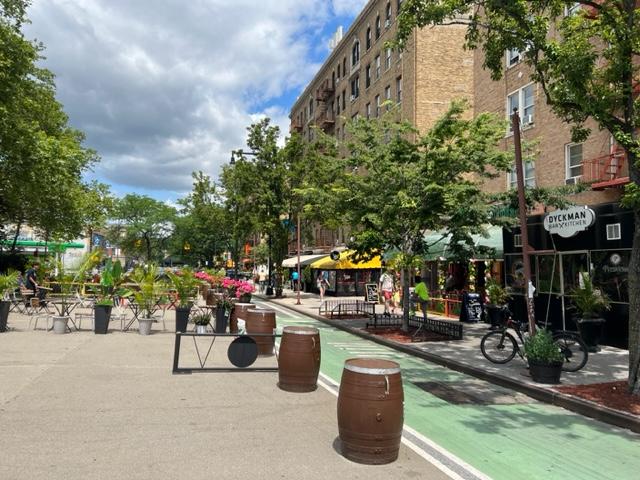

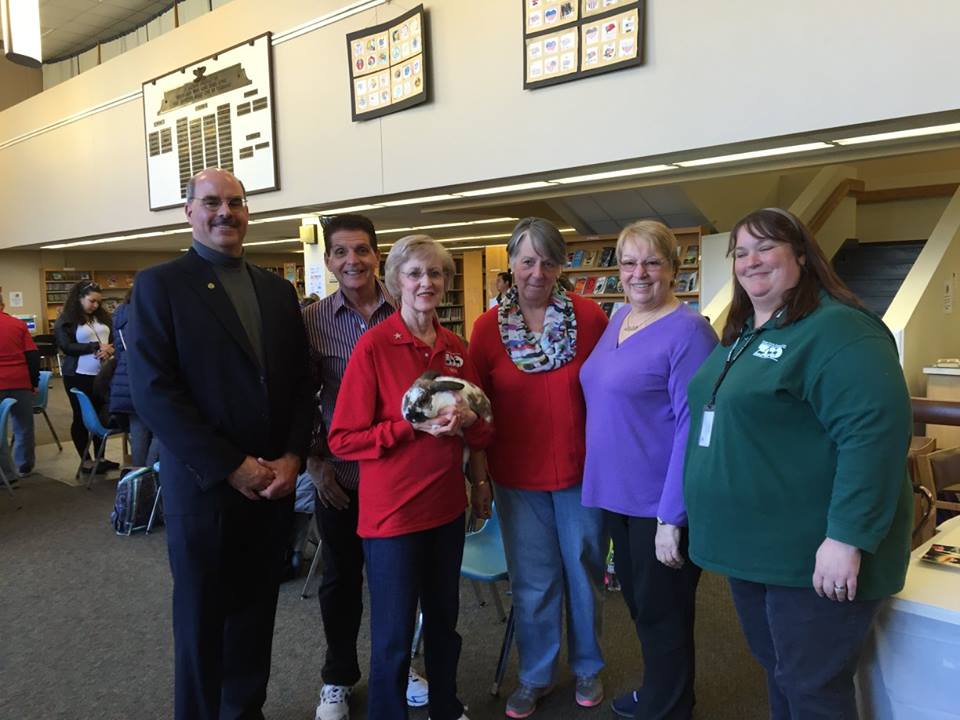











 mywalkinmanhattan