I love the holidays in New York City. There are so many Christmas themed events to go to and decorated homes to visit. One of my favorite tours is at the Met Cloisters for their Christmas themed walking tours that take place from December through early January.
The Cloisters Museum & Gardens: A Branch of The Metropolitan Museum of Art
To finish my weekend of holiday festivities before the Epiphany, I took the annual Christmas walking tour of the Met Cloisters. The museum hosts an interesting walking tour of the history of the holidays during the Medieval era. Each tour has a different theme to it. There is the history of Christmas in that era, the use of plants and flowers in the decorating of the religious sites and the historic significance of the visit of the Three Kings.
Each tour guide incorporates the artwork, architecture and plants into the discussion. On average you will have about forty people on the tour.
The entrance of the Cloisters decorated for the holidays
The entrance of the gift shop decorated for the holidays
The archways were decorated with seasonal plants and fruits. I read online that the volunteers went into Fort Tyron Park and collected ivy from the wild to decorate the museum. Every day the museum is open during the holidays these are replaced on a daily basis.
The entrance to the galleries decorated for the holidays
We started the tour with a discussion of plants that once decorated churches and ministries
With the change in attitude towards the Christmas holidays during the Middle Ages and its incorporation into church traditions, decorating for the holidays came back into style. The use of holly, evergreen and mistletoe became part of the Christmas tradition and to justify the decorating, they were related to Christian symbols.
The beauty of the life plants in winter
Each of the Cloisters were lined with fresh greens and potted plants giving each of the Cloisters its own special mood.
One of the Cloisters bright with plants
The stairs leading into the chapel decorated for the holidays
The chapel on the main floor decorated for the holidays
The colorful floral displays lining the window sills of the chapel
This led to a discussion about what each plant, flower and fruit meant in the Christian tradition, a clever way to justify decorating and celebrating during the holidays. Ivies, pine, winter flowers and even late season apples not only lined places of worship but gave a festive look and district smell to these buildings. A symbol of life in the cold winter months while they waited for the arrival of Spring.
The plant types that decorated the houses of worship
The flowers and plants lining the chapel
The decorative candle stands lining the walls of the chapel
We then toured the main Cloister, closed for the Winter but was lined with plants, flowers and greens brighting every corner of the building. These were examples of plants and flowers that would have decorated these halls at the holidays.
Walking the halls of the Cloisters
Touring the halls of the Cloisters with flowers and plants to celebrate the season
Walking the halls of the Cloisters
The flowering plants of the Cloisters
The flowering plants and vines that would have decorated churches in Medieval times
We then toured the Tapestry Room and discussed the use of plants in art form and the use of the detail as symbolism in art. These tapestries were meant to cover the drafty walls of palaces and bring in color and decoration to the stone walls.
The famous ‘Hunt of the Unicorn’ tapestry
We then took a detour to the outside gardens that are enjoying their winter slumber. These gardens were used by the cloisters for food, medicines and decorative use. They will start coming to life in a few months.
The Cloisters Gardens
The garden terrace over looking the Hudson River
The terrace gardens in the winter waiting to come to life
Then we went back inside for a discussion of the Three Kings and the Epiphany and its symbolism in art at the Cloisters. These are some of the works featured on the ‘Christmas Tide’ tour to symbolize that visit.
Some of the woodwork from that era
The Visitation of the Three Kings
The Visitation of the Three Kings depicted in stained glass
The Visitation of the Three Kings depicted in statuary
We visited the last of the Cloisters and discussed some of the plants in the collection
We were admiring the plants and flowers
A candelabra in the hallway of the Cloisters
As I exited the building that afternoon, there were potted plants at the entrance of the Cloisters. It was a real treat to walk around the building at the holidays.
The potted plants outside the entrance of the museum
On my way down the stairs and out the door to Fort Tryon Park, I took another walk down the stone steps and walked through Ann Loftus Park. This popular playground was quiet this time of year, awaiting the Spring and the wonderful warm afternoons ahead.
I love coming for breakfast at G’s Coffee Shop after a tour of The Cloisters. The food and service of this small ‘hole in the wall’ diner is wonderful. The meals are so reasonable and when you dine at the counter, you can watch the food cooked right in front of you. I had a wonderful Bacon, Egg and Cheese sandwich with a side of golden pancakes. What a great meal on a cold winter morning.
The Bacon, Egg and Cheese sandwich
The breakfast sandwiches here are so good
The pancakes were wonderful. The perfect comfort food on a winter day.
It was a really great tour, and it was fun to walk around the neighborhood through the parks and seeing all the post-Christmas decorations. Inwood is a really beautiful section of Manhattan with lots to do and see. It is the perfect place to spend the Christmas break.
There is always a lot of excitement when a new art exhibition is ready to open. It is even better when the museum opens it to its members first before the public gets a glimpse. The lines always wrap around the corner from the museum.
The long line of MoMA members waiting to get into the museum for the opening night of Artist Ruth Asawa’s exhibition
I noticed this year especially and right before Thanksgiving, all the museums are throwing open their doors for Member’s Nights. I have been invited to five Members Nights at museums all over the City. You can’t attend them all but when you can, it is a lot of fun.
The excitement the museum creates for these evenings
Video of entering the museum at the start of the opening with 80’s Japanese Pop Music
I think in an economy like this, these Members Nights are one of the best ways to engage with the membership for both donations and renewals of memberships especially before the holiday season. Plus it gives the members a wonderful night out to see the exhibitions ahead of time and enjoy the evening after a long week at work.
Born on a farm in Southern California, Asawa began her arts education when she was a teenager and she and her family were among the thousands of persons of Japanese descent who were forcibly incarcerated by the US government during World War II. It was at the internment camp that Asawa began taking classes in painting and drawing. After her release, Asawa studied to be a teacher but was unable to get a license because of her Japanese heritage, so she enrolled at Black Mountain College, an experimental art school in North Carolina. Asawa took classes from and worked alongside fellow artists Josef Albers, Robert Rauschenberg, Merce Cunningham, and R. Buckminster Fuller. Black Mountain was also where she met her husband, the architect Albert Lanier.
I loved her wire woven sculptures. They were the real standouts of the show.
The wire woven sculptures were the standouts of the exhibition
I thought these were a unique design
I liked here colorful paintings, these are of her child’s footprints. I loved the idea that her children were involved with the art
The patrons enjoying the art
The display of the wire art
The displays were impressive and graceful
The colorful faces looked tired
The look of nature in the wire art in the form of trees
I loved her works of food
At the end of the exhibition and the evening, I joined everyone on the main floor where the bar and gift shop were located. The main floor was the busiest part of the museum. I wondered if some of these people even went upstairs to see the exhibition or just stayed downstairs to socialize.
The main floor of the museum is always packed with people
Share in the excitement of the Membership opening
These evenings always get my mind off the stress of life. It is nice to just be in Midtown Manhattan and be in the moment. It is nice to see art, hear music and walk through the museum.
After six months of classes and finishing Graduate school, I am finally back to walking the neighborhoods again. This time to finish Lower Chelsea, which has changed from a neighborhood of manufacturing and shipping to one of the now more exclusive neighborhoods in Manhattan. I started my walk at Sixth Avenue and West 23rd Street.
I found the City a little quieter than on other weekends but figured those who get out of New York City were probably at their weekend homes either at the shore or in the country.
The corner of Sixth Avenue and West 23rd Street
I started the walk where I left off last November walking the streets of the Lower Flatiron District on the corner of Sixth Avenue and West 23rd Street. This is the border of the Lower Flatiron District and Lower Chelsea. These neighborhoods overlap so much I am not sure where on neighborhood starts and the other stops.
Much of West 23rd Street over the last several years has been torn down and rebuilt with new apartment buildings or older more historical buildings have been renovated for the same purpose. The neighborhood has become that desirable especially with the creation of the High line Park. The first building that always stands out in the neighborhood is the Chelsea Hotel at 204 West 23rd Street.
The historic Chelsea Hotel at 204 West 23rd Street
The one building that always impresses me is the Chelsea Hotel. This former Residential hotel is now a combination of residential apartments and a traditional independent hotel.
The Chelsea Hotel at 222 West 23rd Street was built between 1883 and 1885 and was designed by architect Philip Hubert from the firm of Hubert, Pirrson & Company. The hotel is designed in the Queen Anne Revival with a combination of American Gothic (Wiki).
The hotel had originally opened as a cooperative and a home to artists and members of the theater community, but the concept changed in 1905 when it reopened as a hotel. The hotel has gone through several management changes over the years. In early 2022, the Chelsea Hotel reopened again as a hotel when the interior renovations were finished.
The historic plaques at the hotel
The hotel has such a celebrated past with all the famous people who have stayed here. I think all the plaques on the front of the hotel don’t even touch the number of well known names who resided here.
The historic plaque
The historic plaque
The historic plaque
This is just a small portion of the famous people who have resided here.
The hotel went through a massive renovation recently and is now open as a regular hotel. Many older residents still live there but as their numbers dwindle that rest of the building will probably become a regular hotel.
At 244 West 23rd Street is a beautifully embellished building in brick and cream colors was built in 1900 by developer Isidor Hoffstadt. Decorations of garlands adorn the windows and top of the building and some of the upper floor windows are surrounded by archways. It now contains twelve lofts with multiple bedrooms (Daytonian in Manhattan).
While the core of West 23rd Street has changed with gleaming new buildings as residential and office space, as you get closer to Eighth Avenue the neighborhood has that classic ‘old New York’ look to it.
Walking down West 23rd Street near Eighth Avenue
I walked the length of West 23rd Street from Sixth Avenue, the border of the lower Flatiron District to Riverside Park. The weather just kept changing going from really sunny to cloudy and rainy the entire time I walked the neighborhood. One comment it was raining and the other it would be dazzling sunshine.
West 23rd Street by Tenth Avenue and the Hi Line Park
At the end of West 23rd Street starts Chelsea Waterside Park and Hudson River Park, which lines the entire side of the Upper West Side. The gardens were at the height of their bloom and it was a beautiful display of flowers.
This was the legacy of the Bloomberg Administration’s ‘Million Tree’ initiative. Between these parks that lined the waterways and the High line Park, it just made the neighborhood more desirable.
Funny how the weather went from sunny to rainy in ten minutes on Memorial Day weekend. By the time I walked to Hudson River Park, it got gloomy again. Still, it did not affect the beauty of the parks and helped water all the beautiful flowers blooming.
The flower beds were in full bloom
The park was in full bloom in the late Spring and was dazzling. Their Friends groups and gardeners are doing a wonderful job maintaining these flower beds.
As I walked the piers, the clouds kept rolling in and out and it sprinkled off and on that afternoon.
Admiring the view as I was waiting for the clouds to clear
The skyline of Jersey City was gloomy and impressive at the same time
Then the clouds broke again and the sun came out. This would be the weather all day long. The clouds then the sun then the clouds then rain and then the sun. It made for an interesting walking day.
The sun finally came out on Pier 57
The view of the Hudson Yards was just spectacular when the clouds passed by
The path led from the Hudson River Park to Pier 57 and I took the pathway through the Pier and all the recreation buildings that now make up the complex. I had never seen it from the river side of the pier.
Pier 57 from the waterfront side of the complex with all the pleasure boats
As I walked through the passageway, I learned the history of the pier and all the famous ships that had docked or left the pier. There was a display of pictures of famous arrivals and departures from the pier that I stopped to read about. It was a interesting look at the past of these piers,
The people at the dock were waiting for the Carpathian to arrive with the Titanic survivors in 1914.
The Carpathian arriving at New York harbor with the Titanic survivors.
The Lusitania leaving New York harbor for its final voyage. It would be torpedoed before it arrived in Europe.
The modern Chelsea Piers of today
Walking down Eleventh Avenue when the rain cleared
Along past the new construction along Eleventh Avenue
For all the building and changes this neighborhood has been through and so many luxury buildings replacing the docks of the past, there is still a little influence of the old neighborhood that still pops up from time to time. The graffiti art is still fantastic all over the City.
Some of the street art on the construction site on Eleventh Avenue
Some of the street art along the fence of the new construction
I followed Eleventh Avenue down the sidewalk to the Food Court at Pier 57. That was interesting with all the sounds and smells of different cuisines cooking.
The Food Court at Pier 57 should not be missed
The Food Court at Pier 57 really has some wonderful restaurants. There is an interesting mix of Spanish, Italian and Asian cuisines in the food court but it can be a bit pricey. The smells are amazing and you could almost taste the spices in the air. The couple of times I have been here the place is always busy.
The excitement of entering the Pier 57 Food Court
The floral decorations in the middle of the food court. I love the decorations here. They are really festive. The only bad part of the food court is the prices are really high so be prepared to spend money on lunch and dinner.
I left my tour of the food court as the clouds rolled in again and I arrived at Little Island Park, one of the newest and most innovative parks in New York City. The whole park is built on this innovative type of piling that come together to create this whimsical park. Something out of “Whoville”.
My trip to Little Island and the Chelsea Market with my NYU class:
At the very corner of the neighborhood was ‘Little Island Park’ at . This very unique structure has been captivating both New Yorker’s and tourists since it was built.
I then took the time to walk all over Little Island. I explored all the paths and stairs and explored all the beautiful gardens and terraces. What views! As the clouds passed by, we had moments of brilliant sunshine and at times it looked like it was going to down pour.
The gardens in full bloom on Little Island
The views from the very top of the terraces as the clouds finally cleared
Walking back down the stairs
The view from the pathway on the way down towards the exit
The view from the exit of Little Island as the clouds rolled by
The rest of the afternoon was on again off again clouds. I crossed over Eleventh Avenue to West 14th Street into the borders of Chelsea and the Meatpacking District (where at this point all the meatpacking companies are gone). In their place now are gleaming new apartment buildings that surround the High Line Park.
Eleventh Avenue at West 14th Street
I crossed the street to see 14th Street Park in full bloom. This park represents this new neighborhood with its gleaming towers and expensive stores. The lawn was perfectly manicured and the flowers were in full bloom. I did not even see any homeless people in the park. Just young couples walking their dogs.
The gardens in 14th Street Park as you cross onto West 14th Street from Eleventh Avenue
The gardens in full bloom at the park on West 14th street
Crossing onto West 14th Street by the Meatpacking District near 11th Avenue
I have been walking around this neighborhood since the 1980’s and talk about change. What used to be buildings that were geared to the docks and shipping, then became clubs in the 1980’s and early 90’s are now lofts and luxury stores. I have really seen this City change.
Walking down West 14th Street
Walking down West 14th Street near the Meatpacking District
Walking in Meatpacking District by Tenth Avenue
This border that Chelsea now shares with the Meatpacking District (which no longer has any more meatpackers) has become one of the trendiest and innovative neighborhoods in the City. Aldo judging by the prices at the restaurants and stores, one of the most expensive.
West 14th Street in the Meatpacking District
Walking down West 14th Street
As you walk further away from the parks along the river coastline and further down West 14th Street, more modern buildings pop up on both sides of the street. Still here and there, details of the old neighborhood still pop up such as at 200 West 14th Street, with its stoic faces and immense detail in the doorway.
The unique sculptures on outside of 200 West 14th Street
The building was marketed with the sophisticated-sounding name “French Flats,” one of the very first of these was built by Jersey City businessman Henry Meinken at the corner of 14th Street and 7th Avenue. Meinken called on James W. Cole to design his new building in 1888. Cole was a favorite of the Astor family and he built several factory, warehouse and apartment buildings for them, several a few blocks west on 14th around Hudson and 9th Avenues (Daytonianinmanhattan.com).
It was completed in 1889 and given the cultured name “The Jeanne d’Arc.” The five-story brick building with brownstone trim had commercial space on the street floor and 8 commodius apartments above — two apartments per floor. To set the building apart from the baser tenements, Cole added an attractive pressed metal cornice and carved brownstone sills and lintels (Daytonianinmanhattan.com).
The street art along West 14th Street was very interesting as well. I loved this version of lady liberty. This was painted outside of a pharmacy.
The street art outside the pharmacy by Artist Shira One
Shiro’s artwork is an exploration of classic New York urban history through the lens of an artist who reveres Hip Hop culture. Her artwork is a prime example of the fusion of Japanese aesthetics and old school New York graffiti art. In 2002, she moved to New York alone, and after living between Japan and New York, she obtained an US American artist visa in 2013, acquired an US artist green card in 2021, and is currently based in New York (Artist Shiro1 website).
Another great mural that sits on the side of a building on West 14th that stands out entitled “Mural on 14th Street, New York” by Brazilian artists brothers Gustavo and Otavio Pandolfo known as ‘Osgemeos’. This colorful and engaging piece of artwork towers over the street and shows an exaggerated image of everyday New Yorkers.
The word ‘Osgemeos’ is translated as “the twins” in Portuguese, is a collaborative art duo comprised of twin brothers Gustavo and Otavio Pandolfo. It was in the 1980’s with the invasion of hip-hop, and the explosion of Brazilian culture that the brothers began to use art as a way of sharing their dynamic and magical universe with the public. Combining traditional, folkloric, and contemporary elements of Brazilian culture with graffiti, hip-hop, music, dreams and international youth culture, the artists have created an expansive body of work that includes murals, paintings, sculpture, site-specific installations, and video (Lehmannmaupin.com website).
This is what I love about walking around Manhattan. You do not even have to step foot in a museum to enjoy great artworks that are tucked into corners of every neighborhood on walls, telephone poles, on the street and in courtyards. You just have to look for it.
As I walked further down West 14th Street, between all the new construction going on and the gleaming glass towers that seemed to be changing the face of the neighborhood a few buildings stood out for the beauty and details in their architecture.
The first one was the Church of Our Lady of Guadalupe at 229 West 14th Street. I was attracted the elegant look of the church.
Church of Our Lady of Guadalupe at 229 West 14th Street
The church opened in 1902 and was designed by architect Gustave E. Steinback in both the Baroque Revival and the Spanish Baroque style of architecture (Wiki).
The Church of Our Lady of Guadalupe was founded in 1902, and became the first parish in New York City to serve the swelling numbers of Hispanics. During this time the Archdiocese was ill-staffed with priests who could not speak Spanish and those who were willing to reach out to the newcomers and learn their language and their ways were preoccupied with other important ministries. Our Lady of Guadalupe parish was established as a national parish, responsible for the spiritual care of all Hispanics of the city. (Church of Our Lady of Guadalupe website).
The details of the Church stood out for their beauty and elegance
Another standout building on the corner of West 14th Street and Seventh Avenue is 154 West 14th Street. Arranged in a tripartite base-shaft-capital composition with large window areas, this building is a striking and unusual example of a large loft building partly clad in terra cotta, on the three-story base, on the spandrels between the white-brick piers of the midsection, and on the upper portion. The building was designed by architect Herman Lee Meader and was built between 1912-1913 (The Historic District Council Website).
The details on the building are so unusual and you really have to look at the building close to appreciate its beauty.
Another building that stands out on West 14th Street is 144 West 14th Street which is part of the Pratt College today but has an interesting past. Pratt bought the building in 1999.
The beautifully detailed building at 144 14th Street
144 West 14th Street is a grandly-proportioned Renaissance Revival-style loft building. It is faced with limestone, tan brick and terra cotta and was designed by the prominent architects Brunner & Tryon in 1895-96. It is seven stories tall and has a street façade articulated through a series of monumental arches embellished with neo-classical ornament (Historic District Council website).
The detail work at 144 West 14th Street
Though the building reminded me of one of the department stores from the post Civil War period, the building was actually used for manufacturing, one the tenants of the building being Macy’s (DaytonianinNYC website).
Turning the corner onto to Sixth Avenue that Chelsea shares with the Lower Flatiron District, you enter what was once the next great shopping area of the late 1880’s to about 1920 when the “Ladies Shopping District’ moved from 14th Street after the Civil War to Sixth Avenue between West 20th Street to West 23rd Street to create “The Ladies Shopping Mile”.
It would then move to West 34th Street where Macy’s resides today and the ghosts of B. Altman, Stern’s, Orbach’s and Franklin Simon buildings still remain to the last holdout of Lord & Taylor on Fifth Avenue that closed a few years ago that used to line the blocks. Most of the older smaller buildings have been torn down and gleaming new towers are starting to line parts of West 14th Street between Eighth to Fifth Avenues and up along the Avenues.
West 14th Street by Sixth Avenue
Looking up Sixth Avenue and 19th Street, the eastern border of Chelsea
Walking up Sixth Avenue towards West 20th Street, most of the more elaborate buildings are closer to the edge of West 20th Street. Walking back up toward the heart of the former “Ladies Shopping Mile” along Sixth Avenue from West 18th Street to West 23rd Street, the lower part of Sixth Avenue is similar in look to West 14th Street. A mish-mosh architectural styles from years of knocking down the older buildings. Inside are a variety of fast food restaurants, coffee shops and small stores.
The first building left of the former shopping district is the former Pace Building at 610 Sixth Avenue.
David Price opened his first women’s clothing store, D. Price & Co. around 1887. The Price Building was built in 1910-1912 and designed by Buchman & Fox in the Beaux-Arts style (Wiki). The was the combination of the two stores, the one facing Sixth Avenue and the one facing 18th Street (DaytoninManhattan.com).
The embellishments of 610 Sixth Avenue designed by Buchman & Fox.
Next to the Price Building is what was one of the grandest of the department stores in New York City at 620 Sixth Avenue, Seigel Cooper
620 Sixth Avenue-The former Siegal Cooper Department Store
The original store design in the late 1800’s (New York Historical Society)
The Siegel-Cooper Department store was a Chicago based store that was founded in 1877 by Henry Siegel, Frank H. Cooper and Isaac Keim. They opened the New York City store in 1896 on the Ladies Mile Shopping District. The store was designed by the architectural firm of DeLemons & Cordes in the Beaux-Arts design. When it opened, it was the largest department store in the world until Macy’s opened in 1902 (Wiki).
The Siegal Cooper insignia on the building.
The window details
The details on the upper windows of the store.
Henry Siegel over-extended himself and sold the company in 1902 to an investor and the store declared bankruptcy in 1915 and closed in 1917. After the store closed, it was used as a military hospital and then as a warehouse. Today after years of being used as a warehouse, it now has several retailers located in the store space (Wiki).
Across the street from the Siegel-Cooper store is the old B. Altman & Company store before they moved to East 34th Street.
625 Fifth Avenue-The old B. Altman & Company Department Store.
B. Altman & Company was founded in 1865 as a family store that eventually came under the control of Benjamin Altman. It moved from its Third Avenue and Tenth Street location to 621 Sixth Avenue in 1877. The store expanded four times in this location to cover what is now 625 Sixth Avenue. The store was designed in the Neo-Grec design and built in four stages. First by architects David and John Jardine for the original store in 1877 and then the extension in 1880. Then by architect William Hume in 1887 and then by architects Buchman & Fox in 1910. The store moved to the corner of Fifth Avenue and 34th Street in 1906 when the shopping district moved to 34th Street (Wiki).
The last old department store on the Ladies Mile Shopping District is at 641 Sixth Avenue on the corner of Sixth Avenue and West 20th Street.
641 Sixth Avenue-The old Simpson Crawford Department Store
Simpson Crawford like many stores on Sixth Avenue had its humble beginnings on 19th Street. The store continued to grow and expand catering to the ‘carriage trade’ and selling the finest merchandise. After their new store was destroyed in a fire in 1880, they opened the store at 641 Sixth Avenue in 1899 which was designed by architectural firm William H. Hume & Son in the Beaux-Arts design (dayoninmanhattan.com).
The details of 641 Sixth Avenue.
This part of the Flatiron District feels so different from the northern part of the neighborhood. So much of it has disappeared over the years that the character has changed. It does not have the distinction of the blocks between 23rd and 20th streets. There are blocks of these types of buildings whereas the blocks of the old shopping districts of the early to late 1800’s from 14th to 18th Streets have slowly disappeared over time. Older buildings have since been replaced with modern office and apartment buildings. The buildings have even been refitted for apartments and for the growing college campuses in the area.
While there are many architectural gems in this neighborhood, it just goes to show the progression of Manhattan and how things have changed in the last 100 years. The City keeps marching on. Still this section of the Lower Flatiron District shows just how important this part of the old “Midtown Manhattan” was from the Civil War until WWI. Just look up and admire all the details on each building. There are a surprise and delight for the eyes.
The Street art on West 15th Street off Sixth Avenue “I Love New York”
Read my blog on Walking the Streets of the Lower Flatiron District:
While I was walking around Chelsea, I was trying to figure out where to go for dinner. A guy was sampling slices of pizza outside of a new branch of Pizza Studio on West 14th Street. It was delicious and I decided to eat there for dinner.
I thought that the prices were very fair and you got a delicious 12 inch pizza for $10.00 and a lemonade. The whole bill with an extra tip was around $12.50, which was reasonable for all the food. Plus the pizza was delicious.
The ingredients to choose from
The Sausage pizza I ordered that evening
The pizza was wonderful
The pizza served with the Blue Lemonade
What was really nice after the day walking around the neighborhood was the lemonade was so refreshing. You got a choice between Watermelon Lemonade and the Blue Lemonade above and you got free refills. Talk about quenching your thirst on a hot day. It was a great dinner.
Walking past Holy Apostles Church at night
The Empire State Building lit for the holiday
A beautiful site of the Empire State Building
On each corner of the neighborhood, surprises and changes keep this neighborhood in a continuous flux. It just keeps reinventing itself.
Abracadabra right before Halloween is an experience into itself
Ghosts and Ghouls greet you when you enter the store
Abracadabra is one of those stores that just stands out when you walk in. Every day is Halloween when you walk in the door and everything is there to shock and amaze you. It is a interesting blend of theater, imagination and creativity that makes the store come to life. Even the staff walk around in masks and costumes showing off the merchandise. Many I am sure are actors and artists using their own sense of style to show the costumes off.
Abracadabra is no ordinary store
There is no lack of interesting costumes to try on or accessories to match them…
I have been coming to J’s Pizza for many years and had eaten here in the past after viewing the Halloween Parade in October. I just rediscovered it again when I started grad school in the neighborhood and forgot how good the food was when I dined here. The pizza slices are generous in size and their marinara and pizza sauces you can tell are freshly made and not from a can.
The sauces for all the meals here from the pizza, to the spaghetti and meatballs to the sauce that is the side to the many rolls and calzones is well spiced and has so much flavor to it. It really makes the dishes.
J’s Pizza counter is lined with pizzas and calzones
I have never dodged so much construction before. There are so many streets that you cannot walk down, or you were crossing streets with traffic going to the Lincoln Tunnel buzzing at you. As I have mentioned in many of my blogs, walking through this part of the Hudson Yards/West Chelsea is not for the faint hearted.
If you do walk through this neighborhood, you will be surprised by all the beautiful shiny, new and innovative buildings that you will see, new parks developing, interesting street art and of course the Highline. They are a lot of things to see and do that is tucked in new buildings and the brand-new Hudson Yards mall. That itself is fun to explore. The problem with walking the streets is that the place is one giant construction site, or you are walking through “The Shops at Hudson Yards” to get from one side of the site to the other. This is definitely a neighborhood of the future that will not be finished for a while.
I started my walk after a long morning at Holy Apostles Soup Kitchen where I have been volunteering now for almost twenty years (has it been that long?). I took almost two years off as the buffet concept is now gone and we are now packing 750 snack packs to go along with the takeout hot meals we serve. It has amazed me how we have gone from serving about 1300 meals a day to now over 2000 meals. The need has gotten bigger in New York City as it is still struggling from the pandemic.
Walking down West 33rd Street from Ninth to Twelve Avenues was the easiest part of the journey. This part of the Hudson Yards has been completed but there is still some work being done of buildings on both sides so watch the equipment and the construction workers walking around.
To one side of West 33rd is Bella Abzug Park, where there was a festival and food trucks and carts all around for workers and tourists. I walked through Bella Abzug Park, which was being partially renovated at the time and walked through the three sections from block to block. Part of the park is being renovated but the other parts look like they are ready to open in the warmer weather with cafes and seating. The park spreads over three blocks that are fully landscaped.
Bella Abzug Park with the Hudson Yards rising like Oz in the background during the summer months (NYCParks.org). The park was named after famous activist and politician Bella Abzug.
To other side is the entrance to “The Shops at Hudson Yards”, an upscale shopping mall with high end stores and restaurants. On the weekends, the mall is mobbed with tourists and locals enjoying the shopping experience and dining in the restaurants. During the week on a gloomy day, the place was practically empty with bored salespeople looking out the glass partitions of the stores. I never saw a mall so empty.
During the week when I was walking around the complex, there was a lot going on. On a sunny weekend afternoon, the Vessel Park area is packed with people taking pictures and milling around the mall but when it rains during the week, the area is like a ghost town. The Hudson Yards neighborhood is still developing and trying to find its identity. Once people really start moving into this neighborhood, it will start to develop its character and not just be a ‘tourist destination.
The Shops at the Hudson Yards (The Shops at Hudson Yards)
Just inside the mall at Christmas time when the mall really glitters.
I walked all around the first floor of the mall and admired all the upscale stores in the area like Cartier, Tiffany and Louis Vuitton. The security is heavy at these stores with all the recent robberies of merchants like this all over the country. I have not seen as much of this to that scale since the riots in June of 2020. Still security watches everyone.
The outside of the mall was nicely decorated too.
Walking back around the site, you will be dodging more construction and scaffolding then you are used to in a neighborhood but the results are all these gleaming new innovative looking buildings. It is nice to see so much interesting and unusual architecture in one spot. On a nice sunny afternoon, its nice to walk along the paths of flowers but on a rainy day it loses its appeal.
The Vessel at twilight during Christmas.
Walking down West 32nd Street poses many difficulties considering that it pretty much disappears after Seventh Avenue. Now you will walk through courtyards and buildings and pass stores and restaurants in the new Hudson Yards complex. Detouring off Ninth Avenue, you will walk through One Manhattan West building complex and the elaborate Citrovia complex
Between One Manhattan and Two Manhattan West in the Hudson Yards complex between 389 and 395 Ninth Avenue is the Citrovia display. I was trying to figure out if this was a company display or an artist’s display. There were all sorts of lemons all in the trees and in the gardens. During the summer, these must be an amazing place to sit but between the snow and the winds that sunny day, I just walked through the display.
The Citrovia display at One Manhattan West on Ninth Avenue (Manhattan West Website) (Closed in 2022)
Citrovia is a fantastic outdoor interactive outdoor installation that transports the visitor to a sprawling citrus garden of whimsical displays, a sitting area with a lemon tree forest and I swear when you walk through the whole thing you can smell fresh lemon (Manhattan West website). It is almost like the ‘Land of Oz” or “Wonderland” with lemon trees and slices all over the place. It is a whimsical journey through the lemon display.
I walked through the Manhattan West complex, and it really dawned on me how the neighborhood has changed so much in the last decade. They took a run-down neighborhood and made it shine with modern buildings housing new tech companies and a series of restaurants, shops and hotels. It is a neighborhood onto itself.
I walked through the complex as people were coming and going into the local Whole Foods that is located inside. I have to say that I am very impressed by this store. It is so nicely set up and the front section has a whole prepared food section with soups, salads and entrees and baked goods to the side. There are places to sit down both inside and out and on a nice day there is quite a few by the Highline.
The Hudson Yards at night during Christmas in 2024
Throughout the complex there are a series of expensive sit-down restaurants that were busy during lunch hour and there were tourists milling around taking pictures with the giant lemons. It was an interesting mix of people. You have to cut through the complex to get back The Shoppes at the Hudson Yards before you come out at the entrance of Hudson Boulevard where the Vessel is located and the gardens and benches that surround it.
The Hudson Yards complex during Christmas time at night
I passed the Equinox Hotel at 33 Hudson Yards and was faced with the most colorful and creative mural that looked like it was expressing groups of people and the way they live. You really have to walk around the hotel to see the whole work, but the affect is amazing. I found out later this painting was American artist Elle Street Art called “HYxOffTheWall”.
Elle Street Art explains her mural at the Hudson Yards
She wanted to reflect the neighborhood and the diversity of the City. She really wanted to show the positive part of the heart of New York City.
Elle is a New York based Street/Graffiti artist known for her bold statements. She started out as an illegal graffiti artist and over time has built a reputation as one of the top touring street artists which has led to commercial works seen all over the world (Artist bio).
Next to the hotel in the same courtyard where the rest of the Hudson Yards surrounds is the impressive “Vessel” work, one of the cornerstone designs of the Hudson Yards and a signature building. It sits like an impressive statue in the middle of a group of skyscrapers.
The Vessel was designed by architect Thomas Heatherwick in a honeycomb like structure that consists of sixteen stories, a hundred and fifty-four flights of stairs, twenty-five hundred steps and eighty landings to stop at and observe the view. It is known as TKA (Temporarily Known As) for the structure’s name (Wiki). The structure was opened in 2016 and has recently closed for viewing because of visitor issues.
I walked around the complex to admire the structure and look at its beauty. It has such unusual look to it almost like a puzzle that is opening up to the sky. It looks like it shot up from the ground which is what makes it so unique.
Architect Thomas Heatherwick describing “The Vessel”
When returning to Ninth Avenue and walking back down West 31st Street, you pass all these complexes again from the outside. You have to walk around the complex again, walking down West 30th Street to Eleventh Avenue where the West Side Yard is located with trains awaiting their next trip. The yard spreads from Eleventh to Twelve Avenues and trust me, when you walk along Twelve Avenue all you will see is parking lots and fencing protecting the yards. Not the most exciting site.
The Vessel in the Hudson Yards Courtyard
West 30th Street offers it share of challenges being the entrance to the Lincoln Tunnel. You can’t just walk down this street without being hit by a car. I dodged everything from cars to bicycles to buses making a dash down the street. The right side is all construction and parked cars and the tunnel itself and PLEASE don’t attempt to walk down this street.
As you pass under all the scaffolding of the post office between Ninth and Tenth Avenues, there is an interesting plaque that could be easily missed as marking the spot of the Hudson River Railroad Station where President Lincoln left as the first passenger on his way to his inauguration. He left here in his funeral train four years later back to Springfield, Illinois. I thought it interesting but spooky at the same time. Life offers such strange situations.
The Hudson River Railroad Plaque
I think this plaque is almost symbolic to how dangerous this section of the neighborhood is with it dangerous streets and comings and goings. This changes though as you come to Tenth Avenue.
Under the underpass, you will a well landscaped garden that leads to the entrance of the Highline Park walkway. This beautiful path leads under the overpass to West 29th Street is lined with colorful flowers and bushes. It is a nice place to take a break from all the craziness of construction and traffic.
As I walked into the Hudson Yards complex again, I stopped through “The Shed” building to see what was inside. It looked like an interesting present that had been wrapped from the outside. Inside was a small restaurant and a bookstore.
The security guard gave me a strange look as I asked for directions to get to the other side, and I walked up a staircase to the other side of the building. This lead back to the Hudson Yards courtyard with the Vessel in front of me. Right now, there was not much inside, but this will become a premier arts center in the future.
The building was designed by architects Diller Scofidio+Renfro and the Rockwell group. It is such an interesting piece of architecture with its unique and challenging design and its beauty as you walk around it. You would never know all this from what I saw in two hallways and a staircase. It will be thrilling to see a performance here.
Once you cross onto Eleventh Avenue again, you face the Westside Yards and a lot of fencing. I wonder if the complex is going to cover this up as well to build more buildings. It is amazing what is being built on top of railyards. It just goes to show in the ingenuity that can be created by a group of architects and engineers.
Walking back and down West 29th Street is an adventure into itself as you walk under the building that holds a branch of the post office and this place is always busy. You are dodging trucks leaving and security that is all over the place. There is a lot of action between Ninth and Tenth Avenues so again watch yourself as you are crossing the street.
Walking the Highline Park walkway is the best way to see “What Lifts You”
On top of all the construction going on the street, there are a few small gems hidden in the corners that you have to admire. The little garden under overpass of the Highline is a painting by artist Kelsey Montague entitled “What lifts you” that is painted on the side of the building next to the Highline pathway. It is easier to view when you walk the Highline from above.
Kelsey Montague’s “What Lifts You” on the Highline is so spellbinding (Kelsey Montague website)
Her works are really uplifting and show the spirit of the City. She puts all sorts of symbols that are unique to New York City (artist video). I find the work to be whimsical and fun. It is hard to see has there was scaffolding in front of the work and had to visit the internet to find a full version of it.
Kelsey Montague is an American born artist known for interactive art and illustrations. She studied art in Florence and graduated from Richmond University in London with a degree in Art, Design & Media.
After admiring the art from the street, I decided to take the stairs up to the Highline and see it from the top. From what I could see, it looked like a fun piece of art and showed the artist’s personality of bringing people together.
The Highline Park walkway by West 27th Street
I travelled down the Highline for a few blocks and then exited around West 23rd Street and decided I was hungry. It was getting later in the afternoon, and I was not sure what I was in the mood for lunch.
The Highline Park walkway
In 2024, I walked up the stairs at the West 28th Street entrance to see a pink tree at the top of the walkway. This was the “Old Tree” sculpture by artist Pamela Rosenkranz. These sculptures are part of the Highline Art program that done on a yearly basis.
For the third High Line Plinth commission, Rosenkranz presents Old Tree, a bright red-and-pink sculpture that animates myriad historical archetypes wherein the tree of life connects heaven and earth. The tree’s sanguine color resembles the branching systems of human organs, blood vessels, and tissue, inviting viewers to consider the indivisible connection between human and plant life. Old Tree evokes metaphors for the ancient wisdom of human evolution as well as a future in which the synthetic has become nature (The Highline website).
Artist Pamela Rosenkranz is a Swiss born artist who graduated from the University of Zurich and an MFA at the Academy of Fine Arts, Bern. She is known for her works based on exploring ideas and concepts of what it means to be human, its ideologies, emptiness and meaningless as well as globalization and consumerism (Wiki).
The Highline Park entrance at West 28th Street
As I made my way down the Highline to West 23rd Street, the pathway was lined with all sorts of unusual works of art done beautifully by a diverse group of artists. Each one had a distinct look to them. The first set was by Artist Diana Al-Hadid.
Artist Diana Al-Hadid has two sculptures ‘Mortal Repose’ and ‘Double Standard’. These sculptures have a very unique look to them and have a very surreal look to them.
The sculpture “Double Standard” on the Highline Park pathway
The sculpture “Mortal Repose”
These sculptures have a very unusual look to them.
Artist Diana Al-Hadid is an Syrian born American artist and got a BA in Art History and a BFA in Sculpture at Kent University and MFA in Sculpture at Virginia Commonwealth University. She is known for her unique sculptural pieces (Artist bio).
“Secondary Forest by artist Giulia Cenci
For the High Line, Cenci presents a new production titled secondary forest. The sculptural installation is composed of animal, human, and plant forms cast from aluminum, sprouting from a steel grid armature. Dismembered wolf heads sit atop bundles of branches that seemingly stand in for their bodies, and cast tree roots hover above the ground, as though they’ve just been pulled and unearthed. Masks of human faces, their eyes squeezed shut, peek between branches (Highline website).
Their visages appear throughout the work, upside down and sideways, as though they’ve been frozen in a tumbling motion. The work also features the limb of a tree girded with metal, seemingly wearing a human face. This amalgamation of organic and industrial materials reflects the history of the Meatpacking District’s meat trade and the High Line’s role in that industry. Cenci also reflects on the blurred line between humans and all other forms of life. The work’s title, a term used in botany to describe a forest or woodland area that has regenerated through largely natural processes after human-caused disturbances, allows viewers to reconsider their own impact on and relationship to the cycle of life (Highline website).
Artist Giulia Cenci is an Italian born artist. She studied at the Academy of Fine Arts in Bologna, St. Joost Academy in Den Bosch-Breda with a MFA and De Ateliers in Amsterdam . She is known for her unique and surreal sculptures (Artist bio).
YouTube video on the artist
“Secondary Forest”
“Secondary Forest” in its most surreal form
The Gardens along the Highline Park in the Summer of 2024
Walking along the Highline Park walkway
This Happy Go Lucky Cat was on the wall (I could not find the artist on this)
This unique work also was along the path (I could not find the artist on this)
Graffiti Art along one of the building’s back walls along the pathway
This giant smile greeted me towards the middle of the walk (Artist unknown)
Further down the pathway, I was greeted to a ballerina bowing to me at my next stop. This was “Curtin Call” by Artist Karon Davis, a dancer and sculptor.
The sign for “Curtin Call” by Artist Karon Davis was the next piece of art that I viewed along the pathway
“Curtin Call” by Artist Karon Davis
For the High Line, Davis creates a larger-than-life bronze portrait of a ballerina taking her final bow after a performance. Using a combination of 3D scanning technology and traditional sculpting techniques, the bronze figure was derived from Davis’ life-size plaster cast sculpture of ballerina Jasmine Perry (Highline website).
The work is an homage to Davis’ parents and sister, all of whom were professional dancers. Curtain Call draws on the artist’s experience growing up on stage and behind the scenes of the dance and theater world, seeing firsthand the incredible mental and physical toll taken to create a flawless performance (Highline website).
Artist Karon Davis is an American born artist who attended Spelman College studying Theater and graduated from USC with a degree in Cinematic Arts.
I continued down the pathway on this outdoor museum tour and the last work that I saw before I got off the Highline around West 23rd Street was Artist Lily Van Der Stokker’s “Thank You Darling” painting against the wall of one of the buildings.
The sign for Artist Lily Van Der Stokker’s “Thank You Darling”
Artist Lily Van Der Stokker’s “Thank You Darling”
On the High Line, van der Stokker presents ‘Thank You Darling‘, a monumental, site-specific mural. Thank You Darling is painted on the side of a building, turning the architecture and shape of the edifice into the frame for the artist’s pastel and fluorescent-hued work. The light blue background is dotted with multi-colored, simple flowers in a decorative all-over pattern that appear to float across the facade—some just coming into view from the edges of the frame (Highline website).
Superimposed over this, read the words “THANK YOU DARLING,” spelled out in a juvenile, arbitrary blend of lower and upper-case lettering. Van der Stokker’s puffy bubble-letters are a classic example of playful adolescent penmanship, seemingly lifted right out of a teenager’s diary (Highline website).
Artist Lily Van Der Stokker is a Dutch born artist. She attended the Academy of Art and Design St. Joost and got her degree in Monumental Design and Painting. She also received a degree from the R.K. Scholengemeenschap St. Dionysus in Drawing and Textiles. She is known for her colorful site-specific painted installations incorporating words and decorative motifs that reference social realities and power dynamics (Wiki).
I think Highline Park has done an excellent job showcasing these artists work and making it available to the public. This is what makes this park so special, it engages you in all senses of both nature and art and makes all this accessible to all of us.
Passing the Chelsea-Elliott Houses from the movie “Class Divide” that are slated to be demolished
The Highline Park by the West 23rd Street exit
I finished my walk that afternoon at the West 23rd Street exit. The park started to get really crowded and it was getting hot out so I exited here. I would revisit the rest of the park later in the summer. When I went down the stairs, I saw two more pieces of street art on the stairs and on the sidewalk.
This gem was on the stairs exiting the West 20th Street exit
This was on the sidewalk by the end of the block by Artist Paul Richard
Artist Paul Richard is an American born artist who got his start as a street artist who have moved into commission work. He is known for his works of self-portraits and skulls that still adorn these locations (Two Faces of Paul Richard. Orr, J.S. Up Magazine 2023).
After the walk down the Highline Park and the art show, it was time for some lunch. Tiring of pizza, I stopped at Lucky’s Famous Burgers at 264 West 23rd Street for lunch. The place was full of delivery guys who were talking amongst themselves in Spanish when I walked in and then they went quiet. I ordered from the front and sat near the TV.
Lucky’s Famous Burgers at 264 West 23rd Street (Closed in 2023)
I thought I was more in the mood for a snack and ordered the two-cheeseburger meal with fries and it was lunch for two people. Each cheeseburger was topped with lettuce, tomatoes and pickles and was the size of most places’ normal burgers. They give you a bag of fries that is almost a half-pound of freshly cooked fries and then I go for the constant refills of the delicious Boyland sodas.
The burgers here are so juicy (Lucky’s Famous Burgers)
After lunch, I decided to walk around the Hudson Yards one more time and soak up the architecture of this strange new land developing on the west side of Manhattan and take it all in. Once all the scaffolding is down and the buildings are all finished, this is going to be one special neighborhood that will take its place in the annals of unique Manhattan neighborhoods.
On another trip to revisit the neighborhood, I visited Stick to my Pot Potstickers at 224 West 35th Street for lunch. Don’t miss this little hole in the wall in the Garment District that caters to the garment workers as it does tourists. Their dumplings, scallion pancakes and spring rolls are all terrific. Don’t miss the Mochi cakes for dessert.
Don’t miss the dumplings that are freshly made in front of you at Stick to my Pot Potsticker at 224 West 35th Street
There will be more changes in the future.
Please read my other blogs on walking the Lower Part of the Hudson Yards/West Chelsea:
Day Two Hundred and Twenty-Eight-Walking the Borders of the Lower Hudson Yards/West Chelsea:
Well, I finally returned to Holy Apostles Soup Kitchen after an over two-year absence. The last time I had been there as you may have read from my blogs from 2020 was March 8th, 2020, the week before the country shut down before COVID hit New York City. These were the days when we were serving almost a seven hundred people a day (the numbers today are even higher) a hot sit-down meal. Now everything is to go.
I worked in Social Services, and I helped people with their mail, find clothes, get them hair cut vouchers and give them toiletries. They had me running all morning and I was pooped when I was finished. Still, it was nice to feel needed again and it was such a pleasure to see old familiar faces that I had not seen in two years.
When I started the walk of the lower Hudson Yards, I never thought of the neighborhood changes just on this border. You go from the Lower Garment District to Hudson Yards to Chelsea just in a block. The lines are getting blurred thanks to the real estate agents. This area was once solidly Chelsea now it is becoming part of Hudson Yards as the neighborhood is fast developing.
What I did learn from walking the neighborhood was more about the history of The Church of the Holy Apostles. The Church of the Holy Apostles was built between 1845 to 1848 and was designed by architect Minard Lafever with the stained-glass windows designed by William Jay Bolton (Wiki).
The church has always been progressive, and it was rumored to be part of the Underground Railroad during the Civil War. The church had been an extension of the Trinity Church downtown for the working-class people in the area. Now it also runs the second largest Soup Kitchen in the United States. The biggest is in San Francisco (Wiki).
The Church of the Holy Apostles at 296 Ninth Avenue feels like a second home to me
It was also convenient in that it was where I needed to start my walk on the edge of West 28th Street where the church is located right across from Chelsea Park south of the northern section of Hudson Yards and right across from the Lower Garment District (please read my blogs on walking these parts of Manhattan as well).
What I never noticed in the almost 17 years that I have been volunteering at the Soup Kitchen was that it was a park. Chelsea Park is located across the street at the corner of Ninth Avenue and between West 28th and 27th Streets. I had always thought this was part of P.S. 33, the elementary school next door complex. There is a whole separate park behind that corner.
Chelsea Park extends all the way to Tenth Avenue with soccer and basketball courts and places for people to not just run but relax under the blanket of trees in the summer. Facing Ninth Avenue in a small courtyard is the statue of the ‘Chelsea Doughboy’.
The statute was designed to honor the war veterans of WWI. The term “Doughboy” no one is too sure where it originated. Some think from the fried dough dumplings that the soldiers eat or maybe from the way their uniforms looked which were a little baggy or from the dough clay that they used to clean their uniforms (NYCParks.org).
Artist Philip Martiny was a French born American artist who settled in New York when he immigrated here in 1878. He was a contemporary of artist August Saint-Gaudens and known for his decorative styles in the Beaux-Arts fashion. He created many sculptures for buildings in New York City and Washington DC (Wiki).
I walked past Chelsea Park on the way to Tenth Avenue and walked all along the borders of the park. The park is becoming a homeless encampment. I have not seen anything like this since Mayor Guiliani closed Thompkins Square Park in the East Village and then fenced it off to the homeless and renovated it. There were people sleeping all over the place even by the small playground that the kids were playing in. It really is beginning to show the state of the City now. The bathrooms were even locked to the patrons.
The track area was pretty much empty and what was really a shocker is how the neighborhood again changes at the Tenth Avenue border. This part of the neighborhood has gotten extremely expensive that was documented in the documentary “Class Divide” on the changes of the neighborhood due to the Highline.
“Class Divide” by HBO. The sound is muted but you can see it with subtitles
On the other side of Chelsea Park is some of the newest and most expensive real estate in Manhattan, a lot due to the Highline. The Highline is an elevated walkway that starts on West 30th Street and extends to West 19th Street and has in recent years set the tone for this part of the neighborhood.
The Highline Park was created from a remnant of the former New York Central railroad spur that was elevated above the roads below. In 2006, there was a neighborhood effort to save it and create an urban park. Now the 1.45-mile park supplies an elevated greenery above the neighborhood which has created expensive real estate on all sides of the park (Wiki).
The Highline Park was designed by James Corner Field Operations, Piet Oudolf and Diller, Scofidio and Renfro.
As I passed the Highline Park, I passed the most unusually designed building at 520 West 28th Street. The building is a residential complex known as the Zaha Hadid Building after the architect who designed it Zaha Hadid. It was one of her only residential complexes that she designed and one of the last buildings she created before her death. The building is designed with curvilinear geometric motifs (Wiki).
520 West 28th Street-The Zaha Hadid Building (Streeteasy.com)
You will be passing a lot of construction going on by the time you get to Twelve Avenue. Buildings are being renovated and rebuilt and all new buildings are popping up on the edge of this now very trendy neighborhood. What was once dock yards and parking lots is becoming high end office buildings for “Silicon Alley” as the Tech industry is called in New York City.
At the end of the block is Hudson River Park, a strip of green park created on this side of Manhattan under the Bloomberg Administration (God are we now missing those years!). This little strip of park at the end of West 28th Street has some interesting views of Edgewater, NJ. The afternoon I visited the park, there were a few joggers and dog walkers making their way through the park. The strip gets smaller along Twelve Avenue until you walk to about West 42nd Street by the Circle Line boat ride.
As you enter the park, there is a very unusual set of sculptures entitled ‘Two Too Large Tables’ by artists Allan and Ellen Wexler. Two Too Large Tables consists of two elements. Each is constructed of brushed stainless steel and Ipe wood.
One piece has thirteen chairs extended up to become columns that raise sixteen square feet plane seven feet off the ground. In the second piece, the same chairs act as supporters to lift a sixteen square feet plane 30 inches off the ground. The first functions as a shade pavilion, the second as a community table. As people sit, they become part of the sculpture. People sitting together, forming unusual pairings because of the chair groupings (Artist bio).
Two Too Large Tables in Hudson River Park (Artist bio)
Artist Allen Wexler is an American born artist from Connecticut and studied at Rhode Island School of Design where he received his BFA and BS in Architecture. He studied and earned his MS in Architecture from the Pratt Institute. He is known for his multiple disciplines in art (Wiki).
The trip up Twelve Avenue is less than exciting. There is a tiny strip of park along the river that is mostly behind fencing. On the other side of the street is construction holes and fences from all the planned buildings that will start raising along the avenue.
The one place where there was some action was BLADE Operations at the Hudson River Park where helicopters were flying in. It reminded me of the opening scene of the Peter Bogdanovich film “They All Laughed” that I had just seen at the retrospect of the director’s work at the MoMA.
“They All Laughed” trailer by Peter Bogdanovich is a true Manhattan film
I arrived back at Javits Center by the mid-afternoon. As I rounded West 34th Street at Twelve Avenue and passed the empty Javits Center in front of me like the mythical land of Oz was the Hudson Yards, a series of new office and apartment buildings including an upscale mall. It is just breathtaking when the sun hits all the buildings with its brilliance of the reflection of the sun. It also offers really nice public bathrooms that are open throughout the day.
West 34th Street is in the middle of major construction changes as the Hudson Yards complex spills over to almost Seventh Avenue now as old buildings from the Garment District and over the rail yards are being replaced by shiny new office and apartment complexes bringing in new businesses and residents into what was once a barren area after 5:00pm. The whole look of the neighborhood is changing.
The Hudson Yards development
I walked to Bella Abzug Park, which was being partially renovated at the time and walked through the three sections from block to block. Part of the park is being renovated but the other parts look like they are ready to open in the warmer weather with cafes and seating. The park spreads over three blocks that are fully landscaped.
Bella Abzug Park with the Hudson Yards rising like Oz in the background during the summer months (NYCParks.org). The park was named after famous activist and politician Bella Abzug.
One thing stuck out as I got to the edge of the park and that was a giant red apple with seating in it. What looks like an elaborate bus stop is a work of art done by artist Felix Marzell. It looks like a place to sit and relax while waiting for the next bus.
‘The Big Apple” by Artist Felix Marzell (Gone as of December 2022)
I was surprised that such a talented artist did not have much written about his early life or schooling, but I can see that he has moved around a lot and has many talents.
Please watch his video (in French) about Industrial Design
As you cross over West 34th Street where bridge covers the highway, there is an interesting piece of art entitled “Art by Ashley”, which is a colorful display on the cement barriers protecting the road. The work was done by New York based artist Ashley-Simone McKenzie. Her works spread to the barriers all around the entrance to the Lincoln Tunnel.
The work was created by Queens based artist Ashley-Simone McKenzie who is an educator and multidisciplined in paintings, illustration and animation.
Watch her interview on this interesting piece of art
Her work on the barrier of West 34th Street
I admired the beauty if St. Michael Roman Catholic Church at 424 West 34th Street. I needed to relax and get some time in spiritually during the walk. Seeing all the problems that the City is facing at this time, I needed some time to reflex. It is such a beautiful church inside with the elegant pews and large pipe organ.
The church parish was founded in 1857 and the first building was built between 1861 and finished in 1868. It was destroyed by fire in 1892. A new structure was built but that was torn down in 1904 with the building of the Pennsylvania Railroad. The current structure was designed by architect Napoleon LeBrun & Sons in the Romanesque style using some of the previous buildings artistic details with stonework and the stain glass windows (Wiki).
St. Michael Roman Catholic Church at 424 West 34th Street
Just after you past the entrance to the Lincoln Tunnel on West 34th Street is the Webster Apartments, a residence that was created for women who were entering the retail industry. The apartments were created by Charles and Josiah Webster, who were cousins of Rowland Macy, who owned Macy’s Department store.
The apartment house opened in 1923, offering a room, three meals and other amenities that a young woman could need when entering the workforce. Outside the fact that the rates have risen over the years and the apartments updated, the concept has not changed and still caters to women making under $60,000 a year (Atlas Obscura).
Walking down Ninth Avenue, you can see how the neighborhood is transiting from the former working-class neighborhood and docks to the upscale office and apartment buildings of the Hudson Yards to the west. Little by little the small brownstone buildings are disappearing and being replaced by shiny new glass structures.
Between One Manhattan and Two Manhattan West in the Hudson Yards complex between 389 and 395 Ninth Avenue is the Citrovia display. I was trying to figure out if this was a company display or an artist’s display. There were all sorts of lemons all in the trees and in the gardens. During the summer, these must be an amazing place to sit but between the snow and the winds that sunny day, I just walked through the display.
The Citrovia display at One Manhattan West on Ninth Avenue (Manhattan West Website)-Now Closed in 2022
Citrovia is a fantastic outdoor interactive outdoor installation that transports the visitor to a sprawling citrus garden of whimsical displays, a sitting area with a lemon tree forest and I swear when you walk through the whole thing you can smell fresh lemon (Manhattan West website). It is almost like the ‘Land of Oz” or “Wonderland” with lemon trees and slices all over the place. It is a whimsical journey through the lemon display.
I walked through the Manhattan West complex, and it really dawned on me how the neighborhood has changed so much in the last decade. They took a run-down neighborhood and made it shine with modern buildings housing new tech companies and a series of restaurants, shops and hotels. It is a neighborhood onto itself.
Manhattan West complex (Manhattan West.com)
The complex again during the holidays and at night
In 2023, when walking down Nineth Avenue outside the complex, I saw the sculpture “Adam and Eve”, added by artist Charles Ray, these sit just outside the building. They just seem to stare at you as your walk by. Across the street from the Manhattan West complex old meets new with the former NYC Post Office, which is now finishing its renovation and is now the Patrick Moynihan Train Station, The James A. Farley building.
The “Adam and Eve” sculptures were added in 2023 by artist Charles Ray
Artist Charles Ray is an American born artist. He studied sculpture at the University of Iowa School of Art and Art History and currently heads the Sculpture Department at UCLA. He is known for his strange and enigmatic sculptures that draw the viewer’s perceptual judgments into question in jarring and unexpected ways (Wiki).
The painting is being displayed inside of Two Manhattan West just inside the building that is very unusual.
The James A. Farley Building was designed by the firm of McKim, Mead & White and was designed in the Beaux Arts style, the sister building to the former Penn Station (where the current Madison Square Garden now sits). The current renovation of the building to turn the dream into a reality is by the architectural firm of Skidmore, Owings & Merrill (Wiki).
I was able to walk the halls and staircases of the complex that afternoon and the interiors are still not finished with a few of the restaurants now opened but the polished floors and new artwork is in full view. The public bathrooms are a nice change from the ones in Penn Station. The rest of the complex will be open by the spring.
The new rendering of the James A. Farley Building to the Patrick Moynihan Train Hall (Vno.com)
I arrived back at West 28th Street at Holy Apostles by the late afternoon. Everything was closed up for the evening. For the next trip soon. I am now going on my nineteenth-year volunteering at the Soup Kitchen and it’s nice to be part of something that is actually helping the homeless situation in New York City without pandering to everyone.
I had lunch in Chelsea at Lucky Burger at 264 West 23rd Street. I had visited their Hell’s Kitchen restaurant when walking that neighborhood and nothing was lost on the food at this location as well. It was an excellent lunch.
Lucky Burger at 264 West 23rd Street (Closed in June 2023)
I had their Chicken Finger Lunch Special which consisted of a large bag of deep-fried chicken fingers, a bag French fries and a Boylan grape soda (See my reviews on DiningonaShoeStringinNYC@Wordpress.com and TripAdvisor). They give you so much food that I could barely finish it.
The portion size of the Chicken Fingers special is large
The Chicken Tenders are delicious
They must have given me about a pound of chicken that was nicely breaded and well fried served with a honey mustard and barbecue sauces. They also gave me about a pound of fries. I sweat the meal could have fed two people.
I spent the rest of the afternoon walking around Madison Square Park and then back through familiar neighborhoods that I had visited before. It is amazing how things keep opening and closing in Manhattan.
Madison Square Park in the Spring in 2024
I am more than halfway done now with the walk of the Island of Manhattan.
Please read my other blogs on walking the Lower Part of the Hudson Yards/West Chelsea:
Day Two Hundred and Twenty-Eight-Walking the Borders of the Lower Hudson Yards/West Chelsea:
This is one difficult neighborhood to walk around in. Most of the upper part of the neighborhood is covered with unpassable roads and sidewalks leading into the Lincoln Tunnel. And just to remind you that you are entering the tunnel and to be careful, there are plenty of traffic cops from the NYPD watching your every move.
This interesting mural recently appeared right at the entrance of the Lincoln Tunnel at Eleventh Avenue and West 41st Street
The mural was created for the site by “Street Art for Mankind” and depicts a life that is disappearing. The mural was painted by artist Carlos Alberto (West42ndStreet.nyc).
There are unpassable sidewalks closer to the tunnel that will have them wondering what you are up to. I realized that when I was walking around from West 40th to West 41st by Eleventh Avenue. Be careful.
The Street Art on West 41st Street by Eleventh Avenue
Friday afternoon was one of the nicest days of the week with the sun shining and clear skies. The weather really broke, and I could walk around and catch some sunshine while I was walking. The convention that was going on at the Javits Center was on its last afternoon and there were not a lot of people milling around Eleventh and Twelve Avenues. Closer to West 34th Street it was mostly construction workers attending to the new buildings, tourists and locals shopping at Hudson Yards Mall and taking selfies in the park and people rushing to take the subways. For the most part the rest of the streets were quiet.
The Street Art on West 41st Street is very treacherous to walk
As I said before, Dyer Avenue leads to the entrance of the Lincoln Tunnel to New Jersey starting at the entrance of West 34th Street near the Webster Apartments and when walking down West 35th Street from Twelve Avenue you will see cars whizzing by at crazy speeds who stop suddenly when they realize that they can’t go faster.
Dyer Avenue is right behind the Port Authority and one of the most hazarders parts of the City to walk
Unless you have a reason to walk around this neighborhood in that you live there, this is not the most walkable part of the City. You will be dodging a lot of traffic especially at rush hour and this can start as early as 5:00pm.
Dyer Avenue by West 34th Street you have to watch both ways
I got off to a late start this afternoon after a morning of running errands, so I got into Manhattan at 3:00pm. Since I had wanted to visit the New York Transit Museum at Grand Central Terminal for my blog, VisitingaMuseum.com, first (see link to blog below), I did not start the walk until 4:00pm. I pretty much had the streets to myself, and each street had its own unique aspects.
The New York Transit Museum Gallery at 89 East 42nd Street
Walking down West 35th Street, you have to start the walk along Eleventh Avenue in front of the Javits Center. The center pretty much was quiet that afternoon with mostly security wrapping up whatever convention finished that day. Bella Abzug Park was still being finished in some parts of the neighborhood and the construction workers were taking a break in groups when I walked around the park.
Bella Abzug Park is still not totally finished but has become a meeting place for residents, tourists and workers for this area and has some interesting playgrounds for kids and plantings with seating for everyone else to sit and relax. It is one of the only green areas in the neighborhood.
The Bella Abzug Park, which was being finished at the time, I walked through the three sections from block to block. Part of the park is being renovated but the other parts look like they are ready to open in the warmer weather with cafes and seating. The park spreads over three blocks that are fully landscaped.
Bella Abzug Park with the Hudson Yards rising like Oz in the background during the summer months (NYCParks.org). The park was named after famous activist and politician Bella Abzug.
Mostly still under construction, Hudson Yards buildings are still rising and not yet finished so there are cars and trucks and scaffolding everywhere so be careful when you are walking around the streets of the complex. It is rising like the magically land of Oz and when Hudson Yards is finished, it is going to be quite a site. A series of office buildings and apartments with a beautiful shopping complex that will rival anything in Midtown.
Be careful though as you are walking towards Ninth Avenue as this is the entrance to the Lincoln Tunnel entry ramps and the traffic is crazy all day long and the drivers are not watching what they are doing most of the time.
The McKenzie works at West 35th Street
The McKenzie works with Midtown in the back at West 35th Street
Walking back from Ninth Avenue I came across a tiny park behind a fence and was able to peer inside this small playground. ‘Bob’s Park’ is a tiny spot of refuge on this busy street with a small fenced in playground and park. The park was developed by the Clinton Housing Development Company (Clinton Housing Development Company).
The park is named after Robert Kennedy, a third-generation resident of the community who was very active in the neighborhood affairs. The park is located next to 454 West 35th Street where his grandmother lived. The park is very popular with the neighborhood (HMDB.org).
Bob’s Park at 454 West 35th Street
Right down the block is the Nero Wolfe Plaque, based on the mythical private detective Nero Wolfe by author Rex Stout. The mythical author’s home was supposed to be located on West 35th Street near Ninth Avenue and in the middle by the Hudson River (The Wolfe Pack).
The plaque on the building at 454 West 35th Street
All along the cement barriers that lead to the Lincoln Tunnel from West 34th through West 36th Streets is the colorful and creative art of artist Ashley-Simone McKenzie. This really is the bright spot of being stuck in traffic as you enter the tunnel.
The McKenzie work at Dyer Avenue leading to the Lincoln Tunnel
Where bridge covers the highway and down Dryer Avenue, there is an interesting art entitled “Art by Ashley”, which is a colorful display on the cement barriers protecting the road. The work was done by New York based artist Ashley-Simone McKenzie.
The work was created by Queens based artist Ashley-Simone McKenzie who is an educator and multidisciplined in paintings, illustration and animation.
Watch her interview on this interesting piece of art
Rounding the corner at West 36th Street, you will pass the main artery of the Lincoln Tunnel so be very careful but like many blocks there is a little gem of a park as you get closer to Ninth Avenue.
The McKenzie Works at West 36th Street
The works are very colorful and dominate the cement barriers
The Metropolitan Community Church at 446 West 36th Street has the most unusual painting above the entrance way.
The Metropolitan Community Church at 446 West 36th Street
The beautiful heart painting outside the church welcomes the people here. I could not see the signature that well to see who painted it.
I walked down West 36th Street to Ninth Avenue to a small park that I passed when walking the borders of the Garment District a few months earlier. This little park called “The Canoe” Plaza is part of the Hudson Yards/Hell’s Kitchen Alliance and is at the corner of Ninth Avenue and West 37th Street. This was the creation of the design team of Design Wild and was convert the block to a flowery heaven right at the entrance of the Lincoln Tunnel (Hudson Yards Alliance/Design Wild).
Jordan Baker-Caldwell is an American born artist from New York City and is the youngest artist in the history of New York to have a permanent public sculpture. The artist’s work has been noted as evoking questions about gravity, structure, balance and the human body in relation to space (Artist’s bio).
Please watch the video of the artist describing his work in the park
This little park defines how small spaces are being used in Manhattan for the pleasure of the residents of that neighborhood. It shows what a little creativity can create in a tiny area right next to an extremely street.
West 37th Street was mostly dodging cars as the afternoon got busier and the traffic around the arteries to the tunnel got busier. I have noticed that people have gone back to honing their horns for no reason again. That had disappeared for almost twenty years. Probably the result of COVID frustration.
When walking down West 38th Street, you will be walking over an elevated walkway over all the entrances to the tunnel. In the midst of all the building and the new neighborhood rising around it, is the firehouse Engine 34/ Ladder 21 which sits like a holdover to another era of the neighborhood. Its solid brick building is surrounded by the encroaching Hudson Yards development with its shiny towers and office complexes that it protects. Here is a section of the City that has changed night and day in twenty-five years.
Ladder 21 was founded in 1890 and when the Lincoln Tunnel was built the original building was knocked down and the new building with Engine 34 was built in 1939. It is one of the busiest houses in Manhattan (9/11 Lesson). I stopped to admire the memorial that the house created in honor of the members lost on 9/11. As a fellow fire fighter, it really touched me.
At the corner of West 38th Street and Twelfth Avenue is a colorful mural appeared that I never saw before. Either that or I just missed it when I was walking the last time I was in the neighborhood. It was at the back of a building facing the Javits Center at 555 West 38th Street.
The new mural at 555 West 38th Street is very impressive and makes a powerful statement. I could not see who the artist was from the painting.
Watch where you are walking when travelling down West 39th Street from Ninth to Twelve Avenues because like the rest of the neighborhood, the roads got busier during the rush hour. It got harder to walk around this part of the neighborhood.
One small patch of green is located in the neighborhood surprisingly is Astro’s Dog Run, a tiny little park that is members only near the entrance of the Lincoln Tunnel at Tenth Avenue and West 39th Street. This tiny stretch of property offers a safe place for neighborhood pooches and their masters a place to stretch out and run around.
Years ago, I have known it as a Community Garden, but things change over the years. Still, it is one of the only patches of green in this part of the neighborhood and a gathering place for dog lovers from the community. They have extended the green down the block as well.
The Astro Community Dog Run at West 39th Street was a community garden at one time
Be careful when walking under Dyer Avenue at the West 40th Street overpass as there were some not too legal activities going on under the streets after dark. Just walk fast and ignore everyone. Be careful when crossing the street as traffic is coming in all directions. Walking down the street towards Twelve Avenue, there are parts of the sidewalk you will not be able walk. That and the traffic cops will stop you from walk around the street. There are cars everywhere.
The most interesting part of walking down West 41st Street is the St. Raphel’s Catholic Church Croatian Parish at 502 West 41st Street. The church is the last of the holdovers of the old neighborhood as the area quickly changes around it.
St. Raphael’s Catholic Church Croation Parish at 502 West 41st Street
St. Raphel’s Catholic Church was founded in 1886 and the church started construction in 1901. The church was designed by architect George H. Streeton in the French Gothic style. The church has been the seat of the Croatian parish since 1974 and services are performed in both English and Croatian Wiki).
The church is one of the most beautiful buildings left as a reminder of this neighborhood is reinventing itself for the modern era. Detailed and gorgeous architecture like this is a testament to a time when craftsmanship was part of the building process and that these buildings were meant to last. Take time to admire the detail work from across the street.
I spent the last part of the afternoon as I finished my walk watching the traffic cops’ direct traffic out of Manhattan and back to New Jersey. It fascinated me that all the years that I have come in and out of the City, I never walked around the very neighborhood that houses the building that thousands of New Jerseyan’s travel through everyday. Now that I have walked all around it, I will look at it differently every time I travel in and out of the Manhattan knowing all its secrets. It is a unique neighborhood that will keep changing over the next ten years.
I stopped at 9th Avenue Gourmet Deli at 480 Ninth Avenue for a sandwich (See my review on TripAdvisor) that evening. The food here is wonderful and very reasonable. I had one of their Chicken Salad Club Sandwiches ($10.95) and it was delicious. Layers of chunky chicken salad with crisp bacon on toasted bread hit the spot after a long walk around the neighborhood.
9th Avenue Gourmet Deli at 480 Ninth Avenue should not be missed
So is their Hungry Man Breakfast sandwich with three different types of breakfast meat
I watched from the window bar seat six police cars stop right outside the window. I thought they saw what I saw under the overpass, but it was just another drunk person causing problems.
The Hudson Yards on a nice day
That’s New York City for you. Always jumping!
The area can be quite magical at night
Please read my other Blogs on walking Hudson Yards:
Day Two Hundred and Twenty-One-Walking the Borders of the Hudson Yards:
The Garment District is an unusual neighborhood. It is a mixture of manufacturing, tourism from all the hotels that have opened in the last twenty years and office lofts of former manufacturing and showrooms. The Advertising, Marketing and Tech companies that are now quiet due to the pandemic. During the weekends, it is especially quiet in the area due to the lack of tourists after the holiday season. The most amount of people on a warmish day are concentrated around Bryant Park.
It has also been so cold lately that it has been no fun walking around Manhattan. When you have those rare days when there is no wind and it is around 40 to 50 degrees it makes it bearable. I am not much of a winter person but it is only two more months. The weather finally broke one afternoon and I was able to start the lower part of the neighborhood on a 45-degree day that was sunny with no wind. It made for nice walking weather.
I started my walk on a late sunny afternoon. I had tickets for a movie at the MoMA that evening and wanted to walk a few blocks before I left for the museum. I now understand what pandemic has done for small businesses all over Manhattan. It is getting spooky how the domino effect of closed offices has had on restaurants and shops not just in this area of the City. There were so many empty store fronts and, in some cases, open restaurants with staff sitting around on their cellphones. It reminded me of Chinatown in March of 2020.
Walking West 35th Street was like seeing where magic is created as most of the buildings are the backs of hotels and current and former department stores. On the corner of Eighth Avenue and West 35th Street is the most unglamorous part of the Hotel New Yorker with the loading dock and the employee entrance, the loading docks of Macy’s that stretch from Seventh Avenue to Broadway and the loading docks of the former Ohrbach’s department store that are now part of the office building that stretch from Broadway to Fifth Avenue. There are lots of delivery trucks going back and forth.
Macy’s facing Broadway and West 35th Street and Herald Square ay 151 West 34th Street hides it loading dock.
Here and there small hotels have been created in the spaces between the office buildings and these have changed the character and the foot traffic of the neighborhood. They have brought some life to a quiet block. What impressed me was that there are still a lot of fabric and clothing wholesalers left in the neighborhood. Between rezoning and the pandemic, so many of the fabric, button and zipper businesses have closed their doors.
What stands out is the restaurants that dot the street. There are so many reasonable restaurants that are surviving on the garment and the office workers that are still in the area and the shoppers at Macy’s. Some are also really popular on TripAdvisor and Yelp so that helps them as well.
Stick to My Pot Potstickers at 224 West 35th Street has been catering to both the garment and office workers since it opened two years ago. I love coming here for reasonable meals and snacks when I am in the area. The Fried Pork and Chive dumplings and the Roast Pork Bao Buns are just excellent (see my reviews on TripAdvisor and DiningonaShoeStringinNYC@Wordpress.com).
Stick to my Pot Potstickers is at 224 West 35th Street
A few doors down another reasonable take-out place just opened 99 Cent Delicious Pizza at 460 Seventh Avenue. They have the most amazing cheese pizza at $1.00 a slice.
99cent Pizza at 460 Seventh Avenue has been popular since it opened (it is also now $1.50)
I cannot believe how popular this place has become with both the tourists and local office workers.
99 Cent Delicious Pizza makes an excellent slice
Crossing the street, you will see how the innerworkings of Macy’s loading docks with the street loaded with trucks unloading all sorts of treasures that will be on display in the store in the coming days.
Herald Square was busy the afternoon I was there with shoppers and tourists relaxing on the chairs in the plaza outside the store and in the park. The park has dramatically improved since I worked at Macy’s. When I worked at Macy’s in the early 1990’s, Herald and Greeley Squares were places to avoid until about 1994 when the parks were renovated and new plantings and French metal café tables were added. Now it is hard at lunch time to find a table.
In the process of the renovations, the City also restored the statues dedicated to James Gordon Bennett and Horace Greeley.
The statue dedicated to James Gordon Bennett and his son James Gordon Bennett II
Herald Square Park during lunch
The statue is to Minerva, the Goddess of Wisdom and Invention and two blacksmiths who flank a bell that once topped the Herald Building where the New York Herald, which was founded by James Gordon Bennett in 1835. The statue was dedicated in the park in 1895 (NYCParks.org).
Antonin Jean Carles was born in France and was a student of the Ecole des Beaux-Arts de Toulouse. He was known for his monument sculptures.
Across the park is an impressive mural at the corner of West 35th Street and Sixth Avenue on a building that once housed the Desigual flagship store. The work is by Spanish artist Okuda San Miguel and entitled “Multicultural Freedom Statue” and was created in 2019. It is a tribute to multiculturalism in New York City (Artist Bio). The store has since closed.
The painting at Sixth Avenue at West 35th Street by artist Okuda San Miguel (now painted over in 2023)
Artist Okuda San Miguel was born in Spain and known for his colorful geometric styles in painting. He graduated from the Complutense University of Madrid with a BFA and has shown his work all over the world (Wiki).
The rest of the block is the northern most edge of Koreatown and has some interesting restaurants that have been here for over thirty years. In between the restaurants there are more small hotels that have been part of the neighborhood for years. Then you reach the border of the neighborhood at Fifth Avenue and you are facing the formerly grand B. Altman & Company on the corner of Fifth Avenue and East 35th Street.
The B. Altman Building at 361 Fifth Avenue was built by Benjamin Altman for the new location for his ‘carriage trade’ store. The store was designed by architects Trowbridge & Livingston in the “Italian Renaissance Style” in 1906. The palatial store was home to couture clothing, fine furniture and expensive art work.
The former B. Altman Department Store at 361 Fifth Avenue
I walked back down West 35th Street towards Ninth Avenue and the only really section of the street that was busy was in front of the Midtown Precinct South. It was going through their shift change in the afternoon. I rounded the corner and made my way down West 36th Street. Again as I was walking down the street it amazed me to see so many clothing and fabric businesses still in business. Here and there are traces of the old neighborhood mixing into what is developing since the rezoning.
West 36th Street is again a mix of the old and the new. Loft office buildings mix in with the new smaller hotels that line the street which surprisingly are all open. On a recent trip down Lexington Avenue in Midtown East, many of the larger grand hotels that line the avenue are still closed but these smaller commuter hotels are still filled with tourists and industry people. It is showing the resilience of the area.
Architecture wise, it is extremely bland with mostly buildings from the post WWII era that catered to the growing Garment industry. There are some conversions to new hotels and office buildings and some residential as well. Still there are some surprises along the walk.
488 Seventh Avenue was built as the Hotel York in 1903 by brothers James and David Todd, who had an interest in building luxury hotels. They commissioned architect Harry B. Mulliken, who had designed the Hotel Aberdeen on West 32nd Street for the brothers, with his new partner, Edger J. Moeller, who formed the firm of Mulliken & Moeller. The York Hotel was their first commission together. The hotel was designed in the Beaux-Arts style with elaborate carved decorations (Daytonian in Manhattan).
The Hotel York was a residential and transient for most of its existence attracting the theater crowd when 34th Street was the Theater District of the time. As this moved uptown, the hotel was bought in 1986 and was renovated for residential and commercial use (Daytonian in Manhattan). The Tokian Group now owns the building and it is luxury apartments.
Walking towards Broadway most of the buildings are relatively new but one does stand out that being the Haier Building at 1356 Broadway. The Haier Building was built by architects from York & Sawyer in the Neo-Classical Revival style. The building was completed in 1924 and was the headquarters for Greenwich Savings Bank. The building is built with limestone and polished granite and features Roman Corinthian Columns (Wiki).
1352 Broadway-The Haier Building (Former Greenwich Savings Bank-Wiki)
The Haier Building is especially beautiful at night.
The Haier Building stretches from Broadway to Sixth Avenue and is impressive on both sides of the building. The building was used by Greenwich Savings Bank from 1924 until 1981 when the bank went out of business (Wiki).
In front of the Executive Hotel Le Soleil New York at 38 West 36th Street, there is an interesting sculpture on the front terrace by artist Marie Khouri that looks like a tear drop. The sculpture. “Histoire d’O”, was created in 2016 and there are many different versions of it all over the world, this one prominently sitting in front of the hotel. Its beauty is in its curvature.
The Executive Hotel Le Soleil New York at 38 West 36th Street
Artist Marie Khouri was born in Egypt and raised in Lebanon and through a series of moves around the world is now based in Vancouver. She was classically trained in sculpture at L’Ecole du Louvre in Paris and has developed a vast range of cultural and historical influences within her practice. Her sculptures blend and extend metaphors of language, form and the body to propose an inextricable link to a life deeply affected by the complex history of the Middle East (Artist’s Bio).
When I reached the edge of West 36th Street, at the corner of Fifth Avenue and West 36th Street is 390 Fifth Avenue that was designed by the architectural firm of McKim, Mead & White for the Gorham Manufacturing Company of fine silver products in 1903. It was designed in the “Italian Renaissance Style” and was used for manufacturing and their showroom. It later became Russeks Department store and has now found other uses.
390 Fifth Avenue-The Gorham Manufacturing Building
It was getting dark when I arrived back at Ninth Avenue and I decided to call it a night. Before I left for the MoMA to see my film, I went to Stone Bridge Pizza at 16 East 41st Street for dinner. I have to say that their personal Cheese Pizza ($10.95) is excellent and very simple. The sauce is fresh tomatoes, garlic and olive oil topped with fresh mozzarella and baked until crisp (See review on TripAdvisor). With an unlimited soda fountain dispenser of Boylan’s sodas, it makes for the perfect meal on a cool night.
Stone Bridge Pizza & Salad at 16 East 41st Street (now closed 2022)
I made a second trip into Manhattan that Saturday. My plan was to walk the rest of the neighborhood, then go to the Met for the afternoon to see the Surrealist exhibition and then visit a few of the stores and restaurants that the internet had said had closed.
Walking the Garment District took longer than I thought walking back and forth between West 37th to West 41st Streets from Ninth to Fifth Avenues. It did not help that it was 28 degrees outside. Still, it was sunny with no wind and I found the crisp winter day the perfect time to walk the empty streets of the Garment District.
While buying my ticket for the return trip home, I passed a sculpture of passengers getting on a bus that before I had never given a second thought to and took a moment to look it over. It is the sculpture “The Commuters” by artist George Segal.
It really does depict what it is like to wait for a bus at the Port Authority after a long day at work. You are exhausted and worn out from work and then have to wait in a long line of other tired people while traffic backs up in the Lincoln Tunnel to leave Manhattan. The sculpture is true to form.
“The Commuters” by Artist George Segal (Wiki) in the Port Authority Bus Terminal
George Segal is an American born Native New Yorker who was raised in New Jersey and lived his whole life. He attended the Pratt Institute, Cooper-Union and graduated with a degree in teaching from New York University. Known mostly for being a painter, the artist gained fame with his realistic sculptures. “The Commuters” was installed in 1982 (Wiki).
Artist Shantell Martin is a British born artist now working out of Los Angeles, CA. She holds a BA from Central St. Martins, University of Arts out of London. She is best known for her art that explores themes like intersectionality, identity, and play (Artist Bio).
Artist Jennifer West is a American born artist who works in California. She had a BA from Evergreen State College and a MFA from Art Center in California. Her works in film, installation, sculpture, film quilts, photo, performance and artist books are based in the archaeology of media, memory, place and recuperation (Artist bio).
Artist Takeshi Murata is an American born artist. The artist graduated from the Rhode Island School of Design in 1997 with a B.F.A. in Film/Video/Animation. He is an American contemporary artist who creates digital media artworks using video and computer animation techniques (Artist bio).
One morning before I left for my walk around the area and to Coney Island for the afternoon, I stopped at Villa Pizza on the main level of the Port Authority for breakfast.
Villa Italian Kitchen in the Port Authority first floor wing at 625 8th Avenue
I know that they served breakfast and I passed by here many times and never stopped. I had a slice of pizza here once years ago and it was good but I had not eaten here in over a decade. I needed a quick breakfast and stopped in for one of their breakfast strombolis.
The inside of the line of breakfast and lunch items. Scrambled eggs next to Spaghetti
The combination of breakfast and lunch items
The Breakfast Stromboli’s were pretty good. They were made of pizza dough and had a combination of bacon, scrambled eggs and cheese inside and then baked golden brown. It made a nice breakfast. It just seemed strange eating breakfast in the Port Authority.
The delicious Breakfast Stromboli’s
My Bacon, Egg and Cheese Stromboli that morning
Yum!
On the way down to Coney Island after breakfast, I noticed this piece of art that sits just outside the entrance to the subway in the Port Authority by Artist Lisa Dinhofer “Losing My Marbles”, which I had passed dozens of times but never really stopped to look at closely.
The sign for artist Lisa Dinhofer’s Losing My Marbles
Artist Lisa Dinhofer is an American born artist whose background is in painting, draftswomanship, and printmaking. She earned her BA with honors from Brandeis University and an MFA from the University of Pennsylvania (Artist bio).
“Losing my Marbles” located at the entrance to the subway at West 42nd Street
“Losing my Marbles” in the subway station at West 42nd Street
To see this magnificent piece of art in the Garment District, you have to travel by subway so try not to miss it at the entrance.
This piece of art spreads all around the entrance to the subway from the Port Authority
I rewalked West 36th Street to be sure that I had not missed anything as the other day it started to get dark early, and I rushed walking the street. I thought the side streets of the Garment District were quiet during the week. Try walking in the neighborhood on a weekend day when most of the businesses are closed. Most of the streets with the exception of around Herald Square and Bryant Park were desolate. I saw mostly bored shop keepers in the fabric stores and empty hotel lobbies.
One piece of art I missed on my first part of the walk down West 36th Street was just outside Vito’s Pizzeria at 464 Ninth Avenue. Just around the corner is an interesting painting on the wall on the side of the business by artist Chem Dogg Millionaire. The creative geometrics on the mural brighten up the side of the building.
Painting by artist Chem Dogg Millionaire (no bio on artist)
It was so quiet when I walked down West 37th Street from Ninth Avenue. The cold was keeping people inside but there were still the adventurous ones walking their dogs and just wanting some fresh air.
I passed M & T Pretzels at 349 West 37th Street which distributes vending and concession products all over the City and you can see all their carts that are the fabric of the food service industry. Their pretzels are a New York institution.
West 37th Street in not known for its architectural creativity or street art but where it lacks in these it makes up in reasonable places to eat and some great restaurants. The Garment District has some of the best places to eat when you are on a budget.
On the corner of Ninth Avenue and West 37th Street is 9th Avenue Deli (the former AM-PM Deli), which I think is one of the best delis in Manhattan. I have stopped by for breakfast, lunch and dinner and the food has always been consistently delicious.
I have mentioned this deli many times on my walks. It is where I have had breakfast to fill up with carbs before my thirteen-mile Broadway walks and have stopped here when walking the “Great Saunter Walk” around the perimeter of the island. Their ‘Meat Lovers” breakfast sandwich with bacon, sausage, and ham with three eggs helps carry me through one side of the island and their bacon cheeseburgers are the best.
The Cheeseburgers at 9th Avenue Deli are wonderful.
There has been some interesting graffiti work showing up on the walls of this area as well.
This popped up on West 37th Street.
This was right next to it.
Very clever and a nice way to cover it.
At West 26th Street is the FDNY Firehouse called the “Batcave” which is Engine 26. This firehouse has been active in the system since 1865 and had originally been part of an extensive volunteer network before the FDNY was established. It is the oldest active firehouse in the FDNY system (Foursquare and Manhattan Sideways).
Engine 26 in Midtown “The Batcave” at 222 West 37th Street.
Non Solo Piada at 302 West 37th Street just off Eighth Avenue is another wonderful place to dine. This tiny store front specializes in Roman street food with dishes such as Piadizze, which is a crispy thin pizza with multiple toppings and Cassoni, which is a smaller version of a Calzone, which is filled with cheeses and meats. They have wonderful desserts and when the weather is warmer, they have tables and a counter outside the store and it is nice to eat outside on this quiet block.
Non Solo Piada at 302 West 37th Street off Eighth Avenue (Closed in January 2025)
Amongst all the large office buildings and manufacturing companies is a tiny church tucked in the middle of all this commerce. The Shrine and Parish Church of Holy Innocents is at 128 West 37th Street and stands out for its beauty in design and the fact that it was still decorated for Christmas.
The Shrine and Parish of Holy Innocents at 128 West 37th Street
The church was built in 1870 when the area around Herald Square was still rural and the church was designed by architect Patrick C. Keely in the Gothic-Revival style. The fresco inside the church was designed by noted artist Constantino Brumidi, who later painted the rotunda at the U.S. Capital (Wiki).
As the area has changed over the last hundred and fifty years, the congregation has changed with it from the rural farmers then to the tenement dwellers, the theater and hotel crowd and now to office workers and shoppers who dominate the area during the week. The church still has its challenges with the poor but is optimistic in serving the community (Church history).
Just off West 37th Street on Broadway is an interesting little pizzeria Encore Pizza at 1369 Broadway. I have eaten here many times on my walk down Broadway and they make a nice pizza.
Encore Pizza at 1369 Broadway (Closed in June 2024-now a Little Italy Pizza)
Try to get there though when a fresh pie comes out of the oven.
Encore Pizza at 1369 Broadway
A new and very impressive addition to the neighborhood, Marvelous by Fred (Aux Merveilleux de Fred), opened a gluten free meringue bakery at the corner of Sixth Avenue and West 37th Street at 1001 Sixth Avenue. Not only are the pastries mind-blowingly good but the just watching the bakers prepare them in the open kitchen window make you want to walk inside (especially with how cold it has been).
I have to admit that the bakery is not cheap especially for this section of the City and during COVID but it is a welcome addition in high quality pastries and when you need a guilty pleasure, trust me it is helpful and so enjoyable.
The sugary Brioche with a sweet crunchiness
I had a Brioche with a sugary filling that was still warm when I bought it and each bite was a treat with a rich buttery. The sugary filling bursting in my mouth and on a cool afternoon, really warmed me up.
The Brioche and the Merveilleux
I also ordered a mini Merveilleux, called a ‘L’Exentrique’, which is two small meringues filled with a creamy mixture and then rolled in cherry crunchies.
The ‘L’Exdntrique’
This sweet creamy pastry melts in your mouth when you bite into it and you have to eat it quickly when walking or otherwise it is a gooey mess. Both pastries were well worth the money and put a big smile on my face.
The inside of the bakery at Christmas
The marvelous pastries and sandwiches at the bakery
I was a very happy traveler when I reached Fifth Avenue to see the warm sunshine covering the block. Fifth Avenue has changed since my walk around Murray Hill in 2020. A lot of the buildings are either being renovated or have ‘For Rent’ signs in the windows as small businesses in the area have suffered from lack of office workers and tourists.
Across the street is 401 Fifth Avenue, the former home to Tiffany & Company before the operations moved to East 59th Street. The impressive building stands guard still on lower Fifth Avenue as a testament to when the shopping district was below 42nd Street.
401 Fifth Avenue-The former Tiffany & Company building (Wiki)
The building was designed by Stanford White of McKim, Mead & White and was completed in 1905 as the company headquarters and stayed here until the move uptown in 1940. The design was based on the Palazzo Grimani de San Luca in Venice, Italy (Wiki).
On the way back down West 37th Street, I passed another restaurant on the other side of the street that I really had not noticed and crossed to take a look at it. Tengri Tagh Uyghur Restaurant is at 144 West 37th Street. The cuisine was Uyghur, which is an interior section of China that most of the residents were being interred by the Chinese. I remember reading that the food has more Turkish and Indian influences and the smells coming out the restaurant were amazing. You could almost taste the spices in the air. I knew where I was eating dinner that night.
One of the architectural gems of the neighborhood is covered with demon-looking faces. It sits at 301 West 37th Street, which has the most unusual carvings of gargoyles all over the sides and inside the window ledges. It gives the building almost a creepy, demonist look to it. The building was built in 1915 and is currently going under a gut renovation.
As I walked around to West 38th Street, I was greeted by an old friend in the family business of Esposito Meats at the corner of West 38th and Ninth Avenue at 500 Ninth Avenue. Esposito Meat Market has been in business since 1932. You can see the selection of meats and different cuts from the window. The one time I walked in you could smell the aroma of the freshly cut meats. The store prides itself on always delivering quality (Esposito Meat Market website).
West 38th Street to me is the Garment District’s ‘Restaurant Row’.
Just off the corner of Ninth Avenue and West 38th Street is the now closed (and hopefully to be opened soon again) Fu Xing at 273 West 38th Street (Closed in 2021). The restaurant was my go-to place for Roast Pork, Custard, Pineapple and Cream buns ($1.25) when I volunteered at the Soup Kitchen or when I needed a quick lunch and was in the area (see my reviews on TripAdvisor and DiningonaShoeStringinNYC@Wordpress.com).
The roast pork buns here were the best
This little hole in the wall catered to the Asian garment workers but somehow found its way to tourists and office workers all over the area.
On the corner of Eighth Avenue and West 38th is another building beautiful in detail but has been sadly neglected over the years is 557 Eighth Avenue. The Beaux-arts’ designed building was built in 1903 by architect Emery Roth who was part of Stein, Cohen & Roth. It was run as a residential hotel for most of its history and now houses commercial space in the upper floors and fast-food restaurants on the bottom (Daytonian in Manhattan.blogspot/Loopnet.com).
You have to really look up or you will miss the beauty of the building with its detailed carvings around the windows and the portraits of women carved between the windows.
The side entrance of the building at 302 West 38th Street
Further down the street towards Seventh Avenue is Lazzara’s Pizza Cafe at 221 West 38th Street #2, which is known for their lasagna pizza (see my review on TripAdvisor) which was lunch for us many an afternoon when I was a in the Buying line at Macy’s. These deep-dish pizzas are wonderful and the service has always been so friendly over the years.
A few doors down is Ben’s Kosher Restaurant, the former Lou G. Siegel’s, that is known throughout the Garment industry as the place for piled high pastrami sandwiches and matzo ball soup. The original restaurant had been in business for over 79 years before being bought out by Ben’s in 1996 (Ben’s Kosher History).
Ben’s Kosher Restaurant Manhattan at 209 West 38th Street (now called Mr. Broadway in 2024)
The interesting family fact is that both myself and my grandfather both ate at Lou G. Siegel’s when it was open thirty years apart. My grandfather had worked as an officer in the Ladies Garment Union and this is where they used to have lunch back in the 1950’s. I still love to dine there, always ordering the Double Dip ($16.99), a Pastrami on Rye with a side of Matzo Ball soup and a Potato pancake. There is nothing like it (see my review on TripAdvisor).
Don’t miss the Double Dip at Ben’s Kosher Restaurant
Ben’s Kosher Historical Marker as the original Lou Siegel Restaurant (his father’s) and is now called “Mr. Broadway Restaurant”.
Unless I had missed this before but there was a new mural at the top of the building. This was very unusual how this got up so fast but it was really interesting.
The work at the top of the Mr. Broadway Restaurant building by artist M. Schorr.
Artist Mitchell Schorr is an American born artist from New York City and is best known for his urban mural paintings. This is one of many in New York City and around the world (Artist bio).
During the week, there is a tiny cart right off Broadway, Empanada Suprema, with the little empanada with a cape as its symbol. This little cart makes the freshest empanadas in Mid-Town with cheese, chicken and beef fillings made right in front of you and fried fresh at the cart. With a little hot sauce, two of these make the perfect lunch and I love munching on them on a cold day.
The Empanada Suprema cart at West 38th Street. Look for the capped empanada
My review on DiningonaShoeStringinNYC@Wordpress.com:
Walking towards Fifth Avenue, the architecture starts getting interesting and at 63 West 38th Street is the Refinery Hotel. This beautiful and interesting looking hotel was built in 1912 and was the former Colony Arcade Building. It had been home to a 19-century milliner and a tearoom (Refinery Hotel history). The hotel has two excellent restaurants one being on the roof top looking over the Bryant Park neighborhood.
The Refinery Hotel at 63 West 38th Street (The Refinery Hotel)
Arriving finally at Fifth Avenue is the famous former department store Lord & Taylor, once a New York institution in women’s high fashion. The former Lord & Taylor headquarters store that opened in 1914 just recently closed with a sale to the now imploded WeWorks company and was just sold to Amazon for 985 million dollars.
This former ‘grand carriage trade’ store replaced the former headquarters store at Broadway and 20th Street by Union Square and opened at this location at 424-434 Fifth Avenue. The 11-story building was designed by architects Starrett & Van Vleck in the ‘Italian Renaissance Revival’. The store closed for business in January of 2019 after over one hundred years in the location (and a recent store renovation).
Lord & Taylor was founded in New York City in 1826 and has moved around the City several times in its long history. I will miss walking around the store and wondering through the store at Christmas time which was always magical in the store’s heyday. I like everyone in the City will miss their Christmas windows.
I’m not sure if Amazon will continue this tradition at the holidays
As I made my way back down West 38th Street, I finally saw a bit more foot traffic off Fifth and Sixth Avenues as the afternoon crowds went to lunch or were heading in the direction of Macy’s. There was another one of their big sales and it was attracting late shoppers.
On the corner of West 39th Street is one of the best places for deep-dish pizza in Manhattan at the ever-growing Upside Pizza (which now
The Detroit deep dish Pepperoni is the best
has two more locations) at 598 Eighth Avenue. The pizzeria makes delicious deep-dish cheese and pepperoni pizza and their regular cheese pies are terrific too. The Sicilian pies are a cross between traditional Sicilian and Detroit deep-dish.
As I made my way down West 39th Street, I passed more fabric and small wholesale stores proving that the Garment District businesses are alive and well, maybe not in the numbers as in the past but still going strong. Tucked in between buildings are more national chain hotels and restaurants that keep opening and closing with the traffic of the area. There are a lot of empty store fronts as you get to Seventh Avenue. Business from the surrounding office buildings has indeed slowed down.
When arriving at the corner of West 39th Street and Seventh Avenue in front of the Chase Bank at 551 Seventh Avenue is the very iconic sculpture of the Needle Threading the Button that is part of the Welcome Booth on Seventh Avenue.
The Button and Needle Sculpture is actually part of the information booth (NYPL.org)
The Needle and Thread has now been replaced by a new sculpture in 2023
According to the New York Public Library, the sculpture of the needle and button is actually part of the Fashion Center Information Kiosk that has been closed for a few years. The sculpture was designed by Pentagram Architectural Services in 1996 and was inspired by artist Claes Oldenburg’s sculptures. The district is currently looking into replacing this kiosk (New York Public Library Research Department).
Artist Claes Oldenburg was a Swedish born American artist. He was born in Stockholm and moved to the United States with his parents. His father was a Swedish Diplomat who was stationed in Chicago and he studied art at Yale University and The School of the Art Institute of Chicago. He was known for his large art installments. Even though this was not designed by him, the work was inspired by his sculptures (Wiki).
In front of the Chase Bank at 1411 Broadway is Golda Meir Square with an open plaza. Tucked into a garden almost hidden from view by the plants is a bust of Golda Meir by artist Beatrice Goldfine. It looked like from old pictures the original pedestal is now beneath the planter. It was unveiled in 1984 (Wiki).
The bust of Golda Meir by artist Beatrice Goldfine in Golda Meir Square is now hidden in a garden.
Artist Beatrice Goldfine is an American artist born in Philadelphia and studied at the Barnes Foundation and the Pennsylvania Institute of Fine Arts.
When walking back down West 39th Street, I noticed another small Chinese restaurant named Bao Bao Cafe at 214 West 39th Street that has an interesting menu. This is one to check out in the future.
On West 40th Street is where you really start to see interesting architecture on the fringe of the old shopping district. The buildings on the southern edge of Bryant Park, which had once a upon a time had been just ‘old buildings’, now have become the symbol of the park and some of the most classic examples of Beaux Arts and Art Deco architecture.
The walk from the Port Authority on Ninth Avenue is remnants of the ‘bad old days’ of Times Square that have not been torn down yet. This area was in the process change before COVID and is still being developed.
As you cross Sixth Avenue with Bryant Park on one side, there is a line of beautiful buildings between Broadway and Fifth Avenue that make it quite an impression. The enormous detail to these structures is evident along the sides and top of the buildings.
The details on 119 West 40th Street (the other side of the building is 114 West 41st Street) are unique. The building was built in 1913 by Philip Lewisohn with the architectural firm of Manike & Franke with the purpose of designing a loft type building. What makes the building so unique is the Gothic figures above the curved windows (Daytonian in Manhattan/Emporis).
The second is 110 West 40th Street. The building was designed by architect Edward S. Browning of the firm of Buchman & Fox and was built in 1914. It was known as the World Building. Browning has designed the building so that all four sides were equally detailed (MetroManhattan.com).
On the corner of Sixth Avenue and West 40th Street I saw the green and red lights still blinking of the new Bank of China building at 1045 Sixth Avenue (or 7 Bryant Park). This building is interesting for its shape and its ongoing light show. The second day of visiting the neighborhood, the lights of the holidays were gone.
The building was completed in 2016 and was designed by architects Henry N. Cobb and Yvonne Szeto from the firm of Pei Cobb Freed & Partners and it was interesting on why they designed the building in an ‘hourglass’ design. The firm stated that “they wanted to enrich the experience of the park while at the same time make its relationship to the park a clear expression of its identity (Pei Cobb Freed & Partners). The building is the New York home of the Bank of China.
Bank of China Building at 1045 Sixth Avenue (7 Bryant Park)
Across from Bryant Park to its south are a grouping of beautifully designed buildings. On the corner of West 40th Street and Sixth Avenue is 80 West 40th Street, ‘The Bryant Park Studios’. The building was built in 1910 as showrooms for artists. The building was designed in the Beaux-Arts style by architect Charles A. Rich (Daytonian in Manhattan).
The Bryant Park Hotel at 40 West 40th Street is another standout that sits on the edge of the park. The hotel was built in 1924 for the American Radiator Company and known as the American Radiator Building (it was renamed the American Standard Building).
It was designed by architects John Howells and Raymond Hood who designed it in a Gothic Modern style with black and gold bricks, the black bricks symbolizing coal and the gold bricks symbolizing fire. The style of the building is a combination of Neo-Gothic and Art Deco. In 1988, the building was sold and the Bryant Park Hotel was born (Bryant Park Hotel History).
The Bryant Park Hotel at 40 West 40th Street (Bryant Park Hotel)
A few doors down from the hotel is 32 West 40th Street, the former Engineers Club Building. The building was designed by architects Henry D. Whitfield and Beverly S. King of the firm of Whitfield & King and was built in 1907. The building was designed in the neo-Renaissance style with Corinthian style capitals. The building was partially funded by Andrew Carnegie for a new club house for the Engineers Society that had been founded in 1888 (Wiki).
Making my way back to the border of Garment District at Fifth Avenue sit two impressive buildings of the bygone era from this was a major shopping district, the Knox Building and the Arnold Constable Building.
The building at 452 Fifth Avenue, the former home to Knox Hat Company, was incorporated into the HSBC Tower in 1984. The glass tower was built around the Beaux Arts building for the HSBC and it was considered an architectural marvel when it opened. The Knox Building was built in 1902 and is considered one of the finest examples of ‘Beaux Arts style’ in Manhattan.
452 Fifth Avenue-The Knox Hat Company Building part of the HSBC Building
The detail work of the Knox Building at 452 Fifth Avenue.
The Knox Hat Company was considered one of the finest hat companies for men when it was founded in 1838. It once had 62 retail stores and was sold in all the finest stores. It did not survive the Great Depression and was merged with three other companies in 1932 to form Hat Corporation of American (Hat Co) (Bernard Hats history).
The last interesting building I saw before returning to Bryant Park to relax by the fountains was 454 Fifth Avenue at 40th Street, the old Arnold Constable & Company department store.
Fifth Avenue at 40th Street-Arnold Constable & Company Department store
The building opened in 1915 and closed when the company went out of business in 1975. It is now part of the New York Public Library. Arnold Constable & Company was founded in 1825 and was considered one of the oldest stores in New York City. The building was created as the shopping district moved further uptown. The company closed for business in the 1990’s.
As I finished the edge of the neighborhood walking West 41st Street, most of the buildings were either the front or back of old theaters or large new office buildings that were the result of the final demolishment of the blocks around Times Square (which was much needed at the time).
As a result of these large buildings compacted into one area, there needed to be setbacks for the public in the way of small parks and one of them is just behind the new Whole Foods at 1095 Sixth Avenue (Three Bryant Park). Inside the park near the stone benches, I admired a rather strange statue entitled “The Guardian-Superhero” by artist Antonia Pio Saracino.
Guardian-Superhero at Three Bryant Park (Antonio Pio Saracino)
The statute was created by the artist in mirrored stainless steel. The artist uses a digitally generated architectural composition (Frameweb.com).
Artist Antonio Pio Saracino is an Italian born artist based in New York City. He is a graduate of the La Sapienza University of Architecture with a master’s degree. The artist is multi-talented in sculpture, building and furniture design (Wiki).
I finally was able to relax in Bryant Park for a bit before I continued the walk to Kips Bay. I had read online that DiDi Dumpling in Kips Bay had closed, and I wanted to check it out for my blog. I walked through the side of Bryant Park that faced West 40th Street and admired some of the statuary and the tiny Merry go Round that was closed for the season.
The first statue that I admired was Goethe Monument inside the path. The Gothe statue is of author Johann Wolfgang von Goethe and is a replica of a copy by artist Karl Fisher. It was presented to the park by The Goethe Society of America in 1876 and it was moved to Bryant Park in 1932 (NYCParks.org).
I passed the tiny French Merry go Round, Le Carrousel, that brought into the park after the renovation to give the park the Parisian feel that it had. It was created for the park by the Fabricon Carousel Company of Brooklyn, NY and many interesting creatures for children and adults (I did ride it once when it first came to the park. I am too big for this thing).
The Bryant Park Carrousel on the south side of the park (NYCParks.org)
The last statue that I admired in the park was of the park’s namesake, William Cullen Bryant, from artist Herbert Adams and designed by Thomas Hastings of the architectural firm of Carrere & Hastings in 1911 (The firm that designed the New York Public Library). The statue was of poet, journalist and editor of The New York Evening Post Willaim Cullen Bryant (NYCParks.org).
The statute of William Cullen Bryant (NYCParks.org)
Herbert Adams was an American born artist. Born in Vermont, he was raised in Massachusetts, He studied art at the Massachusetts Normal Art School. He opened a studio in New York City and in his time, he created over 200 public works of art and is considered one of America’s best sculpturers (Wiki).
As the last traces of the Winter Villages Christmas decorations have disappeared, I walked all around the skating rink and the open restaurants. I could not believe how busy the park was at this time of day and was not sure if it was all tourists or just locals having a good time. With all the gloom and doom in the news lately, these people deserved it!
On the way back towards Broadway I came across an interesting set of artwork by artist Santi Flores that lined the Broadway Mall. These interesting works reached for the sky. These interesting little sculptures looked like they were raising their hands for attention (“Here” ended October 22nd, 2022).
The Broadway pop-up of Artist Santi Flores display “Here”
Artist Santi Flores at the street exhibition “Here”
Artist Santi Flores is a Spanish artist who is also a musician and visual artist. His creativity shows no limits (Artist Bio).
As I walked back down West 41st Street towards the Port Authority, I walked in between the terminals on my way back and forth from Ninth to Eighth Avenues and rediscovered the Robert Wyland paintings that had been done in the 1990’s. It was ironic that he had painted them because I had just visited his galleries in both Waikiki and in Maui.
The Robert Wyland mural “Inner City Whales” on the side of the Port Authority wall at Eighth Avenue and West 41st Street in 1993 (Part of his “Whaling Walls” series across the United States)
The Robert Wyland Mural on the inside wall of the Port Authority at West 41st Street is easy to miss with all the traffic and noise. I was not sure why he would place this wonderful piece of art in such an odd place that most people miss.
Mr. Wyland is an American born from Detroit. His works have been inspired by nature when he visited the ocean for his first and his love of diving. In 1993, he started his foundation, and started to paint murals in major cities. He is known for his conservation as well as his art(Artist bio).
I finished the streets of the Garment District in the early afternoon, and it was still light out, so it was time to travel to other parts of Manhattan to check other businesses from my blogs to see if they were still opened. This meant a trip down Lexington Avenue to DiDi Dumplings at 38 Lexington Avenue.
DiDi Dumpling is one of my go-to places on my blog, DiningonaShoeStringinNYC@Wordpress.com for delicious meals of steamed dumplings and fried potstickers. Google had posted that they closed but I had to check this out for myself. Not only were they still open but really busy. So, I stayed for some Steamed Shrimp Dumplings ($5.75) with a Coke. After all that walking, I felt I earned it.
DiDi Dumpling at 38 Lexington Avenue (closed in January 2024)
The Fried Potstickers were a bit overcooked but still good
The Soup Dumplings here are pretty good but not the same when it was DiDi Dumpling
Now that I was rested and well fed (God those dumplings hit the spot on a cold day), I walked to my next location, La Crosta Pizza on East 72nd Street and First Avenue. I took Lexington Avenue and walked up a combination of that and Madison Avenue. On my way up to the Upper East Side, it was shocking to see how many businesses were shut and all the empty storefronts. These being victim to the economy and COVID.
I made it to 436 East 72nd Street and indeed La Crosta Pizza is now closed. I was really bummed in that they had wonderful lunch specials, excellent food (their pizza and calzones were the best) and the guys that worked there could not have been nicer. It was a big place to eat with the people at the hospital. The sign says that it is being replaced by York Pizzeria. I will have to revisit when they open but I could see by the inside menu that the prices have doubled.
The pizzeria is now names York Avenue Pizza but the prices are much higher.
The delicious items at York Pizza made by the same cooks as La Crosta
The pizza at both versions of the restaurant were excellent
As I walked back down from the Upper East Side to the Garment District again, I crisscrossed the avenues going from First to Second then walking down Lexington to Park Avenues looking at store fronts and dark apartment buildings and hotels and wondered how many of these people have come back to the City. It still seemed quiet after the holidays.
I ended the walk that evening back at the Uyghur Restaurant Tengri Tagh at 144 West 37th Street. I kept watching from the window all the interesting dishes coming to the tables and it fascinated me that this tiny hole in the wall restaurant was so busy.
I later found out when I got home that they just had three back-to-back excellent reviews on the internet. The food really warms you up on a cool night.
Uyghur Restaurant Tengri Tagh at 144 West 37th Street
When I got there at 6:30pm, it was quiet. There were only two other tables full. By the time my dinner started to arrive at the table, the place was packed. I could not believe this small restaurant on a side street and a gloomy one at that was so busy.
The inside dining room and decorations
I kept it simple and ordered a dish of dumplings, a baked bun and an opened faced meat and vegetable bun. When it all came out, it was more than enough food. The baked bun was filled with a spicy lamb and cumin mixture that with each bite brought warmthinside my body. The food is really spicy here.
The buns here are really good
The open-faced Lamb and Cumin Bun was filled with a combination of ground lamb and vegetables and a very hot sauce. It really had some kick to it and it did not need any additional sauces. The order of dumplings was almost a double order from the usual Chinese restaurants I go to and are perfect for sharing.
The Dumplings are amazing
They were also filled with a spicy lamb mixture and an extra kick was added with the hot oil that they brought to the table. It was more than enough food for one person. The hot tea that the waiter brought to the table helped cool my stomach down. The waiter could not have been nicer.
The Baked Buns are excellent
After a relaxing dinner and some much needed sitting it was back to the sidewalks and the walk back up Eighth Avenue to Port Authority. Talk about a walk. I must have covered at least five miles. When I finally got on the bus that evening, I could not believe all the changes in the neighborhood since I worked there twenty-seven years ago. It has gotten so much nicer than what it had been even with COVID.
Bryant Park at night when all the buildings are lit.
This area may be down a bit, but it is not out!
Bryant Park in the summer of 2023.
Please visit my other blogs on the Garment District:
Day Two Hundred and Three: Walking the Borders of the Garment District:
I want to say ‘Happy Birthday’ to my father who this blog is dedicated to and for inspiring such a walk around New York City.
I have completed more than half the Island of Manhattan and I still sometimes catch a glimpse of him in the corner of my eye walking beside me like he did on all those wonderful afternoons we spent in Manhattan for birthdays and Father’s Day’s.
Whenever I visit a place that we used to go on a regular basis like the MoMA, Little Italy or Chinatown or the Met, I still think “How much dad would have liked this”. This is why I love the complexity of New York City. Things just keep changing no matter how much you want them to stay the same and it can still surprise you.
This is my dedication to those wonderful afternoons we spent together!
Happy Birthday Day Dad!
Blogger Justin Watrel with his father, Warren Watrel, at “Tap O Mania” in 1994 outside Macy’s Herald Square. Appropriate while the blogger is exploring the Garment District.
“Tap O Mania” was a huge tap dance that used to happen outside Macy’s in the summer to break the Guiness Book of World Records every year. My father and I did this up from the time I was an executive at the store until I moved in 2000. The company stopped doing this for security reasons.
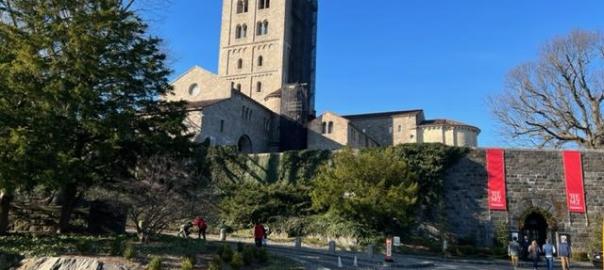


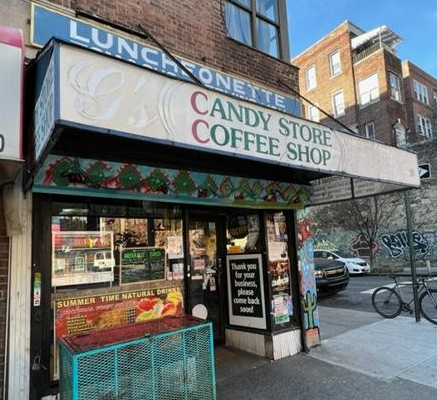


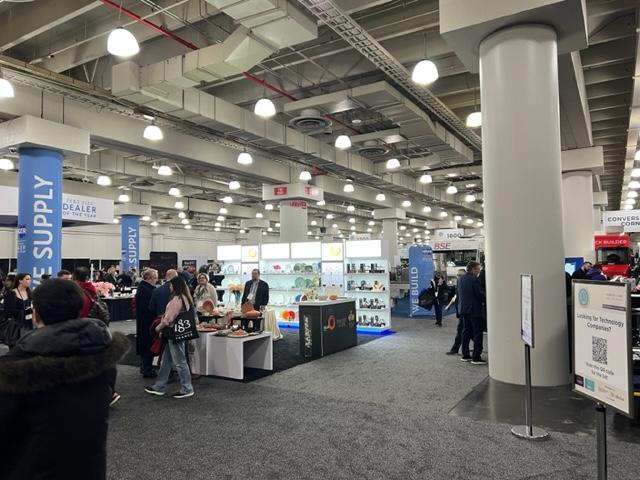


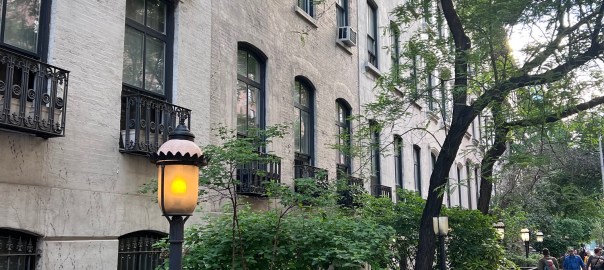
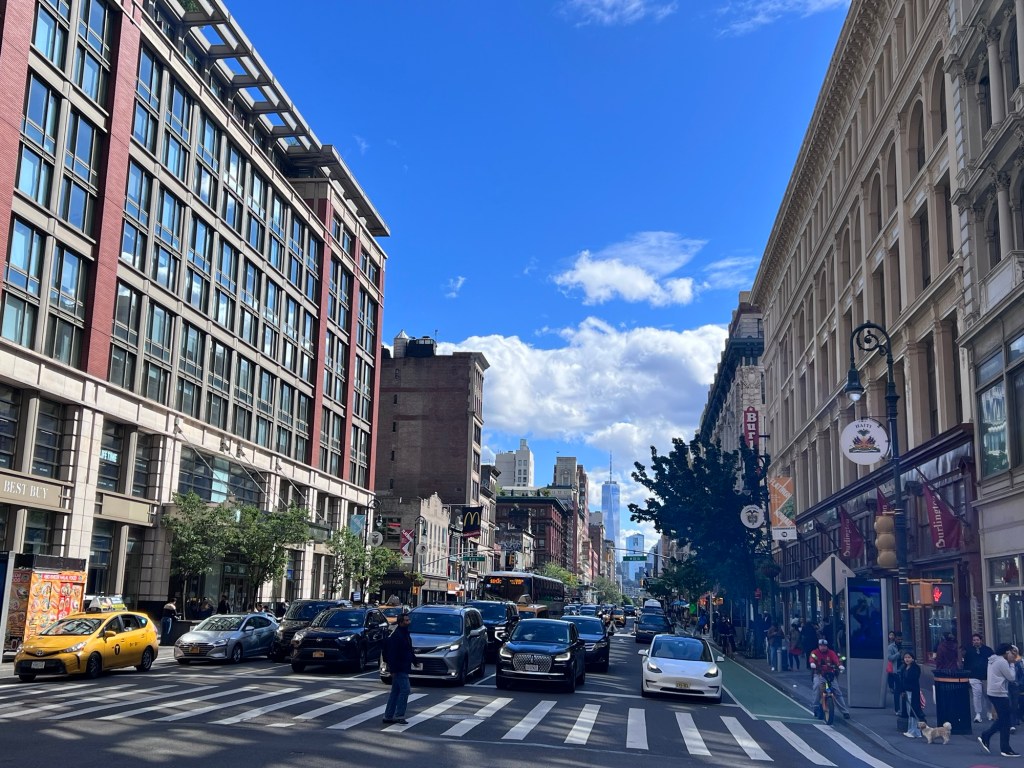
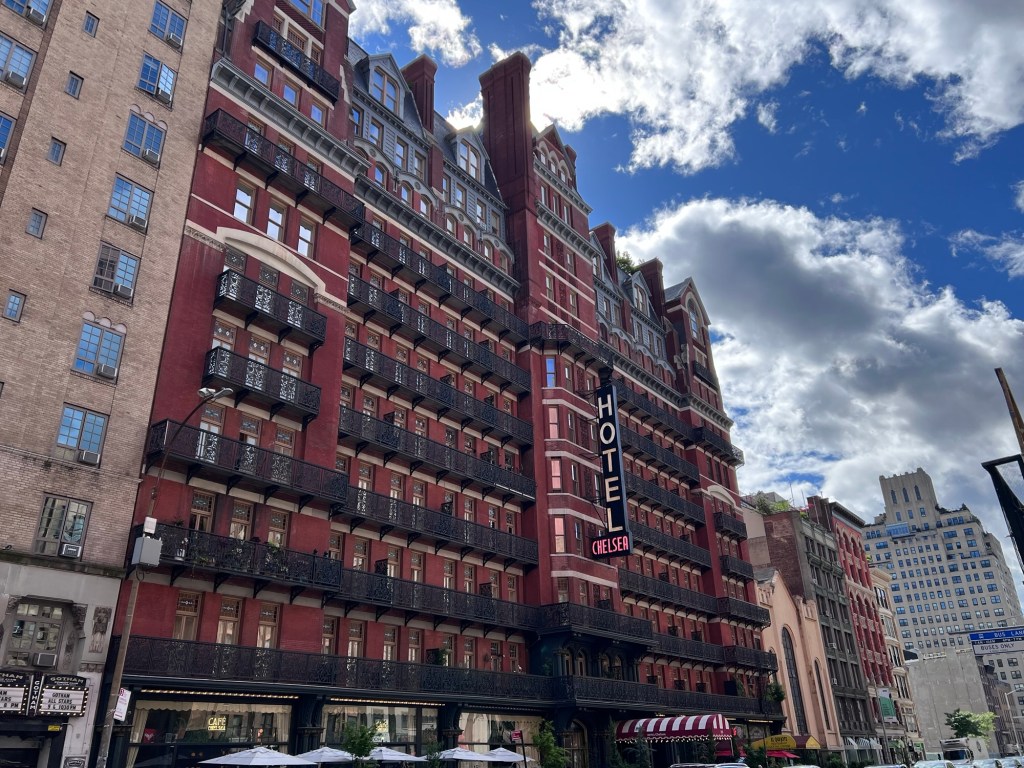
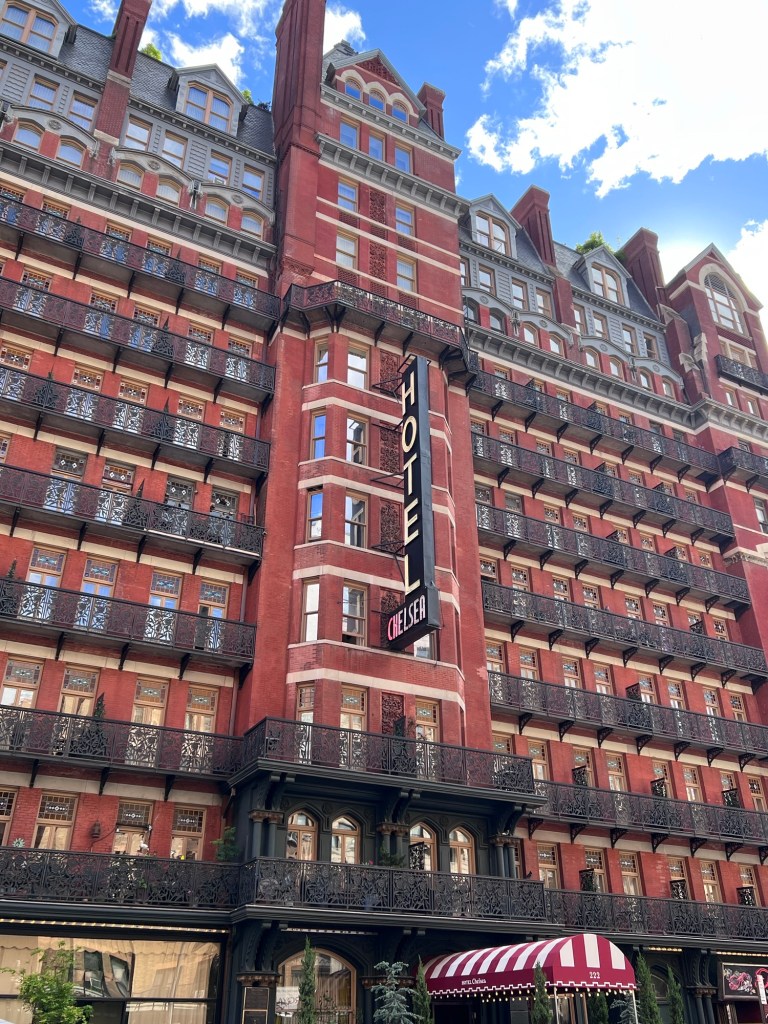
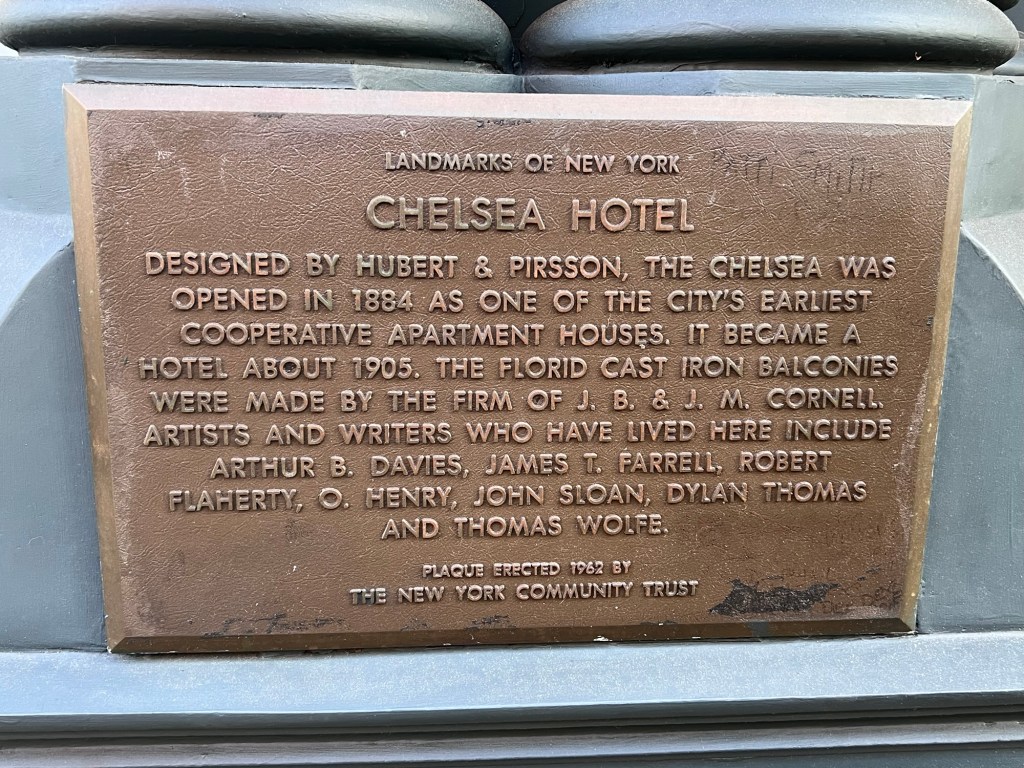

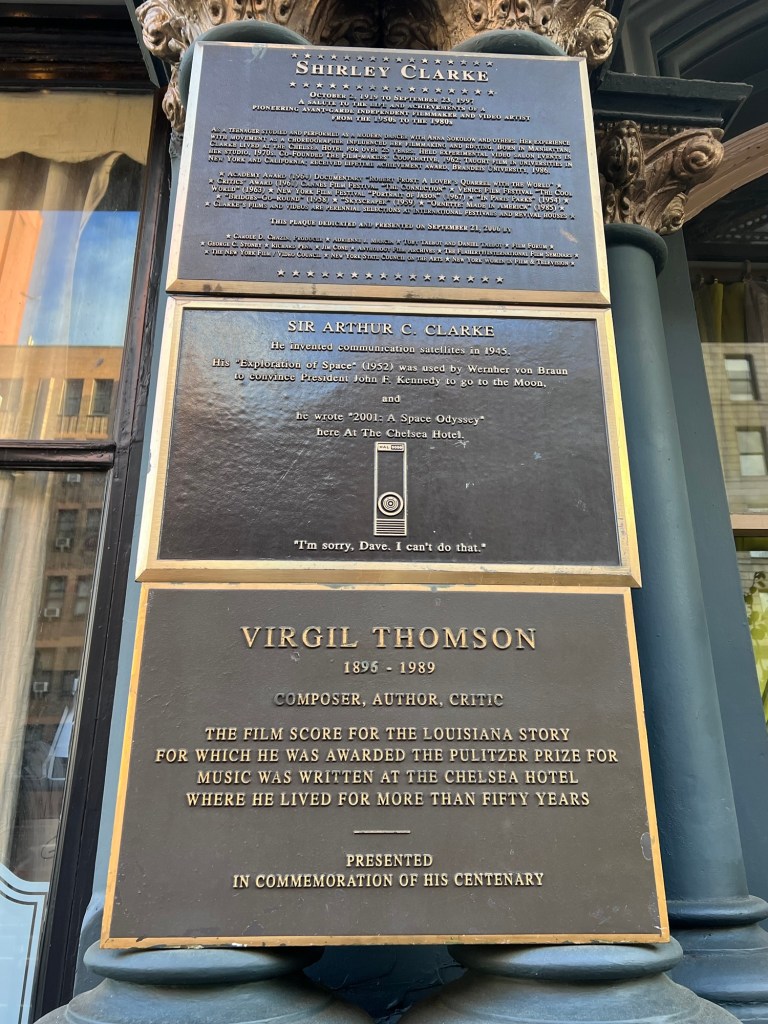


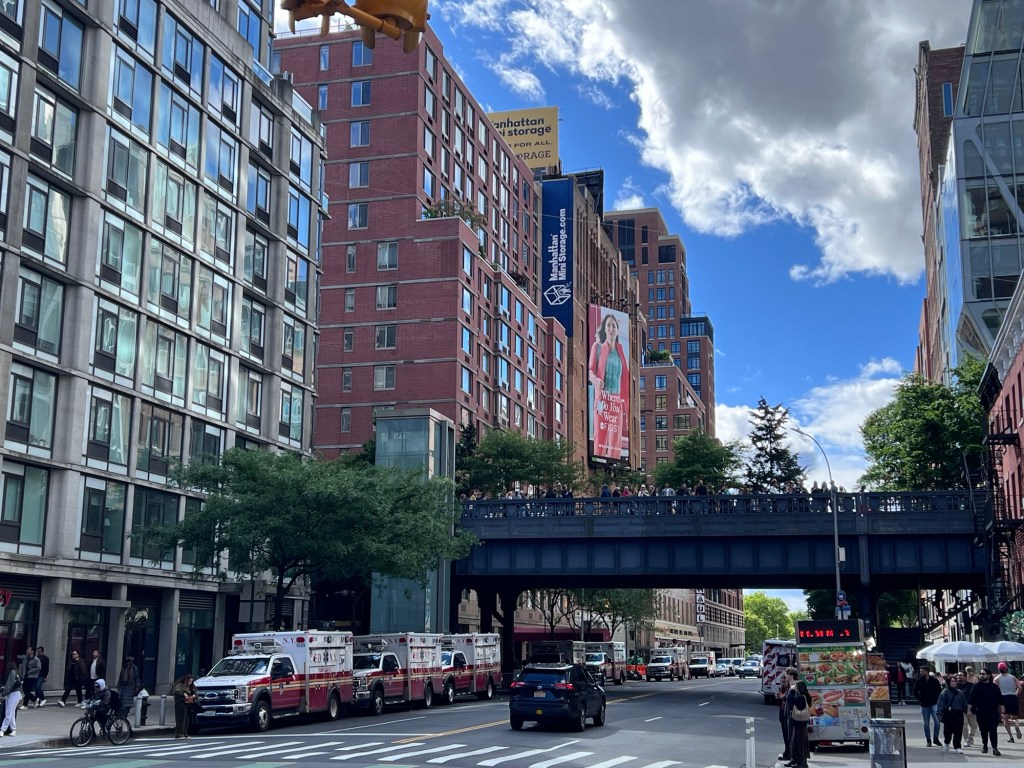
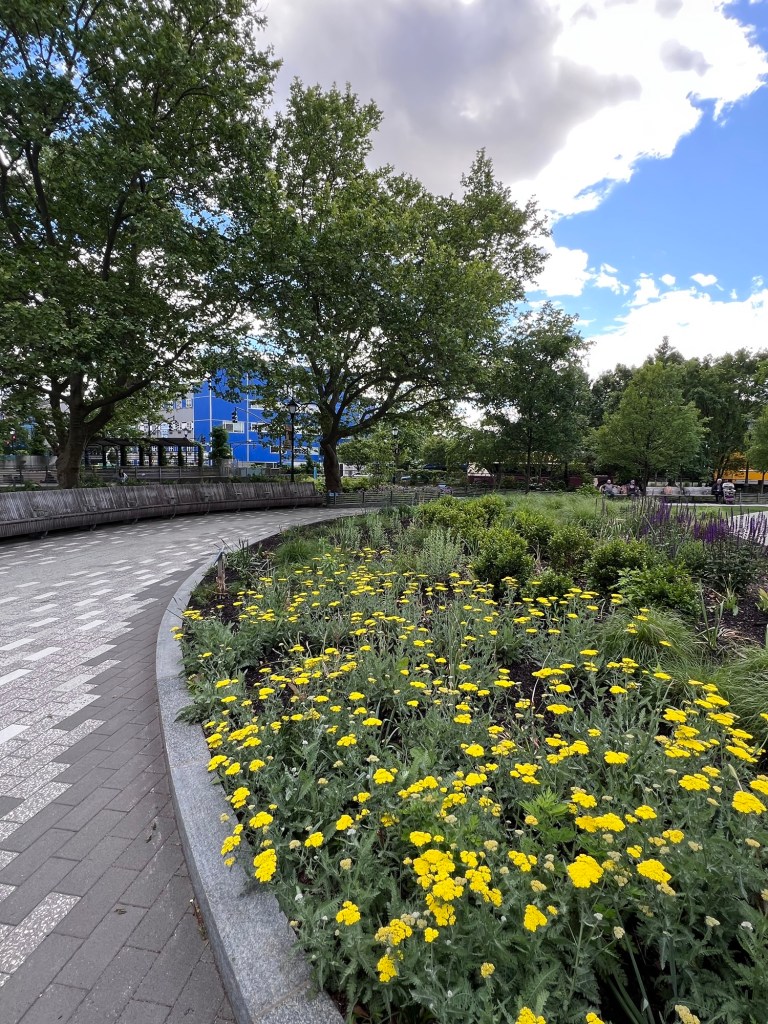


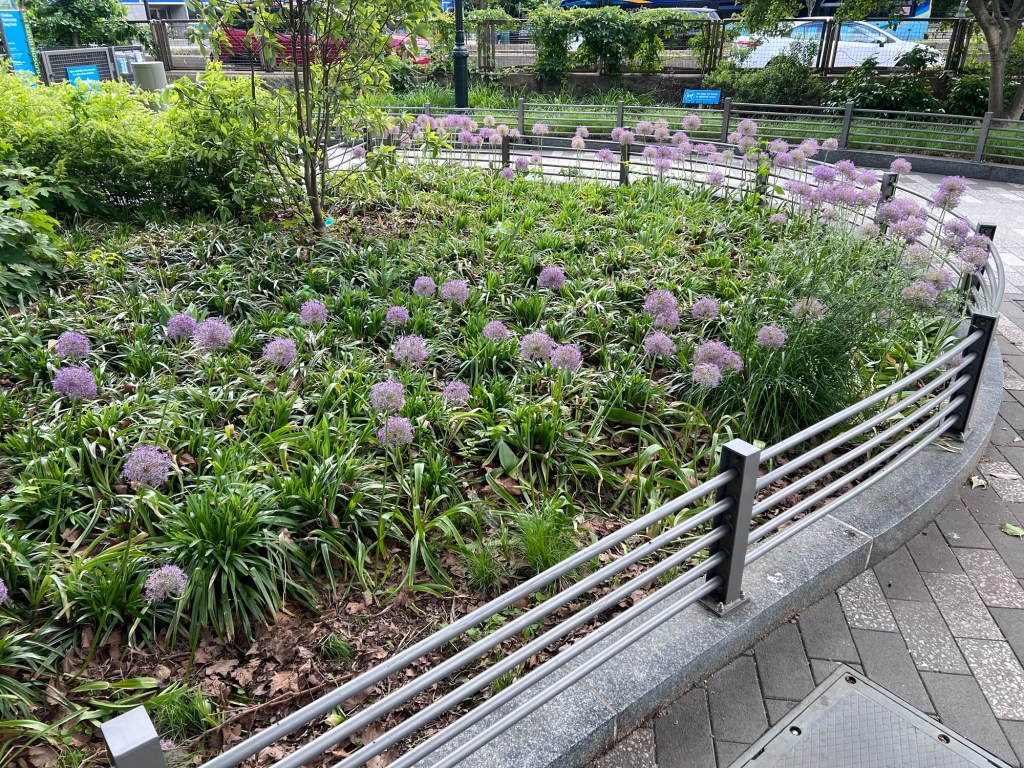


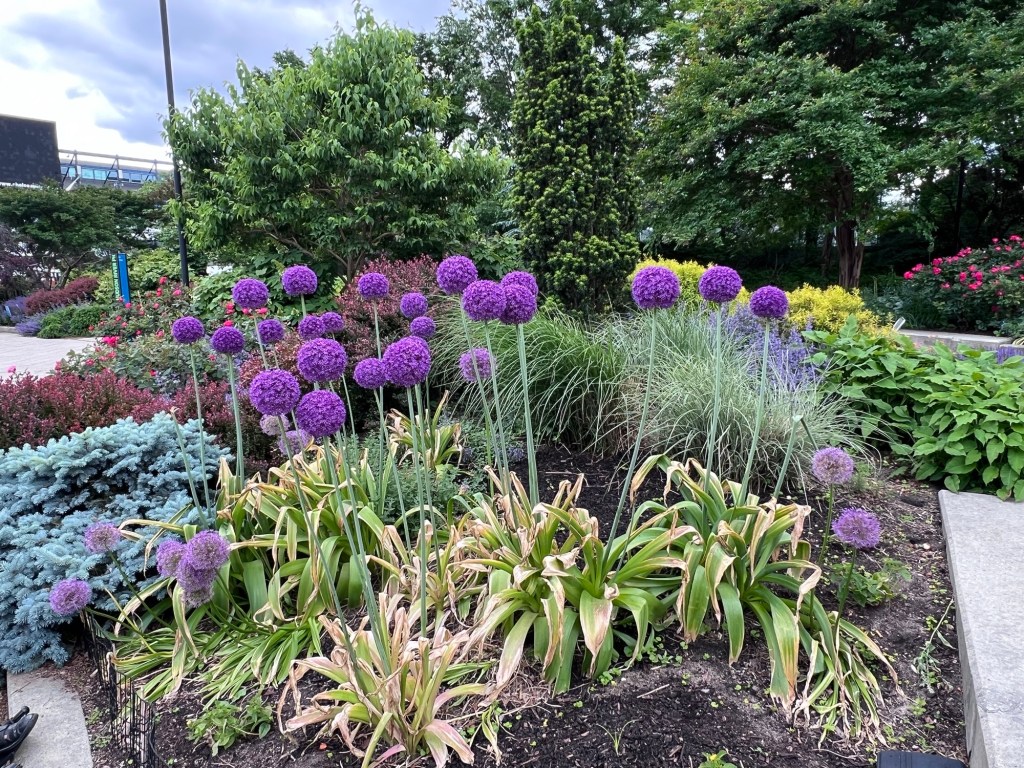

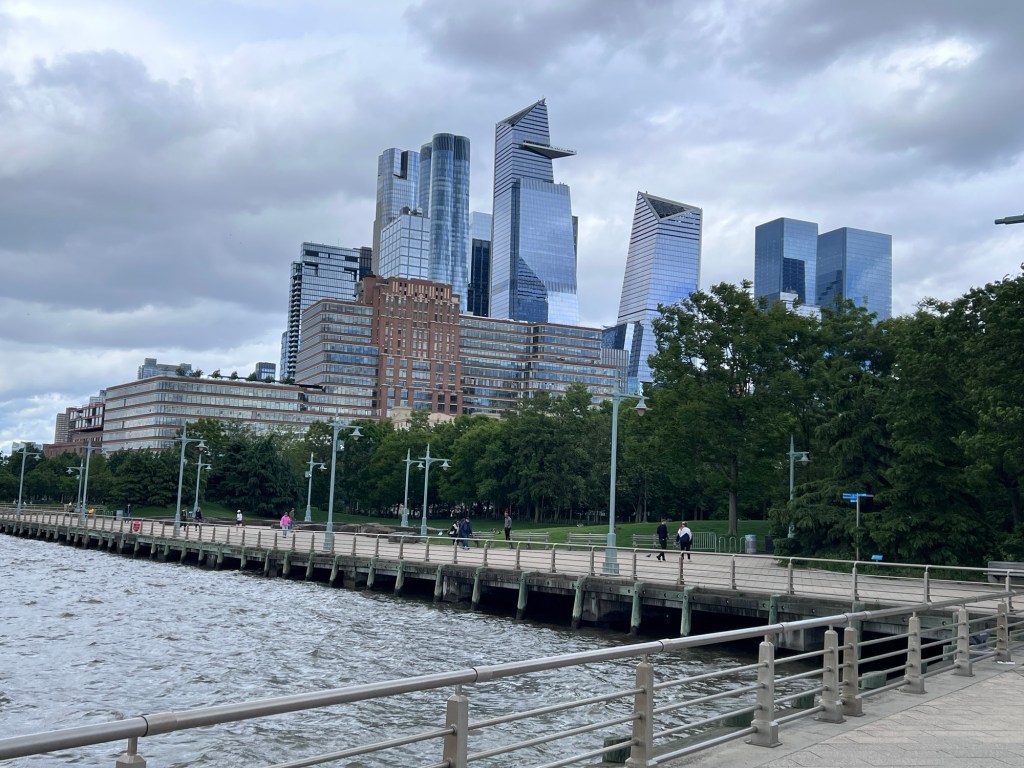


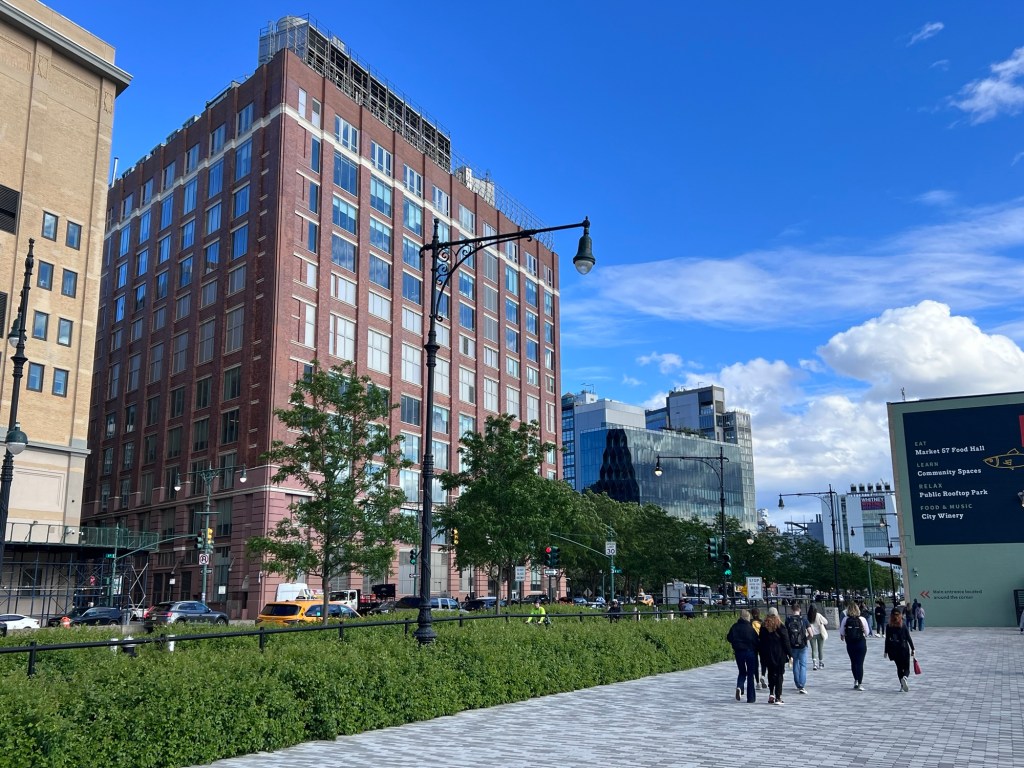


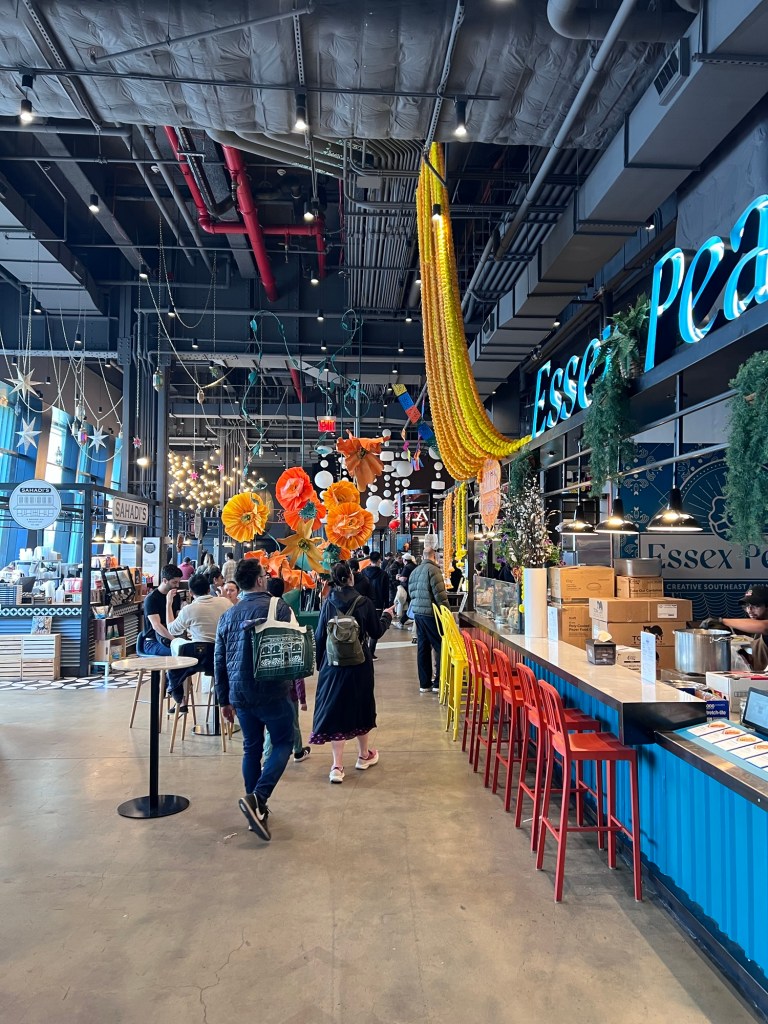
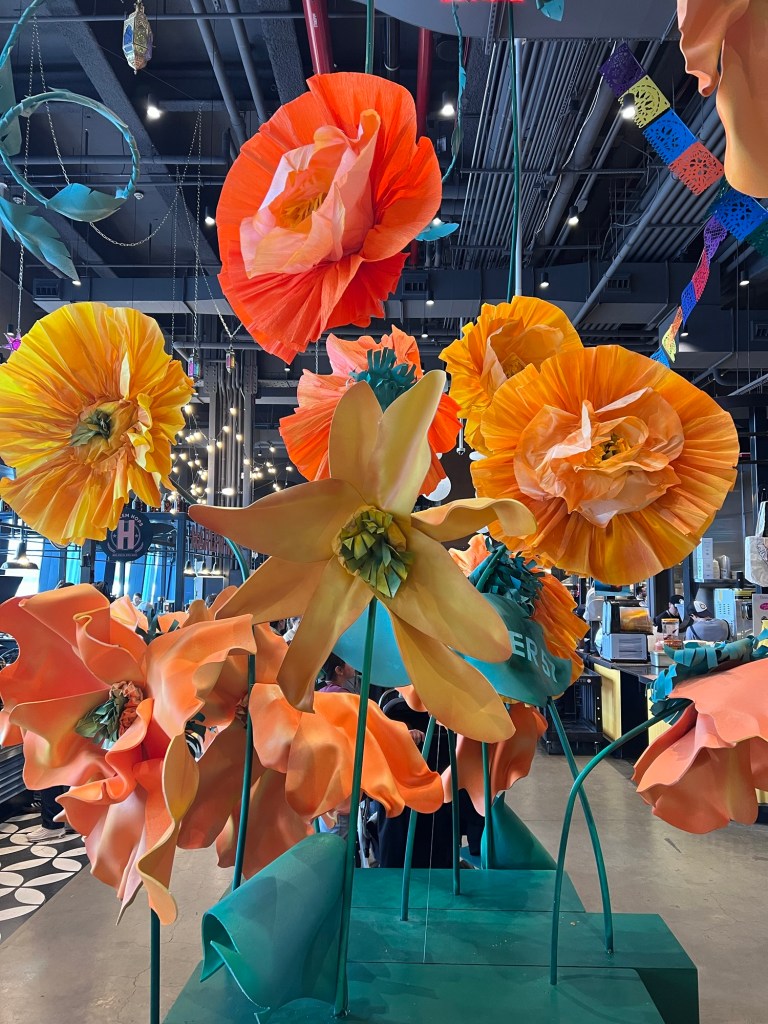
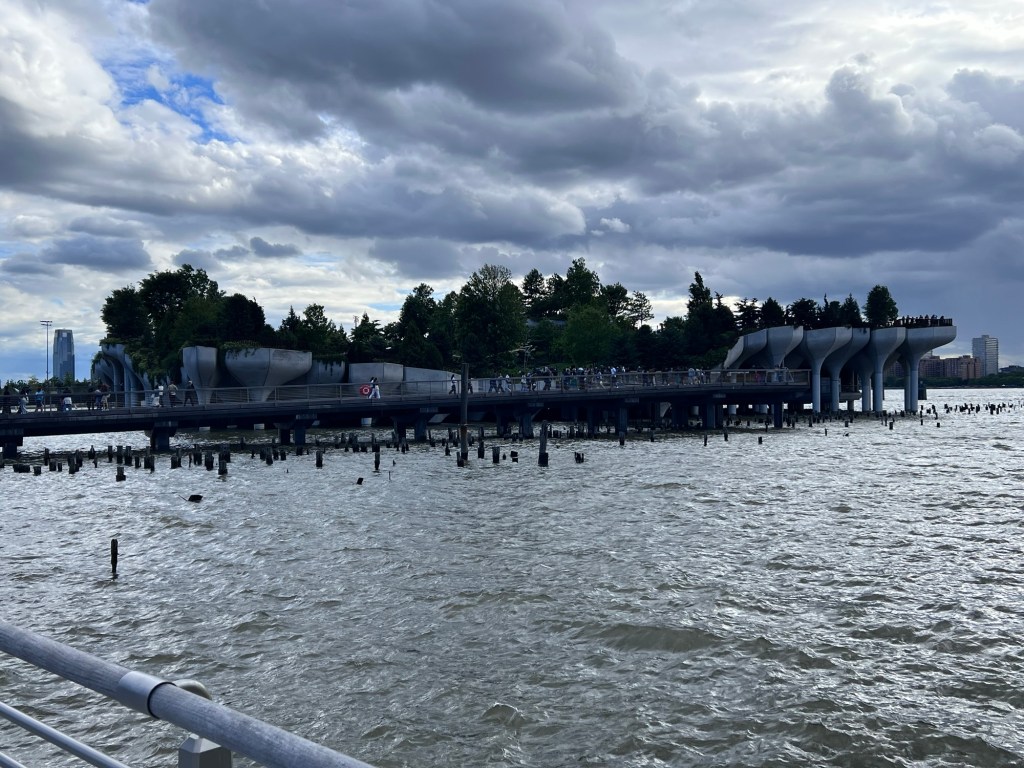

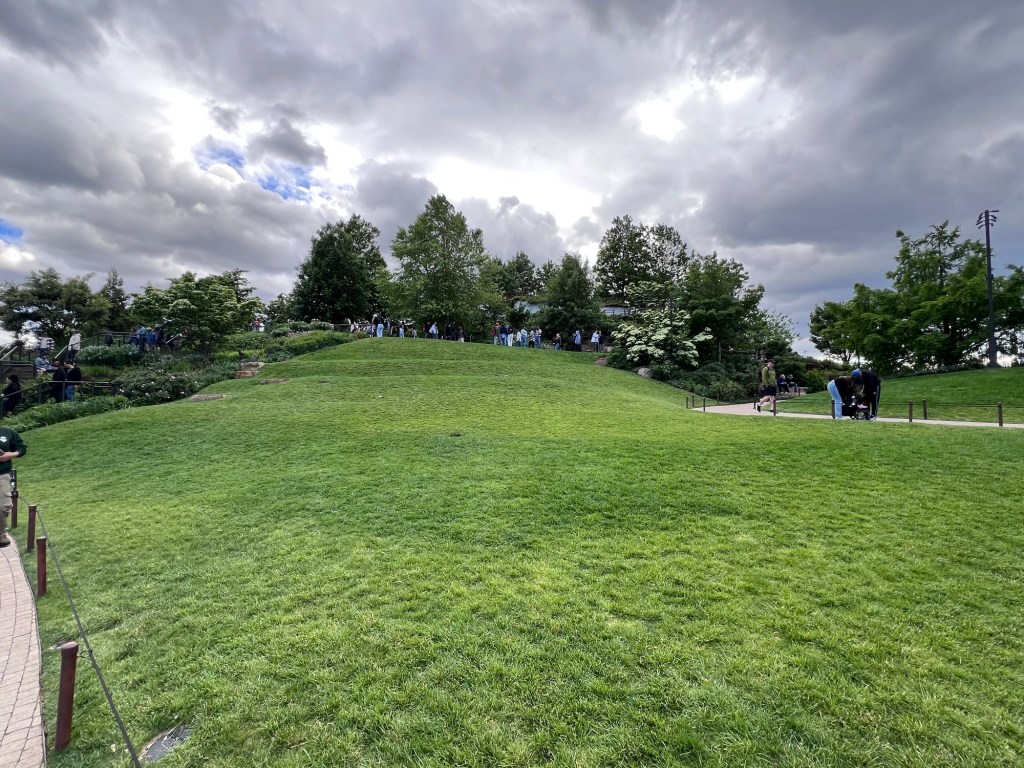
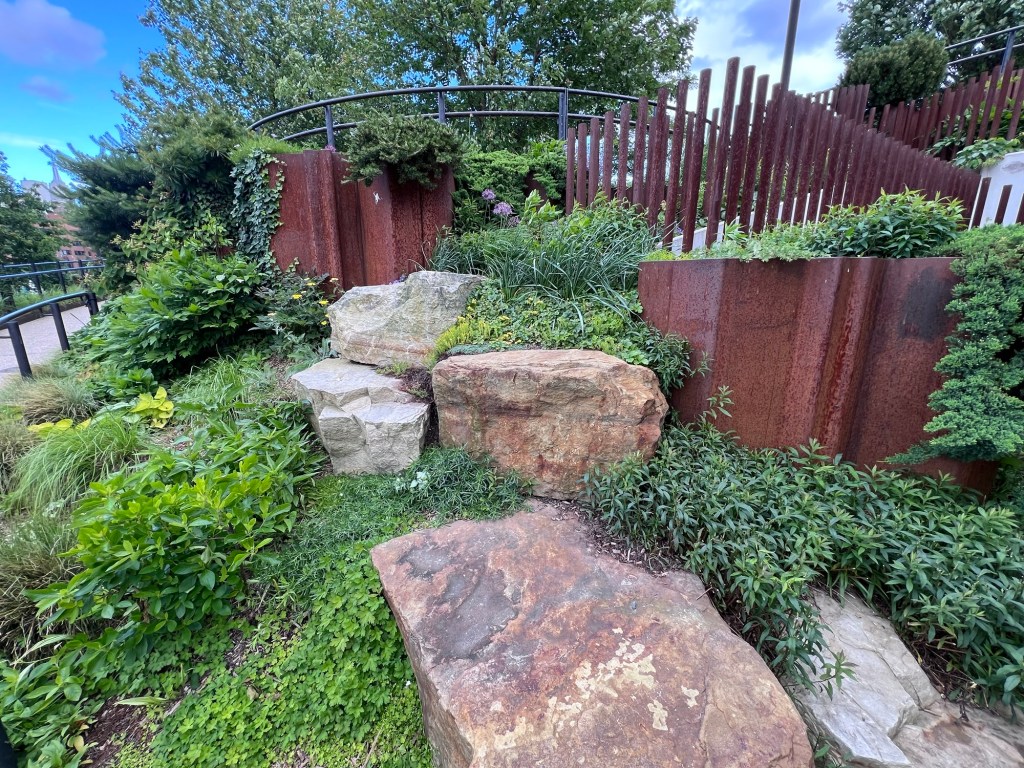


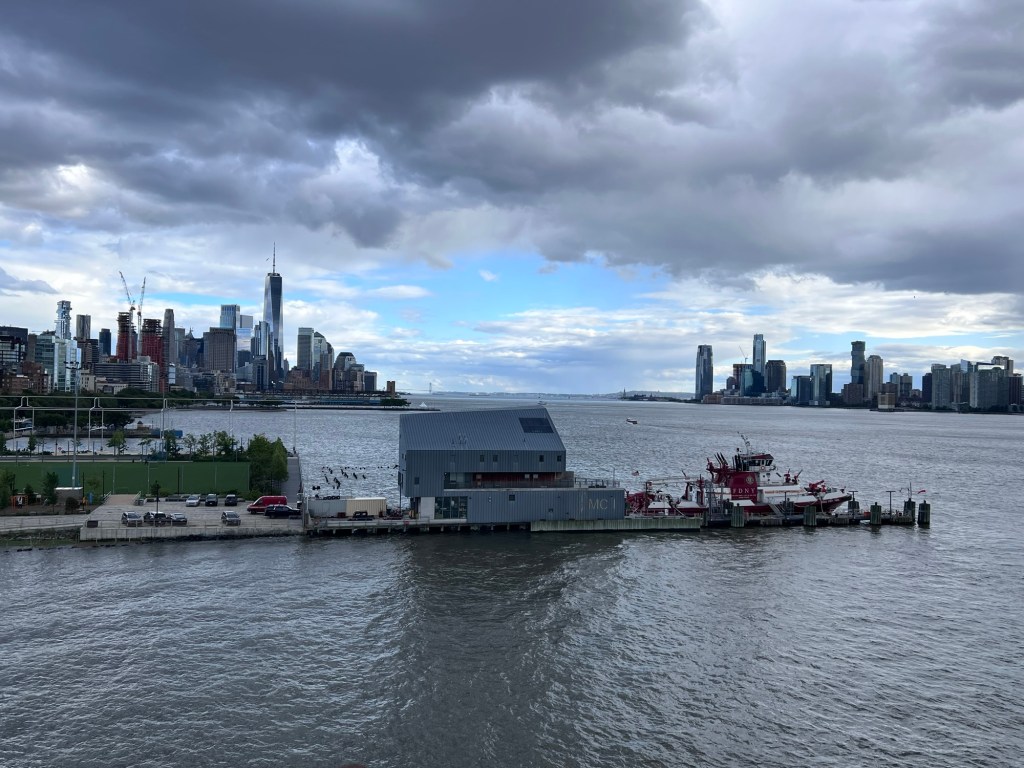


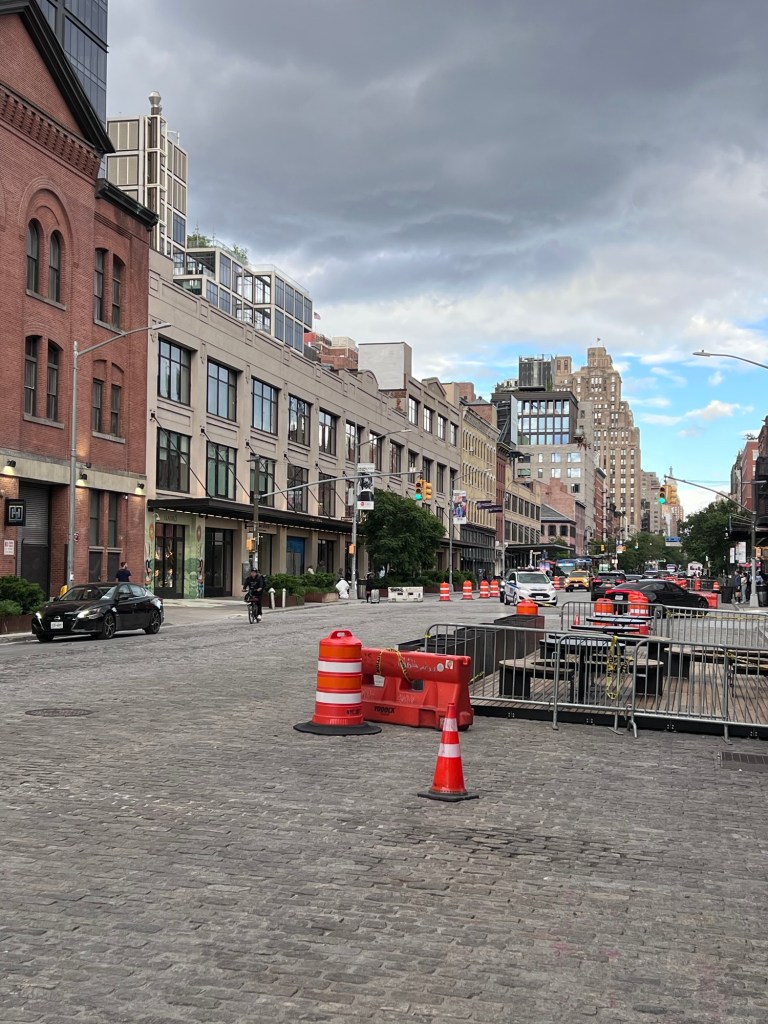
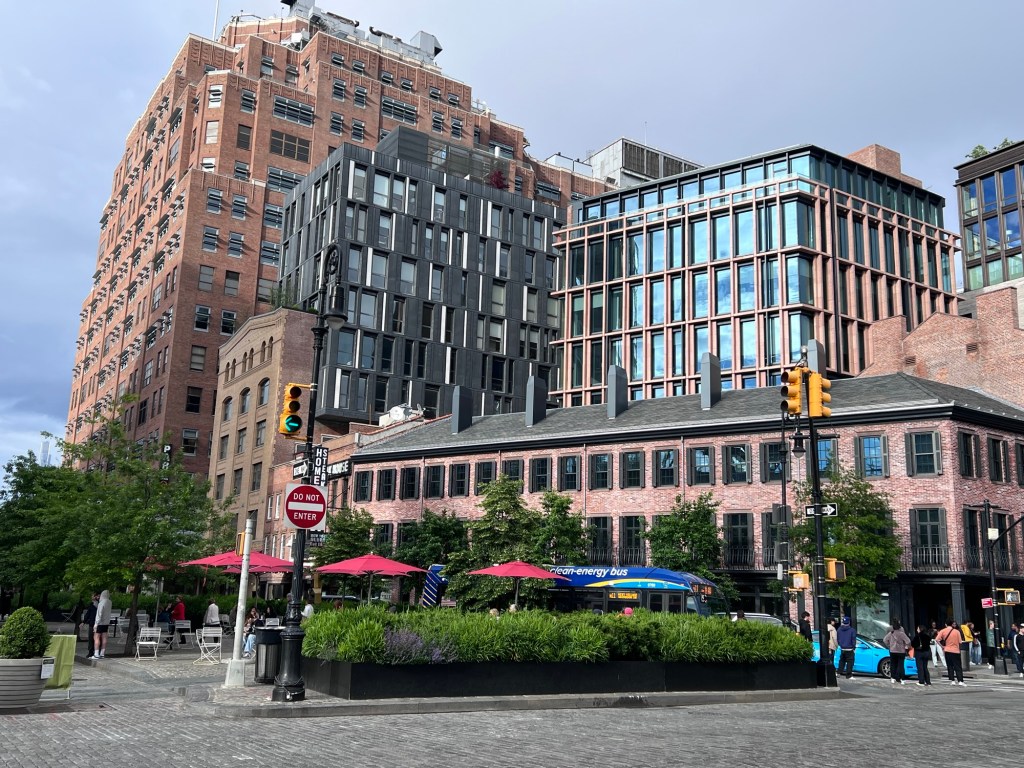

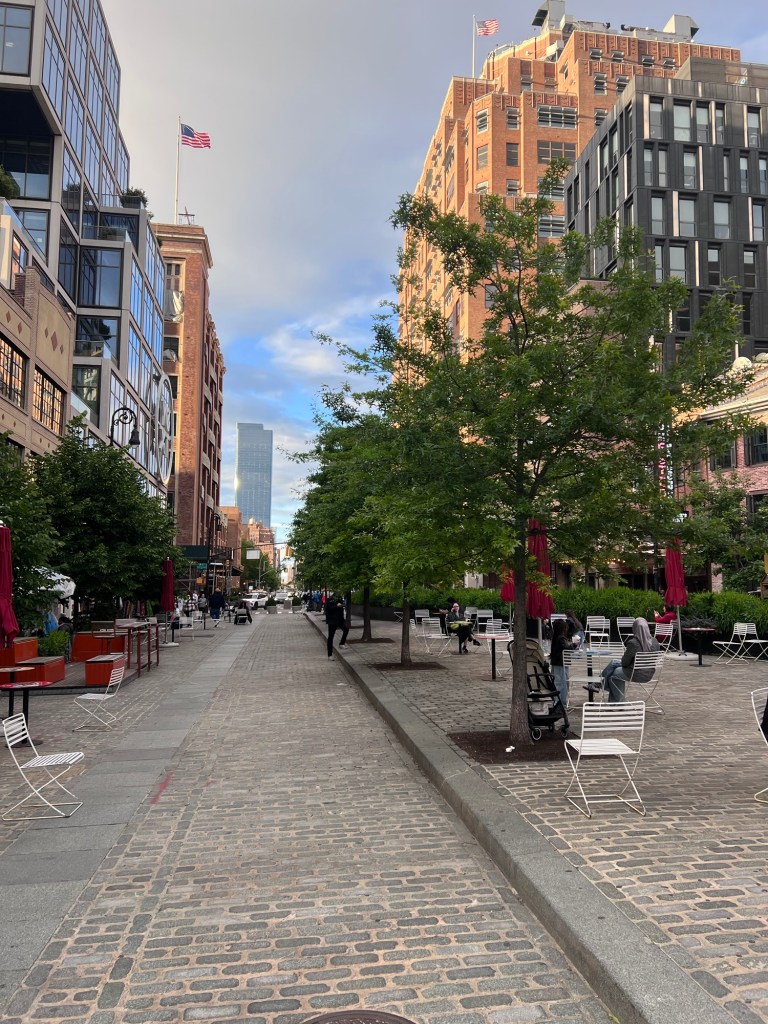
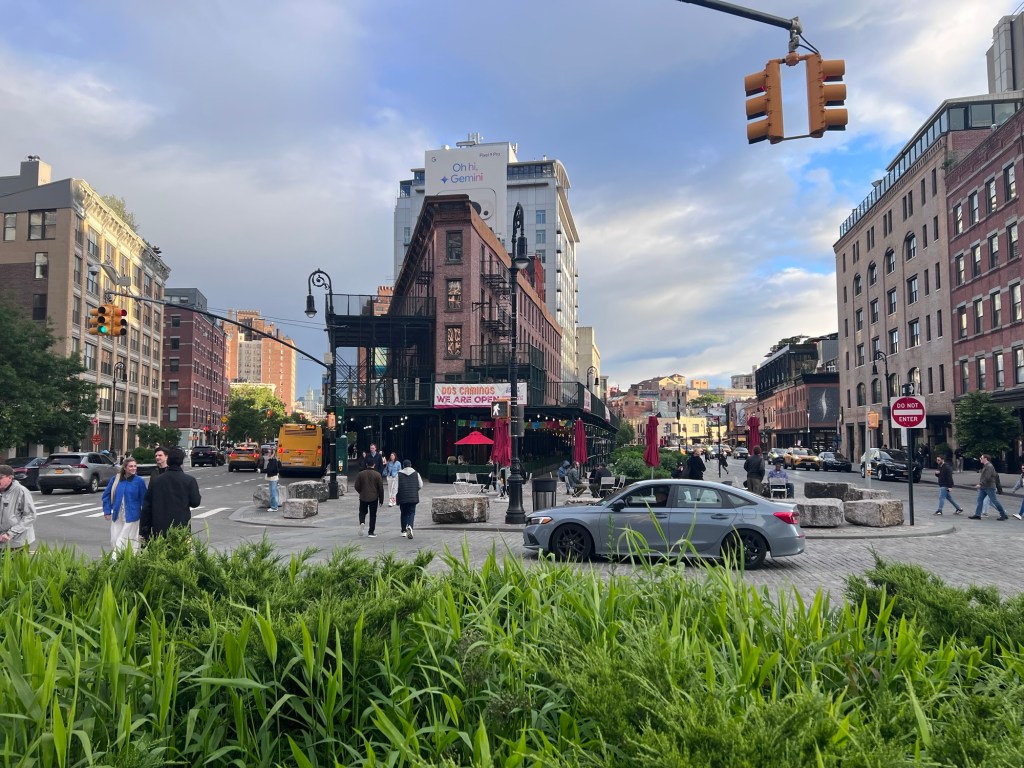


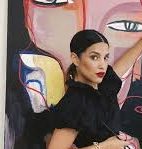



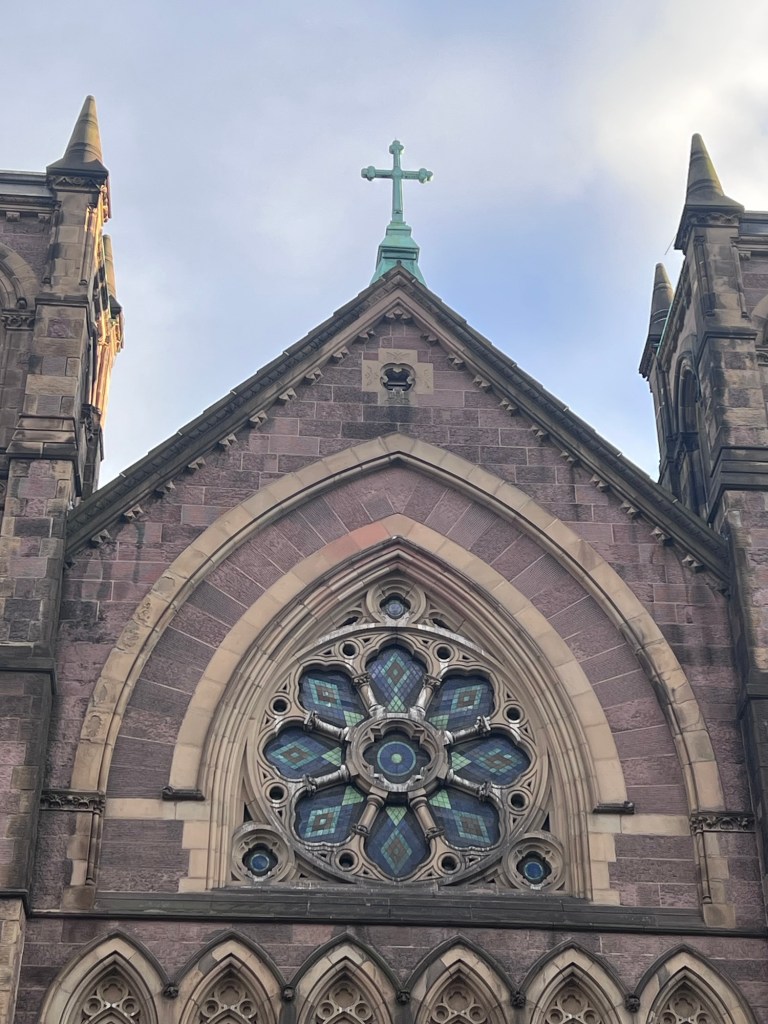

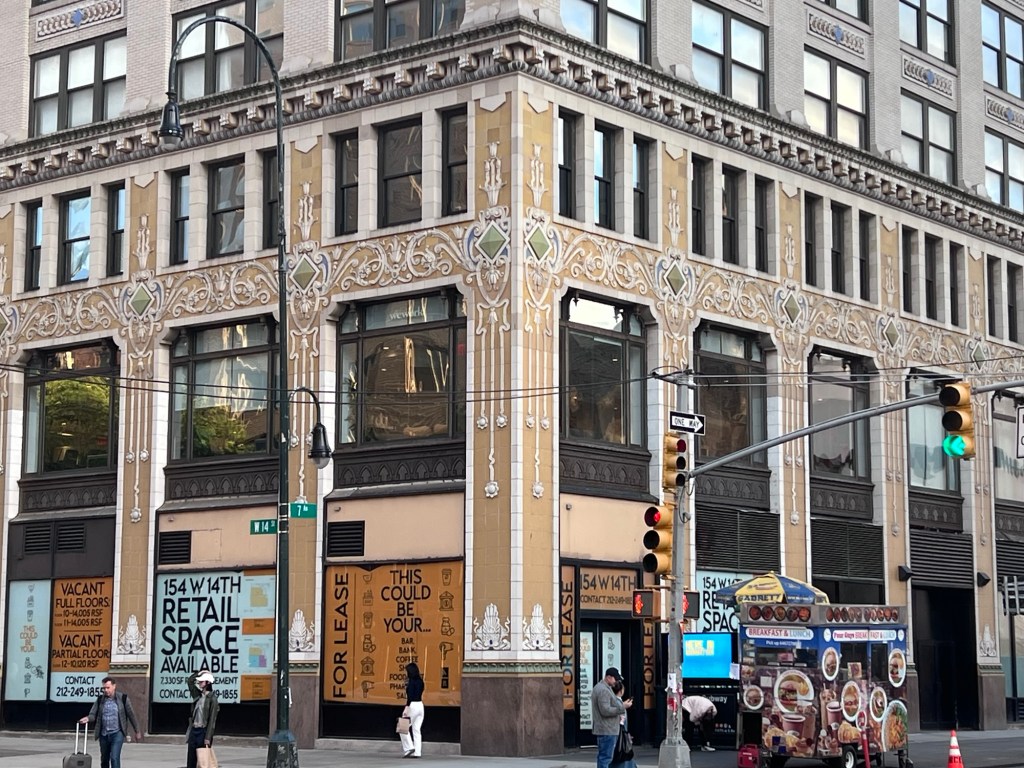
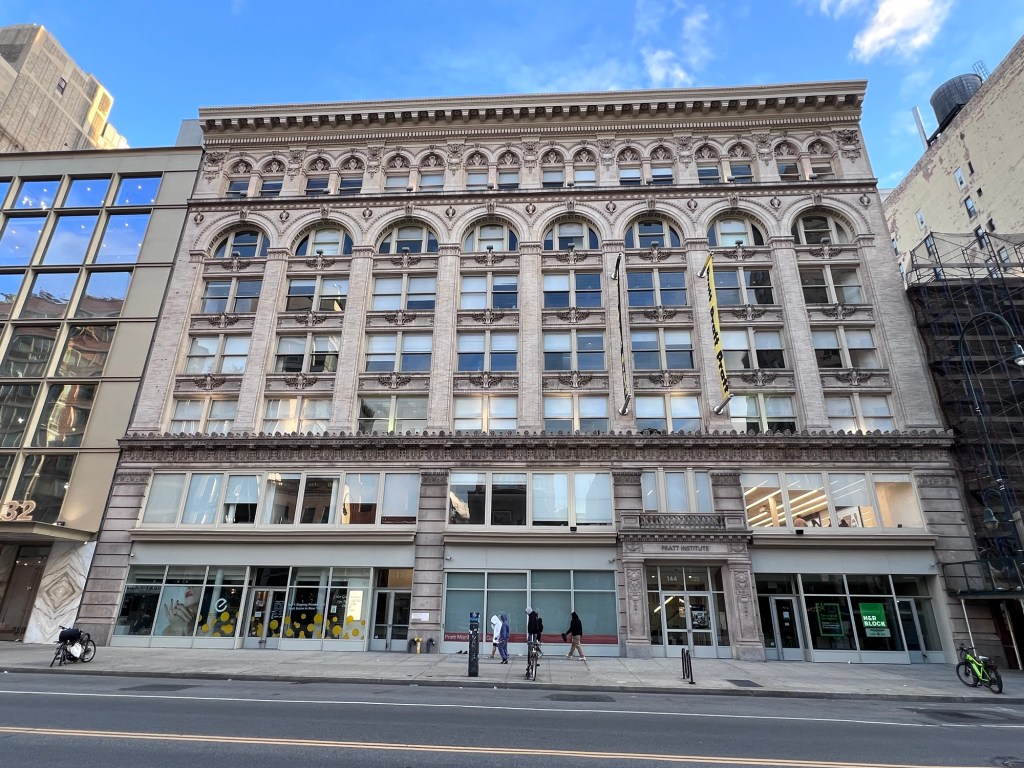
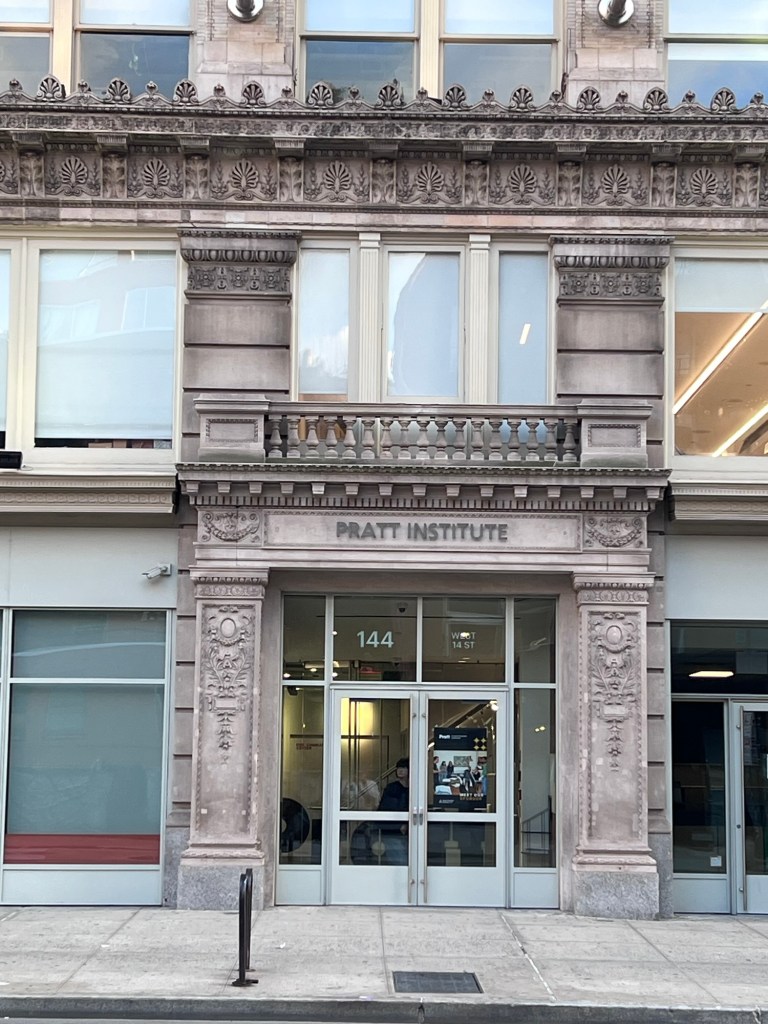
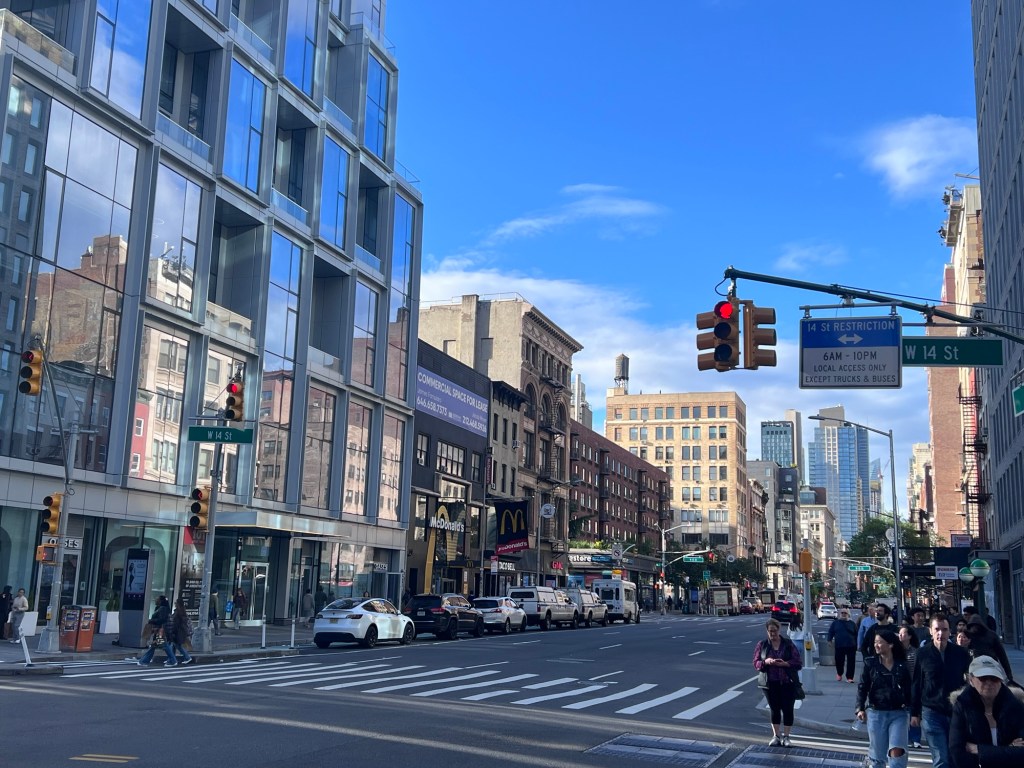

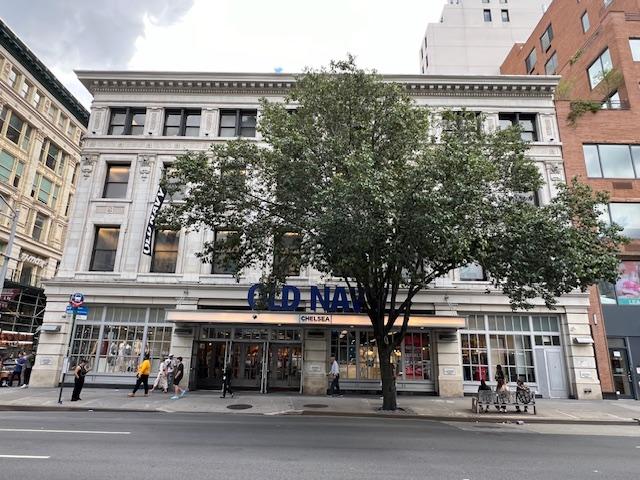
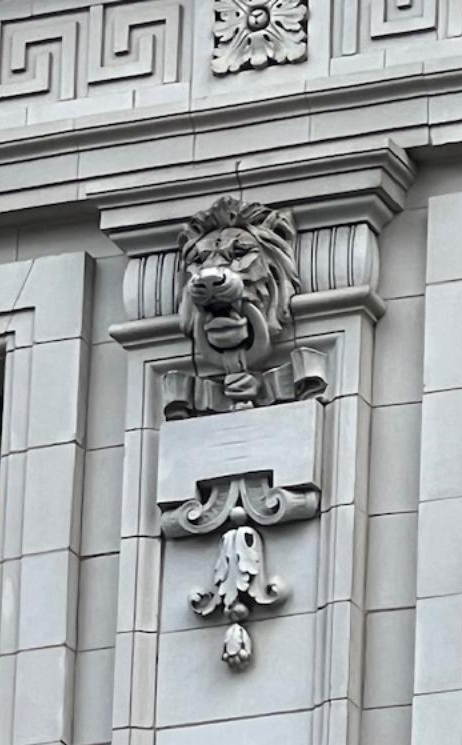
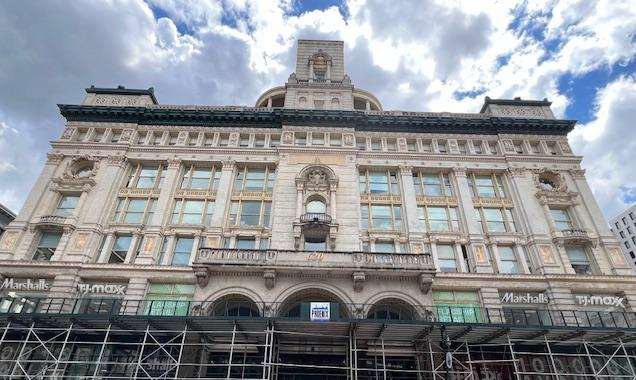

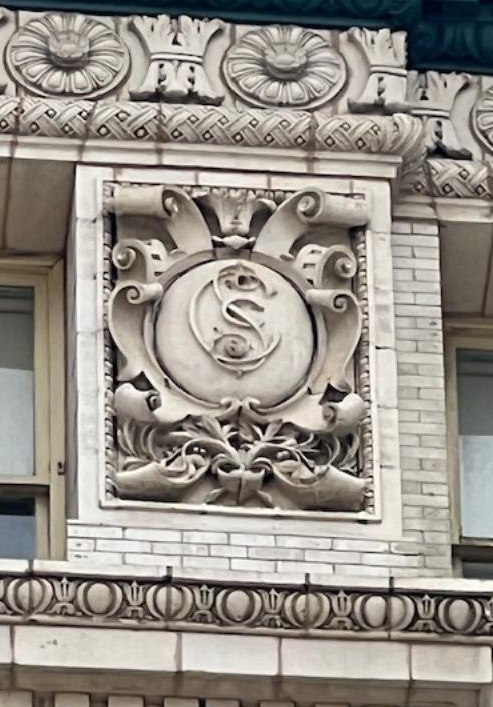
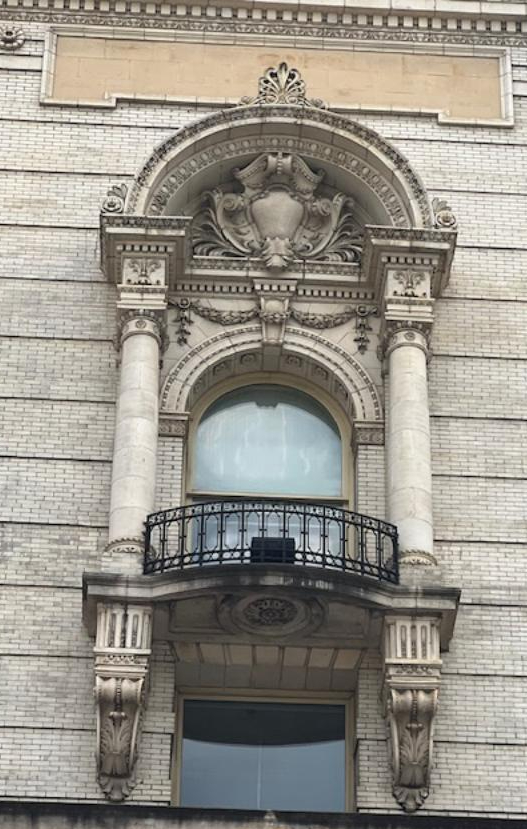

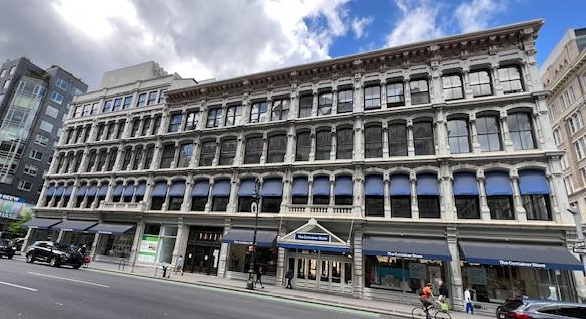
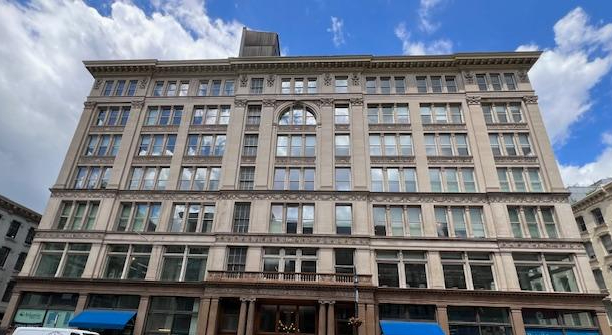

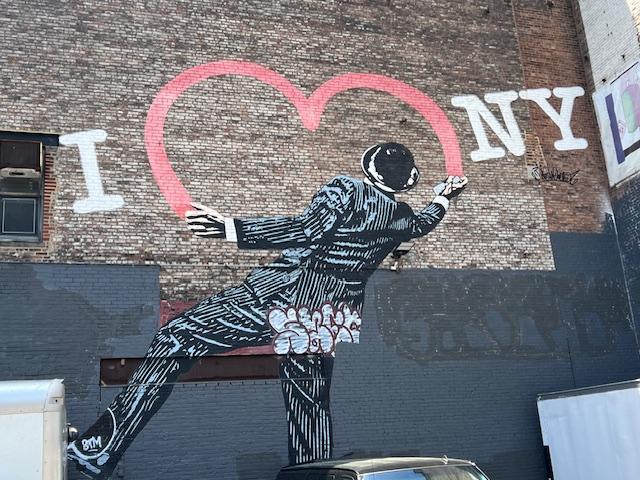


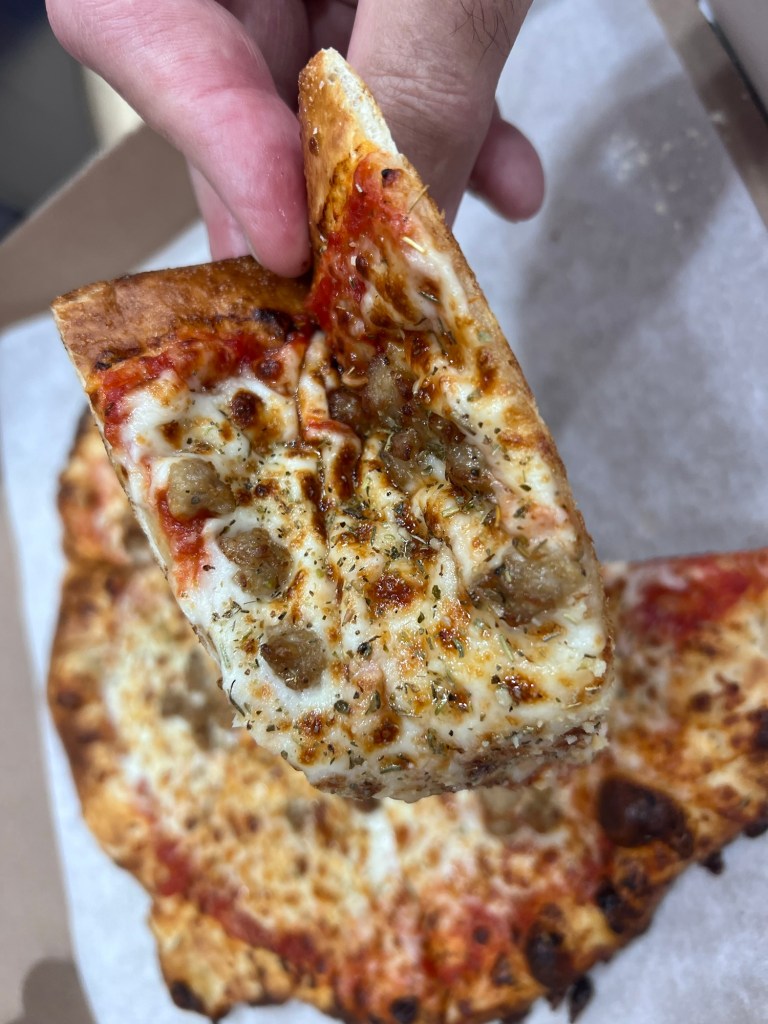


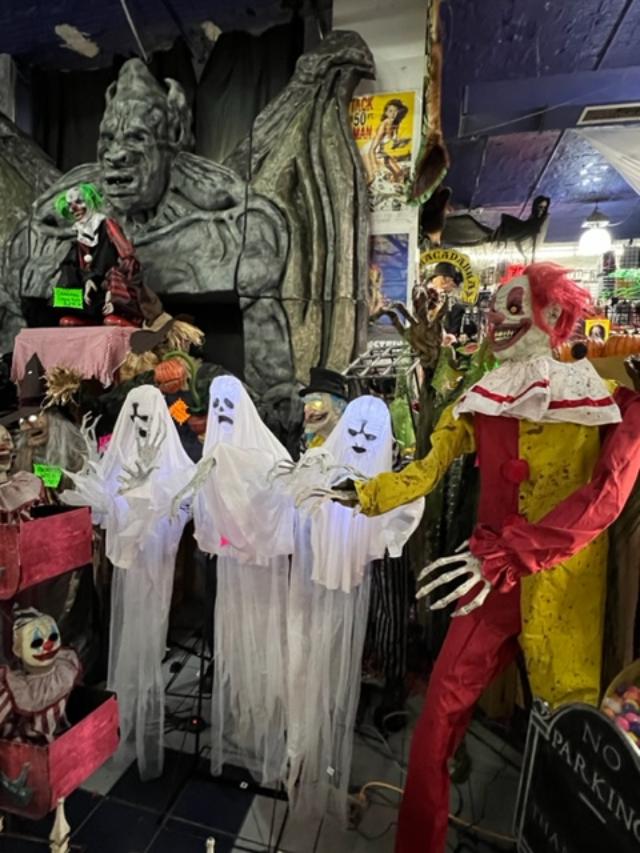

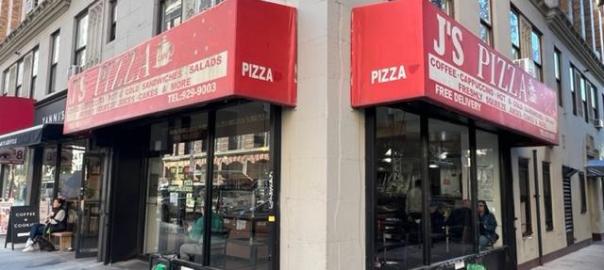
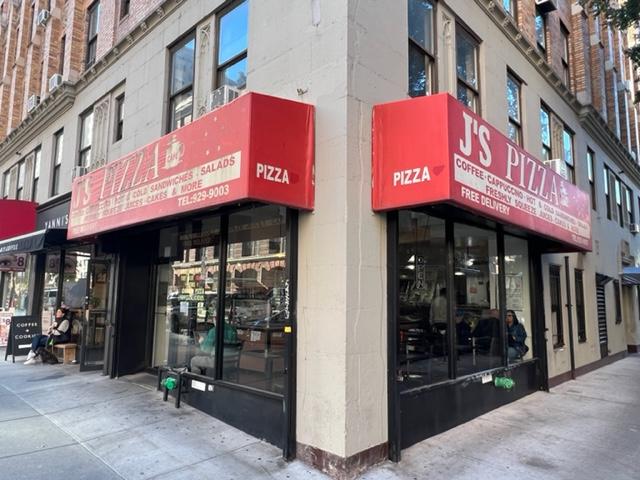

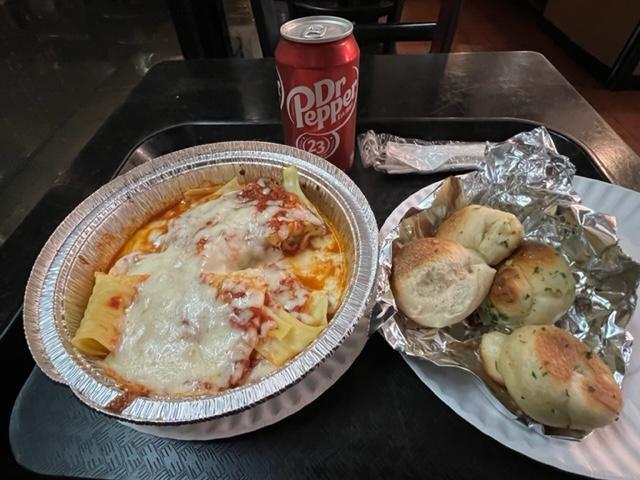


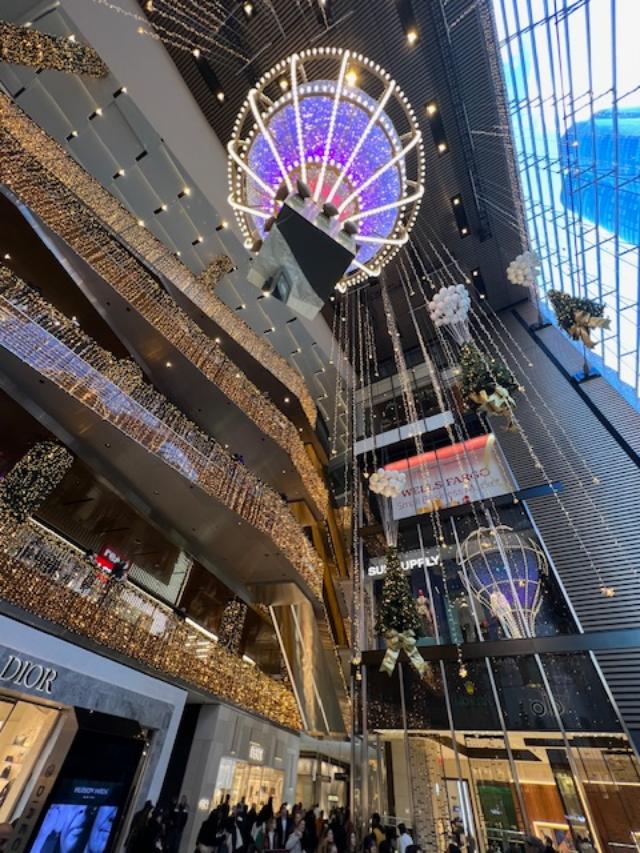
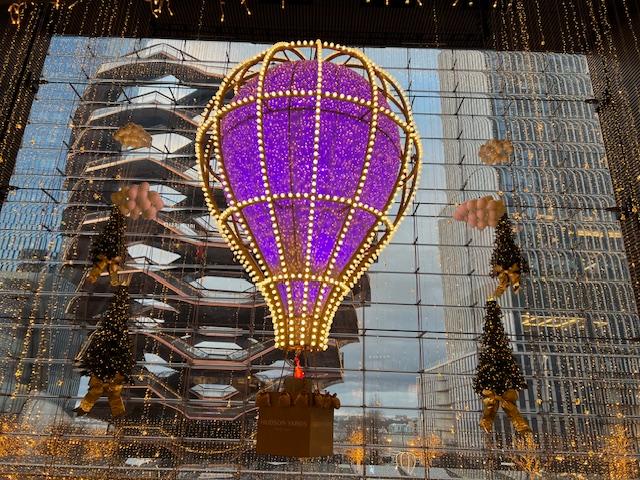


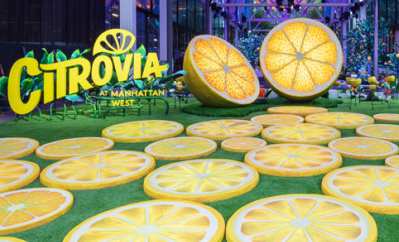


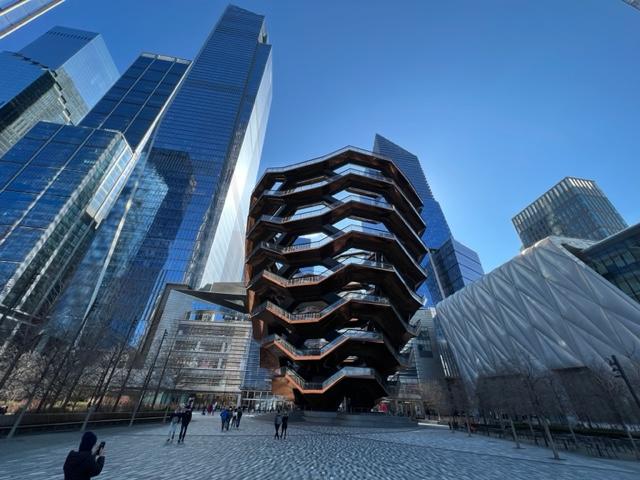

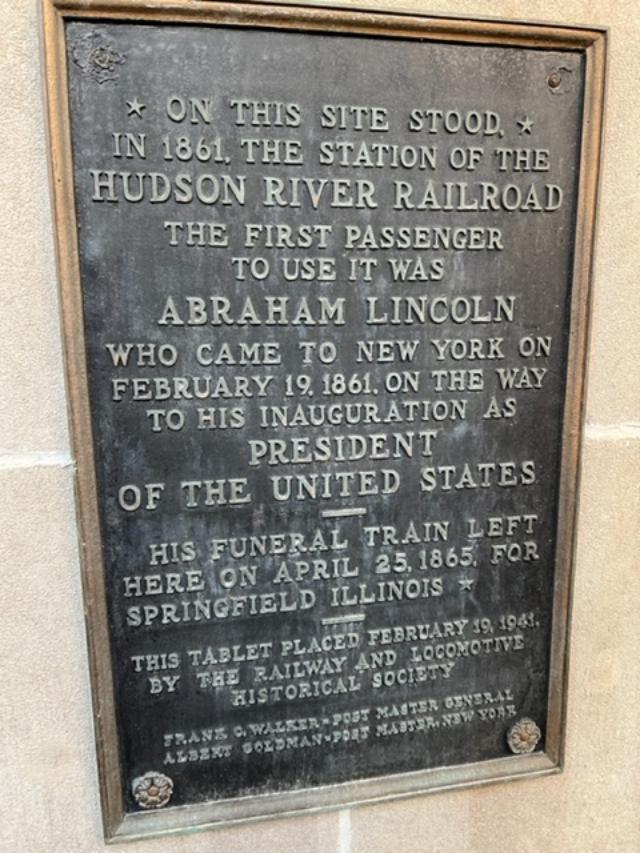

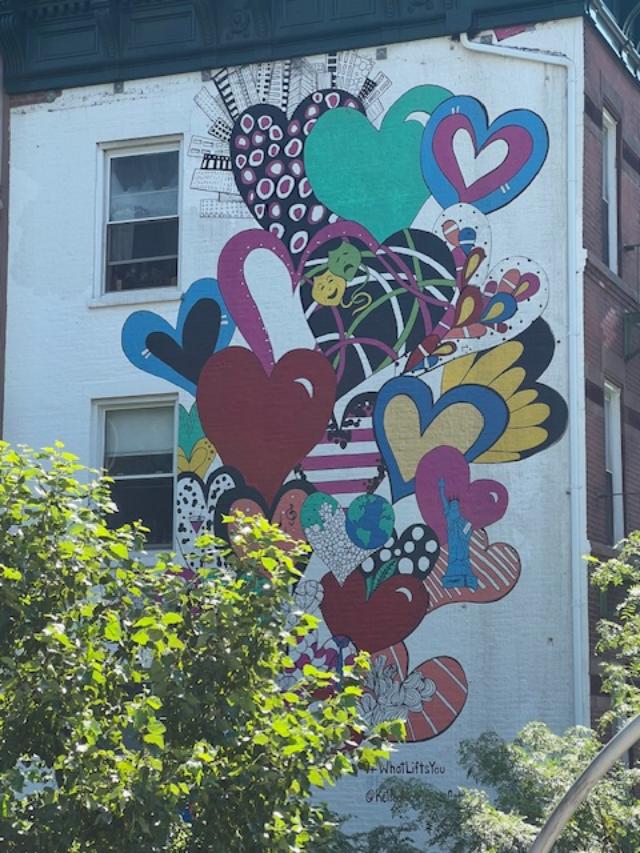



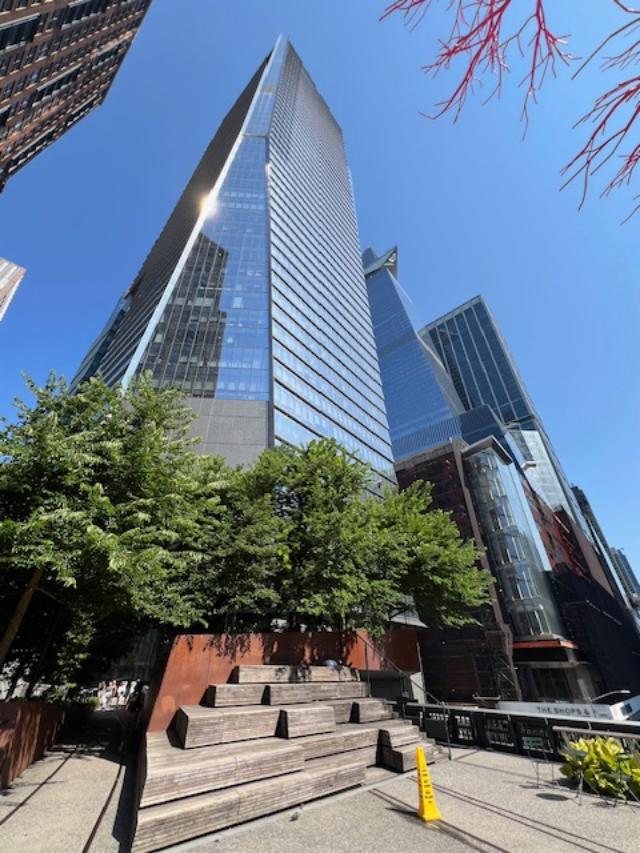

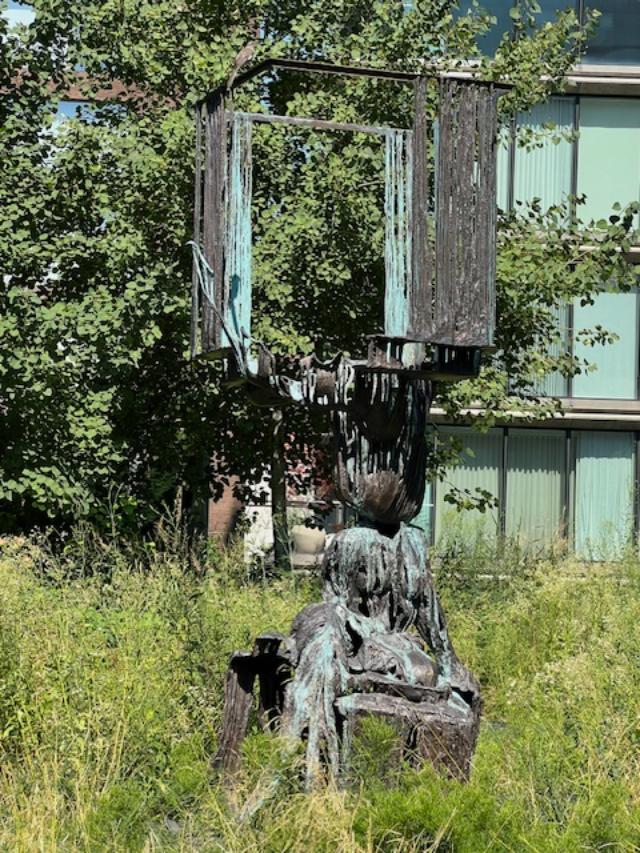
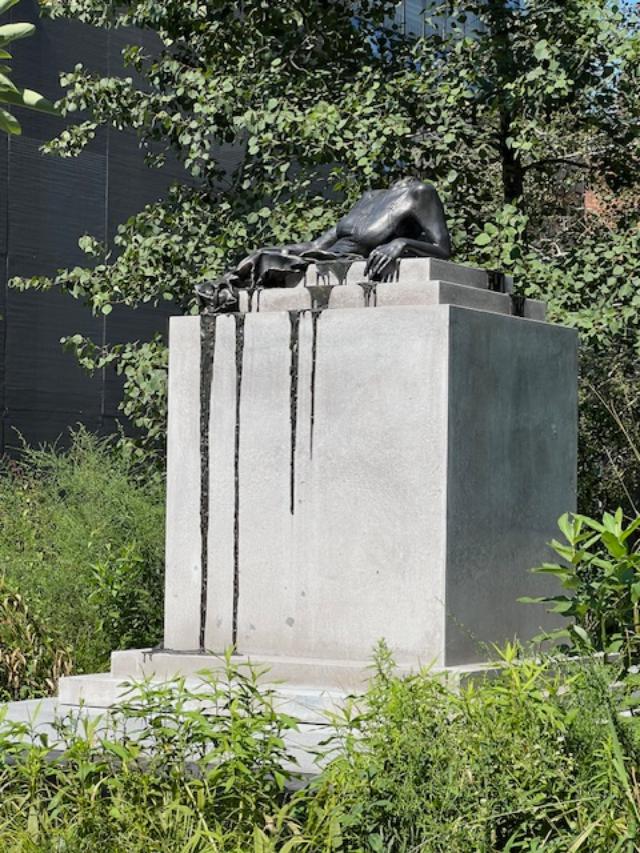


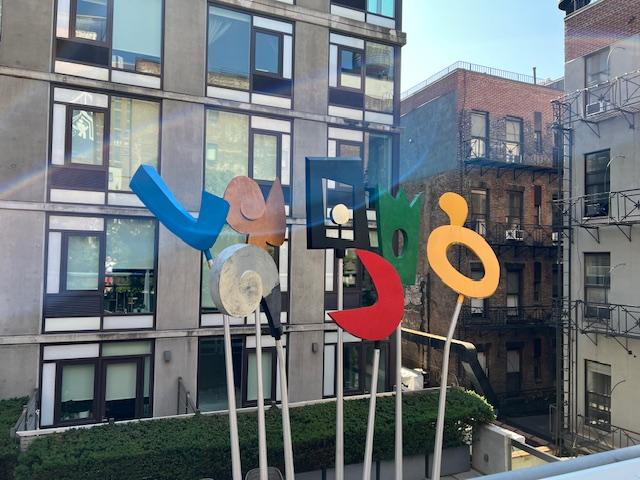


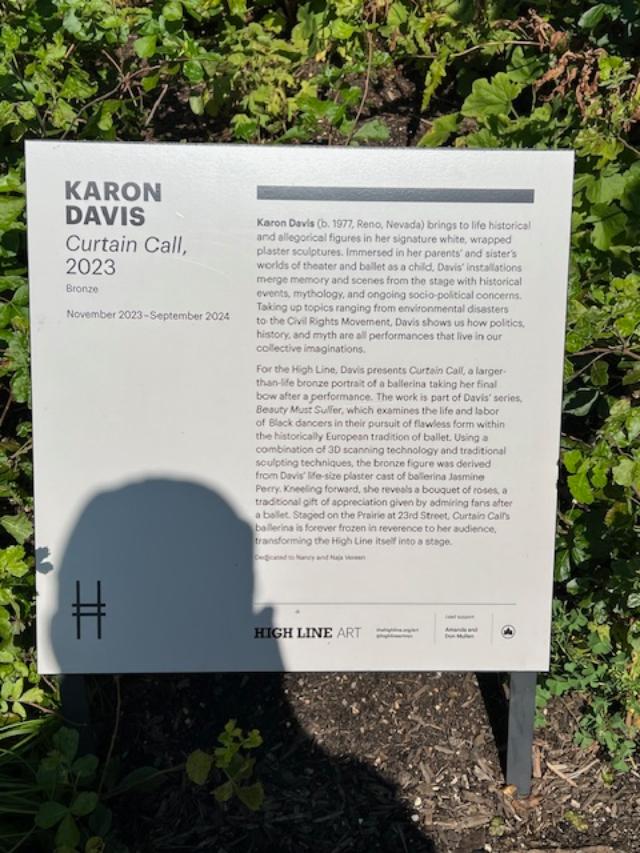


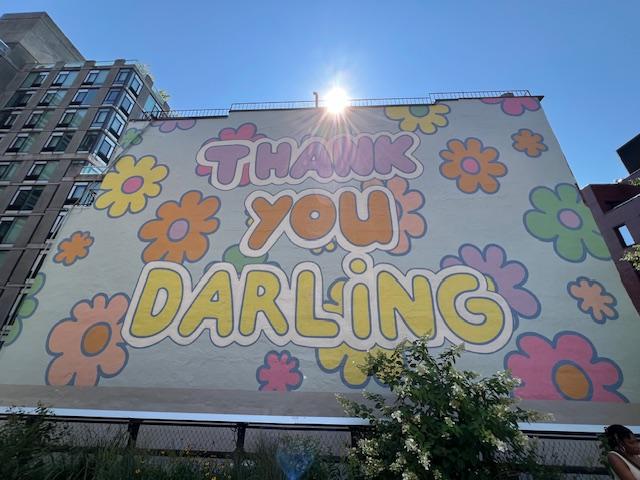


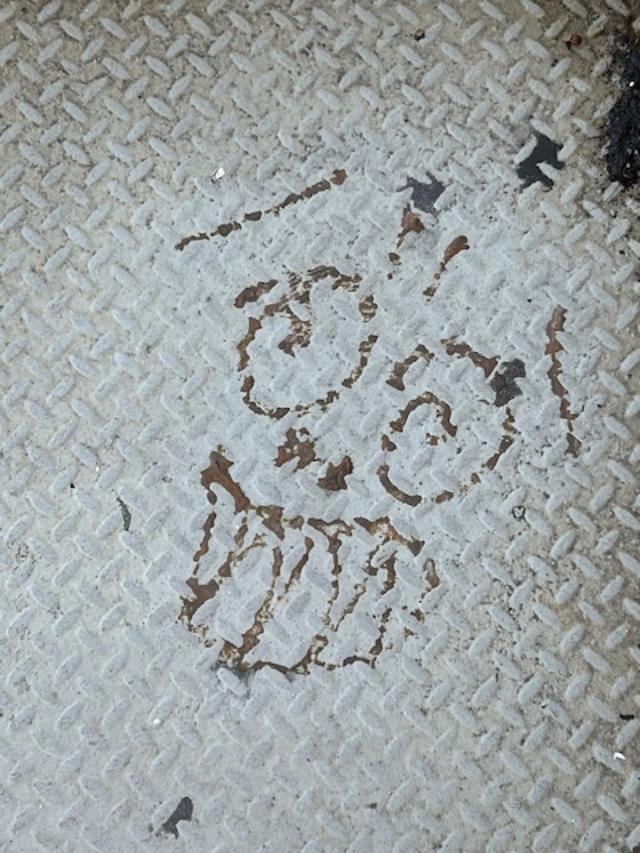
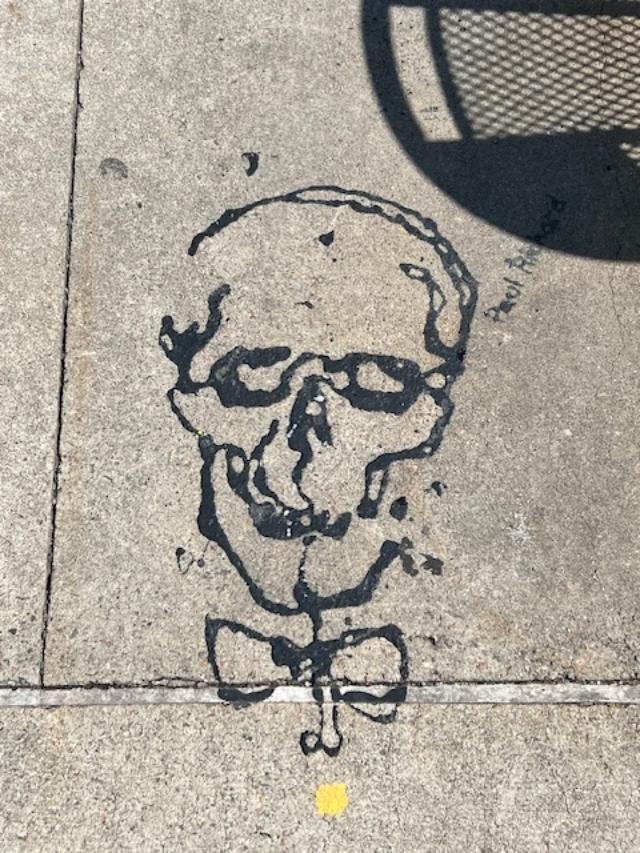
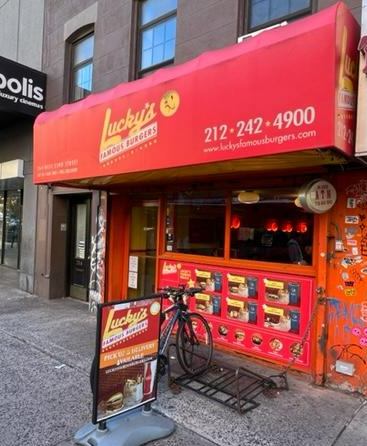
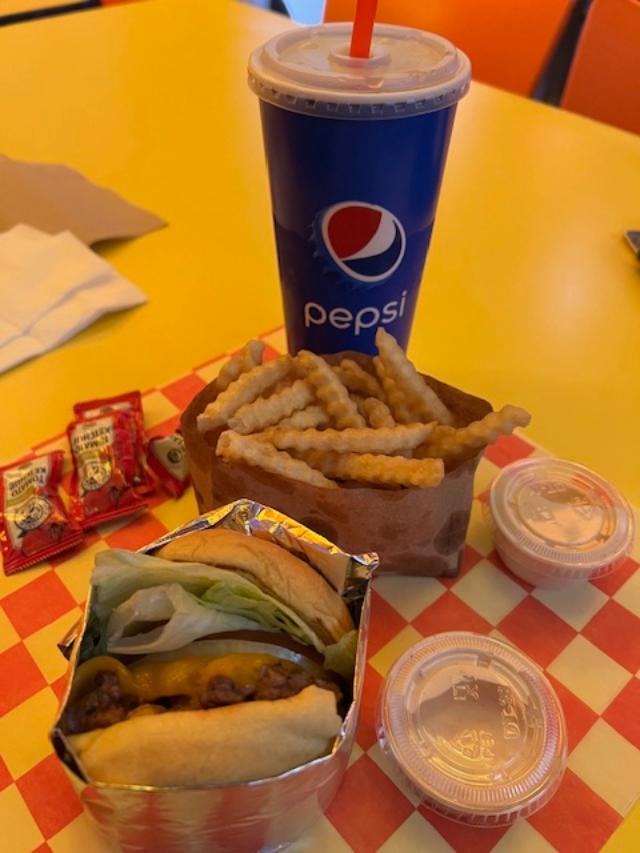

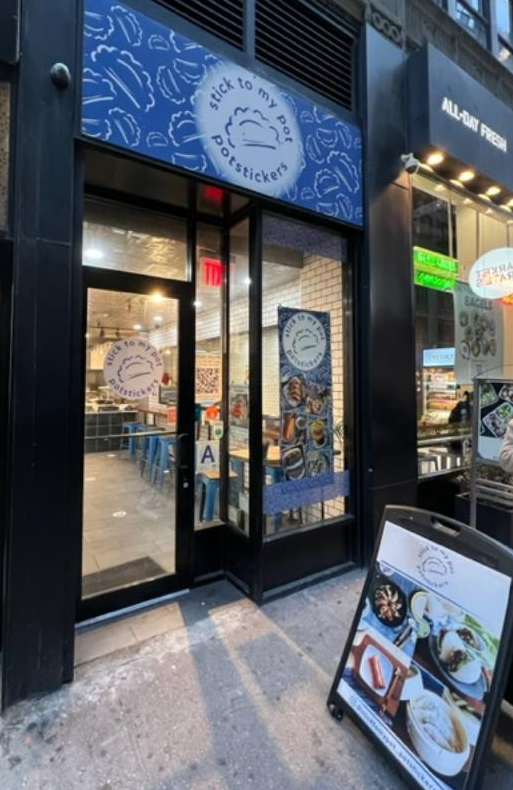

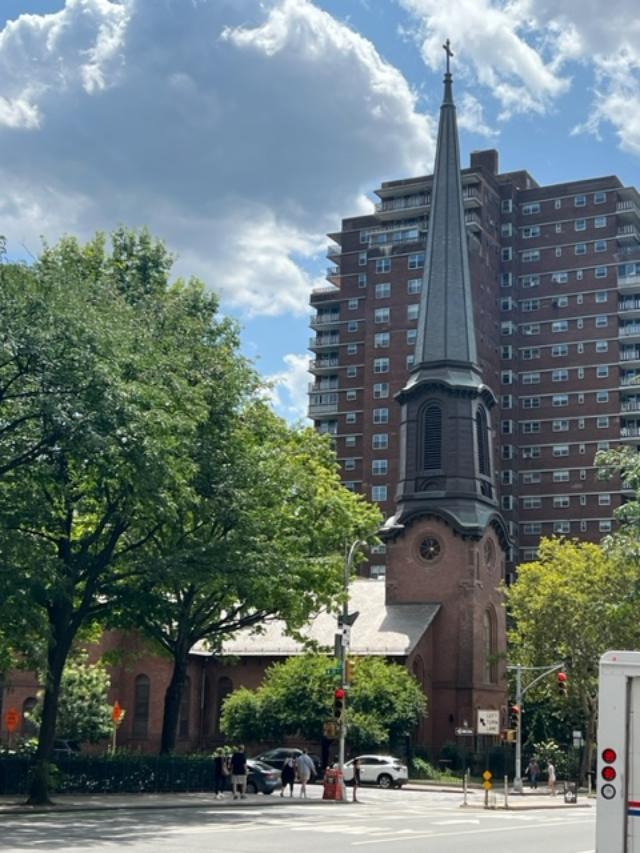

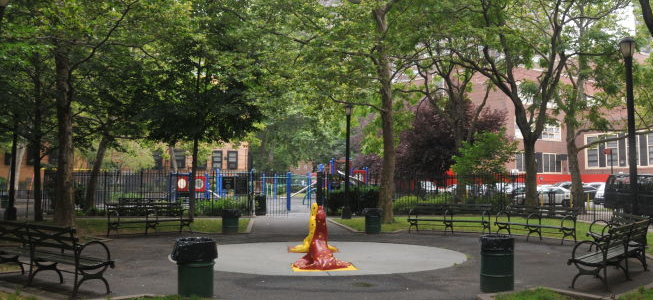
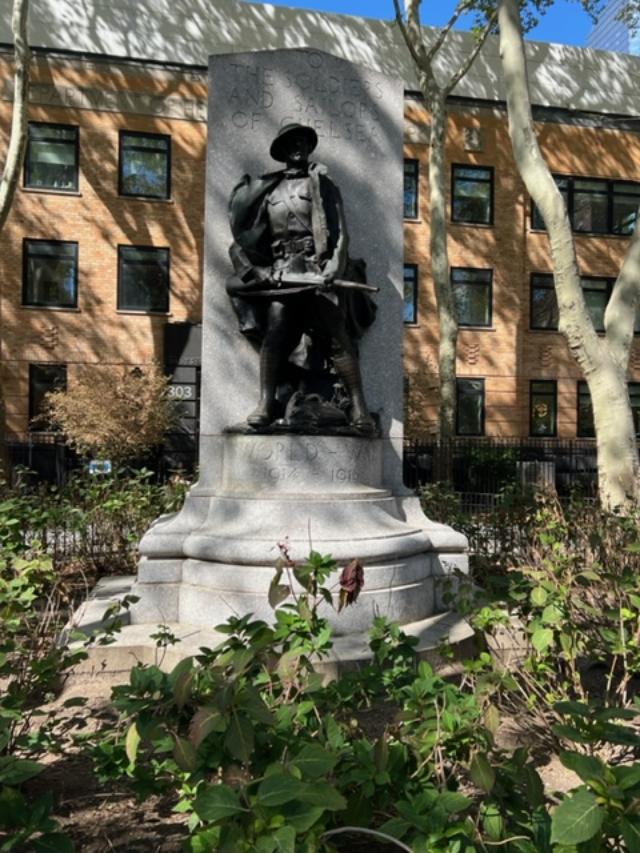
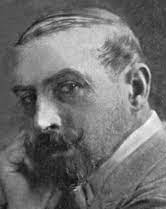

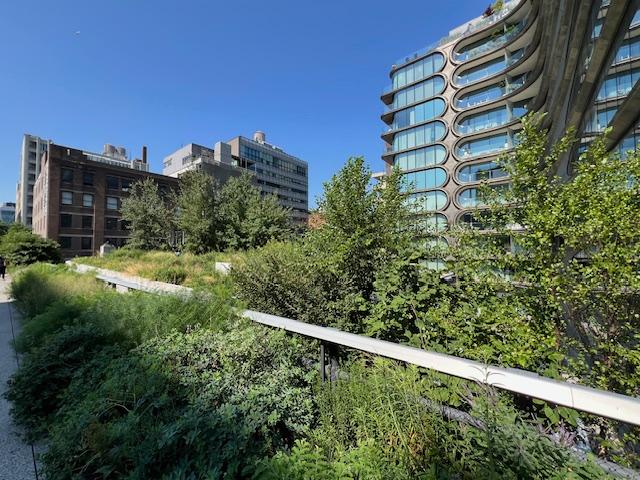




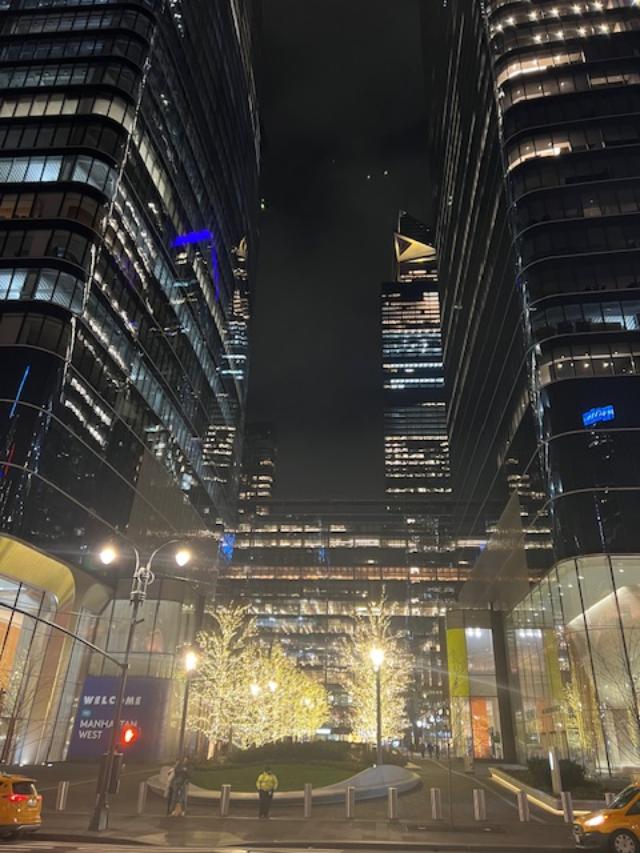
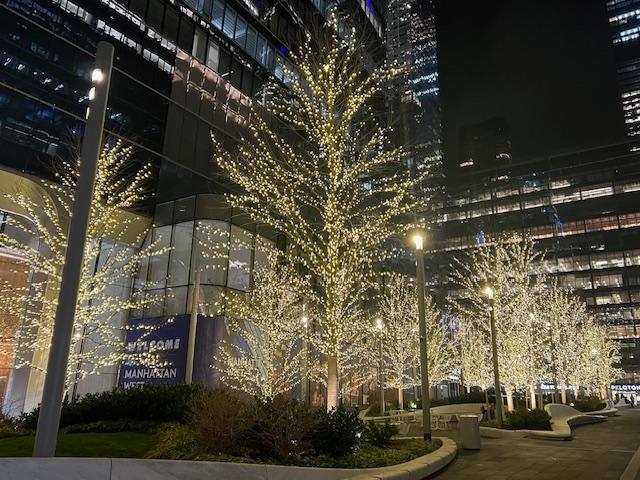


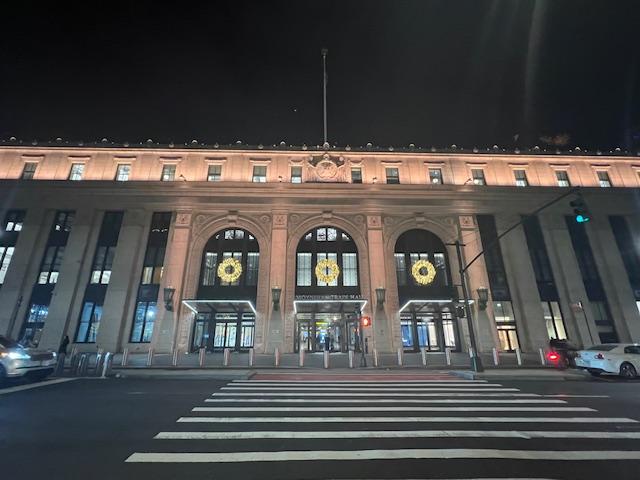
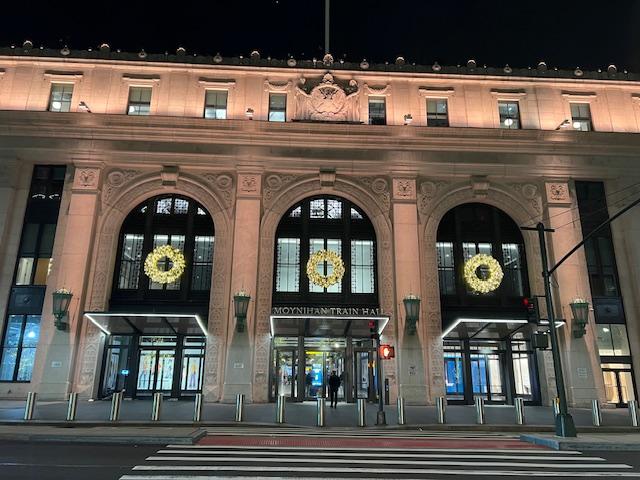

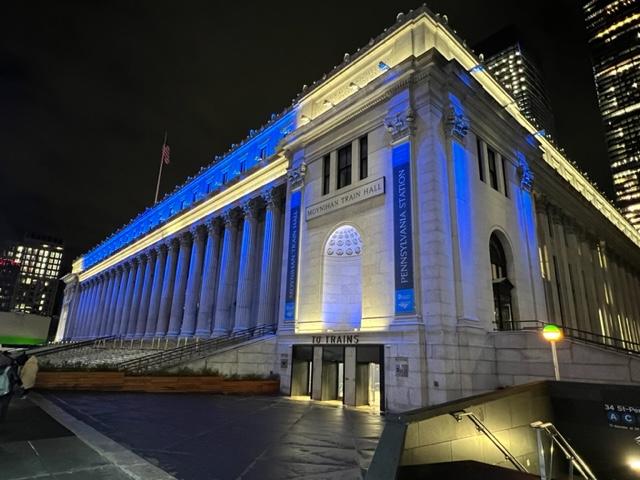
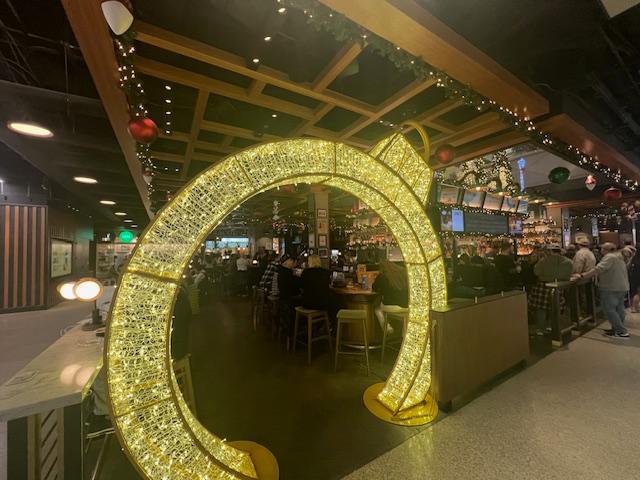


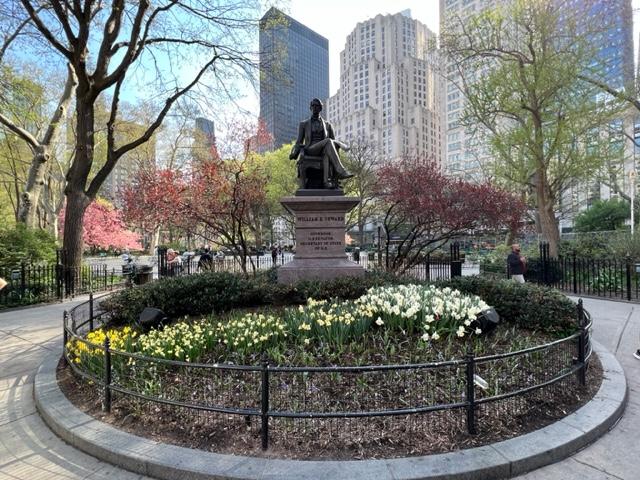



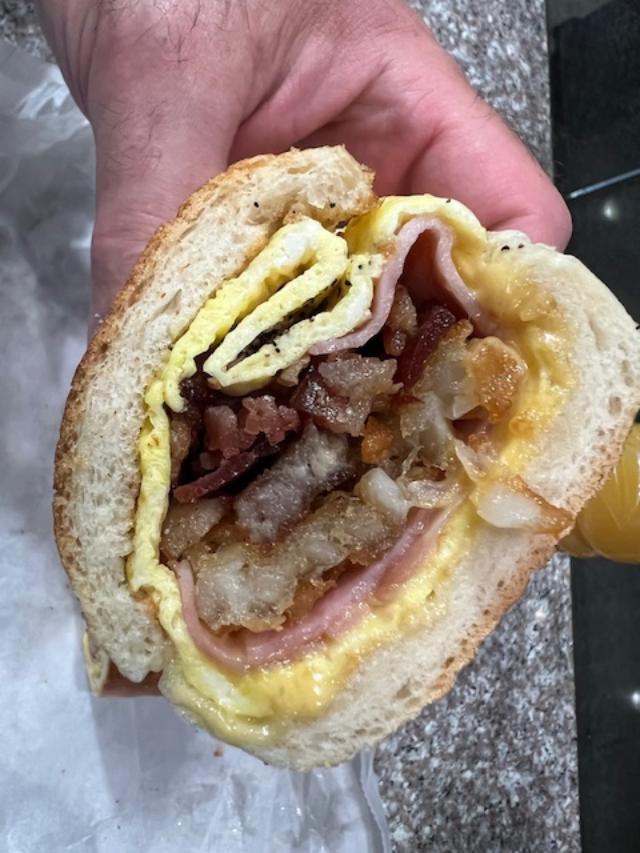

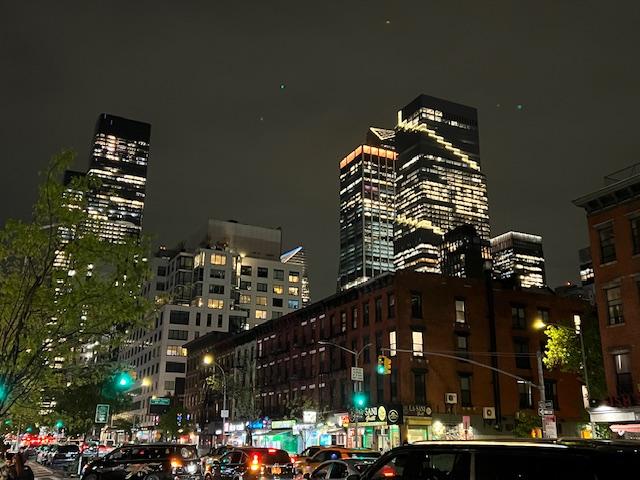
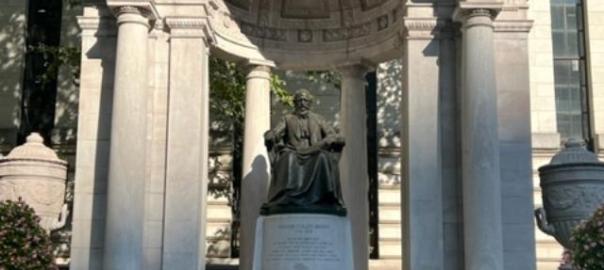
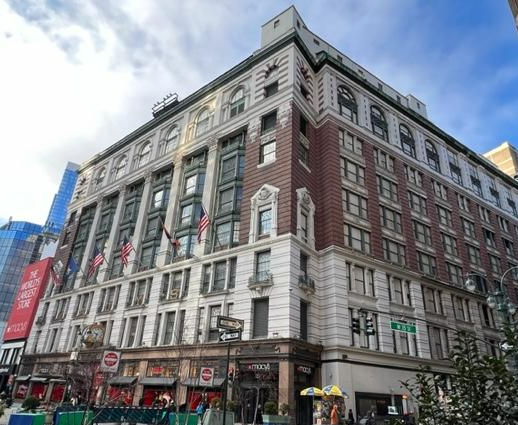
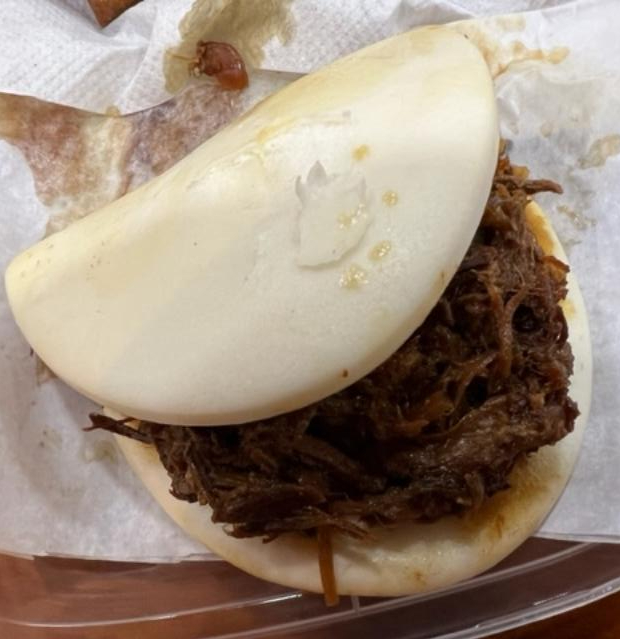
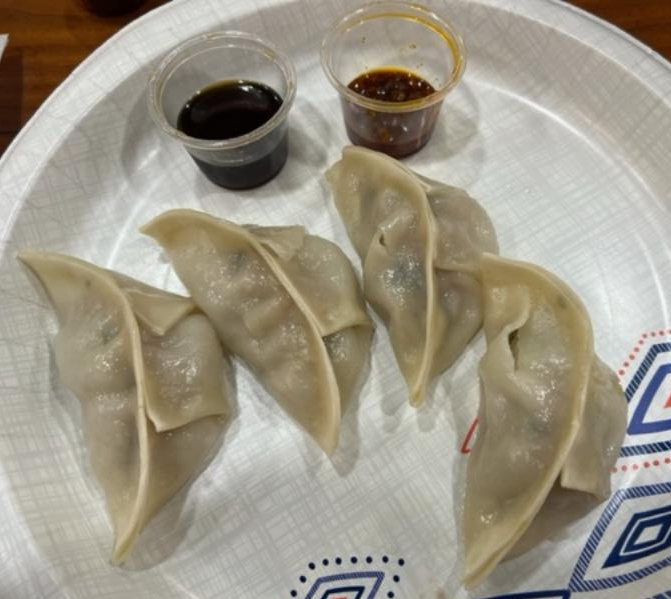
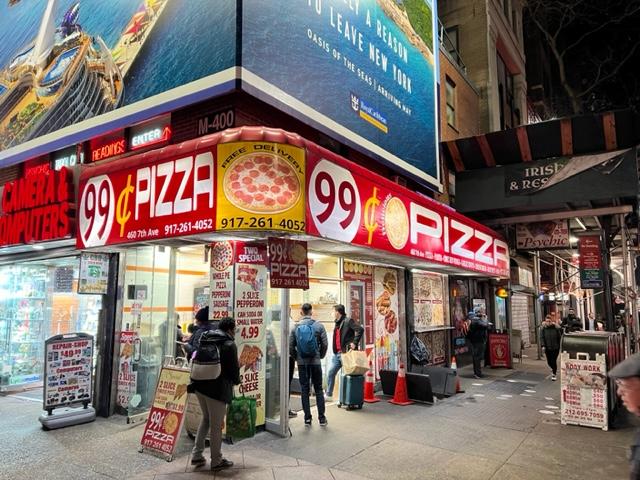
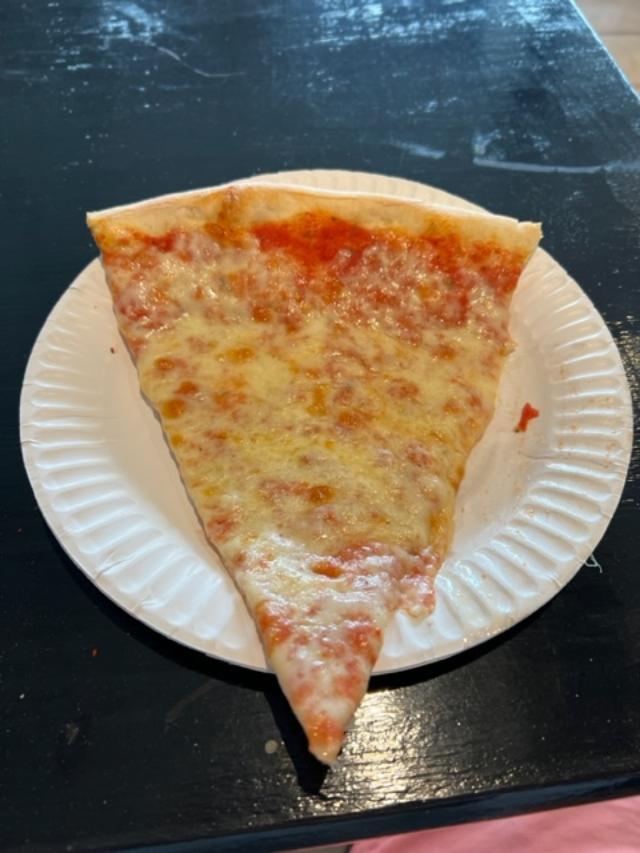
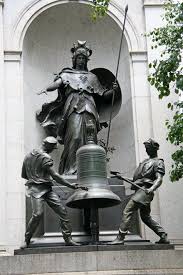
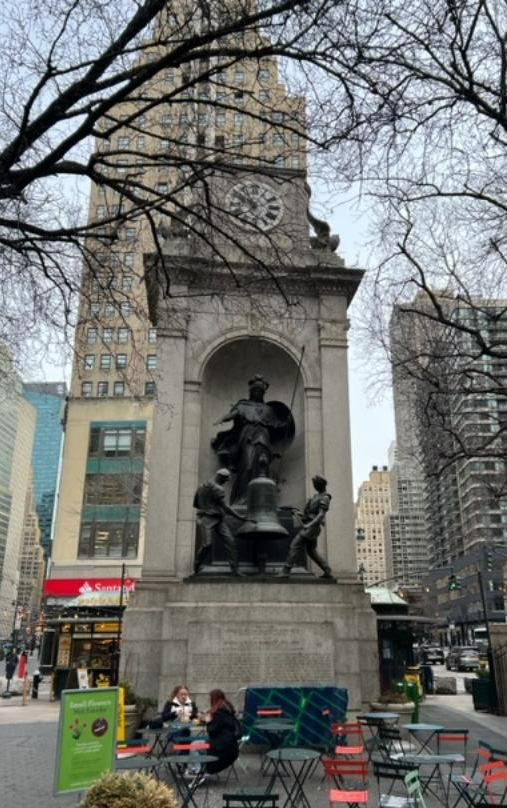

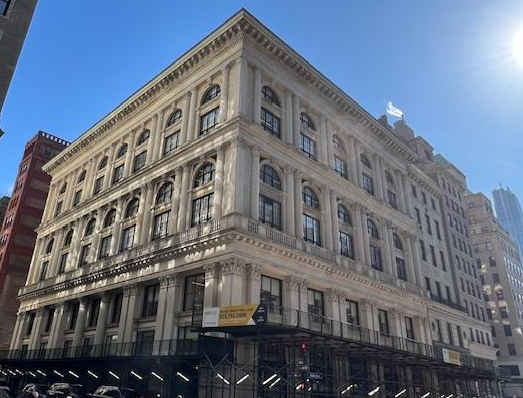
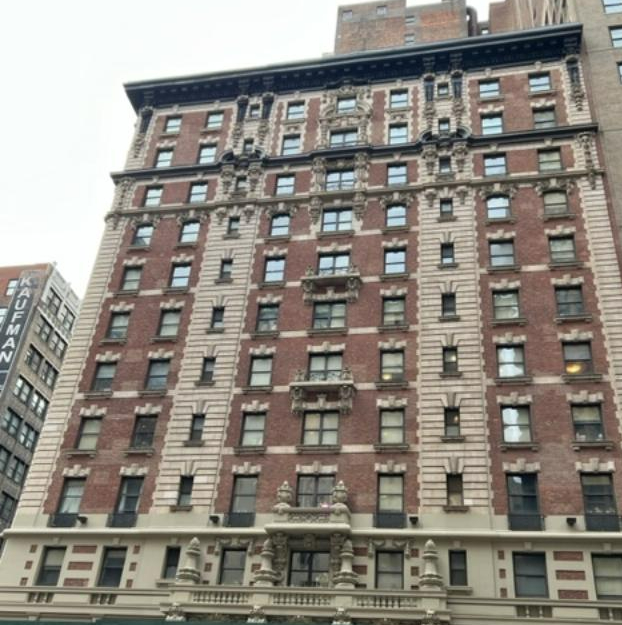
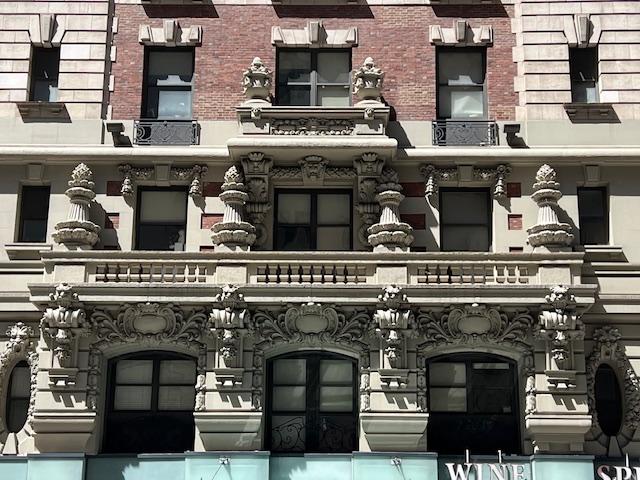
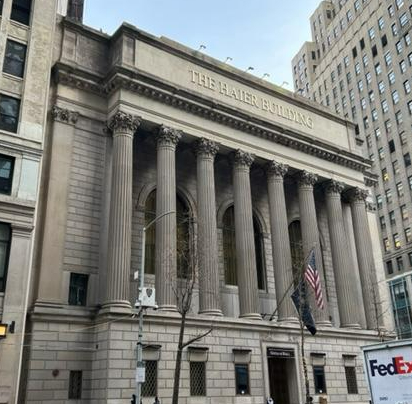
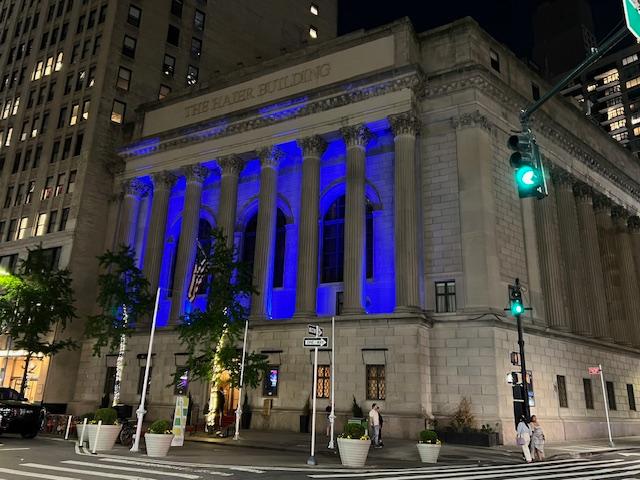
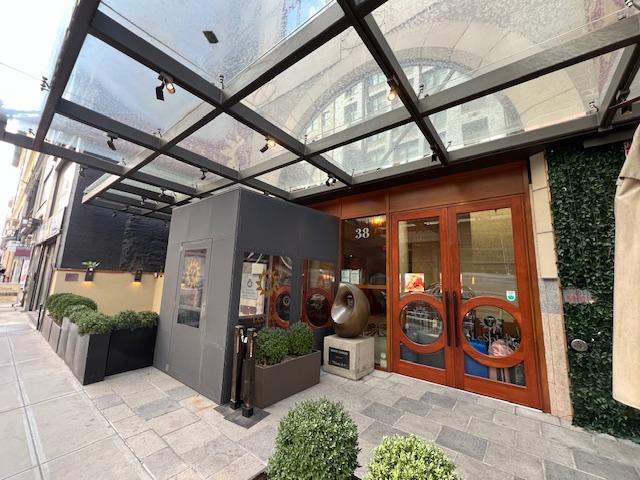
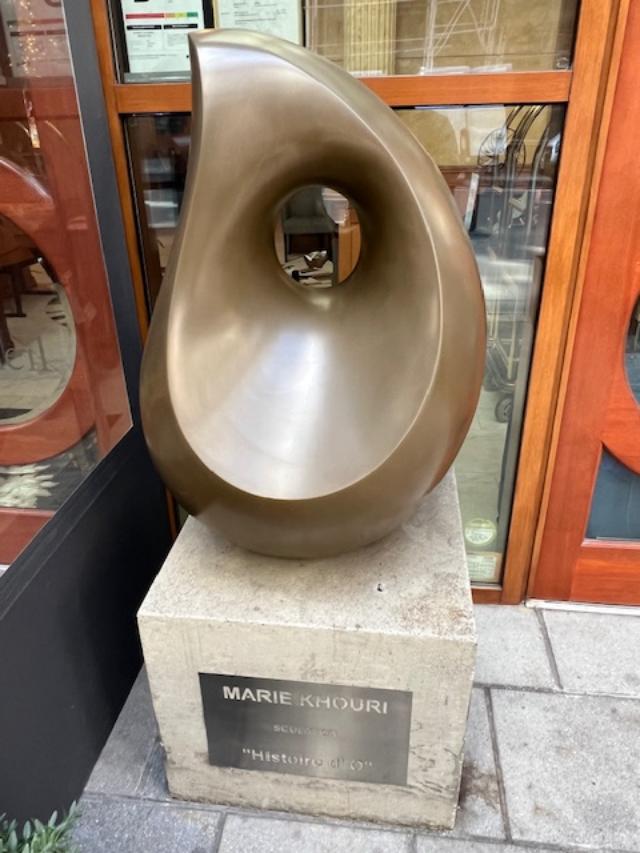
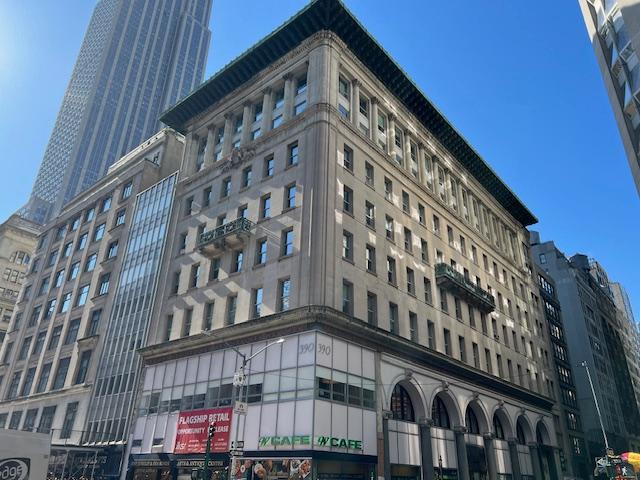
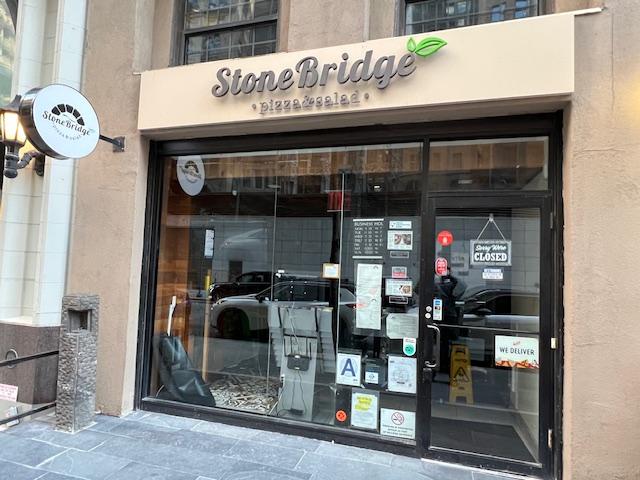


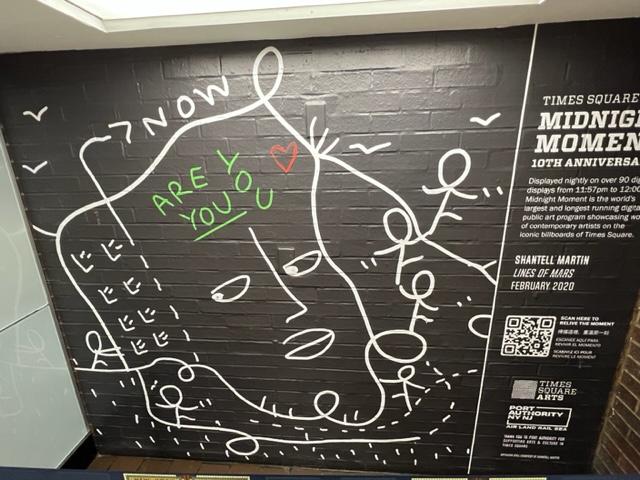


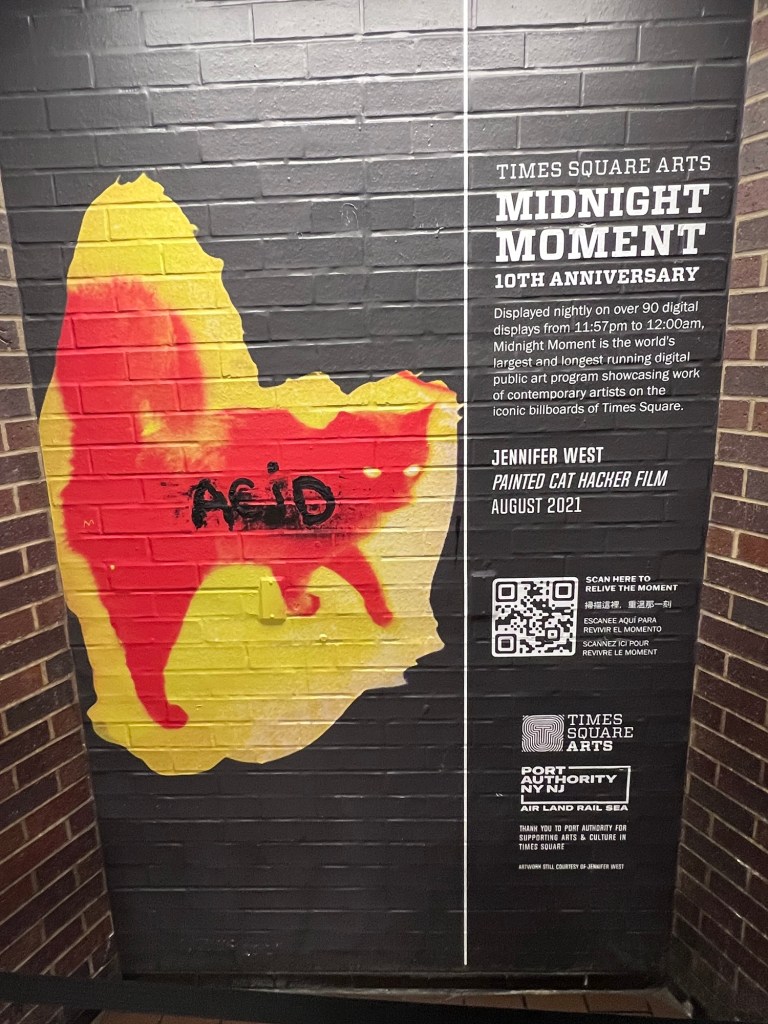

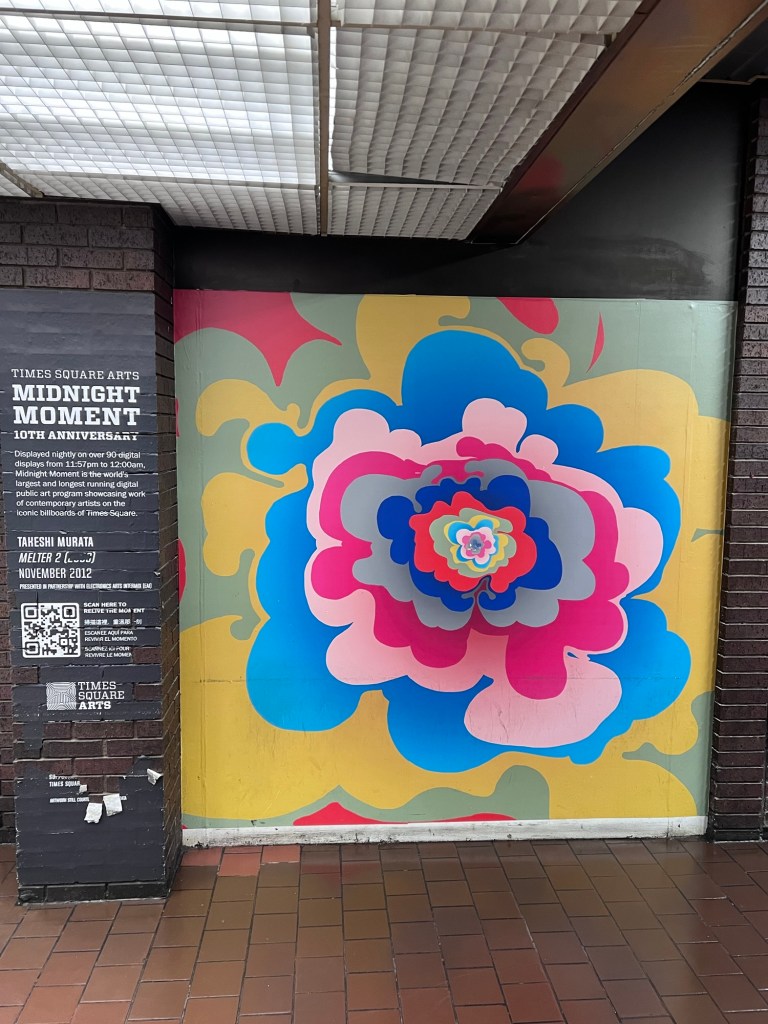


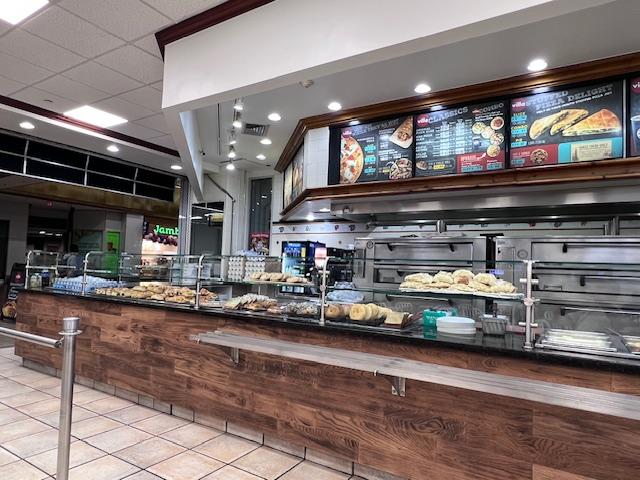


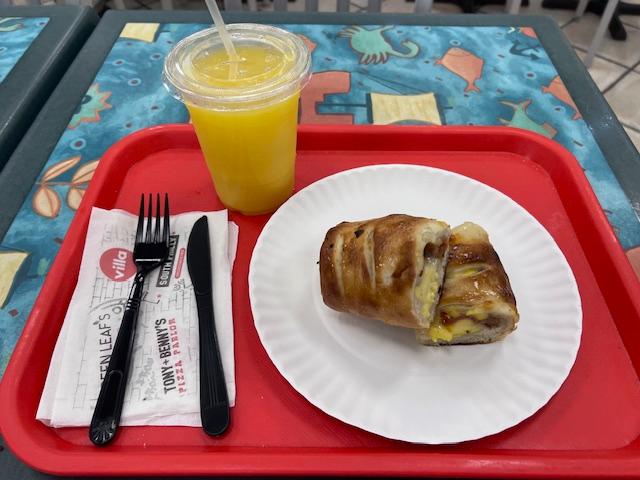


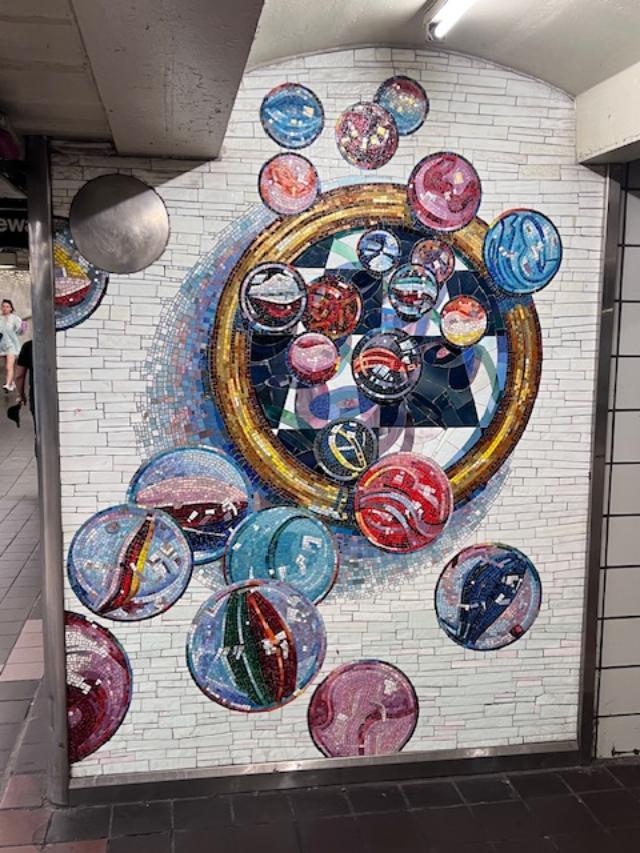

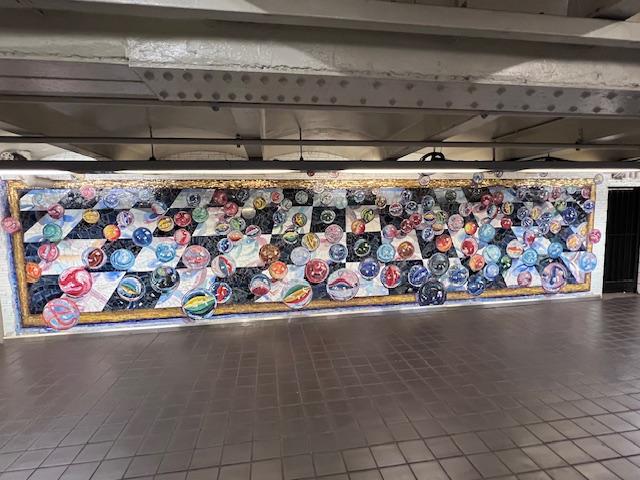

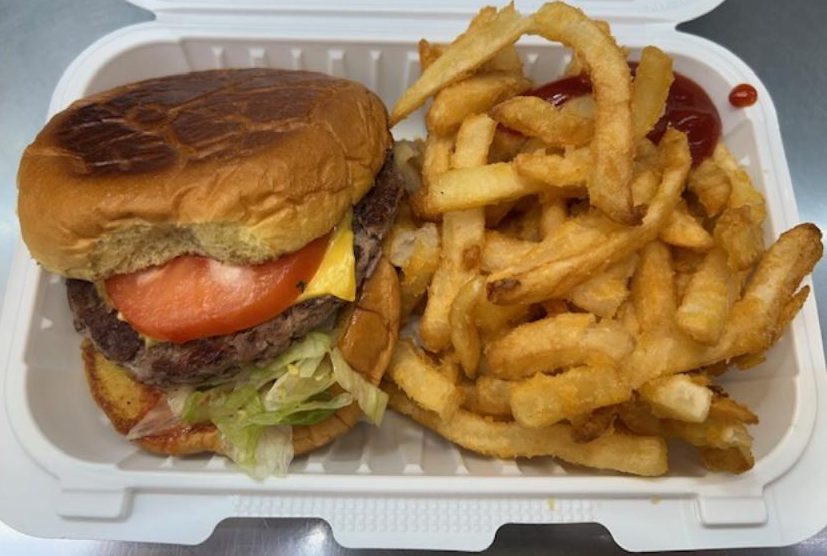
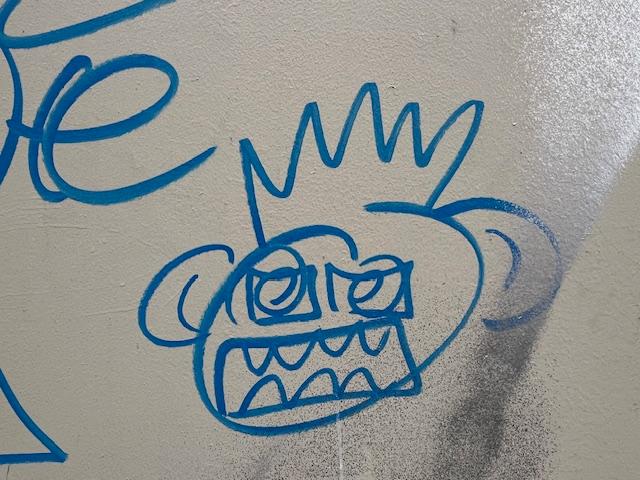
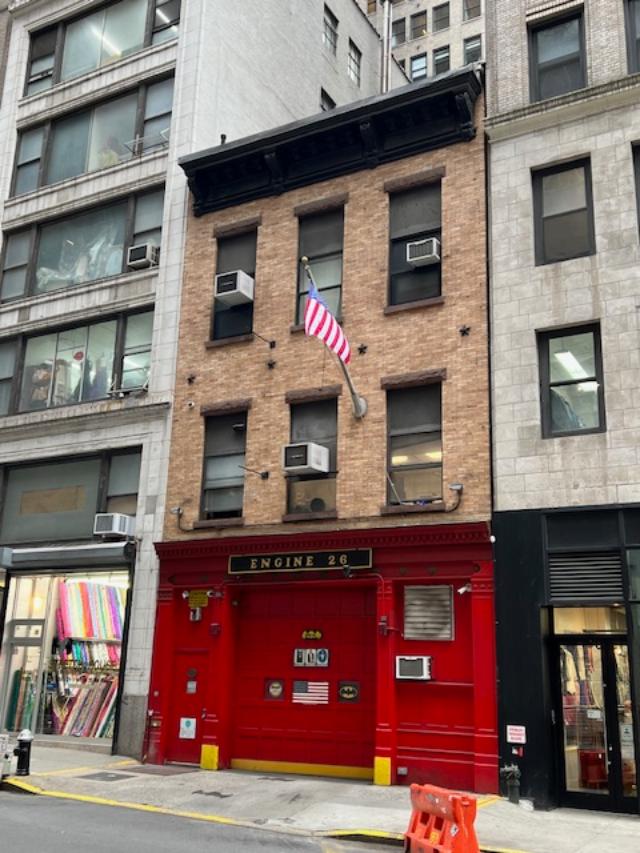
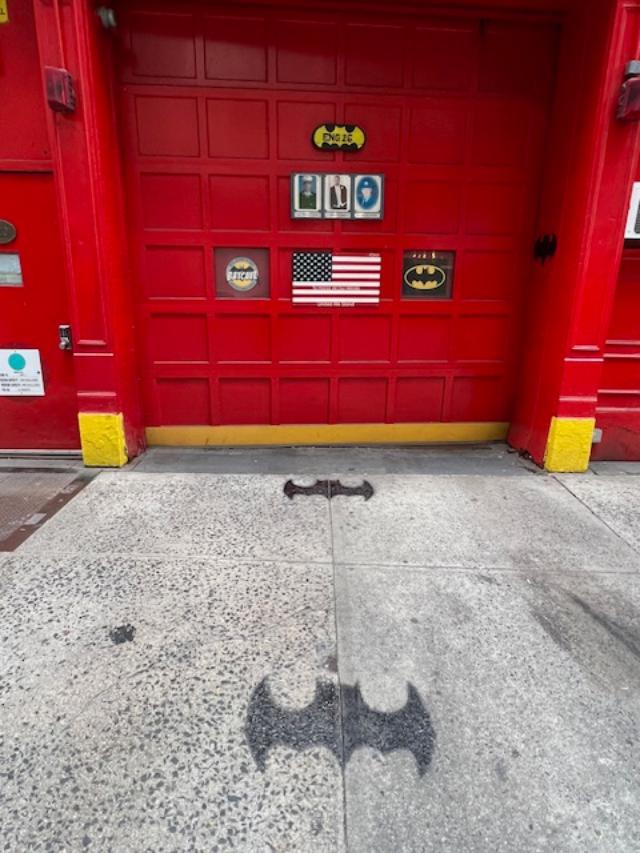
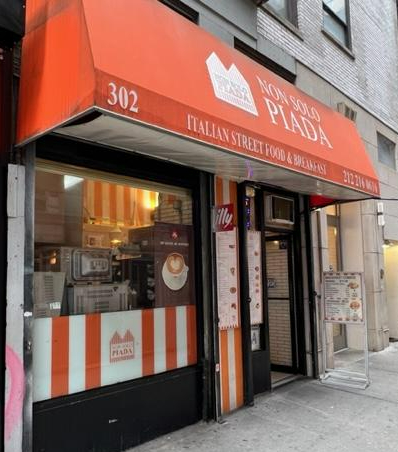
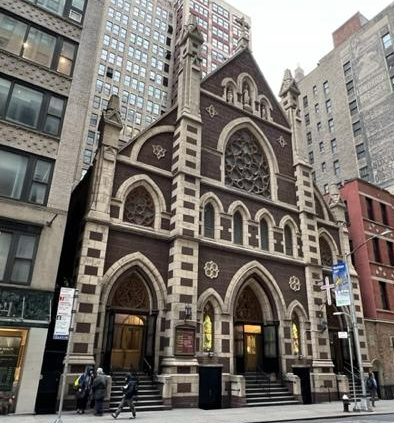
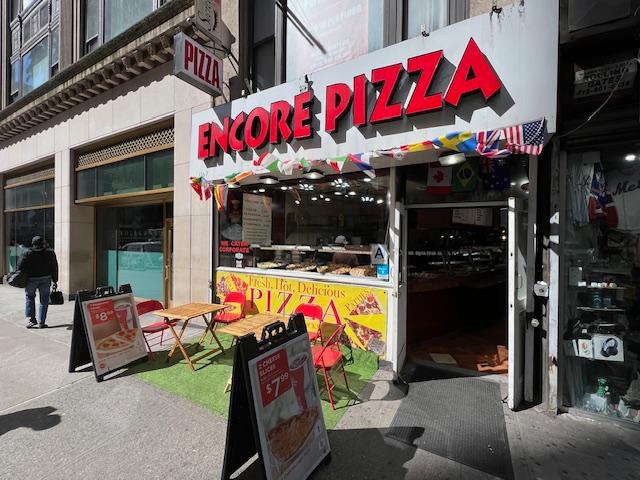
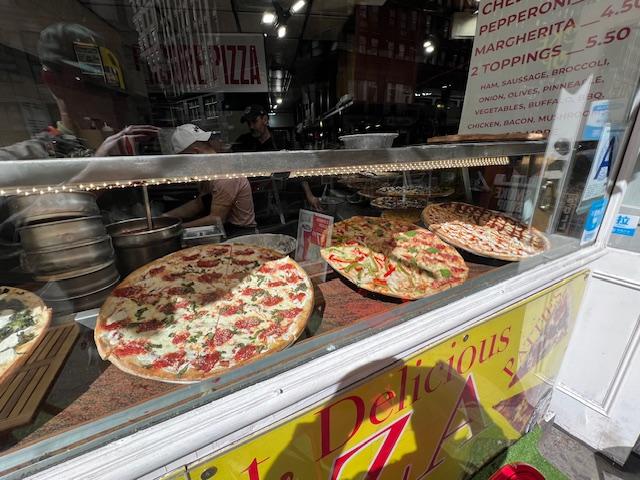
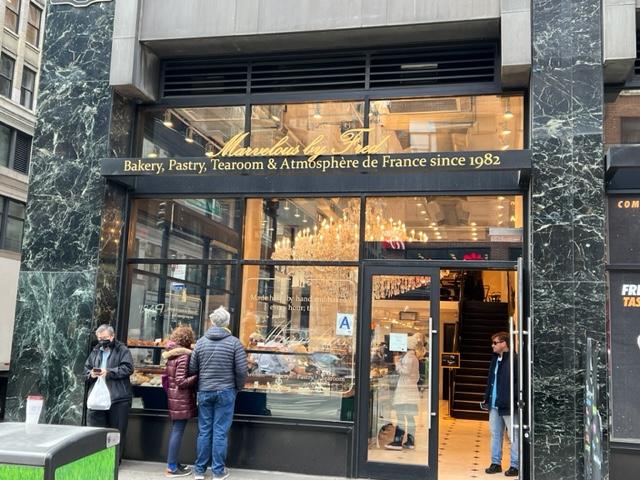
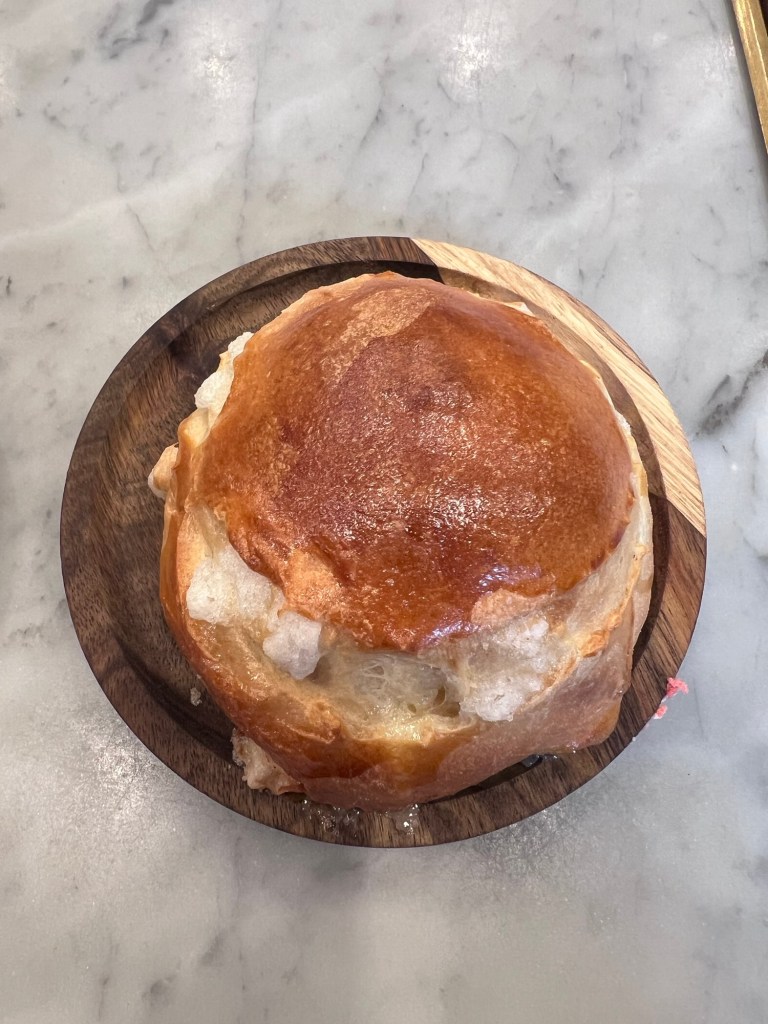
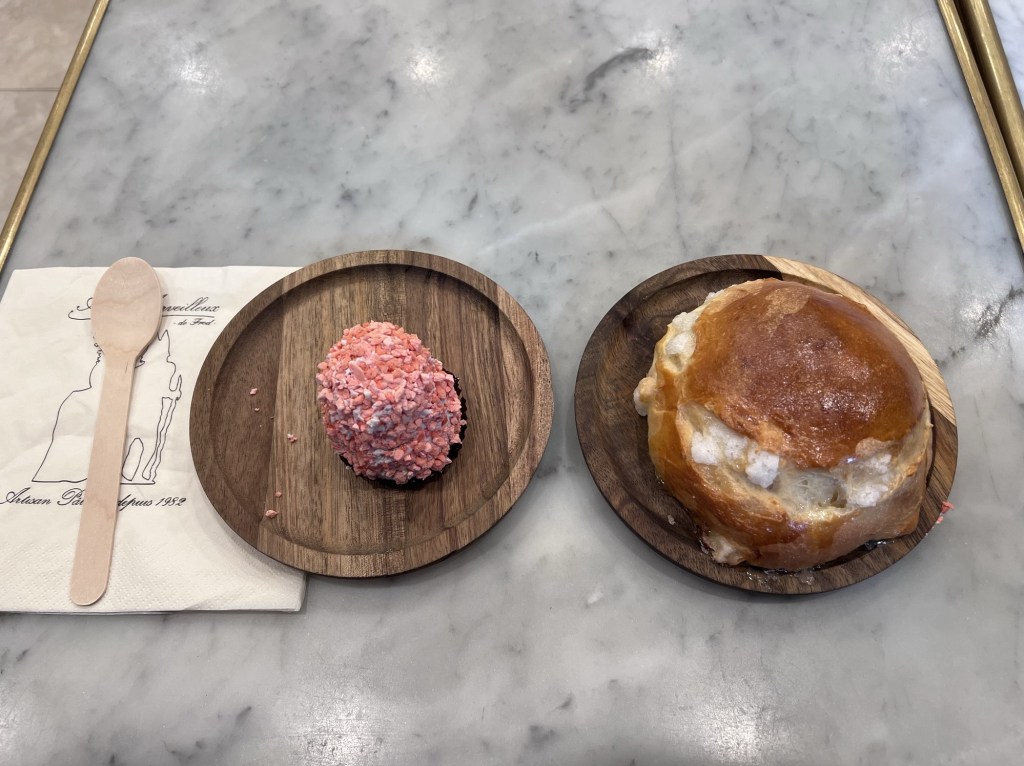

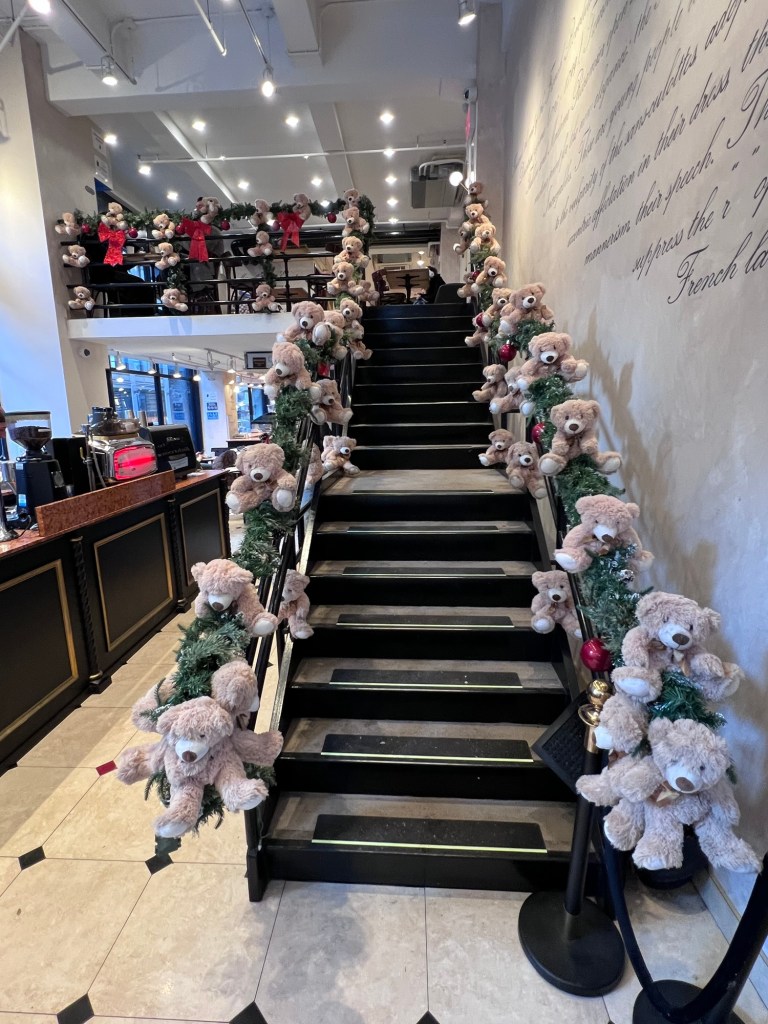
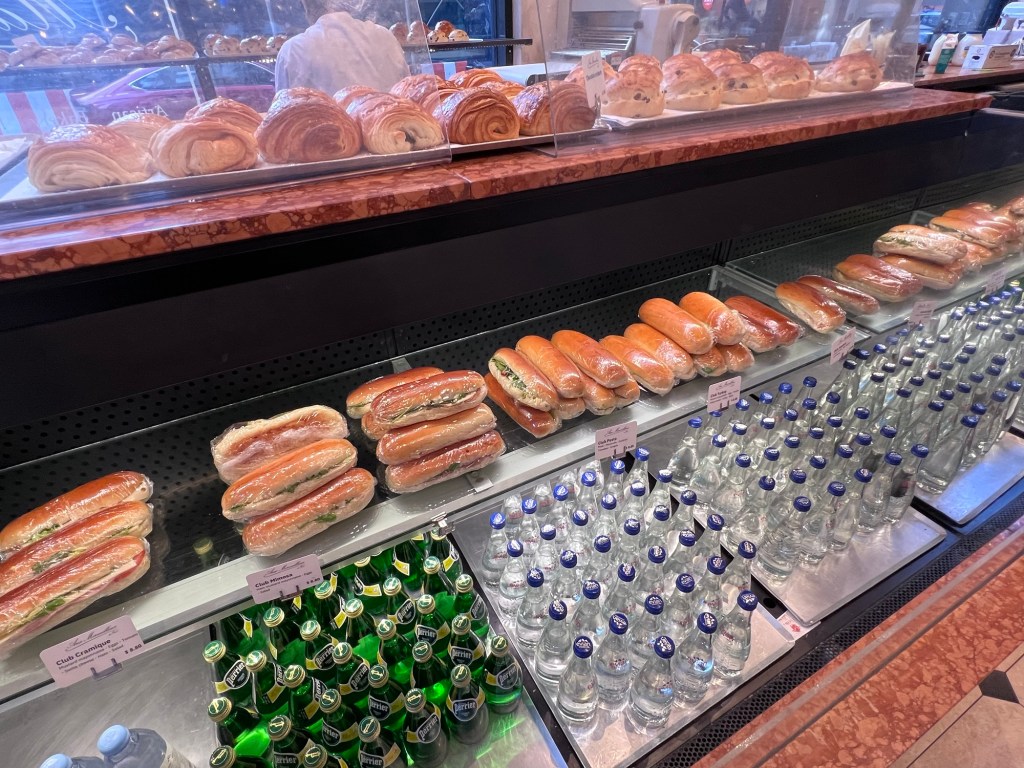
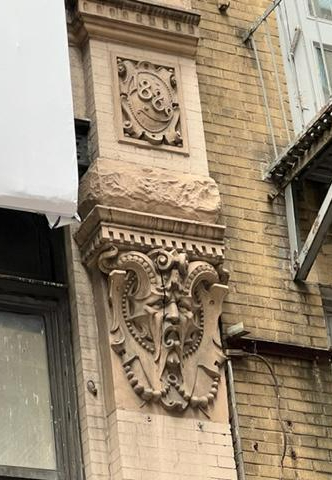
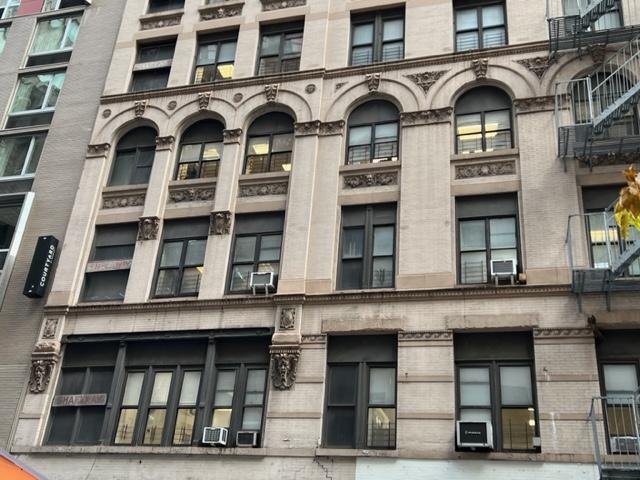

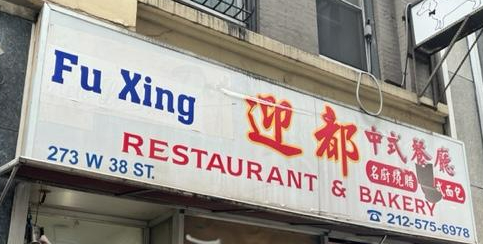
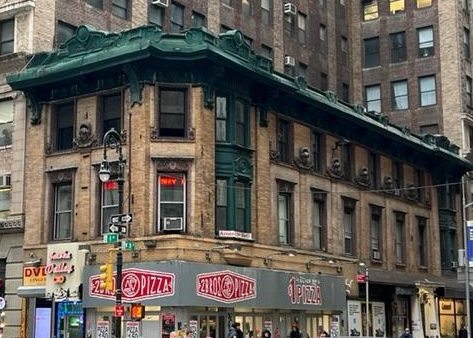

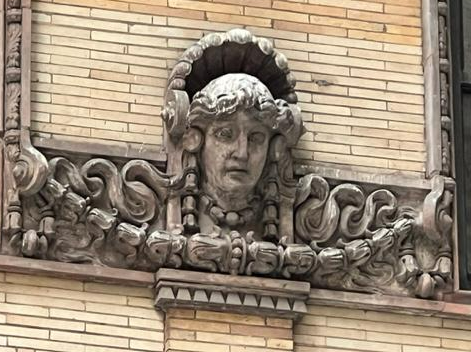
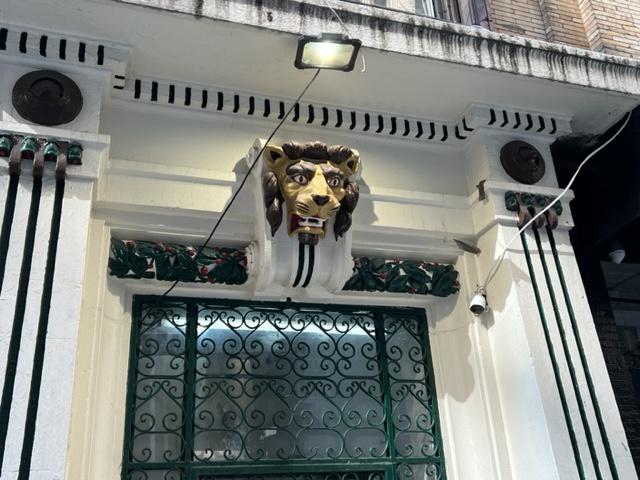
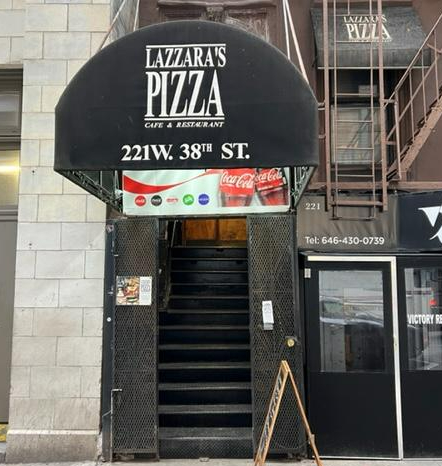
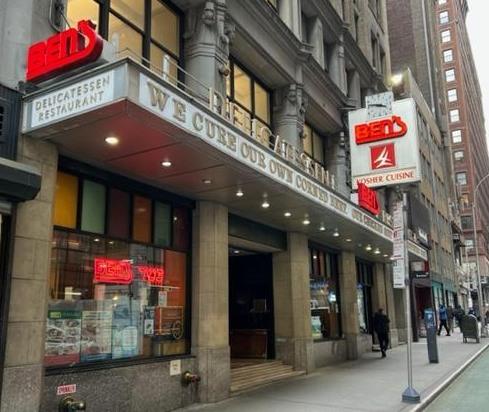
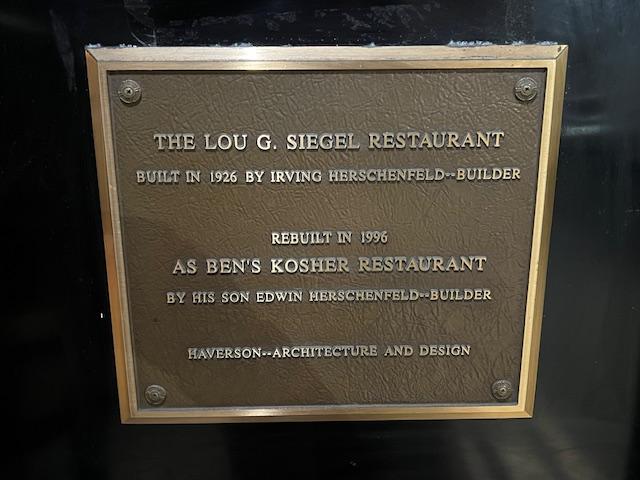
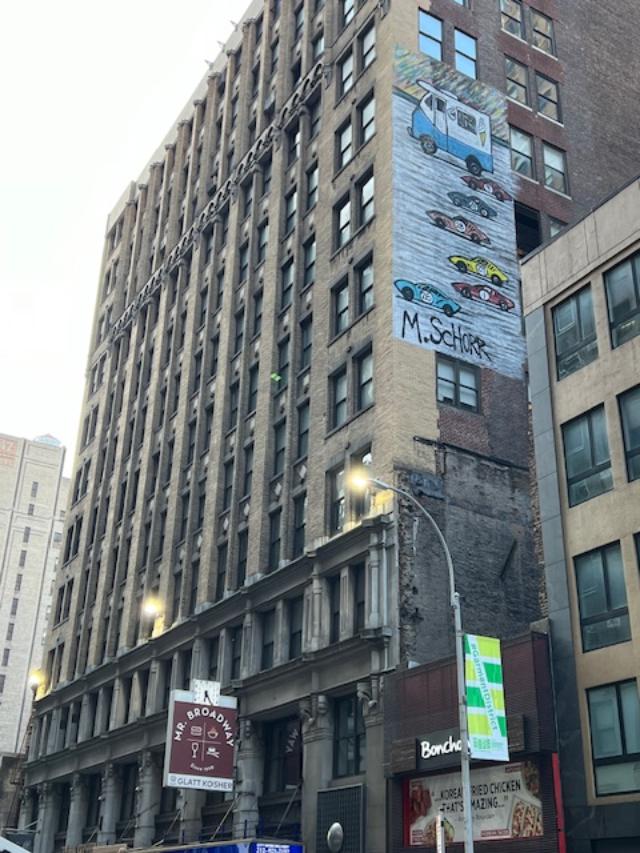

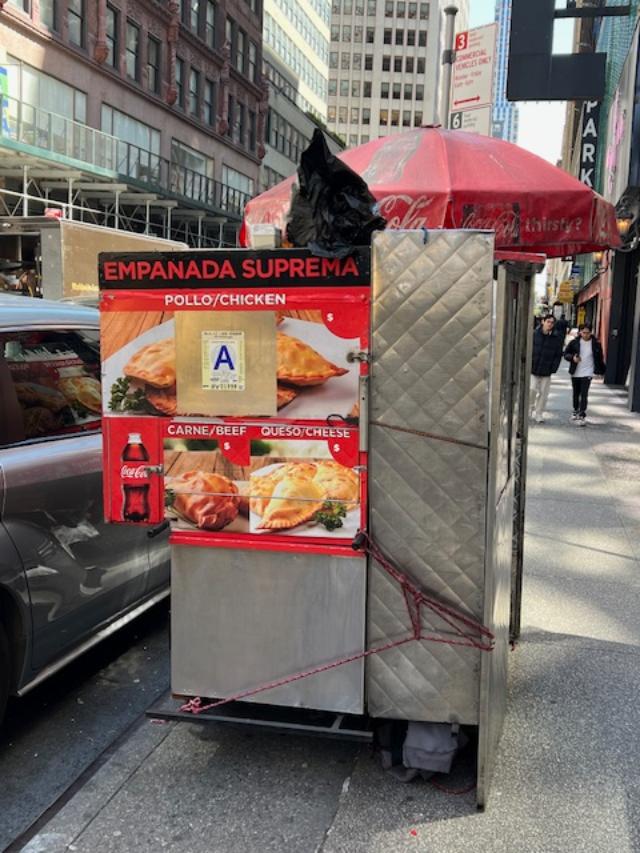


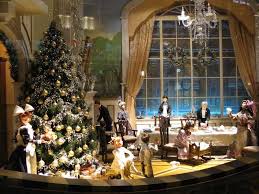

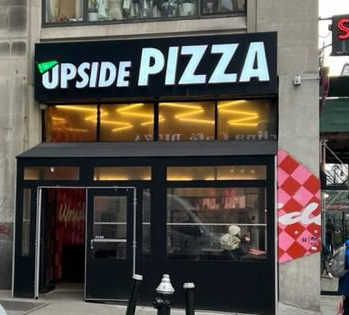

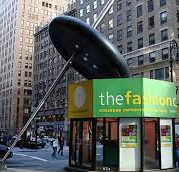

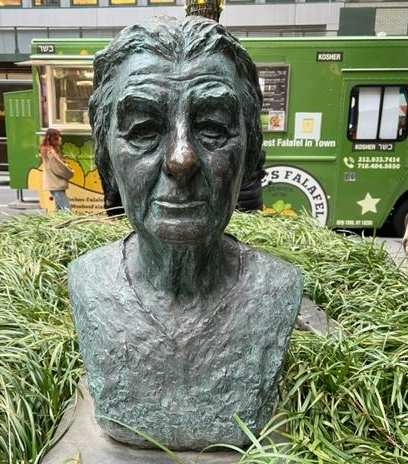
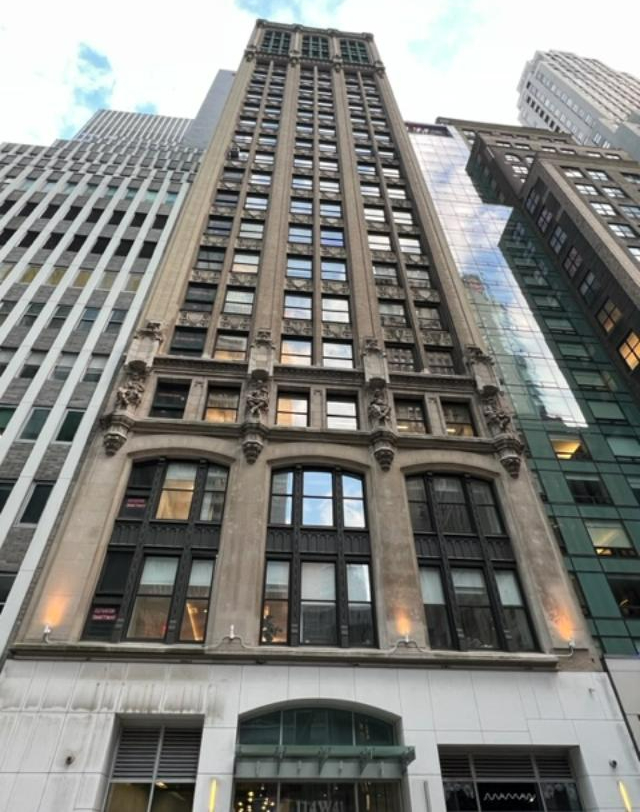
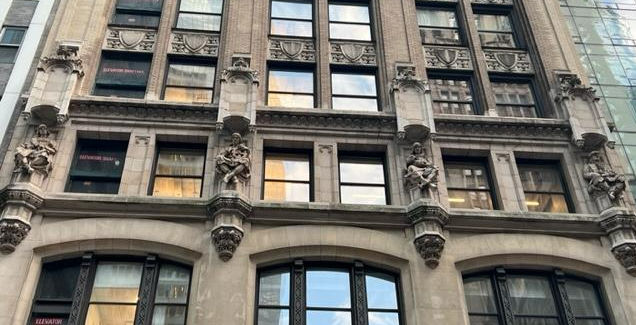
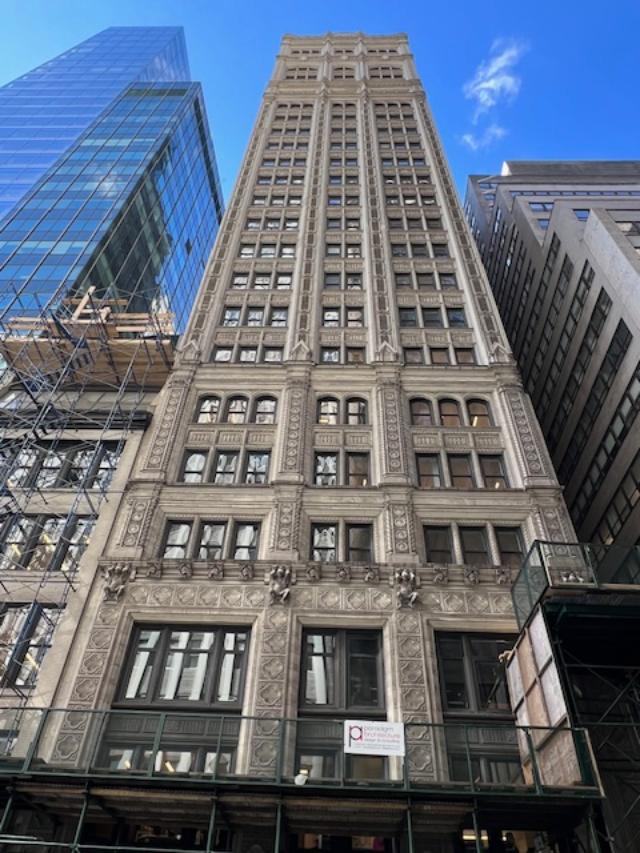
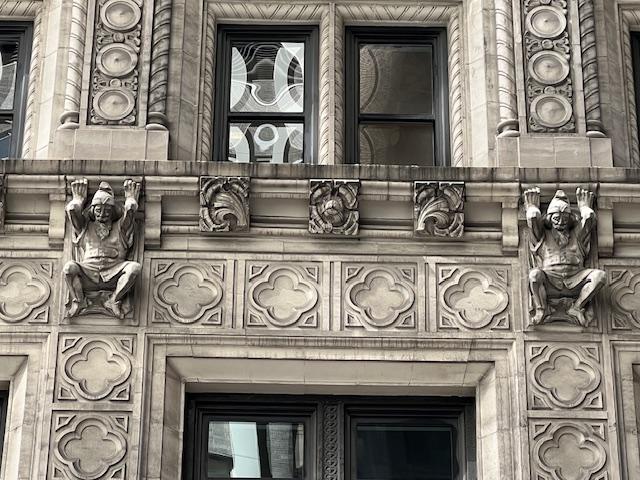
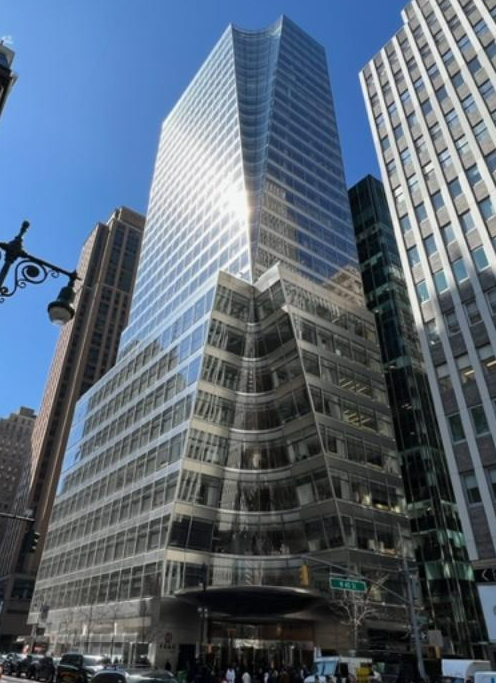

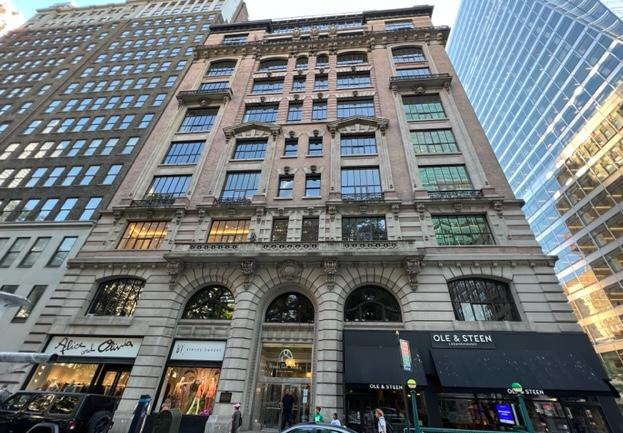

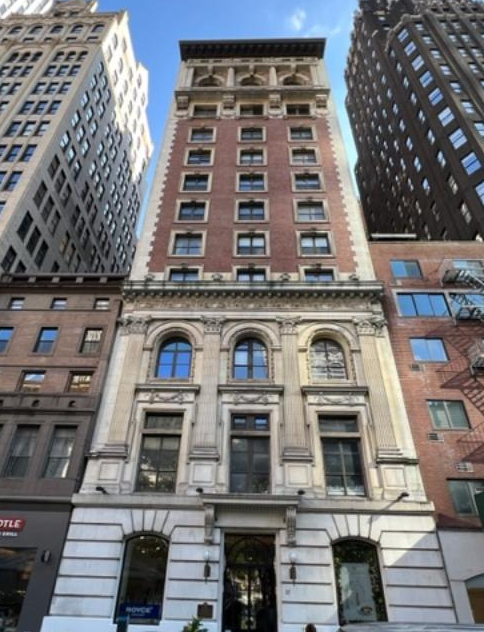
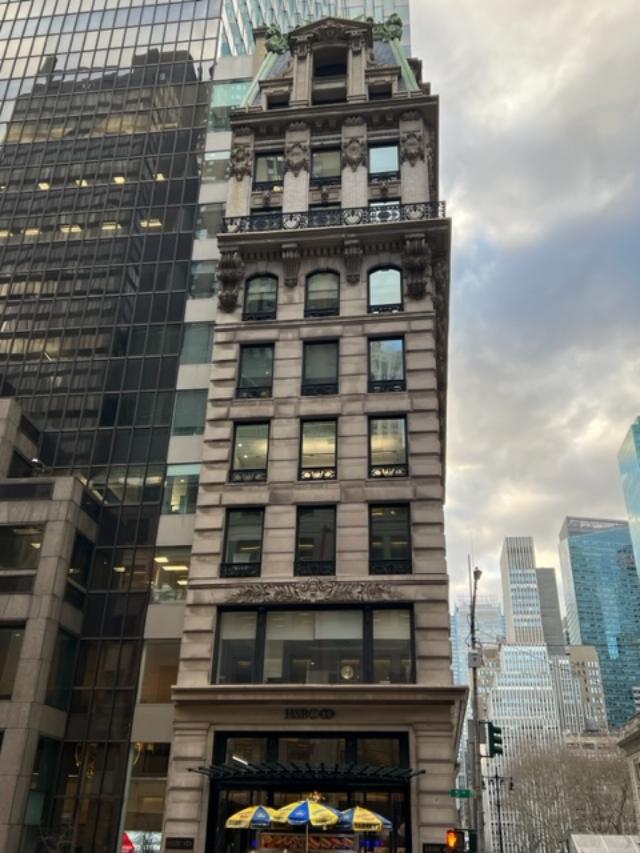
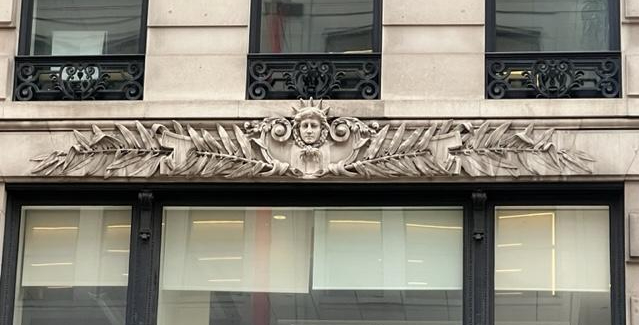
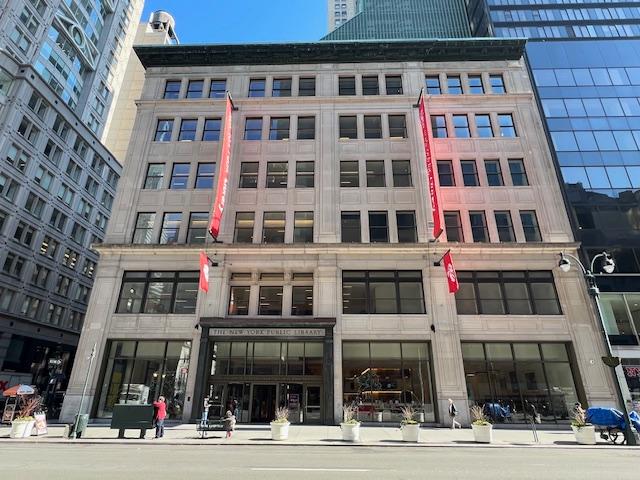

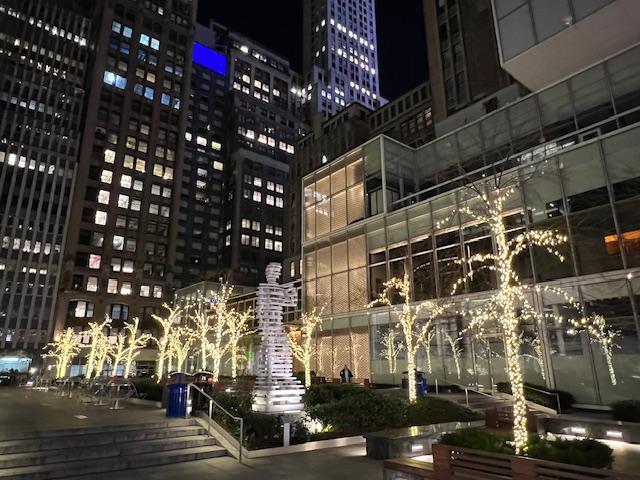

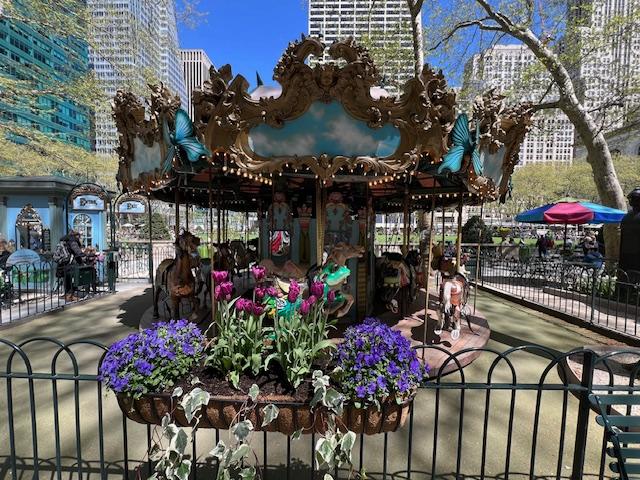
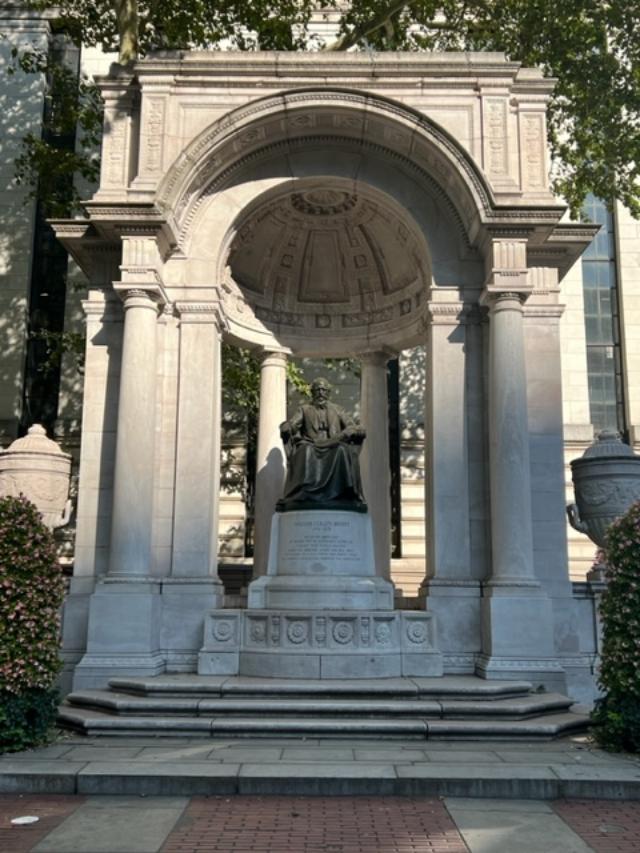


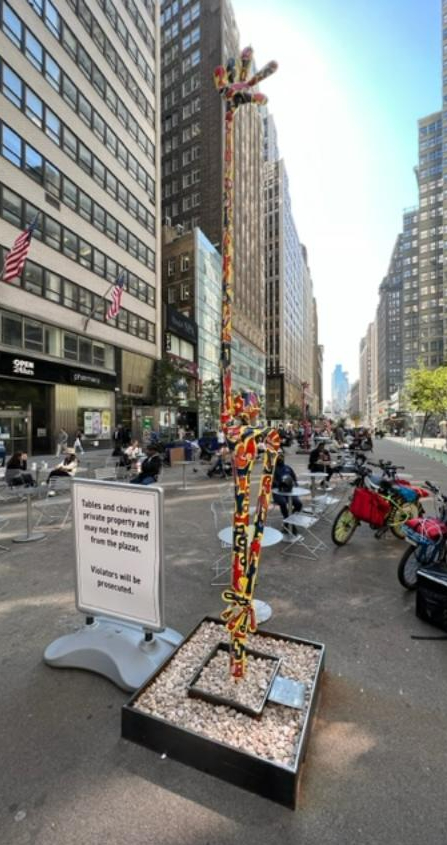
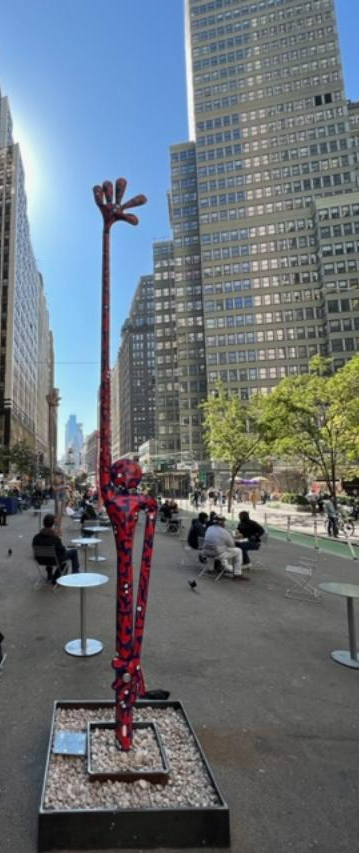
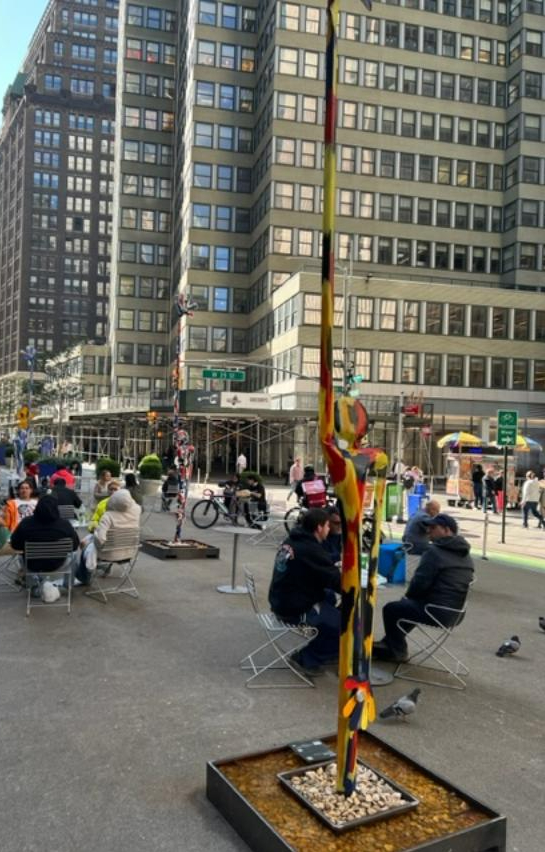

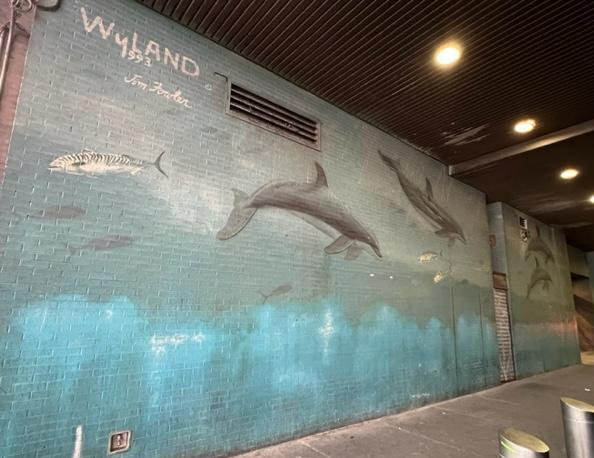

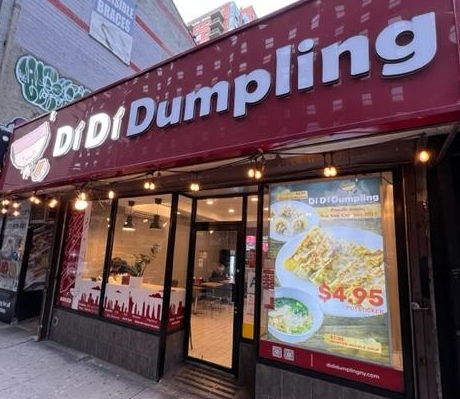
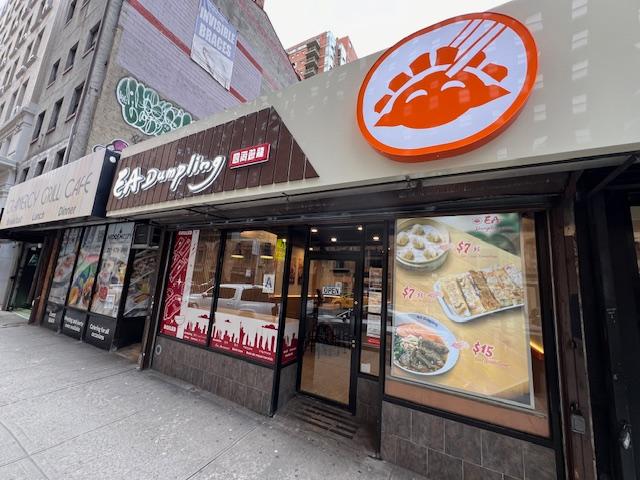
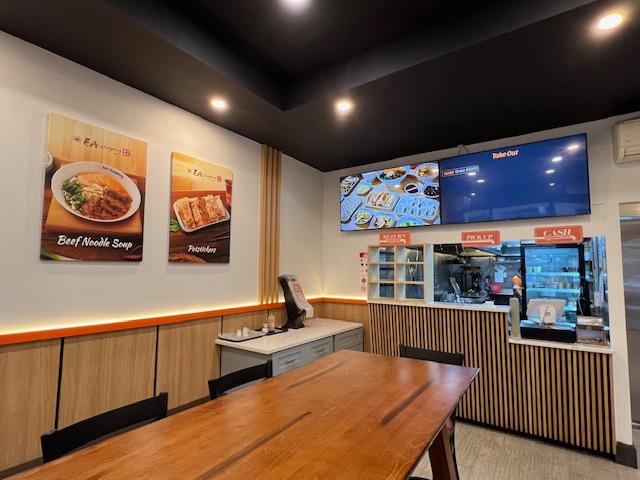


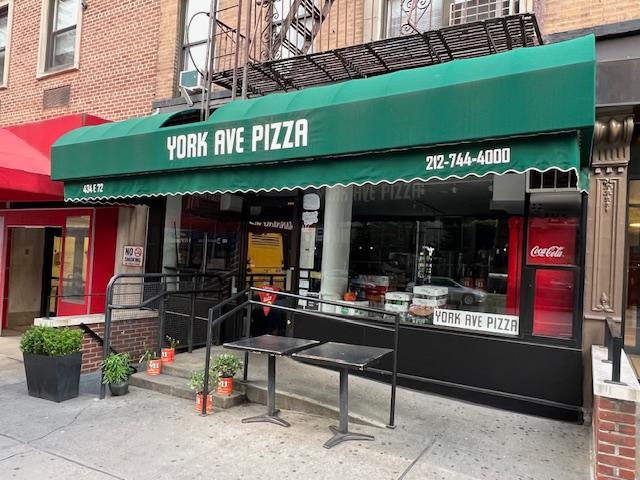
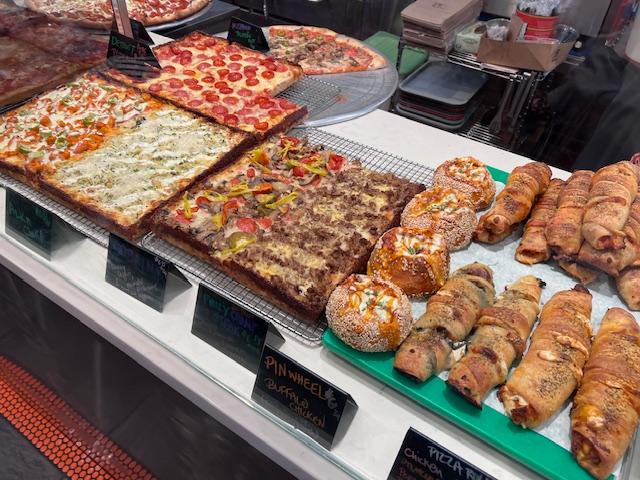
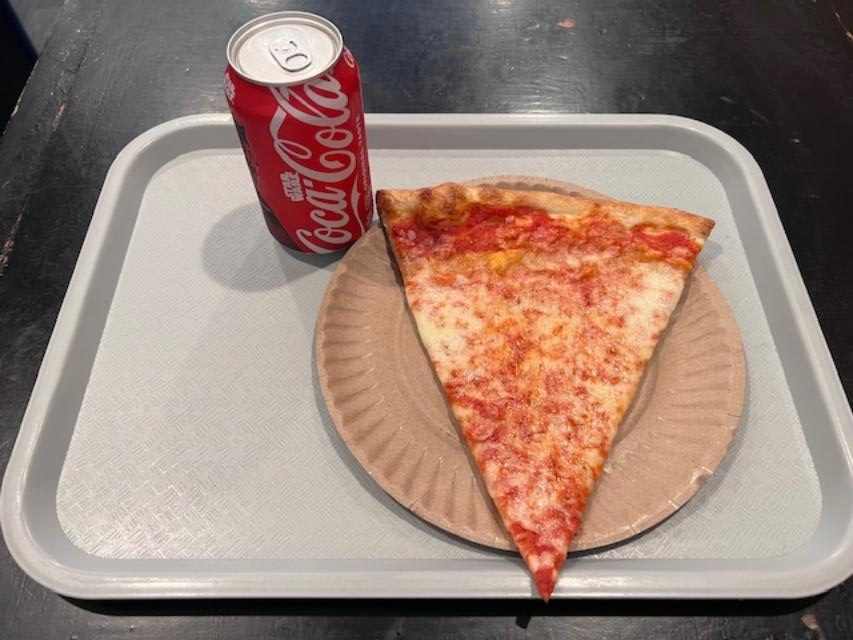
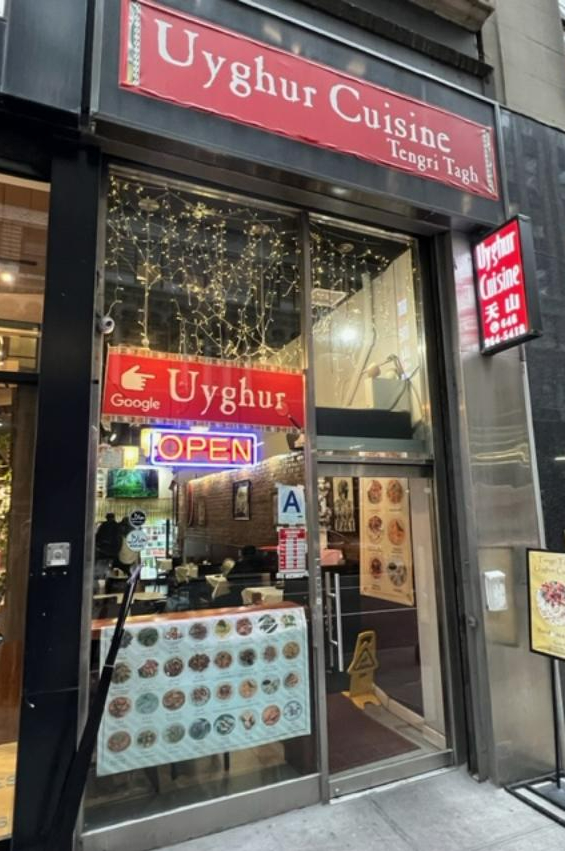
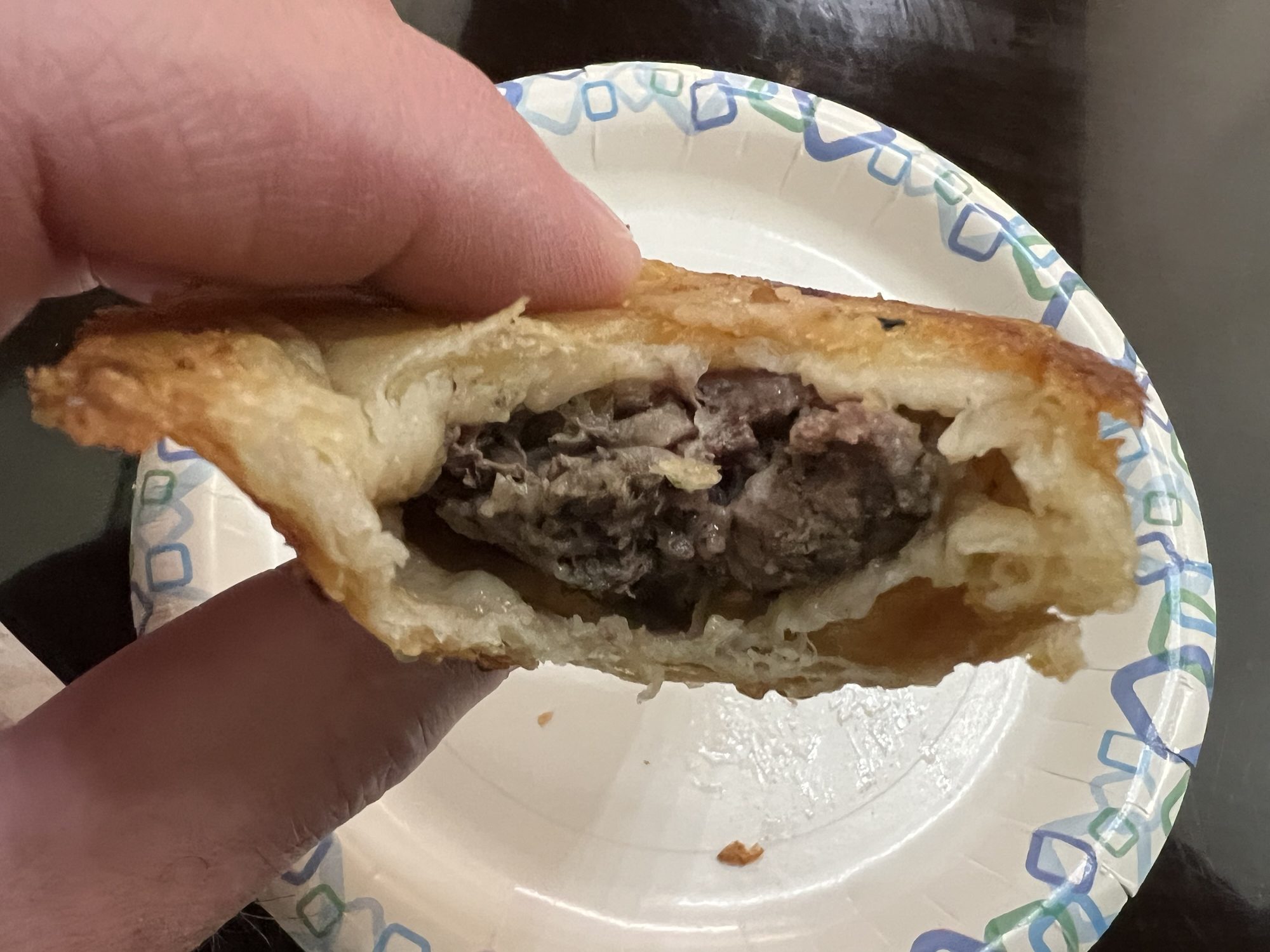
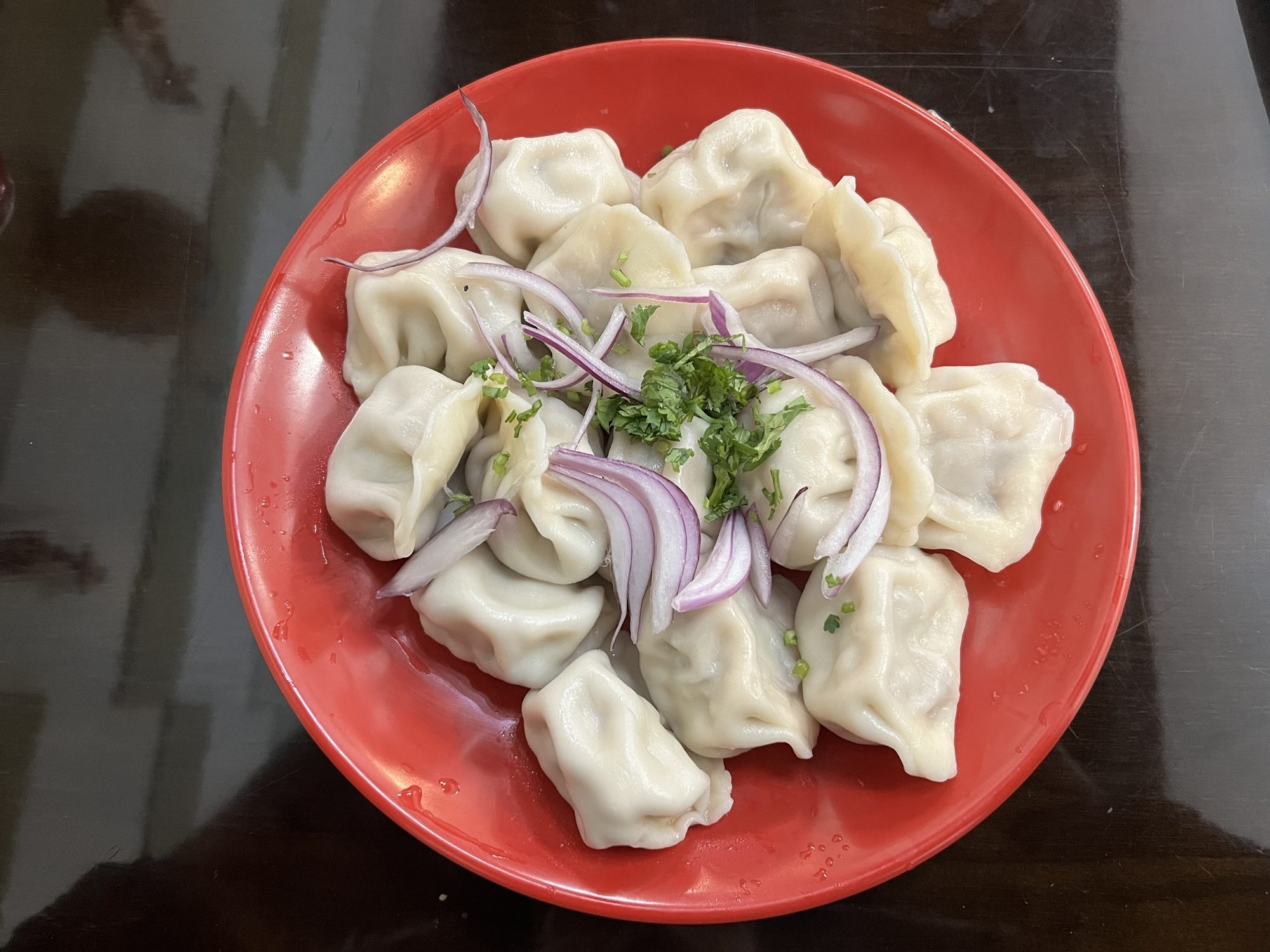
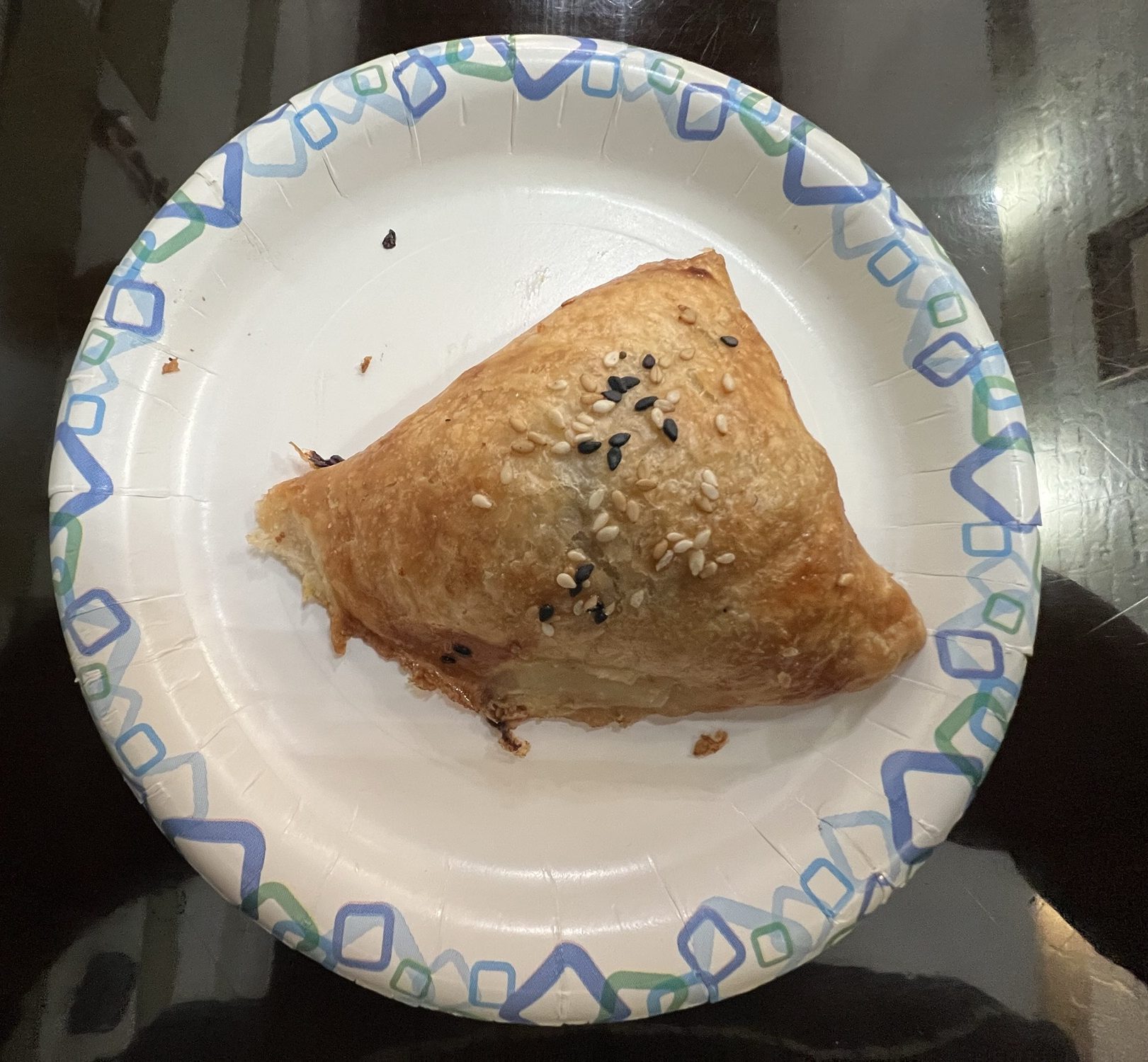
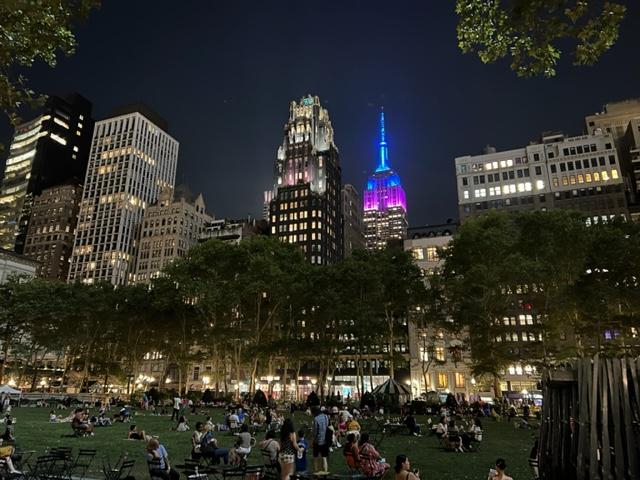
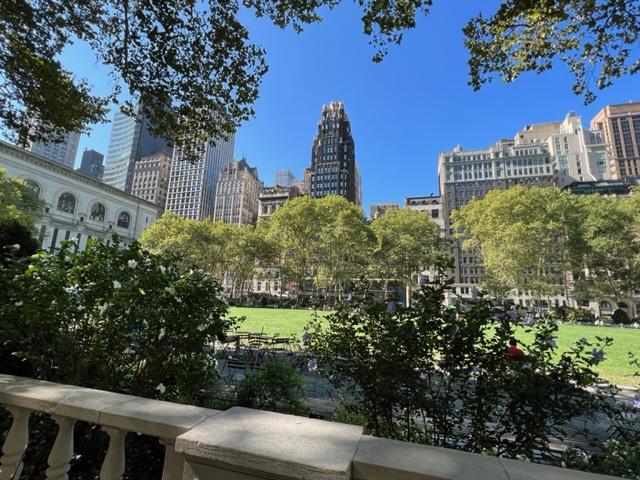
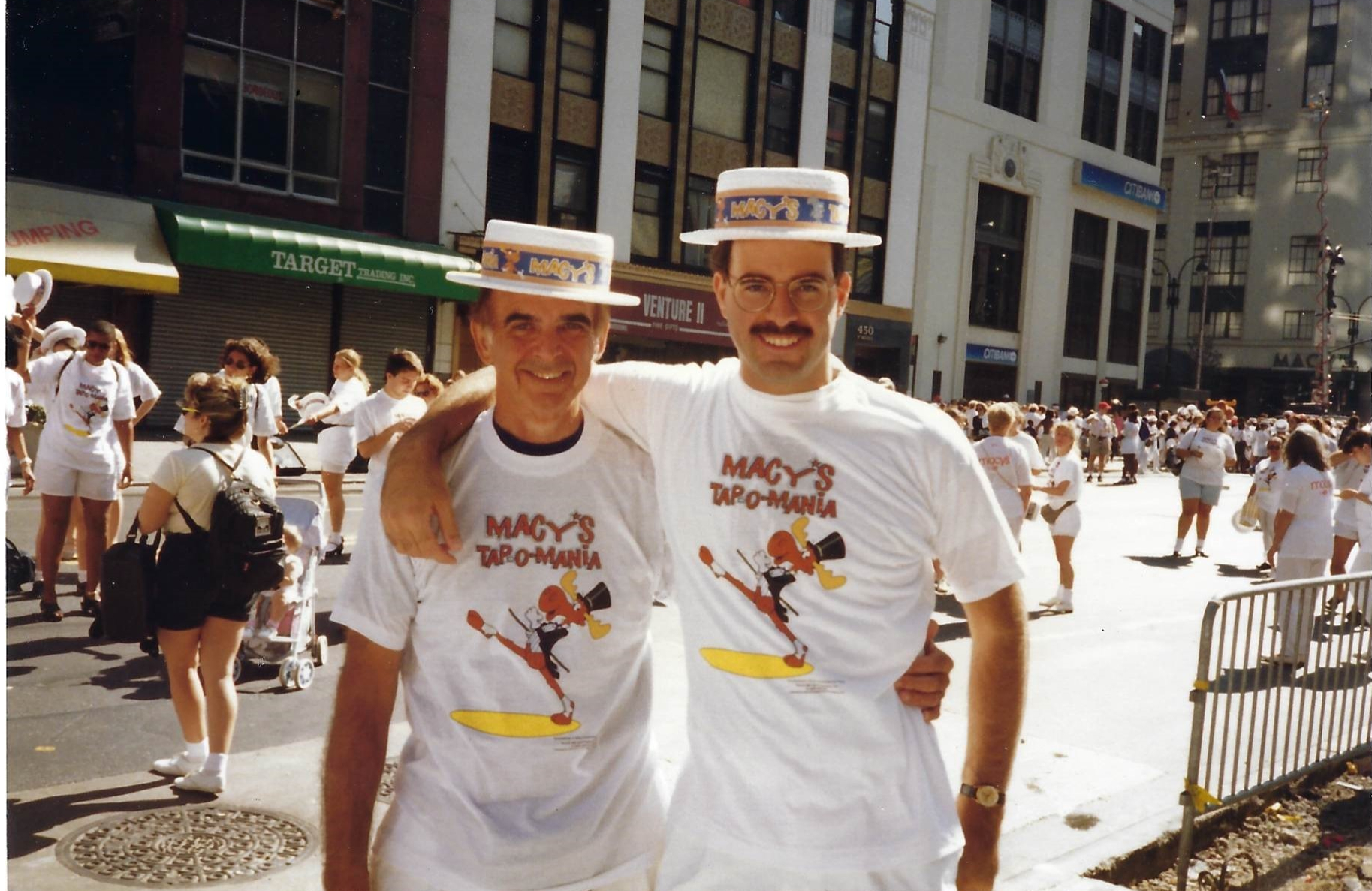
 mywalkinmanhattan