During the Annual Sussex County Heritage Weekend, one of the first stops I made was to the Franklin Heritage Museum in Downtown Franklin, NJ. The museum was the house in one of the offices of the mining company. The museum was a glimpse into community’s mining past and how it shaped this area of the State of New Jersey.
The museum sign out front
The museum building was the old New Jersey Zinc Company ‘Time Office’. This meant that the miners had to punch into their shift at the mine through this building. The old turnstile is to the right of the building.
History of the Franklin Historical Society:
(From the museum pamphlet)
The Franklin Historical Society was organized and incorporated in September 1996 as a non-profit all volunteer education association. It was founded to preserve the heritage of the Franklin Borough to create awareness of both the County and Borough of Franklin and its rich history of culture and ethnic heritage.
The Historical Society’s Museum is located at 95 Main Street in the historic Franklin Mill complex of the former New Jersey Zinc Company.
The Heritage Museum was opened to the public in April 1997 and its displays include:
Iron and Zinc Mining
Railroads
Franklin’s Churches and Schools
Franklin’s Local History
The sign for the old New Jersey Zinc Company ‘Time Office’ historical sign
The history of the Franklin Mine and its place in New Jersey history
The smaller gallery off to the side of the building concentrates on the history of the NJ Mining industry and the many mining areas in Sussex County.
The room contains all sorts of artifacts related to the industry including both pictures and everyday equipment.
The pictures of all the miners at the company
The Mining Gallery
The Mining Gallery with equipment and artifacts for a day of working in the mines
Artifacts from home and work
This gallery was in transition with the volunteers working on the displays. This side of the museum with be on the local NJ Zinc Mine Company and its history.
The main gallery in the old Main Office space
The main gallery of the museum has a mixture of more mining artifacts and town objects that cover the history of the town.
The ‘250th Anniversary exhibition of the town and its mining past
For the ‘250th Celebration’ of our country, the museum created an interesting display of the formation of the community around the mining industry to its growth today.
The Mining and Equipment display
Community artifacts
Pictures of the police and fire department’s in this small mining community
The museum’s main emphasis is on the development of the mining industry both its early development up until when the mines closed in the 1980’s. The display above is on the early mining tools used by the workers.
The Mineral display
What I found interesting was all the minerals that are on display and the glow in the dark components that make these rocks special. When the lights go out, the true magic begins.
The old turnstile to enter the mining compound before the start of the shift
The back of the museum behind the fencing and the weeds, is the entrance to the old mines. Both the entrance building and entrance to the mine has been closed off for years but you can still see behind the fencing. This is the old turnstile off to the side of the building where the miners entered the complex.
Across the street from the museum is the old Hungarian Reformed Church, which is planned to be renovated.
The sign for the church
The old Hungarian church
Down the road from the downtown area where the museum is located is the Franklin Furnace Park, which is a beautiful picturesque park situated around a lake.
All along the highway facing the park and in the park itself was the most beautiful and colorful foliage. Plan to visit the park after the museum for a colorful and relaxing break.
The foliage around the park in early October
The lake view of the park from the highway
The views from every angle of the park are breathtaking.
The view from inside the park and the footbridge to the island
The view of the park from south of the park
A view of the islands in the park
A view of the islands and the foliage
The islands and the foliage in the beginning part of October
The small center pine island
Traveling back down the road back to Route 23 South to continue my tour of museums
The view of the islands to the north in the lake
The view of the lakes from the south
The view of the foliage from the south
For a small town, Franklin offered such an interesting look at this part of New Jersey’s mining past and its transition from a mining industry to tourism based around the mines. The series of museums and cultural sites offers so much for visitors to see and experience.
A start at the Franklin Heritage Museum offers a glimpse into that past and as the museum keeps developing their exhibits will tell that story to visitors.
The Margate Historical Society at 1 South Washington Avenue
The Margate Historical Society is a small history museum that tells the story of Margate, NJ and nearby Atlantic City, NJ. The two towns are intertwined by history and business. This small museum is run by the Margate Library, part of the town’s municipal system.
The museum sign when open
The entrance to the museum
The inside of the museum and their fire and rescue displays
This interesting museum covers the history of the Fire, Rescue and Police Departments with lots of artifacts from all three departments including pictures and equipment.
The rescue and life guard display
The display explains both the lifeguard stations and members and the rescue units run by both this department and the fire department.
The museum has a lot of interesting artifacts from the Margate Fire Department that covers both the working and social aspects of the department. Many cover the last 100 years of the department.
Margate Fire Company #1 Banner
The history of the Margate Fire Department
The Margate Police Department also had an interesting display of artifacts including a jail cell. The department also donated uniforms and items to arrest people.
The museum features the history of the town from community events and organizations to artifacts on buildings and businesses.
Transit display
The history of the community of Margate, NJ
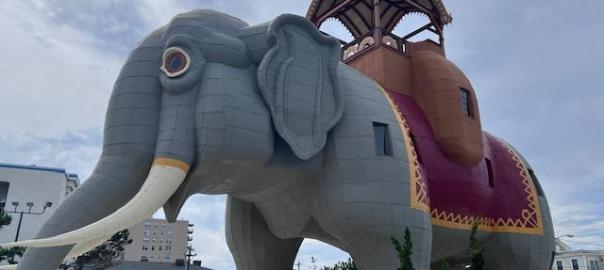
The town has many historical sites especially the “Lucy the Elephant” building down the road from the museum, which is one of the most well known structures at the Jersey shore.
The history of the Margate trolley system that used to exist on the shore line
Artifacts from the old trolleys
The history of the early community
Artifacts from residents of the town that continue to be collected by the museum
Artifacts from the community
The corner stones from the local schools
The museum has an interesting display of the 1964 Democratic Convention that was held in a fading Atlantic City. One of the biggest complaints was that the hotels were past their prime. This was before gambling would be introduced five year later.
The Democratic Convention in Atlantic City that was held in 1964
The museum touches on all parts of the Town of Margate,NJ and its role in the formation of beach communities along the Jersey shore. The museum shows the spirit of this New Jersey community.
The inside of the museum and the extensive displays of this small but interesting local museum.
The museum takes about an hour to visit and is packed with interesting information. The museum has very limited hours but you can work with the library in the off times to arrange a private tour.
I recently visited the American Folk Art Museum in New York City for the “Made in New York City” exhibition and it is a very interesting and engaging museum. The artwork for the museum was a combination of painting, sculpture, pottery and metal work created at different periods of the City’s history. It really showed the extent of manufacturing in New York City and the craftsmanship that was once here.
The entrance to the museum
I recently visited the American Folk Art Museum in New York City for the “Nation”exhibition and it is a very interesting and engaging museum.
The main gallery of the museum with early American art
The main gallery with one of the revolving shows
The artwork for the museum was a combination of painting, sculpture, pottery and metal work created at different periods of the City’s and the Country’s history.
Some of the permanent works were made in the Tri-state area. It really showed the extent of manufacturing in New York City and the craftsmanship that was once here.
The ‘Folk Nation’: Crafting Patriotism in the United States’ exhibition
Patriotism in the United States draws from the American Folk Art Museum’s rich collections to explore links between vernacular art and the construction of an American sense of self. Introducing visitors to the concept of “folk” as a category developed in conjunction with the art and antiques markets, this exhibition positions works as multilayered in their meanings, imbued with cultural significance by not only their creators, but also their collectors and subsequent owners. Americans have long preserved objects as a way of telling stories about themselves. Beginning after the Revolutionary War and gathering momentum in the late nineteenth and early twentieth centuries, people turned to early American things to construct a national history and sense of collective identity—an impulse often driven by lingering insecurity about the young nation’s perceived cultural provinciality compared to Europe (Folk Art Museum.com).
One of the painting’s that stood out to me was more contemporary approach to the Statue of Liberty, entitled ‘Miss Liberty reaches out to the persecuted’. A different approach to folk art.
The painting ‘Miss Liberty reaches out to the persecuted’ by Reverend Benjamin Franklin Perkins
The description of the painting
Some of the interesting things you will see are the paintings by artists in both Colonial New York and from the Hudson River School of prominent New Yorkers through its first 200 years of history. You will see how the styles of art have changed over the years.
Also there is a lot of metal work in the ways of signs and rods for the front of doors and for the roofs. The woodwork carvings that once graced the front doors of merchants all over the City is now a lost art. Here you could see the works of German and Russian carvers and the craftsmanship that was put into every piece. It was interesting too to see the racial themes and stereotypes that were used in the art.
Several revolving shows were being featured on a recent trip to the museum such as ‘Nation’ and ‘Self Made’, themed shows for the 250th Anniversary of the Country.
The show ‘Self Made’ A century of inventing artists’
Self-Made: A Century of Inventing Artists takes a critical look at the historical definition of the “self-taught artist” in the United States from the early twentieth century to today. The exhibition examines how artists without academic training have depicted, conceptualized, and identified themselves on their own terms. In doing so, it aims at challenging reductive, long-standing narratives that have cast these artmakers as amateurs or isolated geniuses working out of time, without lineage, influence, or artistic networks (Folk Art Museum.com).
The sixty artists featured here largely worked outside conventional art-school, gallery, museum, and peer-exchange systems. Their practices are rooted in diverse sites of learning, from professional expertise to community-based traditions. Drawn primarily from the American Folk Art Museum’s collection, this selection of artworks brings together outstanding examples of paintings, sculptures, photographs, videos, and artists’ notebooks by key national and international figures—many of them recent or rarely seen acquisitions (Folk Art Museum.com).
The exhibition is organized around three methods of artistic “self-making” and self-fashioning: self-portraits, alter egos, and autobiographies. Each gallery unfolds chronologically, providing grounding for the artists’ intentions. The works function as primary documents: firsthand accounts of the self, authored by the self. Akin to diaries or other personal statements, they call for close attention, asking viewers to “look at me, in this way, that I have chosen.” By centering the makers’ perspectives and aesthetic choices, Self-Made shifts the focus away from the viewer’s role in completing the creative act and places it squarely on the artist’s agency (Folk Art Museum.com).
Some of the paintings that stood out seemed to be self-portraits.
The painting ‘Untitled’
The painting ‘Untitled’
The museum takes different approaches to the way art is portrayed.
Another program that the museum does well is they have afternoon Jazz Wednesdays and Free Concerts on Friday nights.
There are family programs, walking tours, curator talks and lectures as part of the museum programming so there is something for everyone.
The American Folk Art Mission:
(From the Museum website)
Since 1961, the American Folk Art Museum has been shaping the understanding of art by the self-taught through its exhibitions, publications and educational programs. As a center of scholarship and by showcasing the creativity of individuals whose singular talents have been refined through experience rather than formal artistic training, the museum considers the historical, social and artistic context of American culture. Its collection includes more than seven thousand artworks dating from the eighteenth century to the present, from compelling portraits and dazzling quilts to powerful works by living self-taught artists in a variety of mediums (Museum bio).
Self-Taught art, past and present, tells empowering stories of everyday life. The field of American folk art was first defined at the turn of the twentieth century by collectors, professional artists, critics, dealers and curators whose search for an authentic American Art seemed to be finally answered in works that presented a nuanced of national identity, faith, progress, ingenuity, community and individuality. Under the umbrella of “folk art” expanded to also include artists working in the present. For the last twenty years, the term self-taught has more regularly come to address these artists, whose inspiration emerges from unsuspected paths and unconventional places, giving voice to individuals who may be situated outside the social mainstream. Those individuals have been active participants in the shaping of American visual culture, influencing generations of artists and establishing lively artistic traditions (Museum History).
American Folk Art Museum History:
(From the Museum website)
The museum of Early American Folk Arts as it was known initially held its first exhibition in a rented space on 49 West 53rd Street in 1961. The museum’s collection was launched in 1962 with the gift of a gate in the form of an American flag, celebrating the nation’s centennial. The gift reflected the museum’s early focus on eighteenth and nineteenth century vernacular arts from the northeast America.
In 1966, after receiving a permanent charter, the museum expanded its name and mission. As the Museum of American Folk Arts, it looked beyond the traditional definitions of American folk art. Its exhibitions and collection began to reflect “every aspect of the folk arts in America-north, south, east and west.” Founding curator Herbert W. Hemphill Jr. “expanded the notion of folk art beyond traditional, utilitarian and communal expressions.” Under his direction, the museum began to champion idiosyncratic and individualistic artwork from the fields of traditional and contemporary folk art. In doing so, the museum ushered in a new era in the field of twentieth-century folk art (Museum History).
The 1990’s brought new focus to the diversity and multiculturalism of American Folk Art. Offering a more inclusive vision. the museum began to present African American and Latino artworks in their exhibitions and permanent collections. Director Gerard C. Wertikin announced American folk art’s common heritage as “promoting an appreciation of diversity in a way that does not foster ethnic chauvinism or racial division.” (Museum History).
The museum further established its broadened outlook with the 1998 formation of the Contemporary Center, a division of the museum devoted to the work of 20th and 21st century self-taught artists as well as non-American artworks in the tradition of European art brut. In 2001, the museum opened the Henry Darger Center to house 24 self-taught artist’s works as well as a collection of his books, tracings, drawing and source materials (Museum History).
The gift shop
In 2001, the museum chose its current name, American Folk Art Museum. Recognizing that American Fold Art could be fully understood in an international context, the word American functions as an indication of the museum’s location, emphasis and principal patronage rather than as a limitation on the kind of art it collects, interprets or presents. The museum’s current programming reflects this shift in focus. Past exhibits have included folk arts of Latin America, England, Norway, among other countries and continents (Museum history).
Don’t miss this amazing little museum on the Upper West Side of Manhattan.
In the months of March and May right before the Memorial Day holiday, many of the museums I belong to held their private ‘Members Night’, where they hold extra hours for members after the museums are closed to the public to come and see the exhibitions, listen to music, have something to eat and drink and listen to talks about the exhibitions. The funny part is that the museum’s are more crowded on these nights than when they are open to the public.
Walking inside the soaring dining space at the Morgan Library
The first set of ‘Members Nights’ I went to were on March 24th with my first stop at the Morgan Library. I was there to see the ‘Mozart’ exhibition again.
Wolfgang Amadeus Mozart: Treasures from the Mozarteum Foundation of Salzburg, an exhibition that traces the extraordinary life and enduring legacy of Wolfgang Amadeus Mozart (1756–1791). On view March 13th through May 31st, 2026, this two-gallery exhibition combines the Morgan’s significant holdings in Mozart manuscripts and first editions with remarkable objects, on view in the United States for the first time, from the Mozarteum Foundation of Salzburg. These include Mozart’s clavichord on which he composed The Magic Flute and his childhood violin, as well as famous portraits, letters, and personal objects of Mozart and his family (Morgan Library.com).
Touring the exhibition
Video on the exhibition:
The concert of Mozart as a child
The Magic Flute music and costumes
I happen to love ‘The Magic Flute’ and it was interesting to see the notes and some of the original costumes from the opera at the exhibition.
The costumes from the Magic Flute
After I toured the Mozart exhibition, I toured the rest of the museum that included the original part of the mansion.
The old Living Room
The ceiling outside the exhibition hall
The old Library and Rare book collection
The ceiling in the old Library
I then visited the exhibition of ancient Mesopotamia art scrolls. This was really interesting how this form of written art worked into the collection.
After touring the museum, I went to see what everyone was eating in the museum’s small restaurant was eating because it was getting crowded. The counter was filled with delicious looking desserts.
The sweet treats at the dessert bar at the Morgan Library
The selection of desserts at the Morgan Library the night of Member’s Night
I then visited their very interesting Gift Shop
Admiring the flowers at the Coat Check on the way out. I thought this was a nice touch.
All good things come to an end and I made my way up Fifth Avenue to the Museum of Modern Art for the second part of the evening
I could not believe that the museums arranged these ‘Members Nights’ on the same night. They would plan this three weeks late when the Museum of Modern Art and the Metropolitan Museum of Art. I just had to enough time at one museum and see what I wanted to see and then go up the next.
The Museum of Modern Art (MoMA) at 11 West 53rd Street
Frida and Diego: The Last Dream celebrates Frida Kahlo and Diego Rivera—two of Mexico’s most beloved icons of 20th-century art—in a first-of-its-kind collaboration with the Metropolitan Opera. Organized in conjunction with the Met’s new production of El Último Sueño de Frida y Diego, the presentation at MoMA features artworks by Kahlo and Rivera in an elaborate setting designed by Jon Bausor, the set and co-costume designer of the opera. For both the opera and installation, Bausor evokes the artists’ lives and artworks in his theatrical designs (MoMA.org).
Key participants in a movement to redefine Mexican culture and identity after the revolution of 1910–20—Rivera through monumental murals and Kahlo through intimate self-portraits—the artists were romantically involved from 1928 until Kahlo’s death in 1954. The fictional narrative of the opera El Último Sueño de Frida y Diego begins three years after Kahlo’s death and follows an aging Rivera as he summons the deceased Kahlo back to life on the Day of the Dead, a Mexican holiday honoring passed loved ones. As the opera and installation design attest, the pair continue to have an enduring influence on artists across the visual and performing arts (MoMA.org).
Video on the exhibition:
The opening of the ‘Frida and Diego’ exhibition brought members out in droves
The description of the exhibition
The tree dominates the center of the exhibition
The signature piece from the exhibition
One of the dominate drawings
Looking over costume designs
Some of my favorite costume designs
Another great costume design
After touring the exhibition, I visited some of the other galleries and looked over other works of art that I admired in the past. I took a quick tour of the Modern Galleries before I left that evening.
The Jackson Pollack work
I loved this creative food service work
After touring the museum, I joined the rest of the crowd on the main floor for music.
The main lobby of the MoMA the night of Member’s Night
A few weeks later, the Metropolitan Museum of Art had planned their Member’s Night and then the Museum of Modern Art planned a Member’s Night the same night. So I planned another night of running back and forth between museums.
Member’s Night at the Museum of Modern Art
The schedule of events
There was a lot of activities happening that evening and I wondered around museum to see all of them. I started in the Museum Garden to hear the singers who were performing that evening.
The first performer was Lizzy Hilliard, who performed the guitar and was really enjoyable to hear. She is a very lively and engaging entertainer.
The crowds were outside enjoying the beautiful weather that evening
Lizzy Hilliard performing that evening in the garden
After the performance, I wondered around the museum to see some of the exhibitions and started on the first floor which was really active.
I love wondering through the lobby of the MoMA.
While most of the crowds were still listening to the entertainment in the garden, I went up to the Marcel Duchamp exhibition and toured the galleries again (I had been there the previous week and quickly walked the exhibition).
The Marcel Duchamp exhibition was the biggest retrospect of the artist’s work in years
Marcel Duchamp is organized by The Museum of Modern Art, New York, and the Philadelphia Art Museum, with the generous collaboration of the Centre Pompidou. “Contemporary artworks often prompt viewers to ask, ‘Why is this art?’ It is virtually impossible to answer this question without referring to the work of Duchamp,” said Temkin. “More than any other modern artist, Duchamp challenged and transformed the very definition of an artwork.” Kuo added, “Duchamp’s influence is incalculable and his myriad contributions have established him as one of the most important figures in modern culture (MoMA.org).
Our exhibition will foreground the ways in which Duchamp upended conventional oppositions between hand and machine, original and copy, intention and chance, and matter and idea.” MoMA and PMA have a longstanding history with Duchamp’s work. MoMA was the first museum to acquire a work by Duchamp, in addition to including his work in early landmark exhibitions such as Fantastic Art, Dada, Surrealism (1936) and The Art of Assemblage (1961) (MoMA.org).
Video on the exhibition from the MoMA curator:
I joined the start of the walking tour with one of the docents at the MoMA at the beginning of the exhibition
The gallery was so crowded with people listening to the one docent that was describing the exhibition that I continued on my own. I had never seen much of this artist’s work in museums before and had heard about his piece of changing the look of the Mona Lisa. I really enjoyed seeing it up close.
The 1919 original “L.H.O.O.Q.” was on a card
The 1930 replica “L.H.O.O.Q.”
The information on the replica piece
I then moved on to other works that he was well known for especially his controversial urinal piece.
The work “Fountain” (I thought this was unusual)
The write up on the piece
The last piece that I saw in the exhibition before I left the museum for the Met was his spoke wheel piece.
The work “Bicycle Wheel”
I wondered around the museum for a bit after the tour of the exhibition and admired works in the Modern Wing.
I love Picasso’s Cubism works
After I finished touring the exhibition, I left the MoMA for The Met. The weather was beautiful and with it being light out until almost 8:30pm. It was a beautiful walk up Fifth Avenue with the trees and the flower beds in full bloom.
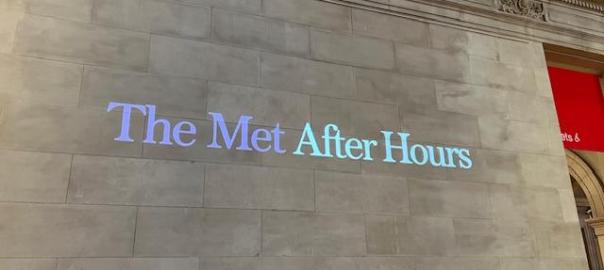
Arriving at The Metropolitan Museum of Art for “The Met After Hours”
The lobby and rotunda for the event seemed very quiet to me
The beautiful floral arrangements in the lobby area were fresh Cherry Blossoms
The Cherry Blossoms in the urns around the lobby
The American Wing where the Member’s Bar and entertainment was located
The Met seemed very quiet that night. Being the Tuesday after Memorial Day Weekend, I guess most members were getting back to work or still tired from the weekend. It had been a rainy mess the whole weekend and I could not see many people going away.
The bar and the entertainment in the American Wing were located that evening.
I had about two hours before the museum closed for the evening, so I wondered through some of the special exhibitions and started with the “Raphael-Sublime Poetry” exhibition on the second floor.
Raphael: Sublime Poetry is the first comprehensive exhibition on Raphael in the United States, bringing together more than 170 of the artist’s greatest masterpieces and rarely seen treasures to illuminate the brilliance of Raphael’s extraordinary creativity. The son of a painter and poet, Raphael engaged with the foremost writers and thinkers of his age in Rome, displaying a poetic sensibility that captivated his peers and generations that followed. Follow the full breadth of his life and career, from his origins in Urbino to his rise in Florence, where he began to emerge as a peer of Leonardo da Vinci and Michelangelo, to his final, prolific decade at the papal court in Rome (Met.org).
Dive into the artistic process of one of history’s most beloved and influential artists. A true titan of the Italian Renaissance, Raffaello di Giovanni Santi (1483–1520)—better known as Raphael—matched ambition with lyricism to create works with both intellectual heft and emotional depth, a necessary skill in the complex political landscape of Renaissance courts. In his short life of only 37 years, he achieved such profound success as a painter, designer, and architect that he was regarded as the pinnacle of artistic perfection for centuries after his death (Met.org).
Video on the exhibition with the MoMA:
Video on the exhibition with CBS This Morning:
The work admired as I was walking around the exhibition.
This was my favorite piece from the exhibition
The Raphael Exhibition I know was a big deal for the museum but it really was not my taste in art. As much as I admired the work, the whole exhibition did not ‘grab me”.
I was not as impressed with the art in the exhibition and took a quick tour of the works. I had seen the exhibition on a previous tour of the museum so I just wanted to walk around again to see the works that I missed.
I then went back to the first floor and spent more time at the Costume Art exhibition. There had been so much media on the exhibit that you could not get in without timed tickets but because it was quiet on Member’s Night, I just walked in.
The Costume Institute’s spring 2026 exhibition explores depictions of the dressed body across The Met’s vast collection, pairing garments with artworks to reveal the inherent relationship between clothing and the body (Met.org).
Focusing primarily on Western art from prehistory to the present, Costume Art presents connections between garments from The Costume Institute and objects from the Museum’s other collecting areas. Pairings between fashions and artworks will present a spectrum of connections and experiences: from the formal to the conceptual, the aesthetic to the political, the individual to the universal, the illustrative to the symbolic, and the playful to the profound. These pairings are organized into a series of thematic body types that reflect their pervasiveness and endurance through time and cultures (Met.org).
Video on the Costume Art exhibition:
Walking through the entrance of the exhibition
This gallery was newly created for this collection and I had display the pieces that stood out to me the most in the Costume Art exhibition.
One of the pieces I admired
Some of the Evening clothes I admired
Another piece I admired
I thought this was really unusual
I really enjoyed looking over the exhibition yet wondering how many people would actually wear some of these pieces out in public. It really asks the question “What is art?” Still, I loved the dress with all the human organs on it. Now that would stop everyone in mid conversation at a party.
All good things come to an end again and I left the Met as it was closing for the evening. It really is a pretty site at night looking down Fifth Avenue.
How beautiful the Upper East Side is at night
I was starved when I left the museum and knew not too many places outside the bars would be open this late at night. I remembered Asian 83 on East 83rd Street that still might be open for the evening and I was one of their last customers that night. The food is excellent at this little ‘hole in the wall’ on the Upper East Side.
Dinner at Asian 83, Beef and Broccoli with Fried Rice
I ordered a combination platter of Beef and Broccoli with Fried Rice and an Egg Roll with a Coke. Their prices are so reasonable and their portion sizes are very fair. It was a nice dinner before I left Manhattan that evening.
The Beef and Broccoli entree
Their Egg Rolls are excellent
Being a member of many museums, this is one of the perks about membership. You get to enjoy these wonderful evenings while supporting the museums which in this economy really helps. That’s why I have enjoyed supporting them for years. The donation benefits everyone.
This small museum in the Upper West Side neighborhood of Manhattanville is easy to miss. It is in a small brownstone on West 107th Street right near Riverside Drive. You can see the plaque for the museum to the right of the building and there is a side door to get in. The admission is free but they do ask for a donation if you can do it.
The gallery on the second floor
The museum is a specialty collection of the works of artist Nicholas Roerich. They are mostly landscapes and religious themed that cover three floors of the museum.
The is a beauty to all his works especially the ones concentrated in the Himalayas with their colorful and spiritual themes.
The artist’s portrait of his mother on the third floor
It takes about an hour to an hour and a half to see all the floors. A nice touch they had in the afternoon that I was there was a piano player whom you could hear play throughout the brownstone. When you go, it will be a pleasant afternoon where you are not fighting the crowds of the larger museums.
The art pieces enlighten you and I felt gave you a sense of hope.
(The following information is from the museum website)
Artist Nicholas Roerich
(From the museum website)
The Nicholas Roerich Museum was founded in 1949 to house a permanent collection of over two hundred paintings by the Russian-born artist, poet, philosopher and humanitarian, Nicholas Roerich. The museum also houses a library of books and maintains an archive and a collection of artifacts relating to the areas of Roerich’s interests (Museum guide).
The Mission of the Museum:
The mission of the Nicholas Roerich Museum is essentially a narrow one: to make available to the public the full range of Roerich’s accomplishments. These, however, are not narrow; they cover the realms of art, science, spirituality, peacemaking and more. Because Roerich’s activities ranged widely, so do the museum’s.
The second floor galleries
The Museum Collection:
Nicholas Roerich is known first and foremost as a Russian-born artist. His paintings, of which there are thousands around the world, explore the mythic origins, the natural beauty and the spiritual strivings of humanity and of the world.
One of the more spiritual paintings in the collection
The museum houses approximately two hundred of these works and keeps most of them permanently on display for visitors who come from around the world. Indeed, for many of these visitors, the museum is a destination of great importance; the paintings speak to them of their own inner yearnings and possible fulfillment. For them, Roerich’s paintings are a kind of teaching-about spiritual development about culture and its role in human life and about opportunities for the achievement of peace in a fractious world.
The second floor galleries
The beautiful landscapes on the second floor
Publications & Booklist:
The museum also keeps in print a number of books by and about Roerich and his life and work and a substantial stock of postcards and reproductions of his paintings. These too are seen by many as more than just prints; they are hung in homes with a degree of appreciation that is not often given to such things.
The gallery on the first floor with some of the more religious works
Cultural Events:
In addition to these functions, the museum also maintains an active schedule of cultural activities.
The second floor galleries
It was Roerich’s fervent belief that the role of cultural development in the peace and evolution of the world is fundamental and that it is therefore the responsibility of those who work in creative and cultural fields to strive always for that peace and evolution and for those goals to be the chief impulses guiding their creative work. Information about these ideas is always available.
The second floor gallery with Asian themed art
The Roerich Pact & the Banner of Peace:
The museum sustains an ongoing effort to spread public awareness of the intermingled roles of peace and culture and the ways in which each sustains the other. Information and materials about The Roerich Pact and the Banner of Peace are always available.
The patronage of the museum through the Katherine Campbell-Stibbe Foundation
Throughout this century of wars and national struggles, the yearning of the public for ways of achieving peace has been great; the ideas of the Pact and the Banner provide a welcome answer to those yearnings.
The history of the museum through the years
As Roerich’s ideas become better known around the world, attendance at the Museum grows and requests for information and materials about him and his art and social achievements increase.
The gift shop on the first floor. The director of the museum even sells honey from the beehives on top of his building.
*This information is from the Museum’s website.
Disclaimer: This information was taken from a combination of the museum’s website and from the biography of the artist.
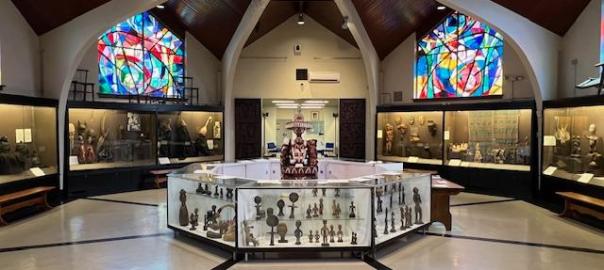
I recently revisited the African Museum of Art on the SMA Father’s and on this trip really took my time to learn about the Mission and study the art in the various displays. Each country that the Mission is involved with is represented here with detailed information on the meaning of the art and its purpose. It is an interesting approach to understanding the culture of each of these countries.
The beautiful stained glass windows line the ceiling and walls and has a beautiful effect in the room on a sunny day.
The sculpture in the middle of the main hall
The History of the Museum:
(From the museum website)
This museum was established in 1980 and is one of the only rare few in the United States dedicated solely to the arts of Africa. Its permanent collections, exhibited on a rotating basis, offer a unique advantage in the study and research of sub-Saharan sculpture and painting, costumes, textiles and decorative arts, religion and folklore.
The main hall of the museum
The history of the Mission
The history of the Mission
The history of the Mission
The African Art Museum of the SMA Fathers is one of five museums around the world founded and maintained by the Society of African Missions, an International Roman Catholic missionary organization that serves the people of Africa.
The display case that line the main hall
The display case that line the main hall
The art works up close
The descriptions of the works
The display case that line the main hall
Some of the works up close
The description of the masks
The display case that line the main hall
The museum is the continued vision of SMA’s founder, Bishop Melchior de Marion Bresillac (1813-1859). The French-born clergyman urged his Society to respect and preserve the culture of the peoples they serve, the unique among the missionaries of his time. (This information is provided by the museum).
Some of the works being featured in the exhibition
Their current exhibitions is on the “Africanizing of Christian Art” which shows the 20th Century encounter between Catholic Christianity and the visual culture of the Yoruba, a prominent west African people of southwest Nigeria under the conditions of late colonization (This information provided by the museum).
The hallway off the main room
Linking the walls of the main room are wooden carved doors from a palace in Africa. The interesting detail work tells it own story.
The description of one of the doors
Panel One
Panel Two
Panel Three
Panel Four
The collection contains many works in the form of masks, textile work, religious figurines and decorative arts. Each display case shows a different theme in the art.
The works of art in the cases
The puppets in the case
The works of art lining the cases
The engaging Mask collection
The museum is the main hallway of the church. I found it a quiet place where you could really concentrate on the beauty of the art. It grounds are also nice to walk around in in the nice weather.
The Chapel just off the museum is interesting to visit. I wondered how many people came to serve here and how the service was performed.
The main chapel of the mission
The beautiful stained glass windows in the chapel
The museum is a true hidden gem of wonderful and interesting testimonial and contemporary art. An inspiring museum if you take the time to really enjoy it.
There is always a lot of excitement when a new art exhibition is ready to open. It is even better when the museum opens it to its members first before the public gets a glimpse. The lines always wrap around the corner from the museum.
The long line of MoMA members waiting to get into the museum for the opening night of Artist Ruth Asawa’s exhibition
I noticed this year especially and right before Thanksgiving, all the museums are throwing open their doors for Member’s Nights. I have been invited to five Members Nights at museums all over the City. You can’t attend them all but when you can, it is a lot of fun.
The excitement the museum creates for these evenings
Video of entering the museum at the start of the opening with 80’s Japanese Pop Music
I think in an economy like this, these Members Nights are one of the best ways to engage with the membership for both donations and renewals of memberships especially before the holiday season. Plus it gives the members a wonderful night out to see the exhibitions ahead of time and enjoy the evening after a long week at work.
Born on a farm in Southern California, Asawa began her arts education when she was a teenager and she and her family were among the thousands of persons of Japanese descent who were forcibly incarcerated by the US government during World War II. It was at the internment camp that Asawa began taking classes in painting and drawing. After her release, Asawa studied to be a teacher but was unable to get a license because of her Japanese heritage, so she enrolled at Black Mountain College, an experimental art school in North Carolina. Asawa took classes from and worked alongside fellow artists Josef Albers, Robert Rauschenberg, Merce Cunningham, and R. Buckminster Fuller. Black Mountain was also where she met her husband, the architect Albert Lanier.
I loved her wire woven sculptures. They were the real standouts of the show.
The wire woven sculptures were the standouts of the exhibition
I thought these were a unique design
I liked here colorful paintings, these are of her child’s footprints. I loved the idea that her children were involved with the art
The patrons enjoying the art
The display of the wire art
The displays were impressive and graceful
The colorful faces looked tired
The look of nature in the wire art in the form of trees
I loved her works of food
At the end of the exhibition and the evening, I joined everyone on the main floor where the bar and gift shop were located. The main floor was the busiest part of the museum. I wondered if some of these people even went upstairs to see the exhibition or just stayed downstairs to socialize.
The main floor of the museum is always packed with people
Share in the excitement of the Membership opening
These evenings always get my mind off the stress of life. It is nice to just be in Midtown Manhattan and be in the moment. It is nice to see art, hear music and walk through the museum.
Also known as the U.S. Coast Guard Station No. 126, this is the only life-saving station (now museum) of its design in NJ (1 of 6 in the country) still in existence. The designer and architect was James Lake Parkinson in a Carpenter Gothic style. This building is one of 42 stations built in New Jersey. It was also the workplace of the brave surfmen who were the beachfront First Responders of the day.
The anchor outside the building
The historical plaque outside the building
The History of the Building and Museum:
(from the State of NJ Historic website)
The U.S. Life Saving Station in Ocean City is significant as an example of a significant type of life saving station and for its association with the activities of the U.S. Life Saving Service. The building was constructed in 1885 in what was referred to as the “1882 type.” There were 25 life-saving stations constructed in this style. In 1905 the building’s footprint was expanded to nearly twice its original size. The expansion was done in a style unique to New Jersey Life Saving Stations.
In 1915 the U.S. Life Saving Service and the Revenue Cutter Service were combined to form the U.S. Coast Guard. The Coast Guard continued to utilize the building until it was decommissioned during the 1940s and sold. It was used as a private residence until the City purchased it in May 2010.
The first room inside was the formal dining room where guests who visited or who had been rescued had dined. It was a rather formal affair.
I visited the museum on a weekend day to learn of the rescue procedures and the job these men did on a day to day basis. The first thing I learned was how shifting tides can change an island.
This building which now sits about four blocks inland was once at the shoreline a hundred years ago. Talk about change and Mother Nature’s role in this.
The first room I visited was the formal dining room in the newer extension of the building. This would be where the officers and men would entertain guests and visitors to the building. It could be a casual or formal affair.
The first floor formal dining room
The entertainment for the evening was either board games or a music box
Some of the items salvaged from the sea
The Life Guard officer formal outfit was worn for formal affairs
The officers would be dressed formally to receive guests
The next room over was the Rescue room and door where the boats and other equipment would be held when the alarm sounded.
The docent discussed how the doors were opened and the boats needed to be pulled out on a stormy night. Everything you needed had to be close by, in good shape and ready to go.
The rescue boats and pulleys that would be used in the sea
The ropes and pulleys used to assist in the rescue
The lanterns were used as communication between shore watch and the tower
The equipment used to repair the items used for rescue
The rescue boat and the items used for a water rescue
The additional boats used in rescue
Some boats were used for fishing and collecting shell fish
The Sneak Box was used for duck hunting to camouflage yourself
The sneak box
We then toured the second floor sleeping room for the crew. This offered a great view of the sea when the building was at shore line. These men were given good accommodations for the time.
While not very private, it was comfortable and served its purpose for a job where you might not get a good nights sleep.
The sleeping quarters
The main sleeping room was for a crew of six
The loft lead to the tower where the look out for the evening would sleep (it is not open to tours right now).
The loft area from the window
We then headed back downstairs where we toured the station manager’s room and office.
The station manager’s room off from the kitchen
The station manager’s office where all the monthly paperwork was done and business was conducted.
The kitchen
The Station Manager’s office was right next to the kitchen stove so that the room was kept warm during the winter months and on cool nights.
The kitchen stove
All the meals for the crew and visitors were cooked either by the men or their wives might be allowed to visit and assist in duties in the building.
The kitchen
All the storage of the foodstuffs has to be accounted for because getting them was rough with no cars for transportation and no bridges to cross to the mainland.
The gift shop
The museum and grounds
The museum offers a glimpse of the everyday life of these brave men who were on call 24/7 and performed such dangerous work. Ocean City has done a wonderful job preserving this legacy.
The museum has docents on hand for more formal tours and are very detailed on their knowledge of the building and its contents. It is a very interesting look at Ocean City’s past.
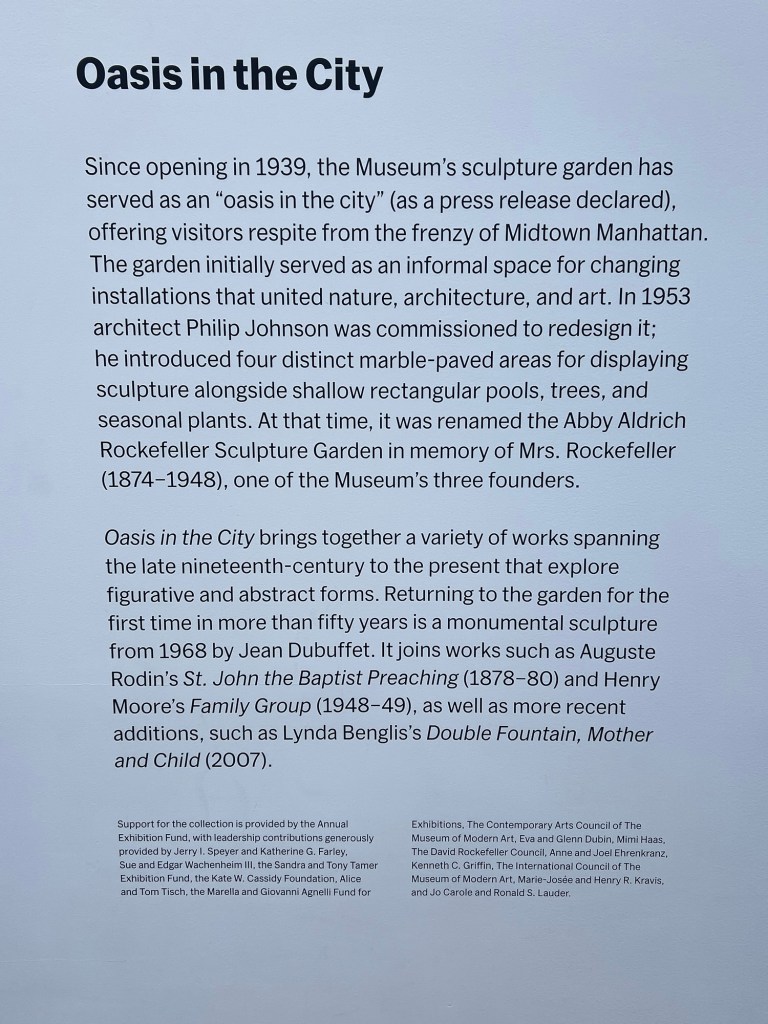
What I love about being a member of the museums in New York City is that there is an opportunity to see the museum in the early hours for private events. This morning I got up early to experience Manhattan on a spectacular sunny morning for the event ‘Oasis in the Garden’, a talk on the design, purpose and art in the MoMA outdoor garden.
We met inside the museum before the tour
Since the museum opened at 9:30am and there was no one at the museum at that hour, we had the outdoor garden to ourselves for almost an hour and a half.
The outdoor garden at the MoMA at 10:00am in the morning
Our tour guide led about fifteen of us through a history of the creation of the gardens, the purpose in the museum, its renovation in 2004 when I joined and the sculpture in the garden.
She also talked about taking her students here and that some of them wanted specific answers to what the art meant rather than forming their own opinion. It is funny how I see this in my own students.
What I liked about our tour group was that it was an older, very educated crowd of people who brought different opinions on how the art we were seeing should be thought about. From the time the artist created it to it modern interpretation by the ‘politically correct police’, I was amazed by the other members take on each piece of art.
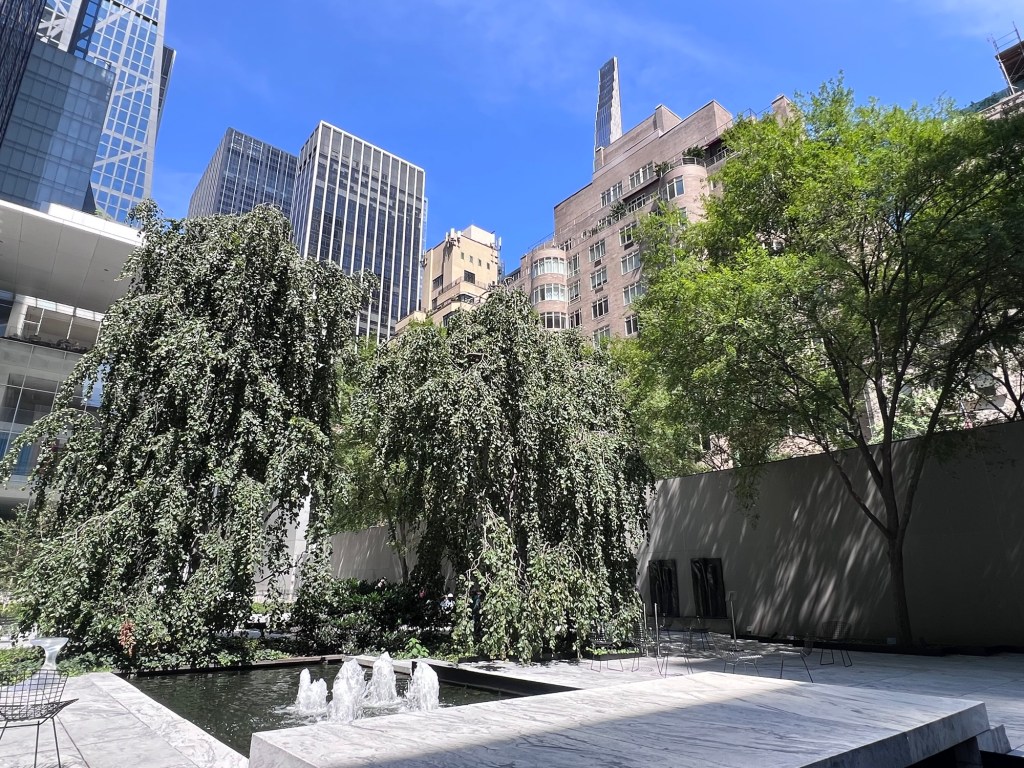
The gardens are a refuge from the noise and crowds of the museum and the City
Video of the fountain
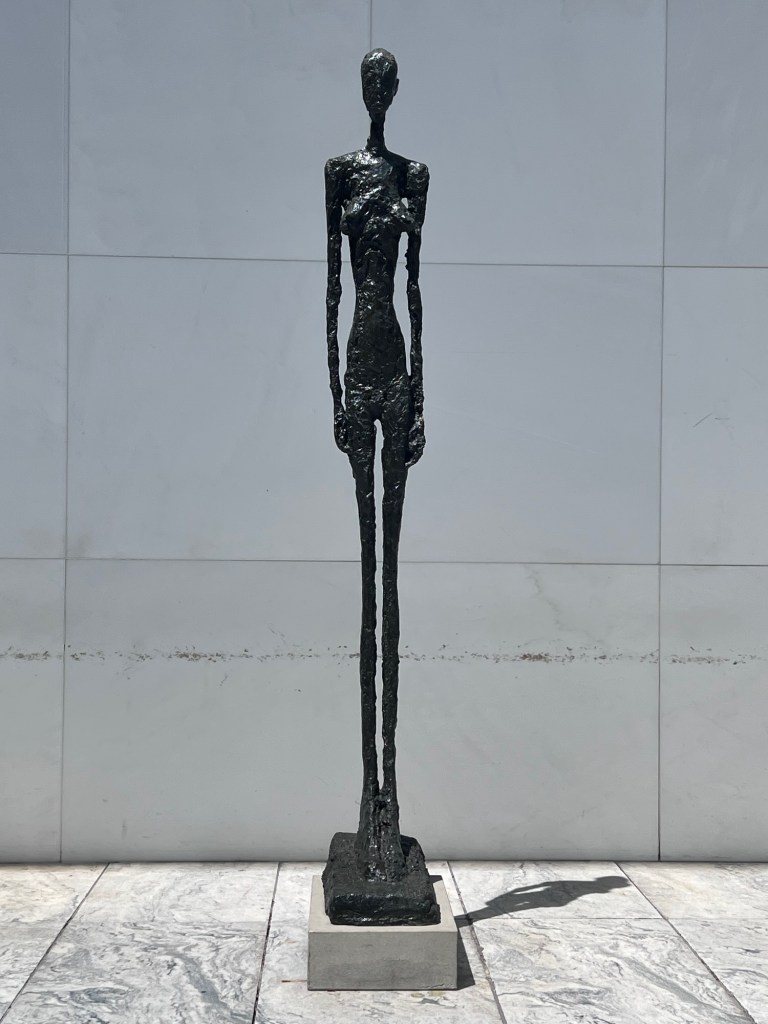
The Albert Giacometti ‘Talk Figure III’
Each piece of sculpture we touch upon was chosen specifically for the gardens and we talked about its place from when it was made to the modern interpretation and how they differ. Our first discussion was about the Albert Giacometti sculpture ‘Tall Figure III’. Some people talked about hunger and the stance on poverty. I asked if her students had different thoughts of the statue when it was made versus today.
She explained everything is seen differently through the artist’s eyes versus the modern I perception. It was hard to compare the two opinions without a debate. I thought today’s students needed to lighten up a little and stop taking art at face value and just enjoy it. The context of work over a hundred years ago is very different from how it can be looked at today.
We had time to talk and relax between art pieces and I swear the sound of the fountains relaxed me so much I almost feel asleep.
The fountains were so calming that morning
Video of the Japanese fountain
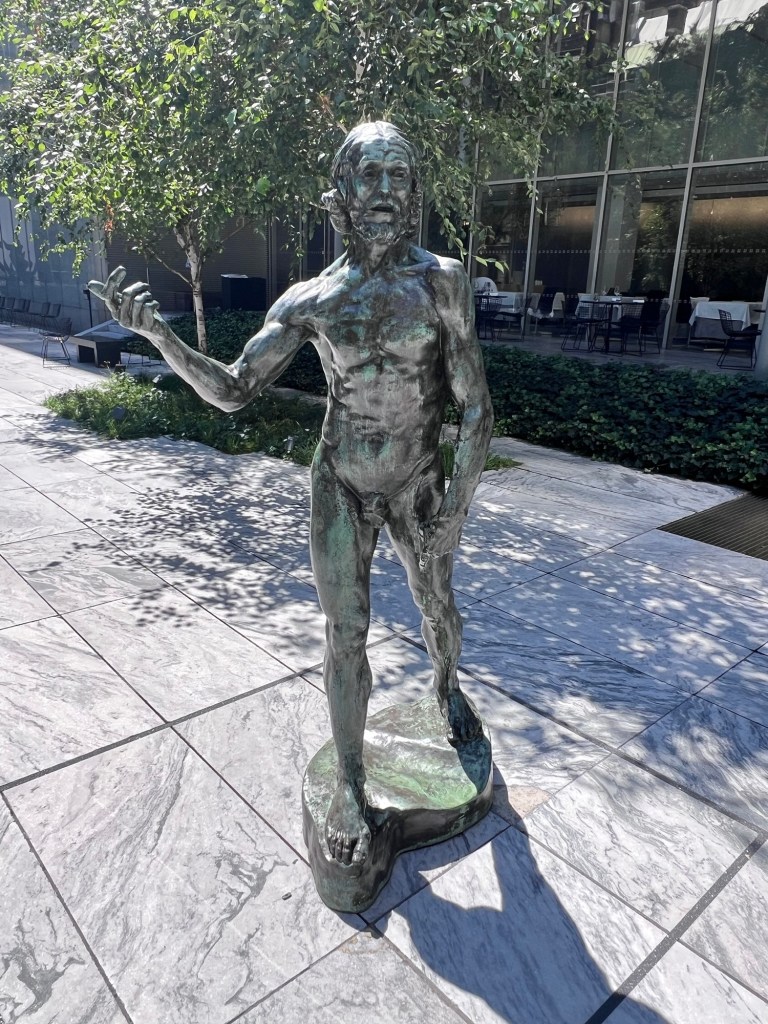
The August’s Rodin ‘St. John the Baptist Preaching’
We talked about the religious standpoint of the sculpture versus its place in modern society. I thought it was a naked guy hitchhiking. It’s funny how you see art.
The Jacques Lipchitz ‘Figure 1926-30’
With the ‘Figure’ many of the member talked about their interpretation of the modern take of Cubism and some members asked about whether these were arms and legs or something else.
The back of the gardens
The back of the gardens were so peaceful. I stood back from the tour so I could just hear the water rumble.
The Henry Moore sculpture ‘ The Family Group 1948-49
We discussed the modern family unit of today versus when the sculpture was created.
The back of the gardens
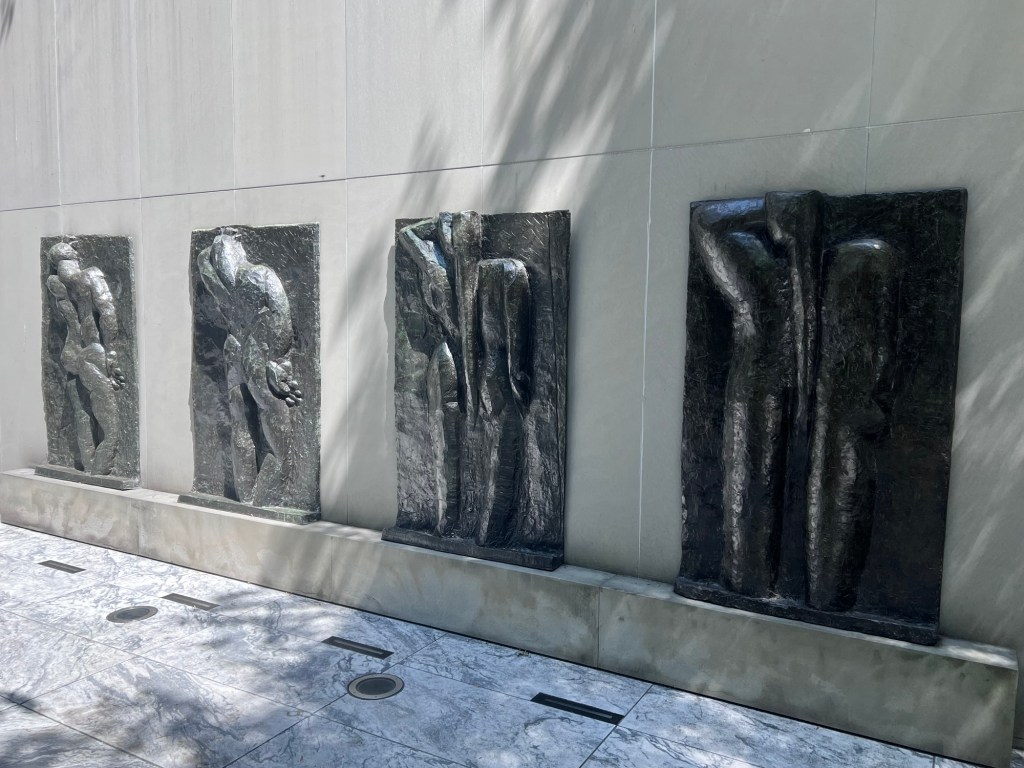
The Henri Matisse ‘The Back (III) 1913-16
The Aristide Maillol ‘The River’
We talked about the fall from God. One person said it looked like someone was tripping into the fountain. I thought that was clever.
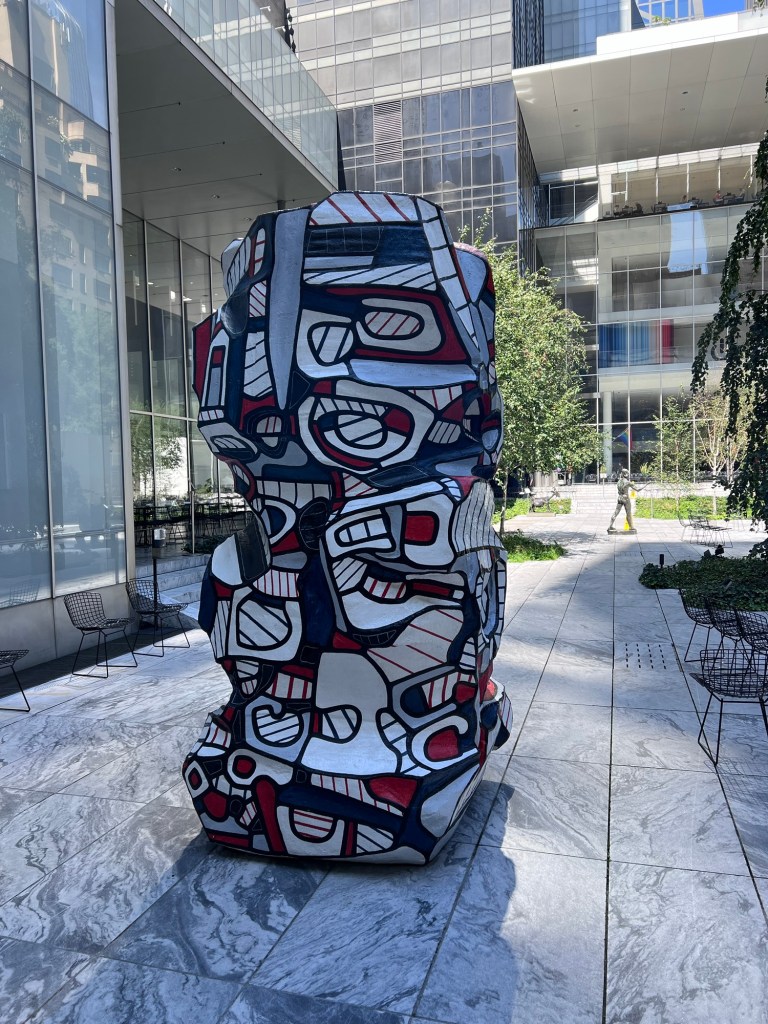
The Jean Dubuffet ‘Study for Tower with Figures’
This was the last figure we discussed and we were asked as a group what was the first thing that came to our minds when we saw this. I said ‘Juxtaposed’. So much going on and a lot being said. We talked about children and their make up in the family unit. How they change things.
I have to say that I saw the art in a different light this morning. It was interesting to hear the artist’s interpretation versus what members thoughts were on what the art meant. I thought it was a good take away when we finished the tour. There were so many interesting opinions on the art. What I liked was the weather was so amazing, and it was so nice to be outside.
The garden as the public entered later that morning
I know I got a lot out of the tour. It’s always nice to see different points of view of what the art means and how we interpret it. This is why it is fun to be a member of the MoMA. It’s nice to see the museum when it is quiet and you can just take your time.
Hours: Tuesday-Saturday: 11:00am-6:00pm/Closed on Sunday and Monday
Admission: Free
My review on TripAdvisor:
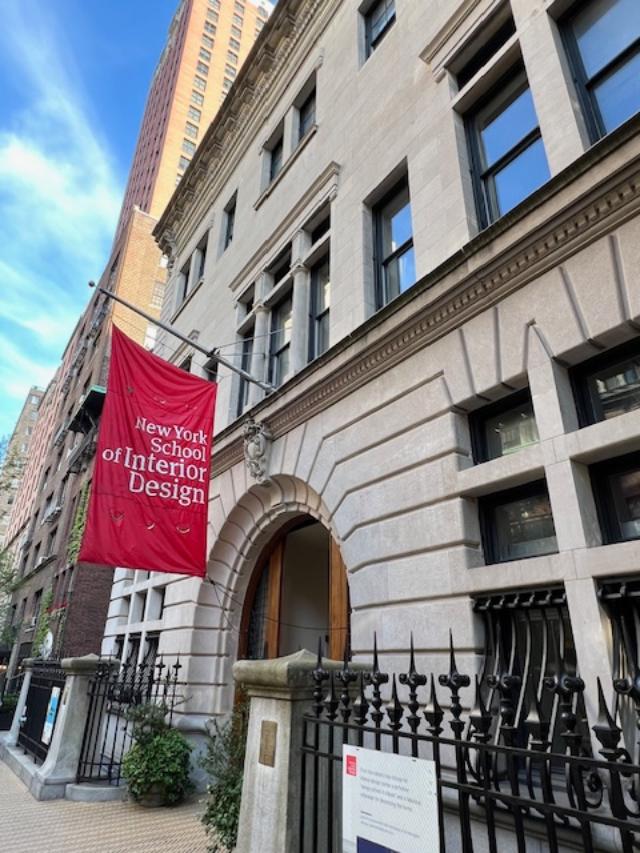
New York School of Interior Design at 170 East 70th Street
I came across the Gallery of the New York School of design when walking the Upper East Side for my project, ‘MywalkinManhattan.com’ when covering the lower part of the Upper East Side.
The entrance to the Gallery
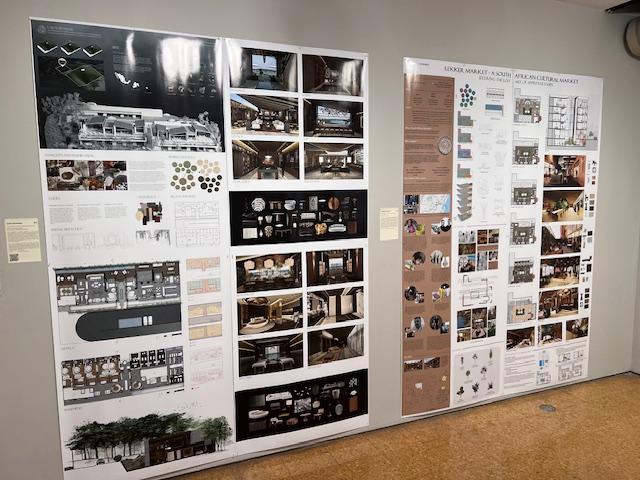
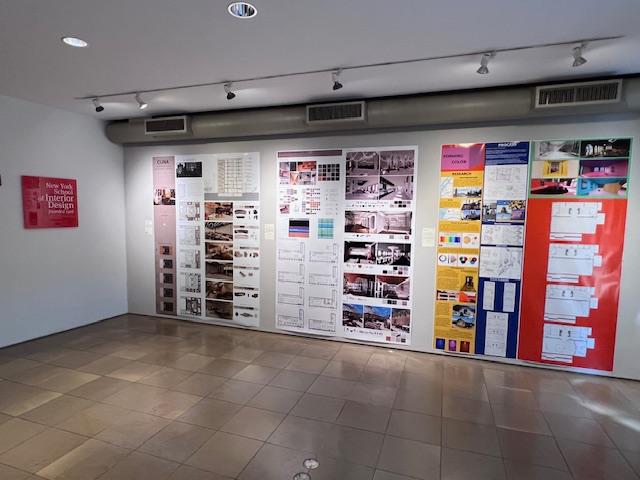
The New York School of Interior Design was displaying their Senior projects as most the college galleries I visited were doing at this time (this takes place between May and June around graduation time). It was interesting to see how the seniors at the college reused space in old buildings for new purposes. The seniors use their creativity to recreate these spaces. It is the student’s project to take a space and redesign it for a new purpose.
The entrance sign to the gallery
We had done similar projects in college but did not have the computer technology that students do today and they really went above and beyond the things we did back then. You can take this project into 3-D if you want and how real it looks. These kids are so talented that their creativity reminds me of us when we were in school. If only we had what they have today.
The Student Projects line the walls
Take time to look at the detail work and space design of each project. Some of the students even include samples of fabrics and stone/wood work that will be used for the surfaces.
The Gallery is located on the Upper East Side in the back of the school’s building on the first floor. The admission is free and the Gallery is open when the school is open. There are only two shows a year. You just have to show your ID to get into the galleries.
The student project along the walls
The student project along the walls
What I like about the museum is that you get to see the student creativity and how they imagine the space will be designed. The use of color and shape play a roll in all the designs. It looks like the students get to choose their own space to design.
The best part is the you get to go in for free with you ID and just enjoy the show and see the students creativity.
History of the Gallery/Museum at the College:
The New York School of Design’s gallery presents two public exhibits yearly on design and architecture. Exhibitions have included ‘Paris in the Belle Epoque’, rare photographs from the years 1880-1914; Perspective on Perspective, an exploration of artistic technique; ‘The Great Age of Fairs; London, Chicago, Paris, St. Louis’, selective coverage from the first World’s Fair in 1851 to the last in 1904; ‘Venice’s Great Canal’, architectural drawings of the buildings along the famous thoroughfare; ‘Stanford White’s New York’, a survey of that classicist’s many metropolitan buildings and ‘Vanishing Irish Country Houses’, a look into the preservation crisis facing these not infrequently grand structures.
The gallery’s Thursday-evening lectures have included ‘Palladio’s Villas’; ‘Beaux-Arts New York’ and a survey of the Grands Projects undertaken in Paris during the tenure of French President Francois Mitterrand.