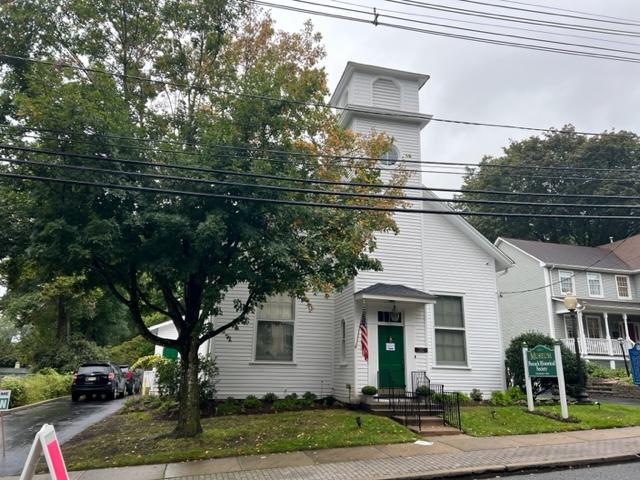
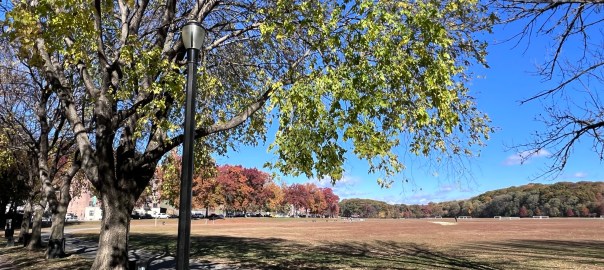
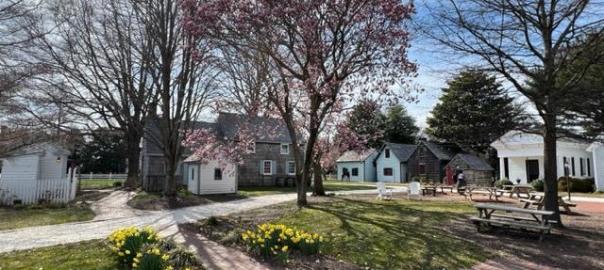
The front of the Vineland Historical Society Museum at 108 South Seventh Street in Downtown Vineland, NJ
On my off time from the Firemen’s Convention after voting, I decided to visit a group of small museums in Cumberland and Glouster Counties in New Jersey. Most of the small ones were closed or had changed their hours online but the Vineland Historical Society was open for touring and was having a speaker that day. I had been invited to come by the President of their Board of Directors about a year earlier so I was glad that I was able to visit this weekend where the schedules matched up.
What an interesting museum with its focus not just on the history of the Town of Vineland but of the surrounding communities and the impact that Vineland had and has on Urban Design, Farming, Manufacturing and Inventions that contribute to the whole country.
The museum had been designed as a Historical Museum for community leaders who wanted to share their love of historical objects and the past history of the community. This is what built the collection over the years. Each section of the museum tells a different part of Vineland’s history from the community events like its “100th Anniversary” of the town, the history of the Police, Fire and Veterans of Foreign Wars, members of the community who contributed to Women’s Suffrage and to the number of everyday products we use like Grape Juice and Marshmallow Fluff that were invented here. Each section of the museum tells an interesting story.
About the Museum:
The museum is a stop on the Woman’s Suffrage Tour
The Mission of the Museum:
The Vineland Historical and Antiquarian Society is the oldest local historical society in New Jersey and its museum is the oldest purpose-built museum in the State of New Jersey. The Society is dedicated to collecting and preserving artifacts and records related to Vineland and the South Jersey region, and to sharing that material with visitors through exhibits, programs and other appropriate venues. Vineland has a rich, culturally-diverse past that is reflected through our collections. To learn more, please contact us or make an appointment to visit.
The Rain Garden outside the museum
The Rain Water Garden sign
The Rain Water Garden outside the museum was in full bloom at the Summer and you could see that the garden was trying to attract butterflies and other insects that would help pollinize the garden. It must be very colorful during the Spring.
The first floor of the museum is the lecture room, the library and the gift shop along with local artifacts and the Glass Manufactured Gallery
The main gallery was set for a lecture later that afternoon. On all sides of the museum tell the story and the timeline of Vineland and the surrounding communities. There is the City of Vineland and Vineland Borough and Landis Township in 1952. So you see the artifacts of the farming communities and those of the developing City (Wiki).
The early views of the museum with the original heating unit and turn of the century shell art
Historical community information
The First floor collection of artifacts
The bust of Charles K. Landis, who founded the town
The display of the early Women’s Suffrage Movement in town, which helped women earn the right to vote. New Jersey was an early pioneer in the Movement.
The photo of Portia Kellogg Chase, an early leader in the Women’s Suffrage Movement in Vineland, NJ
Made in Vineland: A Celebration of Local Inventors and Their Creations:
The exhibition highlights the remarkable people and ideas born right here in Vineland. From everyday household items to groundbreaking innovations in transportation, food, tools, and telecommunications, this special 2026 exhibit tells the stories of local inventors whose creations shaped daily life far beyond our city. Visitors are invited to explore these inventions and the fascinating individuals behind them during our Open House held every third Saturday of the month.
The ‘Made in Vineland’ exhibition:
The inventions of the Flower vase, the Woodruff Train Car and the Self Adjusted Plane
The inventions of Angel Food Cake Marshmallow fluff
The inventions of the Grape Juice industry and Skee-ball game
The post office desk from the turn of the last century
Just off the side of the main room is the Blown Glass Room. The area is known for special sand that is used for glass making. This made the State of New Jersey one of the leading manufacturers of glass in the country at the time.
Each of the cases displays glass for different purposes and for different industries made by different companies. The museum has a very extensive collection of glass.
The Blown Glass Room
The Blown Glass Room
The Blown Glass Room
The Grape Juice industry glass and advertising display
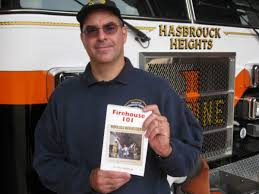
Author and Fire Fighter Justin Watrel with his novel, “Firehouse 101” on sale at IUniverse.com.
Exert from my Novel “Firehouse 101” Chapter “A Trip to the Firehouse”:
In 2005, just as I was interviewing to become a Hasbrouck Heights Fire fighter, I published my novel, the second in a New York City Trilogy (that I am still working on), titled “Firehouse 101”. I had been writing the book since January 2002, inspired by my best friend who had survived the Towers that tragic day.
This was the story of Alex Livingston, a Honolulu Hotel executive, who moves from Waikiki to Brooklyn, NY when the Marriott hotel he works at transfers him when business declined at his hotel in Hawaii a year after the attacks.
While living in Brooklyn, Alex befriends Ryan Callahan, a member of the FDNY and a third generation firefighter. Ryan’s survival the day of the attacks still haunt him over a year later and Alex sees a community still reeling from the attacks.
Firehouse 101: available for sale on the following platforms:
From the Chapter “Visiting the Firehouse” storyline:
In the novel, Alex goes to Firehouse 101 located just off Boerum Hill, Brooklyn to assist Ryan in cooking a monthly family breakfast that has occurred every month since the attacks to bring families together with the current firefighters families so they do not feel forgotten. This is when Alex, a Hotelier and Culinarian with the Marriott Metrotech, realizes that Ryan can’t cook.
I have posted darker excerpts of the book online but this is one of the funnier parts of my novel. To read the rest of the story to see what happens next, you can buy the book through IUniverse.com, my publisher, Amazon, Walmart, Barnes & Nobel or any other online book company. “Firehouse 101” is a print on demand book and an eBook.
“A Visit to the Firehouse”:
Saturday night Alex went to bed early. He could not believe he had to get up this early to cook with Ryan. Who even heard of a guy that couldn’t cook? An Italian guy at that? This was the twenty first century and people have progressed on. Leslie had told Alex that Ryan’s life was similar to a 50’s sitcom. Was that why Leslie and Ryan broke up? She did not see herself in the 50’s? Or was it the other way around and Ryan could not leave his secure world for the unknown? Some people have a tough time letting go of what they’ve lived their whole life.
After 9/11, the outside world had finally seen inside the fire fighters world. It had opened people’s eyes. They found it fascinating, like a new stage play. But as Leslie pointed out, fame is fleeting. It was Andy Warhol’s term “15 minutes of fame”. Leslie said the media makes something a hot topic and it stays that way until the next hot topic comes around. Alex turned and went to sleep. That night, he had that dream again about running down the stairs as fast as he could, this time hearing crashing noises above.
Alex got up at five the next morning and decided to get to the firehouse early. He was groggy, but knew that after working many a breakfast at both Marriott’s and Hiltons, it pays to be early and set up. It was still dark outside as Alex walked down the quiet streets of Boerum Hill. He relished the silence. Alex paused and looked at the tree lined side streets. It really was a beautiful neighborhood, full of character. It was a special neighborhood; he could see why the association worked so hard to protect it.
The door to the firehouse was open, Alex was glad as he wasn’t sure of how else to get in. One of the guys was downstairs manning the radio. Alex looked out of place with his chef’s whites and checked pants. When business got slow in Hawaii, just like in New York, Alex worked in the kitchen, honing the skills that he had learned at UNLV. The Marriott gave him the uniform to keep just in case.
“Hi,” Alex said softly to the guy at the radio. “I’m a friend (was he?) of Ryan’s. I’m helping him out this morning with breakfast. Where can I find him?” “Yous helping Ryan?” the guy yawned. He had the thickest Brooklyn accent Alex had ever heard. “He’s upstairs in the kitchen, top of the stairs and turn left,” he said and went back to work. Another firefighter walked down the stairs as Alex went up. He stared at Alex and said, “Are yous catering or somethin’?” “I’m here to help Ryan out with breakfast,” Alex said. “Thank God, his food tastes like shit,” the guy grumbled as he passed Alex. I love the way New Yorkers phrase things. There is no holding back, Alex said to himself as he finally found the kitchen.
It was not very impressive. The equipment seemed old but functional. There were two ovens, a stove, and a griddle with enough room to work with on the side. It wasn’t a huge kitchen but it would do. Alex wondered if it fit all the guys in the house at one time. The building was old. Alex wondered if these walls could talk what would they say? About losses and triumphs of the past? Tales of fires big and small and stories of probies (probationary officers) past? There was a lot of history here. Alex pondered the past. He was so deep in thought that he didn’t see Ryan enter.
“What? Are you okay?” Ryan asked. “Sorry, I was thinking of something. So what are we doing this morning? What did you want to make?” Alex asked, rubbing his hands together. Ryan told him that there would be more people than expected. “How many?” Alex asked, “Fourteen, fifteen?” “Are you kidding me? Try twenty six!” Ryan said. Alex looked surprised and said, “Twenty six? Jesus Christ, we have to get to work,” Alex said collecting himself. He would kill Ryan later. “Okay, what do we have to do first?” Alex looked at the clock, it was now six. How was he going to pull this off?
With so many people, everything was going to be served buffet style. Thank God, Alex thought, for the old buffet line. “So what are we making?” Alex asked. “Bacon, eggs, toast, potatoes, French Toast, sausage, muffins, and we have some melons,” Ryan replied. “Okay, so what has been done?” Alex asked. “Nothing,” Ryan said innocently, pointing to several bags of groceries. Alex looked incredulously at the bags and yelled, “Nothing?! I can’t believe it, when does all this have to be done by?” “Between seven thirty and eight,” Ryan replied. “If I weren’t in a rush, I’d kill you now. Let’s get to work,” Alex said, emptying the bags as fast as he could. Alex suggested Ryan peel the potatoes and put them in water so they didn’t brown. He would get the muffins started. Alex asked where the muffin pans were and Ryan pointed to the bags again. Ryan was surprised as he heard Alex mutter a few swear words in Italian that he had picked up from his grandfather. So that’s when the Italian shows, Ryan said to himself.
As they unloaded the bags, Alex looked Ryan square in the eye and said, “I’ll get you for this.” Ryan peeled the potatoes and put them in the water, while Alex preheated the oven and read the directions on the muffin package. These were easy, two eggs and water and mix. The muffins would only take twenty five minutes. Alex cut the four loaves of bread for the French toast and asked, “Why are there four full loaves with so much other food?” “You’ve never been in a firehouse for breakfast before have you?” Ryan asked, taking his time to peel the potatoes. He was not doing that great a job.
Alex finished slicing the bread and put it aside. He cracked several eggs in a bowl and mixed it with milk and vanilla. “Ryan, I’ve told you about my pancake breakfasts with my mother’s cousin up in Greenwich. Now where is the cinnamon and nutmeg?” Ryan pointed at a spice rack and said, “Alex, serving people at a pancake breakfast and cooking for a group of fire fighters are two different things.” “Ryan, please,” Alex said stirring the cinnamon mixture with sugar and putting it into the refrigerator to cool and said, “How much can people possibly eat?” “Just wait,” Ryan said with a smile. Alex started to get the bacon ready on sheet pans to put under the broiler, and then realized that the muffins weren’t done yet. He looked at the time, shit it was getting late.
“Ryan, can you speed it up a bit with those potatoes, it’s getting late.” Alex dropped a pound of butter in a pot for clarified butter for the potatoes and the buzzer finally went off for the muffins. Damn these things come out perfect Alex said to himself. Why do people even bother making them from scratch? Alex threw the bacon in the broiler and set the griddle for the sausage and French toast. He looked at Ryan, who was still peeling potatoes and said to himself, he’s worthless in here. Alex was ready to kick him out of the kitchen.
Didn’t this guy know the meaning of the words “Mise en place”? (Everything in its place). Alex cut the sausage into patties and put them on the griddle. On the other side of the griddle, he started the French toast. Ryan finally finished peeling the potatoes. “The best thing to do now is cut them in sixths and we’ll make them with the onions you have over there. Then crack the eggs, we can scramble them last,” Alex said as he turned the bacon over, flipped all the sausage and finished the first batch of French toast. Alex stopped for a second and wondered who was in charge here? How come Ryan wasn’t moving faster?
Ryan finished cracking the eggs and scrambled them with milk as Alex got the bacon out of the oven and drained it in batches. There was some commotion in the other room as the men started to get up. All of sudden a little boy burst into the kitchen and caught Alex off guard. He almost dropped hot bacon on the kid.
“Uncle Ryan,” the child yelled as he grabbed Ryan’s leg and hugged him. “Alex, this is Patrick Jr.,” Ryan said with a big smile as he reached down and hugged the child. Alex looked at the time and panicked. Crunch time. “Hi Kiddo,” is all Alex could mutter. The sausages were being drained, the bacon was now done and the next batch of French toast was on the griddle. “Patrick is my friend Patrick’s son. He’s four years old,” Ryan explained. Alex stopped in his tracks. This was Patrick’s son!? Patrick had children? Alex looked at the little boy; it was so sad that he left such a charming son behind.
“Where are you’re sisters?” Ryan asked. Sisters? “They’re outside with everyone else, come with me,” Patrick Jr. said. “Do you mind?” Ryan said and he followed Patrick Jr. out the door, leaving Alex alone in the kitchen. He was lucky that no one went into the kitchen. He grabbed the four platters and ran through each dish one by one.
He lined the platters with paper for the bacon and the sausage and put them in the warmer, finished the French toast and put the platter in the warmer. He placed the muffins on a platter off to the side. He then took two sheet pans and started the toast. He thought about what Roger had said. Was Ryan using survivor guilt on him?
Two more children burst into the kitchen and yelled, “We’re hungry! Who are you?” as they gave Alex a strange look. Alex looked back, not knowing how to explain it to two little kids and said, “I’m a cook.” They looked at one another, as if Alex was a Martian. They asked together, “Can we have something to eat?” “No. You’ll ruin your breakfast,” Alex tried to say. “Whahhhhh, we’re hungry!” they screamed. “Okay, okay,” Alex said giving them some muffins and quickly turned over the toast. “Here you go, now make like bananas and split,” Alex said shooing them out of the kitchen. “He’s just like my mom,” one kid said to the other. “Yeah, bossy!” the other said as they ran out the door with their muffins. All Alex could think was that these kids had inherited their parents’ way of speaking. It was funny to hear these accents on seven year olds.
Ryan came back into the kitchen as Alex turned over the toast one more time in the broiler. “Where have you been? It’s like the attack of the little kids in here,” Alex said pulling the toast out. “I forgot to tell you the wives bring their kids,” Ryan said. “So I found out. I had to bribe two little kids to get them out of the kitchen. They told me that I acted like their mother,” Alex said out of breath.
“They’re typical kids,” Ryan said. Alex heard a lot of talking in the dining area. “Are the guys up?” Alex asked throwing the potatoes on the grill with some chopped onions and butter. “Yeah, some of the guys are greeting their wives that showed up for breakfast,” Ryan said as he started to cut up the five melons. Alex flipped the potatoes. “Do you have a brush?” Alex asked. “For what?” Ryan wanted to know. “The toast! Honestly Ryan, I don’t get you. You plan all this out and you act like you don’t know what to do. How did you ever do this in the past? Magic?” Alex said flustered. Ryan looked down at the floor and said, “I always had Patrick with me and he knew what to do.” Alex immediately went quiet.
He looked at Ryan for a second like he was ready to cry. “I’m sorry. I just want this to come out right,” Alex said. Ryan controlled himself and said, “I’m sorry for leaving you in the kitchen.” He saw the brush they used to make barbecued chicken and handed it to Alex, who at this point was suffering from a massive guilt complex.
“Thanks,” Alex said taking the melted butter and brushing it on the toast, cutting it and putting it on another platter. Ryan finished cutting all the melon cut and put it on another platter. “Oh, I forgot to make the cawfee,” Ryan said to Alex who then burst out laughing. “What’s so funny?” Ryan asked. “The way you said it “Cawfee”, I want some cawfee and cake, like a true New YAWKA,” Alex said shaking his head (no matter how Alex tried, he just liked to make fun of Ryan). Ryan was fed up with Alex’s criticism of the way he talked and walked up to him and said in a serious tone, “Alex, I would cut the crap with this accent stuff. All the guys in the house talk like this. This is Brooklyn. No one speaks your perfect lockjaw ‘Connecticut English’. Did you know you sound funny to us?” “Hey, you want me to leave?” Alex said, “I don’t seriously need this crap on my day off.” Alex was exhausted and still had a batch of potatoes and the eggs to finish and Ryan was no help with any of it!
“I’m sorry, but watch it,” Ryan said, “some of the guys won’t appreciate it.” Alex put this into perspective. The idea of twenty guys with easy access to fire axes shut him up. “I’ll keep quiet,” Alex said turning the last batch of potatoes as Ryan arranged the melon on the platter. They were in the home stretch when two guys in jeans and ‘Firehouse 101” tee shirts walked into the kitchen. “Ryan, when the hell are we going to eat? We’re starved!” they yelled. They stopped in their tracks and looked at Alex.
They looked at Ryan and said, “Who the hell is this? You had to hire a cook to help you?” Alex held back from cracking up again and just smiled. “This is Alex; he works over at the Marriott…”Ryan started to say. “How did he get here?” one of the guys said. “We live in the same building and Ryan asked me for help,” Alex said, “we’ll have everything out in five minutes. I promise,” Alex said professionally. “Okay, but this better be good,” the other guy said. As they headed through the doors, they yelled in the room, “Hey everyone, Ryan’s got a chef in here!” Alex looked at Ryan and said, “I hate you”.
The only thing left were the scrambled eggs. Alex said, “I’ll finish the eggs. Why don’t you get all the rest of the stuff out so it does not get cold and those kids don’t come back in here,” Alex said as Casey and two new probies came into the kitchen. “Who’s the cook?” a probie said as he saw Alex putting the rest of the rest of the potatoes on the platter. “What’s he doing back here?” Casey asked pointing his finger at Alex, “don’t you have a home to go to?” He and the guys laughed. Alex had enough and said, “Look why don’t you shut up and be helpful. These platters aren’t going to walk out on their own, so get them out.” He had put up enough with this shit. “Fine, you don’t have to yell at us,” one of the probies said. Alex handed each of them a towel and a platter and said that the platters were hot. They let the room grumbling. “Ryan, could you take the French Toast out. I don’t want to over cook it,” he said as he powered sugared it, “it’s too bad we have no orchids. They look great on platters.” “Huh?” Ryan questioned.
“In Hawaii, we put orchids on out platters,” Alex said, “it makes a nice effect on the presentation.” “You are truly weird,” Ryan said as he took the French toast and bacon out. Alex cleaned the griddle and started the eggs. Thank God they are quick. Alex looked at the time. It was 8:10 am. They were just a little behind schedule. Alex put the eggs on the platter, picked up the platter of potatoes and walked out the door. He was not expecting a crowd watching him.
Alex walked into the dining area. There were about thirty people sitting around laughing. They took one look at him and everyone went silent. Alex stood there with the platters in hand when one of the little kids said, “That’s the guy who gave us the muffin. See, he does exist, Mommy!” Alex said “Hi, here are the eggs, Ryan. I’ll have the toast out in a minute,” and darted back into the kitchen. God, that was embarrassing. They looked at him like he was from Mars.
As he finished the last platter, Ryan came back into the kitchen. “You made a splash,” Ryan said. “Shut up and take this platter out,” Alex said tired. “Are you coming in to eat?” Ryan asked. “I’m fine. I had a piece of French toast. I can’t eat this much this early in the morning. You go with your guests and the rest of the guys and I’ll clean up,” Alex said. “You sure?” Ryan asked. “I’m fine, unless we need more food,” Alex kidded. “We’ll be okay for right now. I’ll keep you posted,” Ryan said as he went back into the dining area. ‘I’ll keep you posted?’ Alex thought to himself as he started to clean up.
As Ryan exited, Captain Giovanni entered the kitchen. Alex looked up and thought to himself, ‘oh this just keeps getting better’. “Hi Carmen,” Alex said innocently as he was wiping the table down. “Alex, what are you doing here? Can’t get enough of the firehouse? I told you, you can get sucked in,” Carmen kidded. “Carmen, Ryan asked me to help him with the breakfast,” Alex started to explain, “I hope I’m not crossing any boundaries.” Alex was still afraid he was trespassing. “Don’t worry about it, Alex. It’s just funny to see you in our kitchen,” Carmen said looking over the mess that Alex was cleaning up. “You are staying to clean up, right?” Carmen asked. “Will all be done soon,” Alex said getting back to work.
As Alex washed the sheet pans, dried the utensils and neatly stacked everything, he couldn’t believe the looks he got from the people outside. Alex felt like he was in a fishbowl. In Greenwich, those visits were like visiting someone’s house. He never felt this uncomfortable at those pancake breakfasts but then he was a little kid whom the guys would throw over his shoulder. As he thought harder, he always wondered why Alex Senior had not done the same. Other guys talked about playing horsy and the piggy-back rides their dads gave them as kids. At his house, it was golf, swimming and tennis lessons at the club. The world changes as you get older and the things that you did as a child differ from those as an adult. Alex cleaned up the rest of the kitchen and put everything away.
Alex tied up the garbage and as he finished mopping the floor, Ryan walked in. “Thanks for leaving me here to clean up,” Alex said. “You said to go outside and join the guests,” Ryan said defending himself. “I’m sorry, I’m tired. Where does the trash go?” Alex asked. Ryan grabbed the trash and dropped it out the window. He looked out the window to see two garbage cans with the tops off. The garbage bag went directly in. That’s convenient Alex thought to himself.
Alex asked if they had enough food. Ryan laughed and told him they just made it. The last muffin had been grabbed as he walked into the kitchen. “You’re kidding me, right?” Alex said almost shocked, “Ryan that was three pounds of bacon, three pounds of sausage, ten pounds of potatoes, two loaves of bread and that was just for the toast, not to mention the French Toast, muffins and three dozen eggs.” “You forgot the melon,” Ryan smiled. “Who the hell can eat all that food so early in the morning?” Alex questioned. “Look outside the kitchen,” said Ryan. It was too much for him to eat so early. He preferred brunch where you could eat later. Having those waffles the other day with Leslie was even a stretch for him.
“Alex, these are fire fighters and their families. Trust me, these guys can eat. You need the strength for the job,” Ryan said. “To do what, lift an elephant?” Alex said. Although Ryan and a few of the other guys were in good shape, most of the guys looked like Casey, slightly over-weight with a small gut hanging over their pants. I guess they just work it off Alex thought and shrugged it off.
Hasbrouck Heights firehouse chef:
Art imitates life. Me cooking the last Engine One barbecue before I left for Grad School. Me setting up the buffet for dinner June 2022.
Author and Bloggers Note:
You can see what happens next by reading the novel “Firehouse 101”.
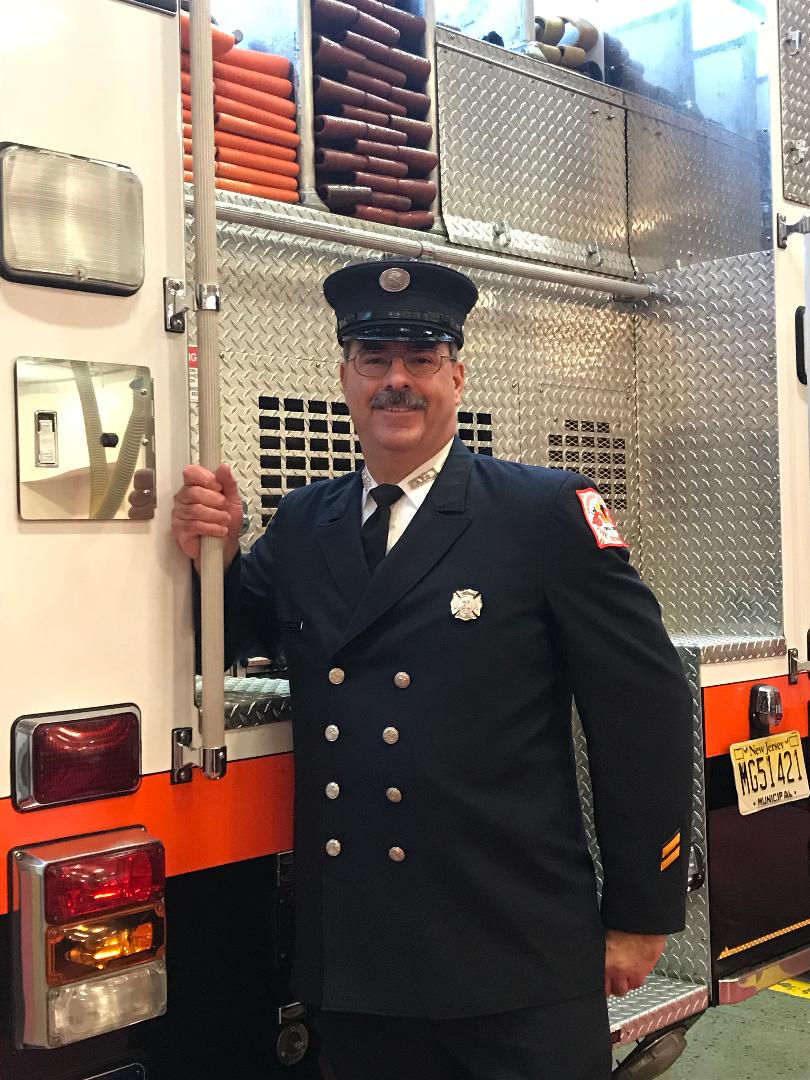
Retired Fire Fighter Justin Watrel, 19 year veteran of the Hasbrouck Heights Fire Department in Hasbrouck Heights, NJ.
The Bergen County Firemen’s Home Association at the August Barbecue
The picnic grounds
The grounds of the NJ State Firemen’s Home were in full bloom and the lawns were perfectly groomed for the afternoon. The skies were blue and the temperature at 80 degrees. Perfect for an outdoor event.
The barbecue grill
We had a wonderful menu planned for the residents and their guests. We were serving Hamburgers and Cheeseburgers, Hot Dogs and Bruck Wurst, Barbecue Ribs and Chicken, Baked beans, Mac and Cheese, Fresh Watermelon for dessert along with home baked desserts made by a member’s wife. A wonderful menu that residents and their families enjoyed.
The front gardens in the morning
The memorial fountain
The grounds in front of the home
Setting up the grill for lunch
Chef Prince working his magic at the grill that afternoon
Our Grill Master today was Chef Prince from the NJ State Firemen’s Home, who created this feast for all of us down to the homemade mac & cheese and the baked beans with honey and cinnamon. Everything was delicious!
The food was amazing that day
After we finished eating, the men of the Bergen County Firemen’s Home Association took our annual group picture. I wanted to thank this very dedicated group of men for making this event possible.
The members of the Bergen County Firemen’s Home Association after a job well done
A big ‘Thank You’ goes to our dedicated Executive Board who works so hard to make this organization what it is today. Hats off to Tom Simpson, John Kinner and Roy De Young Jr. for everything they do to make this organization the success it is today.
The Executive Board of the Bergen County Firemen’s Home after the picnic was over Tom Simpson, Justin Watrel, John Kinner and Roy De Young Jr.
I recently visited the American Folk Art Museum in New York City for the “Made in New York City” exhibition and it is a very interesting and engaging museum. The artwork for the museum was a combination of painting, sculpture, pottery and metal work created at different periods of the City’s history. It really showed the extent of manufacturing in New York City and the craftsmanship that was once here.
The entrance to the museum
I recently visited the American Folk Art Museum in New York City for the “Nation”exhibition and it is a very interesting and engaging museum.
The main gallery of the museum with early American art
The main gallery with one of the revolving shows
The artwork for the museum was a combination of painting, sculpture, pottery and metal work created at different periods of the City’s and the Country’s history.
Some of the permanent works were made in the Tri-state area. It really showed the extent of manufacturing in New York City and the craftsmanship that was once here.
The ‘Folk Nation’: Crafting Patriotism in the United States’ exhibition
Patriotism in the United States draws from the American Folk Art Museum’s rich collections to explore links between vernacular art and the construction of an American sense of self. Introducing visitors to the concept of “folk” as a category developed in conjunction with the art and antiques markets, this exhibition positions works as multilayered in their meanings, imbued with cultural significance by not only their creators, but also their collectors and subsequent owners. Americans have long preserved objects as a way of telling stories about themselves. Beginning after the Revolutionary War and gathering momentum in the late nineteenth and early twentieth centuries, people turned to early American things to construct a national history and sense of collective identity—an impulse often driven by lingering insecurity about the young nation’s perceived cultural provinciality compared to Europe (Folk Art Museum.com).
One of the painting’s that stood out to me was more contemporary approach to the Statue of Liberty, entitled ‘Miss Liberty reaches out to the persecuted’. A different approach to folk art.
The painting ‘Miss Liberty reaches out to the persecuted’ by Reverend Benjamin Franklin Perkins
The description of the painting
Some of the interesting things you will see are the paintings by artists in both Colonial New York and from the Hudson River School of prominent New Yorkers through its first 200 years of history. You will see how the styles of art have changed over the years.
Also there is a lot of metal work in the ways of signs and rods for the front of doors and for the roofs. The woodwork carvings that once graced the front doors of merchants all over the City is now a lost art. Here you could see the works of German and Russian carvers and the craftsmanship that was put into every piece. It was interesting too to see the racial themes and stereotypes that were used in the art.
Several revolving shows were being featured on a recent trip to the museum such as ‘Nation’ and ‘Self Made’, themed shows for the 250th Anniversary of the Country.
The show ‘Self Made’ A century of inventing artists’
Self-Made: A Century of Inventing Artists takes a critical look at the historical definition of the “self-taught artist” in the United States from the early twentieth century to today. The exhibition examines how artists without academic training have depicted, conceptualized, and identified themselves on their own terms. In doing so, it aims at challenging reductive, long-standing narratives that have cast these artmakers as amateurs or isolated geniuses working out of time, without lineage, influence, or artistic networks (Folk Art Museum.com).
The sixty artists featured here largely worked outside conventional art-school, gallery, museum, and peer-exchange systems. Their practices are rooted in diverse sites of learning, from professional expertise to community-based traditions. Drawn primarily from the American Folk Art Museum’s collection, this selection of artworks brings together outstanding examples of paintings, sculptures, photographs, videos, and artists’ notebooks by key national and international figures—many of them recent or rarely seen acquisitions (Folk Art Museum.com).
The exhibition is organized around three methods of artistic “self-making” and self-fashioning: self-portraits, alter egos, and autobiographies. Each gallery unfolds chronologically, providing grounding for the artists’ intentions. The works function as primary documents: firsthand accounts of the self, authored by the self. Akin to diaries or other personal statements, they call for close attention, asking viewers to “look at me, in this way, that I have chosen.” By centering the makers’ perspectives and aesthetic choices, Self-Made shifts the focus away from the viewer’s role in completing the creative act and places it squarely on the artist’s agency (Folk Art Museum.com).
Some of the paintings that stood out seemed to be self-portraits.
The painting ‘Untitled’
The painting ‘Untitled’
The museum takes different approaches to the way art is portrayed.
Another program that the museum does well is they have afternoon Jazz Wednesdays and Free Concerts on Friday nights.
There are family programs, walking tours, curator talks and lectures as part of the museum programming so there is something for everyone.
The American Folk Art Mission:
(From the Museum website)
Since 1961, the American Folk Art Museum has been shaping the understanding of art by the self-taught through its exhibitions, publications and educational programs. As a center of scholarship and by showcasing the creativity of individuals whose singular talents have been refined through experience rather than formal artistic training, the museum considers the historical, social and artistic context of American culture. Its collection includes more than seven thousand artworks dating from the eighteenth century to the present, from compelling portraits and dazzling quilts to powerful works by living self-taught artists in a variety of mediums (Museum bio).
Self-Taught art, past and present, tells empowering stories of everyday life. The field of American folk art was first defined at the turn of the twentieth century by collectors, professional artists, critics, dealers and curators whose search for an authentic American Art seemed to be finally answered in works that presented a nuanced of national identity, faith, progress, ingenuity, community and individuality. Under the umbrella of “folk art” expanded to also include artists working in the present. For the last twenty years, the term self-taught has more regularly come to address these artists, whose inspiration emerges from unsuspected paths and unconventional places, giving voice to individuals who may be situated outside the social mainstream. Those individuals have been active participants in the shaping of American visual culture, influencing generations of artists and establishing lively artistic traditions (Museum History).
American Folk Art Museum History:
(From the Museum website)
The museum of Early American Folk Arts as it was known initially held its first exhibition in a rented space on 49 West 53rd Street in 1961. The museum’s collection was launched in 1962 with the gift of a gate in the form of an American flag, celebrating the nation’s centennial. The gift reflected the museum’s early focus on eighteenth and nineteenth century vernacular arts from the northeast America.
In 1966, after receiving a permanent charter, the museum expanded its name and mission. As the Museum of American Folk Arts, it looked beyond the traditional definitions of American folk art. Its exhibitions and collection began to reflect “every aspect of the folk arts in America-north, south, east and west.” Founding curator Herbert W. Hemphill Jr. “expanded the notion of folk art beyond traditional, utilitarian and communal expressions.” Under his direction, the museum began to champion idiosyncratic and individualistic artwork from the fields of traditional and contemporary folk art. In doing so, the museum ushered in a new era in the field of twentieth-century folk art (Museum History).
The 1990’s brought new focus to the diversity and multiculturalism of American Folk Art. Offering a more inclusive vision. the museum began to present African American and Latino artworks in their exhibitions and permanent collections. Director Gerard C. Wertikin announced American folk art’s common heritage as “promoting an appreciation of diversity in a way that does not foster ethnic chauvinism or racial division.” (Museum History).
The museum further established its broadened outlook with the 1998 formation of the Contemporary Center, a division of the museum devoted to the work of 20th and 21st century self-taught artists as well as non-American artworks in the tradition of European art brut. In 2001, the museum opened the Henry Darger Center to house 24 self-taught artist’s works as well as a collection of his books, tracings, drawing and source materials (Museum History).
The gift shop
In 2001, the museum chose its current name, American Folk Art Museum. Recognizing that American Fold Art could be fully understood in an international context, the word American functions as an indication of the museum’s location, emphasis and principal patronage rather than as a limitation on the kind of art it collects, interprets or presents. The museum’s current programming reflects this shift in focus. Past exhibits have included folk arts of Latin America, England, Norway, among other countries and continents (Museum history).
Don’t miss this amazing little museum on the Upper West Side of Manhattan.
I enjoy coming up to Germantown to visit the Clermont Mansion at any time of the year especially at Christmas time. I came for a tour of Clermont in the Christmas season of 2019 (pre-COVID) to tour the home. The old mansions of the Hudson River Valley show their real beauty at this time of the year.
The Clermont Library decorated for Christmas
In 2020, the home closed like everything else for COVID and because of extensive renovations on the property and in the home, did not open again until June of 2023. I came up finally in July of 2023 for another tour of the home. The mansion looked very refreshed and bright on a blue, sunny afternoon. The grounds were in full bloom and everything looked so green.
The views of the river when you arrive
Walking around Clermont is like walking through a history book. To think you are walking around the very rooms that family members who wrote the Declaration of Independence, were Governors and Ambassadors from our country and who owned most of Upstate New York lived is really incredible. The Livingston Family did so much for the United States in the formation of this country is a testament to the family.
Once you arrive at the Visitors Center and pay for your tour, you will have time to walk around the exhibition of the history of the family in the old stables. Here you will learn about the family who built and lived in this wonderful home. The family lived here for seven generations and like most families over time when the money depleted, they had to move out. The last daughter of the family, Honoria, sold the estate to the State of New York as a park. The upkeep got to be too much for the family.
The Visitor’s Center display on the family
The family story boards in the old stables
The history of the estate and the Livingston family in the Visitor’s Center
The history of the estate
The tour 2019 was wonderful because of the one on one conversation I had with my tour guide, Molly. It was the same in 2023 when Aaron took me on a one on one tour of the mansion. We started in the entry hallway where the family hang many of the family portraits and the long hall lead to wonderful views of the Hudson River.
The Entrance Hall of Clermont
Just off to the right of the front entrance of the home (the front entrance faces the river not the back entrance where you start the tour) is the Receiving Room. This was the room in 2023 during my summer tour of the house. The Receiving Room is where guests would wait to be welcomed by family members or people would call on the family and leave their calling cards.
The Receiving Room was also used as a Music Room as well
The Receiving Room was decorated for the holidays in 2019 with more beautiful views of the river and a very interesting clock on the mantle that there are only two in the world. This clock represented the first balloon launch in France and this was the clock where the balloon went up. In France was the other clock with the balloon going down. I thought that was pretty interesting.
Our next stop was the Library which seemed very homey and relaxing. It looked like a room that a family would want to spend their time in after a long day. The windows faced the river and the formal gardens at that time and let in a lot of light. The room was decorated with a elegant tree and looked like the family was ready to walk in and join us for the holidays.
The Library of Clermont
The Office/Library on the first floor
Next it was off to the formal Dining Room where the portraits of Margaret Beekman Livingston (a VERY distant relative of mine by marriage) and her husband, Robert Livingston hung. She had saved these along with the grandfather clock before her first house was burned by the British during the war years. It was set for Christmas lunch when the family would dine together.
In the summer months, the room was pretty plain with no set up on the table. The Dining Room has just had some renovation work so the walls and ceiling looked really nice.
The Clermont Dining Room in the summer of 2023
The Dining Room portraits
Margaret Beekman Livingston’s Wedding portrait in the Dining Room
Robert Livingston’s Wedding portrait in the Dining Room
We also toured where the food was prepared and prepped from the kitchen to the Dining Room, which was all done in organized fashion. I was told by the tour guide that for the most part the family lived here year round unlike some of the other mansions who only lived here during certain times of the season.
The Kitchen at Clermont
We took a walk upstairs to see the upstairs bedrooms and see where the third Mrs. Livingston lived. I thought it was interesting that she had two beds in her room in which neither was big enough to accommodate her. One was the main bed and the smaller one was a Day bed when she wanted to take a nap but did not want to mess up her main bed.
The last Mrs. Livingston’s bedroom until the 1960’s
We then toured what had been Honoria’s and Alice’s bedroom when they were children and then became the Guest Room. It still looked like a Children’s Room.
The Daughter’s/Guest Bedroom
Then it was back down to the formal hallway for the end of the tour. The one thing I have to say about Clermont is that it looks like someone’s home not some grand mansion like the Mills or Vanderbilt mansions that looked like they for a moment time or only for a season. This family lived here all the time.
The upstairs bathroom was one of the remodeling features
The family lived here until the 1960’s when upkeep of the estate got to be too much for the family and it was sold to the state. The New York Park is now maintained by the New York State Park system.
The Gardens:
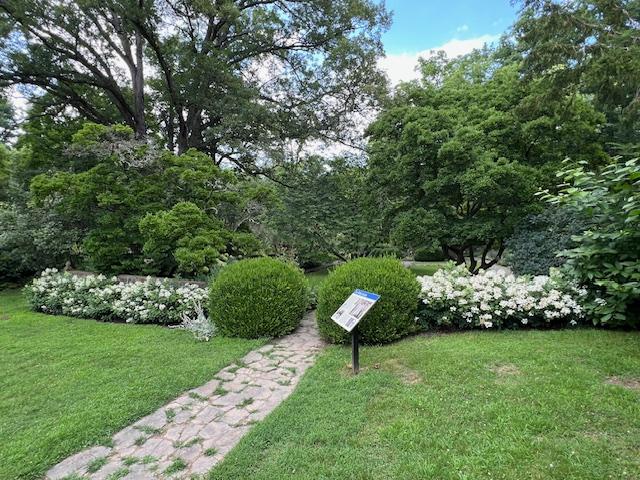
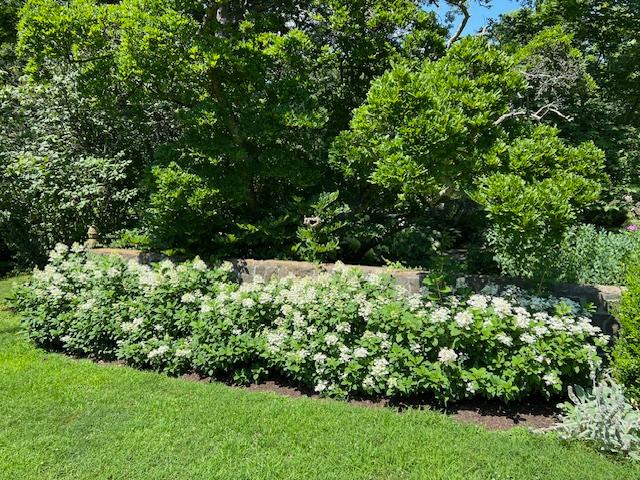
The formal gardens were in bloom when I got there that weekend. Since the house opened in June most of the Spring plantings were already gone but the Summer plantings were in full bloom. There were three gardens on the property, two of which had been brought back to nature, the Wilderness Garden and the South Spring Garden and then the Walled Garden was well maintained and planted.
The Wilderness Garden was well-maintained and planted with natural plants
The South Spring Garden
The South Spring Garden has given way to nature
The Walled Garden was the most formal of all the gardens
The Walled Garden
The Walled Garden
The Walled Garden
The Walled Garden
The Walled Garden
In the Fall, I went back up to Clermont for the Ghost Tour and the foliage was amazing, but the rain knocked a lot of it off. Still the colors were glorious.
Clermont in the Fall of 2023
The formal gardens in the Fall
The formal gardens in the Fall
The gardens in the Fall.
The I toured the rest of the estate and saw the ruins of the other mansion, Arryl, that is on the other side of the parking lot and then saw the ruins of the Old House and the Root Cellar.
The Ice House
The Root Cellar
The flowers by the Root Cellar
View of the Hudson River
The History of Clermont:
The name Clermont derives from “clear mountain” in French and was inspired by the view of the Catskill Mountains across the Hudson River from the estate.
The front of Clermont that faces the Hudson River
The estate was established by Robert Livingston following the death of his father, the first Lord of the Manor was inherited by the eldest son, Philip Livingston, 13,000 acres in the southwest corner later named Clermont was willed to Robert. The original house was built around 1740.
The path leading to the main house
Robert Livingston of Clermont died on June 27, 1775 and the estate passed to his son, Robert, who was known as ‘Judge Livingston’ to distinguish him from his father. Judge Livingston was a member of the New York General Assembly from 1759 to 1768, served as Judge of the admiralty court from 1760 to 1763 and was a delegate to the Stamp Act Congress of 1765. He married Margaret Beekman, daughter of Colonel Henry Beekman. Their son, Robert R. Livingston, later known as “Chancellor”, served on the committee that drafted the Declaration of Independence. Judge Robert died about six months after his father, on December 9, 1775.
Burning and Rebuilding:
In October 1777, British ships sailed upriver from New York City in support of General John Burgoyne who was north of Albany. That same force had already stormed two forts in the Hudson Highlands and burned Kingston, New York. Major General John Vaughan led a raiding party to Clermont and burned Livingston’s home because of the family’s role in the rebellion.
The history of the ‘famous’ Robert’s of Clermont
Margaret Beekman Livingston rebuilt the family home between 1779 and 1782. Robert R. Livingston became the estate’s most prominent resident. Chancellor Livingston administered the oath of office to President General Washington, became Secretary of Foreign Affairs and negotiated the Louisiana Purchase.
Margaret Beekman Livingston
He also partnered with Robert Fulton in 1807 to create the first commercially successful steamboat on the Hudson River, the North River Steamboat (later known as the Clermont) which stopped at the house on its inaugural trip.
Robert Livingston in the famous Gilbert Sullivan painting.
The home’s final Livingston owners were John Henry Livingston and his wife, Alice. They added to the home and greatly valued the homes important historical role. The Livingston’s built second mansion on the property known as Arryl House, which burned down in 1909. The ruins of Arryl House are still visible at the south end of the property.
The burnt ruins of Arryl Mansion on the other side of the property.
The Arryl Mansion in the Fall of 2023
Alice Livingston was responsible for creating many of the landscaped gardens that are continued to this day. Following John Henry’s death, Alice turned the Mansion and property over to the State of New York in 1962 so that all the people of New York could enjoy it.
The landscaping around the old Ice House
The house is now a New York State Historic Site and was designated a United States National Historic landmark in 1972. It is a contributing property to another National Historic Landmark, the Hudson River Historic District. Although locate in the town of Clermont, its mailing address is in the nearby town of Germantown.
The views from the back of Clermont to the Hudson River
(This information is a combination from the Clermont Website and Wiki and I give them full credit for this information. Please check the website above for more information on the site and its activities through their Friends site.)
The Clermont Grounds
The Fall in the Hudson River Valley is one of the most brilliant times to visit and the foliage is so colorful. The constant rain knocked a lot of it down already but all around the house their were still signs of the reds, golds and oranges. I came up for the Ghost Tours which the mansion resumed this year to sold out crowds.
The Clermont Estate in the Fall.
The river front of the estate in the fall.
The Hudson River in all its glory.
The Ghost Tour of the estate:
The Ghost Tour took us on a tour through the house to meet the costumed characters throughout the mansion. The mansion was decorated for the Halloween and with the lights dimmed, it gave the house an eerie appearance to it.
When I arrived at the estate, the house loomed in the distance in its it glories with the golden colors of autumn.
Jack-a Lanterns lined the pathways and lit the way to the house.
We were greeted with fresh Apple Cider Doughnuts and Apple Cider from a local farm in Kingston, NY.
We were also treated to old fashioned Halloween candy with Mary Janes, Tootsie Rolls and other treats.
We started our tour at 7:00pm at twilight with the lanterns lit and the house waiting in the distance.
The hallway was decorated for Halloween.
First we met an embittered Robert Livingston (who over acted)
We stopped in the haunted Living Room to talk to the maid.
We met the ghost of Janet Livingston Montgomery in the Parlor.
Then it was off to the Dining Room to meet the last inhabitant of the house, Janet Livingston.
Margaret Beekman Livingston guarding the Dining Room.
On the way to the kitchen, we met Captain Kidd, the Livingston children and the last owners of the house on the way out the back door to end the tour. The whole tour took less than an hour.
We exited the house through the kitchen and out the door to a moon lit night with jack-a-lanterns taking us back to the Visitors Center. The night had fallen in the early evening at the mansion as we were the second to last tour of the evening and the moon had come out giving the sky a ominous and spooky look about it.
The Christmas Open House: 2024
I visited again for the Christmas Open House in early December to see the decorations. I had not been there since 2018 and wanted to see how things had changed for the winter months. Everything was decked out for Christmas. The rooms were decorated but not in an over the top way as some of the other Hudson River homes.
The Clermont Estate at Christmas time.
The Clermont Estate at Christmas time.
The Front porch at Christmas time.
The Christmas tree on the porch.
Even the logs on the porch were decorated for the holidays.
The entrance foyer from the stairs.
Upon entering the front door, you could see the beauty and simplicity of the Christmas holidays in the early 1800’s before Victorian traditions took over and the house was overdone with decorations. Garland, Holly and simple pine trees adorned the rooms and welcomed everyone to the Christmas Holiday Open House sponsored by the Friends of Clermont. The home was nicely decorated for the holidays circa 1840’s.
Entering the Front Door at Clermont at Christmas.
The wreath was beautiful on the door.
Livingston Painting in the foyer
The Sugar Spun Clermont Sculpture.
Painting in the Foyer of Robert Livingston
Portrait of Margaret Livingston in the Foyer.
The holiday display.
The Office of Clermont
The Table Top tree in the Office.
The Library was set for Christmas morning with a large tree, homemade presents from the family and a morning of Christmas cheer. The views from the windows would have shown the beautiful views of the river.
The Library at Clermont
The Clermont Library at Christmas time.
The Christmas tree in the library.
The Library decorations.
Library decorations.
The Living Room was set for Afternoon Tea and for greeting guests who would have entered through the front door right off the main hallway.
The Living Room decorated for Christmas.
The Living Room was set for Afternoon Tea.
The portrait of Robert Livingston in the Living Room.
The portraits of Alida and Robert Livingston.
The Dining Room was not set for dinner but in anticipation of the holidays. The elegant runners, china, crystal and silver were off to the side awaiting the servants to set the table and prepare for Christmas dinner.
The Dining Room decorated for the holidays.
Holiday display in the Dining Room.
The Wedding Painting of Margaret Beekman Livingston in the Dining Room.
The family’s private bedrooms were decorated with garland and a small tree in the foyer.
Heading to the Second Floor of Clermont.
The view of the foyer from the upstairs.
The Livingston girls Bedroom.
The Livingston girl’s doll adorns the room.
The Christmas tree in the upstairs Foyer outside the bedrooms.
The Gingerbread House display in the Foyer.
When touring the kitchen which is located to the side of the house, the counters and tables were filled with all the delicious foods that would have been served at Christmas. Roasts, Trifles, Cakes and Pies would have been served by the staff for holiday get togethers and dinners at the mansion.
The Kitchen staff preparing the family’s Christmas dinner feast.
Preparations for Christmas dinner for the family.
Preparing Christmas dinner in the kitchen at Clermont.
After the Christmas Open House tour was over, the Friends sponsored Marshmallow roasting on the front lawn of the mansion and refreshments and talks up at the Visitors Center.
Roasting Marshmallows over the firepit on the mansion’s grounds after the walking tour of the mansion.
Christmas cookies, Apple Cider and Classic Candies in the Visitors Center ended the tour and the Open House for the day.
After the tour was over, I toured the gardens, which were dormant at the time and the grounds along the Hudson River. The views were just amazing and the gardens awaited the coming of the Spring when flowers would be blooming again.
The Garden Tours:
In the Summer of 2024, I took a special Garden Tour of the Livingston Gardens. A new Lead Gardener had been hired by the State of New York and she was starting to renovate the gardens. So we took a tour of the four gardens near the mansion. While we toured the estate grounds, we visited the South Spring Garden, the Walled Garden, the Children’s Garden and the Cutting Garden to see how they were progressing. The staff here is doing a good job bringing these gardens back to life to how Alice Livingston envisioned them.
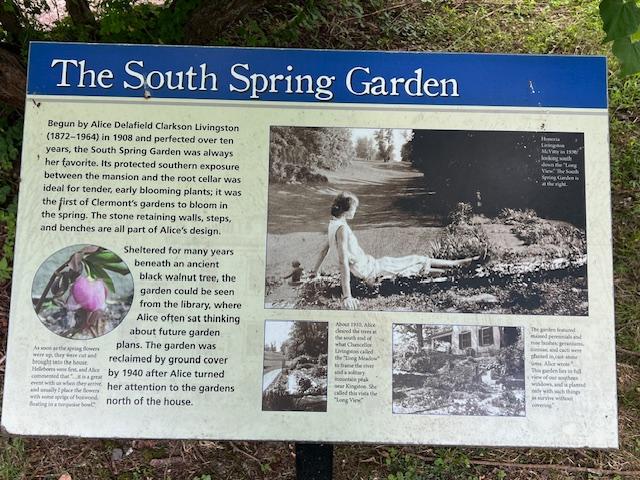
The first was the South Spring Garden which is closest the house. This was built when the stairs to the side of the home were built and one of Alice Livingston’s first gardens.
The South Spring Garden sign
The South Spring Garden in Summer 2023
The South Spring Garden being cleaned up in Summer 2024
The grown in wall of the South Spring Garden
The Root Cellar sign
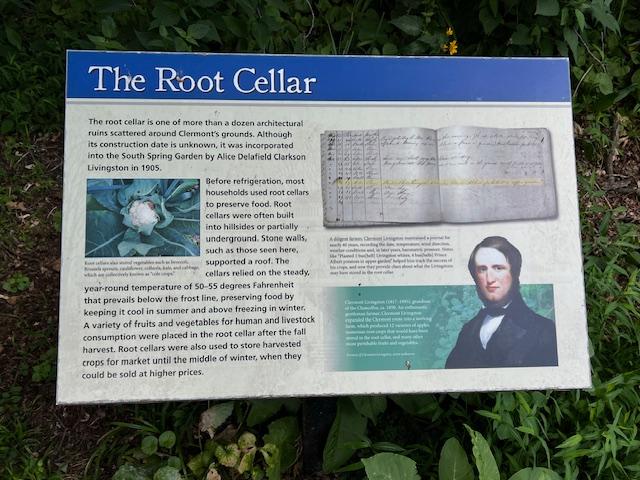
The Root Cellar remains by the South Spring Gardens
The flowers in the South Spring Gardens
The sign for the Walled Garden
The Walled Garden
The Walled Garden
The Walled Garden
The Walled Garden
The Walled Garden Statuary
The Walled Garden
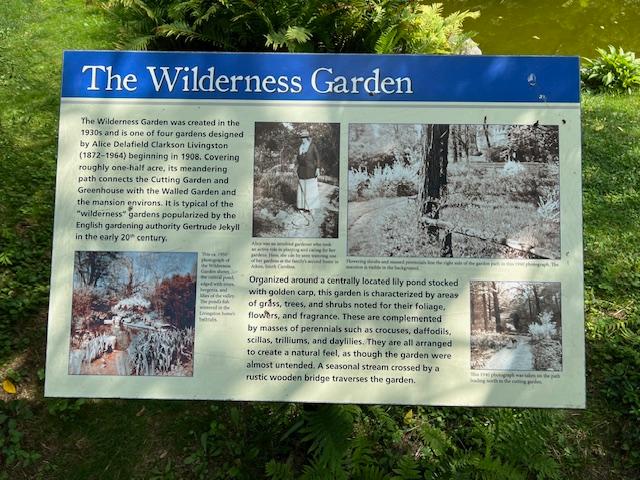
Then we visited the Wilderness Gardens that were just beyond these and they also had been brought back to life by the gardeners. This was to be a transition from the formal gardens to the woods.
The Wilderness Gardens:
The Wilderness Gardens sign
The Wilderness Gardens
The Wilderness Gardens
The we visited the Children’s Garden and the Cutting Gardens which were the newest gardens on the estate. The Children’s Garden playhouse had just been renovated and the beds had been replanted.
The Children’s Garden with the Children’s playhouse
The Children’s Garden from the entrance
The Children’s Garden Garden
The Children’s Garden
The Cutting Gardens were created so that Alice Livingston could grow the types of flowers that would decorate the house at various points in the season. These gardens have been brought back to their original purpose and the flowers and assortments that have been planted are colorful and the fragrances are so nice. On a beautiful day, walking amongst the beds is so nice and relaxing.
The Cutting Garden
The Cutting Garden
The Cutting Garden
The Cutting Garden trellis
The bridge between the Walled Gardens and the Children’s and Cutting Gardens
The Gardens Tour was very informative. Alice Livingston’s love of flowers and how they accented the house were her pride and joy. The Cutting Garden were all the flowers that she used to decorate the house with and the Children’s Gardens taught her daughters responsibilities and knowledge of horticulture.
The biggest problem in recent years is how to maintain all these gardens. This takes a lot of effort and work to weed. plant and prune these beds and make them look nice. The new gardener hired by the State and her team of two staff and volunteers are doing a nice job cleaning out the old beds and replanting and pruning all the plants and bushes that were already there. You can tell by the pictures there is a lot more to do but the gardens are on their way back to their original look.
The Garden Tour in 2026: “Gardens and Growth-The Evolving Landscape of Clermont”
The Clermont Garden Walking Tour 2026:
I returned in the Spring of 2026 for the an updated walking tour of the gardens “Gardens and Grounds: Evolving Landscaping of Clermont”, where the State of New York horticulturalist who had just been hired to maintain the gardens, explained to us the developments and goals that the State wanted for the direction of the landscaping on the property. They wanted it brought back to the 1930’s blueprint of what Alice Livingston had originally envisioned for the estate when she returned from Europe.
Arriving to the Clermont estate for the walking tour
We started the tour with a history of the house and Alice Livingston’s return from Europe to create her famous gardens
The front of the mansion in the Spring of 2026
We started the tour at the Walled Garden which was just finished being restored. The back wall had just been finished and the site’s main horticulturalist explained that she was working with a group of volunteers to maintain the gardens.
The Walled Garden designed by Alice Livingston
The Walled Garden in the Spring of 2026
The inside to the entrance of the Walled Garden
The back part of the Walled Garden
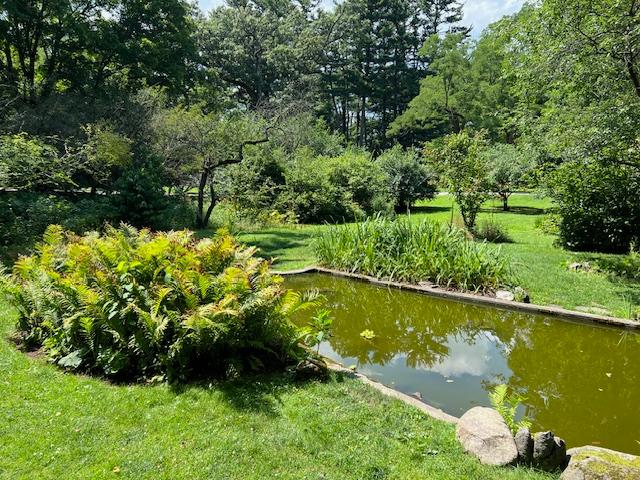
The next garden we toured was the Wilderness Garden which included wildflowers and a fish pond
The Wilderness Garden sign
The back part of the Walled Garden leads to the Wilderness Garden
The entrance to the Wilderness Gardens
The lecture on the design and plantings of the Wilderness Garden
The colorful wildflowers that line the grass paths
The fish pond in the Wilderness Garden
We then followed the path and walked up and toured the Cutting and Children’s Garden. These colorful gardens once supplied the house with an assortment of fresh flowers. It also taught the Livingston girls the attributes of gardening.
The Cutting Garden and Greenhouse sign
The main Cutting Garden
The Cutting garden
The Cutting Garden in the late Spring
The in season flowers in the Cutting Garden
The Children’s Playhouse and Garden is next to the Cutting Garden
The Children’s Garden in the Spring
Touring past the old Greenhouses
Part of the former greenhouse
The tour through the grounds with my group
The pathway back to Clermont
Touring along the river
The former roadway between the house and the river
The South Spring Garden
Our last garden toured was the one closest to the house and that was the South Spring Garden of which Alice could see from her window. When the porch was removed from the home and Alice developed plans for other gardens, this garden went ‘native’.
The South Garden
The South Garden in bloom
The views from the South Garden
The flower planters near the South Garden
The planters filled with Spring geraniums
Walking back after the tour was over and looking at the beautiful grounds
Ending the tour that day with a walk along the river
It was a beautiful day to walk the gardens and the perfect way to spend the afternoon. Each time I take a tour of the gardens, I am amazed how different they seem. I love the different times of the year and how it changes these gardens.
Downtown Germantown during the Christmas holidays.
Downtown Germantown at the Christmas holidays.
Downtown Germantown for the Christmas holidays and church service.
After the tour in July 2024 for the Summer Garden tour, I revisited Germantown again to see what it was like during the summer months. It is a very active and historical downtown with nice restaurants and shops, a wonderful gourmet grocery store and beautiful historical churches. It is a nice place to spend the weekend when touring the mansions in Columbia and Duchess Counties.
Germantown in the Summer of 2024:
Downtown Germantown, NY in the summer
The town square and historical sign
The Inn downtown
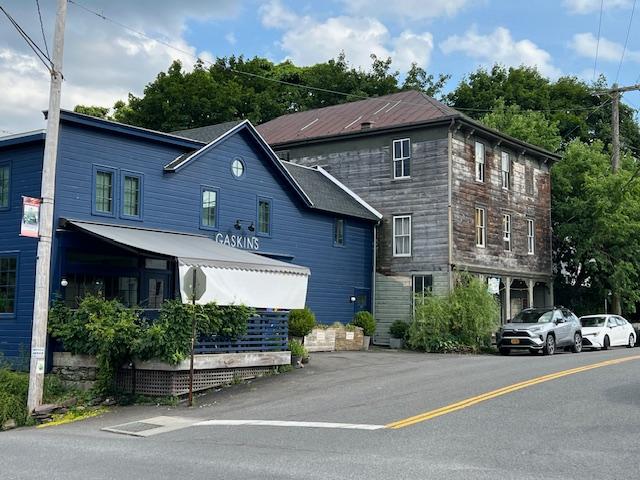
The restaurant row of Germantown with Gaskin’s in the background
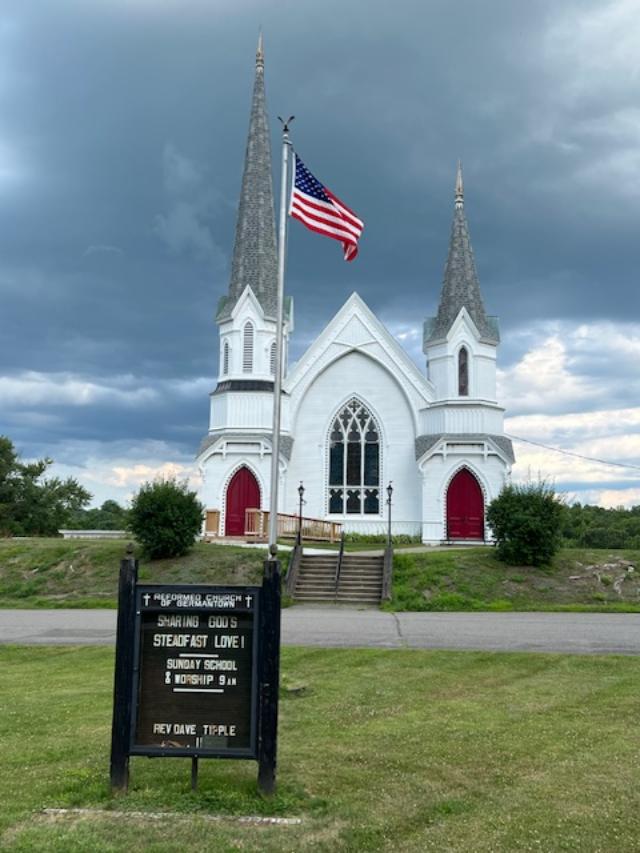
The Reformed Church of Germantown. For some reason the clouds started to roll in after a sunny day.
The church grounds across the street
Germantown is a small town that keeps changing as more people from the City move up to the Hudson River Valley. A lot of the buildings in town are becoming art galleries, furniture shops and new restaurants. With each season, there are more changes coming to the town.
It was another warm and sunny Saturday afternoon and we lucked out that the day fell between two rain storms, where the rain cooled down the temperature and got rid of the humidity. It made it the perfect day for our June barbecue.
The grounds of the NJ State Firemen’s Home
The NJ State Firemen’s Home built an outdoor grill a few years ago making it easier for us to sponsor our barbecues, where the food is cooked and served outside for the residents and their guests. The tables and chairs were set under tents and umbrellas and shade trees making it an enjoyable afternoon.
The built in barbecue was ready to start cooking
The food preparation by Chef Prince and our own President of the NJ State Firemen’s Association Bob Ordway was started in the afternoon
Chef Prince and his helper manning the grill
With the grill fired up and meat sizzling for lunch, everyone anticipated a wonderful lunch ahead. With the assistance of Chef Prince of the Firemen’s Home and NJ State Fire Association President and member Bob Ordway, we stated serving lunch to everyone by 12:30pm.
NJ State Firemen’s Association President Bob Ordway helping with service to the residents
Entertainment rocked that afternoon with the sounds of performer Kelly Carpenter
As residents and their families settled in for lunch and the members of our organization startled to serve everyone, singer Kelly Carpenter started to perform singing popular contemporary songs.
Singer Kelly Carpenter is always a favorite at our events
Residents got to enjoy the beautiful weather that afternoon
It was such a beautiful afternoon with temperatures hovering around 80 degrees with no humidity making it the perfect afternoon to eat under the large shade trees.
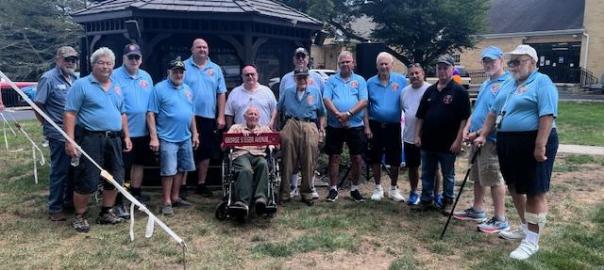
Members of the Bergen County Firemen’s Home Association relaxing for their lunch after serving the residents
Kelly Carpenter performing as the sun shines on this marvelous afternoon
Sitting down to enjoy our barbecue lunch. One of the perks of membership to the Bergen County Firemen’s Home Association
The lunch started to wrap up by 1:00pm and everyone started to either head back inside or wondered ofc to spend time with their families.
It was another successful picnic sponsored by the Bergen County Firemen’s Home Association.
If you would like to make a donation to our organization, please send it to:
BCFHA
C/O Jeff Parma
277 Harriott Avenue
Harrington Park, NJ 07640
Please make the checks out to the Bergen County Firemen’s Home Association
Our 2026 Meeting Schedule:
All our meetings at the home start at 12:00pm at the NJ State Firemen’s Home in Boonton, NJ:
August 15th (August Barbecue)
October 18th
December 6th (Annual Christmas Party)
A big “Thank you” from The Bergen County Firemen’s Home Association Executive Board 2026
In the months of March and May right before the Memorial Day holiday, many of the museums I belong to held their private ‘Members Night’, where they hold extra hours for members after the museums are closed to the public to come and see the exhibitions, listen to music, have something to eat and drink and listen to talks about the exhibitions. The funny part is that the museum’s are more crowded on these nights than when they are open to the public.
Walking inside the soaring dining space at the Morgan Library
The first set of ‘Members Nights’ I went to were on March 24th with my first stop at the Morgan Library. I was there to see the ‘Mozart’ exhibition again.
Wolfgang Amadeus Mozart: Treasures from the Mozarteum Foundation of Salzburg, an exhibition that traces the extraordinary life and enduring legacy of Wolfgang Amadeus Mozart (1756–1791). On view March 13th through May 31st, 2026, this two-gallery exhibition combines the Morgan’s significant holdings in Mozart manuscripts and first editions with remarkable objects, on view in the United States for the first time, from the Mozarteum Foundation of Salzburg. These include Mozart’s clavichord on which he composed The Magic Flute and his childhood violin, as well as famous portraits, letters, and personal objects of Mozart and his family (Morgan Library.com).
Touring the exhibition
Video on the exhibition:
The concert of Mozart as a child
The Magic Flute music and costumes
I happen to love ‘The Magic Flute’ and it was interesting to see the notes and some of the original costumes from the opera at the exhibition.
The costumes from the Magic Flute
After I toured the Mozart exhibition, I toured the rest of the museum that included the original part of the mansion.
The old Living Room
The ceiling outside the exhibition hall
The old Library and Rare book collection
The ceiling in the old Library
I then visited the exhibition of ancient Mesopotamia art scrolls. This was really interesting how this form of written art worked into the collection.
After touring the museum, I went to see what everyone was eating in the museum’s small restaurant was eating because it was getting crowded. The counter was filled with delicious looking desserts.
The sweet treats at the dessert bar at the Morgan Library
The selection of desserts at the Morgan Library the night of Member’s Night
I then visited their very interesting Gift Shop
Admiring the flowers at the Coat Check on the way out. I thought this was a nice touch.
All good things come to an end and I made my way up Fifth Avenue to the Museum of Modern Art for the second part of the evening
I could not believe that the museums arranged these ‘Members Nights’ on the same night. They would plan this three weeks late when the Museum of Modern Art and the Metropolitan Museum of Art. I just had to enough time at one museum and see what I wanted to see and then go up the next.
The Museum of Modern Art (MoMA) at 11 West 53rd Street
Frida and Diego: The Last Dream celebrates Frida Kahlo and Diego Rivera—two of Mexico’s most beloved icons of 20th-century art—in a first-of-its-kind collaboration with the Metropolitan Opera. Organized in conjunction with the Met’s new production of El Último Sueño de Frida y Diego, the presentation at MoMA features artworks by Kahlo and Rivera in an elaborate setting designed by Jon Bausor, the set and co-costume designer of the opera. For both the opera and installation, Bausor evokes the artists’ lives and artworks in his theatrical designs (MoMA.org).
Key participants in a movement to redefine Mexican culture and identity after the revolution of 1910–20—Rivera through monumental murals and Kahlo through intimate self-portraits—the artists were romantically involved from 1928 until Kahlo’s death in 1954. The fictional narrative of the opera El Último Sueño de Frida y Diego begins three years after Kahlo’s death and follows an aging Rivera as he summons the deceased Kahlo back to life on the Day of the Dead, a Mexican holiday honoring passed loved ones. As the opera and installation design attest, the pair continue to have an enduring influence on artists across the visual and performing arts (MoMA.org).
Video on the exhibition:
The opening of the ‘Frida and Diego’ exhibition brought members out in droves
The description of the exhibition
The tree dominates the center of the exhibition
The signature piece from the exhibition
One of the dominate drawings
Looking over costume designs
Some of my favorite costume designs
Another great costume design
After touring the exhibition, I visited some of the other galleries and looked over other works of art that I admired in the past. I took a quick tour of the Modern Galleries before I left that evening.
The Jackson Pollack work
I loved this creative food service work
After touring the museum, I joined the rest of the crowd on the main floor for music.
The main lobby of the MoMA the night of Member’s Night
A few weeks later, the Metropolitan Museum of Art had planned their Member’s Night and then the Museum of Modern Art planned a Member’s Night the same night. So I planned another night of running back and forth between museums.
Member’s Night at the Museum of Modern Art
The schedule of events
There was a lot of activities happening that evening and I wondered around museum to see all of them. I started in the Museum Garden to hear the singers who were performing that evening.
The first performer was Lizzy Hilliard, who performed the guitar and was really enjoyable to hear. She is a very lively and engaging entertainer.
The crowds were outside enjoying the beautiful weather that evening
Lizzy Hilliard performing that evening in the garden
After the performance, I wondered around the museum to see some of the exhibitions and started on the first floor which was really active.
I love wondering through the lobby of the MoMA.
While most of the crowds were still listening to the entertainment in the garden, I went up to the Marcel Duchamp exhibition and toured the galleries again (I had been there the previous week and quickly walked the exhibition).
The Marcel Duchamp exhibition was the biggest retrospect of the artist’s work in years
Marcel Duchamp is organized by The Museum of Modern Art, New York, and the Philadelphia Art Museum, with the generous collaboration of the Centre Pompidou. “Contemporary artworks often prompt viewers to ask, ‘Why is this art?’ It is virtually impossible to answer this question without referring to the work of Duchamp,” said Temkin. “More than any other modern artist, Duchamp challenged and transformed the very definition of an artwork.” Kuo added, “Duchamp’s influence is incalculable and his myriad contributions have established him as one of the most important figures in modern culture (MoMA.org).
Our exhibition will foreground the ways in which Duchamp upended conventional oppositions between hand and machine, original and copy, intention and chance, and matter and idea.” MoMA and PMA have a longstanding history with Duchamp’s work. MoMA was the first museum to acquire a work by Duchamp, in addition to including his work in early landmark exhibitions such as Fantastic Art, Dada, Surrealism (1936) and The Art of Assemblage (1961) (MoMA.org).
Video on the exhibition from the MoMA curator:
I joined the start of the walking tour with one of the docents at the MoMA at the beginning of the exhibition
The gallery was so crowded with people listening to the one docent that was describing the exhibition that I continued on my own. I had never seen much of this artist’s work in museums before and had heard about his piece of changing the look of the Mona Lisa. I really enjoyed seeing it up close.
The 1919 original “L.H.O.O.Q.” was on a card
The 1930 replica “L.H.O.O.Q.”
The information on the replica piece
I then moved on to other works that he was well known for especially his controversial urinal piece.
The work “Fountain” (I thought this was unusual)
The write up on the piece
The last piece that I saw in the exhibition before I left the museum for the Met was his spoke wheel piece.
The work “Bicycle Wheel”
I wondered around the museum for a bit after the tour of the exhibition and admired works in the Modern Wing.
I love Picasso’s Cubism works
After I finished touring the exhibition, I left the MoMA for The Met. The weather was beautiful and with it being light out until almost 8:30pm. It was a beautiful walk up Fifth Avenue with the trees and the flower beds in full bloom.
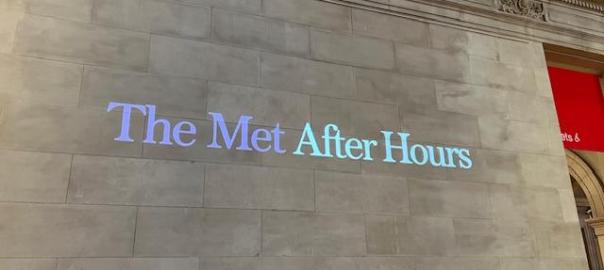
Arriving at The Metropolitan Museum of Art for “The Met After Hours”
The lobby and rotunda for the event seemed very quiet to me
The beautiful floral arrangements in the lobby area were fresh Cherry Blossoms
The Cherry Blossoms in the urns around the lobby
The American Wing where the Member’s Bar and entertainment was located
The Met seemed very quiet that night. Being the Tuesday after Memorial Day Weekend, I guess most members were getting back to work or still tired from the weekend. It had been a rainy mess the whole weekend and I could not see many people going away.
The bar and the entertainment in the American Wing were located that evening.
I had about two hours before the museum closed for the evening, so I wondered through some of the special exhibitions and started with the “Raphael-Sublime Poetry” exhibition on the second floor.
Raphael: Sublime Poetry is the first comprehensive exhibition on Raphael in the United States, bringing together more than 170 of the artist’s greatest masterpieces and rarely seen treasures to illuminate the brilliance of Raphael’s extraordinary creativity. The son of a painter and poet, Raphael engaged with the foremost writers and thinkers of his age in Rome, displaying a poetic sensibility that captivated his peers and generations that followed. Follow the full breadth of his life and career, from his origins in Urbino to his rise in Florence, where he began to emerge as a peer of Leonardo da Vinci and Michelangelo, to his final, prolific decade at the papal court in Rome (Met.org).
Dive into the artistic process of one of history’s most beloved and influential artists. A true titan of the Italian Renaissance, Raffaello di Giovanni Santi (1483–1520)—better known as Raphael—matched ambition with lyricism to create works with both intellectual heft and emotional depth, a necessary skill in the complex political landscape of Renaissance courts. In his short life of only 37 years, he achieved such profound success as a painter, designer, and architect that he was regarded as the pinnacle of artistic perfection for centuries after his death (Met.org).
Video on the exhibition with the MoMA:
Video on the exhibition with CBS This Morning:
The work admired as I was walking around the exhibition.
This was my favorite piece from the exhibition
The Raphael Exhibition I know was a big deal for the museum but it really was not my taste in art. As much as I admired the work, the whole exhibition did not ‘grab me”.
I was not as impressed with the art in the exhibition and took a quick tour of the works. I had seen the exhibition on a previous tour of the museum so I just wanted to walk around again to see the works that I missed.
I then went back to the first floor and spent more time at the Costume Art exhibition. There had been so much media on the exhibit that you could not get in without timed tickets but because it was quiet on Member’s Night, I just walked in.
The Costume Institute’s spring 2026 exhibition explores depictions of the dressed body across The Met’s vast collection, pairing garments with artworks to reveal the inherent relationship between clothing and the body (Met.org).
Focusing primarily on Western art from prehistory to the present, Costume Art presents connections between garments from The Costume Institute and objects from the Museum’s other collecting areas. Pairings between fashions and artworks will present a spectrum of connections and experiences: from the formal to the conceptual, the aesthetic to the political, the individual to the universal, the illustrative to the symbolic, and the playful to the profound. These pairings are organized into a series of thematic body types that reflect their pervasiveness and endurance through time and cultures (Met.org).
Video on the Costume Art exhibition:
Walking through the entrance of the exhibition
This gallery was newly created for this collection and I had display the pieces that stood out to me the most in the Costume Art exhibition.
One of the pieces I admired
Some of the Evening clothes I admired
Another piece I admired
I thought this was really unusual
I really enjoyed looking over the exhibition yet wondering how many people would actually wear some of these pieces out in public. It really asks the question “What is art?” Still, I loved the dress with all the human organs on it. Now that would stop everyone in mid conversation at a party.
All good things come to an end again and I left the Met as it was closing for the evening. It really is a pretty site at night looking down Fifth Avenue.
How beautiful the Upper East Side is at night
I was starved when I left the museum and knew not too many places outside the bars would be open this late at night. I remembered Asian 83 on East 83rd Street that still might be open for the evening and I was one of their last customers that night. The food is excellent at this little ‘hole in the wall’ on the Upper East Side.
Dinner at Asian 83, Beef and Broccoli with Fried Rice
I ordered a combination platter of Beef and Broccoli with Fried Rice and an Egg Roll with a Coke. Their prices are so reasonable and their portion sizes are very fair. It was a nice dinner before I left Manhattan that evening.
The Beef and Broccoli entree
Their Egg Rolls are excellent
Being a member of many museums, this is one of the perks about membership. You get to enjoy these wonderful evenings while supporting the museums which in this economy really helps. That’s why I have enjoyed supporting them for years. The donation benefits everyone.
Every semester for my Business Marketing, Management and Communications classes, I create one big Team assignment for my students. In a Commuter College, it is a lot tougher for students to get to know one another between their studies and their jobs, so I create these projects to foster learning, creativity and especially Teamwork.
This semester I taught two sections of Business 101-Introduction to Business, which is the entry level course to the Business/Hotel Management School. This is a tough course to teach as you always have students of various age groups and various levels of industry experience.
The Spring semester was no different. This makes the class more interesting yet more challenging to teach. I still challenge them and test them to see what type of future executives they will become.
I also taught Principles of Management, which came with its own set of challenges. It was the amount of people in the class and what projects would they be working on.
In the past, I have created these Team projects under the Bergecco-Parc Consulting Inc. banner, the main consulting company, the Orion Malls banner, a Mall design company and the Buscomonzefi.com banner, my Tech Division. All of these business concepts are simulated.
Each business does its best to be creative, forward thinking and have a thought producing presentations. I also challenge the students to top on another in their presentations and build on what they have seen others do in the past.
The Bergecco-Parc Consulting Inc. concept is an acronym for Bergen Community College Paramus campus where I work.
Professor Justin Watrel, CEO Bergecco-Parc Consulting Inc.
Our Corporate site (created my one of my former President’s:
While my morning Business 101 classes worked on their ‘Breakfast at Primo Pizza’ project and my International Marketing students worked on their “The Historic Revolutionary War Graveyards and Cemeteries of Bergen County” projects, I had my Principle of Management students create a game plan to market the Pascack Historical Society Museum in Park Ridge, NJ to a younger, more modern audience.
When choosing a project for this class, I had had two other ideas that fell through, then I had remembered working with the Pascack Historical Society Museum the prior year for my “Bergen 250” Team Project. We had proposed a Farm to Table Dinner at the Wortendyke Barn down the road with the dinner starting with a Cocktail Party here with a tour of the museum. I asked the museum again to partner with me on this project.
The Video Presentation of the “Bergen 250”in 2024:
The museum had created a wonderful exhibition for the “Bergen 250” but when I went to visit it, no one was at the museum but myself. When I asked the volunteers that day how many people had visited the museum, they told me I was the first one. That got me thinking why people were not visiting this wonderful museum with its interesting artifacts and intriguing displays.
The outside of the Pascack Historical Society Museum at 19 Ridge Avenue in Park Ridge, NJ
Then I looked at their website and their displays. I realized that the museum was not adapting to the cellphone age. There were no QR codes at any of the displays, not enough pictures of the display on their website and their scavenger hunt bingo game needed an update to engage a younger crowd.
That’s when I came up with a Marketing plan for the museum and proposed it to their Executive Board. We worked together to come up with new ways to promote the museum and its collection. This was our combined idea and we looked at how to bring more traffic to the museum.
The Proposal for “Bergen 250: Touring the Pascack Historical Society Museum”:
I presented the project to my students after the Spring Break and then the next week took my students on a mandatory field trip to the Pascack Historical Society Museum in early April. The Board members of the Museum led us on a tour of all the exhibitions, then discussed their plans for the “Bergen 250” and then discussed some of the challenges that the museum faced with attendance.
Touring the museum
The students on their part took pictures and notes about the museum and their displays. Many would make various trips back to the museum to crest the QR codes for the displays and map the museum’s backyard for the Farm to Table fundraiser and a proposed afternoon tea.
Touring the museum
Touring the museum
Touring the museum with the Board of the museum
The museum’s Board members could not have been nicer and more helpful to the students and myself. We got a lot of insights on what direction the Board wanted to go.
Our Team picture at the museum
The tour of the museum took about an hour. We then had a Division Team Dinner at Pompilio’s Pizzeria in Downtown Westwood, NJ:
I find that these Team dinners and lunches are very helpful in getting the students together to get to know each other and we share a nice meal as a Team should. We asked the Board to join us so we could continue the conversation.
Dinner with both the Board and my Team
For the next five weeks the three Teams broken into Marketing, Historical and Foodservice created their ideas and game-plans to help the museum increase traffic by trying to bring a younger and tech savvy visitor into the space.
The Pascack Historical Society YouTube Presentation:
The video of our Presentation to the Board of the Pascack Historical Society Museum on the evening of April 29th, 2026
On the evening of April 29th, the Board members of the museum joined us for the Presentation of ideas the students came up with including setting new QR codes for all the displays, a revamped Marketing plan to showcase the museum, a new historical walking tour, one aimed at adults and one to children and the ideas for the fundraising dinner, a children’s birthday party concept and a Afternoon Tea fundraiser.
After the Presentation, we had a Q & A on the ideas and after the Presentation was over, we had a reception for our guests and for the student consultants. Then we took our Corporate Team picture.
My Divisional Team the night of the Presentation
Our reception after the Presentation
It was another successful project accomplished and it looked like the Board went home with new ideas and the students learned a few things about themselves. I could not have been more proud of the students.
One of the last places I visited in the 2026 Pathways tour of Morris County was the Historical Society of Boonton Township which is located in the former Oscar Kincaid Farm Homestead. The house and what was left of the acreage of the farm was part of the current museum. The museum was an example of early New Jersey farming that dated from the 1800’s to the Twenty-First century. There was not much in the way of period furniture or farm equipment (items of the home were sold off since Mr. Kincaid’s passing), but the new historical society is buying artifacts and bringing them back to the farm. This includes one of Mr. Kincaid’s tractors. His roll up desk is also still in the display room which was once the Living Room of the home.
The Kincaid Homestead
History of Oscar Kincaid and Homestead:
(From the Morris County Historical Society website)
Originally a part of the extensive tract belonging to William Penn, the earliest portion of the home was constructed in 1785 by Adam Miller and Anna DeMouth Miller. Just over a decade later, they sold the property to Adam’s cousin, Sarah Miller Parlimen (of the Miller/Dixon homestead) and her husband, John, who built a sawmill there. After a brief ownership by William Scott of Powerville, a Miller relative, the land was sold to John Decker in 1828. An industrious man, Decker operated both a farm and successful forge, shipping his goods to New York via the Morris Canal. By 1837, he expanded the home, adding a distinctive folk-art painting of a face and unique plasterwork that can still be seen today (MCHS website).
The homestead passed through generations of Decker’s family, ultimately being inherited by Oscar Kincaid Sr. in the early 20th century. Kincaid ran a popular ice cream stand and dairy business throughout the 1920s and 30s. Following World War II, the family opened Valley Farm on the site, which continued until the death of Oscar Kincaid Jr. in 2000. Added to the National Register of Historic Places in 2005, the Decker-Kincaid Homestead today operates as a museum and headquarters of the Historical Society of Boonton Township (MCHS website).
The Kincaid House
The historical marker for the house
The front yard
The entrance to the house
The main foyer of the house
The house is a small farmhouse built in two sections. The original part of the house dates back to the late 1700’s and the newer part in the early 1800’s. The once furnished rooms now hold displays of Morris County and the farming industry of the time plus community artifacts.
The former Living Room
Oscar Kincaid’s desk
There were not much left in the way of family furnishings and heirlooms but this desk was Oscar Kinkaid’s.
The back bedroom
The Flag display for the ‘250th Anniversary’
Story of Oscar Kincaid’s life: Oscar Kincaid was a farmer/businessman, a politician and a conservationist.
On Community:
(From the museum website)
Oscar’s commitment to his community transcended farming. He served as a member of the Boonton Township Committee for 30 years and was mayor for two terms. He was also a founding member of the Morris County Agricultural Development Board, on which he served for 17 years, six as board chairman. Oscar led the charge for farmland preservation in Morris County. His efforts resulted in the preservation of 41 farms covering 3,100 acres spanning several municipalities throughout the county. As one person put it: “Oscar had more impact on preserving the character of Boonton than any single individual.”
But to Oscar: “Farming and being active in local politics was simply a way of life.” Oscar passed away November 11, 2000
The contractor’s face on the wall
The face came about when Oscar Kincaid did not want to pay a contractor for his work. He created this face so that he would have to live with it for the rest of his life. It can not be planted over.
The ‘Mr. Face’ in Weird NJ
On Farming:
(From the Museum website)
Oscar Kincaid, Jr., was born into farm life. It was 1824 when the Kincaid family purchased 30 acres in Boonton Township, Morris County and began farming. More than a century later, a young Oscar took over the operation, working alongside his father as they raised dairy cows, grew vegetables and developed a poultry business. For years, they delivered eggs to retail establishments and sold vegetables from their roadside stand. Over time, Oscar moved away from the dairy and poultry business and focused his efforts on vegetable and hay production.
The Kincaid house from the side
After the short tour around the house, I walked around the farm grounds. The house was set on a beautiful piece of land that sloped down to the old farmstand. There was also a swimming pond which was once part of the farm which is now private property.
The farm property from the side with the barn
The barn across the street
The property was about ten acres at the time of his death and parts have been developed. It still has some of the most wonderful views of the area.
The view of the old farm from the front porch
The farm land stretches over different sections of the road and the property is very picturesque. It is a very beautiful homestead.
The view of the farm from the lawn
The swimming pond on the edge of the property
The old farm stand that had been used for eighty years
The old Farm stand was used into the mid 2000’s
The full view of the farm
Since the house was just recently bought, there is still some design and artifacts that need to be collected to complete the look of a Jersey farm.
The Historical Society of Boonton Township is still expanding the collection of farm equipment for property and finding furniture for the home. The property is a beautiful and picturesque and shows how the traditional farm has adapted to modern times. Mr. Kincaid only passed a few years ago but kept the farm traditional and that worked for him. He left a legacy for us to appreciate the independent Jersey farmer.
I recently visited Lewes, DE for ‘Maritime Day’ by the harbor and there were a lot of interesting booths on the watersheds, environmental agencies that discussed their purpose with harbor issues and what the town of Lewes does for the environment.
The historic Blizzard from 1888
History of the Lewes Life Saving Station & Museum:
(From Historic Lewes.com)
It was also a busy station, guarding both the mouth of Delaware Bay and the protected waters created by the massive breakwaters of the National Harbor of Refuge. Its string of Keepers and their six- or seven-man crews of Surfmen enacted scores of rescues through the years and in particular won great praise for their tireless heroics during the Great White Hurricane of 1888, when they pulled scores of sailors from the frigid waters and iced-over hulks of wrecked vessels to safety.
The front of the museum
The History of the Lewes Lifeguard Museum:
(From the Historic Lewes.com)
The United States Life-Saving Service (USLSS) protected the American coast and saved lives in peril at sea from 1871 until 1915, when it became a part of the new United States Coast Guard (USCG). This incredible humanitarian mission came to Lewes in 1884, making it the fourth of six stations to be established in Delaware. Lewes was among the most desirable stations for the Keepers and Surfmen who manned it, with its original location on the site of the present-day Cape May-Lewes Ferry Terminal placing it not far from town and therefore civilization.
The view of the harbor which has changed over the years
I spent my time touring the Lewes Lifeguard Museum, which is an interesting little museum on the history of life saving along the Delaware coast. The museum’s artifacts show some of the earliest and innovative forms of rescue equipment from before the Civil War. This was the precursor to the United States Coast Guard.
The inside of the museum
The lower part of the museum contained most of the equipment, items like rescue ropes, wenches, rescue apparatus, lanterns and uniforms like jackets and boots.
Pulled and equipment used to rescue stranded people
History of the Lewes Historical Museum:
(Historic Lewes.com)
The United States Coast Guard maintained the Station Lewes from 1915 until 1969, when it was closed, declared surplus, and sold. The original main station building was relocated numerous times and still stands today, heavily modified, as the Rehoboth Beach VFW. The Boat House preserved by Historic Lewes, a unique 1884 addition to the USLSS station intended to launch lifeboats on a marine railway directly into the harbor, was acquired from the Pilots’ Association of the Bay & River Delaware in 1979 and moved to its present home at Canalfront Park. It stands proudly beside the Lightship OVERFALLS (LV-118), together commemorating the nation’s and community’s efforts to preserve life on hazardous waters.
The bullies and wenches used by the men
Information in the Lewes Life Saving Station
Biography of the men who worked there
Information on the Boat House
Some of the ropes and wenches used in the rescue procedures
On the other side of the building was the rescue boat the ‘Life Car’, a rudimentary form of rescue boat that the docents said was effective but clunky and hard to use. It shows how we have progressed in life saving.
The Life Car rescue unit
Information on the ‘Life Car’
The ‘Life Car’
The ores and other rescue equipment used
The small rope cannon
The ores
The rope equipment
The story of the ‘Great White Hurricane of March 1888’
The Men’s Dining area in the front of the building
There was no living area in the facility but a place to gather the team, eat and socialize when manning the station.
History of Lewes Lifeguard Museum:
(From the Lewes Lifeguard.com)
Guests visiting the USLSS Boat House today will find it furnished just as Keeper John Clampitt and his courageous Surfmen left it on March 12, 1888, as they pushed out into the roaring gale and whipping snow for their finest hours. It also features a display of early life-saving equipment, including the rope-and-pulley Breeches Buoy rescue system, a steel life-car, and a rare 1887 Long Branch, New Jersey-style surfboat under restoration.
The dining area and the schedule
The dining room table
The Lewes Life Saving Station & Museum is an example of early beach and shipping rescue at the East Coast Shore. It also shows the daily life of these brave men and how lonely and dangerous this job could be. It shows how times have progressed and how they have stayed the same. To save people and property.