It has taken several days to walk NoHA (North of Harlem), whatever that means. The realtors in New York get a great joy out of naming areas of the city so that real estate prices can go up. NoHA is pretty much everything from 155th Street to 125th Street from river to river (that being broken into Hamilton Heights from 145th Street to 125th Street west of St. Nicolas Park and then below 125th until 110th Street is Manhattanville) and SoHA is everything from 125th Street to 110th Street.
Then on the West Side it is known as the Upper Upper West Side until you hit 96th Street and on the East Side it is Spanish Harlem (that is slowly changing as well) until you hit 96th Street then you’re in Yorkville. The Upper East Side starts traditionally on 86th Street but truely stretches to East 98th Street depending on what side of the street you are on. Don’t forget Manhattanville right above Morningside Heights and below Hamilton Heights. I still think the arty crowd calls it NoHA
Most of my days were spent on the on the west side of CUNY campus, which stretches from 141st Street to 130th Street. St. Nicholas Park sits next to the campus and stretches from 141st Street to 127th Street and pretty much cuts the West Side from the East Side of Harlem. Again like the rest of my walk, this area is in heavy transition because of the college and the investment both the college and the city have made in this area.

The gentrifying neighborhoods around CUNY on Covent Avenue.
When I started the walk in this neighborhood, CUNY was out for the summer but as school started, the areas parks, restaurants and streets bustled with student activity. Many of the streets, especially Amsterdam Avenue and Broadway, were beginning to be lined with new bars, restaurants and shops catering to the students and new locals. There is a big difference between the bodega customer and the bar customer as I found out everyone time, I entered one.

The Entrance to the CUNY Campus in Hamilton Heights
My first day walking around was extremely humid and not exactly the best day to walk but I tried to stay in the shade as much as possible. The biggest issue with this area is that the side streets on the west side of St. Nicholas Park are very hilly, a reminder again that Manhattan was not flat to begin with when they were laying out the grid. Walking up and down those hills especially by Riverside Park can take a lot out of you. I was a pool of sweat as I finished walking up and down this part of the neighborhood. The nice part of being so close to campus are the numerous numbers of bodegas in the area. There is a cool drink and a quick snack always close by.
Over a period of four days, I covered a lot of territory in the neighborhood. My walk took me from elegant brownstones to some pretty shady areas that I would avoid like the plague. There are just some parts of these neighborhoods that I am sure that the residents avoid.

The Morris-Jumel Historical District
Most of the streets west of the CUNY campus are very beautiful especially close to the campus, the streets that line Riverside Park and many of the homes that surround Convent Avenue just north of campus. You will find some of the gorgeous townhouses and apartment buildings line the streets of Convert and Nicholas Place with their sandblasted fronts with potted plants and decorations for the upcoming Halloween season. This once exclusive area is becoming exclusive once again.

The Brownstone neighborhoods are so beautiful at Halloween
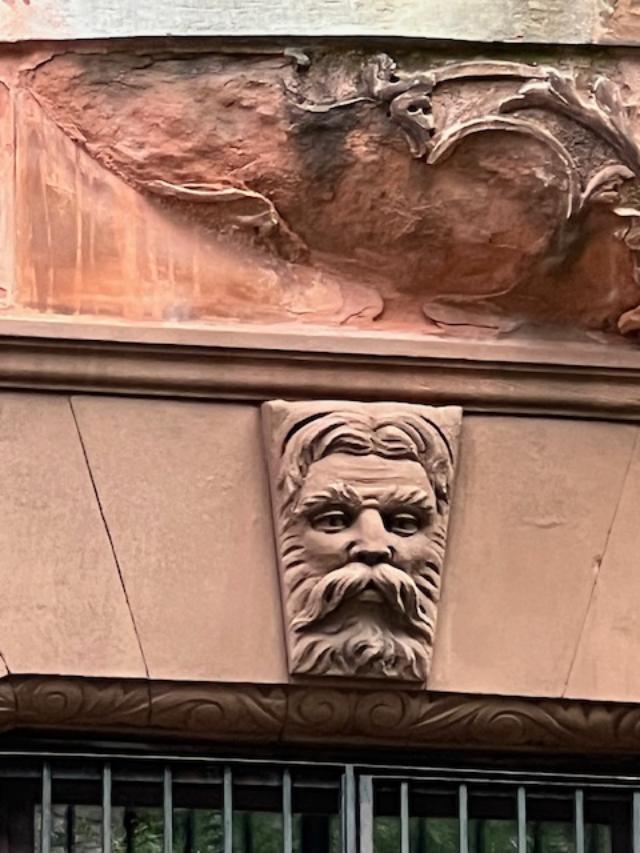
There are even faces staring back at you from the buildings.
The nice part about the CUNY campus in the summer is that there are not many students on campus during the summer break. I was able to relax on the campus lawn and the security guards left me alone. They probably thought I was a returning student or a professor on an afternoon break. I was so sweaty and tired from walking all around the campus, I fell asleep for while in one of the chairs that was out on the patio in the middle of campus. During the quiet summer, it is a nice place to relax.

St. Nicolas Park just below the CUNY campus
https://www.nycgovparks.org/parks/st-nicholas-park

The entrance to St. Nicholas Park
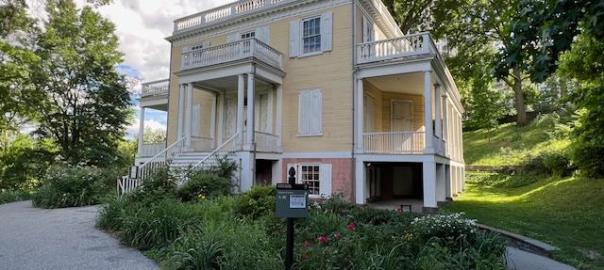
One of the nicest surprises in the area was the Hamilton Grange, the home of Alexander Hamilton and his family during the summer months. Back then, Harlem was the countryside for people living and working in lower Manhattan and many wealthy patrons-built country homes in this area. He lived here in the summer months with his wife, Elizabeth (nee Schuyler) and their eight children. After his time in the military, he worked as a lawyer in New York City and working for the federal government.

The Hamilton Grange by the CUNY Campus
https://www.nps.gov/hagr/index.htm
After his death in 1804 when dueling with Aaron Burr, Elizabeth and her children stayed in the house. Elizabeth had helped start an orphanage among other interests and stayed in the house well into her 80’s. At age 91, she went to live with one of her daughters in Washington DC and died in 1854 at the age of 97. The house had sat neglected into recent times and it was bought by one of the local churches as part of their property. The house has since been moved three times and is still going through a restoration (Wiki and Hamilton Grange History). The grounds were being worked on my volunteers during the time of my visit.

Elizabeth Schuyler, the widow of Alexander Hamilton
I went in on a weekend where the house was open for tours to the public and I got to tour the first floor at my own pace. The bottom level is a history timeline of Hamilton’s life and accomplishments plus information on the house. There is a short movie to see and if you do not know much about Alexander Hamilton’s life, you will learn it here.
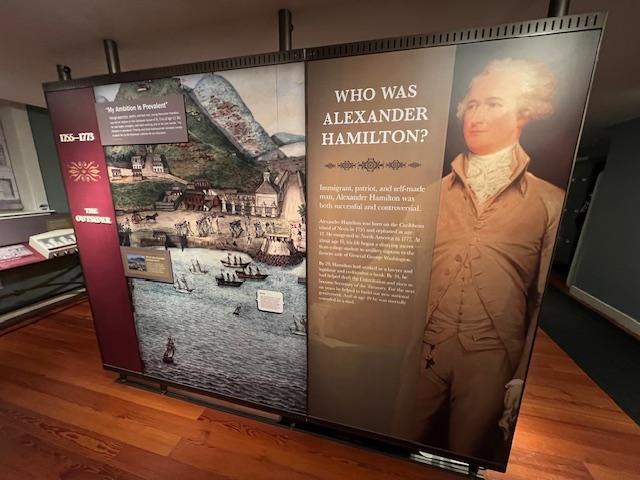
The entrance area of the Hamilton Grange
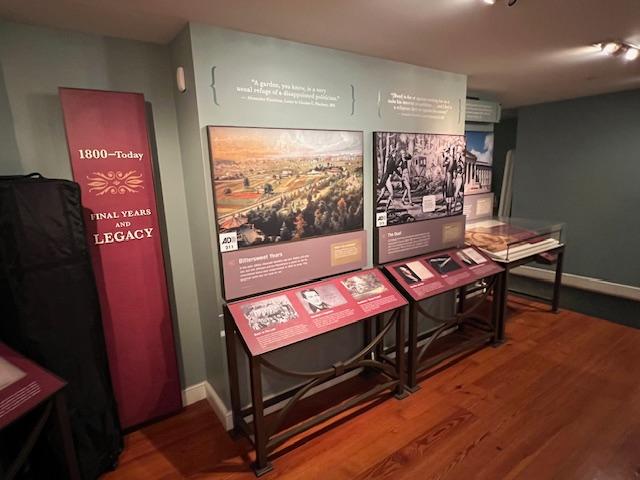
The Information Room on the lower level of the Hamilton Grange.
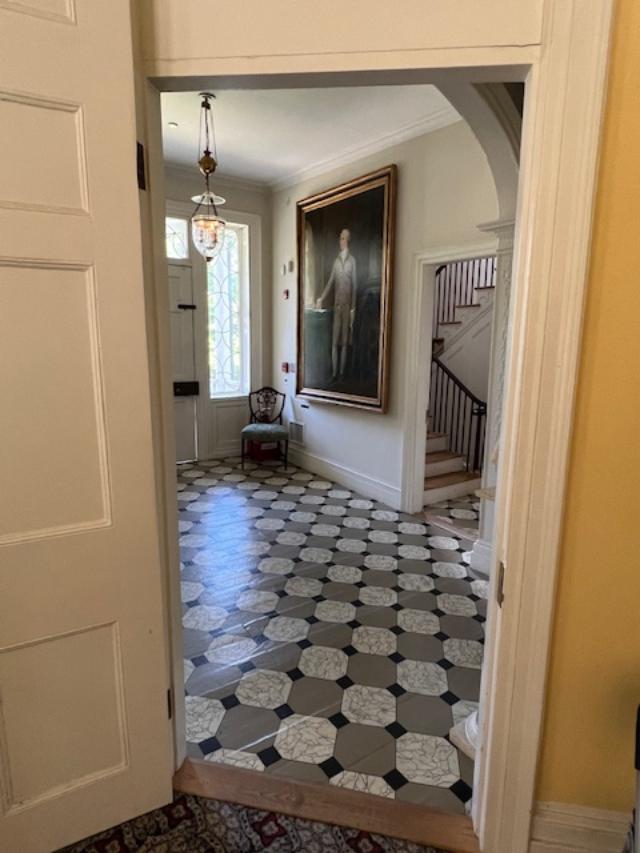
The Entrance Hall
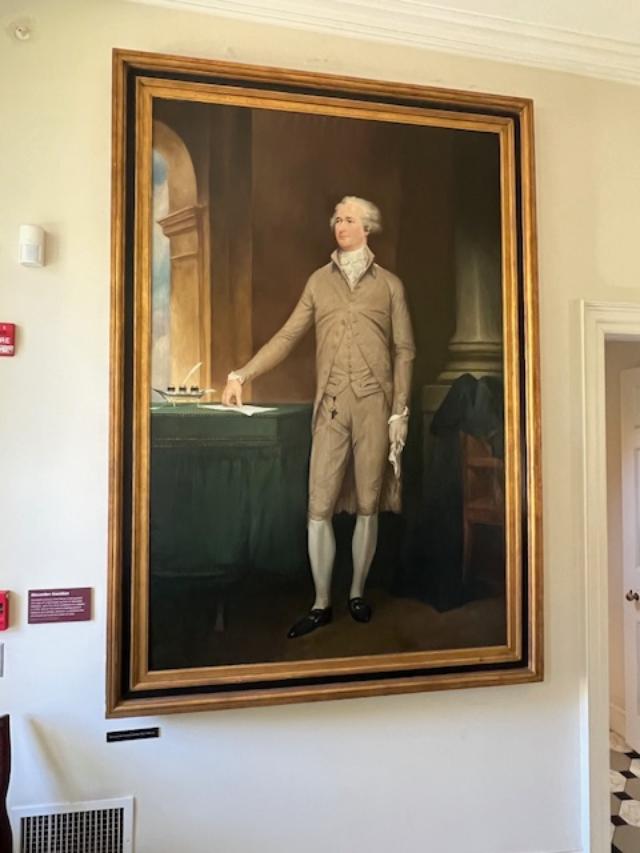
The portrait of Alexander Hamilton

The Alexander Hamilton bust
The upstairs is the only place you can tour and there are only a few rooms to see. The parlor room, dining room and living room are all done in period furnishings and the hallway has been renovated in period look.
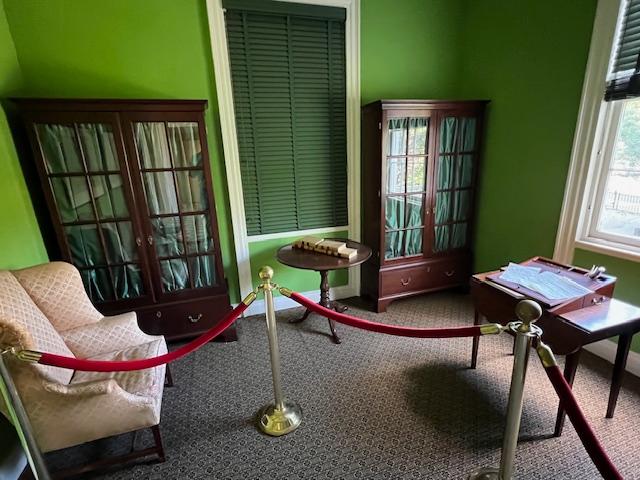
The Hamilton Grange office area
The whole tour will take about a half hour. Since the musical ‘Hamilton’ came out, the tours have been fourfold at the house so take that into consideration when visiting the Grange. It is located at 414 West 141st Street.

Hamilton Grange Living Room

The Living Room in the early afternoon

The Dining Room
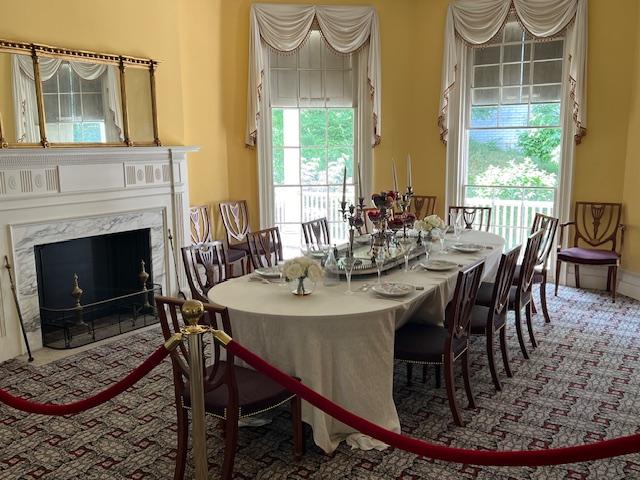
The Dining Room

The Dining Room Table
The house is located at the very tip of St. Nichols Park right next to the CUNY campus. Don’t be surprised if you see a lot of the students sunning themselves in the park while you are there. Be sure to take your time touring the homes along Hamilton Terrace and Convent Avenue. There are some beautiful brownstones to look at around the Grange.
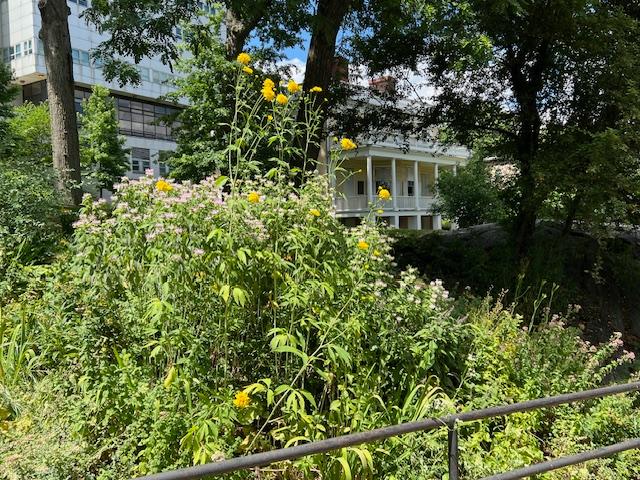
St. Nicholas Park right behind the Hamilton Grange
Touring in St. Nichols Park is interesting. The summer students used the hills on the side of campus to sun themselves, read, do homework and converse with their friends and classmates while the neighborhood kids played basketball and hung out. It was a real hodgepodge of people in the park the many afternoons that I was there. Between Jackie Robinson Park and St. Nichols Park, I don’t see the local college students too intimidated by the surrounding neighborhood.

The St. Nicholas Park hill where students like to hang out
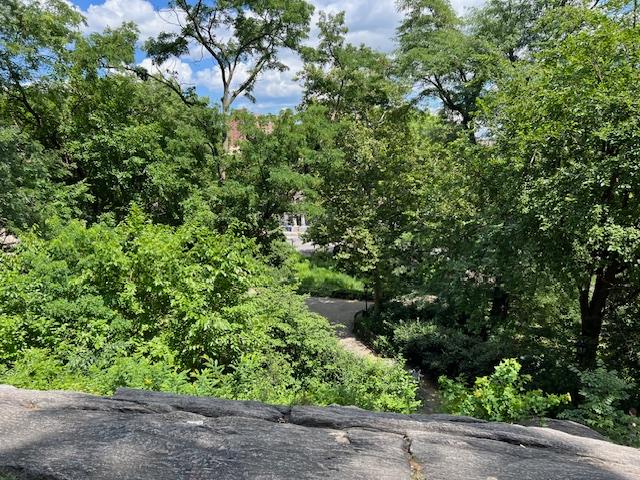
https://www.nycgovparks.org/parks/st-nicholas-park
They seem to be spreading out into it. One thing not to miss is the old Croton Aqueduct which has been turned into the Harlem Stage at the Gate House at 150 Convent Avenue at 135th Street. This beautiful building was built between 1884-1890 and is now a theater. This used to regulate the amount of water flowing underground. The little park surrounding it is nice for a break as well.

The Croton Aqueduct building at 135th Street

https://en.wikipedia.org/wiki/Croton_Aqueduct
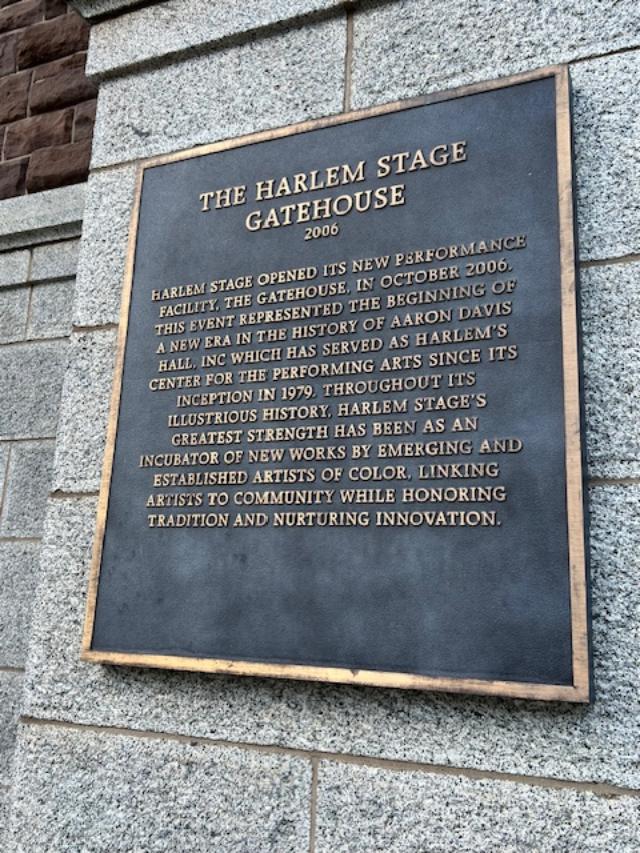
The historical plaques of the Croton Aqueduct
The lower sections of the park and the college give way to a fast-gentrifying neighborhood where many seniors hang out on benches outside the park and talk while the summer students entertain their family and friends in many of the new restaurants lining Amsterdam Avenue. On a warm summer night, there are a lot of people conversing in the outdoor cafes. This area is extremely hilly so take plenty of time to walk up and down the hills. Most of this section between Broadway and the river, you will be walking up and down the roads and will get a big work out.

The Morris-Jumel Community Garden at 457 West 162 Street
https://www.grownyc.org/openspace/gardens/man/jumel
https://www.facebook.com/MorrisJumelGarden/
https://morrisjumelcommunitygarden.wordpress.com/
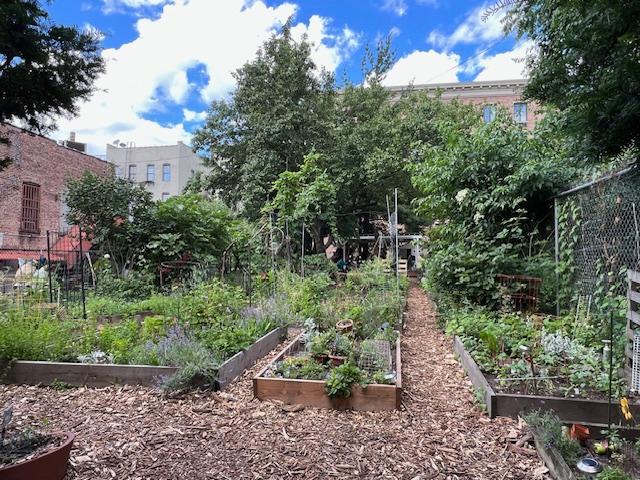
The Morris-Jumel Community Garden in the Spring of 2024.

The Morris-Jumel Community Garden.
As you west of the campus toward the river, most of the blocks west of Broadway are lined with elegant pre-war apartment buildings whose residents are a cross section of Hispanic families, young Yuppie couples and depending on the block, older couples who like to walk their dogs. These buildings lining Riverside Park like everything else in this part of the city are under scaffolding and some in the process of sandblasting. The closer you get to Riverside Park and to Columbia University, the nicer it gets.
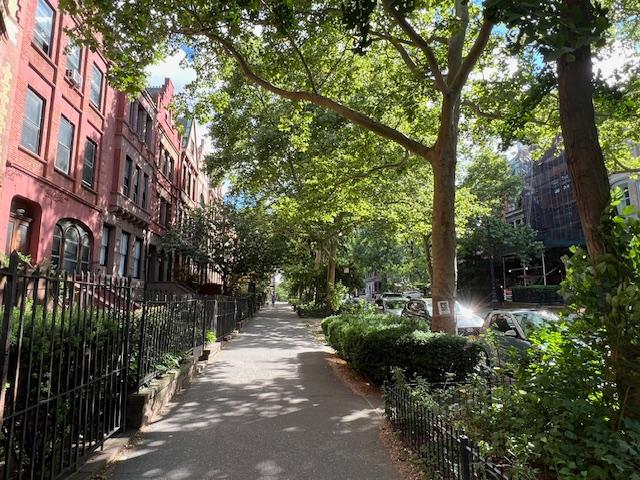
The brownstones lining Covent Avenue
One great stop for a snack is Las Americas Bakery on the corner of 136th Street and Broadway right by the subway station (See review on TripAdvisor). The guava flips, apple turnovers and doughnuts are really good and are only $2.00. Load up on carbs here for your walk and remember the bottled water.

Las Americas Bakery was at 3362 Broadway (closed 2019)
When you reach 125th Street on this side of Manhattan, it really becomes the tale of two cities as Columbia University starts to dominate this side of the island. The new extension of the campus is being built between 125th Street and 133rd Street, west of Broadway to the river. This is all across from a major housing project. These glossy new buildings give an entirely new look to the area and the irony is that the famous Cotton Club which sits on a island between 125th and 129th on the break in the street grid, sits isolated now with the campus being built around it. There is a Dinosaur Barbecue restaurant next door and a Fairway supermarket up the road. 12th Avenue is lined with new restaurants and bars and the city has renovated this part of the park.

The Cotton Club is in a obscure spot under the subway
https://www.facebook.com/pages/category/Dance—Night-Club/Cotton-Club-153672974700821
West Harlem Pier Park offers the most spectacular views of New Jersey and the extension of Riverside Park that lies ahead. On a sunny warm day, it is a great place to relax and enjoy the view. Many residents and students alike are biking, sunning themselves, fishing or just sitting enjoying the amazing view on a sunny day. The park has been replanted with paths and places to sit and look at the river. It will be even more utilized once the new college buildings open up.

West Harlem Piers Park is at the end of 125th Street next to the new Columbia campus extension
https://www.nycgovparks.org/parks/west-harlem-piers

The park in early May.
The area across Broadway is one of the larger housing complexes and seems to be going though its own renovations. The Manhattanville Houses dominate around from 133rd Street to the 126th and 127th grid that changes above 125th Street. The streets do get a little choppy in this area and skip around due to the projects that dominate in this area. Just do yourself a favor and avoid Old Broadway between 133rd and 131st Street at night. It is a little shady after twilight with too many places to hid.

The Manhattanville Houses sit in a quickly changing area
https://www.facebook.com/pages/NYCHA-Manhattanville-Houses/155849952023323
This side of Amsterdam Avenue is going through its own type of renovation as warehouses are becoming loft and studios and many of the old-time businesses along this stretch of 125th, 126th and 127th are starting to change hands and many chain stores are moving in. It so weird to see an IHOP right next to the projects but it is a reasonable restaurant and the neighborhood deserves to have the same comforts as the rest of the city.
The longest part of this part of the walk was the walk back and forth on 125th, 126th and 127th Streets. Going back and forth from one side of the island to another takes a lot of time and be prepared for not just a walk but a big transition in neighborhood in just a few blocks.
When I walked 125th Street again on a return trip to the neighborhood in 2026, there is a new Renaissance Hotel next to the theater and the entrance of the hotel is another old theater that is now part of the building. The one thing about 125th Street along the entire length of the street is that it is one long set of chain stores.

Apollo Theater at 125th Street with the new Renaissance Hotel in the background
https://www.apollotheaters.org/
Review on TripAdvisor:

The historic plaque now sits at West 126th Street behind the theater
Another surprising aspect of the neighborhood is how nice it has gotten. Gone are the days that Colombia University had to practically erect walls to keep the neighborhood out. Colombia students like their fellow SUNY students thirty blocks up are starting to move in and take over this neighborhood. The South Harlem area is awash with scaffolding of people renovating the buildings and new restaurants and shops. Now this gentrification is all over the neighborhood with cafes, bars and restaurants dotting every street.

The street art along the walls is very interesting
A lot of 125th Street is being knocked down and redeveloped with new office and apartment buildings and new retailers moving into the neighborhood. It is amazing to see the changes in just nine years.
All along the walls of the sites are being cleared and new buildings are going up, local artists who are part of “The Grand Scale Mural Project” are showcasing their works.

The Grand Scale Mural Project at 125th Street
https://uptowngrandcentral.org/uptown-grandscale
(from the Grand Scale Mural Project website)
The project brings the Uptown art community together with the intent of creating opportunities for emerging and established artists. The call is open every two years to any artist based in New York City, with preference given to artists with connections to Harlem, Upper Manhattan and the Bronx (GSMP.com).

The Mural Ptoject
During three weekends in late summer 2019, 50 artists came together to transform 1,500 feet of fencing across three blocks into a canvas for mural artwork. In 2021 and 2023, more than 100 artists each year united to transform more than half a mile of construction fencing into colorful, memorable blocks to walk (GSMP.com).

The Mural Project
In 2025, the Grandscale Mural Project is taking place all summer long, on the last Saturday of each month: June 28, July 26, and August 30. On each Saturday, artists will gather for a sidewalk painting party that will transform the visual landscape of East Harlem, turning dull green plywood into vibrant street art (GSMP.com).

The Mural Project

The Robot Mural, my favorite
The murals run the length of the fencing and try to see it before they take it down with the construction of the buildings. The murals cover about three blocks of 125th Street and contain some interesting street art.

The historic Mount Morris Bank Building also known as the ‘Corn Exchange’ building at 81 East 125th Street
https://www.thecornexchangeharlem.com
https://en.wikipedia.org/wiki/Mount_Morris_Bank_Building
I have admired this building for over thirty years as you pass it on the Metro North train to New Haven. After years of being abandoned, it has finally been restored as a office building.
The building was first known as the Mount Morris Bank Building and it sits on the corner of 125th Street and Park Avenue at 81-85 East 125th Street. It was built in 1883 by architectural firm Lamb & Rich in the Queen Anne and Richardson Romanesque styles. In 1913, the bank became part of the Corn Exchange Bank and then merged into Chemical Bank in the 1950’s (Wiki).

Walking down 125th Street by Lennox Avenue
Fifth Avenue at East 125th Street still holds some of the beautiful and elegant architecture from the turn of the last century that is now being renovated into housing and new office buildings as the neighborhood continues to genetrify.

Reaching the end of East 125th Street on one side of the street
As I reached the end of 125th Street, I passed the overhead bridges and underpasses that make up a big part of the transportation hub of this part of the island. You can’t walk very well on the other side of the street due to traffic and construction so I turned around and walked back down 125th Street.

The front of Sylvia’s Restaurant at 328 Malcolm X Boulevard as it opened for lunch
I was not hungry but I tried to go later in the evening. When I arrived there at 8:00pm thinking that the crowds would be gone, I could tell they were understaffed and there would be an hour wait. I will visit on another trip up to the neighborhood.
As I headed west on 125th Street, I passed the Adam Clayton Powell Jr. Building at 163 West 125th Street and they were setting up for a concert that evening. I noticed the statue of Adam Clayton Powell Jr. in the front of the building and stopped to admire it.

Adam Clayton Powell Jr. statue
https://ogs.ny.gov/location/adam-clayton-powell-jr-state-office-building
https://en.wikipedia.org/wiki/Adam_Clayton_Powell_Jr._State_Office_Building

Adam Clayton Powell statue outside his namesake building by artist Branly Cadet

Artist Branly Cadet
Artist Branly Cadet is an American born New York City native. He was trained at Cornell University and New York Academy of Art in New York and in France at the Vaugel Sculpture Studio and L’Ecole Albert Defois. He is trained in the classical tradition of both figurative and portrait sculpture (Wiki/Artist bio).
While I was walking around the neighborhood, I was able to see a free Jazz concert at the Summer Stage in Harlem and the concert was great.

Taking a break to enjoy a Summer Jazz concert in front of the Adam Clayton Powell Building.
https://www.harlemonestop.com/event/34978/2026-summer-stage-in-harlem
https://ogs.ny.gov/event/summer-stage-harlem-arts-roots-rhythm
While I was walking back to towards the Columbia campus, I walked past the former Hotel Theresa, once ‘The Waldorf Hotel of Harlem’. This had once been one of the most important places in Harlem to visit.

Walking past the former Hotel Theresa at 2082-86 Adam Clayton Powell Jr. Boulevard
https://en.wikipedia.org/wiki/Hotel_Theresa
The hotel was designed by architectural firm George & Edward Blum and built by a German-born stockbroker, Gustavas Sidenberg, whose wife the hotel was named for. In the heyday of Harlem, it was known as the “Waldorf of Harlem”, when many black stars of sports, entertainment and politics could not stay at the segregated hotels in other parts of the City, they would stay here making it the center of Black social life. It deteriated in the 1950’s and 60’s and was eventually turned into an office building (Wiki).

The logo outside the famous and very busy Harlem firehouse Engine 37/Ladder 40
https://www.fdnytrucks.com/files/html/manhattan/e37.htm
https://www.harlemonestop.com/organization/1768/fdny-fire-engine-37-ladder-40
I then passed the very busy Engine 37/Ladder 40 that had made several calls while I was walking around the neighborhood. They were just coming back from a call as I was walking around 125th Street. I really admired their logo.
Towards the end of the block and across from the new extension of the Columbia campus is the Grant Houses, which dominate this side of 125th Street. Years ago, walked through all the pathways around the complex startling some residents. I was never sure if it was my appearance or that I might have been trespassing on the grounds. I thought they were open paths to walk on.

The sign for the Grant Houses near Columbia University
The Grant Houses are a ten complex of housing units line 125th Street and around Broadway. As I passed the complex this time, I noticed a lot of seniors sitting outside the entrances talking amongst themselves.

The Grant Houses Housing Complex line 125th Street near the East River
https://en.wikipedia.org/wiki/Grant_Houses
https://www.nyc.gov/assets/nycha/downloads/pdf/Grant.pdf
Facing the Hudson River on the Western of Broadway is the new extension of the modern Columbia University campus. More buildings are planned but this futuristic campus is of glass and steel and faces the Hudson River.

The Columbia University extension above 125th Street
https://sps.columbia.edu/school/all-programs
https://www.rpbw.com/project/manhattanville-campus-plan
The Manhattanville campus is the newest part of Columbia University containing their Business and Arts Schools as well as classroom space and a new art museum. The new campus will encompass everything west of Broadway to the Hudson River from West 125th to West 133rd and will eventually surround the Manhattanville Houses across the street. I already have seen the changes on West 125th Street to about 7th Avenue and the side streets. The campus is changing the complexity of the neighborhood and gentrifying most of the area around the housing projects and 125th Street.

The street plan for the campus
Tour of the new campus
As you pass the campus on 12th Avenue, the overhead pass is its own piece of artwork and gives a modern approach to the Hudson River.

The overpass on 125th Street and 12th Avenue is picturesque
Lining the Hudson River is West Harlem Piers park, one of the nicest parks uptown with the best views of the Hudson River and gets some of the best breezes on a hot day.

West Harlem Piers Park at 125th Street and Marginal Street
https://www.nycgovparks.org/parks/west-harlem-piers
https://community.weact.org/west-harlem-waterfront-park
My review on TripAdvisor:
The park has the most beautiful views and it is nice to just sit under the trees on the benches and just relax and enjoy the view. The park is also very big with people fishing on the pier and with bicyclists.

West Harlem Piers Park in the Summer of 2026

West Harlem Piers Park

Walking through West Harlem Piers Park offers the nicest views of the Hudson River
CUNY and Columbia Universities are having their presence known in the blocks between Amsterdam to Fredrick Douglas Boulevard between 131st to 125th Streets. Most of the apartment buildings that I saw at afternoon time had anxious students running out the doors. 126th and 127th Streets between 7th Avenue and Park Avenue are mostly lined with old brownstones which are quickly getting scooped up and renovated. This was one of the nicest surprises as the brownstones are very elegant. This neighborhood I noticed is a very mixed neighborhood of white and black residents that seem to look out for one another.

I then made my way up 126th Street
Walking down 126th Street, I passed the Manhattanville Houses at 545 West 126th Street. These modern Y shaped building were designed by architect William Lescaze (Wiki).
West 126th Street is like an open air museum of street art both professionally and by taggers.

This was by the Youth Justice Network building

The mural of this mythical bird was along the same building

The artists of the mural
https://www.instagram.com/projectattica33
https://www.facebook.com/ProjectAttica
The mural was painted by artists involved withy Project Attica, which is a 501(c)3 organization devoted to working with youth by providing them with art-centered education focused on social justice. The artists were Cesar Figueroa and Anthony Posada (Project Attica Facebook Page).

Artist Cesar Figueroa
https://streetartcities.com/artists/cesar-figueroa
https://www.facebook.com/stilacho.galeria

Artist/Activist Anthony Posada

The historic Mink Building on Amsterdam Avenue
https://www.thefactorydistrict.com
https://en.wikipedia.org/wiki/Mink_Building
The Mink Buildings origins are from its days as a brewery building for several beers makers at a time when this area was non-developed. Designed by architect Louis Oberlien. After Prohibition closed most of the breweries in the 1930’s, the building became a fur storage facility in the 1940’s. Now it serves as a mixed use building of offices and studios (Wiki).
The area surrounding the Mink Building is now known as the “Factory District”, in between the CUNY and Columbia University campuses, becoming an incubator for new innovative businesses.

The beautiful stained glass above the door way
As I passed the New Design Middle School at 250 West 127th Street, I noticed this mural on the wall of the school. (I could not get close enough to see who the artist was for the mural).

The mural on the New Design Middle School
https://www.newdesignmiddleschool.org
https://www.schools.nyc.gov/schools/M514

Street art along West 125th Street

Street art along West 126th Street
Once you pass Fifth Avenue, the neighborhood gets more residential with beautiful, historic brownstones which are all going through a major renovation. These tree lined streets showcase the Upper Middle Class history of the neighborhood and its turn of the last century achitecture.

The brownstones around East 126th Street and Fifth Avenue

This brownstone stood out for the colorful potted flowers on the front of the home

This group of brownstones looked like they had just been renovated

Looking back at the neighborhood from Second Avenue looking at the Fredrick Douglas Houses in the distance

While I was walking along Second Avenue and West 126th Street, I saw the Uptop Jerk Plus Jamaican Food Stall busy grilling fresh chicken with spices and serving up sides. The lines were long that afternoon and the smell of the food was amazing. People stood in lines for the freshly barbecued chicken.
https://www.facebook.com/p/Uptopjerkplus-Uptopjerkplus-100004921954528
https://www.tiktok.com/tag/uptopjerkplus
Review on TripAdvisor:
While passing 11 West 126th Street, the Dovecote, I admired this colorful artwork, along with a poem etched in marble on the wall. This new apartment is in the heart of the neighborhood.

The artwork at the Dovecote Apartment by artist Emmett Wigglesworth
https://streeteasy.com/building/the-dovecote
https://www.thedovecotenyc.com
The mosaic is by artist Emmett Wigglesworth

https://en.wikipedia.org/wiki/Emmett_Wigglesworth
Artist Emmett Wigglesworth is an American born artist who studied at the College of Art and Design in Philadelphia. He is a muralist, painter, sculptor, fabric designer, and poet. Wigglesworth is known for his abstract and colorful murals that he says are inspired by his own cultural heritage and life experience. (Wiki).
One of only five new Passive House condominium buildings in Manhattan, this six-residence home in the heart of Harlem was built to advanced environmental and engineering standards—meaning it breathes better, saves more, and keeps you comfortable year-round. Think triple-pane calm, filtered fresh air, and energy bills that make you smile (Streeteasy.com).

The poem by Rita Dove

The mural on the wall of the Corner Social Restaurant at 321 Malcolm X Boulevard
Review on TripAdvisor:
While I didn’t dine at the restaurant, I did admire the mural entitled “Planet Harlem” by artist Paul Deo. It really stood out and made a statement with its vibrant colors and subject matter.

The Planet Harlem Mural by Artist Paul Deo
https://www.planetharlem.com/planet-harlem-story
Planet Harlem is a self-financed mixed media mural tribute to the Harlem community. It is strategically located on the northwest corner of Malcolm X Blvd and 126th street. The mural serves as a vehicle for narrating and sharing the stories of Harlem, acting as a potent and much-needed educational tool in the quest for empowerment (Planet Harlem website).

Artist Paul Deo
https://www.instagram.com/planetdeo/?hl=en
Artist Paul Deo is an American born artist based in both New York City and New Orleans. His works are of ancestral oral tradition and where modern myths meet, creating a world for viewers to tap into their childlike imaginative abilities, regenerating a sense of balance among contemporary obstacles (Artist bio).

More street art along 126th Street
The walk back to Broadway was like an open air museum of murals and street art along the walls. I passed a series of murals painted on the walls of local schools.

The Mural ‘Education’ on the wall of the New Design Middle School on the back wall facing West 126th Street by Artist Elle (Ellestreetart/com)
https://www.ellestreetart.com/contact

The artist Elle Street Art

https://www.ellestreetart.com/
https://www.facebook.com/ELLEStreetArt/
Elle is a New York based Street/Graffiti artist known for her bold statements. She started out as an illegal graffiti artist and over time has built a reputation as one of the top touring street artists which has led to commercial works seen all over the world (Artist bio).
Video on Elle’s works
As I walked down West 126th Street, I passed a series of community gardens I must have missed the last time I was in the neighborhood.

The Clayton Williams Garden at 303 West 126th Street
https://www.nycgovparks.org/opportunities/volunteer/group/clayton-williams-community-garden

The gardens in bloom in the Summer of 2026
The garden was closed for the day but I could see the flower and vegetable gardens in full bloom. It is quiet space of relaxation.

The William B. Washington Memorial Garden at 325 West 126th Street
https://www.nycgovparks.org/opportunities/volunteer/group/william-b-washington-memorial-garden
https://www.facebook.com/thewilliebmemorialgarden

The inside of the gardens in the Summer of 2026
The William B. Washington Gardens were closed for the day but I could see the gardens in the distance. I could see the vegetable and flower gardens through the fencing. I will have to revisit the gardens on a weekend when they are open.
As I turned the corner to head back to Broadway, I had not noticed the large office complex built on the corner of West 126th Street and Amsterdam Avenue. This is part of the new hospital complex and part of the innovative incubator of the university’s in the neighborhood. This part of the neighborhood is quickly changing as the campuses continue to grow in the neighborhood.

The changing neighborhood by West 126th Street and Amsterdam Avenue
I then turned the corner on to West 127th Street to complete the walk of this side of the neighborhood. As you walk closer to the CUNY Campus along the main commercial Avenues, new housing and businesses are being built to cater to the students and faculty and many of the older buildings are being repurposed and renovated.

New construction is everywhere in the neighborhood especially as you get closer to the CUNY campus. This is looking up St. Nicolas Avenue

The Fredrick Douglas Houses dominate this section of the neighborhood between West 127th to West 131st Streets and bounded by Fredrick Douglass and Adam Powell Boulevards
On 127th Street, there were a few community gardens as well. The first on was the Harlem Grown 127th Street Learning Annex.

The Harlem Grown Learning Annex at 128 West 127th Street
https://www.instagram.com/harlemgrown/?hl=en
The Harlem Grown Learning Annex has operated local urban farms, increased access to and knowledge of healthy food for Harlem residents, and provided farm-based development programs to Harlem youth. One of the many ways we fulfill our mission is by raising support for the physical renovation of abandoned lots in Harlem, transforming them into thriving urban farms. (Harlem Grown Learning Annex website).

The inside of the gardens
The gardens were in bloom when I passed by. The gardens were closed for the day but I could see above ground beds of vegetables and flowers that the kids were growing in the garden from a distance.

The beautiful brownstones on West 127th Street
As I passed Fifth Avenue again, the commercial street gave way to the brownstone neighborhood between Fifth and Park Avenues and I got to see all the potted plants and small gardens in front of their homes.

Crack is Wack Playground at Second Avenue and East 127th Street
https://www.nycgovparks.org/parks/crack-is-wack-playground
https://www.nycgovparks.org/parks/crack-is-wack-playground/monuments/1801
As I crossed over Second Avenue and between Second and First Avenue, there is a small corner of green park next to the bus depot building. Crack is Wack Park is a small park with active basketball courts and lawns and gardens.

The inside of Crack is Wack Playground

Artist Keith Haring
https://en.wikipedia.org/wiki/Keith_Haring
Artist Keith Haring was an American born artist and had studied at the Ivy School of Professional Art in Pittsburgh. He was known as a Graffiti and Pop artist in the booming 1980’s art scene in New York City and known for his distinct art style (Wiki/Artist bio).
One of his most impressive video’s with singer Grace Jones

The Keith Haring Artwork in Crack is Wack Playground was a handball wall
Famed graffiti artist Keith Haring painted this fanciful mural, located at East 128th Street and the Harlem River Drive, in 1986. Painted on the northern face of the handball court wall, the mural is composed of Haring’s signature kinetic figures and abstract forms in bold outlines. Crack is a highly potent, addictive, and dangerous form of smokable cocaine whose use reached epidemic proportions in the mid- to late 1980s. Haring’s mural cautions youth against the drug’s use (NYCParks.org).
The street art along the walls of East 128th Street and Second Avenue were colorful and engaging. Each of these lined the walls of buildings facing the park.

Street Art of Second Avenue

Street Art on Second Avenue

Street Art on Second Avenue
As I walked back down East 127th Street, I came across another interesting mural on the side of PS 030, The Hernandez-Hughes School. I thought this was very clever (I could not find who the artist was for this mural).

Mural on the wall PS 030 The Hernandez-Hughes School at 144-172 East 128th Street. The school has many murals and artworks along the campus.
https://www.schools.nyc.gov/schools/M030
I continued to walk through the brownstone section of the neighborhood, admiring the renovations of many of the homes. This one really stood out at 17 East 127th Street.

A beautiful brownstone at 17 East 127th Street
https://streeteasy.com/building/17-east-127-street-new_york
This beautiful neighborhood brownstone was built in 1899.
The last community garden I passed was the “Our Neighborhood Place” Community Garden at 17 East 127th Street. Like most of the community gardens that day, the gates were locked and I could only see it from the fence.

The Our Neighborhood Place Community Garden at 77 West 127th Street
https://www.nycgovparks.org/opportunities/volunteer/group/our-neighborhood-place

The inside of the gardens
From the fence, I could see the raised beds of the vegetable gardens and what looked like fruit trees in the distance. The garden beds were neatly lined up and I could see the murals on the walls in the distance.

Artwork on the sidewalk on West 127th Street. It is amazing to see these things when you look down.
I arrived back at the corner of West 127th and 126th Streets in the later afternoon and noting a much changed neighborhood since 2017 when I walked this neighborhood initially. This whole area soon will be catering to the growing college campuses. I was surprised at this point that a lot of West 125th Street has not been knocked down yet and new office buildings have built to cater to the growing Columbia University campus. Time will tell as the neighborhood is being updated.

Walking back to the borders of West 127th and West 126th Street
On the wall of a building in the corner of West 126th Street, I came across this mural depicting garment industry workers. This was created by the Thrive Collective with local residents.

The mural ‘Create! Harlem’ on the corner of West 126th Street
Thrive Collective creates hope and opportunity through arts, sports, and mentoring in and around public schools. Our core programs – Murals; RHYME (Rhymes Help Young Minds Excel); Media; Mentors; Festivals, and Sports – connect artists, youth workers, and volunteers with local schools as teaching artists, art directors, coaches, and mentors (Thrive Collective website).

The artists who created the mural
In 2017, as I walked these many blocks, I would see residents conversing with one another and stop to watch me walk by as if to say, ‘what are you doing here’? I see that a lot in this area of the city. Most of the homes have been sandblasted and were being decorated for the fall.
In 2026, I took my time and rediscovered a neighborhood that is constantly changing. Brownstones being renovated, new businesses opening up catering to college students and a new vibe to the area with the growth of both Columbia and CUNY University’s. The area between the two colleges will eventually merge together.
In between many of the homes, new smaller apartment buildings are being tucked in between and look quite expensive. Here and there, there are brownstones that have not been fixed up yet but give them time as the middle-class residents discover this part of the neighborhood and as real estate prices continue to rise. You can no longer get a brownstone in Harlem for a cheap price.
The scariest part of the neighborhood is the area from Lexington Avenue between 131st Street to 125th Street surrounded on all side by the Harlem River. This area is mostly commercial with two bus depots, a health orientated building going up and a dealership.

The Bus Depot between 125th-128th Streets just off 1st Avenue
The walking on sidewalks in this area is awkward with not much places to cross. Projects dominate between Park and Lexington Avenues and as I walked the short blocks by the parks, I really stood out with many residents looking me over as I walked up Lexington Avenue, walking over the 3rd Avenue Bridge and looking over the kid’s playing soccer and football.

The entrance to the Saint Nicolas Housing Projects by 127th Street and 7th Avenue
Even though there are loads of kids in these parks after school and parents are all over place, I would give you a safe bet to avoid this small corner of the city at any other time of the day. I walked down 128th Street to 7th Avenue and then crossed over to 129th Street to walk through the Saint Nichols Houses to get back to Fredrick Douglas Boulevard.
Saint Nicholas Houses by 127th Street
https://www.stnicholashouses.org
https://www.nyc.gov/assets/nycha/downloads/pdf/Saint%20Nicholas.pdf
It was a very busy evening with people coming home from work and families yelling at one another. The saddest thing I saw was a small group of brownstones sitting across from a school on the project property, sitting empty and falling apart.

The Brownstones across from the Saint Nicolas Housing on 127th Street. They have been renovated since my first trip but still look a little worn in 2026
The poor things looked sad as I don’t know how many people would want to buy a dilapidated brownstone across from a busy school. In 2026, this was changing and the buildings were being renovated. I rounded the small blocks of 129th, 128th and 127th Streets that lie between Fredrick Douglas Boulevard and the park.
The weird juxtapose of this area is that new hip restaurants are opening in this area right across from the projects and these homes again seem to be dominated by a mix of locals and college students. I cut through the park on a hilly path on 128th Street to finish walking 128th, 129th and 130th Streets below the campus. Be prepared to be long winded after this part of the walk as you are going up and down hills. This section was my best work out since the streets by Riverside Park.
This area gives you the perspective that Manhattan is definitely not flat. Also, when walking down the stairs on 129th Street by the warehouses, plan to do this during the day. Again not a great area to walk alone at twilight. As I said before, most people left me alone but kept looking me over.
My last stop of the evening was dinner at Sylvia’s Soul Food Restaurant at 328 Malcolm X Boulevard. This meant walking from the hills of 128th Street down to 126th Street and crossing over to 125th Street. That alone was a long walk.
Sylvia’s at 328 Malcolm X Boulevard
My review on TripAdvisor:
I was not thrilled by the food as much as I was by Charles Southern Fried Chicken or Miss Mamie’s Spoonbread. Maybe it was the sheer exhaustion I felt from all the walking or when I was finally able to relax or the pitcher of the overly sweet, iced tea but by the time I got my food, I was feeling nauseous.
I had ordered the Fried Chicken Dinner which was two pieces of white meat with mac & cheese and candied yams on the side. It just didn’t strike me as being as good as the other restaurants in the area. I remember on of my professors who took us on a tour here years ago saying it had gotten very commercial. I could see why.
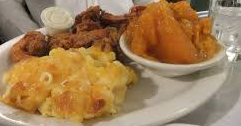
The chicken dinners at Sylvia’s are over-rated or I just hit a bad night
Most of the clientele that night was white and mostly touristy looking people who could not get into the very busy Red Rooster down the road. The Fried chicken was crisp on the outside and chewy and dry on the inside. The candied yams and mac & cheese tasted like it had been made in batches and were warmed up. It’s not that it wasn’t good, but I expected more from it. The food was average.
What it lacked in the quality of food, it made up in service as the waitress handled the whole room by herself and could not have been more professional and friendly (see review on TripAdvisor). Needless to say, that the manager of Sylvia’s was not the happiest with my review. Oh well, it was an experience anyway. I had wanted to try the restaurant for years.
Overall, this area of the city will take you through a real difference in neighborhood sites, from projects to brownstones from historical through commercial. Sometimes right next to one another. Like any place else in the city, it is going through the ‘change’ and won’t stay the same for very long. You can see the transition going on around you.
Just be prepared to walk up and down hills.
Places to Visit:
St. Nicolas Park
St. Nicholas Avenue and St. Nicholas Terrace
New York, NY 10030
(212) 639-9675
https://www.nycgovparks.org/parks/st-nicholas-park
Open: Sunday-Saturday 6:00am-10:00pm
West Harlem Piers Park
Marginal Street and East 132nd Street
New York, NY 10027
(212) 639-9675
https://www.nycgovparks.org/parks/west-harlem-piers
Open: Sunday-Saturday 6:00am-1:00am
The Hamilton Grange
414 West 141st Street
New York, NY 10031
(646) 548-2310
Hours: Wednesday-Sunday-9:00am-5:00pm/Closed Monday-Tuesday
Fee: Donation
My review on TripAdvisor:
My review on VisitingaMuseum.com:
https://wordpress.com/post/visitingamuseum.com/20
Places to Eat:
Las Americas Bakery (now closed)
3362 Broadway
New York, NY 10031
(212) 234-7715
My review on TripAdvisor:
Sylvia’s Soul Food
328 Malcolm X Boulevard
New York, NY
212-996-0660
Home
Menu
Open: Sunday 11:00am-8:00pm/Monday & Tuesday 11:00am-10:30pm/Wednesday-Saturday 9:00am-10:30pm
My review on TripAdvisor:
–


Be prepared to walk through lots of hilly areas in this part of the city.
LikeLiked by 1 person
I had not visited this neighborhood since 2017 and it has totally changed and is continuing to change as Columbia University and CUNY continue to grow. You will see more changes in this area in the future.
LikeLiked by 1 person