I needed a break after a week of running around. I had just reached out to my students for their preparation of the first day of class, have been volunteering at the Soup Kitchen and running from the Jersey Shore to the Hudson River Valley attending events, walking Boardwalks, attending festivals and County Fairs and visiting small museums that seem to be open only once a month. It has been a long but productive summer working.
After a long day of volunteering at the Soup Kitchen and walking the Avenues of Gramercy Park for my blog, ‘MywalkinManhattan.com’ (I am trying to finish the neighborhood before school starts), I went to our last members night at the Brooklyn Botanic Garden ‘Little Caribbean Last Lap’, a celebration of the Caribbean Community. It was such a beautiful night for the event.
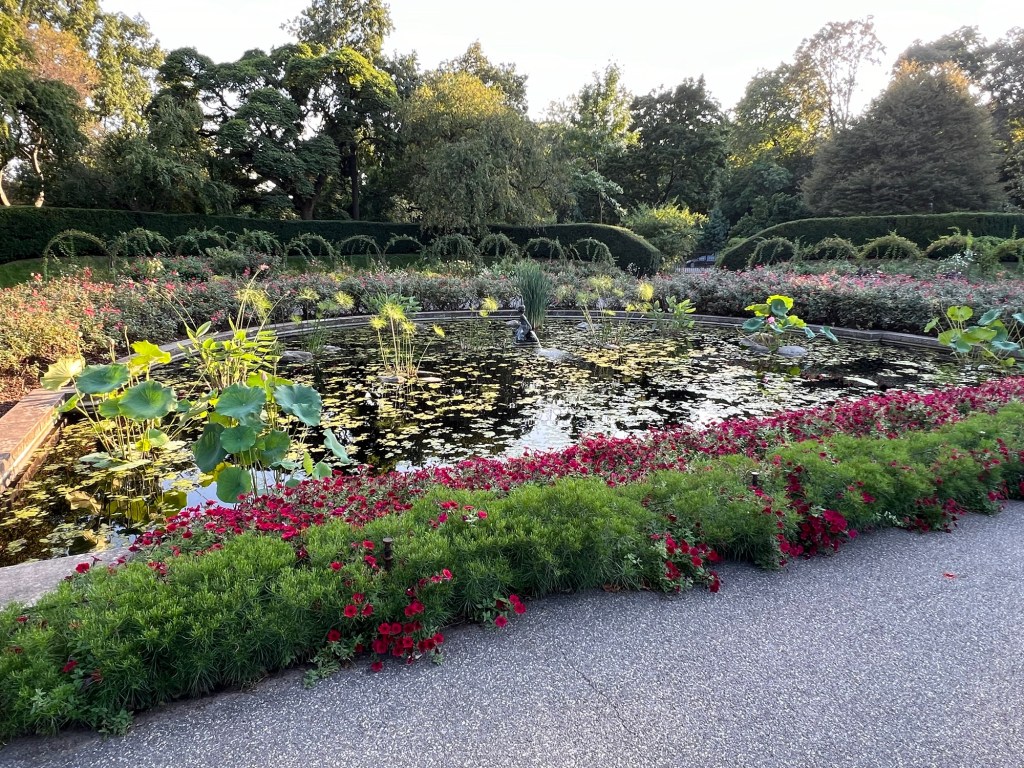
The Cheery Blossom Esplanade on a beautiful August night
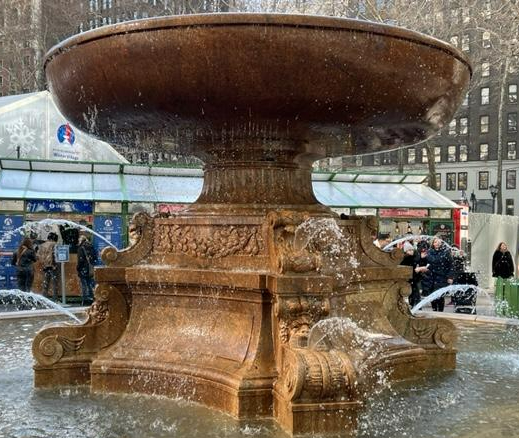
It was a beautiful sunny night in Brooklyn and the gardens were showing their summer finest. It was a warm night and perfect for touring the gardens. The Cherry Blossom Esplanade Fountain looked especially pretty with the water plants and red flowers surrounding it.
The fountain in the Cherry Blossom Esplande
The view of the fountain was especially beautiful with all the plants in full bloom.
The fountain always is bloom during the warmer months
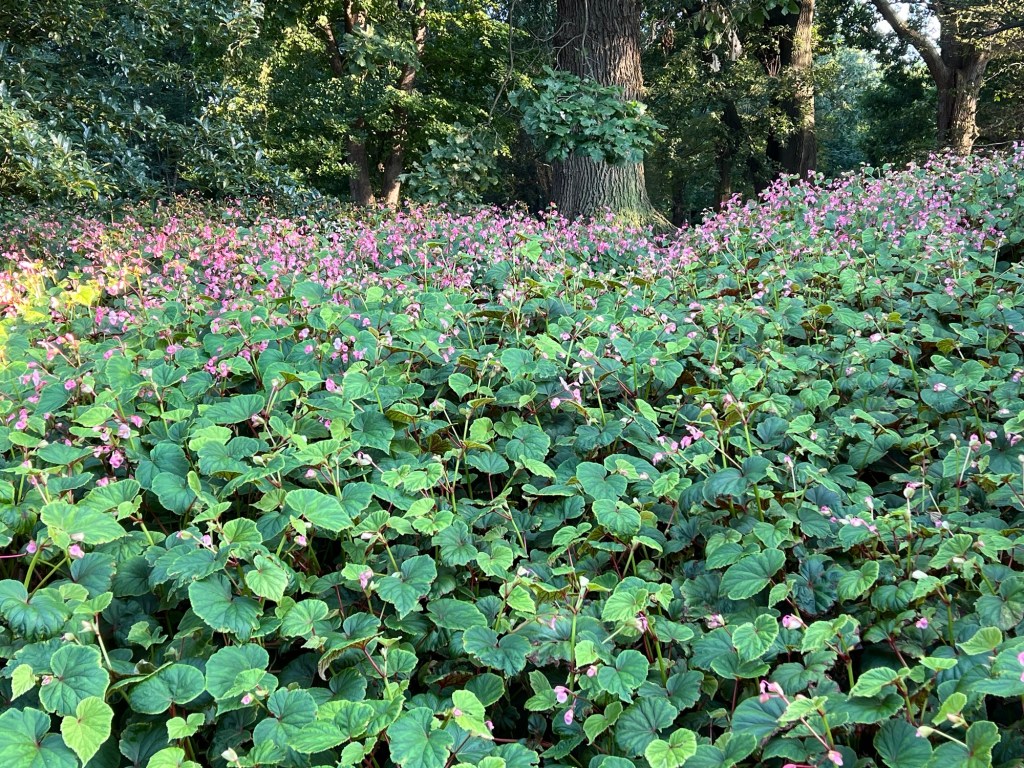
I walked along the paths around the gardens, admiring the flowers and flowering shrubs giving us the last glimpse of summer. Members were relaxing on benches and the lawns all over gardens just as the music started up by the Lotus Ponds. What was impressive was the field of Bleeding Hearts that were in bloom while I was walking the path.
The field of bleeding hearts in the Brooklyn Botanic Gardens
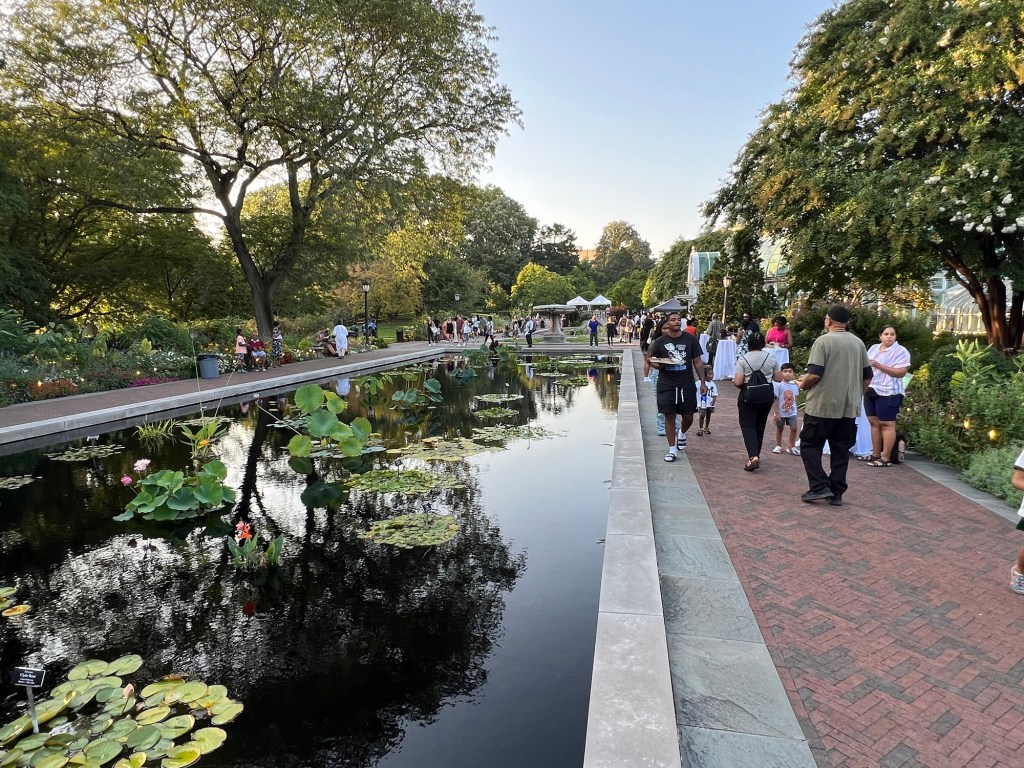
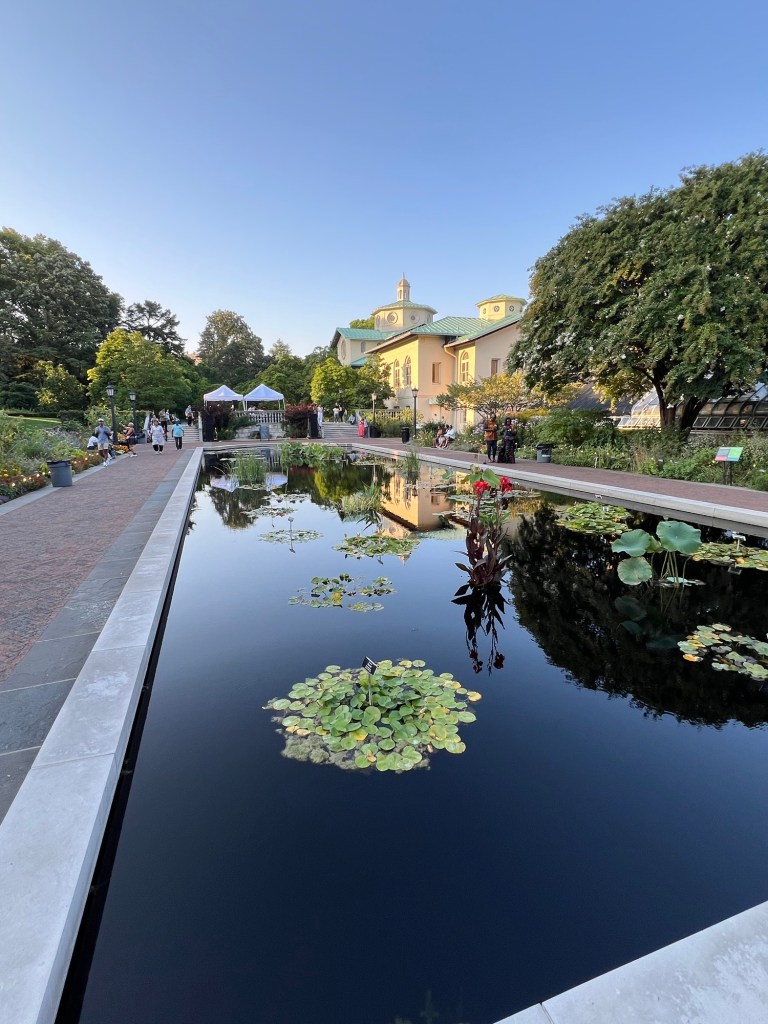
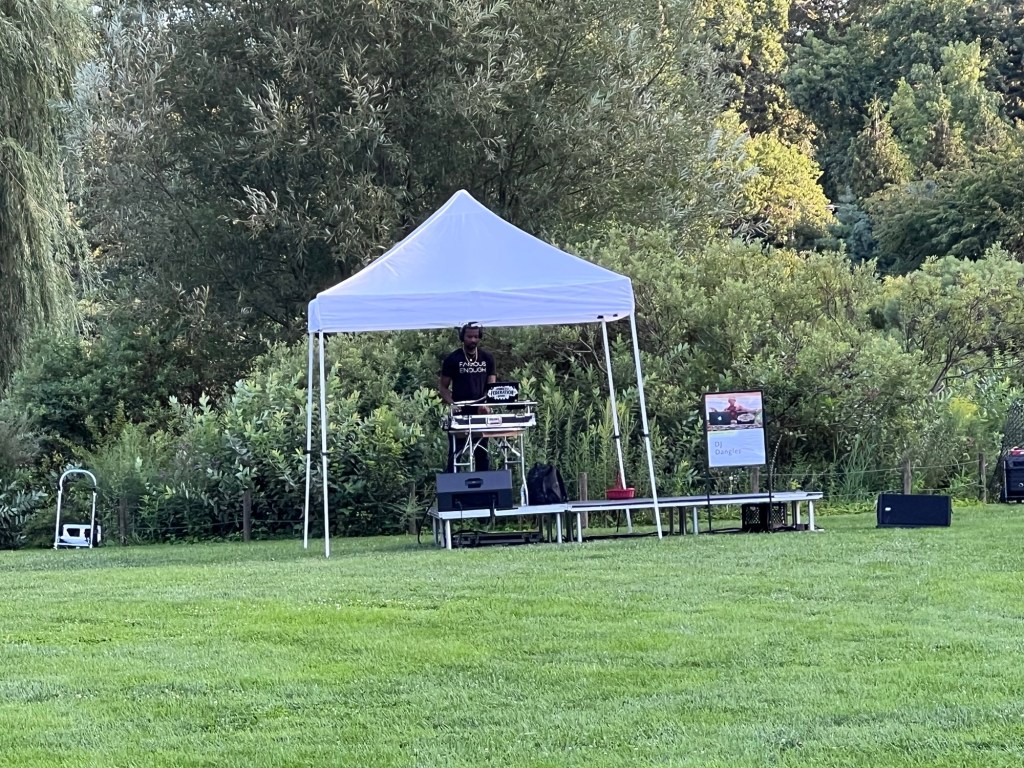
When I got to the Lotus Pools, DJ Danglez was playing all sorts of Caribbean dance hits while people were enjoying cocktails and finger foods at the refreshment stands by the Lotus pools.
The music was starting by the Lotus Pools
The evening just getting started at the Brooklyn Botanic
It has been a long summer since graduation on May 17th. I swear my feet have not touched the ground since I crossed that stage at Radio City Music Hall (was that four months ago?) I swear I have run from one thing to another just trying to catch up with my past. I needed an evening of music and a bit of relaxation.
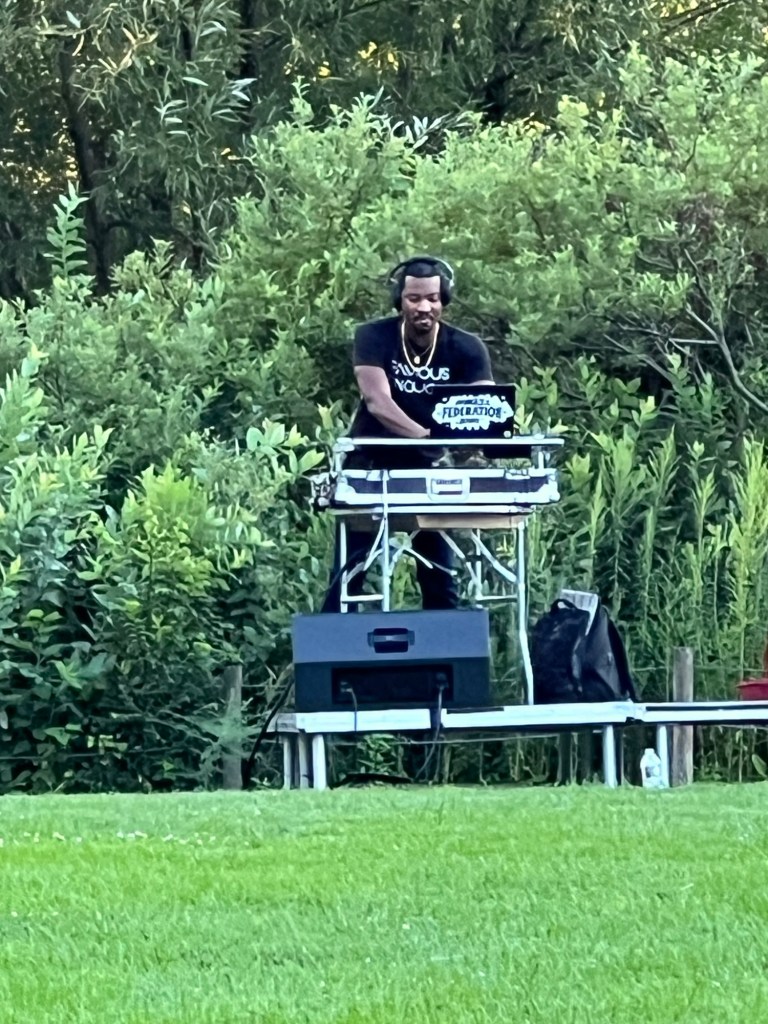
The DJ booth at the top of the pools
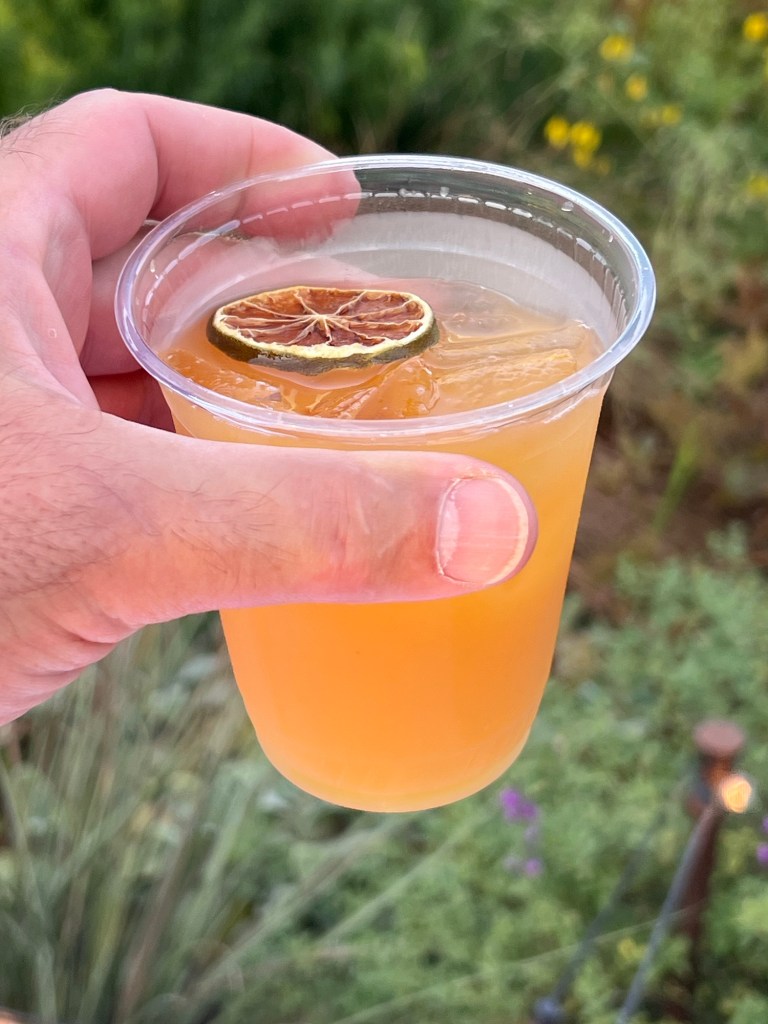
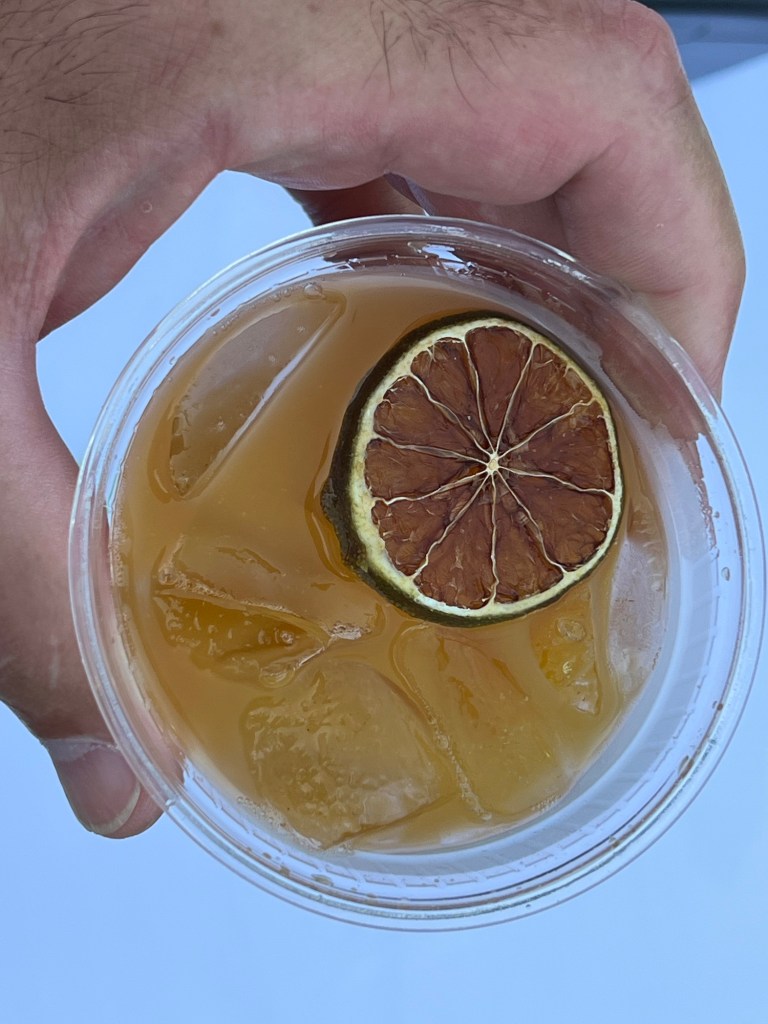
The food booths offered items like fried plantains, jerk chicken wings and the bar, Rum Punch and Lemonade with Mint and Rum. It was a long day and the perfect night for a cocktail. Talk about putting you in a relaxing mood.
The Rum Punch at the Brooklyn Botanic Garden Bar
The delicious Rum Punch at the Gardens
After a relaxing drink, I walked around and enjoyed the beauty of the gardens while listening to the music.
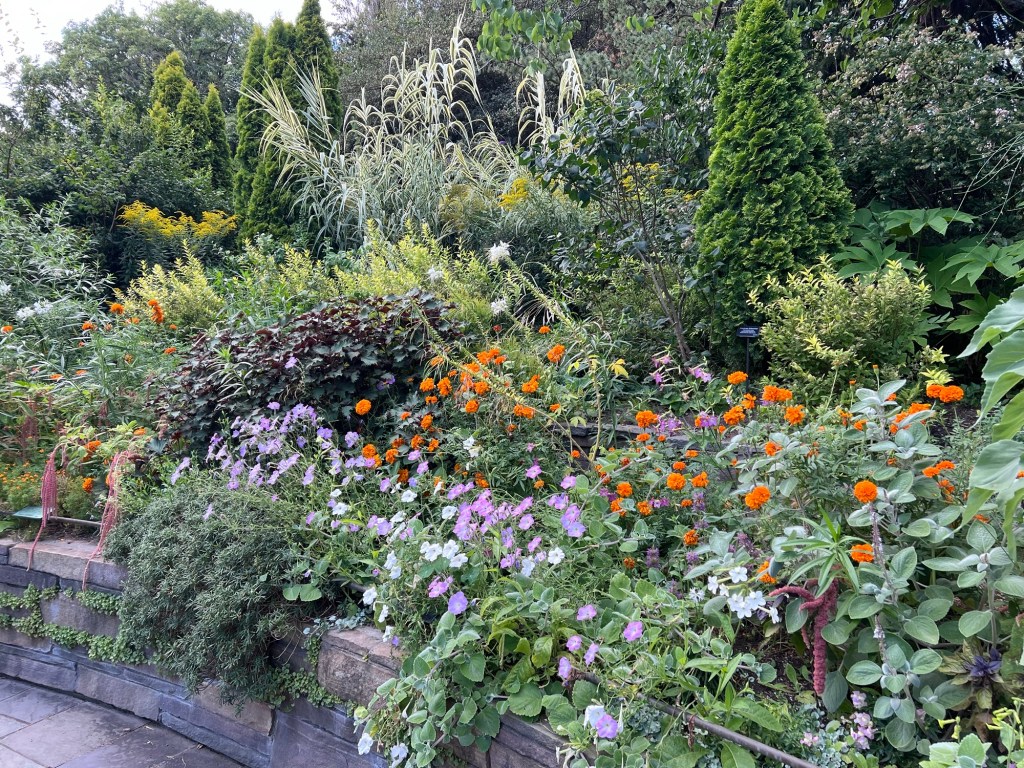
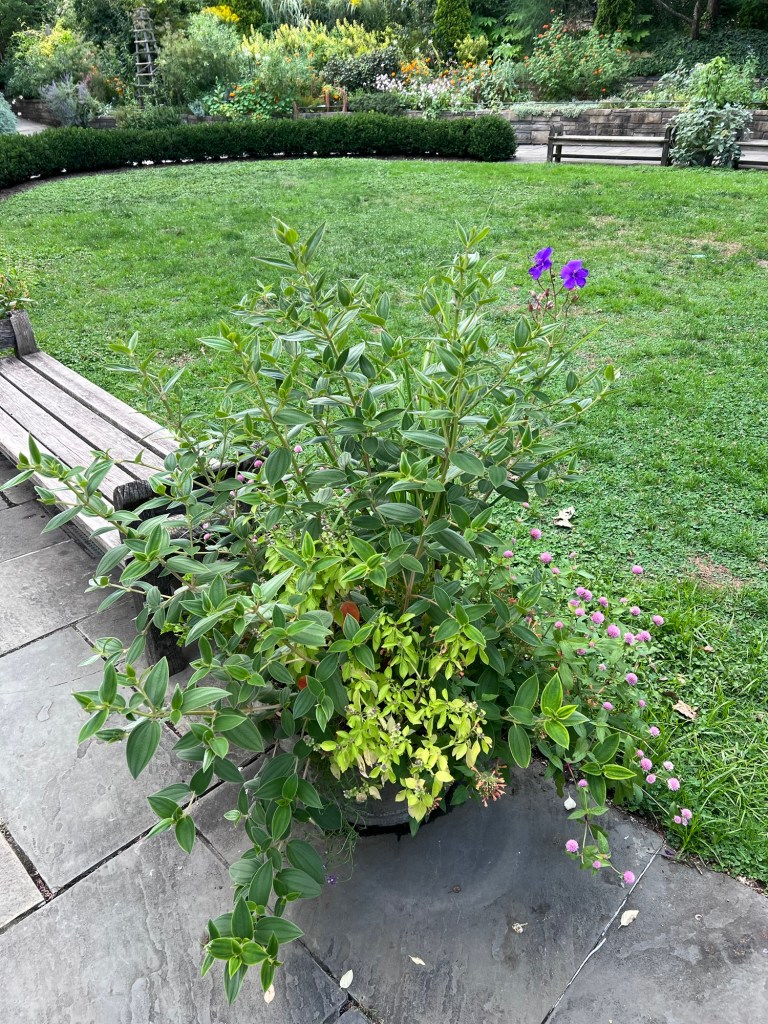
The beauty of the Gardens by the Lotus Pools
I sat on the hill above the Lotus Pools and watched the DJ spin the tunes. Since there was not enough seating in the pools area many members had the same idea and we just relaxed on the hill and listened to the energetic music.
The DJ spinning Caribbean dance music that evening
Families having a good time that evening
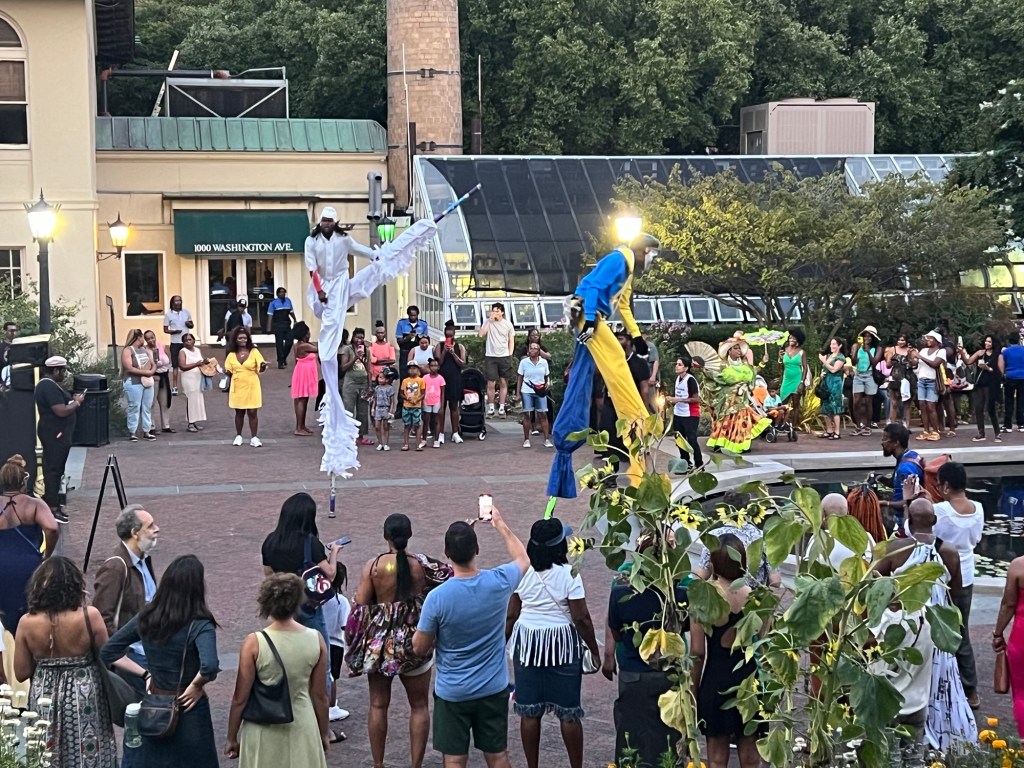
It was a nice way to spend the end of the traditional summer break as the Borough prepares for the Caribbean Parade in a few days. We just hope for good weather that day. As the evening wore on, traditional dancers and stilt walkers entertained the crowds with live musical performances and dance. That was a nice sneak peek before the parade.
We got a first glimpse of the festivities with dancers and stilt walkers
The dancers performing that night
Video on the dancing:
People started dancing along with the performers that night.
People dancing along the pools with the performers that evening
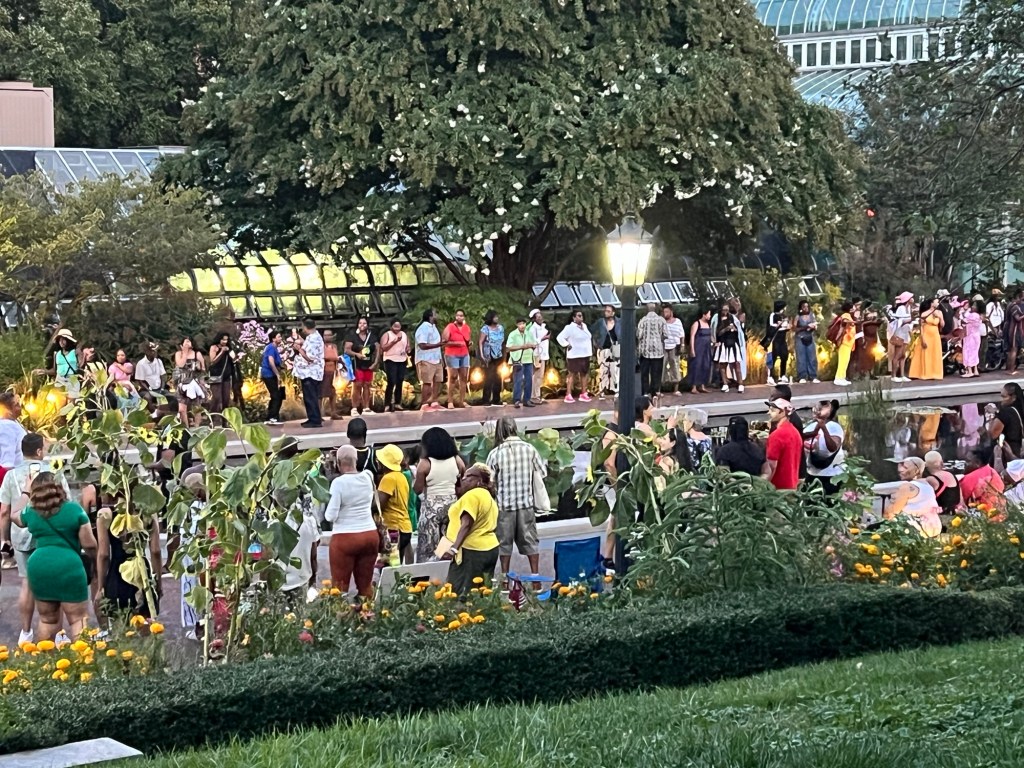
After the performances, the DJ spinned dance music and people got up to dance near the DJ stage. As it got dark, the lights came on and the last hour was a magical night. It really was an entertaining night and a great introduction of the rich Caribbean culture in Brooklyn.
Returning for the event on August 27th, 2025:
I found myself in the same position as last year. Overworked from preparing for classes next week, going away for a few days in Upstate New York to Bovina Center and Ithaca for a picture taking session and my evenings reviewing the students resumes. I needed a break from it all so it was back to the Brooklyn Botanic Garden for Caribbean Night.
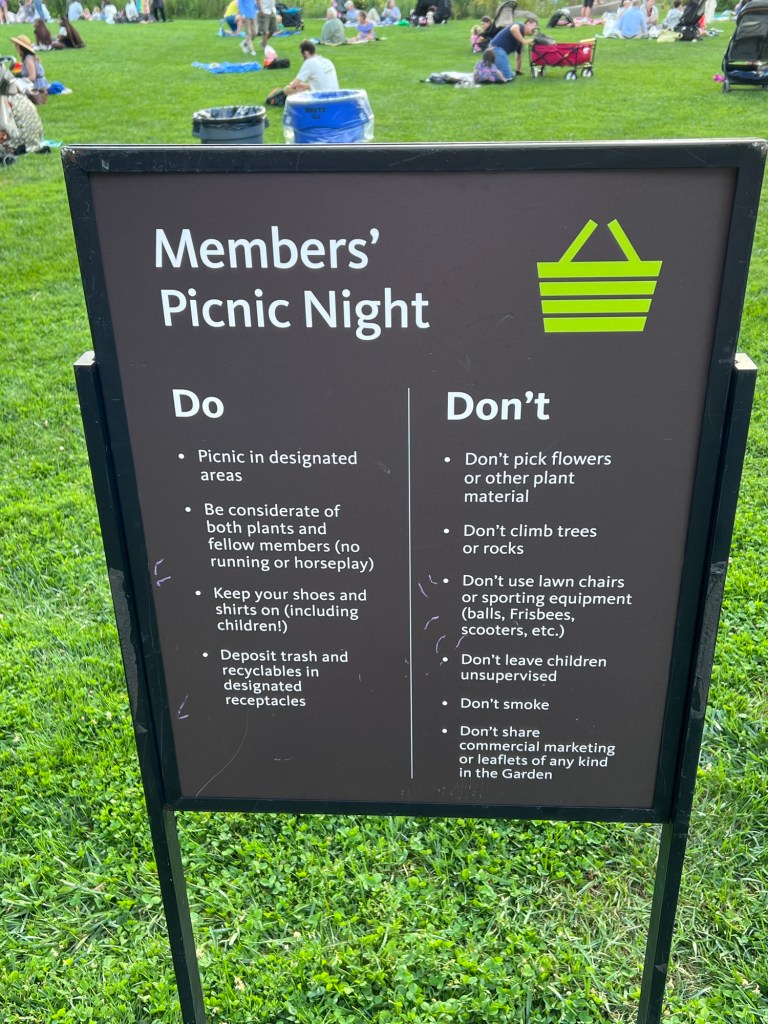
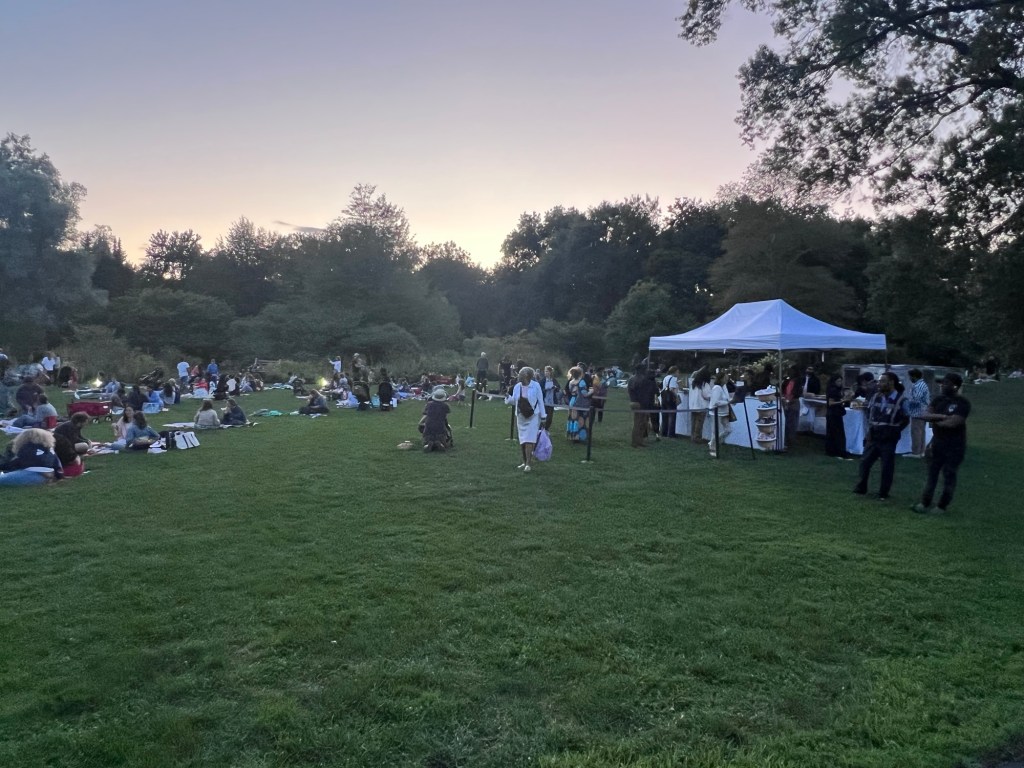
Members Night on the lawn
Listening to Caribbean Reggae
I took some time to walk around the gardens while it was still light out. The gardens were still in full bloom in late August.
The Lotus Pools in the early evening
The colorful flowers lining the pools
The Sunflowers in full bloom
The flowers bursting color
I was not sure if this was an Iris or Lilly
Walking through the Magnolia Gardens in the Summer
Walking through the Shakespeare Gardens
The flowers in the garden in full bloom
There was so much color in the gardens
The garden in peak bloom
Touring the Japanese Gardens
After the quick tour of the gardens, it was time to relax on the lawn and listen to music.
Listening to the DJ spin
It is nice to just sit on the grass and listen to music and relax! This is what I love about the gardens. You can sit down and watch.
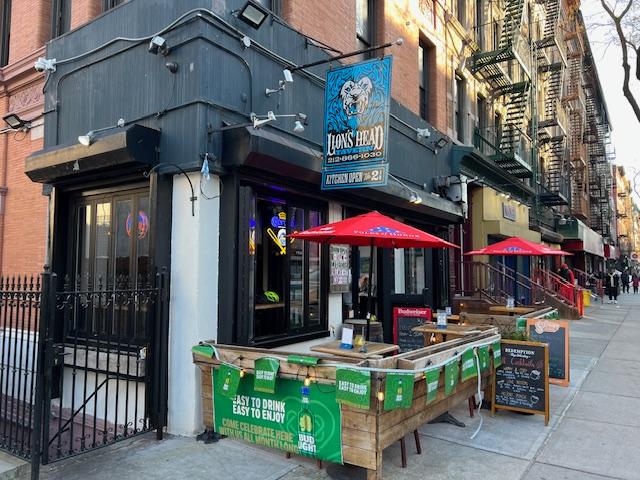
I got an email during Spring Break that Cornell Basketball was going to be playing Yale for the Ivy League Championships. We had an Alumni get together at the Lion Head Tavern at 995 Amsterdam Avenue before the game and we would be heading up for the game. You know that nothing works out the way you think it will.
By the time I got to the Alumni get together at the Lion Head Tavern which is several blocks from the gym it was almost over. It had been a long morning for me and try getting a bus to cooperate getting into Manhattan on a Saturday and then catching the subway uptown was interesting. I have to say that the tiny bar was PACKED with Alumni and current students having a good time before the game. The whole place both inside and outside the bar was spilling with Red and White. Everyone really thought we would win the Ivy League Championship. I thought so too with the current record we had for the season.
We had a nice time that afternoon before the game
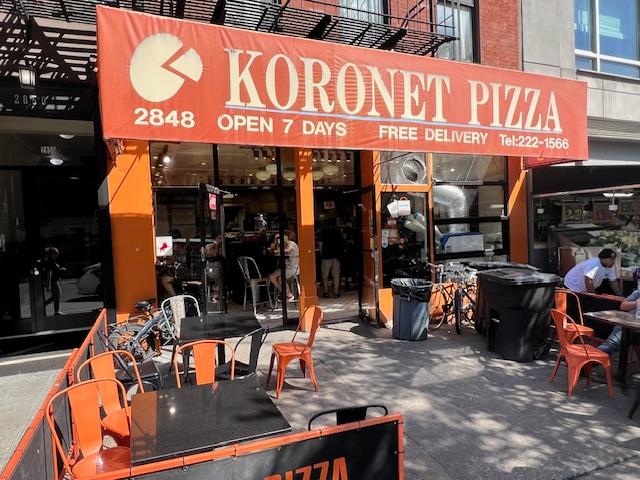
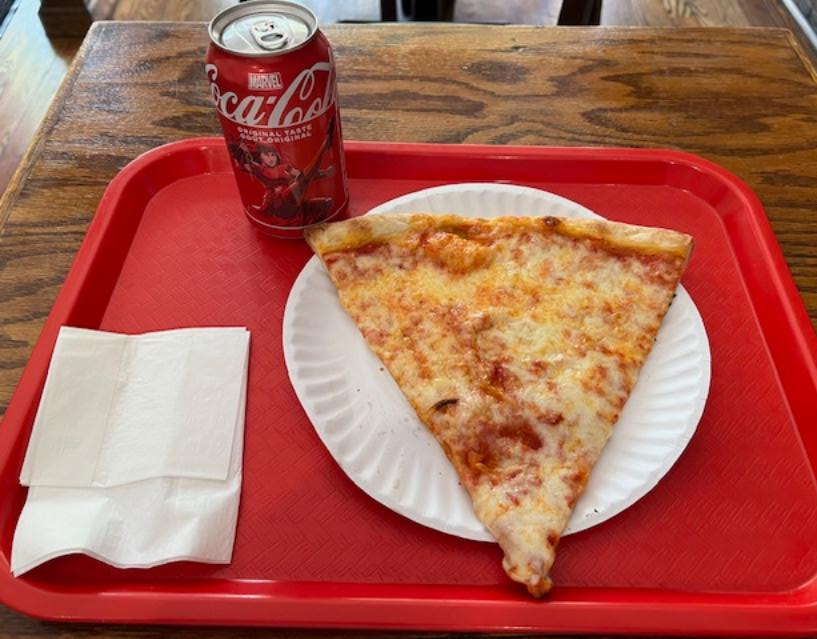
When I got inside, all that was left was a salad that had seen better days and there was no dressing to it and some portobella mushroom burgers (Yuck!). I did not want to eat any mushy mushrooms. By that point at 1:30pm, everyone was heading up to the Levien Gymnasium where the game was taking place and I was starved, so I walked to Koronet Pizza on Broadway to have one their giant slices. I forgot how giant the slices are there.
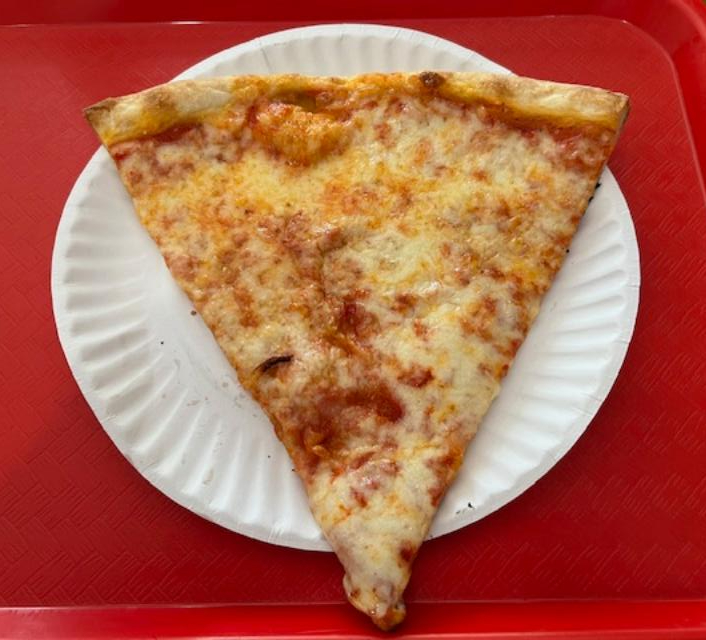
I forgot how good the pizza was and how big these slices actually are. The cheese slice if cut into half could easily serve two hungry people. I downed the slice with a Coke before the game and it filled me up for the rest of the afternoon. It was so beautiful outside that the doors and windows were all open and the place was spilling with Cornell, Columbia and Princeton Alumni (Princeton had just lost to Brown in the Semi-Finals and they were all bummed).
The pizza slice is huge and takes up two plates.
After this large lunch, I walked up to the gym to get tickets. At first they were trying to sell me the seatback tickets for $60.00 but I could not afford that nor did I want to pay that for a Ivy League game. Since I was traveling alone, I did get a ticket in the bleachers for $30.00 which I still thought was too high but I came all the way to see the game so I paid for my ticket and then had to run around the perimeter of the gym to get to my seats. The commentators were blocking the easy route to the bleachers.
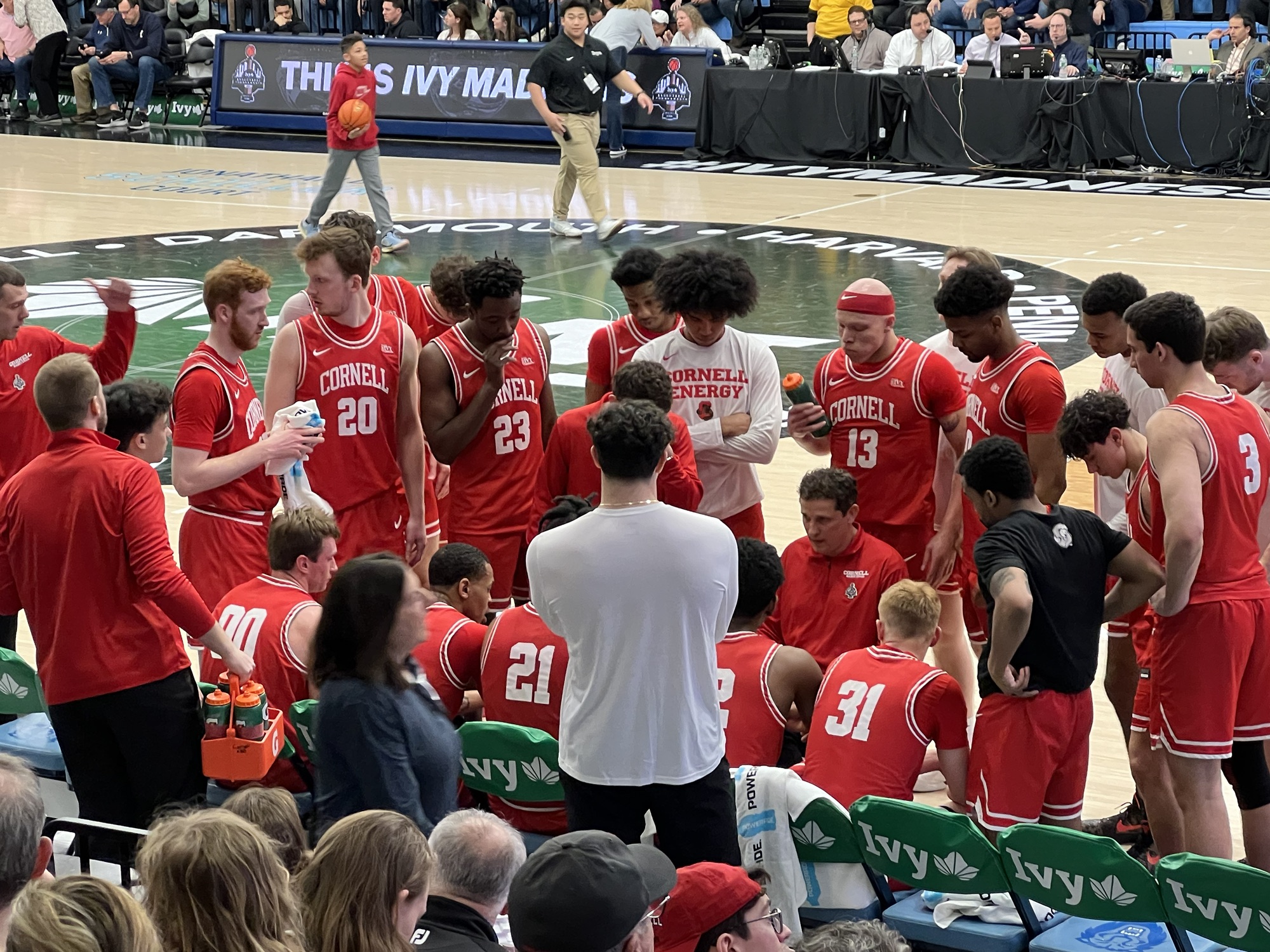
The place was mostly a sea of red and white with the Yale Alumni tucked into two sets of the gym. Our band and cheerleaders were on top of the bleachers yelling and screaming. At that point were behind by ten points when I arrived in the first half of the game.
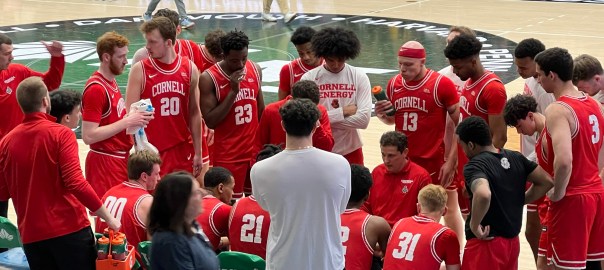
The Cornell Team in the huddle during the first half of the beginning of the game.
The start of the game when I got there.
The first half was not so great. We had lots of mistakes. We kept up with Yale, a team that we had beaten the last time and lost by two points the time before. I have to say that our side of the court was rather loud. I have found at Ivy League games no matter football or basketball, Cornell Alumni and students are far more the dominate members of the stands even at away games. I have been to Penn, Columbia and Yale games were we take up all the seats and do most of the cheering.
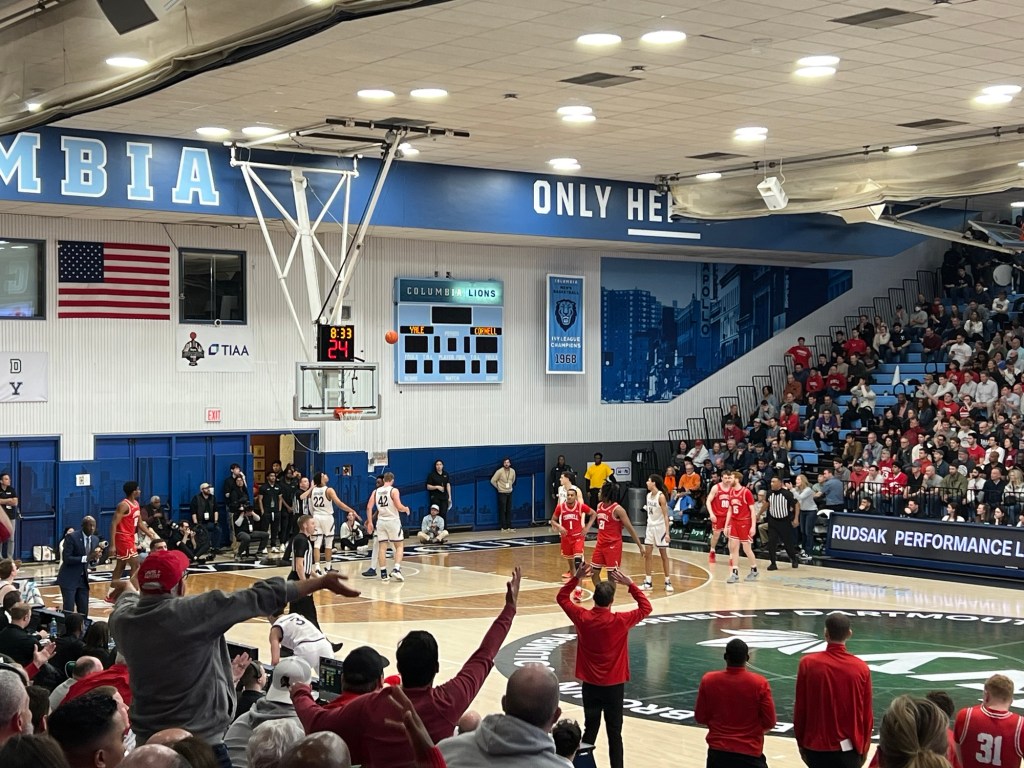
It was not much of a game for either side in the first half as we left at half time 37-25 with Yale ahead by twelve. I knew a score like this you could catch up in the second half as I have seen Michigan State (my undergraduate Alma Mater), come back from games with higher deficits. The problem with Cornell is that we kept missing all our shots and Yale kept making the three pointers. That was the difference in the game.
The end of the first half.
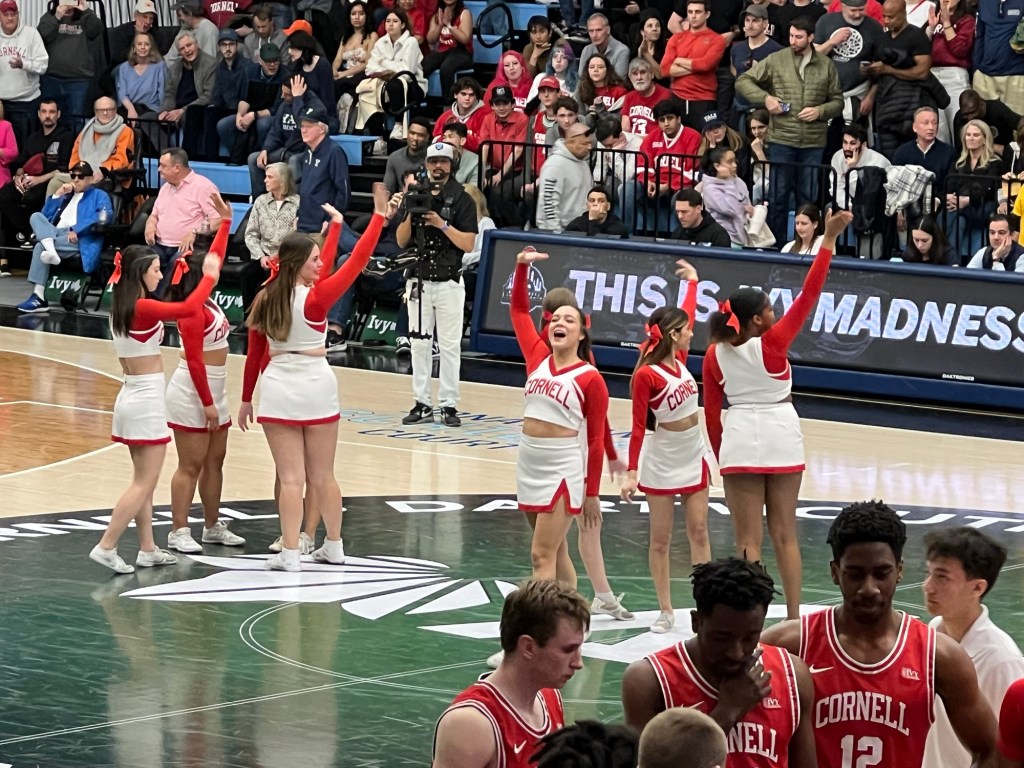
The second half was a bit better in the beginning. We started to catch up from the blood bath of the first half. We started to chip away at their lead. During the break, our cheerleaders came out and got the crowd going along with the band.
Our cheerleaders led the way.
The Cornell Cheerleaders leading the way to a hopeful comeback and victory in the second half of the game.
We starting catching up in the second half and came out fighting. We were able to get the score within seven points with three and a half minutes left to the game. The crowds were exploding on the Cornell side and Yale got very quiet for about a minute and a half. It looked like the game was going to turn around.
We kept chipping away at that lead.
You got to keep fighting!
We moved within seven points of the lead but we could not sustain the game. We kept missing the three point shots and easy layouts.
The teams battling it out but we could not put the game away.
Oh well!
In the end we chipped away to nine points but we could not come back from the deficient. We ended up losing by twelve points 69-57.
I like all the other Alumni was bummed at the loss. Several I heard went back to the Tavern as the Columbia versus Princeton Girls Basketball Teams started their game. I decided to walk around the neighborhood as I had not been up here in several years to walk around. I had not released I had written my blogs here in 2017.
I needed something sweet and remembered the bakery on Amsterdam Avenue that had been there for years that everyone kept raving about, Hungarian Pastry Shop. I stopped for some dessert. I had read and seen so many videos on the shop I wanted to try it. The lines were long all day and I had to get into the line for a half hour before I could get in.
The Hungarian Pastry Shop at 1030 Amsterdam Avenue
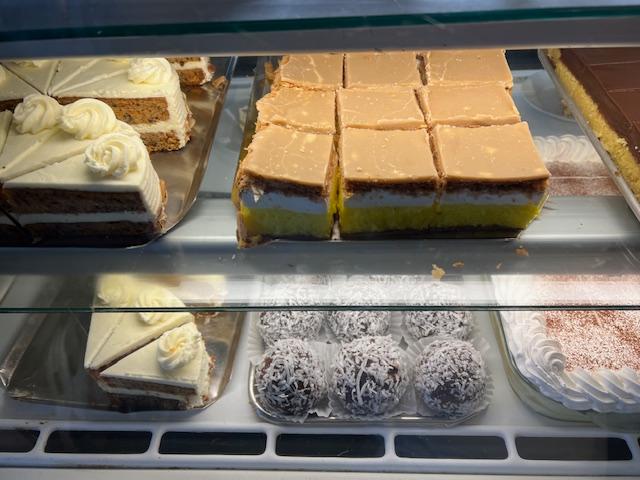
I tried their version of the Napoleon, which was layers of Vanilla Cream, whipped cream and a caramel topping between the flaky layers and a Apple Strudel, that was loaded with fresh apples and cinnamon. I took the desserts across the street to the park and I have to tell you that they were terrific.
The pastries are amazing!
I ate them at the park across the street and just relaxed and watch the world go by. I admired the statuary in the park which I had seen when I visited the park years ago on my walk through here.
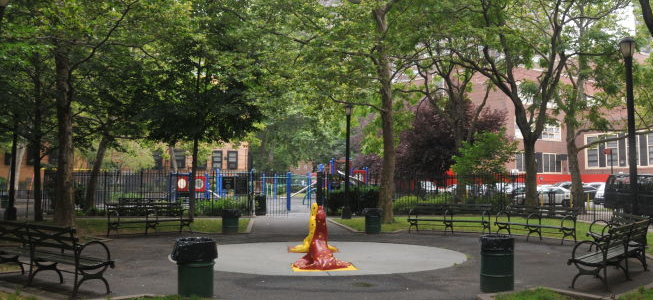
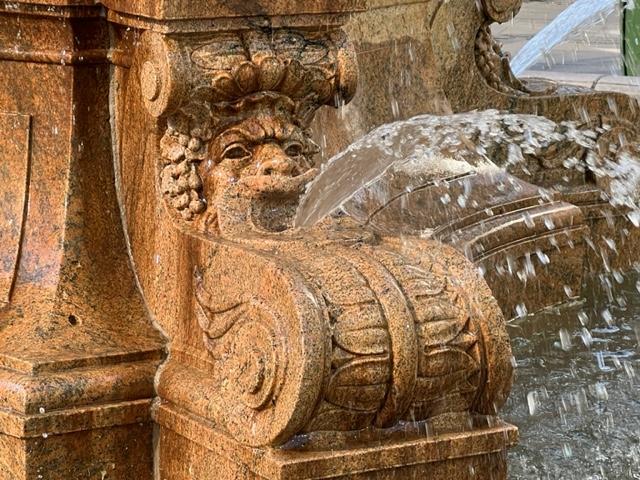
Down the long paths of plantings and around the bends of the property, I sat by the interesting statue at the center of the park. The breathtaking statue is called the “Peace Fountain”, created in 1985 which shows a unusual look at the battle between good and evil by artist Greg Wyatt, who was an artist in residence at the church.
Mr. Wyatt has graduated from Columbia College with BA in Art History and studied at National Academy of Design. He bases his work on the philosophy of the “spiritual realism’ merging realistic images and abstract forms of space, form and energy (Wiki).
The ‘Peace Fountain’ by artist Greg Wyatt
The sign from the sculpture.
I decided rather than head off to a museum downtown, I would update my blogs in this part of the City and walk around Morningside Heights, Bloomingdale and parts of the Upper West Side. It was a nice afternoon and it was a chance to catch up and see what was going on in the neighborhoods and what had changed. I have to say that the SoHA section of Harlem (from 125th to 110th from Morningside Park to Fifth Avenue) has really changed and gentrified even more than I remembered. This was the same with the Bloomingdale section of the Upper West Side (from 110th to 94th Streets from Riverside Park to Central Park).
I walked all around Morningside Park amazingly enough not looking as dangerous as everyone said it was now. There were plenty of people walking their dogs, conversing in the park and playing basketball. The flowers were just starting to bloom and the park by the pond looked really pretty.
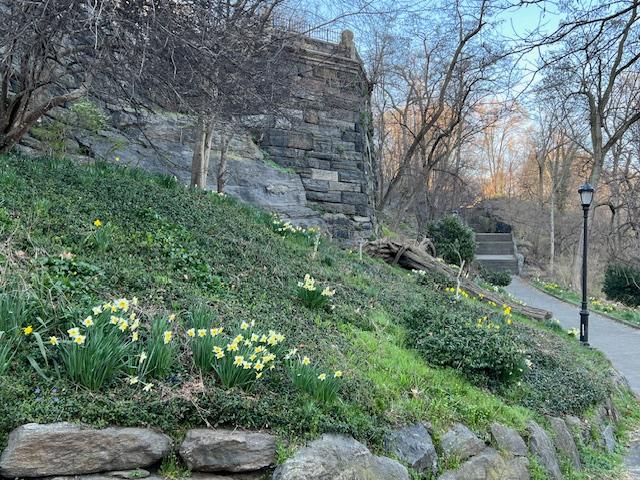
Morningside Park in bloom
The pond area of Morningside Park
The pond with Columbia University in the background.
I walked all around the streets and avenues looking at old restaurants that had closed or moved, businesses that changed hands and how much the neighborhoods have changed in seven years.
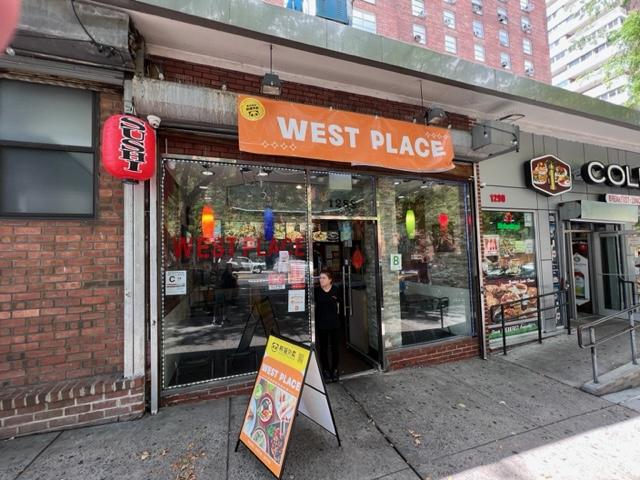
West Place Chinese Restaurant at 1288 Amsterdam Avenue
Not wanting to head home without eating dinner, I went to West Place Chinese Restaurant at 1288 Amsterdam Avenue for dinner and this time I tried the Boneless Spareribs with Fried Rice and an Egg Roll combination platter and the meal was excellent as usual. I had not eaten here in months and the food is consistently excellent. The portion size was larger than I remember from the last time. They really piled the food into the container.
The Boneless Spareribs with Fried Rice and an Egg Roll.
The Boneless Ribs were overflowing on the platter.
These sweet and juicy bites are full of flavor and piled into this small dish. There was enough food for two people.
The Egg Rolls are amazing.
By this time it was getting dark and I wanted to head home. I took the subway at 125th Street, got the joy of watching some kid jump the turn style and then headed up to take the subway back downtown.
It may not have been a good game but it gave me a chance to revisit several neighborhoods, update blogs, eat some terrific food and enjoy a day supporting Cornell University on what should have been our championship year (Yale eventually won the Ivy League Championship by one point over Brown and will go off to the NCAA Championship).
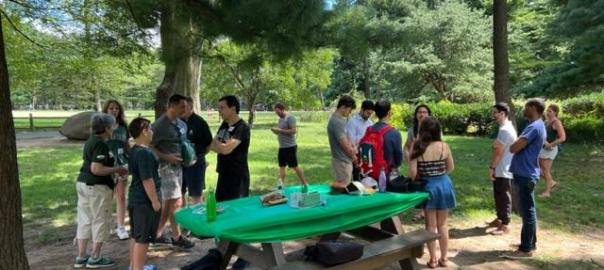
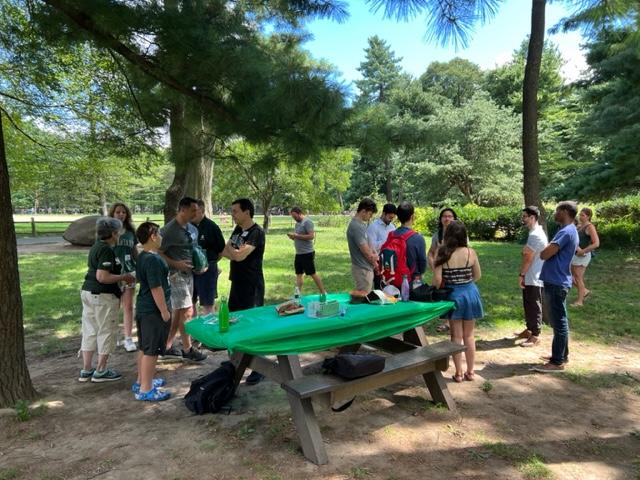
Members of the Greater New York Michigan State University Alumni Association at our Annual Summer Picnic
I joined other alumni from the New York City Chapter of the Michigan State Alumni Association for our “Annual Summer Picnic in the Park” on July 29th, 2023. This was a much more festive and social event than when I met with the alumni association back in February for the memorial service for those students lost in the active shooting on campus. This was a perfect way to share some “Spartan Spirit” and good times ahead. I have to say one thing, not matter what happens being tragedy or success, Spartans stick together.
The interesting rock formation in Central Park before I got to the picnic site.
We really had a good time. I got to know members of our Alumni Executive Board and other long-time members of the alumni association. We all brought our own lunches and cookies, and bottled water were supplied by the alumni association. It was nice to just sit back on the picnic benches and relax and enjoy the breathtaking sunny summer day.
Most of us talked about the upcoming football season and the problems that we had last year. None of us understood how we could go from a Championship season the year before to a losing season last year. It was disheartening to many of us alumni to sit through these games that we should have won.
We also talked about the upcoming basketball season which was on its way as well. I try to attend all the games that are in New York City when I can and that is always fun. This is when you know how extensive our alumni association is in the tri-state area.
I tried to weigh my opinions in while biting into the homemade chicken parmesan sandwich I made for myself. I swear, so many of our alumni know more about the stats for the team and the players than I could ever imagine.
I also got to meet some incoming Spartans from the New York City area and it is nice to see the latest wave of Spartans entering the university. I remember that enthusiasm when I got there back in 1983. I can’t believe that forty years has passed since I entered college for the first time (I am at my fifth college now attending New York University).
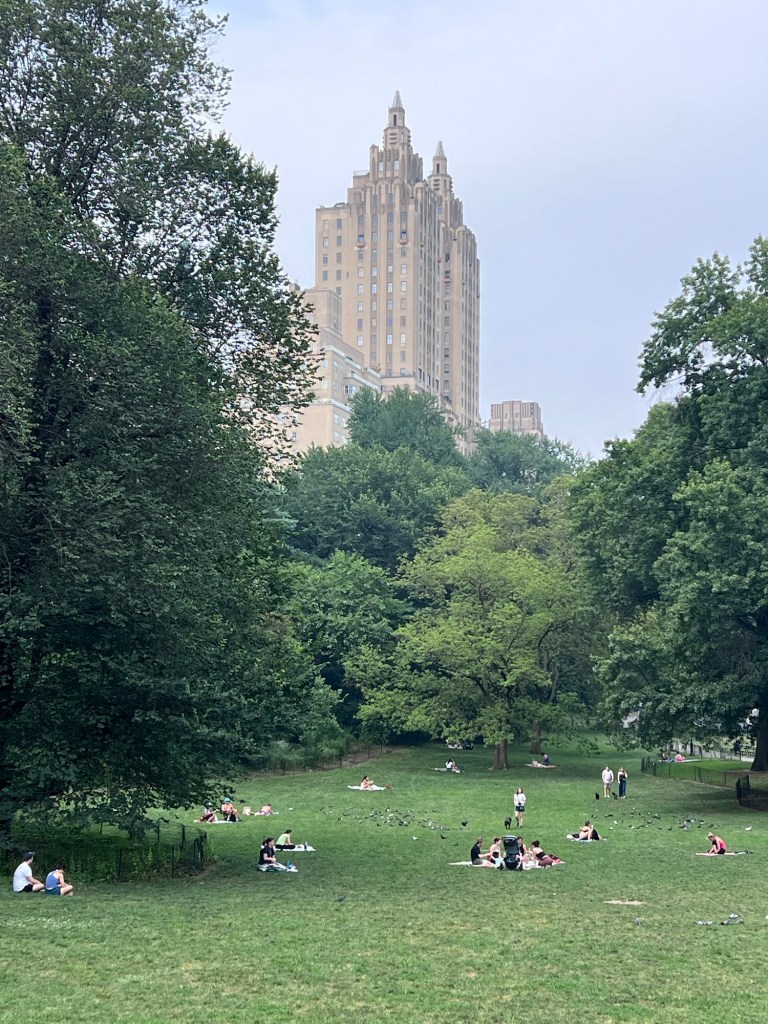
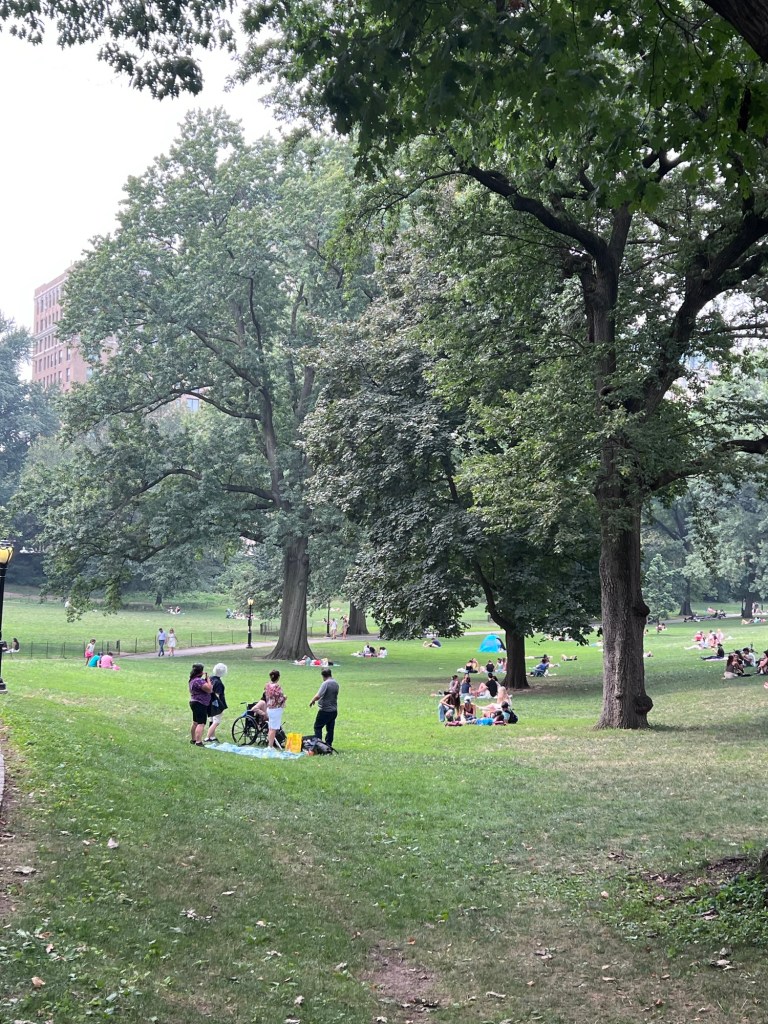
I had gotten there a little late so many people had left by that point so the rest of us piled onto three picnic tables and talked the afternoon away on issues Spartan related and also the general status of Manhattan and the rest of New York City for those alumni that lived in the City. On this late summer afternoon, I could see the Great Lawn in the distance and many people sunbathing, reading, playing fresbie or watching the pop-up softball game in the distance.
It was a nice relaxing afternoon, and I would be joining many of these people at Blondies on the Upper West Side in a few weeks for the opening of the football season. It also gave me a chance to explore Central Park on this beautiful sunny day. I am sorry but there is no place like Manhattan on a sunny afternoon.
Go Green! Go White!
The Great Lawn in Central Park that beautiful afternoon. Midtown sits in the background.
The Michigan State University Picnic in 2025:
Finally getting into the park at 2:45pm
I attending the picnic again in 2025 after a very harried morning and then dealing with public transportation. It took me almost two hours to get from my home to the picnic and I live ten miles from the location.
Walking through Central Park to the picnic site
Between the bus into the City and the subway to get to 85th Street and then having to buy lunch two blocks away and then walking back to park took a lot of time. By the time I got my lunch, walked to the picnic area and then sat down to eat when everyone else was done and were conversing with one another. I felt bad that I was starved and wanted to eat first.
The Spartan Chicken Fingers from New Leaf Deli were delicious
After I finally finished my lunch, I got to talking with other members of the Alumni Association. The conversation always rolls into the Men’s Football and Basketball season with some talk on the happenings on campus. I have not been back to East Lansing since 2013 so it has been some time since I have seen the changes on campus.
All of us talking at the picnic
Alumni came from both New York and New Jersey
Our picnic area was in the Pine Brush picnic area
Enjoying dessert with other Alumni
Even though I was only there for an hour, it was nice meeting other Alumni and catching up with people I only see at the games at Blondies, a bar on the Upper West Side. Either the football season only a month away and a new coach, we are all looking for a new beginning again.
One of the members’ dog that afternoon
I still had a nice time and look forward to the upcoming football season. No one knows how to predict it but I think we will do well in the upcoming season.
Go Green! Go White!
Walking back through Central Park
Admiring the rock formations at West 84th Street
The Michigan State University Picnic in 2026:
In 2026, I joined the Alumni again at the Arthur Ross Pinetum again for our picnic and what a spectacular day it was in the park. It was a nice afternoon of catching up (I had not attended any of the Alumni events during 2025 as classes took up so much time) everyone and talking about the upcoming football season.
The sign at the Arthur Ross Pinetum in Central Park
I had lunch ordered from Simply Gourmet Market Place Deli at 494 Amsterdam Avenue, a deli that I never tried before. I looked over their extensive menu and decided on a Chicken Club sandwich, a layer sandwich on a hero roll of a Fried Chicken Cutlet topped with bacon, avocado, lettuce and tomato with a bit a aioli sauce. The sandwich was excellent and the service was very nice at the deli (see my review on TripAdvisor.com).
Simply Gourmet Market Place at 494 Amsterdam Avenue
The Alumni Association had a nice assortment of snacks and treats for us on top of the lunches we brought from delis around the City.
The snacks and refreshments at the picnic
We really had a nice time at the park. Discussions on the upcoming football and basketball games came up a lot as well as our new coach on campus. There has been a lot going on on the MSU campus recently. Still it was a day of having a nice time and enjoying the weather.
After a few weeks of touring around New Jersey for a historical weekend, traveling to see my mother for Mother’s Day and running in and out of the City with me finally returning to Soup Kitchen and posting my grades on my class’s successful group project on “Rocking it in Rutherford”, I was finally able to get in Manhattan and continue my walk around the island. I finally was able to get into the main part of the Chelsea neighborhood.
After a long morning in the Soup Kitchen, I planned the entire day out. We were really busy that day as we have increased the productivity by a hundred bags to give away with the food distributed to the homeless. I was told that the need is getting bigger, and we had to increase the numbers. It is a sad state of this economy right now. These lines are just getting longer. This is the one thing I like about volunteering here is that you are part of a solution rather complaining about the problem.
After I was finished for the day and a little snack to tide me over, I started my walk around the border of the northern part of the Chelsea neighborhood. What was nice was it was right out the door of the church, and I started the walk down West 28th Street which it shares with the border of Hudson Yards/West Chelsea. I got to revisit this part of the neighborhood again.
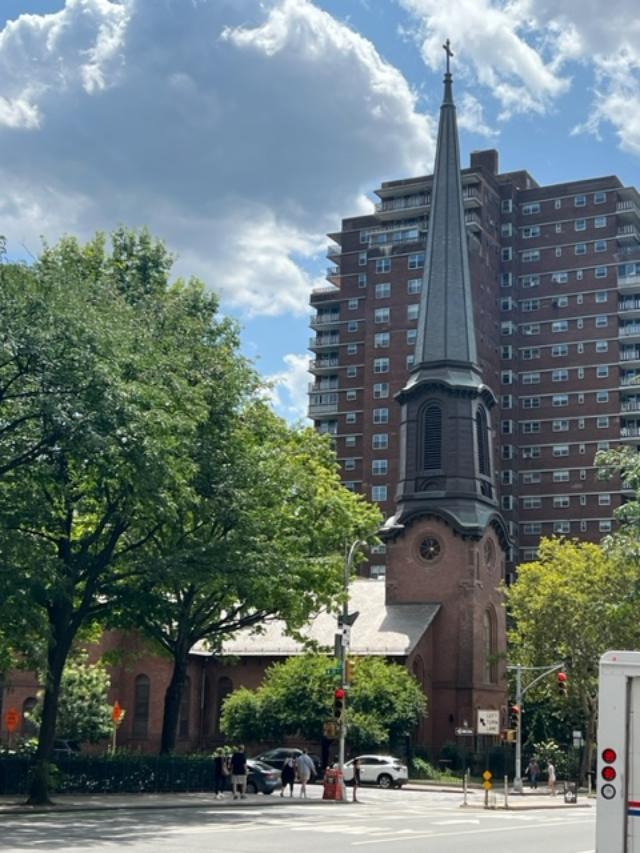
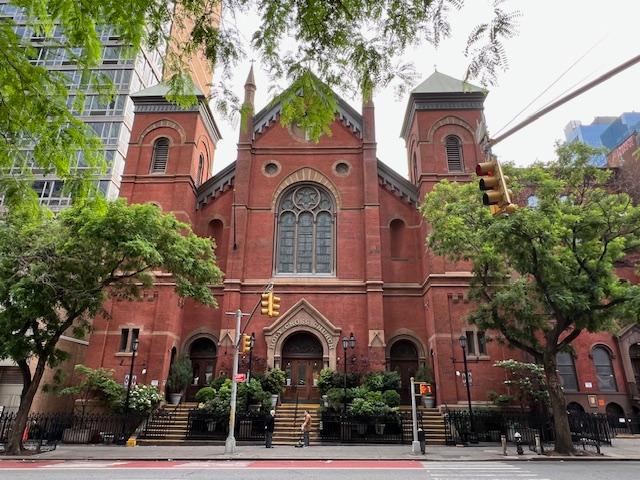
What I did learn from walking the neighborhood was more about the history of The Church of the Holy Apostles. The Church of the Holy Apostles was built between 1845 to 1848 and was designed by architect Minard Lafever with the stained-glass windows designed by William Jay Bolton (Wiki).
The church in the summer of 2025
The church has always been progressive, and it was rumored to be part of the Underground Railroad during the Civil War. The church had been an extension of the Trinity Church downtown for the working-class people in the area. Now it also runs the second largest Soup Kitchen in the United States. The biggest is in San Franciso (Wiki).
The Church of the Holy Apostles at 296 Ninth Avenue feels like a second home to me
It was also convenient in that it was where I needed to start my walk on the edge of West 28th Street where the church is located right across from Chelsea Park south of the northern section of Hudson Yards and right across from the Lower Garment District (please read my blogs on walking these parts of Manhattan as well).
What I never noticed in the almost 17 years that I have been volunteering at the Soup Kitchen was that it was a park. Chelsea Park is located across the street at the corner of Ninth Avenue and between West 28th and 27th Streets. I had always thought this was part of P.S. 33, the elementary school next door complex. There is a whole separate park behind that corner.
Chelsea Park extends all the way to Tenth Avenue with soccer and basketball courts and places for people to not just run but relax under the blanket of trees in the summer. Facing Ninth Avenue in a small courtyard is the statue of the ‘Chelsea Doughboy’.
The statute was designed to honor the war veterans of WWI. The term “Doughboy” no one is too sure where it originated. Some think from the fried dough dumplings that the soldiers eat or maybe from the way their uniforms looked which were a little baggy or from the dough clay that they used to clean their uniforms (NYCParks.org).
Artist Philip Martiny was a French born American artist who settled in New York when he immigrated here in 1878. He was a contemporary of artist August Saint-Gaudens and known for his decorative styles in the Beaux-Arts fashion. He created many sculptures for buildings in New York City and Washington DC (Wiki).
I walked past Chelsea Park on the way to Tenth Avenue and walked all along the borders of the park. The park is becoming a homeless encampment. I have not seen anything like this since Mayor Guiliani closed Thompkins Square Park in the East Village and then fenced it off to the homeless and renovated it. There were people sleeping all over the place even by the small playground that the kids were playing in. It really is beginning to show the state of the City now. The bathrooms were even locked to the patrons.
The track area was pretty much empty and what was really a shocker is how the neighborhood again changes at the Tenth Avenue border. This part of the neighborhood has gotten extremely expensive that was documented in the documentary “Class Divide” on the changes of the neighborhood due to the Highline.
“Class Divide” by HBO. The sound is muted but you can see it with subtitles
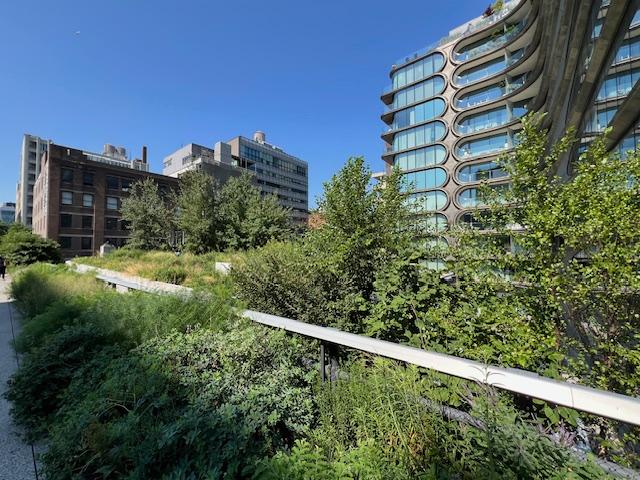
On the other side of Chelsea Park is some of the newest and most expensive real estate in Manhattan, a lot due to the Highline. The Highline is an elevated walkway that starts on West 30th Street and extends to West 19th Street and has in recent years set the tone for this part of the neighborhood.
The Highline Park was created from a remnant of the former New York Central railroad spur that was elevated above the roads below. In 2006, there was a neighborhood effort to save it and create an urban park. Now the 1.45-mile park supplies an elevated greenery above the neighborhood which has created expensive real estate on all sides of the park (Wiki).
The Highline Park was designed by James Corner Field Operations, Piet Oudolf and Diller, Scofidio and Renfro.
As I passed the Highline Park, I passed the most unusually designed building at 520 West 28th Street. The building is a residential complex known as the Zaha Hadid Building after the architect who designed it Zaha Hadid. It was one of her only residential complexes that she designed and one of the last buildings she created before her death. The building is designed with curvilinear geometric motifs (Wiki).
520 West 28th Street-The Zaha Hadid Building (Streeteasy.com)
You will be passing a lot of construction going on by the time you get to Twelve Avenue. Buildings are being renovated and rebuilt and all new buildings are popping up on the edge of this now very trendy neighborhood. What was once dock yards and parking lots is becoming high end office buildings for “Silicon Alley” as the Tech industry is called in New York City.
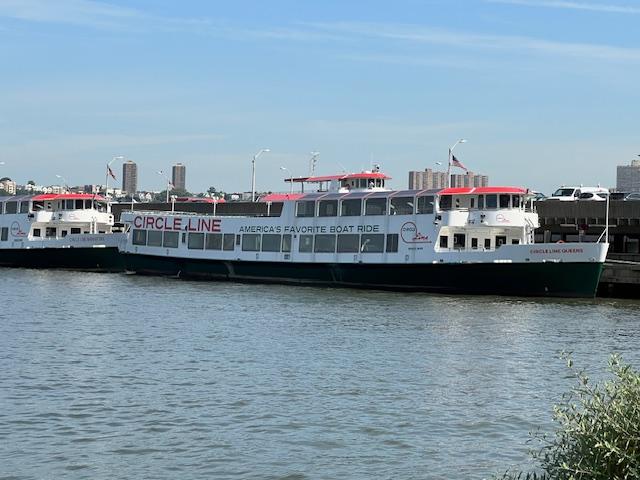
At the end of the block is Hudson River Park, a strip of green park created on this side of Manhattan under the Bloomberg Administration (God are we now missing those years!). This little strip of park at the end of West 28th Street has some interesting views of Edgewater, NJ. The afternoon I visited the park, there were a few joggers and dog walkers making their way through the park. The strip gets smaller along Twelve Avenue until you walk to about West 42nd Street by the Circle Line boat ride.
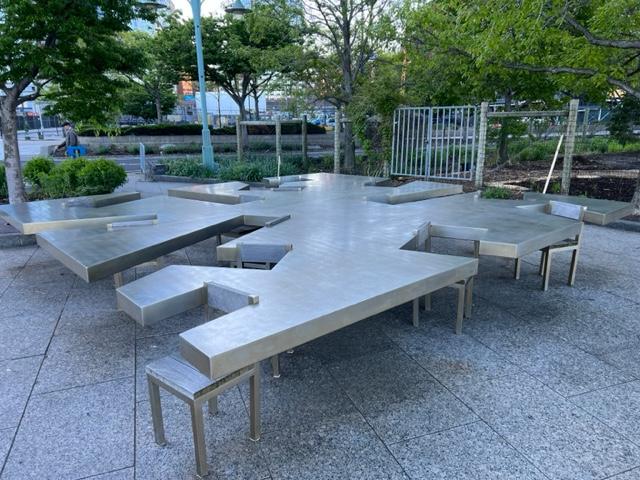
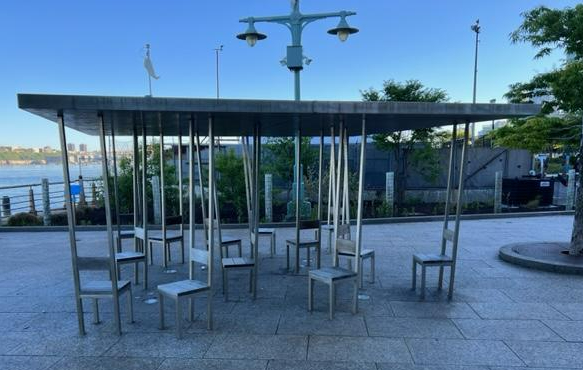
As you enter the park, there is a very unusual set of sculptures entitled ‘Two Too Large Tables’ by artists Allan and Ellen Wexler. Two Too Large Tables consists of two elements. Each is constructed of brushed stainless steel and Ipe wood.
One piece has thirteen chairs extended up to become columns that raise sixteen square feet plane seven feet off the ground. In the second piece, the same chairs act as supporters to lift a sixteen square feet plane 30 inches off the ground. The first functions as a shade pavilion, the second as a community table. As people sit, they become part of the sculpture. People sitting together, forming unusual pairings because of the chair groupings (Artist bio).
Two Too Large Tables in Hudson River Park (Artist bio)
Artist Allen Wexler is an American born artist from Connecticut and studied at Rhode Island School of Design where he received his BFA and BS in Architecture. He studied and earned his MS in Architecture from the Pratt Institute. He is known for his multiple disciplines in art (Wiki).
The trip up Twelve Avenue is less than exciting. There is a tiny strip of park along the river that is mostly behind fencing. On the other side of the street is construction holes and fences from all the planned buildings that will start raising along the avenue.
The one place where there was some action was BLADE Operations at the Hudson River Park where helicopters were flying in. It reminded me of the opening scene of the Peter Bogdanovich film “They All Laughed” that I had just seen at the retrospect of the director’s work at the MoMA.
“They All Laughed” trailer by Peter Bogdanovich is a true Manhattan film
I made the turn down Twelve Avenue and here you have to watch because of the all the construction going on. There is so much building going on along the avenue just watch out for scaffolding and unpassable sidewalks along the Hudson River waterfront.
You will pass some very impressive buildings that are part of New York’s “Silicon Valley” including the well-known Starrett-Lehigh Building that has changed the complexity of the businesses in this neighborhood.
The Starrett-Lehigh Building at 601 West 26th Street
The building was built and finished in 1931 for the Starrett Corporation and the Leigh Valley Railroad as a freight terminal. The building was designed by the architectural firm of Cory & Cory and in 1998 went through a renovation as a office building. It is currently going through another renovation that will be completed in 2023 (Wiki/Starrett-Leigh website).
As I crossed the street from Hudson River Park, I passed the renovations of Chelsea Waterside Park. This is the park where last year I started “The Great Saunter Walk” last year on the Summer Solstice. The park had a ‘Butterfly Garden’ that people were working the morning that I started the walk. The park is going through a full make over and the plans for it look amazing.
Chelsea Waterside Park at 557 West 23rd Street (Hudson River Park Archives)
When you walk through Hudson River Park, it is the nicest place to take a rest and sit under a tree to cool off. The park has the most amazing breezes and views of the river and neighboring New Jersey.
As I was walking around one of the wooded piers admiring the view, I came a across a grouping of stones that looked unusual with the way that they were set. The grouping was a sculpture garden by artist Meg Webster entitled “Stonefield”.
“Stonefield” by artist Meg Webster
This landscape sculpture consists of large stones chosen from quarries in New York State and the northeast corner of Pennsylvania. They were selected for their special shapes and unusual sculptural qualities. Some are colorful, some are concave, some craggy, one is very tall. The artist views each stone as special and arranged each to showcase its unique characteristics and individual “being-ness” (Hudson River Park.com).
Ms. Webster is an American born artist who has a BA from Old Dominion University and MFA from Yale University. She works with natural materials such as salt, sand and earth known for her Post-Minimalism and the Land Art Movement. She is known for her sculpture and installation work (Wiki).
Artist Meg Webster talks about her artwork
As you pass the fencing of the renovations, watch out for the traffic with its lots of busses, cars and bicyclists. It is almost as if no one sees traffic lights or pedestrians. Look both ways when you cross from the park to West 23rd Street.
West 23rd Street is a combination of new construction and historic buildings showing how the neighborhood is transitioning but with a historic element. Not only a residential but interesting commercial strip with engaging shops and very reasonable restaurants and take-out places. It is a real New York neighborhood.
Between Twelve and Eleventh Avenues, you are seeing the development around the High Line Park. All the new modern structures are being built around the pathway park which is influencing this part of the neighborhood.
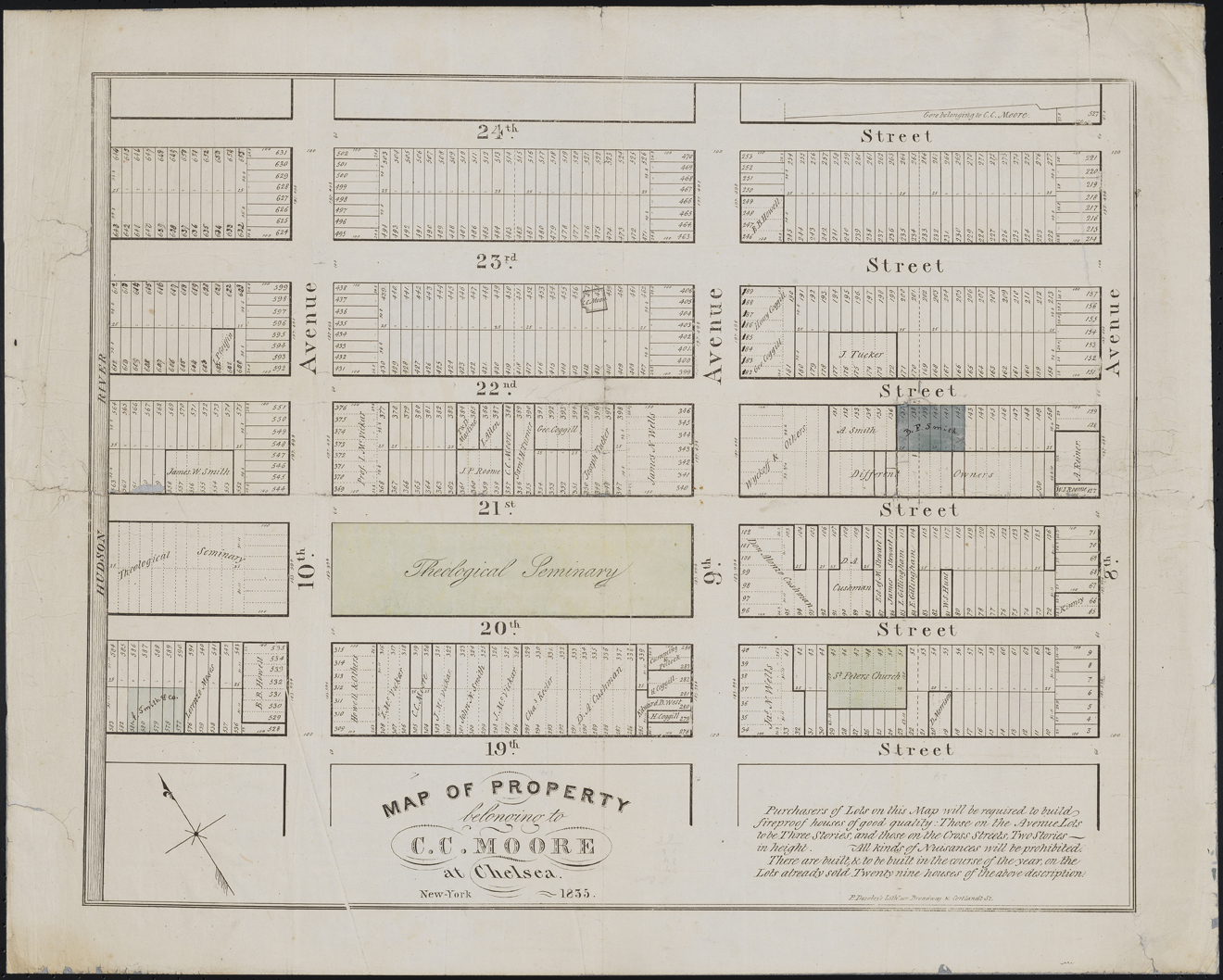
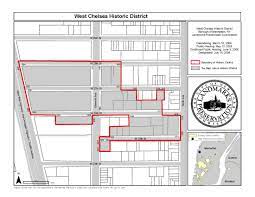
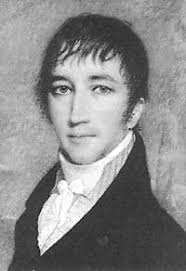
When you reach between Tenth and Ninth Avenues, you arrive at the brownstones of the Chelsea Historic District, which was once part of the Captain Thomas Clarke estate that was separated into townhouse lots that have been changed and altered since the original parcels were created in 1835. His descendant, Clement Clarke Moore, created the neighborhood plots for the townhouses.
The creation of the neighborhood of “Chelsea” from the Captain Thomas Clarke Estate
This block of the neighborhood is a combination of interesting stone townhouses on one side of West 23rd Street and the other side of the street is turn of the last century apartment buildings. When you are walking west towards the Hudson River, take the time to admire these last 19th Century buildings. The official historic district does start one block below on West 22nd Street.
Part of the Chelsea Historic District at West 24th Street
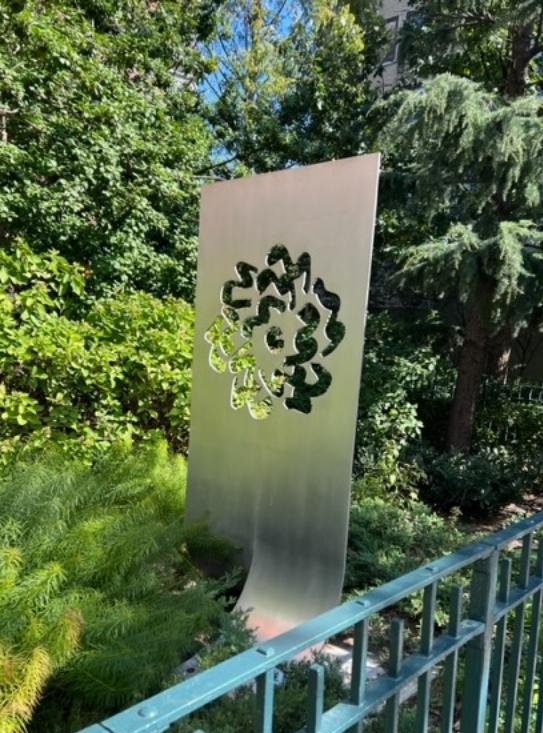
When I crossed over Ninth Avenue as I passed SVA Theatre at 333 West 23rd Street and the small park next to the theater. When I looked inside the park, I saw an interesting looking piece of artwork and wondered who created it. It is the theater logo.
The SVA Theatre logo I thought was a piece of artwork
Once you cross over Eighth Avenue, the rest of the street is a combination of commercial businesses with a mixture of residential either on top or to the side of these establishments. What I love about Chelsea is that it is a treasure trove of reasonable restaurants that dot the street all the way to Sixth Avenue.
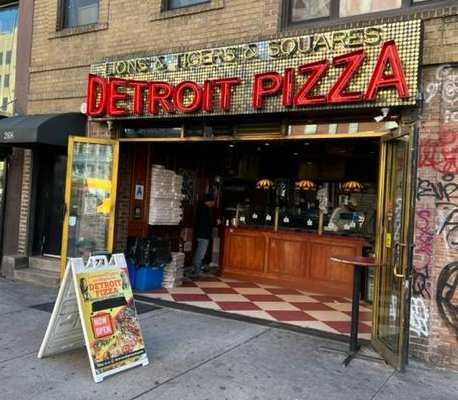
Just off the corner of Eighth Avenue is Lions & Tigers & Squares at 268 West 23rd Street, which has the best Detroit style pizza that I have tasted in New York City. The sauce and cheese are baked into the sides of their pizza, and they really load down on the toppings.
Lions & Tigers & Squares at 268 West 23rd Street (Closed May 2025)
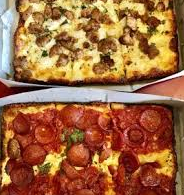
Don’t miss their sausage or pepperoni pizza which has a heavy covering of spicy sliced pepperoni and the sweet sausage that is topped with maple syrup. Their pizza has a crisp outside and a pillowy inside.
The Sausage and Pepperoni Pizza here is just excellent
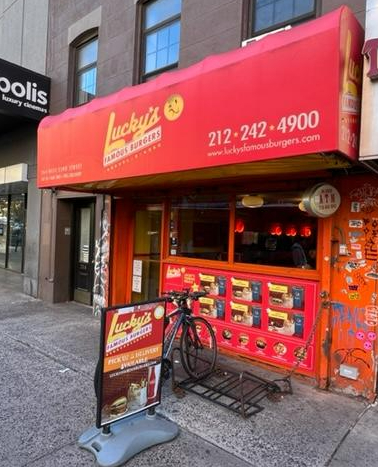
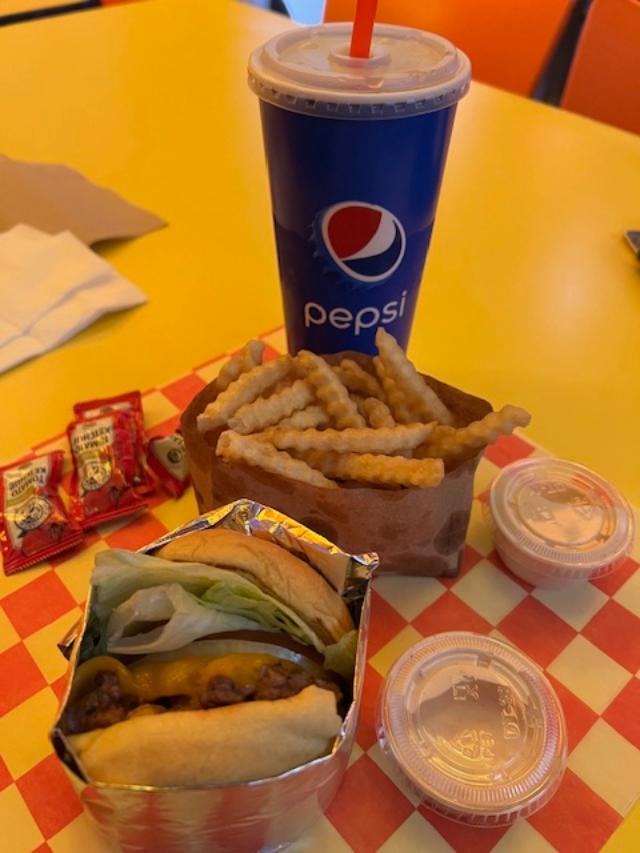
Just next to Lions & Tigers & Squares is Lucky’s Famous Burgers at 264 West 23rd Street. This amazing little restaurant serves the best burgers and chicken fingers. Their French Fries come in a little sack that can serve two people.
Lucky’s Famous Burgers at 264 West 23rd Street (Closed June 2023)
When I had lunch there recently when I was finishing my walk around West Chelsea/Hudson Yards, I had the juiciest twin Cheeseburgers and a bag of fries. Their burgers are so fresh and well-cooked and topped with lots of fresh vegetables. They are so well caramelized on the outside that the burgers have such a good flavor when combined with the toppings.
The Mini Cheeseburgers with fries are excellent at Lucky’s Famous Burgers
In between the blocks there was some unique buildings that stood out amongst the more modern apartment and post WWII buildings. Tucked in here and there are traces of the Victorian past of the neighborhood.
film-history-and-modeled-clay.html
At 244 West 23rd Street is a beautifully embellished building in brick and cream colors was built in 1900 by developer Isidor Hoffstadt. Decorations of garlands adorn the windows and top of the building and some of the upper floor windows are surrounded by archways. It now contains twelve lofts with multiple bedrooms (Daytonian in Manhattan).
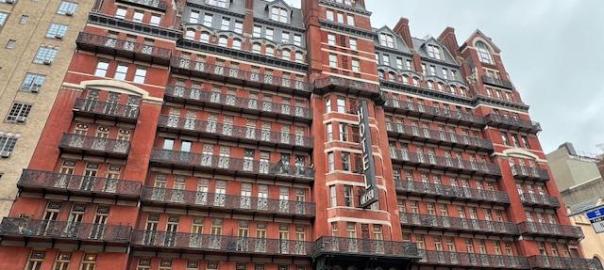
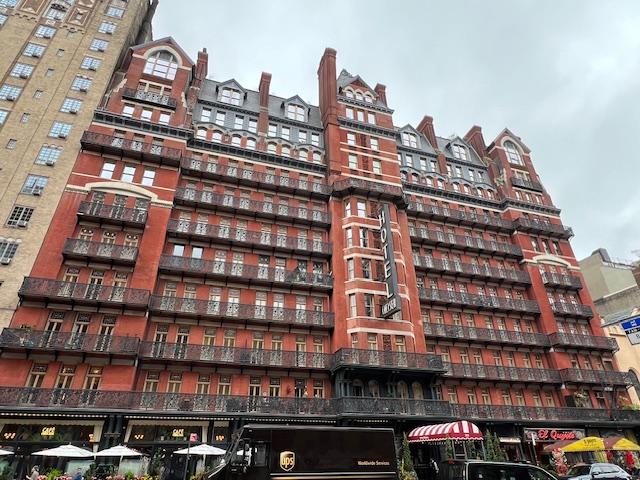
A few doors down are one of the most famous hotels still under scaffolding after a few years of renovations. The Chelsea Hotel at 222 West 23rd Street was built between 1883 and 1885 and was designed by architect Philip Hubert from the firm of Hubert, Pirrson & Company. The hotel is designed in the Queen Anne Revival with a combination of American Gothic (Wiki).
The hotel had originally opened as a cooperative and a home to artists and members of the theater community, but the concept changed in 1905 when it reopened as a hotel. The hotel has gone through several management changes over the years. In early 2022, the Chelsea Hotel reopened again as a hotel when the interior renovations were finished.
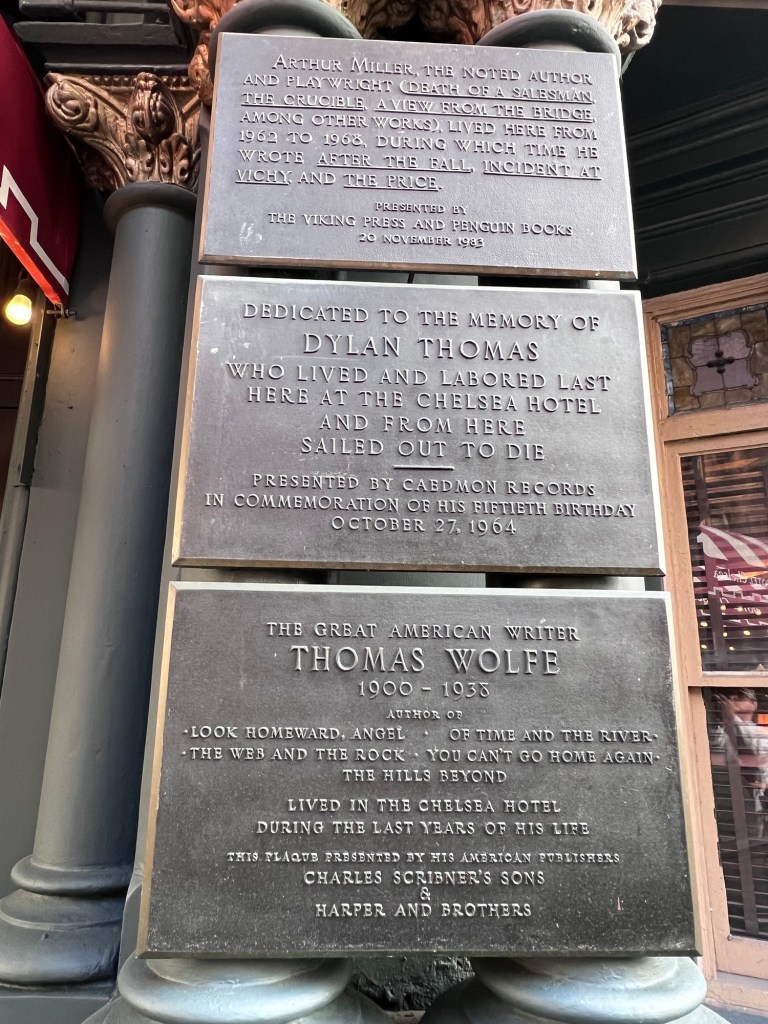
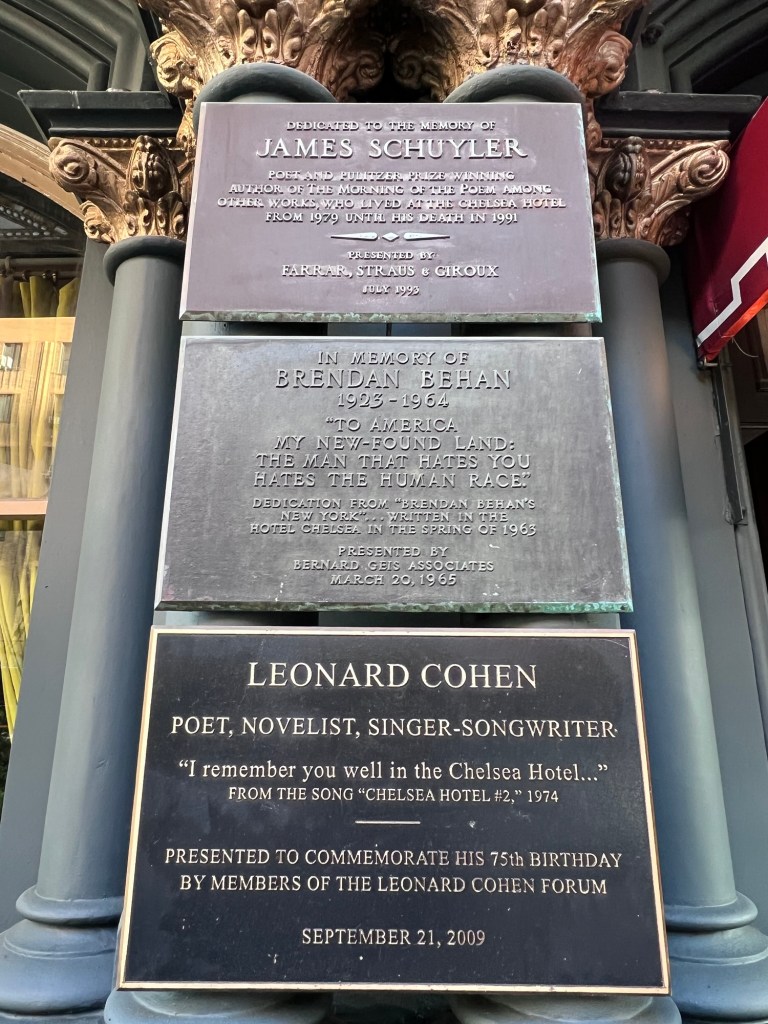
What has made the Hotel Chelsea so famous over the years are the artists and theater people who have lived at the hotel over the years and have used the hotel for their own creativity. Music, books, movies and story lines have been written here over the years by some of the most creative minds in history.
The historic plaque of the hotel
The hotel was a catalyst for the creative set. Notable famous residents included Mark Twain, Dylan Thomas, Allen Ginsberg, and Joseph O’ Neil, who when living here with his family was influenced by the hotel when he wrote ‘Neverland’. Film stars including Dennis Hopper, Elliot Gould and Warhol star Edie Sedwick had stayed at the hotel at various times. Musicians and singers Madonna and Janis Joplin both resided in the hotel and Sid Vicious’s girlfriend, Nancy Spungen was found stabbed (Wiki).
The history of the hotel
The history of the hotel
The history of the hotel
On the corner of Eighth Avenue are three restaurants I have noted many times in this blog for either their creative cooking or their cheap eats. These are real neighborhood restaurants.
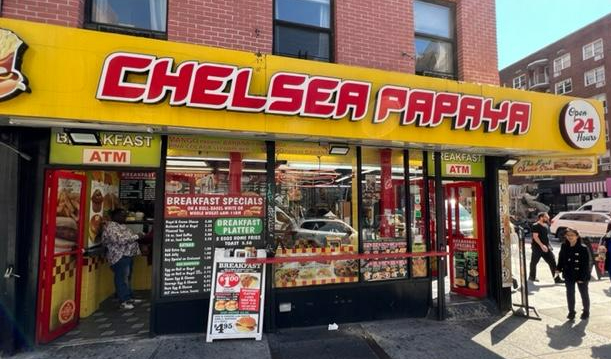
The first one being Chelsea Papaya at 171 West 23rd Street, which was the starting point when I had breakfast last summer when I started “The Great Saunter” walk on Father’s Day. The breakfasts here are just amazing.
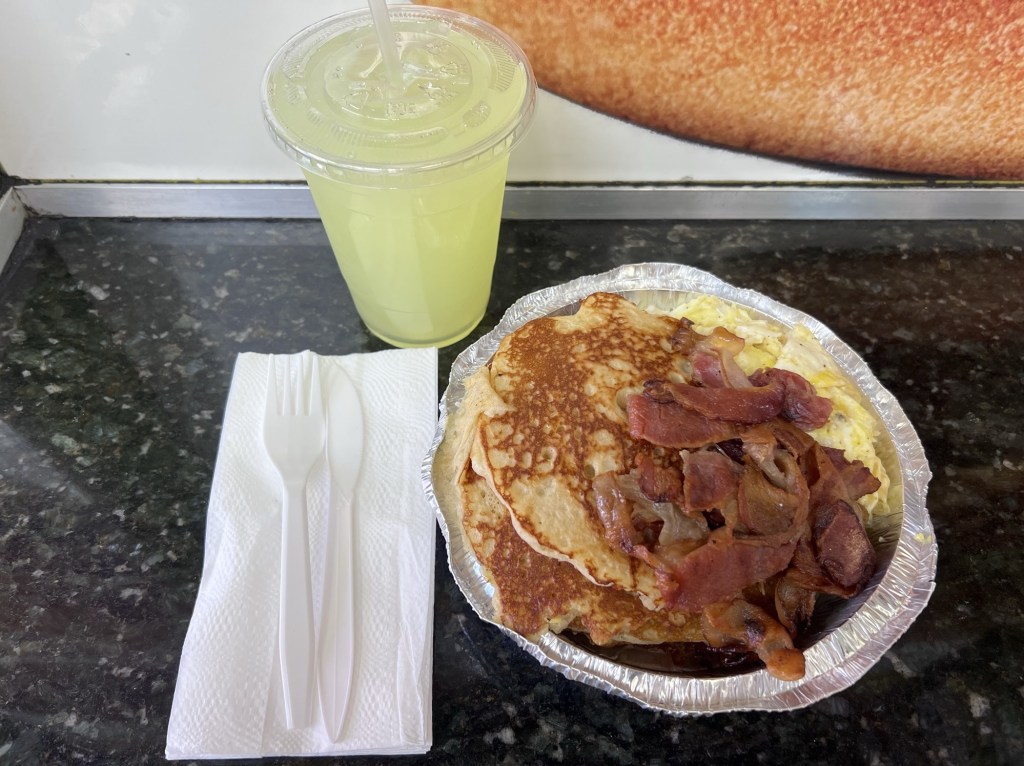
The pancakes here are delicious
The breakfasts are wonderful here
The pancake platter was out of this world and their breakfast sandwich Bacon Egg and Cheese was delicious.
Chelsea Papaya at 171 West 23rd Street is great for all meals
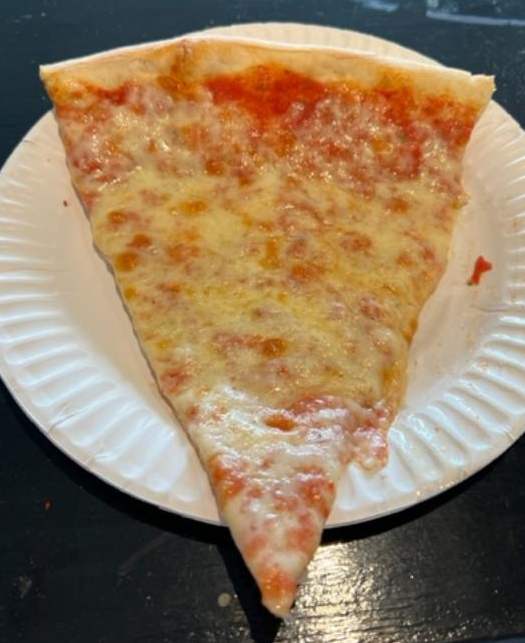
Next door to it is Pizza Gaga at 171 West 23rd Street for $1.50 slices and $1.00 cans of soda. This is my ‘go-to’ place when I need a quick snack and then need to dash on the subway to go somewhere else.
The cheese pizza at Pizza Gaga at 171 West 23rd Street is really good
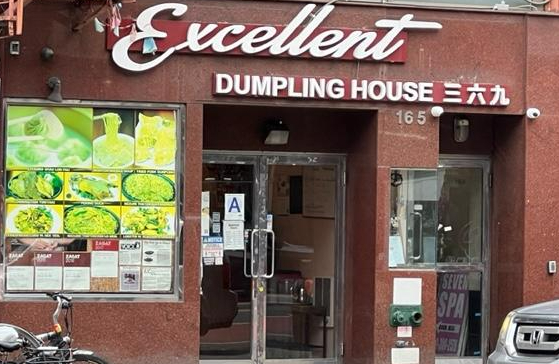
A few doors down is Excellent Dumpling House at 165 West 23rd Street. I have only eaten there once but the food was pretty good that evening, but it still warrants a second trip because the raving that it got online did not live up to the hype of the food. The Soup Dumplings I had that night were large but did not have that much flavor.
At the corner of the neighborhood on Sixth Avenue and West 23rd Street at 100 West 23rd Street is the second Macy’s Department Store building. This was on the very edge of the Ladies Shopping Mile that once stretched along Sixth Avenue.
The building was built in 1871 and you can see all the elaborate embellishments on it with interesting stone carvings and elegant window design and some wrought iron details on different parts of the building. It was the last location of the store before it moved to its current location at 151 West 34th Street.
100 West 23rd Street (Renthop.com) is an old Macy’s
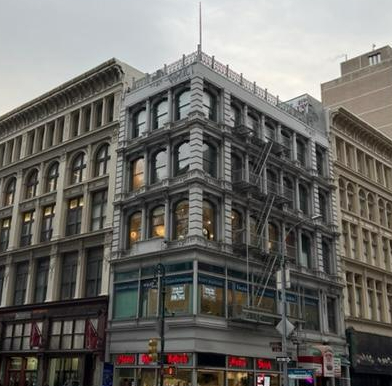
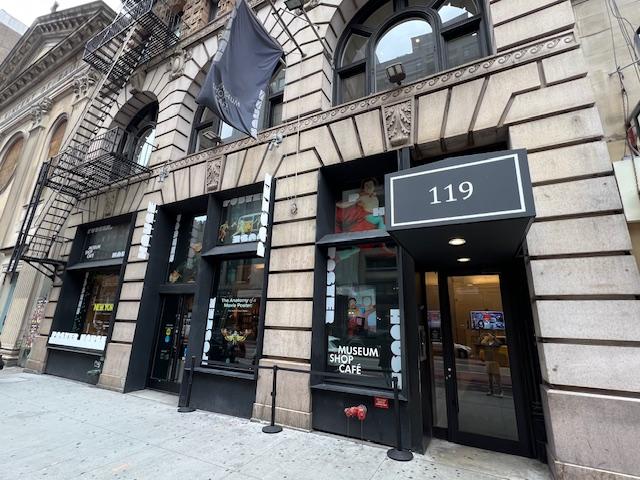
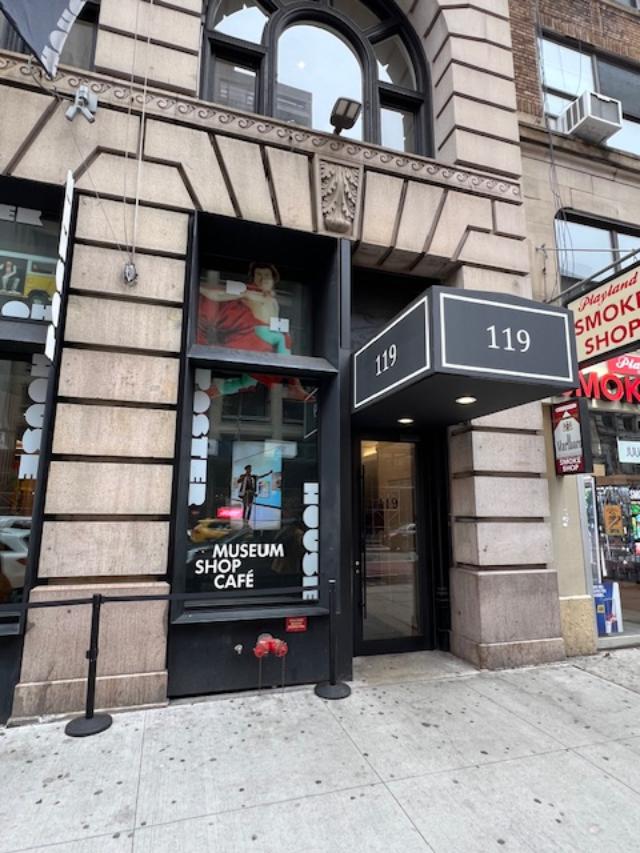
At almost the very corner of the block and hidden behind some scaffolding at 119 West 23rd Street is the Poster House Museum. This interesting museum I had never noticed before on my many trips walking down West 23rd Street.
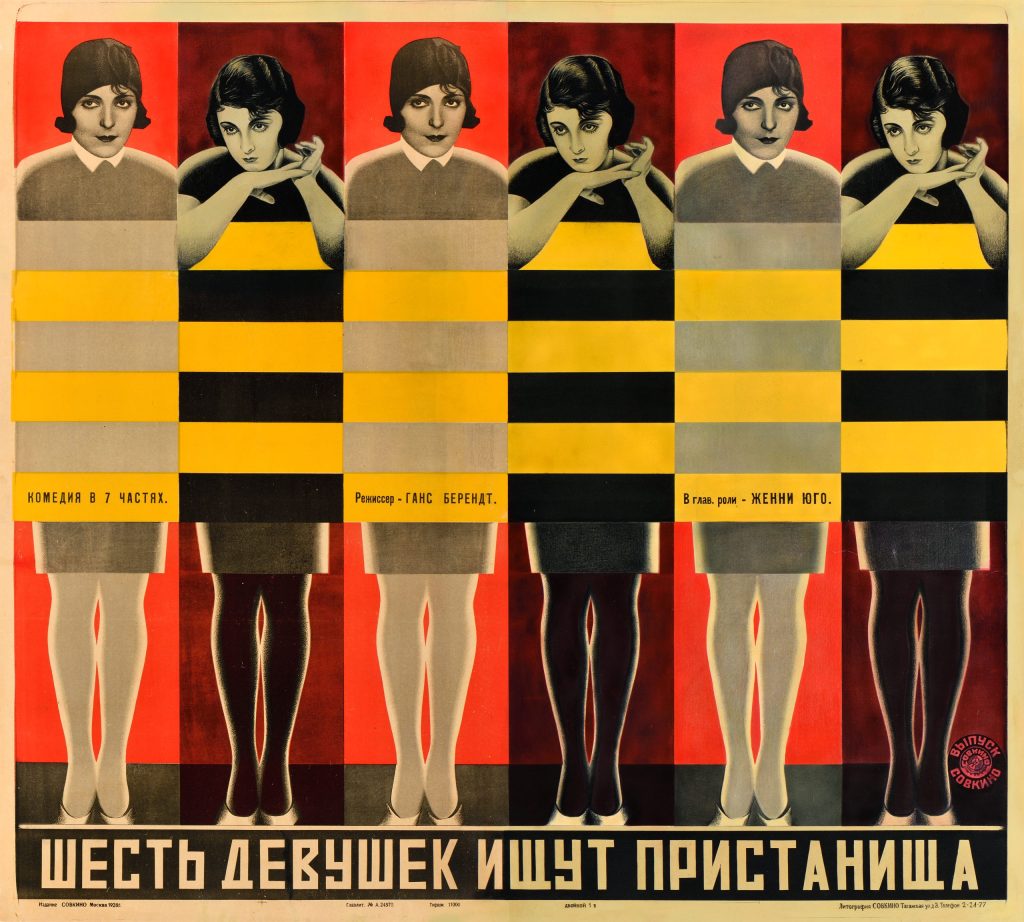
The Poster House is a small museum dedicated to the impact, culture and design of the poster (Museum website) and the first museum in the United States that focuses on posters. I recently attended three exhibitions at the museum including “The Utopian Avante-Guard: Soviet Film Posters of the 1920’s” that included many Silent Film posters.
The “Utopian Avante-Guard: Soviet Film Posters of the 1920’s” exhibition
When you walk up Sixth Avenue, which Chelsea shares with the border of NoMAD (North of Madison Sqaure Park) was once the Flower District. This part of Manhattan used to be lined with whole vendors up and down the Avenue. When I was working at Macy’s in the early 1990’s, most of this neighborhood was rezoned for residential. Practically every block from West 35th to West 23rd Street was knocked down and rebuilt with new apartment buildings. So, the character of the neighborhood changes until you walk the side streets.
The edges of Chelsea share the border of what’s left of the Flower District, NoMad and Koreatown so when you turn the corner of Sixth Avenue to walk down West 28th Street, you walk right into what is left of the old Flower District. I walked from one side of West 28th to the other and made it back to Holy Apostles to go to the bathroom and then headed back down West 28th Street to sees sites and stores that I had visited when walking the neighborhood when exploring NoMad.
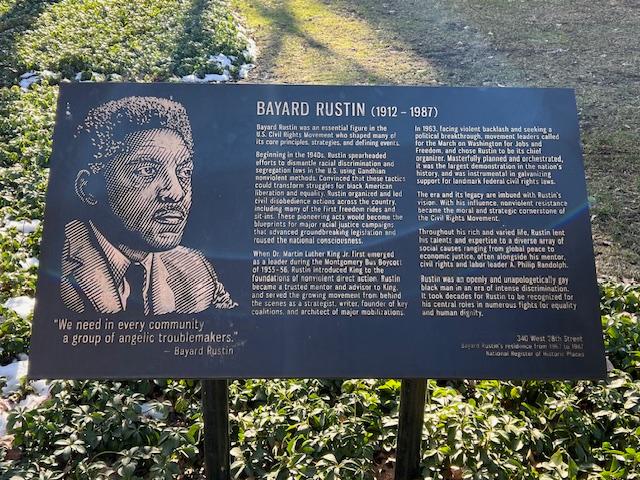
Behind the church is the housing that formally union housing for the International Ladies Garment Union housing, now known as “Penn South”, that was created in the 1950’s for housing for union workers. Contruction started in 1960 and these ten building still house some of the elderly members of the union. In the courtyard of building Seven is dedicated to Bayard Rustin, a civil rights and union member who lived there. There is a memorial plaque to him in the courtyard Wiki).
The plaque dedicated to the activities is outside Building Seven between Eighth and Seventh Avenues
As I traveled the border of the neighborhood on West 28th Street from Ninth to Sixth Avenues, I have never seen so much transition on a street. On one side of the street is the back part of my Alma Mater ‘The Fashion Institute of Technology’. It seems that the college is taking the back loading dock area and building an addition to the college.
On the other side of the street between Eighth and Seventh, the entire street has either been knocked down and rebuilt or older buildings renovated but the entire block between the two avenues is brand new. Since my initial trip almost two years ago, the entire block between Eighth and Seventh Avenue has been rebuilt with new buildings and the few remaining older buildings have been renovated for business offices.
As you cross Seventh Avenue at West 28th Street are the last remnants of the former “Flower District” which dominated these blocks here and along Sixth Avenue until the area was rezoned in the 1990’s. Now Sixth Avenue in this area is now apartment buildings and hotels. Still there are many commercial flower shops here and some amazing floral businesses along this block.
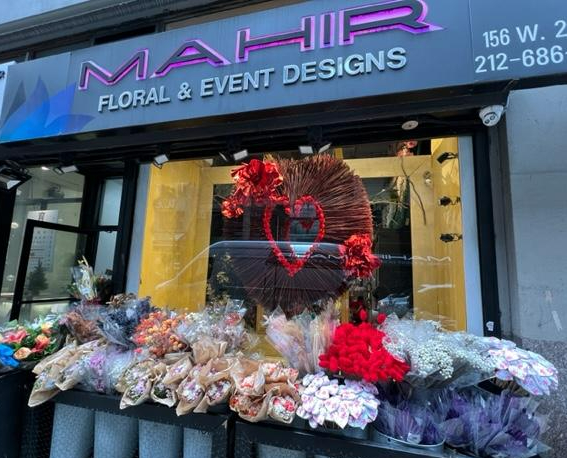
Mahir Floral & Event Designs at 156 West 28th Street is one of the nicest flower shops in the district (See my review on LittleShoponMainStreet@Wordpress.com). The store is so beautifully designed to showcase not only the flowers but the decorative items that they sell along with the plants and flowers.
Mahir Floral & Event Designs at 156 West 28th Street
There are all sorts of interesting design pieces that not only make the perfect gift but also to create the perfect event.
The store is so beautifully designed to showcase their items
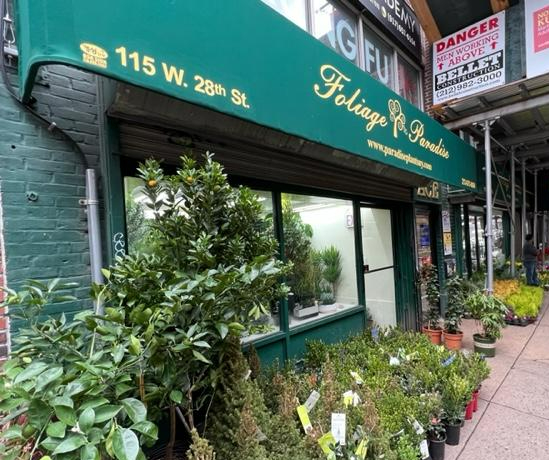
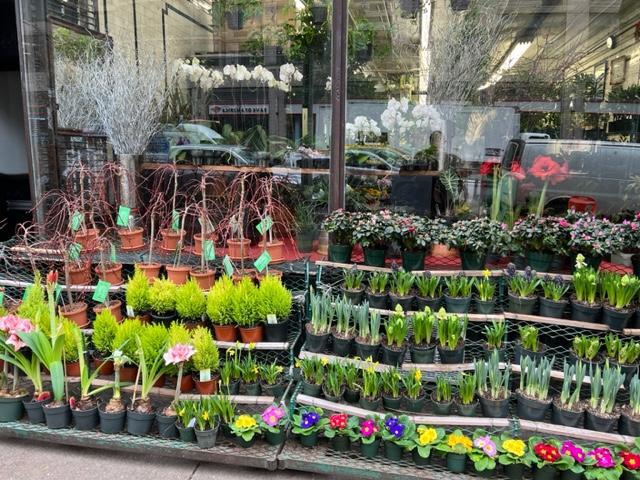
Another wonderful store is Foliage Paradise at 113-115 West 28th Street. What I love about the store is the way it is designed when you walk through it. It is like walking through an enchanted tropical garden with paths down exotic trees and flowers on all sides. They have a big commercial and retail business according to the salesperson I talked to that day.
In the front of the store when the weather is warm, it is lined with the most seasonal flowers and plants. When you walk through the store, it is like walking through an Amazon jungle in a warm climate at any month of the year. Just touring this store is fun.
Walking through Foliage Paradise is an experience
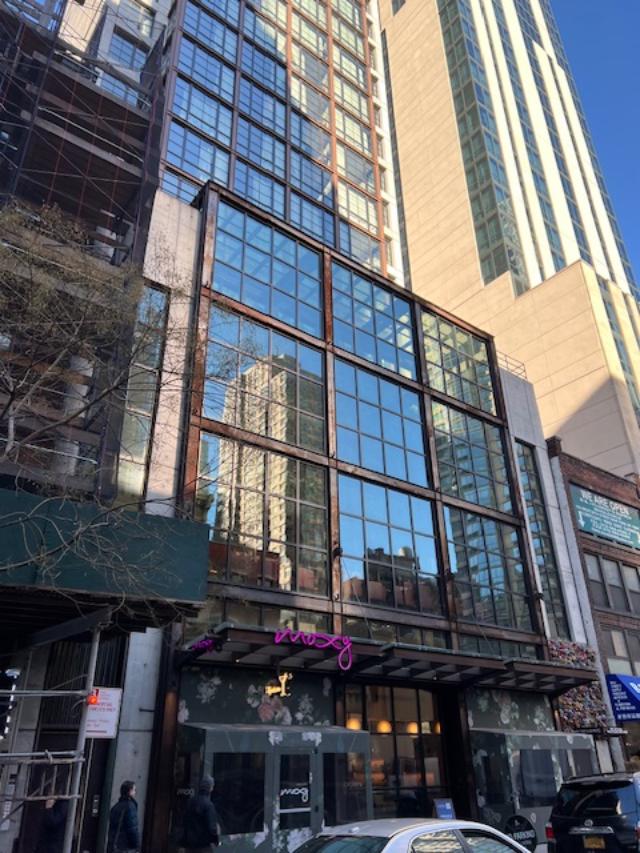
What brought back a lot of good memories when I walked down West 28th Street was walking past the Moxy Hotel at 105 West 28th Street. This was my starting point of my morning of walking “The Great Saunter Walk”, the 32-mile excursion around the Island of Manhattan over the summer of 2021 (before I pulled my back out).
The Moxy Hotel at 105 West 28th Street has the most amazing views
I had the most interesting room on the 10th floor with the most breathtaking view of Midtown Manhattan. I would just sit on the bed looking at the views before going to sleep. You have never seen a site than Midtown all lit up at night.
The Lower Garment District shares the border with the NoMAD and Koreatown neighborhoods and even over the last few months I have noticed some significant changes in the blocks that I had explored for the blog. Many buildings had been finished that were under construction or were in the process of being renovated. They still looked empty but there were better days ahead when they will be filled with the latest tech and advertising companies. Sixth Avenue is becoming a big commercial and residential neighborhood.
The Flower District in Manhattan is slowly shrinking
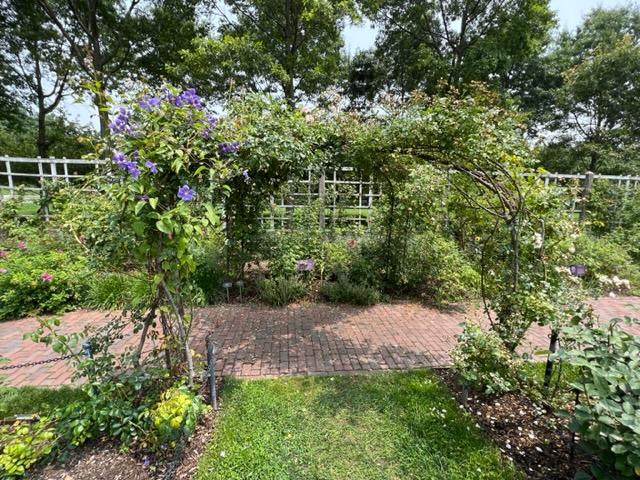
When I finished the walking the borders of the neighborhood, I doubled back to outside the Fashion Institute of Technology and took the subway to the Brooklyn Botanical Garden to see the Crawford Rose Garden which was in full bloom. All the flowers have been blooming two weeks in advance and with a series of rainstorms on the way I wanted to see the roses before the knocked all the petals off like it did with the Cherry Blossoms.
I took the 45-minute trip to the Gardens and walked around the rose garden, admiring the flowers colors and smells. The Cranford Rose Garden is one of the oldest sections of the Gardens and when they are in full bloom, they are just amazing to look at and wonder around. This is why you have to see them before the rains come. Roses have about a two-week blooming cycle.
The Cranford Rose Garden at the Brooklyn Botanic Gardens
After walking all over the rose garden, I explored the rest of gardens, admiring the Children’s Garden with all its plantings and the beauty of the Japanese Gardens even after the Cherry Blossoms were gone. You never tire of these gardens.
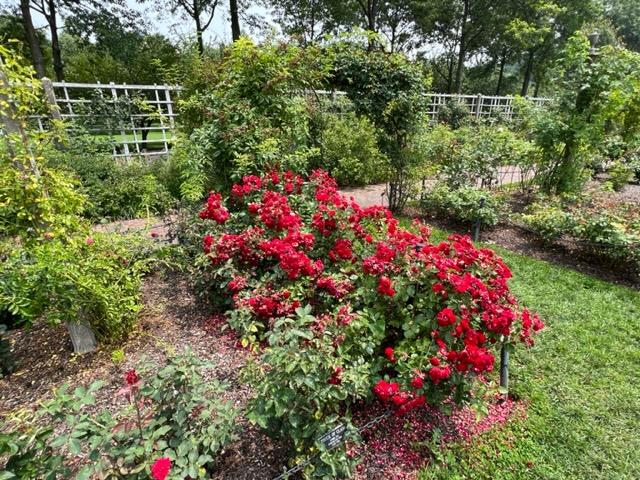
The Cranford Rose Garden in bloom
The heat had been getting to me all day and it was 93 degrees when I got to the gardens. When I reached the Cherry Blossom Tree lawn, I just stopped and laid down on the grass and just relaxed. I ended up falling asleep under one of the trees and just relaxed for an hour. I was exhausted from a long week.
The roses in full bloom
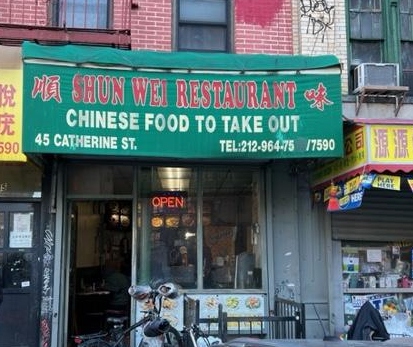
After I left the gardens for the afternoon, I headed to Chinatown for a quick dinner. I have been watching all thirteen episodes of the Fung Brothers “Cheap Chinatown Eats” videos and I remembered this restaurant their friend mentioned on Catherine Street on the outskirts of Chinatown, more in the Three Bridges neighborhood, Shun Wei at 45 Catherine Street. So, I decided to go there.
Cheap Chinatown Eats Part 9 that mentions Shun Wei
By the time I got to Chinatown from Brooklyn, it was rather late in the day, so I ordered my meal and ate it in the park across the street. Sounds innocent enough but I could see the underlining stares that I got from the restaurant owners, patrons and patrons in the park.
I went to Shun Wei which had been mentioned in the “Chinatown Cheap Eats” video and I thought why not give it a try? I had passed the place many times when I was eating at Catherine Deli right next door (See review on TripAdvisor and DiningonaShoeStringinNYC@Wordpress.com), so I gave it a try.
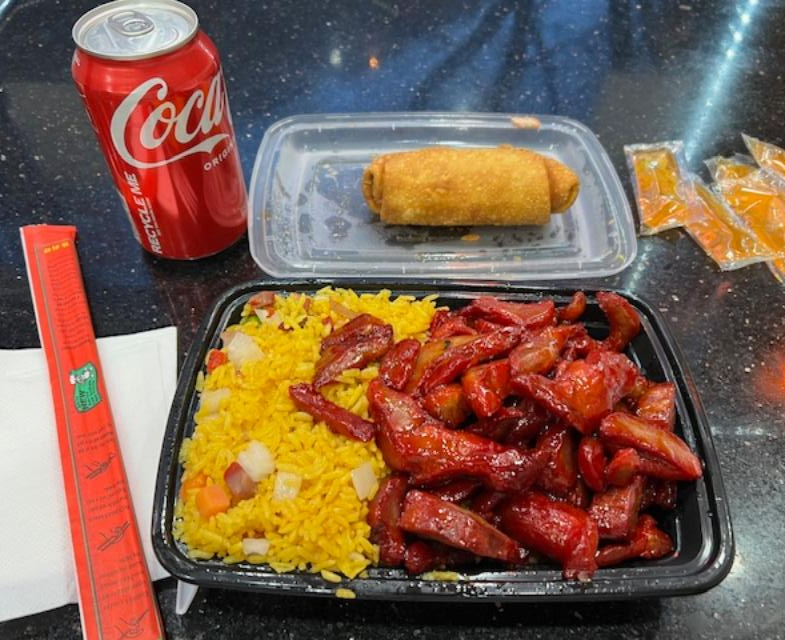
I did not want to order Chicken Wings but when I walked in there was a picture in the front window of a Boneless Roast Pork with Roast Pork Fried Rice and an Egg Roll for $9.95 and it looked really good. I also ordered a side of Fried Dumplings. So, I ordered that and waited for my order. The one thing about the restaurant is that it is located across the street from the Alfred E. Smith Houses and the Hamilton-Madison Houses and caters to the people who live there.
The Roast Pork with Pork Fried Rice was delicious
As I waited for my order to come out, I could see slight stares from the cooks making my food and from the other customers who walked in to get their orders. I guess people had not seen a 6:3 guy before. I just ignored it all and went to Alfred E Smith Park across the street from the restaurant to eat my meal. I figured with all the families in the playground and people sitting on the benches, there would not be any problems.
The business district around Alfred Smith Houses at dusk. This is where Catherine Deli & Bagels and New Shun Wei are located
I noticed the same thing again. It was like I could see out of the corner of my eye people were doing their best in the park not to look at me, but I could see the subtle stares. I just enjoyed my dinner and watched it get darker in the park. I have to tell you that I really enjoyed the food, and they gave you plenty of it. I was stuffed when I was finished and even had to bring the egg roll home with me.
After dinner, I left the park and toured around Chinatown and its fringes. It is really getting scary that even before I went to Shun Wei most of the restaurants were half full or the ones on the fringes were almost empty on a Tuesday night. As I passed through East Broadway, Henry Street, Division Street and then walked up Eldridge Street and then crossed onto Canal Street and walked back into Chinatown. At 9:00pm, everything was shutting down for the evening. I can see what the pandemic has done to this neighborhood.
Chinatown at night
Some of these restaurants used to closed at 11:00pm and some to even 2:00am to cater to the restaurant workers getting off. With more restaurants closing and “For Rent” signs in the windows, I can see the trickle-down effect of all of this. That and all the galleries moving into former restaurant and market spots, I have a feeling it will be in the near future we will be calling this “NoLoChi”, No Longer Chinatown.
As I said before, Manhattan just keeps morphing.
See my other blogs on Walking North Chelsea/Flower District:
Day Two Hundred and Thirty Seven: Walking the Borders of North Chelsea/Flower District:
I started my walk today with the threat of a major snowstorm. When I went outside, it was cold but blue skies and sunny. There were two times that the skies got cloudy with a small snow flurry and that was it. So much for an “Artic Plunge” in New York City. That lasted about twenty minutes each. So much for the big storm. It ended up being sunny and cold the rest of the afternoon.
I journeyed back to the Lower Garment District to walk the side streets and see what has developed in the neighborhood. Lots of renovations and new construction are part of the neighborhood fabric as this section of Midtown South is going to be redeveloped with new office buildings and apartments. Most of the building stock is rather old and needs a renovation.
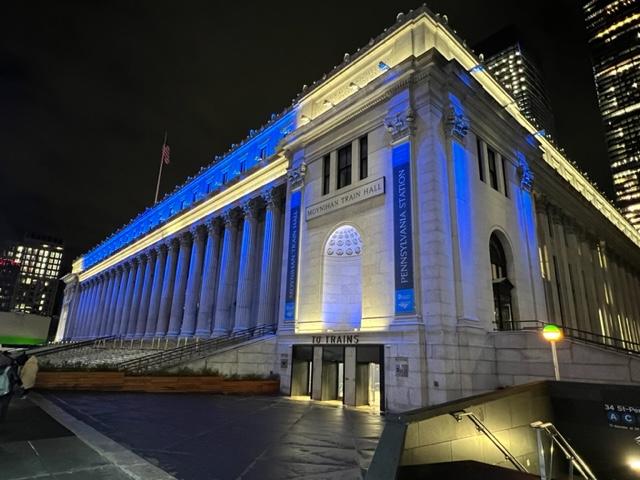
The blocks between Ninth Avenue and Sixth Avenue along West 33rd and 32nd Streets is dominated by several older buildings: The former Farly Building is now the Moynihan Train Hall, the former Penn Station is now Madison Square Garden, the Hotel Pennsylvania is now being demolished for an office building and the former Gimbel’s Department is now the Manhattan Mall. New uses for classic buildings that is a trend in many neighborhoods in Manhattan.
The James A. Farley Building was designed by the firm of McKim, Mead & White and was designed in the Beaux Arts style, the sister building to the former Penn Station (where the current Madison Sqaure Garden now sits). The current renovation of the building to turn the dream into a reality is by the architectural firm of Skidmore, Owings & Merrill (Wiki).
I was able to walk the halls and staircases of the complex that afternoon and the interiors are still not finished with a few of the restaurants now opened but the polished floors and new artwork is in full view. The public bathrooms are a nice change from the ones in Penn Station. The rest of the complex will be open by the spring.
The new rendering of the James A. Farley Building to the Patrick Moynihan Train Hall (Vno.com)
Daniel Patrick Moynihan was a former politician and diplomat.
The new Moynihan Building at night
Across the street from the Moynihan Train Hall is Madison Square Garden, one of the most famous sports areas in the country. It is what replaced the famous Penn Station that was knocked down in 1968.
Madison Square Garden is one of the most controversial buildings in the City when it replaced the old Penn Station. The majestic building that was designed by McKim, Mead & White in the Beaux-Arts style and opened in 1910 was closed in 1963 and knocked down for the current building. The outcry from this started the Historic Preservation Movement in the City and prevented future buildings from demolition. These types of buildings are now protected under New York City’s Landmark Preservation Act. The biggest problem cited at the time was that the rail service was declining, and the building was getting too expensive to maintain (Wiki).
Madison Square Garden at 4 Pennsylvania Plaza
The former Penn Station that was knocked down in the 1960’s
With the reconfiguration of these grand train depots today not just at Grand Central Station (see my blogs on Midtown East and Murray Hill) as well as Penn Stations in Philadelphia and Washington DC, I could only imagine what it would be like today. We are now seeing it in the new Moynihan Train Hall in the former James A. Farley Post Office building.
The Hotel Pennsylvania was built in 1919 by the Pennsylvania Railroad and was designed by architect William Symmes Richardson from McKim, Mead & White. It was designed by the firm who designed Penn Station across the street and the limestone facade mirrored that of the station. The hotel has gone through many ownerships over the last one hundred years and returned to the name Hotel Pennsylvania in 1991. The hotel closed for business in April 2020 and is in the process of being demolished. There will be a new series of office buildings built in the area (Wiki).
The Hotel Pennsylvania at 401 Seventh Avenue (Wiki)
We will always have Glenn Miller though. Pennsylvania 6-5000.
Song “Pennsylvania 6-5000” by Glenn Miller
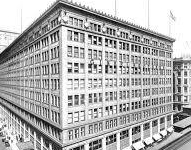
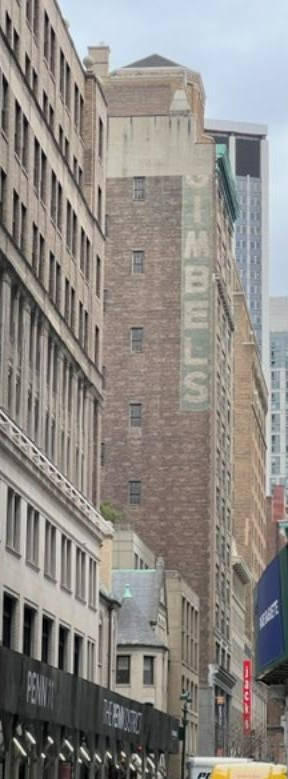
Behind the hotel is the old Gimbel’s Department Store building that closed in 1986, a year and a half before I started at Macy’s. Gimbels had always been considered our rival for years, but I think because of the sheer size of Macy’s I have a feeling that we beat them in sales. Gimbels had come to New York City by way of Philadelphia by the Gimbel’s family. It was founded by Adam Gimbel in 1887. The store in Herald Square opened in 1910 in the classical style by architect Daniel Burnham (Wiki). The store stretches from West 33rd to West 32nd Streets along Broadway.
Gimbel’s Department Store at Sixth Avenue and 33rd Street
When the store closed in 1986, it was renovated and was called A & S Plaza when that store moved into the space. When A & S closed in the mid 1990’s when it merged with Macy’s, the store was renovated again and now is called Manhattan Mall. It is mostly office space now (Wiki).
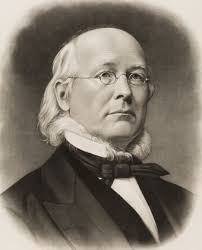
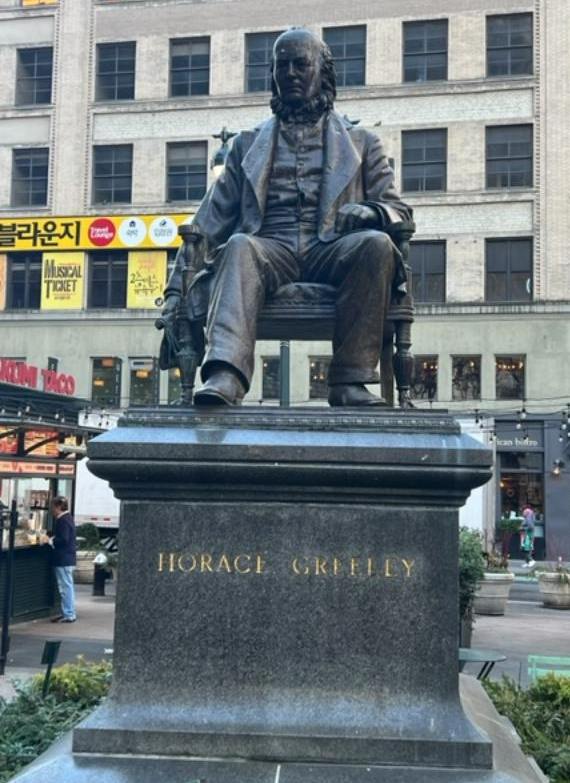
In the middle of this former shopping district and just south of Herald Square is Greeley Square named after Horace Greeley, the editor of the New York Tribune. The square was acquired by New York City in 1846 and turned into the park. The statue that dominates the southern end of the park was designed by sculptor Alexander Doyle in 1890 (NYCParks.org).
Greeley Square was named after Horace Greeley, who published the first issue of The New Yorker magazine and established the New York Tribune. He was also a member of the Liberal Republican Party where he was a congressman and ran for President of the United States after the Civil War.
Publisher and Politician Horace Greeley famous for his quote “Go West, young man, Go West”
The Horace Greeley statue is located in the park just south of Herald Square in Greeley Square.
The statue was created by artist Alexander Doyle. Alexander Doyle was an American born artist who studied in Italy with several artists. He is best known for his marbles and bronze sculptures of famous Americans including many famous Confederate figures that have come under fire recently.
Once you leave Greeley Square and walk south you will be entering what is left of the old Wholesale district where once buyers used to come into these stores to commercially buy goods for their businesses. Slowly all of these businesses as well as most of the Flower District is being gentrified out with new hotels, restaurants and bars replacing the businesses. It seems that most of the district is being rebuilt or renovated or gutted.
The Broadway side of the park opposite the old department stores starts some of the most beautiful architecture in South Midtown. This portion of Broadway until you reach the Battery has the most unique stonework and embellishments on the buildings that show the craftsmanship of another era when companies-built headquarters that were meant to last. These surround the whole square and are always fun to admire.
One building that faces Greeley Square is 1270 Broadway at the corner of West 33rd Street.
1270 Broadway, known once as the Wilson Building, was built between 1912 and 1913 in the class Beaux Arts style. It now serves as an office building. You have to look up from the square to admire its beauty.
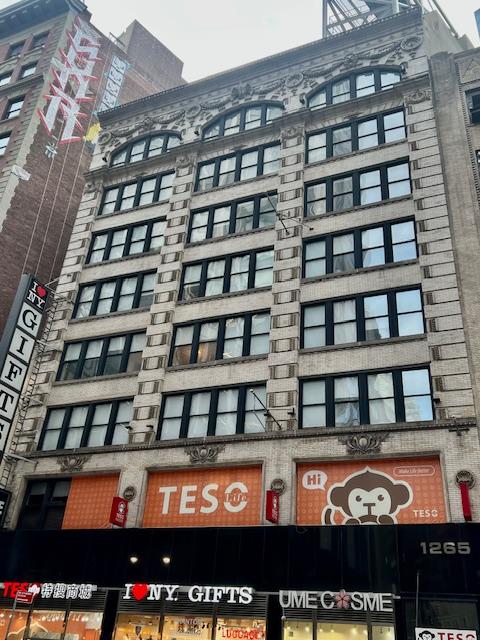
Next to the building is across the street at 1265 Broadway, the former Browning, King & Company building. The building was built in 1910 by developer William R.H. Martin for commercial use. The building was designed by architects Townsend, Steinle & Haskell in brick, stone and terra cotta. The interesting decorative top was designed for the Men’s retail company Browning, King & Company. You have to look up at the detail work and the eagle at the roof of the building (Daytonian).
1265 Broadway-The Browning, King & Company building
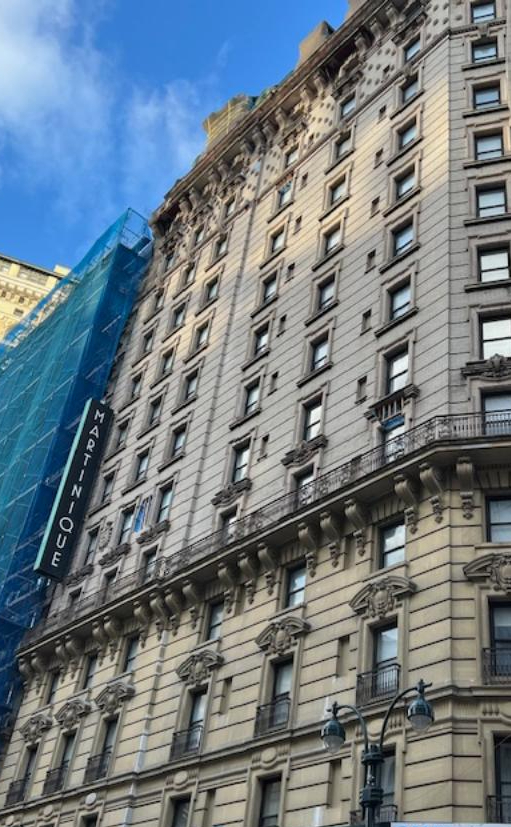
Another building that stands out and sadly boarded up at this time is the former Martinique Hotel at 49 West 32nd Street (1260-1266 Broadway). This was also built by William R. H. Martin in 1898 with the design by architect Henry Janeway Hardenbergh in the French Renaissance style. The hotel had a notorious reputation in the 1970’s and 80’s as a welfare hotel that closed in 1988. It is now a Curio Hotel of Hilton Hotels (Wiki).
I remember this hotel well when I worked for Macy’s in the late 1980’s and all the people yelling and screaming outside the hotel with fire trucks all over the place. The hotel had been nothing but a problem for almost twenty years. It has since been bought by the Hilton Group and is now a historical luxury hotel.
1260 Broadway-49 West 32nd Street-The Martinique Hotel
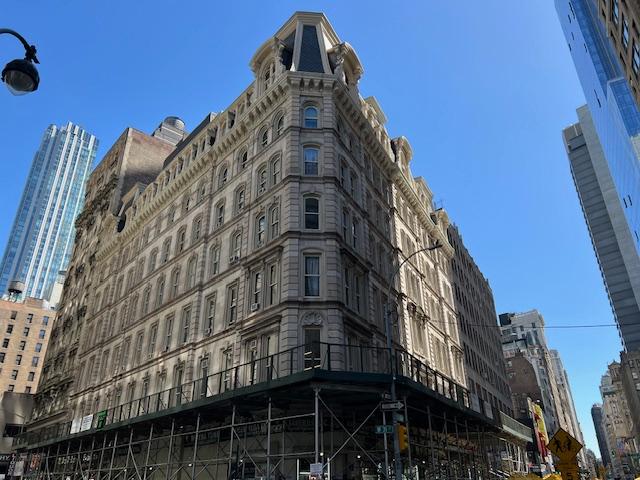
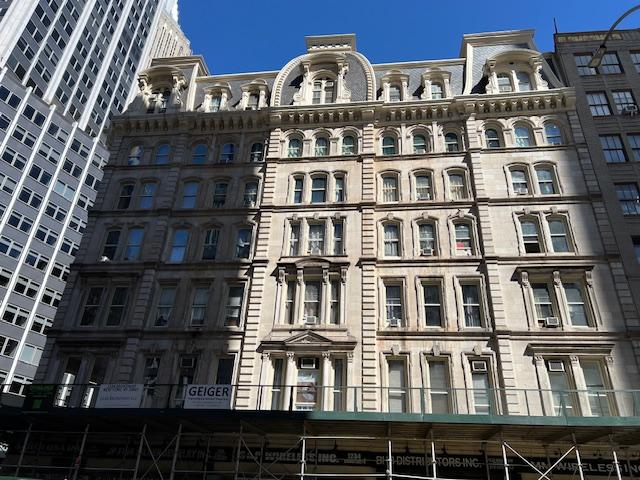
A couple of buildings that stand out when walking down Broadway are 1234 Broadway on the corner of Broadway and West 31st Street, an elegant Victorian building with a standout mansard roof and elaborate details on the roof and windows. I did not realize that it was the Grand Hotel built in 1868 as a residential hotel. The hotel was commissioned by Elias Higgins, a carpet manufacturer and designed by Henry Engelbert. Currently it is being renovated into apartments (Daytonian). It shows how the City keeps morphing over time as this area has become fashionable again.
1234 Broadway in all its elegance, the former Grand Hotel
After rounding the southern part of Greeley Square, I headed back down Sixth Avenue to West 30th Street, the southern border of the neighborhood with the ever-changing NoMAD (North of Madison Square Park). This southern section of South Midtown as I have mentioned in other blogs is being gutted, knocked down and rebuilt into a hip area of the City with trendy hotels, restaurants and stores.
When I made my way back down West 32nd Street past all the construction and then made my way down West 31st Street. There were some interesting buildings in the neighborhood. As I passed the southern parts of the larger buildings and walked down the street between Seventh and Sixth Avenues, I had to stop when I saw the beauty of St. Francis of Assisi Church at 135 West 31st Street. The building was so elegant and decorative with its interesting architecture and art details.
St. Francis of Assisi Church at 135 West 31st Street (Church Photo)
The church has an extremely interesting history and has been subject to the changes of the neighborhood. The parish was founded in New York City in 1844 and the church found that it was outgrowing it’s building. In 1890, the parish started plans for a new church. The church was designed by architect Henry Erhardt, and it was designed in the Gothic Revival style and was completed in 1892 (Wiki).
What I had not realized that this was the parish of Father Mychal Judge who was the Fire Chaplain for the FDNY. He had rushed down to the site on 9/11 and had been giving last rights to a victim when he was hit by debris and killed instantly. He had sacrificed so much that day to the men and women of New York City (Wiki).
FDNY Chaplain Mychal Judge the way he should be remembered (Wiki)
Next to the stairs leading to the church was a spooky and very realistic statute of someone who looks like they are begging. The work is entitled “When I was hungry” by artist Timothy P. Schmalz.
Artist Timothy P. Schmalz is a Canadian born artist and is known for his large-scale works. His work is considered spiritual, and the artist says that “he is devoted to creating art that glorifies Christ” and that an artist “needs an epic subject to create epic art” (Artist Bio). The artist attended the Ontario College of Art.
Timothy P. Schmalz YouTube video
On my way back from Sixth Avenue, I stopped at 4 Boys 99Cent Pizza at 252 West 31st Street for a slice of pizza (see my review on TripAdvisor). The pizza here is very good and made a nice snack to warm me up as I continued to walk down the street.
The pizza at 4 Boys 99Cent Pizza at 252 West 31st Street is very good
I made my way back done West 31st Street admiring the architecture of the Moynihan Train Hall and looking at the detailed work done on the building. They really brought this building back to life making it look like it had when it had opened.
West 30th Street takes you more in the heart of what is left of the Garment District with the last of the small furrier shops when this used to be the Fur District forty or fifty years ago. The Fur District still has about a dozen stores scattered between West 30th and 29th Streets just off Seventh Avenue between Seventh and Eighth Avenues. The fact that women are not wearing fur the way they did fifty or sixty years ago, and rising rents are pushing a lot of these businesses out of the area.
I passed this interesting piece of street art on the corner of West 30th Street and Eighth Avenue
(Totem art was the artist and I could not find anything on them)
There are several beautiful and interesting buildings as you walk down West 30th Street. Another elegant church is St. John’s the Baptist Roman Catholic Church at 213 West 30th Street. The congregation started in Manhattan in 1840 and had a rough start in its history. The current church was built between 1871 and 1872 in the French Gothic style and was designed by architect Napoleon LeBrun. Mr. LeBrun is noted for designing many churches in New York City at the time (Wiki).
St. John’s the Baptist Roman Catholic Church at 213 West 30th Street at night.
The grounds of the church during the Spring of 2024.
The beauty of the church over the Summer of 2024
The summer foliage in 2024
The entrance to the church in the Summer of 2024
The Garment District Church during Christmas 2025 decorated both inside and outside.
The church at Christmas
The church at Christmas time
Greeley Square at Christmas in 2026
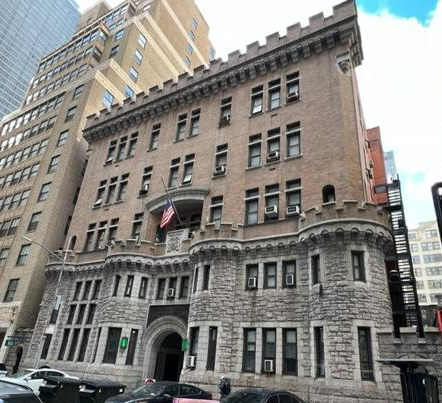
Another fascinating building that is part of the street fabric is the former 23rd Precinct Building at 138 West 30th Street. It really looks like an old police station. The precinct building was built in 1907-1908 and designed by architect R. Thomas Short of Harde & Short. The area was once known as the ‘Tenderloin’ and was one of the most dangerous neighborhoods in the City. It is now being used as the Traffic Control Division of the NYPD (Wiki).
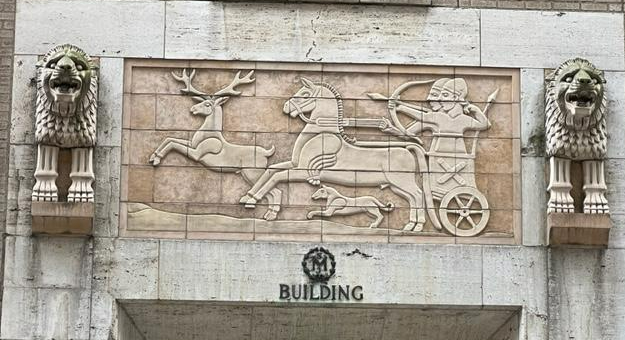
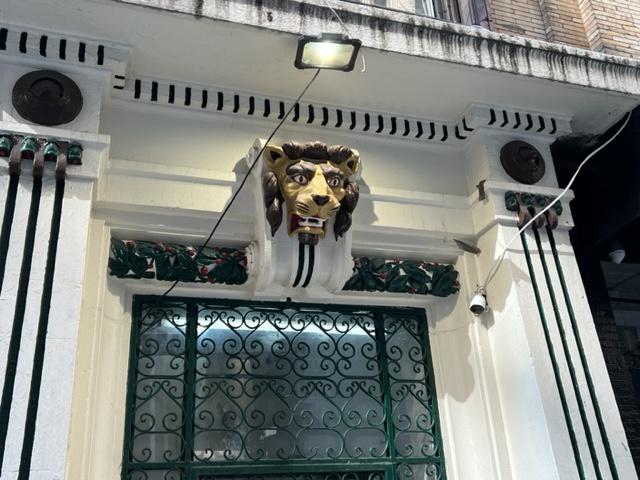
Another building right down the block is ‘The Cass Gilbert” building at 130 West 30th Street. Originally called the S.J.M. Building for fur trader Samuel J. Manne, the building had been designed by architect Cass Gilbert and was built in 1928. The building’s decorations include friezes of animal reliefs and winged beasts at the entrance of the building. It had been originally built as offices and showrooms (Wiki).
“The Cass Gilbert” building at 130 West 30th Street
As you walk back to Ninth Avenue, you will notice how much more residential that blocks are between Eighth and Ninth Avenues along both West 30th and West 29th Streets. This is where the last of the small intimate brownstones and low-level apartment houses still exist.
This area had become very gentrified over the last twenty years, and I would watch the renovations happening especially on the block of West 29th Street, where all the brownstones lining the park that is part of the Penn Apartments. It is a colorful line of buildings facing the park.
Most of the block has non-descript buildings and a slew of smaller hotels. In a few years, I predict that most of these blocks will be knocked down to build new office high rises and leave most of the Garment District behind. There are still a few furriers closer to Seventh Avenue left, holding guard for those who still enjoy mink and ermine coats. It is a thrill to see all the high-quality coats and hats that are still popular amongst customers who still appreciate this type of clothing.
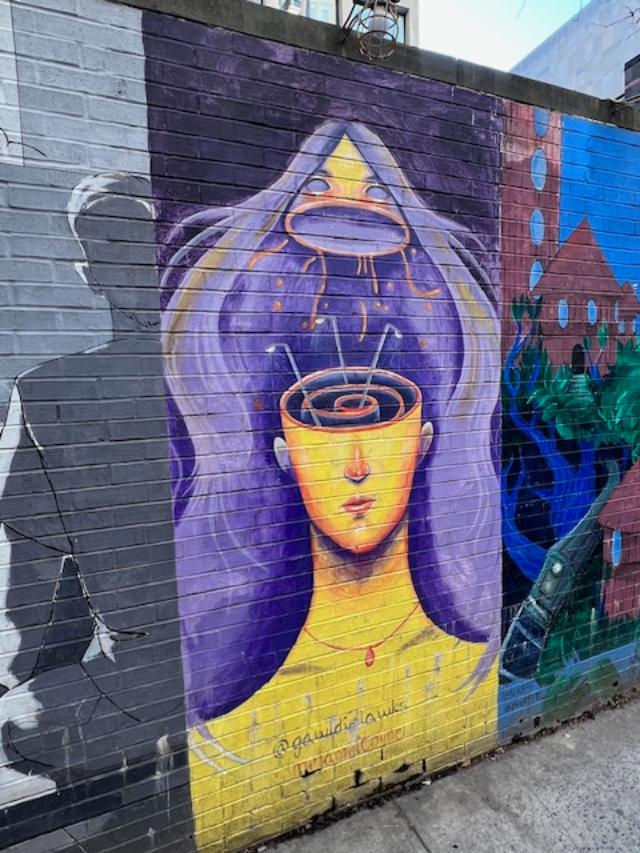
The Fashion Institute of Technology had some interesting paintings on the back part of the campus that have disappeared with the new construction of the campus. Still the students do an interesting job decorating the walls around the building.
The interesting paintings at FIT
The paintings around the back part of The Fashion Institute of Technology,
The creativity of the FIT students
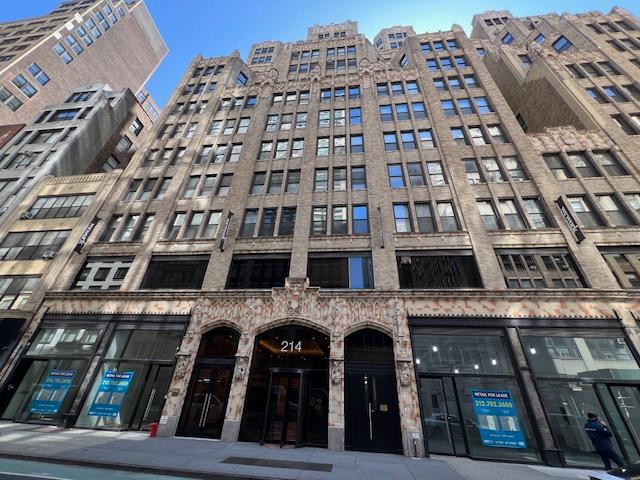
One building does stick out and that is located at 214 West 29th Street. This unusual building was built in 1925 as an office building and now serves as a We Work office space. The unusual decorations at the entrance include strange statues of grinning males (or could be females as i could not get close enough without the doorman looking at me).
I sat down and relaxed in Greeley Square and watched as the few tourists sat down or were taking pictures of Macy’s and Herald Square just above the park. On the other side of the square is Koreatown (please see my blog on that neighborhood) and there is always a lot of bustles on that side of the park with its slew of great restaurants and now traffic due to the opening of the Martinique Hotel again after another renovation.
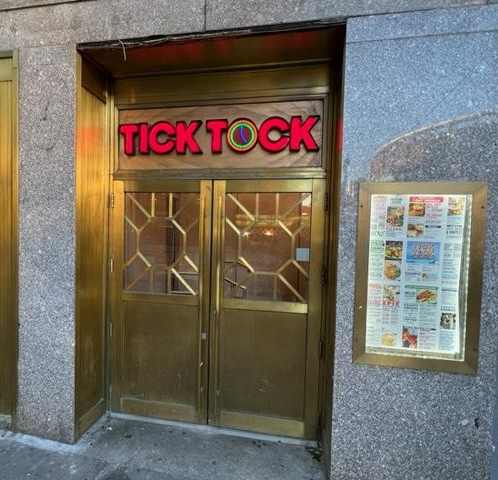
There are two wonderful restaurants at the Hotel New Yorker one of them is the Tick Tock Diner at 481 Eighth Avenue
That evening I finally made a trip inside the Hotel New Yorker inside of using the hotel as a starting point for my walks in this neighborhood. I ate at the Tick Tock Diner, the corner restaurant of the hotel at Ninth Avenue and West 34th Street (see my review on TripAdvisor). This busy deli is part of the hotel so you can see what the lobby looks like as well and see the other restaurants in the hotel.
I was starved and ordered a Turkey Club Sandwich with fries ($16.95) and a Pepsi. The food at Tick Tock is really good but pricey (see review on TripAdvisor). The club sandwich was really good, and the sandwich was layered with freshly roasted turkey and fresh lettuce and tomato. The portion size was very generous, and I enjoyed the meal. I even saved room for a piece of Apple Pie A la Mode ($9.95), which the waitress said was homemade at the restaurant but tasted more frozen and baked there.
The turkey club was delicious
The restaurant was still a nice experience and a great way to end the day. What we are seeing now in the Lower Garment District is a neighborhood is total transition and in the next ten years will probably mirror the changes that are going on in the Hudson Yards. This will be the lower extension of Midtown and with the new train hall a new hub of the City.
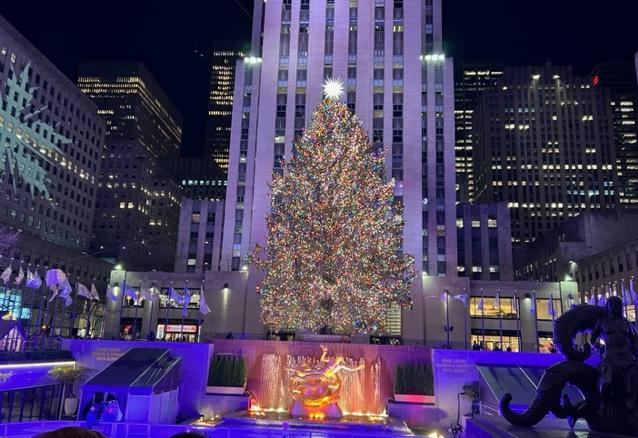
After all the running around of the holiday season (and I ran from one part of the state to another), I finally got back into New York City to resume my walk of the Garment District. With a new variant spreading around the City, you would think the Manhattan would be quiet but that did not stop the tourists from coming to the museums and seeing the Rockefeller Center Christmas tree that was still up into the first week of January. It was business as usual just more people wearing masks outside.
The Rockefeller Center Christmas tree was still packing them in after Christmas was over
Manhattan is resilient when it comes time for the pandemic. More restaurants, stores and businesses have opened up and like everyone else, you wear your mask to stay safe. I don’t mind showing my ID and my vaccination card if it means I can still enjoy doing the things I want to do, stay safe and support New York City businesses that desperately need the money.
I have to say one thing, everyone from stores to streets took down their Christmas decorations in record time. When I was in the City at the MoMA for a “The Contender’s Night” movie, I saw department store display windows being changed, the decorations outside Cartier being taken down on Fifth Avenue and most outdoor decorations gone even before the Epiphany. I thought that was strange but I guess it is time to move to Valentine’s Day and to Chinese New Year. Hope fully things will get better as it gets warmer in three months.
When I started my walk of the Avenues of the Garment District, some streets were busier than others. The core of the Garment District is still so quiet with most of the manufacturing that still goes on in the area shut down and even some of the hotels that have now been built in the area had a lack of guests. When I moved to the side streets in the afternoon, talk about no people and this is in the afternoon.
The thing about this part of Manhattan is that these buildings were built in post-war years and replaced most of the turn of the century buildings that I saw when you walk below 34th Street. These were built for the growing clothing businesses for manufacturing and showrooms which are now being refitted for offices of Tech and Advertising firms with most of the manufacturing being zoned out of the area during the Bloomberg Administration.
Even so some of these buildings have been torn down for new office and apartment buildings that are changing the whole Times Square/Garment District area. It is more of an extension of Midtown stretching down to 34th Street and then the historic older Midtown section begins with NoMAD (North of Madison Square Park) and the Flatiron District. Still here and there tucked into corner of the streets and avenues, there are architectural gems and interesting artwork.
Another thing that the Garment District is known for is the bevy of reasonable restaurants that cater to the garment and office workers in the area. This has really been affected by COVID and several have closed for business, while others have finally reopened from their months of slumber. It is nice to see these businesses reopen and bring vibrance back to the area again.
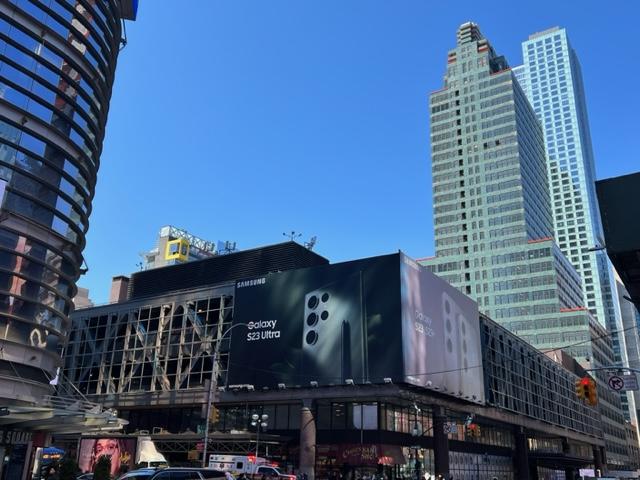
I started my walk on Eighth Avenue exiting the Port Authority onto a crowded street with cars and cabs all over the place. For all the problems with COVID, New York City still seems very alive to me. From walking down Broadway to visiting the Christmas Tree in Rockefeller Center, there are tourists all over the place.
The Port Authority Bus Terminal is the main artery for people from New Jersey and Pennsylvania at 625 Eighth Avenue
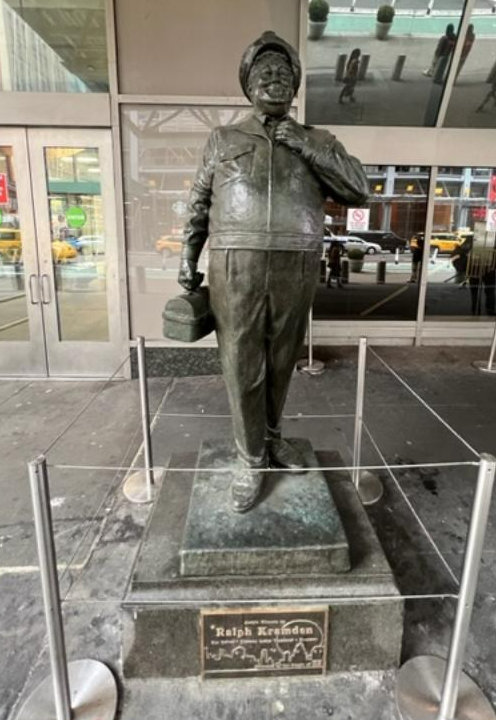
As I was exiting the building to West 40th Street, I took a long look at the Ralph Kramden statute that sits just outside the Port Authority. I passed this sculpture many times over the years but when you really stop and admire it, you can see the detail work of the statute. The statue was dedicated in August of 2000 and was a gift from TV Land to the City of New York. It was thought at the time this would be the perfect spot as the character was a bus driver (CBS News 2000).
The “TV Land” sculpture of Jackie Gleason as ‘Ralph Kramden’ by artist Lawrence Nowland
Lawrence Nowland is an American born artist from Philadelphia, PA and was a graduate of Millersville University in Pennsylvania and did his graduate work at the New York Academy of Art School of Figurative Art and was known as a Figurative artist.
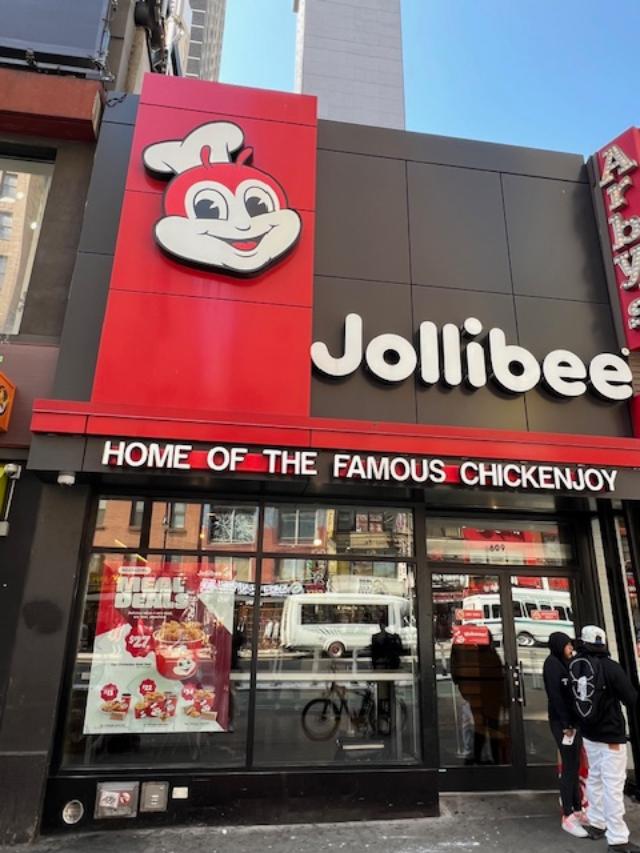
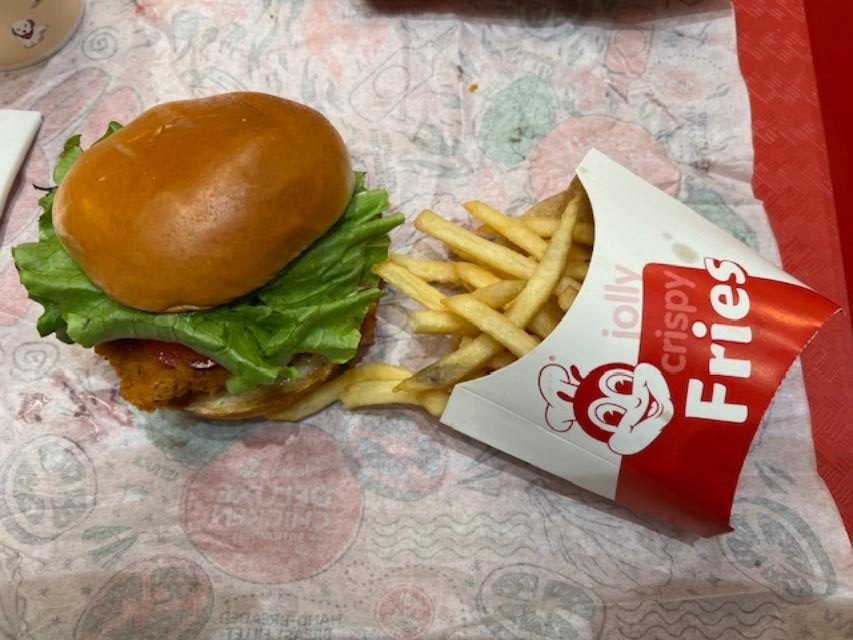
Walking down the block from the Port Authority, you will find one of the only branches of the Philippine based Jollibee fast food restaurant at 609 Eighth Avenue, one of five in the tri-state area. You can hooked on their Fried Chicken sandwiches and their peach/mango pie. The place has been crowded since its opening and made one of the quickest comebacks after everything opened up last June. I try to stop in every once in a while for lunch or a snack.
The chicken sandwiches are excellent here and the peach/mango pie are excellent
The food is very high quality and the service is very nice
Walking down Eighth Avenue is a little gloomy during the week since COVID hit. This used to be such a bustling area with the manufacturers and showrooms in full swing. Now most of the streets are quiet from the offices being closed down. I can see how it is affecting the small clothing and fabric shops that still dot the side streets. Even with Fashion Institute of Technology reopening, it is still quiet.
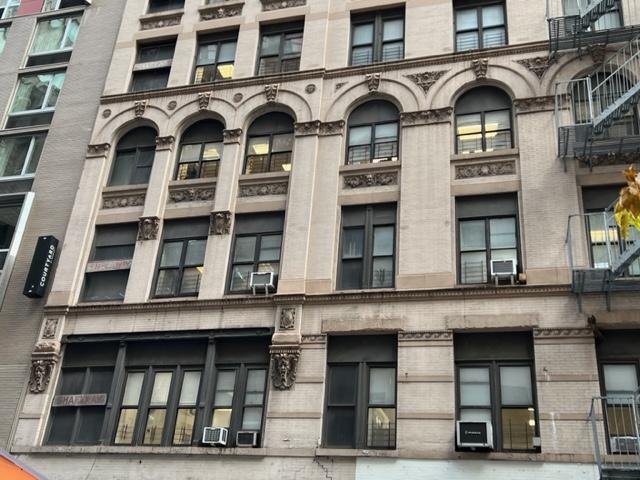
Although not architecturally exciting, there are still a few gems located in the corners of the block. There are many small buildings in the neighborhood that I have passed for years on my way to work at Macy’s and I never really looked at them closely. You might miss them if you don’t look up and look at the details.
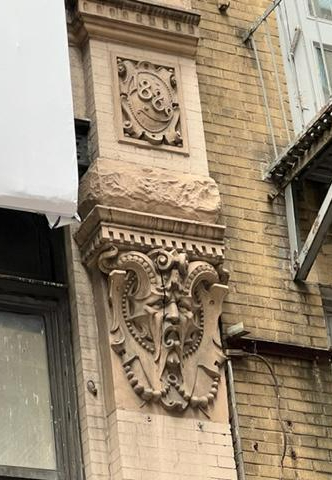
The first one is 301 West 37th Street which has the most unusual carvings of gargoyles all over the sides and inside the window ledges. It gives the building almost a creepy, demonist look to it. The building was built in 1915 and is currently going under a gut renovation.
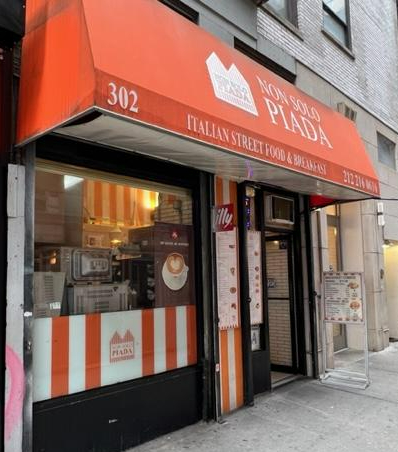
Just off Eighth Avenue is Non Solo Piada, a wonderful little Italian restaurant that specializes in Roman street food. Every time I have eaten here the food is terrific. The restaurant specializes in a type of calzone/turnover called a “Cassoni” and crisp pizzas called a “Piadizze”. I have tried the Cassoni Napolento filled with sausage and potatoes in a pastry crust and the Piadizze Margherita with fresh tomato sauce and mozzarella. The food and service are excellent and so reasonable.
Non Solo Piada at 302 West 37th Street (Closed June 2025)
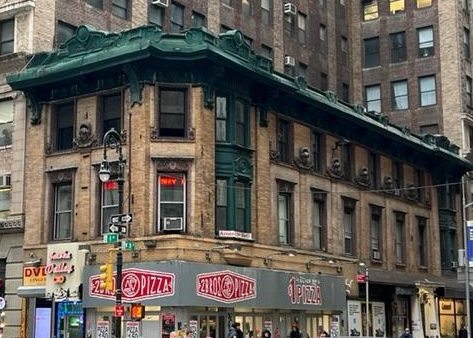
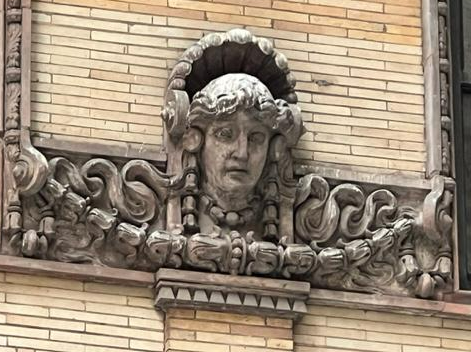
The other building that is grand in detail but has been sadly neglected over the years is 557 Eighth Avenue. The Beaux-arts’ designed building was built in 1903 by architect Emery Roth who was part of Stein, Cohen & Roth. It was run as a residential hotel for most of its history and now houses commercial space in the upper floors and fast-food restaurants on the bottom (DaytonianinManhattan.blogspot/Loopnet.com).
You have to really look up or you will miss the beauty of the building with its detailed carvings around the windows and the portraits of women carved between the windows.
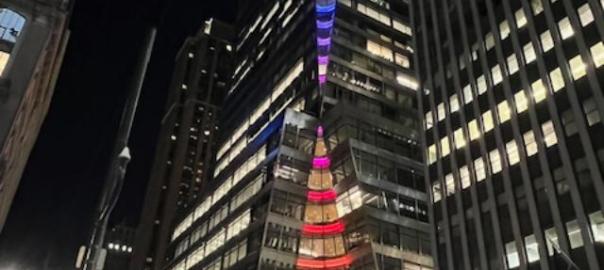
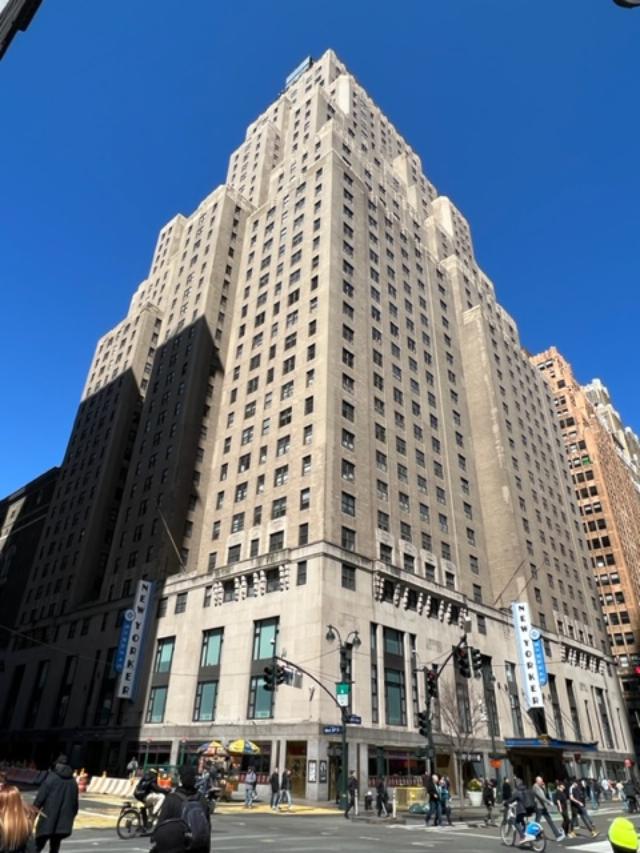
At the end of the block stands the Hotel New Yorker like a Grande Dame guarding the Garment District. The Hotel New Yorker on the corner of Eighth Avenue and West 34th Street at 481 Eighth Avenue. The hotel was designed by architects Sugarman and Berger and designed in the Art Deco style. The hotel was constructed in 1928 and opened in 1930. The hotel now managed by Wyndam Hotels put the hotel through a full renovation in 2006 to bring it back to its glory years now reflected the resurgence of the neighborhood (Hotel New Yorker History website/Wiki).
This is where I am noticing that the neighborhood is changing during COVID. They are knocking down a lot of the West 34th corridor and rebuilding it especially around Madison Square Garden. This area really needed it. When I was working at Macy’s, this was not the safest area to walk around in. This was an area of cut-rate stores and depressing office buildings. It still amazes me how the City reinvents itself and the area is now a desirable for office workers and residential living. Being right near the subways, LIRR and shopping, it is showing the changes in the old Midtown district.
Walking back up Eighth Avenue, the architecture is mostly older loft buildings that are still used for light manufacturing and showrooms but on this avenue is a stretch of great restaurants that cater to the workers that are so reasonable.
Grilled Chicken at 230 West 36th Street is a great little hole in the wall that caters to many of the Garment workers and the delivery guys speeding all over the City with other restaurants orders. The food is plentiful and reasonable. They make the best Fried Shrimp and rice and their Banh Ma sandwiches with Fried Shrimp and Grilled Pork are just excellent. This places really surprises you when you dine here.
Grilled Chicken House at 230 West 36th Street (Closed December 2022)
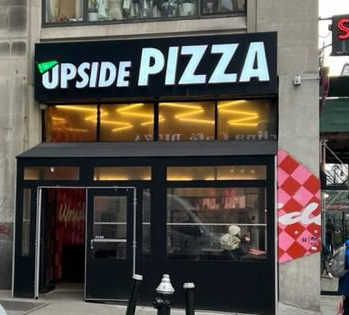
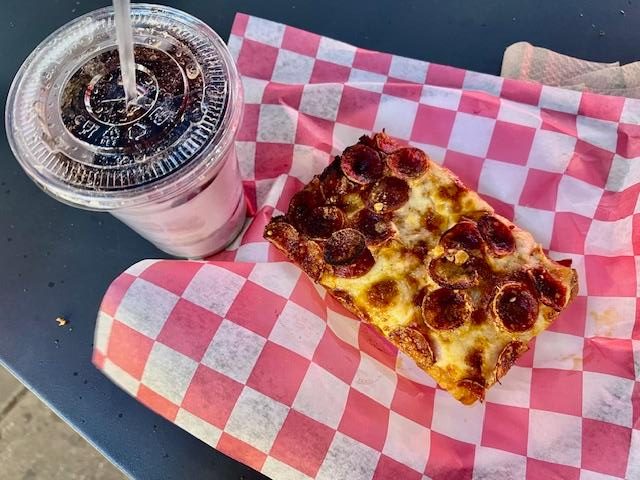
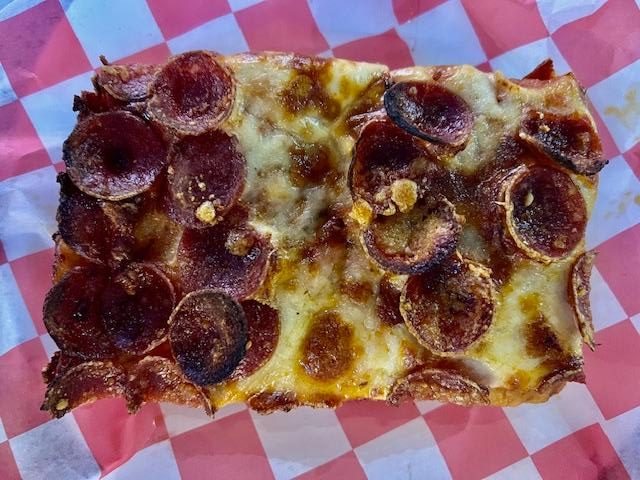
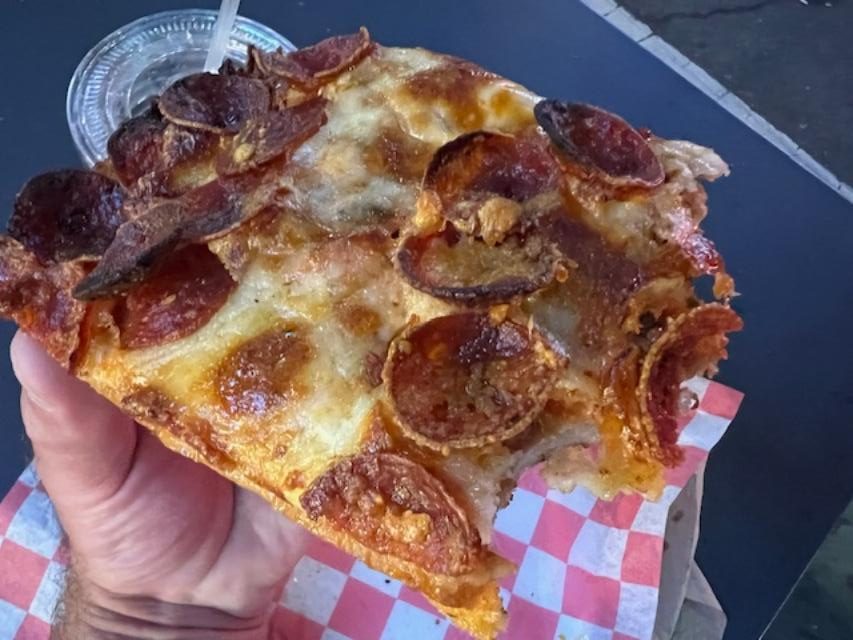
Another great place to eat is the original Upside Pizza at 598 Eighth Avenue. On many a cold night I have been warmed up by their Pepperoni Detroit pan pizza and their regular cheese slices are so rich and flavorful. They really loaded on the cheese and the pepperoni on to their slices and then bake them to a gooey delight.
COVID has really changed this part of Eighth Avenue around where the New York Times building is located and Times Square since the shutdown. Many restaurants and stores have closed but slowly new ones are opening or reopening. Traffic in this area is pretty consistent so businesses change hands a lot now.
As the movie theaters slowly open again and Broadway is opened on a limited basis show by show, the area is beginning to get busy again but not to the levels pre-Pandemic. During the week when I am walking these blocks, I see a difference in the number of tourists and residents walking around the Port Authority area.
Seventh Avenue is still always busy. This area has changed a lot in the twenty-five years since I worked in the area. When I worked on 34th Street, the buildings were filled with showrooms and designer headquarters. It is a more diverse group of businesses today and I swear much better restaurants and stores. It has gotten more upscale.
Sitting at the top of Seventh Avenue like a guardian is the Times Square Building at 1 Times Square or 1475 Broadway. This building is known to many New Year’s Eve revelers as where the ball drops.
One building that stands tall in Times Square is One Times Square known as 1475 Broadway. Once the home headquarters for the New York Times was opened in 1904. The building was designed by architect Cyrus L.W. Eidlitz. The original façade was of stone and terra cotta but this has been mostly stripped and is now home for mostly advertising. The ball still drops from the top of the building every New Year (Wiki).
It is amazing to see the radical changes in this area of Manhattan since I started to work there in 1988. It is almost night and day in its appearance of not just the buildings but the parks and businesses that line Seventh Avenue. When I had worked there twenty-five years ago, you really did not choose to walk on Seventh Avenue after 8:00pm when most office workers went home. It was not the safest or well-lit avenue especially below Times Square. How thirty years and a whole development of the area change things.
When I walked down Seventh Avenue today, it is like walking through a haunted house that is less scary. I remember my years as a young executive in the City trying to maneuver around the area and sometimes feeling safer walking down the old 42nd Street with the porn theaters and head shops. At least I knew there were police milling around. Today, there has been such an improvement in the cleanliness of the area and the more expensive stores and restaurants that has spread to Broadway as well but even this is being upended by COVID. It will be interesting to see how this plays out.
Again, most of the buildings in this area were built after the WWII for the Garment industry and have that loft-box look to them but like Eighth Avenue, there are still a few standouts that have survived the wrecking ball or renovation. One being the elegant 488 Seventh Avenue.
488 Seventh Avenue was built as the Hotel York in 1903 by brothers James and David Todd, who had an interest in building luxury hotels. They commissioned architect Harry B. Mulliken, who had designed the Hotel Aberdeen on West 32nd Street for the brothers, with his new partner, Edger J. Moeller, who formed the firm of Mulliken & Moeller. The York Hotel was their first commission together. The hotel was designed in the Beaux-Arts style with elaborate carved decorations (Daytonian in Manhattan).
The Hotel York was a residential and transient for most of its existence attracting the theater crowd when 34th Street was the Theater District of the time. As this moved uptown, the hotel was bought in 1986 and was renovated for residential and commercial use (Dayton in Manhattan). The Tokian Group now owns the building and it is luxury apartments.
Towards the edge of the neighborhood is one of my favorite deli’s and known to thousands of Macy’s Alumni, Al’s Deli at 458 Seventh Avenue. I have been eating at Al’s Deli since 1988 and only recently in the last two years since exploring this section of Manhattan again have come back.
Al’s Deli at 458 Seventh Avenue is a Macy’s favorite
It still makes some of the best hamburgers and cheeseburgers in the City and their breakfast sandwiches are still oversized and delicious. Their Bacon, Egg and Cheese on a hoagie is still something that warms and fills me up in the mornings. Don’t miss their Chicken Parmesan Sandwich as well.
Across the street from Al’s Deli on the corner of Seventh Avenue and West 34th Street is the Grande Dame of the department store industry and my home away from home for seven years in the beginning of my career, R.H. Macy at 151 West 34th Street. When I started working at the store in 1988 it was funny but the locker rooms and cafeteria featured in the movie “Miracle on 34th Street” had not changed one bit, at least as I remembered it.
Macy’s New York on the Seventh Avenue side of the store in Art Deco Style (Wiki)
The Seventh Avenue side of the building was added in 1931 making Macy’s the world’s largest store. The building was designed by architect Robert D. Kohn in the Art Deco style that was popular in the day (Wiki). The entrance is still iconic to shopping enthusiasts who are looking for the perfect gift.
Walking up Seventh Avenue, also known as the Fashion Mile to many in the retail industry, is the Fashion Walk of Fame plaques that line the avenue from 35th Street above Macy’s up to 42nd Street. You have to look at the sidewalk to see some 30 plaques honoring some America’s most celebrated designers including Halston, Ralph Lauren and Calvin Klein.
The honor was started by the Fashion Center Business Improvement District and these are chosen by a group of fashion panelist each year since 2000 (The Vintage Traveler.Wordpress.com).
I stopped at Zeppola Bakery at 499 Seventh Avenue for a quick snack. Everything looks so inviting from the fluffy doughnuts to the stuffed sandwiches. The bakery for all its visuals is on the expensive side and a small heart doughnut filled with raspberry jelly cost $3.95. Delicious but a little pricey.
When arriving at the corner of West 39th Street and Seventh Avenue in front of the Chase Bank at 551 Seventh Avenue is the very iconic sculpture of the Needle Threading the Button that is part of the Welcome Booth on Seventh Avenue.
The Button and Needle Sculpture is actually part of the information booth (NYPL.org)-the old one
The new Garment District sculpture in 2023-the new one
According to the New York Public Library, the sculpture of the needle and button is actually part of the Fashion Center Information Kiosk that has been closed for a few years. The sculpture was designed by Pentagram Architectural Services in 1996 and was inspired by artist Claes Oldenburg’s sculptures. The district is currently looking into replacing this kiosk (New York Public Library Research Department).
Artist Claes Oldenburg was a Swedish born American artist. He was born in Stockholm and moved to the United States with his parents. His father was a Swedish Diplomat who was stationed in Chicago and he studied art at Yale University and The School of the Art Institute of Chicago. He was known for his large art installments. Even though this was not designed by him, the work was inspired by his sculptures (Wiki).
The other sculpture next to the kiosk is of a garment employee working on a sewing machine. This sculpture by artist Judith Weller was of her father who worked in the Garment Industry entitled “Garment Worker”. The sculpture was created by the artist in honor of her father, a machinist in the garment trade and to Jewish garment workers who were the backbone of the community. It was created in 1984-85 for the Public Art Fund (Public Art Fund).
The “Garment Worker” by artist Judith Weller
The Mission of the Public Art fund that was funded in 1977, is to bring dynamic contemporary art to a broad audience in New York City and offer powerful public experiences in art (Public Art Fund).
Artist Judith Weller is an Israel born New York artist who is known for her genre of work dedicated to the laboring people all over the United States (Ask Art.com).
Crossing over to Broadway from the busy 42nd Street Mall I was greeted by the recently reopened Knickerbocker Hotel at 6 Times Square. For most of the recent history of this property it had been falling apart and was offices in the times I worked in Manhattan.
The Knickerbocker Hotel was built by John Jacob Astor IV and it opened in 1906. The hotel was designed by the firm of Marvin & Davis in the Beaux-Arts style. The outside of the hotel was built in red brick with terra cotta details. The hotel was fully renovated in 2015 (Wiki).
In front of the Chase Bank at 1411 Broadway is Golda Meir Square with an open plaza. Tucked into a garden almost hidden from view by the plants is a bust of Golda Meir by artist Beatrice Goldfine. It looked like from old pictures the original pedestal is now beneath the planter. It was unveiled in 1984 (Wiki).
The bust of Golda Meir by artist Beatrice Goldfine in Golda Meir Square is now hidden in a garden.
Artist Beatrice Goldfine is an American artist born in Philadelphia and studied at the Barnes Foundation and the Pennsylvania Institute of Fine Arts.
On the way back towards Broadway I came across an interesting set of artwork by artist Santi Flores that lined the Broadway Mall. These interesting works reached for the sky. These interesting little sculptures looked like they were raising their hands for attention (“Here” ended October 22nd, 2022).
The Broadway pop-up of Artist Santi Flores display “Here”
Artist Santi Flores at the street exhibition “Here”
Artist Santi Flores is a Spanish artist who is also a musician and visual artist. His creativity shows no limits (Artist Bio).
In 2024, the new exhibition was called “Cracked Ice” by
“Cracked Ice” by artist Del Geist
Del Geist has integrated art into the public realm for more than 40 years. As an artist, using the natural sciences as a palette, he has developed major site-specific artworks worldwide (Del Geist website)
Walking down Broadway most of the buildings are relatively new or been built after WWII but two really do stand out. One being the Haier Building at 1356 Broadway. The Haier Building was built by architects from York & Sawyer in the Neo-Classical Revival style. The building was completed in 1924 and was the headquarters for Greenwich Savings Bank. The building is built with limestone and polished granite and features Roman Corinthian Columns (Wiki).
1352 Broadway-The Haier Building (Former Greenwich Savings Bank-Wiki)
The Haier Building stretches from Broadway to Sixth Avenue and is impressive on both sides of the building. The building was used by Greenwich Savings Bank from 1924 until 1981 when the bank went out of business (Wiki).
The other impressive building on this side of Broadway is the Macy’s New York Broadway building facing Herald Square. The store was built between 1901-1902 by architects Theodore de Lemos and A. W. Cordes of the firm of De Lemos & Cordes in the Palladian style a form of classic Roman and Greek temple style (Wiki).
Macy’s New York at 151 West 34th Street on the Broadway side of the building
Herald Square has dramatically improved since I worked at Macy’s. When I worked at Macy’s in the early 1990’s, Herald and Greeley Squares were places to avoid until about 1994 when the parks were renovated and new plantings and French metal café tables were added. Now it is hard at lunch time to find a table.
In the process of the renovations, the City also restored the statues dedicated to James Gordon Bennett and Horace Greeley.
The statue dedicated to James Gordon Bennett and his son James Gordon Bennett II
Herald Square Park
The statue is to Minerva, the Goddess of Wisdom and Invention and two blacksmiths who flank a bell that once topped the Herald Building where the New York Herald, which was founded by James Gordon Bennett in 1835. The statue was dedicated in the park in 1895 (NYCParks.org).
Antonin Jean Carles was born in France and was a student of the Ecole des Beaux-Arts de Toulouse. He was known for his monument sculptures.
Walking back up Broadway, it started to get colder as the afternoon went on but I came across an unusual sculpture that had just been put up entitled “Passage” by artist Serge Maheu. This interesting piece of street art you could actually walk through and as you walked through it, the colors changed.
“Passages” by Artist Serge Maheu (Artist’s bio)
It was like walking through a tunnel of hula hoops. The artist was going for a “transformative, playful experience” during an otherwise gloomy time in winter (Patch.com).
According to the artist, “Passage” explores the emotional connections between light and sound (Serge Maheu bio).
Artist Serge Maheu is from Quebec, Canada and graduated with a degree in Computer Engineer, he has taken a path down the creative route to become a multimedia director. He specializes in film, animation, photography, sound and music (Serge Maheu bio).
By the time I reached Bryant Park, the sun started to come out again and it cleared up slightly. The park was filled with people ice skating or eating. The tables were mostly filled on this cool day which I was surprised at considering the weather. It does not take long to see how the changes in the park have led to change in the building here.
Standing guard at the edge of the neighborhood is the new Bank of America building. This innovative building was designed by architect Rick Cook from the firm of Cookfox Adamson Associates. The building was designed with a clear ‘Curtin wall’ and several diagonal planes for wind resistance. The building was also awarded a LEED (Leadership in Energy and Environmental Design) for sustainable ‘green’ architecture (Wiki/Durst website).
Bryant Park is another interesting park. In 1988, you would never go into this park unless you wanted drugs or wanted to get mugged. The park was surrounded by bushes and it was in extremely bad shape. When the New York Public Library was going through a renovation, money was allocated to fix the park. It is night and day from when I passed the park in the early 1990’s. Talk about a difference that twenty-five years makes.
Bryant Park in all its glory
The original park opened in 1870 as Reservoir Square after the Croton Distributing Reservoir that was once located on the eastern side of the park. In 1884, the park was renamed for New York Evening Post Editor William Cullan Bryant (Wiki).
The park has suffered from neglect in the past including times in the 1930’s and the 1960’s and 70’s and had been through past renovations but in 1980 the Bryant Park Restoration Group was founded and took over park services. Since then, the park was fully renovated in 1992 and continues to improve with continued maintenance. Now there are events like ‘Movies in the Park’ and ‘Winter Village’ with a skating rink, rows of boutiques and the Christmas tree (Wiki).
Bryant Park in Christmas past
Lining the park on Sixth Avenue side of the park is a series of interesting statuary that I think most people miss when walking by the park. The first one is the statue called the “Andrada Monument” or also known as the statue of Jose Bonifacio de Andrada e Silva, the Brazilian statesman. Every September, the Consulate General of Brazil commemorates Andrada and Brazilian Independence Day by hosting a small ceremony at the monument (Wiki).
The statue was created by artist Jose Otavio Correia Lima. The artist was born in Brazil and attended the National School of Fine Arts in Rio de Janeiro. He taught and ran the college until 1930 (Wiki).
Jose Bonifacio de Andrada was a Brazilian Statesman who was also a college professor and naturalist who was one of the most important mentors of Brazilian independence (Wiki/Britannica).
The other statue on the opposite side of the park is of Benito Juarez, the former President of Mexico and its first indigenous President serving twice. The statue was created by artist Moises Cabrea Orozco and is the first Mexican to be commemorated in the park system.
Artist Moises Cabrea Orozco was born in Mexico and studied at the La Esmeralda School of Painting and Sculpture and San Carlos Academy. He is related to social realist painter Jose Clemente Orozco.
Benito Juarez was a lawyer and statesman who served as the President of Mexico twice. He also served on the Mexican Supreme Court.
In between these two statues at the western side of the park as you walk up the steps to enter the park is the Josephine Shaw Lowell Memorial Fountain, one of the most beautiful pieces of art in Bryant Park. This fountain is one of the nicest places to sit by on a sunny warm day and there is not a time that I do not make a wish in the fountain.
Artist Charles A. Platt was born in New York City and studied at the National Academy of Design and the Students Art League. He was known as a landscape designer, artist and architect of the American Renaissance Movement (Wiki).
The fountain was designed by architect Charles A. Platt in granite and bronze and has the most interesting details to it. It is the first major memorial dedicated to a woman in New York City. The fountain was dedicated to activist Josephine Shaw Lowell (Wiki).
Josephine Shaw Lowell was born in Massachusetts and moved to New York with her family in the 1840’s. She was committed to social charities and was named the Commissioner of New York State Board of Charities, the first woman to hold the position. She also founded many charities (Wiki).
This time of the year Bryant Park is taken up by the skating rink and the restaurants that surround it. Most of the Christmas Village was closed and it looked they were going to take it down. The Christmas tree was surprisingly still up and lit and at night makes the park festive.
Across from Bryant Park to its south are a grouping of beautifully designed buildings. On the corner of West 40th Street and Sixth Avenue is 80 West 40th Street, ‘The Bryant Park Studios’. The building was built in 1910 as showrooms for artists. The building was designed in the Beaux-Arts style by architect Charles A. Rich (Daytonian in Manhattan).
Further down Sixth Avenue is where one of the first Chick-fil-A in Manhattan opened at 1000 Sixth Avenue in 2015. I remember the lines and the mob scene when this first came to New York. It was crazy for almost a year.
It was also their largest outlet at the time with three floors. The place had lines wrapped around the block during its first several months until more outlets opened around the City. I hate to say it but for all the controversy about the restaurant, I really do love their chicken sandwiches.
Chick-fil-A at 1000 Sixth Avenue (the first in Manhattan)
The Chick Fil A is really good and the chicken sandwiches are delicious
Their chicken sandwiches are outstanding
Another interesting building that stands out is an old home at 966 Sixth Avenue which is the former J. E. Winterbottom Funeral Home. The business moved in 1885. Before that the post-Civil War house was constructed in the Second Empire style with a Mansard roof. It was once a private home before the business moved in (Daytonian in Manhattan). According to current records, it is going to be Manhattan’s first Sonic restaurant. It will be the first urban Sonic to open outside the one on Staten Island (Patch.com).
At the very edge of the neighborhood on the corner of Sixth Avenue and West 35th Street is the most interesting piece of artwork on a building that once housed the Desigual flagship store. The work is by Spanish artist Okuda San Miguel and entitled “Multicultural Freedom Statue” and was created in 2019. It is a tribute to multiculturalism in New York City (Artist Bio). The store has since closed.
The painting at Sixth Avenue at West 35th Street by artist Okuda San Miguel (painted over December 2022)
Artist Okuda San Miguel was born in Spain and known for his colorful geometric styles in painting. He graduated from the Complutense University of Madrid with a BFA and has shown his work all over the world (Wiki).
The last building I noticed for its beauty was on the corner of Sixth Avenue and West 34th Street, 47 West 34th Street (1378 Broadway or 2 Herald Square) the Marbridge Building. The Marbridge Building was by architects Townsend, Steinle & Haskell in 1909 in the Classical Beaux Arts style and has been used as an office building since its opening (Wiki/Photo/Street).
For dinner on the way back up Sixth Avenue, I ate at the Kyoto Spot Mochinut at 1011 Sixth Avenue. They had the most unusual combination of a Potato Half and Half ($7.95), which was half a hot dog and half a mozzarella stick rolled in rice flour and chopped potatoes and then deep fried and they served it with a spicy type of duck sauce. I also had one of their Ume Mochinut doughnuts which were made out of rice flour but tasted like a funnel cake. It was utterly amazing.
On my second trip exploring the avenues, I had dinner at Main Noodle House at 1011 Sixth Avenue. The food and the service were excellent. I had a traditional eggroll and it was one of the best I have had in a long time. For the entree, I had the Cantonese Wonton Soup ($10.95) with roast pork, wontons and lo mien noodles. It was the perfect meal on a cool winter night. It was a meal within itself.
The dinner was wonderful and it was nice to just relax. I had the window seat so I got to see the world pass by.
The inside of Main Noodle House.
Looking over their extensive menu.
Their Cantonese Roast Meat Wonton Soup with Roast Pork, Wontons and Noodles is a full meal.
The wontons are amazing.
It was late when I finally arrived back at Bryant Park in time to see the Christmas tree in full blaze and hear the music and laughter of the skating rink. Across the street I saw the green and red lights blinking of the new Bank of China building at 1045 Sixth Avenue (or 7 Bryant Park). This building is interesting for its shape and its ongoing light show.
The building was completed in 2016 and was designed by architects Henry N. Cobb and Yvonne Szeto from the firm of Pei Cobb Freed & Partners and it was interesting on why they designed the building in an ‘hourglass’ design. The firm stated that “they wanted to enrich the experience of the park while at the same time make its relationship to the park a clear expression of its identity (Pei Cobb Freed & Partners). The building is the New York home of the Bank of China.
Bank of China Building at 1045 Sixth Avenue (7 Bryant Park)
Being right across the street from the Bryant Park Studios at 80 West 40th Street shows the contrast that this neighborhood is going through now with a combination of the old and the new and showcasing its beauty. These buildings are adding character to an area of Manhattan that was not so nice just twenty years ago.
This part of the Garment District is the reason why we are seeing less of a Garment District but more of a commercial core that surrounds Times Square and promotes how a City can change for the better with a game plan. All around the core of a park that you would not dare set foot in for almost thirty years.
Talk about transformation!
Bryant Park at nighty
This is not the Bryant Park of the past.
Check out my other blogs on the Garment District:
Day Two Hundred and Three: Walking the Borders of the Garment District:
I finally felt well enough to continue my walk around Manhattan. I had not been into New York City in six weeks and had really missed my walking around the island. I had finished exploring the Hell’s Kitchen/Clinton neighborhood before I pulled my back and decided to keep my adventures closer to home (Exploring Downtown Boonton-Day One Hundred and Two). I just was not up to coming into the City.
The Garment District once home to many designers and manufacturers in the New York Fashion Industry is not what it was when my Grandfather was an officer in the Ladies Garment Union back in the 1950’s and 60’s. It is not what it once was with the showrooms that were located there when I worked for Macy’s in the 1990’s. Cost of real estate, rezoning for commercial and residential during the Bloomberg Administration and cost of doing business in the area has shrunk the manufacturing of clothes that this area once prided itself.
Still in the core of the district many manufactures and shops still cater to the business and you will still see button shops, fabric stores and wholesale merchants next to new coffee shops , boutiques and small hotels that now dot the area.
Technically the area can stretch as far down as West 25th Street and around the Fashion Institute of Technology but the area with its real estate cache for names consider this area now ‘Chelsea’ and even east of it what is left of the ‘Flower District’. In the era of COVID, this area is still pretty quiet with manufacturing still shut and the Fashion Institute not yet open for the Fall semester (it has since opened and the area is full of students). I was amazed by the lack of people still not walking around the area.
I started my walk just outside the Port Authority which is on the very edge of the neighborhood and walked out the door and around the building to Ninth Avenue. Even though it was Labor Day, there were not a lot of people walking around the streets. It looked like everyone was either still away, recovering from the recent storm Hurricane Ida that flattened the area with rain and wind or just getting ready for school to start the next day. It seemed like a quiet day in Manhattan.
Pre-COVID the Port Authority between West 42nd to West 41st Streets from Eighth to Ninth Avenues was going through a face-life renovation and the facility started to move out all the older stores and restaurants for higher end takeout places and an art gallery. It looks now that it has been put on hold until people start to return.
The Port Authority Bus Terminal at 625 Eighth Avenue
Since I returned to Manhattan to resume this project last June, the traffic going through the Port Authority has not changed much even though there are more people on the bus. The afternoon I came into the City it was sunny and 66 degrees. More outdoor dining was in play and more people were outside enjoying the weather.
I started my walk exiting the Port Authority at the corner of Eighth Avenue and West 42nd Street, a corner that still needs a lot of work. Pre-COVID this was a bustling area of theaters, shops and restaurants and one of the biggest McDonald’s in the country. Most of it is closed down now and the homeless have taken back over this area. Surprisingly though, it still remains clean a result of the Partnerships established in the mid-1990’s. This area is swept all day long.
This was nice for me as the sidewalks were empty and the streets were quiet and it was nice to just walk around and not be bothered. Being Labor Day, there seemed to be a huge police presence in Times Square just north of the neighborhood so I did my best to blend in.
Ninth Avenue is in the process of change again as many of the old tenement buildings are being knocked down for new condo complexes and office buildings. Still there are many old named businesses in the neighborhood and the Garment District is home to a lot of the restaurants mentioned in my blog, https://diningonashoestringinnyc.wordpress.com/. There are many ‘Mom & Pop’ restaurants and deli’s that are really reasonable and the food is outstanding.
Walking down West 42nd Street from the entrance of the Port Authority down to Ninth Avenue shares the border with the ‘Hell’s Kitchen/Clinton/Midtown West’ neighborhood and even now new restaurants are beginning to open in places that had been shut during the COVID pandemic. The pandemic is still going on but like any other city, New York City is adapting to it and there are many changes going on all over the neighborhood. It has not stopped the spirit of the neighborhood from progressing and moving forward.
What I have always liked about Ninth Avenue near Midtown is the character of the neighborhood. There are still old tenements and brownstones along the Avenue from 42nd Street down into Chelsea. Here and there old restaurant and provision shops sit along side newer delis and retail shops that show the change in the make up of the neighborhood. Still with the rezoning of the area I am not too sure how long this will last.
Ninth Avenue not only offers an array of many interesting ethnic businesses but many reasonable and interesting delis, take-out places and restaurants that won’t break the budget. Many of the dining establishments featured on my DiningonaShoeStringinNYC@Wordpress.com site are found in the Garment District on its borders and streets that will save you money and the food is wonderful.
Starting right at the border of the neighborhood right across the street from the Port Authority is Capizzi Pizza at 547 Ninth Avenue. Their delicious small pizzas are all homemade down to the sausage made for the toppings. When I ate there a few years ago they were noted for their small pepperoni pizza which was excellent. The service was very friendly and very authentic. It can be pricey though but the quality is excellent.
A block down and across the street from the Port Authority is the original Two Brother Pizza at 542 Ninth Avenue. This place has been around for years and has one of the best $1.00 slices of pizza in Manhattan. This is my ‘go to’ place when I need a quick snack and want something substantial. To my knowledge, it is one of the original dollar slice places in the City.
The restaurant is in a rather shady section of the shadow of the Port Authority. During the day it is okay but the later at night you get it does attract some interesting characters especially if you eat outside on one of the cocktail tables. The pizza is really good and is one of the few dollar pizza places where the pizza tastes like something. Most places I find in the City the pizza is just something to fill you up.
Across the street from Two Brothers Pizza and our ‘go to’ place for breakfast during the Christmas holidays was Hell’s Kitchen Deli, a relatively new place to the neighborhood. This is where I ordered Bacon, Egg and Cheese sandwiches. The place is really clean and has a nice selection of snacks and sandwiches.
Hell’s Kitchen Deli at 535 Ninth Avenue has the best breakfast sandwiches
Though most of the housing in this part of the neighborhood is old tenement housing, you can look up from a distance and see some unusual carvings in the buildings. The building at 510-508 Ninth Avenue has some strange faces staring back at you from above. The building was built in 1920 (Apartments.com/StreetEasy.com).
When walking down Ninth Avenue, you will see the signs of the past not just in the architecture but in former restaurants and provision stores that used to line the Avenue. First there is Esposito Meat Market at 500 Ninth Avenue which has been in business since 1932. You can see the selection of meats and different cuts from the window. The one time I walked in you could smell the aroma of the freshly cut meats. The store prides itself on always delivering quality (Esposito Meat Market website).
Years ago I did an article on Manganaro’s Grosseria Italiano at 488 Ninth Avenue when owner Seline Dell’Orto still owned and worked at the store. The famous Italian provision store closed about ten years ago after years of squabbling but the sign is still there. It is now Tavolo Restaurant.
Manganaro’s Grosseria Italiano at 488 Ninth Avenue in 2011
Enjoy the article I wrote on Manganaro’s years ago:
One of the places that had inspired my dining site, “DiningonaShoeStringinNYC” is the 9th Avenue Gourmet Deli (Formerly the AM/PM & Juniors Deli) at 480 Ninth Avenue. This amazing little deli has it all, a nice grocery department, cold drinks and wonderful hot and cold food section that never ceases to amaze me.
The breakfast platters here are heaping with eggs, pancakes and sausage and the sandwich platters fill the take out containers. Everything is freshly cooked and delicious. Their burgers are cooked perfectly and they don’t skimp on the fries. The best part is that they are open 24 hours.
Another great place that I love to stop at is Kashmir 9 at 478 Ninth Avenue. The cuisine of the restaurant is traditional Bangladesh and Pakistani food with all sorts of baked goods and entrees. I have had their Lamb Kebobs, Chicken Patties, Potato Cutlets and the Vegetable Samosas are out of this world.
When you walk in the whole restaurant has the wonderful smell of curry and spices with the hustle and bustle of many languages being spoken. There is even a prayer rug in the back section of the restaurant for those on their breaks which I thought was a nice touch for their busy customers.
The kebobs here are delicious
The lunches here are reasonable and delicious
As I passed all the restaurants, I walked down Ninth Avenue to a small park that I never really noticed before. At least that it was a park. This little park called “The Canoe” Plaza is part of the Hudson Yards/Hell’s Kitchen Alliance and is at the corner of Ninth Avenue and West 37th Street. This was the creation of the design team of Design Wild and was convert the block to a flowery heaven right at the entrance of the Lincoln Tunnel (Hudson Yards Alliance/Design Wild).
Jordan Baker-Caldwell is an American born artist from New York City and is the youngest artist in the history of New York to have a permanent public sculpture. The artist’s work has been noted as evoking questions about gravity, structure, balance and the human body in relation to space (Artist’s bio).
Please watch the video of the artist describing his work in the park
As I turned the corner of the border of the neighborhood at West 34th Street, I saw a familiar restaurant from Christmas time, Golden City Chinese Restaurant at 423 Ninth Avenue. This is where we ordered in our Christmas dinner. I have to admit that their fried rice is really good but the rest of the meal was okay.
Golden City Chinese Restaurant at 423 Ninth Avenue (Closed January 2024)
Walking down West 34th Street brought back memories of my years at Macy’s. It is truly amazing how the City keeps changing. When I worked in the City in the early 1990’s, West 34th Street was not a place you wanted to walk at night or sometimes even during the day. From Sixth Avenue to Eighth Avenue was particularly sketchy. Now it is all new office buildings with most of the old neighborhood from Eighth to Seventh Avenue either completely knocked down or renovated.
Still there are a couple of old standbys still left. One of them before you arrive at Macy’s is the Hotel New Yorker on the corner of Eighth Avenue and West 34th Street at 481 Eighth Avenue. The hotel was designed by architects Sugarman and Berger and designed in the Art Deco style. The hotel was constructed in 1928 and opened in 1930. The hotel now managed by Wyndam Hotels put the hotel through a full renovation in 2006 to bring it back to its glory years now reflected the resurgence of the neighborhood (Hotel New Yorker History website/Wiki).
I continued walking down West 34th Street to Seventh Avenue I arrived at Macy’s at 151 West 34th Street. Things have changed so much in thirty years. The whole area has gotten so much better. It was so run down when I worked there. Also the retail scene was so much different with new retail stores lining this part of West 34th Street that used to be discount retailers.
Where the H & M store at 1293 Broadway is now used to be Herald Center, an upscale mall that never did well and the concept closed two years later when I returned to work in the buying offices. The only thing that survived was the food court on the top floor.
Before 1965, this was home to Saks 34th Street before its move to its current Fifth Avenue location. The store was founded by Andrew Saks and opened its doors in Herald Square in 1902 just five weeks before Macy’s opened their doors. The store was designed by architects Buchman & Fox in the Classical style. The store was bought by the Gimbel family in 1923 and that is when it was moved to its current location at 511 Fifth Avenue. The original store is now covered with new siding to give it its modern look for H & M (NYC Circa). The building stretches from West 34th to West 33rd Street along the Broadway corridor.
The Saks 34th Street Building on the corner of West 34th Street and Broadway at 1293 Broadway
Next door to that was the old Gimbel’s Department Store building that closed in 1986, a year and a half before I started at Macy’s. Gimbel’s had always been considered our rival for years but I think because of the sheer size of Macy’s I have a feeling that we beat them in sales. Gimbel’s had come to New York City by way of Philadelphia by the Gimbel’s family. It was founded by Adam Gimbel in 1887. The store in Herald Square opened in 1910 in the classical style by architect Daniel Burnham (Wiki). The store stretches from West 33rd to West 32nd Streets along Broadway.
Gimbel’s Department Store at Sixth Avenue and 33rd Street
There are still traces of Gimbels Department Store
When the store closed in 1986, it was renovated and was called A & S Plaza when that store moved into the space. When A & S closed in the mid 1990’s when it merged with Macy’s, the store was renovated again and now is called Manhattan Mall. It is mostly office space now (Wiki).
In the middle of this former shopping district and just south of Herald Square is Greeley Square named after Horace Greeley, the editor of the New York Tribune. The square was acquired by New York City in 1846 and turned into the park. The statue that dominates the southern end of the park was designed by sculptor Alexander Doyle in 1890 (NYCParks.org).
Greeley Square was named after Horace Greeley, who published the first issue of The New Yorker magazine and established the New York Tribune. He was also a member of the Liberal Republican Party where he was a Congressman and ran for President of the United States after the Civil War.
Publisher and Politician Horace Greeley famous for his quote “Go West, young man, Go West”
The Horace Greeley statue is located in the park just south of Herald Square in Greeley Square.
The statue at Christmas time
The statue was created by artist Alexander Doyle. Alexander Doyle was an American born artist who studied in Italy with several artists. He is best known for his marbles and bronze sculptures of famous Americans including many famous Confederate figures that have come under fire recently.
Reaching the border with Murray Hill to the east is the former B. Altman Department Store that closed in 1989 and in the other corner is the Empire State Building, once the tallest building in the world.
The B. Altman Building at 361 Fifth Avenue was built by Benjamin Altman for the new location for his ‘carriage trade’ store. The store was designed by architects Trowbridge & Livingston in the “Italian Renaissance Style” in 1906. The palatial store was home to couture clothing, fine furniture and expensive art work.
The former B. Altman Department Store at 361 Fifth Avenue
As the shopping district left Sixth Avenue below 23rd Street, the former “Ladies Shopping Mile” (read my Victorian Christmas Blog on the shopping district) gave way to stores opening between 34th Street to 42nd Street and eventually to the Fifth Avenue locations between 50th and 60th Streets where what is left of the great stores stand today.
The Ladies Shopping Mile on the Sixth Avenue corridor at the turn of the last century
My blog on the Ladies Shopping Mile and a “Victorian Christmas”:
Across the street from the old B. Altman’s building is another impressive building also under scaffolding 10 East 34th Street, The Ditson Building. The impressive building with it intricate details was built in 1906 and designed by architects Townsend, Steinle & Haskell in the Beaux-Arts style for Charles H. Ditson. Mr. Ditson ran the New York division of his family’s company, Charles H. Ditson & Company, a publisher and musical concern (Daytonian).
Crossing Fifth Avenue, I continued to walk down West 34th Street once a major shopping district lined with shops and department stores. The most impressive and well known building in the neighborhood is the former tallest building in the world at 102 floors, the Empire State Building at 2-20 West 34th Street.
The Empire State Building is probably the most famous building in New York City outside of maybe Rockefeller Center and one of the most prominent. The building sits on the side of the former Astor Mansion and the first Waldorf-Astoria Hotel before the current one was built in the 1930’s on Park Avenue.
The Empire State Building was inspired during the “Race to the Sky” movement in New York City during the 1920’s prosperity with builders vying for the “World’s Tallest Building” title. This was going on in cities all over the US at a time of great innovation in building. The building was conceived in 1929 long before the Stock Market Crash of 1929 as 40 Wall Street and the Chrysler Building were being constructed (Wiki).
The building is known just by its appearance and is probably best known for the movie “King Kong” back in the 1930’s and most recently “Sleepless in Seattle” in the 1990’s. The movies don’t do the building justice from its sky decks with views of Manhattan and beautiful Art Deco details on the elevators and in the lobby. The 102 story building is one of the ‘Seven Wonders of the Modern World’ and was the tallest building in the world until the World Trade Center opened in 1970 (Wiki). It is now the second tallest building in New York City.
The famous Empire State Building scene from “King Kong” in 1933
The building is a major tourist site and it was so strange to see no one in line for the now open sky ride to the sky decks where you can see across the whole City. The lines are usually really long down West 34th Street but there were just a few people talking to the guards the days I passed. If you get a chance to walk around the lobby it really is beautiful but that was pre-COVID. You have to have preassigned tickets to get into the building.
As I continued down West 34th Street, I saw the old Ohrbach’s Department Store building at 7 West 34th Street. The store was still open when I started to work at Macy’s in 1988 but it closed about a year later to be followed by B. Altman & Company in 1990. That left Macy’s alone on West 34th Street until a branch of the A & S opened in the Gimbel’s building in the 1990’s (that would close when A & S merged with Macy’s in 1995).
7 West 34th Street-McCreeyers/Ohrbach’s Department Store
What I did not know was the building has an older past by its original owner James McCreeyer & Company, a luxury department store that had started in the 1860’s and had closed this location in 1953 due to changing styles and business. Ohrbach’s bought the store in 1954 and ran it as a moderate department store until it closed in 1988 (Wiki and Defunct Department Stores).
Another impressive building on the this former shopping street is 19 West 34th Street, The Martin Building. The building was built and finished in 1907 for the Réveillon Freres, a leading manufacturer of furs and accessories. The building was designed in the Italian Renaissance style with Beaux Arts features. The company moved out of the building and further uptown in 1918 and leased the building out (Daytonian). The building now serves as offices on top and retail on the bottom.
17-19 West 34th Street-The Martin Building/Revillon Freres Building
Another standout building I saw was 31 West 34th Street the former Oppenheim, Collins & Company Department Store building. The store was built in 1907 for the Oppenheim, Collins & Company wholesalers when they decided to open a retail store in the location. The former department store was designed by architects Buchman & Fox in the Beaux Arts style. The store existed until 1963 when it was merged by the owner of the store with Franklin Simon & Company Department Store and the name disappeared. The store closed in 1977 (Daytonian).
31 West 34th Street-The Oppenheim, Collins & Company/Franklin Simon & Company building
The last building I noticed for its beauty was on the corner of Sixth Avenue and West 34th Street, 47 West 34th Street (1378 Broadway or 2 Herald Square) the Marbridge Building. The Marbridge Building was by architects Townsend, Steinle & Haskell in 1909 in the Classical Beaux Arts style and has been used as an office building since its opening (Wiki/Photo/Street).
It is funny that in all the years I had worked at Macy’s Herald Square, I either never noticed these buildings on all my walks along 34th Street or never gave them a lot of though. When you realize the rich architectural history of the neighborhood and the role it played in the retail history of New York it really amazed me how prominent a shopping area this once was between 1900-1960. This growth came about as the retail district moved further uptown from the Ladies Shopping Mile district on Sixth Avenue below West 21st Street.
I finished my walk of the borders of this neighborhood with a quick break by relaxing in Greeley Square again and using one of the few public bathrooms in the area (the other being Macy’s lower level Men’s Department) and just sat back and admired the Horace Greeley statue. I wondered how many people passed this statue and never gave it any thought. I wondered what he might of thought of the changes here in the last 100 years. The neighborhood is so rich in history of the development of the business sector in New York City.
As I walked up Fifth Avenue, the western border of the neighborhood, I was struck by all the other beautiful buildings that must have housed fine retail stores as the shopping district moved to this area.
At the corner of Fifth Avenue and West 36th Street is 390 Fifth Avenue that was designed by the architectural firm of McKim, Mead & White for the Gorham Manufacturing Company of fine silver products in 1903. It was designed in the “Italian Renaissance Style” and was used for manufacturing and their showroom. It later became Russeks Department store and has now found other uses.
390 Fifth Avenue-The Gorham Manufacturing Building
Another standout building is 383 Fifth Avenue. These two interesting twin buildings were built in the mid-1800’s as private homes and then converted to office space in the 1890’s.
Further up is the dazzling 373 Fifth Avenue which was built in 1800’s for the home of Charles H. Russell when the area was dominated by great mansions. As one by one the mansions were razed for commercial use, the home was razed in 1906 and architects Hunt & Hunt built the current office building in 1906 for Joseph Fahys & Company and for silversmiths Alvin Manufacturing Company (Daytonian).
Walking further up Fifth Avenue into the 400 block, more unique buildings fascinated me. The first that has always caught my eye is 401 Fifth Avenue, the old Tiffany & Company building. The building was designed for the company by Stamford White of McKim, Mead & White and was completed in 1905. The building was used by the jewelry store until 1940 when it moved to its new location further up Fifth Avenue. The building was inspired by the Palazzo Grimani de San Luca in Venice, Italy (Wiki).
Another standout building further up is 411 Fifth Avenue with its interesting trim and sculpture along the sides and top of the building. This building was built in 1915 again by the architectural firm of Warren & Wetmore with what was considered baroque trim that included urns, flowers and heads with facial reliefs (Daytonian). The building was used for small luxury manufacturing for things like millinery, lace and silversmiths. Today it is used as an office building.
Approaching the New York Public Library again, I passed what were some of the great department stores along the Fifth Avenue retail corridor that once dominated between 34th and 42nd Streets.
The detail of the top of 411 Fifth Avenue.
The former Lord & Taylor headquarters store that opened in 1914 just recently closed with a sale to the now imploded We Works company and was just sold to Amazon for 985 million dollars. This former ‘grand carriage trade’ store replaced the former headquarters store at Broadway and 20th Street by Union Square and opened at this location at 424-434 Fifth Avenue. The 11 story building was designed by architects Starrett & Van Vleck in the ‘Italian Renaissance Revival’. The store closed for business in January of 2019 after over one hundred years in the location.
Lord & Taylor was founded in New York City in 1826 and has moved around the City several times in its long history. I will miss walking around the store and wondering through the store at Christmas time which was always magical in the store’s heyday. I like everyone in the City will miss their Christmas windows.
I’m not sure if Amazon will continue this tradition
Another great retailer was at 452 Fifth Avenue, the former home to Knox Hat Company which was incorporated into the HSBC Tower in 1984. The glass tower was built around the Beaux Arts building for the HSBC and it was considered an architectural marvel when it opened. The Knox Building was built in 1902 and is considered on of the finest examples of ‘Beaux Arts style’ in Manhattan.
452 Fifth Avenue-The Knox Hat Company Building part of the HSBC Building
The Knox Hat Company was considered one of the finest hat companies for men when it was founded in 1838. It once had 62 retail stores and was sold in all the finest stores. It did not survive the Great Depression and was merged with three other companies in 1932 to form Hat Corporation of American (Hat Co) (Bernard Hats history).
The last interesting building I saw before returning to the library to relax by the fountains again was 454 Fifth Avenue at 40th Street, the old Arnold Constable & Company department store.
Fifth Avenue at 40th Street-Arnold Constable & Company Department store
The building opened in 1915 and closed when the company went out of business in 1975. It is now part of the New York Public Library. Arnold Constable & Company was founded in 1825 and was considered one of the oldest stores in New York City. The building was created as the shopping district moved further uptown. The company closed for business in the 1990’s.
I reached Bryant Park by the afternoon and it was just beautiful that afternoon. The park has gotten more crowded with each month that the City has opened. The tables and chairs are ‘socially distanced’ and park patrons did their best to stay away from each other. It also has the nicest and cleanest public bathrooms in Manhattan so it is worth the wait in line.
Years ago when I worked in Manhattan in the early 90’s, Bryant Park was only used for drug dealing and criminal activity and was best avoided. What twenty years and a major renovation can do to a park. Today you can walk along the flowering paths and think you are in Paris. In the past there have been concerts and movies in the park but because of COVID-19, you can just sit in the park on a chair or bench and enjoy the sunshine and admire the flowers.
Just walking along the paths of Bryant Park can make you forget your troubles especially in the summer.
I continued my walk of the Garment District passing the New York Public Library admiring the stone carvings and statuary that is part of the entrance of the famous library. The library had just had a recent refreshing and looked magnificent with the fountains flowing and patrons filling the tables outside the building.
The New York Public Library guards the borders of Murray Hill from Fifth Avenue during COVID
This famous iconic building was designed by the firm of Carrere and Hastings in the Beaux-Arts style and opened its doors May 23, 1911. The founding for this important library came from patronage of the wealth members of society who believed in the value education and opened it to the people.
The famous lion statues that grace the entrance of the library were designed by American sculptor Edward Clark Potter and they were carved by the Piccirilli Brothers, American stone carvers whose business was based in the Bronx.
The Lion Statues
Edward Clark Potter is an American born artist who studied at the School of the Museum of Fine Arts in Boston and at the Academie Julian in Paris where he studied ‘animalier’, animal sculpture.
The Piccirilli Brothers were a family of stone carvers and artists in their own right who were from Massa, Italy and owned a business in the Bronx. There were responsible for many famous statues all over the City including the Maine Memorial in Columbus Circle and the Firemen’s Memorial in Riverside Park.
Artist Attilio Piccirillo , one of the most famous from the family
Another feature of the famous building and I had never noticed before was the elegant fountains that flank the entrance to the library. I did not realize that these fountains had just been restored in 2015 after thirty years of not functioning. They were restored with a grant from the Robert W. Wilson Charitable Trust (NYPL Site).
The fountain “Beauty”
The fountain “Truth”
These beautiful fountains were designed by artist Frederick MacMonnies, an American born artist who studied at the Ecole des Beaux Arts in Paris.
Tucked to the side of the library that I never noticed before was the plaque dedicated to Wendall Wilke, an American lawyer and the 1940 Republican Presidential Candidate.
The Wendall Wilke plaque on the side of New York Public Library.
I relaxed under the trees and took a break from the walking. It is a funny thing that I have noticed at the park and it seems like no one is ever working. Everyone is either eating or talking. It has been so different since COVID started. You never see dressed businesspeople in the park taking a break. It looks more like it is full of tourists visiting.
Enjoy the opening scene of “Ghostbusters” from 1984 shot at the NY Public Library:
Enjoy this scene from “Ghostbusters” from 1984 shot at the NY Public Library
The opening of the film “Ghostbusters” was shot inside the New York Public Library
Still when the park is in full bloom there is nothing like it. It is surrounded by classic architecture and beautiful buildings. They even were bringing back the “Bryant Park Film Festival” by the end of the summer. One Monday night I took a break from walking and watched the film “Moonstruck” which I had seen outside once at the Brooklyn Botanical Garden. Even tough I had seen it hundreds of times since it came out I never tire of watching the film.
The library at the end of the evening.
The library at Christmas time
There have been many changes around Bryant Park in the last twenty years. Most of the older buildings of Times Square have been long knocked down and the area rebuilt which needed it. Now the impressive Bank of America building at 1111 Sixth Avenue (or also known as One Bryant Park) graces the corner of West 42nd Street and Sixth Avenue (trust me, no one in New York City calls Sixth Avenue “The Avenue of the Americas”).
This innovative building was designed by architect Rick Cook from the firm of Cookfox Adamson Associates. The building was designed with a clear ‘Curtin wall’ and several diagonal planes for wind resistance. The building was also awarded a LEED (Leadership in Energy and Environmental Design) for sustainable ‘green’ architecture (Wiki/Durst website).
The further you walk down West 42nd Street, the more you see how the block has changed in the last thirty years. All the older theaters and office buildings were knocked down and cleared out back in the 1980’s when Times Square went through urban renewal. The more historical theaters and old hotels have since been refitted and renovated.
Across the street in Three Bryant Park’s plaza is an interesting statue entitled “The Guardians: Hero” by artist Antonio Pio Saracino. This unique sculpture in made in layers and created from marble set in precision stone. The statue is done in repeated planes of marble . The sculpture is a modern representation on Michelangelo’s “David” Stoneworld/APS Designs).
Artist Antonio Pio Saracino is an Italian born artist currently working in New York City. He is a graduate of Sapienza University of Rome and works as an architect and designer. He has had shows all over the world (Wiki).
At the corner of West 42nd Street and Broadway is the Knickerbocker Hotel at 6 Times Square. This hotel has had many incarnations over the years including an apartment house. As the neighborhood has improved, the historical buildings in the area have been renovated back to their former selves.
The Knickerbocker Hotel was built by John Jacob Astor IV and it opened in 1906. The hotel was designed by the firm of Marvin & Davis in the Beaux-Arts style. The outside of the hotel was built in red brick with terra cotta details. The hotel was fully renovated in 2015 (Wiki).
One building that stands tall in Times Square is One Times Square known as 1475 Broadway. Once the home headquarters for the New York Times was opened in 1904. The building was designed by architect Cyrus L.W. Eidlitz. The original façade was of stone and terra cotta but this has been mostly stripped and is now home for mostly advertising. The ball still drops from the top of the building every New Year (Wiki).
What is left of the old ’42nd Street’ Theater District has been renovated and refitted of its historic theaters. The rest of the block was knocked down and new office buildings were built starting in the late 1980’s and throughout the 1990’s. This is still a major gateway to the City especially from the Lincoln Tunnel and the Port Authority (NYCEDC/42nd Street Redevelopment Project).
The original 42nd Street Redevelopment project (NYCEDC)
In the early 1980’s to the early 90’s until Mayor Rudy Giuliani took office, this area was being touted for redevelopment. It had started before the 1987 Stock Market Crash and then stalled for almost eight years. In the early 1990’s, the whole block between Seventh and Eighth Avenues along West 42nd Street were torn down, the theaters started to get renovated and new office buildings were built. If someone left New York City in 1990 and came back today, they would not recognize the neighborhood to the changes made.
Some of the changes has been the renovation and restoration of three beautiful theaters, the New Victory Theater at 209 West 42nd Street, the New Amsterdam Theater at 214 West 42nd Street and the former Empire Theater now the AMC Empire Theater at 234 West 42nd Street. Each of these architectural wonders used to be major theater houses before they became porn theaters and are now back to their original glory.
The New Victory Theater was one of the first theaters to reopen under the new plan.
The New Victory Theater was built by Oscar Hammerstein I in 1900 and was designed by architect Albert Westover. It opened as the Theatre Republic in 1900 and showed live stage shows. It did not become a movie theater until 1942 and by 1972 it became a porn theater. it resumed legitimate theater by the 1990’s when it was refurbished in 1995 and was the first theaters renovated in the 42nd Development plan (Wiki).
The New Amsterdam Theater is one of the oldest theaters in the area having been built between 1903 and 1904. The theater was built by Klaw and Erlanger for live theater and was designed by architects Herts &Tallant with a Beaux Arts exterior design and an Art Deco interior. The embellishments and details on the outside are quite elaborate (Wiki).
The theater was home to the Ziegfeld Follies from from 1913 to 1927 and hosted the elaborate shows of their day. It then was converted to a movie theater in 1937 until 1983 when it was leased to the Walt Disney company and renovated between 1995 and 1997. It is now operated by Disney Theatrical Productions for their live shows (Wiki/Walt Disney Company)
The former Empire Theater now the AMC Empire 25 was built in 1912 for producer Al H. Woods and was designed by architect Thomas W. Lamb in the Beaux Arts style. The theater was for live stage performances until 1943 when it was converted into a movie palace. It closed for good in the 1980’s as the area declined (Cinema Treasurers).
In 1998, the theater was moved from its location at 236 West 42nd Street and moved down the street to its present location at 234 West 42nd Street. The exterior was largely kept intact and the present theater interior was built inside of it enhancing the beauty of the present building (Cinema Treasurers/Wiki).
These theaters showed the testament of time and this type of architecture now is appreciated and being refitted to modern uses like the buildings I had seen in NoMAD (North of Madison Square Park) and in the Flatiron District.
A lot of the businesses on West 42nd Street heading back to the Port Authority have started opening up again. Sidewalk cafes were out with the warmer weather and customers were milling around. I saw this happening on my walks into the Hell’s Kitchen/Clinton section just north of the border of the Garment District.
One of my favorite Chinese restaurants from the 1990’s, Ollies at 411 West 42nd Street had not just opened their dining room but their outside cafe dining. Ollies had once been a popular restaurant in the Theater district at the corner of West 46th Street off Broadway and one of my favorite places to eat after work. It is still popular but the chef has since changed.
One building that stood out amongst the smaller tenement buildings of West 42nd Street was the Holy Cross Church at 329 West 42nd Street, which was decorated by plantings of many flowers that gave it a festive appearance.
The building has a interesting history. The parish was established in 1852 and the original building was built in 1852 but it was outgrown so a new building was built in 1854. This building was hit by lightning in 1867 and the current building was built in the same spot in 1870. It was built by architect Henry Englebert and is the oldest building on 42nd Street (Wiki and Holy Cross History).
Once I got back to Port Authority it was back for a bathroom break as there are not many public toilets in the neighborhood. Then I made the walk around the second time around the perimeter of the Garment District admiring the buildings and businesses walking the other side of the street. I could see by the traffic that the east side of Eighth Avenue was very quiet near the now closed theaters.
This area was hit hard by COVID pandemic and it is rumored that Broadway theaters should open between September and December (at the time of this writing of this blog, some of the theaters started to open up and some closed immediately). Slowly over the past month and a half the night foot traffic has increased with the opening of live theater and the loosening restrictions at the movie theaters. This has lead to the restaurants in the area reopening as well so there are lights on now on these blocks at night. They have also gotten cleaned up more.
The changes of the Upper Part of the Garment District along with Hell’s Kitchen have changed tremendously in the last thirty years with completion of the 42nd Street Redevelopment projects, more new hotels opening and the rezoning of the area under the Bloomberg Administration. We will start to see even more changes in this area as development post COVID starts to open. The funny part is that even when I entered the City again last June, it never stopped.
Bryant Park at night in the summer.
This part of Manhattan keeps moving forward with new buildings, new restaurants and new ideas.
Please check out my other blogs on the Garment District:
Day Two Hundred and Twelve: Walking the Avenues of the Garment District:
I had to split the neighborhood into two parts separated by 10th Avenue as there was so much to see and the complexity of the neighborhood changes on each side.
Walks in the surrounding neighborhoods of Murray Hill and Kipps Bay:
You really do learn something new every day!
Check out my other blogs on Murray Hill as well:
Walking the Avenues of Murray Hill on August 14th, 2020:
The Titanic Memorial Lighthouse sits just in front of the entrance to the South Street Seaport.
I have been to the South Street Seaport dozens of times over the years and can’t believe that I never noticed this memorial dedicated to those lost in the Titanic disaster. I was visiting the Seaport recently after finishing another walk down the length of Broadway for my blog, “MywalkinManhattan.com” and was walking past the Seaport on my way to Chinatown. Something about it this time caught my attention and I stopped to look at the dedication of this small lighthouse.
It was really touching to see that the people from the 1912 disaster were not forgotten in New York City, its ultimate destination. This was the work of Molly Brown, the ‘Unsinkable Molly Brown’ from the movie. She wanted to be sure that the people who survived were never forgotten. The small lighthouse structure sits at the entrance to the main part of the seaport on an island just off the cobblestone walkway into the complex.
The tower that it was originally placed a top of the Seamen’s Church Institute Building and it was put up for sale and demolished in 1965 and the small lighthouse memorial was donated to the South Street Seaport Museum. It was placed in its current location in 1976 (Friends of the Lighthouse).
The little lighthouse is a touching reminder of Manhattan’s connection to the event over 100 years ago. Try not to miss it when you are visiting the Seaport.
The history of the Titanic Memorial Lighthouse:
(This is from the Friends of the Titanic Memorial Lighthouse website)
On April 15th, 1913, one year after the sinking of the Titanic, the Titanic Memorial Lighthouse and Time Ball, mounted atop the Seamen’s Church Institute, were dedicated to honor the passengers, officers and crew who perished in the tragedy. The dedicatory service opened with a hymn and prayer and then Rt. Rev. David h Greer, Bishop of New York, read the following lines of dedication:
“To the glory of Almighty God and in loving memory of those passengers, officers and crew who lost their lives in the foundering of the steamship, Titanic, on April 15, 1912, I, David Hummell Greer, Bishop of New York and president of the Seamen’s Church Institute of New York, do solemnly dedicate the Titanic Memorial Lighthouse Tower. As its light by night shall guide pilgrims and seafaring men from every clime into this port, so may they follow Him who is the Light of Life across the waves of this troublesome world to everlasting life and looking at noon toward this place to note the time of day, may they remember that our days pass as the swift ships and in view of the shortness and uncertainty of human life, strive to fulfill their duty well as the beat preparation for Eternity. Amen.”
The Titanic Memorial Lighthouse exhibited a fixed green light that could be seen throughout New York harbor and down as far as Sandy Hook. Five minutes before noon each day, a time ball would be hoisted to the top of a steel rod mounted atop the lighthouse and dropped at the stroke of twelve as indicated over the wires from Washington DC. According to The Lookout, the magazine of the Seamen’s Church Institute, the Titanic Memorial Lighthouse would be a much needed daily reminder for ‘in a busy, carless city the average person so soon forgets’.
The Seamen’s Church Institute was established in 1834 and had announced plans for its new twelve story headquarters at South Street and Coenties Slip in Lower Manhattan several years before the loss of the Titanic. The Flemish style building was meant to reflect new York’s Dutch origins and was to be crowned by a tower whose beacon would welcome incoming seamen. The cornerstone for the building was laid one day after the sinking of the Titanic and a week later the institute announced the lighthouse atop their building would be a memorial to the victims of the tragedy.
I have been to the South Street Seaport dozens of times over the years and can’t believe that I never noticed this memorial dedicated to those lost in the Titanic disaster. I was visiting the Seaport recently after finishing another walk down the length of Broadway for my blog, “MywalkinManhattan.com” and was walking past the Seaport on my way to Chinatown. Something about it this time caught my attention and I stopped to look at the dedication of this small lighthouse.
It was really touching to see that the people from the 1912 disaster were not forgotten in New York City, its ultimate destination. This was the work of Molly Brown, the ‘Unsinkable Molly Brown’ from the movie. She wanted to be…
I started walking the most eastern part of Clinton/Hell’s Kitchen on the hottest day of the year with the humidity bearing down on me. I only got through between West 43rd to West 48th Streets on the first day. The weather was unbearable for walking. I was able to to relax at Hell’s Kitchen Park on the corner of West 48th Street and 10th Avenue under the shade trees to catch my breathe. It was a difficult walk that afternoon.
What I found was that as you get closer to 12th Avenue, it is mostly parking lots and warehouses with a few residences and restaurants scattered about below West 50th Street. There is not much in the way of creative architecture or interesting shops. The one thing I did notice was the amount of tagging on all the buildings. I have not seen this much graffiti since the early 1980’s around the City but am glad that it has not hit the subway cars yet. It seems to be not just on the empty buildings but the ones with lots of full wall space.
On the weekends, this area of the City is really empty and quiet as tourist spots like the Intrepid and the Circle Line start to reopen. Riverside Park is getting busier as residents are getting out now more with COVID lifts and mask requirements softening. It makes it a lot easier to be outside in this heat. The humidity over the last few days was a killer and that is why I only lasted a few blocks on my first day back in the neighborhood.
I started my walk on West 43rd Street crossing over from West 42nd by the Hudson River. The lower part of the edge of Hell’s Kitchen has changed dramatically since the 1990’s when I used to walk around the neighborhood. There has been a lot of new construction with many new automotive dealers opening showrooms in the neighborhood and then the extension of Riverside Park.
Even though it is mostly larger buildings, here and there on each block are historical spots, small businesses and pocket parks and gardens that should not be missed. Take your time to walk the streets as you will not see too many people until you reach 10th Avenue.
Tucked in between all the commercial buildings on West 43rd Street is the FDNY Rescue One Building, who I see all over the City. It is one of the five specialized Rescue companies with the FDNY that require specialized equipment and training. The Company was organized in 1915 . In 2005, the section of West 43rd Street was named Terence S. Hatton Way (Wiki).
Terence S. Hatton was the Captain of the FDNY Rescue Company One and one of the most decorated and dedicated fire fighters in the FDNY. He died when the North Tower collapsed on September 11th, 2001 (911 Memorial).
As I walked back down West 43rd Street rather quickly on my way around the corner to West 44th Street. Similar to West 43rd Street, the street was mostly larger commercial buildings with the exception of a new residential building at 604 West 44th Street. This unique building stood out amongst the cookie cutter buildings on the rest of the block.
The building has a contemporary look to it that takes up most of the corner at 11th Avenue with its unusual windows and dark appearance.
West 45th Street was filled with parking lots and warehouse buildings and there was not much to look at except some interesting ‘tagging’ on the building that seemed to line the buildings in the lower part of the neighborhood from 11th to 12th Avenues.
When I reached West 46th Street, I passed the Landmark Tavern again at 626 11th Avenue that was empty outside due to the heat. It was opened by Patrick Henry Carly in 1868 and has been a staple since. It is one of the oldest continuing restaurants in New York City (Landmark Tavern History). What is so fascinating about the bar is that at one time it stood on the water’s edge of the Hudson River. It shows how Manhattan has reclaimed land around the island. The restaurant has an interesting bar menu.
Rounding the corner again at West 47th Street, one building did stand out amongst the rest of the commercial buildings on these two blocks and that was the McGlynn Hayes & Company building at 605 West 47th Street.
The McGlynn Hays & Company building at 605 West 47th Street
The company was established in 1900 and specializes in all aspects of the Elevator industry (mostly hydraulic elevators) (McGlynn Hayes & Company website).
McGlynn Hayes & Company Building at 605 West 47th Street
The company was founded in 1900 by partners Thomas P. McGlynn and Henderson B. Hayes. The business had previously had been located at 62 Grand Street in lower Manhattan thus the 62 on their sign outside (14to42.net).
Reaching West 48th Street, was drenched in sweat by the time I finished walking the two blocks and there was not much to see with the exception of more warehouses and parking lots. I made it to Hell’s Kitchen Park on the corner of West 48th Street and 10th Avenue in time to collapse under the shade trees of the park and just relaxed. I had to catch my breath and have some bottled water before I took the subway downtown to meet my brother, who was visiting town for dinner in Chinatown. Trust me, the cool subway car relaxed me on the way downtown.
Hell’s Kitchen Playground has been my resting place on this walk at West 48th Street and 10th Avenue
Hell’s Kitchen Park and Playground
Hell’s Kitchen Park in the midafternoon
That evening I joined my brother for dinner and a tour of Chinatown, which seems to slowly be going the way of Little Italy. Disappearing at the edges and smothered in the middle with new residents and businesses. I have never seen so many art galleries and shops opening up. I have began to call it ‘NoLoChi’ (No Longer Chinatown).
One of the restaurants that never closed during the pandemic and now has nice outdoor seating (for those of you who still don’t want to eat indoors in nice weather-I don’t blame you), Dim Sum Go Go at 5 East Broadway is wonderful. I love their assortment of Dim Sum and everything is always so fresh.
It was still so hot out so we choose to eat inside which was a much better choice that evening. I highly recommend the Pork Soup Dumplings and the pan-fried Pot Stickers. Everything on the menu is excellent and the service could not have been nicer that evening. It is getting tougher to find restaurants in Chinatown that stay open after 8:00pm. Slowly it is changing but Mott Street is going dark by 9:30pm and it never did that in the past.
The Soup Dumplings here are fantastic
I started my walk of Hell’s Kitchen again a few days later and it was just as hot but the humidity was not so bad. The one advantage I had as I continued walking the streets of the upper part of the neighborhood was the sun was at a particular point that afternoon and I was walking in the shade of the buildings most of the time.
I started my walk on the upper part of West 48th Street, revisiting the warehouses and parking lots I had already seen and then turned the corner and walked down West 49th Street where you will see more ‘street art’ closer to the rail tracks. What stood out was on the side of the building of Red Cross Building at 520 West 49th Street was the two detailed murals that were painted on the parking lot side of the building. I liked the universal message of the paintings.
You really have to peer over the fence to see these murals on the wall of 520 West 48th Street (no longer there)
At the end of the block, I had to stop for something to eat and came across Sal’s Pizzeria at 696 10th Avenue (Closed June 2024) and had a slice of pizza. I have to say that it was excellent pizza and for $3.00 a slice the price was more than fair for this oversized slice. The sauce has an amazing flavor and is so well spiced and since the pie tasted like it just came out of the oven, the cheese was super gooey. I just took the plate outside and ate it as I walked to the envy of the people walking around me. I think they could tell I was enjoying my lunch.
Sal’s Pizzeria at 696 10th Avenue (Closed June 2024)
I crossed over into the West 50’s after lunch and each block offered many surprises when you really looked. This is the best part of walking each side of the block as you might miss something on the other side which I had done in many blocks (That why I revisit so many neighborhoods and am constantly revising these blogs).
Graffiti art shows up at different times in different places in the neighborhood and this was on the wall at West 50th Street on my trip in 2026.
Street art along West 50th Street
On the corner of West 50th Street and Twelve Avenue, there are interesting paintings all along the upper walls of 680 12th Avenue. They seem to have an unusual theme to them. This is also the case at West Park High School at 525 West 50th Street with a series of beautiful mosaics lining the entrances to the high school.
The high school artwork
The colorful mosaics at 525 West 50th Street make a bold statement (under renovation in 2024)
Rounding the corner at West 51st Street, I saw the beauty again of the St. Mary’s Building at 87 West 11th Avenue with the Juan Alonso Community gardens flanking the entrance to the building. You can see the traces of the old neighborhood mixing with the new. The Juan Alonso Community Gardens on the corner of Eleventh Avenue and West 51st Street.
The St. Mary’s Building at 728 11th Avenue
It had the most interesting roof with the St. Mary’s 1887 sign at the top
Around the corner from 728 11th Avenue is the Juan Alphonso Community Garden, a series of community gardens around this area of the City.
Juan Alonso Community Gardens on the corner of West 51st Street and Eleventh Avenue
The Community Garden was named after a local resident and community activist , Juan Alonso, who tired of seeing an empty lot and drug dealers in the area. The vacant lot is now a network of small gardens throughout the neighborhood run by the Clinton Housing Development Company (CHDC).
The community garden in the Summer of 2024
Another hold out of the neighborhood is the Landmark Tavern at 626 Eleventh Avenue. It was opened by Patrick Henry Carly in 1868 and has been a staple since. It is one of the oldest continuing restaurants in New York City (Landmark Tavern History). What is so fascinating about the bar is that at one time it stood on the water’s edge of the Hudson River. It shows how Manhattan has reclaimed land around the island. The restaurant has an interesting bar menu.
As I made my way down West 52nd Street, I passed the Joe Horvath Way Plaza, which stretches from 10th to 11th Avenues and was dedicated to Joseph Horvath, who located the Police Athletic League William J. Duncan Center on the block from its original location. The Duncan Center was named after a police officer who was shot in 1930 (Wiki).
The plaque outside the Police Athletic League Building
The William J. Duncan Center at 552 West 52nd Street is the home of the Police Athletic League and is a very active building when programs are in session.
When walking back down West 52nd Street, I noticed the plantings and beautiful flowers of the Oasis Community Garden at 505 West 52nd Street. The garden was locked to the public at the time but you could still admire the beauty and the work that was being done by the volunteers for over 30 years.
Even during the pandemic, these dedicated volunteers have done a magnificent job maintaining the garden(Garden Blog site).
The Oasis Community Garden is at 505 West 52nd Street
The outside of the community garden during the Summer of 2024
The Garden in bloom in the summer of 2024
When I reached West 53rd Street, the heat and the walking was beginning to get to me so I stopped at Dewitt Clinton Park which stretches between 11th and 12th Avenues which stretches from West 52nd to West 54th Streets and is the biggest patch of green on this part of the neighborhood.
Dewitt Clinton Park at the Eleventh Avenue and West 52nd Street entrance
The park is a haven for joggers and sports enthusiasts and the Erie Canal Playground is really big with the kids. On my second trip to the park and subsequent trips after, I discovered what a popular place the park was with local families and as the summer wore on with the local summer camps. There was so much activity in the park that afternoon.
As I walked around the park, I saw from when I was walking around Twelfth Avenue that the back part of the park is being reconstructed and renovated with what looks like new lighting , sidewalks and stairs to be followed by new landscaping. One great attribute is that there are open clean bathrooms open later in the evening and working water fountains to refill your water bottle with cool New York City water.
The front beds of Dewitt Clinton Park
The front part of the park is very welcoming with flower beds, nice signage, comfortable benches to relax under the trees and nice paths. When you enter the park, you are greeted by the statue of a Doughboy from WWI.
The Doughboy State greets you at Dewitt Clinton Park (Clinton War Memorial)
The statue was designed by artist Burt W. Johnson. Mr. Johnson is an American born artist who studied under noted sculptors James Earle Fraser and Augustus Saint Gaudens. The artist died shortly after the statue had been modeled (NYCParks.org). He studied at Pomona College and the Art Students League of New York (Wiki).
The park was name after politician and philanthropist Dewitt Clinton from the prominent Dewitt and Clinton families. Mr. Clinton was the former Mayor of New York, Governor and Senator of New York State. He ran for President in 1812 losing to James Madison and was influential in the building the Erie Canal (Wiki).
The Dewitt Clinton Playground in the park
What I really like about this park is the not just the family feel but it is one of the few open green spaces in the neighborhood so you see a Hodge podge of people from business people reading and eating their lunches to neighbors enjoying each others company. It is such a nice place to relax and enjoy time under a shade tree.
The rock formations in the back of the park
One business that did stand out to me was the Clinton Park Stables at 618 West 52nd Street with horse drawn carriages being maintained and leaving the building at different times of the afternoon.
The building was built in the 1880’s to house the horses for the Sanitation and Streets Department and then was fully renovated in 2003 to house the horses on the second and third floors and do all the repairs on the carriages on the main floor (Clinton Park Stables-CarriageOn).
After relaxing in the park for a half hour under a shade tree by the statue, I continued the walk around the park and down West 55th Street which was mostly non descript buildings and then down West 56th Street which houses the a branch of the New York Sanitation Department. You really have to watch here as trucks and cars are coming out at all times and there is not much a space to walk on the sidewalks.
When I reached West 57th Street, there was much more newer residential building in this part of the neighborhood. I stopped again to admire the Via 57th on the corner of West 57th and Twelfth Avenue. This glimmering pyramid of glass stands out amongst the box structures in the neighborhood with it triangular shape and reflections of the sun and the river. It brings an elegance to the newly planted park and changes the makeup of the buildings by the river giving it futuristic look to the Hudson River.
Via 57th along the new Hudson River Park at 625 West 57th Street (Via 57)
This residential building is in the shape of a pyramid or “tetrahedron” looking ‘almost like a sailing vessel going across the river’. The tiered gardens and slopped space integrates with the surrounding park and river. The building was designed by Danish architectural firm Bjarke Ingels Group and by its founding architect Bjarke Ingels (Wiki).
Next to the Via is the Helena 57 West at 601 West 57th Street. On the side of this interesting building is an interesting piece of outdoor at entitled “Flows Two Ways” by artist Stephen Glassman from the Stephen Glassman Studio. This fascinating piece of art was installed in 2016 and reflects the location of the building by the Hudson River.
The “Flows Both Ways” plaque
The piece represents the fact that the Hudson River is both a river and tidal estuary and flows in both directions at different times of the day. It refers to forces that are separate yet connected, a duality that generate abundant life force and a conversation between people, buildings, river earth and sky (Stephen Glassman Studio).
Mr. Glassman is an American born California based artist who holds a BFA from SUNY Purchase. His works are influenced by the California landscape. He has won numerous national awards for his work.
After walking all around the Via 57, admiring the sculpture and beauty of the building itself, I finished my walk of West 57th Street with a slice of pizza at Casabianca Family Italian Ristorante and Pizzeria at 503 West 57th Street. The pizza here is amazing and reasonable at $3.00 for a giant slice.
Casabianca Family Italian Ristorante and Pizzeria at 503 West 57th Street
I had an embarrassing situation at the restaurant that one of the cooks helped me out with when I ordered. I did not have enough cash on me and had only two dollars for the three dollar slice. I did not want to be one of ‘those people’ and explained the situation to the cook that I was a dollar short.
I could not believe it when he said to me “Don’t worry about it. You can have it for $2.00. After you try it, I know you will be back.” That simple act of kindness gave me faith that everyone and everything in New York City is NOT going to pot as many naysayers are announcing on the news. There are still lots of New Yorkers who have faith in people.
The Cheese pizza was great the first time and average the second time
He was right though. The pizza sauce was rich with flavor (see my review on TripAdvisor) and the each bite had a gooey consistency. Plus the size of the slice was much larger than many slices I have eaten on this voyage around Manhattan. They also have some nice specials at $7.00 that I want to try in the future.
The second time I went for lunch in 2024, the pizza was just average. I could not understand because the pizza was so amazing the first time.
After I left the restaurant content with a really nice feeling about the afternoon, I finished my walk around the block admiring the river ahead and the nice breezes coming off it. That felt good after a day like this. The humidity in the City has been off and on since walking in Hell’s Kitchen.
I reached West 58th Street by the late afternoon revisiting buildings that I had admired on past walks in the neighborhood. The first was the IRT Powerhouse Building at 840 12th Avenue and the John Jay College Haaren Hall Building at 899 10th Avenue on the corner of 10th and West 58th Street.
Turning the corner on West 58th Street at Tenth Avenue, you will face the beauty of the John Jay College of Criminology Haaren Building at 899 Tenth Avenue. The building is home to many classrooms and the library for the college. The building was designed by Charles B.J. Snyder and was completed in 1903 (Wiki and John Jay College). The building was originally the Dewitt Clinton High School.
John Jay College Haaren Building at 899 Tenth Avenue
The entrance to John Jay College with its 1903 fixture
The beautiful details to the building
Across the street from the park is the former IRT (Interborough Rapid Transit) Powerhouse at 840 12th Avenue. This ornate building was built in 1904 and takes up the entire area from West 59th to West 58th Street between 11th and 12th Avenues. Designed by architect Stamford White, the building is used by Con Ed of New York to supply the New York Steam system. It is designed in the ‘Renaissance Revival’ and really walk around the building you can see the beautiful details of the building especially around the building . It was recently declared a Landmark Building in New York (Wiki).
The details of the building of the IRT Powerhouse Building
The grand embellishments of the IRT Powerhouse Building
While revisiting the neighborhood, I came across another sculpture that captured my attention “Swinging Jenny” by artist Jay Lagemann at the back side of 610 West 57th Street at Via 57.
“Swinging Jenny” by artist Jay Lagemann
The ‘Swinging Jenny’ plaque
Mr. Lagemann is an American born artist who currently lives on Martha’s Vineyard. He holds degrees in Mathematics from Princeton and a PhD from MIT. His works are influenced from his travels abroad(Artist bio).
I finished my walk by relaxing at the park at One Waterline Square, which was behind fencing the last time I visited the neighborhood over a year ago. The finished complex was simmering in the sunlight and in the middle of the complex is the energetic Waterline Square Park loaded with families and kids.
The tiers of the park were very interesting as stairways lead to different levels of the park with fountains and trees and water features that shot up every few minutes with loads of kids and their parents screaming at each plug of water. This is when it is fun to be a kid.
One Waterline Square
The park was designed by the New York architect group, Mathews Nielsen Landscape Architects. This creative women-owned firm who uses a cumulative and holistic image for each project using designs that are insightful and artful as well as performative (MNLA Mission Statement)
Waterline Square Park is one of the most unusual parks that I have seen in the City since walking Battery Park City. The park has almost a Dr. Seuss effect to it with its interesting plantings, bridges and water features in all directions. It also has plenty of seating to relax and enjoy the cool breezes. All this packed in between three elegant buildings. It was fun just watching everyone have a good time.
The pathways at One Waterline Square
It was nice to sit under a tree and relax to cool off. I could believe how this whole area of the City had transformed itself from just a year ago but that is the magic of New York City. From behind the fencing came this magical city of glass and green space appears and shows that Manhattan is in a ever state of change.
I finished my walk of Hell’s Kitchen at 4:00pm that afternoon and just watched the people in the park having a good time. Walking in Hell’s Kitchen/Clinton/Midtown West (whatever you want to call it) and it shows how a City can keep reinventing itself and change for the betterment of the people it serves.
Even with everything going on with the pandemic facing new challenges, as I have walked the streets of this neighborhood I faced a neighborhood like many I have visited since the City reopened summer that has not given up but faced the challenges and put their dedication in making their neighborhood a better place. It has come a LONG way since I worked in Manhattan in the late 1980’s.
I dedicate this blog to all the neighborhood organizations, non-profits and merchants for the work you have done to make this neighborhood what it is today. This is NOT the Hell’s Kitchen of 1983!
Please Read my other blogs on Hell’s Kitchen/Clinton/Midtown West:
Walking the Border and Avenues of Hell’s Kitchen Day One Hundred and Ninety Four:
I had to split the neighborhood into two parts separated by 10th Avenue as there was so much to see and the complexity of the neighborhood changes on each side.
Walking around Manhattan on a regular day can be challenging but when it is 93 degrees outside it can be daunting. Thank God most of Hell’s Kitchen was shaded or else I would never have made it. For such a warm day, it was not as humid as I thought it would be or else I just did not notice. I knew by the end of the day I was exhausted. I did walk over a hundred city blocks.
I started my morning at the Museum of Modern Art at 11 West 53rd Street for a private members morning reviewing the new “Cezanne Drawings ” exhibition. It was interesting to see how progressed his works from sketchbook to the final painting. What I liked about the exhibition is how the curators mounted it. Each of the set of drawings lead up to the finished work so you got to see the different perspectives that the artist was trying to achieve with each of his paintings.
The Cezanne Drawing Exhibition at the MoMA at 11 West 53rd Street
What I like best about being a member of the Museum of Modern Art is that it gives you time to see all these interesting exhibitions with a limited crowd. When you are with other members, you can tell that they really want to be there and have the same open-minded approach to the works whether they like them or not.
Some of the sketches I could see where the artist, Paul Cezanne, was trying to go with the work and the changes he made along the way to the finished painting. You could see the movements and detail in each page and how he adjusted it. It was nice to be in the mind of an artist who died over a hundred years ago.
One of the unfinished sketches from the pages of the Cezanne’s sketch book
Mr. Cezanne was a French Artist who influenced in Post-Impressionism who studied at the Free Municipal School of Drawing and the University of Aix studying Law and Drawing.
After I toured the exhibition, I visited a few others that were going to close soon. I walked through the “Embodied Sensations” exhibition and admired the modern graphics along the walls and floor. Then I just wondered around the museum cooling off.
I started my walk of the border of Hell’s Kitchen/Clinton at the corner of West 59th and Ninth Avenue at Amore Pizza Cafe at 370 West 58th Street. Even though I had a large breakfast, I was starved by the time I got here (see review on TripAdvisor and DiningonaShoeStringinNYC@Wordpress.com). Because it was the weekend and most of the calzones and pizza rolls are made ahead of time, the choices were limited. I was surprised they would not make one fresh.
Amore Pizza Cafe at night at 370 West 58th Street at Ninth Avenue
I settled on a Pepperoni Roll, which was an excellent choice. This version of a rolled personal pizza was studded with layers of spicy pepperoni and baked with a garlic butter topping and then served with a spicy tomato sauce. I have not had one of these in years and it was delicious (see my review on TripAdvisor and DiningonaShoeStringinNYC@Wordpress.com). Each bite into those layers of pepperoni had a salty/savory flavor and was the perfect lunch for a long day of walking.
The Pepperoni rolls here are amazing!
After lunch was over, I traveled down West 59th Street to the Hudson River. It had been months since I had walked in this part of the neighborhood. I visited here in September of 2018 to finish the Borders and Streets of the lower part of the Upper West Side. In that time, several buildings had been completed and new playgrounds had opened up.
The Border of the Lower Part of the Upper West Side Day One Hundred and Twenty-One:
Since I was walking within the shade, the heat was not as bad as I thought it would be. Plus the breezes off the Hudson River were a pleasure. As I walked down West 59th Street, it was like visiting old friends.
As I walked back down to West 59th Street, I crossed the street to a popular park. Near the local school is Gertrude Ederle Playground which sits next to the Gertrude Ederle Recreation Center. This park stretches from West 59th to West 60th Street and is a very popular park with the areas families offering many whimsical playground jungle gyms and swings and a very nice field for soccer and baseball. It also offers a very nice public bathroom that is nice to have when walking around the area.
Gertrude Ederle was a champion Olympic and distance swimmer, who was a member of the 1924 Paris Olympic Games. She set over twenty world records in swimming in the early 1920’s and won a gold medal for the 400 meter freestyle relay. She swam the 22 mile harbor swim from Battery Park to Sandy Hook, NJ in a record that stood for 81 years. She also set the record for crossing the English Channel as the first American woman and received a ticker tape parade when she returned. She also appeared as herself in the 1927 romantic comedy ‘Swim, Girl Swim’. She continued to swim by teaching deaf children to swim (she had lost her hearing at this point) and lived to ripe age of 98 passing in 2003 (NYCParks.org).
Across the street from the park is the former IRT (Interborough Rapid Transit) Powerhouse at 840 12th Avenue. This ornate building was built in 1904 and takes up the entire area from West 59th to West 58th Street between 11th and 12th Avenues. Designed by architect Stamford White, the building is used by Con Ed of New York to supply the New York Steam system. It is designed in the ‘Renaissance Revival’ and really walk around the building you can see the beautiful details of the building especially around the building . It was recently declared a Landmark Building in New York (Wiki).
There is such beauty in the details of this building
The beauty of the details of the building
The embellishments
Walking across the street, I was greeted by the beauty and elegance of the new complex, One Waterline Square, which was behind fencing the last time I visited the neighborhood. The finished complex was simmering in the sunlight and in the middle of the complex is the energetic Waterline Square Park.
The tiers of the park were very interesting as stairways lead to different levels of the park with fountains and trees and water features that shot up every few minutes with loads of kids and their parents screaming at each plug of water. This is when it is fun to be a kid.
The activity of the park
The park was designed by the New York architect group, Mathews Nielsen Landscape Architects. This creative women-owned firm who uses a cumulative and holistic image for each project using designs that are insightful and artful as well as performative (MNLA Mission Statement)
Waterline Square Park is one of the most unusual parks that I have seen in the City since walking Battery Park City. The park has almost a Dr. Seuss effect to it with its interesting plantings, bridges and water features in all directions. It also has plenty of seating to relax and enjoy the cool breezes. All this packed in between three elegant buildings. It was fun just watching everyone have a good time.
I sat in the park for a while just trying to cool off myself as the weather got warmer that day. It was nice to sit under a tree and relax. I could believe how this whole area of the City had transformed itself from just a couple of months ago. From behind the fencing came this magical city of glass and green space.
I walked down to the extension of Riverside Park and walked the paths along the Hudson River. I had not been here since I did the Great Saunter Walk. I love the cool breezes and views of the river from the park. The City did a good job on this extension of the park giving the West Side of the island the green space it needed.
Both from the street and from the paths, you get beautiful views of the cliffs on the New Jersey side of the river but still engage it via the various piers that you can walk on that jut out into the river. When you reach West 59th Street, Pier 96 and the Hudson River Pier and the boat basin giver great views of the Hudson River.
‘Private Passages’
I walked around the park and saw an unusual sculpture in the shape of a bottle. The public art piece ‘Private Passage’ by artist Malcolm Cochran is a unique sculpture in that what appears to be a ship in a bottle is actually a replica of a stateroom in the Queen Mary all done in metals. At night and in bad weather I read that the piece is illuminated.
‘Private Passage’ by Malcolm Cochran
The inside of “Private Passage”
Malcolm Cochran is an American artist and former Art Professor at Ohio State University. A graduate of Wesleyan College, Mr. Cochran has had many solo and group shows since the 70’s and has created numerous works all over the world. ‘Private Passage’ was created for Hudson River Park in 2005 and is an engaging piece of art where the visitors have to look inside the port holes to see the art inside the bottle. It is very clever.
Turning back to Twelve Avenue, I stopped to stare at another new favorite building of mine, Via 57th on the corner of West 57th and Twelfth Avenue. This glimmering pyramid of glass stands out amongst the box structures in the neighborhood with it triangular shape and reflections of the sun and the river. It brings an elegance to the newly planted park and changes the makeup of the buildings by the river giving it futuristic look to the Hudson River.
Via 57th along the new Hudson River Park at 625 West 57th Street (Via 57)
This residential building is in the shape of a pyramid or “tetrahedron” looking ‘almost like a sailing vessel going across the river’. The tiered gardens and slopped space integrates with the surrounding park and river. The building was designed by Danish architectural firm Bjarke Ingels Group and by its founding architect Bjarke Ingels (Wiki).
I walked past the back of Dewitt Clinton Park at West 54th Street to West 52nd Streets where the whole back of the park was under reconstruction.
I made my way down the greenway past all the piers where there were people sunning themselves on the grassy lawns. There was not a lot of people gathered around Pier 86 where the Intrepid Museum was located. I was not sure if it was open yet or not. Pier 83 where the Circle Line rode off from also looked quiet. In a normal year, these Piers were really busy.
Because tourism was just coming back to the City since the reopening of most activities, there were no lines or crowds of people around and the few people walking around we walking up to gates to ask what the status was of the activity. It was very different when I took the Circle Line for my birthday present to myself and saw the island of Manhattan from the water. It is just as beautiful and interesting from the water as it is from the land.
Day One Hundred and Forty Seven-Touring the Circle Line on my Birthday 2019:
I exited out of the park to West 42nd Street and Twelfth Avenue and the foot traffic was light. There were those few people milling around the neighborhood that lived there but with the lack of tourism this part of Manhattan is quiet during the day.
I had not walked down this part of West 42nd Street in a long time and had not noticed the changes that have had happened over the years. I had missed River Place at 650 West 42nd Street and Silver Towers at 620 West 42nd Street when I last walked around this part of the neighborhood. These large apartment complexes do break up the once warehouses and office buildings that dominated the area.
The public playground and gardens of 620 West 42nd Street
What stood out to me was right smack in the middle of these two complexes and that was Tom Otterness Playground at 630 West 42nd Street. This space of green reminded me of the creativity in playground design that I had seen earlier in Waterline Square Park. Combining small space with creative design to produce a whimsical park for families. It was such a nicely landscaped park and a relief from the heat. I loved the beautiful and artsy playground which is a testament to Tom Otterness’s approach to playground design.
Tom Otterness Playground jungle gym structure is whimsical
Tom Otterness is an American artist who studied at the Art Student League in New York. His work is known as ‘whimsical and fun’ but also sends a message and tells a story.
Please watch the video on artist Tom Otterness
The Silver Towers is a twin residential set of towers that stand tall in the neighborhood and set the tone for the new residential section of this side of the West Side. Their brilliance in design and reception of sun light is interesting. The buildings were designed by architect Costas Kondylis and were finished in 2009.
Just a little further and across the street is the sculpture of an unusual polka dot pumpkin in the front of the Sky Building at 605 West 42nd Street by artist Yayoi Kusama. The sculpture sits in front of this elegant glass residential tower in the ever changing neighborhood by the Hudson River. The Sky is a mixed use luxury residential building that was designed by architectural firm Goldstein, Hill & West and was completed in 2016 (Wiki/Moinian Group).
Artist Yayoi Kusama is a Japanese born artist who studied at the Kyoto School of Arts & Crafts and is known for her installments and sculptures but also works in film, performance art and fashion among other mediums and is known for influence in ‘Pop Art’ (Wiki/Artist Bio).
Please watch the video on Yayoi Kusama
As I walked back up Tenth Avenue (the border of this side of Hell’s Kitchen/Clinton), I could see that in the time since my last visit to the neighborhood that more restaurants have reopened and there was more life outside. As the weather has gotten warmer, more outdoor cafes have opened up bringing life to the quiet streets. I reached the border of the neighborhood by the late afternoon.
On the way back up, I stopped at Seguidilla Empanadas at 465 West 51st Street for a snack twice first for a Chicken Empanada ($2.99) and the second time for Country Club soda, a specialty Dominican soda ($1.95). The empanadas here are really good and served with a nice spicy sauce that brings out the flavor of the chicken. The owners kept looking up at me with stares and I kept wondering what they were thinking especially when I came back for the soda.
Seguidilla Empanadas at 465 West 51st Street is a nice cafe
Turning the corner on West 59th Street at Tenth Avenue, you will face the beauty of the John Jay College of Criminology Haaren Building at 899 Tenth Avenue. The building is home to many classrooms and the library for the college. The building was designed by Charles B.J. Snyder and was completed in 1903 (Wiki and John Jay College). The building was originally the Dewitt Clinton High School.
John Jay College Haaren Building at 899 Tenth Avenue
Since it was still early in the afternoon when I finished the borders of the neighborhood, I decided to explore the length of Eleventh Avenue from West 59th to West 42nd Street. I was floored by how many auto showrooms are located on this stretch of the avenue from all different manufacturers.
Still here and there are traces of the old neighborhood before all the rebuilding and a few new standouts that add to the Eleventh Avenue fabric. As I headed south down the avenue, I came across the Juan Alonso Community Gardens on the corner of Eleventh Avenue and West 51st Street.
Juan Alonso Community Gardens on the corner of West 51st Street and Eleventh Avenue
The Community Garden was named after a local resident and community activist , Juan Alonso, who tired of seeing an empty lot and drug dealers in the area. The vacant lot is now a network of small gardens throughout the neighborhood run by the Clinton Housing Development Company (CHDC).
The gardens in bloom in 2024
The garden is attached to an old tenement housing 565 West 51st Street with the interesting carving “St. Mary’s 1887” on the top. This is now affordable housing.
565 West 51st Street
The top of the 1887 building
Another hold out of the neighborhood is the Landmark Tavern at 626 Eleventh Avenue. It was opened by Patrick Henry Carly in 1868 and has been a staple since. It is one of the oldest continuing restaurants in New York City (Landmark Tavern History). What is so fascinating about the bar is that at one time it stood on the water’s edge of the Hudson River. It shows how Manhattan has reclaimed land around the island. The restaurant has an interesting bar menu.
When walking back up Eleventh Avenue passing more auto dealerships and showrooms, I came across the Gotham West Market at 600 Eleventh Avenue, a series a small independent restaurants catering to the crowd of residents living in the building and the surrounding neighborhood. The first time I ventured in only three restaurants were open now about half are open but still you can see by the empty or closed spaces that the City still has a ways to go.
I finished my touring of the neighborhood at Dewitt Clinton Park, which runs along Eleventh and Twelfth Avenues between West 52nd to West 54th Streets and is the biggest patch of green on this part of the neighborhood.
Dewitt Clinton Park at the Eleventh Avenue and West 52nd Street entrance
The park is a haven for joggers and sports enthusiasts and the Erie Canal Playground is really big with the kids. When I was walking around that afternoon I could not believe the language these kids were spewing at each other. These kids must have been between eight and ten years old and they sounded like truck drivers.
The entrance of the park on a sunny afternoon
As I walked around the park, I saw from when I was walking around Twelfth Avenue that the back part of the park is being reconstructed and renovated with what looks like new lighting , sidewalks and stairs to be followed by new landscaping. One great attribute is that there are open clean bathrooms later in the evening.
The back of the park
The front part of the park is very welcoming with flower beds, nice signage, comfortable benches to relax under the trees and nice paths. When you enter the park, you are greeted by the statue of a Doughboy from WWI.
The Doughboy State greets you at Dewitt Clinton Park (Clinton War Memorial)
The statue was designed by artist Burt W. Johnson. Mr. Johnson is an American born artist who studied under noted sculptors James Earle Fraser and Augustus Saint Gaudens. The artist died shortly after the statue had been modeled (NYCParks.org). He studied at Pomona College and the Art Students League of New York (Wiki).
The park was name after politician and philanthropist Dewitt Clinton from the prominent Dewitt and Clinton families. Mr. Clinton was the former Mayor of New York, Governor and Senator of New York State. He ran for President in 1812 losing to James Madison and was influential in the building the Erie Canal (Wiki).
I just relaxed in the park for about 45 minutes watching the parents play with their kids and people walking their dogs. It was nice to see people up and about without masks on. The park had some cool breezes from the Hudson River and it was nice to sit under a tree and review my notes. All the large shade trees made it bearable.
The front gardens in the park
I walked back up Eleventh Avenue to West 59th Street early in the evening and tried to figure out where to go for dinner. I had not seen much in the neighborhood and the restaurants close by I was not in the mood for so I decided to go back to Amore Pizza Cafe. So I walked back to Ninth Avenue and ordered dinner and relaxed.
I relaxed over dinner of Linguine with Meat Sauce and a half a loaf ($9.95) and a Coke. If there was ever a dinner I enjoyed more it was that. The meat sauce was incredible and had such a rich flavor (see my review on TripAdvisor and DiningonaShoeStringinNYC@Wordpress.com). It was so nice to just sit back and relax. I sat by the window and watched the City go by. It is amazing to watch people walk by and see the world going back to normal. The overload on carbs was helpful after a long walk.
The Meat Sauce at Amore Pizza Cafe is excellent
It is nice to walk around Manhattan and see the City I love so much returning to form to a ‘new normal’. It seems to me that “Hell’s Kitchen” is now just another name of a neighborhood and put its past behind it.
Check out the other blogs on Hell’s Kitchen/Clinton/Midtown West:
Walking the Streets of Hell’s Kitchen/Clinton from 10th Avenue to 12th Avenue Day Two Hundred and One:
Walking the Streets of Hell’s Kitchen/Clinton/Midtown West from 8th Avenue to 10th Avenue from West 58th to West 43rd Streets Day One Hundred and Ninety Seven: