I recently revisited the African Museum of Art on the SMA Father’s and on this trip really took my time to learn about the Mission and study the art in the various displays. Each country that the Mission is involved with is represented here with detailed information on the meaning of the art and its purpose. It is an interesting approach to understanding the culture of each of these countries.
The beautiful stained glass windows line the ceiling and walls and has a beautiful effect in the room on a sunny day.
The sculpture in the middle of the main hall
The History of the Museum:
(From the museum website)
This museum was established in 1980 and is one of the only rare few in the United States dedicated solely to the arts of Africa. Its permanent collections, exhibited on a rotating basis, offer a unique advantage in the study and research of sub-Saharan sculpture and painting, costumes, textiles and decorative arts, religion and folklore.
The main hall of the museum
The history of the Mission
The history of the Mission
The history of the Mission
The African Art Museum of the SMA Fathers is one of five museums around the world founded and maintained by the Society of African Missions, an International Roman Catholic missionary organization that serves the people of Africa.
The display case that line the main hall
The display case that line the main hall
The art works up close
The descriptions of the works
The display case that line the main hall
Some of the works up close
The description of the masks
The display case that line the main hall
The museum is the continued vision of SMA’s founder, Bishop Melchior de Marion Bresillac (1813-1859). The French-born clergyman urged his Society to respect and preserve the culture of the peoples they serve, the unique among the missionaries of his time. (This information is provided by the museum).
Some of the works being featured in the exhibition
Their current exhibitions is on the “Africanizing of Christian Art” which shows the 20th Century encounter between Catholic Christianity and the visual culture of the Yoruba, a prominent west African people of southwest Nigeria under the conditions of late colonization (This information provided by the museum).
The hallway off the main room
Linking the walls of the main room are wooden carved doors from a palace in Africa. The interesting detail work tells it own story.
The description of one of the doors
Panel One
Panel Two
Panel Three
Panel Four
The collection contains many works in the form of masks, textile work, religious figurines and decorative arts. Each display case shows a different theme in the art.
The works of art in the cases
The puppets in the case
The works of art lining the cases
The engaging Mask collection
The museum is the main hallway of the church. I found it a quiet place where you could really concentrate on the beauty of the art. It grounds are also nice to walk around in in the nice weather.
The Chapel just off the museum is interesting to visit. I wondered how many people came to serve here and how the service was performed.
The main chapel of the mission
The beautiful stained glass windows in the chapel
The museum is a true hidden gem of wonderful and interesting testimonial and contemporary art. An inspiring museum if you take the time to really enjoy it.
The sign welcoming you the the Endicott-Reardon Family museum
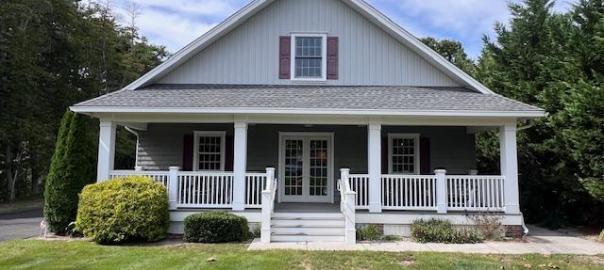
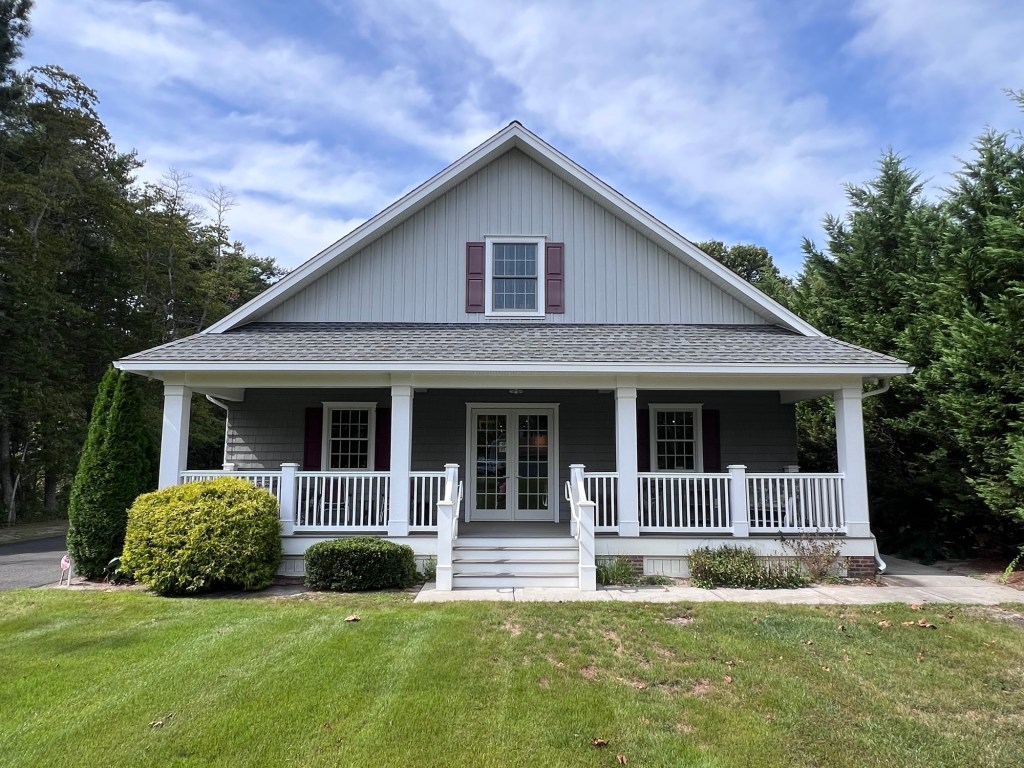
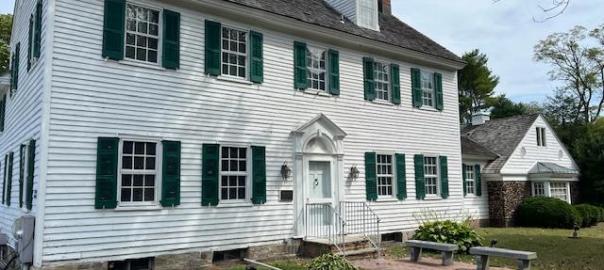
The original Endicott-Reardon Homestead that sits in the front of the museum
The entrance to the museum dedicated to the lives of both the Endicott and Reardon families.
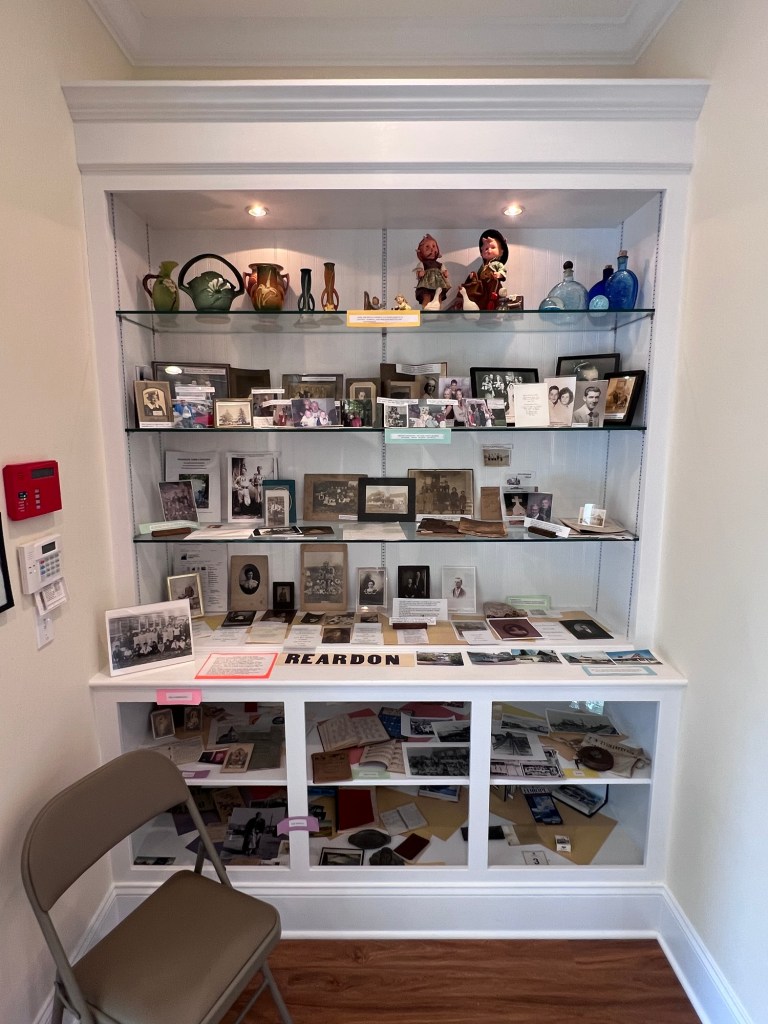
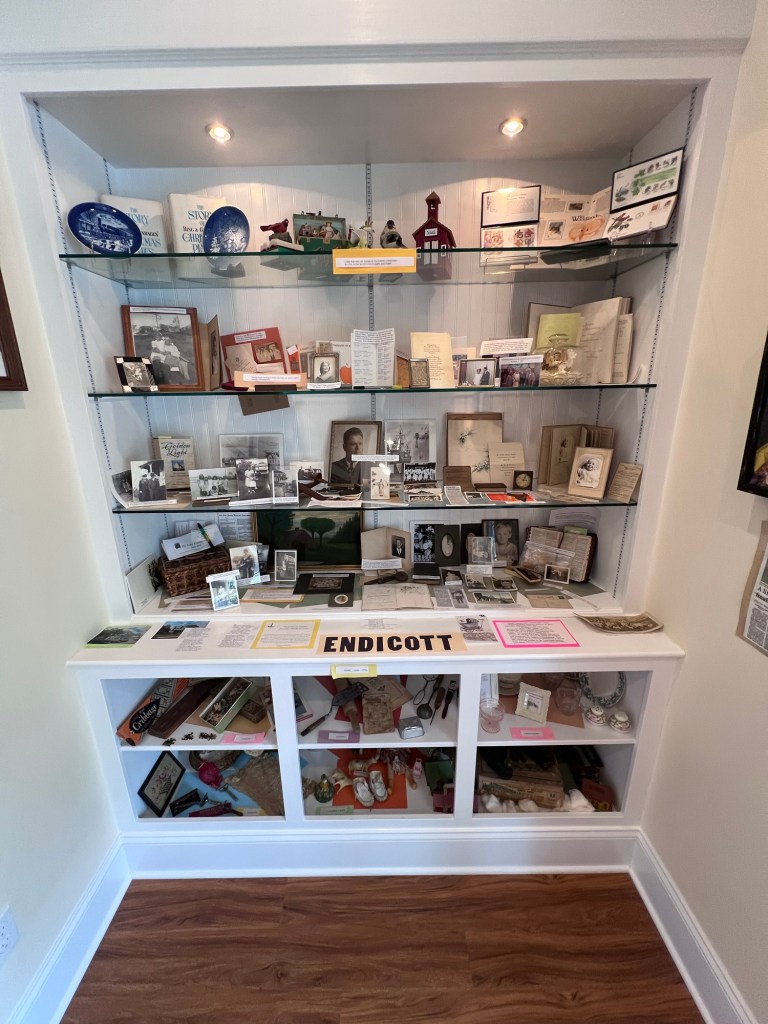
The family artifacts and heirlooms at the museum as you enter the museum
The Endicott family display at the entrance
The museum is a real surprise as entire set of displays is dedicated to the lives of the local Reardon and Endicott families and their family items. A fascinating look of the lives of these early New Jersey families for over a hundred years. This is the collection of Harriett Reardon Bailey and her family. All these wonderful items were saved over the last 100 years and now it was time to share them with the world.
The various family items are organized by sections categorized by lifestyle and collection.
I was given a personal tour that I had arranged with the current curator who had known and worked with the owner of this extensive collection. It had been her dream to open a museum to share her collection with the public.
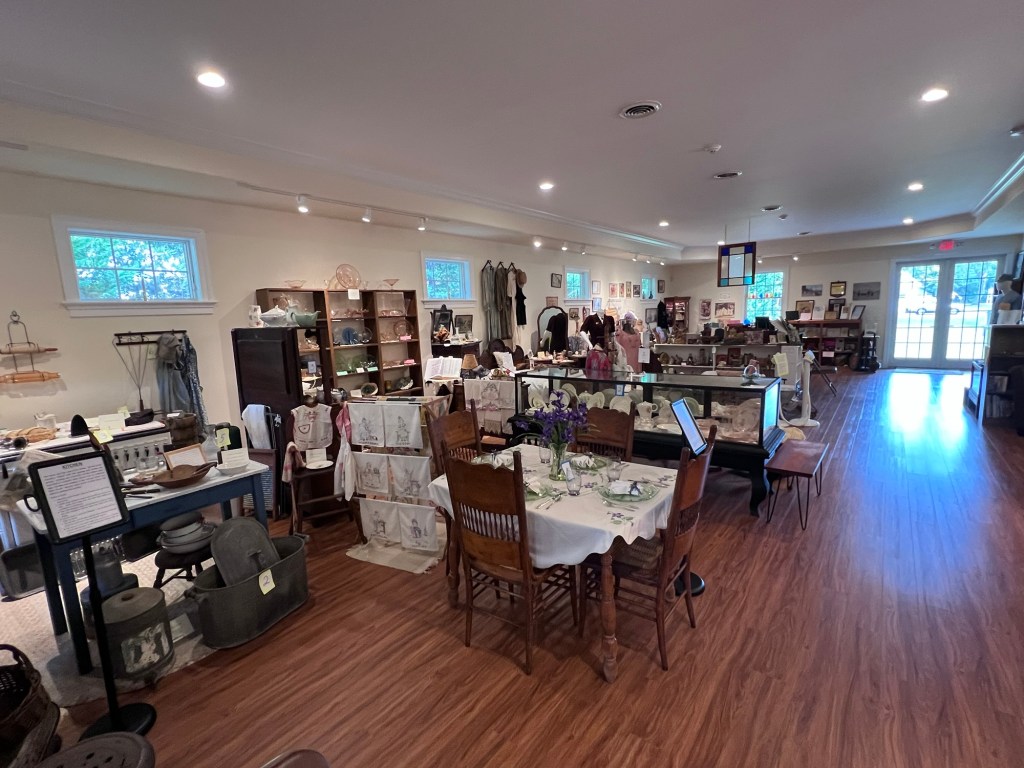
This beautiful, well lit and displayed collection of family heirlooms and personal items gives a glimpse of the lives of an upper middle class family in Southern New Jersey. It is organized and displayed as a household would be at that time.
The first section of the museum was dedicated to items from the kitchen and preparations.
The family Living room furnishings and decorations
The family piano that once graced their Living Room
A decorative toy car used in the Living Room
The kitchen area and artifacts of the cooking and washing done in the house
The table set for a formal dinner
The next part of the exhibit was the formal Dining Room and on display were many of the China patterns that the family owned.
All the china collections the family owned plus other decorative pieces
The family collection of China and glass pieces
The family had various collections of China
Mainly of the bedroom items have been preserved too from linens to comforters to every day clothing. There are also a selection of family member’s clothing, jewelry and personal items.
The Bedroom vignette with clothing and accessories
Another view of the bedroom
Harriett Reardon Bailey had been a school teacher like her mother and there were displays of items that reflected her time in the classroom including a classroom setting.
Time on the classroom and family employment
The classroom set up
Activities and programs at the school
More local school items
There were also displays on her father’s time in the army and her uncle’s time working on the railroad with carefully preserved outfits, programs and railroad artifacts from the job.
The Railroad display
School and family items
Work on the railroad
The display on the family contribution to the armed forces
What I thought was interesting was that the founder of the museum had been an only child with relatives that had never been married so that she was the only child and a bit spoiled.
The Toy Room
In a separate room off the side held her extensive collection of dolls and games. She had kept all her childhood items in such beautiful shape and with great care. What impressed me was there was a picture of her as a little girl with all her dolls and stuffed animals her room and since she kept everything, they were able to recreate the display.
The picture of the owner, Harriot Reardon Baily, of the museum as a little girl in her bedroom
The exact replicated display of toys in the same spots in the display
The collection of tea sets
The collection of toys and playthings are extensive and they are all in wonderful working shape
There was a large collection of dolls plus all their clothes and accessories that were kept together in her collection. Even into adulthood, all of her childhood items were kept in pristine condition.
The collectible dolls and clothing
The extensive collection of childhood dolls
The collection of China and baby dolls
The collection of baby dolls
The collection of cloth and rag dolls
The handmade dollhouse and rag dolls
The fancier imported and collectible dolls
What I thought was interesting during the tour was that the curator had said that the founder of this museum had the vision of keeping all these items for so long and packing the house with family memorabilia. I think she knew what she was doing.
She was not just preserving memories, she was preserving a past that was fading away and the memories of a different time. As her family died, she kept their memories alive by preserving their past as well. The curator had said that she had always wanted to create a museum with all her family’s items and share them with the public. Now we get to glimpse into her family’s history and everyday life.
The museum shares with the public the day to day happenings and life of the Endicott-Reardon branches of the family and life as a middle class Victorian family. I think she preserved the best items with such care as to share them with future generations of what life was like at that time. When people knew each other and times were slower and quality mattered. She loved her beautiful things and wanted to share them with us.
The inside of the Endicott-Readon Family Museum
A video of the museum from owner Harriot Reardon Baily and her collection
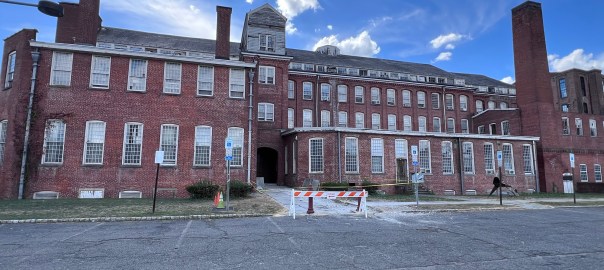
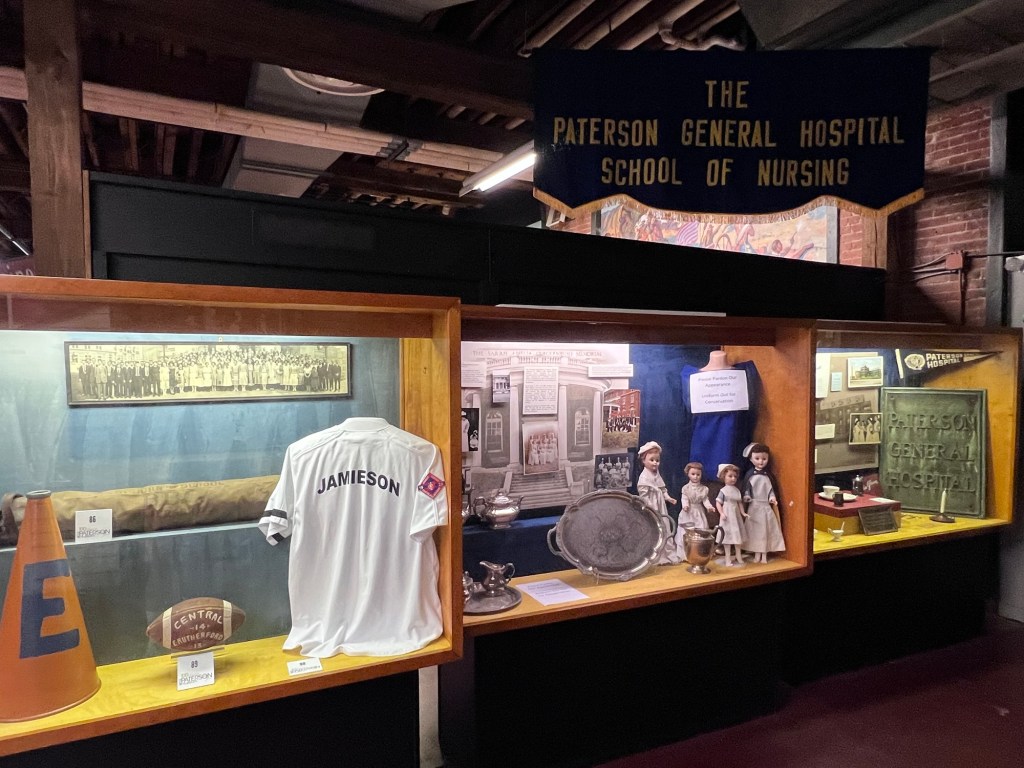
The Paterson Museum is an interesting museum of the history of the City of Paterson, NJ. The museum is broken into different sections of the City’s history. The museum discusses from the time that the Lenape Indians lived in the area to the rise of colonization and then to how it developed into the Silk City through city planning and placement. The museum covers the history of the City of Paterson in the industrial Age as well with the rise of the Silk Industry, the Wright Airplane Factory, the Colt Revolver and the growth of the hospital industry in the City.
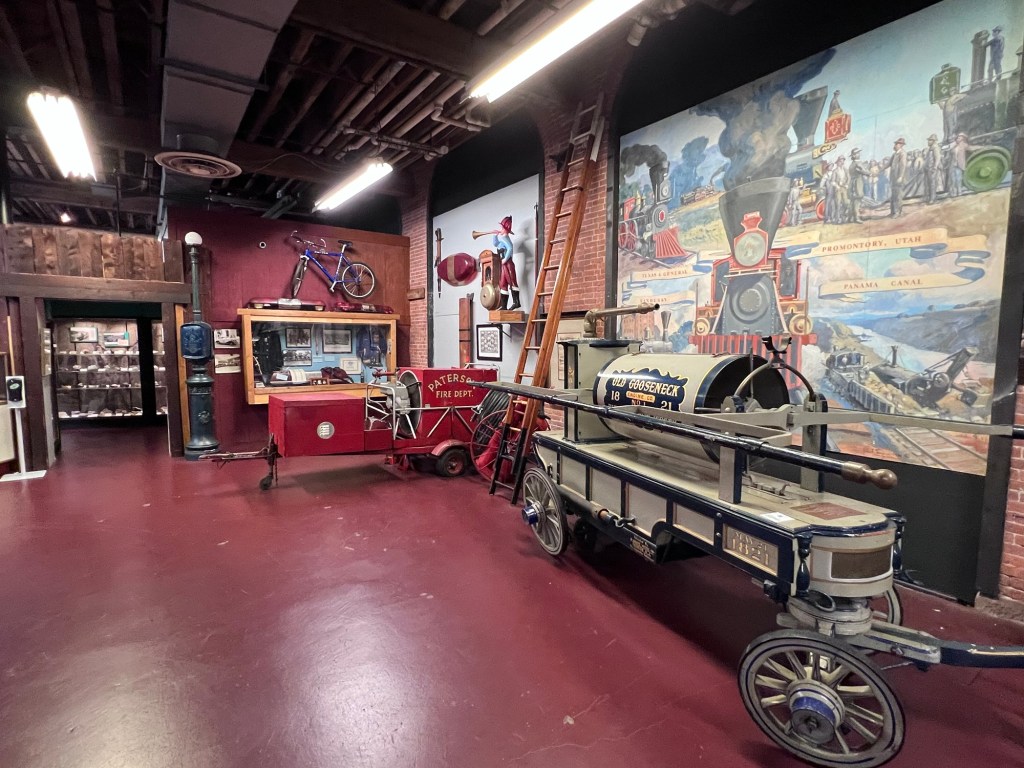
Paterson Fire Department
The Public Safety exhibition
Paterson Steam Engine
Take time to look at the live displays of minerals, Native American artifacts, old fire department equipment and the life and times of its native son, Lou Costello.
The inside of the Paterson Museum
The nice part of this museum is that the parking is free, it can be toured in about two to three hours and it is walking distance to the Paterson Falls and to Little Peru restaurants. It is also free.
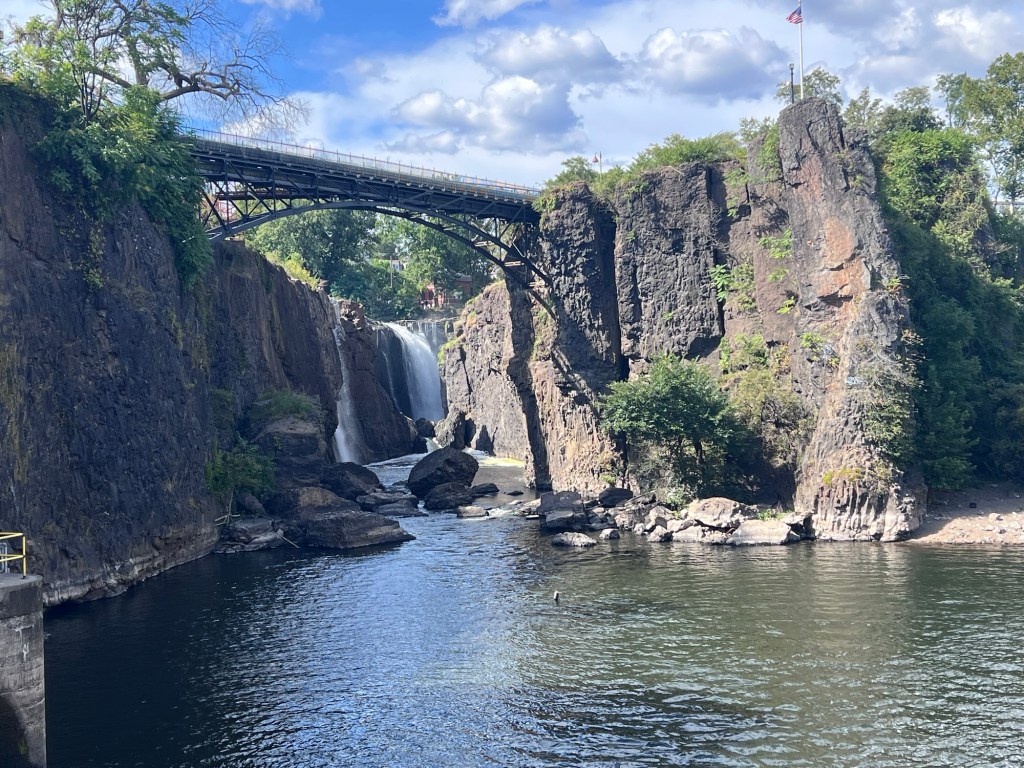
The Paterson Falls up the road
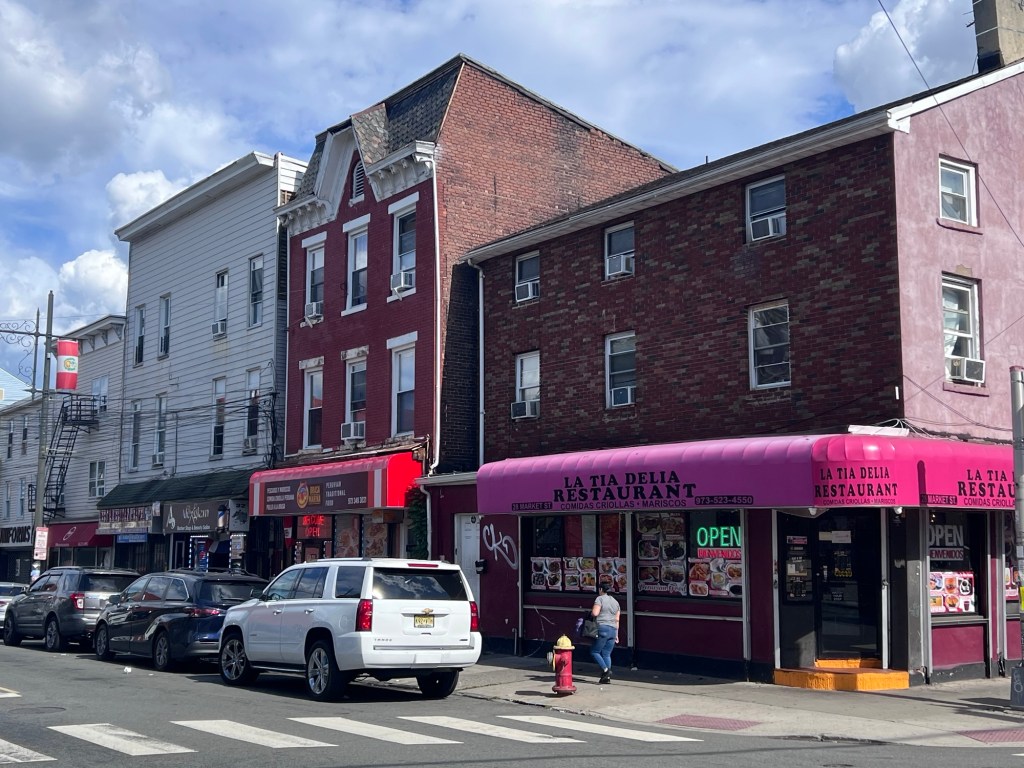
Little Peru down the road
The Introduction:
The Welcome Center
The Paterson Museum offers a ‘History within History’ experience. Located inside the former erecting shop if the Rogers Locomotive & Machine Works, the museum, presents a glimpse of the rich history and the many factors that gave rise to Paterson, New Jersey: “America’s First Planned Industrial City.”
From the natural wonders and the first inhabitants of the land that lay below and above the ground to the vital role Paterson played in setting of our nation’s industrial course. Through the museum’s exhibits. you’ll find out why Paterson was known for more than a century as the “Silk City.”
Silk City
You’ll discover that Paterson was at the forefront of locomotive, submarine and airplane engine development. And that’s just the beginning of our story. By the time you finish your visit, you will want to learn more about this city that surrounds the Great Falls.
The Exhibitions:
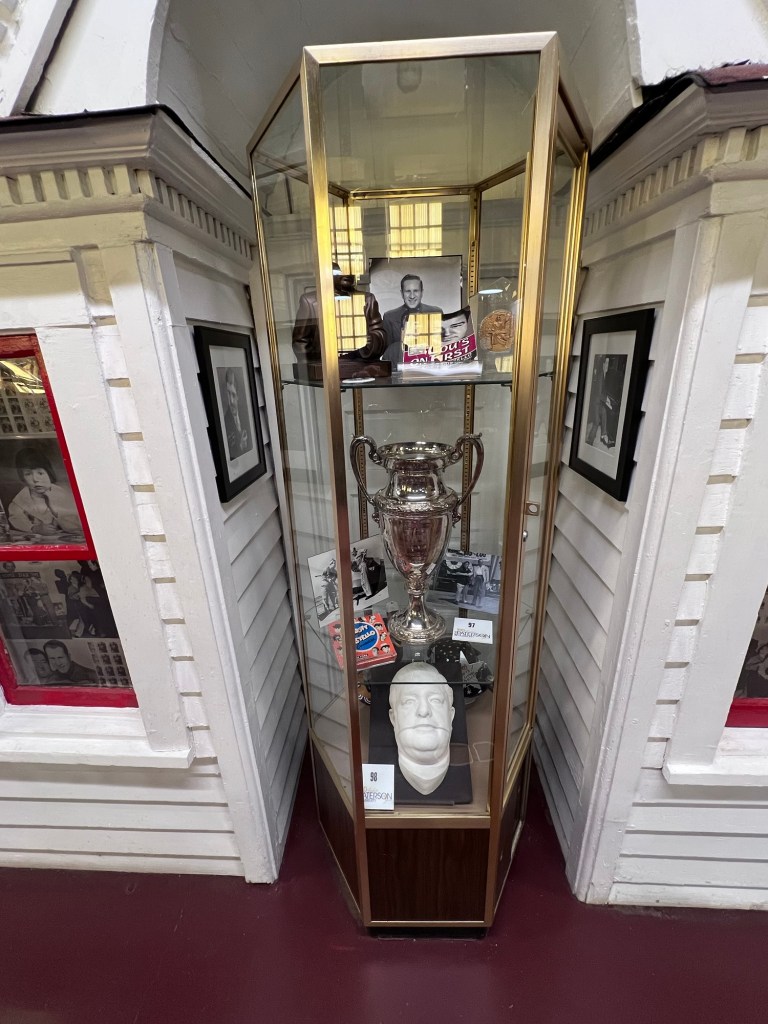
Paterson Residents: There are exhibitions on such celebrity natives as Lou Costello and his life after living in Paterson are shown in detail.
The Lou Costello exhibition
The Lou Costello exhibition
Baseball players, football players and actors have shown against all odds and color barriers they found success in the world with Paterson being their roots.
Sports in Paterson, NJ
The Silk Industry
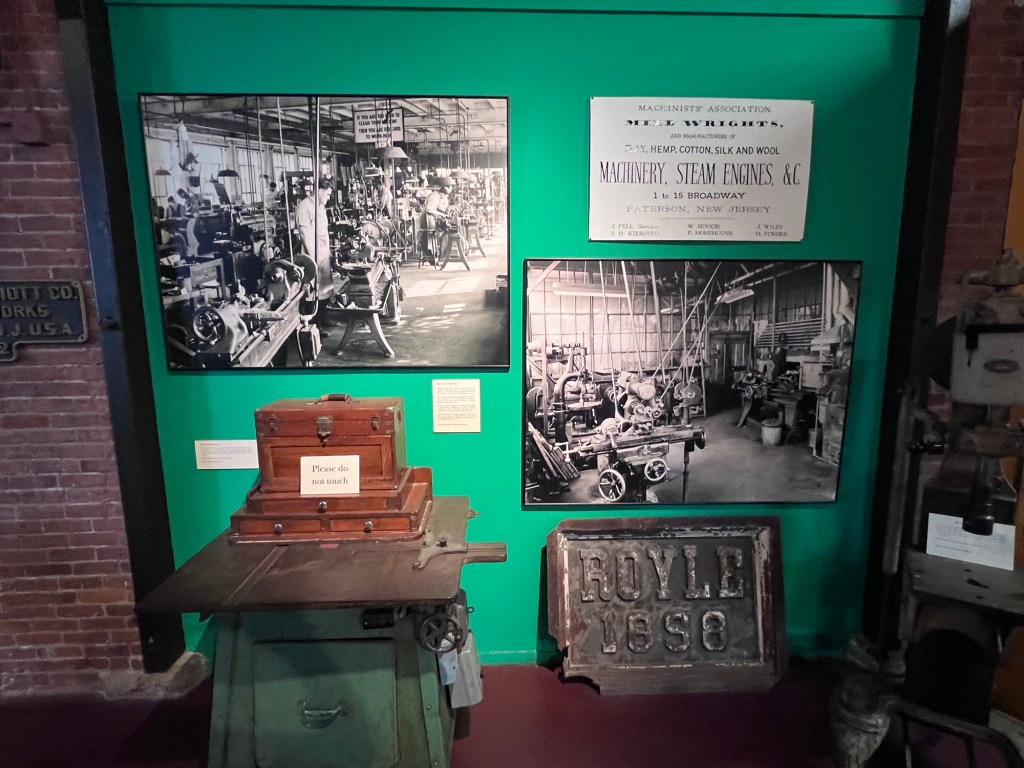
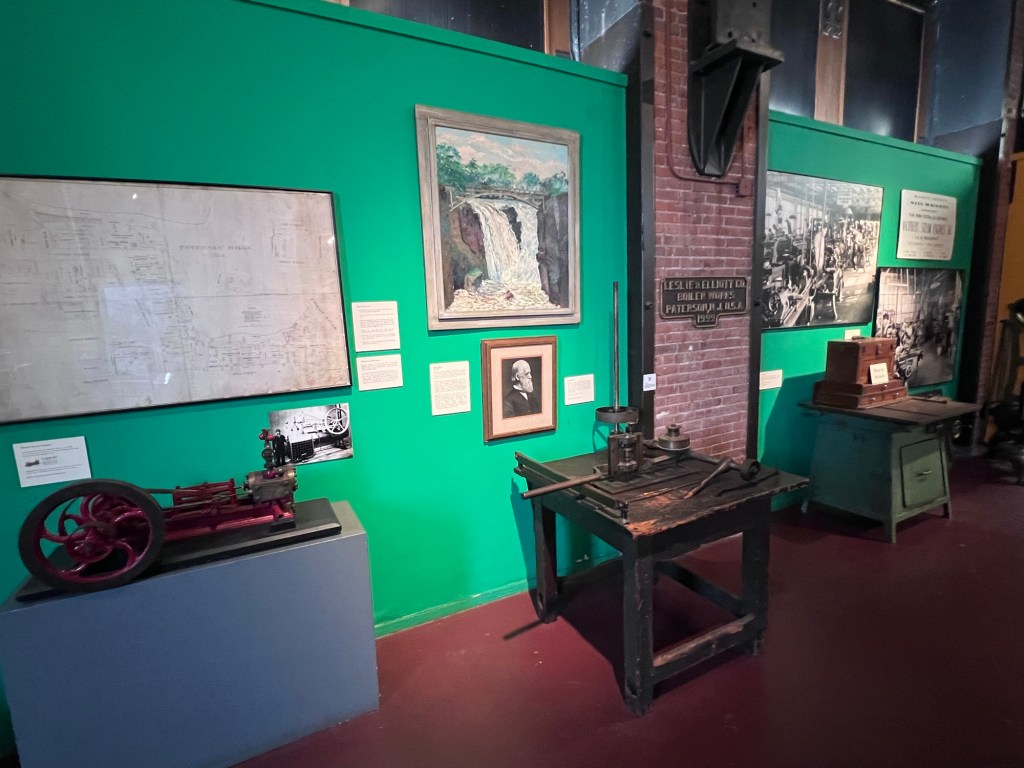
Silk City: The history of Paterson as ‘Silk City’ features winders, warpers and power-looms that produced beautiful fabrics. How the Falls and the location of the City of Paterson played its part in the garment industry at the turn of the last century. Not just in the silk industry but also in other companies like the Wright Aeronautical Corporation and the their time as a manufacturer in Paterson.
The Paterson Fire Department
The Paterson Fire and Police Departments: The history and development of both the Paterson Police and Fire Departments are told through pictures, stories, uniforms and equipment through the ages. There are many turn of the last century fire trucks in the museum.
World War Exhibition: The museum has a wonderful exhibition on the history of Paterson and the role it played in the World Wars. There are all sorts of uniforms, munitions and stories to tell.
The War years
The Veterans exhibition
Geographical: There is a whole side exhibition of gems and minerals both native and from all over the country at the museum and a full display of native New Jersey stone formations. There is also a discussion of how the Falls played such an important role inf the development not just of the City of Paterson but of New Jersey as well.
The Minerals
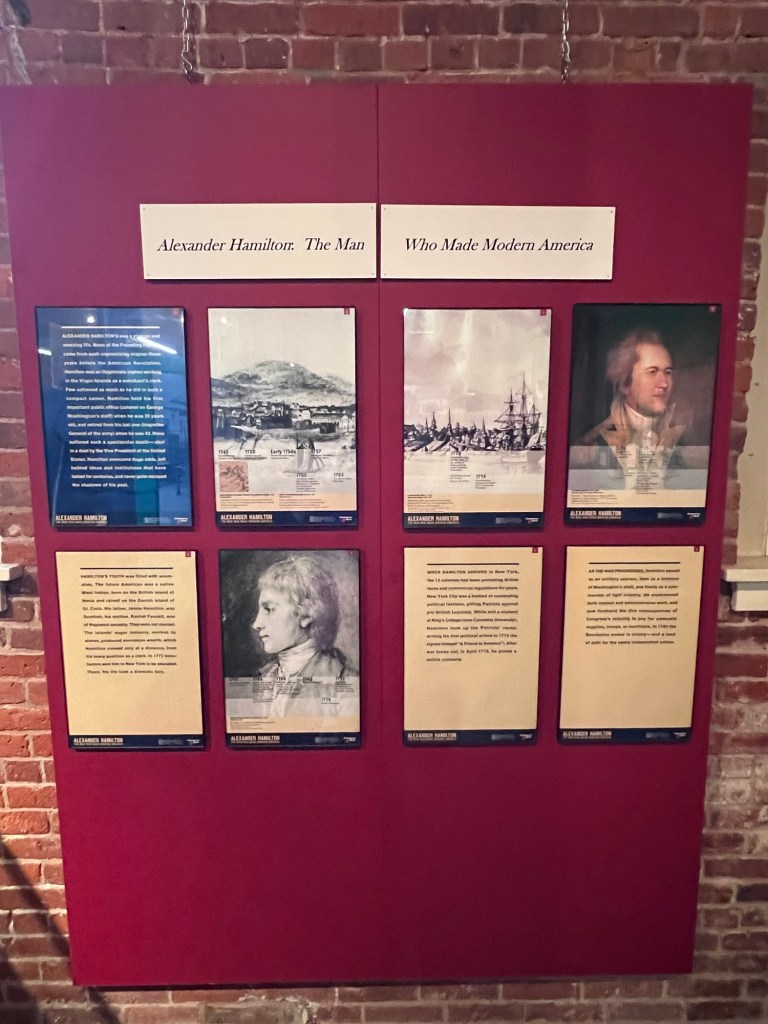
Alexander Hamilton Exhibit: The history and life of Alexander Hamilton is told from the time he was born in the Caribbean to his coming to the United States, his marriage and his rise through the ranks of the government. There is how he helped develop the banking industry and paying of the government debts to his fall from grace and his eventual fatal duel with Aaron Burr.
The Alexander Hamilton exhibit
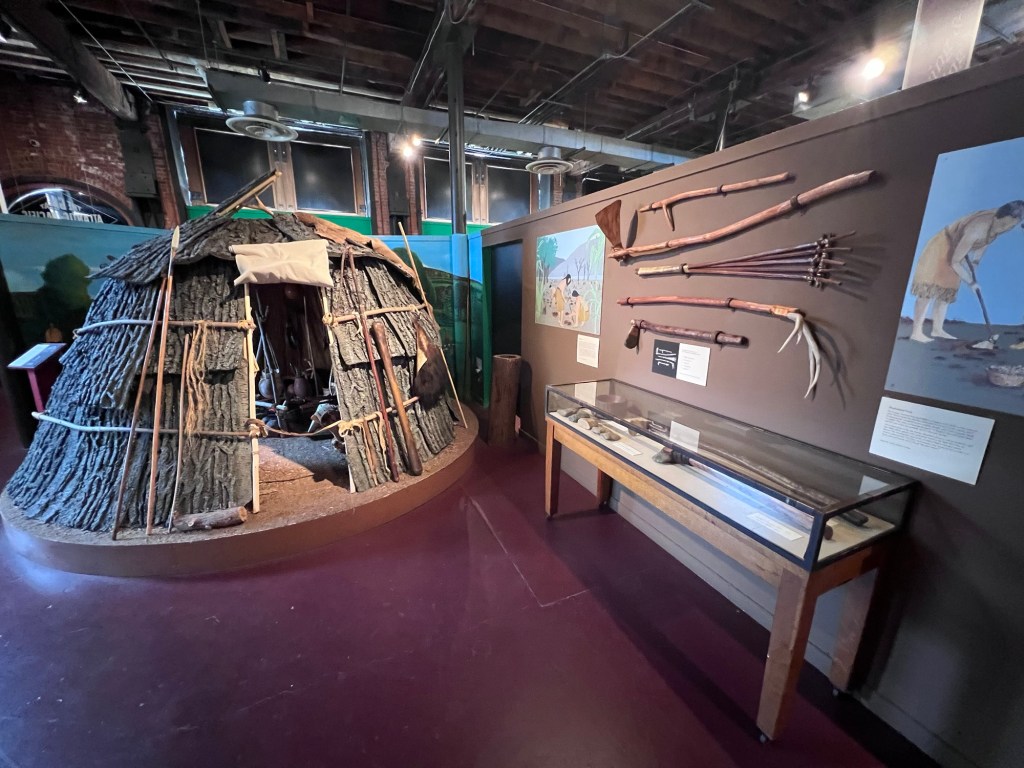
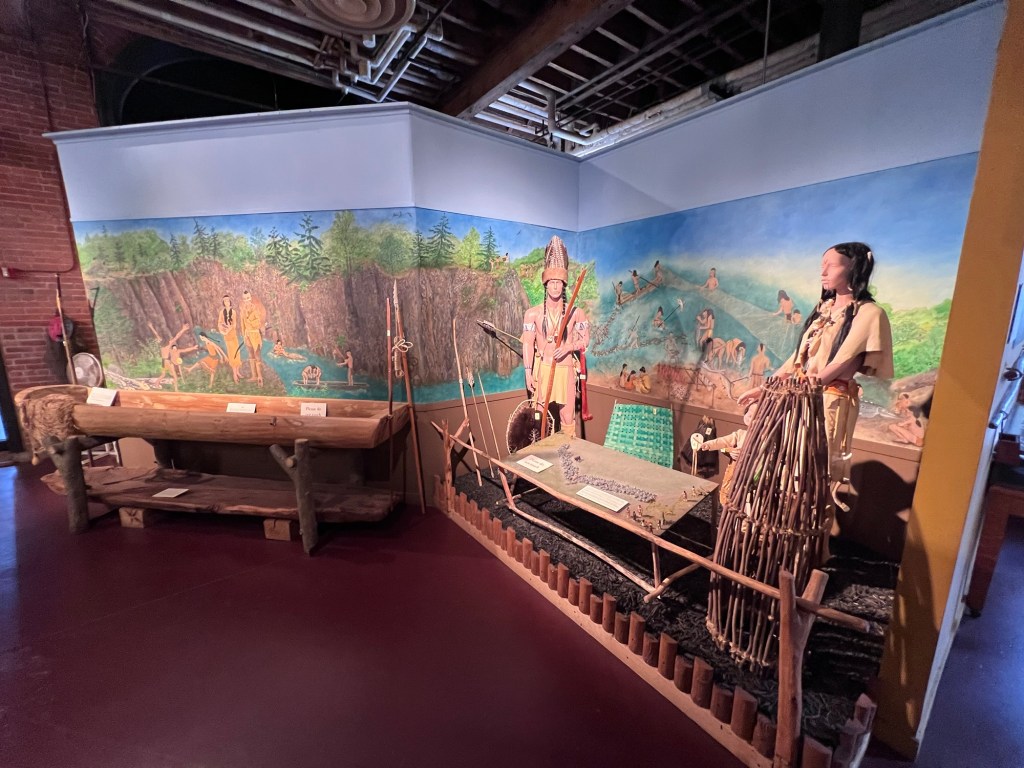
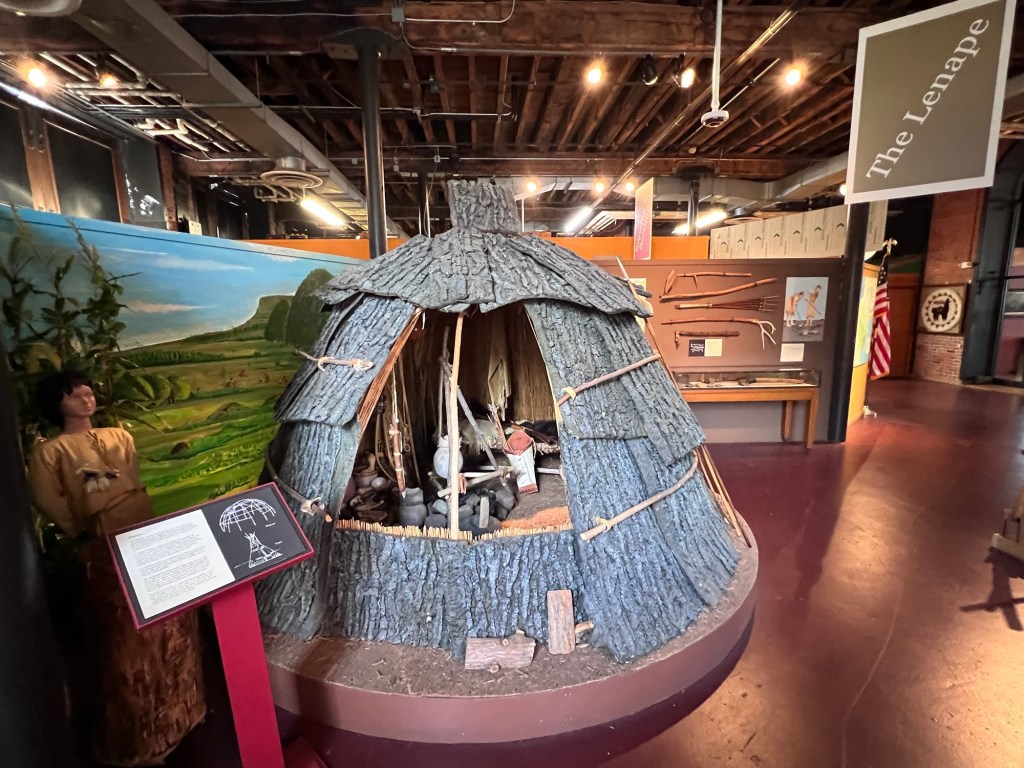
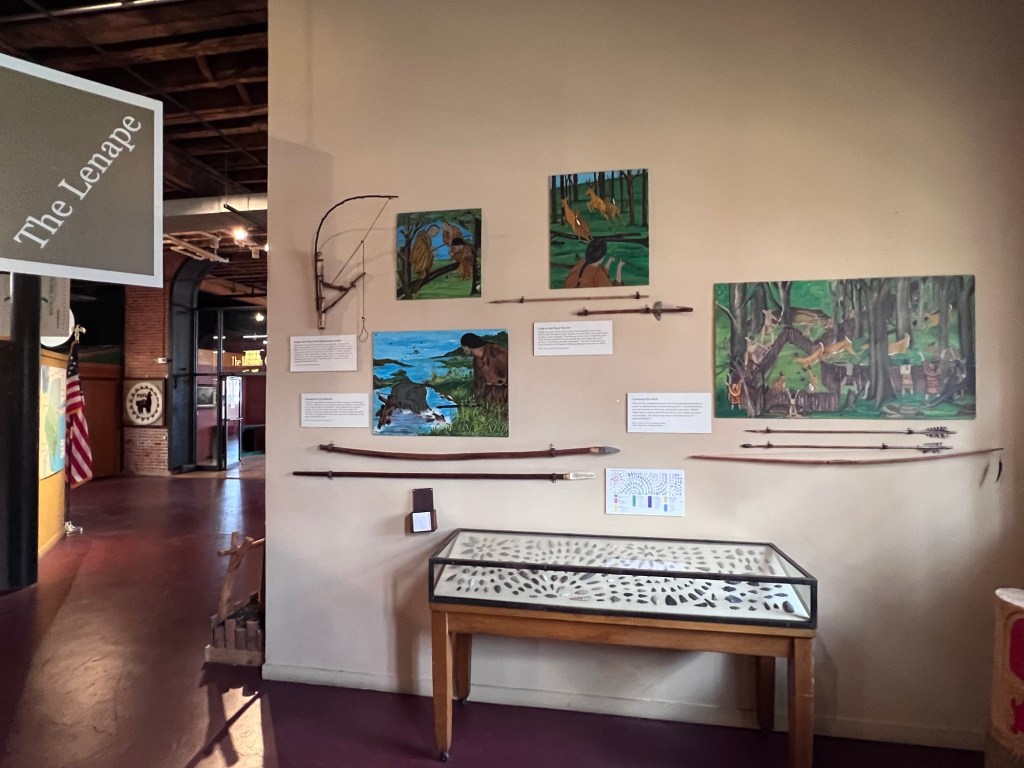
Lenape Indian Culture: The Lenape Native American culture is shown how the tribes developed, lived, worked and hunted and gathered to create the society that was in place before colonization.
The Lenape exhibit
There are all sorts of tools, displays on their regions of living, language, housing (there is a recreation of a Tee Pee here), that native wardrobe and a complete display of tools and arrow heads. It is a very detailed account of life as a Lenape Indian.
Lenape Exhibition at the Paterson Art Museum
The Lenape Indian exhibition
The Lenape exhibition
The museum shows the history not just of Paterson but of the surrounding areas and how growth of the City of Paterson made an impact on the region.
I recently visited The American Labor Museum/Botto House National Landmark for the afternoon and learned a lot about the American Labor Union formations and the rights we now take for granted.
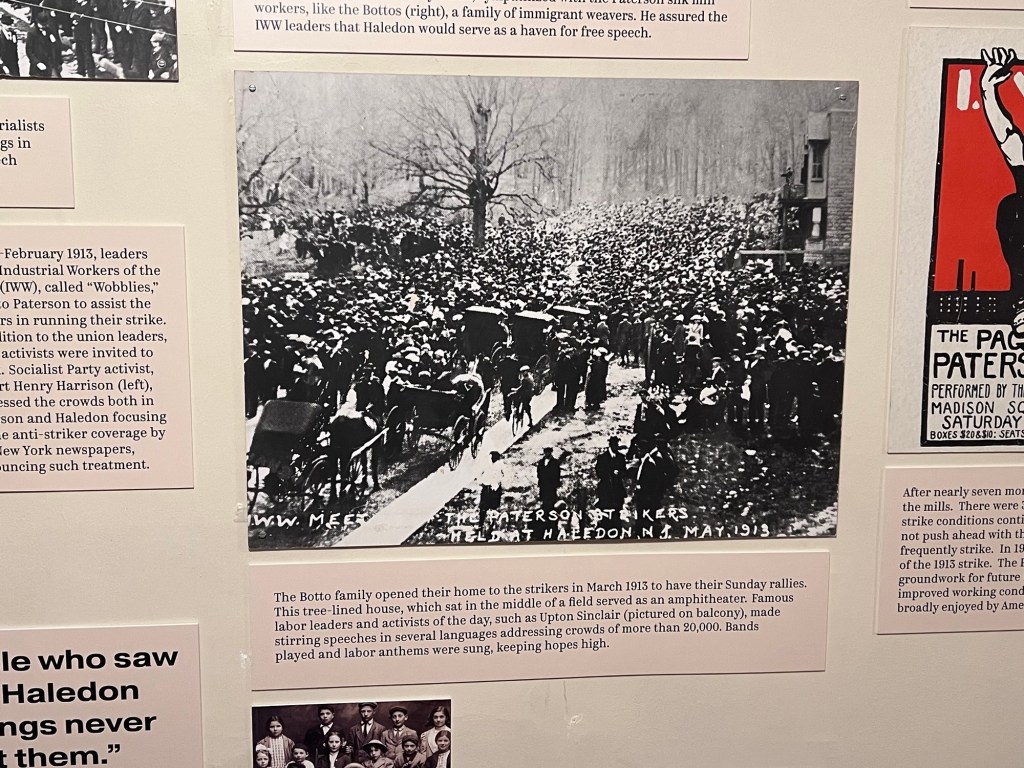
A group of us took the tour of the Botto House and learned of its history and its place in the Paterson Silk Strikes of 1913. The first floor which serves as the meeting room has pictures of the Paterson Silk Strike which lasted just over five months and since the Mayor of Paterson at the time would not let the strikers meet, the Botto’s agreed to let the strikers meet at their home which at the time was in a isolated section of Haledon.
The history of the Silk Strike in Paterson
The Mayor of Haledon was sympathetic to the Union cause and let them meet in the town. Their house was situated in the middle of a field so that the strikers could gather around the home and listen to speakers.
The Botto House during the Paterson Silk Strikes
From their balcony, speakers could talk to the strikers and keep everyone abreast of the situation. Here people gathered and picnicked together and worked together to get their rights heard.
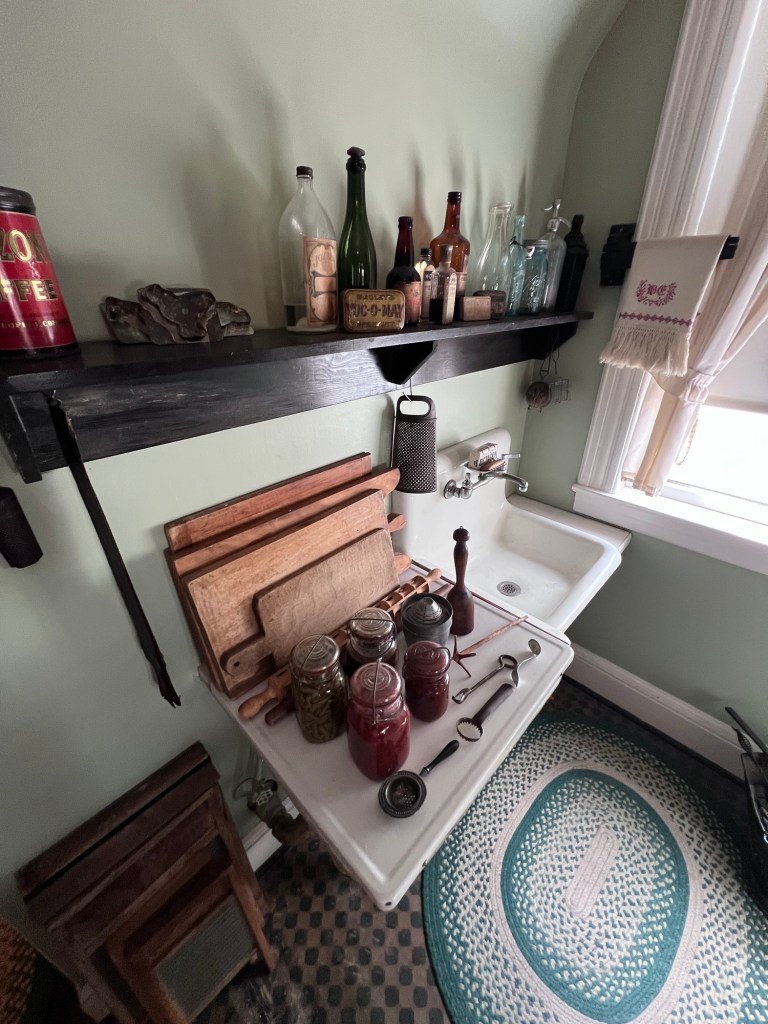
From the main display room, you will tour the home of Pietro and Maria Botto. First stop is the kitchen where Mrs. Botto ran her household. She made extra money selling food to the strikers and arranging meals for Mr. Botto’s co-workers. The family family did what it could to make money for the family.
Mrs. Botto’s kitchen
The sink area
Here she made meals for her family, did her jarring and preserving and the washing was done. Then a tour of the dining room, bedroom and the palour area where the family met and greeted people. The upstairs was formerly two apartments that were built to help ‘pay the bills’.
The Botto House Kitchen
The upstairs is now the display space where a display on the Dock Workers Union is currently being shown. We got to stand on the second floor balcony where so many speeches were made.
The backyard area
We took the back stairs to the backyard where the family had the grape arbor, root cellar where the preserves were kept and the boccie ball court. It seemed the family was very social at the time and self-sufficient.
The root cellar and Vineyard
Things turned bad for the family when both Mr. And Mrs. Botto both passed away two years after the strike. The strike could have taken its toll on the family or the fact that Mr. Botto could not find a job after the strike was over. No one knows.
It is an interesting tour of how one family opened their home to an important cause and it made a difference in the success of the strike and getting it resolved.
The history of the Botto’s:
The museum headquarters was the home of an immigrant family of industrial workers whose story is a fascinating one. In many ways, the telling of their saga is a doorway for museum visitors to step through and make connections with their own ethnic backgrounds.
The European Heritage:
Pietro and Maria Botto hailed from the region of Biella, Piedmonte, Italy. This area, at the foothills of the Alps, was a leading textile producer of linen and wool. The mountainous area was home to a fiercely independent people who, for centuries, wove cloth in their homes on looms which they owned.
The Industrial Revolution forced weavers to give upon cottage-based production to seek employment in large shops or mills. the displacement of workers by mechanized looms and weavers’ lack of economic independence caused people in Biella (as in other European textile areas where Paterson’s workforce originated) to embrace new ideas about worker rights and to be a vocal workforce wherever they roamed.
Pietro decided to leave Italy because he was made eligible for a second draft into the army at the recently united Kingdom of Italy (Italy had quadrupled its army at that time to strengthen unification and to acquire African colonies). A skilled weaver who also painted church interiors, Pietro brought his wife, Maria and daughter, Albina (born 1889) on the long voyage to America in 1892.
The Botto’s settled in crowded West Hoboken, New Jersey (today’s Union City), where they worked in silk mills for 15 years until they had saved enough money to afford a home for their growing family. The family now included three more daughters, Adelia (born 1894), Eva (born 1895) and Olga (born 1899). In 1908, the Botto’s moved to Haledon, a tiny community, growing up along the streetcar line from Paterson, where many other country folk from Biella had already settled.
The Botto’s home became a focal point for a dramatic slice of history in 1913 when the epic Paterson Silk Strike broke out. Pietro was on strike with 24,000 fellow silk workers when massive and constant arrests forced the workers to consider the independent borough of Haledon as a location for great outdoor rallies. Mayor William-Brueckmann guaranteed the safety of the workers and Pietro offered his home as a meeting place for the strikers.
The Botto’s courageous stand allowing their home to be so closely identified with the strike stemmed from a belief in the rights of the common man. During the strike, Pietro and his family played host to the social and labor leaders who were the idols of the working person at that time. After the strike, the family had to very circumspect about employment in the mills, with one of the daughters denying her family name to avoid blacklisting by an employer.
The large house and spacious hillside gardens are a tribute to the family’s combined labor. Pietro and his daughters worked 10-12 hour days, 5 1/2 days a week in the mills. The eldest daughter began mill work at age 11 and the youngest at age 13.
On Sundays, the usual day of rest, the girls helped their mother serve patrons of the resort aspect of the property. Maria ran a large household, feed boarders during the week and the scores of people on Sunday and did piecework from mills; she died in 1915 at the age of 45.
Pietro lived until 1945, a beloved father and grandfather to a growing clan.
History of the House and Land:
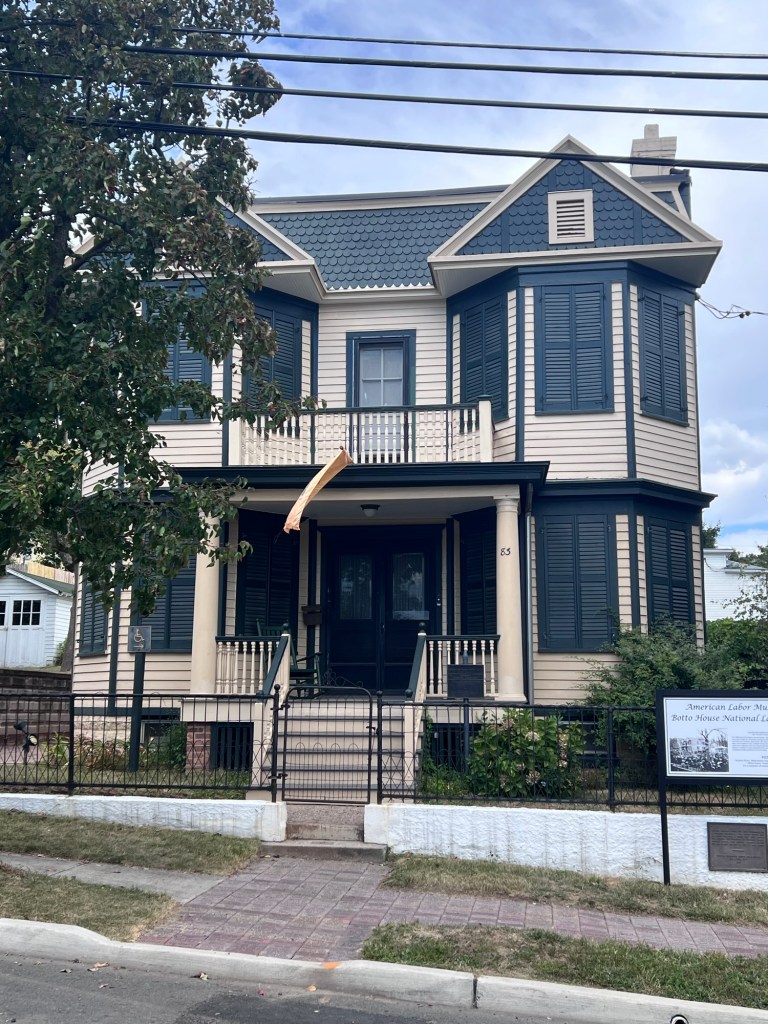
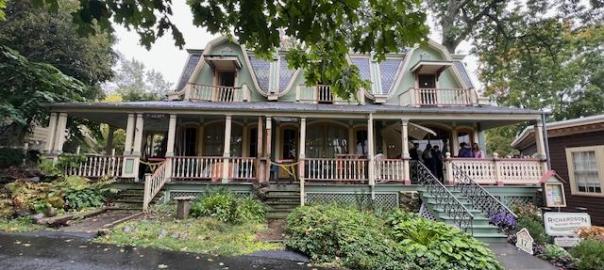
The house in Haledon, NJ
The total environment of the Botto House National Historic Landmark reflects the ethic origin of this family of silk workers from the Piedmonte (Biella) area of Italy and the development of housing in early streetcar suburbs. It is representative of the sensitive use of small landholdings in American urban areas by various European immigrant groups.
The Botto family purchased Block X, Lots 38, 39 and 40 in 1907 from Alexander King, a real estate speculator. King himself purchased a large parcel of land from the Cedar Cliff Land Company, a group of Paterson industrialist and business leaders who were quick to see the advantages of selling cheap land to workers in Haledon. The completion of a horse-drawn trolley line in 1872 allowed for expansion of residential and recreational areas outside of the City of Paterson, a major American industrial center.
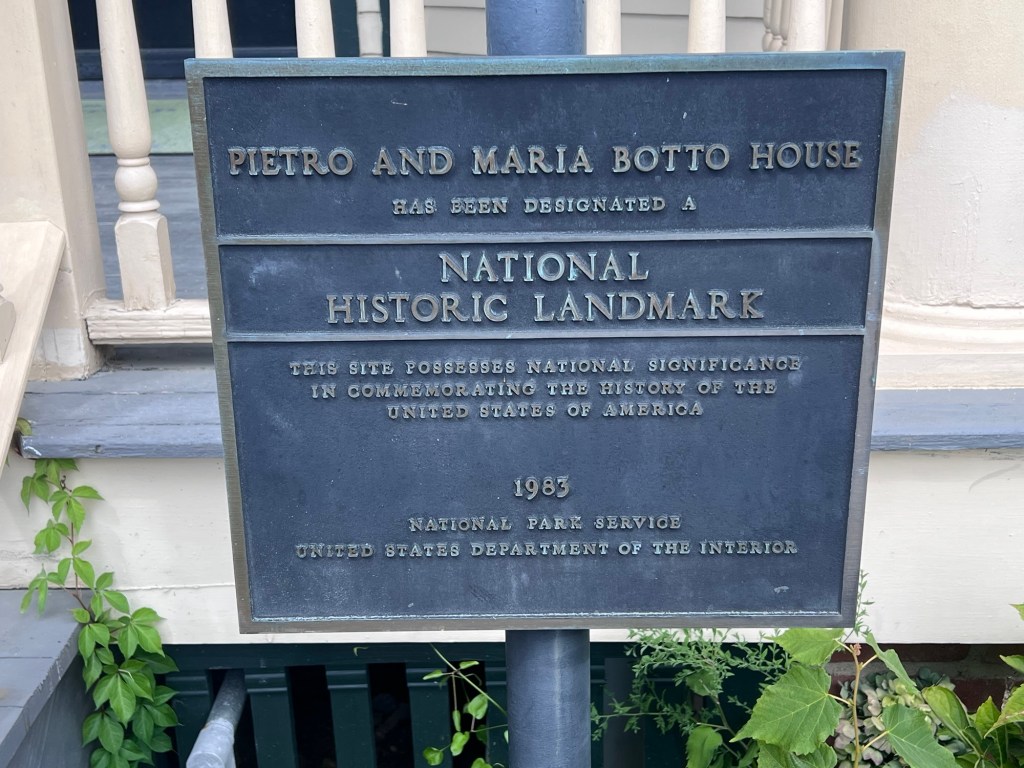
The Botto House sign
(Information from American Labor Museum: Botto House National Landmark, a Brief History)
The Period Rooms:
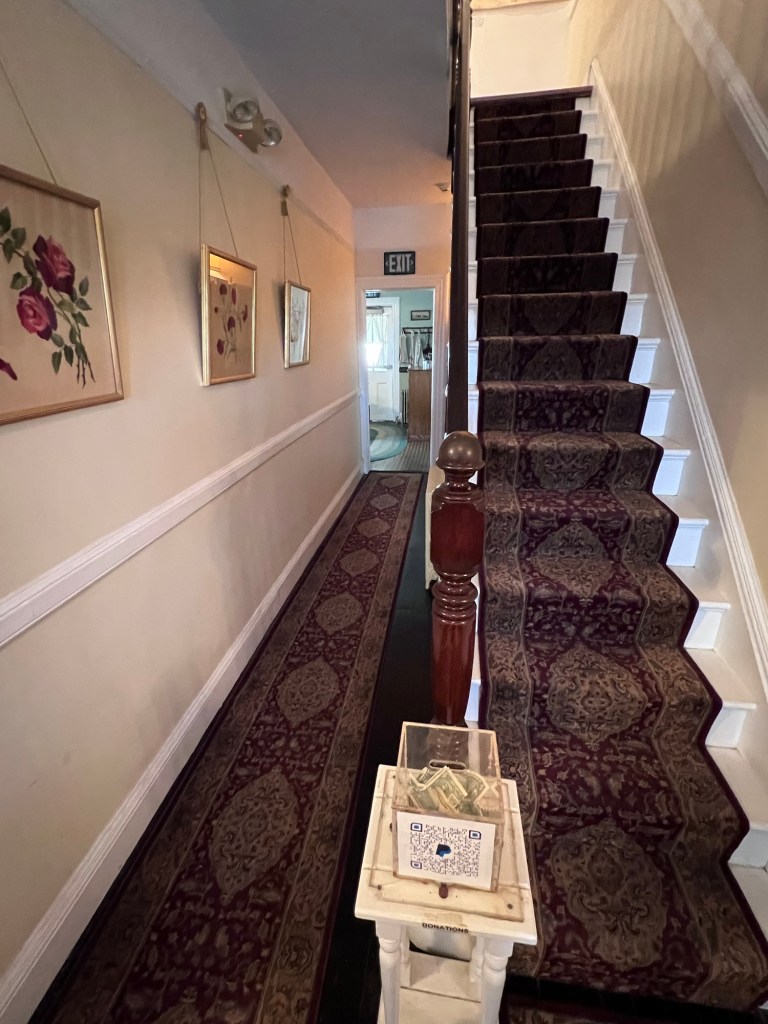
The Front Hall
The front entrance hall light fixture is original to the house. One of the restoration tasks yet to be carried out is the replacement of embossed wallpaper on the walls which was made to look like the carved leather coverings in the homes of the rich.
The front hallway
The Kitchen:
The kitchen was a major center of activity in the household. The large coal and gas range dominates the room. It was used as a heating source as well as for cooking foods. A table provided the space for food preparation; a cupboard stored pots, pans and dishes; an icebox kept food items cold (the root cellar, located in the garden was also used for cold food storage) and a sink for dishes and a tub for laundry utilities indoor plumbing-certainly a recent innovation for working class households.
The kitchen
Even with the convenience of indoor plumbing and the gas range, the kitchen was the scene of virtual non-stop labor for Maria Botto and her daughters. In addition to meals prepared for the family, the Botto’s fed a noon meal to extra people during the week, there were workmen without families, who rented rooms and come from the mills for a hot dinner.
On Sundays, the Botto women prepared food for as many as 100 people who came to recreate on the property. This, of course, provided on additional income for the family.
The Botto family’s foodways reflected their home region of Biella, Piedmonte, Italy. Piedmontese cooked scorned tomato sauce, preferring wine and chicken broth to accompany such staple foods as polenta (corn meal), risotto (rice) and tortellini, a pasta. Generally, rosemary, sage, and other herbs were used in cooking and grown outside in the garden. The herbs also had medicinal uses.
The kitchen sinks
Some of the artifacts placed around the kitchen are the copper put used to cook polenta (purur), meat grinder, fish scale, orange juice squeezer, coffee grinder (from a German immigrant household), rug beater, mousetrap and wall calendars which were used by working people as decorations.
The Botto women were generally charged with kitchen duties. Maria Botto hired a German woman to do the wash. One special job was reserved for Pietro, stirring the polenta and cutting it with a string.
The Dining Room:
The dining room was another work area for the family. Here the family and the ‘boarders’ dined. Here Maria ‘picked’ silk on a frame, located in the corner of the room under the window, examining the bolts of broadsilk brought from the mill for imperfections.
The Dining room
This was another task to bring income to the household. Maria used the sewing machine to make clothes. The table reflects a setting for the family and ‘boarders’, placed with dishes, silver-plated utensils and a condiment set.
The Dining Room
The sideboard, table chairs and sewing machine are family pieces. The lighting fixtures in this room as in the rest of the house were powered by gas. As is typical in the area, paintings were hung by string from a picture rail as the walls were made of plaster.
The Sideboard
The small painting shows sheep, which provide the wool upon which textile manufacture was based, against the backdrop of the Alps. The large sketched portrait of Pietro Botto in later years was produced by his grandson and professional artist, Richard Botto. On the side of the room hang pictures of the Botto daughters in their wedding attire.
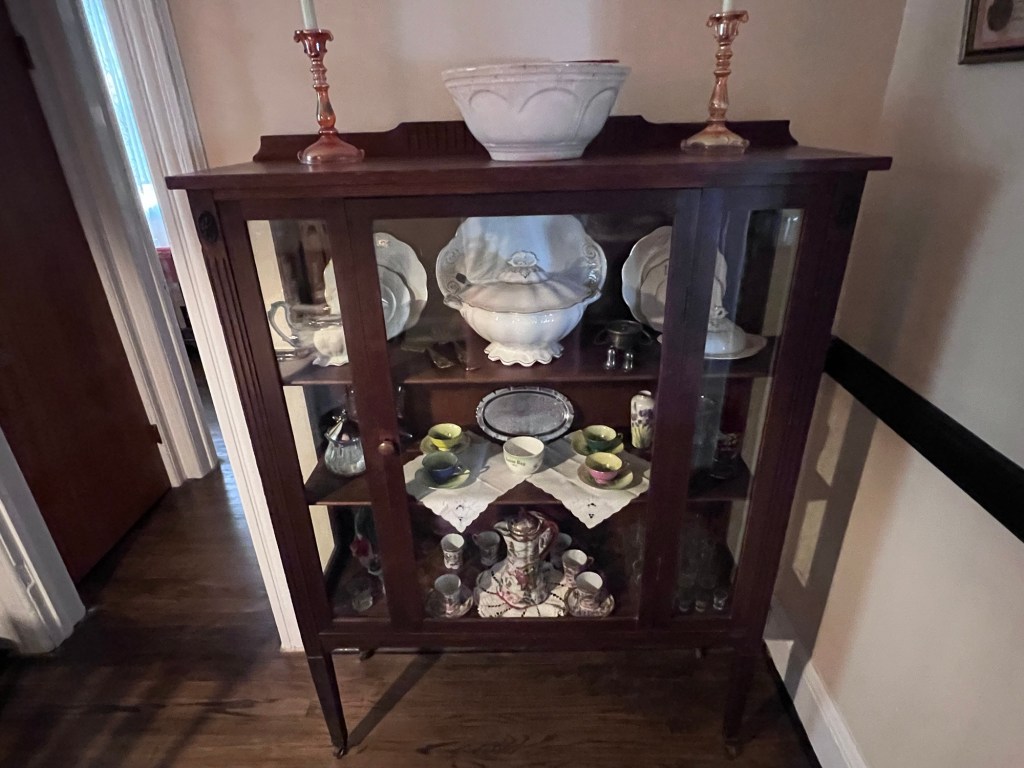
The Dishes in the sideboards
The Bedroom:
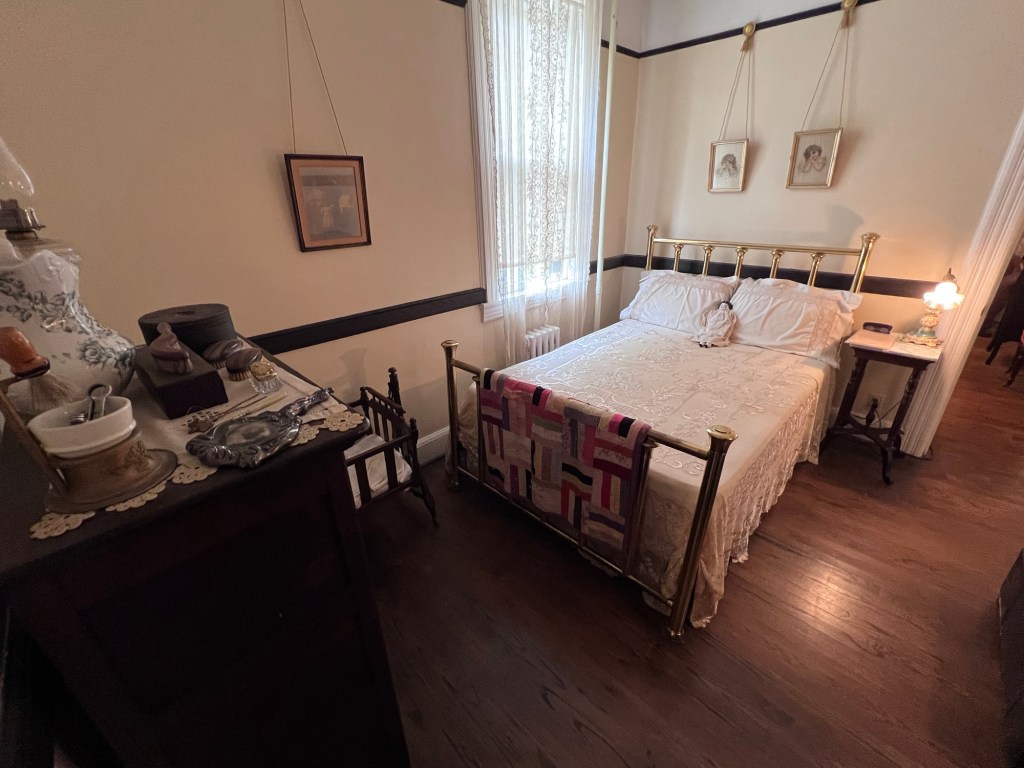
This room, which was actually the girls bedroom has been recreated to resemble where Maria and Pietro slept. The dresser is set with brushes, combs and mirrors that are from the period. The Botto’s slept in a brass bed.
The bedroom at the home
Swimsuits and other clothing hang in the wardrobe. A travelling trunk rests on the floor next to the wardrobe. Next to the window hangs a photograph of Mr. and Mrs. Guala of Biella, Italy. Next to the wardrobe hangs the elaborately framed photograph of Adalgiso Valle of Paterson, NJ, a jacquard card cutter.
The Bedroom
The Parlor:
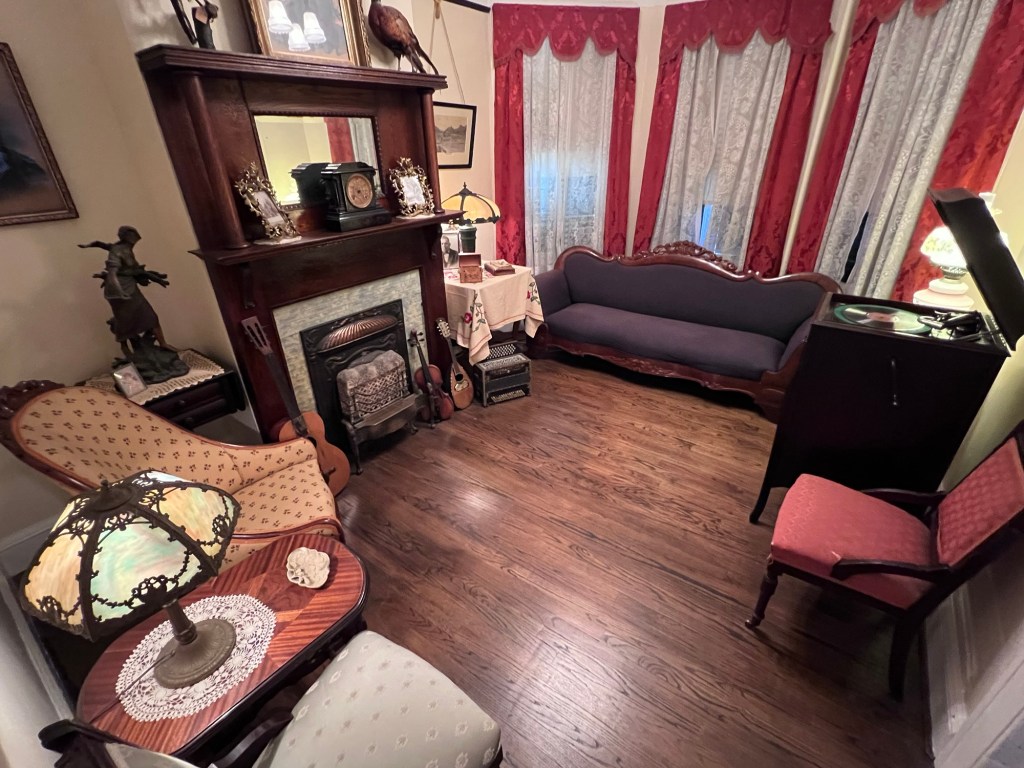
The most formal room in the house, the parlor was used for guests, weddings and wakes. Dominating is the oak mantle with its columns and mirror top. It surrounds a fireplace where, in the winter, a gas heater was attached to a pipe behind the hearth. The clock had to be wound every day and chimes on the half-hour.
The parlor
The photographs on the shelf are Maria’s sisters in Italy (right) and the three eldest Botto daughters (left). Members of the Bocchio family of Biello, Italy are pictured in the photograph to the left of the mantle.
The Parlor and decorations
The furnishings in the house
Other Rooms:
The area making up the library on the first floor was a sitting room and bedroom for the family. The Botto daughters rented the two apartments upstairs when they first married and started their families and other non-family members served as renters through the years. The bathroom on the first floor is the approximate size of the original but today has modern fixtures and is not meant to be part of the restoration.
(From the American Labor Museum/Botto House National Landmark)
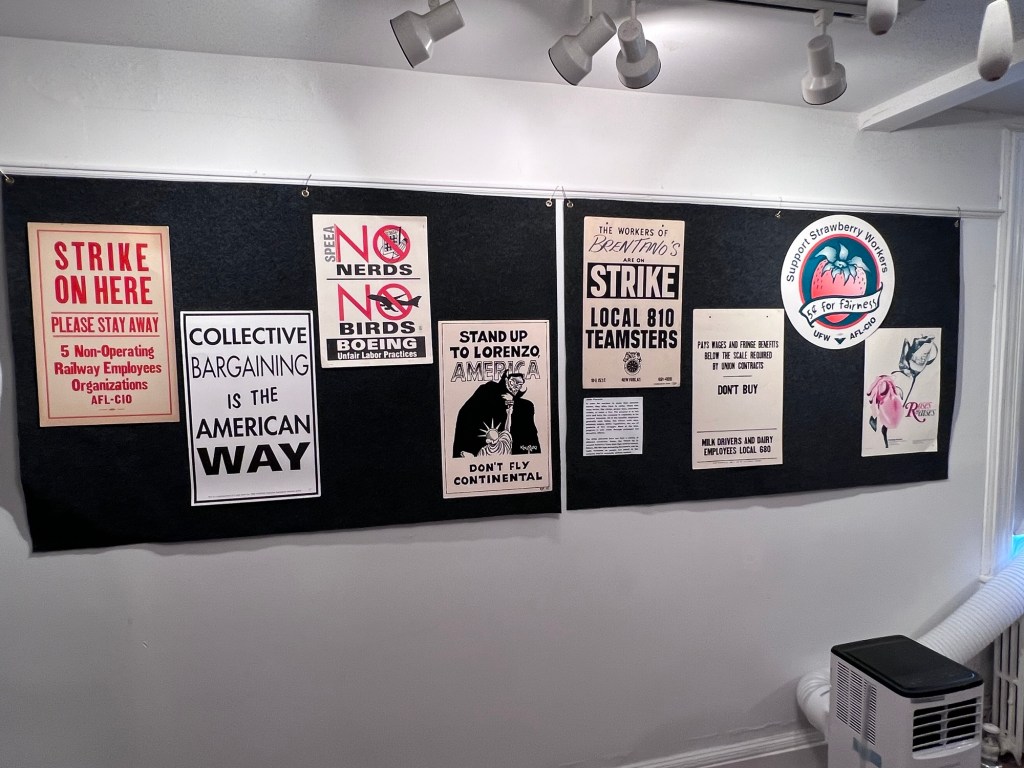
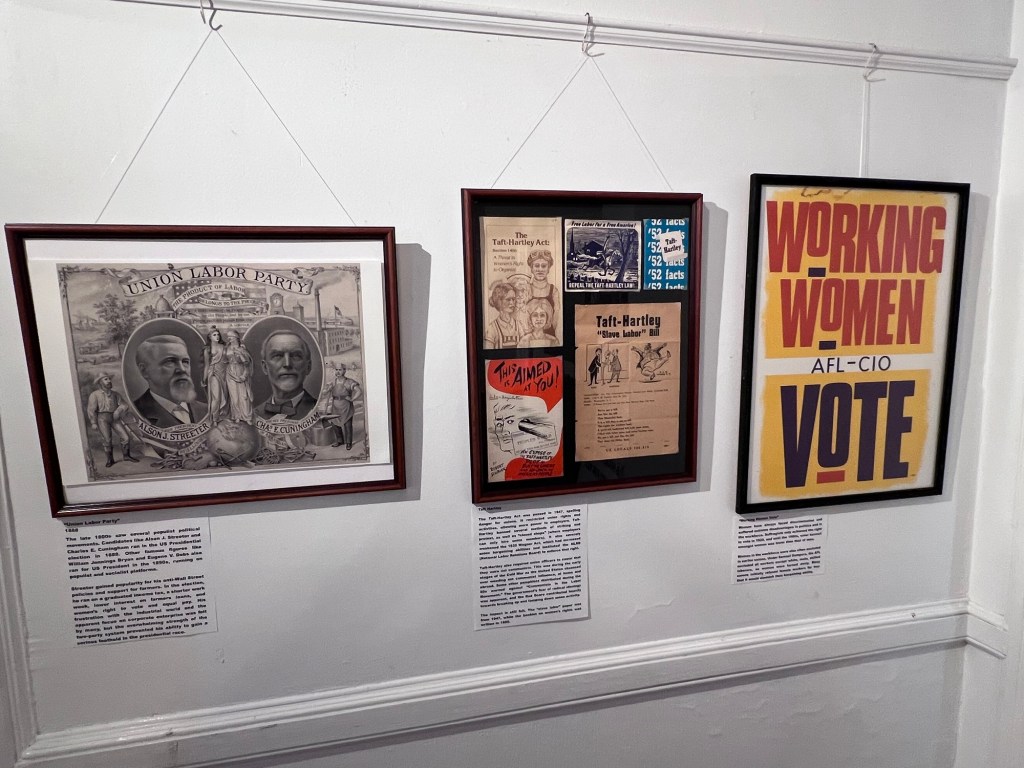
The Labor Day display of the Union history:
Labor display
Labor Display
History of Paterson:
The City of Paterson was founded in 1792 as America’s first planned industrial city. Alexander Hamilton, Elias Boudinot and other members of The Society for the Establishment of Useful Manufactures chose the Great Falls of the Passaic River as the ideal site for a manufacturing center. The Falls provided water power, while the river provided transportation upstream and down.
During the 19th Century, Paterson flourished. It became known as “Silk City” and “The City” with an Arm of Iron in a Sleeve of Silk for the silk mills and locomotive works that made their homes here. Immigrants flocked to the city at first from England, Switzerland. Germany and France and later from Southern and Eastern Europe. Many found jobs in the mills and a few took their place among the captions of industry.
(Mill Worker…Mill Owner-Botto House Museum)
The gift shops
Disclaimer: This information was taken directly from The American Labor Museum/Botto House National Landmark pamphlets. This museum is one of the few historical sites dealing with the Labor Unions in the United States and plays a huge role in workers rights today.






































 mywalkinmanhattan