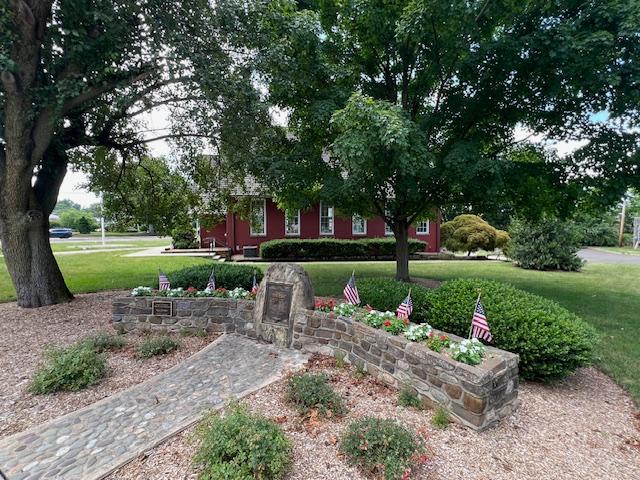
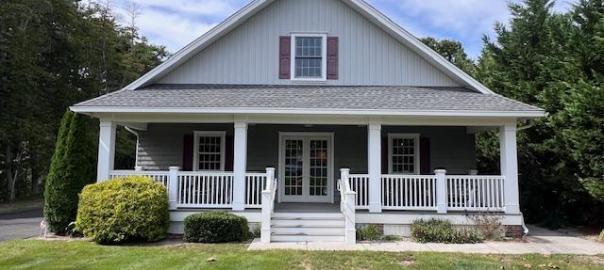
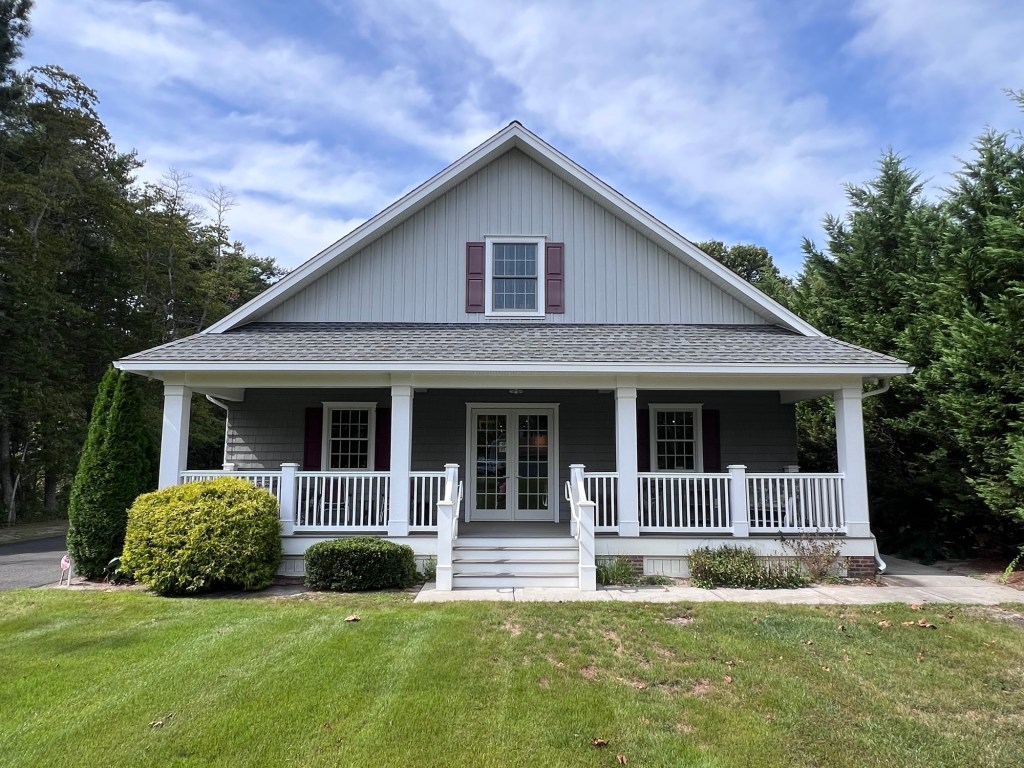
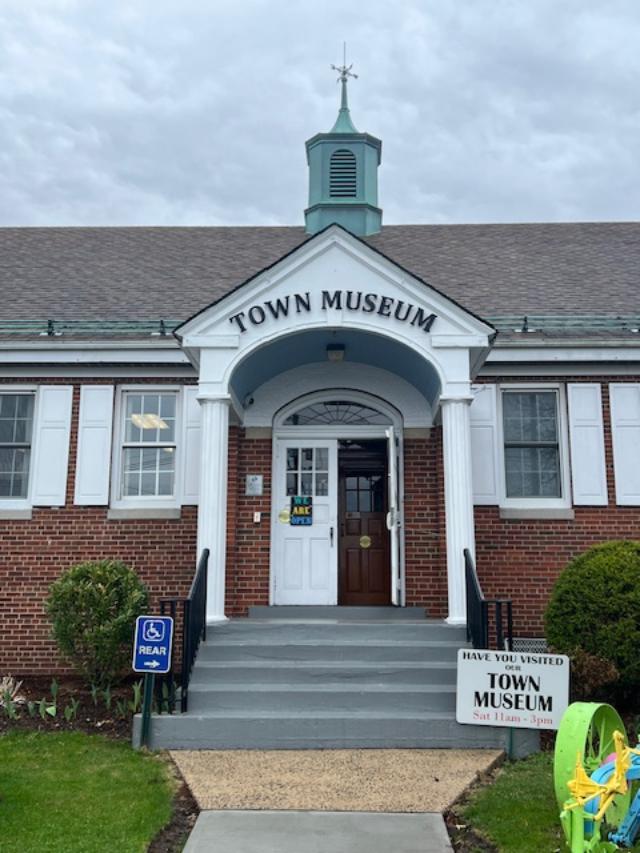
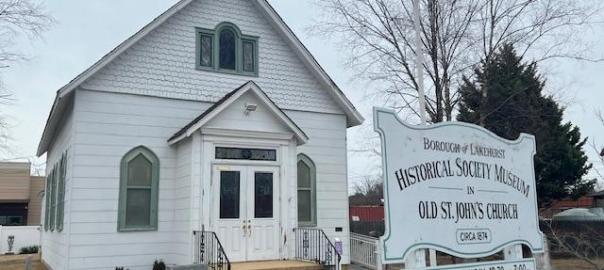
The front of the Vineland Historical Society Museum at 108 South Seventh Street in Downtown Vineland, NJ
On my off time from the Firemen’s Convention after voting, I decided to visit a group of small museums in Cumberland and Glouster Counties in New Jersey. Most of the small ones were closed or had changed their hours online but the Vineland Historical Society was open for touring and was having a speaker that day. I had been invited to come by the President of their Board of Directors about a year earlier so I was glad that I was able to visit this weekend where the schedules matched up.
What an interesting museum with its focus not just on the history of the Town of Vineland but of the surrounding communities and the impact that Vineland had and has on Urban Design, Farming, Manufacturing and Inventions that contribute to the whole country.
The museum had been designed as a Historical Museum for community leaders who wanted to share their love of historical objects and the past history of the community. This is what built the collection over the years. Each section of the museum tells a different part of Vineland’s history from the community events like its “100th Anniversary” of the town, the history of the Police, Fire and Veterans of Foreign Wars, members of the community who contributed to Women’s Suffrage and to the number of everyday products we use like Grape Juice and Marshmallow Fluff that were invented here. Each section of the museum tells an interesting story.
About the Museum:
The museum is a stop on the Woman’s Suffrage Tour
The Mission of the Museum:
The Vineland Historical and Antiquarian Society is the oldest local historical society in New Jersey and its museum is the oldest purpose-built museum in the State of New Jersey. The Society is dedicated to collecting and preserving artifacts and records related to Vineland and the South Jersey region, and to sharing that material with visitors through exhibits, programs and other appropriate venues. Vineland has a rich, culturally-diverse past that is reflected through our collections. To learn more, please contact us or make an appointment to visit.
The Rain Garden outside the museum
The Rain Water Garden sign
The Rain Water Garden outside the museum was in full bloom at the Summer and you could see that the garden was trying to attract butterflies and other insects that would help pollinize the garden. It must be very colorful during the Spring.
The first floor of the museum is the lecture room, the library and the gift shop along with local artifacts and the Glass Manufactured Gallery
The main gallery was set for a lecture later that afternoon. On all sides of the museum tell the story and the timeline of Vineland and the surrounding communities. There is the City of Vineland and Vineland Borough and Landis Township in 1952. So you see the artifacts of the farming communities and those of the developing City (Wiki).
The early views of the museum with the original heating unit and turn of the century shell art
Historical community information
The First floor collection of artifacts
The bust of Charles K. Landis, who founded the town
The display of the early Women’s Suffrage Movement in town, which helped women earn the right to vote. New Jersey was an early pioneer in the Movement.
The photo of Portia Kellogg Chase, an early leader in the Women’s Suffrage Movement in Vineland, NJ
Made in Vineland: A Celebration of Local Inventors and Their Creations:
The exhibition highlights the remarkable people and ideas born right here in Vineland. From everyday household items to groundbreaking innovations in transportation, food, tools, and telecommunications, this special 2026 exhibit tells the stories of local inventors whose creations shaped daily life far beyond our city. Visitors are invited to explore these inventions and the fascinating individuals behind them during our Open House held every third Saturday of the month.
The ‘Made in Vineland’ exhibition:
The inventions of the Flower vase, the Woodruff Train Car and the Self Adjusted Plane
The inventions of Angel Food Cake Marshmallow fluff
The inventions of the Grape Juice industry and Skee-ball game
The post office desk from the turn of the last century
Just off the side of the main room is the Blown Glass Room. The area is known for special sand that is used for glass making. This made the State of New Jersey one of the leading manufacturers of glass in the country at the time.
Each of the cases displays glass for different purposes and for different industries made by different companies. The museum has a very extensive collection of glass.
The Blown Glass Room
The Blown Glass Room
The Blown Glass Room
The Grape Juice industry glass and advertising display
The front of the Van Kirk family home which serves as the headquarters of the Sparta Historical Society
The History of the Site:
(from the museum website)
The Van Kirk Homestead, as it stands today, is 3.5 acres. There is one outbuilding both dating from 1930s – the red carriage barn. A detached garage, dating from the 1970s, is across from the carriage barn. The original log cabin is gone but its site is known (Sparta Historical Society website).
The house that exists today is from 1780s but because it was lived in by generational Van Kirks’ it has had a few expansions. It is this house which has been revamped into a museum. The original part of the house has a stone basement that was opened in 2019 as two exhibit galleries. The first floor has two original fireplaces comprised of four exhibit galleries. The second floor has the original wide plank floors and has another three exhibit galleries (Sparta Historical Society website).
The sign in the Main Street
The historical description of the house
The main part of the house was closed due to a renovation and the members were going to be opening a new exhibition upstairs. So I toured the lower level kitchen area.
The lower level of the house which was used for the kitchen and storage areas
The history of the kitchen at the Van Kirk House:
(from the museum website)
A two-year major restoration of century comparison period kitchens with the addition of several new gifts and collection purchases. This exhibit shows the original fireplace colonial kitchen, reopened after 100 years, and the numerous transitions experienced by American families during the Industrial Revolution and its effect on kitchen appliances (Sparta Historical Society website).
The kitchen and dining area with family China and cookware in the background
The prep area, washing equipment and summer storage area
The baking and prep area
The wash equipment and ice box and tongs in the back
The Mining Exhibition just off the kitchen:
(from the museum website)
Opened in October 2019, this permanent exhibit features original Edison artifacts, a scale model of Lime Crest Quarry, and a large fluorescent mineral display. Through these and other rare artifacts, the exhibit explores the town’s mines and the people who worked at them. Housed in the 1780 section of the Van Kirk Homestead Museum, expect insights into, and understanding of, the past which supplements our understanding of our once primary iron and lime industry in Sparta and elsewhere in Sussex County. It also provides a glimpse into the time-consuming, labor-intensive methods used in the 18th, 19th, and early 20th centuries to prepare, and ship minerals (Sparta Historical Society website).
The other side of the kitchen has an exhibition on the Mining Industry which is a big fabric of the community. The exhibition included a model of the Lime Crest Quarry and the Sterling Quarry.
The sign for the Lime Crest Quarry Model
The Mining exhibition-the Lime Crest Quarry model
The Men, Mines and Minerals exhibition with the lights off
The minerals and the clock from the mines
The Mineral exhibition with the lights off
The iron ore and the magnet exhibition
After touring the inside exhibition, I then explored the grounds which are still being used for gardens and vegetable beds for the society.
The back of the house grounds. They were setting up for an afternoon concert
The grounds of the house and the garage in the background
The family garage on the property exhibition:
(from the museum website)
Opened in August 2019, this permanent old fashioned transportation exhibit is located in the multi-year restoration project of the Nicholson Family Wagon House. On display at the Historic Transportation exhibit, you will discover ahorse drawn carriagewagon, an oldhorse drawn sleigh, an old antique car Model T Fordand transportation artifacts. Learn how horse buggies, vintage carriages and old antique cars set the path for historic transportation to the present (Sparta Historical Society website).
The inside of the garage had a Model T car in perfect shape, a buggy and a sleigh.
The inside of the garage
The Model T car
The buggy and the sleigh in the back of the garage
The Studebaker Doctor’s buggy sign
The buggy
The Sturtevant-Larabee Sleigh sign
The sleigh
Also in the garage is various pieces of equipment and even an old gas pump
The sign for the Gilbert and Baker Self-Measuring Gas Pump
The old fashioned gas pump in the garage
Along all the walls were old pictures of the farm when it was still active and under family control
The gardens an grounds in the distance
One of the old sheds was converted into a school house and the room was set up as an old fashioned on room school house. Here kids of various ages were taught the fundamentals of Math, English and History.
The One Room Schoolhouse
The history of the Schoolhouse from the early 1900’s:
(from the museum website)
Step back in time to when classes consisted of all ages together! Welcome to our One Room Schoolhouse exhibit which opened in 2023. Sparta had four one room schoolhouses. The first school was built at the Presbyterian Church in 1812 and was replaced in 1860 after a fire destroyed it. The one-room schoolhouses were established in New Jersey when a 1819 bill funded public education, and they remained active through the 1930’s, when regional schools were established. Students from grades one to eight attended these schools. Four of the structures that housed the one-room schoolhouse remain (Sparta Historical Society website).
Our schoolhouse replicates schools that were generally equipped with a teacher’s desk, student desks, a flag, a globe or map, books, a slate board, and a clock. Our schoolhouse has an 1860 map of Sussex County. At the back of the room is an old stove similar to those used to heat the room (Sparta Historical Society website).
The inside of the One Room Schoolhouse
The Teacher’s desk
The Grounds and Gardens of the Museum:
(from the museum website)
Besides the two fenced Sparta Community Gardens, the homestead grounds have a fir pine grove, a New Jersey Champion Big Tree, a herb garden, and a continual seasonal flowering landscape (Sparta Historical Society website).
The last thing I toured at the museum was the open vegetable gardens which looked like they were getting ready to harvest.
The vegetable gardens in the back of the schoolhouse
The inside of one of the flower and vegetable gardens
The entire museum complex of the Van Kirk House, grounds with the sheds and garage and gardens on both sides.. The grounds are beautifully maintained.
Video on the site from the Sparta Historical Society:
The tour of the house:
Tour of the house and the grounds:
Historical Tour of Sparta, NJ:
The museum has interesting exhibitions and an array of special events through December 13th when the museum closes for the season. It reopens again in April with the warmer weather.
Take time to stroll the grounds and take a look at all the exhibits. It is an interesting look into New Jersey’s past.
I recently attended the Annual ‘Pathways Tour’ in Morris County, NJ to visit some of the historical sites. It was a very interesting visit to some of these sites that were over 250 years old. With the anniversary of our country coming up in two months, I can see that these sites will be getting more attention.
Having toured most of the sites in Morris County, which has a treasure trove of historical homes, parks and museums, I concentrated on the sites that are rarely open, like the Doremus House and the Florham Park Schoolhouse for my blog, VisitingaMuseum.com.
Readers reach out to me asking about these sites but no one seems to man them outside the Pathways tours. So you have to race to see them then. These small historical sites offer a glimpse into New Jersey’s rural past and the history of how our state developed.
The Henry Doremus House during the Pathway’s tour
I visited the Henry Doremus House first during the Morris County Pathways Tour in May of 2026 and it is good look at the early farming communities of New Jersey under the Dutch and then the English. The house was used by General George Washington while he was passing through this section of New Jersey during the Revolutionary War.
The sign for the Henry Doremus House
The historic sign for the house
Montville Township Historical Society:
(from the Museum website)
Established in 1963, the Montville Township Historical Society is dedicated to the preservation and promotion of the cultural heritage of Montville Township. Our unwavering commitment to meticulous archival work, interactive educational programs, and community outreach initiatives is aimed safeguarding the rich history of our town. Our ultimate objective is to ensure that the stories and traditions of Montville Township are cherished and celebrated for years to come.
The farm and harvest equipment
General Washington’s payment to the Doremus family for use of their home during the Revolutionary War. I thought this was really cool.
The farming equipment
The farm and household equipment room
The farm equipment from the time of the Revolutionary War
Henry Doremus House History:
(from the Museum’s website)
The Henry Doremus House is a Dutch American stone farmhouse that has been remarkably preserved since the time the first portion was built, circa 1760. The house has never been modernized with heating, plumbing, electricity, or wiring, and is one of only seven left in New Jersey without modern electricity. What is now Route 202 was one of the main military routes during the Revolutionary War through Montville and Towaco, (then part of Pequannock Township). The Henry Doremus house was located in a small community often referred to as Doremus Town.
The main room of the original house during the tour
The kitchen and cooking equipment by the open hearth fireplace
The open hearth fireplace for cooking and heat for the home
Cooking items
I visited Diane’s Dairy at 446 Main Road Suite 8 after my tour of the Henry Doremus House, a local ice cream store just around the corner from the historic home. What started as a place to turn around my car, I had to stop on this historical looking strip mall. When I saw the words ‘homemade ice cream’ I of course had to stop. Ice cream is one of my weaknesses.
Diane’s Dairy at 446 Main Road Suite 8
The menu of the selection of flavors
What was nice was I got to meet Diane herself that morning and she explained to me that they create and make over 92 flavors inside the store. I could tell by the quality and taste of the ice cream that a lot of care was taken in the making of her ice creams.
The section of ice cream
Diane has created many unique flavors so it was hard for me to choose but I wanted to try something different and settled on Bubble Gum flavored ice cream. It was delicious.
The Bubble Gum ice cream
The ice cream was rich and dense and had such an intense flavor of cream and cherry flavored gum. What I also liked was her prices were very fair and the portion size for a small ice cream is the size of most mediums sizes at the commercial ice cream stores. Plus I like to support local businesses. Diane has created a wonderful product and could not have been nicer.
The ice cream is do good
This ice cream was the best. Funny enough though I was her first review on TripAdvisor. I would have thought more people would have been singing her praises. After my snack, it was off to the second site on my list, the Florham Park Little Red Schoolhouse.
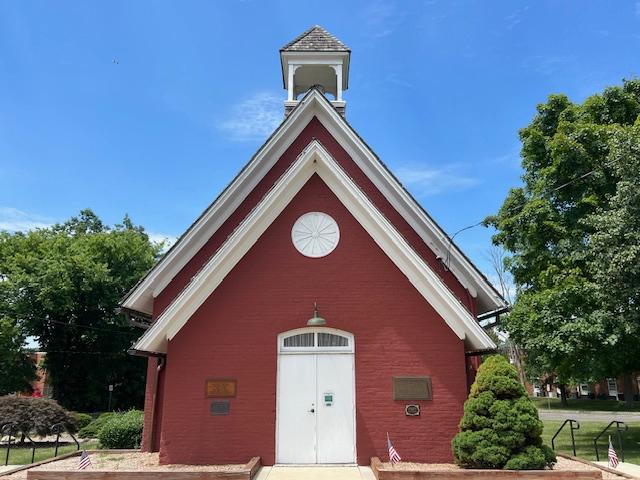
I visited the “Little Red Schoolhouse” Museum at 203 Ridgedale Avenue in Florham Park, which is also rarely opened. This interesting little museum showcases the town’s historical collection of items from the 1800’s and 1900’s dealing with all aspects of town life.
Schooling at the “little red frame building” prospered and so by the 1850’s, the building was “in condition of dilapidation rendering it unfit to be occupied” due to overcrowding.
The schoolhouse from the front
The inside of the museum schoolhouse display
The inside of the old classroom
The schoolhouse setting
In the back there is a small classroom set up keeping with the theme of the building. This lets students, who are visiting the building of their counterpart’s early education with desks, ink wells and chalk boards that have not changed that much over the years.
Not much has changed in the modern classroom over the years
The old schoolhouse desks
There is early century clothing, farming equipment from the town’s farming past and even Native American objects found in the town and in private collections.
The town artifacts and school items
The hitching post
Other items included decorative items from the home including dishware, home products and furnishings.
Each section of the museum is divided up by lifestyle.
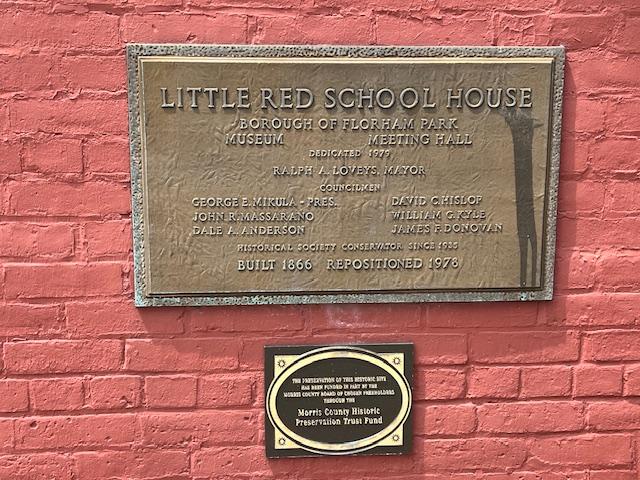
The museum’s historic plaque
The docents that day explained that the items were reflect the town’s past and some came from families that have been in town for years. The museum reflects the community spirit of town’s past. It explains that times have progressed but not changed too much over the years.
The Veteran’s Monument outside the museum
History of the Little Red Schoolhouse Museum:
(From the Museum Website)
By Kat Kurylko, Research Assistant
In 1830, the residents of Columbia, now Florham Park, sought to improve their thriving farming and broom-making community by establishing a public school for the local children. Therefore, a small schoolhouse, Columbia School #5, was built on the corner of Columbia Turnpike and Ridgedale Avenue and dedicated it on February 17th, 1831.
The schoolroom display
Schooling at the “little red frame building” prospered and so by the 1850’s, the building was “in condition of dilapidation rendering it unfit to be occupied” due to overcrowding. It just showed me one thing as an educator, that the concept of modern education has not changed that much in 150 years.
I next visited the Tunis-Ellicks House 16 Village Road in New Vernon and enjoyed the self-guided tour of this well maintained and displayed home. Unlike many sites I have visited over the years where things are left out and jumbled on tables, the Tunis-Ellicks House offers a look at small family farms from before the Civil War. The displays depict and discuss the life of a farming family in Central New Jersey.
The Tunis-Ellicks House in New Vernon, NJ
The house sign
The house is located in the New Vernon Historic District
The house was located in one of the oldest sections of the community, facing other structures in the historical district of New Vernon, NJ.
The house and front garden from the road
The vegetable garden in the front of house
In front of the house was a large vegetable and fruit garden with a grape arbor for spirits on the side of the house. These items would be jarred and pickled for the winter months or sold at market.
I liked the way the volunteers maintained the gardens with fruits and vegetables that would have been used in Colonial times mixed in with a modern twist.
Mission Statement:
(From the Museum website)
The Harding Township Historical Society is a private, not-for-profit corporation founded in 1977 to stimulate interest in the history of Harding Township. The Society shall support, assist in and seek to achieve the preservation of documents, buildings and sites related to Harding Township. It shall also collect, preserve, maintain and interpret original cultural material, which illuminates this history. In addition, The Society is responsible for preserving and maintaining the Tunis-Ellicks House and environs. Through use of its historic site, collections and programs, the society endeavors to document and illustrate the history of Harding Township for present and future generations (Tunis-Ellicks website).
You enter the museum from the back of the house. In the backyard of the home, there were all sorts of activities going on while you could start a self-guided tour of the house.
The back of the Tunis-Ellick’s House
The beautiful view from the back door of the home
The inside of the main part of the museum
The main part of the museum was the newer extension of the home where the living room and dining rooms were located. There were displays on the walls discussing farm life in New Jersey during the late 1700’s and early 1800’s.
The Dining Room section of the house
The workings of the Dining Room
The story of ‘Country Life’ and the gentleman farmer
Pieces of the decor on display
The kitchen area of the older part of the home offers a homey fireplace for cooking and summer storage for jarred and pickled food stuffs for the winter.
The kitchen and storage areas of the home
Pottery collection in the museum
The pottery collection
The kitchen dining and cooking area of the home
The fireplace for cooking, roasting and stewing of foods
The oven for baking breads, cookies and pies and the baking equipment
The Summer storage area for canned and jarred provisions for the winter months and for cooking.
History of the Harding Township Historical Society:
(From the Museum website)
The Harding Township Historical Society was formed in 1977 to save the circa 1795 Tunis-Ellicks House and restore it as it appeared in the early 19th century. The society discovered an original 18th century hearth and Federal-style mantel and a water-fed cooling room besides the well. Areas of the house were left exposed to showcase the post-and-beam construction. A permanent exhibit on 19th century farming was created as well as space for temporary exhibits.
The Society saved a circa 1870 Tramp House from destruction when the Great Swamp National Wildlife Refuge was created by having the building moved the Tunis-Ellicks House property. The Harding Township Historical Society maintains an extensive archive containing records, maps, and objects since the colonial era pertaining to the town. The archive is open to researchers, genealogists and the public. Each year we provide an award to a student at the Harding Township School that excels in the subject of history. The Society produces exhibits, lectures, tours, and interactive events to bring history to the public.
When I drove to the Tunis-Ellicks House, I was really hungry and it was lunch time. I had passed the Green Village Deli at 536 Green Village Road and I read the reviews online while in their parking lot and they were excellent so I decided to give it a try. The food and the service were excellent.
The Green Village Deli at 536 Green Village Road
The sign that welcomes you to this local breakfast and lunch establishment
The Village Green Deli is a popular local sandwich shop, where the staff seems to know all the customers by name (with the exception of me) and is located in this small downtown area facing the Village Green.
I really liked the vibe of this small town deli where the owners knew everyone by name and I felt like an interloper at a private party.
The inside of the Village Green Deli
The deli has that small town feel to it, with local art and sports paraphernalia in the walls. The woman who worked the register was greeting everyone by name and the guys that worked the grill seemed happy to see me.
Looking at the menu at the grill
I looked at the extensive lunch menu of popular sandwiches and some wonderful combos. You could even still get breakfast as I saw some of the guys at the counter devouring as I decided on what I wanted to order.
The deli has a wonderful selection of sandwiches, hero’s and other delicious sounding items.
There were so many things I wanted to try that day that it was hard to choose. Was it a breakfast sandwich with local sausage? The Thanksgiving ‘Gobbler’ sandwich with turkey, stuffing and cranberry relish, that sounded so good? I decided on an Italian hero sandwich with a selection of deli meats with fresh lettuce, tomato and onion. The hero was excellent!
The Italian hero with a pickle
The sandwiches here are huge! One half of a sandwich a normal person could eat for lunch and save the rest for another meal. The sandwich was loaded with salami, bologna, ham, Swiss Cheese and fresh veggies. I could barely fit it in my mouth.
The sandwich was excellent
The food was excellent. The bread was so fresh and the cooks did not skimp on one ingredient. The vegetables were so fresh and crispy and I loved the combination of flavors of the cold cuts. I really enjoyed my lunch and would like to make a special trip back just to try more of their sandwiches. I was very happy with my lunch.
One of the last places I visited was the Historical Society of Boonton Township, which is located in the former Oscar Kincaid Farm Homestead 591 Powerville Road. The house and what was left of the acreage of the farm was part of the current museum. The museum was an example of early New Jersey farming that dated from the 1800’s to the Twenty-First century.
There was not much in the way of period furniture or farm equipment (items of the home were sold off since Mr. Kincaid’s passing), but the new historical society is buying artifacts and bringing them back to the farm. This includes one of Mr. Kincaid’s tractors. His roll up desk is also still in the display room which was once the Living Room of the home.
The Kincaid Homestead at 591 Powerville Road
History of Oscar Kincaid and Homestead:
(From the Morris County Historical Society website)
Originally a part of the extensive tract belonging to William Penn, the earliest portion of the home was constructed in 1785 by Adam Miller and Anna DeMouth Miller. Just over a decade later, they sold the property to Adam’s cousin, Sarah Miller Parlimen (of the Miller/Dixon homestead) and her husband, John, who built a sawmill there. After a brief ownership by William Scott of Powerville, a Miller relative, the land was sold to John Decker in 1828. An industrious man, Decker operated both a farm and successful forge, shipping his goods to New York via the Morris Canal. By 1837, he expanded the home, adding a distinctive folk-art painting of a face and unique plasterwork that can still be seen today (MCHS website).
The homestead passed through generations of Decker’s family, ultimately being inherited by Oscar Kincaid Sr. in the early 20th century. Kincaid ran a popular ice cream stand and dairy business throughout the 1920s and 30s. Following World War II, the family opened Valley Farm on the site, which continued until the death of Oscar Kincaid Jr. in 2000. Added to the National Register of Historic Places in 2005, the Decker-Kincaid Homestead today operates as a museum and headquarters of the Historical Society of Boonton Township (MCHS website).
The Kincaid House
The historical marker for the house
The front yard
The entrance to the house
The main foyer of the house
The house is a small farmhouse built in two sections. The original part of the house dates back to the late 1700’s and the newer part in the early 1800’s. The once furnished rooms now hold displays of Morris County and the farming industry of the time plus community artifacts.
The former Living Room
Oscar Kincaid’s desk
There were not much left in the way of family furnishings and heirlooms but this desk was Oscar Kinkaid’s.
The back bedroom
The Flag display for the ‘250th Anniversary’
Story of Oscar Kincaid’s life: Oscar Kincaid was a farmer/businessman, a politician and a conservationist.
After the short tour around the house, I walked around the farm grounds. The house was set on a beautiful piece of land that sloped down to the old farmstand. There was also a swimming pond which was once part of the farm which is now private property.
The farm property from the side with the barn
The barn across the street
The property was about ten acres at the time of his death and parts have been developed. It still has some of the most wonderful views of the area.
The view of the old farm from the front porch
The farm land stretches over different sections of the road and the property is very picturesque. It is a very beautiful homestead.
The view of the farm from the lawn
The swimming pond on the edge of the property
The old farm stand that had been used for eighty years
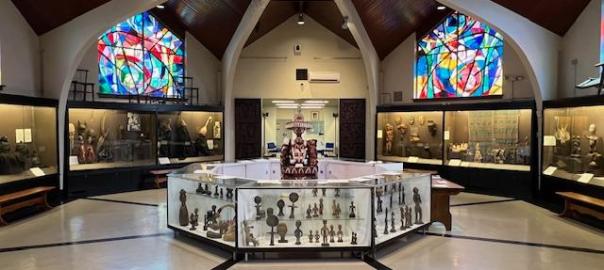
I recently revisited the African Museum of Art on the SMA Father’s and on this trip really took my time to learn about the Mission and study the art in the various displays. Each country that the Mission is involved with is represented here with detailed information on the meaning of the art and its purpose. It is an interesting approach to understanding the culture of each of these countries.
The beautiful stained glass windows line the ceiling and walls and has a beautiful effect in the room on a sunny day.
The sculpture in the middle of the main hall
The History of the Museum:
(From the museum website)
This museum was established in 1980 and is one of the only rare few in the United States dedicated solely to the arts of Africa. Its permanent collections, exhibited on a rotating basis, offer a unique advantage in the study and research of sub-Saharan sculpture and painting, costumes, textiles and decorative arts, religion and folklore.
The main hall of the museum
The history of the Mission
The history of the Mission
The history of the Mission
The African Art Museum of the SMA Fathers is one of five museums around the world founded and maintained by the Society of African Missions, an International Roman Catholic missionary organization that serves the people of Africa.
The display case that line the main hall
The display case that line the main hall
The art works up close
The descriptions of the works
The display case that line the main hall
Some of the works up close
The description of the masks
The display case that line the main hall
The museum is the continued vision of SMA’s founder, Bishop Melchior de Marion Bresillac (1813-1859). The French-born clergyman urged his Society to respect and preserve the culture of the peoples they serve, the unique among the missionaries of his time. (This information is provided by the museum).
Some of the works being featured in the exhibition
Their current exhibitions is on the “Africanizing of Christian Art” which shows the 20th Century encounter between Catholic Christianity and the visual culture of the Yoruba, a prominent west African people of southwest Nigeria under the conditions of late colonization (This information provided by the museum).
The hallway off the main room
Linking the walls of the main room are wooden carved doors from a palace in Africa. The interesting detail work tells it own story.
The description of one of the doors
Panel One
Panel Two
Panel Three
Panel Four
The collection contains many works in the form of masks, textile work, religious figurines and decorative arts. Each display case shows a different theme in the art.
The works of art in the cases
The puppets in the case
The works of art lining the cases
The engaging Mask collection
The museum is the main hallway of the church. I found it a quiet place where you could really concentrate on the beauty of the art. It grounds are also nice to walk around in in the nice weather.
The Chapel just off the museum is interesting to visit. I wondered how many people came to serve here and how the service was performed.
The main chapel of the mission
The beautiful stained glass windows in the chapel
The museum is a true hidden gem of wonderful and interesting testimonial and contemporary art. An inspiring museum if you take the time to really enjoy it.
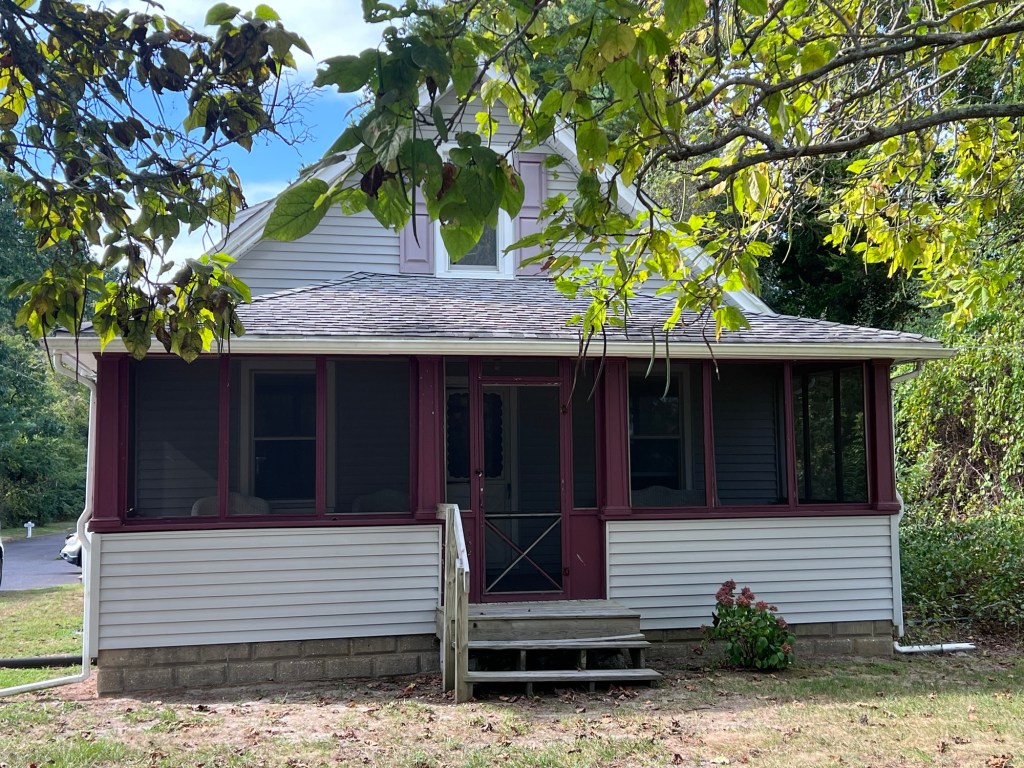
The sign welcoming you the the Endicott-Reardon Family museum
The original Endicott-Reardon Homestead that sits in the front of the museum
The entrance to the museum dedicated to the lives of both the Endicott and Reardon families.
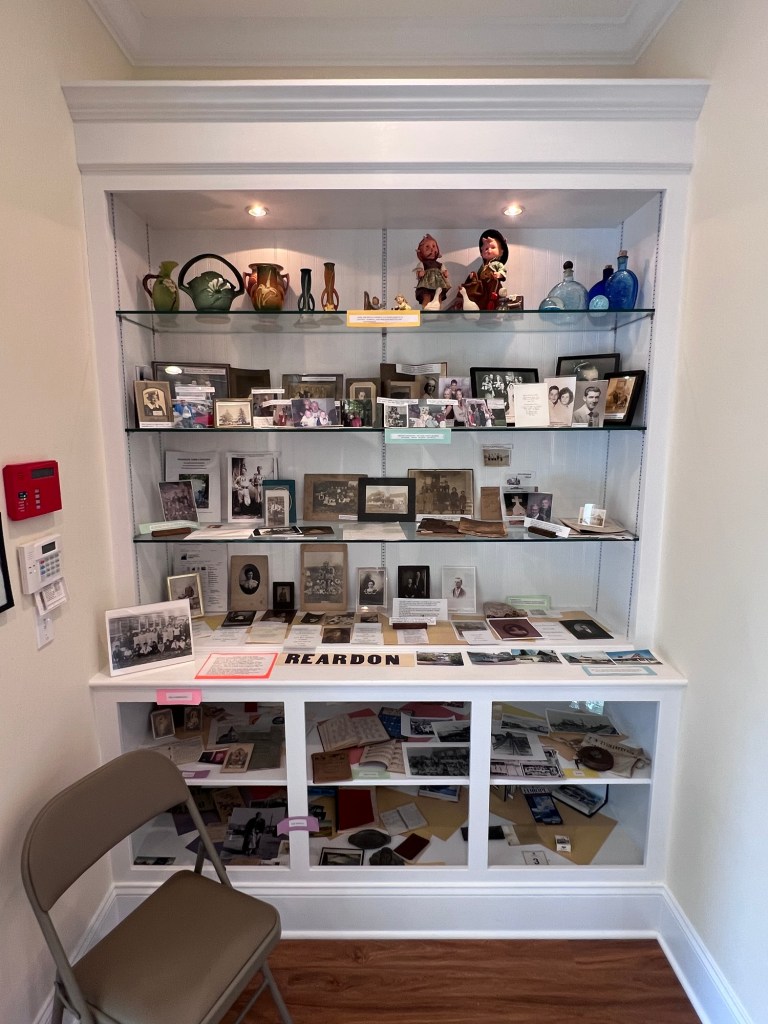
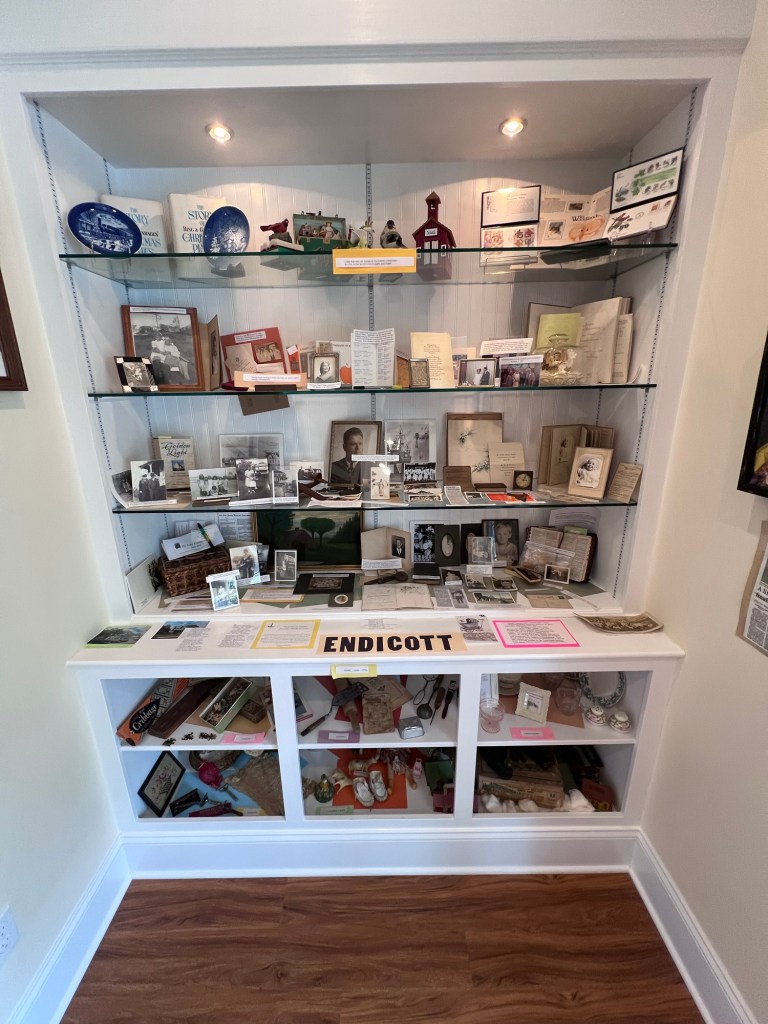
The family artifacts and heirlooms at the museum as you enter the museum
The Endicott family display at the entrance
The museum is a real surprise as entire set of displays is dedicated to the lives of the local Reardon and Endicott families and their family items. A fascinating look of the lives of these early New Jersey families for over a hundred years. This is the collection of Harriett Reardon Bailey and her family. All these wonderful items were saved over the last 100 years and now it was time to share them with the world.
The various family items are organized by sections categorized by lifestyle and collection.
I was given a personal tour that I had arranged with the current curator who had known and worked with the owner of this extensive collection. It had been her dream to open a museum to share her collection with the public.
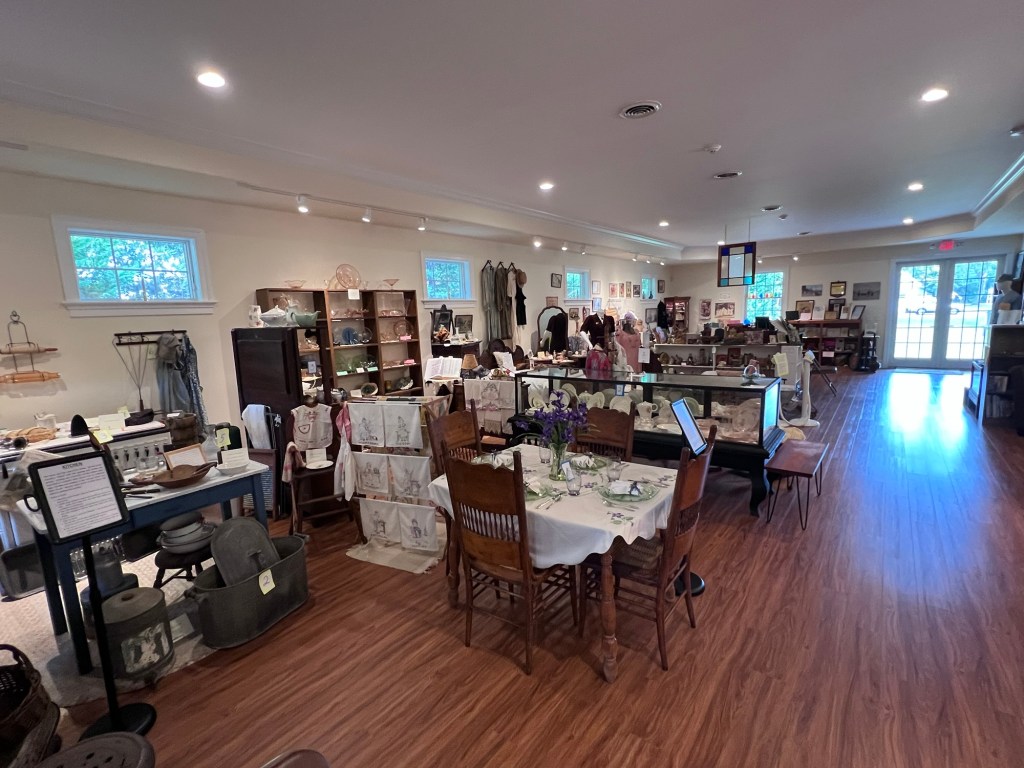
This beautiful, well lit and displayed collection of family heirlooms and personal items gives a glimpse of the lives of an upper middle class family in Southern New Jersey. It is organized and displayed as a household would be at that time.
The first section of the museum was dedicated to items from the kitchen and preparations.
The family Living room furnishings and decorations
The family piano that once graced their Living Room
A decorative toy car used in the Living Room
The kitchen area and artifacts of the cooking and washing done in the house
The table set for a formal dinner
The next part of the exhibit was the formal Dining Room and on display were many of the China patterns that the family owned.
All the china collections the family owned plus other decorative pieces
The family collection of China and glass pieces
The family had various collections of China
Mainly of the bedroom items have been preserved too from linens to comforters to every day clothing. There are also a selection of family member’s clothing, jewelry and personal items.
The Bedroom vignette with clothing and accessories
Another view of the bedroom
Harriett Reardon Bailey had been a school teacher like her mother and there were displays of items that reflected her time in the classroom including a classroom setting.
Time on the classroom and family employment
The classroom set up
Activities and programs at the school
More local school items
There were also displays on her father’s time in the army and her uncle’s time working on the railroad with carefully preserved outfits, programs and railroad artifacts from the job.
The Railroad display
School and family items
Work on the railroad
The display on the family contribution to the armed forces
What I thought was interesting was that the founder of the museum had been an only child with relatives that had never been married so that she was the only child and a bit spoiled.
The Toy Room
In a separate room off the side held her extensive collection of dolls and games. She had kept all her childhood items in such beautiful shape and with great care. What impressed me was there was a picture of her as a little girl with all her dolls and stuffed animals her room and since she kept everything, they were able to recreate the display.
The picture of the owner, Harriot Reardon Baily, of the museum as a little girl in her bedroom
The exact replicated display of toys in the same spots in the display
The collection of tea sets
The collection of toys and playthings are extensive and they are all in wonderful working shape
There was a large collection of dolls plus all their clothes and accessories that were kept together in her collection. Even into adulthood, all of her childhood items were kept in pristine condition.
The collectible dolls and clothing
The extensive collection of childhood dolls
The collection of China and baby dolls
The collection of baby dolls
The collection of cloth and rag dolls
The handmade dollhouse and rag dolls
The fancier imported and collectible dolls
What I thought was interesting during the tour was that the curator had said that the founder of this museum had the vision of keeping all these items for so long and packing the house with family memorabilia. I think she knew what she was doing.
She was not just preserving memories, she was preserving a past that was fading away and the memories of a different time. As her family died, she kept their memories alive by preserving their past as well. The curator had said that she had always wanted to create a museum with all her family’s items and share them with the public. Now we get to glimpse into her family’s history and everyday life.
The museum shares with the public the day to day happenings and life of the Endicott-Reardon branches of the family and life as a middle class Victorian family. I think she preserved the best items with such care as to share them with future generations of what life was like at that time. When people knew each other and times were slower and quality mattered. She loved her beautiful things and wanted to share them with us.
The inside of the Endicott-Readon Family Museum
A video of the museum from owner Harriot Reardon Baily and her collection
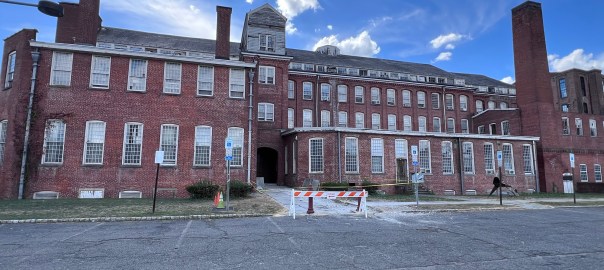
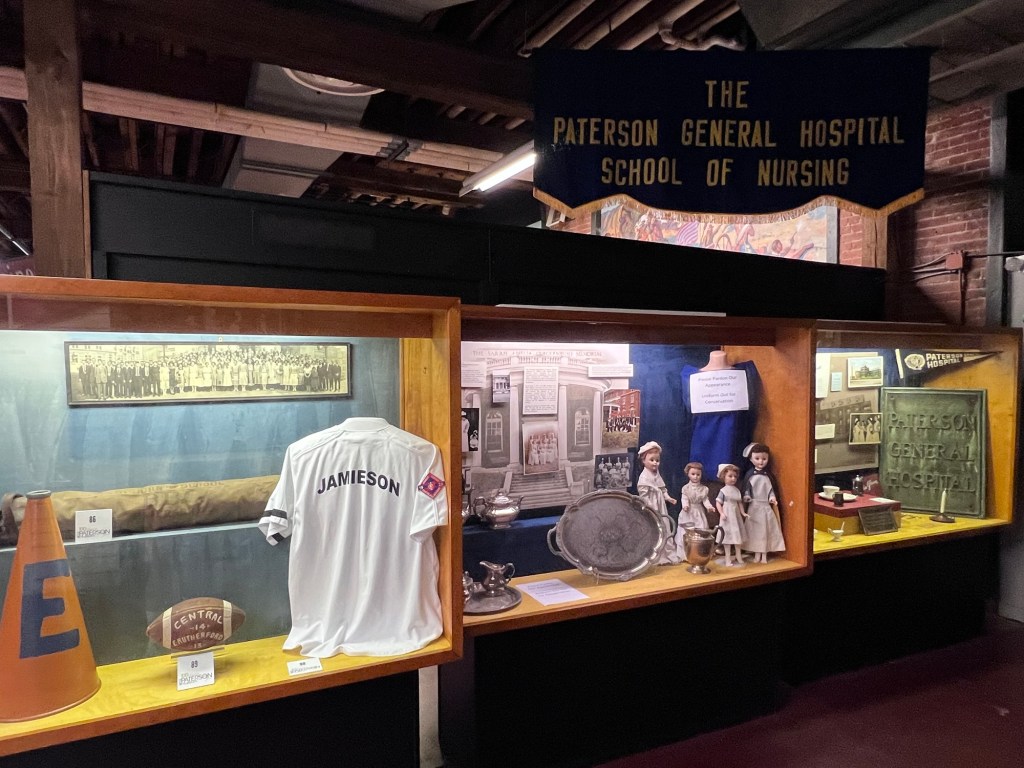
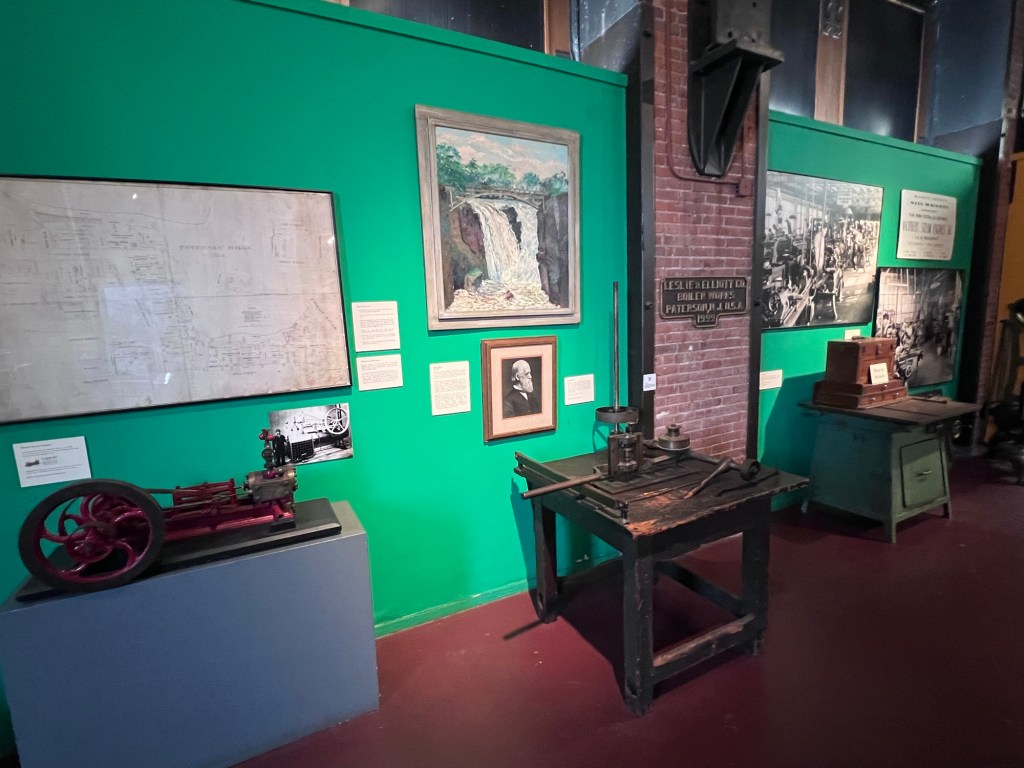
The Paterson Museum is an interesting museum of the history of the City of Paterson, NJ. The museum is broken into different sections of the City’s history. The museum discusses from the time that the Lenape Indians lived in the area to the rise of colonization and then to how it developed into the Silk City through city planning and placement. The museum covers the history of the City of Paterson in the industrial Age as well with the rise of the Silk Industry, the Wright Airplane Factory, the Colt Revolver and the growth of the hospital industry in the City.
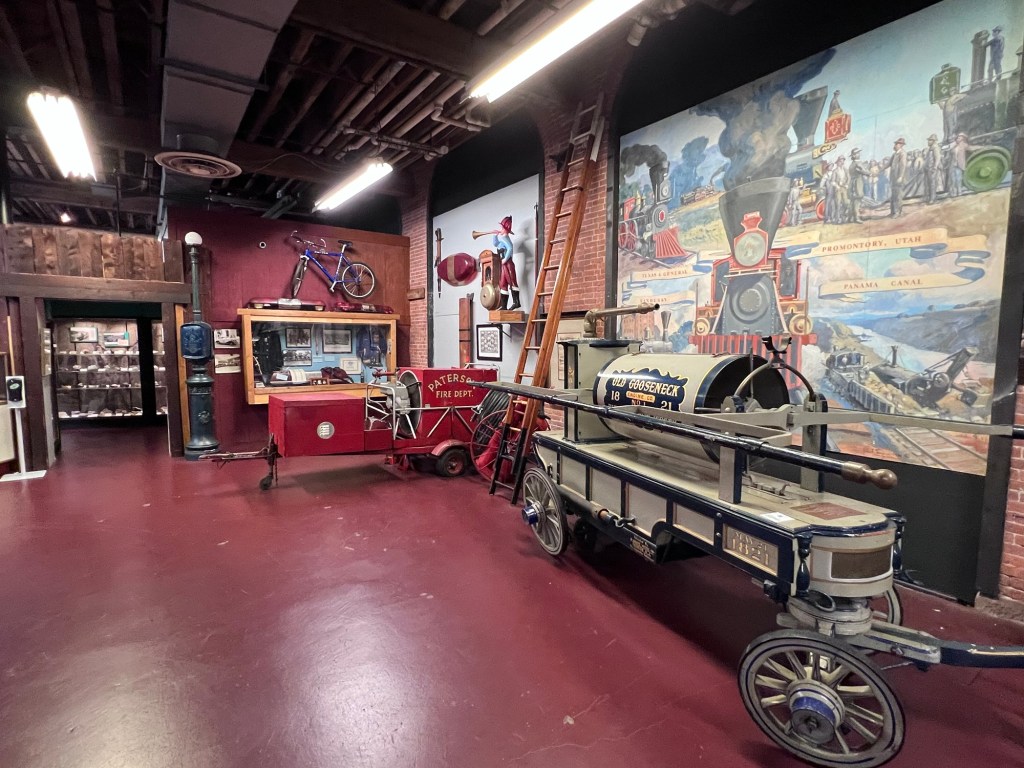
Paterson Fire Department
The Public Safety exhibition
Paterson Steam Engine
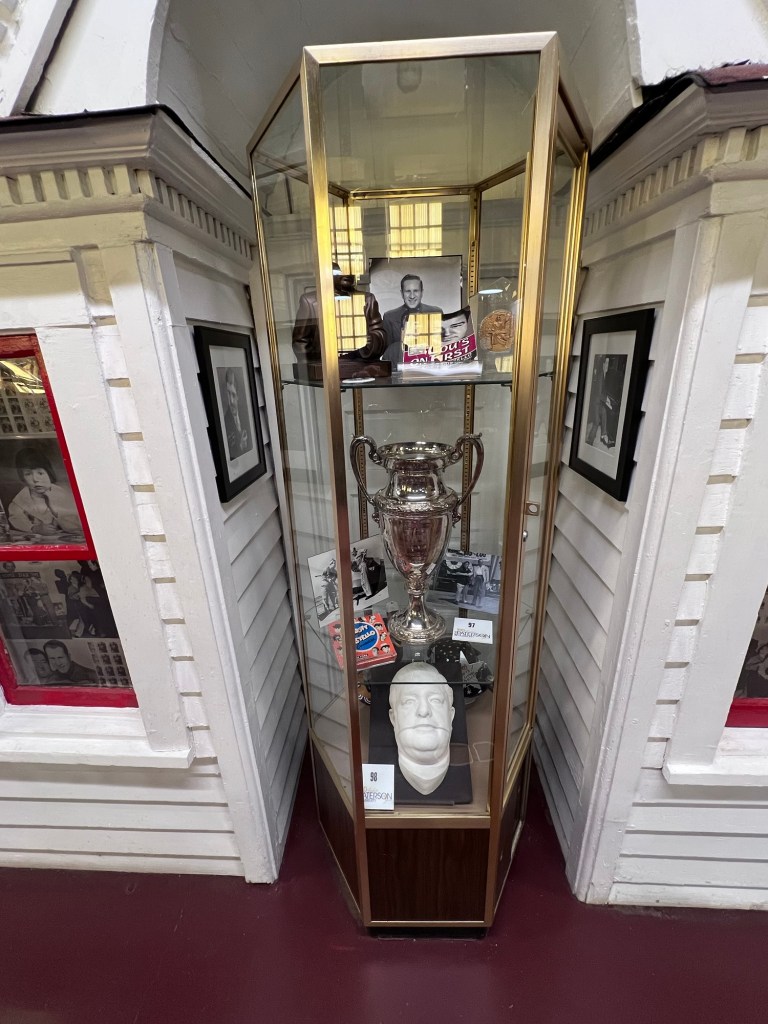
Take time to look at the live displays of minerals, Native American artifacts, old fire department equipment and the life and times of its native son, Lou Costello.
The inside of the Paterson Museum
The nice part of this museum is that the parking is free, it can be toured in about two to three hours and it is walking distance to the Paterson Falls and to Little Peru restaurants. It is also free.
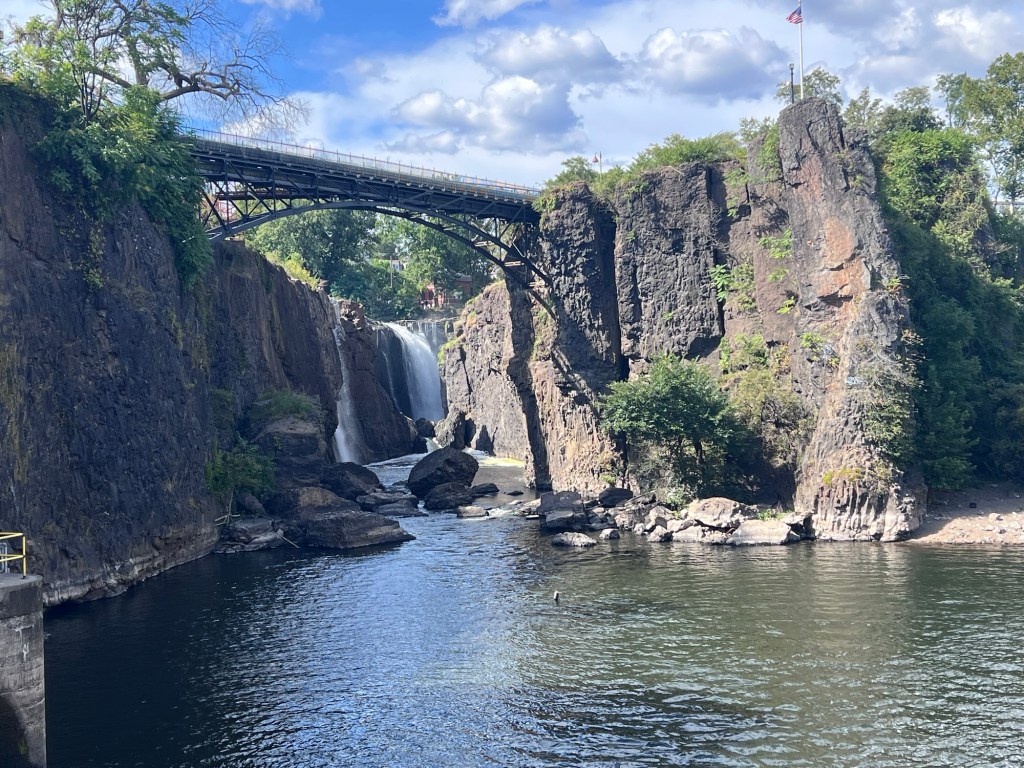
The Paterson Falls up the road
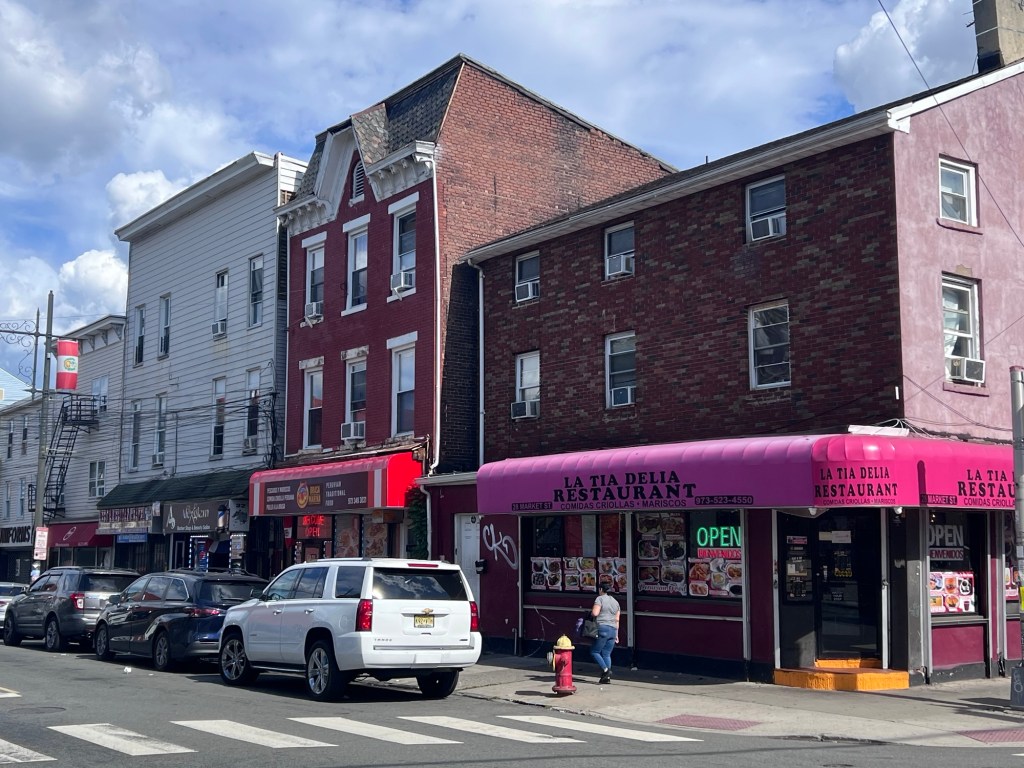
Little Peru down the road
The Introduction:
The Welcome Center
The Paterson Museum offers a ‘History within History’ experience. Located inside the former erecting shop if the Rogers Locomotive & Machine Works, the museum, presents a glimpse of the rich history and the many factors that gave rise to Paterson, New Jersey: “America’s First Planned Industrial City.”
From the natural wonders and the first inhabitants of the land that lay below and above the ground to the vital role Paterson played in setting of our nation’s industrial course. Through the museum’s exhibits. you’ll find out why Paterson was known for more than a century as the “Silk City.”
Silk City
You’ll discover that Paterson was at the forefront of locomotive, submarine and airplane engine development. And that’s just the beginning of our story. By the time you finish your visit, you will want to learn more about this city that surrounds the Great Falls.
The Exhibitions:
Paterson Residents: There are exhibitions on such celebrity natives as Lou Costello and his life after living in Paterson are shown in detail.
The Lou Costello exhibition
The Lou Costello exhibition
Baseball players, football players and actors have shown against all odds and color barriers they found success in the world with Paterson being their roots.
Sports in Paterson, NJ
The Silk Industry
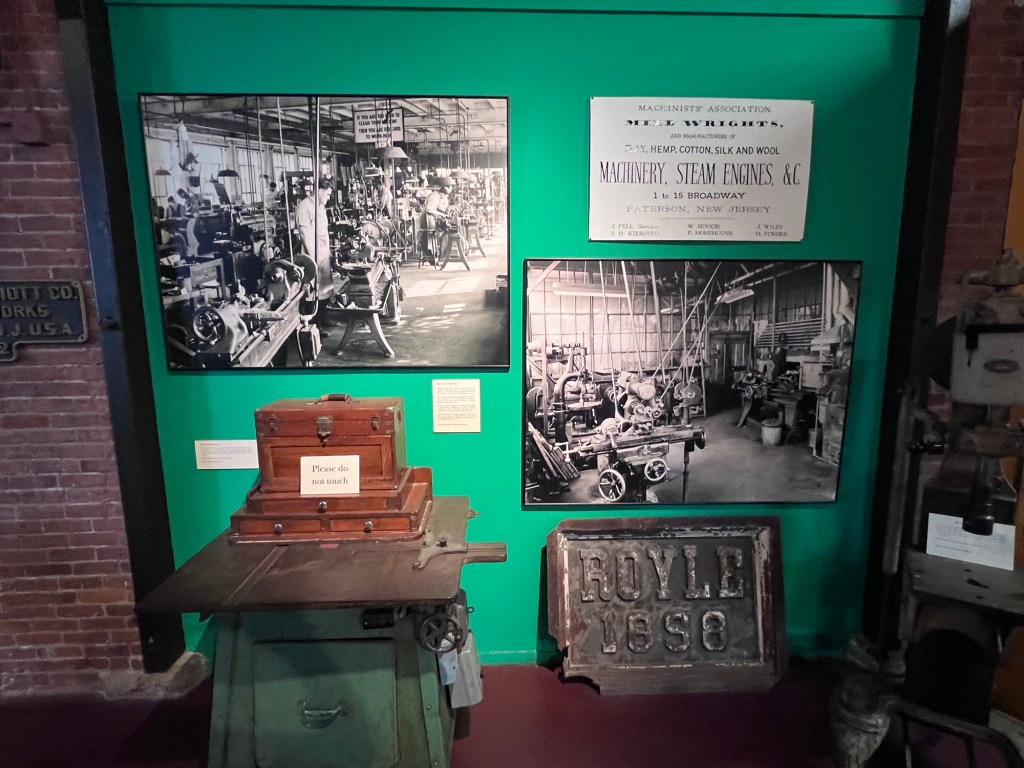
Silk City: The history of Paterson as ‘Silk City’ features winders, warpers and power-looms that produced beautiful fabrics. How the Falls and the location of the City of Paterson played its part in the garment industry at the turn of the last century. Not just in the silk industry but also in other companies like the Wright Aeronautical Corporation and the their time as a manufacturer in Paterson.
The Paterson Fire Department
The Paterson Fire and Police Departments: The history and development of both the Paterson Police and Fire Departments are told through pictures, stories, uniforms and equipment through the ages. There are many turn of the last century fire trucks in the museum.
World War Exhibition: The museum has a wonderful exhibition on the history of Paterson and the role it played in the World Wars. There are all sorts of uniforms, munitions and stories to tell.
The War years
The Veterans exhibition
Geographical: There is a whole side exhibition of gems and minerals both native and from all over the country at the museum and a full display of native New Jersey stone formations. There is also a discussion of how the Falls played such an important role inf the development not just of the City of Paterson but of New Jersey as well.
The Minerals
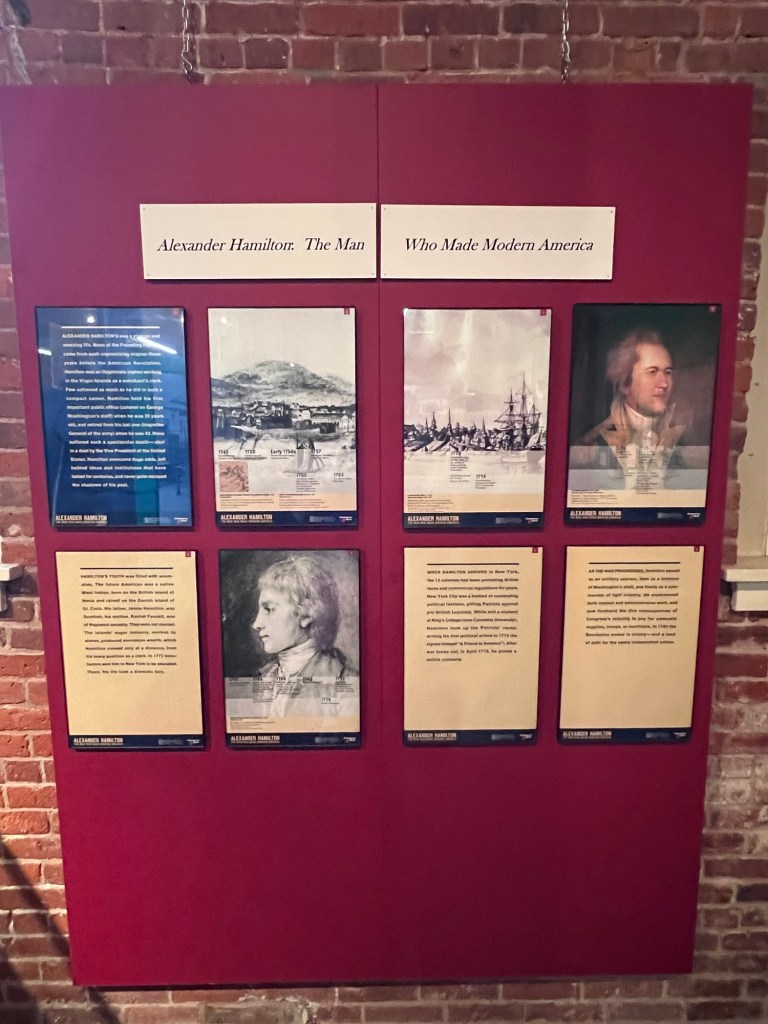
Alexander Hamilton Exhibit: The history and life of Alexander Hamilton is told from the time he was born in the Caribbean to his coming to the United States, his marriage and his rise through the ranks of the government. There is how he helped develop the banking industry and paying of the government debts to his fall from grace and his eventual fatal duel with Aaron Burr.
The Alexander Hamilton exhibit
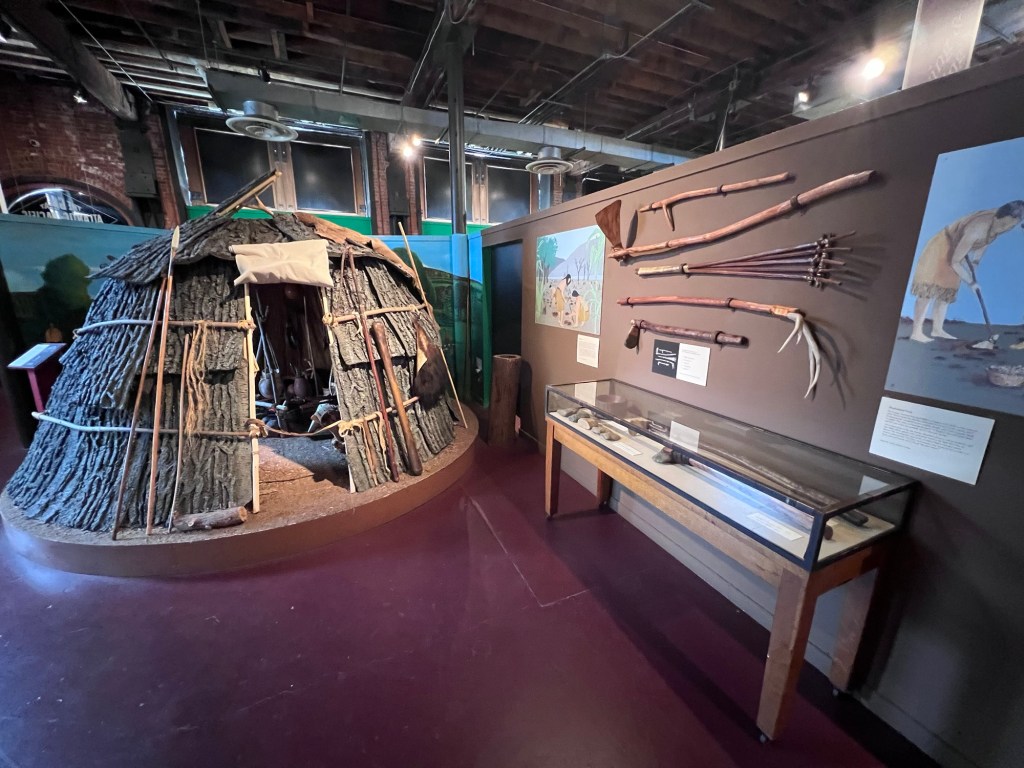
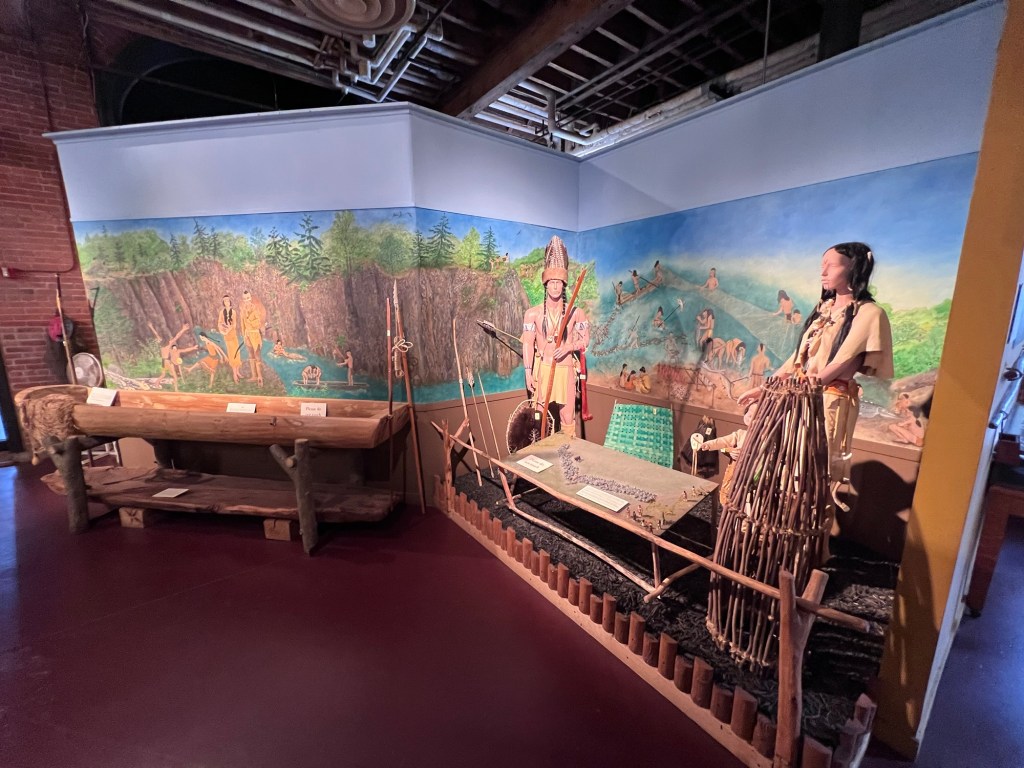
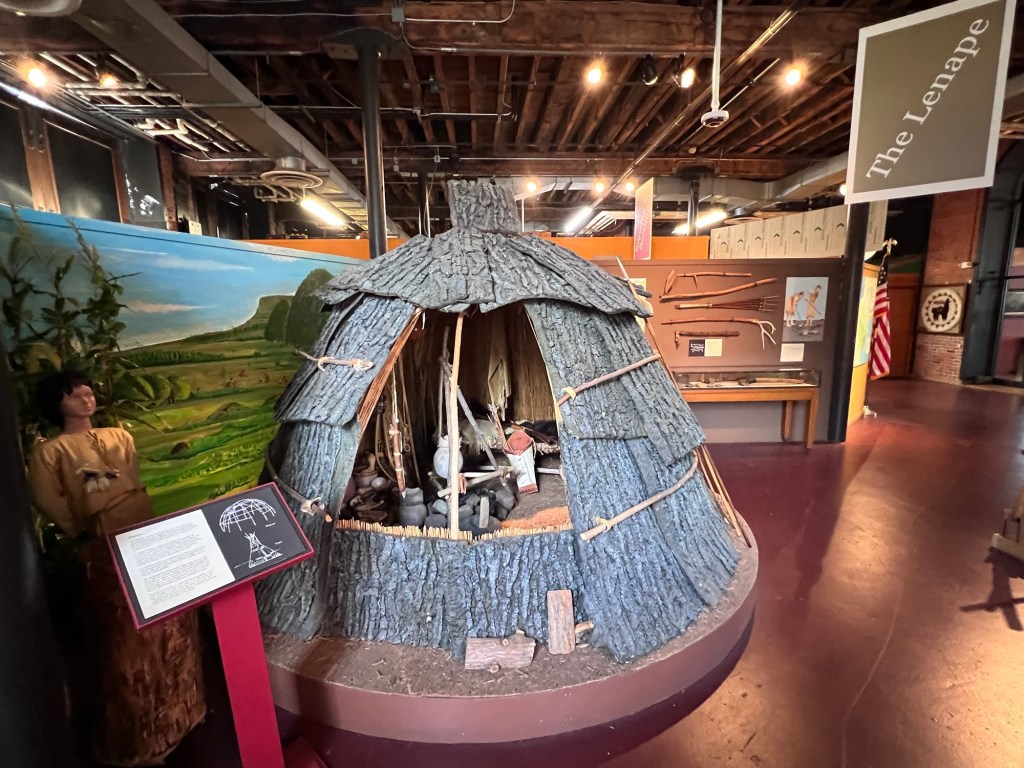
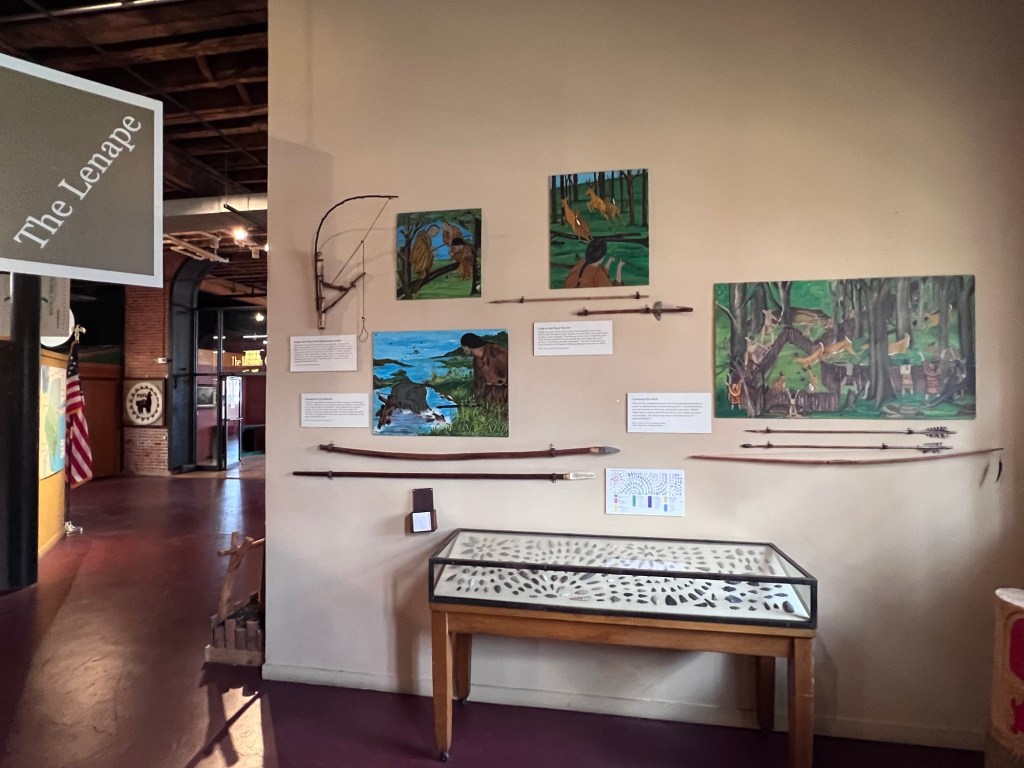
Lenape Indian Culture: The Lenape Native American culture is shown how the tribes developed, lived, worked and hunted and gathered to create the society that was in place before colonization.
The Lenape exhibit
There are all sorts of tools, displays on their regions of living, language, housing (there is a recreation of a Tee Pee here), that native wardrobe and a complete display of tools and arrow heads. It is a very detailed account of life as a Lenape Indian.
Lenape Exhibition at the Paterson Art Museum
The Lenape Indian exhibition
The Lenape exhibition
The museum shows the history not just of Paterson but of the surrounding areas and how growth of the City of Paterson made an impact on the region.
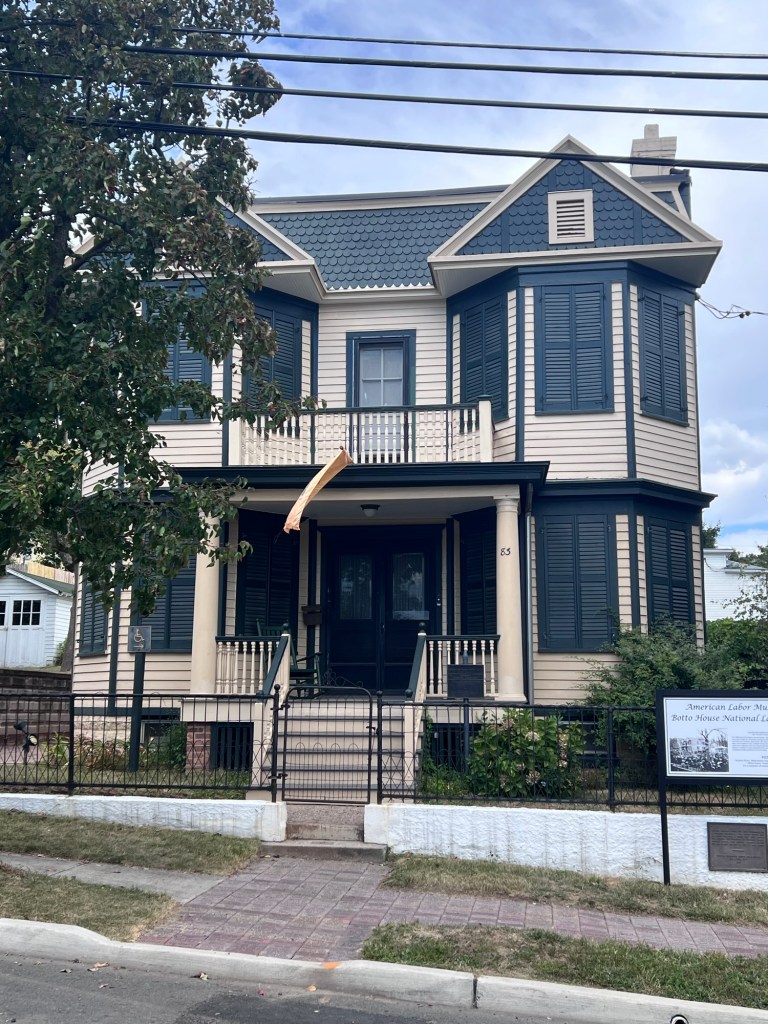
I recently visited The American Labor Museum/Botto House National Landmark for the afternoon and learned a lot about the American Labor Union formations and the rights we now take for granted.
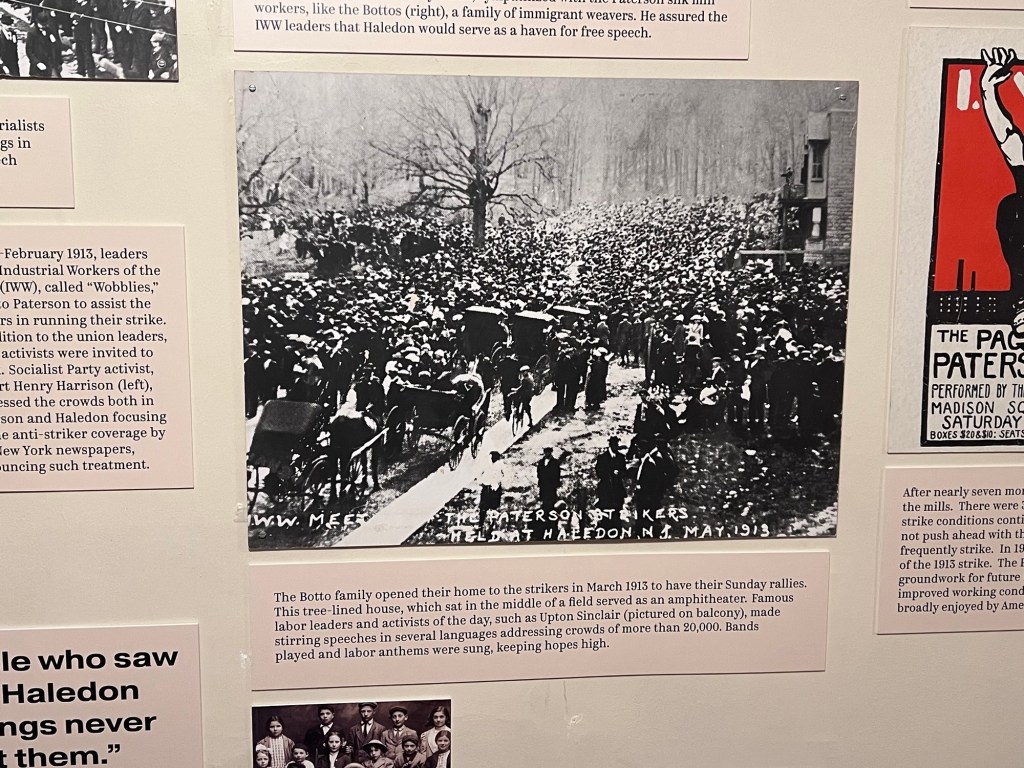
A group of us took the tour of the Botto House and learned of its history and its place in the Paterson Silk Strikes of 1913. The first floor which serves as the meeting room has pictures of the Paterson Silk Strike which lasted just over five months and since the Mayor of Paterson at the time would not let the strikers meet, the Botto’s agreed to let the strikers meet at their home which at the time was in a isolated section of Haledon.
The history of the Silk Strike in Paterson
The Mayor of Haledon was sympathetic to the Union cause and let them meet in the town. Their house was situated in the middle of a field so that the strikers could gather around the home and listen to speakers.
The Botto House during the Paterson Silk Strikes
From their balcony, speakers could talk to the strikers and keep everyone abreast of the situation. Here people gathered and picnicked together and worked together to get their rights heard.
From the main display room, you will tour the home of Pietro and Maria Botto. First stop is the kitchen where Mrs. Botto ran her household. She made extra money selling food to the strikers and arranging meals for Mr. Botto’s co-workers. The family family did what it could to make money for the family.
Mrs. Botto’s kitchen
The sink area
Here she made meals for her family, did her jarring and preserving and the washing was done. Then a tour of the dining room, bedroom and the palour area where the family met and greeted people. The upstairs was formerly two apartments that were built to help ‘pay the bills’.
The Botto House Kitchen
The upstairs is now the display space where a display on the Dock Workers Union is currently being shown. We got to stand on the second floor balcony where so many speeches were made.
The backyard area
We took the back stairs to the backyard where the family had the grape arbor, root cellar where the preserves were kept and the boccie ball court. It seemed the family was very social at the time and self-sufficient.
The root cellar and Vineyard
Things turned bad for the family when both Mr. And Mrs. Botto both passed away two years after the strike. The strike could have taken its toll on the family or the fact that Mr. Botto could not find a job after the strike was over. No one knows.
It is an interesting tour of how one family opened their home to an important cause and it made a difference in the success of the strike and getting it resolved.
The history of the Botto’s:
The museum headquarters was the home of an immigrant family of industrial workers whose story is a fascinating one. In many ways, the telling of their saga is a doorway for museum visitors to step through and make connections with their own ethnic backgrounds.
The European Heritage:
Pietro and Maria Botto hailed from the region of Biella, Piedmonte, Italy. This area, at the foothills of the Alps, was a leading textile producer of linen and wool. The mountainous area was home to a fiercely independent people who, for centuries, wove cloth in their homes on looms which they owned.
The Industrial Revolution forced weavers to give upon cottage-based production to seek employment in large shops or mills. the displacement of workers by mechanized looms and weavers’ lack of economic independence caused people in Biella (as in other European textile areas where Paterson’s workforce originated) to embrace new ideas about worker rights and to be a vocal workforce wherever they roamed.
Pietro decided to leave Italy because he was made eligible for a second draft into the army at the recently united Kingdom of Italy (Italy had quadrupled its army at that time to strengthen unification and to acquire African colonies). A skilled weaver who also painted church interiors, Pietro brought his wife, Maria and daughter, Albina (born 1889) on the long voyage to America in 1892.
The Botto’s settled in crowded West Hoboken, New Jersey (today’s Union City), where they worked in silk mills for 15 years until they had saved enough money to afford a home for their growing family. The family now included three more daughters, Adelia (born 1894), Eva (born 1895) and Olga (born 1899). In 1908, the Botto’s moved to Haledon, a tiny community, growing up along the streetcar line from Paterson, where many other country folk from Biella had already settled.
The Botto’s home became a focal point for a dramatic slice of history in 1913 when the epic Paterson Silk Strike broke out. Pietro was on strike with 24,000 fellow silk workers when massive and constant arrests forced the workers to consider the independent borough of Haledon as a location for great outdoor rallies. Mayor William-Brueckmann guaranteed the safety of the workers and Pietro offered his home as a meeting place for the strikers.
The Botto’s courageous stand allowing their home to be so closely identified with the strike stemmed from a belief in the rights of the common man. During the strike, Pietro and his family played host to the social and labor leaders who were the idols of the working person at that time. After the strike, the family had to very circumspect about employment in the mills, with one of the daughters denying her family name to avoid blacklisting by an employer.
The large house and spacious hillside gardens are a tribute to the family’s combined labor. Pietro and his daughters worked 10-12 hour days, 5 1/2 days a week in the mills. The eldest daughter began mill work at age 11 and the youngest at age 13.
On Sundays, the usual day of rest, the girls helped their mother serve patrons of the resort aspect of the property. Maria ran a large household, feed boarders during the week and the scores of people on Sunday and did piecework from mills; she died in 1915 at the age of 45.
Pietro lived until 1945, a beloved father and grandfather to a growing clan.
History of the House and Land:
The house in Haledon, NJ
The total environment of the Botto House National Historic Landmark reflects the ethic origin of this family of silk workers from the Piedmonte (Biella) area of Italy and the development of housing in early streetcar suburbs. It is representative of the sensitive use of small landholdings in American urban areas by various European immigrant groups.
The Botto family purchased Block X, Lots 38, 39 and 40 in 1907 from Alexander King, a real estate speculator. King himself purchased a large parcel of land from the Cedar Cliff Land Company, a group of Paterson industrialist and business leaders who were quick to see the advantages of selling cheap land to workers in Haledon. The completion of a horse-drawn trolley line in 1872 allowed for expansion of residential and recreational areas outside of the City of Paterson, a major American industrial center.
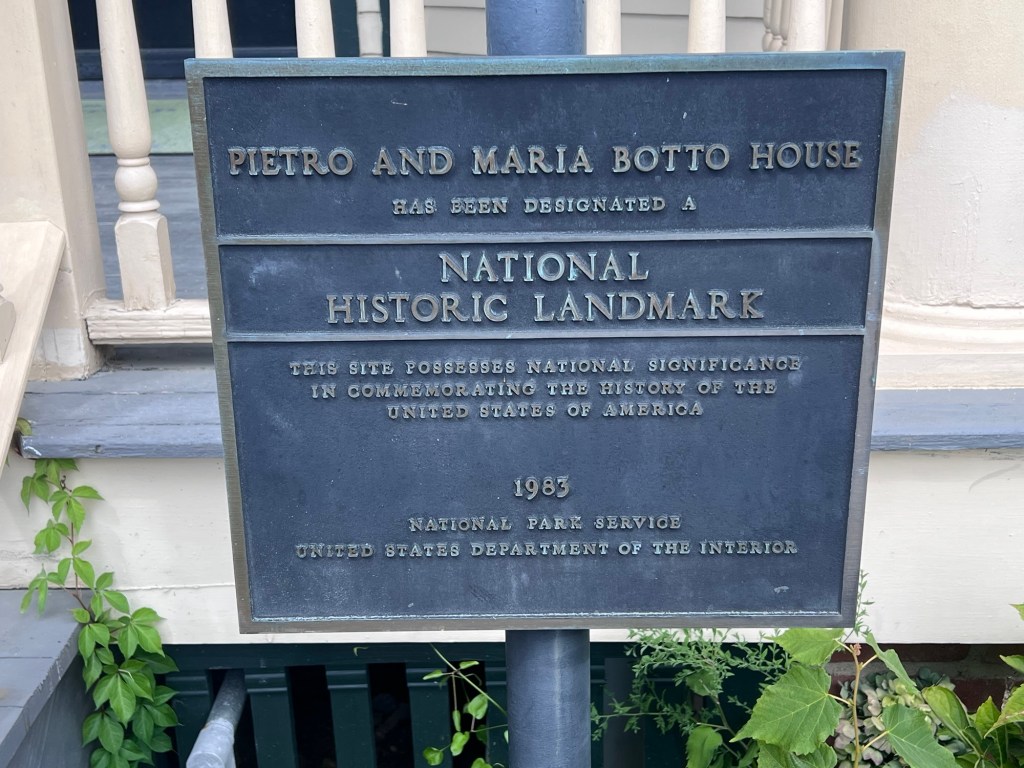
The Botto House sign
(Information from American Labor Museum: Botto House National Landmark, a Brief History)
The Period Rooms:
The Front Hall
The front entrance hall light fixture is original to the house. One of the restoration tasks yet to be carried out is the replacement of embossed wallpaper on the walls which was made to look like the carved leather coverings in the homes of the rich.
The front hallway
The Kitchen:
The kitchen was a major center of activity in the household. The large coal and gas range dominates the room. It was used as a heating source as well as for cooking foods. A table provided the space for food preparation; a cupboard stored pots, pans and dishes; an icebox kept food items cold (the root cellar, located in the garden was also used for cold food storage) and a sink for dishes and a tub for laundry utilities indoor plumbing-certainly a recent innovation for working class households.
The kitchen
Even with the convenience of indoor plumbing and the gas range, the kitchen was the scene of virtual non-stop labor for Maria Botto and her daughters. In addition to meals prepared for the family, the Botto’s fed a noon meal to extra people during the week, there were workmen without families, who rented rooms and come from the mills for a hot dinner.
On Sundays, the Botto women prepared food for as many as 100 people who came to recreate on the property. This, of course, provided on additional income for the family.
The Botto family’s foodways reflected their home region of Biella, Piedmonte, Italy. Piedmontese cooked scorned tomato sauce, preferring wine and chicken broth to accompany such staple foods as polenta (corn meal), risotto (rice) and tortellini, a pasta. Generally, rosemary, sage, and other herbs were used in cooking and grown outside in the garden. The herbs also had medicinal uses.
The kitchen sinks
Some of the artifacts placed around the kitchen are the copper put used to cook polenta (purur), meat grinder, fish scale, orange juice squeezer, coffee grinder (from a German immigrant household), rug beater, mousetrap and wall calendars which were used by working people as decorations.
The Botto women were generally charged with kitchen duties. Maria Botto hired a German woman to do the wash. One special job was reserved for Pietro, stirring the polenta and cutting it with a string.
The Dining Room:
The dining room was another work area for the family. Here the family and the ‘boarders’ dined. Here Maria ‘picked’ silk on a frame, located in the corner of the room under the window, examining the bolts of broadsilk brought from the mill for imperfections.
The Dining room
This was another task to bring income to the household. Maria used the sewing machine to make clothes. The table reflects a setting for the family and ‘boarders’, placed with dishes, silver-plated utensils and a condiment set.
The Dining Room
The sideboard, table chairs and sewing machine are family pieces. The lighting fixtures in this room as in the rest of the house were powered by gas. As is typical in the area, paintings were hung by string from a picture rail as the walls were made of plaster.
The Sideboard
The small painting shows sheep, which provide the wool upon which textile manufacture was based, against the backdrop of the Alps. The large sketched portrait of Pietro Botto in later years was produced by his grandson and professional artist, Richard Botto. On the side of the room hang pictures of the Botto daughters in their wedding attire.
The Dishes in the sideboards
The Bedroom:
This room, which was actually the girls bedroom has been recreated to resemble where Maria and Pietro slept. The dresser is set with brushes, combs and mirrors that are from the period. The Botto’s slept in a brass bed.
The bedroom at the home
Swimsuits and other clothing hang in the wardrobe. A travelling trunk rests on the floor next to the wardrobe. Next to the window hangs a photograph of Mr. and Mrs. Guala of Biella, Italy. Next to the wardrobe hangs the elaborately framed photograph of Adalgiso Valle of Paterson, NJ, a jacquard card cutter.
The Bedroom
The Parlor:
The most formal room in the house, the parlor was used for guests, weddings and wakes. Dominating is the oak mantle with its columns and mirror top. It surrounds a fireplace where, in the winter, a gas heater was attached to a pipe behind the hearth. The clock had to be wound every day and chimes on the half-hour.
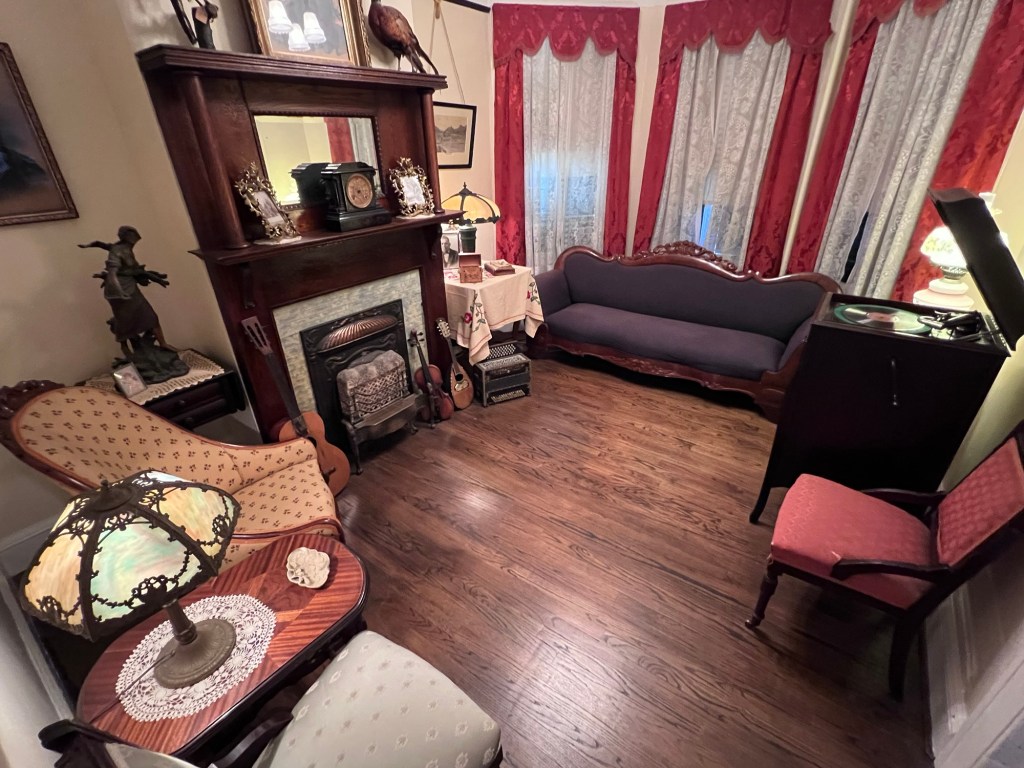
The parlor
The photographs on the shelf are Maria’s sisters in Italy (right) and the three eldest Botto daughters (left). Members of the Bocchio family of Biello, Italy are pictured in the photograph to the left of the mantle.
The Parlor and decorations
The furnishings in the house
Other Rooms:
The area making up the library on the first floor was a sitting room and bedroom for the family. The Botto daughters rented the two apartments upstairs when they first married and started their families and other non-family members served as renters through the years. The bathroom on the first floor is the approximate size of the original but today has modern fixtures and is not meant to be part of the restoration.
(From the American Labor Museum/Botto House National Landmark)
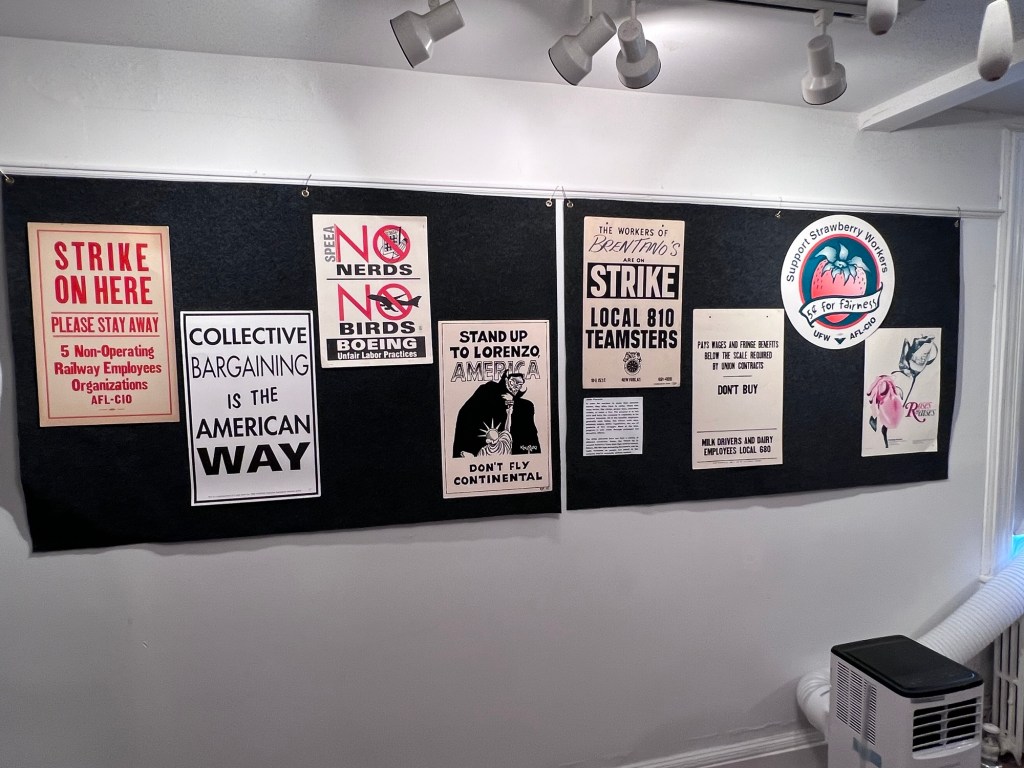
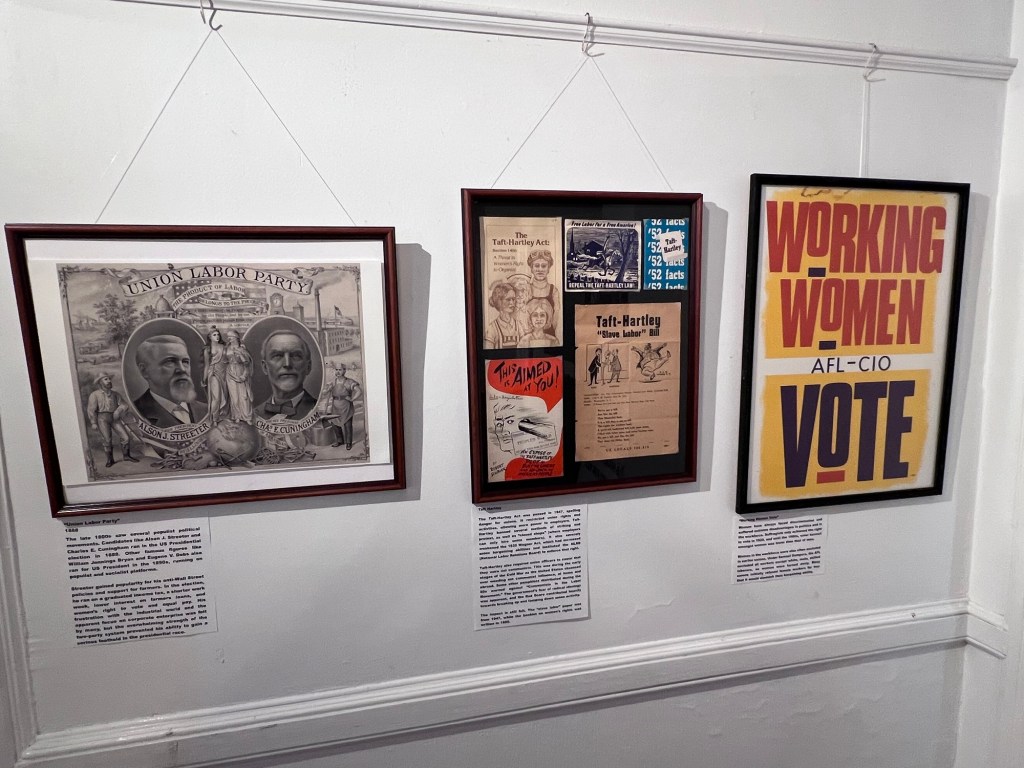
The Labor Day display of the Union history:
Labor display
Labor Display
History of Paterson:
The City of Paterson was founded in 1792 as America’s first planned industrial city. Alexander Hamilton, Elias Boudinot and other members of The Society for the Establishment of Useful Manufactures chose the Great Falls of the Passaic River as the ideal site for a manufacturing center. The Falls provided water power, while the river provided transportation upstream and down.
During the 19th Century, Paterson flourished. It became known as “Silk City” and “The City” with an Arm of Iron in a Sleeve of Silk for the silk mills and locomotive works that made their homes here. Immigrants flocked to the city at first from England, Switzerland. Germany and France and later from Southern and Eastern Europe. Many found jobs in the mills and a few took their place among the captions of industry.
(Mill Worker…Mill Owner-Botto House Museum)
The gift shops
Disclaimer: This information was taken directly from The American Labor Museum/Botto House National Landmark pamphlets. This museum is one of the few historical sites dealing with the Labor Unions in the United States and plays a huge role in workers rights today.