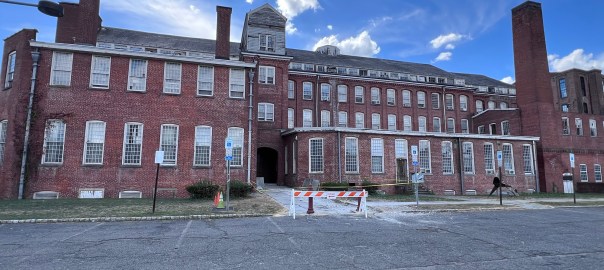
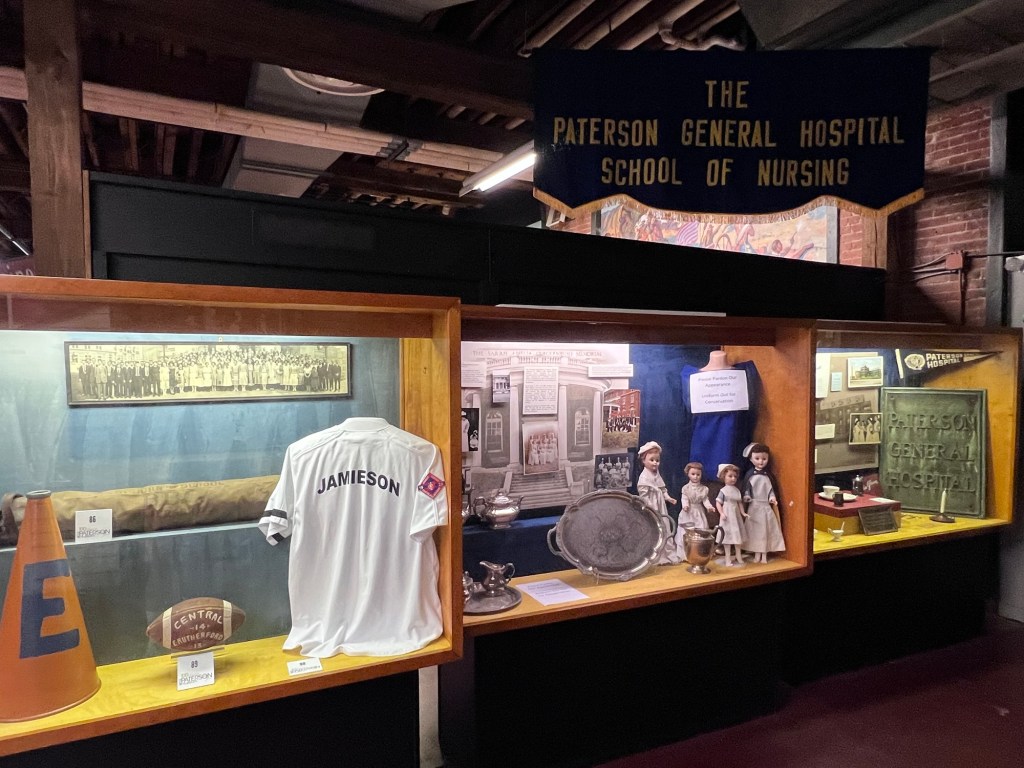
The Paterson Museum is an interesting museum of the history of the City of Paterson, NJ. The museum is broken into different sections of the City’s history. The museum discusses from the time that the Lenape Indians lived in the area to the rise of colonization and then to how it developed into the Silk City through city planning and placement. The museum covers the history of the City of Paterson in the industrial Age as well with the rise of the Silk Industry, the Wright Airplane Factory, the Colt Revolver and the growth of the hospital industry in the City.
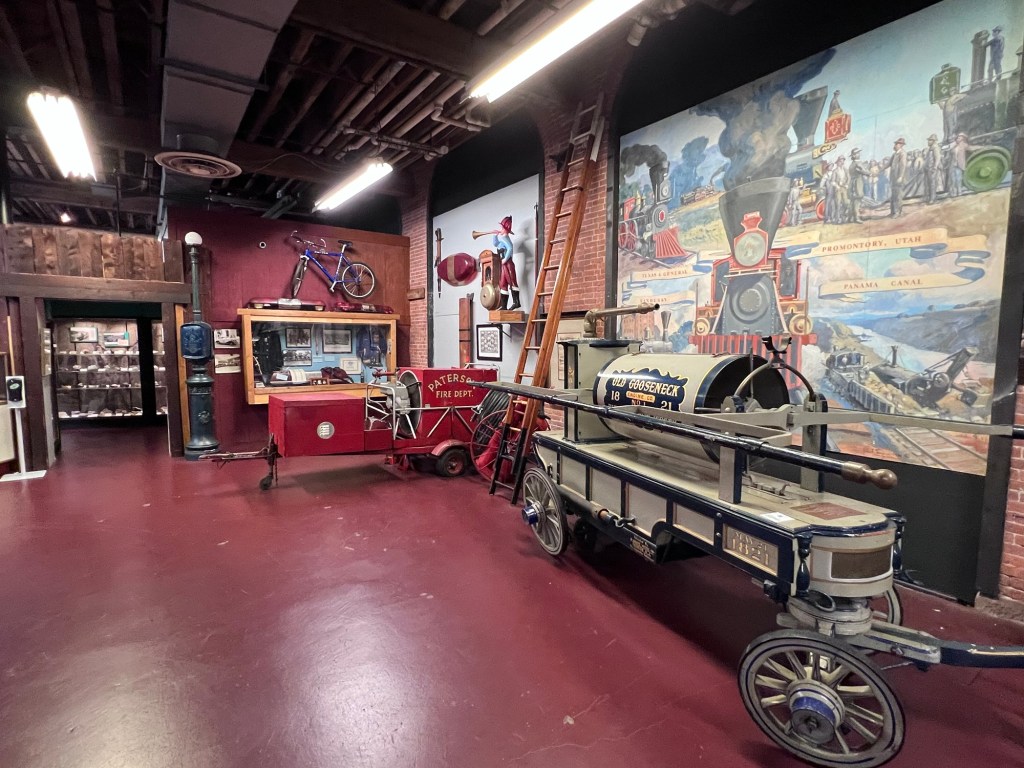
Paterson Fire Department
The Public Safety exhibition
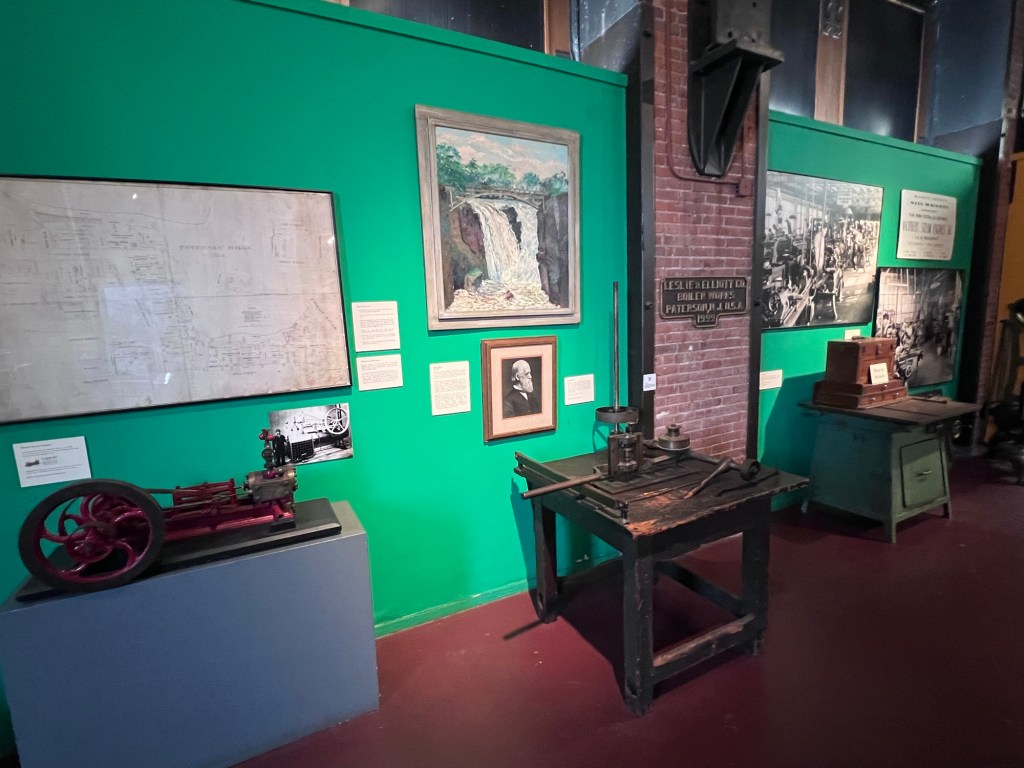
Paterson Steam Engine
Take time to look at the live displays of minerals, Native American artifacts, old fire department equipment and the life and times of its native son, Lou Costello.
The inside of the Paterson Museum
The nice part of this museum is that the parking is free, it can be toured in about two to three hours and it is walking distance to the Paterson Falls and to Little Peru restaurants. It is also free.
The Paterson Falls up the road
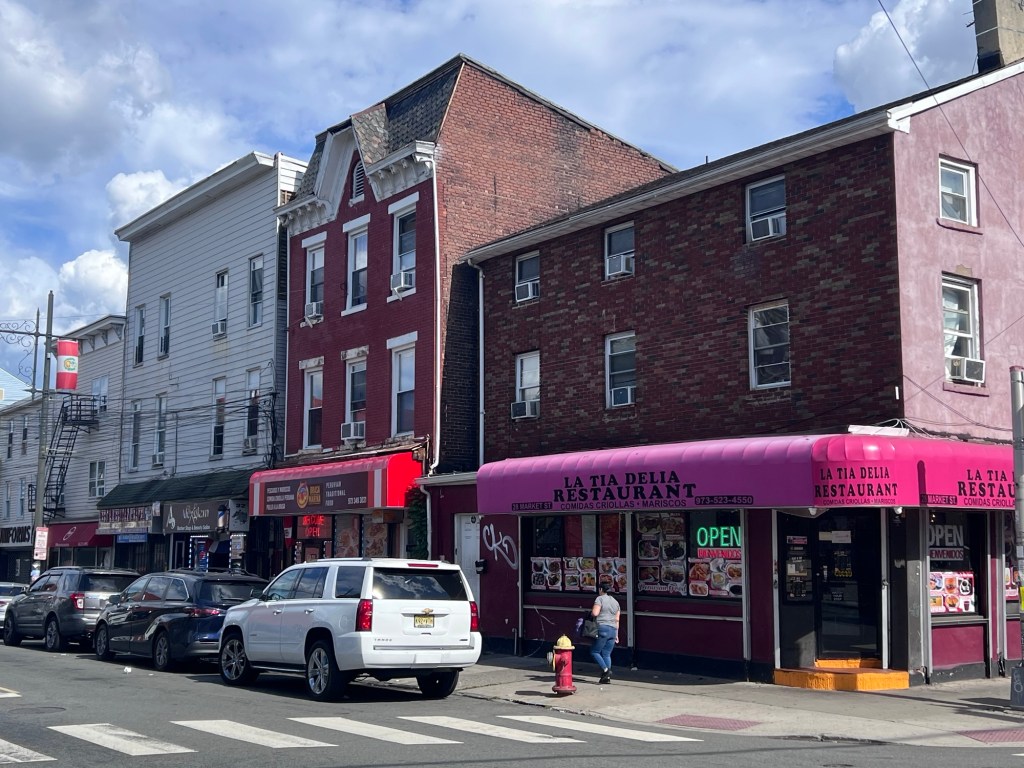
Little Peru down the road
The Introduction:
The Welcome Center
The Paterson Museum offers a ‘History within History’ experience. Located inside the former erecting shop if the Rogers Locomotive & Machine Works, the museum, presents a glimpse of the rich history and the many factors that gave rise to Paterson, New Jersey: “America’s First Planned Industrial City.”
From the natural wonders and the first inhabitants of the land that lay below and above the ground to the vital role Paterson played in setting of our nation’s industrial course. Through the museum’s exhibits. you’ll find out why Paterson was known for more than a century as the “Silk City.”
Silk City
You’ll discover that Paterson was at the forefront of locomotive, submarine and airplane engine development. And that’s just the beginning of our story. By the time you finish your visit, you will want to learn more about this city that surrounds the Great Falls.
The Exhibitions:
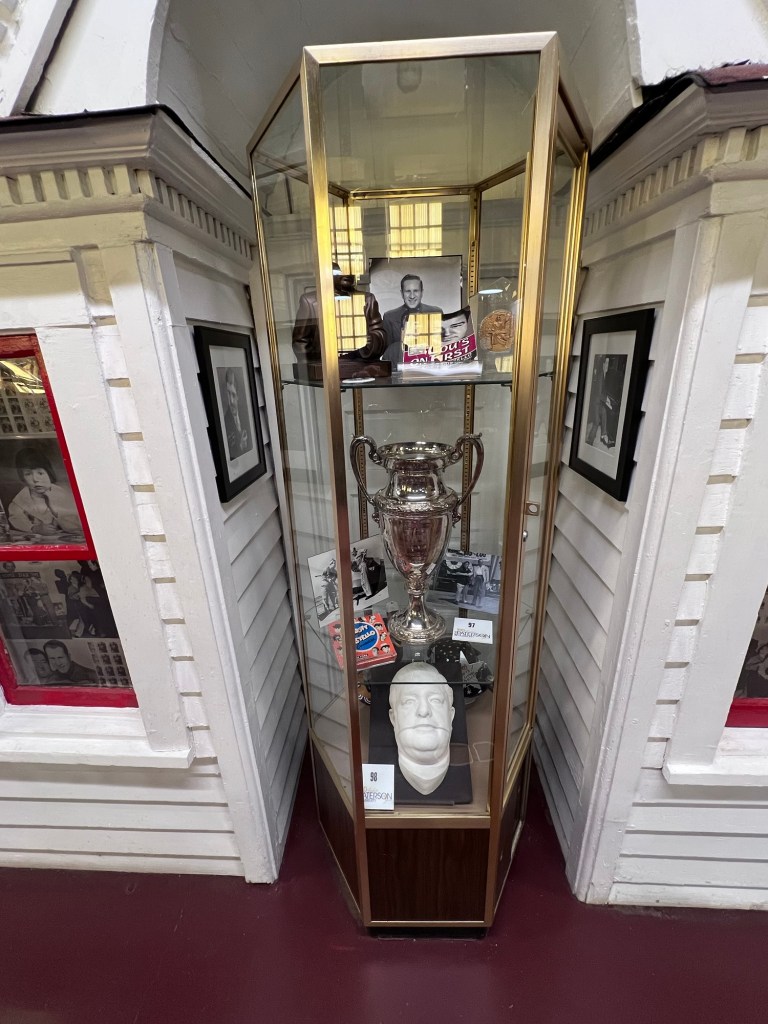
Paterson Residents: There are exhibitions on such celebrity natives as Lou Costello and his life after living in Paterson are shown in detail.
The Lou Costello exhibition
The Lou Costello exhibition
Baseball players, football players and actors have shown against all odds and color barriers they found success in the world with Paterson being their roots.
Sports in Paterson, NJ
The Silk Industry
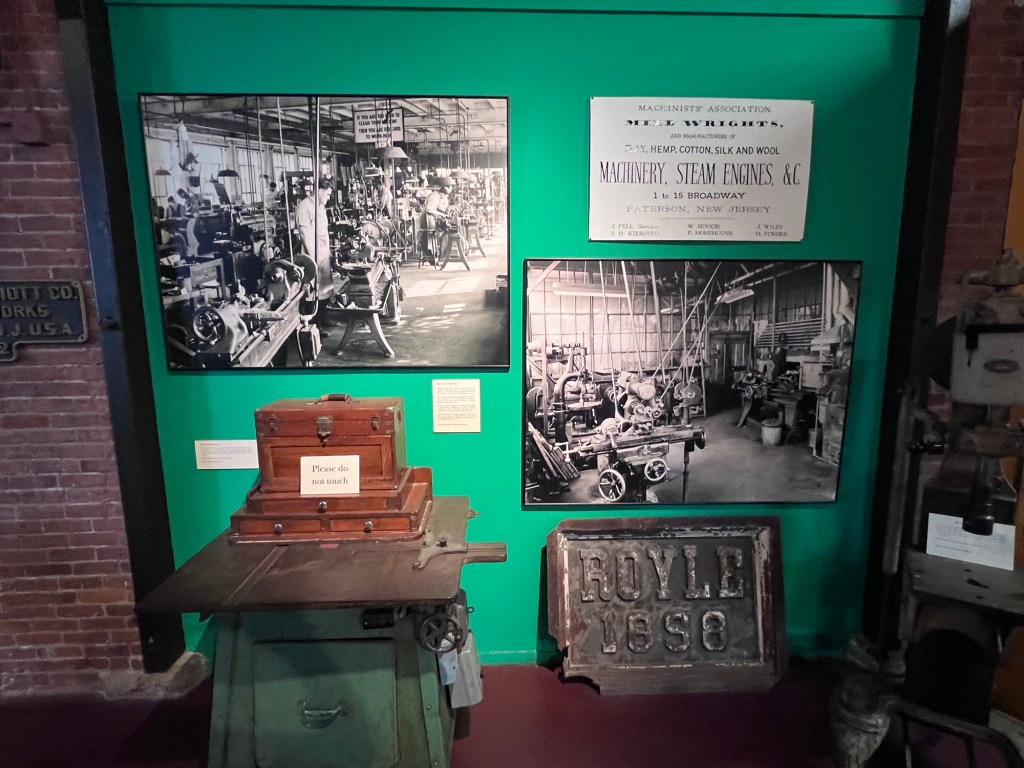
Silk City: The history of Paterson as ‘Silk City’ features winders, warpers and power-looms that produced beautiful fabrics. How the Falls and the location of the City of Paterson played its part in the garment industry at the turn of the last century. Not just in the silk industry but also in other companies like the Wright Aeronautical Corporation and the their time as a manufacturer in Paterson.
The Paterson Fire Department
The Paterson Fire and Police Departments: The history and development of both the Paterson Police and Fire Departments are told through pictures, stories, uniforms and equipment through the ages. There are many turn of the last century fire trucks in the museum.
World War Exhibition: The museum has a wonderful exhibition on the history of Paterson and the role it played in the World Wars. There are all sorts of uniforms, munitions and stories to tell.
The War years
The Veterans exhibition
Geographical: There is a whole side exhibition of gems and minerals both native and from all over the country at the museum and a full display of native New Jersey stone formations. There is also a discussion of how the Falls played such an important role inf the development not just of the City of Paterson but of New Jersey as well.
The Minerals
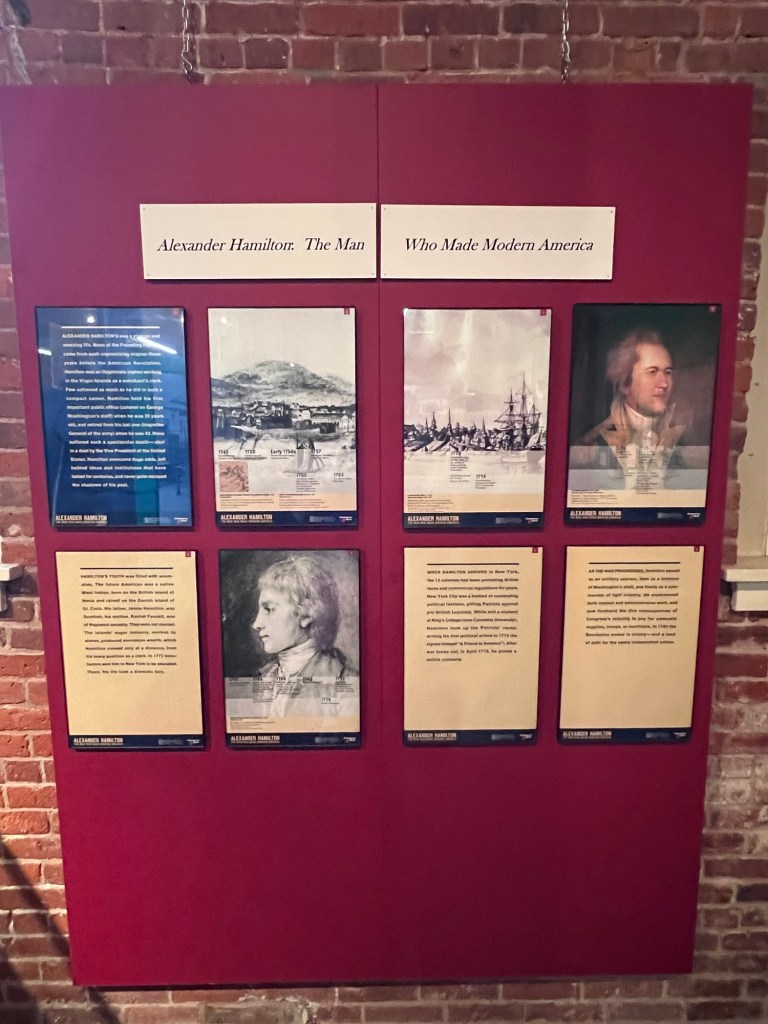
Alexander Hamilton Exhibit: The history and life of Alexander Hamilton is told from the time he was born in the Caribbean to his coming to the United States, his marriage and his rise through the ranks of the government. There is how he helped develop the banking industry and paying of the government debts to his fall from grace and his eventual fatal duel with Aaron Burr.
The Alexander Hamilton exhibit
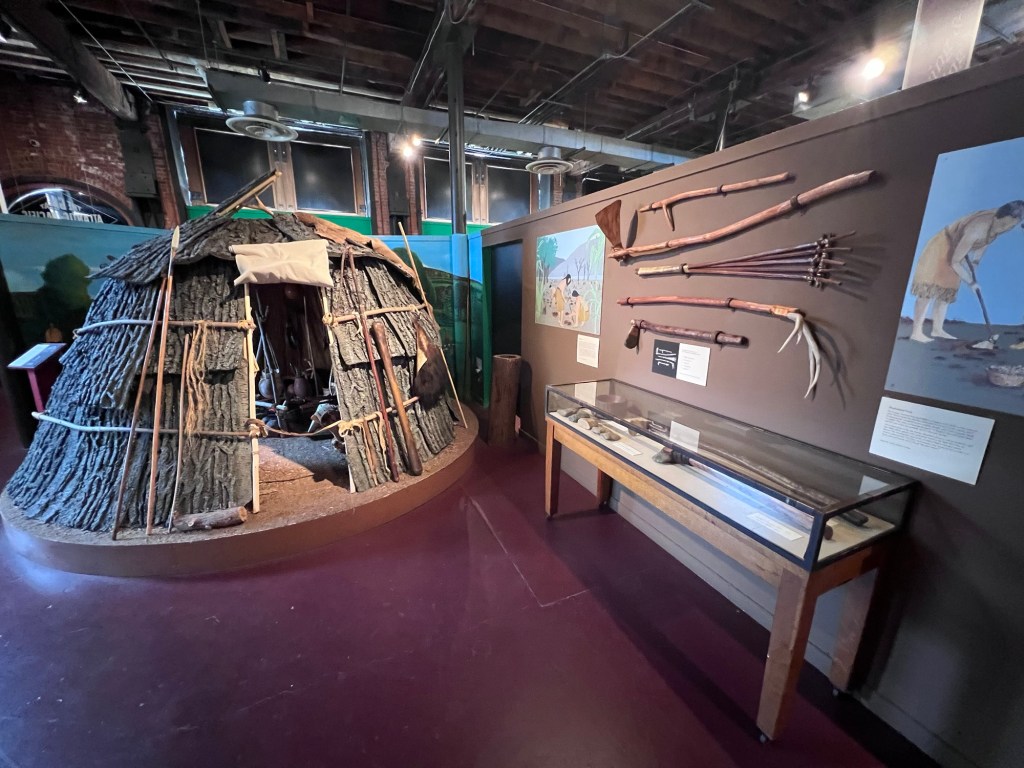
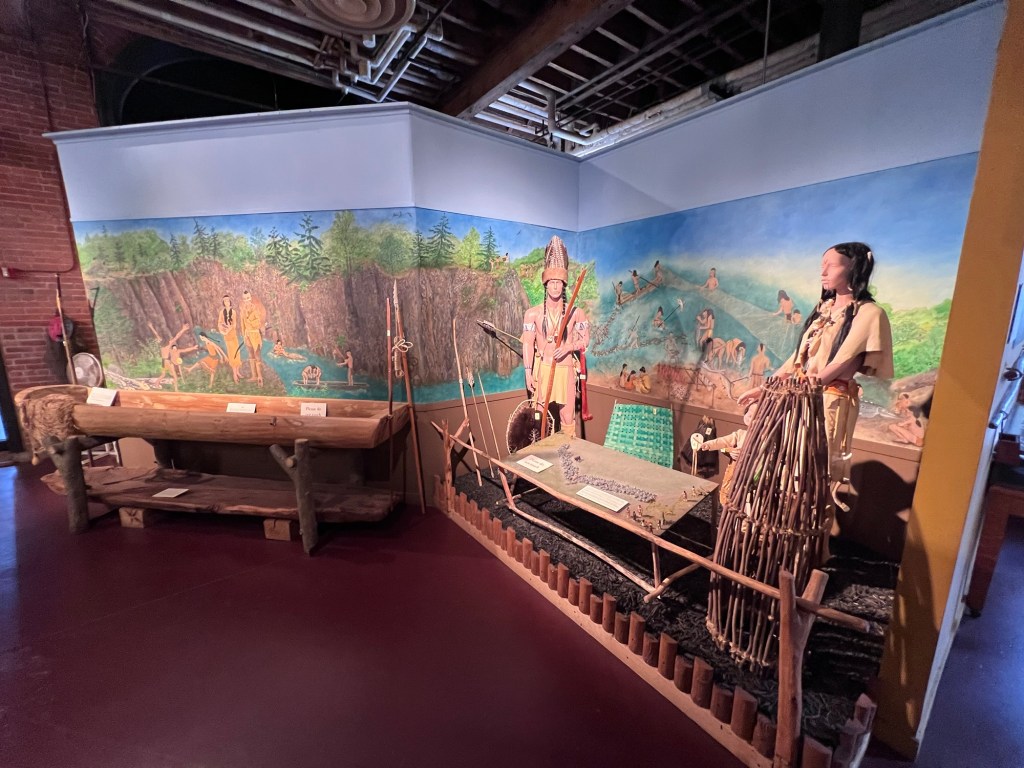
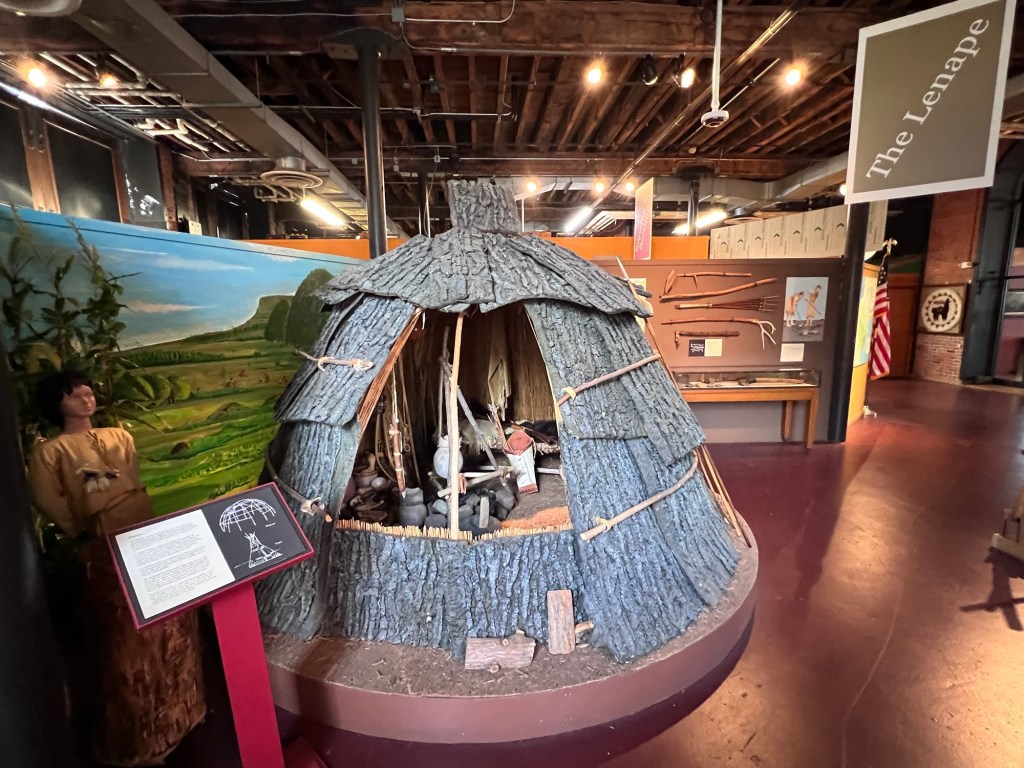
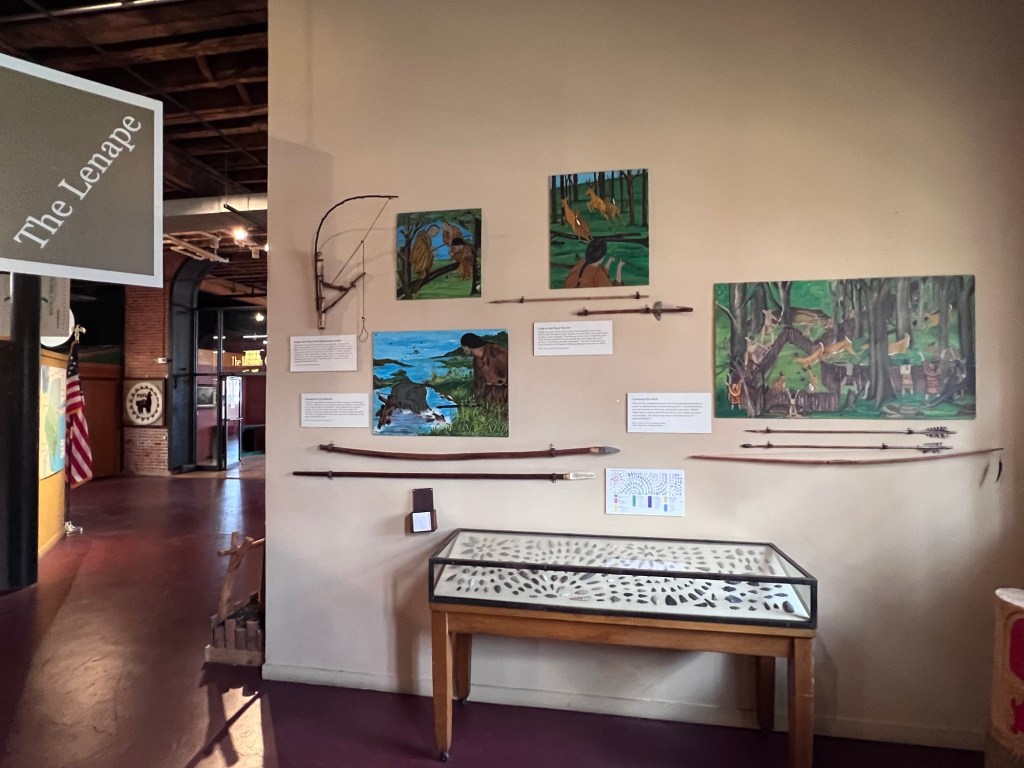
Lenape Indian Culture: The Lenape Native American culture is shown how the tribes developed, lived, worked and hunted and gathered to create the society that was in place before colonization.
The Lenape exhibit
There are all sorts of tools, displays on their regions of living, language, housing (there is a recreation of a Tee Pee here), that native wardrobe and a complete display of tools and arrow heads. It is a very detailed account of life as a Lenape Indian.
Lenape Exhibition at the Paterson Art Museum
The Lenape Indian exhibition
The Lenape exhibition
The museum shows the history not just of Paterson but of the surrounding areas and how growth of the City of Paterson made an impact on the region.
A trip to Paterson, NJ to see the Great Falls is an experience. Surrounded by the old mill buildings that once powered the Silk Industry that made Paterson world renowned, the Falls has been turned into a part of the National Park Service.
The renovation has now been completed that includes new landscaping and a large parking lot. The surrounding park is as impressive as the Falls.
The information sign by the falls
When walking the park, it is breathtaking to see how the Passaic River approaches the drop and then the water hitting the bottom of the cliffs. It is an impressive site of the how the Ice Age still plays a role in ‘Mother Nature’ in current times.
Take time to walk through the park and travel over the bridges and through the landscaped parks to see the Falls through all angles. It is a spectacular park that does not get the credit it deserves. Paterson, NJ still has its issues but it does have a lot of gems too.
History of the Falls-The Formation and early history:
Geologically, the falls were formed at the end of the last Ice Age approximately 13,000 years ago. Formerly the Passaic River had followed a shorter course through the Watchung Mountains near present-day Summit. As the glacier receded, the river’s previous course was blocked by a newly formed moraine. A large lake, called Glacial Lake Passaic, formed behind the Watchung’s.
The Falls in the Summer
As the ice receded, the river found a new circuitous route around the north end of the Watchungs, carving the spectacular falls through the underlying basalt, which was formed approximately 200 millions years ago. The Falls later became the site of a habitation for Lenape Native Americans, who called this homeland, ‘Acquackanonk’ and later for Dutch settlers in the 1690’s (Wiki).
History of Powering a Free Economy:
The history and power of the Falls
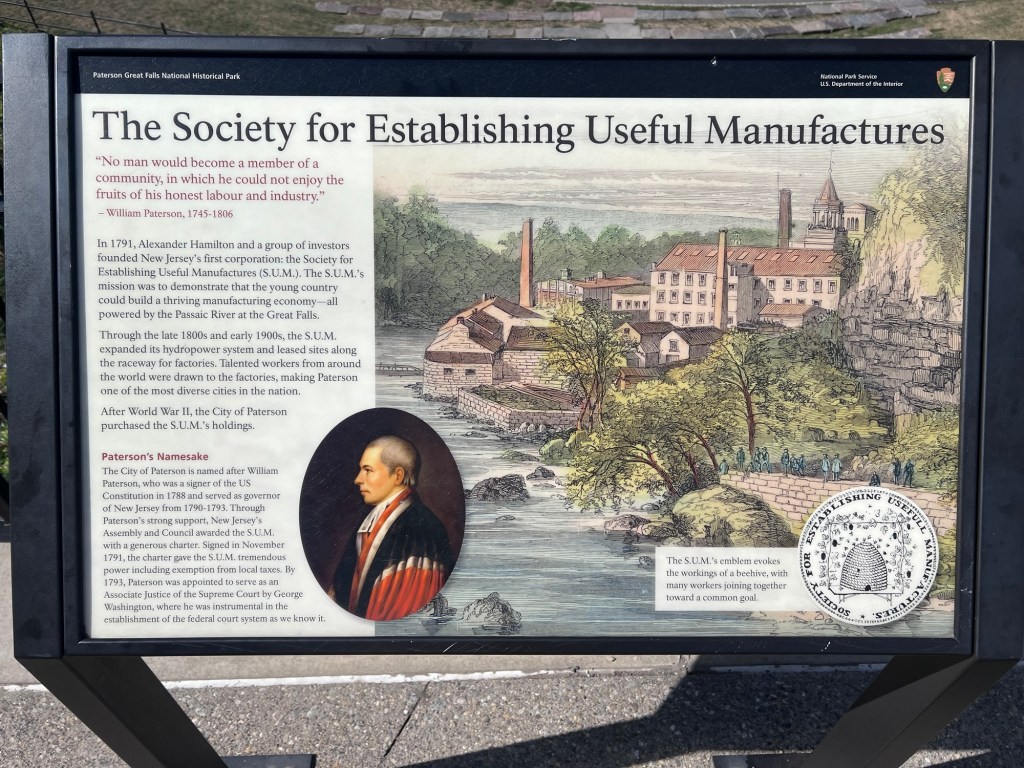
The Great Fall of the Passaic River drove the imagination of a young Alexander Hamilton to harness the power of water to manufacturer goods in the United States. The story of Paterson and the Great Falls is on of national importance. Here in 1792, Hamilton founded America’s first planned city of industry and innovation, helping to spur what would become the world’s largest and most productive economy (US Parks.org).
After the Revolutionary War, Hamilton, the first Secretary of the Treasury, knew this country needed to be economically independent. He led the founding of Paterson and the Society for Establishing Useful Manufacturers (S.U.M.), New Jersey’s first corporation.
The S.U.M. constructed America’s first multitiered waterpower system to attract entrepreneurs and workers who would manufacture goods and develop new inventions. A system of water channels or raceways, the most significant power system of the day, diverted water from the Passaic River above the falls to mills along its route (US Parks.org).
The old Power Plant at the Paterson Falls
Paterson became the manufacturing hub for locomotives, textiles, silk finishing and dyeing, machines tools, paper, sailcloth, twine and airplane engines. By the mid-1800’s, the city was home to the largest producers of locomotives in this country and nearly half of the nation’s silk trade, earning Paterson the nickname “Silk City”. Paterson is also the birthplace of the Colt Revolver and the prototype for the first operable submarine (US Parks.org).
The formation of the Falls
The S.U.M. fulfilled the vision of its founder for more than 150 years, moving the United States from an agrarian, slave-based economy to one based in industry and freedom. Paterson attracted successive waves of immigrant entrepreneurs, skilled craftsmen and workers, the ‘diversity of talents’ Hamilton had hoped would be drawn to America. Immigrants still settle here to pursue their ‘American Dream’ and to weave their threads into the storied fabric of Silk City (US Parks.org).
Visiting Paterson Great Falls:
Welcome to America’s first planned city of industry and innovation. Begin your visit at Overlook Park. View the iconic Great Falls and a monument to Paterson’s founder, Alexander Hamilton. Cross McBride Avenue to the Welcome Center where you can visit the facilities, purchase a gift and learn about tours and programs.
The beauty of the Falls
To get a close look at the river that powered Paterson to prominence, follow the path behind the hydroelectric plant over the Passaic footbridge to Mary Ellen Kramer Park. From there you can peek into Hinchliffe Stadium, one of the few remaining stadiums that hosted Negro League Baseball.
Come back across the river, follow the short loop trail along Upper Raceway Park, ending at the Ivanhoe Wheelhouse. Walk across Spruce Street and visit the Paterson Museum, a park partner.
Exhibits include textile machinery, the first Colt firearms, steam locomotives and the first prototype of a submarine.
Video of the Falls
Regularly scheduled guided tours of the park are available during the summer season. From fall through late spring, reservations are required for all guided tours. You may also download a self-guided tour or smartphone app from our partner, the Hamilton Partnership at http://www.millmile.org.
Accessibility: We strive to make our facilities services and programs accessible to all. For information go to a visitor center, ask a ranger, call or check our website.
Firearms: For firearms regulations, check the park website.
Disclaimer: This information was taken from the National Parks Foundation pamphlet and I give the parks system full credit for the information. Please check out their blogs and website on the falls for more information on visiting the park. The parking lot is currently going through a renovation so call in advance of visiting the falls.
I recently visited The American Labor Museum/Botto House National Landmark for the afternoon and learned a lot about the American Labor Union formations and the rights we now take for granted.
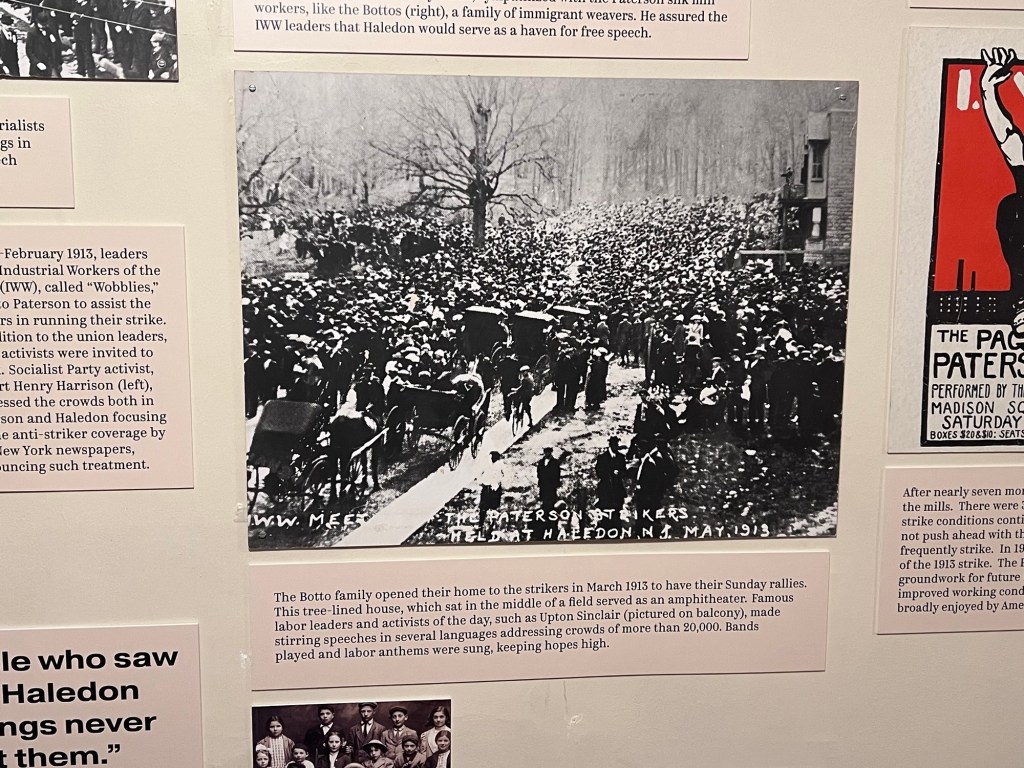
A group of us took the tour of the Botto House and learned of its history and its place in the Paterson Silk Strikes of 1913. The first floor which serves as the meeting room has pictures of the Paterson Silk Strike which lasted just over five months and since the Mayor of Paterson at the time would not let the strikers meet, the Botto’s agreed to let the strikers meet at their home which at the time was in a isolated section of Haledon.
The history of the Silk Strike in Paterson
The Mayor of Haledon was sympathetic to the Union cause and let them meet in the town. Their house was situated in the middle of a field so that the strikers could gather around the home and listen to speakers.
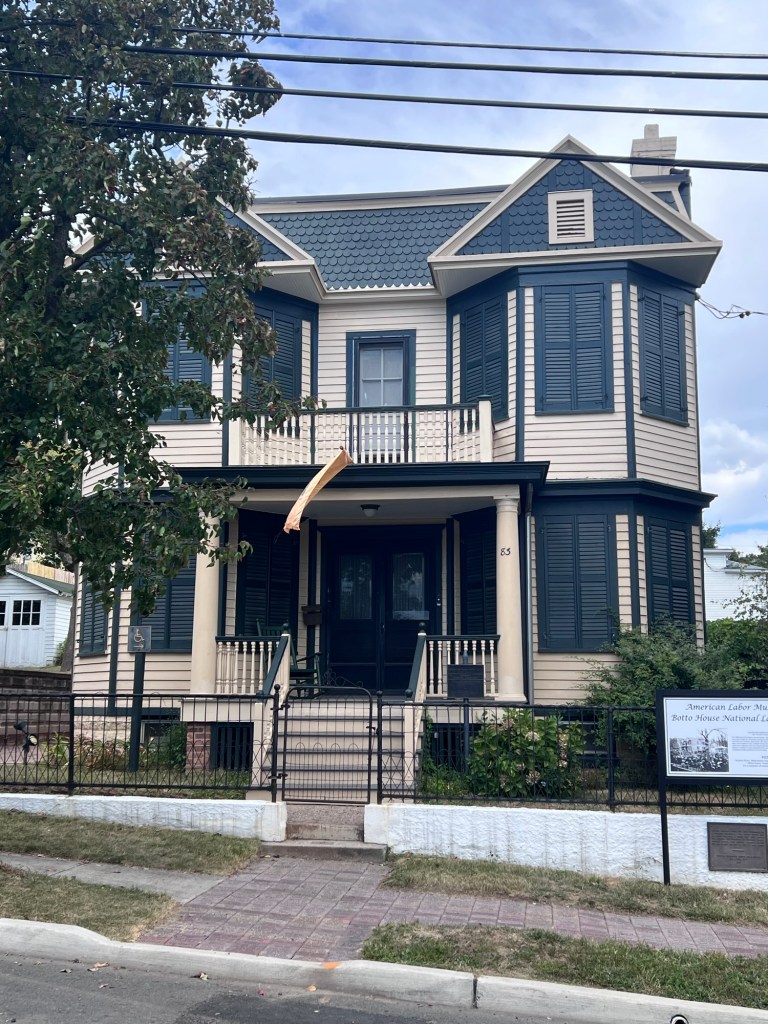
The Botto House during the Paterson Silk Strikes
From their balcony, speakers could talk to the strikers and keep everyone abreast of the situation. Here people gathered and picnicked together and worked together to get their rights heard.
From the main display room, you will tour the home of Pietro and Maria Botto. First stop is the kitchen where Mrs. Botto ran her household. She made extra money selling food to the strikers and arranging meals for Mr. Botto’s co-workers. The family family did what it could to make money for the family.
Mrs. Botto’s kitchen
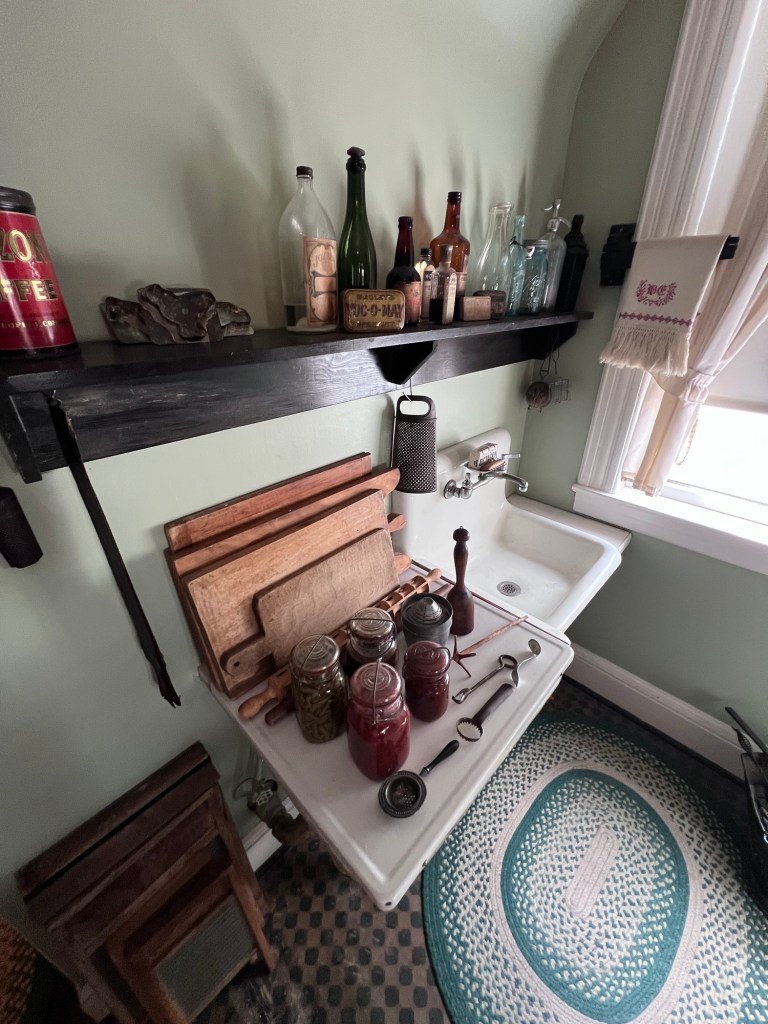
The sink area
Here she made meals for her family, did her jarring and preserving and the washing was done. Then a tour of the dining room, bedroom and the palour area where the family met and greeted people. The upstairs was formerly two apartments that were built to help ‘pay the bills’.
The Botto House Kitchen
The upstairs is now the display space where a display on the Dock Workers Union is currently being shown. We got to stand on the second floor balcony where so many speeches were made.
The backyard area
We took the back stairs to the backyard where the family had the grape arbor, root cellar where the preserves were kept and the boccie ball court. It seemed the family was very social at the time and self-sufficient.
The root cellar and Vineyard
Things turned bad for the family when both Mr. And Mrs. Botto both passed away two years after the strike. The strike could have taken its toll on the family or the fact that Mr. Botto could not find a job after the strike was over. No one knows.
It is an interesting tour of how one family opened their home to an important cause and it made a difference in the success of the strike and getting it resolved.
The history of the Botto’s:
The museum headquarters was the home of an immigrant family of industrial workers whose story is a fascinating one. In many ways, the telling of their saga is a doorway for museum visitors to step through and make connections with their own ethnic backgrounds.
The European Heritage:
Pietro and Maria Botto hailed from the region of Biella, Piedmonte, Italy. This area, at the foothills of the Alps, was a leading textile producer of linen and wool. The mountainous area was home to a fiercely independent people who, for centuries, wove cloth in their homes on looms which they owned.
The Industrial Revolution forced weavers to give upon cottage-based production to seek employment in large shops or mills. the displacement of workers by mechanized looms and weavers’ lack of economic independence caused people in Biella (as in other European textile areas where Paterson’s workforce originated) to embrace new ideas about worker rights and to be a vocal workforce wherever they roamed.
Pietro decided to leave Italy because he was made eligible for a second draft into the army at the recently united Kingdom of Italy (Italy had quadrupled its army at that time to strengthen unification and to acquire African colonies). A skilled weaver who also painted church interiors, Pietro brought his wife, Maria and daughter, Albina (born 1889) on the long voyage to America in 1892.
The Botto’s settled in crowded West Hoboken, New Jersey (today’s Union City), where they worked in silk mills for 15 years until they had saved enough money to afford a home for their growing family. The family now included three more daughters, Adelia (born 1894), Eva (born 1895) and Olga (born 1899). In 1908, the Botto’s moved to Haledon, a tiny community, growing up along the streetcar line from Paterson, where many other country folk from Biella had already settled.
The Botto’s home became a focal point for a dramatic slice of history in 1913 when the epic Paterson Silk Strike broke out. Pietro was on strike with 24,000 fellow silk workers when massive and constant arrests forced the workers to consider the independent borough of Haledon as a location for great outdoor rallies. Mayor William-Brueckmann guaranteed the safety of the workers and Pietro offered his home as a meeting place for the strikers.
The Botto’s courageous stand allowing their home to be so closely identified with the strike stemmed from a belief in the rights of the common man. During the strike, Pietro and his family played host to the social and labor leaders who were the idols of the working person at that time. After the strike, the family had to very circumspect about employment in the mills, with one of the daughters denying her family name to avoid blacklisting by an employer.
The large house and spacious hillside gardens are a tribute to the family’s combined labor. Pietro and his daughters worked 10-12 hour days, 5 1/2 days a week in the mills. The eldest daughter began mill work at age 11 and the youngest at age 13.
On Sundays, the usual day of rest, the girls helped their mother serve patrons of the resort aspect of the property. Maria ran a large household, feed boarders during the week and the scores of people on Sunday and did piecework from mills; she died in 1915 at the age of 45.
Pietro lived until 1945, a beloved father and grandfather to a growing clan.
History of the House and Land:
The house in Haledon, NJ
The total environment of the Botto House National Historic Landmark reflects the ethic origin of this family of silk workers from the Piedmonte (Biella) area of Italy and the development of housing in early streetcar suburbs. It is representative of the sensitive use of small landholdings in American urban areas by various European immigrant groups.
The Botto family purchased Block X, Lots 38, 39 and 40 in 1907 from Alexander King, a real estate speculator. King himself purchased a large parcel of land from the Cedar Cliff Land Company, a group of Paterson industrialist and business leaders who were quick to see the advantages of selling cheap land to workers in Haledon. The completion of a horse-drawn trolley line in 1872 allowed for expansion of residential and recreational areas outside of the City of Paterson, a major American industrial center.
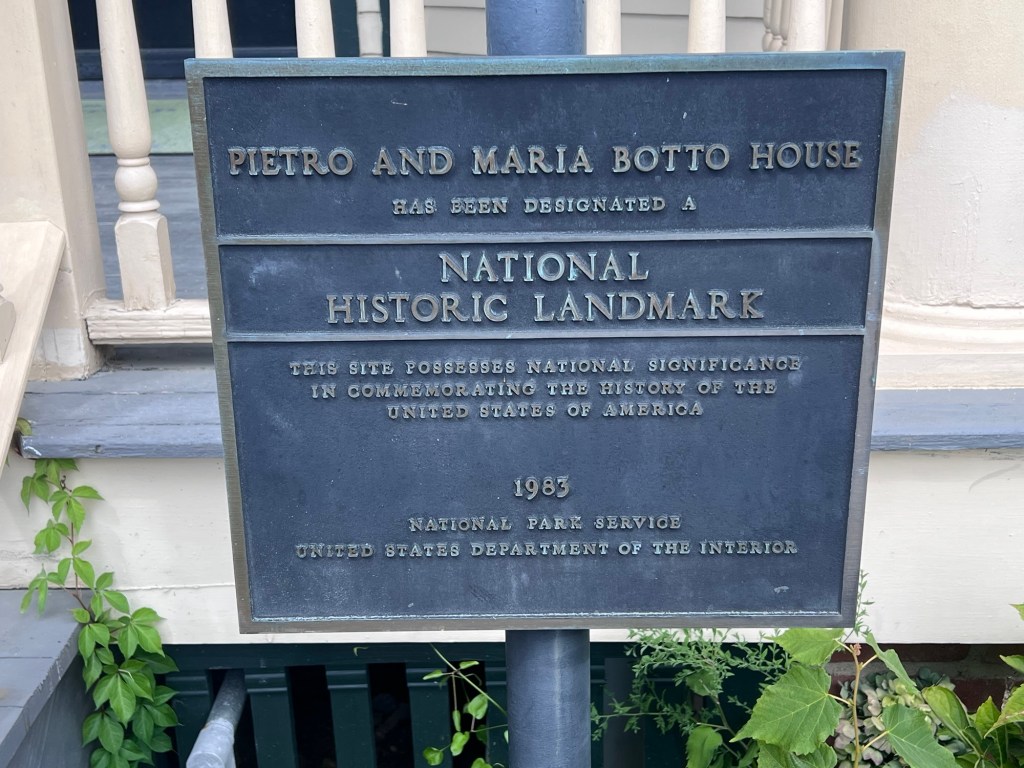
The Botto House sign
(Information from American Labor Museum: Botto House National Landmark, a Brief History)
The Period Rooms:
The Front Hall
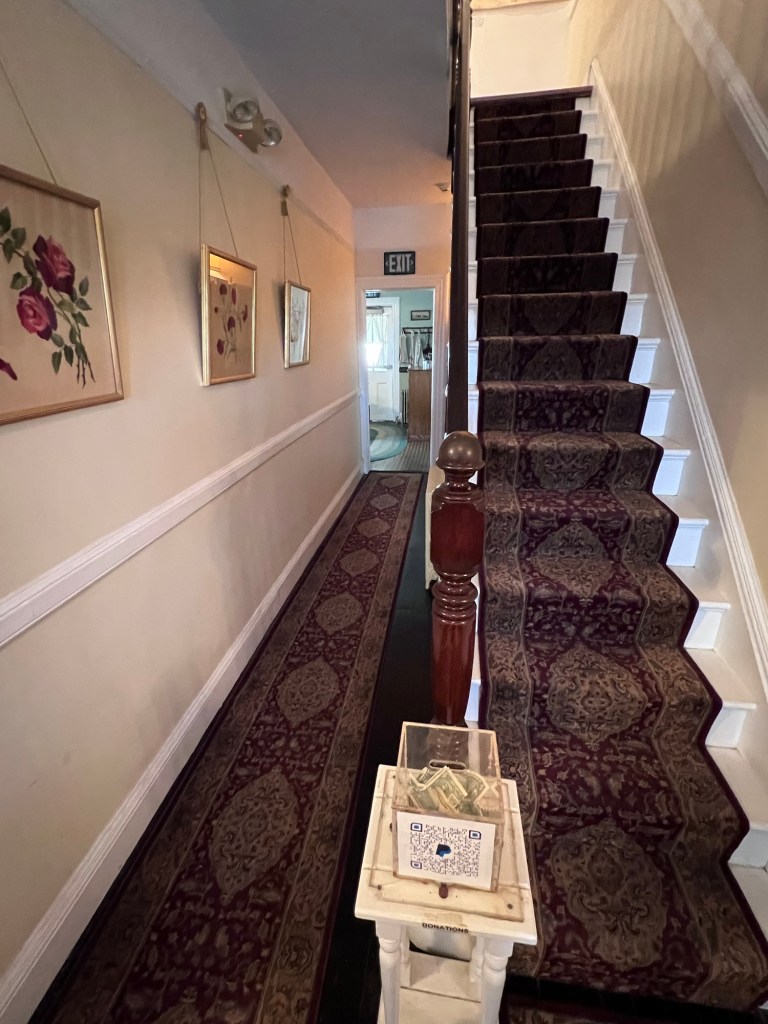
The front entrance hall light fixture is original to the house. One of the restoration tasks yet to be carried out is the replacement of embossed wallpaper on the walls which was made to look like the carved leather coverings in the homes of the rich.
The front hallway
The Kitchen:
The kitchen was a major center of activity in the household. The large coal and gas range dominates the room. It was used as a heating source as well as for cooking foods. A table provided the space for food preparation; a cupboard stored pots, pans and dishes; an icebox kept food items cold (the root cellar, located in the garden was also used for cold food storage) and a sink for dishes and a tub for laundry utilities indoor plumbing-certainly a recent innovation for working class households.
The kitchen
Even with the convenience of indoor plumbing and the gas range, the kitchen was the scene of virtual non-stop labor for Maria Botto and her daughters. In addition to meals prepared for the family, the Botto’s fed a noon meal to extra people during the week, there were workmen without families, who rented rooms and come from the mills for a hot dinner.
On Sundays, the Botto women prepared food for as many as 100 people who came to recreate on the property. This, of course, provided on additional income for the family.
The Botto family’s foodways reflected their home region of Biella, Piedmonte, Italy. Piedmontese cooked scorned tomato sauce, preferring wine and chicken broth to accompany such staple foods as polenta (corn meal), risotto (rice) and tortellini, a pasta. Generally, rosemary, sage, and other herbs were used in cooking and grown outside in the garden. The herbs also had medicinal uses.
The kitchen sinks
Some of the artifacts placed around the kitchen are the copper put used to cook polenta (purur), meat grinder, fish scale, orange juice squeezer, coffee grinder (from a German immigrant household), rug beater, mousetrap and wall calendars which were used by working people as decorations.
The Botto women were generally charged with kitchen duties. Maria Botto hired a German woman to do the wash. One special job was reserved for Pietro, stirring the polenta and cutting it with a string.
The Dining Room:
The dining room was another work area for the family. Here the family and the ‘boarders’ dined. Here Maria ‘picked’ silk on a frame, located in the corner of the room under the window, examining the bolts of broadsilk brought from the mill for imperfections.
The Dining room
This was another task to bring income to the household. Maria used the sewing machine to make clothes. The table reflects a setting for the family and ‘boarders’, placed with dishes, silver-plated utensils and a condiment set.
The Dining Room
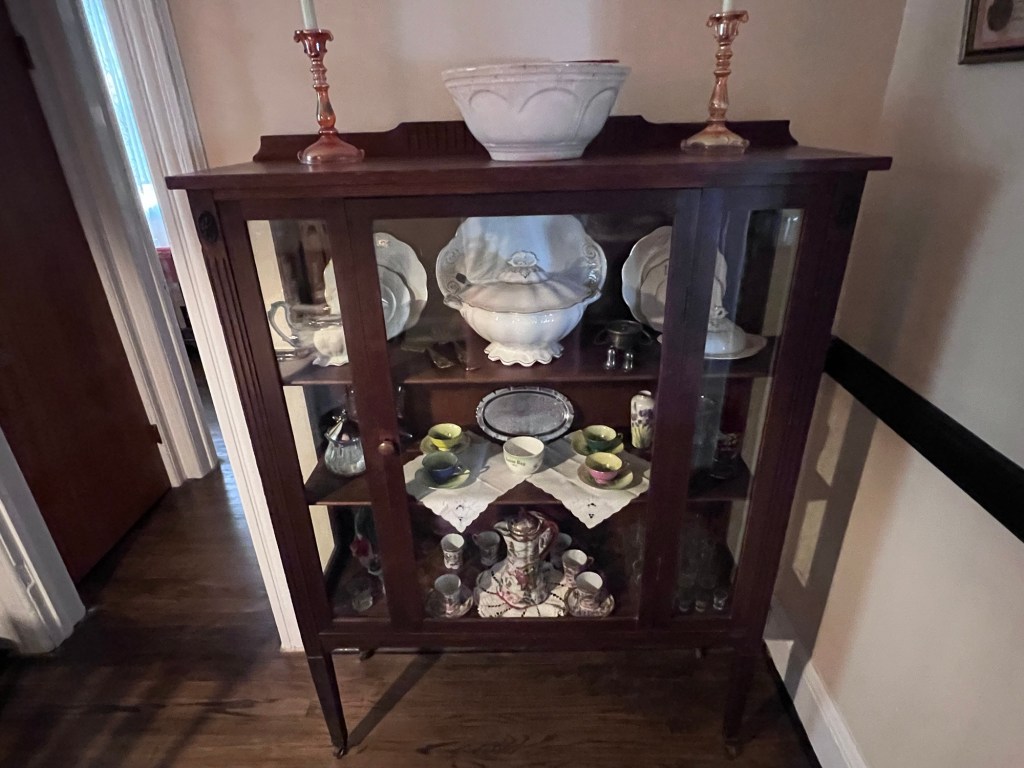
The sideboard, table chairs and sewing machine are family pieces. The lighting fixtures in this room as in the rest of the house were powered by gas. As is typical in the area, paintings were hung by string from a picture rail as the walls were made of plaster.
The Sideboard
The small painting shows sheep, which provide the wool upon which textile manufacture was based, against the backdrop of the Alps. The large sketched portrait of Pietro Botto in later years was produced by his grandson and professional artist, Richard Botto. On the side of the room hang pictures of the Botto daughters in their wedding attire.
The Dishes in the sideboards
The Bedroom:
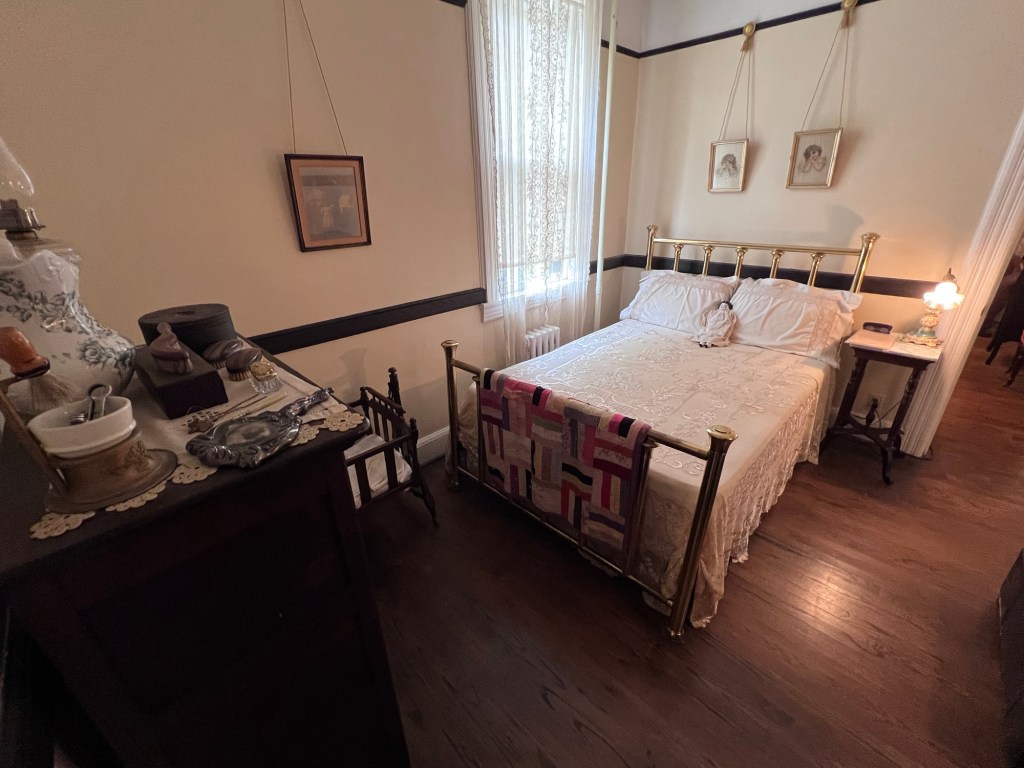
This room, which was actually the girls bedroom has been recreated to resemble where Maria and Pietro slept. The dresser is set with brushes, combs and mirrors that are from the period. The Botto’s slept in a brass bed.
The bedroom at the home
Swimsuits and other clothing hang in the wardrobe. A travelling trunk rests on the floor next to the wardrobe. Next to the window hangs a photograph of Mr. and Mrs. Guala of Biella, Italy. Next to the wardrobe hangs the elaborately framed photograph of Adalgiso Valle of Paterson, NJ, a jacquard card cutter.
The Bedroom
The Parlor:
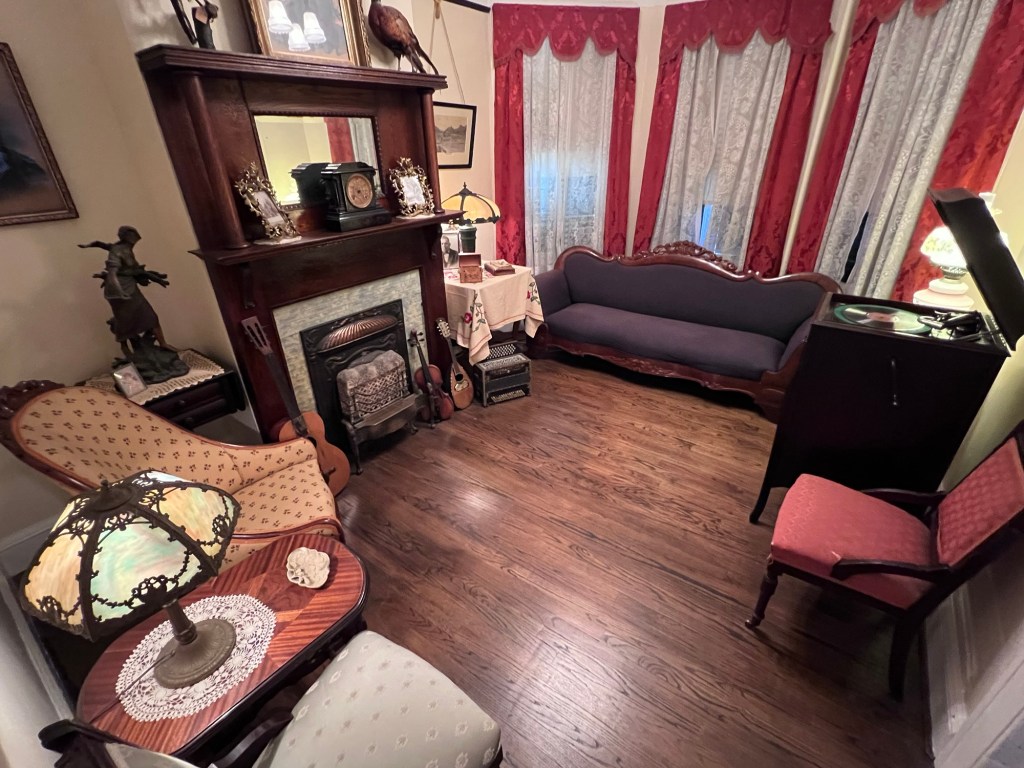
The most formal room in the house, the parlor was used for guests, weddings and wakes. Dominating is the oak mantle with its columns and mirror top. It surrounds a fireplace where, in the winter, a gas heater was attached to a pipe behind the hearth. The clock had to be wound every day and chimes on the half-hour.
The parlor
The photographs on the shelf are Maria’s sisters in Italy (right) and the three eldest Botto daughters (left). Members of the Bocchio family of Biello, Italy are pictured in the photograph to the left of the mantle.
The Parlor and decorations
The furnishings in the house
Other Rooms:
The area making up the library on the first floor was a sitting room and bedroom for the family. The Botto daughters rented the two apartments upstairs when they first married and started their families and other non-family members served as renters through the years. The bathroom on the first floor is the approximate size of the original but today has modern fixtures and is not meant to be part of the restoration.
(From the American Labor Museum/Botto House National Landmark)
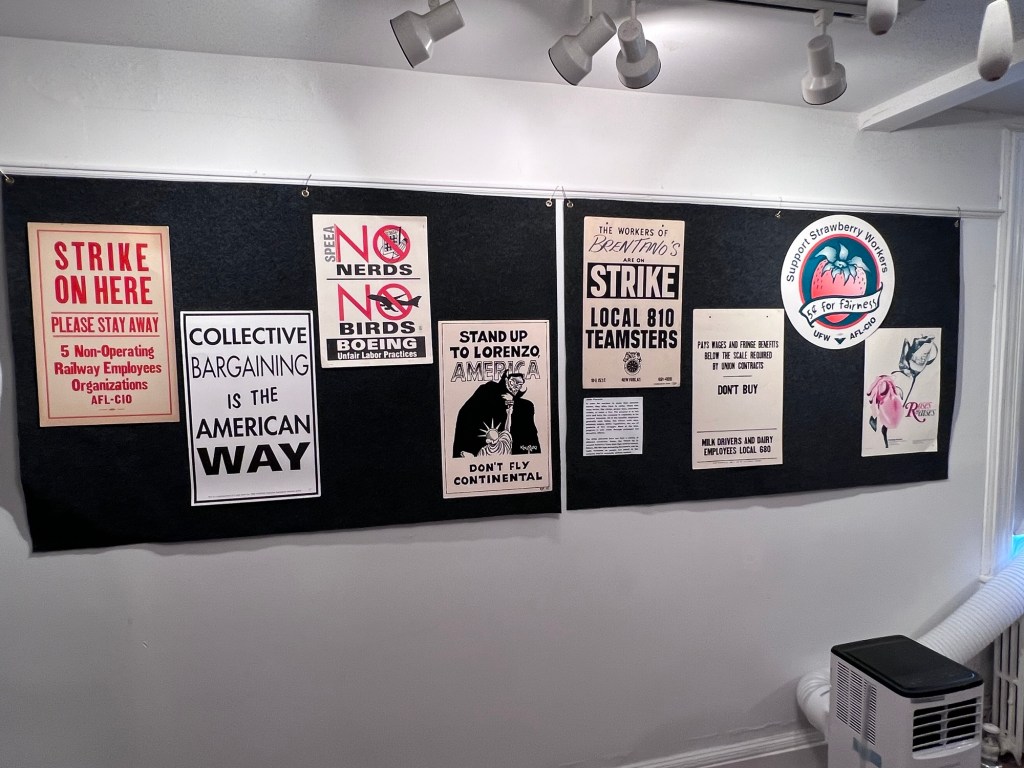
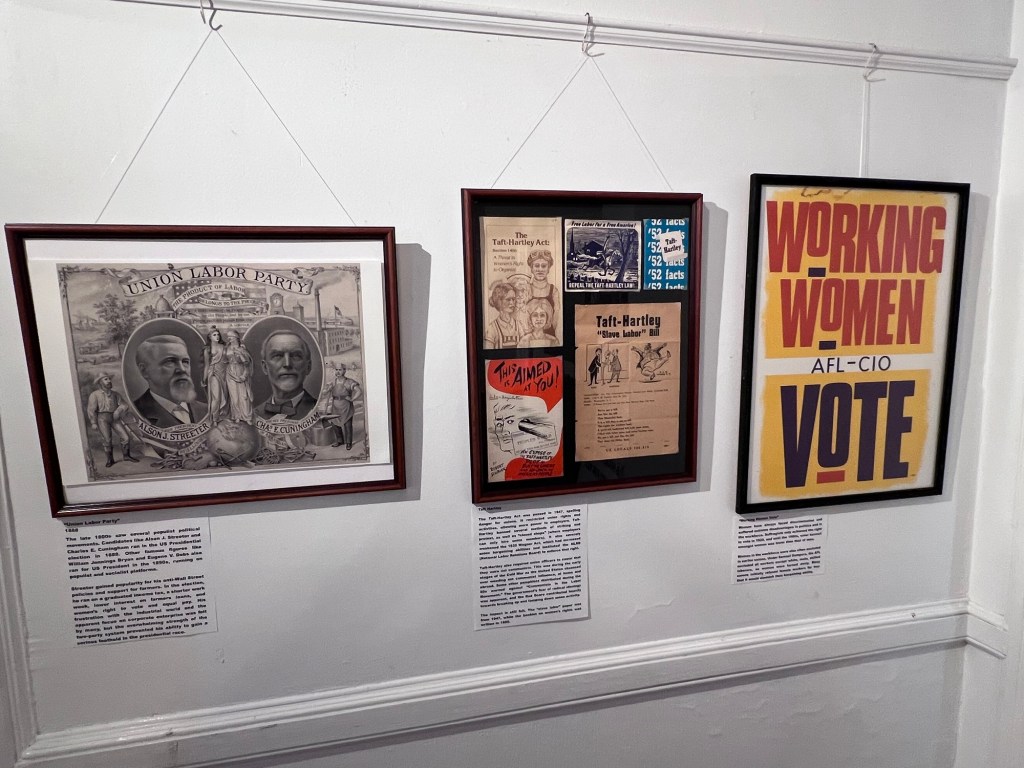
The Labor Day display of the Union history:
Labor display
Labor Display
History of Paterson:
The City of Paterson was founded in 1792 as America’s first planned industrial city. Alexander Hamilton, Elias Boudinot and other members of The Society for the Establishment of Useful Manufactures chose the Great Falls of the Passaic River as the ideal site for a manufacturing center. The Falls provided water power, while the river provided transportation upstream and down.
During the 19th Century, Paterson flourished. It became known as “Silk City” and “The City” with an Arm of Iron in a Sleeve of Silk for the silk mills and locomotive works that made their homes here. Immigrants flocked to the city at first from England, Switzerland. Germany and France and later from Southern and Eastern Europe. Many found jobs in the mills and a few took their place among the captions of industry.
(Mill Worker…Mill Owner-Botto House Museum)
The gift shops
Disclaimer: This information was taken directly from The American Labor Museum/Botto House National Landmark pamphlets. This museum is one of the few historical sites dealing with the Labor Unions in the United States and plays a huge role in workers rights today.
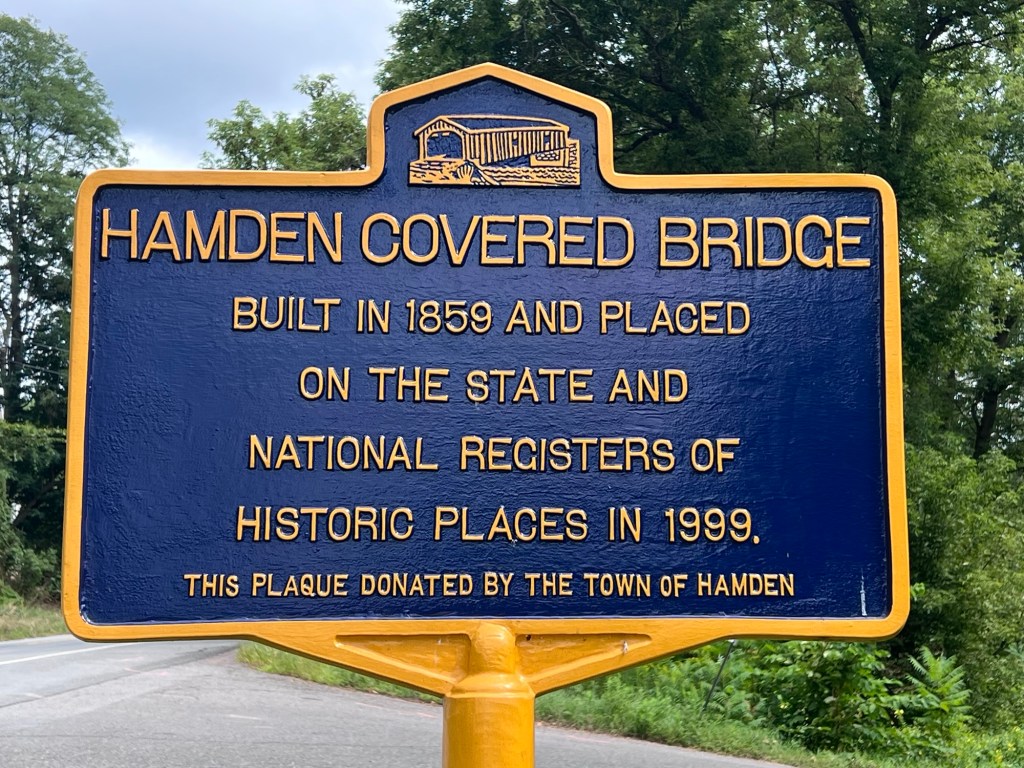
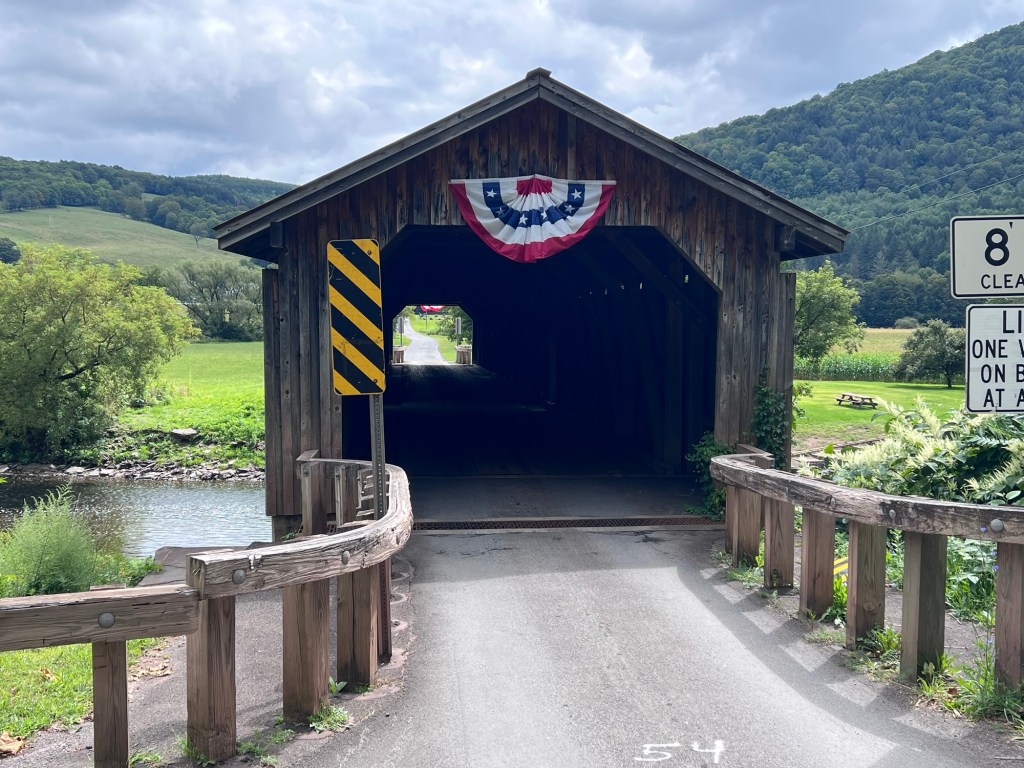
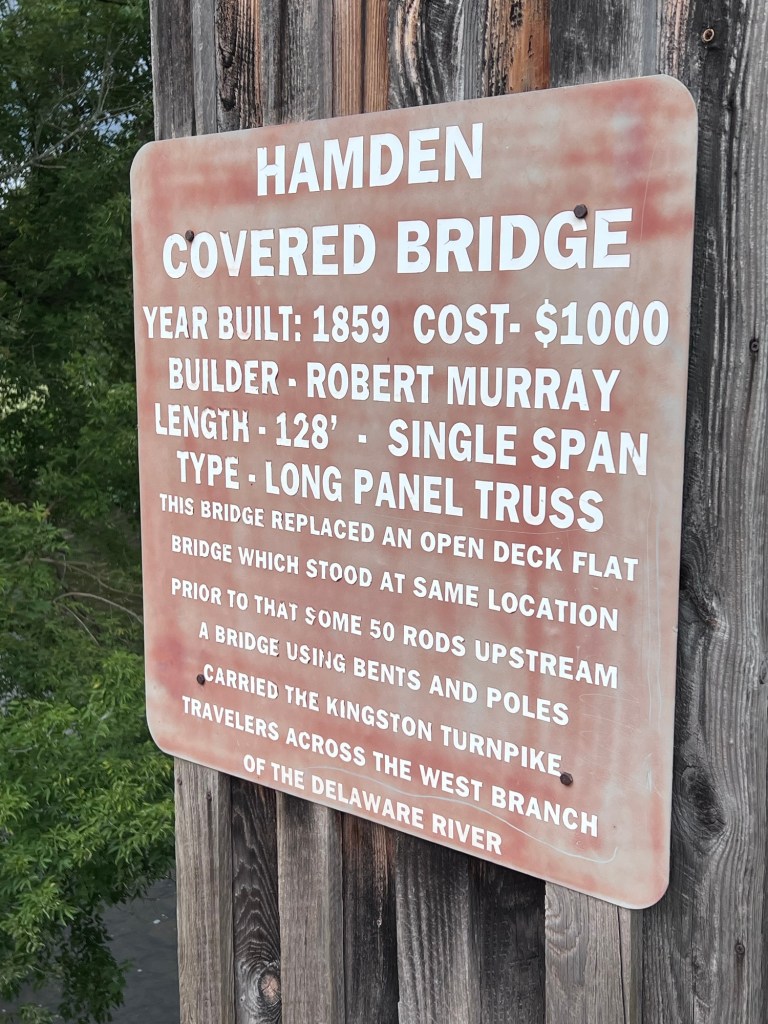
I was driving through Hamden on my way to Ithaca and had just left Delhi and wanted to travel through the back roads of the state. I came across the Hamden Covered bridge while driving down the highway. I had never seen one that looked like this and had to stop to see this interesting bridge.
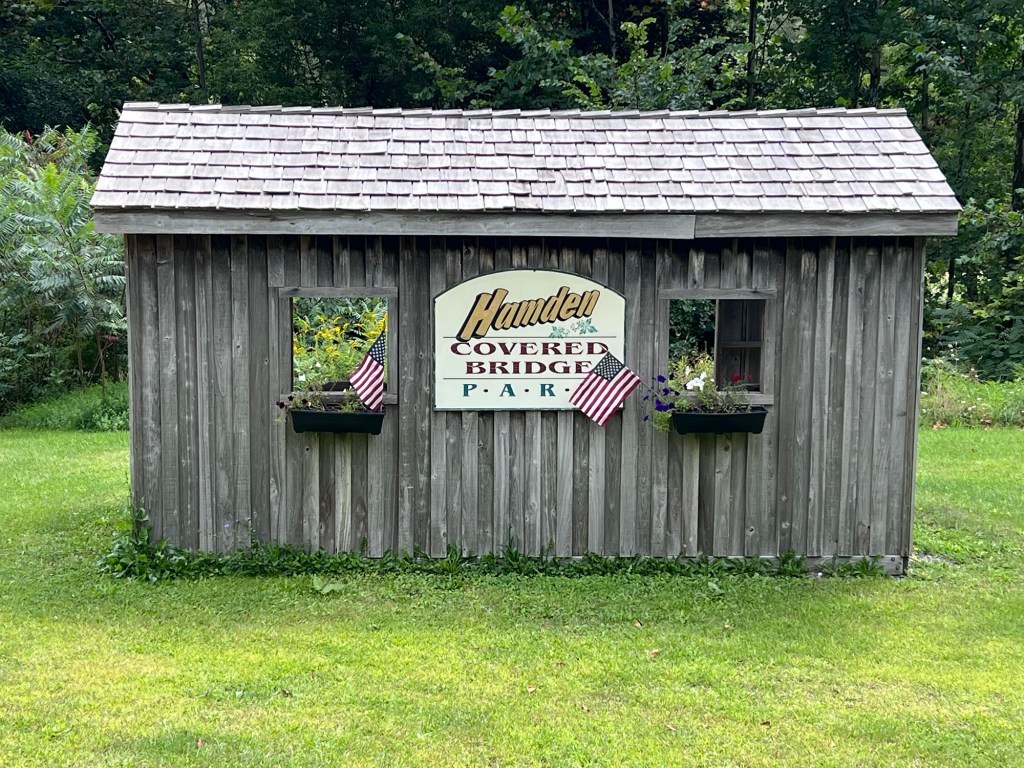
The historic sign
The History of the Covered Bridge:
(From the New York State Covered Bridge Society)
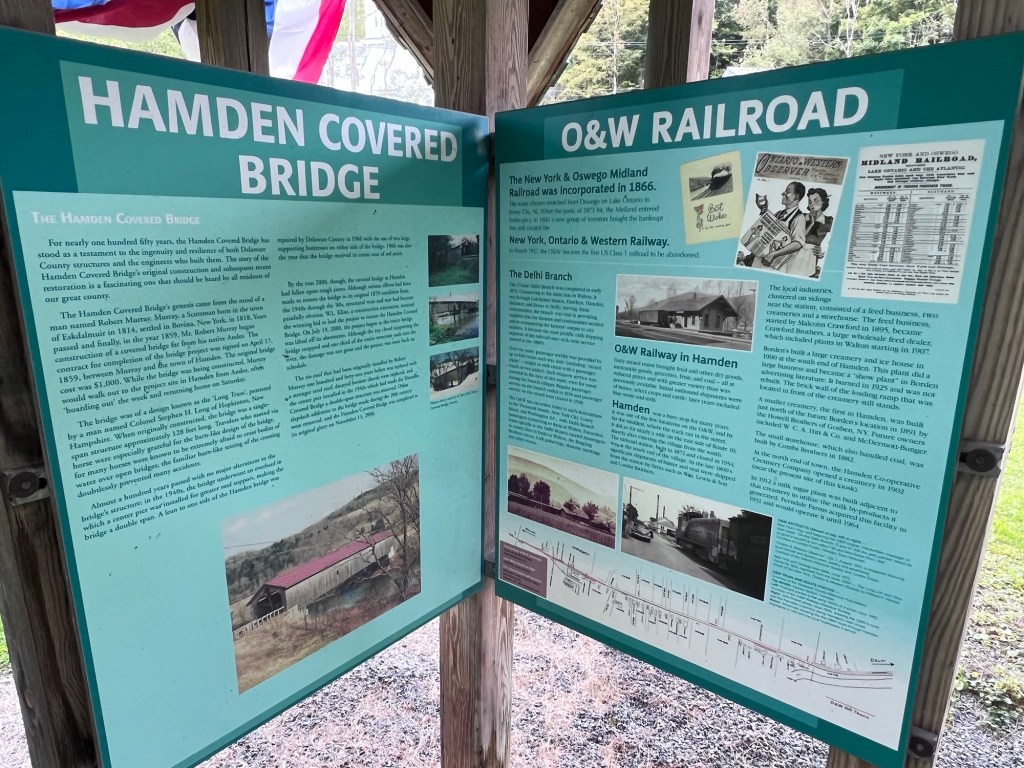
The Hamden Covered Bridge is one of six covered bridges still standing in Delaware County. It is one of three bridges owned and maintained by Delaware County; the other three bridges are privately owned.
Built by Robert Murray in 1859, this 128-foot-long, single span structure incorporates the Long truss design patented on March 6, 1830 by Lieutenant Colonel Stephen H. Long of Hopkinton, New Hampshire. It is New York’s only covered bridge that incorporates a pure Long truss design, unassisted by an arch or Queen post truss and is rare to northeastern covered bridges. The Hamden Covered Bridge is one of three covered crossings that still carry traffic across branches of the Delaware River. A contract to construct the bridge was signed between Mr. Murray and the Town of Hamden on April 27, 1859, for the sum of $1,000.
The beautiful little park that surrounds it
The little park does not have the best parking (as I had to park by the side of the highway) but this is a beautiful and picturesque little park. I loved walking through the gardens and taking a break from all the driving. Its a nice place to take a rest.
The beautifully landscaped park
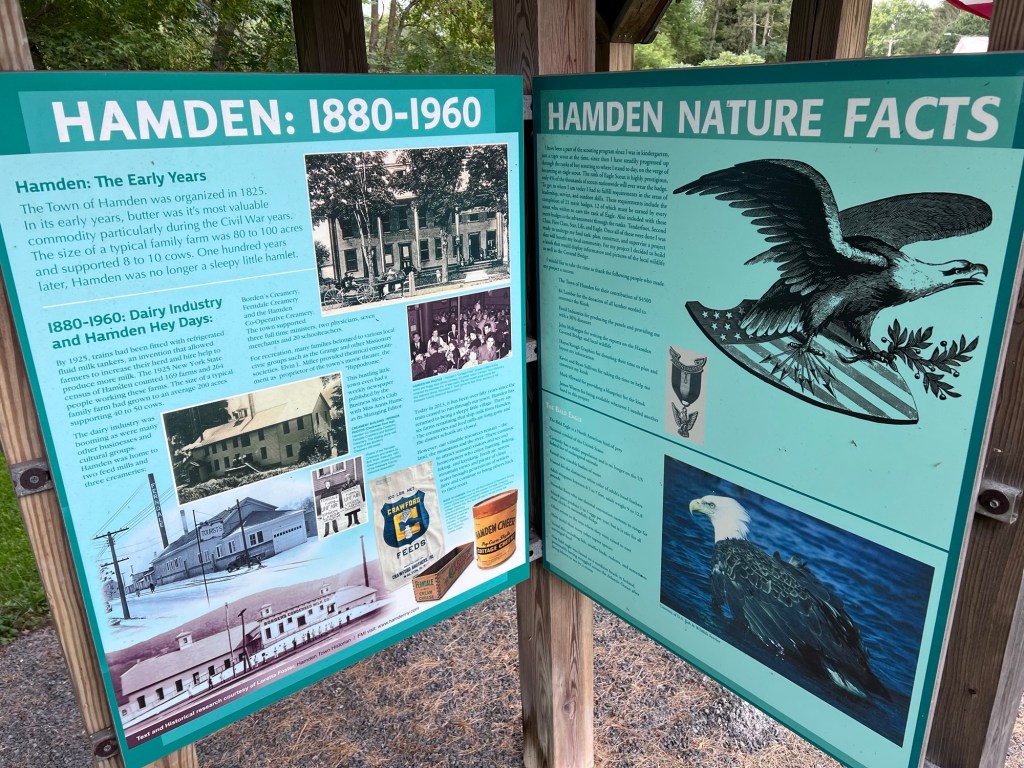
The signage tells the story of the town, the rail system Upstate and the communities that was affected by it.
The history of the Bridge and the surrounding area
The history of the town
I had never walked through a old covered bridge before and found it fascinating. I loved the architecture and the history behind it. I imagined all the horses and wagons and cars that must have traveled through it over the years.
Touring the bridge
I want to share my tour of the bridge with all of you so you can see how magnificent this little historical bridge. It is amazing and nice to see a part of our history.
My walking tour of the inside of the bridge
The inside of the bridge
Take your time to take this walk through the bridge.
The historic sign
The beauty of the road trip down Route 10
The surrounding around Route 10 is just breathtaking in the summer and I can imagine what this is like during the Fall foliage. I took my time to drive down Route 10. It is just so beautiful to drive down and stop and take pictures.
I came across these delicious little sandwiches on a recent trip to Dollar Tree and had never tried them before. I figured they were a new vendor to the company.
The only ones that I saw that the store carried was the Roast Beef with Cheese and the Philly Cheesesteak. They microwave very nicely in under two minutes and make perfect snack if you need a little something to tide you over.
The Philly Cheesesteak
The sandwiches have a nice sized portion of meat in them and they are very well spiced. just add a little hot sauce to them and the taste is perfect.
The Roast Beef and Cheese sandwich
The Cheesesteak
I was very impressed by the quality of the sandwiches and their taste. The only issue I want to let people know is not to microwave them too long. Just under two minutes and then let them cool. Otherwise they come out hard.
The Company history:
(from the company’s website)
Over thirty years ago, two guys named Ray & Bernie had a delicious dream: to share their love of New York style deli sandwiches with the world. In his quest to perfect the recipes, Bernie taste-tested sauces, meats and breads on his family and friends until he got all the ingredients just right.
It took years to fully develop our bread recipe that cooks up “Bakery Soft” right from the microwave–as well as our signature Philly Cheesesteak and Pastrami recipes. Over the decades lots of things have changed, but our love of delicious, authentic deli sandwiches never has. Today, we’re proud to make millions of sandwiches a year, including the best-selling Philly Cheesesteak in America!
Two of my favorite items from the Fancy Food Show was the Gummy Cruncheez and the Gummy Worms
I had tried many candies and chocolates at the Fancy Food Show and the jelly candies from Rotten Inc. were some of the best I tasted. I loved their packaging and their wild display. The guys running the booth were really cool and I loved their approach to marketing their product.
The candy surprisingly uses less sugar than most candies and that was a real selling point to me (even though I love sugar) because I look at what parents go through in finding products that are better for their kids to eat. To me it was a combination of the taste, packaging and marketing of the product that think will make this brand a big success. I can see it being marketed in toy stores and museums very easily with it colorful monster as its mascot.
Greetings! It is I, Dr. Rotten. My clones and I have made a magnificent new discovery – there is a freak inside each and every one us, just waiting to be unleashed! Our researchs hows that with my Rotten treats – packed with good for you ingredients – you can release your freak in a flash. With your assistance we can unleash an army of freaks to build a freer, more fabulous, more freaky world! No go, my little grubby, and Feed Your Freak!
Developed in our laboratory by the infamous Dr. Rotten, our candy is made with 60% less sugar so they won’t turn your guts into goo. Did we mention these little grubs are freakishly delicious? Go on, give ‘em a slurp! We promise you’ll have one smell of a time!
The Gummy Cruncheez were my personal favorite of the samples the representatives at the show gave me
Rotten uses innovative new ingredients like monk fruit, allulose, and prebiotics to reduce the sugar. Allulose is a naturally occurring sweetener found in foods like raisins and figs that tastes sweet but doesn’t act like sugar in your body, which means no more crazy blood sugar spikes! We proudly don’t use any artificial sweeteners or sugar alcohols in our products – those things are nasty.
Freaks only eat the best which is why we packed Rotten with premium, better for you ingredients. Rotten doesn’t use any artificial ingredients: no dyes, no artificial sweeteners, and no high fructose corn syrup!
I went to the Fancy Food Show in New York City in 2025 and one of the standout products I sampled was from Fancypants Cookies out of Massachutes. These delightful, crunchy cookies were pleasure in every bite. They crackle and crunch and have the sweetest taste.
The representatives at the show could not have been nicer to me and let me take a few bags home to sample on my own when the show was over. I really enjoyed the Chocolate Chip Cookies but the standout from the show that I enjoyed most were the Birthday Cake cookies with the tiny sprinkles that really caught my attention.
These tiny flavorful cookies are the perfect addition to any lucky child’s lunch box including the ‘big kids’ who work in offices. I also like the engaging packaging that the company has created. It is whimsical and child friendly. This one of my favorite products at the 2025 Fancy Food Show.
My blog on the 2025 Fancy Food Show in New York City:
We’re not shy about telling you. We are proud to make our cookies with the real, recognizable ingredients our founder, Maura, used in her own kitchen. That means bonafide butter and eggs, with zero junky or artificial ingredients to ruffle your feathers. And we do it in a way that’s deliciously sustainable—baking with upcycled oat flour and turning our food waste into renewable energy.
I got to take home samples of the cookies and the Birthday cake cookies I thought were the best.
We do all of that so you can have your own feel good, fancy moment. Whether it’s at the end of a long day or even at the beginning of one, we’re here to make your day feel just a smidge more special.
Maura Duggan graduated from Harvard with a master’s degree in Mind, Brain, and Education, but day after day she kept turning to baking to shake off the stress of working in statistical analysis. Inspired by the cookies she used to eat after school in her grandmother’s kitchen, Maura focused on real ingredients, homemade taste, and creating a delicious moment.
Seeing her passion (and tasting her cookies) her husband, Justin, quit his job as an elementary school teacher to make the other half of the amazing team that drives Fancypants today. Since 2004, they’ve made cookies that make you feel downright good, with incredible taste, great ingredients, and a positive impact baked right in.
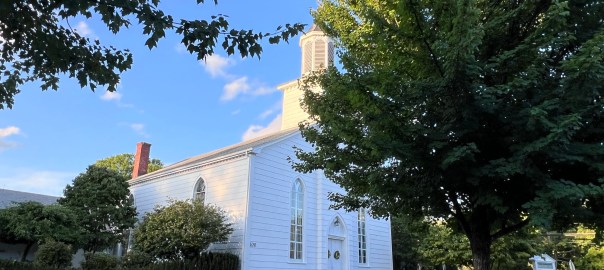
Formerly The Ramapo Meeting House was organized in 1785 and built in 1798
In 1713, a small group of eleven German Lutheran families settled at the “Island,” so named because of extensive marshlands surrounding high, dry land. They formed a congregation in 1715, and c. 1720 built a log church. Prior to 1739, they built a larger, frame church.
Dutch, French, English and Scottish settlers of the Reformed faith came to the Island about mid-century and attended church in Paramus, 10 miles distant. In 1785, they organized The Ramapo Dutch Reformed Congregation at Ramapough in Bergen County.
After the Revolutionary War (1776-1783), the first task of the new nation was to repair the damages of war and neglect. Neither the Lutheran nor the Reformed congregation at the Island had sufficient means to build a new church. In spite of having fought on opposing sides during the War, they agreed to jointly repair and use the old Lutheran church. The arrangement was so successful that in 1798, they agreed to build the present church together.
Construction began on June 4th, and was finished in November. The last items purchased were “one lock and two keys” on December 12, 1798. The two congregations shared the church for fifty years until 1848, when the Lutherans sold their interest and moved to Airmont, NY and established the present Christ Evangelical Lutheran Church.
As soon as its doors opened to the public in 1798, the new Ramapough Meeting House became the heart of the daily activities. Social gatherings and civic meetings were held here all week long, and personal and official notices were posted on the doors. But on the Sabbath (from sundown Saturday to sundown Sunday) the building became a sacred place.
Ramapough – or Bellgrove, as it was called at this time – had four mills, several blacksmith shops, a general store, a stagecoach stop, and U.S. Post Office, one of the earliest in New Jersey (1797). The old Kings Highway of 1703 or Ramapough Road (Island Road) was part of the ancient 150-mile Albany Post Road from Paulus Hook (Jersey City) to Albany, NY. Dobbin & Tustin, est. 1797, ran a passenger and mail stage line on this road, right past the door of the Ramapough Meeting House.
In 1798, when pews and people were smaller, the Meeting House held 385 people. (Today, it holds 250). Though the old box-type pews are gone from the sanctuary, the gallery seats above still exist. The Island Church held an important place in the railroad hamlet of Mahwah throughout the 1800s. It was known simply as the Community Church until the 1950s, when suburbanization brought many other faiths to Mahwah.
One of the earliest public schools in the area, c. 1815, was operated on the church property until 1906, when the church sold land to the Township for the Commodore Perry School. In the cemetery is a roadbed of the old Kings Highway.
The Ramapo Reformed Church is the oldest public building in Mahwah, and a repository of more than 200 years of local and regional history. It is the older of only two remaining frame Federal-period churches in Bergen County, and is on the National Register of Historic Places.
The modern church sign
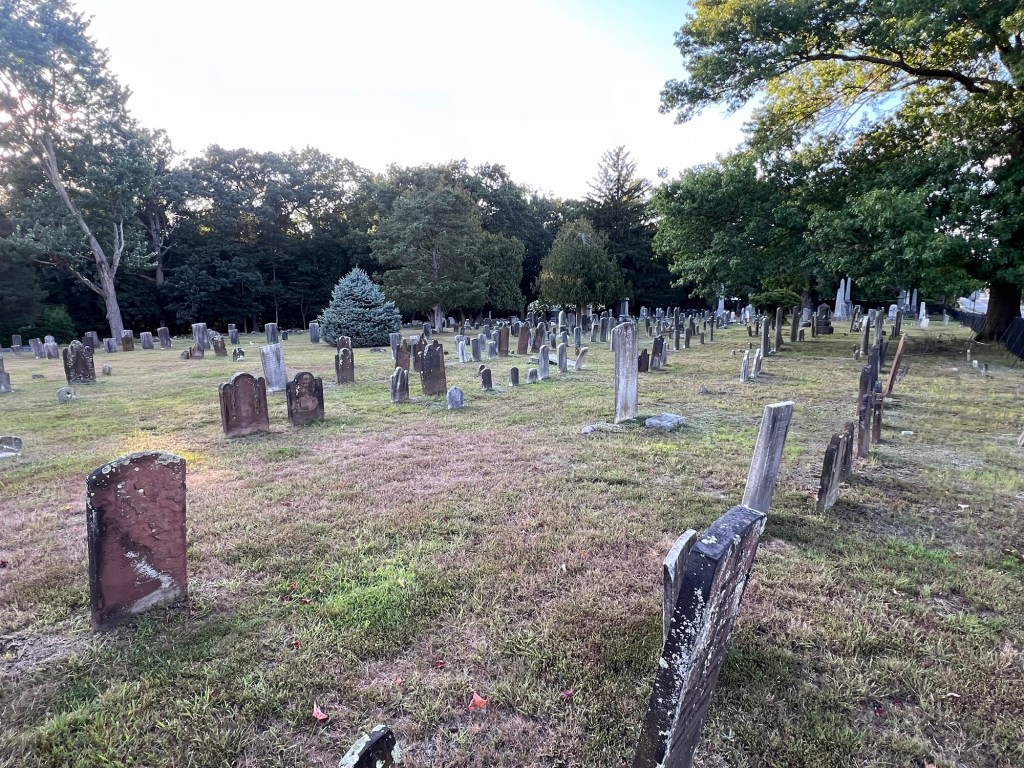
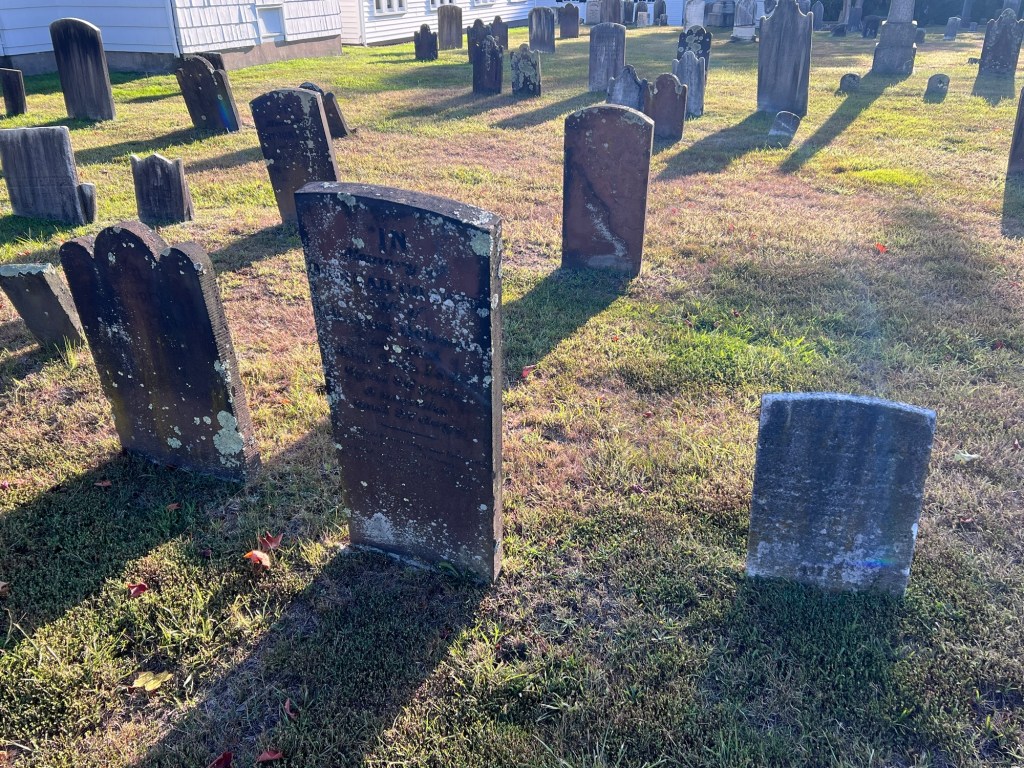
I walked through this quiet and reserved graveyard in search of ghosts from the past. The graveyard at the Ramapo Reformed Church, like many of these former Dutch churches, are steeped in memories of the past.
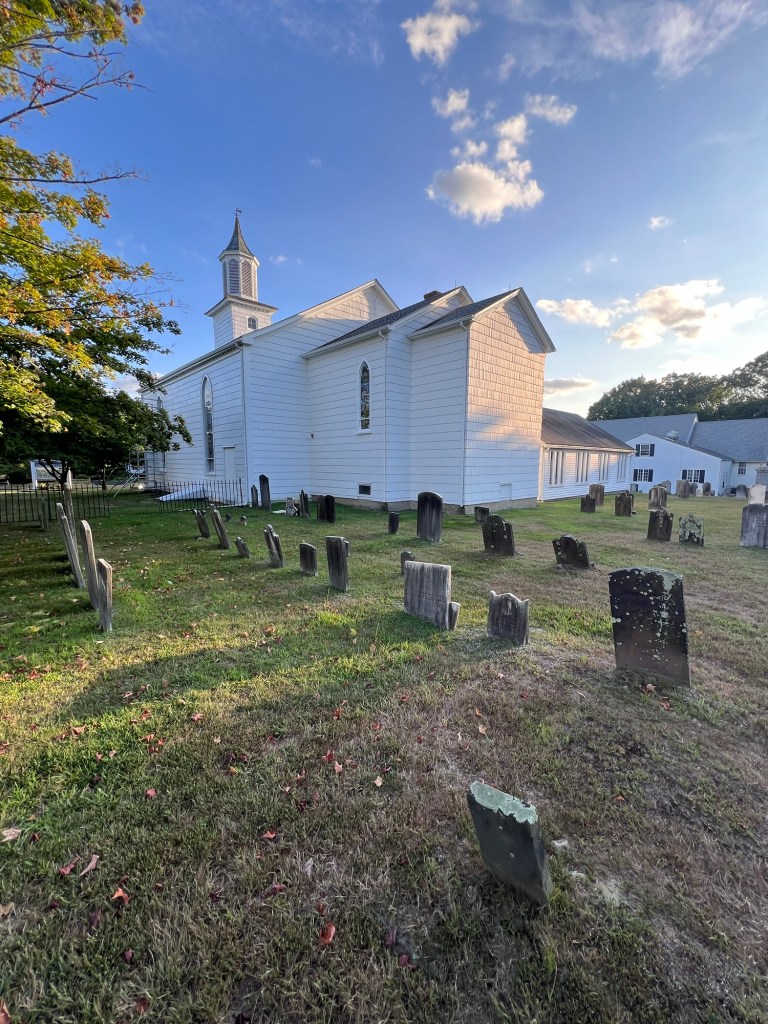
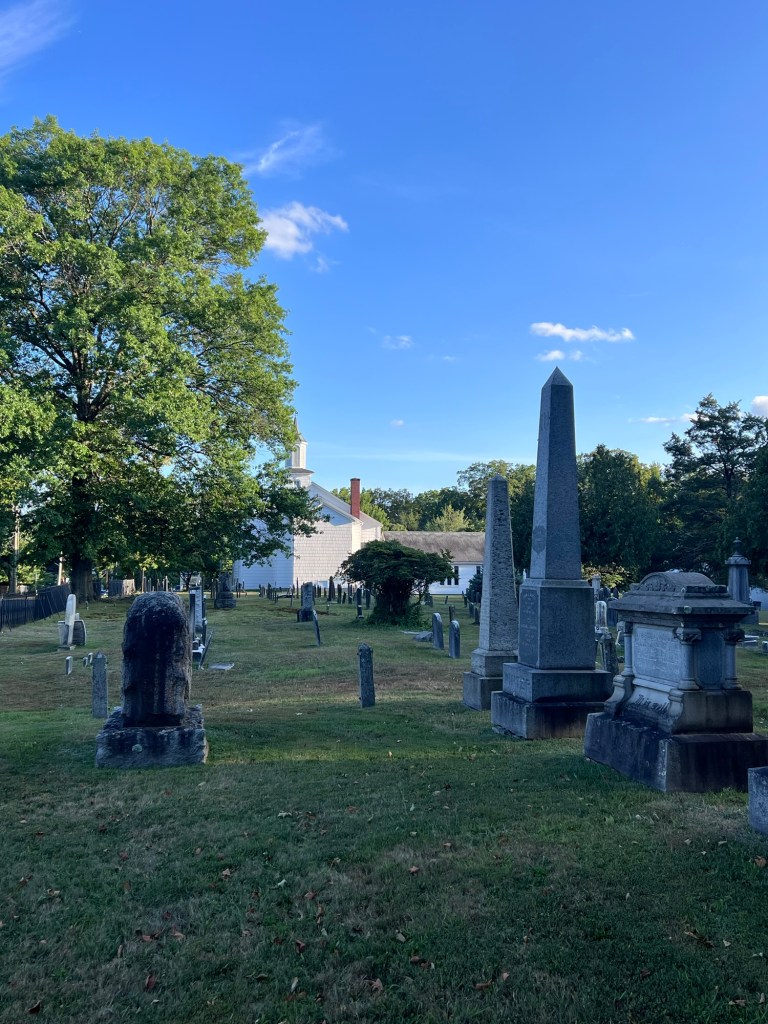
The historic graveyard in the back of the church
In the unique graveyard are the places of rest of many of the first families of Bergen County, NJ who not just shaped the county, but the State of New Jersey and the United States as well.
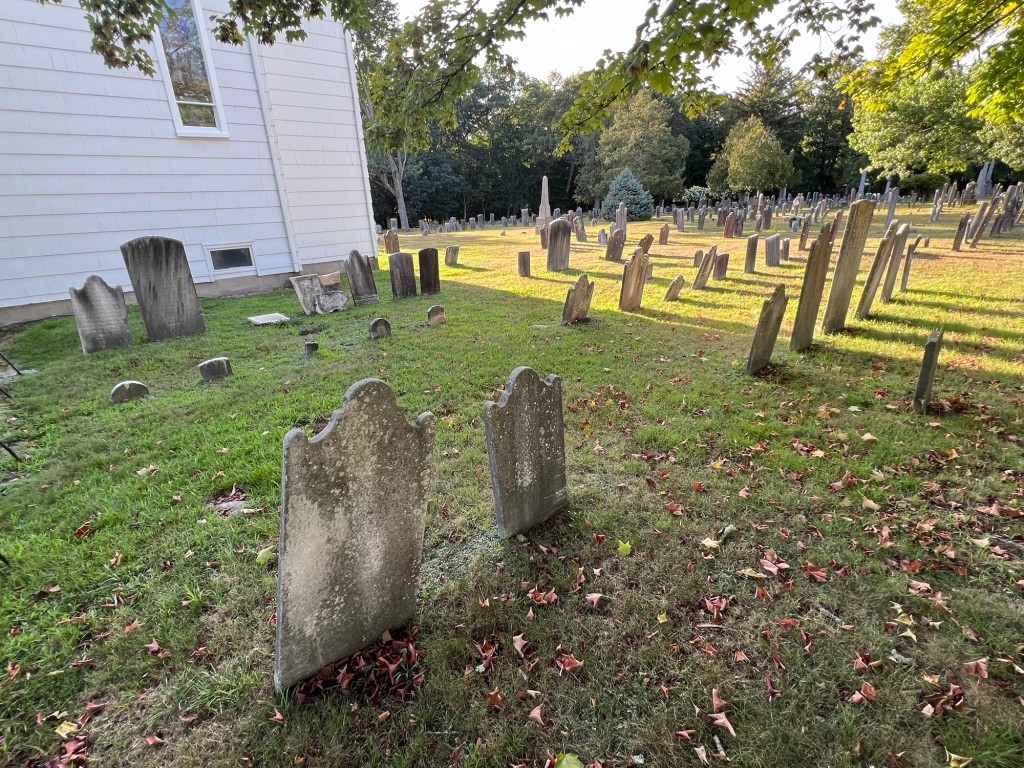
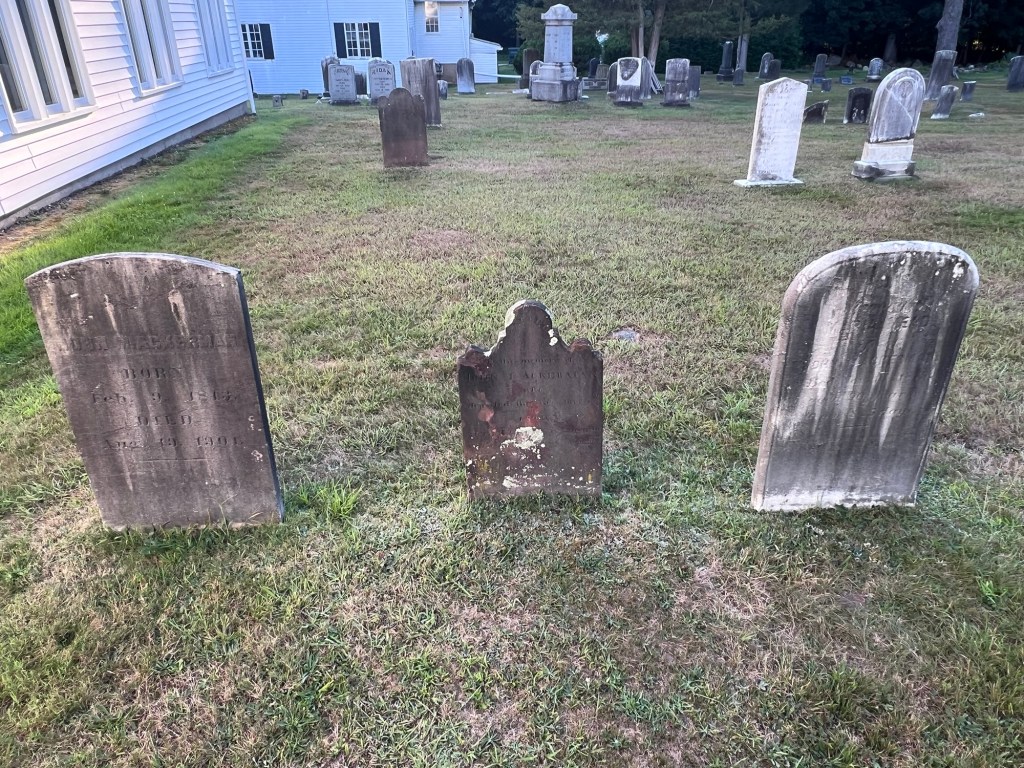
The oldest part of the graveyard surrounds the church
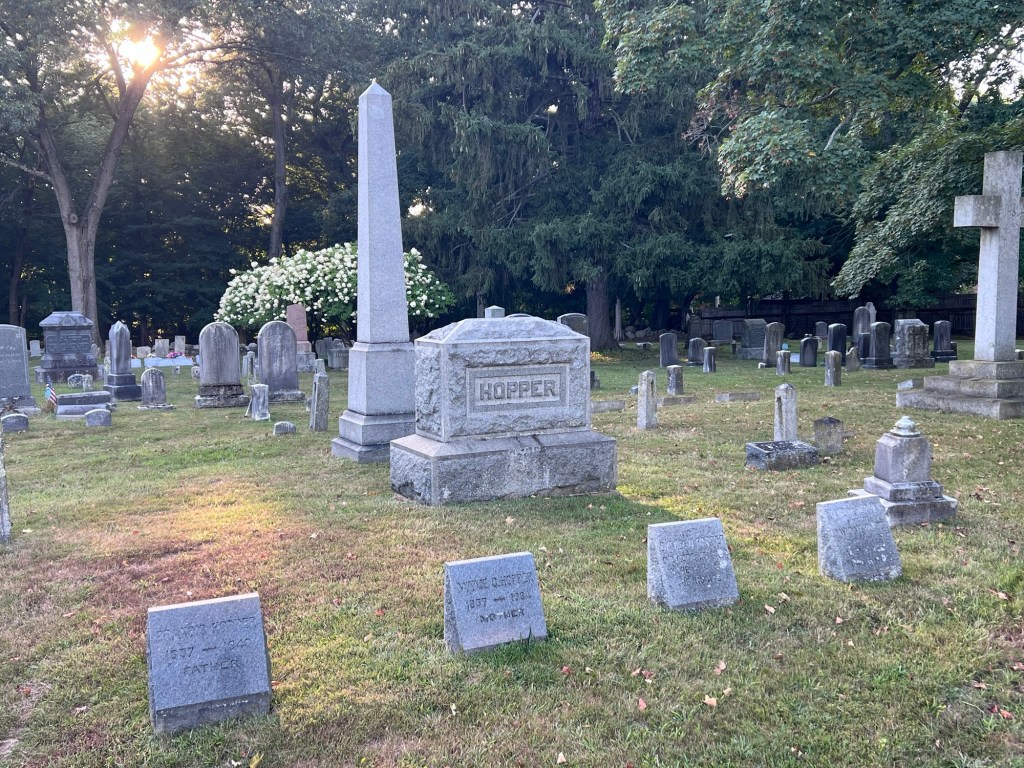
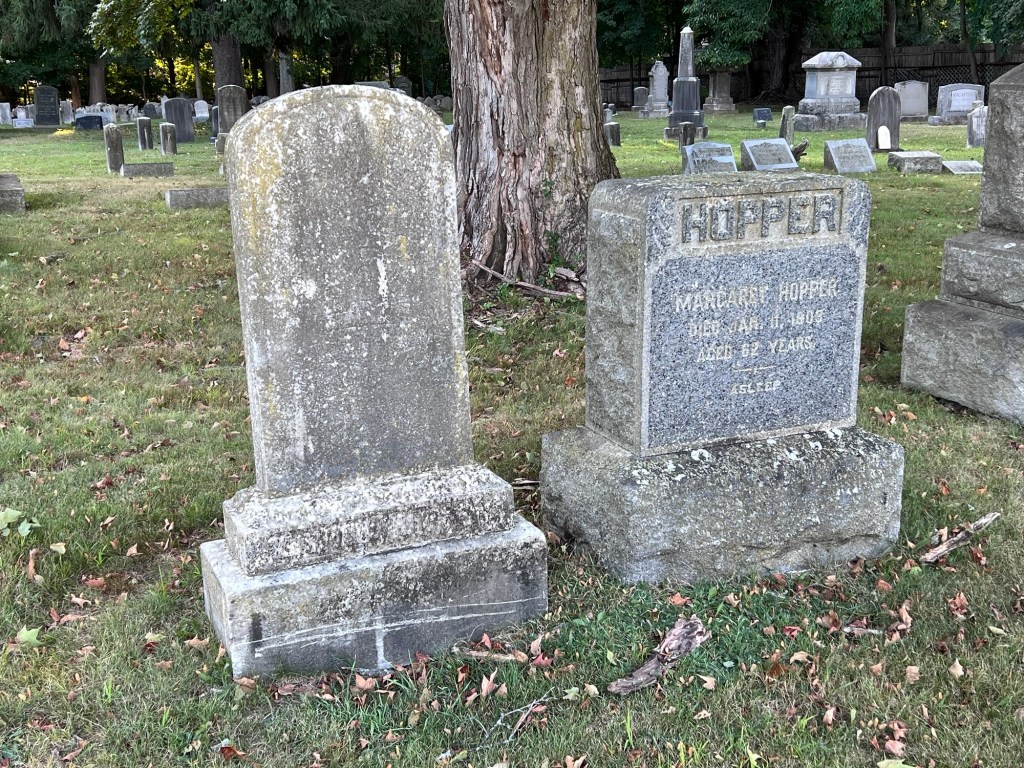
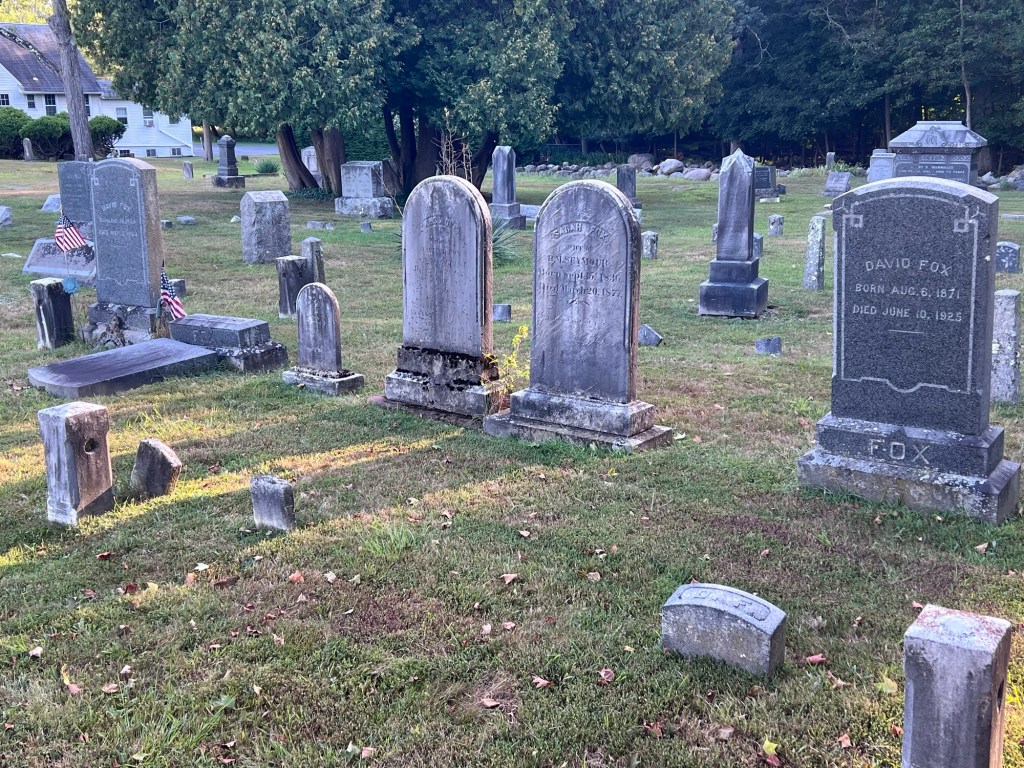
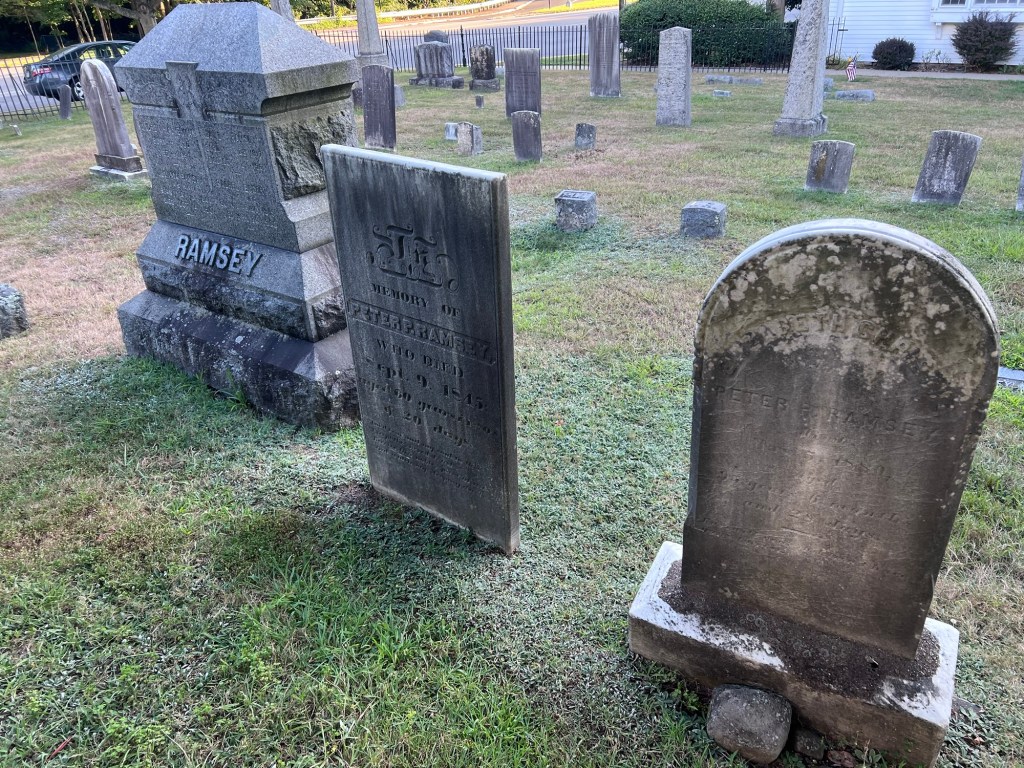
While the names Haring, Christie, Blauvelt, Demarest, Ramsey, Sutherland, Fox, Hopper, Van Ripper, DeBaun, Terhune and Tice may not similar to most people, to a generation of us were the names of farming families in Bergen County.
Their farms supplied us with fresh fruits and vegetables when in season and places for us to go during Halloween and Thanksgiving for our baked goods and much needed apple cider.
The 1980’s real estate boom put an end to many of these traditions but those names still live in the memories of an older generation. We see some of these traditions still hold tight at Demarest Farms in Hillsdale where hayrides and apple cider and fritters are still part of that experience.
For this trip though, I was in search of graves of our brave veterans of the American Revolution and in the faded tombstones surrounding the church, I found most of them.
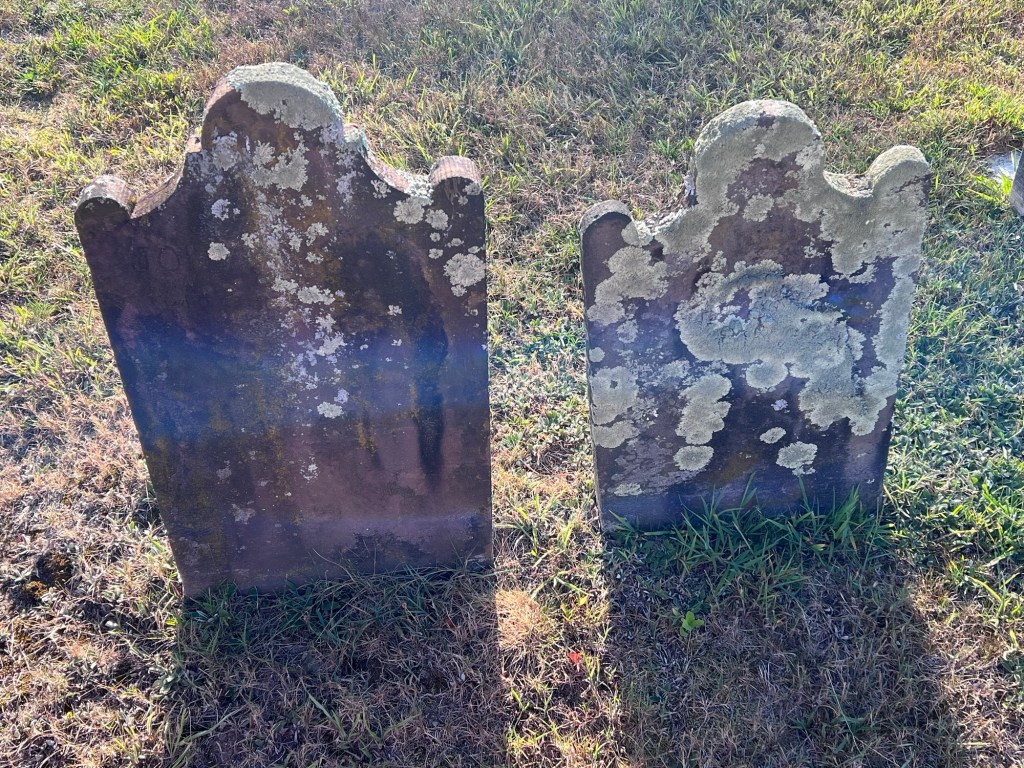
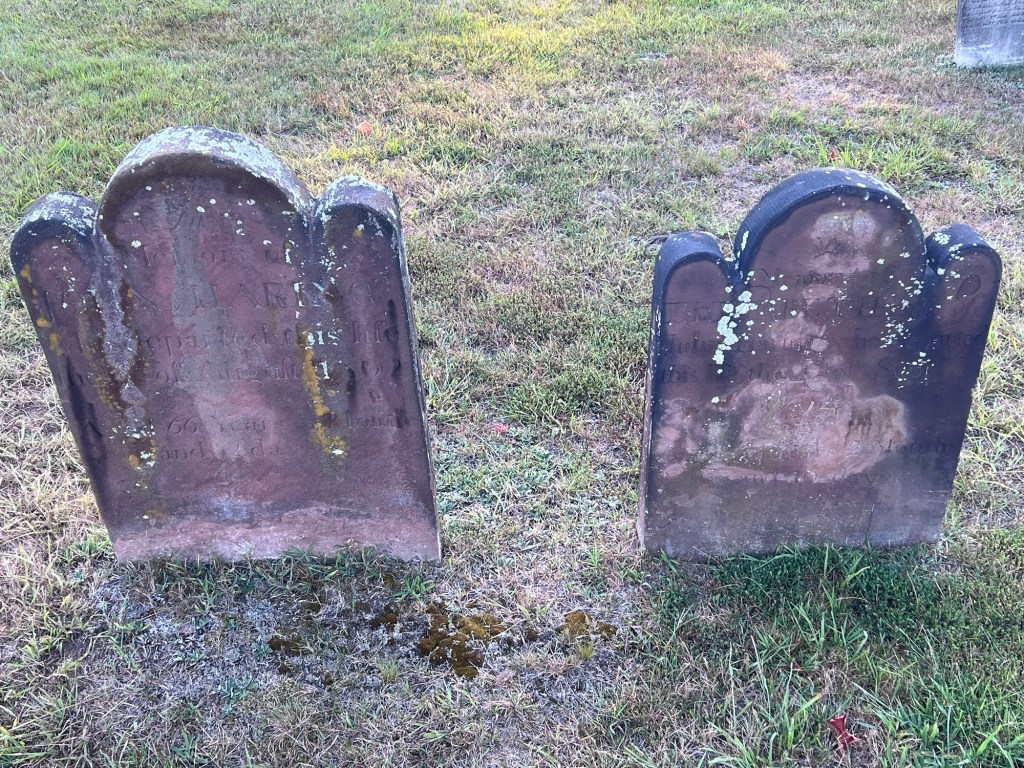
The oldest part of the graveyard wraps itself around the church or faces the road, which at one time must have been a country lane.
Some of the oldest families from the community are buried closest to the church building
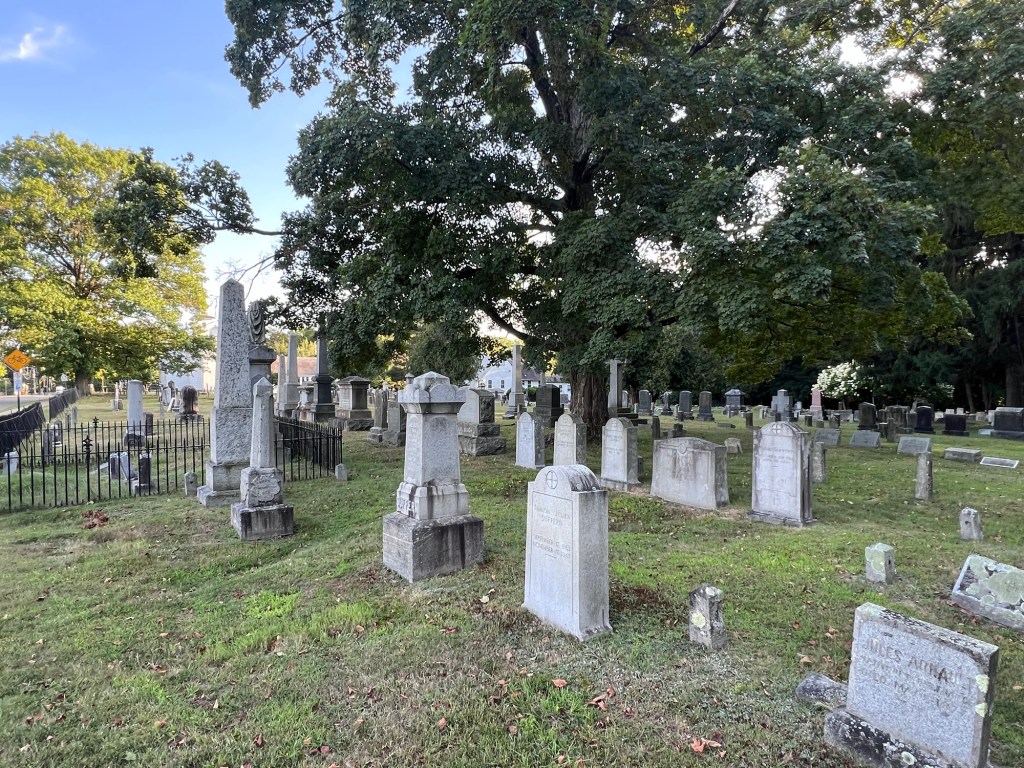
The graveyard is filled with family plots of most of the first families of the area once surrounded by old fences.
The graveyard is full of families and their memories. In some parts of the graveyard, family plots are organized by generations. To so the progression of mother and father to their children and grandchildren. The history of these families is in the rows of names and the intermarriages of all these families to one another.
The Fox family plot, where one of the members of the family was a veteran of the Civil War
Peter J. Ramsey was born on 23 November 1804, in Bergen, New Jersey, United States. He married Margaret Hopper in 1828, in Hohokus Township, Bergen, New Jersey, United States. They were the parents of at least 4 sons and 5 daughters. He died on 10 May 1852, in Ramapo, Bergen, New Jersey, United States, at the age of 47, and was buried in Mahwah Township, Bergen, New Jersey, United States (Family Search.org).
Closer to the church, I discovered the graves of our brave soldiers from the Revolutionary War whom I had been searching for.
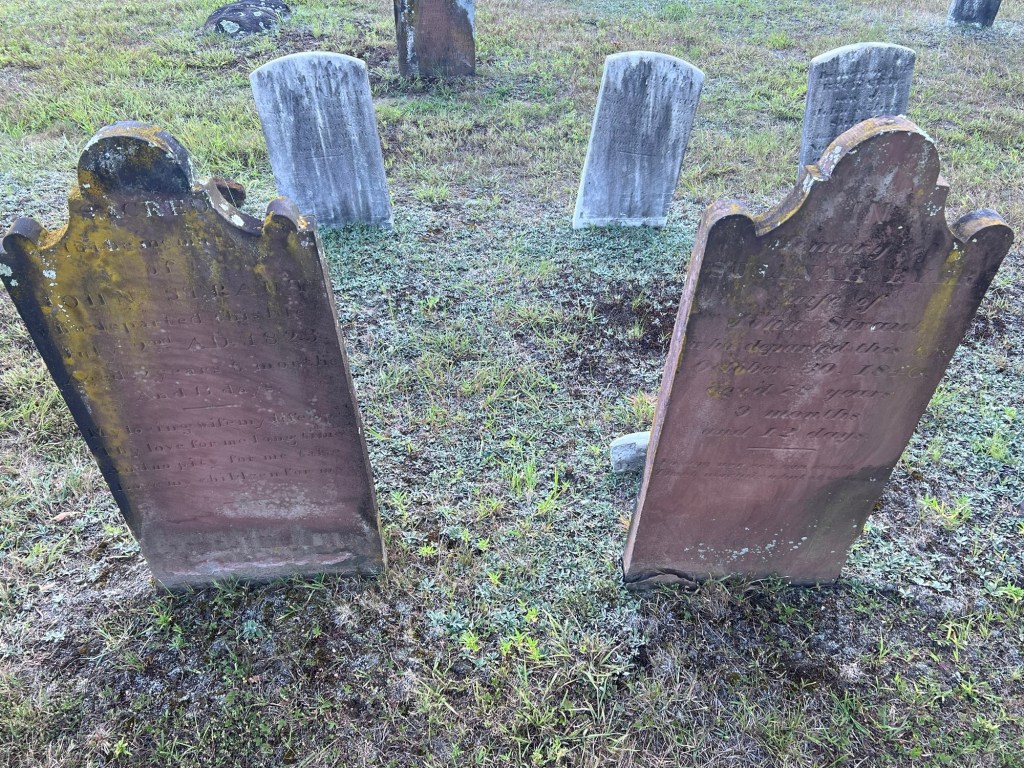
The grave of John Suffern, who fought in the Revolutionary War and whose family the County of Suffern was named after
When John Suffern was born on 23 November 1741, in County Antrim, Ireland, his father, William Suffern, was 27 and his mother, Margaret Templeton, was 19. He married Mary Myers on 1 January 1766, in Burlington, New Jersey, British Colonial America. They were the parents of at least 7 sons and 4 daughters. He lived in Rockland, New York, United States in 1820 and Ramapo, Rockland, New York, United States in 1830. He died on 11 November 1836, in Suffern, Ramapo, Rockland, New York, United States, at the age of 94, and was buried in Ramapo Reformed Church Cemetery, Mahwah Township, Bergen, New Jersey, United States (Familysearch.org).
The graves of John Suffern and his wife
The Christie family plot, where John and James Christie who fought in the war were buried
When John W Christie was born on 7 May 1754, in Schraalenburgh, Bergen, New Jersey, British Colonial America, his father, William James Christie, was 33 and his mother, Catalijntje Demarest, was 32. He married Annatie Hannah Brinkerhoff about 1773, in New Barbadoes Township, Bergen, New Jersey, United States. They were the parents of at least 4 sons and 8 daughters. He died on 11 September 1815, in Bergen, New Jersey, United States, at the age of 61, and was buried in Bergenfield, Bergen, New Jersey, United States (Familysearch.org).
When James Willem Christie was born on 20 August 1744, in Bergen, New Jersey, British Colonial America, his father, William James Christie, was 24 and his mother, Catalijntje Demarest, was 22. He married Maria Banta about 1772, in Schraalenburgh, Bergen, New Jersey, British Colonial America. They were the parents of at least 5 sons and 5 daughters. He died on 23 July 1817, in Bergenfield, Bergen, New Jersey, United States, at the age of 72 (Familysearch.org).
The grave of Lawrence Sutherland another Revolutionary War Veteran
When Lawrence Sutherland was born on 12 June 1763, in Harrington Township, Bergen, New Jersey, United States, his father, James Sutherland, was 21 and his mother, Marietje, was 19. He married Elizabeth Sutherland in 1786, in New Hampstead, Rockland, New York, United States. They were the parents of at least 2 sons and 3 daughters. He died on 9 October 1846, in New Hampstead, Rockland, New York, United States, at the age of 83, and was buried in Mahwah Township, Bergen, New Jersey, United States (Familysearch.org).
I have been shopping at Heights Flower Shoppe for many years for floral arrangements and gifts for the holidays. Ever since they moved from their smaller space further down the Boulevard to the new location at 209 Boulevard in a turn of the last century building (there are pictures of the building at various stages of downtown Hasbrouck Heights history on the wall), it has developed into a whimsical store of fresh flowers, beautiful arrangements, unusual knick-knacks, treasured holiday items and items from a local chocolate maker. When you want a gift that sways away from the standard present, you are sure to find it on the shelves of the Height Flower Shoppe.
Heights Flower Shop at 209 Boulevard at Christmas time.
What makes the story have such a nice feel is the way it is merchandised. Each of the tables and shelves of the store are created to be its own little display case. Everything is nicely arranged and not just plopped on the shelves. There are small stuffed animals next to frames or glittering trees next to hearts and bags of local chocolates. They are colorful arrangements that are pleasing to the eye.
Heights Flower Shoppe at The Open House in 2020
The store has won numerous awards for the window displays and at each holiday, they display an abundance of merchandise and props that showcase the event with much excitement to welcome in the holiday. Their windows have made them a member of the Hasbrouck Heights ‘Mayor’s Celebration Committee’ Hall of Fame.
The window display at Heights Flower Shoppe in 2024
Santa welcomes you to Heights Flower Shoppe in 2024
I recently attended the Holiday Open House at the store and that was amazing! The whole back counter was lined with small appetizers and platters of Christmas cookies. There was coffee, tea and “Library Punch” , which is fruit juice, lemon-line cola with sherbet. It is always refreshing and was a nice touch when doing your holiday planning and shopping.
The inside of Heights Flower Shoppe during Christmas 2024
The hospitality at the store at the holidays is always welcoming. If it is a floral arrangement for a special event or small gift for a dinner party’s host, you are sure to find it at Heights Flower Shoppe.
The inside of Heights Flower Shoppe in 2024. It is the land of Christmas
The Christmas 2021 Open House on December 5th was a pleasure. It is fun to enjoy the Christmas music and nibble on snacks as you walk around the store planning your purchases for the holidays for the home and as gifts. It is part of Hasbrouck Heights Holiday traditions in the Downtown.
Heights Flower Shoppe at the Christmas 2021 Open House
The Christmas display windows at Heights Flower Shoppe in 2021
The Christmas greeting at the 2021 Open House at Heights Flower Shoppe
The beautiful merchandise at the 2021 Christmas Open House
Whimsical Christmas merchandise at the 2021 Open House
The Hasbrouck Heights Men’s Association Halloween House/Merchant Contest:
For Halloween in 2022, I ran the Hasbrouck Heights Men’s Association Halloween House Decorating Contest and we created a Merchant Division this year. Heights Flower Shoppe was our winner.
Heights Flower Shoppe decorated for Halloween 2022
We were impressed by not just the windows but also by the inside decorations and merchandising of the store. It just was so perfect for the holiday season and was the perfect store to ‘bewitch’ anyone who was decorating for parties and get togethers.
The decorated windows at Heights Flower Shoppe were impressive
The inside of Heights Flower Shoppe at Halloween in 2022
Halloween decorations and delights at Heights Flower Shoppe
Chairman Justin Watrel with Merchant Winner and owner Ray Vorisek
Winner and Owner Ray Vorisek in front of the winning store
The store was very impressive for Halloween 2023 as well with ghoulish decorations and the displays of things that go bump in the night. Ray won the award for a second time in 2023 and I very proudly awarded him for a second time for his creativity and spirit of the holidays.
The display windows in 2023 for Halloween.
The boutique of Heights Flower Shoppe at Halloween 2023
The beautiful merchandise for Halloween and Thanksgiving in 2023.
Ray won the contest again in 2023. He is with Chairman (& Blogger) Justin Watrel Chairman of the Hasbrouck Heights Men’s Association Halloween House Decorating Committee presenting him the award.
The Two time winner in front of his store.
Heights Flower Shoppe becomes even more festive the day after Halloween when the whole store is converted into Christmas merchandise and becomes the ultimate Christmas shop. All the beautiful and festive items line the shelves waiting for people to take them home and decorate with them.
The outside of the store is so beautifully decorated
The inside boutique is laden with Christmas decorations
The entrance is full of elegant items for decorating
The side shelves are full of gift items and wonderful chocolates
In Christmas 2022, the whole store looked like a Christmas Fantasyland of beautiful gift items and a wonderful place to buy presents.
In Christmas 2023, the store is looking more and more like Christmasland with its boutique like displays and merchandise.
Heights Flower Shoppe in 2023.
Heights Flower Shoppe Christmas 2023.
Ray is the three time in a row winner of the Hasbrouck Heights Men’s Association Halloween House/Merchant Decorating Contest in 2024. His windows set the example foe merchants in our Downtown during the start of the holiday season.
The front of the Heights Flower Shoppe during Halloween 2024
The winning Merchant window in 2024
The close up look at the winning window
The close up look at the winning window
HHMA Chairman Justin Watrel with winner Ray Vorisek at Halloween 2024
Three time winner of the Hasbrouck Heights Men’s Association House/Merchant Decorating Contest in 2024
Ray always does a wonderful job with his windows during all the holidays and is impressive at Christmas and Easter as well. The store both inside and out are always decked out during the holiday season.
The blog on the Hasbrouck Heights Men’s Association Halloween House/Merchant Decorating Contest 2024:
The beautiful merchandise at Heights Flower Shoppe at Halloween.
The windows at Christmas time December 2023.
The front window of Heights Flower Shoppe in December 2023.
The inside of Heights Flower Shoppe in 2023.
Heights Flower Shoppe at Christmas 2023.
The Proposal for “Bergecco-Parc Consulting Inc. Heights Flower Shoppe-We Keep Growing”:
When I needed to pick a small business to do a Marketing project on for my Business 101-Introduction to Business class, I wanted to keep it close to home as the Summer was winding down and did not want to travel too much to Paramus through all that traffic. So I approached Ray on this as I saw that he did not have much of an online presence nor a strong Digital Marketing display of all the wonderful things he sold in the store. We agreed to the things we both wanted to cover and we set the project up and I presented it to my class.
We were under a lot of time constraints just like the Summer One course in that we only had six full weeks of class, and we would miss two more days of class, so we were going to be rushing through this project. Funny though, this is what I told the students they will be experiencing for the rest of their lives. Last minute requests from both bosses and clients that you might have to achieve and finish in a weekend.
So I prepared the field trips. The first one was an optional extra credit trip the Thursday after I handed out the assignment and then the next Tuesday I met me students for a formal tour of Heights Flower Shoppe and then our Team lunch at Bella Pizza a few doors down. This is when the real work begins.
In a now in a class this quick, you do not have the time to goof around and I made my students fully aware of this. So I arranged the field trip with Ray and his staff, made sure that all my students attended and we started the tour of the store.
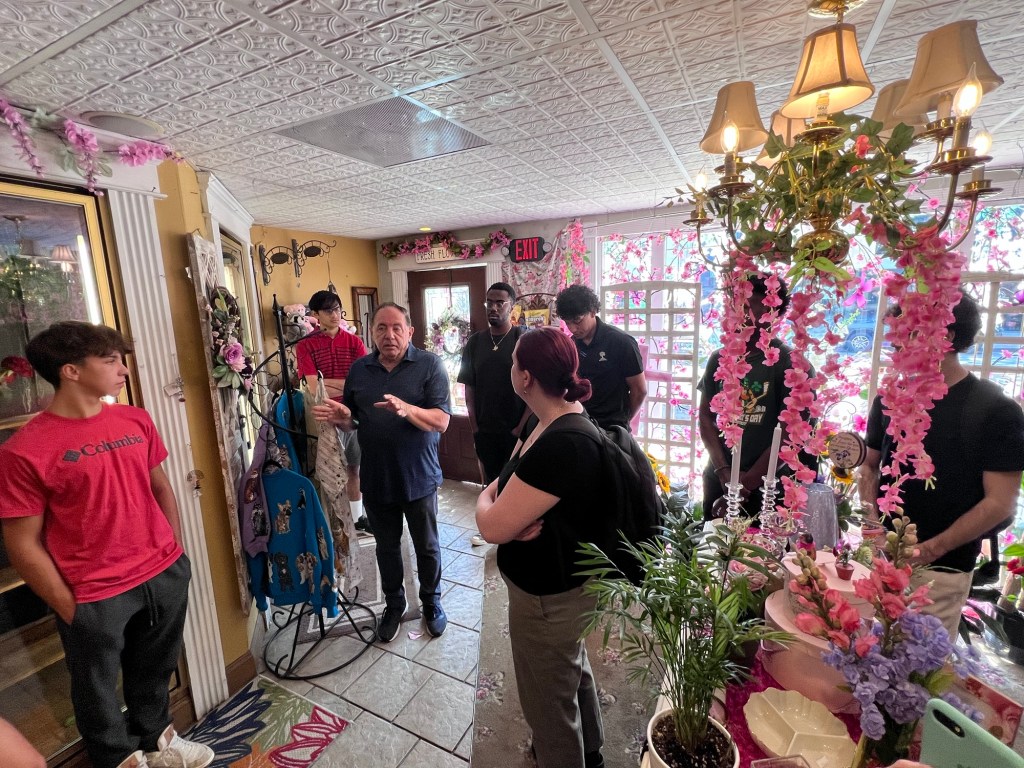
We started the tour with a discussion on the history of the store and Ray’s career in the flower business
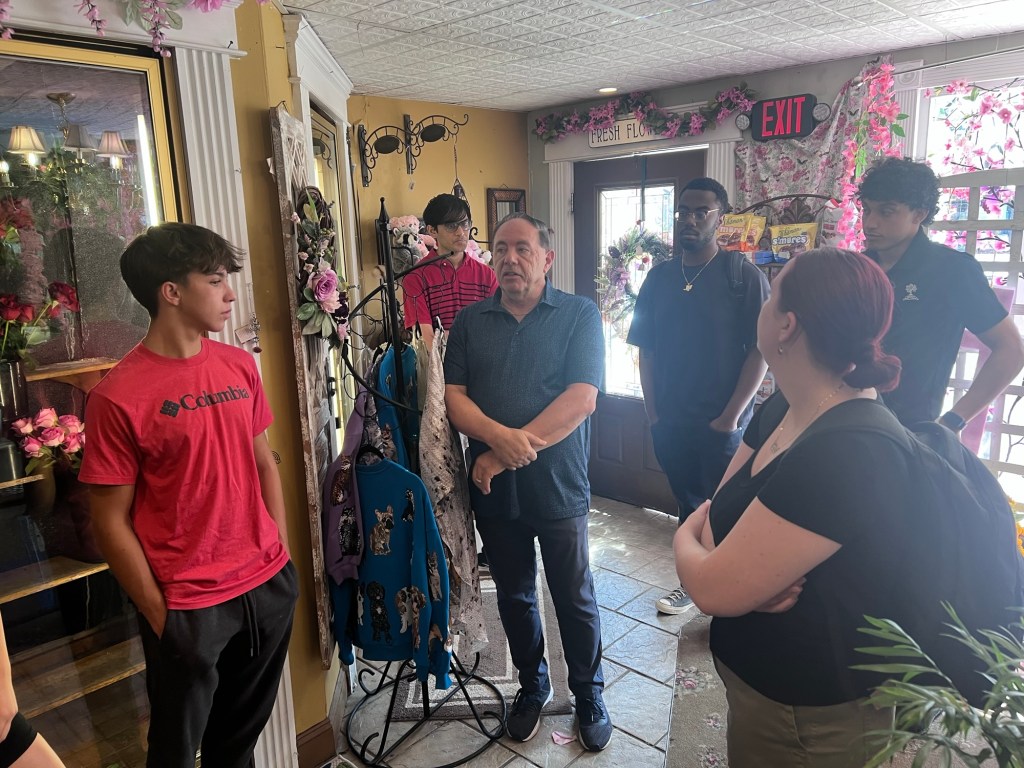
The owner, Ray Vorisek, gave my students a talk first on the history of the store, his career as a florist and how the whole family participates in the business. Then he took us on a tour of the second floor that will be used for the new Christmas shop and bridal salon in the future. Then I let my students walk around and talk to the owner and his staff, who were working feverishly getting out orders that afternoon.
My students listening to Ray discuss the flower business
Ray explaining the assortment of flowers
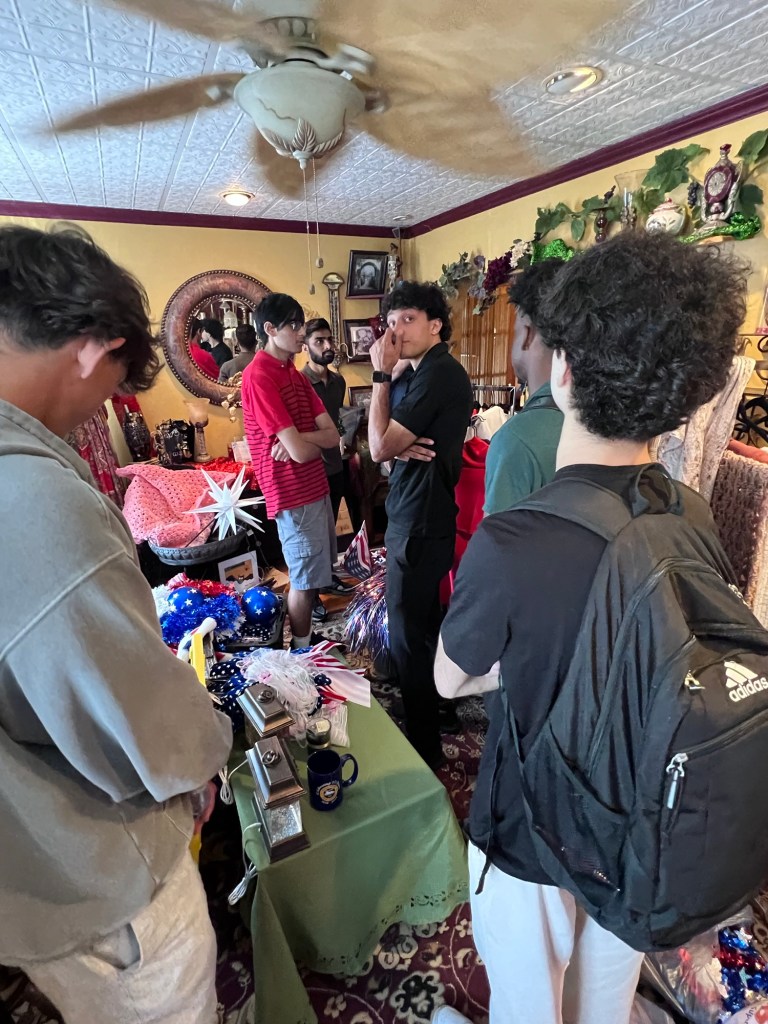
My students touring the store and studying the merchandise
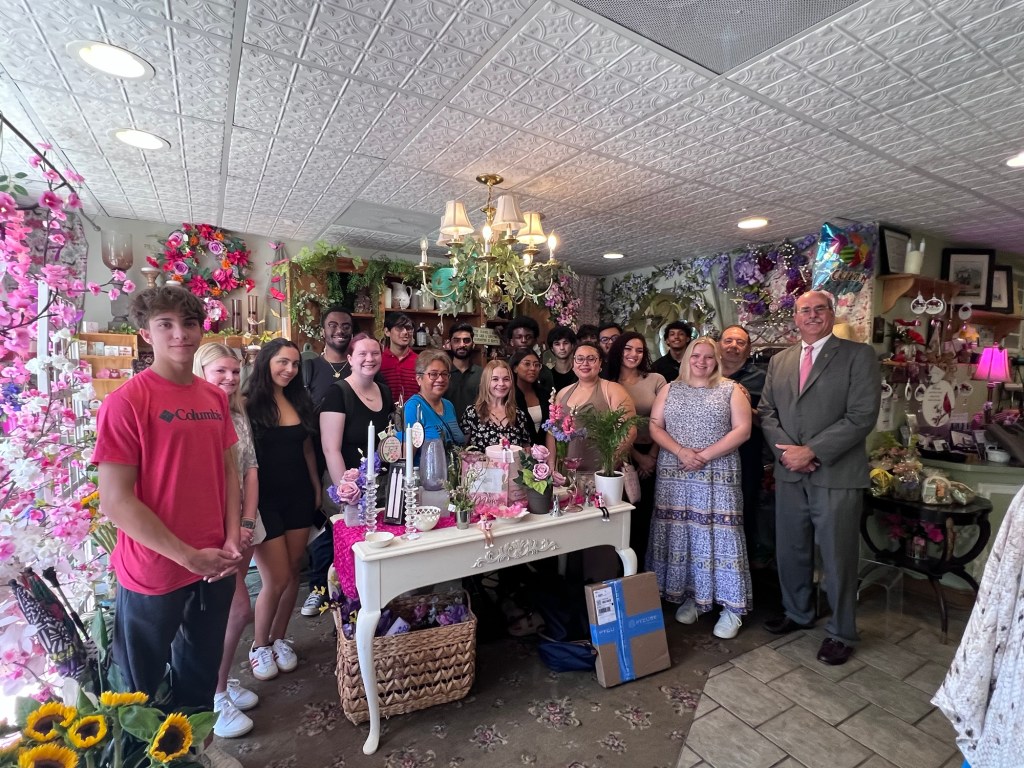
Our Team picture after the tour
The students had about a week after this tour to finish and present the project to myself and the owners niece, who would be working at the store as the rest of the family members would be away on vacation. We finished the visit in less than an hour.
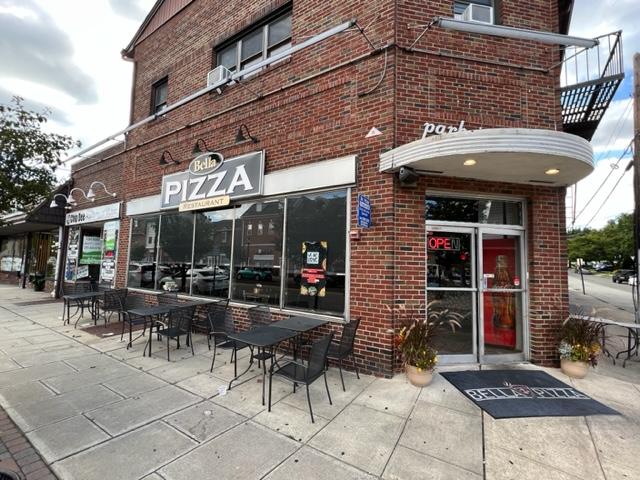
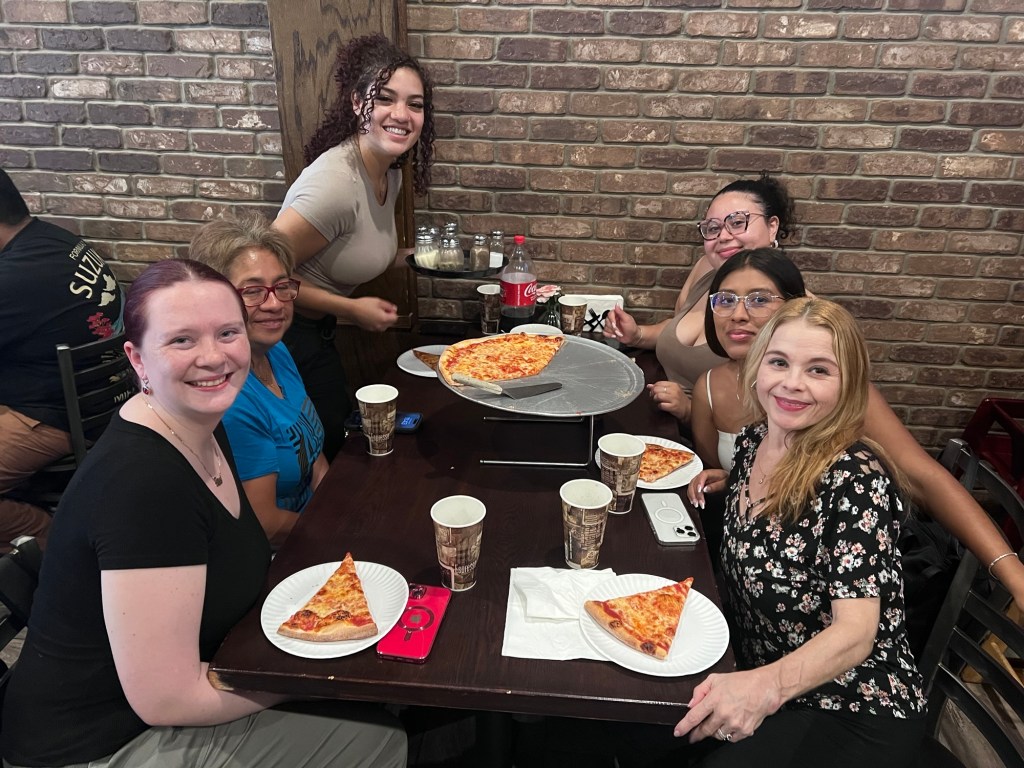
As part of the tour, I took the students out for lunch five doors down at Bella Pizza at 197 Boulevard for Cheese pizza and soda. I find that when a Team ‘breaks bread’ with one another, they gel together.
Bella Pizza at 197 Boulevard in Hasbrouck Heights, NJ
Our ‘Business Lunches’ are a way for the student consultants to get to know one another and start talking about the project in a more casual manner. There was a lot to discuss and it is easier over lunch with a few laughs.
The Special Events and Marketing Team having lunch
The Special Events and Marketing Team dining together
Members of the Marketing and Special Events Team dining together
Ray Vorisek and his daughter, Gabriella with our Senior Vice-President of Operations
It was a really nice lunch and I got to talk with Ray about some of the challenges of the business and catch up on ways he was promoting the business. Heights Flower Shoppe is a very successful business with a good following but the issue is that his core customer base was getting older and things like the way holidays were being celebrated were changing. It was going to be out job to tap into what the younger customers were looking for and how to reach them.
For the next ten days, my students worked hard, had challenges to overcome, co-workers who could be somewhat uncooperative and worked late nights to finish the project in time for our presentation on August 5th, 2025. I thought for a barely two week time frame, the student consultants did a wonderful job on the project and here is their hard work.
This was the commercial that the Marketing Team put together for store to promote it for the Digital Age:
The Commercial on Heights Flower Shoppe
The Team Presentation on YouTube
The Presentation was a huge success with both the Marketing Team and the Special Events Teams presenting their ideas with new logos, interesting Tik Tok and YouTube videos promoting the store and new special promotions such as ‘Children’s Bundles’ and holiday events highlighting Christmas, Easter and the Wedding season.
Ray’s niece, Nicole, attended the Presentation and gave us wonderful feedback on some of the ideas. Which ones were realistic and which ones would need more work. I do admit the students can be elaborate with the project and their ideas, but it is best to present all ideas first and then tailor them down to the clients budget and logistics.
The Corporate Picture for the Paramus Team-Heights Flower Shoppe with CEO Professor Justin Watrel at the end of the Team Presentation
After the Presentation was over, I hosted a small reception for both the students and our attending guests. I bake cookies, brownies and bring in snacks like chips, sodas and waters for the students and their guests for a job well. Our last time ‘breaking bread’ with one another for the conclusion of the project. It was a bit rushed but I think the Team did a great job.
The Bergecco-Parc Consulting Inc. Corporate reception for the Paramus Team
The next week before Final Exam, we had the Team Wrap up and each student discussed what they learned from the project. This is where I get my insights on the project and where I need to tailor my CEO skills. Just as much as the students learn from me, I learn so much from them as well. “From the students we are taught” from the ‘King and I’.
Then I presented my President of the Division her official Bergecco-Parc Consulting Inc. Presidential hat, of which she seemed very excited to receive. It was a very difficult project to do in less than two weeks and she was up to the challenge. Respect well-deserved!
The new barbecue grill has been the center point of our barbecues.
We could not believe how fast time had come and it was time for our second barbecue for the summer. These barbecues have become a huge hit with the residents and their families alike. One of the employees told me that the guys always look forward to our barbecues and that really made me feel good. Our members and their family members also have a good time.
The Maywood Fire Department organized George Steger’s 102 birthday party with a cake and a flyby by the State Police Department.
The front lawn of the New Jersey Firemen’s Home
We really lucked out with the weather. It was sunny, clear and warm and no humidity. The perfect day for a barbecue and we were packed with residents and their families.
The house’s Chef, Chef Prince, manned the grill again.
The Barbecue menu included hamburgers and cheeseburgers, barbecue ribs and chicken, hot dogs and bratwurst, baked beans, corn on the cob, macaroni salad and Cole slaw. I will tell you, people had quite the appetite that afternoon including myself. It was a combination of the wonderful smells of cooking food, excellent weather and wonderful entertainment on a relaxing Saturday afternoon that set the mood.
The chef cooking lunch
After myself and the other guys running around getting everyone their food, I finally got to sit down to eat and there was not much left. Not a lot of food ever goes back to the kitchen.
My lunch that afternoon and it was as good as it looks
Yum! What a great lunch! The Cheeseburgers were so perfectly cooked
Our entertainer that afternoon was resident favorite, Kelly Carpenter, who has entertained at our events many times. She played from the songbook from the 1950’s to the 70’s and really engaged the crowd.
Then it was time to bring up member, George Steiger, who is now a resident of the home. The members of the Maywood Fire Department really brought out the bells and whistles for their member and Kelly sang himself a very happy birthday to George.
Kelly Carpenter singing ‘Happy Birthday’ to George
Then the members of the Maywood Fire Department came up and read off proclamations and dedications in George’s honor including naming a street after him.
Our Vice-President Roy DeYoung of the Maywood Fire Department reading off the proclamation and holding up the sign for the road in George’s honor.
Then the State Police did a flyover in George’s honor which was a lot of fun to watch.
The video of New Jersey State Police flyover
All good things come to an end though and we started to clean up around 2:00pm. Some of the residents and their families lingered on this beautiful day. All our members wished George a very happy birthday and we took a group shot with him. This is what the Brotherhood is all about.
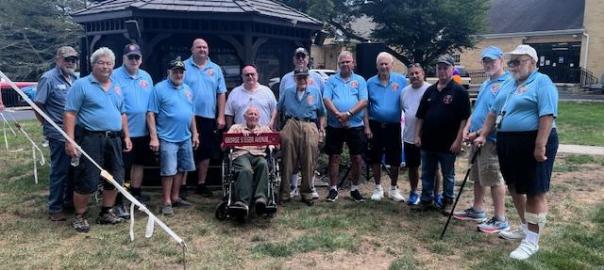
The Bergen County Firemen’s Home Association at the end of the picnic
Our Executive Board: Vice-President Roy DeYoung, President Justin Watrel, Treasurer John Kinner and Secretary Tom Simpson
It was another wonderful afternoon and the residents had a wonderful time. Another great event sponsored by the Bergen County Firemen’s Home Association.






























































 mywalkinmanhattan