As I have mentioned since the reopening of New York City, people are trying to write the City off as ‘dead’ and that is far from true. I see a City that is quieter, adapting to conditions around it and slowly coming back to life.
I spent my third day exploring in the Murray Hill neighborhood and I am beginning to see more and more people feel the same way I do. They are joining the world again by walking through parks, jogging on the sidewalks and partaking in the outdoor dining that is popping up all over the City streets and sidewalks. Restaurants and bars are doing their best to cater to their customers while still maintaining social distancing and keeping everyone safe.
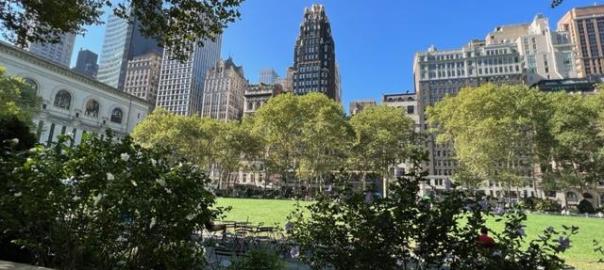
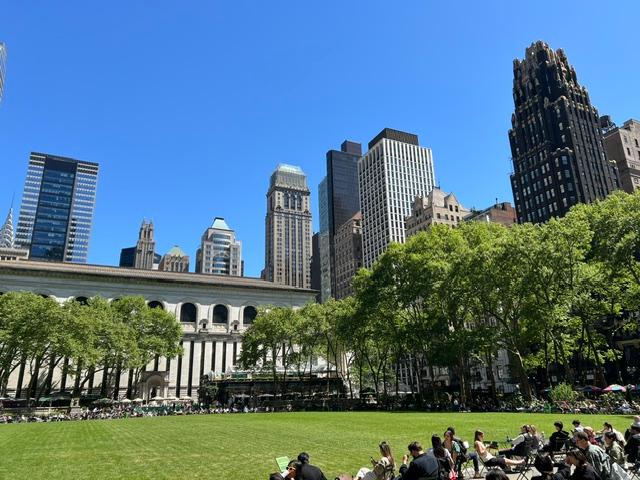
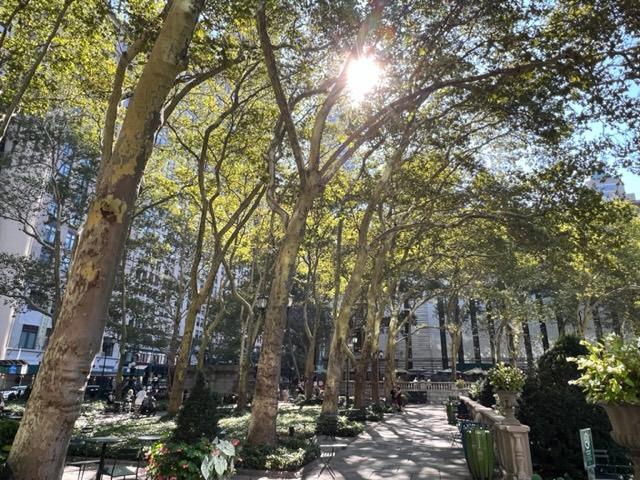
No where did I see this more in play than in Bryant Park, which has become my headquarters for this part of the walk. When I got into the park that afternoon, people had taken over the lawn even after the overnight rain storm and were lying all over the grass (socially distanced of course) reading, laughing and conversing with friends. The chairs and tables around the park were filled with people eating their lunches, talking and reading. The park was pretty well filled.
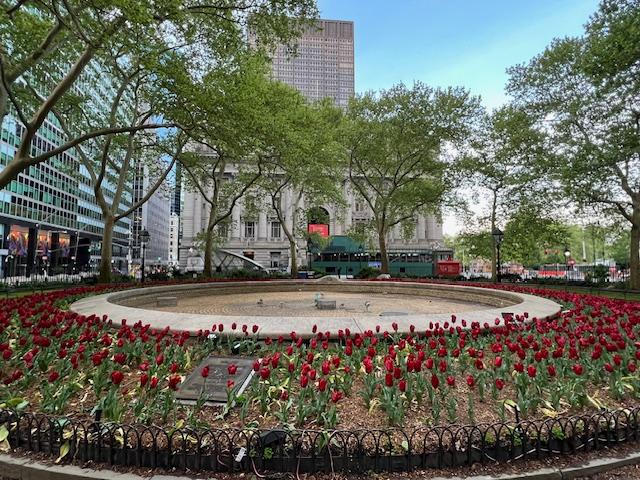
Bryant Park in the Summer looking down from Sixth Avenue in the Summer of 2026
Bryant Park Grill, the main restaurant of the park, was filled to capacity during the lunch hour. People were having business meetings over lunch and slowly out of towners are coming back to the City missing the vibrancy of the City. You would never know there was a pandemic going on from all the people in the park enjoying the sunshine on a nice warm sunny day.
I had gotten tickets through the Members Website at the Morgan Library & Museum that afternoon at 2:30pm with timed tickets so I knew how to pace my day. I wanted to walk all the streets between East 41st and East 35th Street from Fifth Avenue to FDR Drive. It would be several hours of interesting walking. What I saw all over the neighborhood that afternoon is life coming back.
I started my walk at the New York Public Library entrance admiring the fountains and the gardens planted up front. Most of the tables in front of the New York Public Library were full of people eating their lunches, reading or sleeping.
The beauty of the library at Christmas time 2024
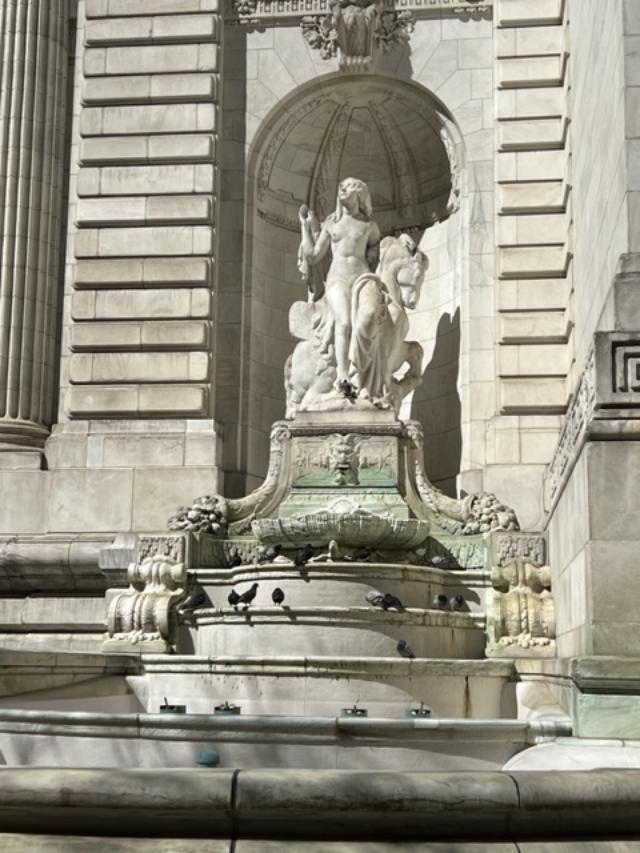
I threw a coin into the fountain of ‘Beauty’, made a wish and started my walk. This graceful and elegant fountain was designed by artist Frederick MacMonnies. In the background is the words written, “Beauty, old yet ever new, Eternal Voice, and Inward word”.
“Beauty” the fountain in front of the New York Public Library
Frederick MacMonnies is an American born artist whose specialty was “Beaux-Arts style” design. The artist was trained at the National Academy of Design and Arts Student League of New York. The artist continued his training in Paris (Wiki).
I started my afternoon by walking down East 41st Street on a glorious sunny day. With the temperature being around 83 degrees, it was the perfect day to walk around Murray Hill. It was also really quiet being Labor Day Weekend and the streets were deserted for most of the afternoon.
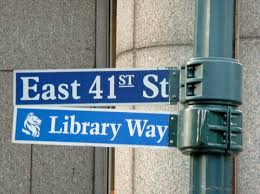
The ‘Library Walk’ starts at Fifth Avenue and ends at Park Avenue
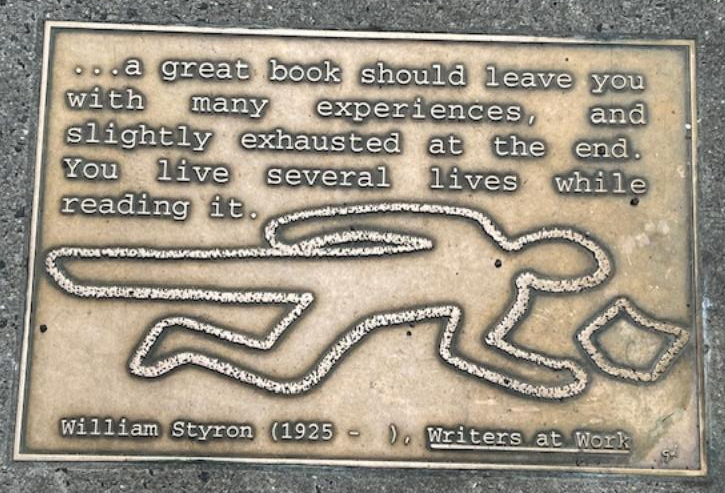
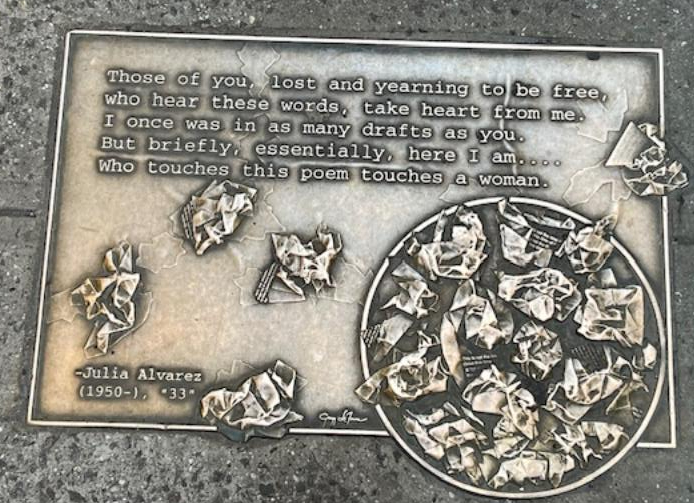
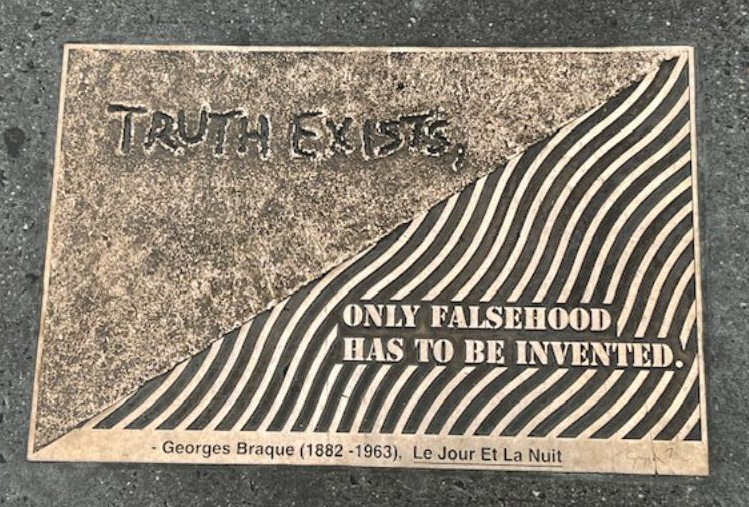
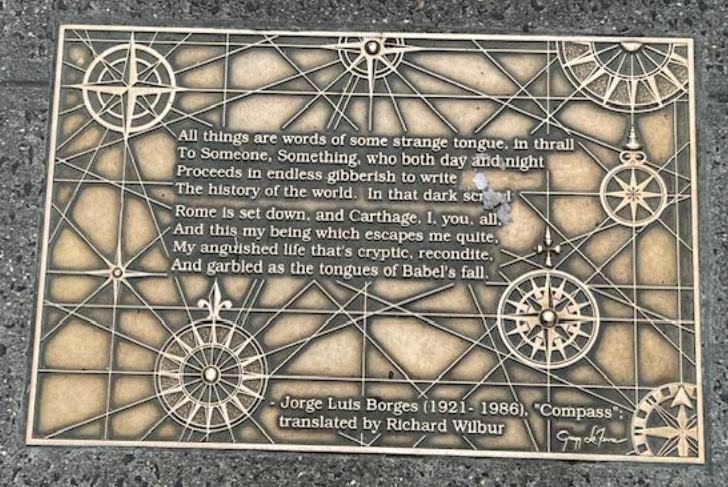
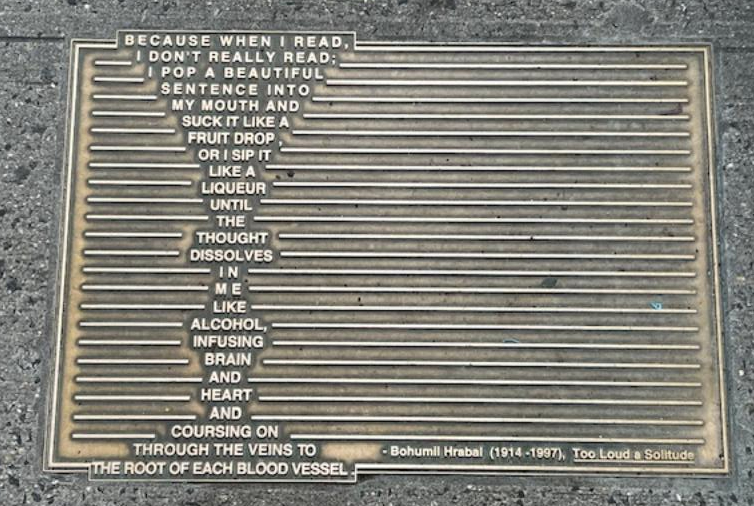
I like to talk a lot about looking up and not missing anything that you might miss by looking ahead. Here on East 41st Street you have to look down to see the “Library Walk” from Fifth Avenue to Park Avenue by artist Gregg Lefevre.
The artist was commissioned by in 1998 to create plaques with words and sayings from some of our greatest authors from Mark Twain to Ernest Hemingway. These plaques line both sides of the street so you will need time to look at each one carefully and be able to read the ones you want.
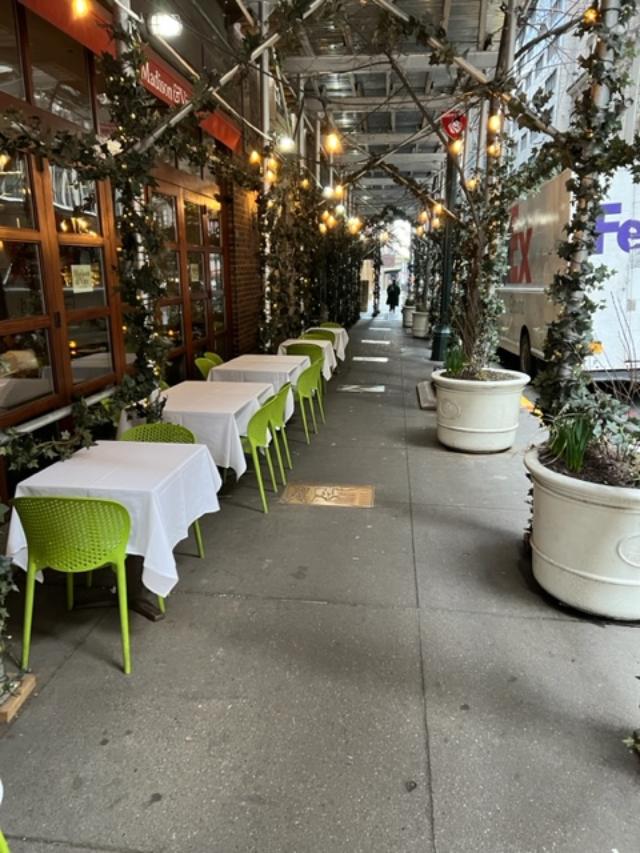
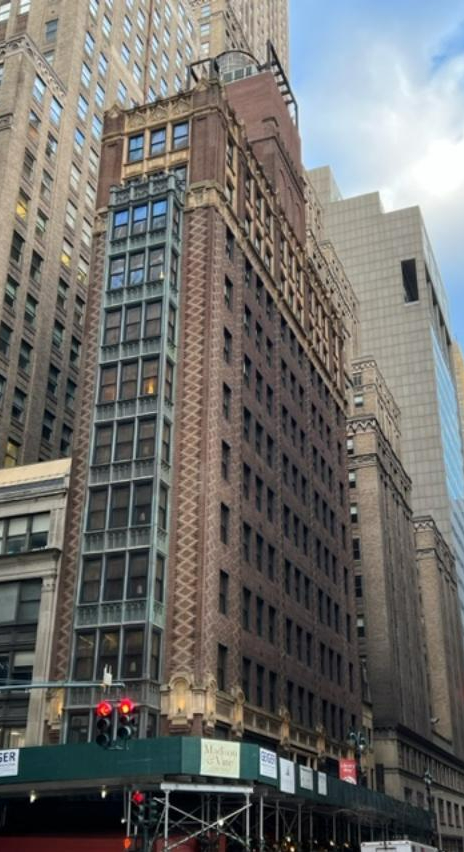
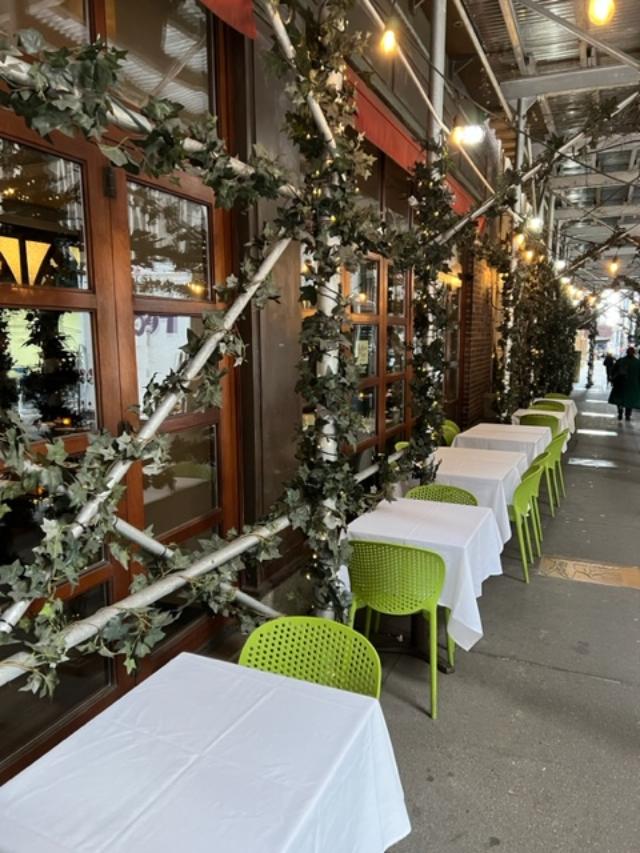
As I followed the plaques down East 41st Street toward Park Avenue trying to read everyone, I walked past the Library Hotel again at 299 Madison Avenue and East 41st Street. Their outdoor restaurant “Madison and Vine” was set up for lunch and was already getting busy. I spent time admiring the menu and the festive place-settings on the tables. It looked like a fun place to eat.
Madison & Vine is at the corner of Madison Avenue and East 41st Street
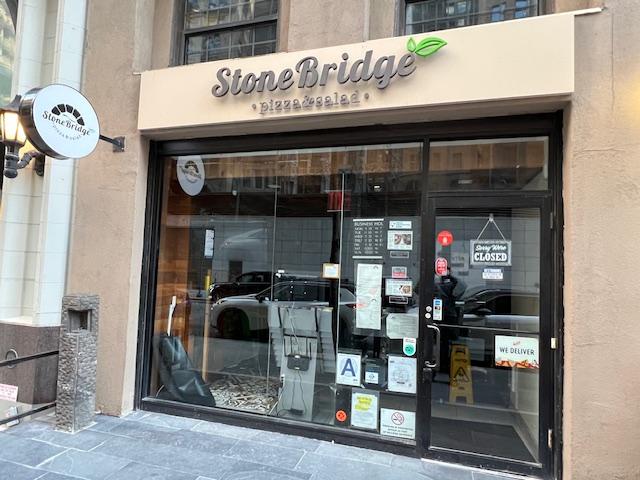
Across the street and a little further down is Stone Bridge Pizza & Salad at 16 East 41st Street. One evening when I revisited the neighborhood, stopped in for dinner (The Library Hotel and Madison & Vine were temporarily closed in February 2021). I had the most amazing Meatlovers Pizza loaded with pepperoni, sausage, bacon and sauté onions. It really warmed me up on a gloomy rainy night (see review on TripAdvisor).
Stone Bridge Pizza and Salad at 16 East 41st Street (Closed December 2022)
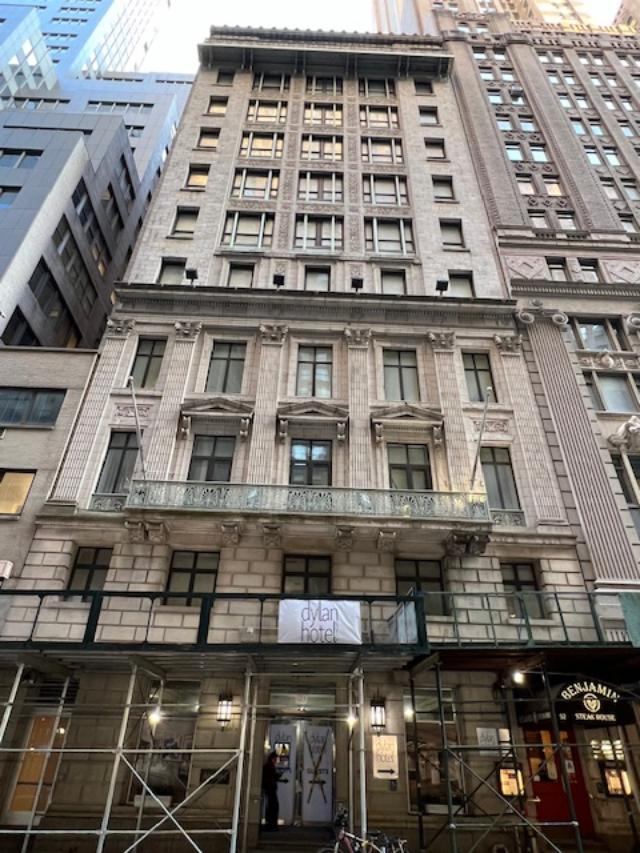
Further down from the Library Hotel is the Dylan Hotel at 52 East 41st Street. This boutique hotel is housed in the historic Chemist’s Building once the home of the American Chemical Society and the Society of Chemical Industry as their club headquarters. The building was designed by architectural firm York and Sawyer and was completed in 1911. The building was designed in the ‘French Renaissance style’ and was home to the club into the 1980’s. It became the Dylan Hotel in 1988 (Dylan Hotel History).
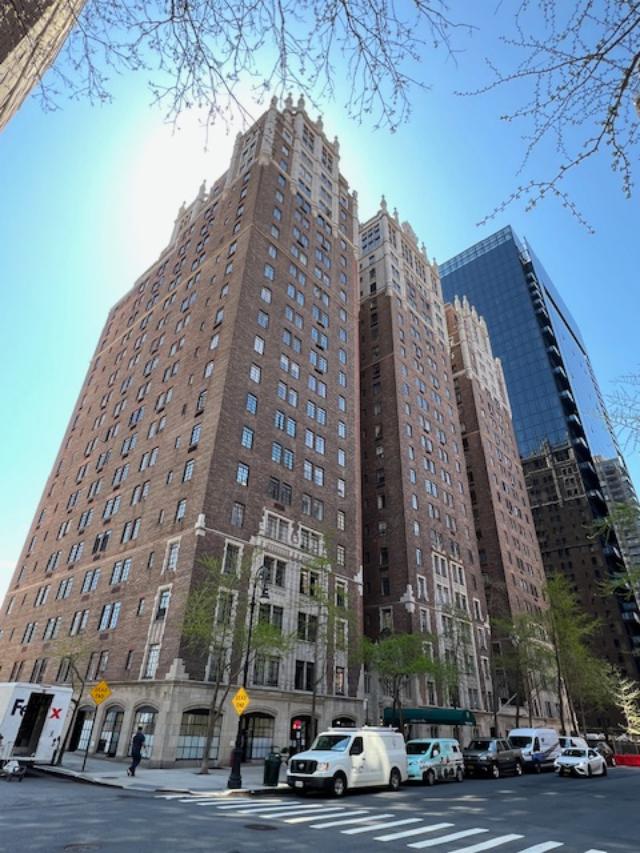
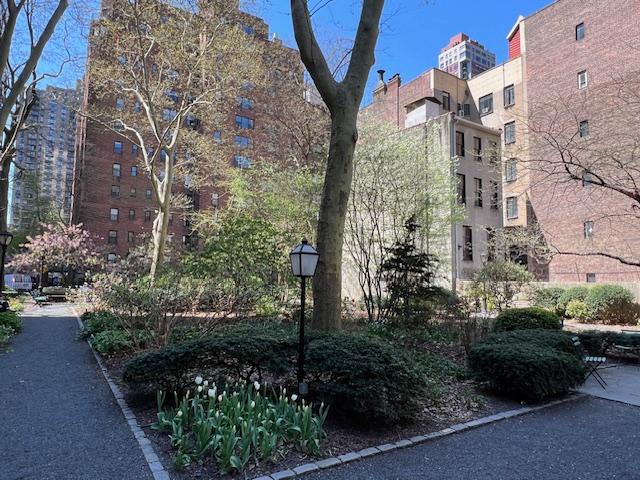
Walking down East 41st Street leads you through mostly office and large apartment buildings until you get to the end when you reach Tudor City, one of the first planned and most important examples of middle class housing . It was designed in the Tudor Revival style and was the creation of the Fred French Company by architect H. Douglas Ives. In the design of the complex you can see the arches, bay windows, gables and towers that make up the design (Wiki).
Tudor City is one of the first planned middle class communities in the United States
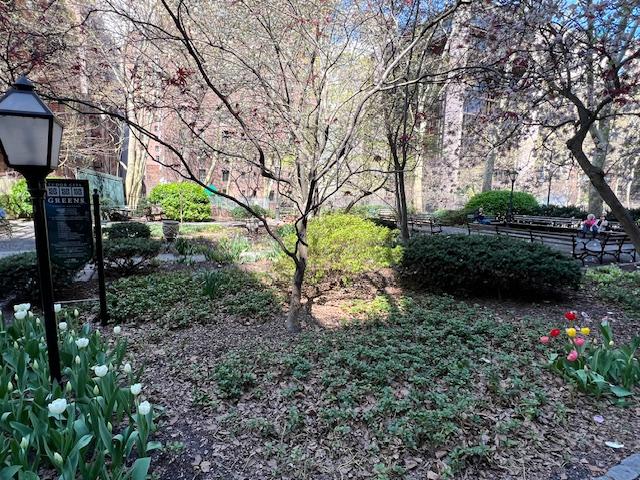
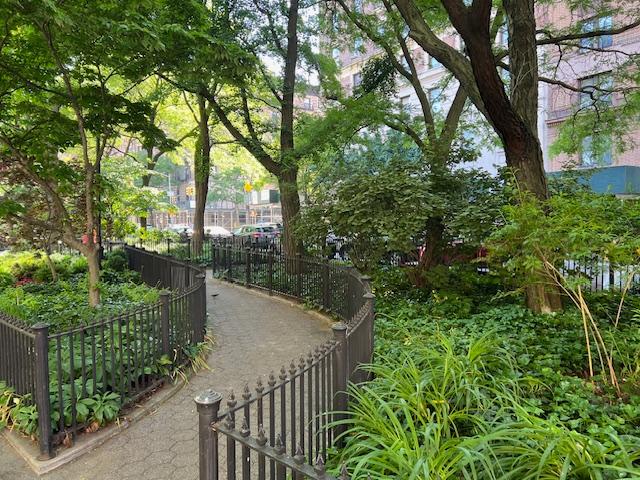
What is nice is the parks that line the complex are a nice place to sit and relax. The landscaped paths and the flower beds are a nice reprieve from all the traffic. They are a calm place to relax.
The Gardens at Tudor City are a nice place to relax
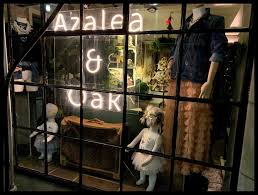
One of my favorite little shops in Manhattan is in the Tudor City complex, Azalea & Oak at 5 Tudor City. This unique little store has the most interesting window displays and nicest selection of children’s clothing and toys and customer jewelry.
Azalea & Oak at 5 Tudor City (closed January 2024)
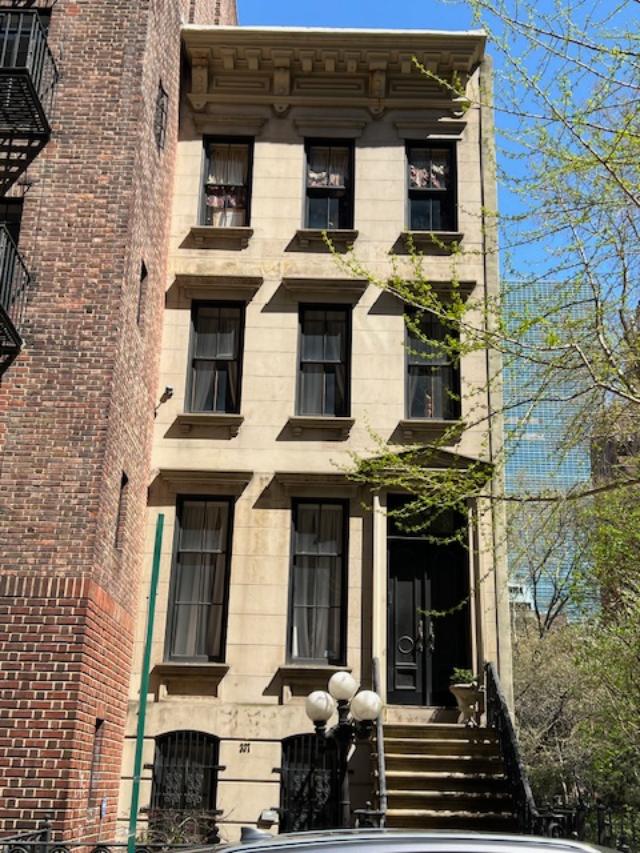
When walking back through the complex I noticed tucked into the complex but not in the complex is 337 East 41st Street, a small brownstone building that survived the wrecking ball when the complex was built.
This little brownstone has a survivalist history. Built in 1870 by developer S. S. Stevens, this home and eighteen other like it, were built on the northern side of the street to match similar brownstones that had just been built. Architectural firm Hubert & Pirsson were commissioned to design them in the Italianate style with small yards in the back. Somehow this home was the only one in 1925 that survived the wrecking ball when Tudor City was built. It is now a private home (Daytonian). It’s so interesting the cool things that are tucked in the corners of the this neighborhood.
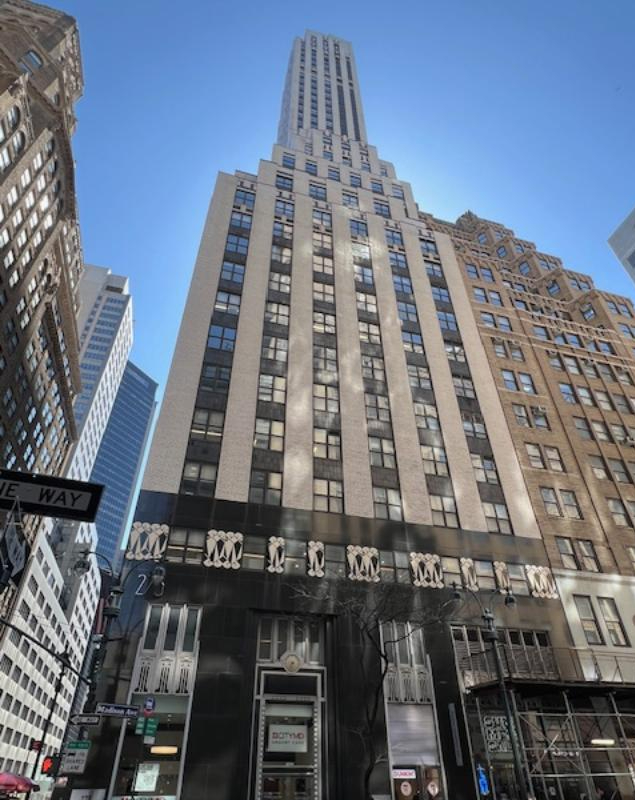
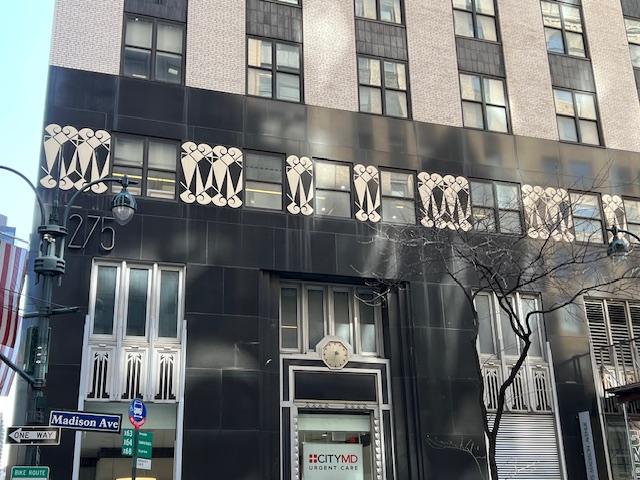
As I walked back I noticed a Chemical Bank sign on a building considering the company has not existed since the 1990’s. It’s quiet beauty stopped me. The bottom of the building is done in polished black granite and silver details. The former Johns-Manville Corporation leased 14 floors of it originally but the Chemical Bank (which is now part of J.P. Morgan/Chase) sign still shows prominently on the building (NewYorkitecture).
275 Madison Avenue-The John-Manville/Chemical Bank Building
The building was designed in 1931 by architect Kennith Franzheim in the ‘Art Deco style’ and the lower part of the building is done in polished black granite and silver and the geometric design gives it a unique look (NewYorkitecture). The building was leased by the John-Manville Corporation having a large presence on the lower floors but the Chemical Bank sign (now part of JPMorgan Chase) still proudly stands.
The beautiful details of the former John-Manville/Chemical Bank Building at 275 Madison Avenue
One of big surprises was discovering the AKC Museum of the Dog at 101 Park Avenue. The American Kennel Club (AKC) founded this museum in 1982 at 51 Madison Avenue, the former headquarters of the American Kennel Club and in 1987 it moved to Queeny Park in Missouri. In 2017, the museum and its collection moved to the new Park Avenue headquarters of the AKC.
The American Kennel Club (AKC) Museum of the Dog at 101 Park Avenue
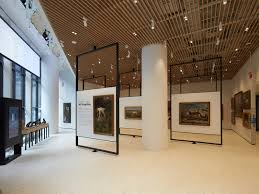
The museum contains a collection of 1,700 pieces of art that preserves, interprets and celebrates the role of dogs in society and educates the public about human-canine bond (AKC Museum of the Dog history).
The American Kennel Club’s Museum of the Dog exhibition space
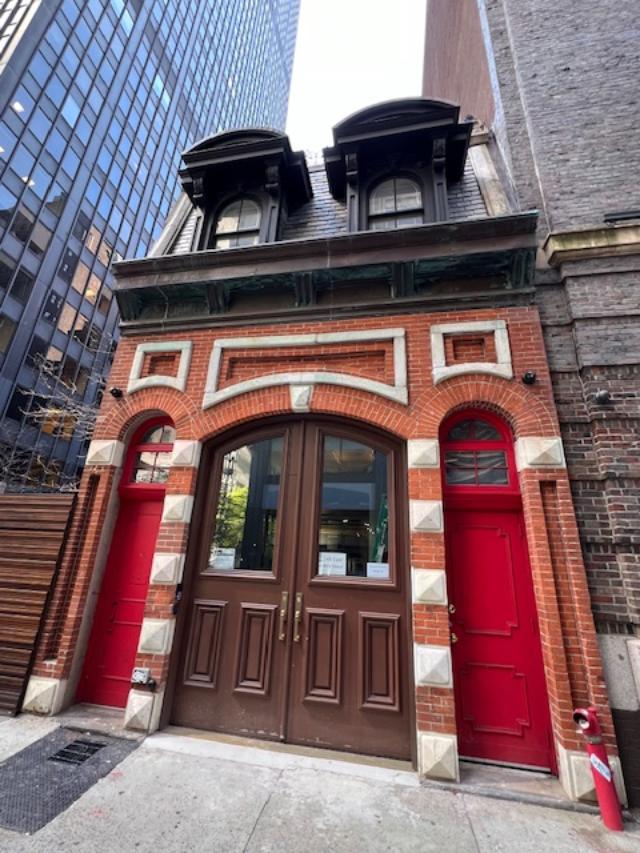
Tucked here and there in between buildings that are some small gems that just stand out amongst the more modern buildings. The small firehouse building at 148 East 40th Street I found out later on was actually a stable.
John W. Allen was a successful stockbroker and had a home at 14 East 42nd Street and these stables were a status symbol of the times. It meant that you could stable your own horse and carriage in your own building. At this time many stables for the wealthy were located on the side streets of the Avenues. This little building was designed and built by Charles E. Hadden. The building is made of brick with a slated Mansard roof and the top floors were accommodations for the groom or stable boy (Daytonian).
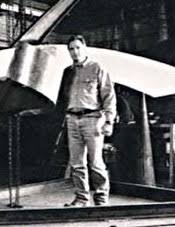
Sitting just outside 300 Madison Avenue, the PricewaterhouseCoopers Building is the sculpture “Stamen” by artist Rodney Carroll. This unusual sculpture caught my attention because of its twist and turns and I could not believe I missed it when I was walking the Avenues of the neighborhood. This unusual piece of art was created in 2009.
Rodney Carroll is noted for his large scale sculptures in public spaces and private collections. He studied sculpture at Old Dominion University and received his BS in Fine Arts and studied sculpture at Norfolk State (The Virginian Pilot).
As I finished walking East 40th Street, I made my way to the Hunan Manor Restaurant at 339 Lexington Avenue between East 39th and 40th Streets only to discover that it was closed. I talked with the deli next door and discovered the restaurant had closed. Disappointed I made my way to my second choice in the neighborhood, Madison & Vine at the Library Hotel at 299 Madison Avenue by East 41st Street. I was not disappointed.
Madison & Vine Restaurant at the Library Hotel at 299 Madison Avenue
What an amazing experience! I have been very leery about eating in restaurants or even take out for that matter since COVID-19 has set in. You never know what is going on in the kitchen. It was such a nice dining experience especially since it is so quiet in the City.
All the tables were spread out by more than six feet and the sidewalk that is outside the hotel has all sorts of planters and flowers to block the street. With the views of the library across the street and the excellent service it was very relaxing. I had a Shrimp Po Boy (see review on TripAdvisor) that was delicious.
The Po Boys here are excellent (no longer on the menu unfortunately)
The hoagie roll was so fresh and the shrimps were fried perfectly with fresh tomatoes and shredded lettuce. The fries were freshly cut and seasoned perfectly. It was just nice to eat a quiet, relaxing lunch and just watch the world go by with all this chaos going on. For an hour, you just forget it is all going on and I think that was the feeling of my fellow diners. I do hope though that Hunan Manor reopens because their reviews and food looked really good.
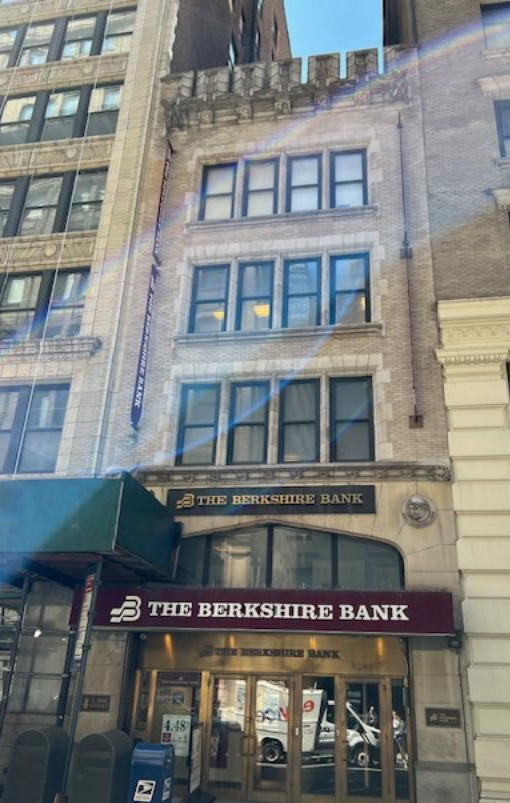
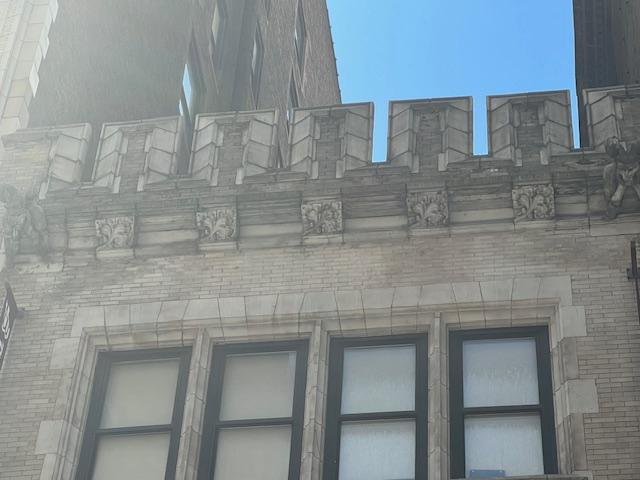
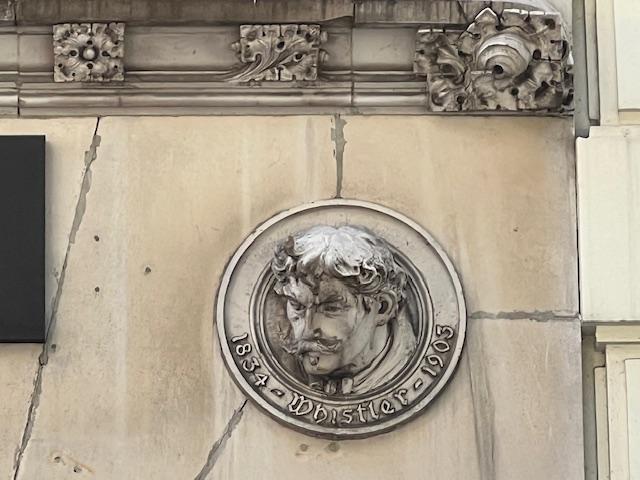
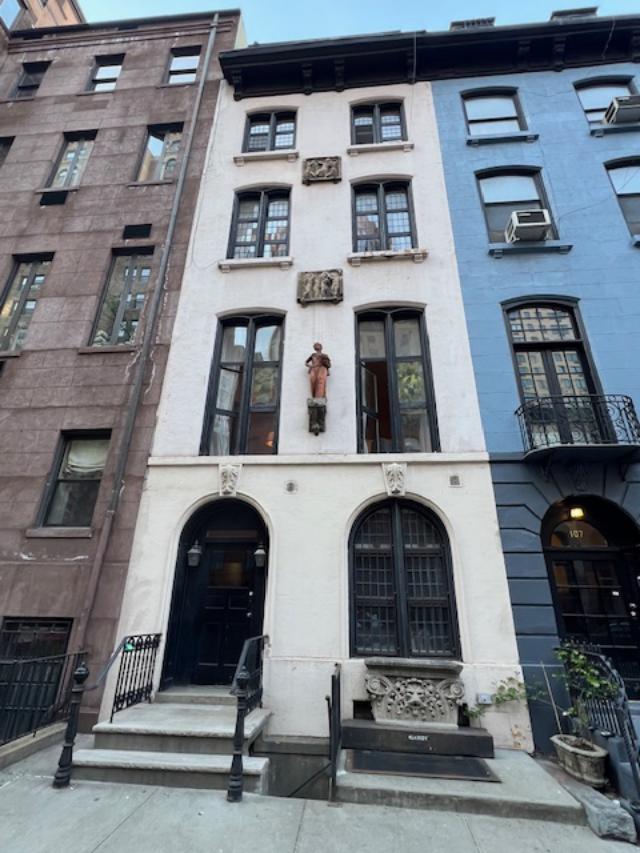
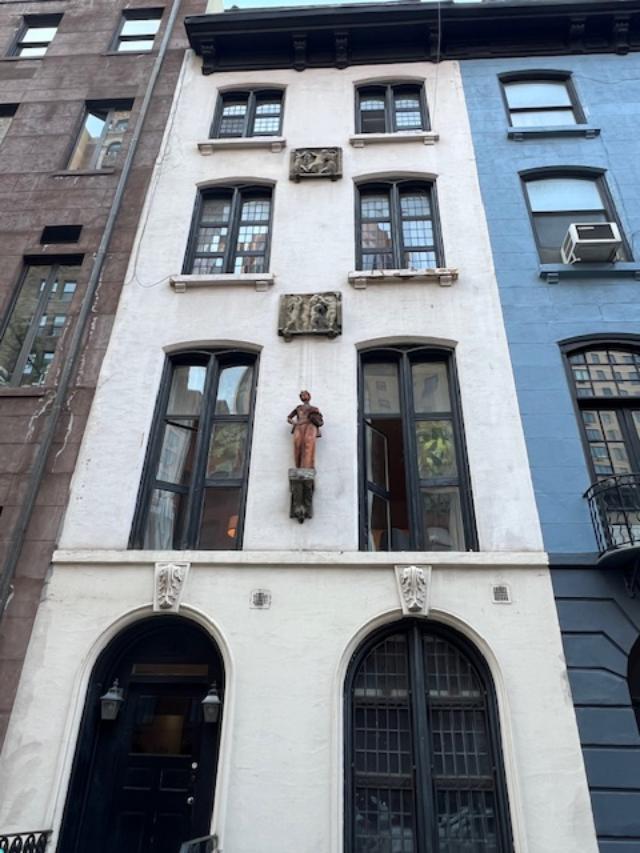
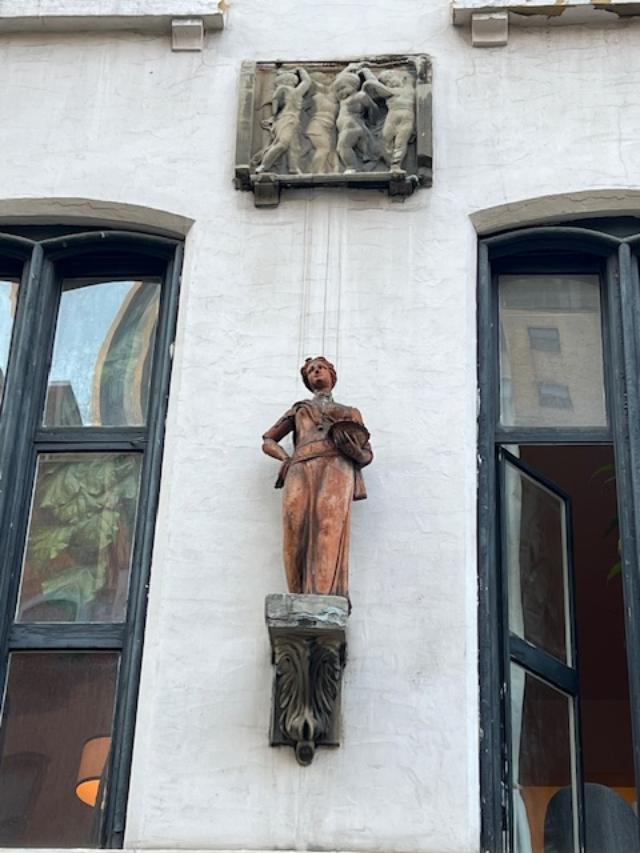
Relaxed and refreshed from lunch, I continued to tackle and explore the neighborhood. I walked down Fifth Avenue from the restaurant and made a left down East 39th Street when I noticed faces staring at me from 4 East 39th Street. They stared down at me from the entrance of the local Berkshire Bank.
The Keppel & Company building at 4 East 39th Street
The building was originally part of a complex of stables for the wealthy and was knocked down by Frederick Keppel, a art dealer. He commissioned architect George B. Post to design a new building for his business, Keppel & Co. The building was designed in the ‘Gothic style’ and the two figures that stare down at you are artist James McNeil Whistler and the other is artist Rembrandt Van Rijn (Daytonian). You could tell by the details that this did not start as a bank.
The Frederick Keppel & Company building details.
The rest of East 39th Street is a combination of office and apartment buildings and a lot of restaurants that have been opening up since the COVID pandemic. The area is coming back to life after almost two years of shut down businesses. Now that the neighborhood restaurants and hotels have reopened, the foot traffic in the area has increased.
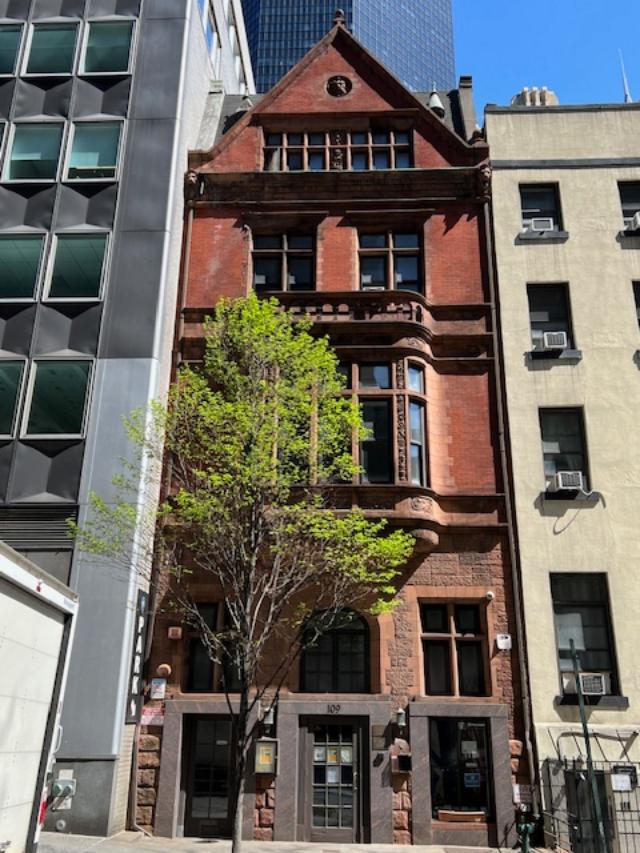
Still here and there are hidden gems tucked in between the commercial buildings. The building home at 109 East 39th Street is a real beauty and the details are amazing.
109 East 39th Street-The former Helena Flint House
This house was built for wealthy heiress Helena Flint in 1887. The house was built in the Queen Anne style. Helena Flint commissioned Henry F. Kilburn to design a modern residence on the cutting edge of fashion (Daytoninmanhattan.com).
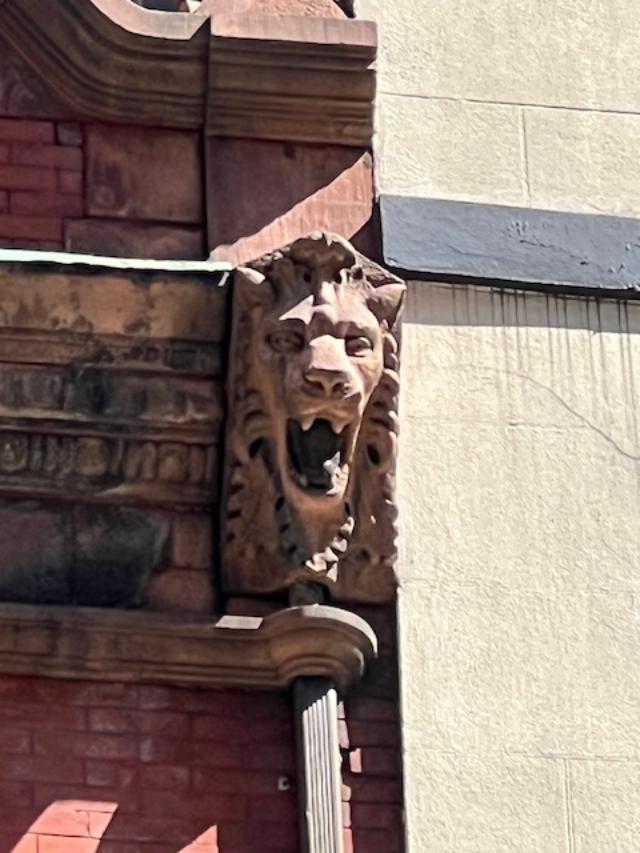
The embellishments of the building.
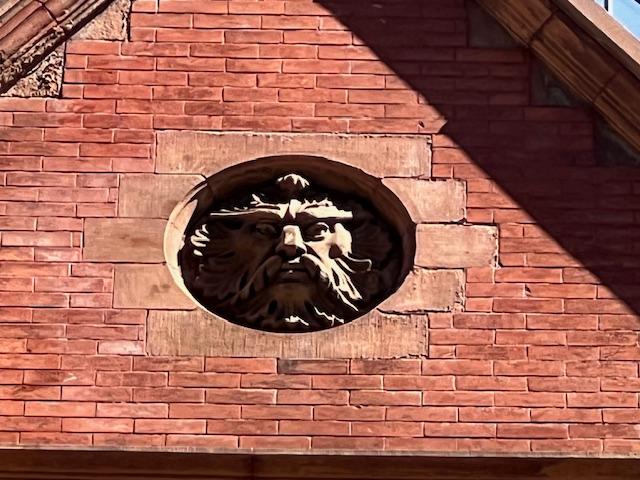
This face stares at you from the top of the home.
It used to be spooky walking down this block in 2020 as businesses had not yet opened up and the restaurants had limited hours. Now that people are back to work in 2024, things have changed for the better. At the end of the block you see a large empty lot overlooking the Queens skyline.
The East River Skyline of Long Island City
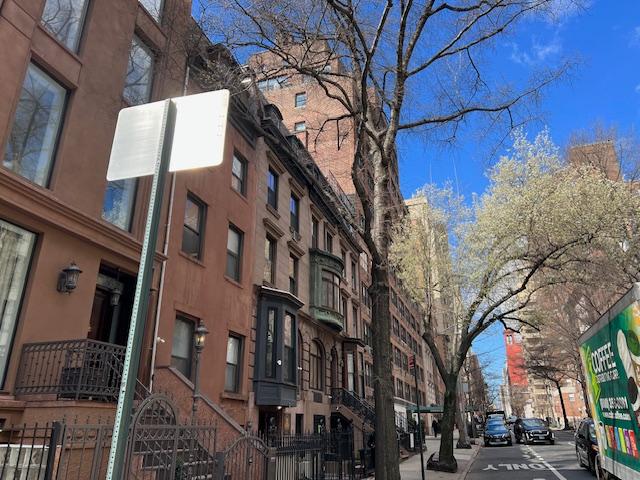
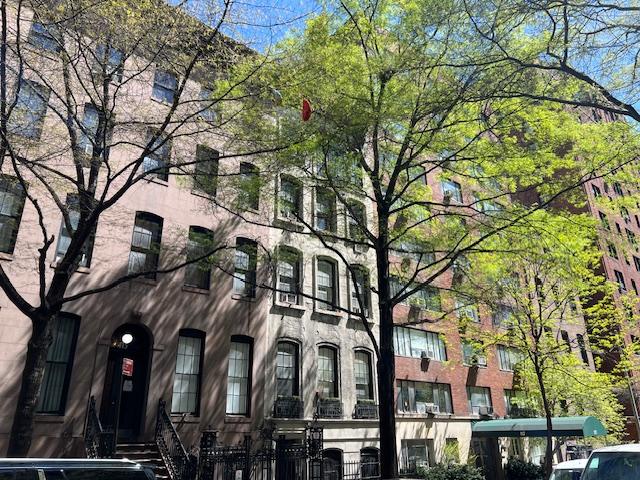
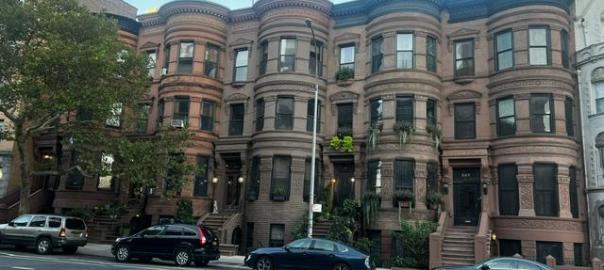
East 38th Street is lined with more brownstones on both sides and this shows the beauty of the side streets of the Murray Hill Historical District that stretch within the boundaries of the neighborhood. Each of these homes on the side streets are unique in their own way.
The brownstones on East 36th Street of Murray Hill are very unique.
Passing through the core of the neighborhood, you exit at the end of East 38th Street with the most amazing views of the Queens skyline. On a sunny day these views of the river are really spectacular.
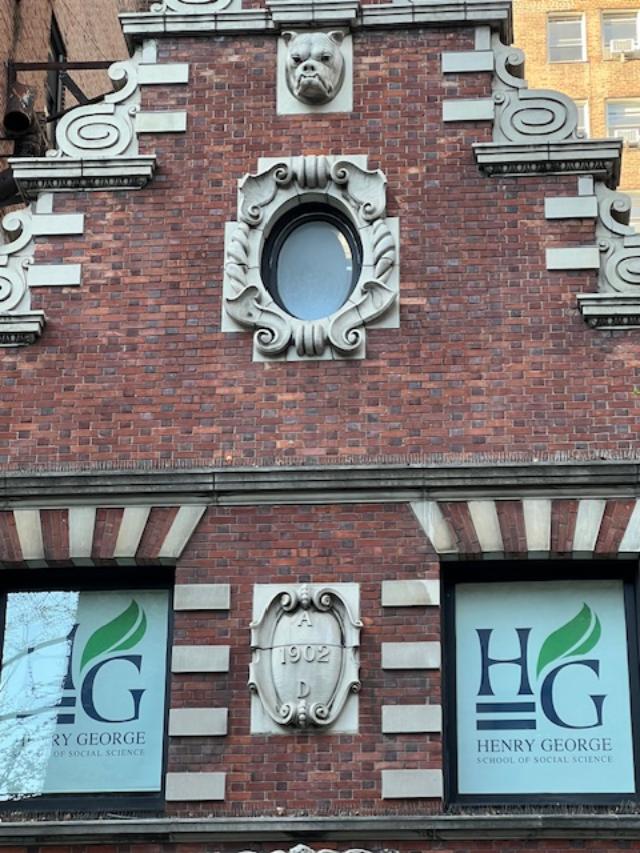
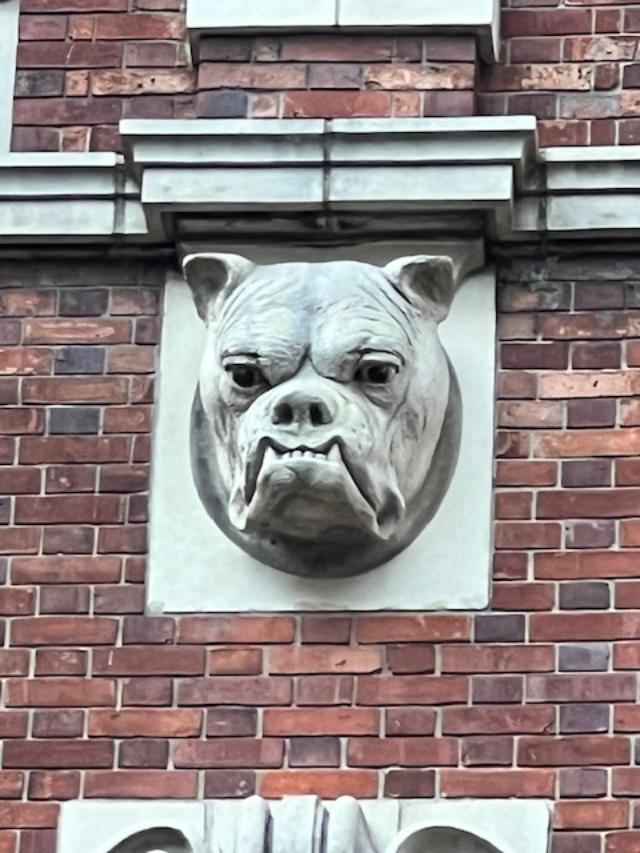
Almost like an insert between two apartment complexes is this unique little building that I thought might be a firehouse but turned out to be a stable. The ‘Bowdoin Stable’ was built in 1902 for clothing and real estate executive William R. Martin by architect Ralph Samuel Townsend in the ‘Flemish Revival Style’. The stables were sold to George C. Bowdoin in 1907 as his carriage house for his carriages, horses and groomsmen to live (ArtNerd & 6SqFt).
The George Bowdoin Stable house at 149 East 38th Street
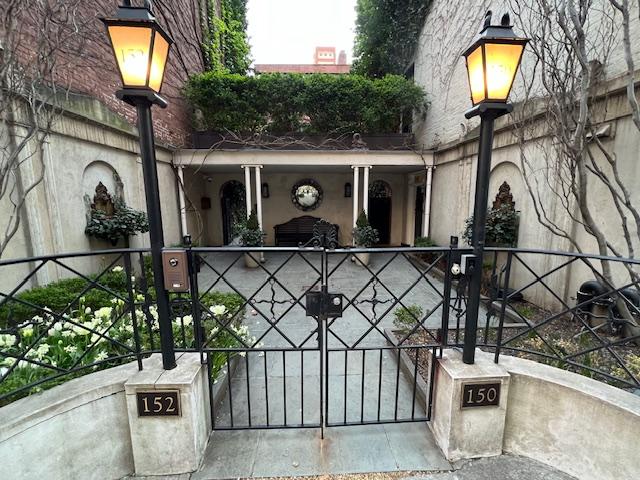
The Federalist-style townhouse at 150 East 38th Street was once called home by President Martin Van Buren. This is, without a doubt, one of the most unique properties in New York–besides the presidential ownership, ironwork frames the entryway, a squat structure connected to the four-story townhouse. It was built in 1857, altered in 1935, and then restored in the early 2000s (Nonko, Emily 6SqFt).
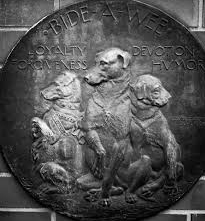
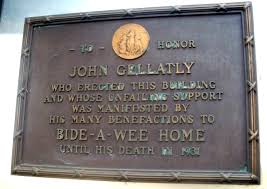
When walking back from the views of the East River, you will notice the plaques and dedications at the Bide A Wee House at 410 East 38th Street dedicated to the building’s builder art patron John Gellatly (all these plaques have been since removed from the building in 2024).
The Bide A Wee plaque located outside the old Bide A Wee Building at 410 East 38th Street
This elegant plaque was designed by Laura Cardin Fraser, the first woman to design a coin for the U.S. Treasury (Read a Plaque). Ms. Cardin Fraser was an American born artist who studied at the Art Students League in New York City under her soon to be husband, James Earle Fraser. She is known for her sculptures of historical figures and for designing coins for the U.S. Government (Wiki).
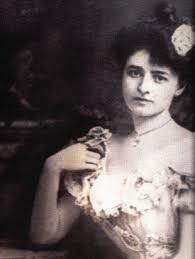
Bide A Wee is a ‘no kill’ animal shelter and refuge for dogs founded by Mr.s Flora D’Auby Jenkins Kibbe after seeing this work at a shelter in Paris (Bide A Wee history).
Mrs. Flora D’Auby Jenkins Kibbe, the founder of Bide A Wee, the ‘No Kill’ Shelter
When walking down East 37th Street you will see the beginnings of the N.Y. Langone Hospital complex where there is a nice public area to sit and relax and watch the neighborhood walk by. This must be very relaxing to the hospital workers. It has some nice chairs and tables to relax.
The public square at NY Langone Hospital
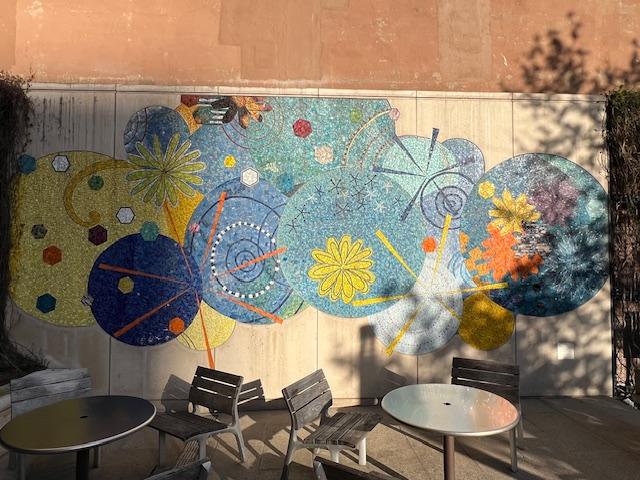
If you look to the corner wall of the public square, you will see the art work of artist Daru-Jung Hyang Kim in his mosaic “Sun Feast” that was created in 2013. This beautiful geometric mosaic is such an interesting work. The colors are so vibrant that they pop right out at you.
Sun Feast by artist Daru-Jung Hyang Kim
Artist Daru-Jung Hyang Kim is a Korean born artist who studied at the Seoul National University where she got her BS and then moved to New York City where she got her Masters at Pratt. The works she did for NYU Langone Hospital are some of the large artworks she has created around the world (Artist bio).
I looked up from my walk back from the river to see the unusual top of the building next to me to see a mansard like top to both sides of the building. It almost looked like port holes on the top of the building looking out. This is the Kips Bay Brewery Building that is in two parts. The older section was built in 1904 and the other part of the building was built in 1910.
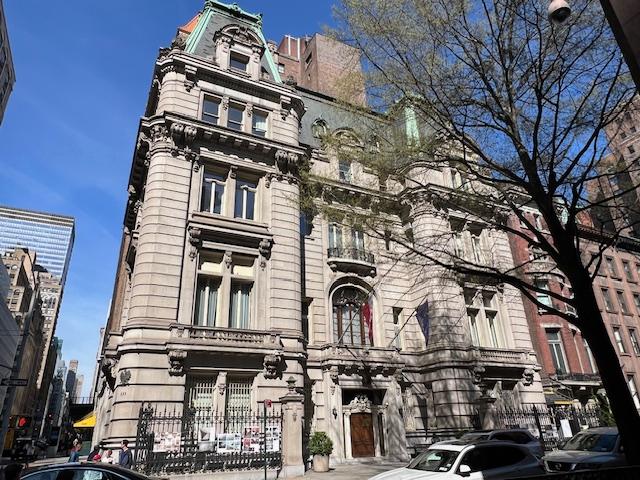
When heading back down East 38th Street towards Madison Avenue you reach two unique mansions that are part of the ‘Gilded Age’ architecture of the neighborhood. First is the De Lamar Mansion which is now home to the Consulate of Poland on the corner of Madison Avenue and East 37th Street at 233 Madison Avenue.
This beautiful mansion was designed by architect C. P. H. Gilbert in the ‘Beaux Arts style’ in 1905 for millionaire Joseph R. De Lamar. Mr. De Lamar was a Dutch merchant seaman who made his money in mining and metallurgy. He built this home for his family and by the time it was finished he was divorced and lived here with his daughter until his death eight years later. The mansion was sold to the Consulate in 1973.
The De Lamar mansion at 233 Madison Avenue now the Consulate of Poland
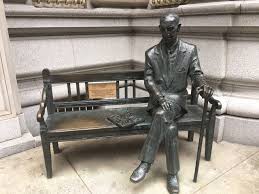
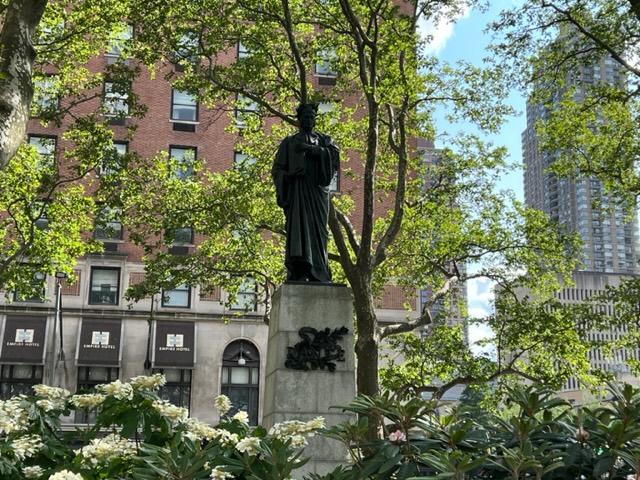
Jan Karski Statue outside the Consulate General of the Republic of Poland/De Lamar Mansion
The statue is of Jan Karski who was a courier who served as part of the Anti-Nazi Resistance in German occupied Poland during WWII. The statue was created by Polish artist Karol Badyna. The statue was dedicated in 2007 (Big Apple Secrets).
Karol Badyna is a Polish born artist who has studied at the Post-Secondary School of Conservation of Works of Art and Sculpture at Monuments Conservation Studio in Krakow, Poland. He currently serves a Professor at the Academy of Fine Arts (Artist bio).
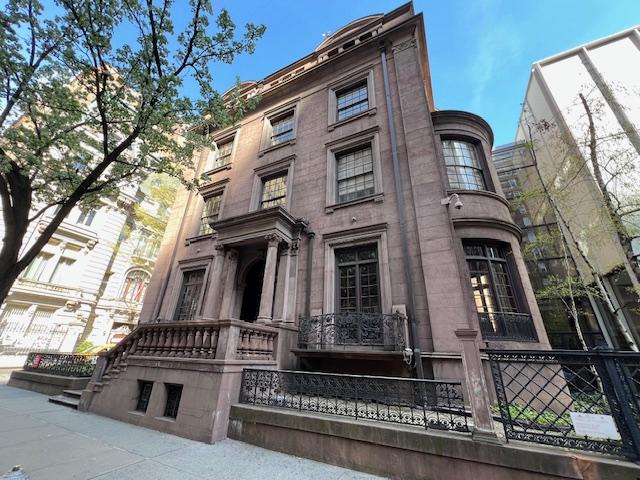
The Isaac Newton Phelps Mansion was home to J.P.Morgan II is at Madison and East 37th Street
The first part of the building was the Italianate brownstone on the corner of Madison Avenue and East 37th Street that was built by Isaac Newton Phelps in 1854 who left it to his daughter upon his death. It was bought by J.P. Morgan for his son, J.P. Morgan II who lived there from 1905-1943. It houses the Morgan Dining Room and the gift shop (Wiki).
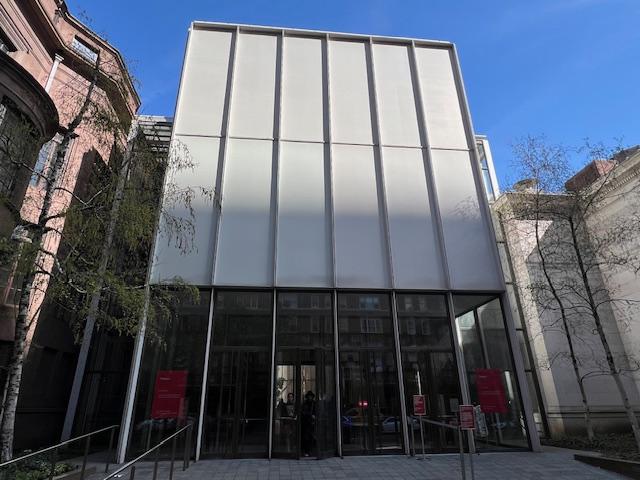
I arrived at the Morgan Library & Museum in time for my 2:30pm tour of the museum that I had scheduled. Because of COVID-19, all the museums that have opened up in the City have timed tickets and limited amounts of people are allowed in at one time. As I walked the galleries i realized that there were only about ten of us in the museum. I know this is not the busiest museum in Manhattan but this was really quiet.
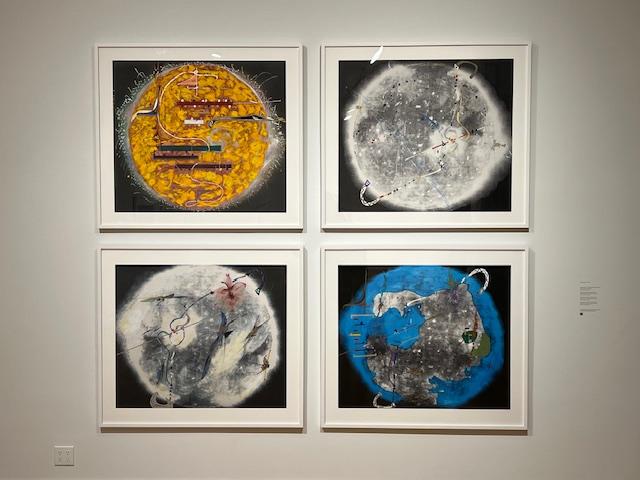
The afternoon in the museum was nice and I got through the two main exhibitions in about an hour. I saw the “Drawings of Al Taylor” and the “Jean-Jacques Lequeu: Visionary Architect” exhibitions. Neither really grabbed me. The one thing I did like about the Al Taylor exhibition was his works when he lived in the Hawaiian Islands. They were colorful and vibrant. The rest was interesting but not quite my taste.
Al Taylor’s “Duck Bondage” I thought was clever
Al Taylor was an American artist who liked the playful and whimsical look on art. He liked to experiment freely with materials and techniques (Morgan Exhibition). He graduated from the Kansas City Art Institute in 1970 with a BFA.
After my afternoon at the Morgan Library & Museum, I continued to explore Murray Hill by walking down the rest of East 37th Street until I reached the East River Esplanade again and then just sat and enjoyed the cool breezes and the sunshine.
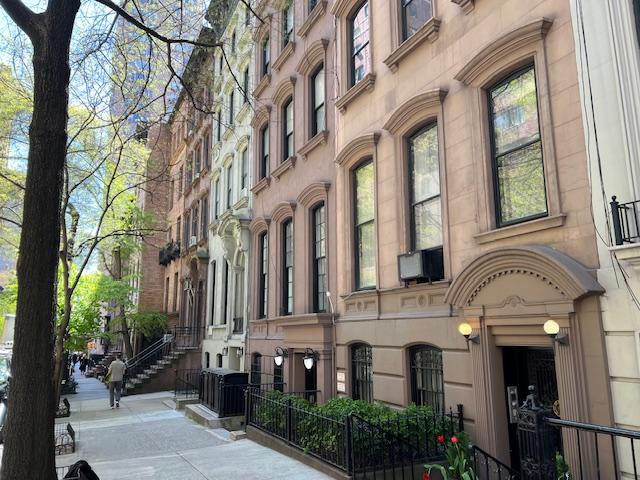
The Murray Hill Historic District at East 37th Street
The Murray Hill Historic District at East 37th Street.
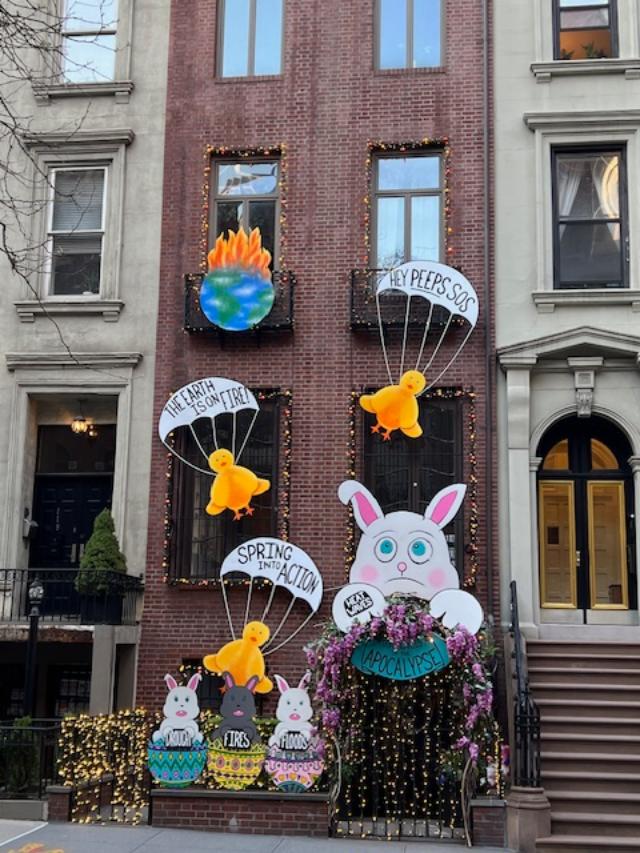
Someone had quite the personality at Easter in the Historic Section of Murray Hill.
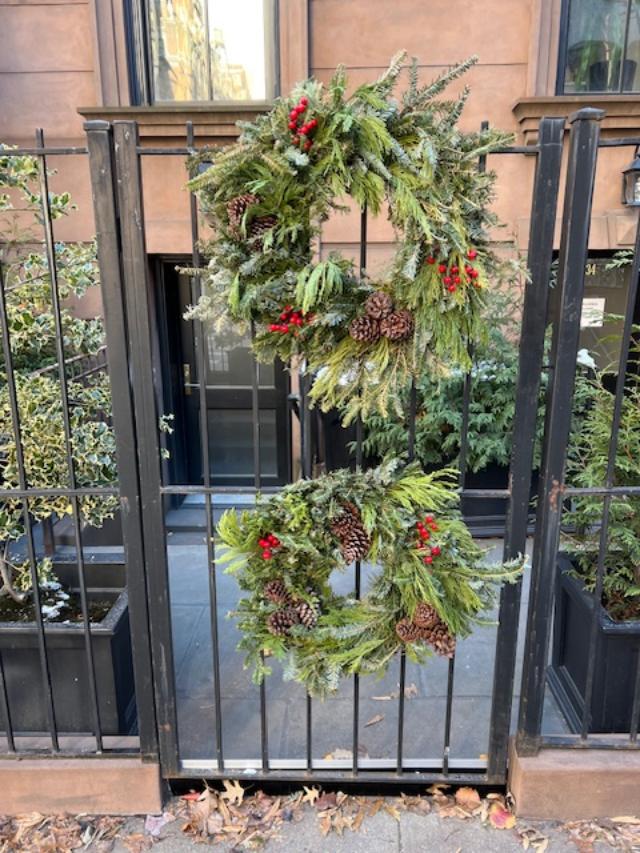
The Christmas decorations that line the streets of Murray Hill in 2024
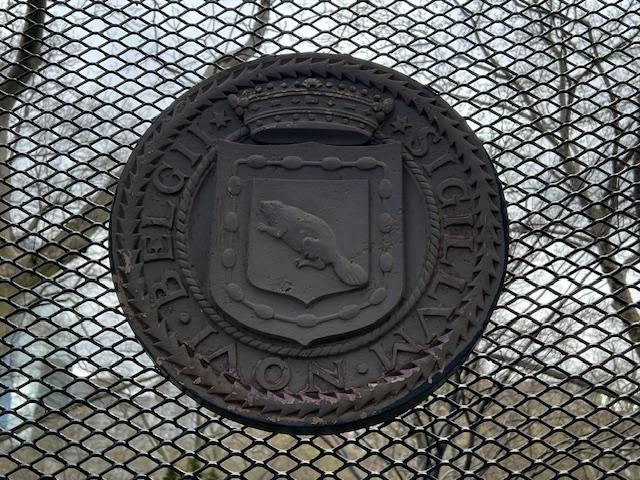
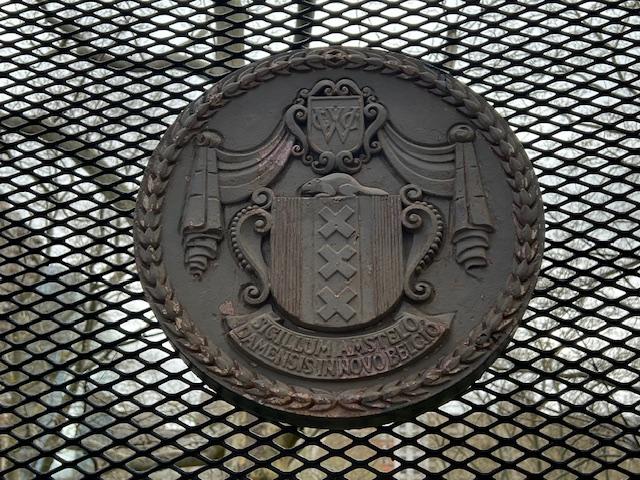
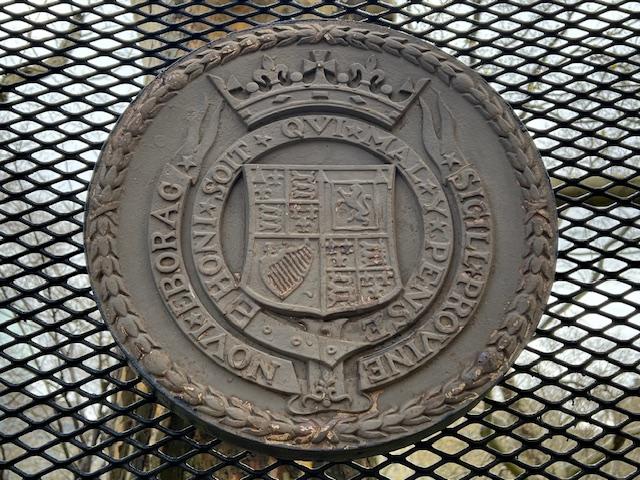
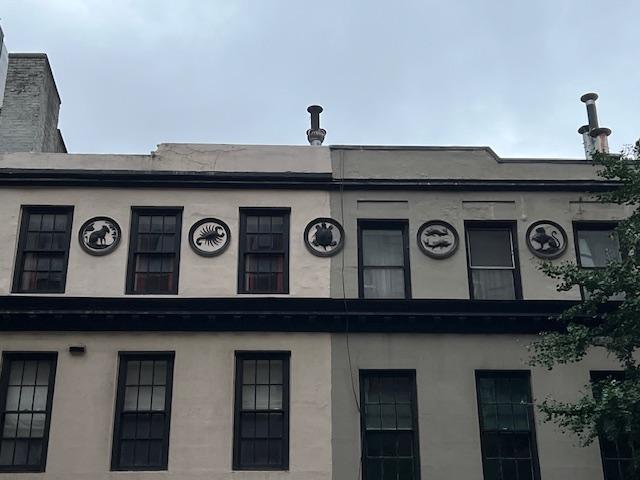
On the way back from the Esplanade, the one thing you will encounter is the exit from the Queens Midtown Tunnel, which is where all the noise and traffic will be coming from. All over the fence on the way back is a series of medallions from looks like various states. Check out the details on these.
Be careful when crossing the street on this part of the block as it can be dangerous or just stay to one side of the road. These cars will zoom by you. The street is really treacherous so look both ways when you are crossing the road. The Tunnel Approach Road which runs from East 40th to East 34th Streets can be hairy so watch the lights.
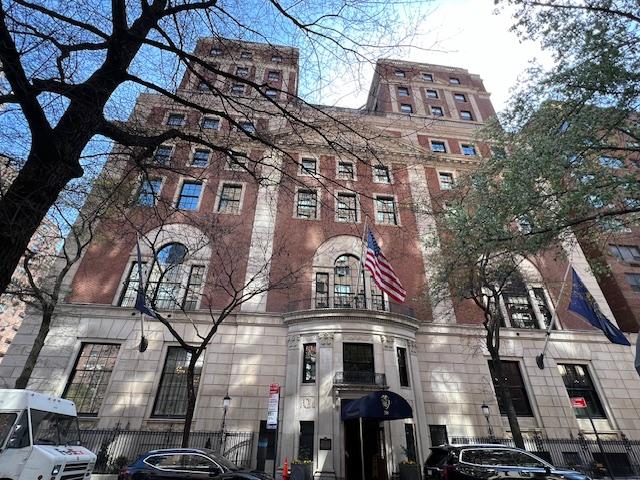
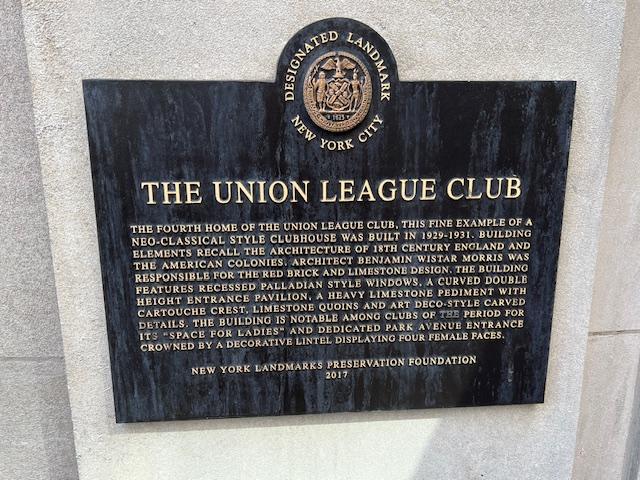
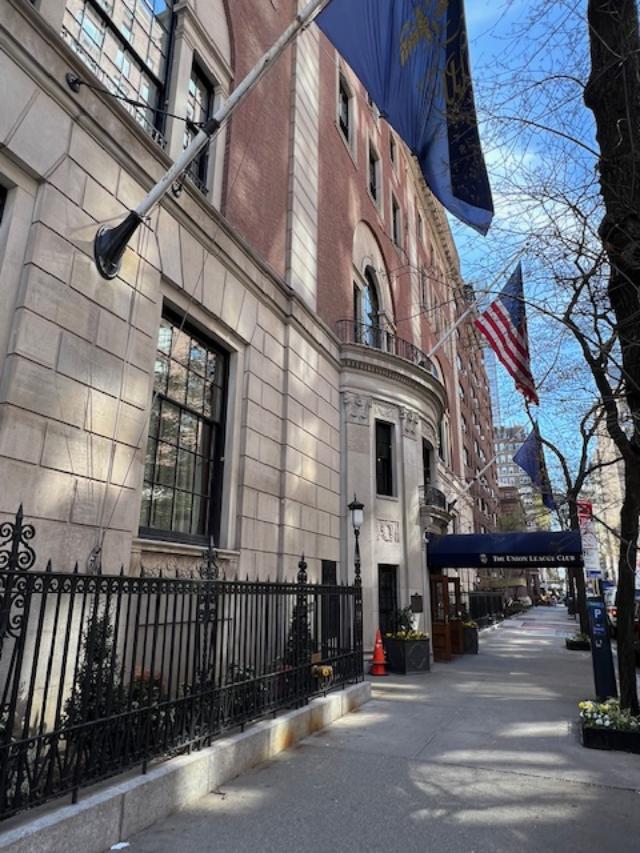
The continued walk on Park Avenue brought me to the Union League Club at 38 East 37th Street. The club was founded in 1863 by former members of the Union Club who did not like the Pro-Southern activities of club members and created their own club with the Union League Club. The current clubhouse was designed by member Benjamin Wistar Morris and opened in 1931.
The Union League Club at 38 East 37th Street
The Club again at Christmas time 2024
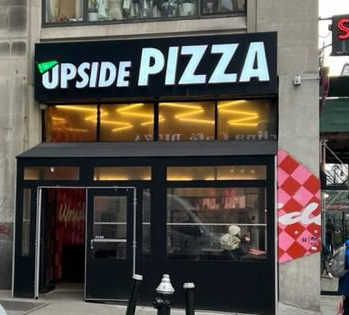
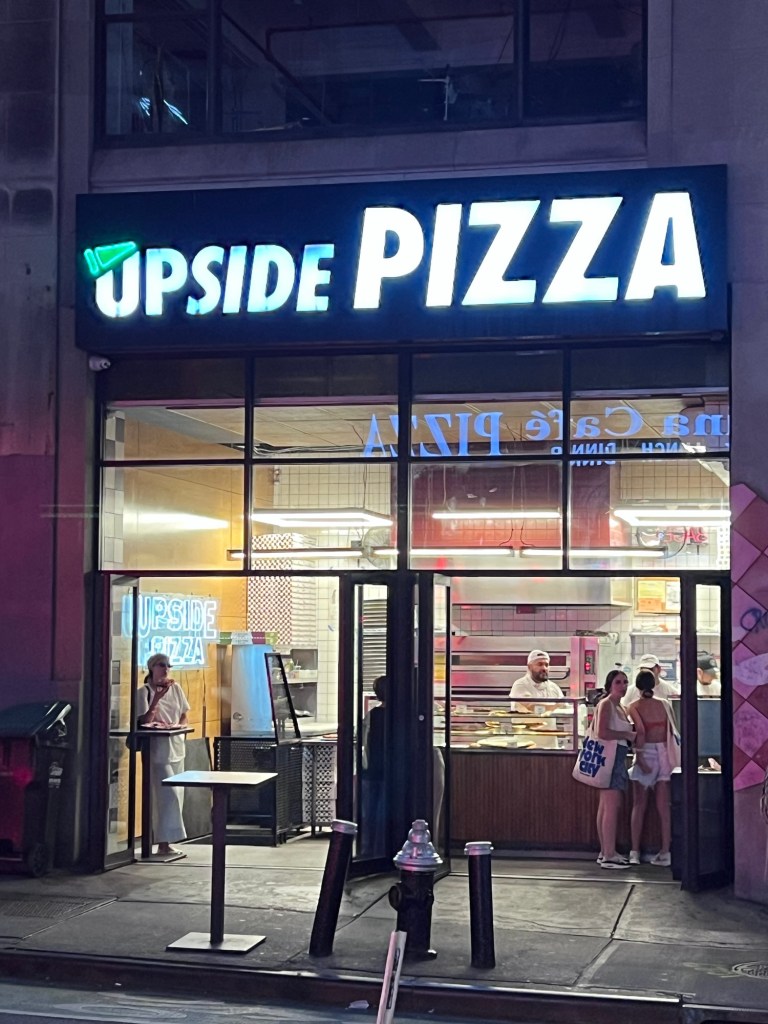
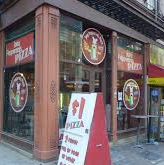
I was exhausted from all the walking the first day and broke this trip up into a second day. Before I left the City for the evening, I stopped at Upside Pizza, a new pizzeria in the Garment District that has been gaining a cult following for their “Detroit Pizzas”, a square pizza with the sauce and cheese baked into the crust. The pizzeria is at 598 Eighth Avenue. What it lacks in charm, it makes up in flavor.
Upside Pizza at 598 Eighth Avenue in the Garment District
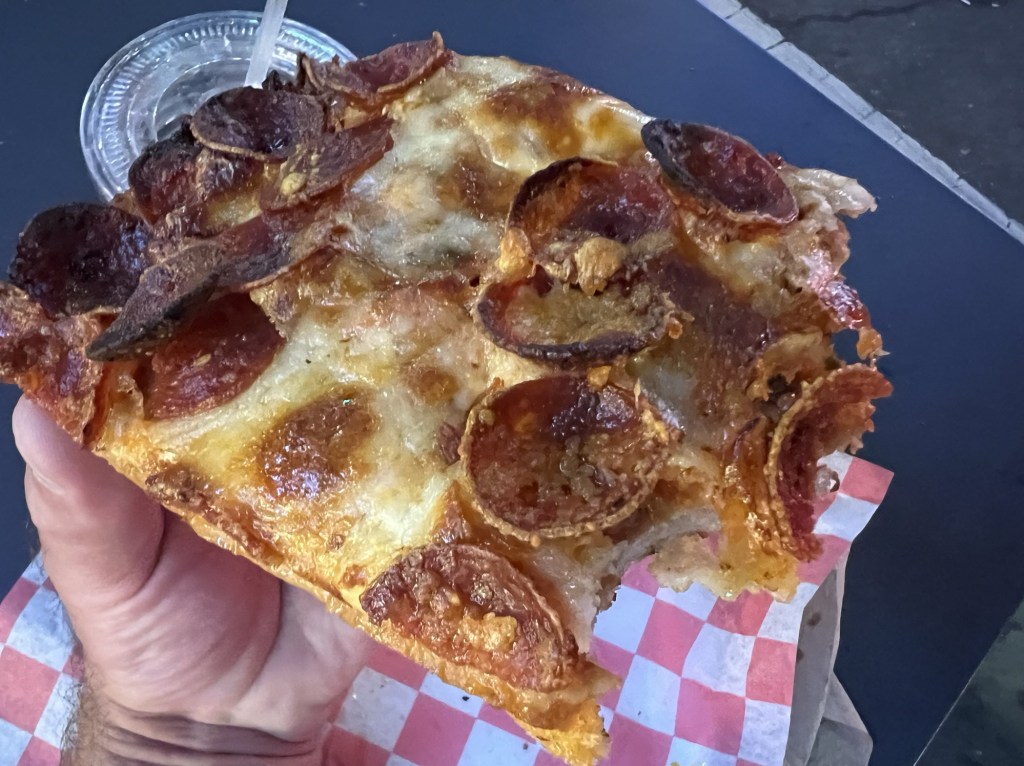
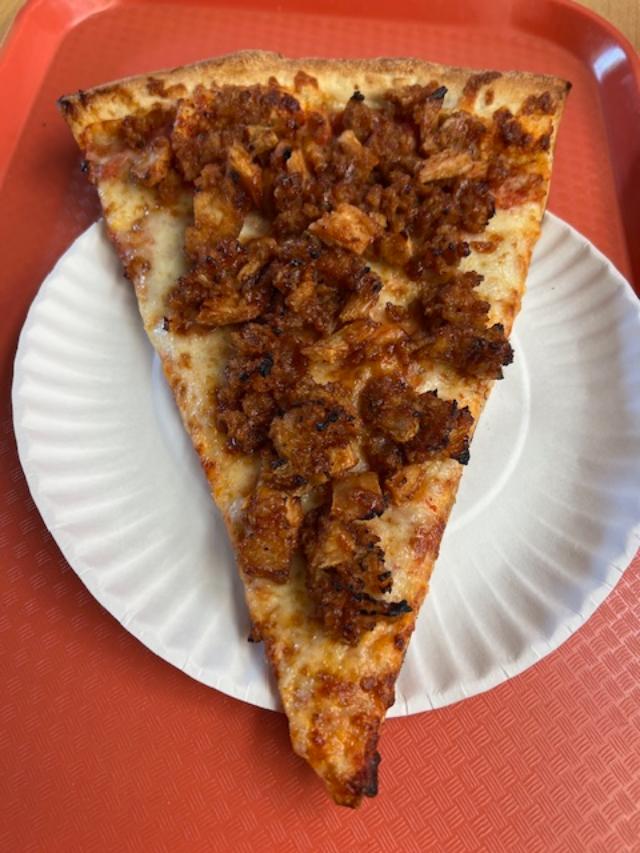
The pizza is so good. The pepperoni square slice I had was loaded with cheese and pepperoni and the edges of it were crisp and chewy. The flavors were spicy and intense with lots of different cheeses and the char flavor from the baking. The pizza is not cheap at $5.00 a slice but it is nice to sit in their outdoor cafe and relax and watch the world go by.
The Pepperoni pizza at Upside Pizza is excellent
The deep dish pizza here is delicious
Yum!
It is starting to get dark early now and as I watch the last days of summer go by, I am watching the City slowly come back to life with more people coming outside and enjoying the last of the warmer days of the later summer.
Upside Pizza at night on a summer dve
My next day back in the lower 30’s in Murray Hill gave me more time to relax and not rush the neighborhood. I started by walking East 37th Street to make sure that I did not miss anything and the traffic coming out of the Queens Midtown Tunnel seems to be getting busier. I had to dodge more cars today than I did the previous day.
Walking down Tunnel Street between East 42nd and East 34th Streets can be daring especially when traffic is coming so be careful. This narrow strip of sidewalk lines both sides of the entrance and exit of the tunnel.
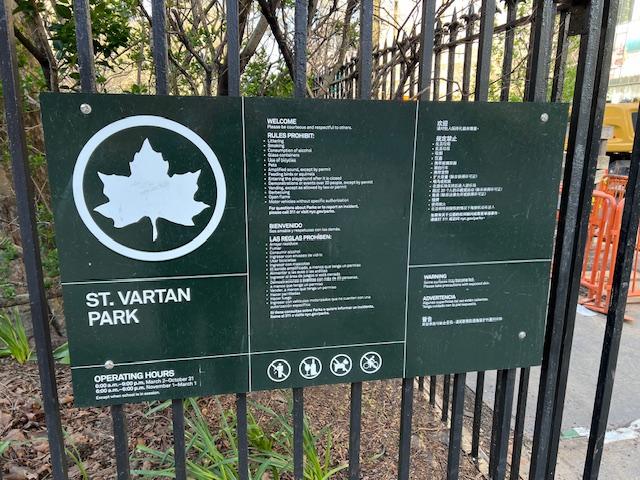
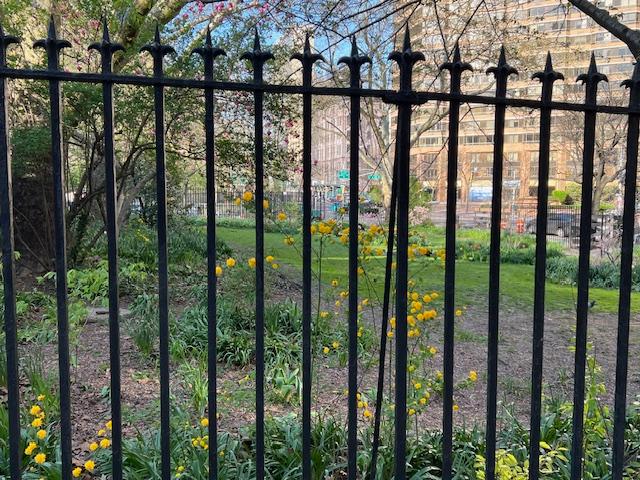
All along the northern part of St. Vartan Park fencing are all the state medallions. These go the length of the fence. Just be careful when admiring them as the traffic is crazy here at rush hour.
The Kips Bay fence along St. Vartan Park
One of the other medallions
One of the medallions along the fence at St. Vartan Park
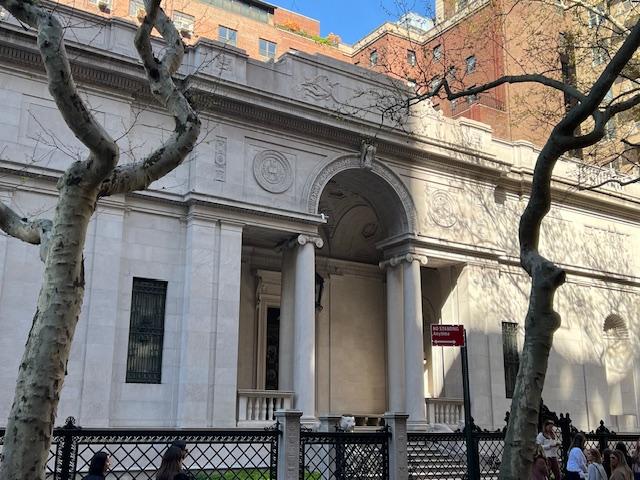
The other side of the Morgan Library & Museum’s J.P. Morgan Library lines the side of East 36th Street and Madison Avenue as you start to stroll down the East 36th Street. The library, which is now part of the Morgan Library & Museum was built as Mr. Morgan’s private library next to his home on Madison Avenue. The library was designed in the “Italian Palazzo style” by architect Charles Follen McKim in 1906 (Morgan Library & Museum history website).
The J.P. Morgan Library which is part of the Morgan Library & Museum
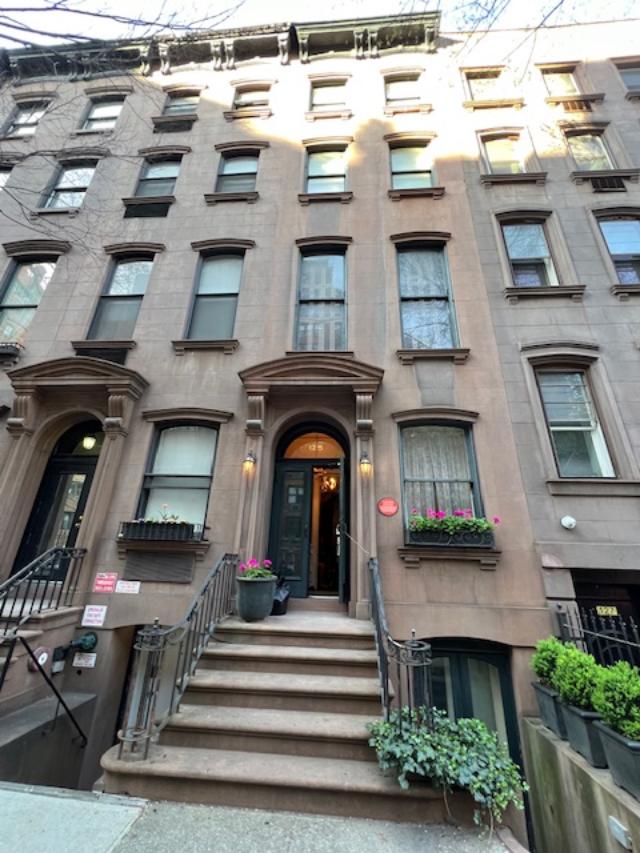
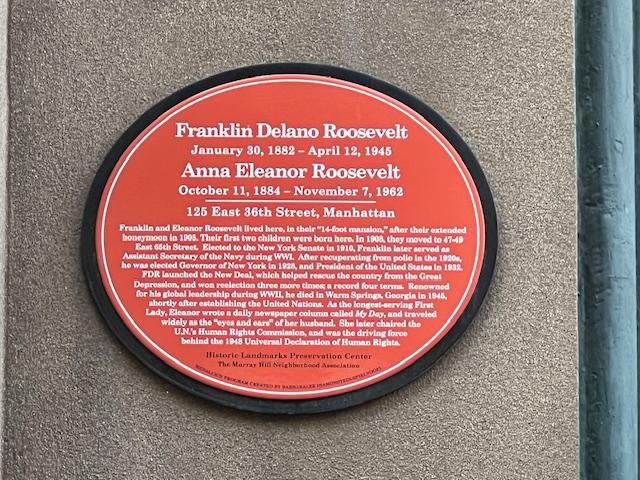
This part of the neighborhood is chock full of history and famous residents living in the neighborhood. At 125 East 36th Street is the former home of Franklin and Eleanor Roosevelt before their move to their more famous twin home on East 65th Street which is now part of Hunter College. They moved to this brownstone to be closer to his mother’s home in Manhattan a few blocks away.
125 East 36th Street-the former home of FDR and Eleanor
The brownstone complex on this side of East 36th Street was built by architects Kennedy & Haw in 1856 and had had a series of interesting residents until the future President and First lady came to live here from 1905 to 1908 and where their children James and Ana were born (Daytonian).
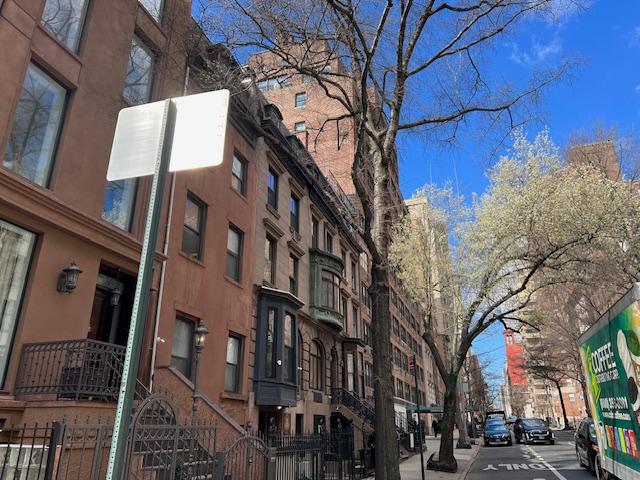
Looking down the Murray Hill historic district just off Lexington Avenue
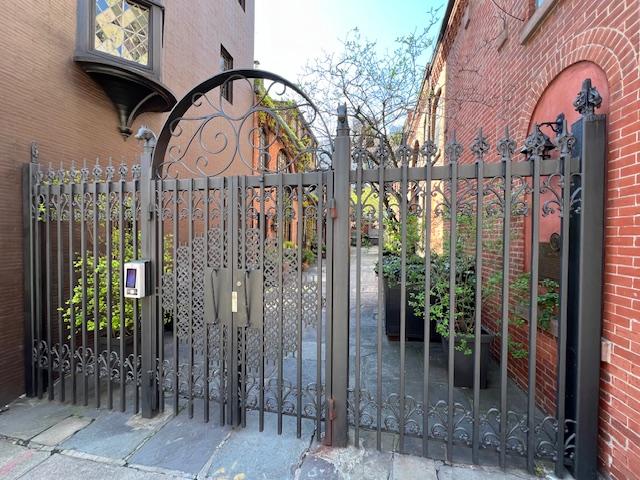
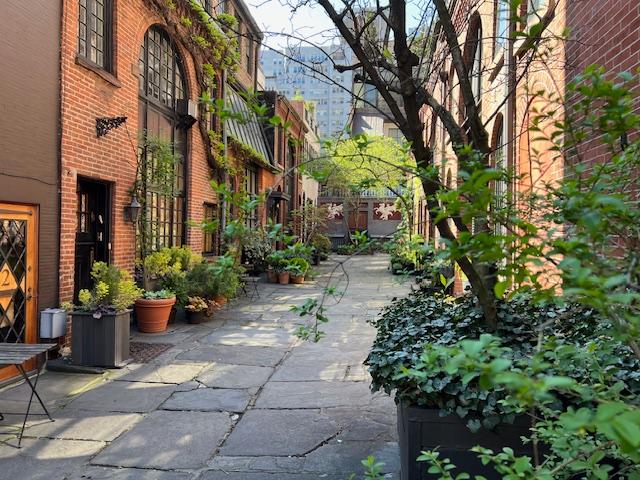
Hidden like a secret garden behind a locked gate is the Sniffen Court Historic District from 150-160 East 36th Street. Sniffen Court is named after John Sniffen, who built his complex of carriage houses in 1864.
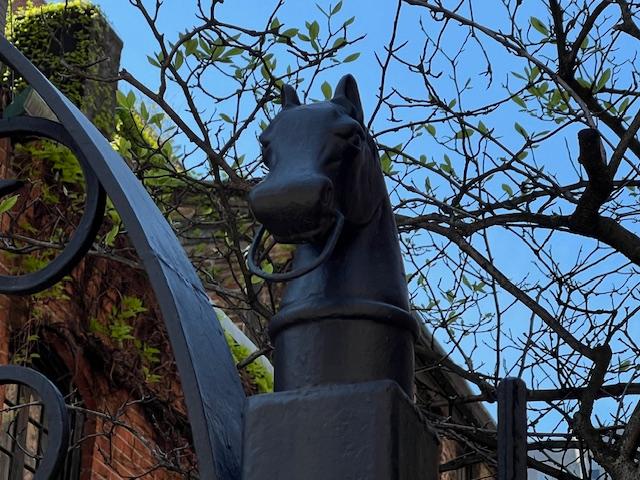
The secret gardens of Sniffen Court is tucked behind an elaborate gate.
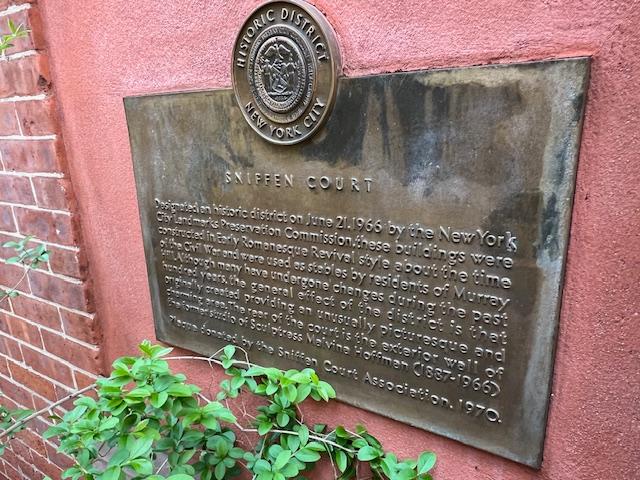
The district encompasses the entire alley, between Third and Lexington Avenues, of 10 two story brick stables that were built in the ‘Romanesque Revival style’. When they were no longer used for stables they were converted to homes.
Sniffen Court is like a little ‘fantasy land’ behind the gate. This is the historical plaque.
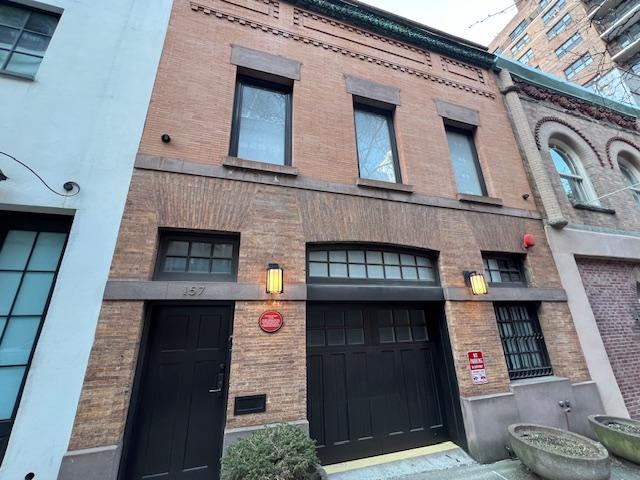
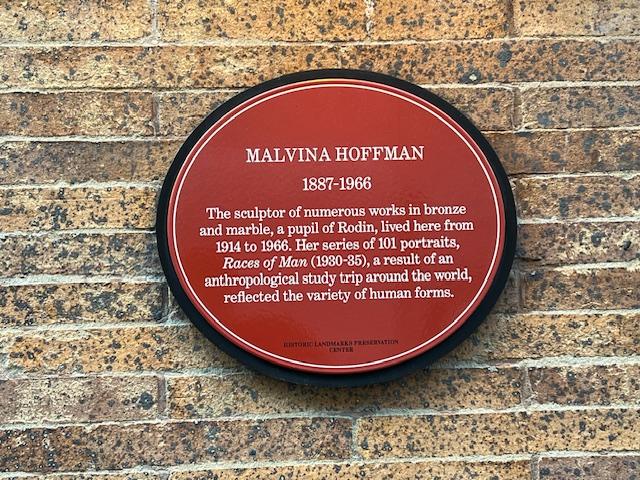
One of the most famous residents was artist Malvina Hoffman who lived at 157 East 35th, the back part of the complex. The well known American sculptor lived here until her death in 1966.
157 East 35th Street-The home of artist Malvina Hoffman.
The Malvina Hoffman historical plaque.
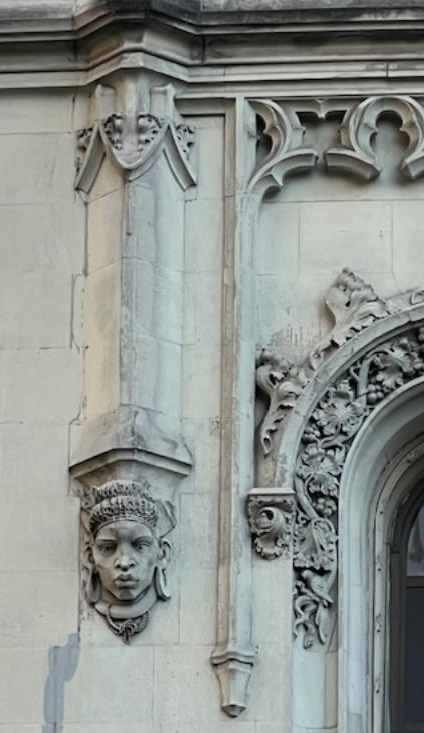
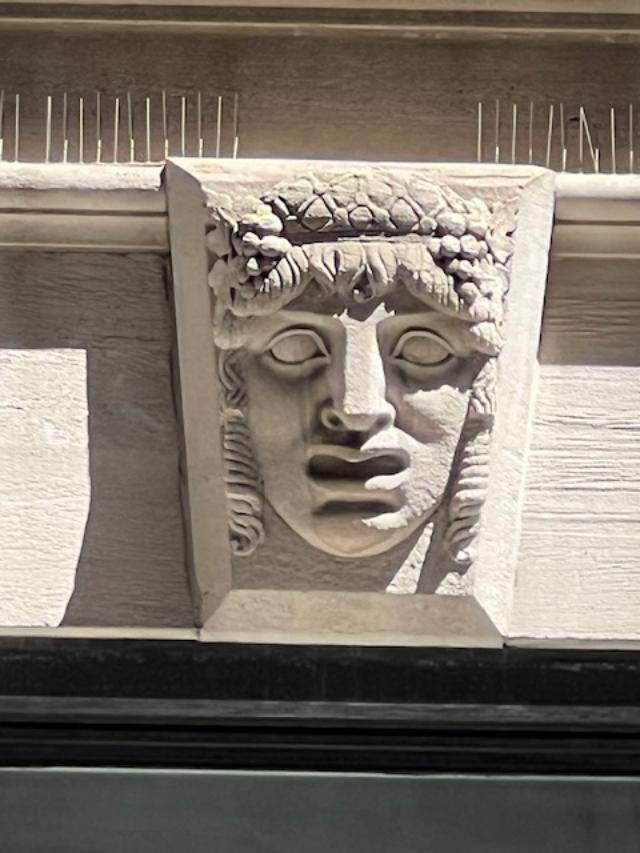
Passing this delightful little garden complex is another unusual building with vines snaking down and faces staring at you. The building at 220 East 36th Street was built in 1910 and look up at the details when you pass. Mysterious faces will stare back at you.
220 East 36th Street has some amazing details to it.
The faces towards the top of the building look even more sinister.
The coat of arms decorate the sides of the building.
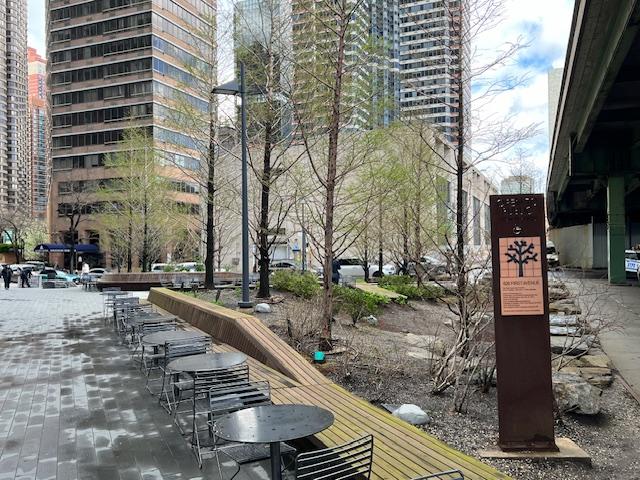
When you reach the end of East 36th Street, there is a wonderful little public square next to the American Copper Buildings at 616-626 First Avenue. These unusual buildings are built almost on a tilt and have a playful appeal to them. What is nice is the public space where you can just relax and talk to people. The neighborhood residents use this as an escape from the confinement of their apartments due to COVID and go out to talk to people.
The American Copper Buildings at 616-626 First Avenue
On a beautiful day, there is nothing like this delightful little park on the extension of First Avenue near FDR Drive. People really enjoy relaxing here and it is nice to see the neighborhood out and about.
The plaza at the American Copper Buildings
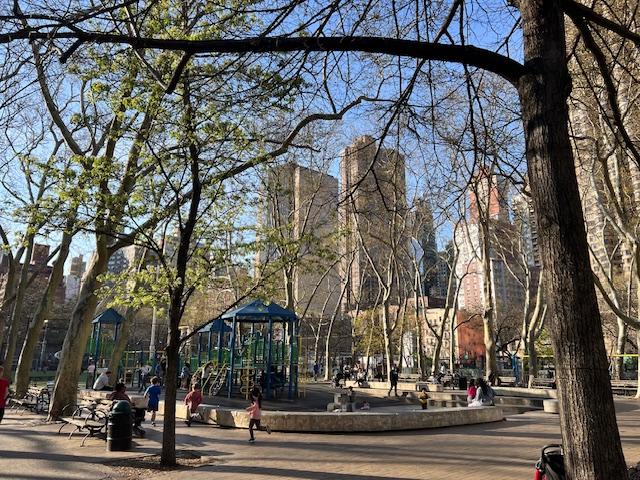
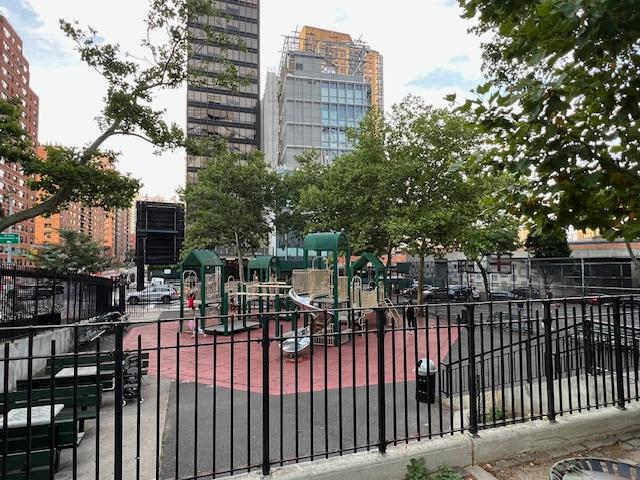
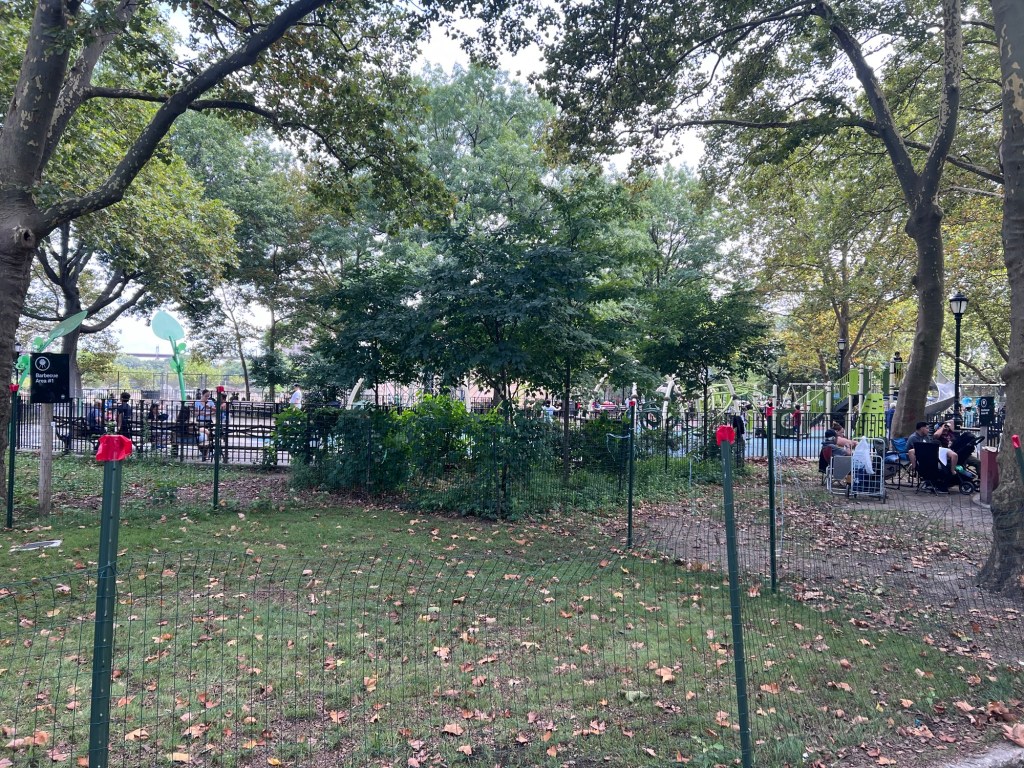
Another nice place to stop and relax is St. Vartan Park, which is located between East 35th and East 36th Street between First and Second Avenue. The park is extremely popular with the neighborhood families so expect to see the place crowded all the time. The one thing I like about it there are public bathrooms that usually stay open until dusk.
Check out the plaques dedicated to the Murray Hill Post 59 who dedicated the flag post and the lights to the park. The playgrounds are a little worn but the kids and their parents don’t seem to mind.
St. Vartan Park with the namesake Church in the background St. Vartan Armenian Church
There is always so much action going on in the park from pick up basketball games, to jungle gym climbing to who is chasing who around the playground. It is fun even in the days of COVID that people will just throw on a mask and have some fun.
On a beautiful sunny day St. Vartan Park really shines
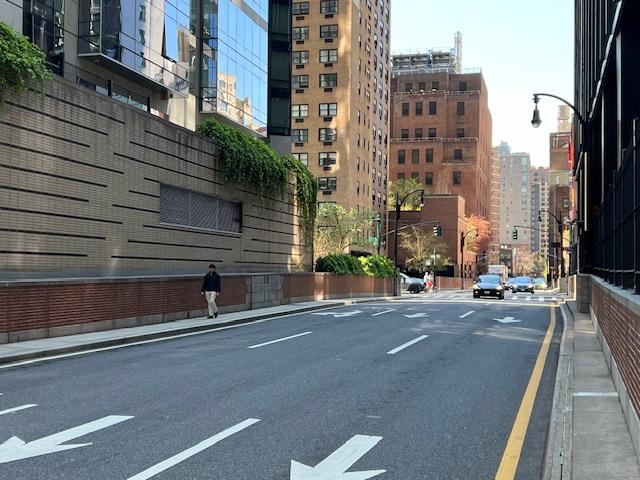
On the way back from walking the park and enjoying the shine just be careful when walking the south side of East 36th Street as the traffic coming from the Queens Midtown Tunnel funnels out very quickly and some of the drivers really don’t watch.
Watch the streets around the Queens Midtown entrance.
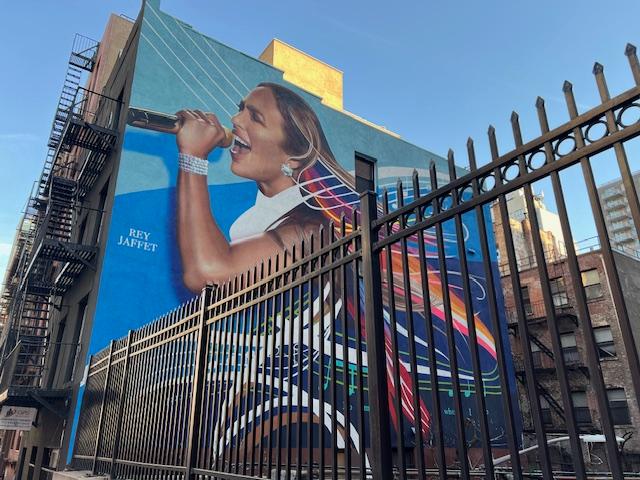
This painting just appeared recently of singer Jennifer Lopez (Jennifer Lynne Affleck as she is known now) at the entrance to the tunnel by artist Rey Jaffet. This bold and colorful portrait captures the energy of the singer.
Rey Jaffet is an American born artist from Florida. His works explore mediums from oils and spray paint, to stainless steel, light modules other mixed media to create dynamic visual experiences encompassing parallels of boundless movement and elevated stillness. His murals take on a very humanistic touch (Artist bio).
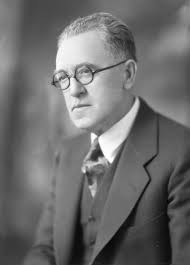
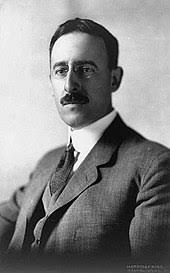
The site of the famous Henry Lewis Stimson House is at 120 East 36th Street, which is now an apartment building simply known at the Stimson House. Henry Louis Stimson was a influential lawyer and statesman in the United States serving under several presidents.
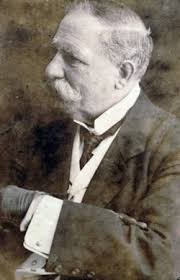
Henry Lewis Stimson
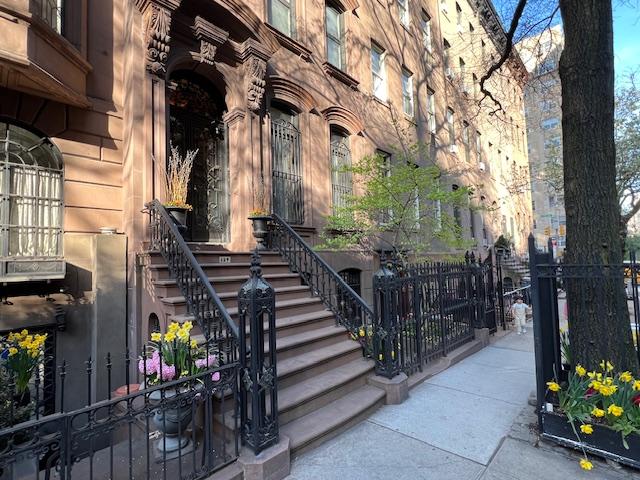
Here also marks the plaque of Murray Hill Historic District that covers most of the neighborhood. The central part of the neighborhood especially between Park and Third Avenues are lined with brownstones each with their own flair to them.
The Murray Hill Historical District at East 35th Street
Walking up Lexington Avenue in the East 30’s looking Uptown
Walking down East 35th Street just off Lexington Avenue offers a beautiful array of historical architecture and colorful gardens.
I walked by this beautiful garden on the corner of Lexington Avenue and East 35th
The gardens on the corner of Lexington Avenue and East 35th Street
The gardens located outside an apartment building at Lexington Avenue and East 35th Street
Looking down East 35th Street during the Summer of 2026
Walking down East 35th Street
Looking down East 35th Street from Lexington Avenue
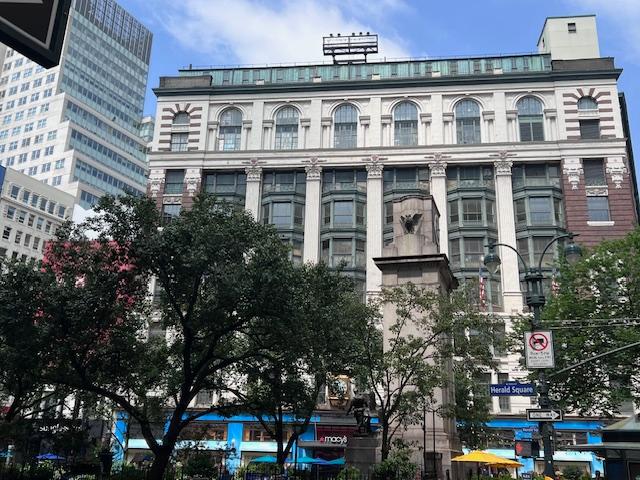
The commercial district once had two of the great department stores of the era and even today as Lord & Taylor closes it doors for the final time in the next few months after being in business since 1826, the building stands as a testament to the former lower Fifth Avenue corridor. As you enter East 35th Street, you see the grandeur of the former B. Altman department store building built by retail great Benjamin Altman.
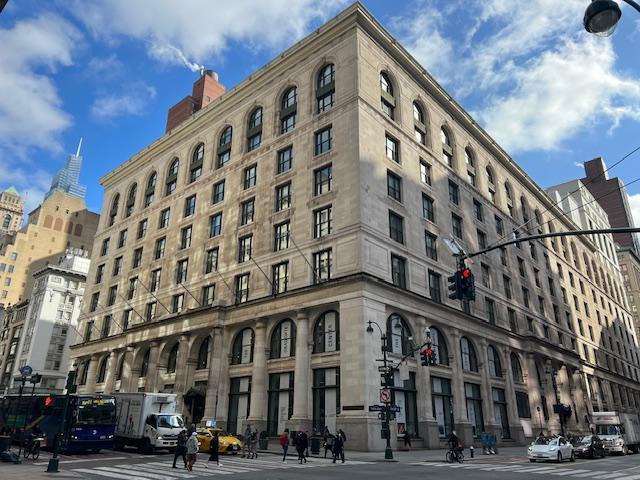
The B. Altman building at 361 Fifth Avenue on the corner of Fifth Avenue between East 35th and 34th Streets
This elegant building was designed in the 1906 by architects Trowbridge & Livingston in the “Italian Renaissance style’ to fit into the then fancier residential district it was then located in at the time. The area between 34th and 42nd Street had replaced the ‘Ladies Shopping Mile’ along Sixth Avenue as the retail section of the City marched uptown.
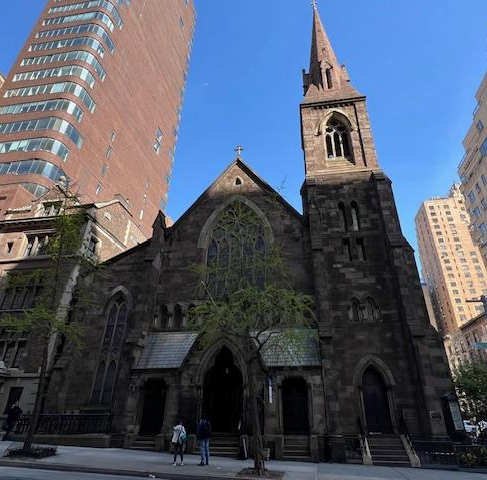
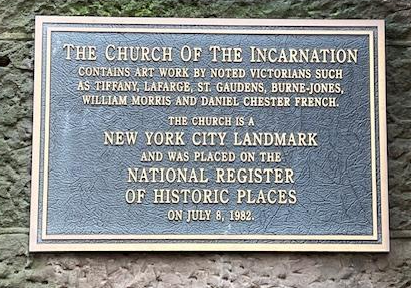
On the next block at Madison Avenue and East 35th Street is the elegant Church of the Incarnation at 209 Madison Avenue. The historic Episcopalian church was built between 1864-65 by architect Emil T. Littel with the church rectory designed by Robert Mook in 1868. The extension of the church was built in 1882 by architect David Jardine (Wiki).
The Church of the Incarnation at 205-209 Madison Avenue
On the corner of Park Avenue, I passed the James Robb House. The now apartment building was once the home of James Hampden Robb and his wife, Cornelia Van Rensselaer Robb. The mansion was built by Stamford White from McKim, Mead & White for the couple in the ‘Italian Renaissance style’ in 1892 (Wiki).
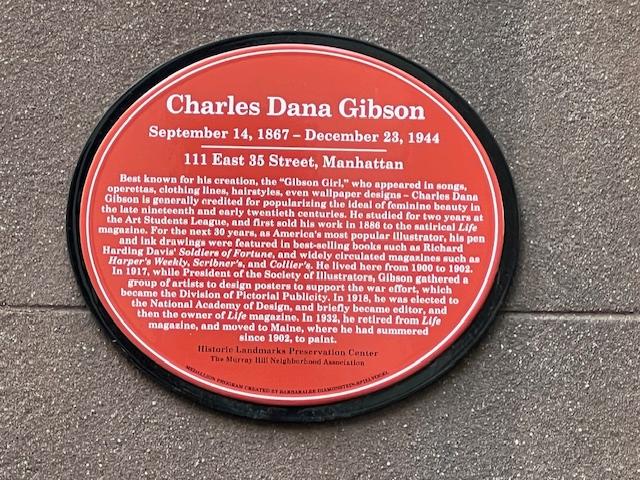
Further down East 35th Street another famous New Yorker lived at 111 East 35th Street. Illustrator Charles Dan Gibson lived in this house. The famous American artist was best known for his illustrations of the ‘Gibson Girl’ inspired by his wife and daughters. He studied at the Art Student League in New York City (Wiki).
111 East 35th Street the former home of Illustrator Charles Dana Gibson
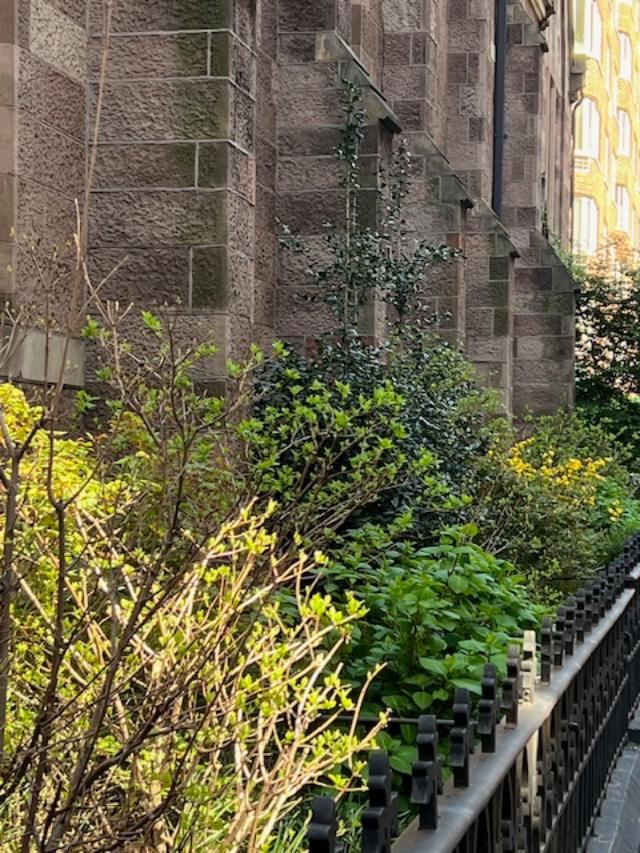
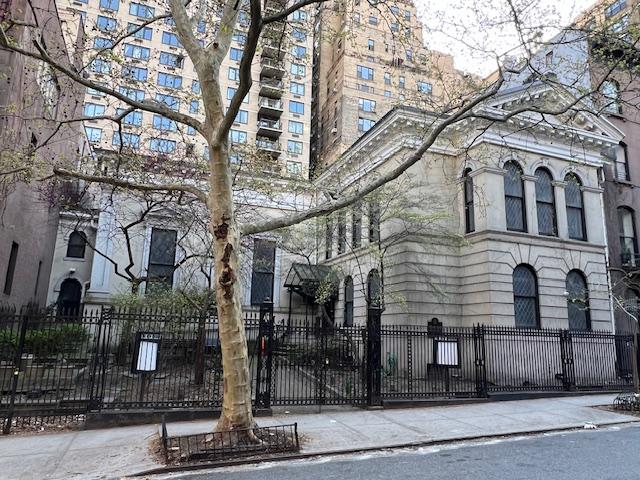
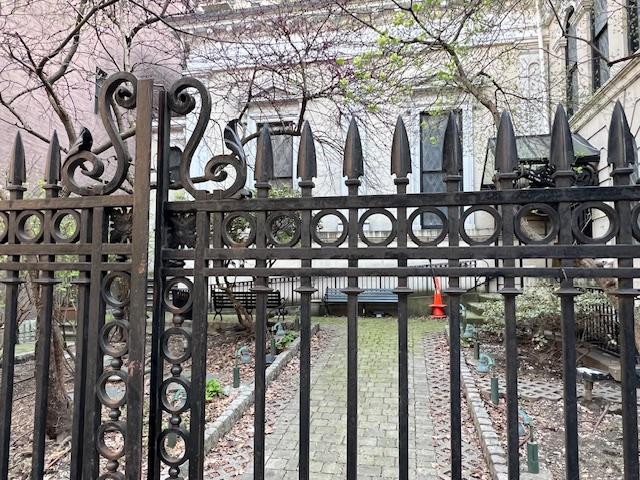
Tucked to the side of the residential neighborhood is another amazing little church. The New York New Church at 114 East 35th Street is a quiet, tranquil little church with another interesting garden that lies another iron fence. The church was built in 1858 and was finished in 1859 and was designed in the ‘neo-Renaissance style’.
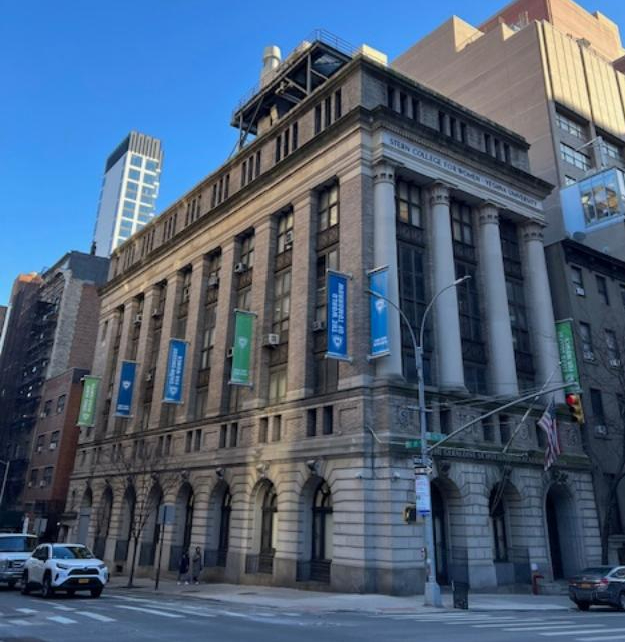
Further down the street is the Stein College for Woman which is part of the larger Yeshiva University which houses the University’s Arts & Sciences Department. This beautiful building was built in 1911 as the Packard Commercial School. It was taken over by Yeshiva University in 1954. The building was donated to the University by industrialist Max Stern (Wiki).
The Stern College for Women at Yeshiva University at 245 Lexington Avenue
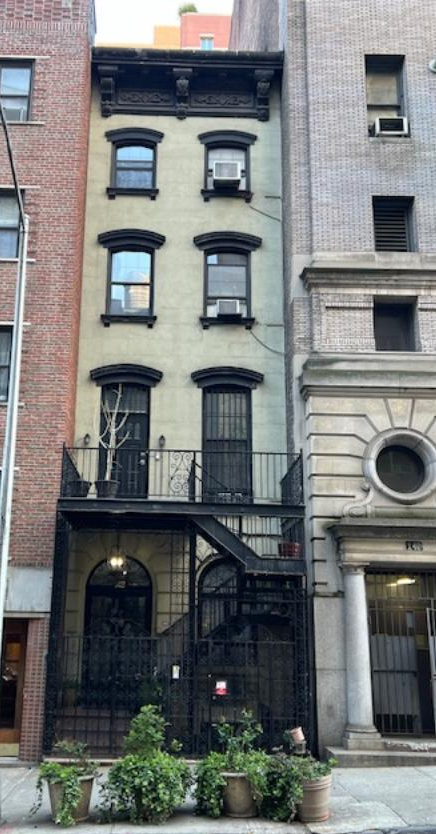
Tucked to the side at 142 East 35th Street is another unique brownstone that was built in 1901. This triplex has the most interesting details in the grill work and almost looks like something seen in New Orleans.
142 East 35th Street has almost a New Orleans feel to it when you walk by
I ended my walk back at the East River Esplanade reading up on the British attack of Manhattan during the Revolutionary War with the landing at Kips Bay (then called Keps Bay) which stretched from East 35th to East 34th Streets. The views of Long Island City were just spectacular at twilight. It amazes me how much change still keeps going on in the East River area.
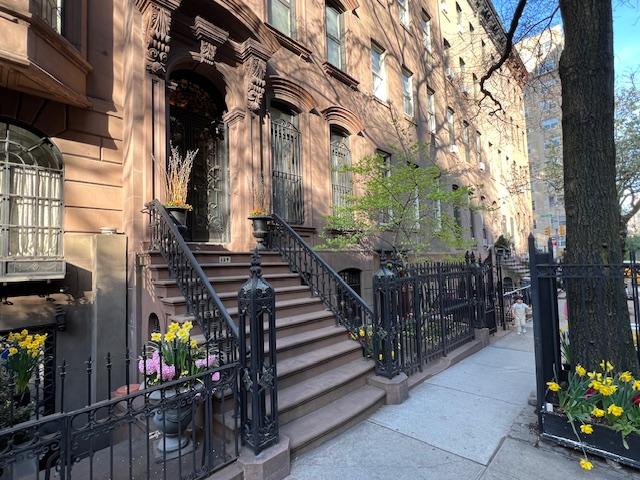
The beautiful brownstones at East 35th Street.
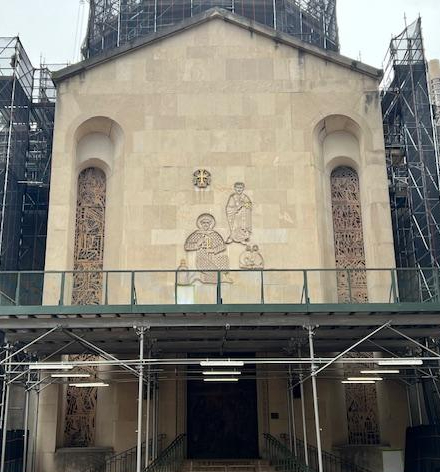
I stopped by to admire the St. Vartan Armenian Cathedral at 630 Second Avenue which the park was named after. This interesting church sits on the border of the Murray Hill and is the first Cathedral Armenian Apostolic Church to be constructed in North America (Wiki).
St. Vartan Armenian Cathedral at 630 Second Avenue
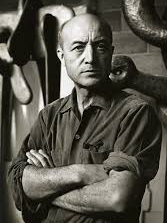
Artist Reuben Nakian was an American born artist who studied at the School of Art in New York City and the Art Student of New York. He was known for his interesting take on sculpture with all sorts of themes.
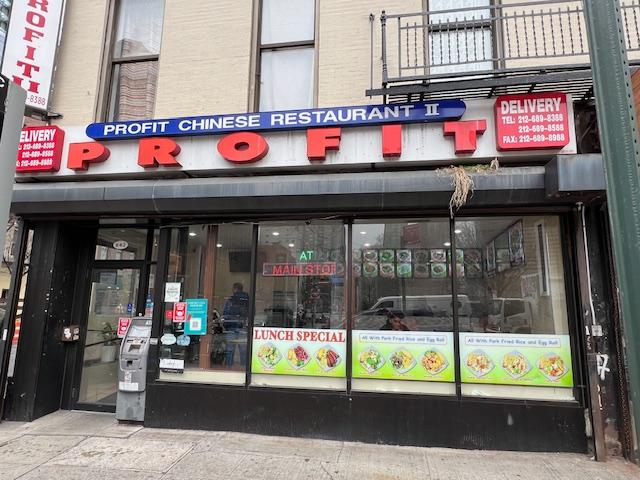
What I thought was interesting that I had not noticed before was a painting that sits on the side of Profit Chinese Restaurant is a painting of Salvador Dali that was somewhat exaggerated. The painting was painted by Brazilian artist Sipros.
The Salvador Dali painting by @Sipros by the Bushwick Collection (painted over in 2022)
Heading back to Fifth Avenue I came across another interesting brownstone with the most unusual brownstone with the most interesting stonework, The Frances Key Pendleton House which was built in 1853 by Henry H. Butterworth who had architects Washington and Samuel Cronk build four brownstones on what had been Henry Murray’s old estate. The house was bought by Frances Key Pendleton, the grandson of Francis Scott Key the author of “The Star Spangled Banner”. Thought he loved the home, the house had seen much sadness when he lived there (Daytonian).
The home got its current appearance in the 1930’s when the home was sold to a realty company and they gave it a more Mediterranean look to it with the stucco and statuary.
The details on the house are so unique.
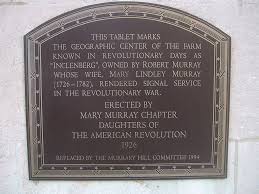
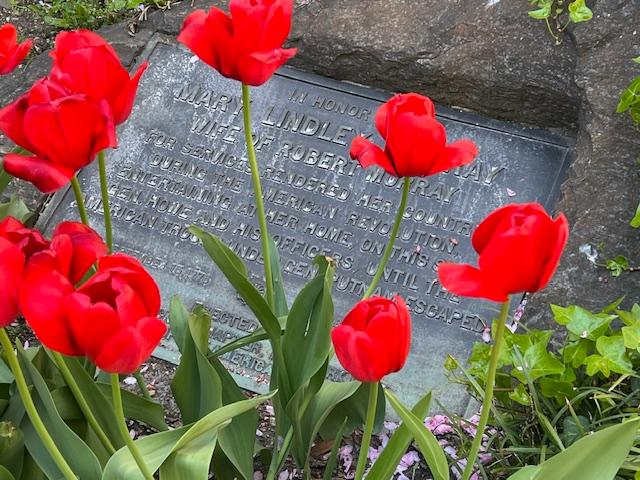
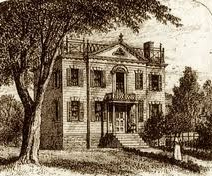
The last interesting piece of history the walk in the neighborhood which wrapped up the walk of Murray Hill was the plaque for the site of Inclenberg at the corner of Park Avenue and East 35th Street which was the site of the Henry Murray Mansion.
The plaque of the location of “Inclenberg” the Murray family mansion
The plaque hidden in the median along Park Avenue
“Inclenberg” the Murray family mansion where history was made
I thought it was a fitting way to wrap up my walk in Murray Hill then to pay homage to the family who the neighborhood was named. If they could take a time machine and see what their farm and estate has turned into or even experiencing the effects of COVID would have the family wondering.
Keeping with the spirit of celebrating the past, I went to Sarges Delicatessen and Diner that night for dinner. The deli was founded by former NYPD officer Abe Katz in 1964 who wanted to bring the best of Jewish cooking to the public (Sarges History).
They had set up a small cafe outside the restaurant for patrons to dine and I had a half of a pastrami sandwich and a bowl of Matzo Ball Soup ($18.95) and it was the best dinner after a long walk. The soup hit the spot on a cool evening with the rich chicken broth and the sandwich was piled high with salty meat and hot mustard.
The pastrami sandwich at Sarges is excellent
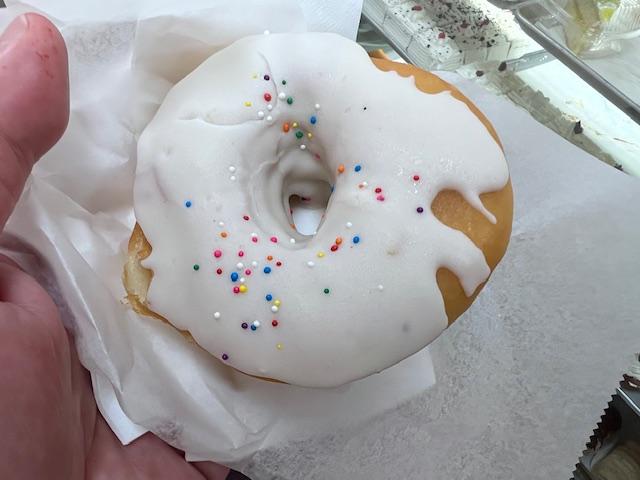
For dessert, I went to Holey Ice Cream & Doughnut at 522 Third Avenue for dessert. I had to walk around the block a few times to convince myself that I wanted it. I just said I am still hungry and will walk it off and went in (It closed in 2023).
I had a doughnut filled with Cookie Dough, Maine Blueberry and Birthday Cake ice cream with a glazed doughnut with fruit loops on top. I loved the intense sweetness of the dessert. The sugar high put a smile on my face and the energy to continue walking.
The Ice Cream is excellent but they could work on the doughnuts (Closed 2023)
I finished my walk this evening by relaxing back in Bryant Park and just walking people converse and have a nice time talking and laughing (socially distanced of course). It was nice to see things calm down and be a little normal for a change.
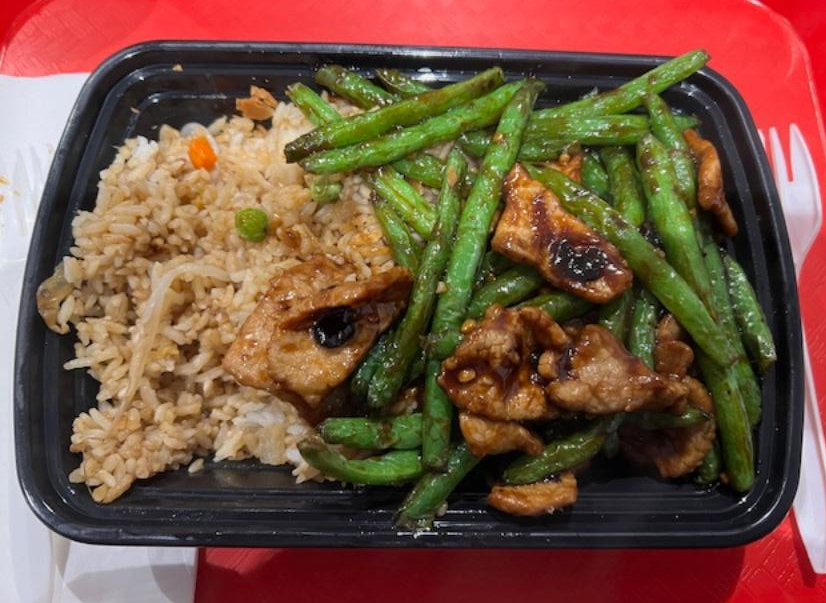
I came back to Murray Hill a few days later just to confirm some addresses and brownstones that I liked and walked to the neighborhood starved. I first stopped off at Pizza & Pita Halah Food at 344 East 34th Street for some Garlic Knots and sauce on the side ($2.00) and after I confirmed everything I wanted to see; I had dinner at Profit Chinese Restaurant at 643 Second Avenue for dinner. The Beef with String Beans in Garlic Sauce was really good ($11.00) but the eggrolls here are just okay. The best part was I took my dinner back to St. Vartan Park and ate dinner.
The Beef and String beans at Profit Chinese Food is really good.
The views of the neighborhood in the early afternoon after finishing the walk.
Even in the age of COVID we all have to adapt but eating a nice Chinese meal on the picnic table in a New York City park in the sunshine is a nice way to finish a visit to Murray Hill. In the evening, the neighborhood is just as dazzling!
Murray Hill skyline at night
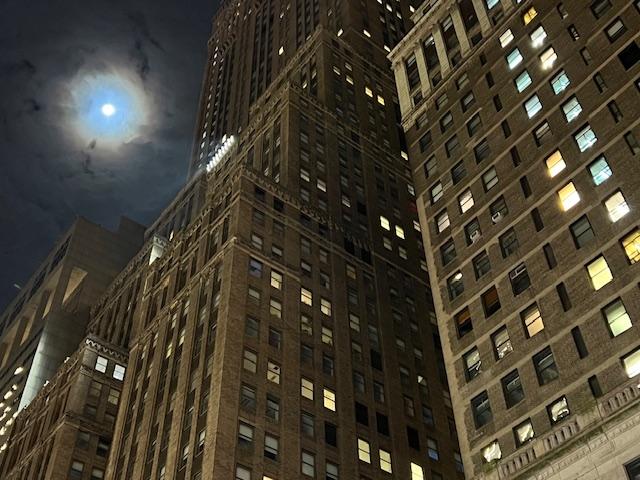
Walking down East 42nd Street during a full moon.
The AI driven video on the changes of Midtown Manhattan from 1400-2026
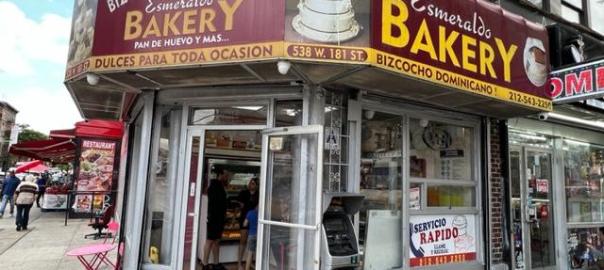
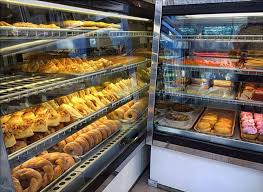
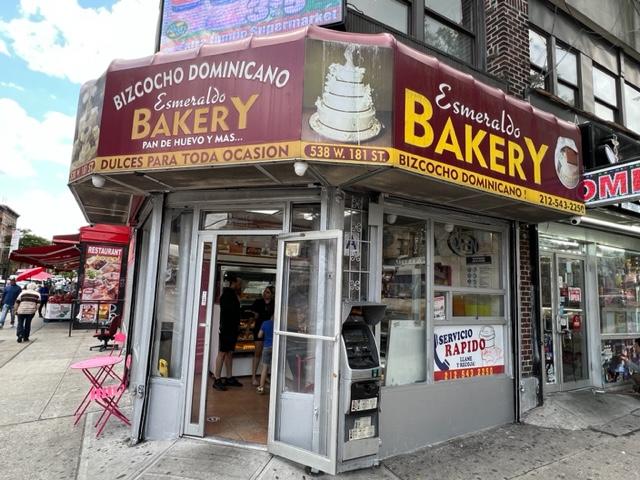
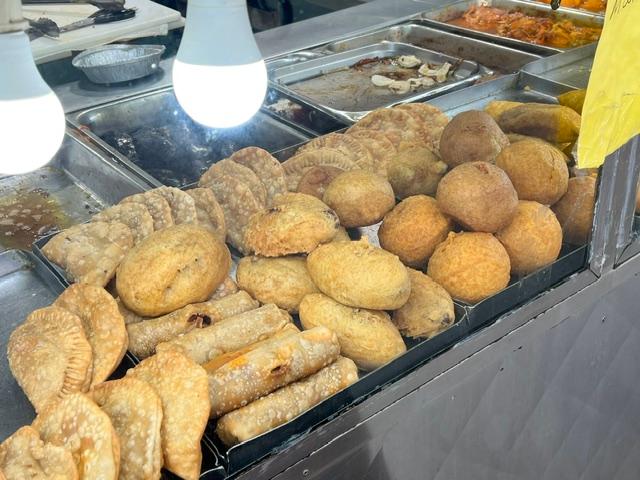
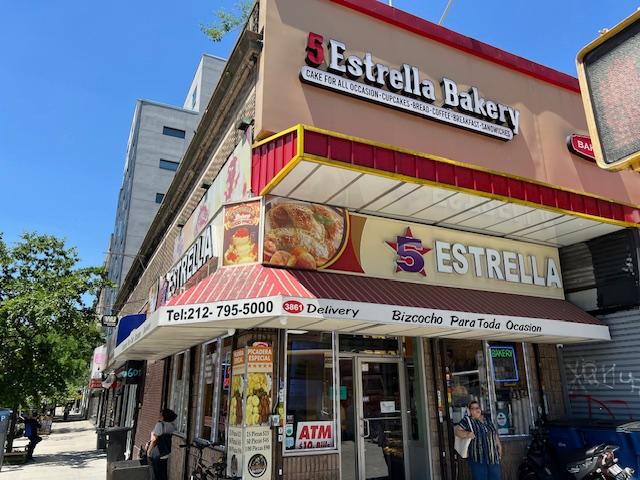
Esmeraldo Bakery is one of my ‘go-to’ spots when I am up in Washington Heights in Upper Manhattan. This Dominican bakery is very popular in the neighborhood and is in the middle of the busy shopping district between Broadway and Audubon Avenue along the 181st Street corridor. It has the nicest selection of baked goods and hot and cold snacks to choose from. The one nice thing I love about the bakery is that almost everything is a dollar or around that.
The cases are full of delicious doughnuts, turnovers and pastries
I have been the bakery on many occasions and have had a chance to ‘munch’ through a lot of the pastries. The Chocolate and Vanilla topped doughnuts ($1.00) are light, fluffy and have a nice chewy consistency. Their Sugar Twist doughnuts ($1.00) are fluffy and rolled in lots of cinnamon sugar.
I tried one of their apple turnovers ($1.00) which was dredged in a honey topping and loaded with a sweet apple filling. When eating them you will need to wipe your hands a lot but it is worth it.
On the same trip I tried one of their powder sugar topped cream horn ($1.00), which was loaded inside with a sweet cream and with every bite the horn came apart in my mouth.
Just visiting this month, I tried it again and it is still delicious. I also had one of their sugar topped doughnuts, which I could tell were just made. It was so loaded with sugar that each bite had an extra sweetness to it.
The sugar doughnut I had in 2023 was freshly made and loaded with sugar.
The flaky elephant ears
I recently had one of their Cinnamon Raison Pinwheels ($1.50), which has rolled sweet dough studded with raisons and then topped with more cinnamon sugar and then baked.
They also have delicious Elephant Ear cookies that have a combination of caramelized sweet cinnamon and sugar combination and flaky texture.
These buttery delights pull apart with each bite and you can taste the caramelized cinnamon that top the Danish.
There is also a selection of hot snacks as well. Their Cubanitos, which are a meat filled type of pie are excellent ($1.25). They are filled with a spicy ground meat filling that will warm you up on a cold day. Another delicious snack is their Relentos, ($1.25), which are a type of potato croquette that are filled with ground meat and are another snack that warms the body on a cool day.
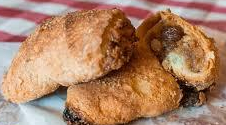
On a recent trip, I tried one of the Ham and Cheese Rolls ($1.50) that had just come out of the oven and they were delicious. I am not sure what the Spanish name for this roll was but it came with bits of chopped ham and Cheddar Cheese baked into the dough. That was almost a complete meal.
The Ham and Cheese roll is so good!
The inside of the Ham and Cheese roll
There are also a variety of fruit filled turnovers, small pies and cakes, slices of pound cake and an assortment of cookies to choose from.
Be prepared though to speak some broken Spanish if you do not know the language fluently. Most of the ladies working behind the counter’s native tongue is Spanish but they are extremely nice and will guide you along with your selection.
After a trip into Esmeraldo Bakery, take some time to walk around the 181st Street shopping corridor. There are a lot of great shops and some excellent Dominican restaurants in the neighborhood. It was especially beautiful during the Christmas holiday season.
Esmeraldo Bakery is one of my ‘go-to’ spots when I am up in Washington Heights in Upper Manhattan. This Dominican bakery is very popular in the neighborhood and is in the middle of the busy shopping district between Broadway and Audubon Avenue along the 181st Street corridor. It has the nicest selection of baked goods and hot and cold snacks to choose from. The one nice thing I love about the bakery is that almost everything is a dollar or around that.
The cases are full of delicious doughnuts, turnovers and pastries
I have been the bakery on many occasions and have had a chance to ‘munch’ through a lot of the pastries. The Chocolate and Vanilla topped doughnuts ($1.00) are light, fluffy and have a nice chewy consistency. …
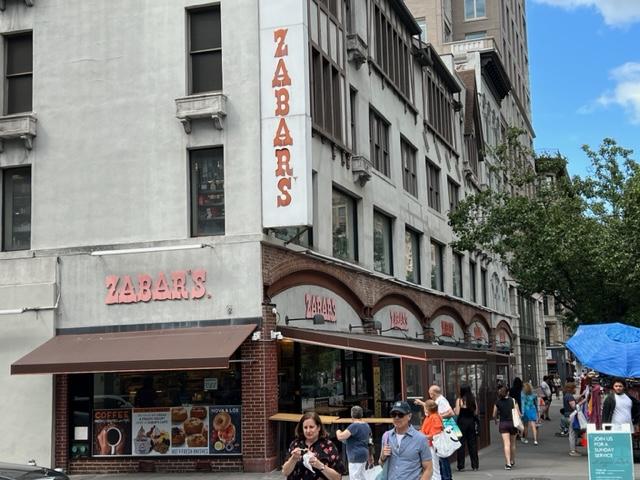
The Zabar’s Cafe is in the original Zabar’s building
Zabar’s is one of the most interesting grocery stores in New York City. Back in the late 60’s, 70’s and early 80’s, it was the only place to go for certain gourmet items, baked goods and a variety of vegetables. Their cheeses were some of the best in the city and when you needed fresh pasta, it was here or Manganario’s which went out of business about five years ago.
While other stores have gotten fancier or more expensive in their wares and grocery items, Zabar’s stays tried and true to its roots and is still a place for the average person to come and do their grocery shopping while buying high quality at a fair price. New York City has never been cheap.
I had been to the store many times in the past but even after all of these trips, I never realized that they had a cafe. I came across this when walking the Upper West Side and touring Zabar’s the many times in the neighborhood.
Zabar’s Cafe, according to their history, sits in the original part of the store (the store has expanded to the whole building) and is separate from the rest of the store. The one thing I like about their menu is that there is nothing over the price of $10.00. Their extensive menu which includes soups, wraps, sandwiches, pizza and pastry.
I have been there twice as while enjoying their specials for $1.00 (in early 2019). This is a special treat that you have to hit in the early afternoon while the specials are going on. The first time I ate there, I had a ham, egg and cheese croissant.
That was really good. The outside was buttery and crunchy with a nice bite to it while the inside is stuffed with scrambled eggs, chopped honey ham and cheddar cheese. Yes, worth every bite.
The second time I ate there, I had their version of Sicilian pizza with some fresh tomato on top of it that was very tasty. It was more of a sauceless pizza with a just a light touch of olive oil, cheese and fresh tomato sliced on top.
I have overheard many customers rave about their homemade chicken soup as a cure all. Their cookies and pastries look delicious, sitting like gems in the display cases. I recently had one of the giant cinnamon buns which was loaded with a thick icing ($2.95) and it was worth every bite. I must have had a big smile on my face when I was walking down Broadway because everyone was staring at me enjoying myself.
The Zabar’s Cafe outside seating now is available in the warmer months
The crowd is very interesting. It is made up of older Westsider’s who claim their spots in the restaurant as their own. It is really a neighborhood hang out for a lot of these people and I hear a lot of gossip going on as well as old friends greeting one another. If you try to sit in their area, there is that distinct look you get.
The reasonable pastries
Overall, it is a nice place to eat with reasonable food with fresh ingredients and a nice selection of simple American foods from soups and wraps to sandwiches and desserts. There is something for everyone here and the best part is you can still visit the main store to pick up more goodies right next door.
They now offer outside dining during the warmer months.
Zabar’s is one of the most interesting grocery stores in New York City. Back in the late 60’s, 70’s and early 80’s, it was the only place to go for certain gourmet items, baked goods and a variety of vegetables. Their cheeses were some of the best in the city and when you needed fresh pasta, it was here or Manganario’s which went out of business about five years ago.
While other stores have gotten fancier or more expensive in their wares and grocery items, Zabar’s stays tried and true to its roots and is still a place for the average person to come and do their grocery shopping while buying high quality at a fair price. New York City has never been cheap.
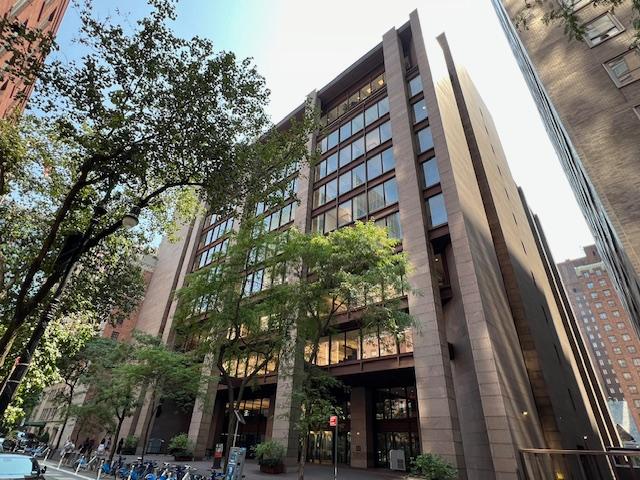
Walking the streets of Midtown East is very different from all the other neighborhoods that I have walked so far. The character of the neighborhood differs so much in that it is mostly commercial with hotels, specialty shops, office buildings and more residential on the upper parts of the neighborhood than any other part of the City. When you walk down the side streets of Midtown East, you are usually passing a building that stretches from one block to the other with nothing much in between but a loading dock or garage for the employees. Most of the smaller buildings and brownstones have been long knocked down and replaced with large office buildings some of which the character lacks in these giant ‘glass boxes’.
I know in the past few years that New York City has allowed more innovation in building design and there has been more original designs then the original 1980’s ‘glass boxes’ but even now there are a lot of makeovers that are happening all over the neighborhood and you will be dodging scaffolding that I have not seen since my days walking Harlem. From block to block especially as you get closer to Grand Central Station, there are many closed sidewalks and you can only walk on one side of the street.
Grand Central Station sits at the head of this neighborhood
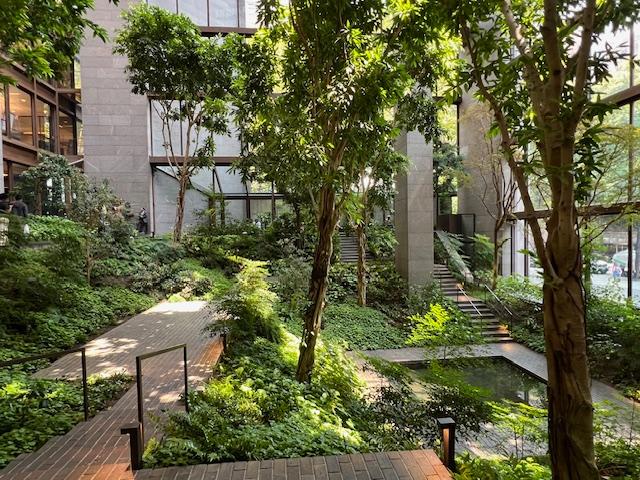
With that said, there are still many hidden treasures to find if you just look up and across and they just jump out on you. It is surprising in this ever-changing neighborhood of soaring towers and busy hotels that tucked here and there are public atriums with places to sit and tiny cafes inside them that cater to the busy lunch crowd. Small brownstones here and there around the neighborhood have survived the wrecking ball and now house small cottage businesses and some upscale boutiques. I even found a few waterfalls along the way. I started my walk on the corner of Fifth Avenue and 59th Street, which is becoming like an old friend. East 59th Street with its luxury shops and hotels is going through a transition itself since the domination of the internet.
Many of the luxury stores from Steuben Glass to the old FAO Schwarz Fifth Avenue have either disappeared or have moved to other parts of Midtown. Even the Barney’s New York on Madison Avenue on the edge of the Upper East Side neighborhood has filed for bankruptcy sighting changing tastes (people just don’t dress like that anymore) and the cost of doing business in a Brick & Mortar store which such high rents. I really don’t think honestly that people can afford these places anymore and if they can, will order it online not having to deal with the sometimes-indifferent service you get now in stores (I experienced this feeling in Paul Stuart when I walked in twice with shorts). The result is a lot of empty retail space.
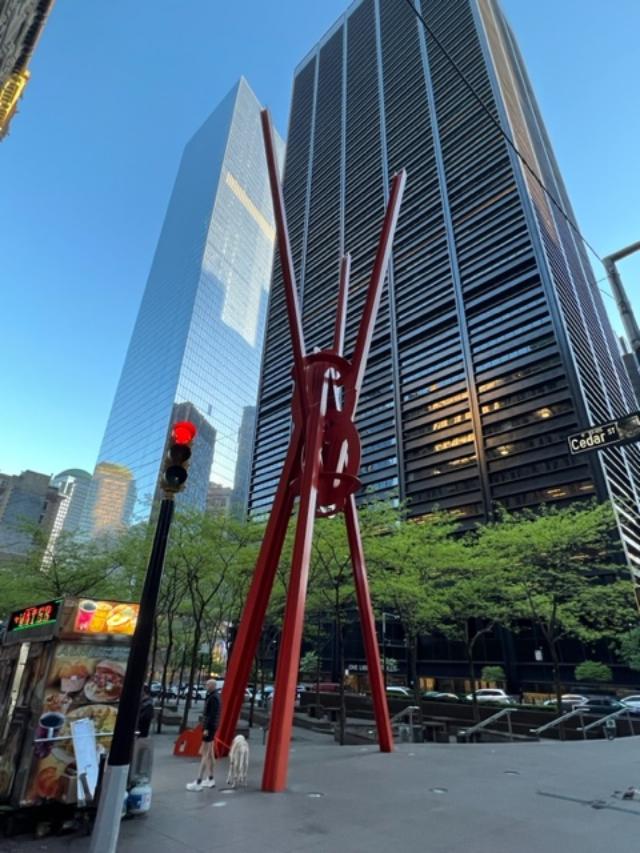
This is changing though with the remodeling of the older office buildings with new facelifts and newer foreign stores coming into the neighborhood. Even so, look again for the open-air museum of artwork all over the streets and in the lobbies of these soaring office buildings. When walking down East 58th Street, I came across the sculpture “Rondo” by artist Tony Rosenthal in 1969 in front of 127 East 58th Street. This interesting circular sculpture is made of welded bronze.
‘Rondo’ by artist Tony Rosenthal
Tony Rosenthal was known for his large ‘Monumental Public Art Sculptures’ that appeared in cities all over the United States. Mr. Rosenthal had studied at the Chicago Institute of Art and in the 1960’s concentrated on large Abstract Geometric Sculptures. With his “Rondo” series in the 1960’s, it is noted that “Tony Rosenthal finds, discovers and reports to us what we might not have seen without him” (Tony Rosenthal biography).
Take a look at the detail work of 480 Park Avenue on the corner of Park Avenue and East 58th Street. Designed by architect Emery Roth in 1929, notice the terracotta detail work all over the building. It is one of the great residential buildings where each apartment had working fireplaces and high ceilings.
One building that stands out on the corner of Lexington Avenue and East 57th Street is the Cohen Building at 135 East 57th Street with its soaring floors and interesting entrance with a ringed pavilion. This 31-story commercial office building has a unique circular path for vehicles up from and pillared terrace entrance. The architect is Kohn Pederson Fox Associates and was built in 1987 in the ‘Post-Modern’ design with a plaza in the front of a concave tower. The building is right across the street from Bloomingdale’s Department Store (NewYorkitecture).
Walking past the IBM Building again, it was nice to finally discover that the sculpture outside the building was an Alexander Calder, the famous “Saurien”, that he created to emulate a reptile. This interesting and unusual sculpture deserved a second look. Other buildings that stand out in the neighborhood have been mentioned in Day One Hundred and Forty of MywalkinManhattan.com are the Fuller Building at 41 East 57th Street and 465 Park Avenue. Look up and notice their detail and artworks that line the outside of these buildings.
Mr. Shapiro is an American born artist from New York City who graduated both with a BA and MA from New York University. He is best known for his sculptures of abstract human forms (Wiki).
When walking around East 57th to East 56th Streets, please be careful of the security around Trump Tower. They watch everything you do and it is best to just walk around this part of the neighborhood between Fifth and Madison Avenues. Most of the buildings on this block stretch from one block to the next.
Trump Building at 725 Fifth Avenue is where the security is tight
When walking down East 55th Street from Fifth Avenue back to Lexington Avenue, stop and notice the building at 116 East 55th Street, home to the SUNY Global Center. The building was the former mansion to the Zeigler family and was built between 1926-1927. The house was designed by architect William L. Bottomley in the ‘Neo-Georgian style’ and features Flemish blond brickwork on the outside. William Zeigler Jr., who owned the house with his wife, Helen was a businessman, sportsman and philanthropist (Wiki).
I finished the first day of the neighborhood at East 55th Street and had dinner at Tri Dim Shanghai Restaurant at 1378 Third Avenue (see review on TripAdvisor). Their food is excellent and you have to try their Soup Dumplings that they are noted for.
Tri Dim’s Soup Dumplings are excellent
They burst in your mouth with each bite and their Classic Chicken, which is cooked in what I figure is a honey, soy and plum sauce is just excellent.
For dessert, it was time to revisit Bon Vivant Bakery at 231 East 58th Street for dessert (See reviews on TripAdvisor and DiningonaShoeStringinNYC@Wordpress.com). I had one of their Rose Petit Fours ($4.00) and it was just excellent. A subtle sweetness with the accent of the rose extract that is used in the filling and the icing. These delightful cakes can be eaten in the two tier bakery and it is fun to watch the world go by.
Bon Vivant at 231 East 58th Street is wonderful for desserts (Closed January 2021-Moved to Jersey City, NJ)
On my second day of walking the Streets of Midtown East I had just finished a busy day at Holy Apostles Soup Kitchen working in the busy Bread Station and was exhausted by the time I got to East 55th Street. I stopped along the way for a Chicken Empanada at Empanada Suprema (see reviews on TripAdvisor and DiningonaShoeStringinNYC@Wordpress.com) at the corner of East 38th Street and Broadway for a quick lunch. This little stand is open only during the week and had the most delicious chicken, beef and cheese empanadas for $2.00! I love his sign with the Caped Empanada.
Empanada Suprema at the corner of West 38th Street & Broadway
In 2024.
The empanada’s are delicious
The Chicken Empanadas are wonderful with a little hot sauce
Don’t miss admiring the famous Friar’s Club at 57 East 57th Street. This beautiful building was built for Investment Banker Martin Erdman in 1908 by architect Alfredo S.G. Taylor and was designed in the ‘English Renaissance’ style.
When walking the bottom of East 55th Street from Lexington Avenue, take time again to admire the former AT&T Building at 550 Madison Avenue and IBM Building at 590 Madison Avenue in the distance. These iconic buildings show the resilience and creativity of their corporate owners. They are such interesting designs (see Day One Hundred and Forty Walking the Borders of Midtown East).
Madison Avenue in the 50’s both during the day and at night
One of the most interesting little pocket parks in the neighborhood I found when I rounded the corner at East 54th Street. It was right in front of the Christie’s at 535 Madison Avenue is the Christie’s Sculpture Garden with its small tables and chairs, trees covered with white lights and interesting public art. The artist Jonathan Prince is showing his work, “Shattered I, II and III’ in the garden courtyard.
Christie’s Sculpture Garden in front of 535 Madison Avenue with “Shattered Sculptures”
The park in the Spring of 202( from the opposite direction
Artist Jonathan Prince is New York born and raised and holds degrees from Columbia University and the University of Southern California. Over the past twenty years, the artist has had a passion for form and material with the use of chaos in his works. His use of steel and CorTen is used in the ‘Shattered’ pieces and they have a reflective element against the white lights of the park (Artist website).
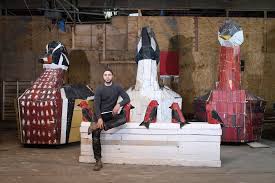
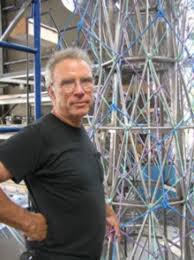
Jonathan Prince in front of his “Shattered Sculptures”
This public garden is one of the nicest I have seen in many blocks and it is nice that Christie’s gives us an opportunity to view Public Art on sale while sitting back on the chairs on a nice day and just admire the park and people passing by.
During Christmas of 2025, I revisited the park and noticed it has being used as a sort of revolving outside art gallery featuring new works by arts both inside the building and outside in the gardens. These are some of the works that were being displayed. I had gotten there just as the sun was beginning to set and the lights were coming on.
The park in the winter
New artworks are being featured seasonal. These new artworks were in the park in the Fall of 2025.
The ‘Untitled’ work by Artist Joel Shapiro
The sign
‘Walla Walla’ by Artist Deborah Butterfield
The sign
‘Golem’ by Artist Julian Schnabel
The sign
Walking through the park in the Winter time
Walking through the park at night when the lights are on gives the park a very elegant look to it. I love the way the park stands out at night.
The park with the white lights on
The park lit at night in the early Spring of 2026
The Kiton Store at 4 East 54th Street is the former home William Earle Dodge Stokes and his former wife, Rita. Mr. Stokes bought the land and leveled the houses that were there and had architects McKim, Mead and White design the marble mansion in 1896. The couple never lived in the house and filed for divorce soon after. The house was then bought by William H. Moore, the founder of Nabisco and his wife, Ada who movements in New York Society were well known. After Mrs. Moore’s death in 1955, the mansion was used for retail purposes (Daytonion in Manhattan).
The Kiton Store Stokes/Moore House at 4 East 54th Store
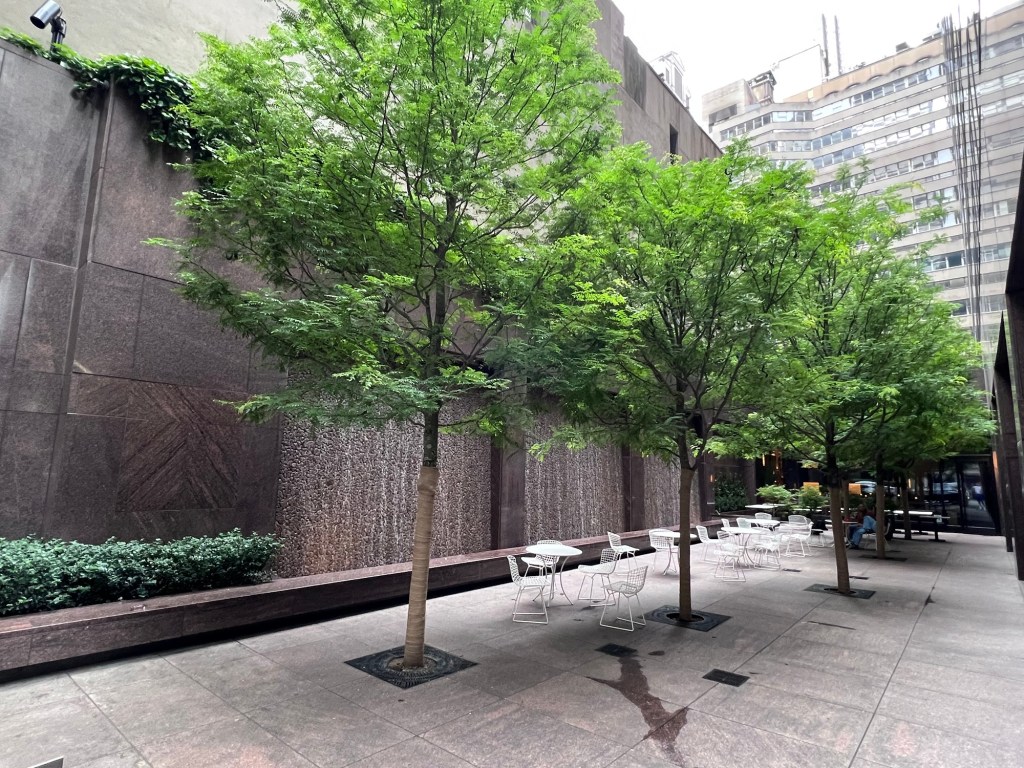
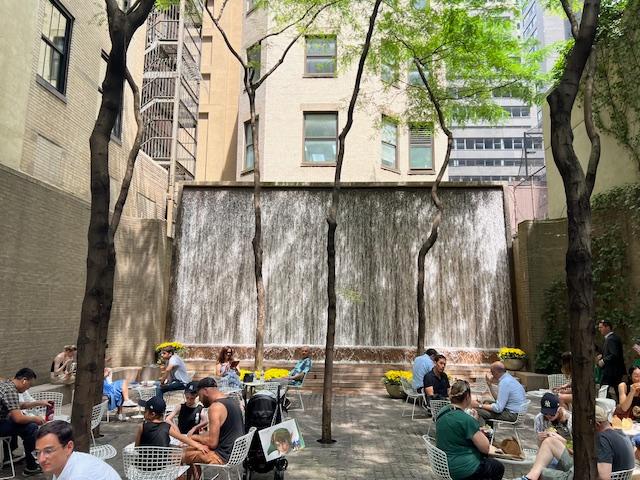
The ironic part of the former Stokes/Moore house is that right behind it when rounding the corner to East 54th Street is the Paley Garden, another small public garden with a waterfall as its centerpiece at 3 East 54th Street. The park was designed by architects Zion Breen Richardson Associates and opened in 1967. CBS Head William Paley financed the park in honor of his father, Samuel Paley (Wiki). This pristine little park is also nice to just sit and relax and listen to the waterfall and drown out the sounds of the City. The rest of East 54th Street is lined with large office buildings and the rush of people walking from one block to the next.
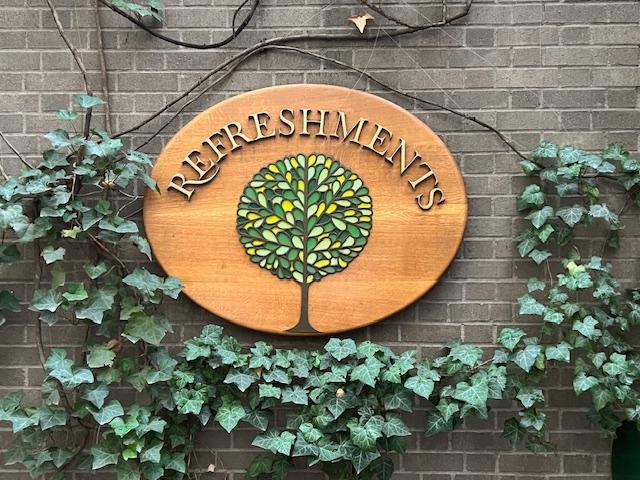
When it is open ‘in season’ don’t miss the Refreshment stand here. The food is pretty good
Rounding East 53rd Street make an effort to stop inside the lobby of 1 East 53rd Street to see the gallery display from the Studio in the School New York City. The works that line the wall of the lobby space of the building is from art students all over New York City.
The Studio in the School is the largest not for profit visual arts education organization in New York City with the mission to “foster the creative and intellectual development of youth through quality visual arts programs, directed by arts professionals. We also collaborate with and develop the ability of those who provide or support arts programming and creative development for youth both in and outside of schools. We fulfill our mission through two divisions; the New York City Schools Program and the Studio Institute” (Studio in the School mission statement).
The Studio in the School Gallery at East 53rd Street
Walking the rest of East 53rd and then onto East 52nd and East 51st is lined with large office buildings that stretch from one block to the other. Most of this part of the neighborhood was knocked down in the late 1960’s for commercial use.
This little dragon protects the museum.
The Studio in the School gallery.
When walking down East 50th Street there is a small gem of a public pocket park at the south side of East 50th Street between Madison and Park Avenues. Created by the MTA (Metropolitan Transportation Authority in 2014, this little park called the “50th Street Commons” features a water feature ‘waterfall’ that turns colors from blue to green to yellow to fuchsia. This unique little park surrounded by exotic plants is another nice place to just sit and relax (Murray Hill, Gramercy and Midtown East Paper).
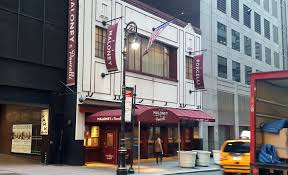
Across the street from the park and wedged between office buildings is the restaurant, Maloney & Porcelli, which was founded in 1996 and offers “clubby American cuisine” and harks back to an era when lunch time was taken seriously. It stands in contrast to the ever-changing neighborhood.
The restaurant classic, Maloney & Porcelli at 37 East 50th Street
When rounding East 49th Street, stop at Tower 49 at 12 East 49th Street, the home of WeWork to see the art exhibition of artist Enrico Isamu Oyama exhibition “Inside Out”. This exhibition located on all side of the lobby. This contemporary and rather unusual exhibition starts with the pillars on both East 49th and 48th Streets to invite you inside (the security at the building is really cool and nice about people looking around). The Tower 49 Gallery offers exhibitions of art free of charge and is open to the public at street level.
Mr. Oyama’s work is unique at best with a lot of lines and movement. His work “Quick Turn Structure” consists of interlocking intersections of black and white shapes and the unique style replaces letters with lines, highlighting their dynamic motion through the process of repetition that subsequently creates and abstract form with angular points and three-dimensional depth (Artist Press Release).
Tower 49 Gallery
Mr. Oyama is originally from Tokyo and is now based in New York City and likes to create a visual art in various mediums that features Quick Turn Structure, the motif composed of spontaneous repetition and expansion of free-flowing lines influenced by the aerosol writing of the 1970’s-1980’s New York and beyond (Artist Press Release).
Opening in a former upscale Italian restaurant, Joe’s Home of the Soup Dumpling at 7 East 48th Street has been packing them in in 2021. I am not sure if they are part of the former Joe’s Shanghai that used to be located in Chinatown but this restaurant is gaining a reputation for their Soup Dumplings.
Joe’s Home of Soup Dumplings at 7 East 48th Street opened in 2021
The evening I went there I just happened to come across it and decided to have dinner. The Soup Dumplings ($11.95) are amazing. These are larger than most I have had recently and were loaded with fresh ground pork and crab and steamed perfectly. I ate these six little delights quickly and enjoyed my Shanghai Wonton Soup ($5.25) and Beef Scallion Sandwich ($8.95) as well. The food and service were excellent. Another time I was there, I had the Pork and Shrimp Spring rolls ($5.95) that are excellent.
I highly recommend the Soup Dumplings here
Dinner on a recent night of Crab and Pork Soup Dumplings and Pork and Shrimp Spring rolls.
Follow the neon sign to Joe’s.
If you are in need of a public bathroom, try the fourth floor of Saks Fifth Avenue in the Men’s Department. When the store is open, this is one of the most convenient places to go to the bathroom in the area.
When proceeding down East 48th Street, take a stop in front of 4 East 48th Street, The Church of Sweden. This Neo-Gothic Church was built in 1921 for “The Bible House” and was sold to the Church in 1978. There is a library and cafe that are inside and open to the public. For the most part, the rest of East 48th Street is filled with large buildings that stretch from side to side.
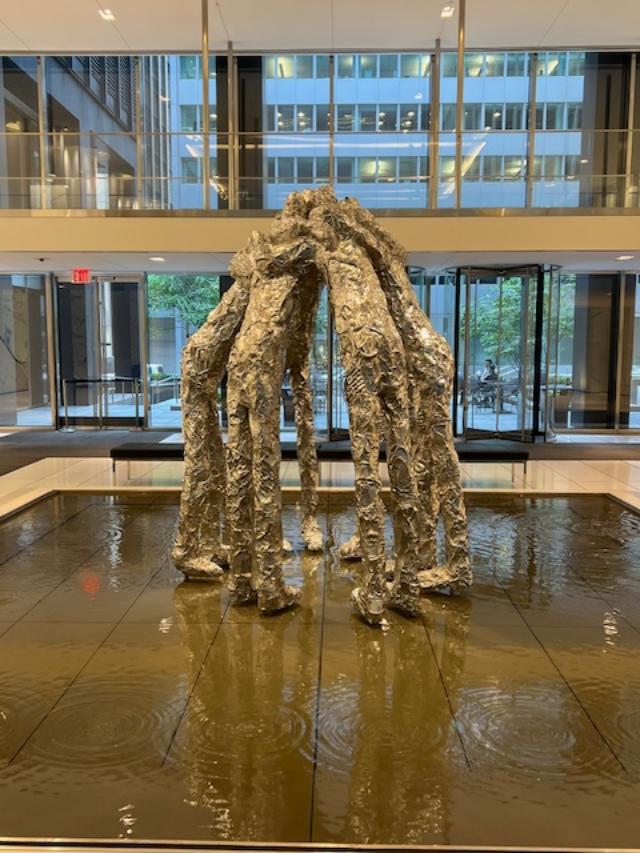
There is one stand out piece of artwork in the lobby of 280 East 48th Street of four people hunched over in a circle. As hard as I tried though I don’t know who the brilliant artist is of the work (in 2024 when I revisited the building I still could not find the plaque to the artist).
The lobby sculpture at 280 East 48th Street
Rounding East 47th Street, take a trip back in time to Manhattan of the 1970’s inside of Phil’s Stationary at 9 East 47th Street. I was talking to the gentlemen who were running the store and told them I had not seen inventory like this on sale in a long time. Hard to find things like stationary, note pads, typing paper and ribbon and even recommendations to a place to fix the typewriter. This stationary store harks back to the days when people left the office to go shopping for things needed at the last minute. They still sell pens, pencils and even the old accounting ledger books. The nice part is that it still smells like a stationery store.
Most of the Streets between East 47th to East 46th Streets are lined with larger office buildings that stretch from block to block with a smattering of small businesses here and there. One standout at 556 Fifth Avenue at the entrance of East 46th Street is the Philippine Consulate General which services Philippine nationals in the Northeast states. This unique building is one of the last holdovers from the Country buildings that used to line this part of Fifth Avenue in the 1960’s, 70’s and 80’s. The building was designed by Carrere & Hastings in 1912 for the Knoedler and Company Art Gallery.
On the edge of East 46th Street sits the famous Roosevelt Hotel and the Helmsley Building which sit as the old guards to the neighborhood once known as “Terminal City”. The Helmsley Building at 230 Park Avenue was originally built for the headquarters of the New York Central Building in 1929 by Warren & Wetmore in the Beaux-Arts style. These are also the architects of Grand Central Station behind it that stands guard of the neighborhood from Turtle Bay to Midtown East.
The Helmsley Building at 230 Park Avenue stands guard over this part of Park Avenue
The historical marker for the walkway and drive through.
The decorations in the Helmsley Building walkway.
The Helmsley Building at night
The Roosevelt Hotel at 45 East 46 sits between East 46th and 45th Streets next to Grand Central Terminal. The hotel was designed by architect George C. Post & Son in 1924 and was once part of a series of hotels that made up “Terminal City” that stretched along both sides of Grand Central. The hotel was named for President Teddy Roosevelt and even had a childcare service in ‘The Teddy Room’.
The faded Roosevelt Hotel being used as an immigrant intake center in 2024.
The Roosevelt Hotel’s other faded entrance.
These embellishments stare at you when you pass the hotel.
The embellishments also take a glance at you as well.
Take time to walk around these impressive buildings and look at the outside stone carvings and elaborate lobbies. The lobby of the Helmsley Building is impressive with its marble floors and impressive chandeliers.
On the corner of Fifth Avenue and East 46th Street tucked behind the Barnes & Noble bookstore I had lunch at a new branch of Joju at 555 Fifth Avenue, which had just opened that afternoon with a soft opening. I had some of their Vietnamese spring rolls which were filled with ground pork and vegetables and were cooked to perfection.
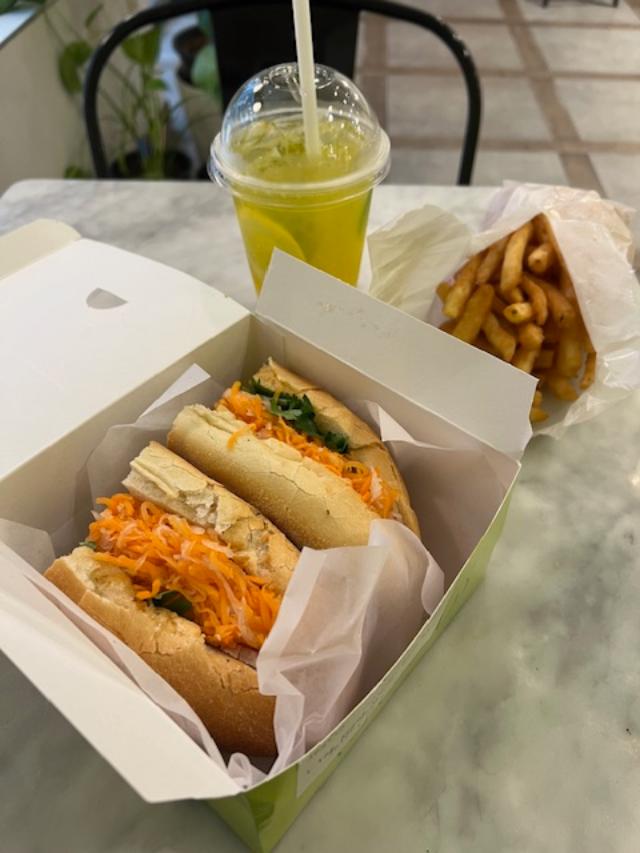
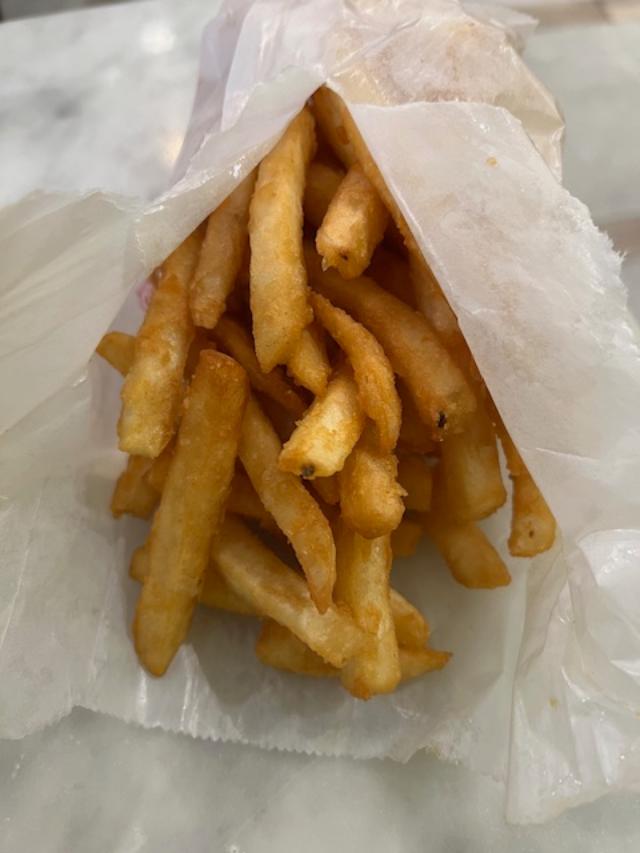
On another occasion to visit the restaurant, I had the Vietnamese sandwich with Caramel Pork and fish sauce and a side plain double-fried French Fries and a Lemon/Leechee Mojito Lunch did come to almost $22.00 but the sandwich can feed two and it is worth the indulge. The service there is really nice as well.
JoJu is a new addition to the Fifth Avenue restaurants at 555 Fifth Avenue
My Bahn Mai Sandwich with the Double Cooked Fries and a Leechee Lemon Mojito
The sandwich was delicious and so good!
The fries are excellent and so crispy
The Lemon Leechee Mojito was so refreshing on a hot day and all their drinks are so creative
Tucked into the side of the Helmsley Building at the corner of East 45th Street and Vanderbilt Avenue is Urbanspace Vanderbilt, an indoor food court with some of the most hip and innovative local restaurants in New York City.
The outside of UrbanSpace, the original in Vanderbilt Hall
These artisan and chef driven restaurants are outposts of the original neighborhood restaurants including well-known names of Roberta’s Pizza and Dough Doughnuts.
Dough at the UrbanSpace Vanderbilt (this location closed in 2025)
The company UrbanSpace has been creating these experiences since 1993 since the company’s establishment in 1972 in Great Britain. Don’t miss the vibrancy of the atmosphere and the smells that waft through the hall at lunch time. I love going to Dough that occasional $4.00 doughnut that is well worth it. UrbanSpace food court in the corner of the Helmsley Building on East 49th Street
The rest of East 45th and 44th Streets are lined with small office buildings and stores and along Madison Avenue the headquarters of Brooks Brothers (Closed 2020) and Paul Stuart stores that cater to the City professionals and “preppie class”.
Brooks Brothers at 346 Madison Avenue (Closed 2020)
You can still see the Brooks Brothers emblem on the old store.
Midtown East is now mostly a commercial neighborhood lined with office buildings and retail businesses but as you walk the streets here and there things still pop out and amaze you. It really shows the complexity of the City at its best and how a little creativity and renewal can change a space from one use to another.
That shows the imagination of the people who keep making Manhattan a unique experience.
Check out my other blogs on Walking Midtown East:
Day One Hundred and Forty-Three-Walking the Borders of Midtown East:
(Great for their public restrooms during business hours)
All the buildings and street art that is mentioned in this walk is done by address and street to make it easy to find. Please note the buildings and pocket parks that you should not miss.
When I finally finished walking Sutton and Beekman Places, I finally decided to take the long walk down Broadway that I had planned for two years. As you can see by the blog, I like to take one neighborhood or section of the City at a time and concentrate on getting to know it. What is the history of the neighborhood? What is there now? Who are the shop keepers and the restaurant owners? What is the neighborhood association doing to improve the area? I like to become part of the neighborhood when I walk around it.
Recently I have noticed people on the Internet have been posting blogs that they walked the entire length of Broadway and bragged about it like they were ‘performing brain surgery’. It always amazes me when I read about a new person who does this walk online and acts like they are the first person to do it. You would think some of these people invented something new or came across something radical. Its a walk down a street folks! Yet it is one great walk and everyone should do it at least once a year.
So, I put aside my next walk and decided to see what the fuss was about walking up and down Broadway. Everyone is right about one thing, it is an amazing walk through the Manhattan’s history, you get great exercise and the parks and historical sites you will see are beyond the tourist destinations.
I am not sure about everyone else, but it was a long trip that took a little over eight hours and I highly recommend the exercise. It was a lot of fun and I felt terrific afterwards. The walk goes by very quickly as there is so much to see and do. Try to start the walk between 9:00am-10:00am depending on the season so you get the maximum light for taking pictures.
What I like about taking the walk down Broadway is that watching the seasons change. This is why you have to take this walk several times especially in the late Spring, late Summer and as the leave change in October. Then you see the true complexity of Manhattan.
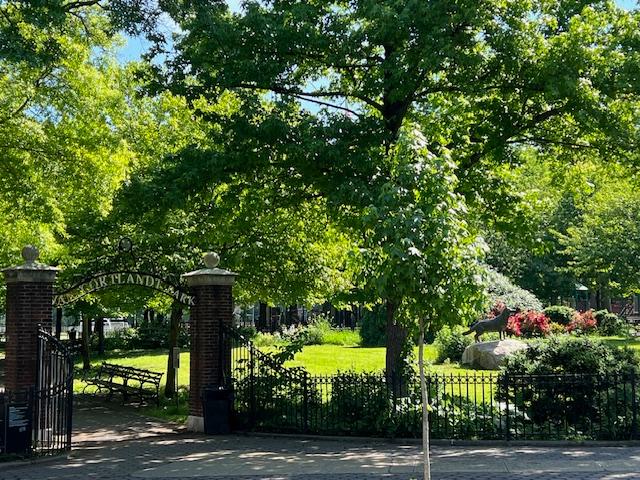
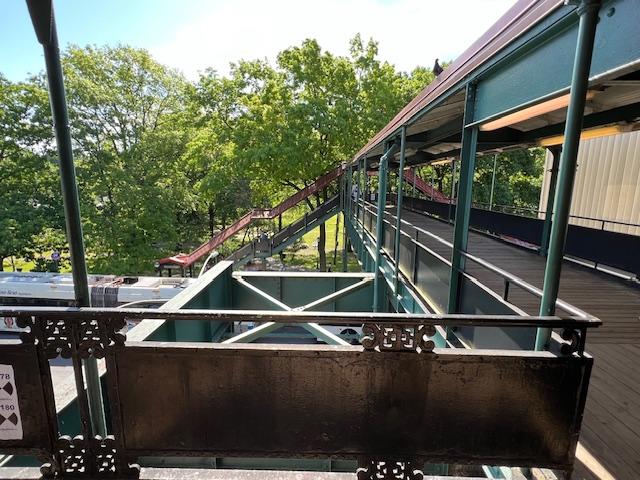
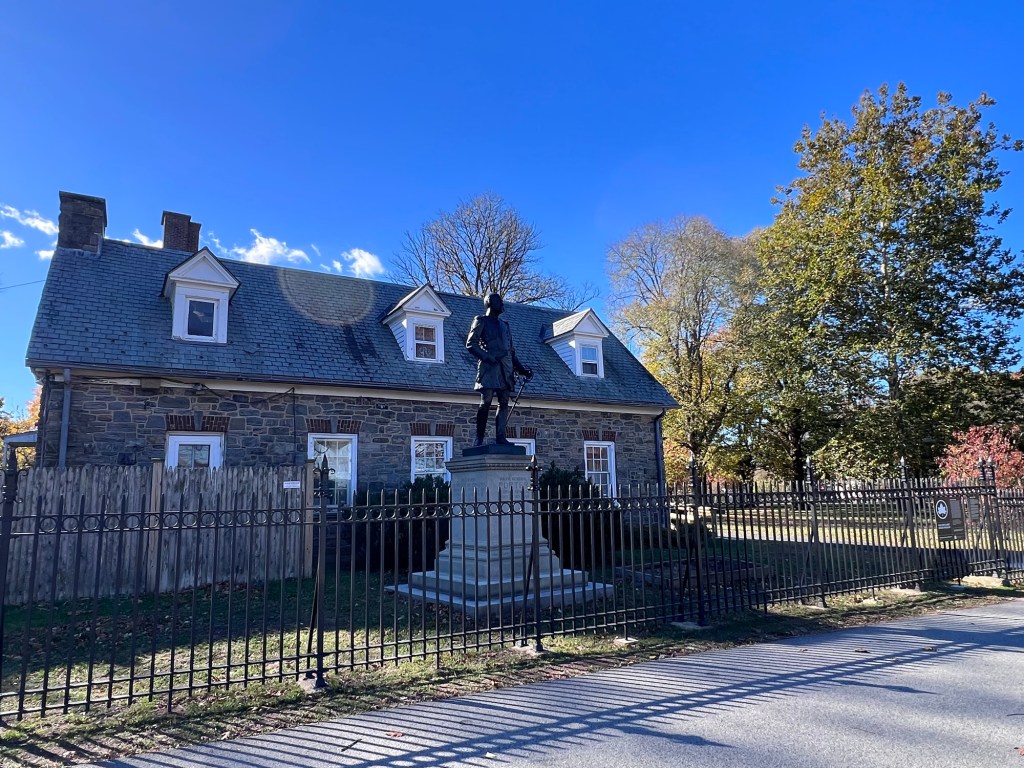
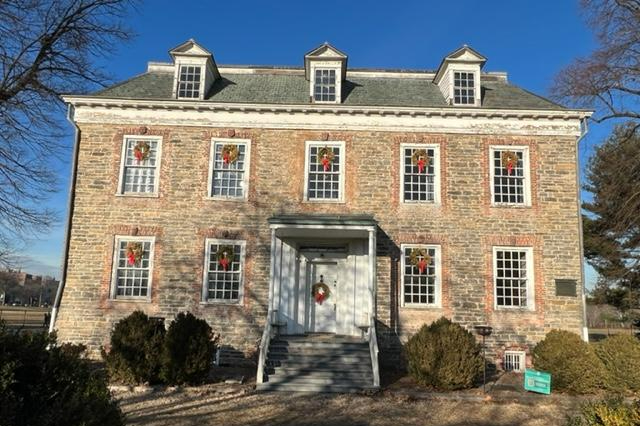
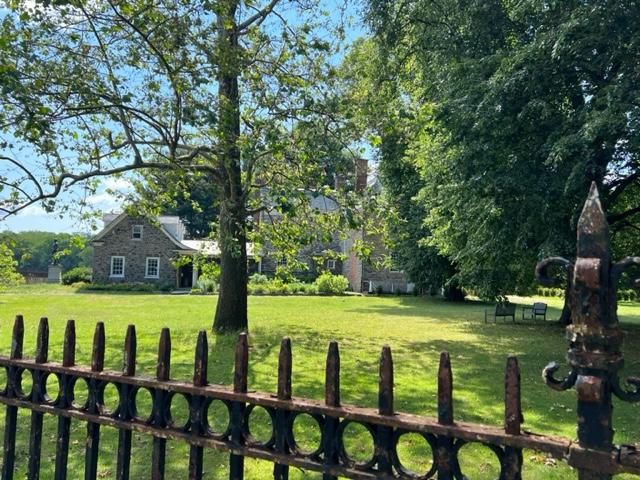
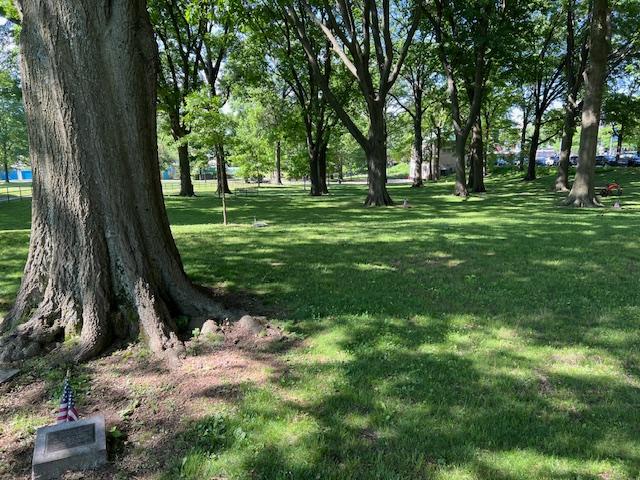
The entrance to Van Cortlandt Park in the Bronx at 242 Street in the Summer of 2025
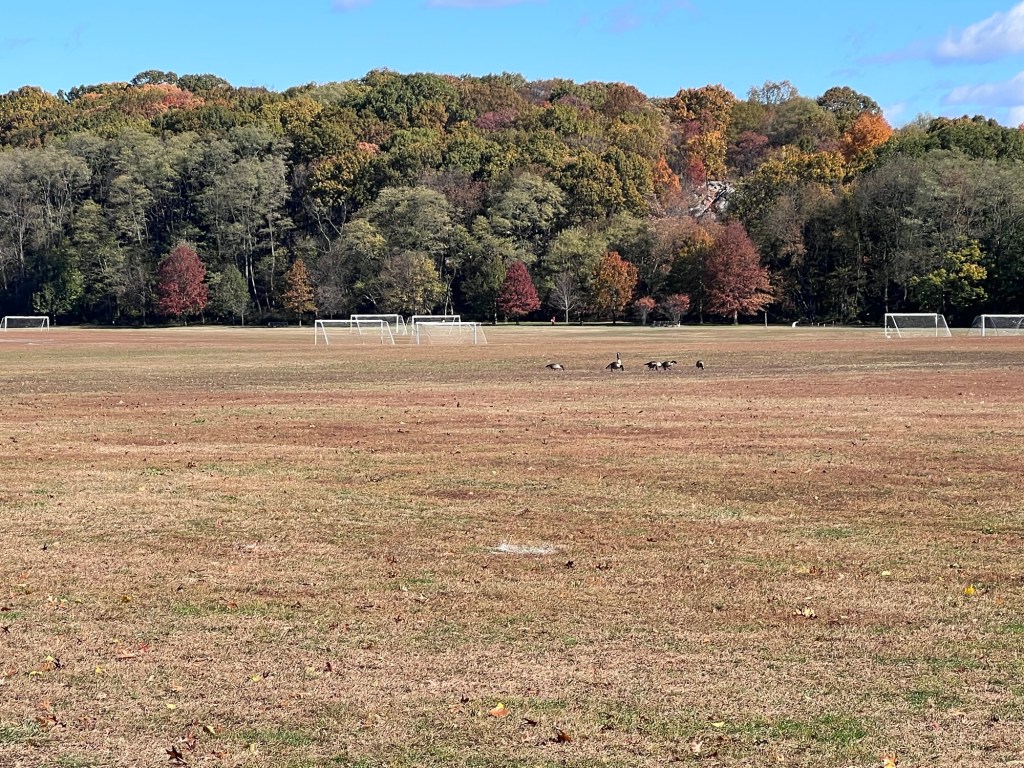
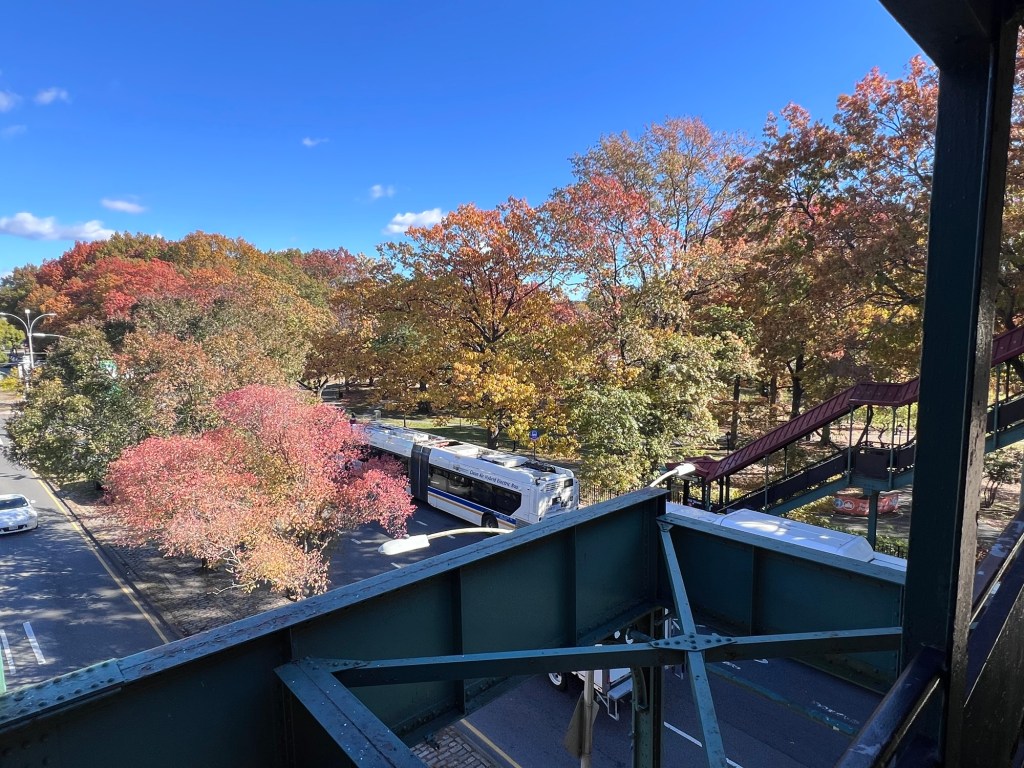
The entrance to the park during the Fall of 2025
I got to visit neighborhoods that I had not seen in about two to three years. The most striking thing I had discovered especially walking through Harlem and Washington Heights is how many of the old businesses I had either passed or had eaten at had closed. Just like the rest of the City, these areas are going through a lot of change and are being gentrified.
It seems like the college campus neighborhoods are leading the way especially around Columbia’s new campus above 125th Street and SUNY between 145th Street to 130th Street. The shifts in neighborhoods are changing very fast and more and more buildings are under scaffolding or being knocked down and replaced.
Since the walk down Broadway from 242nd Street to Bowling Green Park is so extensive, I will not go into the intense detail of historical sites and parks along the way. More detail can be found on my sister sights, VisitingaMuseum.com, DiningonaShoeStringinNYC@Wordpress.com and LittleShoponMainStreet@Wordpress.com. On these three sites I will discuss more on each site and a more detailed history. More information on each neighborhood can be found section by section of Manhattan on my blog, MywalkinManhattan.com. I have added as many links to the information as possible.
With the COVID-1 pandemic going on especially the months from March to July 2020 when the City started to reopen for business, I wanted to see how Manhattan has changed in just six months and the findings were pretty shocking. It was like someone put Manhattan into a time machine and brought us back to 1989 or 1990. I felt like I went through a time warp.
Now New York City admittingly was having its problems with the cost of apartments and rents on stores but this is something different. The mood of the City has changed from optimism to walking the streets being scared again. I have not seen this since the Dinkins’s Administration when it was dangerous to walk the streets during the day and night and all the racial problems in Crown Heights. It just seems that the progress of the last thirty years has been wiped out in a few months. I was pretty shocked at the changed I saw while walking down Broadway.
I also have been tired of the controversy with statues all over the United States, so I decided to take a better look at all the public artworks along Broadway and feature in more detail the statues, their meaning and their artists. We should not be wiping out our history but have dialogue about it.
During the recent 2021 walk, I have noticed that things are going back to normal with the exception of a lot of businesses closing over the last year, but construction still persists, and renovations of older historic buildings have gained steam as well as new restaurants opening in place of the older ones. New York City is again reinventing itself.
During the walk in 2022, almost a year later, I found Manhattan bouncing back in its own way. Older stores and restaurants have been replaced by new ones and businesses that were able to hold on during the pandemic are open for business much to the delight of the local residents and tourists who are slowly making their way back to New York City.
I also noticed on my walk in June 2022, the number of people in Manhattan has increased. The sidewalks and tourist spots were much busier than before. Even the restaurants were getting crowded. People are up and about with very few masks in site. The vaccines are obviously working, and people are going about their lives again.
In the Spring of 2024, I took the walk again a few weeks after the official walking of the “The Great Saunter” so I had a lot of practice time in. The walk took nine and a half hours this time due to two meal breaks where I had to charge the phone from all the pictures I was taking. It was the perfect day to take the walk with a 71 degree start.
In the Summer of 2025, it was a rather humid day with a 81 degree start and a 90 degree finish. The humid was not bad that day but it did get hot by the time I got to West 80th Street and I had to walk in the shade whereever I could.
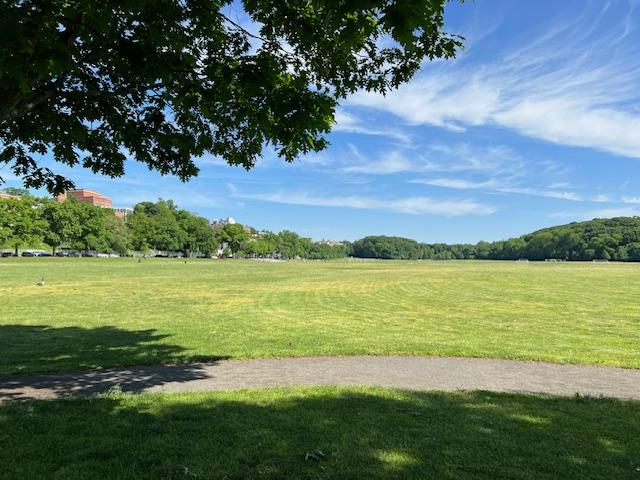
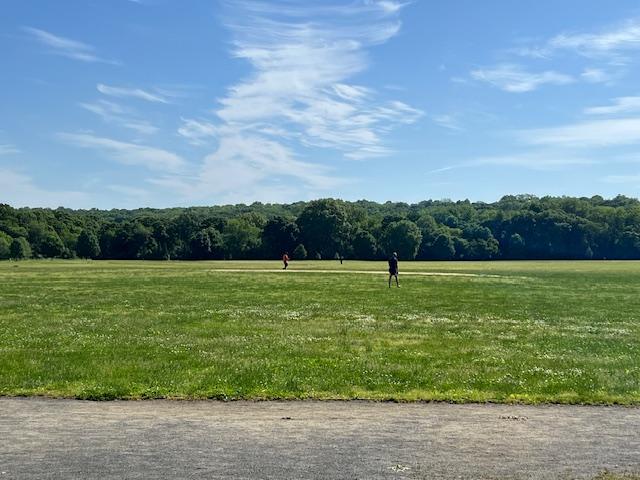
The start of the walk in Van Cortlandt Park, the old Van Cortlandt estate in the Bronx.
The History of Broadway:
Broadway itself as an Avenue has a very interesting history. Broadway is the English-language literal translation of the Dutch name, ‘Brede-wey’. Broadway was originally the Wickquasgeck Trail that was carved into brush of Manhattan by the Native American inhabitants. ‘Wickquasgeck means “birch-bark country” in Algonquian language. The trail originally snaked through swamps and rocks along the length of Manhattan Island (Wiki).
Manhattan in Colonial Times
When the Dutch arrived, the trail became the main road through the island with the colony of Nieuw Amsterdam at the southern tip. The word ‘Brede-wey’ was translated when the British took possession of the island, they changed the name to ‘Broadway’. Known in the past as ‘Broadway Street’, ‘Kingsbridge Road’ and ‘Bloomingdale Road’ in parts around the island, it officially became ‘Broadway’ in 1899 when the whole street from the top of Manhattan to the bottom was named for one long road (Wiki).
The entire length of Broadway through Manhattan from Inwood to the Battery is 13 miles and the length in the Bronx is 2 miles. There is an additional 18 miles that runs through Westchester County all the way to Sleepy Hollow, NY where it ends. I just concentrated on the subway route from the 242nd Street Subway exit to the Bowling Green at the tip of Manhattan.
The walks down Broadway:
I started my mornings in 2019 and 2020 at 5:30am getting up and stretching. The sun shined in my room and that was a good start to the day. The weather was going to be in the high 70’s with a touch of clouds and the weather really cooperated. In 2019, I got into New York City at 8:15am and started my day with breakfast at my favorite deli in the Garment District, 9th Avenue AM-PM Deli (or Juniors AM-PM Deli as it also known by (See reviews on TripAdvisor and DiningonaShoeStringinNYC@Wordpress.com). In 2023, having just come back from Europe, I was not sure I was ready for the walk. It ended up being no problem. I got to the Van Cortlandt House by 10:00am.
What I love about 9th Avenue AM-PM Deli is the generous portions at a very fair price. I started one day with a French Toast platter ($4.99). I had four very nice sized slices of French Toast that were nicely caramelized and just a hint of cinnamon. On my second time on the walk, I ate here again ordering one of their Hungry Man Hero’s ($9.75), which is three eggs, potatoes, ham, bacon and sausage on a soft hero roll with mayo. Laden with calories yes but taste wise wonderful. It had all the calories and carbs for a 15-mile walk.
Their Bacon, Egg and Cheese on a hero roll is one of the best in the City.
It is always nice to grab one of the stools and eat by the window and watch the world go by. Just remember to get here early before all the construction workers from the Hudson Yards come over for their half hour union break. Then it really gets busy.
After breakfast, it was off to Times Square to take the Number One Subway up to 242nd Street-Van Cortland Park stop to start the walk. Manhattan actually starts lower than that but on such a nice day, I thought it would be nice to start at the very top of the subway route.
On the trip to Van Cortlandt Park in 2020, the subway was practically empty. There were about five of us on the car and the funny thing was that people sat near one another on an empty car. So much for socially distancing from people. They all sat near me! In 2022, the subway was empty of everyone, and I travelled alone to the last stop. In 2023, being Father’s Day, I found the whole city quiet and there was just a few of us on the train. In 2024, all the colleges had let out for the summer, but the schools were still in session with Memorial Day being next week and the City seemed quiet during the day (with the exception of Times Square). In 2025, I had to change subways to take the bus because of repairs on the subway so I got a late start that morning. No matter, the weather cooperated and the trip went by well.
The first stop on this journey is the 242nd Street stop at the end of the Number One line
Starting the walk in the same position in Fall 2025
Interesting street art on the subway
The Summer of 2026 the views from the subway platform were breathtaking in the park. The views from the subway platform at the Van Cortlandt Park exit were beautiful with everything in full bloom.
Looking North on the subway platform in 2026
Looking from the subway in 2026
Looking at the start from the subway platform in 2026
I had not been to the Van Cortlandt House Museum (See VisitingaMuseum.com and TripAdvisor for my reviews) since right after the holidays to see the house decorations and not seen the park ever in the warmer months.
I got to my destination at 9:00am and had to go to the bathroom. What is nice about Van Cortlandt Park is that the public bathrooms are right near the subway exit and there is another set right next to the Van Cortlandt House Museum so that is covered when you enter the neighborhood.
The Van Cortlandt Manor House in the late Spring
Make sure to take a bathroom break now because the options get slimmer until about 207th Street at the Ann Loftus Playground (and in 2022 those bathrooms are closed for renovations). The bathrooms at the park were even cleaner in 2020 with new park regulations for COVID-19 so the hand sanitizers were all full and the hand blowers were fixed. That was nice. Both the bathrooms at the 207th Street stop and at the manor house are really well maintained.
The Van Cortlandt House in the Fall of 202
I started my adventure by walking into the park and visiting the museum grounds. Van Cortlandt Park is a beautiful park that was once the Van Cortlandt estate. The last time I had been here was to tour the house for Christmas and to see the decorations.
The Van Cortlandt Manor at Christmas time in 2022
Van Cortlandt Manor gardens and house in 2022
The house was closed when I got to the park (in the summer months it does not open until 11:00am), so I just walked around the grounds to stretch a bit and admire the foliage. It was nice to see the trees with leaves on them and the gardens surrounding the house were in full bloom (the house is open-Check the website for hours).
Van Cortlandt Park and the Manor House in the Spring of 2024.
Don’t miss when exiting the park to stop and see Memorial Grove, a small section of the park dedicated to 21 servicemen who gave their lives in World War. There are twenty-one oak trees that were planted by the graves which are now fully grown. It is a somber but quiet place to reflect on what these men gave for our country.
I always start my walk at the statue of General Josiah Porter, a Civil War hero who is memorialized just outside the entrance to Van Cortlandt Mansion. Every year I salute him before I start the walk. I consider him my guardian angel on this walk. I swear in 2024, I could have sworn that the statue moved his head in my direction when I saluted him. In 2025, I saluted the General again for good luck on the walk.
This elegant statue was created by artist William Clarke Nobel in 1902. He was commissioned by the National Guard Association of New York to create the statue and it was placed in front of the parade grounds inside Van Cortlandt Park.
General Porter lead the 22nd Regiment of the National Guard of New York during the Civil War. His contributions to the war effort helped the North win. After the war, he had been promoted to Colonel in 1869 and then was promoted again 1886 to Major General, the highest-ranking position in the New York National Guard (NYCParks.org).
General Josiah Porter in front of the Van Cortlandt Mansion
This is the reason why I started at the Van Cortlandt Mansion. To the see the condition of statues along the route of Broadway. There are so many historical monuments on the way down that I wanted to note them in the updated blog. With all these idiots knocking down statues all over the country, New York City has not seen much of this. I am sure that art historians and the police are just waiting to pounce on these people.
In 2025, Van Cortlandt Park was just passing its peak in foliage and the park was spectacular to look at from all aspects.
Van Cortlandt Park in the Fall of 2025
Van Cortlandt Park in the Fall
Van Cortlandt Park in the Fall
The park in the Fall when the leaves change colors
When visiting the park in the Summer of 2026, it was a different story with lush greens with all the rain we had recently. It may have been September but it was still just near the end of the Summer.
Van Cortlandt Park in the Summer of 2026
Van Cortlandt Park at the end of the Summer in 2026
Once I left the park, I started the walk on the west side of Broadway and the plan was to walk the west side the first day and then the east side the second time so that I could see the buildings along the way and see what restaurants had opened, closed and what looked interesting. Plus, where to find public bathrooms along the way. This was the interesting part of the walk was trying to find bathrooms when you needed them.
Since I have visited most of the neighborhoods already from 59th Street up to the tip of Inwood and wrote about historical sites, buildings, gardens and museums that I have visited along the way in other blogs, I won’t be mentioning these in as much detail as you can see them in other entries.
*I will refer to the other sites DiningonaShoeStringinNYC@Wordpress.com, LittleShoponMainStreet@Wordpress.com, VisitingaMuseum.com and other entries of MywalkinManhattan.com for more details to read on each neighborhood.
Also, to make the walk more enjoyable and include all the wonderful places to visit and see along the way, I will be blending many days of walks down Broadway experiences into one blog so I can make stopping points that visitors should take time to see. The walks took just over eight hours and please watch the humidity. There was a big difference doing this walk in 70-degree weather versus 85-degree weather with humidity. You should also give yourself stopping time for bathroom breaks and time to rest in some of the small parks along the way.
I needed more liquids in me and more time to sit down. Suggestion after four trips down this route is two water bottles frozen the night before. This way they melt on route, and you always have cold water until you hit the next park. This makes all the walking easier. Still, it was great exercise, and you will never be bored.
When I passed the entrance of Van Cortlandt Park by Van Cortlandt Avenue, another statue at the entrance of the park caught my eye. It was of a coyote guarding the front entrance. It seems that coyotes were wild back then and are still being seen today in the park system.
The statue known as “Major Coyote” is a symbol of coyote sightings in the park as late as 1995. This statue guards the main entrance and gardens of the park.
Once I left Van Cortlandt Park, I walked through Twin Oaks Square, a small park outside the park which is a nicely landscaped. It is picturesque and looking at from the street gives a beautiful entrance way to the park.
Twin Oaks Triangle
The Twin Oaks Triangle in the Fall of 2025
I continued walking down through the commercial district of the Bronx along the Broadway corridor which is loaded with chain stores and malls of all sorts. So much for people saying the Bronx is dead. There was so much shopping going on that you never had to leave for the suburbs to find a chain store. This part of the walk was still vibrant proving that the chain stores still have the staying power. Even during COVID and when the City reopened, these areas the stores remained open.
At each subway stop station I did notice clusters of small family run businesses and here you can find some interesting restaurants and pizzerias. There are a lot of family run bakeries as well but none that stood out. The fact that the area was still so vibrant in 2020 showed the resilience of the area.
As I was leaving the Bronx on the way to Marble Hill, I noticed a lot more sidewalk and street art all around the neighborhood. Here is some that stood out to me on my 2025 walk.
Sidewalk art on Broadway
Sidewalk art on Broadway
Sidewalk art on Broadway
Street art on Broadway
Street art on Broadway
When you reach the edge of Marble Hill (the Northern most part of Manhattan), you will pass the Marble Hill Houses. I had more whistles and yells when I passed the projects on my many trips in the neighborhood. I am not sure what about me screams cop.
The Marble Hill Houses in the Summer of 2023
The Marble Hill Houses in the Fall of 2025
Even so as I walked in the front walks of the houses, I noticed that the residents were growing gardens that were part of the ‘Outer Seed Shadow Project’, a program of growing crops on the project’s lawns in raised beds. I thought it will be interesting when everything gets harvested. Some of the plants were fully grown when I visited this early in the season.
The Outer Seed Shadow Project at the Marble Hill Houses
For breakfast the morning of my June 2025 walk down Broadway, I revisited Rosarina Bakery at 5215 Broadway. I have been coming here since the first day of the walking project in 2015 and the baked goods here can be hit or miss. Sometimes they are really delicious and sometimes that can be hard. This time around I had one of their Vanilla Doughnuts and it was really good. It was cake like and sweet with a thick Vanilla icing. Enough sugar to start the walk.
After enjoying the sweet treat, it was off for the walk down Broadway crossing over the bridge from Marble Hill to the Island of Manhattan. I stopped at the Columbia Campus to look at the boathouse and admire the parks. One a beautiful day in the summer, there is nothing like the Inwood Parks.
The crossing from Marble Hill into Inwood with Muscato March in the background.
The foliage was especially beautiful in the Fall of 2025. I passed the bridge, and the views were just spectacular in the morning.
The cross in the Fall of 2025
The cross in the Fall of 2025
It was when you will cross the bridge at 225th Street in the Bronx to the tip of Manhattan in Inwood is where it all starts to change as you enter the northern Columbia University campus and pass the football stadium.
The Columbia University ‘C’ when you exit Marble Hill and go over the bridge to the Island of Manhattan in the Summer of 2024
The same view in the Fall of 2025
The interesting part of this part of Inwood is that on tip of Manhattan is nothing at the end of it. Here we have bus stations, garage trucks and delivery vans. This is one of the most commercial parts of Manhattan I have ever seen outside parts of the Garment District. The area has been rezoned so there will be a lot more changes up here in the future. Once you cross the bridge from the Bronx, you feel the difference in the neighborhoods depending on what side of Broadway you are on.
Crossing the bridge means that you have entered Columbia University territory and to the right is Columbia Stadium which is pretty much shut down this time of year. There were some football players on the field, but the Ivy League season starts later so it was not that busy. On my second trip down the east side of Broadway, I made two pit stops in Inwood past the stadium that I think tourists and residents alike should see.
Columbia Stadium at 533 West 218th Street was locked for the summer but there was a Summer Camp going on
During my trip pass the college in 2020, everything is locked tight. Columbia University’s football season I believe has been cancelled. In 2022, the field was being prepared for the football season and some students were out on the field. In 2023, again the field was being prepared for the upcoming football season (Cornell will be playing them home in 2023).
Please read my blog on the Columbia-Cornell rivalry and the football games at the stadium:
Still there are a lot of sites to see around Inwood Hill Park. The first is Muscota Marsh at 575 West 218th Street (See review on VisitingaMuseum.com) right behind Columbia Stadium that faces the shores of Marble Hill. This interesting marsh is one of the few in the City and one of the only ones in Manhattan that I know of, and it is a great place to just sit and relax.
The marsh takes on a different look in the Fall of 2025 with all the leaves changing colors and the skies so clear. On a warm Fall Day, the park looked amazing.
Muscato Marsh
Muscato Marsh
Muscato Marsh
Muscato Marsh
The views of the marsh and Inwood Park in the Fall of 2025
The Muscota Marsh is right next to the Columbia Boathouse where their rowing team set their boats off and right next to the Columbia Football stadium. On a sunny morning or afternoon, it is a nice place to just sit back and watch the boaters and people on jet ski’s zoom by. It is nice to just sit by the flowers and relax.
There were a lot of local residents relaxing in the park on all afternoons that I visited. Each year I see that more people have discovered this little hidden gem. In 2025, it was my stop off point to cool down for a bit.
Muscota Marsh is right next to the Columbia Boathouse
In 2026, the park is where I ate my second breakfast of the day. By the time I got into the City and started the walk, I reached the football field and I got hungry again. So I decided to stop here for a bit and relax and enjoy the beautiful weather.
Muscato Marsh in the Summer of 2026
Muscato Marsh flowers were in full bloom that afternoon
The birds were watching me through the rocks and weeds
If you want to walk a little further into Inwood Park, visit the Shorakkopoch Rock the place where it has been said that Peter Minuit had bought the island of Manhattan from the Native Americans. This is where a three-hundred-year-old tulip tree had once stood, and legend stated that the event had taken place under a tulip tree in clearing on the island. No one is too sure if this is the right place but to really understand the history of Manhattan. this is the spot where to begin.
Shorakkopoch Rock the site of the purchase of Manhattan Island by Peter Minuit
On the way of exploring Broadway in 2019, I followed the path of artwork by artist Nicolas Holiber and his bird sculptures that lined Broadway similar to the art by Joy Brown and Bernadette Myers. So, traveling from 165th Street to 59th Street searching for bird artwork. There were still a few of the sculptures still up during the Summer of 2020 but no one seemed to notice them. Still, that was the fun of walking down Broadway, trying to search for the sculptures to find them all.
As I left Inwood Park, I watched as kids participating in summer camps were playing games and running around in 2019. Parts of the park were closed to reseeding so you can see that money was being put into the park and renovations were starting. When I did the Broadway walk in 2021, the lawns had been reseeded and green with lots of kids running all over the place.
As I walked down Broadway the few times, I have visited the area since my initial walk in 2015, I have noticed so many businesses open and close which is almost an epidemic all over Manhattan. Broadway for almost the entire length is no different.
In 2021, I had read an article about Borough President Gale Brewer walking the length of Broadway in Manhattan and saying that about 200 store fronts were empty. This is not good and is showing what is going on not just in the economy but how the landlords are beginning to gouge small businesses with rent increases. So many small Dominican businesses I have watched close to be replaced by Hipster restaurants who are also not making it with these rent increases.
In the Summer of 2020, what a difference a year makes. The COVID-19 pandemic and the stalling of the economy has changed the neighborhoods along Broadway even more. I have never so many businesses close along the route both Mom & Pop and chain stores alike. It looks almost like the Upper West Side of the early 1990’s with all the empty store fronts and a lot more homeless milling around the area.
In the Summer of 2021, things were opening back up and changing. On the walk in 2022, you can see that many businesses have reopened, and new restaurants and shops are opening in many of the closed spaces. Still there are still quite a few vacancies between West 96th and West 72nd Streets.
On the Father’s Day walk in 2023, the whole neighborhood was starting to come back to life. New York City especially Manhattan was slowly coming back. Maybe not to 2019 but was getting better. The storefronts were filling up all over Broadway. On both walks in 2024, Manhattan was back in business and the empty storefronts were starting to fill up again.
When I walked down Broadway in the Summer of 2025, it was as if COVID never existed. The shopping areas and restaurants were back in full swing, everything was open. When I started the walk up in Van Cortlandt Park, groups of men were playing cricket in the ball fields and lots of people jogging and walking their dogs. It was just another day but the park was really busy early in the morning. The walk down Broadway has seen new businesses open and a vibrant shopping district in each neighborhood.
Still there are many businesses that are thriving along the Broadway corridor and a lot of great restaurants to stop and visit along the way. Even after a big breakfast, I needed to take snack breaks along the way and the restaurants in the Washington Heights area are reasonable and have great travel food.
My first stop after visiting the Muscota Marsh was Twin Donut at 5099 Broadway (permanently closed July 2021 and still sitting empty in 2022 and 2023) for a donut and a bathroom break. You will need to know which public bathrooms are good along the way and for the price of a donut it was well worth the visit. Their donuts are around a $1.75 depending on the type but go for one of their jelly or custard filled. They are really good. This is one of the first places I used to visit during the Cornell/Columbia Football games.
Rumor has it by 2021, it will turn into a residential building. In the Summer of 2022, the building is still there but is long closed. They have not started construction on the residential tower that was supposed to go there. In 2023, the building was behind fencing and nothing been done. In 2025, the building still sits there awaiting development.
Twin Donut was formerly at 5099 Broadway (Closed in 2021-it still sits empty in 2025)
As I passed Isham Park, which is a beautiful Inwood Park with lots of rock formations, I stopped to look at the Church of the Good Shepard at 4967 Broadway. I had never really noticed it on previous walks, but I had walked around the church when I visited the Farmer’s Market two months earlier when I walked “The Great Saunter”.
The church was built in 1930 and designed by architect Paul Monaghan in the Romanesque style. The church is a combination of limestone and granite and has the most beautiful gardens planted that were in full bloom on the corner of Isham Street and Broadway. During the warmer months, there is a terrific Farmers Market that lines Isham Street by the park with all sorts of fruits, vegetables, baked goods and flowers to buy.
As you are traveling down Broadway, take some time to walk the side streets into the heart of ‘Little Dominica’, Inwood’s Dominican community of stores, restaurants and bakeries. The first stop should be walking down 207th Street to the subway stop on 10th Avenue. While the street is full of all sorts of restaurants, stop at the street vendors for fresh juice and pastilitos, the Dominican version of the empanadas.
These usually run about $2.00. There are all sorts of street vendors selling their wares along the sidewalks. On my second trip down I stopped at a vendor for fresh chicken pastilitos and there is nothing like them when they are just out of the fryer.
Fresh Pastilitos at the stands in the shopping district at 207th Street to Tenth Avenue
As I traveled through Inwood, I stopped at the Dyckman Family Farmhouse (See reviews on TripAdvisor and VisitingaMuseum.com), which is the oldest home on the Island of Manhattan. The Dyckman Farmhouse was built in 1785 and was once part of a 250 acre that stretched to the tip of Inwood. The house now sits on a bluff overlooking Broadway and Washington Heights on about an acre of land.
The house is still impressive to walk through and when you have time, take the formal walking tour of the home and hear about the history of how the farm worked and about the Dyckman family (the site has now opened up for tours outside in 2022 and the house will open this summer).
As you pass the Dyckman House and walk south also take a side trip down Dyckman Avenue to visit more Dominican restaurants, bakeries and stores from Broadway to Nagle Avenue. There are some interesting places to have a snack but again check out the street vendors first especially on the weekends when the weather is nice. More people are out walking around.
Walking down Isham Park on the way to Ann Loftus Park offered more beautiful views of the foliage.
Broadway by 213th Street
Broadway by 212th Street
Broadway by Isham Park
Walking by Isham Park in the Summer of 2026
The Dykman House in 2025
In 2021, I stopped back at G’s Coffee Shop at 634 West 207th Street, one of my favorite places to eat when I am visiting The Cloisters. Their food is excellent and so reasonable.
In 2023, I had a Bacon, Egg and Cheese on a hero roll, and it carried me through walking through Washington Heights. Talk about a sandwich as it was stuffed with loads of eggs and bacon and had that nice buttery taste of the grill (see my reviews on DiningonaSheStringinNYC@Wordpress.com and TripAdvisor)
Their Bacon, Egg and Cheese is really good
In 2024, I had a Bacon and Cheese Omelet with Home Fries and Rye Toast that was wonderful.
The breakfast in 2024 was spectacular and gave me the energy of the 13 mile walk.
In 2023, I stopped at the Park Terrace Deli where I had the same sandwich. I love the Bacon, Egg and Cheese when I am doing this walk and it fills me up for the afternoon. Park Terrace Deli offers all sorts of breakfast and lunch sandwiches at very reasonable prices. Their hamburgers and cheeseburgers are excellent too.
I took my breakfast and ate at Muscota Marsh on the benches and just watched the water drift by on the river. What a beautiful morning to be outside. it is the nicest place for excellent views of the Hudson River.
Muscato Marsh was so pretty that morning
The Hudson River looms in the distance
The park in the summer of 2025
On my most recent walk down Broadway in the Summer of 2026, I stopped in for breakfast wanting to try one of their breakfast platters. I chose a Cheese Omelet with Cheddar Cheese.
The breakfast menu
The guy must have not been listening because I ordered a Cheddar cheese omelet and somehow got a Feta Cheese omelet. Not the same but still good.
My Broadway walk breakfast
The omelet was huge
It came with a mountain of spiced hash browns which were really good. I also should have gotten rye toast instead of wheat but it still made a good sandwich. So it was two breakfasts in one.
You have to make a sandwich with it for two breakfasts
Even though the order was screwed up, the food was still delicious and I tried something new. It was such a beautiful day, I took my breakfast down to Muscato Marsh down the road, ate outside and enjoyed both the weather and the views.
Talk about the best place to eat breakfast with those views
Balancing out this huge omelet outside
The one nice thing about eating meals in Muscato Marsh is the views on a beautiful, sunny afternoon. I enjoy just relaxing on a warm morning or afternoon and enjoying my meal as I watch the birds fly by or watching people boating in the river.
The shopping district on Broadway in Inwood is always changing with a selection of restaurants and shops constantly changing. You go from Spanish bodegas to fancy restaurants and then back again. I have been doing this walk for almost a decade and keep watching how the neighborhood keeps changing with the economy,
Shopping district in Inwood in 2026
Looking down Broadway to Fort Tyron Park in the Summer of 2026
Inwood Street art near 207th Street
Street art in Inwood
When you cross Dyckman Street, Ann Loftus Playground at 4746 Broadway (named after a local community leader) will be to the right and there are nice public bathrooms and water fountains here. There are also benches under shade trees to sit under and on a warm day, there are vendors selling Dominican ices for $2.00. Go for the mango/cherry or the rainbow. On a hot day, they are very refreshing (The Ann Loftus Playground is closed for renovations in the summer of 2022 and I ended up having my mango-cherry ice at 110th Street after lunch).
Ann Loftus Playground is part of the extensive Fort Tyron Park that runs from Riverside Drive to Broadway from Dyckman Street to 190th Street.
The park in the Fall of 2025 offered many different colors of red, gold, orange and still some green on the leaves. The walk through the park was beautiful.
Ann Loftus Park
An. Loftus Park
Ann Loftus Park
Sidewalk art by a creative child artist
Ann Loftus Park in the Fall
Ann Loftus Park in the beginning of the Fall
Ann loftus park
Fort Tryon Park in the Fall of 2025
If you want to take a walk through the park, not only are there beautiful views of the Hudson River along the stone paths but it leads up to The Cloisters Museum at 99 Margaret Corbin Drive which is part of the Metropolitan Museum of Art that features Medieval Art including the ‘Hunt of the Unicorn’ tapestries.
The park also has many colorful flower gardens and paths along the river with amazing views. There is a lot of walking up and down hills in Fort Tyron Park but trust me the views are breathtaking and the paths lead to amazing gardens and lawns. There are also nice public bathrooms to stop at here.
Fort Tryon Park
Fort Tryon Park Gardens
When I visited the park in 2020, the NYC Parks Department has issued new cleanliness standards for the bathrooms, so they were much cleaner on this trip with soap and working hand blowers. I would find this in all bathrooms along the route. In 2022, there is a complete renovation of the park and the bathrooms so be prepared to hold it in until you hit the McDonalds at 183rd Street. In 2025, I found the bathrooms needed a really good cleaning again.
Inside and outside of Ann Loftus Playground, there are always local merchants selling pastilitos and ices on hot days. The prices have gone up slightly since COVID but the food is always wonderful. Two freshly made pastilitos (Dominican Empanadas) and flavored ices are the best meal when you are on the go and trust me, those ices cool you down both inside and out.
At 207th Street, the pastelito vendor has been my favorite snack place while I begin my journey downtown. I eat these on a nice day in Ann Loftus Park.
For $2.00 they make the perfect snack and he makes these so good!
In Ann Loftus Park, there was also a vendor selling the Dominican ices and a rainbow ice on a hot day there is nothing like it.
As you leave the park and continue walking down Broadway, you will be in the heart of Washington Heights so on a warm day expect to see people sitting on the benches socializing, playing checkers and dominoes and listening to music. There is a lot of life on these sidewalks.
As you pass Fort Tyron Park, take a peek at the street artwork inside the 190th Street Station and take some time to walk the corridor. It is its own museum in constant change and the street taggers do some interesting work.
The subway station at 190th Street in 2024.
The decorations are quite interesting
The weather was hot and humid in the summer of 2025 and I tried to stay in the shade as much as possible. The walk down Broadway next to Ann Loftus Park was especially nice as the weather was clear and sunny and everything was in bloom in the park.
Broadway at West 212th Street
Ann Loftus Park and Fort Tryon Entrance
The playground in the summer of 2025
When walking into the streets between 187th and 160th, there are some wonderful Spanish restaurants catering mostly to Dominican families, but the menus are extensive, and the prices are reasonable. There are a lot of restaurants especially clustered around the George Washington Bridge Depot.
In 2020, I stopped for breakfast and lunch at the Chop Cheese Deli at 4234 Broadway. Having eaten breakfast at 5:45am, I was hungry for another breakfast and could not decide what I wanted to eat. So, I ordered both the Egg and Cheese on a roll ($2.95) and their signature Chopped Cheese on a roll ($4.95). Both were really good, but the Chopped Cheese should have had shredded lettuce not chopped lettuce, so it was a little soggy but still good. The deli’s prices are excellent and there is nothing over $10.00 in the hot food’s menu (In just three years they have expanded to four delis).
The Chopped Cheese on a roll here at Chopped Cheese Deli at 4234 Broadway is really good
I must have built up some appetite because I made on pit stop on the 2021 walk and wanted to revisit a few places from previous walks on 118th Street. My first stop was Papi’s Pizza at 1422 St. Nicholas Avenue. I had passed by here many times when walking Washington Heights and never got a chance to try it. The cheese slice was very good and really large. It made a nice addition to the sandwich I had just eaten. In 2023, they were closed for the day (the restaurant closed permanently at the end of 2023).
Papi’s Pizza at 1422 St. Nicholas Avenue (Closed December 2023)
I then stopped at Esmeraldo Bakery at 538 West 118 Street for something sweet to tide me over and I just love this bakery. There prices are not just reasonable, but the selection of interesting desserts is hard to come by. I love their guava pastries, their iced doughnuts and their glazed twists. I settled on a powder covered cream horn and it was delicious. Sweet and flaky with each bite.
The wonderful selection at Esmeraldo Bakery
In 2022, I stopped here again for a quick early lunch. I had a Ham and Cheese roll that just came out of the oven, and I had a Cinnamon Raisin Pinwheel was dessert. The Ham and Cheese roll was really good with chunks of ham and melted cheese in every bite. Esmeraldo’s is always a staple with me when I am in the neighborhood, and I love the quality of their baked goods.
In 2023, I was back again. I decided I needed something sweet after the breakfast sandwich and settled on an apple turnover and a sugar doughnut. The apple turnover needed some more apples inside, but the sugar doughnut was excellent. It was soft and sweet and loaded with granulated sugar. Each bite had an extra sweetness to it.
The sugar doughnuts at Esmeraldo Bakery are excellent
Esmeraldo’s Apple and Pineapple turnovers were delicious as well on my walk in 2024
New street art has shown up in Washington Heights and the artists are extremely talented. I love going in search for new murals that seem to go up every year.
Street Art in Washington Heights on 182nd Street
Street art in Washington Heights on 175th Street
Street art in Washington Heights
Street art in Washington Heights
The shopping district on Broadway at 180th Street
As you walk further down the shopping district there are better and reasonable restaurants. Three standouts that I highly recommend are La Dinastia at 4059 Broadway (at 171st Street) for Dominican Chinese food and 5 Star Estrella Bakery at 3861 Broadway (at 161st Street) for pastries, pastilitos and all sorts of hot snacks. George’s Pizza at 726 West 181st Street is also excellent.
The restaurant row around 181st Street has a nice selection of restaurants
The active shopping district on 181st Street is the heart of Little Dominica
181st Street decorated for the upcoming holiday season in the Fall of 2025
Washington Heights shopping district
Broadway in Washington Heights in the Fall of 2025
On the other side of West 181st Street in the Summer walk of 2025, I stopped at George’s Pizza at 726 181st Street. I had not been there for a while, and the pizza was still excellent and very reasonable.
My review on DiningonaShoeStringinNYC@Wordpress.com:
The inside of George’s Pizza
The pizza is amazing
Yum!
When you get to 172nd Street, La Dinastia has a reasonable lunch menu and I recommend having the Chicken Cracklings, a type of batter fried chicken patty with their Special Fried Rice which contains shrimp, sausage, eggs and vegetables (See review on TripAdvisor).
La Dinastia at 4059 Broadway
A lunch special here can run about $15.00 with a Coke and tip and you will be full for the rest of the afternoon. The nice part about the restaurant is that it has Chinese food with a Spanish influence with rice, beans and salads on some of the entrees.
The inside of La Dinestia during lunch time
Chicken Cracklings with Fried Rice
The lunch
Yum!
La Dinastia’s at 4059 Broadway’s Chicken Cracklings and Special Fried Rice lunch special
Before you leave this area, check out the former Coliseum Cinema on the corner of Broadway and 181st Street before they tear it down. It was built in 1920 as an old vaudeville theater and famous actors including the Marx Brothers and Harold Lloyd performed there. The building is slated for demolition due to its structure concerns and will be replaced by housing and a retail mall. In 2020, a church group is now using it.
The Coliseum Theater at 181st & Broadway has interesting detail work
Palace Theater in 2024. The details on the building are amazing.
I noticed that on my trip in 2020 that the shopping districts in Washington Heights have been devastated by the COVID-19 crisis. I saw a lot of closed and empty businesses in the 207th and 181st shopping districts and a lot of popular delis and stores have closed along the Broadway corridor of Washington Heights. This made the lines at the places that were still open even longer.
In 2022, when I took the walk down the 181st Street shopping corridor, I noticed that there were still some empty storefronts but not as many as two years ago. Some older restaurants have been replaced by chains and there is a new Chick fil A on the block. It seems that the chain stores have now discovered the shopping area so expect to see more changes. With the changes in the neighborhood’s demographics, I expect to see more chain stores here in the future. In 2025, many new Latino cuisine restaurants have opened to replace the ones that have closed and the chain restaurants have discovered the district as well. The areas population is changing with the shifts in the neighborhood.
There is a small park across from the Columbia Presbyterian Medical Center, Mitchell Square, at the corners of Broadway and St. Nichols Avenue at 168th Street, that features the Washington Heights-Inwood War Memorial by artist Gertrude Vanderbilt Whitney. It was dedicated in 1922 for members of the community who fought in WWI. I found it very touching. It features two soldiers assisting another wounded one.
Washington Heights-Inwood War Memorial by artist Gertrude Vanderbilt Whitney
Street art of birds on the store front of Broadway and West 167th Street (I could not figure out the name of the artist)
Also check out some of the Dominican bakeries in the area. 5 Star Estrella Bakery is near the corner of 161st Street and Broadway. Everything at the bakery is delicious and I have never had one bad thing to eat here (See reviews on DiningonaShoeStringinNYC@Wordpress.com and TripAdvisor).
Their chicken and beef pastilitos are cooked perfectly and stuff full of filling ($1,50), their doughnuts are light and slathered in thick icing ($1.00) and their cinnamon buns ($2.00) are the best. They are light, chewy and sugary. Another item that stands out is a type of potato croquette that is filled with meat ($1.50). If they are available, grab one. Totally delicious!
The Cinnamon Swirl pastry here is excellent
The lines in 2020 were the longest I have ever seen with about 15 people waiting outside for service. I had a Raisin Swirl doughnut ($2.00) and a chewy fried doughnut ($2.00) which I ate on the way down Broadway. Even in 2022, the lines were long and I was still stuffed from my earlier snack.
As you reach the small pocket park, the IIka Tanya Payan Park at 157th Street, you will come across the first piece of Broadway Art by artist Nicolas Holiber for his “Birds on Broadway” Audubon Sculpture Project exhibit which is a partnership he has with Broadway Mall Association, NYC Parks, NYC Audubon and the Gitler Gallery.
Ilka Tany Payan Park at Edward Morgan Place and Broadway
The park is named after the Dominican actress from the 1960’s and 70’s who later became an AIDS activist and Lawyer.
The park in the Summer of 2025
The park in the Fall of 2026
The park in the Fall of 2026
These interesting sculptures bring attention to birds’ species that are endangered by climate change. These birds are either native to New York or do a fly by when in season. They are made of 100% reclaimed or recycled wood (Nicolas Holiber website).
The Wood Duck by artist Nicolas Holiber (the sculpture is still up in 2020)
The first sculpture on the walk that I saw was the Wood Duck. It was an interesting piece that unfortunately was being walked on by a couple of kids that did not seem to know the significance of the work. These rustic pieces really do stand out though and I like the write ups with each one which gives a short story on each bird.
When I was walking through IIka Tanya Payan Park in 2022, there was a very strange looking sculpture that looked like a shell formation called “Gifting Angel” by artist Jon Isherwood for the project “Broadway Blooms: Jon Isherwood on Broadway”, part of the Broadway Mall Association project with eight sculptures along Broadway. This exhibition opened in 2020 and has been extended to July 2022.
The “Gifting Angel” sculpture by artist Jon Isherwood sits in IIka Tanya Payan Park in 2022
Mr. Isherwood is an English born American artist and a graduate of Canterbury College of Art in England and holds an MFA from Syracuse University. He has had exhibitions all over the world and is known for his public art and large sculptures.
Boricua College Campus where both museums are located
As you pass the sculpture and continue south to the right is the Audubon Terrace at 155th Street and Broadway, which is home to Boricua College, the Hispanic Society of America Museum (See reviews on TripAdvisor and VisitingaMuseum.com) which is currently closed for renovation and the American Academy of Arts & Letters (See review on TripAdvisor and VisitingaMuseum.com) which just recently closed and is only open twice a year to exhibitions. Both museums are only open at select times of the year, so you have to visit their websites for more information.
The American Academy of Arts & Letters at 633 West 155th Street
The inside of the museum in 2025 after the long renovation
Inside the Hispanic Society Museum in the summer of 2025
In 2021 when I revisited the college, the college was hosting the Latinx Diaspora exhibition with artwork and musical displays. Artists Danny Pegresso, Carla Torres, Dister Rondon and FEEGZ displayed their works outside the building in the courtyard.
The Latinx Diaspora Exhibition at the Hispanic Society Museum & Library
The exhibition displayed several works of art in galleries that spanned three buildings. I got to see many local artists display their work as well as seeing an exhibition on the progression of the musical “Hamilton” from local theater to the smash hit on Broadway. It was interesting to see how the show progressed. It also gave an interesting perspective on what is going on in the world by younger artists. The exhibition will be open until August 2021.
In June of 2022, there was an exhibition outside entitled “Art of Solidarity” by artist Andrea Arroyo. The exhibition touches on the themes of immigration, gender rights, love and peace, gun violence and environment crisis (Artist website).
Ms. Arroyo is known for her paintings, illustrations, public art and site-specific works and a noted lecturer, curator and speaker (Artist bio).
The college abuts the Trinity Church Cemetery that holds the graves of many prominent New Yorkers including John Jacob Astor IV and Mayor Ed Koch. It is interesting to walk along the paths of the cemetery during the day and look at the historic tombstones. When visiting the grave of Mayor Koch, be prepared to find lots of stones along the grave site as a sign of respect for the dead. Take some time out when visiting the cemetery to pay your respects to one of New York City’s greatest mayors.
As you pass the borders of 155th Street into Harlem there is a distinct change in the street life. It is a lot quieter when you reach the borders of Washington Heights and Harlem. There are less people on the sidewalks here. In Washington Heights, there is music on the sidewalks, families playing games and men debating issues. It is a lot quieter I noticed when you cross the 155th Street border between the neighborhoods.
The cemetery at the Church of the Intercession is the border of Washington Heights and Harlem.
The General Washington plaque on Broadway and 155th Street.
The entrance to the cemetery at 155th Street
Broadway in Washington Heights in the Fall of 2025
The cemetery at 155th Street
155th Street by the cemetery with a view of New Jersey
Another church I had not really taken a good glimpse at over the last few walks is the Church of the Intercession at 550 West 155th Street. This elegant church sits in front of the cemetery, holding guard on the gravesite.
The Church of the Intercession at 550 West 155th Street (Church Website)
The Church of the Intercession was founded in 1846 and the current building was built in 1915. It was designed by architect Bertram Grosvenor Goodhue from the firm of Cram, Goodhue & Ferguson and was designed in the Gothic Revival style with a combination of English Perpendicular style (Wiki).
As you past the church and the Trinity Cemetery, you enter the heart of Washington Heights though some would consider it upper Harlem. This part of the neighborhood was dealing with hyper gentrification before the pandemic started and I noticed that a lot of stores and restaurants were opening and closing before the pandemic. The closer you got to the CUNY campus that stretches from West 142nd Street to the border of West 129th Street, the businesses started to become more geared to the college students. That has since slowed, and a lot of bars have closed.
Street art a Bird on the building at 145th Street
There is also a difference in the types of restaurants and shopping as slowly CUNY is starting to spread its wings and more businesses catering to students and faculty are opening in this area. More pizzerias, wing shops and bakeries gearing to both the neighborhood and the college students have opened in the old businesses place since 2022. More and more businesses are behind brown paper so we will see in the next few months before college resumes in six weeks what comes out of it.
I kept following the path of Broadway artwork. The next stop was to see Nicolas Holiber’s Snowy Owl at 148th Street. This was one of the more whimsical pieces in the exhibit and was unique with its outlaying wings.
The Snowy Owl by artist Nicolas Holiber at 148th Street
Street art on Broadway
The Beeagloo artwork on West145th Street
My next stop for a snack was at Olga’s Pizza at 3409 Broadway (See review on TripAdvisor). Olga’s, I had just stumbled across as I had a craving for a slice and the pizza is delicious. The secret to a good pizza is a fresh tasting and well spiced sauce and Olga’s hits both marks on this. It is a little pricey at $2.50 a slice but she is catering to the CUNY students who venture from campus to the restaurants on Broadway for meals. I got to meet Olga herself in the pizzeria who was working alongside of her parents, and she seemed please that I liked her pizza so much (Olga’s Pizza is closed in 2020).
To the right of Olga’s just down the block is Montefiore Square Park, which is always a nice place to take a break and sit down to rest under the trees. It is a real mixture of neighborhood families, college students and teenagers who are eating at the local McDonald’s or one of the food trucks that line the park in the warmer months. Just north of the park at 139th Street is the third sculpture in the Nicolas Holiber exhibit, the Hooded Merganser.
The Hooded Merganser by artist Nicolas Holiber at 136th Street (still here in 2020)
Montefiore Square Park has since gone through a renovation closing off the Hamilton Place Road extension and bricking up the road to make it a pedestrian park. It is now full of small vendors and food carts catering to the people of the park but again the college students are moving into this area, and it is starting to change again.
One surprising thing I found at the corner of Broadway and 135th Street was a Pediatric office that housed in the front of it the Martinez Gallery at 3332 Broadway. The gallery features in the front waiting room an array of street art. This was interesting for a doctor’s office.
The Martinez Gallery at 3332 Broadway (Closed in 2025)
The inside artwork at the Martinez Gallery. Very unassuming doctor’s office (because of COVID the gallery looked closed to visitors and then closed permanently in the Summer of 2025)
Once you pass 135th Street, you enter the new extension of the Columbia University campus and because of the growth of the campus to this section of Harlem especially around the 125th Street corridor, it is changing fast. I have never seen so many new restaurants and shops going up right across the street from the Manhattanville Housing Projects. It is becoming a real extreme in this part of the neighborhood.
Passing the impressive 3333 Broadway on my way to the Columbia campus in the Summer of 2026.
In 2021, the campus is now stretching from the corner of 132nd Street with more new buildings under construction to the 125th Street shopping district. All around this area the housing is being renovated and newer stores catering to students are starting to open up. I walked the streets again on the campus and it is expanding to the Hudson River parks.
In 2022, most of the buildings have been finished and opened. New pocket parks have opened on this side of Broadway. More construction is going on as Columbia University marches northward to meet up with the CUNY campus.
Columbia University’s new Manhattanville campus that stretches from 125th to 132nd Streets
The new extension to Columbia is changing the neighborhood
The Manhattanville campus in 2024.
The one thing I can say about the new campus is that they have a study area that is open to the public where you can go to the bathroom and charge your phone which is very helpful. I will let you know that you have security all over the place watching what is going on.
The view of Old Broadway and the Manhattanville Housing in the Fall of 2025
I took a walk back down 125th Street to West Harlem Piers Park at Marginal Street which stretches up to 132nd Street. The park is one of the nicest to visit on a warm sunny afternoon and offers the coolest breezes and the most beautiful views of New Jersey. It is a nice place to take a break and just enjoy nature.
In 2020, this became my place of rest on this walk as well as a stopping point on “The Great Saunter” in May. The views are just spectacular in this small Hudson River Park and the breezes on a hot day will cool you down. It is just nice to sit and admire the views. I just like to admire the views of New Jersey and watch the boats go by.
West Harlem Piers Park between Marginal Street from 125th to 132nd Streets
As I made my way back down 125th Street, I came across the very much renovated St. Clair Rose Garden which sits just under the bridge at corner of 125th Street and Riverside Park. The last time I had seen the garden two years ago, it had been infested with weeds.
The St. Clair Rose Garden was fixed up during COVID and is now maintained
Ángel Toren is a contemporary artist known for his vibrant and thought-provoking street art. Hailing from Spain, Toren has garnered attention for his ability to blend traditional graffiti techniques with modern artistic elements. Toren’s art explores themes such as identity, social issues, and human emotions, often portraying these subjects through surreal and abstract imagery (Artist Bio).
Once you cross 125th Street on this part of Broadway, you enter Morningside Heights and the home of Columbia University. This part of 125th Street and Broadway has really changed since I started the walk of the island. There is a more established ‘Restaurant Row” that stretches from 125th Street to 122nd Street on Broadway that contains such restaurants as LaSalle Dumplings at 3141 Broadway (currently moving to West 113th Street as of this writing in 2020) and Bettolona at 3143 Broadway (Closed in January 2022) that I have tried in previous entries on this blog and check them out on my blog on Morningside Park. They are both excellent and I highly recommend them.
Bettolona at 3141 Broadway is where I spent my birthday lunch when visiting the neighborhood (and I just found out closed in January 2022-it was empty when I passed it)
As soon I arrived on the Columbia University campus at 125th Street the mood of Broadway changed again from the streets of Harlem to a collegiate atmosphere. Don’t miss a break at the Columbia University commons around 116th Street. It is a lot of fun when school is in session and even during these quiet times of the summer, there still is a lot of energy here. It is a nice place to gather your thoughts and relax.
What is also nice is all the food trucks outside the commons that cater to the Asian students. You can get fresh dumplings, pork pancakes, noodle dishes and fresh soups for very reasonable prices and you can relax in the commons on a nice day and enjoy your lunch (these were gone when school was not in session in 2020).
Right next to the campus on East 117th street is the third in Nicolas Holiber’s sculptures, the Common Goldeneye. This is one of the nicer locations for the work as there is plenty of seating in much less congested area of Broadway. You can sit back and just admire the work.
The Common Goldeneye by artist Nicolas Holiber at 117th Street
Don’t miss the beautiful Union Theological Seminary building at 3041 Broadway. This non-denominal Christian Seminary is affiliated to Columbia University. The building was finished in 1910 and was designed by the architectural firm Allen’s & Collins in the English Gothic Revival design (Wiki).
The Union Theological Seminary building at 3041 Broadway
After taking a break in the commons and watching the summer students reading and chatting amongst themselves or so involved in their cell phones that they would not look up at a zombie attack. Still, it is a nice place to take a break and relax on the stone benches. The commons is open to the public but with school out and many people out of the City, it was really quiet. I just like to find a shady spot and look at the buildings and let life pass by.
The Columbia University Commons is open and a nice place to relax
The Quad was going through a renovation when I visited
The Columbia Quad in the afternoon.
In 2024, the campus was padlocked down after the Pro-Palestinian protests and the campus was closed for the summer break. If you were not a Columbia student living on campus, you were not entering that campus. In 2025, you can no longer go into the Columbia Quad without a Columbia student ID and there is security all around the campus. The days of ‘just walking around campus’ are over!
The Columbia campus padlocked down in May of 2024 after the protests.
I headed back to Broadway to cross into the Upper West Side. It is amazing how everything between 125th and 110th have changed over the past few months and even from 110th to 100th Streets the changes have been constant in a twenty-year period. Businesses are opening and closing at a rapid rate and with the students gone from campus and may not come back for the Fall of 2020, it will hurt the area more. The locals though are filling the outdoor dining and making do with masks and all. In June of 2020, the masks were all but gone even indoors. In the summer of 2025, it was like it never existed but still you see some masks outside with older people.
The gardens by the older part of campus in the Summer of 2026
I needed a lunch break by the time I reached West 110 Street and spent some time searching for old restaurants on my DiningonaShoeStringinNYC@Wordpress.com blog to see if they were still open. Hunan Chens Kitchen, a tiny Chinese take-out place at 1003 Columbus Avenue A closed during the pandemic and is now empty. West Place Chinese Restaurant at 1288 Amsterdam Avenue A is still open but only for takeout and delivery. That’s when I stopped at Koronet Pizza at 2848 Broadway for lunch in 2022.
I was starved and needed one of their giant slices of pizza that takes up three plates. At $5.50 a slice, it is well worth the money. The slice could easily feed two people and even when you fold it, it is hard to maneuver but it is so good! The sauce is so well spiced, and it is loaded with cheese and was so fresh. It tasted like it just came out of the oven.
The giant slice at Koronet Pizza is well worth the $5.50 price tag (Yum!)
I just sat outside on the tables they set up and chopped away. God did that pizza hit the spot. This is the perfect college pizzeria, and I can see why this is their major location. They have two more in the City. It was just nice on a sunny day to sit back and watch the world go by.
Tom’s Restaurant in Morningside Heights at 2880 Broadway made famous by the TV show “Seinfeld”.
Before I left the edges of Columbia University, I found my ices lady at the corner of Broadway and West 110th Street. These Dominican women own the ices carts, and it is now $2.00 for small Mango-Raspberry ice but she loaded on the scoops for me, and I said a big “Thank you” in Spanish. I could tell she was happy that I was so happy. It was so sweet and cooled me down on a hot day’s walk.
The Columbia campus on Broadway
By West 120th Street in the Fall of 2025
When you need to take a break from the heat, Straus Park which is between 107th and 106th Streets. This shady and well landscaped little pocket park was name after Isidor and Ida Straus who were once the owners of Macy’s and died in the Titanic sinking. The park’s beautiful fountain is centered in the park with the statue “Memory” by artist Augustus Lukeman and architect Evarts Tracy who designed the statue and fountain and dedicated it in 1915.
The Statue “Memory” by Augustus Lukeman in Straus Park
Artist Augustus Lukeman was an American born artist from Virginia and raised in New York who studied at the National Academy of Design and Cooper Union with continued studies in Europe and at Columbia University. He was known for his historical monuments (Wiki).
There is a beautiful memorial to them in the park. Friends of the Park maintain it with the city so it is always beautifully planted. On a hot day, it is such a nice place to take a break and since The Friends of Straus Park maintain it, the gardens and statuary is always in perfect shape.
The Entrance to Straus Park and the Straus Park plaque
Look closely or you will miss it is the ‘Art for Art Sake’ dedication to Duke Ellington on the Broadway Island on West 106th Street. The work is done in tiles, and you have to look down to see the work as it on the bottom park of the cement island facing the bench. I guess most people miss this interesting piece of street art.
One of my favorite bakeries in Manhattan is located right near the park at West 105th Street and Broadway, Silver Moon Bakery at 2740 Broadway (See review on TripAdvisor and DiningonaShoeStringinNYC@Wordpress.com-Closed March 2025). I love coming here for all the creative pastries and buns that the bakery created, and I have the most delicious blueberry Danish ($3.50) and cinnamon bun ($3.25) for a snack.
Don’t be shy in this bakery and try several items. Everything I have ever ate there was wonderful. With so many businesses closing in the City, when I walked Broadway in 2020, the lines were out the door. People obviously needed comfort food in these troubling times. Even in 2022, the lines were still out the door, and I could not get in for a snack.
Silver Moon Bakery at 2740 Broadway (new location at 2664 Broadway called Silver Moon Bakery Buttercup)
The new bakery that just opened at 2664 Broadway (new owner and same staff)
Their delicious Crumuffin is what they are known for. It is a delight!
When I got to 103rd Street, I saw the next part of the Birds on Broadway exhibit with the Double Crested Cormorant that stood proud on the Broadway Island looking over the neighborhood.
The Double crested Cormorant by artist Nicolas Holiber at 103rd Street
In 2022, the sculpture was “Chances Wish” by artist Jon Isherwood at the 103rd Street stop
“Chances Wish” at Broadway and West 103rd Street
Another little pizzeria that you might miss is Cheesy Pizza at 2640 Broadway (See reviews on TripAdvisor and DiningonaShoeStringinNYC@Wordpress.com). The food is really reasonable and their personal pizza ($5.00) and pizza special (Two slices and a Coke for $5.00) are a real steal and their sauce is delicious and so well spiced (the restaurant is still open but with new owners and prices as of 2020 and in 2022 it got more expensive). They no longer have those wonderful reasonable lunch specials.
On the corner of West 103rd Street and Broadway is a beautifully detailed building at 203 West 103rd Street, the Edinboro Building. The apartment building was built in 1888 by architect E.L. Angell and the stone carvings and designs standout on all parts of the building (CityRealty/Voorhis-Architect paper).
The detail work on the entrance of 230 West 103 Street
When you finally cross over past West 100th Street, you enter the Upper West Side which has been extensively traveled on this blog. There are dozens of shops and restaurants that line Broadway on this stretch of Broadway and sadly a lot of empty store fronts. This seems to be an epidemic all over the City with landlords jacking up rents every month. It really is changing this stretch of Broadway. In 2020, the COVID-19 pandemic has not helped matters in this area as businesses are closing left and right.
At West 96th Street and Broadway is the next “Birds on Broadway” piece, the “Brant Goose”. This part of Broadway enters into the traditional boundaries of the Upper West Side and there are many changes along this stretch of Broadway as well. It was almost like the mood in 2020 harked back to 1989 or 1990 with the store closures and the homeless taking over the streets.
The Brant Goose at West 96th Street
Another interesting building located at West 85th and Broadway at 2350 Broadway is Bretton Hall which once was a residential hotel. The building was complete in 1903 by architect Harry B. Mulliken of Mulliken & Moeller and was designed in the Beaux Arts style. The detail work with its stone carvings is very elaborate with cornices and (Wiki/CityRealty).
When walking on Broadway in the West 80’s, don’t miss walking through Zabar’s at 2245 Broadway near 80th Street. It is fun to wander around the store and smell the aromas of cheese, olives, freshly baked breads and chocolate. Don’t miss their café at the corner of West 80th Street (See my reviews on TripAdvisor and DiningonaShoeStringinNYC@Wordpress.com). There is a nice assortment of pastries and soups at a reasonable price and on certain days they have specials that are reasonably price. They have the most delicious pastries and pan pizza.
In the summer of 2020, the café was closed because of the pandemic but the supermarket part was still open for business. In 2021, the Café has now reopened but only to outside dining and delivery. The once lively comradery of the customers has moved to the sidewalk tables. In 2022, the Zabar Cafe is open for business, but they still have the outdoor cocktail tables where you have to stand while eating your food.
Zabar’s Café is the original place where Zabar’s started at 2245 Broadway
The Zabar’s Cafe is one of my favorites for a nice snack.
You will also see the next sculpture by Nicolas Holiber at West 79th Street, the “American Brittern”, which stands majestically on Broadway.
“The American Brittern” by artist Nicolas Holiber at West 79th Street
Still when you reach the West 70’s there are many beautiful apartment buildings that I admired that were built at the turn of the last century when builders were trying to woo the wealthy in the late 1890’s to the early 1900’s. The area itself is going through building boom and is changing all the time. At West 79th Street, look to the Broadway Island again to see Nicolas Holiber’s “Scarlet Tanager” sculpture. These playful little birds are fun to look at.
The Scarlet Tanager by artist Nicolas Holiber at West 86th Street
Broadway has a series of churches that are really beautiful in design and in the details like the stonework and the stained-glass windows. One church that stands out is the First Baptist Church 265 West 79th Street. It was built between 1890-93 and was designed by architect George M. Keister. The large window facing Broadway depicts Christ as the center of the New Testament Church (Wiki).
Some of the apartment buildings are quite spectacular. The Apthorp Apartments at 2211 Broadway (that stretches back to Broadway) is one of the most beautiful, enclosed buildings with an elegant courtyard in the center. This building was built in 1908 and is the largest type of apartment of its kind in New York City. If you can take a peek inside the gates, it is worth it.
The next spectacular building was the Hotel Belleclaire. One of Manhattan’s oldest luxury hotels, Hotel Belleclaire debuted on the Upper West Side in 1903 with its Beaux-Arts architecture blended with Art Nouveau-Secessionist style. Designed by legendary architect Emery Roth, the building’s brick and limestone facade have been brilliantly restored to its original splendor, which have earned the Hotel Belleclaire its landmark status. Once home to writers Mark Twain and Maxim Gorky, as well as, a residence for Babe Ruth, Hotel Belleclaire continues its legacy of historic hospitality into the 21st century (Hotel Belleclaire website).
William Waldorf Astor hired architects Clinton and Russell to design the two southern towers of The Astor in 1901. In 1914, William Waldorf Astor hired Peabody, Wilson & Brown to design a third tower for The Astor. The third tower, completed within a year, is structurally and aesthetically similar to both original towers. All three wings are connected at the base and have gray brick facades above a limestone base (Wiki). The architectural firm of Pembrooke & Ives has done the renovations of the current building (Astor.com).
The Ansonia Apartments at 2109 Broadway is one of the biggest and grandest of the Victorian age apartment buildings on the Upper West Side. Built between 1899 and 1904 the outside of the building is studded with beautiful stonework, interesting torrents and a Mansard roof. Take time to walk around the building and admire the stonework.
The details at the top of the Ansonia. This looks like a confectionary.
The details of the Ansonia
The details on the Ansonia
Another building that stands out in the neighborhood is the Dorilton Apartments at 171 West 71st Street that was built in 1902. This elegant building is in the Beaux-Arts style and is another building that sets the tone for this part of the neighborhood.
The Dorilton just finished a multi-million dollar renovation and the building looks amazing. It was brought back to life.
The Dorilton Apartments at 171 West 71st Street
The outside of the Dorilton
The detail work of the windows at the Dorilton
The details around the windows at The Dorilton apartments
In the Summer of 2025, the Dorilton Apartments were done with the outside renovation and the building looks spectacular now. You can see all the stone details.
In the 2021 walk, I made it to Verdi Park on the corner of West 72nd Street and was able to relax. The small park has gone through a recent renovation and now has upscale umbrella cart businesses selling coffee and pastries. The park was named after Giuseppe Fortunino Francisco Verdi, one of the most famous composers in the late 1800’s (NYCParks.org).
I was able to relax for a bit and listen to a sax player play “New York New York”. It is a nice place to cool down and people watch as they race in and out of the subway.
Verdi Square Park between West 73rd to 72nd Streets (Guiseppe Verdi Statue)
The details on the Apple Savings Bank (the former Central Savings Bank Building.
The Apple Bank Building is another older building that has a lot of charm. Constructed as a branch of the Central Saving Bank, now Apple Bank, from 1926 to 1928, it occupies a trapezoidal city block bounded by 73rd Street to the south, Amsterdam Avenue to the east, 74th Street to the north, and Broadway to the west. The Apple Bank Building was designed by York & Sawyer in the Renaissance Revival and palazzo styles, patterned after an Italian Renaissance-style palazzo (Wiki).
This is where the Upper West Side has changed so much. This area has become so expensive, and the once notorious “Needle Park” Sherman Square is now a nicely landscaped park with a coffee vendor and young mothers with strollers. It is amazing how the City just keeps changing itself.
Sherman Square; the once “Needle Park” in the Fall of 2025
Right by the subway stop at West 72nd Street is the next sculpture the “Peregrine Falcon”.
“The Peregrine Falcon” at West 72nd Street
Once you pass the borders of West 72nd Street, you will begin to see the magic of former Parks Director and major City Planner, Robert Moses. In the mid-1960’s, the City decided the area was dilapidated and pretty much leveled the neighborhood to build the Lincoln Center complex and branches of the local colleges so you will see more modern architecture on the western side of Broadway.
The Van Dyke Apartment Building at 175 West 72nd Street embellishments
Both Harry Mulliken and Edgar Moeller graduated from Columbia University’s School of Architecture in 1895. Mulliken opened his own practice around the turn of the last century and in 1902 he and Moeller went into partnership as Mulliken & Moeller. The two specialized in apartment hotels like the Bretton Hall Hotel, the Hotel York, and the violet-colored Lucerne Hotel (Miller, Tom Landmark West).
On July 29, 1905 the Real Estate Record & Guide reported that Mulliken & Moeller, “are making revised plans for the 12-story 34-family apartment house” on the northeast corner of 72nd Street and Amsterdam Avenue for developers Ripley Realty Co. The Van Dyke, as it would be known, would have a near twin, the Severn, on the southeast corner of 73rd Street and Amsterdam, separated by a service alley (Miller, Tom Landmark West).
The entrance of 2020 Broadway is the only interesting part of the building but it is so beautiful.
This pre-war apartment building was built in 1901 and it now a rental building.
Interesting grill work on one of the renovated buildings
In the small park triangle park across from Lincoln Center there was a statue of opera singer Richard Tucker that I had never noticed in all my trips down Broadway. It sits in the middle of this small park with tables and chairs where people enjoy coffee and snacks on a warm sunny day.
The Richard Tucker statue in the small park across from Lincoln Center
Richard Tucker had started off as a Cantor who in 1945 made his operatic debut with the Metropolitan Opera, where he stayed on with the company until his passing in 1975. The bust of him by artist Milton Hebald that graces the park was donated to the park system by his wife, Sarah, in 1975.
By the time you get to West 67th Street, you will see Julliard School, some of the buildings in the Lincoln Center complex and then Lincoln Center itself between West 65th and West 62nd Streets. On a theater night, the complex is so full energy and it is always a nice trip to see the ballet, opera or the philharmonic. The groundbreaking for this complex was in 1959 with President Eisenhower present and the complex was developed between 1962 and 1966 with current renovations still occurring in 2005. Take time to walk the courtyard and admire the fountains and the artwork that are around the buildings.
While passing Lincoln Center, you will see Dante Park across the street and the stately Empire Hotel. Here in Dante Park which is named after the Italian Poet, Dante Alighieri.
The statue of Dante Alighieri in Dante Park with the Empire Hotel in the background in the summer.
The statue of Dante Alighieri was designed by artist Ettore Ximenes for the Dante Alighieri Society for the 50th Anniversary of Italian unification in 1912
Ettore Ximenes was an Italian born artist who studied at the Palermo Academy of Fine Arts and the Naples Academy. His works captured the themes of Realism and Neo-Renaissance. He was also known for his big, commissioned works.
Dante Park in the Summer of 2026
Dante Park in the Summer of 2026
This beautiful little pocket park sits across from Lincoln Center and has been a place to relax on my walks down Broadway. This is also the location of the last sculpture on the “Birds on Broadway” tour, the “Red Necked Grebe with Chicks”. This whimsical piece shows the mother grebe with her little ones on her back.
The Red Necked Grebe with Chicks by artist Nicolas Holiber at West 64th Street
The Empire Hotel sits right across from the park and Lincoln Center. These were some of the historical buildings. In 1889, a seven-story building rose from the ground that would later become The Empire Hotel. Herbert DuPuy purchased this building in 1908. In 1922, DuPuy decided to tear the original structure down and build a 15-story building. On December 5, 1923, The Empire Hotel opened with its iconic red neon signage reading “Hotel Empire” erected on the rooftop (Wiki).
During the 2020 walk down Broadway, Lincoln Center has been closed down for all performances for the rest of the 2020 season and not slated to open up until 2021. Because of the riots in the City in early June, the complex has been cordoned off and you can only walk through the complex to the fountain. It is surreal how empty this seems for a complex normally full of either arts patrons or tourists. Even the fountain in the middle of the complex was not at full capacity.
In 2021, things were still pretty quiet as the complex waited for the official opening date. In 2022, the Center is fully open for business but going through a renovation in the courtyard. I had seen a Christmas concert there in December 2021 with Kristin Chenoweth.
“Christmas with Kristin Chenoweth” concert in December 2021. She brought down the house with this song “Why couldn’t be Christmas Everyday?”
As you head down Broadway, you will reach the Time Warner Building with its upscale shops and restaurants and Columbus Circle with its impressive statue of Christopher Columbus and the soaring fountains that surround it. This is one of the best places in Manhattan to just sit back and relax and people watch. The statue was recently part of a controversy on statues of specific people and history and happily that seems to have gone away for now. This is because of the twenty police vans and high police presence on Columbus Circle.
In 2021, with the election long behind us there is still a pretty big police presence in this area. The guard fencing is still surrounding the park but at least now you can walk into the park with its elaborate fountains. It is a nice place to converse and relax. In 2022, the fountains are up and running but the barriers are still there. I don’t think anyone even notices the Christopher Columbus statue now.
The Time Warner Building in Columbus Circle is heavily guarded now
Since the Trump World Hotel and the famous statue of Christopher Columbus are located in the same spot, it is a lot more difficult to walk around here and the NYPD is on guard in this area of the city. In 2020, rioters have been tearing down statues of Christopher Columbus in parks across the nation so now monuments all over the United States have been protected.
Columbus Circle at West 59th Street
The famous statue of Christopher Columbus dedicated in Columbus Circle and the start of the annual Christopher Columbus Parade in Manhattan was designed by artist Gaetano Russo, the famous Italian artist for the 400 anniversary of the discovery of America in 1892. A procession from Little Italy to Columbus Circle of over 10,000 lined the streets for this gift from the Italian community to the City of New York (Wiki)
The statue of Christopher Columbus right next to the Time Life Building in the background
Gaetano Russo is an Italian born artist who studied at the Academia del Belle Arti whose works in historical sculpture were well known. The statue of Christopher Columbus in New York is one of the most famous of his works.
On the other side of the Columbus Circle when making the left is the Maine Monument by artist Attilio Piccirilli. The monument is a dedication to the victims of the USS Maine which was the navel disaster that started the Spanish American War. You really have to look at the details all around the statue for a full appreciation
The most interesting part of the statue is the stone figures that flank the front of the monument that are noted to be “The Antebellum State of Mind: Courage awaiting the flight of Peace and fortitude supporting the Feeble” which gives the meaning that peace still could have reigned before war was declared (Diane Durant article on the Maine Monument).
Attilio Piccirilli was an Italian born American artist who worked for his family’s company Piccirilli Brothers in the Bronx as a sculptor, stone carver and modeler. He is known for many historical monuments.
The Globe Sculpture by artist Kim Brandell
Artist Kim Brandell
Mr. Brandell is an American artist with 50 years in the art field.
This statue hides in the courtyard of Trump World Hotel
As you pass Columbus Circle and enter into Midtown Manhattan, notice to the south the Museum of Art & Design at 2 Columbus Circle. This innovative little museum has the top floors of the building has a interesting exhibition of “Punk Rock” art and music going on right now. (See my write up on it on VisitingaMuseum.com.)
One building that needs to be noted on the way down to Times Square is the Brill Building at 1619 Broadway. Built in 1931 by builder Abraham E. Lefcourt the building was originally known as the Alan E. Lefcourt Building and got its current name from a haberdasher store front in the building. The building was known to play a major role in the music industry housing music studios and music company offices. Performers such as Carole King and Burt Bacharach had their offices here (Wiki).
You have to see the details at the top of the building
As I was walking down Broadway through the theater district, I noticed a small statute in the middle of the sidewalk. It was Jim Rennert’s “Walk on a Tightrope” at Broadway and West 54th Street.
Jim Rennert’s “Walk on a Tight Rope” at Broadway and West 54th Street (Artist Bio)
Mr. Rennert is an American born artist who is known for his large figural sculptures of the everyday man. He attended Brigham Young University but concentrated on his business interests. He became a sculpturer later in life focusing on his passion of drawing and art (Wiki).
At 1170 Broadway, I saw a Disney looking Hippo statue that I thought I saw in Midtown.
The Hippo statue outside of 1170 Broadway (no longer there)
The sculpture labeled the Hippo Ballerina was created by Danish artist Bjorn Okholm Skaarup. The placement of the sculpture was coordinated with the New York City Art in the Park program. The sculpture was inspired by the dancing hippos in the movie “Fantasia”.
Okholm Skaarup is a Danish born artist. Skaarup holds a PhD from the European University Institute in Florence from 2009 and is a member of The Royal British Society of Sculptors. He has created a contemporary bestiary, or classical book of animals, in bronze. Each sculpture presents a whimsical story or allegory to decipher, with sources ranging from ancient fables and art history to music and modern animation (Artist bio).
Things start to get busier as you get to Times Square and the heart of the Theater District. The crowds get larger the closer you come to the 42nd Street Mall. This part of Broadway near the TKTS for Broadway shows becomes crowded as these four blocks of Times Square is now an open-air mall with seating and loads of costume characters who beg for pictures and money with tourists.
It has gotten really crowded and annoying and the quicker you get through it the better. This is where the Ball drops on New Year’s Eve, and you can see it up above the One Times Square building (the building is currently going through another renovation in 2022).
One Times Square Building where ‘the ball’ drops on New Year’s Eve.
Still get through Times Square, especially on a Saturday or Sunday as quick as possible. Even in 2020 during the COVID-19 crisis, tourist still flock to this area. I think people like the energy. In 2022, Times Square is really one of the busiest sections of Manhattan.
Broadway during the day.
The one thing that is important to know is that the bathrooms at the Marriott Marquis at 1535 Broadway are free and it is a good pit stop before heading further downtown. They are located on the Eighth floor and are clean and very nice. They also have some good restaurants in the hotel like the Broadway Bar (See review on TripAdvisor) to eat at but wait until you head further downtown (I did not visit the bathrooms on the 2020 walk so I am not sure if they are open now).
Even during the COVID-19 pandemic, Times Square was still pretty busy with out of towners and mostly locals and businesspeople as the City has opened back up again. Costume characters were fighting for customers all over the square and even the “Naked Cowboy” a staple in Times Square was out again. He was still there singing and dancing in 2022.
Video of the Naked Cowboy from the movie “New York Minute” with the Olsen Twins.
While in Times Square there are a few more sculptures that I missed on previous walks. The statue of Father Duffy sits erect on “Duffy Square” the northernmost part of the Times Square triangle. This is dedicated to “Father Francis P. Duffy”, a Canadian American priest in the New York Archdiocese and on the faculty of the St. Joseph’s Seminary. He gained fame in World War I as an army chaplain and was noted for his bravery and leadership during the war with the 69th New York.
The Father Duffy Statue in Times Square’s “Father Duffy Square”
The statue was created by artist Charles Keck and was dedicated in 1937. Charles Keck is an American artist who studied at the National Academy of Design and the Art Students League of New York.
Another statue that most people miss is the statue of composer, actor, and theater performer George M. Cohan, one of our great American artists. The artist wrote some of the most famous songs of that era including “Over There”, You’re a Grand Old Flag” and “Give my regards to Broadway”.
The George M. Cohan statue in Times Square
The statue in Times Square of the composer was designed by artist Georg John Lober and was dedicated in 1959 in Father Duffy Square. Artist Georg John Lober was an American sculptor who studied at the Beaux-Arts Institute of Design and the National Academy of Design and was part of the New York Municipal Arts Commission from 1943-1960.
As you head down past Times Square you will notice that not much has changed on this part of Broadway. Most of the buildings are pre-war and been around since the 30’s and 40’s. Here and there new buildings have creeped in.
Stop in the lobby at 1441 Broadway, the Bricken Textile Building that was built in 1930 to see the “Nurturing Independence Through Artistic Development” art exhibition (2019). It is quite creative. The whole lobby was full of modern art. There was a very interesting piece by artist Daniel Rozin who created a ‘Software Mirror’ where when you looked into it, it then looked back at you.
Artist Daniel Rozin demonstrating how the piece works
A piece of art that appeared on my walk in May of 2024 was the work of artist Chakaia Booker, Shaved Portions. The work was created from used tires and the theme of the work covered many issues. This work was part of the Spring 2024 Garment District Alliance program.
The sign on the exhibition from the Garment District Alliance.
Artist Chakaia Booker is an American born sculptor known for creating monumental, abstract works from recycled tires and stainless steel for both the gallery and outdoor public spaces. She holds a BA in Sociology from Rutgers and MFA from City College of New York (Artist Bio).
In 2025, the exhibition on Broadway changed and it is now “New York Roots” by Artist
American artist Steve Tobin is an American born artist with a BS in Mathematics from Tulane University. The artist draws his inspiration from nature and he twists and welds repurposed steel pipes to create New York Roots, a series of modernist forms that evoke gatherings of figures, families, and community. The works seem to grow from the earth, telling stories of relationships, and prompting viewers to reflect on their own life histories and roots (from the Broadway Alliance website)
After wondering through the outdoor art show, I stopped in Frankie Boys Pizza at 1367 Broadway for a slice and a Coke and just relaxed. I was starved by this point of the walk. Their pizza is very good (See review on TripAdvisor) and was crowded that afternoon with people having a late lunch (Closed in 2024 and is now a Joe’s Pizza).
After I finished my lunch, I continued the walk to Herald Square the home of Macy’s at 151 West 34th Street, whose store still dominates the area and is one of the last decent department stores in New York City. It is fun to take a quick pit stop in the store to see the main lobby and there is another public bathroom both on the lower level and on the Fourth Floor.
Macy’s at 151 West 34th Street’s Broadway entrance
The Macy’s Broadway part of the store was designed in 1902 and is a historical landmark in the City. It was designed by architects Theodore de Lemos and A. W. Cordes and has a Pallidan style façade, which is a classical style based on Greek and Roman symmetry. The additions of the building along West 34th Street are more in the Art Deco design.
Macy’s Broadway side of the store
Macy’s is now open for business so take a peek in and see what the store has in store. It has been pretty busy since it has opened. After that, cross the street into Herald Square Park to take a rest under the shade tree. People packed the park during lunch hour (socially distanced) as they normally do to avoid the heat.
Macy’s at the start of the holiday season in Fall 2024. It was getting dark by 4:00pm
When I worked at Macy’s in the early 1990’s, Herald and Greeley Squares were places to avoid until about 1994 when the parks were renovated, and new plantings and French metal café tables were added. Now it is hard at lunch time to find a table. In the process of the renovations, the City also restored the statues dedicated to James Gordon Bennett and Horace Greeley.
The statue dedicated to James Gordon Bennett and his son James Gordon Bennett II
Herald Square in the evening in the Spring of 2024.
The statue is to Minerva, the Goddess of Wisdom and Invention and two blacksmiths who flank a bell that once topped the Herald Building where the New York Herald, which was founded by James Gordon Bennett in 1835. The statue was dedicated in the park in 1895 (NYCParks.org).
Antonin Jean Carles was born in France and was a student of the Ecole des Beaux-Arts de Toulouse. He was known for his monument sculptures.
Greeley Square was named after Horace Greeley, who published the first issue of The New Yorker magazine and established the New York Tribune. He was also a member of the Liberal Republican Party where he was a congressman and ran for President of the United States after the Civil War.
Publisher and Politician Horace Greeley famous for his quote “Go West, young man, Go West”
The statue was created by artist Alexander Doyle. Alexander Doyle was an American born artist who studied in Italy with several artists. He is best known for his marbles and bronze sculptures of famous Americans including many famous Confederate figures that have come under fire recently.
When I visited in 2025 during the start of the Fall, the area had been decorated for the upcoming Christmas holidays. It was getting dark by 4:00pm and the area lit up like a Christmas tree. It never looked like this when I worked at Macy’s in the 1990’s.
Greeley Square in the Fall of 2025
Herald Square in the Fall of 2025
Broadway by Greely Square
The singer Piatt Pund and his band playing in Greely Square
In September of 2026, I attended a performance by performer Piatt Pund that was a lot of fun and the group was really good. He sounded like a version of singer John Meyer. This kid is going to huge in the future!
Piatt Pund singing “My Awkward” which he sang that afternoon
Once you leave Herald Square and walk south you will be entering what is left of the old Wholesale district where once buyers used to come into these stores to commercially buy goods for their businesses. Slowly all of these businesses as well as most of the Flower District is being gentrified out with new hotels, restaurants and bars replacing the businesses. It seems that most of the district is being rebuilt or renovated.
One building that stands out is 1200 Broadway, the former Gilsey House Hotel with its Victorian architecture and the details of the clock at the top of the building. Gilsey House was designed by Stephen Decatur Hatch for Peter Gilsey, a merchant and city alderman. It was constructed from 1869 to 1871 at the cost of $350,000, opening as the Gilsey House Hotel in 1872. The cast-iron for the facade of the Second Empire style building was fabricated by Daniel D. Badgar, a significant and influential advocate for cast-iron architecture at the time. The extent to which Badger contributed to the design of the facade is unknown (Wiki).
1200 Broadway finally emerging from the scaffolding.
The clock that sits above the building that you have to walk across the street to admire.
A couple of buildings that stand out walking by is 1234 Broadway on the corner of Broadway and West 31st Street, a elegant Victorian building with a standout mansard roof and elaborate details on the roof and windows. I did not realize that it was the Grand Hotel built in 1868 as a residential hotel. The hotel was commissioned by Elias Higgins, a carpet manufacturer and designed by Henry Engelbert. Currently it is being renovated into apartments (Daytonian). It shows how the City keeps morphing over time as this area has become fashionable again.
1234 Broadway in all its elegance, the former Grand Hotel
Another beautifully designed building is 1181 Broadway the former Baudouine Building built by furniture manufacture Charles Baudouine in 1896. The building was designed by architect Alfred Zucker and is ten stories of office space (Wiki and Daytonian).
The unique feature of this building is the Greco-Roman temple structure on the room and the terra cotta details along the outside and windows of the building.
The roof of 1181 Broadway, the Baudouine Building
The building has some very strange stories of tenants who have leased there and it has not always been that pleasant. The unusual history of 1181 Broadway:
Another standout building was at 1133 Broadway, The St. James Building. The building was finished in 1896 and was designed by architect Bruce Price in the Renaissance Revival style (Metro-Manhattan.com).
The details of 1133 Broadway-The St. James Building
I got down to Worth Square by Madison Square Park in the early evening and admired the William Jenkins Worth monument. General Worth was a military hero during the War of 1812 and the Mexican American War. The monument was designed by James Goodwin Batterson and when General Worth died in 1849, his remains were buried under the monument.
Another sculpture that is in Madison Square Park is the statue of William Henry Stewart, the former Governor of New York State, US Senator and Secretary of State during the Civil War. He also negotiated the Alaskan Purchase in 1867.
Governor William Henry Stewart statue in Madison Square Park
Governor Sewart statue in Madison Square Park in the Spring of 2024.
Governor William Henry Sewart, who negotiated the Alaskan Purchase “Sewart’s Folly”
The statue was designed by artist Randolph Rogers an American born sculptor who studied in Italy. He was a Neoclassical artist known for his famous historical commissions.
The Shake Shack in Madison Square Park in the Spring of 2024
Madison Square Park is noted for its beautiful plantings, shaded paths and for being home to the first Shake Shack, a Danny Meyers restaurant and popular upscale fast-food restaurant.
The very first Shake Shack is in Madison Square Park
Looking at the sunset in the Fall of 2025 where I had seen ‘Manhattanhenge’ a few months earlier
As you look down further on the square, you will see the Flatiron Building one of the most famous and most photographed buildings in New York City. The building was designed by Daniel Burnham as a Renaissance Palazzo with Beaux-Arts style. The original name for the building was the “Fuller Building” for the Company. The name “Flatiron” comes from a cast iron clothes iron from the turn of the last century. (Wiki)
The ‘Flatiron’ Building at 175 Fifth Avenue at 23rd Street
As you pass the Flatiron Building and continue the walk south between 23rd and 14th Streets, take a look up to admire the buildings that once help make up the “Ladies Shopping Mile”, once the most fashionable neighborhood after the Civil War for shopping, hotels and entertainment (See my blog in MywalkinManhattan.com “Walking the Ladies Shopping Mile”).
My Christmas Blog on “Victorian Christmas in New York City”: Day One Hundred and Twenty-Eight:
The buildings that line Broadway from the Flatiron Building until you get to Bowling Green Park at the tip of Manhattan are some of the most beautiful and detailed examples of Victorian architecture and were built between 1870 to about 1915. You really need to put the cellphone down and look up when walking south on both sides or you might miss the details of these buildings.
The Warren Building is another example of turn on the last century elegance. Designed by Stanford White of McKim, Mead & White in 1896, the building was designed in the Neo-Renaissance style (Daytonian).
One of the most elegant buildings on this part of Broadway is the former “Lord & Taylor” building at 901 Broadway. The building was constructed for the department store in 1870 and was the main store until 1914. It is now the Brooks Brothers Red Fleece store. Really take time to look at the detail work of the store and step inside. The Mansard Roof is an amazing touch. In 2020, the branch of Brooks Brothers has since closed. In 2022, it is now a restaurant on the lower level.
901 Broadway “Lord & Taylor” building from 1870-1914
I had not really noticed this building as much on my last couple of visits down Broadway as I was too busy looking across the street. 889 Broadway is the former Gorham Manufacturing Building and was built between 1883-84 and was designed by architect Edward Hale Kendall. it was designed in the Queen Anne style and the first two floor was their retail store with the remaining floors converting to offices in later years (Wiki).
Across the street at 888 Broadway is the ABC Furniture and Rugs store housed in the old W. & J. Sloane Store when in its day was one of the upscale carriage trade merchants as well. The store was completed in 1892 and was designed by architect William Wheeler Smith. It had a mixture of Renaissance, Baroque and Gothic styles coining the phase “Commercial Palace Style” (Daytonian in Manhattan.com). The upper floors the building was recently sold and renovated for office space (888 Broadway).
889 Broadway-The Gorham Manufacturing Building
888 Broadway-W & J Sloane Building/ABC Building (888 Broadway.com)
Another beautiful building along the “Ladies Mile” is 881-887 Broadway with its graceful Mansard roof and elaborate details was built in 1896 by architect Griffin Thomas. It served as the second location for the Arnold Constable & Company department store.
881-887 Broadway was the second location for Arnold Constable & Company 1869-1914
Another interesting building is 873-879 Broadway with its Victorian details was built in 1868 for merchant Edwin Hoyt, a partner of Hoyt, Spragues & Company. The retail company also used architect Griffins Thomas to design this building as well. The company went out of business in 1875 and other businesses moved in over the years (Daytonian).
The Roosevelt Building at 841 Broadway was built in 1893 and was designed by architect Stephen D. Hatch. It was designed in the Renaissance Revival style and when you look up at the details you can see the decorative touches and ornamental designs with faces staring back at you. Look at the elaborate designs around the roof and windows (VillagePreservation.org).
Finally reaching Union Square at Broadway and 14th Street, I was able to relax on a bench under a shade tree. I stopped at the Farmers Market, that is there every Wednesday and Saturday, and pick up some fruit and a couple of cookies from one of the stands. This is a lot of fun in the warmer months and don’t miss it September and October when the produce really comes in.
As you venture inside Union Square Park to enjoy a meal or just relax, you have to admire the statue of Abraham Lincoln which is tucked among the shade trees. For all the controversy with President Lincoln these days no one in the park seemed to make a full about it especially all the people sitting by it eating their lunch.
The Abraham Lincoln statue in Union Square Park
The statue was designed by artist Henry Kirke Brown and was dedicated in 1870. The statue was a commission of the Union League Club after Lincoln’s assassination (NYCParks.org)
The statue was created by artist sculptor Horatio Greenough (1805- 1852), known for his huge classical marble portrait of Washington. Simultaneously, the committee also invited Henry Kirke Brown to submit a design, though it was unclear whether he was to assist Greenough or compete with him for artistic selection (NYC Parks.org).
Artist Horatio Greenough was American artist who studied at Harvard and with various artists. He was best known for his government commissions including this important work.
As you leave Union Square and head south again, you will be entering the campus of New York University and all over you can see classrooms, stores and restaurants that cater to the students. Sometimes I think these kids are trying so hard to look cool it becomes outlandish. The way some of them dress is over the top.
At the bend on Broadway, another church stands out in the neighborhood. Grace Episcopal Church at 802 Broadway on the corner of Broadway and East 10th Street sits at a bend in Broadway and makes an impressive statement in the neighborhood. The church was designed by architect James Renwick Jr. in the French Gothic Revival style and started construction in 1843 (Wiki).
Grace Church at 802 Broadway
The beauty of the front of Grace Church in Greenwich Village.
Grace Church in the evening well lit and elegant at night.
Walking south, stop in front of both 770 Broadway between 8th and 9th Street, the former home of John Wanamaker Department Store and 693 Broadway at 4th Street, the Merchants Building. These two buildings stand out for their beauty and design.
770 Broadway was built between 1903 and 1907 by architect Daniel Burham as the annex for the main store of Wanamaker’s which was next door. There was a skyway that once connected the two stores. The company closed for business in 1954. (Wiki)
770 Broadway, the former Wanamaker’s Department Store Annex
One Astor Place, which faces Broadway is another building that you have to admire from the other side of the road. You will see the beauty in the details when you look up and admire the faces staring back.
The former Schermerhorn Building at 700 Broadway is another beauty on the Broadway corridor. The building was designed by architect George C. Post in 1891 and designed in the Romanesque Revival style (New York Architecture).
The historic plaque to 700 Broadway
Stop at 693 Broadway to admire the design of the building. Built in 1908 by architect William C. Frohne the building is studded with interesting stone carvings and ornamentation.
693 Broadway Merchant’s Building
What really stands out is all the owls that decorate the building (Greenwich Village Preservation).
684 Broadway is a 12-story, 22-unit cooperative built in 1905 and designed in the Renaissance Revival style by Frederick C. Browne.
Don’t miss the beauty of 642 Broadway with its elegant windows and doorways. This unique building is at the corner of Broadway and Bleeker Street. I could not find any information on who built it online, but it must have been built in the late 1880’s.
Looking up at the scaffolding of 611 Broadway, The Cable Building, it is not hard to miss the detail work of this graceful building. The stonework like a lot of the buildings on lower Broadway has beautiful, detailed stonework adorning it. The building was designed by architect Stanford White of McKim, Mead & White and was designed in the Beaux-Arts design of “American Renaissance”.
The building was once home to the Metropolitan Traction Company, one of New York’s big Cable Car companies. In the last twenty years it has been home to the Angelika Film Company and Crate & Barrel home store. (Wiki)
555 Broadway was built in 1890 and has been sandblasted back to its original glory. It was designed by Aldred Zucker as a store for Charles Broadway Rouss (LoopNet).
530 Broadway is a unique property comprised of what was originally three adjacent structures530, 532-534, and 536-538 Broadway on SoHo’s most coveted corner at Broadway and Spring. These loft-style buildings have been treated as a single property since 1904 (SoHo Initiative).
The buildings are emblematic of the neighborhood’s fourth wave of development around the turn of the 20th century: designed by notable local architects, Brunner & Tryon, Ralph S. Townsend, and De Lemos & Cordes for New York real estate developers, constructed out of brick, limestone, and terra cotta with Classical elements, and specifically configured with large, operable windows and high ceilings to comfortably accommodate workers engaged in light manufacturing in the textile and dry goods industry (SoHo Initiative).
Walking further down Broadway, take time to admire 495 Broadway. This early example of Art Nouveau architecture was designed in 1893 for the New Era Printing Company. The building was claimed to be designed by architect Alfred Zucker for client Augustus D. Julliard (Wiki).
Another interesting SoHo building is 487 Broadway the former “Silk Exchange Building” built in 1896 by developer and architect John Townsend Williams. The exterior is done in limestone and terra cotta details along the edges of the building.
The beauty of this building is almost matched by 451-433 Broome Street which stretches to Broadway with its main entrance on Broome Street. The building was designed by John Townsend Williams and built in 1896.
Because of the businesses housed here in the middle of the luxury fabrics, the building was known as the “Silk Exchange Building”. It is now housing luxury condos (SoHo Loft.com).
The former Grosvenor Home at 385 Broadway is another interesting piece of the past in this part of the neighborhood. The home was built in 1875 and was owned and managed by two sisters, Matilda and Charlotte Grosvenor. It was later used for manufacturing when the area stopped being residential and is now used for retail space (Real Estate Weekly/LoopNet).
I took a break when taking the walk in 2020 at Joey Pepperoni Pizzeria at 381 Broadway which had just reopened. This small reasonable pizzeria is quite good and the prices are very fair. The pizza really has a nice flavor to it and the sauce is well spiced. You can buy two slices and a Coke for $2.99.
Joey Pepperoni at 381 Broadway (closed August 2023)
Take some time to admire 366 Broadway, a former Textiles Building built in 1909. Designed by Fredrick C. Browne, the building was designed in Edwardian commercial architecture and look at the detail work of the pillars, stone carved faces and other decorative stonework. The building once housed the Royal Typewriter Company then moved on in its later life to house textile firms including Bernard Semel Inc. (where the signage comes from on the outside), who was a former clothing jobber. Now called The Collect Pond House is a coop in Tribeca neighborhood (Tribeca History News).
The former New York Life Insurance Company/Clocktower Building was built between 1894-1898 and was designed by McKim, Mead & White on plans by architect Stephen Decatur Hatch. The marble exterior is done in the Beaux Arts style and the building is now a residential condo (Wiki).
The details of 346 Broadway
The close up beautiful detail work on the corner of 346 Broadway.
Tucked under all the construction of the Federal Building at 290 Broadway stands a very lonely sculpture that had been hidden from all my walks that I just noticed on a recent trip to the neighborhood.
The statute at Ted Weiss Federal Building at 290 Broadway. This has been hidden behind construction. This is part of the African Burial Ground site.
African Burial Ground Monuments outside the museum.
One stands out building at 280 Broadway is the former home to the A. T. Stewart Department Store and the New York Sun Building headquarters for the well-known newspaper. Known as the “Marble Palace” in its retailing days, it was considered one of the most famous department stores of its day. It was designed by the firm of Trench & Snook in 1850-51 in the ‘Italianate Style’. When the store moved further uptown, the building was acquired by the New York Sun in 1917.
280 Broadway is the former “Marble Palace” A. T. Stewart Department Store and Sun Building
The Sun Times Clock at 280 Broadway-The Former Sun Building and Marble Palace.
Heading downtown I passed 277 Broadway, the “Broadway-Chambers Building”. The building was designed by architect Cass Gilbert and was built between 1899-1900. The building was designed in the Beaux-Arts style and has many detailed decorations around the lower doorways, windows and especially around the cornice at the top of the building. The building was built with granite and terra cotta embellishments (Wiki/Daytonian in Manhattan.com).
The Woolworth Building at 233 Broadway is one of the most famous buildings on Broadway. The former headquarters for F. W. Woolworth & Company was once the tallest building in the world when it was constructed in 1913 and stayed the tallest building until 1930 when the Chrysler Building was finished on Lexington Avenue in 1930. The building was designed by architect Cass Gilbert in the neo-Gothic style and was a representation of the time as a “Cathedral for Commerce”. The lower floors are clad in limestone and the upper floors in glazed terra-cotta panels (Wiki). The lobby is one of the most detailed and ornate in New York but ask security first if you can walk around.
Across the street from the Woolworth Building is the very popular City Hall Park home to the to the 1803 built City Hall (Tweed Hall) and the seat of government for the City of New York. The park has always been used as some form of political function since the beginning in the Colonial days as a rebel outpost to its current function. It has had a prison, public execution site and parade ground on the site.
The unique detail work of the Woolworth Building.
The view of Downtown from the City Hall Park entrance
Since the renovation in 1999 under then Mayor Rudy Giuliani, the City Hall Park at Broadway and Chambers Street has been a place for people downtown to gather and relax by its fountain and beside the beautifully designed gardens. There are about a dozen statues in the park to admire so take time to enjoy a walk in the park (NYCParks.org).
The historical marker next to City Hall. Where City Hall stands near the park was once the British Barracks during the Revolutionary War.
In 2020, the park had just been cleaned up from an “Occupy City Hall” protest so the police presence in the area is high and the entire park is closed off for patrons. There is heavy metal fencing all around the park to prevent people from coming back in.
City Hall Park during “Occupy City Hall” July 2020
In 2022, the park was in full bloom and everyone in the park was walking around with no masks. The park was beautifully landscaped, and it is so nice to just sit by the fountain and relax. The fountain is elegant and detailed. It was designed by Jacob Wrey Mould, who designed the Bethesda Fountain in Central Park in 1871. It was returned to the park after its renovation in 1999 after it had been moved to the park in the Bronx in 1920.
The Jacob Wrey Mould City Hall Fountain in City Hall Park (NYCParks.org)
Cannupa Hanska Luger is an American born artist who has a BFA from the Institute of American Indian Arts. He is known for his sculptures and performance art that address environmental justice and gender violence issues (Wiki/Artist bio)
Downtown at night
So many of the buildings on lower Broadway are now being converted into apartments so there is a lot of scaffolding in the area. This building at 21 John Street stood out just below City Hall Park.
This building is on the site of the John Street Theater, once the main theater of Manhattan in the late 1700’s and the street is one of the oldest in the City (Wiki).
Another historic church that played a big role in the recovery of the World Trade Center events of 9/11 is the St. Paul’s Chapel of Trinity Church at 209 Broadway. The Church was built in 1766 and is the oldest surviving church in Manhattan and is designed in the late Georgian church architecture by architect Thomas Mc Bean and crafted by Andrew Gautier (Wiki).
St. Paul’s with the new World Trade Center in the background. The contrast of old and new New York City in Spring 2024.
The view at night in the Fall of 2025
George Washington worshipped here on his Inauguration Day in 1789 and continued to worship here when New York City was the capital of the country. The church had been spared by a sycamore tree on the property that absorbed the debris from the World Trade Center site and became a place of recovery and reflection in the aftermath of the events on 9/11 (Wiki).
195 Broadway-The former AT&T/Western Union Building
The detail work on 195 Broadway is beautiful but you have to look up and around the building to really enjoy it.
The former AT&T Building at 195 Broadway has a very historical past. The building was built between 1912-1916 when AT&T acquired the Western Union Company in 1909. Designed by William W. Bosworth the building has a Greek inspired ornamentation with Doric and Ionic styles of columns. It was where the first transatlantic, transcontinental and Picturephone phone calls took place (Wiki). It now houses the new headquarters and flagship store for Brooks Brothers.
The embellishment details are incredible and they do not decorate buildings like this anymore.
The embellishment details
The embellishment details
The embellishment details
The embellishment details of 195 Broadway have a Greek tone and theme around the building. You really have to walk around the building to appreciate the details of 195 Broadway.
The Equitable Building at 120 Broadway was designed by architect Ernest R. Graham in the Neoclassical style and was completed in 1915 to replace the previous building that had burnt down. The building was designed in three horizontal sections with a design of a column with a base, shaft and capital (Wiki).
The founding of The American Institute of Architects plaque at 120 Broadway
Another building to admire is 108 Broadway at Leonard Street. This beautiful Italian Renaissance Revival building was designed by McKim Mead & White and has been refitted for apartments.
Upon reaching Zuccotti Park which is right near the World Trade Center sight and the home of the “Occupy Wall Street” movement that traveled around the world after the 2008 meltdown of the New York Stock Market. The movement and occupation of the park, which is private property, began in September of 2011. The park which is owned by Brookfield Office Properties was named after the Chairman of the company, John Zuccotti in 2011. (Wiki)
Zuccotti Park at twilight at Broadway and Cedar Streets
Zuccotti Park during its days of “Occupy Wall Street”
This interesting sculpture was installed in the park in 2006 and features “four open-ended tetrahedrons”. (Wiki)
“Joie de Vivre” by artist Marc di Suvero
Another historic statue located in Zuccotti Park is the sculpture “Double Check Businessman” that had survived the attacks on 9/11. The sculpture by John Seward Johnson II was created in 1982 and depicted a businessman reading himself to enter the World Trade Center nearby when it was made. It survived the attacks of 9/11 and was a symbol of those businesspeople who died that day.
“Double Check Businessman” by John Seward Johnson II
Artist John Seward Johnson II is an American born artist and a member of the Johnson & Johnson family. A self-taught sculptor he is known for his life like cast sculptures. This famous statue was formerly in Liberty Plaza Park by the World Trade Center.
Across the street from Zuccotti Park in the plaza of the Brown Brothers Harriman Building is the sculpture “Red Cube” by artist Isamu Noguchi. This interesting sculpture stands on one edge of the cube.
Artist Isamu Noguchi was an American born artist of an American mother and a Japanese father. After dropping out of Columbia Medical School, he concentrated on sculpture maintaining a studio in New York and Tokyo. He is known for his large-scale modern sculptures and was considered one of the most important artists of the Twentieth Century (Artist Bio).
As you pass Zuccotti Park and head down the last stretch of Broadway, look around at the buildings on both sides of Broadway as they have not changed much since the early 1900’s.
Just as you leave Zuccotti Park at 111-115 Broadway right next to Trinity Church is the Trinity & US Realty Building. This elegant and detailed building was designed in the “Neo-Gothic” style by architect Francis H. Kimball in 1905.
113 Broadway
115 Broadway
111-115 Broadway is the Trinity & United States Realty Building
Another building with an interesting history is The American Surety Building at 100 Broadway. The building was designed by architect Bruce Price in the Neo-Renaissance style between 1894 and 1896 and when finished it was the second tallest building in the world at its time (Wiki).
The details are amazing
The exterior is of Maine Granite and the ornamentation of the building was designed by J. Massey Rhind. The building was one of the first to use the new steel frame technology of the time (Wiki).
The last historic church I have visited and have walked past many times when in the neighborhood is Trinity Church, an Episcopal church at 75 Broadway. The first church on the site was built in 1698 and burned during the Revolutionary War during the Great Fire of 1776 when two thirds of the City burned after a fire started in tavern and left most of New Yorkers homeless (Wiki).
The true beauty of the church in the Fall of 2025. This is at 5:45pm at night
The details on the church
The current church was built in 1839 and finished in 1846 and was built in the Gothic Revival design by architect Richard Upjohn. It was the tallest building in the United States until 1869. The church has played important roles in recent history as a place of refuge and prayer during the attacks on 9/11. It also was part of the Occupy Wall Street movement in 2012 as a place of refuge and support to the protesters (Wiki and Church History).
The Macomb Mansion that once stood at 39 Broadway.
Just outside of 39 Broadway is the marker to the Macomb Mansion, where President George Washington lived when he first became President of the United States. New York City served as the first Capital of the United States as Washington DC was being planned out. The mansion was built for merchant Alexander Macomb, who leased the house first to the French Ministry and then to George Washington when he moved from another part of the City at One Cherry Street. The mansion was demolished in 1940.
26 Broadway in the front.
26 Broadway-“The Standard Oil Building” (fineartamerica.com)
One of the most elegant buildings in lower Manhattan is the Cunard Building, the former home of the Cunard Shipping line. The building was designed by architect Benjamin Wistar Morris and opened in 1921. The company sold the building in 1971 and has different tenants now.
I finally got to my designation of Bowling Green Park on the first trip down Broadway at 5:45pm (starting time again 9:00am) just in time to see all the tourist lined up by The Bull statue (see my review on VisitingaMuseum.com). The statue was designed by artist Arturo de Modica and was installed as ‘renegade art’ meaning he did not have permission from the City to place it there. It has been a big tourist attraction since its installation, and I could not see a reason for the City to move it from its location. At 7,100 pounds they can move it too far.
The Charging Bull at Bowling Green Park by artist Arturo de Modica
The Charging Bull has many meanings now but it depends on how you interpret the statue.
I reached the end of Broadway at 5:45pm the next few walks and relaxed in Bowling Green Park (See review on VisitingaMuseum.com) for about a half hour. It was so nice to just sit there watching the fountain spray water and watching the birds as they pecked around.
The end of Broadway by Bowling Green Park in the Spring of 2024.
Bowling Green Park at Broadway and Whitehall Street has a rich history as a park. It was designed in 1733 and is the oldest park in New York City. It was here that the first reading of the Declaration of Independence was read and then the toppling of the Statue of King George III in defiance.
The historic plaque on the Bowling Green fence.
You can still see where the citizens at the time cut off the small crowns on the fencing that surrounds the park. This is another place that was rumored to be the site of where the Dutch bought Manhattan. The park is the official start of Broadway.
Bowling Green Park at Broadway and Whitehall Street at the height of its beauty in the Spring of 2024.
The tulips coming into bloom in Bowling Green Park in Spring 2024.
The park in the Summer of 2025
I walked from the Bowling Green Park and sat by the harbor in Battery Green Park and watched the ships go by. It is a nice place to relax and watch the sun set and the lights go on in all the buildings in lower Manhattan and watch the Statue of Liberty illuminate. It is quite a site. Look at the lights of Jersey City and Governors Island.
Bowling Green Park in 2024
I always try to relax at the end of the walk in Bowling Green Park but by the time I get down there, usually around 7:00pm, they are ready to close the park.
Bowling Green Park
Bowling Green Park
Bowling Green Park
Bowling Green Park
Gardens in Bowling Green Park in the Summer of 2026
This ends the walk with the exception of walking into Battery Park to see the lights turning on all over the harbor. It is another walk finished.
Me finishing the Broadway walk for my ninth time in July 2024 at 7:45pm
The view from Battery Park in 2025
Me finishing the walk down Broadway at 6:20m in 2025. In six hours and twenty minutes.
I arrived downtown at Bowling Green Park at 6:38pm and completed the Broadway Walk in the Fall of 2025 in eight hours and fifteen minutes. It had gotten pitch black by this point at around 7:00pm and I thought it was 9:00pm. Still the lights came on and this is when Manhattan truly shines.
Bowling Green Park in the Fall of 2025
Battery Park in the Fall of 2025
Bowling Green Park in the Fall of 2025
Lower Manhattan at the end of the walk in 2026
Lower Manhattan in the Summer of 2026 after I finished my walk
For dinner that night in 2019, I walked from the Battery into Chinatown and went to Chi Dumpling House (See reviews on TripAdvisor and DiningonaShoeStringinNYC@Wordpress.com) at 77 Chrystie Street in Chinatown. They have the most amazing menu that is so reasonable. Ten steamed dumplings for $3.00 and a bowl of Hot & Sour Soup for $1.50. In 2020, with most of Chinatown shut down because of the COVID-19 pandemic (which is bleeding Chinatown NYC), this is always my ‘go to’ place for dumplings and noodles.
Chi Dumpling House at 77 Chrystie Street (Closed January 2023)
For dessert that evening I came across Gooey on the Inside at 163 Chrystie Street (See review on TripAdvisor) for the most soft and gooey homemade cookies. I saw a bunch of people smiling as they left this basement business raving about the cookies, and I had to investigate. I have to admit that they are pricey ($5.00 and higher) but the cookies are amazing. The Chocolate Chunk was loaded with large pieces of chocolate and the Birthday Cake is filled with icing and is soft and chewy. The best way to end the evening.
Gooey on the Inside Birthday Cake Cookies at 163 Chrystie Street
On my second day of walking down Broadway, I stopped at Pranzo Pizza at 34 Water Street (See reviews on TripAdvisor and DiningonaShoeStringinNYC@Wordpress.com-now located at 44 Water Street) for dinner. I had arrived later in the evening and did not realize they closed at 8:00pm. The food, which is normally excellent, had been sitting for a while and was not that good. I had a Chicken Parmesan and spaghetti special that was dried out. Not their best work.
Pranzo Pizza at 34 Water Street (moved to 44 Water Street in 2021)
After dinner, I returned to Battery Park to admire the lights on Governor’s Island and the illuminated Statue of Liberty. There is nothing like this site in the world and only off the. Island of Manhattan can you see it this way. The crowds have started to get bigger in 2020 and 2021.
In 2021, I decided to take off early and dined near the Port Authority at Chef Yu’s Chinese Restaurant for dinner. After a very forgettable meal where the food has gotten mediocre since the reopening, I wished I had just walked to Chinatown that evening. In 2023, I had no appetite for dinner and just headed home after relaxing for an hour. I finished the walk at 7:00pm and just wanted to go home and relax.
Things are changing in 2020 during the COVID-19 crisis and will keep changing in NYC. Keep watching this entry for updates over the next year or so. In 2021, things are still morphing, and I plan on making the Broadway walk part of the ongoing walk in Manhattan.
In 2024, I was so tired and so hot from the walk I decided I wanted a small dinner and wanted some dumplings. I went to Dumplings at 25B Henry Street.
I was lucky that they were still open for the evening. When I got there, all the hipsters were in line for their dumplings and all the steamed dumplings were gone, so I order the Roast Pork Buns. This order is $5.00!
The Roast Pork Buns that I had that evening. I needed the carbs to get me through the rest of the evening.
I did the same thing in 2025. After all that walking and snacking along the way, I just wanted some Fried Dumplings and that was it.
The Fried Dumplings are wonderful too.
The Fried Dumplings here are excellent and there is a nice park around the corner to eat
I sat in the tiny park down the road from the takeout place on Catherine Street which is across from the Al Smith Houses. I relaxed and watched the kids playing basketball and tag while it got dark outside. When I finished I walked around for a bit and then headed home. Another walk done well.
Some of my favorite restaurants in Chinatown are across from the park
In the Fall of 2024, I decided to go to Dim Sum Go Go on 5 East Broadway for dinner. I was starved at this point and wanted something special for dinner. So I ordered two courses of Dim Sum for dinner. I started with the Shrimp and Pork Shu Mai and the Pork Soup Dumplings.
The first course
The Shrimp Shu Mai
The Pork Soup Dumplings
I was still hungry, and I ordered the second course of Dim Sum and then I ordered dessert. They did not have the Egg Custards I loved so much so I tried the Mango Pudding. Excellent choice by the waiter.
The Second Course
The Second Course
The Second course of dinner I ordered Duck Spring Rolls, Fried Shrimp Balls, Fried Pork Dumplings and for dessert I had the Mango Pudding. It was an amazing meal and I really enjoyed it. Perfect food for a perfect walk!
The Duck Spring rolls
The Fried Shrimp Balls
The Fried Pork Dumplings
The Mango Pudding
When I finished my recent Broadway walk in the Summer of 2026, I stopped in for dinner North Dumpling at 21 Division Street and had the Fried Pork & Chive Dumplings and the fresh Noodles with Julienne and Pork, which were spicier than I thought. It was the perfect meal and just enough food.
My dinner of the Fried Pork and Chive Dumplings and the fresh Noodles with Julienne and Pork at North Dumpling at 21 Division Street in Chinatown
The pork mixture is really spicy and make sure you order a water or a Coke to drink with it. All of these are made right in front of you by the ladies taking the order.
After dinner, I walked around Chinatown and for the first time was really tired after this walk. I must be getting rusty with not walking as much in the City as I had in the past. I have to get back to the neighborhoods more. I still have to finish Alphabet City as of Fall of 2025. I highly recommend Dim Sum Go Go for dinner or just for a snack. I love the assortment.
Chinatown at night in 2024
Downtown Manhattan at the end of the walk in 2024. It was just about twilight.
*Bloggers note: this blog will continue to be built on trip after trip and there will be more walks down Broadway to see the many changes and developments that are happening along the way.
The Broadway Mall Art Exhibition: (some sculptures still up in July 2020)
The Birds of Broadway by artist Nicolas Holiber:
Artist Nicolas Holiber in front of his sculptures for the “Birds on Broadway” show
*Authors Note: All the hours for these establishments have changed with COVID-19. Please check their websites and call them first before visiting. They may change again after the City reopens. Also too, the prices keep changing as well, so please check with the restaurants.
I can’t believe it is my forth anniversary of my blog, “MywalkinManhattan.com”. What started out as just a simple walk through the entire Island of Manhattan has morphed into visits to the outer boroughs and to outside the City. There is countless restaurant reviews, museum visits, visits to parks and historical parks and window shopping in stores all around the Tri-State area.
These additional views of the City have inspired the extension blogs to this site, “VisitingaMuseum.com”, “LittleShoponMainStreet@Wordpress.com” and “DiningonaShoeStringinNYC@Wordpress.com” to showcase more wonderful things to do, places to see and places to eat in New York City. What started out as a small site has now morphed into a blog that explores all the wonderful things to do and see in neighborhoods all over the City.
The best part of this experience is that I thank all the input that my students have given me on the sites and all the comments that have made it more enjoyable to the reader from adding in TripAdvisor reviews to contributing pictures and videos of the areas discussed. I want to thank them for their ideas and suggestions.
Today I entered the Turtle Bay neighborhood which is located next to Sutton and Beekman Place in the neighborhood that surrounds the United Nations located next to the East River. Over the last twenty years the borders of the neighborhood have become blurred with Midtown with much of Second, Third and Lexington Avenues giving way to large apartment and office complexes. There are still pockets of brownstones with local businesses dotted on the Avenues and side streets but they are becoming few and far between.
Turtle Bay has an interesting history as part of Manhattan. ‘Turtle Bay’ was originally a cove in the East River that was shaped like a knife which the Dutch gave the name “deutal” for knife. The cove was filled in after the Civil War. The neighborhood was originally a forty acre farm named “Turtle Bay Farm” that extended from what is now East 43rd to East 48th Street and from Third Avenue to the East River. When the street grid system was put into place after the Civil War, the hilly cove and surrounding areas was graded and filled in and subdivided for development (Wiki).
The neighborhood changed dramatically after the Civil War until the turn of the last century when the center of the neighborhood became a brownstone section and the river portion of the area became home to manufacturing with breweries, power plants and laundries and tenement homes to house the workers. The overhead elevated trains on Second and Third Avenues added to the decline of the neighborhood (Wiki).
The rowhouses of ‘Turtle Bay Gardens’ were saved by resident, Charlotte Hunnewell Sorchan. She bought eleven of the brownstone homes and had them renovated with stucco fronts and a common garden in the back. These have been lived in by celebrities such as actresses Ruth Gordon, June Havoc and Katharine Hepburn. It was named a historic district in 1966 (Wiki).
Turtle Bay Historic District
The historic details on the top of the homes in the Turtle Bay Historic District
The 2,800 unit Tudor City was built between 1927 to 1932 replacing the dangerous shanty town of ‘Prospect Hill’ where Irish gangs ruled and the neighborhood and the rest of the neighborhood was leveled between 1948 and 1952 for the United Nations Headquarters. When the elevated trains were torn down by 1956, it opened the neighborhood to new construction of high rises and apartment buildings (Wiki).
I started the walk at my favorite neighborhood starting point, 24 Sycamores Park on First Avenue and 60th Street, where I mapped out the walk. With schools letting out for the summer, the park was mobbed with kids with their nannies and baby sitters. It was nice to relax after a long day at Holy Apostles Soup Kitchen. They kept me busy on the hot line and we served over 800 lunches that afternoon, so I was tired. It is fun to just sit back on the benches under the trees and watch the kids chase one another and the pigeons.
Since my walk of Sutton Place, East 59th’s empty store fronts are starting to fill up with new businesses again. A lot of the windows are covered with brown paper, so it looks like more businesses are coming to the neighborhood. This is how the City keeps changing. I had covered all of Second Avenue to 48th Street in my blog of Sutton Place and since technically the neighborhood does not start until East 53rd Street, I started the walk East 58th Street between Second and Lexington Avenue and then walked down Lexington Avenue to East 43rd Street and then to the United Nations by the river (I will include East 58th Street to East 54th from Second to Lexington Avenues in my Turtle Bay walks).
I started the afternoon with lunch at Lin’s Gourmet Chinese Restaurant at 1097 Second Avenue (See the reviews on TripAdvisor and DiningonaShoeStringinNYC@Wordpress.com). They have the most amazing lunch specials for between $8.00-$8.50. I had the Beef with Broccoli with a side of pork fried rice and an eggroll ($8.25).
Lin’s Gourmet Chinese Restaurant at 1097 Second Avenue
The quality of the food is excellent as the beef was tender and well-seasoned with a combination of Hunan and soy sauce and the broccoli was perfectly cooked, a rarity in many of these take out places. The service is really friendly too. After lunch, it was off to walk the borders and Avenues of the neighborhood.
The Beef and Broccoli was delicious
Lexington Avenue from East 58th to East 43rd Street is pretty much a commercial district. The left side of the road is lined with famous hotels and luxury apartments. Sharing this edge with Midtown East Manhattan, this area of the neighborhood is geared towards the business world and just keeps developing. I can see more newer buildings replacing the older ones in the future. Most of the hotels have been renovated in the past decade to reflex the increase of tourists into the City.
When crossing East 58th Street from Second to Lexington Avenue, I came across a gem of bakery, ‘Bon Vivant’ at 251 East 58th Street between Second and Third Avenues (See my review on TripAdvisor and LittleShoponMainStreet@Wordpress.com). This elegant little store sells the most delicious Petit fours, pastries and beverages in an elegant atmosphere. I just walked in to see what it was like and I ended up eating a large Lavender Petit Four ($6.00), that was light and sweet with just a hint of the lavender leaves in the filling. It’s a unique little store where the desserts are displayed like a work of art.
Bon Vivant for pastries at 251 East 58th Street (Closed in August 2022)
Having some energy from the dessert, I continued the walk over the next block to Lexington Avenue. Lexington Avenue is the border of the neighborhood and is more commercial than residential. The Avenue is lined with hotels and office buildings and home to some of the oldest and well-known hotels in Midtown.
On the corner of Lexington Avenue between East 59th and 58th Streets is the Bloomberg Tower at 731 Lexington Avenue, one of the first buildings merging the borders of Turtle Bay with Midtown East. This massive 55 story building of glass and steel was built in 2001 for the Bloomberg L.P., the home of the Bloomberg empire including the offices for the main company and Bloomberg news.
The building was designed by renowned architect, Cesar Pelli & Associates and developed by Vornado Realty Trust. The back part of the building is called One Beacon Court and is home to condos and retail businesses and have their own private entrance. This building replaced the closed but once popular Alexander’s Department Store. Security is really tight around here and the police will watch you (Wiki).
The Bloomberg Tower ushering in a new look modern look for the neighborhood
Historical buildings especially around Lexington Avenue still prevail. One of the first buildings to really pop out at me on Lexington Avenue was the Central Synagogue at 652 Lexington Avenue on the corner of 55th Street. Designed by prominent architect Henry Fernbach, the synagogue was built between 1870 and 1872 is the oldest continuing synagogue in New York City and the second oldest in New York State. The building is one of the oldest synagogues in the country. The outside of the building was designed in Moorish Revival while the inside exterior is in a Gothic design. The Synagogue practices the Reformed Jewish faith (Wiki).
The historical architecture marker on the Central Synagogue
Another beautiful building is on the corner of Lexington Avenue and East 51st Street, the former RCA Victor Building now known as the General Electric Building. It was designed and built by architect John Cross of Cross & Cross in 1931. The 50 story building was designed in the Gothic style and you really have to look at the details in the structure with the elaborate masonry and architectural figural sculpture all over the building (Wiki).
The building is decorated with lightning bolts and hands with blots in their hands to represent the growth of lightening and electricity. The edges of the building are decorated with figures representing energy and the dome of the building represents ‘Gothic tracery’, representing electricity and radio waves and lit from within at night. There is even a clock with the ‘GE’ logo on it on the side of the building (Wiki).
Look at the detail work of 570 Lexington Avenue
The Gothic Tracery tower of 570 Lexington Avenue
The GE Building historical marker
Lexington Avenue has many such historical buildings up and down the Avenue especially with hotels that dot both sides of the street. Since I started this part of the walk on June 21st, the first day of the Summer (The Summer Equinox) and the longest day of the year, there were concerts everywhere in Midtown. I stopped at 570 Lexington Avenue where they have a courtyard on the side of the building near the subway entrance.
The building was hosting part of a concert series that afternoon for people walking by while the Godiva Chocolate store in the courtyard was handing out ice cream samples to hot patrons. It was enjoyable to just relax and listen to the combo while eating that sweet, rich ice cream.
When walking down the remainder of Lexington Avenue, the street is dotted with famous hotels down to East 42nd Street. This was part of the 1916 rezoning of this part of the City when Grand Central Terminal opened to rail traffic and the City needed luxury hotels to cater to the Upper-Class customers who used the rail service. Some of the oldest and most famous hotels in New York line Lexington Avenue.
Across the street from 570 Lexington Avenue is the historic 30 story Hotel Benjamin at 125 East 50th Street. The Benjamin was the former Hotel Beverly and after a massive renovation in the late 90’s was renamed after the new owners founder, Benjamin J Denihan Sr. Built in 1926-27 by building developer Moses Ginsberg and designed by architect Emery Roth, the hotel was marketed for ‘sophisticated New Yorkers at a moderate rate’. The hotel is richly decorated in a Romanesque motif and incorporates pelican and owl sculptures and warrior head corbels (NYC Landmarks Preservation).
The Benjamin Hotel at 125 East 50th Street
The Benjamin Hotel historical marker
The Waldorf-Astoria Hotel at 301 Park Avenue between 50th and 49th Streets is currently closed and going under a massive renovation to condos. This block long hotel’s back faces Lexington Avenue. The hotel is converting from 1413 hotel rooms to 350 condos and a 350 room hotel when it is complete.
The Waldorf-Astoria at 301 Park Avenue (New York Public Library)
The hotel was designed by architects Schultz & Weaver and was designed in the Art Deco design which was popular when the hotel opened in 1931. The original hotel was demolished for the building of the Empire State Building. The hotel has been home to many famous restaurants and was considered the ‘jewel’ of the Hilton Hotel empire. Countless society events and celebrity visits too extensive to name have taken place in this hotel. It will be a wait and see when it reopens in 2021.
The InterContinental Barclay Hotel at 111 East 48th Street stretches back to East 49th Street.
The InterContinental Barclay was designed by architects Cross & Cross in 1926 in the neo-Federal American Colonial style. The thirteen-story hotel was part of the concept called ‘Terminal City’ which was part of the New York Central and Terminal Corporation owned by the Vanderbilt family and contains 702 rooms. The hotel still hosts Society and corporate events.
Intercontinental Hotel faces stare back
The Hotel Roger Smith at 501 Lexington Avenue is a family run hotel that was originally called the Hotel Winthrop and gets its current name when it was part the Roger Smith Hotel Chain in the 1930’s. The hotel was designed by architects Hearn & Erich in 1926 and is made of brick with a clean look.
The Hotel Lexington opened in 1929 one of the last hotels of the building boom on Lexington Avenue. Designed by architects Schultz & Weaver who designed the Waldorf-Astoria, the Hotel Lexington was the promise of General J. Leslie Kincaid, who was President of the American Hotel Company of ‘a modern hotel with a refined atmosphere and with exceptional service without the hassles of a large hotel.” The hotel has Normanesque terracotta decorations that adorn the outside of the hotel (Wiki).
Toward the edge of the neighborhood at East 45th and Lexington Avenue is the Grand Central Post Office Annex that was built between 1903 and 1914 under the direction of the New York Central Railroad. Architect firms of Warren & Wetmore with the collaboration with architectural firm Reed & Stern designed this annex to provide railroad related office space, shops and a network of underground tracks and tunnels.
Grand Central Postal Annex at 450 Lexington Avenue
As you round Lexington Avenue to East 43rd Street to the edge of Turtle Bay, you will enter the lobby of the Chrysler Building. The Chrysler Building has a very interesting history in Manhattan as the once ‘tallest building in the world’ opening one day before the Stock Market Crash of 1929.
The building was the brainchild of former New York Senator William H. Reynolds, who had a goal to build the ‘World’s Tallest Building’. He hired famed architect William Van Alen to design the building which in the late 1920’s was an Art Deco design which represented the progress, innovation and modernity of the time. By the time Reynold’s sold the property to Walter Chrysler in 1928, Van Alen and his former partner at the architectural firm they once worked at, H. Craig Severance were in a race to build the World’s Tallest Building (Wiki & Chrysler Building history).
The “Race into the Sky” began between the Chrysler Building being designed by Van Alen and 40 Wall Street being designed by Severance. They kept added floors trying to top one another and, in the process, build their buildings higher than the Woolworth Building then the tallest in the world. 40 Wall Street was raised to 925 feet when it opened making it the tallest building until Van Alen secretly assembled a 125 spiral for the top of the building and in October of 1929, the spiral was raised and riveted in pieces on the top of the building making it 1046 feet. It would stand the tallest in the world until the Empire State Building was finished a few years later in 1931. The Chrysler Building was the still the World’s Tallest Steel Frame Building, with a steel frame surrounded by masonry (Wiki).
Still the outside of the building is studded with gargoyles for five floors and there were hubcaps and fenders at the 31st floor and eagles on the 61st floor. Because of the 1916 Zoning, there are setbacks on various floors of the building (Wiki). The inside of the lobby is just as impressive.
The ceiling of the lobby
On the ceiling of the triangular shaped lobby is the mural “Transport and Human Endeavor” by artist Edward Trumball, which was painted in 1930. It represents the ‘energy and man’s application of it to the solutions of his problems’. Look to the detail work to see all the figures that the artist was trying to portray (Wiki).
The lobby of the Chrysler Building should not be missed
The ceiling of the lobby.
After the small tour of the Chrysler Building, I proceeded out the door down East 43rd Street towards the United Nations Building. West 43rd Street is an interesting block. By Second Avenue, you will begin to see the transition from the once ‘brownstone’ neighborhood on the corner of Second Avenue and 43rd Street to the more modern ‘glass boxes’ that now dominate the neighborhood. Here you can see how Midtown East is creeping into this once residential neighborhood.
The Chrysler Building historical marker
The buildings on both sides of the street are almost a juxtapose of styles and uses until you get toward the end of the block, and you are in front of the Ford Foundation Building at 320 East 43rd Street. This impressive building was built between 1963-67 and houses the Ford Foundation.
Looking down East 42nd Street towards the Ford Foundation and the Chrysler Building.
The Ford Foundation Building at 320 East 43rd Street
The Ford Foundation Building historical plaque
It was designed by architect Kevin Roche and engineer partner John Dinkeloo who are credited for creating the first indoor tree-filled atriums in New York, which set the tone for these public spaces in modern buildings (Wiki).
The Ford Foundation Atrium at 320 East 43rd Street
What is interesting about the design of this building is that it is a perfect glass block from the outside but a created L-Shaped design on the inside because of the atrium garden. The large windows let the sunlight in so that you can walked this tiered garden on several levels. The only problem is that there is no place to sit down in the garden and just look at it.
The beauty of the gardens from the top of the stairs
Just off of the main lobby is the small Ford Foundation Gallery that is also open to the public. This was a real treat in that it really gave an interesting look at ‘controversial art’. As said by gallery director, Lisa Kim, “Guided by inclusion, collaboration and urgency that are underrepresenting in traditional art spaces. In doing so, our hope is for the Ford Foundation to be a responsive and adapted space, the one that serves the public in its openness to experimentation, contemplation and conversation.” (Ford Foundation Gallery website).
The Gallery is currently showing “Radical Love” an exhibition on art from different cultures that is sending a message of love and acceptance in society. The show’s theme is “offering love as the answer to a world in peril” and shows different artists around the world trying to portray a social median to the problems of hate and prejudice (Ford Foundation Gallery Site).
After finishing up at the Ford Foundation Gallery, I toured the indoor atrium one more time walking all the tiers of the gardens and not believing that I had never seen this all before. It is really a beautiful building that you all need time out to explore.
I walked to the end of the block only to discover Tudor City with its beautiful Gothic architecture and well landscaped grounds. Tudor City is one of the first planned middle-class housing ‘skyscraper’ complexes in New York City. Built in 1926, the complex was called Tudor City due to the Tudor Revival architecture of the complex. The complex starts right behind the Ford Foundation Building and extends between East 43rd to East 40th Street on a small cliff that overlooks First Avenue, the U.N. Complex and the tip of Roosevelt Island (Wiki).
Tudor City between East 43rd to 40th Streets overlooking First Avenue
The complex was designed by the team lead by architect H. Douglas Ives for the Fred F. French Company, developers of modern apartment complexes and was the brainchild of Leonard Gans and Paine Edson, who bought up what had been derelict housing and manufacturing businesses. The complex did expand into the 1930’s and now contains 13 buildings and two parks that the buildings face in a ‘U’ pattern (Wiki).
You really have to look up at the buildings to see the great detail that was designed to give them that Gothic look. When Mr. Ives team designed the buildings, there was an array of towers, gables, turrets, bay windows, four centered arches and chimney stacks amongst the detail work with cast iron and terracotta details. You have to walk the entire complex and really look to the detail work which is quite amazing (Wiki and my own observations).
What was really nice was the small parks that line the inside of the ‘U’ shaped courtyard of the buildings. These two parks are now run by Tudor City Greens Inc., which has run the parks since 1987 and cares for the landscaping and maintenance. They do a wonderful job caring for the parks which when I walked through were being replanted and watered and full of people either reading books or having group discussions.
Tudor City Greens inside the complex in Spring 2024
While walking through the building complex, I came across Azalea & Oak at 5 Tudor Place, a little boutique specializing in women’s accessories and children’s dress-up clothes and toys (see my review on LittleShoponMainStreet@Wordpress.com). This unique little store has one of the nicest selections of children’s dress items, accessories and handmade toys that I have seen in the City.
Azalea & Oak at 5 Tudor Place (closed January 2024-online only)
The salesperson told me the owner was formerly from Saks Fifth Avenue and you could see it in the detail of the store design and the quality of the merchandise. Don’t miss their selection of stuffed animals and handmade crowns and masks. This will be much to the delight of the younger set of customers. The owner also designs her own jewelry so there are unusual pieces to see.
The Stuffed toys at Azalea and Oak at 5 Tudor Place
I rounded 43rd Street and came back to visit Ralph Bunche Park that is at the end of East 43rd Street. It is not much a park as most of it is under scaffolding for renovations of Tudor City. The park is named in 1979 after Ralph Bunche was the first African-American to win the Nobel Peace Prize. Mr. Bunche was a diplomat, scientist and academic who won the award in 1950 for work on mediation with Israel.
As you are walking down the granite stairs to First Avenue, notice the quote from Isiah 2:4 carved into the wall “They shall beat their swords into plowshares and their spires into pruning hooks; nation shall not lift up sword against nation, neither shall they learn war anymore.” The stairs, now called the ‘Sharansky Steps, named after dissident Nathan Sharansky, were built and dedicated during the construction of the U.N. In front of the stairs is a 50-foot steel obelisk by artist Daniel LaRue Johnson, entitled “Peace Form One” that was created in 1980 (Wiki).
Mr. Johnson has studied at Chouinard and in Paris and was part of the African American artist movement in Los Angeles that dealt with the social and political changes in the mid-Twentieth century. He had also known Mr. Bunche as well (Artist Bio).
The Sharansky Steps with the Wall of Isiah
Once down the steps, you will find yourself in front of the United Nations Building that sits on the East River and is very impressive.
The United Nations Building complex is under ‘lock and key’ and don’t bother trying to walk around the grounds. Everything is behind a fence with tons of security surrounding all sides of the building. The complex is about 18 acres that line the East River from East 42nd and East 48th Streets.
The complex was designed by architect Wallace Harrison for the firm of Harrison & Abramovitz and was completed in 1952. The whole area was cleared of manufacturing and the complex replaced blight in the neighborhood with a brand-new building and parks. The Rockefeller family was one of the biggest cheerleaders for the site and Nelson Rockefeller helped purchase the land for the site (Wiki).
The building is built in a long horizontal block that houses the meeting rooms and a tall tower in the center for the Secretariat. The building is surrounded by pathways and lawn to give the building the impression of power and with the flags of the nation’s surrounding it, an international flair. Still walking up United Nations Plaza back up to East 48th Street to where I stopped at the edge of Sutton East, there is armed security all over the place and its best to blend into the crowds.
The United Nations Building which covers the edges of Turtle Bay with the East River
I continued the walk-up United Nations Plaza up to East 48th Street and walked down the block towards Third Avenue. Once you round First Avenue, you will see less security in front of the buildings when you go back into the neighborhood.
East 48th Street is a beautiful block of old brownstones and apartment buildings and has a real neighborhood feel to it. I have discovered that the blocks above East 50th Street once you past Second Avenue are becoming more commercial with lots of large apartment and office buildings. It feels more like Midtown and once you get below East 50th Street, it looks more historical and quintessential ‘Old New York’.
I walked up and down the remainder of Second Avenue from East 43rd to East 48th Streets that border the neighborhood with Sutton East. Most of the buildings are glass boxes with commercial businesses on the bottom. There is one stand out on these five blocks in front of the Consulate General of Nigeria at 828 Second Avenue on the corner of East 44th Street and Second Avenue. It is a sculpture called ‘Zuma’ by artist Billy Omebegho.
Mr. Omebegho is considered one of the foremost modern sculptures in Nigeria and created the work in 1991. Born in Nigeria in 1944, Mr. Omebegho studied art at both Cornell University (fellow Alumnus) and New York University. The work ‘Zuma’ was created in 1991 and is a zig-zag form to symbolizes rebirth and renewal and the snake like pattern represents air, water, heaven and earth (Culture Now). This unique sculpture had some controversy in 2005 when the Consulate was approached about replacing it but it still stands proudly at the entrance.
As I passed along Second Avenue to Third Avenue, I passed a row of brownstones on the right which are the Turtle Bay Gardens houses. These were the homes that were saved, preserved and renovated by Charlotte Hunnewell Sorchan in the 1920. The two rows of ten homes were built in the 1860’s and when they were renovated and updated now share a common garden with the homes on East 49th Street. These graceful brownstones set the tone for the neighborhood (Turtle Bay History).
Turtle Bay Gardens Historic District
As you pass Turtle Bay Gardens, another unique house stands out at 211 East 48th Street, the William Lescaze House. William Lescaze was a Swiss-born New Yorker who was credited with bringing the modernist movement in the United States by building this house in 1934. The four-story home served as his personal home and studio (Curbed NY).
As I rounded back down Second Avenue to East 43rd Street and crossed over to Third Avenue to walk from East 43rd to East 59th Streets this is another block in transition. Third Avenue has pretty much been torn down is more like Midtown than Turtle Bay. There are a few holdovers from another era meaning the 60’s and 70’s in the way of restaurants.
Tucked in between all the glass towers that have changed this part of the neighborhood there are some culinary gems that still serve customers as they have for years starting with Smith & Wollensky at 797 Third Avenue.
Smith & Wollensky is a legendary steakhouse that has been in this location since 1977. What is interesting about this popular restaurant is that the name was taken out of the phone book. The creators of the restaurant, Allan Stillman (of TGI Friday’s fame) and Ben Benson, looked in the phone book to Smith and then Wollensky to get the name.
The restaurant was originally called Manny Wolf’s Steakhouse which had been in business from 1897 until the name change in 1977. It is now owned by the Patina Restaurant Group although the original New York restaurant is still owned by Mr. Stillman. The restaurant is known for its USDA Prime Grade beef which is all butchered in house (Wiki and Smith & Wollensky history). The building like the rest of the neighborhood is surrounded by a glass box skyscraper.
Another well-known restaurant on Third Avenue is P.J. Clarke’s at 915 Third Avenue on the corner of Third Avenue and East 55th Street. P. J. Clarke’s was established in 1884 by a Mr. Duneen and Patrick J. Clarke was one of his employees. After ten years of working at the bar, he bought the establishment from Mr. Duneen and renamed it P.J. Clarke’s. The restaurant has been known for its pub food and popular bar scene.
The restaurant like Smith & Wollensky’s is a holdout from the past and is surrounded by a glass office building. 919 Third Avenue was built around the restaurant in the late 60’s and the owners, the Lavezzo brothers had the owners build around their property. In an agreement, they bought the building from the two brothers and knocked the top two floors of the restaurant down. Due to financial difficulties the brothers lost the restaurant and it is now owned by new group of investors (Wiki).
P.J. Clarke’s in comparison to 919 Third Avenue showing the changes on Third Avenue
Third Avenue has it pockets of the old neighborhood here and there but is now firmly establishing itself as part of Midtown with its gleaming office buildings and apartment houses giving the Avenue a modern look.
As I walked back down Third Avenue, some street art caught my attention. Outside the U.S. Post Office at 909 Third Avenue is the sculpture, Red Flying Group by artist Ann Gillen, that adds some life to the building that looks like geometric blocks.
Red Flying Group by artist Ann Gillen outside 909 Third Avenue
Ms. Gillen has been trained in Industrial design at Pratt and got her MFA from Columbia University’s School of Art. She is noted in the use of color and the structure suggests a human body in motion. She uses all sorts of materials in her art noted with metals and stone work. Red Flying Group is based on man’s sense of motion (Wiki).
The other standout on Third Avenue was the mural of the fallen fireman in honor of 9/11. The mural by artist Eduardo Kobra, who based the painting on a photo of fire fighter Mike Bellantoni, who arrived at the scene after the second tower fell. The picture was taken by New York Post photographer Matthew McDermott (NY Post 2018). The painting depicts an exhausted fire fighter on the scene.
Mural outside of 780 Third Avenue
Mr. Kobra was noted in saying of the mural “I was paying homage to the fire fighters who fought bravely that day. The helmet represents the 343 fire fighters lost that day and the colors represent one goal, to pass on the message of life, of a restart and of reconstruction.” (Time Out Magazine).
Mr. Kobra is a Brazilian street artist who has a passion for street art. His use of squares and triangles bring life to his paintings. His use of photorealism and color bring life to his works of art (Wiki).
The one building that does stand out prominently on Third Avenue is on the corner of Third Avenue and 53rd Street, “The Lipstick Building” at 885 Third Avenue. The building was designed by John Burgee Architects with Philip Johnson and was completed in 1986. What stands out about this building is the oval design and color of the building. What makes the building unusual is the ‘set back’ space required by zoning laws and how the building seems to retract ‘as if it retracts telescopically’ (Wiki and Architectural firm).
It also has a usual shade of burgundy or dark pink that makes it stand out among the other office buildings in the area. At the base are large columns that act like a ‘post-modern’ entrance to the building and allow pedestrians to walk freer in the space (Wiki and Architectural firm). I just think the building has a unusual beauty to it in that it defies the contemporary design of the squarer glass boxes and its shape and color make it stand out in a neighborhood where there is too much of the same design. Buildings like this is what gives the City character.
The columned entrance to the Lipstick Building
As I rounded down Third Avenue to East 43rd Street and headed up Third Avenue again, you can see more changes in the distance in the area around Grand Central Station with new buildings soon to be open on Madison Avenue and along 42nd Street. More construction and more buildings are going up around the station.
As I traveled up Lexington Avenue to East 59th Street, I saw the after-work crowd bring more life to the neighborhood. Between the office buildings and the hotels in the area, the place was loaded with tourists and office workers milling around after a long day and the sidewalks were jammed.
I ended my day rounding East 59th Street and having dinner from Blue and Gold Deli at 1075 First Avenue. I had been in earlier to buy a lottery ticket (did not win so still walking) and noticed their menu and the very reasonable prices. I decided on a Meatball hero ($7.00) with a Coke which I took over to 24 Sycamores Park to eat. It was still light out at 8:00pm and I watched the children playing around in the park with their parents while I ate. The meatball sandwich was loaded with meatballs and a nicely spiced tomato sauce. It was good but not a standout, so it warrants another try.
As I ate and watched the night sky get darker, it was fun to watch the world go by and people continue on with their business. I really wonder if they see the same things I do when walking to work or school.
I started walking the streets of East Harlem after a long day in the Soup Kitchen. They keep me very busy there and I had to work the busy bread station. It can very harried if there are any sweets such as pastries and doughnuts to give out. I was worn out but still carried on.
I took the number six subway uptown to 110th Street and started my day with lunch at the Blue Sky Deli (Haiji’s) at 2135 First Avenue again for another chopped cheese sandwich. I am beginning to love these things. For five dollars and my budget on the project, it just makes sense. Plus, it is nice to sit in Jefferson Park and just relax and watch the kids play soccer while I am eating. I don’t know if it was the sandwich or all the walking but I had stomach cramps for the rest of the day. It was a long day of walking.
Blue Sky Deli is now known as Chopped Cheese Delicious Deli at 2135 First Avenue (this is what is looks like now
There is nothing like one of their Chopped Cheese’s and I try to visit every time I am in the area.
The Chopped Cheese with a Welsh’s Grape Soda makes the best meal
Yum!
I started the day by retracing my steps on 110th and looking over all the housing projects that line this part of First Avenue. I looked along the long line that is First Avenue and made sure to walk this part of the street as quick as possible. It does not start to get sketchy until about 105th Street but still you want to get through as fast as possible.
The sign for the East River Housing Complex
Walking eight blocks across and back is impossible to do in one day even walking fast so I broke it up into two and a half separate days.
Along most of these blocks I was retracing what I saw along the Avenues and there is a lot of new construction and renovating along the way. A lot of buildings are being sandblasted to their original beauty and along the way there are little surprises along the way to discover. I just wanted to let readers know that since I had already walked First Avenue and the side streets on both sides, when I reached First Avenue when walking the streets, I did not cross the street and stayed on the west side of the avenue.
Most of the side streets I had walked already in some form along the way of walking the Avenues and took time out revisit many of the parks and restaurants that I had traveled previously. There are still many gems in this neighborhood that you should take time to visit. In some parts of the neighborhood, I would suggest going during the day when many other people are around. Even as safe as Manhattan has gotten over the years, I still look over my shoulder all the time and watch everyone no matter what neighborhood I am in.
I made several walks through the housing projects all over the neighborhood. You can really understand the complexity of the projects by walking through them as many as times as I did. It really is a different life. Sometimes I get the impression that being piled up in one complex is not good for anyone. The yards are not properly taken care of and playgrounds that are not kept in great shape.
Yet there are signs that residents have made it their own though. I walked through the Dewitt Clinton, Franklin, Lehman and Washington Carver Housing complexes and here and there are raised beds for fruits, vegetables and flowers. Some residents have taken it upon themselves to clean up the garbage in the playgrounds and paint the equipment and benches. Some make their own repairs in the play areas and then stand guard, watching what the kids are doing. I discovered this as I walked through the Washington Houses three times to complete 108th, 107th and 106th by crisscrossing the open-air park in between the complex. People kept looking at me walking through park.
Along the way, I discovered many small community gardens tucked between buildings such as the Neighbors of Vega Baja Garden at 109th between First and Second Avenues and the Humaniano Community Garden at 108th between First and Second Avenues. These small patches of green make the block. Hidden behind fences, I can see that the neighborhood puts a lot of pride into landscaping them and planting them. Sometimes they are open to the public but I just walk by because no one is there.
Street art along a wooden fence at East 109th Street just off Second Avenue. I thought this was brilliant and very original. There is a real message in this.
Street art on the fence of East 109th Street just off Second Avenue
The sun up close
The writing on the wall
I was back at Make & Bake Pizza at 1976 Third Avenue at 108th Street (now 109 Pizza as of March 2025 for lunch again (See my review on TripAdvisor and DiningonaShoeStringinNYC@Wordpress.com). For a dollar this is great pizza, and they give you a nice size slice. The restaurants in this are around the three local schools offer menus with reasonable prices catering to the kids and their families so take time to explore them. Mr. Moe’s is right down the road, and I can still taste that chopped cheese sandwich.
Now the pizzeria is called 109th Pizzeria and offers the same great prices as before
Make & Bake Pizza at 1976 Third Avenue (now 109th Street Pizzeria in 2025)
I also saw some of my favorite ‘street art’ murals on these blocks. Between 109th and 107th there are several that I saw. This ‘Spiritual Art’ work has almost an Aztec/Mayan look to it and its use of color and motion are so detailed. Take time to look at these works of art.
Some are ‘tags’ while others the artist was trying to tell a story. Look to the side of the buildings and the sides of schools. You might see some on the sliding doors of businesses. There is a lot of talent here. If there was only a gallery for these kids.
Street Art at 162 East 104th Street
The doorway of the building at the entrance of 162 East 104th Street
There was some new street art along East 104th Street between Lexington and Third Avenues. I had never noticed it before it might be brand new but I thought it was brilliant.
The work on East 104th Street
The painting on the opposite side of the doorway
A mosaic on the side a wall near Lexington Avenue
As you travel to the corner of Lexington and 107th, the neighborhood starts to change again once you pass the Franklin Housing Project. The buildings around this area are being fixed up and sandblasted back to their original beauty and new restaurants and shops are opening bringing a little life back to the area. By Hope Community Inc., there are interesting portraits of Latino Cultural leaders. The detailed portrait of Pedro Pietri by James de la Vega is interesting and take time to admire the work.
Pedro Pietri by Artist James de la Vega (now hidden by an outdoor restaurant)
Mr. De La Vega is an American artist of Puerto Rican decent who lives in New York City. He is known for his street and muralist art. He is a graduate of Cornell University with a BFA in Fine Arts.
My first day walking the streets, I made it to the corner of 105th and First Avenue by the beginning of nightfall and decided to stop there. I was passing the East River Houses again and there were some shady characters walking around so I decided to finish 105th and rounded 104th Street for my next stop in the neighborhood and relaxed in the Central Park Conservatory at 1233 Fifth on the corner of East 104th and Fifth Avenue for the rest of the evening. My feet were killing me at that point.
Central Park Conservatory gates at 1233 Fifth Avenue
My next trip up to the neighborhood was June 21st, the third Anniversary of ‘MywalkinManhattan.com’. I can’t believe it has been three years since I started walking the island of Manhattan.
The Central Park Conservatory in the Summer of 2025
I still remember my first day walking in Marble Hill on Father’s Day 2015. I honestly thought I would finish in one summer and here I am at 96th Street on the East Side with the rest of the island ahead of me.
The French Garden Fountain at the Central Park Conservatory Garden
The newly renovated French Gardens at the Central Park Conservatory Gardens
In the Summer of 2026, I was able to tour the Gardens and see how vibrant the flower beds were in the early July. I had never seen the gardens more vibrant or colorful. I walked along the paths admiring the flowers and crediting all the work that had been done in the garden’s last renovation. The money and time that was put into it was well worth it. The gardens are in pristine condition and are breathtaking when in full bloom.
The entrance of the Central Park Conservatory lawn and fountain
The fountain and the geometric garden
Central Park Conservatory gardens at the entrance
The entrance of the gardens from the Harlem Meer area
The entrance to the flower gardens from the Central Park Conservatory lawn
The Central Park Conservatory garden beds
The gardens in full bloom in the Summer of 2026
The flower beds in the central of the gardens
The Central Park Conservatory Fountain and Lotus pools
The Fountain statues
The flowers beds around the paths
The orange flowers that line the paths
The vibrant purple flowers
The gardens that line the paths
The flowers were so vibrant and beautiful that summer. Each of the beds had a different color flowers and the way they played off one another made a interesting effect. I was so impressed by the plants.
The beautiful flowers that line the paths
The flowers are lining the paths
The flowers lining the paths
The flowers were so vibrant in the Summer of 2026
Street art along East 105th Street that really impressed me between Lexington and Madison Avenues. This had not been there on my last trip. These works were touching and very creative. The artist presented work that comes from the heart.
On the wall along East 105th Street
Painting along East 105th Street
I started at 96th Street and walked the length of it again from the park to the river. It was sad that the tulips along the river had died by the time I got back. They had been a colorful display by the path entering the river. Even the flowers at the Park Avenue Mall at Park and 97th Street started to change. Spring was giving way to the summer months and you could see the difference in the plants and trees. Between the plantings on the streets and second stage of flowers in Central Park, June was here.
Park Avenue around East 100th Street
You begin to notice distinctions in the grid pattern of the neighborhood block by block. By East 97th Street, you will see a real change. The Metropolitan Hospital, the Department of Sanitation and the Washington Housing projects set almost a border between the Upper East Side and Spanish Harlem once you pass Third Avenue.
Along the border of 97th Street on the grounds of the projects, the residents have set up a series of vegetable and fruit gardens and have done some landscaping that have some character to the lawns of the housing complex. I give the residents credit for their creativity, and I will have to revisit the site over the summer months to see how it turns out. Also along the street is the St. Nicholas Russian Orthodox Catholic Church, which is the only one of its kind in NYC. Stop and look at the detail of the church.
By 99th Street, the Washington Carver Houses start to dominate the middle of the neighborhood and Mt. Sinai cuts the neighborhood between the Upper East Side from Spanish Harlem to the east to Park Avenue. I tried once again to visit the Martha Stewart Garden in the Washington Carver complex at Madison Avenue and East 99th Street but again the gate was locked. At this point, it looked like it could have used a gardener to touch it up.
Martha Stewart Garden at Madison Avenue and East 99th Street
I continued the zigzag through the streets having crisscrossed again through the projects that I had walked a couple of times before. Between Park and Lexington Avenues as you round 101st Street, you can find some beautifully maintained brownstones and landscaped stairs with potted plants. It looks like something you would see in the village downtown.
The Park Avenue Mall at East 96th Street at night
This small break in the grid pattern shows what the neighborhood once was before the city leveled it for public housing. People are really moving back in this pocket of the neighborhood and fixing up the buildings. Here is where you will find the street art on the walls and fences. I saw a lot of the yarn art I saw uptown but am not sure if this was the same artist.
I had a funny incident with a young police officer at the 23rd Precinct on the corner of 102nd and Third Avenue. He was making a phone call and had just finished and really must have wondered what I was doing in the neighborhood. He took the time to yell a ‘hello’ to me and I just looked at him for a minute and said ‘hello’ back and waited for him to say something.
I guess my progressive glasses must have given me a professional look and he did not say anything else. He watched me walk through the Washington complex and strangely enough waited for me to come back and then watched me walk back up 102nd on my way back up to Fifth Avenue. I saw him staring at me again and I just nodded and smiled and kept walking. I didn’t know that me walking around was so interesting.
Between Park Avenue and Third Avenue up to where the projects start again by 109th Avenue and Madison and Fifth Avenue is where you are seeing where the neighborhood is starting to gentrify and people are starting to fix up the buildings and the new restaurants and shops are starting to pop up. There is a pizzeria on Lexington Avenue, Lexington Pizza, that I have on my bucket list (that closed in 2025).
Thank God I did not have to venture past 105th Street as it was getting darker. Between Second Avenue and First Avenue after 101st Street, I always felt that the people in the housing complexes were watching me. More like staring at me yet I could not catch them actually doing it. I guess I really stood out.
The street mural at West 104th Street by the Museum of the City of New York just popped up and I could not see the artist. I think it was created by Mount Sinai hospital around the corner
As I rounded 104th onto 105th Streets on First Avenue, I must have made quite the impression walking down the street. A group of guys, I swear to God, looked like they jumped when they saw me round the corner. When I had to walk back up the opposite side of the southern part of 105th Street and First Avenue to complete this part of the neighborhood, they completely disappeared. I swear I thought that they were going to gang up on me and jump me. They also gave me the strangest looks. It reminded me of walking on 155th Street by the river and what I saw up by the Dyckman Houses. I just don’t blend in.
I walked past the parks along 103rd and 105th Streets and brought a quick snack into the White Playground on 105th Street and relaxed for a bit just watching the parents watch the kids playing on the park equipment. I really like this park. They keep it in good shape and the parents in the neighborhood really seem to enjoy coming here.
When I was passing the subway station near 103rd Street right by the Washington Carver Houses, I had not noticed a street art portrait of Celia Cruz. The artist did a good job.
The Celia Cruz painting on 103rd Street
The work was done by artist James De La Vega in 2003
I walked past Maggie’s Garden at 1576 Lexington Avenue again on 101st Street and Lexington Avenue but the gate was locked on this day.
I ended the afternoon walking through Central Park and walking around the length of the reservoir and watch the joggers pass me by. If they only knew how much I had already walked that afternoon.
This sun was outside Maggie’s Garden the last time I visited.
It really made me think, looking at the crowd of joggers in the park and the people walking around the Central Park Conservatory that early part of the evening, how many of the people I passed that day venture past their part of neighborhood. These blocks have really been an eye-opener in urban planning gone wrong and how a neighborhood can be affected by the wrong decisions in building efforts. I saw a lot of people in the neighborhood trying to improve things on their own terms and take matters in their own hands.
The Harlem Meer at twilight in the Summer of 2025
I just don’t think that this part of Manhattan has to worry about getting too ‘hipster’ or ‘Yuppie’ unless the city sells off the projects and knocks them down. Even if they did, the neighborhood has its own character and I credit the people living there for making it that way.
The Harlem Meer in the Fall of 2024
There is no real way to explain it without you, the reader walking these streets yourself and soaking up the culture that is East Spanish Harlem. Do yourself a favor though, don’t dress like me
Happy Third Anniversary and a very Happy Father’s Day to my Dad!
Halloween 2024 on the Harlem Meer:
I had never seen the Harlem Meer so crowded before especially with lots of little kids. Families were enjoying the Halloween activities of pumpkin carving and painting, games and little treats that the kids got (I never saw anything as it was gone quickly). The festivities were just ending as I raced from class to get into the City before the Pumpkin Flotilla started at dusk. It was still light outside so I got to enjoy the exhibition inside the Dana Discovery Center, “The Gates”, on the history of the various gates people use to enter Central Park.
The Gates Exhibition at the Dana Exploratory Center
Then the fun began when the sun went down and the Halloween music started to play on the load speaker. Then two people canoeing started to paddle around the Harlem Meer Pond with lit Jack O’Lanterns following them. They started at dusk but when the sun finally went down, the real magic began.
For the next hour, one gentleman started paddling around the Meer then followed by another and they circled the pond for about an hour. Everyone was jockeying for space as we all tried to take the perfect pictures.
I stayed in the park taking pictures as the guys finished paddling around. The park had a almost spooky and mysterious look to it at sunset. I just wanted to get out of Central Park when it got dark. Too many bad memories of things happening. I headed over to the East Side
Please read my other blogs on walking East Harlem:
For checking out the street art and the community gardens in the neighborhood please walk the area. Things are changing so fast that you never know when something can disappear. The Community Gardens have their own hours depending on the season.
I finished walking East Harlem and it was an interesting experience. It took two weeks to crisscross the whole neighborhood and I was lucky that I double-backed on several streets, so I got a more detailed experience. There was a lot of interesting architecture and some wonderful restaurants, bodegas and bakeries along the way to experience. I got to walk the parks at different times of the day, and I finished the walk when the schools were closed for Spring Break, so I got to see the neighborhood come to life with families out and about.
My first day of the walk, I could not have asked for beautiful weather. It was clear, sunny and in the 60’s. It was perfect outside weather. After a busy morning at the Holy Apostles Soup Kitchen (they had me working the hurried bread station and you would think that the homeless were at Starbucks with all of their requests), I took the number 6 subway to 110th Street to start the walk of East Harlem, now known as ‘Upper Spanish Harlem’. I have never seen so much renovation and building going on in one area which is changing the face of the neighborhood.
I started my walk up the Avenues and traveled on the north to south part of the neighborhood the first afternoon. I walked 3rd Avenue, 2nd Avenue and 1st Avenue and revisited Pleasant Avenue and the surrounding streets. It’s an interesting mix of commercial and housing space that houses a diversity of businesses.
Before the area was known as ‘El Barrio’, a Spanish neighborhood of Puerto Ricans, Mexicans and Dominicans, it had the city’s first ‘Little Italy’ from the turn of the last century to about the late 1950’s to early 60’s when people moved out to the suburbs. There are still traces of the neighborhood left with some churches, businesses like Rao’s and Patsy’s still going strong and the streets named after famous Italians.
Pleasant Avenue off 120th Street in East Harlem in 2026
The area around Pleasant Avenue is going through a tremendous renovation as all the brownstones look like they are getting snatched up and being updated and a much younger crowd is beginning to move in. The biggest change that I saw that was attracting this crowd is the new Target Mall that was refitted into an old factory space between 118th-116th Streets. This mall has attracted everyone from the housing projects to the college students from the other side of the island. On a late Friday afternoon, the place was mobbed.
In 2019, the area gained designation as a National Historic Landmark district. The new district is centered between East 114th and East 120th Streets near First and Pleasant Avenues, covers roughly two dozen blocks. The area contains some of the oldest buildings in the district includes churches such as Church of Our Lady of Mount Carmel on East 115th Street. This district has some of the most important designs of tenement housing in New York City.
The area is concerned with the coming of the extension of the Q subway line to 125th Street of losing these sights. This area has seen its share of immigration from being an Italian to a Puerto Rican community and wanted to preserve this culture. This area has been designed as the “East Harlem Historic District and is now listed on the National Register of Historic Places (The Spirit Westsider 2019).
The Historic district of East Harlem
I started the afternoon at the Blue Sky Deli (See review on TripAdvisor and DiningonaShoeStringinNYC@Wordpress.com) on the corner of 1st Avenue and 110th Street (2135 1st Avenue), home of the now cult-like ‘Chopped Cheese Sandwich’, which has become the rave of the internet as the hipsters enter Harlem. I have never seen such a debate over a sandwich, so I saved my appetite from my morning at the Holy Apostles Soup Kitchen (another busy day) and dove into the experience.
Blue Sky Deli (Haijj’s) at 110th Street and First Avenue; ‘Home of the Chopped Cheese’ is now called “Chopped Cheese Delicious” Deli.
The ‘Chopped Cheese Sandwich’ is basically a double cheeseburger that is chopped up. It is two hamburger patties cooked on a flat grill with two slices of American cheese on top, cooked with onions and peppers and topped with chopped lettuce and tomato.
It is then tucked into a hoagie roll and then pressed. With ketchup and mayo to finish the sandwich, it is heaven on earth. I took my sandwich and a Coke into Jefferson Park on 111th Street and watched the neighborhood kids play soccer and do track.
The sandwich is a great blend of flavors and for $7.50 is a great deal. I know that comment gets a debate and rebuttal on the internet but when you are on a budget it is well worth it. Blue Sky Deli, also known in the neighborhood as ‘Hajji’s’, is known as the ‘home of the chopped cheese sandwich’ and is well worth the trip to this part of Harlem.
The mural outside of “Chopped Cheese Delicious” (not sure of artist)
The very touching mural outside the restaurant was dedicated to a long time resident of the area who has since passed.
On the first day in the neighborhood, kids were just getting out of school and the streets were mobbed with children and parents or grandparents picking up their kids. After a relaxing lunch, I walked through the commercial district of 1st Avenue ending up back at the Wagner Houses at the edge of the neighborhood between 120th and 124th Streets.
The Wagner Houses sign
The one thing I can tell you about walking around the Wagner Houses is that there are police there all the time. In the courtyards, by the schools and in the commercial district. I don’t know who was watching me more, the guys that looked like gangbangers or the police trying to figure me out. Between them and the bodega owners with the wondering looks on their faces, it seemed to me that people were just trying to ‘figure me out’. I just keep quiet and smile a lot.
Talking about commercial real estate, I have discovered that developers will build anywhere to make money. One developer is in the middle of construction of a luxury building on the corner of 1st Avenue and 120th Street right on the edge of Wagner House complex. It’s almost as if they are mocking the residents that live in the projects. That and who would want to buy these things. As I walked by the construction site, one senior resident said to me “They are not even that well-built.” I commented that living in the Wagner Complex was safer than these homes that are put up quickly and that it will last longer. She just smiled and gave me a funny look.
I even went back to visit the Pleasant Finest Deli (closed in 2022-now Al Bassam Deli Corp. in 2025) at the corner of Pleasant Avenue and 120th Street (see review on TripAdvisor) as the kids were getting out from school again across the street. I guess the tinted glasses through them off as they gave me strange looks as well like ‘what was I doing back?”. They were polite but in a formal way as I was buying a bag of chips. Maybe I was just picking up on it.
Walking on 1st Avenue has its advantages as you start to pass the last of the Italian businesses in the neighborhood. Pasty’s Pizzeria at 2287 First Avenue (See Review on TripAdvisor) being the most famous. This is worth the stop. The pizza is excellent and at $1.75 a slice is a great deal. I haven’t tasted that fresh of a tomato sauce in a long time. There is a sit-down place but stop in for a slice and just walk with it. On sunny day there is nothing better. Everyone else must have thought the same thing as I saw slices walking down the street.
I took a break and relaxed again in Thomas Jefferson Park on 114th Street and watched the soccer teams play. This is a nice park that I misjudged the first time I walked through it.
Thomas Jefferson Park at 2180 First Avenue in East Harlem
Yes, the park does need some work, but it is used by the whole neighborhood. From the hoopsters to the hipsters, I saw all types in the park playing sports, working with team competitions and parents of all sorts just relaxing with their kids. Over the three-day period that I walked the neighborhood, residents just spread out, brought their lunches and snacks and relaxed.
The “El Arbol De Esperanza” sculpture in Jefferson Park
The plaque for “El Arbol De Esperanza” by artist Brower Hatcher
Brower Hatcher is an American born artist. He attended Vanderbilt University School of Engineering in Nashville, TN and received his degree in Industrial Design from Pratt Institute in New York. He then studied sculpture at St. Martins School of Art in London, U.K. with Sir Anthony Caro and William Tucker. The artist is known for his life sized contemporary works (Artist bio).
Before I left Thomas Jefferson Park, I came across another piece of art that I had not noticed on my many visits to the park. The sculpture located in the middle of the park is entitled “Tomorrow’s Wind” by artist Melvin Edwards. The sculpture is made of welded steel and is tilted so that it reflects the sun. The piece was placed in the park in 1995 (NYCParks.org).
Mr. Edwards is an American born artist from Texas. He is known for his known for his abstract steel sculptures. He graduated with a BFA from University of Southern California and studied at the Los Angeles Art Institute.
To save some time and the fact that the kids were out, I walked the length of 1st Avenue down to 96th Street to the new Q subway line and doubled back and walked 102nd, 105th, 106th and 110th again to the Harlem River.
The East River Houses sign
This is scary stuff and a word of advice to readers, please avoid this section of the city. All along 1st Avenue in this section by the river are all housing projects especially the very dangerous East River Projects.
Avoid walking around the East River Houses on First Avenue
As I walked down both 105th and 106th Streets (the side streets on either side), I did notice that City bike was located on both sides as well as luxury condos were across the street and next door to the projects. That’s well and good but when you glance into the parking lots at 106th, you see what is happening and I swear that I may have stopped a drive-by shooting from a guy who was watching the basketball players a little too closely.
The inside courtyard of the East River Houses (Stay away)
Either during the day or night, avoid these two side streets as they are considered two of the most dangerous blocks in the city (along with Lexington Avenue from 123rd to 124th Streets). Please stay away!
As I walked back up First Avenue, I noticed that surrounding these projects are many luxury condos and new stores. It is a strange mix in the same neighborhood as you can see that the neighborhood is transitioning. Still, it is not the safest part of the city.
Needing to walk off a sandwich, a slice of pizza and two bags of chips, I crossed 110th on the way to 2nd Avenue. As you walk up 2nd Avenue, you pass the rows of brownstones and prewar housing that in some cases is falling apart mixed in with sliver luxury homes and new restaurants. The lower part of 2nd Avenue is quirky until you hit 112th Street and then you are back in the Jefferson projects. To cover 113th Street, which is two small cul-de-sacs, you have to walk through the projects.
This is when I really discovered how short-changed people in the housing projects are by living here. Talk about being treated like caged animals. All the lawns are fenced in, the parks are sterile with little life due to the equipment in them, garbage that is piling up in dumpsters or in the grassy area flying around in the wind and sitting areas that are damaged.
The Martin Luther King Houses at 1 West 112th Street
Because 114th Street stops at Lenox Avenue by the Martin Luther King Houses and does not start again until you exit from the Thomas Jefferson Houses by the Jefferson Park, you have to walk through the heart of the housing projects, and you begin to see a lot. Maybe it is home to a large portion of the population up here but by the designs, they are almost warehousing people in this section of the city.
There is some light to this with pocket parks off to the side of 112th Street and the Robert Wagner Playground at 120th Street. There was some life from the kids in the community as well as you see it in droves in Thomas Jefferson Park. There was some sunshine in that when you walk through the housing projects in that some residents have set up raised vegetable gardens and have planted flowers along the borders of some of the playgrounds. Kudos to these residents for bringing a personal touch to a sterile environment.
Walking both 2nd and 3rd Avenues you may have to really look but community pride does exist in these small gardens and in the community gardens on the side streets all over the area.
Between 2nd and 3rd Avenues, as you walk to the 120’s, this area is also in a state of transition with a branch of the SUNY campus and housing, most of East 125th Street being knocked down and eco-friendly housing between 124th and 125th Streets across from the Wagner Houses. As you get closer to 125th Street, the whole area is being knocked down and rebuilt as is the whole shopping corridor of 125th Street. If it has not already been knocked down or renovated, it is about to be or planned to be. In about five years the whole block will look like Times Square.
The biggest renovation that I saw was the Taino Towers at 221 East 122nd Street. The whole place is being ripped apartment and renovated. It is considered Section 8 housing but after the renovation I can see it will go mixed-use and change the neighborhood again. It is a nice complex and will interesting to see one they renovate the theaters and add a health club.
I noticed interesting artwork on the side of the Taino Towers at 221 East 122nd Street. The towers had been going through a major renovation the last time I had visited the neighborhood and parts of the complex were still under scaffolding.
Artist Don Rimx painted a mural of Nuyorocan poet Jesus ‘Tato’ Laviera. The painting had been unveiled in 2017 (long after my visit to the neighborhood) and 123rd Street was renamed after the poet (Street Art NYC).
The mural of Jesus ‘Tato’ Laviera at Taito Towers at 122nd Street and Second Avenue
Mr. Rimx was born and raised in San Juan, Puerto Rico and in 2009 moved to Brooklyn and then in 2014 to Florida. He graduated from Central High School of Visual Arts and Escuela Des Arts Plasticas. He is known for his use of styles in art and culture and known for his murals (Artist Bio).
Like most of this section of the neighborhood above 120th Street, the area is mostly commercial and from previous walks in the neighborhood above 125th Street is where the bus stations are, dealerships are located, and more City buildings are rising.
My second and third day in the neighborhood, I walked the side streets. Since I had already covered 125th, 124th, 120th,116th, 114th and 110th at length, I walked the rest of the blocks in one afternoon. Who knew it was take six hours and all the interesting things I saw along the way? I started the afternoon rounding 110th Street and stopping once again at the El Chevere Cuchifrito at 2000 3rd Avenue this time visiting the bakery (See review on TripAdvisor).
Unlike some of their counterparts around the neighborhood, El Cheveres bakery is really good and very reasonable. I had a glazed filled doughnut for $1.00 and it really hit the spot. The glaze was so thick you could cut it with a knife and there was a large selection of baked goods. A definite spot to stop when visiting the neighborhood just for the pastilitos alone. The food here is really good and cheap. Just come knowing a little Spanish. They appreciate it even if its bad.
The bakery and savory assortment
I walked the side streets this afternoon to finish the neighborhood. There are a lot of interesting sites along the way in East Harlem. I started on 115th Street and I seemed to hit every bakery in the area. My first stop on the journey was the market under the Park Avenue underpass, La Marqueta, at Park Avenue and 115th Street to try Hot Bread Kitchen Bakery (See review on TripAdvisor-Now Closed for Business), which had been written up many times but was never open when I visited the market.
The La Marqueta Building at 1590 Park Avenue and 115th Street
I tried two of their Mexican Chonco’s, which is a buttery-brioche type of muffin with either a vanilla or chocolate topping. Needing my carbs for the long walk I brought one of each ($2.00 each). Well worth it. The best part is your helping the bakery train people for a new profession and they do an excellent job.
I left the market to explore the rest of 115th Street and there are some interesting sites along the way. You have the Rodale Pleasant Community Garden at 437 114th Street that stretches to 115th by the church is an active community garden with flowers and vegetable beds. I could only see it from a distance at a distance as the gate was locked but great care I could tell went into maintaining it.
The Rodale Pleasant Park Community Garden in the Summer of 2023.
In the summer of 2023, the gates were open and I could explore it. Filled with flowering plants and trees, the garden was quite the site in the middle of August for the “Dancing of the Giglio”. People were walking in and out to relax and get away from the noise of the festival.
The Rodale Pleasant Community Garden at 437 114th Street in the Summer months
The gardens were a quiet oasis from all the noise of the festival
The unique tile designs in the gardens.
The beautiful sunflowers grace the garden in the middle of the summer.
Across the street, the famous Italian church, Our Lady of Mt. Carmel is located. This church is noted for the famous dance each August when the Giglio Society does their famous “Dancing Giglio” dance carrying a giant statue of the Virgin Mary on their shoulders (along with a band). That is enough for another trip up to the neighborhood in the summer.
Dancing of the “Giglio” in East Harlem every August
The video of the lift in 2025
Read my blog on watching the Dance of the Giglio: Day Eighty-Four-The Feast of My Lady of Carmel and the Dancing of the Giglio:
I had also wanted to visit the National Museum for Catholic Art History which was on 115th Street in part of the church complex but it had closed a few years earlier for lack of attendance and funding. So I crisscrossed back to Park Avenue making various stops to look at churches and note menu’s on restaurants I wanted to try in the future.
I revisited 116th Street to look over restaurants I had seen on previous days. The street is the main shopping and restaurant drag for this part of SoHA and runs pretty much the whole length of the island. It has an interesting place to eat so if you have the time take the time to walk around.
I spent most of the afternoon snacking around the neighborhood wanting to try many of the bakeries and small restaurants I came across. There are loads of reasonable places to eat for under $10.00 and if you are visiting remember to have about $10-$20.00 in ones as most of these places do not take credit cards.
One of my stops lead me to Bermudez Bakery at 1875 Lexington Avenue right off 116th Street (See review on TripAdvisor). I don’t know what I do that freaks people out so much but one of the guys who was inside called his friend from around the counter who was speaking jovial Spanish to everyone else took one look at me and spoke in more formal English. He could not have been nicer but when I turned around, all the other men inside had left the bakery. I thought that was weird.
The baked goods are excellent though. I had a flaky pastry with a mango jelly, but the best was their apple turnovers. They are so good, and they melt in your mouth. This bakery is a must go to. It may look dumpy on the outside, but the product speaks for itself.
The pastries here are really good!
The Apple Turnovers are excellent
I crossed over to 117th Street and walked from Park Avenue to the river. Outside St. Paul’s Roman Church at 113 East 117th Avenue just off Park Avenue you will find an Altar to the Virgin Mary that is very interesting. Take some time to read the plaque and look over the building. It is such a beautiful church.
St. Paul’s Church at 113 East 117th Street in East Harlem
Walking further down the street at the corner of 117th Street and the corner of 3rd Avenue there is an interesting mural on the side wall of a Payless Shoes store dedicated to the Island of Puerto Rico. This colorful artwork shows the strong roots of the neighborhood in the island as well as the pride these residents feel. Really look at the detail work.
Look for the Street art in the neighborhood (to the left of Chopped Cheese Delicious-since painted over 2025)
The neighborhood around Pleasant Avenue, which was the former Italian enclave is changing again as all the brownstones and apartment buildings are being sandblasted and renovated back into shape. Home to Rao’s Italian restaurant and Patsy’s original pizzeria, these blocks are still visited by tourists and residents looking for authentic Italian food. Pretty much outside these two businesses and the relationship to the churches most of the Italian heritage of the neighborhood is gone.
Between 118th and 119th Streets along Pleasant Avenue the neighborhood has created the Pleasant Village Community Garden at 342 Pleasant Avenue with a large flower garden and raised vegetable gardens in this full block garden. Many people were out that afternoon working in the garden and waved over when I was looking for it over. The residents take immense pride in the garden, and it will be interesting to see what it looks like in the middle of the summer.
Pleasant Valley Community Garden sign at 342 Pleasant Avenue
The plantings outside the gardens on the sidewalks
As you turn the corner on 119th Street, on the wall of River East Elementary School, the kids have painted the most interesting mural that lines the wall of the back of the school. Look over the colorful interpretation of robots. The kids painted a very whimsical mural as only kids can do.
The kids were out in full force that afternoon playing games and doing sports as they off for the spring break and I guess the parents needed to keep them occupied. All sorts of activities were keeping the kids busy, and I noticed a large police presence in the neighborhood while all of this was going on. I made another pit stop for a Coke at the Pleasant Finest Deli on the corner of Pleasant Avenue. I swear those owners are always giving me funny looks when I walked in like I am going to bust them or something.
The last part of the walk I covered 121st to 123rd Streets which is lined mostly with businesses, schools and many new apartment buildings that are going up around the new SUNY College. Most of 124th Street in this area has been rebuilt with a new eco-friendly apartment building across from the Wagner Houses, so new businesses are opening to cater to those residents as well as the whole area from 2nd Avenue to river is being ripped up and rebuilt with a renovation of he park and the extension of the esplanade along the river (the esplanade currently stops at 124th Street and is closed off with fencing). When this park is done, it should look spectacular with new lawns and the pool opened.
Word of advice if you are going to walk near Lexington Avenue between 123rd and 124th Streets, this is considered one of the two most dangerous blocks in Manhattan with two rehab clinics and a shelter on the same block.
There were three police officers hidden in a doorway in between the block and when I stopped for a Coke in a bodega on the corner of 123rd and Lexington Avenue, there were some pretty shady characters hanging out on the corner. This block is best avoided at any time of the day.
The Wagner Houses between First and Second Avenues
I double backed down 123rd Street and cut down 1st Avenue and 120th Street to the Wagner House Playground and saw the impressive statue of Robert Wagner Sr., who the houses were named after. Frankly, I don’t think anyone notices it or knows how important the man was in New York politics helping with housing and social security. That and being the future Mayor of New York’s father.
The statue was created by artist Georg John Lober and dedicated in 1959. Mr. Lober was originally from Chicago and studied Beaux-Arts sculpture at The Institute of Design and the National Academy of Design (Wiki).
Georg John Lober, the Executive Secretary of the New York City Municipal Arts Commission
My last stop was for a snack at the Jamaican restaurant, Jam Hut at 2327 1st Avenue (now Mama’s Restaurant-see review on TripAdvisor) for a beef patty. These large beef patties are freshly made and rather large. Again the owners gave me a rather odd look when I ordered my food.
You think no one had ever seen a 6:3 white male in the neighborhood before. I have now spent over a month in East Harlem. I had walked every block, park and set of Housing Projects.
You think they would be used to seeing me walking around at this point.
Please read my other blogs on walking East Harlem:
The realtors have changed the borders many times to extend neighborhoods from their traditional borders to include areas that have improved and been renovated to add to the value of the neighborhood. This is what I have seen in SoHA (South Harlem). Morningside Heights has creeped across the border, leap-frogging over Morningside Park to include a new ‘Restaurant Row’ on Frederick Douglas Boulevard making it the new eastern border of Morningside Heights.
What the borders might be now, I really could not say but I can see how the area has changed in the last twenty years. When I visited the Columbia campus in the early 90’s, I remember overhearing some of the students talking about all the fires that they saw the night before in the area on the other side of Morningside Park and how metal gates used to be in front of the steps leading to the park. Oh, how times have changed in this area.
I started my walk during the winter break from school and the weather was in the high 60’s and low 70’s the whole week and it seemed that everyone had a case of cabin fever. People were all out and about this whole week. I started my walk that Wednesday morning and the weather had to be about 68 degrees and it was just beautiful out. It had started out a little cloudy then just cleared giving me perfect weather to walk around. My first part of the trip to me to the border of ‘SoHA’, South of Harlem 125th Street.
125th Street, which is the main artery of Harlem, is still being developed. All over the place things are under scaffolding or being knocked down and rebuilt all over the street. It is amazing the changes that have taken place so quickly since the summer. Since the summer, many of the side streets are under scaffolding as brownstones have been bought and even ones that have been bricked up for years have been sold and are being gutted.
The entrance to Morningside Park.
My first part of the day was exploring Morningside Park by walking down Morningside Avenue and walking through the park area in the late morning. Most of the buildings facing the park have been renovated and sandblasted back into beauty and I am sure have gone up in value in the last 15 years. New playgrounds and spring plantings and clean up were happening all over the park as the park service had their crews were working all day to clean up the park for spring. The warm weather had plants popping up all over the park about a month early as I could see daffodils ready to bloom.
Morningside Park has come back to life with the renovation
The park was full of mothers with strollers and kids playing baseball and soccer. The schools were out for the winter break and these kids really lucked out with the beautiful weather. It was more like late spring instead of the middle of the winter with warm temperatures and lots of sunshine. Everyone was taking advantage of the warm weather.
The park’s daffodils popping up in the early Spring.
I was impressed by how nice the park looked with its new landscaping, well-tended paths and new playgrounds. It was a far cry from the drug dens that my father described when he was attending Columbia. The police would not even let him cross the park when he took the wrong subway and wanted to walk across the park to get to class. They made him go back downtown and take the 1 subway uptown.
Morningside Park by Columbia University
I was fascinated by a statue of George Washington and General Lafayette that stood at the corner of 114th Street and Morningside Avenue. This impressive statue sits in a small triangle park across the street from Morningside Park and is surrounding by Victorian looking apartment buildings. The whole block surrounding the park has been sandblasted and renovated back to its original elegance. It is an impressive block of brownstones and prewar apartment buildings that surround this pocket park.
“Washington Greeting Lafayette’ by Morningside Park
The Statue of George Washington and Marquis de Lafayette was designed by Frederic Auguste Bartholdi, who had designed the Statue of Liberty. This copy of the statue was donated to the City of New York by Charles B. Rouss, who was a merchant in New York City at the time (Walk About New York).
Frederic Auguste Bartholdi was born in Colmar, France in 1834 and had attended the Lycée Louis de Grand in Paris and then went off to study architecture and painting. In 1871 on his first visit to the United States he suggested the idea of a massive gift from France to the United States for the Centennial Celebrations which resulted in the “Statue of Liberty (Wiki).
As I exited the park, I can see all the new construction that is taking place on 110th Street which now looks like the Upper East Side. Pretty much everything from Riverside Drive to Adam Clayton Powell Boulevard has been renovated or rebuilt and has become an extension of Columbia University. The whole area was loaded with students going to classes or just trying to escape their classes by sitting in both Morningside and Central Parks. Several of the apartment buildings along 110th Street look straight off Park Avenue downtown with their elegant facades and their doormen.
On my journey walking around the neighborhood, I came across many community gardens including the West 123rd Street Community Garden at 116 West 123rd Street. While the flowers were still blooming the foliage had begun.
The West 123rd Street Community at 116 West 123rd Street
The first day I walked this part of the neighborhood, I walked the Avenues and was able to walk Manhattan Avenue, Fredrick Douglas Boulevard, Nicholas Avenue (which crosses these Avenues) and Adam Clayton Powell Boulevard. It is amazing how the neighborhood changes from block to block.
Morningside Avenue and Manhattan Avenue are lined with elegant brownstones and prewar apartments that are beginning to see signs of college students moving in. I saw students milling around the area all day long. These and Fredrick Douglas Boulevard (which in the not-so-distant future will probably be renamed Central Park North) have extended Morningside Heights further west. These three blocks east of the park are starting to cater to Columbia students and faculty.
Fredrick Douglas Boulevard has become ‘Restaurant Row’ to the college students and hipsters living in the area. I had never seen so many new restaurants on a fifteen-block stretch and the funny part was you know that they are not catering to the local crowds as the cheapest entrée on most of the menus was between $15.00 to $20.00. All of these places were ridiculously expensive for this part of the city and the menus were very similar.
Fifth Avenue and Central Park from the Harlem Meer at 110th Street
On such a warm day though, the outdoor cafes were in full swing and the street was loaded with people either walking their dogs, catching up with friends or eating outside. I have to tell you this though, the white population in this section of SoHA is growing fast and they are young.
The Harlem Meer on a Summer evening in 2024
After covering these streets from 110th to 125th and back, I took a break and relaxed at the Harlem Meer (Dutch for Lake) located in Central Park North at 110th Street. On a beautiful sunny day, there is no better place to relax than on the benches facing the Meer. People were outside fishing with their children and seniors were relaxing with their fishing poles bobbing by the side of the Meer and gossiping about their neighbors. Behind them, loads of small children and their parents were running around the playground.
The Charles A. Dana Discovery Center and the Harlem Meer in the Summer months
I took some time out from my sunning and walked around the Charles A. Dana Discovery Center, where the bathrooms (note these are open late), visitors center and the history the park played in the Revolutionary War are located here. You can also arrange walking tours or become a member of the Central Park Conservatory (I know because I did).
I took some time out and looked over the history of the park. It is a very interesting timeline of the park during both the Revolutionary War and the War of 1812. Take a half hour out and look over the display. When I revisited in 2024, I saw the “Open to All-The Gates of Central Park” exhibition”, on the entrances of Central Park.
Inside the Charles A. Dana Discovery Center
The “Open to All” Central Park Gates exhibition in 2024
The exhibition at the Dana Center
I walked up and down every changing Nicholas Avenue that cuts across the neighborhood from Fredrick Douglas Boulevard across 7th Avenue to exit at Lenox Avenue. This ever-changing street has loads of new restaurants and businesses on it. It starts off a small triangle a block below 125th Street that has a theater and a slew of new restaurants.
You can see how the blocks keep changing with a lot of the buildings under scaffolding and for rent signs. There was an impressive memorial tribute to Harriet Tubman at 122nd Street and St. Nicholas Avenue with a beautiful statue located on a triangle overlooking the road crossing.
The Harriet Tubman Statue at St. Nicholas Avenue and Fredrick Douglass Boulevard by Artist Alison Saar.
Ms. Saar is a Sculptor and Installation artist from California, who graduated from Scripps College with a BFA and another degree in MFA from Otis College of Art & Design.
I was able to cover a small section of Lenox Avenue the first day in the neighborhood and between 112th to 115th Streets stretching from Lenox Avenue to 5th Avenue the area is dominated by the Martin Luther King Jr. Houses and then from 5th Avenue to Park Avenue by the Taft Houses.
Martin Luther King Houses between 112th-115th Streets
It looks like the city just bulldozed down an entire part of the neighborhood to build this hideous public housing. No wonder Jane Jacob said in “The Death and Life of American Cities” that public housing was the failure of a neighborhood and how it disengages itself from the rest of the neighborhood. There was a lot of renovation of the houses and parks in both areas but it looked out of place with the blocks of prewar buildings and brownstones (Who knew that living in the projects was so trendy?).
It was getting dark on my first day in this part of the neighborhood but with so many people outside, I never felt unsafe even walking through the projects. I double backed down part of Lenox Avenue and discovered at the corner between 109th and 110th Streets in a series of restaurants, a small take-out Chinese restaurant named Hunan Chen’s Kitchen at 1003A Columbus Avenue (see review on TripAdvisor). This little hole in the wall is amazing.
Hunan Chen’s Kitchen at 1003A Columbus Avenue is excellent (Closed June 2020-reopened by Dragon 109 in 2025)
The food and the service are just excellent. The place is so small it can barely hold three people comfortably and it has only one table to sit on and that is always full. The food is so reasonable and the portion sizes are huge. I was there for a second time and had to try their General Tso’s Chicken, which had been raved about online on Grubhub.
The General Tso’s Chicken is worth the trip
At about twilight, I took my food and ate it on the benches at the entrance of Morningside Park on the corner of 110th Street and just watched the crowds of people in the park. The large portion of chicken was well-fried and the sauce had a tangy sweetness and just enough fire from the hot chilies to wake me up. It was excellent. The food was steaming hot and the egg roll had just come out of the fryer. With a Coke, the whole meal which could have easily fed two people was $8.25. It was a real steal and the food was wonderful.
My second day I walked in the neighborhood, I concentrated on walking more of the avenues and covered Lenox, Madison, Park and Lexington Avenues. That took time as I walked from 110th to 125th Streets both sides up and down. I also stopped in various parks and businesses. I could see traces of the old Italian neighborhood up on 116th Street east of Park Avenue with many Italian restaurants with Spanish menus.
All three streets are dominated by public housing surrounding 110th Street and between 112th and 115th Streets. The Taft Houses, the Martin Luther King Jr. Houses and the Jefferson Houses pretty much surrounds this section of the neighborhood and you see as far as you can about a dozen hulking buildings surrounded by small businesses.
Taft Houses at 1694 Madison Avenue from 112th to 115th Streets
Again, once you cross 116th Street, it starts to change again with new apartment complexes wedged a block from the projects that cater to a whole other person. Surrounding those new apartment buildings are new restaurants and shops especially coffee shops are dotted all over this section of the neighborhood. They are the hang outs for all the twenty and thirty something’s that live there.
Lenox and Fifth Avenues above 116th and near Mount Morris (Marcus Garvey) Park is dominated by the Mount Morris Historic District. Streets that surround the park on the west side of the park are either scaffolded or have already been sandblasted to their original charm.
The Mount Morris Historical District west of the park
These brownstones and prewar apartments have a turn of the last century charm to them and the blocks are very elegant and well-maintained. When you pass them, really look at the stonework and detail work in the carvings. Are those flowers and faces in the buildings?
Mount Morris Historical District across the street from Mount Morris Park (Marcus Garvey Park)
Park Avenue has its own charm and uniqueness to it after you go above 98th Street when the tracks become elevated and it cuts the street in half. Some businesses have been established under the tracks to add to the charm of the area.
The Urban Garden Center at 1640 Park Avenue has a huge array of products for the urban gardener including the trees, bushes and all the equipment for heavy duty gardening. La Marqueta Marketplace is at 1590 Park Avenue, which has an interesting grouping of bakeries and shops that cater to both the locals and the hipsters.
There are about three bakeries inside the market and it is a nice place to venture on a long day. I stopped at Patisserie Vanessa one afternoon and had a Caramel Canelés, which was a tiny crème caramel with burnt sides (see TripAdvisor review). It was a delicious little chewy dessert and was cute to look at and had a wonderful bite to it. The problem is that these bakeries never seem to be open during the week.
The Inside of La Marqueta
Another nice bakery I came across is Lee Lee’s Bakery, which I stopped at for a much-needed pastry. This bakery is located at 283 West 118th Street.
I had the most amazingly buttery peach pastry that melted in my mouth (see review on TripAdvisor). They also have the most delicious buttery rugelach, little cinnamon pastries. This little store is located right off Fifth Avenue and is worth the trip uptown.
Lee Lee’s Bakery pastries are so buttery
There are several Community Gardens tucked in between the blocks of businesses and the projects. I cam across Peaceful Valley Community Garden at 117th Street that looked like it was being replanted in the middle of the winter in the warm weather. Chenchita’s Garden was at East 112th Street and was also being worked on in the warm weather. The Villa Santurce Jardinera at East 112th Street looked like it was going to need some work in the spring. That is the resourcefulness of this neighborhood is that the residents have taken these empty lots and created something beautiful in their place. It shows the pride of wanting to build a neighborhood.
I walked the last section of SoHA on April 3rd and it took most of the day. After a long day of working at the Holy Apostles Soup Kitchen (which I do most mornings before I start by neighborhood walks), I took the subway up to 125th Street and walked down the street from Adam Clayton Powell Boulevard to Park Avenue. 125th Street keeps morphing.
It seems that every building on the block around 5th Avenue is going through some sort of renovation or is being knocked down. It is so funny to see a Red Lobster next to the Apollo Theater (but it is the same when you pass the Cotton Club and how it is dominated by the new Columbia campus extension. It is out of place now). Once you pass 5th Avenue, the businesses start to get a little fancier reflecting the changes in this part of the neighborhood with the renovation of the brownstones around Mount Morris Park (Marcus Garvey Park).
Mount Morris Park (Marcus Garvey Park)
Mount Morris Park (Marcus Garvey Park) in the Fall of 2026
I stopped at Lady Lexis Sweets Bakery at 1931 Madison Avenue to grab a quick snack to keep me going before lunch. They had a nice selection of cookies, candy and cakes in the cases and very creative art work on the walls (See review on TripAdvisor). The mother-daughter team that runs the bakery does a nice job. I had a from scratch M & M cookie that was pretty good but a little on the expense side. I think that $1.75 for a cookie is a little steep but it was well worth it. It had a sugar cookies sweetness to it.
Lady Lexis Bakery at 1931 Madison Avenue (now located at 1580 Park Avenue)
I rounded the corner of 5th Avenue and Madison Avenue and decided to pin-point the walk between 5th Avenue and Lexington Avenue between 125th Street and 116th Street and then Lenox Avenue from 115th Street to 110th Street and retraced my tracks on 125th, 124th, 116th and 110th Streets. The scaffolding keeps going up.
It was such a nice day that I took some time out and walked around Mount Morris Park (Marcus Garvey Park) or about a half hour. I was able to walk all over the park but I want to warn readers about going into the park. I walked around the upper level of the park and there were more than a few suspicious looking guys hanging around the top of the hill of the park. They took one look at me walking around and they left the top of the hill.
I walked around the hill and watched them and then walked around the perimeter of the park. I watched the families in the playground and by the dog park and admired a structure of huts by artist Simone Leigh, that had been placed in the park. Ms. Leigh is an American artist from Chicago now living in New York who holds a BA in Art and Philosophy from Earlham College. Her specialty is art of an auto-ethnographic with a specialty in African art, vernacular objects and feminism (Wiki).
The exhibit was part of the ‘Flex Public Art’ display as part of the city’s ‘Changing Landscapes’ program. It’s a work that shows three huts or ‘imba Yokubikira’ or called ‘kitchen houses’ based on structures in Zimbabwe. The artist from what I read was trying to show the sense of community or a loss of it. They are located the entrance to the hill and are very interesting public art.
Simone Leigh’s ‘Imba Yokubikira’ in Mount Morris Park
After walking the whole park, it was off down 123rd Street and covering the upper section of the neighborhood. Most of this section of SoHA is dominated by schools and businesses. Before you cross over to 118th Street, most of what I saw were the commercial strips of 125th Street and its back lot 124th Street. As you walk in this area, there are a lot of elementary schools, health clinics, churches and apartment buildings, especially a lot of affordable housing buildings that are being renovated. It seems that the city is trying to upgrade its public housing.
Around 118th Street and Madison Avenue, the neighborhood starts to change again with new apartment buildings and businesses dominating 5th, Madison, Park and Lexington Avenues. This area is being knocked down for new construction and small residential buildings are opening all over the place. The strangest thing is that there is luxury housing opening right next door to the public housing. It seems that the next generation of luxury owners does not mind this arrangement.
In the midst of all of this change and renovation, you discover all sorts of pocket parks and street art. Artist Naomi Lawrence has a yarn work called ‘Lotus’ on the fence at the corner of Park Avenue and 120th Street.
Ms. Lawrence is a fabricartist that hails from England who now lives in East Harlem and uses acrylic yarn to create her works of art on chain link fences by schools and public places. This flower sculpture is woven into the fence and is the image of a colorful opening up. This street art that is also part of the ‘Changing Landscapes’ project (Naomi Lawrence Blog site).
Artist Naomi Lawrence creating her interesting weaves on a school fence
The ‘Three Women’ sculpture in front of the new apartment building at 120th and 5th Avenue by artist Nnamdi Okonkwo, shows three somewhat rotund women hugging one another. Mr. Okonkwo was born in Nigeria and graduated with a BFA from BYU-Hawaii and currently lives in Fayetteville, GA.
It was interesting to see how these artists expressed themselves. It was not typical of you might see outside.
“Friends” by Nnamdi Okonkwo
The plaque on the sculpture about the artist
Artist Nnamdi Okonkwo in front of his work, “Friends”
I discovered more urban community gardens while walking around the neighborhood. The Peaceful Valley Community Garden at 117th and Madison Avenue and the Jackie Robinson Garden at 122nd and Park show the creativity of residents with space and plantings. They have managed to put in raised vegetable beds, flower gardens, modern sculpture and stone paths into a tiny area and still make it attractive. I have noticed these small urban parks that are part of the ‘Green Thumb’ initiative. The city is really backing all these small gardens that dot Harlem.
I also noticed that even in the projects that people are adopting the raised vegetable beds. Many of the residents are fencing off space to grow fruits and vegetables in obscure parts of lawns and playgrounds. I noticed this as I walked 114th Street through the Taft, Johnson and Jefferson Housing Projects. There is a little ray of sunshine in these rather depressing complexes. It is sad to walk through what was once supposed to be ‘transition’ housing’ and see desolate parks and playgrounds and the mountains of garbage piling up in their dumpsters and wonder how the city has let this happen.
I also wondered what people thought of a six-foot white guy walking the length of these complexes. These interlocking complexes stretch from Lenox Avenue to 2nd Avenue from 115th to 112th Streets and it is an interesting and eye-opening walk of how not to ‘warehouse’ people.
Small groups of people gave me either the strangest looks or just pretended that I was not there. As I kept reentering the playgrounds to cross the projects to get to the other side, I noticed that people kept disappearing. Try to walk around the exterior boundaries of these areas.
I revisited 116th Street again with its dozens of eating selections and took a pit stop for lunch at Sam’s Famous Pizza at 150 East 116th Street on the corner of 116th and Lexington Avenue. These over-sized slices are well worth the $2.25 price (See review on TripAdvisor). The sauce has the right amount spices and a rich tomato flavor and is well cooked. The owner and his son seem to know everyone in the neighborhood.
For dessert not far from the end of the projects, I discovered Milenio Bakery at 2030 Third Avenue not far from Thomas Jefferson Park. This amazing little bakery (see TripAdvisor review) has a selection of both Spanish and Italian baked treats run by an Asian family and trust me; nothing gets lost in translation.
I had the most delicious Spanish sugar cookie, filled with mango cream, I had ever tasted. It was two chewy sugar cookies with the cream in the middle and gave a new twist to a traditional Woopie pie. Among the mouthwatering pastries in the cases were mango and lemon filled puffs, apple turnovers and several Spanish desserts that I have never seen before. The quality is excellent and the selection is interesting. The nice part is that the owners are very engaging and want to be sure that you made the right selection.
I took to munching it on the way back to Thomas Jefferson Park, across the street from the Thomas Jefferson Houses. This park attracts everyone from the kids in the projects playing basketball and soccer to the hipsters who are moving into the former Italian neighborhood strolling with their kids.
Jefferson Park in the late afternoon
It is a very Democratic Park. It is also in need of a dire renovation and could be a jewel of a park with its view of the river and extensive recreational options. Just try to avoid it towards sundown when most people leave the park as the characters in it get very interesting.
Thomas Jefferson Park at 2180 First Avenue in East Harlem
My last section of the neighborhood that I covered was the entire lengths of 112th and 111th Streets from Lenox to the Jefferson Park and by the time I exited Lenox Avenue at 110th Street, I needed to rest by the Harlem Meer.
At the time of the day, the clouds had started to roll in but people were still playing with their kids in the park or fishing or reading or singing. At sundown, there was still a lot of action going on in Central Park. All I know that after walking 24 blocks by 4 city blocks, I was done for the day.
This is why East Harlem is so interesting.
Please read my other blogs on walking East Harlem:
I finally finished my two Brooklyn tours through school and was back up in Harlem today. It was a long day of walking as those city blocks across are long. I started at the subway stop at 168th Street and walked down to 155th Street (the subway was not running to 155th Street over the weekend).
As usual when I have to walk down Broadway, I stopped at my new favorite bakery, Estrella Bakery at 3861 Broadway (check out the numerous reviews on TripAdvisor and DiningonaShoeStringinNYC@Wordpress.com) for chicken pastelitos and cubanitos.
Don’t miss Five Star Estrella Bakery at 3861 Broadway
The pastries at Five Star Estrella Bakery are wonderful
The bakery items here are amazing
If you like hot snacks and sweet desserts, this will be your ‘go to’ place for a quick snack when walking up here. The food here is wonderful and the selection of baked items and snacks is extensive. It is still one of the reasons why I don’t complain about getting off at 168th Street when the C subway is not in service. I like to stop at one of the pocket parks on Broadway to relax and eat. It was a long afternoon of walking.
My walk over these three days took me from 155th Street to 145th Street from Riverside Drive to Lenox Avenue (there are still some side streets on the other side of Jackie Robinson Park that I have not finished yet). Don’t let these maps fool you, these are long blocks being walked in humid weather.
Looking down West 115th Street from Broadway in the Fall of 2026
I started my walk today at the Hispanic Society of America Museum at 3741 Broadway, which is on the Boricua College-Manhattan Campus. It shares the campus with the American Academy of Arts & Letters, which closed down in June for the rest of the summer.
The Hispanic Society of America is a free museum that is small enough that you can enjoy the visit for about an hour without being overwhelmed like you would at one of the bigger museums.
The Hispanic Society of America at 613 West 155 Street
It was a small but no less impressive collection of Spanish Art from different periods. The Hispanic Society of America was founded as a free museum and research library in 1904 by the American scholar and philanthropist Archer Milton Huntington (1870-1955). Over the past century, the Hispanic Society had promoted the study of the rich artistic and cultural traditions of Spain and Portugal and their areas of influence in the Americas and throughout the world. The Museum and Library constitute the most extensive collection of Hispanic are and literature outside Spain and Latin America (Hispanic Society of America literature).
The front galleries
The museum had a nice crowd that afternoon, (how these people found it I will never know. I never knew it existed) and the galleries were small but the work was impressive. Some of the pieces that stood out were Jouquin Sorallo y Bastida’s ‘Vision of Spain’ created between 1911-1919, with many traditional views of parts of Spain and ‘After the Bath’ done in 1908, which looked more like a contemporary beach scene.
The portrait gallery
The one piece that stuck in my mind was a new piece to the collection, ‘The Four Fates of the Soul’, which showed Death, Heaven, Purgatory and Hell. The sculpture really proved it’s point and made me think that we really are being watched from above. Even the guard as I was leaving said it was a new piece to the collection but people really talked about it as they were leaving.
I thought this painting was a bit creepy
After the museum, I had about ten minutes to walk around Trinity Cemetery, which is a quiet but scenic place. On a nice sunny afternoon, it can be an interesting place to tour around in.
The graves on this side of Broadway overlook the Hudson River and are so peaceful with beautiful views, it makes you think of where you want your final resting place to be located. To live eternity here says something. Even the views of New Jersey are gorgeous. Be sure to get to the museum and the grave site early as they do close at 4:00pm.
Trinity Cemetery on 155th Street
When I returned to the neighborhood in October of 2026, the church was doing construction at the graveyard plus they were removing trees and I got a chance to really walk around and appreciate how beautiful it is just off Amsterdam Avenue.
Trinity Church in the Fall
Trinity Church in the Fall
It was so quiet and relaxing to walk around that afternoon. The views for a graveyard were picturesque and it looked almost like a park with all the pathways and trees. I then continued the walk out and down West 155th Street. The leaves were just starting to change colors and it was a beautiful afternoon.
Walking down West 155th Street
As I walked all the blocks between West 154th and West 140th, I got to see all the elegant architecture of the “Sugar Hill” neighborhood, once the home to some of the most creative and wealthiest Black families in Manhattan.
Townhomes on West 155th Street
Walking up St. Nicholas Avenue and past the old Victorian homes
I began my zig-zag trip of this part of Harlem at 154 Street and from there until 145th Street, the areas between Riverside Drive and Edgecombe Avenue house some of the most beautiful and elegant brownstones that I have seen in the city. So many of the them are under scaffolding as the new population moving up here is putting a lot of money into the renovations of these properties. The results are amazing with wooden doors, elegant metal work cleaned up and lively planters all around the stairs and the windows.
With the CUNY campus just south of this area, you can see that college population is spreading its wings all over the neighborhood as the students, even in the summer, are moving in or living in this neighborhood and invest in buying in the bodegas, restaurants and hanging around the parks.
Walking down Edgecombe Avenue from East 155th Street to East 145th Street
Walking through this historic area not only has blocks of beautiful and elegant brownstones and townhouses but tucked here and there between the streets and homes is a variety of community gardens that were just starting to change for the Fall season.
The Sugar Hill Hope Garden at 475 West 152nd Street
The first one was the Sugar Hill Hope Garden, which when I first visited the neighborhood the neighbors were having a barbecue for all the residents in the neighborhood who helped take care of the gardens. It had been a very diverse crowd.
The Sugar Hill Hope Garden
The Garden was closed for the day but I could see the work that the volunteers had been doing over the weekend. A lot of planting and trimming was going on in preparation for the Fall.
The Sugar Hill Hope Garden
The historic Sugar Hill neighborhood between West 154th-West 141st Streets
The more diverse population looks like it is really making an effort to work together for this neighborhood. The most beautiful of these blocks is concentrated between Amsterdam Avenue and Nicholas Street so take time to really look at these homes and see the love and care that is put into them.
Another stop I made was in the Hope Steven Garden at 153rd Street that runs through 152nd Street. This was an empty lot between all the buildings that has now been cleaned up and the neighborhood held their Annual Open House & Barbecue for the neighborhood. It was not much of a turnout at that point of the afternoon but all the neighborhood seniors looked at me like ‘oh oh, another one is moving in’. You begin to pick up on these things when you walk through neighborhoods that have not seen me before.
The inside of the gardens were going through a renovation in the Summer of 2026
Everyone was really nice though and some of the ladies were explaining how the neighborhood banded together to clean and landscape the garden. The garden now contains peach trees, berry bushes and a grape arbor while supporting a cat colony that lives in the garden. Some of the neighbors were grilling hamburgers and hot dogs and older residents were chatting amongst themselves. No one made a fuss about me eating and since I was not hungry, I did not partake in the barbecue but it looked pretty good.
Most of the residents sat around and chatted with their neighbors or busy working in the garden. As I sat down to rest, two of the women who volunteer here, looked like they wanted to recruit me to do the same as they told me the story of how the city’s water aqueduct runs underneath the garden so they can never build here and how bad the neighborhood had become and how it was coming back to life. It takes a big person to show the immense pride in a neighborhood.
The front of Convent Garden at Covent Avenue at 151st Street and St. Nicholas Avenue
I stopped back in Convent Garden again to visit Ms. Davis, who was chatting the afternoon away while getting her exercise working in their garden. She was telling me that they will be having a jazz concert with food on Labor Day Weekend and invited me to join in.
This I don’t want to miss as it is my two favorite things, jazz music and food. The volunteers were really working away at making this garden the well maintained and colorful place that the garden is to the neighborhood. Everything is in full bloom right now.
Convent Garden in full bloom at Convent Street and St. Nicholas Avenue
The Sugar Hill neighborhood is really impressive and you could see that this was not one of the places that went downhill as the rest of Harlem decayed in the 60’s, 70’s and early 80’s. It was and still is an grand group of homes that their owners take a lot of pride in. Now that the rest of the city has caught up with it, it will be interesting to see what comes out of it the next few years.
Maggie’s Garden is now part of the NYC Parks system
Another small oasis exists on 149th Street, which is Maggie’s Garden. It was locked at the time but also another garden taken from an empty lot and brought back to life. Maggie Burnett, are Harlem resident, turned what was once a ‘rickety old house’ when torn down into an urban oasis starting in 1974.
The sign for the garden
Fighting off drug dealers to build the garden, she got some help from New York Restoration Project and its founder, Bette Midler who assisted in 1999 helping clear the site and now it is a garden with trees, flowers, a full vegetable garden and a barbecue. You could not see all that from the locked gates. (Daily News article).
Maggie’s Garden at 564 West 149th Street in the Fall of 2026
The artwork in front of Maggie’s Garden on a recent trip
I was able to start my walk on the other side of Bradhurst Avenue on the other side of Jackie Robinson Park. I will let you know that the college students from CUNY have discovered the park and were sunning themselves the afternoon I walked around the park. Bradhurst Avenue has a lot of new buildings on it and the businesses include a Starbucks so you know that neighborhood is going through a transition.
Jackie Robinson Park at 85 Bradhurst Avenue
To let you know though, this transition stops here and the further you get away from the park, the seedier the area gets. By the time you hit Lenox Avenue, gentrification has not hit this area of the neighborhood and you should watch yourself. The buildings are beautiful and there is a police station a block in but it still needs a lot of work on this side of West 145th Street.
Wooden Houses in the Sugar Hill section of Hamilton Heights at West 153rd Street
The end of the walk that day was at 145th Street and lunch at Harlem Brothers Pizza & Wings at 346 West 145th Street (Closed in 2021) which is right next store to Victorio’s Pizza that is more of the rave. The pizza was just average and the sauce did not have much flavor to it. The funny part was to listen to Indian music while eating my pizza. That was strange.
Victorio’s Pizza at 348 West 145th Street (Closed 2025)
The pizza at Victorio’s is excellent. Very crisp and the sauce is amazing
My recommendation is go to Victorio’s Pizza and get it to go and eat it in Jackie Robinson Park. The middle of the park has benches to sit on and the park is really pretty with its slopping walkways and rock work and it’s large trees to sit under.
The front of Jackie Robinson Park’s band stand facing Bradhurst Avenue
The entire walk between 155th Street and 145th Street with an extra afternoon walking down Convent Avenue took almost five hours. Again, don’t let these blocks fool you as they are long and you will want to stop in the parks and gardens and walk around.
Street art on West 145th Street (I could not find the artist)
While I was finishing up walking the shopping district of West 145th Street I stopped for a snack at Mocana Bakery at 532 West 145th Street. This must have just opened up because I did not remember it from the last several visits to the area. After seeing all the delicious items in the case line, I will be back in the future.
There was so much to chose from between all the sweet snacks and the hot snacks that they had in the warmer. I finally decided on a pink frosted vanilla donut. God, it looked good!
The pastry selection in the case when I visited that afternoon.
The pink frosted donut I chose for a snack
The donut was dense and sweet and was the perfect snack to rejuvenate me for the rest of the walk between West 145th to West 128th Street which I would be finishing that afternoon.
This is why I love walking around Manhattan.
Places to Visit:
Jackie Robinson Park
85 Bradhurst to Edgecombe Avenues at 145th Street to Manhattan Avenue