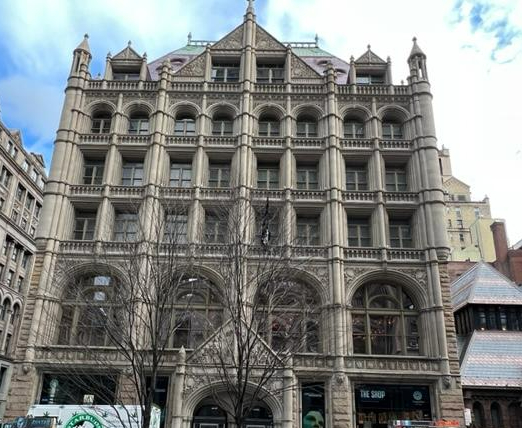
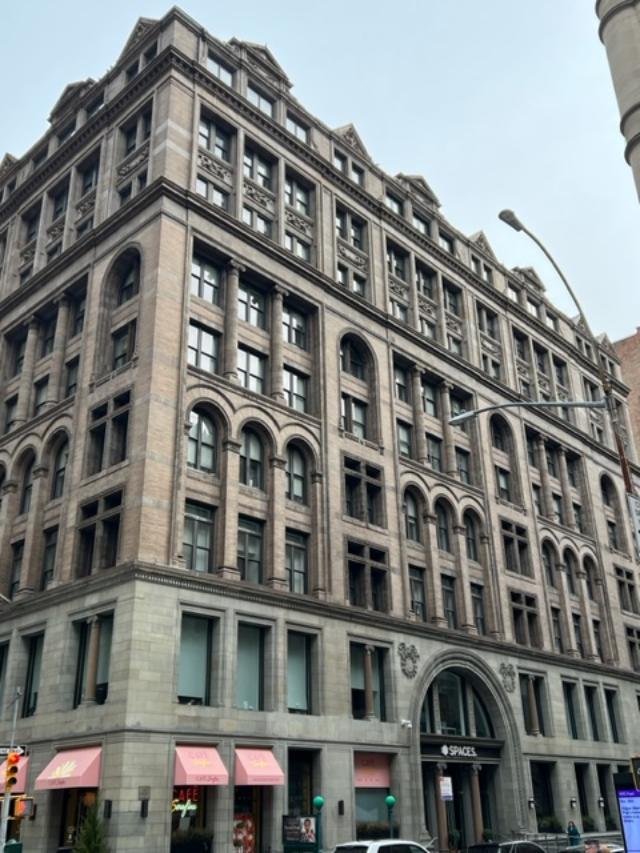
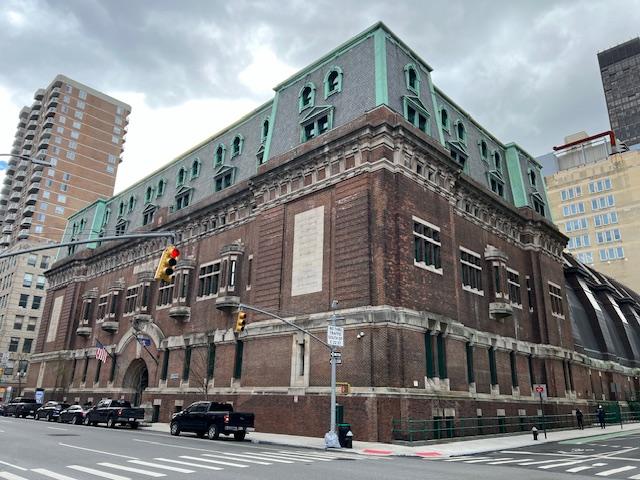
Our special ‘Members Only” nights at the Met are a lot of fun!
I had just finished Finance class at NYU and I needed a break. I could tell that my Professor wanted to leave early as well and the whole class was lost on learning the Income Statement so it was a perfect time to end the class for the evening.
I had signed up for the ‘Private Members Night’ on Valentine’s Day thinking that people would not attend this event on Valentine’s Day. Boy was I wrong! The museum was packed with people all over the museum. Since the whole museum was not open (the Roman and Greek Galleries on the first floor with the American Wing to the back being open and upstairs it was the Special Galleries and the Impressionist Wing), the areas of the museum including the restaurants and gift shops filled with members dining together for the evening and snatching up bargains such as the 50% ornaments from Christmas at the Gift Shop. I had never seen a Private Members Night so busy. That made it more fun as people were out to enjoy themselves without the pressure of the holiday.
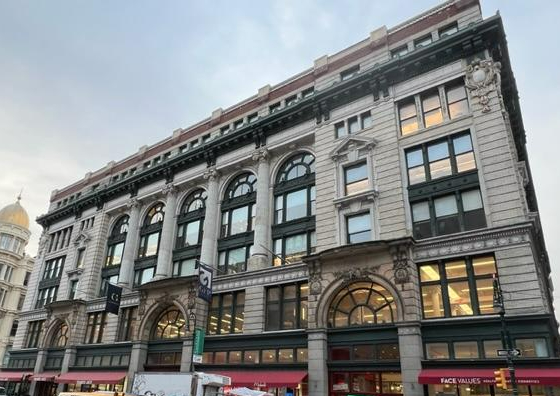
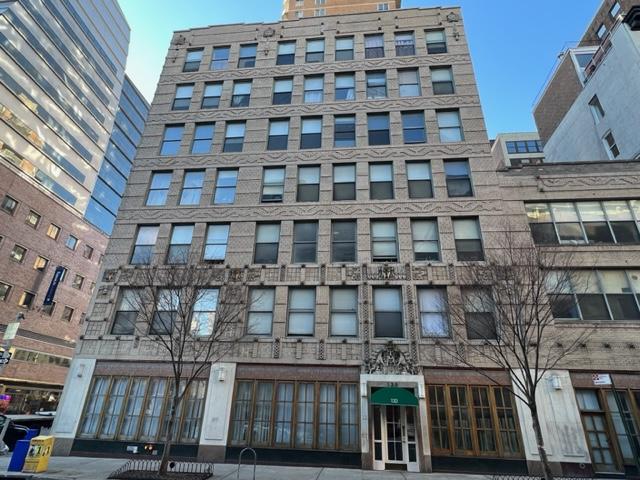
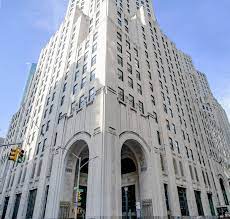
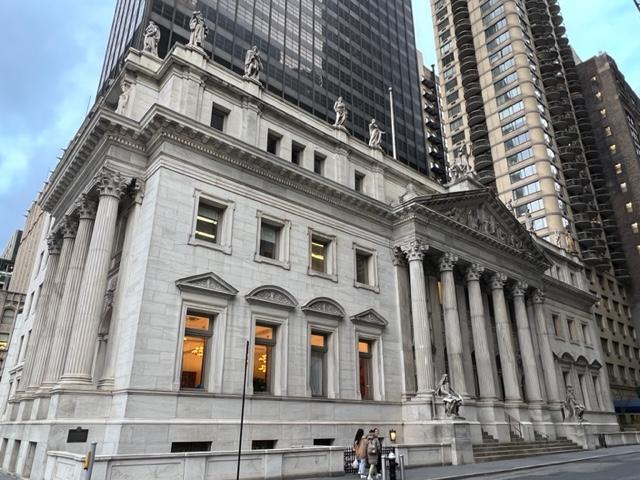
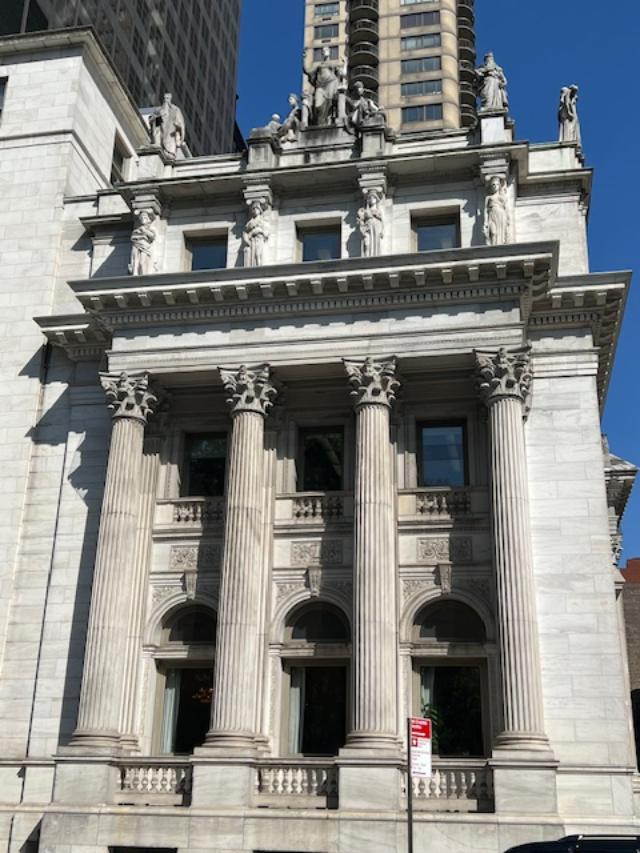
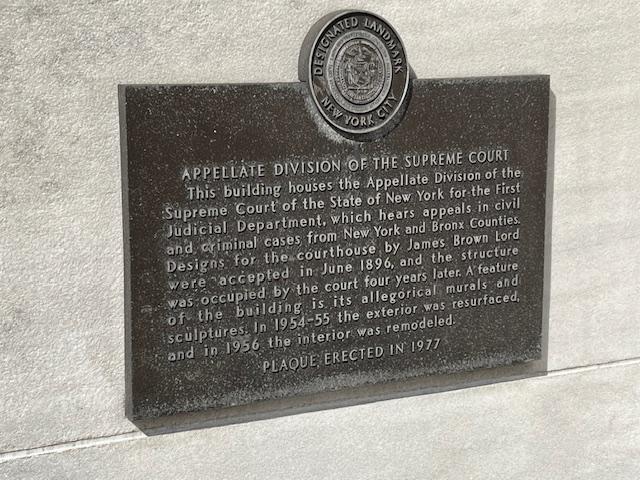
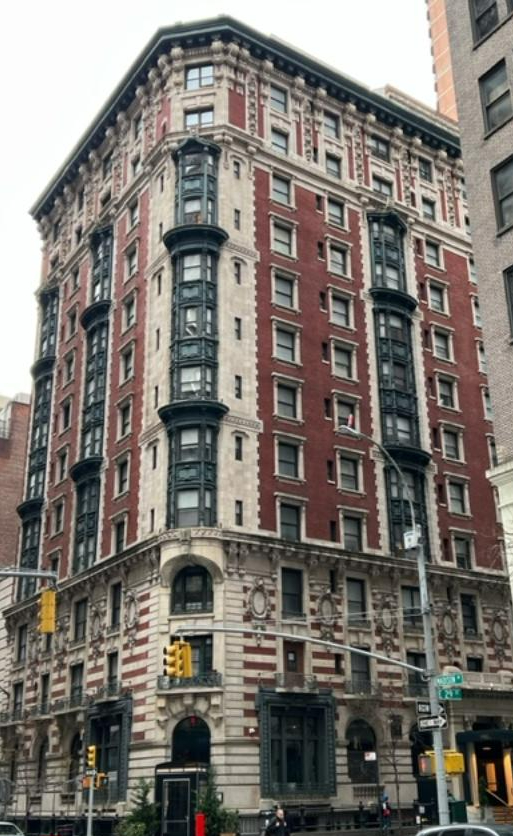
The Metropolitan Museum of Art at 1000 Fifth Avenue during the day
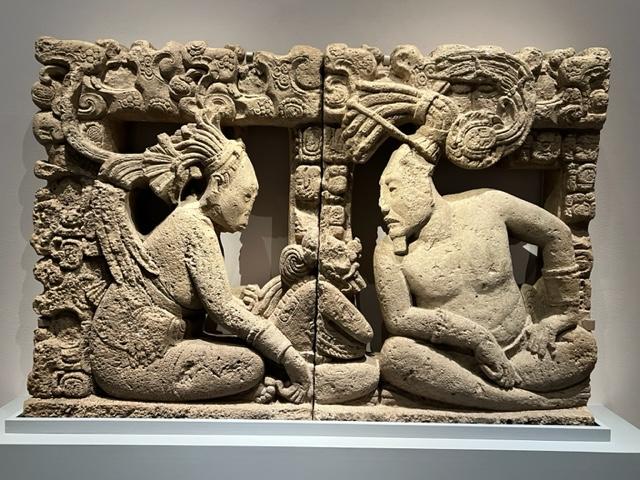
Since I had seen most of the museum in the past and time was limited (I had about an hour and a half), I decided to spend my time at the new “Mayan Exhibition-The Lives of the Gods-Divinity in Maya Art”.
The entrance to the exhibition: “LIves of the Gods-Divinity in Maya Art”
‘In Maya art, the gods are depicted at all stages of life: as infants, as adults at the peak of their maturity and influence, and as they age. The gods could die, and some were born anew, serving as models of regeneration and resilience. In Lives of the Gods: Divinity in Maya Art, rarely seen masterpieces and recent discoveries trace the life cycle of the gods, from the moment of their creation in a sacred mountain to their dazzling transformations as blossoming flowers or fearsome creatures of the night.
Maya artists, who lived in what is now Belize, El Salvador, Guatemala, Honduras, and Mexico, depicted the gods in imaginative ways from the monumental to the miniature—from exquisitely carved, towering sculptures to jade, shell, and obsidian ornaments that adorned kings and queens, connecting them symbolically to supernatural forces. Finely painted ceramics reveal the eventful lives of the gods in rich detail.
Created by master artists of the royal cities of the Classic period (A.D. 250–900) Maya, the nearly 100 landmark works in Lives of the Gods evoke a world in which the divine, human, and natural realms are interconnected and alive’.
(from the Met website)
These were my favorite pieces from the exhibition:
The Mayan Throne at the entrance of the exhibition
The information on the ‘Throne Back’
The beautiful Jade icon pieces
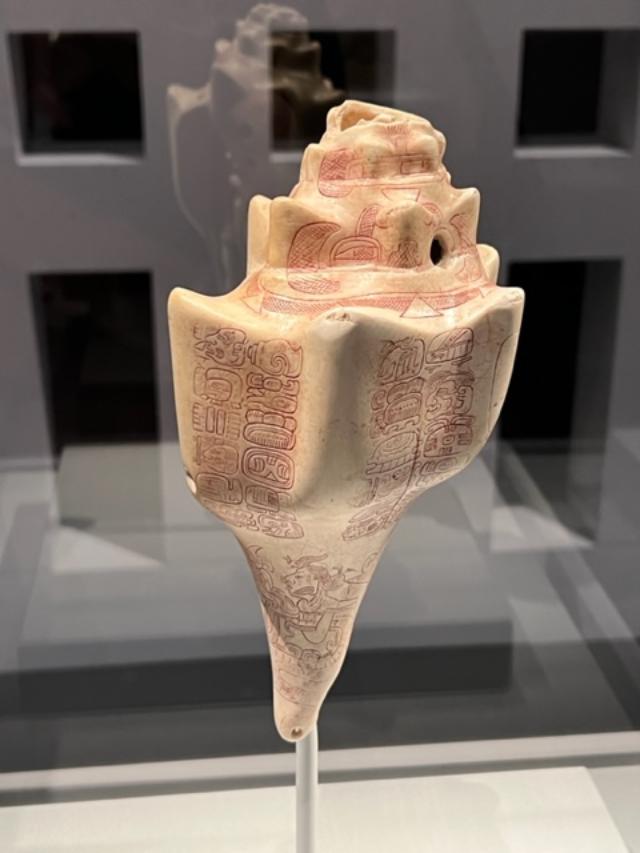
Conch-Shell Trumpet
Conch-Shell Trumpet
Seated Female
Seated Female
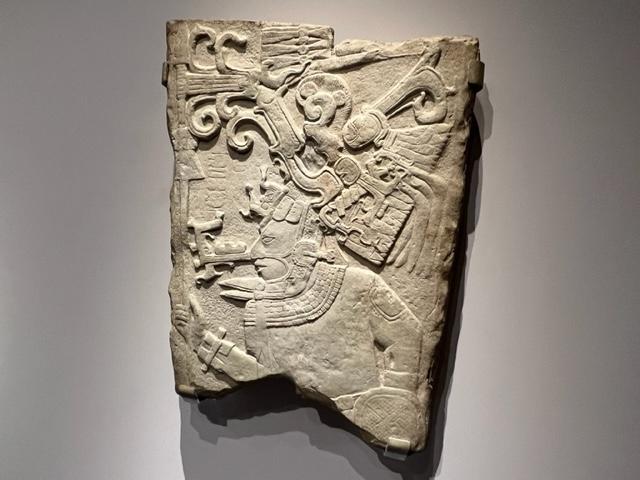
Panel Fragment
Panel Fragment
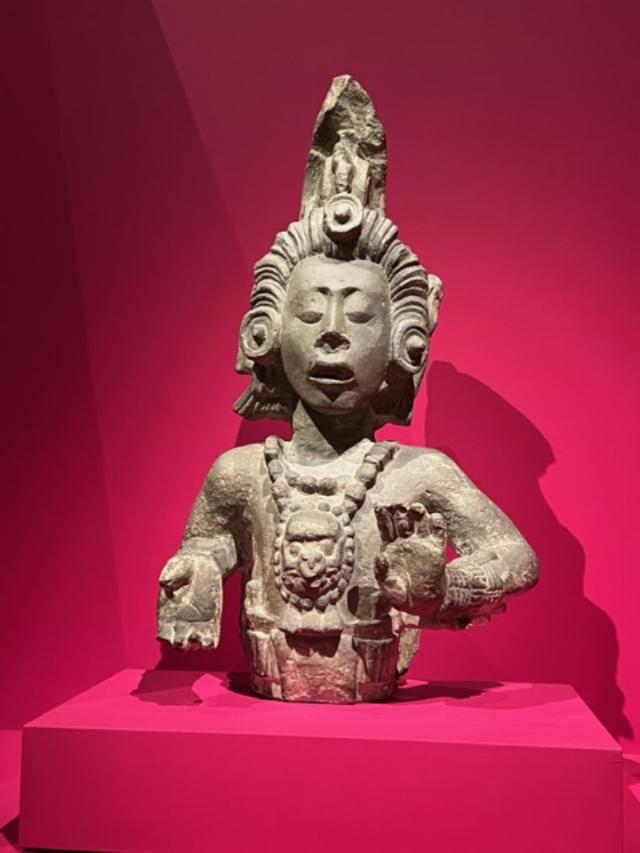
Maize God
Maize God
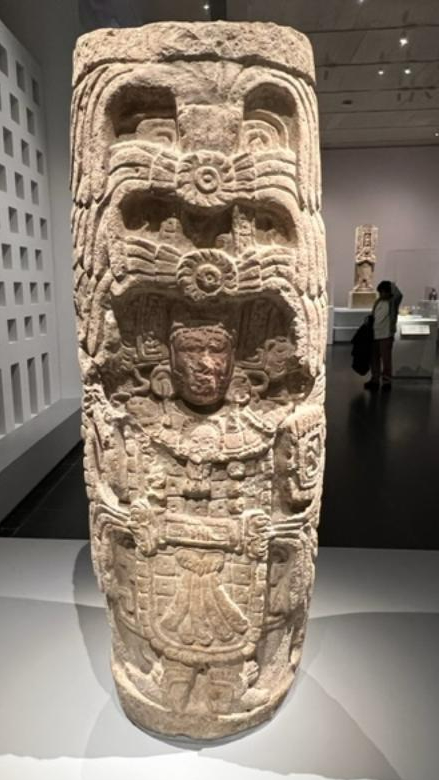
The Rain Deity
The Deity Figure
The King Jaguar Bird Tapir
King Jaguar Bird Tapir
The Rain Deity
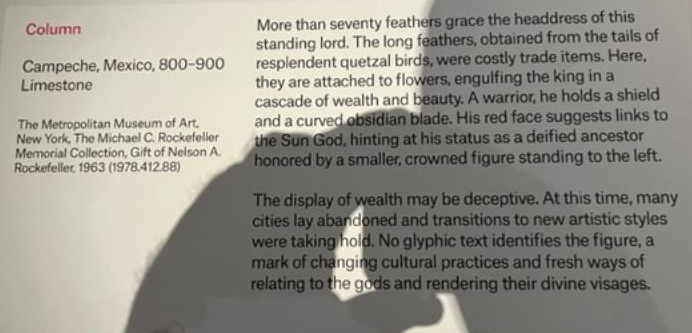
The Rain Deity Column
The Rain Deity
The Rain Deity Column
The exhibition was not that long and I was able to see everything in about an hour. I will have to go back to take some more time to read things but the art was just amazing. The detail work that these artisans had back then just showed how advanced they were without our modern tools. The Jade work was especially impressive.
After I finished the exhibit, I went down to the Impressionist Wing for twenty minutes before I toured the gift shop to see if anything new had come in. The museum must have emptied the storerooms of all the Christmas merchandise they were keeping in storage because there were tables of ornaments on sale fifty percent off. People were snatching things up and the lines were about fifteen deep. I have to say one thing, I was much more relaxed by the end of the evening.
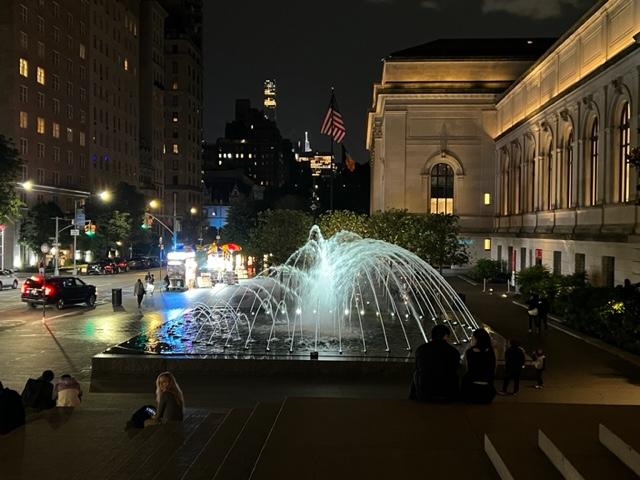
The Metropolitan Museum of Art at closing
The museum had such an elegant look after dark. As we left the museum that evening, they gave us each sugar cookies that said “Met Member” on it printed on the icing. It was a very nice touch when we left and it was so sweet. It really pepped me up. It was such a nice warm evening (for the winter) and I decided to walked back to the Port Authority. It was quiet on the Upper East Side and it was nice to walk around.
The front of the Met at night is amazing.
When I got back down Fifth Avenue and passed Bryant Park, I saw the most spectacular view of the Empire State Building lit in pink for Valentine’s Day. What a site! This is why I love Manhattan so much. Where else do you get a view like this?
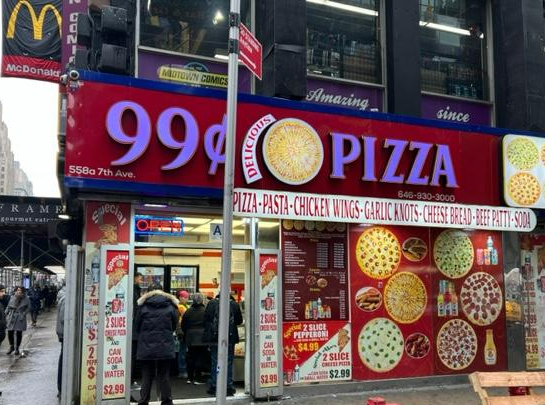
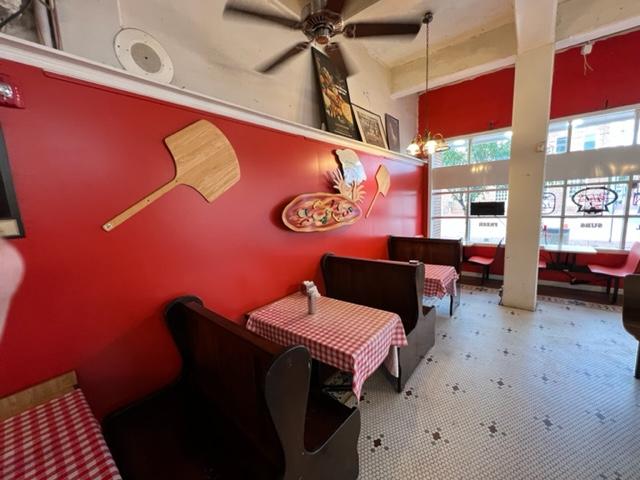
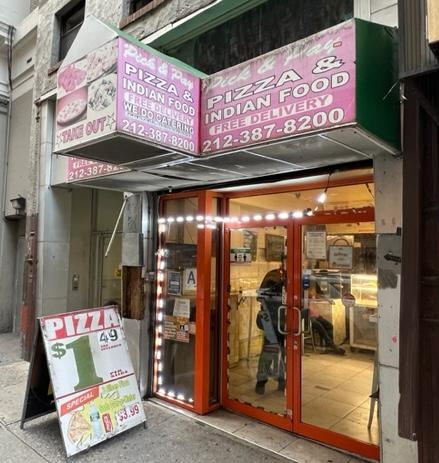
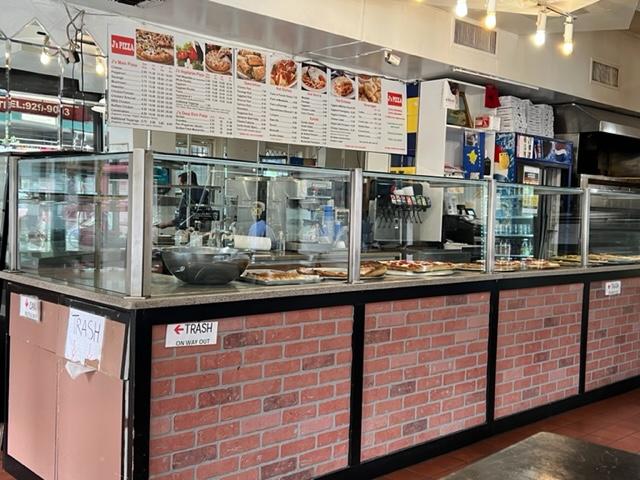
By the time I got back to Port Authority, things had gotten a little quieter. I stopped for a quick slice of pizza at the 99 Cent Pizza place down the road from the Port Authority and then headed home.
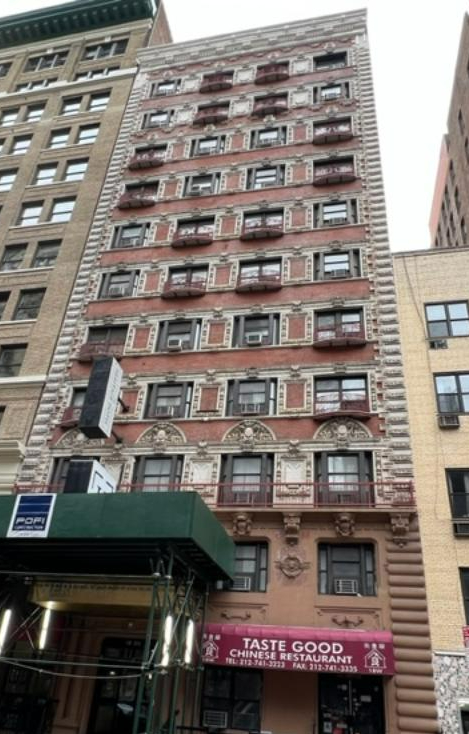
99 Cents Pizza at the corner of Seventh Avenue and 40th Street at 143 West 40th Street
The view of Bryant Park just blew me away. The lights of the buildings surrounding the park were fully lit with the Empire State Building in the background. It doesn’t get any better than this.
Bryant Park on Valentine’s Day. The Empire State Building was in the spirit of the evening with a bright pink lights.
I do not know where time went. One day I am cutting the lawn in 70-degree weather and the next day it is 32 degrees, and everyone is freezing. The weather has been going up and down like a yoyo and everyone is getting sick right before the holidays. Every other day the weather was changing, and this is the way the temperature would be every day for the month of December. One day it is Spring or Fall and the next everyone is bundling up.
Don’t be fooled by all the pictures and activities. There were a lot of late nights, a lot of driving and a lot of arranging to pull the holidays off this year. Teaching three classes and taking four classes in Grad school on top of volunteer work that I was committed to and getting ready for the holidays and all its expectations I had a lot of nights where I did not go to bed until two in the morning. I would study on busses and in hotel rooms and I never worked like this before in my life. Still it was a Merry Christmas and I consider myself a lucky person to see all these wonderful things.
All I did was run in and out of New York City every week for classes and work. There were so many historical sites that I wanted to visit over the holidays to update previously blogs that every moment of my day was taken up with touring. Still, I enjoyed taking my time to walk to school through Greenwich Village. The residents and merchants here know how to celebrate the holidays.
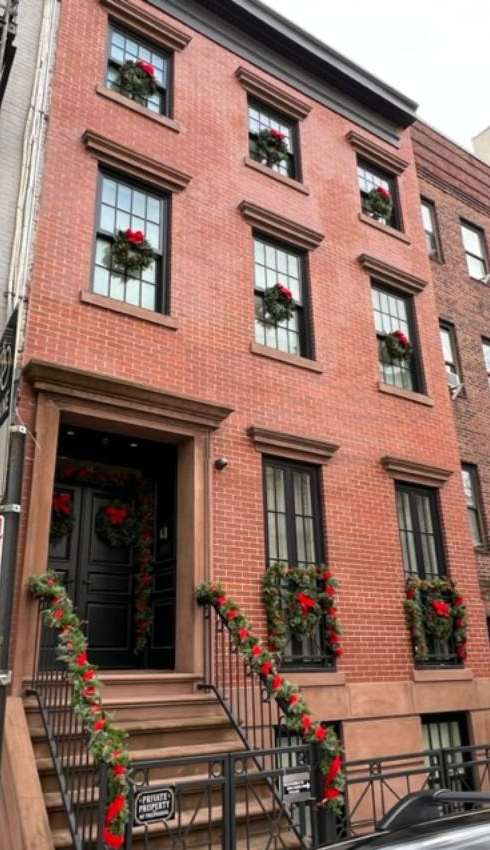
Christmas in Greenwich Village. I saw this home after class and I knew Santa was on his way
Walking past the train station on the way back to Port Authority was even festive.
With Grad School taking up so much of my time and I just finished all my presentations at Bergen Community College where I work (please see all three Bergecco-Parc Consulting Inc. projects), it’s now the final project for Grad School and getting ready for the holidays that are taking up my time. It is only two more weeks.
Thanksgiving with my cousins and aunt at the Lambertville Inn
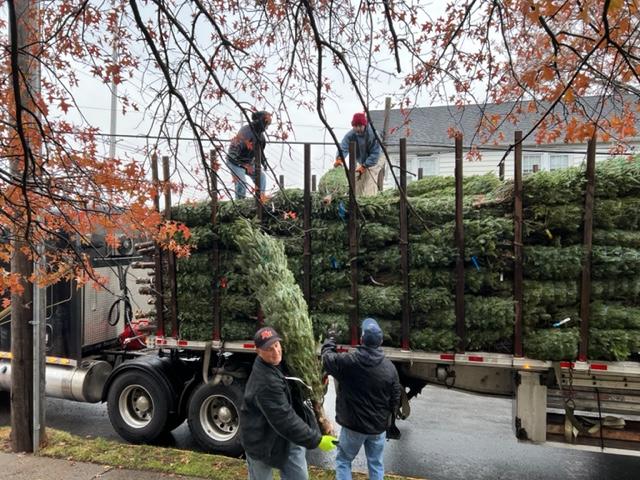
Christmas started for me right after Thanksgiving with my family when the next day we had Christmas Tree delivery for the Hasbrouck Heights Men’s Association. We had 390 Christmas Trees delivery and we emptied the truck in one hour. By 10:30am, we sold our first Christmas tree and by the end of the first weekend, we sold 134 trees and 8 stands. We just missed last year’s numbers. It had rained most of Sunday so we missed that afternoon and evening of that day.
Christmas Tree drop off is right after Thanksgiving at 8:00am the next morning
The guys on the Men’s Association after we finished tagging and unloading the trees
Friday was a busy day selling. It often amazes me how many trees sell that first weekend. Last year we sold out in 11 days and people were disappointed that they had to wait. Many said that this year, they arrived early to get the tree they wanted. Even with the rain on Sunday, we did very well and were anticipating another get year (we sold out by December 9th on the morning shift).
My blog on Christmas tree drop off for the Men’s Association:
I knew it was Christmas when my neighbors set out all their decorations
The next evening after Thanksgiving was the Annual Parade and Tree Lighting ceremony in Downtown Hasbrouck Heights. Since we were opening the tree stand and I was on leave from the fire department this year, I did not go. Instead I stayed at the tree stand that evening and sold trees on my first split shift. We sold 44 trees on the first day of sales.
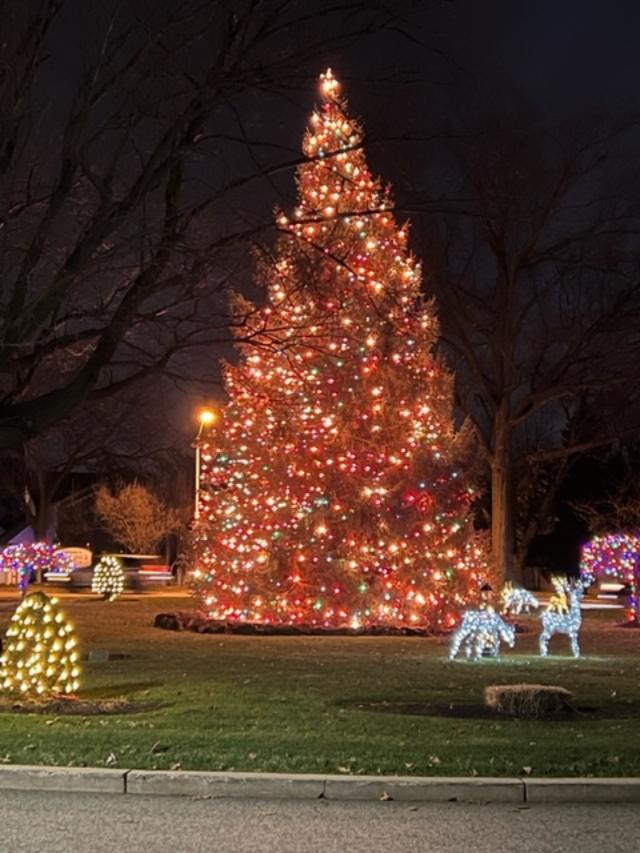
The Christmas Tree at the Circle in Downtown Hasbrouck Heights, NJ
The Gazebo at the Firemen’s Circle Memorial in Downtown Hasbrouck Heights, NJ
I have to admit, Thanksgiving weekend and the subsequent week were all about grad school. We would be wrapping up classes in two weeks (classes ended on December 14th) and I had three major papers due, one for each class. With the exception of my Data Analytics class, I had one partner on each paper I really did not know if I could count on so there would be a lot of extra work to do.
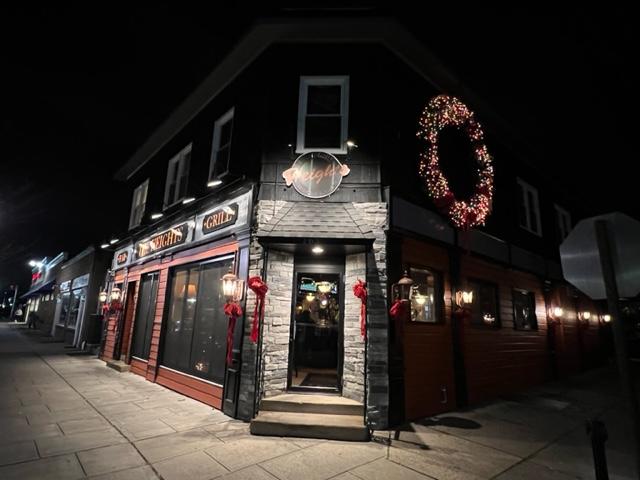
Heights Bar & Grill at 163 Boulevard became a place to relax and unwind with a pizza and a drink
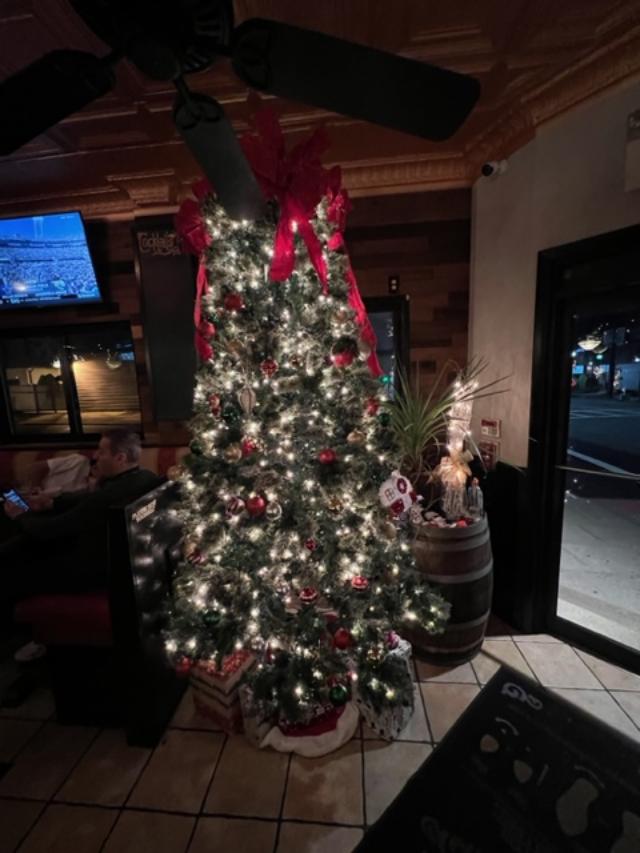
Heights Bar & Grill was very festive during the holidays
My post birthday dinner became my pre Christmas/post class dinner
The next weekend was Sinterklaas weekend, and I knew I had to be in Rhinebeck and then Boonton, NJ for the Bergen County Firemen’s Home Association Christmas Party that I committed to last month. When you’re on all the Executive Boards of these organizations, you have to be there.
Still on the way back and forth to classes starting from mid-November until classes ended, I enjoyed my walks from the Port Authority to the NYU campus in the Village to admire all the decorations, display windows and Christmas tree setups all over the Village. Even before Christmas started, this section of the City is very traditional ‘Old New York’ and when it is all ready for the holidays it puts you in the Christmas spirit.
Christmas in Greenwich Village really kept my spirits up between classes
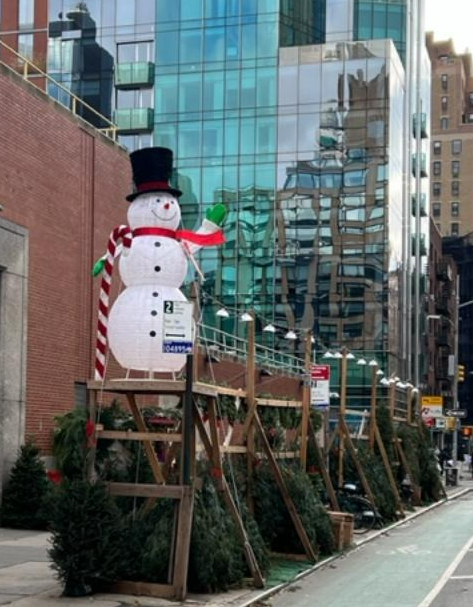
Selling Christmas trees in New York City was not difference from us but in prices.
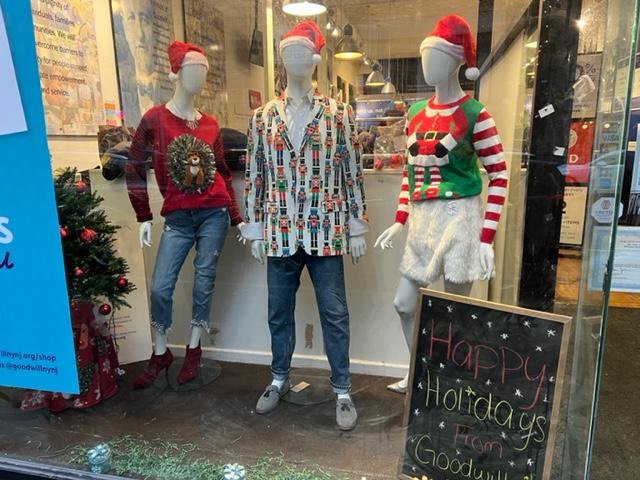
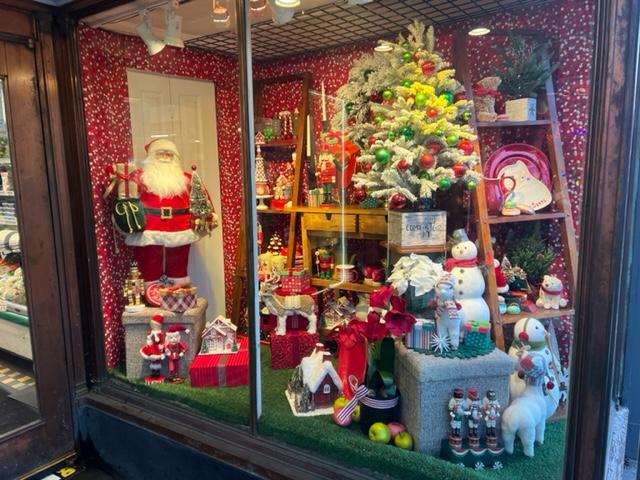
The window displays in the Greenwich Village stores and boutiques were really creative. I loved walking all the side streets to discover what shop owner did that was so different from the others and these are some of my favorites. They really cheered me up as the pressure of the assignments built up.
Window display in the Village after they changed from Halloween to Christmas
Window display in the Village
Window display in the Village
Christmas display inside and outside at Greenwich Village store
More Christmas trees for sale on lower Seventh Avenue
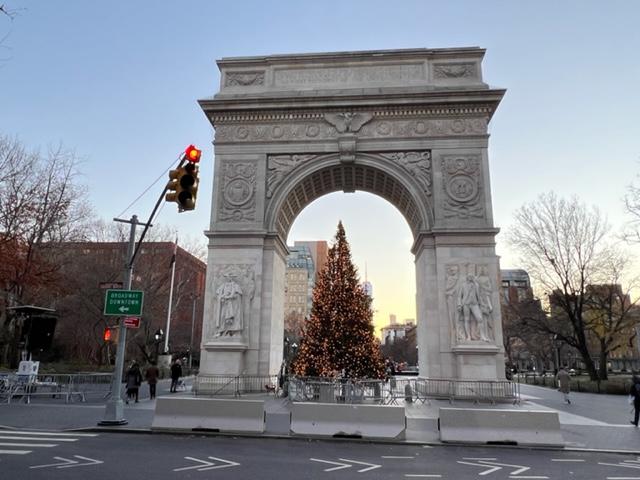
The Washington Square Park Christmas tree was so beautiful both during the day and night. It was so nice to pass every evening I was coming back from class. It really put me in the holiday spirit especially when I was stressed out on my last three research papers of the semester. I took the time to just walk around the park and enjoy the cool air.
The Washington Square Park Christmas tree by day
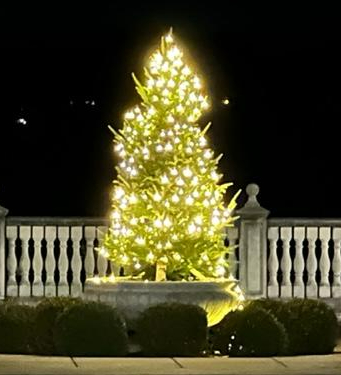
The Washington Square Park Christmas tree at night
In between classes and work, I had to decorate and get my own house ready for the holidays. I have never worked so hard trying to pull off the holidays with so much going on in my life. Still I thought the house looked very nice. I decorated both the living room and dining room and it looked really festive. It was too bad there was no time for entertaining. That and the fact that everyone else was so busy, it made it impossible to do anything.
I keep it simple but elegant in my house
For years, I used to have a Christmas dinner but with everyone’s schedules and COVID still around, I am finding more and more people don’t want to get together. Again my schedule was no better this December. Still I worked my own “Santa” magic with other things I did for friends, neighbors and family.
From December 1st to the 31st, my feet never touched the ground. From unloading trees for the Men’s Association to watching the ball drop to completing three major projects for my job at Bergen Community College to the three major papers at school, my laptop followed me everywhere and was prominent in each of my hotel rooms as a worked on every business trip for my work with this blog. Who says that life is boring? The fun began as it does every year with Sinterklaas weekend in Rhinebeck.
My blog on Sinterklaas/ The Snowflake Festival weekend in Rhinebeck Day Two Hundred and Fifty-Six:
I had to plan Sinterklaas weekend like D-Day. I had a major presentation on the Metaverse when I returned back on the next Monday night so I had to finish the framework for the paper the Friday night before the parade. I was visiting the Culinary Institute of American to interview one of my old chefs at the college but I was not able to get in touch with him.
Still I was able to leave a message for an appointment and then tour the campus. I forgot how beautiful the campus is and I never saw it during Christmas time. I had been on my Externship my first year at the CIA so I never experienced the holidays at the CIA.
Roth Hall decorated for Christmas
The Christmas tree in the outside courtyard
I did not have any plans that Friday evening and I looked at the papers and saw that there was a Snowflake Festival in Downtown Kingston, NY. So that evening after a nice nap at the hotel, I headed there for the evening. It was just what the doctor ordered. It was a cool but not cold evening full of activities and lots of Christmas decorations and a festive environment.
Downtown Kingston, NY the night of the Snowflake Festival
It was a nice evening of Christmas activities, horse drawn carriage rides, visiting the firehouse, beautifully decorated windows of the local merchants and people just having a good time amidst COVID problems and a bad economy. People ‘needed a little Christmas now’ (Please read the blog below on the Snowflake Festival and the Sinterklaas Parade).
The line to see Santa was impossibly long. I think everyone needed him this year.
The Christmas tree in Downtown Kingston, NY
My homebase for the weekend was the Quality Inn Hotel in Hyde Park, which is becoming a tradition with me. I love the location and the comfortable beds. If you get a room facing the field to the right, you can see the stonewall that lines the property. Plus, they have the best fresh waffle station every morning.
The Quality Inn Hyde Park at 4142 Albany Post Road
Sinterklaas morning was a really gloomy day. Even if the weather outside that morning was gloomy, the spirit of Sinterklaas was in full swing inside the Beekman Arms Hotel for the Opening Ceremony.
The Opening Ceremony at Sinterklaas with Founder Jeanne Fleming and the Pocket Lady
The animal being celebrated this year was the porcupine and this was his home in the courtyard in Downtown Rhinebeck. This wise woman told us his tale.
The “Into the Light” show at the local church
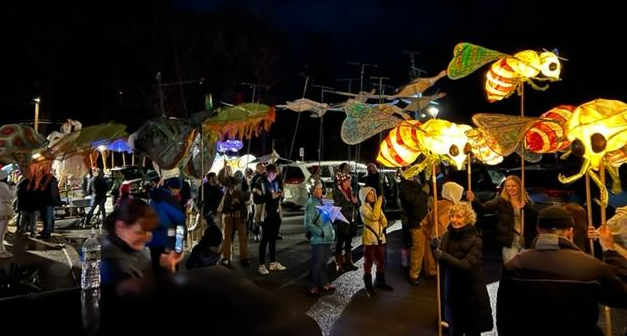
The parade is the highlight of the evening and we lucked out that night as the weather broke by the afternoon. The sun started to come out and it was a much nicer evening with a cool but not cold feel and you could see the stars out on this clear evening. The parade is always exciting especially as we walk down the hill into Downtown Rhinebeck.
The parade begins at the Starr Library
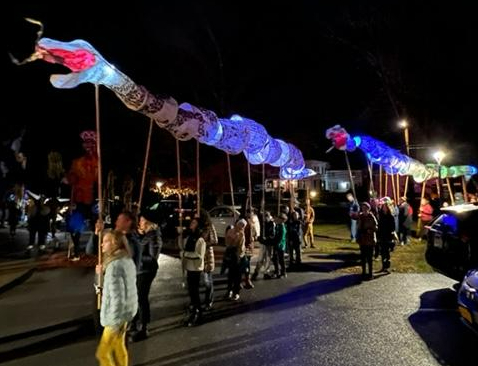
The serpents are always a big hit at the parade
The stars always lead the parade down the hill
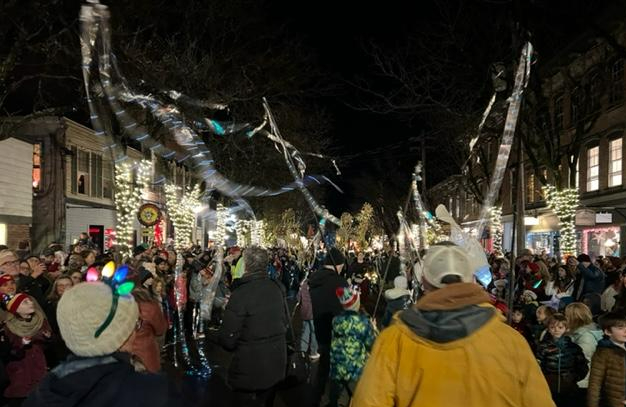
I marched at the end of the parade so all I saw was everyone’s backs. The crowds were not the same because of the weather that morning but they were still pretty large once we got into the core of downtown. Because of the weather earlier in the day, I could tell we had a more local crowd which was nice because Downtown Rhinebeck can only handle so many people.
All the characters come together at the closing ceremony
I swear that this parade like selling Christmas trees goes by faster and faster every year. I come to Rhinebeck in the Spring and the Summer and it just seems like I am counting the weeks until it starts all over again. After the parade was over, I stopped at Village Pizza for a few slices with the last of the parade stragglers. There were maybe three families eating a late dinner. By the time I warmed up and finished my pizza I walked around the downtown one more time. It was so quiet and peaceful with the exception of the saxaphone player who plays downtown at night. You would have never known there was a parade that night.
My review on TripAdvisor on Village Pizza in Rhinebeck, NY:
After a very sound sleep, I ate breakfast and enjoyed the waffle bar. Then I headed down to Boonton, NJ for the Bergen County Firemen’s Home Association Christmas Party that we were hosting at the home. Again, the year seems to go by fast.
The Executive Board the day of the party (I’m third to the right)
Because of COVID, the party is more subdued and families are still not allowed back with any great crowds. Still we had a DJ and Jerry Naylis’s daughter and granddaughters entertained the residents of the home. We really had a nice afternoon.
The Naylis family entertaining the residents
After the party was over, a few of us went the Columbia Inn for dinner. There was only a small group of us this year because again many of the guys were worried about COVID and large crowds. Still we toasted in the holiday season and after dinner, it was right back home to do my homework for school and classwork for my students. It would be never ending for the next three weeks.
The week between Sinterklaas and the next weekend of the Mills Mansion Party and exploring the decorated mansions to update my blogs for work, classes in both schools took a frenzy of activity on. I had to finish papers on the Metaverse and complete my White Paper on the Travel Industry and we started our paper on Mapping the Rockaways. I don’t think I ever went to bed before 2:00am every night for the next three weeks.
The “Dining on the Metaverse” paper required me to run around and interview chefs on the what their thoughts were on the Metaverse. I first went to the Ivy Inn in Hasbrouck Heights and talked with the Chef/Owner Jack. His thoughts on the Metaverse in dining were pretty strong and I needed a second interview so back to the Culinary Institute of America I went to talk to my former Chef at the college. He just happened to reach out to me that week so I stopped in to see him late on Friday.
The Ivy Inn at 268 Terrace Avenue in Hasbrouck Heights, NJ decorated for the holidays
I had an offer to revisit the Brinckerhoff Homestead the next afternoon before they ran a Afternoon Tea fundraiser to take pictures of the home decorated for Christmas for work and was able to get a last minute invitation acceptance for the Mills Mansion fundraiser, I decided to spend the night again at the Marriott in Fishkill, NY. It would be another long weekend of running around. So I booked a room at the Marriott Courtyard Fishkill, where I had stayed twice before and it would be close to all the sites and headed Upstate.
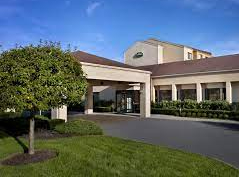
The Marriott Courtyard Fishkill at 17 Westage Drive & Route 9
I got up to the CIA before 4:30pm and walked around campus and enjoyed the Christmas lights again. The campus was starting to wind down for the holidays as the students would be leaving for break in a week and a half but the restaurants were busy with weekend reservations and by 4:30pm, I stated my interview on “Dining on the Metaverse” with the last chef I had before I graduated in 1998. I had not seen the guy in almost 25 years. Still he was just as nice as he was when I had him as an instructor and we had a good interview for almost two hours.
The campus was at twilight and it showed its true beauty next to the Hudson River.
The Culinary Institute of America at sunset
The Christmas tree lit at the Culinary Institute of America
We had our interview and it was nice talking with a Instructor that I had a lot of respect for years ago. It was nice of him to meet me after almost 25 years.
My TripAdvisor review on my lunch at the Apple Pie Bakery Cafe:
We bullshitted for the first hour and knowing that I had to be at the Mills Mansion by 6:30pm (the party was only going to 8:30pm), we had to get down to business. We spent the next hour talking about the effects of dining on the Metaverse and what it could do to the business in the future. His thoughts were pretty much the same as the Ivy Inn but it was an engaging conversation and I was able to take notes and write that section of the paper before I left for the weekend. Then it was off to the Mills Mansion for the Masquerade Cocktail Party fundraiser. That got my mind off a lot.
I had not been to a fundraiser here for the holidays since 2018 (COVID and work stopped me from going in the past) and it was a last minute thing I was able to attend. The President of the Friends of the Mills Mansion graciously let me come since it was sold out. I did not get there until almost 7:15pm by the time I left the CIA and got to Staatsburg and then had to park all the way down the hill.
The entrance to Staatsburgh, The Mills Mansion at 75 Mills Mansion Drive the night of the party
I was not too keen on wearing a mask since I had to wear glasses but I still had a nice time. The band was excellent and the singer wore an outfit that looked like it was from the early 1920’s. The food was wonderful and they had nice passed appetizers and wine and champagne to drink. The mansion’s Dining Room was decked out with masks and everyone was dressed to the nines. I had not seen people so dressed up in years. It was so impressive to see how elegant the evening was like something out of the mid-1980’s. No one had dressed up this much in years and it made the whole event feel so festive and special.
The band with the singer with the 1920’s outfit
I was able to catch up to people I had not seen in two years (since the last Afternoon Tea lecture in February of 2020 right before the shutdown) and we had a nice time talking about what had been happening over the last two years. It was a nice evening to get my mind off school and work. I slept so soundly that night when I got back to the hotel.
It was a very elegant party that night
The Mill’s would have been proud of this party
The day after the interview and the party, off I went early in the morning to visit the decorated mansions and take the tours. The Brinckerhoff House was my first stop and I would not be there long because they had a fundraiser at 1:00pm and I promised to be there, take the pictures and leave because they would be busy for the rest of the afternoon. The house looked just as pleasant as it did when I visited it over the summer but the nice part was the fireplaces were going giving that house that winter smell of firewood and pine.
The Brinckerhoff House at 68 North Kensington Drive at Christmas
The house was set up and decorated for an Afternoon Tea fundraiser
The Christmas tree at the Brinckerhoff house
I only stayed for about an half hour as volunteers were showing up to assist with the event and then I was off to my next house which was the Vanderbilt Mansion. This was a big weekend for the decorated homes and I figured I should visit them since I would not have time in the future.
The Vanderbilt tour was booked solid as people had the same idea that I had. I got on the 1:00pm tour and off we went to tour the mansion. I had been there many times before but never to see the Christmas decorations. When I had visited back in 2019, they were taking the decorations down when I got there. By the time we left, most everything on one side of the house was gone. Today though, the mansion was in its full glory.
The Vanderbilt Mansion at 4097 Albany Post Road in Hyde Park
The house was tastefully but not over-decorated as Fredrick Vanderbilt and his wife never used the home for Christmas. They were in Manhattan for the Christmas and the beginning of the social season that would last from Christmas to about Easter when everyone would head to their Spring homes in the country or in Florida.
The entrance hall to the Vanderbilt Mansion
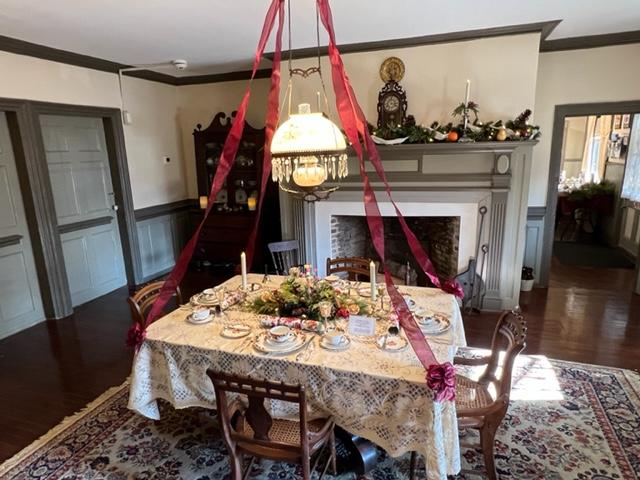
The Dining Room set for a formal Christmas dinner
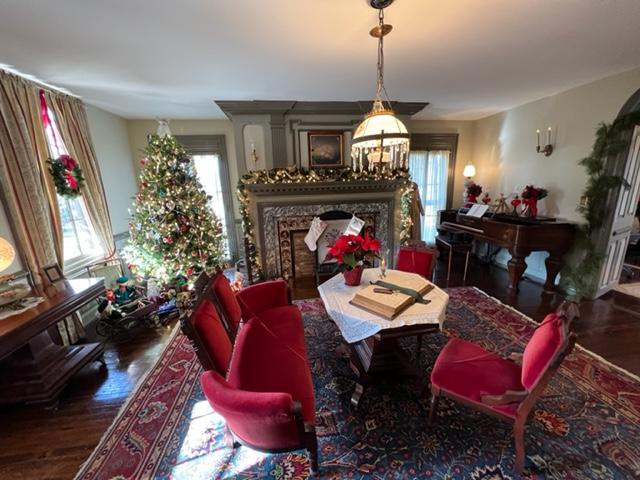
The Living Room with the family Christmas tree
The full tour of the mansion was very interesting and you got to hear the stories of Fredrick and the last years of his life. He simplified matters, sold all his other homes and moved here until he passed away. He wife had died and he stopped the social swirl and concentrated on his job with the railroad.
After the tour was over, the tour guide told me that FDR Estate was having a big Open House that day and that I should head over before they closed at 5:00pm. Myself and pretty much everyone on my tour headed over to Springwood, the home of Franklin Delano Roosevelt.
Springwood Mansion at 4097 Albany Post Road in Hyde Park, NY
The first floor was decorated as it would have been for FDR and his family’s last Christmas when he was alive. The decorations were taken from old pictures of the house the year that he passed.
The entrance hall of Springwood decorated for Christmas
The library decorated for FDR’s last Christmas
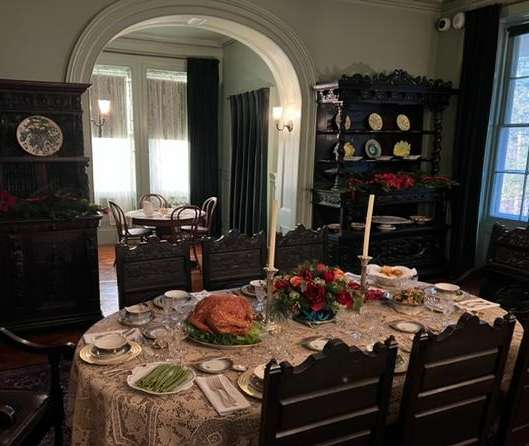
The Dining Room was set for Christmas supper
The mansion again like the Vanderbilt Mansion was tastefully decorated but not overdone. The library had a tree with decorations and the many presents that the large extended family would have opened that day. The Dining Room was set for the family dinner with a children’s table in the back. It would have been a nice family affair.
We got to tour the rest of the house and head back to the Visitors Center for Hot Chocolate and cookies that they set up in the snack shop. That evening around 6:00pm, the Bard College music department was putting on a recital but I had to leave right after the tour as I had a tone of assignments and homework that I had to do for both colleges. At least I was finally able to see both mansions in their full glory at Christmas.
As I left the Vanderbilt and Roosevelt mansions, I passed Downtown Hyde Park, NY which has a small downtown with about two blocks of historical buildings and admired the lights and how the businesses decorated the lights and buildings. I stopped to take a picture of their Christmas tree which was ablaze with lights on this snowy night. It really did look like Christmas.
Downtown Hyde Park, NY
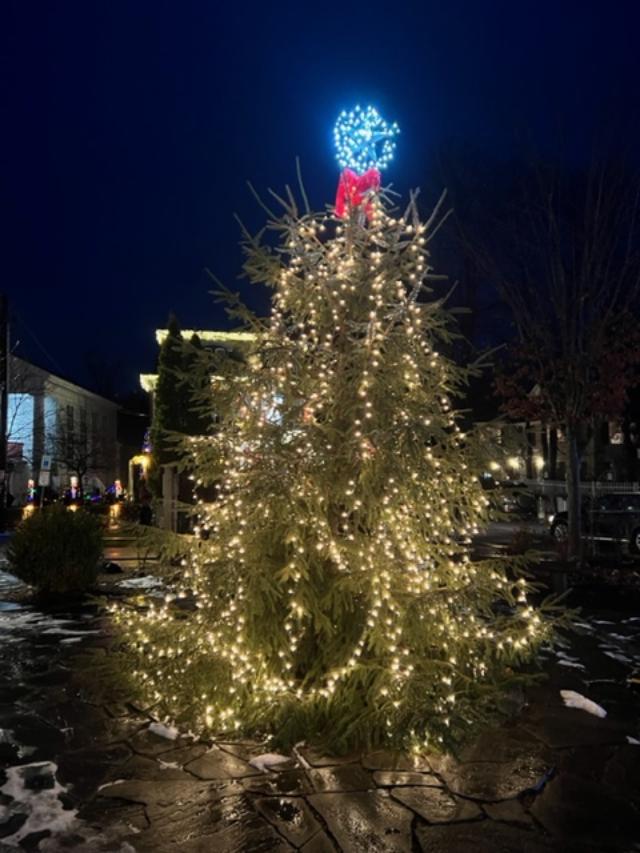
The Hyde Park, NY Christmas tree a block from downtown
I got home early that night to finish my papers on the Metaverse and my White Page on the visitors we had to our Travel Trends class. It was an uphill battle that night and on Monday for both presentations. We got a “B+” on the Metaverse paper and an “A” on the White Page and in both classes I got an “A”. The Mapping project would go on until December 22nd. It would take five revisions and a lot of late nights. We were able to pull out a “B+” on the Mapping paper of the Rockaways right as my own classes were ending.
That last week of school Monday classes ended and after the Tuesday class my classmates wanted to go for an evening of Karaoke. I had papers to grade when I got home so I declined and took a walk up to see the tree and clear my head before heading home.
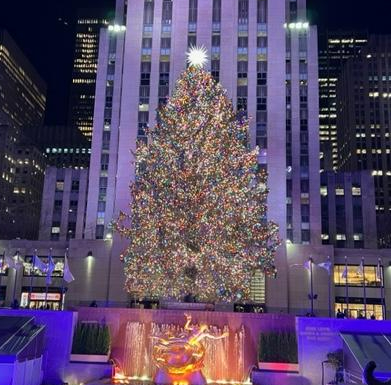
Christmas in New York City is always a pleasure and with the City opened back up to tourism, it made it exciting again. The anticipation of Christmas in Manhattan is something to experience if you have never done it before. It all started for me when I declined a karaoke night with my classmates and went to see the Rockefeller Center Christmas tree. I just needed a walk after my Data Analytics class. It had been a rough semester. Just seeing the tree put me in the Christmas spirit.
The Tree as we call it in Rockefeller Center December 2022
I walked around Midtown along Fifth Avenue, looking at Saks Fifth Avenue’s windows, admiring the lights and looking at the skyline. I forgot how beautiful this area of the City is at night. It was a mild Tuesday night when I was walking around and there were not too many people around. the tourists had not arrived in full swing yet. Being a Tuesday night, it was relaxing being able to walk around the Rockefeller Center area without the crowds.
The side streets were particularly elegant
West 58th Street in its glory
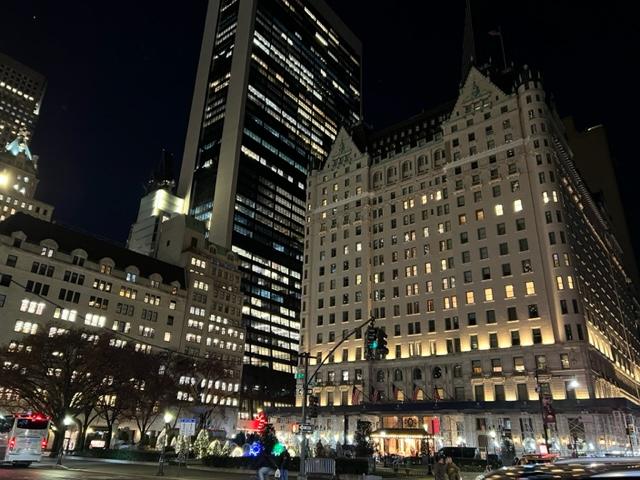
The Plaza Hotel in all its glory that night
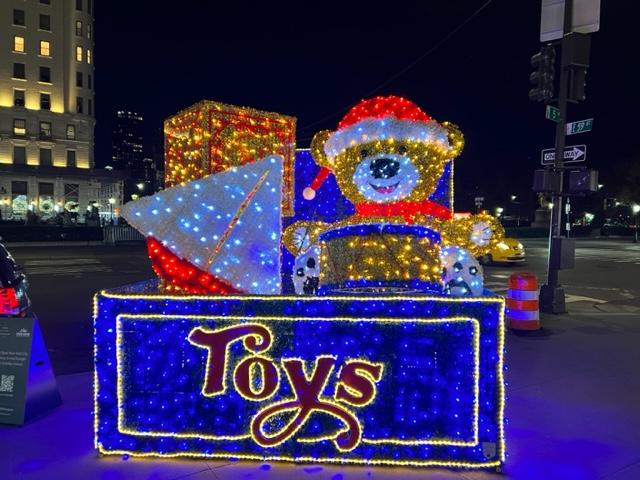
I saw this playful sculpture along with others on Fifth Avenue but it was near my old haunt FAO Schwarz
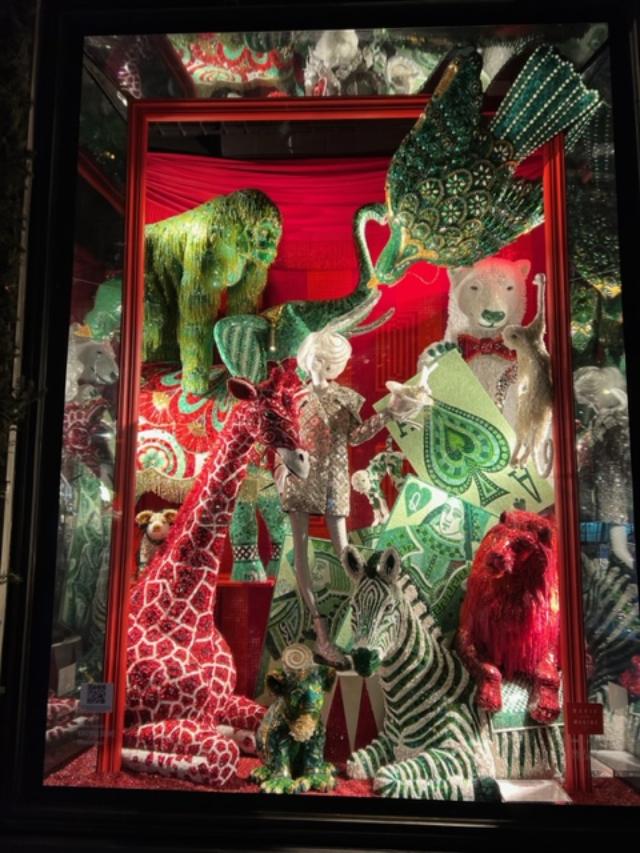
This was the best display window at Bergdorf-Goodman on Fifth Avenue
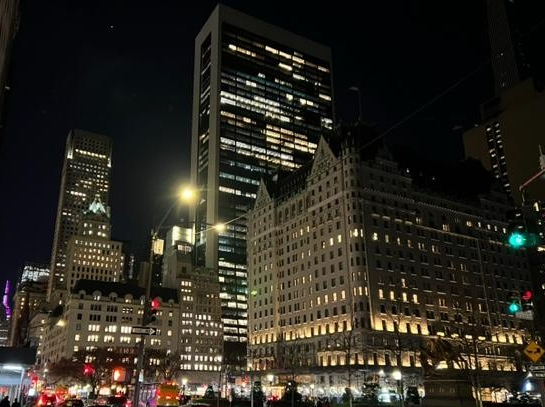
Still what stood out to me on that glorious evening was the beauty of Midtown Manhattan at night. Even though it was still early in the evening, it might have well been 11:00pm because the streets were so quiet that evening. This is why I love Manhattan.
The beauty of Midtown Manhattan at night
The Plaza Hotel and Bergdorf-Goodman shined that evening
This little trip to Midtown after class really cheered me up. It had been a long semester and I needed this little Christmas break from school. It really put me into the holiday spirit. On my way back to Port Authority to head home, I passed the New York Public Library on my way through Bryant Park to see the Christmas Village
Outside the New York Public Library where the lions were decorated for the holidays.
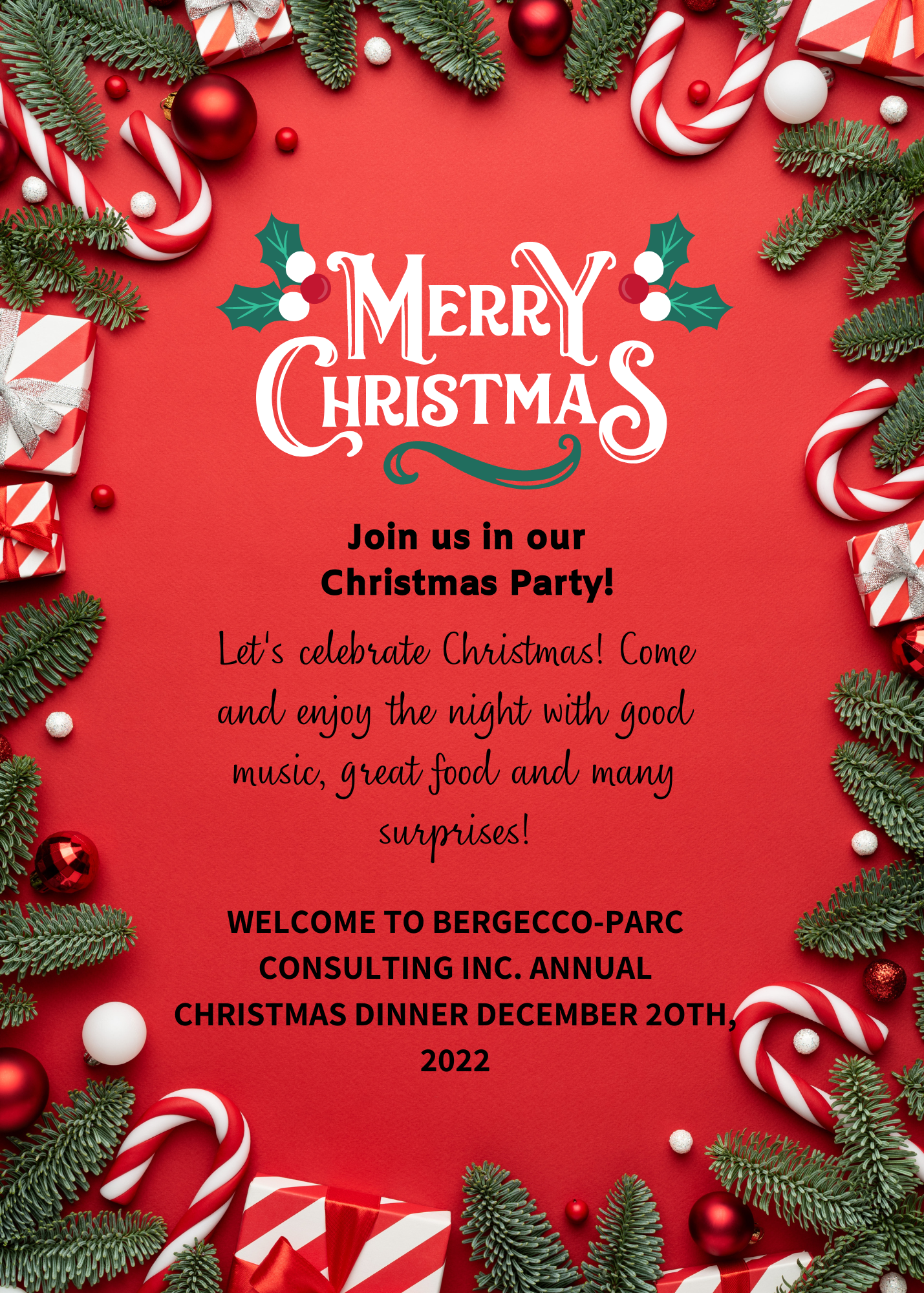
As the school year ended at Bergen Community College and classes were wrapping up, I was getting tired of giving the traditional quizzes so for Quiz Four I gave all three classes from Bergecco-Parc Consulting Inc. The students were asked by Corporate to arrange the company Christmas Party. They were asked to create the Invitation, the menu with an appetizer, main dish, dessert and a signature drink.
Then were asked to create a Christmas Corporate message and two classes were asked to create an original Christmas song. It is amazing what a group of students can accomplish in an hour. Everyone in all three classes got an “A” and I did not have to drag home quizzes to grade. I will remember this quiz in the future.
The Paramus Business 101 Team’s idea for the Corporate Christmas Event
The Marketing 201 Team’s Ideas for the Corporate Christmas Event
The original Christmas song from the Marketing 201 Team for the Corporate Christmas Party
The ideas that the students came up with in ONE HOUR were just fantastic. This is why I love being a College Professor when you can get this type of creativity out of your students.
This Christmas message won the competition from my Business 101 Lyndhurst Team
As we put the revisions to the Mapping paper for my Data Analytics class and I prepared the final exams for my students and graded my other classes work, I planned another trip to the Hudson River Valley to visit the rest of the decorated mansions on my list and update all my blogs for work. This was a long and very productive weekend. It would be capped off with a last minute Historical Christmas concert at the Bergen County Historical Society. I had not been to one of these in three years.
The Marriott Courtyard Fishkill is where the adventure began. I revisited Staatsburgh (The Mills Mansion) and Wilderstein and then on Saturday I went to the Meiser Homestead in Wappinger Falls for their Holiday Open House. I had to time everything perfectly because I had to be in Manhattan for a Christmas concert at Carnegie Hall at 8:00pm. I timed everything perfectly.
The Marriott Courtyard Fishkill was decorated nicely for Christmas
The Marriott did a nice job decorating the hotel for the holidays
I started my trip on a snowy Friday afternoon (it was funny that the weather was just cloudy down by us) and I made it for my 11:00am appointment to see Staatsburgh. I had been to the Mills Mansion fundraiser the week before but the whole house was not open that evening and I had only been there for an hour. Now I was able to tour the house at my leisure. I was even interviewed for the local papers by a woman who was doing an article on the decorated mansions of the area.
I returned to Staatsburgh on snowy cold afternoon so the mansion was pretty quiet for touring. There were only two people on the walking tour of the mansion that afternoon. The roads up to Hyde Park were not the best.
Staatsburgh-The Mills Mansion at 75 Mills Mansion Drive on that snowy afternoon
It was nice to tour the house in peace and quiet. The party the week before had been a lot of fun but you could not see the rest of the house. All the rooms were so beautifully decorated, and the Dining Room was decorated to the hilt with masks, the theme of the party the week before. Since there was only two of us touring around, I got interviewed by the local paper by a reporter doing the same thing I was doing, visiting these beautiful homes. Visit my blog, VisitingaMuseum.com to see all my stories on my visits to these beautiful mansions.
My last stop that evening was to Woodstock, NY. I had planned to come this year for the parade but with my brother coming in for Christmas that changed my plans. I figured this was the last time I was going to be able to come up before the holidays. So I braved the slush and snow and drove the long roads up to Woodstock. It never disappoints me.
The Village Square at Woodstock, NY during the holidays
The Woodstock, NY Christmas tree is always interesting
After dinner, I slept so soundly at the hotel again. The Marriott Courtyard in Fishkill, NY is in the perfect location with Route 84 and the mountains right behind it. Easy to get to the highway home but still the best views when you wake up.
The amazing view from my hotel room at the back of the hotel facing the mountains
I had to rush to go on the 10:30am tour of Locust Grove, the former home of Samuel Morse, that I wanted to photograph before I left for the Meiser Homestead. There was not time to eat this morning. Thank God I had some baked goods in the hotel room.
The Christmas tree in the formal Living Room in the Tower section of the home
The Dining Room at Locust Grove at Christmas
The Billiards Room at Locust Grove at Christmas
I toured the whole house in our private tour at 10:30am. There were so many people on the tour, they called a special docent in to run the tour and we had the house to ourselves. Ehtel lead the tour and we took time to enjoy each room. Then it was off the Meiser Homestead for their Open House.
The Mesier Homestead at 2 Spring Street in Wappingers Falls, NY
The Foyer at the Meiser Homestead decked out for the holidays
The Living Room with the Christmas tree
The Dining Room set for Christmas lunch
Downtown Wappingers Falls during Christmas
The Wappingers Falls Christmas tree in the downtown
After I returned home from the Meiser Homestead Open House, it was change clothes again and into the City I went. I did not have much time to do anything in the evenings when classes were going on at NYU so after the semester was over and my third class was finished for the semester at Bergen Community College, I got a last minute ticket to see NY Pops at Carnegie Hall with singer Ingrid Michaelson. What a concert!
I had not been to Carnegie Hall since 2019 in pre-COVID and this always is a tough concert to buy tickets for but I snagged a Saturday night ticket in Row H on the aisle (I have long legs) and it was fate.
The entrance to Carnegie Hall at 57th and Seventh Avenue on the night of the concert. Our concert is to the left.
The inside of Carnegie Hall decorated for the holidays. The crowds were getting settled into the theater.
The stage at Carnegie Hall decorated for Christmas
The excitement built when I entered the hall and it was all decked out for Christmas. It was a site to see. The surprising part was how casual everyone was dressed for the evening. I was really thrown by this especially at the holidays. My seatmate was also dressed to the nines and she made the same comment. She introduced herself and I thought it was funny that a recently married woman would come to the show by herself but there we were acting like two single people.
The beauty of the stage that night just as the NY Pops members started to come on to the stage
Ingrid Michaelson and her fellow singers on stage
The whole concert was amazing and Ingrid Michaelson was fantastic that evening. What I thought was funny was the end of these concerts end with a sing along with Santa on stage and that did not happen this time. She ended the show with one of her signature songs. Maybe her Friday night concert had that. Even though, the concert was excellent and I shared the two songs below that were my favorite from the show.
This was my favorite song from the concert “Christmas Valentine” a new classic. This was written by both Ingrid Michaelson and Jason Mraz who performed it that night on stage.
The other great song from the concert was “Christmas Time is Here”:
“Christmas Time is Here” by Ingrid Michaelson
Even though it was a almost a two hour concert, it just seemed to end very quickly. After the concert was over, I just exploring the area around Lincoln Center. What a beautiful evening it was right before Christmas. People were talking in the local parks, admiring the Christmas lights in trees all over the neighborhood. Christmas tree stands were running in full force as people were decorating their homes on top of the their busy schedules.
Christmas tree sales by Carnegie Hall
For both lunch and dinner I returned to Amore Pizza cafe at 370 West 59th Street, which is down the road from Carnegie Hall. I swear that their food is the best.
I stopped in for a slice of Meat Lovers Pizza which was more than enough before the show and after the show I was still hungry. I went back and had a Chicken Parmesan Hero, which was good but it had been made from chopped fried chicken breasts instead of a freshly fried breast. It was good but not as good as the pizza was that night. After dinner, I just walked around Midtown and down Fifth Avenue admiring the windows.
The Meat Lovers Pizza at Amore Pizza Cafe is excellent
The weekend was not finished yet as I had an early morning walking tour of the Philipsburg Manor in Sleepy Hollow and then I had a Christmas concert at the Bergen County Historical Society in River Edge. Since I had to extend my leave with the fire department, I missed the first “Santa Around Town” in eighteen years. This on top of the fact that I was supposed to run it. With my work and college schedule, I had to ‘cry uncle’ and give it up which really disappointed me. I had some really good plans for it. In the end only thirteen guys showed up out of fifty and they had a fire call before the event ended. Thank God it was just a block chimney.
I left for the last day walking tour of the Philipsburg Manor before the house closed for the season. I was on the last walking tour of the house. Since the house was not insulated and the weather gets bad for the winter, the house will not open again until April. So I was hoping to get some picture taking in and see the decorations. The house was not decorated for the holidays but still the tour was interesting.
The Philipsburg Manor house 381 North Broadway in Sleepy Hollow, NY
The tour was about an hour and we had indoor and outdoor activities that we got involved with cooking hardtack, touring the house and grounds and helping in the barn beating out the wheat seed. When the actors who worked at the site (who must have been freezing their butts off because it was cold that morning) told us and demonstrated the work that had been done on the estate, this was hard work! This was a working farm and business transport spot, not where a family lived and entertained. When Mr. Philips was on property, he was here for business and nothing else. The staff ran this farm.
Us making Hardtack at the outdoor oven
Our visit to the barn where were loosening the wheat seeds. This poor woman was out there all morning in the cold!
The tour was about an hour and I thought that the house would have had some Dutch Christmas decorations but again the tour guides and historians said that the house for business and visiting not for the day in day out lives of the family. Still it was interesting. After our tour finished, I toured the gift shop and then headed home to get ready for the concert.
The Bergen County Historical Society at New Bridge Landing brought back their indoor concerts for Christmas including opening the Blackhorse Pub (The Campbell-Christie House) for dinner before and after the concerts. It was so nice to come to this again. The crowds were a little light at the second concert at 7:45pm on a Sunday night but it made it more fun that we could still socially distance from each other and there was plenty of space to spread out.
I started the evening early at the pub eating my dinner before the concert. The pub had a limited but very nice menu based on what foods that may have been served at the time period (with a modern twist of course). There was Shepard’s Pie, a Ploughman’s Plate, Onion Pie, Trifle and Dutch Cookies and desserts on the menu..
The Campbell-Christie House at 1209 Main Street in River Edge, NJ at the Bergen County Historical Society
The Campbell-Christie House was used as the “Blackhorse Tavern” for the evening where pub food could be ordered for dinner. It was really beautiful that night with all the tables a glow from the candles and the room decorated with holly, garland and wreaths for the holidays.
The Blackhorse Tavern for dinner
After dinner was over, I had plenty of time to explore the gift shop and wonder around the property to see the other decorations. The other buildings on the property were closed that evening but still decorated so I followed the lantern filled pathway and looked at the decorations.
Before the second concert that evening that I would be attending at 7:45pm I wondered around the museum part of the Steuben House where the concerts were taking place. The exhibits were set up with a holiday/Christmas theme in mind. One display was on a candy maker who once had a store in Downtown Hackensack.
Bogert’s Candy Shop in Downtown Hackensack closed in 1934
Decorating the house both during the Revolutionary War and during the Victorian Age was a very extensive affair of preparing the house for entertainment. Garland, holly and pine would have been important to decorate with but it was the Christmas ornaments of the Victorian age and trimming trees with ornaments that would have made the tree very festive.
There were also displays on entertaining during that time period and soldiers lives while the war was going on and what would be needed. It could be lonely at the holidays.
We started to settle in as the second concert was about to start. The room was decorated for the holidays with a combination of Victorian and Revolutionary decorations.
The ballroom at the Steuben House
We were then treated to a concert by the great Linda Russell whose interpretations of Revolutionary Christmas songs is well known. We had a hour long concert of favorite songs, talks about the times and a history of the music itself. She shared with us her insights towards the holidays of New Jersey versus New England and their Puritan ways. Thank God we knew how to party then too.
Linda Russell (to the far left) and her group entertained us for the evening with songs, talks, a few jokes and a wonderful night of excellent music.
“I saw Three Ships Sail In” my favorite song from Linda Russell
We were entertained for about an hour and got time during the intermission to talk with the musicians who shared their experiences with us and about the musical equipment that they were using that evening. It was an interesting talk and a wonderful concert. I highly recommend visiting the Bergen County Historical Society during this time of the year. They do a nice job with this concert and the site is so beautifully decorated for the Christmas holiday season.
Before my the last day of classes at Bergen Community College on December 22nd, I made one last trip into the City before I left for my mother’s. The house had to get cleaned and the laundry had to get done and I got all my errands done before I left. I just wanted to walk around and get my mind off both colleges. It had been a long semester and I was burnt out. The City could not have been more beautiful.
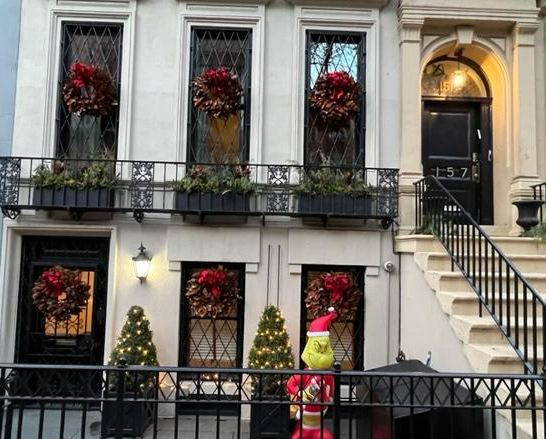
Christmas on Park Avenue
Park Avenue was lined with Christmas trees lighting up before it got dark
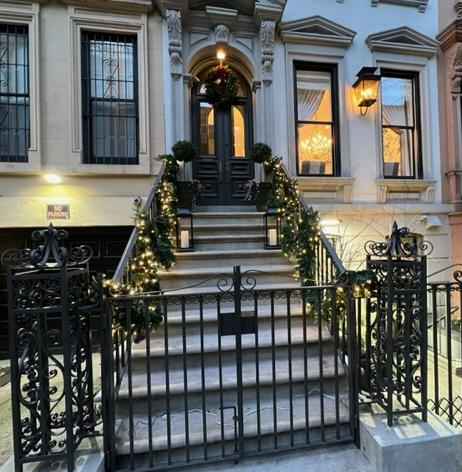
Homes on the Upper East Side were beautifully decorated for the holidays
Homes on the Upper East Side were decorated so nicely and some blocks there seemed to be a competition for whose house was nicer.
I went to Rockefeller Center one more time to see the tree and it was like a madhouse so I just looked at it from across the street and continued walking around the Upper East Side down to the Cornell Club where I relaxed for a bit before I went home. People would start taking their decorations down after the holidays and I wanted to take one more glimpse of the neighborhoods before that happened.
The Empire State Building from the Flatiron District
Christmas Eve morning, I visit the cemeteries and pay my respects to my family before I leave for my mother’s. I think it’s important to pay your respects. After fighting the crowds at Mills Bakery on Christmas Eve morning to get a Seven Layer Cake and breakfast cakes and doughnuts for the next day, I left for Rehoboth Beach. I swear the roads were really quiet and it was the first time that I got down to my mom’s in three and a half hours.
Mills Bakery at 275 Valley Boulevard in Wood Ridge, NJ had the most festive cakes, pies and cookies for the holidays
I had just seen my mother in September after the Firemen’s Convention but this was the first time since 2019 that we had spent Christmas together. COVID has really wreaked havoc on the holidays.
Christmas Eve and Day were spent at my mom’s which we have not done since the pandemic. It kept us away and it was strange not having a family get together for three years. It was nice to get together as a family again. On Christmas Eve, we went to a Chinese restaurant for dinner and the place was a madhouse.
Confucius Chinese Restaurant in Rehoboth Beach, DE
My review on TripAdvisor of Confucius Chinese Restaurant:
Even with all the crowds, it was nice to just sit back and enjoy the meal and not have to do anything. I slept so soundly that night knowing that I did not have to be anywhere for a month.
My mother really decorated the house beautifully.
The House at Christmas.
Jane set the table so elegantly.
Cooking this year like in 2019 is now a family affair. My Mom relinquish some control of the kitchen over the last couple of years as dinner was getting to be too much for her to do alone so we all help now. My brother and I coordinate the schedules and plan the menu with my mom and we each did part of the meal and cooked it. This is what the Team work produced:
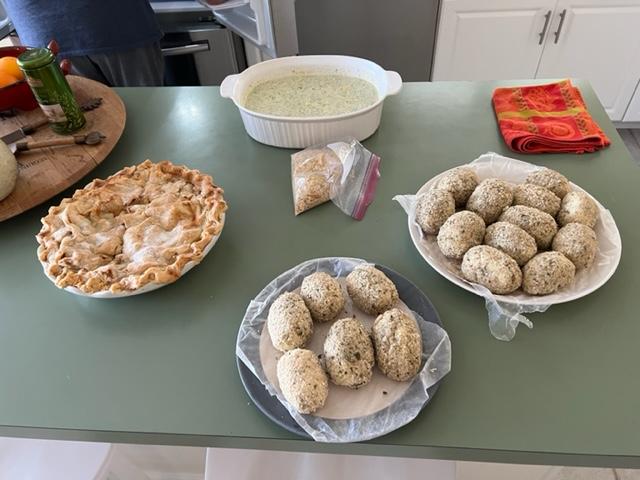
The Appetizers and Desserts being prepped for dinner:
Mom should be hired by Nancy Meyers to do visuals for her films.
The Potato Croquettes that I prepared for dinner, the Broccoli Casserole and the homemade Apple Pie my mother prepared for dinner (my mom makes the best pies).
We were all getting ready to cook our portion of Christmas Dinner.
My mother preparing the Sauteed String Beans
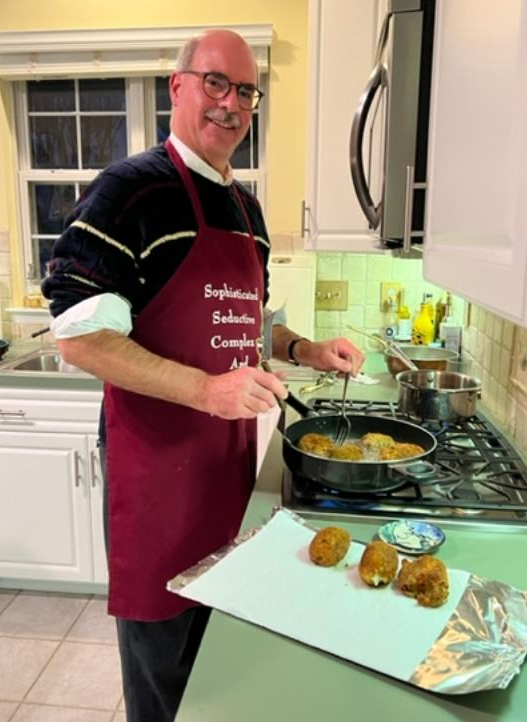
Me preparing the Potato Croquettes (which by the way were a big hit I think I look like a French Chef).
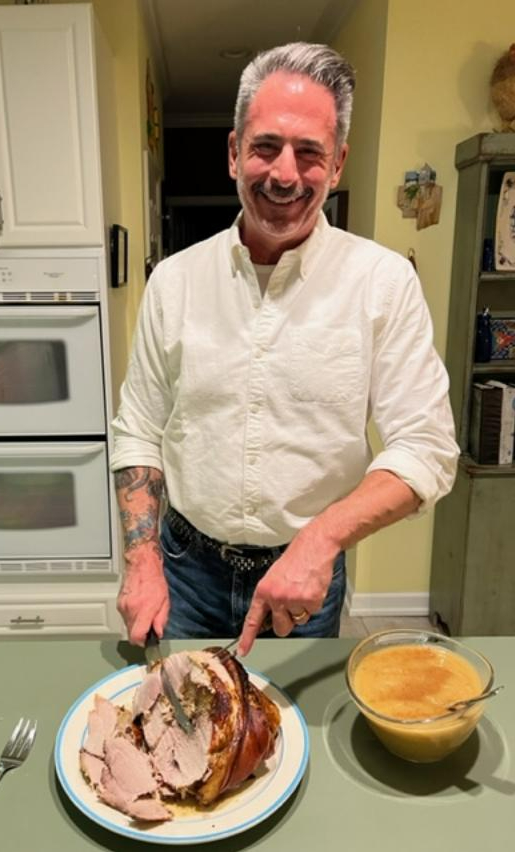
My brother getting the Roast carved before the start of dinner.
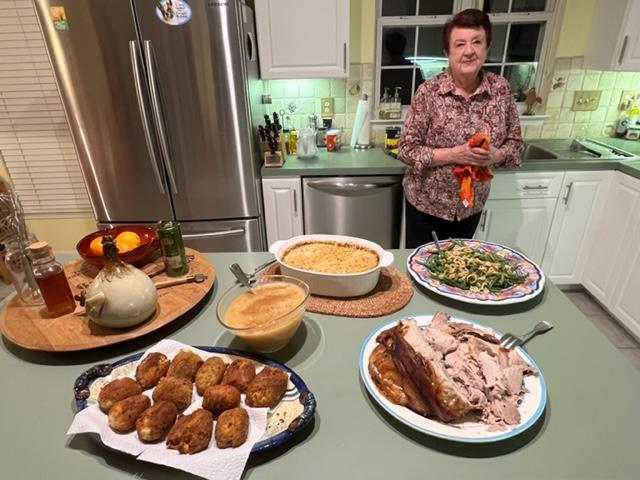
My Mother with the final Christmas dinner that was the Team effort
Christmas Dinner 2022 and everyone loved it! The dinner was Roast Fresh Park, Potato Croquettes, Apple Sauce, Broccoli Souffle and Sauteed String Beans.
The Desserts were Homemade Apple Pie and a Seven Layer Cake that I brought from Mills Bakery. My brother also made all the Christmas cookies.
My family on Christmas Day after dinner (minus my younger brother and his kids).
We had such a nice time with my mother and her friends at dinner and it was a nice quiet and mellow Christmas. It was what I needed after a long school year.
The day after Christmas while my brother headed to New York City, I took the ferry from Lewes to Cape May to spend the night and admire all the decorations all over town. I only spent one night in Cape May but with how relaxing, beautiful and quiet it was that evening I felt like I had been there for a week. I always say in my blogs that the only town to rival Rhinebeck, NY at Christmas is Cape May, NJ.
I took the ferry the next day from Lewes, DE to Cape May, NJ and thank God the weather was nice. We had really light waves and the trip went by really quick. We got into Cape May in a little over an hour and a half. Since I did not have to check into my hotel and it was getting late, I decided to head over to Sunset Beach and watch the sun set. That really relaxed me. In any weather, I swear the beach is always full of people doing the same thing. It was relatively warm that day and when I got to the park, people were playing miniature golf at the little range they have there. I thought that was amusing.
The sunset was fantastic! The weather had really cleared that evening and the colors were so entrancing.
The sun preparing to set that night
The hues at Sunset Beach make this place very special
I just stayed until it got a bit dark and then I headed to the hotel. I stay at the Chalfonte in the winter time in their Souther Quarters (the regular hotel is not insulted and closed until May) and I always enjoy the rooms with their cheery shabbiness and the way the place is always decorated for the holidays. You have to like these old hotels.
The Southern Quarters at the Chalfonte Hotel at 301 Howard Street
I have been coming to the hotel for Christmas for the last several years and last year when COVID again shut things down for Christmas, I stayed here while visiting my younger brother in Rehoboth Beach when he came for a visit. I love Cape May at Christmastime.
The hotel has that festive home away from home feeling with poinsettias around the hotel, Christmas candies and chocolates at the front door and Christmas lights around the building.
I like the shabby chic of the place
My room was really nice and the bed was so comfortable
The room has just been renovated but still had a water spot on the ceiling. That is the charm of the Chalfonte. It reminds you that it is an old hotel. I ventured out to the downtown and the Washington Mall that evening to see the true magic of what makes Cape May a Christmas town. All the lights, trees and decorations make sure that Santa does not miss this town.
The town square with it’s Christmas tree in the bandstand and white lights all over the little part are whimsical and magically as you walk through them. It always reminds me of “Whoville” in the “Grinch that stole Christmas”.
Cape May Town Square at Christmas
The bandstand and Christmas tree are amazing at night
The Cape May Christmas tree
I spent a good part of the my evening admiring the lights of downtown and of Washington Mall which is the downtown section of Cape May. The whole neighborhood was ablaze with lights, decorations and beautiful Christmas displays in the windows. Cape May knows how to decorate for the holidays.
The Washington Mall at night
The Washington Mall in Cape May decorated for the holidays
Our Lady of the Star Sea Church at 525 Washington Street in Downtown Cape May
After a long walk picture taking everything in the downtown from every angle (I have pictures that I ended up using for other sites), I went back to the room to relax. I just sunk into the pillows and went out like a light. I woke up two hours later and got to bed. I slept so soundly again.
The next morning was rested and ready to go. I had my usual post-Christmas game plan. I started with breakfast at the Mad Batter, a local well known restaurant in Cape May and the food is always excellent. I have eaten here several times and I highly recommend it.
The food and the service are always very good. That morning there seemed to be only one waitress on the floor and I swear that this woman handled the dining room like a pro. The service was flawless and she never panicked.
The Bacon and Cheese Omelet with home fries was outstanding
After breakfast was over, I gathered my things at the hotel and dropped off my keys and then spent the afternoon visiting historical sites. Most everything I was surprised were closed so I took exterior shots to update my blogs.
While walking downtown, I saw that Our Lady of the Star Sea, the Catholic Church in the Washington Mall was having service at 11:00am. Since I did not go to church services on Christmas Eve or Day, I went in for the post-Christmas services. I was surprised how crowded they were that morning. I found out that a young new priest has just come from the seminary and started that day. I found him very inspirational and very enthusiastic.
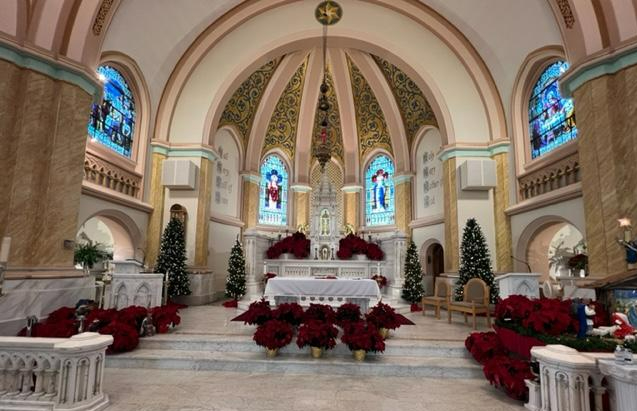
The church was so beautifully decorated for the holidays
Our Lady Star of the Sea for the Christmas holiday season
After church services were over, I toured around Cape May. I had a noon time appointment at the Physick Mansion to see their Christmas decorations so I stopped at a few of the museum around the downtown area but again all closed.
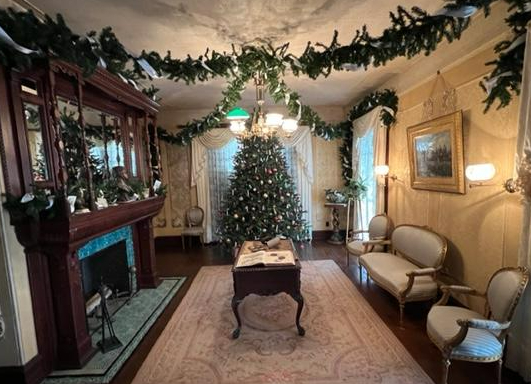
The Physick Mansion tour at the holidays I have taken many times and it is one of the nicest homes decorated for the holidays. Many people would not have decorated every nook and cranny of the house the way this is but like Locust Grove, it gives you an idea of how the Victorians celebrated the holidays.
The decorations were amazing and the house was decked to the hilt for the Christmas holidays. We got to tour the entire house and every room has such festive garland and Christmas trees. The family seemed to know how to celebrate the holidays.
The Living Room at the Physick Estate
The Dining Room
The Parlor with the ‘Tabletop’ Tree in the corner
We went room by room with the tour guide explaining how the family would prepare for Christmas and the preparations that would have to be done by the staff for guests and for the family dinner. There would be many trips to Philadelphia department stores for gifts for the family. You felt on the tour that the family had just left for the day.
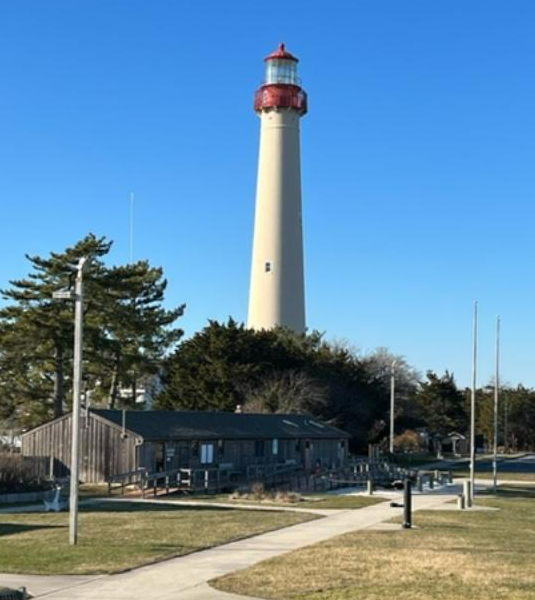
After the tour, I headed over to West Cape May to see the Cape May Lighthouse and was surprised that it was open that day. With everything else being closed, it was a treat to be able to climb it again. The drive in was nice as people decorated their homes nicely and being a warm day around 50 degrees (Christmas just seems to be getting warmer), I drove around for a bit to admire them.
The entrance to the Borough of Cape May Point decked for the holidays
The outdoor Christmas display in West Cape May
The Cape May Lighthouse and grounds were really busy with visitors and being such a warm day many were walking on the beach or admiring the park. Several passed me as I climbed the lighthouse which I had not done in a few years. The view on this clear sunny day was great.
The views from the top were so clear and beautiful and being so clear you could see the entire surrounding community.
The view from the top of the Cape May Lighthouse
After climbing up and back down, I passed more people who I could not believe were complaining on how hard it was to walk it. I got up in about ten minutes with a couple of stops and then was back down again once reaching the top. It is not that hard and is well worth the trip up.
Watching the time, I wanted to visit the farms in the area but Rea Farm was closed for the season so I headed to Beach Plum Farm, which has become quite the tourist stop since my first trip to Cape May. It is such a picturesque farm but it looks very planned. When I first started coming here is was a more local farm. Now it looks like a gourmet shop and it has gotten more expensive.
The entrance to Beach Plum Farm at 140 Stevens Street
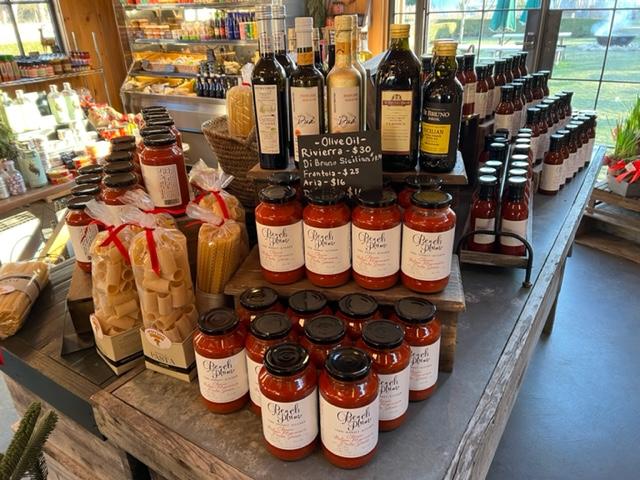
I toured around the gift shop and admired the beautiful displays of gourmet foods. The place was almost empty as I could see that they must have had a very good Christmas. There was some serious restocking that needed to be done.
The wonderful gourmet items at Beach Plum Farm
I ended my afternoon feeding the chickens before I left the farm. God they were so excited to see me. I just had a little feed and they ran all around me like groupies. I guess this is how the farm feeds them. It was the best quarter I spent on the trip.
The chickens were a very excited bunch that afternoon
Before I left Cape May that day for home, I visited Sunset Beach one more time to enjoy the weather. The beach was pretty crowded again as everyone waited to see the sun set again on Cape May. Like I said before, you can see this a hundred times but it is never boring.
Sunset Beach on a warmish sunny day attracts a lot of visitors
From Sunset Beach, I headed home. I stopped for a quick slice of pizza on the way and then I had to leave Cape May (until the next time). There was a lot to do and I had places that I wanted to visit before the holidays were over. I could not believe how much work I got done on this two day trip to Cape May. I got to see a lot.
In the week between Christmas and New Year’s, I made another trip around the City. Since I did not have to return to classes until the end of January, I was able to take my time and explore around campus and the Village. Christmas was still in full swing.
Christmas in Greenwich Village
Decorations in one of the pocket parks on Greenwich Street
Homes decked out for the holidays
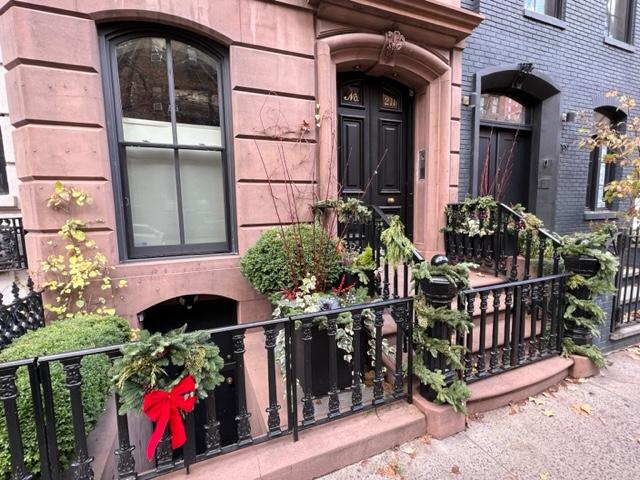
Townhouses decked out for the holidays
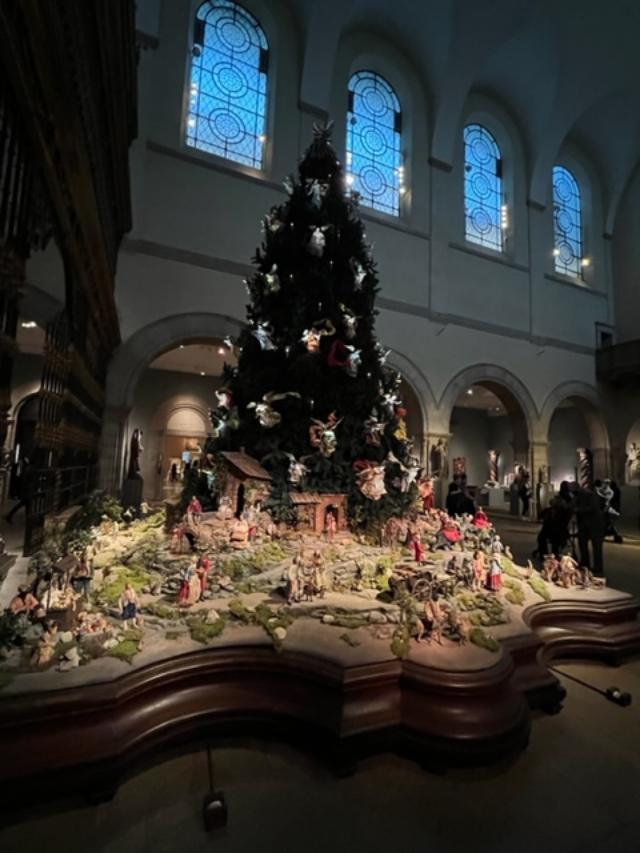
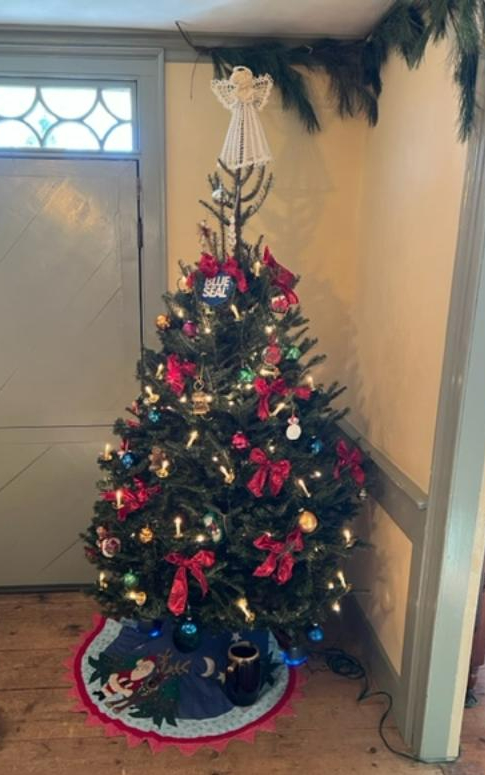
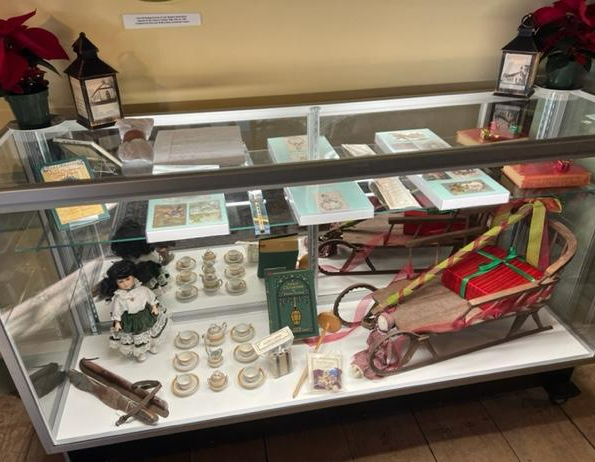
I also made a special trip to the Metropolitan Museum of Art to see the Christmas tree and decorations before the museum took them down after the Epiphany. I love seeing them every year. It still is a big attraction at the museum and you have to visit it before that first weekend in January is over.
The Metropolitan Museum of at at 1000 Fifth Avenue:
My last holiday event before school started again was Epiphany services at the Reformed Church of Paramus and visiting my father for his birthday. It can be sobering but I try to still celebrate his life and going to this church puts me into the Christmas spirit.
The Paramus Reformed Church in Ridgewood, NJ
Christmas services at the Paramus Reformed Church
The Paramus Reformed Church’s decorations by Route 17 are always tasteful
After services were over, I stayed and joined the other parishioners for Tea and snacks after the service and talked with other parishioners. It was nice to sit back after a long holiday season and just relax. After services were over, I went to pay respects to my father for his birthday (which is the reason why I come here for church as its on the way home). The cemetery was filled to the brim with wreaths and grave blankets so even though it was a cemetery, there was still a festive feel to the fact that so many people paid their respects to their families.
My aunt took me out on the last day of the Epiphany weekend for my combination birthday/Christmas present dinner to the Ivy Inn. What a nice evening we had and it was the perfect way to end the holiday season. The Chef/ Owner was not there that day but we were able to discuss with the staff the paper I wrote on the Metaverse. They seemed amused by it all (see my review on dinner on my TripAdvisor review above by the Metaverse paper story).
The Ivy Inn decorated for Christmas
The beauty of the dining room decorated for the holidays
The delicious salad I started with
The delicious Penne with Sundried Tomatoes and Sweet Sausage that I had that evening
My aunt and I shared this wonderful Zeppoles with Chocolate and Raspberry sauces
It was a magical evening with good food and company in a festive environment. I really needed this with all the running around with school, work, blogging and research that I had done from Thanksgiving to the Epiphany. It was a lot for one person to pull off and somehow I managed it all. I am lucky that I have supportive friends and family.
I had the entire month of January to relax before the whole thing began again for Spring Semester and that is all I wanted to do. It didn’t quite happen that way but I finally got time to myself which I needed.
My work for my blogs took me all over New York and New Jersey, visiting small towns, admiring Christmas decorations and supporting many community events. Please visit my other blogs DiningonaShoeStringin NYC@Wordpress.com, LittleShoponMainStreet@Wordpress.com and VisitingaMuseum.com to see all the updates, more detailed stories on the mansions and events and all my updated pictures.
I got my final grades by the end of the semester and it was straight “A”‘s. This was the first time in my life I ever did that! Don’t even ask me how I pulled this all off!
Merry Christmas and Happy New Year!
The Empire State Building from the NoMAD section of Manhattan just off Broadway
The front of Barcelona’s during the winter of 2024.
There is not a bad thing to say about Barcelona’s Restaurant and Bar. It is classic North Jersey restaurant that has not changed over time. I once took my mother there for dinner and she said that it not changed since she was a teenager. This type of time warp has not affected the food or the prices or the service. All are still terrific.
The waiters here are such characters. It is so casual that you feel like you have known them for years. Most of the staff has been there for many years and they always treat you nicely.
What we all come for is the food which is “red-sauce Italian American” with a emphasis on pizza and pastas. The food here is not fancy or gourmet but traditional ‘stick to your ribs’ cuisine. There is a nice selection of appetizers, pasta dishes, a selection of meat dishes and salads. What Barcelona’s is best know for is their pizza.
The sauce on their cheese and sausage pizza is fantastic.
Their pizzas are thin crusted and well cooked both on the top and on the bottom. Their large cheese pizza is loaded with their delicious red sauce which is well-spiced and has a hint of garlic and topped with lots of mozzarella ($11.00). The sausage pizza is topped with lots of chopped sweet Italian sausage giving it a spicy consistency ($14.00).
The pizza sauce really makes this pie. It is excellent!
The pasta dishes are rather large in portion and loaded with their red sauce which is a nice combination of tomato sauce, garlic and onions and fresh herbs.
You get a nice sized portion of spaghetti with a nice sized meatball.
The pastas are always perfectly cooked and topped with their delicious red sauce and served with hot fresh Italian bread. Their spaghetti ($8.50) is a nice sized portion and is even better with a side of their homemade meatballs or sausage ($10.50). Their meatballs are a nice combination of ground meats with a nice hint of garlic.
The Lasagna with a meatball was a gooey combination of cheese and pasta with their delicious red sauce.
Most of the pasta dishes are priced between $8.00-$10.00 and are filled with fresh ricotta, mozzarella and Parmesan cheese. The lasagnas. stuffed shells and ravioli are all well-cooked and flavorful. All the dishes are accompanied by their fresh Italian bread. They are a gooey combination of ricotta and mozzarella cheese layered with their red sauce.
The Lasagna is excellent and the meatballs are really large and delicious.
Their seafood I have found to always be fresh. The appetizer of sweet mussels in their red sauce is really good and are nicely cooked ($7.50/$11.00). They are perfectly cooked and have that fresh sea taste to them.
The mussels are a meal to themselves with all the delicious red sauce and some hot Italian bread.
They are now having a new hamburger special with all different types of burgers available. The portion at a recent dinner for Sliders and Fries could have fed two people.
A family can eat here are reasonably priced for under $30.00 and have a nice meal with wonderful ‘Jersey service’ by a family who has been running the restaurant since 1933. Sometimes things don’t change for a reason and Barcelona’s does it all correctly.
Since COVID there is some good news, they now accept credit cards. This has been a long time in coming.
*Note: There is no delivery and no Credit Cards-Cash Only(Note: Since COVID the prices have gone up one or two dollars).
There is not a bad thing to say about Barcelona’s Restaurant and Bar. It is classic North Jersey restaurant that has not changed over time. I once took my mother there for dinner and she said that it not changed since she was a teenager. This type of time warp has not affected the food or the prices or the service. All are still terrific.
The waiters here are such characters. It is so casual that you feel like you have known them for years. Most of the staff has been there for many years and they always treat you nicely.
I do not think my feet touched the ground the entire month of October. Halloween night was spent in classes doing presentations and starting a new class on the Metaverse at NYU. It was not too awful as it rained during the parade for about an hour and was not the usual clear sunny (and usually warm) day that it had been in the past. Even though my partner at the parade, Mark Schuyler, said it was fun, the rain would be a bit of a deterrent.
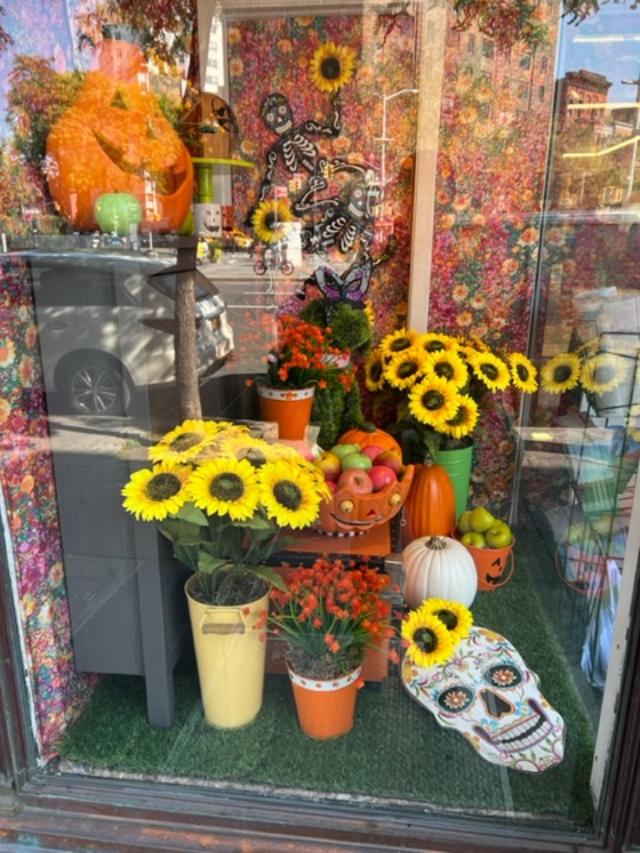
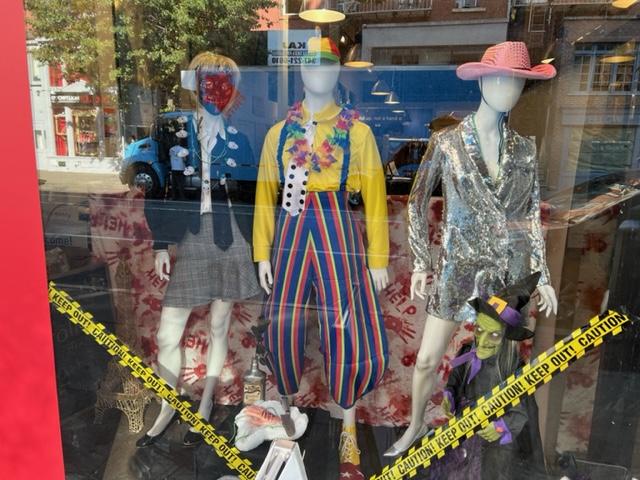
The Village Merchant windows
The end of September lead to the crazy days of October as I settled into my classes at NYU and continued to get more assignments than I could keep up with. Between the three classes that I was taking at NYU and the three classes at Bergen Community College that I was teaching, my hands were so full that I never stopped running around. Everyone just kept adding more and more and I just had to keep up.
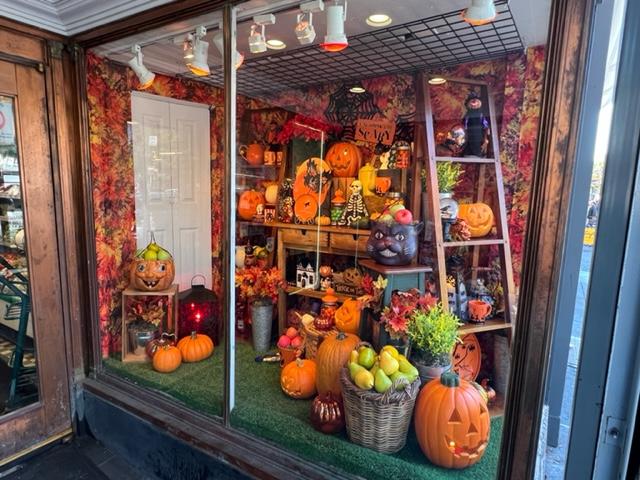
The Village Merchant windows at Halloween
The weather was surprising warm through early November this year which made the walk from Port Authority to campus a real pleasure. This is how I knew that Halloween was on its way. Here and there amongst the great little stores in the neighborhood, the window displays were full of pumpkins, witches, ghosts and ghouls and things that go bump in the night.
The Salvation Army windows around the corner from NYU
Many of the merchants in the neighborhood really decorated their windows and it made it fun to exploring the side streets.
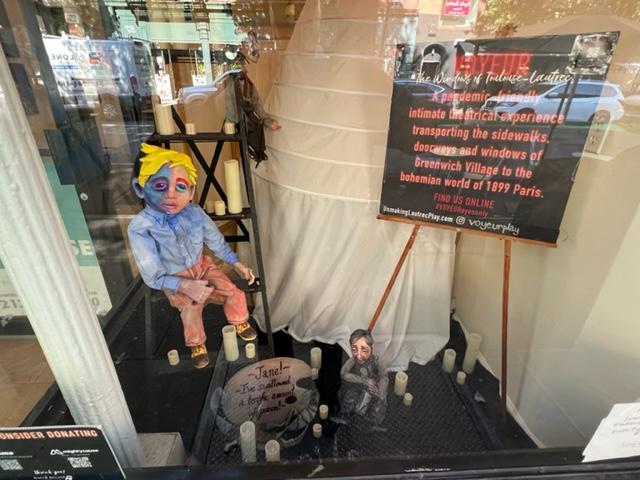
The Theater around the corner from NYU
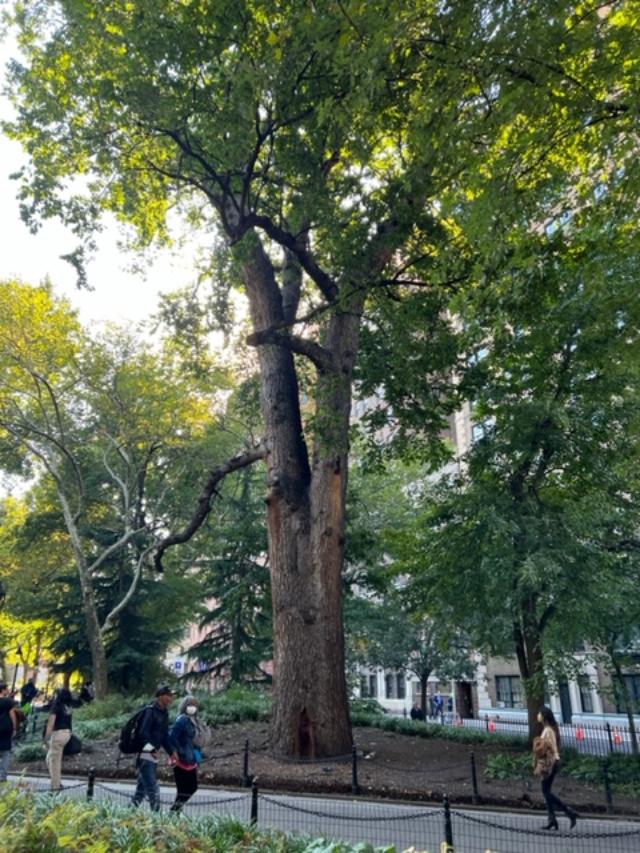
As I walked through Washington Square Park, I thought back to the Haunted New York Ghost Tour that I took with the Cornell Club the year before and passed some of the sites in the neighborhood that we visited on the tour especially the “Hanging Tree” at the edge of the park.
The “Hanging Tree” in Washington Square Park where they used to hang prisoners until Society moved to the neighborhood and asked them to stop.
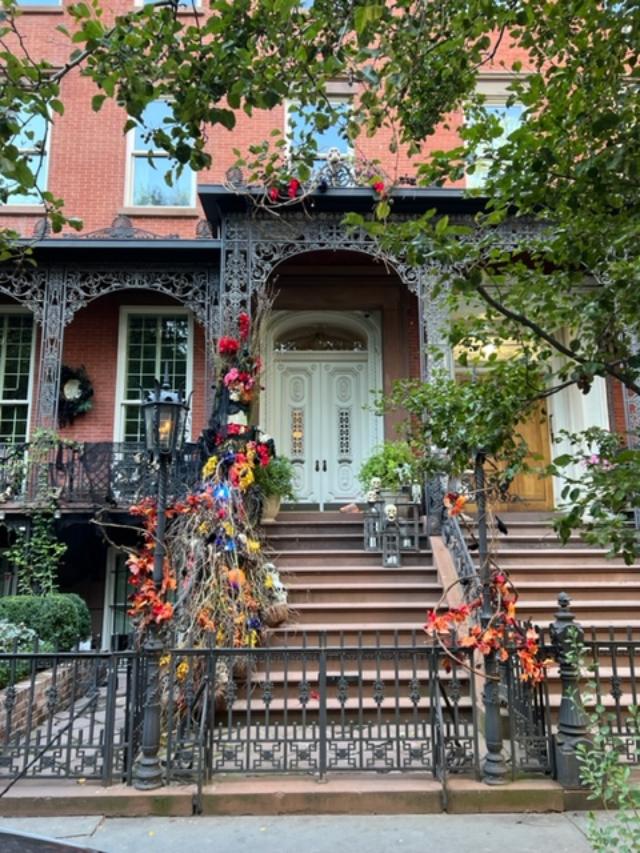
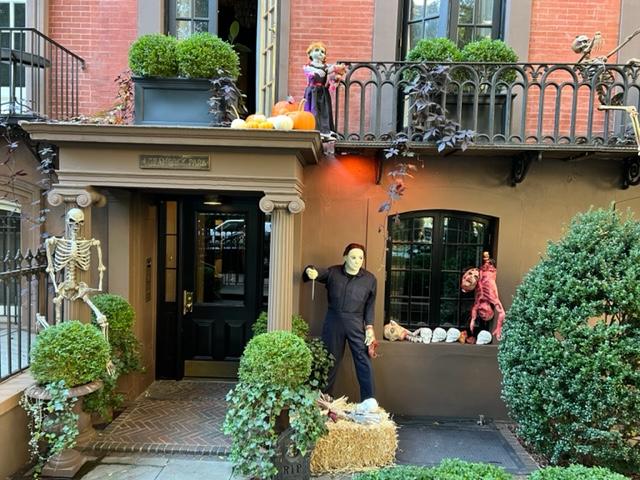
I passed through Gramercy Park to see what was going on in the park and people really decorated around the neighborhood.
I also remembered that Washington Square Park was a giant cemetery with a park on top of it. I am not too sure if people in the neighborhood or my fellow NYU classmates know all of this. Every once in a while when they have to fix the pipes near the edge of the park, they hit the tombs where bodies now rest. It is kind of eerie to know that people are buried under where people now play music, dance and protest. Just hope we don’t wake them up (Hee Hee).
Downtown Hasbrouck Heights decorated for Halloween in 2022
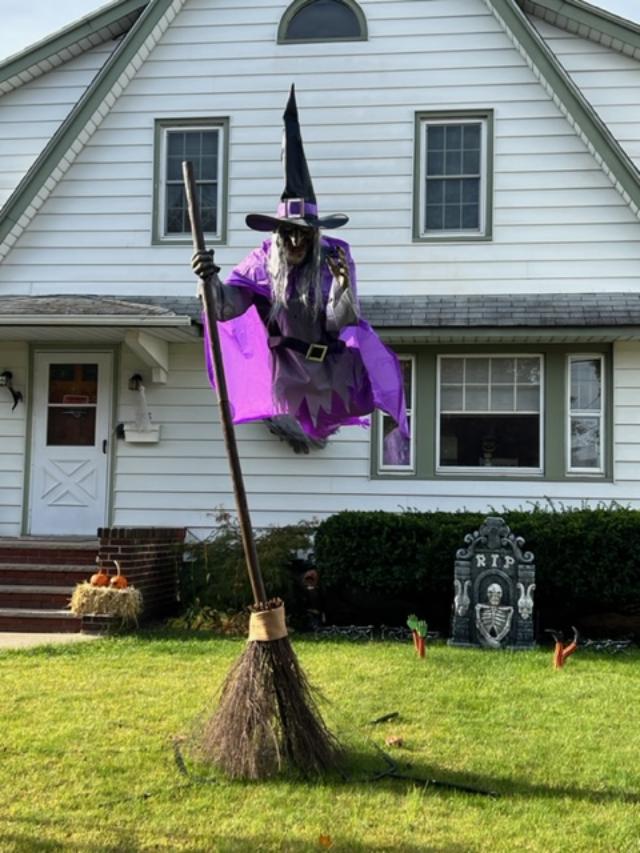
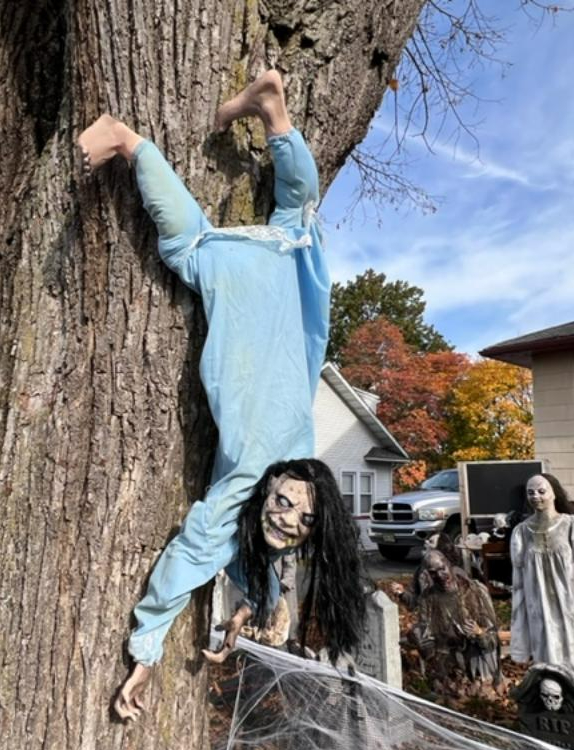
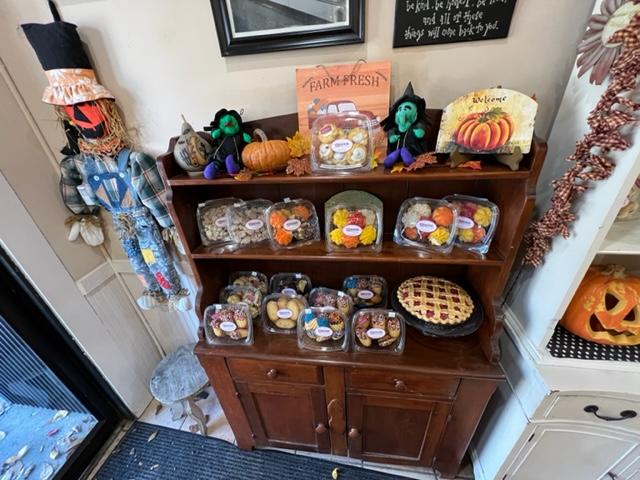
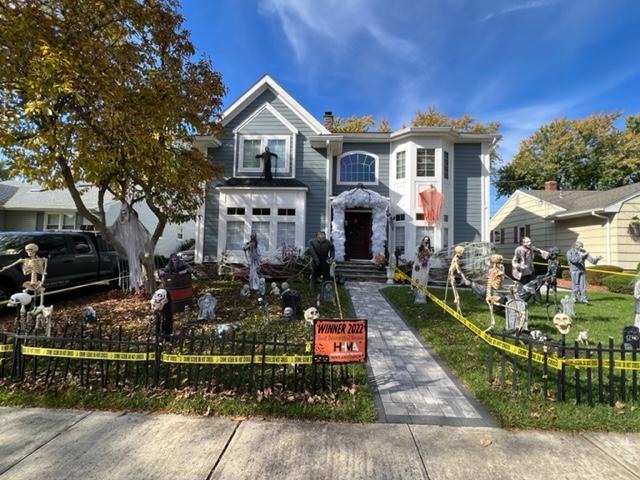
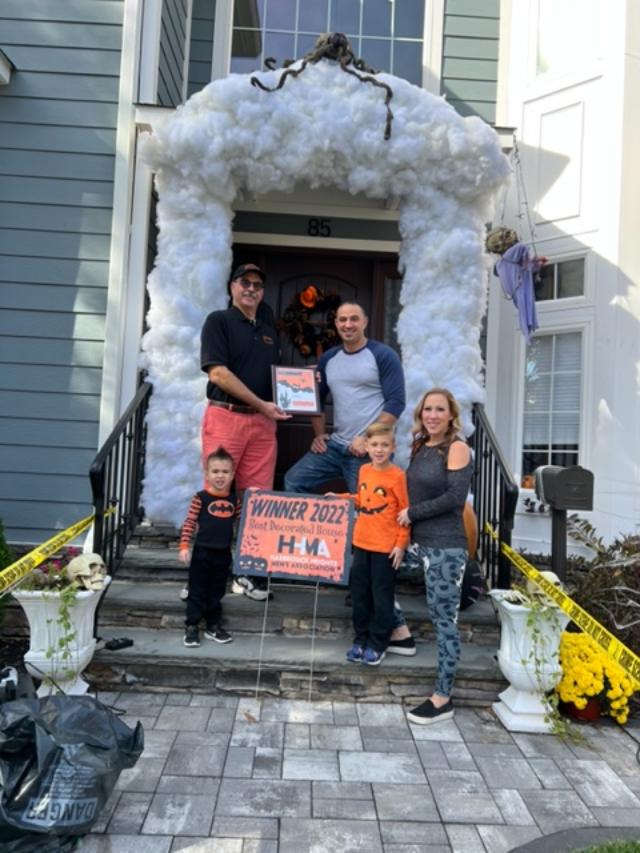
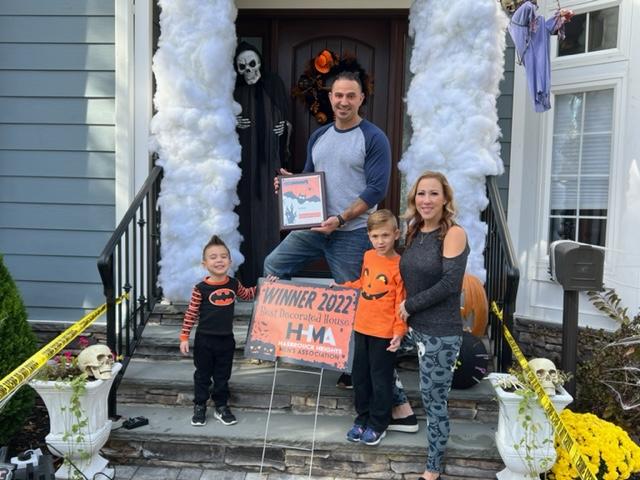
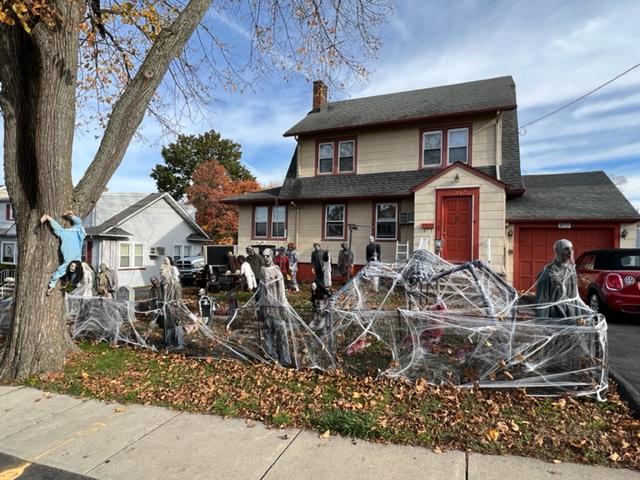
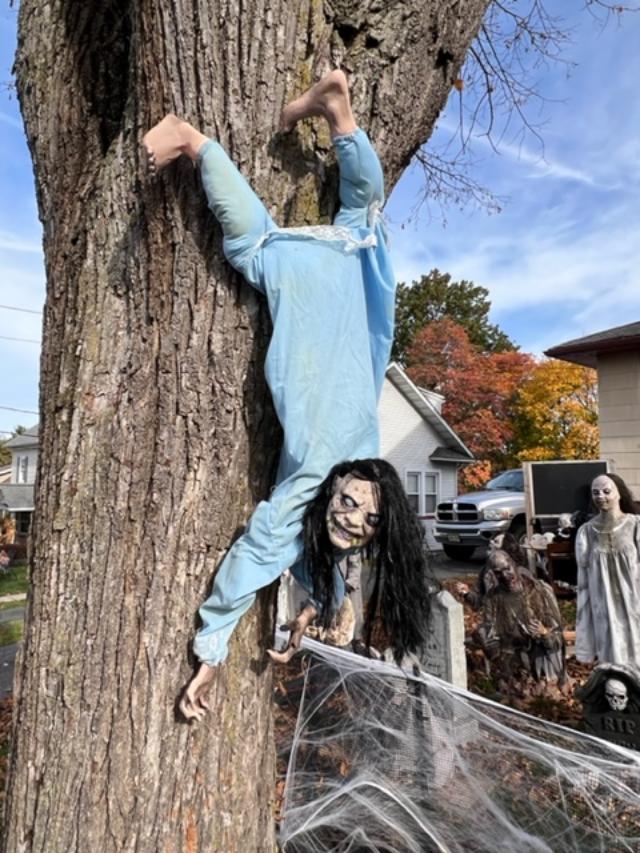
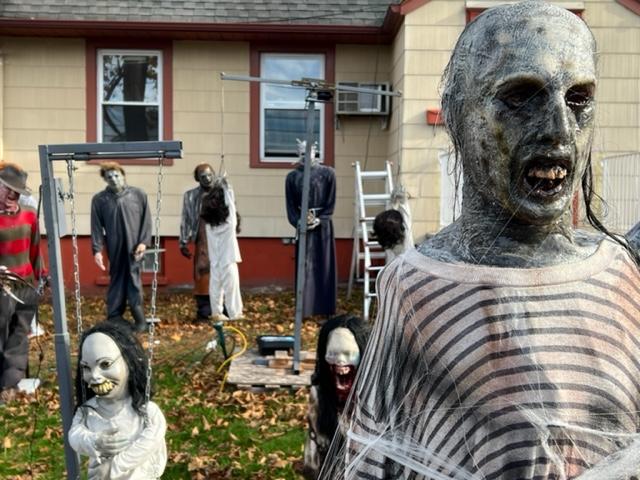
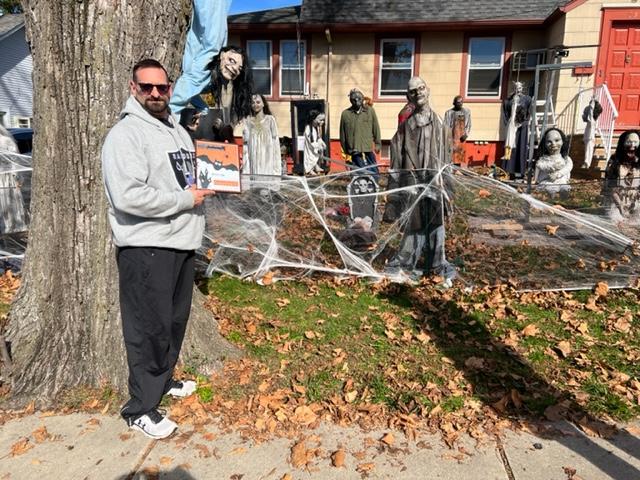
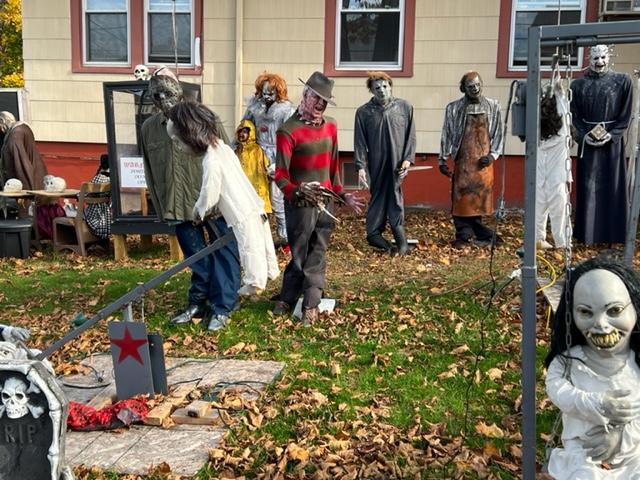
In early October, people really get into Halloween in a major way in Hasbrouck Heights and I start noticing that people are decorating their houses more for the holiday. By the end of the month, the Men’s Association starts to run around town judging houses for our annual contest. Some people started decorating early.
The beginnings of Halloween in Hasbrouck Heights, NJ
The beginnings of Fall in Hasbrouck Heights, NJ
Looks like the competition will be fierce this year
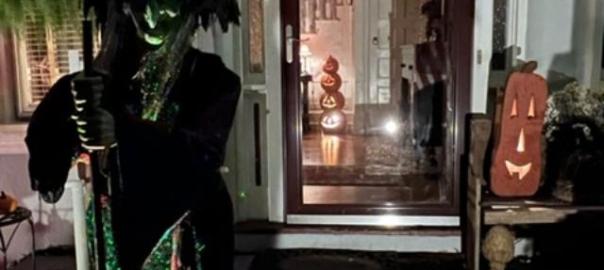
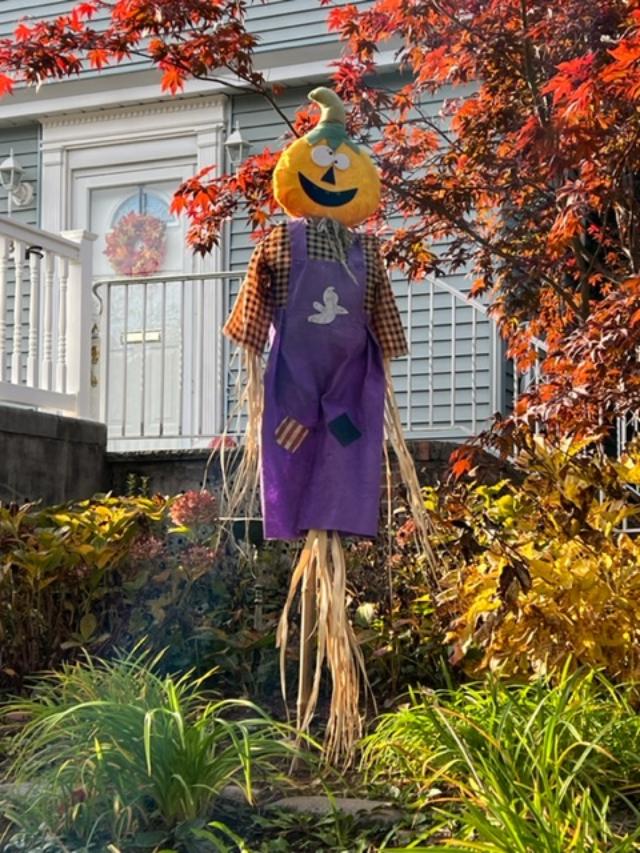
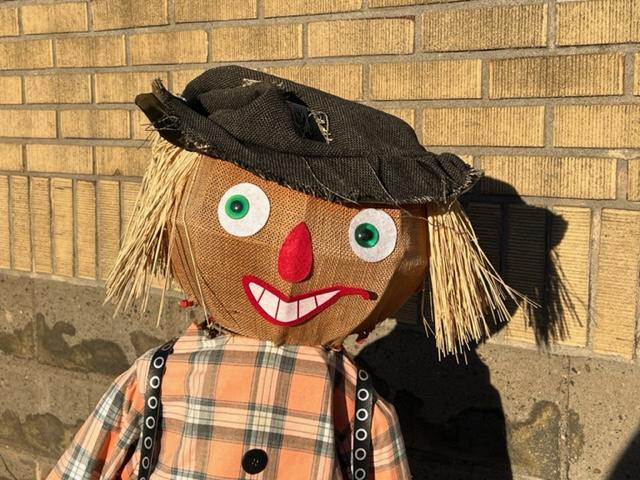
My neighbors even put their evil scarecrow “Giggles” outside to scare the passersby on Route 46 East. I swear this thing has a mind of its own.
“Giggles the Scarecrow” at Route 46 East in Hasbrouck Heights, NJ
The story of “Giggles the Scarecrow” on MywalkinManhattan.com Day One Hundred and Eighty-One:
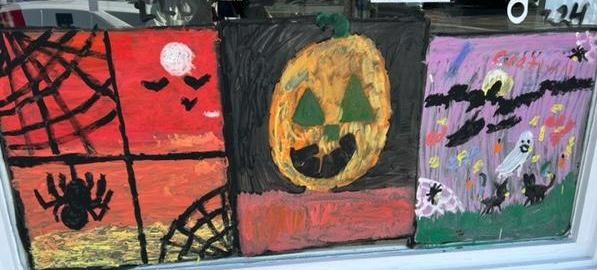
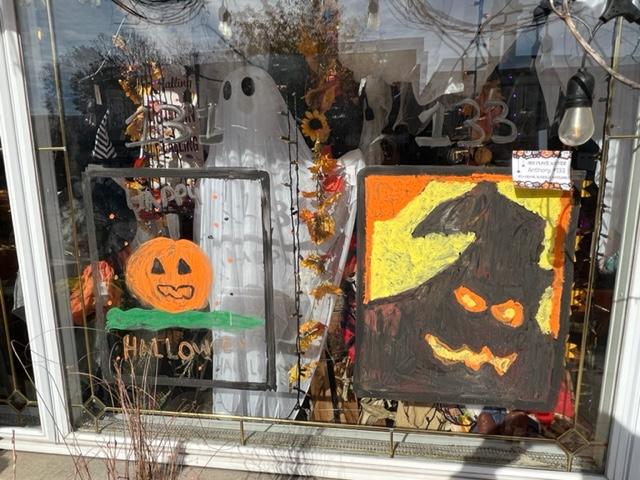
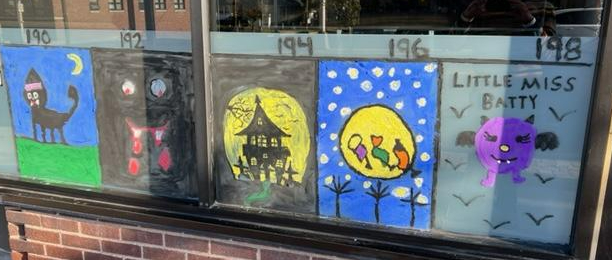
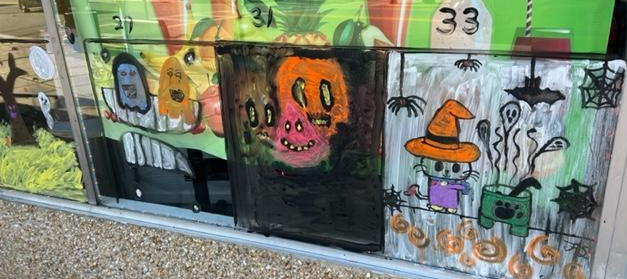
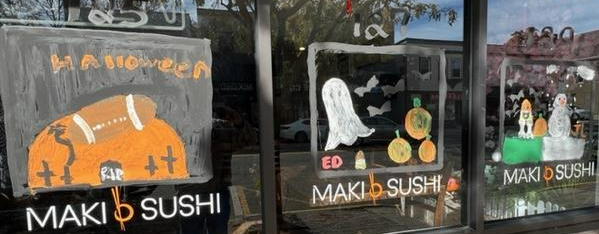
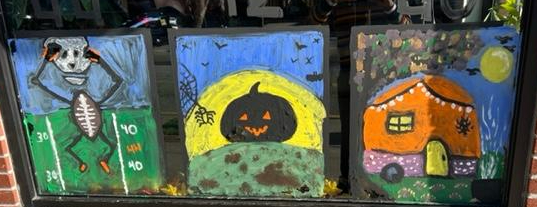
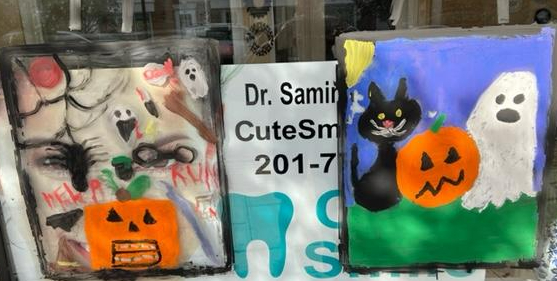
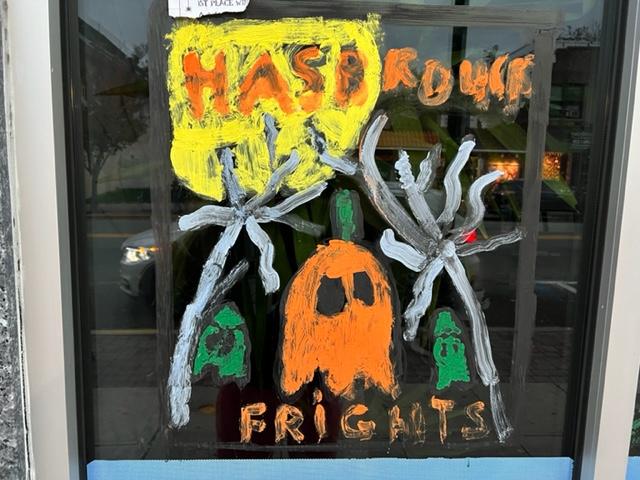
As the temperature stayed warm and the trees stayed green, I could see the windows in Downtown Hasbrouck Heights start to change as the Annual Halloween Children’s Painting Contest for the elementary schools began. This goes on for about a week and sometimes the paintings stay up until Christmas time as people don’t realize that they are still on the windows. Some of these kids are really creative and do a nice job.
The Hasbrouck Heights Halloween WIndow Painting Contest
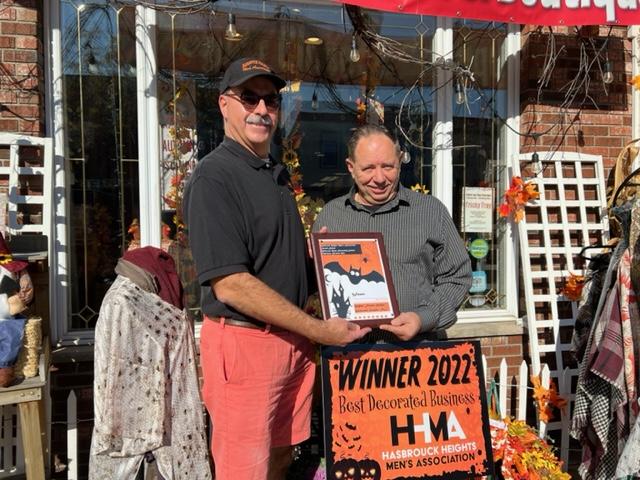
The merchants in our downtown like in the Village start to get creative with the window displays and this is why on the Hasbrouck Heights Men’s Association we added a Merchant winner this year to our Halloween House Decorating Contest. So many of the merchants do such a terrific job of getting into the spirit of the holiday. Halloween is a big business now.
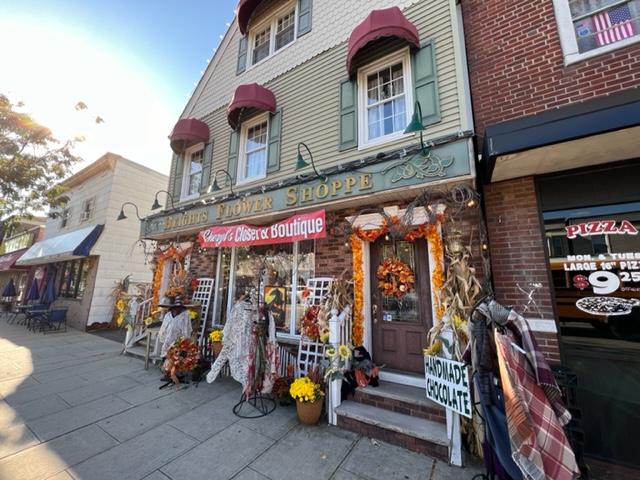
Heights Flower Shoppe was our winner this year and this picture does not give the display justice
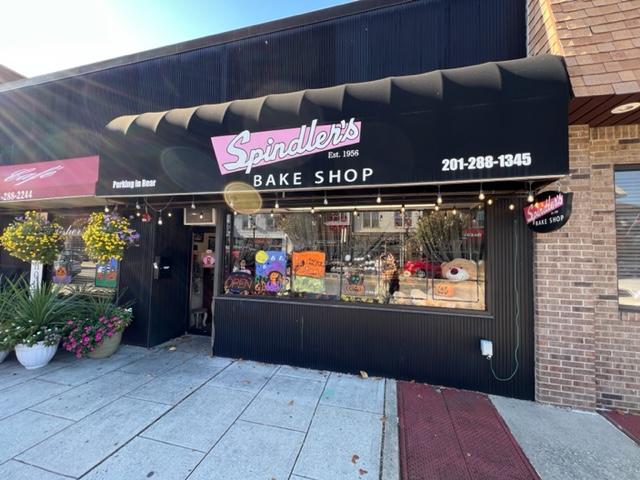
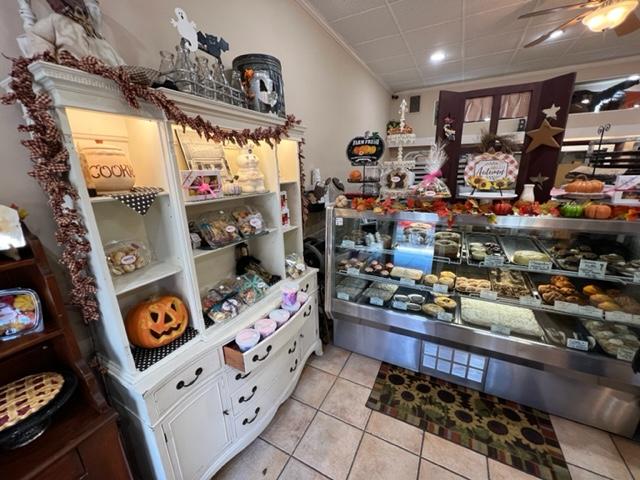
Spindler’s Bake Shop decorated inside and out to be the Runner Up
Residents of Hasbrouck Heights for Halloween last year went all out decorating their houses for the holidays. This year it seemed a bit more subdued as the economy, the elections and just the general environment seemed a bit testy, people held back a bit but some residents went all out and by the end of the month we started the Second Annual Hasbrouck Heights Men’s Association House Decorating Contest with a new Merchant Category. Halloween then really kicked off.
I knew that Halloween was coming when I saw the kids on the Boulevard painting away at the Merchants windows in Downtown Hasbrouck Heights the first week of October. The funny part is that I sometimes see these paintings through Christmas.
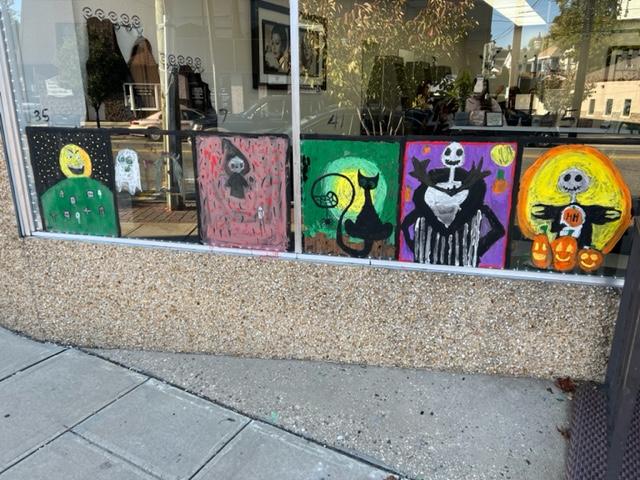
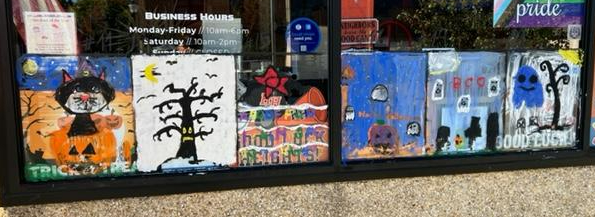
The kids do such a great job though and they are so creative. Here is a sampling up and down the Boulevard that I saw when I was judging businesses for Halloween. This is just a sampling of some of the paintings that the children of Hasbrouck Heights in 2022:
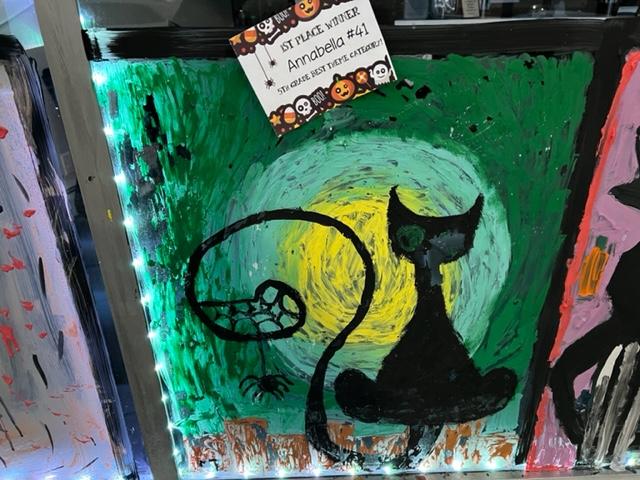
Ist Place
Some of the paintings on the Boulevard with the winner
Paintings on the Boulevard
Paintings on the Boulevard
Paintings on the Boulevard
Paintings on the Boulevard
Paintings on the Boulevard
Paintings on the Boulevard
Paintings on the Boulevard
Paintings on the Boulevard
The contest is really popular every year and there are winners at every level
With classes in full swing and projects that I had to work on it made it tough to have free time to visit a lot of places that I had done in the past, so I concentrated on new experiences and trying to revisit the places I had when I had a free moment. It took a lot of planning, but I was able to get to upstate New York and down to Southern New Jersey again. In simple terms, between classes and work, I never stopped running around for the entire month of October. I did a lot of driving this month.
First I had to spend my birthday in class making a major presentation in my ‘Business Models’ class and my ‘Travel Trends’ class. That was nerve wracking enough but I got an “A” on both so I was really happy. I did the project on Wheelchair tourism in NYC and the challenges that a person could face when visiting Manhattan in a wheelchair.
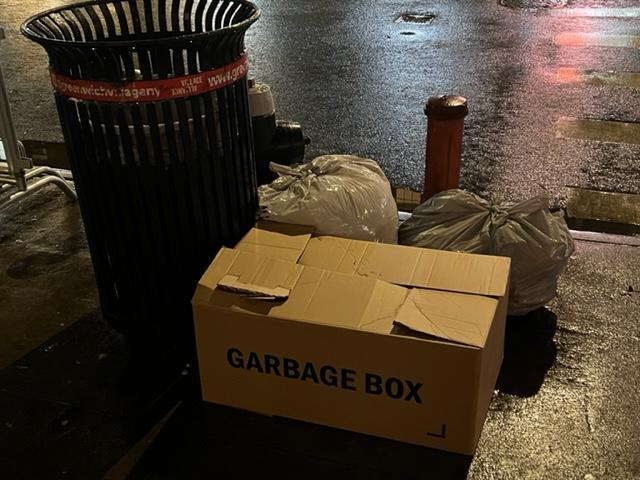
The in the evening, I was in my Business Models class explaining the use of the “Garbage Box”, a mythical product that I created to contain all the street garbage from leaking on the sidewalk and making the sidewalk a bit more attractive by packaging the garbage. That earned me another “A”.
The “Garbage Box” prototype that when after class I really used it and packed garbage inside and left it at the curb. See how much nicer the garbage looks now?
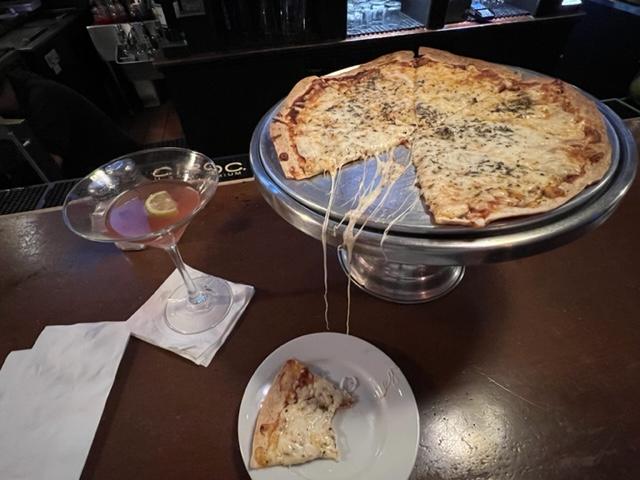
Between those two classes and work on my two classes getting papers graded and getting quizzes done, I was burnt out. When I got home from my Thursday night class in Lyndhurst, I went to Heights Bar & Grill in Hasbrouck Heights for a drink and a snack. Happy Birthday finally to me!
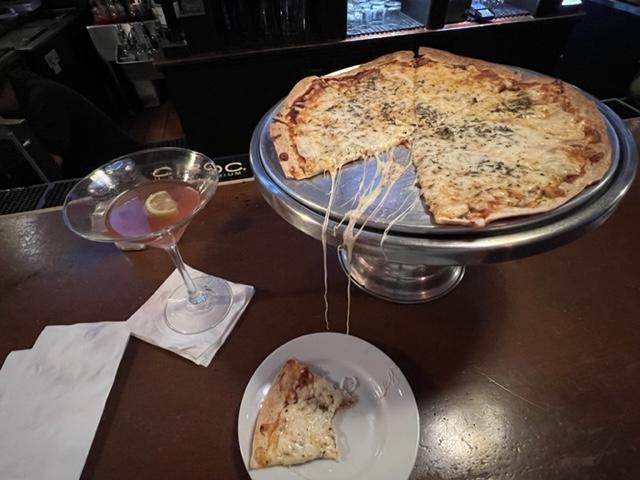
My birthday dinner (two weeks late) at Heights Bar & Grill. The Cosmos and Pizza were amazing
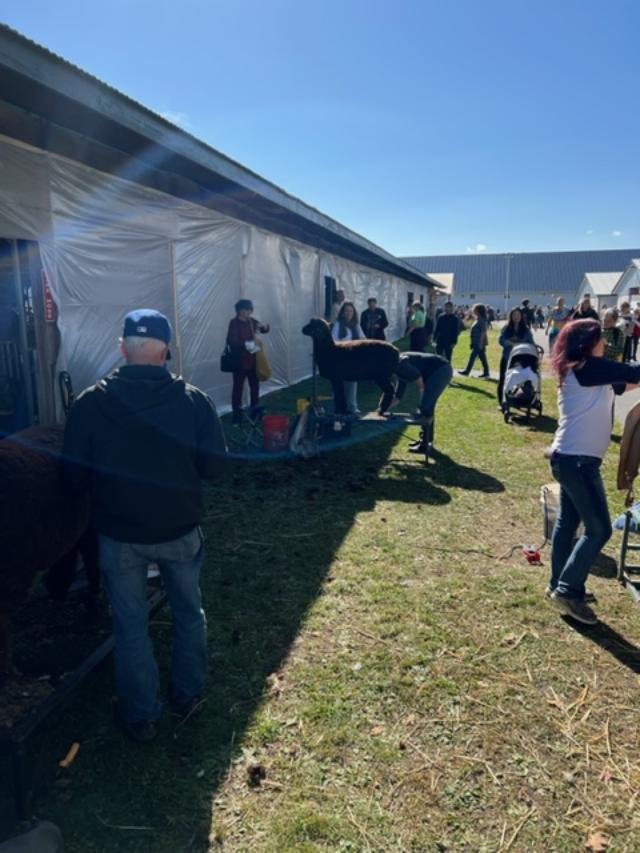
When I finally got those projects over and done with for school, I went Upstate to the Hudson River Valley for the Sheep & Wool Festival at the Dutchess County Fairgrounds on October 16th to enjoy the unseasonably warm weather and to walk around the fairgrounds.
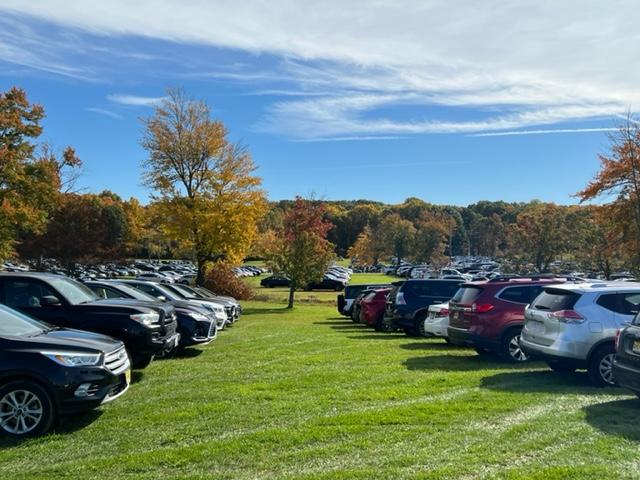
I don’t think the festival anticipated that many people that day
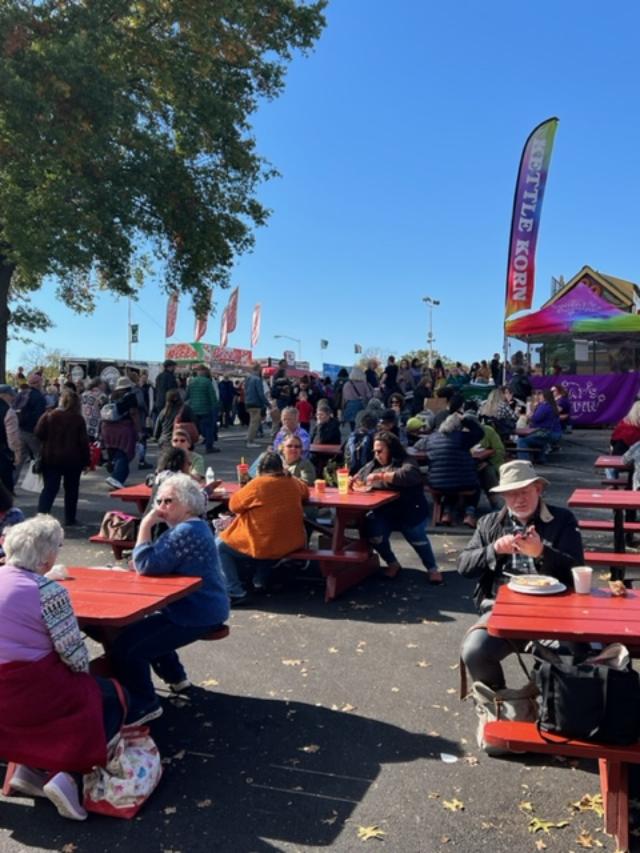
It ended up being almost 75 degrees that day but felt warmer. The fairgrounds were packed the entire afternoon. Not quite during the Dutchess County Fair but the food vendors were out in full force and that made me happy. There were not as many as during the fair and that led to a lot of long lines. This is the reason why I decided to walk around for a bit.
The large crowds at the food concessions at the Sheep & Wool Festival
Please enjoy my blog on the visiting the Sheep & Wool Festival Day One Hundred & Forty Nine:
I made my way to the animal pens and the Arts & Crafts sellers. You could see that everyone was getting ready for the Christmas holiday season. There were all sorts of items for stocking stuffers and people had all sorts of beautiful handcrafted ornaments and Santas. I love visiting my favorite woodcarving artists where I get my mother’s Santas every year.
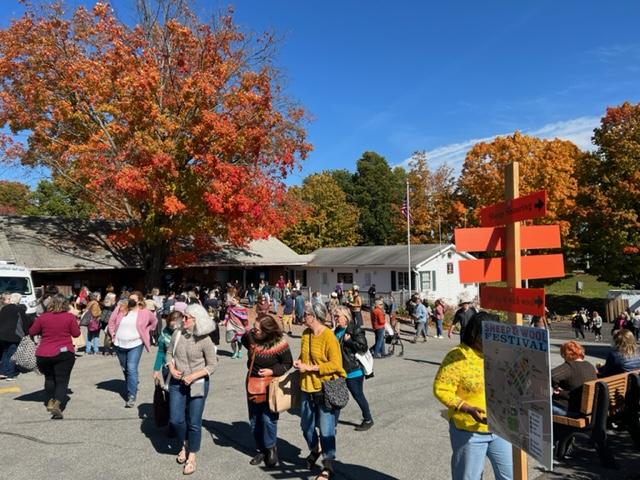
Because of the warm weather, I don’t think the festival figured on the number of people
The guys were all there and all three of them showed me what they had to offer this Christmas. Since I never carry cash around (a mugger would hate me) and they never take credit cards, its makes it easy to make a selection. I have to buy the cheapest most creative one each year.
The wood carvers are so talented. I buy my Santas from these three men every year
I could not decide so I told the guys I would do what I usually did, see what was left over when I got back and make a decision then. I think they get a kick out of that philosophy of mine. I walked around the rest of the building to see what was there but I have a tough time spending $10.00 on a bar of soap or $20.00 on a bottle of honey. I do have limits on what I will spend money on.
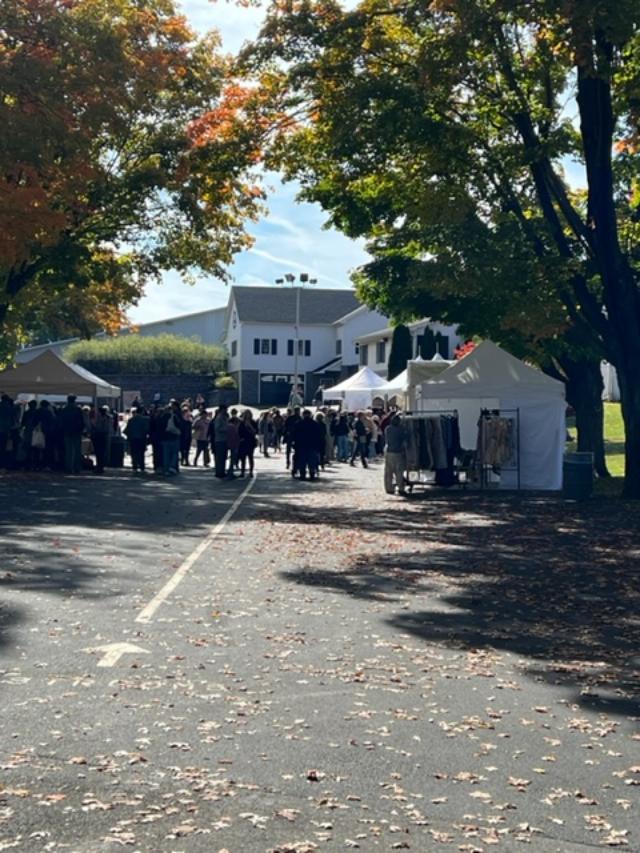
The crowds on a warm October afternoon at the Sheep & Wool Festival
I walked around the rest of the buildings looking at the arts & crafts, a lot of yarn and crocheted articles at the booths and the homemade food stuffs. There was a lot to choose from. As I left the buildings with all the homemade articles, I passed displays for Halloween and could not even think about Christmas at this point (it’s always there at Halloween anyway) and remembered which holiday was coming up.
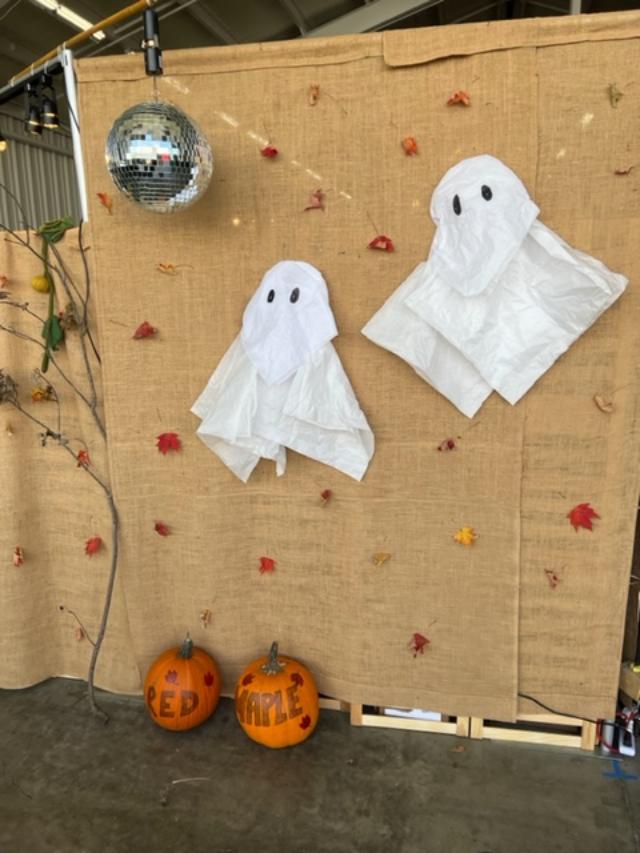
I loved this ‘Disco’ Ghost display in the main buildings
When I got to the animal pens that are usually filled with animals at the top of the hill were filled with more vendors. There were all different types of things to buy from ceramics to homemade flowers to honey and other wonderful gourmet foods to handmade cosmetic products. There really was something for everyone here.
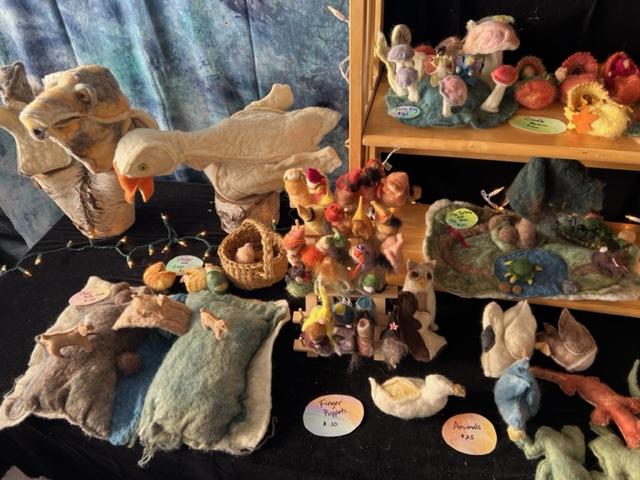
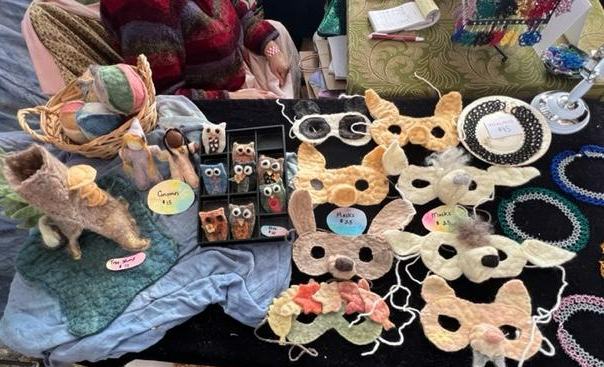
I saw one of my favorite Children’s Arts & Crafts artist’s at the fair, Susannah White and I see her work every year. She creates the most wonderful dolls, fairy houses and masks. Everything is done by hand and her prices are very fair for the craftsmanship and attention to detail that each piece has to it.
I love the creativity and attention to detail this merchant has in her work
These are some of her finger puppets and masks that she create for ‘children’ but I see plenty of adults buying them too. I have to think about getting one of these in the future. They are ‘art’.
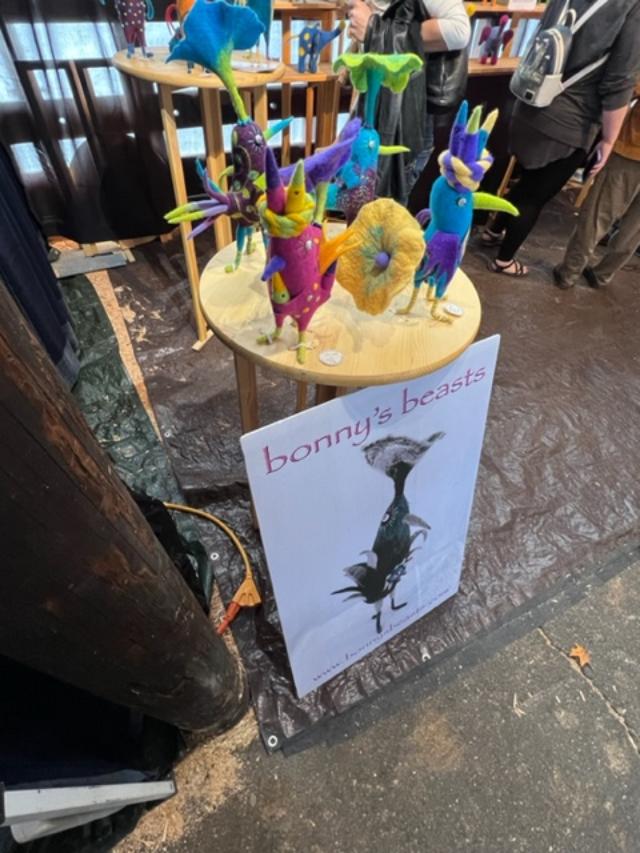
Another one of my favorite ‘children’s artists’ was there also displaying her puppets and sculpture as well. Artist Bonnie Hall creates these fantastic 3-D beasts of the imagination. They are so unusual and cute.
I walked the rest of the booths but nothing stood out as these few did. I always look forward to seeing these vendors and what they have come up with in terms of new merchandise.
I then visited the animal pens and made it in time to see the sheep being sheared and groomed. There are some people from the City that looked amused by all of this with a look in their eyes like, “it’s this quaint” when the very clothes they are wearing were created with a process that begins like this.
Some of the groomers explained how they do this and the process behind the step by step process it takes to shear an animal. Also, the difference in the wool from one part of the body to another and the difference in feel of it. I as a retailer thought this was fascinating. It is almost the same as when you skin an animal for its pelt. What is the difference between long hair fur and short hair fur.
The sheep looked they did not mind all the attention either making it a show of itself. They were probably used to all the attention at these shows after all these years.
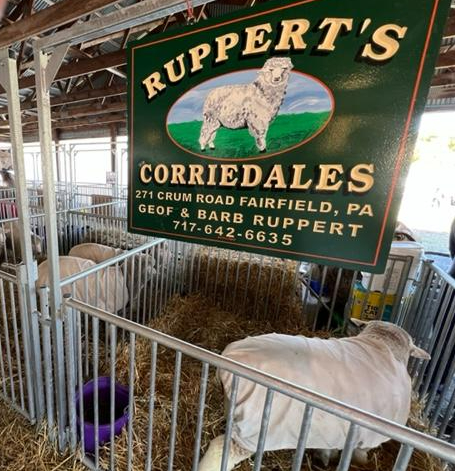
I loved walking along the pens and looking at all the sheep and lambs staring back at me as well. I think they are amused by all of this as much as we are. These animals must be so used to human contact that they are jaded by it. Still it makes for an interesting interaction.
I walked around the fairgrounds to the rest of the pens and there was a combination of sheep and lambs. There were displays of the animals and the groomers were showing everyone how to care for them.
After I toured all the pens and barns with arts and crafts, I toured the small museums on the fairgrounds. I toured the Century Museum Village, which is a permanent museum on the property which shows life in rural New York State between 1880-1930. There was also the Schoolhouse Museum and Train Station Museum right up the hill from it. These give a look into Dutchess Counties past and compares how much has changed to today.
The Century Museum Village on the Dutchess County Fairgrounds
The inside of the museum and the counties rural past
My review on VisitingaMuseum.com on the Century Museum Village:
By the end of the afternoon, the lines had gone down for food but not by much. I still had to wait in line at Janek’s for a Cheeseburger for a half hour. The lines only went down about an hour before the Sheep & Wool Festival closed for the day.
Janek’s makes the BEST burgers ever!
My favorite lunch at the fair is Janek’s ‘Piggyback Burger’, which is a freshly made burger topped with Cheddar Cheese, pulled pork, cured ham and topped with barbecue sauce and homemade pickles. Biting into it is like biting into a piece of heaven. The burger does not need any salt or pepper and make sure to get it with the side of their homemade pierogis with sour cream. I only eat this twice a year, once at the Dutchess County Fair and once at the Sheep & Wool Festival and I am satisfied for the rest of the year.
“The Piggyback Burger” with the side of homemade pierogis
As I relaxed and enjoyed my lunch, I could see that the sun was starting to move around, and the day was starting to get darker out. I had not realized that I spent the entire day at the fair. Time really went by fast especially as I had never seen crowds like this at the fair before. Having such warm weather made a big difference in the crowds. I think the food vendors will rethink this last year since there were a lot less then for the Dutchess County Fair.
As I left the fair that afternoon, I passed the St. James Episcopal Church in Hyde Park who were holding the Historic Graveyard Tours that evening. I did not have a reservation but stopped in to see if I could tour the graveyard that evening. I had planned on coming up the next week but since I was here, I figured why not try now (Thank God I did because it rained the next weekend). I stopped at the church first in the afternoon just in case I could not make the tour. No one was around but I took a quick tour of the cemetery before I left for the Sheep & Wool Festival.
The sign outside the church
The St. James Episcopal Church of Hyde Park at 4526 Albany Post Road
I walked down the path marked for that evening’s Cemetery Walk and got to see the graves and crypts before it got dark. In the start of the fall, the cemetery was very picturesque on a sunny afternoon. There was almost an elegance to the cemetery with its detailed tombstones and colorful foliage. It looked like a quiet and elegant resting place for these residents of Hyde Park. There are a lot of famous names buried here.
St. James Church before you enter the cemetery
The start of the Cemetery Walk during the day
Walking through the cemetery during the day is interesting
A walk through the cemetery at St. James
Following the path of the Cemetery Walk during the day
The Livingston Mausoleum at the St. James Cemetery
Sara Delano Roosevelt (the President’s Mother) gravesite at St. James Cemetery
Walking through the tombstones at St. James along the Cemetery Walk path
The graves at the St. James Cemetery
It is an interesting tour. Before I got to the fair, I had stopped by the church to talk to someone about the tour, but no one was around so I just walked the path on my own and took pictures during the day so it least if I could not go on the tour, I had seen the cemetery. It was really interesting. The tour guide took us on a lantern tour on a marked path of the 200-year-old graveyard and we got to meet characters who were buried there portrayed by local actors (who I never know how they do it. They have to sit in a dark cemetery until the next tour comes through).
inside the St. James Episcopal Church before the Cemetery Walk
We met in the church first and did a quick orientation on what to expect and then the tour guide took us on the tour. It was very interesting, and the actors did a good job with each character. We met the following characters:
Captain Isaac Russell, a Revolutionary War Soldier who fought in the Battle of Bunker Hill and was present at the surrender of General Burgoyne on October 17th, 1777.
Anna Roosevelt Halstead, the daughter of Franklin and Eleanor Roosevelt. She had served in President Kennedy’s Citizens Advisory Council on the Status of Women, and she also served as the Vice-Chairman of the President’s Commission for the Observance of Human Rights.
Susan Cowman Carter, an early St. James Choir Director and organist.
Christopher Hughes III, a 19th century Hyde Park farmer
Adelaide Roddy, a pioneering early 20th century female Theologian who died on her honeymoon of spinal meningitis.
Arthur (Rube) DeGroff, Hyde Park’s very own Professional Baseball Player who had played with the St. Louis Cardinals in 1905. He played one game in 1906 and then was sent back to the minors.
The tour was very interesting, and each actor did a good job telling their story. The tour guide was right though, you had to stay on the path, or you would trip over a tombstone (as I almost did). I have to say one thing in that I was glad there were so many people on the tour and that the next tour after ours was full as well. Once you passed the lit areas, this cemetery was really gloomy and dark. Even the church looked a little creepy from a distance. Maybe that was the effect that they were going for on the tour. After the tour was over, I headed home.
School got even busier, so I had to pace myself with the activities and I managed to finish all my homework as well as get the students quizzes graded and the papers finished before I left for South Jersey the next weekend. The weather was going to be nice, and I decided to head back down to Salem, NJ again to finish touring some of the historical sites for my blogs and to go on the Salem Haunted Tour of the Downtown business district.
The Salem NJ Walking Ghost Tour in 2023
Before the walking tour there would be a concert “Tunes from the Crypt” at St. John’s Episcopal Church with musician Erik Meyer.
I had seen this tour advertised for many years, but it was tough to go on it from such a distance away. Since the weekend would be open, I hopped in the car on a Friday night and made another reservation at the Inn at Salem Country Club for the night. I was glad that Yvonne, the owner had the room open.
I got down early enough on Friday afternoon to take pictures at the Salem Oak Cemetery, the Salem Historical Society and at various points of interest in Salem’s Historical Downtown.
The historic Salem Oak Cemetery where many of the founders of Salem are buried and was home to the oldest Oak Tree in the State until it fell in 2019.
Downtown Salem has the most beautiful and historical residential district
I snapped pictures all the over the downtown area and managed to get all the pictures that I missed over the summer when I came down to do my blog on the Historic sites of Southern New Jersey (see blog below):
My blog on the Historical Sites of Southern New Jersey: Day Two Hundred and Forty:
Before I took the tour and after I settled into the hotel, I had a quick dinner at Bravo Pizza at 179 West Broadway in Downtown Salem.
The inside of the dining room of Bravo Pizza
I must have been attracting attention with all my picture taking in Downtown Salem. Since Salem is not the safest town, some gangbanger looking guys came in while I was eating my meatball hero to check me out. I just stared back, and they disappeared out the back door. I swear everyone thinks I am a Fed.
Bravo Pizza & Pasta at 179 West Broadway is really good and the prices are fair
I was able to get settled into the Inn before the tour and took a lot of pictures of the church’s cemetery before the Haunted Walk and then got to the church in time for the organist started a special Halloween concert. This was taking place before the walking tour. The weather surprisingly cooperated, and it was a warm October weekend.
The Inn at Salem Country Club at 91 Country Club Road (Now called the Salem River Inn)
Once I had eaten and was settled in, it was time to visit the downtown before the concert. Halloween weekend in recent years has gotten much warmer. The night of the concert and the walking tour was not different. It must have been in the mid 60’s the night of the tour.
I was one of the first ones at St. John’s Episcopal Church that evening so I got a prime parking spot right in front of the church and since there were no signs that I could not park there, it was nice that I did not have to move far.
The inside of the church was beautiful with all the historic stained glass windows and wooden pews. I was walking around admiring the church before the concert. What I love about these hundred year old churches is that they have a classic look to them. There is such a history to them. I admired the stained glass windows which were beautiful.
The inside of St. John’s Church
The stained glass windows at the church
The stained glass windows at the church
The church was very impressive. Most of these were Tiffany windows
Still these churches are so old that they have an intriguing look to them with an air of mystery. The interiors look like they belong in a independent horror film.
Even the church had a mysterious look to it at night
Musician Erik Meyer performed a series of classical horror film melodies on the church organ. What I thought was funny was the priest for St. John’s Church did the introduction and made a comment to a packed church full of people of all ages in the pews this was the most amount of people he had seen in the church in a long time.
Musician Erik Meyer dressed as Count Dracula next to the organ
After the concert was over, I talked with Erik Meyer about the irony of performing Halloween music in a church. He said many churches while their thoughts on Halloween are mixed have embraced this type of fundraiser to bring people back to the churches and raise money for them at the same time. He also told me that he had been performing these concerts at churches all over the state for the same reason. They have become very popular.
Royal Port Antiques at 13 Market Street was our starting and stopping point for the tour
After the concert was over, the whole group of us at the church headed over to the antique store where we would be starting the Haunted Historical Walking Tour of Downtown Salem. The tour took us from the store to the Salem Historical Society and back. I guess the rest of the Downtown at night was not the safest (I experienced that).
The start of the Ghost Tour
I have to admit the Historic Market Street neighborhood while very pretty and elegant with all the Federalist homes during the day is very pretty, at night it does look pretty spooky.
Downtown Salem Market Street Historic District at night
People did decorate in Downtown Salem, NJ
This townhouse really got into the spirit of Halloween
More detail on the house
Our first stop on the tour was visiting a small Dutch house that was a recreation of old homes that used to be part of the community. The home had been rebuilt in honor of visiting dignitaries visiting from Europe. The house was now a popular tourist site. While we were inside we got to peek inside and see the furnishings and a live fire in the fireplace.
The small Dutch House on the walking tour
I went back the next day and it did not seem that creepy
A Salem resident shares a ghostly tale of his home since moving here
Creepy tales at the Salem Historical Society courtyard
The Society courtyard is less creepy and very beautiful during the day with the fall foliage
Tales at the St. John’s cemetery
The St. John’s Cemetery is a very interesting place to visit during the day. The foliage in Salem, NJ was at its peak right before Halloween and the end of the October and I got to tour the graves of the people that the narrator was talking about during the day. It was an interesting story of how this resident treated his first wife in death and treatment of the second wife when she died. People are still people.
The entrance to St. John’s Cemetery
During the day, walking around this historic cemetery is very interesting. Many of the founding members of the Salem community are buried here and you can find the family cemetery plots among the paths. I would take the time to visit and walk around this interesting piece of the past.
The the tale of the Second wife that you see above during the day. The husband and second wife are in the elevated crypts and the first wife has a slab on top of here. As the narrator said this is what he thought of her in the end.
Colonial Robert Johnson and his second wife, Julia in the elevated crypts
The St. John’s Cemetery during the day
The St. John’s Cemetery
The St. John’s Cemetery family plots
The famous people buried in the cemetery-The Sinnickson Family plot-One of the founding families of Salem, NJ
After we left the church, we joined this friendly witch who told us the story about a spirit that haunts houses. To confuse them, you have to leave a bowl of rice at the doorway so that you confuse the spirit as it tries to count the grains of rice and then gets frustrated and leaves. I had never heard this story before but I did get a small bag of rice as a gift that I keep in my travel bag now.
Tales of spirits and the use of rice to keep them away
A Ghoul with a New York accent tells the tales
We ended the tour at the Salem Creek with tales of ghostly fisherman but you could not see anything at night so I took this the next morning. I almost tripped on the hill leaving this little park.
After the tour was over, we went back to the antique store to have hot cider and homemade cookies. I thought this was a very nice touch to a wonderful evening. There were a few more tours going on after I was finished so I got to walk around the antique store and then around the downtown and look at all the buildings at night. On a warm October evening, I found this tour to not just be relaxing but fascinating as well to learn the history of the town. When I got back to the Inn, I slept so soundly that night.
When I woke up on Saturday morning, it was a beautiful sunny day, and I watched the phases of the sun come up over the field from my bedroom window. I swear the location of this Inn is amazing and has the most spectacular views.
The Inn at Salem Country Club sunrise:
Sunrise from my room
Sunrise from my room
Sunrise from my room
Sunrise from my room
Sunrise from my room
The sunrise from my room in its final phase and it was an amazing warm day.
What I like about the Inn at Salem Country Club is its location on Delaware Bay. In the warmer months, people use the beaches outside the Inn for swimming and recreation. Its location on the Delaware Bay is pretty spectacular and I never really noticed when I visited in the summer. I was so busy running around Southern New Jersey and I had gotten there late and left early the last time. On this trip, I had more time in the morning to walk around the grounds before I went to visit the remaining museums on my list (most of them were closed anyway as they were only open on certain weekends).
The grounds of the Salem Country Club Inn in late October
The grounds of the Inn were very beautiful on this warm Saturday morning in late October. The leaves were still changing colors and the weather was warm. I had my breakfast on the enclosed terrace (it was too cool to eat outside in the morning) and just watched the boats and birds pass by. It was such a wonderful morning to just relax and watch time go by.
The beach at the Inn at Salem Country Club
The lawn of the Inn of Salem Country Club
The beach at the Inn at Salem Country Club
After a relaxing night’s sleep, Yvonne ordered breakfast for me again from the Salem Diamond Diner just past the downtown. Over French Toast and sausage and fresh fruit, I watch the beauty of the Delaware Bay from the open room on the first floor. It was too cool to eat on the deck but another five degrees and I would have been out there. The views are just amazing when it is sunny.
My reviews of breakfast sent to me at the Inn from the Diamond Grill in Salem:
The rest of the day after I checked out I spent revisiting or trying to visit historical sites that I have missed on my Father’s Day weekend trip here. Most were so small that they were not even on the listing that I had from the summer. Almost all of them were either closed for the season at that point or would be open sometime in November and I was not racing down to South Jersey for a two hour visit to a historical site. This just makes another trip to the area justified in the Spring.
I had already visited the Salem Historical Society, the Salem Oak Cemetery and tried to visit the Salem Fire Museum so I ventured back to some of the places I seen over the summer. I also wanted to visit some of the smaller Historical societies I had a list of from the last trip. Most of them were closed for the season.
Some of the places that I visited were:
The Hancock House at 3 Front Street in Hancock’s Bridge:
I had to cross the county after visiting a these obscure sites to get to the Church Landing Farm at Pennsville Historical Society at 86 Church Landing Road. Thank God it was still open at 3:00pm. It was a real treat:
I was able to tour the Hancock House again while they were having a little Halloween festival and take pictures of the house. I also got to tour the Church Landing Farmhouse and visit all the little out buildings with all the displays. It was fun to finally see with more time to spend. Though it was just an overnight trip, I felt like I was gone for a week. I was so refreshed from the trip. It was time to go home and get some work done.
The Halloween Festival at the Hancock House on Halloween weekend
The days before Halloween, we were in the final judging of the Hasbrouck Heights Men’s Association Halloween House Decorating Contest so when I got home from Salem, NJ, I had to present the awards to the winners and their families. Later the next week, I presented the awards to the merchants in town who were not opened on Sunday. It was a long but very productive morning and afternoon as the winners and runners-up were thrilled by their awards.
My blog on the Hasbrouck Heights Men’s Association Halloween House Decorating Contest Day Two Hundred and Fifty on MywalkinManhattan.com:
It was a series of long drives around town, late nights looking at spooky lights, figures of fright and things that go bump in the night but the members of the Hasbrouck Heights Men’s Association Halloween Decorating Contest made a decision who had the best decorated house and downtown business in Hasbrouck Heights.
Decorations at 85 Woodside Avenue
Like last year the decision was tough but we chose 85 Woodside Avenue, the home of Matt and Lisa Fiduccia, last year’s runners up. The house was decorated to the hilt with ghosts, ghouls and figures that frightened the passersby. “We learned more from last year,” Matt Fiduccia said when they found out they won this year’s contest. “We added more to it.”
85 Woodside Avenue in Hasbrouck Heights Halloween 2022-Winner
The zombies and ghouls of 85 Woodside Avenue
The committee liked the theme of the property, the organization of the props and decorations of the doorway and the lighting of the house the night before Halloween which really showcased their creativity. The family was really excited about winning this year and the whole Fiduccia family joined Chairman Justin Watrel and Hasbrouck Heights Men’s Association President Steve Palladino for the presentation of the plaque and official sign from the organization declaring them winner. It was an award well deserved.
Chairman Justin Watrel with the Fiduccia family at 85 Woodside Avenue
Winners Matt and Lisa Fiduccia with their children and the official sign from the Hasbrouck Heights Men’s Association
It was a tough decision to make this year as last year’s winner, Scott Vicario and runners up last year Frank and Mary Rose Blunda also created wonderful displays that would dazzle and delight trick or treaters the next night for Halloween.
253 Henry Street-The Runner-up this year
This is the second year Scott Vicario created a moving cemetery and ghoul fest all over his front lawn starting with a possessed woman climbing a tree outside the property and a variety of ghouls and zombies climbing popping and walking around the yard. “I keep finding new things to add to the display,” Scott told the committee when he was presented his award. “I look for professionally made displays.” Mr. Vicario who lives at 253 Henry Street said he “has more planned for next year” to win the award back.
Last year’s winner, Scott Vicario, was runner up this year
Some of the decorations were truly frightening
Ghosts and ghouls at 253 Henry Street
Scott Varicario in front of 253 Henry Street
253 Henry Street was full of zombies and ghosts
The other runners up last year, Frank and Mary Rose Blunda, keep creating frightening but friendly displays that dazzle their Halloween visitors. Trick or Treaters keep coming back for the displays of vampires and pumpkin headed beasts.
510 Henry Street
“We really love Halloween and we do this for the kids,” Frank Blunda said. “The families get such a kick out of visiting our house every year.” The Blunda’s love that families take a special trip to see their home.
The Ghosts, Ghouls and Pumpkin Heads of 510 Henry Street
Mary Rose and Frank Blunda of 510 Henry Street were runners-up again this year
Chairman Justin Watrel with Mary Rose and Frank Blunda at 510 Henry Street
The House Decorating Committee added a Merchant Division this year and we were dazzled by Heights Flower Shoppe, who always displays their holiday merchandise so nicely. Ray Vorisek, the owner of Heights Flower Shoppe was very thankful to the committee for the award. “We always like decorating the store to the hilt for the holidays.
Heights Flower Shoppe at 209 Boulevard in Hasbrouck Heights, NJ
People come from all over to visit us.” Both inside and outside, the store was full of all sorts of merchandise to decorate the house and for creative Halloween parties. Ghosts and witches flowed all over the store.
The decorations of the windows at Heights Flower Shoppe
“We have a creative team that works together here,” Mrs. Spindler said as she accepted her framed award. “It is a team effort that got the store ready for the holiday.” Spindler’s Bakery not only decorated the windows with pumpkins and bears ready for Trick or Treating but the store had all sorts of delicious looking decorated pastries and cookies, perfect for any Halloween Party.
The inside of Spindler’s Bake Shop with decorations and Halloween treats
Chairman Justin Watrel with runner-up winner, Ginny Spindler and her co-worker
We also wanted to mention the Honorary mentions, whose decorated home made the first and second round cut of the contest and we wish you luck next year. These are 110 Central Avenue, 458 Jefferson Avenue, 415 Madison Avenue, 115 Ottawa Avenue and 310 Bell Avenue. Good luck and have a wonderful and safe holiday season from the Hasbrouck Heights Men’s Association.
Honorary Mention on Ottawa Avenue
Another Honorary Mention on Ottawa Avenue
Halloween Night was a bust for me. I had to start my first night of my Tourism Innovation Class, which concentrated on the Metaverse that evening and for the first time in six years I did not work on the Halloween Parade. It was a real bummer and I know Mark was really disappointed that I could not make it that evening. It rained during part of the parade so that at least made me feel a bit better.
When I left class that evening, it was also about 9:30pm and since we were meeting in the Uptown campus on West 42nd Street, I did not notice any part of the parade except for a few people heading back to New Jersey through the Port Authority. It was a cold and rather gloomy night because of the quick shower we had earlier. Not much of a holiday but at least I was able to celebrate in different ways in different parts of the month.
‘Aristocrats’ Justin Watrel (Beekman family) and Marc Schuyler (Schuyler family) at the Halloween Parade gate 2019.
Before Halloween was over I managed to sneak up to Croton on the Hudson to the Van Cortlandt Manor to see the Annual “Pumpkin Blaze” (see the blog attached):
Visiting the Pumpkin Blaze Day Two Hundred and Six:
The weather was really mild that night and I got tickets for the 8:00pm walk. Being later in the season, it was not as busy as it would be before Halloween. Still I could walk the show at my own pace and enjoy the displays. If you have never been there, I highly suggest it.
The entrance to the “Pumpkin Blaze”
The displays keep changing every year and it is fun to see all the new creative ideas that they come up with for the evening. It was the perfect way to finish the Halloween festivities. Now here comes Christmas!
I have been teaching “Marketing 201” at Bergen Community College for several years now and in the era of COVID, it has been especially difficult. With businesses shutting down never to reopen getting students to understand that business must go on and pivot is a difficult thing to do. You have to learn to adapt and survive or else everything fails.
This is happening in small downtowns all over the country. You have to learn to adapt, or you will fail. Things have gotten better though with the dropping of the mask mandates and businesses opening up.
In my live classes, I open my consulting company, “Bergecco-Parc Consulting Inc.”, for business and the whole class bands together and we have one big project. In the era of post-COVID and online learning, I was lucky that I was able to teach one of the live classes on the Bergen Community College, Paramus Campus. It was such a pleasure welcoming students back to campus with live lectures and conversing with them.
The Bergecco-Parc Consulting Inc. corporate logo of the six trees
In the past, I have created these projects under the Bergecco-Parc Consulting Inc. banner, the main consulting company, the Orion Malls banner, a Mall design company and the Buscomonzefi.com banner, my Tech Division. Each business does its best to be creative, forward thinking and have a thought producing presentations. I also challenge the students to top on another in their presentations and build on what they have seen others do in the past.
Professor Justin Watrel, CEO & Co-Founder of Bergecco-Parc Consulting Inc.
This semester’s project “It’s Wonderful in Westwood, NJ: Being a Tourist in your own Town” was inspired by the success of the “Take me back to Paterson, NJ” project in 2019 and “Rocking it in Rutherford” in 2021. I loved how the students really had to learn about the history of the City of Paterson, the Borough of Rutherford and about New Jersey history in general. This is something not being taught in schools today.
The blog on Day One Hundred and Fifty-Five: “Take me back to Paterson, NJ” in 2019:
I chose Westwood, NJ this semester because of all the years spent shopping and eating in Westwood with my family who live in the Township of Washington the next town over and many of the long term businesses that dot the downtown shopping district. Downtown Westwood had more of a history to it and was picturesque with its old buildings, classic look of the train station dominating the downtown and a park with a band stand in Veterans Park in the heart of the downtown. It was a traditional downtown in New Jersey.
The town is on two major bus routes one into New York City as well as being a railroad head for New York City. The town has become more desirable for people moving out of New York City for more open space, better schools and the amenities that come with living in the suburbs. They still want a ‘citified’ atmosphere though with good restaurants, clean safe parks to relax in and a strollable downtown with lots to offer for both shopping and eating. Westwood, NJ has all of these.
I assembled the project together in two days after walking the downtown several times getting inspiration of how to market it and ideas that I had seen in the past in other towns of what they run at various times of the year drawing ideas from towns in the Hudson River Valley.
I entitled the project “It’s Wonderful in Westwood: Being a tourist in your own Town”, a creative approach to market the downtown for tourists to come visit from all over New Jersey and New York especially the City, the way Rhinebeck and Beacon do for dining, shopping and special events like “First Monday’s” and “Sinterklaas”.
The Project “It’s Wonderful in Westwood, NJ: Be a Tourist in your own Town”:
BCC-Bergecco-Parc Consulting Inc. 2022 Project It’s Wonderful in Westwood, NJ
When I presented the project, I got the usual moans and groans from some of the students and excitement from the others (it all depends on their position in the company and their enthusiasm in group projects). I got the Teams organized, had them meet up with one another and exchange emails and planned my field trip to Westwood, NJ as part of the project. It took some doing.
Two weeks later, I took my class on a field trip to Westwood, NJ to walk the downtown business district, to see where the Westwood Heritage Museum was located and to visit the shops and restaurants in the downtown area. The week in between me presenting the project and us visiting Westwood, NJ, I started to make contacts in the town.
I started by dropping off a copy of the project with City Hall and hoping to get the Mayor and Council involved the way we did in both Paterson and Rutherford, talking with the head of the Chamber of Commerce and then talking to merchants who I wanted to visit that included Hartly’s, a well known Women’s Store and Conrad’s, a very well-known Ice Cream and Candy store.
We really lucked out the day of the tour. It was a beautiful day but a little windy. We started out at the bandstand which is a symbol of the town. I never realized the historical significance that the bandstand had played in the town and in it’s history. It had been an important part of the social fabric of the town during the turn of the last century and still used for concerts today.
We were joined by the Honorable Beth Dell, the President of the Westwood Town Council and I thought this was a very nice honor that the town wanted to get involved in the beginning of the project. We really had a productive afternoon.
The tour of the downtown started in Veterans Park with the Team trying to figure out on how to create some of the activities that we would be creating such as the “Halloween in the Park”, the “Nick in Time” event and the “Jazz Summer Concert” events. We used the parks layout and logistics to figure out how to configure the usage of space. Before we toured the historic train station, we took our first in a series of corporate pictures.
Our Group picture at the Westwood Bandshell at the start of the tour (Councilwoman Dell and I to the right)
We continued on to the historic Westwood Train Station, which is the home to the Westwood Heritage Museum one day a month. It had not been operating recently because of COVID but I wanted the students to see the potential in how the museum could be updated and advertised to increase traffic.
The Train Station marker in Veterans Park
We toured the station and looked over the architecture and location of the station to understand why the location of the station has helped shape the way the downtown has been built around it.
The next part of the tour, we met with the head of the Westwood Chamber of Commerce at his business, Westwood Gallery, Michael Fitzsimmons. Mr. Fitzsimmons and I had met the week before and I knew how busy he would be so we had to plan the whole visit on a timely basis.
Not only did he spend a lot of time with us but introduced the class to members of ‘Celebrate Westwood”, a group of volunteers who help organize special events in the town. Talk about a productive and very engaging conversation on what both organizations do for the benefit of the town. The students, especially the Executive and Marketing Teams, gained a lot of knowledge and expertise from it.
Our second stop on the tour was a quick one through B & S Kitchen, an innovative sandwich shop a few doors down. I had just eaten lunch there the week before and thought that the food and selection of homemade soups were excellent. With a lunch special of a half a sandwich with a side of soup for $9.95, I saw this as an excellent business decision considering the quality of the food and service. It was so busy that morning the owners did not have a chance to talk to us but I was able to share my experience with the students while visiting there.
Our third stop on the tour was Hartly Fashion women’s store, which I think is one of the finest independent women’s clothing stores in the state. For a small store, it has some of the finest merchandise for work, parties and weddings. The service they have does not exist in stores anymore where salespeople will call you when items come in and will work with you on a personal one on one basis. Hartly is in a league all its own.
The manager, Jo and I had talked about the tour and I could tell she was a bit sceptical when I mentioned it but myself and the students came in, she captured the students attention on what quality and customer service meant to people. Especially when she described women travelling from places like Long Island, Manhattan and Connecticut to come shop in the store.
With pride, we walked through the store and were given a very detailed description on the type of customer that shopped here, what she was looking for in clothes and the attention to detail she would get in the shopping experience. It was a real eye-opener to many of the students who are completely online shoppers.
We walked the rest of the Downtown to Firemen’s Park and I discussed the pride that the town takes in its fire service and described my own time on the fire service and what a park like this means to the fire fighting community.
We toured the other side of Westwood Avene, the main street of the downtown and I discussed the amount of men’s and women’s clothing and accessory stores in the downtown area. You do not see this many clothing stores in one concentration in a downtown anymore being so close to the amount of malls we have in Bergen County. Westwood had become a destination for shopping and I discussed because of quality merchandise and good customer service these stores have thrived and propersed. To some of students, I could see this was alien to them. They were a generation where you pushed the button and it came to you.
I stopped by Pompilio’s Pizzeria at 223 Westwood Avenue to check on our lunch reservation on our way back to the train station. This is where I would be taking the Team for lunch that afternoon. With that taken care of, we made our last stop of the trip at Conrad’s Ice Cream and Candy store at 107 Westwood Avenue. I could tell for the students that was the best part of the tour. The owner Connie and the manager, Sue and the rest of the staff could not have been nicer or more accommodating to the students.
I just thought we would have a little talk on the history of the business and a small walk through but the ladies really gave the students a thorough talk on not just the history of the business but on how homemade ice cream and candy are both made (they are made on premise), how the family got involved in the business, how Connie’s son has now taken over the business and has been growing it, new product developments and how they handled COVID era shopping and how it changed the way the business is run (they now have food trucks for parties and events).
The ladies led a very engaging talk with the students, let them tour around the store and Sue ended the discussion with giving each student a small package of Conrad’s homemade caramel corn. I have never seen so many excited students! You would have thought they won the lottery. The students left so happy and I thought this was a very smart business move. Start to capture the customer while they are in the store. I found out later that many students revisited the store throughout the project.
The Conrad’s Ice Cream counter
The students used Conrad’s as the inspiration as for corporate gifts
We finished the tour with lunch at Pompilio’s Pizzeria at 223 Westwood Avenue. I have been coming to Pompilio’s Pizzeria since I was a freshman in high school when my aunt and uncle took us here for dinner when we were visiting them one summer. I also knew that they had ordered here a few times when we visited the house. Funny what you remember when you were a kid. The pizza is just as excellent as it was back in the 1980’s.
As tradition with the Town projects that make up the Bergecco-Parc Consulting Inc. umbrella, I break bread with the students and this is my way of getting them to know one another. I found this very successful when we went to the Lunch Box in Paterson, NJ (now closed) as a group during our walking tour of Downtown Paterson and found it effective in Team building. I also get to know the students as well.
I ordered six large Cheese Pizzas and pitchers of soda and we just relaxed and reviewed our walking tour of the downtown area and how to better promote it for the town. The Team sat with their groups and brainstormed ideas over lunch. In the middle of lunch, the owner of Pompilio’s came out and discussed his family business with us and how his father’s family came from Italy and how they started the business in Westwood. I thought it was nice of the owner to come out and spend time with us seeing that he was so busy that afternoon. It was nice to see the merchants support this project.
The students created this new logo for the Town of Westwood, NJ:
The logo that was created for Westwood, NJ for ‘It’s Wonderful in Westwood, NJ: Be a Tourist in your own Town”
During class time, I tried to give the students as much time as I could but much of the work was done outside the classroom. Being a Hybrid class, I had to train the students to realize that class was not just in the one hour and fifteen minutes that we had in the classroom. This was lecture time and they needed to understand the theory of what they were doing, why they were doing it and how to understand the outcome. Most of them did very well in the academic part of the work.
The Saturday before the presentation, I took the students on a optional tour of the Westwood Heritage Museum, which is located in the Train Station of Westwood, NJ the second Saturday of every month. The Westwood Heritage Society sets the station up for visiting from 10:00am-12:00pm and I met the students at 10:30am at the museum. My entire Historical Team showed up along with about five other students which meant about half the class showed up.
The displays at the Westwood Heritage Society Museum in the Train Station
Westwood Heritage Society displays
The members of the Westwood Heritage Society gave us a tour of the museum, explained how it worked and how they set things up each month. Then they gave us a talk on the history of the town and the historical attributes of the downtown. The students got a feel for how the museum worked and how we could better promote it to the outside community.
The tour concluded with visit to the WWII bunker at the bottom of the train station. Both myself and the students were equally impressed by this.
As we prepared for the final touches on the presentation, the student Executives were nervous about the presentation. I had a very good Executive so I was not worried. I just wanted a good representation from the town.
We had to delay the presentation twice. Once because the Town Council asked if we would like to present it at City Hall and the Council was going to a conference the day of our presentation. Then it was delayed again because the day we were supposed to present it, it was the Wednesday before Thanksgiving and even I did not realize that we had the day off. So presentation day would be when we returned back from the Thanksgiving break, November 30th, 2022.
The day of the presentation I got there early so that I could set the room up for the presentation. I had the Reception to set up and make sure that everything in the room was working. My President and Senior Vice-President of Operations arrived early as well and then most of the Team showed up much earlier than class time. They wanted to get their groups settled in.
I also had to give the students their Dress Code grade and I have to say that I was annoyed when I saw two students wearing sneakers to the presentation. Trust me, they were graded accordingly. Every semester it is the same thing, the ladies always blow away the men.
We were joined that afternoon with Council President the Honorable Councilwoman Beth Dell, the Borough Administrator and another Councilwoman plus two members of the Westwood Heritage Museum whom we had met on a trip to the museum the previous Saturday. I thought it was very nice of all of them to come out and support the students.
The Presentation:
The Town Logo
The Historic Walking Project
The Town Song that was created and performed by student/songwriter Arnav Sharma
This is the presentation that everyone saw that afternoon:
The Bergecco-Parc Consulting Inc. “It’s Wonderful in Westwood: Be a Tourist in your own Town” website and Powerpoint presentation:
The Marketing 201 Executive Team the day of the Presentation on the Bergen Community College Paramus Campus with the Council women from Westwood, NJ:
The Paramus Executive Team for “It’s Wonderful in Westwood, NJ-Be a Tourist in your own Town” with Council members and guests.
The full Executive Team with members of Westwood City Council and members of the Westwood Heritage Society Museum
CEO and company Co-Founder Justin Watrel receiving a gift of a Conrad’s Chocolate Champagne bottle presented to him by Team Leader of Talent, Eva Sipos, of the Paramus Team.
The Commercials:
Here is the Team’s video Marketing the Town for Tourism in English and Spanish:
The Historical Team was tasked with creating a new video to promote the Historical Section of Westwood, NJ:
The Historical Team created this video to promote the Westwood Heritage Museum:
The Team created a new Town song for Westwood, NJ “The Hub”:
This is the Team Presentation of “It’s Wonderful in Westwood-Be a Tourist in your own Town” to the Honorable members of the Westwood Town Council and the Westwood Heritage Museum:
Part One:
Part Two:
Part Three:
This was one of the smoother presentations that I have had in the last two or three semesters. The students did an excellent job with the presentation. We had enough time for a question and answer session before the students had to leave for their next classes. Being an one hour class, we had to stay on a strict schedule. This differs from my night classes.
Still it was one hell of a presentation!
The Team to finish out their project arranged a company Christmas party for Corporate Headquarters. The students had to create an Invitation to the Party, A Christmas Poem, the Party Dinner menu and an original Christmas song. Here are the ideas:
I love exploring Greenwich Village. Here and there tucked into corners are all sorts of interesting stores and restaurants. One of the standouts is Village Pizza at 65 Eighth Avenue. This small hole in the wall pizzeria offers delicious food and excellent friendly service.
The inside of the restaurant
The first time I tried the restaurant, I stopped in for lunch before classes at NYU. I had the most wonderful Meatball Sandwich ($8.95), in which you are served four large meatballs on a soft chewy roll with fresh marinara sauce.
The Chicken and Meatball Parmesan sandwiches are really good
The meatballs I could tell were home made as well as the sauce was made from scratch. You could really taste the…
I have been coming to J’s Pizza for many years and had eaten here in the past after viewing the Halloween Parade in October. I just rediscovered it again when I started grad school in the neighborhood and forgot how good the food was when I dined here. The pizza slices are generous in size and their marinara and pizza sauces you can tell are freshly made and not from a can.
The sauces for all the meals here from the pizza, to the spaghetti and meatballs to the sauce that is the side to the many rolls and calzones is well spiced and has so much flavor to it. It really makes the dishes.
J’s Pizza counter is lined with pizzas and calzones
I found this wonderful combination bakery and gourmet shop when walking home from school one afternoon and exploring Greenwich Village. All the delicious pizzas and pastries in the window lured me in.
I had just eaten my lunch, so I was not that hungry and just wanted a snack. I saw the small doughnuts in the windows called Bombolones, which are yeast doughnuts filled with chocolate or vanilla cream fillings and then rolled in granulated sugar. The small one is $2.15 and the large one was $5.00. Don’t let the price deter you as it is a sweet and filling little dessert. The fresh vanilla cream played beautifully off the sweet dough and sugary topping. Each bite was wonderful, and it was…
I love visiting the Hudson River Valley so any event or tour that I can go on is an excuse to come up here. I had visited all the sites that I wanted to see on a trip two weeks earlier but wanted to see them in more detail plus I wanted to take some pictures. The weather finally broke, and it was a much more pleasant 83 degrees as opposed to the 96 degrees the trip before. That makes the trip much nicer.
I asked my aunt along so that we could share in the experience, and I could use her phone to take pictures of the all the sites. It is a much nicer trip when you have someone along who enjoys these things. The one nice thing about traveling to the Fishkill, New York area is that it is only an hour away and a straight run up the New York Thruway to Route 84 and then to Route 9. Just a couple of quick back streets and you will be there.
On my first trip up, I got there so early that no one was at the first site, The Brinckerhoff Homestead Historical site, the home of the East Fishkill Historical Society at 68 North Kensington Drive in Hopewell Junction, NY. I double back and stopped for a quick snack at G & R Deli Cafe, a small deli at 2003 Route 52 in a strip mall near the old IBM campus. I needed a snack. This was my go to place both in the summer and when I came back for Christmas. The owners are really nice and the food is excellent.
Since I already had dinner plans, I ordered a Sausage, Egg and Cheese on a roll ($5.95) which was a bit more expensive than in the City but it was delicious. The sausage had a nice taste of sage and gave it a lot of flavor. I just relaxed outside in the parking lot and ate breakfast. Another time that I visited, I had the same version with bacon and both times the sandwiches were excellent.
The breakfast sandwiches at G & R Deli are excellent
After my snack, I got back to the Brinckerhoff Homestead at 12:00pm when it was supposed to open but around 12:30pm there was still no one there and I kept knocking on the door. That’s when one of the county members let me know that they did not open until 1:00pm. Since I had a list of places to visit that day and the time had been posted all over the internet, I asked if we could please start early. He agreed and I got a personal tour of the house. When I came back two weeks later, I better timed it for the 1:00pm opening to take pictures.
The Brinckerhoff family is prominent in the Fishkill area and family members still visit the homestead so the house’s history is ongoing. The house is broken down into three sections as you can see by the picture. The original part of the home was built by John G. Brinckerhoff in 1755 and it consisted of the “Everything Room” on the lower floor with the hearth for cooking, a beehive oven and the large room upstairs for family living.
As John Brinckerhoff’s family grew, they moved out of the house and his brother, George G. Brinckerhoff moved into the home with his family. After the Revolutionary War was over and George G.’s assignment was over in the army, he returned to the house and in 1785 added the middle main addition of the house with four additional rooms. The larger rooms and high ceilings showed the family affluence in that they could heat the home.
When George died in 1812, his brother John and his family moved back into the house. In 1814, the family sold the house to the Purdy family. They lived in the house for the next 60 years and added the final addition onto the house to the left with a summer kitchen and an outdoor oven. It remained in the family until 1875 when it was sold to the Palen family who used it again as a farm. It was then again sold to the Moore family in 1926 and lastly sold to East Fishkill Historical Society in 1974 by developer Gustav Fink who was a developer in the area (East Fishkill Historical Society).
The rooms are decorated in period furnishings and when we started the tour, you begin in the oldest section of the home with the original kitchen area.
The “Everything Room” in the Brinckerhoff Homestead
This is where the family would cook, eat, do their work on farm affairs and socialize. There was also a small general store on the property as well. The upstairs was closed to the public.
You next moved into the main rooms of the 1785 addition which brought it the into then modern era with high ceilings and larger rooms so that the family had more living space and could entertain.
The Main Dining Room of the home which was set for Hot Chocolate service which again showed the family’s affluence as chocolate was very expensive then
We also toured the Living Room which was set for socializing and work women did for the home with needlepoint, weaving, and clothes making. There was still room for people to gather and entertain.
The Living Room of the 1785 addition to the home
Along the main corridor of the home in the addition was all sorts of artifacts from the Revolutionary War period and items from the time.
Our last part of the tour was the latest addition by the Purdy family when we toured the ‘Summer Kitchen”, which showed how the home had progressed over the years. Little by little each family brought it into the next ‘modern era’.
Both times I got to tour the grounds and the beautiful gardens that the volunteers maintained. Rock gardens and flower beds line the three acres of land around the house. Along with the flower beds, several historical buildings have been moved to the property including the one room schoolhouse from District 9 in East Fishkill that was built in 1826, the 1870 Icehouse which once supplied another home with its ice for the home to keep food fresh before the advent of refrigeration.
The Schoolhouse and the Icehouse and gardens
Another building that is still in use and is open when the house is open for touring is the John Hyatt Blacksmith shop from 1880. It still has some of the original tools and the blacksmith on duty still works the fire and performs tasks in the building.
The last building on the property is the Van Wyck Carriage Barn from 1845. It had been built by Judge Theodorus Van Wyck for his home that was built in East Fishkill that was torn down by the development of the IBM Campus in 1984. IBM paid to have the carriage house dismantled and moved to this property.
The East Fishkill Historical Society with the Brinckerhoff home in the center, the schoolhouse to the right and the blacksmith shop and the carriage house to the left
We took our time to tour the house and the grounds and on my initial visit I got to tour the schoolhouse, the ice house and the blacksmith shop to see the inner workings of these buildings and how they operated.
The docents had told me that they had recently held a ‘Strawberry Festival’ recently promoting the local fruit crops and serving complimentary strawberry shortcake that everyone enjoyed and was gone quickly.
I took what they said to heart and had planned to go to the Strawberry Festival the next year. Who knew it would be another three years before I attended the event (other things happened along the way like travel and Grad school), but in June 2025 I finally was able to attend the event. What a nice time.
The Strawberry Shortcake at the Strawberry Festival in the Fall of 2025
The grounds set up for the Strawberry Festival
The weather was a bit gloomy and cool for June but it ended up being a really nice day. They had all sorts of activities for visitors to watch and participate in. There were demonstrations in the Blacksmith Building and in the barn.
The demonstration in the Blacksmith shop
The Blacksmith during the demonstration
The wood and saw demonstration in the barn
There was wonderful entertainment on the patio of the house as a guitarist entertained the ever growing crowds that attended the event.
The guitarist on the deck playing music from the 1960’s and 70’s
A clip of the entertainment
I took a tour of the house and the schoolhouse as well. I never realized that things have not changed over the last two hundred years.
The old schoolhouse on the property
The inside of the school
Books and games
Maybe the current education system would benefit from this
Walking around the grounds that afternoon
Walking around the grounds that afternoon
The Strawberry Shortcakes were the star that afternoon and I had to say that the strawberries they used were so juicy. I had to practically elbow my way into getting one but it was well worth it.
The homemade biscuit and the sweet juicy strawberries
They really put a lot of strawberries in the bowl
Yum!
Before I left that afternoon, the Historical Society had a hayride around the property. I had not been on one in years, so I waited for the second trip. It was crowded on every trip it took and I forgot how much fun these were in the past.
The hayride around the neighborhood
Us on our turn on the hayride
The video of the start of the hayride
The video of the conclusion and everyone having a good time
I really enjoyed attending the Strawberry Festival and highly recommend if you can attend it in the future. It was an event I would have enjoyed as a kid and I did not see too many cellphones in site.
The Petting Zoo that afternoon
There are also Revolutionary War reenactments done on the property and for the holiday season the home will be decorated for the period Christmas holidays with an open house, so there will be things to do and see in the future.
When I returned in December of 2022, the curator invited me back to see the house decorated for Christmas. So while I was up seeing the decorated mansions of the Hudson River Valley the first, second and third weekends of December (read my blog on visiting the Hudson River Valley-Day Two Hundred and Fifty-Five-Christmas Again?):
The whole Brinkerhoff Homestead site was decorated for a Revolutionary era Christmas and the tables were set for an Afternoon Tea Fundraiser. The displays showed both a Revolutionary War and Victorian theme. With the fire places blazing, it made the whole house smell of oak and pine.
The Brinckerhoff Homestead decorated for Christmas
The Brinckerhoff Homestead Christmas tree
The Christmas display case at the Brinckerhoff House of Victorian toys
Santa does visit the first weekend of December
Our next stop on the tour of homes was the Van Wyck Homestead Museum at 504 Route 9, the old Albany Post Road. The house had stood on the main transportation line during the Revolutionary War period and it had served as General George Washington’s northern supply depot during the war because of this location.
Van Wyck Homestead Museum at 504 Route 9 (the Old Albany Post Road)
In 1732, Cornelius Van Wyck bought 959 acres of land from the original Rombout Patent and built the smaller section of the home to the right in 1732. As the family gained affluence in farming and trade, the larger section of the home to the left was built in 1757 with larger rooms and higher ceilings again to show a family’s wealth.
Because of the location of the house in Fishkill on the main road of transportation and the strategic location near the mountains to the south, General George Washington requisitioned the home as the northern supply depot for the Continental Army in October of 1776. Here supplies were run through, army regiments passed and people were buried who died during the war. The house was also used as the headquarters and court marshals and punishments took place on the property (Van Wyck Homestead Museum pamphlet). After the war was over, the house and farm was returned to the family.
The historical marker of the original home
The way the house was furnished was slightly different from the Brinckerhoff Homestead that looked more like you were walking into someone’s actual home. The old Living Room of the Van Wyck Homestead is being used as a meeting room and a place to display items from the Revolutionary War.
The Living Room and Meeting Room at the Van Wyck Homestead
The Revolutionary War Collection at the Van Wyck Homestead
Towards the back of the home is a Library/Research area and we were able to see all the old books and records that are part of the home’s collection. This is where most people do their genealogy work and family research.
The Research Library at the Van Wyck Homestead
What both my aunt and I thought was interesting was when we entered the older part of the house and the old Dining Room area. Many of the artifacts were old Van Wyck family heirlooms that had been donated over the years.
The Dining Room of the Van Wyck Homestead
Some of the recent additions were the crib which had been in the family for five generations and had just been donated to the home as well as the painting over the fireplace had just been collected by the home. Like the Brinckerhoff Homestead, there are many members of the Van Wyck family who come back to visit and still live in the area.
The Colonial kitchen and hearth are in the oldest section of the home from 1732. This is where the “Everything Room” was located. Back when this was the only section of the home, this is where all the cooking, dining, family business and social activities were located. All sorts of kitchen equipment lined the walls and shelves to show life in colonial times. It was funny that much of it has not changed over the years, just modernized.
The original family kitchen in the 1732 section of the Van Wyck Homestead
Outside the home, the organization planted the outside gardens and there is a recreation of the old beehive oven aside the home. It gave you a glimpse of how food came about for these large families before supermarkets.
The Van Wyck Gardens showed how the house was self-sufficient at one time
After touring the grounds, we walked back to see the displays one more time. On my initial trip, the tour guide let me see the upstairs rooms. In the newer part of the home, they had been turned into storage and offices for the docents. In the older part of the home, the old loft area was used for storage, and it was pretty dusty. The house was closed for Christmas but will reopen in the Spring.
After touring these two homes, we were off to Wappinger’s Falls further up Route 9 to visit the Mesier Homestead in Mesier Park just off the beginning of Downtown Wappinger’s Falls. There was a concert going on in the park and my aunt said she needed a break from visiting these old homes. Too many arrowheads and Revolutionary War furniture so she stayed and listened to the concert while I toured the home.
The Mesier Homestead is the home of the Wappinger Falls Historical Society, who maintains the home. The Mesier home is much like the other homes in that it had been added onto as the family grew and became more affluent. The original part of the home is currently going through a renovation and the President of the Wappinger Falls Historical Society explained that they just discovered the old hearth and oven and are currently restoring the historic windows.
The original part of the home is currently under renovation
Starting the tour at the front entrance of the home that leads to the formal Living Room that is decorated with Victorian decor. Again the large rooms and high ceilings showed the family affluence by showing how they could afford to heat their home.
The Living Room at the Mesier Homestead
The copies of the Mesier family portraits in the Mesier Living Room
The Living Room leads to the back Library where many additions of older books are held and where visitors can do research on their family history in the Wappinger Falls. Many are trying to trace their family’s history.
The Mesier Homestead Library and Research Room
The back area of the house is closed for renovations, but you can climb the stairs to the old bedrooms on the second floor. Here is where both the family and the family slaves then servants lived on the same floor.
The Adult’s Bedroom set during Victorian times
A woman’s boudoir during Victorian times
The rooms also showed a child’s place in the family where during Victorian times were treated like ‘little adults’ being trained for their future lives. Toys not just sparked the imagination but also prepared children for domestic life
Children’s playthings during Victorian times spurred imagination
On top of the recreations of the family life in both Colonial and Victorian times that the family lived through, there was an extensive collection of Native American items showing the original settlers of the region when the Lenape Indians lived, fished and hunted in this area before the arrival of the Dutch in the late 1600’s.
The Native American collection on the second floor of the Mesier Homestead
The last part of the tour ended in the formal Dining Room where the entertainment was done and the family took their meals. When I asked why these homes seemed so much smaller than homes like the Vanderbilts and Mills families, it was explained that these families were older, more established and did not have to show off their wealth. Since these were God fearing individuals, it was not acceptable to be ‘showy’. People knew they were affluent so they could show off but not flaunt it.
The formal Dining Room at the Mesier Homestead set for dinner
During the Christmas holiday season, the house is beautifully decorated for a Victorian Christmas with garlands and bows and period decorations. Most of these old homes are elegantly decorated as the families once had done during the holidays.
The Living Room at the Mesier Homestead at Christmas
During Colonial times, Christmas meant church services in the morning or afternoon and then a formal dinner in the afternoon. You might have pine, garland and berries decorate the house whereas during Victorian times, it was a much more elaborate affair. There would be a Christmas tree, garland and pine all over the home and gift giving. Christmas cards would have also decorated the home as well.
The Mesier Homestead foyer decked at Christmas time
The Dining Room table was decorated for Christmas lunch
After the tour, I took a quick walk into downtown Wappinger Falls which has a great downtown with terrific restaurants and a great view of the river and falls.
Downtown Wappinger Falls has such a unique look to it.
During Christmas time, the downtown had a quaint look to it with garland and wreaths decorating people’s homes.
Downtown Wappingers Falls during Christmas
The Christmas tree in the Wappingers Falls square downtown
The Bandstand decorated at night
Our last part of the tour was visiting the First Reformed Church of Fishkill at 717 Route 9 at the beginning of Downtown Fishkill, NY. This elegant old church with its historic cemetery was built in 1732 on land that had been set aside for the church.
The Fishkill First Reformed Dutch Church at 717 Route 9 with the DuBois House next door
The church was closed for the afternoon as services are at 10:00am on Sundays so I toured around the church and the cemetery. What was interesting about the cemetery is all the family plots and who was intermarried into whose families.
The cemetery behind the church is full of family plots including the Brinckerhoff and Van Wyck families
The cemetery in the Spring of 2025
Walking through this quiet but I intriguing cemetery
After touring the church and the cemetery grounds, I took my time and walked Downtown Fishkill which is lined with small but interesting restaurants and stores. The street had been lively the two times that I visited with people enjoying the outdoor dining and the perfect 80-degree weather.
The church was closed at that time as services had been at 10:00am but I did take the time to walk around its historic cemetery.
The Terboss family plot in the historic cemetery
The historic cemetery with familiar family names
The church just proved to me how time passes by and how some of these places are forgotten. The cemetery slopes down to the woods and highway.
The role these churches once played in the community as not just a place of worship but as a meeting and gathering place for friends and neighbors has changed over the last hundred years.
During Christmas time, I revisited the First Reformed Church of Fishkill and it was tastefully decorated for Christmas and for holiday services.
The church was decked with wreaths and garland
The church doorway looked like something out of a Christmas Card
Downtown Fishkill, NY decorated for Christmas
CIty Hall decorated for Christmas
I searched that entire downtown from one end to another and I could not find the Fishkill Town Christmas tree.
While walking around Downtown Fishkill, I came across the Fishkill Creamery at 1042 Main Street and needed a quick snack on a hot afternoon. The store was really busy with people eating outside on the benches and tables. I stopped in and had a scoop of Strawberry Cheesecake and a scoop of Birthday Cake ice cream. Did it hit the spot! The Strawberry Cheesecake was especially good with chunks of fresh strawberries in it.
The Fishkill Creamery at 1042 Main Street in Downtown Fishkill
After the ice cream, it was time for dinner (I always believe in saving room for dessert). Both times I tried Antonella’s Pizzeria & Restaurant at 738 Route 9 in Fishkill. You really have to search for the restaurant as it is located in the strip mall in the Shoprite Mall.
The food here is really good. When I came up on my own, I just wanted something small, and I ordered the Cheese Calzone ($8.95). The thing was huge! The Calzone was so large that it could have fed two people easily. It was loaded with Ricotta, Mozzarella and Parmesan cheeses and they make a terrific marinara sauce that accompanied it. By the time I finished devouring the thing, I was stuffed. This after all that ice cream.
We returned to Antonella’s when my aunt and I returned to Fishkill for the touring since I was so impressed with the food and service. My aunt had the Sausage, Pepper & Onion Roll ($8.50) and I had the Stromboli Roll ($8.50) which had ham, salami, pepperoni, Ricotta and Mozzarella cheeses wrapped in a perfectly baked pizza dough.
The Stromboli at Antonella’s
Both were served with their flavorful marinara sauce. After a long day of touring, it was just what we needed. We also took plenty of time to relax and digest on this trip.
The Italian Meat Stromboli at Antonella’s are excellent for lunch and dinner
Yum!
It was really a nice day and there is so much to see and do in this part of the Hudson River Valley. I had not really explored Fishkill, NY so it was fascinating to see all these old homes and historic sites and know their place in history. Take the time to tour these homes and hear the family stories.
Remember to head back during the Christmas holiday season and explore these homes and the downtowns when they are decorated for the season. There is a special magic in the Hudson River Valley during the holiday season. Check their websites for more activities during the year.
When I returned in the summer of 2023, I was finally able to visit the Hopewell Junction Depot Museum at 36 Railroad Avenue in Hopewell Junction, NY. This tiny museum tells the story of the growth of the local railroads and their impact not just on the local community but the country as well as farm produce and dairy products were able to be shipped all over the country.
The Hopewell Junction Depot Museum at 36 Railroad Avenue
The entrance of the museum and the old Waiting Room
The museum is broken down into three sections: the Old Waiting Room area with the working potbelly stove and gift shop, the Train Station Manager’s Office and the Western Union communications office and the back gallery where the old Ticket Booth was located. This is filled with all sorts of railroad memorabilia from old railroad lamps to a display from the Borden Dairy Company whose plant used to be located across the street.
The back gallery of the museum
The Borden Dairy display
In the back of the museum, there is an old caboose that the volunteers are working on restoring. It is not finished as of this writing but they let me take a peek inside to see how the work progress is coming along.
The old caboose that is being restored on the grounds of the museum.
The old sleeping area of the caboose
The museum has lots of local and county information on the growth of these lines and their effects on the New York State economy. The museum has a lot to do and see.
(Please read the accompanying reviews on VisitingaMuseum.com to see a full description on these homes).
Places to Visit:
Brinckerhoff House Historic Site/East Fishkill Historical Society
There are some neighborhoods in Manhattan that just stand out for their access to parks or to the rivers and others are loaded with historic value who architecture had not changed over the years.
The Flatiron District which was once served as the old Midtown between the Civil War and World War One and “The Ladies Shopping Mile”, where women could shop and engage with one another without a chaperon on Avenues and Streets lined with Department stores, restaurants, movie theaters, tea houses and specialty stores catering to their needs. When you look up at the grand buildings of the district with their large windows and their Beaux-Art designs and decorations, you can see that their purpose was to impress the customers.
I had toured the area around Sixth Avenue and West 23rd Street three years earlier for a tour of a “New York Victorian Christmas” and you can see by the architecture that these buildings were meant to last.
These Grand Department Store buildings are the ghosts of their former selves with a shopping district that left them behind and names that have been out of business for over a hundred years (with the exception of B. Altman & Company which closed in 1990). You can still see the beauty and gracefulness that is carved into the stone of these buildings and in some cases still show the name or the initial of the original store owner.
Day One Hundred and Twenty-Eight: ‘Victorian Christmas Tour’
As I started my walk on the borders of the Flatiron District at West 25th Street and Sixth Avenue, there was not much to see as it was all new construction. The one thing that I did notice from my last walk in the neighborhood is that the colorful street art piece by was tagged over. It was on the very edge of the neighborhood on the wall of The Corner Cafe at the corner of 729 Sixth Avenue was the New York City painting by artist Dirt Cobain.
The New York City Street art by artist Dirt Cobain on the side of The Corner Cafe at 729 Sixth Avenue (painted over in 2022)
Artist Dirt Cobian is an American born artist who started with a spray can when he was a teenager. He creates the most interesting and eye-opening street art. He currently lives in Brooklyn (Artist bio).
A video on who the artist is and what he represents.
The colorful piece of street art was painted over by another tagger who did not do the painting justice. That and the fact that the Corner Cafe had closed its doors for business since I walked the northern part of the Chelsea neighborhood in June and now sat empty. It was when you reached West 23rd Street when the true gems of architecture began.
This unusual office building was built in 1920 and you have to look up to see the carving of “The Corner” at the top of the corniche
I remembered what the tour guide said this had once been the first real shopping district when shopping was acceptable for the middle to upper middle-class woman to shop and socialize unchaperoned. These were the days before malls when shopping was an experience and not something to be rushed.
You could see it in the size of the buildings that housed everything you needed for your household from furniture and clothing to wines and fine gourmet food. They had something for everyone. I could have only imagined what it must have been like and to go back in time to experience those times.
The shopping district stretched from the border of West 23rd Street to the border of West 14th along the Sixth Avenue corridor from the old shopping district to the new one. Even today when you walk that area of West 14th Street, you can still see traces of the old shopping district in the elaborate buildings that are left that line the street. As I walked the back-and-forth length of Sixth Avenue, I admired the buildings that still line it.
I walked south first down Sixth Avenue so that I could really see the stores for myself on one side and then walked past the storefronts on my way back up. What were once Upper Middle Class clothing emporiums are today ‘Big Box’ stores still catering to the retail trade just in another form on the bottom and offices to the top.
Th shopping district border with the Flatiron District starts at the Simpson-Crawford Department Store at 641 Sixth Avenue between West 19th and 20th Streets, which once catered to the wealthy elite of Manhattan and beyond. The store was established in 1878 by Richard Meares and William Crawford as Richard Meares & Company. Meares left the firm a year later and William Crawford then partnered with Thomas and James Simpson to create Simpson, Crawford and Simpson. When Thomas Simpson died in 1885, the store became known as Simpson-Crawford (Daytonian in Manhattan).
Simpson-Crawford Store today at Sixth Avenue between West 19th and 20th Streets
When James Simpson died in 1894, William Crawford became the sole owner and in 1899 with the rise of the great stores on Sixth Avenue, Crawford designed a new store of marble designed by William H. Hume & Son. The exterior of the store shined with polished marble and granite (Daytonian in Manhattan & the tour guide).
The store had many innovations at the time. It had the first escalator in the city, the first display windows with mannequins and large display windows that had to be created for the store. The store was stocked with the finest imported clothes, furs and laces and on the top floor was a restaurant that catered to 1200 guests (Daytonian in Manhattan & the tour guide).
Before the store opened, William Crawford retired and sold the store to Henry Siegel across the street who kept the tradition of the store going. When Siegel-Cooper Company collapsed in 1914, Simpson-Crawford was kept closed for three weeks and then reopened. Both stores closed one year later, and the store was converted to mail order warehouse. Today it holds various stores (Daytonian in Manhattan).
Our next stop was in front of Hugh O’Neill’s Dry Goods Store at 655 Sixth Avenue between West 20th and 21st Streets. It was built by the firm of Mortimer C. Merritt in the neo-Greco style who built the four stages of the building between 1887-1890 (Wiki & the tour guide).
Hugh O’Neill had started a small dry goods business right after the Civil War in 1865 with a small store around Union Square. In 1870, he decided to build a trade on the middle market customer and offered discounts on goods. The four floors of merchandise contained laces, ribbons, clocks and on the upper floors women’s and children’s clothing (Wiki).
When O’Neill died in 1902, the shopping area had just begun its decline and in 1906 it merged with Adams Dry Goods up the block. A year later they both went out of business as the area gave way to manufacturing. The building today has been converted into condos.
The Hugh O’Neill store today
Next door to it we looked at and discussed was the former Adams Dry Goods Store at 675 Sixth Avenue between West 21st and 22nd Street.
Samuel Adams, a merchant who had been selling upscale clothing and furnishing to customers in the area decided to open a store on Sixth Avenue. He used the architectural firm of DeLemos & Cordes, who had designed the Seigel-Cooper Department Store and the six-story building opened in 1902. The store was the first in New York City to use the new Pneumatic tubes to transport money and messages throughout the store (Wiki).
The problem with the store was its location. He built the store at the very edge of the neighborhood as the business changed. As the shopping area started to decline in the early 1900’s, Adams sold the store to Hugh O’Neill Dry Goods Store and they merged the two companies together, converting three floors of the Adams Dry Goods store to furniture. This concept was not popular as well and the businesses failed, and the store closed in 1913 (Wiki & the tour guide).
Adams Dry Goods Store today at Sixth Avenue between West 21st and 22nd Streets
The store has gone through a manufacturing stage and in the 80’s became part of the change to large box retailing. The building now houses eBay and several stores including Trader Joe’s and Michael’s. As we could see on the tour, the old department stores are finding new life in retailing.
The old entrance to the Adams Dry Goods Store
Between West 22nd and West 23rd Streets located between the old Adams Dry Goods and next to the former Macy’s store was Ehrich Brothers Department Store at 701 Broadway. The building was constructed in 1889 by architect William Schickel & Company with additions by Buchman & Deisler and Buchman & Fox in 1889 (Wiki).
Ehrich Brothers Department Store building at 701 Sixth Avenue (Wiki)
The “K” still adorns the store of the old J.L. Kesner Department Store
Another addition was added by Taylor & Levi in 1911 when the store was leased to J.L. Kesner. They added the terra cotta “K”s that can still be seen from the top of the storefront. The store folded in 1913 and then was used for manufacturing and offices as the shopping district moved to 34th Street and the Fifth Avenue area (Wiki).
At the corner of the neighborhood on Sixth Avenue and West 23rd Street at 100 West 23rd Street is the second Macy’s Department Store building. This was on the very edge of the Ladies Shopping Mile that once stretched along Sixth Avenue.
The building was built in 1871 and you can see all the elaborate embellishments on it with interesting stone carvings and elegant window design and some wrought iron details on different parts of the building. It was the last location of the store before it moved to its current location at 151 West 34th Street.
100 West 23rd Street (Renthop.com) is an old Macy’s
The plaque at The Caroline apartments tells of the location as being the former home of both the Booth Theater and McCreery Department store. The Shakespeare sculpture on the side of the building was once part of both structures.
This Shakespeare sculpture dates from the 1800’s and has been part of all three buildings.
At the edge of the shopping district on the corner of West 20th Street and Sixth Avenue is the old Church of the Holy Communion, which recently housed the Limelight Night Club and now the Limelight Shops at 47 West 20th Street.
The former Church of the Holy Communion at 47 West 20th Street (now the Limelight Shops)
The church was designed by architect Richard Upjohn and was built between 1844-45 and was consecrated in 1846. It was designed in the ‘Gothic Revival’ style and according to the church’s founder, Reverend William Muhlenberg “was the true architectural expression of Christianity” (Wiki). The church closed in 1975 due to declining membership. It had many uses until 1983 when it opened as the Limelight Nightclub. Today it houses the Limelight shops.
The church set up for outdoor dining in the summer
Samuel Hagai is an Israel born artist now living in Los Angeles. He is a self-taught artist know for his realistic portraits (Artist bio)
As I turned the corner onto West 20th Street, there was a lot of commotion across the street and there were police cars everywhere. I did not see what exactly happened, but it made me walk faster down West 20th Street.
West 20th Street is officially the southern border of the Flatiron District, but I have found that the district overlaps with NoMad, Rose Hill, Kips Bay and Chelsea so much of the neighborhood has two or sometimes three community names. The borders begin to blur here. You can see though that this was once a very important business district with buildings that were designed with distinction.
At the corner of Sixth Avenue and West 20th Street, another building got my attention at 650 Sixth Avenue. This impressive building, which is known as the Cammeyer and is located at 650 Avenue of the Americas on the southeast corner at 20th Street, was converted to a residential condominium in 2007 (Carter Horsley. CityRealty.com).
650 Sixth Avenue at the corner of Sixth Avenue and West 20th Street-Now the Cammeyer
The building was designed by Hubert, Piersson & Hoddick in 1892 for the estate of William C. Rhinelander. The red-brick, Neo-Renaissance-style building has white stone and terra cotta trim, a large copper cornice and a handsome band course beneath its top floor. It was the home of the Cammeyer Shoe Store, the one of the largest shoe stores in country (Daytonian).
The conversion was designed by Perkins Eastman for by Penterium, the residential development arm of Korean firm Kumang Housing Corp (Carter Horsley. CityRealty.com).
I was admiring 27 West 20th Street on my walk down West 20th Street to Park Avenue South. This detailed twelve story office building was built in 1908 and now offers loft style offices. the details of the building include elaborate stonework both around the doorways and lower windows and the top floors.
What I liked about the side streets as well as the avenues as I walked the neighborhood was that it kept its character and that these buildings had not been knocked down for the modern skyscraper. They were finding new use like the buildings in Midtown South and in NoMAD and become very desirable.
There was true beauty in the details of 20 West 20th Street that was built in 1906. The Beaux Art style details around the windows and doors accent the elegant building.
This is also the details you see in the office building of 10 West 20th Street built in 1903 with Beaux Art style details along the lower windows and doors and the upper floors of the building.
I passed 156 Fifth Avenue as I crossed the border from west to east in this part of the neighborhood and admired it for its detailed stonework carving and unusual styled roof. The Presbyterian Building was built in 1893 and was designed by architect James B. Baker and was designed in the French Gothic style. It was to be used by the Presbyterian Church as their base for domestic and foreign missions and used as office space. The Panic of 1893 changed that, and they had to lease the space out (Daytonian in Manhattan).
I reached Broadway and to what was once heart of the elegant shopping district of the old Midtown Manhattan before it moved up to the 34th Street area at the turn of the 20th Century. At 901 Broadway at East 20th Street is the old Lord & Taylor Building before its final move to Fifth Avenue in 1915 (they closed in 2020).
901 Broadway at West 20th Street-The Lord & Taylor Building
The building was designed by New York architect James H. Giles and was designed in the innovative cast iron style of the time that resembled stone. After the store closed in 1915 when it moved business uptown, the Broadway side of the store was resurfaced in stone which is why only a sliver of the old store design is intact (Daytonian in Manhattan/New York Public Library).
The original look of the Lord & Taylor Store at 901 Broadway (New York Public Library)
Across the street from the old Lord & Taylor Building is 903 Broadway, the former Warren Building. It was designed in 1891 by Stamford White for the Goelet family for their new commercial holding company. The Goelet family had owned all the land around this area and as it moved from residential to commercial, the family developed the neighborhood around them. The building was named after Robert Goelet’s wife, Harriette Louise Warren (Daytonian in Manhattan).
903 Broadway at West 20th Street-The Warren Building
Moving further down East 20th Street is the recreation of the childhood home of Theodore Roosevelt and the Theodore Roosevelt Birthplace Museum at 28 East 20th Street.
28 East 20th Street-Theodore Roosevelt Birthplace Museum
The house opened finally for touring after being closed for the pandemic in January 2023 so I finally got to tour the home. It is filled with period furniture, family heirlooms and many artifacts of the late President.
The Theodore Roosevelt Birthplace Museum at 28 East 20th Street
The small gardens outside the house were in full greenery when I visited.
The Living Room at the Roosevelt Home.
The Parlor at the Roosevelt Home
Towards the corner of East 20th Street and Park Avenue South near the border of the neighborhood is 42 East 20th Street, the current home of the Gramercy Tavern, The Bullmoose building. This loft style store building was built between 1898-1899 and was designed by architects Neville & Bagge. The building was converted into lofts and the restaurant below.
The beautiful entrance to the former N.S. Meyer Inc.
Turning the corner to Park Avenue South, you can see Gramercy Park in the distance which shares it border with the Flatiron District. This is where the lines get blurred between the Flatiron District and Gramercy Park, which share the same border.
As you walk up Park Avenue South, the first building that makes an impression is 251 Park Avenue South. This elegant office building with its large display windows and clean lines shows of the store inside. The office building was built in 1910 and has large windows both on the ground level and towards the top of building.
One building that does standout from the others on Park Avenue South is the Calvery Church at 277 Park Avenue. The church was established in 1832 and moved to its current location in 1842. The current church was designed in the Gothic Revival style by James Renwick Jr., who designed St. Patrick’s Cathedral.
Another interesting building, I looked up and admired while walking up Park Avenue South was 281 Park Avenue South, the former Church Mission House. The building was designed by architects Robert W. Gibson and Edward J. Neville in the Medieval style and was built between 1892 and 1894. It was built for the Episcopal Church’s Domestic and Foreign Missionary Society (Wiki). It now houses the photography museum The Fotografista Museum.
281 Park Avenue South-The Fotografiska Museum (The Church Mission House)
Another impressive building, I passed before East 23rd Street is 105 East 22nd Street the former United Charities Building. This is the final building in what was once known as “Charity Row” (Wiki). The building was designed by architect R. H. Robertson and the firm of Rowe & Baker. It was built by John Stewart Kennedy in 1893 for the ‘Charity Organization Society’ (Wiki).
When you turn the corner down East 23rd Street, you are heading back up to the border that the Flatiron District shares with the Kips Bay, Rose Hill and NoMAD neighborhoods. I had walked these district two years earlier when I explored these neighborhoods. I walked north first to the Infantry Regiment building and then walked south again to East 23rd Street to see if there were any changes. With the exception of DiDi Dumpling moving to 34 Lexington from 38 Lexington, it looked pretty much the same.
I walked to the front of the 69th Regiment Building at 68th Lexington Avenue. The scaffolding was finally down, and you could see the whole building now. This beautiful building is the home to the New York Army National Guard’s 69th Infantry Regiment, known as the “Fighting Irish” since the Civil War (Wiki).
The building was designed by architects Hunt & Hunt in the Beaux Arts style and was completed in 1906. It has been home to many events and show including the controversial 1913 Armory Show of contemporary art (Wiki). You really have to walk around the building to admire its beauty and history.
Just across the street is another beautiful building covered with snakes, skulls and dragons carved along the side of it at 130 East 25th Street.
Someone had a warped sense of humor
The former B. W. Mayer Building which now houses the Friends House in Rosehall was built in 1916 by architect Herman Lee Meader (Wiki). You really have to walk around the building to see all the unusual carvings that line the building.
130 East 25th Street, the former B. W. Mayer Building
The street art is also interesting on this part of Lexington Avenue. One the corner of East 24th Street & Lexington Avenue is the Friends House New York, a housing unit. Painted on the wall is a very unique painting by Italian street artist, Jacopo Ceccarelli.
Painting by artist Jacopo Ceccarelli
The mural is on the corner of East 24th & Lexington Avenue-The St. Francis Residence Building
The Milan born street artist, who goes by the name “Never 2501” hones his skills after moving to San Paolo, painting murals with an edge that got global recognition. He uses geometric forms in his work with circles and lines creating the abstract (Do Art Foundation).
I was getting hungry again with all this criss crossing across Lexington Avenue and I had two choices for a snack, DiDi Dumpling at 38 Lexington Avenue or Pick & Pay Pizza at 30 Lexington Avenue both having reasonable snacks. Since I would be stopping for Dim Sum later that afternoon, I chose the pizza. For a $1.25 a slice, the pizza was not bad in this tiny little hole in the wall that also served Indian food as well. The sauce had a lot of flavor and that is what makes the pizza.
Pick & Pay Pizza at 30 Lexington Avenue (Closed January 2024)
I noticed on the wall right near the doorway near the Starbucks was another wall mural “Urban Ocean” by artist Yuki Abe that is off to the side of the building on the corner of Lexington & 25th, Look at the interesting color and design of the work.
Surrounding this area of Lexington & 25th Street starts the campus of Baruch College which is part of the SUNY system, and I could see students who were taking live classes walking around enjoying the day. I am sure it is much different when classes were in full swing, and the students were hanging around the restaurants and coffee shops in the area.
The Baruch College Student Plaza at East 25th Street is a nice place to relax
Another building that stands out in its beauty and design is on the corner of the neighborhood on Lexington Avenue between 24th and 23rd Streets, the Freehand Hotel at 23 Lexington Avenue. The hotel was originally built as the Hotel George Washington in 1928 and designed by architect Frank Mills Andrews in the French Renaissance style.
The Freehand Hotel (the former George Washington Hotel) at 23 Lexington Avenue
While still a apartment building and a dorm in the 1990’s, several famous New Yorkers lived at the hotel including artist Keith Haring and musician Dee Dee Ramone. Playwright Jeffery Stanley also lived at the hotel for a period of time.
The entrance to the Freehand Hotel is very elegant
After the north south trip around the boundaries of Lexington Avenue, I turned at East 25th Street to head back to Sixth Avenue. The border of the Flatiron District is also part of the Rose Hill and NoMAD neighborhoods and shares the border with Kips Bay.
Walking down East 25th Street, you realize as you start to border the Midtown area that the buildings take up more of the blocks and there are less smaller brownstones and tenements in the area. The dominate building on the block by Madison Square Park is 11-25 Madison Avenue, the Metropolitan Life Buildings. The building that lines this part of East 25th Street is the Metropolitan Life North Building (or 11 Madison Avenue).
Metropolitan Life North Building at 25 Madison Avenue
This beautiful building was the extension of the main headquarters next door on Madison Avenue. The building was designed by the architectural team of Harvey Wiley Corbett and D. Everett Waid in the Art Deco style in the late 1920’s as the tallest building in the world but the Great Depression changed the plans and it was built in three stages. The first finished in 1932, the second in 1940 and the third in 1950 (Wiki).
The archways ‘Loggias’ on each side of the building
What stands out about the building is the arched vaults on each corner of the structure called ‘loggias’ and the features were made in limestone and pink marble. When you stand under them you can see the colors and details of the marble carvings (Wiki). Just walking around the building the features are impressive and standout.
Across the street from the Metropolitan Life North Building at 27 Madison Avenue is the Appellate Division Courthouse of New York State and one of the most beautiful and detailed buildings I have seen on my walks. The building was designed by architect James Lord Brown in 1896 in the Beaux Arts Style and is adorned heavily in sculpture (Wiki). You really have to step back and walk across the street to see the details on the building.
27 Madison Avenue The Appellate Division Courthouse of New York State
The side of the building facing Madison Square Park.
Looking up close, you can see that the building resembles a Greek Temple and was considered one of the best examples of the “City Beautiful Movement” that occurred during the 1890’s and 1900’s to enhance cities with monumental grandeur and beauty (Wiki).
The historical beauty of the architecture continued up the border of the neighborhood as I walked up Madison Avenue towards East 30th Street. You have to walk both sides of Madison Avenue to appreciate the designs and details of the buildings that line the avenue.
You have to look close to the building or you will miss it is the sculpture by artist Harriet Feigenbaum. It is a memorial to victims of the Holocaust and is very powerful in its work showing the concentration camps.
“The Memorial to the Injustice of the Victims of the Holocaust”-“Indifference to Justice is the Road to Hell”
Harriet Feigenbaum is an American sculptor and environmentalist. Her works cover sculpture, film and drawings that are seen all over the world (Wiki and artist bio).
I passed 50 Madison Avenue and noticed how the buildings blended in design. The bottom level of the building was built in 1896 as the headquarters of the ASPCA (American Society of the Prevention of Cruelty of Animals). The building was designed by architects Renwick, Aspinwall & Owen and had a classic ‘club like’ design to it. The building was refitted and added to in 2005 by the firm of Samson Management with a six story addition to luxury condos (CityRealty.com).
Another ornamental building that stands out in the neighborhood is 51 Madison Avenue which is the home of New York Life Insurance Building. The building was designed by architect Cass Gilbert in 1926 in the Art Deco style with Gothic Revival details along the sides and was finished in 1928. The structure is topped with a gilded roof (Wiki & New York Life Insurance history). This is another building that you have to see from all sides.
51 Madison Avenue-The New York Life Insurance Building
Continuing my walk up Madison Avenue while admiring the architecture of the neighborhood is The James NoMAD Hotel, the former Seville Hotel, on the corner of East 29th Street at 88 Madison Avenue. This interesting hotel has gone through several name changes and renovations since it was built in 1904. The hotel was designed by architect Harry Alan Jacobs in the Beaux Arts style and the annex to the hotel was designed by Charles T. Mott in 1906 (Wiki).
88 Madison Avenue-The James NoMAD Hotel (formerly The Seville)
The outdoor dining was open for the restaurant the first afternoon I had visited the neighborhood even though I thought it was a little cool to eat outside. Even though you can’t go inside unless you are a guest, I could see the lights stung from the street, and it looked very elegant in the outside dining area. It was noted in the paper that they will be keep the tradition of closing Broadway from West 25th to West 28th for the summer.
Across the street from this elegant hotel is 95 Madison Avenue the former Emmett Building. The structure was designed by architects John Stewart Barney and Stockton B. Colt of Barney & Colt for Dr. Thomas Addis Emmet in 1912 when the area was a wholesale district. The building is designed in the French Neo-Renaissance with Gothic style ornamentation (New York Landmark Preservation Commission and Wiki).
Heading straight ahead at East 25th Street and Madison Avenue is Madison Square Park, named after our fourth President of the United States, James Madison. This well landscaped park is the gathering place of the residents of NoMAD and has a wonderful playground that has been busy the whole time I have spent in the neighborhood.
Madison Square Park is an interesting little oasis from all the traffic and office space. It has an interesting history since it was designated a public space in 1686 by British Royal Governor Thomas Dongan. It has served as a potters field, an arsenal and a home for delinquents. In 1847, the space was leveled, landscaped and enclosed as a park. It became part of the New York Park system in 1870. There are many historical figures featured in the park (NYCParks.org).
The park today is a major meeting spot for residents and tourists alike with a dog track and the original Shake Shack restaurant.
Madison Square Park in the Spring when I was walking the length of Broadway
When I walked into the park to take a break, it must have been the busiest section of the neighborhood between the playground and the original Shake Shack that were serving food to a crowd clung to their cellphones.
The original Shake Shack is located in Madison Square Park at Park and 23rd Street
I stopped to look at the statue of our 21st President Chester A. Arthur, who had taken oath just two blocks away in his New York townhouse where the Kalustyan’s Specialty Foods is located at 123 Lexington Avenue (See My Walk in Kips Bay below). I thought about what was going on in our government today and what they must have gone through with this transition.
The Statue of Chester A. Arthur in Madison Square Park
George Edwin Bissell was an American born artist from Connecticut whose father was a quarry-man and marble carver. He studied sculpture abroad in Paris in the late 1870’s and was known for his historical sculptures of important figures of the time (Wiki).
The Admiral David Farragut statue in Madison Square Park by artist Augustus St. Gaudens
Another interesting statue that stands out in Madison Square Park is the of Civil War Navy hero, Admiral David Farragut. Admiral Farragut commanded the Union Blockage of Southern cities and helped capture New Orleans. The statute was designed by sculptor Augustus St. Gaudens. This was the artist’s first major commission when it was dedicated in 1881 (NYCParks.org).
Augustus St. Gaudens was an Irish born American artist whose specialty during the Beaux-Arts era was monuments to Civil War heroes. He had created the statue the William Tecumseh Sherman in the Central Park Mall on Fifth Avenue along with this statue of Admiral Farragut. He had studied at the National Academy of Design, apprenticed in Paris and then studied at the Ecole des Beaux Arts (Wiki).
Upon leaving Madison Square Park and proceeding across East to West 25th Street (Fifth Avenue separates the East Side from the West Side of Manhattan), I was traveling into what was once part of Midtown between the Civil War until WWI and then after that Midtown moved closer to Central Park during the 1920’s through the 1940’s.
Most of the buildings in this section of NoMAD were built with decorative stonework and elaborate ornamentation. There are so many in this section of Manhattan I will highlight the ones that are the standouts. As I walked the border of the neighborhood, you could see many beautiful buildings lining 25th Street.
When walking down East 25th Street from Madison Square Park, the first interesting site you pass is the historic Worth Square, the Memorial to and burial site of General William Jenkins Worth.
William Jenkins Worth was a native New Yorker (Hudson, NY) and decorated Army officer who had served our country in the Battles of 1812, The Second Seminole War and the Mexican-American War. His series of campaigns shaped this Country to where it is today. He died working for the Department of Texas in 1849 (Wiki).
The General’s remains are buried under the monument at Worth Square at the corner of Fifth Avenue, Broadway and East 24th and 25th Street. General Worth was interned here in November of 1857 on the anniversary of the British leaving the colonies (NYCParks.org).
The Worth Monument between East 24th and East 25th Street at Broadway and Fifth Avenue
The historic artwork on the monument.
The Worth Monument was designed by artist James Goodwin Batterson, whose main profession was one of the founders of the Travelers Insurance Company in Hartford, CT and helped design the Library of Congress Building in Washington DC. He had immersed himself in his father’s quarrying and stone importing business early in his career and traveled extensively to Europe and Egypt for the job. He designed this monument in 1857 (Wiki).
Passing Worth Square and continuing down West 25th Street, I noticed the impressive architecture that lines the streets of this section of the Broadway part neighborhood.
At 1123 Broadway is the detailed Townsend Building that was built between 1896-97 and was designed by New York architect Cyrus Lazelle Warner Eidlitz in the Classical style. The building is names for Isaac Townsend whose estate the building was built on (Flatiron Partnership).
Another beautiful building is the Heritage Hotel at 18-20 West Fifth Avenue. This detailed hotel was designed by the architectural firm of Israels & Harder in 1901 in the Beaux-Arts style.The hotel opened in 1902 as the Arlington Hotel, a residential hotel for well-heeled guests (Daytonian).
By the time I reached Sixth Avenue again, I could see the reason why most people call the Flatiron District a treasure trove of architecture. Block after block walking the borders of this neighborhood was an experience in the hopes and dreams of so many companies of the turn of the last century. When they built these buildings, they were meant to last, and they believed in what they were creating.
What I love about the Flatiron District is the belief that business had in itself to last, to make an impression on the not just the people that worked there but to the outside world. It showed a world of promise and power and showed New York City’s representation in business and culture. Between the Civil War and WWI, you could see the growth in commerce, marketing, retail and the arts representing in these blocks of Manhattan.
This was meant to show the country where New York City stood and what it represented. These were not just buildings but statements to the optimism that a country that had just been through a Civil War could accomplish. While this trend was followed by cities all over the country growing between the wars, New York stood out by doing it first and doing it bigger.
This is why Manhattan is the capital of the World.