The Shivers House at 68 North Main Street in Woodstown, NJ
The front of the Shivers House Museum at 68 Main Street from across the street
I got a personal tour of the Shivers House Museum and the Sign of Key Tavern, which is attached to the main house of the Shivers Family. The first part of the tour was of the Sign of Key Tavern, which consisted of The Hearth Room, where all the cooking took place and the Cage Bar room, where meals would be eaten and used for socialization.
I could see that the family business was very popular at the time when transportation was slower and these areas in the early 1700’s were barely populated. So this became the focal point of the communities. These taverns were part of the communication and transport systems of the country up until the Revolutionary War.
Later, family members built the the main house of which the tavern would be attached and thus began the home’s transformation to modern times. The house from the outside has a more symmetrical appearance but these changes on the outside altered the historic inside.
The History of the Shivers House:
In 1668, John Shivers at the bequest of King William of England was given thousands of acres to promote the hamlet development with what was then known as West Jersey.
Upon arrival, Shivers constructed on the property, utilizing Native American labor, a dam and saw mill on what would become Woodstown Lake. From here he milled the timber for his tavern. The tavern, The Sign of the Key, operated for 65 years on the corner of what is today Routes 40 and 45. Travelers could sleep, eat meals, communicate and trade furs from the area. After Shivers death, it was moved to its present location by his son, Samuel, as an addition to the current house.
The Shivers family owned the house through marriage through the Nineteen century.
The outside sign of the house
The informational sign on the history of the home and construction
The sign of the clock repair and antique shop business inside the house
(Much of the following research comes from owner Gregg Perry’s personal research on the house and family and from the personal tour Mr. Perry gave me of the house and grounds).
The first part of the house tour I took was of the old tavern section of the house. This had once been in a different area and moved here by the family and connected to the newly built house around 1726 when Tavern owner, John Shivers died.
The Cage Bar/ Dining room
The Dining Room area
The pewter materials in the Dining Room
The tavern was open in 1669 for business. The tavern has been here open for business from 1669 to 1720 until John Shivers died. The first part of the building served as the Kitchen area with an open hearth for cooking and serving. Meals were prepared here as well as keeping the building warm for guests who might stay overnight upstairs.
The second part of the building served as the Dining Room for the old Tavern. Visitors would have their meals served here and converse and socialize in this room. There is a rebuilt Cage Bar for serving alcohol. The old Tavern section of house has since been restored and has period furnishings and decorations.
The Cage Bar in the Tavern Room
The Tavern kitchen
The Hearth of the Kitchen is eleven feet wide by three feet deep by five feet high in opening containing two mobile cranes. The back firebox bricks are laid in a herringbone style pattern. A tavern hearth of this dimension would have allowed the cook to have multiple fires going in the firebox (Gregg Perry research).
The Kitchen of the Tavern
This is the room where all meals were prepared and served. It was also used as the central heating for the tavern in colder weather. It is decorated in period furnishings and pewter ware decorates the walls. This would have been used in serving at that period in the 1700’s.
The pewter materials
For the price of a penny today, a patron could have his choice of a tankard of ale or hard cider and a plate of whatever the entree was of the day as well as have the option to spend the night on the floor of the second floor with a burlap blanket. They could also have the horse fed and boarded if needed. The tavern had been in business in one form or another until the 1930’s when it closed for business during the Great Depression (Gregg Perry research).
The Main Part of the house was build 1723. This section of the home was built by John Shivers, whose portrait sits above the mantle.
The Grand Reception Room
The Grand Reception Room was built to impress visitors to the house and for entertaining for this prominent family. As the family accumulated wealth and social prominence in the area, the house was meant to impress people with its large fireplaces and tall ceilings.
The Portrait of John Shivers in the Grand Reception Room
The Grand Room
Much of the period furniture of the room has been restored back to its original form and the woodwork to the room is from the original house. Period clocks and decorations are from that period and part of the owners collection.
The Grand Room looking into the old Tavern
In the back of the Grand Reception room is the Keeping of Family Room where things were less formal. The room had been set up for Christmas. In the Keeping Room is the portrait of Samuel Shivers, John Shivers son above the fireplace.
The Keeping Room
This cosy room was set up and lit for the holidays. The lights put a nice glow on the original woodwork.
The Keeping Room at Christmas
Samuel Shivers painting in the Keeping Room
The house decorated for the Christmas holiday season
The front of the Montville Township Museum at 6 Taylortown Road
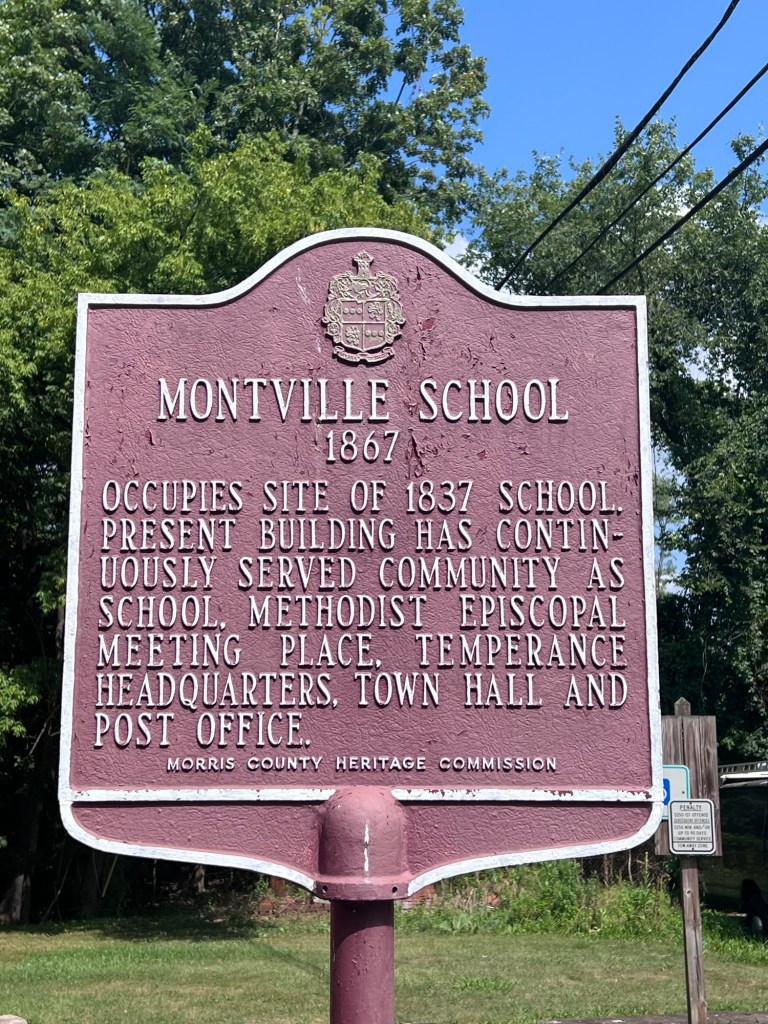
The front sign
I stopped at the Morris Township Museum on a busy Sunday afternoon. The museum, housed in a building that once served the community as a school, post office and a government center.
Each of the cases holds all sorts of artifacts that reflects the towns developments and growth. The first case line is filled with fossils found in the area and small artifacts from the Lenape Indians.
The next case was filled with accessories from Victorian objects from jewelry to household items. Lining the walls are objects from the high school, personal family records for people to search on their loved one’s genealogy. The docents are hand from the Historical Society to answer any questions about the museum.
The History of the Building:
(from the museum website)
The building was originally “Old Schoolhouse #10”. It was built in 1867 and occupies the site of a former 1837 school. One of the early superintendents of Morris Canal, Mr. William Hickson , was its builder.
Located at 6 Taylortown Road just down the street from Route 202 is a red brick building with a sign out front proclaiming it the “Montville Township Historical Museum”. Within its walls are articles, pictures, tapes, and memories that will carry you back through the years to times long past.
The front of the museum
About the Building: The building was constructed following the Civil War, in the year 1867. It was one of the first one-room schools in the area. The land was donated by the eastern district superintendent of the then-thriving Morris Canal, one of the many waterways then in existence to help promote trade and travel in America. William Hixson gave the land to the town for public purposes, with the stipulation that it could be reclaimed if used for a purpose with which his family disagreed.
The historic sign of the school
Reconstruction: The building began serving Montville as a one-room school heated by a potbellied stove. It also served as an auxiliary to the local Methodist Church. It became the gathering place for the local temperance league in the 1890s, and was the scene of many temperance meetings in the town.
The gardens of the front the museum
The historical collection of the museum
The history of the property:
(from the Museum website)
Entrance: Today, as you enter the museum, you walk into an entrance foyer. Probably once used to hold the boots and coats of school children, it is now an entrance hallway. The door to the main room is straight ahead, and upon entering, you step into history.
Building Uses: Forty-four years after being erected, it changed from a school to the center of political activities as the town hall. It was the town hall until 1939, when it became the town’s post office. It served as such until 1961, when a post office was constructed close by (Taylortown Road and Route 202).
Making it a Museum: After the postmen moved out of the building, the township considered selling the property to a business concern but the original Hixson agreement was recalled, and the building remained unused – until the celebration of New Jersey’s 300th Anniversary.
At that time, a Tercentenary committee was founded in the Township to help celebrate the anniversary and the Committee decided to make the establishment of a museum its main project. Armed with donations from local residents, committee members renovated the building and reopened it in 1963 as a museum.
The inside of the museum
The part of the canal that exists around the museum
Around the corner from the museum is the corner from where the Morris Canal lock was located which was on display at the museum.$
The area around where the Morris Canal was located
I traveled further down the road to see what is left as the canal that has since grown over. Before railroads and cars, the canal system is where goods and services from the interior of the state to the cities such as New York City and Newark.
The sign marking the site of the canal and the lock system
The lock location
The grown over canal system
It is an interesting museum whose artifacts represent the three communities in Montville township.
I could not believe how fast the Summer came and went. It was like a blink of the eye. I had covered a lot of ground over the last three months that included many neighborhoods in New York City, many Upstate New York and New Jersey towns plus updating older blogs that needed some work. They needed new pictures and updates in the businesses I had featured in the past. A lot has changed since COVID.
I started Alphabet City just before the Labor Day Weekend and a lot has changed here since the 1960’s and 70’s. The whole hippie movement is now over only to be replaced by the current hipster movement where men are wearing knit head coverings in almost 90 degree and still wearing ‘man buns’ that are ‘so 2010’. To each his own.
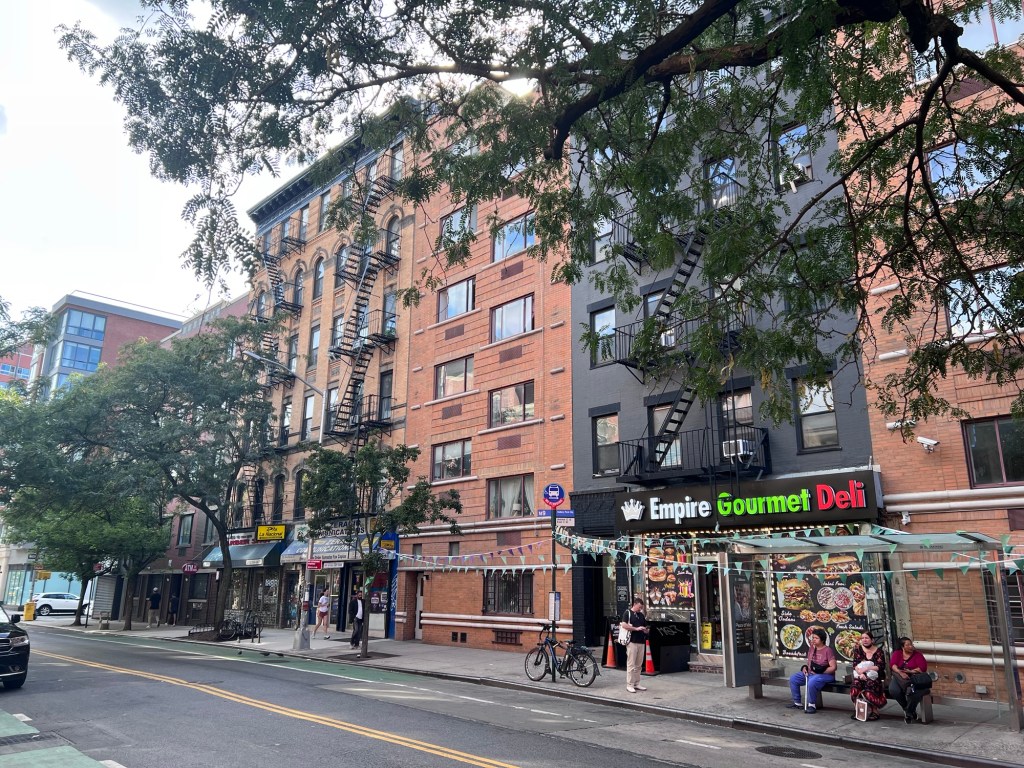
Looking down Avenue C on a sunny afternoon
I just ignored everyone and started my walk on the Avenue’s of the neighborhood. The neighborhood is broken up that the closer you are to public housing the less gentrified it was on the block. The border seemed to be around 10th Street. The lower the street, the nicer the bars and restaurants.
The one thing I did notice about the neighborhood was the amount of community gardens that popped up in corners all around the blocks. This was the result of the community efforts in the 1970’s and 80’s that saved the neighborhood and what has made the neighborhood as desirable as it is now. It seems you can’t stop gentrification. Even so, these hard working gardeners are setting the tone for the neighborhood.
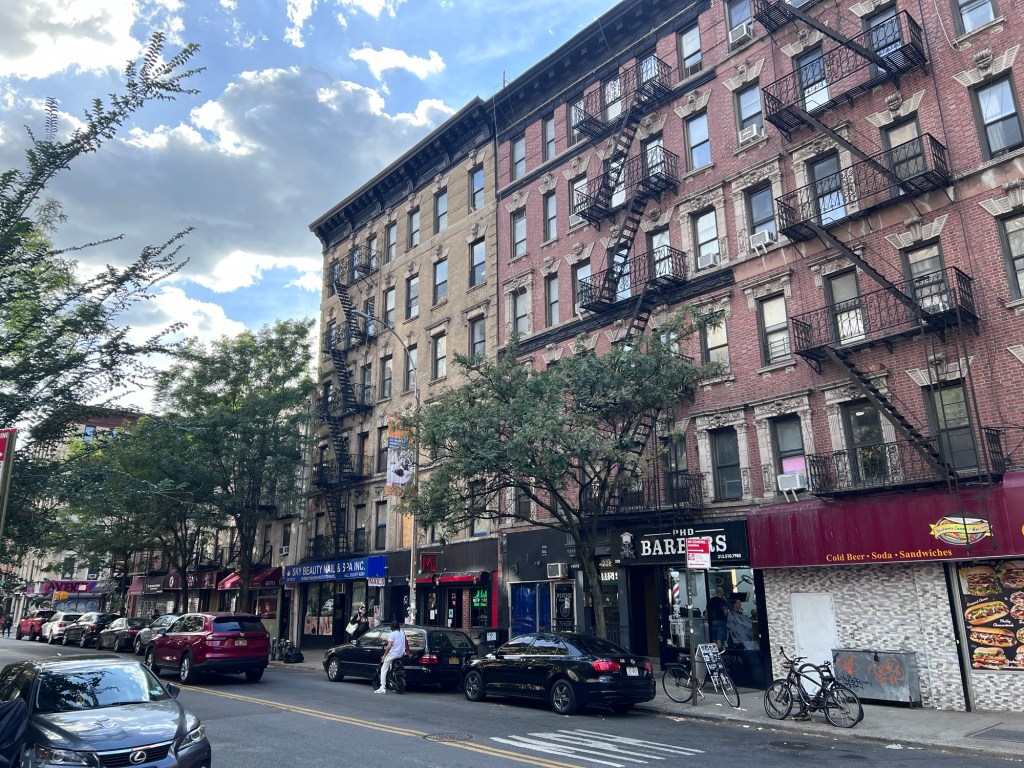
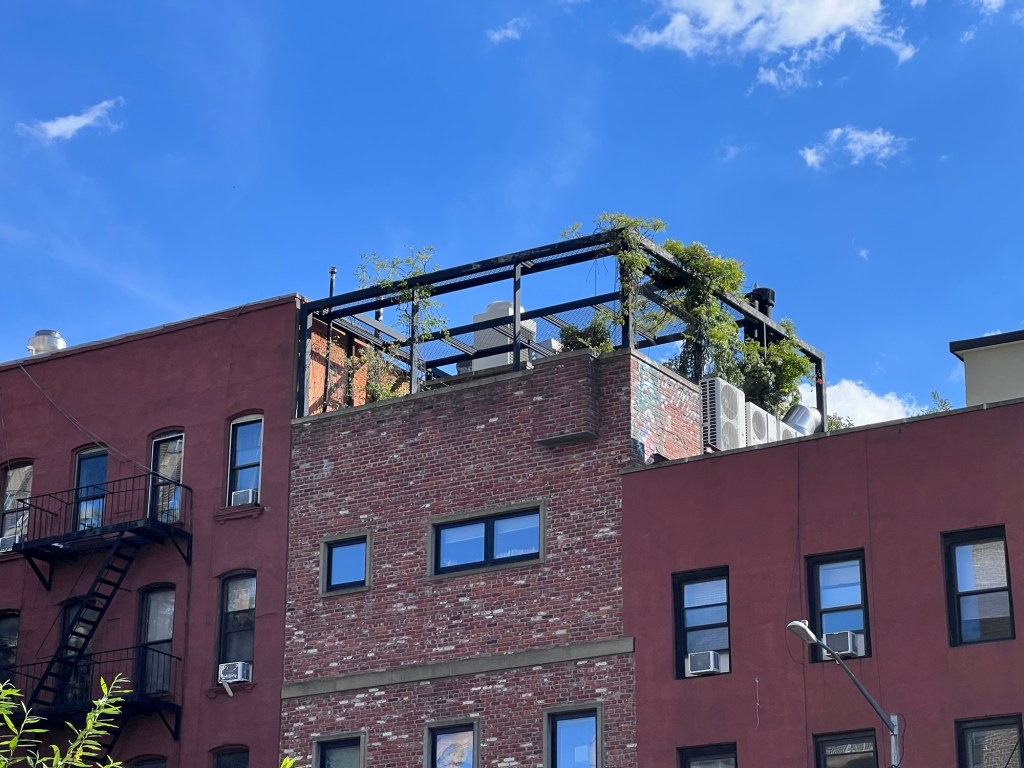
The signs of the times on top of the old tenements on Avenue C
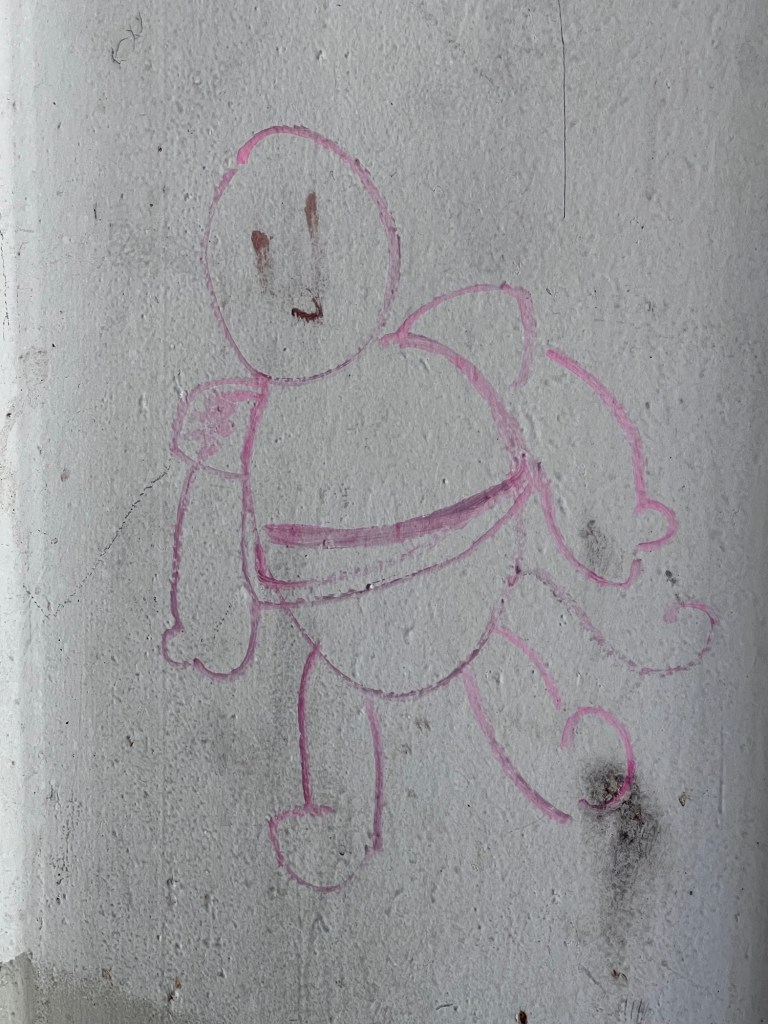
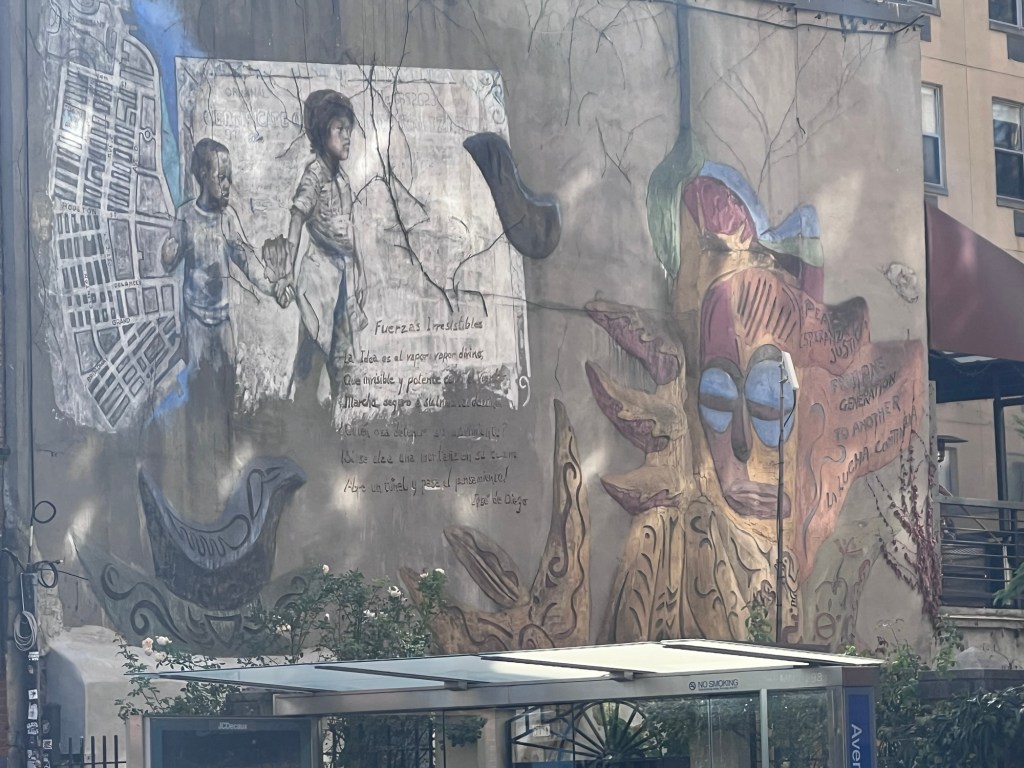
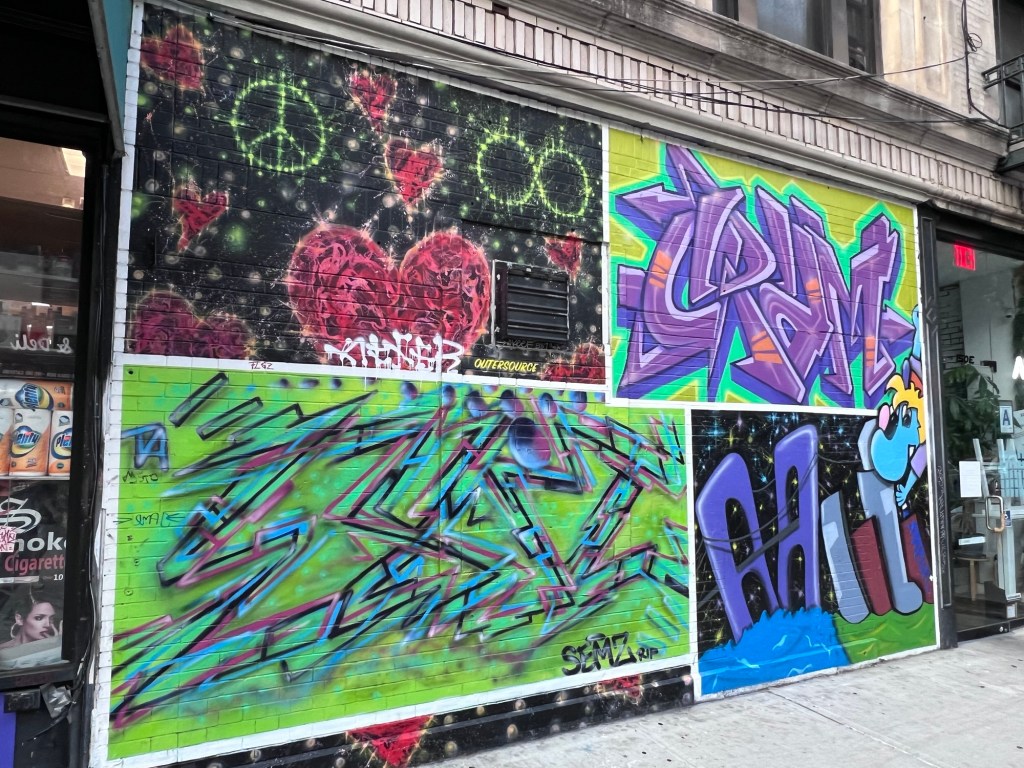
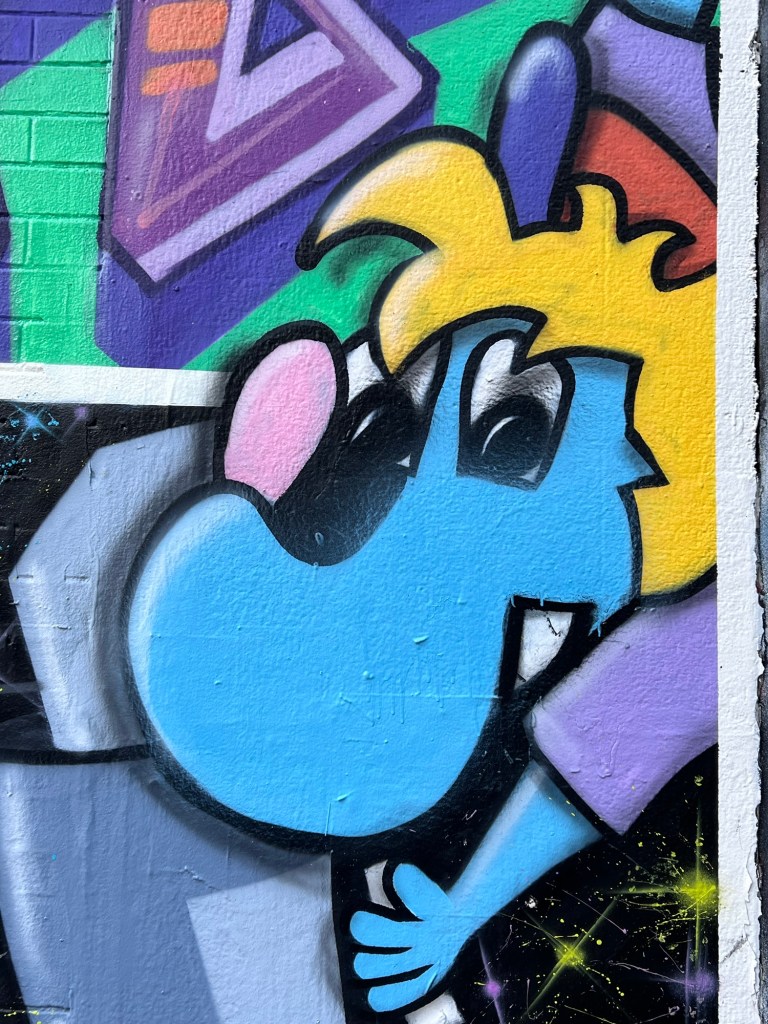
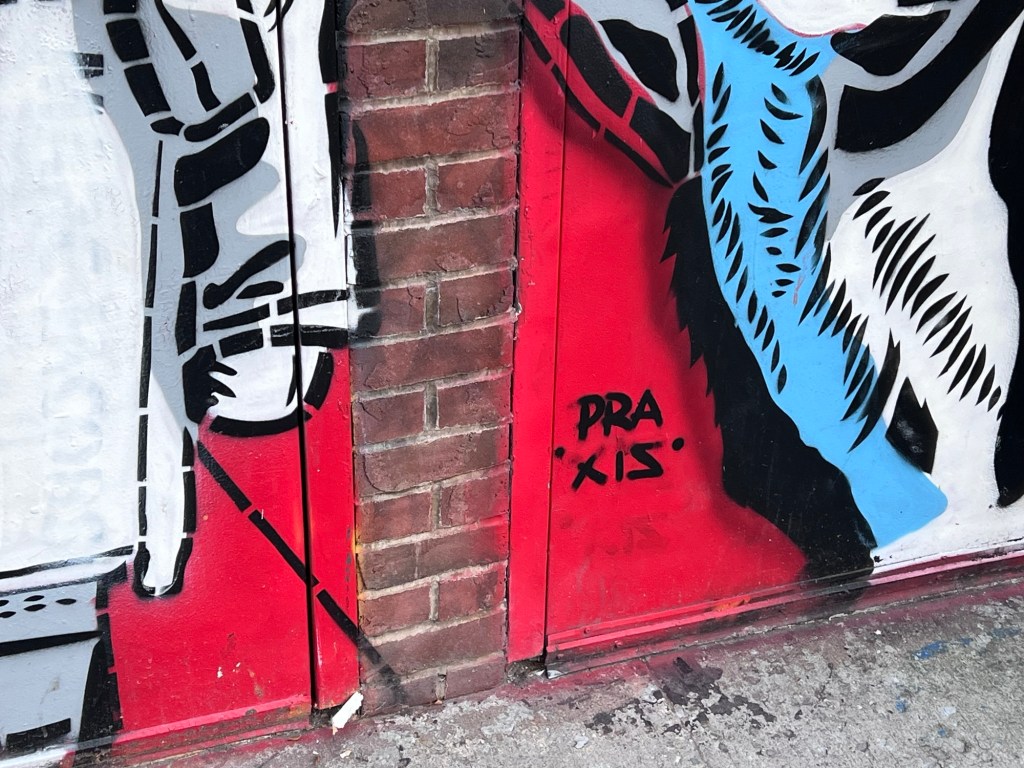
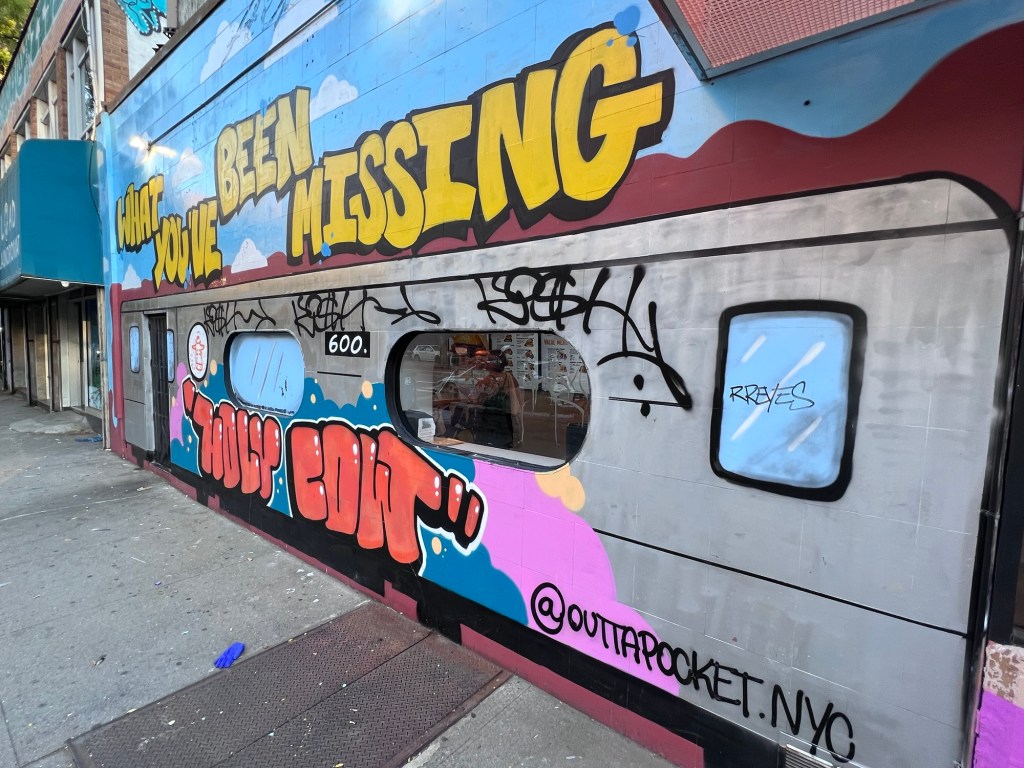
The other thing I noticed about Alphabet City are the tagging and outdoor murals that line all the blocks. The people who creat this street art are so clever and creative. They really have an eye on color and design.
Some of the art cleverly tucked along the walls and columns in the neighborhood
Some of the art close by
I liked this design
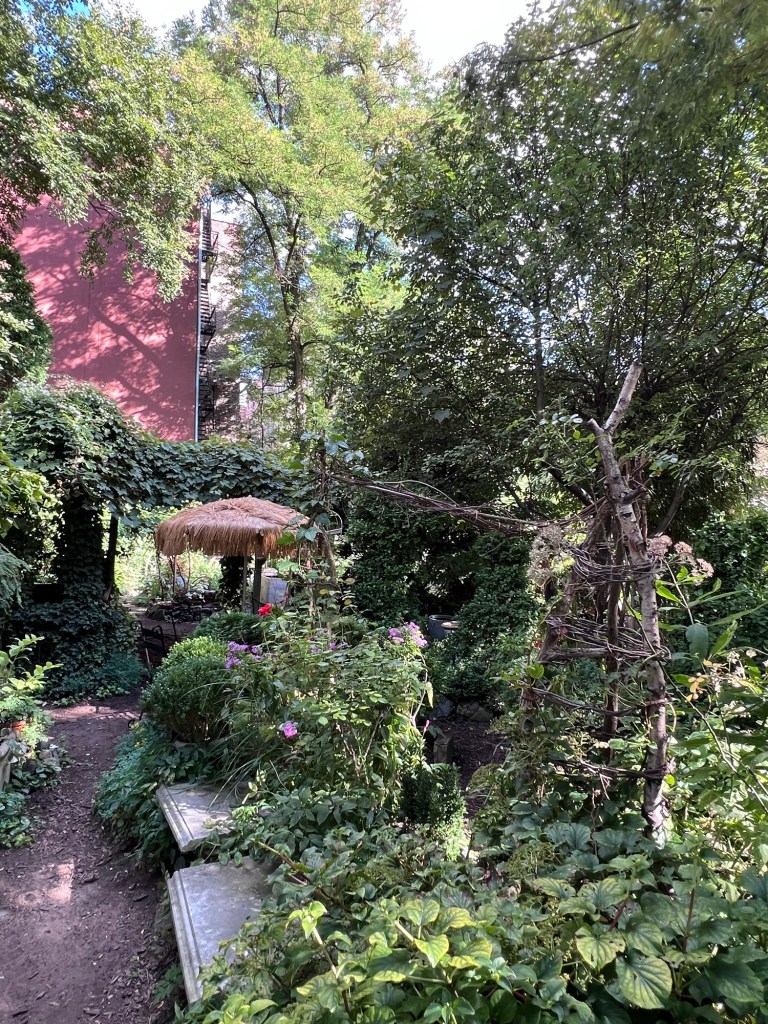
The first of the Community Gardens that J toured that afternoon (they all seemed to be open the Saturday that I visited) was the Francisco ‘Pancho’ Ramos Community Garden at 709 East 9th Street. The garden showed the creative spirit of the people who volunteered there.
The sign for the Francisco “Pancho” Ramos Community Garden at 703 East 9th Street
(The History of the Park from its website)
The Lower East Side of the 1970s was a hard place with little green. Local residents noticed the abandoned, littered lot at the corner of Ninth Street and Avenue C and began to sow seeds and plants along the chain link and among the debris, and so the Ninth Street Community Garden & Park was founded in 1979. Today Pancho’s Garden hosts community events including music, art, and gardening workshops.
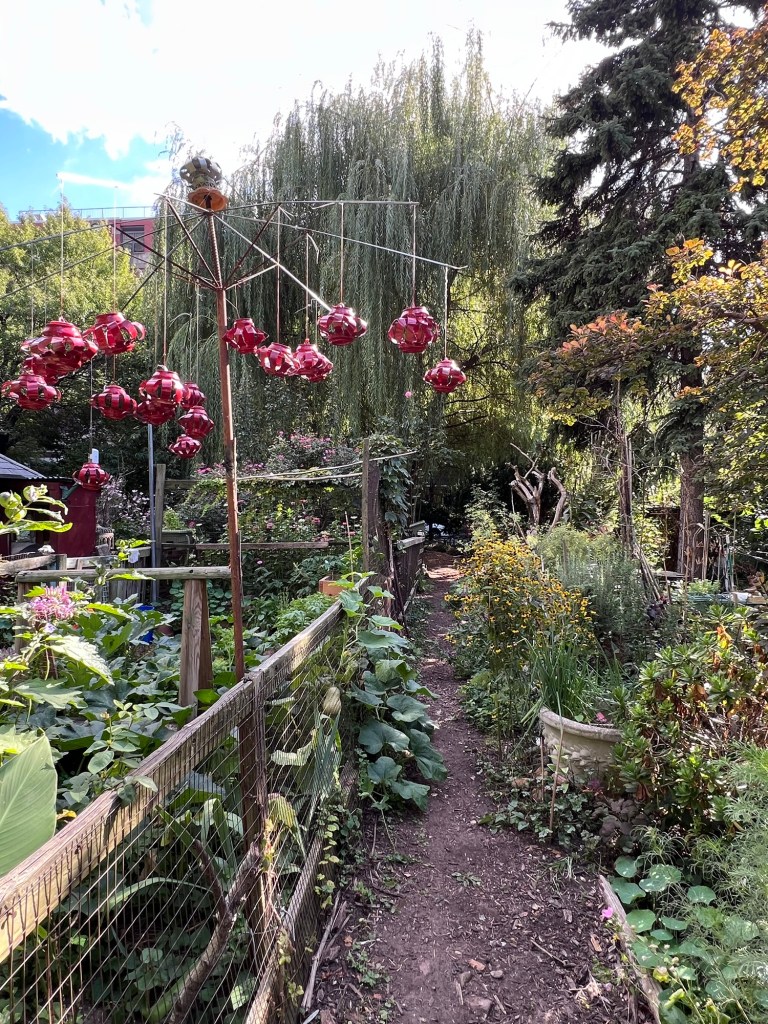
The pathways were lined with flower beds and some with vegetable gardens with the latest crops coming in. Here and there were pieces of artwork such as sculptures and paintings.
Walking through the gardens at the end of the summer
Following the paths
Walking through the flowering arbors
Some of the creative artwork that lined the paths
The raised flower beds
Some of the creative touches of the gardens
The Vegetable Gardens in full growth
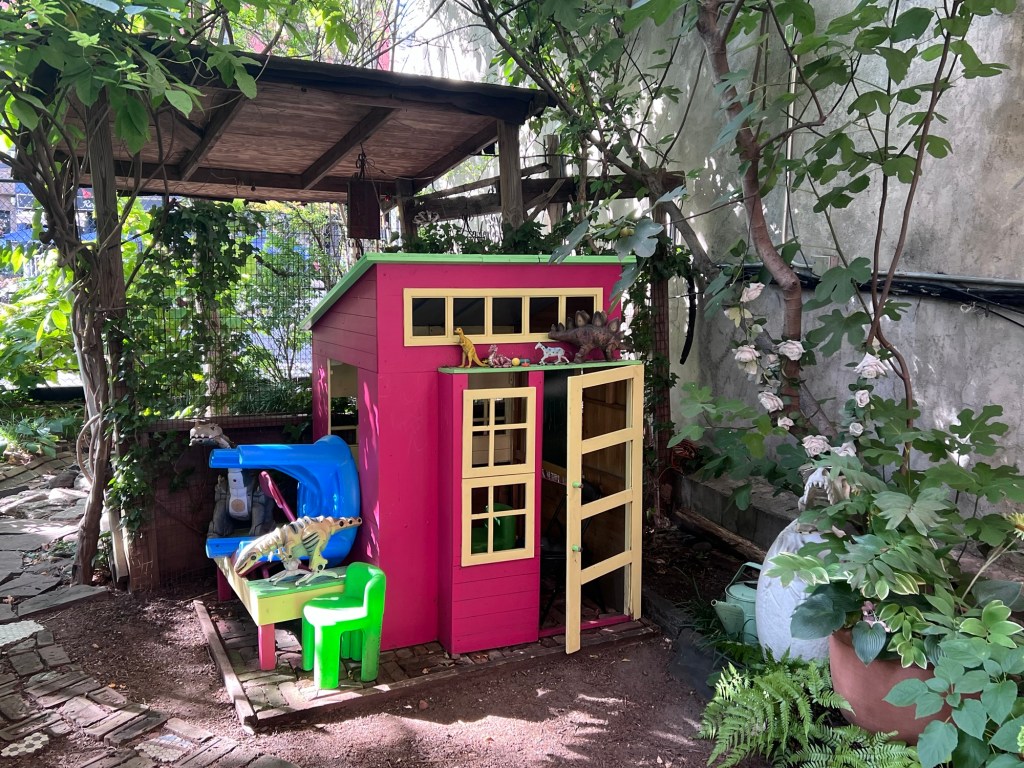
Even the shed and play areas were colorful
This is what the community spirit of hard work and dedication can create in a neighborhood
Another interesting mural that I came across on the walls of the buildings
Just a reminder that the Alphabet City name is not a negative one anymore
The Alphabet Wine Company at 100 Loisaida Avenue (Avenue C)
Walking through Alphabet City today reminded me of years ago when I toured Bushwick in Brooklyn. The negative connotation of the name was now synonymous with ‘hipster’ cool. When I started to see signs like Alphabet Wine Company, you know times have changed for a neighborhood with not such a great past.
Passing the Lower East Side II still reminds you that public housing is a big part of this neighborhood
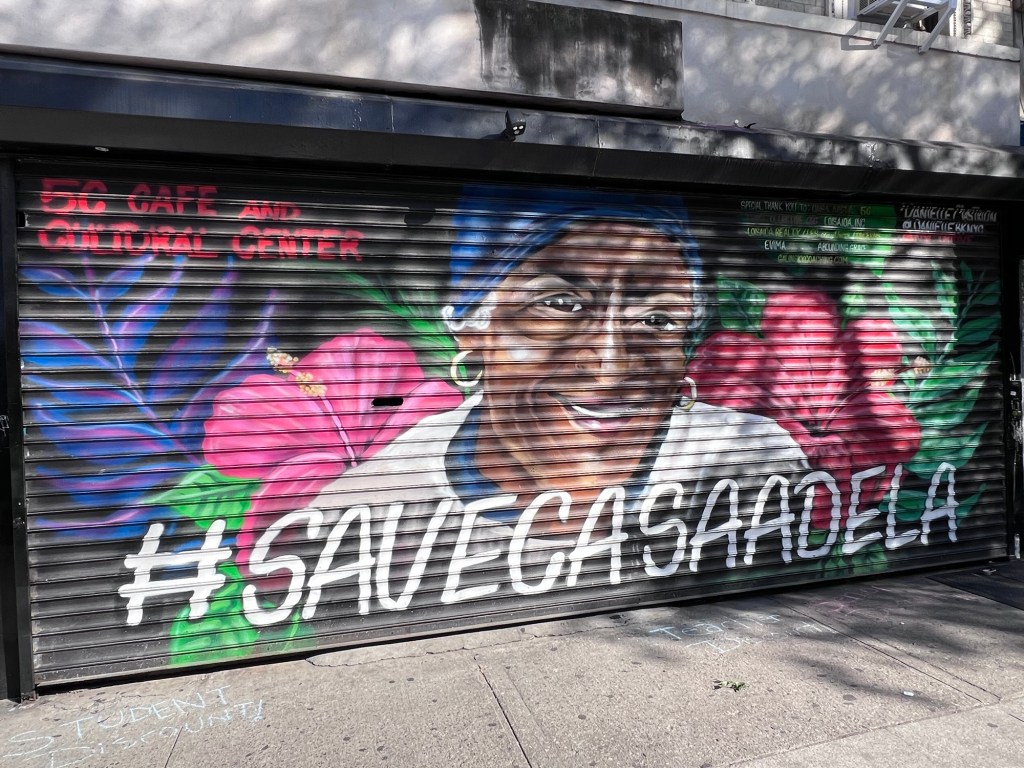
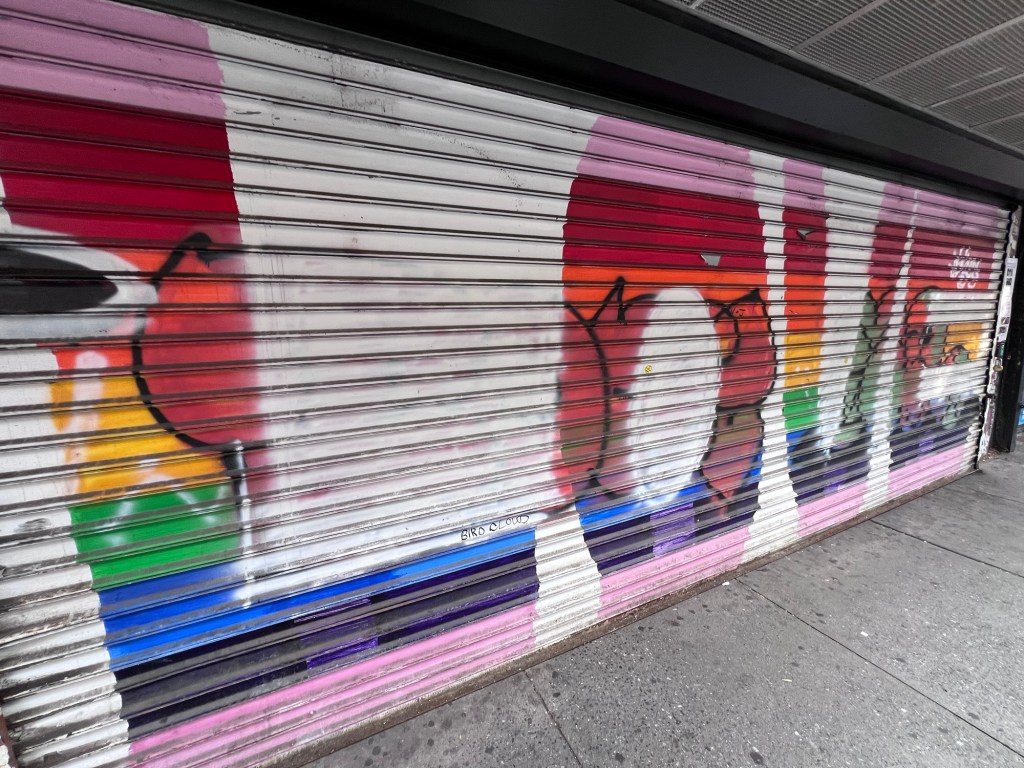
The next set of street art I admired was 15C Cultural Center building at 68 Loisaida Avenue (Avenue C). The shop was closed that afternoon so I got to see all the interesting art work on the metal gates.
This was on one side of building of the 5C Cultural Center at 68 Avenue C and 5th Street
Danielle Mastrion is a Brooklyn-born, New York City based painter and muralist who specializes in large scale, brightly colored murals. She holds a BFA from Parsons School of Design (Artist website)
This mural was around the corner dedicated to Puerto Rico
The changes to Avenue C start around East 10th Street as you leave the area around the public housing and walk closer to the areas that cater to a younger NYU/Pace student population. When I visited the neighborhood originally walking the borders of the neighborhood and even this evening, the bars and restaurants exploded with students whose first weekend in New York City was filled with excitement.
They chatted on their cellphones and yelled to their friends and acted like a scene in early ‘Sex and the City’ episodes. I can always tell when an out of towner is trying too hard.
The rebuilt section of Avenue C
I walked through my next community garden, Gustavd Hartman Square. Some of these patches of green were really small and just required a peek inside.
This plot of land, located at Second Street and Avenue C, is named for Gustave Hartman, a municipal court judge and philanthropist who spent most of his life in this neighborhood. Gustave Hartman was born in Hungary and immigrated to the United States with his parents while still a young boy. He attended P.S. 22 on Sheriff Street (now Columbia Street), the College of the City of New York, and received his law degree from New York University in 1905.
This plot of land, located at Second Street and Avenue C, is named for Gustave Hartman, a municipal court judge and philanthropist who spent most of his life in this neighborhood.
The growth of the garden needed a little pruning
I then started my walk back up Avenue C from the border of East Houston Street, which itself on all sides of the street has been knocked down and rebuilt. I have never seen a street go from shabby to chic more in the last fifteen to twenty years. Here the upper parts of the old Chinatown and Little Italy and the Lower East Side have merged with the Village. The lines have been blurred.
The changes to Avenue C start in the lower part of the neighborhood
The next set of public housing is the Bracetti Plaza
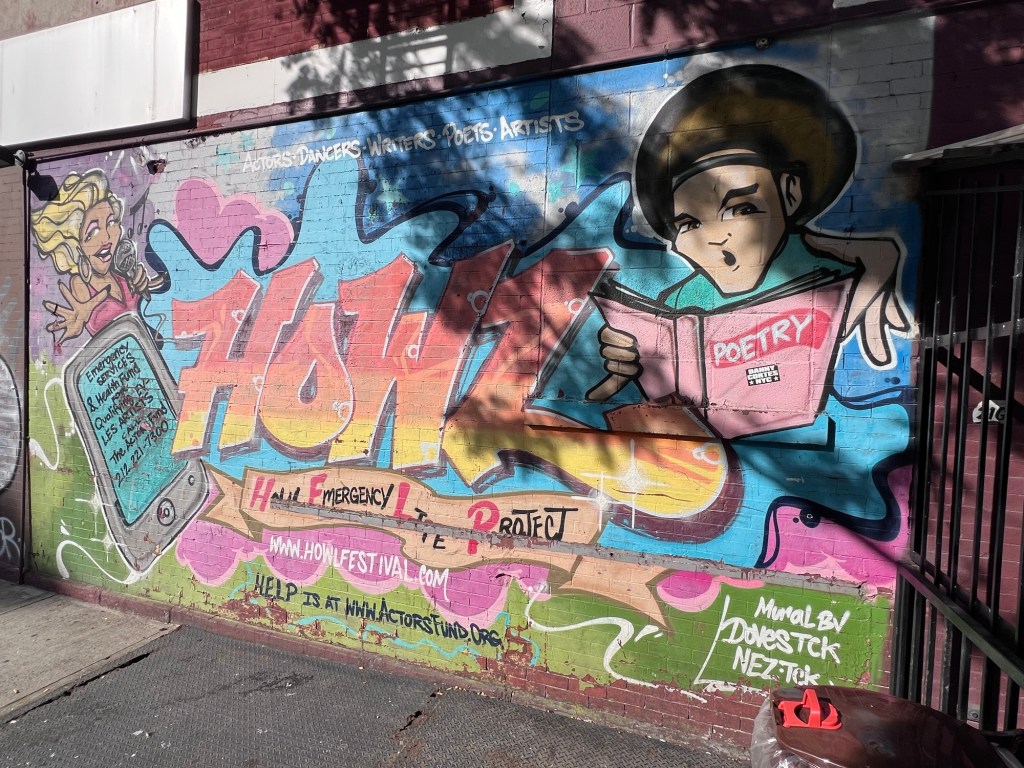
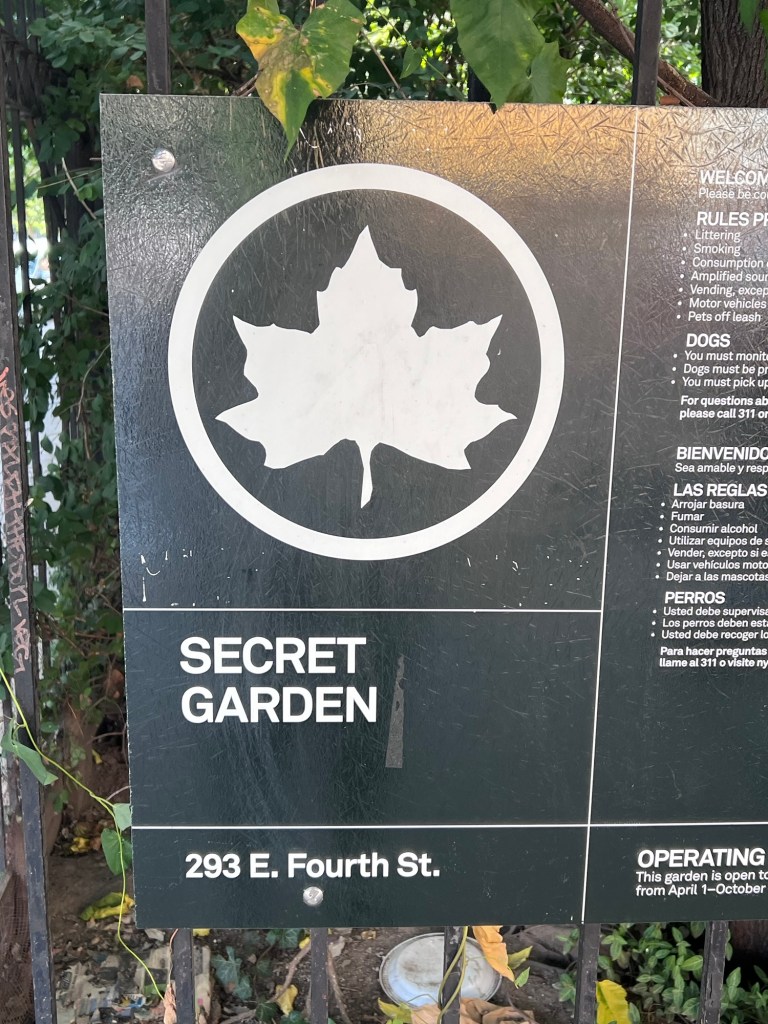
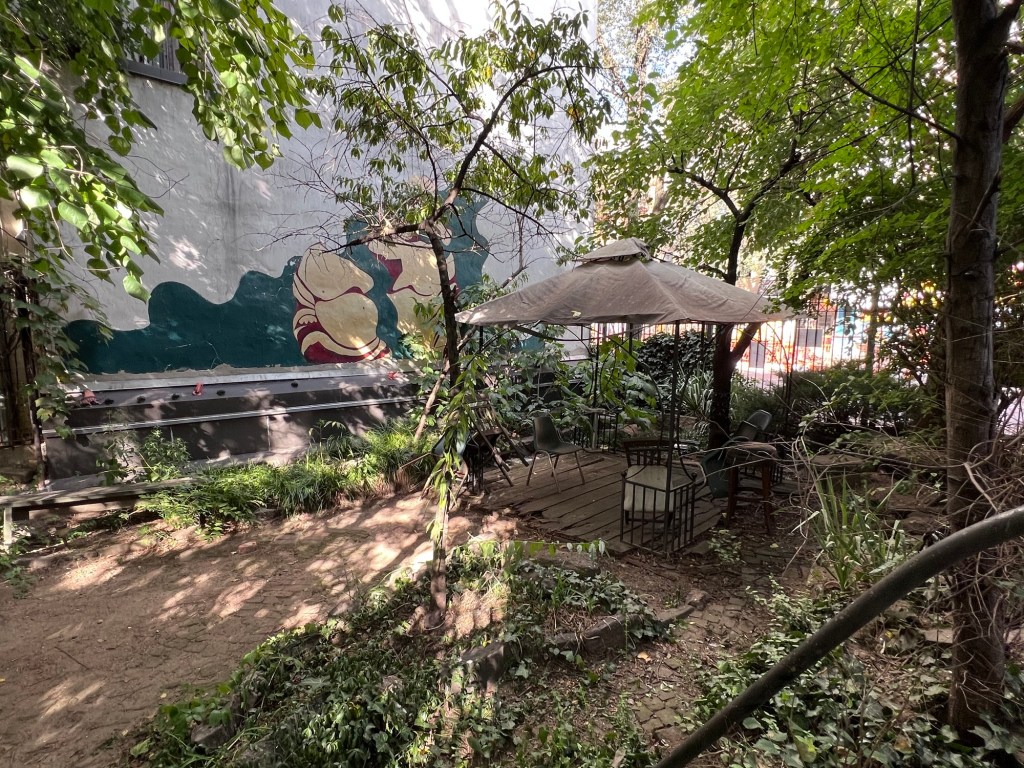
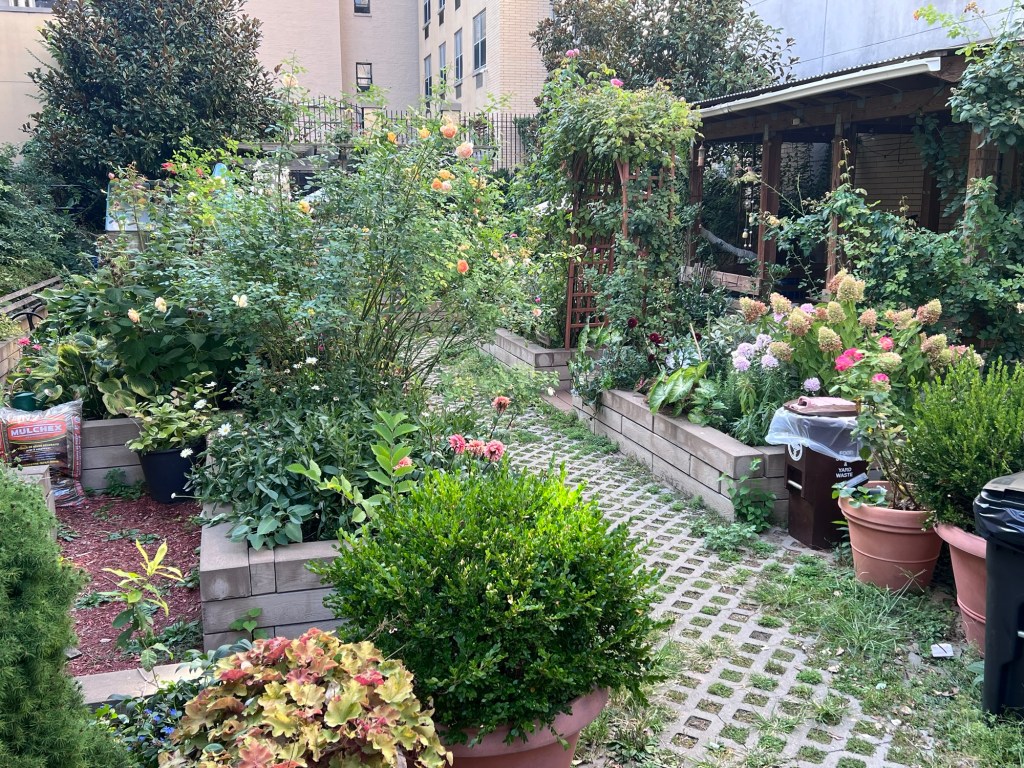
The next community garden I visited was the Secret Garden, a tiny park at 293 East Forth Street. Volunteers were hard at work weeding and planting while I walked around
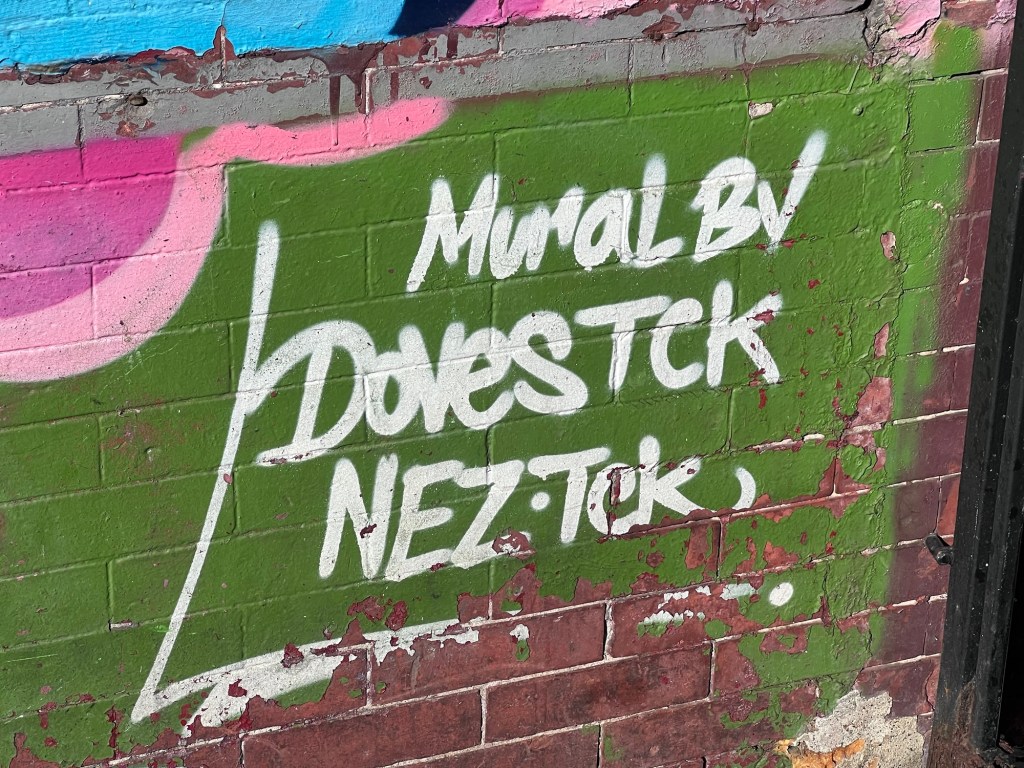
Charlie Doves is a graffiti and fine artist from New York City’s Lower East Side, known for his work inspired by graffiti’s Golden Age and Japanese art. A master of his craft, Doves has moved from street art to fine art, fusing different techniques and styles to create a timeless body of work (Arts AI).
The Secret Garden Community Garden at 293 East Fourth Street
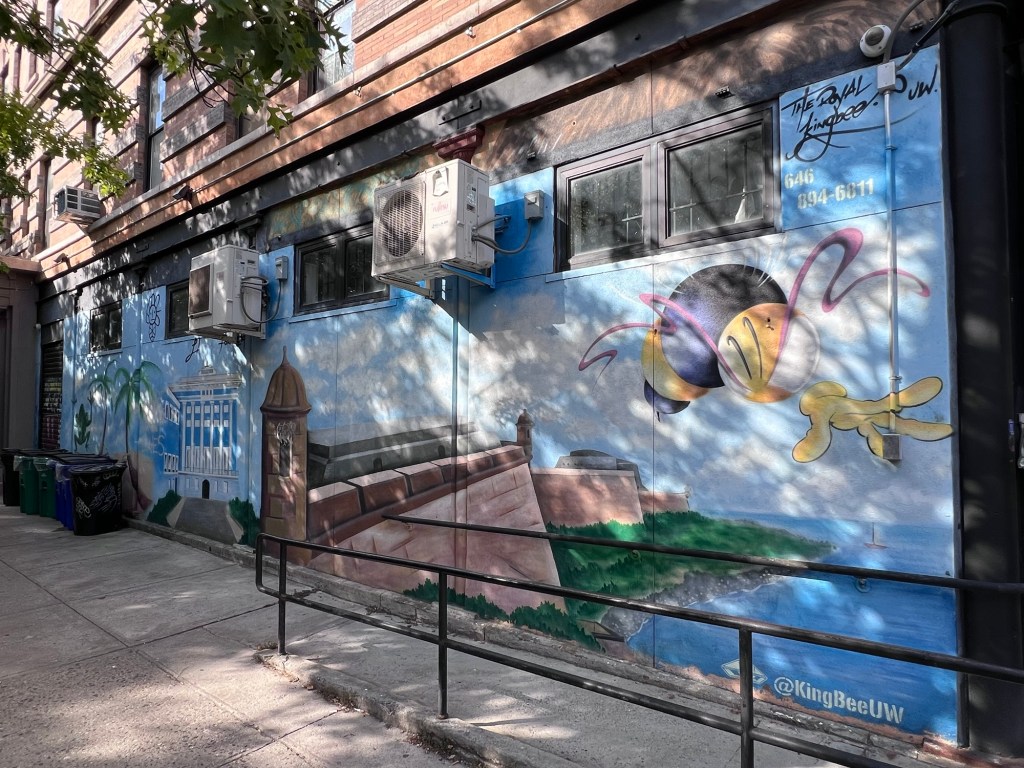
Alfredo Bennett, professionally known as The Royal “Kingbee” is a NYC artist. He was born in Harlem and raised in The Bronx in the early 70’s. He began his career painting graffiti on walls until gathering recognition and eventually being commissioned to perform his artistic abilities all throughout the city of New York. The artist went to JF Kennedy High School in the Bronx (BX 200 Artist.com).
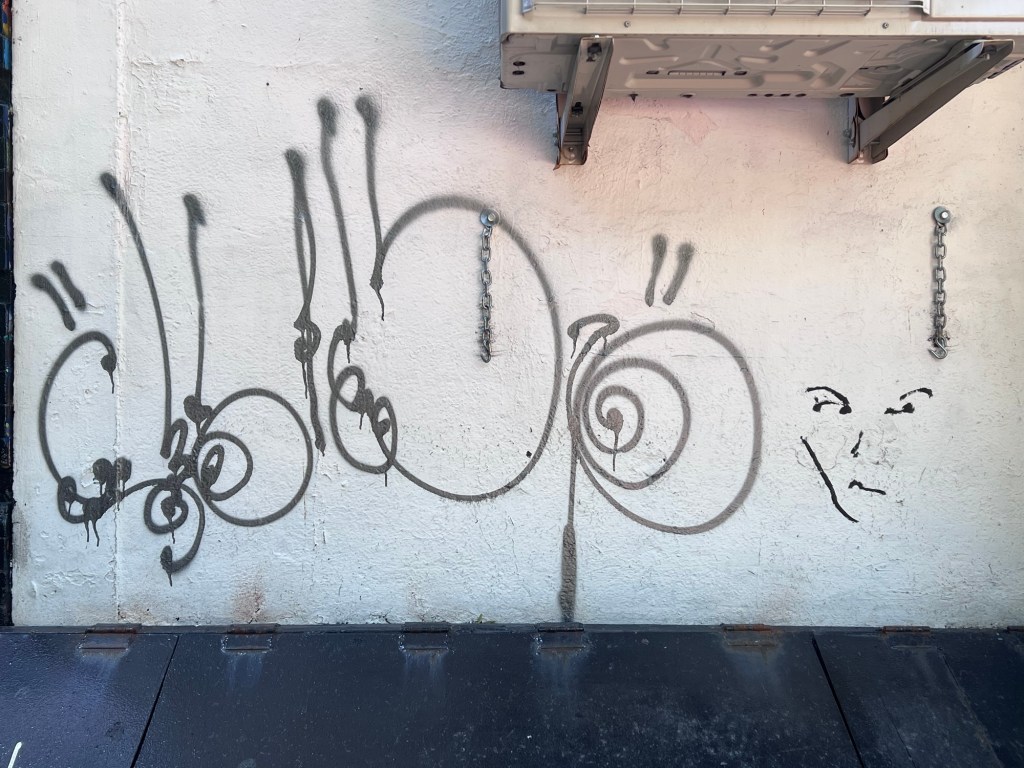
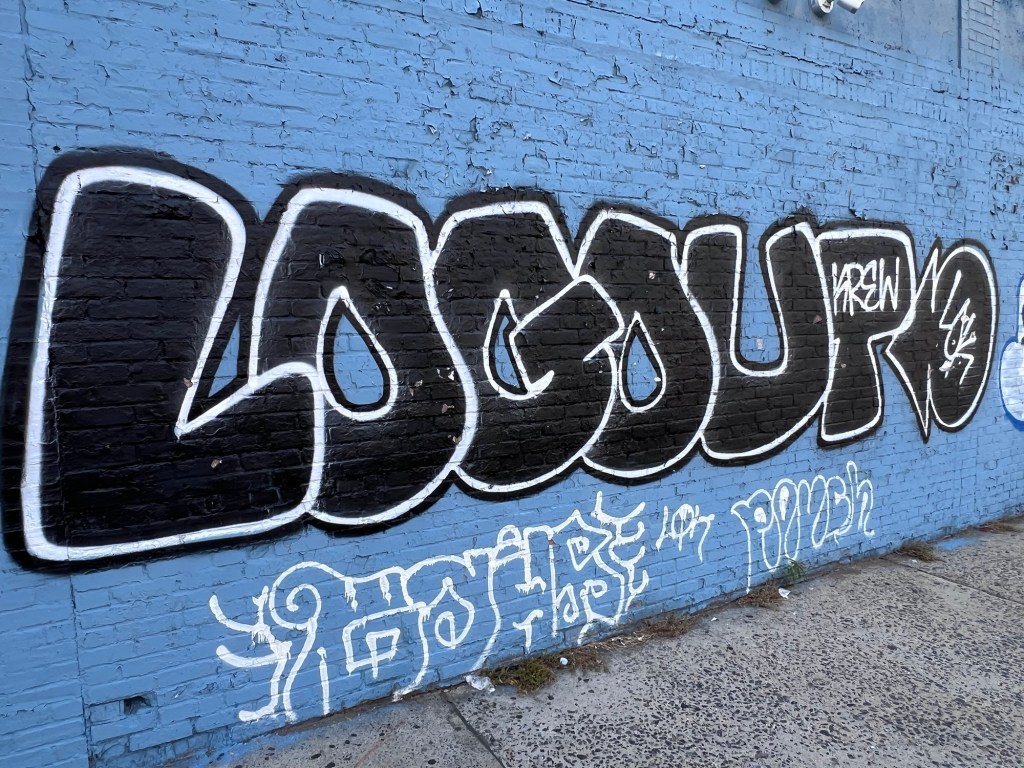
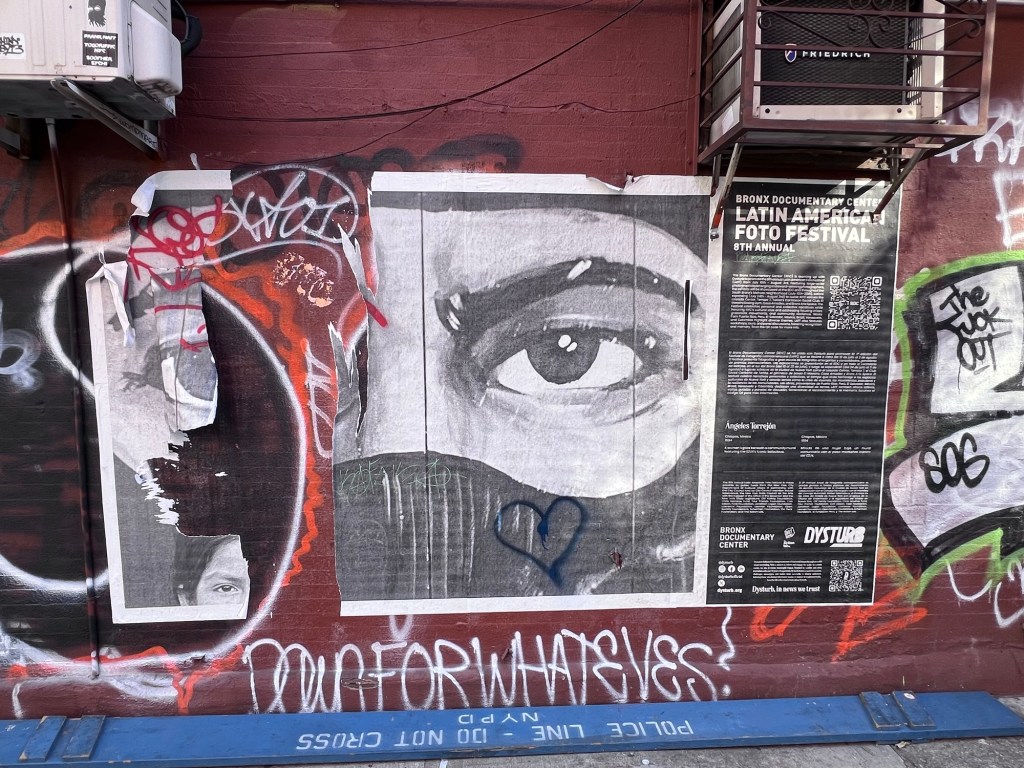
The art was not just limited to the murals that looked more professionally done. The taggers showed their creativity on the closed gates of the businesses and the walls of the buildings around the Avenue.
Tagging art on Avenue C
Tagging art on Avenue C
The next community gardens I visited and one of the original is the Carmen Pabon Del Amanecer Jardin, dedicated to Carmen Pabon.
The sign for the Carmen Pabon Del Amanecer Jardin at
Carmen Pabón, ‘la madrina del Lower East Side,’ was a Puerto Rican community activist, gardener, poet and actress who founded a community garden as an urban sanctuary for children, local artists, Nuyorican poets and the elderly. Carmen helped thousands to create a better life for themselves and fed multitudes of Lower East Siders experiencing homelessness.
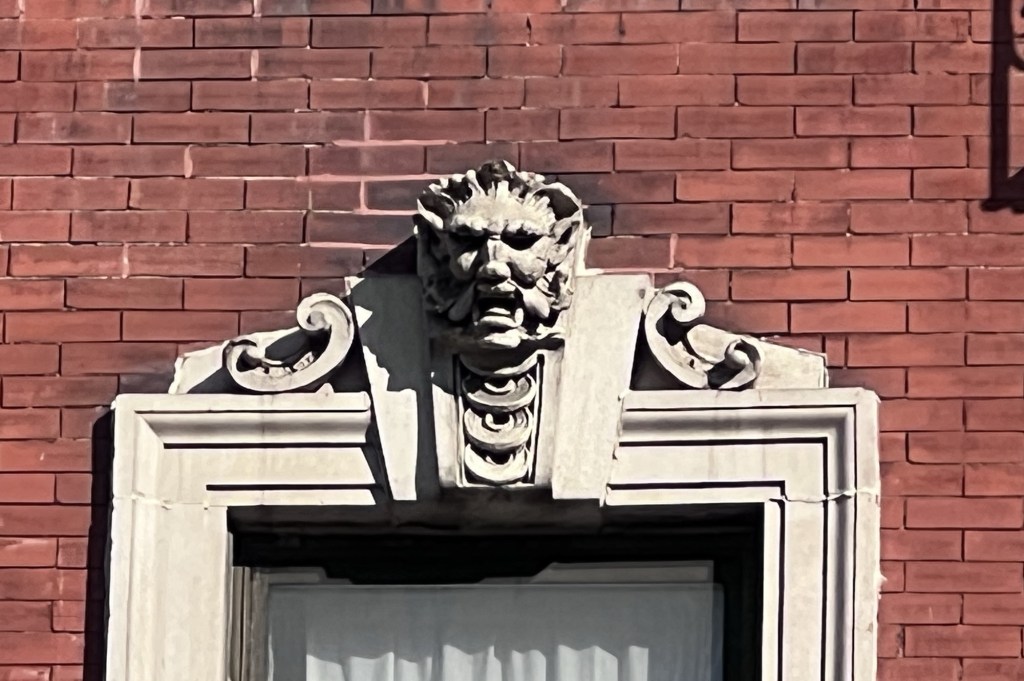
While a lot of the neighborhood is low rise and tenement housing, I stopped to admire this unique brick building at 116 Avenue C, with its interesting faces on all levels staring back at you. It reminded me of the many buildings I had passed recently in Lower Chelsea.
Each window had a demonist look in its eyes as you passed it. This building was built in 1900 (Streeteasy.com).
These menacing demons stare back at you from every window
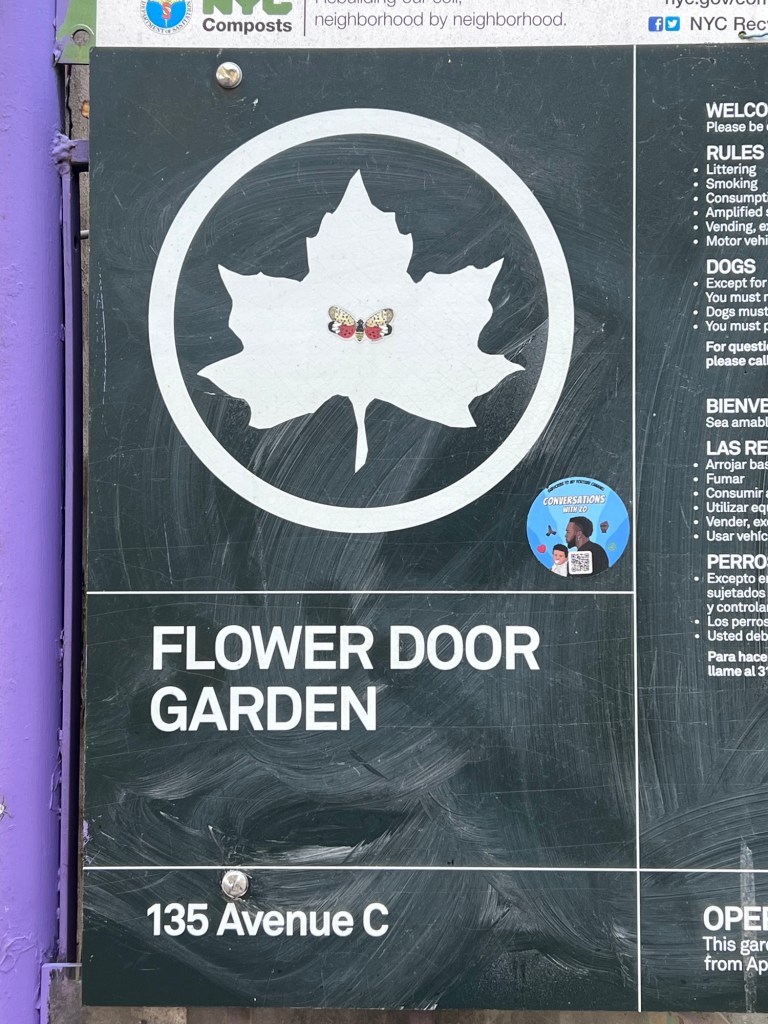
I spent some more time cross crossing through more gardens admiring the work of dedicated gardens. The next I visited was the Flower Door Garden at 135 Avenue C.
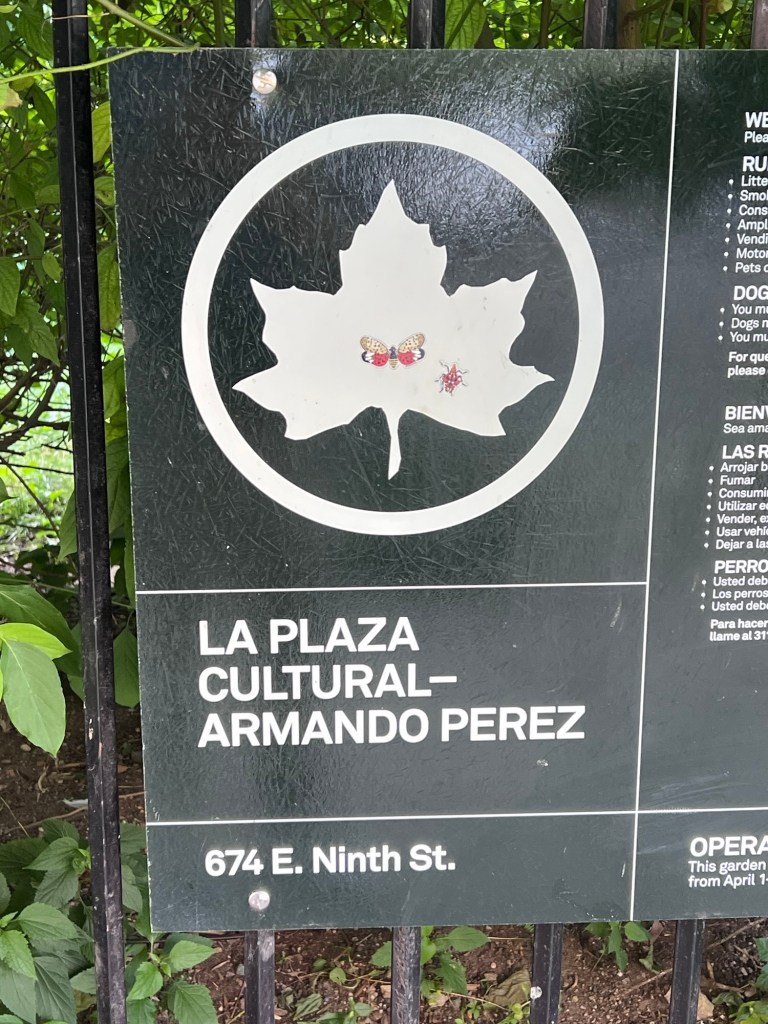
La Plaza Cultural de Armando Perez Community Garden was founded in 1976 by local residents and greening activists who took over what was then a series of vacant city lots piled high with rubble and trash. In an effort to improve the neighborhood during a downward trend of arson, drugs, and abandonment common in that era, members of the Latino group CHARAS cleared out truckloads of refuse.
Working with Buckminster Fuller, they built a geodesic dome in the open “plaza” and began staging cultural events. Green Guerillas pioneer Liz Christy seeded the turf with “seed bombs” and planted towering weeping willows and linden trees. Artist Gordon Matta-Clark helped construct La Plaza’s amphitheater using railroad ties and materials reclaimed from abandoned buildings.
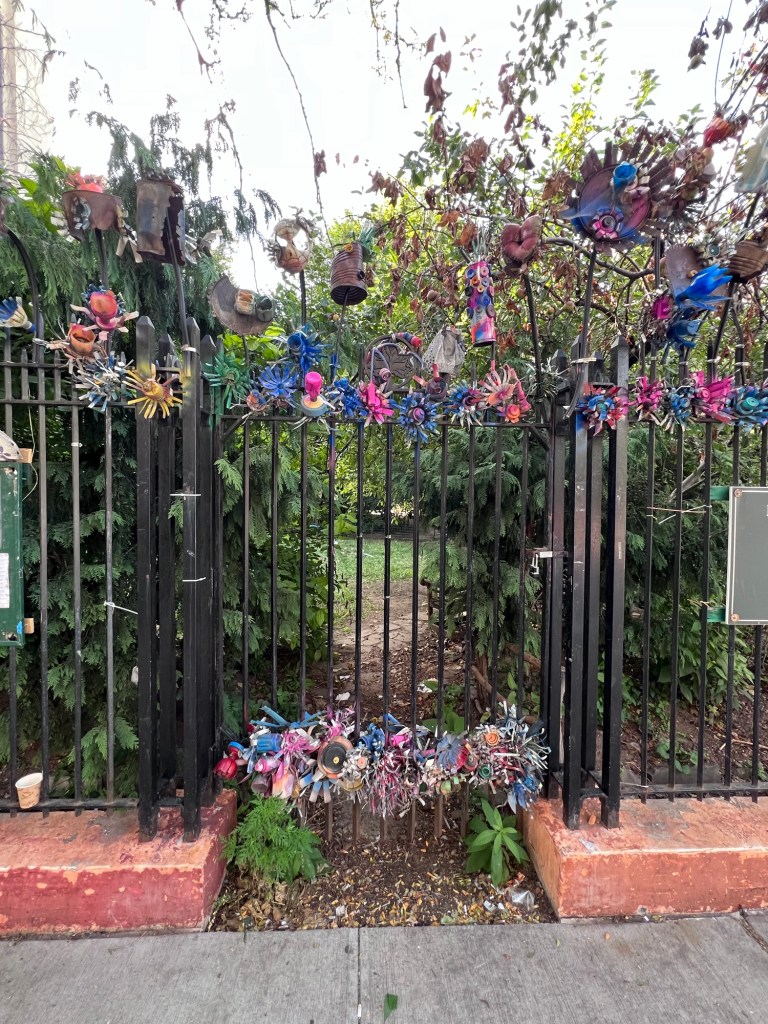
What I liked about this particular garden was all the interesting metal work along the fencing. It popped all around the fencing like you were living in ‘Whoville’.
One of the entrances of the gardens
Walking around the inside along the paths
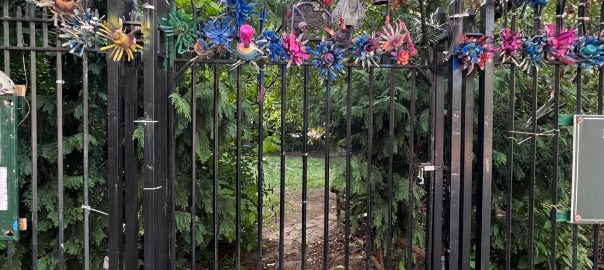
The whimsical ironworks on the top of the fencing
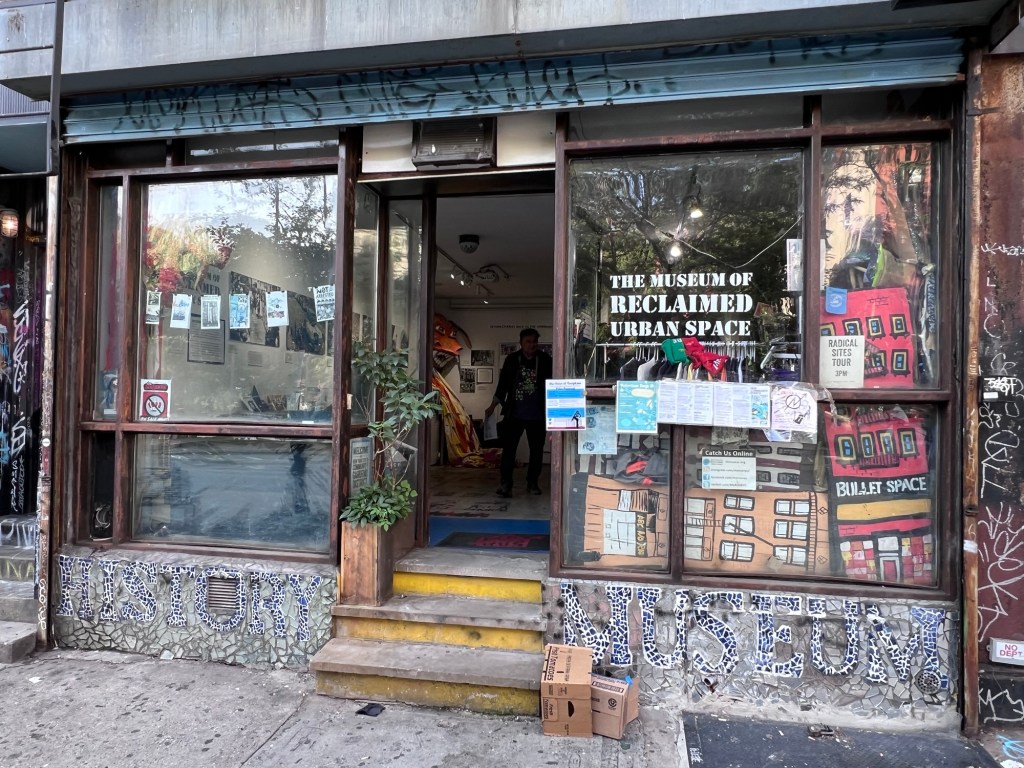
As I made my way back up Avenue C, J came across a small museum that I had never heard of before, the Museum of Reclaimed Urban Space at 155 Loisaida Avenue (Avenue C).
The Museum of Reclaimed Urban Space at 155 Loisaida Avenue (Avenue C)
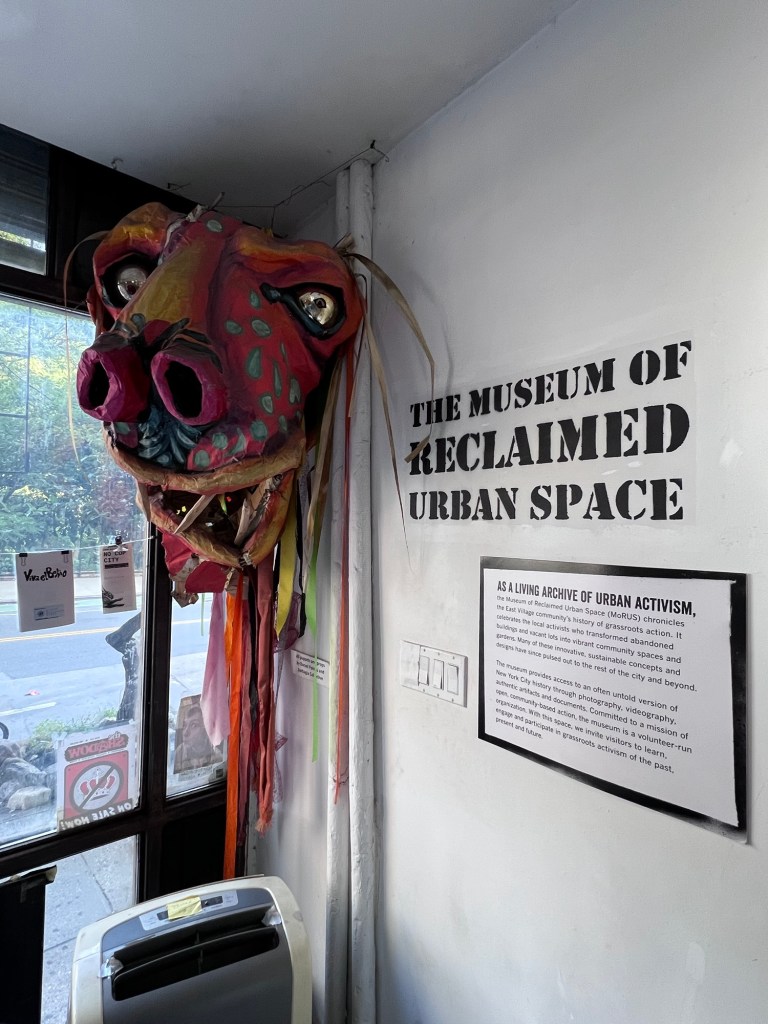
The museum is a time capsule of information from the late 1960’s through the 70’s when the neighborhood had really hit rock bottom with the City’s almost bankruptcy. The neighborhood and its residents banded together to save the neighborhood and clean up all these empty lots of garbage and debris.
The entrance of the museum
The description of the museum’s purpose
The museum has pictures of the neighborhood at various stages of its development. There are the ups and downs of this section of the City and how its residents maintain it. The neighborhood has seen so much change and much of it due to the volunteers who keep improving it.
The inside of the museum
How the changes took place in Alphabet City
The masks and decorations that line the walls
The history of the neighborhood and its triumphs
After my trip through the museum, I continued the walk up Avenue C. Above 10th Street is was a little patchy but you can tell the neighborhood is getting better. I never felt unsafe walking around the ‘Alphabets’.
For the rest of my walk, I enjoyed the ‘open-air’ museum that the sides of the buildings offered me. There were many interesting murals to admire.
I think this one was in honor of the island of Puerto Rico.
Artist Antonio “Chico” Garcia is a New York City based Graffiti artist. He is well known in the neighborhood and has been featured in several periodicals (Wiki).
I saw this on the side of a Chinese restaurant
Then when I got to the top East 14th Street and I came across this mural on the side of a school and I admired the different styles of art in each panel.
The panel that lined the school created by artists from the Thrive Collective
Danielle Mastrion is a Brooklyn-born, New York City based painter and muralist who specializes in large scale, brightly colored murals. She holds a BFA from Parsons School of Design (Artist website)
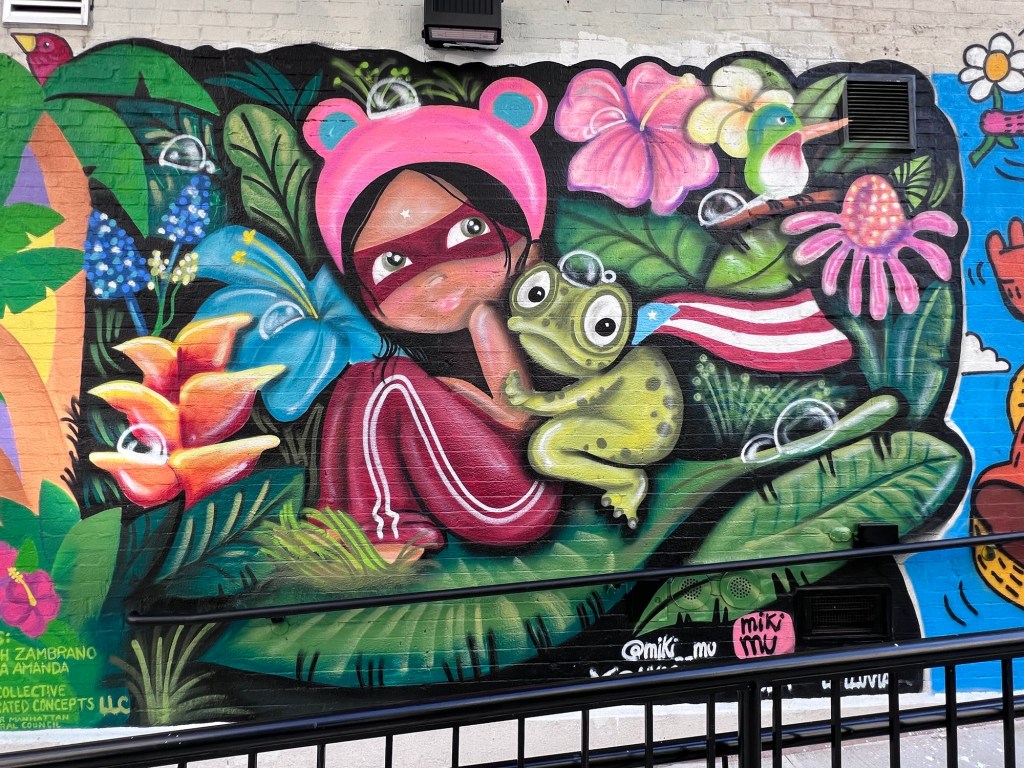
I loved this whimsical school painting by artists Savannah Zambrano and Andrea Amanda
Savannah Zambrano is a freelance sequential artist that hosts workshops and panels, does face painting and caricatures, and works with Traditional and Digital Media (Artist Bio website).
The artists sign with the Thrive Collective
I loved this mural with the Puerto Rican flag by artist Miki Mu
Michela Muserra is an international muralist and illustrator based in Brooklyn. A graduate of Accademia di Bella Arti in her hometown of Foggia, Italy. The artist has worked as a teaching artist with Thrive Collective since January 2017 (Thrive Collective website).
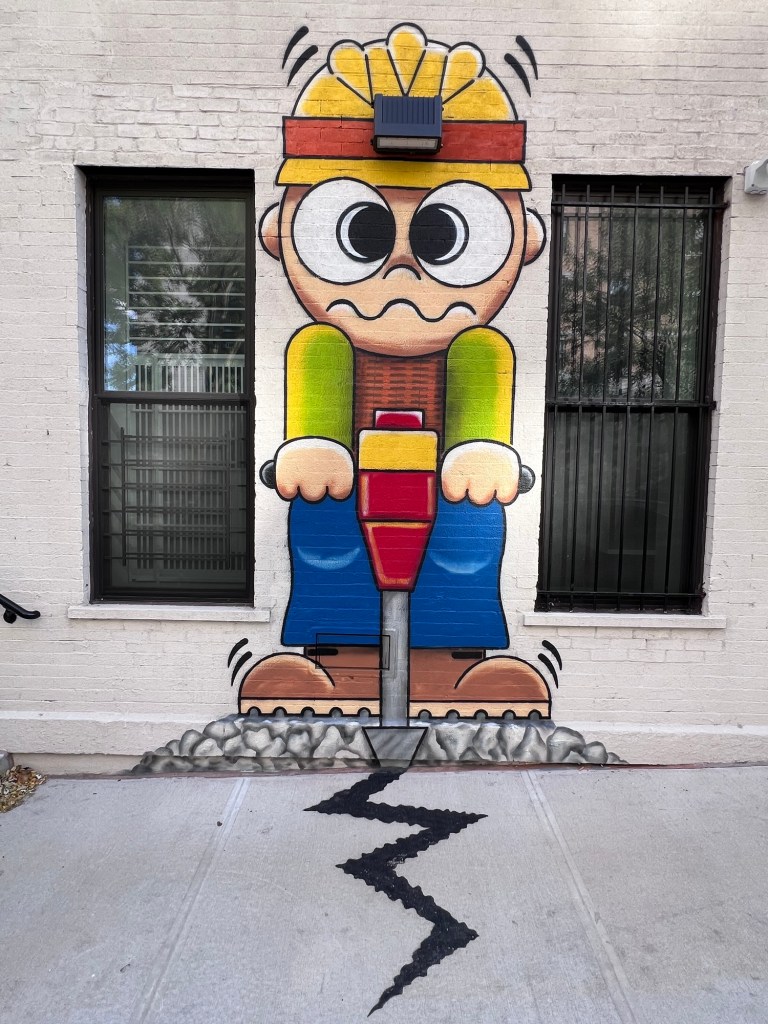
I love this colorful display of positive behavior of Frank Ape by artist Brandon Sines
Artist Brandon Sines was exposed to many cultures while growing up simultaneously in New York City, Toronto, and Los Angeles. He mixes Pop Art’s mass culture, Surrealism’s private associations, and inventive paint handling to create dreamlike environments. His mark making ranges from experimental techniques to illustrative precision. Parts of the paintings are crystal clear, and other parts reach abstraction.
This was another great mural on the school but I could not find the artist
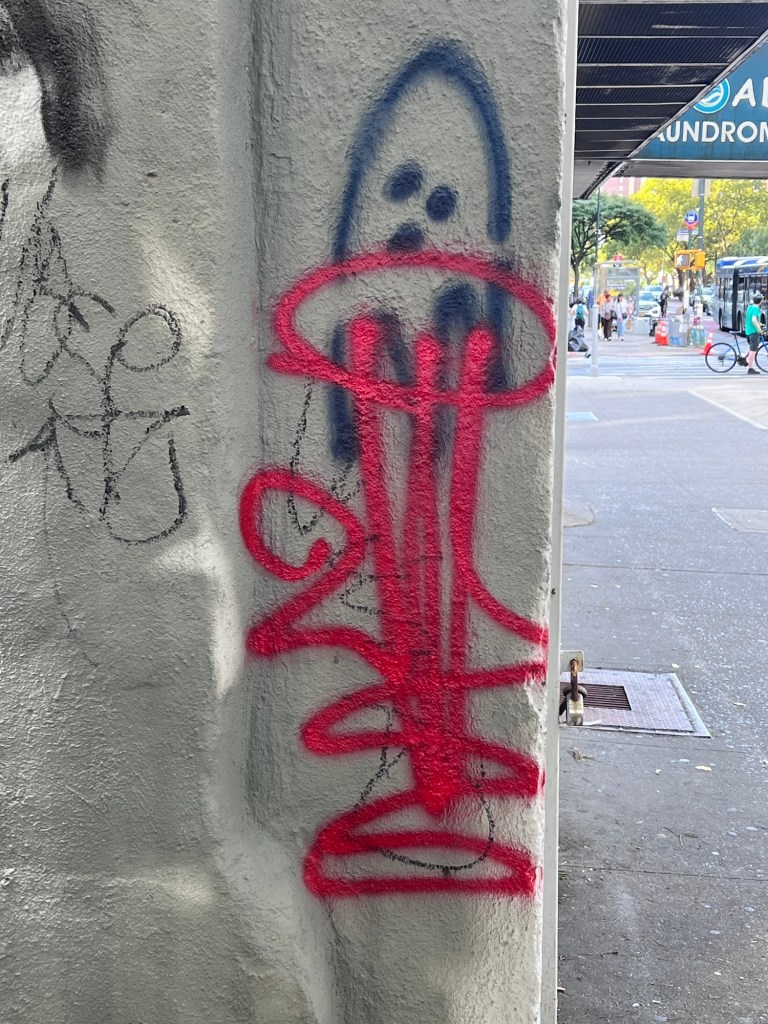
The piece of art that I noticed was as I was walking down East 14th Street and I came across this taggers work. To me it looked like a surreal ghost.
The piece of street art was East 14th Street
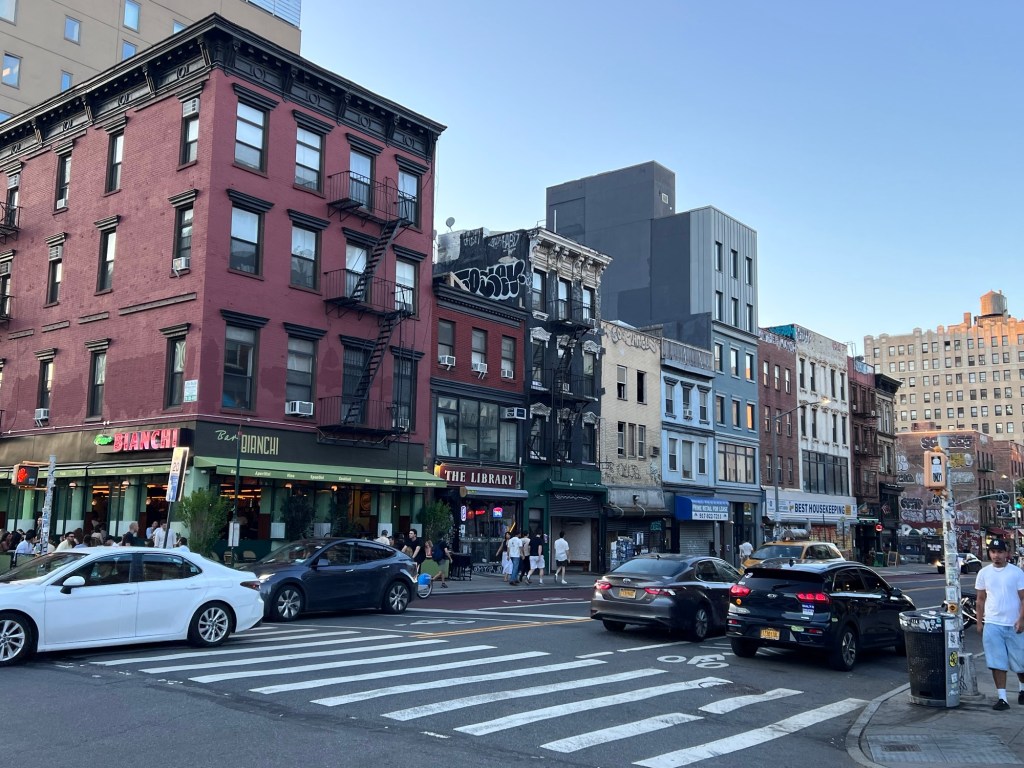
I turned the corner to Avenue B and started my journey down the street. Being closer to the colleges and further from the projects and around Tompkins Square Park, the vibe is different on Avenue B. The restaurants are a bit more expensive and there are more bars.
Walking down Avenue B
Walking through the neighborhood that offers so much to a visitor
I saw this ‘Love’ mural on one of the businesses
On the corner of Avenue B and East 13th Street I saw all this great street art on top of murals
As I continued the walk through this part of the neighborhood, I came across another series of community gardens that dot the street.
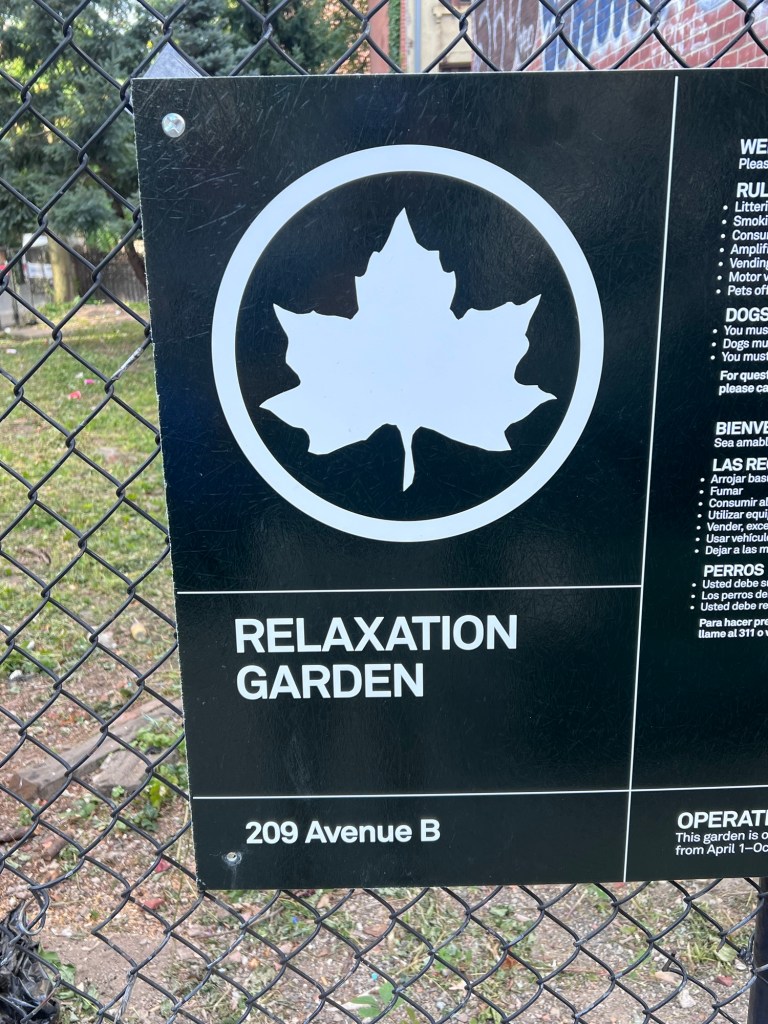
The Relaxation Garden was the first of the gardens I passed and this really had nothing to it. It looked like a garden waiting for something to happen to it.
The inside of the Relaxation Garden needs some TLC
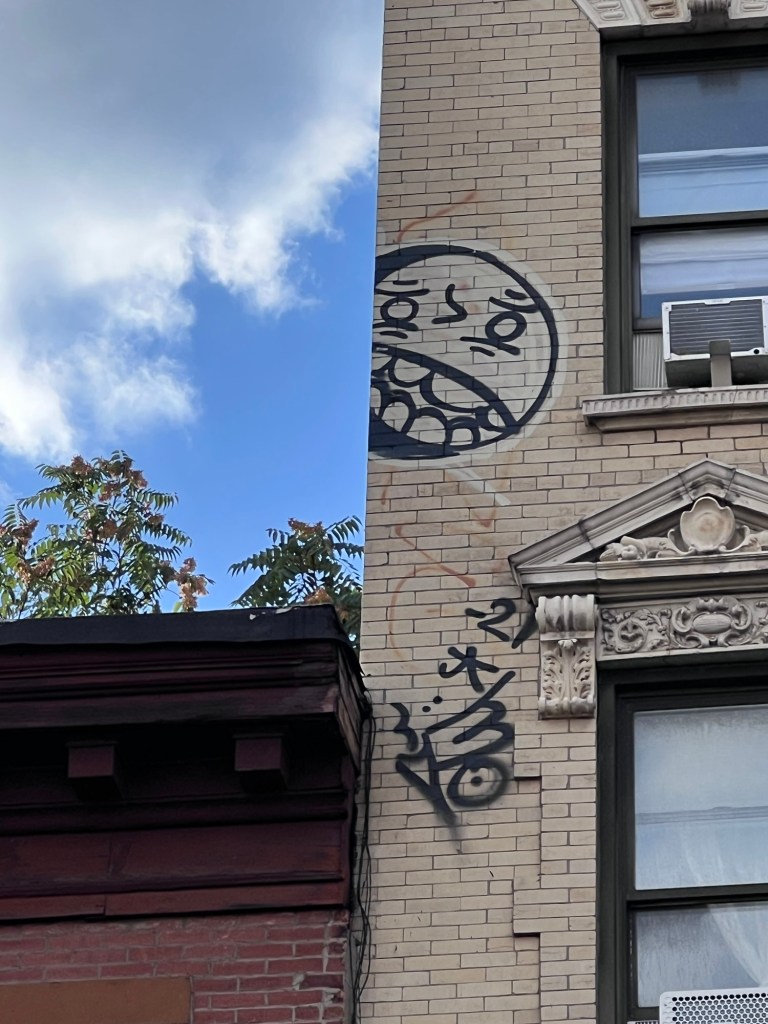
I stared up at one of the buildings on Avenue B and this face from above was staring back at me. I thought this was really interesting but do not want to know how this artist did this without falling off the roof.
I thought this face staring back was really cool but I do not want to know how the tagger did this.
While I was walking, I stopped at the various restaurants and bars to look at their menus. I have to admit, they are not cheap. For a neighborhood known for poverty in its pockets, the places are pricy.
Passing the outdoor cafes on Avenue B
I then passed one of the community centers in the neighborhood and came across this series of panels. These were very retro 1970’s.
Panel One ‘Resist’
Panel Two ‘People Power’
Panel Three ‘Educate’
I thought they were profound and reminded me of works from the 1970’s.
Avenue B like Avenue C has its share of landscapers and gardeners and you see this in the creativity of the small community gardens.
The first one I walked through and admired was in front of the Trinity Lower East Side Church at 602 East 9th Street on the corner of Avenue B.
The Trinity Church Lower East Side at 602 East 9th Street
In 1839 German Saxon immigrants began to meet for worship in the home of a baker. By 1843 they were sufficiently strong to incorporate The Evangelical Lutheran Trinity Church of the Unaltered Augsburg Confession in the City of New York, since changed to Trinity Lower East Side Parish. In 1850, the congregation built a new church with four apartments below and a one-room school in the back. The present church was designed by Robert Litchfield and built in 1993. Dedicated on July 9, 1996, the facility includes a 100-seat chapel, community center and parsonage (Trinity Church website).
The gardens in front of the old church were a bit over grown but very colorful.
The fenced in garden in full bloom at the height of the summer
The one thing I like about this garden is how tranquil it was that day. Services were over so the church was quiet. It is the perfect place to just sit and think and relax.
Avenue B lines the eastern side of Tompkins Square Park and the park was alive with joggers, musicians, dog walkers and groups of college students stretching across the lawns talking, reading and sunning themselves. This is a far cry from the homeless camps of the early 1980’s.
Tompkins Square Park was extremely busy that afternoon
It’s fun to just walk through the borders of the park and see the neighborhood just conversing with each other. Community is not dead in New York City. Someone had tagged over this mural but I still thought it was interesting. The colors really stood out in the mural,
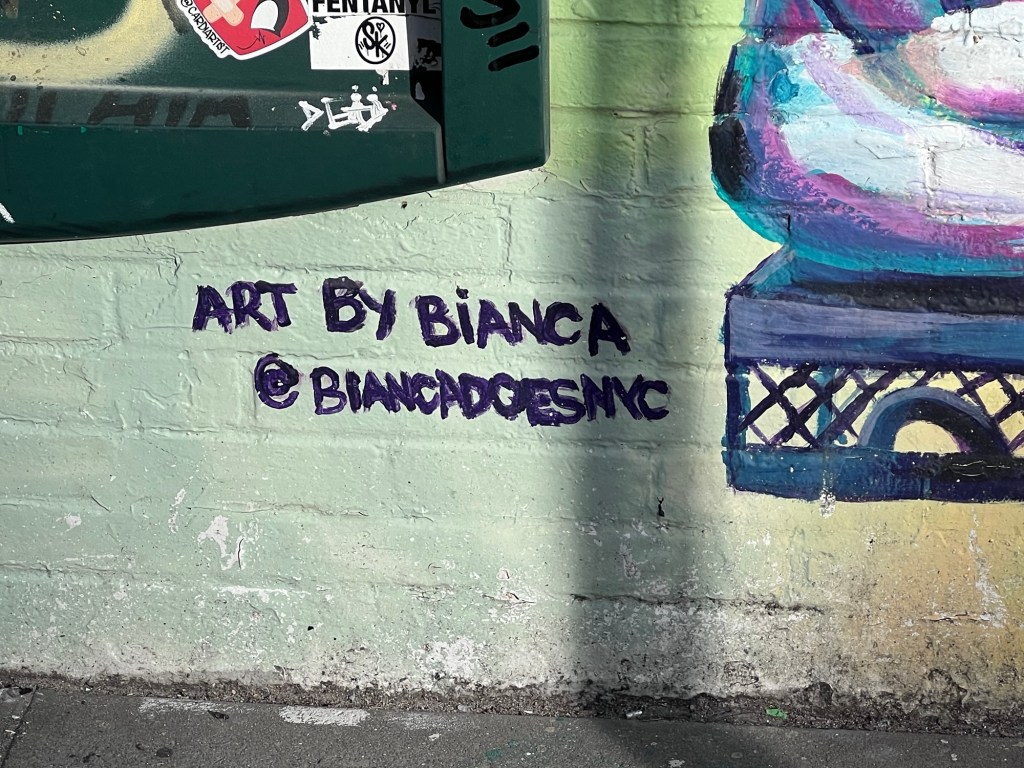
Romero, is a Korean and Spanish, first-generation American artist, and muralist . She is a New York City based artist. Her art is a contemporary representation, inspired by her mixed cultural background and layered complexities of the human experience. Her work is inspired by human emotion, identity, women’s empowerment, and New York City (Artist bio from website),
YouTube video on Artist Bianca Romero
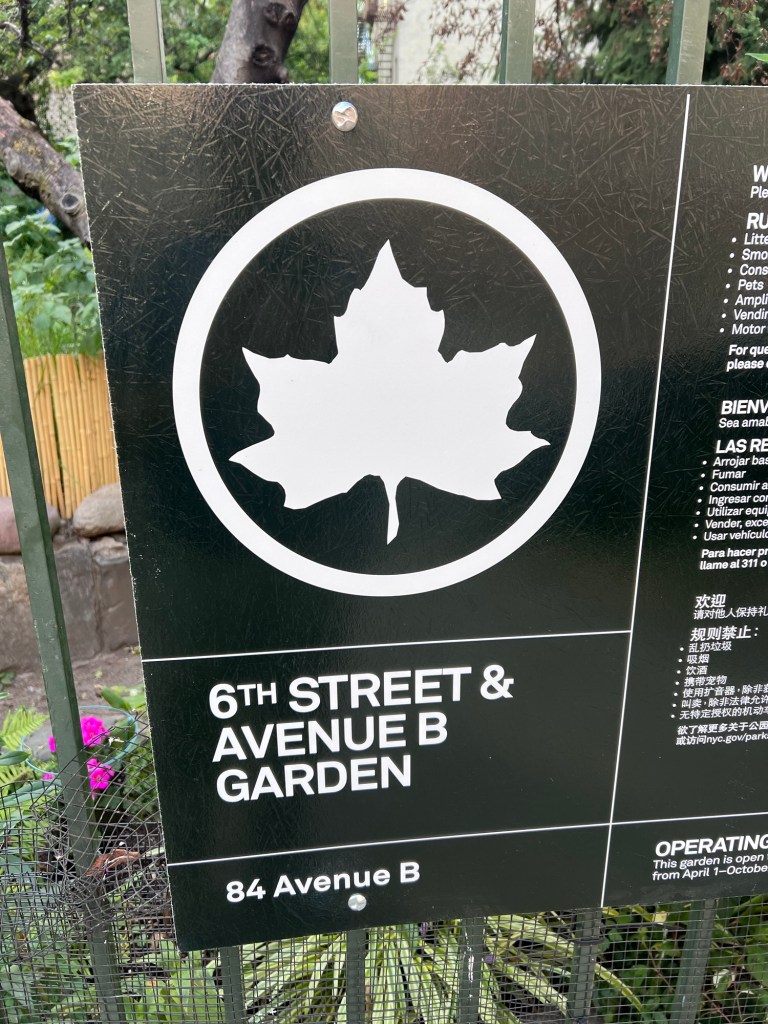
Some of the community gardens are more creative than others. The next one I visited was the East 6th Street and Avenue B Garden at 84 Avenue B
The East 6th Street and Avenue Garden at 84 Avenue B
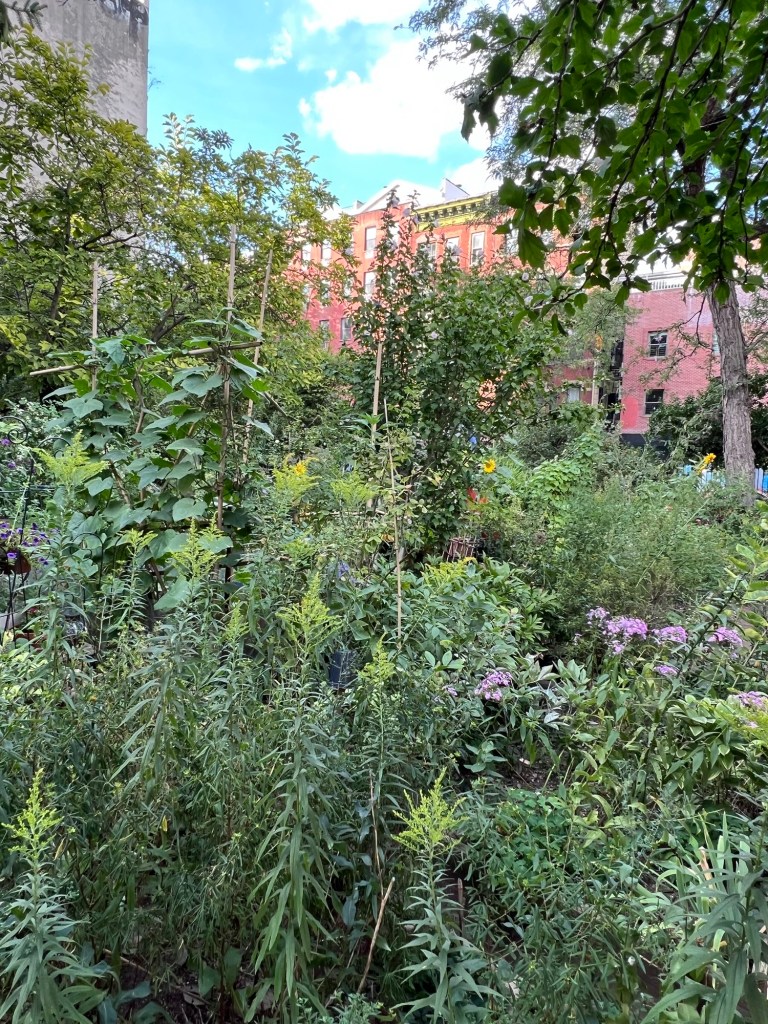
All the community gardens seemed to be open the weekend of my walk so I got to see all the gardeners at work. People were digging, pruning and cutting shrubs and trees and cleaning the beds of weeds and then composting.
History of the Garden:
(from the garden website
Throughout 1983 and 1984, garden members surveyed the site, drew up the plans for its optimal use, built over 100 4’ x 8’ plots and a large communal plot (“the Circle”), laid pathways, prepared for the installation of a fence, and laid out ornamental borders. In April of 1984, Green Thumb issued a one-year lease. Garden members were busy planting ornamental shrubs and trees. The Garden received important early technical assistance from the Citizens’ Committee, Green Guerrillas and the Trust for Public Land .
The welcoming French at the entrance of the Sixth Street and Avenue B Gardens
This was one of the larger community gardens and it was fun to stroll down the paths of flowers and vegetables and watch everyone hard at work.
The inside of the entrance of the gardens
Walking along the paths
The Vegetable gardens
The gardens at the height of the summer
The pathways in the gardens
The sitting area in the middle of the garden
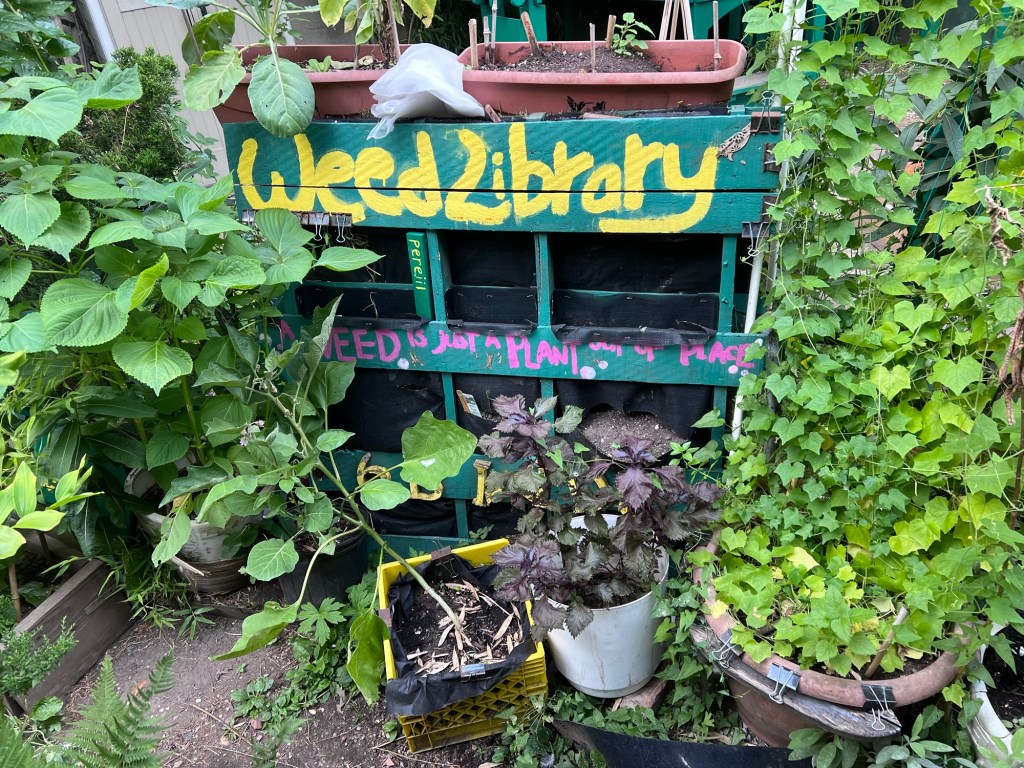
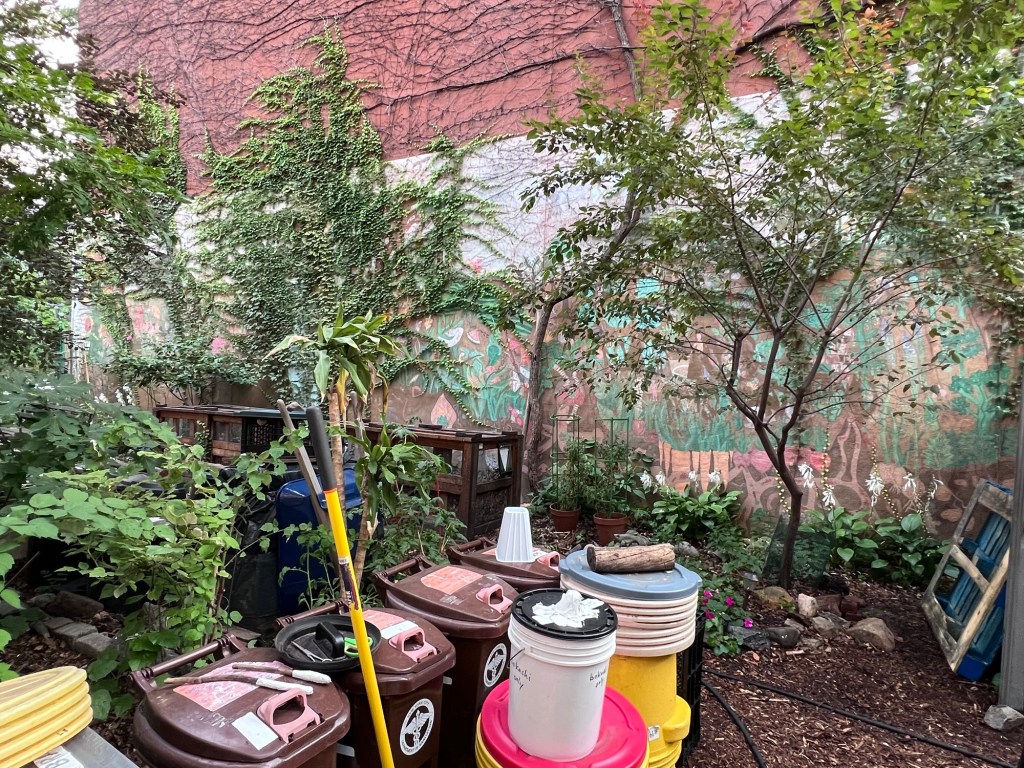
The Weed Library and composting area
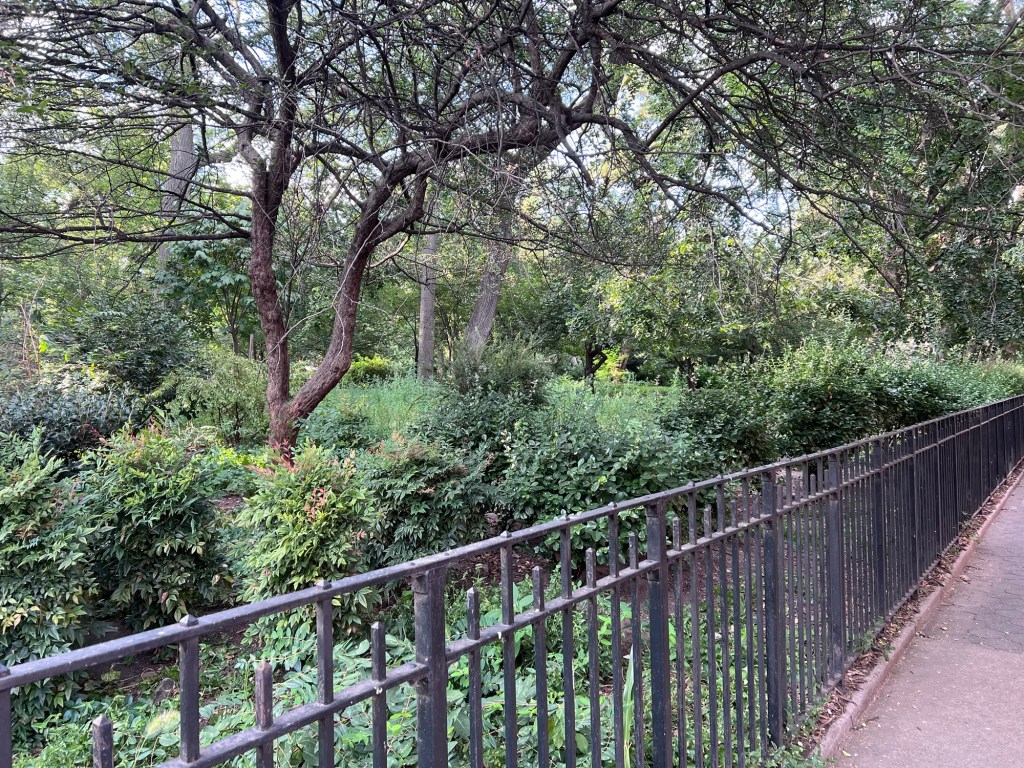
The tree has been part of this garden for years
I loved the ironwork along the fencing of the garden as I walked up Avenue B
The neighborhood reaction to a empty storefront in a gentrifying neighborhood
The garden was established in 1993/1994 soon after a building there was demolished. The building’s address was 194 Ave B which is also the garden’s address, but the garden’s entrance is at 546 E 12th St (NYC Parks/GreenThumb will eventually replace the garden sign. Down to Earth Garden, which changed its name on July 1, 2020 from Children’s Garden, is a Green Thumb community garden in the East Village/Lower East Side of Manhattan, NYC.
We’re a small community garden, 1261 sq ft, on 12th St, by Ave B, southwest corner. However, we have been very active in composting (in combination with El Sol Brillante’s composting activities) since the fall of 2009
The flowering beds of the garden
The side beds
The artwork against the building was covered with vines and new growth
There was one last garden I visited but is was closing for the evening and that was the Vamps A Sembrar at 198 Avenue B.
The small Vegetable beds and visible art in the garden
The History of the garden:
(from the garden website)
The garden used to be two separate GreenThumb community gardens (Vamos A Sembrar and 200 Ave B Association Garden) until 2019, when they were combined as Vamos A Sembrar under the guidance of GreenThumb
This community garden had just closed for the afternoon so I could only see if from the fence. I could see the beds of vegetables growing. I really admired the artwork on the walls of the building. I will be returning on a future weekend to really explore all of these gardens, which I find are open on the weekends for the members and outside people.
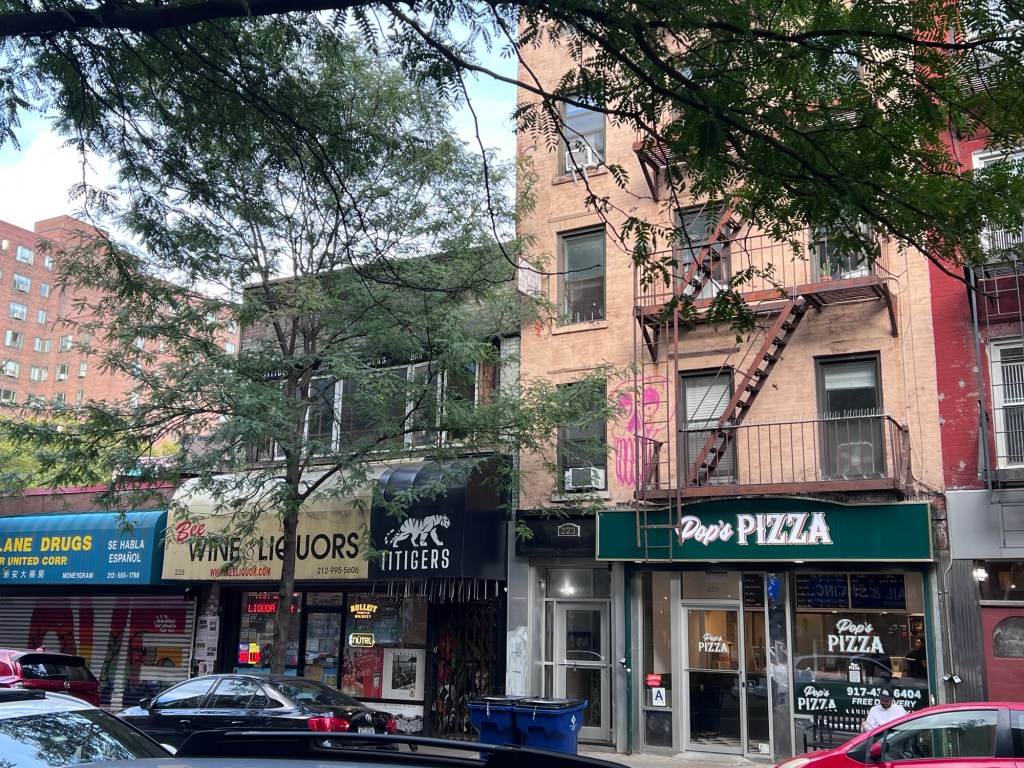
I passed Pop’s Pizzeria at 223 Avenue B that I had eaten at when I walked the borders of the neighborhood. I had gotten at the restaurant late at night so I had not noticed the outside of the restaurant that evening.
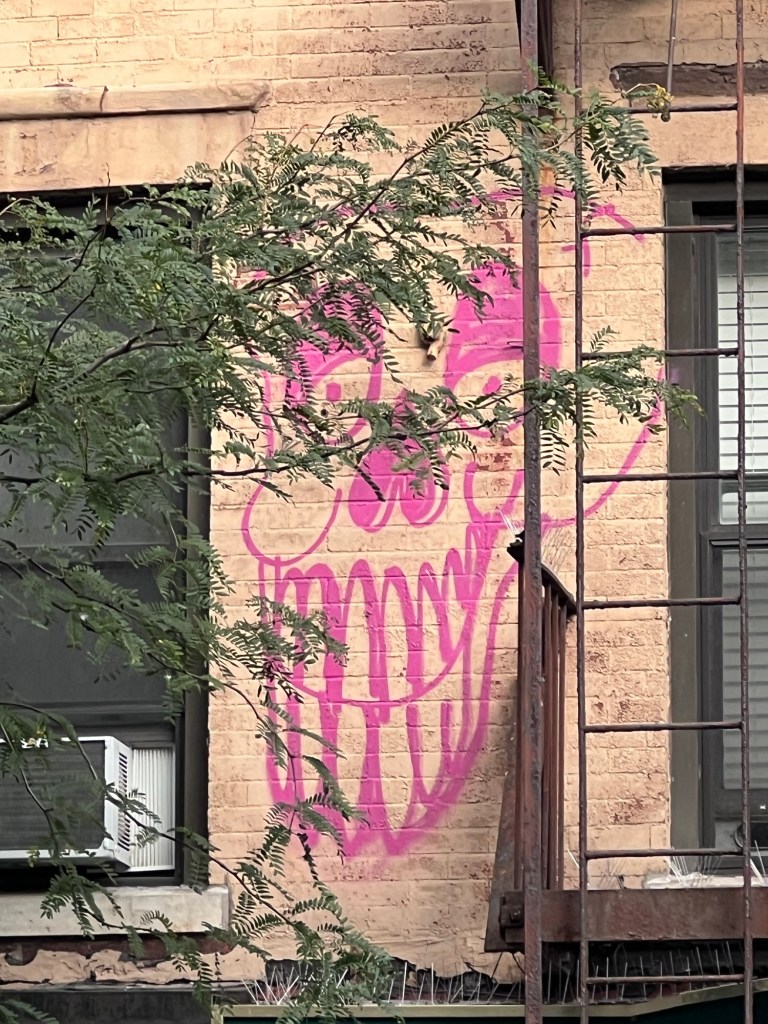
When you look up above the restaurant, you see this Skelton painting smiling above the entrance.
The Skelton face that I did not see before when dining here on my last trip to the neighborhood
I finished for the evening around 5:00pm and went to get some dinner.
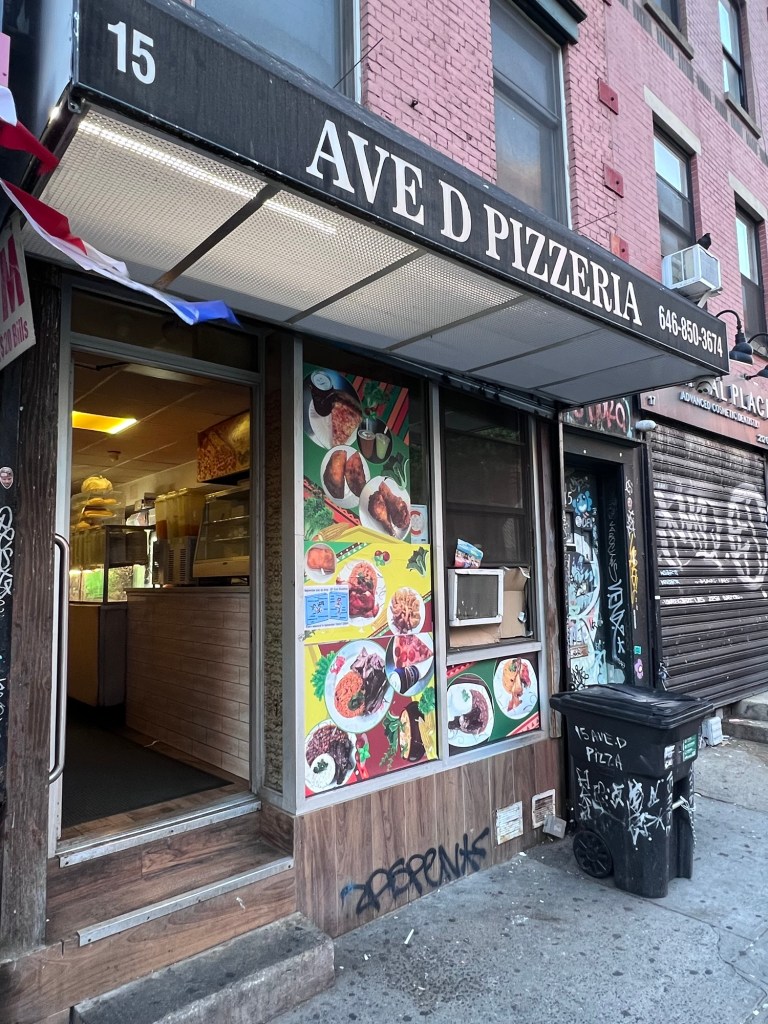
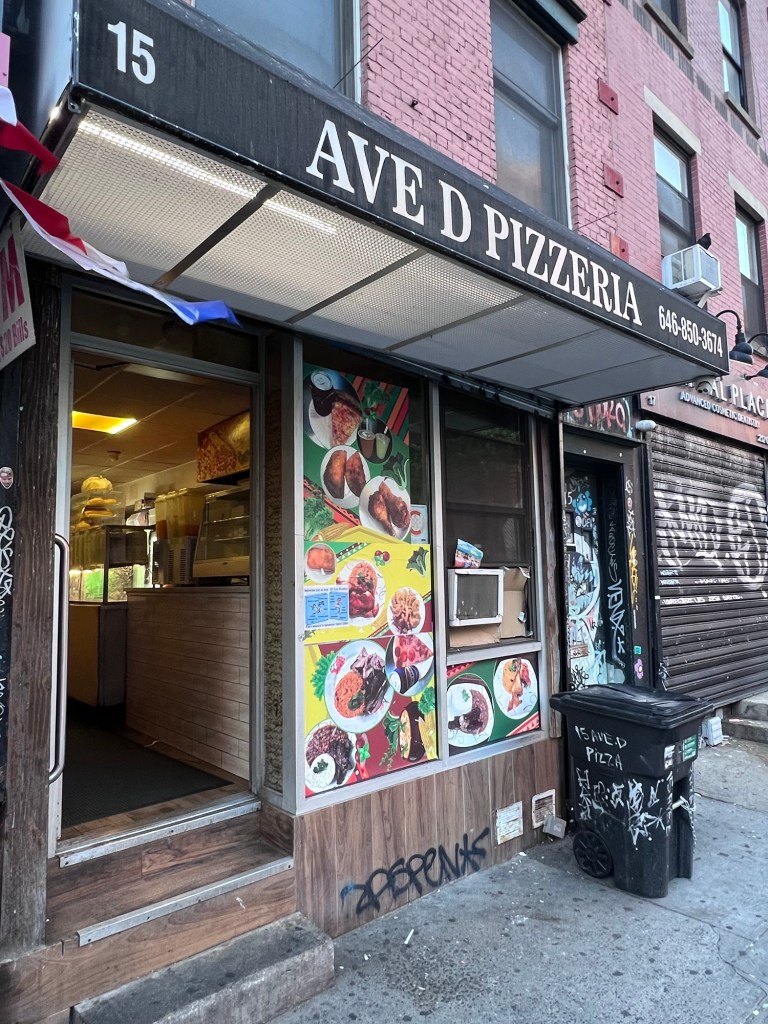
I checked Google and Avenue D Pizzeria which I had passed when walking down Avenue D was still open. So I walked down one of the side streets to give it a try.
The pizza selection was really good that night and the slices were reasonable at $1.50 for a Cheese slice and $2.50 for a Sausage slice.
The pizza selection that night
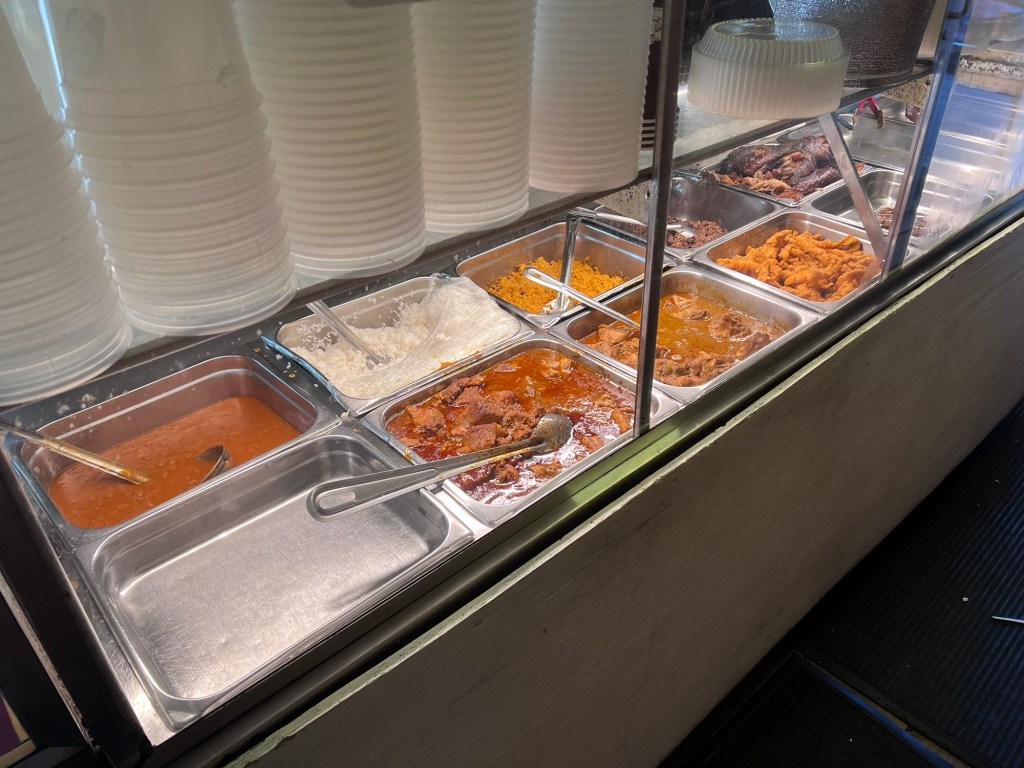
The hot food selection is $10.00 for a plate
The pizzeria also has a selection of hot entrees and sides at a reasonable price as well. There is no place to sit down anywhere near the pizzeria so I went back to Tompkins Square Park to eat my dinner. I found an empty bench and ate by one of the gardens.
My dinner that night in the park
I have to say that I was really impressed by the pizza for having to walk for blocks to eat it. The sauce was spiced so nicely and they loaded the sausage on the other slice.
After dinner I walked through the park and watched the bars and restaurants come to life. Most get a younger crowd of college students but there are a lot of family restaurants as well. I was amazed at the amount of kids who were dining with their parents that evening.
Admiring street art on the border of Alphabet City (I could not find the artist)
Since it was such a great night that I decided to walk around both Little Italy and Chinatown since they both border Alphabet City.
Walking around Little Italy on a warm late summer night
Outside the Cannoli King dessert shop a guy was singing Sinatra songs. I stopped to listen and this guy was really good. Everyone in the crowd was filming him.
Singing outside the Cannoli King at 152 Mulberry Street
It was fun to stand there and just enjoy the concert. The singer was wonderful!
The singer was great
Afree the mini concert was over, I continued my walk down Mulberry Street into Chinatown. Once upon a time there were distinct boundaries of Chinatown and Little Italy but they have become very blurred over the last twenty five years with gentrification affecting both neighborhoods.
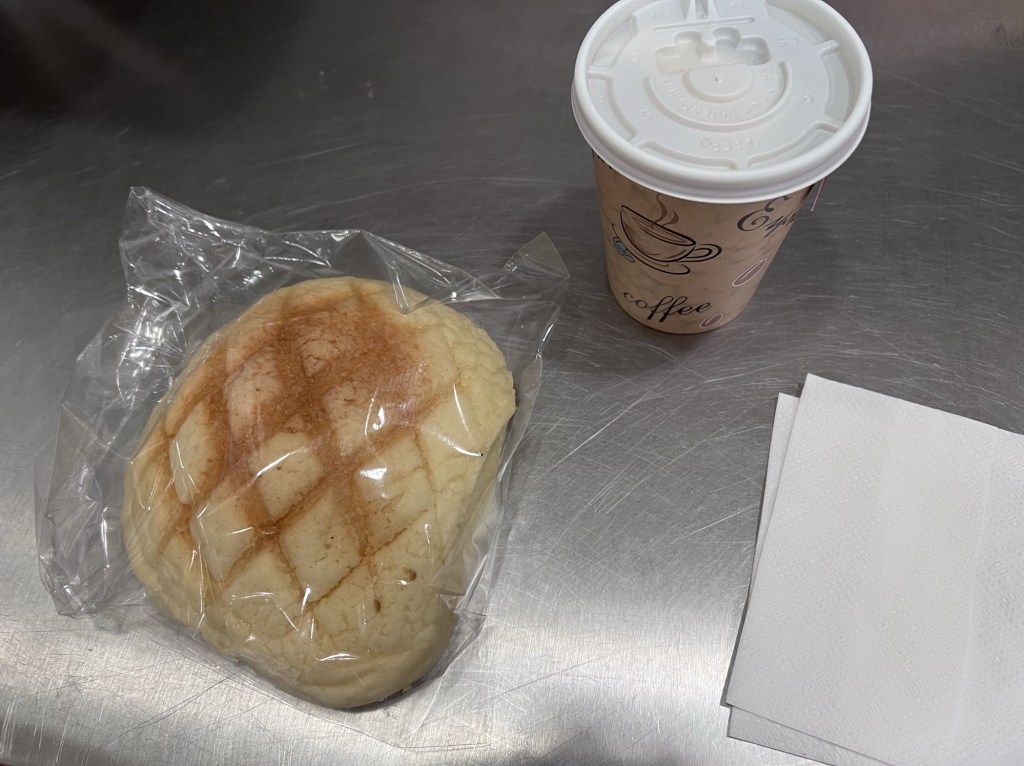
I walked down Mott Street to Catherine Street and stopped at my favorite bakery that I know is always open late, Great Taste Bakery at 35 Catherine Street. I love the reasonable pastries and buns here and it is one of the last of the Chinatown bakeries that is still open late. This is also one of the few neighborhood bakeries left in a very gentrifying Chinatown. I come here after meals or just having dumplings up the road and finish here for dessert.
I love their Pineapple cream buns with some lemon tea at Great Taste Bakery
Since there was no place to sit down in here too I ate at one of the benches outside near the local park.
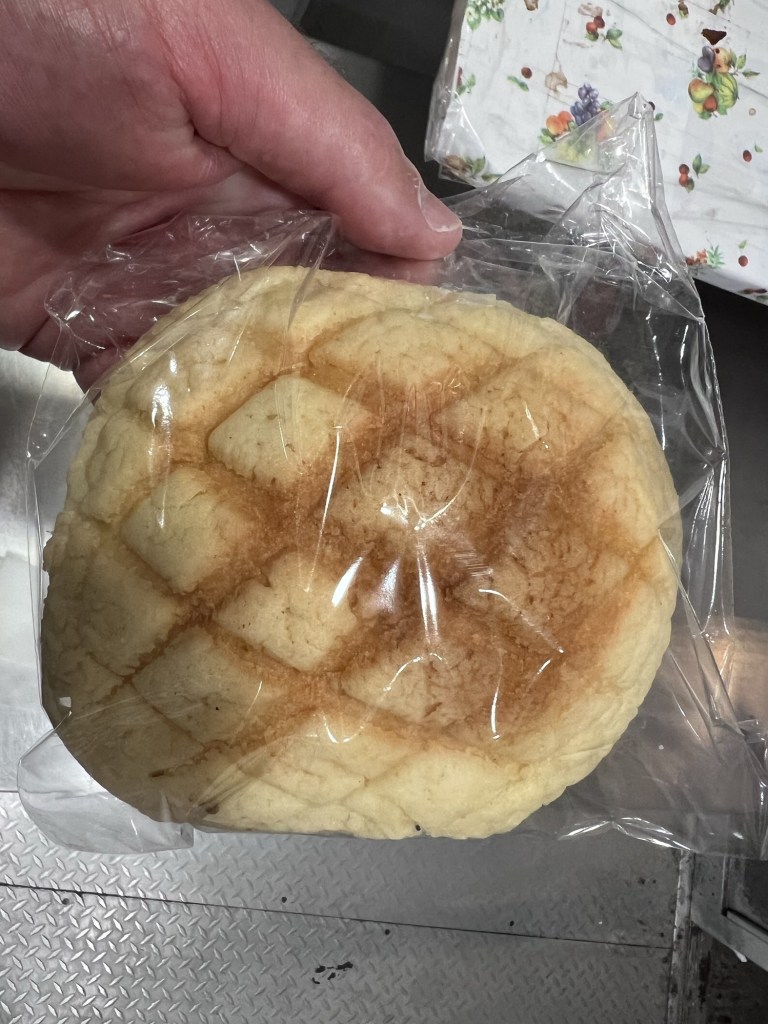
These buns are so good!
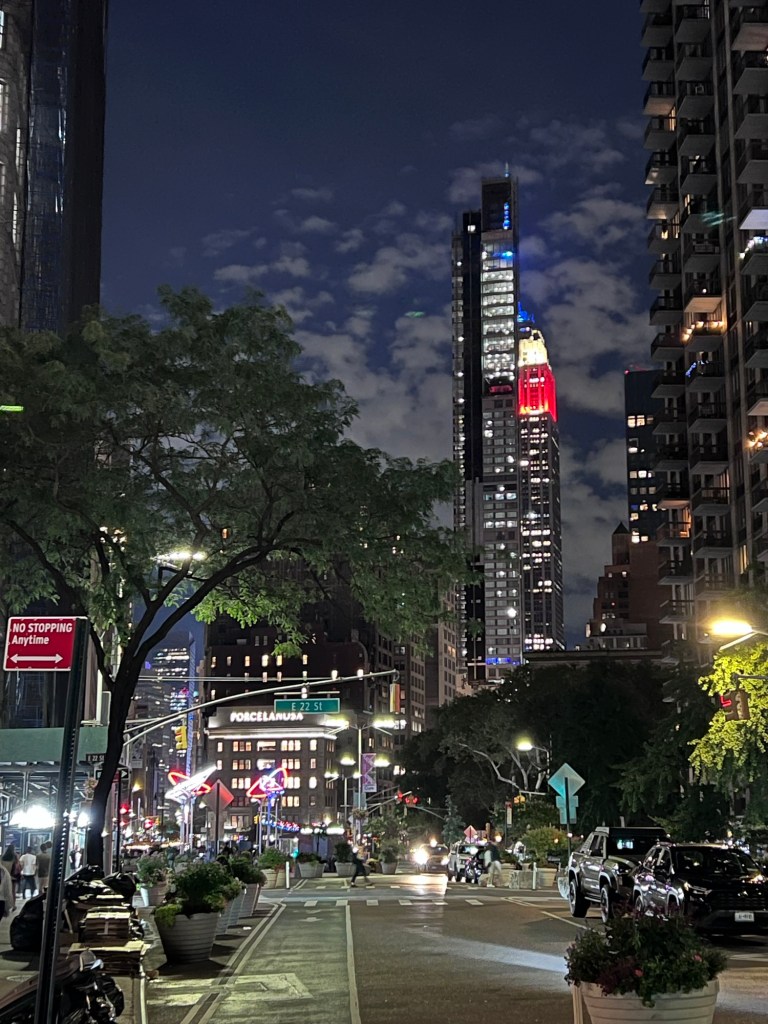
After all the walking that evening, you would figure I would be tired. There was something about the Lemon tea and the sweet bun that gave me a second wind and I walked from Chinatown to the Port Authority. It was such a beautiful warm night I figured ‘why not’? It was a beautiful walk up Broadway.
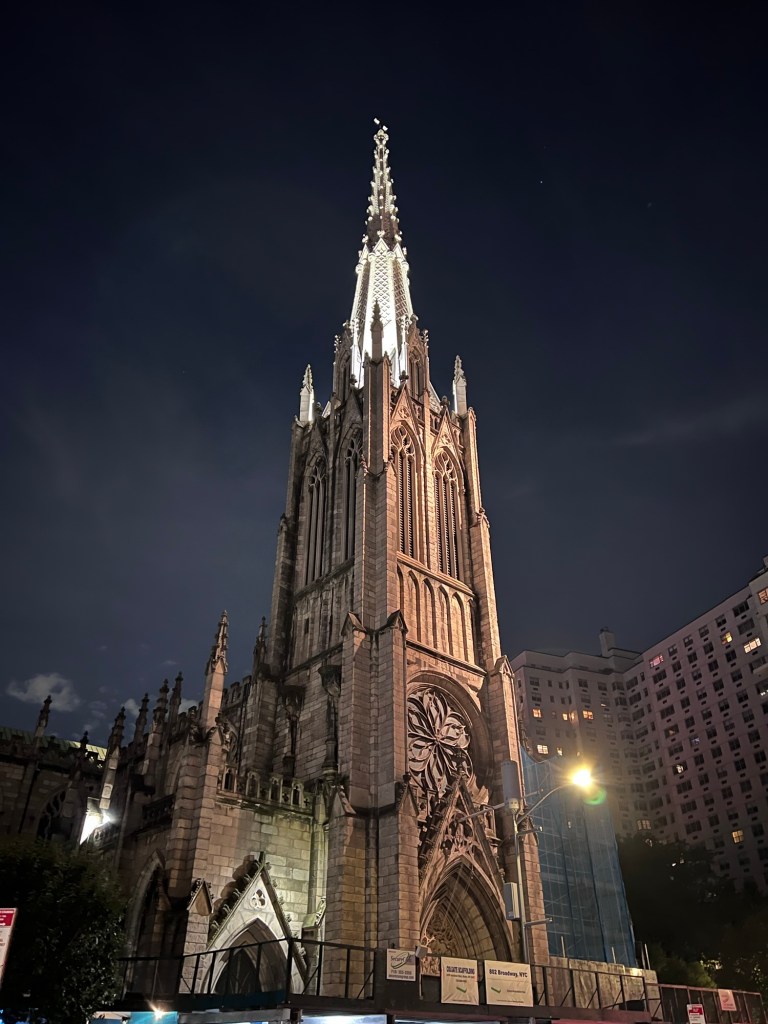
Admiring one of the old churches on lower Broadway on my long walk up Broadway to the Port Authority
Looking at Madison Square Park at night
It really ended up being a beautiful evening ing the City. For all its problems, the City really is magical at all times of the day. You just have to look at all the good things that people do that make this City better. Between the small mom and pop restaurants providing wonderful food to the community gardeners who make Alphabet City bloom, it really shows that New York City is bouncing back from COVID in its own way.
The Paterson Museum is an interesting museum of the history of the City of Paterson, NJ. The museum is broken into different sections of the City’s history. The museum discusses from the time that the Lenape Indians lived in the area to the rise of colonization and then to how it developed into the Silk City through city planning and placement. The museum covers the history of the City of Paterson in the industrial Age as well with the rise of the Silk Industry, the Wright Airplane Factory, the Colt Revolver and the growth of the hospital industry in the City.
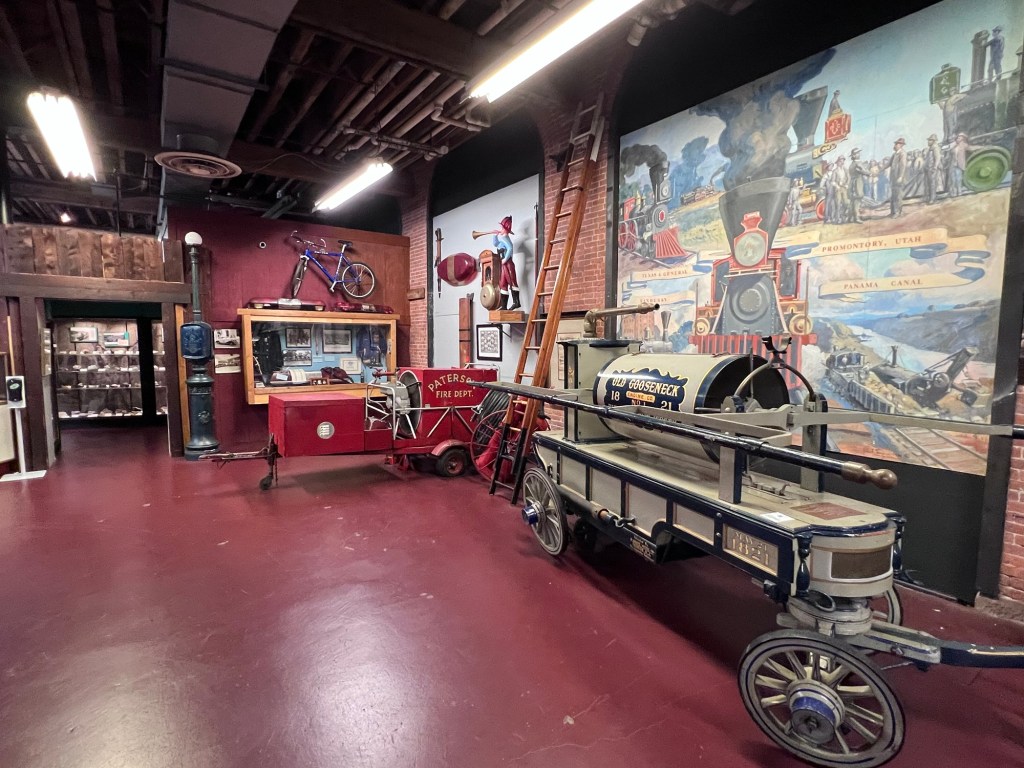
Paterson Fire Department
The Public Safety exhibition
Paterson Steam Engine
Take time to look at the live displays of minerals, Native American artifacts, old fire department equipment and the life and times of its native son, Lou Costello.
The inside of the Paterson Museum
The nice part of this museum is that the parking is free, it can be toured in about two to three hours and it is walking distance to the Paterson Falls and to Little Peru restaurants. It is also free.
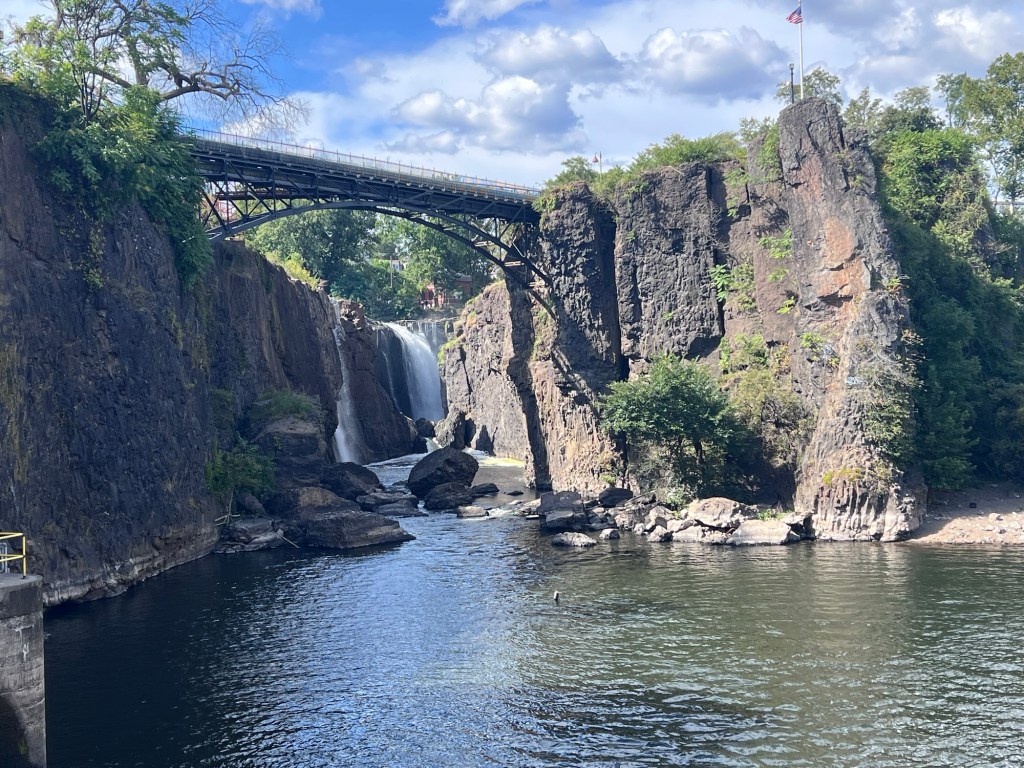
The Paterson Falls up the road
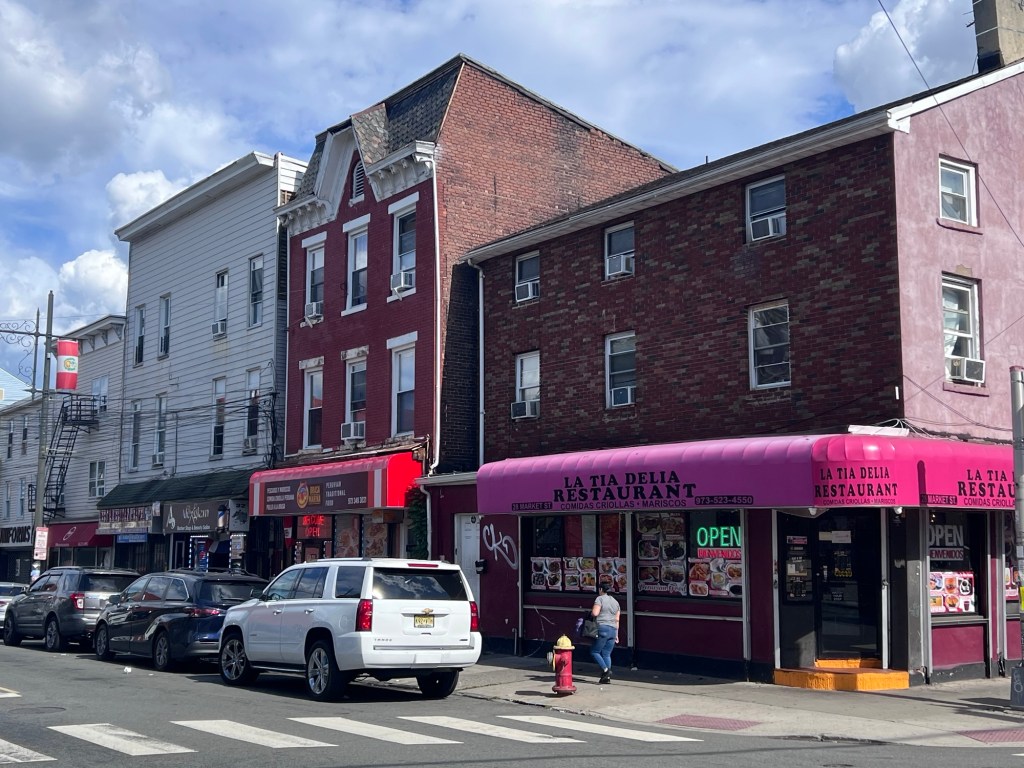
Little Peru down the road
The Introduction:
The Welcome Center
The Paterson Museum offers a ‘History within History’ experience. Located inside the former erecting shop if the Rogers Locomotive & Machine Works, the museum, presents a glimpse of the rich history and the many factors that gave rise to Paterson, New Jersey: “America’s First Planned Industrial City.”
From the natural wonders and the first inhabitants of the land that lay below and above the ground to the vital role Paterson played in setting of our nation’s industrial course. Through the museum’s exhibits. you’ll find out why Paterson was known for more than a century as the “Silk City.”
Silk City
You’ll discover that Paterson was at the forefront of locomotive, submarine and airplane engine development. And that’s just the beginning of our story. By the time you finish your visit, you will want to learn more about this city that surrounds the Great Falls.
The Exhibitions:
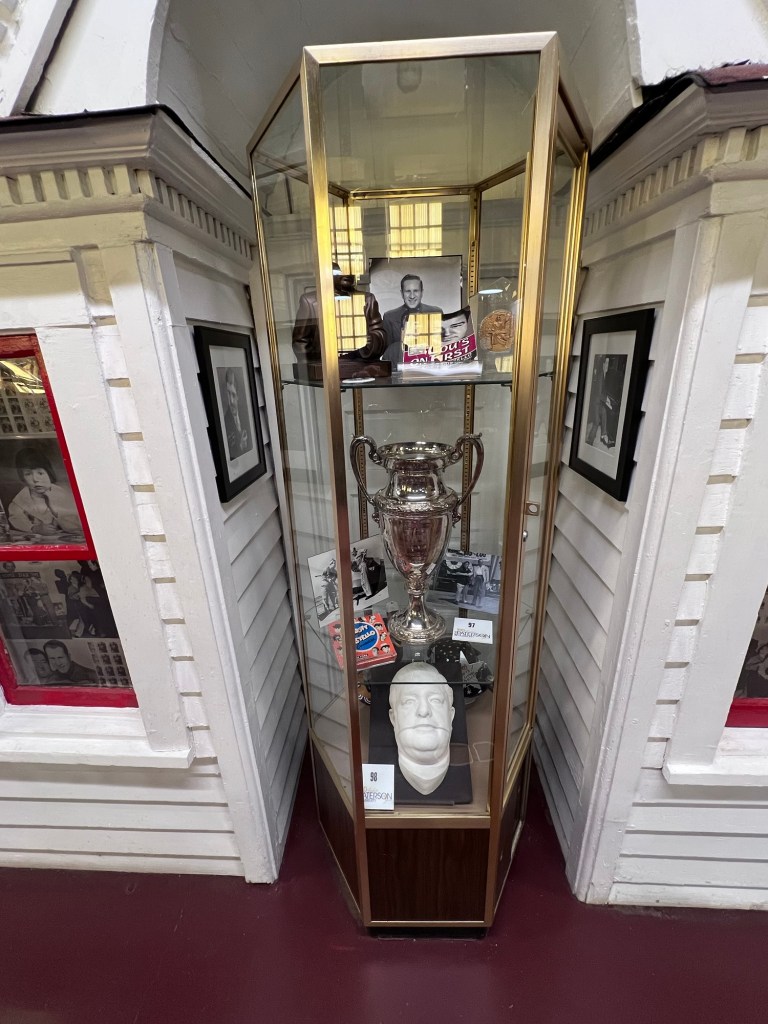
Paterson Residents: There are exhibitions on such celebrity natives as Lou Costello and his life after living in Paterson are shown in detail.
The Lou Costello exhibition
The Lou Costello exhibition
Baseball players, football players and actors have shown against all odds and color barriers they found success in the world with Paterson being their roots.
Sports in Paterson, NJ
The Silk Industry
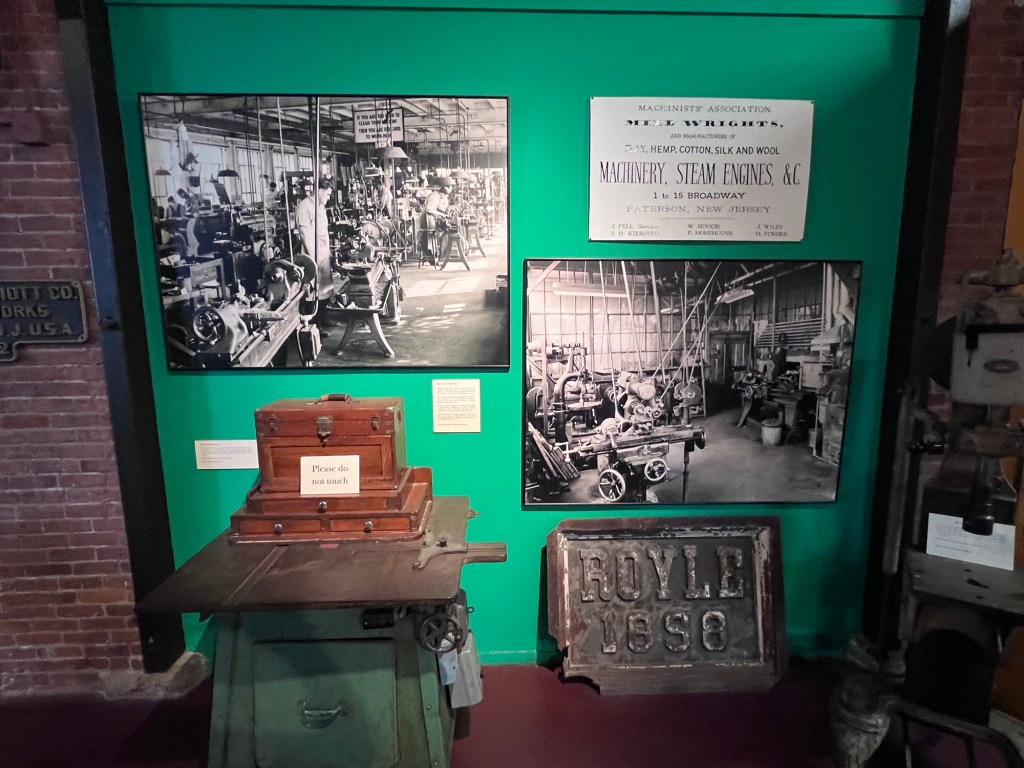
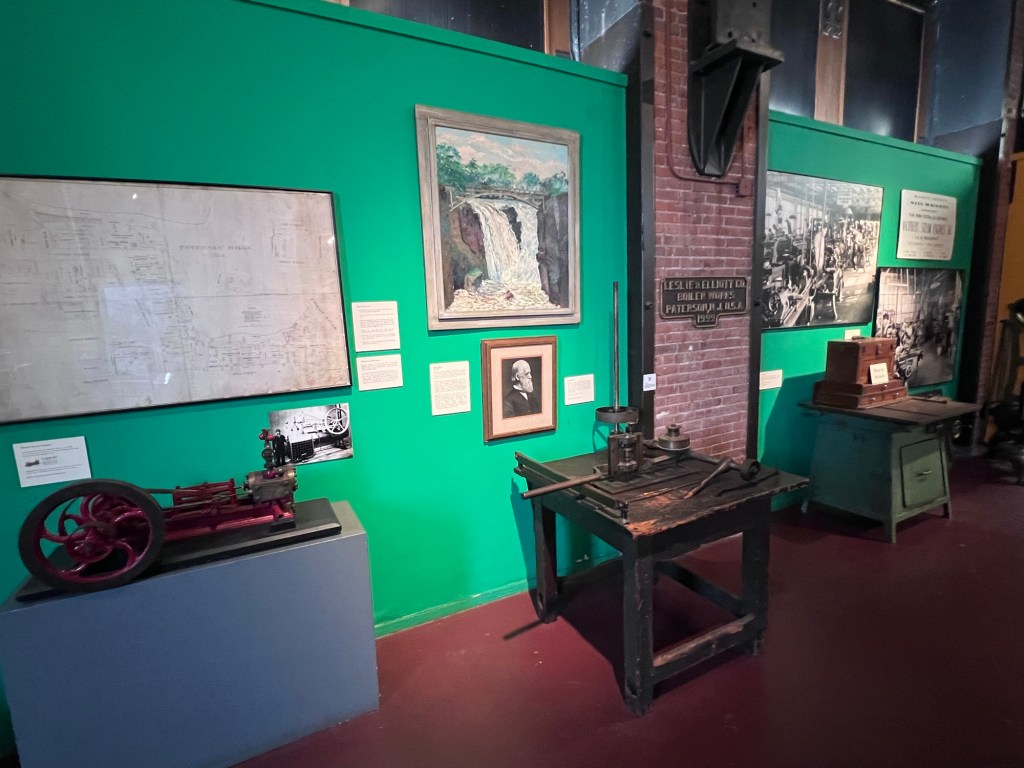
Silk City: The history of Paterson as ‘Silk City’ features winders, warpers and power-looms that produced beautiful fabrics. How the Falls and the location of the City of Paterson played its part in the garment industry at the turn of the last century. Not just in the silk industry but also in other companies like the Wright Aeronautical Corporation and the their time as a manufacturer in Paterson.
The Paterson Fire Department
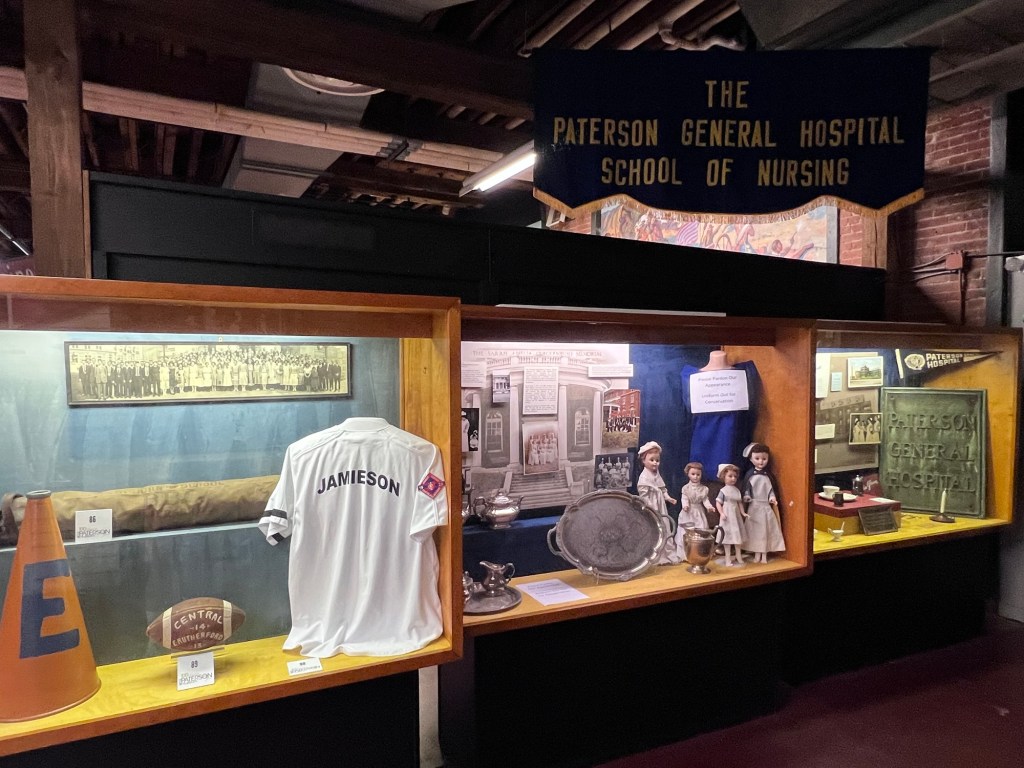
The Paterson Fire and Police Departments: The history and development of both the Paterson Police and Fire Departments are told through pictures, stories, uniforms and equipment through the ages. There are many turn of the last century fire trucks in the museum.
World War Exhibition: The museum has a wonderful exhibition on the history of Paterson and the role it played in the World Wars. There are all sorts of uniforms, munitions and stories to tell.
The War years
The Veterans exhibition
Geographical: There is a whole side exhibition of gems and minerals both native and from all over the country at the museum and a full display of native New Jersey stone formations. There is also a discussion of how the Falls played such an important role inf the development not just of the City of Paterson but of New Jersey as well.
The Minerals
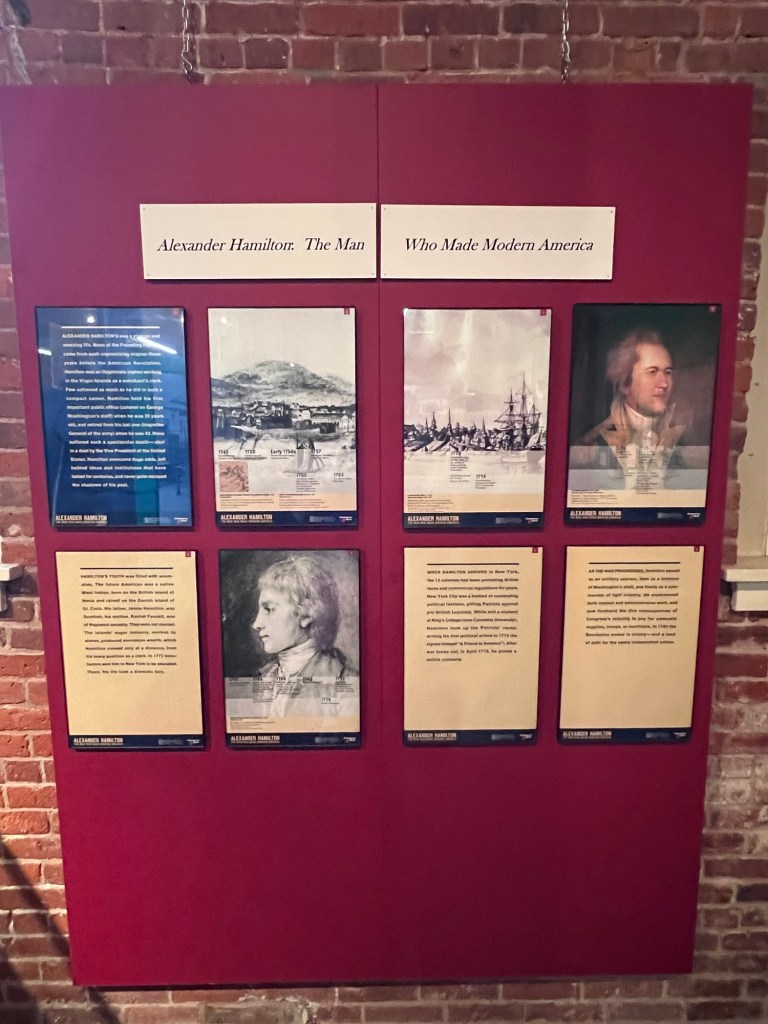
Alexander Hamilton Exhibit: The history and life of Alexander Hamilton is told from the time he was born in the Caribbean to his coming to the United States, his marriage and his rise through the ranks of the government. There is how he helped develop the banking industry and paying of the government debts to his fall from grace and his eventual fatal duel with Aaron Burr.
The Alexander Hamilton exhibit
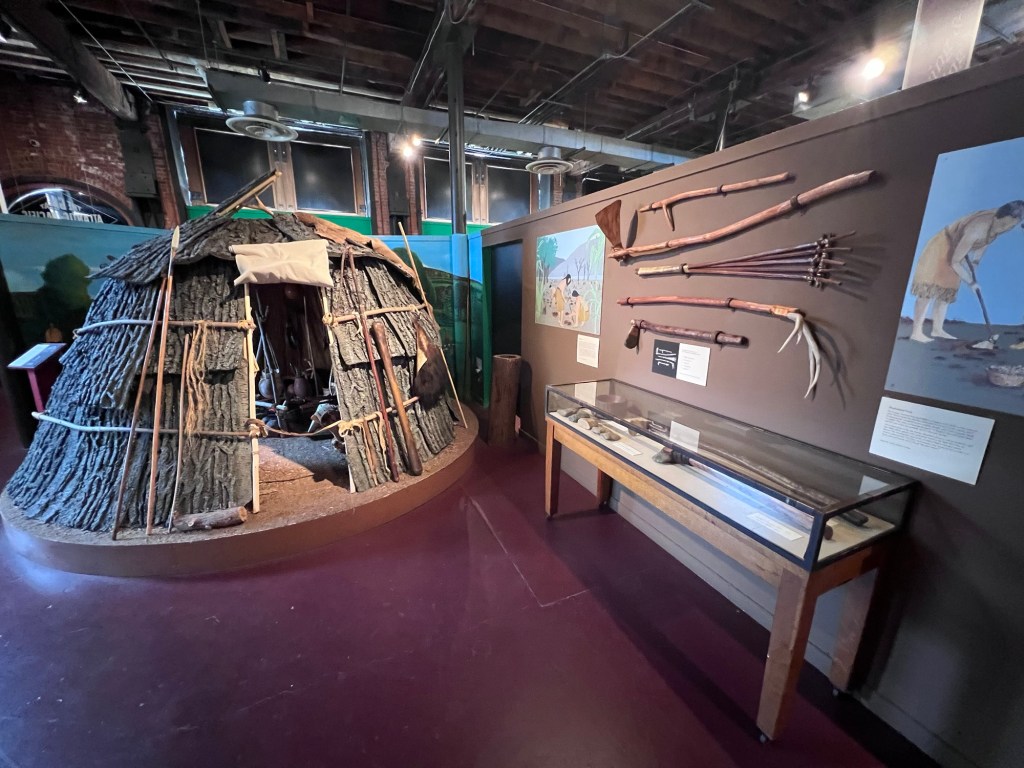
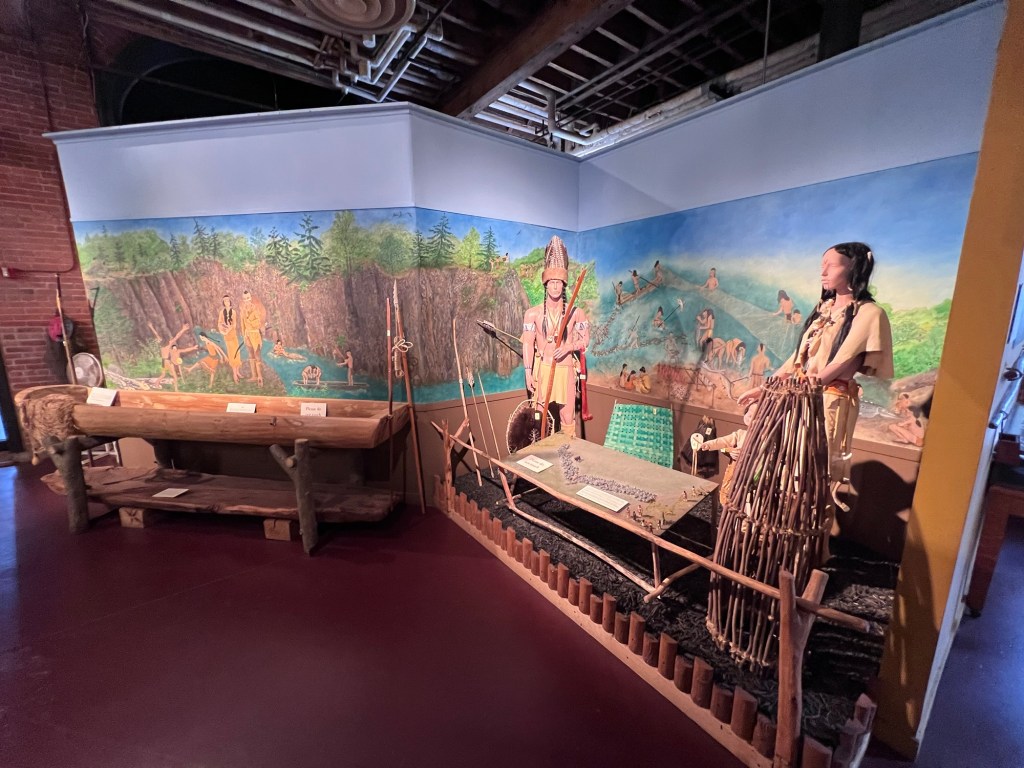
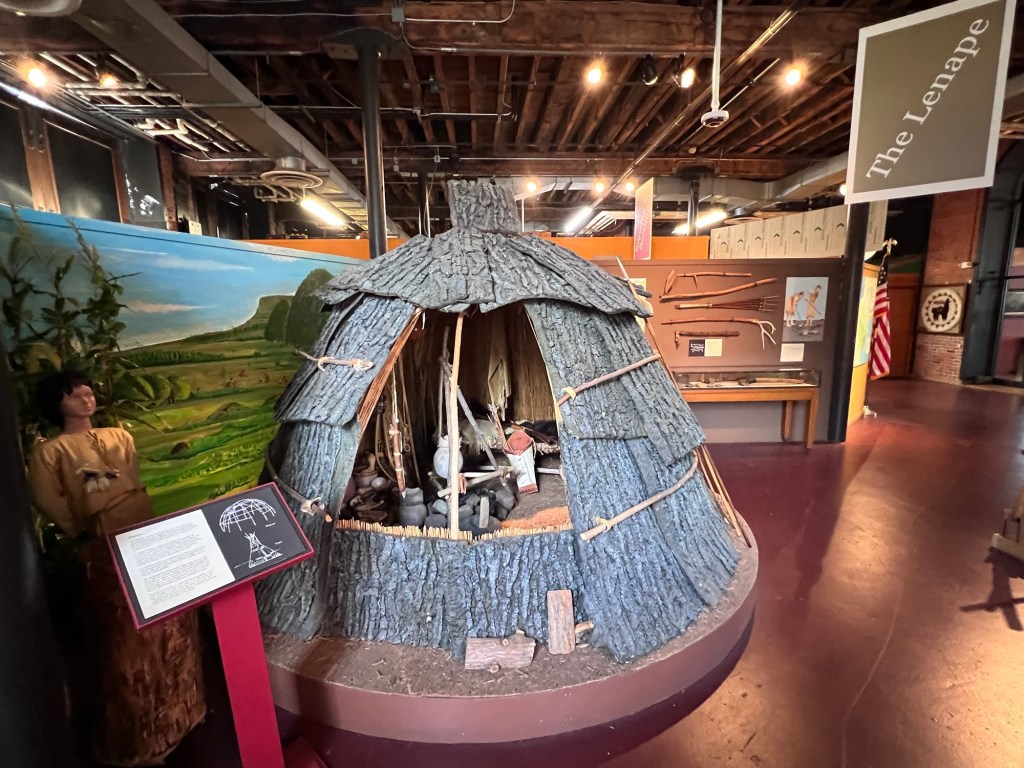
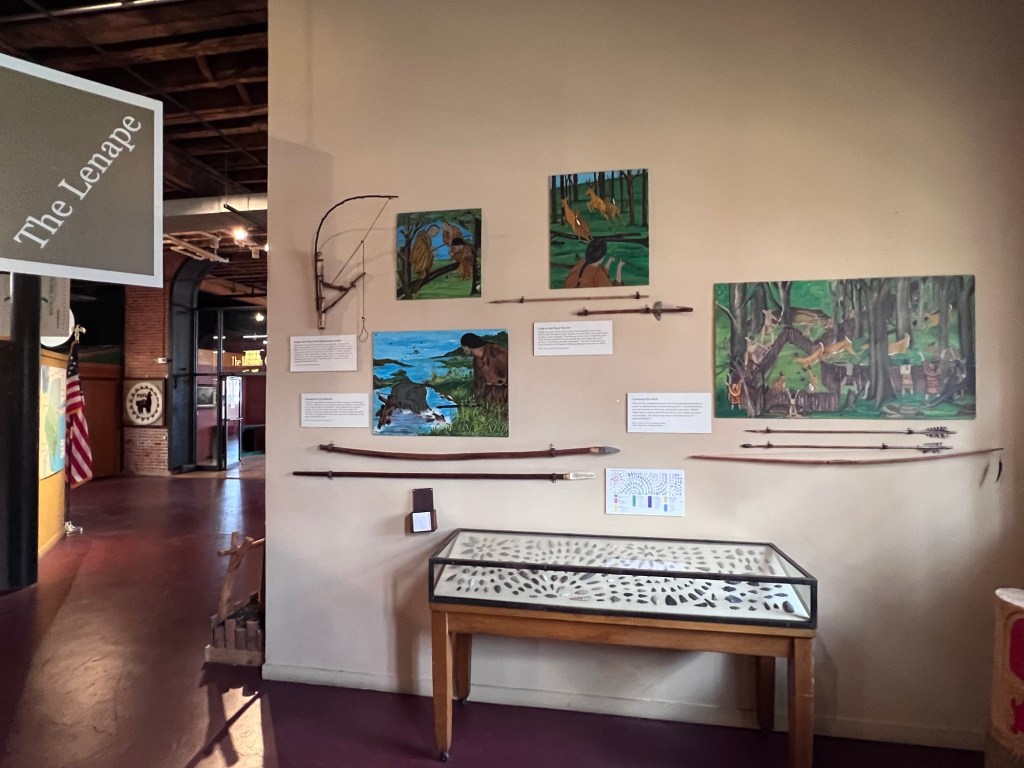
Lenape Indian Culture: The Lenape Native American culture is shown how the tribes developed, lived, worked and hunted and gathered to create the society that was in place before colonization.
The Lenape exhibit
There are all sorts of tools, displays on their regions of living, language, housing (there is a recreation of a Tee Pee here), that native wardrobe and a complete display of tools and arrow heads. It is a very detailed account of life as a Lenape Indian.
Lenape Exhibition at the Paterson Art Museum
The Lenape Indian exhibition
The Lenape exhibition
The museum shows the history not just of Paterson but of the surrounding areas and how growth of the City of Paterson made an impact on the region.
I recently visited The American Labor Museum/Botto House National Landmark for the afternoon and learned a lot about the American Labor Union formations and the rights we now take for granted.
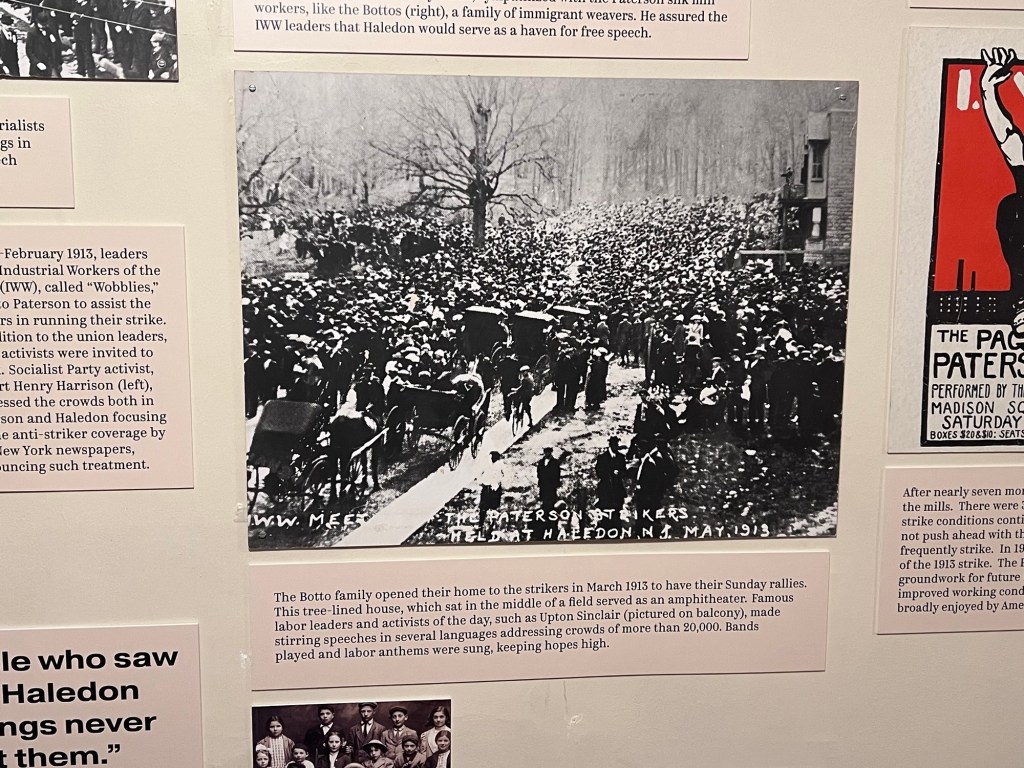
A group of us took the tour of the Botto House and learned of its history and its place in the Paterson Silk Strikes of 1913. The first floor which serves as the meeting room has pictures of the Paterson Silk Strike which lasted just over five months and since the Mayor of Paterson at the time would not let the strikers meet, the Botto’s agreed to let the strikers meet at their home which at the time was in a isolated section of Haledon.
The history of the Silk Strike in Paterson
The Mayor of Haledon was sympathetic to the Union cause and let them meet in the town. Their house was situated in the middle of a field so that the strikers could gather around the home and listen to speakers.
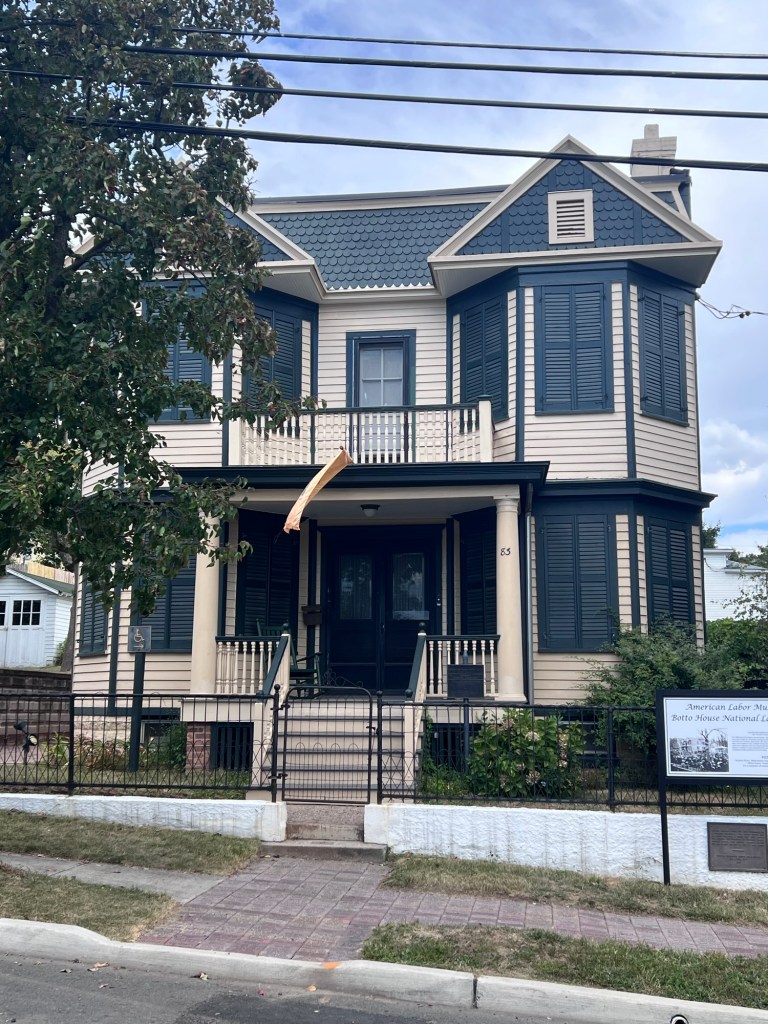
The Botto House during the Paterson Silk Strikes
From their balcony, speakers could talk to the strikers and keep everyone abreast of the situation. Here people gathered and picnicked together and worked together to get their rights heard.
From the main display room, you will tour the home of Pietro and Maria Botto. First stop is the kitchen where Mrs. Botto ran her household. She made extra money selling food to the strikers and arranging meals for Mr. Botto’s co-workers. The family family did what it could to make money for the family.
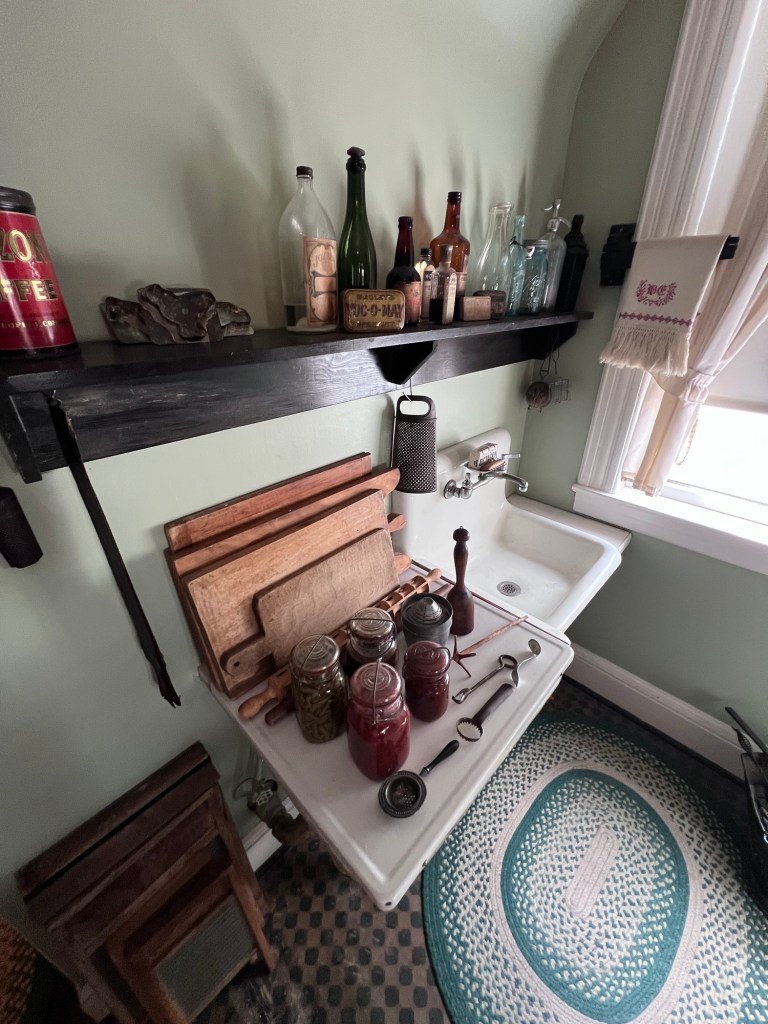
Mrs. Botto’s kitchen
The sink area
Here she made meals for her family, did her jarring and preserving and the washing was done. Then a tour of the dining room, bedroom and the palour area where the family met and greeted people. The upstairs was formerly two apartments that were built to help ‘pay the bills’.
The Botto House Kitchen
The upstairs is now the display space where a display on the Dock Workers Union is currently being shown. We got to stand on the second floor balcony where so many speeches were made.
The backyard area
We took the back stairs to the backyard where the family had the grape arbor, root cellar where the preserves were kept and the boccie ball court. It seemed the family was very social at the time and self-sufficient.
The root cellar and Vineyard
Things turned bad for the family when both Mr. And Mrs. Botto both passed away two years after the strike. The strike could have taken its toll on the family or the fact that Mr. Botto could not find a job after the strike was over. No one knows.
It is an interesting tour of how one family opened their home to an important cause and it made a difference in the success of the strike and getting it resolved.
The history of the Botto’s:
The museum headquarters was the home of an immigrant family of industrial workers whose story is a fascinating one. In many ways, the telling of their saga is a doorway for museum visitors to step through and make connections with their own ethnic backgrounds.
The European Heritage:
Pietro and Maria Botto hailed from the region of Biella, Piedmonte, Italy. This area, at the foothills of the Alps, was a leading textile producer of linen and wool. The mountainous area was home to a fiercely independent people who, for centuries, wove cloth in their homes on looms which they owned.
The Industrial Revolution forced weavers to give upon cottage-based production to seek employment in large shops or mills. the displacement of workers by mechanized looms and weavers’ lack of economic independence caused people in Biella (as in other European textile areas where Paterson’s workforce originated) to embrace new ideas about worker rights and to be a vocal workforce wherever they roamed.
Pietro decided to leave Italy because he was made eligible for a second draft into the army at the recently united Kingdom of Italy (Italy had quadrupled its army at that time to strengthen unification and to acquire African colonies). A skilled weaver who also painted church interiors, Pietro brought his wife, Maria and daughter, Albina (born 1889) on the long voyage to America in 1892.
The Botto’s settled in crowded West Hoboken, New Jersey (today’s Union City), where they worked in silk mills for 15 years until they had saved enough money to afford a home for their growing family. The family now included three more daughters, Adelia (born 1894), Eva (born 1895) and Olga (born 1899). In 1908, the Botto’s moved to Haledon, a tiny community, growing up along the streetcar line from Paterson, where many other country folk from Biella had already settled.
The Botto’s home became a focal point for a dramatic slice of history in 1913 when the epic Paterson Silk Strike broke out. Pietro was on strike with 24,000 fellow silk workers when massive and constant arrests forced the workers to consider the independent borough of Haledon as a location for great outdoor rallies. Mayor William-Brueckmann guaranteed the safety of the workers and Pietro offered his home as a meeting place for the strikers.
The Botto’s courageous stand allowing their home to be so closely identified with the strike stemmed from a belief in the rights of the common man. During the strike, Pietro and his family played host to the social and labor leaders who were the idols of the working person at that time. After the strike, the family had to very circumspect about employment in the mills, with one of the daughters denying her family name to avoid blacklisting by an employer.
The large house and spacious hillside gardens are a tribute to the family’s combined labor. Pietro and his daughters worked 10-12 hour days, 5 1/2 days a week in the mills. The eldest daughter began mill work at age 11 and the youngest at age 13.
On Sundays, the usual day of rest, the girls helped their mother serve patrons of the resort aspect of the property. Maria ran a large household, feed boarders during the week and the scores of people on Sunday and did piecework from mills; she died in 1915 at the age of 45.
Pietro lived until 1945, a beloved father and grandfather to a growing clan.
History of the House and Land:
The house in Haledon, NJ
The total environment of the Botto House National Historic Landmark reflects the ethic origin of this family of silk workers from the Piedmonte (Biella) area of Italy and the development of housing in early streetcar suburbs. It is representative of the sensitive use of small landholdings in American urban areas by various European immigrant groups.
The Botto family purchased Block X, Lots 38, 39 and 40 in 1907 from Alexander King, a real estate speculator. King himself purchased a large parcel of land from the Cedar Cliff Land Company, a group of Paterson industrialist and business leaders who were quick to see the advantages of selling cheap land to workers in Haledon. The completion of a horse-drawn trolley line in 1872 allowed for expansion of residential and recreational areas outside of the City of Paterson, a major American industrial center.
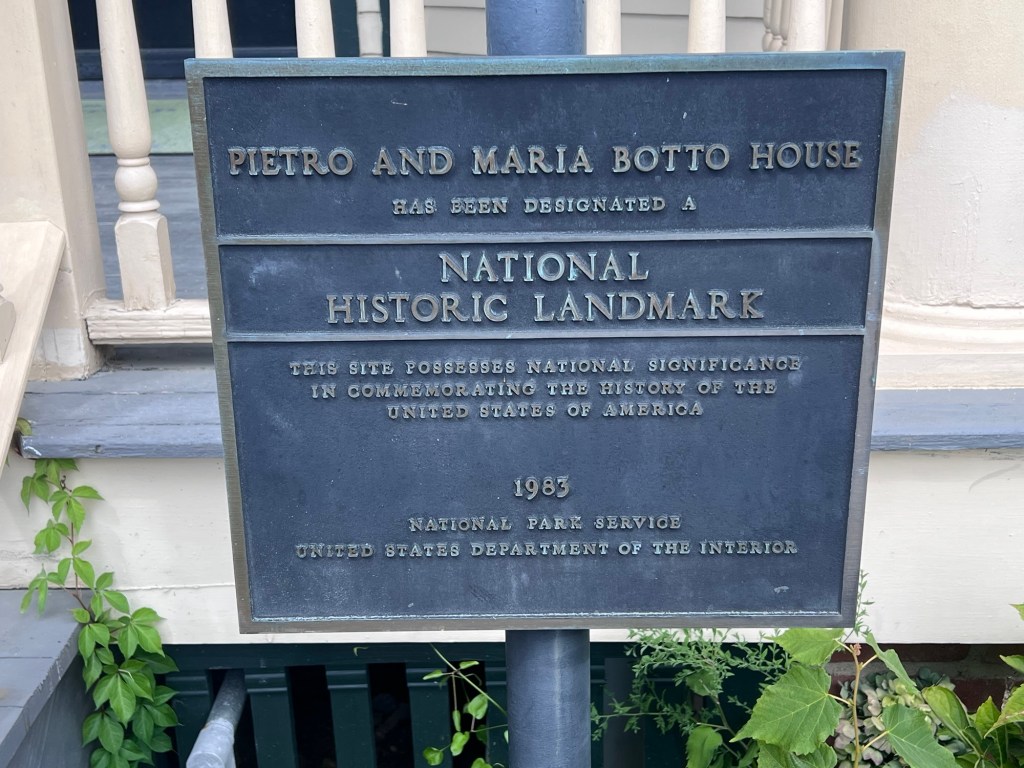
The Botto House sign
(Information from American Labor Museum: Botto House National Landmark, a Brief History)
The Period Rooms:
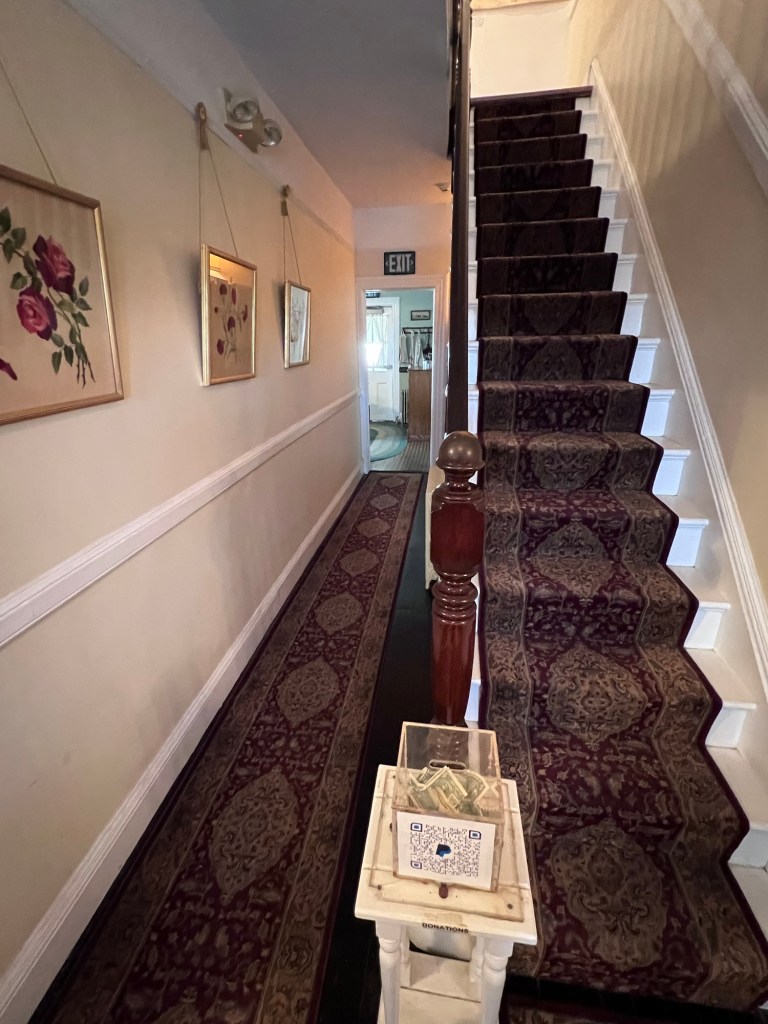
The Front Hall
The front entrance hall light fixture is original to the house. One of the restoration tasks yet to be carried out is the replacement of embossed wallpaper on the walls which was made to look like the carved leather coverings in the homes of the rich.
The front hallway
The Kitchen:
The kitchen was a major center of activity in the household. The large coal and gas range dominates the room. It was used as a heating source as well as for cooking foods. A table provided the space for food preparation; a cupboard stored pots, pans and dishes; an icebox kept food items cold (the root cellar, located in the garden was also used for cold food storage) and a sink for dishes and a tub for laundry utilities indoor plumbing-certainly a recent innovation for working class households.
The kitchen
Even with the convenience of indoor plumbing and the gas range, the kitchen was the scene of virtual non-stop labor for Maria Botto and her daughters. In addition to meals prepared for the family, the Botto’s fed a noon meal to extra people during the week, there were workmen without families, who rented rooms and come from the mills for a hot dinner.
On Sundays, the Botto women prepared food for as many as 100 people who came to recreate on the property. This, of course, provided on additional income for the family.
The Botto family’s foodways reflected their home region of Biella, Piedmonte, Italy. Piedmontese cooked scorned tomato sauce, preferring wine and chicken broth to accompany such staple foods as polenta (corn meal), risotto (rice) and tortellini, a pasta. Generally, rosemary, sage, and other herbs were used in cooking and grown outside in the garden. The herbs also had medicinal uses.
The kitchen sinks
Some of the artifacts placed around the kitchen are the copper put used to cook polenta (purur), meat grinder, fish scale, orange juice squeezer, coffee grinder (from a German immigrant household), rug beater, mousetrap and wall calendars which were used by working people as decorations.
The Botto women were generally charged with kitchen duties. Maria Botto hired a German woman to do the wash. One special job was reserved for Pietro, stirring the polenta and cutting it with a string.
The Dining Room:
The dining room was another work area for the family. Here the family and the ‘boarders’ dined. Here Maria ‘picked’ silk on a frame, located in the corner of the room under the window, examining the bolts of broadsilk brought from the mill for imperfections.
The Dining room
This was another task to bring income to the household. Maria used the sewing machine to make clothes. The table reflects a setting for the family and ‘boarders’, placed with dishes, silver-plated utensils and a condiment set.
The Dining Room
The sideboard, table chairs and sewing machine are family pieces. The lighting fixtures in this room as in the rest of the house were powered by gas. As is typical in the area, paintings were hung by string from a picture rail as the walls were made of plaster.
The Sideboard
The small painting shows sheep, which provide the wool upon which textile manufacture was based, against the backdrop of the Alps. The large sketched portrait of Pietro Botto in later years was produced by his grandson and professional artist, Richard Botto. On the side of the room hang pictures of the Botto daughters in their wedding attire.
The Dishes in the sideboards
The Bedroom:
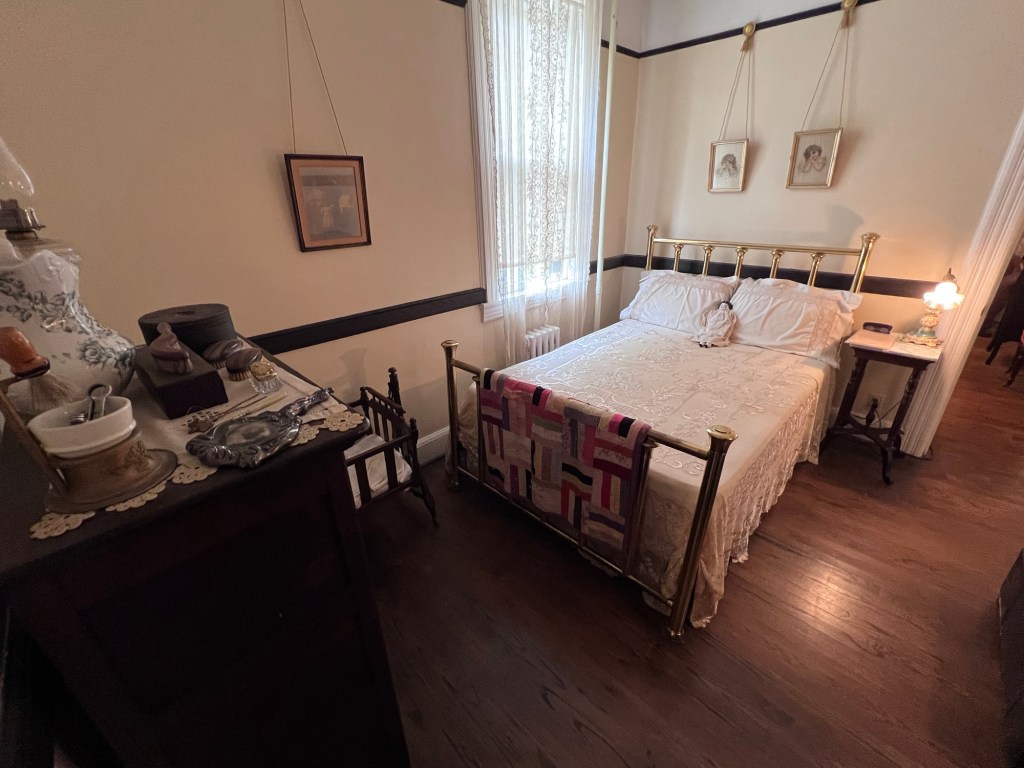
This room, which was actually the girls bedroom has been recreated to resemble where Maria and Pietro slept. The dresser is set with brushes, combs and mirrors that are from the period. The Botto’s slept in a brass bed.
The bedroom at the home
Swimsuits and other clothing hang in the wardrobe. A travelling trunk rests on the floor next to the wardrobe. Next to the window hangs a photograph of Mr. and Mrs. Guala of Biella, Italy. Next to the wardrobe hangs the elaborately framed photograph of Adalgiso Valle of Paterson, NJ, a jacquard card cutter.
The Bedroom
The Parlor:
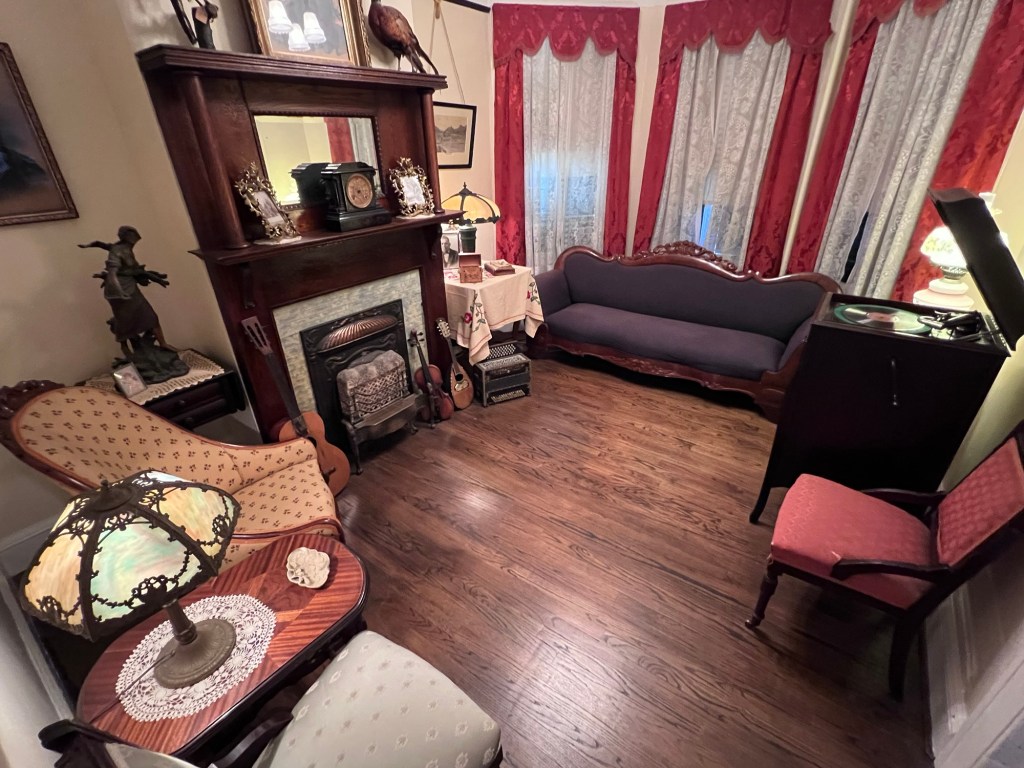
The most formal room in the house, the parlor was used for guests, weddings and wakes. Dominating is the oak mantle with its columns and mirror top. It surrounds a fireplace where, in the winter, a gas heater was attached to a pipe behind the hearth. The clock had to be wound every day and chimes on the half-hour.
The parlor
The photographs on the shelf are Maria’s sisters in Italy (right) and the three eldest Botto daughters (left). Members of the Bocchio family of Biello, Italy are pictured in the photograph to the left of the mantle.
The Parlor and decorations
The furnishings in the house
Other Rooms:
The area making up the library on the first floor was a sitting room and bedroom for the family. The Botto daughters rented the two apartments upstairs when they first married and started their families and other non-family members served as renters through the years. The bathroom on the first floor is the approximate size of the original but today has modern fixtures and is not meant to be part of the restoration.
(From the American Labor Museum/Botto House National Landmark)
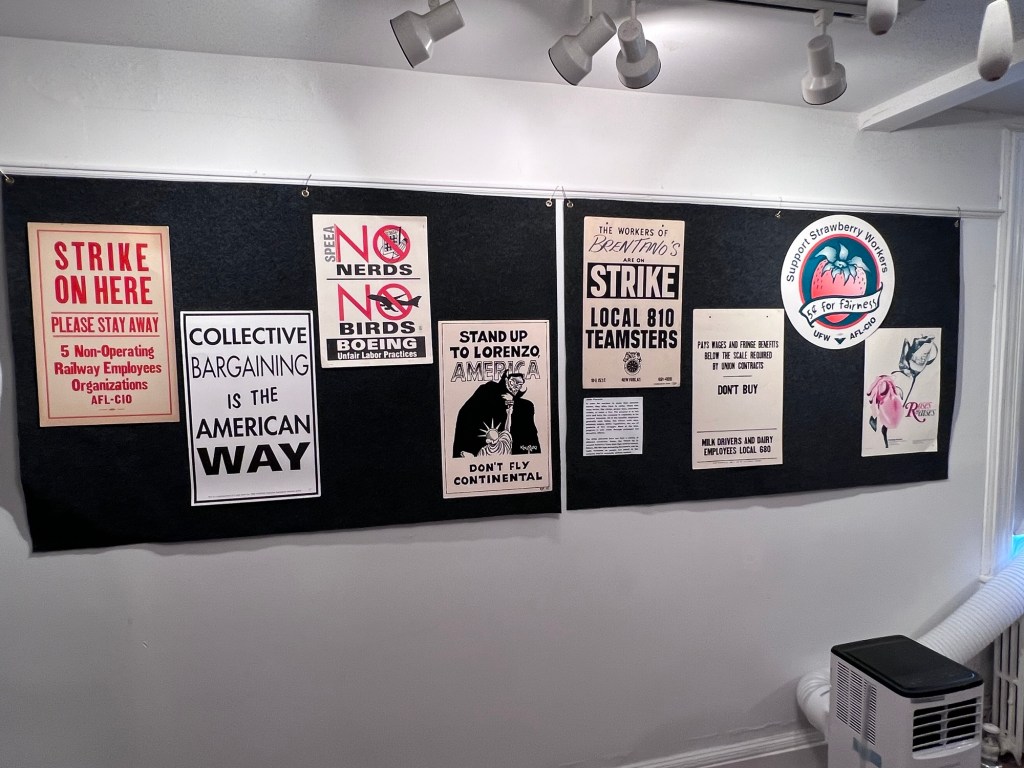
The Labor Day display of the Union history:
Labor display
Labor Display
History of Paterson:
The City of Paterson was founded in 1792 as America’s first planned industrial city. Alexander Hamilton, Elias Boudinot and other members of The Society for the Establishment of Useful Manufactures chose the Great Falls of the Passaic River as the ideal site for a manufacturing center. The Falls provided water power, while the river provided transportation upstream and down.
During the 19th Century, Paterson flourished. It became known as “Silk City” and “The City” with an Arm of Iron in a Sleeve of Silk for the silk mills and locomotive works that made their homes here. Immigrants flocked to the city at first from England, Switzerland. Germany and France and later from Southern and Eastern Europe. Many found jobs in the mills and a few took their place among the captions of industry.
(Mill Worker…Mill Owner-Botto House Museum)
The gift shops
Disclaimer: This information was taken directly from The American Labor Museum/Botto House National Landmark pamphlets. This museum is one of the few historical sites dealing with the Labor Unions in the United States and plays a huge role in workers rights today.
Finishing the Meatpacking District the other week and relaxing on the lounge chairs by the Hudson River while the sun was setting gave me one perspective on Manhattan. Walking on the other side of the island in Alphabet City gives you another. Talk about opposites.
My morning had consisted of laundry and yard work. I was trying to straighten the backyard up while doing the first load and cooking dinner. Then I had to come into the City and get a haircut at York Barber on Lexington Avenue. When all of this was accomplished I hopped the Q downtown and started the walk around 4:30pm.
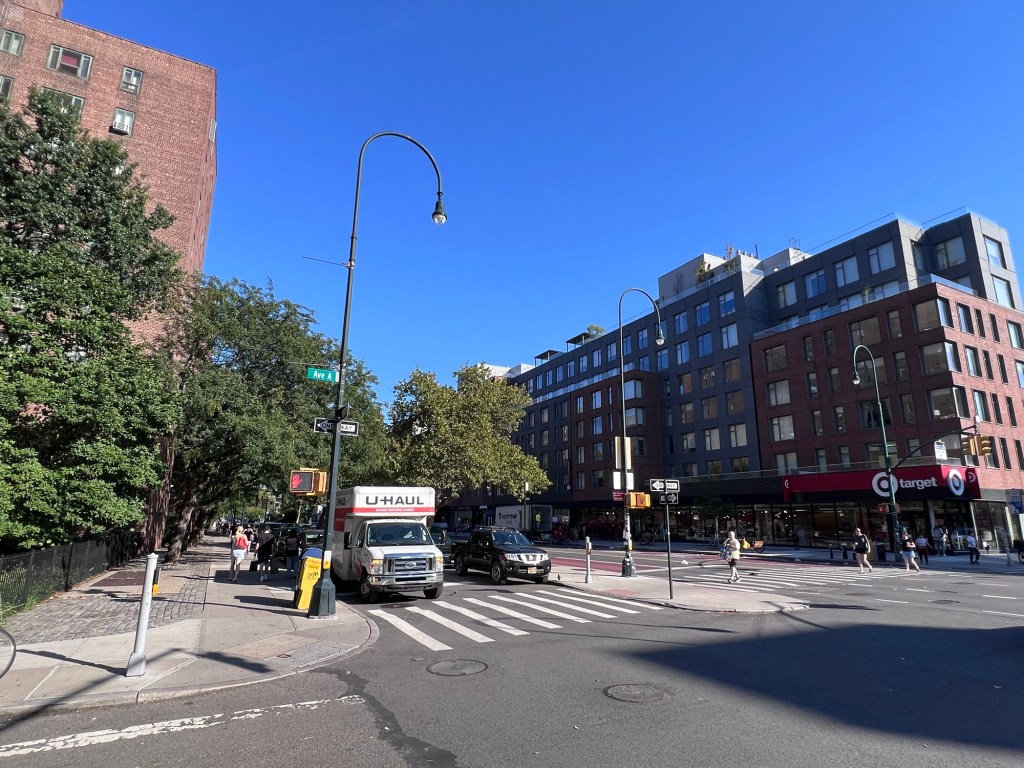
My start point at the corner of West 14th Street and Avenue A
Written on the wall of a building on the corner of Avenue B and West 14th Street. At this point I don’t know who they are talking about because things are crazy all over
Reaching the end of West 14th Street and Avenue C at the Con Ed plant and the turn to West 13th Street to Avenue D
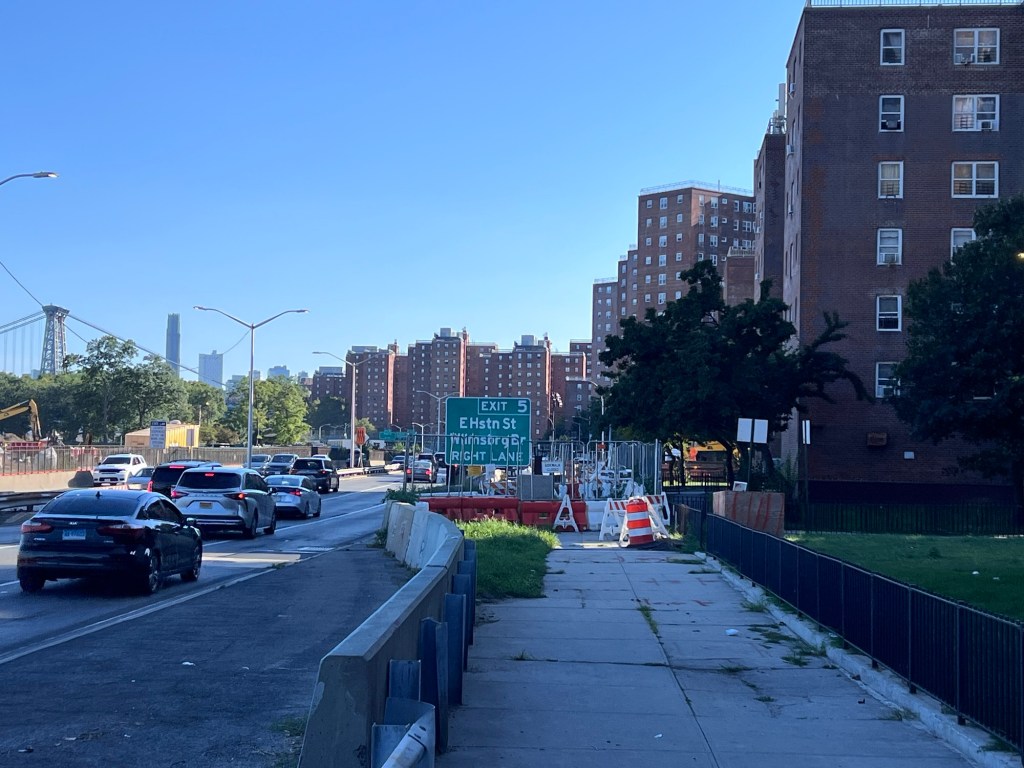
I walked through the Riis Houses courtyard to get to FDR Drive. The construction all over the highway area blocks all the entrances and exits coming and going from Avenue D
So I was only able to walk about two blocks before I had to double back and walk the rest of the border of the neighborhood down Avenue D.
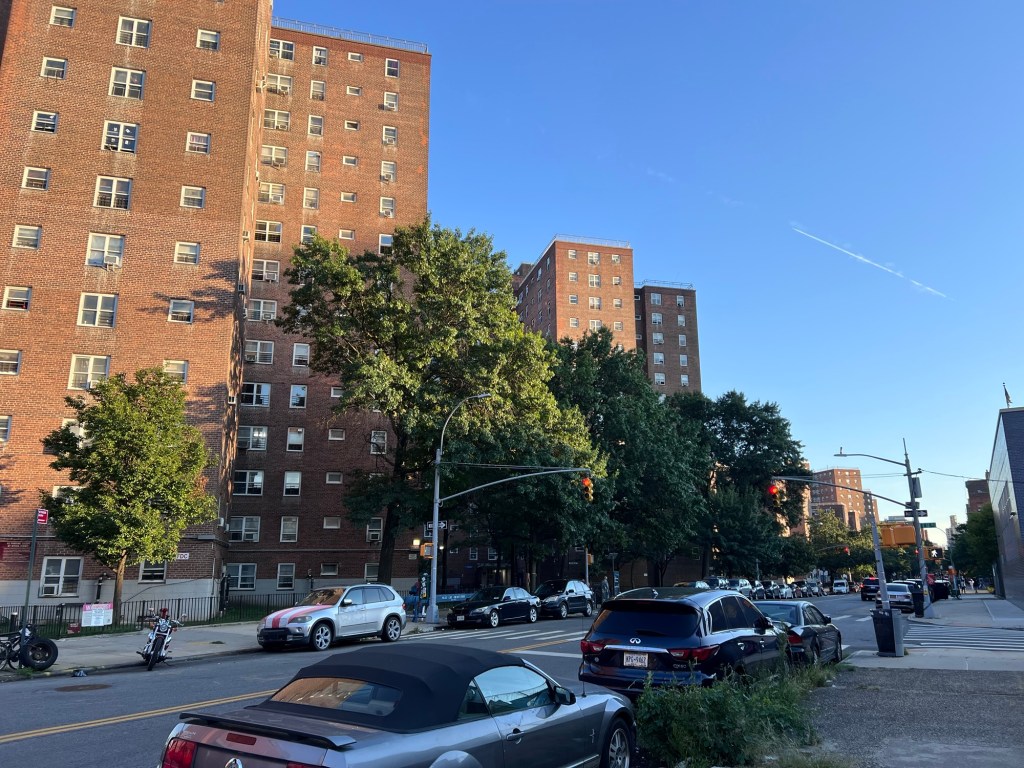
The upper part of Avenue D facing the East River is the Jacob Riis Houses
The Riis Houses like the Wald Houses on the southern side of the were under construction and renovation on all sides. Their green spaces were being updated which is sorely needed.
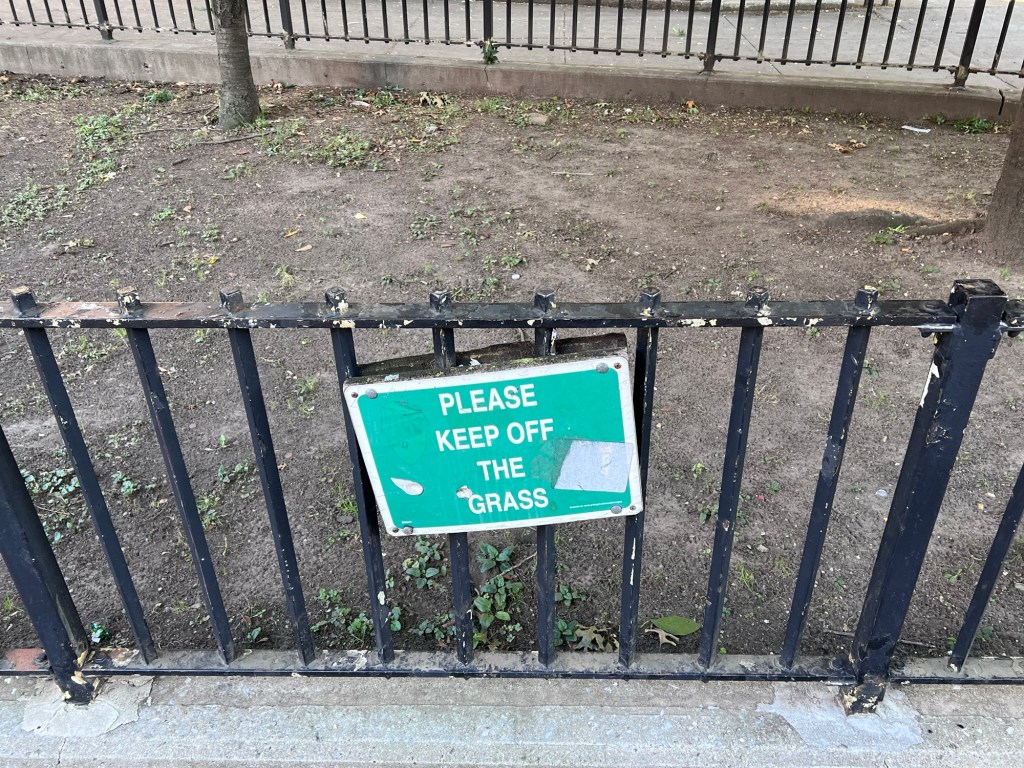
I could see the reason why when there is no grass to keep off of
I found my name reached in cement
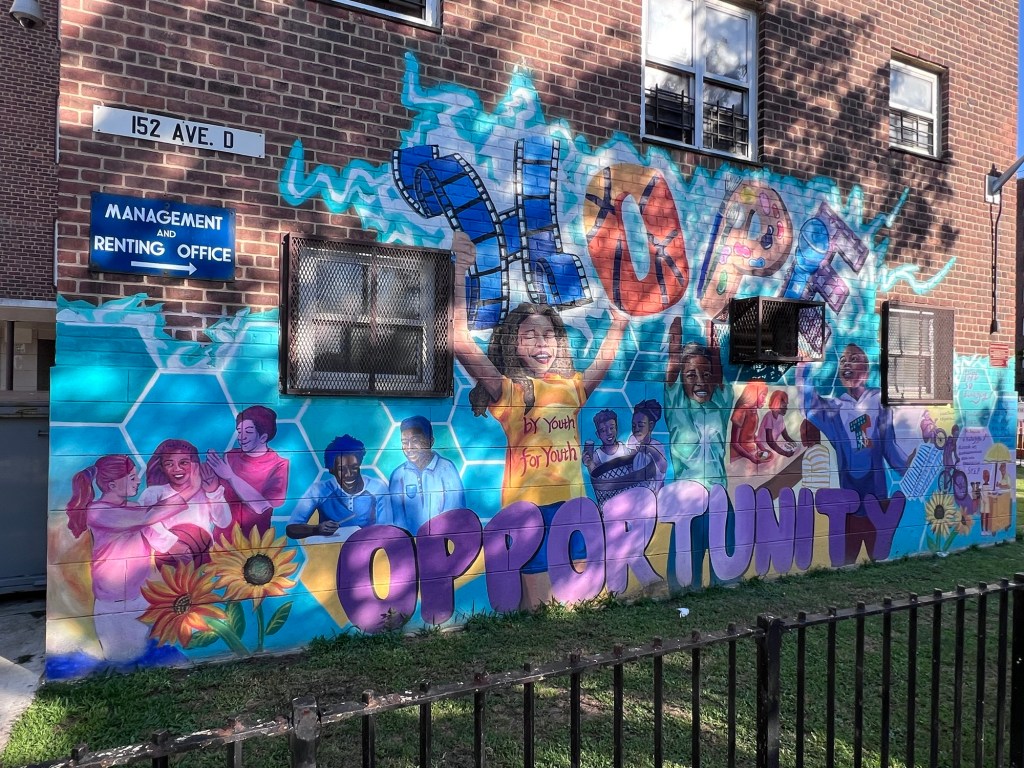
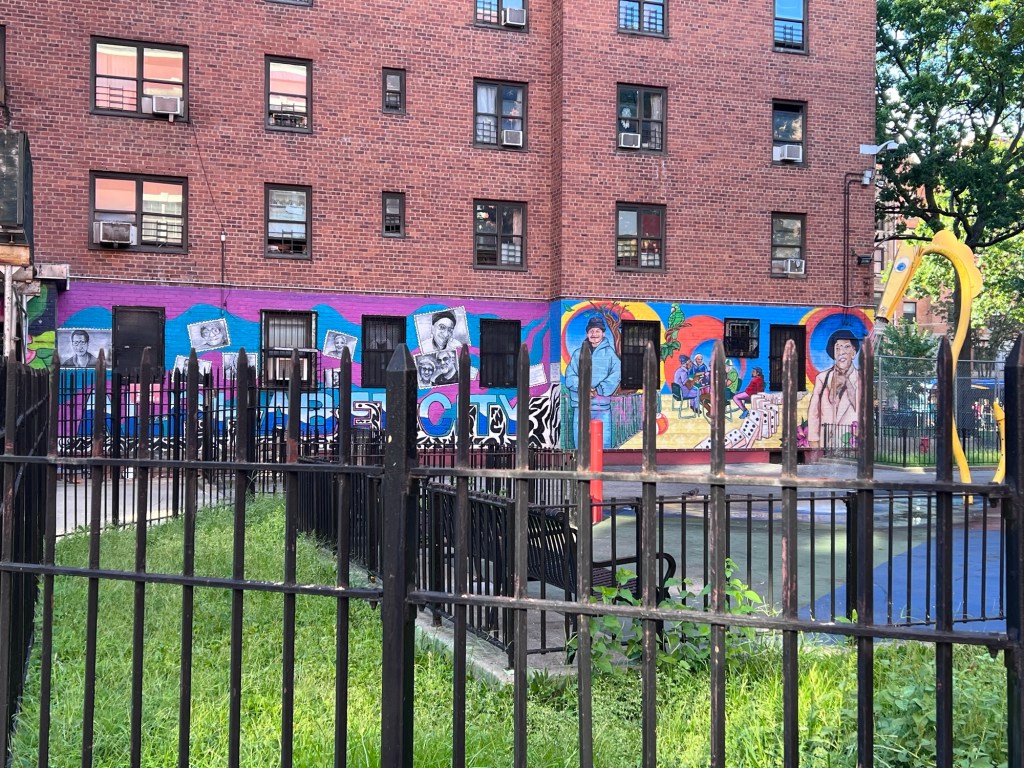
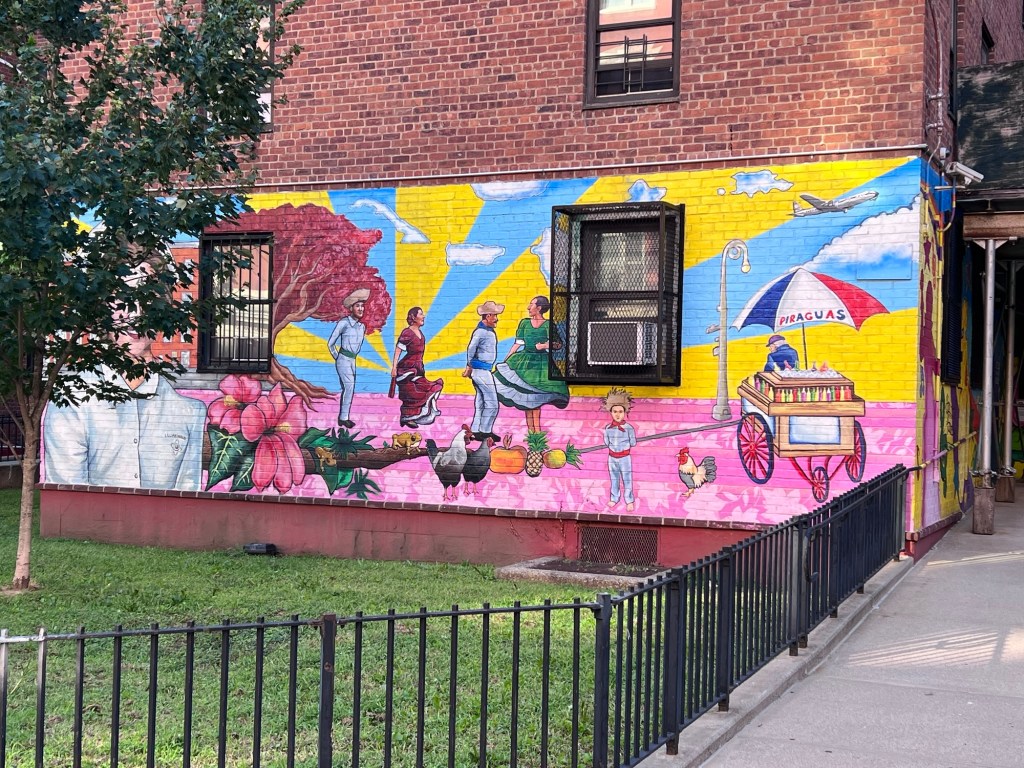
For all the generic appearances on the buildings, there was a glimmer of hope and creativity with this beautiful mural painted on the side of the building.
The mural on the Riis Houses
‘Hope and Opportunity’ on the side of the building
The artists for this mural ‘Hope so Electrifying’ sponsored by the Riis Houses Tenants Association
There were several of these murals all around the neighborhood on the sides of the buildings. It added a little color to otherwise dim buildings.
Avenue D businesses on the other side of the street
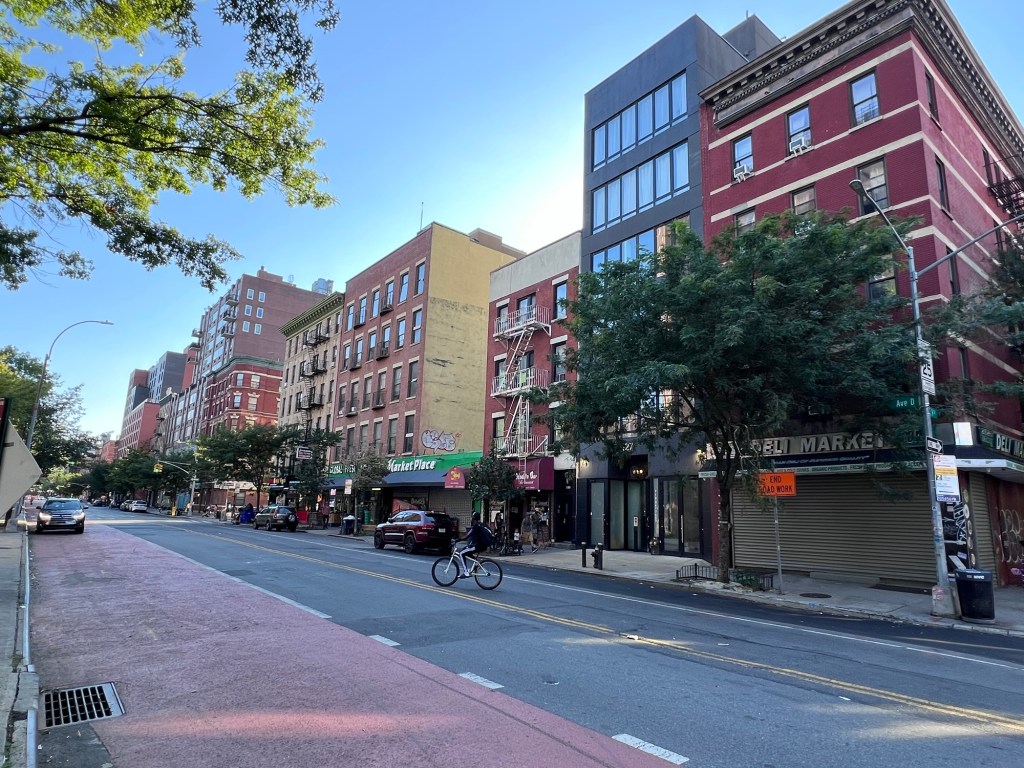
I have noticed one thing about Avenue D from East 13th Street is that it is not as bad as everyone says. Most of the buildings on the block have been knocked down and rebuilt with new apartment buildings. Most of the old tenements that have been left have either been renovated or in the process of being renovated.
While not as ‘hipster’ as Avenues A or B which are closer to the NYU campus, I see a lot more students jogging down the street much to the looks of the people living in the housing complexes, as if they see where the future of the neighborhood is going.
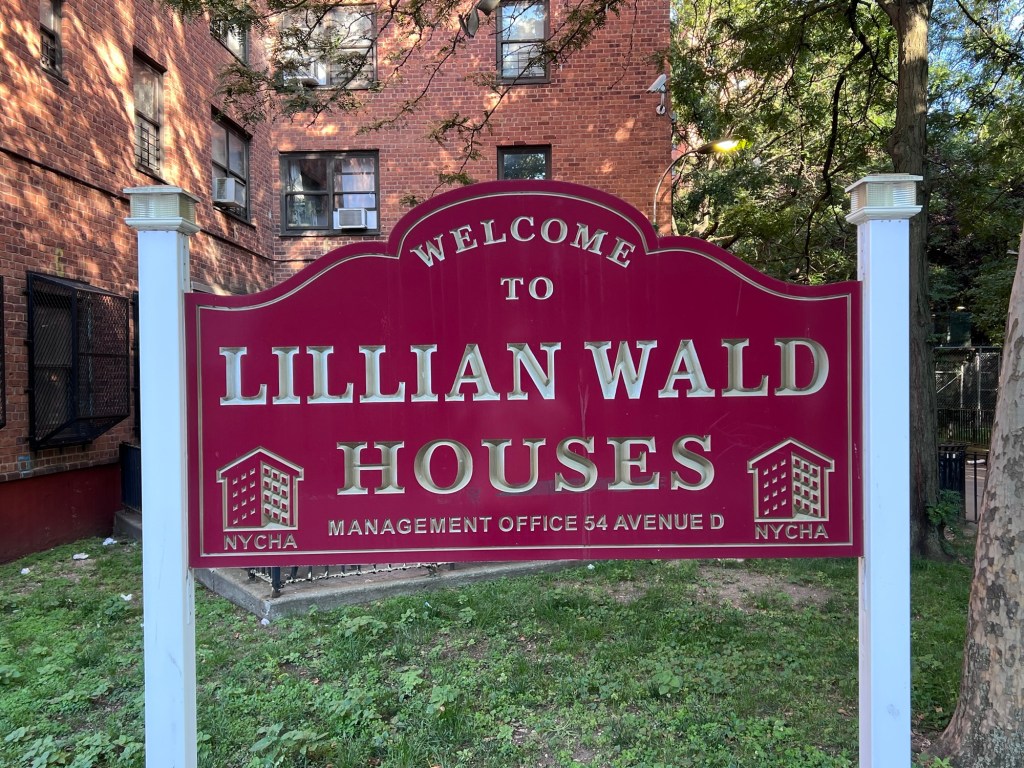
Towards the southern end of Avenue D are the Lillian Wald Houses. It amazes me that the builders of these public housing units never had the fourth site to realize that they were giving the residences a million dollar view of the river. Back when these were built though, no one wanted to live near the river as badly as it was polluted back then.
Again by the Wald Houses all the entrances to the river park have been blocked by construction. The signs have all said that the City is reconfiguring the green space around the houses.
The Wald Houses don’t look so bad during the day
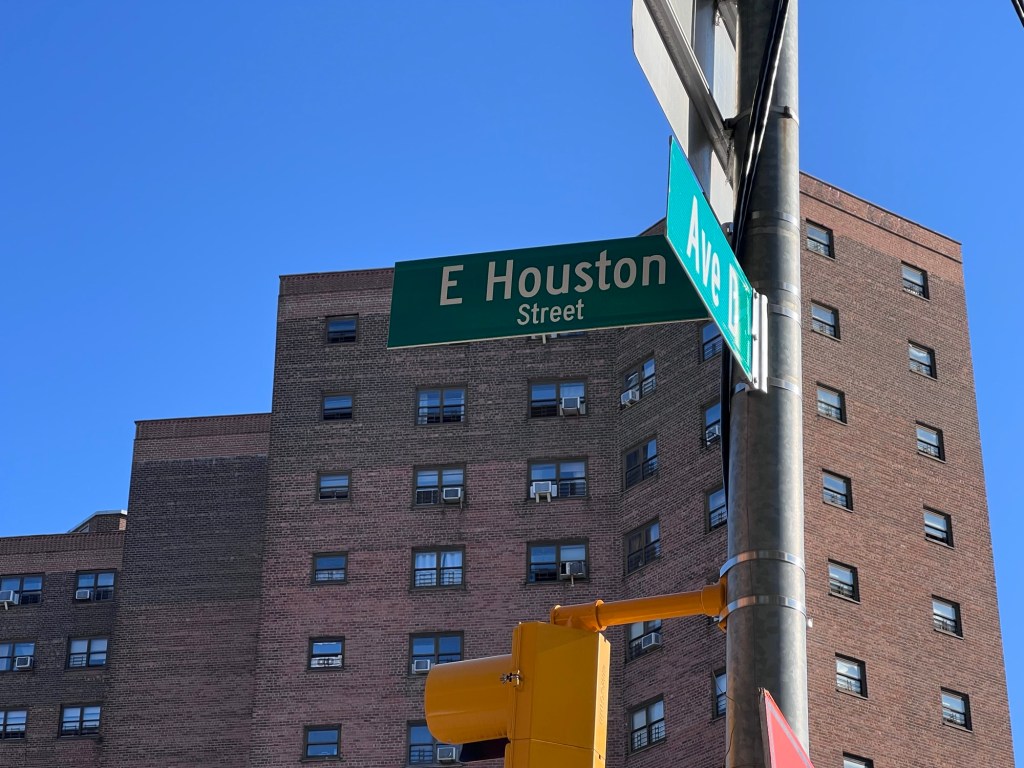
I turned the corner at East Houston Street and Avenue D on the southern border of the neighborhood and walked towards the river to see if there was any access to Stuyvesant Cove. It had been open during the Great Saunter in May but seemed to be closed off in all sections this time around for renovations.
Taking a walk east down East Houston Street
The Lillian Wald Houses line the borders of East Houston Street, Avenue D and FDR Drive and the whole complex including walkways and green space are all under scaffolding. Here and there you can see the building and closer to PS 188 next door, I saw a series of more murals.
The murals on the Lillian Wald Houses from East Houston Street
The mural along the walls
I couldn’t get any closer to the mural to see who painted it without freaking the residents out. They all looked at me like I was ICE walking around the neighborhood. It was funny because the ever getting drunk college students on Avenue A just ignored me.
The one mural that really caught my eye was on the side wall of PS 188. It was really colorful and whimsical.
I turned the corner to walk up the part of FDR Drive that I could along the sides of the public housing. There are so many twists and turns to this route and it will be a while before you can walk this sidewalk. The residents here did their best to ignore me as well. It’s fun when they pretend not to see me.
The sidewalk along southern FDR Drive is blocked off at East 10th Street
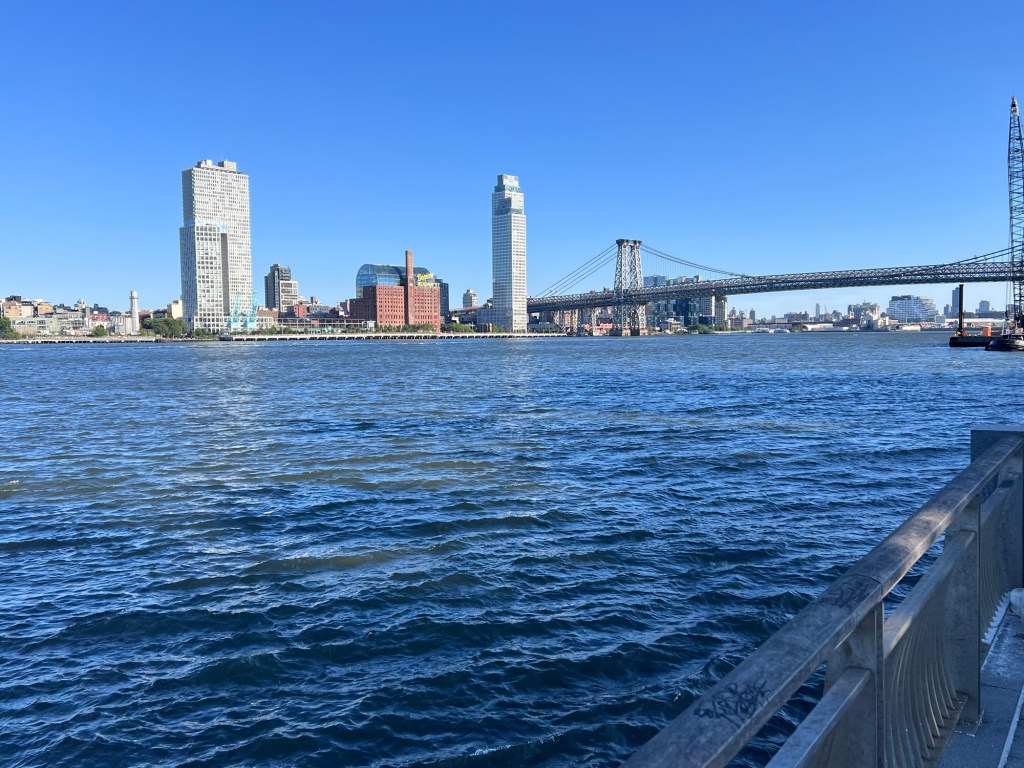
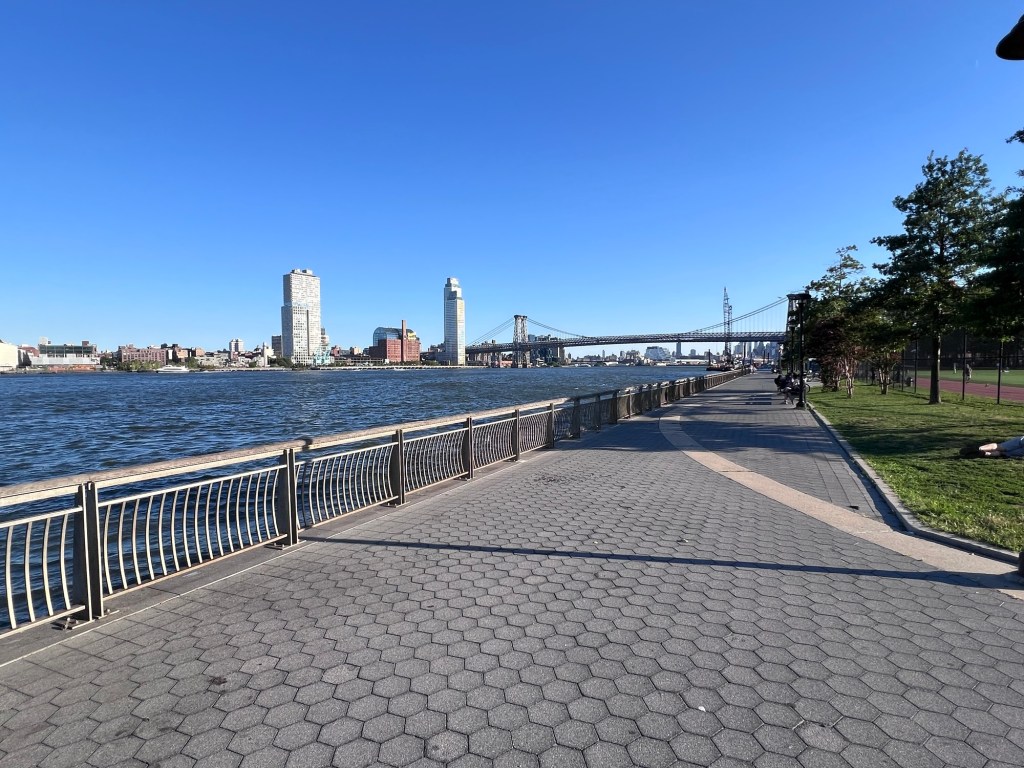
I walked the overpass at East 5th Street to the John Lindsey East River Park, which closed again for renovations. It had been open in May but they closed off all but a small portion of the park and the running track. I still could see the magnificent views of the East River and the Brooklyn skyline.
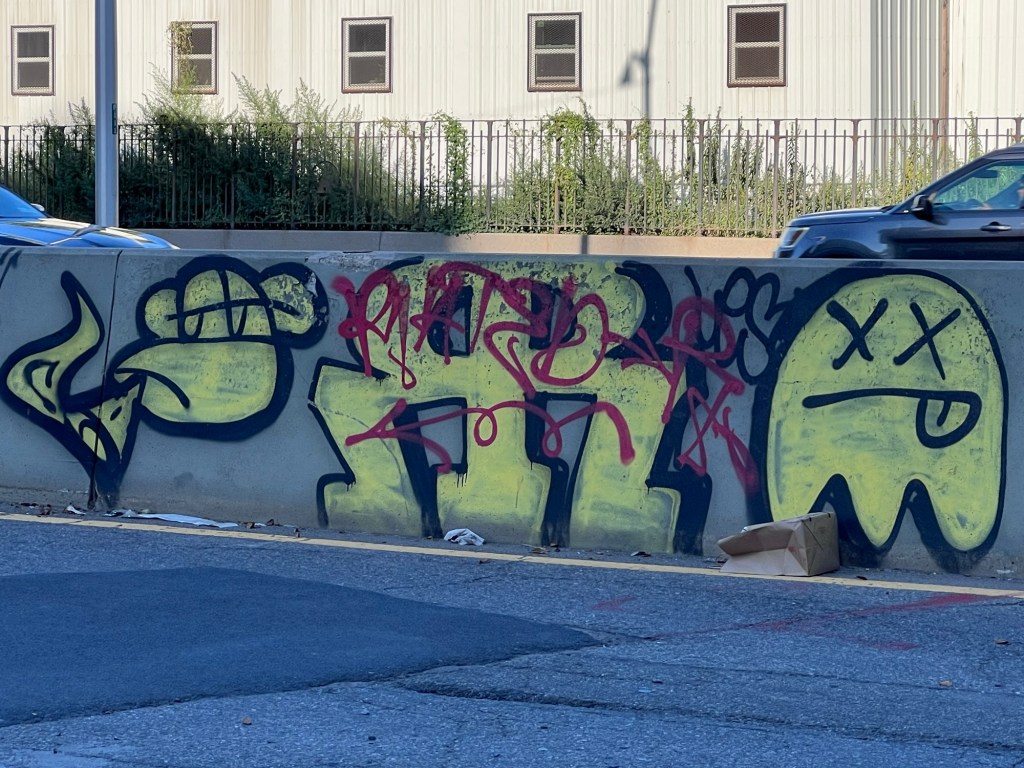
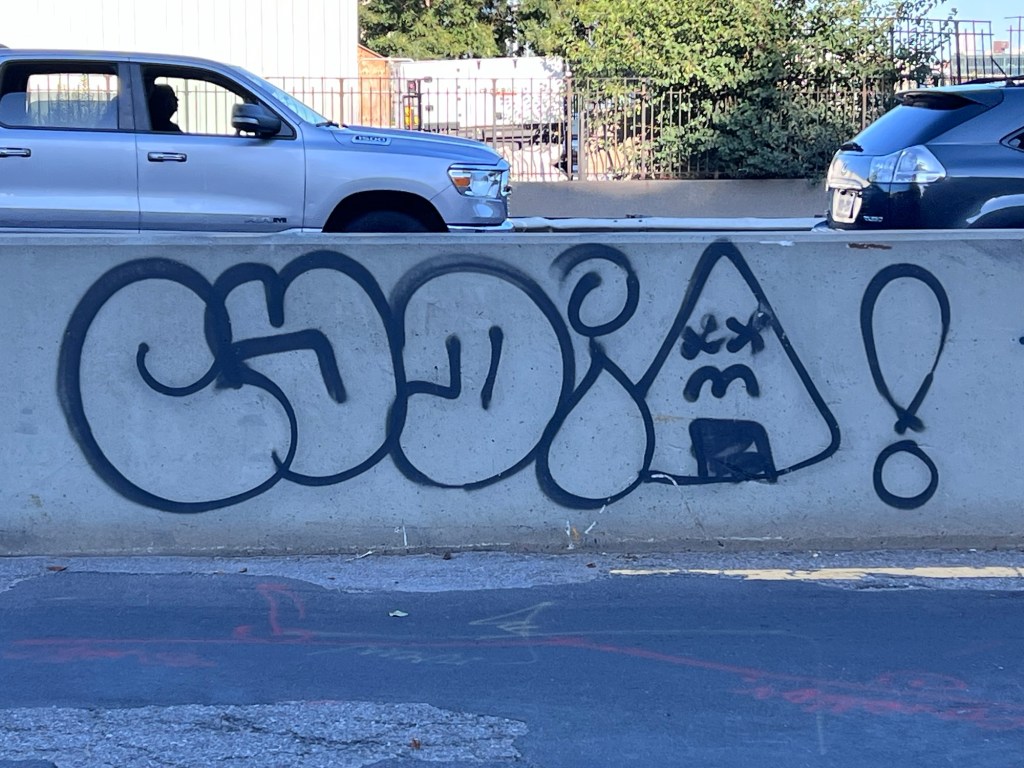
Interesting street art on the barriers
Interesting street art on the barriers on FDR Drive
Crossing all the construction on FDR Drive
The view of the Wald Houses from the East 5th Street overpass
The John Lindsay East River Park side of FDR Drive with the running park
The park is going through a major renovation and is now closed off on all sides. The running track, part of the picnic area and a small part of the river walkway are now open while the rest of the park is behind fencing.
Looking downtown towards the Manhattan Bridge
Looking uptown towards the East River and the Brooklyn skyline
A little street art tucked into the fencing in the park
The full view of the East River and what the park will look like when it is finished
The John Lindsey East River Park has been closed at various stages for renovation and to make it more environmentally friendly to protect the coastline. I have read though that many in the area say the improvements in the park have lead to the rapid gentrification of the area. Still I have seen the park when it was fully open and when it is finished it will be a fantastic park that everyone will enjoy.
After walking around this small portion of the park left open, I walked over the overpass back to East Houston Street and walked the southern most border of the neighborhood.
It still amazes me how many times I have walked this neighborhood and never really noticed what it was about. I justly passed it while I walked around. Now that I took the time to really study it, I was fascinated by what I had missed.
Walking down East Houston Street in the late afternoon
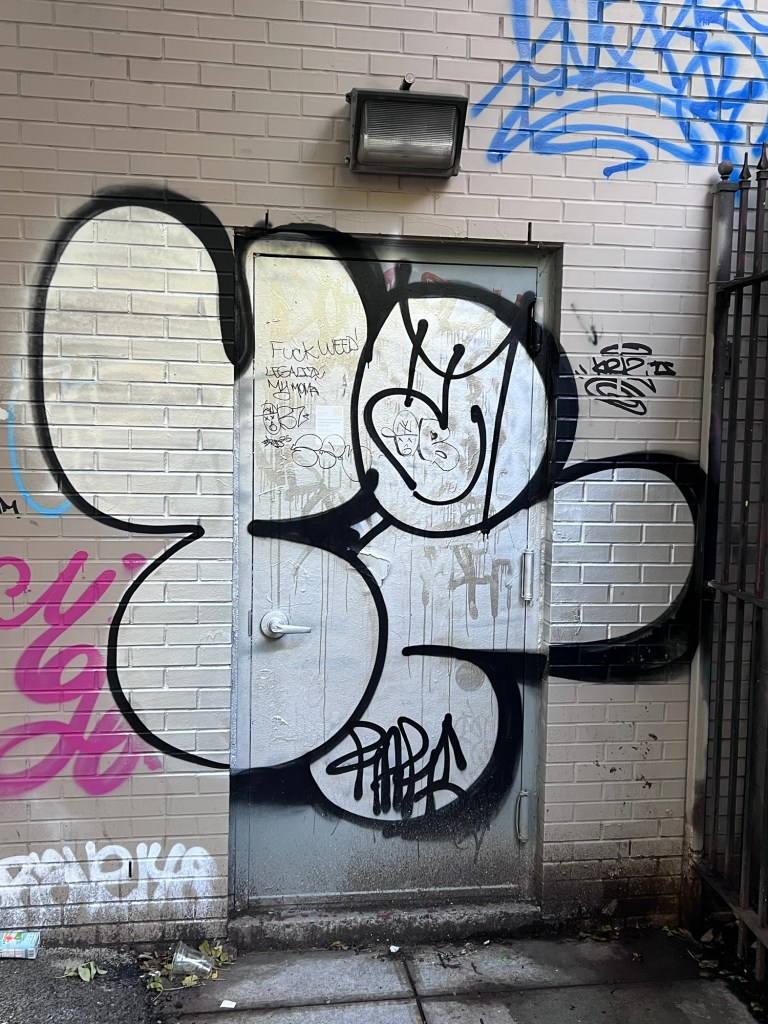
Tucked here and there were community gardens, tiny restaurants and loads of interesting street art. The artists and the taggers are really creative in this part of the City.
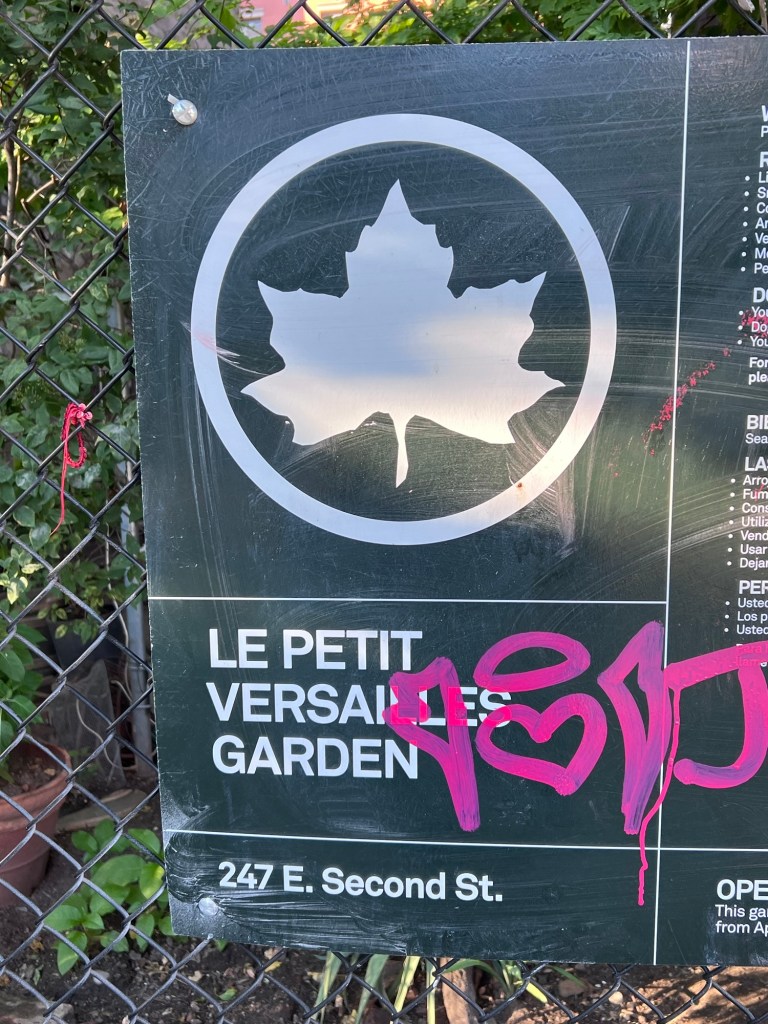
Le Petit Versailles Garden at 247 East second Street
The tiny garden that stood out was Le Petit Versailles Garden at 247 East Second Street that was closed both on the East Second and East Houston sides of the park. I was still able to sneak in on an open side door and admire all the interesting art.
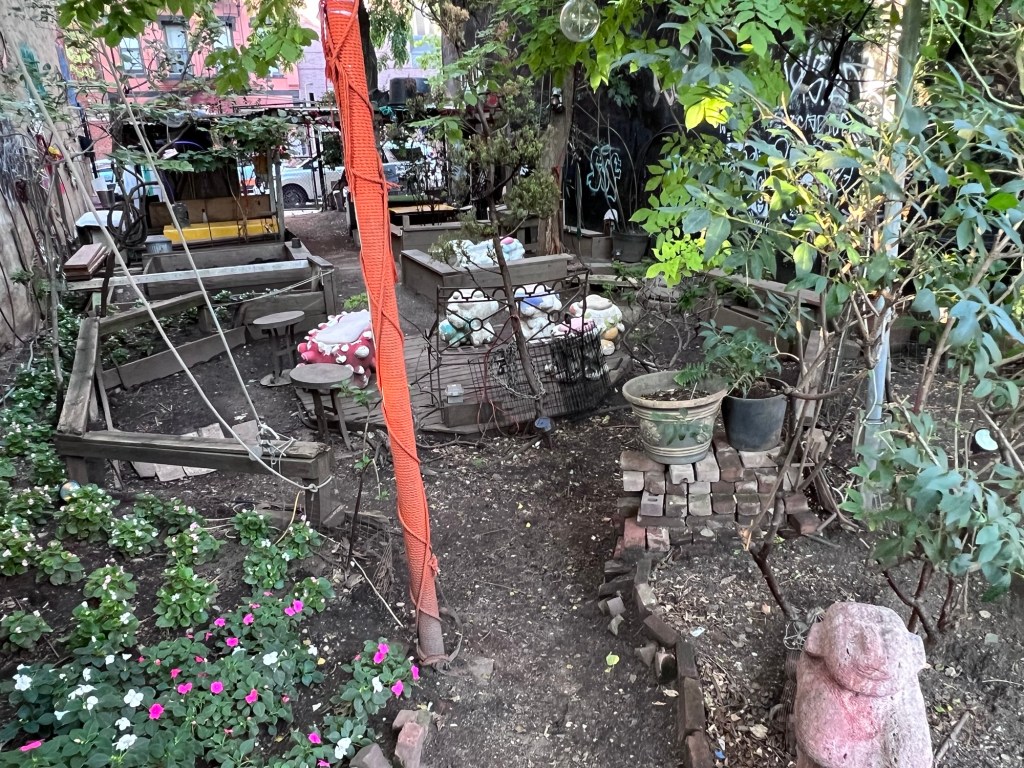
The inside of the gardens in bloom
The sculpture work and landscaping
The Olmec looking statue at the entrance of the gardens
Inside the gardens were a series of sculptures that looked like something out of the ‘Wizard of Oz’. These unique pieces of are were hidden in the shadows but I hope to take a closer look when the gardens are open.
Sculpture number one
Sculpture number two
Sculpture number three
The back part of the garden in the midafternoon
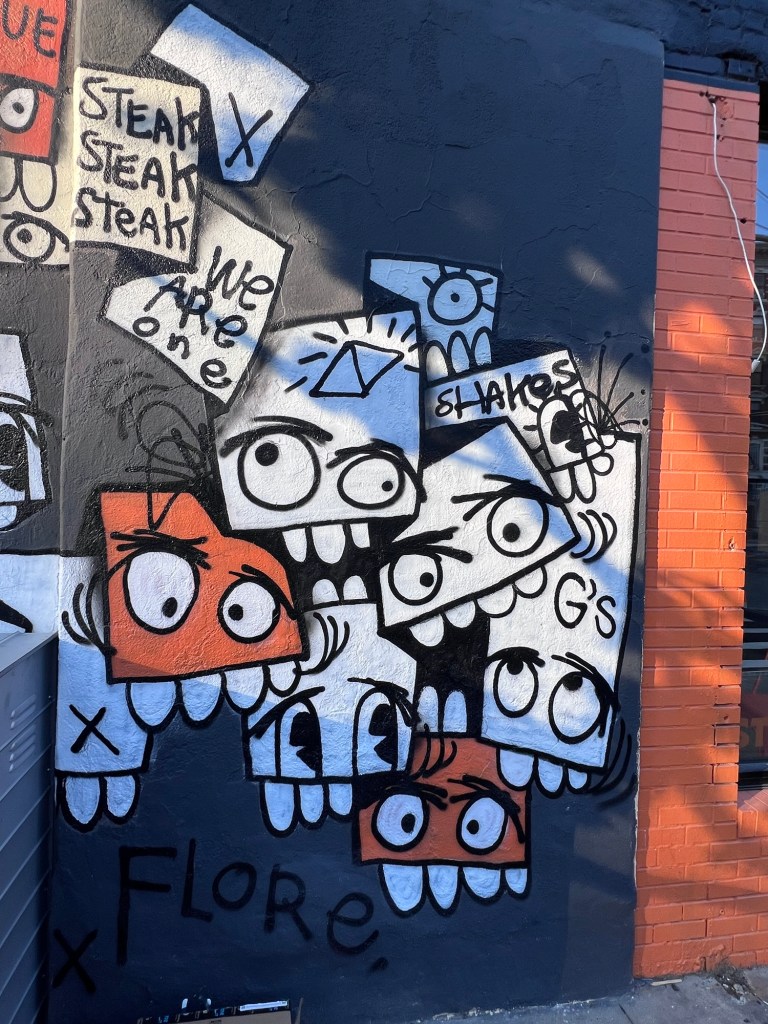
A bit further down East Houston Street I noticed a G’s Cheesesteak shop at 6 Avenue B. I had their cheesesteaks in Downtown Point Pleasant Beach and can attest to their excellence.
The G’s Cheesesteaks at the corner of East Houston and Avenue B
It wasn’t the restaurant itself that grabbed my attention, it was the artwork painted on the side. Geometric and just wild the street art was just crazy.
I think that people added to the art since
The monster makes a statement
Geometric designs
I was not sure if Flore was the artist
I thought that this was clever
So was this
As I was down East Houston Street, a store window to a thrift shop caught my eye. While the store didn’t strike me as unique, the display in the window I thought was great. Someone used their creativity on this.
I thought this was surreal
Very clever from both views
I finally made it back to the southern part of Avenue A and talk about the extremes in the neighborhood.
Reaching Avenue A at twilight
While Avenue D is still gritty and a bit dangerous, Avenue A is like an extension of the NYU and Pace campuses. It was wall to wall bars and restaurants and outdoor cafes.
Walking up Avenue A in the late afternoon
The Best Housekeeping store at 17 Avenue A is an appliance store with the best murals on their roll down gates.
As I walked up Avenue A on this warm and clear Sunday night, I could not believe how packed all the restaurants and bars were and how young the crowds were dining. It looked to me that the colleges had just started the semester and everyone was letting loose a bit as classes started.
The tagging and street art dominated these blocks
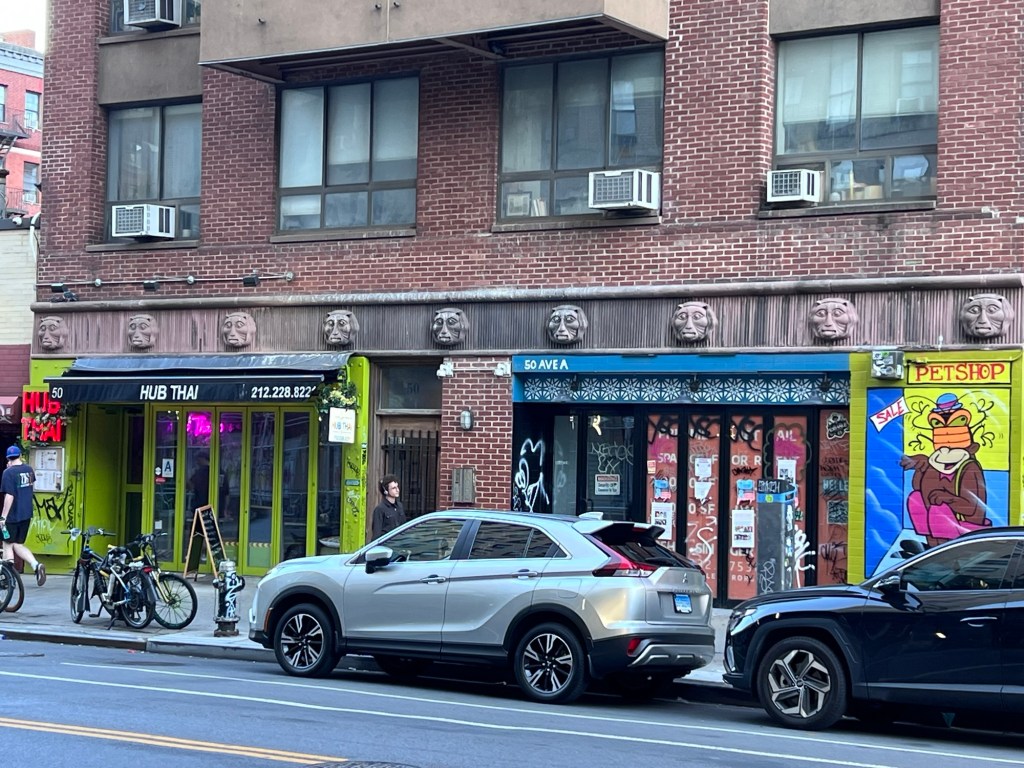
I then passed 50 Avenue A with its interesting Monkey looking sculptures and its beautiful outdoor pictures.
Hearth House is a condop with a wonderful neighborhood vibe. One elevator, six stories…only a handful of units per floor. Most layouts offer two bedrooms. Top floor units have private roof terraces and some are duplexes (Streeteasy.com).
The Monkey (or Tiger motive on the building)
The wild painting outside this pet shop looks like a surreal ‘Magilla Gorilla’
It looks like the pet shop that was here has closed.
Walking up Avenue A at twilight
Interesting street art tucked on the sides of the building
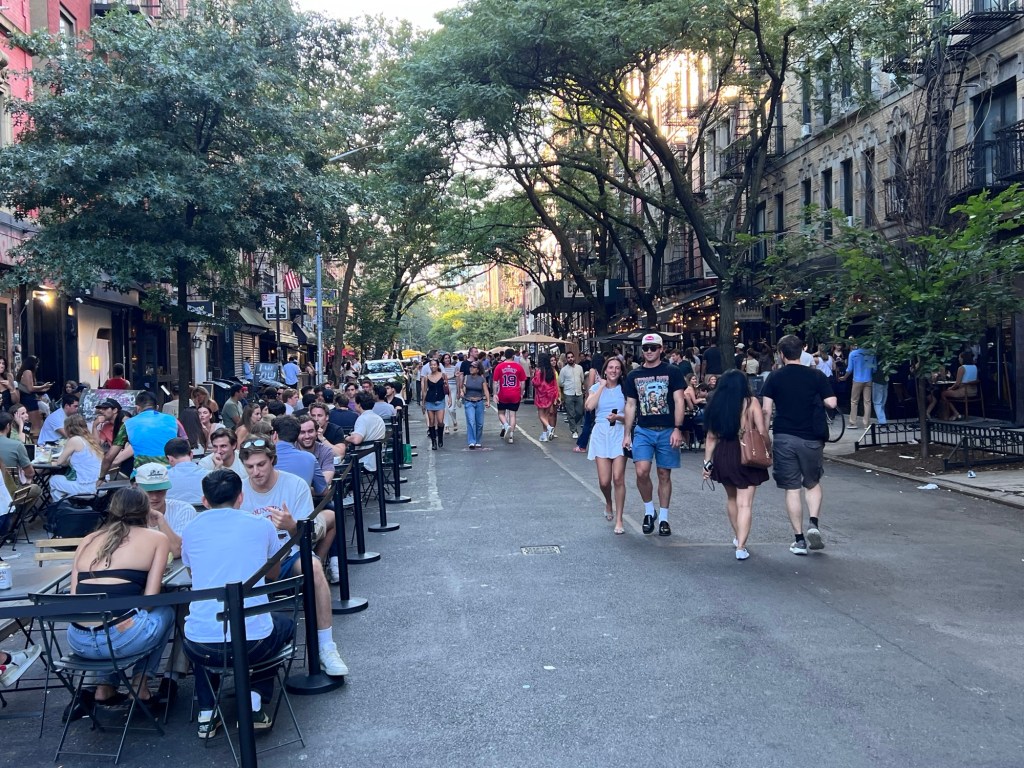
St. Marks Place and Avenue A was closed off for about two blocks for outdoor dining
Much has been written about Tompkins Square Park over the years from a major drug den of the late 1960’s to the early 80’s, then a homeless camp, the Wigstock, the famous drag shows of the late 80’s to early 90’s to Mayor Giuliani closing the park down fencing it off and moving everyone out for a major renovation.
I had not stepped foot in this park since the fencing came down in the late 1990’s and I figured almost thirty years was enough time.
The corner of Avenue A and Tompkins Square Park at East 10th Street
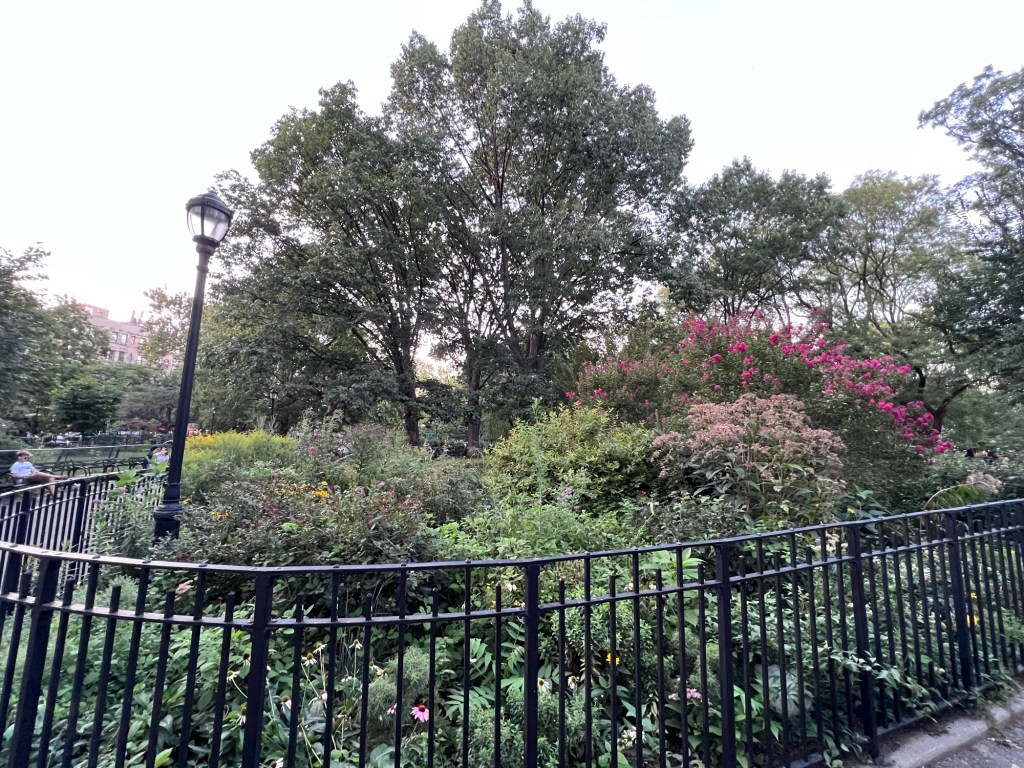
The park has definitely changed and for the better. Yes, it does need a good weeding but it attracts a very diverse crowd of people from young couples walking around after eating to the dog walking crowd to the college students lying on the grass talking to the homeless on the benches there is a little bit of everyone at this park.
Walking around the pathways of Tompkins Square Park
The park has been reseeded and landscaped and now like Washington Square Park another extension of a backyard to the NYU, CUNY and Pace students.
The park was in bloom in the late Summer
The statue of Samuel S. Cox stands guard at the southwest entrance of the park
Samuel Sullivan “Sunset” Cox was born in Zanesville, Ohio, and served his home state as a Democratic Congressional representative from 1857 to 1865 before being unseated. After moving to New York in 1866, Cox served again in Congress for several terms from 1869 until 1889. Although Cox once publicly declared that his most satisfying contribution to public service was championing the Life Saving Service—founded in the 1840s to patrol the coasts and save imperiled boaters during bad weather, the group was absorbed into the Coast Guard in 1915—this statue is sponsored by U.S. Postal Service workers because of Cox’s support for their quality-of-life issues (NYCParks.org).
Artist Louise Lawson was an American born artist who studied at the Art Academy of Cincinnati and Cooper Union. She worked as an apprentice under several famous sculptures and was one of the first American female sculptures to have a professional career. She is known for her Neoclassical sculptures (Wiki).
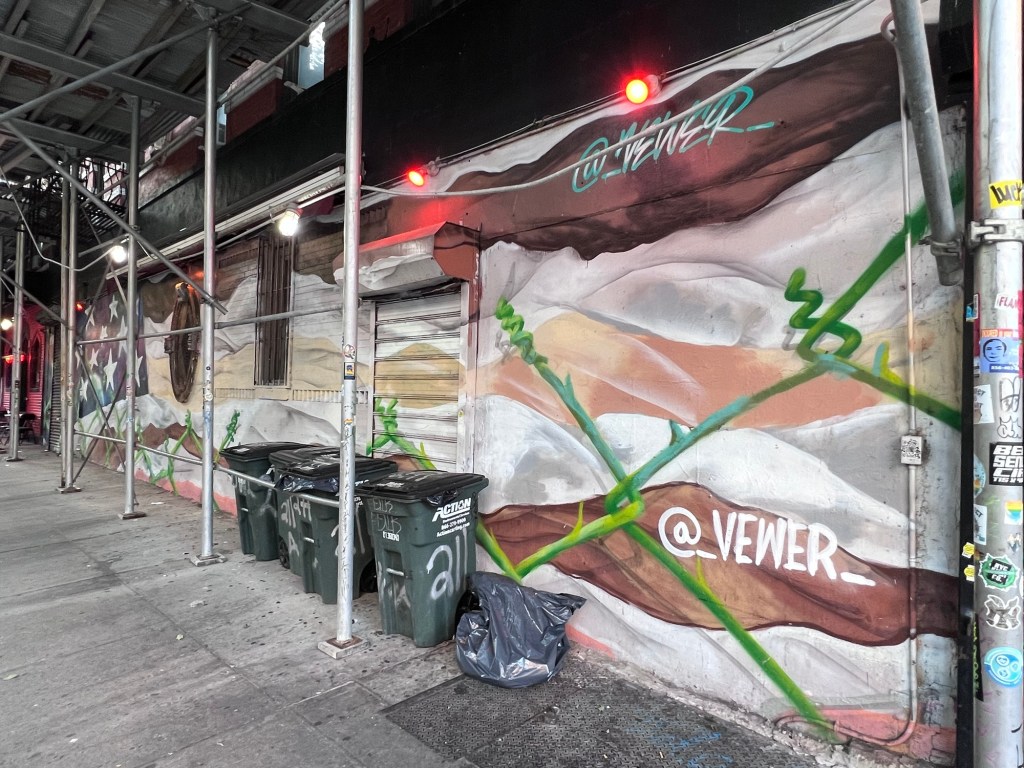
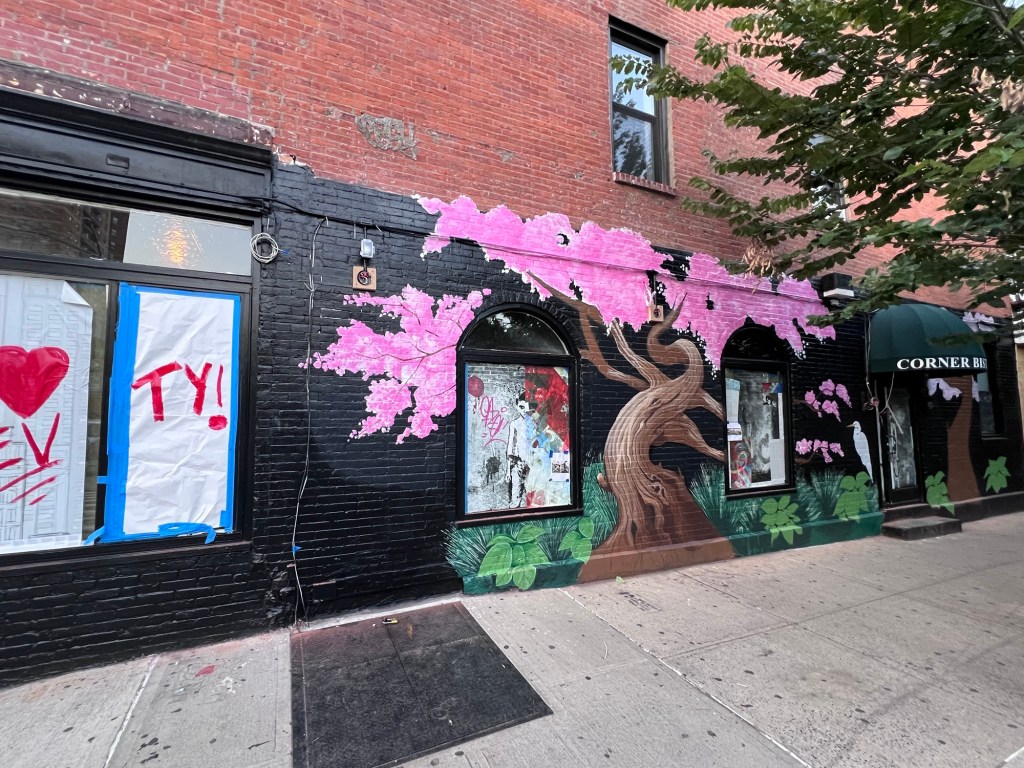
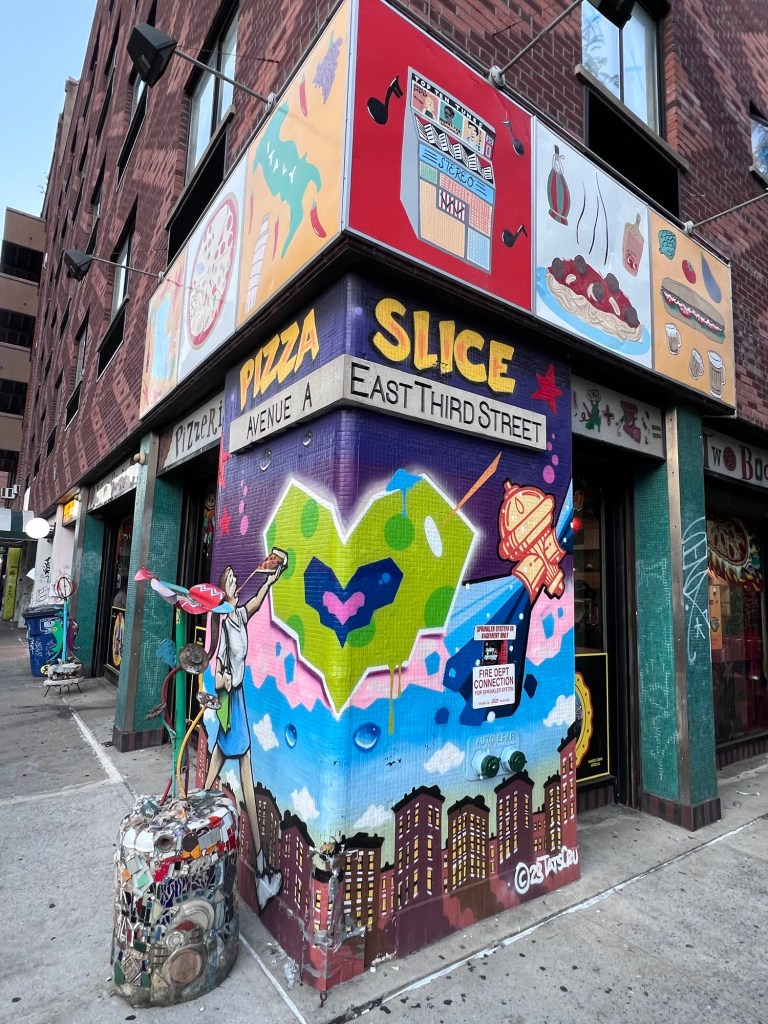
As I walked up Avenue A, the whole street is like an open air museum of street art but commercial and by taggers. Many of the restaurants had them painted on their walls.
The interesting mural was tucked under a building that was under renovation
Artists 23TatsCru is a group of Bronx based graffiti artists turned professional muralist (Wiki).
I walked both sides of Avenue A to admire the artwork and peek at all the menus. By 6:00pm on a Saturday night, the place was filling up with college students and young couples who were visiting the bars and restaurants. On this perfect night, everyone wanted to eat outdoors.
Walking the other side of East 14th Street
I made my way back down East 14th Street in the early evening tour walk the other side of the blocks.
Walking down the other side of East 14th Street in the late afternoon
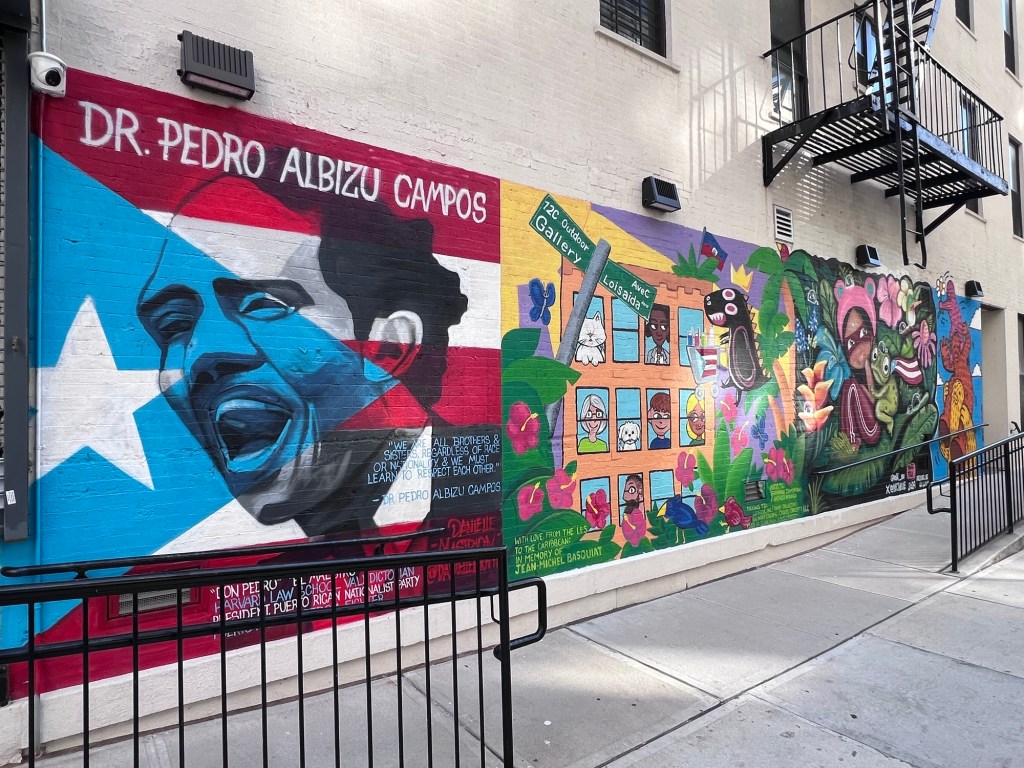
The street art on the side of a restaurant on East 14th Street
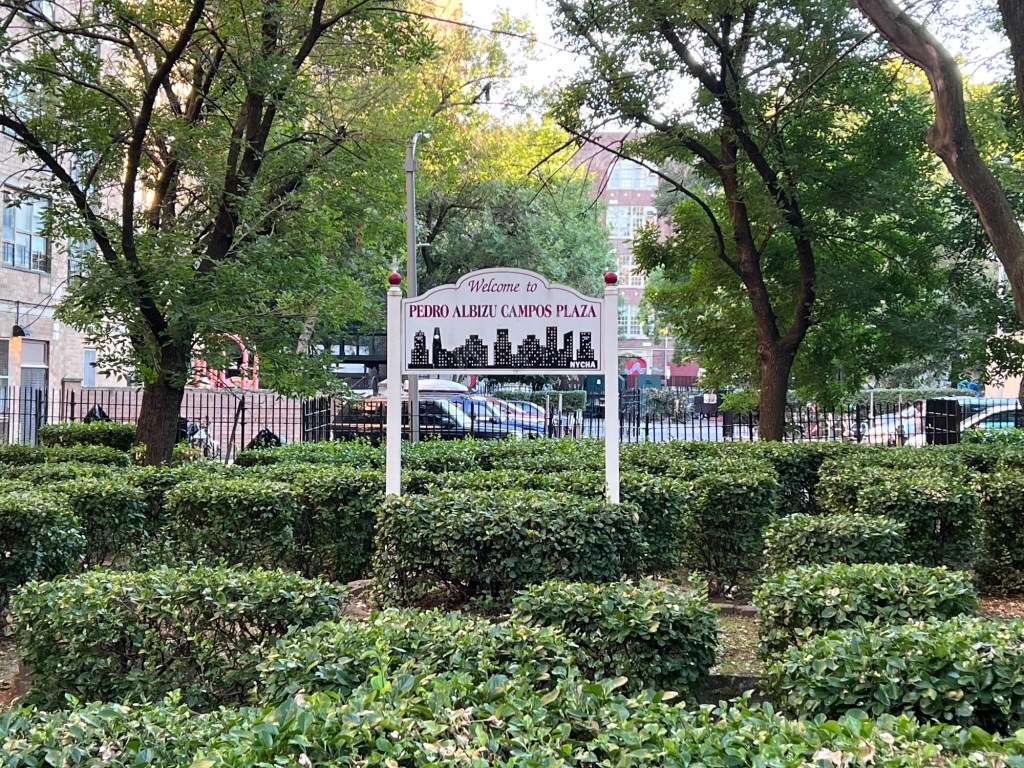
Pedro Albizu Campos was a Puerto Rican born American lawyer and activist , who fought for our Country in WWI and was a member of the Puerto Rican Nationalist Party.
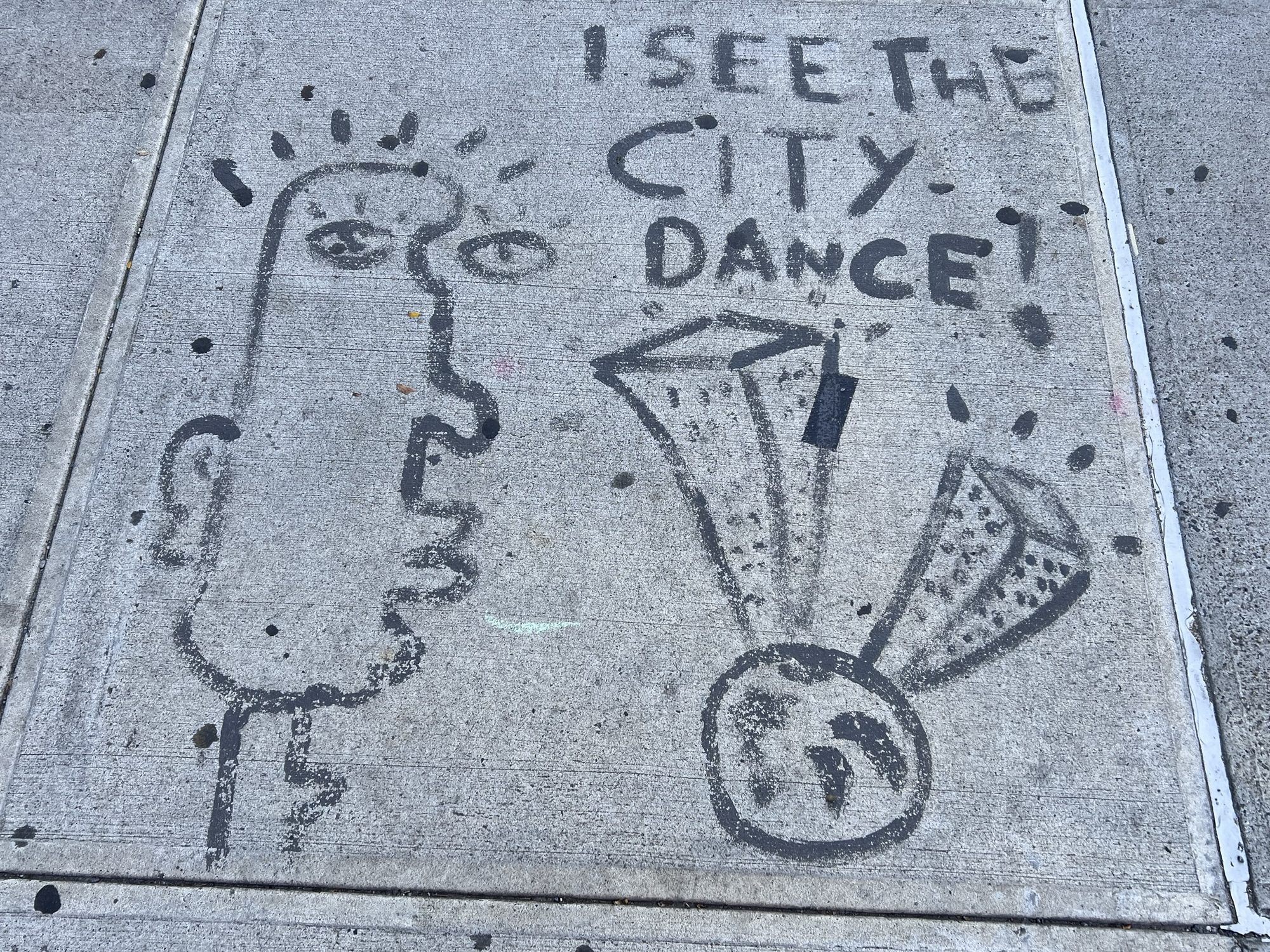
I saw this piece of art on the sidewalk on East 14th Street
On a plain tenement building, this beautiful carving stood out
The view of the Con Ed Complex at the corner of East 14th Street and Avenue C
This interesting tag was on East 13th Street
Taking another walk down Avenue D again
When I got back to walking the other side of Avenue D, some of the businesses started to close up for the evening including some of the street vendors who were selling food. Many people had been giving me strange looks before had disappeared.
Walking past the Jacob Riis Houses in the late afternoon. They looked much nicer from the other side of the street
I stopped in at Avenue D Pizza because I had noticed their reasonable prices before but they were closing up for the evening and most of the food had disappeared from the display cases. I figured for another time.
Looking down the other side of Avenue D and you realize how much these blocks have changed in the last twenty years
Walking back up Avenue A again as the bars really started to fill up
It started to get dark at 8:00pm when I finished rounding East 14th Street for the last time that evening.
There were many restaurants to choose from that evening so I searched my Mileage Plus Dining Club to see any recommendations. It suggested Pop’s Pizzeria at 223 Avenue B not far away.
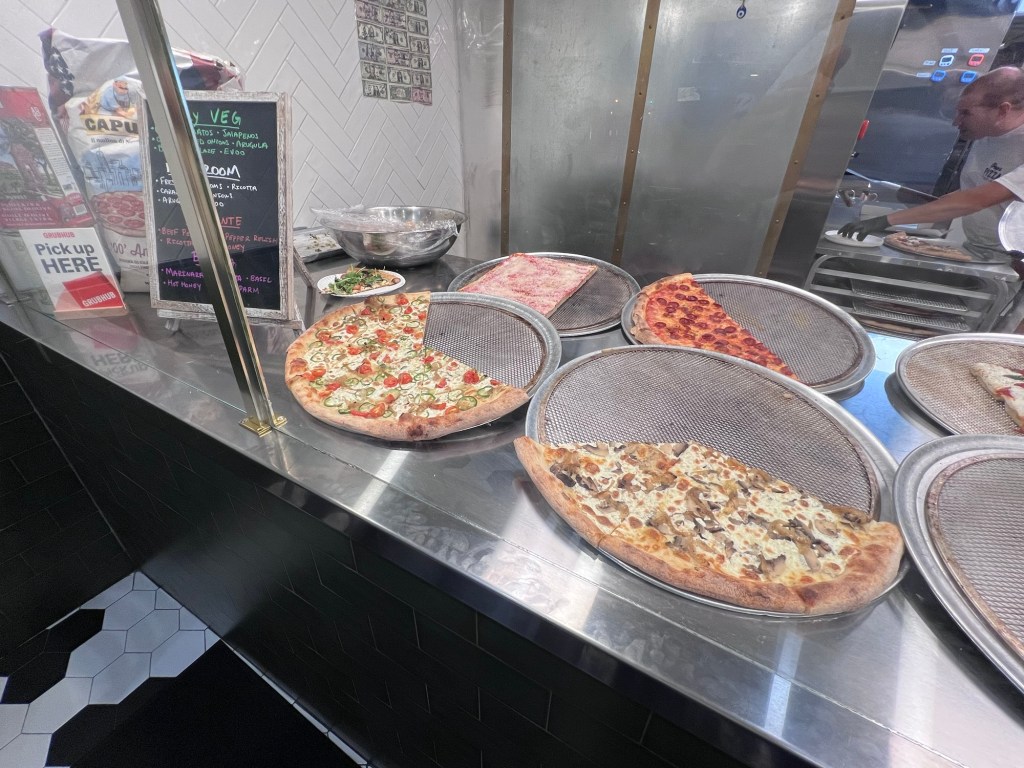
What an excellent recommendation because the pizza is wonderful here. They have some unusual pizza topping combinations and it really worked.
The inside of Pop’s Pizza
The selection of pies to choose from
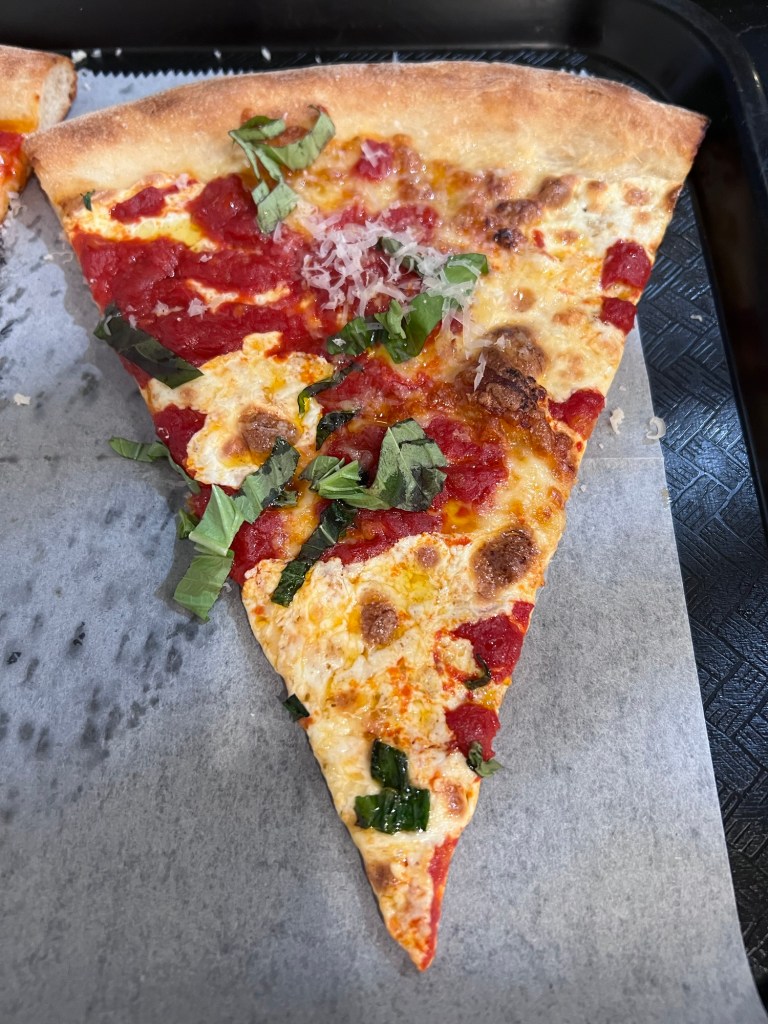
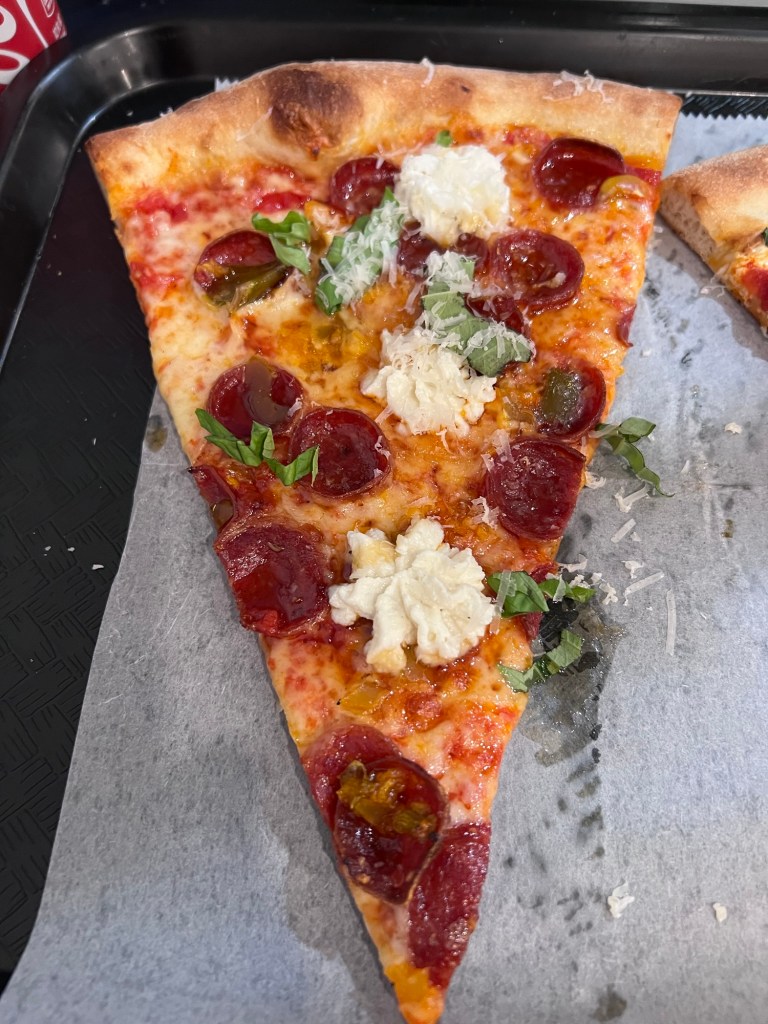
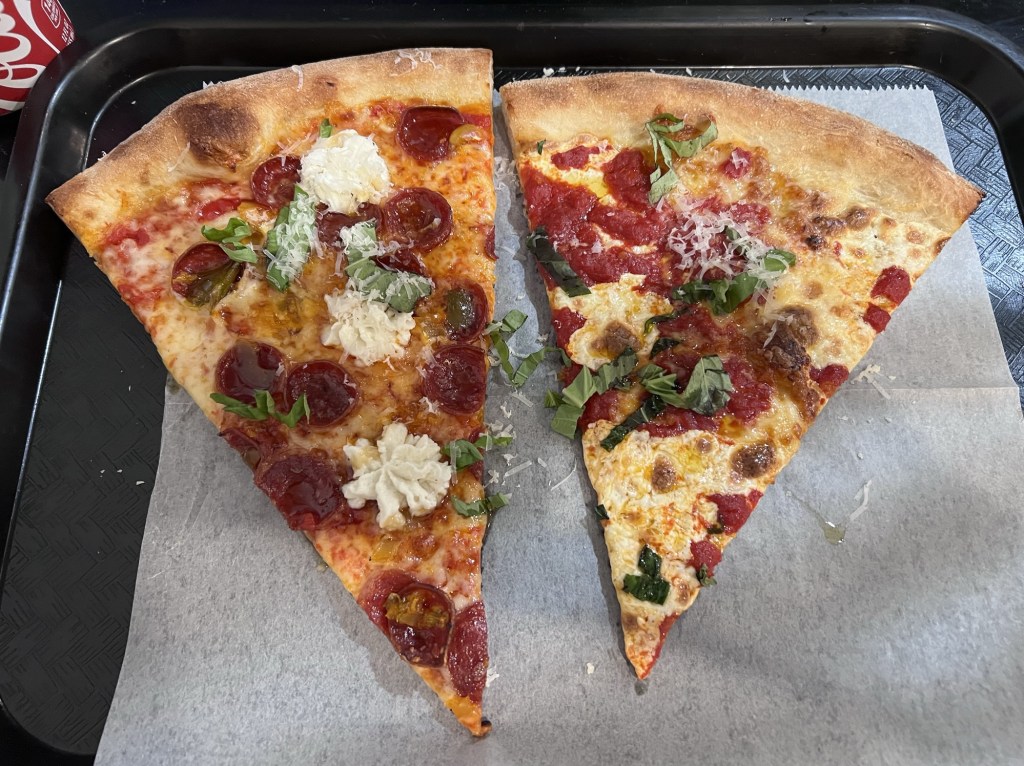
I decided on the classic Margarita and a piece of Pepperoni with Cherry Peppers that had a hot and tangy flavor when they topped it with a little honey. The pizza is excellent here and the service was so friendly. The guys working here made some excellent suggestions and I really enjoyed my dinner.
My dinner that evening
The Margarita slice with freshly grated cheese on top
The Pepperoni with fresh cheese and honey on top
I really enjoyed my meal that night
It was such a beautiful evening, I decided to walk back to the Port Authority. The weather was still warm but crisp that evening and it was nice that the cool weather had come back.
I walked up Third Avenue and then crossed over to Park Avenue where I had admired the views.
Walking up Park Avenue that evening
I figured I worked off my lunch and dinner and it had been an interesting walk considering the neighborhoods shady past as a drug den. It may still have its problems but thirty five years and a reinvented and gentrified City shows you how resilient Manhattan really is and how it just keeps changing for the better.


















































































































 mywalkinmanhattan